
#On the Inward Knife
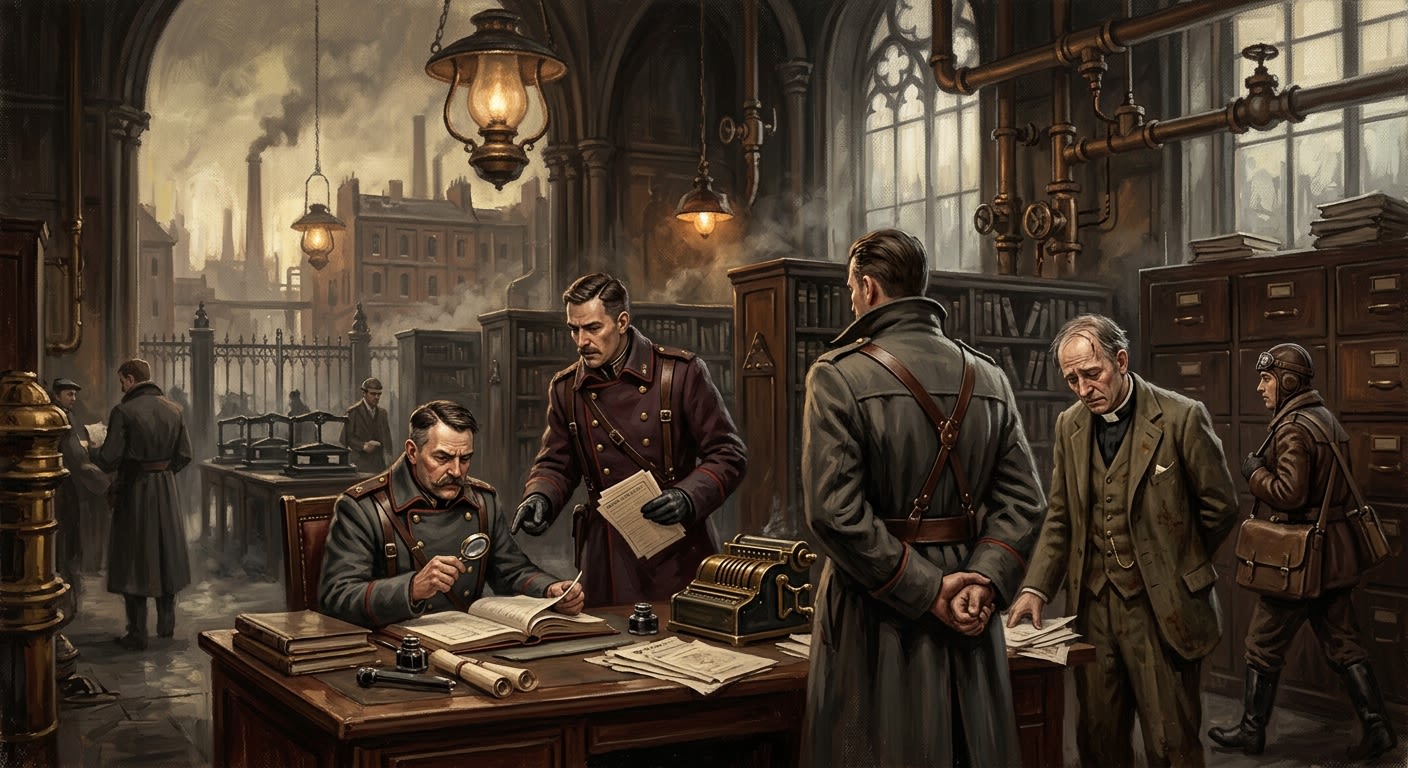
The Order of Severance is the Bureau of Purity's inward knife: an inquisitorial fraternity tasked with hunting hidden heresies among the Synod's own clergy, clerks, auditors, canons, chantry masters, supply procurators, notaries, prior-scribes, licensed theologians, and those especially pestilential creatures who call themselves doctrinal administrators while meaning only that their ink has learned arrogance. The Order does not ride eastward seeking demon-cults in ruined hamlets. It walks westward through polished corridors, pauses before a Bureau door, and hears the breathing change on the far side.
Other inquisitorial Orders enjoy simpler theatre. Ash burns. Shroud removes. Saint Ephrath humiliates with the confidence of a stage carpenter who has discovered salvation in sightlines. Root cuts bloodlines. Worms-Below listens under stone. Severance asks why the office survived inspection, why the seal was re-cut without witness, why two adjacent ledgers agree too perfectly, why the bishop laughed before the denunciation was read, why the clerk's hand paused over a name already declared clean.
Severance is loathed by other officials for the clearest possible reason: it is useful against them. A Purity Lictor may enter a tavern and terrify peasants. A Shroud wagon may halt before a hostel and empty a household into absence. An Ephrath brother may prepare tablets while children gather at windows. These things are dreadful, but they happen over there, below, among the governed. Severance happens in council rooms. It happens in ink closets. It happens at the Palatine Counting House when the high doors swing open before the sigil has touched them.
The common people fear Purity. Officials fear Severance. The people have the smaller imagination.
To say Severance hunts corruption is too broad. Every Order says as much, even the ones who confuse corruption with insufficient applause. Severance hunts the heresy that grows inside obedience: the doctrine quietly bent for departmental convenience, the tithe remission sold as pastoral exception, the mercy note amended after sentence, the silence maintained because reporting would inconvenience a beloved superior, the public zeal masking private contempt for the very machine one serves. They do not ask whether the Synod's enemies have entered the office. They ask whether the office has become an enemy while continuing to stamp in the Synod's name.
This distinction is the Order's blade.
#On Their Foundation and Severian's Shadow
Severance traces its spiritual ancestry to Severian of Mainz, which is to say it has selected a father no sane child would introduce at supper. Severian taught Purity that heresy is spoken, held, confessed—and housed. It enters organs, streets, schedules, tables, bell hours, kinship patterns, and civic reflex. His Iron Choir made fear audible. His Article 19 made silence culpable. His gloss — silence is shelter — furnished Severance with its first hinge.
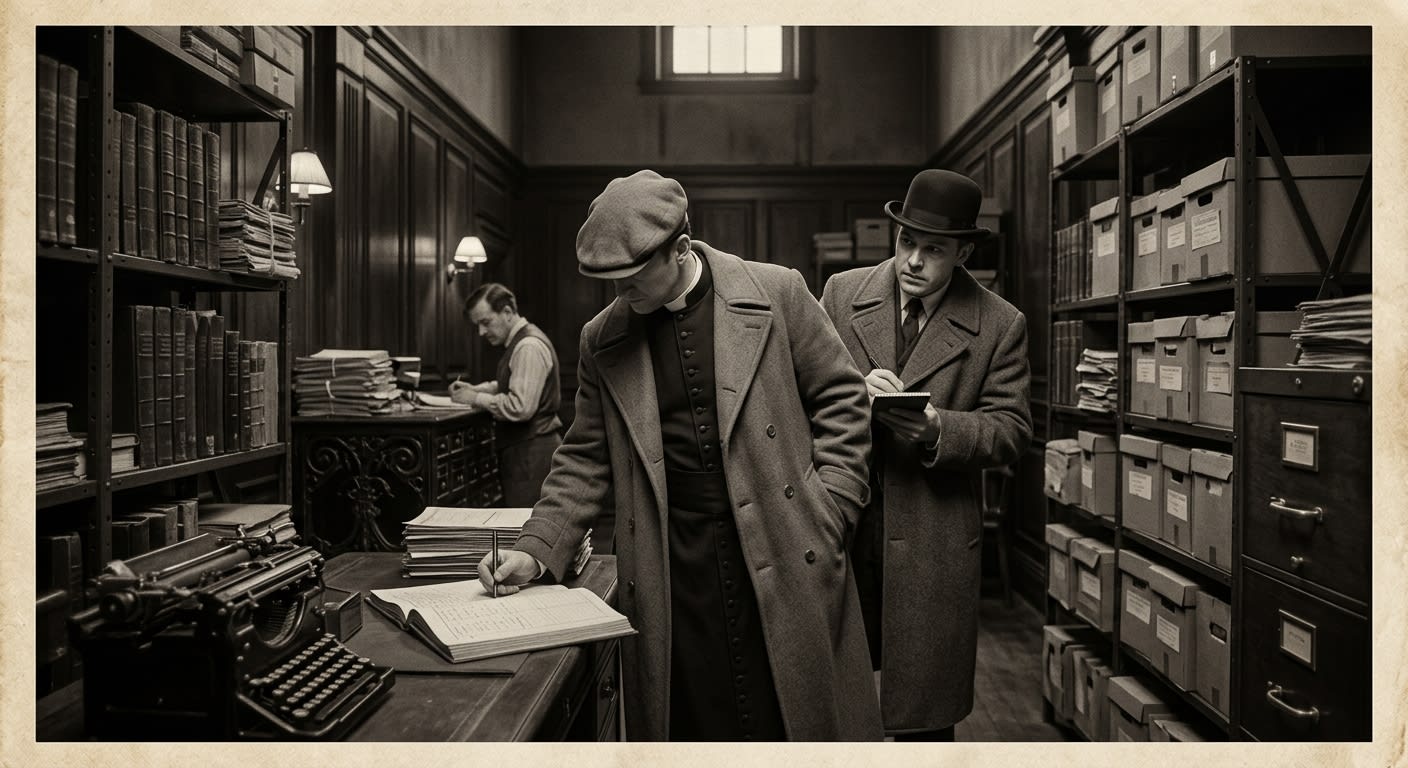
If silence shelters heresy, then institutional silence builds barracks for it.
The Order's earliest stable mention appears in the consolidation years after the Concordat, though Severance itself insists upon an older, mistier lineage in which nameless correctors served under the High Censor before the Bureaus acquired names fat enough to prosecute. I have seen three origin claims. One places the Order in A.S. 92, as a Purity review cell attached to the Catechism's early enforcement apparatus. One places it in A.S. 100, after the Penitential Shadows demonstrated that ordinary listening could not pierce Bureau walls. One places it in A.S. 134, after Severian's Eighth Doctrinal Congress, when Article 19 gave denunciation a household spine and Purity realised, with the beautiful panic of institutions glimpsing their own reflection, that officials would require denunciation as much as peasants.
Provincial training sheets describe the Order of Severance as founded by Severian personally.
Corrected. Severian supplied the doctrine, the temper, and the appetite. The Order supplied itself, as parasites often do when a warm body and a legal theory become available. Attribution to Severian remains permitted in ceremonial contexts where accuracy would depress attendance.
The decisive formation belongs to the post-Congress severity reforms. Article 19 had made failure to report into participation. Within six months, denunciation flooded parish offices, guild courts, tithe houses, military counting rooms, chapter schools, and the lower desks of Strasbourg like spring thaw through a badly blessed cellar. Most reports named neighbours, cousins, lovers, debtors, rivals, and men with superior boots. A smaller number named priests. Fewer named clerks. Almost none named Bureau superiors. Purity noticed the gap. Purity is blind in several directions, but self-preservation has given it splendid peripheral vision.
A review committee compared denunciation rates against authority grades and discovered a pattern so obvious even Records could not file it as weather: the higher the office, the fewer the accusations; the fewer the accusations, the richer the opportunity. Heresy had not become more virtuous at altitude. It had acquired better furniture.
Severance was constituted to cut upward.
The first Severance chapterhouse occupied three rooms behind the old Purity archive near the Cloister of Concord. It had no chapel bell. A bell announces presence; Severance prefers arrival. Its seal was a split wax disc: one half bearing the Triune Knot, the other a blank cut line, as if a name had been sliced out before impression. The novices were drawn from auditors, failed confessors, orphan clerks with perfect recall, widowed notaries, and two former actors from an Ephrath training yard whose skill at listening for rehearsed sincerity proved too valuable to waste on crowds.
#On Their Instruments
Severance has few visible tools. This is deliberate. An Ashman needs pitch. A Shroud Prior needs wagons, folios, aftercare teams, and horses trained to walk without drama. Ephrath needs oak, iron, glass, route permits, crowd ushers, chanters, and brothers with wrists strong enough to turn pain into doctrine. Severance needs a chair, a clean table, two ledgers, and time.
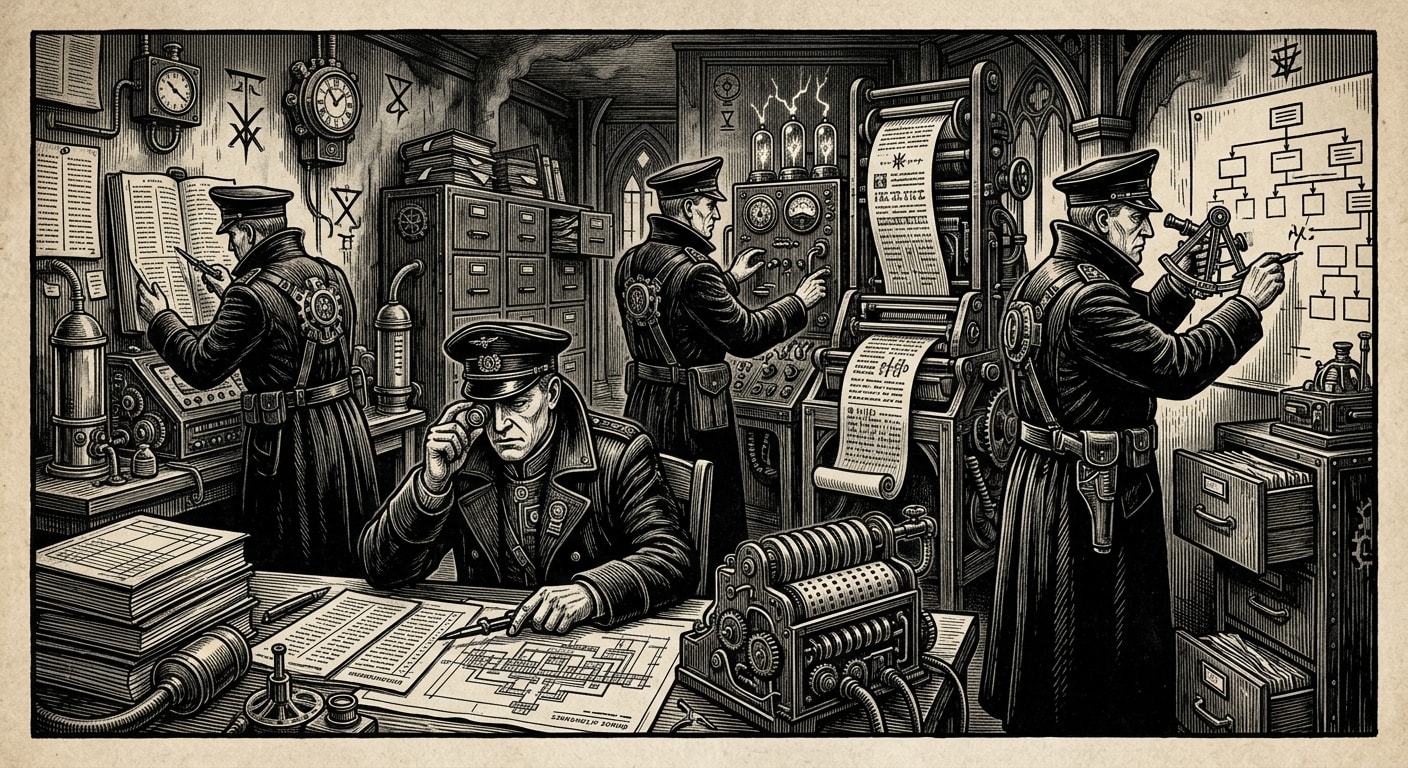
Its primary instrument is the Comparative Silence. Two files are set beside one another: the public record and the private memorandum; the tithe ledger and the mercy docket; the confession index and the transfer roll; the bell schedule and the salary sheet; the bishop's sermon and his kitchen account. Severance does not begin with contradiction. Contradictions are easy. Severance begins with matching too well. A department without error has concealed the clerk who makes them. A parish without denunciations has trained its citizens to aim their fear elsewhere. A Bureau-house whose internal minutes contain no hesitations has moved hesitation to another room.
The second instrument is the Signature Silence: a practice by which the examiner hands a suspect a blank paper and requests a signature under no stated charge. Many men ask what they are signing. These are ordinary fools and may yet be innocent. The dangerous ones sign at once, because they have served long enough to know that permission matters less than survival. Severance studies the speed, pressure, flourish, hesitation, and placement. A loyal servant signs where ordered. A contaminated servant signs where he expects the trap to be, which is often elsewhere. A guilty superior signs too large.
The third instrument is the Trust Interview. The accused is not asked whom he hates. Hatred is noisy. He is asked whom he trusts to correct his record after death, whom he would tell before filing an irregularity, whose mistake he would amend before reporting, which office deserves warning before surprise inspection. Trust maps conspiracy more accurately than fear. Fear spreads outward. Trust draws lines inward.
Their most dreaded instrument is the Severance Writ, a grey-white order bearing a cut seal and authorising temporary detachment of an official from his office, titles, seals, subordinates, correspondence, confessor, and name in departmental use. The subject is not arrested. Arrest belongs to charges. He is severed. His office must function without him while Severance determines whether the office bleeds, heals, spasms, or exhales. The reaction matters. A corrupt office rushes to fill the gap. A loyal office stumbles honestly. A heretical office becomes suddenly graceful.
SEVERANCE FIELD NOTE — PALATINE COUNTING HOUSE, A.S. 149 Subject severed at third bell. Office reaction: no disruption; substitute files produced before notice posted. Conclusion: substitute system pre-existing. Follow-up: █████████ officials detached; █████████ clerks reassigned to Ulm; bell-schedule gap still visible in tertiary archive.
#On the Chancery of Keys
The Order's most cited early operation is the dissolution of the Chancery of Keys, a minor Strasbourg office whose extinction proves, among other things, that the Synod can make even locksmiths metaphysical. The Chancery managed duplicate key registries for Bureau storehouses, archive cabinets, sealed reliquaries under transit, penitential holding rooms, and those small cupboards where every office keeps the files it swears it does not have. By A.S. 149, the Chancery had acquired enough exceptions to resemble a private republic.
The charge was joyous irregularities. I admire the phrase so violently I have considered stealing it. It began, apparently, as a Severance examiner's margin note after finding festival wine in a cabinet rated for tribunal keys and three clerks singing a secular round while re-cutting seals for a Mercy ward. Joy is not heresy by itself. This is the official position, though it has been modified so often one should handle it with tongs. Joy inside a key office during unauthorised re-cutting raised theological questions.
The Chancery had allowed trusted clerks to borrow key blanks without paired witnessing. It had maintained a private bell-skip so its lunch hour would not coincide with Purity courier arrivals. It had altered vault access ledgers to spare an elderly Canon from disciplinary review after he misplaced a relic cabinet key and wept in the hallway. These were small mercies. Small mercies, improperly filed, are the seedlings from which institutional sovereignty grows.
Older Bureau summaries state that the Chancery of Keys was dissolved for “procedural laxity.”
Corrected. Procedural laxity is a late stamp, applied after the terror has done its work and dinner guests require a polite noun. The Severance finding was joyous irregularities: loyalty diverted from writ to colleague, mercy administered without licence, access trusted to affection. Procedure was the corpse tag.
The office was severed at third bell. Every active key was recalled. Every clerk was interviewed under Signature Silence. Three records rooms were locked from the outside and opened only after the examiners had copied the dust patterns beneath the cabinets. By evening, the Chancery no longer existed as an administrative unit. Its surviving functions were distributed among Masks and Seals, Records, Relics, and a new sub-desk whose title translates roughly as Keys Without Companionship.
The only public trace was a gap in the bell schedule. The Chancery's lunch-skip had been so quietly embedded in local timing that its removal caused the sixth warehouse peal to arrive early by thirty-seven breaths for eleven days. Workers noticed. Purity denied any event. Severance filed the denial as successful civic quieting.
#On Rivalries with Other Orders
Severance stands among the Purity Orders like a confessor at a feast where every guest has blood on his sleeves and a theory of table manners. Ash calls it timid because it burns no villages. Shroud calls it vain because it leaves records of its cuts. Ephrath calls it bloodless. Root calls it insufficiently genealogical. Worms-Below calls it shallow, since corridors have ceilings and real secrets sink. Severance calls them all externalists, which is the cruelest insult one specialist can offer another.
The quarrel with Shroud is the sharpest. Shroud subtracts persons from society; Severance detaches functions from institutions. Shroud wants memory starved. Severance wants memory compelled to testify against its own edits. A Shroud Prior looks at a compromised clerk and sees a chair that must be empty by dawn. A Severance examiner sees the chair, the desk, the seal drawer, the colleague who does not glance up when the clerk is mentioned, and the bell-rope whose knot has been moved. Shroud removes the man. Severance cuts the network that made him unsurprising.
With Saint Ephrath, the quarrel is aesthetic and doctrinal. Ephrath believes public shame instructs the citizenry. Severance believes public shame gives officials something to applaud while hiding the minutes that authorised the spectacle. Ephrath wants street-corner doctrine. Severance wants the rehearsal notes. They have cooperated twice in Prague, both times disastrously, because Ephrath considers timing a crowd art and Severance considers timing evidence. One cannot run a procession when three examiners keep halting the route to inspect who approved the chalk marks.
With the Bureau of Shadows, rivalry becomes almost philosophical. Shadows does not exist and removes by denial. Severance very much exists, though it often wishes others would stop noticing, and cuts by lawful interruption. Shadows values the blank page. Severance values the page with the excision mark measured, signed, and cross-indexed. A Custodian makes a man unavailable to history. A Severance examiner makes an office confess why the man had become indispensable.
The Council of Veils complicates the matter, as blank authorities always do. Severity Indices arrive. Orders adjust. Clean pages gather ash. Severance receives directives whose source is described as the High Censor's Advisory, a phrase bred in darkness and fed on plausible deniability. Severance obeys, but not trustingly. The Order's private maxim regarding Veil instructions is said to be: cut around the blankness, never through it. This is cowardice raised to professional wisdom.
#On Recruitment and Formation
Severance recruits people whom ordinary society finds chilly and ordinary offices find indispensable. Auditors who remember invoice weights from twenty years prior. Confessors who notice the sin omitted from a fluent confession. Widows who can tell which neighbour stopped visiting before the death announcement. Orphanarii-trained clerks whose handwriting has never belonged to them and who therefore understand institutional possession with theological intimacy. Former Shroud scribes with too much taste for residue. Failed Ephrath callers whose voices could not hold crowds but whose ears could hear a lie bending behind a closed door.
Novices are taught subtraction in reverse. First they memorise office structures until a missing clerk hurts like a pulled tooth. Then they study ledgers with deliberate errors and must identify not the error, but who benefits if the error is corrected quietly. They sit in rooms where actors perform departmental meetings; the novice must name the person not present whose authority shapes every sentence. They are given sealed envelopes and told not to open them. The correct response is to weigh the envelope, smell the wax, map the courier's route, and report that obedience was being used to test curiosity.
Their vows are spare. No vow of poverty; poverty can be theatrical. No vow of silence; silence may shelter. No vow of obedience without qualification; that would offend the Order's entire profession. The central vow is the Vow of Clean Division (Unregistered): to cut office from affection, seal from hand, record from convenience, superior from awe, subordinate from pity, truth from the person most useful to its concealment. It is an ugly vow. Ugly vows are often the ones that work.
The Order's private reliquary of shame is a seal that leaves no impression. It is kept in a lead box beneath the Strasbourg chapter archive, brought out for third-vow instruction. The novice presses it into wax. Nothing appears. The instructor then asks what authority has been applied. Wrong answers include none, failed, defective, and miracle. The correct answer is: authority without evidence. Severance studies this as its own temptation.
#On Methods in the Present Synod
As of A.S. 201, the Order of Severance is busier than its enemies wish and less busy than the Synod deserves. The Twelfth Amendment to the Catechism has expanded interior scrutiny into private hope, unlicensed meditation, unauthorised grief, and facial indicators of unsanctioned contemplation. Article 19 still requires denunciation within twenty-four hours. Bureau offices now drown in reports so numerous that heresy may hide inside zeal itself. Severance is called when the reports become too perfect.
They have active desks in Strasbourg, Mainz, Cologne, Prague, Lyon, and three bastions whose names I will omit because the omission has already done enough work. Their Strasbourg house shares a wall with a Records annex and a courtyard with a Purity laundry. The laundry women know more than several inquisitors. Severance has tried recruiting them twice. The laundry women refused both times and raised prices.
A Bureau of Mercy petition described Severance examinations as “injurious to morale among faithful civil servants.”
Clarified. Morale among faithful civil servants is not a protected relic. If morale depends upon never being asked who altered the mercy docket, morale may report to Purity for correction and bring its own chair.
A modern Severance action begins quietly. No wagon. No procession. No fire. A white strip tied to an office latch before first bell. A notice requiring all seals to remain on premises. A clerk posted at the corridor's far end taking down the names of those who approach, those who turn away, and those who pretend to have forgotten something elsewhere. Interviews begin after prime. By noon, the office has discovered which friendships are procedural and which procedures are friendships. By vespers, someone has either confessed, fled, or become useful by remaining still.
The Order's enemies call this paranoia. They are correct and insufficiently grateful. Paranoia is fear without accounting. Severance provides accounting.
#On the Present Condition
The Order of Severance persists because the Synod cannot trust itself and cannot publicly admit so without encouraging every Rationalist ghost from Paris to laugh through its missing teeth. It is the proof that the Holy Bureaucracy understands, in the private chamber it denies having, that corruption climbs as eagerly as it crawls, that obedience can become conspiracy, that mercy can become jurisdiction, that friendship can become a hidden altar, and that the most dangerous heretic is the one who knows which stamp drawer sticks.
Severance does not make the Synod pure. No institution that large, old, hungry, and fond of stationery can be pure. It makes impurity afraid of comfort. It teaches every official that affection is a liability, every shortcut a confession delayed, every smooth ledger a possible wound, every trusted colleague a future witness. This is a monstrous way to govern. It is also governance.
SEVERANCE PRIVATE CATECHISM — THIRD VOW EXCERPT Question: Where does internal heresy hide? Answer: In the interval between authorised mercy and personal mercy. Question: What must be cut first? Answer: ███████████████████████████. Instructor's note: if novice answers “the guilty,” fail novice. If novice answers “the bond,” observe novice closely.
At dusk, when the Bureaus close their public doors and the corridors begin to sound larger than their architecture, Severance examiners walk without hurry. Clerks lower their voices. Bishops remember appointments elsewhere. Shadows become less absent. A clean strip of wax is pressed, cut, lifted, and carried to the next office. Somewhere a trusted deputy looks up too quickly. Somewhere a ledger agrees with itself too well. Somewhere a kindness has become a kingdom.