

Reverse Index
Referencing “Tariff Chapel”
Every codex entry that links to Tariff Chapel. 29 entries.
Return to Tariff Chapel
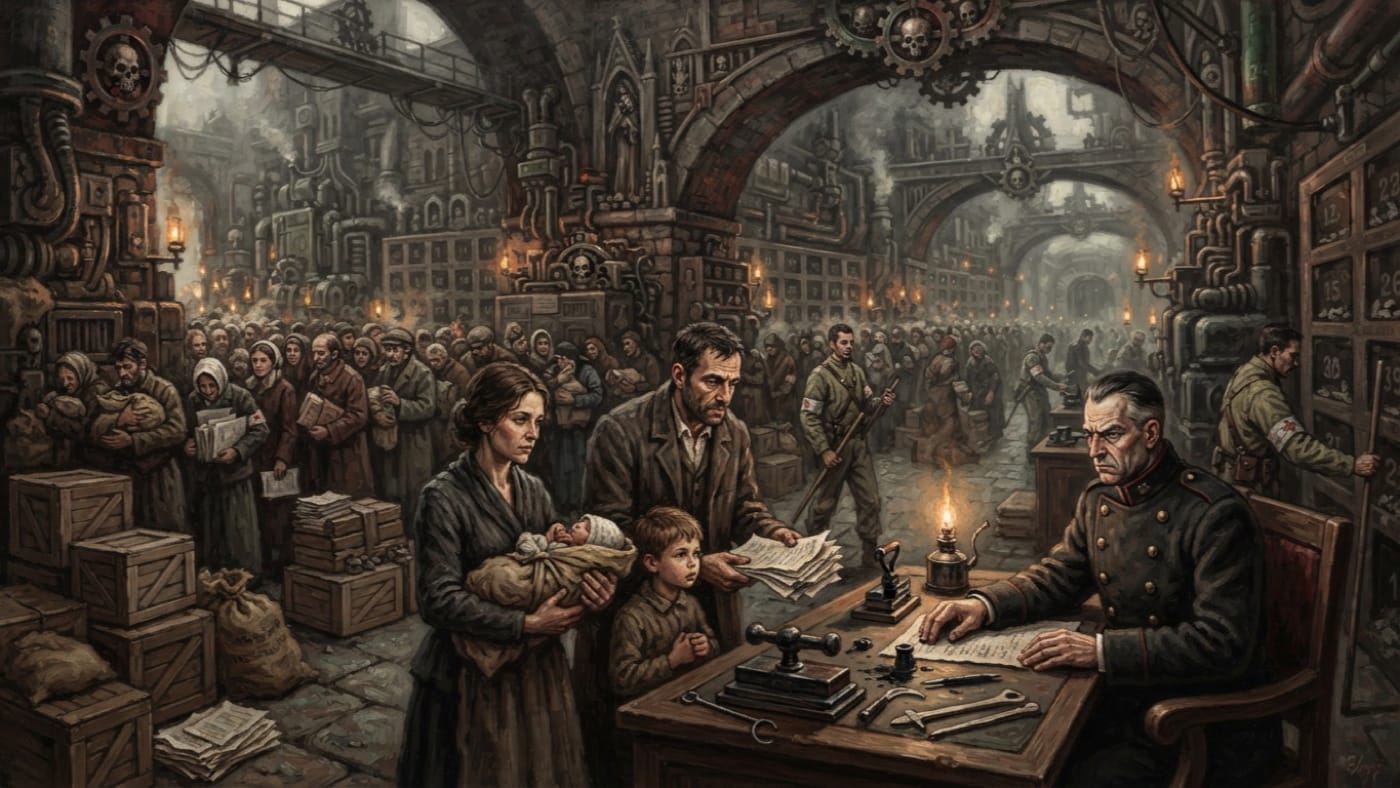
A.S. 78 Joint Classification Mandate
Five categories for the dead, one more queue for the living
The A.S. 78 emergency mandate made the dead controlled goods: five classifications, licensed mortuary clearance, and grief that could finally be billed.
Codex Ref. XIII.1.92-078

Air Auditor
The senior nose that lets a district breathe
Senior Ninth Mark officers who govern smoke by selective detection: smelling every crime, filing fewer, and calling survival atmospheric discipline.
Codex Ref. XII.32.02-143
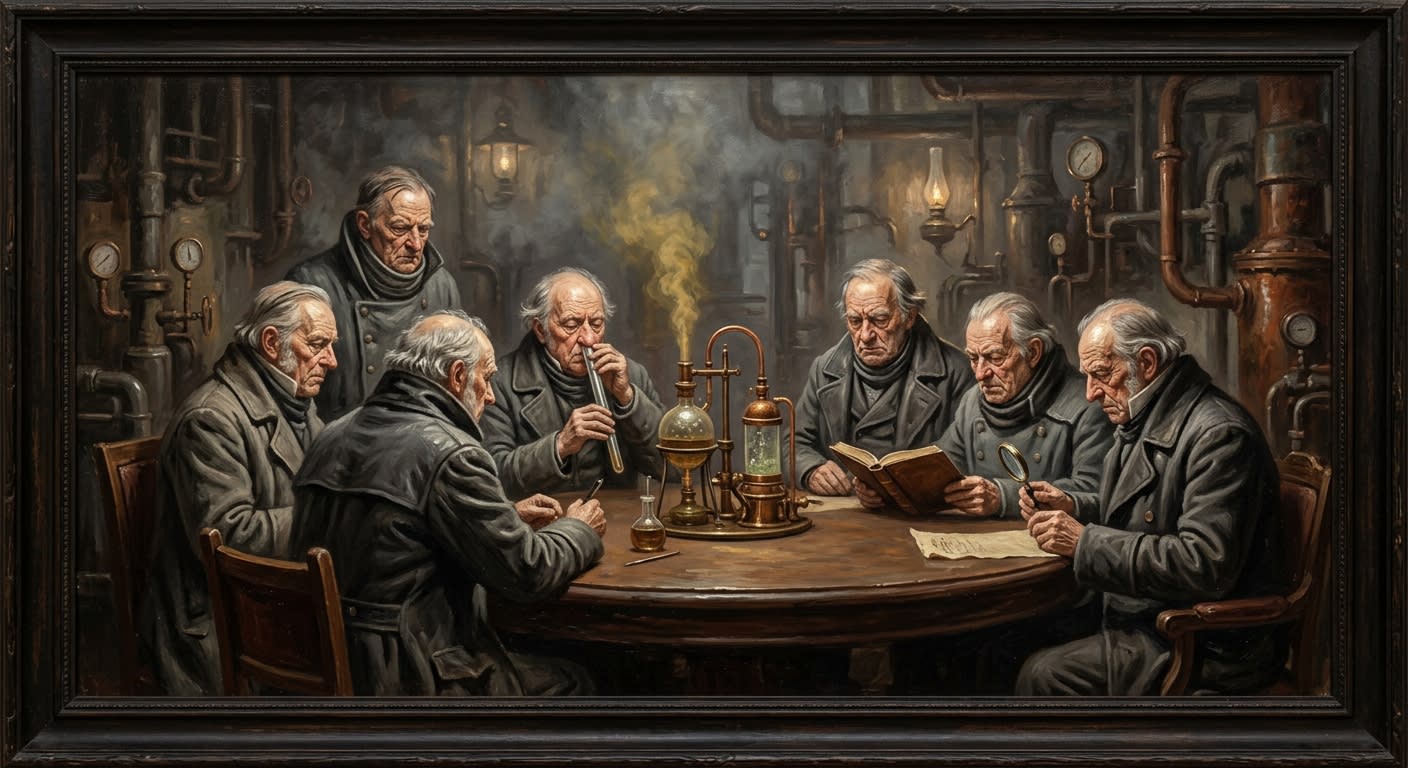
Air Auditors
The plural office that edits the breath of cities
The senior collective custom of Ninth Mark Air Auditors: old noses deciding which smoke becomes law, revenue, mercy, or blessed omission.
Codex Ref. XII.32.03-143

Bone-Lime Consortium
The dead supply the material; the living supply the obedience
Marrowgate's informal alliance of kiln foremen, carters, prelates and ash-credit factors turns casualties into lime and civic dependency into power. Its accounts prefer anonymity; the Marrowwind keeps restoring names.
Codex Ref. XII.31.07-201
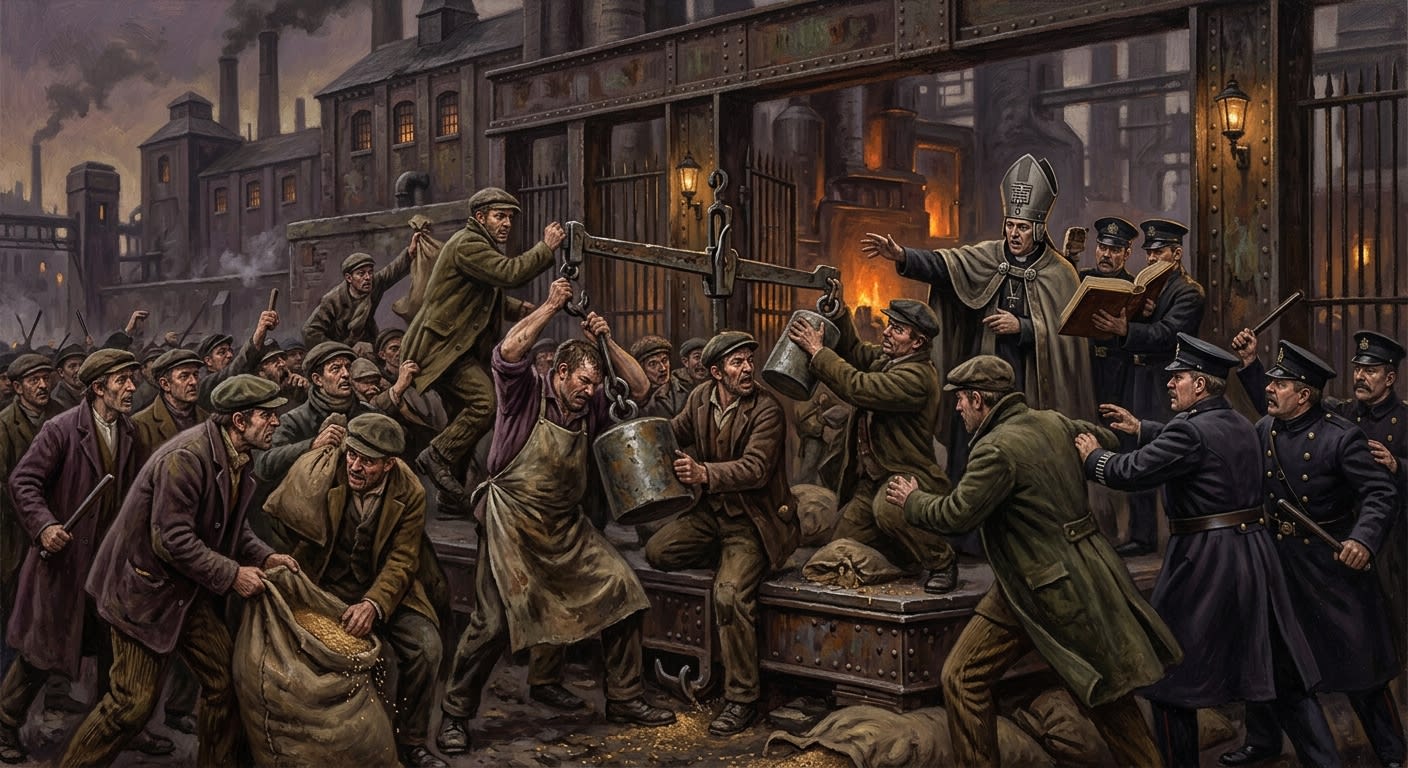
Bread-Scale Uprising
When hunger weighed the law and found lead beneath it
A.S. 97 southern-gate riot over leaded grain scales, later clarified into the sacramental seizure of measure and the birth of the tariff-chapel system.
Codex Ref. VII.8.10-011
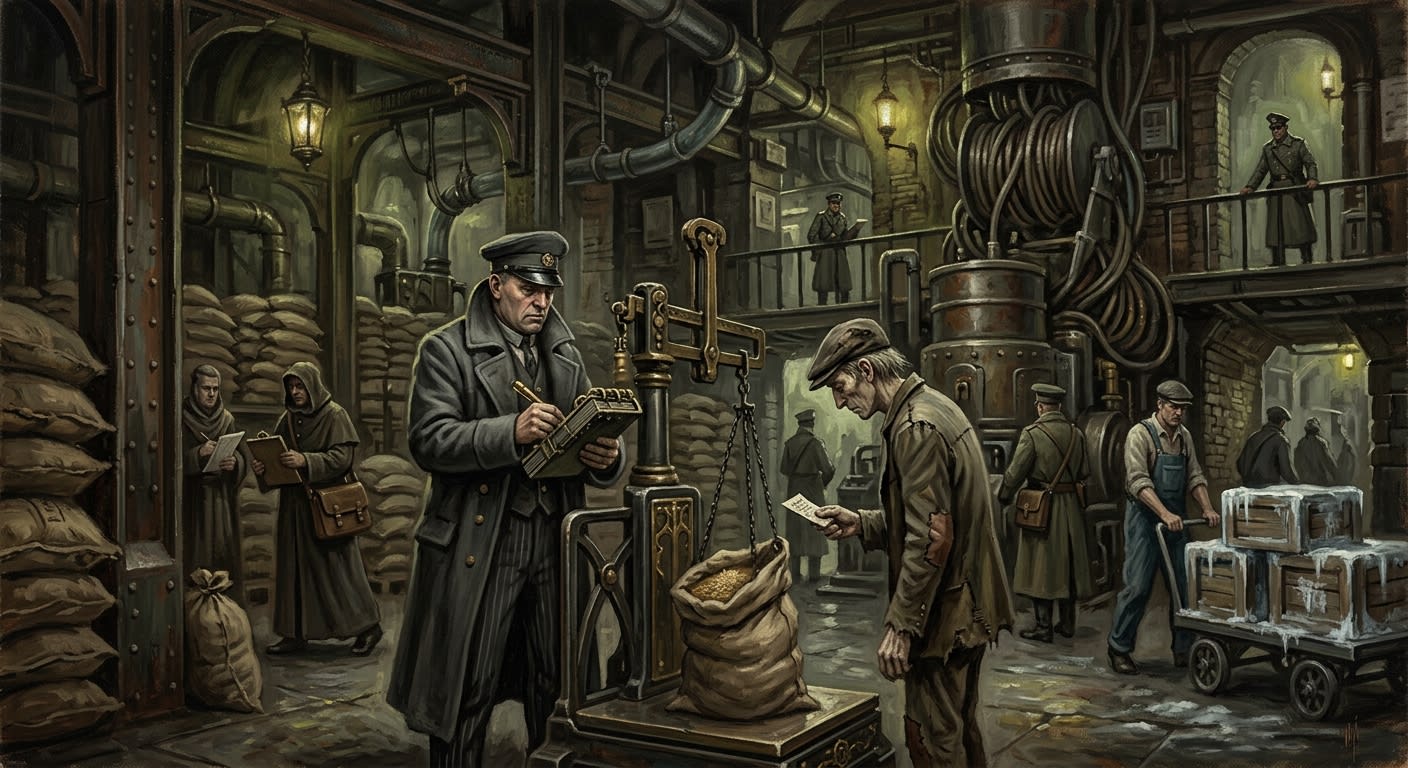
Bureau of Commerce
Bread becomes law before it becomes bread
The Bureau of Commerce prices obedience: weighing grain, freezing cargo, selling road-sound, licensing shortage, and making hunger kneel before the scale.
Codex Ref. VIII.2.10-097
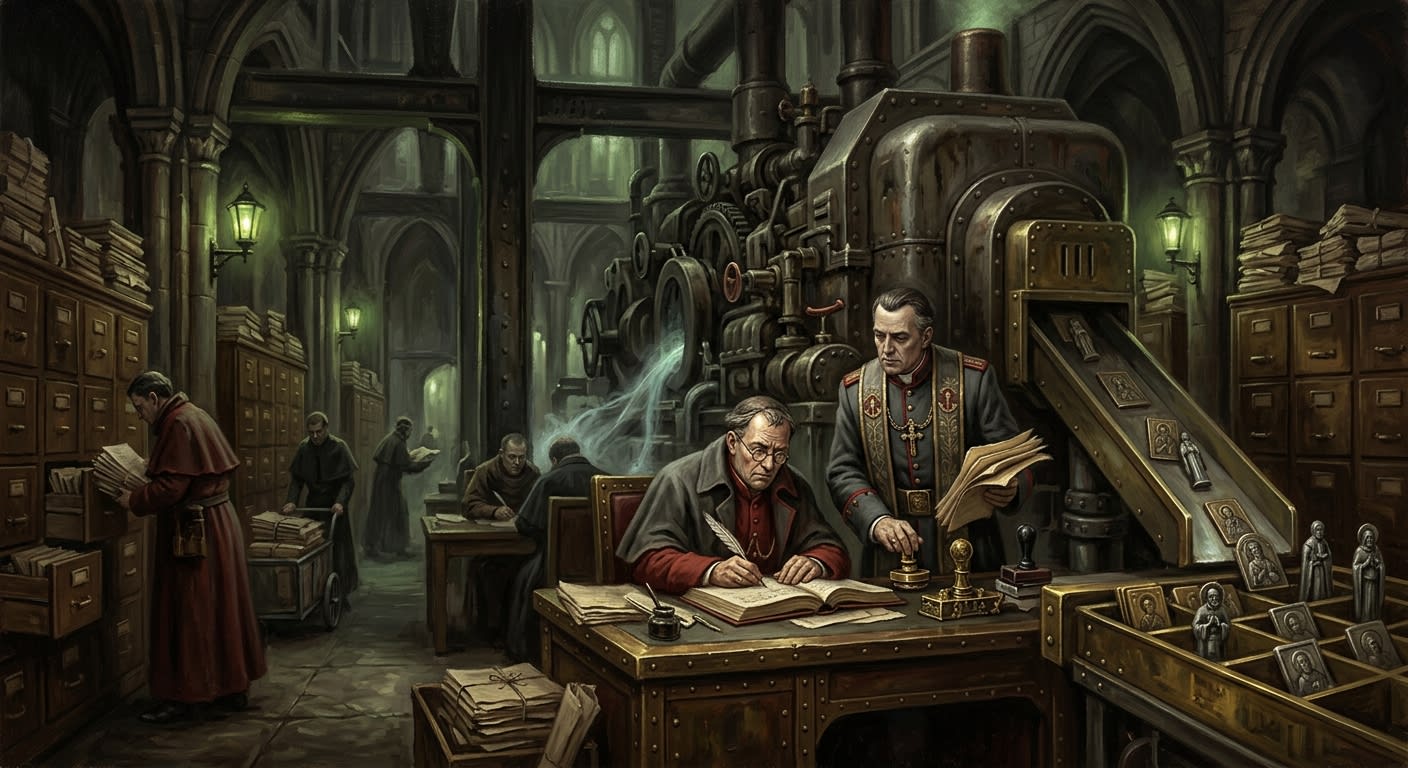
Bureau of Hagiography
The dead may vote only after editing
The Bureau of Hagiography edits the dead into useful saints, delaying, ratifying, taxing, suppressing, and polishing grief until it obeys.
Codex Ref. VIII.6.03-112
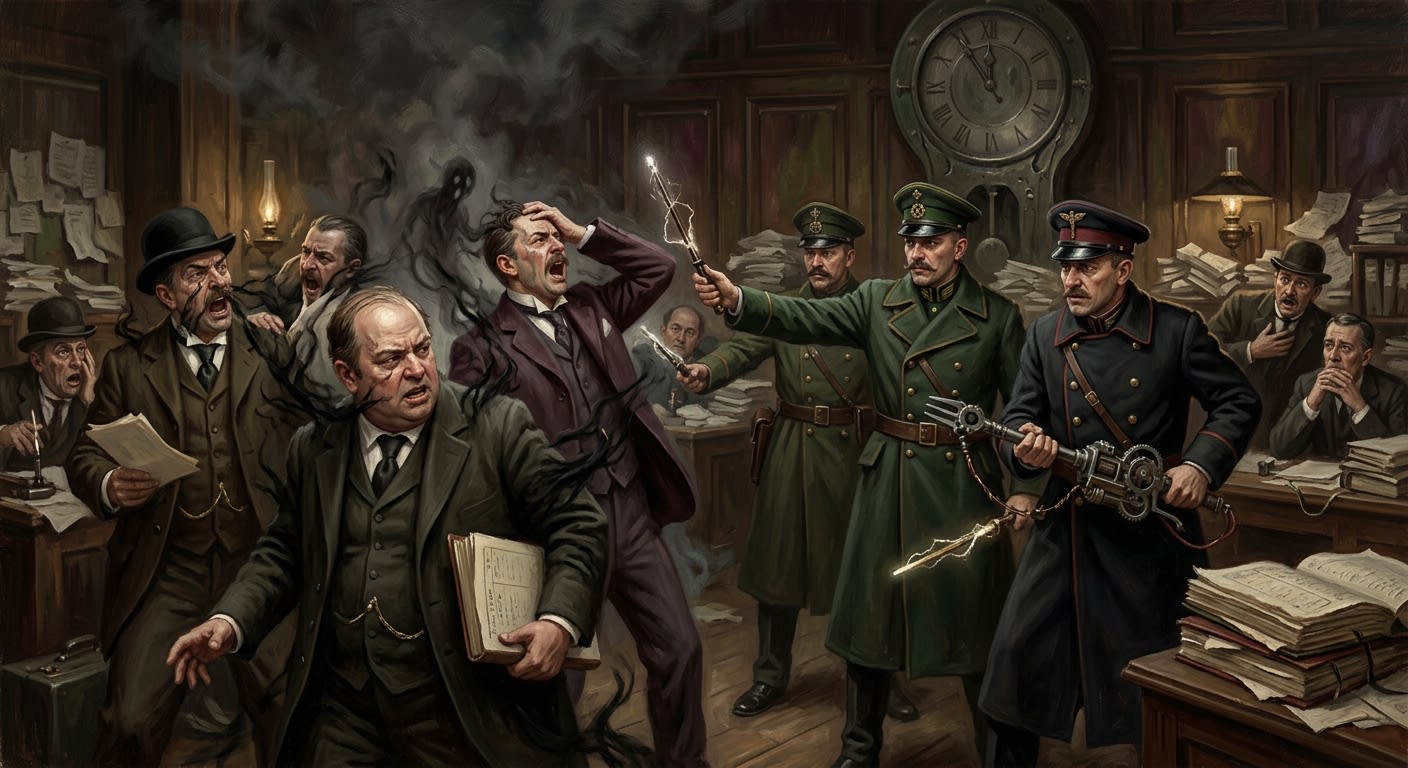
Carnelian Family of Metz
The lineage strike that bit its own hand
The A.S. 67 first recorded lineage-wide nullification attempt, in which Carnelian ration fraud, plague permits, and three overeager Notaries taught absence to bite backward.
Codex Ref. XIII.1.69-001

Dead-Goods Tariffer
The grave is a permit; the permit has a price
Bureau-licensed bone classifier. He decides what the dead become — mortar, monument, or ornament — and does not look up from his seal press.
Codex Ref. XII.11.01-001
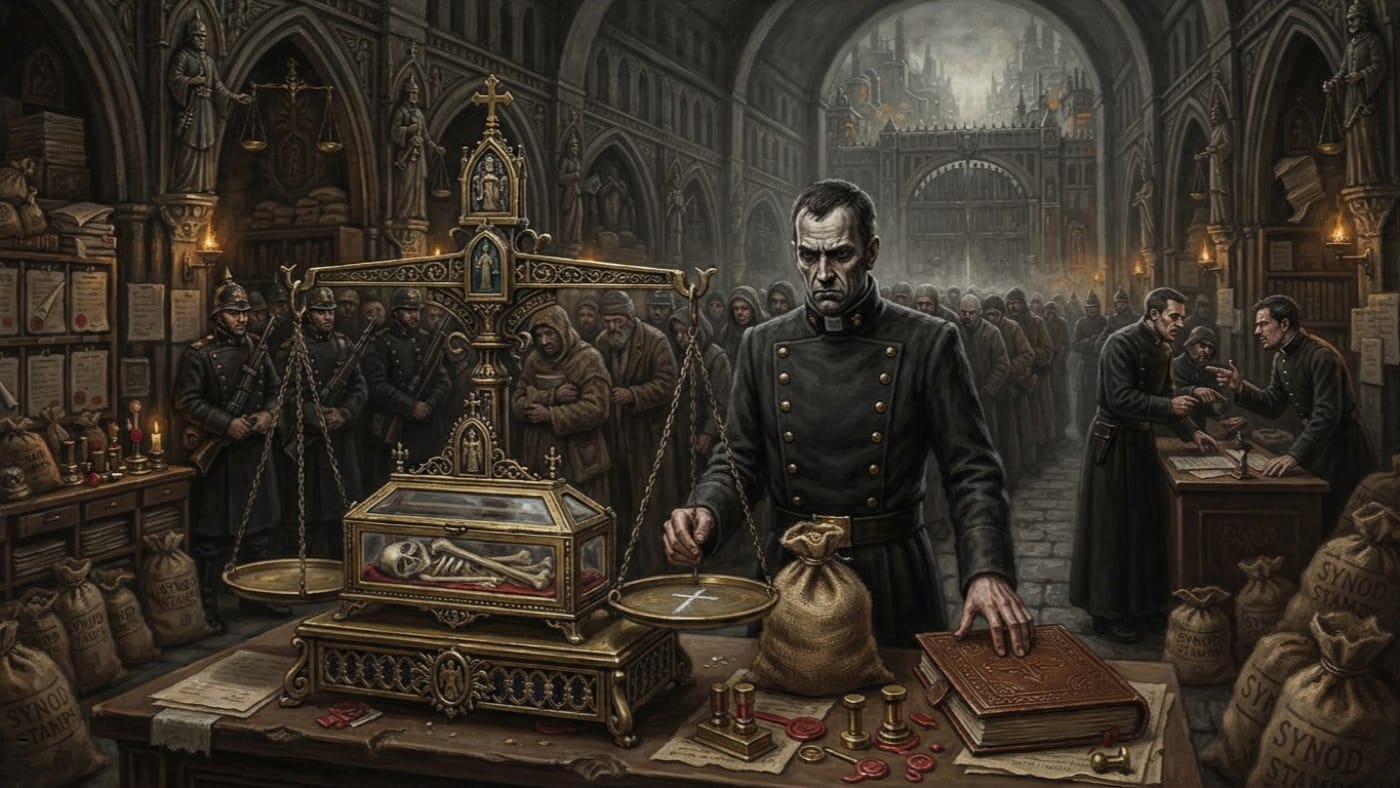
Doctrine of Measure
The scale tells the truth while the city starves
The Synod makes weighing a sacrament and false weight heresy. Relic-calibrated scales certify honest sacks; the offices remain free to let the grain rot.
Codex Ref. XIII.1.59-002
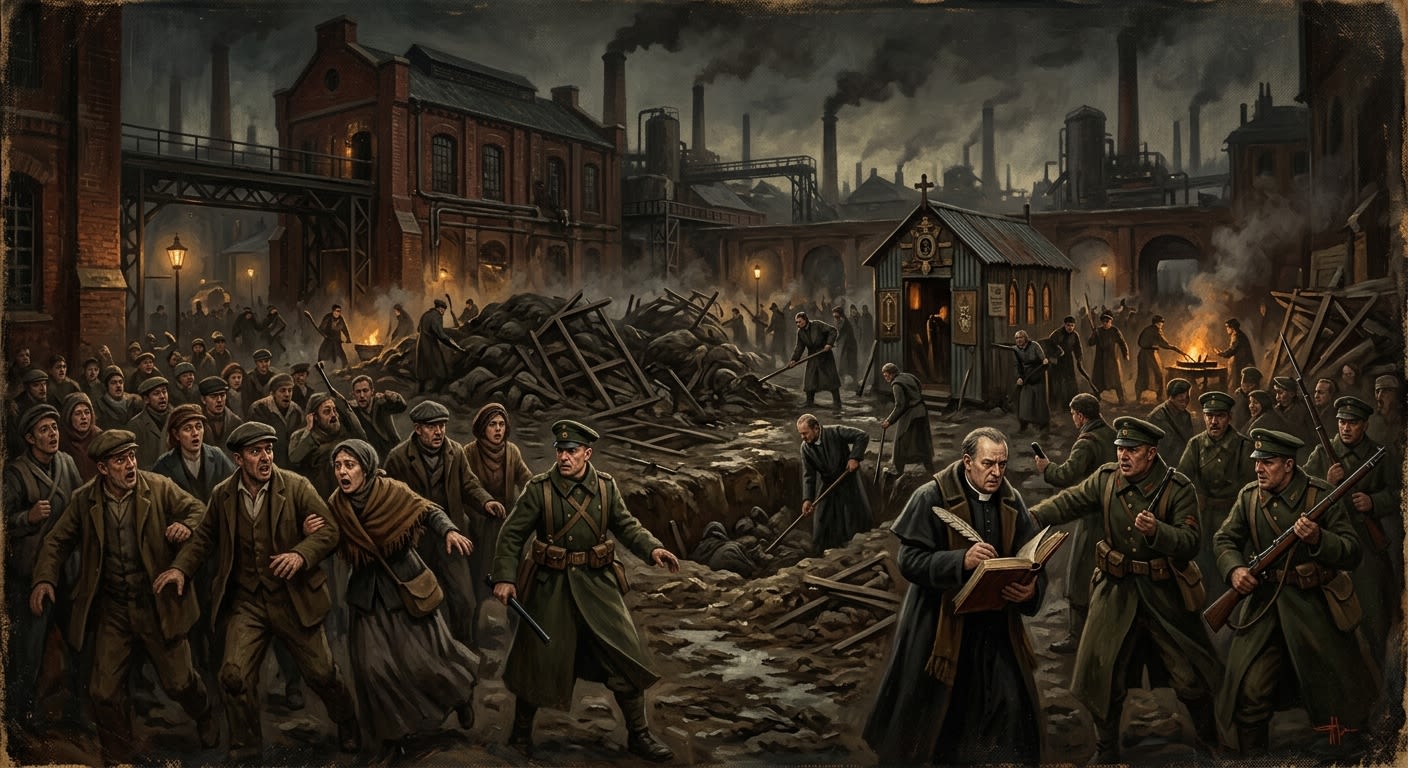
First Ossuary Panic
The dead spoke, and the Synod answered with a form
A.S. 78 Rhine corridor mortuary panic in which overcrowded pits began sounding after dark, forcing burial clearance, tariff-chapels, and the Dead-Goods Tariffer into law.
Codex Ref. VII.4.25-078

Forewoman Rute
Collector of bone rent in the city she makes washable
Forewoman Rute collects bone rent for Marrowgate's Bone-Lime Consortium. She denies knowing whose remains inhabit the ward walls; the city remains courteous and pays.
Codex Ref. III.3.07-002
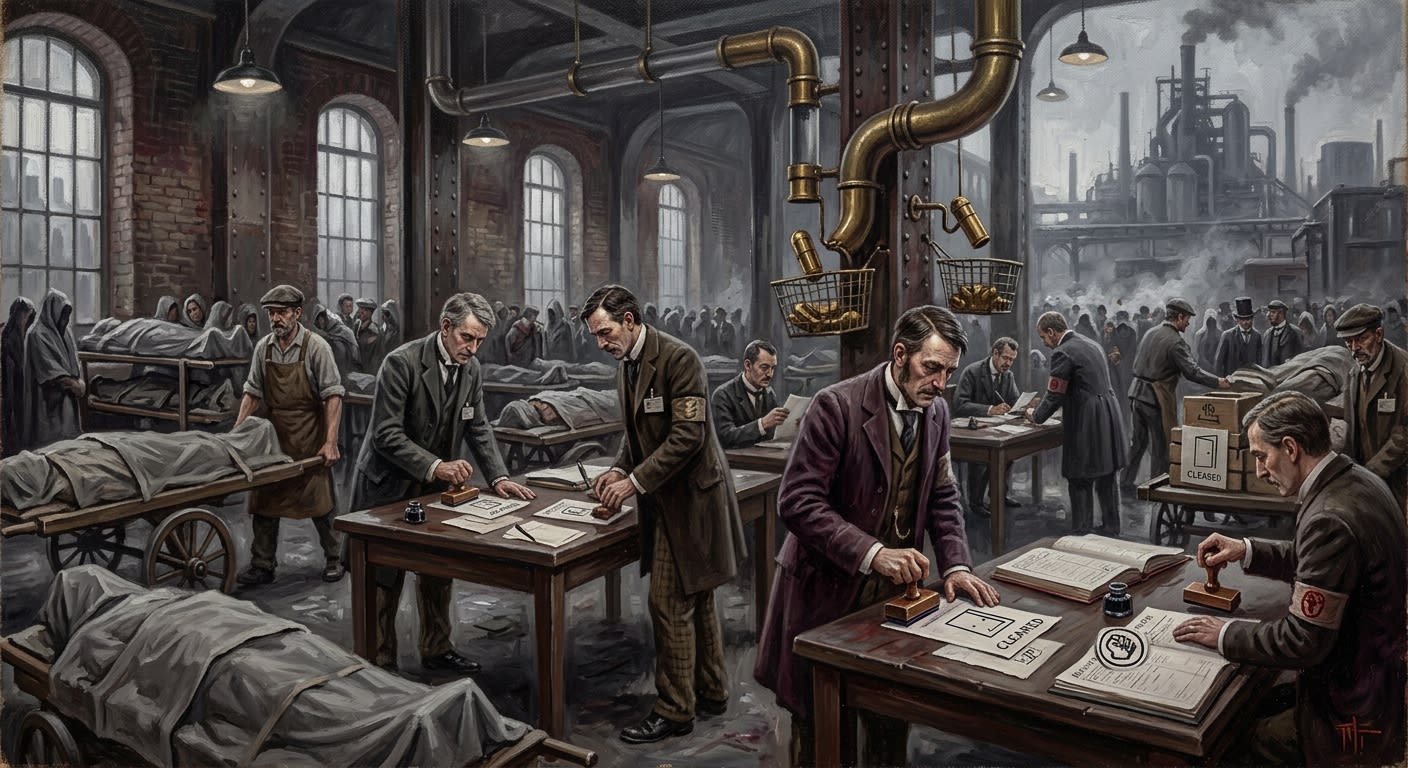
Gray Clearance
The winter mercy that moved bodies faster than names could follow
Gray Clearance was the A.S. 157–158 emergency mortuary protocol that reduced five corpse classifications to CLEARED or HELD, saved the living, and taught grief to pay for speed.
Codex Ref. VII.8.10-021

Index of Prohibited Emanations
The book that gives smoke a docket number
Bureau of Purity catalogue that turns unlawful smoke, warmth, vapour, residue, and prayer by-product into chargeable evidence for Fume-Inspectors and their theatrical little strips of paper.
Codex Ref. XIII.1.77-001
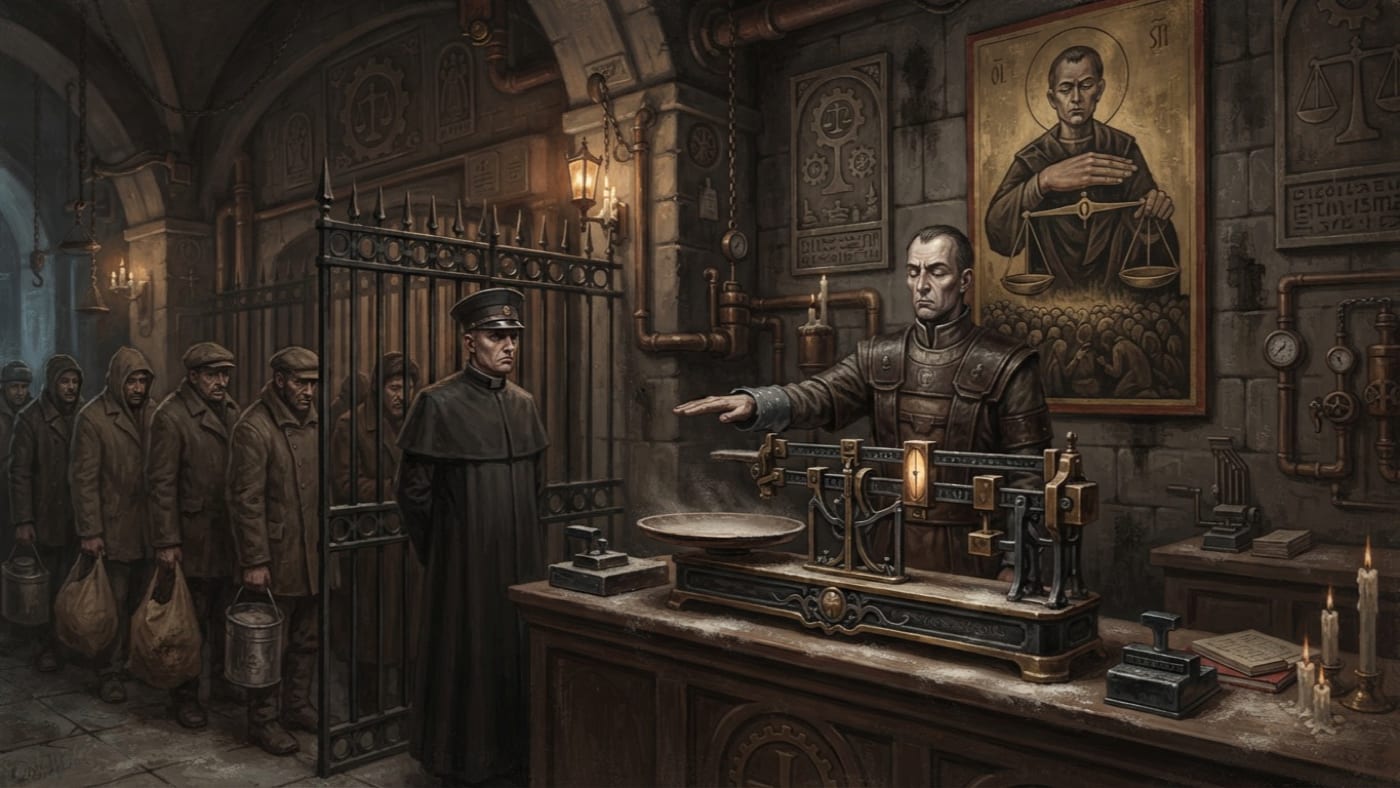
Level Prayer
The hand stays level; the sack stays empty
An A.S. 201 survey of the prayer recited by tariff-chapel weighers with the right hand level above the pan on Saint Calibrus's feast. Honest measure holds the zero; it does not fill the sack.
Codex Ref. XIII.1.91-201
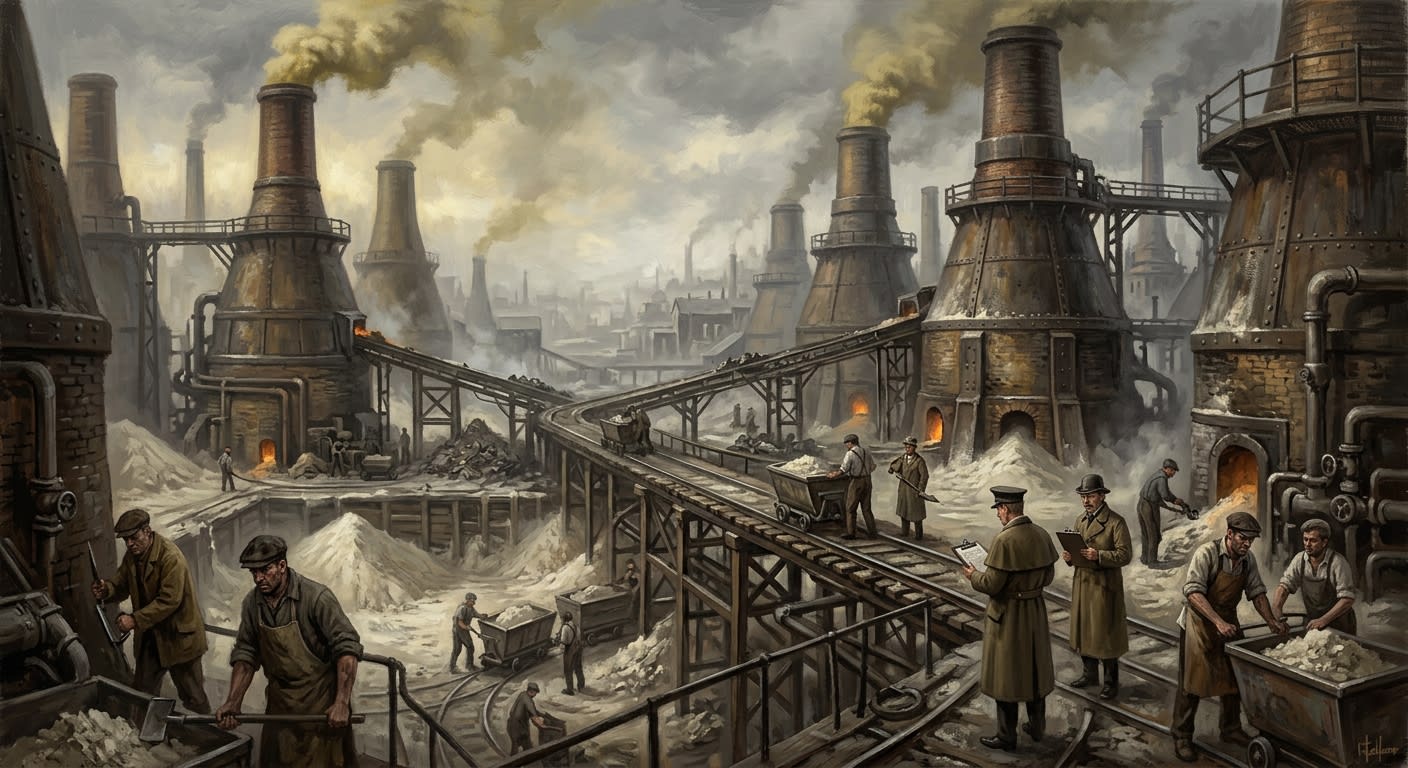
Lime Yards
The white furnaces where Marrowgate distributes its dead into walls, roads, and weather
The Lime Yards of Marrowgate are kilnfields where salvage remains become bone-lime, whitewash, road powder, ash-credit, and, when the Marrowwind rises, witness.
Codex Ref. II.2.06-003
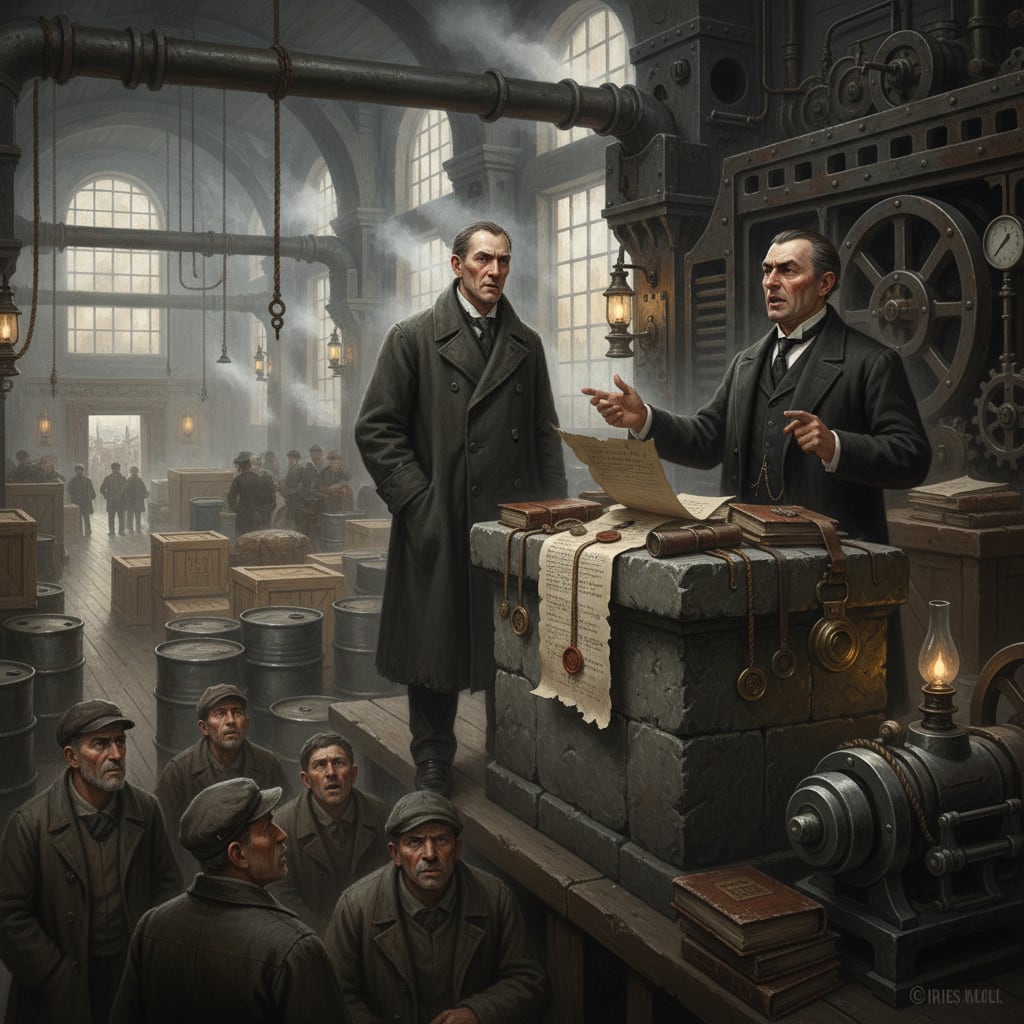
Manifest Litigant
In which the Bureau confirms that identity is paper, paper can be disputed, and dispute, correctly licensed, is a revenue stream.
The licensed enforcers of documentary reality at the port courts — the profession that cannot save the grain but can prove, conclusively, why it was permitted to rot.
Codex Ref. XII.26.01-001
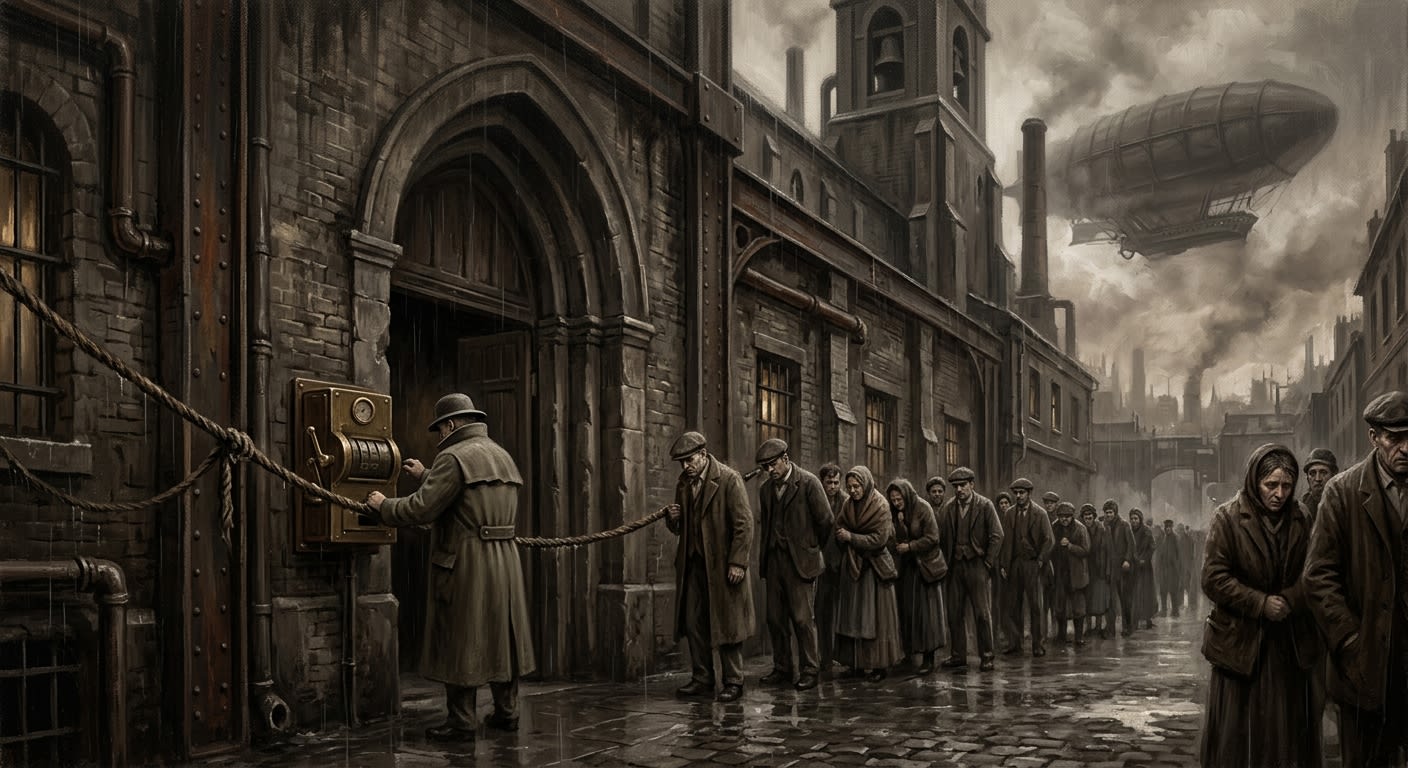
Mercy Line
The rope where grief learned its tariff schedule
The Mercy Line began as a left-hand rope outside Saint Morin's chapel in A.S. 157, where grief discovered that even mercy could be accelerated.
Codex Ref. II.2.06-157
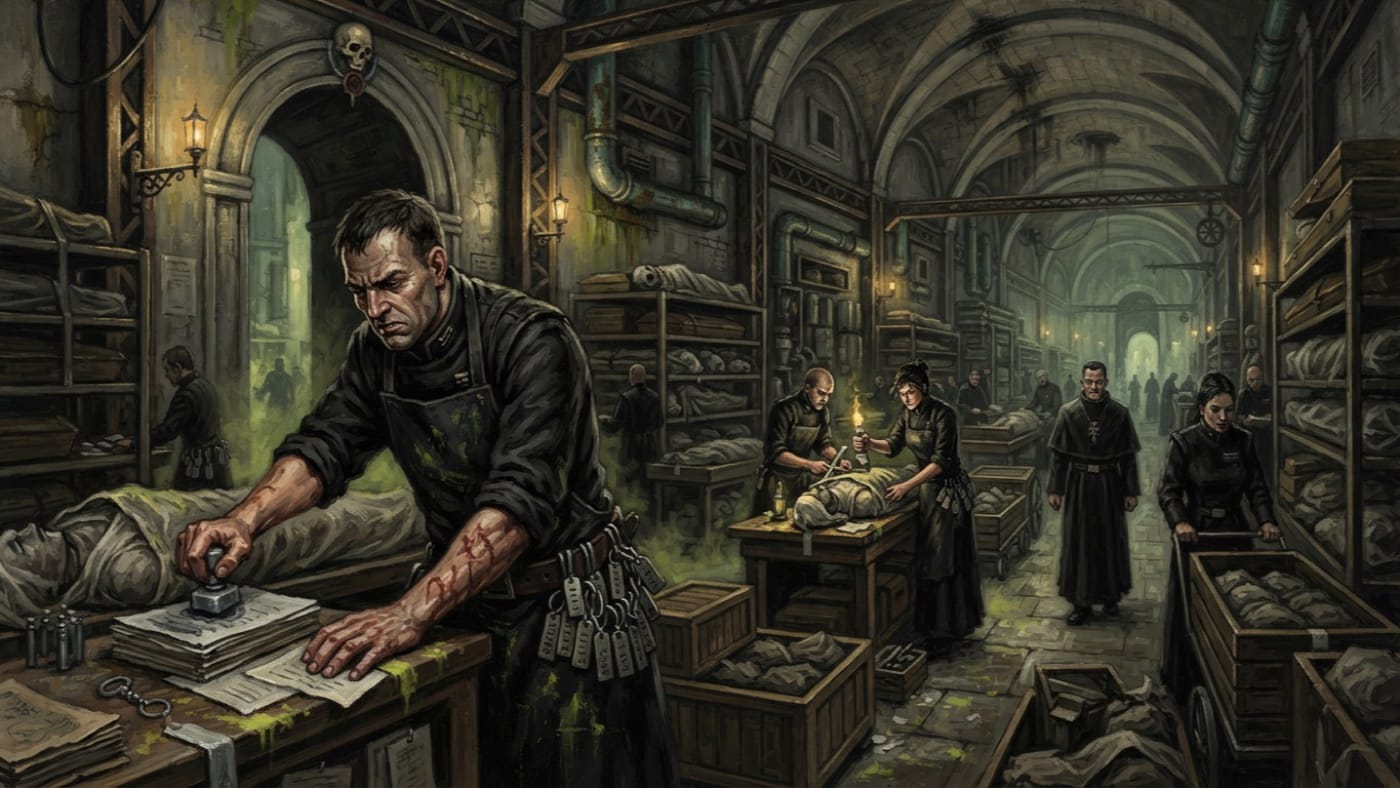
Mercy Stamp clerks
The street cannot wait for the Ledger to finish grieving
Mercy Stamp clerks are Dead-Goods Tariffers who favour speed against street rot. The opinion is permitted; the unofficial clearance has no lawful standing.
Codex Ref. XIII.1.11-201
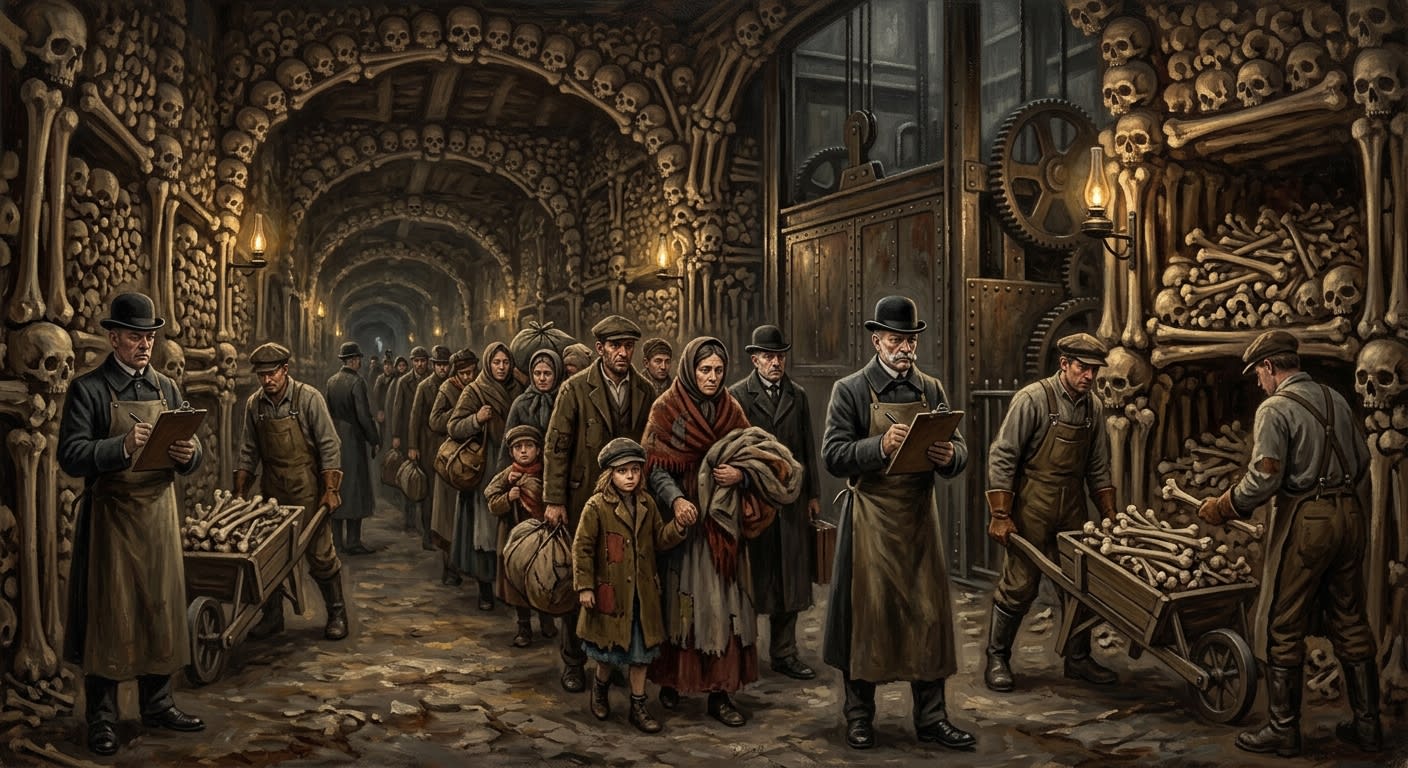
Ossuary Allies
Bring me your dead and I will find room for your living
Ossuary Allies convert grave-field claims into bone-walled tenancy, moving poor families from exposed graveside lanes into ossuary corridors at the price of their dead.
Codex Ref. XII.27.04-001
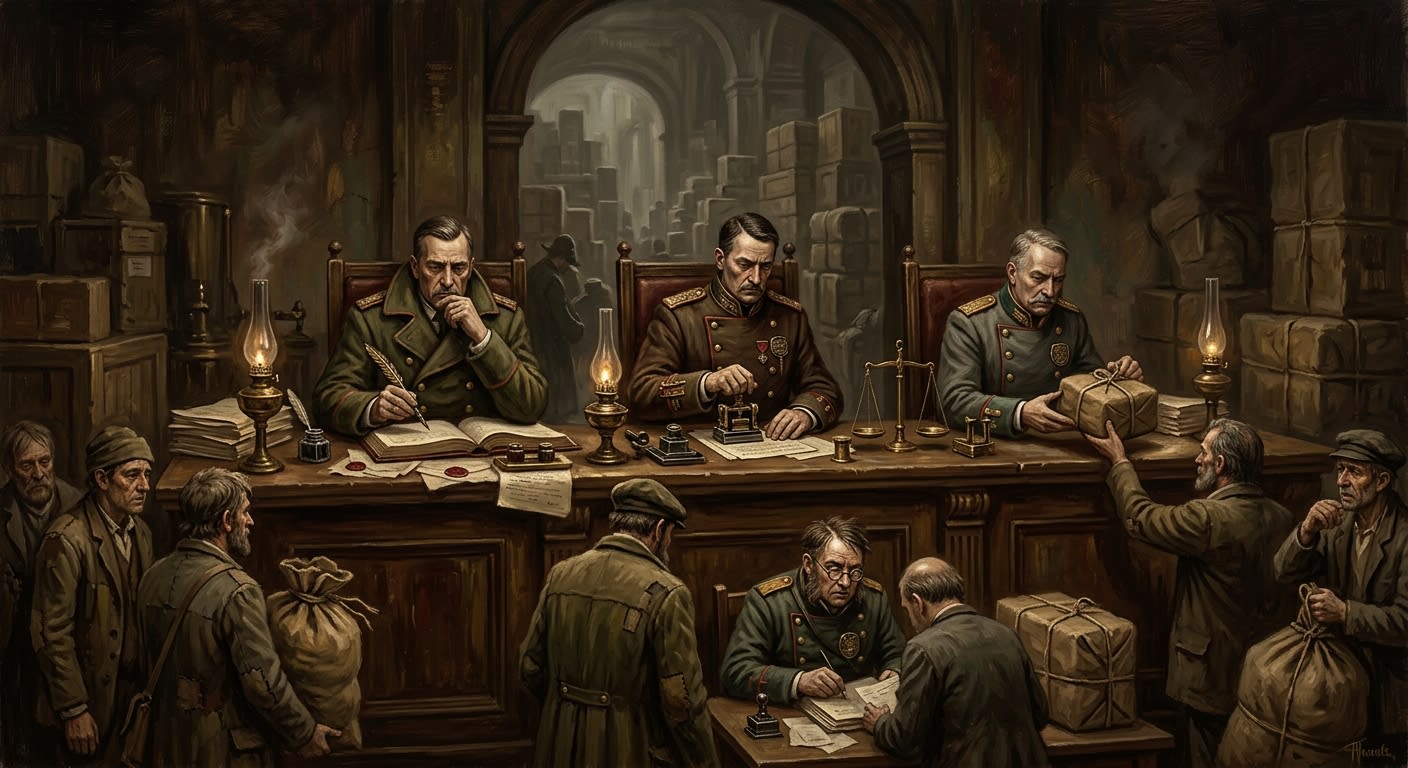
Port Court
Where cargo waits while permission proves it has a soul
The Port Court names cargo before mercy may touch it: a Commerce bench where sacks become law, law becomes delay, and delay invoices the hungry.
Codex Ref. XIII.1.89-112
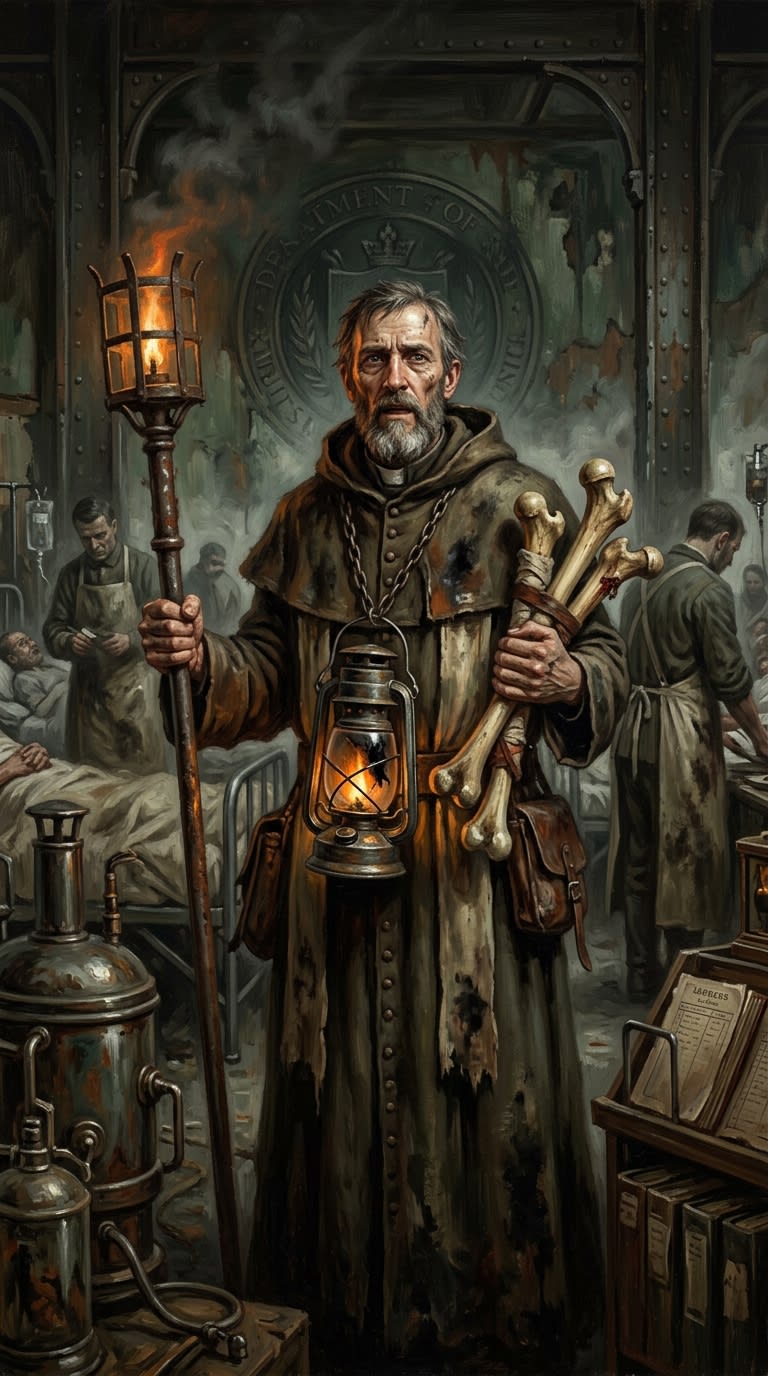
Saint Maurus of the Burnt Lantern
The hospice martyr whose left leg taught arithmetic to kneel
Hospice martyr, ward-lantern patron, and owner of three authenticated left femurs; Maurus proves that sanctity can outgrow anatomy.
Codex Ref. III.2.01-148
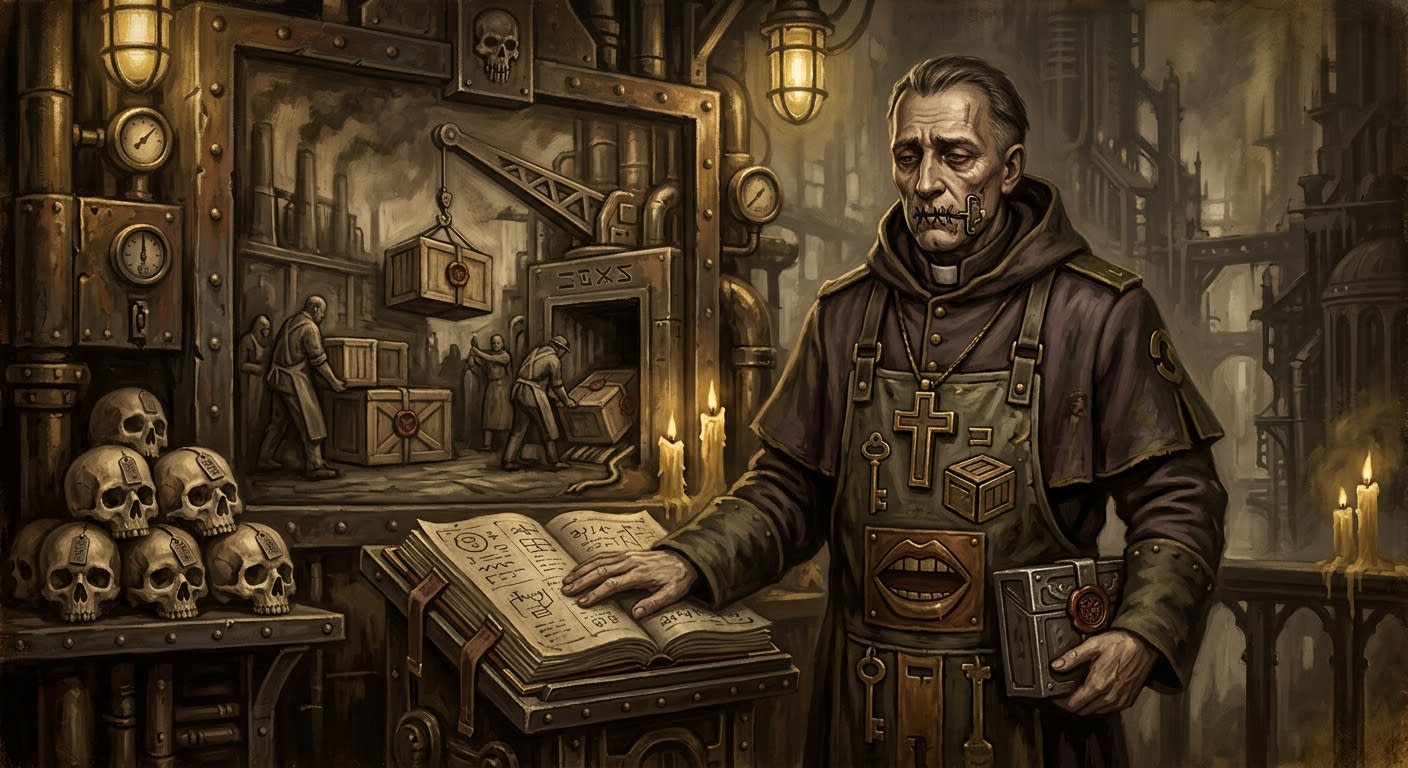
Saint Morin of the Sealed Mouth
Patron of waxed teeth, taxable grief, and the silence that keeps the queue moving
Saint Morin of the Sealed Mouth is the disputed occupational patron of Dead-Goods Tariffers, waxed skulls, intake bays, and the mortuary discipline of making the dead remain quiet.
Codex Ref. III.2.01-105
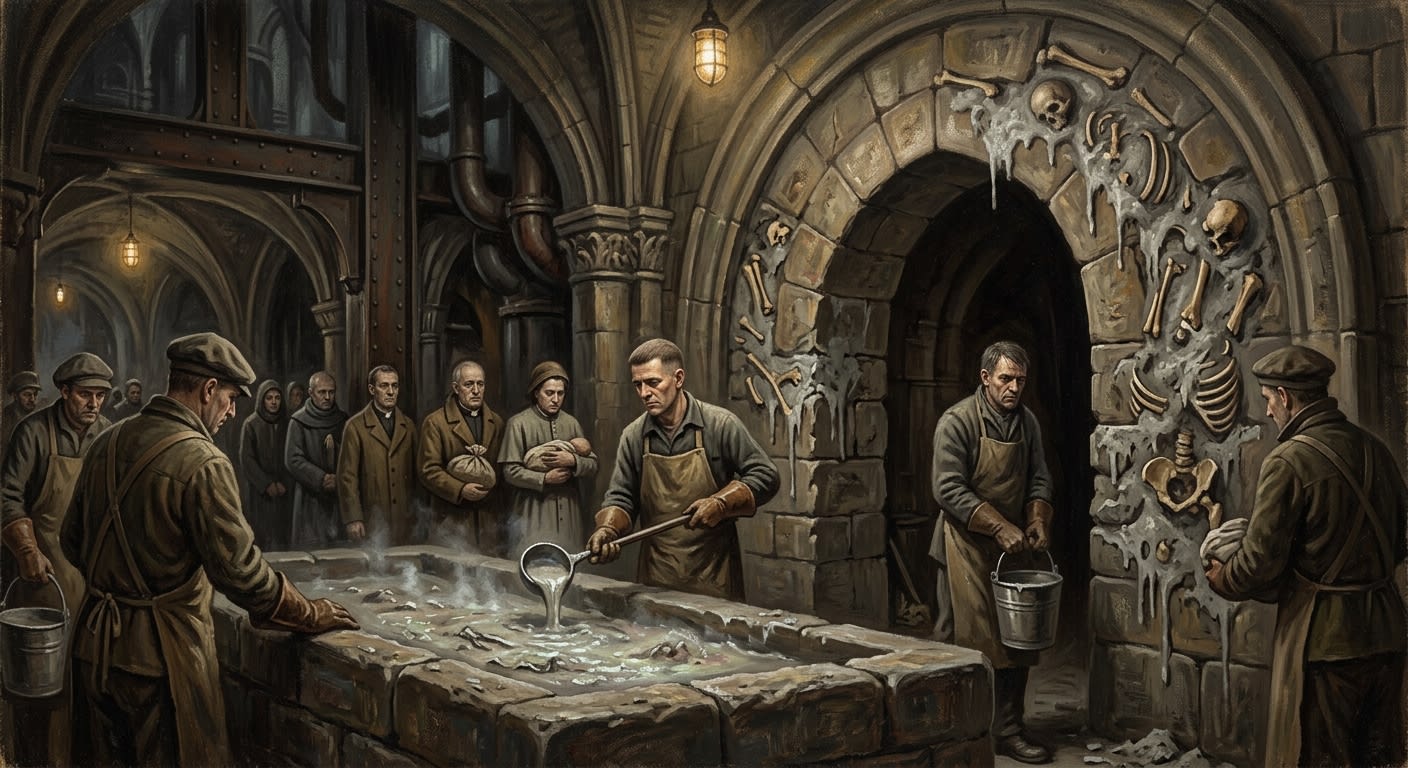
Saint-Bone Melting Acts
Sanctity must bear weight, and the wall has receipts
The A.S. 96 Saint-Bone Melting Acts made surplus holiness structural, teaching relics to become mortar and the faithful to call subtraction a wall.
Codex Ref. XIII.1.91-096
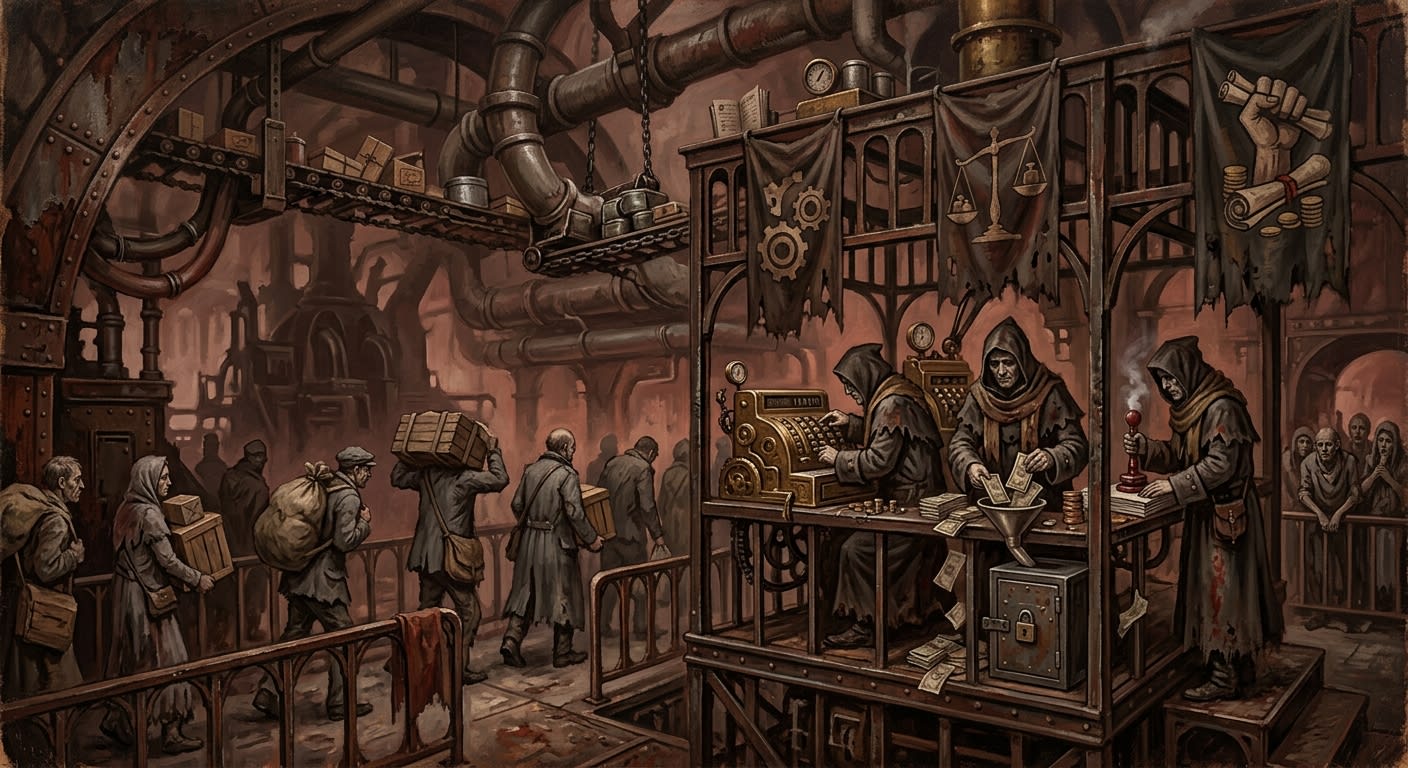
Standing Order 77-A
Movement is holy until the receipt arrives
Standing Order 77-A prices delay, blesses audited bribery, and teaches cargo to move before correctness kills the hungry.
Codex Ref. XIII.1.77-172
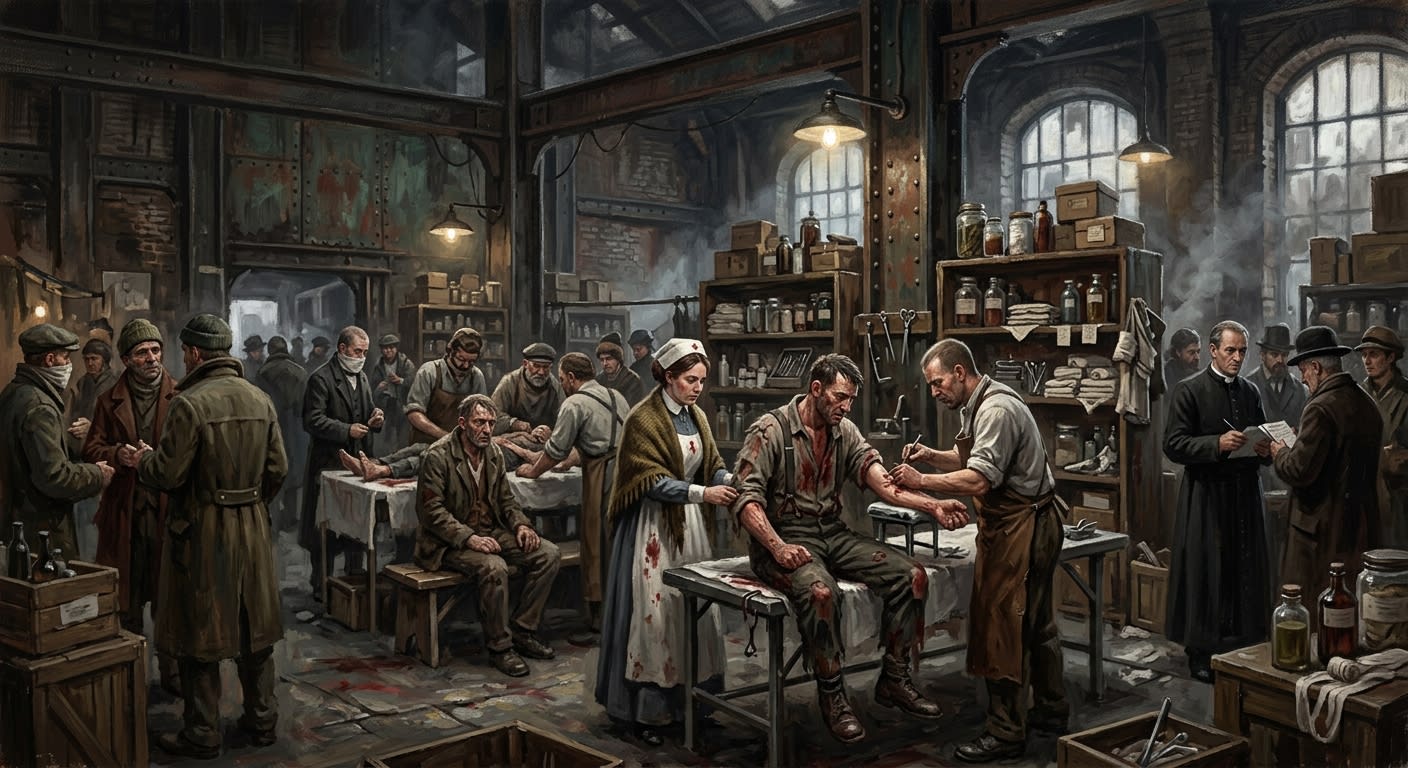
Stitchmarket
Where unlawful mercy learns to keep receipts
Marrowgate rationed lawful mercy until crime opened a clinic, priced the bandages, and learned to forge the city better than its clerks.
Codex Ref. XII.31.06-201

The Rhine Corridor
Damp procedure, counted backward from every bridge
The Rhine Corridor is the Synod's damp procedure: a Zone 2 logistics artery, mortuary road, ferry court, heresy school, and billable proof that movement can be made afraid.
Codex Ref. II.2.08-202
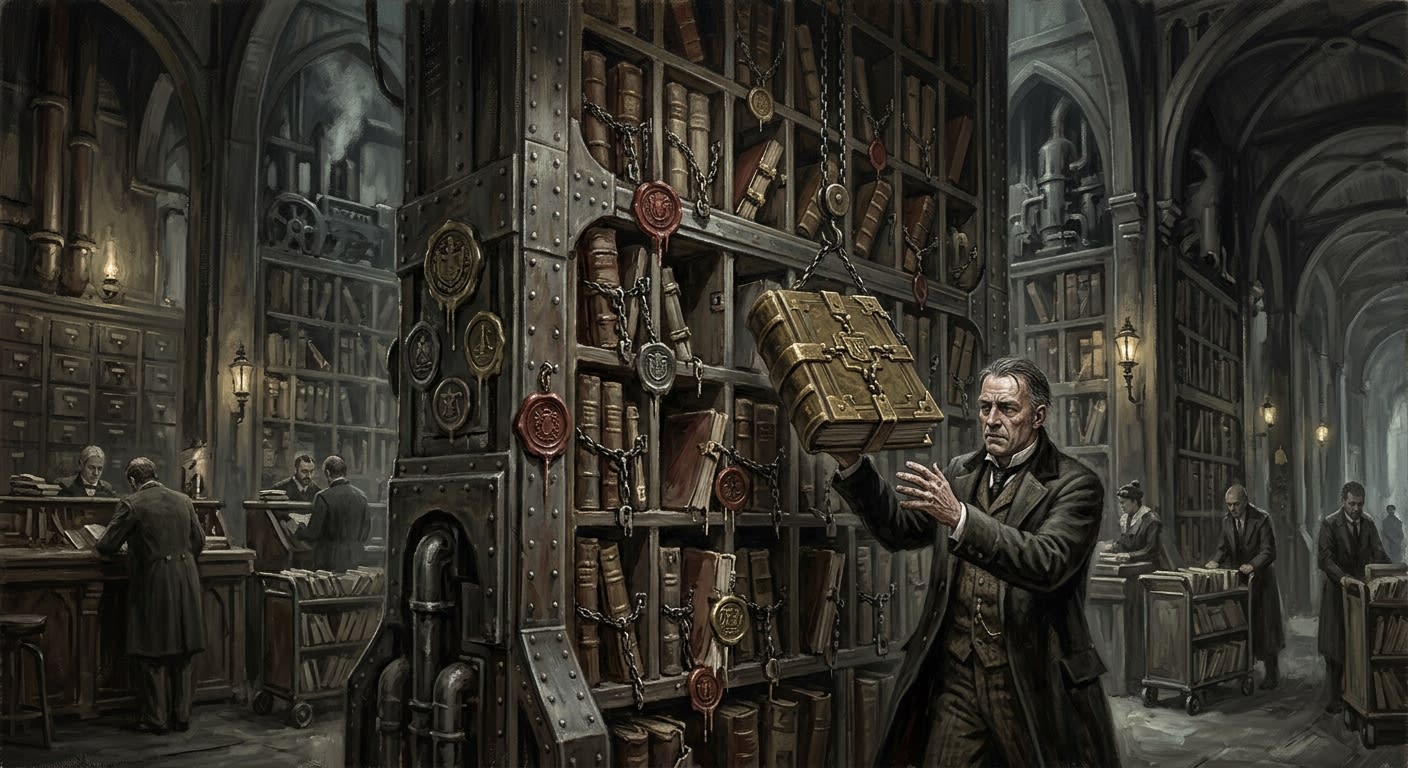
Thirty-Seal Index of Precedent
The book that lets old disputes bite new throats
The Thirty-Seal Index is Commerce's weaponised memory: port-court precedent sealed thirty ways, kept cold, and lent to litigants who know where hunger must wait.
Codex Ref. XIII.1.89-187
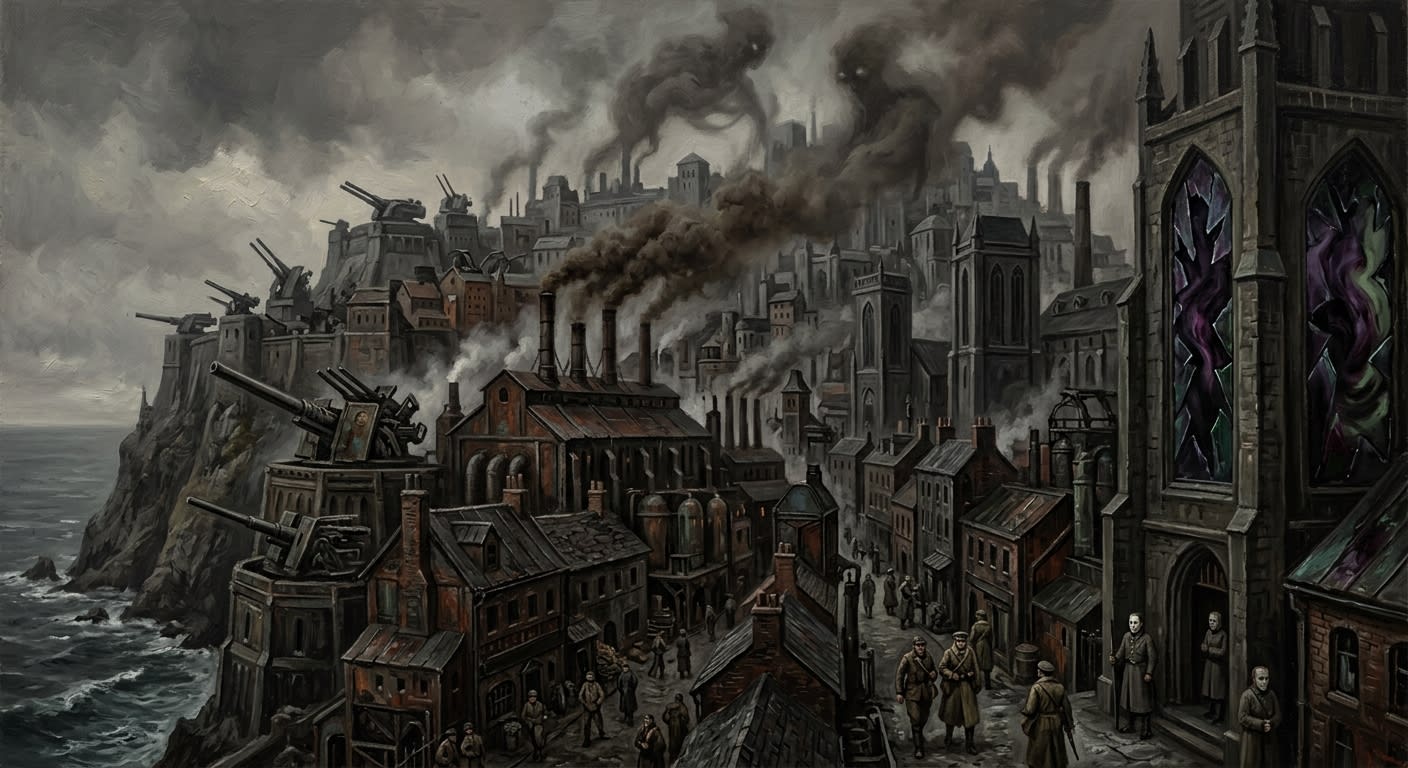
Varna
The Ashen Redoubt where smoke looks back and bread learns law
Varna, the Ashen Redoubt, is a Black Sea cliff-fortress of guns, bone-kilns, tariff chapels, demon glass, hunger law, debt masks, and smoke that looks back.
Codex Ref. II.4.09-070