

Reverse Index
Referencing “Lime Yards”
Every codex entry that links to Lime Yards. 32 entries.
Return to Lime Yards
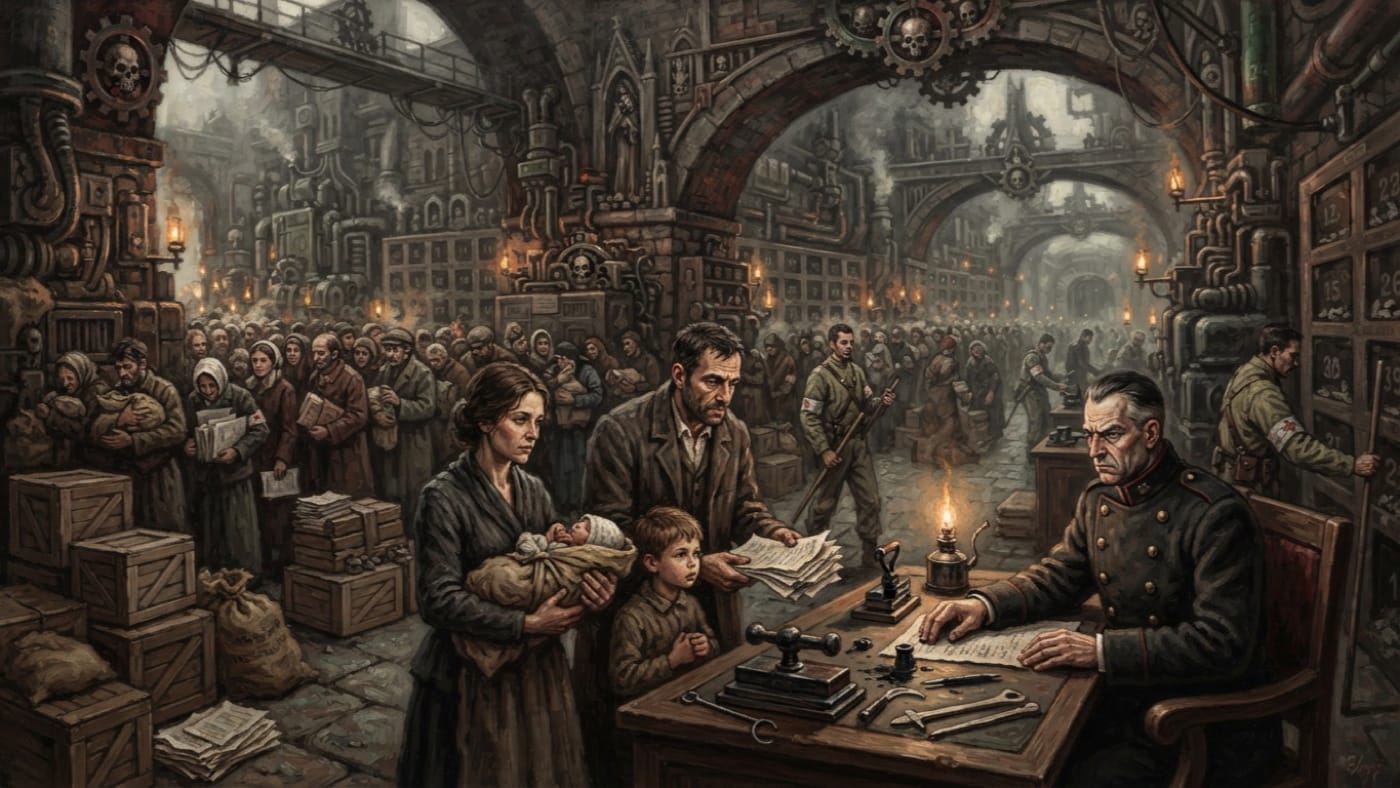
A.S. 78 Joint Classification Mandate
Five categories for the dead, one more queue for the living
The A.S. 78 emergency mandate made the dead controlled goods: five classifications, licensed mortuary clearance, and grief that could finally be billed.
Codex Ref. XIII.1.92-078
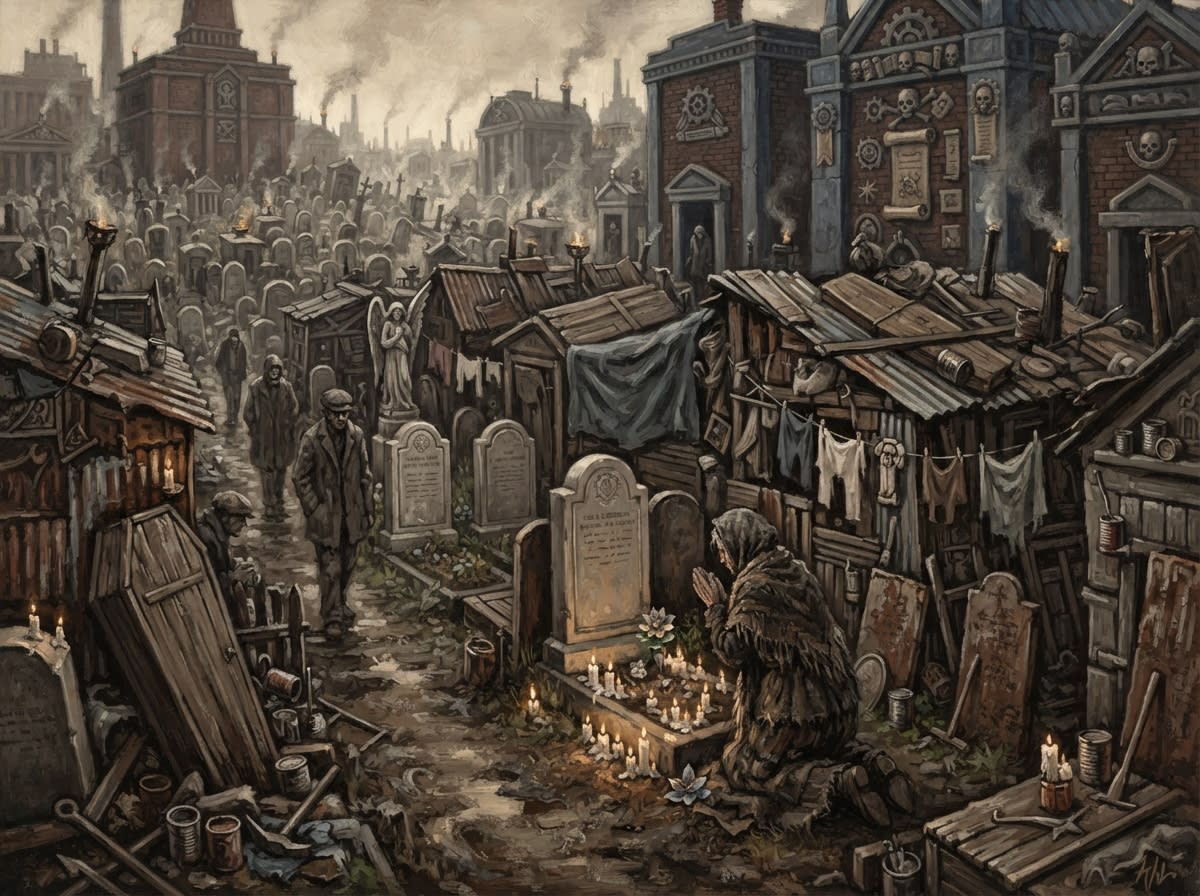
Anchor Graves
Where burial right does the work housing law refuses
Anchor graves are lawful family plots whose burial privileges let grave-field lanes pretend that shacks are caretaker shelters rather than homes.
Codex Ref. XIII.1.78-017
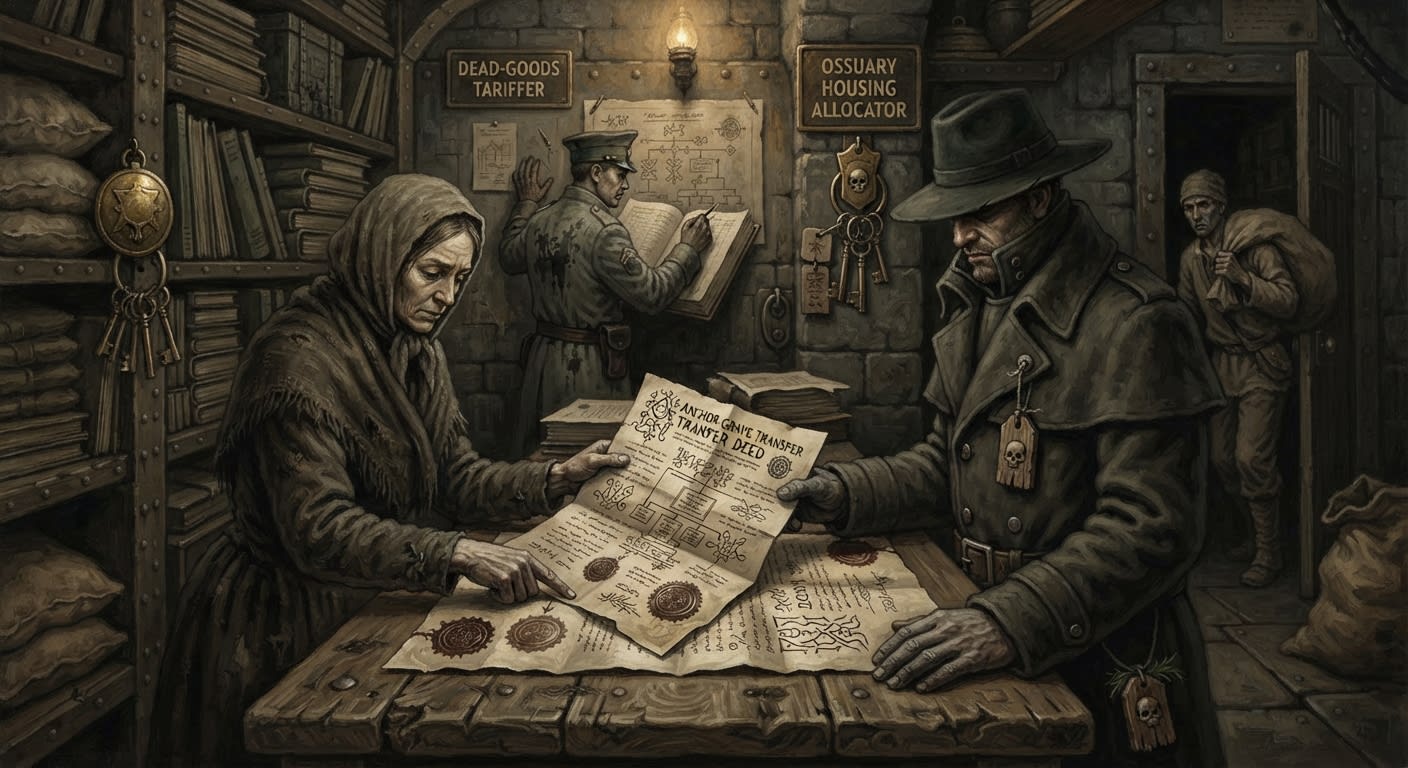
Anchor-Grave Transfer Deed
Where the grave becomes housing because hunger signs neatly
The anchor-grave transfer deed converts a family's burial claim into permitted ossuary presence, teaching grief to become tenancy and tenancy to remain revocable.
Codex Ref. XIII.1.78-178
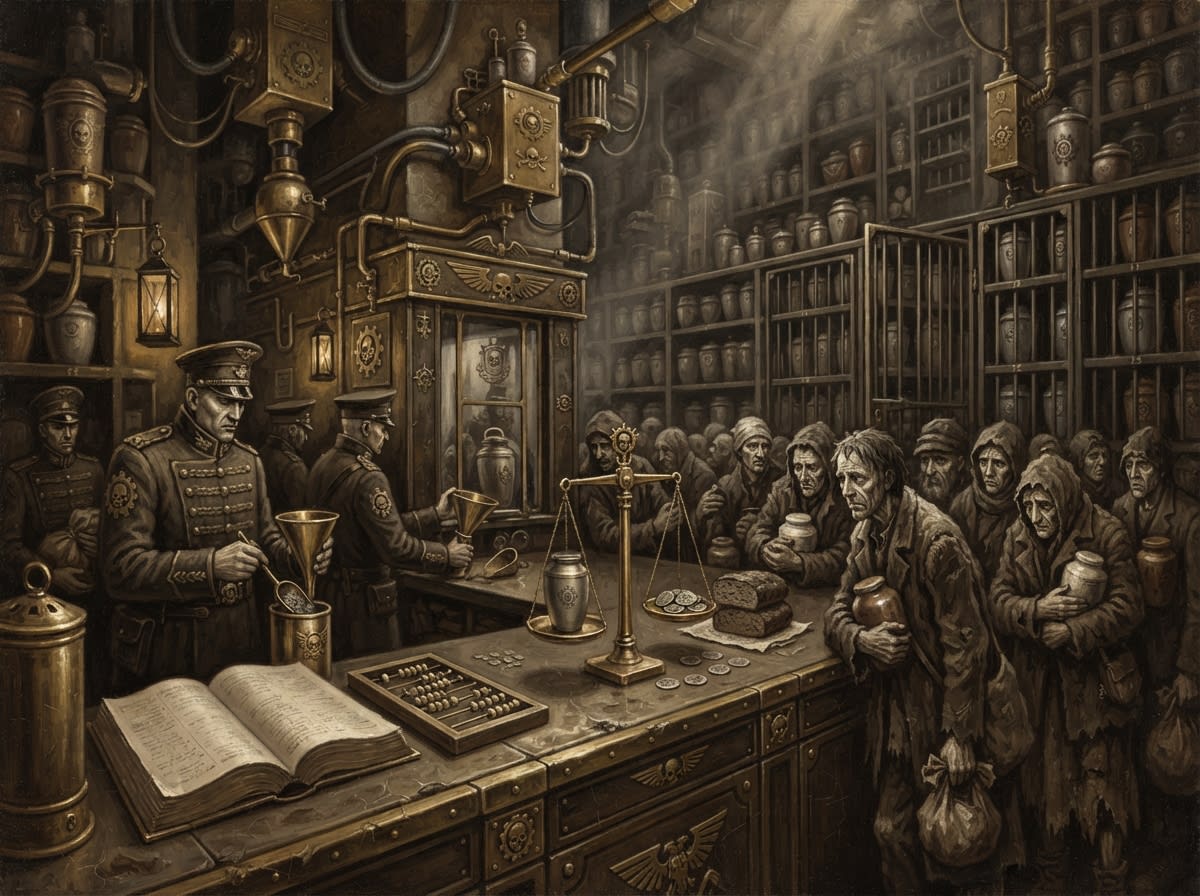
Ash Banks
Where grief is weighed, tendered, and filed as solvent
Ash Banks convert cremains, bone-dust, and pledged future remains into bread, salt, absolution tokens, and dust futures while every Bureau calls the ash something useful.
Codex Ref. XIII.1.98-201
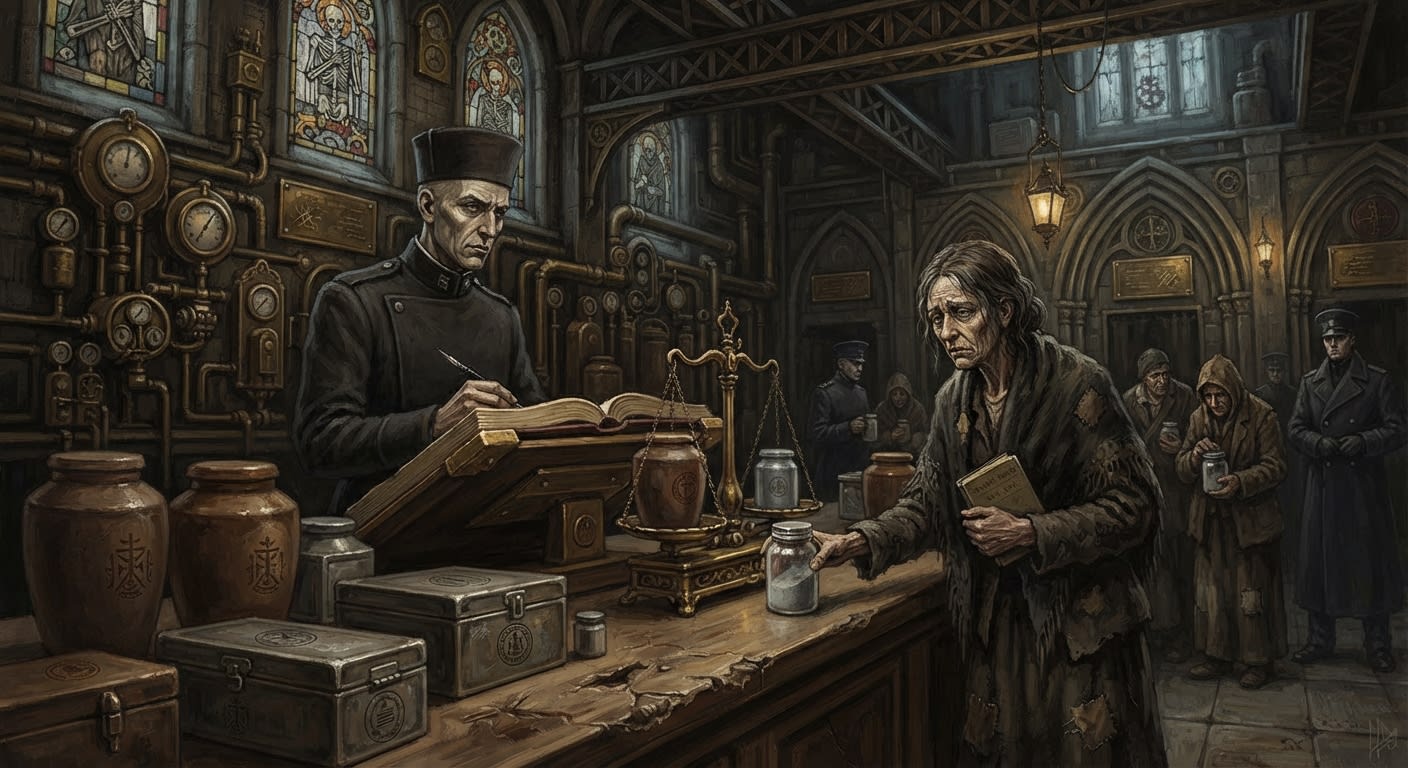
Ash-Credit
The dead are tender once Tithes finds a scale
Ash-credit is the Synod's devotional collateral, converting cremains, saint-dust, and pledged future remains into bread, grace rations, and obligations the dead cannot refuse.
Codex Ref. VI.3.01-002
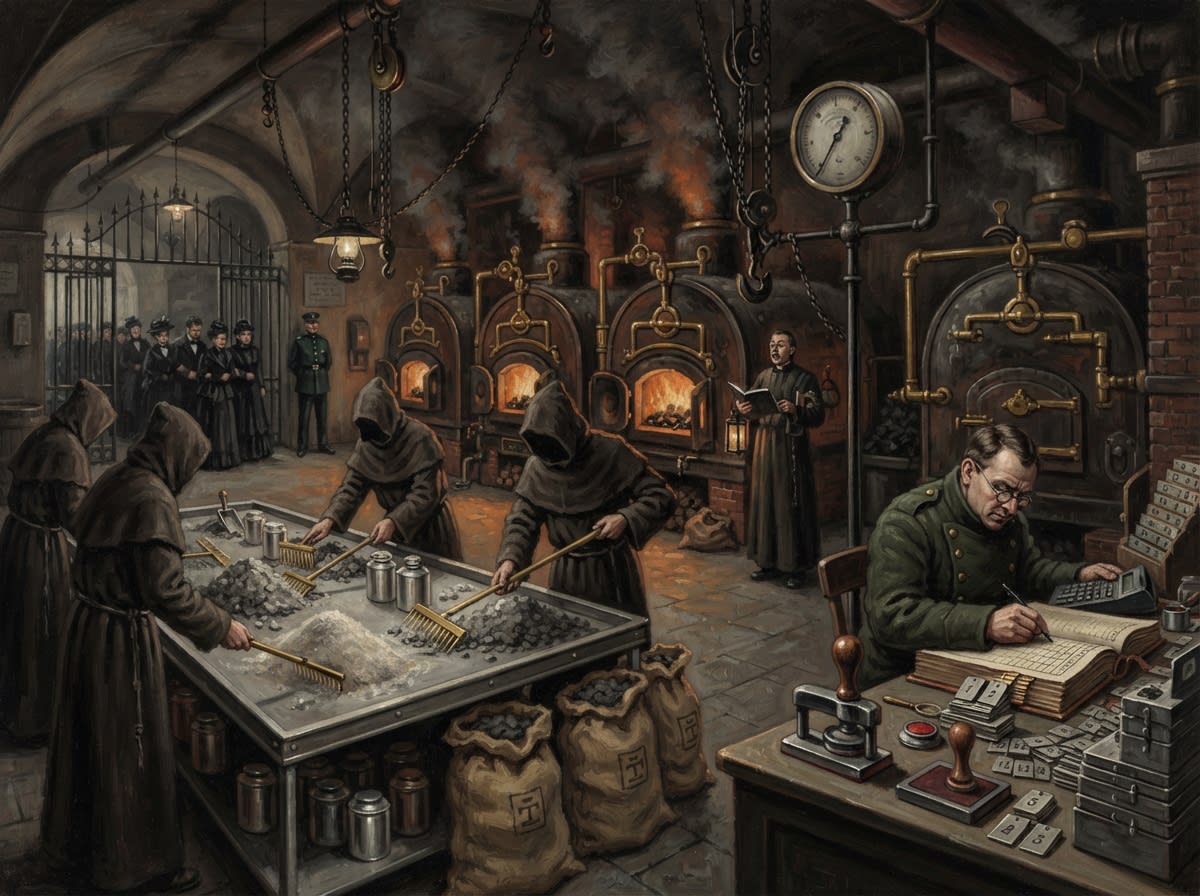
Ashbinders
The dead are sacred, and the receipt is extra
The Ashbinders burn the Synod's dead, sort the ash, sell the comfort, and accidentally perform one of the few procedures that keeps the cemeteries quiet.
Codex Ref. XII.41.01-001
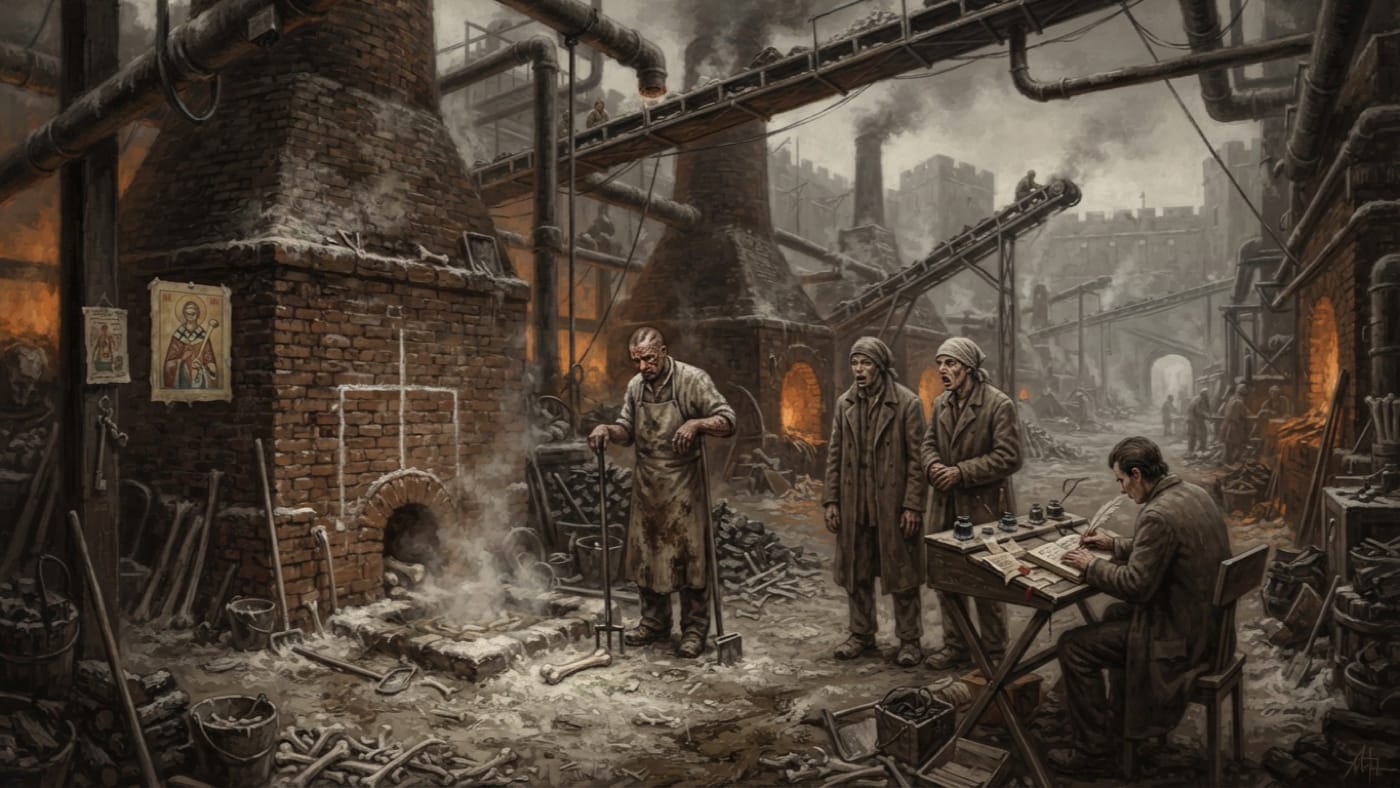
Aurelite Use
Four lines for mercy, no additional licence for the kiln
One attributed kiln prayer and a tolerated yard observance: Aurelite Use lets Saint-Bone Melters ask Saint Aurel for mercy while granting no additional licence to burn.
Codex Ref. XIII.1.91-146
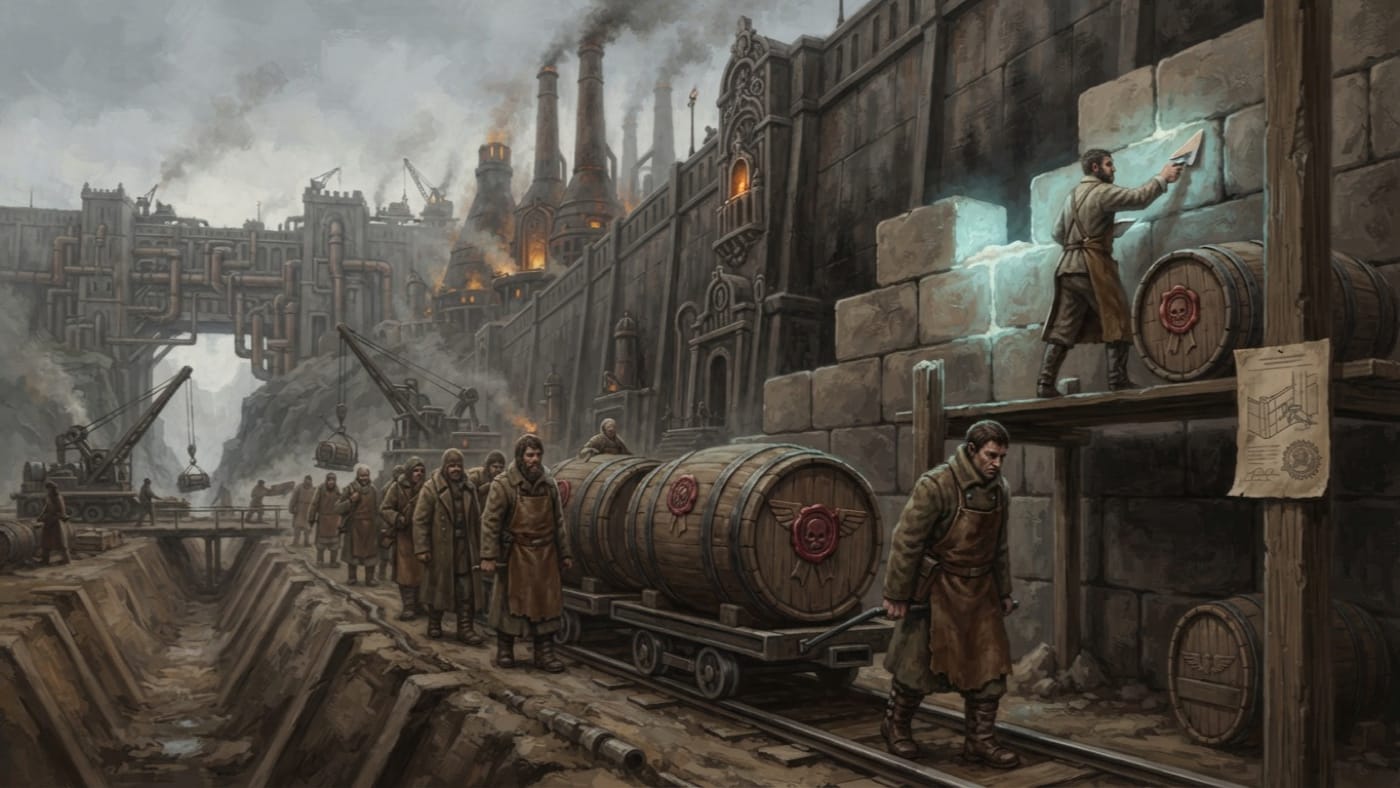
Bone-lime
The saint bears weight; the barrel bears a seal
Sanctified lime rendered from licensed relic fragments and mixed into mortar for the Sagittal Line. The saint bears weight; the barrel bears a seal; the parish receives a notice.
Codex Ref. XIII.1.99-002

Bone-Lime Consortium
The dead supply the material; the living supply the obedience
Marrowgate's informal alliance of kiln foremen, carters, prelates and ash-credit factors turns casualties into lime and civic dependency into power. Its accounts prefer anonymity; the Marrowwind keeps restoring names.
Codex Ref. XII.31.07-201
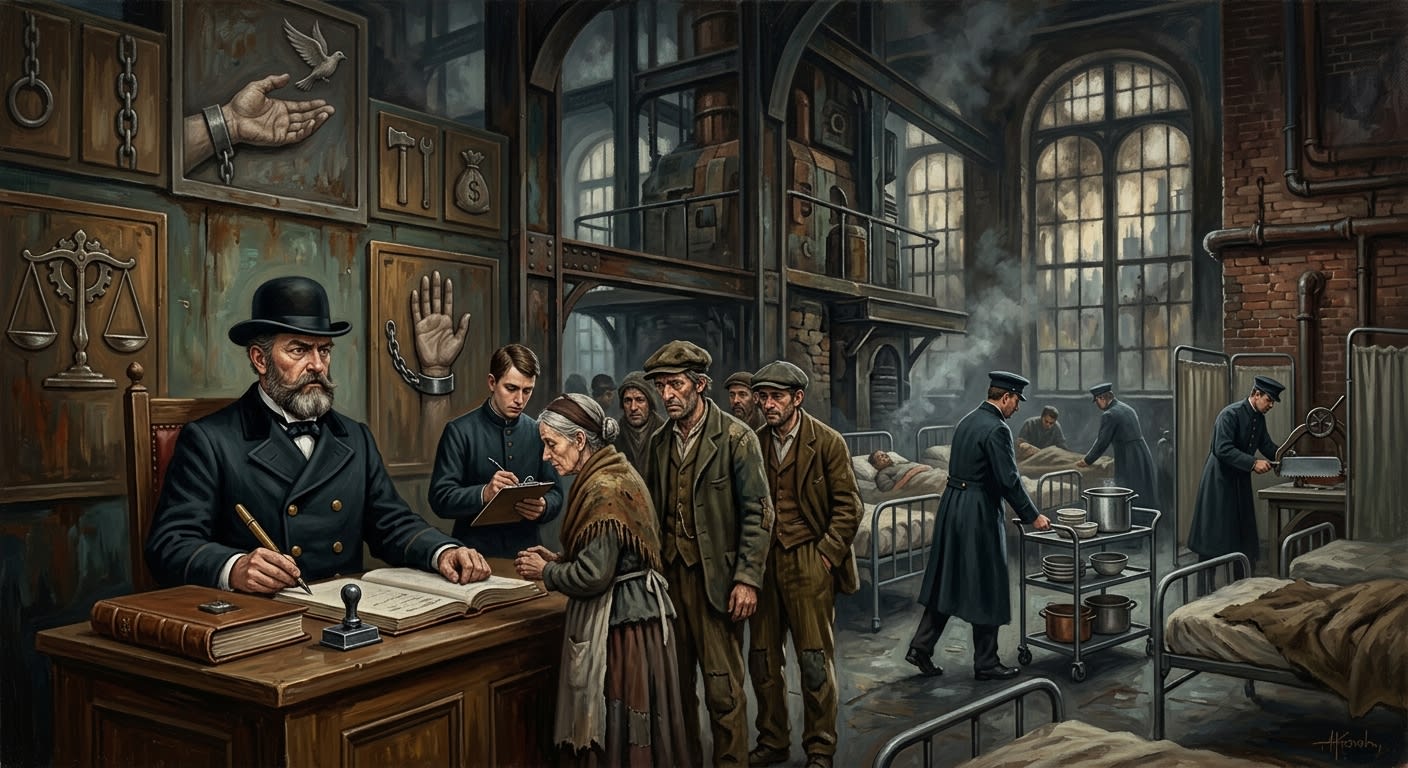
Civic Triage Tribunal
The court where wounds learn their price before they heal
Marrowgate's Civic Triage Tribunal turns beds, saws, broth, labour, debt, and death into rulings; mercy enters only after allocation.
Codex Ref. XIII.1.88-083
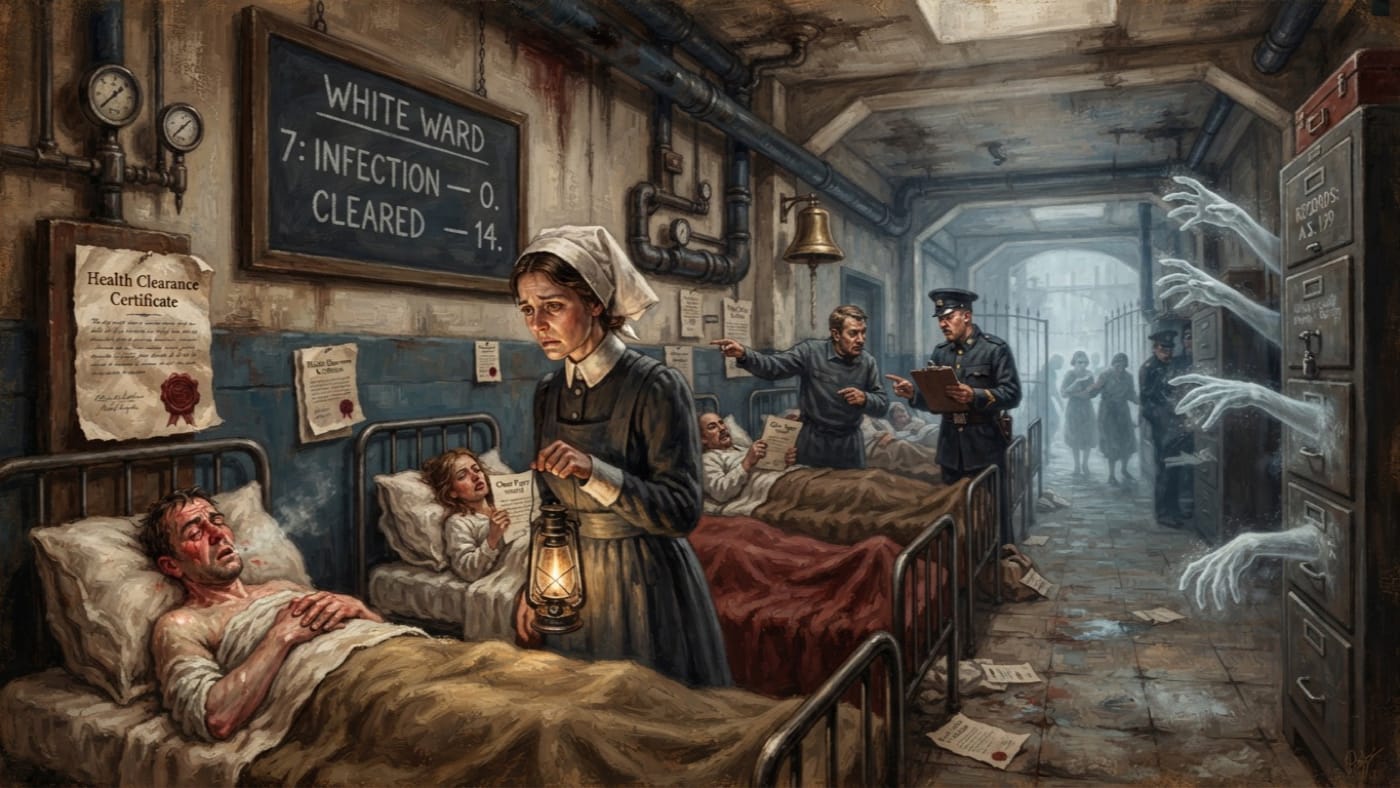
Clean Paper Plague
The certificate passed inspection. The fever passed the gate.
In A.S. 199, Marrowgate certified feverish patients as healthy and let them through its cordons. The official audit found tolerable fraud; the Marrowwind corrected the ledgers without such restraint.
Codex Ref. VII.4.20-199
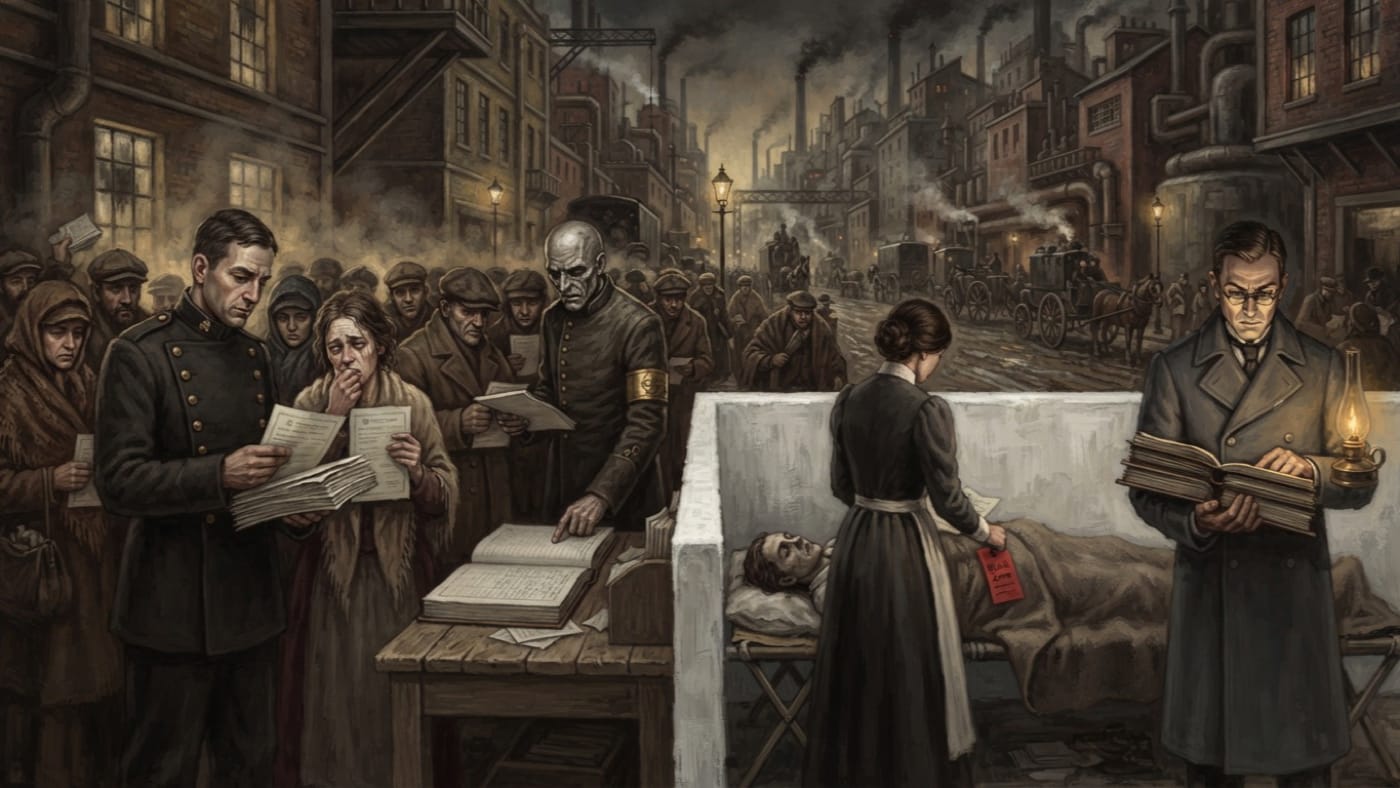
Clean Paper Plague of A.S. 199
The paper was clean. The patient was dying.
In A.S. 199, forged health clearances crossed Marrowgate's cordons while certified patients died. The ensuing audits exposed a system that trusted the seal more readily than the sick.
Codex Ref. VII.4.20-199

Dead-Goods Tariffer
The grave is a permit; the permit has a price
Bureau-licensed bone classifier. He decides what the dead become — mortar, monument, or ornament — and does not look up from his seal press.
Codex Ref. XII.11.01-001
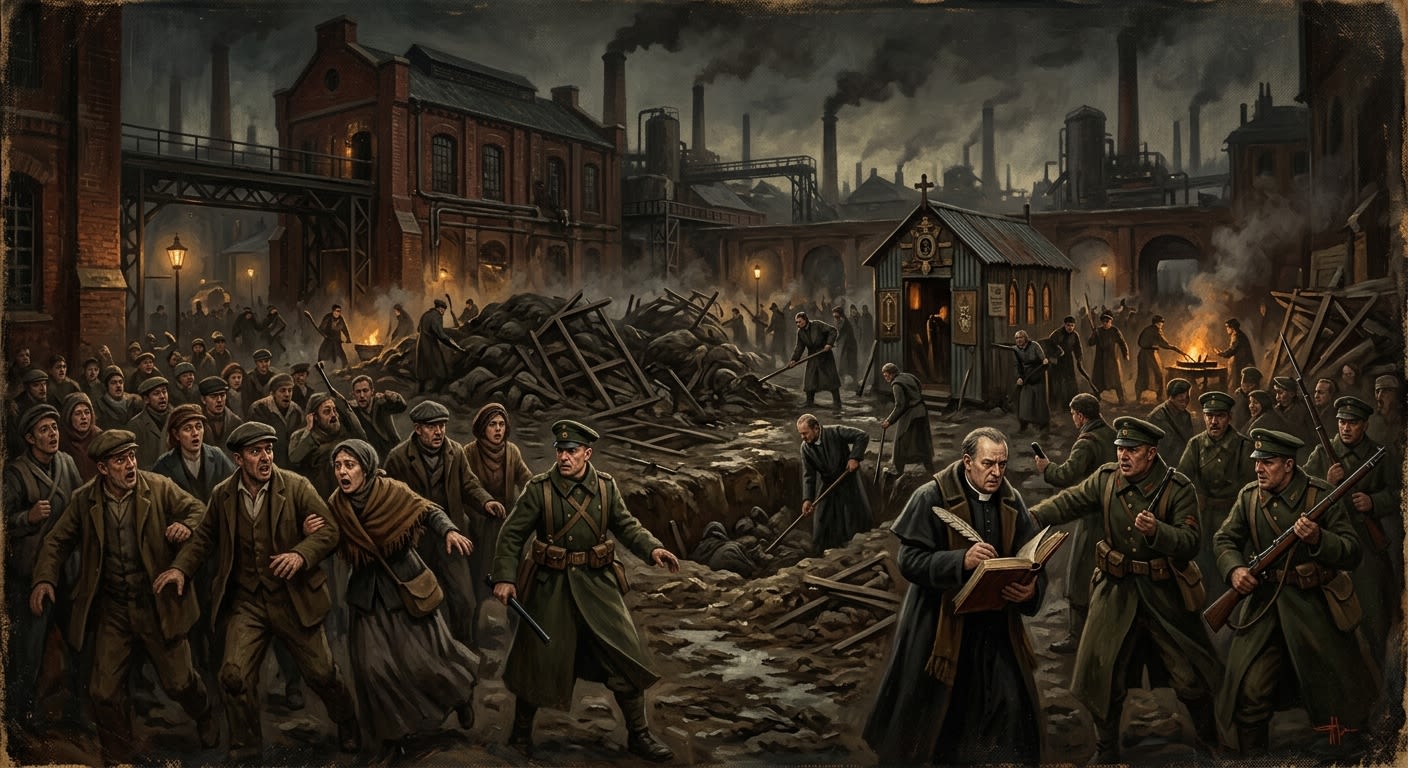
First Ossuary Panic
The dead spoke, and the Synod answered with a form
A.S. 78 Rhine corridor mortuary panic in which overcrowded pits began sounding after dark, forcing burial clearance, tariff-chapels, and the Dead-Goods Tariffer into law.
Codex Ref. VII.4.25-078

Forewoman Rute
Collector of bone rent in the city she makes washable
Forewoman Rute collects bone rent for Marrowgate's Bone-Lime Consortium. She denies knowing whose remains inhabit the ward walls; the city remains courteous and pays.
Codex Ref. III.3.07-002
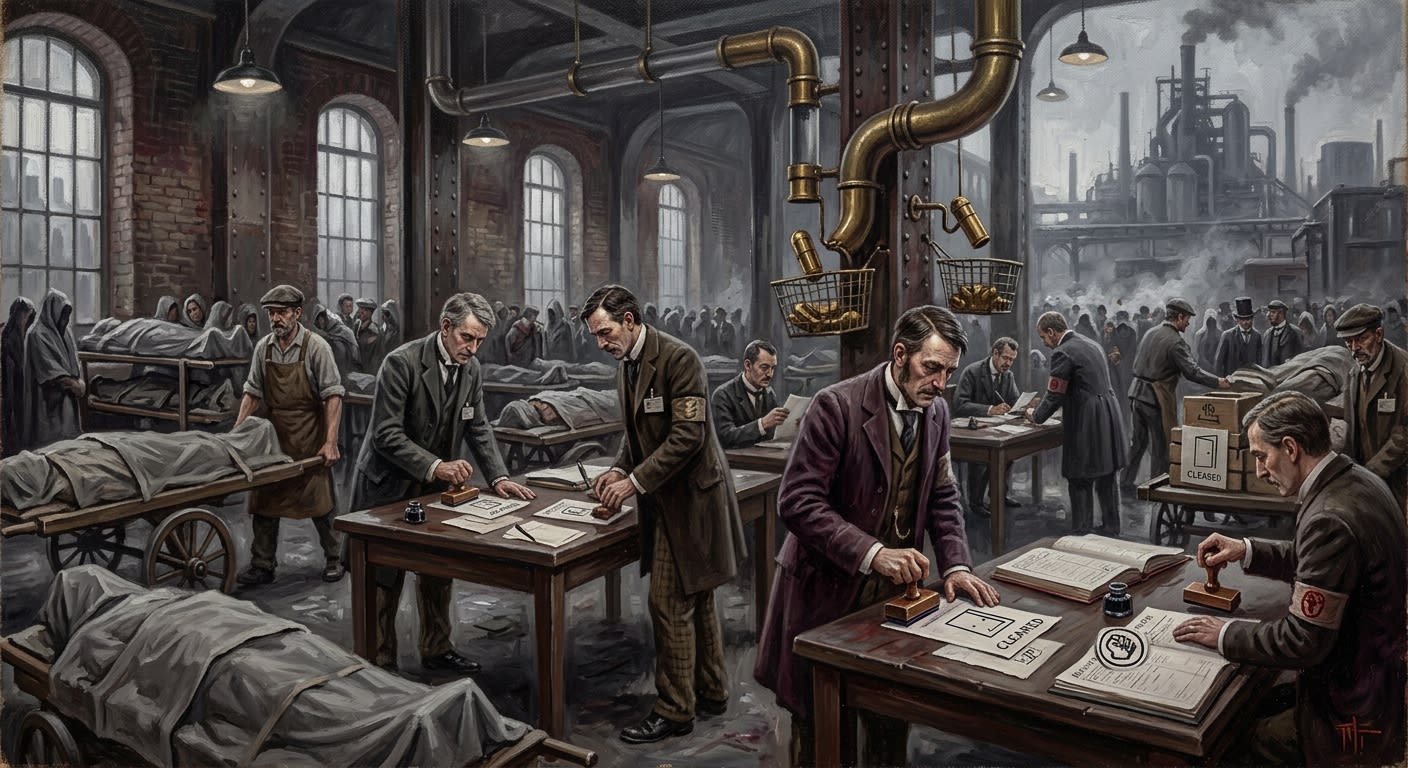
Gray Clearance
The winter mercy that moved bodies faster than names could follow
Gray Clearance was the A.S. 157–158 emergency mortuary protocol that reduced five corpse classifications to CLEARED or HELD, saved the living, and taught grief to pay for speed.
Codex Ref. VII.8.10-021
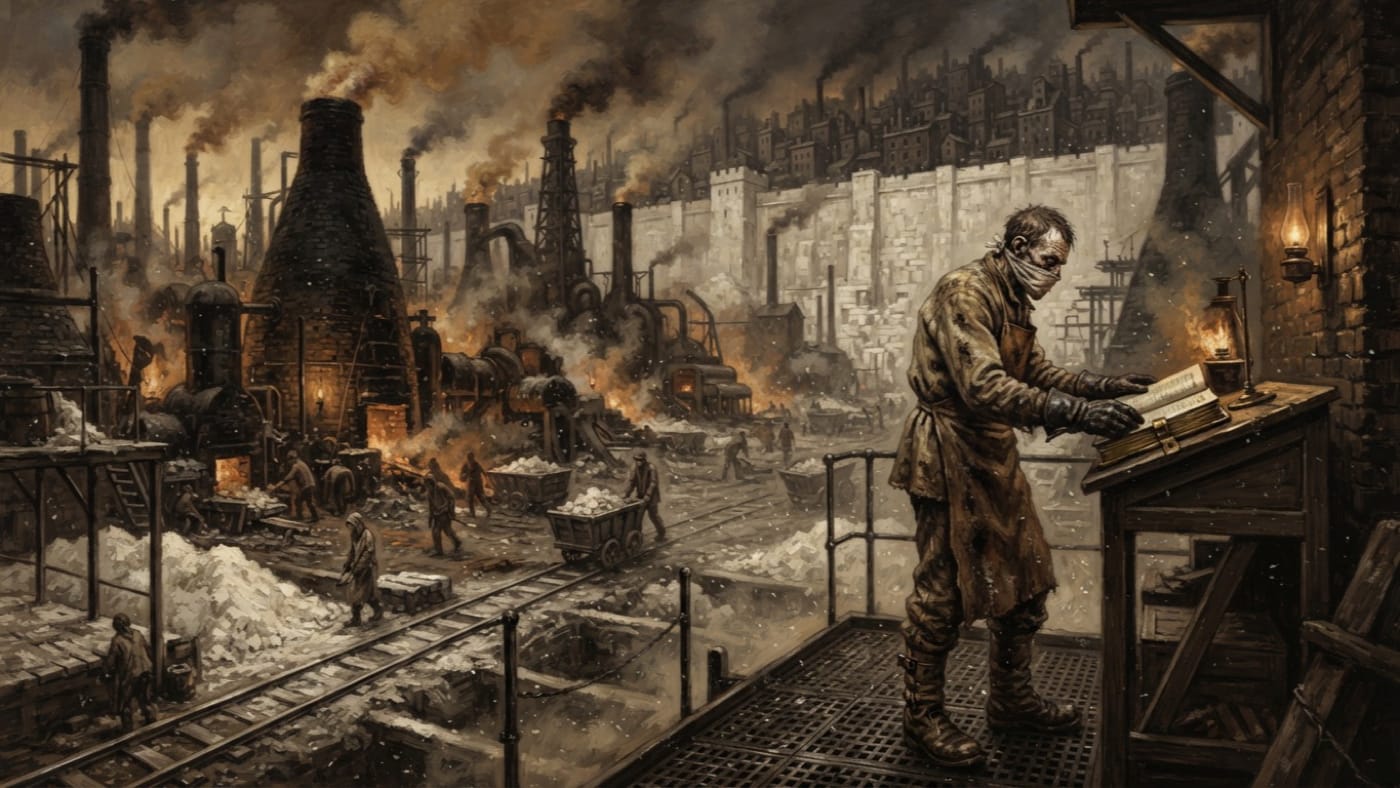
Kilnmaster Hark
The fire schedule stands; the dead keep correcting the ledgers
Kilnmaster Hark keeps Marrowgate's central kilnfield burning, turning cleared remains into walls, roads and white lines. His origins are unfiled; the Marrowwind restores the names his schedule leaves out.
Codex Ref. III.3.07-003
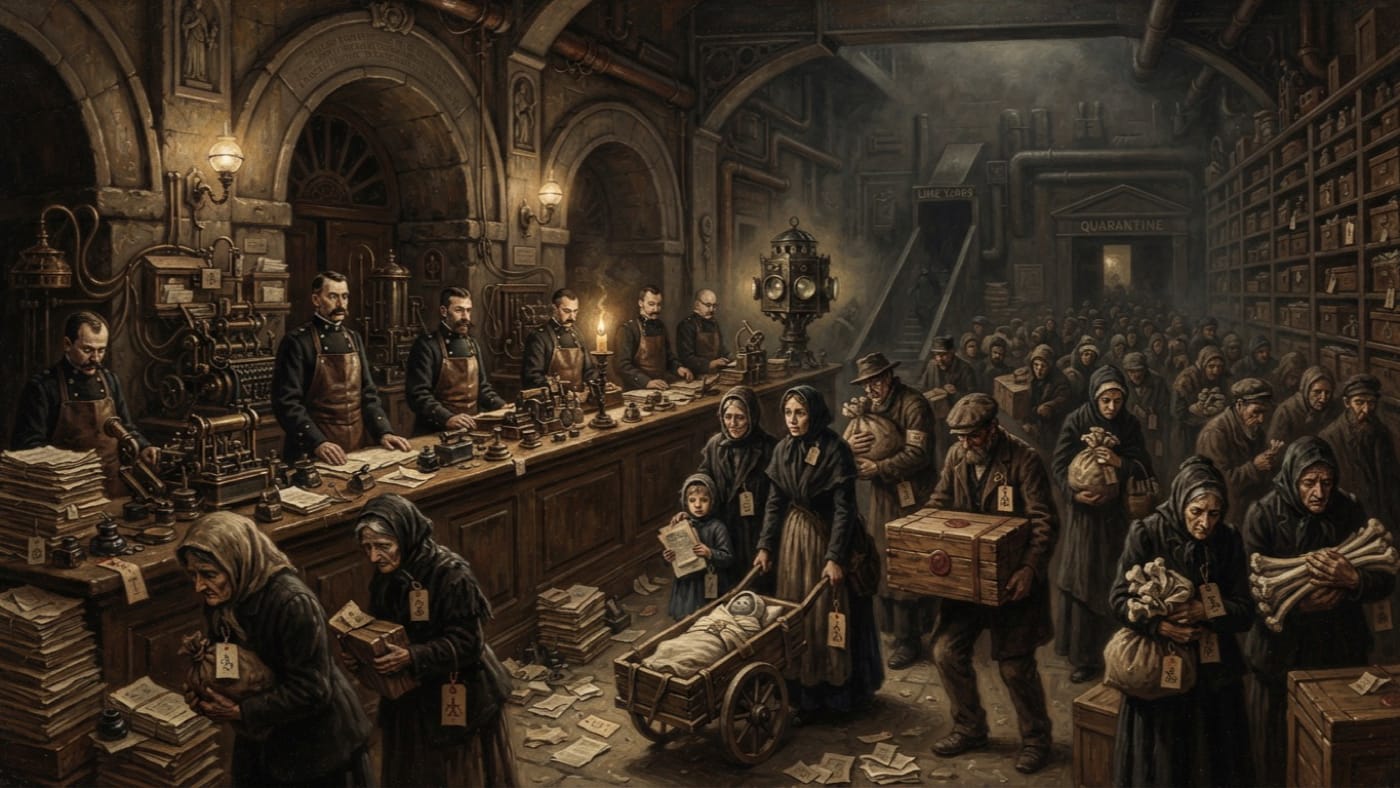
Mandatory Burial Clearance
Grief supplies no exemption
The A.S. 78 mandate placed every corpse, bone and ash sack under stamped clearance. Five classifications govern the dead; grief supplies no exemption.
Codex Ref. XIII.1.91-078
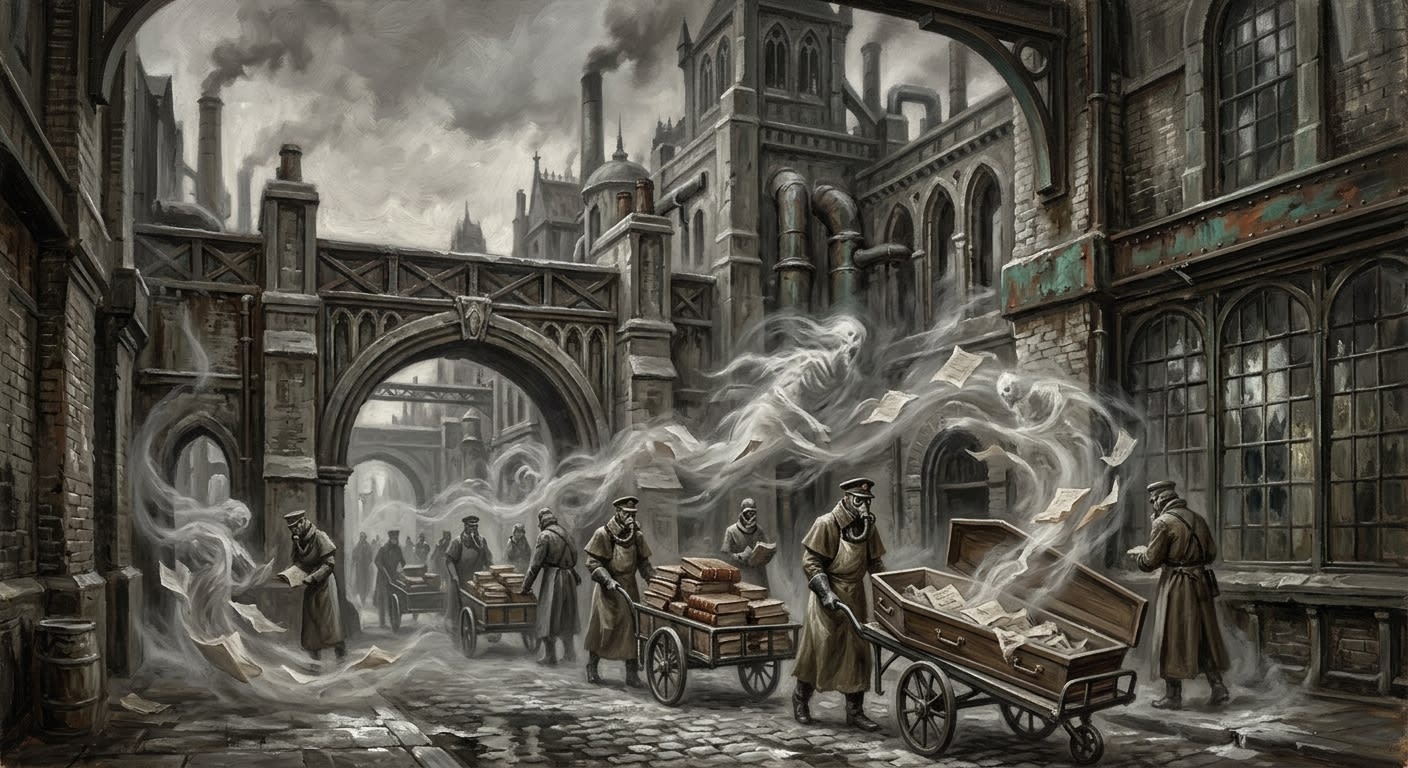
Marrowwind
The dead file amendments in lime and breath
At Marrowgate, chalk wind carries the voices of the dead, corrects fraudulent ledgers, and proves that a corpse with paperwork remains a witness.
Codex Ref. XIII.1.20-001
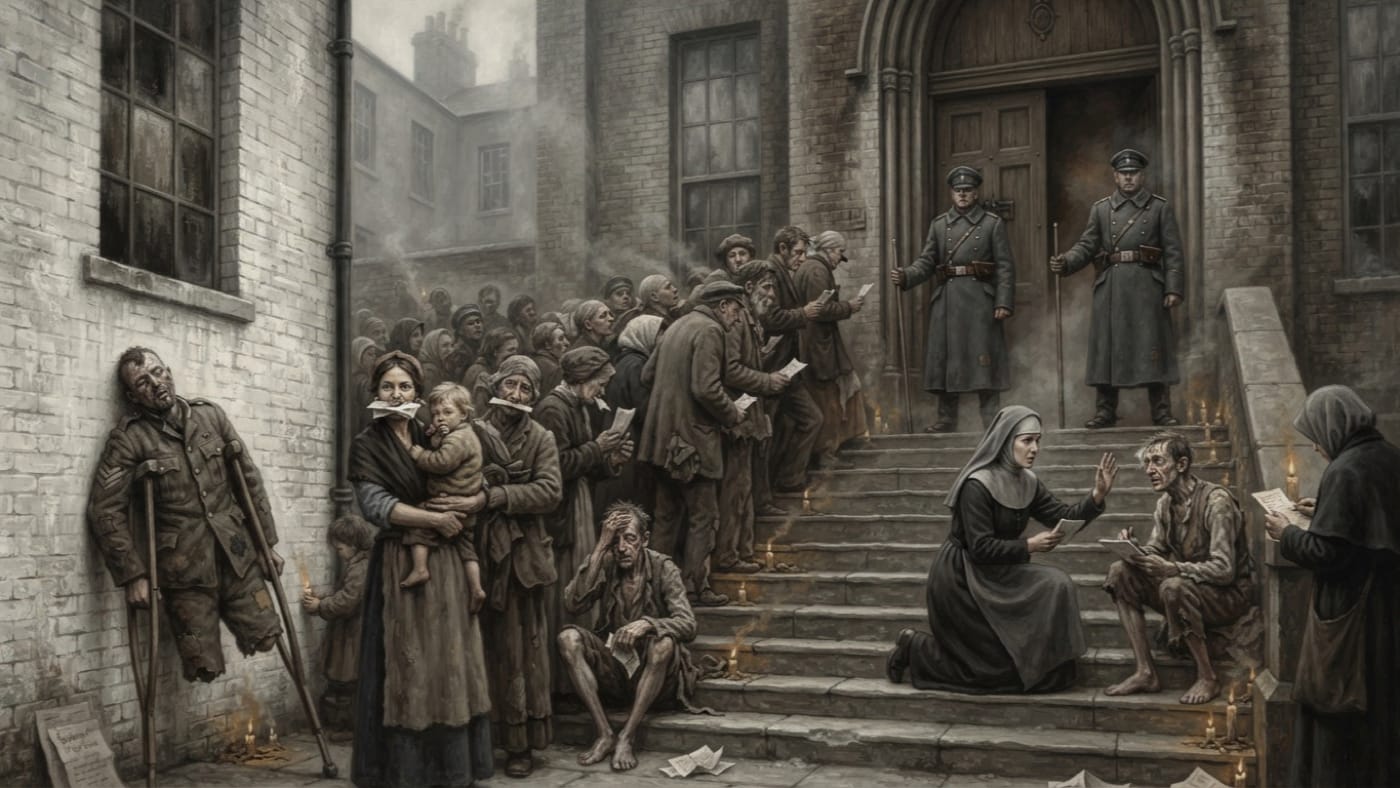
Mercy Chapel
Pain is relieved; the confession is retained
At Marrowgate's Mercy Chapel of the Unburdened, pain relief is rationed as sacrament, confessions become leverage, and sanctuary lasts as long as the chapel finds it useful.
Codex Ref. II.2.06-201
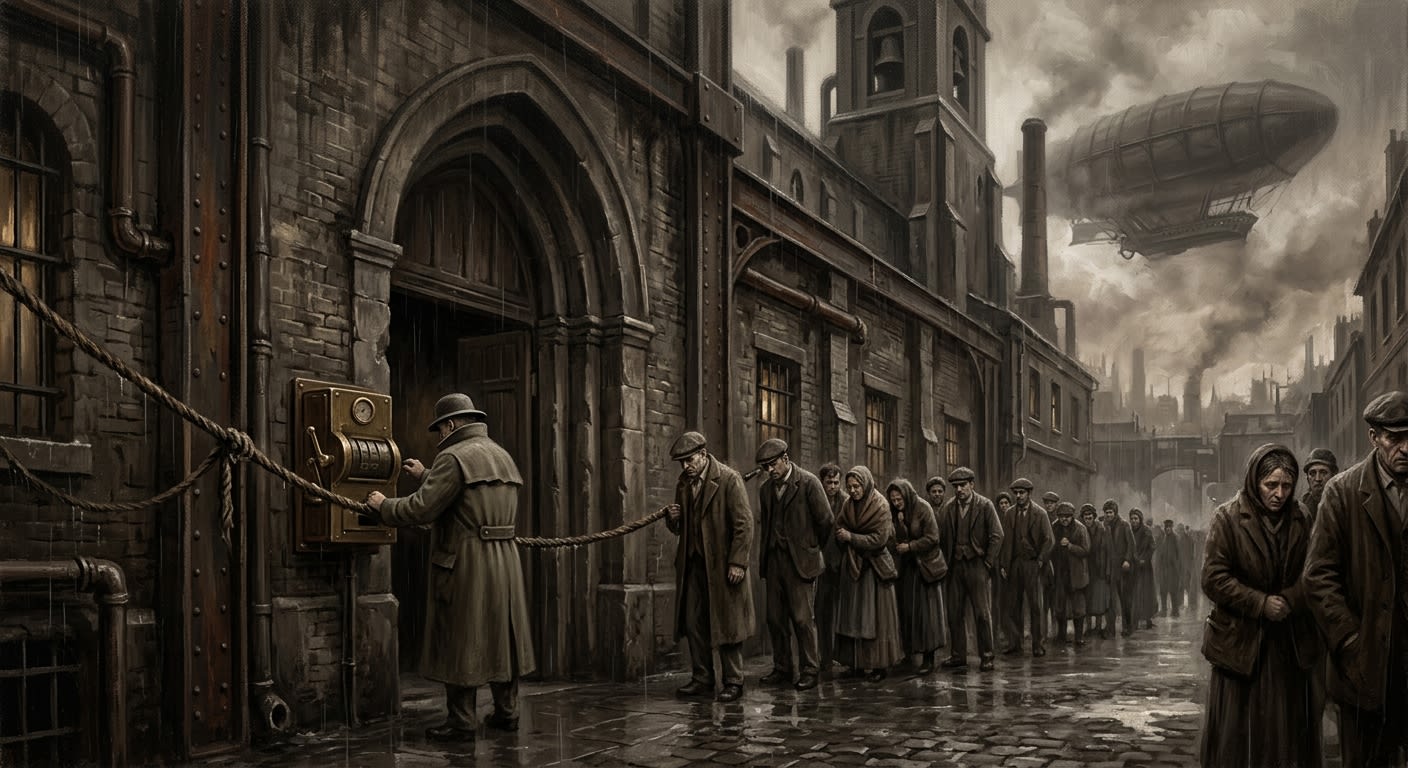
Mercy Line
The rope where grief learned its tariff schedule
The Mercy Line began as a left-hand rope outside Saint Morin's chapel in A.S. 157, where grief discovered that even mercy could be accelerated.
Codex Ref. II.2.06-157
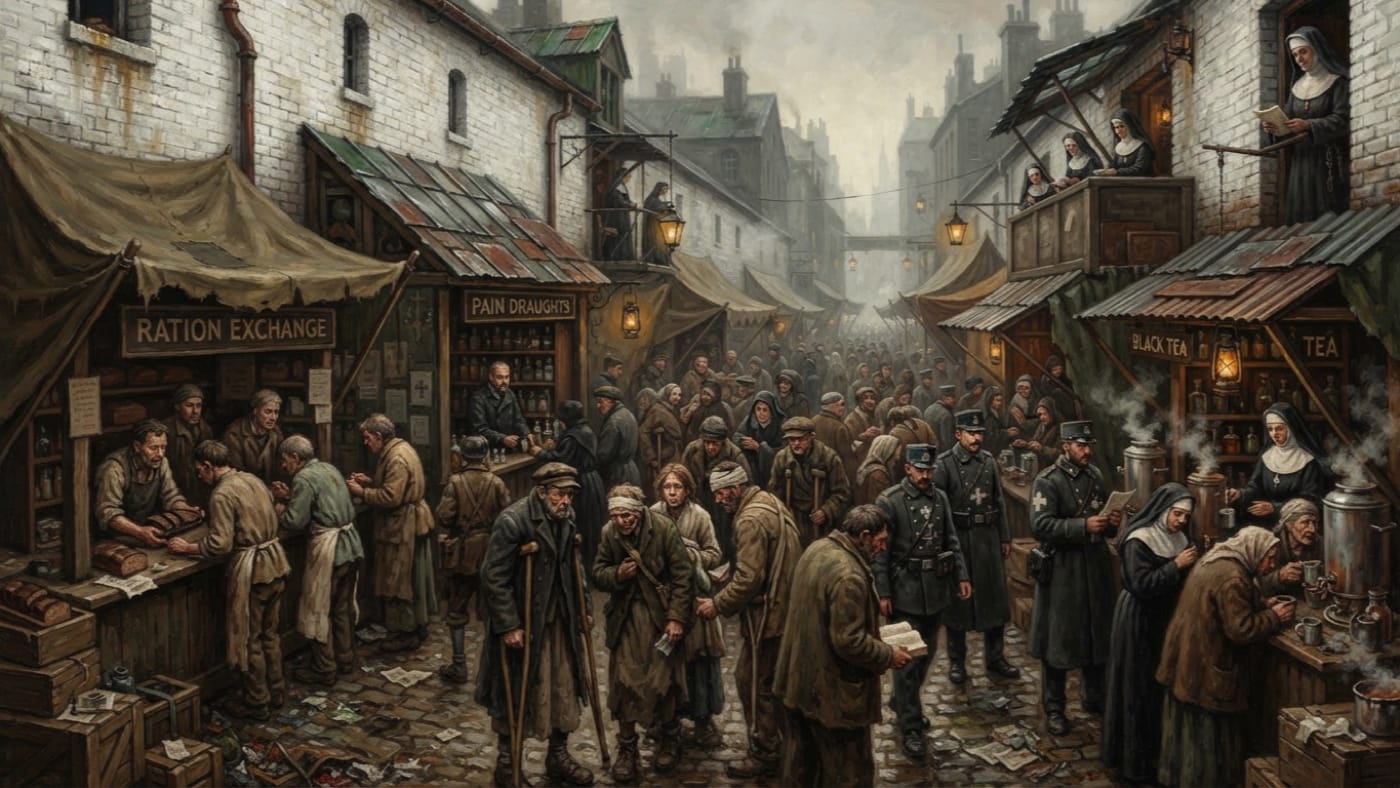
Mercy Market
Bread has a price; relief requires permission
Mercy Market trades in rations, pain draughts and black tea under Marrowgate's overlapping authorities. Bread has a price; relief requires permission.
Codex Ref. III.3.07-006
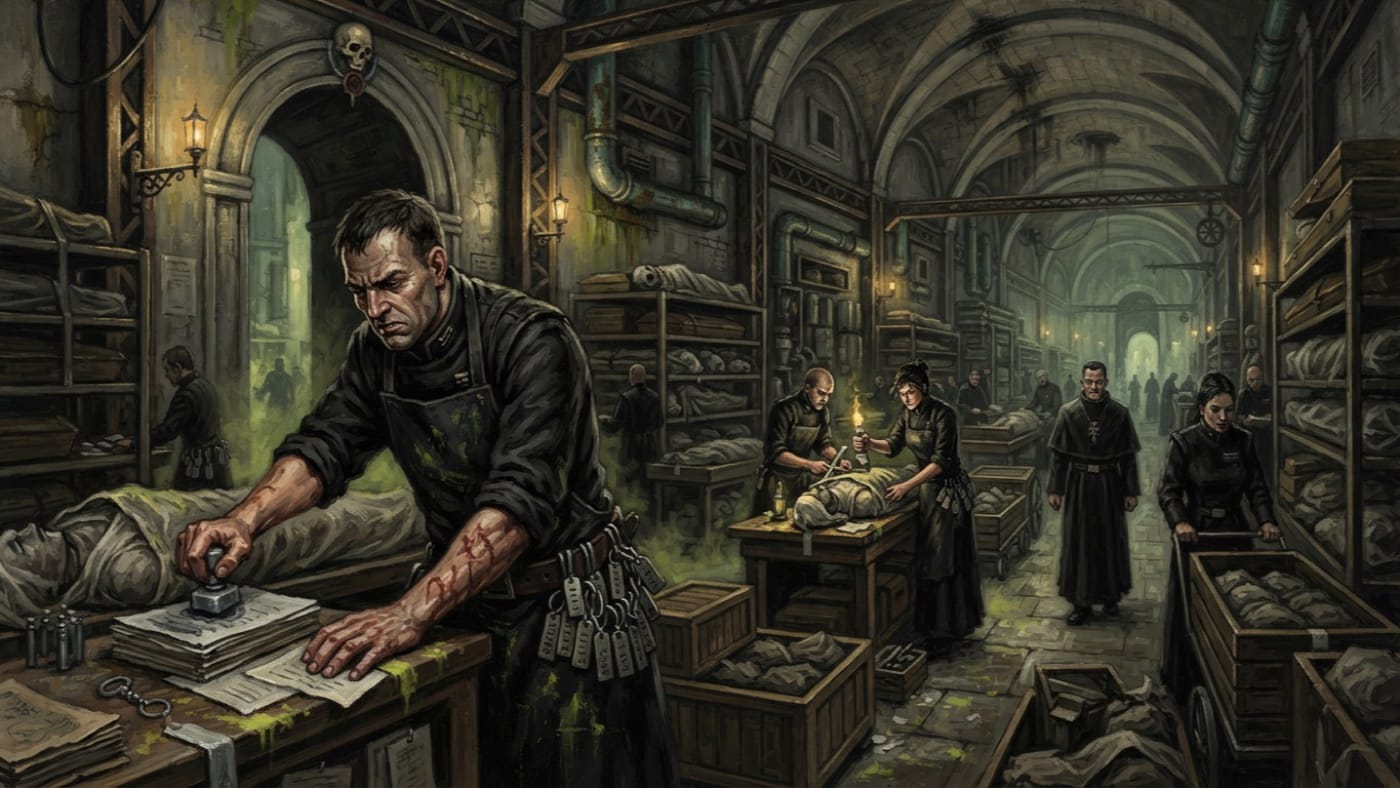
Mercy Stamp clerks
The street cannot wait for the Ledger to finish grieving
Mercy Stamp clerks are Dead-Goods Tariffers who favour speed against street rot. The opinion is permitted; the unofficial clearance has no lawful standing.
Codex Ref. XIII.1.11-201
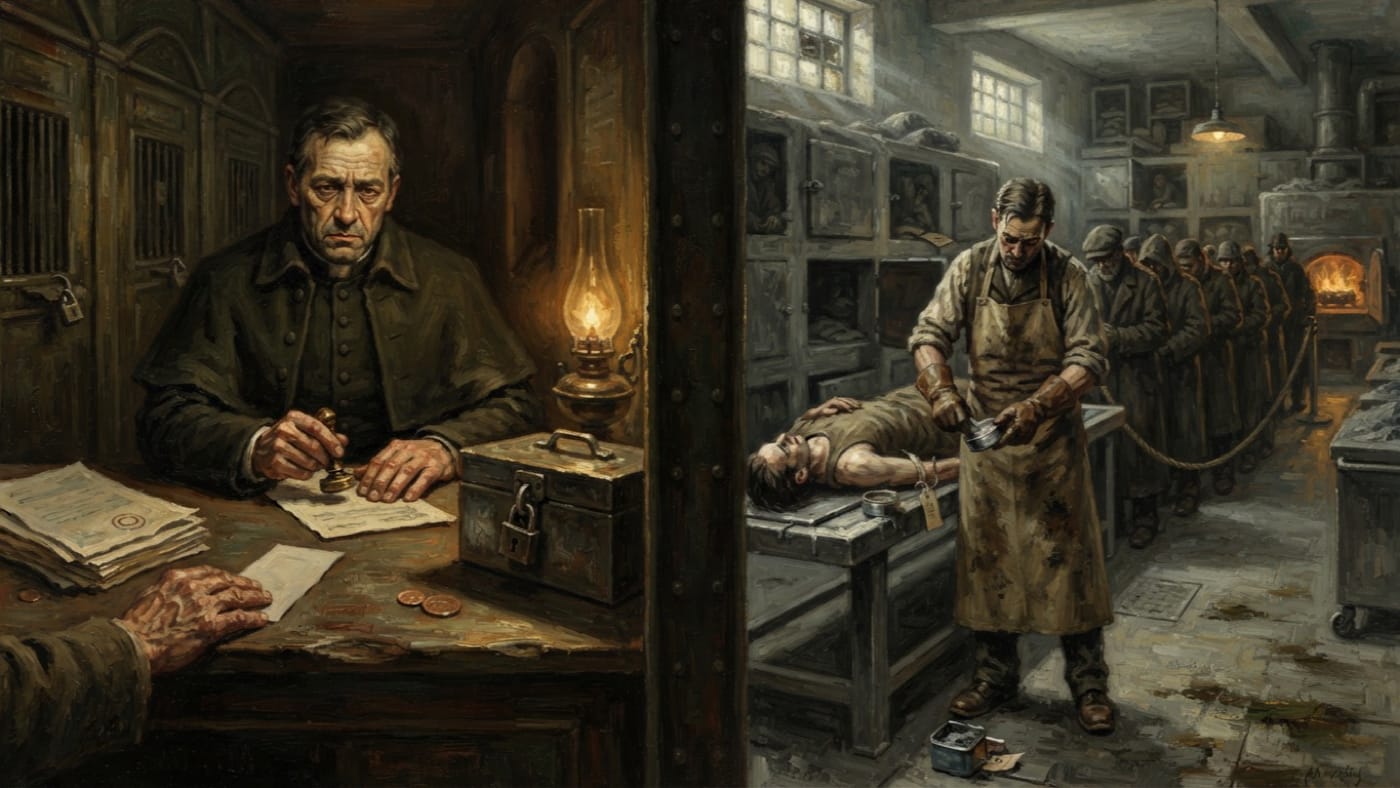
Mercy Stamps
The lawful hand guards grace; the ashen hand moves the queue
Two histories share one name: the confessor's restricted impression and Marrowgate's unofficial ash mark. Drax surveys their A.S. 201 standing, where forgiveness is guarded and speed has a price.
Codex Ref. XIII.1.13-201
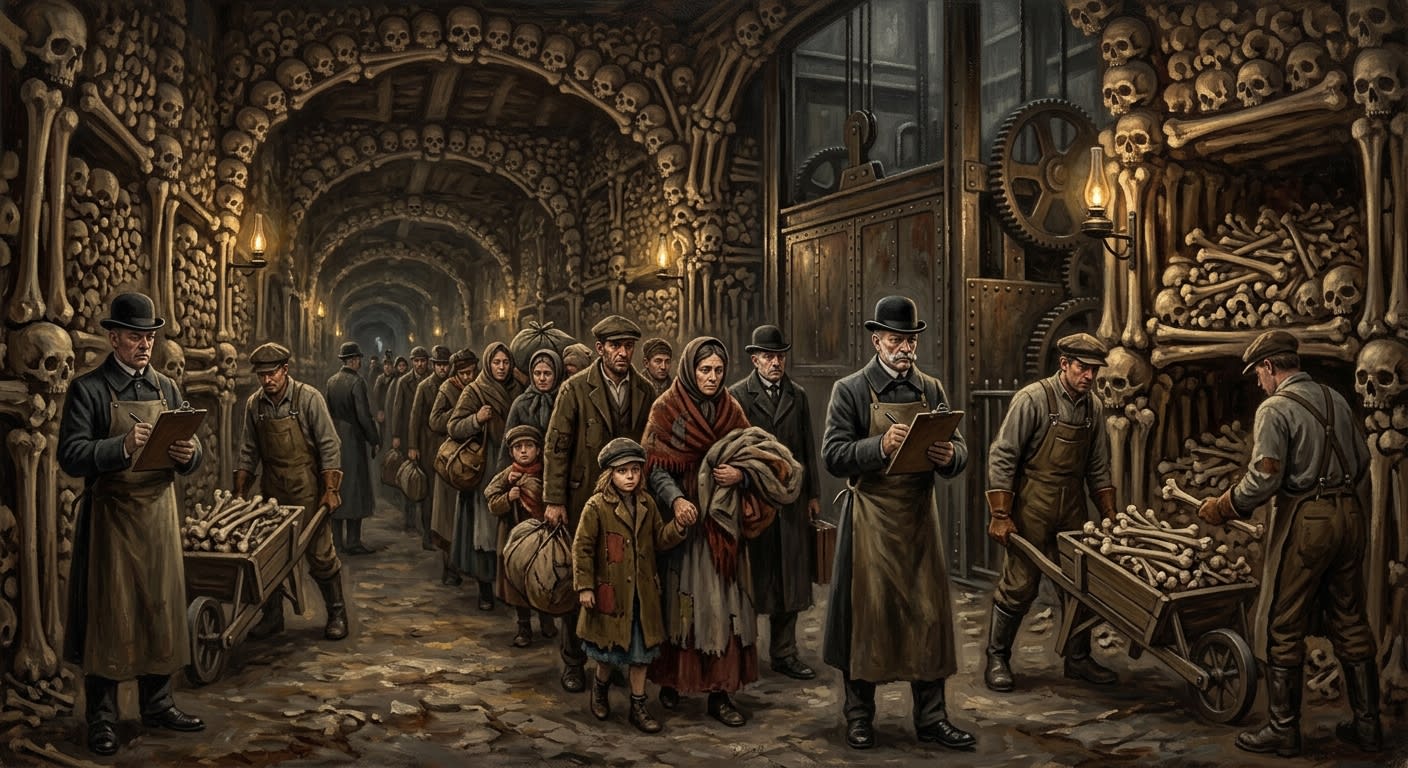
Ossuary Allies
Bring me your dead and I will find room for your living
Ossuary Allies convert grave-field claims into bone-walled tenancy, moving poor families from exposed graveside lanes into ossuary corridors at the price of their dead.
Codex Ref. XII.27.04-001
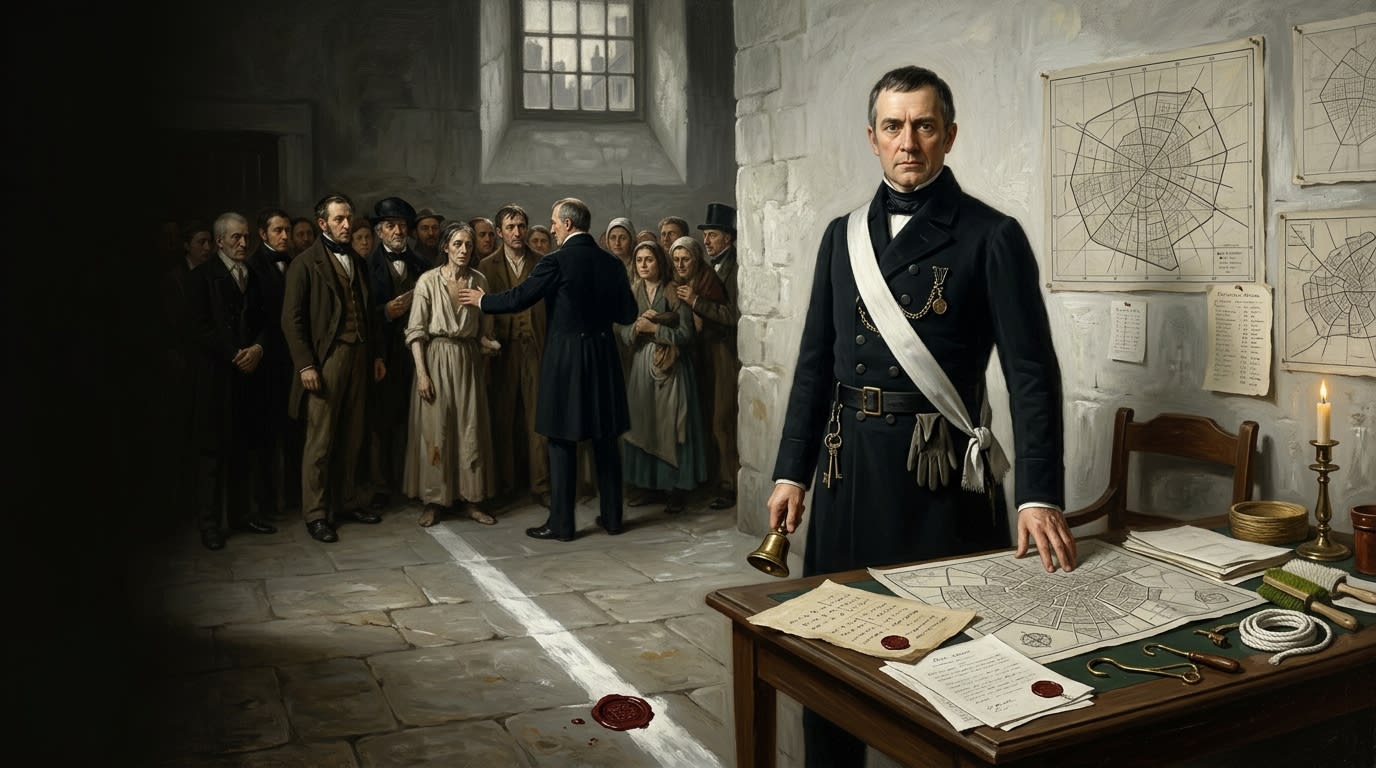
Prefect Salvius
The man who made cleanliness a border with teeth
Prefect Salvius commands Marrowgate's clean lines, proving that hygiene becomes jurisdiction the moment a frightened city applauds the rope.
Codex Ref. III.2.01-201
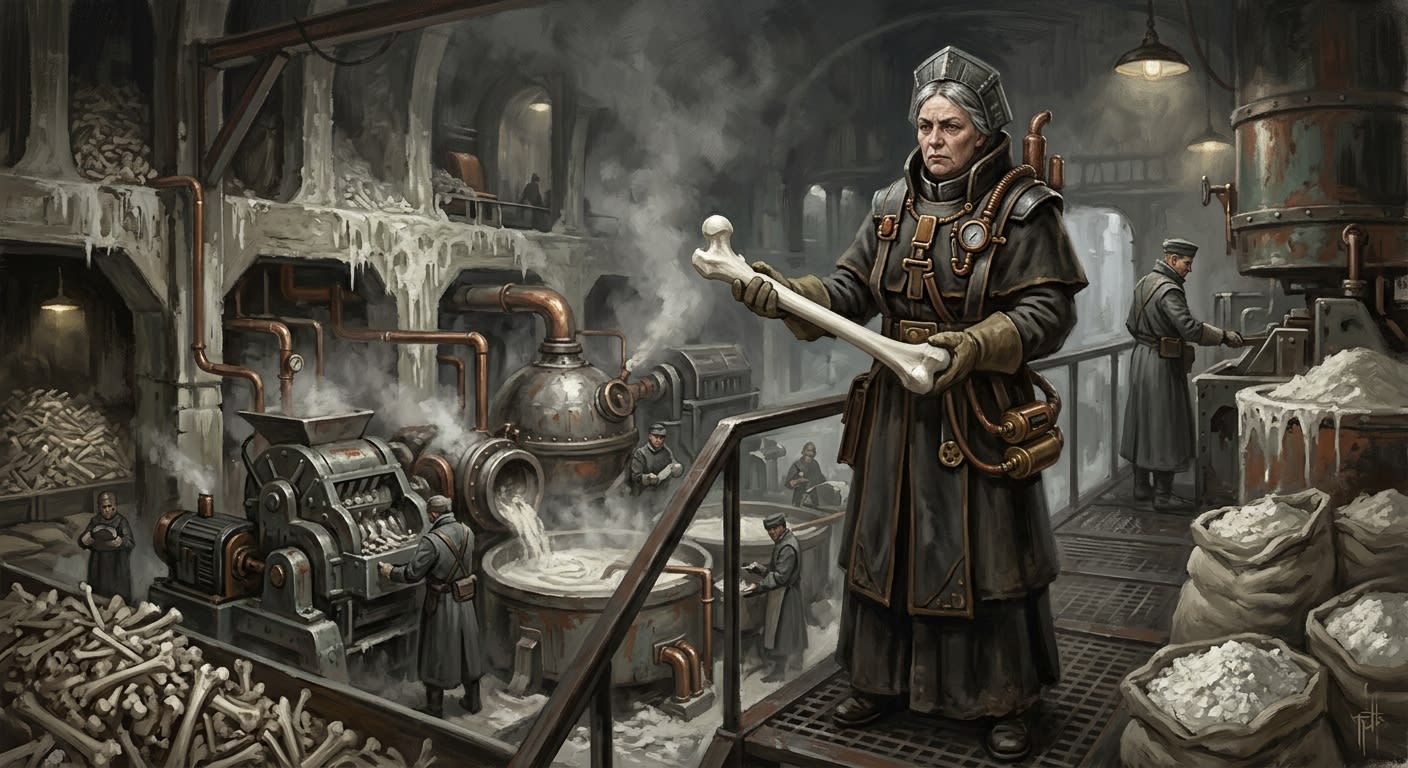
Saint Aurel of the White Wall
The saint who may have arrived after the invoice, yet holds the wall all the same
Disputed patron of Saint-Bone Melters, Saint Aurel offers the convenient femur by which relic fragments become bone-lime, mortar, wall, and doctrine with a clean conscience.
Codex Ref. III.2.01-142

Saint Morin of the Sealed Mouth
Patron of waxed teeth, taxable grief, and the silence that keeps the queue moving
Saint Morin of the Sealed Mouth is the disputed occupational patron of Dead-Goods Tariffers, waxed skulls, intake bays, and the mortuary discipline of making the dead remain quiet.
Codex Ref. III.2.01-105
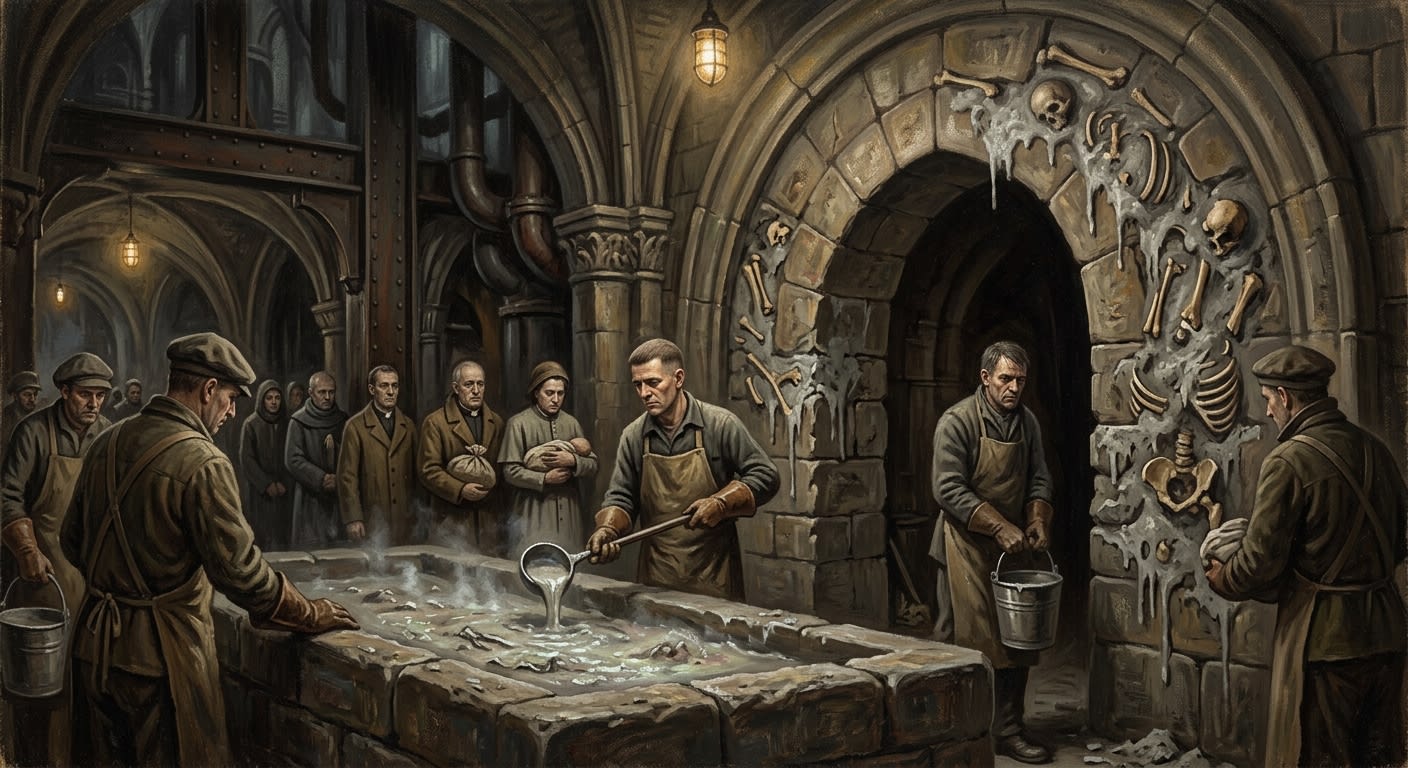
Saint-Bone Melting Acts
Sanctity must bear weight, and the wall has receipts
The A.S. 96 Saint-Bone Melting Acts made surplus holiness structural, teaching relics to become mortar and the faithful to call subtraction a wall.
Codex Ref. XIII.1.91-096
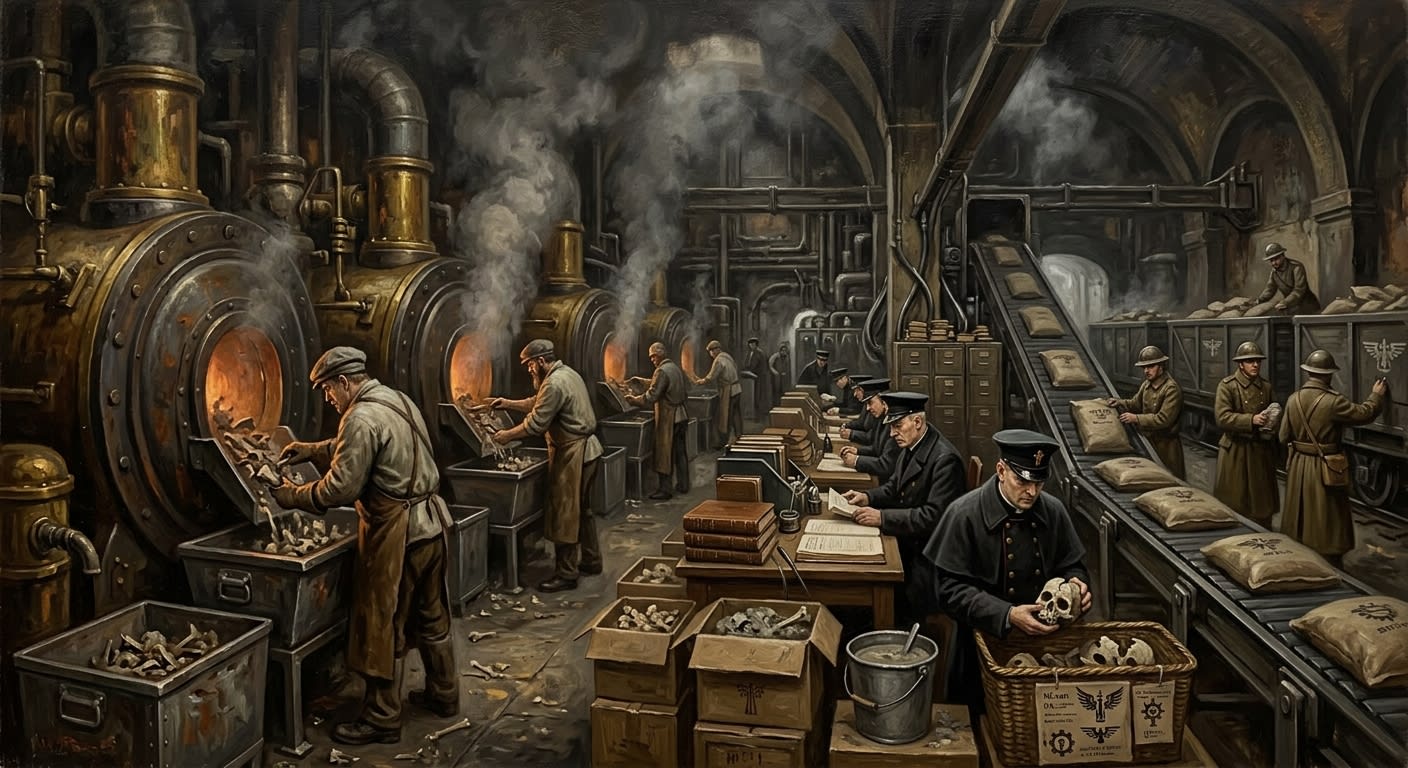
Saint-Bone Melting Acts A.S. 96
The statute that taught saints to bear weight, whether they had consented neatly or not
A.S. 96 legislation that turned surplus, damaged, disputed, duplicated, and unassignable relic fragments into deployable sanctified mortar for the Sagittal Line.
Codex Ref. VII.2.10-096
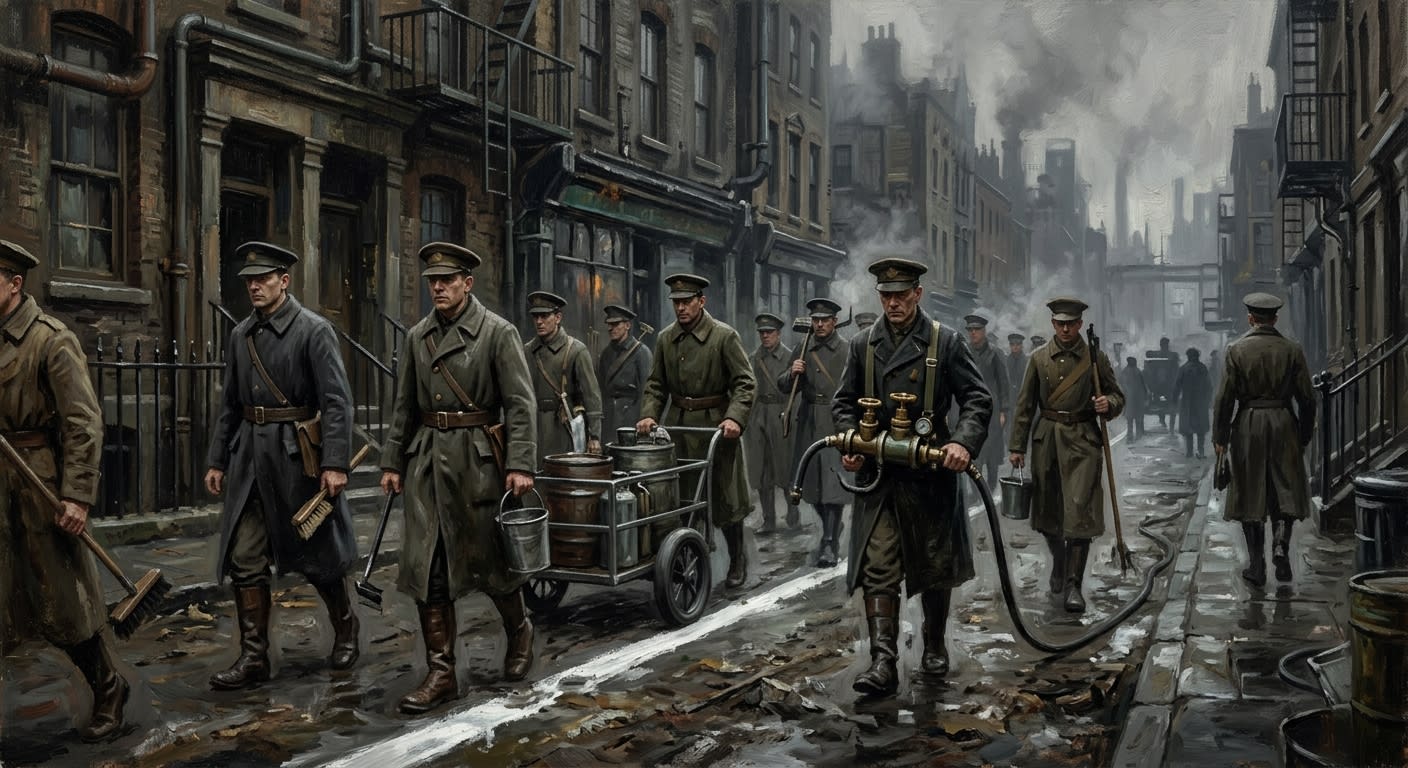
Sanitation Chapter
The clean line is a border, a sermon, and a threat
Mercy calls it sanitation; Marrowgate calls it the office that paints a white line and makes obedience look like hygiene.
Codex Ref. VIII.2.10-078
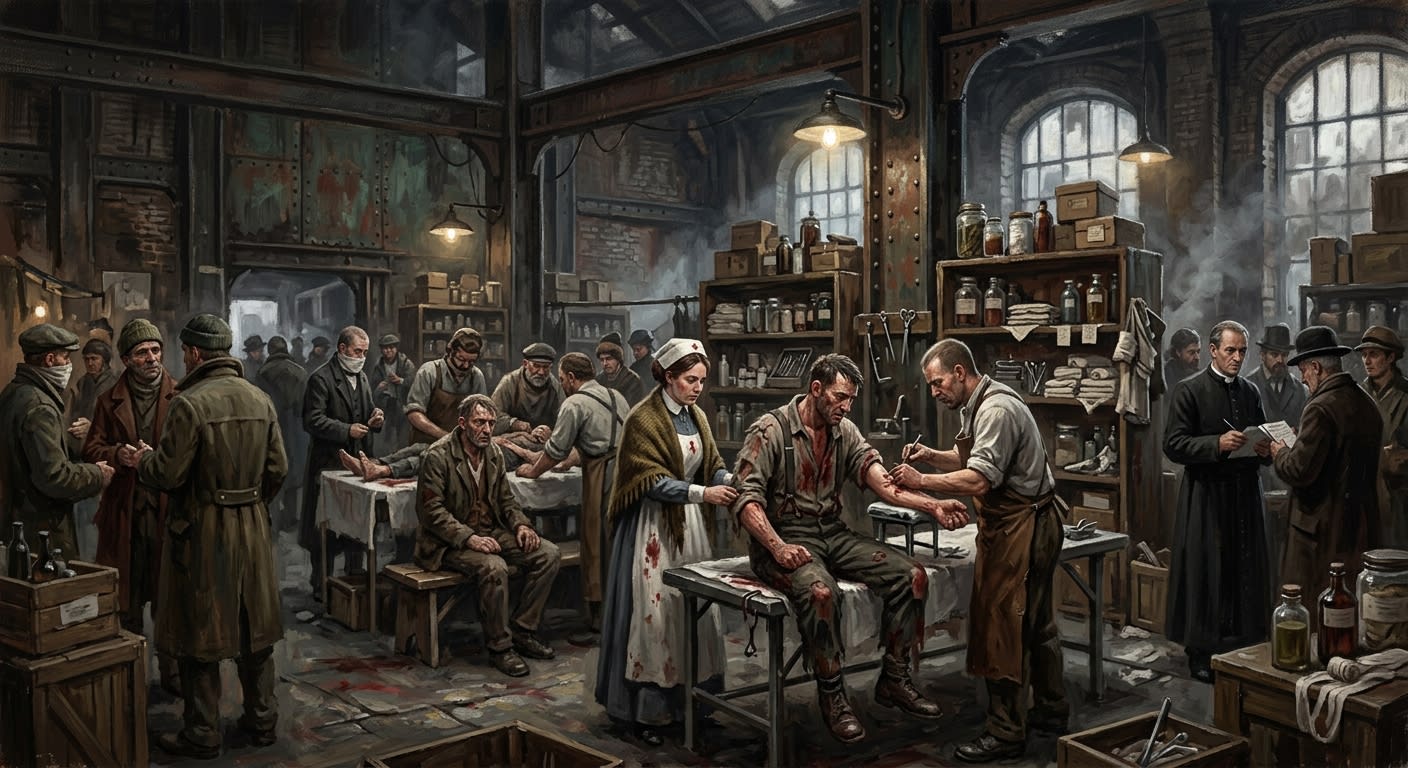
Stitchmarket
Where unlawful mercy learns to keep receipts
Marrowgate rationed lawful mercy until crime opened a clinic, priced the bandages, and learned to forge the city better than its clerks.
Codex Ref. XII.31.06-201