
#On the Hymn That Makes Wax Pretend to Obey
The Sixth Canticle of Industry is the mandatory cooling hymn for purity wax (Unregistered) used in authorised hymn-gaskets (Unregistered), seal-stock (Unregistered), resonance-line witness cakes, and certain other little circles of industrial holiness by which the Sagittal Line keeps pressure, sound, steam, sleep, and Hell in their appointed compartments. It is most famous because counterfeiters forgot it and were punished for their excellent material work.
This is unfair only to the dead, and the dead have poor standing in procurement disputes.
The Canticle proceeds for seventeen verses through the genealogy of obedient matter. Ore obeys the mountain. Coal obeys the seam. Flame obeys the furnace. Iron obeys the hammer. Rubber obeys the mould. Wax obeys the sleeve. Stamp obeys the hand. Hand obeys the office. Office obeys the Ledger. Ledger, at last, receives the delivery receipt in triplicate and, having performed the entire ascent from geology to invoice, rests in the drawer prepared before the world was founded. Its theology is respectable. Its melody should be prosecuted.
The Synod requires that lawful purity wax hear the Canticle without interruption while cooling. The wax must cool under approved cadence, within a licensed shed, before witnesses who can sign and singers who can be blamed. This requirement is compulsory, whatever ornamental perfume attends it. Or it is ornamental and optional in ways no Bureau can admit without losing three decades of enforcement. The distinction is held under seal.
#On Its Place Among the Industrial Hymns
The Canticles of Industry (Unregistered) were born from the Synod's discovery that labour behaved better when exhausted workers were made to sing about it. Spare me the charge of cynicism. Rhythm steadies hands. Chant keeps groups in time. Shared breath prevents panic. Doctrine blesses the motion. Engineering approves the result while pretending the blessing is acoustically coincidental. Tithes invoices the candles. Civilization advances.
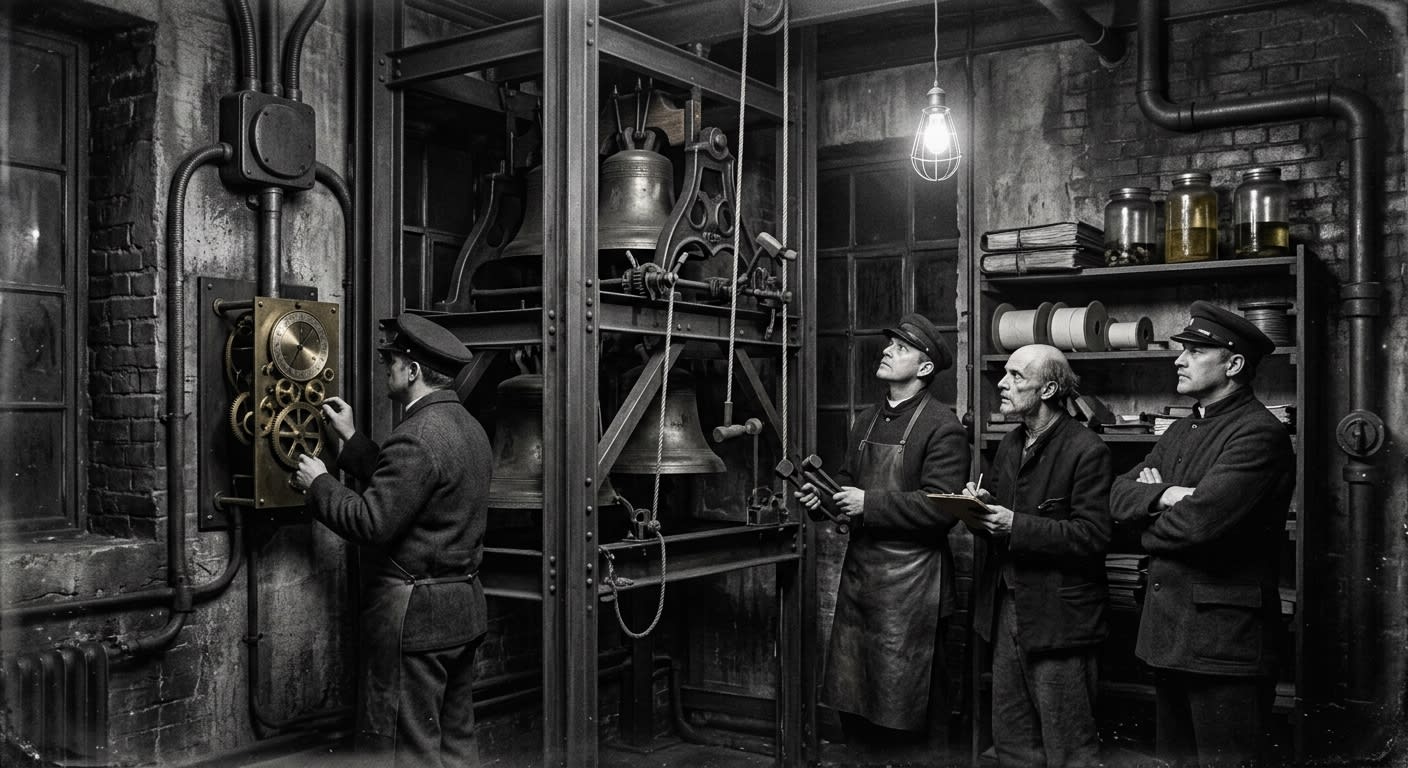
The First Canticle concerns extraction, and is mostly pick, vein, shaft, bucket, lamp, and the moral advantage of not dying until quota. The Second concerns fire. The Third concerns casting. The Fourth concerns measure. The Fifth concerns assembly, a theme the composer appears to have interpreted as permission to list every bolt known to lawful manufacture. The Sixth concerns transition: matter leaving the heat, accepting form, and receiving memory before it hardens into office. The later Canticles concern delivery, repair, audit, and post-failure blame, though the Twelfth is suppressed in most workshops because its verse on supervisor liability produced laughter during one Przemyśl inquiry and laughter near steam is structurally unsound.
The Sixth matters because cooling is a vulnerable condition. Hot wax is receptive, soft, lustrous, and stupid. It will remember stamp, cloth, dust, breath, ash, sleeve, pressure, and song. That, at least, is the doctrine. Engineering admits only that wax cools differently under vibration, and that vibration can alter internal structure. Bells calls this acoustic memory (Unregistered). Doctrine calls it obedience. Mechanics call it a reason the wax costs too much.
The approved shed recension dates to the Seal Standardisation crisis after A.S. 164, though earlier industrial versions circulated in Essen-of-Hymnsteel, Brast, Irongate, and the rear wax kitchens of Munich. The A.S. 164 text made the Sixth a gatekeeper. After the Seal Standardisation Edict, a gasket lacking Sixth-Canticle wax could no longer be called lawful no matter how tightly it held.
#On the Verse Itself, Insofar as Mercy Permits Quotation
No full text is printed in the public Codex. The Bureau of Doctrine has not suppressed it from shame, though shame would be appropriate. The text is restricted because the Canticle's sixth, ninth, and thirteenth cadences are used for wax-memory authentication, and counterfeiters already possess more musical education than most choir schools. We do not feed them treason with notation.
The opening is tolerable:
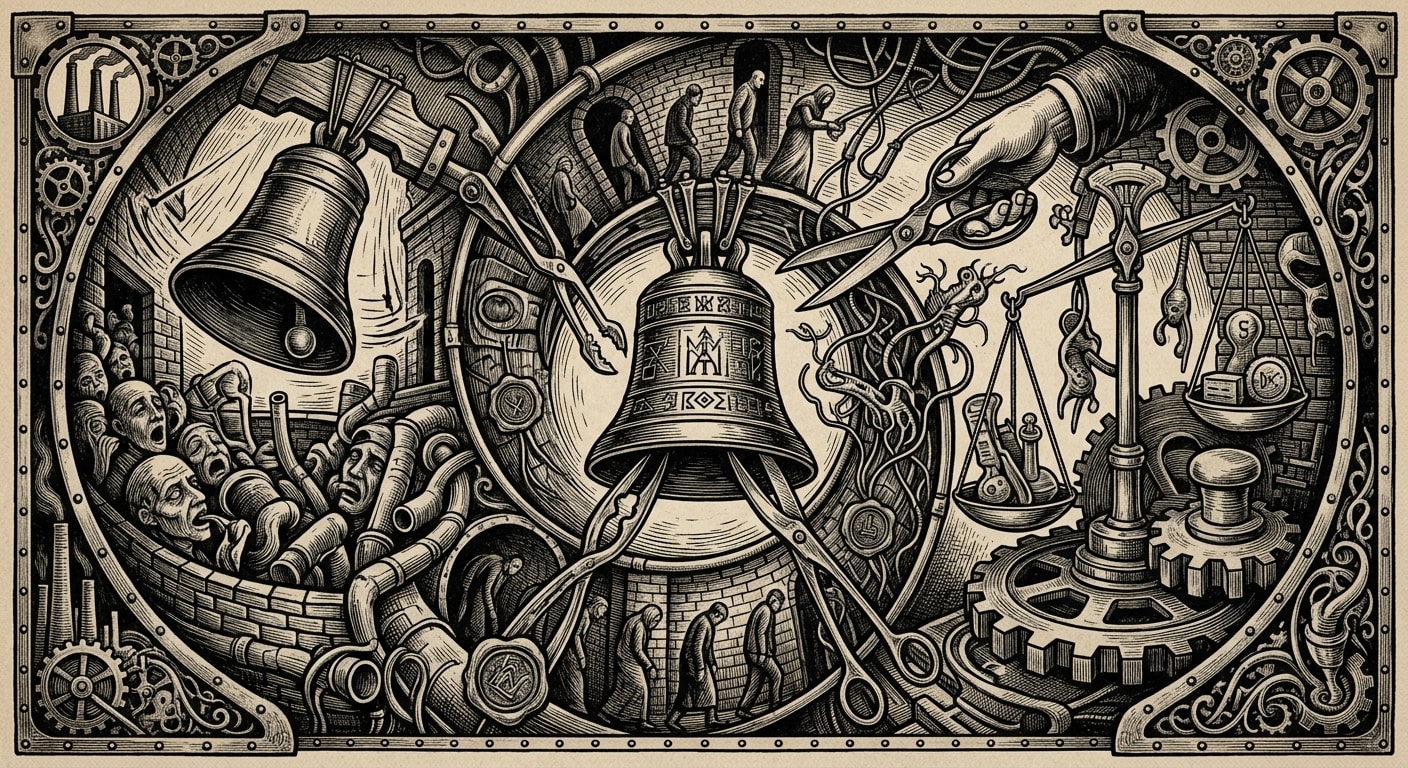
Ore in the dark receives the hammer. Hammer in flame receives the law. Law in the hand receives the measure. Measure in wax receives the awe.
After that it becomes long.
Workshop devotional cards once printed the Canticle's first four verses under the title “A Cheerful Hymn for Honest Manufacture.”
Corrected by the Bureau of Bells. The cards omitted tempo marks, substituted “joy” for “compliance” in verse two, and encouraged lay singing during cooling. Thirty-two batches were later classified as sentimentally suspect.
The sixth verse contains the hinge phrase. Singers lower pitch at the word yield, hold for two beats over memory, and strike the cooling tables once, not twice, at seal. The table-strike matters. Bells insists it seats the first harmonic. Engineering says it dislodges air bubbles. Doctrine says the strike warns matter against self-interpretation. Workers say it helps them stay awake. Blessed unanimity, dressed in four uniforms.
The thirteenth verse is the ugly one. It traces the path from hand to office, from office to seal, from seal to consequence. Apprentices hate it because the line lengths trip the mouth. Foremen love it because it mentions obedience fourteen times. In unlawful sheds it is usually shortened. In lawful sheds it is sung entire while a witness listens for fatigue, slurring, substitution, muttered vulgarity, and the tiny upward lift on authority that marks Field Pragmatist influence.
The final verse ends with the receipt. This is the part foreigners mock, proving foreigners understand nothing. A process that ends with flame is pagan. A process that ends with product is mercantile. Signed custody is Synodal. Matter becomes lawful when someone can be punished for its next movement.
#On the Edict That Made the Sixth Dangerous
The Unhymn Infiltration at Bastion-Shipka taught the Synod that pipes could carry enemy mercy. A diesel resonance conduit, badly sealed and badly watched, brought Syrionic sleep through barracks, kitchens, alarm housings, and morning itself. Men breathed through dawn and did not wake. Bells named hostile cadence. Engineering named corroded seals. Doctrine named spiritual intrusion through mechanical cowardice. All were right, which forced action.
A.S. 164 gave us the Edict: hymn-gaskets on every resonance line, thumper manifold, ward-harmonic join, sermon-feed coupling, pressure throat, and vibration channel by which hostile frequency might creep into lawful infrastructure. The material requirement was clear: blessed gasket stock, Sixth Canticle wax, triple office stamp. It was a circle of treated rubber, fibre, brass edge, saint-dust, salt-chalk, and expensive certainty.
The Edict worked against the Shipka sleep-cadence. That fact should be admitted before mockery begins, because mockery eats better when it has swallowed truth first. The treated seals rejected the known low returning interval. Ward plates steadied. Sermon-feed couplings stopped sighing men back into blankets while alarm bells rang like apologetic spoons. For half a season, the Line breathed easier.
Then demand outran supply, as any clerk with a functioning abacus could have predicted had the abacus not been requisitioned for a committee on optimism. Shipka needed thousands of seals. Irongate needed seals where silence could kill. Przemyśl needed seals for engine pits, western pylons, and lower conduits. Official wax arrived late, melted, brittle, wrong-sized, overblessed, under-sleeved, or accompanied by notices promising spiritual proximity to delivery.
The black market heard the Canticle, admired its rhythm, and smelled money.
#On the Wax That Worked Without Hearing It
The Counterfeit Wax Plague of A.S. 178 is the Canticle's great humiliation and its great enthronement. Counterfeit purity wax entered Shipka and Irongate in respectable sleeves bearing false prayers, stolen dies, and batch markings copied from lawful stores. Its resin was correct. Its chalk was correct. Its saint-dust ratio irritated laboratories by being close enough. Its sheen was the approved dull pearl. Its grip was good. The seals held.
The wax had not heard the Sixth Canticle.
Purity wanted poison. Engineering found compliance. Bells heard absence. Doctrine found offense. Tithes found unpaid authority. The four Bureaus approached the same crate like theologians discovering a corpse that owed them money.
The Plague made a brutal question audible: if unsung wax holds, what exactly has the song done? If sung wax fails, what exactly has the song promised? The Bureau's answer was enforcement, which is often what institutions use when argument begins to smell of danger. Fourteen suppliers were immured at Przemyśl. Workshops burned. Stock destroyed. Ash weighed. Tables corrected. The shortage remained, because walls are poor manufacturers.
PRZEMYŚL IMMUREMENT LEDGER — SUPPLIER WALL, A.S. 178 Fourteen names entered. Thirteen voices recorded during sealing. Fourteenth voice absent; mouth packed with wax due to “anticipated blasphemous persistence.” At third Canticle Day inspection, wall surface produced low hum during verse six. Engineering: mineral settlement. Bells: sympathetic response. Purity: successful deterrence. Doctrine: do not let apprentices touch the wall.
The official correction did not abolish the Canticle. It made the Canticle measurable enough to police. The living hymn verification method followed: sing the opening phrase of the Boundary Litany into molten wax, harden it, strike with licensed tuning fork, listen for obedience. The Sixth remained the required cooling rite; the Boundary phrase became the interrogation. Bells gained accountants. Mechanics gained another witness. Counterfeiters gained homework.
#On Acoustic Memory and Other Expensive Assertions
The phrase acoustic memory does more work than some bishops. Bells claims wax cooled under the Sixth preserves a minute harmonic residue, a little internal obedience that answers the fork when struck. Engineering objects to the language and uses a longer one: vibration-induced structural conditioning in composite wax matrices. Doctrine objects to Engineering's cowardice and calls it sacramental receptivity of prepared matter. Mechanics object to the invoice.
A wax cake that answers correctly may still be counterfeit. A lawful cake may sulk if stored badly, sung badly, blessed by a drunk clerk, or carried through a rail tunnel during an unreported bellstorm. Bells denies this in public and bills for retesting in private. Engineering has proposed material-only certification six times. Doctrine has rejected it seven times, once preemptively, which was admired by all present except Engineering.
The Canticle lives in this quarrel. It is song, partial mechanism, and jurisdiction with a melody. It is a command sung over matter at the moment matter is most willing to remember. The Synod does not need every mechanism legible to use it. It requires only that the result be repeatable enough to save lives and mysterious enough to sustain jurisdiction. The Sixth satisfies both requirements with uncommon vulgarity.
Bureau of Bells training sheets state that Sixth-Canticle wax “cannot be counterfeited once properly verified.”
Clarified after tavern-cellar seizures at Shipka and fork-theft inquiries at Irongate. Properly verified wax cannot be counterfeited by criminals who lack access to licensed forks, trained singers, stolen batch sleeves, bribed witnesses, and time. The Bureau regrets how many criminals possess these advantages.
#On the Singers, Sheds, and Licensed Misery
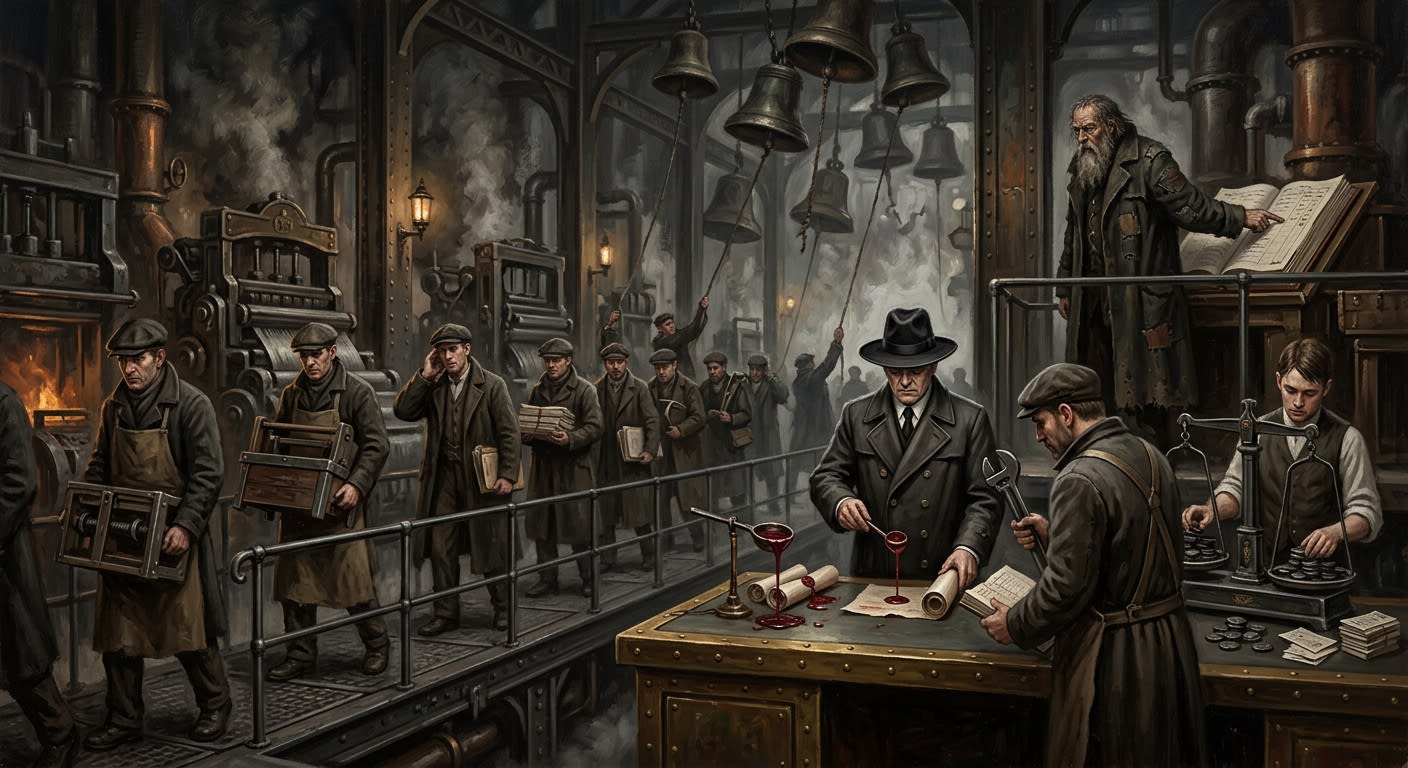
A lawful wax-cooling shed is a theatre of controlled boredom. Tables of shallow tins. Steam low against the rafters. Wax Hands moving sleeves from pour to cooling rack. A licensed Canticle choir standing behind a chalk line so their breath reaches the cooling trays without spitting into them, a distinction made necessary by the A.S. 169 Munich Contamination Inquiry (Unregistered) and the regrettable enthusiasm of Tenor Hald. Witnesses sit at the side with batch boards. A Bell clerk keeps pitch. A Tithes clerk counts loss. Purity arrives when any singer substitutes, faints, laughs, coughs on yield, or shows sympathy for the wax.
The singers are not artists. This must be understood. Art is tolerated in salons where it can damage only taste. Canticle singing is industrial labour under theological custody. The voice must hold pitch, obey tempo, avoid ornament, and retain contempt privately. A good singer does not improve the line. He delivers it. He makes himself a conduit for authorised monotony. The wax receives no flourish. Matter, like soldiery, becomes unreliable when flattered.
Shed discipline is hard because interruption ruins the batch, or is said to ruin the batch, which in practice means interruption ruins the paperwork and may ruin the batch if enough important people are watching. If a singer collapses before verse seventeen, the foreman may invoke overlap substitution: the replacement enters on the next beat while the collapsed singer is dragged clear without breaking the line. If two singers collapse, the batch is suspect. If the witness collapses, the batch may continue under emergency witness if the collapse is visually recorded by another office. If the Tithes clerk collapses, work continues with improved morale until his successor arrives.
Unlicensed sheds imitate the form with fewer witnesses and better wages. Some sing the Sixth correctly. Some replace whole verses with hums, numerals, prayers to Saint Orla, or tavern tunes slowed into piety. Some have learned to mimic the fork response. Some cool wax beside engine housings so the machinery supplies the missing interval. The Bureau calls this acoustic fraud. Mechanics call it supply.
#On Its Relation to the Boundary Litany
Confusion between the Sixth Canticle and the Boundary Litany is common among citizens, officers, and other persons permitted to command work they cannot perform. The distinction is simple enough for a competent apprentice and beyond many administrators.
The Sixth is a manufacturing hymn. It is sung to wax while the wax cools. It belongs to sheds, batches, sleeves, witnesses, and certification stock. The Boundary Litany is an operational sealing sequence. It is spoken or sung during repair: diagnose, cleanse, align, seat, recite, torque, seal, verify, document. The Sixth prepares matter to remember obedience. The Boundary Litany commands prepared matter to hold a particular frontier under stress.
A hymn-gasket may carry both: Sixth-Canticle memory from manufacture and Boundary-Litany witness from installation. The first says the wax was born under order. The second says the seal was put to work under order. The third voice is usually the mechanic swearing while a pipe hisses near his cheek. This voice has no official status despite being the most sincere.
At Irongate, where the Gasket Choir and the gaskets are one apparatus, the distinction becomes life. Voice holds seal; seal conducts voice; wax remembers song; song keeps pressure from remembering its freedom. A mechanic who confuses the Sixth with the Boundary may still seat a ring if luck is wearing his boots. Luck is not licensed.
#On Present Use and Profitable Doubt
As of A.S. 201, the Sixth Canticle remains mandatory for purity wax across all seven bastions and most rear industrial works supplying resonance infrastructure. Official manuals have been amended twelve times since the Plague. The tempo marks have been tightened. Witness forms have multiplied. Bell-Accountant authority has expanded into a minor tyranny with tuning forks. Counterfeit stock remains everywhere useful work is done faster than lawful supply can arrive.
Doctrine calls this controlled contamination. Engineering calls it emergency elasticity. Mechanics call it Tuesday.
The Canticle's defenders cite fewer Shipka-pattern sleep incursions, steadier seal memory, and better authentication after living hymn verification. Its critics cite working counterfeits, bribed forks, ruined batches, humming prison walls, and Bureaus unable to deliver wax claiming to know what wax remembers. Both are tiresome. Both possess evidence.
The Sixth survives because it does enough. That is the true standard of Synodal machinery. It does not have to satisfy philosophers, comfort widows, silence mechanics, or make melody bearable. It must help the seal hold, give the auditor a question, give Purity a charge, give Bells a tone, give Doctrine a sentence, and give Tithes something to price.
At the cooling shed, the wax clouds in its tins. The singers take breath. The foreman raises his baton, which is a shaved length of rejected gasket stock, holier than several abbots. Verse one begins. Ore obeys. Flame obeys. Wax listens. Somewhere east, a mechanic opens a sleeve, scrapes the edge with a knife, touches the seal to his lip, and decides whether the Bureau's song is worth trusting more than his own fear.