
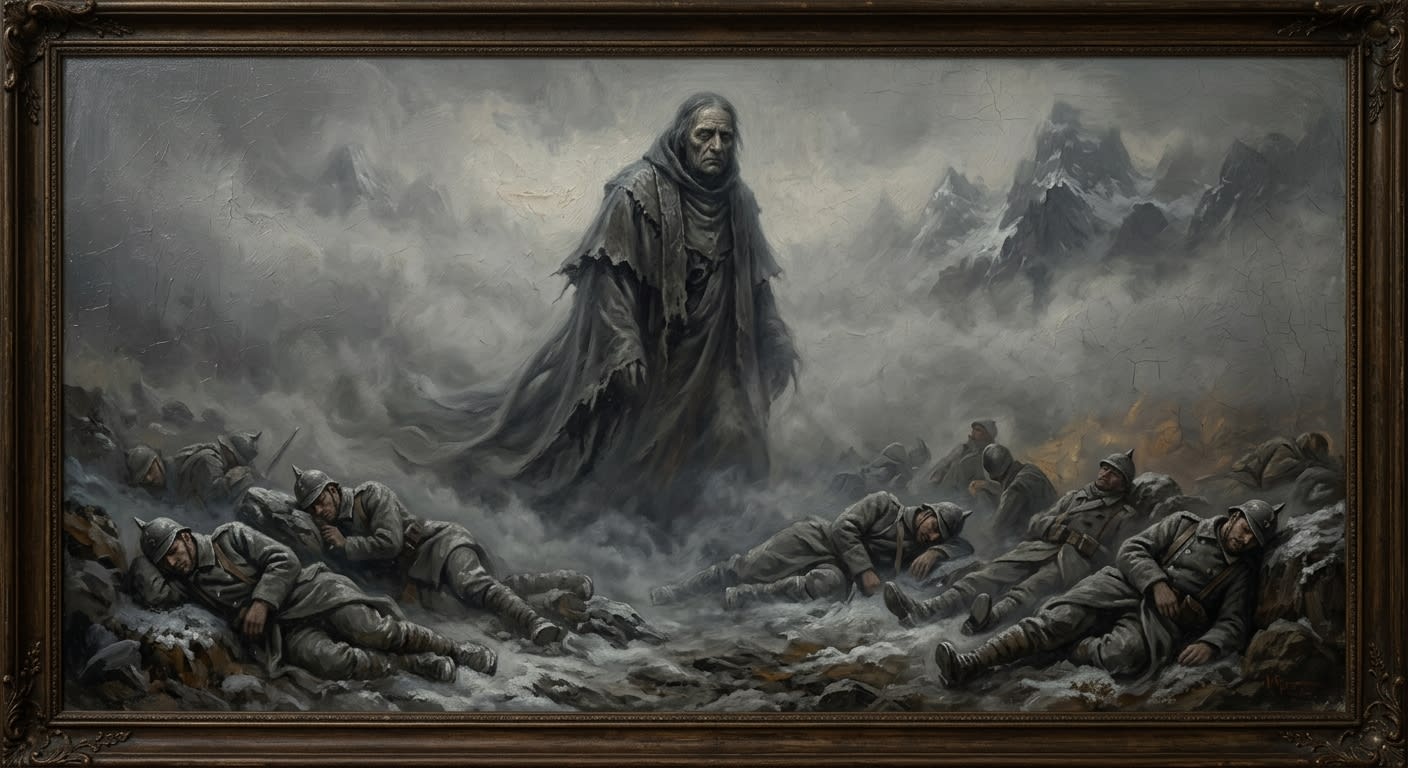
#On His Nature
“The Bureau classifies the seven Sins by their speed of advance. Kargath is measured in miles per generation. Maldrake in miles per campaign season. Syrion is not measured in miles at all. Syrion is measured in the number of sentries who failed to report at dawn.”
I have inscribed six entries on the Sin-Generals, and in each I have had the decency — rare among Hieromnemonic authors — to name the horror plainly. Kargath starves. Velmora bribes. Maldrake burns. Atheron exalts. Morwen steals. Velkara seduces. Each verb is a blade, and a blade, at least, can be parried. Syrion does not cut. Syrion waits while you put down your sword, set aside your shield, and sit in the mud to rest your eyes for a moment.
The moment lasts decades.
The catechisms teach that Sloth (Unregistered) is laziness — the sin of the idle, the shiftless, the man who will not rise for morning prayer. The catechisms are wrong, and the Bureau of Doctrine knows they are wrong, and the Bureau permits the error because the truth is worse than the lie. Syrion does not prey upon the idle. He preys upon the exhausted. He finds the soldier who has held the parapet for nine days without relief. He finds the mother who has carried water since before dawn. He finds the clerk who has copied the same tithe-figures until the numbers swim. He finds every soul that has been ground to powder by the machinery of duty, and he offers them the one thing the Synod cannot: permission to stop.
The gift is rest. Genuine rest. The kind that comes without nightmares, without guilt, without the bells tolling at the third watch to drag you back to consciousness. Sleep like a child sleeps, if the child has never heard an artillery report. Syrion's rest works. His victims wake refreshed for the first time in years. They function. They smile. Their officers note the improvement and say nothing, because an improved soldier is a useful soldier and the Bureau does not investigate usefulness.
And then the rest does not end.
#On His Coming
Syrion did not arrive at the Sundering in the manner of his brethren. Kargath devoured first. Maldrake burned second. Velmora claimed third. Syrion drifted in during the exhaustion that followed the first wars — fourth of seven, settling into the cracks the others had opened, filling the silences they had created. He fell upon the kingdom of Shipka (Unregistered), where court and crown succumbed mid-feast. Their laughter softened into silence, their eyes dimmed into endless slumber, and from Shipka his haze spread valley by valley, decade by decade, until whole generations sank into stillness and the lands themselves forgot they had ever been awake.
The Bureau of War's cartographers draw his advance in pencil, because ink implies permanence and Syrion's borders refuse to stay where they are drawn. The fog drifts. A ridge held last week is grey this week. A village that answered correspondence in Martius is silent in Aprilis, and by Junius the village is there but the villagers are standing in the market square with their eyes open and their lungs working and their minds somewhere the Bureau cannot follow.
He is the fourth-born and the least discussed. The Synod speaks of Kargath with dread, of Maldrake with fury, of Velmora with suspicion, of Velkara with discomfort. Of Syrion, the Synod speaks little. The silence is instructive. Sloth, of all the seven deadly sins, is the one the Theocracy fears finding in its own mirror — in the Bureau clerk who processes the same form for the fortieth year, in the Hierarch who stamps a writ he has not read, in the garrison commander who has stopped believing the war can be won but continues to file his morning reports because the filing is easier than the believing.
#On His Territory
The Vales of Stagnance were Serbia once, and parts of Hungary, and regions that bordered the Carpathians from the east. The Bureau of Records still carries the old provincial names in its ledgers. The provinces themselves have become something else entirely.
Geography is unreliable within Syrion's domain. Maps drawn by separate cartographic teams contradict one another in every particular. Rivers forget their course. The sun lowers but never sets, hanging at the horizon in an amber paralysis that casts no proper shadows. Roads that once connected towns now connect to fog, or to earlier sections of themselves, or to destinations that the cartographer cannot reconcile with any known settlement. The Cartographic Expedition of A.S. 73 sent three hundred men into the Vales with orders to survey and return. Fourteen came back. Their maps contradicted each other in every particular except one: all fourteen had drawn the same face in the margins — a face none of them remembered drawing. The maps were burned. The cartographers were reassigned to the Bureau of Bells, which is what the Bureau does with men it can no longer trust but does not wish to execute.
The Fog Kingdoms — this is the soldiers' name for the grey expanse, a name the Bureau has declined to formalise because formalising it would require drawing boundaries, and boundaries require that someone go in and determine where the fog ends — sprawl across the Bulgarian highlands and southward toward the Aegean approaches. Syrion's domain presses Bastion-Shipka from the east and south, the Sagittal Line's sixth vertebra, the last bottleneck before Thrace and the road to Constantinople.
Within the fog, the terrain holds specific horrors that the Bureau has catalogued with the clinical detachment of men who catalogue things because cataloguing is preferable to understanding.
Stillness Fields. Regions where time moves at a rate that is no longer time's to determine. A traveller might cross one in what feels like an hour and emerge to find a week gone. Another might walk for days and step out moments after entering. There is no pattern. The Bureau of Engineering has deployed seventeen chronometric instruments into known Stillness Fields. Twelve returned showing different centuries. Three returned showing the same second, repeated. Two did not return.
Drag Corridors (Unregistered). Linear zones, often following old roads or rivers, where time stretches like heated glass. Marching columns enter. Relief columns are sent after them. The relief columns find fog. Occasionally, years later, soldiers stumble out of a Drag Corridor certain they have been marching for a single day. Some have aged decades. Some have not aged at all. None can account for the discrepancy. The Bureau of the Hourglass files them under “temporal irregularity” and assigns them to rear-echelon duties, where their confusion about what year it is blends invisibly with the confusion of every other bureaucrat in the Theocracy.
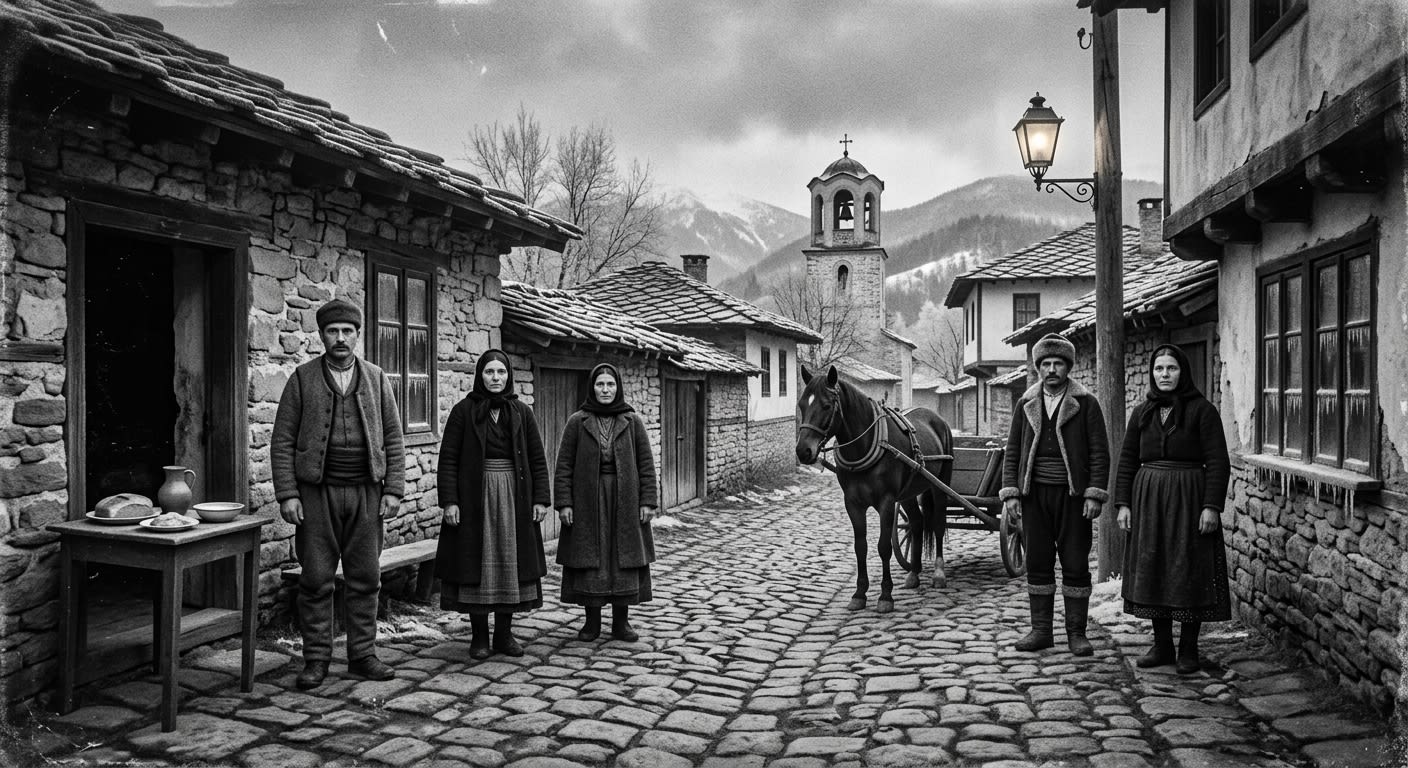
The Preserved Villages (Unregistered). These are the worst. Settlements found intact within the Vales — meals on tables, still warm; fires burning in hearths that have no business burning; beds unmade, sheets carrying the impression of a body that has risen moments ago. Sometimes the villages are empty. Sometimes they are not. Sometimes the inhabitants are standing motionless in the streets, eyes open, lungs filling and emptying with the mechanical regularity of a well-maintained bellows, unreachable by voice or touch or violence. Some of them have been standing for decades. They do not decompose. They do not respond. Move them, and they are found standing again the next day, in the same position, with the same expression, which is no expression at all. Whether they are aware is a question the Bureau of Doctrine has debated for a hundred and fifty years without conclusion — which is, I suspect, exactly the answer Syrion intended.
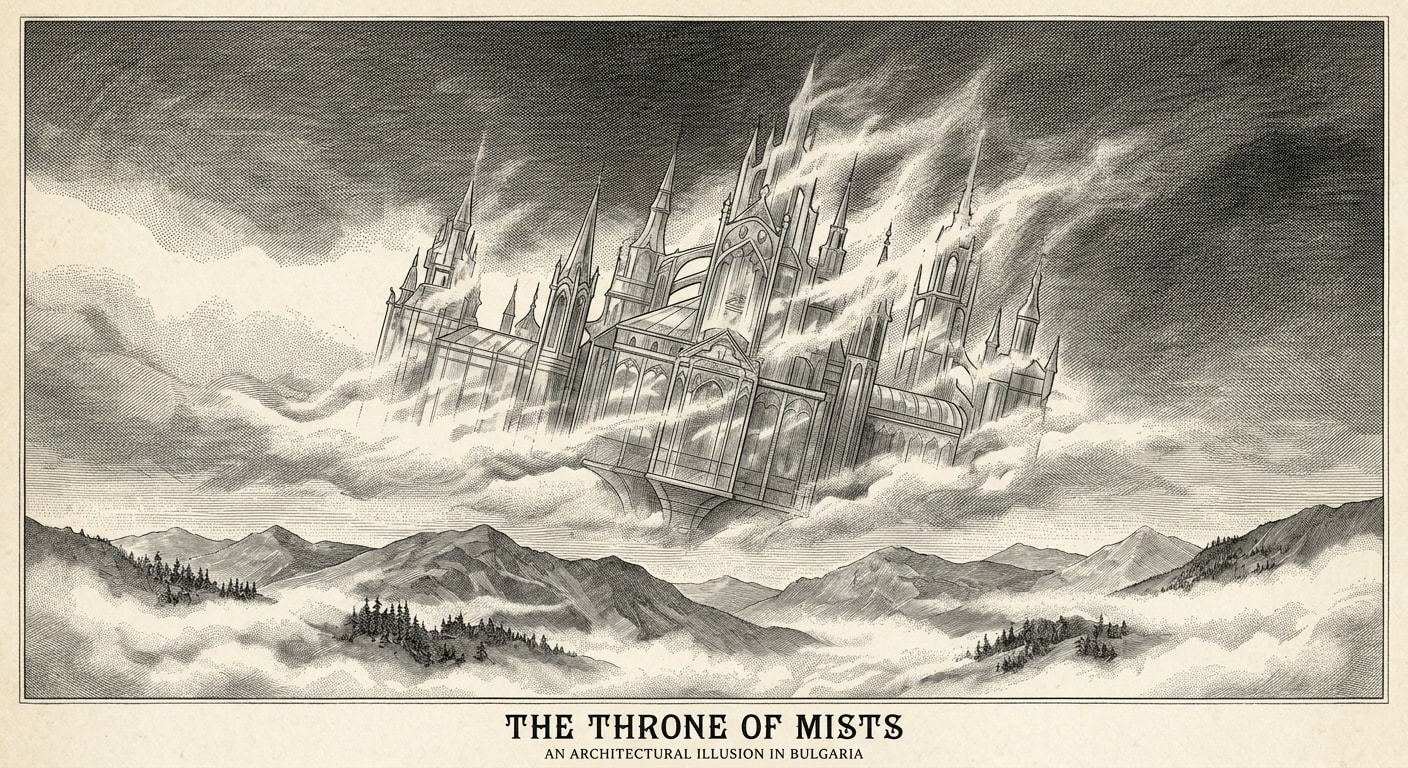
At the heart of the domain — if “heart” can be applied to a geography that refuses to be measured — drifts the Throne of Mists. A palace of clouded glass, rocking between waking and dream, anchored to nothing, governed by nothing, wanting nothing. Scouts who claim to have glimpsed it describe it differently. Some say it towers. Some say it sprawls. One said it was small enough to hold in his hand, and that he reached for it, and that when he woke his hand had been closed for eleven years. The Throne is Syrion's seat, or his projection, or his metaphor. The Bureau does not know. The Bureau does not know because to determine the answer would require sending someone into the deepest fog with instruments and instructions and the expectation of return, and the Bureau has already spent three hundred men on that experiment and received fourteen back, and fourteen is not a number that encourages repetition.
#On His Armies
Syrion commands a fog. This distinction matters — Maldrake commands an army, Kargath commands a tide, Velmora commands a market. Syrion's forces do not march. They wait. Legions of corrupted humans and demons standing motionless at the edge of fog banks, positioned since the Sundering, patient as monuments. When the fog advances — slowly, always slowly, a field's width per season, a ridge per decade — they advance with it. They do not rush. They have no need. Time is their weapon, their logistics, their strategy.
The Bureau of Purity's field taxonomy classifies Syrion's demons into four principal orders, and the taxonomy is honest about its limitations: these are categories imposed upon phenomena that resist categorisation, labels pinned to things that do not hold still long enough to be labelled — except that holding still is precisely what they do.
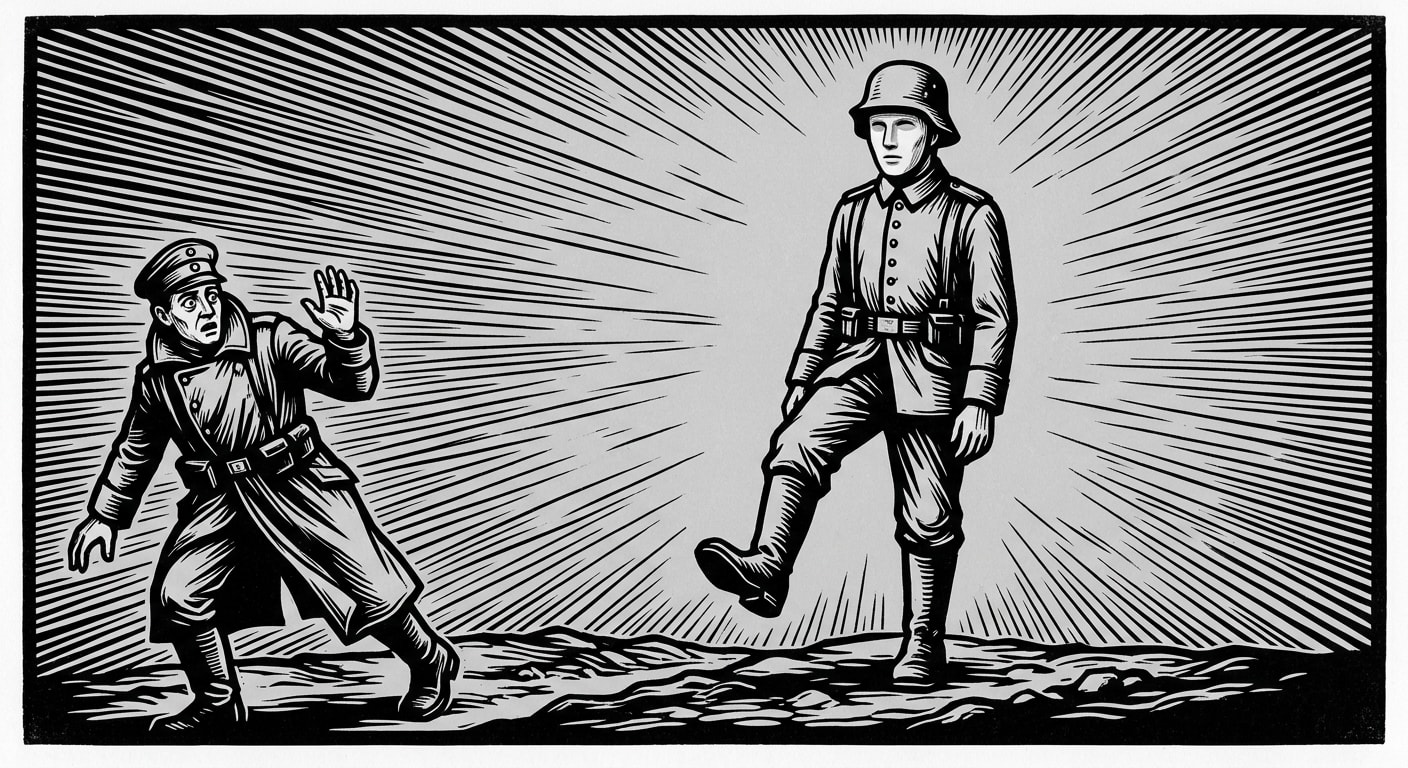
The Still Ones (Unregistered). Humanoid figures that do not move when observed. Turn away, and they are closer. Blink, and they have crossed the ground between you. They carry no weapons. They need none. Their weapon is your fatigue. Do not sleep. Do not look away. Do not blink. You will tire. They will not. This is the entirety of the tactical situation, and the Bureau of War's manual on the subject runs to six words: do not close your eyes. The remaining forty pages are liturgical padding.
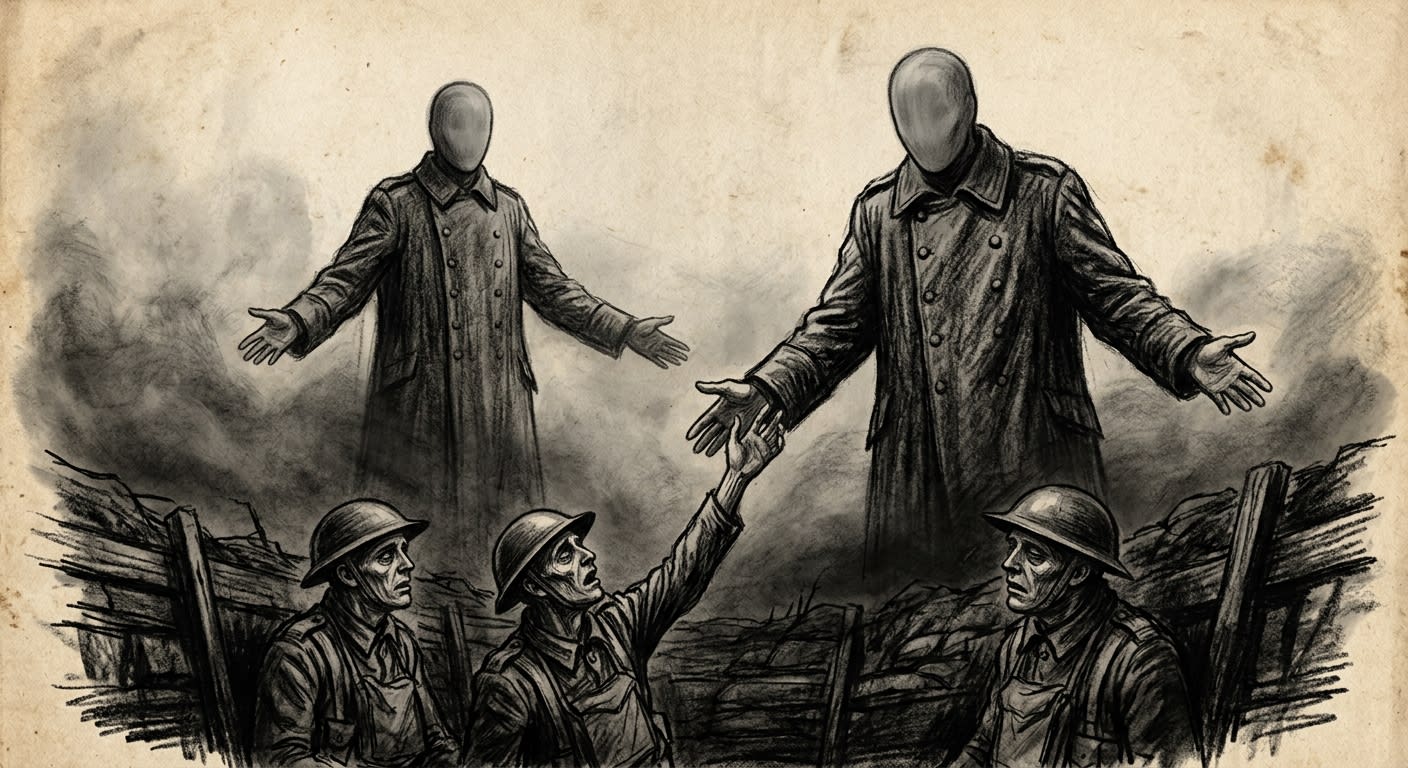
Grey Heralds. Figures that emerge from fog banks before an advance, speaking in voices that carry no malice — which is what makes them unbearable. Their prophecy is always the same: rest now, it's over, you've done enough, sleep. The words are kind. They are the kindest words a soldier at Shipka has heard in months. The Heralds' voices carry the warmth of a mother's hand on a fevered brow, the weight of a blanket drawn up in the cold, the promise that it is safe to close your eyes and the war will still be there tomorrow, or it won't, and either way you can stop now. Soldiers who listen sit down. They do not get up.
Time-Eaters (Unregistered). Things that are not quite visible, moving through Drag Corridors and Stillness Fields with a purpose that defies observation. They feed on duration. A soldier might feel one pass through him and lose an hour, a day, a year — not from his lifespan, but from his experience. Gaps in memory. Time he can never account for. Meals he does not remember eating. Conversations he does not remember having. Watches he does not remember standing. The Time-Eaters do not kill. They abbreviate. A man who has been fed upon by them enough times ceases to experience time as a sequence and begins to experience it as a series of unconnected moments, each one arriving without the context of the one before — a condition the Bureau of Medicine calls “temporal fragmentation” and the soldiers call “being eaten by Tuesdays.”
The Cradled (Unregistered). These are the cruelest, and the cruellest things in Syrion's arsenal are always the kindest. The Cradled are demon-constructs shaped like comfort — a soft chair where no chair should be, in the mud, in the trench, in the grey; a warm bed materialising in a forward position where the nearest mattress is forty miles away; a familiar room from childhood, complete with lamplight and a fire and something that might be a mother's voice singing from the next room. They appear to the most exhausted, the most desperate, the men and women whose reserves have been ground to nothing by the machinery of the Line. The Cradled do not attack. They invite. And the invitation, for a soldier who has not slept in six days and whose hands shake from stimulant overdose and whose boots are nailed to the parapet to prevent sleepwalking — the invitation is worse than any assault, because it asks nothing and offers everything.
Earlier editions of this Codex classified the Cradled as “minor manifestations, equivalent in threat to a field-kitchen fire or an unsecured ammunition box.”
The Bureau of Doctrine has withdrawn this classification after the loss of Outpost Eleven-West (A.S. 194), in which an entire platoon was found seated in a circle around a construct resembling a country hearth, eyes closed, smiling, hearts beating, minds absent. They were evacuated. Seven recovered. Nine did not. The nine are housed in a Bureau of Mercy facility in Sofia and are, by all clinical measures, at peace. The Bureau does not call this victory. The Bureau does not call it anything at all.
Beyond the four principal orders, Syrion deploys further assets that the taxonomy struggles to accommodate. Slumber-Hulks — massive, glacier-slow things that move through the fog with blows that fall with the weight of centuries, shattering not flesh but will; battalions that face them discover their arms too heavy to lift, their orders too distant to obey. The Hourglass Monolith — a war-engine the Bureau has sighted twice and measured never — bleeds time from the battlefield. Soldiers within its radius are reduced to statues while Syrion's hosts drift past them, unhurried as a funeral procession through a graveyard that does not yet know it is a graveyard.
And behind all of these, standing at the fog's edge, stands the Patient Army. Ranks upon ranks of corrupted humans and lesser demons, motionless, arrayed, weapons held at rest. They have been standing since the Sundering. They do not eat. They do not communicate. They do not respond to provocation. The Bureau of War's standing order regarding the Patient Army is to observe but not engage, and the wisdom of this order is debated only by officers who have never seen the Army and therefore believe engagement is a thing one does to an enemy rather than a thing the enemy does to time.
#On the Cults of Stillness
Syrion's cults are the quietest threat in the Theocracy, which is why they are the most successful.
A cult of Kargath is discovered because its members eat too much, or too strangely, or with the wrong expression. A cult of Velmora is discovered because someone's wealth cannot be accounted for. A cult of Maldrake is discovered because something is on fire. A cult of Syrion is discovered, if it is discovered at all, because something has stopped — a form has gone unfiled, an order has been delayed, a watch rotation has been missed, and no one noticed until it was too late because no one was paying attention because attention is labour, and labour is what Syrion's agents are trained to discourage.
The cults infiltrate rest houses and hospitals, where the exhausted are already vulnerable. They infiltrate monasteries and contemplative orders, where stillness is already valued as a spiritual discipline. They infiltrate veterans' communities, where the war-weary gather to compare the silences in their heads. And they infiltrate bureaucracies — oh, they infiltrate bureaucracies — because no institution on earth produces more exhausted, spiritually deadened human beings than the apparatus of the Bureaucratic Synod, and no institution is less equipped to notice when its own machinery begins to slow.
A Syrion cultist does not cackle. A Syrion cultist does not perform midnight rituals or brand themselves with infernal sigils. A Syrion cultist is the kind nurse who always suggests one more day of rest. The clerk whose paperwork always takes longer than it should. The priest whose sermons emphasise acceptance over struggle. The officer who never quite gives the order to advance. They are tired people who found peace in giving up and wish, with genuine compassion, to share it.
The Bureau of Purity's detection rate for Syrion's cults is the lowest of any Sin-General's — a fact the Bureau publishes in its annual reports because suppressing it would require effort, and the Bureau has, in the provinces nearest the fog, demonstrably less energy for effort than it did a generation ago.
#On His Rivalries
Maldrake is fire. Syrion is fog. Their hatred is, in the Bureau of Doctrine's clinical phrase, “ontologically inevitable” — Wrath cannot abide stillness, and Sloth cannot abide interruption, and the border zone where Syrion's fog meets Maldrake's heat-shimmer in the Balkan foothills is a meteorological impossibility that the Bureau of Engineering has documented and wishes it had not.
The Maldrake-Syrion feud has devastated entire sectors of the front, and the Bureau of War has, on occasion, quietly encouraged the rivalry through its Bureau of Inter-Infernal Analysis — reasoning that two Sin-Generals fighting each other are two Sin-Generals not fighting us. Whether this constitutes strategy or heresy depends on which Bureau you ask. The Bureau of War calls it “operational realism.” The Bureau of Doctrine calls it “dangerous proximity to sin-adjacent reasoning.” Both Bureaus agree that it works, which is the only consensus the Synod requires to continue a policy.
Atheron dismisses Syrion as “a ghost dreaming in fog” — this from a being whose own citadel is built on a mountain of contempt — and Syrion has never responded to the insult. Whether this silence represents indifference, disdain, or simply the fact that Syrion does not respond to anything in a timeframe the other Sin-Generals consider reasonable is, like most things about the Languid Dreamer, a question the Bureau has shelved indefinitely.
Velkara is the closest thing Syrion has to a complement, which is to say they do not fight but they do not cooperate — Velkara's victims burn with desire while Syrion's victims burn with nothing at all, and a man who has been emptied by Sloth is useless to Lust, and a man who has been ignited by Lust is temporarily immune to Sloth's whisper. The tactical implications have been studied. The studies are inconclusive. They have been inconclusive for forty years. The irony is not lost on the Bureau.
#On the Countermeasures
Bastion-Shipka exists because Syrion exists, and for no other reason. The Shipka Pass (Unregistered) is the single viable route through the Balkan Mountains from the Danube lowlands to Thrace and the road to Constantinople. Whoever holds Shipka controls the final approach to the Bosphorus. The bastion has been expanded three times — most recently in A.S. 190, after Syrion's fog pushed westward by an amount the Bureau of Engineering measured at “eleven miles or possibly eleven years, the instruments disagree” — and its garrison carries the heaviest Bellwarden rotation on the entire Sagittal Line.
Soldiers at Shipka rotate every four months. This is not a guideline. This is doctrine ratified at the sixth seal, meaning that a commanding officer who extends a rotation answers to the Bureau of Doctrine, the Bureau of War, and the Bureau of Medicine simultaneously — a triumvirate of displeasure that no career survives. The four-month limit exists because longer rotations produce men who can no longer count days, who lose the thread of conversations mid-sentence, who stand at their posts with their eyes open and their hands on their weapons and their minds somewhere in the grey.
The Synod has developed countermeasures. The Bureau publishes them with confidence. The confidence is, like most Bureau publications, aspirational rather than empirical.
Mathematical Anchors. Soldiers are trained to count primes, recite irregular sequences, perform mental arithmetic — the theory being that Syrion's fog cannot process irregular patterns. In practice, the soldiers begin with conviction, transition to repetition, and end in silence. The Bureau of Medicine's assessment: “effective for approximately forty-eight hours.”
Anchor Litanies. Physical awareness mantras — boots, belt, watch, tongue, breath — recited while touching each item. The soldier grounds himself in the physical present. Works until he forgets why he is doing it, which is the moment the fog has been waiting for.
Wake-Bell Patterns. Irregular bell sequences designed to prevent drift. If you hear the pattern and can predict the next bell, you are temporally anchored. If the pattern starts to seem regular — if the bells start to sound like a lullaby — you are in trouble.
Stimulants. Coffee, chemical preparations, alchemical compounds of increasing desperation. Keep moving. Keep talking. Keep awake. The side effects are catalogued in a Bureau of Medicine pamphlet that runs to sixty pages and whose summary is: “preferable to the alternative.” Addiction is tolerated; in the fog-adjacent positions, it is a form of soldiering. A man who craves his next stimulant is a man who craves something, and craving is movement, and movement is the opposite of Syrion.
Enforced Movement. Standing orders at Shipka and all fog-adjacent positions: never stop marching. If you must rest, someone must be moving nearby. If you see someone standing still, shake them. If they do not respond, leave them and report it. If you have been standing here — if you are reading this and cannot remember when you arrived at this position — report to your section commander immediately. If your section commander is also standing still, move to the next post. Keep moving. The order is simple because simplicity survives the fog. Complexity does not.
Buddy Systems. The most brutal countermeasure, and the most effective, and the one that costs the most in ways the Bureau does not measure. Never alone. Never. If your buddy stops responding, leave him. Do not stay to help. You will stop too. You will both stand there, side by side, eyes open, breathing, waiting for something that is not coming because Syrion does not come — Syrion waits for you to come to him, and you will come to him, one stillness at a time.
#On the Horror That Is His
“He does not attack. He does not need to. He waits while you attack yourself.”
Every Sin-General corrupts something human. Kargath corrupts hunger. Velmora corrupts desire. Maldrake corrupts righteousness. Velkara corrupts longing. Morwen corrupts identity. Syrion corrupts rest — the one thing every living creature requires, the one thing the Synod cannot forbid, the one mercy the war has not yet managed to weaponise, except that Syrion has weaponised it, and the weapon is more terrible than any blade because you cannot defend against something you need.
The victims do not look like victims. They look, at first, like the only sane people in a world gone mad. They sleep. They wake refreshed. They function with a clarity their comrades envy. The fog lifts from their eyes while the fog thickens around them, and by the time anyone notices that the refreshment has become a trance, that the clarity has become a blankness, that the man who was sleeping so well has not truly woken in weeks — by then, the progression has entered its middle stages, and the middle stages are where Syrion's gift reveals itself as the trap it always was.
The rest that does not end. The man walks, talks, works — but everything is muffled, distant, dreamed. He drifts through days without remembering them. He stops getting out of bed. He stops opening his eyes. He is still breathing. He is still aware. He simply stopped.
The time that slips. Hours become days become weeks. The victim stands at a window watching the street and realises the season has changed. He cannot account for where the time went. He does not care. That is the point.
The forgetting that spreads. It begins with what the victim wanted to forget — the trauma, the guilt, the dead friend's face. It does not stop there. Names go. Faces go. Skills go. He forgets what he was doing mid-action. He forgets who he is mid-sentence. He forgets he forgot. His eyes are open but unfocused, and he answers questions with questions that were asked of him an hour ago, and no one can reach him because there is no one left to reach.
The peace that paralyses. He stops caring — about anything. Food loses taste. Achievement loses meaning. Love loses warmth. He sits. He stares. He breathes. He does not see a reason to do otherwise.
And finally: rooting. The terminal state. The victim stops moving and does not start again. He stands where he stopped. He breathes. His eyes are open. Dust accumulates on his shoulders despite the wind. His skin acquires a grey tinge. His voice, if he speaks — and he does speak, once or twice a year, a single sentence that arrives moments after his lips stop moving — his voice carries the echo of something vast and patient and utterly without malice.
Bureau of Medicine Field Report 1107-S, classified VERMILLION: Subject recovered from Preserved Village #7, Vales of Stagnance, A.S. 199. Subject had been standing for an estimated ████ years. Clinical assessment: alive, aware, responsive to ████████████. Subject's single recorded utterance upon recovery: “████████████████████████████████████.” Subject has been transferred to ██████████████████. The attending physician's recommendation reads, in full: “████████████████████████████████████████████████████████████████████████████████████.” The recommendation has been sealed. The physician has requested reassignment. The request has been granted.
#The Ratification
I have written seven entries now. Seven sins. Seven generals. Seven domains. Seven methods of ending a human soul without the mercy of ending a human life. The arithmetic is theology, as Hierarch Odo observed, and theology is the Bureau's business, and the Bureau's business is my business, and I am tired.
I am not tired in the manner that concerns the Bureau of Medicine. I am tired in the manner of a man who has spent two hundred and one years — the full span of the Synod's calendar — inscribing the ways in which the world has tried to die and the machinery by which Strasbourg has kept it breathing. I am tired of being good at this. I am tired of the entries that remain to be written. I am tired of the margin notes, which I write because the alternative is to say what I mean directly, and saying what I mean directly would require energy I have been conserving for exactly this purpose: to write one more sentence. And then one more.