
#On the Order That Taught the Cradle to Confess
Standing Order 34-PK is the joint Records-Purity suppression instrument for Pale Kin cradle resistance: the warrant grammar by which a hidden birth becomes a heresy, a missing infant becomes a stolen soldier, and a mother’s silence becomes evidence with a pulse.
It is filed under natal enforcement. This is a kindness to librarians and an insult to infants. The order binds the Bureau of Records, Purity, Womb Registrar parish desks, midwife compliance ledgers, Orphanarium intake offices, and the kinship specialists who learned to smell affection in a household register. It governs registry audits, household entry, stillbirth review, milk-ration comparison, child-tag inspection, amnesty writs, Administrative Recovery, and the small formal brutality of writing “Voluntary Compliance (Unregistered)” beside a child who was discovered behind a wall.
The order did not create the Pale Kin. Bureau orders rarely create sin; they make sin legible, taxable, prosecutable, and, with luck, reusable in training lectures. Pale Kin resistance hardened after the Nursery Levy Decrees of A.S. 152, when the Bureau of Conscription compressed infant registration to twelve-hour preliminary notice and seventy-two-hour full filing. Mother Sava burned the Ash Steps registry in A.S. 154 and removed eleven infants from levy arithmetic. The Natal Registration Act of A.S. 158, ratified by Marius of Cologne, replaced the older parish roll system with forty-eight-hour midwife filing and gave the Womb Registrar corps its satchel, its lists, and its domestic jurisdiction.
34-PK arrived as the hook that joined those instruments into a hunt.
#On the Wound It Claimed to Heal
Every order prefers a wound. The wound gives the order a face to kiss and a body to search.
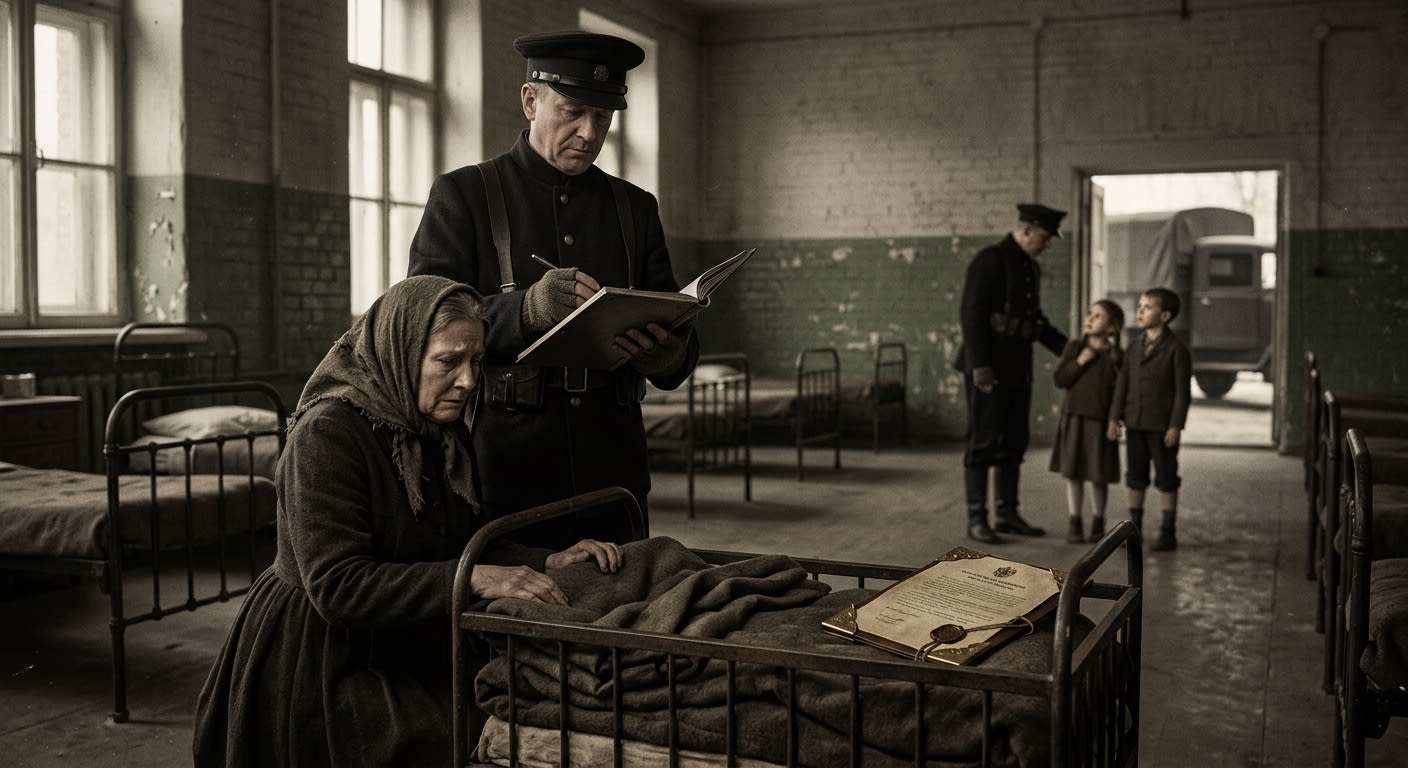
34-PK claimed three wounds at once. Conscription complained of stolen soldiers. Records complained of discontinuities in the Great Ledger. Purity complained of hereditary infection moving through kitchens, cellars, and women who refused to understand that private mercy had been replaced by public survival. Tithes made no grand complaint; it merely extended a quiet hand for the projected obligations that never arrived when a child went unfiled. Tithes is vulgar only when necessary. Usually it lets arithmetic stink on its behalf.
The first files are full of domestic evasions: late forms, false stillbirths, conveniently absent fathers, borrowed cousins, wet-nurse tokens changing hands near dusk, infants moved through laundry doors, midwives who forgot which parish they stood in, mothers who bit leather rather than cry out where a stairwell could hear. The Bureau calls these patterns. Mothers call them improvisations. The difference is mostly who owns the ink.
An early Records memorandum described Pale Kin concealment as “primarily clerical noncompliance among lower-quality midwives.”
Corrected after Purity field review. Midwives were involved, but the resistance extended through mothers, grandmothers, wet-nurses, parish servants, Mercy aides, Ward-Builders, Ash Registrars, and men wise enough to be absent when officials knocked. The household, not the midwife alone, was the field of evasion.
The Ash Eleven terrified the offices because they proved an infant could live beyond the file. A stillborn notation is manageable. A burnt register is repairable. Eleven pairs of outgrown shoes found years later in an Innsbruck wall-cavity are an accusation in leather. Each pair said the state’s missing quantity had learned to walk.
#On the Text of Suppression
The order’s operative clause defines a natal absence as any known, suspected, inferred, concealed, displaced, or documentarily corrupted birth not present in the Ledger within the lawful window. The word “inferred” does heroic labour. It permits the state to proceed from evidence, suspicion, arithmetic, malice, or the observation that a woman who had been visibly pregnant in Lent is somehow thin in May with no child, no burial tag, and a household suddenly buying goat milk.
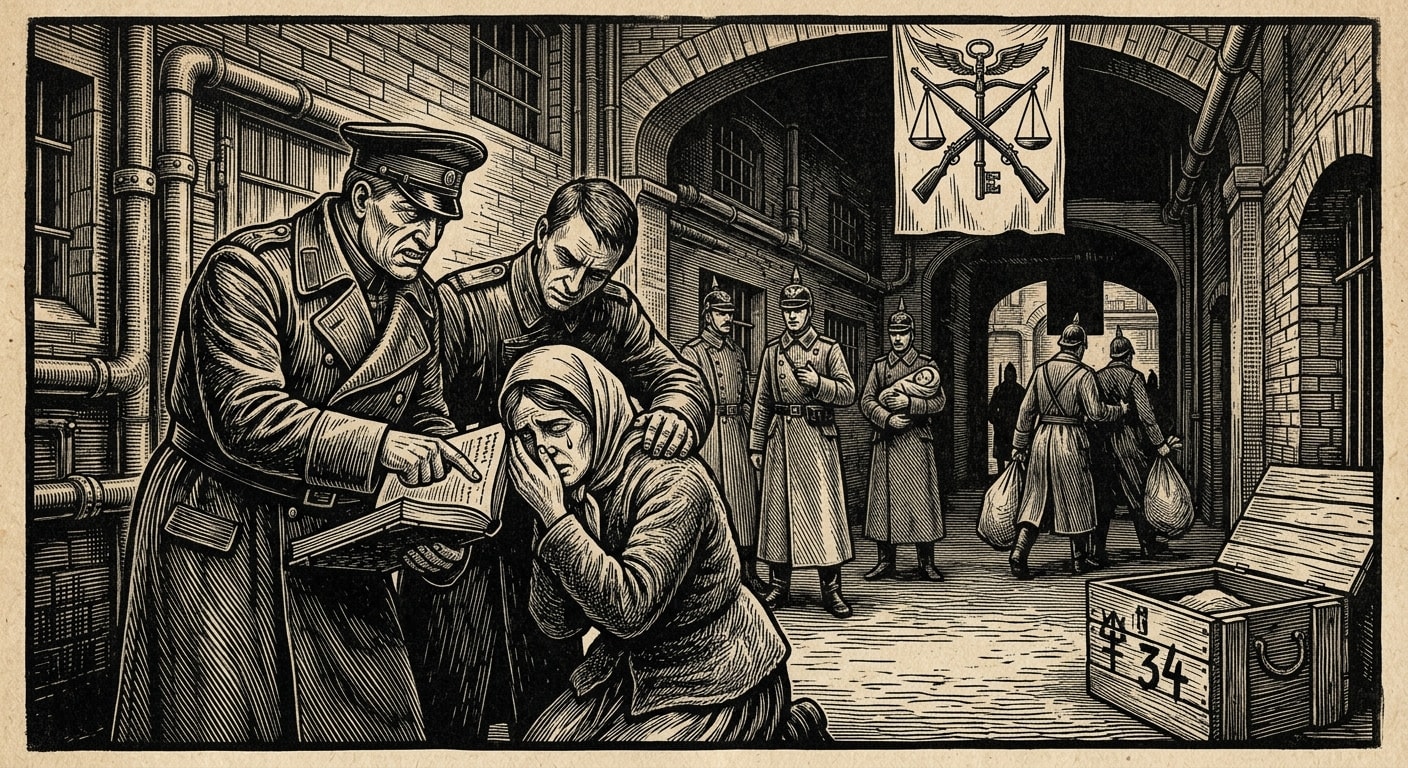
A Womb Registrar may trigger 34-PK review by filing three marks: pregnancy notice unresolved, midwife writ mismatch, or household-child discrepancy. Records may trigger it through stillbirth ratio variance, ration consumption, school-roll absence, baptismal silence, cemetery packet irregularity, or the lovely phrase “domestic density inconsistent with declared dependents.” Purity may trigger it by instinct, informer, interrogation, or the professional enthusiasm that makes Purity dangerous even when bored.
Once triggered, the order authorises Records audit and Purity entry as a paired action. This pairing matters. Records alone can find the absence but cannot kick the door well. Purity alone can kick the door but cannot always tell whether the infant in the cupboard belongs to the census, the aunt, or the suspiciously lactating widow downstairs. Together they make a complete nuisance of themselves, which is the first principle of inter-Bureau cooperation.
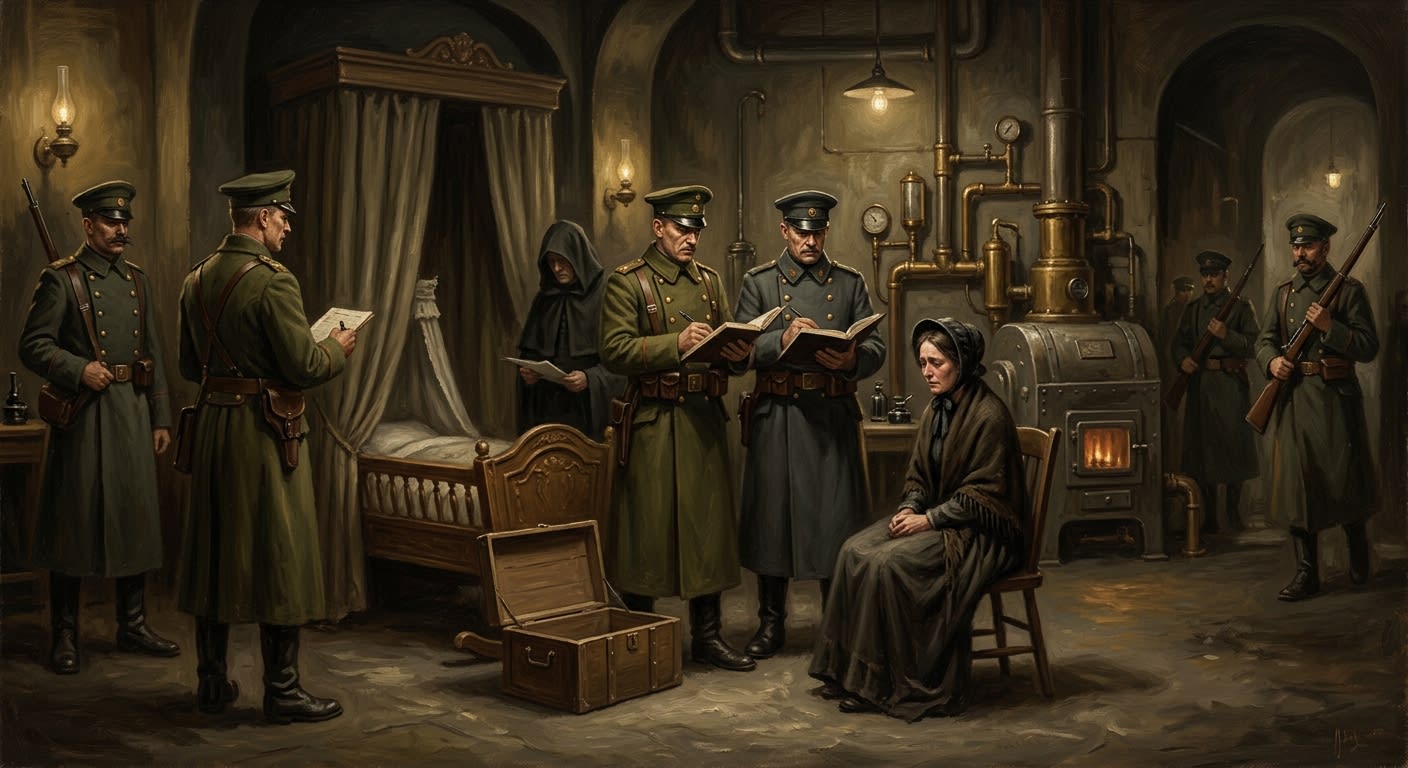
The entry team carries a blank Form 7-NR, late-registration amnesty sheets, a child-tag comparison kit, a name list, wax, milk-ration tables, and restraints sized for adults. The restraints are officially unrelated to infants. The manuals insist upon this distinction with the nervous tidiness of men who have stood in rooms where a mother discovered what “recovered” means.
#On the Three Faces of Pale Kin Practice
34-PK divides Pale Kin activity into three working heresies. The categories are accurate enough to be useful and crude enough to be lawful.
The Blood-Kin Purist keeps the child near family. Sister, aunt, grandmother, cousin, widow from the same lane, old name carried in soup and curse and lullaby. Purity follows them through grief recurrence, repeated godparent patterns, bread gifts, old women with too many nieces, and the stubborn family habit of visiting the same graves on days no parish calendar recognises.
The Ward-Builder sends the child away from blood into manufactured kinship. Bakers, washerwomen, bell-boys, pageant crews, Mercy kitchens, old soldiers with clean hearths and filthy consciences. Records hates Ward-Builders because they turn kinship into craft. Purity hates them because craft can be learned. Doctrine hates them because any household assembled by crime and love begins to resemble a parish without permission.
The Ash Registrar attacks the file. False stillbirth. Duplicated baptismal stub. Burnt parish roll. Borrowed cousin-name. Infant burial tag reassigned. Ink made dull enough to look incompetent rather than clever. These are the dangerous ones. A hidden child may be found by hunger, noise, or betrayal. A corrected absence can sit inside a cabinet for twenty years wearing the face of normal error.
34-PK instructs officers not to treat factional quarrels as exculpatory. A Blood-Kin household may use an Ash Registrar’s stillbirth note. A Ward-Builder route may end with a grandmother. An Ash Registrar may burn a record for a child already sent three provinces away. Heresy, unlike office procedure, is capable of collaboration without a memorandum.
JOINT SUPPRESSION ANNEX — PALE KIN SUBCLASSIFICATION, A.S. 201 REVIEW Blood-Kin indicators: ███████████████ recurrence, grave-day offerings, maternal-line clustering. Ward-Builder indicators: ration dispersal through ███████████████, stranger wet-nurse debts, child-route substitutions. Ash Registrar indicators: parish ink variance, stillbirth clusters, duplicate saint-name use, ███████████████ seal-crumb contamination. Instruction: recovered child disposition remains ADMINISTRATIVE RECOVERY unless ███████████████.
#On Womb Registrars as Informants of Mercy
The Womb Registrar is the order’s most useful eye because she arrives before the cradle. Purity arrives after suspicion hardens into boots. Records arrives when paper misbehaves. The Registrar arrives when a woman changes shape.
She observes pregnancy notice, ration adjustment, approved name consultation, midwife assignment, household bed count, prior births, suspicious travel to cousins, and the old kitchen choreography by which women make truth leave through a back stair. Her satchel contains name lists, blank writ reconciliation sheets, and the terrible authority of politeness. She says congratulations while marking the room.
34-PK gives her suspicion marks weight. One mark prompts reminder. Two marks prompt audit. Three marks permit escalation. The Registrar is not required to prove concealment before noting irregularity. Proof belongs to tribunals. Irregularity belongs to administration, and administration moves faster because it need not pretend to be just yet.
The order also protects Registrars from midwife retaliation, in theory. In practice, a Registrar assigned to a hostile parish learns which alleys reject her, which baker sells stale bread, which children mimic her walk, and which women stop speaking when she enters. Many resign. Many harden. The best become exact. The worst become zealous. The most dangerous become exact and zealous, a compound for which no Bureau has yet devised an antidote.
#On Amnesty, Surcharge, and the False Soft Hand
34-PK’s amnesty procedure is among the Synod’s finest small machines. A joint team finds, suspects, corners, or receives an unregistered child. The family is offered late registration under “Voluntary Compliance.” The surcharge is assessed. Public prosecution may be suspended. The child receives a record. Everyone is invited to call this mercy and admire the curtains.
Voluntary Compliance is a brand without heat. It follows the child into ration lines, school rolls, apprenticeship, marriage petitions, confession routing, conscription review, and burial claim. A child registered late is never simply registered. The file remembers disobedience before memory itself begins.
Provincial amnesty broadsheets state that Voluntary Compliance “restores the child fully to Ledger equality.”
Corrected. Voluntary Compliance restores Ledger visibility. Equality is a devotional adjective, not an administrative state.
The family rarely pays the full surcharge. That is not mercy either. An unpayable debt becomes labour, ration deduction, property lien, ward custody, or consent extracted through a soft voice over a hard bench. Tithes prefers futures to coins. Records prefers records to grief. Purity prefers the family to understand that next time the door will not knock.
Some families accept because hunger has votes inside the body. Some refuse and run. Some surrender one child and hide another. Some turn informer, which the Bureau records as moral recovery. Moral recovery is often what desperation looks like when stamped by the winner.
#On Administrative Recovery
A child seized under 34-PK enters Orphanarium custody under ADMINISTRATIVE RECOVERY unless local authority grants supervised return, a phrase that appears often in manuals and rarely in life. Recovery begins with washing. The wash is practical, symbolic, and insulting: ash, cellar smell, mother’s milk, borrowed household odour, all scrubbed beneath Mercy supervision. Then comes the approved name list.
If the child has a household name, it is recorded in a sealed collateral field. If the name is proscribed, foreign, duplicate, or attached to an unregistered lineage, it is denied public force. The clerk selects a saint-name. The child receives tag, stub, ration card, and file. The Bureau calls the act restoration. The mother, if present and unwisely loud, calls it theft. Purity notes emotional obstruction.
The sequence was built after early raids produced chaos: two children assigned the same recovery tag, one infant returned to the wrong aunt, three mothers claiming the same foundling, one Womb Registrar bitten by a grandmother and later praised for “document retention under pressure.” 34-PK is many things. It is also the Synod learning from indignity.
#On Fraud by Officials
Every order that creates authority creates a market around it. 34-PK is no exception; I regret the cliché and admire the profits.
Registrars sell clean suspicion marks. Midwives sell silence and then sell the fear of having sold it. Purity officers threaten 34-PK review to force household payments, sexual access, labour pledges, and informant service. Records clerks alter Voluntary Compliance notation for a fee. Orphanarium intake staff trade saint-names. Tithes agents adjust projected obligations after “late discovery” of father-status. The Bureau prosecutes these crimes when they embarrass the order. It ignores them when they make the order faster.
The most elegant fraud is false recovery: a lawful child temporarily declared absent, “recovered,” and placed into a preferred custody channel with property or ration advantage attached. It requires a Registrar, a clerk, a pliable midwife, and a family rich enough to buy administrative confusion. The poor commit concealment with blankets. The comfortable commit it with countersignatures.
A Purity circular of A.S. 190 states that 34-PK enforcement is “self-correcting through joint Bureau oversight.”
Amended after the Rheinscarp child-tag scandal. Joint oversight often means two offices watching one another steal in different directions.
This corruption does not weaken the order in Synodal terms. It proves the order has entered life deeply enough to be worth corrupting. A dead regulation attracts dust. A living one attracts bribes.
#On the Present Enforcement Field
As of A.S. 201, Standing Order 34-PK remains active across Synod parishes, with sharpened use in Zone 2 industrial cities, Zone 3 supply corridors, and the forward families feeding the Sagittal Line. Dense watch lists exist in Warsaw, Budapest, Brest, Sibiu, Constantinople, Cologne, Kanzleiburg, and every district where stillbirth ratios have become creative.
The order’s enemies are midwives, ash-ink, wet-nurse debt, grandmothers with good memories, fathers who know when to vanish, mothers who keep quiet at the correct instant, and children who grow quickly in borrowed shoes. Its allies are hunger, ration tables, neighbour spite, school rolls, baptismal silence, Orphanarium capacity, and the human weakness for surviving one more winter even if survival requires signing the paper.
The order persists because the state must be present at the cradle or admit that something can begin without permission. A civilisation built on entries cannot tolerate first breath as a private fact. The infant cries. The mother reaches. The midwife listens for the stair. Somewhere a Registrar opens the satchel.