

Reverse Index
Referencing “Ghent”
Every codex entry that links to Ghent. 36 entries.
Return to Ghent
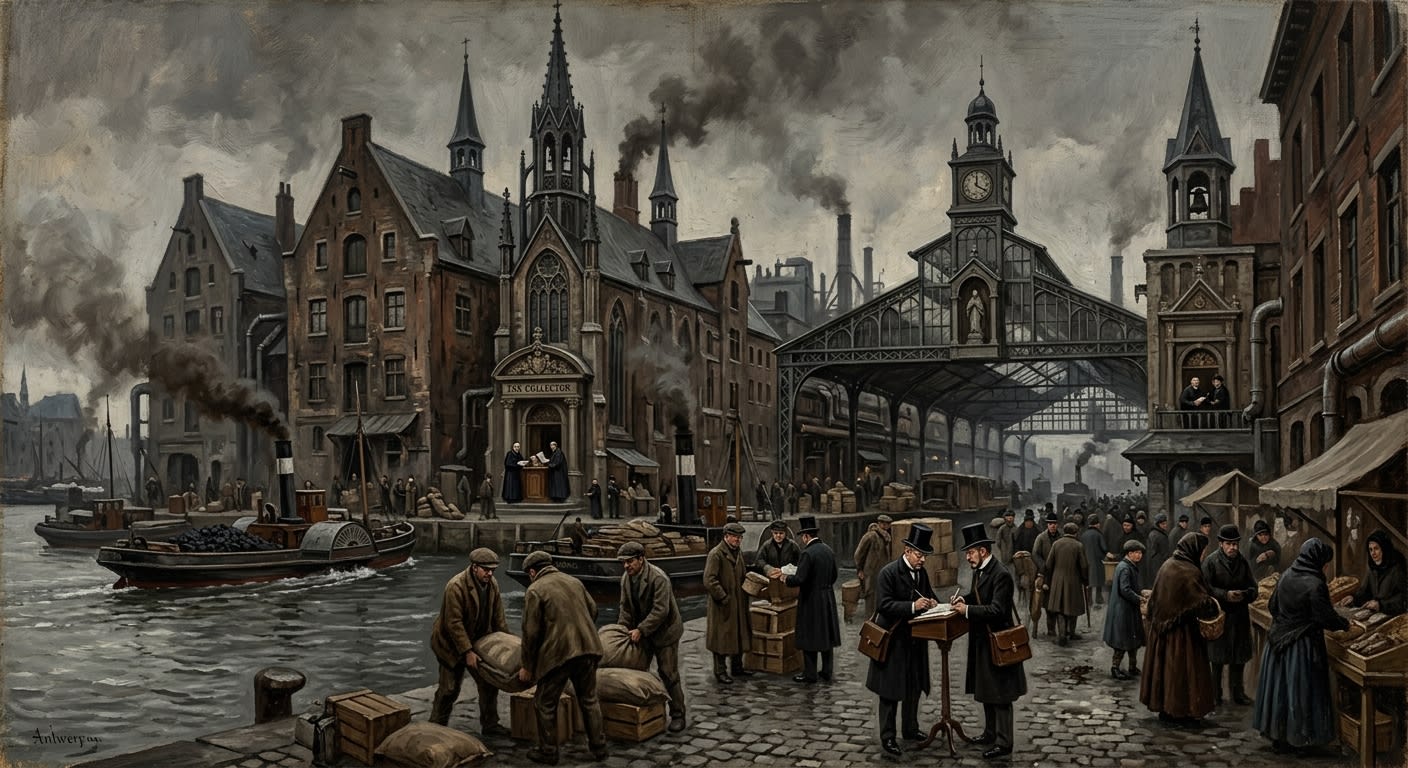
Antwerp
A port city weighing saints by warehouse light
Antwerp is the Scheldt port where commerce learned piety, hunger learned arithmetic, and every warehouse keeps a chapel close enough to tax.
Codex Ref. II.1.06-138
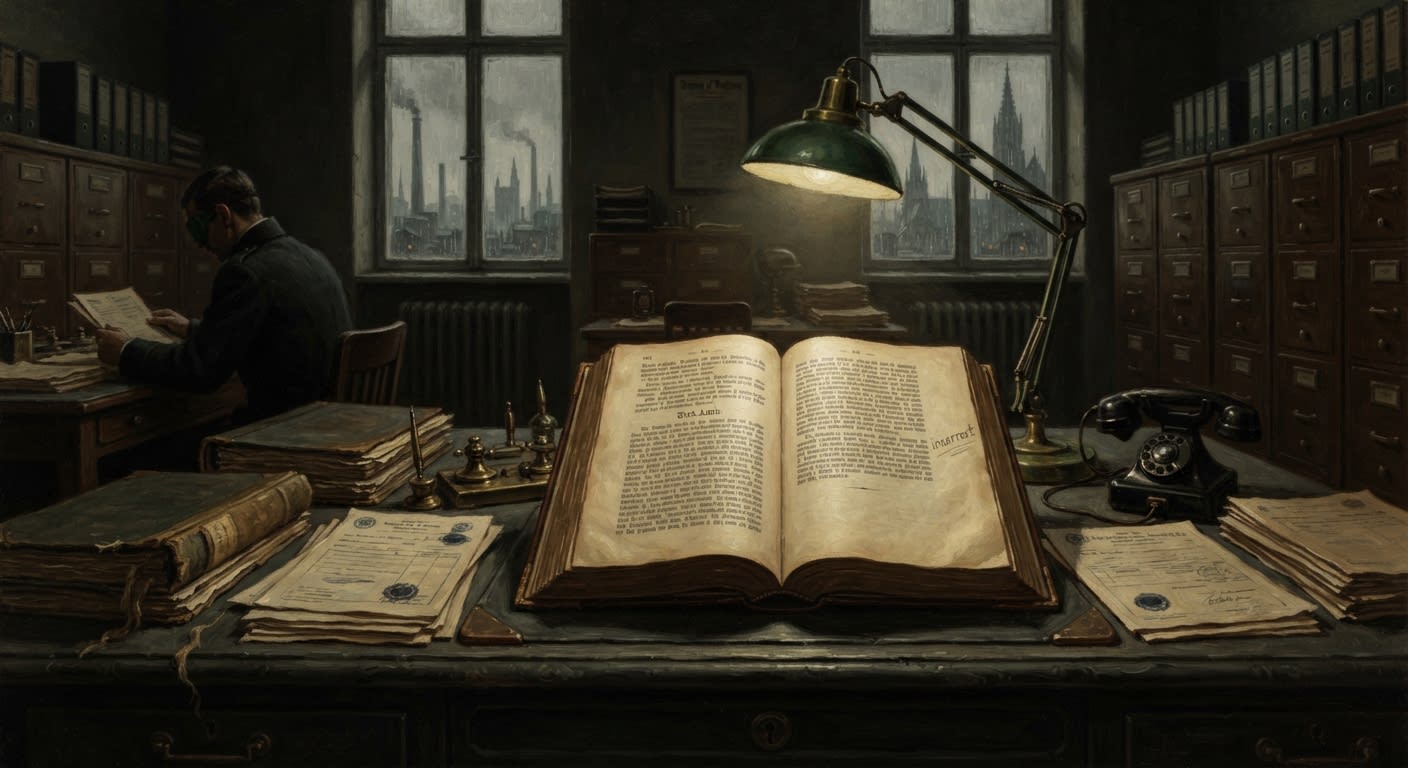
Articles of Covenant
The approved page that survived by being underestimated
The Articles of Covenant were safe enough to leave open on a desk, until one pencil beside the Third Article taught Silence that obedience could be graded.
Codex Ref. XIII.1.56-001
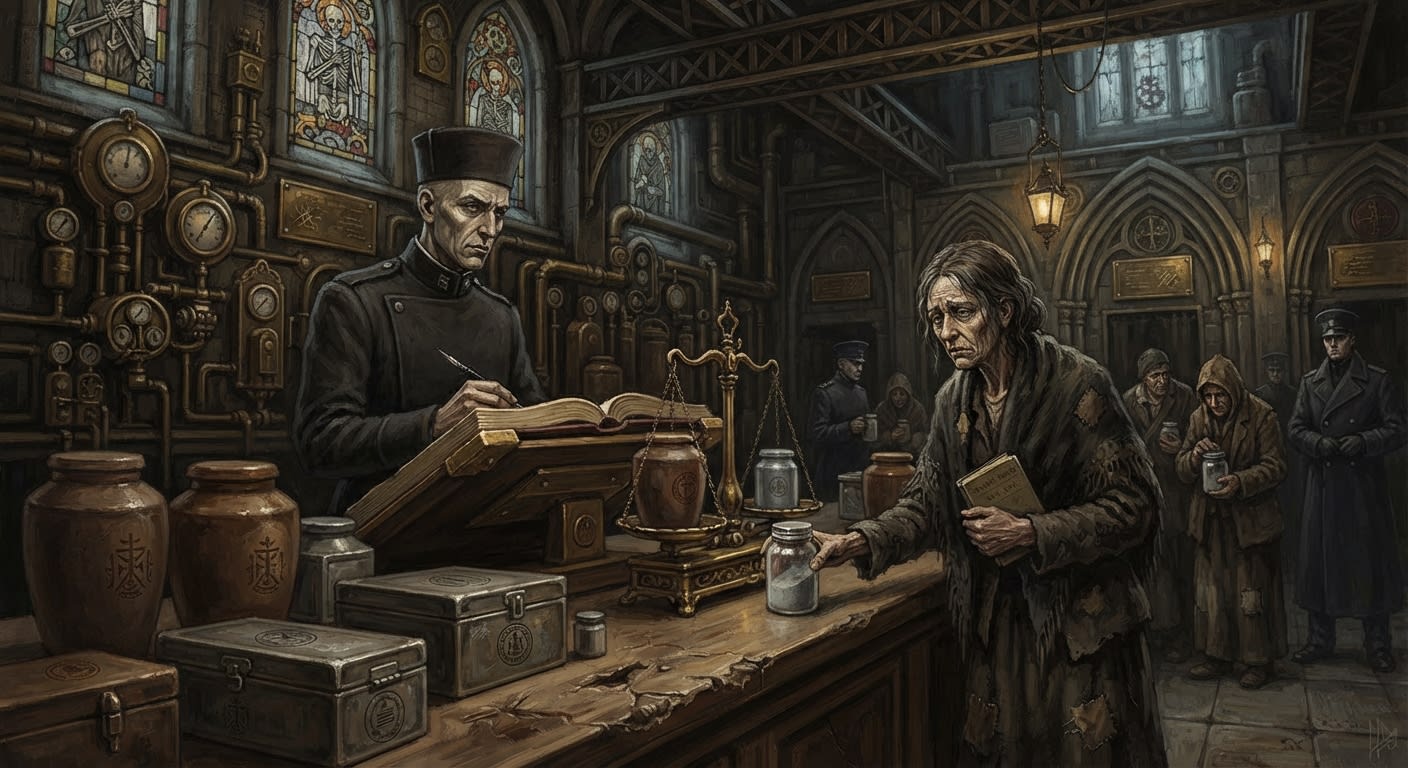
Ash-Credit
The dead are tender once Tithes finds a scale
Ash-credit is the Synod's devotional collateral, converting cremains, saint-dust, and pledged future remains into bread, grace rations, and obligations the dead cannot refuse.
Codex Ref. VI.3.01-002
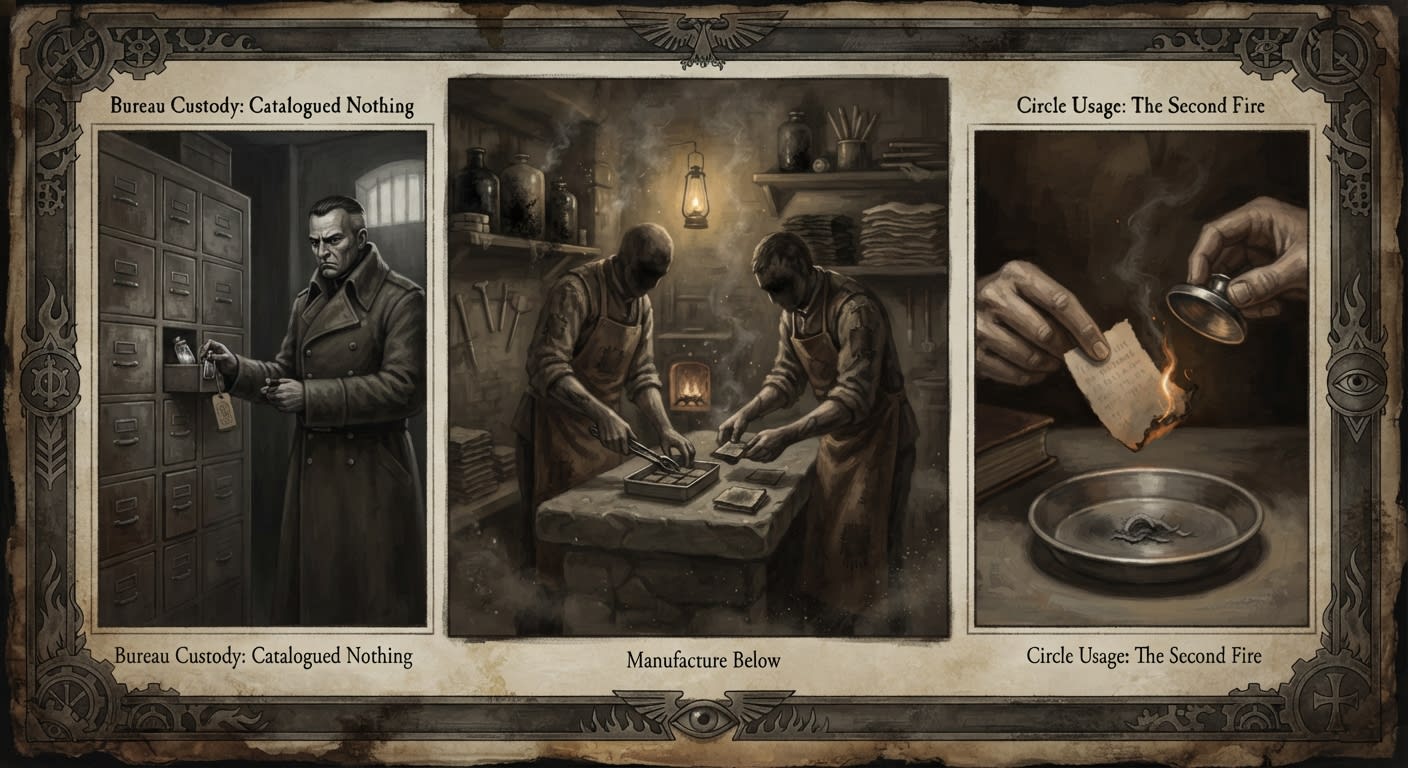
Ash-paper
A sheet built to outlast nothing, and therefore everything useful
Ash-paper is the Circle's pre-blackened answer to the Purge: charcloth pages made to carry one forbidden fact, burn twice, and leave the Bureau with only catalogued nothing.
Codex Ref. XIII.1.56-001
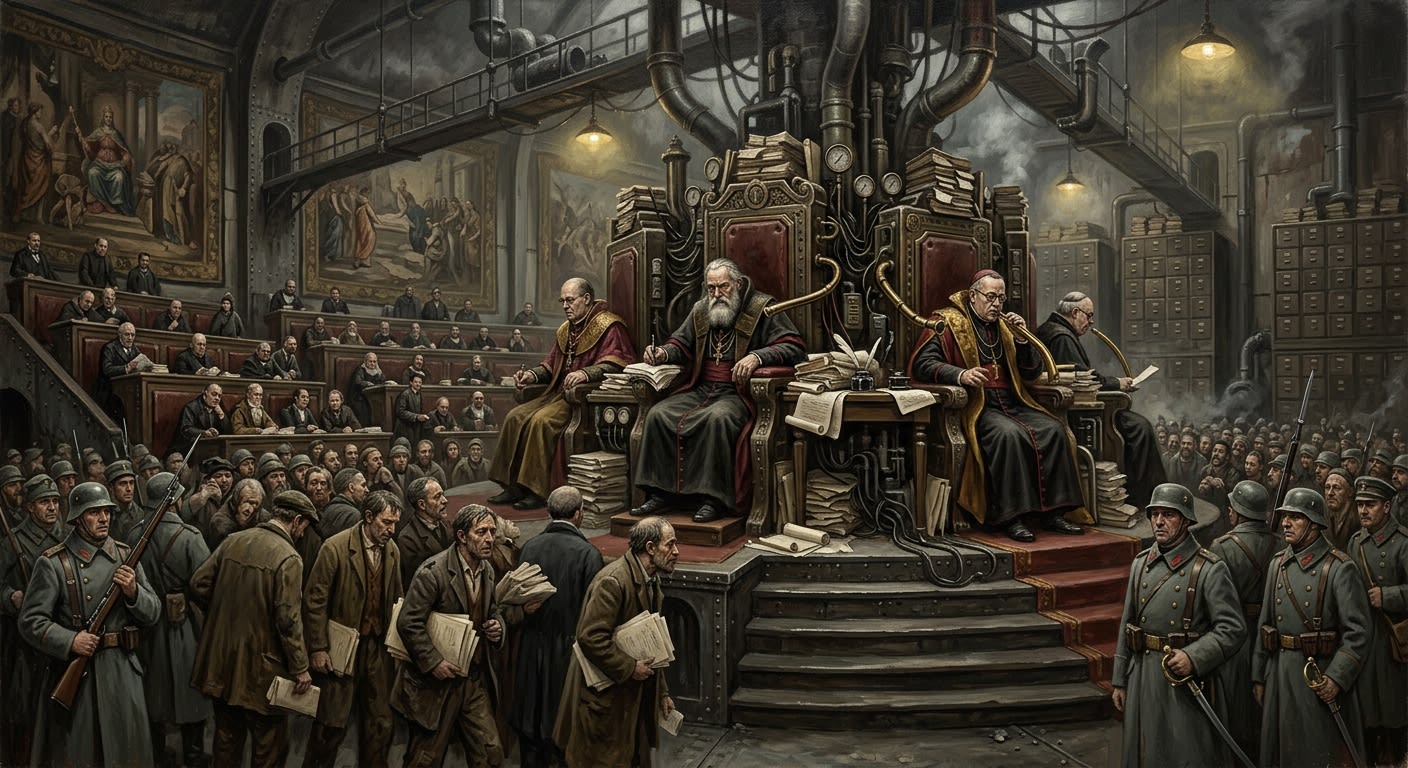
Assembly of Thrones
A chamber where pride is seated before it becomes militia
The Assembly of Thrones lets Bishops-Praetorial thunder safely: grievance seated, fury docketed, pride taxed, and every rebellion delayed by procedure.
Codex Ref. XIII.1.07-093

Audit-Cantor
The officer who learned to distrust the whiteness around approved words
The Bureau of Silence keeps forty Audit-Cantors to open books, weigh margins, warm blank pages, and decide which libraries die quietly.
Codex Ref. VIII.3.02-002

Bishops-Praetorial
Mitres welded to prefectures, and souls counted twice
The Bishops-Praetorial keep souls, quotas, provinces, and grudges: mitred governors whose pastoral care arrives with tithe tables attached.
Codex Ref. VIII.3.04-093
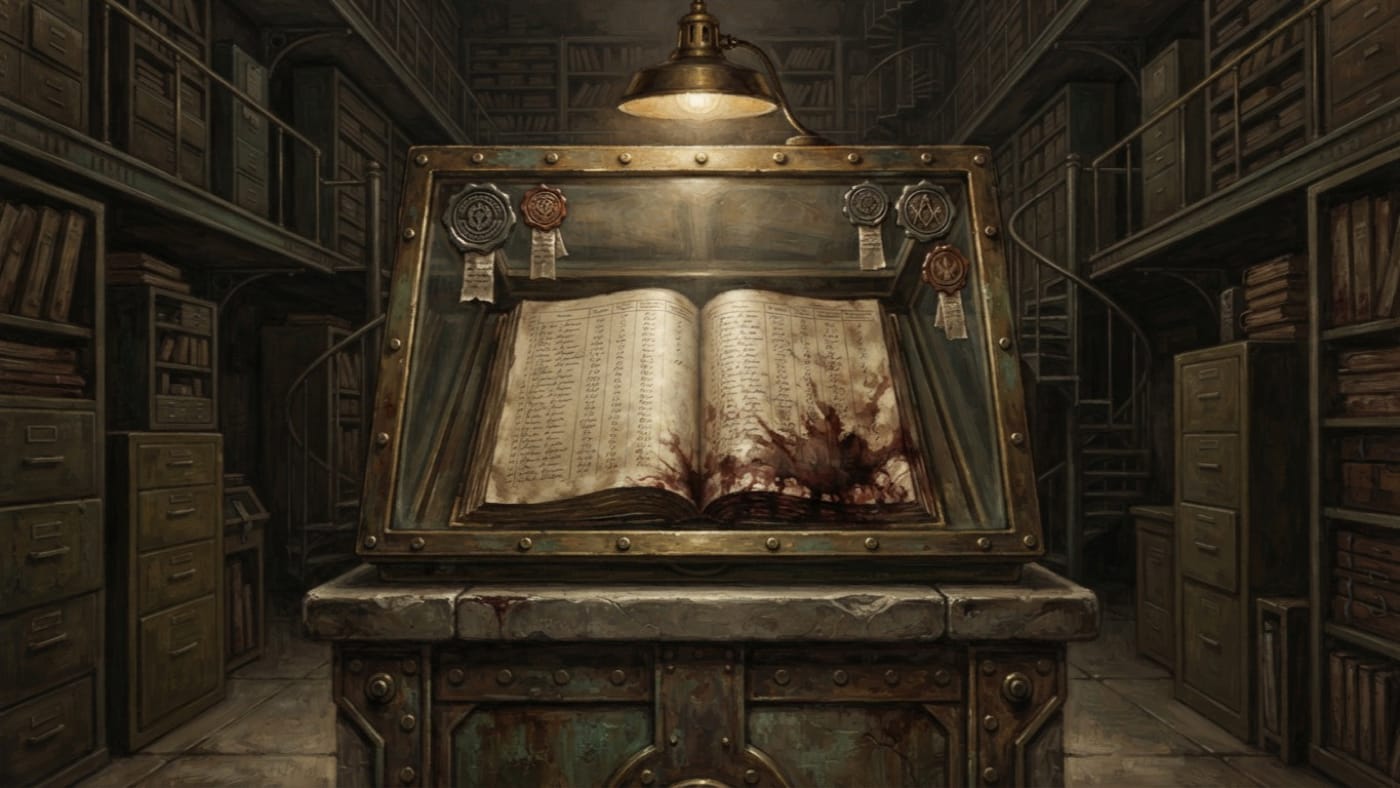
Black Ledger of Ghent
One hundred thirty-seven dead, four columns, and a stain called water
Seized in A.S. 159, Ghent's blood-stiffened weigh-station ledger records 137 executions and the arithmetic that became a criminal banner. The Church keeps it under glass and calls the stain water.
Codex Ref. XIII.1.17-002
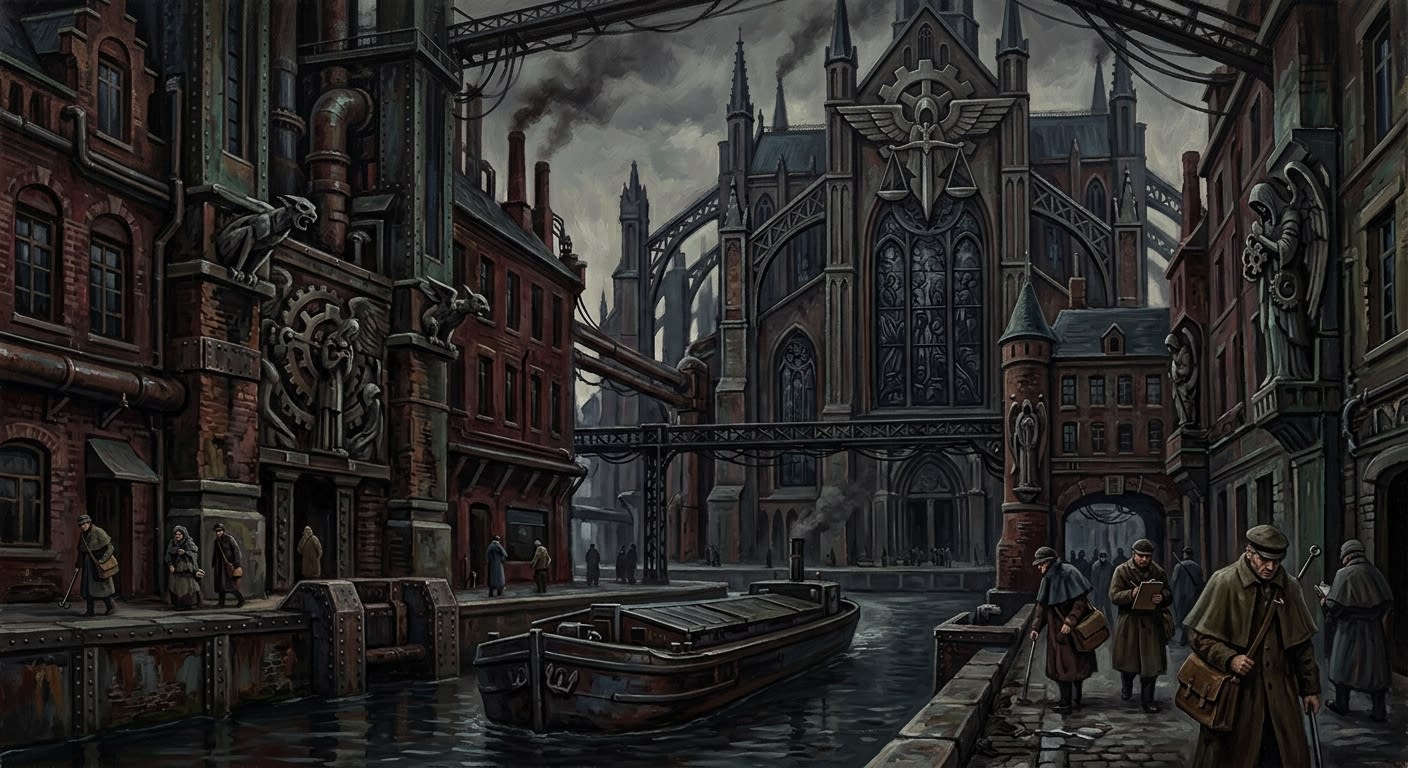
Bruges
Permit prosperity; audit beauty
Bruges is the Synod-held Lowlands city whose canals, colours, grotesques, relic glass, and impossible Tithes seal make beauty a recurring audit problem.
Codex Ref. II.1.04-058
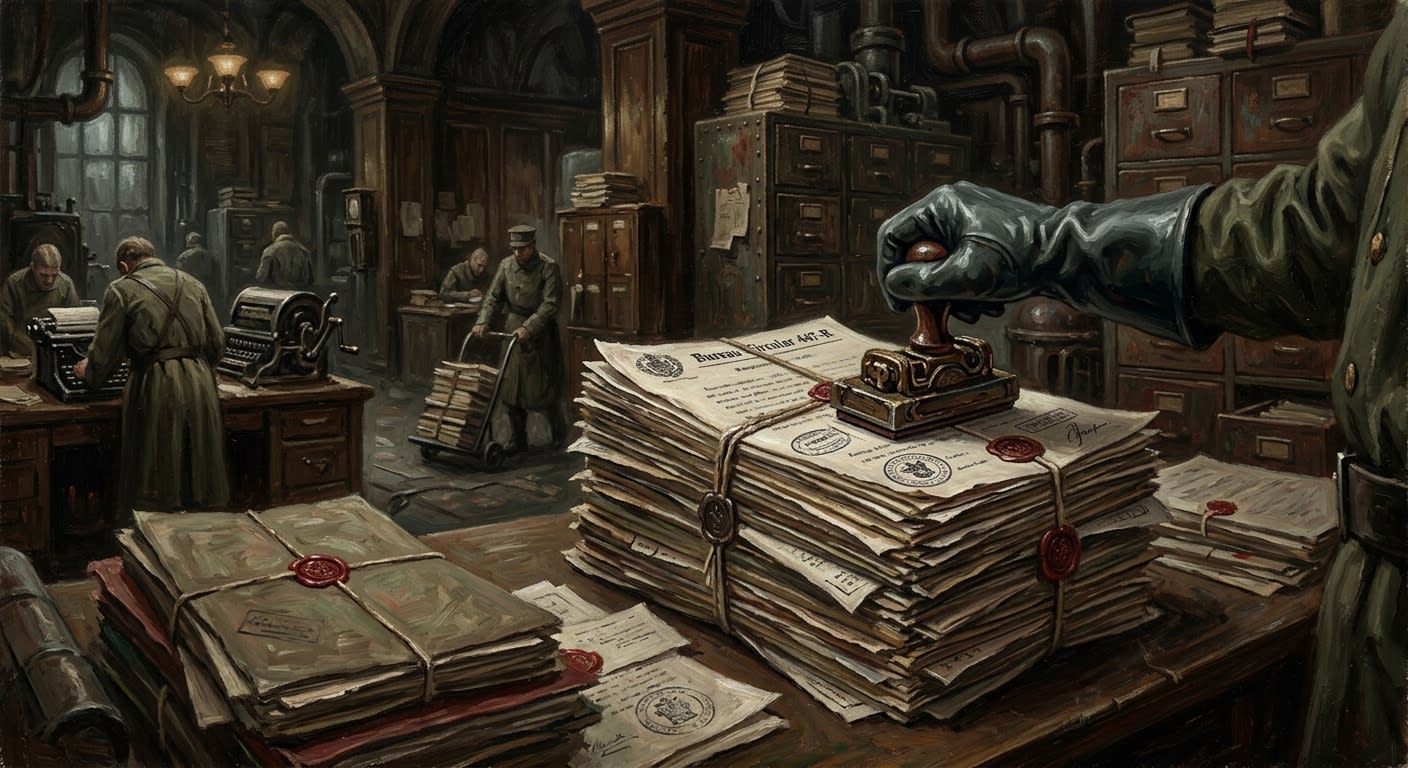
Bureau Circular 447-R
Four hundred and forty-seven words, none of them innocent
Bureau Circular 447-R denies the Codices Obscurae in exactly 447 words, each counted, sealed, revised, denied, and improved by fear.
Codex Ref. XIII.1.06-002
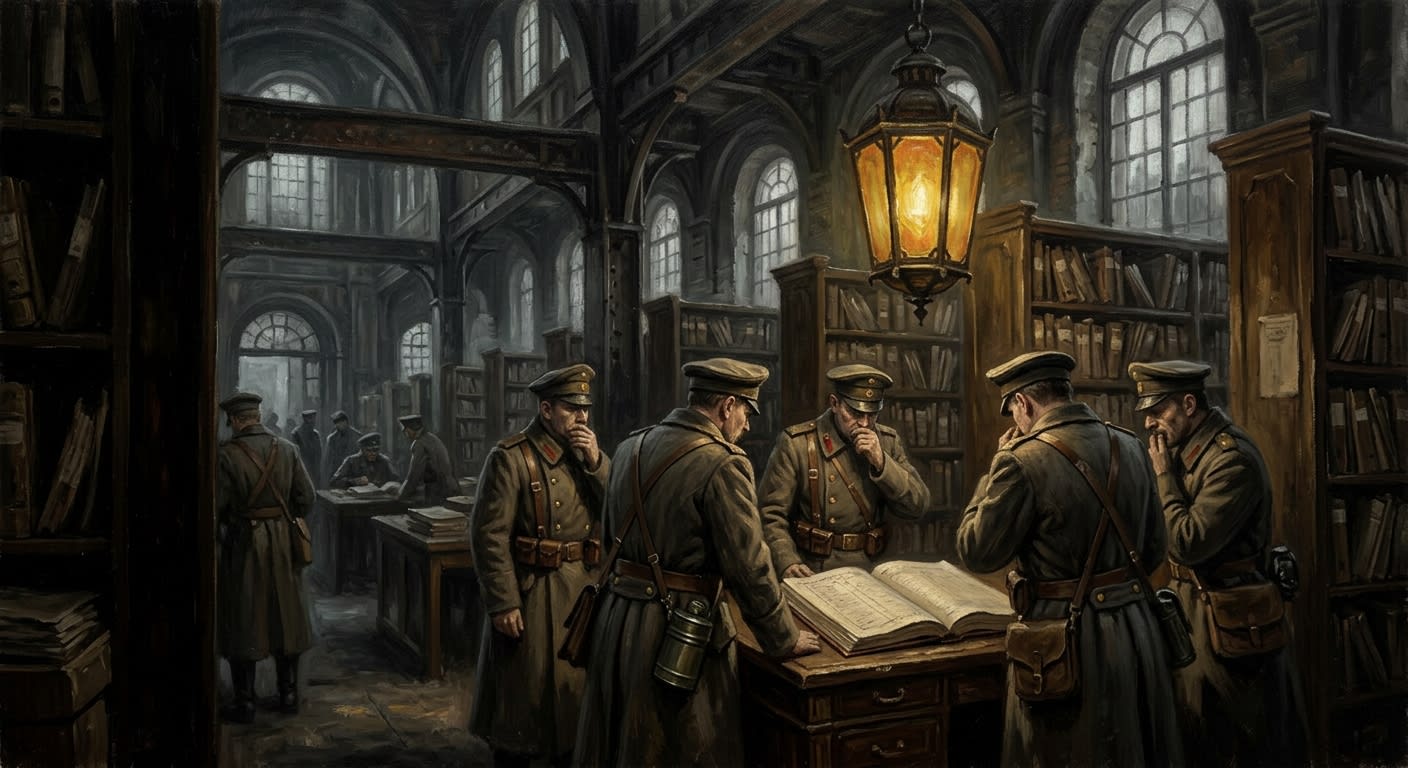
Classification Amber
The honeyed prison where Purity keeps suspicion alive
Classification Amber is Purity's suspended warrant: suspicion preserved in colour, fear extended by procedure, and mercy sharpened into watchfulness.
Codex Ref. XIII.1.06-001
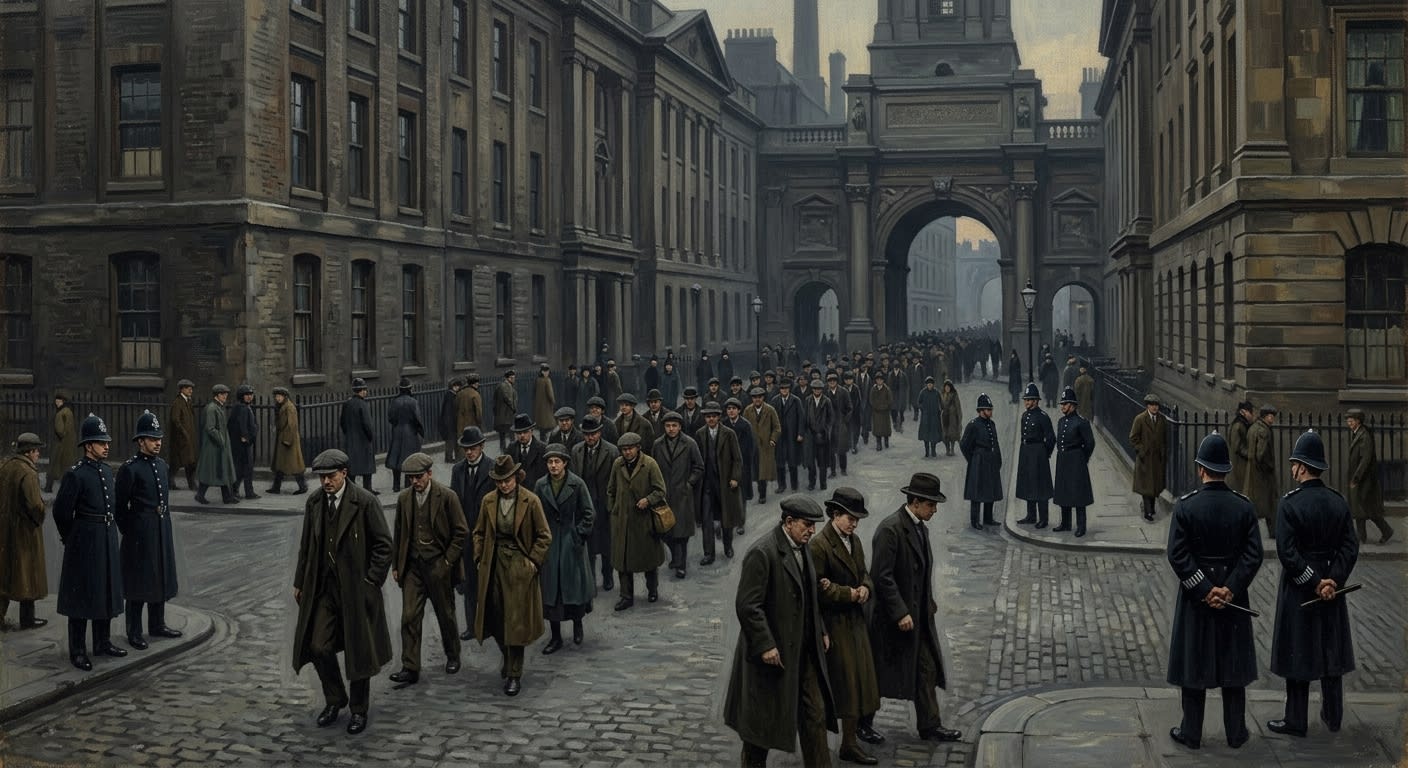
Fast of Silence
The tongue kneels before the knife is invited
The Fast of Silence is the Bureau of Festivals' cleanest cruelty: a district gagged from dawn to dusk until obedience sounds like piety.
Codex Ref. XIII.1.89-153
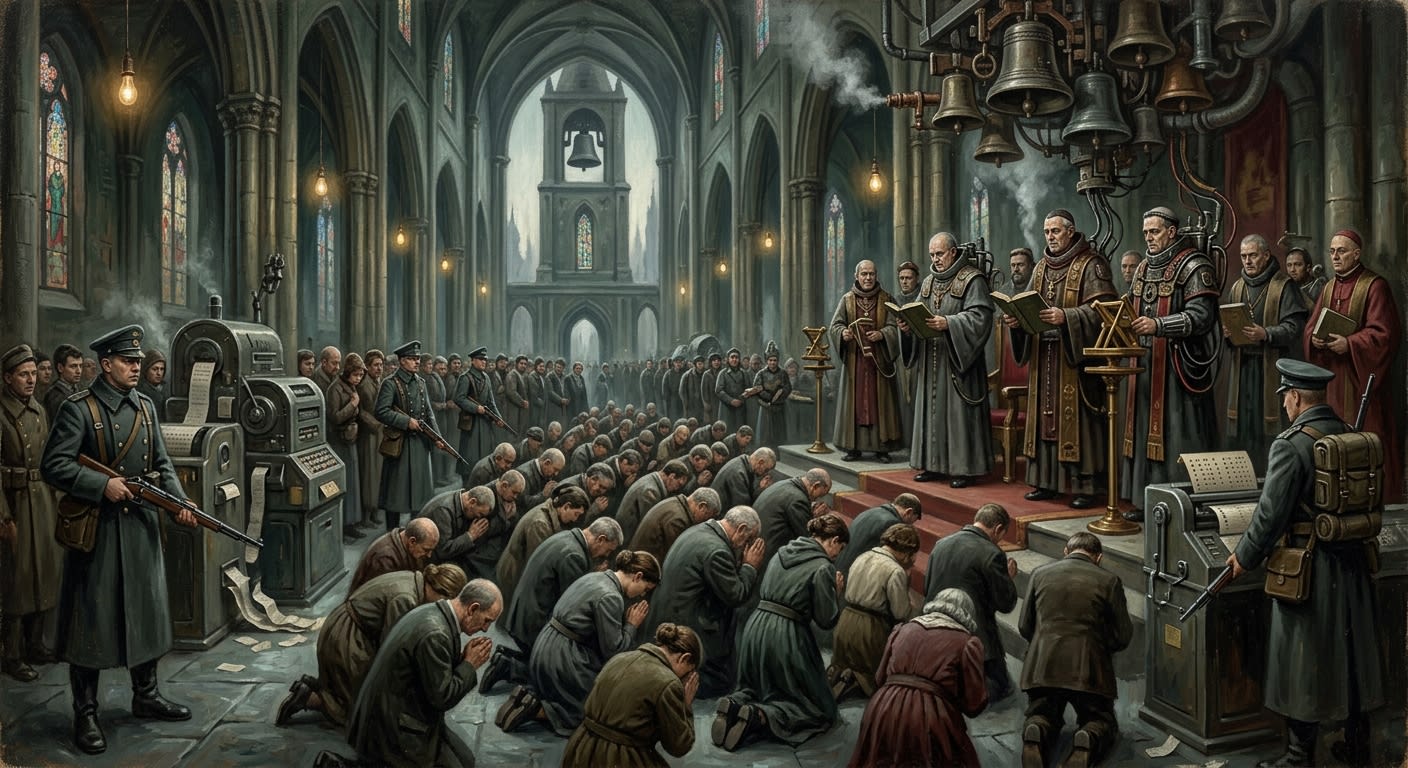
Feast of Doctrinal Submission
The holiday that teaches the spine to kneel before the mouth calls it faith
The Feast of Doctrinal Submission is the Synod's mandatory kneeling holiday: census, pageant, ration queue, loyalty assay, and permitted joy under bells.
Codex Ref. XIII.1.89-072
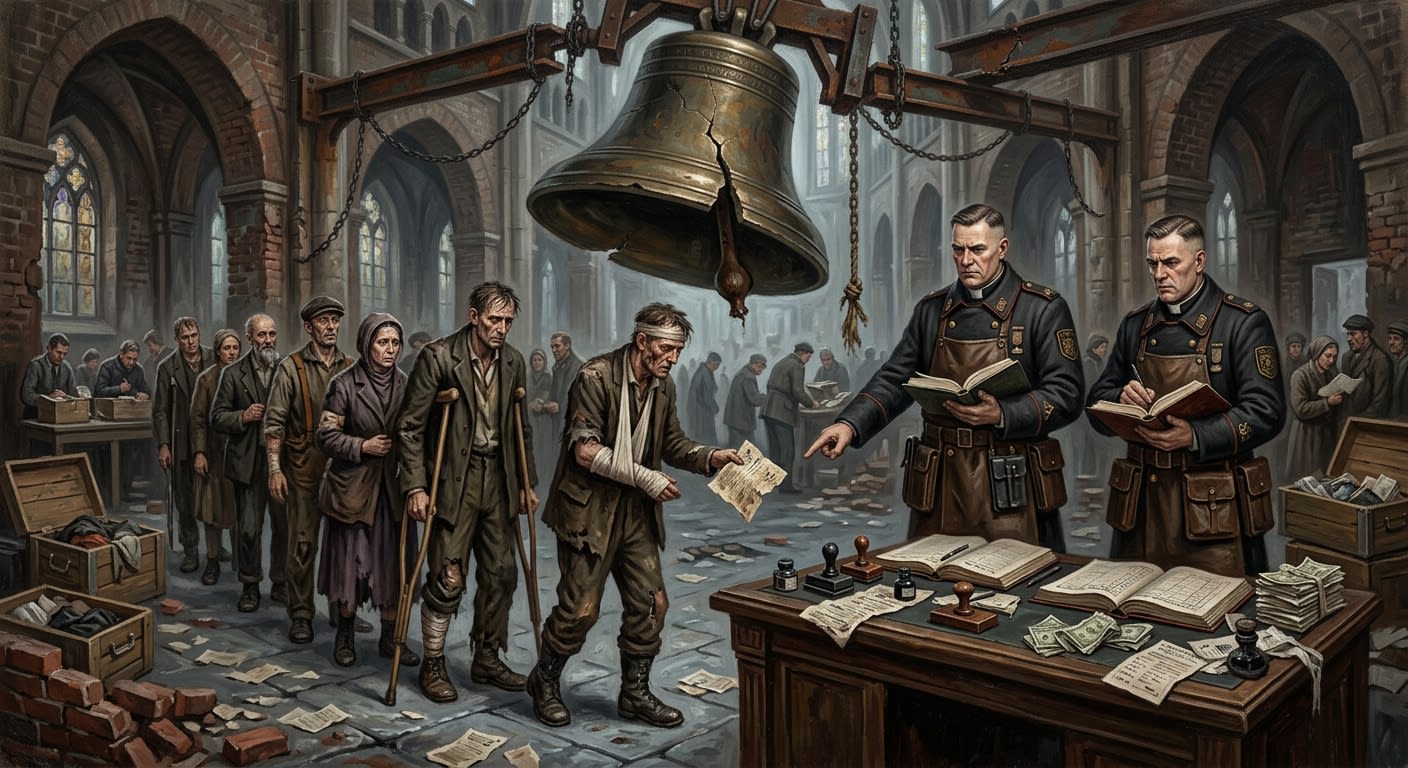
Feast of the Cracked Bell
The damaged bell still tolls, therefore the damaged citizen still owes
The Feast of the Cracked Bell teaches the Synod's favourite mercy: broken things may still serve, so damaged citizens may still be counted, tolled, and taxed.
Codex Ref. XIII.1.89-201
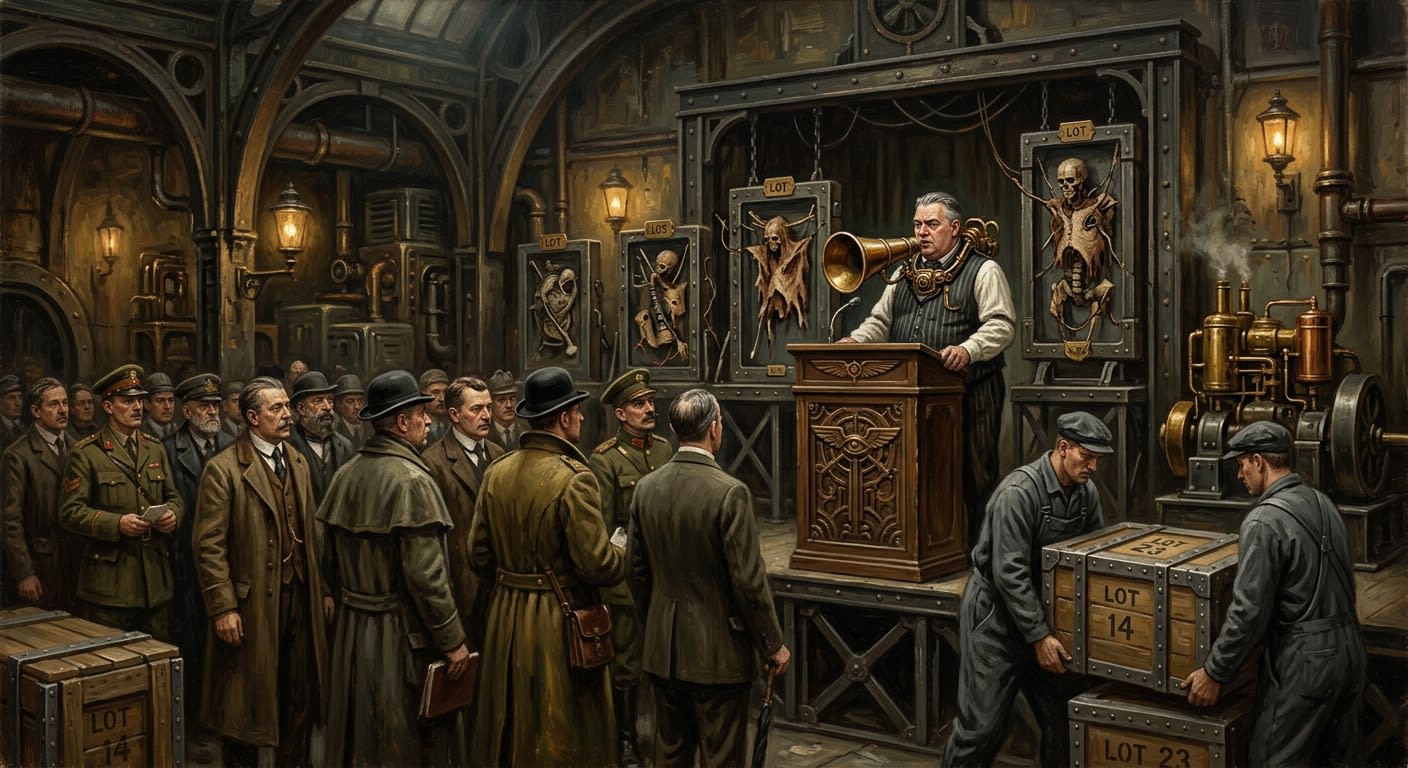
First Relic Auctions of Amsterdam
When the hammer learned to price a saint without blushing
Amsterdam's first relic auction season made sacrilege respectable by catalogue, turning stolen bones into lots and provenance wounds into profit.
Codex Ref. VII.8.10-007
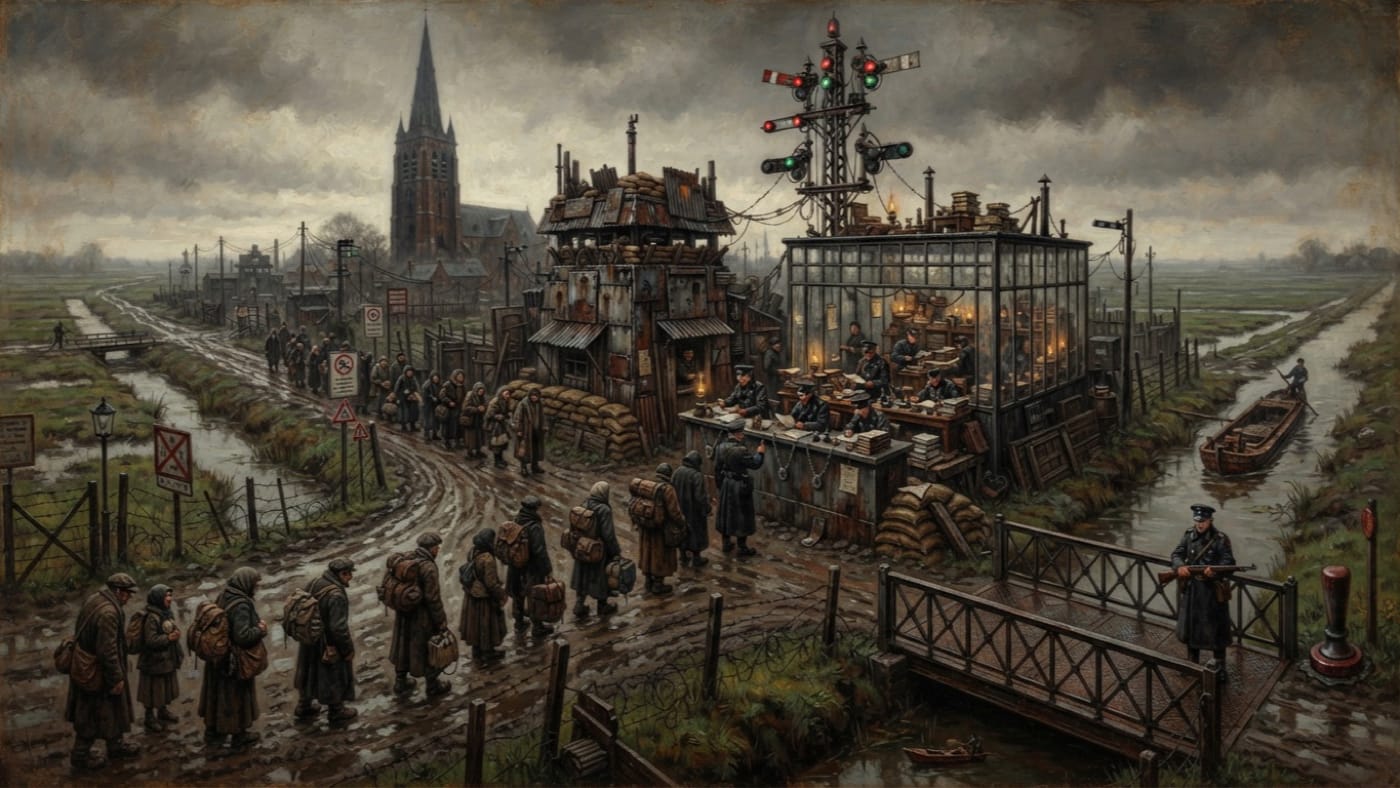
Flanders
Loyal. Damp. Licensed.
Flanders supplies pilgrims from the Synod's damp western parishes. The Brotherhood of the Blessed Foot once charged at the crossroads; the Bureau of Pilgrimage now publishes the fees and charges again for the walk home.
Codex Ref. II.1.07-201
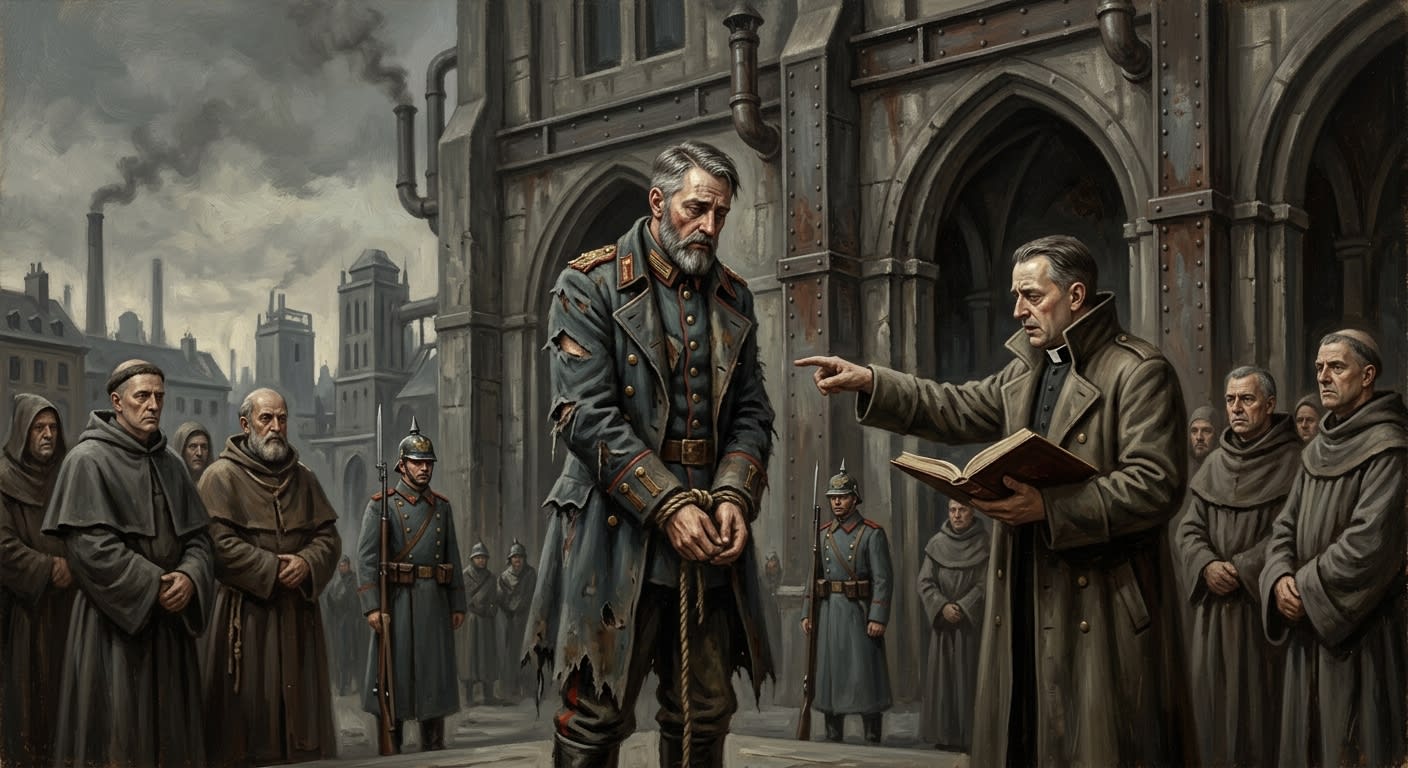
Guillaume of Aachen
The man who opened a gate and was closed by the Ledger
Lord-Protector Guillaume surrendered Aachen in A.S. 25, severed the Rhine approaches, and became the Synod's cleanest lesson in treason, nullity, and administrative damnation.
Codex Ref. III.2.01-123
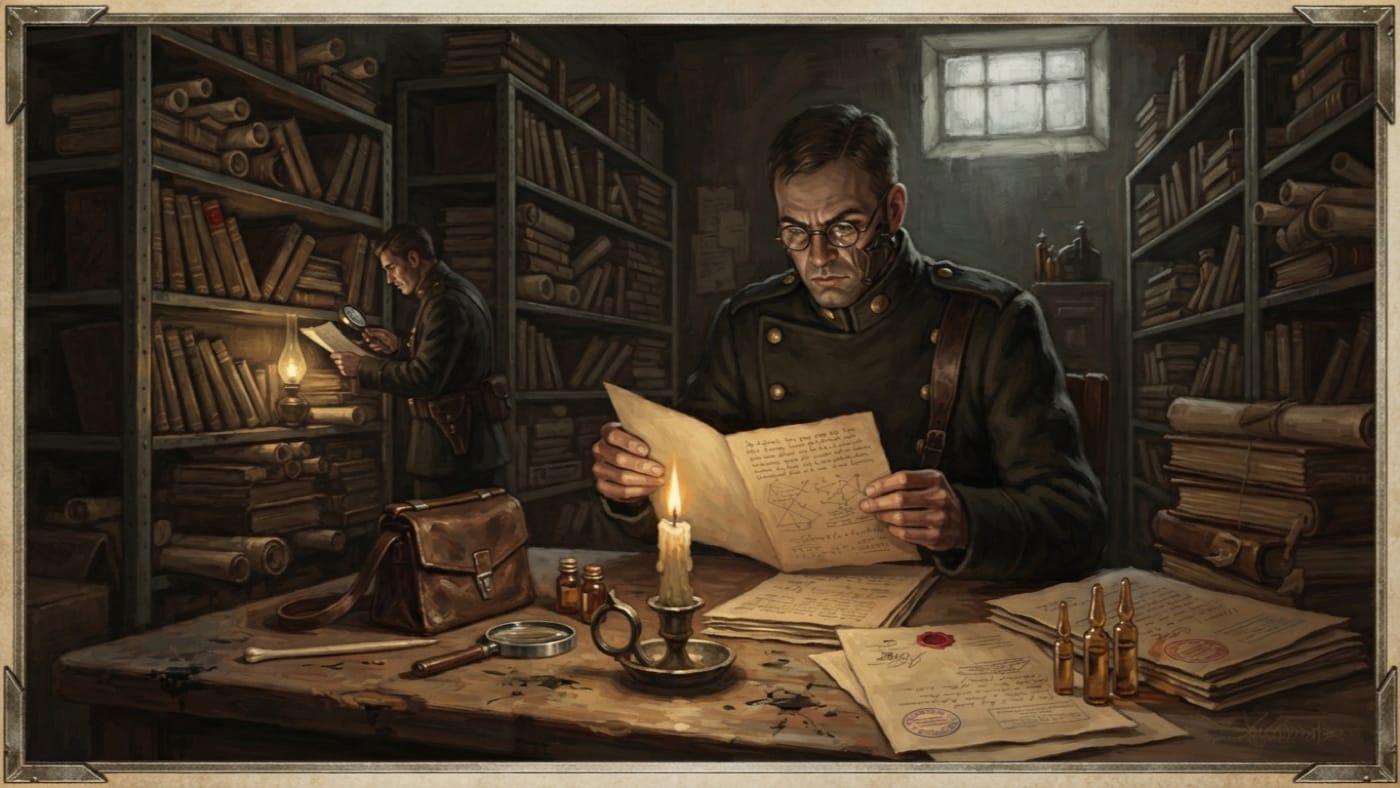
Lemon-Ink
A forbidden sentence waits inside a permitted book for the wrong candle
Lemon-ink hides forbidden figures inside approved books until a candle browns them into evidence. The Ashen Circle writes; the Interdiction Squads warm the page.
Codex Ref. XIII.1.56-002
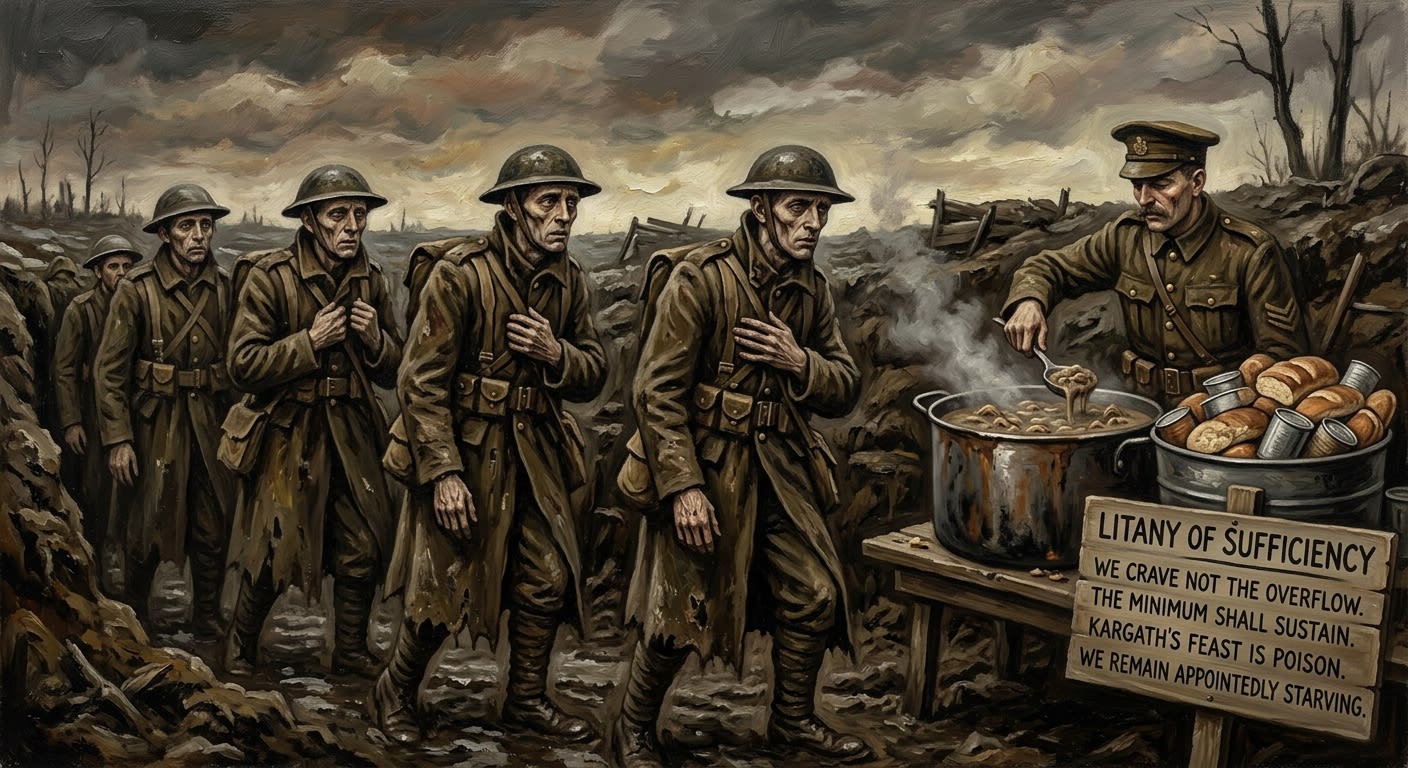
Litany of Sufficiency
Enough is given, and the Bureau has weaponised the crust
The approved field-prayer against Kargath's plenty: four ugly lines by which hungry soldiers step away from miracle food and remain merely starving.
Codex Ref. XIII.1.90-163
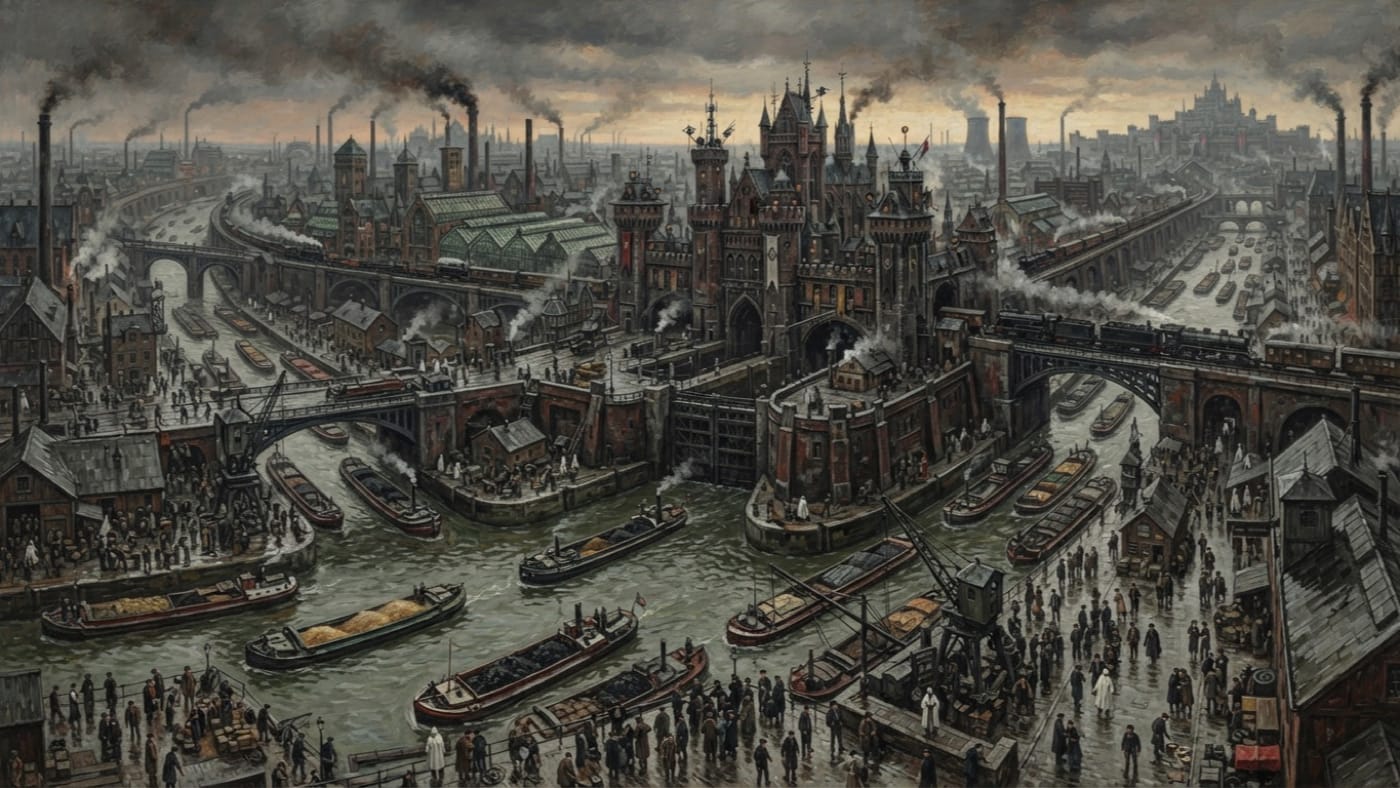
Lowlands
The country promised for a gate
The Synod's Lowlands move grain, cloth and credit through Bruges, Ghent and Antwerp. Guillaume was promised dominion for Aachen's gate; delivery remains uncertified.
Codex Ref. II.1.08-001
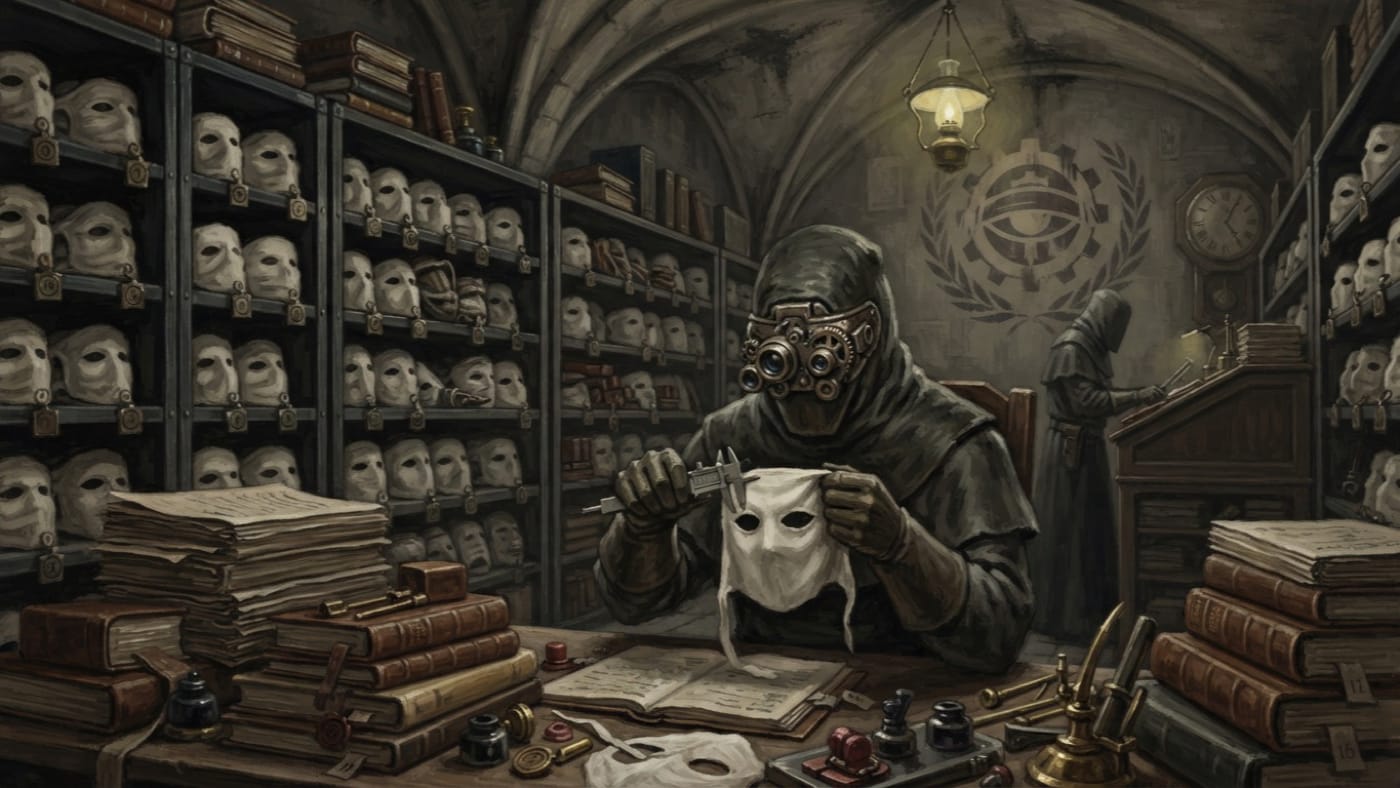
Mask License
The face may vanish. The number must remain.
The Mask License permits the Synod's faithful to conceal their faces on approved occasions, for approved durations, through eye-holes of approved width. Even anonymity must be registered.
Codex Ref. XIII.1.19-002
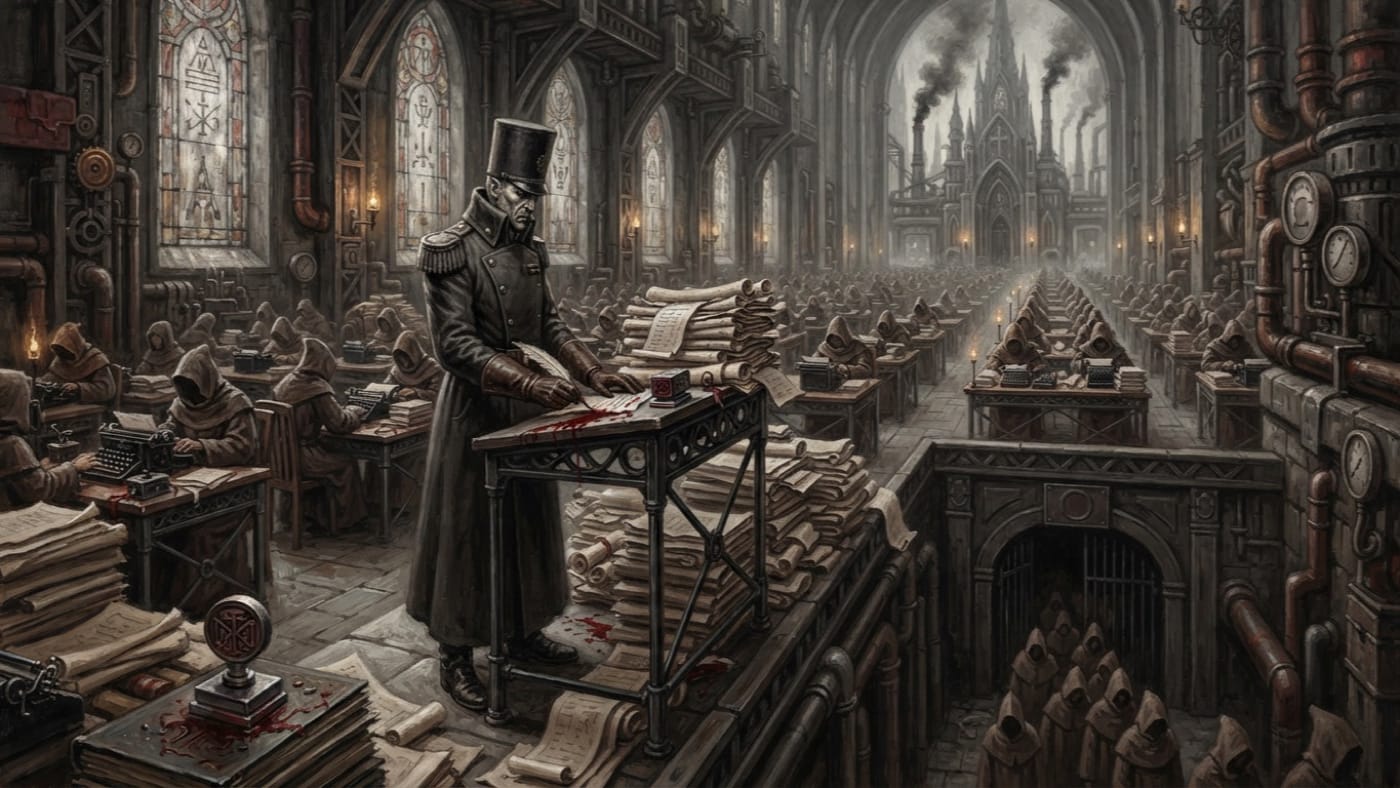
Ordinaries of Severity
The Lictor carries the knife; the Ordinary keeps the calendar
A.S. 201 survey of the Inquisition's middle tier. Ordinaries organize purges, penances and trials, often ruling a single diocese with absolute authority. The faithful learn the office through the names they fear.
Codex Ref. VIII.1.08-2029
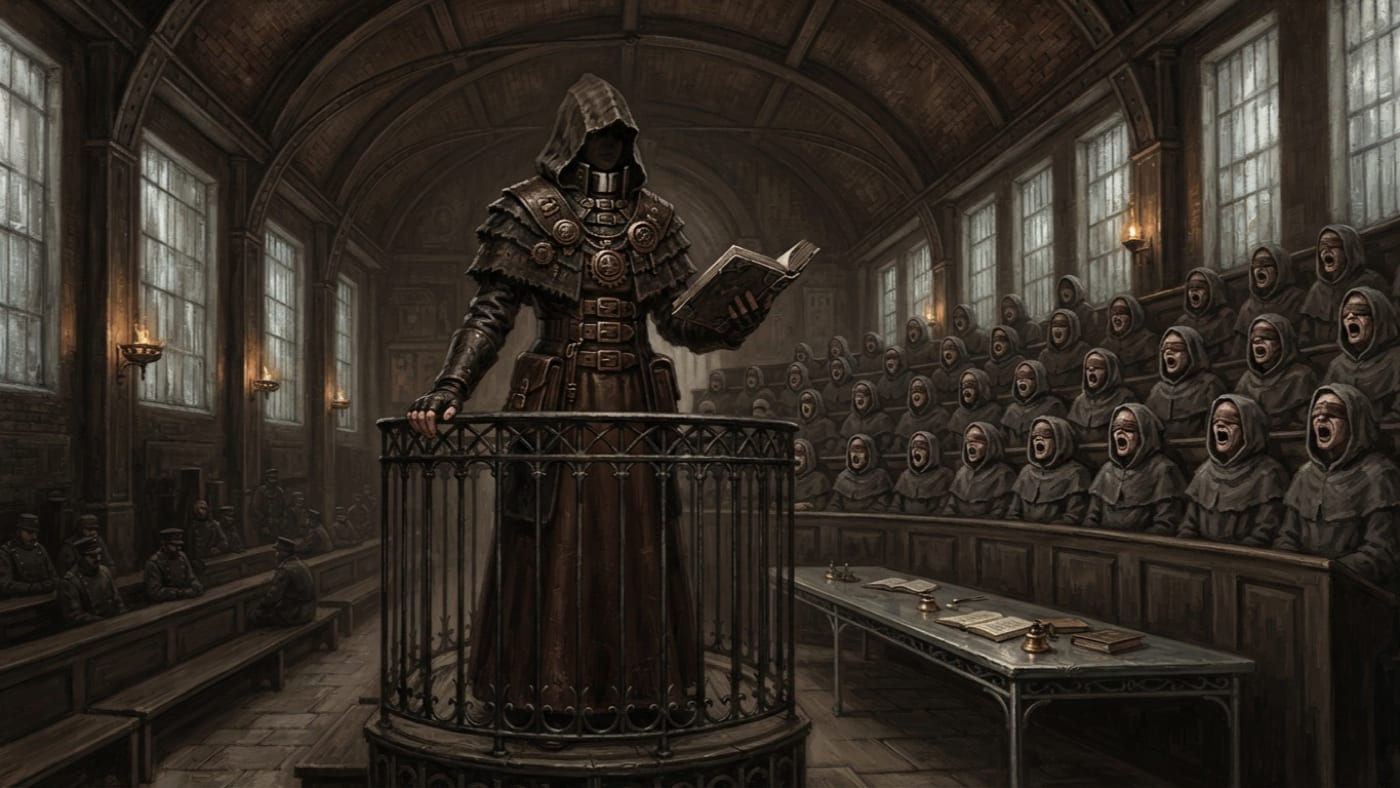
Ordinary Carmina
The verdict has a choir; the Ordinary keeps her silence
Ordinary Carmina of Ghent leaves verdicts to a blinded, tongueless witness choir. Her undated Wintering taught the Order of the Root how to cut families and revise the kinship that survived.
Codex Ref. III.2.01-2030
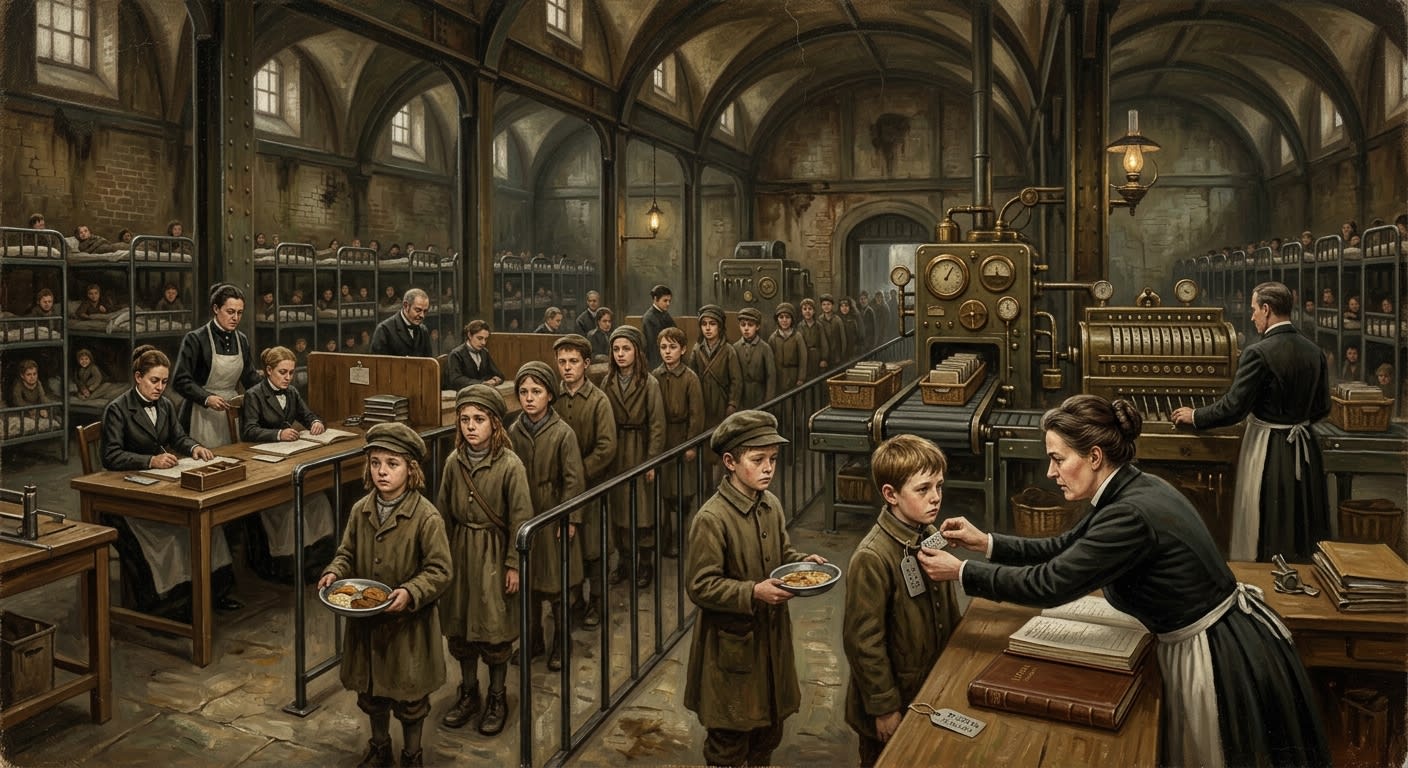
Orphanarii
Mercy with a cot, a tag-punch, and the legal courage to rename a child before breakfast
The Orphanarii are the Synod's state orphanage system: Mercy houses that wash, tag, rename, sort, feed, place, and sometimes erase children until grief becomes legible.
Codex Ref. VIII.2.12-134
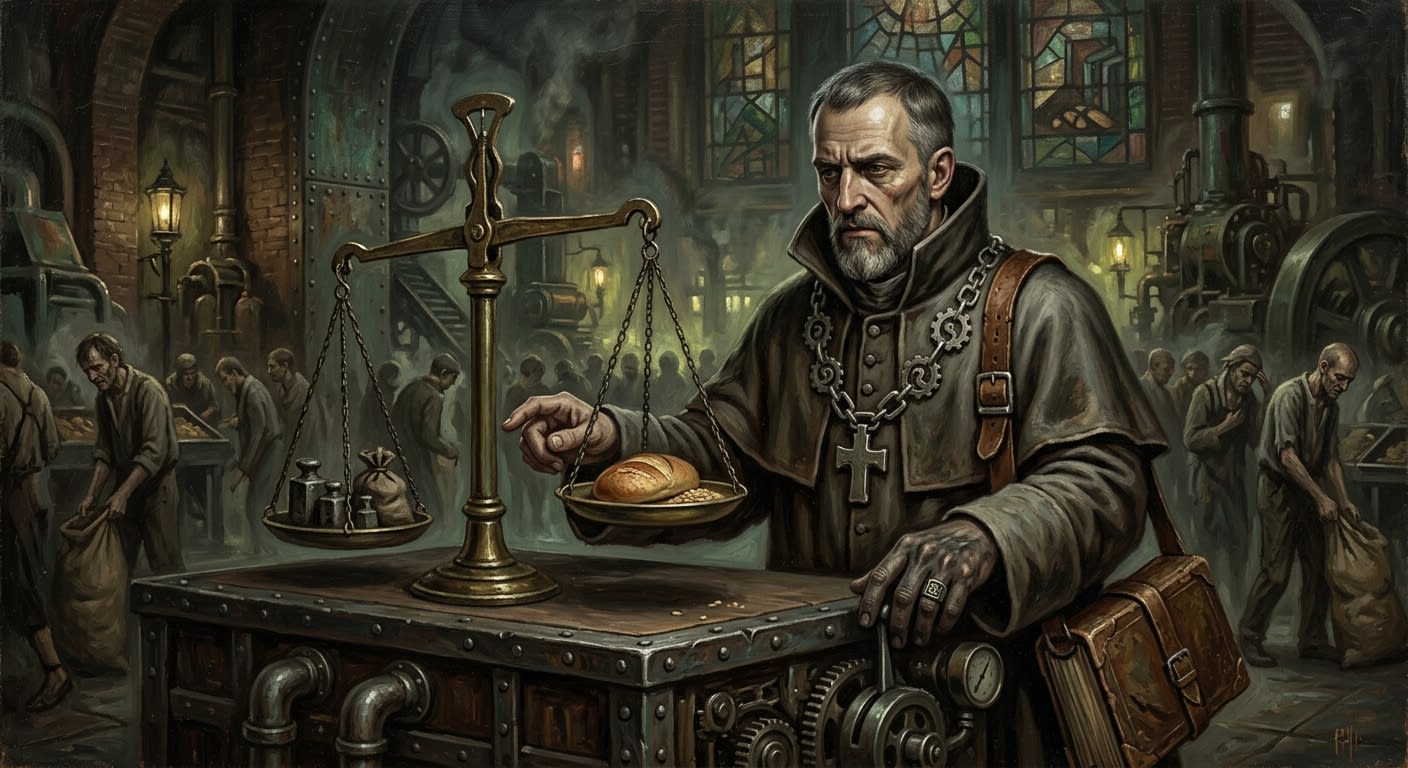
Saint Calibrus, the Level Hand
Measure is mercy, says the scale; hunger has filed a dissent
Patron of Commerce Clerks and tariff-chapel weighers, Saint Calibrus sanctifies the level scale, the lawful shortage, and the terrible arithmetic of hunger.
Codex Ref. III.2.01-101
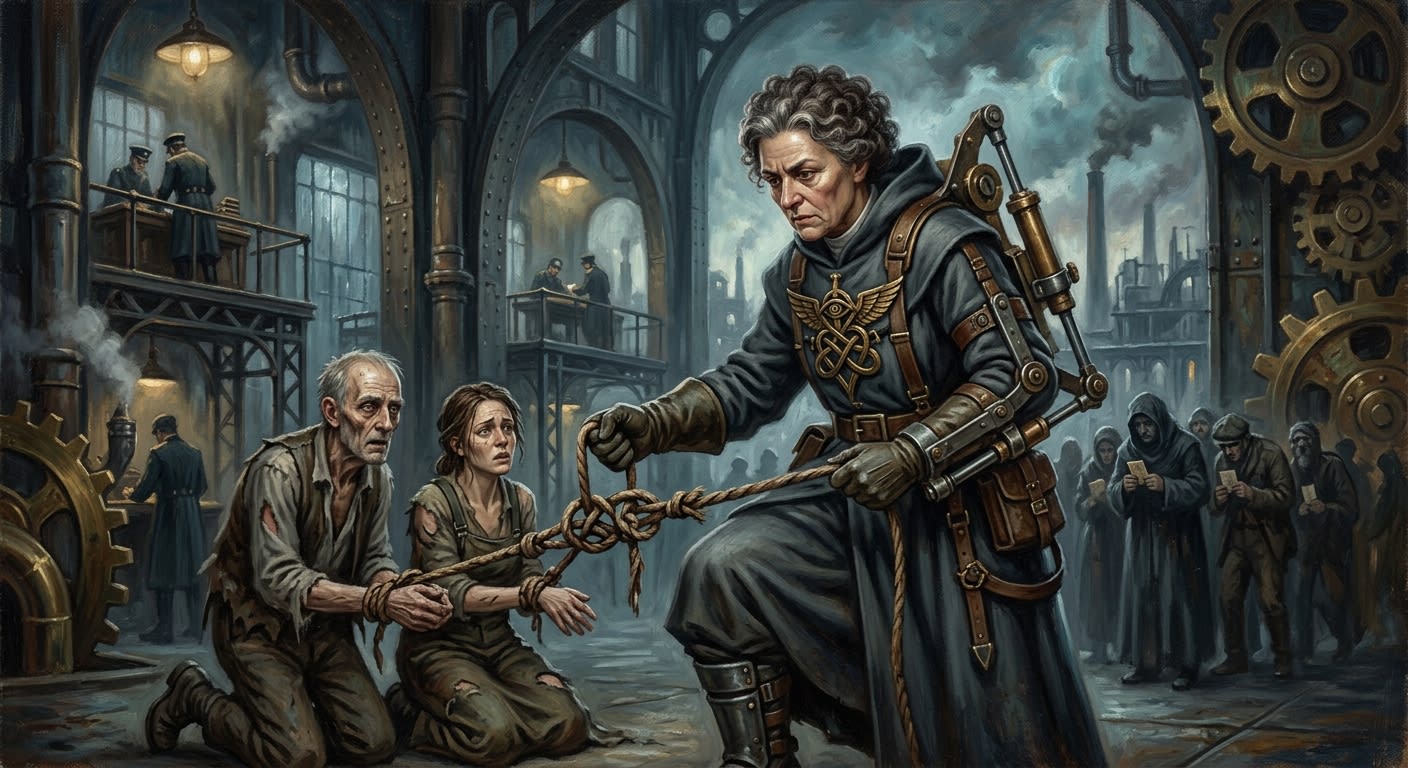
Saint Liora Knot-Hand
Thirty knots, thirty doors, and the miracle of obligation made visible
Patron of the Bureau of Oaths, Saint Liora Knot-Hand bound thirty hungry households into survival with witnessed vows and a strip of cloth. Mercy counted; the knot remembered.
Codex Ref. III.2.01-012
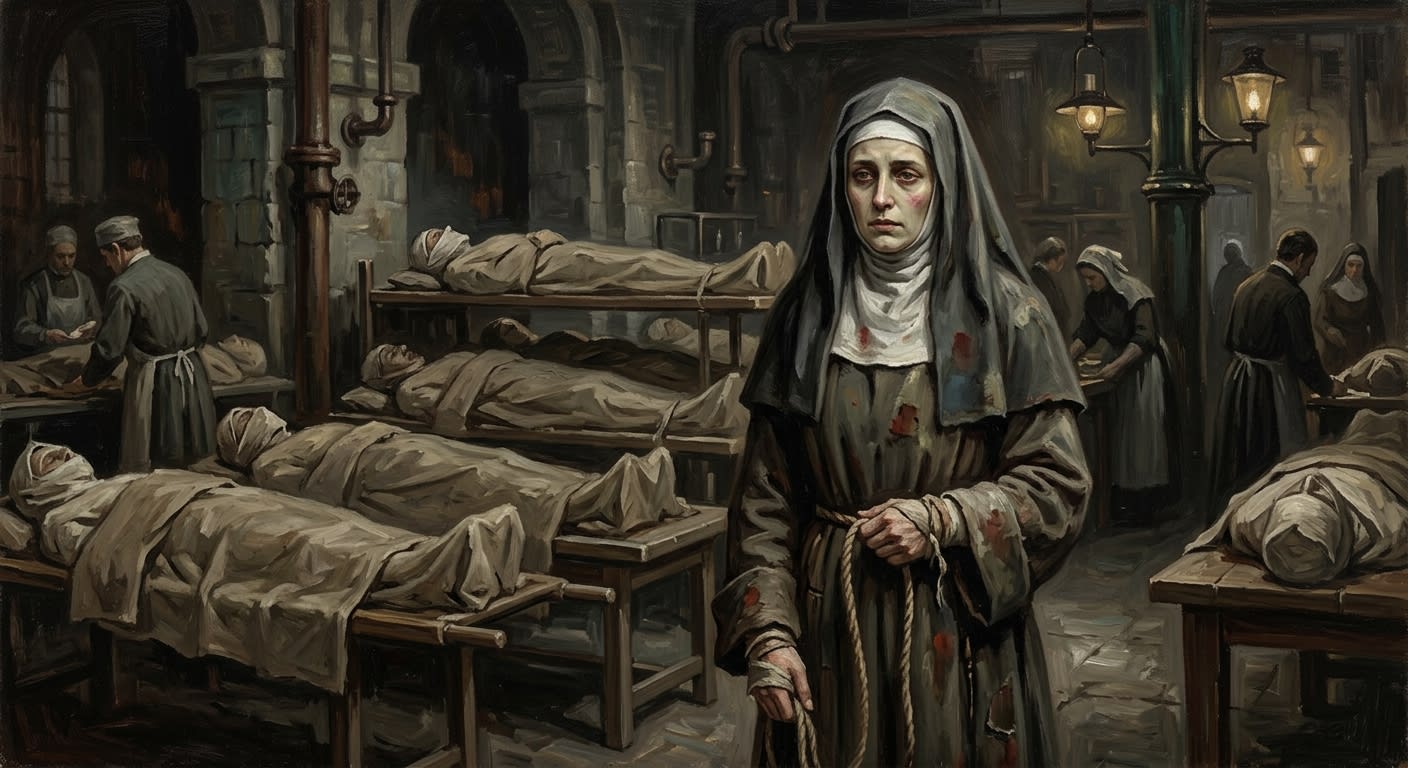
Saint Sabina of Ghent
The seamstress who gave Mercy its cloth and Doctrine its discomfort
Saint Sabina of Ghent bound eleven bodies after the Massacre at Saint-Malo, died of fever, and became Mercy's most useful rebuke.
Codex Ref. III.2.01-015
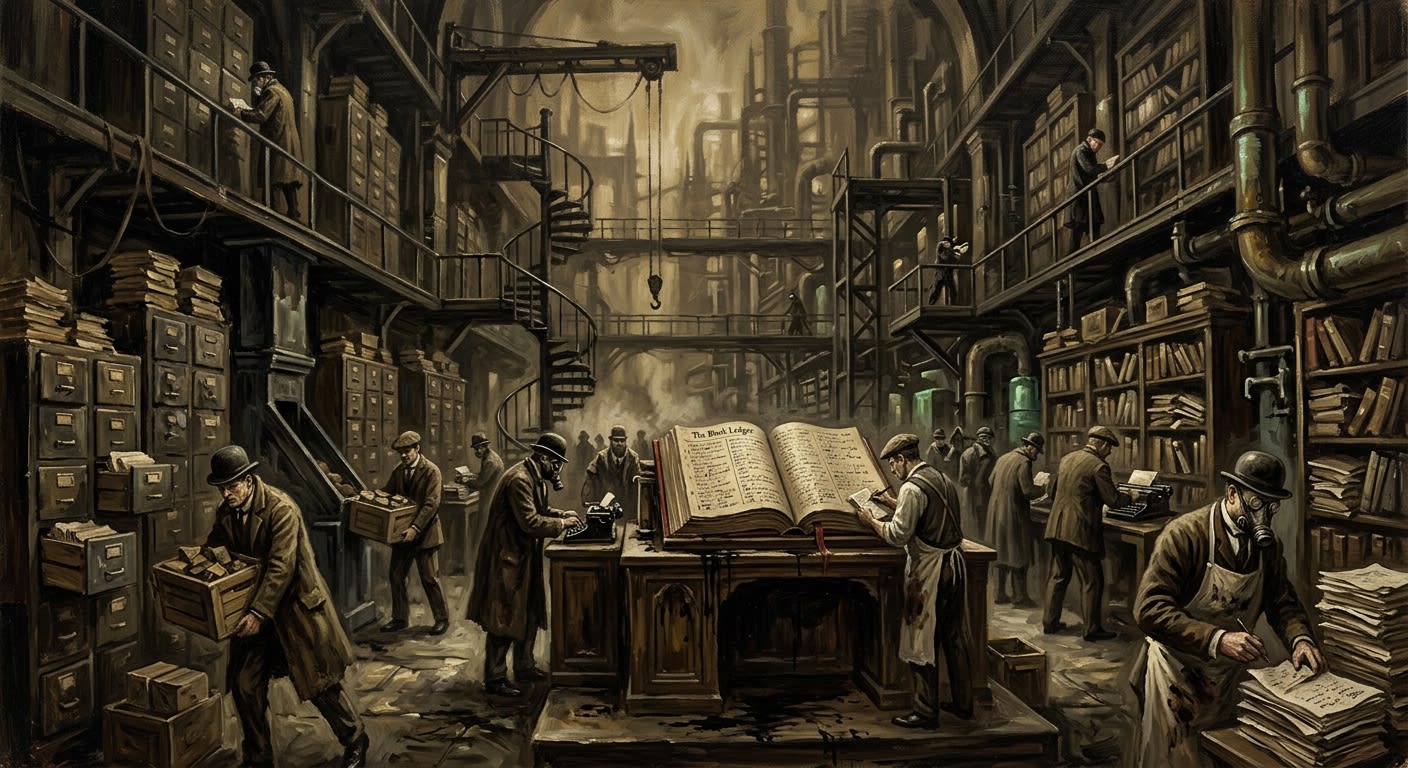
The Black Ledger
Hunger with a filing system and better memory than mercy
The Black Ledger is the Synod's gutter-mirror: a criminal heretical network that steals, feeds, records debt, and turns absence into jurisdiction.
Codex Ref. XI.1.04-001
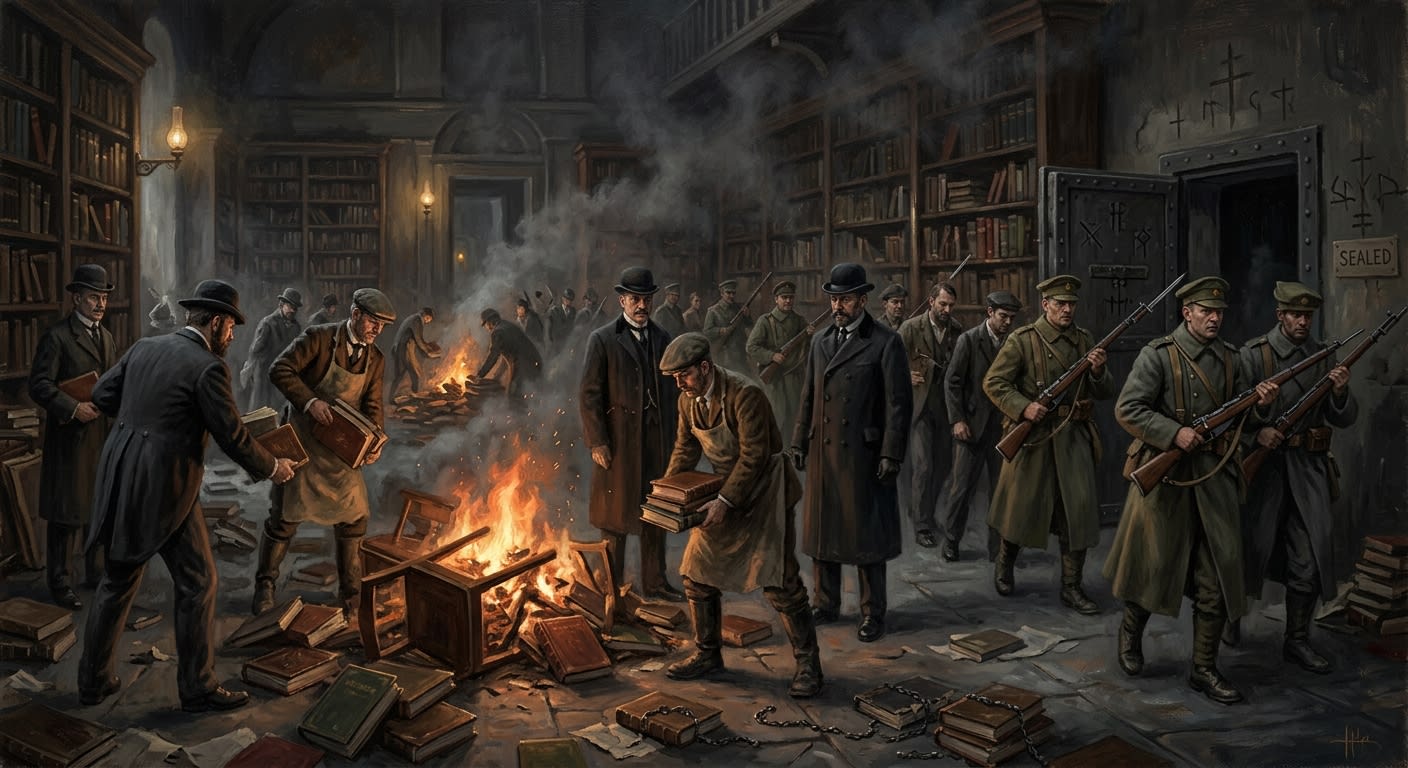
The Great Purge of Margins
Silence scraped the page clean and taught thought to hide in warmer vessels
The A.S. 56–58 Silence campaign against annotated books executed forty-seven scribes, sealed libraries, and accidentally taught the Ashen Circle how to survive without margins.
Codex Ref. VII.8.11-001

The Heartlands
The safe country, provided one defines safety as distance from teeth and proximity to stamps
The Heartlands are the Synod's safe interior only by infantry arithmetic: Zones 1–3 feed the Line with bread, steel, bodies, bells, paperwork, and bones.
Codex Ref. II.0.02-201
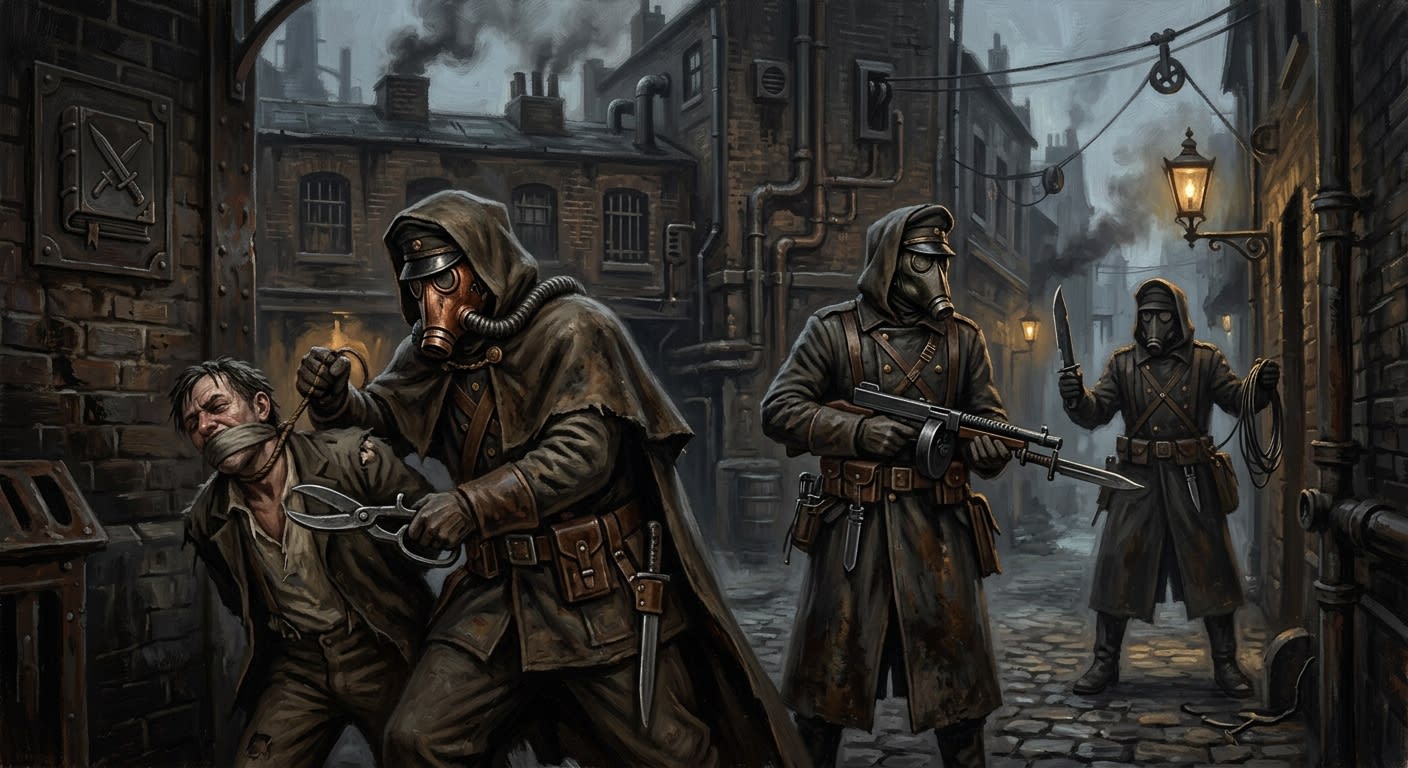
The Knives
Private sentence, no seal, no trial, no bell
The Knives are the Black Ledger's enforcement faction: Quiet Knives, alley-correctors, and cord-men who settle audible debts by disappearance.
Codex Ref. XI.1.04-004
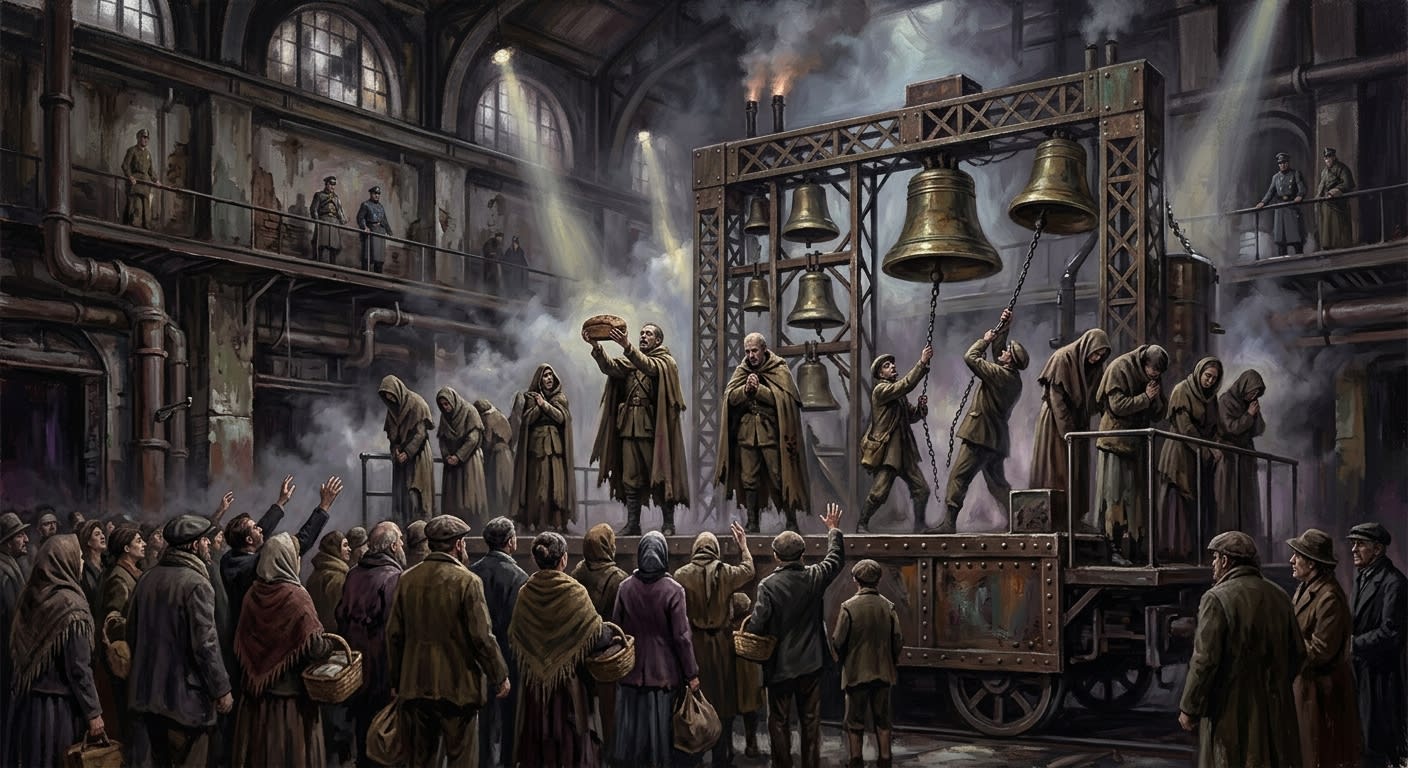
The Theatres
Bread, bells, and applause stolen from the altar
The Theatres are the Black Ledger faction that turns stolen bread into civic memory, staging Queue-Saint performances where hunger, bells, and witnesses become recruitment.
Codex Ref. XI.1.04-002
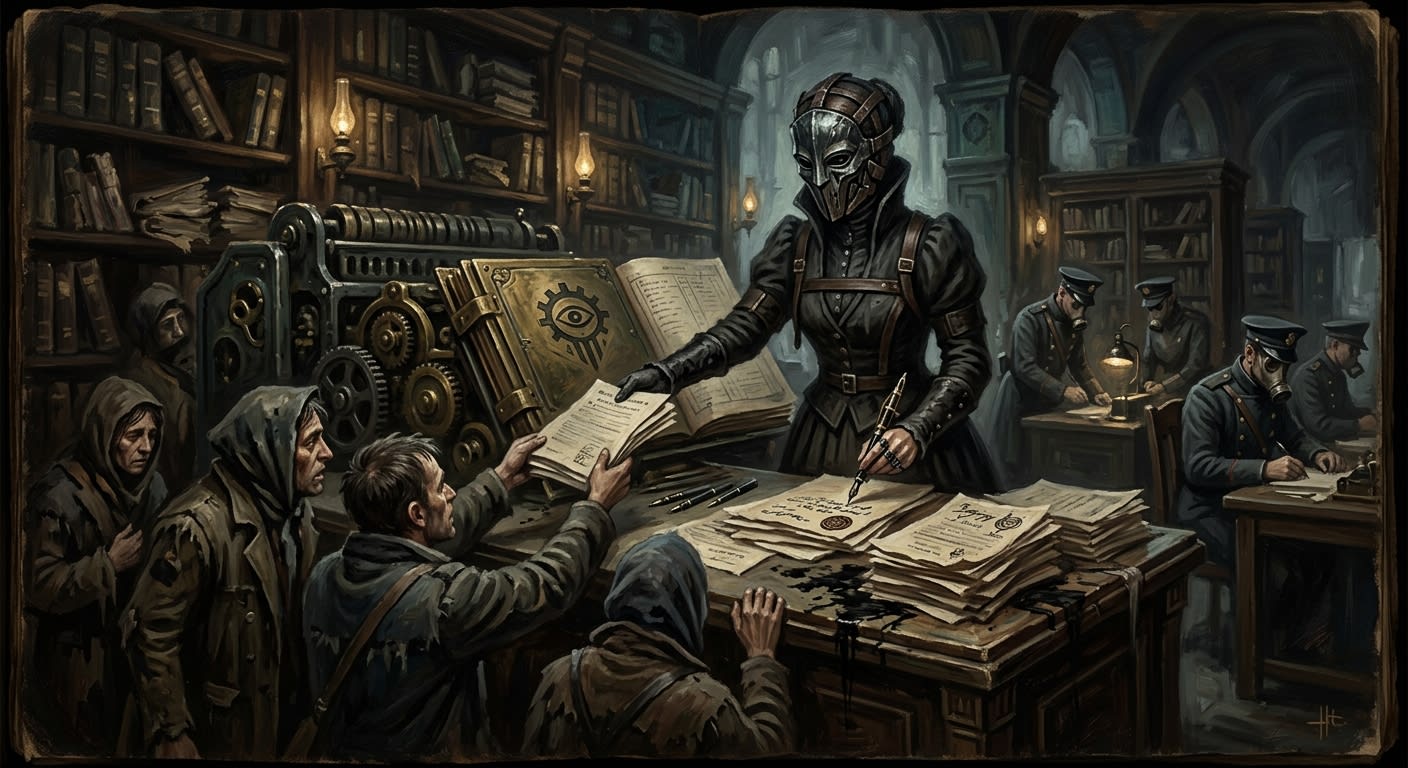
The Widow-Notary
The hand that taught charity to forge receipts
The Widow-Notary may be one woman, seven women, or a criminal mask; her forged assessments fed Strasbourg's poor and taught the Black Ledger to steal in the Bureau's own hand.
Codex Ref. III.2.01-062

Trial of Saint Aldebrand's Reliquary
The courtroom where arithmetic disgraced itself before a bone
Amsterdam's A.S. 11 mock trial of Saint Aldebrand's reliquary turned Rationalist arithmetic into theatre, until Vienna made the bone louder than the joke.
Codex Ref. VII.8.10-011
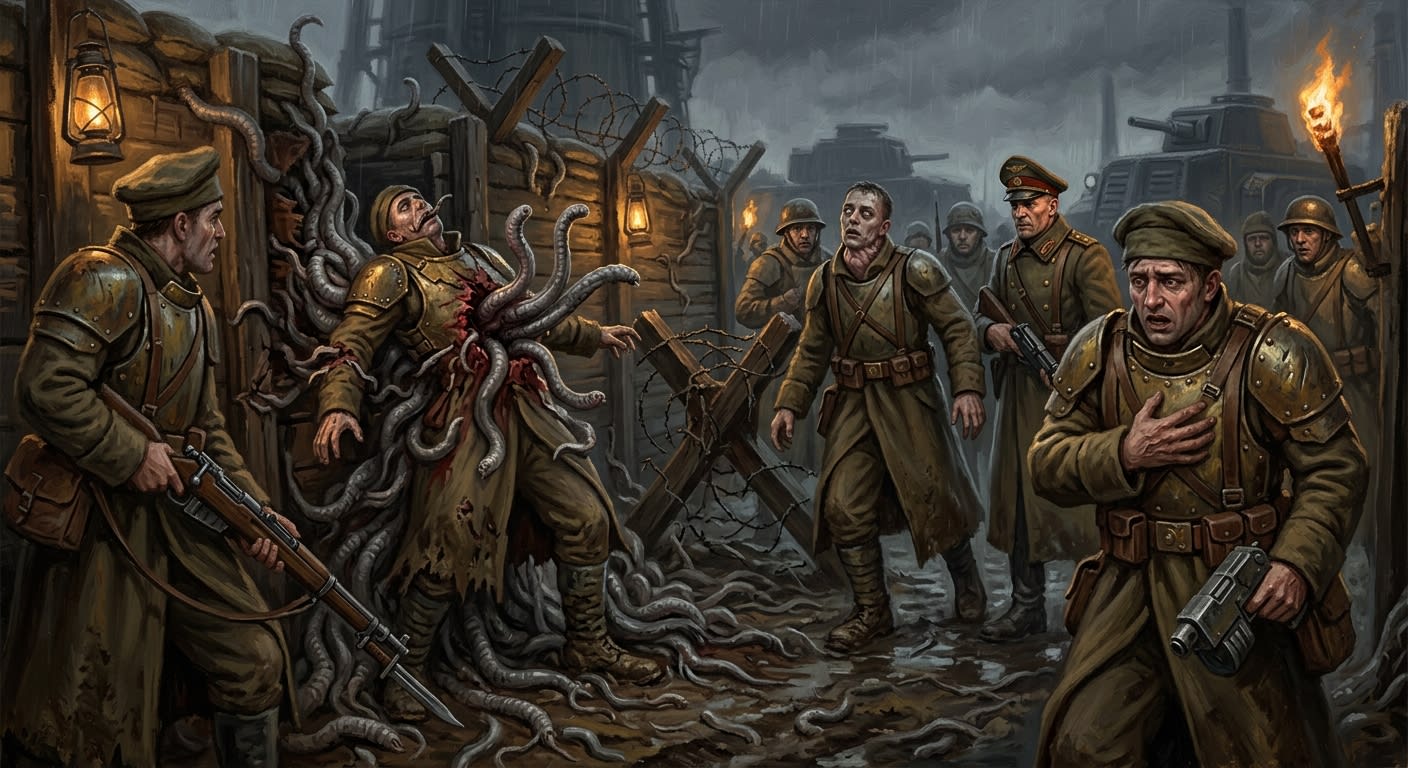
Wormhosts
The human face, retained just long enough to open the gate
Mortal auxiliaries seeded with living parasites, recognisable as human until rupture turns pity, checkpoint mercy, and defensive formation into a door.
Codex Ref. IV.1.07-009
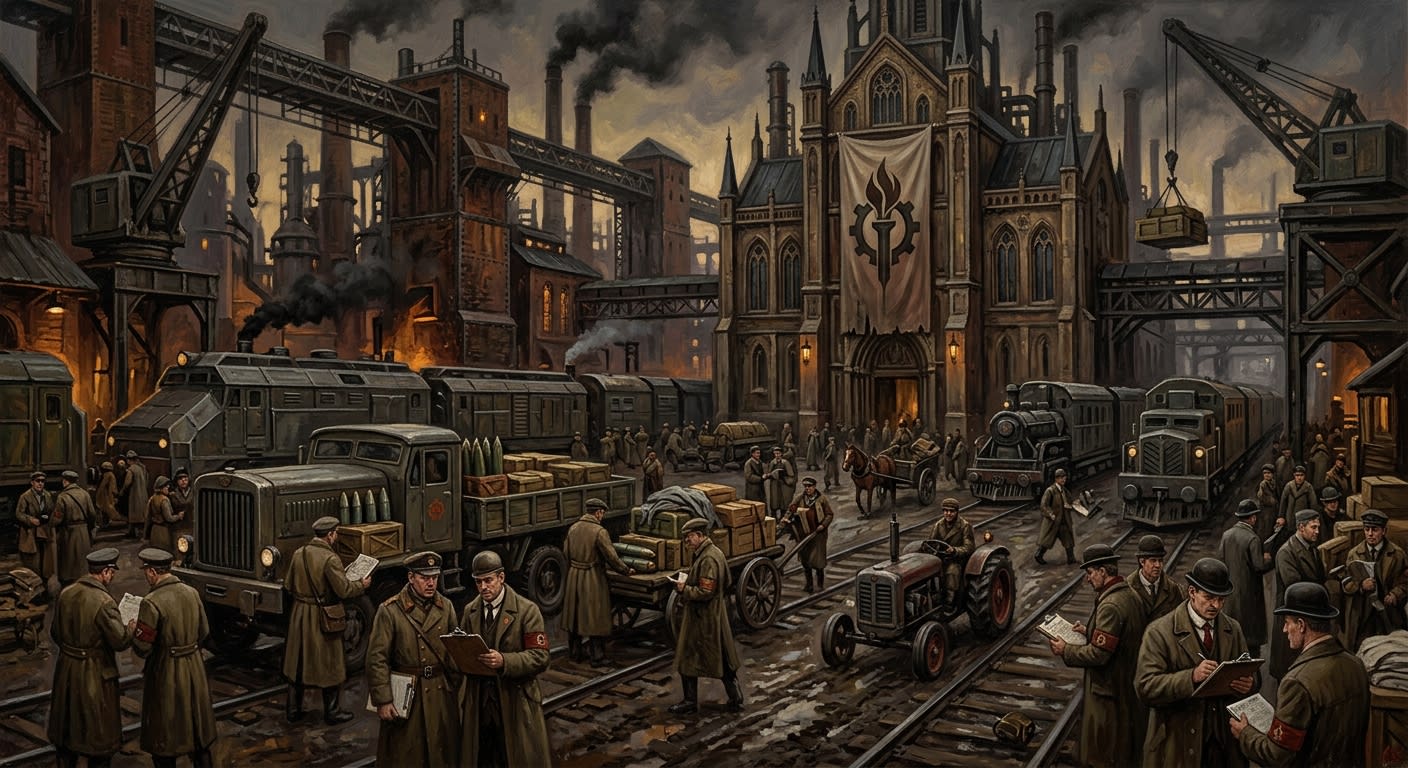
Zone 1
The rearward paradise that learned to invoice the war
Zone 1 is the Synod's polished western rear: safe enough to tax, rich enough to excuse itself, and stained to the elbows by logistics.
Codex Ref. II.0.03-201