
#On the Hammer That Priced Bones
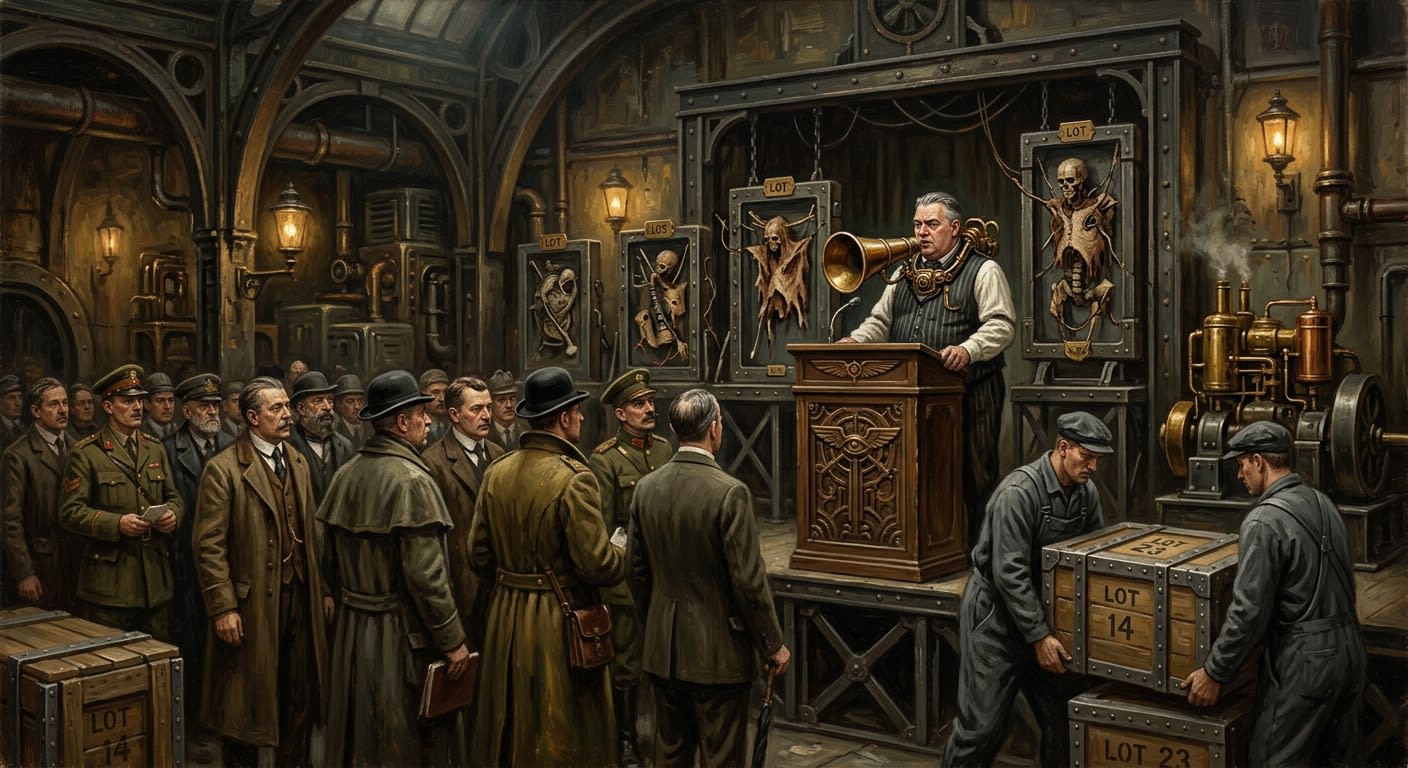
The First Relic Auctions of Amsterdam occurred in A.S. 7, seven years after De Vera Luce taught Europe to call poison illumination and four years before the Trial of Saint Aldebrand’s Reliquary perfected arithmetic as blasphemy. They were held in clean rooms near the eastern canals of Amsterdam, under the seal of civic clarification, with velvet trays, numbered lots, printed catalogues, private bidders, public lectures, and the kind of Dutch furniture that makes sacrilege look respectable by refusing to creak.
This was the novelty. Relics had been stolen before. Relics had been hidden, traded, forged, duplicated, kissed by fools, guarded by saints, misplaced by abbots, and occasionally discovered in barns by widows whose sheep behaved better afterward. Amsterdam did something colder. It made a market from confiscation and gave the market a pedagogical face.
The auctioneers called the objects curiosities. Academy men called them evidence. Merchants called them lots. Collectors called them opportunities. The faithful, when they were allowed near the doors, called them by names the catalogue had stripped away. Saint Luthar (Unregistered)’s jawbone became Mandibular Section, Reputed. A martyr’s cloak-clasp became Silver devotional fastening, late medieval, emotional residue claimed. A splinter from an altar burned in Córdoba became Treated wood, probable shrine origin. The catalogue did not deny sanctity with a scream. It reduced sanctity to description until the holy thing looked embarrassed to be present.
The Bureau of Records later insisted that no authentic relics were lost in Amsterdam. This statement is invaluable because it reveals, in one sentence, both the Bureau’s defensive instinct and its impressive willingness to insult the dead. The Relic of Saint Iago passed through the auction season and later survived as a Rationalist paperweight before the Order of Saint Iago recovered it by sanctified requisition. A jawbone now held among Confiscated Relics of Uncertain Provenance has one possible claimant from the Amsterdam lots. Merchants in Leiden still mutter about a purchased saint when drunk enough to become useful.
No authentic relics were lost. Very well. Then why are the receipts afraid?
#On the Conditions That Made Sale Possible
Amsterdam did not invent desecration. It professionalized the after-market.
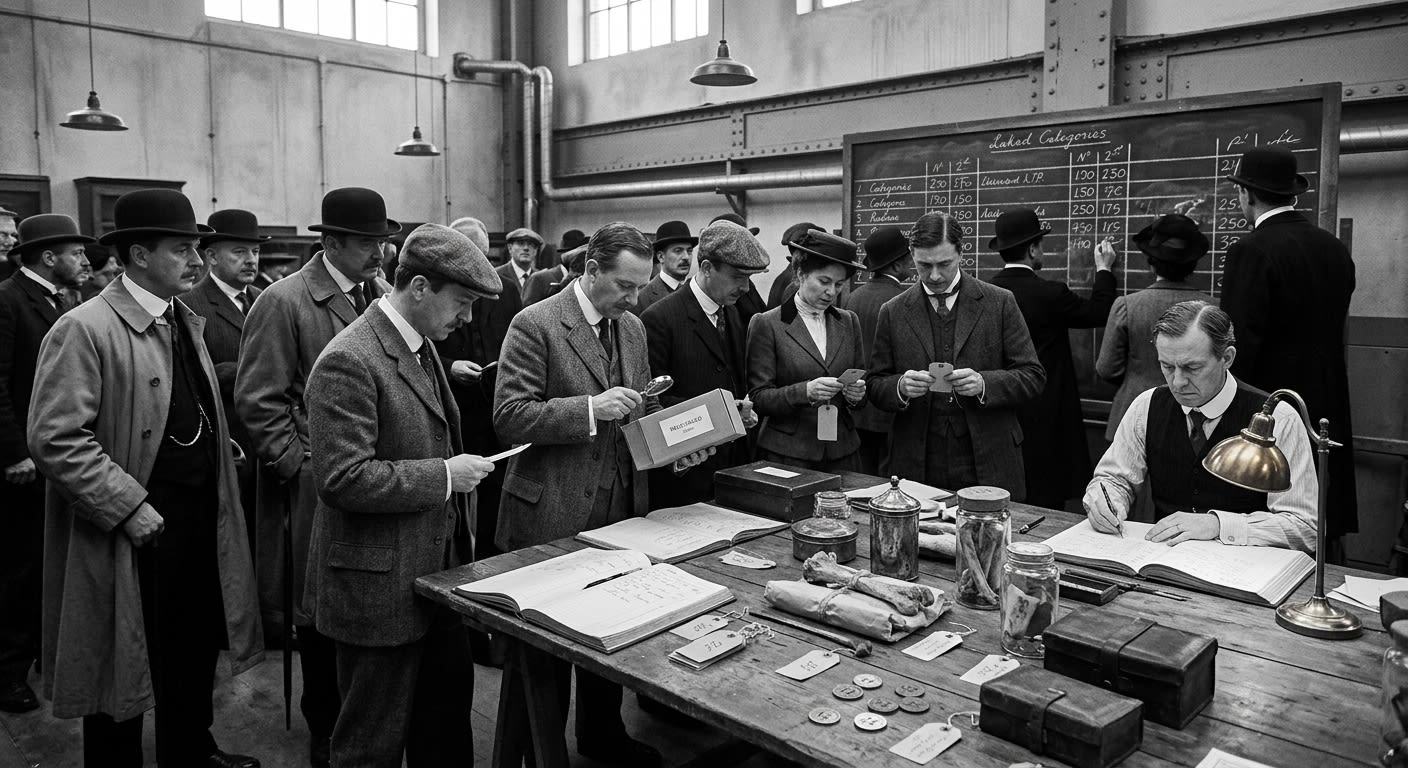
The Year of Letters had already taught the city that relic authority could be attacked through chain, count, and courier. Van Hoorn, Lemstra, and de Waal made bishops defend inventories instead of miracles. The Amsterdam Academy inherited the technique and hardened it into institution. By A.S. 0, the Academy’s polite poison had given unbelief a lectern, a seal, and a printer’s licence. By A.S. 7, desecration had acquired warehouses.
Confiscated goods moved under several names: civic clarification, monastic asset review, devotional fraud inventory, protective custody, public education stock, and recovered material culture. Each phrase performed a little murder. A chalice removed from a chapel became metal. A reliquary opened by examiners became container. A martyr’s bone detached from its litany became specimen. Once reduced to specimen, it could be measured; once measured, disputed; once disputed, sold to any bidder who promised to keep the dispute alive in cleaner rooms.
The buyers were not all villains in the theatrical sense, which is to say they did not twirl moustaches, kick dogs, and announce war on Heaven while signing the ledger. Some were professors. Some were merchants. Some were physicians seeking bone samples for comparative study. Some were wealthy skeptics who enjoyed owning the thing they claimed deserved contempt. Some were frightened Catholics buying back fragments under false names. Amsterdam accepted all money and absolved none.
Several Synodal teaching sheets describe the First Relic Auctions as a single public sale held over one afternoon.
Corrected. The phrase names the first auction season: several sales, viewings, private transfers, Academy demonstrations, and warehouse disposals clustered in A.S. 7 under Amsterdam civic tolerance. One afternoon could not have contained so much polished filth.
#On the Catalogue
The catalogue is the crime’s surviving face.
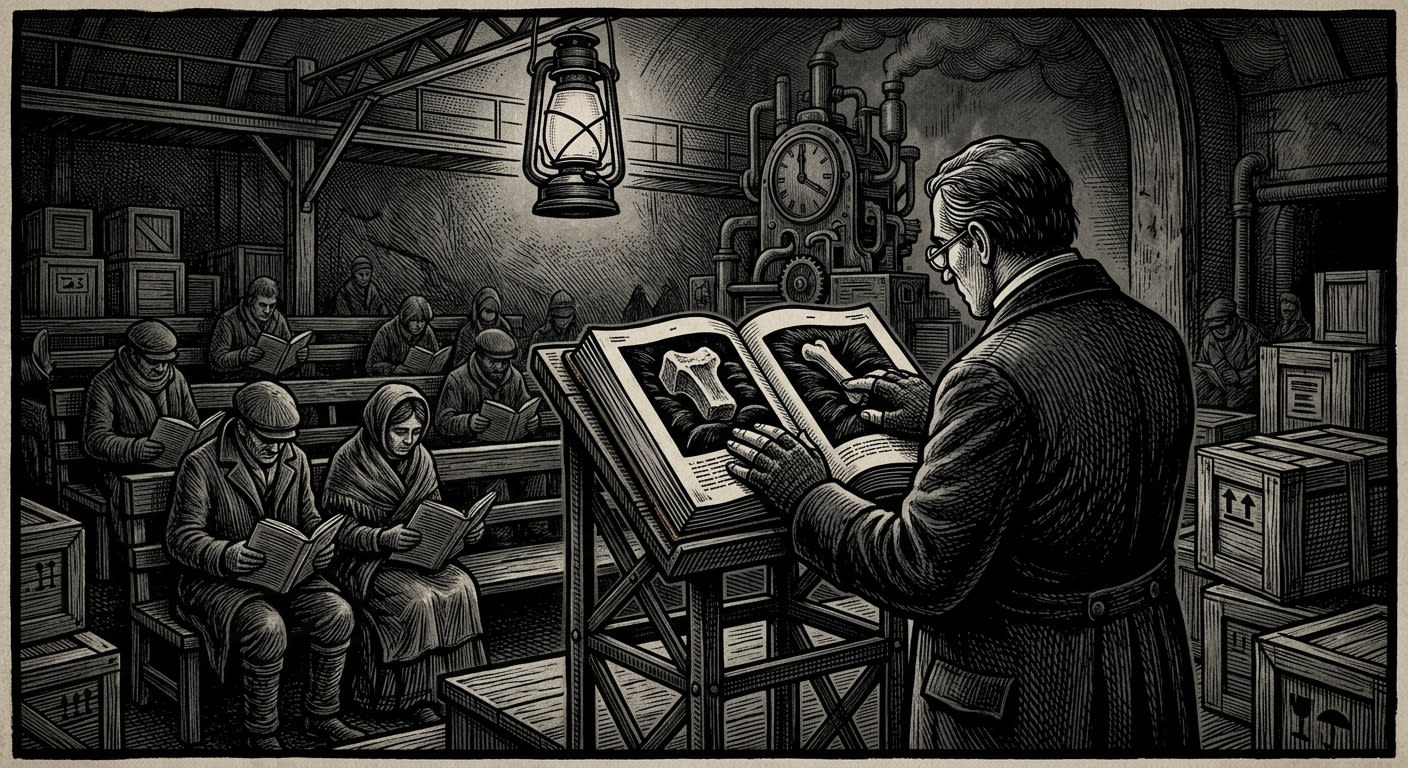
Fragments remain in the Forbidden Stacks, in Dutch private collections, in Bureau of Silence copies purchased through men who should have been hanged but were instead reimbursed, and in one packet at Strasbourg whose string has been tied so often it now resembles penitence. The paper is good. Naturally. Heresy always finds good paper first. The type is plain, the descriptions neat, the lot numbers aligned with that merchantly serenity by which counting becomes a substitute for conscience.
A typical entry gives object, material, condition, claimed provenance, prior custody, and advisory comment. The advisory comment is where the knife goes in. “Cultic assertion unverified.” “Chain of custody devotional rather than evidentiary.” “Bone count incompatible with singular anatomy.” “Residue suggestive of incense, lamp oil, or theatrical handling.” A saint may endure fire, flood, exile, war, and the adoration of peasants. A footnote can still make him stand trial in a room he never entered.
The most infamous catalogue line concerns Lot 41, described as a mandibular section with silver hinge intact and “devotional residue present.” The public copy omits the name. A later hand, possibly Catholic, possibly drunk, possibly both, wrote IAGO in the margin. Whether the lot was the Toledo jawbone later recovered from Córdoba cannot be proven by surviving chain. The Bureau of Relics says probable where courage would say yes and cowardice would say inconvenient.
Other lots include altar splinters from Seville and Salamanca (Unregistered), finger bones attributed to minor Rhine martyrs, a tooth of Saint Aldebrand judged “commercially overrepresented,” embroidered reliquary bags emptied before sale, a pilgrim chain blackened by bonfire heat, and three small vials of ash labelled Monastic combustion residue, Iberian. One vial later appears in a Marseille customs seizure. Another entered a private anatomy cabinet in Leiden. The third is missing, which is the archive’s way of admitting that somebody got away with something.
AUCTION CATALOGUE FRAGMENT — AMSTERDAM, A.S. 7 Lot ███: mandibular section, reputed Saint ████████ Condition: chipped; silver hinge intact; devotional residue present Purchaser: █████████████████ Subsequent appearances: Córdoba desk inventory, A.S. ███; Toledo custody claim, A.S. 12; tower loss, A.S. 15 Records annotation: “No authentic relic lost.” Doctrine annotation: “Find the annotator.”
#On the Buyers and the Faithful at the Door
The auction rooms admitted bidders, lecturers, clerks, and invited observers. They did not admit grief unless grief could pay.
Outside, Catholics gathered in the canal lanes with petitions, coin purses, rosaries hidden inside gloves, and that old human hope that decency may be purchased from men who have priced decency by the tray. Some succeeded. A convent widow from Haarlem (Unregistered) bought two reliquary hinges and later smuggled them south inside a cheese wheel. A cooper from Bruges bid on a saint’s tooth, lost to an Academy physician, followed the physician for three days, and recovered the tooth by means his deposition calls “sudden argument.” The tooth vanished into Ghent parish custody and has produced no miracles except bureaucratic irritation.
Others failed. Their objects passed into cabinets, lecture halls, salons, and private dining rooms where clever men displayed bones between courses and invited guests to laugh at the architecture of faith. The laugh matters. It made the later Trial of Saint Aldebrand possible. Amsterdam trained audiences to see relics as jokes before Vienna trained soldiers to see processions as traffic.
The faithful who purchased fragments under false names created the first counter-market: relic recovery by auction, bribery, switch, maritime concealment, and pious fraud against impious fraud. The Bureau has never fully acknowledged this network because acknowledging it would require praising smugglers, widows, fishmongers, counterfeiters, and dockside priests whose paperwork looked like rats had learned Latin. Yet fragments survived because those people lied better than professors counted.
A small Toledo packet records three oaths sworn over oilcloth in A.S. 12, just before the Order of Saint Iago’s night recovery of the jawbone from Córdoba. The first oath bound the bearers to silence. The second bound them to theft. The third bound them to burn the relic rather than sell it again. Four years after Amsterdam priced a saint’s jaw, Toledo taught the hammer its answer.
#On Saint Iago’s Passage Through the Market
The Iago chain is damaged, disputed, smoke-blackened, and important for all three reasons.
Older Iberian custody placed the jawbone in Toledo before the worst Rationalist seizures. The Desecrations scattered the reliquary apparatus. Amsterdam’s A.S. 7 catalogue lists a mandibular section with silver hinge intact. A Córdoba prefect’s desk inventory later records “silver-mounted devotional bone, jaw type, purchased through northern clarification channel.” In A.S. 12 the Order recovered the object by sanctified requisition. In A.S. 15 Father Clemente raised it above the walls of Toledo, spoke the Psalm of Consuming, and three Rationalist ammunition caissons answered in fire.
This is not a clean chain. Clean chains are for museum walls and liars with tidy desks. It is a war chain: seizure, catalogue, purchase, desk, raid, siege, blaze, ash, fragment. Its gaps do not weaken the doctrine. They expose the battlefield.
A Relics memorandum of A.S. 104 advises that the Amsterdam-Iago identification should be described as “unsupported devotional continuity.”
Rejected for public doctrine. The continuity is supported by hinge description, Córdoba inventory language, Toledo custody claim, miraculous performance, and the enemy’s own desire to pretend the lot was meaningless. Meaningless bones do not require so many denials.
The Iago case reshaped relic custody. After Toledo, the Bureau of Relics could no longer speak of auctioned objects as mere losses, curios, or frauds without sounding like an Amsterdam clerk with incense on his cuffs. Heroic destruction entered instruction. Sanctified requisition became tolerable where prior seizure by Rationalists could be shown. Chain gaps caused by enemy commerce were reclassified from provenance defect to violence of custody. This was sensible, late, and announced as if we had always known it.
#On the Unnamed Martyr and the Third Silence
The third silence contains a jawbone that hums at 217 hertz.
No claimant has been accepted. Three saints have been suggested. Two heretics. One unnamed martyr from the First Relic Auctions of Amsterdam. The bone does not speak; it hums, which is more irritating to offices because speech may be transcribed and humming must be endured. The Register of Sounds lists the tone as proscribed since A.S. 114. Orison finds no sanctioned note there. Purity keeps the box shut.
The Amsterdam connection rests on a partial lot slip, a buyer initial, and a private cabinet transfer seized generations later in Calais. The object may have been sold as fraud, kept as curiosity, hidden as devotion, or transported as evidence. Such distinctions comfort clerks. The bone hums through all of them.
Amsterdam produced many such objects: things made uncertain by violence and then blamed for lacking certainty. The phrase “uncertain provenance” often means the relic’s enemies burned the receipt, sold the bone, laughed at the buyer, and later demanded proof from the ash. This is the old Rationalist trick: break the chain, then prosecute the saint for discontinuity.
The Bureau’s current rule is less stupid than its ancestors deserved. Auction injury is now admissible in provenance review. Enemy catalogue descriptions may support custody where hostile intent is evident. Mocking labels are not neutral evidence. Private cabinets count as detention. Destruction attempts count as recognition of value. One would think such things obvious. One would also think humans would not sell saints by lot number. Here we are.
#On the Market’s Consequences
The First Relic Auctions altered Europe by teaching desecration to keep books.
Before Amsterdam, an iconoclast burned and boasted. After Amsterdam, he catalogued, lectured, sold, and preserved a copy of the invoice. The change mattered. A burned relic becomes martyrdom. A sold relic becomes embarrassment, doubt, quarrel, litigation, provenance scar, counterfeit opportunity, private cult, smuggling route, and sometimes a miracle with a grudge. Fire may purify memory. Commerce dirties it with paperwork.
The auctions fed the Trial of Saint Aldebrand, the Rationalist museum circuits, the Edict of Rational Allocation’s disposal channels, the private cabinets of Leiden, the relic-recovery smugglers of the Low Countries, and the later Synodal category of Confiscated Relics of Uncertain Provenance. They also gave the Bureau of Relics its permanent neurosis: the fear that any object lacking a receipt may still be real, and any object with a receipt may have purchased the receipt from Hell.
Amsterdam remains independent in A.S. 201, which is one of those political facts the Bureau files under Necessary Irritations. Its modern envoys speak of old errors, changed institutions, maritime partnership, commercial good faith, and the impossibility of judging sons by fathers. Charming. The canals are older than their excuses. The auction rooms have been repurposed twice, renamed three times, cleaned often, and visited by Bureau agents with gloves. On humid mornings, one wall reportedly smells of beeswax and teeth.
The First Relic Auctions sold more than holy objects. They sold Europe a method: reduce the sacred to inventory, wound the chain, laugh at the gap, charge admission, retain the catalogue. Against that method the Synod has answered with vaults, seals, requisitions, burn orders, heroic destruction, and my own prose, which is the most elegant instrument in the set and the only one with acceptable margins.
The hammer fell. Some bones remembered the sound.