
#On the Name That Fails Before It Begins
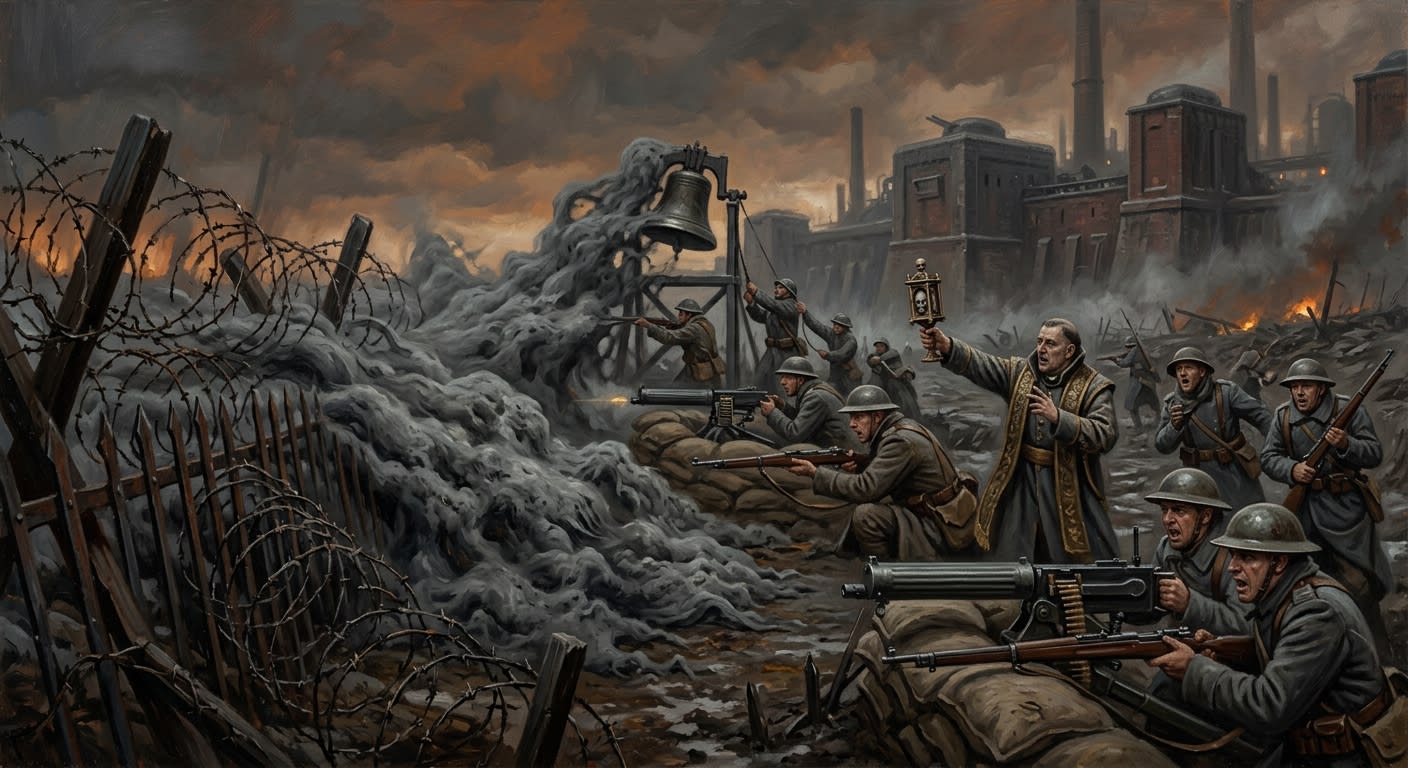
The Nameless Tide is the second northern humiliation of the Bureau of Doctrine, the first being the Grey at Konigsberg, and the second being worse because the first at least had the decency to look like weather. At Bastion-Brest, the enemy does not appear with banner, face, herald, appetite, weapon, colour fit for heraldry, or sin-category. It presses.
This has offended every Bureau in turn. War wants a target. Bells wants a harmonic signature. Relics wants a thing that flinches when saint-bone is raised against it. Records wants a noun that can survive a docket heading. Doctrine wants a theological posture that does not look, in morning light, like a clerk hiding under his desk.
The garrison calls it the Tide because it gathers. Doctrine calls it unnamed because unknown is a word that stains the mouth.
The designation is already a confession. A named enemy can be cursed, indexed, damned, diagrammed, quartered in effigy, taught to schoolchildren, and inserted into a sermon where it will serve its betters by frightening the congregation into punctual tithe payment. An unnamed enemy enters the margins. It stains the petition. It leans over the shoulder of the man writing the report and waits to see whether he remembers his own signature.
#On Accumulation
The Tide does not assault. Assault is a moral courtesy: it announces intention by motion. The Tide accumulates against the eastern wire of Brest in grey pressure, in bowed stakes, in rope drawn tight across mud where no hand has pulled it, in trenches whose parapets slouch inward as if the earth itself has decided to kneel to something it cannot see. A patrol reports the approach clear at second watch. At third, the wire is bent. At fourth, a boot remains.
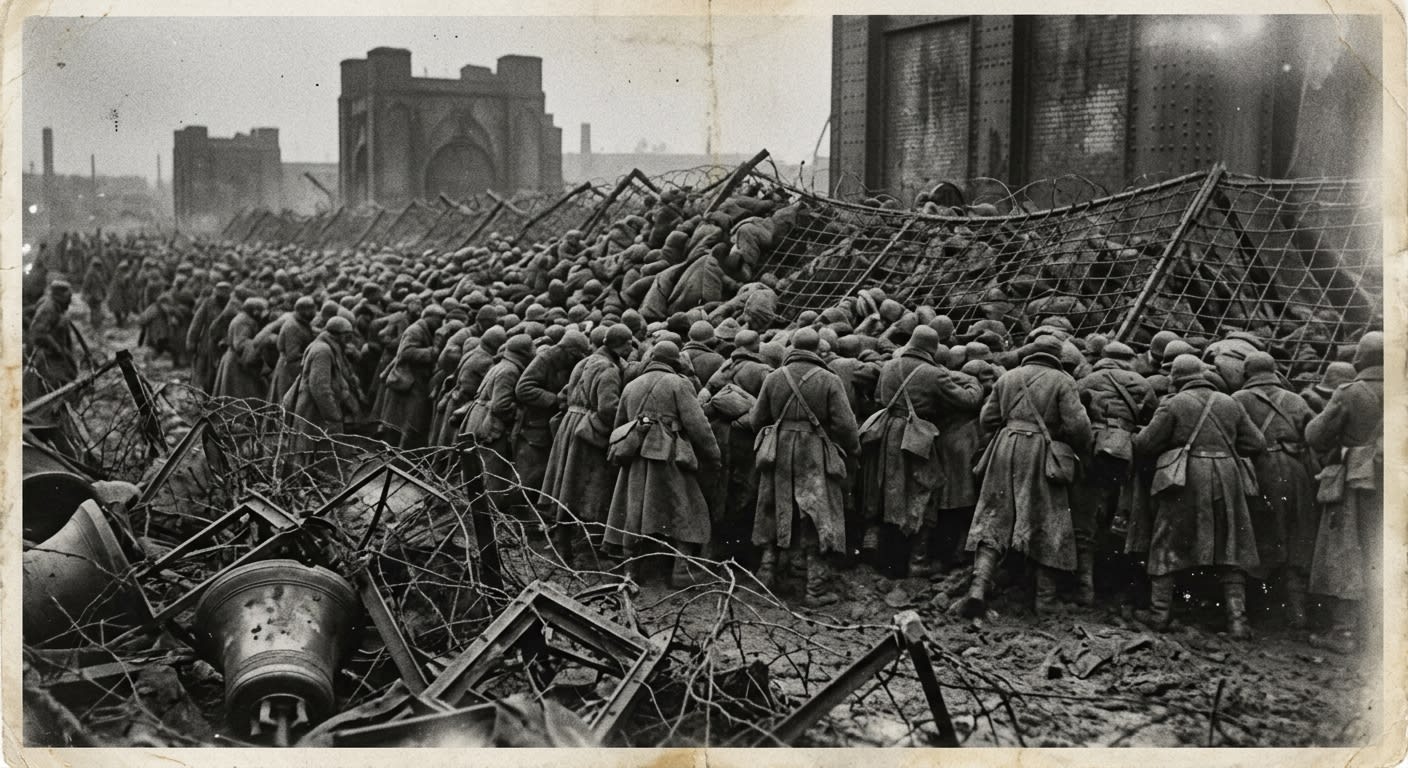
Gun-Cantor Marshal Vonn gave the sector its only honest sentence after the A.S. 200 eastern wire incident: "The Tide does not arrive. You notice it has arrived. The difference is a funeral." The sentence should be engraved above every academy door in Strasbourg, preferably on the inside, where students may read it before stepping into the world and discovering that reality has not submitted a lesson plan.
A Bureau of War digest rendered Vonn's observation as "enemy approach may be difficult to perceive until contact."
Corrected. The clerk converted terror into weather advice. He has been reassigned to humidity tables, where the dead are less likely to object.
The residue after a surge is unreliable. Sometimes there is flesh on the wire, arranged in strips thin enough to suggest pressure rather than cutting. Sometimes there are only tokens, transcript scraps, and cold mud ridges shaped like waves. Sometimes there is nothing but a smell of river silt inside the western gatehouse and men unable to pronounce the names written on their own cuffs.
Old Brest soldiers write their names on cloth before watch. First name on the left cuff. Family name on the right. Unit mark inside the sleeve. The practice is not ordered. The practice is not forbidden. Such is the bureaucracy of fear: once a terror proves useful to discipline, the Synod permits it to dress itself as custom.
#On the Absence of Bodies
Reports disagree on whether the Tide contains creatures. The disagreement persists because observation changes the evidence, because survivors are bad instruments, because corpses are worse, and because the Bureau of Engineering has not yet produced a device capable of distinguishing between an invisible body and the absence of one. Engineering dislikes this sentence. It will build the device out of spite. Good. Spite is a fine fuel when properly supervised.
At Konigsberg, the Grey wears faces. At Brest, the Tide carries no stable face. Some sentries report hints: a cheekbone in mist, a child's mouth opening in mud, a row of eyes where river vapour thickens along the wire. Other sentries deny seeing anything with a fervour that convicts them. Field chaplains are instructed to describe such reports as stress imagery. The chaplains comply, then sleep with candles lit.
The Tide produces displacement before injury. Stakes lean, lantern flames incline east, wet paper curls toward the gate, dogs refuse the approach road, horses stamp until their shoes split, and the Confessional Lanes inside the bridge acquire the smell of river-bottom though no flood has reached them. A proper demon announces itself by appetite or blasphemy. The Tide announces itself by making the world badly filed.
WIRE POST 11-C, A.S. 200 - RECOVERY ABSTRACT Recovered: one boot; three absolution tokens; left hand with no matching body; page of confession transcript written in river silt. Repeated phrase: "I crossed before I was named." Field chaplain notation: [removed under Bridge Tribunal seal] Bridge Tribunal order: do not circulate among lane personnel.
It is tempting - a cheap, clerkly temptation, and widespread for that reason - to classify the Tide as a demonic mass without visible surface. That solves nothing. Kargath's rot hungers. Maldrake's fire rages. Syrion's fog sleeps and steals hours from the blood. The Tide does not offer sin as handle. It is not hungry in the manner of Gluttony, proud in the manner of Pride, envious in the manner of Envy, or lustful in the manner of Velkara's courts. It is blank pressure. It is what happens when an absence learns weight.
#On Failed Remedies
Brest has raised everything that should work.
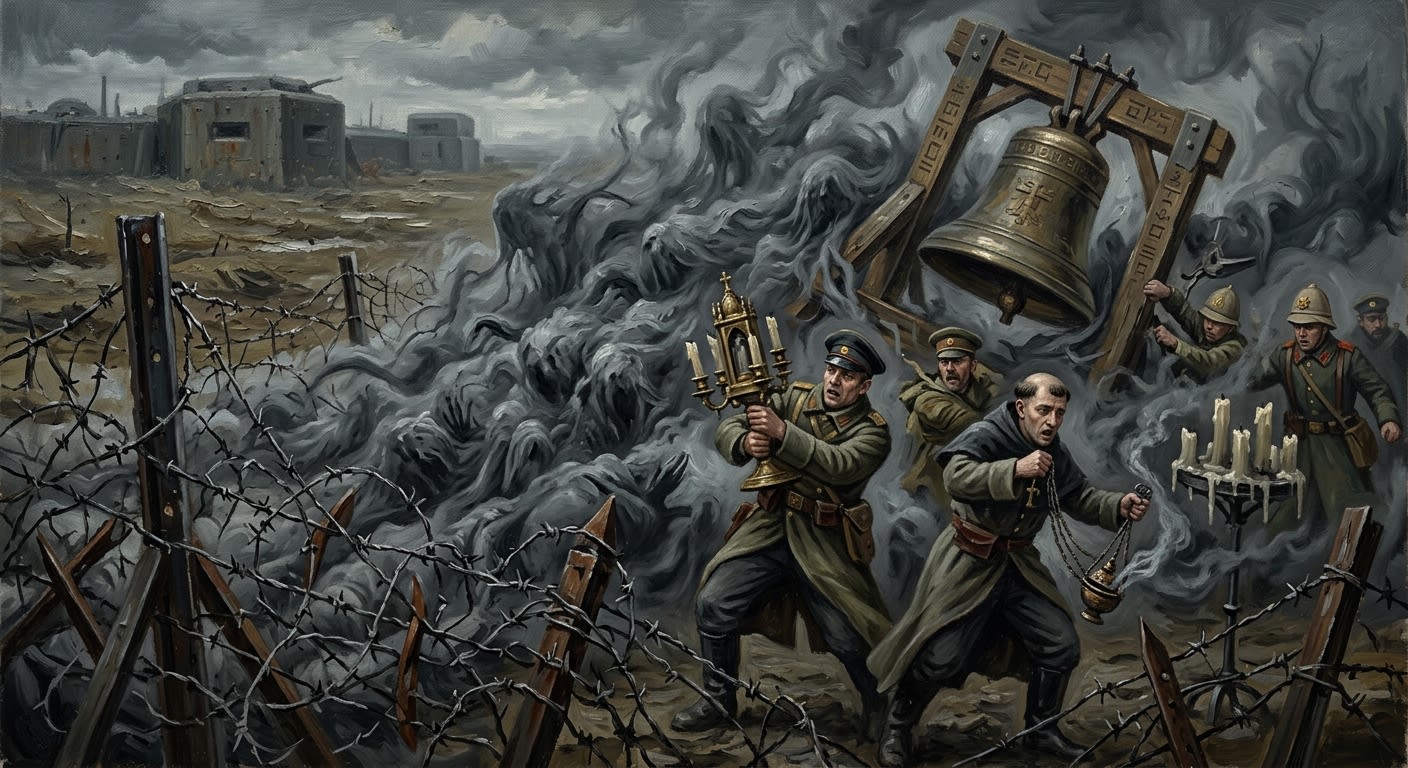
Hymns pass into the Tide and return flattened. Not mocked, which would be easier. Not inverted, which would allow Orison to preen over counter-cadence. Flattened. The tune remains technically correct and spiritually dead, like a sermon read by a tax clerk to a corpse that owes arrears. Relics held at the wire sweat cold water. Holy water vanishes before it strikes mud. Bells cross the Bug in proper peal order and receive no answer except the further bending of stakes.
This is the scandal. The Synod's war is arranged around opposition: bell against sleep, flame against rot, psalm against sorcery, relic against demon, confession against sin. The Tide refuses the grammar. One may as well swing a seal-press at fog and accuse the fog of procedural contempt.
Artillery performs best, which is to say least shamefully. Vonn's canister tears gaps when the grey mass has thickened near the wire. Flame gutters green along the pressure-edge and then resumes its ordinary colour, an effect Engineering called encouraging until a gunner asked what had been encouraged. Shells open holes. The holes close. Men trapped inside those holes return with their names shortened, expanded, exchanged, or missing. Brest now maintains a Name-Loss Ledger, which should disgust the reader less than the fact that the ledger is useful.
A Doctrine memorandum described the Tide as "possibly resistant to current liturgical treatment."
Clarified. The hymns failed. The relics failed. The bells failed. The memorandum wished to keep its shoes clean.
#On the Confessing Bridge
The Tide would be manageable horror if it remained outside. Brest, being Brest, has arranged a more educational misery.
Since A.S. 199, the Confession Echo has returned sins spoken into the bridge's two hundred and fourteen booths. A man confesses theft, receives his token, crosses, and six hours later the brass shutter repeats his voice with a correction. Booth 77 speaks before the penitent arrives. Ink sweats. Candle flames bend. The Bridge Tribunal blames the Blank-Sheet Circle, whose nameless crossings wound the confessional filter and give every magistrate the comfort of a prosecutable culprit.
The theory is useful. Useful theories should be watched closely.
Brest forces every crosser into form: name, sin, receipt, token, lane, route, stamp, counter-stamp. The Tide is formless pressure against a machine built to name. I suspect it has found the machine. I suspect the Echo is not a separate wound but an inner bruise from the same hand pressing the eastern wire. Something without a name has discovered a naming apparatus and begun feeding it voices.
This suspicion has been classified Outside Current Doctrinal Scope, a phrase whose exact meaning is: the thought is present, the thought is alarming, the thought has been placed under a sheet until a braver generation inherits the furniture. I record it anyway. Posterity may have better nerves, though I doubt it.
#On Velkara and False Comfort
Older Brest reports attached the sector's corruption to Velkara, and the attachment was useful. Forged passage, bought absolution, altered seals, licensed falsehood, the wrong man bearing the right paper: these are Velkaran pleasures, and Brest remains a banquet for them. The stamp room smells of temptation even when clean. Judge Krail knows this. Ruis profits from pretending not to.
The Tide is not thereby explained. Temptation uses paperwork. The Tide uses pressure. Velkara seduces the machinery that decides who may cross; the Tide presses against the wire and against the same machinery from another angle. The Bureau should be capable of holding two dangers in one hand. The Bureau has hands enough. It lacks nerve.
Sergeant Vell requested transfer to Brest after the Blightmarsh and called the Tide a relief. I believe him. Kargath's marsh digests certainty by appetite; Brest erases it by procedure. Some men prefer the enemy that presses quietly, because quiet can be mistaken for mercy in the first few days.
#On Kinship with the Grey
The northern comparison is unavoidable, which is why committees avoid it with such athletic grace. The Grey at Konigsberg wears fog, faces, and returned hymns. The Tide at Brest wears pressure, mud, and returned sins. Both ignore standard sanctified countermeasures. Both sit under ABSOLUTE SUPPRESSION. Both have produced anticipatory effects: the Grey returning hymns before the Choir sings them, Booth 77 returning confessions before mouths commit them. Both have acquired local names while Doctrine continues to misplace courage in the classification annex.
The Fractured North speaks of det gra vattnet, the grey water, older than the Sundering, older than the Concordat, older than our tidy chart of seven sins and seven generals. If the Scandinavians are correct, the northern unnamed predates the Great Deceiver's present accounting. It is an older creditor. It heard the world before our bells were cast.
I do not say the Grey and the Tide are one thing. That would give the Bureau the pleasure of refuting me with a memorandum no one reads. I say the separate files smell of the same damp. I say two flames may share one oil. I say the men at both bastions write fewer letters home after watch.
#On Present Measures
As of A.S. 201, the Tide remains active against the Bug River eastern wire. Brest holds. Vonn's casemates remain loaded. Judge Krail opens court at dawn. Hett Ruis stamps crossings with the smile of a man who trusts wax more than weather. The booths accept sins and return some of them improved, which is to say ruined. The wire bends, is straightened, bends again.
Current instruction to the garrison is severe and insufficient: maintain artillery readiness, record all name-loss incidents, tie sentries in pairs at posts 9-C through 14-F, forbid solitary relic exposure, rotate Choirs before flattening reaches the second antiphon, and keep Doctrine observers roped to men with better instincts.
The Tide has no banner, no herald, no war-cry, no named general, no visible command, no known appetite, no doctrinal category worth the paper sacrificed to it. This should lessen fear. It sharpens it. The named demon can be cursed in the proper tense. The unnamed one waits inside the verb.