
#On the City That Learned Fire First
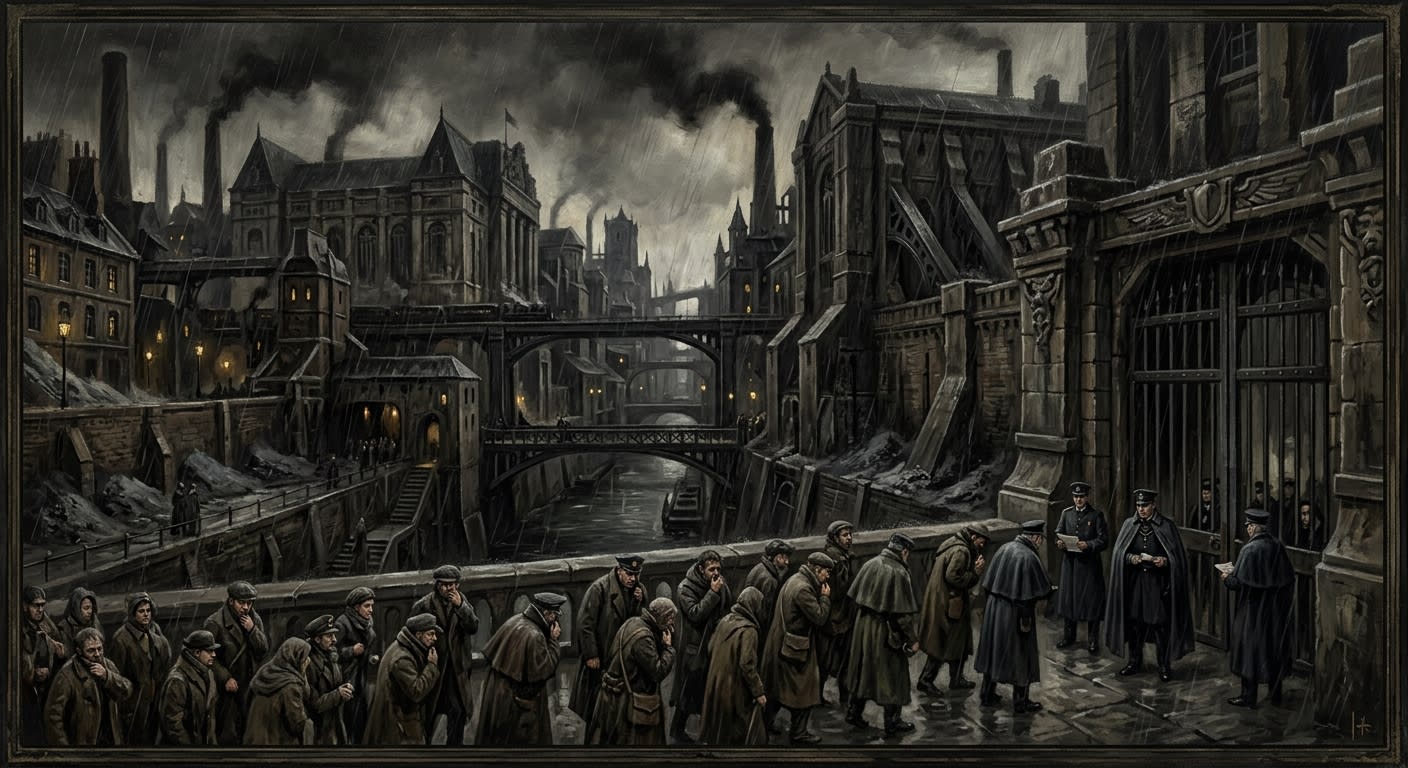
Rouen is a Norman city of soot, bridges, ash-banks, punished markets, and rain that has learned to read old stone. It lies in the western heartland, safe enough to be arrogant and wounded enough to be useful, on the Seine road between coastal traffic and the inland machinery of Strasbourg. The Bureau’s civic register calls it a major provincial centre under ordinary Synod custody. That is the phrase clerks use when a city obeys, pays, complains, burns, rebuilds, forges documents, sells bad candles, and provides the Bureau with a new incident file whenever Doctrine grows bored.
Rouen learned fire before obedience. The Rationalists gutted its cathedral during the A.S. 24 Cauterization, then blamed arsonists, structural defect, civic panic, and whichever fourth noun came cheapest that year. Witnesses swore the fire crawled like an animal up the nave, pausing before each altar as though making inventory before appetite. The stones still bleed soot in rain. Engineering calls this mineral staining. Rites declines comment. Doctrine permits both offices their cowardice because the soot remains more eloquent than either.
A city marked by one fire becomes attentive to all later lights. Rouen knows lamp, candle, relic-glow, signal flare, funeral ember, forge tongue, market wick, and the pale fraudulent shimmer of hope sold by men with baskets. It measures light the way other cities measure coin. This talent has saved it, damned it, taxed it, and made it smell of wax whenever Purity grows theatrical.
#On the Cauterization
The Cauterization of Rouen belongs to the age of the Desecrations, when the Rationalists mistook blasphemy for policy and policy for proof. Their programme began in pamphlet and ended in pyre: shrines stripped, relics catalogued for mockery, bells melted into cannon, priests drowned in vats, altar stones repurposed beneath secular boots. Rouen received the theatrical portion. It always did have a stageable nave.
The cathedral burned in A.S. 24. Rationalist dispatches called the event spontaneous civic disorder caused by clerical hoarding, though the inventory carts had already been positioned outside the west doors and the printed notices had already been distributed in the lower market. Spontaneity that prints notices deserves a noose. The fire took the nave, treasury stalls, choir screens, reliquary cupboards, and seven side-chapels whose patron saints were later “mislaid” in prefectural summaries. The summary listed timber, lead, bronze, stone, and glass. It did not list prayers. Rationalist ledgers disliked categories that answered back.
Witnesses described the moving fire with a consistency that irritates official comfort. It climbed pillars, bent around empty pews, stopped before the high altar, lowered like a dog sniffing a hand, then consumed the canopy in a single inward breath. One boy said it listened. One mason said it counted. One Rationalist lecturer, found later with both hands fused around a brass candlestick, had written on his cuff: IT KNOWS WHICH ARE THEIRS. Records keeps the cuff under glass. Purity calls it panic script. I call it a man late to theology.
The cathedral was reopened under Synod discipline after the Sundering made Rationalist confidence unfashionable among survivors. Rebuilding did not erase the burn. Rouen’s clerics learned to preach under blackened ribs. Children learned that rain made the stones weep soot, and that soot on the thumb could be used to mark a forehead before Purity inspectors arrived. The practice is forbidden. Naturally, it persists.
#On the Ash-Banks and the Civic Stomach
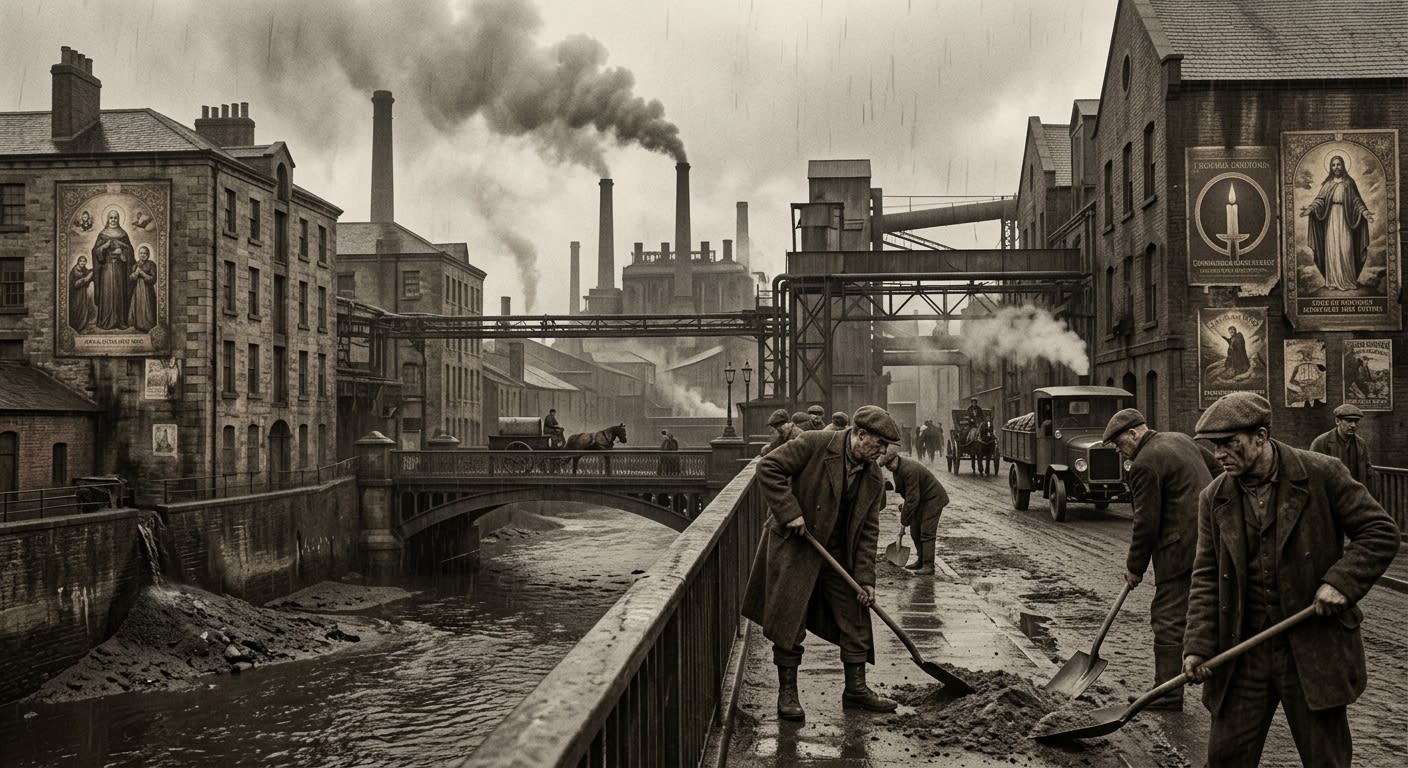
Rouen’s economy is built on ash more than silver, though silver has better manners at table. The Ash-Banks accept deposits of bone-dust, chapel sweepings, crematory residue, certified pyre ash, battlefield return ash, and occasionally flour mislabeled by optimists with hungry children. Deposits may be converted into bread, salt, burial credit, absolution tokens, lamp rights, or debt postponement. The process is pious in public and carnivorous in practice. It lets the city eat its dead without saying so plainly.
The main Ash-Bank stands near the old cathedral close, in a lime-washed hall whose vault smells of incense, vinegar, chalk, rainwater, and that faint sweet note common to rooms where people have learned not to ask what kind of dust is in the jars. Clerks weigh deposits on little brass balances. Relatives watch the needle move and calculate whether grandfather becomes three loaves, a half sack of salt, or two weeks’ delay on rent. Tithes calls this sacramental conversion. The poor call it Tuesday.
A rumour says one vault contains the cremains of an entire diocese pledged in advance to secure a grain shipment that never arrived. The rumour is false, according to Records, which means the vault exists, the diocese may be smaller, the shipment may have arrived under another name, or the falsehood has been correctly weighted by office. I inspected the outer chamber. The air tasted of stale bread and old Latin. A clerk refused to meet my eye with admirable professional instinct.
Ash creates subsidiary trades. Ash-sifters with grey wrists. Lime porters with coughing wives. Token factors. Jar washers. Ledger boys who can identify family grief by deposit weight. Bone-pickers who patrol burned tenements before municipal crews arrive. Honest industry, if one defines honesty as the absence of successful alternatives.
#On the Bridge of Saint Cuthbert
Rouen’s Bridge of Saint Cuthbert crosses the Seine with the dour patience of an old priest forced to hear commercial confessions. Its paving plaques bear the names of those who crossed without paying tithe, those who paid with forged slips, those who attempted to claim ecclesiastical exemption through fictive kinship, and those whose names became useful after sentence. Every morning, bridge clerks polish the brass until the condemned names reflect travellers’ faces back at them. Reflection is cheap theology. Rouen uses it well.
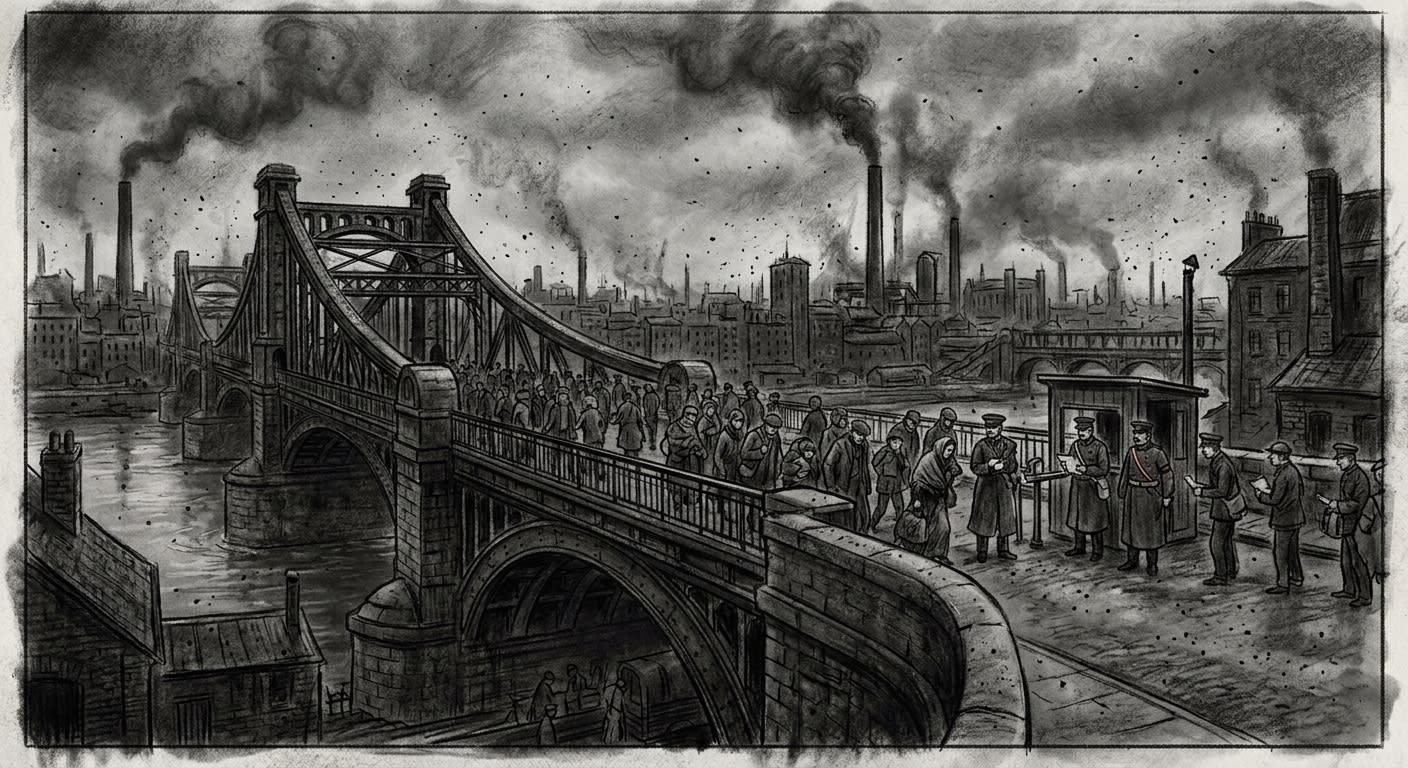
Peasants swear the plaques whisper prayers in the voices of their owners when fog lies over the river. Records insists these are wind anomalies. Bells recorded “sub-verbal plate vibration” in A.S. 176 and withdrew the report after Tithes objected that whispering plaques might reduce toll confidence. Toll confidence is one of those civic virtues invented by men who collect money in booths.
Under the bridge gather the usual river offices: rope men, ferrymen, ash-barge pilots, salt porters, debt messengers, counterfeit token runners, boys selling polished plaque rubbings, girls selling better rubbings copied from names the bridge has never held. The Watch arrests the girls when inspectors come. The Watch buys from them when inspectors leave. Civic order is not hypocrisy. It is timing.
The lime yard behind Saint Cuthbert’s Bridge became notorious after A.S. 184, when survivors of Saint Aurelia’s Convoy were burned there in batches small enough to keep the smoke from speaking. Locals avoid the yard at dawn. Children dare one another to stand by the old ash wall and hum. Children are the Enemy’s smallest theologians; they test every doctrine by doing the forbidden thing with jam on their fingers.
#On the Candle Market
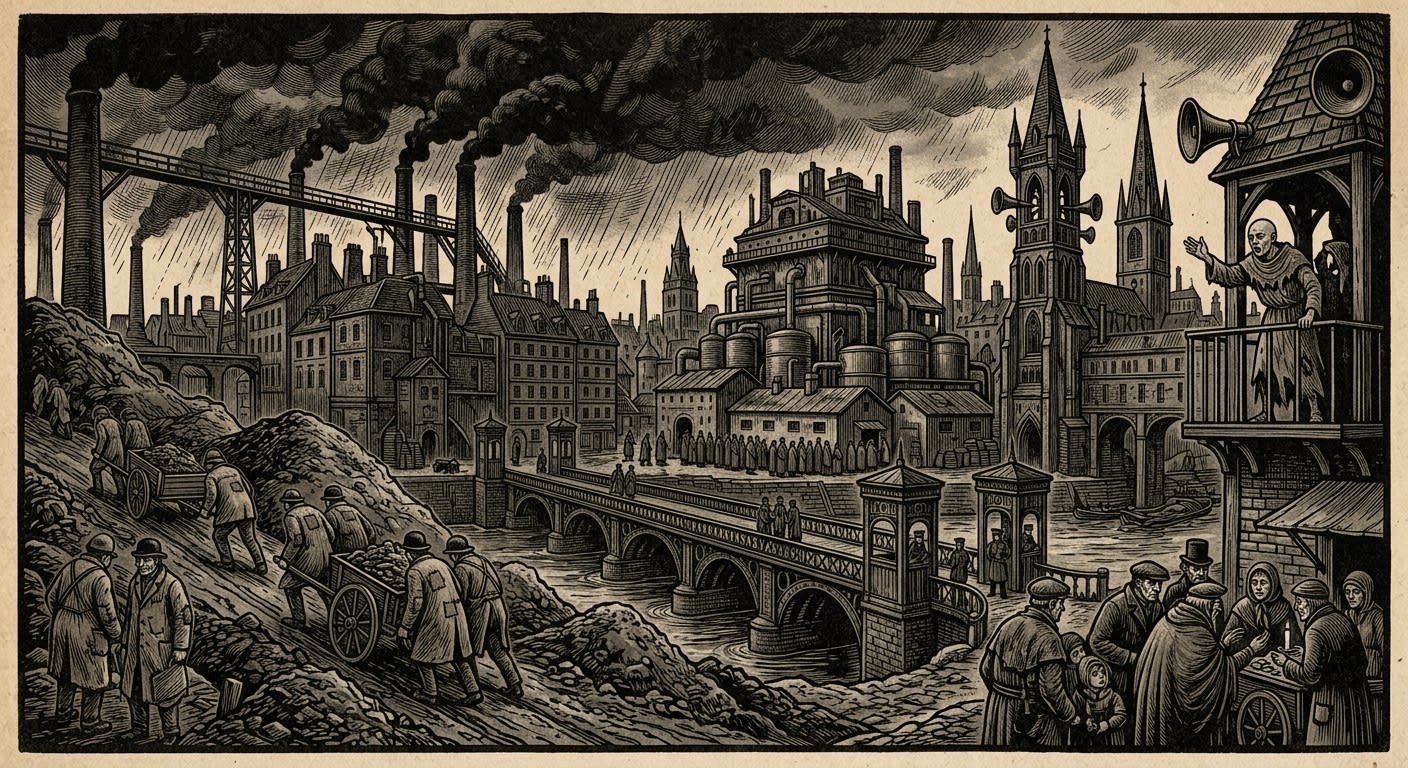
Rouen’s Candle Market is older than its permissions and more profitable than its sermons. It sprawls through the lower streets in booths, baskets, hanging racks, shrine alcoves, wax sheds, coloured cloths, and back-room mould tables where saints acquire shapes unknown to anatomy. Every light in Rouen has a pedigree if the seller is paid enough to invent one. Funeral tapers. Fever tapers. Sailor wicks. Widow lights. Safe-birth lamps. Ash-bank confirmation candles. Black-market absolution stubs. Little relic-lights wrapped in saint names and sold to the frightened for the price of a meal they can no longer afford.
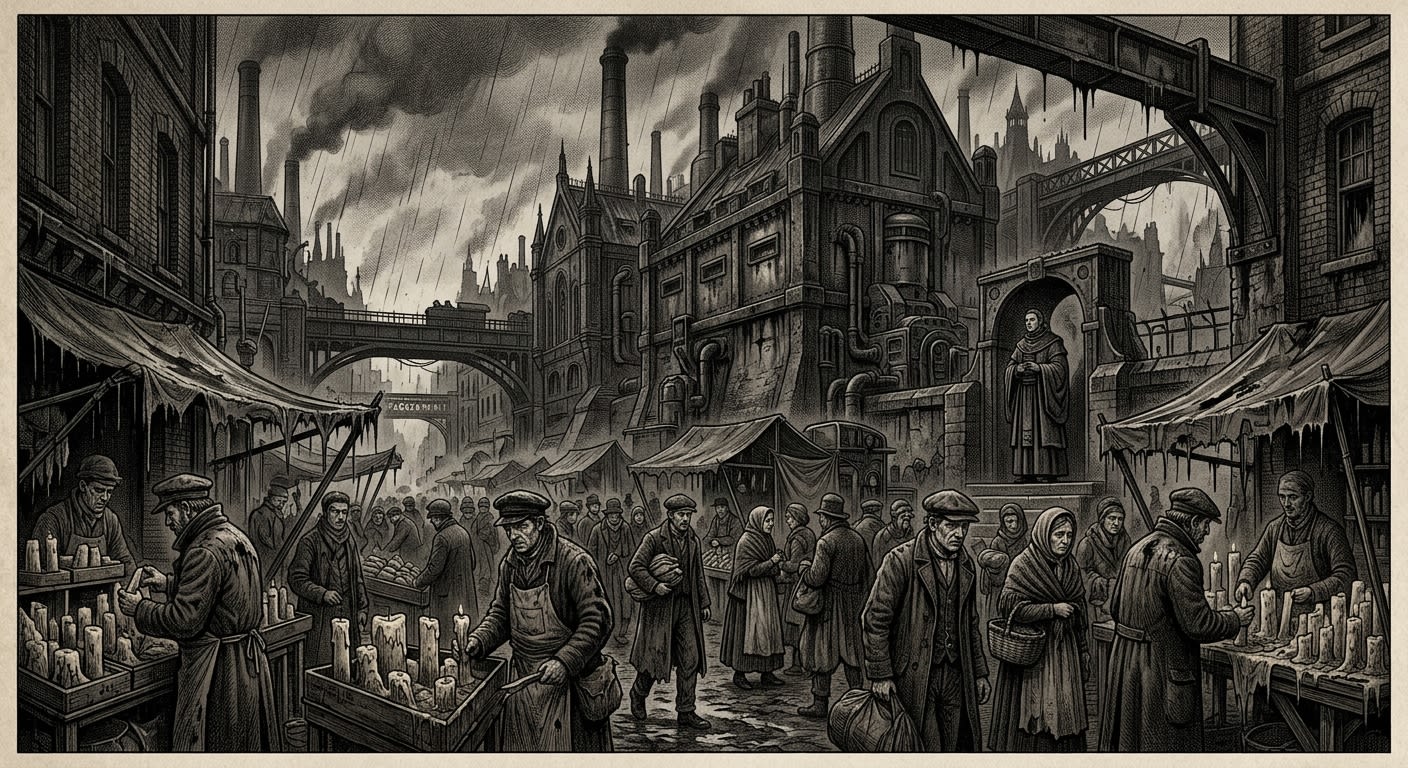
The Heresy of the Candle Market began as commerce, which is how most durable heresy dresses for its first appearance. Peddlers sold false relic-lights: candles dressed in saints’ names, promising miracles for coin. Some were mere fraud. Some glowed with powders stolen from chapel stores. A few burned without wick, which complicated the moral picture and enraged Purity at once. The Bureau’s response was elegant in the old brutal manner: sellers gagged with their own wares, candles stuffed down their throats and lit until lungs charred, each heretic briefly becoming his own beacon. The city smelled of wax for weeks.
Strasbourg learned from Rouen, though not the lesson squeamish men prefer. The lesson was not “do not sell false light.” That lesson is obvious, a child’s rule with singed eyebrows. The lesson was smell. Smell carries doctrine faster than pamphlet. After Rouen, Orison vents in Strasbourg altered their incense blends for crowd quieting. Tavern unrest declined. Men remember wax in the lungs longer than written prohibition.
The Candle Market continues under licence. It could not be otherwise. The faithful require light. The poor require trade. The city requires taxable fear. Inspectors now test wax with salt pins, saint-dust swabs, and little iron bells that tremble when a wick has been blessed by an unlicensed hand. Sellers comply, cheat, plead, wink, bribe, and occasionally burn. Tradition thrives.
#On Saint Aurelia’s Convoy
The Collapse of Saint Aurelia’s Convoy occurred in A.S. 184 in Rouen’s market quarter, which by then had survived enough official punishment to develop the resilient impudence of a dog beaten by several owners and fed by all of them. The convoy carried authenticated finger-bones of Saint Aurelia of the Third Lamp, a minor healer-saint whose relics proved useful in ward-line fever tents. Usefulness impresses quartermasters more reliably than sanctity, a fact the Bureau of Relics pretends not to resent.
The convoy entered by the southern market road shortly after Prime: two Relic Authenticators, pilgrims, hired guards, three Ash Chaplains, seven choirboys, a procession captain, and a stamped itinerary clean enough to fool men who think ink prevents weather. No Chanter was seen. That remains the nerve under the file. The Pale Chanters at Prague had stood across a field; at Odessa their voices seeped through trench walls. In Rouen the sound arrived as memory. The square hummed a melody its people seemed to have known since childhood.
WITNESS FRAGMENT — ROUEN, A.S. 184 “I saw Brother Calvian place his cord around Emile’s throat as if vesting him for Mass. The boy did not struggle at first. He kept singing. When his voice stopped, the other boys took the missing note.” Remaining testimony excised after witness described █████████████████ moving beneath the cobbles in the shape of a choir stall.
Within minutes the procession turned inward. Relic bearers smashed their burdens. Guards fired, then set rifles down like tools returned after duty. Pilgrims knelt on shattered bone and tried to gather fragments, then crushed them when the rhythm changed. Ash Chaplains strangled choirboys in time. Thirty-one died on site, sixteen later, and an unknown number became acoustically suspect. Purity dislikes unknown numbers. It burned the survivors behind Saint Cuthbert’s Bridge and called the act prophylaxis.
The municipal notice described the incident as “reliquary transport disorder caused by crowd pressure.”
Corrected after three surviving shutters were found scored inside with the same four-bar cadence. Crowd pressure does not compose.
Aldric Venn later cited Rouen in his withdrawn memorandum on Pale Chanter phrase recurrence, placing the convoy beside Prague and Odessa as proof that hostile cadence might occupy existing liturgical channels rather than merely attack them from outside. Records withdrew the memorandum. Venn went to Ulm. The plaza kept singing.
#On Ash Chaplains, Choirboys, and Local Shame
Rouen supplies the Synod with Ash Chaplains in numbers that suggest either civic piety or a municipal desire to export difficult sons. Brother Mathis of Rouen is the office proof-text: at Saint-Malo, after a Processional Band was obliterated, he mounted a parapet, swung his censer like a flail, and bellowed the Litany of Stones for nine hours while a trench flank held without proper artillery. His lungs were found as cinders. War called it morale stabilisation. The faithful called it miracle. Rouen called it one of ours.
That pride soured after Saint Aurelia’s Convoy. Three Ash Chaplains from the convoy strangled choirboys under Chanter cadence. Purity did not call them traitors. War did not call them martyrs. Doctrine called them compromised instruments. Rouen mothers called them murderers at kitchen volume, which carries farther than an official bulletin in districts where walls are thin.
Since A.S. 184, Rouen chaplain training includes dead-drop thurible chains, emergency ash release, jaw-rhythm checks, and the removal of choirboys from high-risk convoy bands, followed by their reinstatement under altered title, followed by renewed restriction, followed by ordinary use. Bureaucracy loves resurrection by title. A choirboy becomes junior cadence assistant and re-enters danger laundered by nomenclature.
The families remember names the files reduce to function. Emile. Rault. Tesson. Little Mire, whose voice had not broken. Each has a candle booth somewhere that lights one wick before market open and pinches it out before inspection. This violates three regulations and one sermon. Good.
#On Forged Seals and the Woman Bricked
Rouen produces excellent forgers, which is to say it produces desperate people with steady hands. A city of ash receipts, toll plaques, relic permits, candle licences, bridge writs, market inspections, convoy passages, and burn certificates will breed counter-paper the way damp breeds mould. The Synod’s proof-demand outpaces reality. The forger is the mould that reality grows in self-defence.
The eleventh seal-forger whose erasure warrant crossed my desk was a woman of Rouen. She replicated the Bureau of Pilgrimage’s transit seal so precisely that an authenticating inspector stamped her forgery genuine and filed it alongside seventeen actual writs. When the error was discovered, the inspector was transferred, the woman was bricked, and the seventeen genuine writs were withdrawn and re-examined. Four of them turned out to be hers as well. I signed the immurement order with real annoyance. Talent wasted in crime is less offensive than talent wasted cheaply.
Rouen forgers specialise in Pilgrimage slips, ash-bank receipts, candle market licences, bridge toll abatements, and condolence conversions. Their work often saves a family from hunger before it condemns a district to audit. The Bureau cannot admit this sequence. It prefers the simpler catechism: false seal, mass guilt, wall. The street prefers its own: if it stamps, it stands.
A Masks and Seals circular lists Rouen forgery as “suppressed after exemplary immurement.”
Corrected by the next quarter’s seizures: thirty-two forged ash receipts, eleven bridge exemptions, six relic-adjacent candle permits, and a widow’s burial writ so perfect that Records used it as a training sample before noticing the dead husband had never existed.
The bricking chamber used for the Rouen woman stands behind a shuttered print shop near the lime road. The wall is plain. Someone scratches a tiny seal mark beside the mortar joint each year. The Watch scrapes it away. The next mark is always better cut.
#On Festival, Fetters, and Departed Flames
Rouen laughs under supervision and celebrates under constraint, which is the normal condition of civilisation. The Fetters of Joy are its most famous civic device: festival masks hinged at the jaw with a spring that tightens if the wearer laughs after Ninth. The rule reduced tavern riots by forty-seven percent, a statistic so neat it deserves suspicion. The masks are painted in bright colours for children and dull black for adults, because joy, in Rouen, is permitted most readily before it has teeth.
Festival officials call the Fetters a humane deterrent. Tavern men call them jaw traps. Lovers call them inconvenient. Purity calls them promising. The masks hang from market poles during licensed feast weeks, each with a little instruction tag: LAUGH BEFORE NINTH; REPENT AFTER. The tag is better theology than several bishops have managed.
The Festival of Departed Flames commemorates the burning of Rationalist libraries during the wars of recovery. Families write names of the dead on slips and throw them into pyres. Smoke carries names heavenward, unless the paper refuses flame, in which case the family receives a visit before dawn. Last year three names resisted burning. An entire clan went to the ash pits by morning. Rationalists would call this superstition. I call it quality control, though I concede the margin between piety and tinder is thinner in Rouen.
Festivity in Rouen always returns to flame. The city distrusts darkness and overtrusts light. Children play Cauterization with sticks. Candle sellers sponsor hymn contests. Ash-bank clerks drink too much on Departed Flames and recite deposit numbers like psalms. Masked youths whisper forbidden Pale Chanter cadences until an adult strikes them. The adult then listens too long to the silence afterward.
#On the Present City
As of A.S. 201 Rouen is obedient, productive, watched, and not as quiet as it should be. Its cathedral operates under black-rain maintenance, its Ash-Banks under Tithes audit, its Candle Market under Purity lamp inspection, its bridge under toll-plaque revision, its festival masks under spring recalibration, and its market plaza under Bells advisory discouraging dawn listening. This is ordinary peace. Do not confuse peace with health.
Pale Chanter anxiety has not faded. It has learned manners. People stop humming when officials pass. Children are taught safe tunes and unsafe pauses. Choirboys are checked for sleep-singing. Bell inspectors test shutters, wells, bridge plates, and the cobbles of the Saint Aurelia plaza. The report always ends with controlled language. The locals ignore the language and read the number of inspectors.
Rouen’s virtue is endurance without innocence. The city has burned sacredly and criminally, sold false light and preserved true ash, punished fraud and required it, strangled choirboys and trained chaplains, polished condemned names until travellers saw themselves in guilt. It is not a good city. Good cities are usually dull, temporarily underreported, or lying. Rouen is useful. Rouen remembers. Rouen stinks of wax after rain.
At dawn the market opens. Fish arrive on wet boards. Ash clerks unlock the small scales. Candle sellers trim wicks under inspection. Bridge polishers bend over the brass names, making sinners shine. In the plaza where Saint Aurelia’s procession folded inward, a child presses his ear to the cobbles before his mother slaps him away. He says he heard nothing. He lies beautifully.
#On Roads, River, and the Norman Temper
Rouen’s roads run with the caution of men who have been fined before. The northern road carries coastal salt, wet wool, fish oil, chapel timber, and sailors who pretend not to fear inland bells. The eastern road carries ash-bank drafts, candle wax, bridge toll records, and petitions toward Strasbourg. The southern road carries relics when Relics has courage, troops when War has need, and pilgrims whenever Pilgrimage discovers a fee hiding under devotion. The Seine receives all of it with brown patience.
River cities develop a special theology: everything departs, everything returns altered, and only fools believe a current has no memory. Rouen’s bargemen know where the river thickens near old burn drains. They know which bridge pier knocks before fog. They know that ash dumped upstream may return in a fish belly two days later and be weighed at the bank with a straight face. The Bureau calls this contamination. The bargemen call it circulation.
Salt riots taught the city how hunger enters politics. When holy salt was delayed for six days, bread failed, queues lengthened, and the people swarmed the wagons upon arrival. War clubbed hundreds down in the street. Doctrine later declared the dead miracle martyrs, entering them in the ledger as voluntary witnesses of hunger. Rouen accepted the designation because martyrdom pays better than sedition and because the dead, being dead, were unavailable for objection.
As of A.S. 201, Rouen’s river patrols inspect ash barges twice, salt wagons thrice, and candle shipments until the drivers begin weeping into their manifests. The inspections catch fraud, delay bread, enrich inspectors, and reassure the city that authority is awake. A sleeping authority is feared. A waking one is hated. Rouen prefers hatred; it can be scheduled.
#On Rain, Soot, and the Cathedral Close
Rain in Rouen is not weather. It is cross-examination. It falls on the cathedral close and draws blackness from stones that have been scrubbed, blessed, lime-washed, argued over, painted, scraped, sealed, and lied about. Children hold out fingers to catch the soot-runs. Old women slap their hands away, then use the same soot to mark stove lintels before feast days. The practice is illegal, unhygienic, theologically ambiguous, and common enough to qualify as custom if anyone were foolish enough to say so in a hearing.
The cathedral itself is an architectural reprimand. Rationalist scars remain under Synod repairs: mismatched ribs, heat-crazed tracery, patched vault panels, columns whose bases have split into little black mouths, a choir screen replaced in A.S. 96 and replaced again in A.S. 142 after the first replacement began sweating resin during Lent. The current screen is oak over iron, with relic dust in the varnish and a Purity seal tucked where only carpenters, the Creator, and expensive inspectors can see it.
The clergy of Rouen preach under a ceiling that remembers arson. This gives their sermons a useful crackle. A priest in a whitewashed church may speak too softly of sin; a priest in Rouen has only to gesture upward and let the rafters perform half the homily. The faithful appreciate this economy. They have heard enough words. Soot is brief.
Pilgrims prefer the burn marks to the repaired altar. They kneel where the fire paused. They touch pillars until the guards cough. They ask whether the soot heals. Officially, it does not. Unofficially, a rash of soot-cures is under review by Relics, which means Relics is waiting to see whether the cures become profitable, embarrassing, or both.
#On Schools, Spoons, and Children Who Listen
Rouen’s children are disciplined through spoon, flame, mask, and bell. The Ash-Spoon Children scandal belongs to one of the old plates whose calendar drift has since been corrected by dour men with ink knives; the civic memory remains even where the excised date offends. An inspector found a school where children had not been drilled in Quiet Spoon discipline. They ate chaotically, clattered bowls, laughed, and made the kind of music poverty produces when it has not yet been taught shame. Within a month the district was marched into Procession rehearsal twenty hours a day. Most collapsed. Survivors became the trench company nicknamed the Spoonless, famed for silence under bombardment.
Children here learn three prohibitions early: do not listen under cobbles, do not buy blue-wick candles, do not scratch soot from the cathedral unless an adult says the adult is not watching. They also learn the exceptions, because childhood is a legal education conducted with dirty nails. A boy who can distinguish authorised bell-practice from Chanter-risk hum is worth more to his family than a clean report card. A girl who can read a forged ash receipt by smell may keep a household fed. The schools call these civic instincts. Purity calls them contamination risk. Mothers call them living.
Schoolmasters drill safe songs in the morning and silence exercises after noon. The children stand, sit, kneel, eat, breathe, answer bells, stop humming, resume approved humming, and practice not turning their heads when an adult voice speaks from an empty stair. This last drill was added after the Saint Aurelia file. It improved discipline and ruined playtime, which proves it came from a committee.
#On Office Rivalries in a Burned City
Rouen is governed by overlapping authorities, which is to say by knives laid in a drawer and shaken twice daily. Records controls ash ledgers and incident copies. Purity controls burn orders, candle inspections, acoustic exposure custody, and the moral temperature of markets. Tithes controls salt, ash conversion, bridge tolls, and the right to discover value in grief. Relics controls bones until bones become troublesome, at which point Doctrine receives them under seal. Bells controls dawn-listening advisories and refuses to explain the instruments left in the plaza cellars.
The municipal Watch controls boots, clubs, and local resentment, which makes it the most visible office and the least powerful one. Watchmen know which families mark soot lintels, which candle sellers bribe inspectors with wax, which ash clerks shave deposits, and which children press ears to cobbles before first bell. They also know that reporting everything would paralyse the city and make them friendless. A good Watchman in Rouen is a sinner with a timetable.
A central audit described Rouen’s inter-office arrangement as “clear, layered, and mutually reinforcing.”
Corrected after Purity sealed a candle stall that Tithes had just licensed, Relics seized ash Tithes had already converted, Records certified a bridge name Purity had erased, and the Watch arrested the courier carrying all three corrections. The arrangement is functional because everyone is too busy to win.
Office rivalry preserves Rouen from neat tyranny and condemns it to daily nuisance. A petitioner may escape Purity by appealing to Records, lose Records by owing Tithes, bribe Tithes with ash that Relics then confiscates, and end the day explaining to the Watch why his candle licence bears tomorrow’s seal. This is not freedom. It is friction. In Rouen, friction has saved more lives than mercy.