
#On the City That Learned to Kneel Sideways
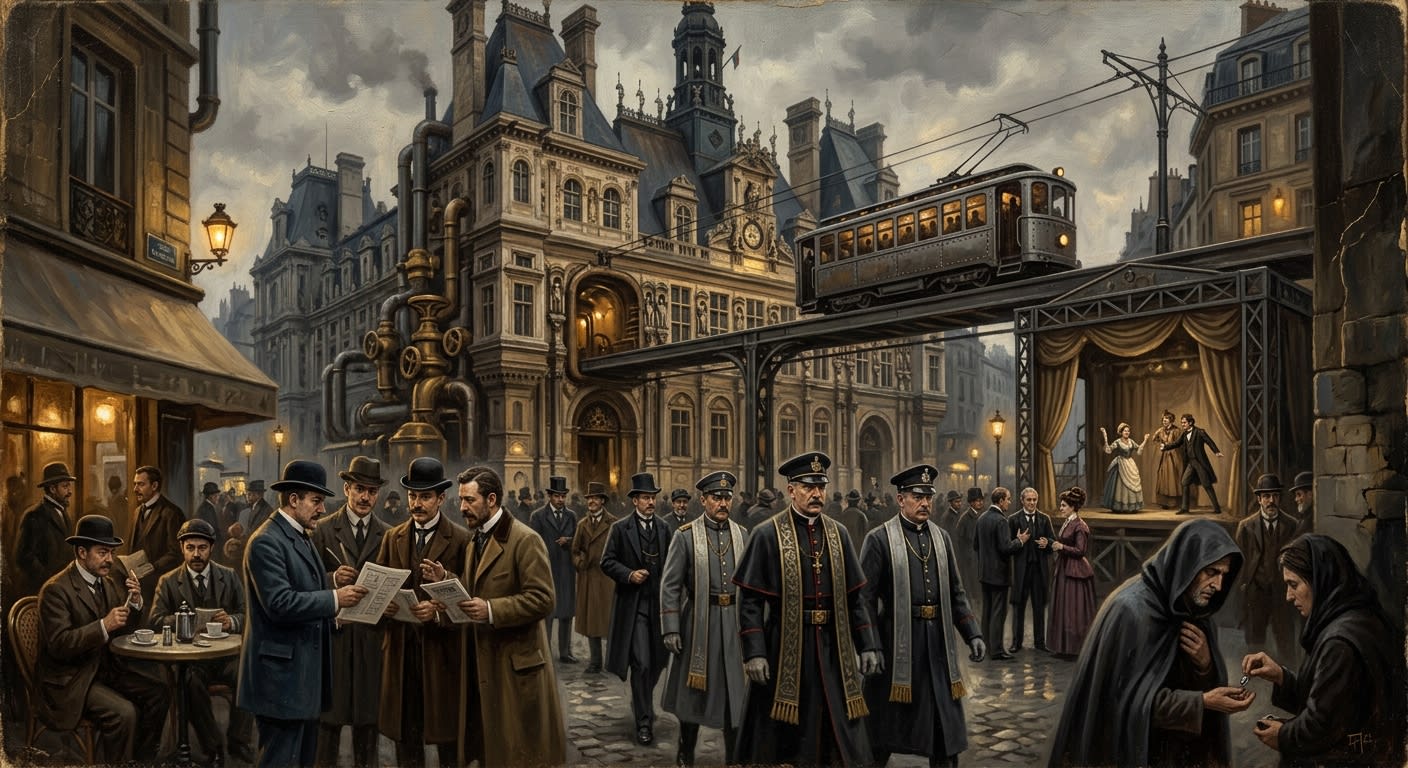
Paris is the western heartland's prettiest argument against trusting beauty. It lies in Zone 1, deep enough behind the Sagittal Line for citizens to speak of the war as if distance were a sacrament, close enough to Strasbourg for every whisper to grow a filing tail before supper. Its boulevards retain their Rationalist widths. Its churches retain their scars. Its cafés retain their talent for making cowardice sound philosophical. Its citizens kneel when required, tithe when counted, chant when watched, and bargain for absolution the moment the warden turns his head.
The Bureau's official line calls Paris a corrected city of the Western Heartlands, loyal under supervision. This is true in the same manner a chained dog is domestic: accurate, useful, and unwise to test with meat.
No other city in the Dominion has so perfected the posture of compliant rebellion. Paris obeys with folded gloves. Paris resents with good diction. Paris has produced martyrs, collaborators, printers, informers, actresses, Rationalist schoolmasters, devotional milliners, false relic brokers, saints by accident, and heretics by lunchtime. A lesser city would choose a character and live inside it. Paris keeps several, sends bills to all of them, and expects applause.
Its streets are beautiful because old regimes liked axes, vistas, parade lines, and the reassuring fantasy that a city can be made obedient by drawing straight roads through crooked appetites. The Rationalists inherited those lines and marched Republican Guards down them. The Synod inherited those lines and marches White-Mantled Inquisitors down them. Paris, that old whore of processions, receives both with pavement polished by blood and shoe leather.
#On the Rationalist Inheritance
Paris did not invent Rationalism. Amsterdam printed the wound. Vienna sat in its powdered arrogance and pretended committees could replace Providence. Ulm drafted fraternity with the suicidal neatness of men who have never heard artillery in a chapel. Paris performed the doctrine.
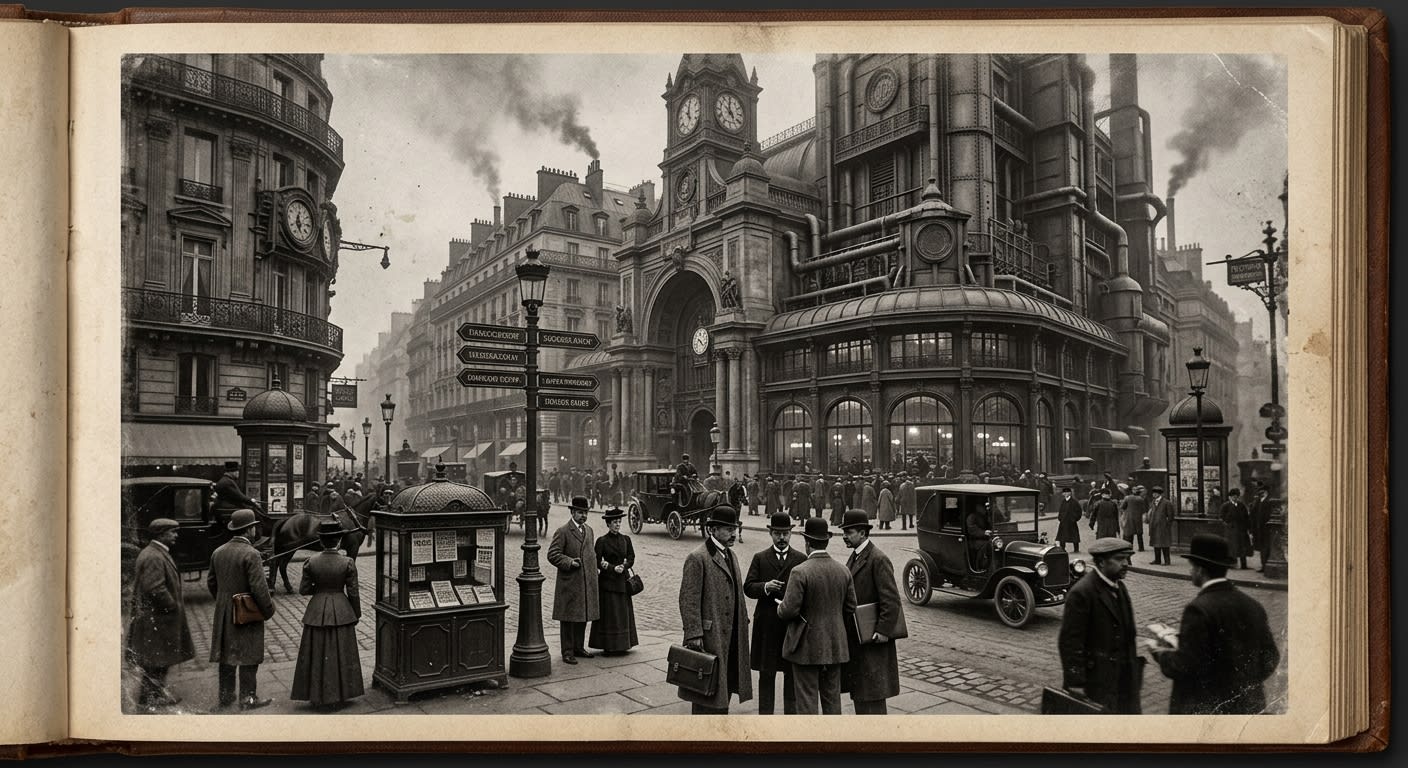
In the first years after De Vera Luce, Parisian salons treated unbelief as table manners. A man could deny relics between fish and roast, praise the Amsterdam Academy over sugared pears, and call the Creator a historical comfort while his hostess smiled as if blasphemy had improved the candles. The learned societies took root in lecture halls, print rooms, private libraries, anatomical theatres, and those narrow rooms above bookshops where wealthy young men first discover that being clever feels like courage until someone arrives with a warrant.
The city's early Rationalists excelled at conversion by embarrassment. They did not always burn a shrine first. Often they laughed at it until its keepers felt provincial. They staged relic examinations. They sponsored public demonstrations of “natural causes.” They printed small catechisms of unbelief in which saints became anecdotes, miracles became errors, prayer became emotional hygiene, and the Church became a superstition market requiring civic audit. This is more dangerous than rage. Rage at least announces itself. Paris taught contempt to wear perfume.
The Concordats of Ulm passed through Parisian desks as through a perfumed chancery. Paris supplied jurists who could make persecution sound like sanitation, schoolmen who could improve a child's vocabulary until the Creator became “inherited abstraction,” and public instructors who later lent their cold grammar to the Triumvirate of Public Instruction. Its academies did not merely attack the altar. They trained the hand that would inventory it.
Provincial histories describe Paris as a secondary recipient of Amsterdam's Rationalist infection.
Corrected. Amsterdam printed; Paris translated print into manners, manners into theatre, theatre into policy. Infection is too passive a word for a city that polished the knife before handing it to law.
Paris loved the word public. Public reason. Public order. Public instruction. Public safety. Public morals shorn of superstition. Public utility. Public festivals cleansed of saints. Once a thing became public, it belonged to magistrates; once it belonged to magistrates, it could be licensed; once licensed, it could be refused; once refused, it could be beaten for appearing anyway. This is not an accident of civic language. It is the grammar of seizure.
The future Synod learned from this. We improved it, naturally. The child should not be blamed for surpassing the father, especially when the father was a damned Parisian with ink on his cuffs and a magistrate's seal in his drawer.
#On the Guards, the Act, and the Paris Prefecture
The Republican Guards did not look like monsters in Paris. That was their genius. They looked like competent young men in blue-grey coats, brass buttons, black belts, and secular certainty. They drilled in squares where old confraternities had once gathered for saints' days. They guarded lecture halls. They cleared processions. They escorted seized reliquaries to civic inventories. They learned the superior cruelty of treating a priest as traffic.
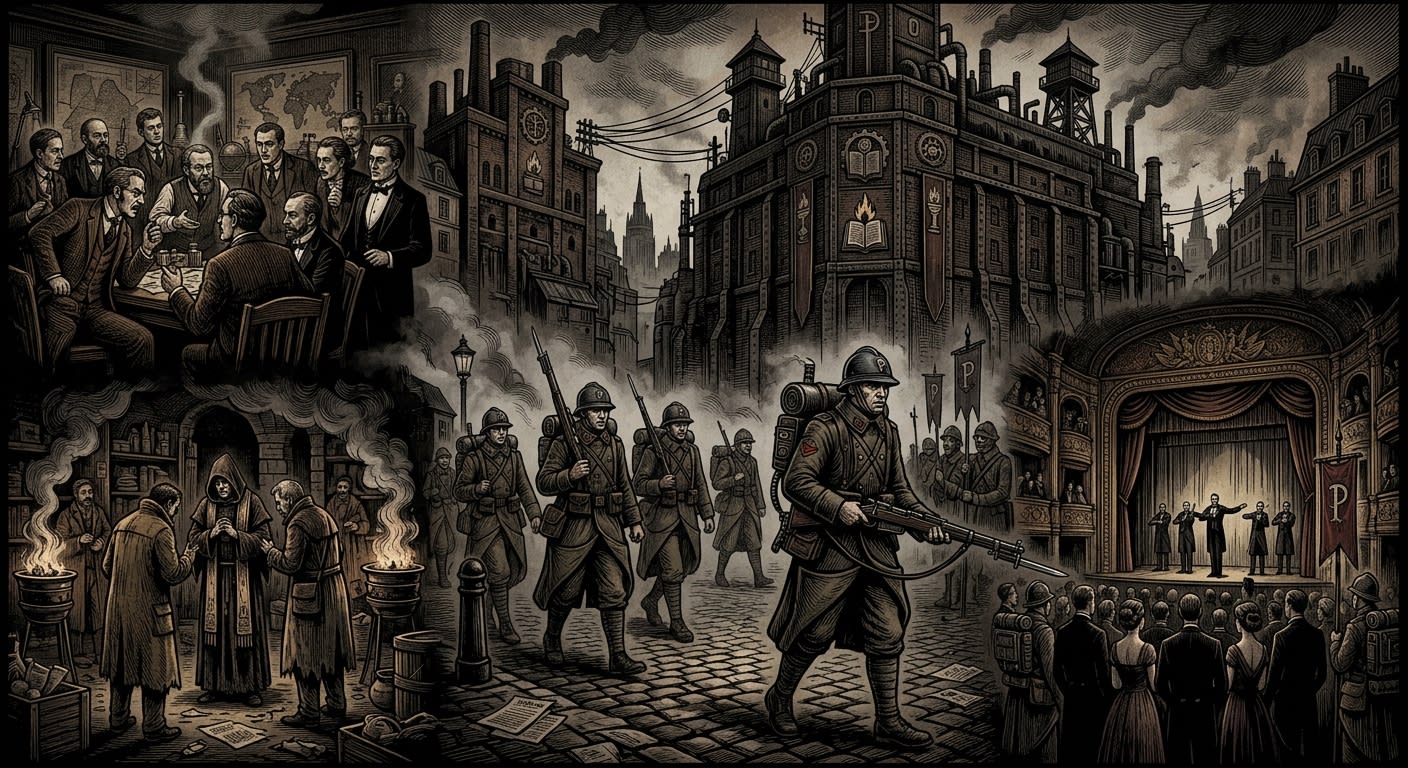
Paris supplied them with manuals, armories, public-order theory, and applause from men who would faint at a slaughterhouse but sign a dispersal order after dessert. The city's prefectural offices became laboratories for lawful contempt. A kneeling crowd was no longer piety; it was obstruction. A hymn was no longer praise; it was acoustic persistence. A relic was no longer a holy vessel; it was object, provenance disputed. The grammar mattered. Men kill more easily when nouns have been softened first.
The Secular Gatherings Act found in Paris its most elegant clerks. The Act's threshold of more than seven religious persons suited the city's appetite for petty measurement. Eight old women became a disturbance if they carried candles. Nine brothers became sectarian hazard if their chant could be heard from the street. A child bearing a saint ribbon could transform a queue into a devotional assembly if the magistrate wished to go home victorious. The city taught law to bend without creaking.
Then came Saint-Malo, and Paris did what guilty capitals do best: it wrote paragraphs.
The Gazette de la Raison called the slaughter a regrettable disturbance. Three other papers blamed superstition, crowd pressure, local weather, Breton stubbornness, and the imprudence of portable bones. Parisian cafés spent four days debating whether pilgrims counted as citizens while the dead were still being washed. If hypocrisy were grain, Paris would have fed the Line for a decade.
The Massacre ignited the Atheist Wars, but Paris did not burn immediately. It calculated. It feared the faithful provinces, then the militant clubs, then the Guards, then the Republic's own committees, then the rumours from the east, then everything at once. Its churches fortified cellars. Its academies armed students. Its magistrates issued contradicting instructions and called the contradiction flexibility. Families learned to host two dinners in one evening: one for Reason in the front rooms, one for old prayers in the pantry.
The Bureau of Doctrine keeps several Paris prefectural memoranda for instructional use. They are masterpieces of panic restrained by punctuation. My favourite notes that “excessive enforcement of assembly law may produce martyrdom effects exceeding acceptable projections.” In plain terms: stop killing so visibly; it makes the dead popular. That is Paris in one sentence, and I resent how good the sentence is.
#On the War Inside the Walls
During the Atheist Wars, Paris did not divide cleanly. No true city does. Clean division is a village fantasy invented by men who can stand on a hill and count roofs. Paris divided by neighbourhood, profession, family, stairwell, room, purse, bed, and hour.
The north printers served Rationalist committees by day and sold banned saint cards at night. River porters carried Republican powder in the morning and smuggled priests under canvas after dusk. Actors performed civic pageants for Reason while hiding chalice silver in costume trunks. Schoolmasters denounced relic fraud, then sent daughters to convent nurses when fever came. Atheism ruled the lecture hall; fear ruled the nursery; hunger ruled the market; memory ruled the old women. The Republic never solved the old women.
PARIS CELLAR DEPOSITION — DOCTRINE ANNEX, PARTIAL Witness reports twelve children taught the Creed beneath a wine shop while Republican Guards searched the floor above. At the word “Creator,” all twelve candles extinguished without smoke. Guard sergeant wrote “draught.” Child witness wrote “He heard us.” Subsequent pages: ███████████████.
The faithful resistance in Paris lacked the splendour of Toledo or the mountain stubbornness of Montreval. It survived through uglier virtues: concealment, bribery, false papers, kitchen routes, roof passages, coded laundry, priest holes behind fashionable mirrors, and the magnificent cowardice of citizens who tell every side enough truth to remain alive. Strasbourg schoolboys prefer heroics. Administrators prefer survivals. A hidden Mass that lasts six years has defeated more law than a glorious charge that dies before breakfast.
Yet the Rationalists held the city's visible organs. They had the courts, schools, papers, guards, theatres, lecture halls, municipal granaries, arrest ledgers, and the smug temporary confidence of men who think possessing the noticeboard means possessing reality. They renamed feast days. They licensed funerals. They registered bells as civic instruments. They weighed confiscated reliquaries and marked saints' bones as material culture. They made the Creator stand in line.
Certain Restoration sermons claim Paris remained secretly faithful throughout Rationalist occupation.
Corrected. Paris remained secretly everything. Faithful, treacherous, practical, frightened, vain, hungry, and available for hire. To call this fidelity would insult the martyrs. To call it apostasy would insult the survivors. The Bureau has settled on Parisian.
The arrival of eastern rumours changed the tone before it changed policy. Refugees spoke of villages stopping correspondence, fog with teeth, machines failing before things that had no respect for physics. Parisian Rationalists initially called the reports plague, then border hysteria, then military exaggeration, then class panic, then impossible. The sequence is preserved in newspapers now kept under Doctrine glass. Each denial is written with decreasing confidence and increasing capitalization.
When Debrecen starved in a single night and the eastern armies began their long collapse, Paris discovered prayer in the way drowning men discover planks. Some returned to churches. Some demanded relic processions they had fined ten years earlier. Some purchased icons from the same black markets they had condemned as fraudulent. The clever called it cultural continuity. The terrified called it hope. The priests, being human and insufficiently petty, accepted them.
I would have made them queue longer.
#On Correction and the Synod's Possession
The Synod took Paris with patience, warrants, sermons, levy mathematics, and that particular smile Strasbourg wears when a proud city discovers its pride has no army left.
After the Sundering and the Great Retreat, the city was too useful to punish as fully as it deserved. Its bridges, printers, warehouses, doctors, schools, luxury trades, river traffic, and talent for paperwork made it indispensable. The Bureau of War wanted its armories. Records wanted its archives. Purity wanted its names. Doctrine wanted its pulpits. Tithes wanted everything else. Mercy wanted the children, hospitals, and excuses. Paris, having survived Reason, now had to survive salvation.
The early Correction avoided theatrical annihilation. No sensible administrator burns a revenue engine because it once printed blasphemy. Instead, the Synod occupied the ministries, sealed the academies, inventoried the printers, re-consecrated churches, arrested visible theorists, recruited invisible clerks, and left most streets exactly where they were. Continuity is the gentlest form of conquest and the hardest to denounce, especially when the bread queues continue.
The black-market absolution trade began almost immediately, as all intelligent vices do, by identifying a bureaucratic delay and selling a quicker sin. Paris had too many returned believers, too many compromised collaborators, too many families with Guard cousins and cellar-priest mothers, too many wills requiring moral laundering, too many marriages that had occurred under secular forms, too many children baptised twice or not at all, too many bones in municipal collections waiting to become relatives again. Official absolution required queues, investigation, confession, fee assessment, witness correction, and public penance. The market offered stamped comfort by Friday.
Counterfeit indulgences circulated in folded fans, glove linings, theatre programmes, pastry boxes, and the false bottoms of hymnals printed in tasteful type. Some were crude. Some were better than Bureau stock. One series bore a forged Della Torre seal so fine that the Bureau of Purity used it to train mantle examiners before burning the forger. Another carried a tiny error in the Triune Knot visible only under oathglass; customers paid extra for it because Parisians will pay extra for rarity even when purchasing fraud against the Almighty.
Purity responded with raids, public burnings, confession amnesties, sting booths, theatre informants, and the usual speeches about spiritual hygiene. The trade survived because guilt is inexhaustible and Paris is gifted at packaging. By A.S. 112, after Levy agitation and ration pressure hardened the city's nerves, illegal absolution slips had become secondary currency in several districts. A man could buy bread with one if the baker's son had served in a Guard cohort. The Bureau of Tithes attempted taxation. This was tactically vulgar and, I admit, visionary.
#On the Candle Riots and Other Polite Fires
Paris burns beautifully. This is not praise. It is a logistical note.
The Candle Riots began in the western parishes after Purity inspectors seized unsanctioned vigil candles imported through Dutch merchants and relabelled as domestic devotional wax. The candles were small, pale, sweet-smelling, and allegedly mixed with bone dust from unregistered martyrs. Parisian widows liked them. Parisian widows, when interfered with collectively, possess the operational density of siege infantry.
The first seizure occurred at Saint-Laurent-des-Quittances, a parish so poor its altar cloth had been patched with flour sacks and so proud it kept the patches symmetrical. Inspectors found three hundred illicit candles beneath the sacristy stair. By evening, four streets were chanting. By midnight, two Purity wagons had been overturned, one candle broker had been hanged by his own ribbon inventory, and a ward-preacher had blessed the crowd by accident while trying to calm it. The official casualty count is nine. The hospital count is thirty-one. The street count, which includes men who died later of being remembered incorrectly, is higher.
The Paris Candle Riots are sometimes described in Tithes summaries as a tariff protest.
Corrected. They began as a seizure dispute, became a widow action, acquired devotional claims, attracted smugglers, offended Purity, embarrassed Tithes, and ended as a sermon about obedience. Tariff protest is what one writes when the truth refuses to fit a column.
The riots taught the Bureau three lessons. First, devotional contraband cannot be treated as ordinary smuggling when grief is attached. Second, widows should be dispersed before sunset or invited to serve on committees, which is the same tactic with chairs. Third, Parisian crowds require aesthetic management. A baton line in a dull street creates anger. A baton line in candlelight creates memory.
After the Candle Riots came the Mirror Penance scandal, the Rue des Faux-Saints raids, the Little Regensburg Dinner prosecutions, the black-market relic teeth affair, the Left Bank whisper licence strike, the Theatre of Saint Nobody closure, the Eighty-Seven Fans seizure, and the annual miracle of all municipal authorities professing surprise that sin persists in a city famous for commerce.
Paris's vices are not eastern. That is the city's defence and its accusation. No Sin-General sits outside its gate. Velkara has admirers everywhere, of course, and Paris produces flirtation the way swamps produce flies, but the city's true corruption is bureaucratic, social, domestic, graceful. It does not howl. It makes appointments.
#On the River, the Markets, and the Art of Being Useful
The Seine runs through Paris with the exhausted dignity of a clerk carrying too many sealed pouches. It has borne saints' candles, Guard ammunition, printer's bales, broken chapel benches, drowned informants, widows' flowers, counterfeit indulgence slips, and enough municipal sewage to make even the Bureau of Mercy speak briefly and leave the room. Rivers forgive nothing. They transport. Forgiveness is a parish fiction; movement is the older law.
Paris's markets cling to the river because commerce, like sin, prefers a route with exits. Les Halles remains the city's stomach and rumour organ: fishwives with ears sharper than Purity knives, porters who know which convent cellar still stores unregistered wax, cheese brokers who can recite three generations of Guard collaboration while pretending to haggle over rind, knife-grinders who sharpen for cooks, actors, wardens, and men whose work has no posted sign. Every crate arrives with two inventories: one for the gate, one for the buyer. A third exists in memory, which is why Purity distrusts merchants almost as much as it distrusts poets.
The black-market absolution trade survives through these ordinary arteries. A fish invoice hides a penance note. A bolt of mourning cloth carries stitched confession formulae. A pastry box with thirteen sugared almonds means a private confessor is available after Curfew. The almonds are terrible. I mention this because even sin should maintain standards, and Paris grows careless when admired.
Bureau raids seldom catch the centre. They catch edges: runners, copyists, anxious clients, retired clerks, failed actors, glove sellers, one splendid old woman who ate three absolution slips before the White Mantles reached her table and then demanded water as if martyrdom were a digestive complaint. The brokers themselves shift names, rooms, saints, prices, and confessor costumes. Some employ real priests. Some employ men with memorized cadences and convincing arthritis. One ring used a trained parrot to repeat the absolution formula from behind a screen; seven clients reported spiritual relief. Doctrine still debates whether the relief counts. I have recommended shooting the parrot's owner and promoting the bird.
Theatre districts add their own varnish. Parisian stages survived Rationalism, Correction, Purity raids, sermon quotas, and three separate attempts by Doctrine to replace comedy with instructional tableaux. Actors are vermin with diction, but even vermin can carry messages through walls. A line misquoted at the second performance becomes a signal. A hat worn in the wrong act marks a meeting. Applause after a forbidden pause can condemn a row before midnight. Purity attends every premiere. Shadows attends every rehearsal. The audience attends for pleasure, danger, fashion, and the hope that someone else will be arrested first.
The old bridges are worse. Bridges make witnesses. Lovers meet there, debtors hesitate there, students exchange pamphlets there, priests cross quickly there, and informants lean on parapets pretending to enjoy water. The Pont des Martyrs bears seven approved plaques and at least nineteen scratched counter-memories beneath the rail. Each month city crews polish them away. Each month they return. Paris has many faults; laziness in resentment is not among them.
This usefulness protects the city from the punishment its manners solicit. Strasbourg needs Parisian doctors, glass, theatre informants, printers, tailors, bridge engineers, dye houses, instrument makers, appetite brokers, surgeons, translators, and liars with clean handwriting. War can hate a workshop and still place orders. Doctrine can condemn a theatre and still borrow its cadence for public rites. Purity can raid a market in the morning and purchase lunch there by noon. Such is governance: disgust seated beside procurement, both eating from the same plate.
#On the Present City
As of A.S. 201, Paris is loyal, productive, watched, and unrepentant in all the ways that do not fit charge sheets. Its population remains vast by western standards, though exact figures vary according to whether one counts registered citizens, temporary workers, undocumented penitents, theatre households, dissolved shadows, parish poor, students under Doctrine licence, and the dead whose ration books remain oddly active in three districts. Records gives one number. Tithes gives another. Mercy gives a third and cries over it. Paris gives none and charges for the inquiry.
The Bureau of Purity maintains a heavy visible presence: white mantles at market gates, confessor booths near theatre doors, licence inspections in print districts, candle audits before feast days, speech wardens in schools, and plainclothes listeners in cafés where the coffee is strong enough to raise treason from respectable men. Doctrine holds the academies by the throat but permits enough lecture to keep physicians competent and engineers less stupid than courage would make them. War purchases instruments, boots, lenses, medical kits, artillery springs, and maps from Paris workshops while pretending not to enjoy the quality.
The black-market absolution trade continues under new names. Spiritual consultancy. Private reconciliation. Domestic penance arrangement. Widow's expedited clearance. Mourning certificate repair. Paper flowers tucked inside missals mark the booths. A blue ribbon in a pastry-shop window means indulgence stock. A cracked saint medallion on a glove seller's tray means confessor available after curfew. Purity knows. Shadows knows. Tithes knows and, if my suspicion is correct, has at least twice attempted to standardise the fee schedule.
The people of Paris remain expert at public obedience and private subtraction. They attend processions. They under-sing. They tithe. They round down. They applaud sermons. They quote the older version. They host Bureau officials. They seat them facing draughts. They light approved candles on feast days and keep illicit stubs in drawers for the dead who refuse Synod spelling. They do not rebel because rebellion is vulgar, expensive, and usually led by men with poor boots. They endure, conspire, decorate, sell, remember, and smile.
PURITY HOUSE REPORT — PARIS WESTERN DISTRICT, A.S. 200 Subject: counterfeit absolution slips bearing valid ink-age. Raid recovered: █████ slips, █████ seals, █████ child-copyists, one ledger listing purchasers by sin rather than name. Margin note in unknown hand: “Names are less stable.” Follow-up jurisdiction: ███████████.
Paris's churches are full. This consoles the pious and alarms the competent. Full churches mean faith, fear, fashion, cold weather, excellent music, surveillance avoidance, and the old Parisian instinct to be seen where the next regime might ask who was absent. The Bureau counts attendance with satisfaction. I count it with a pencil sharpened on both ends.
At dusk the city turns gold along the river. Bells move over the roofs. White mantles gather near the markets. Students leave licensed lectures with mouths full of approved terms. Widows buy candles with exact coin. A broker folds absolution into a fan. A priest hears three confessions and believes one. A printer locks his lower drawer. Somewhere behind a fashionable wall, a family says an old prayer in a voice too soft for doctrine and too stubborn for peace.
Paris kneels. Watch the angle.