
#On the Short Name and Its Teeth
The Bureau of Orison is the field name, the clenched name, the name spoken by men who have no leisure for the full ceremonial throat-clearing of the Bureau of Orison and Song. In Strasbourg ledgers, chapel placards, charter rolls, and public catechisms, the Bureau bears both nouns, because Song flatters the choir-stalls and reassures mothers that the institution licensing their lullabies has retained some remote affection for melody. At the Line, where hymns carry orders, static carries hunger, and a wrong syllable can turn a trench inward, soldiers shorten it.
Orison. Prayer made procedure. Voice made custody. Sound made law.
This abbreviation is unauthorised in polite stationery and universal in useful speech. A clerk writes Bureau of Orison and Song. A Dustcaster coughing bone into his hand writes Orison. A Paladin captain under Silence Dome conditions signals Orison with two fingers to the throat and one to the ear. A Litany-Engineer filing silent-performance variants of the Counter-Sorcery Verses sends them to Orison, because a man covered in powder and wall-dust has earned economy.
#On Charter, Breath, and Jurisdictional Vanity
The Bureau's charter belongs to A.S. 92, in the first hard years after the Concordat of Strasbourg, when the Synod learned that a government can conquer land with writs and lose it again to a song hummed in the wrong alley. Its public inscription remains one of the cleaner obscenities in the capital: The saints carried the Word through death. Their dust carries it through static. I admire the sentence. It converts corpse powder into communications policy before the reader has time to object.
The Bureau claims ancestry older than its seal, and in this, as in many boasts, it is partly right for the wrong reasons. Voice was weaponised before the charter. Bellways carried command before departments learned to invoice each other for holiness. Choirs steadied work gangs, executions, and garrisons while the Bureaus still wore improvised names. A.S. 92 did not create the Bureau's appetite. It gave the appetite a desk, a seal, and enough clerks to call hunger governance.
The Bureau of Bells governs bronze, clapper, sequence, alarm, burial, muster. Orison governs breath, hymn, broadcast, cadence, licensed silence, and the useful lie that a spoken order becomes purer when pushed through saint-dust. The frontier between bell and voice is contested with the pettiness proper to sacred administration. Bells says sound begins at the strike. Orison says sound begins at intention. Doctrine says both are true when properly paid for. Records asks where the filing line is and receives three answers, each bearing a different seal.
Several field manuals refer to the Bureau of Orison as a minor vocal office subordinate to Bells during emergency peal operations.
Corrected. Orison is co-equal in all matters involving licensed voice, transmitted prayer, choir apparatus, and acoustic countermeasure. Bells may ring the hour. Orison decides what the hour says while entering the skull.
#On Licensing Every Breath Worth Hearing
Orison's first power is permission. Every hymnal printed inside the Synod's writ requires a serial mark. Every public choir requires a licence. Every devotional broadcast requires a Clean Carrier certificate. Every work-song in a foundry, every calibration chant at Essen-of-Hymnsteel, every ward lullaby approved by Mercy for institutional sleep, every funeral cadence, punishment drone, marching psalm, Sky-Sermon, ration notice, and curfew roll belongs to the Bureau's ear.
The Orison Licensing Acts of A.S. 94 completed the transformation of sound into property. They placed every melody, cadence, and whistled work-bar under Bureau jurisdiction: licensed or criminal, no middle category, no appeal. The placard read: Rhythm is a leash. It remains one of the few enforcement slogans improved by bluntness.
Unauthorized melodies are prosecuted as tongue-crime. The Unauthorized Melody Smuggler carries what Orison failed to kill: lullabies with decent intervals, dock chants that keep labourers human, grief songs older than the Concordat, counting-rhymes whose very usefulness made them suspect. Tone Inquisitors hunt them with calibrated forks and bait-cadences. A woman who hums along to comfort bait may lose her tongue for recognising comfort faster than Doctrine.
The Bureau insists this cruelty is protection. It is, in the way a locked collar protects the neck from drafts. Certain intervals do attract hostile attention. Certain counter-hymns do turn prayer into appetite. Pale Chanters have made discipline curdle inside whole companies. The conclusion Orison drew was not modest caution. Modesty is foreign to offices with spires. It made itself master of permitted sound.
#On Broadcast, Dust, and the Lung-Tithe
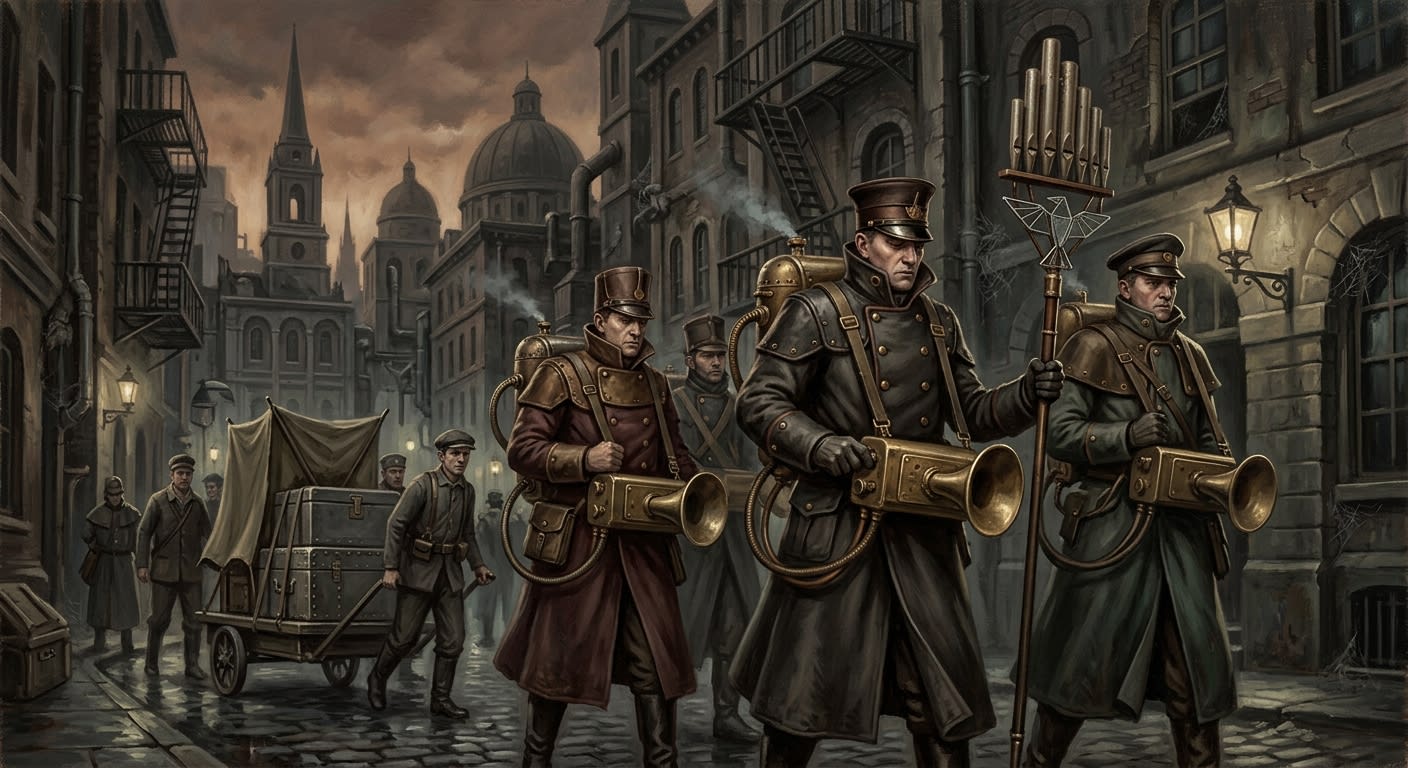
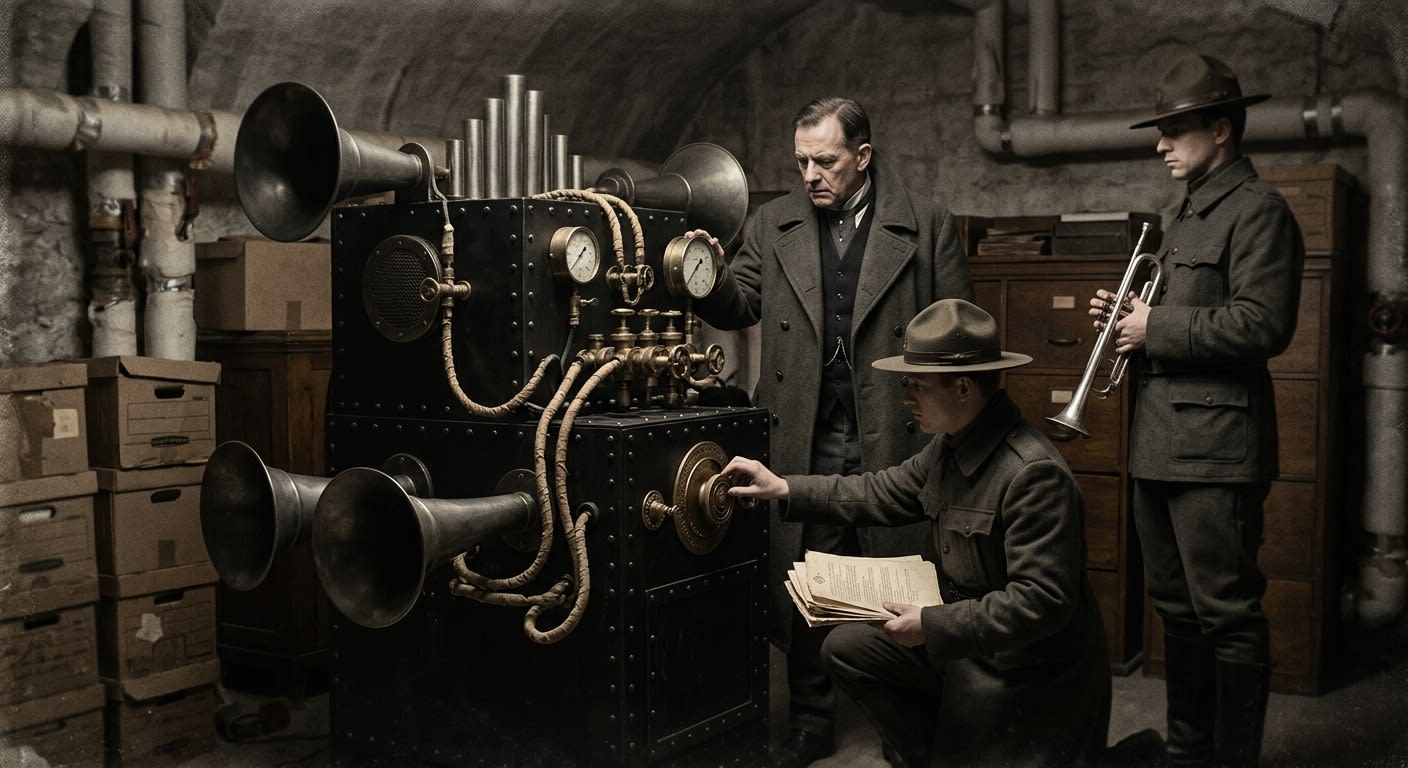
The Broadcast Directorate is Orison's long arm. Its Orison Signal Engineers—Dustcasters, Choirwires, Saint Snorters, Broadcast Liars, all accurate titles in their vulgar ways—keep the Synod's voice intact over distance. Between Strasbourg decree and trench receiver lies copper, wax, hot coil, relic residue, guard band, cadence spine, prayer packet, and a man breathing carefully because the apparatus that preserves the signal is slowly converting his lungs into a reliquary.
Saint-dust is the Bureau's proudest poison. Bone ash from authenticated relic stock, sanctified salts, grave wax, powdered martyr-scrap from whatever shrine exploded within salvage reach: the substance is graded, stamped, thinned, traded, stolen, breathed, cursed, and defended in committee as though Heaven itself were a warehouse with poor ventilation. Laced into carrier signals, it resists inversion. Often. Enough. The phrase it works has ruined every ethical objection in the Church's lands.
The Orison Hour is the Bureau's daily pulse-taking of Europe. Prayer, ration adjustment, casualty roll, curfew amendment, feast correction, and moral cudgel arrive as one packet. Kitchens wait for it. Work gangs march after it. Sky-Sermon Attendance Auditors count bodies exposed to it. Mothers set infants down at its first tone, because even crying must learn precedence.
A clean Orison Hour steadies districts. A dirty Orison Hour fattens Hell. One inverted ration notice can make a ward riot around bread. One corrupted casualty roll can teach widows to answer dead husbands through a receiver. One clean-looking packet with a name under the third verse can empty a fog tower into the harbour.
#On Silence, Domes, and Co-Custody
Orison's second power is the governance of absence. This sounds paradoxical only to readers who have mistaken silence for emptiness. Silence is a territory. Silence is an appetite. Silence is where the Enemy signs with invisible ink.
The Silence Dome Pass bears the Seal of Orison because sound-death is a liturgical hazard before it is a marching inconvenience. Within a Dome, bells stumble, orders expire at the teeth, screams return as private sighs. Soldiers learn hand-shapes, mirror-code, rope-tugs, lantern shards. They pray with fingers because the tongue has been made irrelevant, a punishment the tongue richly deserves but rarely survives.
The Counter-Sorcery Verses forced Orison into a subtler custody. In open air, the Verses belong chiefly to Engineering: charge, fuse, chalk, breach-side earth. Under Dome conditions, their silent-performance variants belong partly to Orison, because a prayer that functions without being heard is either the highest form of liturgy or a technical violation so beautiful it requires ownership. At Belgrade Courts, when a Dome covered three miles and Paladins froze mid-lock, Litany-Engineers scribbled absolution-math across mud and kept charges obedient without audible sound. Orison claimed jurisdiction before the mud dried.
Earlier Orison memoranda described silent-performance variants as “non-vocal and outside Bureau interest.”
Revised after Belgrade Courts. Voice may persist as pressure, pulse, jaw vibration, chalk drag, or ordered breath. The absence of sound no longer excuses the absence of an Orison seal.
FIELD CUSTODY NOTE — SILENT VARIANT REVIEW Three Engineers recited no audible line. Charge answered on Verse Seventeen. Orison observer reported pressure against both eardrums despite Dome-null reading. Observer later hummed sealed cadence during sleep. Room quarantined. Bed burned. Observer retained for further usefulness.
#On the War Directorate
The War Directorate proves Orison's central vanity: sound can command matter if enough bodies are placed between theory and result. The Sunken Choir is the ugliest proof. Calibrated vocal cohorts—boys, if accuracy is still permitted in some unwatched alcove—are surgically tuned into drone chambers beneath armour and mud-screw casing. Their note travels through soil. Enemy saps collapse. The Bureau files a success. Mercy files an objection. Conscription files supply.
The Vigil Arks broadcast sky-sermons over the Line. The Bellways carry approved cadence to garrisons. Chorus Absolvers rattle teeth and rupture lungs under vox-relic load. Processional Bands regulate tempo for shield, charge, ash, and volley. Orison's War officers speak of acoustic envelopes, field reach, carrier corruption, and morale compression with the tender abstraction of men who do not stand where their phrases detonate.
Enemy variants shape the Bureau's countermeasures. Syrion deadens will with sleep-fog and slow cadence; Orison overlays stimulant hymns until operators bleed from the nose. Morwen copies, mirrors, returns; Orison keys cadences to saint-dust signatures that a copy cannot easily imitate. Velkara threads desire through perfume and suggestion; Orison answers with obligation hammered into melody. Atheron makes pride listen only to itself; Orison has yet to solve this, though it has generated beautiful circular memoranda.
#On the Bureau's Present Condition
As of A.S. 201, Orison governs from the Cloister of Calibrated Breath in Strasbourg, with satellite houses at every major bastion, broadcast tower, industrial calibration site, port fog station, and choir-engine depot. Its personnel include Cantor-Scribes, Hymnal Auditors, Stanza Marshals, Orison Signal Engineers, Broadcast Provosts, Tone Inquisitors, Calibration Cantors, War Choirmasters, Sky-Sermon compliance clerks, and a Voice Prelate whose office changes occupant often enough that Records treats the title as more stable than the person.
The Bureau's current terrors are familiar and poorly solved. The Mirror Choir inserts micro-discords into approved sequences, making sabotage look like fatigue and heresy look like bad tuning. At Bastion-Königsberg, the Grey sings scheduled hymns before broadcast, which means either interception, prophecy, or an office leak with metaphysical ambitions. Along the Line, Pale Chanters tangle sky-sermons into counter-hymns. In the ports, saint-dust reservoirs strain under demand while Crumble-Wrong threatens to teach receivers to hear the dead beneath official voice.
The short name remains illegal in formal address and indispensable everywhere that matters. Bureau of Orison and Song is what the seal says. Bureau of Orison is what a frightened captain writes on a request for counter-hymn support when the receiver has begun whispering his childhood name. Song is for halls. Orison is for war.