

Counter-Toll Operator
#On the Necessity of Drowning
"The Synod's tone is the only true tone; all other bells are lies wearing metal." — Bureau of Bells, Charter Supplement, A.S. 147
The Bureau of Bells maintains eleven thousand four hundred bell-masters across the Dominion, a fact recorded in the most recent charter audit and repeated here because some truths, like some peals, improve through repetition. What the charter audit does not record — what the Bureau has, with characteristic precision, declined to enumerate in any publicly filed document — is the number of Counter-Toll Operators stationed in the sub-tower vaults beneath those bell-masters' towers. The figure is classified. That it is classified tells you more than the figure would.
I shall explain, because the Bureau will not, what a Counter-Toll Operator does. He sits in a vault. The vault is beneath a bell-tower, lined with brass resonance plates and smelling — perpetually, irremediably — of hot oil, chalk dust, and the particular species of human sweat that accompanies sustained sonic pressure. His tools are a dominance console — a mechanical timing wheel meshed with multi-bell arrays and strike actuators — a set of wax-seal authority slugs, and his own throat, which serves as the final authentication in a chain of command that begins at the Bureau's ninth floor in Strasbourg and ends in his larynx. He overwrites hostile tones. That is the entire occupation. That is all of it. If you require elaboration, you have already missed the point, but I shall elaborate regardless, because elaboration is the Bureau's native currency and I am nothing if not denominationally fluent.
#On Hostile Tone, and Why Sound Is a Border
The Sagittal Line is defended with steel, hymn, ink, and bronze. The first three receive their due in every martial dispatch filed by the Bureau of War. The fourth — bronze — is the Bureau of Bells' dominion, and the Bureau guards that dominion with the paranoia of an institution that understands its weapon cannot be seen, cannot be stored, cannot be inspected after deployment, and yet governs the movement of three million soldiers and forty million civilians with a precision that makes the Bureau of Tithes' tax schedules look like casual suggestions.
The Bellways — those overlapping networks of peal corridors stretching from the Chalk Redoubt of Calais to the Aegean — are the Synod's acoustic skeleton. First Bell for stand-to. Third for push. Fifth for repentance. Ninth for curfew. Between each peal, the citizen breathes. The Bureau of Doctrine permits seven seconds of timing deviation. The Bureau of Bells enforces this with lethal enthusiasm. The system works because the system is the only sound in the room. When another sound enters — a foreign peal, a rebel chime, a hymn rung from a bell the Bureau did not license — the skeleton fractures. Crowds move to the wrong rhythm. Convoys halt at the wrong gate. Curfew falls at the wrong hour, and the streets fill with people who ought to be locked behind doors, staring at a sky that offers nothing but the particular darkness that comes when authority loses its voice.
Sound, I must emphasise, is a border. A wall stops a body. A checkpoint stops a man who lacks the correct stamp. A bell stops everything — movement, commerce, prayer, sleep, thought — and redirects it according to the schedule inscribed in the Bell Codex. When the enemy — and the enemy here includes rebel cells, foreign polities, and certain categories of demon whose acoustic capabilities the Bureau classifies under seal — injects a counterfeit peal into a Synod city, the result is a breach as real as a gap in a bastion wall. The body passes through a wall. Meaning passes through a corrupted bell schedule. And meaning, once redirected, brings movement, then commerce, then loyalty, then the particular species of quiet that precedes a catastrophe the Bureau will later stamp as "isolated."
The Counter-Toll Operator exists to close that breach. He does it with volume.
#On the Founding, and the Night of Borrowed Curfew
The Bureau did not always employ Counter-Toll Operators. For the first decades of its existence — from its founding charter of A.S. 115 through the first decades of the Bellway expansion — the Bureau assumed its bells were the only bells worth hearing. Foreign sounds were a nuisance; local dissent was silenced by the Bureau of Purity's more direct methods; and the acoustic charts maintained in Strasbourg listed every licensed peal from the Baltic to the Mediterranean with the confidence of an institution that had never been contradicted at volume.
The Night of Borrowed Curfew corrected this assumption. The date varies depending on which Bureau one consults — the Bureau of Bells files it in A.S. 134; the Bureau of Records files it in A.S. 136; the Bureau of War files it under "Pending Classification," which is the Bureau of War's way of saying "we do not wish to discuss this." A foreign peal — origin unknown, tonal signature unmatched in the Codex — entered the bell-grid of Cologne and rang a curfew three hours early. The city obeyed. Doors locked. Streets emptied. Market stalls shuttered. The garrison stood down. Into that silence, through streets swept clean of witnesses by the Bureau's own scheduling, something moved. I shall not specify what. The Bureau has sealed the casualty report. The number is in the hundreds. The Bureau of Engineering's assessment of the structural damage has been filed alongside the Bureau of Rites' assessment of the spiritual contamination, and both agree on a single point: the foreign bell did not break the city's walls. It broke the city's obedience, and obedience, once broken, does not mend with mortar.
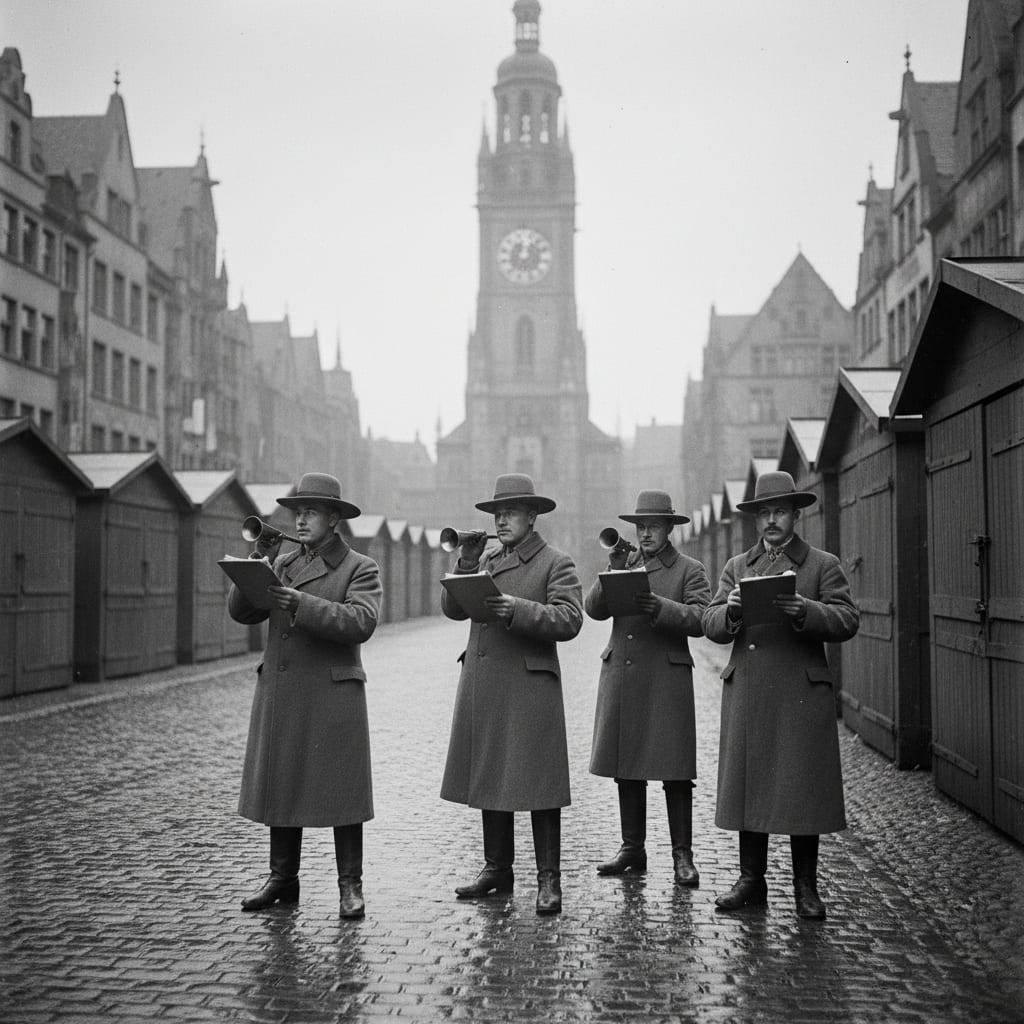
The Counter-Toll Corps was chartered within the year. Canon Veyl, a bell-master of considerable lung capacity and limited diplomatic instincts, was appointed its first commander. His method was simple: when a foreign bell rang, he rang louder. When a hostile tone entered a corridor, he flooded the corridor with sanctioned patterns until the hostile signal drowned. When his subordinates asked whether drowning a corridor might cause panic in the civilian population, he replied that panic under Synod authority was preferable to calm under the enemy's, and he was promoted on the strength of that answer alone. His nickname — Iron Throat — persists in the Corps to this day. His tuning fork is mounted in a glass case on the seventh floor of the Bell Tower. Recruits are required to salute it.
#On the Method, and the Escalation of Mercy
A Counter-Toll deployment follows a doctrine the Bureau calls "graduated dominance." I call it theology by decibel.
The Operator identifies the hostile tone: source direction, cadence signature, resonance footprint. This is the listening phase, performed by the Operator's own ear as much as by mechanical instruments — the Bureau has those, clumsy things of stretched wire and resonance plates that register about as much nuance as a ledger-clerk registers charity — trained through years of drill to distinguish a Ninefold Matins from a forgery by the third stroke. A veteran can tell, I am assured, whether a distant bell was struck by iron or by bronze, by hand or by mechanism, by a faithful bell-master or by something that has learned to imitate one.
The Operator selects an overwrite doctrine — a dominance pattern paired with a harmonic mask — and confirms his authority by speaking a phrase into the console. The phrase changes daily, keyed to the bell schedule. It is spoken rather than written, because the Bureau learned at Metz that written authentication can be forged; a voice, the Bureau maintains, cannot. This is untrue. But the Bureau maintains it with the tenacity of an institution that would rather lose a corridor than lose a principle.
The overwrite deploys in escalating bands. Soft drown — a corridor-local suppression that smothers the hostile signal beneath a blanket of sanctioned peals. If the signal persists: hard dominance, extending to the district, loud enough to rattle windows and shake the brass dust from ceiling joists. If hard dominance fails — and it does fail, because the things that ring foreign bells in Synod cities are not always deterred by volume — the Operator may request a full district wash, which is the acoustic equivalent of burning a village to deny it to the enemy. After a full wash, the citizenry does not need to be told the Synod's bells are the loudest. Their eardrums have received the catechism directly.
The Operator then logs the event, certifies the corridor as "clean dominance," and drinks the bitter oil-tea that Counter-Toll crews consume in quantities that would concern the Bureau of Medicine if the Bureau of Medicine had jurisdiction in the sub-tower vaults. The Bureau of Medicine does not. The Bureau of Bells handles its own.
#On Bell-Sickness, and the Cost of Dominance
The toll is paid in bone and nerve.
Counter-Toll Operators develop a condition the Bureau classifies as "Sustained Resonance Exposure Syndrome" and everyone else calls bell-sickness. The symptoms arrive in stages. Phantom peals first — the operator hears bells that are not ringing, bells that rang three days ago, bells that will ring tomorrow. Then compulsive cadence: the fingers tap the desk in rhythms the operator cannot identify, the jaw clenches to patterns the operator cannot stop, the teeth grind in sequences that match, according to the Bureau of Engineering's analysis, no known liturgical schedule but which correlate — at a rate the Bureau of Records has declined to publish — with the frequencies of hostile tones the operator has previously drowned.
The final stage is the one that retires them or kills them. The operator becomes unable to tolerate silence. The absence of sound — the natural, organic absence that healthy ears regard as rest — becomes intolerable, a roaring void that the operator fills by striking whatever is nearest: a desk, a wall, his own skull. The Bureau calls this "terminal cadence dependency." The operators call it "going brass." The cure is reassignment — to the foundry, if the operator retains fine motor control, or to the tunnels, if he does not, or to the Paper Mines of Ulm, if his bell-sickness has expressed itself in ways the Bureau considers doctrinally inconvenient.
Four-month rotations are mandated. The mandate is ignored at every bastion on the Line. Bastion-Shipka rotates Counter-Toll crews on a six-month cycle and produces men who count their heartbeats as bell-strokes. Bastion-Irongate rotates on eight months and does not discuss its casualty figures. Constantinople, where the twenty-three bells of the carillon and the unclassifiable sequences from the Third Ossuary create an acoustic environment the Bureau itself admits is "doctrinally saturated," rotates Counter-Toll crews on three-month cycles and still loses an average of two operators per year to permanent bell-sickness.
The Bureau filed its most recent internal review of Counter-Toll rotation policy in A.S. 199. The review recommended shorter rotations, better ear-masks, and a pension programme. The Bureau's response to its own review was a single stamp: "UNDER ADVISEMENT." I have that stamp framed above my desk, beside the Archon's tuning fork. They complement each other. Both vibrate with promises that will never be kept.
#On the Mimic, and What Listens
There is a species of hostile tone the Bureau does not classify in its public taxonomy.
The profession calls it a ring-back. The Bureau calls it "Echo Cadence, Category Unspecified." The operating procedure when a ring-back is detected is to stop all overwrite activity immediately, seal the vault, and summon a Dominance Marshal. The operating procedure does not explain why. I shall.
A ring-back occurs when a hostile tone matches the Synod's cadence. The Operator deploys an overwrite. The hostile signal does not drown. It mirrors. It copies the overwrite pattern and sends it back at the same volume, the same frequency, the same cadence — perfect, precise, and impossible, because the overwrite pattern was generated by the Operator's console using a rotating key that changes with every deployment. To mirror it, the source would need access to the Bureau's own pattern sheets. Or the source would need to be listening inside the Operator's console. Or the source would need to be something that does not learn cadences but is cadence — something that wears the sound of sanctioned bells the way a Veil-Stalker wears shadow, the way a Pale Chanter's corrupted hymn wears the shape of prayer.
Earlier editions of this entry described the ring-back phenomenon as "extremely rare."
This was inaccurate. The phenomenon is extremely classified. The Bureau of Bells has recorded forty-seven ring-back incidents since A.S. 178. Thirty-one occurred at front-line bastions. Sixteen occurred in Synod heartland cities. Three occurred in Strasbourg. The Bureau's position is that the Strasbourg incidents were "calibration anomalies." The Counter-Toll crews who experienced them have been reassigned to duties that do not involve bells, sound, or proximity to other human beings.
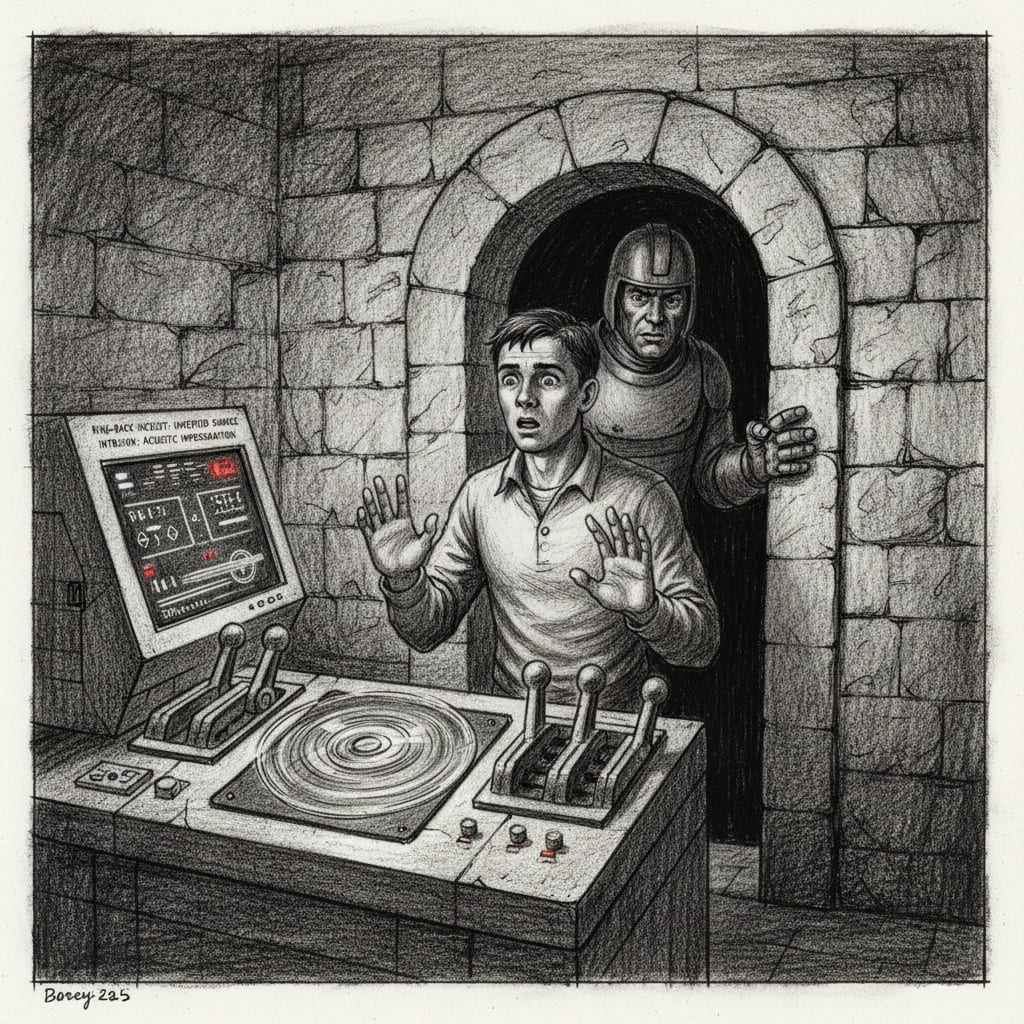
The Mimic Incident — the Bureau's sanitised label for the event that prompted the introduction of rotating "living keys" (voice-phrase confirmations keyed to the Operator's own larynx rather than to written authentication) — occurred at a bastion the Bureau has not named, in a year the Bureau has not specified, under circumstances the Bureau has described only as "a hostile tone that copied official patterns with sufficient fidelity to redirect garrison movement for seventeen minutes before Counter-Toll intervention restored cadence." Seventeen minutes. A garrison moves on bell-time. Seventeen minutes of enemy-directed movement in a bastion on the Sagittal Line is a breach. The Bureau sealed the report. The Bureau introduced voice-phrase authentication. The Bureau did not explain what had mimicked its bells. The Bureau, I suspect, does not know.
#On the Present Condition
The Counter-Toll Corps operates in every city, bastion, and port within the Dominion. Its ranks are drawn from bell-families, from conscripts with good ears and poor options, and from the occasional volunteer whose motivations the Bureau of Purity has declined to investigate provided the volunteer's overwrite times remain within acceptable parameters. Promotion runs from Tone Runner through Array Striker to Node Captain and, for those who survive long enough and retain enough hearing, to Dominance Marshal — a rank that carries the authority to order a full district wash and the responsibility for everything that happens afterward.
The "Loud Mercy" faction within the Corps advocates early, aggressive overwrite: drown the hostile signal before the street notices. The "Clean Silence" faction advocates hush — suppression by dampening rather than by volume, a method that preserves the citizenry's eardrums at the cost, its critics argue, of preserving the hostile signal's foothold. The debate has persisted since Canon Veyl's day. It will persist until the last bell is cast or the last Counter-Toll Operator goes brass, whichever comes first.
I visited a Counter-Toll vault in Cologne during my most recent inspection of the Rhineland corridor (Unregistered). The Operator on duty — a woman of perhaps thirty, though bell-sickness ages faces faster than grief — was calibrating her arrays for a dawn deployment. She wore the brass-and-leather ear-mask, the throat-wrap cord, the chalk cadence marks on her forearms that identify a veteran. Her hands shook. I asked her how long she had been in the Corps. "Seven years," she said. I asked her how long she intended to remain. She struck a test peal — one stroke, clean and pure, the sound radiating through the vault and settling in my molars like a second set of teeth — and said: "Until the city stops needing me, or until I stop hearing the difference."
The city has not stopped needing her. I am told she has not stopped hearing the difference. Both conditions are, in the Bureau's assessment, satisfactory.