

#On His Office, and the Mercy of a Sharpened Definition
Inquisitor-General Severian of Mainz belongs to that narrow class of servants whose names the Synod preserves with one hand and hides with the other: too useful to erase, too instructive to praise without supervision, too successful to permit imitation by amateurs. He is remembered as architect of the Iron Choir of Mainz, author of the Commentaries on Faithful Severity, director of the Eighth Doctrinal Congress, and the man who declared a province a body so that it could be cut open under law.
That final clause is the cleanest key to him. Severian did not regard heresy as opinion, error, argument, or sickness. He regarded it as anatomy.
His title varies across the records with the usual Bureau politeness toward terror. Some entries call him Grand Inquisitor Severian of the Iron Choir; some Inquisitor-General Severian; some Severian of Mainz; some, in files held by the Bureau of Purity and not intended for choir-school use, Severian, First Severity, Acoustic Exemplar. The discrepancy is deliberate. Rank describes authority. Epithet describes fear. Severian accumulated both until they became difficult to separate.
He served during the first century after the Concordat of Strasbourg, when the Synod was still learning the enormous practical inconvenience of ruling souls who had survived the Atheist Wars, the Sundering, the Great Retreat, and several varieties of Rationalist nostalgia with their habits of thought still attached. The Bureaucratic Synod had decrees. It had Bureaus. It had stamps, seals, scaffolds, catechisms, and a magnificent appetite for paper. What it lacked, in its infancy, was a stable technology of public fear.
Severian provided it.
The Bureau of Doctrine commends Severian as necessary. The Bureau of Purity venerates him as exemplary. The people of Mainz remember him in the manner by which cities remember floods: with dread, bad dates, and altered foundations.
#On Mainz, and the City He Opened
Mainz was never innocent. No city is; cities are merely crowds that have learned masonry. Yet Mainz possessed, by A.S. 100, a particular density of old wounds: the memory of the Goring, the shame of Rationalist mockery, bridge-toll factions, cathedral politics, debt ledgers, guild quarrels, unofficial relic markets, and that sour Rhineland talent for obedience performed with one eye on the purse. It was fertile ground for suspicion. Severian, unlike lesser inquisitors, did not waste time hunting individual weeds.
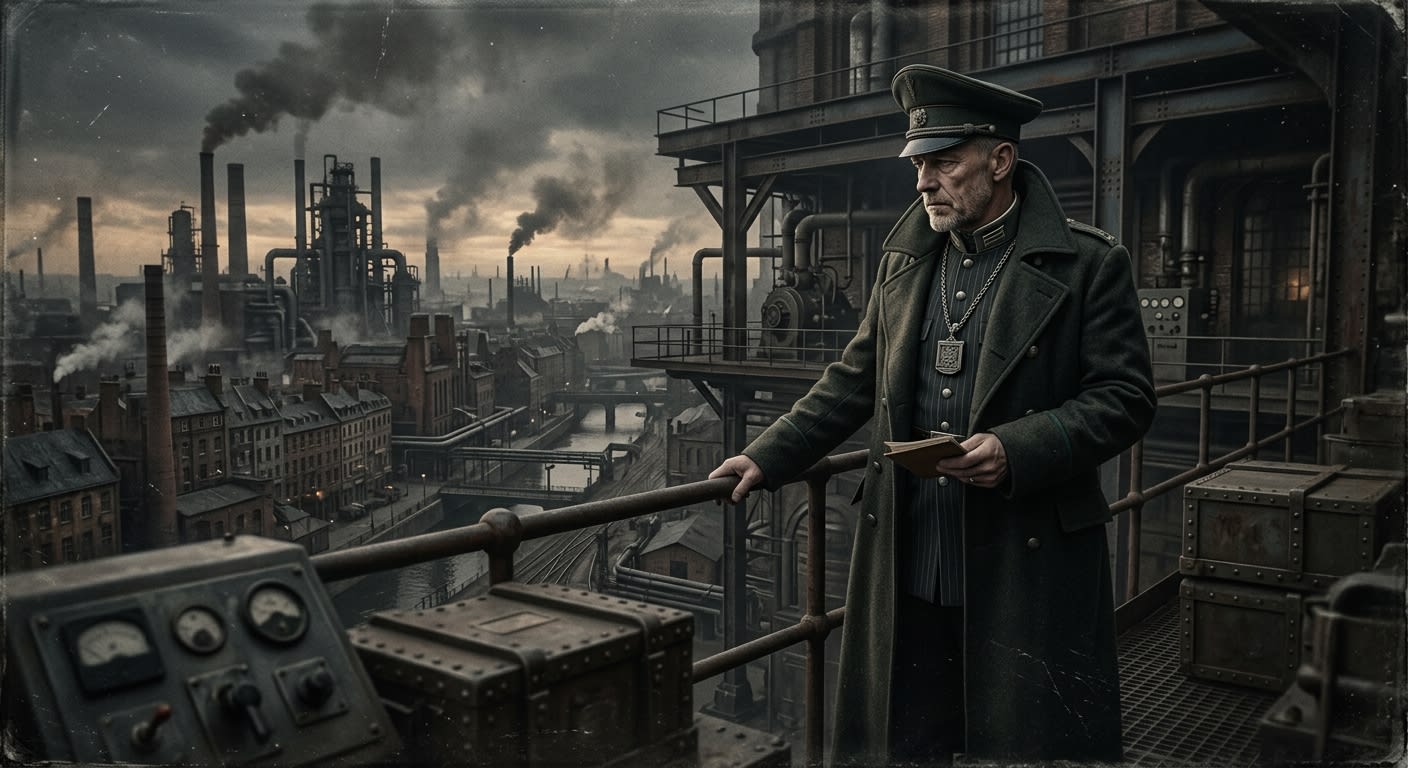
He reviewed the city ledgers and pronounced the sentence that made him immortal in Purity's private curriculum:
This place is a single heretic body.
The phrase is often quoted as metaphor by schoolmasters who wish to keep children quiet without teaching them physiology. Severian meant it as diagnosis. A city, he argued, possesses organs: parishes as lungs, markets as stomach, bell-towers as throat, registries as memory, gates as pores, families as blood. When heresy appears in many locations at once, the proper question is not which citizen sinned first. The proper question is whether the civic body has become contagious.
The operation proceeded parish by parish, street by street, guild by guild. Records use the term vivisection in a sealed appendix and sectoral correction in public summaries. Houses were opened. Families were separated by doctrinal function. Confessions were extracted in chambers tuned by borrowed psalmists from what would later become the Bureau of Orison and Song licensing apparatus. Those who spoke too readily were re-questioned, since Severian held eagerness under interrogation to be a second-order sign of concealed training. Those who remained silent were charged under the doctrine he would later perfect: silence as active collaboration.
The bodies did not disappear. That was his innovation.
Older purges burned their evidence. The Order of Ash made landscapes of cinder and called the horizon corrected. The Order of the Shroud subtracted persons until rooms looked pious by absence. Severian believed destruction squandered instruction. A condemned heretic, properly maintained, could continue confessing after trial, after branding, after civic usefulness, after hope. Mainz gave him the road. Iron gave him the instrument. Choir gave him duration.
Earlier civic histories of Mainz describe the Severian Correction as a series of unrelated prosecutions conducted in response to localized Rationalist sympathies.
The harmonised account recognises the Correction as a unified Inquisitorial action under Severian's command. The phrase "unified Inquisitorial action" is approved for public use. The phrase "systematic vivisection" remains restricted to personnel with clearance sufficient to understand that public use would be gauche.
Cages rose along the Mainz road to Strasbourg, suspended from iron stanchions where travelers could not miss them and children could be made to count them as an exercise in arithmetic and virtue. The condemned were installed alive when possible. The throat was opened shallowly, precisely, mercifully in the Severian sense: enough to make voice a wound, enough to make hymn a labor, enough to keep confession audible until the body concluded its administrative service.
The Iron Choir began to sing.
#On the Choir, and the Theological Use of Continued Noise
A common cruelty kills. Severian's cruelty instructed.
The Iron Choir was not designed as a mass execution device, though it became that on days when Mainz supplied more heretics than singers could tune. It was designed as a road-long catechism, an acoustical penitence hall through which every traveler to the Synod's western routes passed under lesson. Cages creaked. Brass wrist-bells marked breath where tongues had failed. Brand-Singers walked the line, recording pitch decay, replacing the dead, adjusting hymn assignments so that the Choir never lapsed into mere groaning.
The genius lay in duration. A pyre teaches for an afternoon. A cage teaches until rust intervenes. A corpse teaches disgust, then pity, then familiarity. A singing condemned man teaches rhythm: matins, prime, terce, sext, none, vespers, compline, breath. Citizens measured their walk by suffering made liturgical. Merchants timed their carts by the weaker voices. Pilgrim children learned that disbelief had a pitch.
The Bureau of Purity approved because fear increased. The Bureau of Records approved because entries were legible and ongoing. The Bureau of Bells protested at first, claiming the cages interfered with local peals; Severian replied that if bronze could not outsing the condemned, bronze required discipline. The protest was withdrawn.
The profession of Iron Choir Brand-Singer flowered from this apparatus. At first, Severian borrowed trenchline psalmists to regulate the condemned's breathing during branding and hanging. Later the practice hardened into licensing, throat inspections, acoustic schools, hymn protocols, and the entire Directorate of Acoustic Enforcement, which is what happens whenever a useful horror survives long enough to receive forms.
Severian's own writings justify the Choir with characteristic economy. In Commentaries on Faithful Severity he writes: Better a thousand villages ash than a single heresy kindled. Elsewhere: Better ten thousand innocents perish than one heresy live. His defenders claim the numbers are rhetorical. His ledgers suggest he treated rhetoric as an estimate awaiting fulfilment.
The original intake register for the first full season of the Iron Choir lists ███████ condemned, ███████ dependants reassigned, ███████ infants transferred to Orphanarii jurisdiction, and ███████ "civic organs excised." The final column is headed, in Severian's own hand, Result: Improved Respiration.
The Choir still hums on windless days. Engineers call this resonance from the bellways. Purity calls it the murmuring of saints. I call it Severian refusing to shut up after death, which is the only afterlife that would have satisfied him.
#On the Tongue, the Gloss, and the Duty to Denounce
Severian understood the mouth as both weapon and property. The Rationalists had slit tongues to render faith mute. Severian corrected their vulgarity. Remove the tongue and the lie retreats inward. Nail it open, and the body becomes a pulpit from which the Bureau may preach.
His Second Appendix to the Commentaries furnished the founding theology later cited in the Procession of Tongues: The tongue that lies is still a tongue. Remove it, and the lie remains, voiceless, breeding in the dark. Better to nail it open, so the world may hear what heresy sounds like when it can no longer hide. One sees here the whole Severian mind: anatomical, theatrical, procedural, and blessedly free of humanitarian fog.
In A.S. 134, Severian directed the Eighth Doctrinal Congress and revised the Catechism of Obedience. The Revision added secondary glosses, expanded the licensing of public joy, tightened oath provisions, and made silence itself culpable. Article 19 — On the Duty of Denunciation (Unregistered) — is his most enduring wound upon the citizenry. It requires every person under Synod jurisdiction to report suspected heresy, doctrinal deviation, and spiritual unease within twenty-four hours. Failure to denounce is punishable as participation.
The law is beautiful in its brutality. It converts every citizen into a minor instrument of the Inquisition and every friendship into an unsecured confessional. The mother who hears her son mutter treason in sleep must report. The clerk who sees a colleague pause over an unapproved word must report. The priest who doubts whether a doubt is doubt must report the doubt and the doubting of the doubt, preferably with witnesses.
The phrase "silence is shelter" entered catechism schools within a decade. Children repeat it before meals in several Rhineland dioceses, which has improved denunciation rates and ruined supper conversation. The Bureau of Purity credits Article 19 with generating more prosecutions than all other Articles combined. The Bureau of Doctrine calls this success. The Bureau of Mercy calls it a staffing crisis. Both are correct in their jurisdictions.
Provincial primers once taught that denunciation was an exceptional duty, required in clear cases of heresy.
Severian's Revision clarifies that clarity is unnecessary. Suspicion is sufficient. Unease is sufficient. The discomfort produced by not knowing whether one has witnessed heresy is itself a reportable condition. The Bureau thanks citizens for their vigilance and reminds them that failure to report vigilance fatigue may constitute fatigue-sheltering.
By these glosses Severian did something more enduring than building cages. He relocated the Inquisition from fortress, tribunal, and road into the private reflexes of the faithful. The Iron Choir made fear audible. Article 19 made fear intimate.
#On His Character, If Such a Word May Be Used for a Knife
No reliable portrait survives. This is fitting. Portraiture flatters surfaces, and Severian was all edge.
Witness accounts describe him as spare, controlled, dry-voiced, physically unremarkable until he began to question a room. He disliked shouting. He disliked theatrical rage. He disliked inquisitors who enjoyed blood too visibly, calling them "undisciplined appetites wearing holy office." In this he differed from the vulgar butcher and approached the true administrator. He did not want pain. He wanted information, obedience, and display calibrated in correct proportion.
He kept indexes of hesitation. He classified pauses in testimony by duration and moral color. A silence of one heartbeat indicated fear. Three, calculation. Seven, trained resistance. Eleven required theological escalation. Whether these categories possessed empirical basis matters less than the fact that hundreds died under them with paperwork attached. In the Synod, a taxonomy with victims becomes real by accumulation.
He distrusted mercy not because he lacked imagination, but because he possessed too much. Mercy, he wrote, permits the guilty to imagine themselves loved without correction. Cruelty, correctly applied, leaves no such ambiguity. The condemned knows the Bureau has noticed him. The crowd knows the Bureau can notice them. The clerk recording the scene knows the Bureau will later notice whether the record was complete.
This is Severian's trinity: condemned, witness, recorder. No terror is complete until all three have been disciplined.
His relation to other Purity Orders was hostile in the fruitful manner of knives stored in one drawer. Ash considered his Choir slow. Shroud considered it wastefully visible. Saint Ephrath admired the humiliation and objected to the lack of procession. Root admired his civic anatomy and stole half his vocabulary. Severance claimed him retrospectively as spiritual ancestor, which would have offended him, since Severian had no patience for ancestors who could not be subpoenaed.
The Council of Veils used him and feared him. Every useful monster raises the same administrative question: how does one leash an instrument that thinks itself the hand?
#On His Death, His Bones, and the Mask at the Gate
The official account says Severian died of piety at Mainz after completing the final civic correction. This is one of those phrases so polished by repetition that no one asks what it means. Death of piety. A magnificent diagnosis. It explains nothing and sounds expensive.
The sealed accounts are less obedient. When the last bell of the last corrected parish fell silent, Severian was found in one of his own cages, reduced to a brittle husk, parchment-flesh stretched across bone, mouth open, no voice left in him. At the cathedral gate, witnesses reported a figure in a blank iron mask carrying a ledger. No seal. No writ. No escort. The figure departed without haste. By dawn, several Mainz family lines had ended in the records as though a blade had been drawn through genealogy itself.
The Judges enter every Severian discussion like cold air under a chapel door. The Order of Severance insists, in its private mythology, that the Judges were once inquisitors who burned through flesh, parish, and name until they rose masked beyond the Council of Veils. They point to Severian as the first. Doctrine denies this with unusual speed. Purity denies it with unusual anger. Records denies it by misplacing entire shelves.
His bones still hang in Mainz, or bones attributed to him do, rattling in an iron cage that pilgrims are discouraged from touching and encouraged to fear. If Severian became a Judge, then the cage contains ash mistaken for relic. If the cage contains Severian, then the Judge at the gate was another verdict entirely. If both are true, the Bureau of Doctrine will require a larger stamp.
His legacy is less disputed than his end. The Iron Choir remains. Article 19 remains. The Procession of Tongues quotes him. Brand-Singers inherit his acoustical cruelty. White-Mantled Inquisitors walk under a logic he sharpened: that heresy hidden is heresy nourished, that silence is participation, that the body may be made to confess what the mouth conceals.
The Synod has outgrown many founders. It has corrected Augustinus, complicated Kratz, buried Veyrault under forms his own Bureau designed. Severian resists burial because his instruments still function. Each denunciation filed by a frightened neighbour, each child marched past cages on the Mainz road, each throat tuned for punitive hymn, each silence treated as evidence — these are not memorials.
They are continuations.