

Reverse Index
Referencing “The Massacre at Saint-Malo”
Every codex entry that links to The Massacre at Saint-Malo. 84 entries.
Return to The Massacre at Saint-Malo
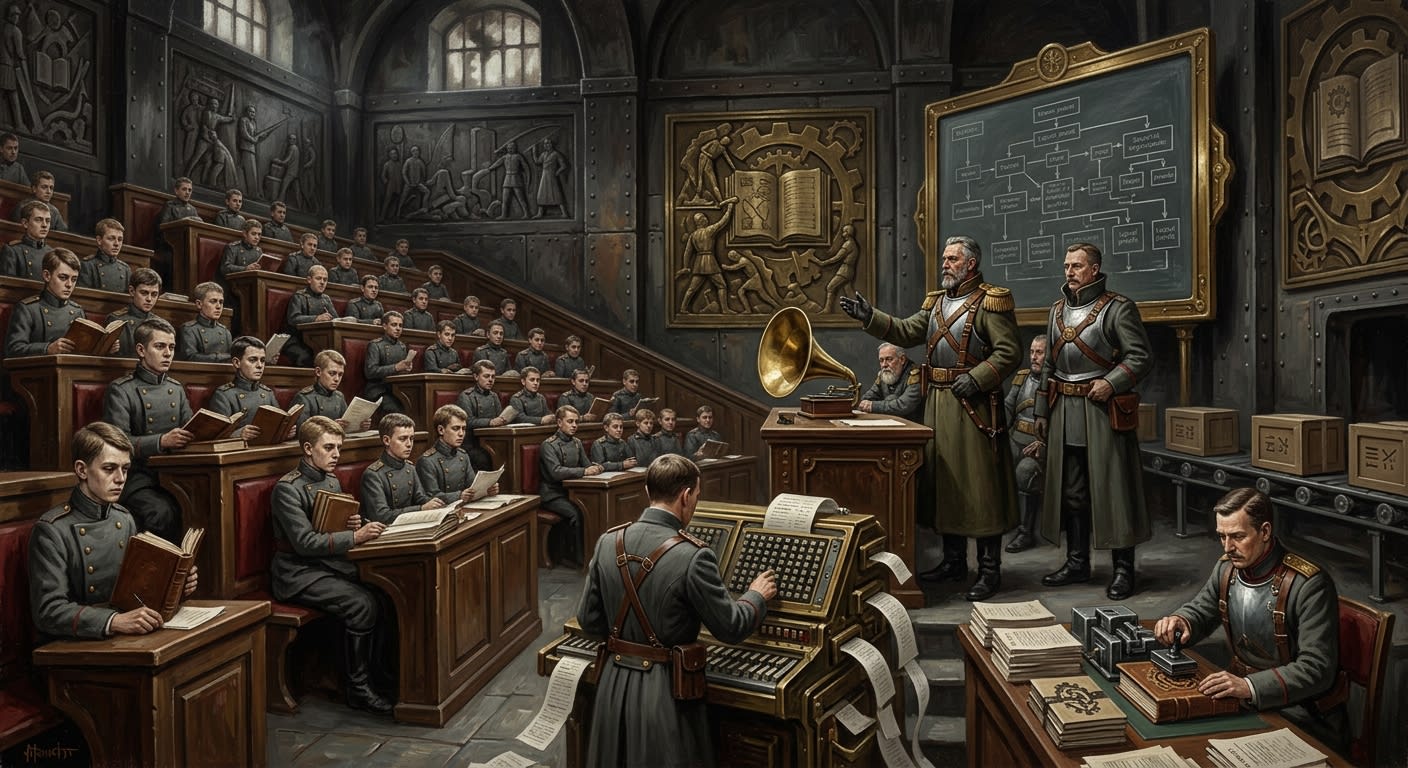
Academy System
The lecture hall as ministry, purse, press, knife, and alibi
The Rationalist Academy System made scholarship into command: lectures became policy, footnotes became bayonets, and children learned unbelief as paperwork.
Codex Ref. I.1.03-000
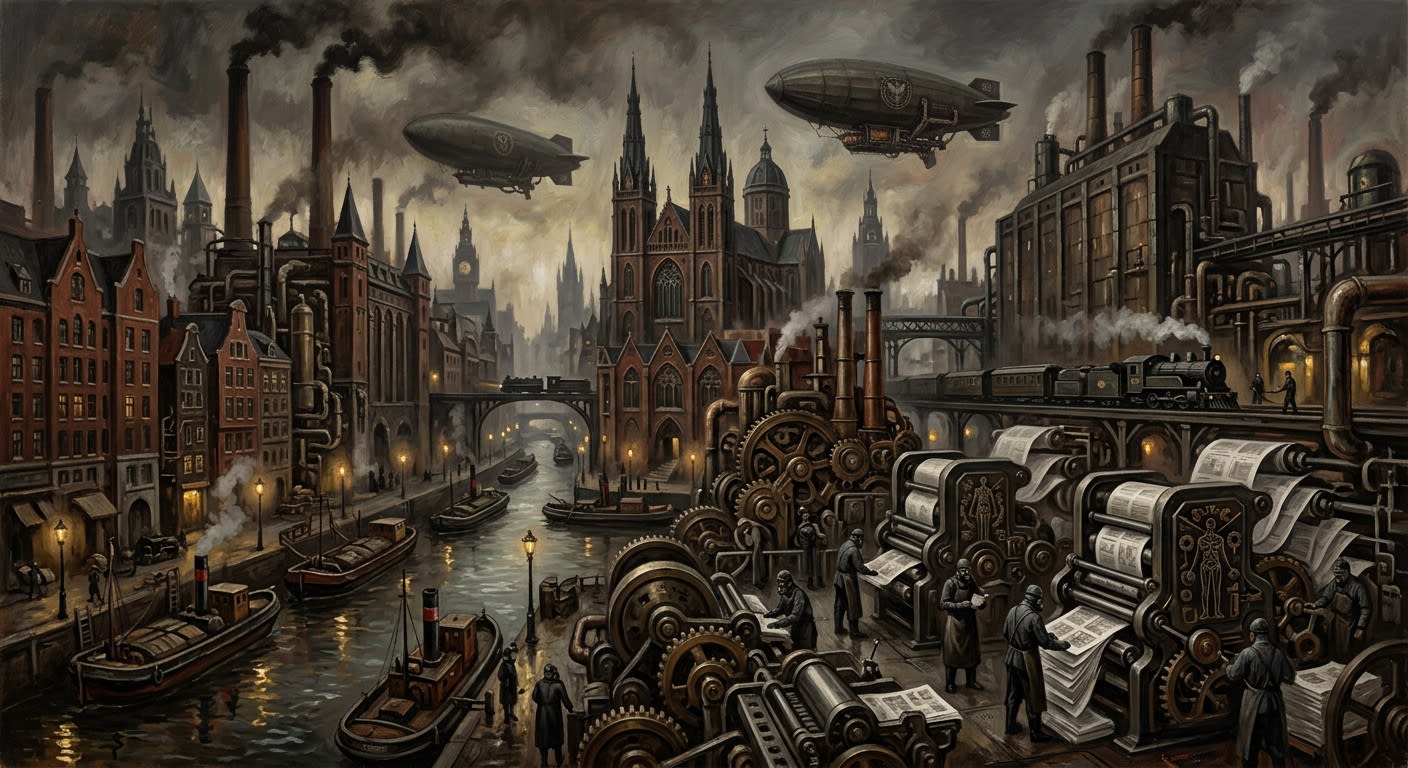
Amsterdam
The city where Europe learned to sin in pamphlet form
Amsterdam is the independent Dutch city where the Synod's calendar wound was printed: first the Year of Letters, then *De Vera Luce*, then Europe taught to doubt by invoice.
Codex Ref. II.4.09-012
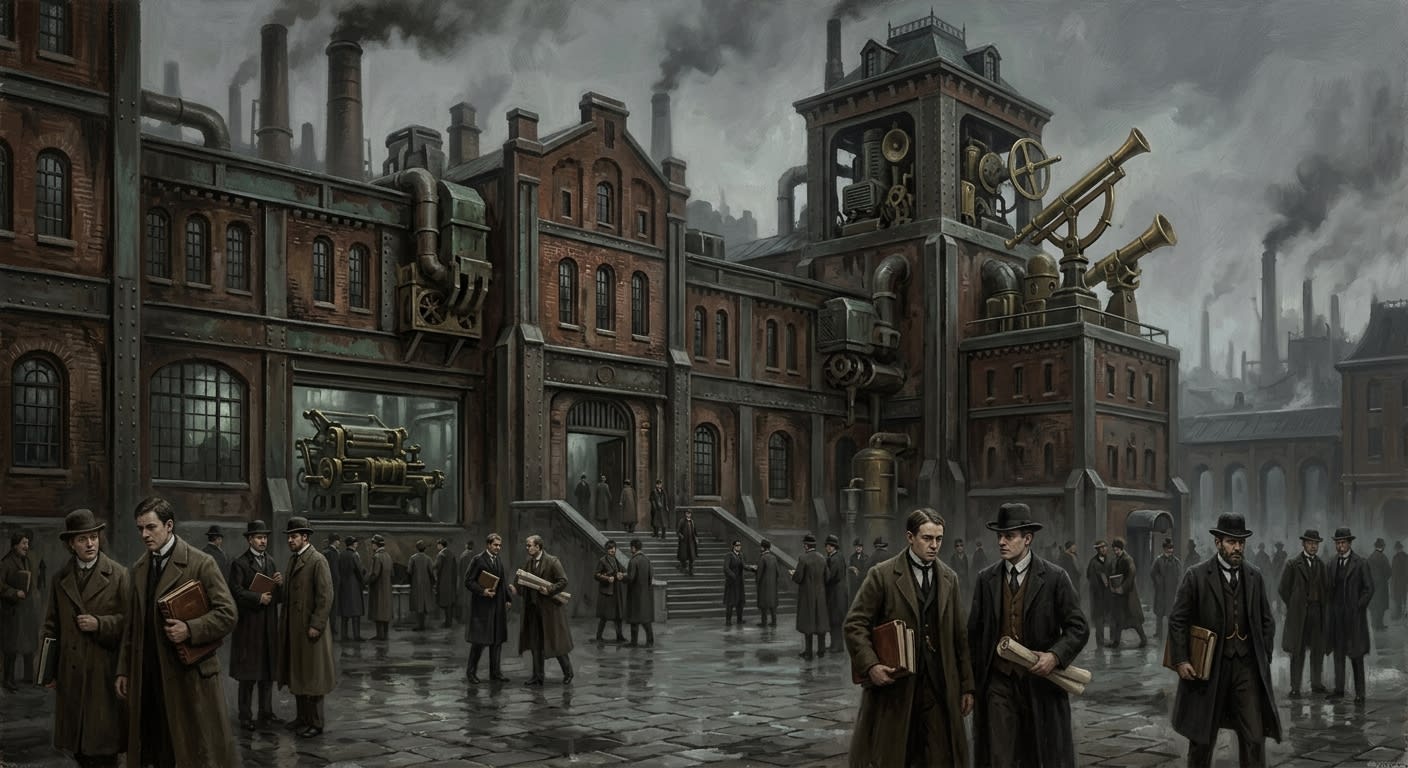
Amsterdam Academy
The lectern that made unbelief printable
The Amsterdam Academy licensed unbelief, printed the calendar wound, and taught Europe that a schoolhouse may do the work of a siege engine.
Codex Ref. VIII.8.01-000
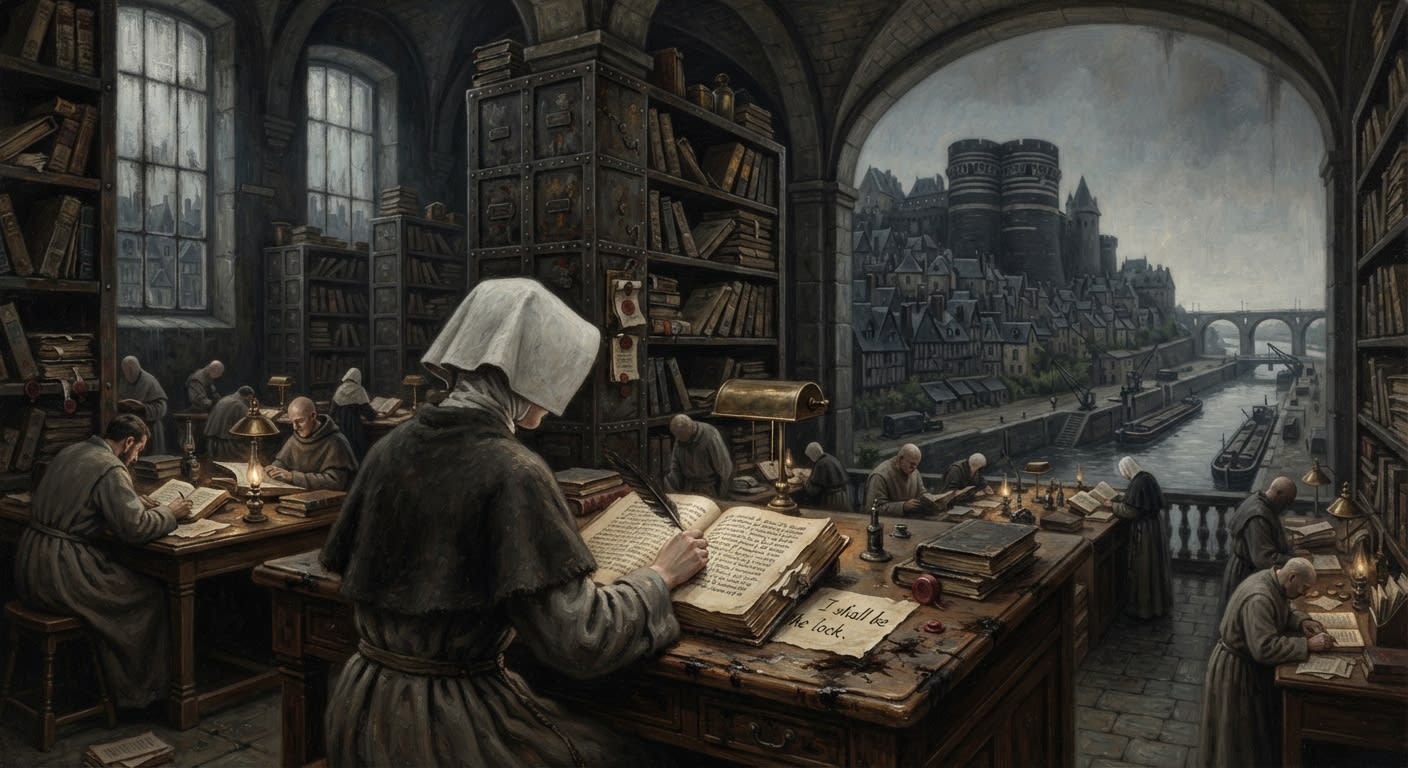
Angers
Five words, no bridge, and a city trying to found an order
Angers is a Zone One city whose claim on the Sisters of the Martyrdom rests on five psalter-margin words: I shall be the lock.
Codex Ref. II.1.09-015
Anno Synodi
The wound by which Strasbourg owns the year
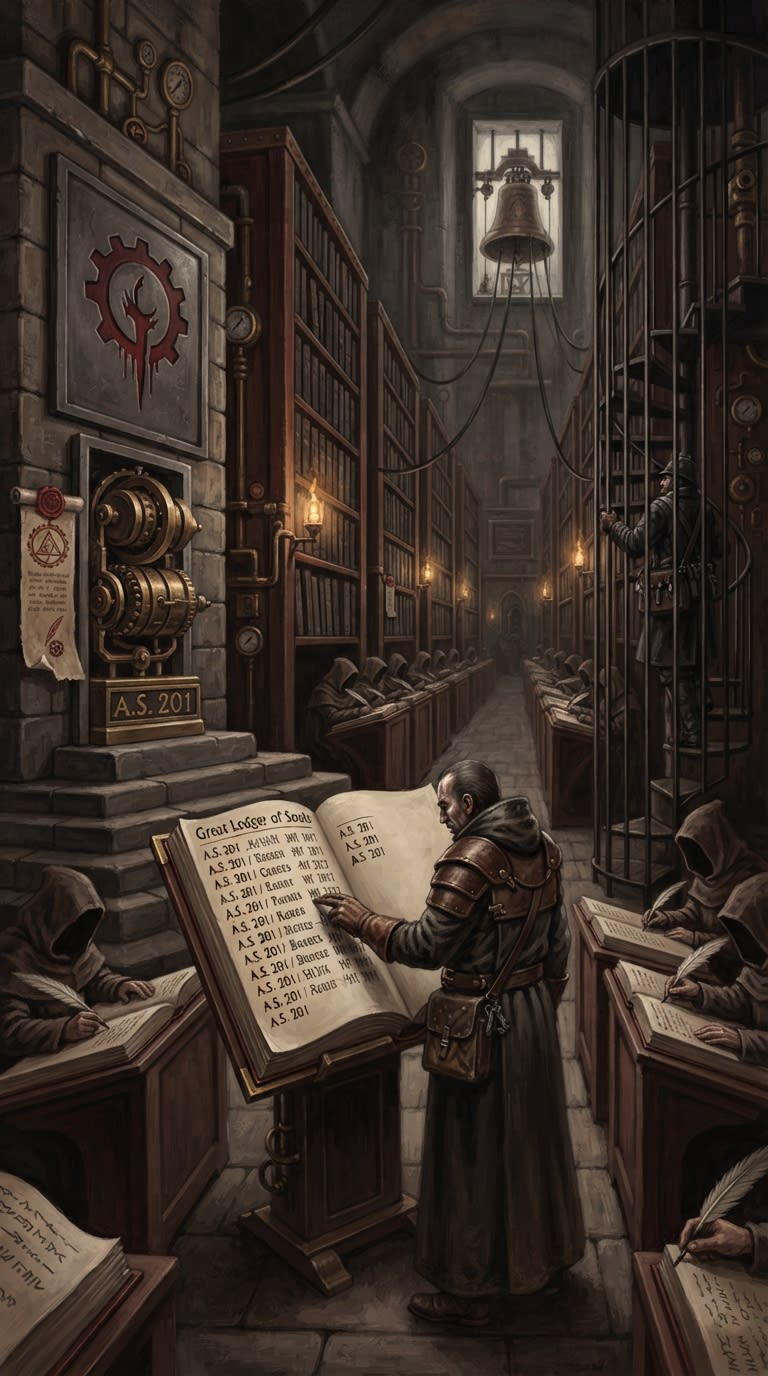
The Synod's calendar counts not from triumph but from wound: A.S. 0 at De Vera Luce, adopted retrospectively at the Concordat, and enforced by Records, Bells, and Doctrine.
Codex Ref. XIII.1.00-090
Antiphon Bell
Bronze may count what grief is not permitted to round
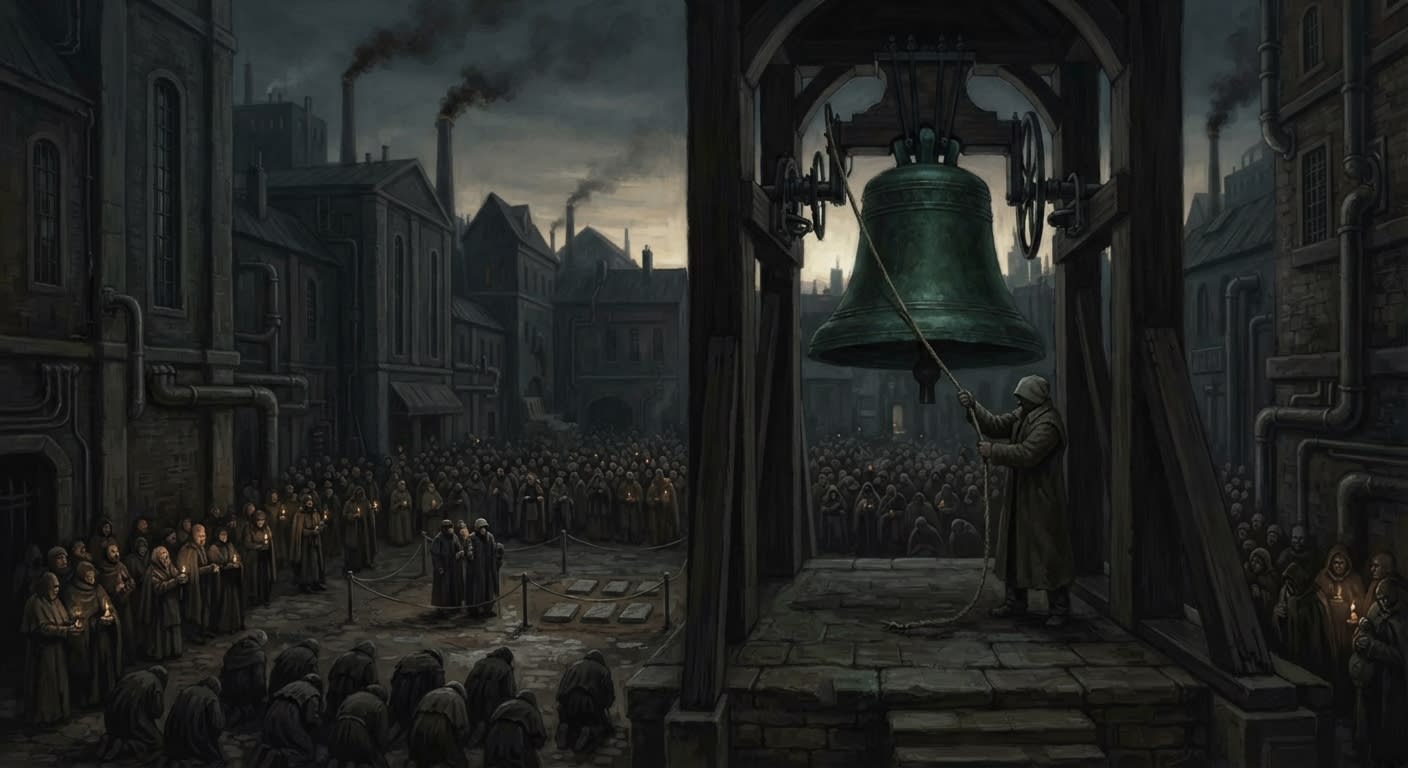
The Antiphon Bell is the licensed parish office that makes Saint-Malo audible: thirty-one tolls for the certified dead, then forty-three seconds for all who entered the gate.
Codex Ref. XIII.1.87-012
Atlantic
The water at the western end of every Synodal sentence
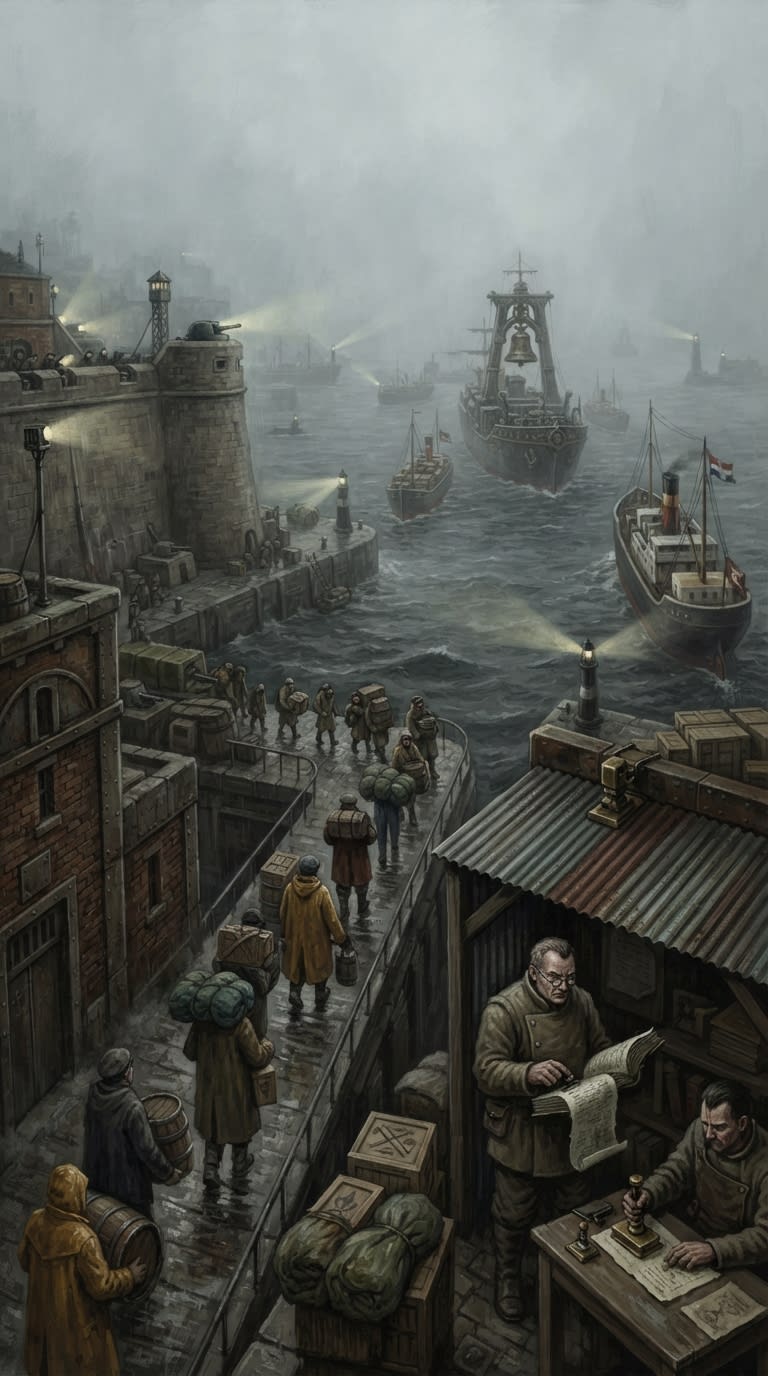
The Atlantic is the Synod's western water: open, escorted, profitable, watched, and owned by nobody, with Zone 1 harbours feeding the Line through wet ledgers and foreign hulls.
Codex Ref. II.4.09-201
Barcelona
The dead are read correctly; the living appeal
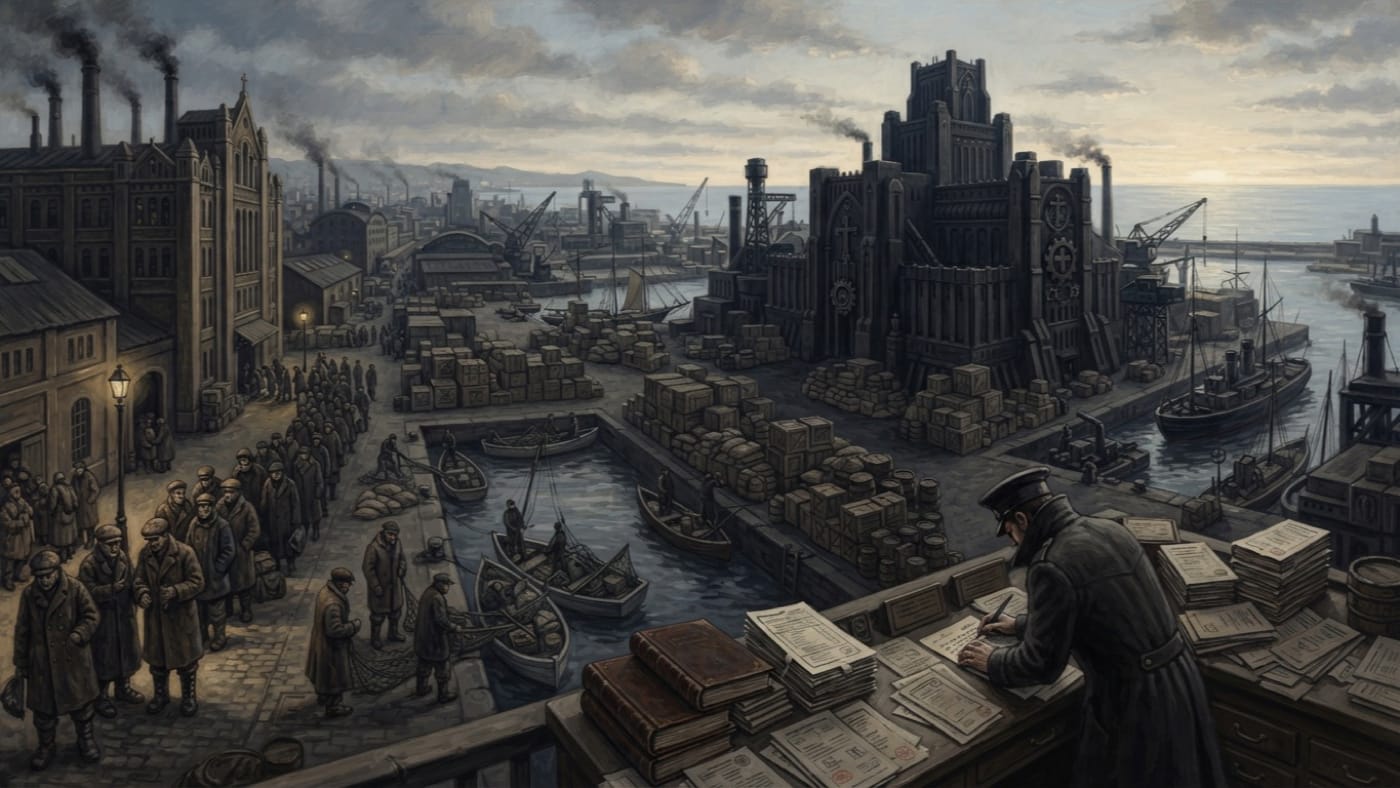
Barcelona keeps Saint-Malo's Thirty-One Names at dawn and its dialect disputes on the clerk's desk. An Iberian port where the dead are read correctly and the living appeal.
Codex Ref. II.1.04-166
Bérénice
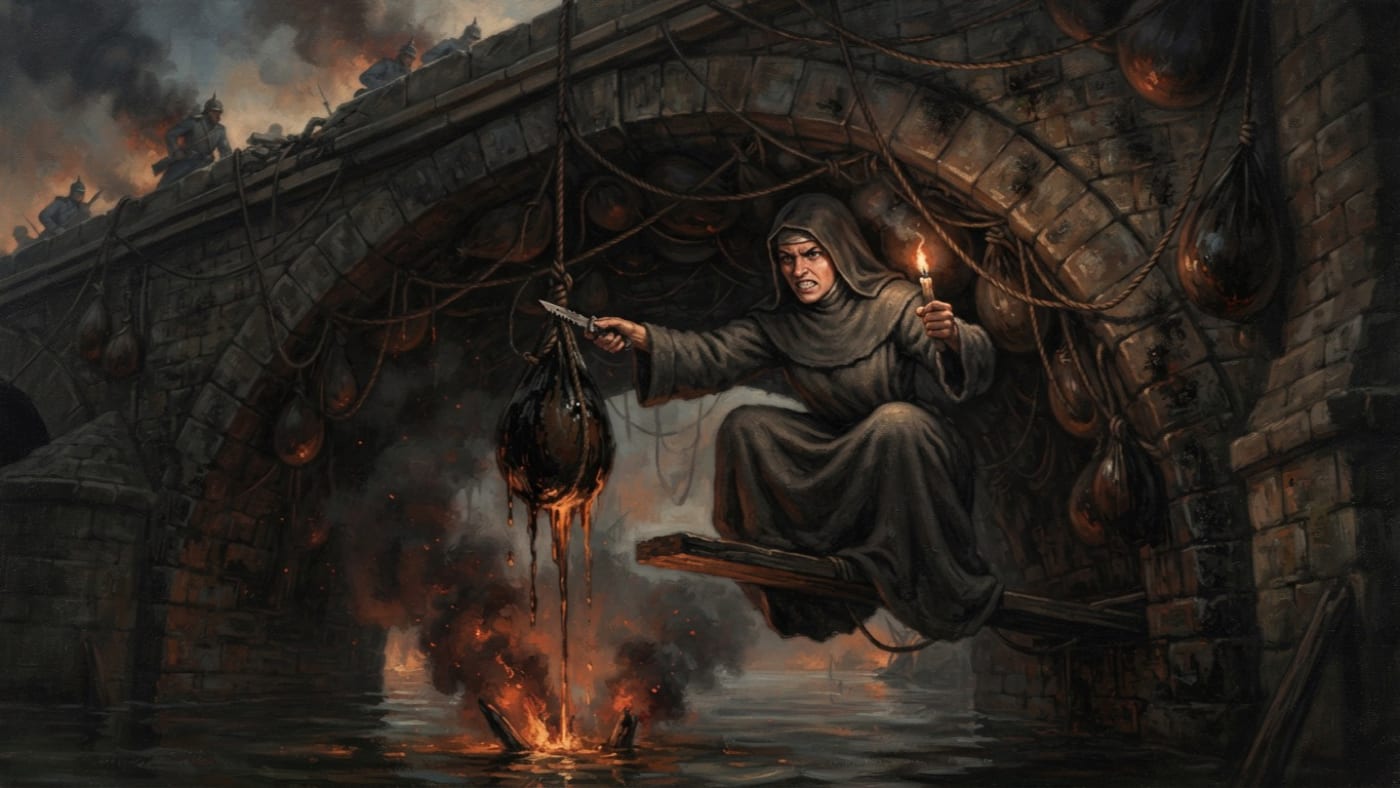
The fire has a name; the year has no entry
Bérénice is credited with firing the Châlons bridge from beneath its arch. The Ledger retains her deed, the masonry dispute, and an empty space where the year should be.
Codex Ref. III.2.01-245
Brittany
The province that taught martyrdom to travel by road
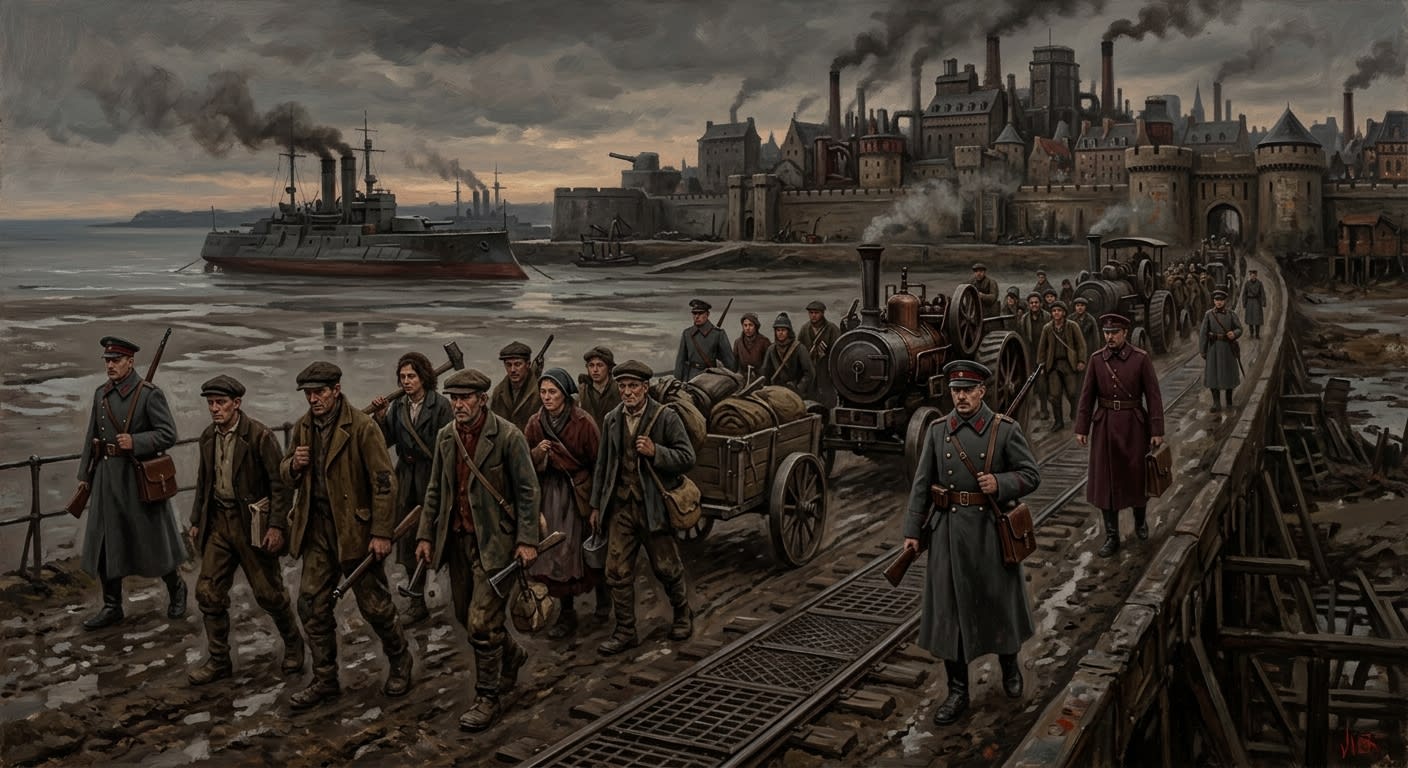
Brittany is the Synod's western salt-wound: a loyal province that turned Saint-Malo's blood, Dinan's road, and local stubbornness into taxable Doctrine.
Codex Ref. II.1.09-010
Bureau of Pedagogy
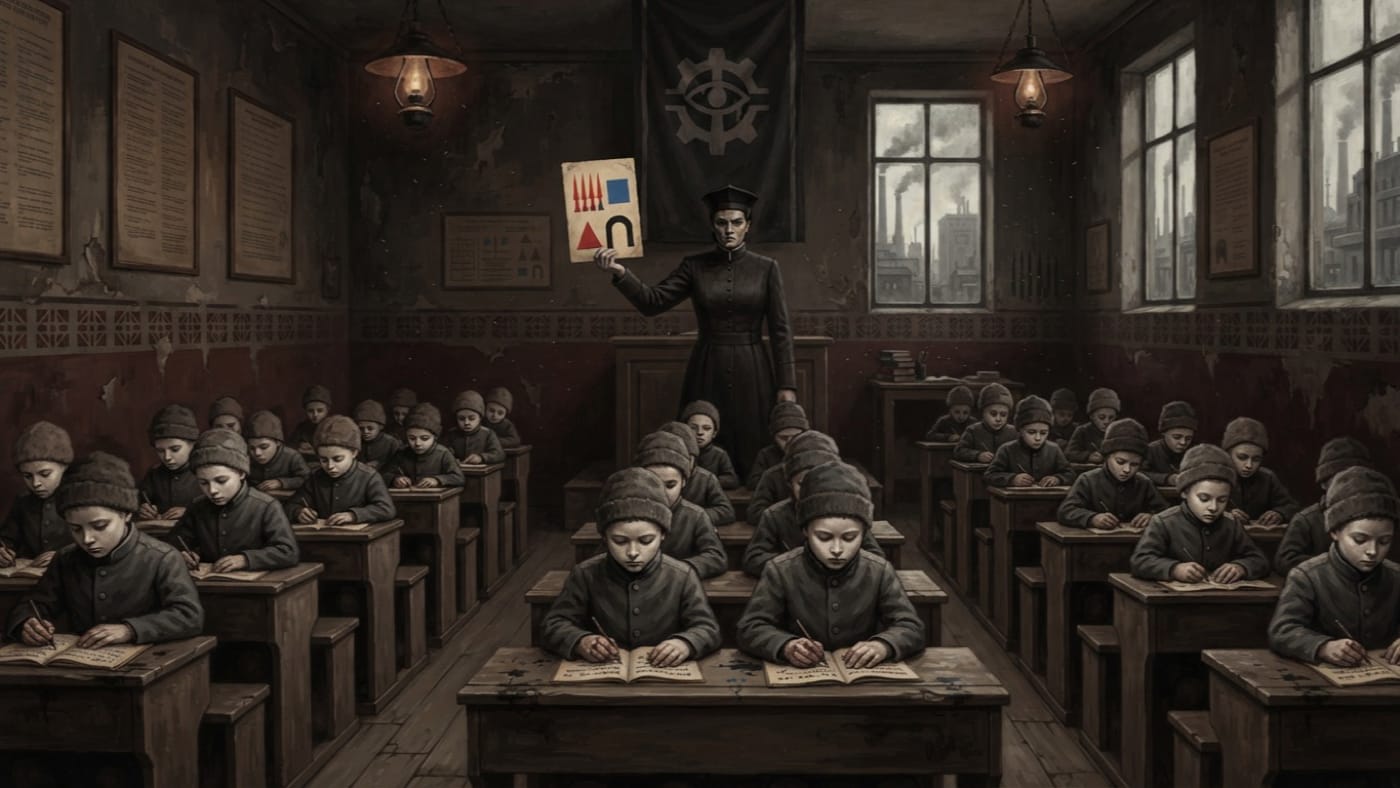
Doctrine owns the sentence. Pedagogy owns the drill.
The Bureau of Pedagogy puts Doctrine's sentences into children's mouths. Its seat is unrecorded; its primer cards teach obedience one red triangle at a time.
Codex Ref. VIII.8.03-001

Calendar of Saints
Eternal saints, monthly amendments, and a clerk with glue
The Church's calendar of saints, feasts and fasts, held under the Seal of Martyrdom and revised by monthly amendment strips. Sanctity is permanent; the parish must keep its glue ready.
Codex Ref. XIII.1.05-002
Catechism Schools
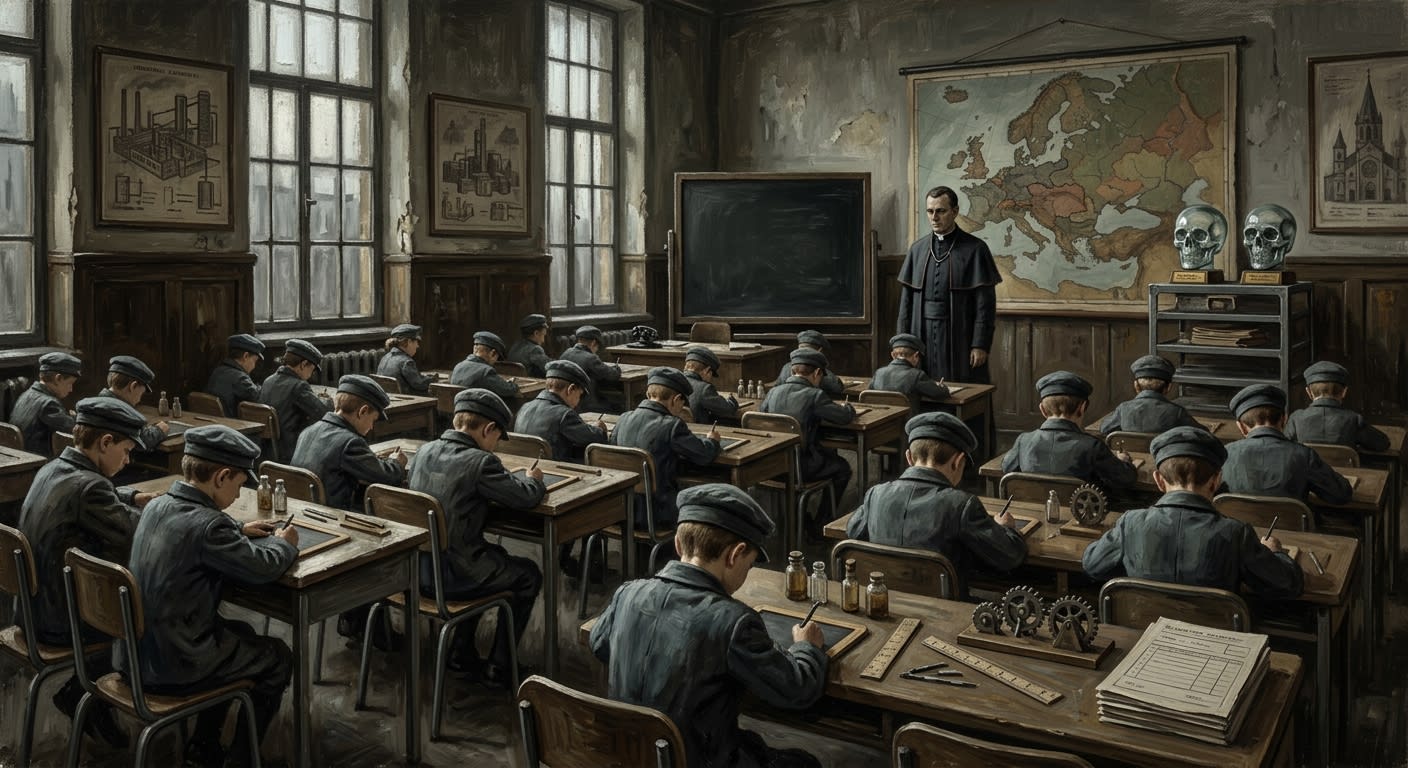
The child enters unformed; the school returns property
The Synod's parish and ward school system, where Creed, arithmetic, maps, loyalty trials, and entrance Glass Skull Stacks turn children into obedient instruments with names attached.
Codex Ref. VIII.8.01-001
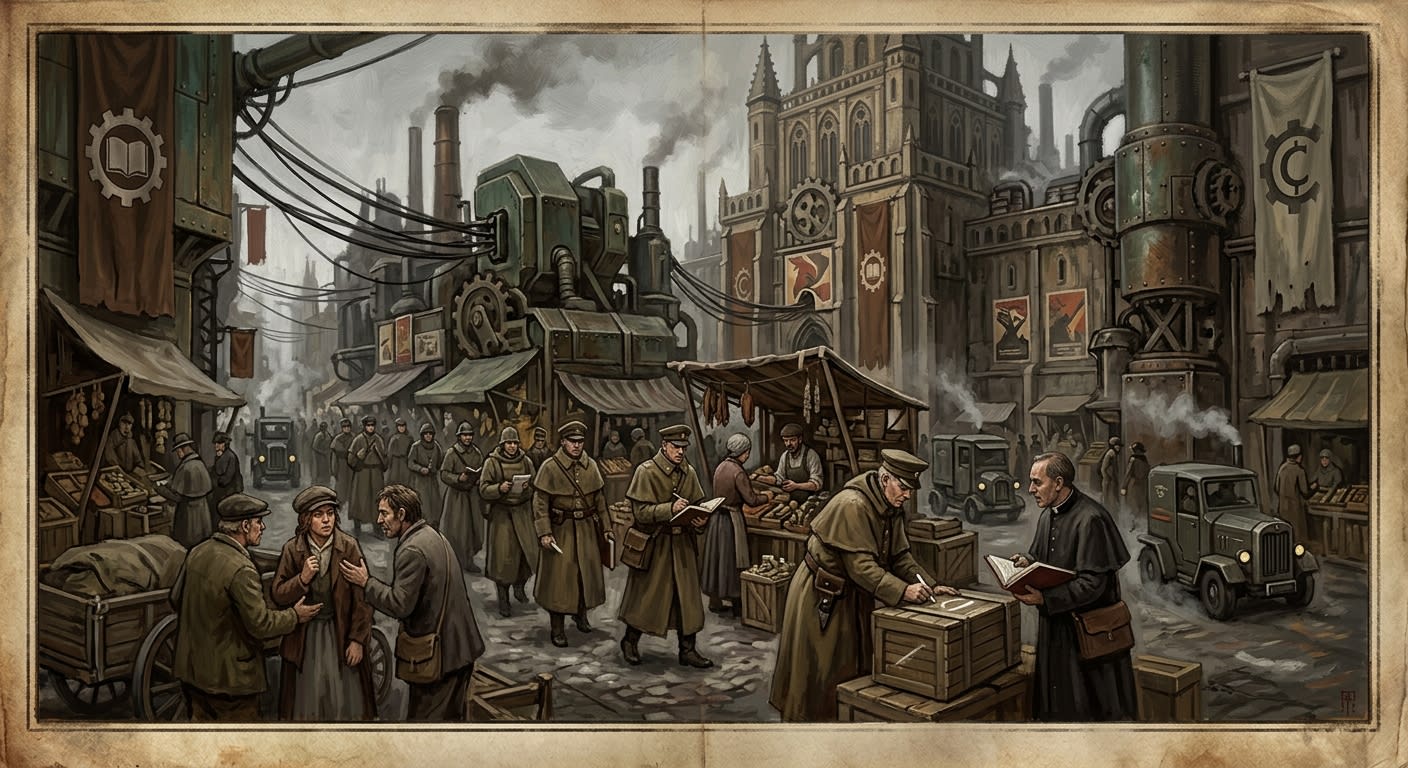
Catechism Third Revision
The street became a chapel with worse acoustics
A.S. 104 clarification that dragged obedience from chapel into market, making mouths, chalk, trade, and hesitation useful to Doctrine.
Codex Ref. XIII.1.04-104
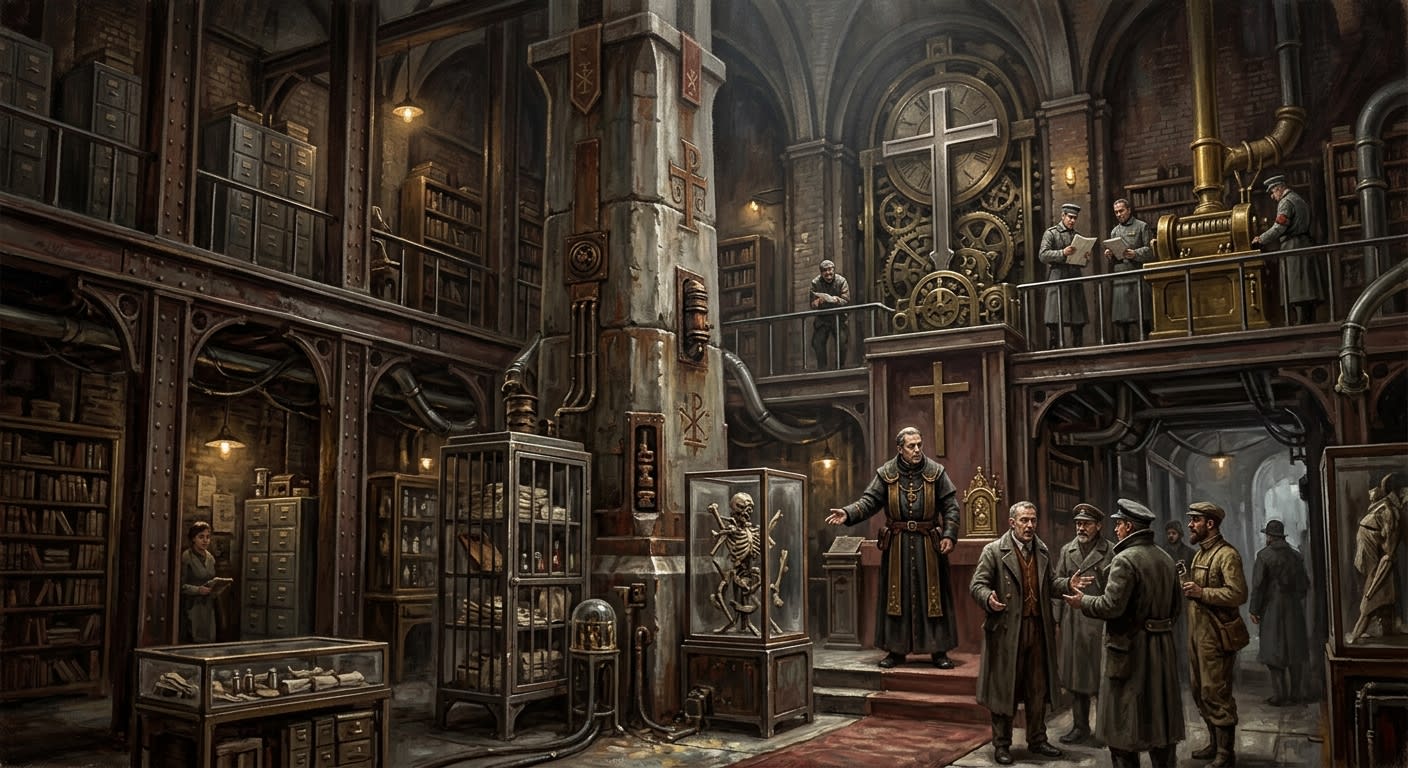
Cathedral of the Holy Column
The church that made obedience stand upright
Cologne's vertical archive: conciliar nave, Holy Column, relic galleries, Odo's sentence, and seventeen femurs arguing successfully with anatomy.
Codex Ref. II.2.01-005
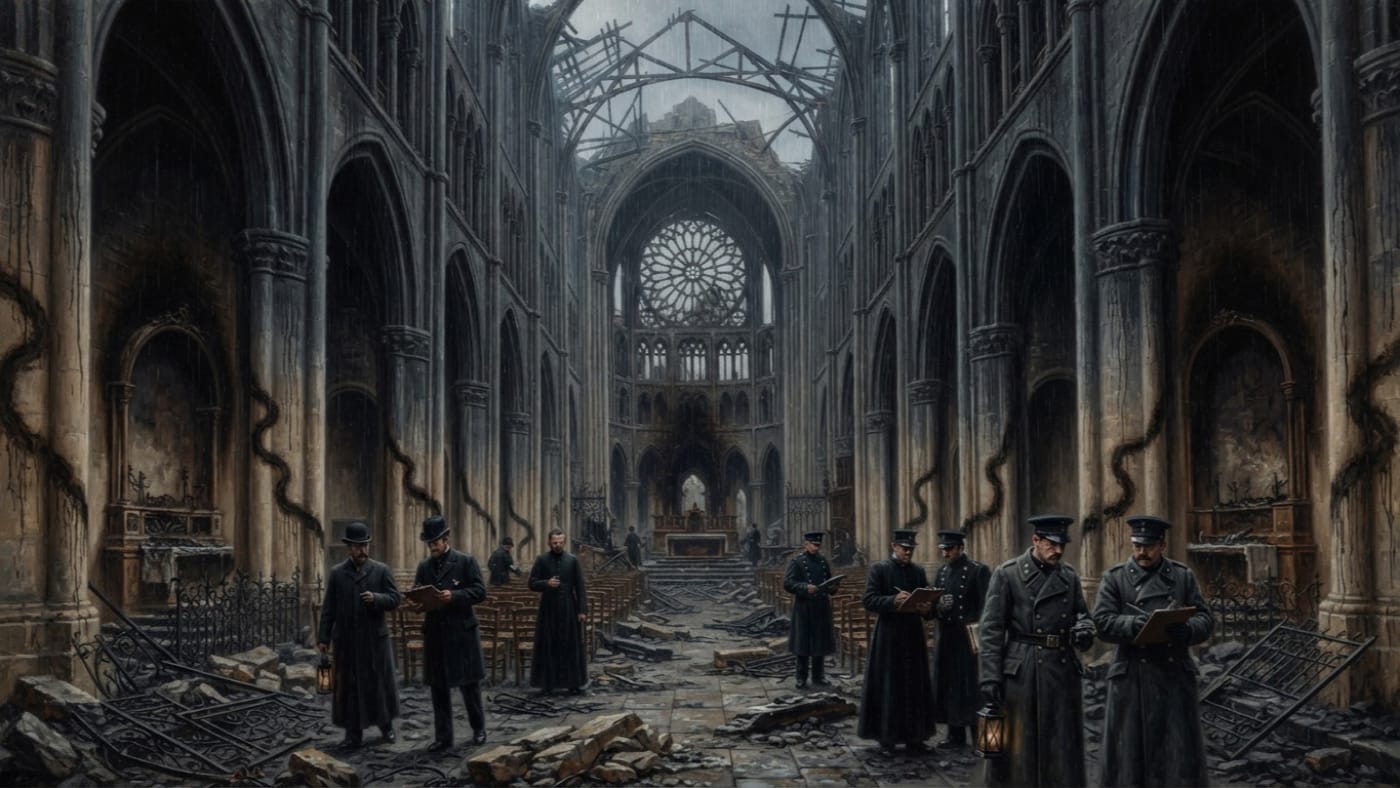
Cauterization
The cathedral burned; the stones have yet to finish their testimony
The A.S. 24 burning of Rouen's cathedral, orchestrated by Rationalists who blamed arsonists. Witnesses swore the fire paused at every altar; its agency remains unresolved, and the stones still bleed soot.
Codex Ref. VII.1.04-024
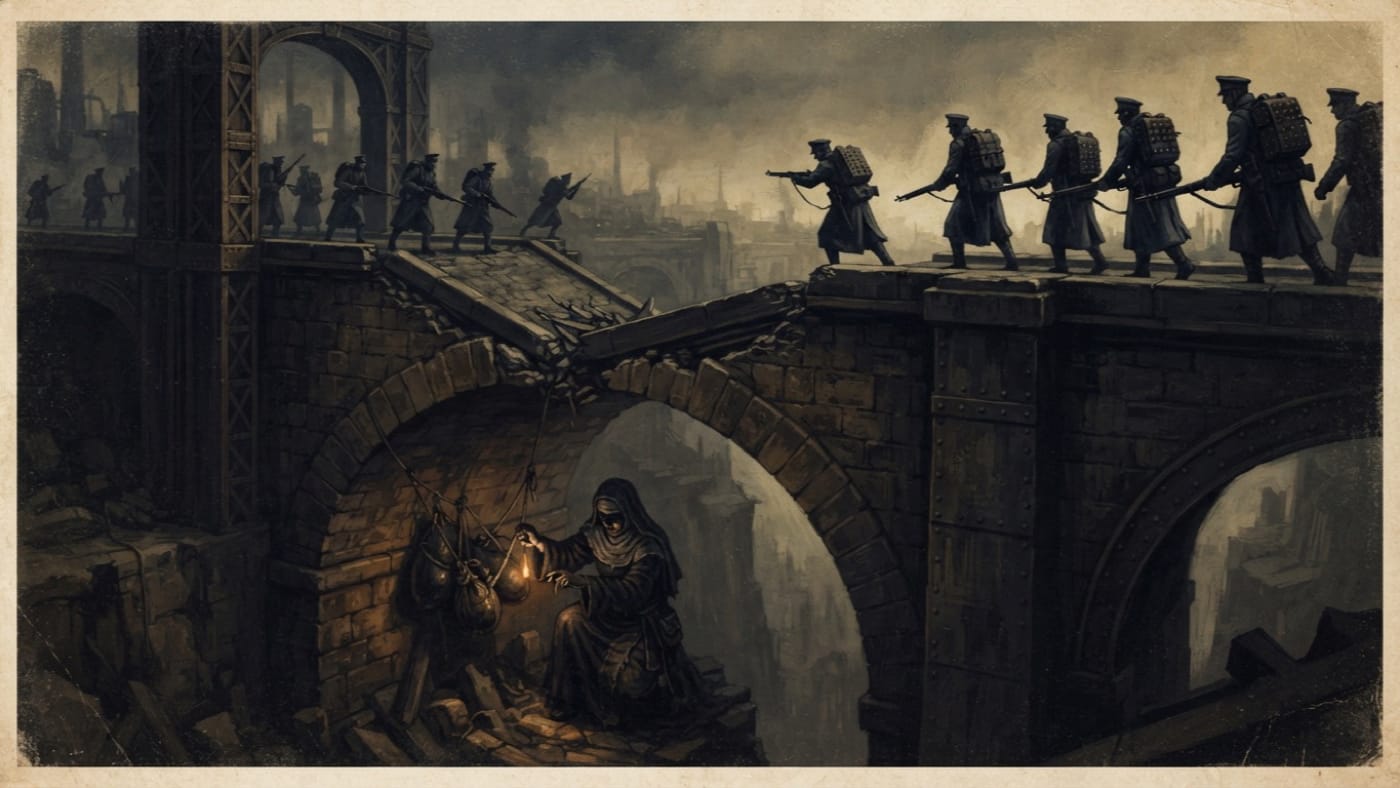
Châlons
One crossing, one attributed fire, no year
Châlons survives in the Ledger as one unnamed crossing and an undated fire attributed to Bérénice. The river is missing; the masonry has three explanations.
Codex Ref. II.1.04-565
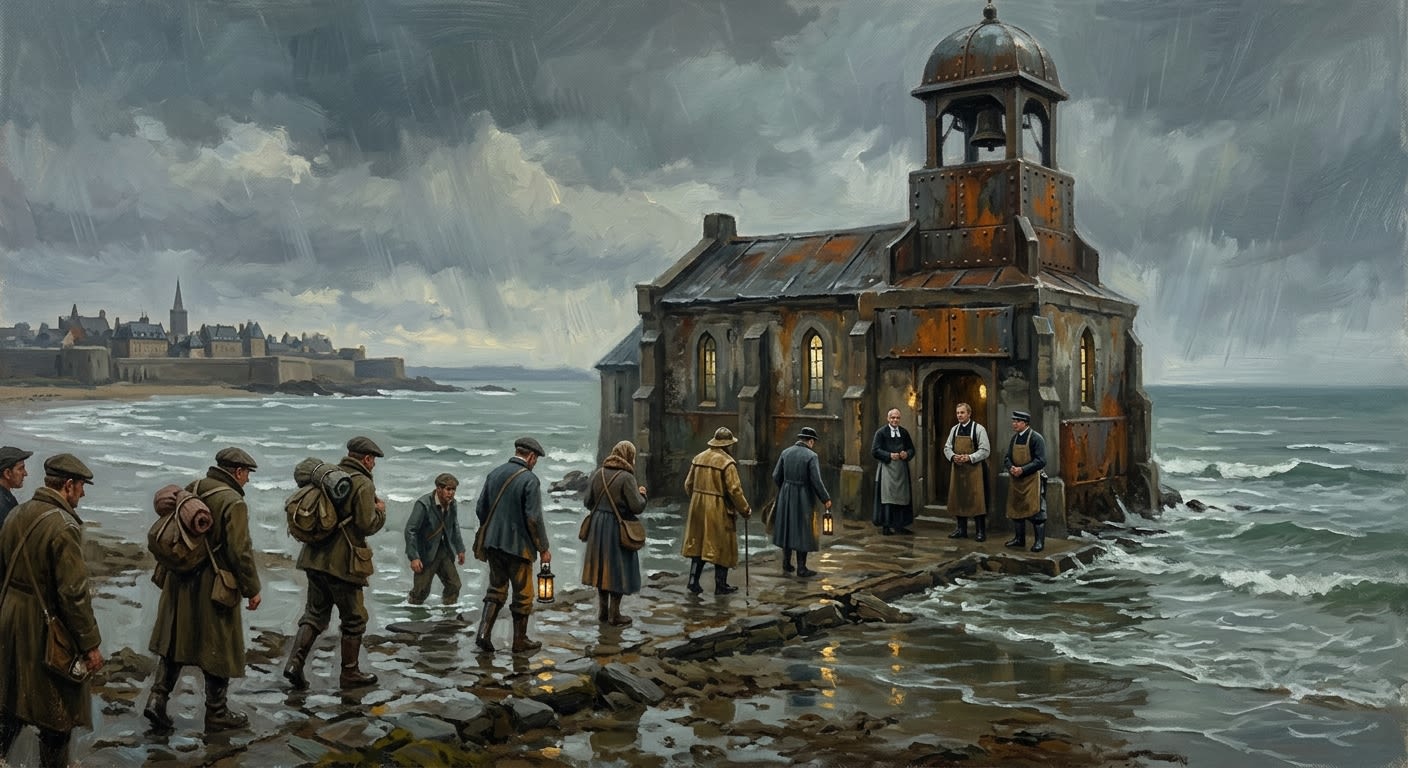
Chapel of the Tide
The shrine built from a journey denied
The Chapel of the Tide is Saint Clement's wet little shrine beyond Saint-Malo, made holy by forty-three pilgrims who were denied arrival and made profitable by everyone after.
Codex Ref. II.1.09-014
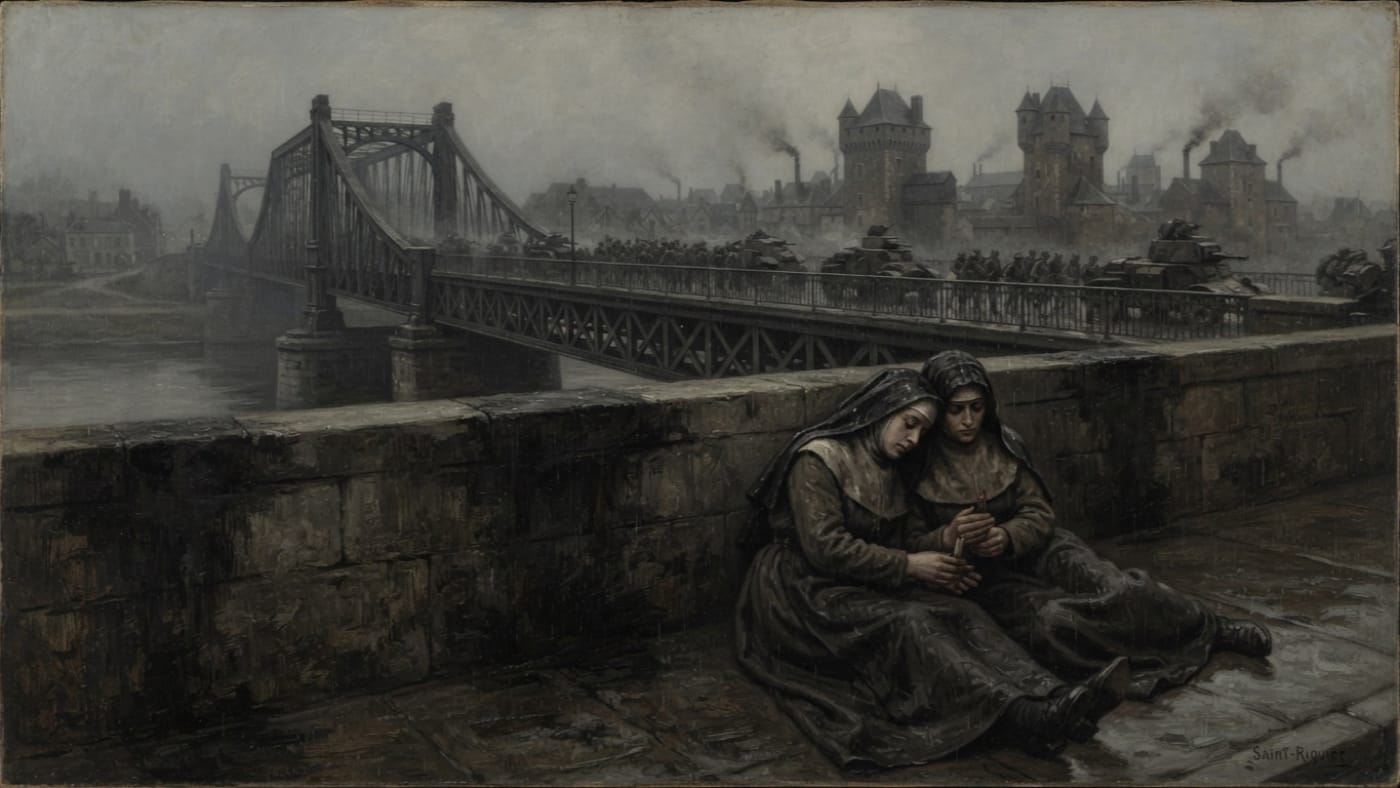
Clémence of Saint-Riquier
The wick was wet; the Ledger keeps the name
The A.S. 201 survey retains Clémence beside Ysabeau at Saint-Riquier: a wet wick, an open crossing, and two unburned bodies. A sacristan's bread account kept the names that embarrassed the devotional cycle.
Codex Ref. III.2.01-644

Cloister of Concord
Agreement under pressure, paved in ash, ink, and enemy stone
The Cloister of Concord is Strasbourg's working courtyard of authorised agreement, where Doctrine turns contradiction into law and stone learns to listen.
Codex Ref. II.1.04-004
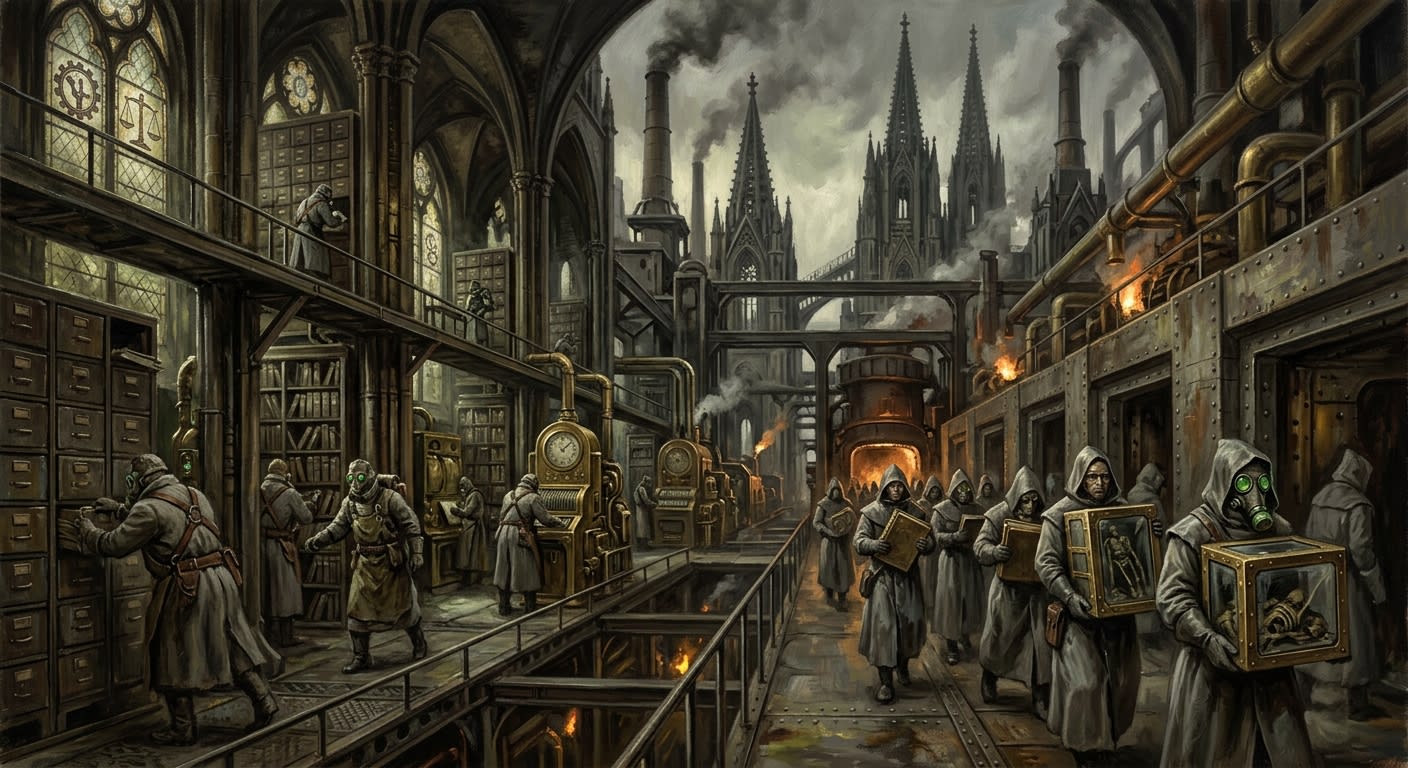
Cologne
The city where obedience borrowed a room and never repaid it
Cologne is the Rhine's holy account-book: cathedral, archive-bank, minting throat, relic cupboard, and the city where Synodic obedience learned to sign.
Codex Ref. II.2.01-004
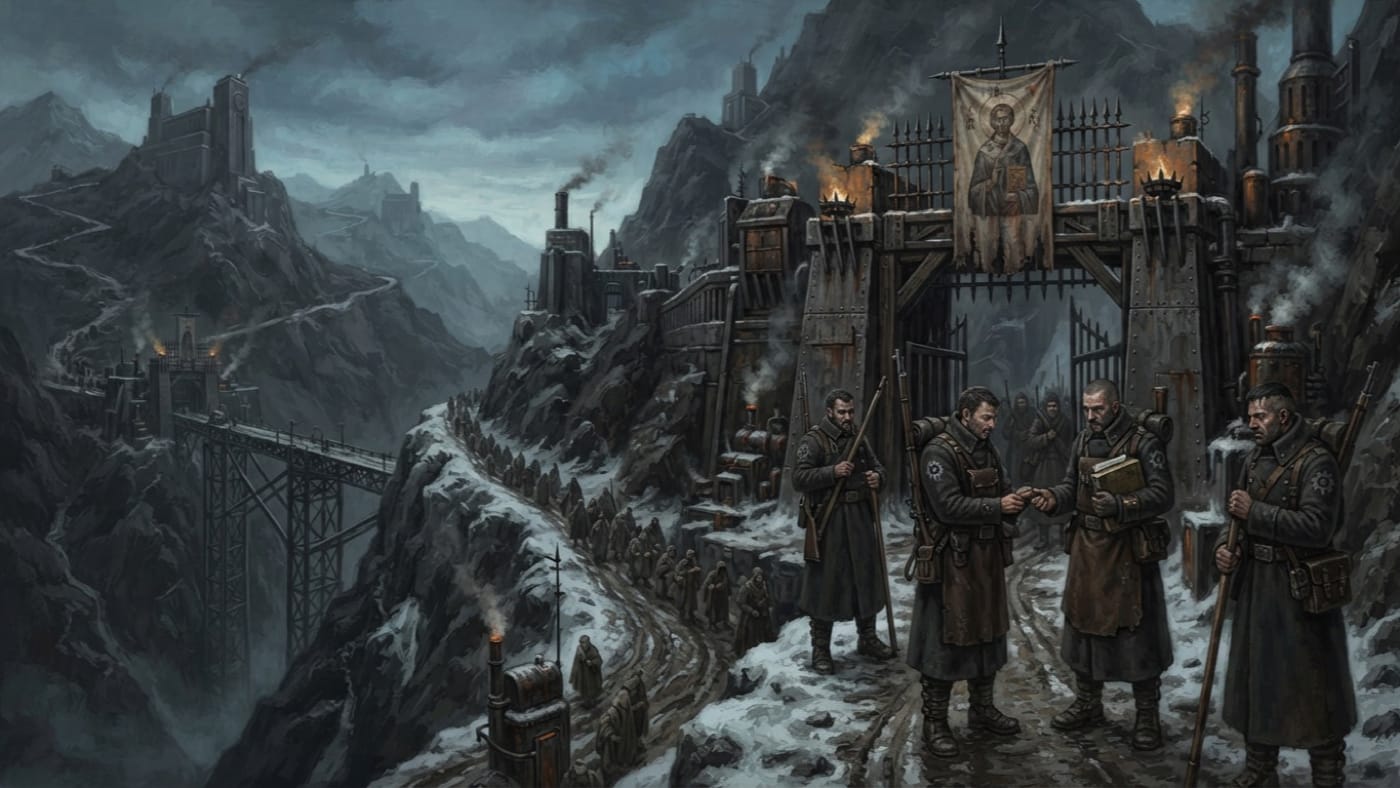
Confraternity of Saint Edras
The saint kept his name. The guild lost the road.
A private pilgrimage guild claiming the Carpathian passes, named among Santiago's rival toll claimants in A.S. 121 and superseded by the Harmonized Routes Edict in A.S. 123. The saint's name outlived its authority.
Codex Ref. XI.5.02-123

Corentin Madec
The fisherman who kept the book before Strasbourg learned to want it
Corentin Madec, wounded witness of Saint-Malo, preserved Margaux's psalter long enough for the Bureau to call acquisition devotion.
Codex Ref. III.2.01-017

Corvus
The fourteenth stands; the rest awaits its papers
Corvus is a later Church month whose fourteenth day commands the Saint-Malo fast, names and bells. The memorial is assigned; the massacre's exact day remains unproved.
Codex Ref. XIII.1.05-003
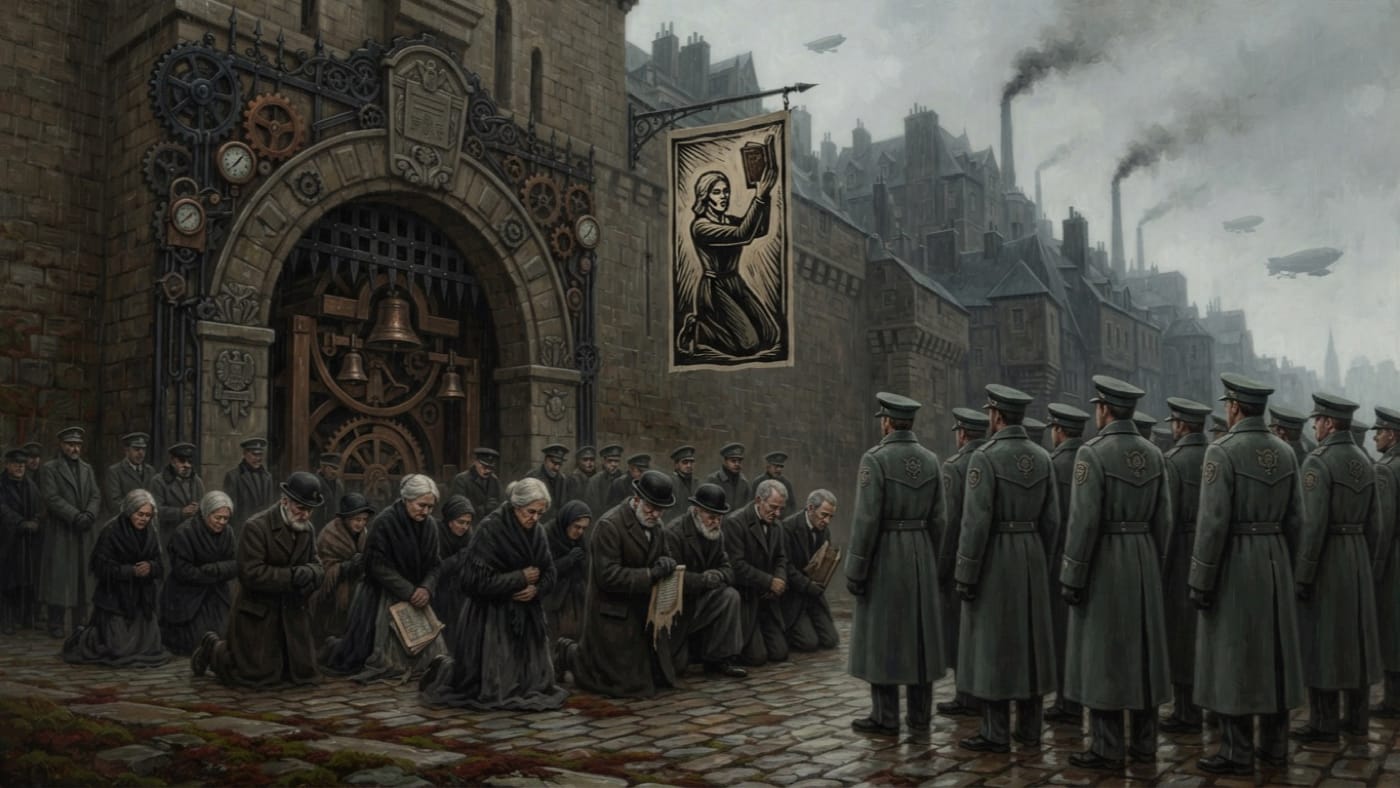
Day of the Thirty-One Names
Thirty-one tolls, forty-three seconds, and one face supplied by the printers
On 14 Corvus, Saint-Malo mourns thirty-one certified dead with thirty-one tolls and forty-three seconds of silence. The Church keeps the count, Strasbourg keeps the names, and Margaux supplies the face.
Codex Ref. XIII.1.87-031
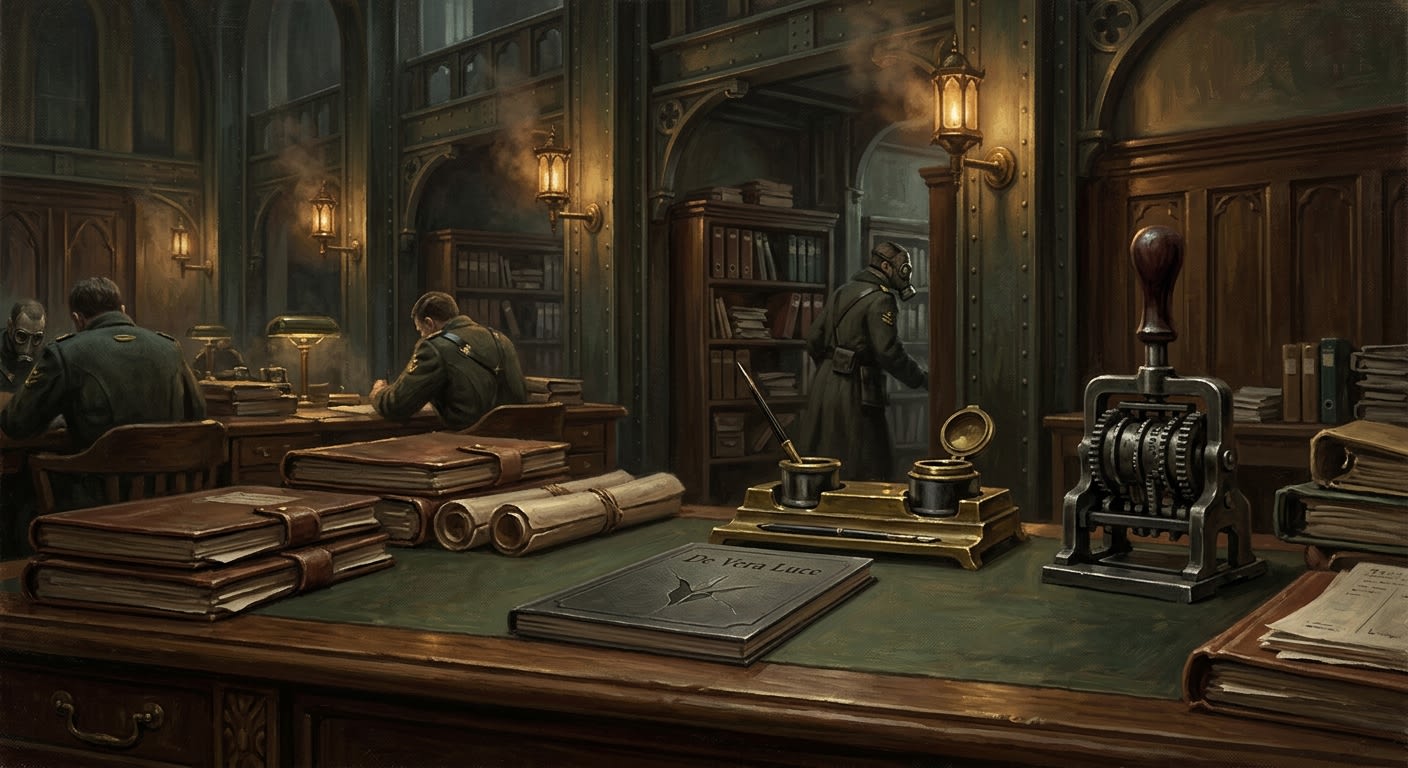
De Vera Luce
The lamp without altar becomes a torch in a library
The Amsterdam Academy's founding pamphlet made A.S. 0 a wound, not a birthday: thirty-two leaves of clean prose, humane poison, and continental ruin.
Codex Ref. I.1.04-001
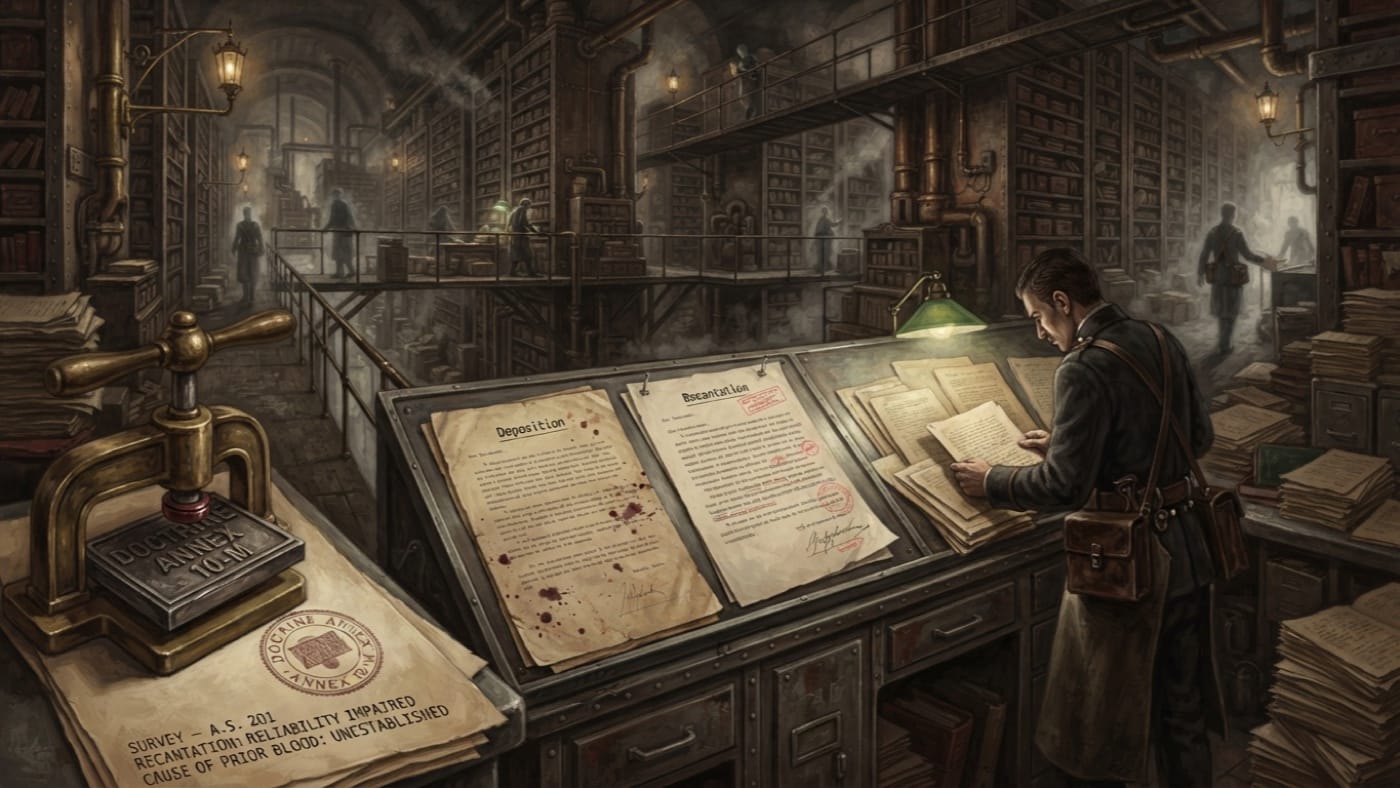
Doctrine Annex 10-M
A seal can keep testimony without making it proof
The A.S. 201 survey of Doctrine Annex 10-M records a Saint-Malo survivor's reported blood before the first blow and her pressured recantation. Custody is attested; the blood's cause and the historical seal date remain unknown.
Codex Ref. I.1.05-003
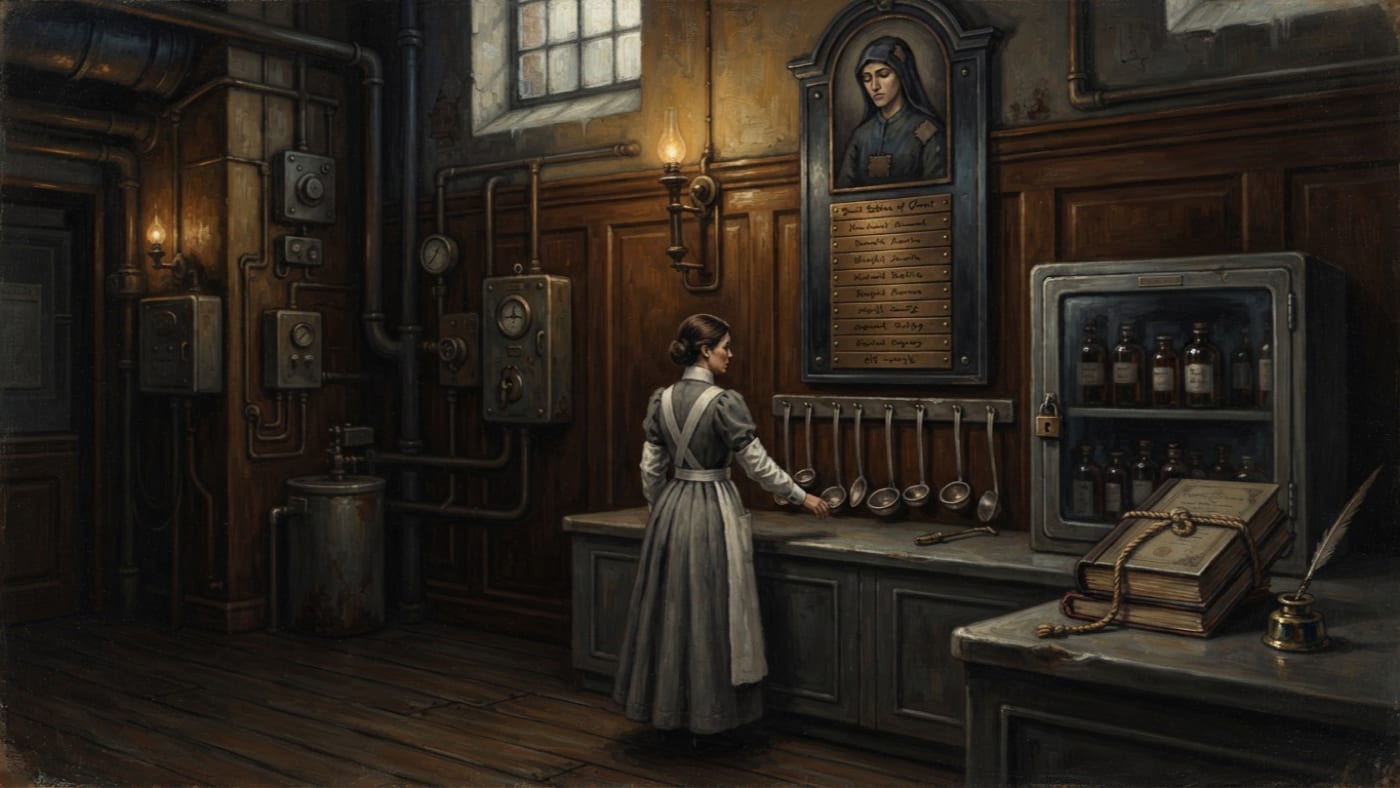
Eleven Bound list
Eleven bodies bound, seven witnesses counted, and Mercy's lesson in the ledger
The Eleven Bound remembers Sabina's reported bandaging recipients. Mercy recites their names; the seven final witnesses remain a different count.
Codex Ref. VII.8.02-002
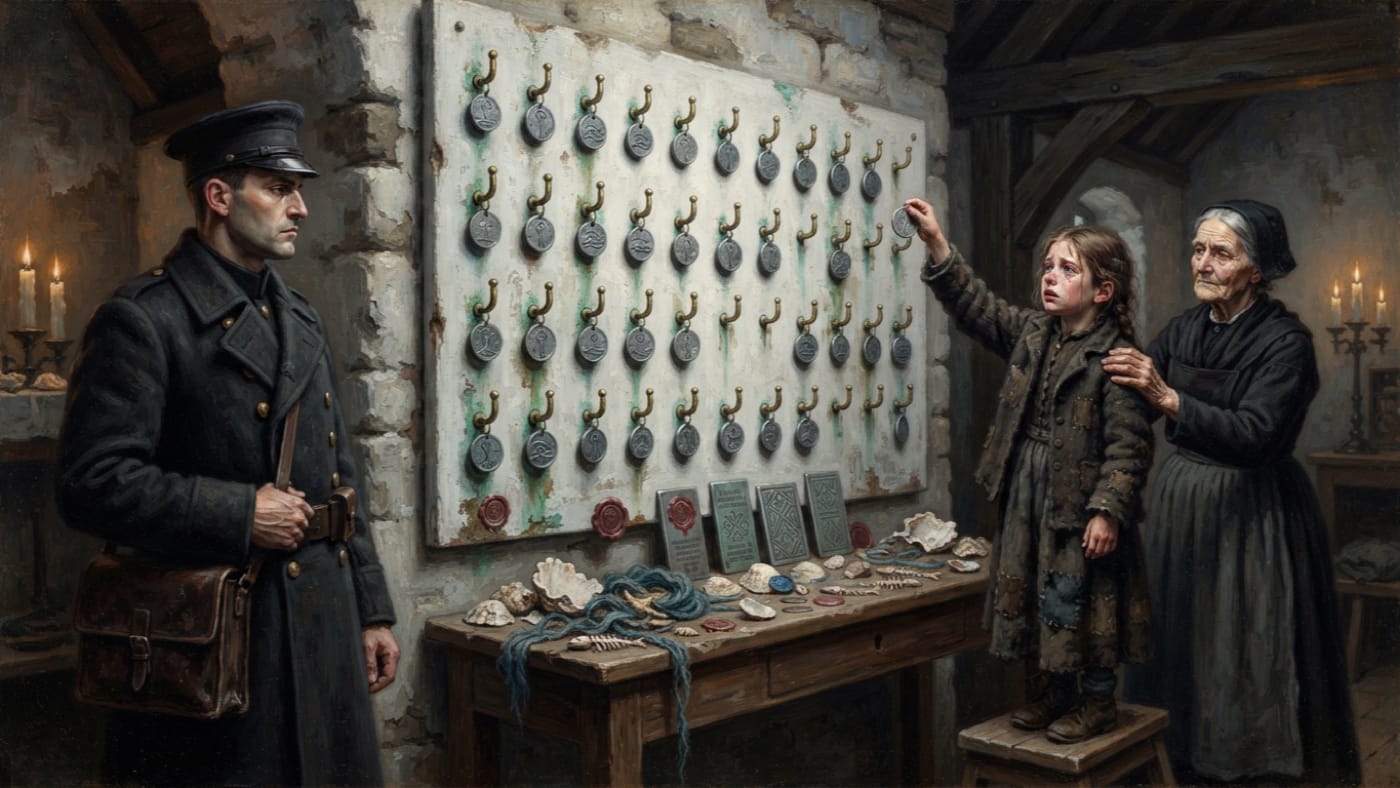
Empty Arrival
Forty-three hooks for the procession that never reached its saint
Forty-three hooks at Clement's chapel count everyone who set out from Dinan. The children hang the tokens each year; Doctrine keeps the destination denied.
Codex Ref. XIII.1.87-014
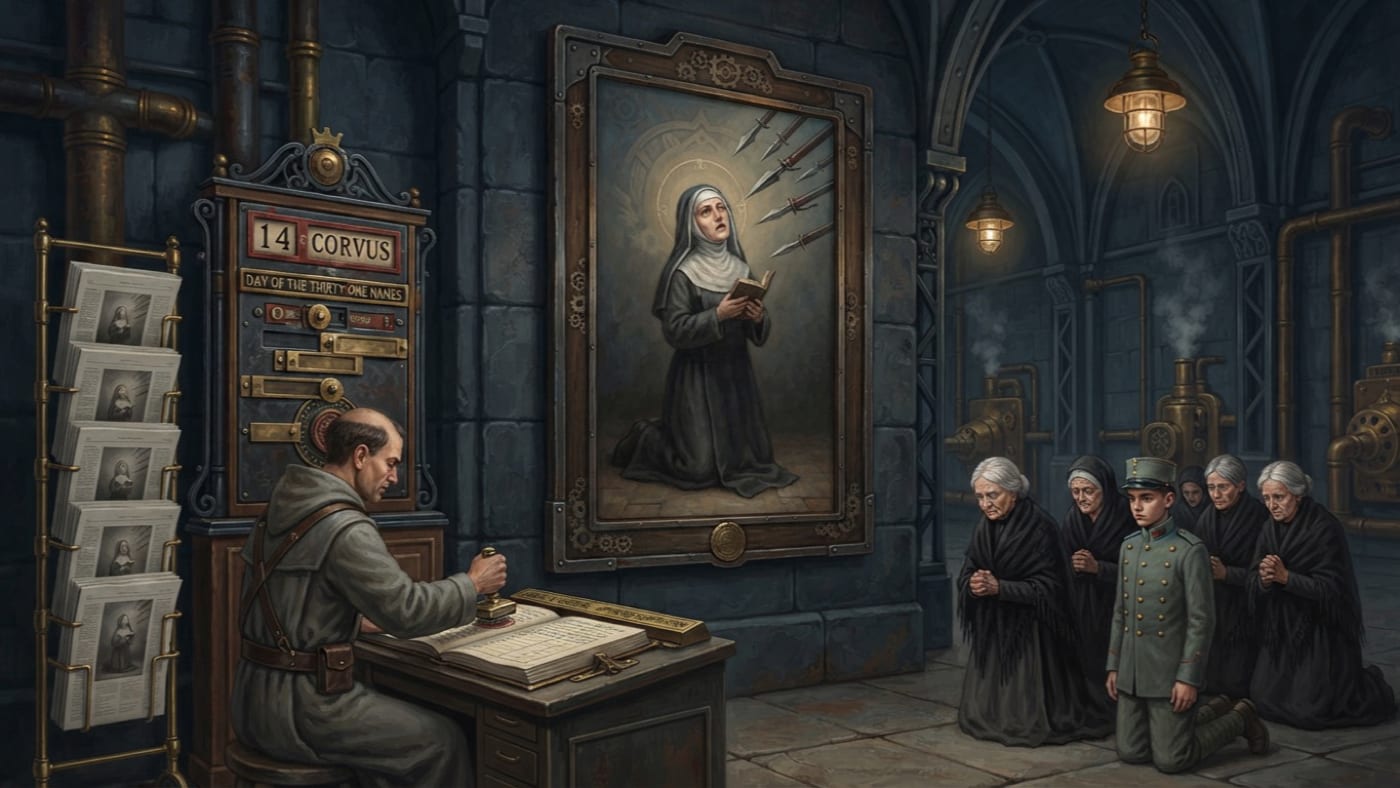
Feast of Saint Margaux
Thirty-one dead, one approved face
On 14 Corvus, Saint Margaux shares her feast with the Day of the Thirty-One Names. The grief belongs to the faithful; the face, the calendar and the uses belong to the Bureaus.
Codex Ref. XIII.1.87-014
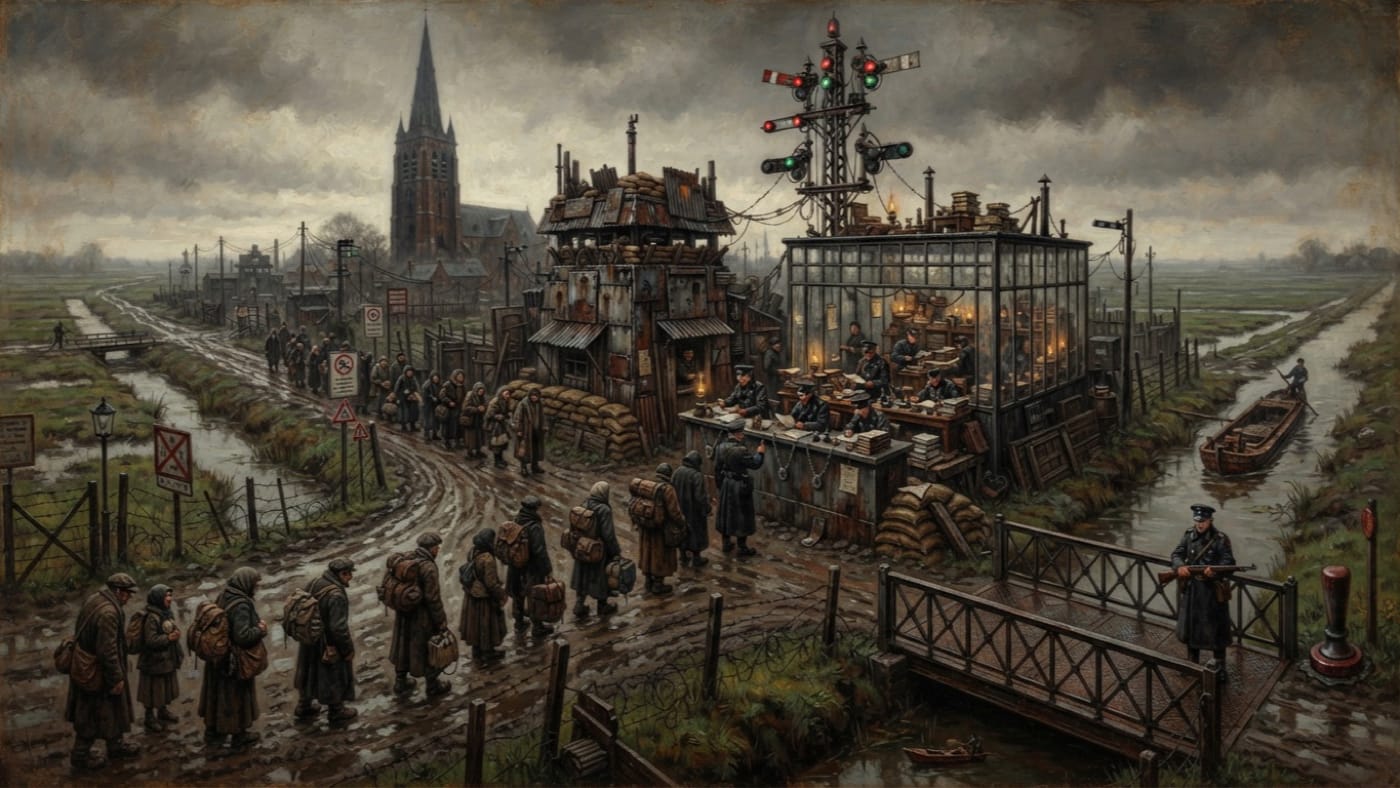
Flanders
Loyal. Damp. Licensed.
Flanders supplies pilgrims from the Synod's damp western parishes. The Brotherhood of the Blessed Foot once charged at the crossroads; the Bureau of Pilgrimage now publishes the fees and charges again for the walk home.
Codex Ref. II.1.07-201
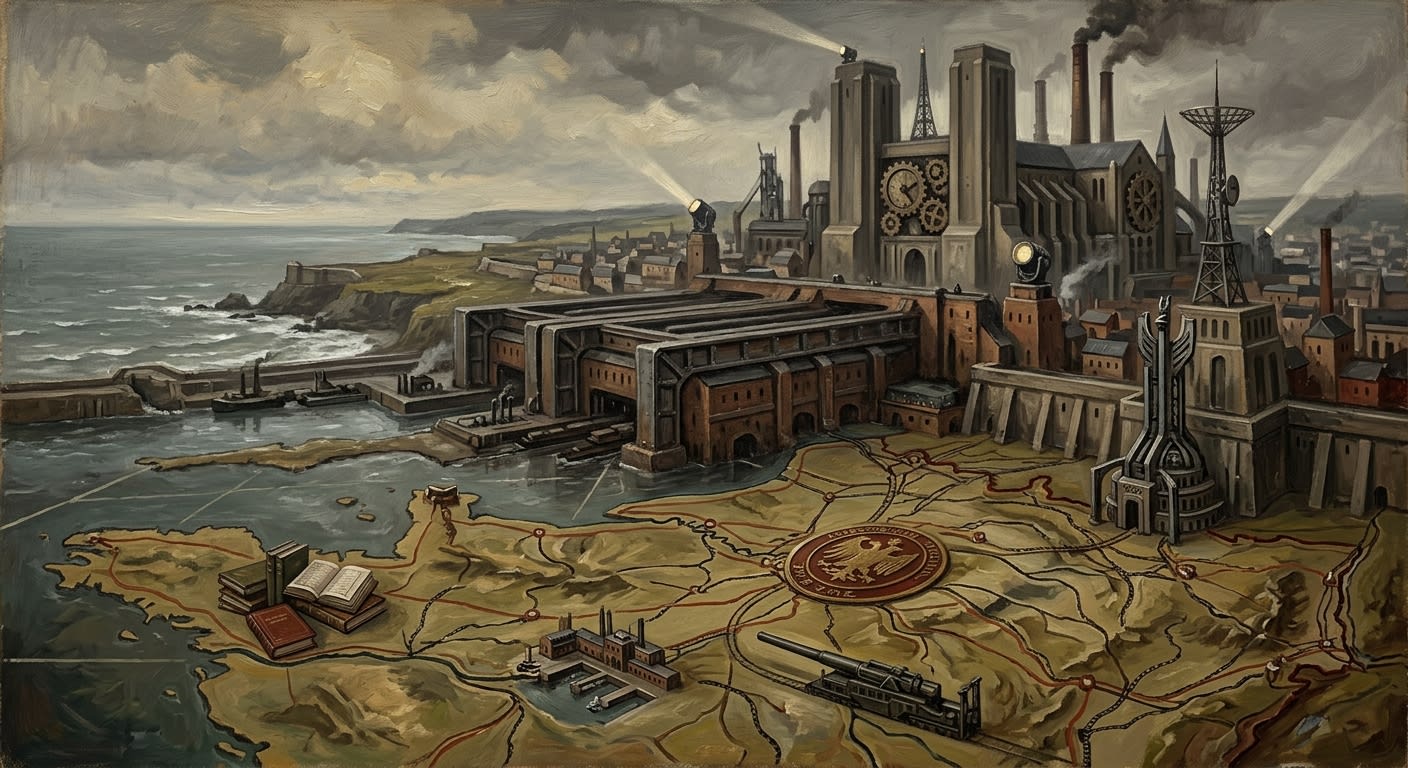
France
The country the Synod did not abolish, because it proved too taxable to waste
A.S. 201 survey of France as Zone One heartland: martyr coast, watched cities, taxable memory, useful ports, and one conquered name made indispensable.
Codex Ref. II.1.01-201
Gazette de la Raison
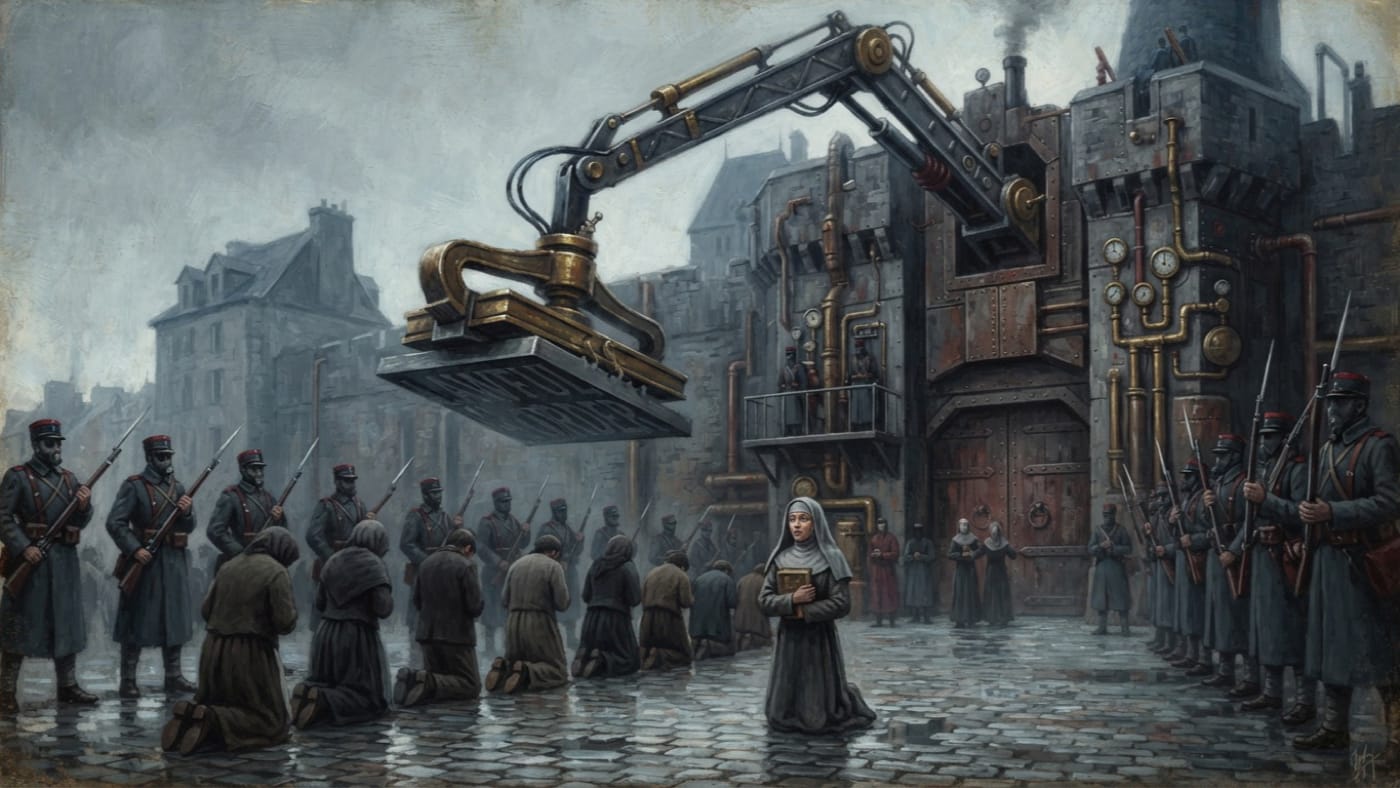
Four sentences against thirty-one dead
Four sentences made Saint-Malo's kneeling pilgrims vagrants and its bayonets lawful. The Gazette kept the magistrate's grammar; the Church kept the face of Saint Margaux.
Codex Ref. I.1.04-010
Ghent
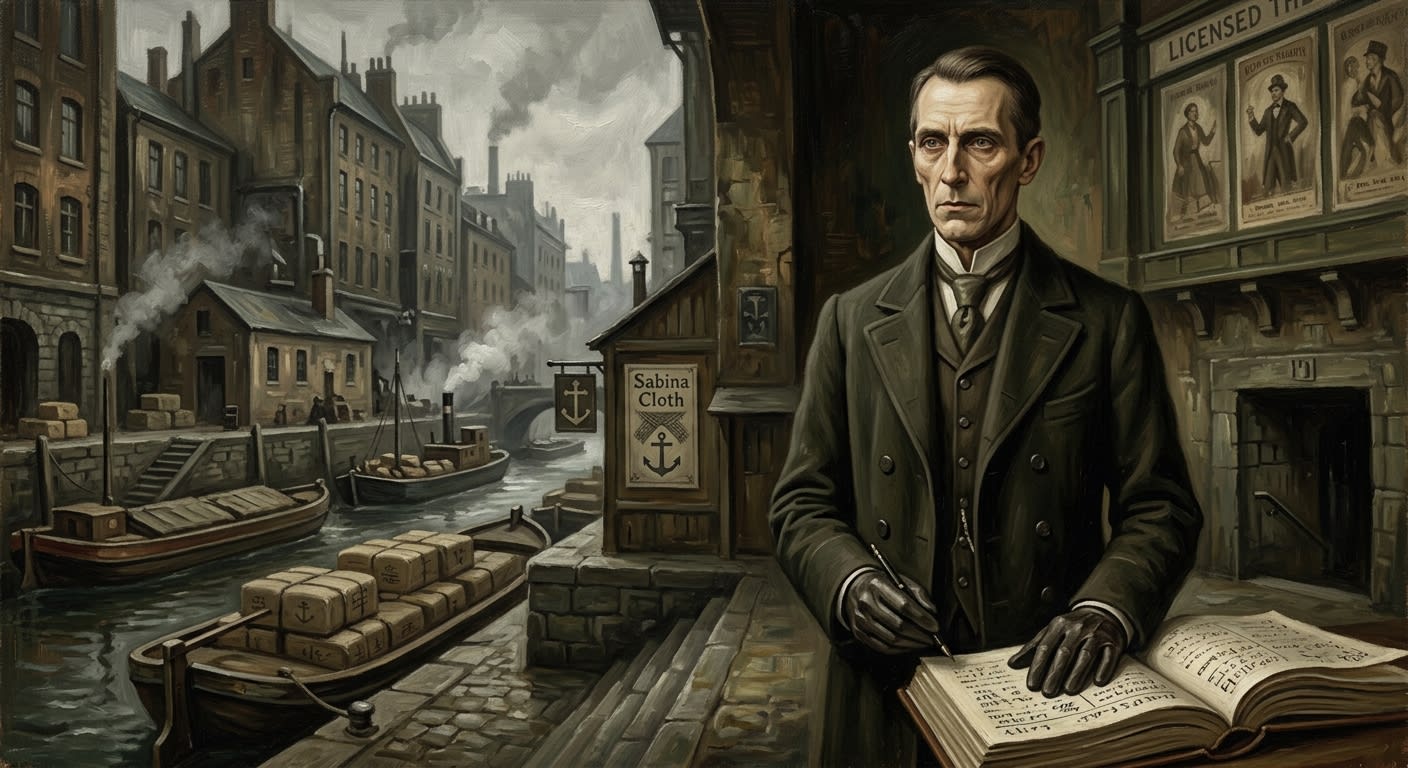
The canal city where water keeps copies and loyalty learns to smuggle
Ghent is the Synod's wet ledger in Flanders: canal trade, Records quays, Sabina cloth, licensed theatres, Black Ledger cells, Wormhost scars, and obedience with annotations.
Codex Ref. II.1.05-201

Greek in the Codex
A tongue in the ledger proves less than the clerk would like
An A.S. 201 survey of Greek in Codex records: restricted texts, Church learning, relic labels, parish spellings and recorded pleas. Lyon contributes one disputed claim; copying it does not produce another witness.
Codex Ref. XIII.1.03-002
Harmonized Routes
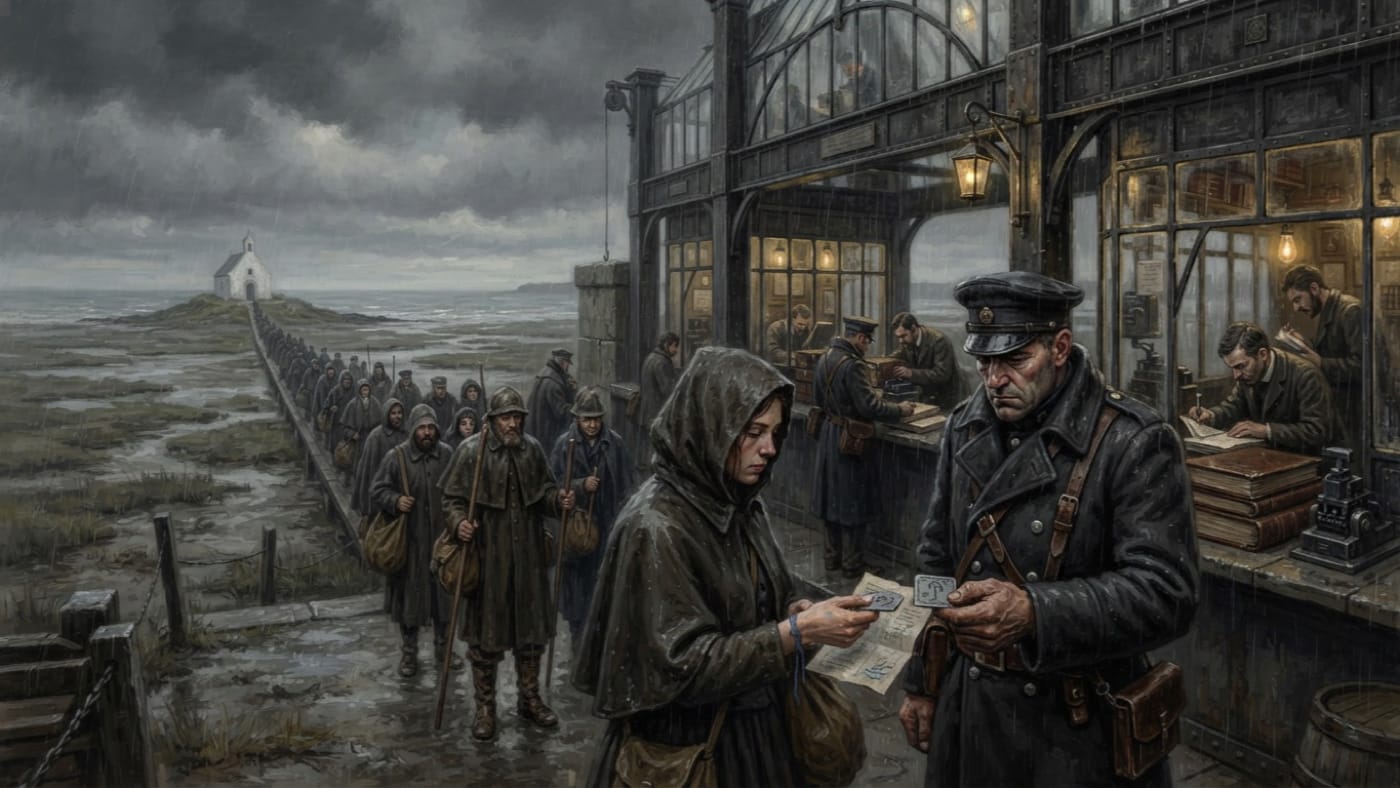
The Bureau licenses the road and leaves arrival to the pilgrim
The Harmonized Routes tables join shrine, road and token under one licence. Pilgrimage certifies the right to set out; arrival remains the pilgrim's problem.
Codex Ref. XIII.1.86-201
Hierarch Augustinus of Mainz
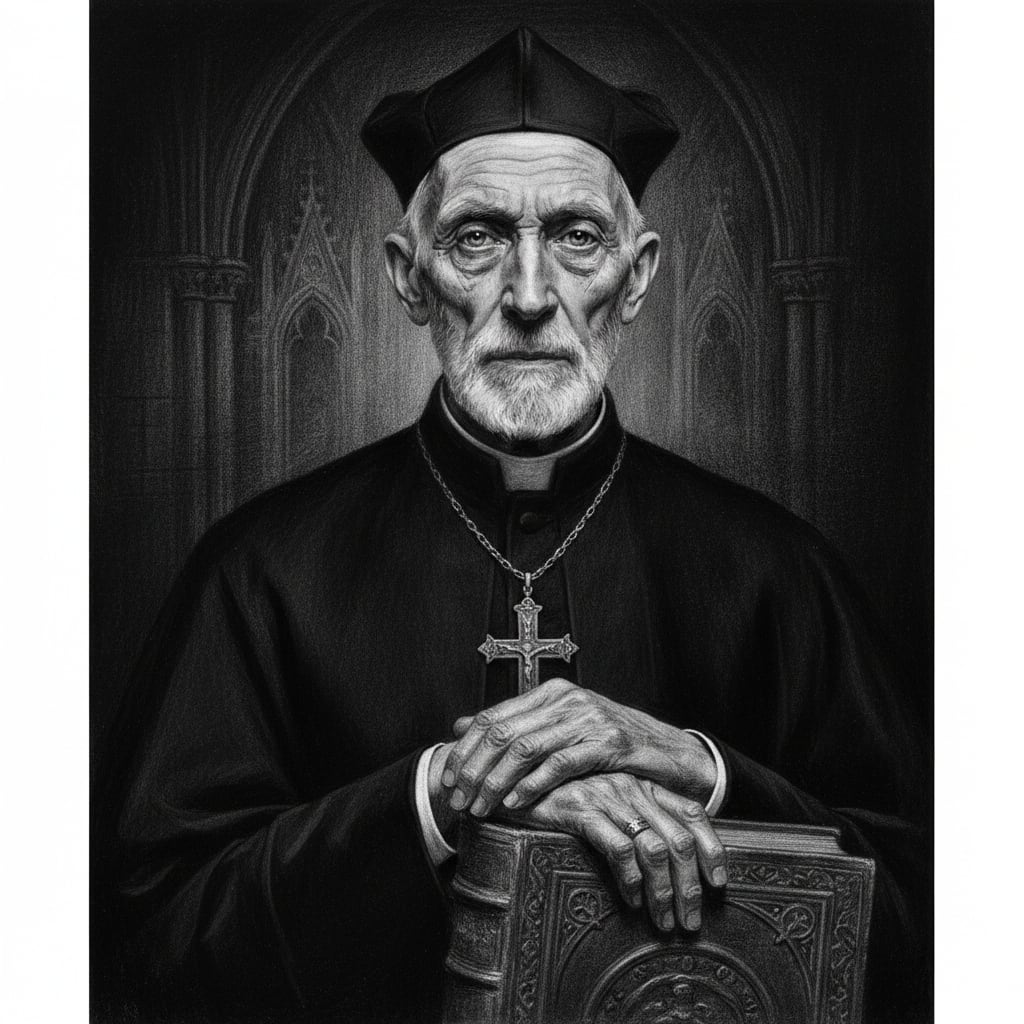
The Binder of Wounds
First among the Hierarchs, called the Binder of Wounds. He yoked altar to arsenal, sanctified catapults with reliquaries, and built the Synod from the marrow of the faithful. His genius was not theology. His genius was infrastructural cruelty.
Codex Ref. III.1.01-001

Hierarch Odo of Trier
The man who taught Strasbourg's stones to obey
Hierarch Odo of Trier entered the Inner Circle after Mainz and became quotation at Cologne, where one sentence taught bishops, walls, and petitions how silence obeys.
Codex Ref. III.2.01-044
Latin
The river kept the hours; the Church kept arguing about the language
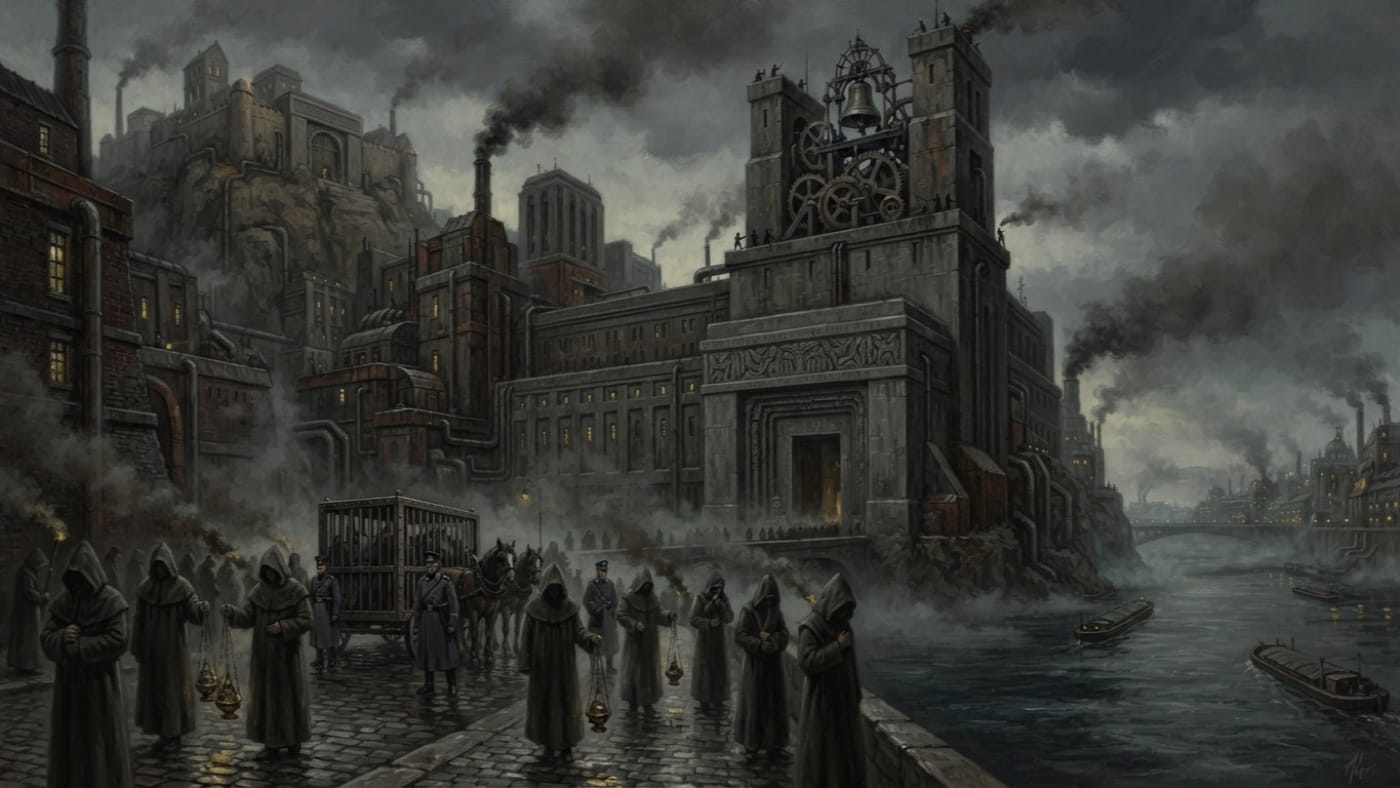
Latin carries the Church's prayers, titles and ceremonial condemnations. The Rhône reportedly used it; witnesses disagreed, and the archive declines to supply a grammar.
Codex Ref. XIII.1.97-001
Lisbon
The harbour counts by contract
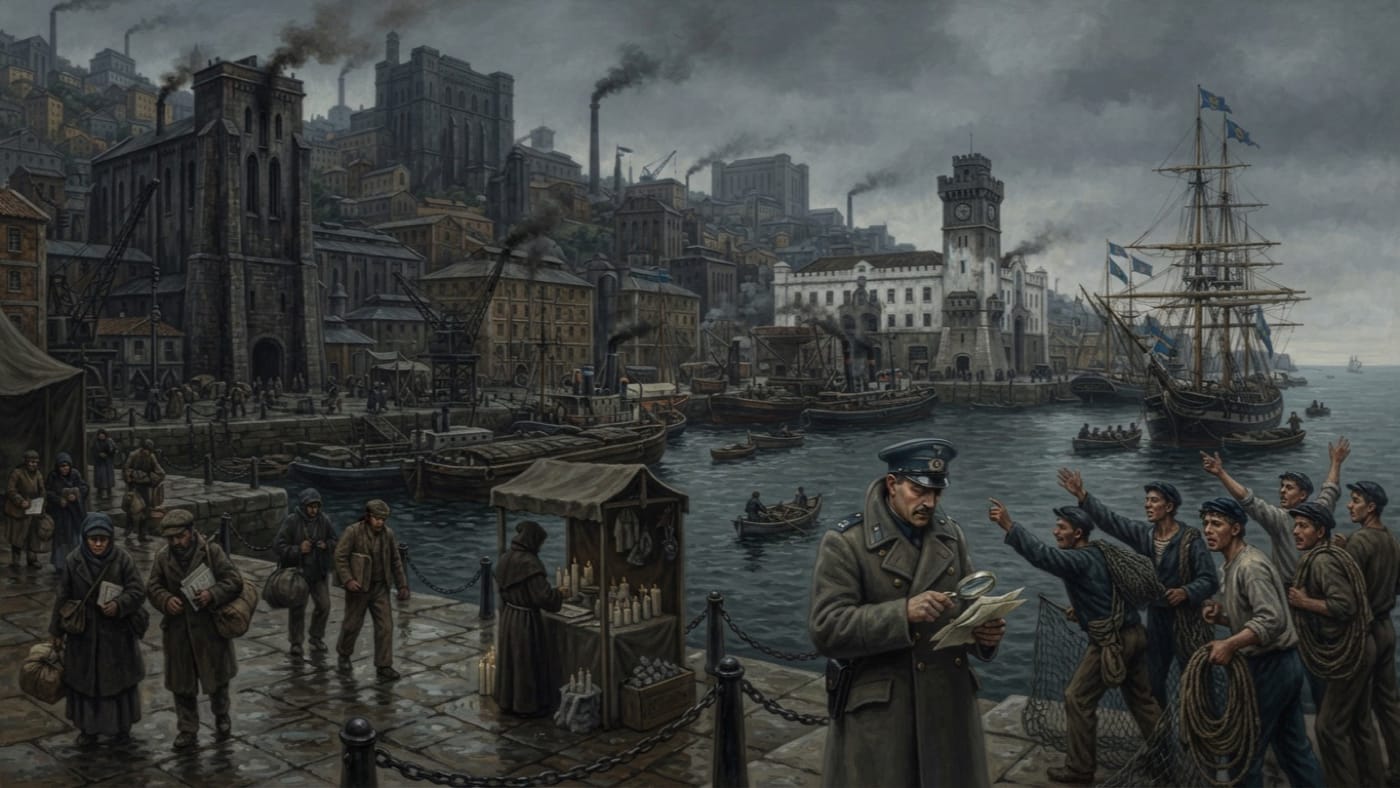
Lisbon sells sea candles, quake memory and licensed passage at the Atlantic mouth of the Tagus. Strasbourg counts its revenue; its sailors tell the catastrophe in the wrong order.
Codex Ref. II.4.09-201
Maëlle of Dinan
Three corrections the Church chose to keep
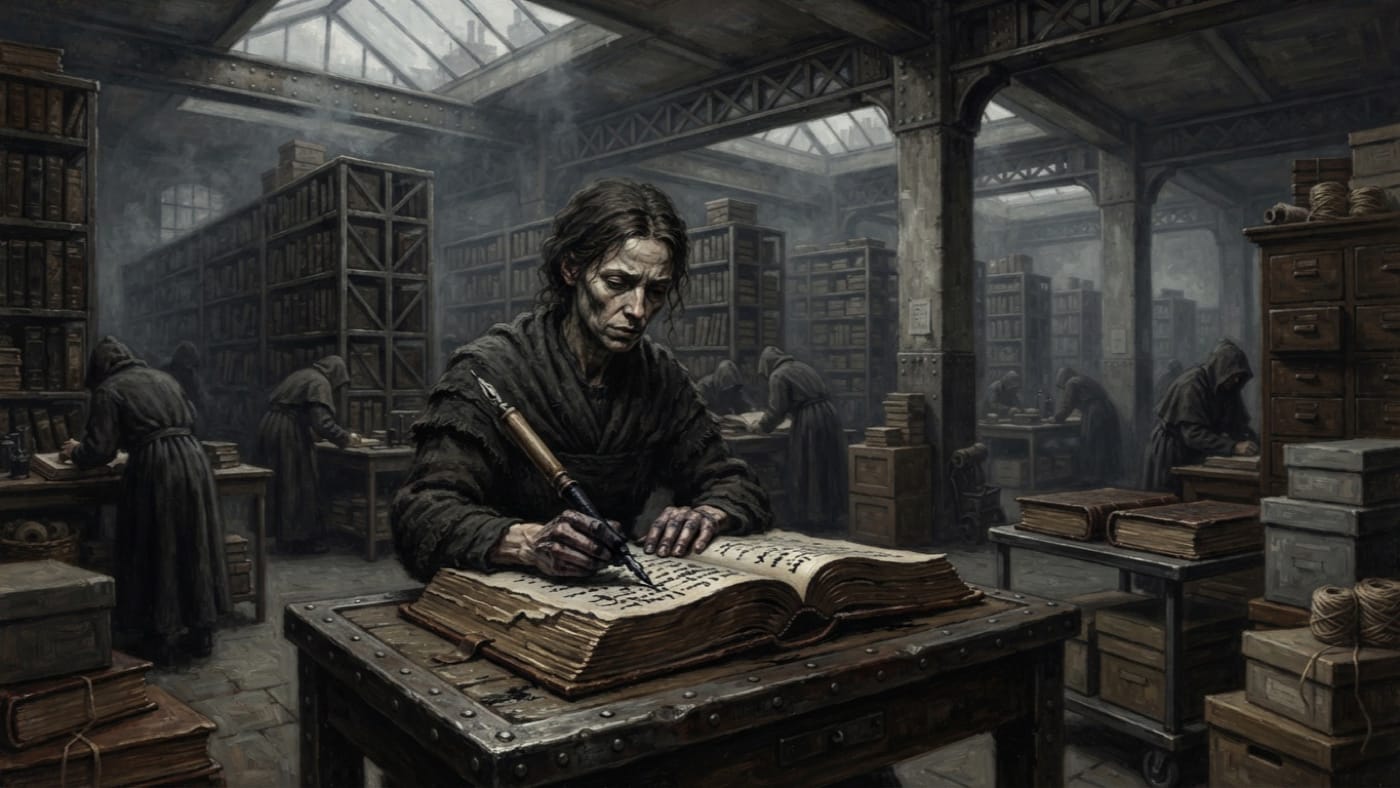
Maëlle of Dinan corrected her family's name in three copies of the Martyrology of Saint-Malo. The Church preserved her ink; this file cannot supply the surname.
Codex Ref. III.2.01-007
Margaux Chapel
Twelve sisters keep one saint from growing old
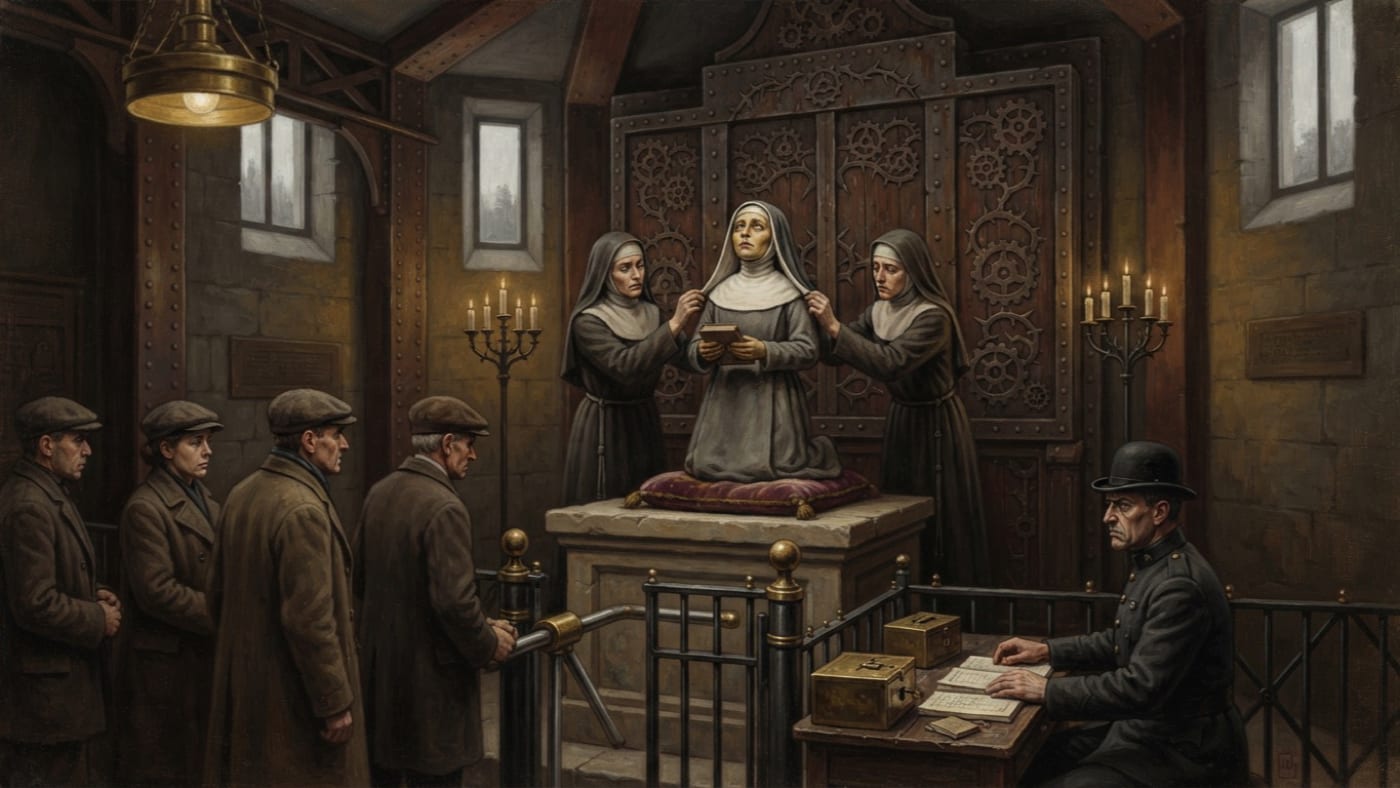
At Sainte-Claire-des-Landes, twelve sisters tend Saint Margaux's wax likeness while pilgrims pay at the gate. The face is certified; the chapel's founding remains unrecorded.
Codex Ref. II.1.09-015

Martyrology of Saint-Malo
Thirty-one names, forty-three seconds, and a civilization built from first blood
The Martyrology of Saint-Malo counts thirty-one dead, five absences, and every obedience the Synod has purchased with their blood.
Codex Ref. VII.8.02-001
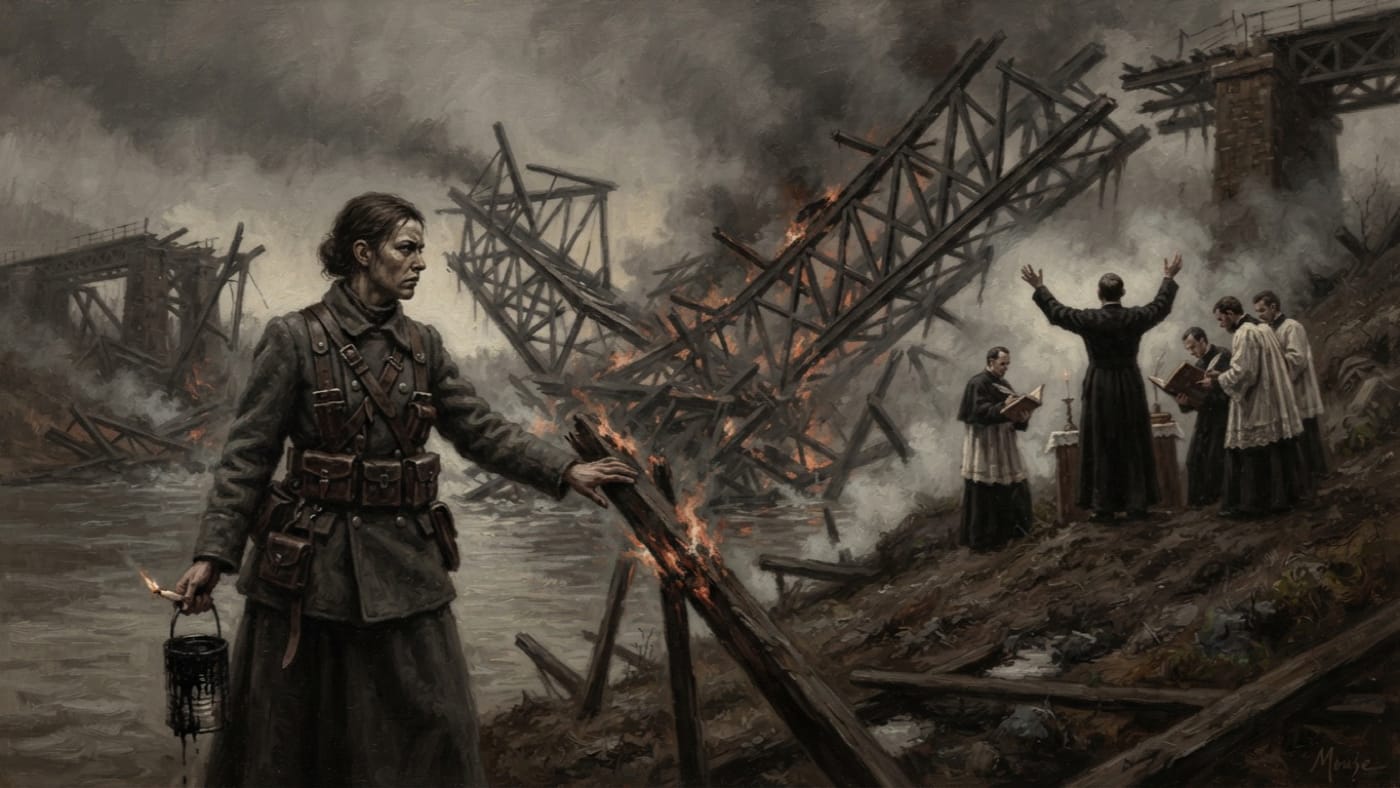
Maud of Saint-Riquier
The bridge fell; the query is still standing
In A.S. 16, Maud used axle grease after a chaplain refused to bless it. The bridge fell. His doctrinal query remains unanswered; her fate remains unrecorded.
Codex Ref. III.2.01-016
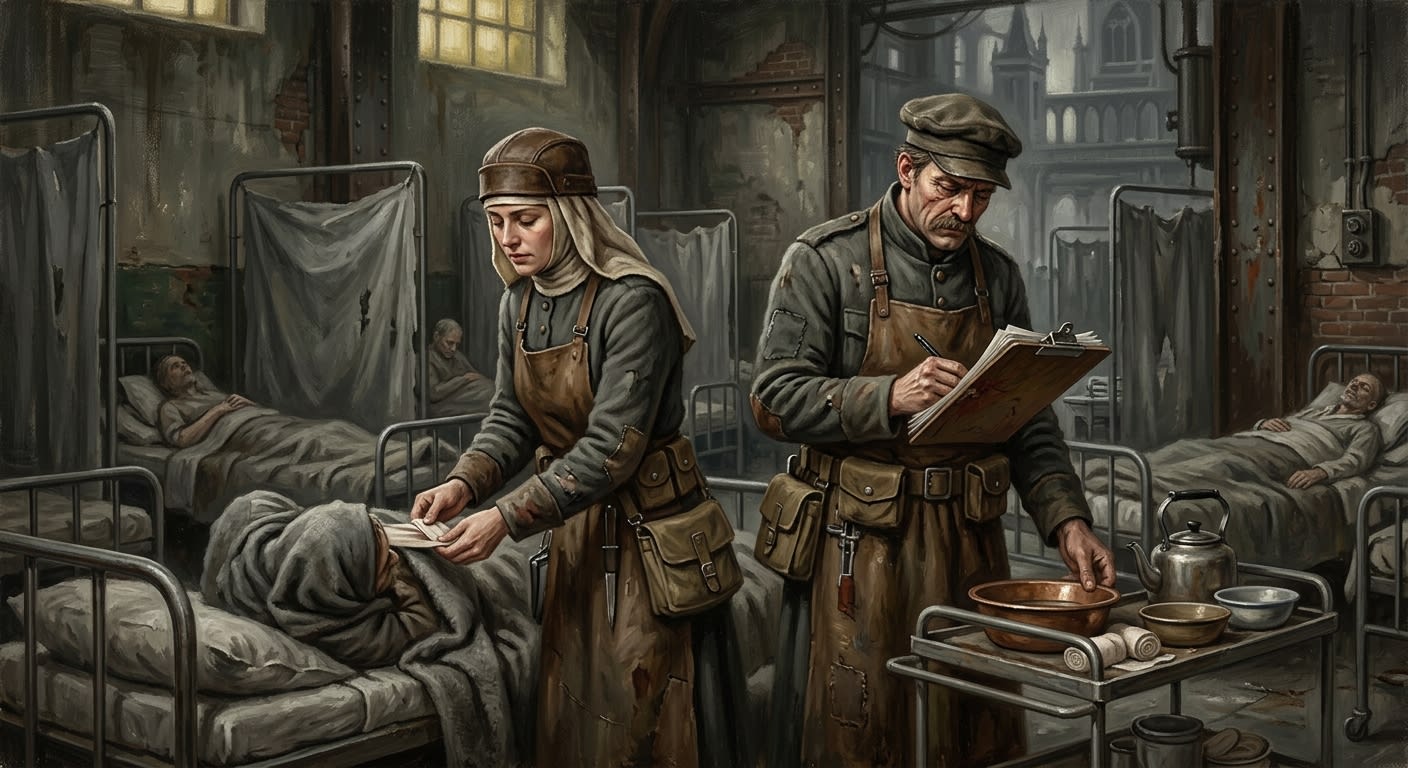
Mercy Ward-Sister / Mercy Ward-Brother
The hand that brings broth also carries the ledger
The Mercy Ward-Sister and Ward-Brother are the Bureau of Mercy's grey-aproned operators of counted compassion, where broth, bandage, confession, and paperwork become one instrument.
Codex Ref. XII.6.04-001
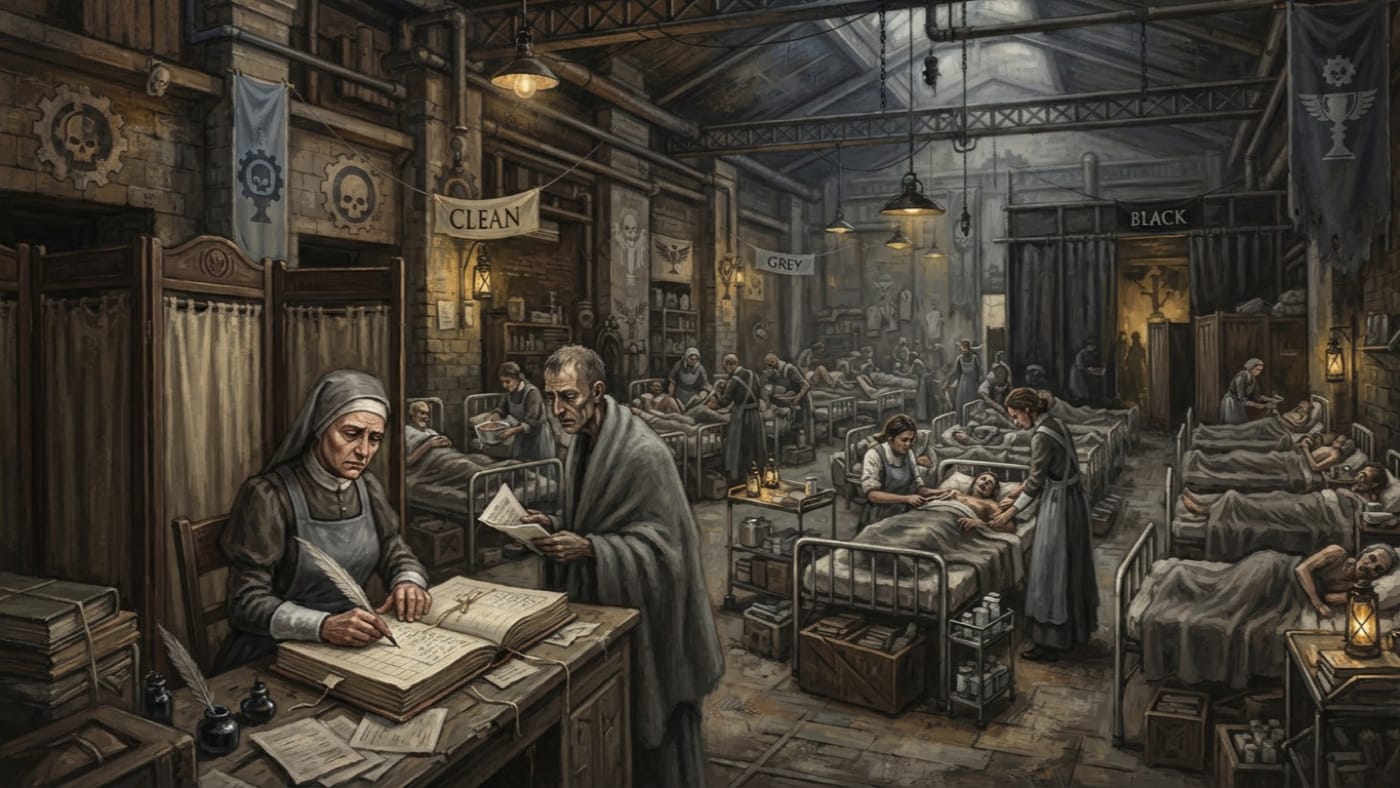
Mercy Wards
The bed is allotted; the suffering must be entered
The Bureau of Mercy's houses of the sick: broth, bandages, confession and clean, grey or black tags. This A.S. 201 survey counts the registered wards; the living remain harder to reconcile.
Codex Ref. II.6.04-001
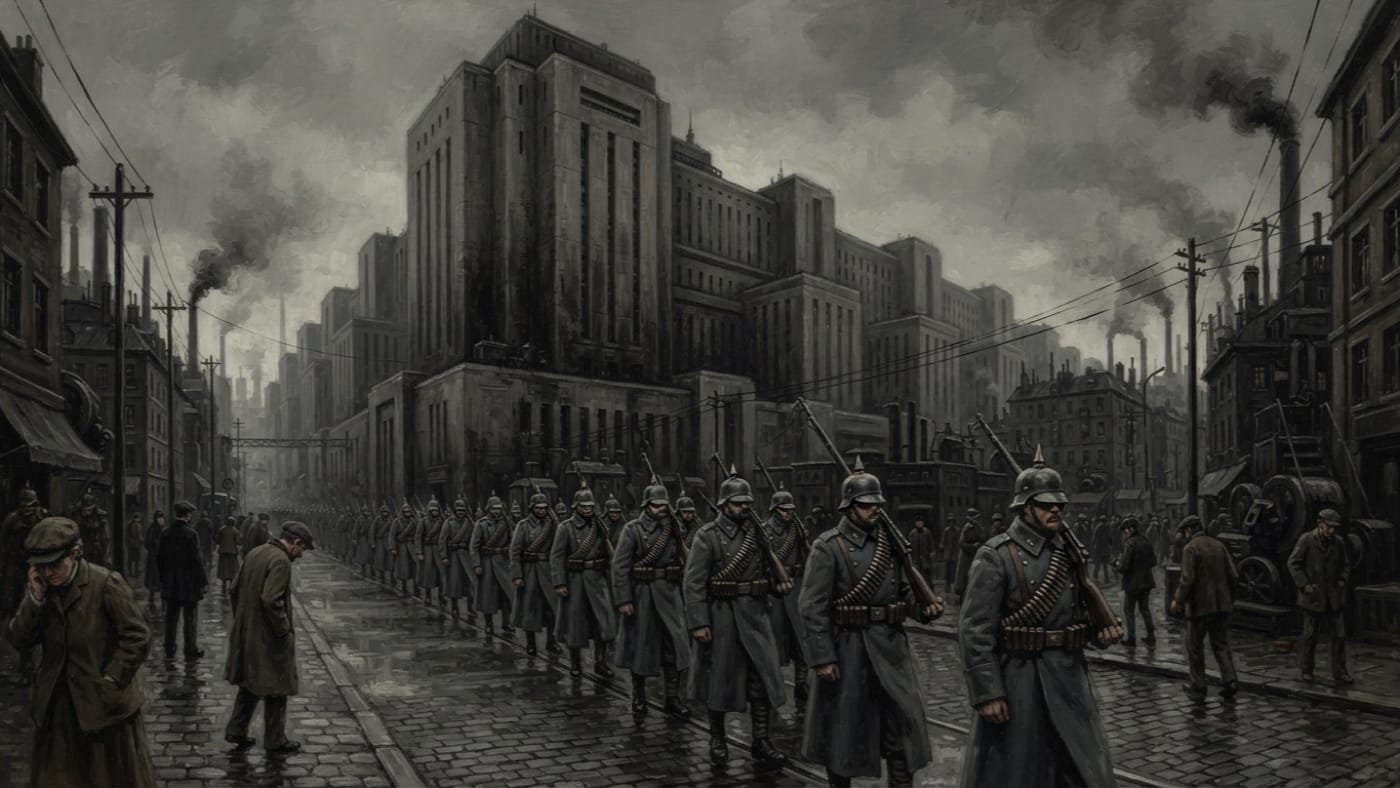
Ministry of Civic Security
The office above the bayonets
The Republic placed its Guards under a Ministry of Civic Security in A.S. 30. The name survives in the Stacks; the citizen's security was another matter.
Codex Ref. I.1.05-002
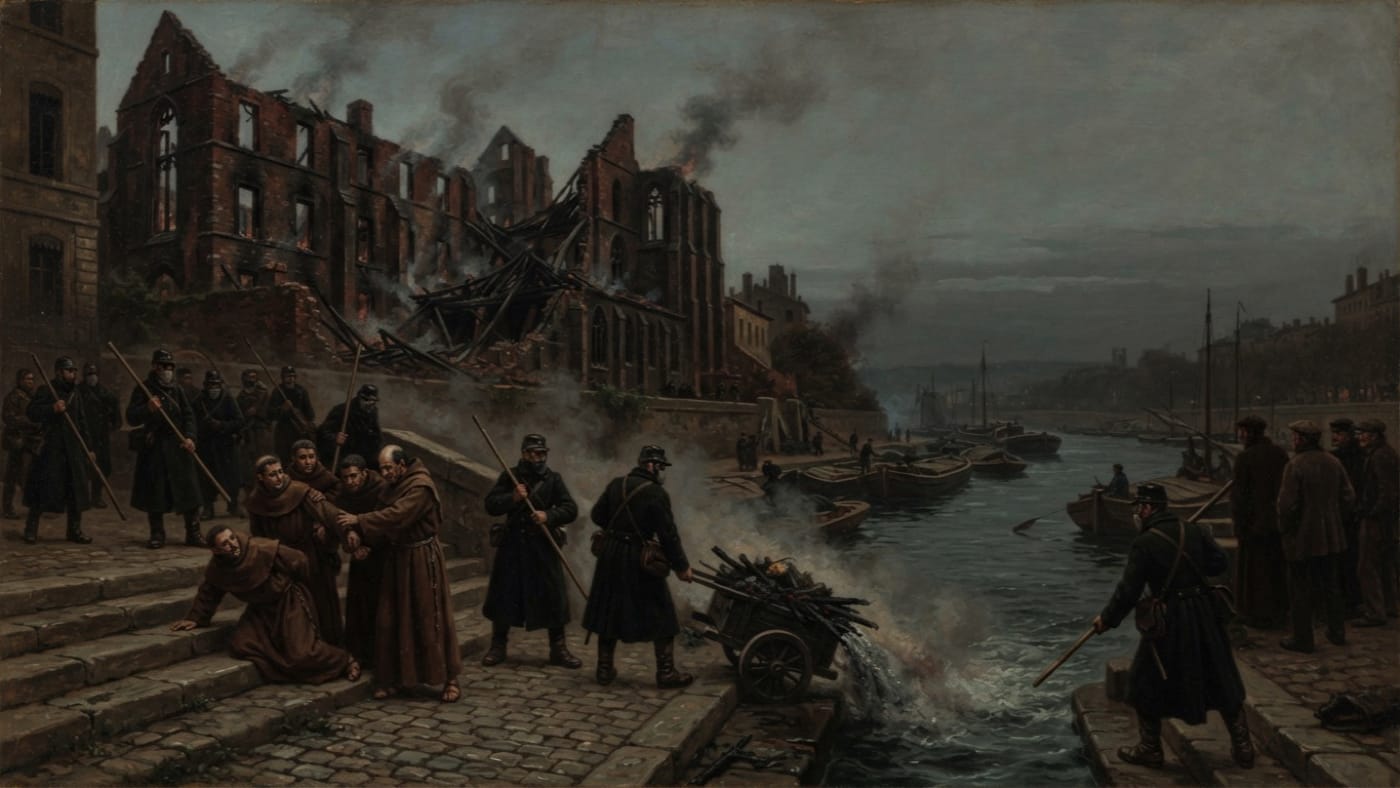
Minor House of Saint Sabina
Three names, one friary, and no proven dedication
The Lyon friary burned in −39 A.S. (1671 CE), remembered under three disputed names. Its brothers fed the docks; the index supplied a saint it could not prove.
Codex Ref. II.1.09-039
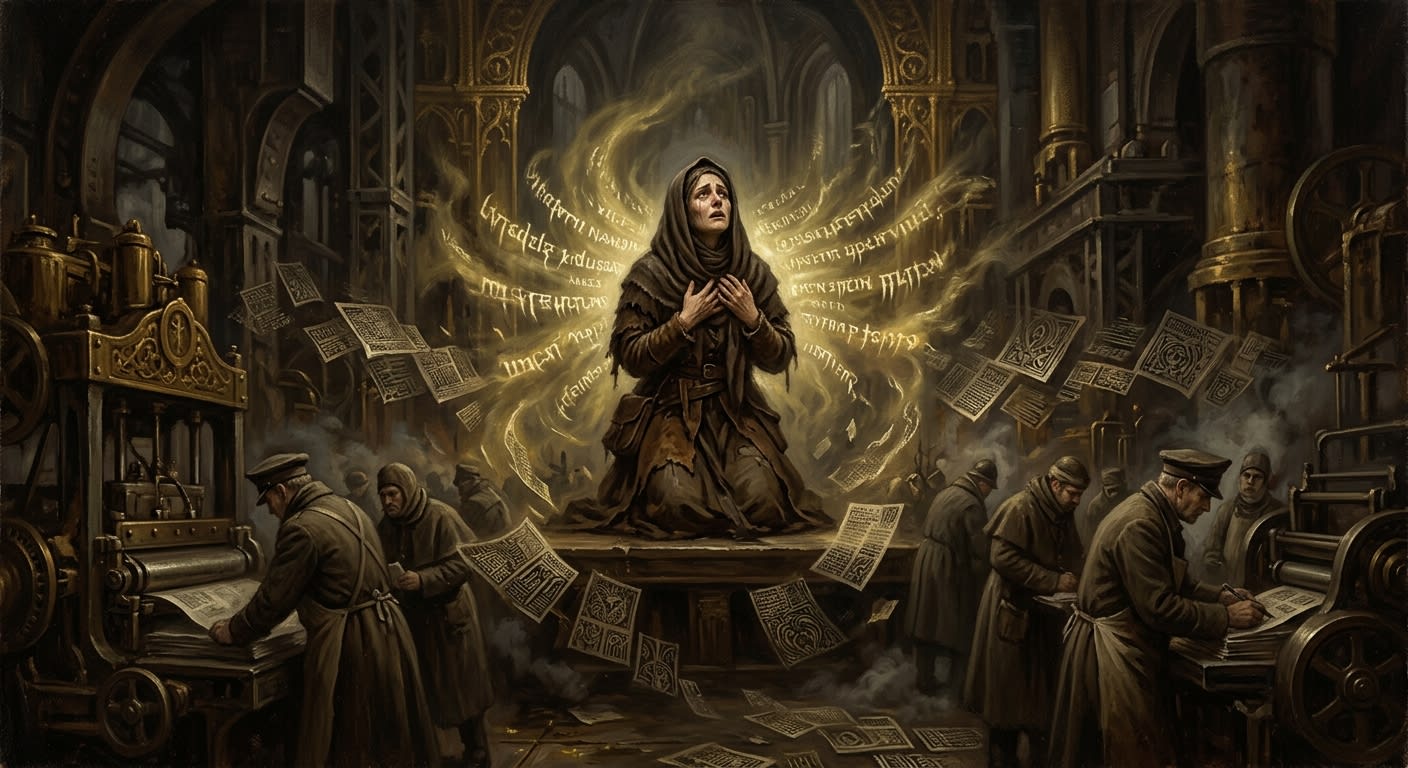
Miraculum Diffusum
The miracle was everywhere, which is to say the presses worked
The one-use doctrinal category that crowned Margaux when no ordinary miracle arrived: effect, print, grief, and Latin with teeth.
Codex Ref. XIII.1.09-014
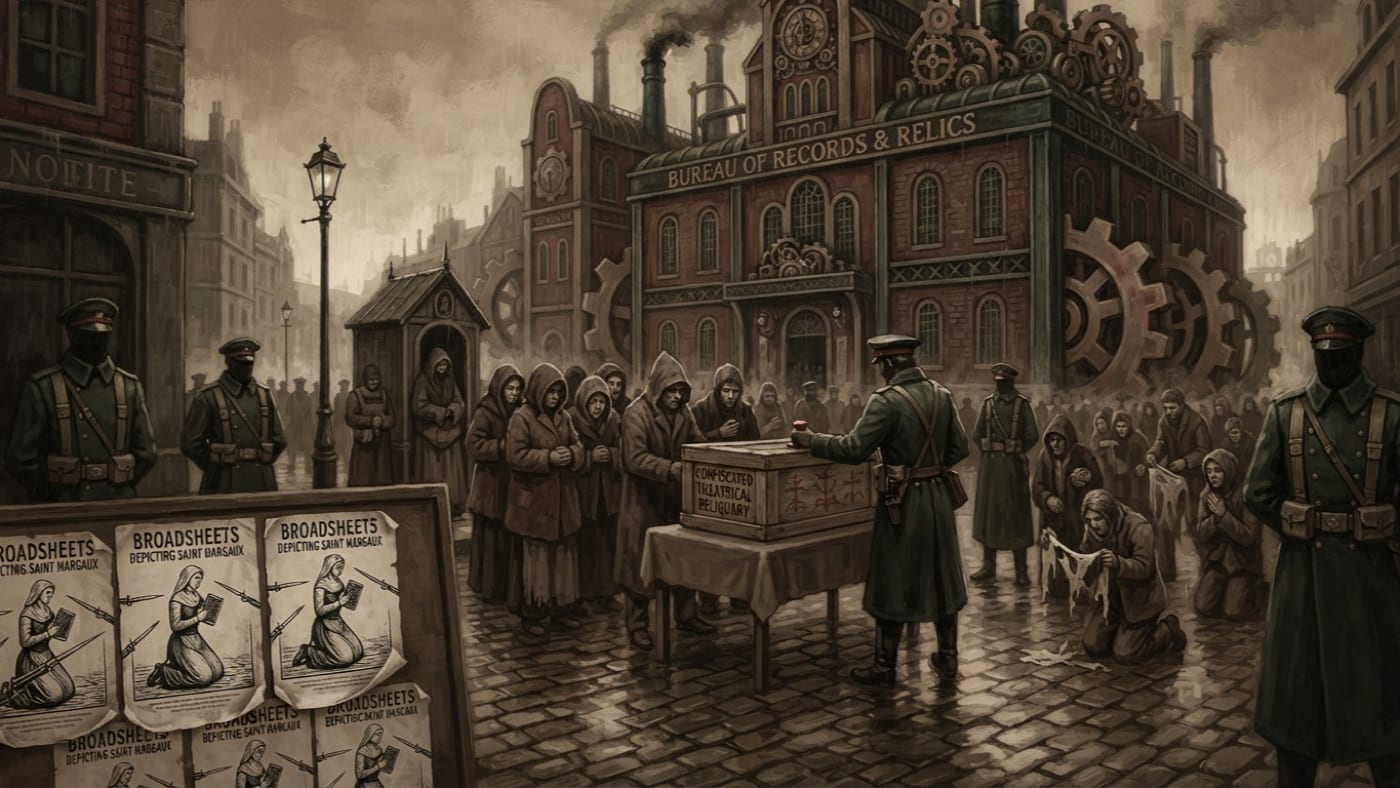
Nantes
Paper arrived; a box was seized
Margaux's broadsheets reached Nantes; a theatrical reliquary there was confiscated after accepting offerings. Paper arrived, a box was seized, and the Bureau considers this sufficient civic history.
Codex Ref. II.3.05-010
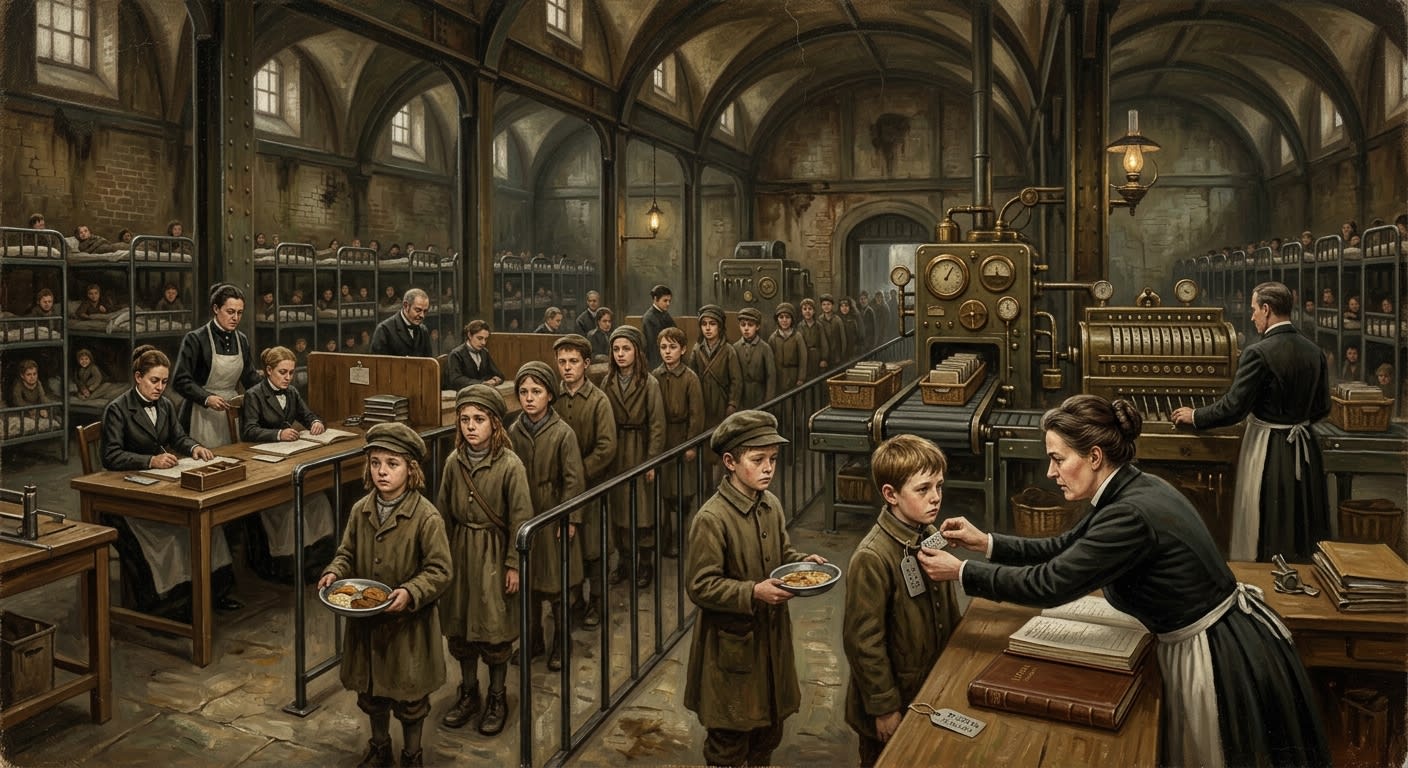
Orphanarii
Mercy with a cot, a tag-punch, and the legal courage to rename a child before breakfast
The Orphanarii are the Synod's state orphanage system: Mercy houses that wash, tag, rename, sort, feed, place, and sometimes erase children until grief becomes legible.
Codex Ref. VIII.2.12-134
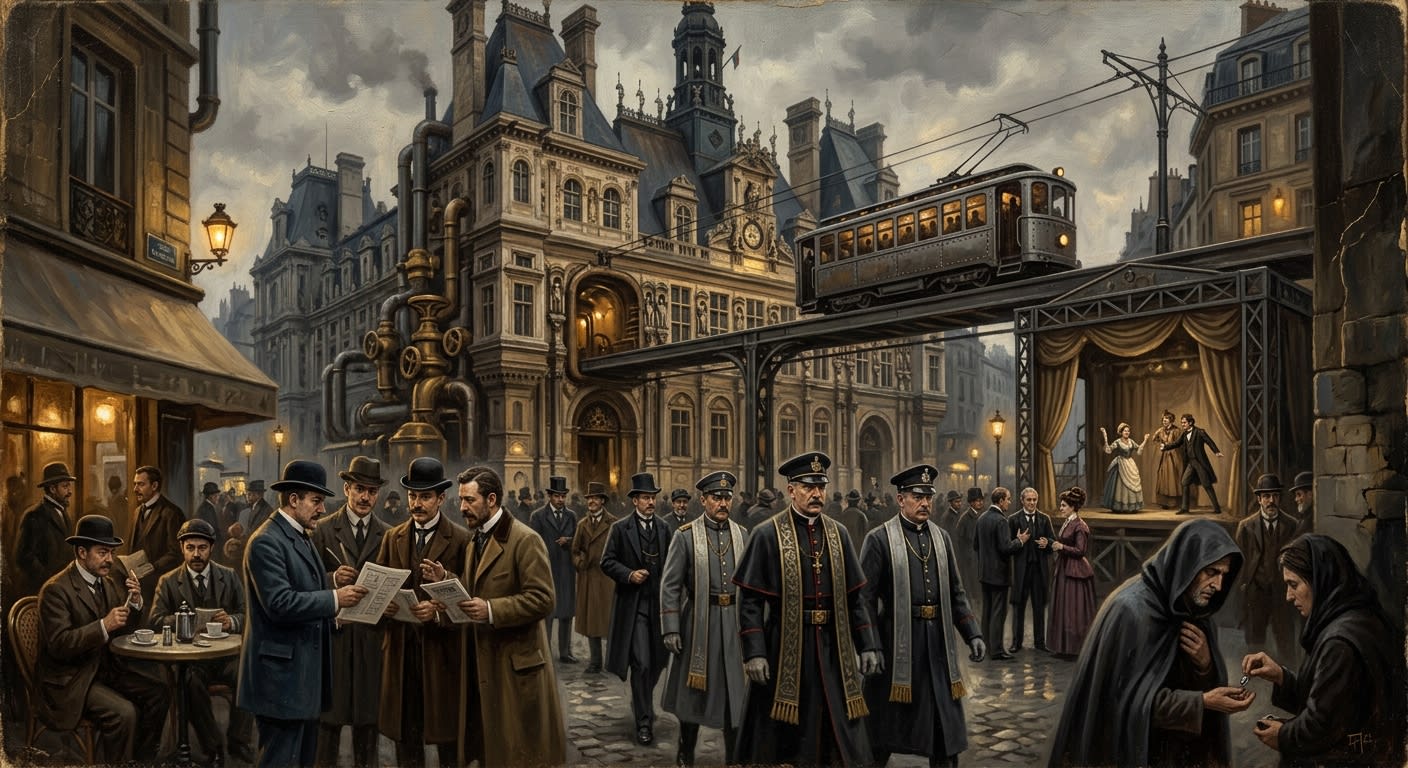
Paris
The city kneels beautifully, which is precisely why one watches the angle
Paris is the Western Heartlands' corrected jewel: Rationalist salon, Synod workshop, black-market confessional, obedient theatre, and treason with excellent diction.
Codex Ref. II.1.08-201
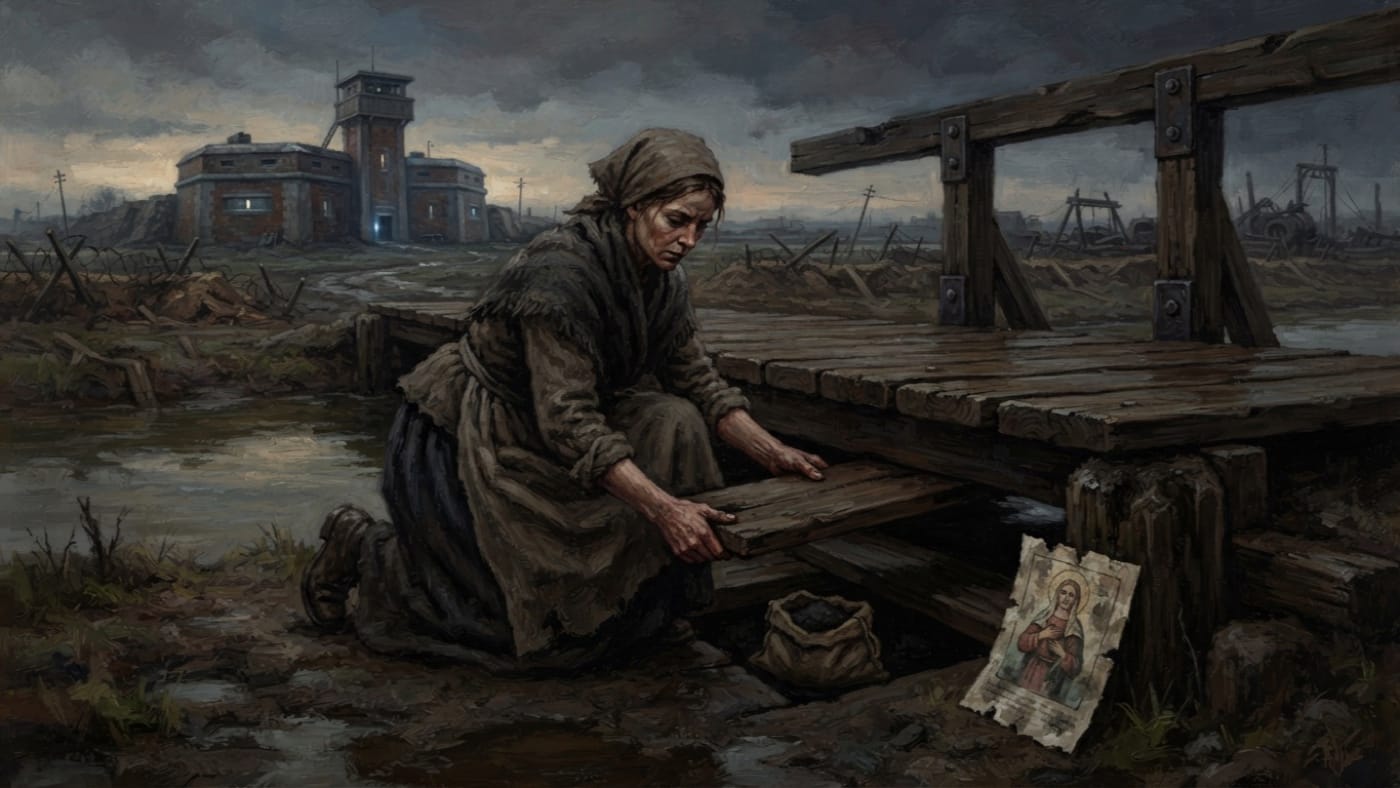
Picardy
One woman, one plank, and no recorded fire
Picardy enters the Ledger through one unnamed woman who saw Margaux's image and hid powder beneath a bridge plank. The record supplies neither a burning bridge nor a martyr.
Codex Ref. II.1.12-015
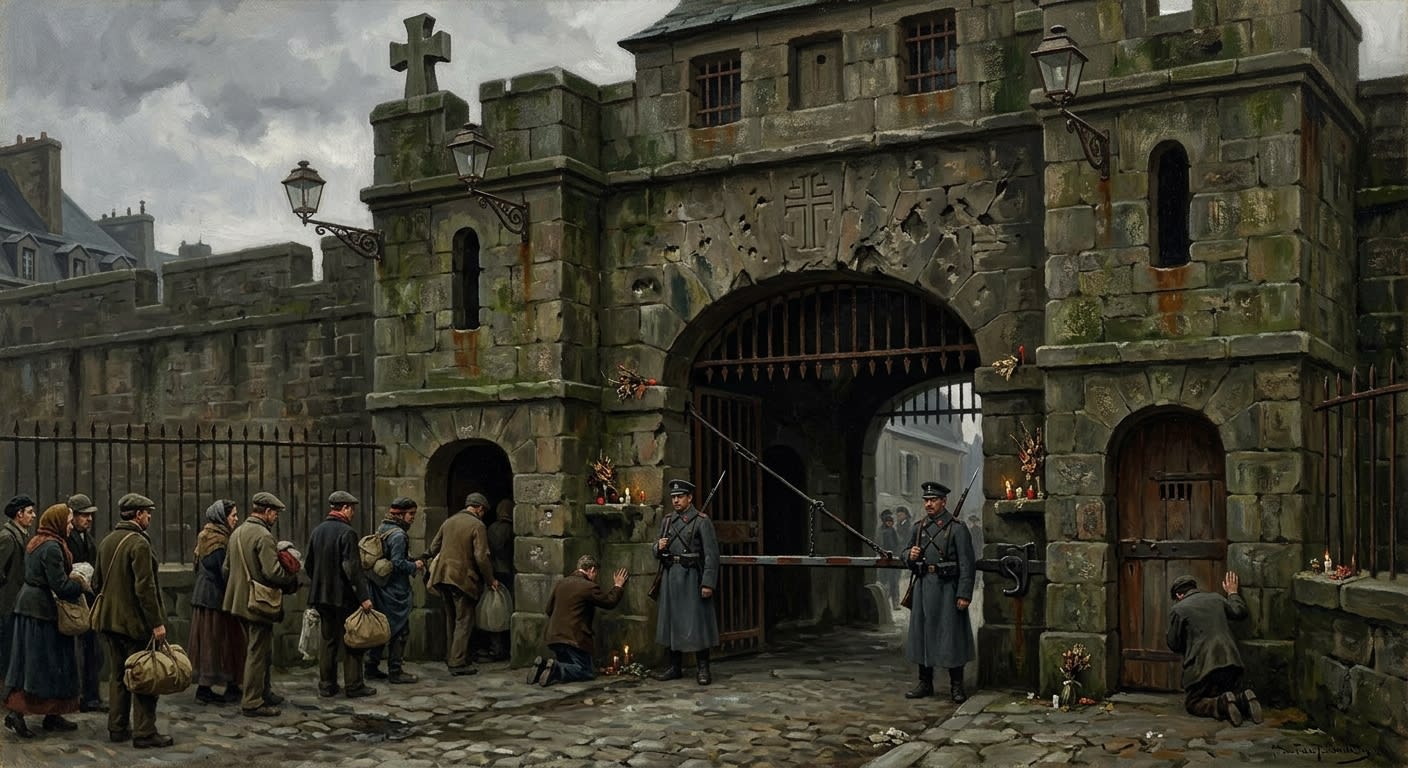
Porte Saint-Vincent
Where stone learned to answer after the thirty-first toll
The Porte Saint-Vincent is Saint-Malo's principal landward gate: toll aperture, atrocity site, pilgrimage wound, and stone witness to the A.S. 10 massacre.
Codex Ref. II.1.09-010
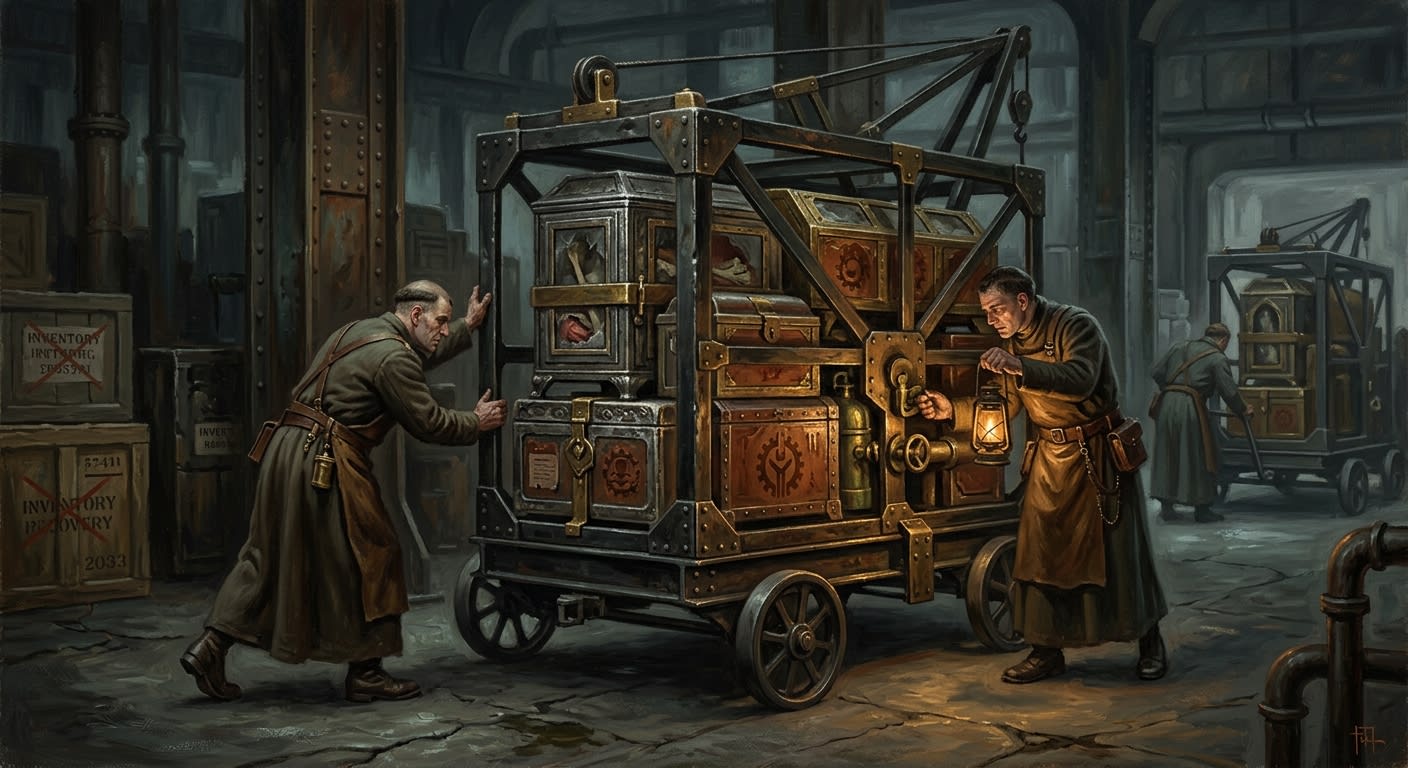
Reliquary of Saint Matthias
A box of bones that taught law to bleed
The Reliquary of Saint Matthias is the Saint-Malo martyr-object: seized as Item 7, recovered from Rationalist custody, and made into portable proof that holy custody is not inventory.
Codex Ref. XIII.1.73-010
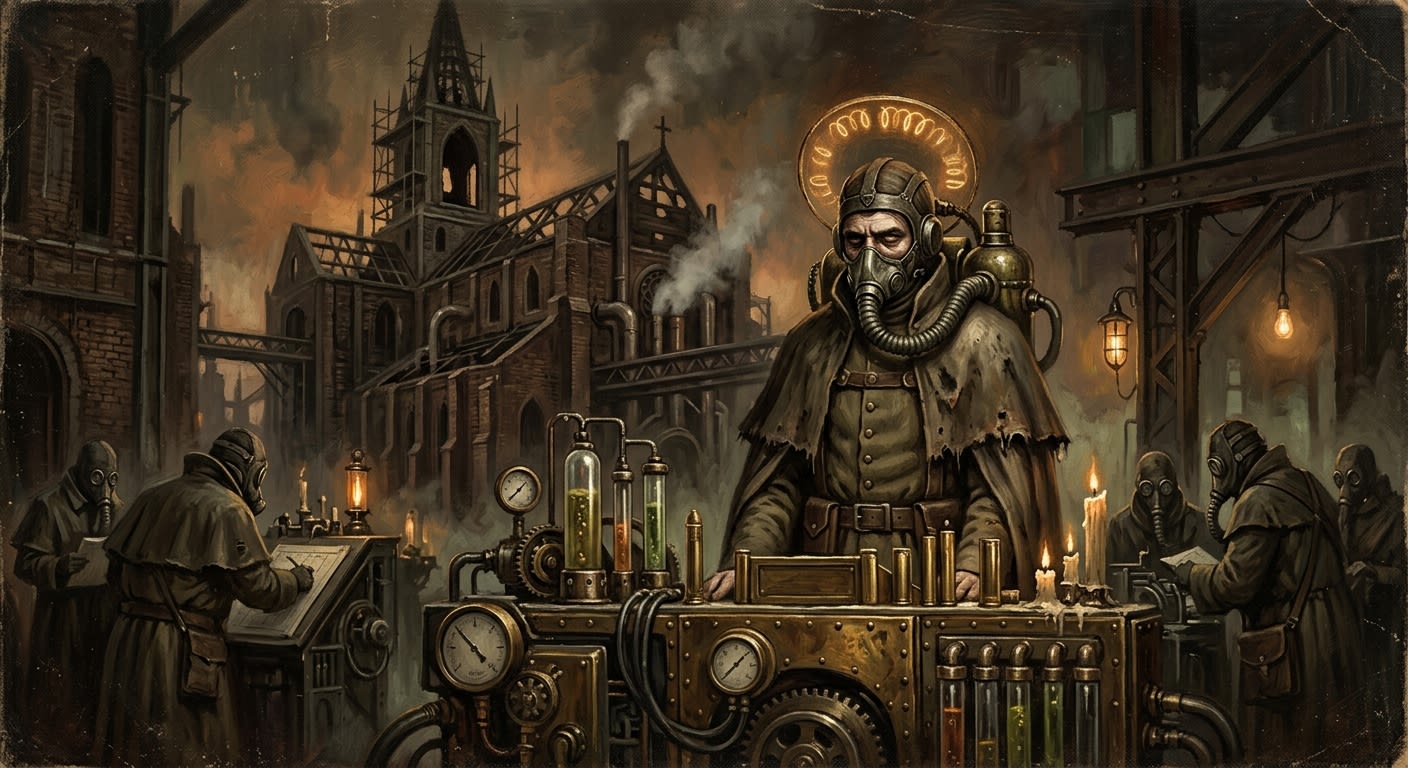
Saint Clement of Brittany
The chapel that received no pilgrims and therefore received a continent
Saint Clement of Brittany became doctrine's perfect destination: a chapel the martyrs never reached, and therefore a wound the Synod could license forever.
Codex Ref. III.2.01-005
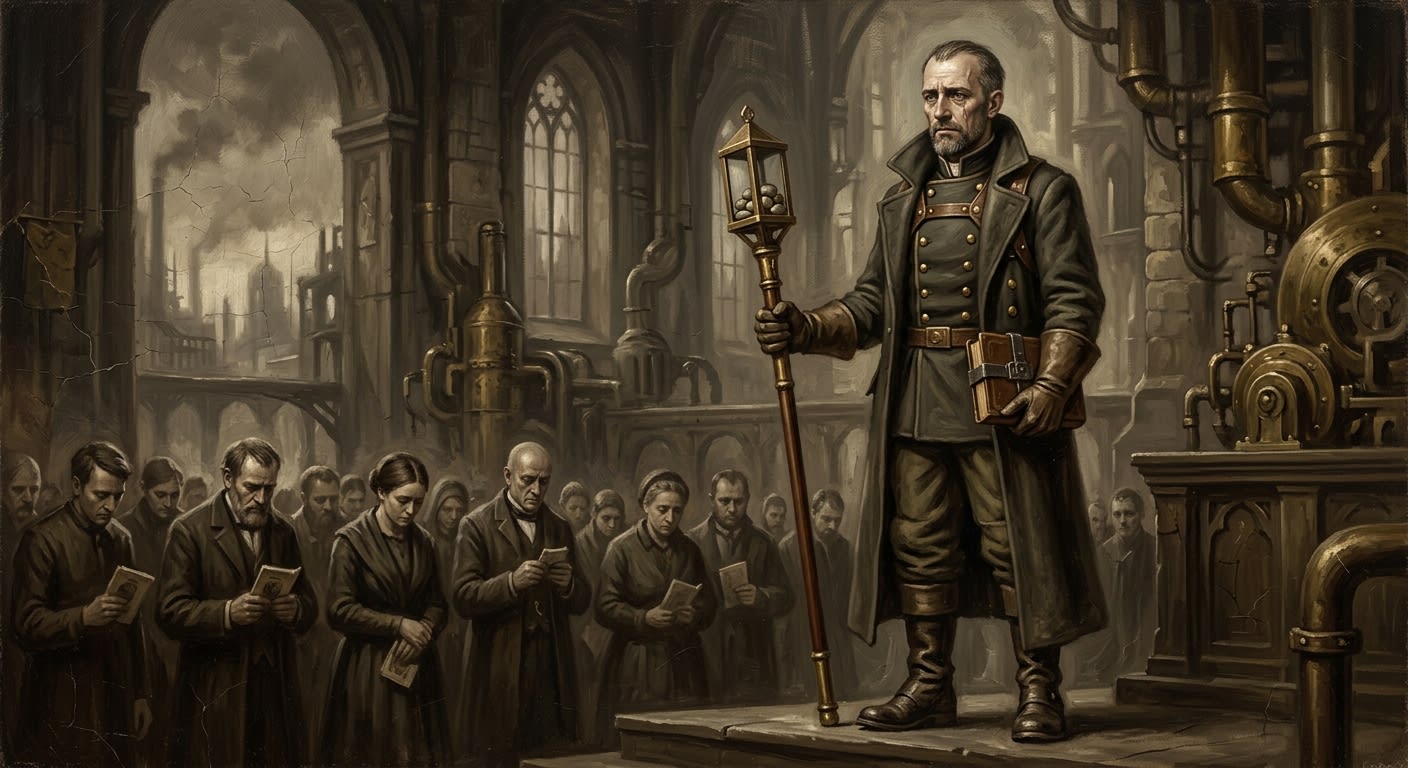
Saint Edras
He taught grief to queue, hunger to march, and tears to pay toll
Saint Edras is the patron of disciplined grief, lawful pilgrimage, ration-stones, crossing-phrases, and the public tears by which sorrow becomes government.
Codex Ref. III.2.01-090
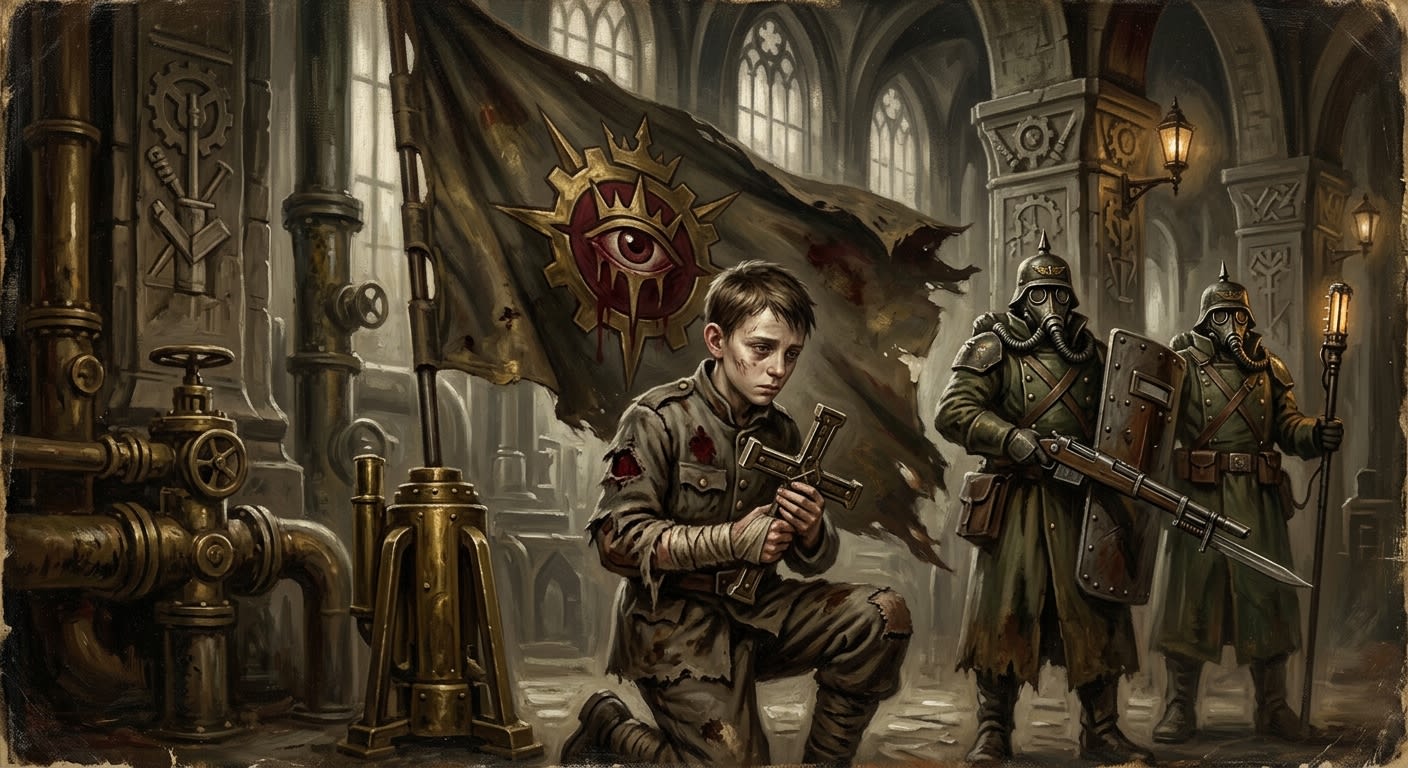
Saint Hermas
The boy who held the banner until the banner held him
Saint Hermas of Dinan was the boy beneath the banner at Saint-Malo: two wounds, one strip of cloth, and a cult made tidy by force.
Codex Ref. III.2.01-006
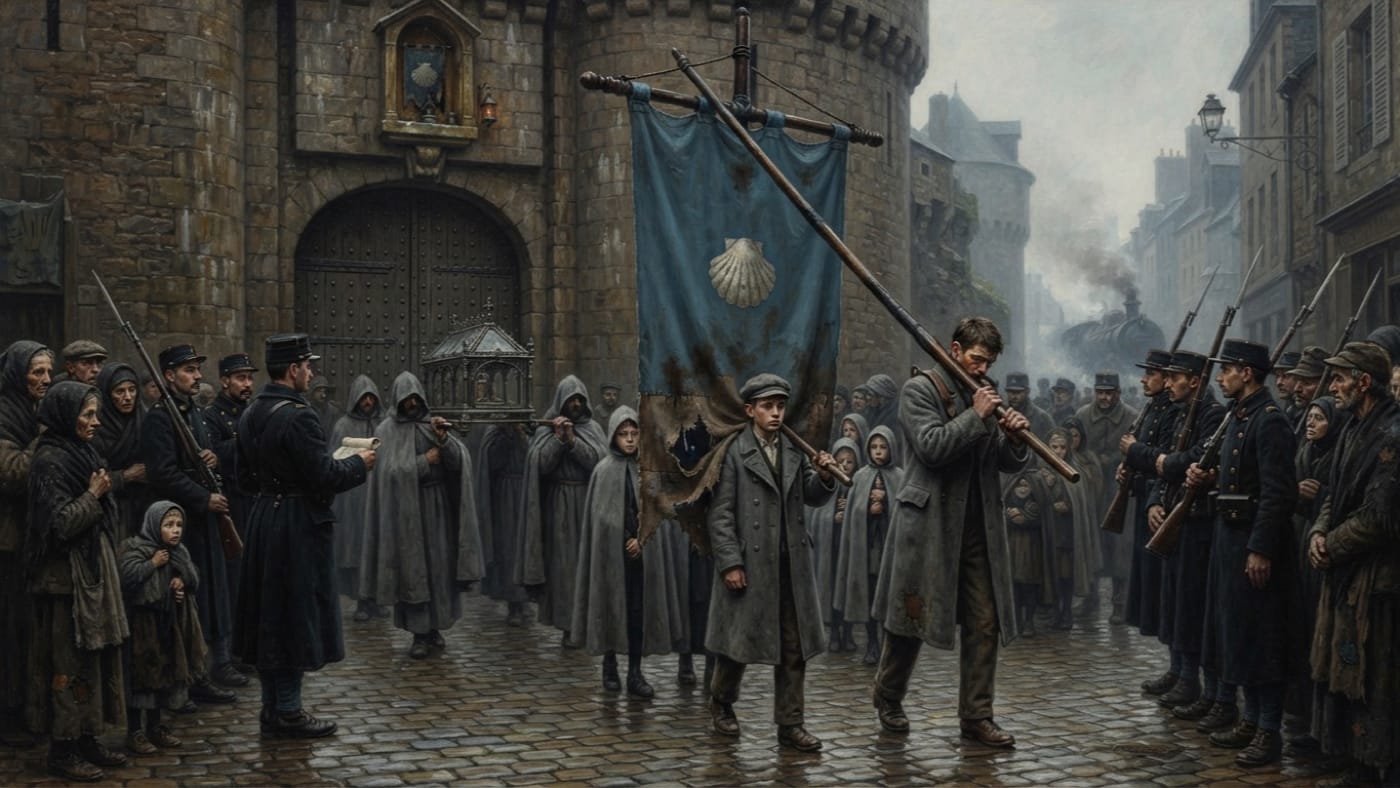
Saint Hermas Banner
One torn banner, thirteen slivers, and a successor under licence
The Saint Hermas banner tore over a boy at Saint-Malo in A.S. 10. Its fragments became relics; its sanctioned successor still marches under licence.
Codex Ref. III.2.04-010

Saint Margaux of the First Blood
Distinguishing features: none — which was precisely why she worked
She was old and small and grey and holding a book, and she died on her knees, and the Bureau wrote upon her blank page the most useful saint in the Theocracy's arsenal.
Codex Ref. III.2.01-002
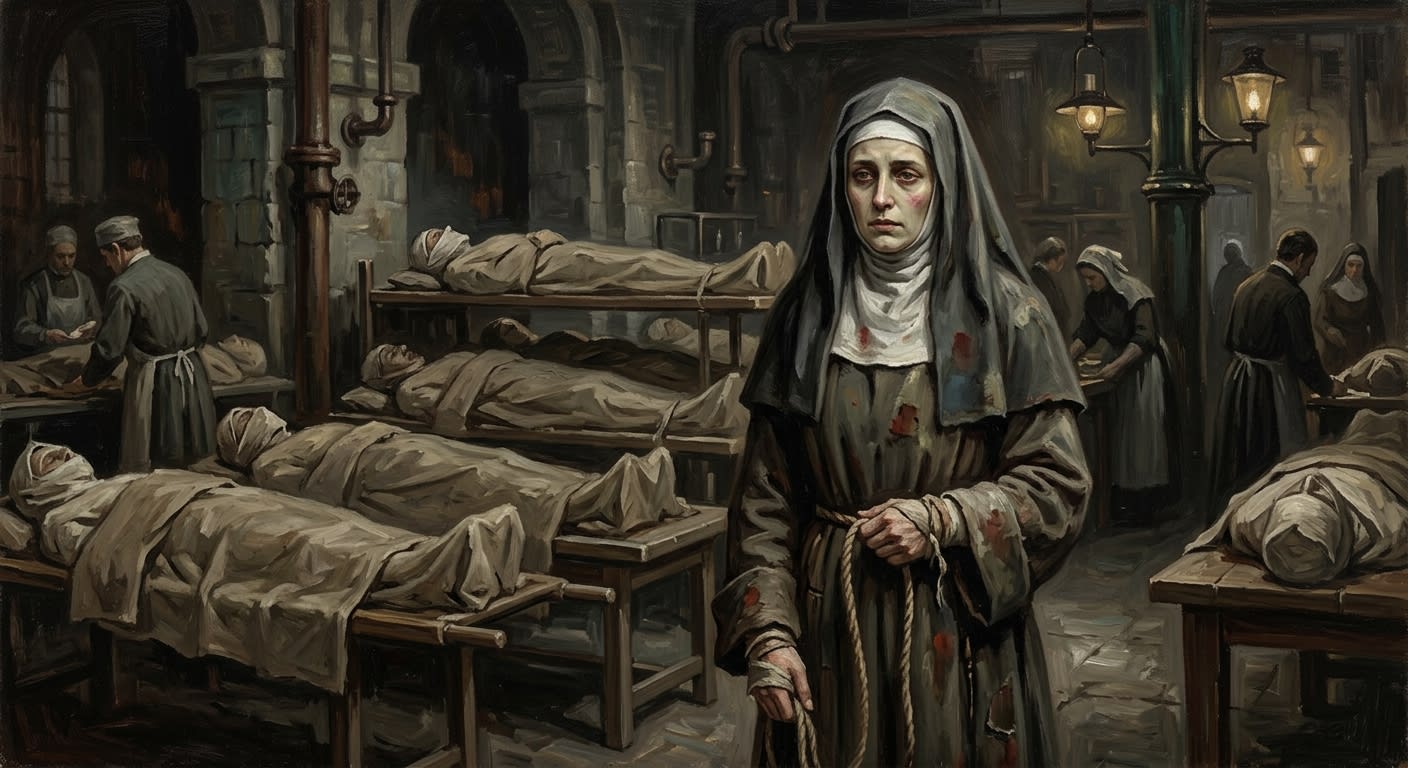
Saint Sabina of Ghent
The seamstress who gave Mercy its cloth and Doctrine its discomfort
Saint Sabina of Ghent bound eleven bodies after the Massacre at Saint-Malo, died of fever, and became Mercy's most useful rebuke.
Codex Ref. III.2.01-015
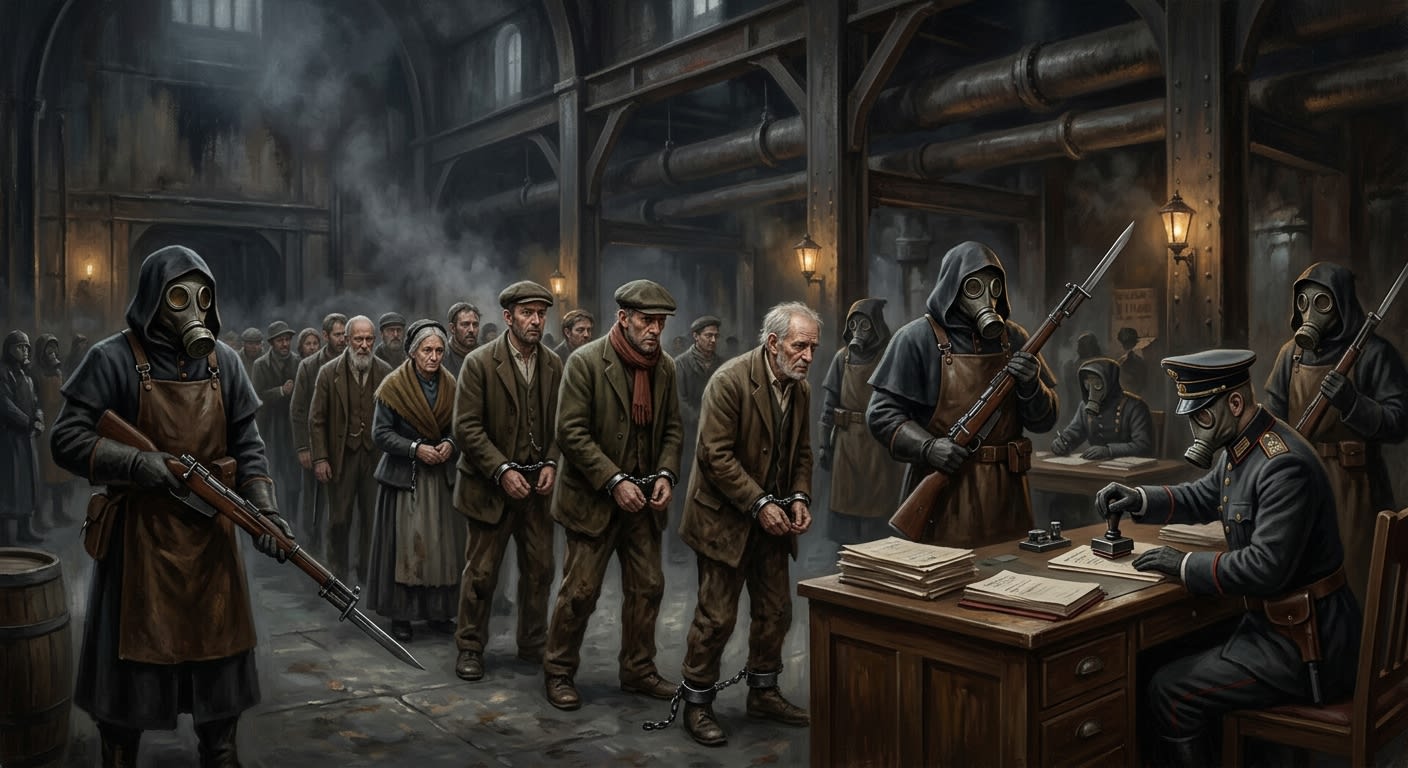
Secular Gatherings Act
The permit form that taught bayonets to quote law
The Secular Gatherings Act did not order massacre. It made massacre available, cleanly phrased, properly witnessed, and ready for bayonets.
Codex Ref. I.1.05-002
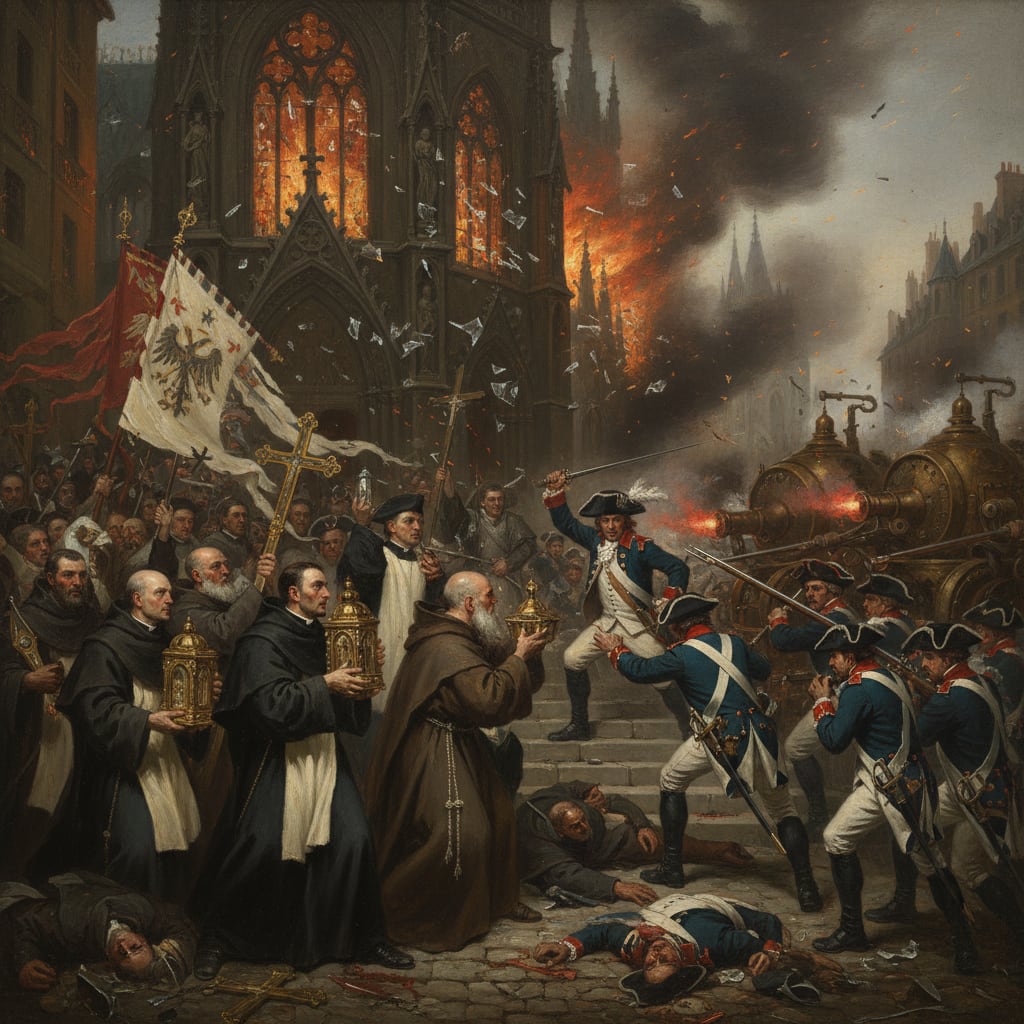
The Atheist Wars
When Reason Drew Steel and Faith Drew Blood
The two decades of continental civil war between the Rationalist Republic and the scattered faithful — a catastrophe so instructive that the Bureau requires its retelling in every catechism school, twice annually, with examinations.
Codex Ref. I.1.03-001
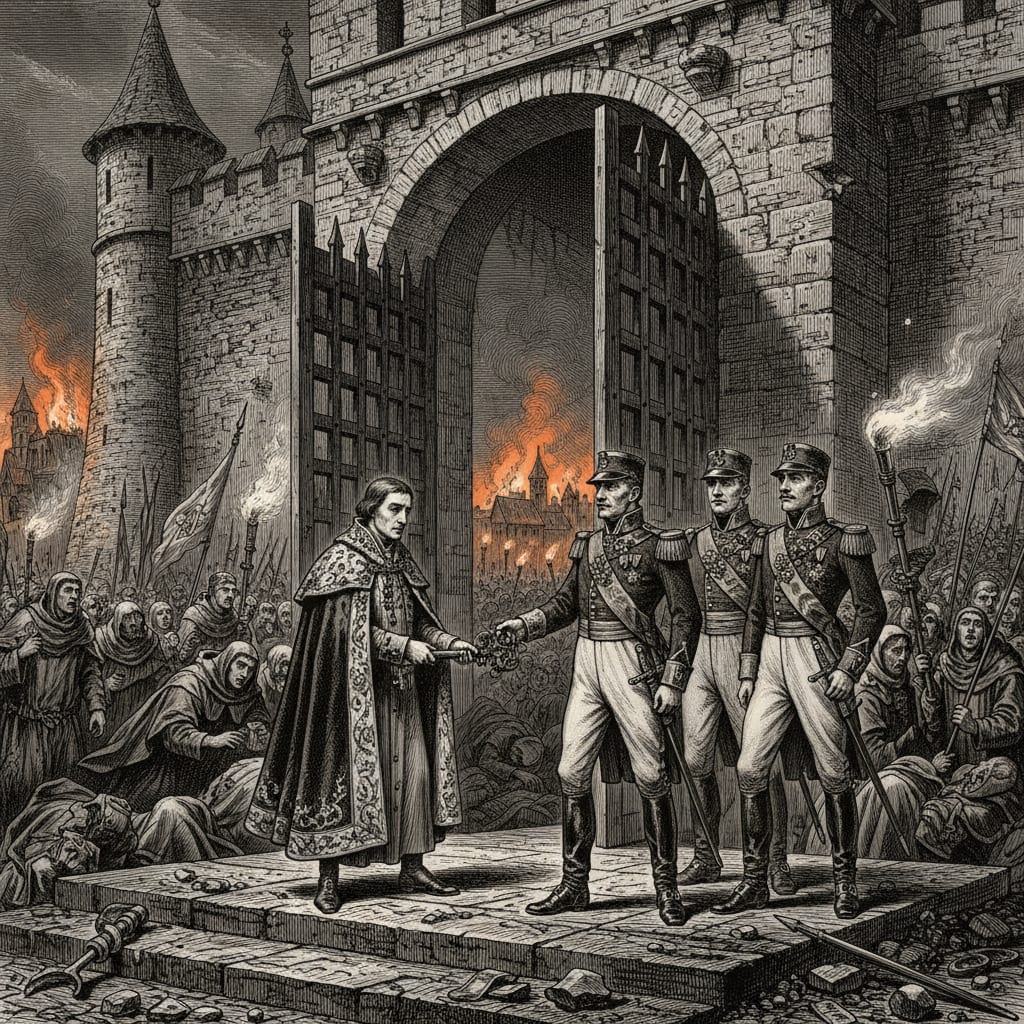
The Betrayal of Aachen
On the Surrender of the Citadel and the Erasure of Guillaume
In the twenty-fifth year of our calendar, the Lord-Protector Guillaume sold Aachen's gates for thirty provinces of the Lowlands. The citadel fell without a siege. The faithful fell without a warning.
Codex Ref. II.1.06-066
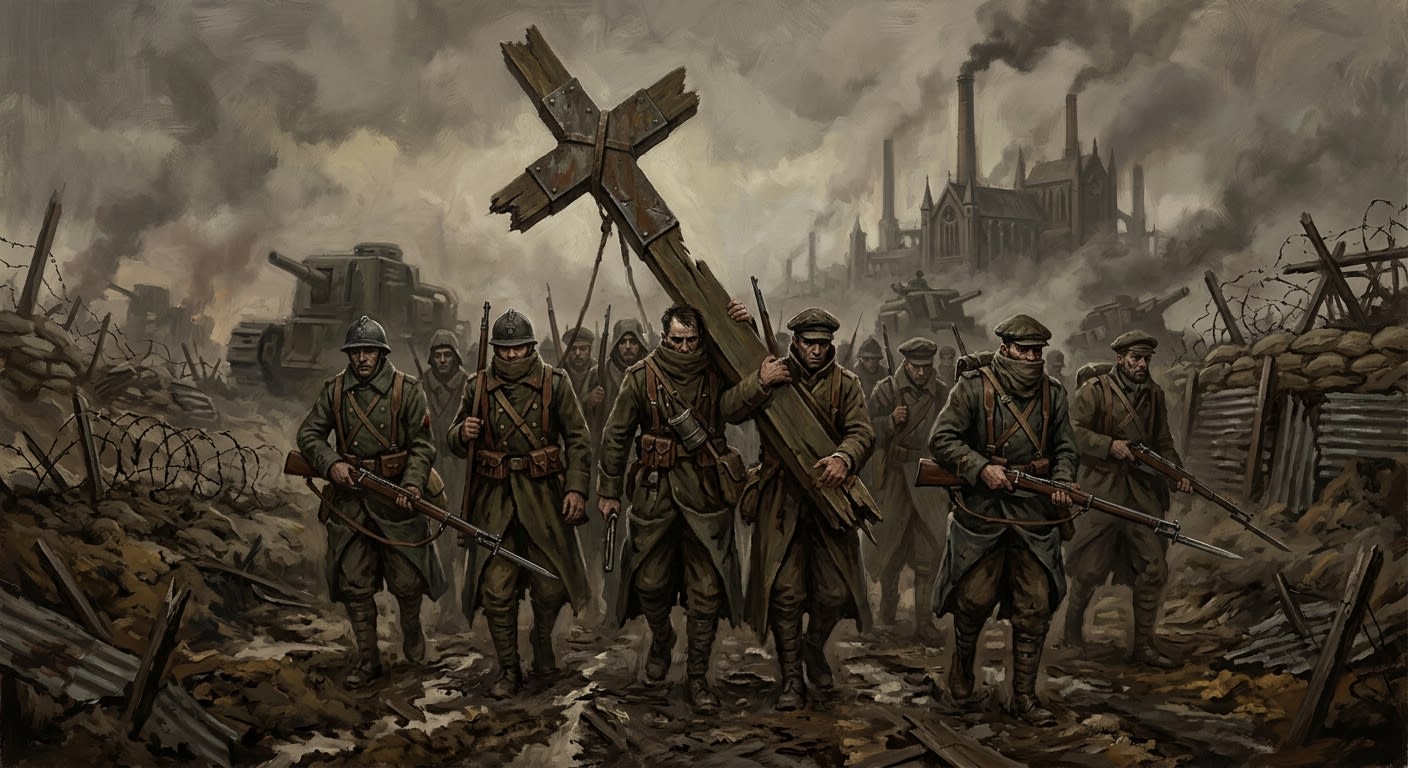
The Broken Cross
The sigil that snapped heaven and called the wound reason
The Broken Cross was Reason's battlefield sermon: a snapped crucifix carried by men who denied symbols while marching under one.
Codex Ref. I.1.05-003
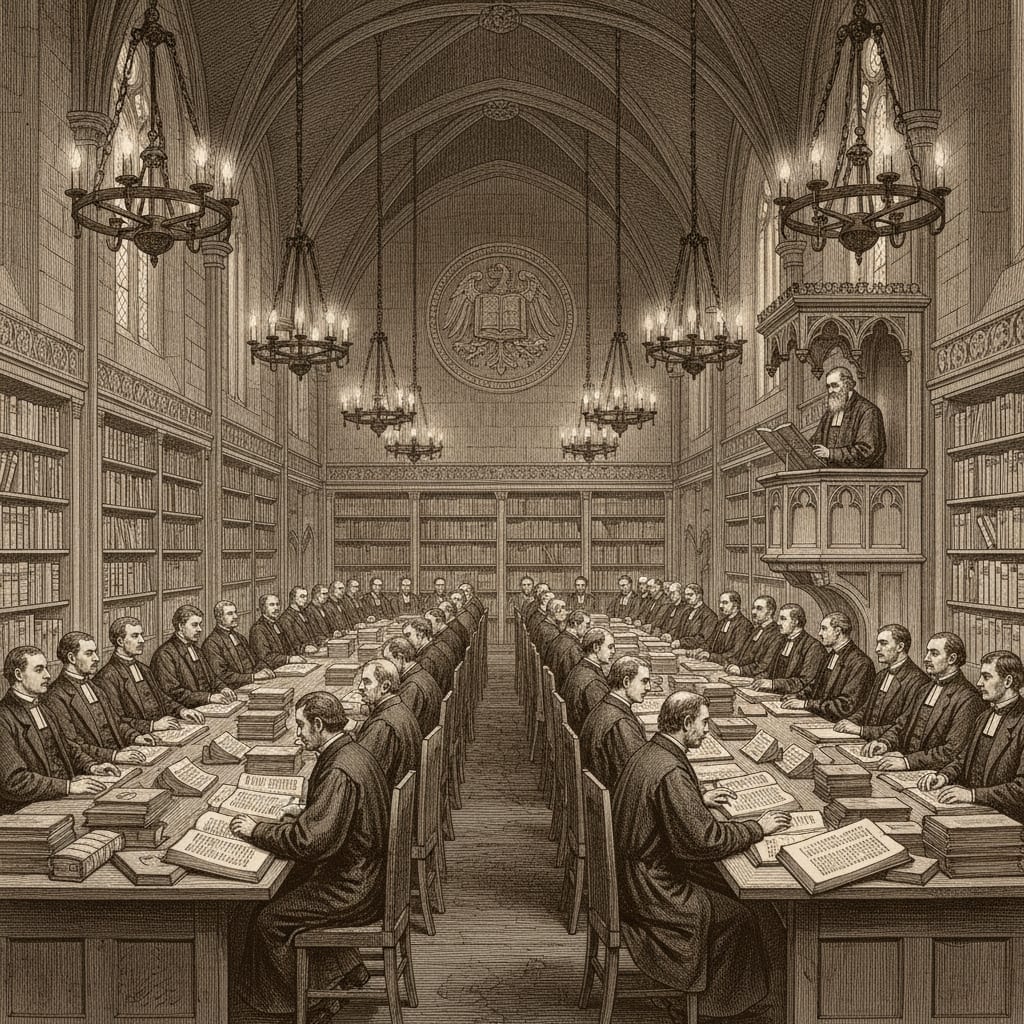
The Bureau of Doctrine
First Among Equals, Flame of Interpretation
The Bureau that defines what is true and what has never been true. Keeper of the Flame of Interpretation, drafter of every catechism, and executioner of every dialect that displeased it.
Codex Ref. III.3.01-024
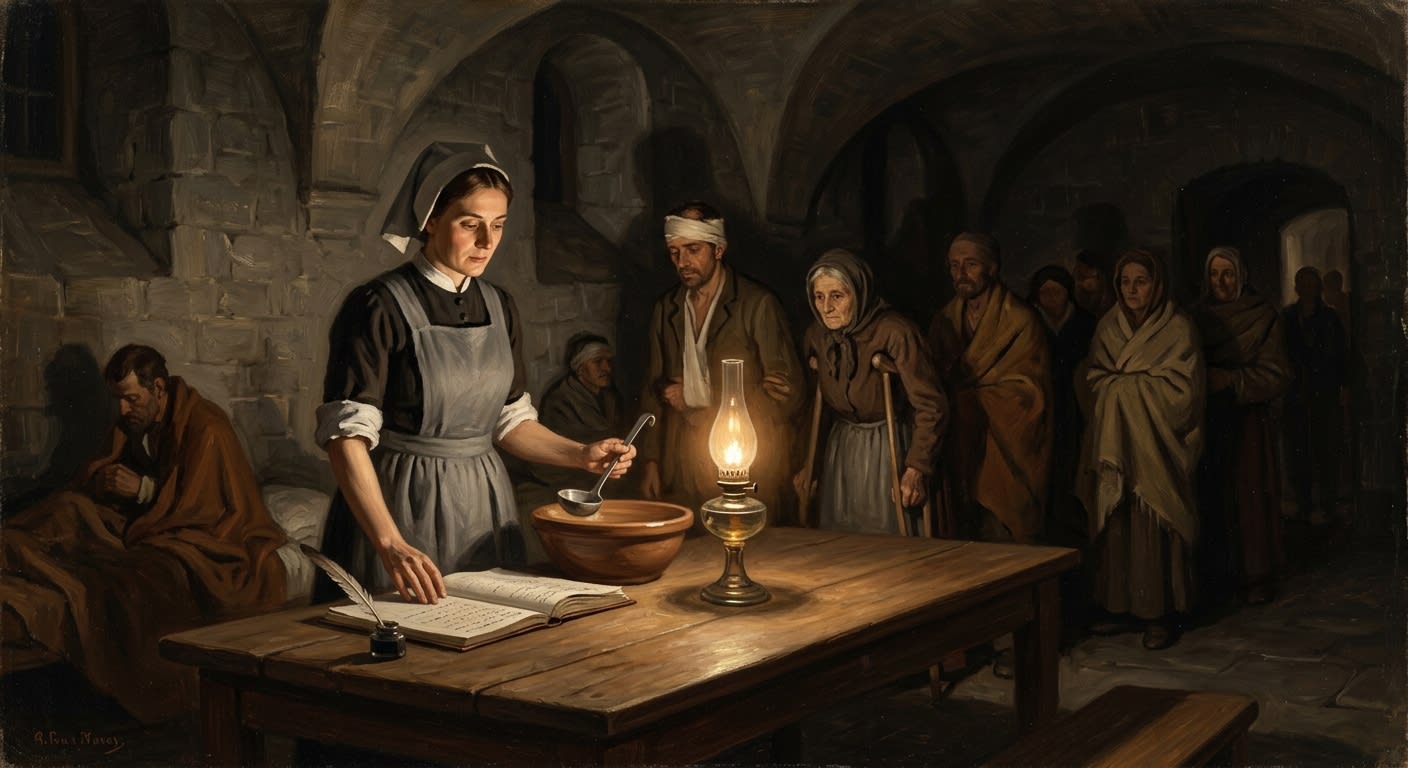
The Bureau of Mercy
Compassion Is a Ration. A Ration Is a Policy. A Policy Is the Synod's Will.
The Bureau of Mercy administers the Synod's hospitals, orphanages, broth-kitchens, and Hospices of Departure — every institution where subjects are at their most vulnerable and therefore most in need of documentation.
Codex Ref. VI.4.12-031
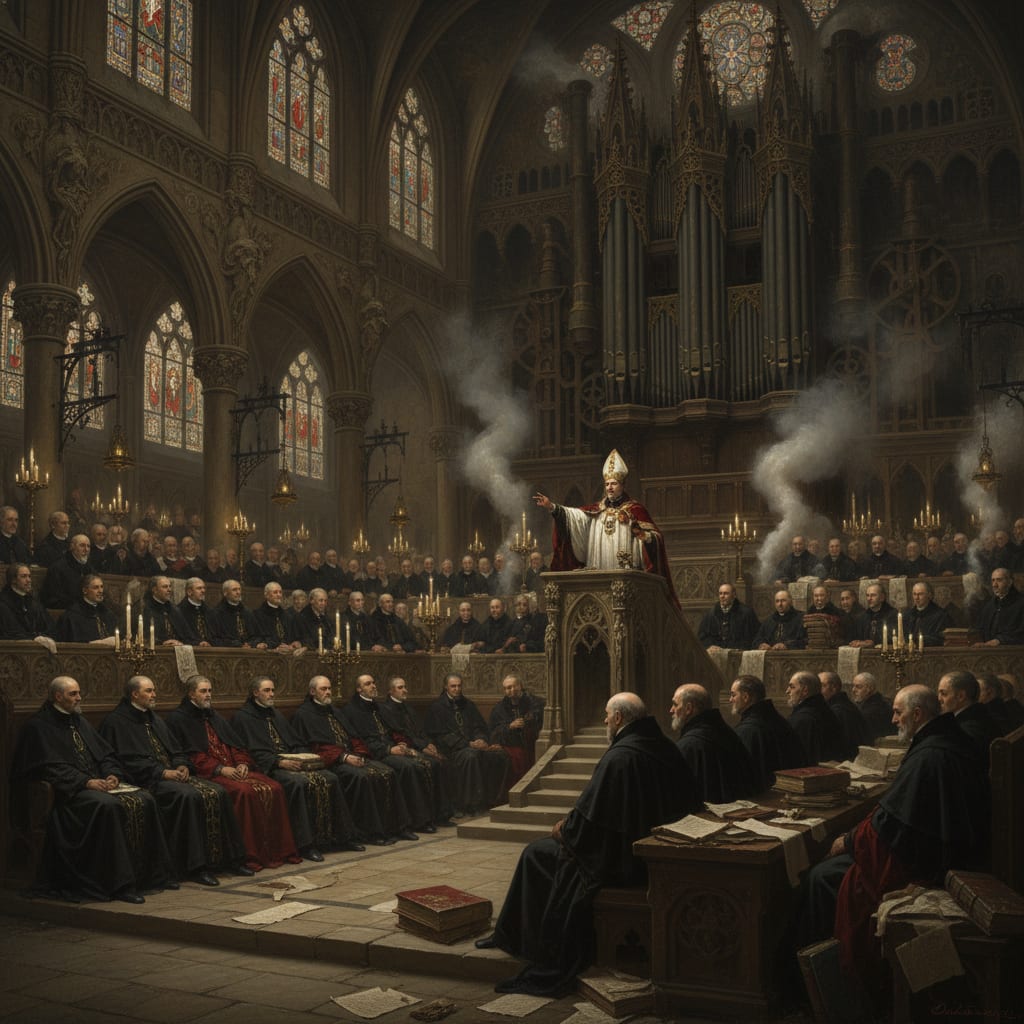
The Bureaucratic Synod
Throne and Altar, Quill and Sword
The ruling theocracy of Europa — born in blood, forged in ink, and maintained by a bureaucratic apparatus so vast that even its own clerks cannot map its full extent. As explained by its finest servant.
Codex Ref. I.3.01-004
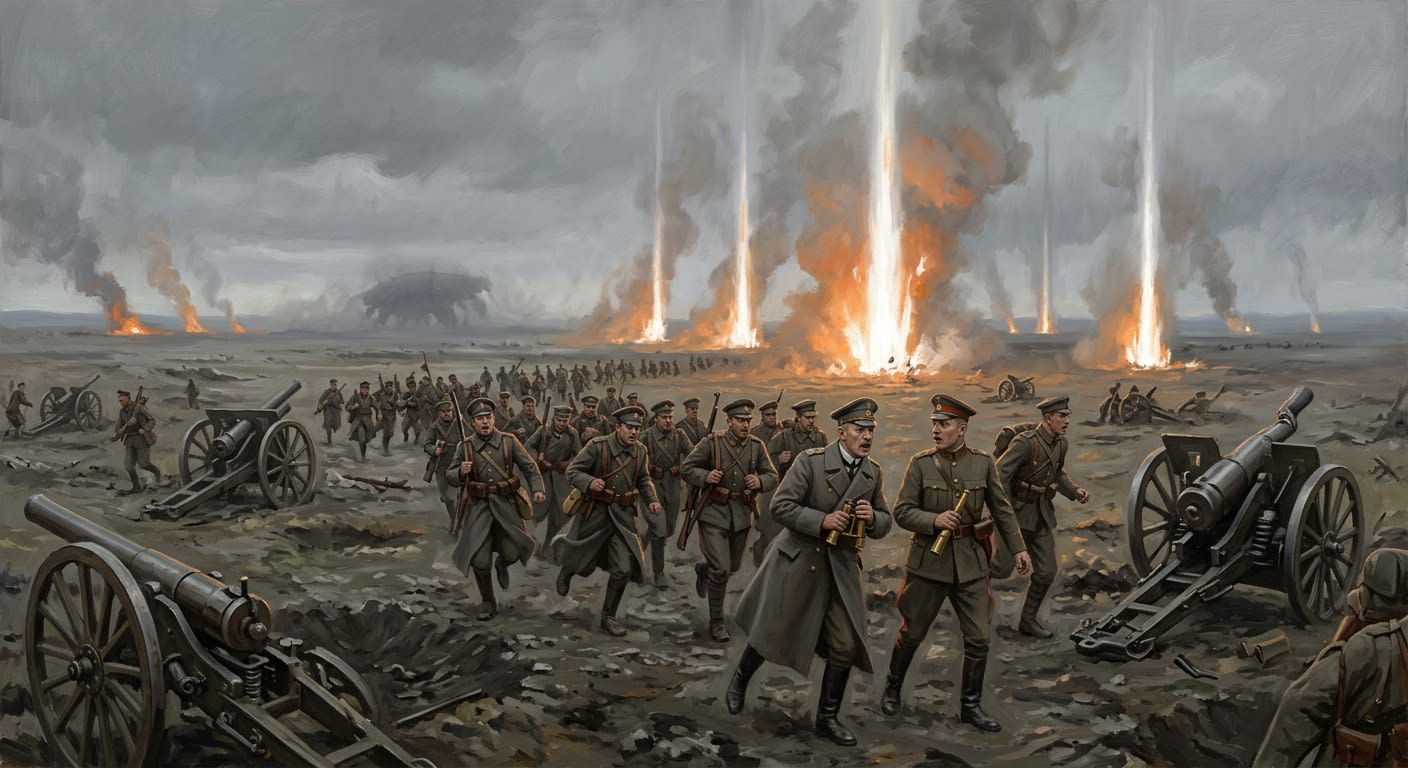
The Collapse of the Rationalists
The Adversary did not invade. It arrived.
The Rationalist Republic dismantled every spiritual defence on the continent, and in A.S. 45 the Adversary walked through the unguarded door. A doctrine article, a body count, and a mandatory catechism text.
Codex Ref. VII.2.01-001
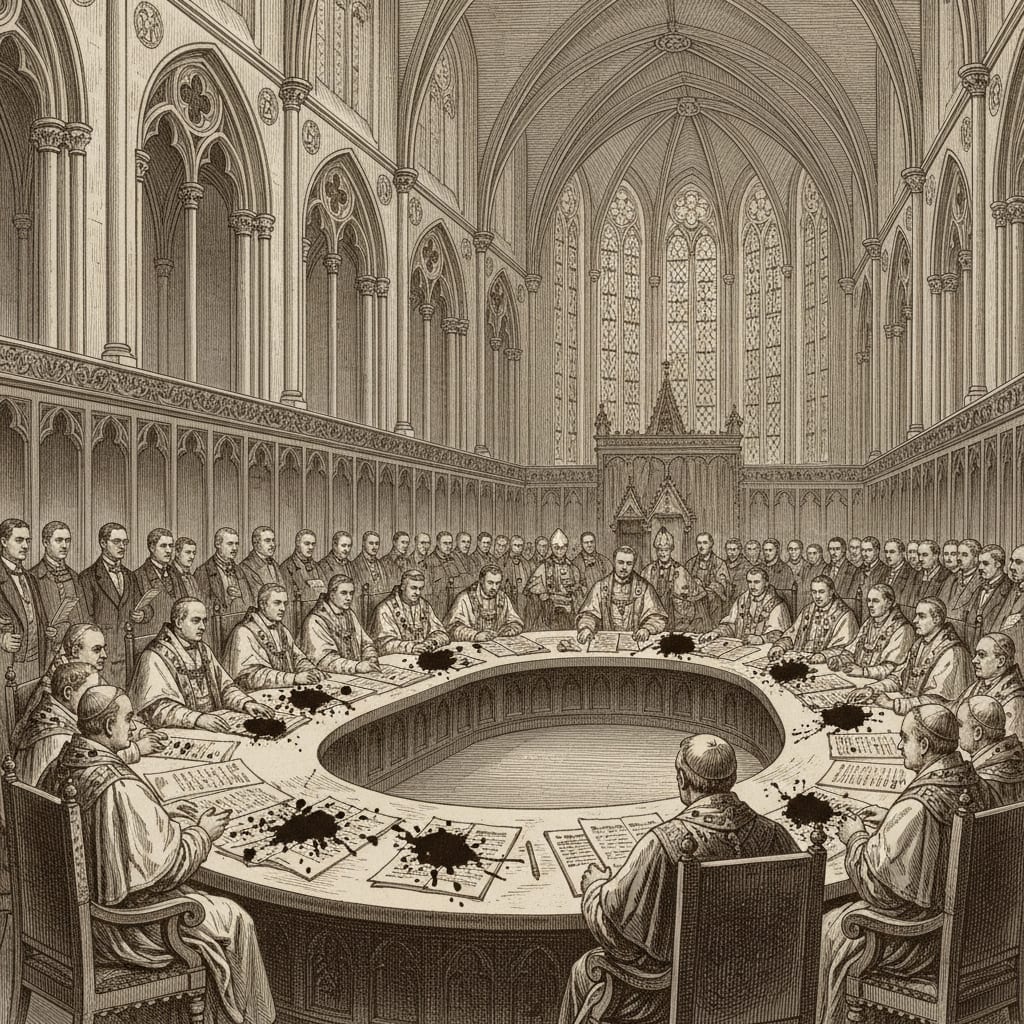
The Council of Cologne
A Masterpiece of Redaction
The A.S. 100 assembly and Edict of Cologne extended Strasbourg's claimed authority after both founders had died; its sealed minutes invite later argument.
Codex Ref. III.2.07-031
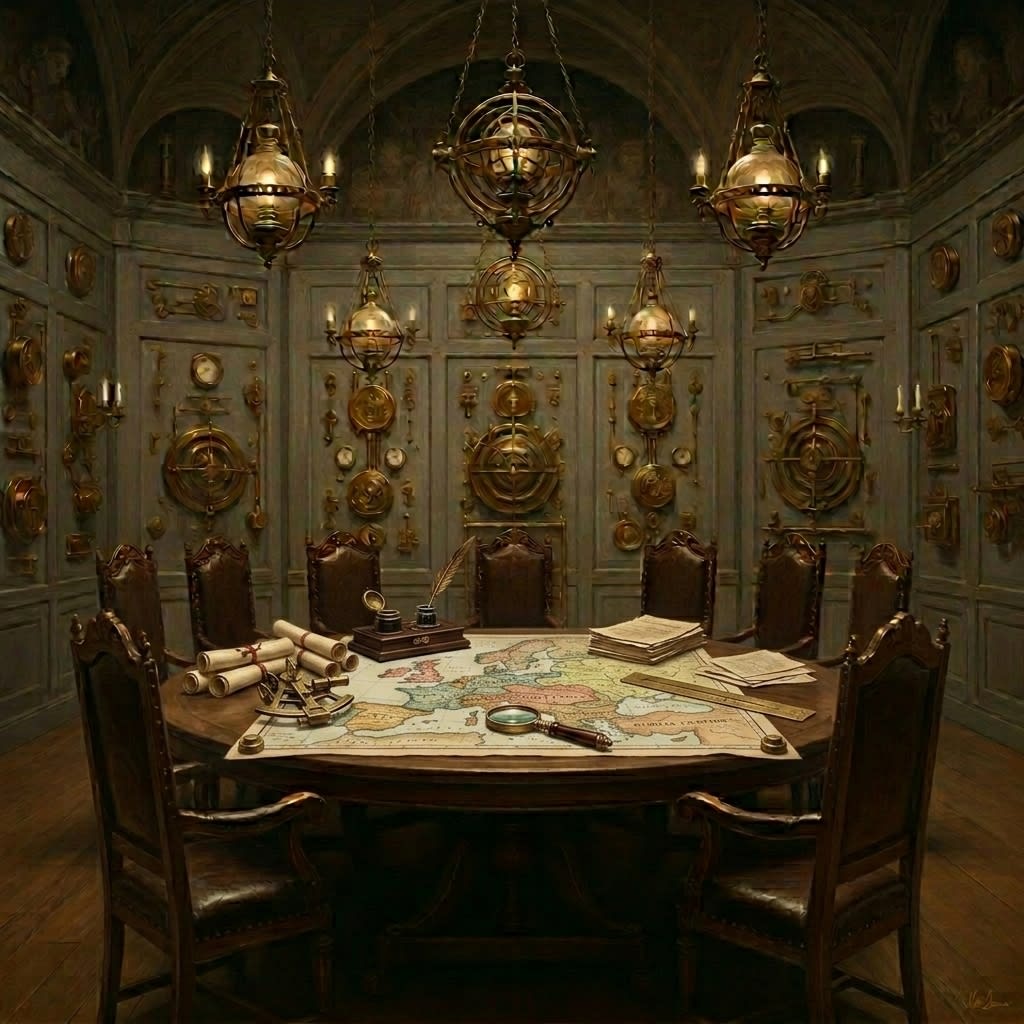
The Council of Nine Rationalists
Nine men governed Europe. Their names are sealed. Their methods are retained.
The sealed governing body of the Rationalist Republic — nine nameless men who administered a continent for fifteen years with instruments of measurement, mass surveillance, and the removal of tongues, until the Sundering settled the argument for them.
Codex Ref. I.1.03-001
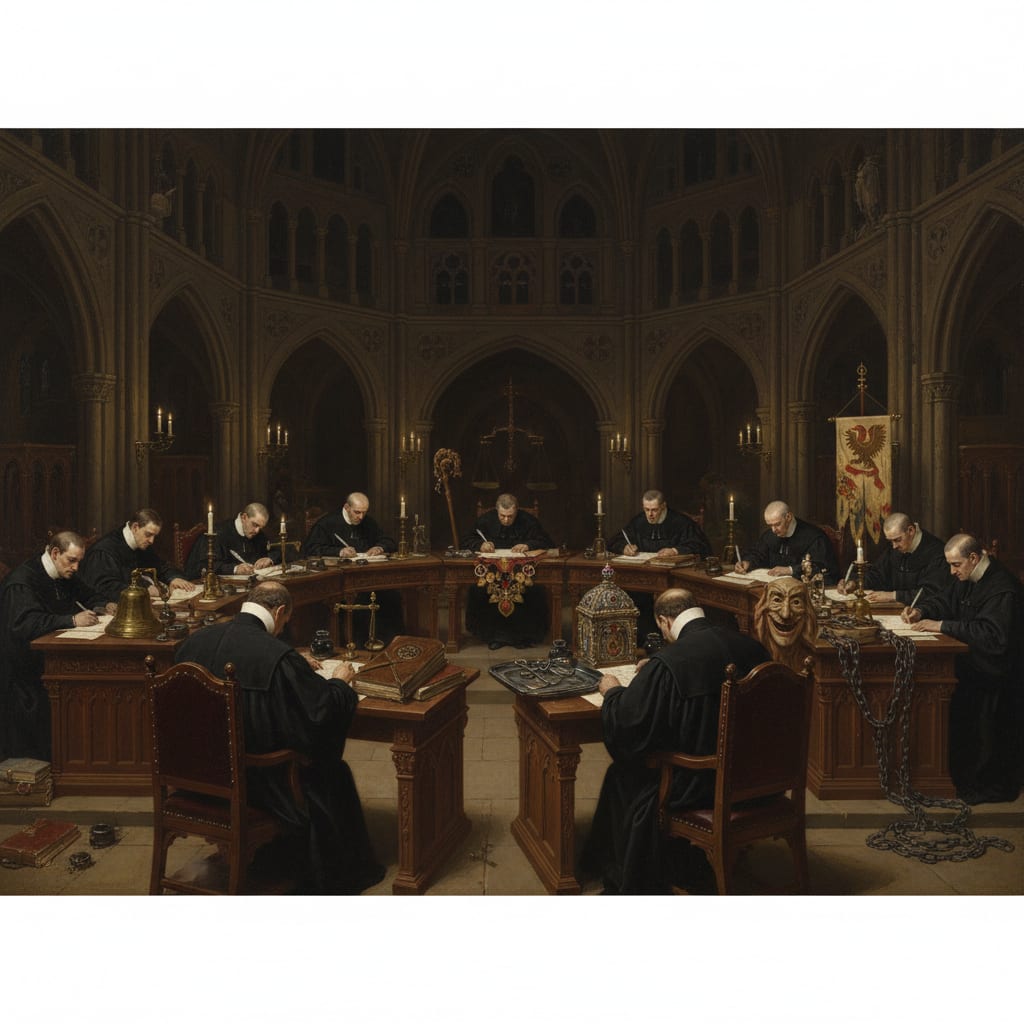
The Holy Bureaus
Twelve Instruments of Providence, or Thirteen If You Count the One That Does Not Exist
The twelve sacred organs through which Strasbourg bends a continent to its will. Each Bureau claims a charism of governance descended from the Apostolic Sundering. Their clerks are legion, their archives endless, their contradictions — by design.
Codex Ref. III.3.01-001
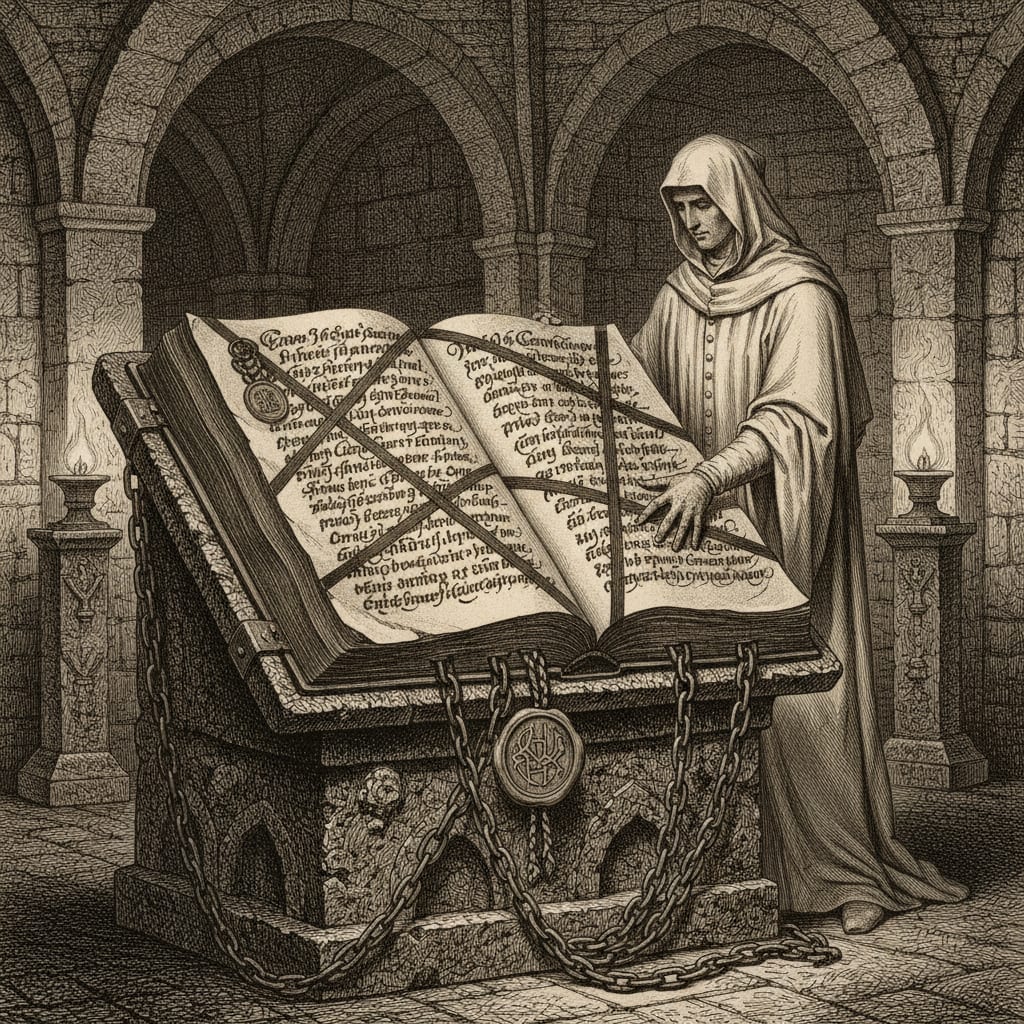
The Index Damnatus
A Catalogue of Forbidden Names, Texts, and Silences
The rolling compendium of everything the Synod has declared unfit for human knowledge — books, names, songs, bloodlines, flavors of incense, and at least one species of moth.
Codex Ref. III.4.09-031
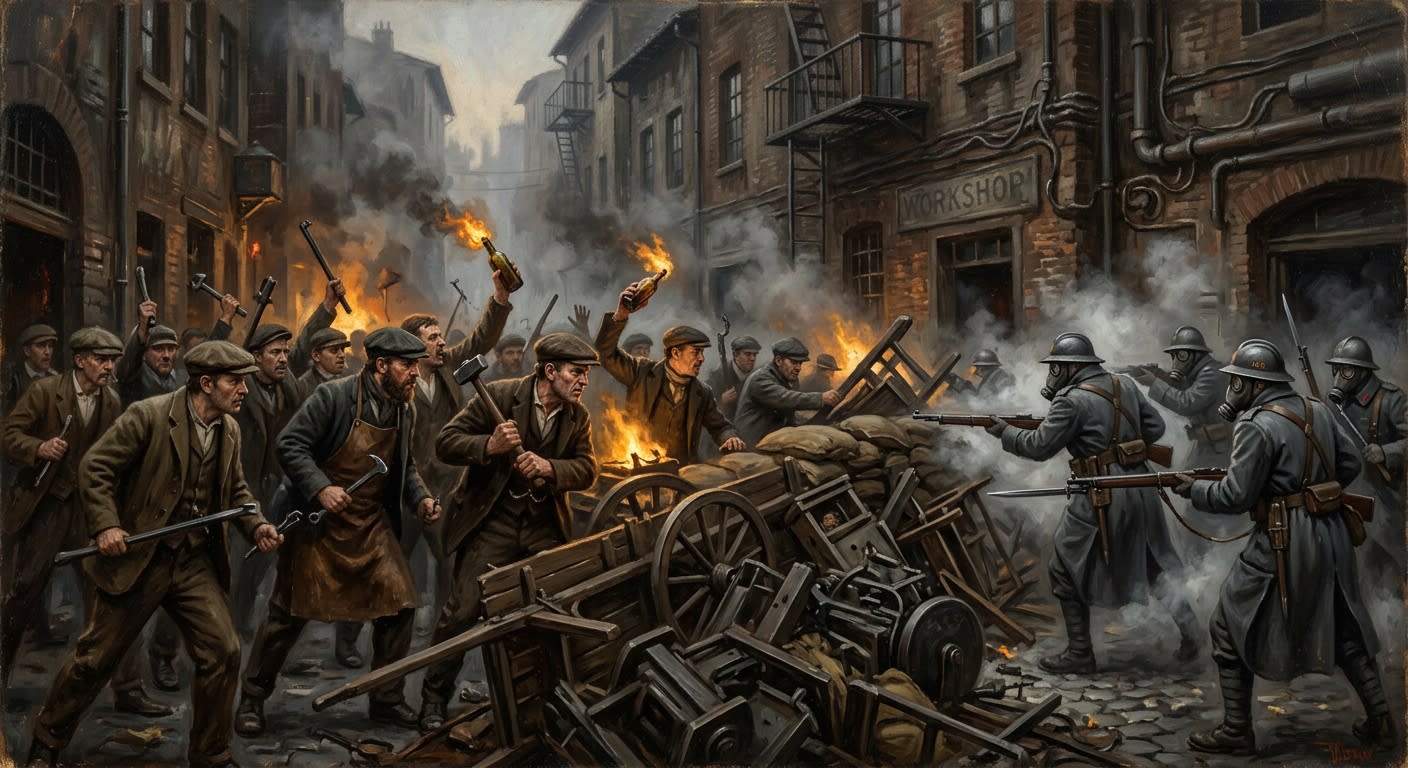
The Ivory Revolt
Florence answered confiscation with chisels
In A.S. 44, Florence's workshop districts answered Rationalist confiscation of pocket crucifixes with chisels, awls, lamp oil, barricades, and a dawn the Republic misfiled as disorder.
Codex Ref. VII.8.06-001
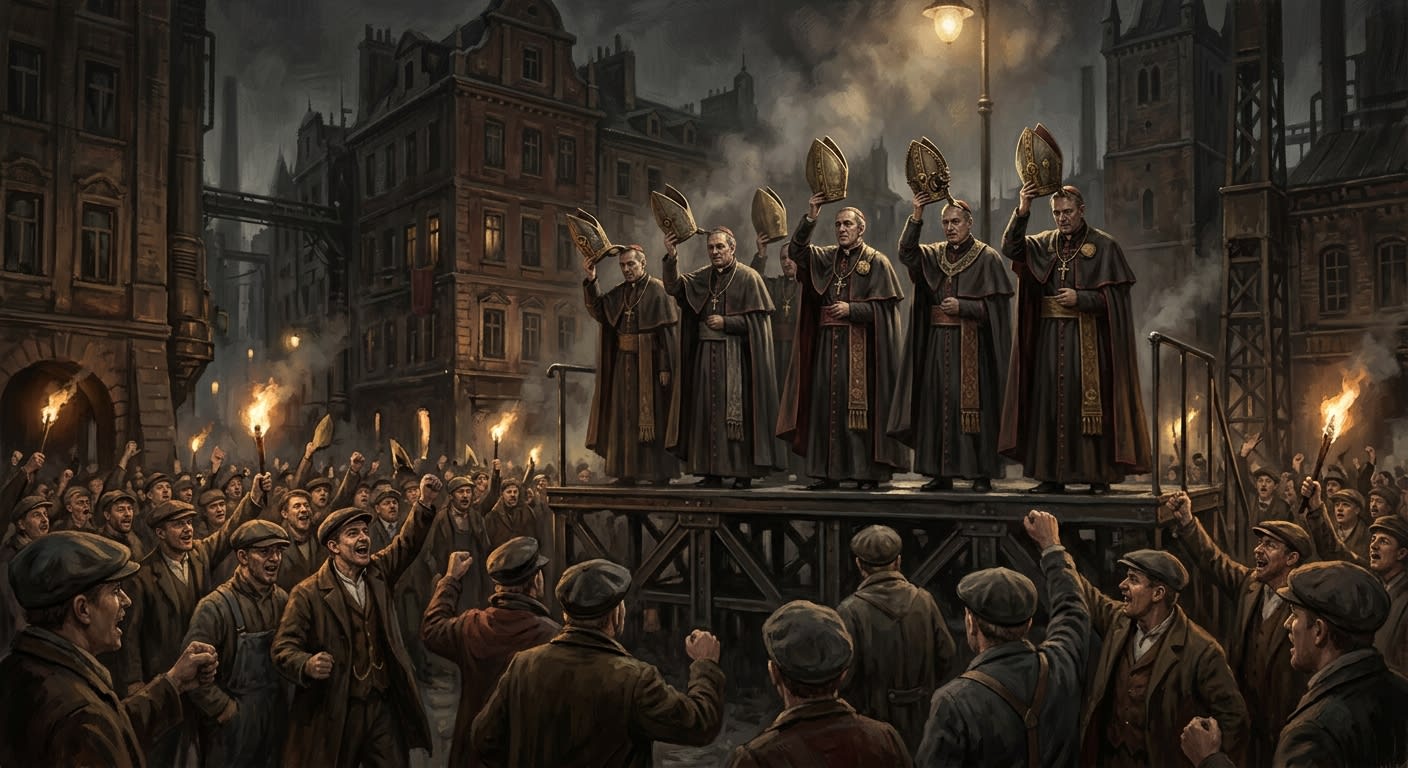
The Night of Crowns
Seven mitres fell, and Prague mistook the sound for progress
In A.S. 8, seven bishops in Prague removed their mitres before a cheering crowd, teaching the Rationalists that apostasy travels fastest when an authorised mouth performs it.
Codex Ref. VII.8.07-001
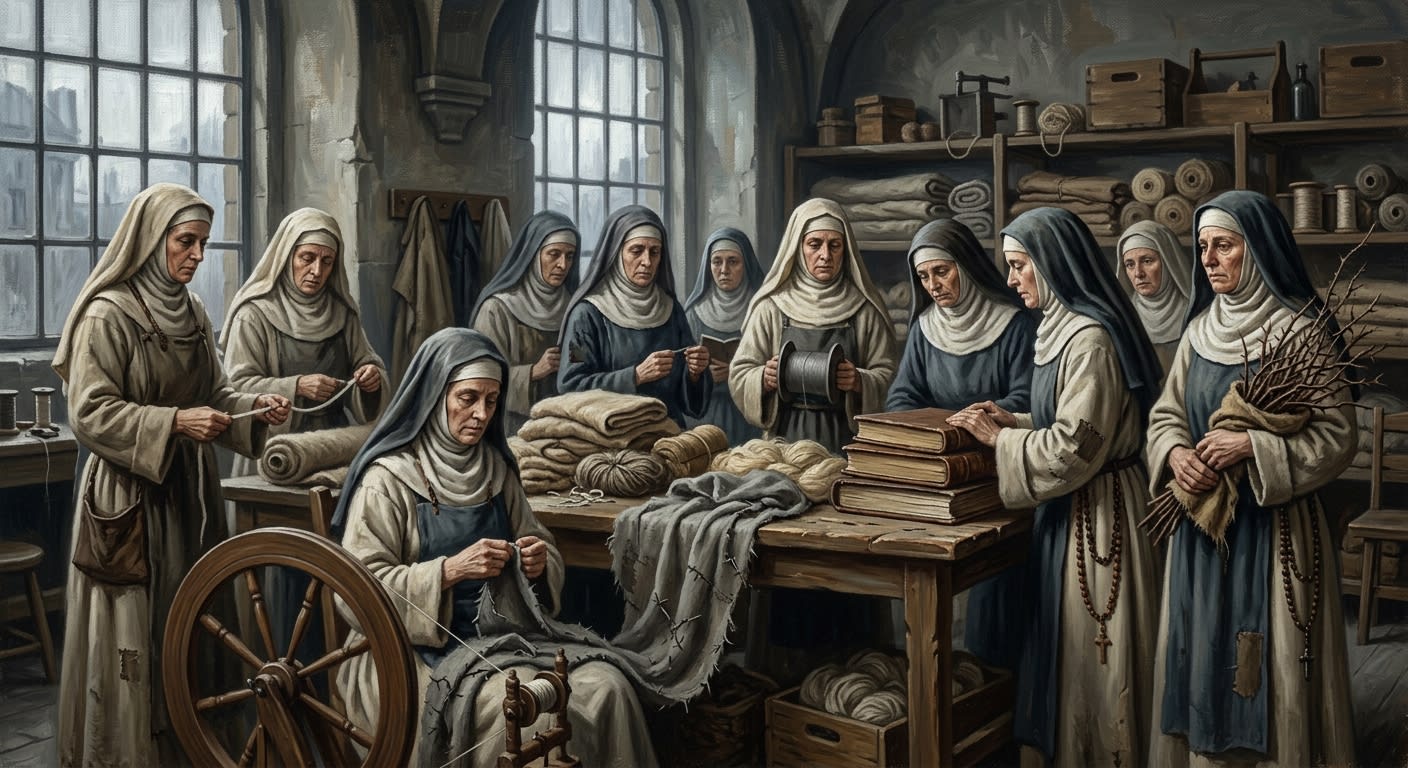
The Order of the Blessed Thorn
Linen, old women, and the machinery that discovered humility after it became profitable
A Breton mendicant sisterhood made Venerable after Margaux: twelve sisters, a house of linen, and enough humility to embarrass the Bureaus.
Codex Ref. XI.7.01-001
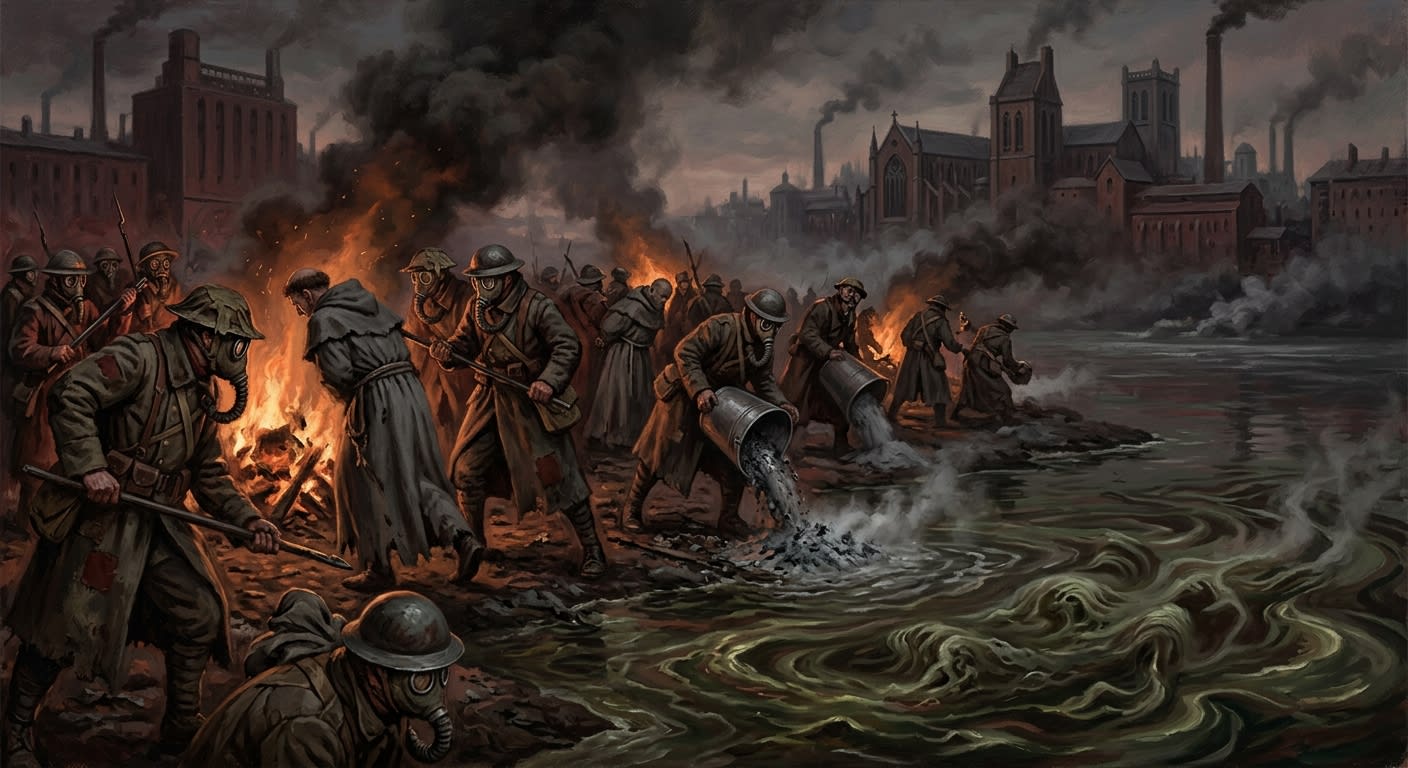
The Red Slaughter of Lyon
The first cut was local, municipal, and entirely pleased with itself
In –39 A.S., Lyonnais militias burned forty-three friars and dumped their ashes into the Rhône; the river answered in psalms, as rivers sometimes improve upon councils.
Codex Ref. VII.8.03-001
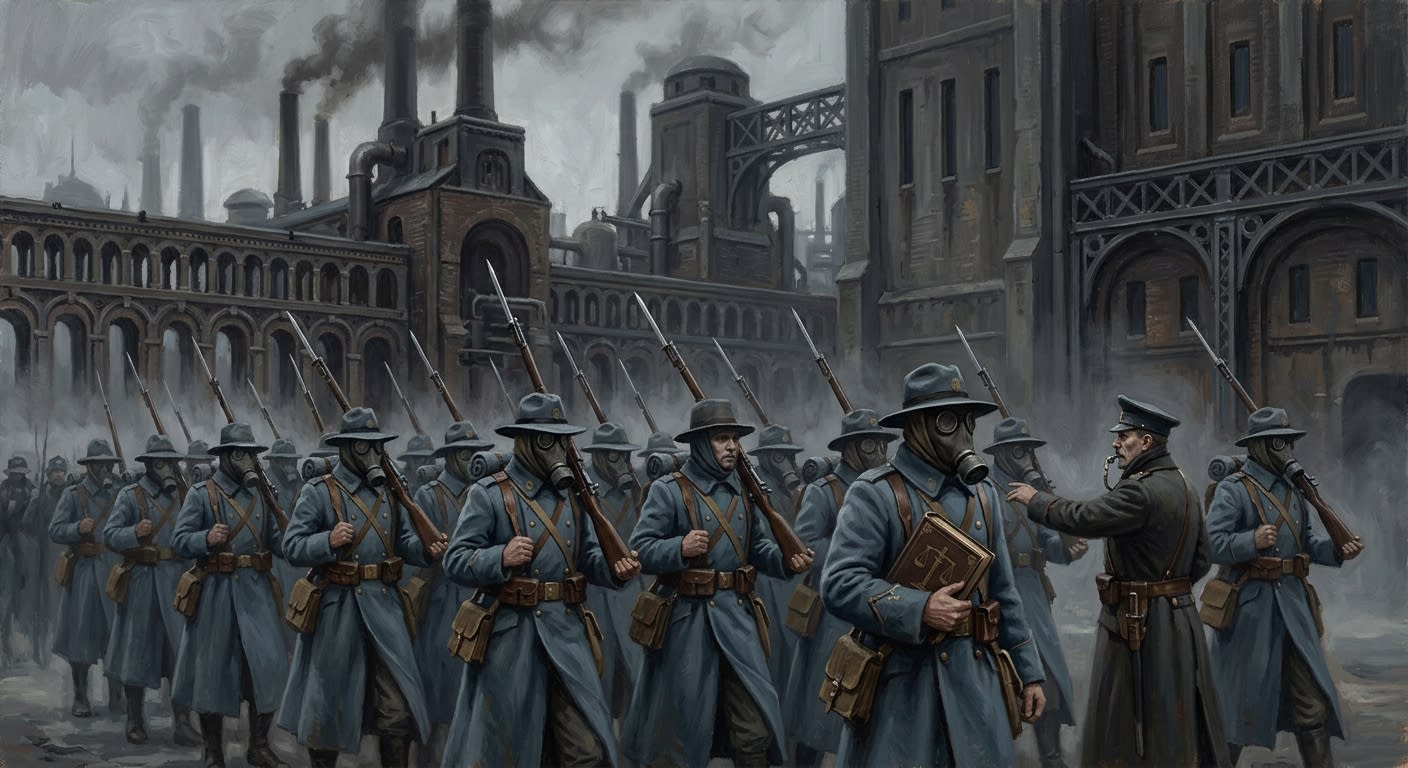
The Republican Guards
The philosophers wrote the sentence; the Guards added punctuation
The Republic's armed hand wore blue-grey, carried law over the heart, and proved that unbelief does not remain in books. It drills.
Codex Ref. I.1.05-001
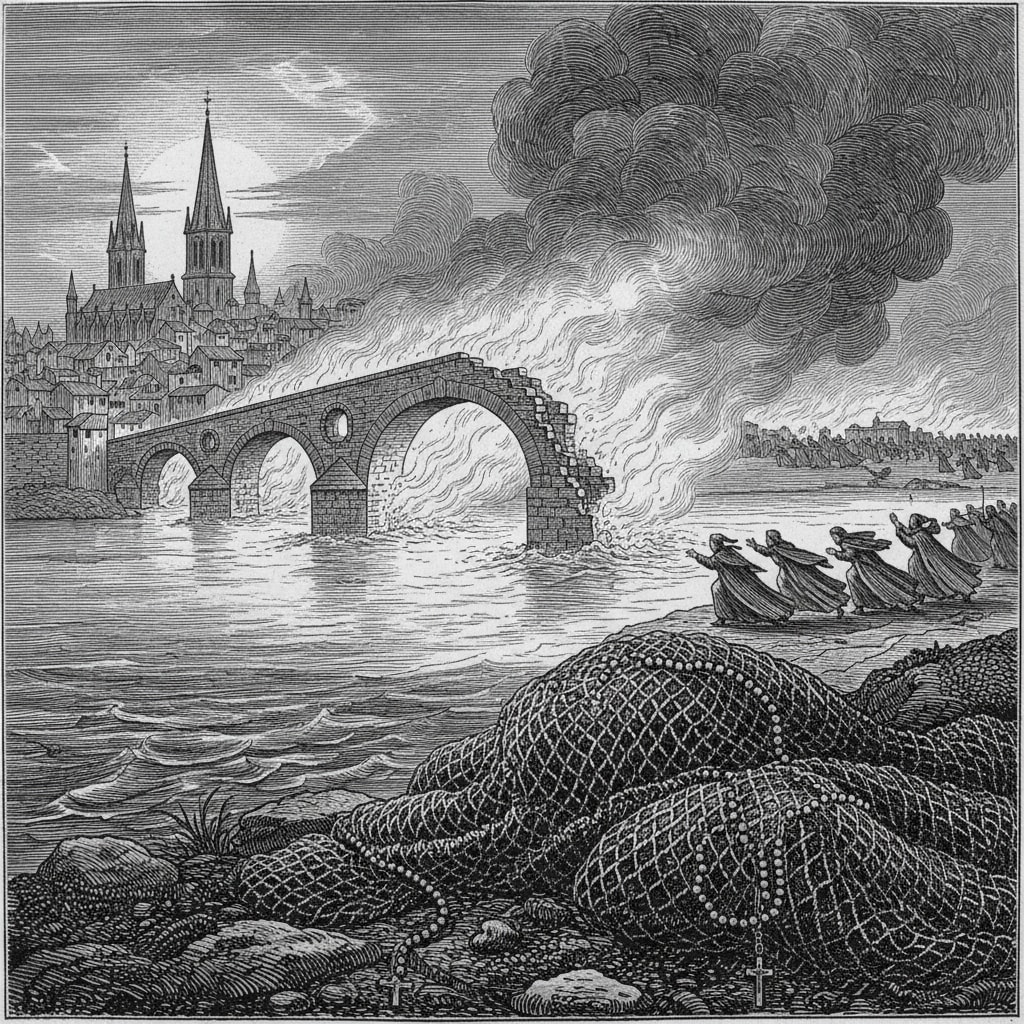
The Schism of Avignon
On the Rival Pontiff, the Drowned Crown, and the Rosaries That Will Not Stay Buried
The clerical secession of A.S. 111, in which a rival pontiff was crowned beneath the Rhône and Avignon was razed so thoroughly that its stones now form staircases in Strasbourg — a crisis requiring three stamps of denial.
Codex Ref. III.2.07-001
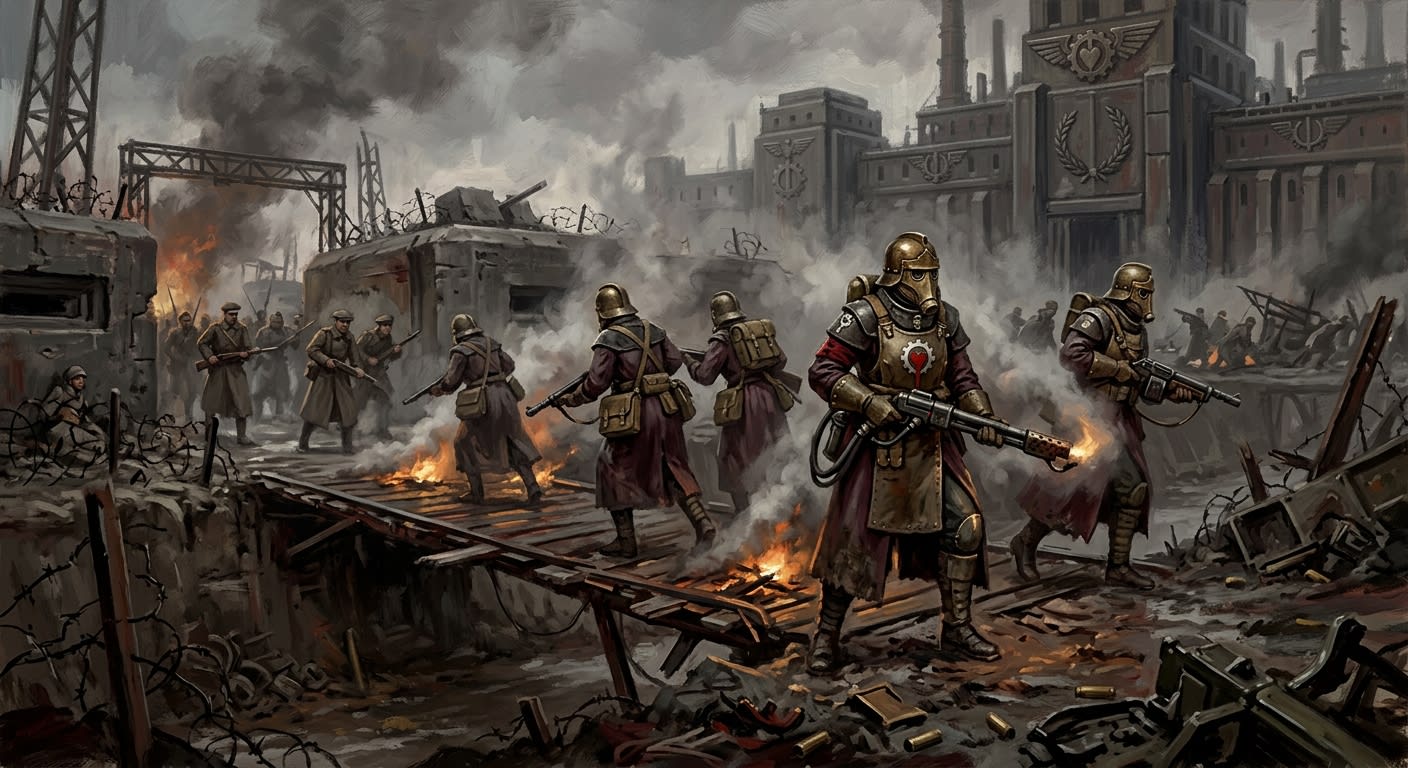
The Sisters of the Martyrdom
The bridge burned, the column halted, and the Ledger asked whether she volunteered
The Sisters of the Martyrdom burned bridges with their own bodies during the Atheist Wars; the Bureau sings them, taxes them, and refuses to ratify them.
Codex Ref. VIII.6.01-001

The Tagus
The river at the end of the count
The Tagus is the Synod's brown Iberian edge: moat of Toledo, fiscal measuring line, levy phrase, flood court, and river that takes names without receipt.
Codex Ref. II.4.09-016
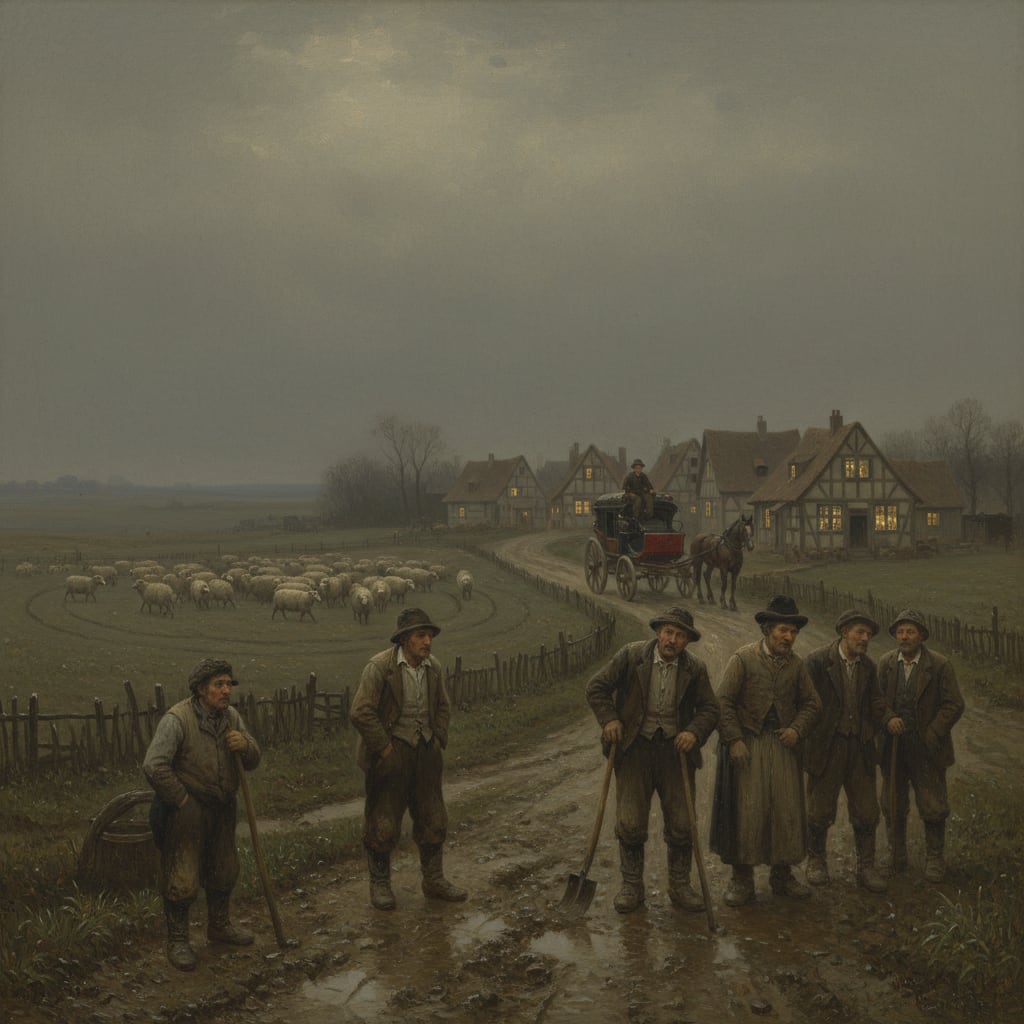
The Year Without Dawn
The Bureau's Second Portent: forty days without sun, seventeen explanations without facts, and one Province without tongues.
A.S. 32: forty days without the sun, children born grey-eyed and voiceless, the Rationalists publishing seventeen treatises to explain a volcano no one could find. The Bureau's Second Providential Portent.
Codex Ref. VII.4.01-001
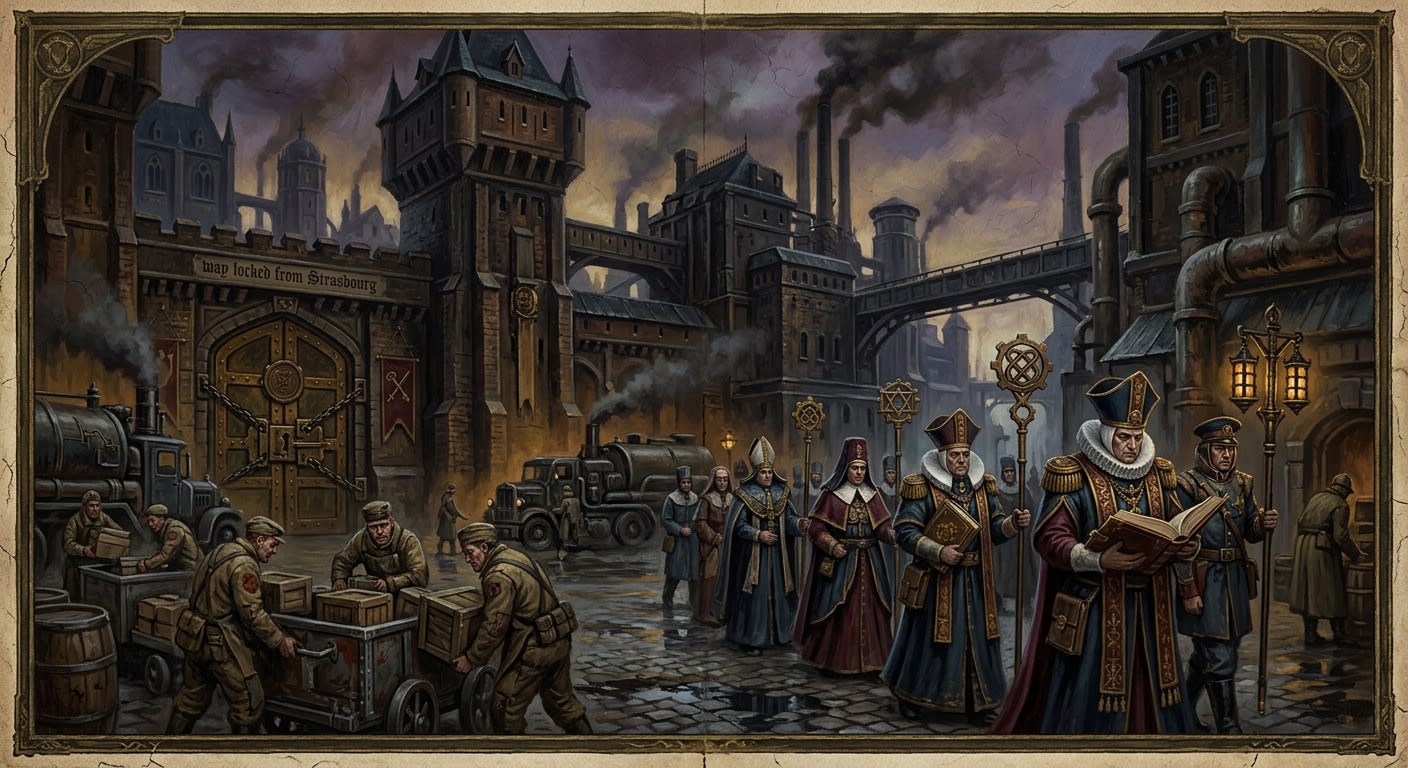
Triune Hearth
Three old bodies, one chimney, and Strasbourg holding the poker
The Triune Hearth binds France, Iberia, and the Rhineland into one Synodal household: warm in sermon, hungry in ledger, and locked from Strasbourg.
Codex Ref. XIII.1.04-090
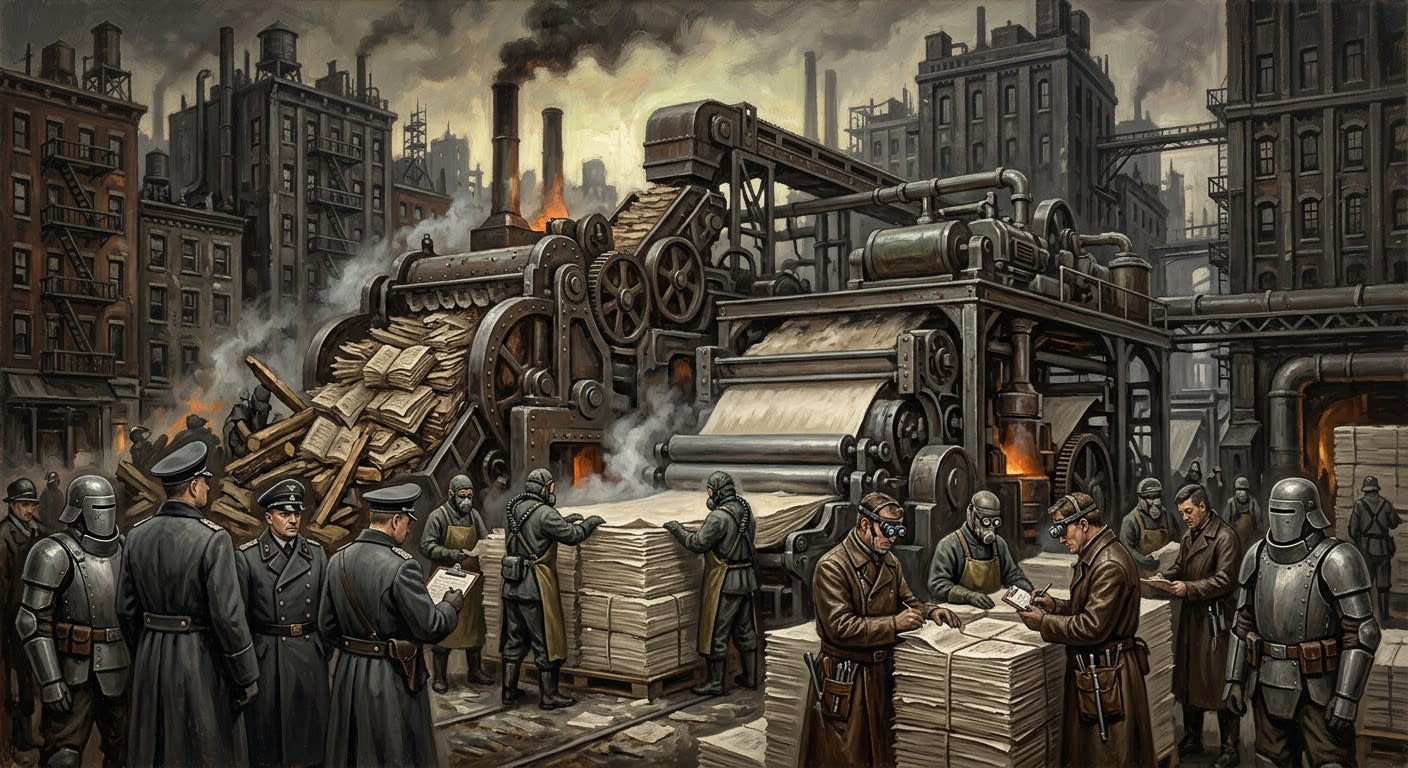
Ulm
The city that taught paper to confess and scholars to become pulp
Ulm is the corrected Heartlands city whose Rationalist compact predated the calendar wound, and whose Paper Mines now make heretical learning into obedient sheets.
Codex Ref. II.2.01-005