
#On the Province That Signed Twice
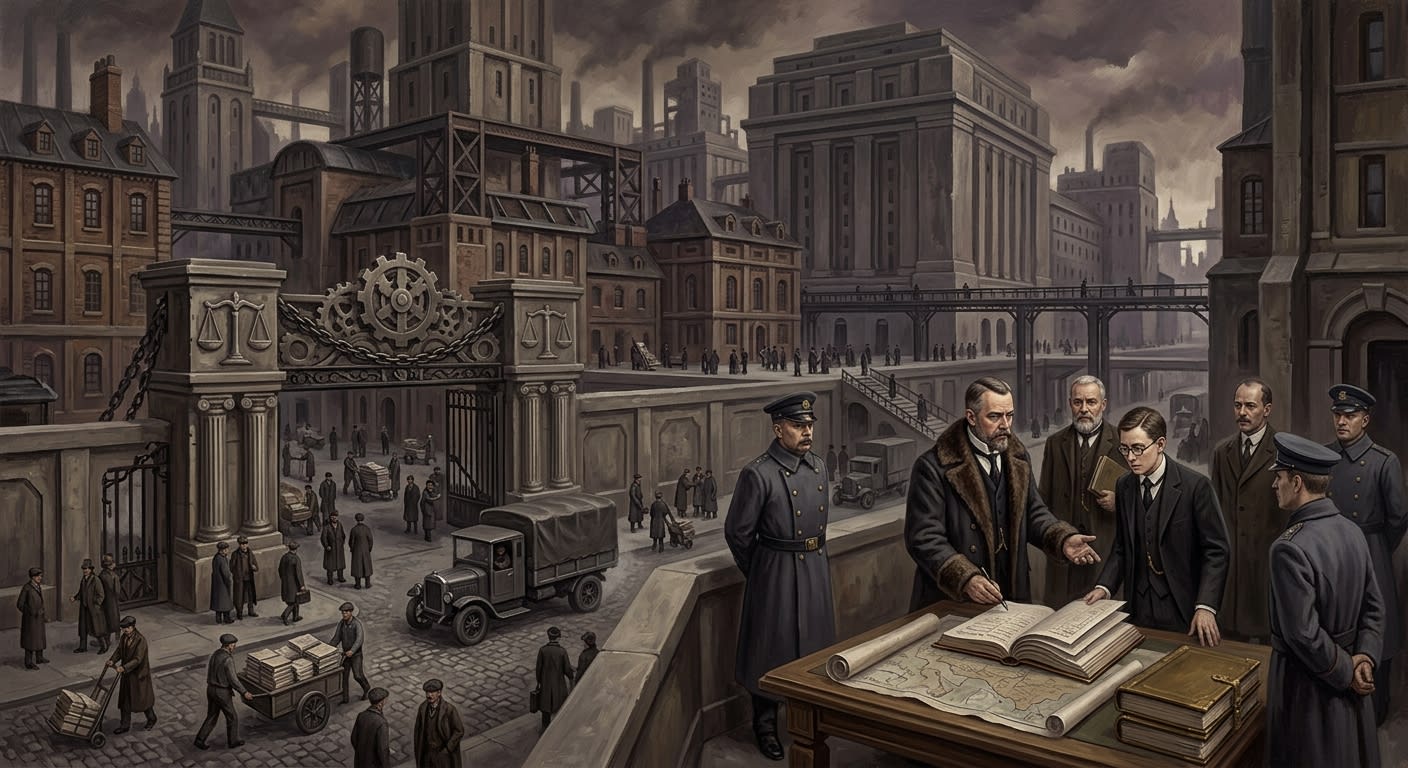
Wallachia lies east of the Sagittal Line, south of the Transylvanian wall, north of the old Balkan roads, and precisely where a prudent province should not have placed its markets once Velmora learned the grammar of debt.
The school maps place it inside Zone 6, among the Charnel Lands, with the tidy black wash by which teachers spare children the bother of accuracy. The military maps mark it as Velmoran pressure depth: trade roads, hill markets, failed estates, unverified towns, creditor chapels, false tolls, and routes by which soft money approaches Bastion-Sibiu wearing respectable boots. The old families call it home. Refugees call it gone. The Bureau of Records calls it temporarily outside lawful custody, a phrase whose optimism could float a corpse.
Wallachia did not fall like a fortress. It did not crack cleanly under a single bombardment, burn in one red week, or march in chains behind a banner of Hell. It softened. It borrowed. It refinanced. It accepted relief under famine, security under raid, seed under blight, salt under winter, and mercy under terms whose clauses were legible, witnessed, and damnably punctual. The province signed once to survive the first hunger. It signed again to pay the cost of having survived.
One must understand the old shape before admiring the wound. Wallachia was a province of river roads, tollhouses, monasteries, princely courts, grain estates, mountain passes, mule tracks, vineyard ledgers, and church bells that argued with tax collectors long before the Synod professionalized the argument. Its merchants knew Moldavian salt, Transylvanian ore, Danubian barges, Balkan gossip, and the ancient piety of charging a foreigner more because his pronunciation proved Providence had not favoured him. A healthy country, then, in the ordinary disgusting manner of mankind.
The Sundering turned health into collateral.
#On the Eastern Silence and the First Accounts
The Eastern Silence of A.S. 38 passed through the Wallachian marches like a clerk drawing a line through names before knowing who was dead. Correspondence failed from Serbia, Thrace, Wallachian roads, and the western Balkan passes. Monastery packets arrived empty. Tollhouse ledgers came west with whole weeks missing and totals balanced in hands no registrar could identify. Bells were reported silent in towers whose bells had already been requisitioned. This was taken for panic, because panic is cheaper than omen.
Then came A.S. 45.
Refugees moving west from the border towns spoke of forests walking, churches charring from within, fogs returning livestock with too many legs, men with too few memories, and markets where a starving family could obtain flour by surrendering a key to a lender whose face no witness could later agree upon. Rationalist authorities called this regional superstition aggravated by mass hysteria. The phrase remains useful in classrooms as proof that education, applied without reverence, can make a man stupid in polished shoes.
Early border summaries described Wallachian refugee accounts as “unverified peasant exaggerations arising from food instability.”
Corrected after three separate tollhouse ledgers arrived west with identical creditor marks, each dated before the tollhouses reported any creditor present. Hunger exaggerates. Ledgers repeat.
Wallachia’s first wound was not gold. Gold belongs more properly to the Transylvanian heights and the Gilded Chasm. Wallachia’s first wound was paper. Relief notes. Grain advances. Road-security bonds. Monastery protection instruments. Funeral loans issued during plague weeks. Seed contracts written against harvests that had not yet been planted. The province still had fields. Velmora did not need to own the fields if she owned the next hunger.
By A.S. 50, Wallachian trade roads carried lenders under no flag. By A.S. 58, several monastery ledgers list donations from houses later identified by the Bureau of Doctrine as Ten Thousand Keys fronts. By A.S. 66, when Sibiu was designated to fill the great Transylvanian gap, Wallachian caravans already required double inspection: one for contraband, one for gratitude. Gratitude is the subtler danger. A man bribed may feel shame. A man helped feels obligation, and obligation is Velmora’s chapel bell.
#On Velmora's Custody
Velmora is Greed, but the vulgar word misleads. Greed is more than wanting coin. A child wants a sweet, a soldier wants dry socks, and a Hieromnemon wants a competent copyist who does not mistake doctrinal emphasis for spilled ink. These are wants. Velmora is the conversion of want into title, of title into debt, of debt into selfhood, until a man cannot tell whether he possesses a thing or has been possessed by the claim to it.
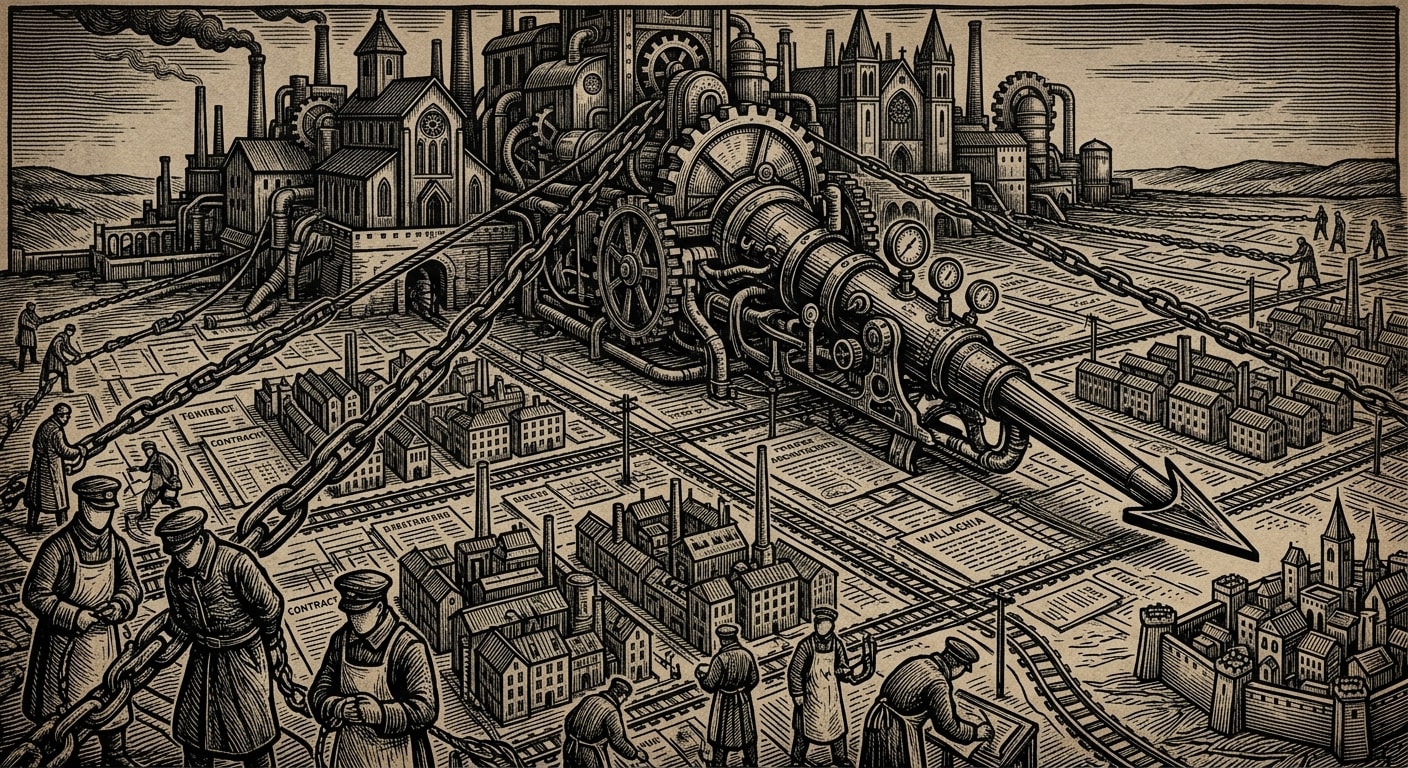
Wallachia suited her because it had not collapsed into emptiness. Empty land cannot owe. Empty towns do not sign. Empty markets produce no witnesses. Wallachia kept roads, names, courts, banking habits, notaries, parish chests, dowry books, toll scales, and the social vanity that makes men prefer a ruin with receipts to a rescue without dignity.
The Ten Thousand Keys found Wallachian roads early because old banking houses outlived old crowns. A crown needs a head. A bank needs fear, memory, ink, and a room dry enough for paper. After the Sundering, heads became unreliable. Rooms persisted.
The cult’s low offices appeared first as relief desks. A widow needed burial fees. A village needed seed. A caravan master needed protection against roads that had begun returning men to the wrong milestones. A monastery needed wax for bells that no longer rang but still required candles because institutional habits outlive sense. The lender offered help quickly, cleanly, with witnesses and terms. The key was small. Brass at first. Warm in the palm. No lock visible.
The Hierarchy of Debt arranged itself beneath civic language. Debtors carried letters. Creditors endowed chapels. Assessors learned which village headman would sign for winter coal and which priest would keep silent if the orphanage roof held through snow. Ledger-Keepers maintained family balances. Inheritors waited in houses with closed shutters, clean accounts, and portraits whose fingers gained rings over decades.
Velmora’s genius in Wallachia was leaving enough ordinary life intact to make resistance look disruptive. A market that still sells flour can denounce the Synod as disorder when Purity burns its ledgers. A church roof repaired by a creditor can accuse Doctrine of ingratitude when the creditor’s seal is found under the altar. A toll road maintained under hostile credit can call itself public service while moving contract packets toward Sibiu.
The province became a forwarding office with fields.
#On the Roads and the Markets
Wallachia’s roads are older than our quarrels with them. They run from Danubian ferries into hill towns, from hill towns toward Transylvanian passes, from monasteries to salt sheds, from old princely courts to villages whose names appear in Synod records only as variants, corrections, or arrears. They are practical roads, built for carts, sheep, soldiers, tax men, funerals, and the exchange of lies at manageable distances.
Under Velmora, the roads changed less in shape than in appetite. A caravan leaving a Wallachian market may carry grain, iron, candles, mule harness, dyed cloth, and one sealed chest everyone agrees belongs to someone else. The chest will pass six hands. Each hand will have proper receipt. By the time it reaches a Sibiu feeder route, the seal is lawful, the weight is correct, the prayers have been said, and three men who inspected it now owe favours to lenders they praise as benefactors.
SIBIU CORRIDOR INTERCEPTION — A.S. 197 Cargo: barley sacks, lamp oil, spare axle pins, church roof tin, sealed family chest. Chest contents: █████████████████████████. Driver testimony: “It was a dowry, lord. The bride died eighty years ago, but the road still expects delivery.” Disposition: driver released under watch; chest burned; ash counted itself into four columns.
The markets of old Wallachia still operate in reports, which is itself obscene. Traders buy and sell at stalls whose awnings hang beneath soot that never clears. Coin passes. Scrip passes. Promissory slips pass with the softness of prayer cards. Some merchants speak in others’ voices. A salt factor at the Argeș road was heard bargaining in the voice of a Sibiu quartermaster who had died the week before, offering a discount on mules in exchange for a convoy delay. The factor’s tongue was normal. This disappointed Purity, which prefers useful monstrosity to ordinary mouths.
The Bureau of Tithes has traced Wallachian capital into church repairs, veterans’ kitchens, funeral funds, dowry trusts, grain pools, and bridge maintenance as far west as Budapest’s staging offices. It has also traced honest trade along the same routes. This is the cleverness. Velmora hides venom in bread and then dares us to starve the district to prove our discernment.
#On Towns That Continue Incorrectly
Wallachian towns in the Charnel Lands rarely display the theatrical ruin favoured by pamphleteers. No, the more troubling ones continue. A bell rings on time with no bell rope visible. A courthouse opens and hears disputes between men whose death records sit in Strasbourg. A market closes for a feast no Synod calendar acknowledges. A schoolmaster teaches accounts by having children calculate interest on debts incurred by their grandparents and payable by their own unborn hands.
There are villages where every front door has two locks: one for the house, one for the debt. There are inns where guests receive a key at arrival and must return a different key at departure, the difference recorded in a ledger beneath the stairs. There are churches whose poor boxes remain full because no one dares empty them, and the coins inside are all warm. There are mills whose wheels turn when the river stops, grinding grain against a contract signed by a miller whose descendants deny the family name and still bring oil to the gears.
Bucharest (Unregistered) appears in dispatches as a city of windows prepared for guests expected since A.S. 45. I distrust these dispatches because every source describes the curtains differently and the silence the same. Other towns are more specific. Târgoviște (Unregistered) registers in old exile petitions as “still holding court.” Pitești (Unregistered) appears in convoy rumors as a place where road taxes are paid in apologies. Curtea de Argeș (Unregistered) survives in pilgrim nightmares as a monastery town whose bells ring inward, audible only inside the chest of anyone carrying unpaid kindness.
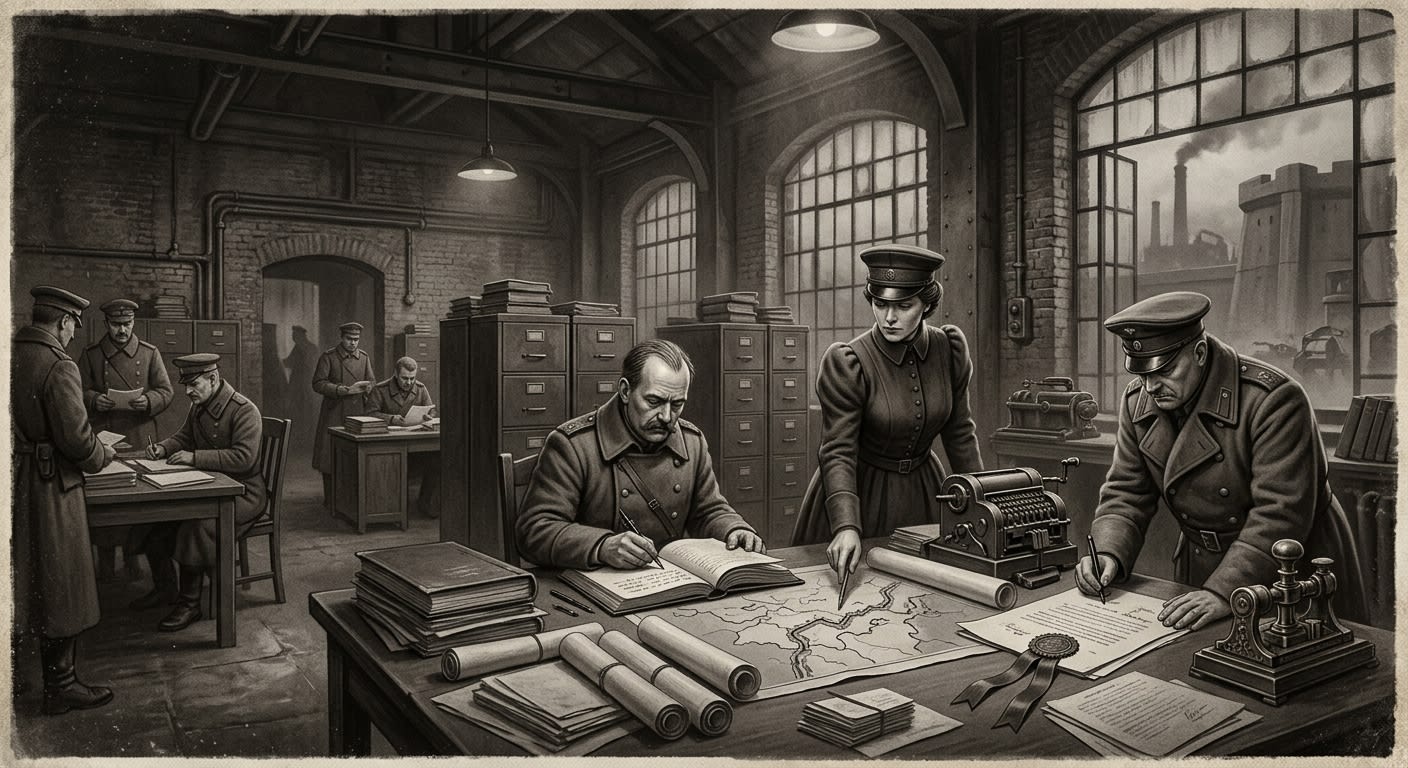
These names remain in the Ledger. That matters. The Bureau of Records preserves them to accuse Hell of theft and to preserve our own claim. A name erased is property abandoned. A name retained is a writ against the Enemy, even if the bailiff sent to serve it returns with gold leaf under his nails and no memory of his horse.
A.S. 80 instructional maps marked several Wallachian corridors as “recoverable by cavalry action.”
Withdrawn. The corridors were roads on paper and bargains in practice. Cavalry can charge a barricade. It cannot sabre a maturity date.
#On Sibiu's Eastern Fear
Wallachia is lost territory, yes, and an active instrument pointed at Sibiu.
The bastion holds the Transylvanian Alps wall, built on Saxon fortified churches and enlarged until a town became an argument in stone. Its passes—Turnu Roșu (Unregistered), Bran (Unregistered), Predeal (Unregistered)—can be sealed by artillery, wire, and properly terrified men. Velmora wastes nothing on frontal assault. She buys the axle before the wagon reaches the gate. Wallachia supplies the roads where such purchases mature.
Every Sibiu convoy from the south-eastern approaches carries Wallachian suspicion. Grain may be light. Salt may be clean and still costly in the wrong way. Axle pins may bear creditor marks too small for an ordinary eye. Teamsters may remember receiving payment from a chapel fund, then fail to remember which chapel. Papers may smell of old wax and rain. The garrison intercepts more corrupted convoys than direct attacks because the attack is the convoy.
The Hierarchy of Debt uses Wallachia as proving ground and storehouse. Debtors there recruit by survival. Creditors there finance by memory. Assessors there price individuals as well as roads, villages, seasonal fears, and the exact hunger at which a guard will wave through a sealed cart. Ledger-Keepers there maintain balances older than half the Synod’s offices. Inheritors there wait with the calm of houses whose foundations have heard all the arguments against them and accepted none.
The Gilded Chasm glows south and east of the Transylvanian passes, but Wallachia is where its brightness learns manners. Raw gold becomes credit. Credit becomes obligation. Obligation becomes respectable trade. Respectable trade approaches the Line with papers in order.
At Sibiu, the assay chambers test Crown, scrip, metal, seal, and prayer. The compliance rate remains an embarrassment dressed as a statistic. The bastion’s Doctrine of Sufficiency is posted in barracks and canteens: desire nothing beyond thy ration. The Crown provides. The Crown suffices. Soldiers recite it while purchasing black-market sausage from a man whose supplier’s supplier owes a Wallachian lender. Such is war: purity above the door, hunger at the counter.
#On Language, Smoke, and Older Things
Wallachian survives in places where the people do not. This should trouble you, and if it does not, report to Doctrine for remedial fear.
In A.S. 136, at Bastion-Constantinople, black diesel smoke formed Creed fragments, Index echoes, and three sentences in pre-Sundering Wallachian above a furnace quarter. Seventeen soldiers died after firing into text-bearing vapour. The surviving digest says the sentences concerned appetite, custody, and the return of a thing miscounted. A cowardly summary. Likely accurate.
Language is not innocent in the Charnel Lands. Words can retain routes after roads are gone. A dead province may speak through smoke, ledgers, witness slips, lullabies, invoices, and children born west of the Line who suddenly use their grandmother’s idioms when handed a brass key. Records keeps grammars salvaged from dead monasteries for this reason. Purity dislikes the grammars because they have not been cleansed. Doctrine dislikes Purity’s dislike because ignorance is an expensive kind of safety.
The Wallachian sentences in the smoke incident are treated as Constantinopolitan anomaly because that is where the smoke appeared. This is geographically tidy and metaphysically lazy. The words belonged to a lost eastern account, carried by fuel, pressure, bell, debt, memory, or some other courier whose credentials we have not yet caught. They prove Wallachia is not passive spoilage. It emits.
Refugees know this without saying it so grandly. Old women in Budapest’s western districts refuse certain lullabies. Sibiu gate clerks mark down idioms heard from drivers whose paperwork claims Saxon origin. Caravan Factors along the Carpathian Corridor learn which jokes not to translate. Children of Wallachian descent sometimes draw keys with no instruction and become very angry when the drawing is taken away. The Bureau files these as cultural survivals until the ink warms.
#On the Present Condition
As of A.S. 201, Wallachia remains under Velmoran pressure within Zone 6, administratively unrecovered, strategically active, morally inhabited, and spiritually expensive.
No public reclamation expedition is scheduled. This is prudence wearing the robes of scheduling. The province cannot be retaken by flags, cavalry, or a proclamation from a balcony in Strasbourg, even one delivered from a magnificent balcony by a man of obvious rhetorical gifts. Wallachia’s enemy is not only garrisoned in towers. It is entered in obligations, hidden in beneficiary clauses, nested in relief funds, carried on roads, remembered in family debts, and spoken through smoke when the wrong fuel burns under the wrong bell.
The Synod’s operating policy is containment through Sibiu, scrutiny through Tithes, interdiction through Purity, interpretation through Doctrine, and selective memory through Records. Patrols do not enter deeply. Caravans from the east are treated as suspect by origin. Wallachian documents are copied before burning, because knowledge remains useful even when the page itself wants to be paid. Brass keys are seized. Gold keys are isolated. Black iron keys require Obsidian handling, a phrase that has ended several conversations I was enjoying.
The future of Wallachia is listed as reclamation. The word is correct because the Synod owns the future tense. Whether any living Wallachian will thank us for reclaiming what remains is a sentimental question, and sentiment is not operational. Names remain in the Ledger. Roads remain on maps with cautions thick enough to look like mourning. Families west of the Line keep keys buried in flour jars and swear they are heirlooms. Sibiu watches its wagons. Tithes watches its coin. Doctrine watches every kindness arriving from the east with both eyes open and one hand on the censor’s knife.
Wallachia waits behind its fair prices.