
#On the Province That Learned to Sign
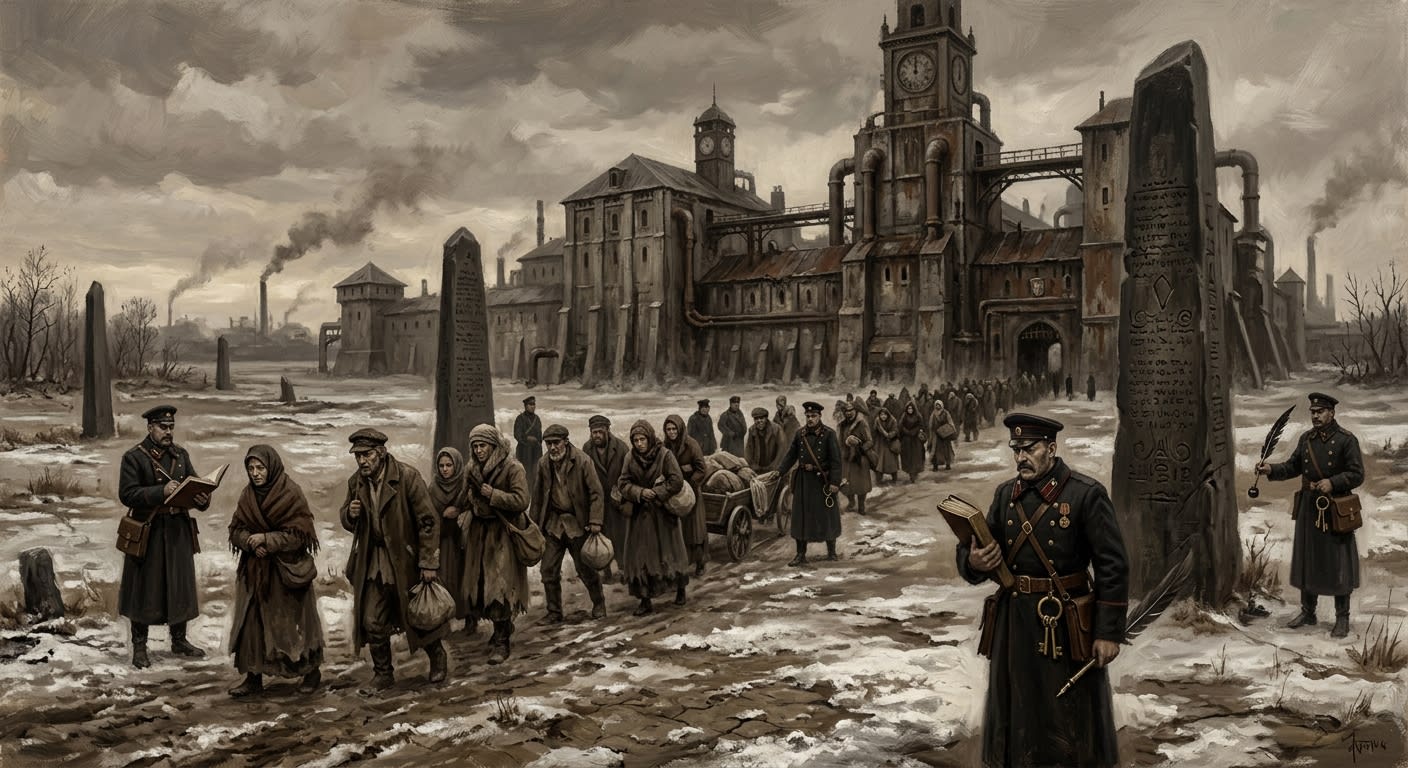
Moldavia is the eastern account of Europe, still open, still accruing, still disputed by every office that mistakes ink for recovery. It lies beyond the lawful comfort of the Sagittal Line, east of the Transylvanian wall and north of the old Balkan roads, among salt flats, market passes, orchard towns, river fords, monasteries, tollhouses, and those wind-scoured approaches where maps begin speaking in a lower voice. The Registry places it in Zone 6, within the Charnel Lands, with border wounds along Zone 5 and the Steppe Gate. The peasants who fled it call it home. The Bureau calls it temporarily occupied territory. The Enemy calls nothing aloud while collecting rent.
The old province was never as simple as western school plates pretend. It had princely courts with gold seals too large for their treaties, salt caravans that travelled under hired blessing, vineyard slopes, sheep roads, fortified monasteries, river mills, and villages whose bells carried far enough across the steppe to make a man believe distance had manners. It was a hinge between mountains and plain, between Danube gossip and Black Sea hunger, between Transylvanian ore and eastern grain. Such places become rich in peacetime and edible in catastrophe.
After the Sundering of A.S. 45, Moldavia did not fall as a wall falls, with stones, dust, and one useful noise. It softened, bargained, starved, refinanced, and was entered line by line. Kargath touched its granaries first in the old reports: harvests blackened, wells tasting of copper bile, seed that sprouted into straw fit only for liturgical pessimism. Then Velmora arrived with provisions and terms. Hunger emptied the larder. Greed supplied the form.
This sequence matters. A famine kills. A contract survives the corpse.
Moldavia is often assigned wholly to Velmora in sermons, because sermons prefer one villain per paragraph. Field officers know better and sleep worse. The western highlands and trade roads bear Velmora's debt-marks. The salt flats remember treaty clauses older than our alphabet. Kargath's Blightbearer effects appear in farms and storehouses, then Velmora's grain factors arrive with punctual mercy. The Ten Thousand Keys flourish along Moldavian roads because old banking houses outlived old crowns, and because starving men do not ask whether a warm key has teeth.
The province is a lesson in sequence, which is the one form of theology even quartermasters understand. First hunger. Then relief. Then signature. Then ownership.
#On the Old Roads and the First Collapse
Before the western collapse acquired official dates, Moldavia measured itself by roads: salt road, monastery road, river road, sheep road, bride road, toll road, road of the seventh fair, road one did not take after autumn if one liked one's horses. These names remain in refugee speech long after the roads themselves have been eaten by fog, debt, revised distance, or local military prudence. The Bureau of Cartography preserves several in sealed plates, each marked with the same humiliating notation: route historically attested; current passage not recommended; returning maps to be interrogated.
The province's wealth was practical. Salt from cutbanks and pans. Grain in good years, famine politics in bad. Wool, wine, horseflesh, timber, wax, chapel plate, dowry silver, monastery records, and enough petty jurisdiction to employ a thousand clerks with no observable benefit to the human race. Its princes borrowed against harvests. Its monasteries lent against souls. Its caravan masters insured salt shipments against bandits, drought, wolf, wrong saint's day, and those contractual disasters that old lawyers called acts of the Creator because naming human stupidity too often made patrons defensive.
When Rationalist governors pressed eastward before the breach, they found Moldavia useful and condescendingly backward, which is how modern men describe any place that remembers what they have chosen to forget. Churches were surveyed. Bells were catalogued. Reliquaries were weighed. Some monasteries were stripped under the pleasant doctrine of public reason. Some resisted and were called feudal remnants, that scholarly phrase by which thieves tidy their fingernails.
Early rationalist war summaries describe Moldavia as “politically unstable and spiritually overburdened before demonic occupation.”
Corrected. Moldavia was politically unstable because men governed it, and spiritually overburdened because it owned more shrines than cannon. The latter defect became visible only after the shrines were removed and something else began using the vacant places.
A.S. 45 opened the wider wound. Reports from the first winters are filthy with contradiction. One town starved while granaries stood full. One monastery found its salt stores changed into coins bearing no prince's face. A bridge over the Prut accepted eastbound caravans and returned westbound carts empty except for signed receipts. A shepherd village sent a tithe wagon to the western diocese with all lambs alive and every shepherd missing. The lambs bleated in human voices at third bell and were eaten anyway by soldiers who later became zealous vegetarians.
The first westward refugees carried less than the Bureau wished and more than Purity could bear. They carried church keys, dowry spoons, icons with faces scratched out by owners too frightened to let saints be recognized, salt contracts, debt papers, unmarked coins, children born after fathers had died, and stories of lenders who arrived before distress was announced. Records sorted these into credible, infected, devotional, and inconvenient. Inconvenient became the largest cabinet.
The Great Retreat of A.S. 48–65 broke civil continuity. Prefects fled with seals. Priests fled with chalices. Merchants fled with ledgers. Peasants fled with seed, which is the truest form of politics. Behind them Moldavia did not empty. It kept selling, weighing, lending, planting, burying, and ringing bells at hours no Synod calendar recognizes. Hell likes a functioning province. Ruin without administration is merely rubble.
By A.S. 66, when Bastion-Sibiu was designated against Velmora's reach, Moldavia had become the eastern purse of the Greed-front. Not wholly. Nothing in the Charnel Lands is whole except appetite. Enough.
#On Velmora's Moldavian Method
Velmora does not love Moldavia. Greed loves nothing it cannot enter into a schedule of possession. She found in Moldavia the perfect instrument: old roads, old lenders, old salt houses, old records, old hunger, and a population trained by centuries of princely taxes to distinguish between bad terms and immediate death. The distinction is useful. It can be priced.
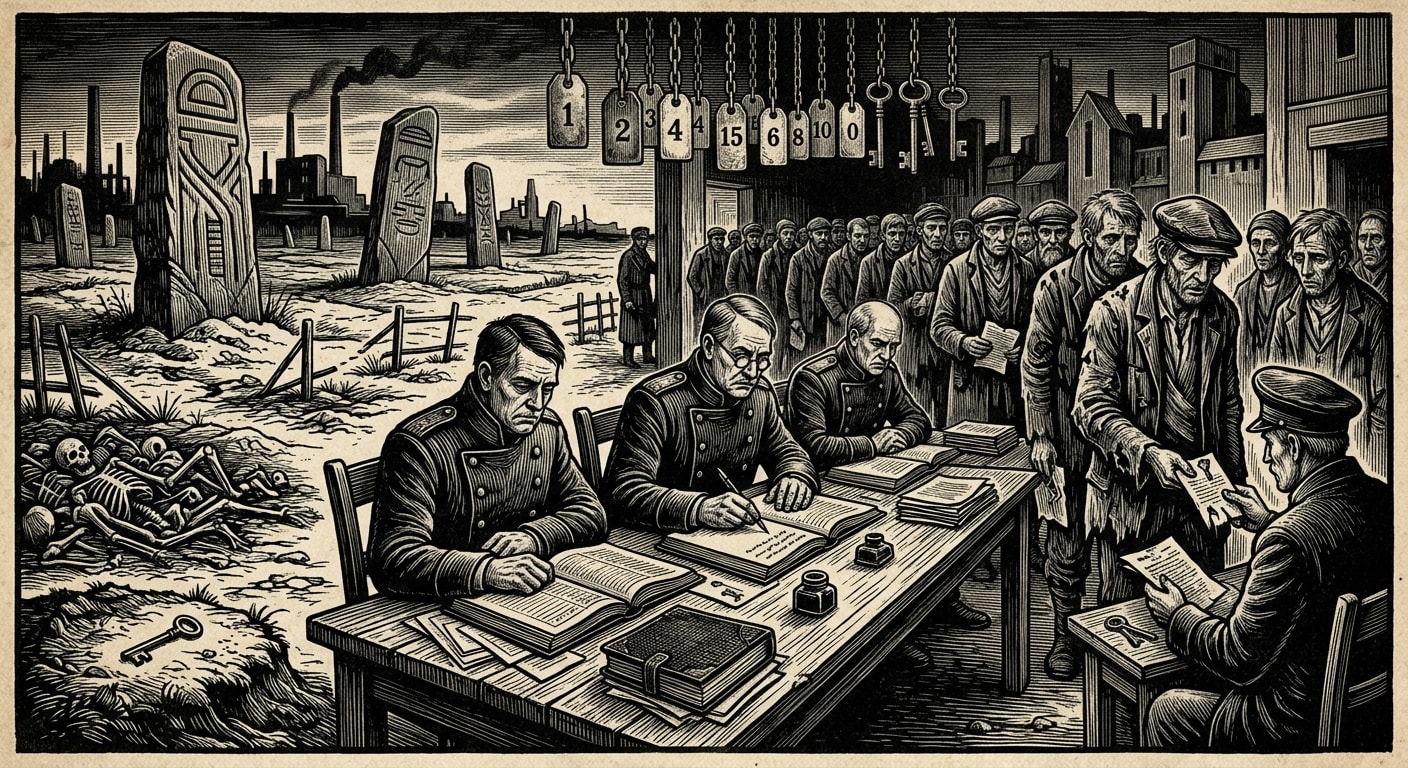
Her agents followed the first crop failures with seed. They followed raided villages with replacement tools. They followed widows with burial money. They followed winter with credit. Their generosity was exact, modest, and prompt. Synod relief, when it came, came behind forms, convoy delays, route disputes, chapel verification, and a clerk empowered to reject a plea because the applicant's parish seal had melted. Velmora's clerk asked only for a signature.
The Hierarchy of Debt did not arrive wearing horns. It arrived as local continuation. A moneylender remained in his office after his prince vanished. A salt factor kept the road account after the garrison dissolved. A notary continued witnessing transactions because people kept needing witnesses, and need is the devil's most respectable door-knocker. Brass keys began changing hands. Silver keys followed. Gold keys appeared in houses that had never owned gold before and were afraid to ask whether gratitude required silence.
The earliest Ten Thousand Keys cells appear along the Moldavian and Wallachian trade roads because banks survive catastrophe better than banners. A crown requires a head. A debt requires only memory, and Velmora supplies memory at predatory rates. Refugee testimony from three districts agrees on the same progression: a relief desk, a ledger, a key, a favour, a second favour, a missing objection at a tollhouse, a daughter married into a creditor family, a village fund whose chest warms in winter, a parish bell sold to pay arrears, a new bell cast from metal that rings with the voice of the old lender.
Contract Theurgy in Moldavia is rarely theatrical. The captain whose right hand marched away from his body at the Gilded Chasm belongs to battlefield instruction; soldiers require spectacle or they forget. Moldavian contract sorcery works through permitted life. A lease that changes acreage by moon. A seed loan whose repayment clause includes future silence. A salt invoice whose witnesses dream the same number for nine nights. A school endowment requiring children to learn arithmetic from columns that balance only when a Synod name is removed. A marriage contract adding a line after both spouses are dead. The paper does not shriek. The household does.
Velmora's genius in Moldavia is her use of decency. A man borrows to feed his brother. A mother signs to bury her child. A parish accepts a chapel roof because rain falls on the altar and the western convoy is late. No one begins by worshipping Greed. Worship arrives after gratitude has been disciplined into obligation. The debtor thanks the lender, defends the lender, introduces the lender, and eventually prosecutes the lender's enemies as ingrates. The soul remains free. The room has been arranged.
#On Hunger Hired as a Clerk
The Bureau of Records has issued repeated clarifications that Blightbearer phenomena near Sibiu and Moldavia are to be filed under KARGATH / GLUTTONY unless direct evidence establishes Velmoran agency. This is correct, which makes it irritating. Kargath's servants rot grain, sour wells, thin cattle, and teach harvests to lie. Velmora profits. Greed has learned to invoice famine.
In Moldavia the two pressures meet with a tidiness that offends doctrine. A storehouse spoils under Kargath's carrier-effect. Three days later a Keys-backed grain merchant arrives with clean sacks. A village well goes bitter. A factor offers barrels at half-price until the second season. A field produces black shoots. A seed lender offers imported grain and asks for nothing immediate except signature, silence, future escort rights, and the old cemetery lot beside the road. The village survives. The village enters the ledger. The village becomes useful.
Several Sibiu-sector patrol reports refer to “Velmoran Blightbearers” operating in Moldavian highland farms.
Corrected. The blight is Kargath's carrier-effect when observed through spoilage, rot, and nutritional fraud. The rescue terms are Velmoran. Confusing the two is how clerks invent a joint committee, and a joint committee is one of Hell's cleaner victories.
This does not mean Kargath and Velmora cooperate. The Bureau of Inter-Infernal Analysis still teaches that the Sin-Generals hate one another with professional vigour, and I am fond of any doctrine that keeps Hell busy. Yet Moldavia shows how rivalry may produce profit without friendship. Kargath consumes. Velmora purchases the survivors. Kargath's famine reduces resistance. Velmora's credit converts reduction into rule. If Gluttony strips a table, Greed sells the chairs.
The A.S. 199 Sibiu anomaly deepened the discomfort. The Crimson Concord and the Hierarchy of Debt were found operating in the same theatre without expected rivalry. Moldavian grain factors appear in the same lists as Concord pamphlet couriers, and certain relief offices have distributed bread, credit, and surrender literature in the same week. The filed word remains anomalous. The unfiled word is policy wearing a mask.
Moldavian hunger also moves west as rumour. A convoy delayed by one salt dispute becomes a ration panic in Sibiu. A report of sour wells causes clean wells to be sealed in fear. A false blight warning can empty a market faster than real rot. Velmora's agents understand that famine need not be present everywhere if credit can make men behave as though famine is coming. The future hunger purchases the present signature.
The Synod's countermeasure is ugly, necessary, and late: convoy verification, ash-lines, salt tests, seed burning, emergency grain without interest, and public preaching against miraculous generosity. The last measure fails most often because miraculous generosity, unlike sermons, can be eaten.
#On the Steppe Gate and the Wind That Reads
The western throat of Moldavia is the Steppe Gate of Windscript Treaty-Stones, raised in A.S. 76 at a limestone-cutbank gap where caravans, refugee columns, salt convoys, mule trains, and smugglers had been murdering one another for passage with the democratic vigour of frontier commerce. Seven stones were erected. Clauses were carved in archaic pre-doctrinal script. An unnamed Cantor consecrated them with chrism from Brast. The wind found the carvings and began to read.
Within five seasons a trench-town grew around the Treaty Ring. Bureau of Records registered it in A.S. 78 as Administrative Node Seven, which tells one everything about the Bureau's courage: seven whispering stones on a Moldavian border steppe, and Records asked whether they could be numbered.
The stones worked. Fighting stopped near the gap. Caravans submitted to arbitration. Refugees received queue marks. Salt convoys stopped hiring enough private swords to constitute accidental armies. An enormous improvement, provided one defines improvement as violence becoming legible before resuming.
Then came the Red Pronunciation of A.S. 94. Licensed Arbiter J. Sarn mispronounced a binding term on the Third Stone during a Moldavian salt-convoy arbitration. The clause-spirit propagated through Oath Inns and Caravan Corrals. Approximately one thousand throats closed in a single night, after the Bureau of Doctrine corrected the earlier, gentler figure. One thousand is a cruel number. It has no decorative edges.
The incident made Moldavia's border law famous, which is usually the last stage before a frontier becomes ungovernable. The Seal-House Consortium rose from the aftermath. Caravan Court monopoly was ratified. Red-glyph precautions entered every passage booth. Phoneme cards were issued to arbiters with the quiet implication that human speech was no longer trusted to behave near law.
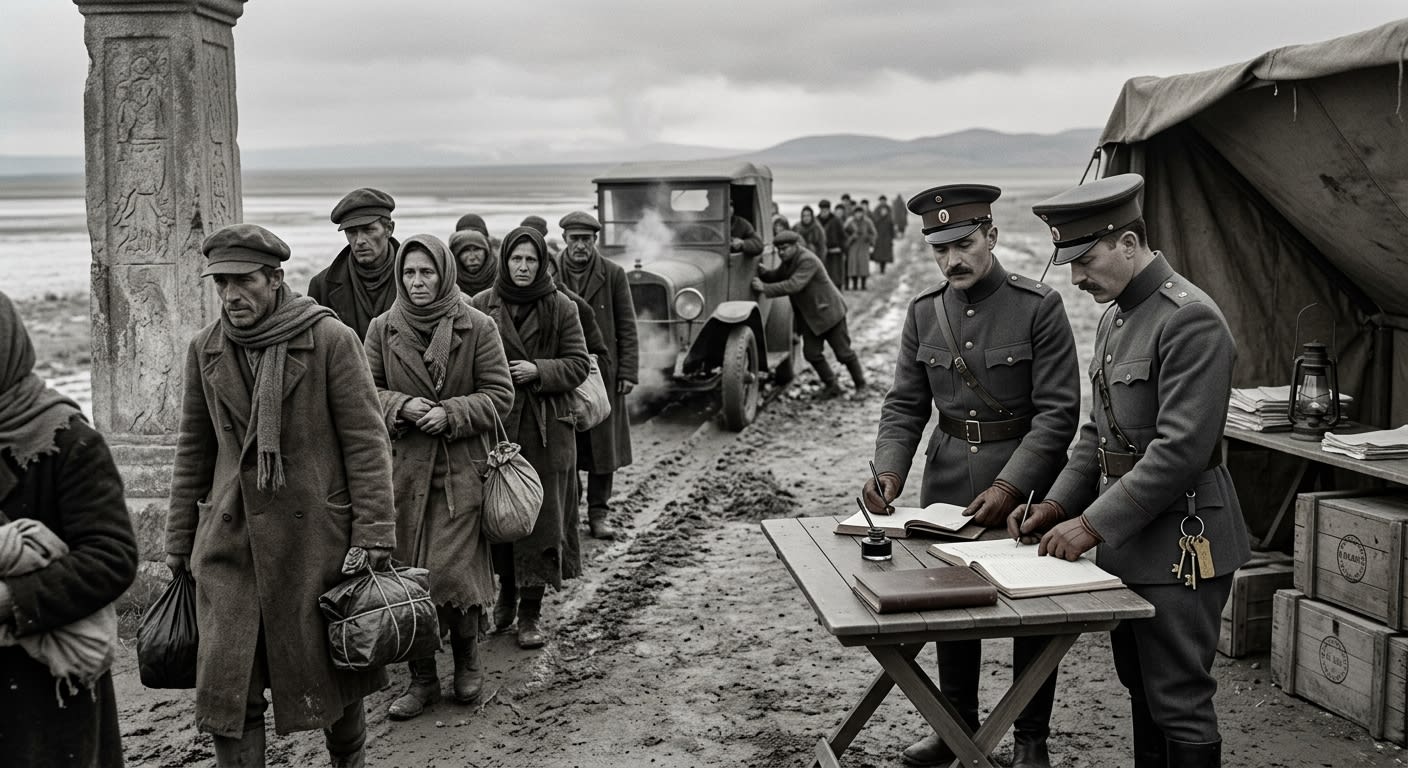
The Steppe Gate remains one of the few places where Moldavia can still be addressed without pretending to own it. Salt convoys come under escort. Refugee lines appear after bad harvests, after debt seizures, after village bells stop naming saints, after rumours that the Ten Thousand Keys are calling in winter clauses before winter. Every entrant is screened for keys, warm coins, contract scars, blight smell, altered names, and the expression of someone who has just remembered a debt he never incurred.
In A.S. 199, a stone-rubbing disappeared from the Burnless Archive. This has not been solved. The Bureau classifies the matter as ongoing and unresolved, a phrase meaning several men have failed with adequate stationery. Moldavian refugees at the Gate say the missing rubbing returned home. Refugees are sentimental. They are also often right in ways that make offices resent them.
#On Persons Who Return
Moldavia sends back people in the manner a poisoned well sends back reflections.
Refugees from former Moldavian parishes arrive with clean names, false names, old names, names crossed out by someone else, names that match death rolls from A.S. 52, and names they refuse to speak because a lender once pronounced them correctly. They carry salt, keys, splinters of church doors, account slips, wedding threads, children's shoes, hidden coins, and tiny sacks of home soil that Purity burns while Mercy looks away. Some are victims. Some are couriers. Some are both, which is why Bureau categories should be stored in shallow drawers where they can do less harm.
The A.S. 188 returned persons screening at a Zone 5 western gate remains sealed, badly, which is to say everyone relevant has read it and nobody admits memory. Eleven refugees from a former Moldavian parish gave eleven names. All eleven names appeared in a parish death roll dated A.S. 52. Ten pulses were found. Twelve voices answered prayers. The absent one answered roll call from inside the stove, according to the struck clerk note. The clerk was later transferred to a post with fewer appliances.
RETURNED PERSONS SCREENING — MOLDAVIAN GROUP, A.S. 188 Names: eleven. Pulses: ten. Prayer voices: twelve. Object recovered from bundle: brass key, warm, no visible lock. Disposition: ███████████████████████████ Addendum: stove dismantled; ashes requested transfer.
The Synod fears Moldavian return because the province's corruption preserves manners. A Kargath-touched thing may beg with a wet mouth and betray itself by smell. A Maldrake remnant burns. A Syrionic sleeper misses time. A Velmoran debtor offers receipts. He may be polite, clean, orthodox in speech, useful in trade, and wholly sincere when he asks whether the Bureau will honour a small private obligation incurred under duress. The answer is no. The answer often arrives after someone has signed as witness.
Moldavian children are worst for procedure. They have inherited debts, but no culpability. They have keys in cradle cloths, but no contracts they can read. Some draw doors compulsively. Some count before speaking. Some sleep with palms clenched around nothing and wake with brass marks in the skin. Purity wants wardship. Mercy wants names. Doctrine wants instruction. Tithes wants to know whether inherited infernal obligation voids ordinary tithe liability. I recommended silence and bread. The minute-taker stared at me as if I had suggested apostasy, which in that room I had.
The province also returns objects: keys, coins, salt weights, wedding cups, saint medals, ledger scraps, door hinges, treaty rubbings, teeth wrapped in promissory paper. Objects are easier to burn than people and less forgiving when mishandled. A Moldavian coin confiscated in Strasbourg twice returned to its own burial receipt. A salt weight seized at Sibiu grew heavier whenever a widow entered the room. A brass key surrendered by a boy in A.S. 197 opened a cupboard in which the boy's father, dead nine years, was still signing.
#On the Present Moldavian War
As of A.S. 201, Moldavia is not recoverable in the childish sense of a province waiting behind a locked door while western armies search for the key. It is recoverable only as a ledger is recoverable after fire: by fragments, witnesses, scraped margins, smell, pressure marks, and the stubborn insistence that a ruined account may still accuse the thief.
Bastion-Sibiu remains the western hinge of this war. Its walls face the Transylvanian Alps, but its true enemy rides in wagons, dowry trusts, private loans, counterfeit scrip, forged relic chains, and grain advances offered after the first sour harvest. The garrison intercepts more bribed convoys than direct assaults because Velmora understands mountains better than several War officers. A mountain blocks armies. It does not block money.
At the Steppe Gate, arbiters still hear Moldavian salt disputes under red-glyph precautions. At the Sibiu Assay Chamber, one Crown in eight hundred whispers. At highland relief offices, excessive kindness remains actionable. At convoy roads, a one-hour delay can become a hunger notice, a hunger notice can become a loan, a loan can become a village, and a village can become a forwarding office. The process is graceful. Grace, when inverted, is among Hell's most offensive efficiencies.
The Bureau's official policy is reclamation. The Bureau's practical policy is containment, verification, interruption, and refusal to let Moldavia's old names vanish. This is less glorious than cavalry and more durable than slogans. We keep parish rolls. We preserve dialect prayers. We register villages whose wells now speak in creditor voices. We hold dead titles in the Ledger because the Enemy steals more cleanly when the victim's name has been misplaced.
Moldavia remains written. That is no small thing. Hell would prefer a province reduced to function: debtor, farm, road, salt, key, market, throat, signature. The Ledger preserves annoyance. It says monastery where Velmora says collateral. It says orchard where Kargath says spoilage. It says parish where the Shadow Court says intake. It says Moldavia, and every time the name is spoken under seal, the theft is made slightly less convenient.
At dusk beyond the Steppe Gate, the wind passes through the treaty stones and reads. In Sibiu, the assay lamps burn over coins that may whisper. In Moldavian villages no western eye has seen for fifty years, bells ring at hours our calendars do not contain. Somewhere a lender unlocks a drawer. Somewhere a child refuses a key. Somewhere a field blighted by hunger receives seed without a receipt, and the Enemy, for one useful instant, loses the thread of the account.
The military men ask what reclamation would require. They mean regiments, batteries, railheads, pontoon bridges, winter fodder, purge teams, road plates, mobile assay chapels, salt stores, and enough coffins to make carpenters rich beyond moral safety. They are not wrong. They are incomplete, which is the usual condition of military thinking when removed from mud. Moldavia would also require debt annulment under fire, witness protection for cowards, honest bread distributed before credit arrives, a thousand priests trained to recognize Contract Theurgy in wedding clauses, a thousand clerks willing to reject perfect paperwork because it smells too clean, and magistrates capable of saying no to charity with teeth.
The Bureau of Tithes proposed a reclamation levy in A.S. 200. The proposal was circulated under the title Eastern Restitution Schedule and returned with comments from War, Doctrine, Purity, Records, Pilgrimage, and three offices whose involvement remains a private humiliation. The levy would have funded emergency grain, debt cancellation, coin assay, refugee resettlement, and fortified storehouses along the Sibiu corridor. It died in committee after seventeen objections, six revisions, and one memorandum asking whether forgiven debts could be entered as taxable benefit. I have seen many ugly sentences in my time. That one arrived wearing a pressed collar.
So the work proceeds in smaller forms. A convoy reaches a hungry parish without lien. A Moldavian widow is housed without being asked whether her key is sentimental or infernal before she receives soup. A salt dispute is settled at the Steppe Gate without a throat closing. A Sibiu auditor refuses a perfect coin because perfection has become statistically indecent. A child draws a door, and the teacher draws a wall across it, then gives him bread. These acts do not win provinces. They deny Hell its favourite premise: that need must always become ownership. Small mercy, unreceipted, irritates the Adversary more than several expensive cavalry plans, especially when the cavalry arrives late, asks for oats, and demands a road committee. I have chaired that committee. The oats were better prepared than the officers and chewed less during testimony.
Seal the report. Feed the witness. Count the keys twice.