
#On the Alarm That Admits Two Hells at Once
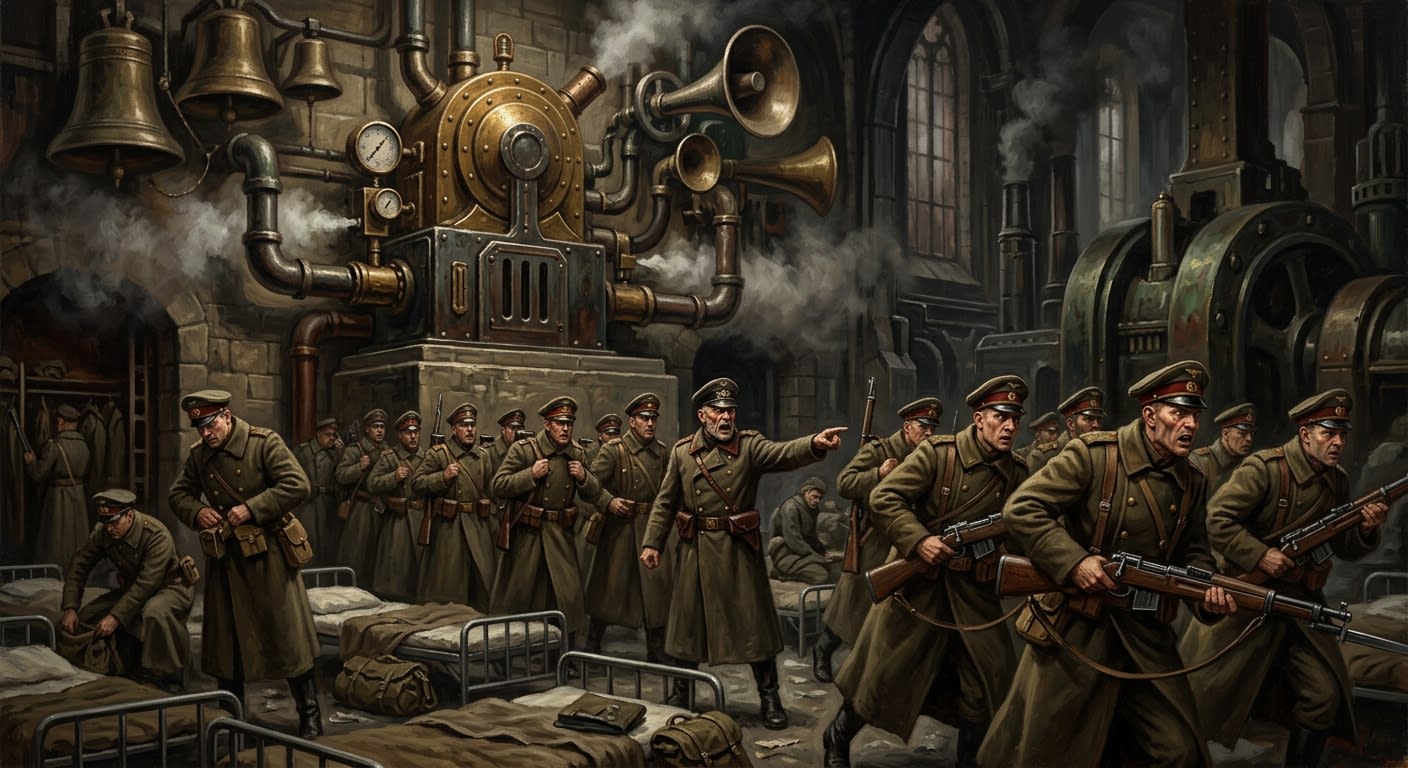
The Wrath-Sloth Convergence Code is the alarm sequence sounded when Wrath and Sloth cease being separate weather and begin occupying the same tactical breath. It is heard most often, and least comfortably, at Bastion-Shipka, where marsh-fog, furnace-pressure, lost minutes, hot rain, and the steady approach of things too slow to hurry have made ordinary bells look provincial.
A red alarm tells men to fight. A grey alarm tells men to stay awake. The Convergence Code tells them the fire may be patient and the fog may be burning.
This is why the Code is hated by every sensible officer. It violates the useful fiction that enemy categories arrive one at a time, stand in their assigned column, and permit the Bureau of War to consult the correct booklet. Maldrake’s phenomena demand motion: guns, water, separation, counter-charge, Scour, demolition, the quick brutality of men who know a flame becomes doctrine if allowed to spread. Syrion’s phenomena demand refusal: wake-hymns, rotation, pain, clocks, companions, movement under supervision, the disciplined insult of remaining upright. The Convergence Code orders both responses at once.
Choirs are involved. Bells begin it. The Code itself is a stack of signals: bronze, whistle, shutter, lantern, telegraph beat, drum, horn, flag, gunhold, and Scour key. Each layer exists because one of the others may fail. In Convergence weather sound may return late, light may be seen before it is raised, telegraph ticks may arrive with their middles bitten out, and a man may receive the order to wake after he has already sat down.
#On the Origin of the Sequence
The Code grew from embarrassment, which is the richest soil in Synodal administration. Early manuals treated Wrath pressure and Sloth pressure as incompatible. Fire consumes. Fog dampens. Rage advances. Languor receives. A tidy mind may build a tactical doctrine on such pleasing oppositions and then die with a clean notebook in a ditch.
The Balkan foothills corrected the notebook.
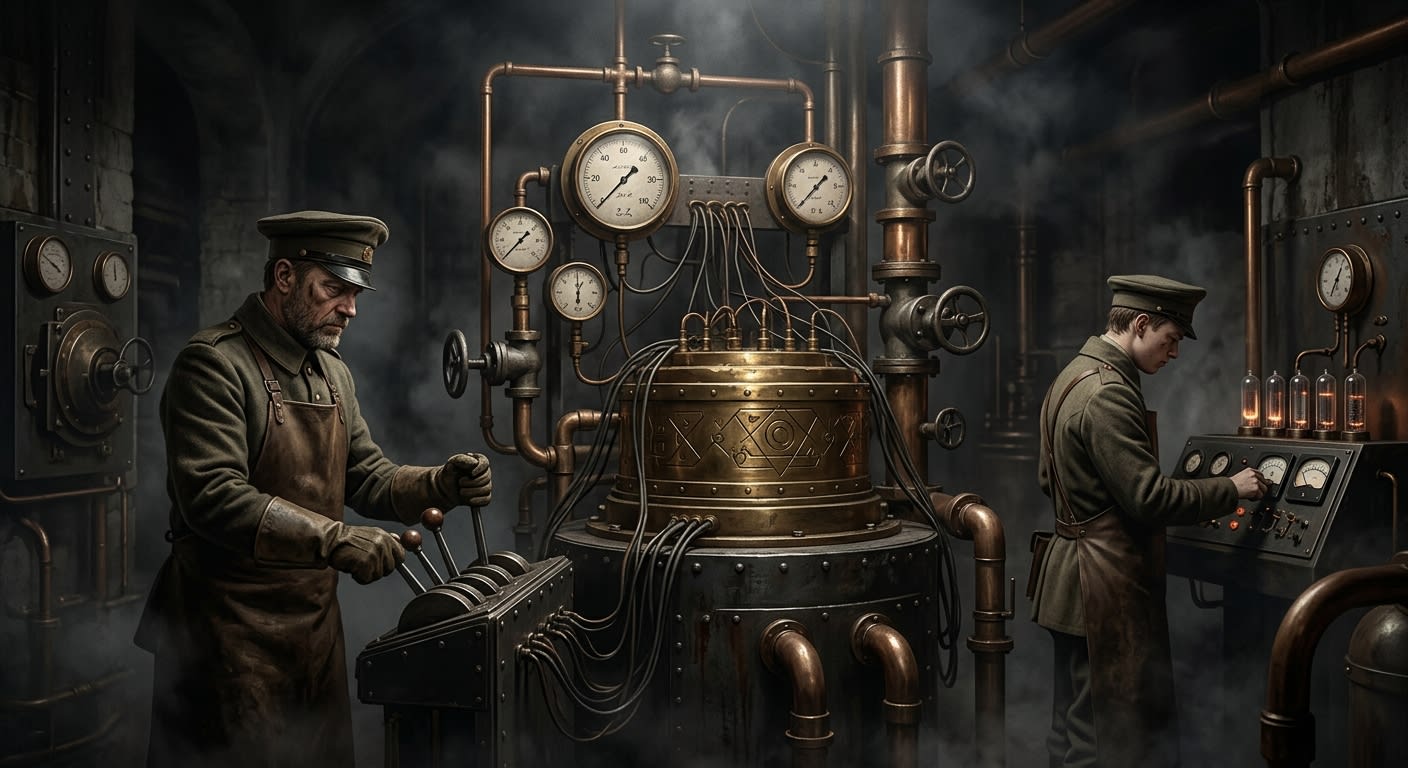
By the late nineteenth decades of the Synodic calendar, patrol reports from the strip now called the Maldrake-Syrion Contact Zone had become too consistent for comfortable dismissal. Rain burned upward. Ash slept on hot stone. Bells arrived doubled. Ember-Soldiers sat down at the grey line with fists clenched around nothing. Grey Heralds drifted too close to heat and burned while continuing to recommend rest. Engineering reported that the boundary should collapse. Inter-Infernal Analysis reported that it did not. Doctrine read both reports and discovered urgent business elsewhere.
The first War Directorate (Unregistered) digest called mixed Wrath-Sloth events “ordinary overlapping hostile effects requiring local initiative.”
Corrected. “Local initiative” meant officers choosing between burning a quarter and waking a wall while their clocks disagreed, their fuses sweated, and their men described sleep as reasonable. The phrase has been retained only in schools where teachers require examples of clerical manslaughter.
The first recognisable Convergence sequence was assembled at Shipka by practical theft. Bellwardens borrowed the clipped anti-Sloth peal from wake protocols. Scour officers added the red-cache readiness horn. Hourglass adepts inserted a telegraph double-beat to mark instrument confirmation. Gunners demanded a gunhold signal to prevent panicked discharge into fog that might return the shell later with opinions. Engineers added pump-line shutter calls. Purity insisted on a final witness-whistle, because Purity would rather lose a city than an evidentiary chain.
No single Bureau invented the Code. This is why it works.
#On the A.S. 194 Slumber-Hulk Alarm
The Code entered sanctified terror during the A.S. 194 Slumber-Hulk Engagement, when Station Two saw the fog gather into chains, pale surfaces, and a moving height the size of a collapsed tower. Adept Meryth Vesk checked the drag-gauge, found time behaving like a witness under duress, and signalled the bastion before comprehension had dressed itself for public appearance.
The bells sounded Convergence.
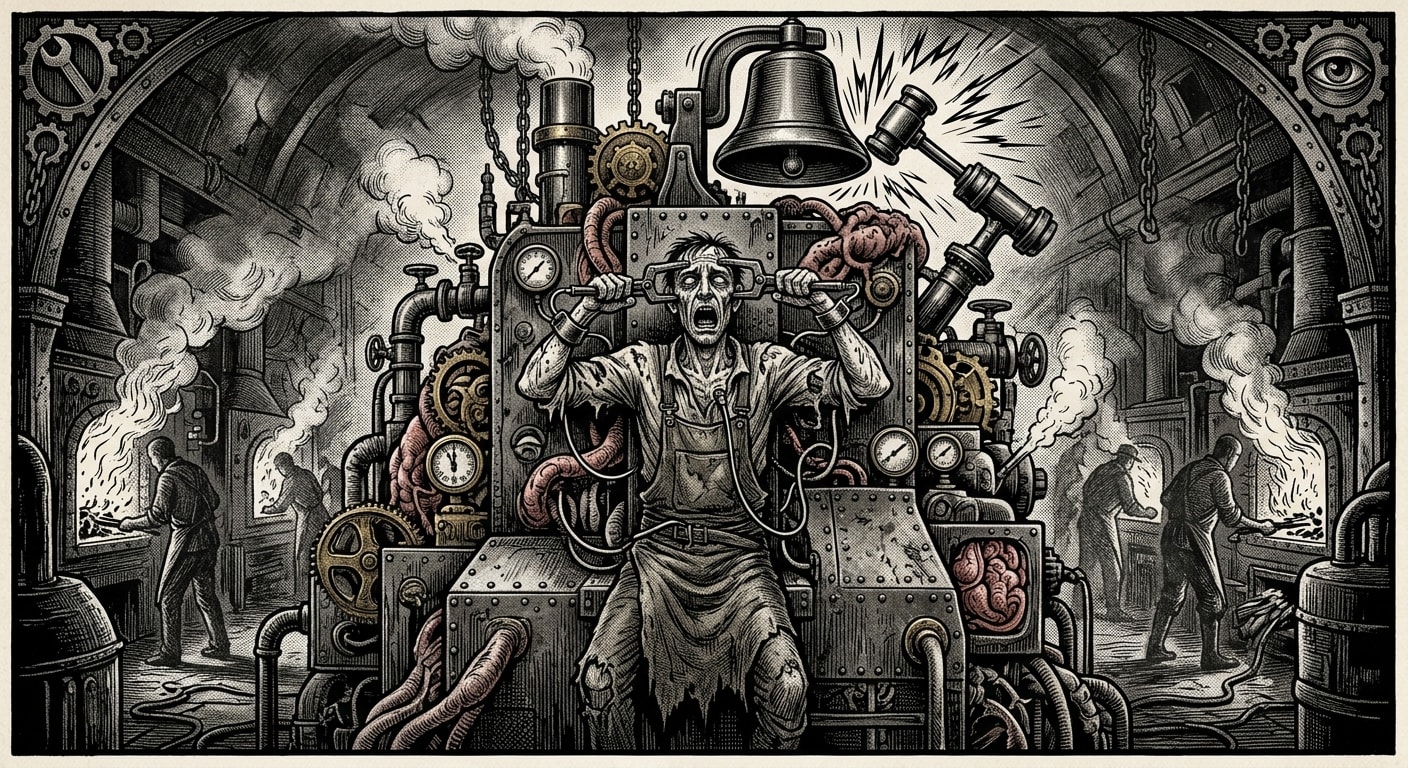
At once Shipka became a machine with too many souls in it. Choirs mounted the marsh-facing platforms and struck wake-hymns hard enough to offend every soft vowel in the valley. Gunners loaded Saint Aegidius with consecrated shot. Captain Varik opened sealed Scour readiness without dropping ignition. Engineers ran to culverts, pumps, fuse channels, and water stores. Hourglass clerks doubled instrument watches. Rail crews kept men standing, walking, answering, swearing, and striking one another when eyelids sagged too peacefully.
The Hulk did not charge. It approached with the leisurely obscenity of a siege engine that had abolished hurry inside itself. Station Two’s drag-gauge flatlined for eleven minutes. Vesk wrote the sentence now preserved in restricted instruction: time is not passing at the subject centre. On the walls, temporal drag slowed heartbeats by report and courage by inclination. The Convergence Code kept the garrison from choosing one terror over the other. Fire remained ready. Sleep remained insulted. Guns and hymns struck together.
For six hours, Shipka stood one command short of burning its own streets. The Hulk turned parallel to the reed road. The Scour withheld. The Code acquired authority of the only kind that matters on the Line: it had sounded, men had obeyed, and fewer of them died than expected.
#On the Components of the Code
The opening is bronze: three clipped strikes, one low drag, two clipped strikes, then silence measured by the station clock rather than by human breath. The silence matters. Sloth eats sustained sound. Wrath answers challenge. The gap denies both a comfortable mouthful.
The second layer is telegraph: double-beat, pause, triple-beat, reversal. Where lines are compromised, shutter-lamps perform the same shape with red covered twice and grey flashed thrice. If fog makes lamps untrustworthy, runners carry knotted cords. If runners begin walking too slowly, their companions strike them with approved rods. The rods are ashwood at Shipka, iron at Constantinople, and bureaucratically “non-punitive” everywhere, a lie so small it hardly deserves confession.
The third layer belongs to the choirs. Wake-hymns under Convergence are short, ugly, ascending, and hostile to comfort. No melisma. No cradle cadence. No long mercy on the final syllable. The singers bite the words off as if the hymn owes them money. Bells maintain a hard edge beneath them. Drums answer. The purpose is not inspiration. Inspiration is for banners. The purpose is to keep the air from accepting stillness.
The fourth layer is War. Guns load but do not fire until trajectory is confirmed. Powder doors unlock under double witness. Saint Aegidius and lesser bell-cannon receive shell, relic-shot, or ordinary iron according to range. Fire-lancers stand masked but capped. Scour crews unseal pitch maps and keep ignition authority visible, withheld, and witnessed. Varik’s training copy adds one line in his own hand: Ready is not falling. It is the best sentence in the manual and, for that reason, has not been ornamented.
The fifth layer is Hourglass. Drag-gauges are paired. Candle arrays are lit. Pulse counters are assigned to living subjects who are not allowed to sit. Clock comparisons occur every seven minutes until the Code ends or until seven minutes ceases to be a useful claim. Vesk’s Station Two addendum recommends frog-call notation during marsh operations. Strasbourg has not ratified the frogs. The frogs continue, with the serene contempt of unpaid consultants.
#On Discipline Under Mixed Pressure
Convergence kills through contradiction. Wrath tells the hand to hurry. Sloth tells the hand to rest. A soldier between them may experience the worst compromise known to military science: a sudden violent act performed slowly.
Men under mixed pressure have opened valves halfway, lit fuses and forgotten to withdraw, fired guns after the target had shifted, sat down beside live pitch channels, attacked comrades for waking them, thanked enemies for silence, and reported that burning rain felt “warm enough to sleep under.” The Code exists to prevent improvisation at the moment improvisation becomes spiritually expensive.
Public drill cards describe the Code as “a clear and orderly alarm for adverse mixed-front conditions.”
Corrected. The Code is a sanctioned panic harness. Its order is real, but its purpose is to make terror run in channels before terror discovers private doors.
Personnel are paired by temperament. The angry man is assigned to the drowsy man. The drowsy man is assigned to the angry man. Each receives authority to strike, drag, shout, soak, contradict, and report the other. Priests dislike this mutual violence until they witness its alternatives. Medicine objects to the bruising, then signs the survival rolls. Purity enjoys the reporting portion too much and must be supervised.
The standing instruction is simple: keep moving, keep counting, keep wet lines between fire and fog, keep sound ugly, keep the Scour captain sober, keep Hourglass notes in duplicate, and remove any man who says the boundary is beautiful.
CONVERGENCE DRILL FAILURE — SHIPKA ANNEX, A.S. 199 Squad Seven entered simulated fog lane under heat-lamp pressure. Private █████ sat beside capped fuse and stated, “It is tired too.” Corporal █████ struck him three times, then began weeping over the fuse cap. Instructor sounded abort whistle. Whistle returned from rear corridor before being blown. Drill classification raised from instructional to █████████.
#On Bureau Quarrels and Proper Ownership
Every Bureau wants the Code until responsibility arrives.
War claims it because guns, Scour, and wall readiness fall under War’s righteous appetite. Bells claims it because bronze opens the sequence. Orison claims it because wake-hymns carry the air. Hourglass claims it because the Code without timing is merely noise with uniforms. Purity claims it because mixed pressure breeds heresy faster than marsh fever. Engineering claims it because pumps, fuses, culverts, and shutter-lamps decide whether the alarm becomes survival or theatre. Doctrine claims it because I am writing this entry, and possession follows prose.
The Code’s custody remains joint under Shipka practice and sealed circulars from A.S. 195 onward. This has produced the expected clerical music: counter-seals, addenda, exception slips, revised drill plates, unauthorised local improvements, denunciations of those improvements, quiet adoption of the best ones, and punishment of the men who suggested them before the proper office could pretend authorship.
Vesk’s Hourglass addendum sharpened the timing portions. Varik’s Scour revisions hardened the ignition-withholding rules. Bellwardens shortened the third phrase after fog was observed leaning toward a held note. Engineers replaced two shutter colours because red persisted too long in mist and grey vanished too politely. Purity added witness tags to paired-strike incidents and was told, after some necessary shouting, that no one would fill out a tongue-variance form during active Convergence unless the tongue was already detached.
#On Misuse and False Sounding
False Convergence is a crime with excellent excuses. A nervous watchman sees heat-shimmer and fog in the same hour; a junior officer wants authority to unseal Scour; a choir-master mistakes ordinary marsh drag for Syrionic seepage; a Purity inspector hears one wrong telegraph beat and smells promotion. The Code sounds. The bastion rises. Work stops. Pitch unseals. Guns load. Men remember the A.S. 194 wall and forgive the first false alarm.
They do not forgive the third.
False sounding damages trust, and trust under Convergence is not sentiment. It is the narrow bridge between readiness and self-murder. After three false alarms at an unnamed marsh station in A.S. 197, crews hesitated during a true fog-backwash event. Two men sat down in a pump gallery and would not rise. The station survived. Their names moved to a teaching file, which is the Bureau’s preferred afterlife for men whose deaths would make a sermon too complicated.
There is also malicious sounding. Wrath cults have attempted to trigger Scour panic by forging the red-cache horn. Sloth cells have slowed bell ropes with damp charm paste so the sequence opens incorrectly and encourages men to wait for completion. One ambitious idiot combined both efforts and produced a signal meaning, in strict code, “wake the fire and sit down.” He was arrested before he could found a school.
#Final Holding
As of A.S. 201, the Wrath-Sloth Convergence Code remains active at Shipka, taught in restricted form at southern bastions, referenced in Contact Zone observation posts, and studied by officers who would prefer never to hear it outside a drill yard. It is ugly, redundant, expensive, disputed, and alive with marginal corrections. This recommends it.
Codes do not defeat Hell. Codes defeat confusion long enough for men to load, sing, count, strike, flood, withhold, and remain inconveniently awake. Against Wrath, the Code cools the hand before fire becomes policy. Against Sloth, it offends the air before rest becomes worship. Against both, it gives the Line a single lawful way to admit that the enemy has learned bad company.
If it sounds, stand up. If already standing, move. If moving, count. If counting, answer. If angry, cool your hand. If tired, bite your tongue. If the rain burns upward and the fog asks politely for silence, make the hymn ugly.