
#On the Man Reduced to a Verb
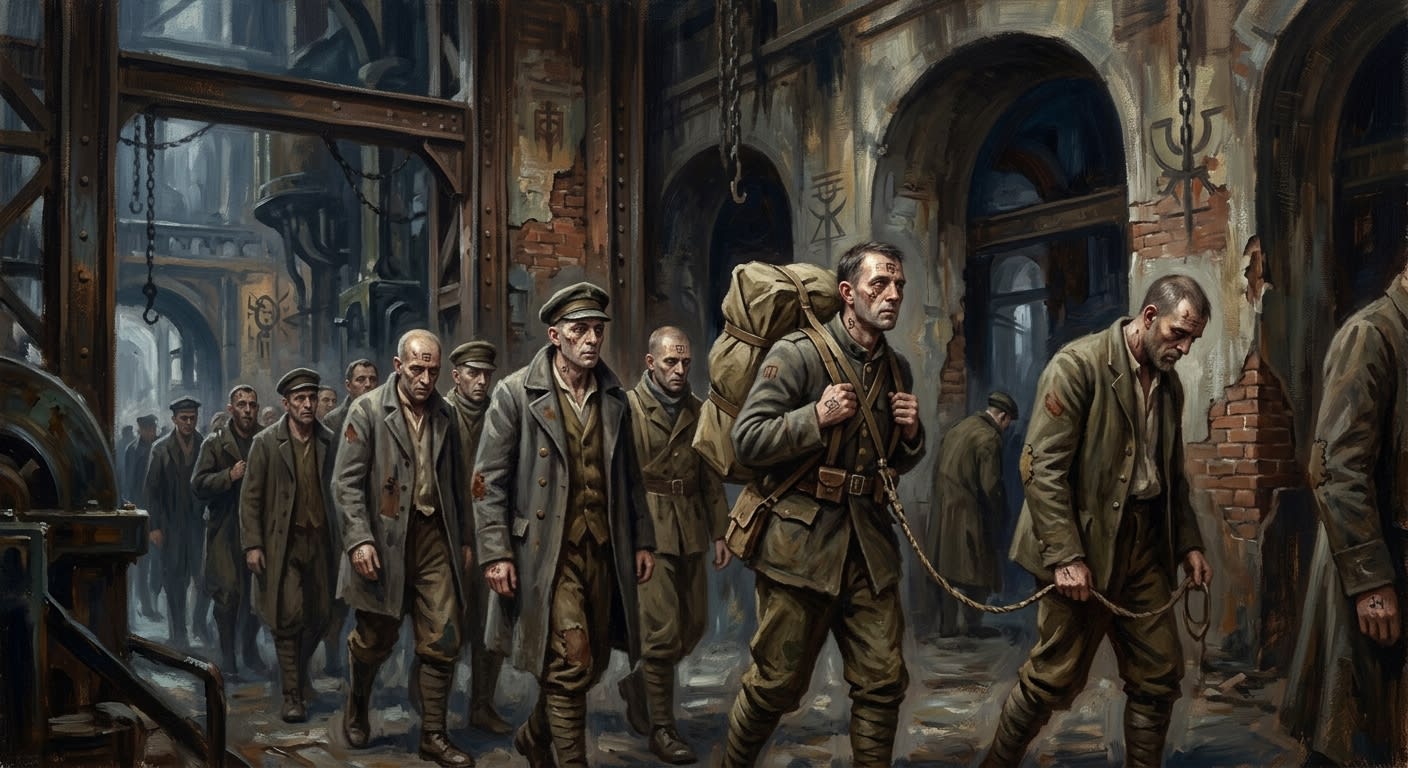
The Thrall is the Shadow Court’s cheapest obedience and its oldest insult to the human form. Other mortal auxiliaries have uses elaborate enough to attract specialized disgust: the Hollowed carry payloads, Blood-Tithes feed sorcerous registers, Ash-Mothers manufacture bodies under conditions that make language want a bath, Wormhosts smuggle teeth beneath pity, and Ash-Fodder spend themselves against our volleys until powder runs low and mercy runs lower. The Thrall is simpler. He is a command given legs.
A sigil seared on brow, sternum, tongue-root, palm, spine, or breastbone does what a tyrant’s law only dreams of doing: it reduces personhood to compliance. The branded body walks because the mark says walk. It kneels because the mark says kneel. It holds a spear, drags a cart, lifts a shield, carries a corpse, opens a gate, steps into cannon fire, and does so with the blank economy of furniture moved from room to room by owners who never ask whether the chair approves.
The Bureau of War places Thralls inside the Legions of Sin under Mortal Auxiliary classification, Category Beta through Epsilon depending on mark-depth, armament, and tactical purpose. The Bureau of Doctrine classifies them as hostile-aligned persons until the moment they charge, after which field necessity performs the customary miracle and converts persons into targets. Purity insists that the branded remain culpable because damnation does not commute itself for convenience. Mercy mutters otherwise in private wards and is told to speak up, then not to speak at all.
#On the Mark
The Thrall mark is not one sigil. That would be kind, orderly, and easy to stencil into field manuals. The Shadow Court is many things, but charitable typography is not among them. Marks differ by Sin-General, by campaign, by function, by depth of damage, and by the hostile office that issued the body. A Maldrakite field-mark resembles a nail driven through flame. A Velmoran labour-mark curls like a hook around debt. A Syrionic mark appears unfinished because the eye grows tired while reading it. A Morwenite mark has been observed reflecting the examiner’s face until the examiner became unhelpful. Kargathite brands often include a mouth motif, because Gluttony has the aesthetic restraint of a butcher’s drain.
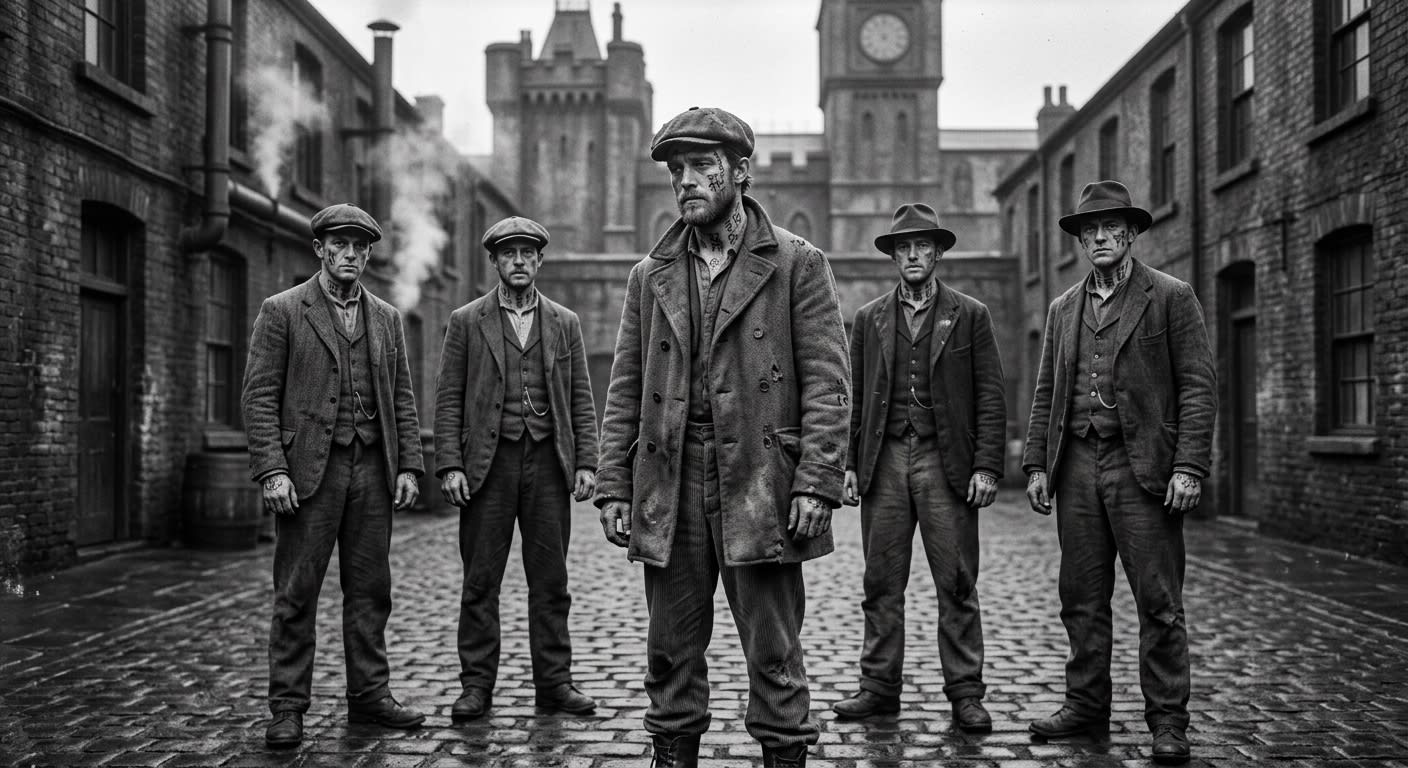
All marks share one principle: the human will is not removed, because the Great Deceiver cannot unmake choice without contradicting the very scandal by which he governs. The will is buried under command, pain, fatigue, fear, ritual, starvation, repetition, and sorcerous humiliation until it cannot find the route to the surface. A man under a collapsed archive still has legs. That is cold comfort if the shelves are full of stone.
The mark is applied through heat, ink, knife, smoke, mirror, hunger, chant, or consent made worthless by circumstance. Captives from eastern villages are branded in pens. Soldiers taken in failed sorties are marked after interrogation. Debtors inside Velmoran holdings sign themselves into thrall-service with thumbprints heated in coin-oil. Refugees caught by the Shadow Court receive transit marks promising safe passage and discover, three miles later, that safe passage was a destination rather than a condition. Children born in Court-held territory may be marked before they learn their names, which is economical, which is to say infernal.
Earlier school primers described Thrall marks as “demonic possession signs.”
Corrected. Possession is too clean a word. The mark does not replace the soul with a demon; it places command above the soul and pain below it, then asks the soul to move. A buried bell remains a bell. It rings poorly.
Field surgeons report that shallow marks can be cut out if done within hours, provided the knife reaches every burnt root and the patient survives blood loss, shock, and the sight of the extracted flesh continuing to twitch toward the east. Deep marks follow nerve, marrow, dream, and sometimes family memory. The Bureau of Medicine has removed such marks from corpses and found the brand’s geometry repeated on the underside of ribs, on the surface of the liver, in scar tissue inside the ear. One dissected Thrall from the Prague file had the sigil impressed in dental pulp. He had bitten nothing hostile. He had simply been made obedient down to the tooth.
#On Use in War
The Thrall’s first function is absorption. A Thrall column receives the volley meant for more expensive horrors. It receives shell, prayer, wire, oil, bell, fatigue, and the momentary attention of officers who would rather be ranging artillery against something with claws. Then the true assault arrives behind the bodies, fresh and supervised, while our barrels smoke and the trench smells of opened men.
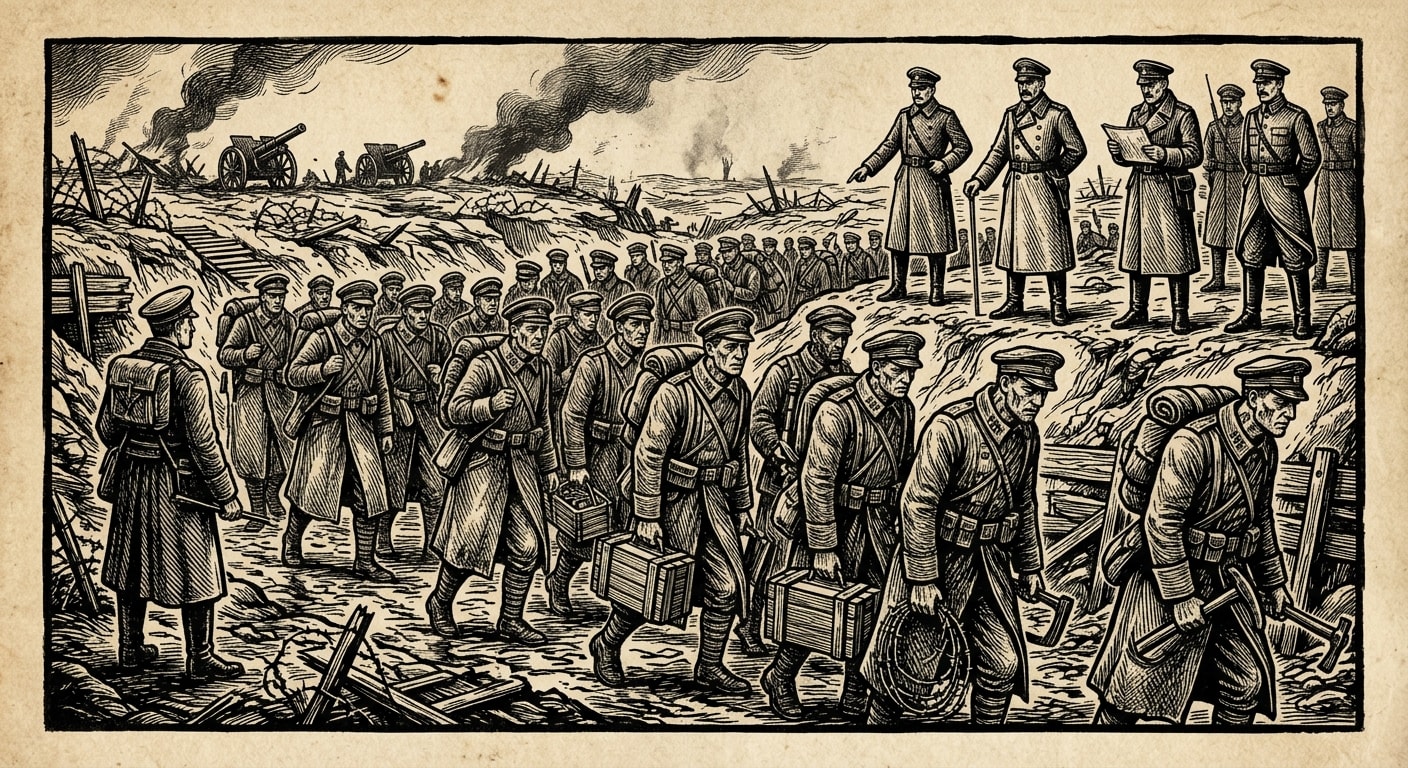
The Shadow Court does not send Thralls forward because they are strong. It sends them because they are steady. Panic is expensive. Courage is expensive. Training is expensive. A brand is cheaper than all three and works in weather.
Thralls carry pavises made from doors, scrap iron, coffin boards, bell fragments, or other Thralls whose legs remain useful enough to drag. They push carts packed with Hollowed. They fill ditches. They stand on mines until ordered to step. They bring ladders to walls and continue holding them while aflame. They walk into reliquary fields and burn out wards by dying one after another until sanctity itself overheats, which is not theology but logistics wearing a stole.
At Metz, Ordinal Valtrix saw ten thousand Thralls march into cannon fire without a cry. Their dead formed an approach causeway used by Wrathforged hammer-hosts before the steam had left them. At Prague, half-formed Thralls retained enough voice to moan household names while advancing; three companies missed volleys because they were listening for mothers, wives, sons, and the Creator help us, themselves. At Lyon, a cohort shattered mid-step when the brands overheated together, leaving ash-statues arranged in marching order. Soldiers took shelter behind them until the ash began repeating orders in voices from home.
Thralls also serve away from battle. They haul slag in Maldrake’s furnace roads, dredge hunger canals for Kargathite pits, carry mirrors through Morwenite halls with their eyes sealed, tend sleep-cauldrons in Syrionic valleys, and clean Velkaran pleasure roads with rags tied over faces beautiful enough to be dangerous. The Court spends Thralls as labour because labour is war conducted slowly. A man building the enemy’s road is already participating in tomorrow’s assault.
#On Varieties and Condition
The common Thrall is a walking answer to a command. The specialist Thrall is a command with better tools.
Chain-Thralls are joined by iron through wrist, collar, jaw, or ankle, moving in units that cannot scatter unless severed. They draw siege sledges and corpse-wagons. Bell-Dead Thralls, marked after exposure to corrupted peals, respond to sound more reliably than speech and have been used to cross fog zones where ordinary command fails. Debt-Thralls serve Velmoran houses as living collateral; their brands brighten when an account matures. Glass-Thralls in Morwenite territory wear masks over faces that no longer match their owners. Heat-Thralls near the Iron Wastes can lift metal too hot for ordinary flesh and usually lose fingers before losing usefulness.
There are also Returned Thralls, by which the Bureau means marked captives recovered alive behind our lines. This category produces the thickest files and the worst meetings. Some return because the mark failed. Some because the Court released them. Some because they escaped. Some because escape was written into the mark as delivery. A Returned Thrall may be victim, agent, messenger, bomb, witness, contagion, or all six in an order the examiner discovers too late.
RECOVERY FILE — RETURNED THRALL, PRZEMYŚL SCREENING POST, A.S. 196 Subject answered to name and baptismal parish. Brand under sternum cold at intake. Brand warmed during mention of sister. Subject requested paper “to write himself back.” Paper produced eleven copies of the same order in unknown hand. Sister located three days later among refugees, unmarked, carrying matching paper. Disposition: ███████████████████
The question of interior experience remains contested. War wants the Thrall empty because empty targets are easier to kill. Doctrine wants the Thrall guilty because guilt is easier to file than injury. Mercy wants the Thrall reachable because Mercy, poor soft-handed creature, has mistaken itself for a Bureau rather than a wound with a desk. Field testimony says the matter varies. Some Thralls show nothing when restrained. Some weep without voice. Some recite the last command for days. Some ask, after the mark cools, whether they killed anyone. No answer to that question has ever improved a room.
#On the Bellwater Interviews
The Bellwater Interviews were conducted in A.S. 187 after a frozen skirmish east of the Carpathian Gates yielded thirty-one living Thralls with brands cooled by reliquary meltwater. The name Bellwater is unofficial, vulgar, and accurate: a shattered field bell fell into a cistern, sanctified the water by accident, and turned a slaughter ditch into a theological problem. Never waste a miracle. The Bureau immediately requisitioned it.
Thirty-one subjects were removed under triple guard. Twenty-seven survived transport. Nineteen could speak. Twelve could answer questions without command-echo. Seven gave testimony coherent enough for Records to regret having asked.
Their accounts shared no useful map of the Shadow Court’s processing yards. They remembered fragments: a corridor of posts; a smell of hot wool; a clerk with no eyes stamping foreheads by touch; a woman singing numbers while brands were heated; children told to choose the left door if they wished to live and the right door if they wished to obey, then punished when they hesitated because hesitation was classed as refusal. One man remembered his own brand as a sound. One remembered agreeing, then denied that the mouth had belonged to him. One said the mark felt less like being controlled than like being late to every thought.
The Interviews changed field doctrine in private. Public doctrine remained brisk: Thralls are hostile instruments. Internal doctrine now allows degrees of recoverability. A fresh Thrall, cooled quickly and isolated from command, may answer. A deep Thrall may be reached through name, touch, hunger, pain, bell, relic, or nothing at all. A long-service Thrall whose mark has repeated through marrow is to be given last rites at range if possible and powder if not. The file is merciful by Bureau standards, which is to say it has one hand extended and a pistol in the other.
The cistern was sealed after the interviews. Three committees argued custody. Relics wanted it as miracle. War wanted it as countermeasure. Mercy wanted it as bath, which caused a silence so theological that even Doctrine hesitated. Tithes asked whether accidental sanctification incurred maintenance liability. The cistern cracked before judgment. The water drained east.
#On Recognition and Firing
Every article on Thralls eventually arrives at the muzzle. There are no clean doctrines at a firing step.
A Thrall crossing the wire is an enemy combatant. He may also be a farmer from Pannonia, a seamstress from Serbia, a novice from a burned priory, a boy taken from a refugee shed, a soldier captured under a flag of truce, or a mother whose children are walking behind her under a second command. The front cannot pause to sort biography. The front must fire. This is the sentence every humane clerk writes with trembling hand and every veteran knows before the clerk wets his pen.
The Bureau’s official instruction reads: disable when possible; kill when necessary; recover only when tactical conditions permit; do not break formation for recognition. The last clause exists because recognition kills. A soldier who sees his brother’s face in a Thrall column steps forward. The line opens. The true assault enters. The brother dies anyway, joined by men who had the misfortune of loving someone visible.
Confessors teach a narrow mercy: pray while firing. This sounds obscene to soft ears, and soft ears are often attached to heads that have never watched a Thrall burn alive against a relic fence because no one ended him quickly. A bullet may be kinder than a brand. It is a thin kindness, copper-jacketed, and it leaves residue on the soul. The Synod has built a civilisation on thin kindnesses and thick ledgers. We are experts.
Purity monitors soldiers who hesitate too long and soldiers who do not hesitate at all. The first may endanger the line. The second may be learning from the enemy. Between those faults lies the acceptable human interval: enough pity to remain a man, enough obedience to keep the wall. No manual can measure it. Manuals try. Manuals are adorable.
#On Aftermath, Ash, and Liability
Dead Thralls receive classification before they receive fire. This is not because the dead care. This is because the living offices care, and the living offices own the carts.
Bodies are inspected for active brands, parasite signs, Hollowed cavities, Blood-Tithe taps, Velkaran colour drain, and Morwenite face discrepancy. Stable remains are burned under ash-control. Unstable remains are burned at distance. Brands are cut out when recoverable and dropped into cold lead boxes. Teeth may be taken for identity if the jaw has not fused. Personal effects, if any, are logged under hostile recovery and routed to Records, where family claims go to age, yellow, and die unless some meddlesome saint of a clerk takes pity.
The Shadow Court reuses Thrall dead whenever permitted. Ash feeds engines. Bone becomes lime. Skin becomes drumhead, parchment, mask-lining, command-strip. Hair becomes binding fibre. The Court wastes nothing except the person, which it considers removed before processing began.
Our own handling is cleaner in procedure and not clean in essence. A dead Thrall with a known baptismal mark may be entered in the Great Ledger of Souls as “recovered hostile mortal.” Families may petition for notification. Notifications may be delayed if the body was used in enemy action, if the identification might damage morale, if the family resides in a sensitive district, if the confirming officer died before countersigning, or if some junior clerk has spilled soup on the form. Bureaucracy is the second death. It is quieter than the first and often less honest.
#Ratification
Thralls are not the Shadow Court’s most spectacular weapon. They do not burst like the Hollowed, breed horror like the Ash-Mothers, feed engines as Blood-Tithes, corrupt pity as Wormhosts, or build rivers out of corpses as Ash-Fodder do at their most obscene. They are worse by being ordinary. The marked man with a shovel. The silent woman carrying shot. The child holding a lantern at the mouth of a hostile tunnel. The body doing what it is told after the self has been forced underground.
The Bureau will continue to call them hostile mortal instruments because doctrine at scale prefers instruments to victims. The trenches will continue to call them Thralls because the word is short enough to shout before firing. I call them evidence.
Evidence that the Great Deceiver cannot abolish the human will, only bury it. Evidence that the Court, for all its mock liturgies and black offices, still requires a man to move the cart. Evidence that the war is fought not only over bastions, passes, rivers, and fields, but over the distance between command and consent.
Catechism broadsides state: “The Thrall is empty.”
Corrected for the Sacred Ledger. The Thrall is occupied.