
#On the Western Ditch That Refuses to Be Water
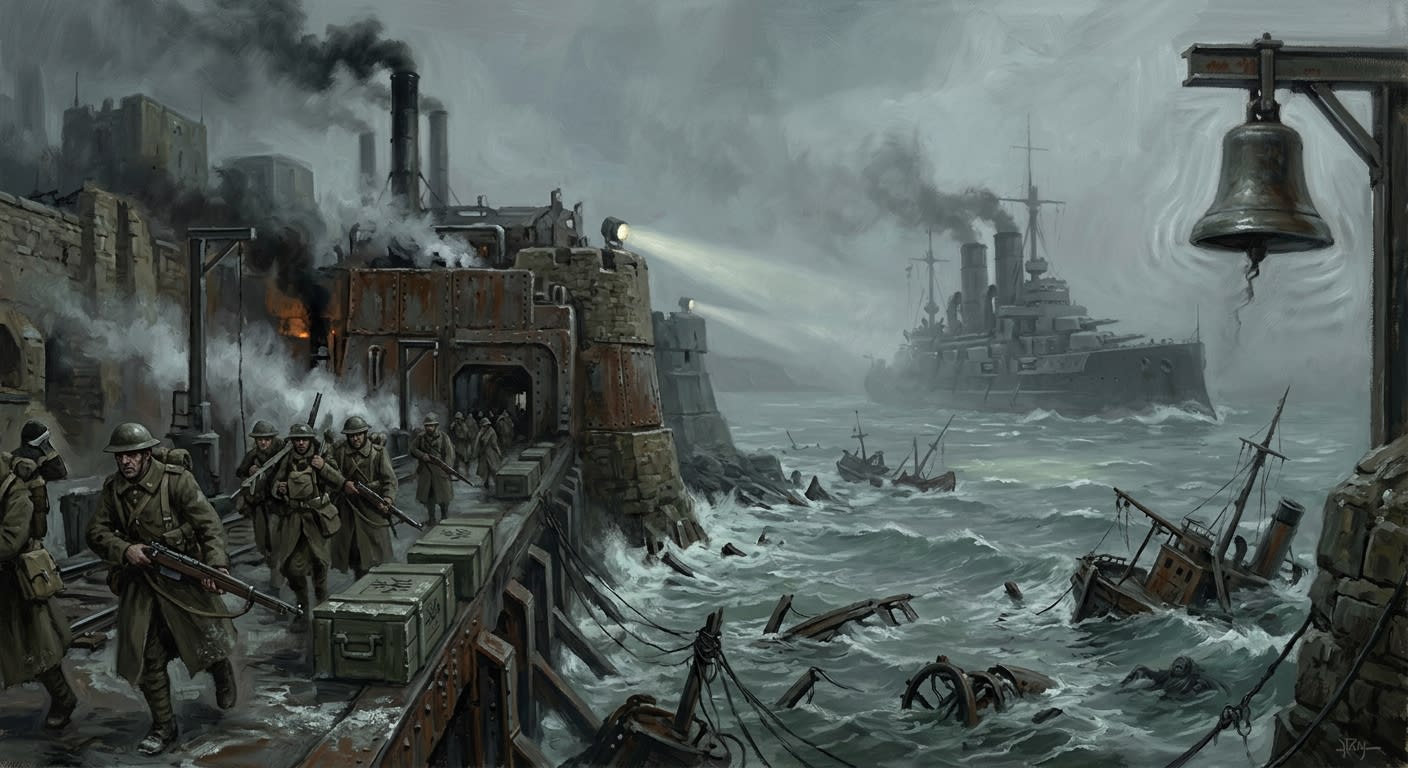
The Channel is the narrow salt wound between the Synod and the British Crown: a grey passage, a convoy road, a diplomatic insult, a fog-bell instrument, a smugglers' chapel, a debtor's corridor, and a grave with tides. Maps render it as water because maps are paid to simplify terrors. Sailors know better. Calais knows better. Dover knows best and, in the British manner, explains least.
It lies between Calais and Dover, between the white continental cliff and the white island cliff, between the Synod that counts everything and the British Crown that answers counting with bells, iron, old law, and tea. It is one day across in clean weather. Clean weather is the Channel's most malicious joke. Fog thickens there with the regularity of sin. Bells travel farther than flags. Lanterns appear where no hull has paid for them. Manifests arrive with dates they have no right to know. Men cross with eleven names and land with twelve shadows.
The Bureau of War calls it a western maritime approach. The Bureau of Concord calls it a mixed-jurisdiction passage. The Bureau of Tithes calls it a tariff problem with regrettable weather. The Bureau of Doctrine calls it, when writing for the public, a blessed cordon between devout polities. In sealed correspondence we call it what it is: the western uncertainty that keeps our pride honest and our grain afloat.
To cross the Channel is to pass through a dispute no treaty has settled. The Synod does not own it. Britain does not own it, though British captains behave as if the sea itself took Warden oath at Canterbury. The Dutch know routes through it and sell that knowledge in invoices so clean one suspects heresy by typography alone. The Channel belongs, if ownership is the word, to the bells, the fog, the things below, and the dead who have not finished being useful.
#On the Old Error of Calling England Lost
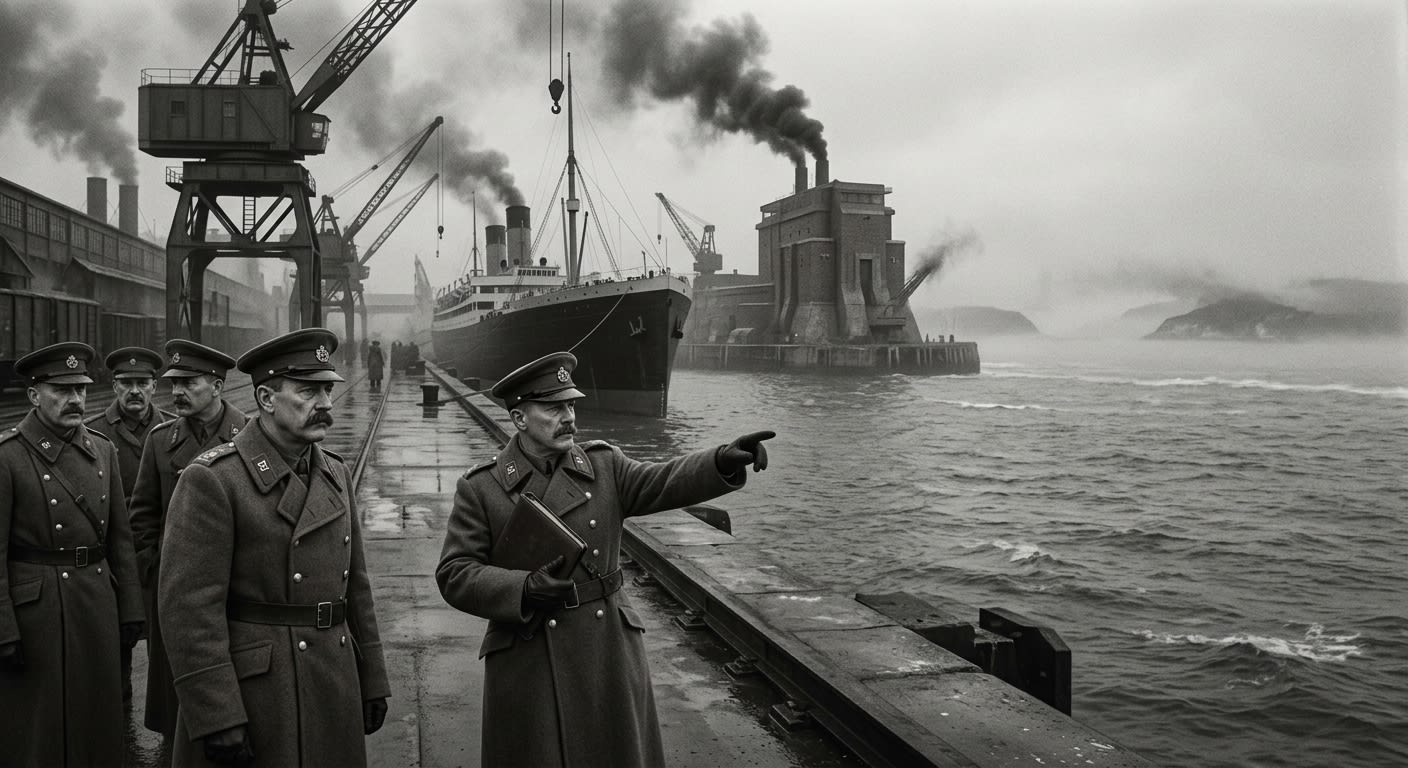
The early Bureau position on England was simple, confident, and wrong, which is the most traditional shape of early Bureau positions. At the Concordat of Strasbourg, when France, Iberia, and the Rhineland pressed themselves into one wax and called capitulation destiny, England stood across the water in what our proclamations described as chaos. The phrase was convenient. The Synod had no ships enough to investigate, no jurisdiction strong enough to compel, and no appetite for admitting that a devout order beyond Strasbourg might survive without asking permission.
So England became chaos.
Chaos, in this case, produced Canterbury, the Lantern Way, the Table of Nine, King-Warden Aldric III, approximately three hundred warships, armed bell-monks, functioning courts, a currency that buys rope, and Cathedral Ships whose reliquary keels do what our engineers have spent eleven years failing to reproduce. The Bureau of Doctrine has refined its language accordingly. Refinement is the word we use when error has become too expensive to defend at full volume.
Earlier Synod maps labelled the Channel coast opposite Calais as “English Chaos / Providential Quarantine.”
Corrected under diplomatic review after A.S. 194 observation and A.S. 199 Lantern Way accommodation. The British Crown is an independent allied sovereignty, Category Zero, non-signatory to the Concordat, operationally faithful, doctrinally irregular, and maritime in a way that makes continental arrogance look underfed.
The Channel preserved that correction by force. Had there been land between Strasbourg and Canterbury, the Synod would have marched doctrine across it in boots. Water required bargaining. Fog required escorts. Grain required humility. The Channel is the reason Britain remains foreign and indispensable, the reason our condemnation learned manners, the reason the Bureau of War can silence the Bureau of Purity with a wheat ledger.
At every Convocation where some doctrinal romantic proposes a harder line against Britain, War produces the shipping arithmetic. Coal from Welsh seams. Grain convoys under British bell-masts. Net-cord and blessed rope from Dover. Medical stores. Pilgrims whose fees arrive with foreign salt on the parchment. The romantic sits. The file is amended. The Channel has spoken without attending.
#On Calais, Dover, and the Narrowest Argument
The Channel is narrowest where Calais and Dover stare at one another across the grey. That stare has become an institution.
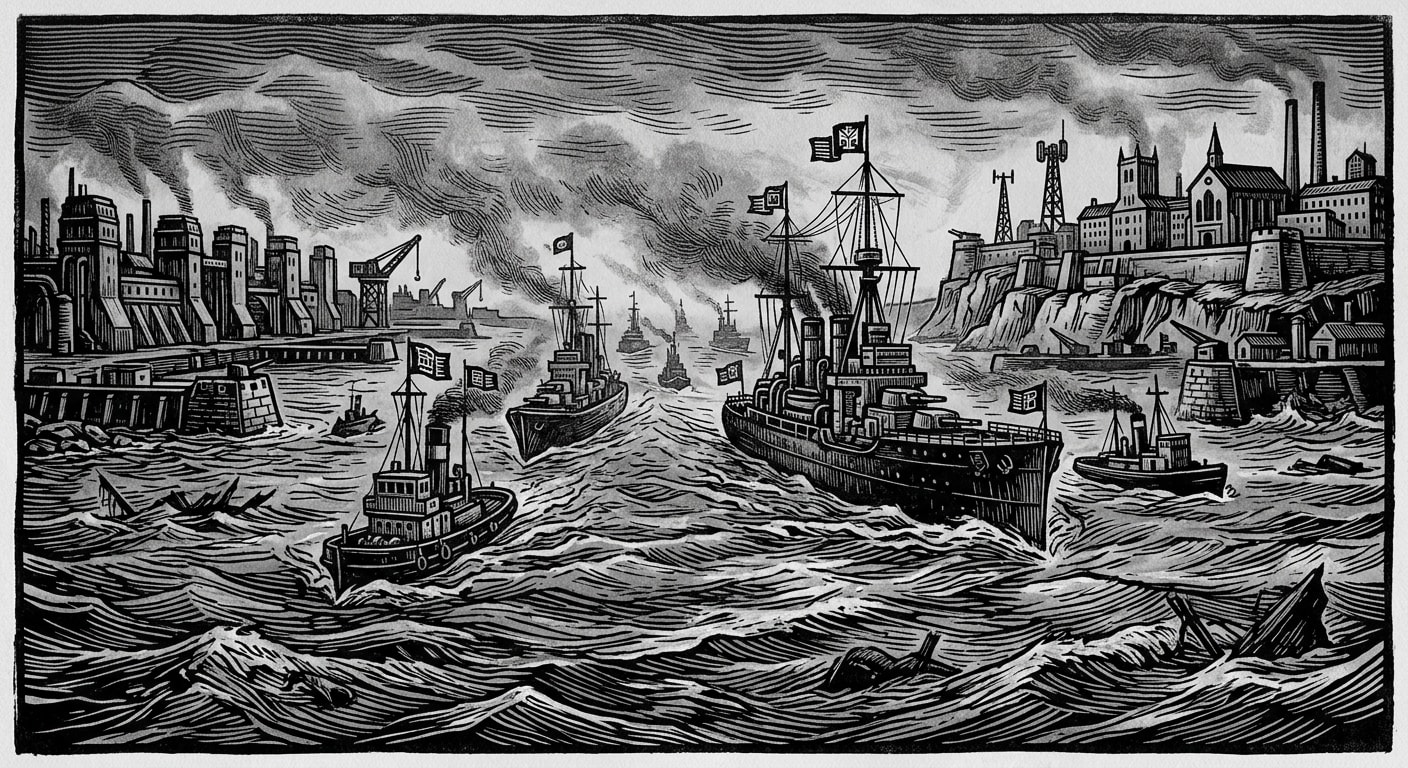
On the continental side, Calais is a Zone 1 coastal redoubt carved into chalk after the Bureau of War requisitioned the headland in A.S. 69. It faces west, which offends Line officers trained to understand danger as an eastern habit. It houses gun galleries, the Teeth breakwaters, the Salt Tribunal, the Undertide Pens, and the Script Wall, where fog writes names and the night watch reads them aloud before the sea decides who was meant.
On the island side, Dover forges chain, net-cord, blessed rope, naval fittings, and practical refusals. British clerks there keep records neat enough to irritate Records and sealed enough to starve it. Bell-lanes mark passage through fog. Dover peals, Calais answers, the vessel replies, and the Lantern-Ringer confirms whether the crossing may proceed or whether the tower arms itself and the quay learns silence.
The crossing should be simple. Cliffs face cliffs. Ports face ports. Ships depart, arrive, pay, unload, curse, and return. The Channel accepts this civic fiction on clear mornings. Then fog rolls in and the fiction is filed among pious hopes. A Calais packet enters Dover bell-lane at the wrong peal interval. A crew arrives one man over. A salt cargo reaches Boulogne with a future manifest in the harbourmaster's hand. A fishing boat returns intact with its crew's vocabulary rearranged, so that every man can ask for bread, confession, and his mother's knife, but no man can say water.
The Salt Tribunal sells sea passes because men will pay almost anything for permission to depart a place that writes their names on walls. Dover accepts Iron Crowns because British law is less decorative and more effective than our objections. Calais resents Dover's rope. Dover resents Calais's questions. Both shores resent the fog. The fog, being senior to both, declines participation in the dispute.
#On the Undertide Below
The Channel's surface lies beautifully. Below it, the Undertide waits in channels, caves, chalk throats, drowned tunnels, and those deeper seams where the water grows still without becoming calm. The first verified Synodal understanding came after the A.S. 71 Great Breach at Calais (Unregistered), two years after the Redoubt's founding, when entities forced the sea caves, drowned hundreds, and were driven back by a bell-choir improvised from signal bells, cracked cannon rims, powder ladles, and one chapel handbell now locked in the Index for acoustic efficacy without license.
The official classification remains pending. Since A.S. 71. Pending is a holy word. It means every expert died, retired, contradicted another expert, or discovered the usefulness of delay.
The Divers call the entities draggers. The Redoubt calls the collective pressure Undertide. Doctrine calls them Unresolved Marine Anomalies, Classification Pending. Britain calls many related events weather, which is either stupidity armoured by habit or genius wearing a fisherman's coat. I have crossed the Channel. I no longer mock the coat.
The Undertide rises during fog and during readings at Calais. It tests the Teeth. It moves against current. It presses at demon-bone pilings with patience. It listens to names. It comes nearer when lanterns are needed and retreats when bell-sequences strike the correct marrow of sound. The contradiction has bred heresy among the Unread, who claim that speaking names feeds the Wall and the Wall feeds the sea. The Bureau condemns this, forbids comparison of reading density with Undertide movement, impounds rubbings, and keeps cabinets of inadmissible evidence beneath the Salt Tribunal, which is how the Bureau says no while building a chapel to maybe.
The Channel beyond Calais carries smaller cousins of the same wrongness. False harbours shine under fog. Sunken bells answer funeral peals. Lights move below the surface against tide. Compass needles turn toward conversations not yet held. On three recorded crossings, passengers dreamed the same shore before landfall and then found that shore absent from every chart. Bureau of Shadows collects the best reports. Bureau of War collects the useful ones. Bureau of Doctrine collects the statements likely to become embarrassing if left unattended.
CHANNEL CROSSING INCIDENT — MIXED JURISDICTION, A.S. ███ Vessel: Synod packet under British escort. Declared persons: twenty-three. Arrived persons: twenty-three. Bodies counted by surgeon: twenty-two. Voices answering roll: twenty-four. Lantern-Ringer note: “One voice belonged below.” Disposition: █████████████████████████████████████████████
#On Cathedral Ships and Bell-Masts
The Channel would be less survivable without British bell-masts. I dislike this sentence. I write it because doctrine may gild truth, but stupidity is too cheap a metal for my hand.
Cathedral Ships cross the grey as parish, battery, shrine, courtroom, and threat. Their chapels sit amidships. Their guns run below sainted carvings. Their bell-towers rise over quarterdecks. Their reliquary keels resist sorcery, rot, fog-things, and several continental explanations. When they move through Channel weather, the fog curls from the bell line. Compass deviations settle inside the sound cone. Men hearing dead-port voices report the voices muffled when the mast tolls.
The Synod has measured the effect and failed to reproduce it. Engineering has cracked test-keels. Bells has requested tuning charts. Relics has requested inspection. War has requested convoy access and received it. War, for once, asked the correct question.
A Cathedral Ship's arrival at Calais is known by tone before sight. The bell comes first, low through fog, then high, then the answering peal from the Redoubt, then the lanterns, then the hull, dark and chapel-windowed, as if a parish had grown impatient with coastline. Dockworkers pretend not to be reassured. Officers pretend not to admire. Priests pretend the bells are merely foreign. Every pretence is audible.
The Lantern-Ringers aboard those ships treat silence as an intruder. They ring alarm, burial, watch, convoy cadence, fog challenge, and the ugly tones associated with submerged lights. Their maces hang beside the bell ladders. Boarding parties learn this fact at speed. A Ringer is a monk until someone interferes with the peal; then he becomes architecture's answer to blasphemy.
Synod vessels cross under escort when possible. Dutch vessels cross by private knowledge. Smugglers cross by bribery, tide, and vows made to saints whose cults cannot survive daylight. Pilgrim ferries cross by faith and passenger manifests thick enough to beat a gull to death. The Channel permits all categories according to mood, bell, weather, and the private account it keeps below the waterline.
#On Dutch Routes, Smugglers, and the Profitable Grey
The Dutch know fog roads the Synod pretends not to need until the weather smells wrong. Amsterdam and Rotterdam (Unregistered) pilots sell maritime confidence by the hour. Zeeland captains arrive at Calais with charts marked in private hands and bills prepared in three currencies. They carry paper, grain finance, insurance terms, pamphlets hidden inside rope invoices, clockwork instruments, devotional counterfeits, permitted catechisms, forbidden catechisms, and the small commercial proofs that heresy with good bookkeeping outlives piety with bad accounts.
The Channel rewards such people. It likes negotiators, weather-liars, bell-mimics, pilots with one eye, widows with memorized pass numbers, and captains who understand that a legal route and a safe route may have met only once, years ago, at a dinner neither enjoyed. It punishes the heroic. It devours the loud. It treats certainty as seasoning.
The Netherlands remain commercially tolerated heterodoxy because the northern and western supply systems lean on Dutch credit, shipping, insurance, and insinuation. Their pilots know currents between British bell-lanes and Synod watch cones, routes that shave hours when clear and lives when fogged. Purity calls them suspect. Tithes calls them useful. Doctrine calls them tolerable. The Dutch call them invoiced.
A Bureau of Purity circular described Dutch Channel pilotage as “unnecessary foreign assistance in ordinary maritime conditions.”
Corrected after three convoy delays, one fog-diversion, and a grain packet recovered off the wrong coast with every prayer-book opened to the same blank page. Ordinary maritime conditions are theoretical in the Channel. Foreign assistance remains morally unpleasant and materially afloat.
Smuggling lives in the gap between these authorities. Calais has boat tunnels. Dover has supervised gates and unsupervised men. Dutch packets have double bottoms. British rope sheds have shadows even Eccleston would decline to inventory. Synod clerks sell stamps. Salt Tribunal runners sell delays. Grey Keel Syndicate guides sell silence. Everyone condemns the trade. Everyone has used the trade, or benefited from someone using it, or eaten bread moved faster than legality could walk.
The contraband itself is rarely picturesque. Lamp oil. Blank papers. Iron Crowns. Sea-pass wax. Bell clapper scrap. Dutch pamphlets. Relic filings. Tuning notes copied by a man who died before he could explain where he heard them. Demon-glass wrapped in fish salt. A child's name removed from a roster and sold to a woman whose own son had appeared on the Wall.
Here morality becomes tidal. It comes in grandly and leaves a stink.
#On Pilgrimage, Diplomacy, and the Price of Passage
The Channel also carries pilgrims. They come from continental parishes hungry for Canterbury's old saints, for British severity, for the romance of a foreign bruise, for bells unlicensed by Strasbourg, or simply for the experience of placing their feet where Synod authority must remove its shoes. The Bureau of Pilgrimage dislikes the route and sells permits to it. Hypocrisy becomes less vulgar when stamped.
A pilgrim bound for Canterbury must obtain a sea pass at Calais, pay in acceptable coin, receive confession attachment, survive the fog-lane, accept British inspection, exchange Crown of Grace or Dutch paper for Iron Crowns at rates that insult two theologies at once, and proceed inland under Warden law. Many return chastened. Some return impressed. The second group is watched.
Diplomats cross with heavier trunks and lighter souls. Mertens sits in Canterbury sending dispatches too accurate for comfort. Eccleston sits in Strasbourg receiving our memoranda until paper loses hope. I crossed in A.S. 194, the first senior Doctrine official to do so in forty years, and returned with green-redacted notebooks, a formal protest, and a conviction that the Bureau had misclassified an entire island because water had spared us the embarrassment of looking closely.
The crossing itself teaches what no policy paper can. On the continental shore, Calais reads fog to keep the sea from claiming names. On the island shore, Dover rings bells to keep silence from entering towers. Between them the Channel listens with the chilly patience of a clerk facing the last blank line of a form while the applicant begins to sweat.
#On the Present Western Passage
As of A.S. 201, the Channel remains open, escorted, unstable, profitable, and insufficiently understood. Calais holds Amber status. Dover continues production. Cathedral Ships patrol. Dutch pilots sell confidence. British Iron Crowns circulate in joint ports despite eleven protests and the visible suffering of Tithes. The Script Wall writes. The Undertide waits. The fog has grown bolder in clear weather, which is a sentence that should not exist and now must be filed.
Western grain depends on these waters. So do pilgrim passages, rope contracts, coal shipments, diplomatic pouches, medical stores, and that delicate cargo called dignity, which spoils faster than fish when delayed at a foreign quay. The Synod resents dependence. Britain resents explanation. The Dutch resent neither if paid. The Channel resents nothing. Resentment implies a heart.
There are proposals, of course. There are always proposals. Build more Synod escort hulls. Expand Calais. Demand British specifications. License Dutch routes. Suppress smugglers. Harmonise Iron Crown settlement. Standardise fog-lane peals. Establish a joint Channel Commission (Unregistered) under Concord supervision. Each proposal has been copied, circulated, annotated, amended, and left to mature in the warm drawer where impossible intentions become institutional cheese.
The Channel proceeds without awaiting resolution. It fogs. It tolls. It carries. It takes.
At dawn, the Calais watch reads the last chalk names before condensation lifts. At Dover, the Chainworks bell announces harbour state. Somewhere between, a Cathedral Ship's mast answers a sound no lookout admits hearing. A Dutch captain revises his fee. A Synod clerk checks the passenger list twice and still avoids counting himself. Beneath the hull, something taps once on the keel, as if testing whether the wood remembers.
The Channel is only water on maps.
Maps do not drown.