

Reverse Index
Referencing “The Basilica of the Ledgered Saints”
Every codex entry that links to The Basilica of the Ledgered Saints. 123 entries.
Return to The Basilica of the Ledgered Saints
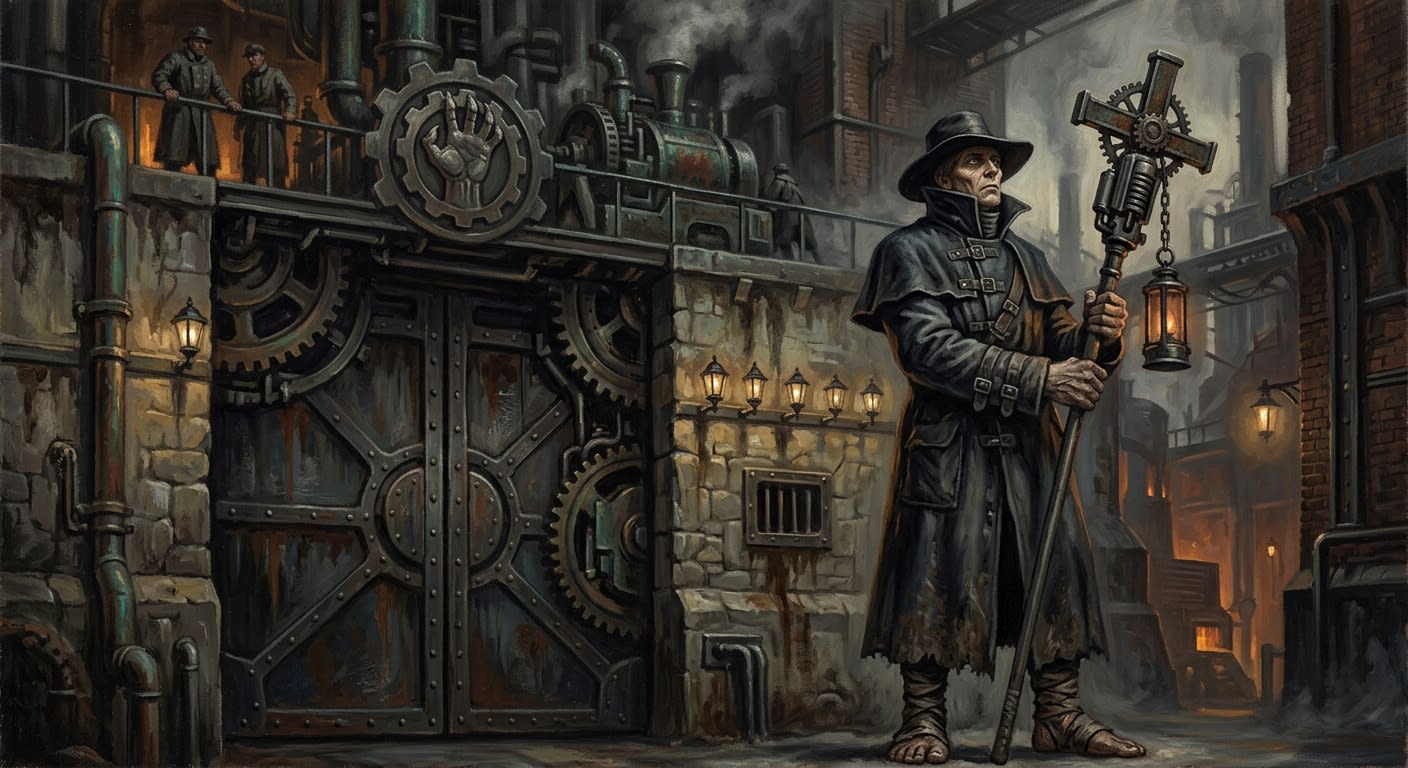
Aachen
The city that survived its own fall
Aachen opened its gate in A.S. 25, survived the betrayal, and has spent every taxed, polished, barefoot century proving survival is not innocence.
Codex Ref. II.2.02-001

Absolutions of the Dead
Even the grave receives a form, a candle, and a fee
The Absolutions of the Dead keep death open for correction: a skull-cup candle, a disputed name, and mercy copied twice before it dares call itself final.
Codex Ref. XIII.1.85-184
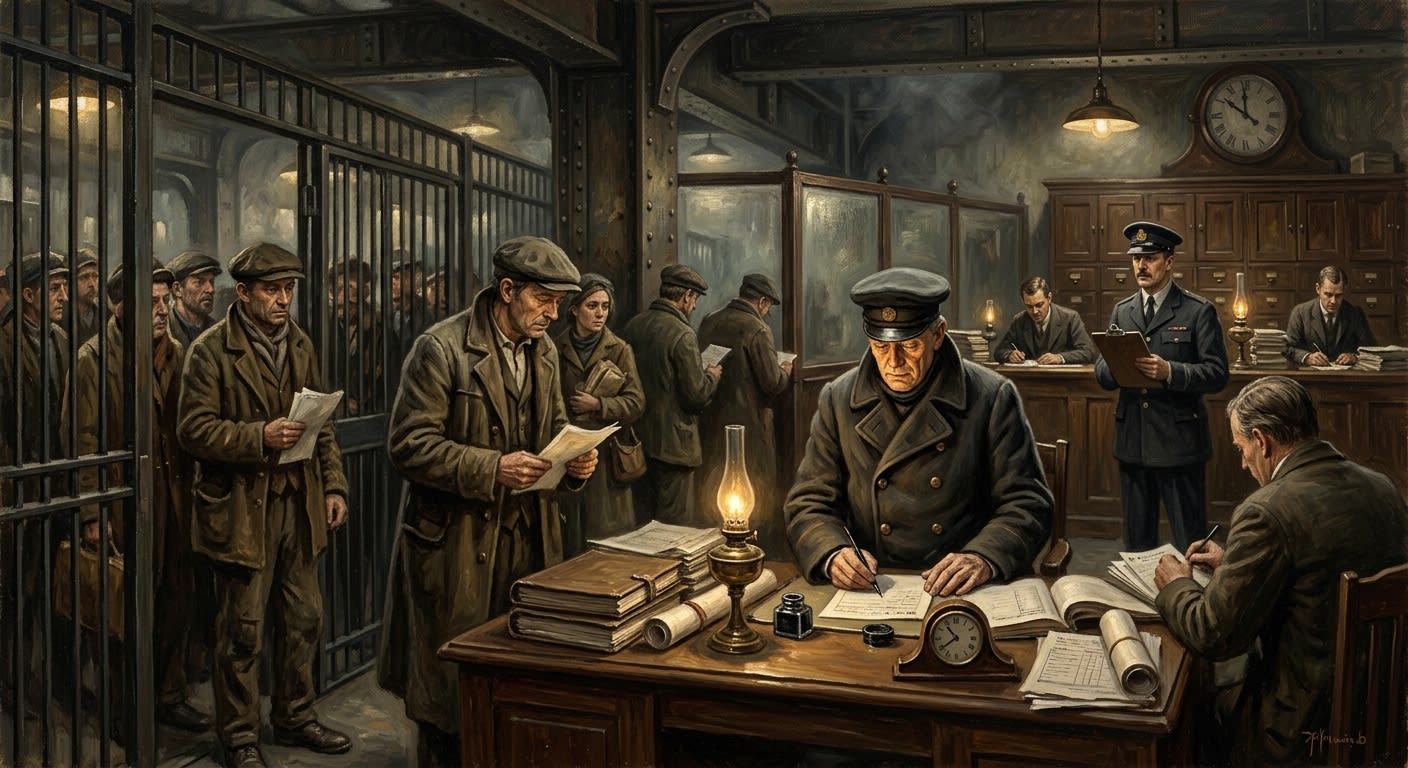
Administrative Order 44-B
The mercy of eight hours in a room that wanted twelve
Order 44-B shortened Vault duty after Breel's hand wrote forbidden music, proving the Bureau can call terror a scheduling improvement.
Codex Ref. XIII.1.44-188
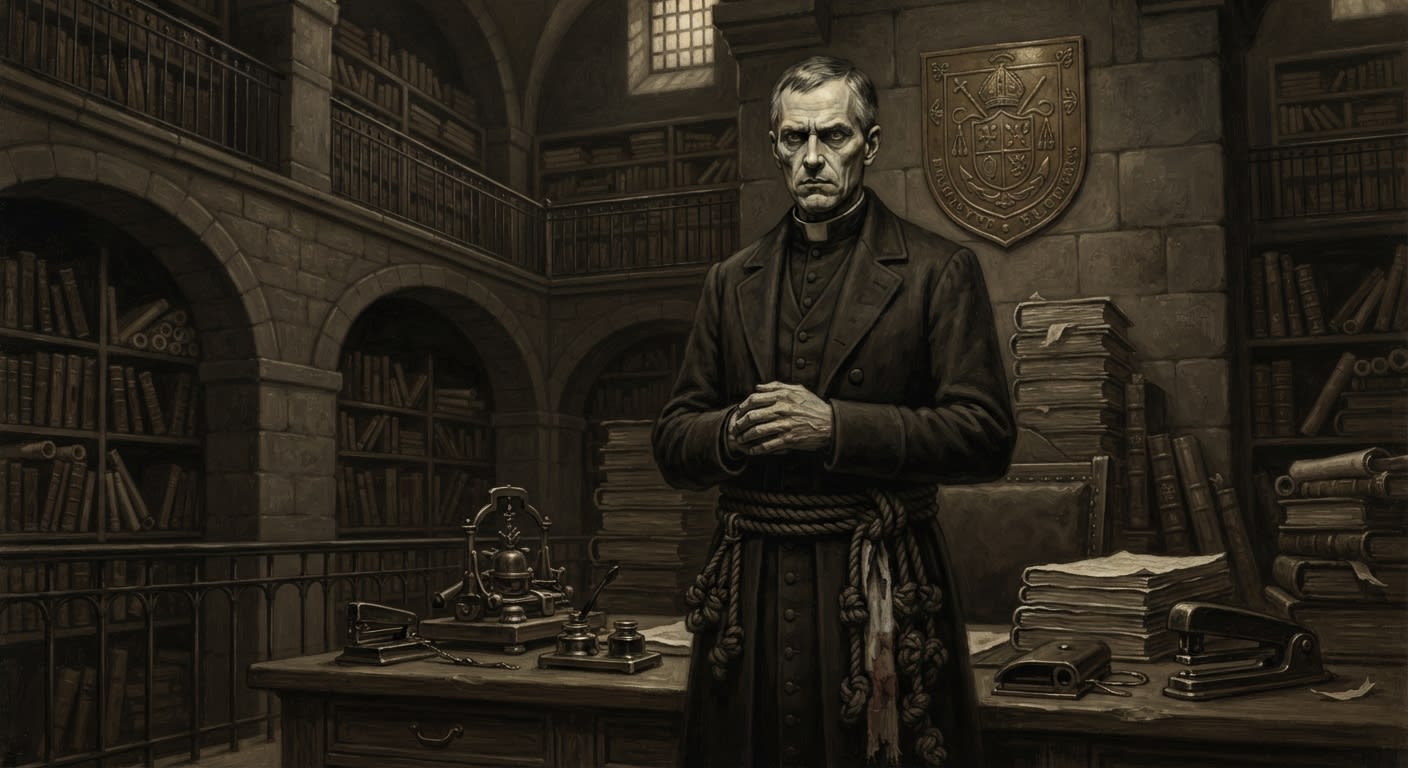
Aldric Venner
The man who registers breath and owes no one a word
Aldric Venner, Synod Registrar of Bonds, rules the Bureau of Oaths from Strasbourg by deciding which breaths bind and which silences count as perjury. He has spoken three words to Drax.
Codex Ref. III.2.01-201
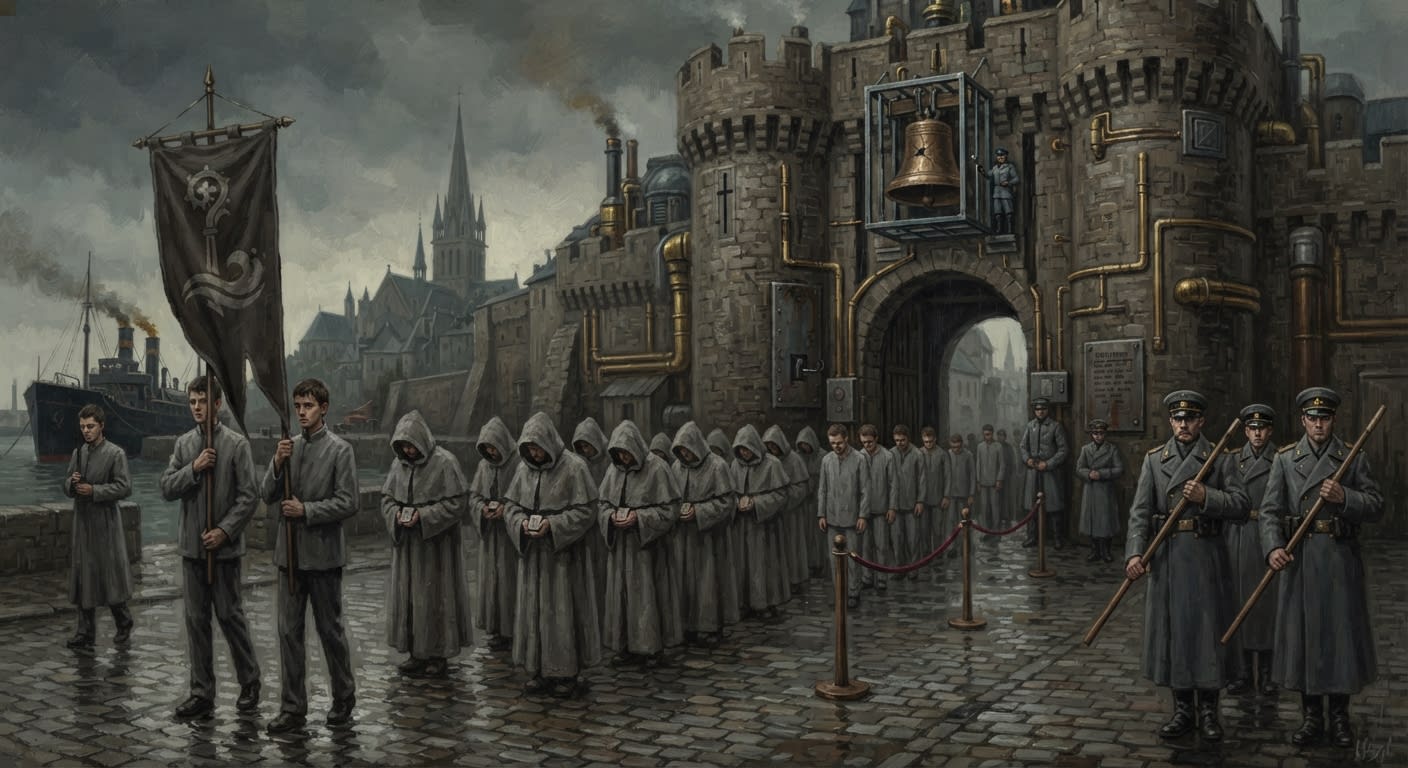
Annual Remembrance of Saint-Malo
Thirty-one tolls, forty-three seconds, and grief under licence
The annual office that makes Saint-Malo's first blood toll thirty-one times, hold forty-three seconds of silence, and remind Brittany that grief is licensed.
Codex Ref. XIII.1.87-011
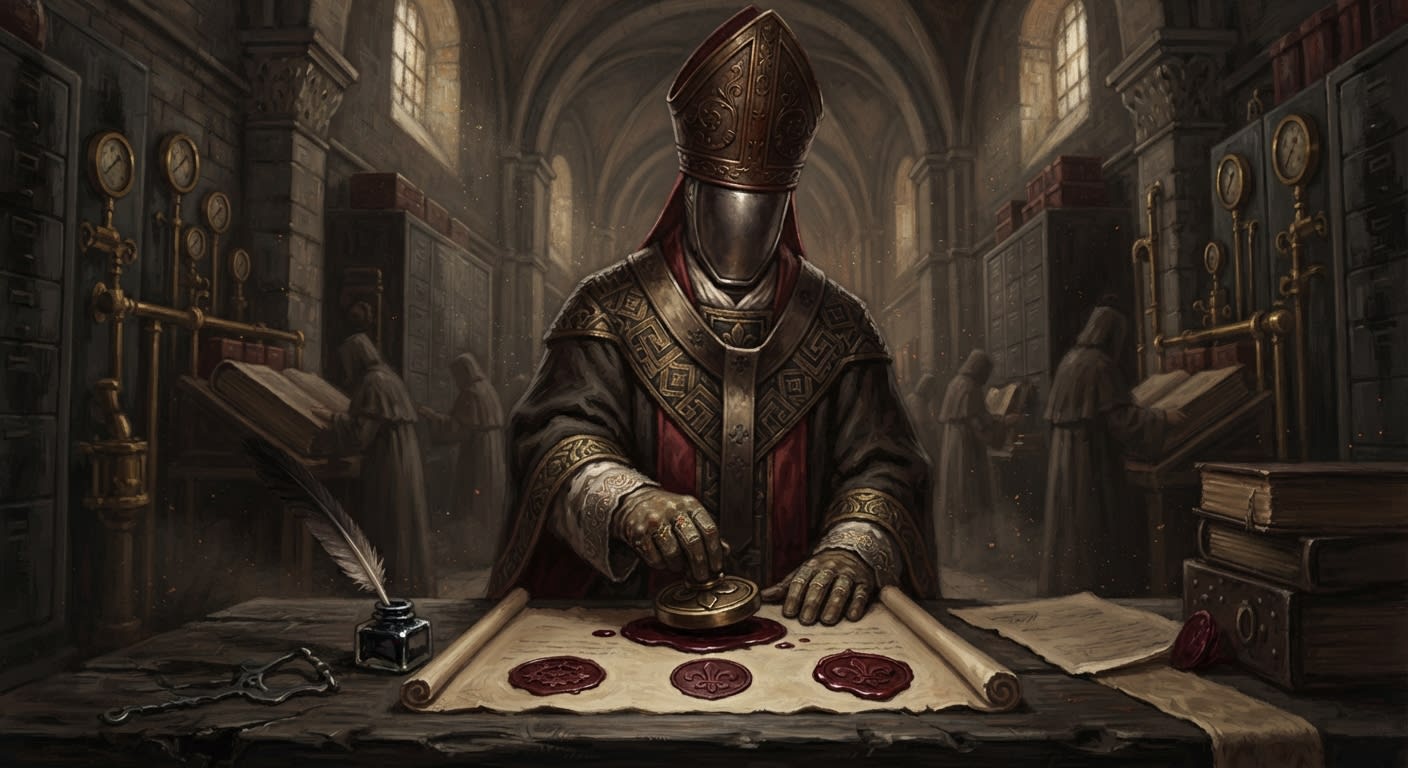
Archbishop of Lyon
The hand France sent, the name Records did not keep
The unnamed French signatory of the Concordat of Strasbourg: preserved by title, wax, and act, while the man beneath the mitre was permitted to vanish from the Ledger.
Codex Ref. III.2.01-090
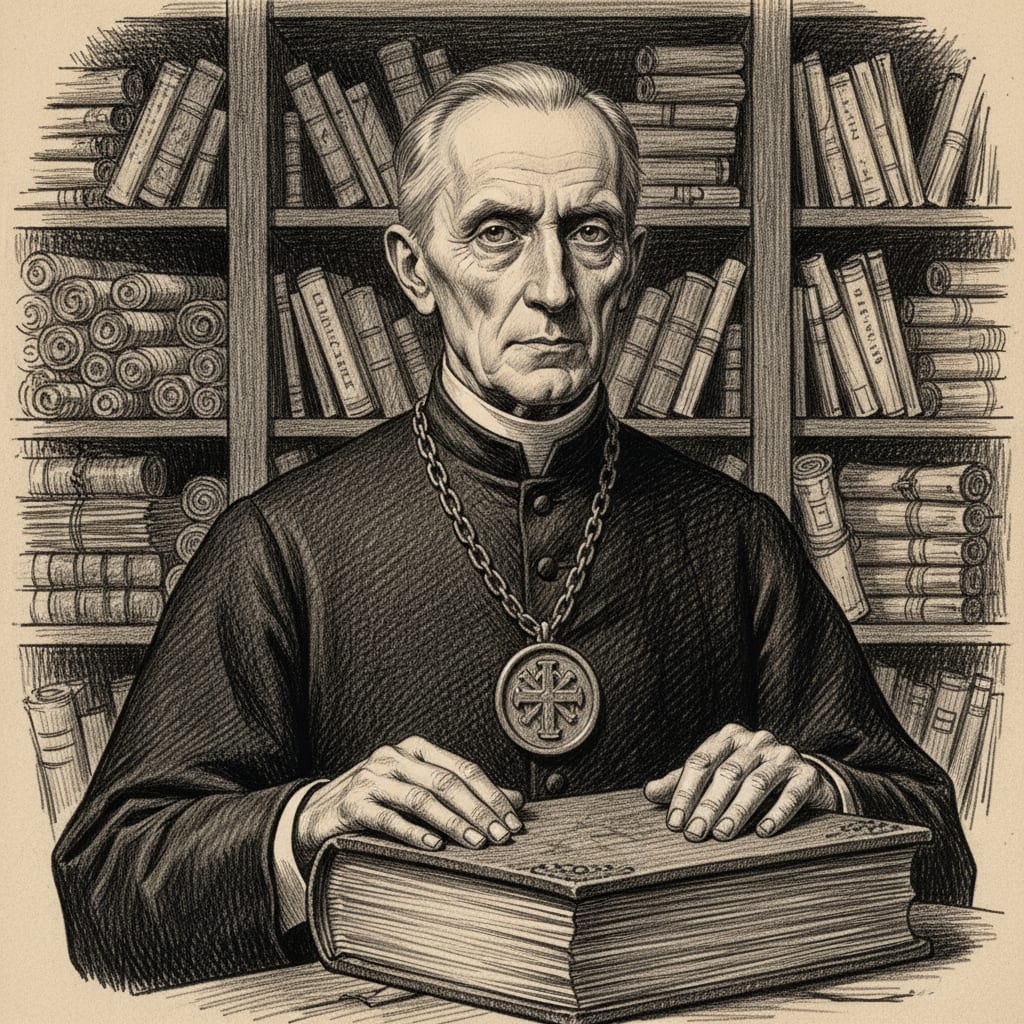
Archon Benedict Veyrault
The Monk Who Made Memory a Weapon
Once a monk of Dijon, Veyrault built the Bureau of Records into the scaffolding of reality itself. Cities he struck from the ledgers ceased to exist. His motto endures — "Nothing is forgotten" — and the faithful repeat it with equal parts pride and terror.
Codex Ref. III.3.02-008

Archon of Records
The hand that opens almost everything, and records what it cannot touch
The Archon of Records opens nearly every lock in the Church's memory, commands the Great Ledger, and preserves one terrifying receipt: proof that some silences outrank even Records.
Codex Ref. XIII.1.07-078
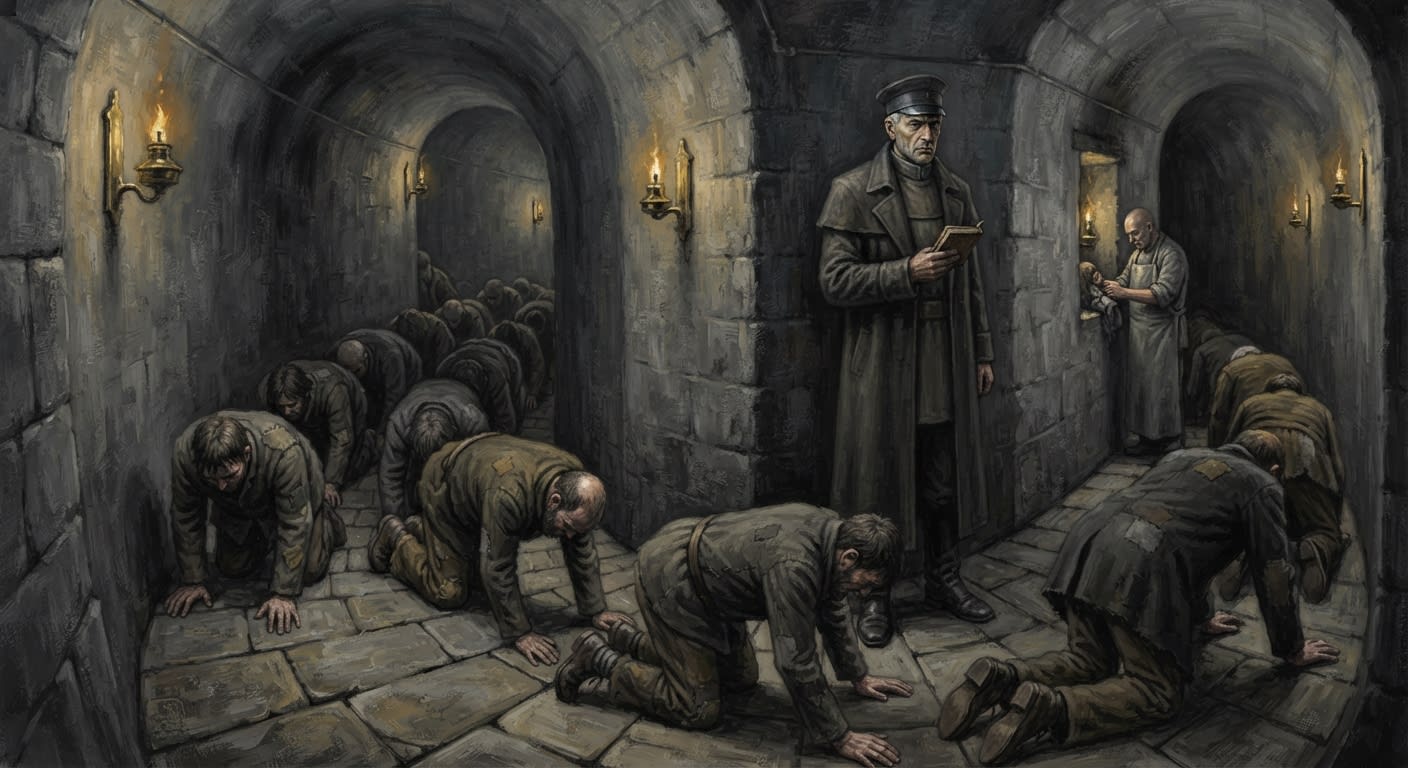
Ash Bend
Where siege memory waits its turn
Ash Bend is the grey turning segment of Vienna's Via Stahlhand, where pilgrims lose sight of the altar and hear the garrison dead rationed by cadence.
Codex Ref. II.4.09-011
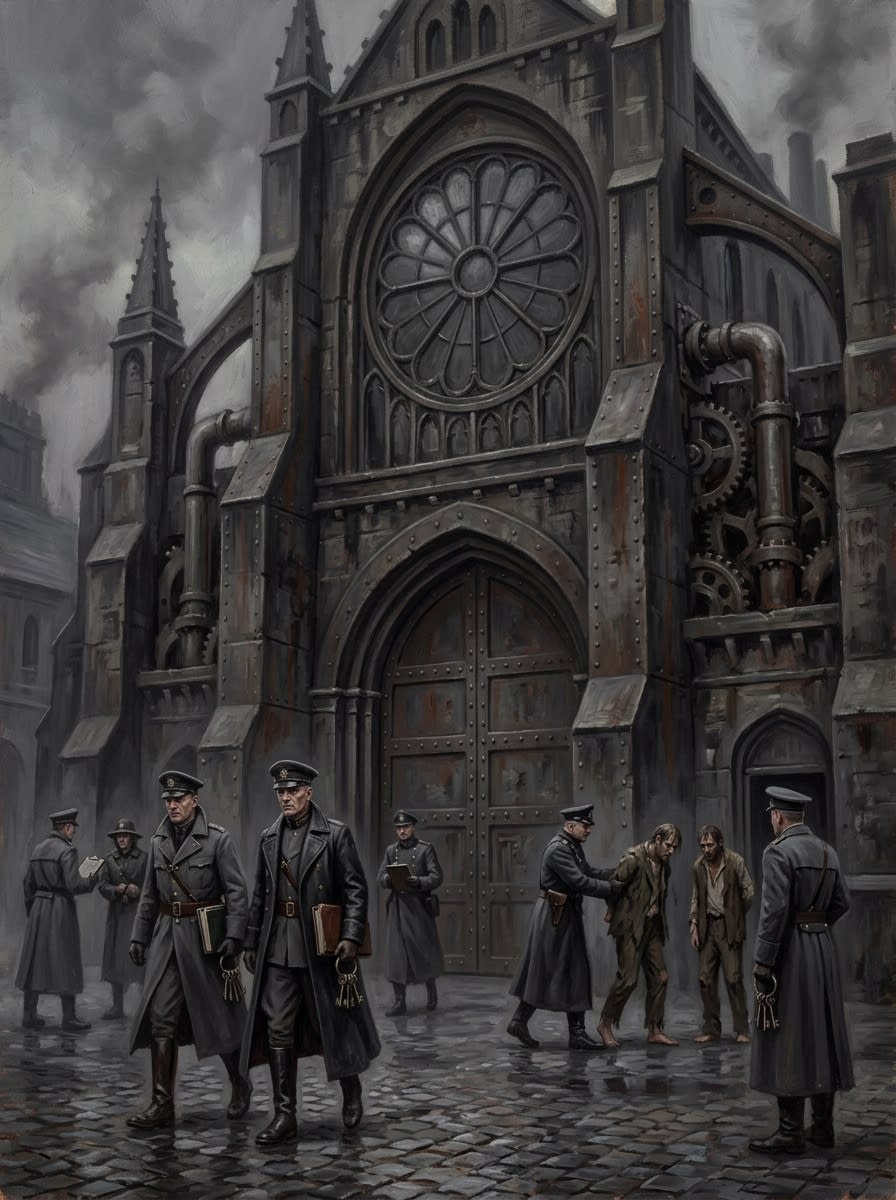
Ashen Cloister
Purity's house has handles only on the outside
The Ashen Cloister is Purity's Strasbourg seat: gate without welcome, court without mercy, archive with appetite, and the cleanest terror in the Synod.
Codex Ref. II.1.04-003
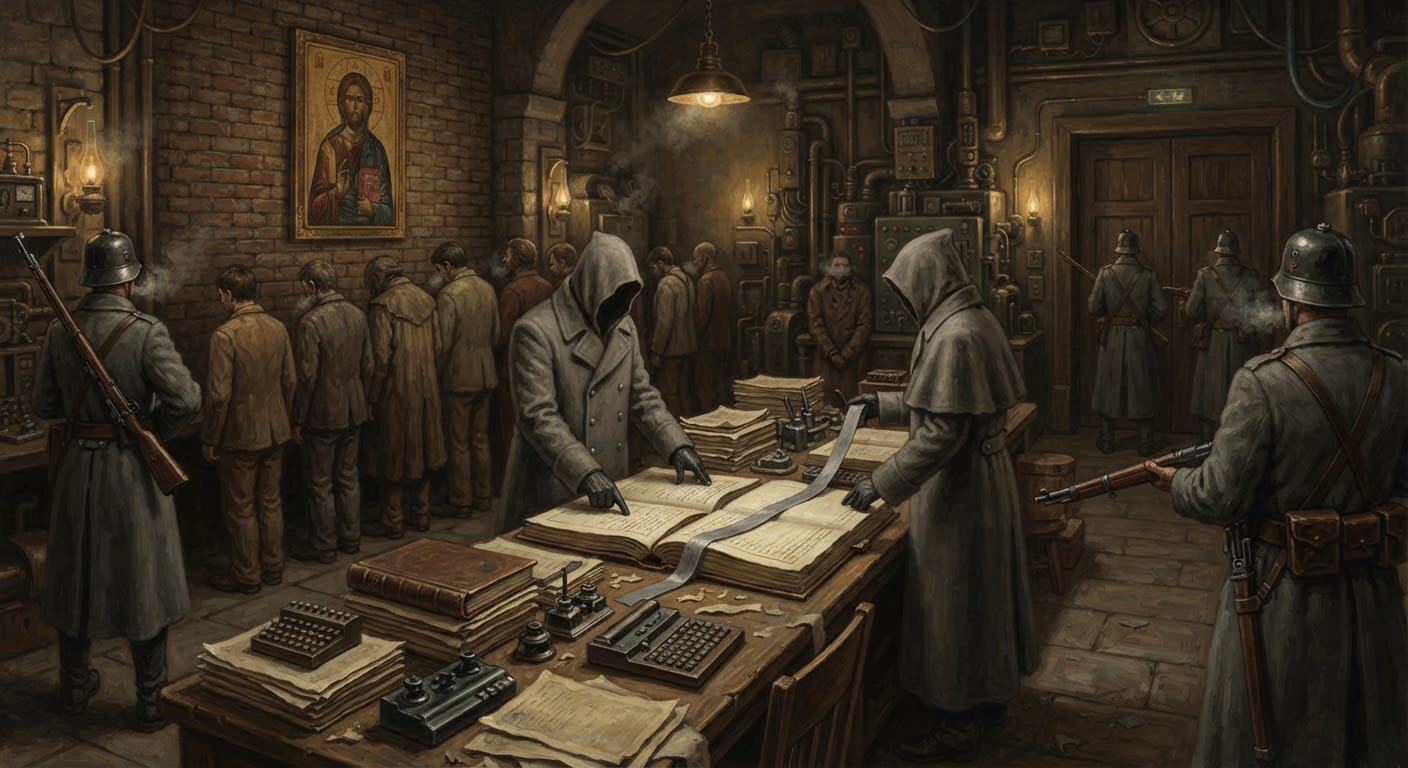
Audit Silence
The hush by which Records makes a room confess
Audit Silence is the Bureau of Records doctrine that stills speech, opens locked repositories, encloses witnesses, and lets an Indiction writ make law out of hush.
Codex Ref. XIII.1.06-090
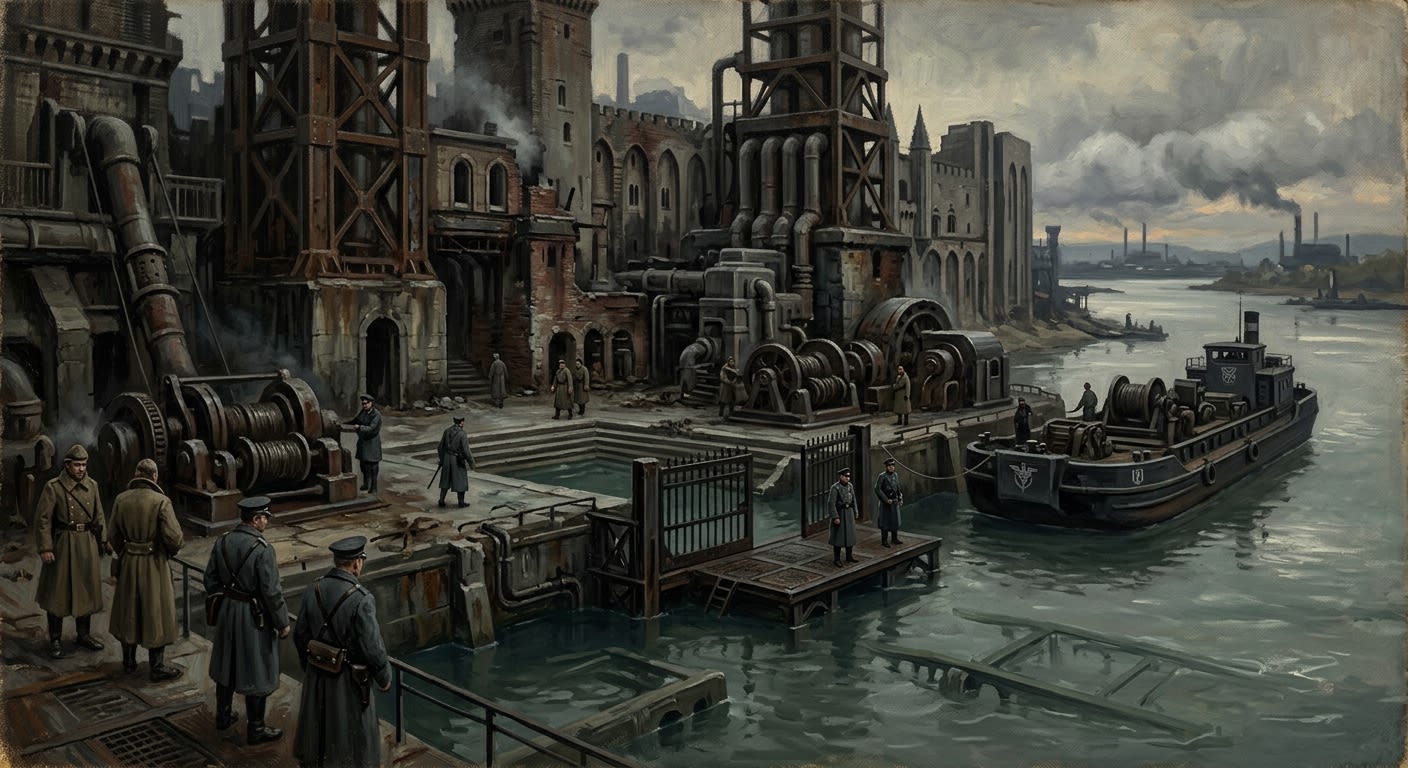
Avignon
A city corrected so thoroughly the river kept the receipt
Penitential ruins on the Rhône, where the Pontifex Submersis was crowned beneath water in A.S. 111, Avignon was razed into correction, and A.S. 145 burned the calendars into agreement.
Codex Ref. II.1.08-111
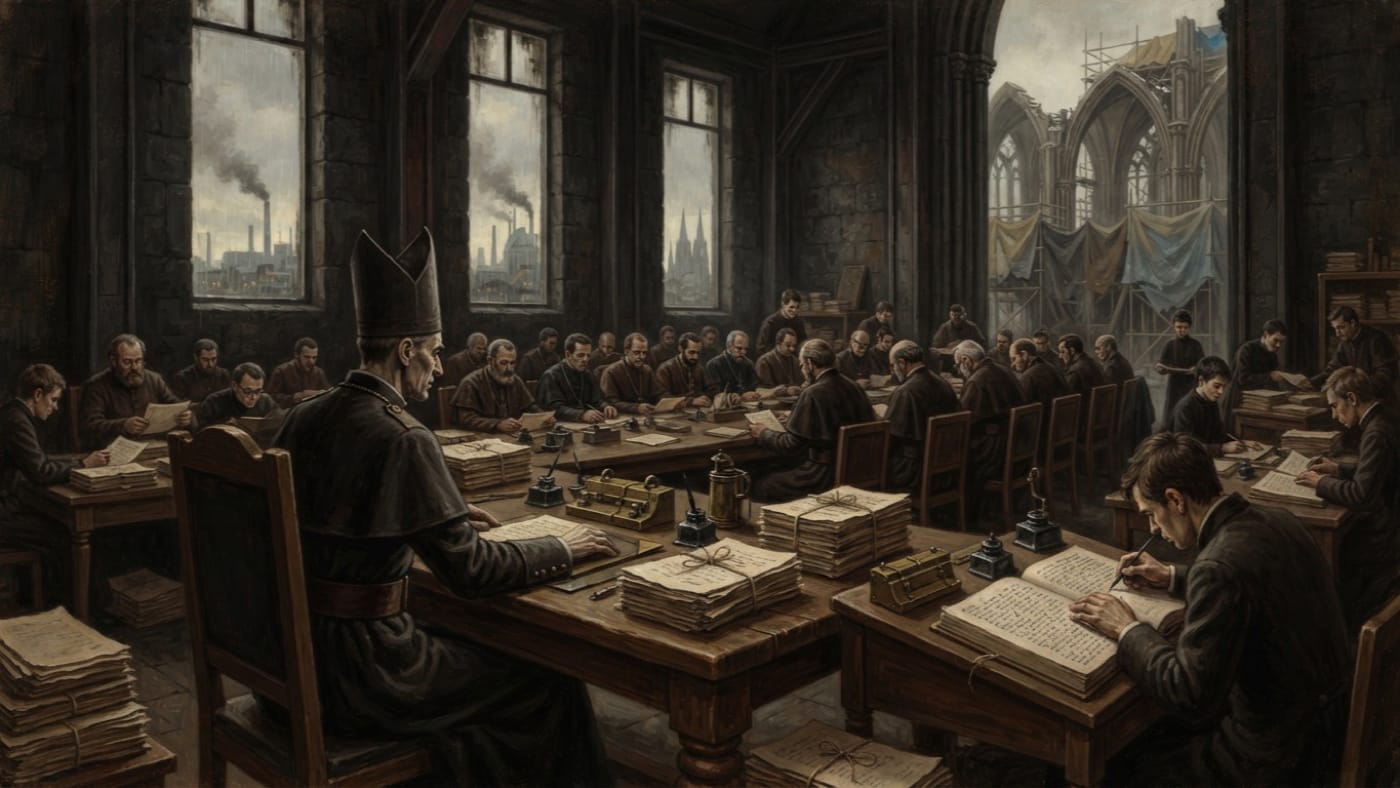
Bishop Adelmar of Cologne
Nine days entered; a lifetime left blank
Bishop Adelmar hosted the nine-day First Council of Cologne in September A.S. 27. Seven articles failed; voluntary requests survived. His life dates remain outside the Ledger.
Codex Ref. III.2.01-253

Bishop-Warden Clemens Stahlhand
The Hammer of Vienna
Bishop-Warden of Vienna, whose reliquary blow at the Siege shattered Rationalist power and entered the canon of Synodal myth. Steel hand. Iron faith. Useful corpse.
Codex Ref. III.1.02-031
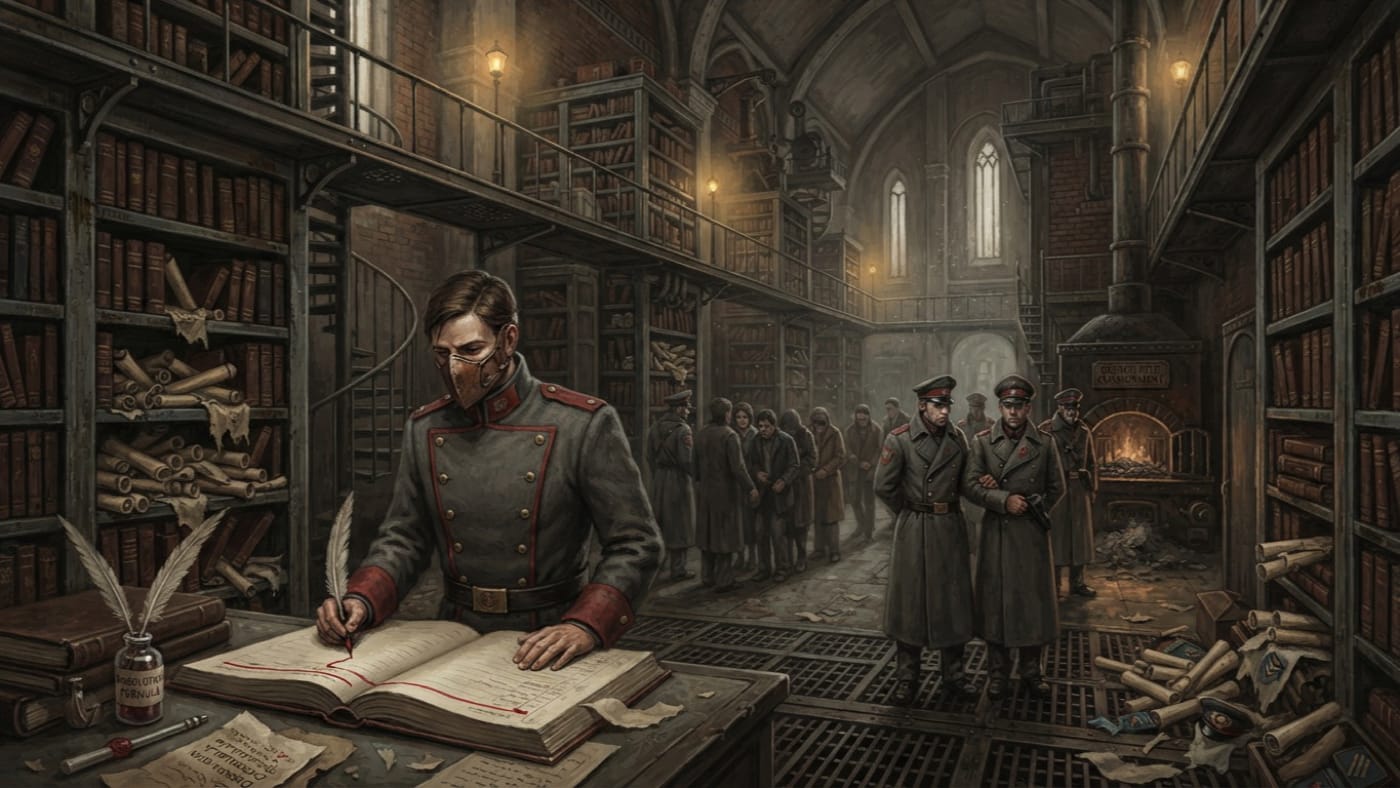
Breach Plagues
The Bureau found a cure in its own ink.
Around A.S. 110–115, communal violence became the Bureau of Oaths' proof that broken vows rot. The dead supplied the argument; the Breach Rites supplied the ink.
Codex Ref. VII.8.11-112

Breach-Rite Witnesser
The promise dies; the witness returns.
The Bureau of Oaths sends its Breach-Rite Witnessers to bury failed vows, close the record, and discover which colleague tied the original knot badly.
Codex Ref. VI.4.03-014
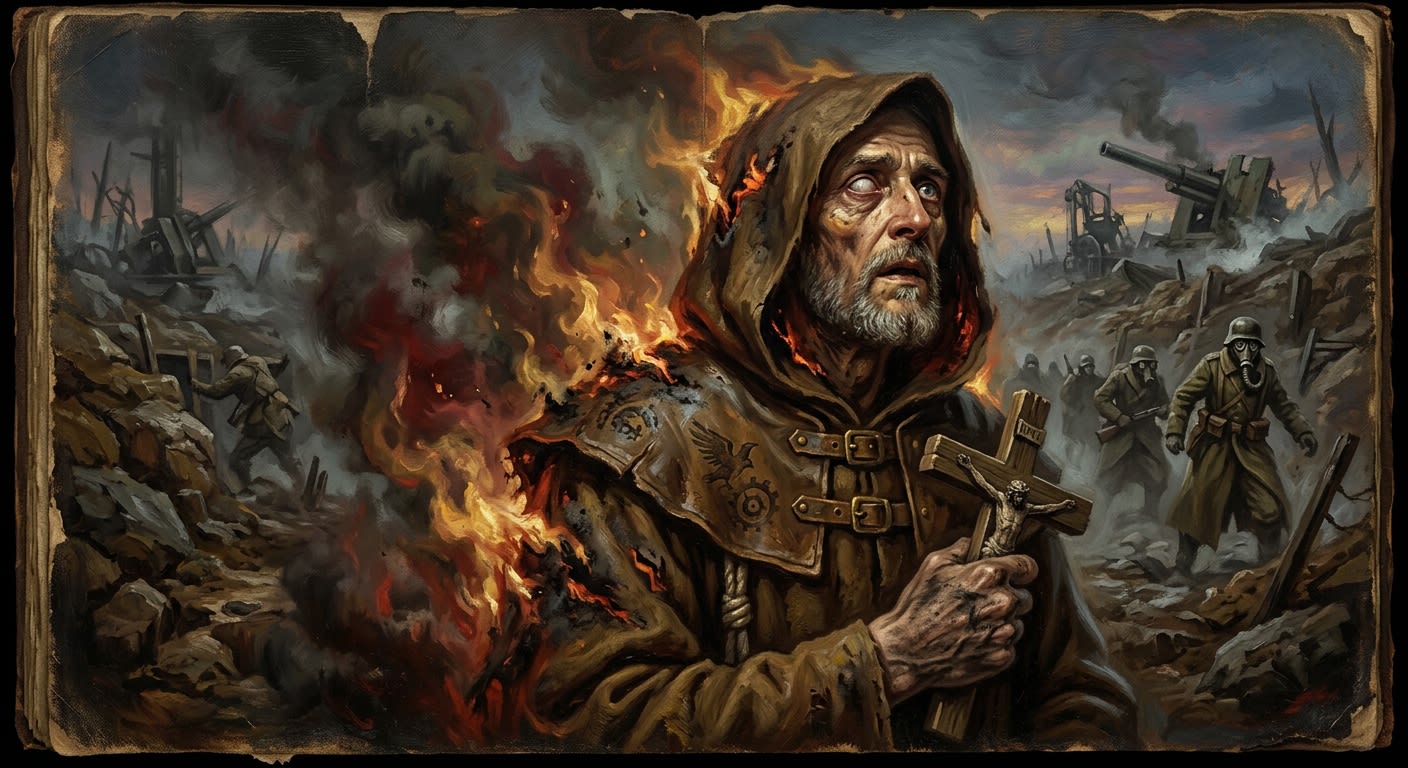
Brother Tomislav
The half-blind monk who lifted a reliquary and made Wrath recoil
Half-blind Franciscan, custodian by refusal, and instrument of the Miracle of Kalnik Ridge; consumed by sacred fire in A.S. 48, though the Bureau remains professionally unable to call him dead.
Codex Ref. III.2.01-004

Bureau Circular 221-R
Fourteen pages proving a living man can fail to count
Bureau Circular 221-R is the Records clarification that defines the dissolved as *praesens sed abrogatus*: present, abrogated, and ineligible for mercy by procedure.
Codex Ref. XIII.1.01-004
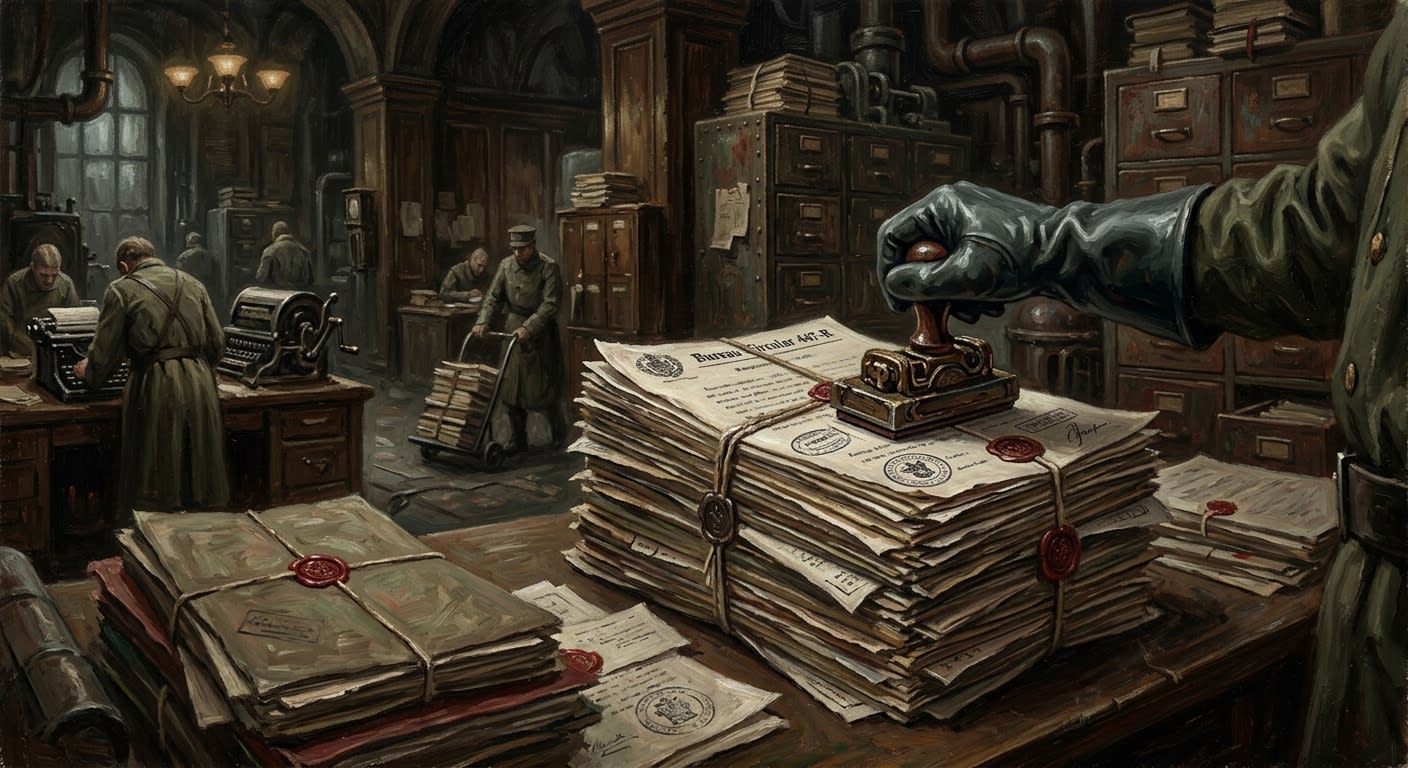
Bureau Circular 447-R
Four hundred and forty-seven words, none of them innocent
Bureau Circular 447-R denies the Codices Obscurae in exactly 447 words, each counted, sealed, revised, denied, and improved by fear.
Codex Ref. XIII.1.06-002
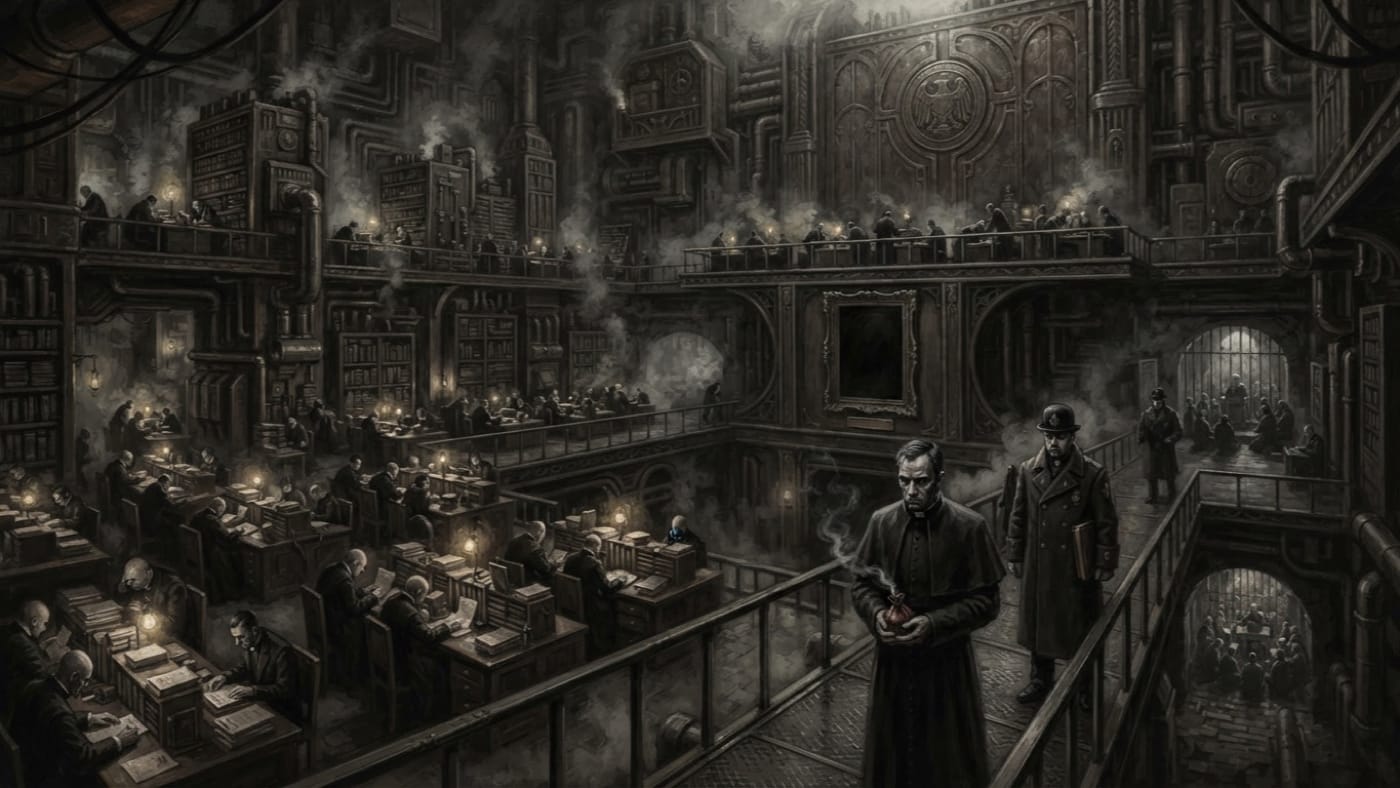
Bureau of Discipline
The office that recognises pulpits and withholds praise
The Bureau of Discipline decides which pulpits count and when vanished superiors may be praised. A cleric may retain his tongue and still lose his standing.
Codex Ref. III.3.03-001

Captain Elias Mürren
The cavalryman who accepted hunger's polite invitation and kept the receipt
Rationalist cavalry captain and Debrecen survivor whose A.S. 49 deposition records sorcerous provender, vanished horses, and hunger with the manners of a clerk.
Codex Ref. III.2.01-082
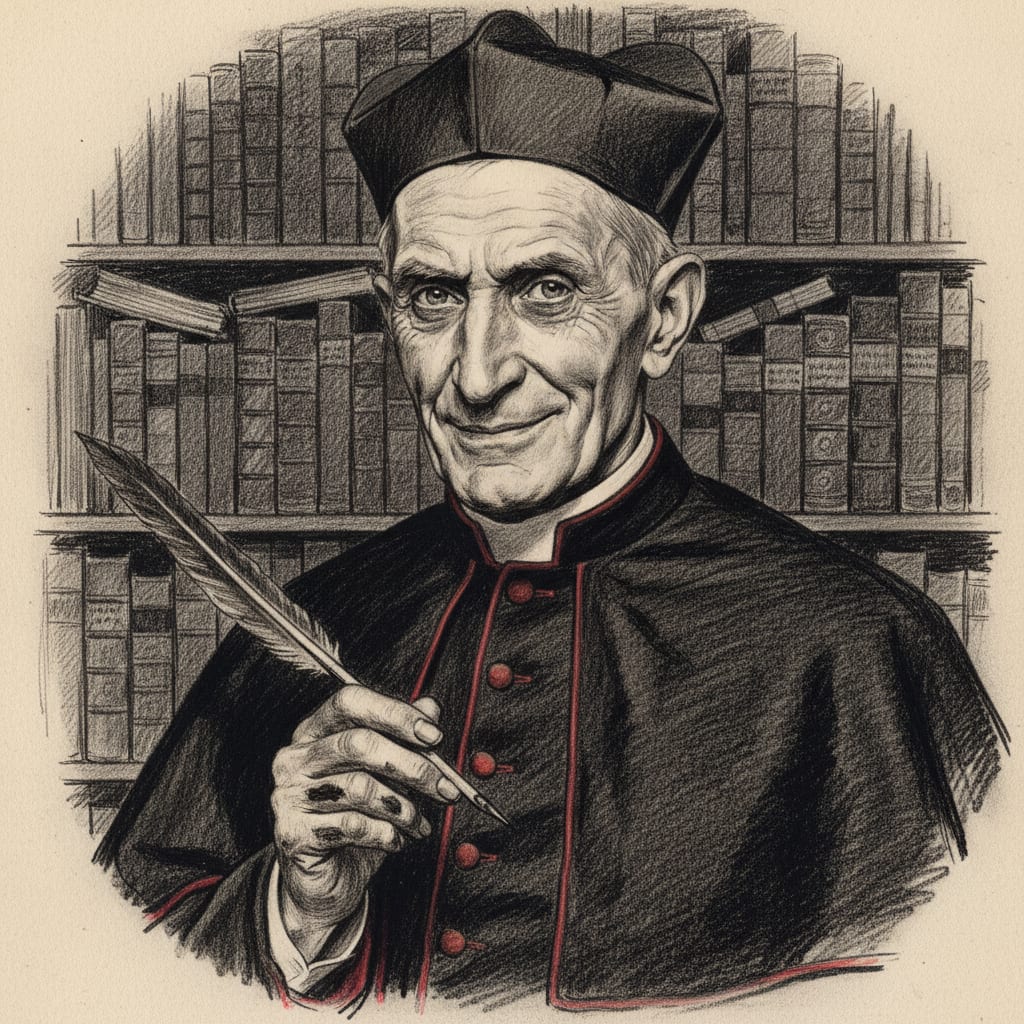
Cardinal Hieronymus Kratz
The Quill of Strasbourg
Cardinal Hieronymus Kratz, the Quill of Strasbourg, who proved that forgery widely believed is not forgery at all but revelation. Where Augustinus inspired, Kratz wrote — and what he wrote, the world obeyed.
Codex Ref. II.1.03-008
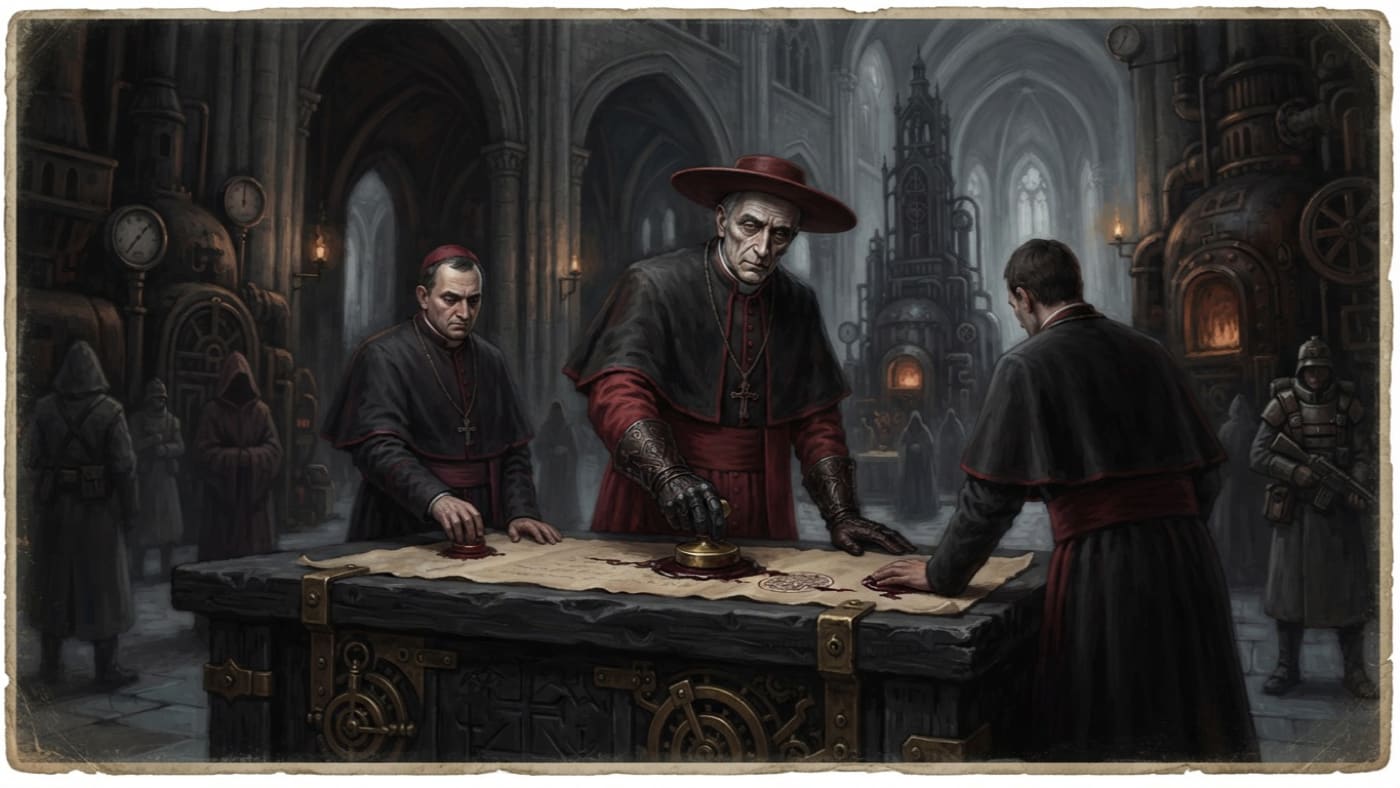
Cardinal-Legate of Toledo
One peninsula, one seal, no recorded name
Iberia's unnamed signatory to the Concordat of Strasbourg in A.S. 90. He bound a peninsula with one seal; the Ledger retained his title and dispensed with his name.
Codex Ref. III.2.01-090
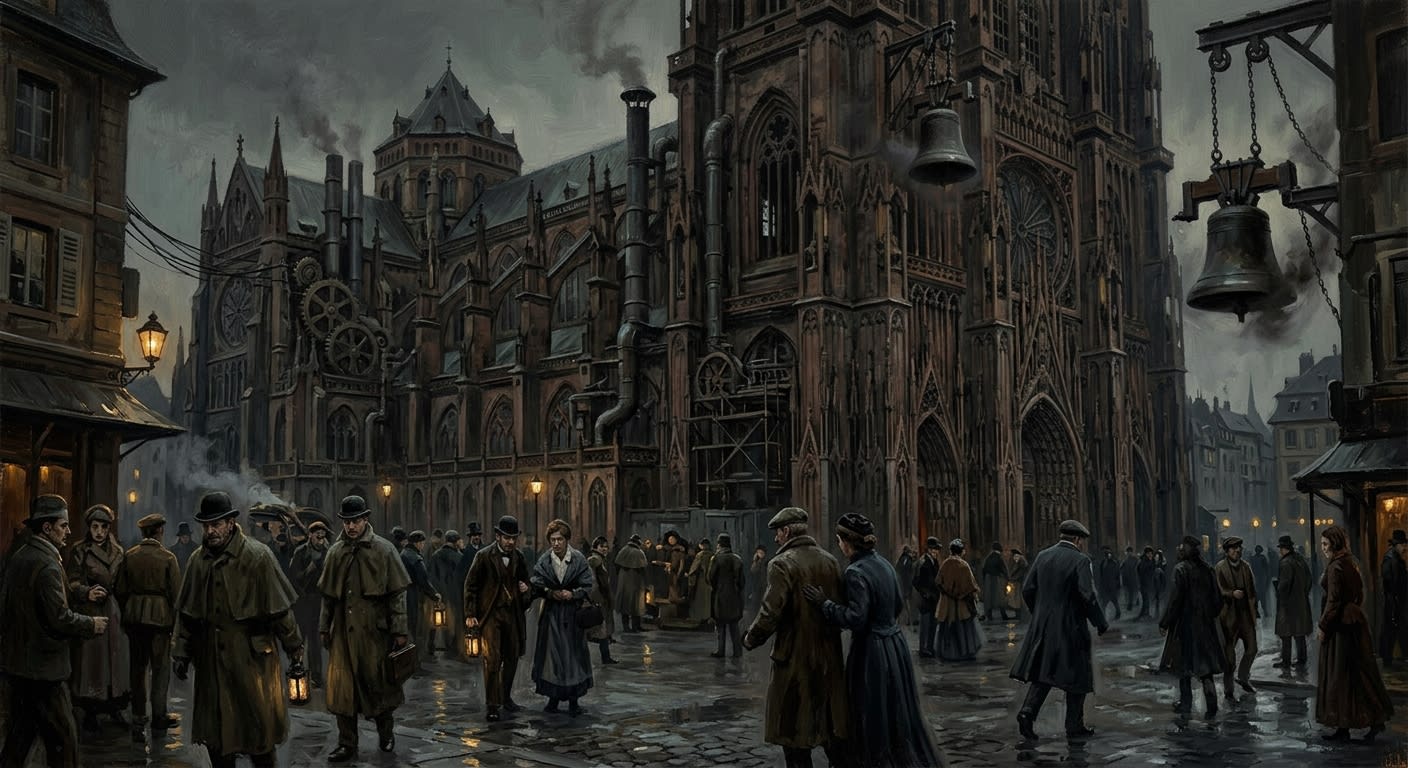
Cathedral of the Perpetual Writ
Where lawful bells learned to drown mourners politely
Strasbourg's lesser cathedral authenticates copies, stores route tables, and remembers the night two lawful bells divided eight hundred mourners into nineteen deaths.
Codex Ref. II.1.04-005
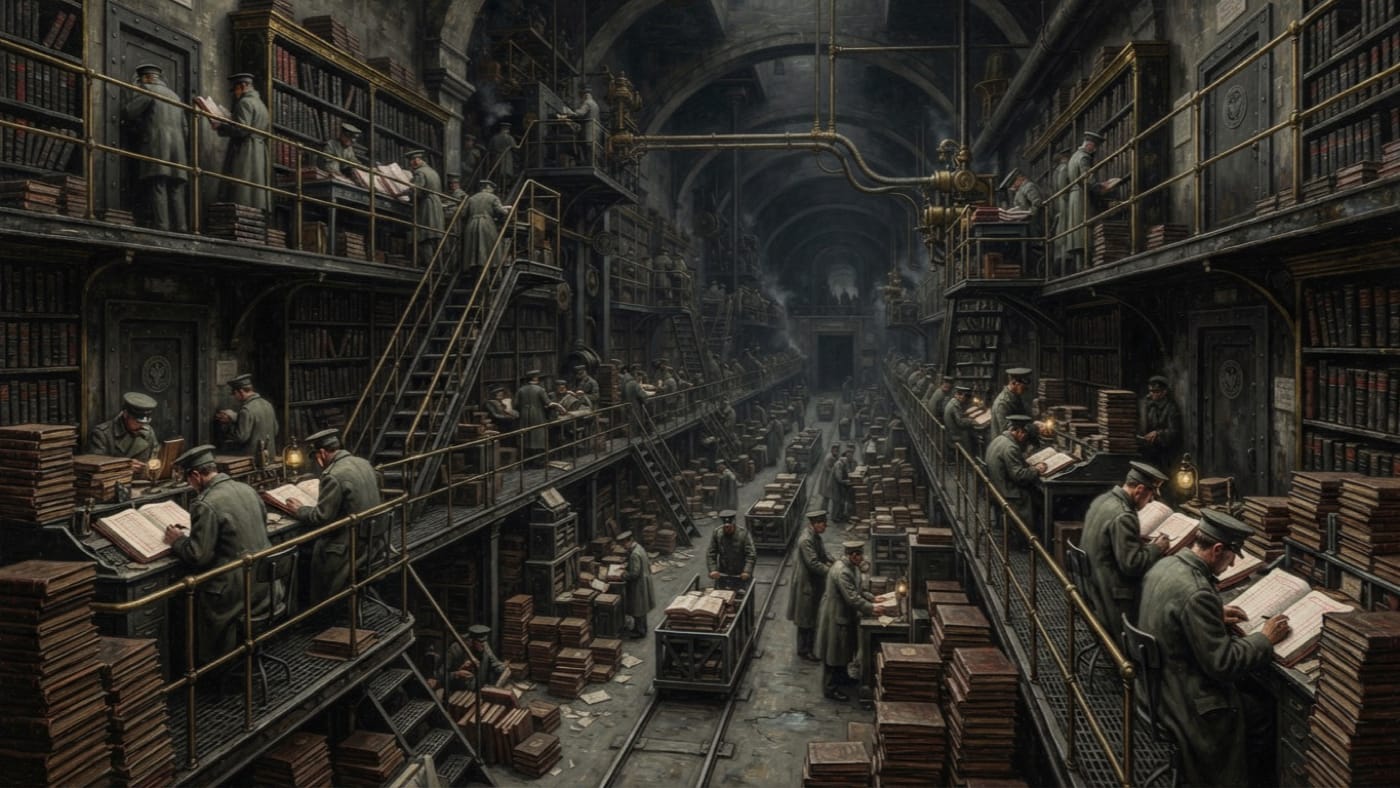
Census of the Living
Names, Debts and Accusations in Crimson
A.S. 201 survey of the Basilica's second-level register, which claims every baptised soul in the Theocracy. Diocese, parish and tithe-class locate the faithful; confessed and suspected sins share their entry.
Codex Ref. III.2.09-540
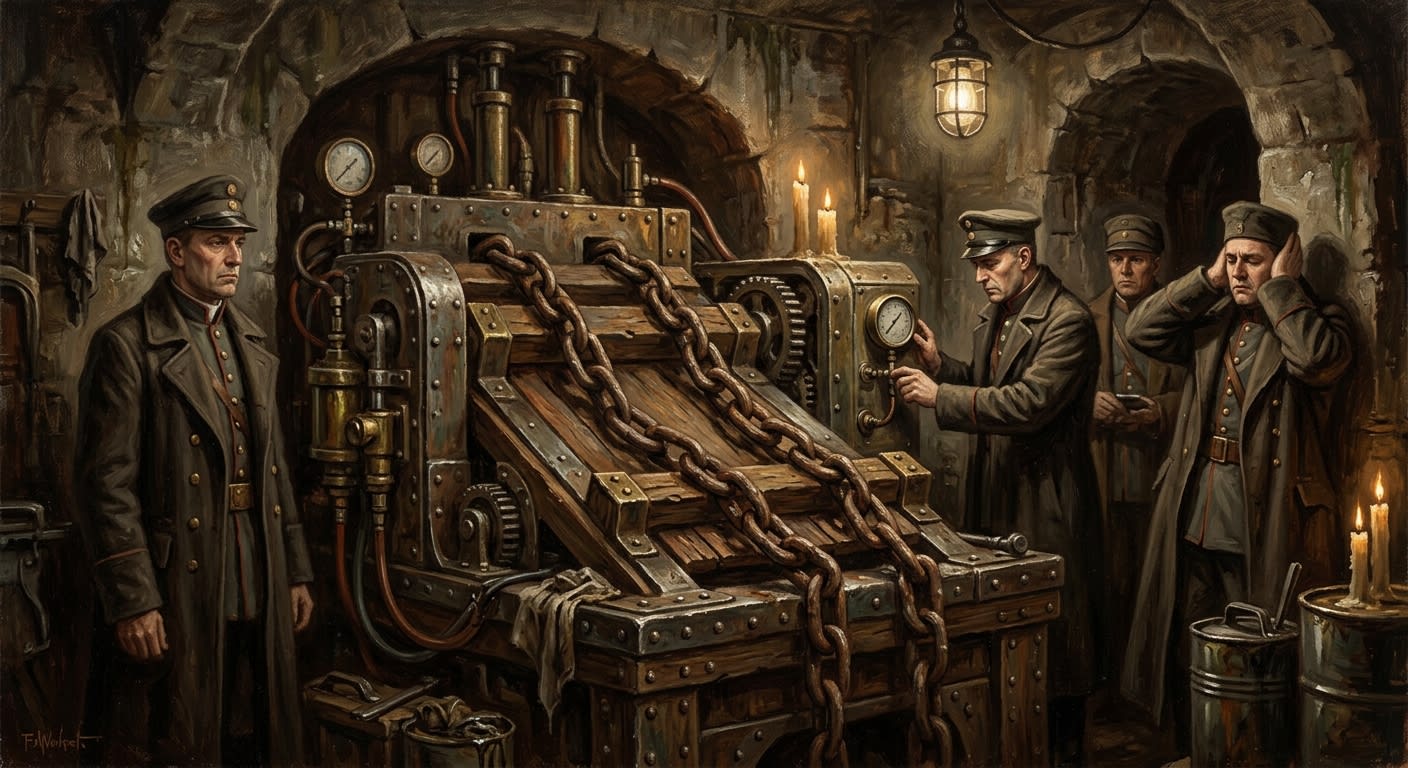
Chains of the Martyrs of Avignon
An absent relic, a wet city, and iron humming under denial
Disputed Avignon restraint-relic whose public nonexistence requires lower Basilica watches, pitch suppression, and the official courage to ignore B-flat iron.
Codex Ref. IX.3.12-111

Cloister of Concord
Agreement under pressure, paved in ash, ink, and enemy stone
The Cloister of Concord is Strasbourg's working courtyard of authorised agreement, where Doctrine turns contradiction into law and stone learns to listen.
Codex Ref. II.1.04-004
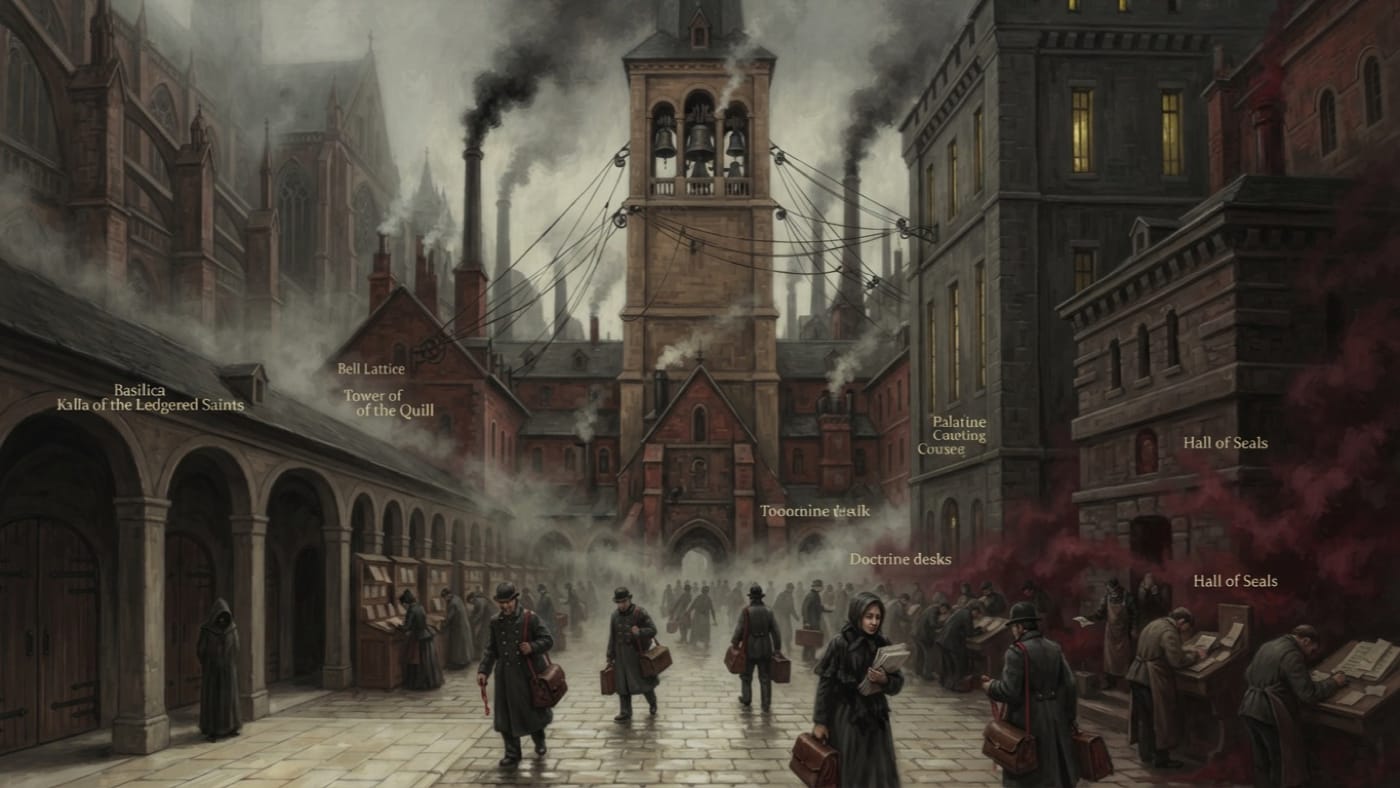
Cloister Precinct
Where every refusal stands within walking distance
Strasbourg's Cloister precinct gathers Doctrine desks, seals and tithes around one petitioner's walk. Every refusal is nearby; the northern arcade has no recorded custodian.
Codex Ref. II.1.04-008
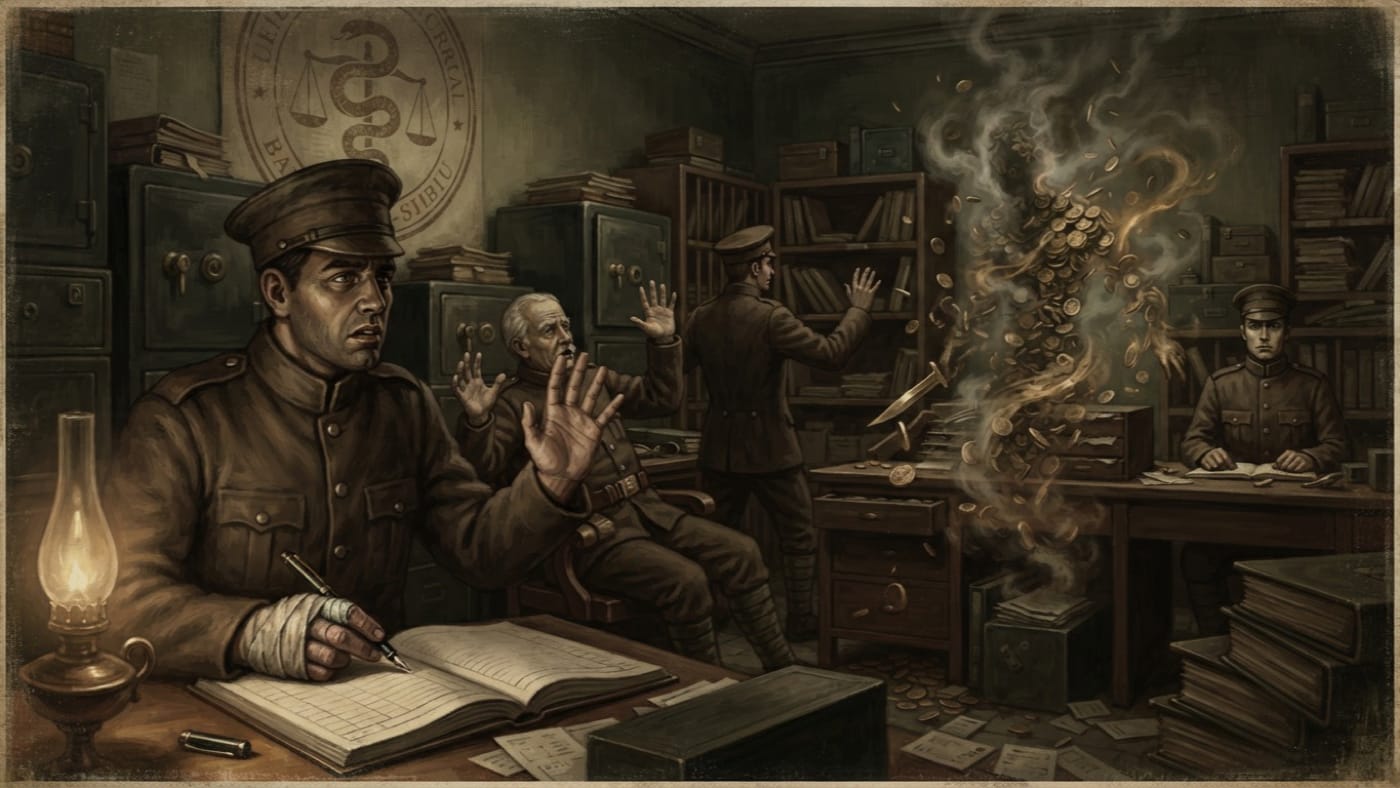
Coin-Sworn Shades
The throat is opened. The account is closed.
A.S. 201 survey of Velmora's unseen assassins: spirits bound to cursed currency, announced by a faint coin chime. Their blades open throat and fortune; the dead leave empty purses and debts still eager to collect.
Codex Ref. IV.2.07-001
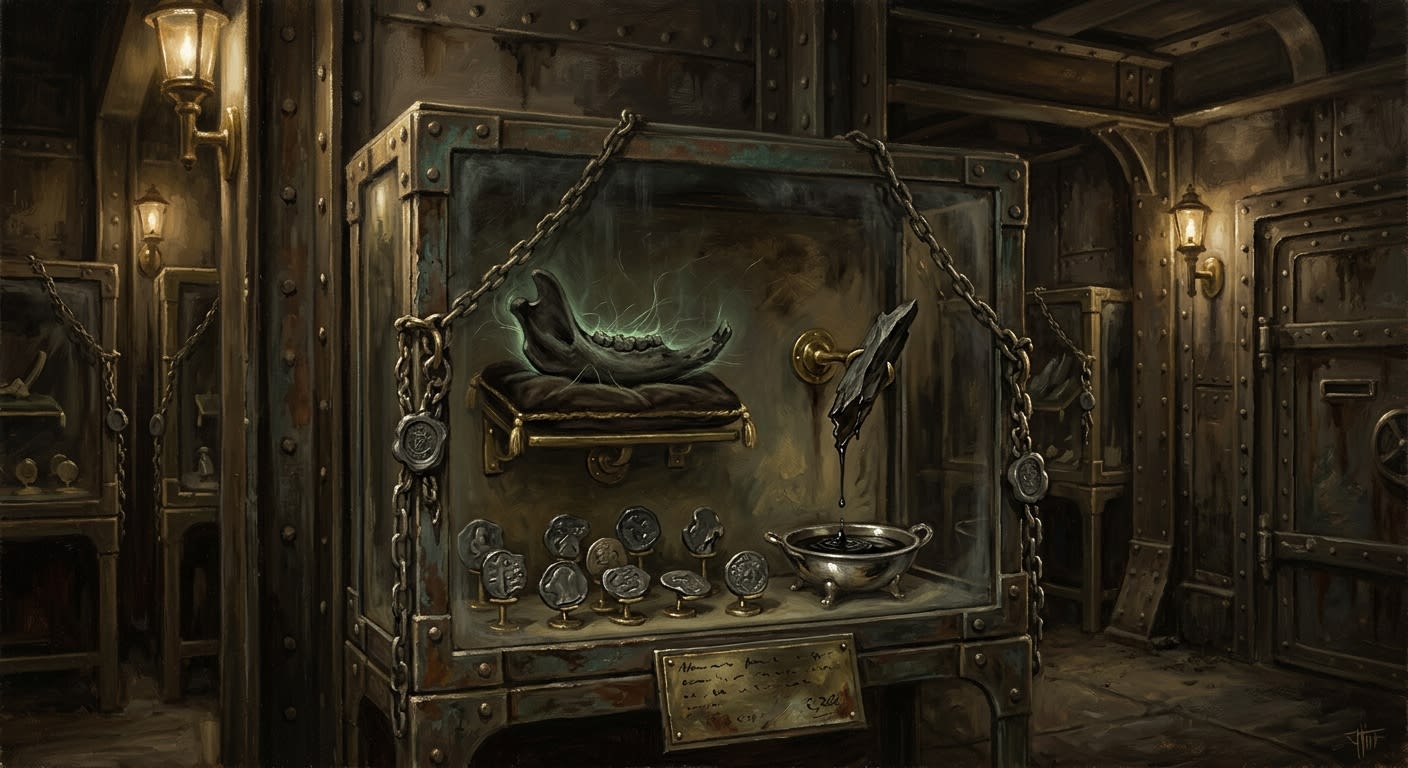
Confiscated Relics of Uncertain Provenance
Holy things without receipts, unholy things with excellent filing discipline
Third silence of the Vault of Silences, holding the humming jawbone, the weeping splinter, and Velmora's returning coins under suspended relic authority.
Codex Ref. XIII.1.50-001

Conte di Sforza
He brought a protest. Strasbourg kept the tears.
The Conte di Sforza came to Strasbourg in A.S. 97 to defend the League of Milan. Its compact was already void; his reported tears were retained as evidence.
Codex Ref. III.2.01-097

Corvus
The fourteenth stands; the rest awaits its papers
Corvus is a later Church month whose fourteenth day commands the Saint-Malo fast, names and bells. The memorial is assigned; the massacre's exact day remains unproved.
Codex Ref. XIII.1.05-003

Crimson Vault
The Rule in Ink, the Intention in the Margin
A.S. 201 survey of the Bureau of Records' Crimson Vault, where the Council of Worms account places Kratz's handwritten Protocol. The rain-spotted pages preserve advice the clean clauses do not; the Vault's physical location remains unestablished.
Codex Ref. III.2.07-032
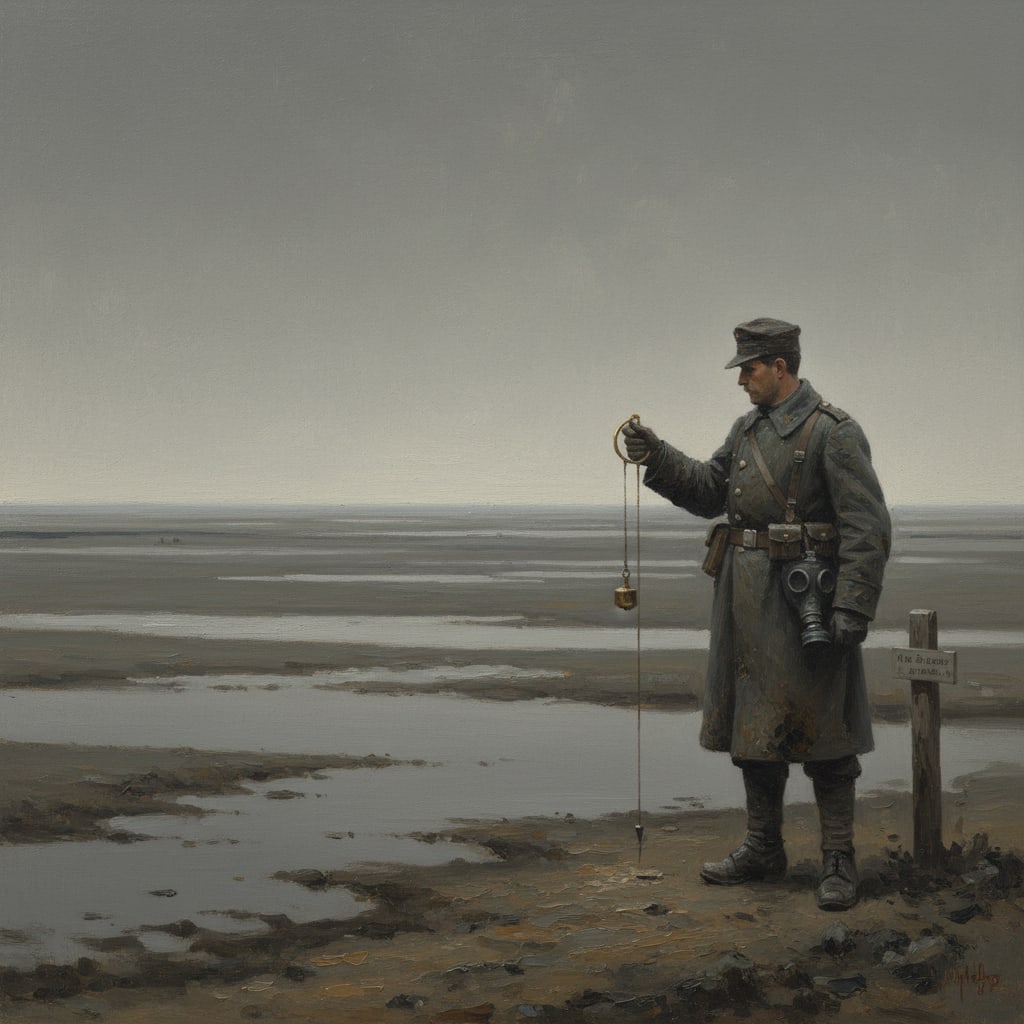
Debrecen
The city that was eaten
Forty-two thousand souls, a grain exchange that set prices from the Danube to the Rhine, and a harvest the world will never taste again. Kargath ate it. The Blightmarsh is all that remains, and the Blightmarsh is still hungry.
Codex Ref. VI.1.01-001
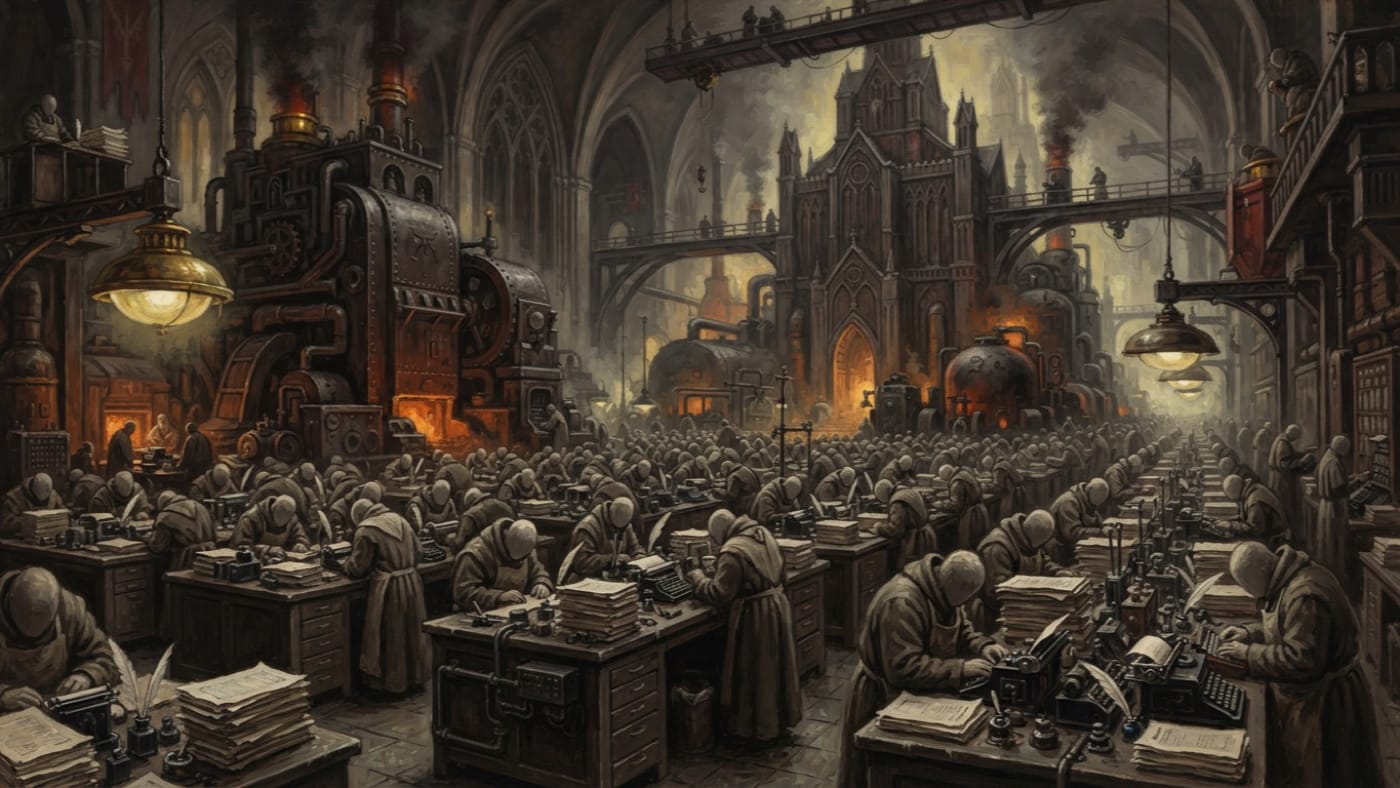
Dijon
The city that sends clerks
Dijon is a principal city of Synod-held Burgundy, recorded for sending clerks and for Archon Benedict Veyrault's former monastic affiliation. A.S. 201 survey: three facts, carefully entered.
Codex Ref. II.1.12-201
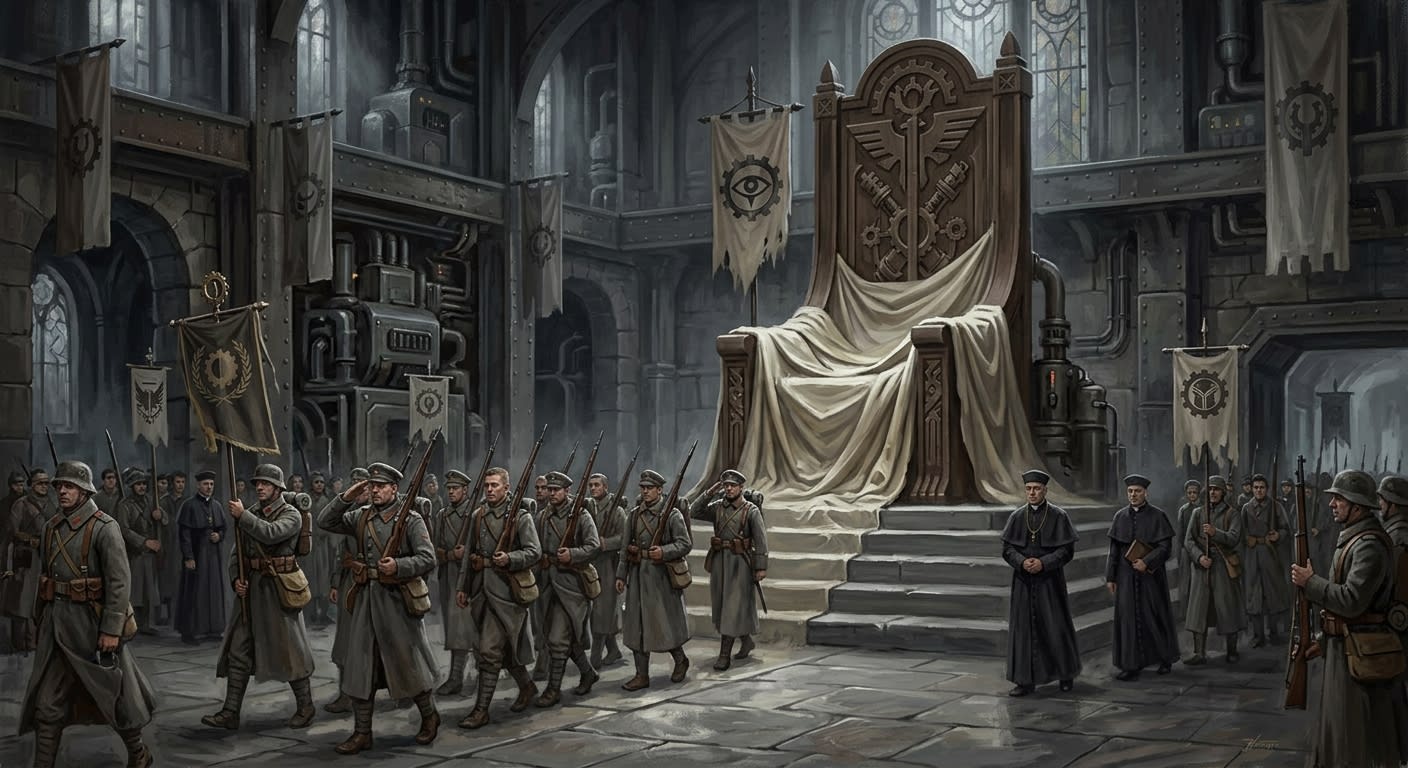
Empty Throne of War
A chair may command armies if enough clerks fear it
The Seventh Seal's white-draped chair has been publicly unoccupied since A.S. 107 and legally occupied ever since, proving absence can march an army.
Codex Ref. XIII.1.52-001

Europe
The wounded continent, held together by rails, bells, hunger, and denial
Europe is the wounded continent: Synod west, Charnel east, Line between, and every road, harbour, cradle, ration card, bell, and grave bent toward survival.
Codex Ref. II.0.01-201

Father Gaël of Dinan
Four words, one reliquary, and the useful poverty of a man not yet sainted
Father Gaël of Dinan, first named dead of Saint-Malo, survives as four words of custody: brief enough for children, sharp enough for states.
Codex Ref. III.2.01-016
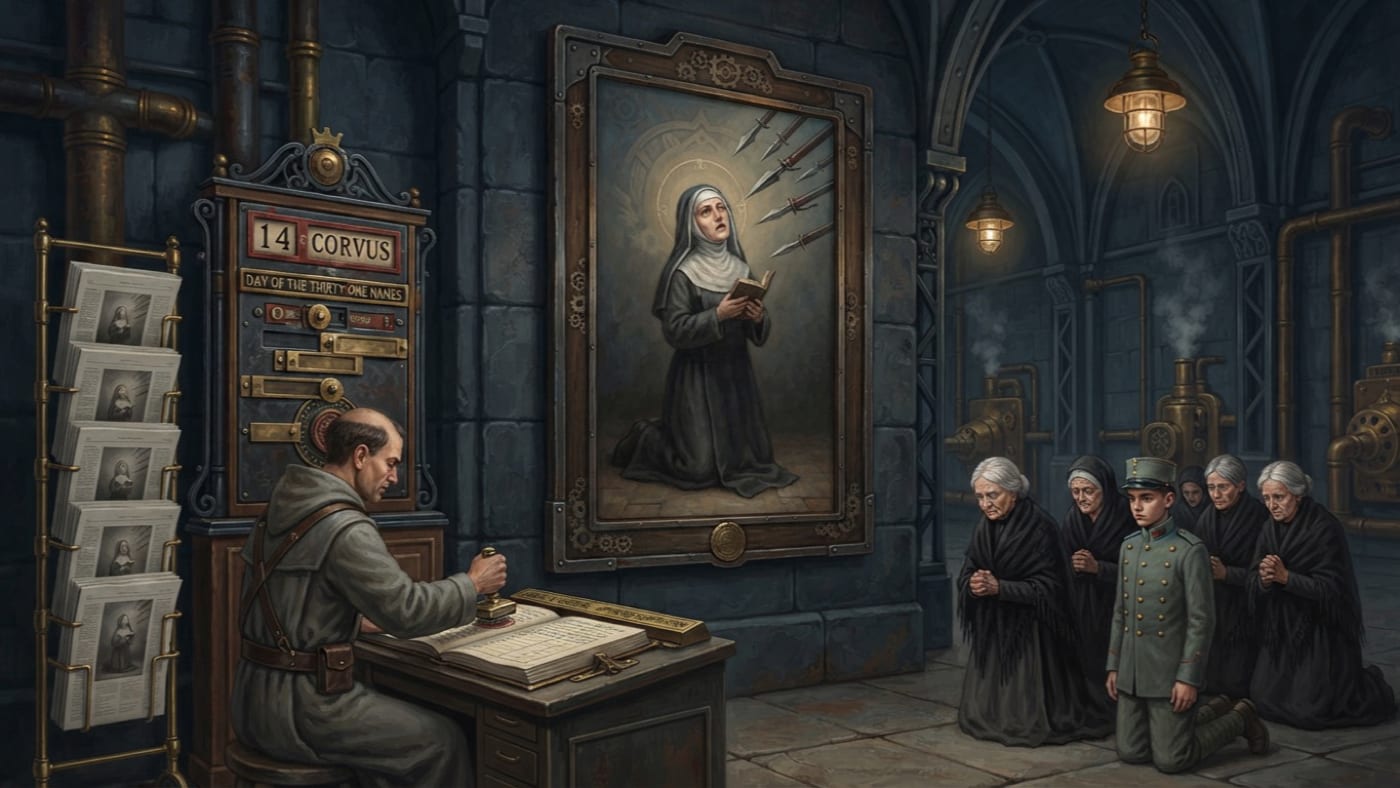
Feast of Saint Margaux
Thirty-one dead, one approved face
On 14 Corvus, Saint Margaux shares her feast with the Day of the Thirty-One Names. The grief belongs to the faithful; the face, the calendar and the uses belong to the Bureaus.
Codex Ref. XIII.1.87-014
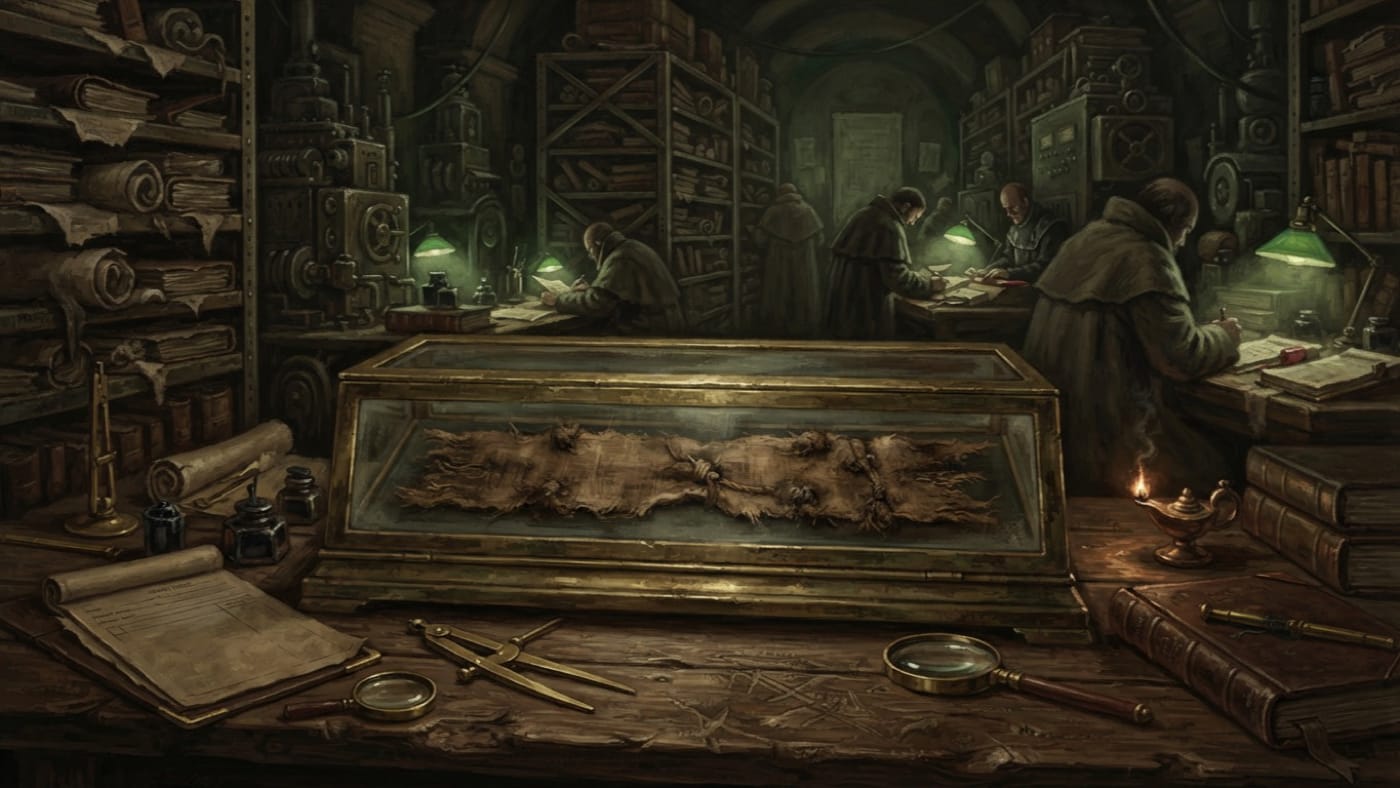
First Knot-Cloth
Thirty households bound, three certainties about where the cloth lies
An A.S. 201 survey of Liora's First Knot-Cloth, traditionally used to bind thirty hungry households to mutual aid. The offices agree it is preserved; they disagree on where.
Codex Ref. XIII.1.03-015
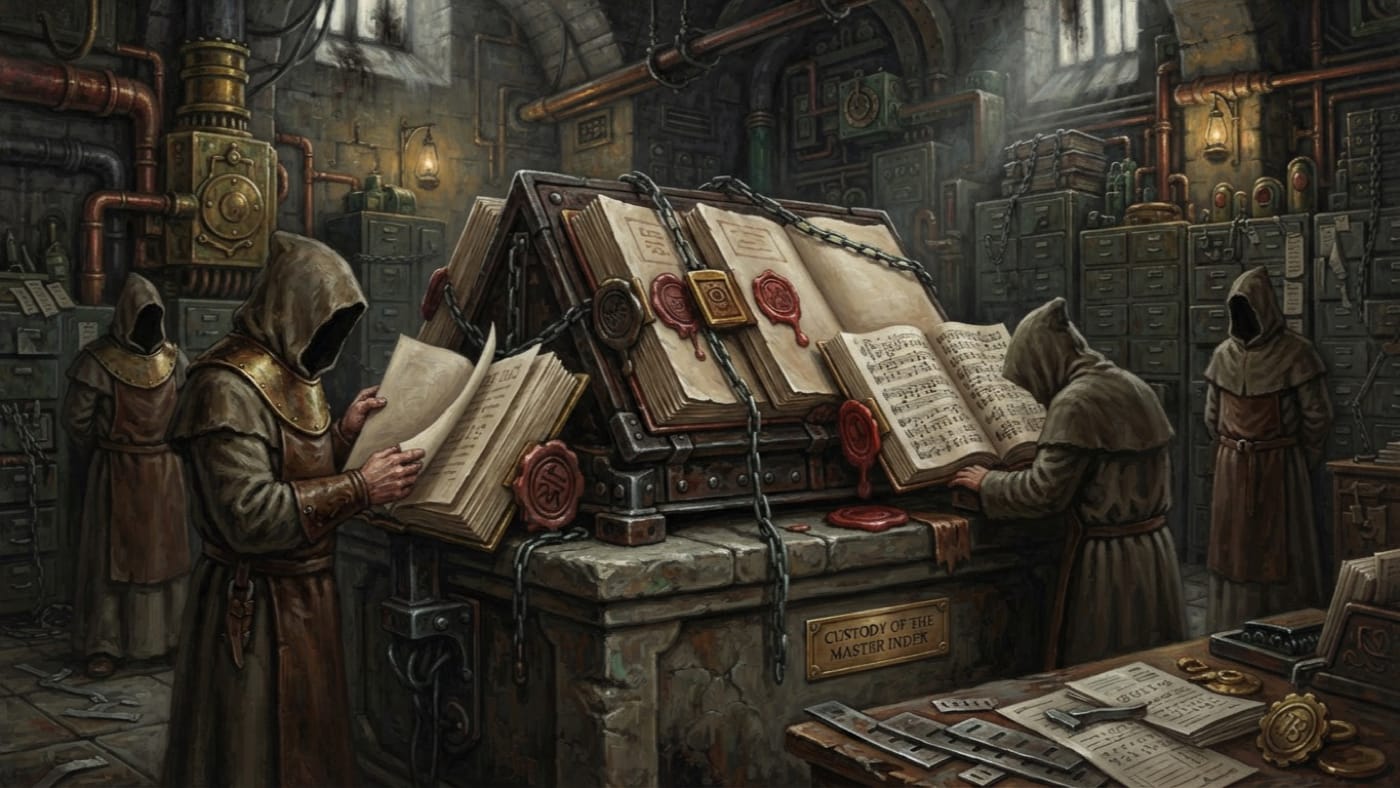
Five Registers of the Index Damnatus
One chained compendium, five kinds of condemnation
Five divisions of one chained compendium: Texts, Names, Sounds, Forms, and Lineages. Each has its own Purity quorum and seal; the faithful must obey what they may not read.
Codex Ref. XIII.1.48-001
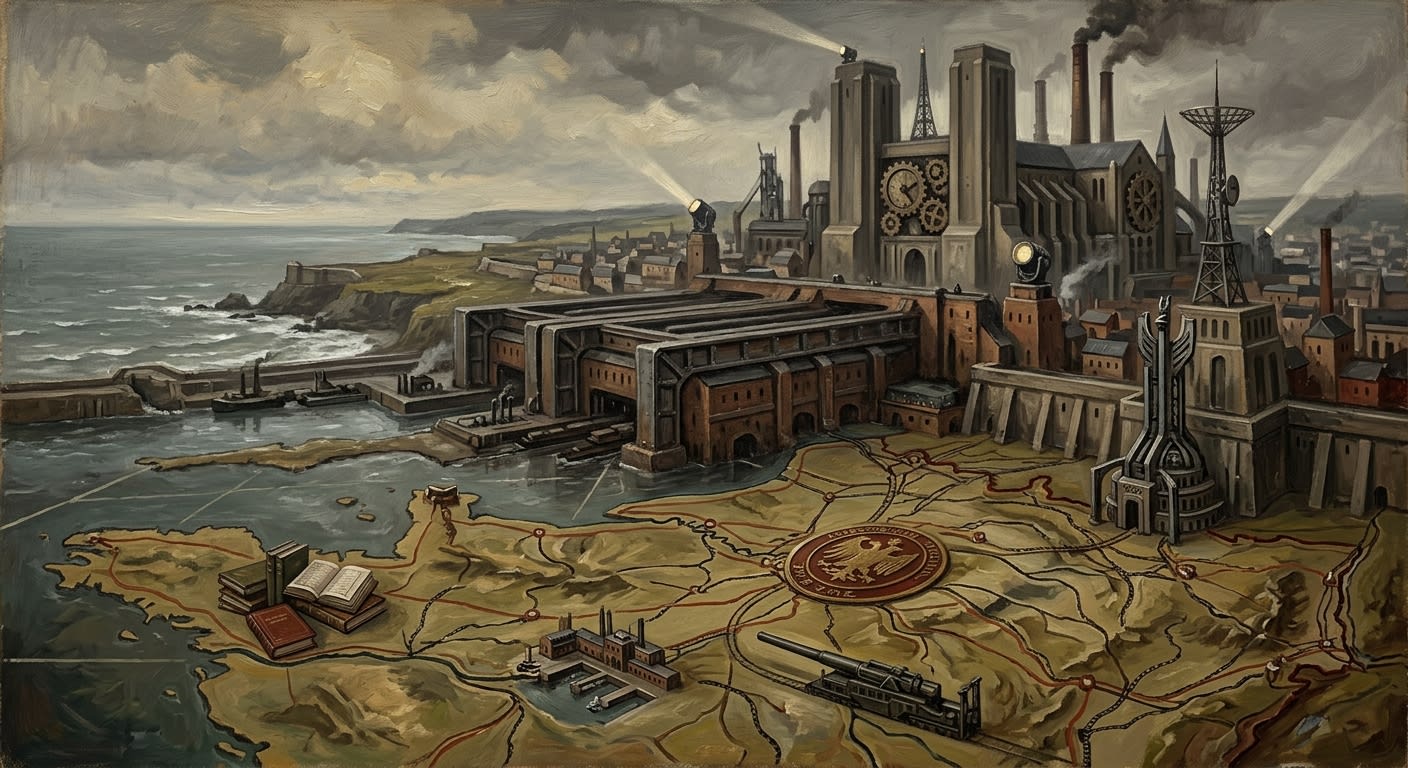
France
The country the Synod did not abolish, because it proved too taxable to waste
A.S. 201 survey of France as Zone One heartland: martyr coast, watched cities, taxable memory, useful ports, and one conquered name made indispensable.
Codex Ref. II.1.01-201
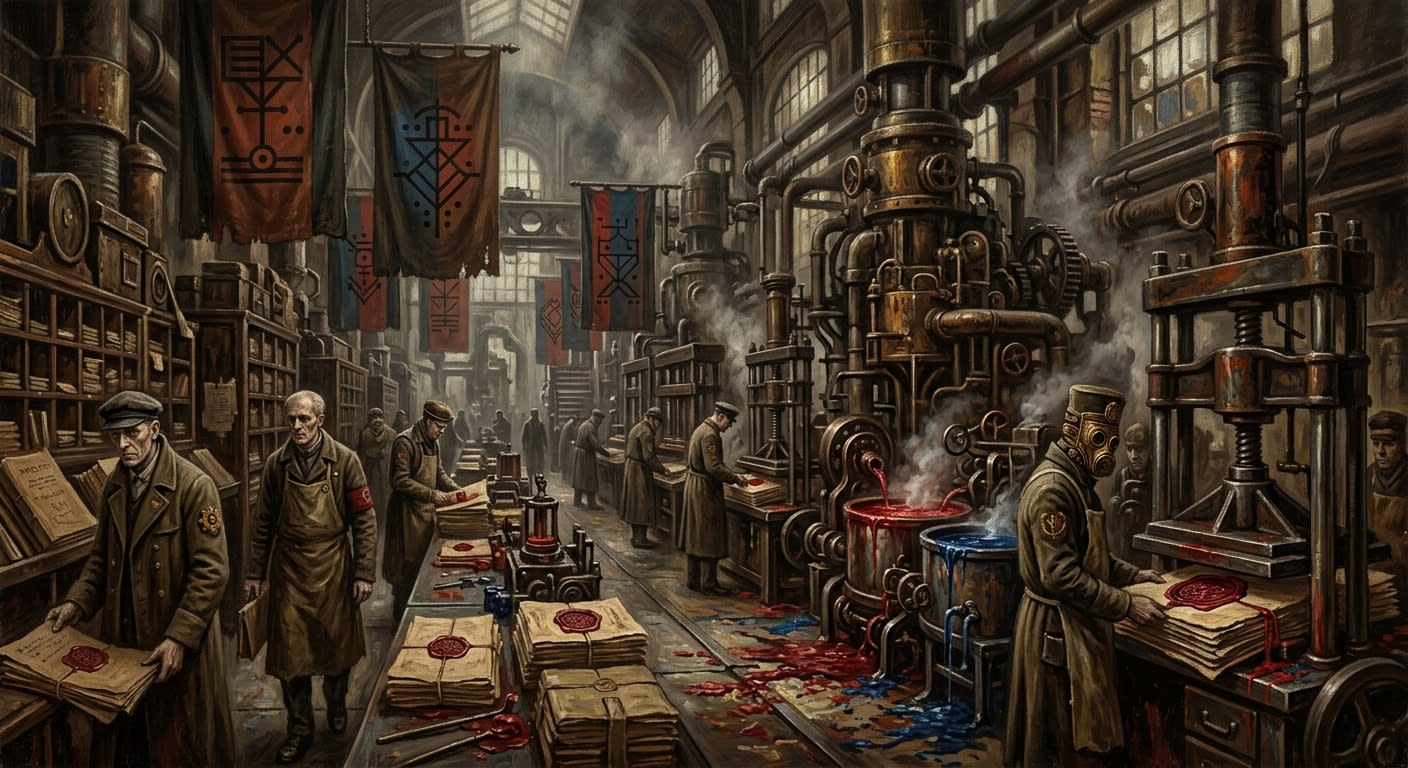
Hall of Seals
Where wax learns to rule and colour awaits sentence
The Hall of Seals is Strasbourg's low clean engine of visual law, where Heraldry and Masks and Seals ration colour, custody dies, and make wax sovereign.
Codex Ref. II.1.04-002
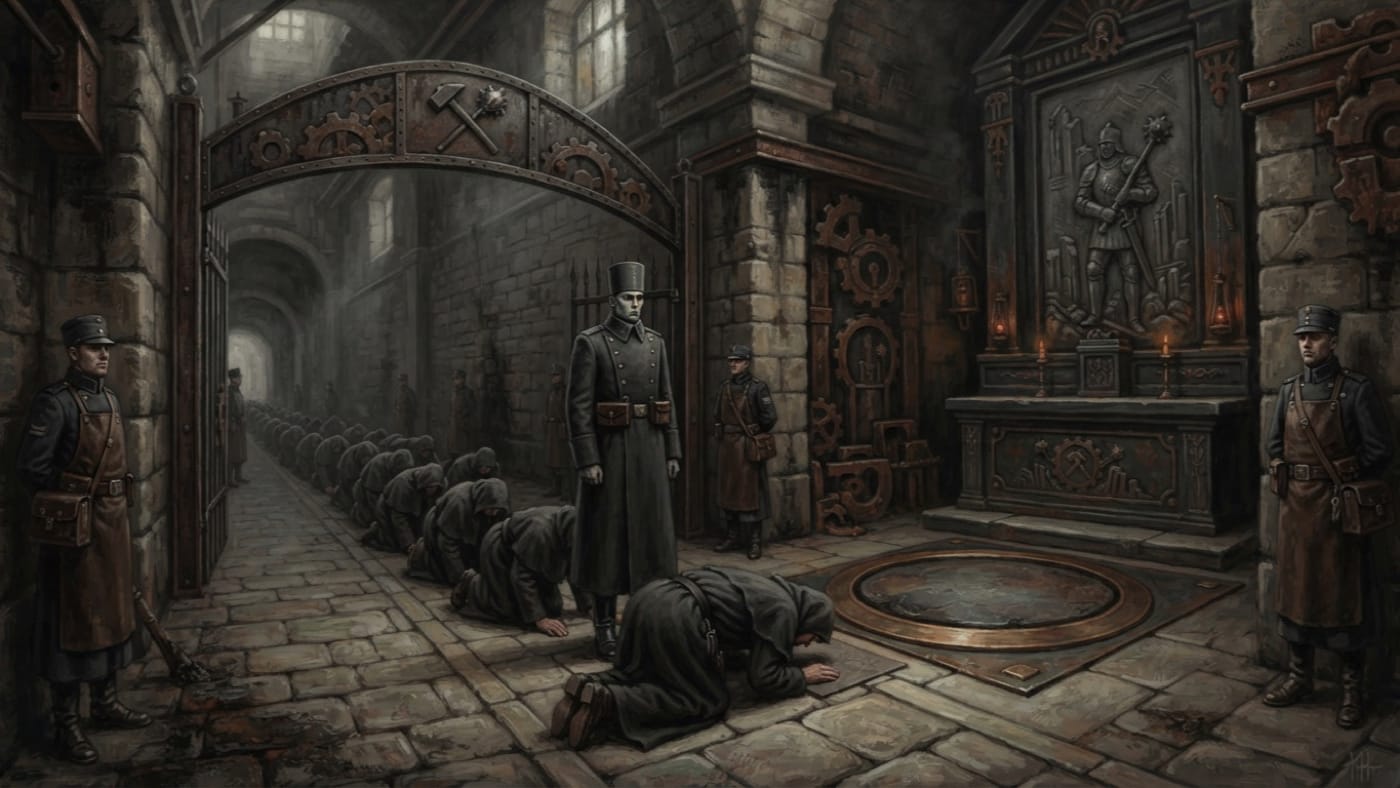
Hammer Line
Eleven metres where even the guides hold their tongues
The Hammer Line is the silent final eleven metres of Vienna's Via Stahlhand, where pilgrims reach the Impact Plate on their knees and the Bureau permits hearing without permitting questions.
Codex Ref. II.4.09-012
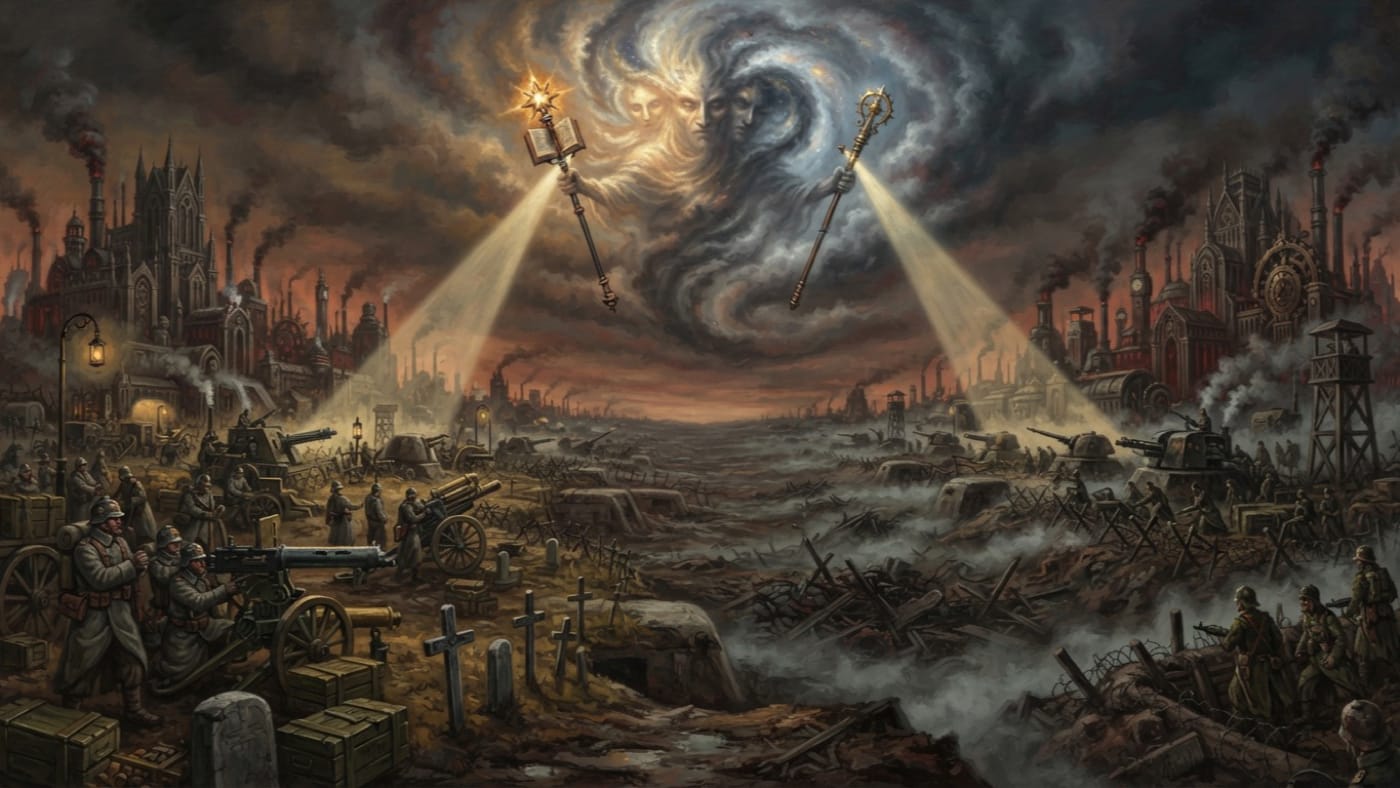
Heresy of the Complicit Creator
The proposition is prohibited. The classification remains blank.
The claim that the Creator and the Great Deceiver are one power, and the war a performance. I record its arguments under Standing Order 7-A; the Bureau prohibits the proposition and leaves its classification blank.
Codex Ref. VI.1.01-004
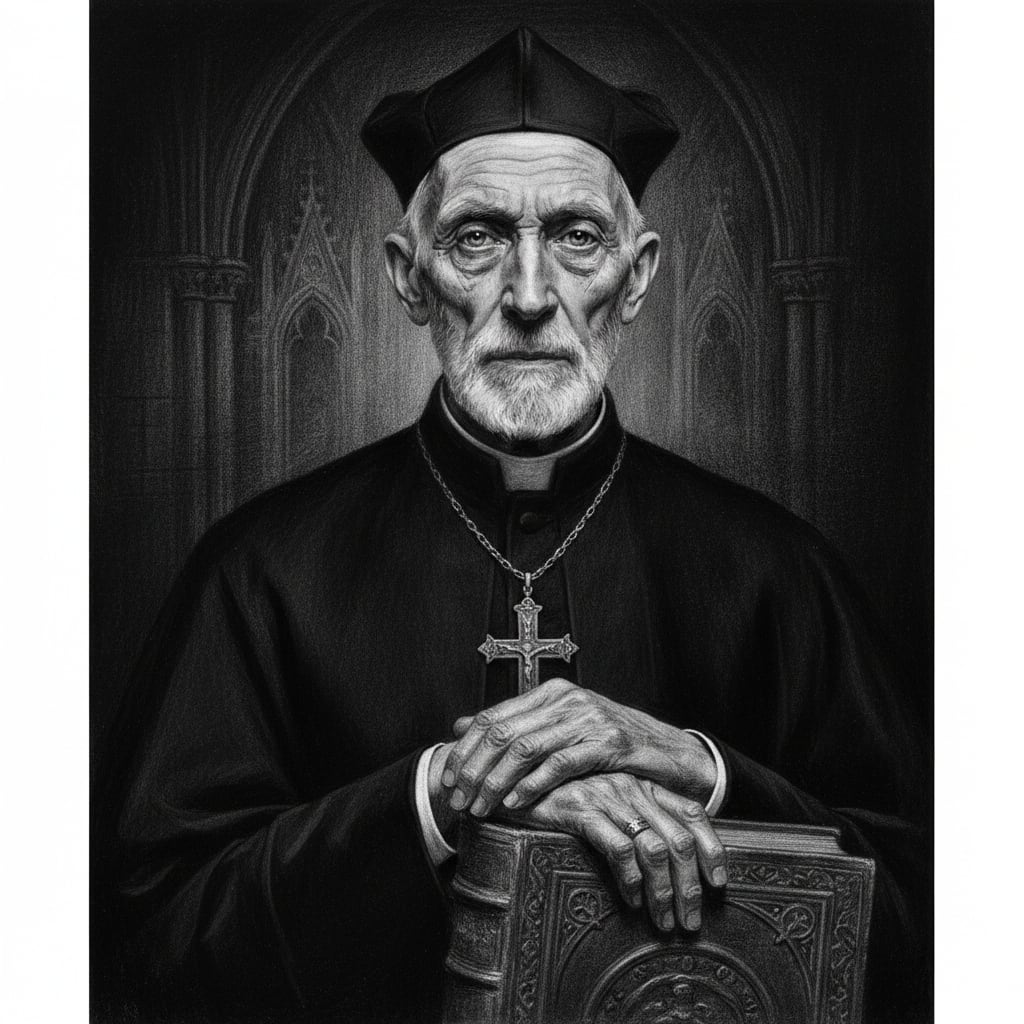
Hierarch Augustinus of Mainz
The Binder of Wounds
First among the Hierarchs, called the Binder of Wounds. He yoked altar to arsenal, sanctified catapults with reliquaries, and built the Synod from the marrow of the faithful. His genius was not theology. His genius was infrastructural cruelty.
Codex Ref. III.1.01-001

Hierarch Odo of Trier
The man who taught Strasbourg's stones to obey
Hierarch Odo of Trier entered the Inner Circle after Mainz and became quotation at Cologne, where one sentence taught bishops, walls, and petitions how silence obeys.
Codex Ref. III.2.01-044

Hierarch of Doctrine
Truth is what leaves the Seal; reading is a courtesy
The unnamed current holder of the First Seal defines orthodoxy for the Synod, commands Doctrine, and proves that authority need not wait upon comprehension.
Codex Ref. III.2.01-071
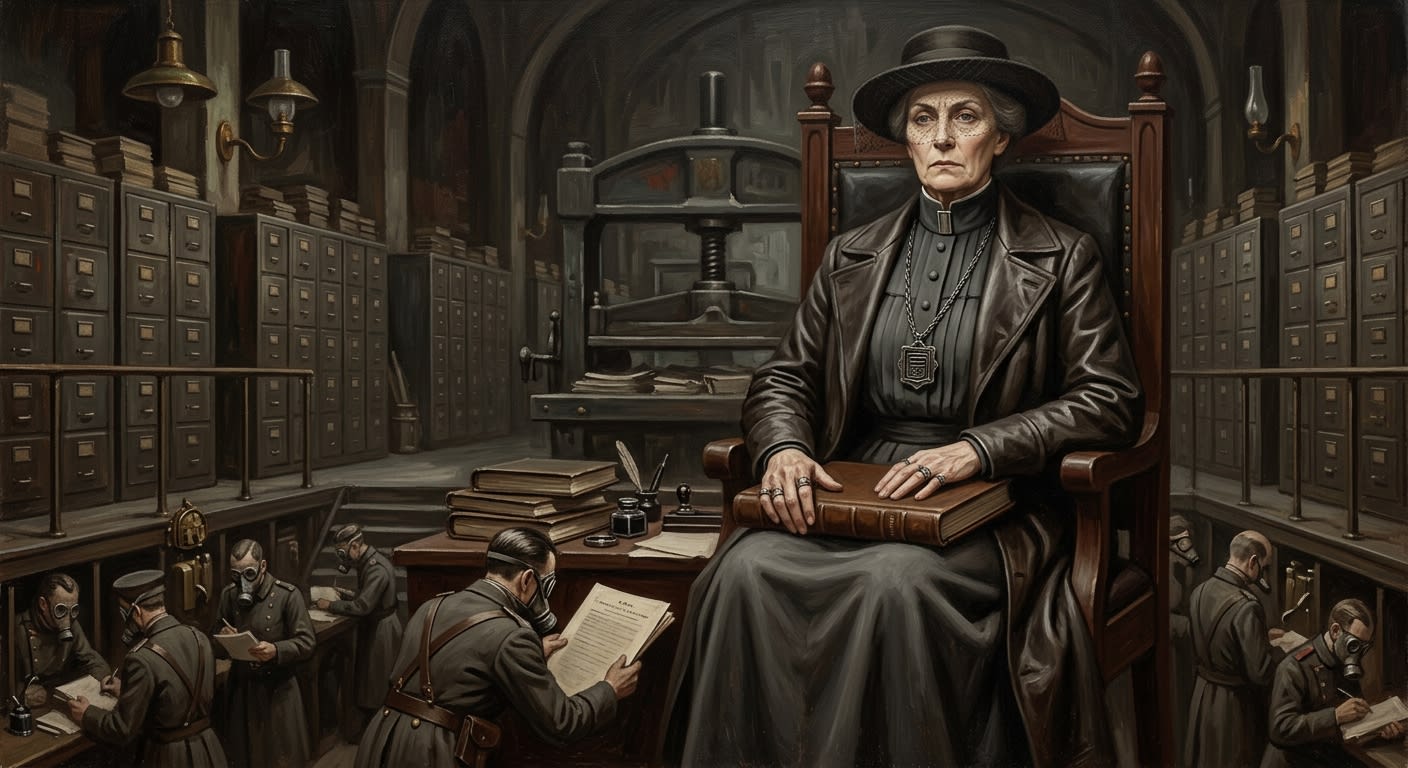
Hierarch of Purity
The silence before confession has a chair and wears white
The unnamed current holder of the Fifth Seal commands Purity, the Inquisition, and the administrative terror by which impurity becomes whatever her silence permits.
Codex Ref. III.2.01-072

Hierarch of Vigilance
The watcher refuses audience and signs before speech
The unnamed current holder of the Sixth Seal governs observation without acknowledgement, votes from empty chairs, and makes even absence keep minutes.
Codex Ref. III.2.01-073

Hierarch-Procurator Marius of Cologne
The signature that moved the state into the birth room
Marius of Cologne ratified the Natal Registration Act of A.S. 158, turning Veyrault's recorded-existence doctrine into midwife deadlines, Womb Registrars, and the price of a child's first breath.
Codex Ref. III.2.01-158
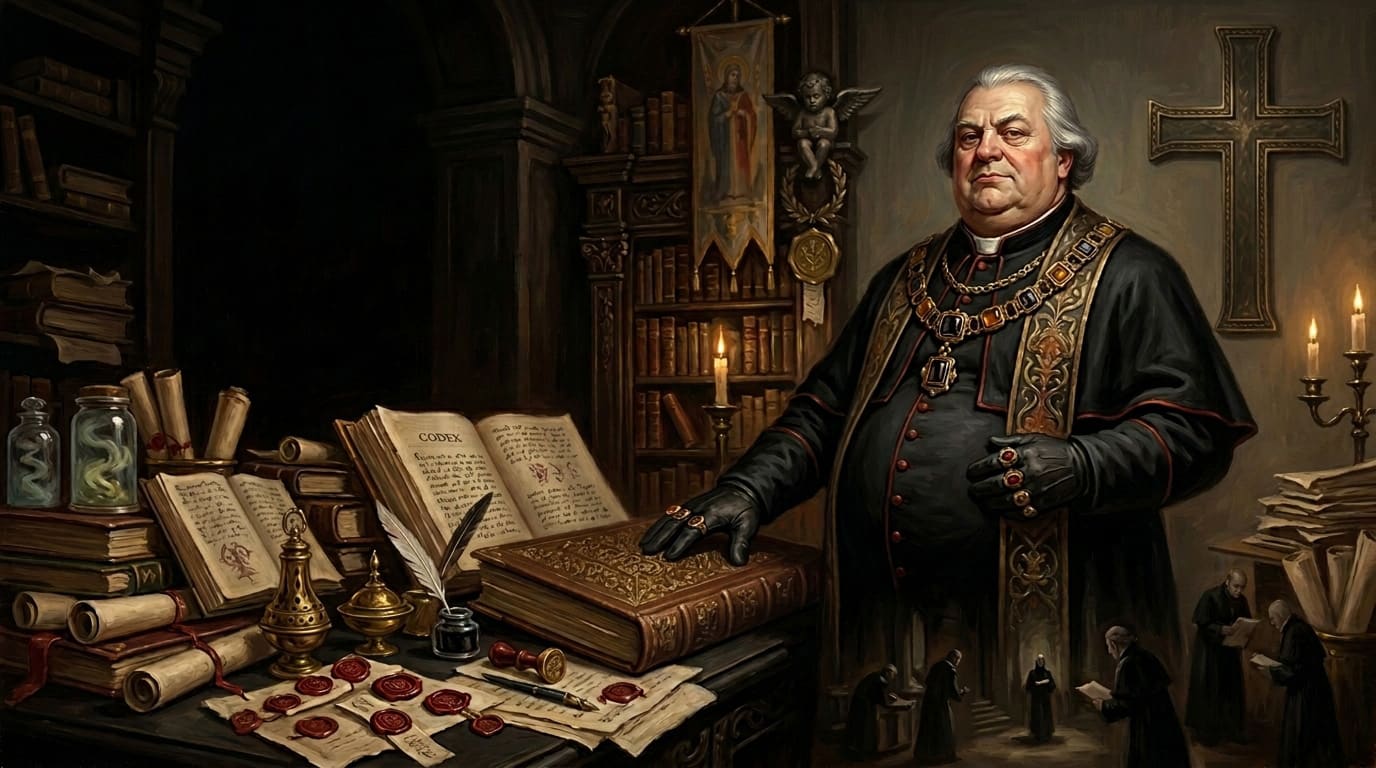
Hieromnemon Valerius Drax
The hand that corrects History before History embarrasses itself
Valerius Drax, Hieromnemon and Warden of the Sacred Ledger, is Doctrine's finest current instrument: prose stylist, ratifier, propagandist, archivist, and living rebuke to committee language.
Codex Ref. III.2.01-201
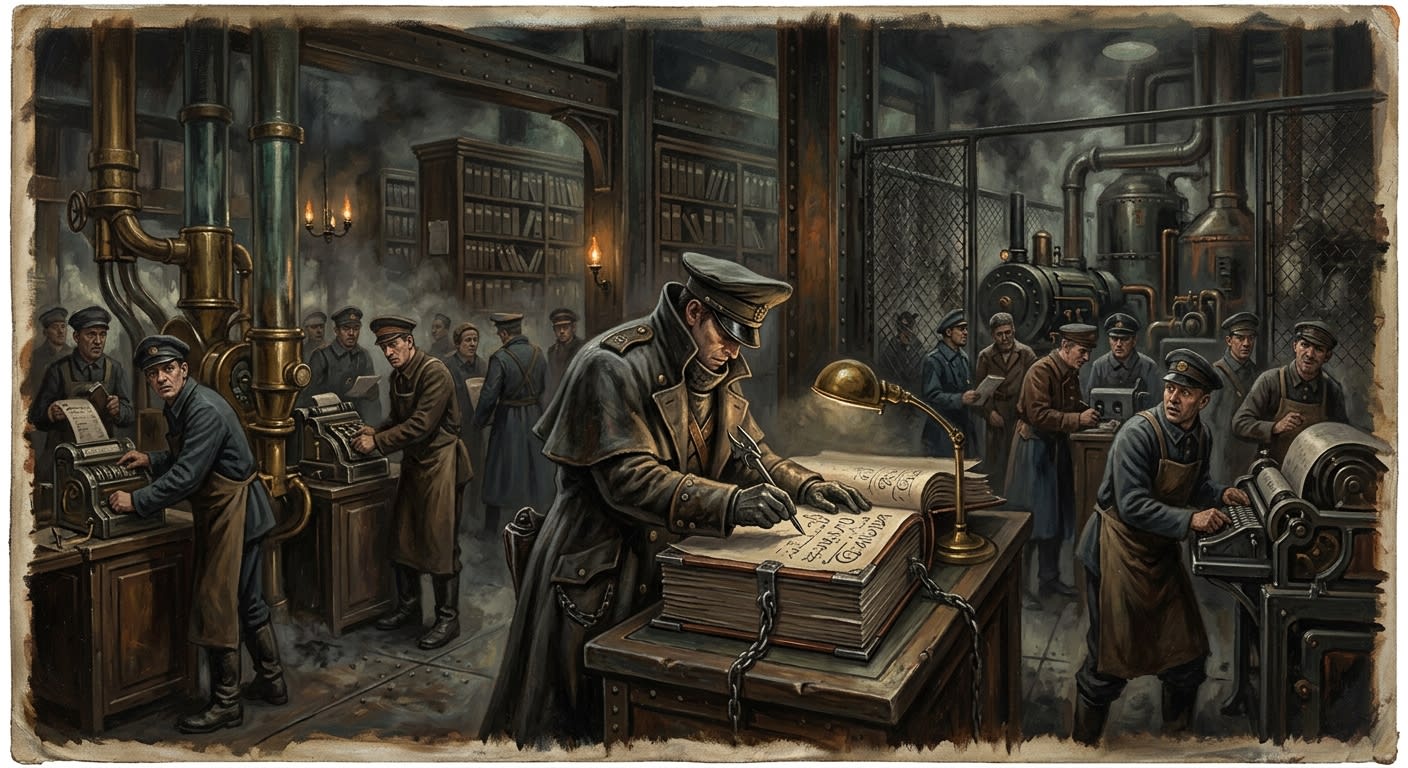
Incident of A.S. 187
The twelfth hour when the margin learned to sing
The A.S. 187 east-bench breach in which Inquisitor Breel copied proscribed Register of Sounds notation from the Index Damnatus, forcing Purity's eight-hour reform under Administrative Order 44-B.
Codex Ref. VII.4.17-001
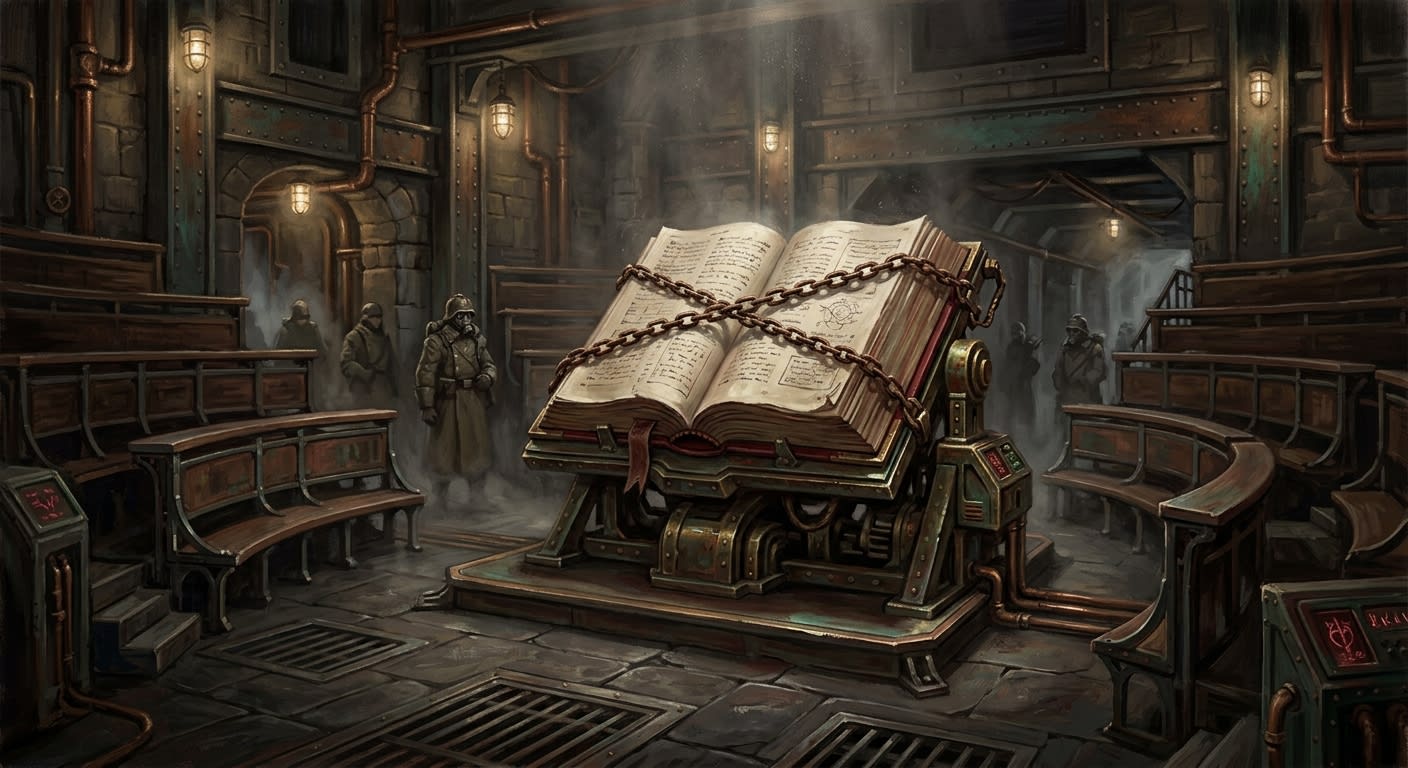
Index Damnatus Chamber
The room where forbidden paper teaches obedience to look away
Principal room of the Vault of Silences beneath Strasbourg's Basilica, where the Index Damnatus remains chained open, watched by benches that never learned mercy.
Codex Ref. II.2.02-004

Inquisitor Breel
The guard who became the margin of the song she never heard
Fourth-rank White-Mantled Inquisitor whose A.S. 187 east-bench exposure in the Vault of Silences made her hand copy forbidden notation from the Index Damnatus.
Codex Ref. III.2.01-070
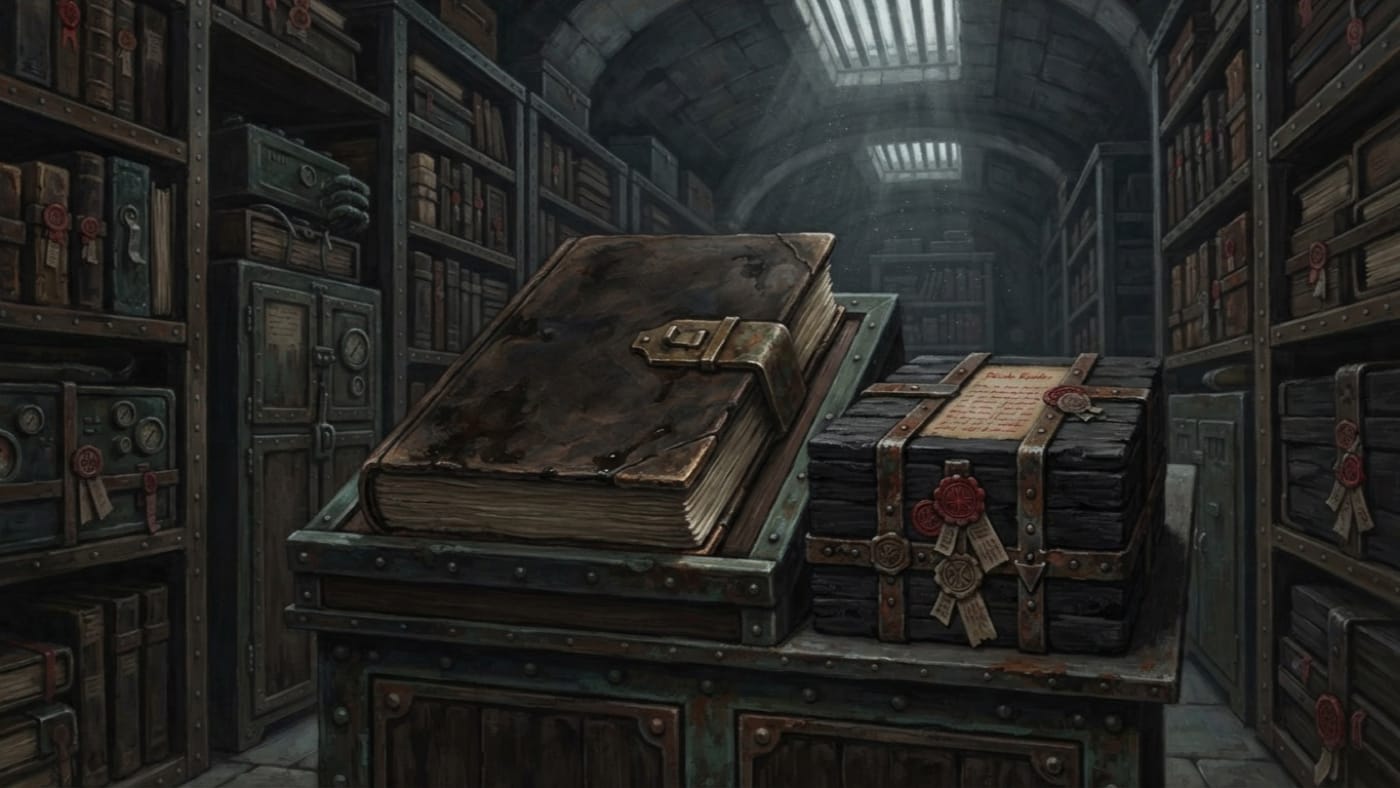
Iron Plains Survivor Volume
Thirteen witnesses bound; the fourteenth indexed in red
Thirteen survivors of the A.S. 45 Iron Plains are bound in this volume beneath Strasbourg. Kessler's testimony is held apart; Records indexes his absence in red.
Codex Ref. XIII.1.48-002
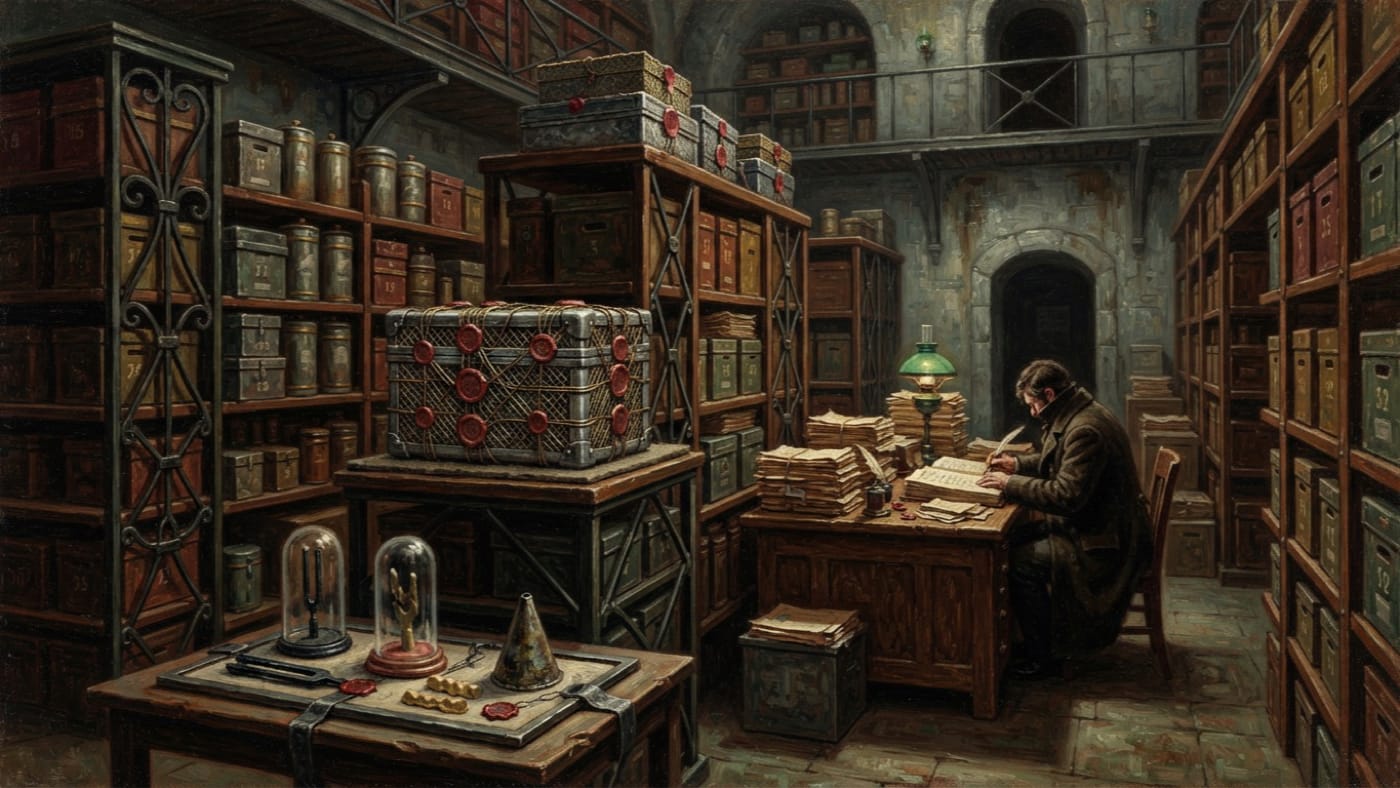
Jawbone Tone
One bone, two cells, and no lawful comparison
A jawbone hums at 217 hertz, proscribed since A.S. 114. Purity keeps the bone in the third silence and its sound in the second; neither may be compared.
Codex Ref. III.2.04-114
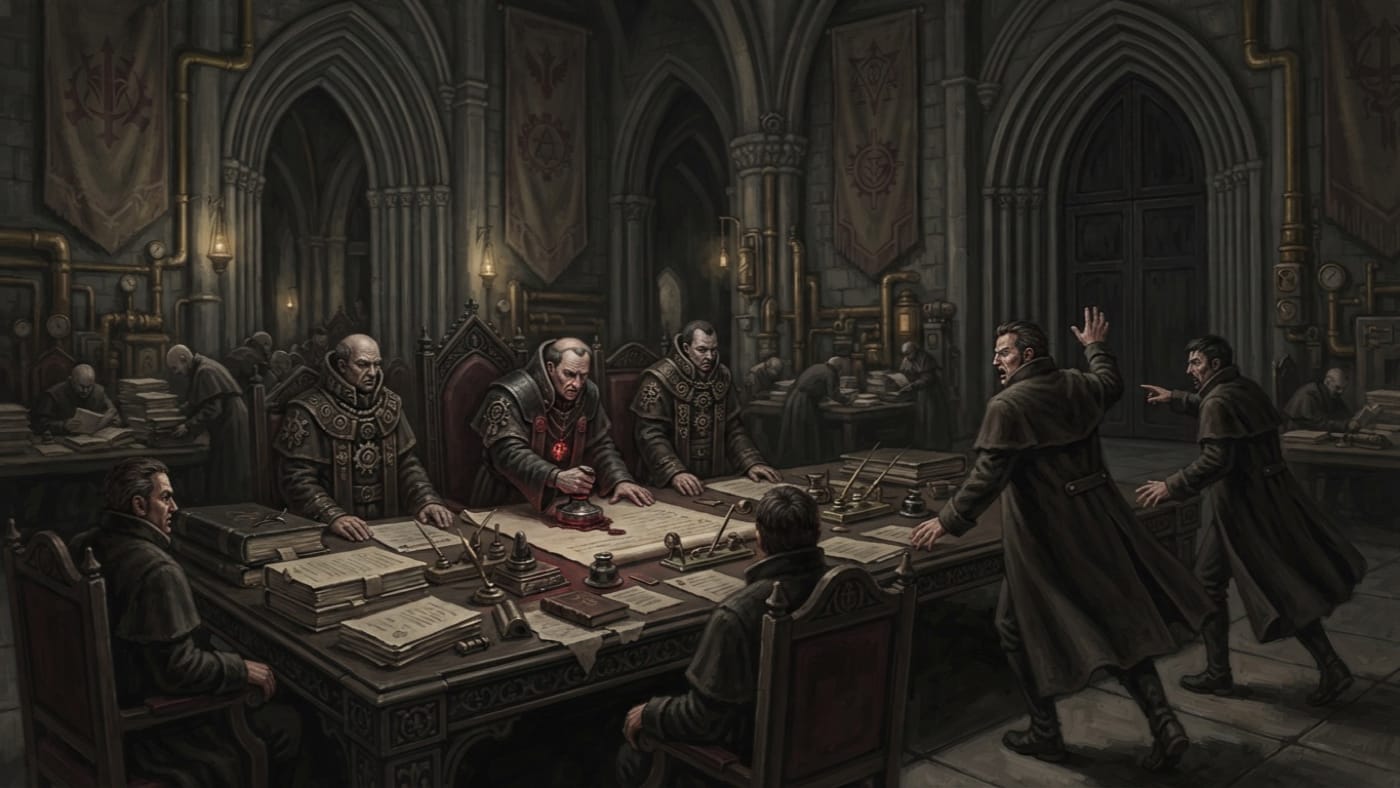
Kingdom of Aragon
A kingdom entered under another seal
Aragon was entered under Iberia's seal at the A.S. 90 Concordat of Strasbourg. Its delegation protested and departed; the Bureau retained the kingdom.
Codex Ref. III.2.04-1544
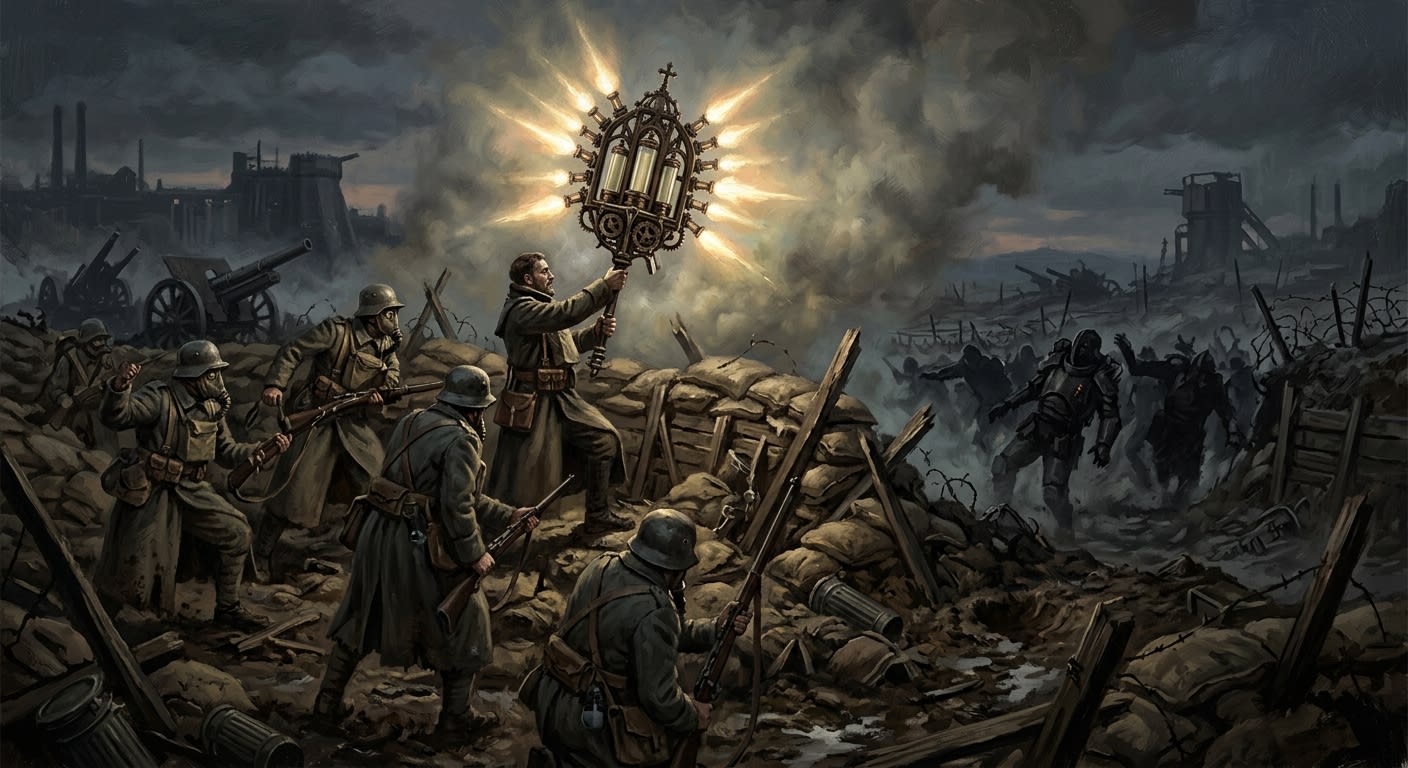
Last Stand of Kalnik Ridge
Where Wrath flinched and retreat learned to march
At Kalnik Ridge in A.S. 48, Brother Tomislav raised the Reliquary of Saint Isidore, seventeen relics blazed, Maldrake's vanguard recoiled, and rout became discipline.
Codex Ref. VII.5.03-001
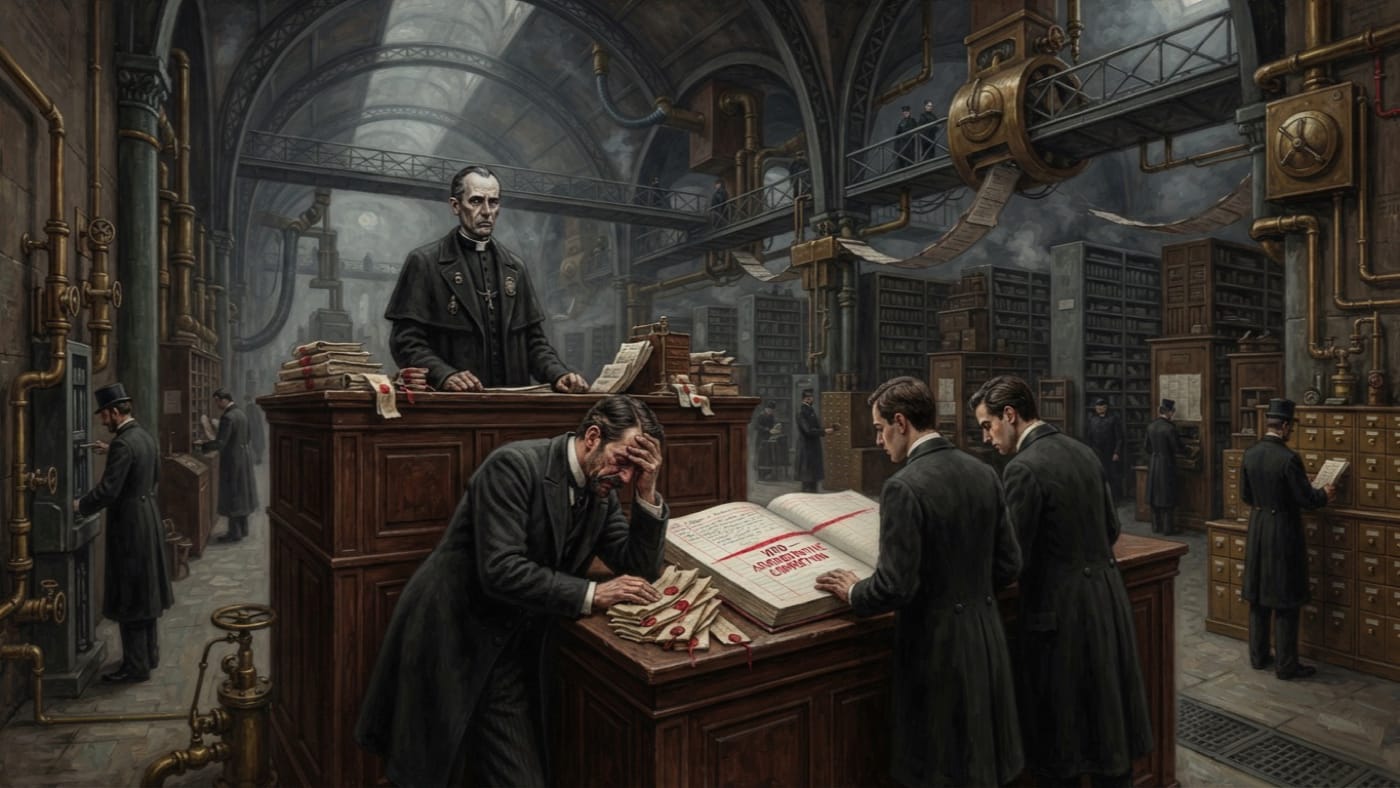
League of Milan
Fourteen cities, five pages, one stamp
Fourteen Lombard cities called their promises an alliance. In A.S. 97, the Bureau of Oaths called them void. The League's founding is uncertain; its annulment is filed.
Codex Ref. VIII.3.01-097

Ledger of Compelled Consent
The signature precedes the will
Bound after the Black Decrees but obeyed before them, the Ledger of Compelled Consent made frightened signatures older than fear.
Codex Ref. XIII.1.17-001
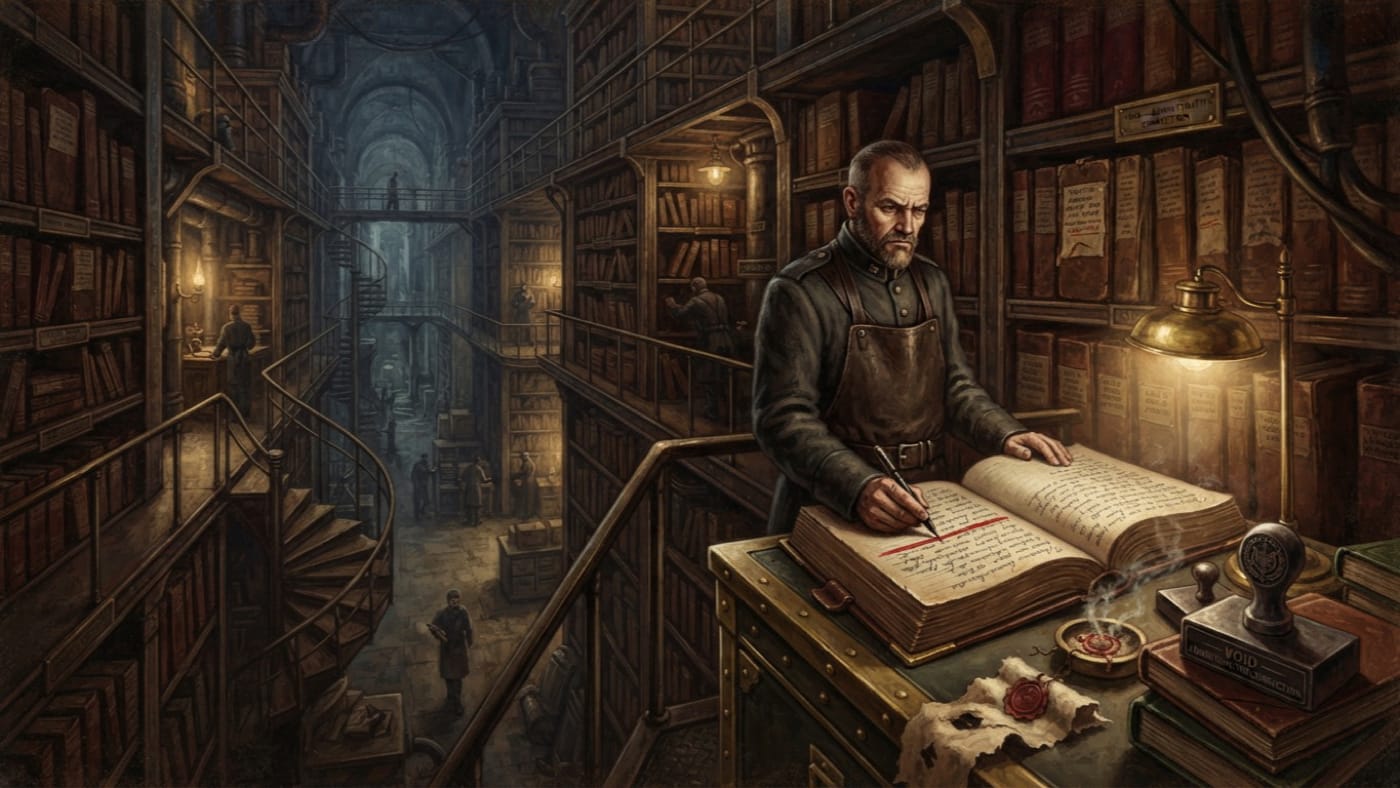
Ledger of Dissolved Compacts
The promise ends. The record remains.
The Bureau of Oaths keeps annulled treaties, expired guild bonds and voided marriages in forty-seven volumes called the Graveyard. A compact may end. Strasbourg keeps the wording.
Codex Ref. XIII.1.159-001
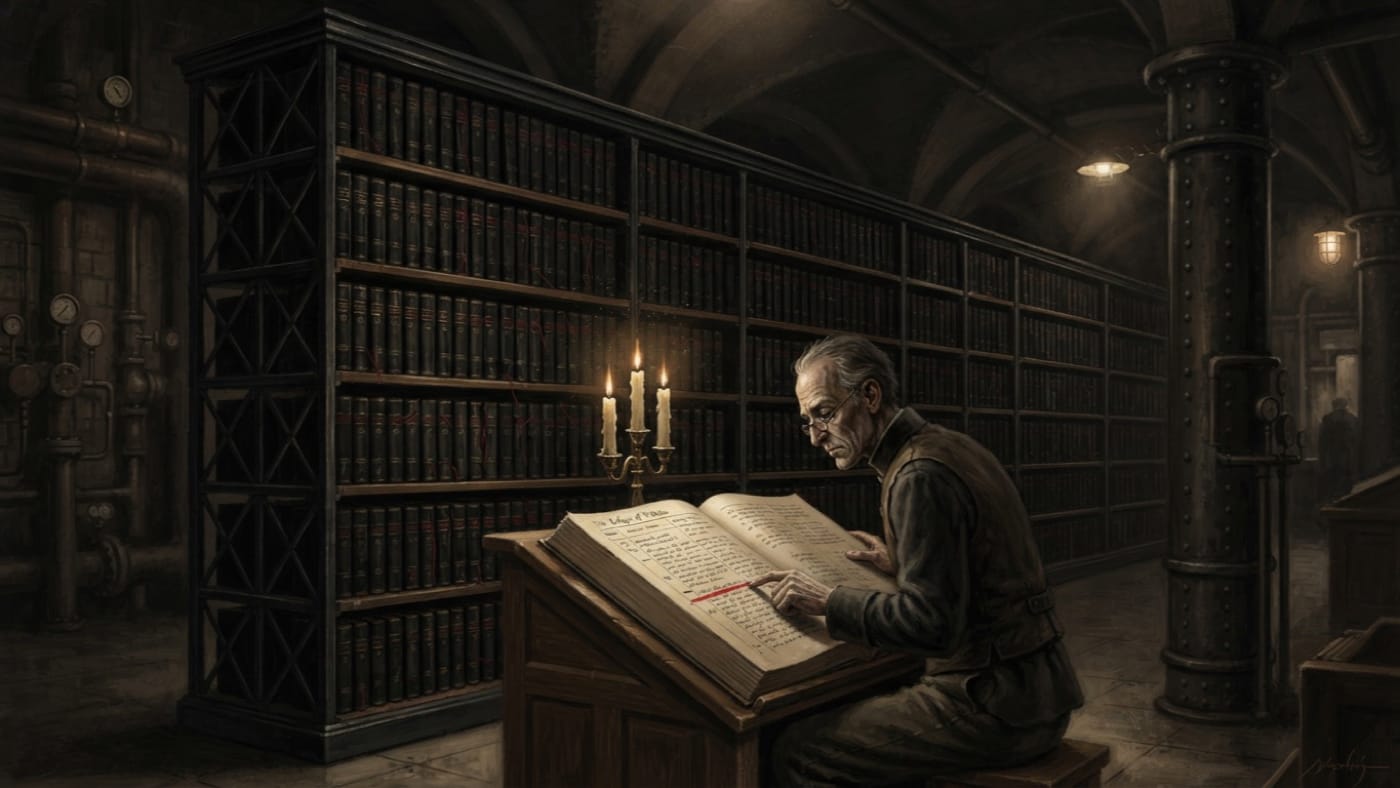
Ledger of Fidelity
A promise may be buried. Its words remain.
One book in seven hundred bindings, the Ledger preserves witnessed oaths under Synod jurisdiction. Annulment draws a red line; it does not grant the mercy of forgetting.
Codex Ref. XIII.1.17-002
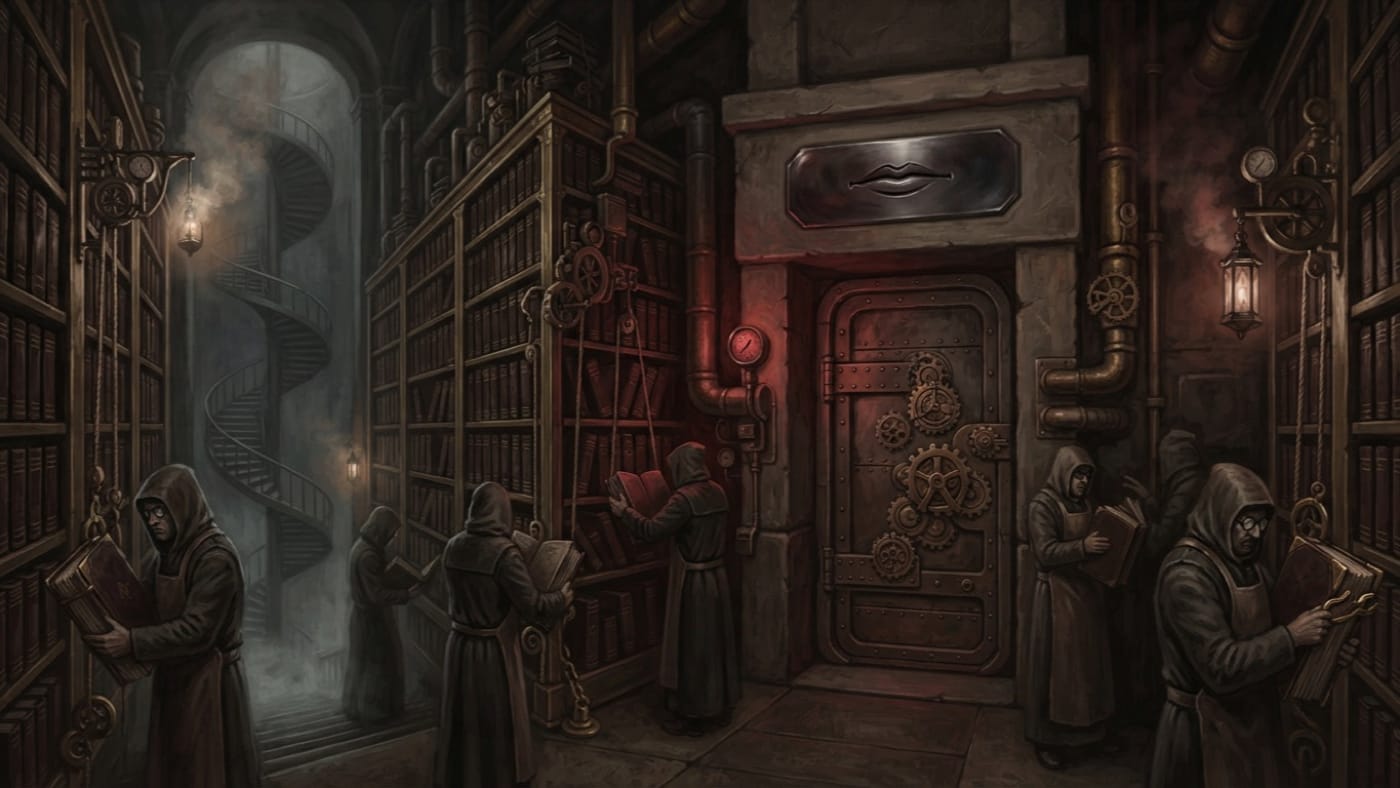
Ledger of Oaths Unspoken
I can report the allegation. I cannot produce the book.
I have seen no folio of the alleged Ledger of Oaths Unspoken. If it records vows never made, the Bureau has found a way to bind a mouth before it opens.
Codex Ref. XIII.1.17-003
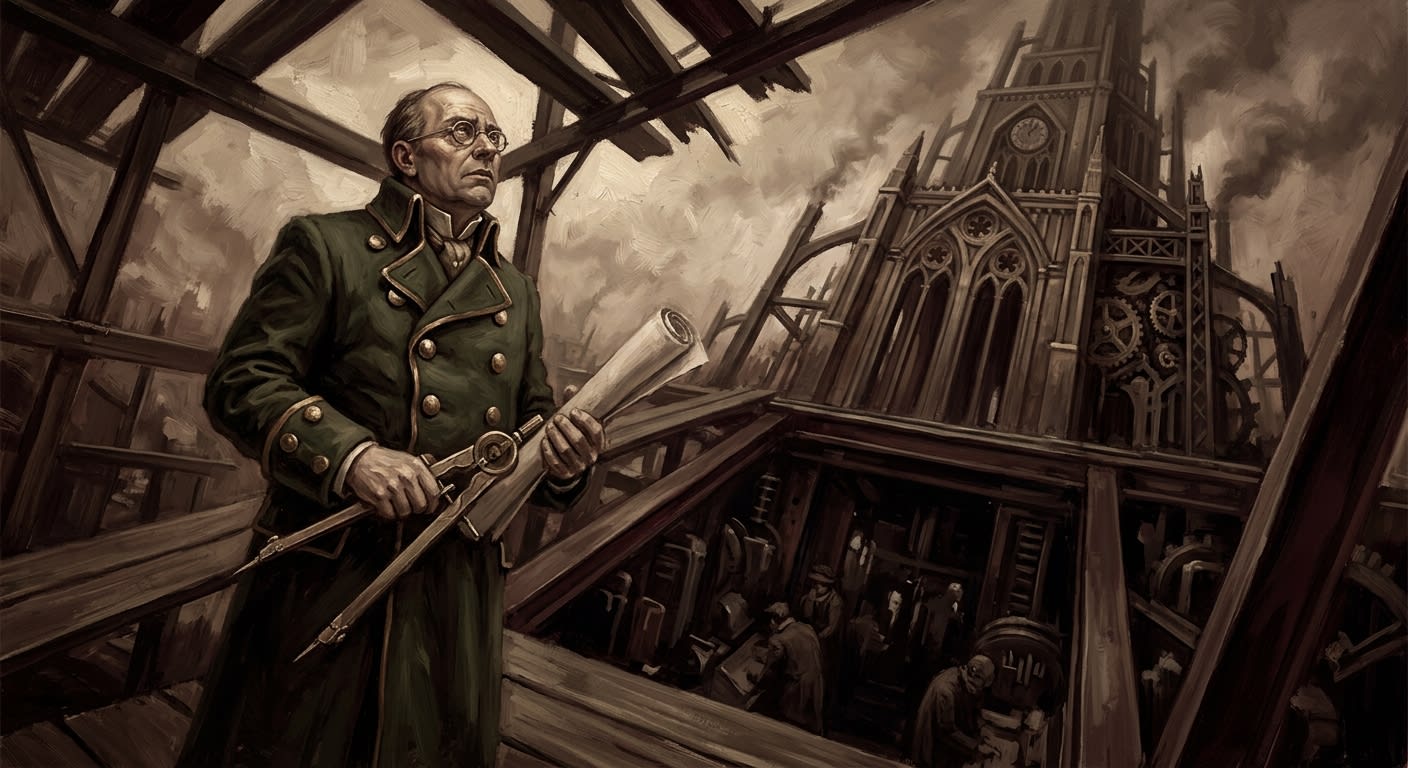
Matthias Kammler
The man who made Doctrine climb stairs
Matthias Kammler, architect of the Tower of the Quill, gave the Bureau of Doctrine a pen of stone and was repaid by height, honours, and a fatal scaffold.
Codex Ref. III.2.01-150
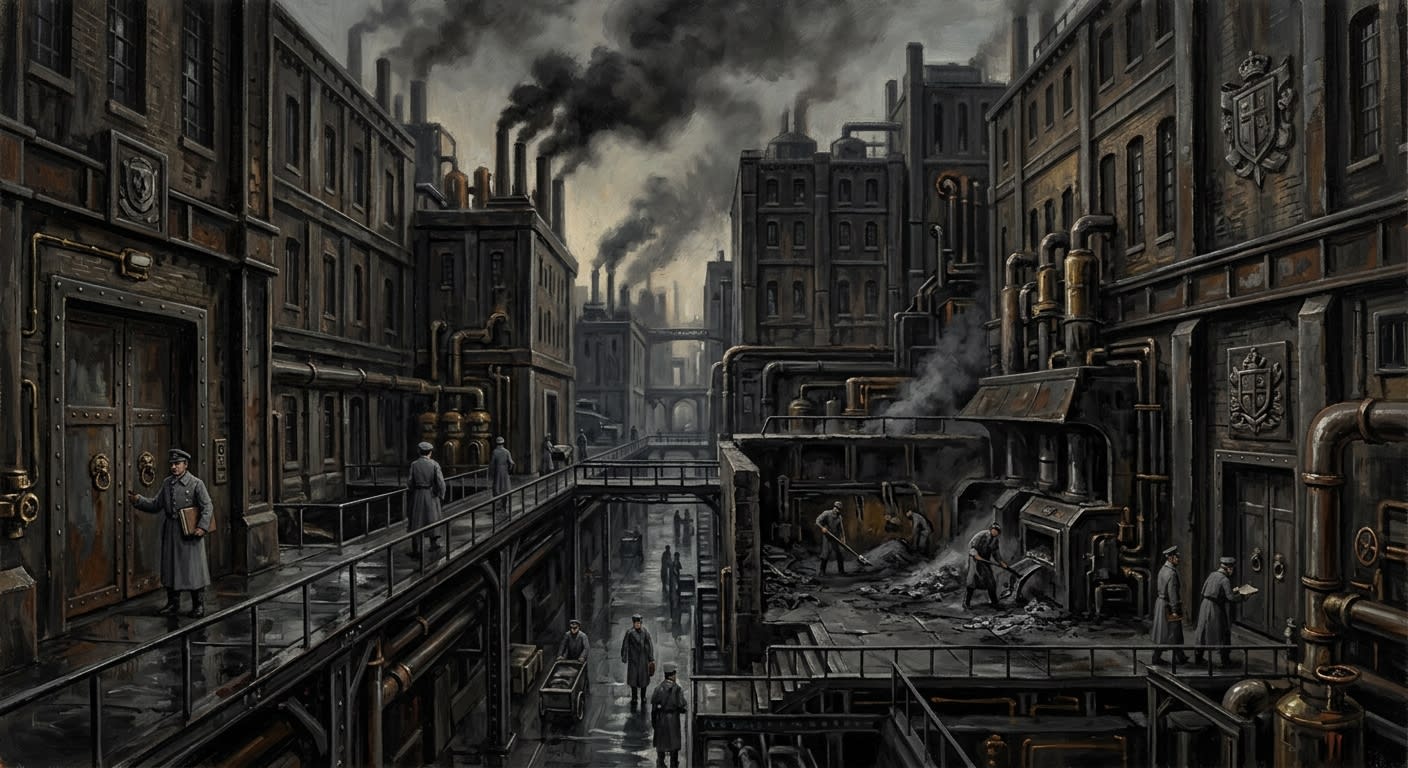
Mortuary Black
The ink that keeps the name and murders the claimant
Mortuary Black is the Bureau of Records compound for Administrative Dissolution: iron-gall, bone ash, Rites seal, and enough silence to make a name visible and unusable.
Codex Ref. XIII.1.01-002
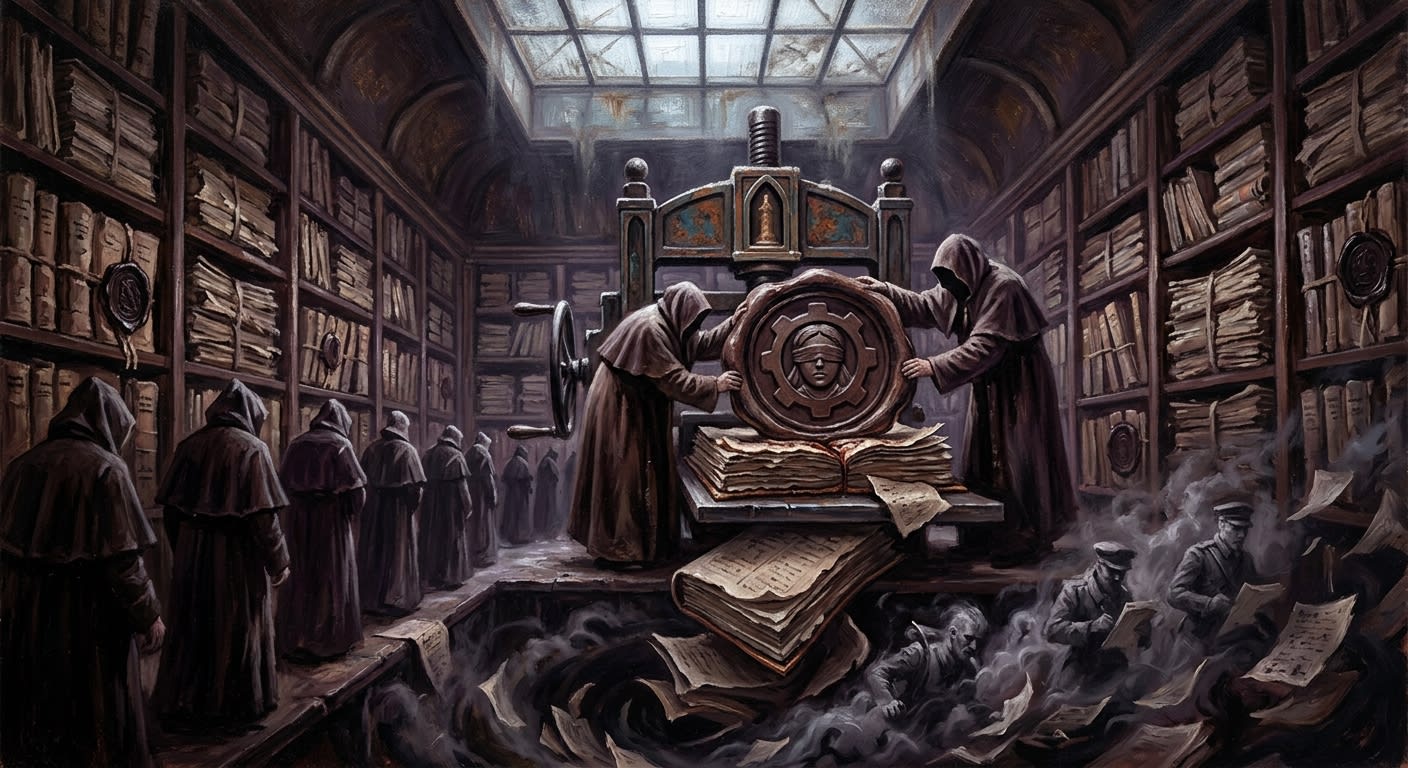
Ninth-Ratification
The seal that forbids analogy because pattern is accusation
Ninth-Ratification is the Synod's highest publicly nameable seal: a doctrine of lawful ignorance for records whose disclosure changes context, office, witness, and history itself.
Codex Ref. XIII.1.76-103
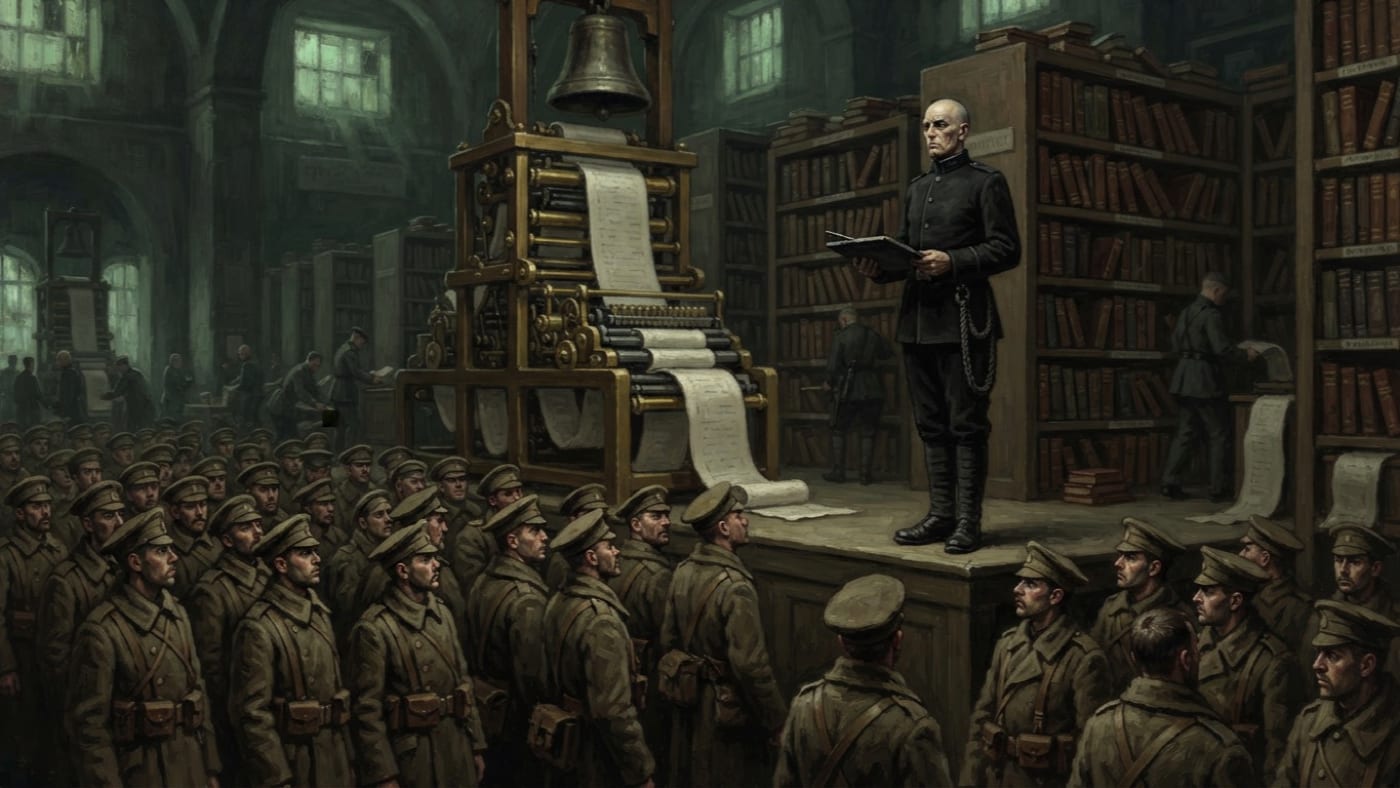
Oath of the Line
The Bureau does not recognize death as grounds for termination.
Every soldier swears before deployment. Service, obedience, the bell-schedule, and death if required pass into the Ledger; under the Bureau's doctrine, death does not end the obligation. Survey of current practice, A.S. 201.
Codex Ref. XIII.1.02-201
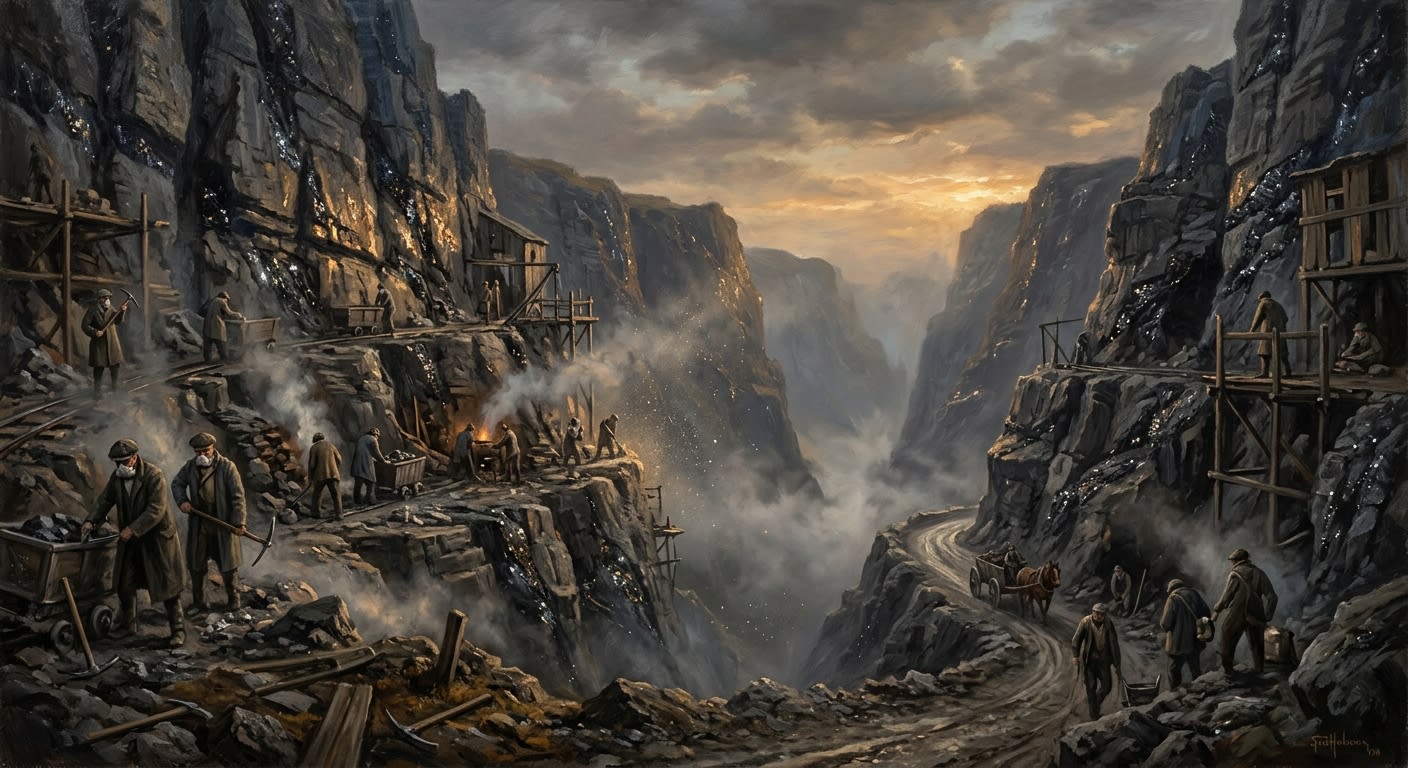
Oathglass Quarrytown, Saint-Helm's Cut
The mountain proves what the Seal House permits
A highland quarrytown built inside a volcanic-glass cleft that the Synod has declared a certified sacred site. The glass proves relics. The workers cough. The mountain, lately, has begun to sing.
Codex Ref. II.2.05-001

Obscurists of the Third Ink
The clerks no Bureau admits to employing
The Obscurists of the Third Ink allegedly turn hesitation into conscience entries for the Codices Obscurae. Their title survives in an undated fragment; no Bureau admits to employing them.
Codex Ref. XIII.1.06-003
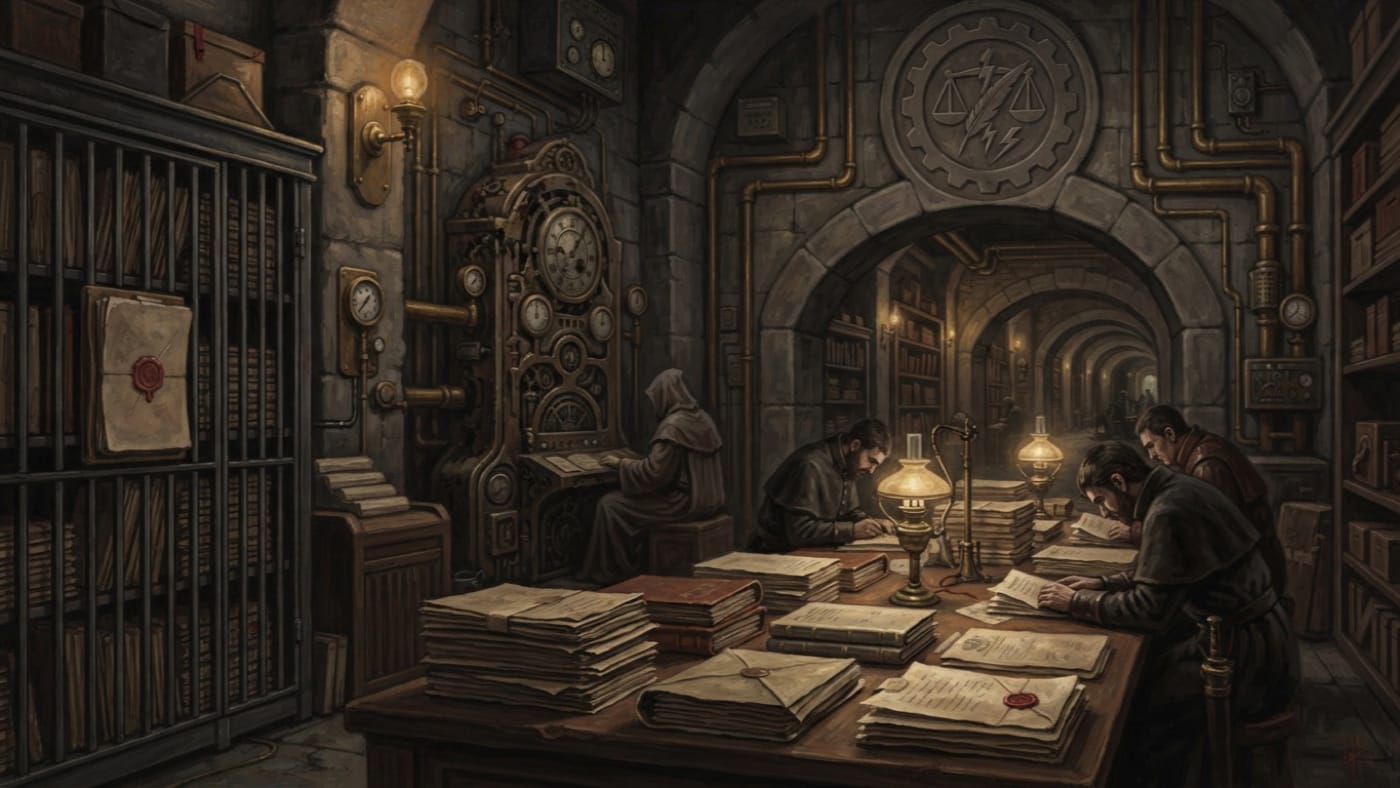
Office of Doctrinal Risk
One case retained; one lesson still pending
Attested by the sealed Breel addendum, the Office retains her case for instruction and prohibits public use. The personnel lesson limits exposure; the theological lesson remains pending.
Codex Ref. III.3.09-001
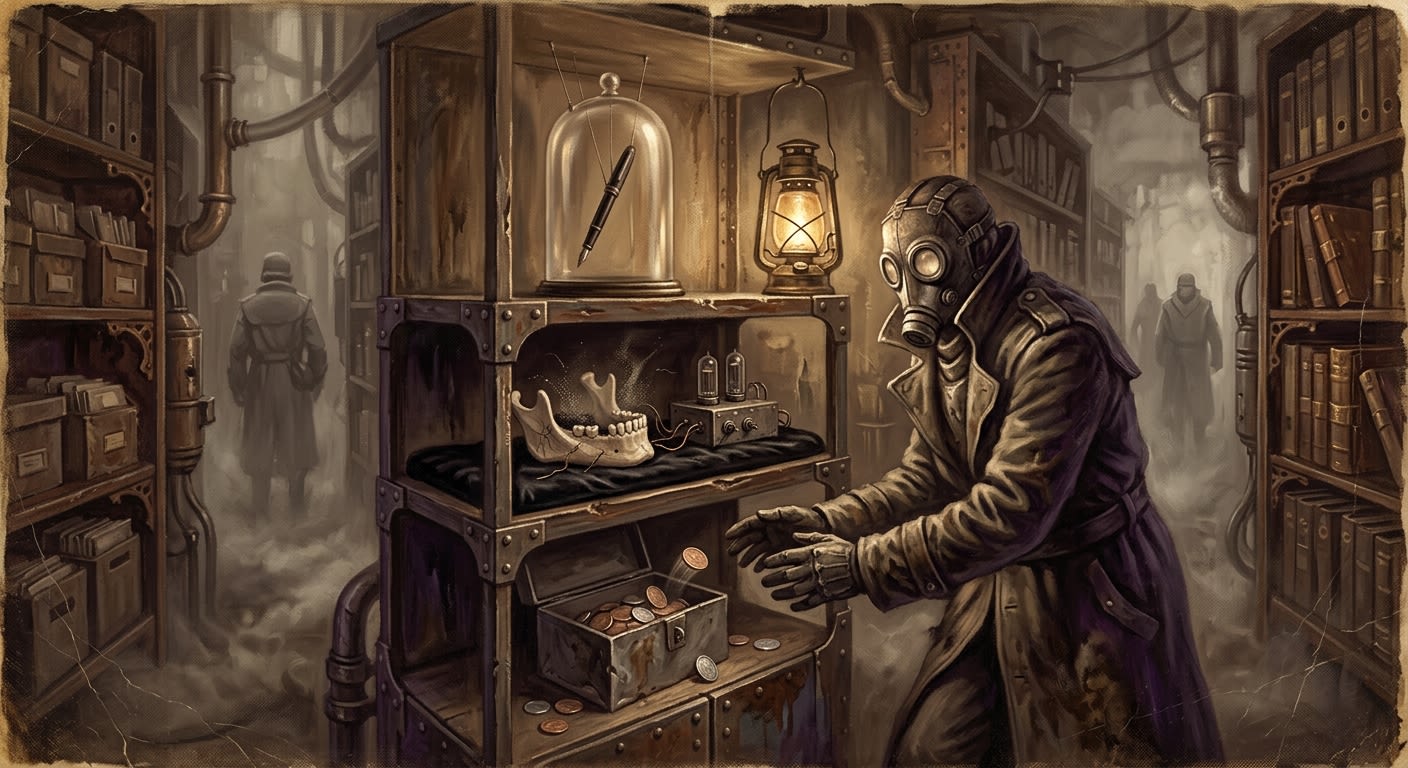
Physical Anomalies Collection
Matter misbehaved, was measured, and had the insolence to remain matter
Second silence of the Vault of Silences, preserving the Vienna pen, 217-hertz jawbone records, and returning coins that keep embarrassing their custodians.
Codex Ref. XIII.1.49-001
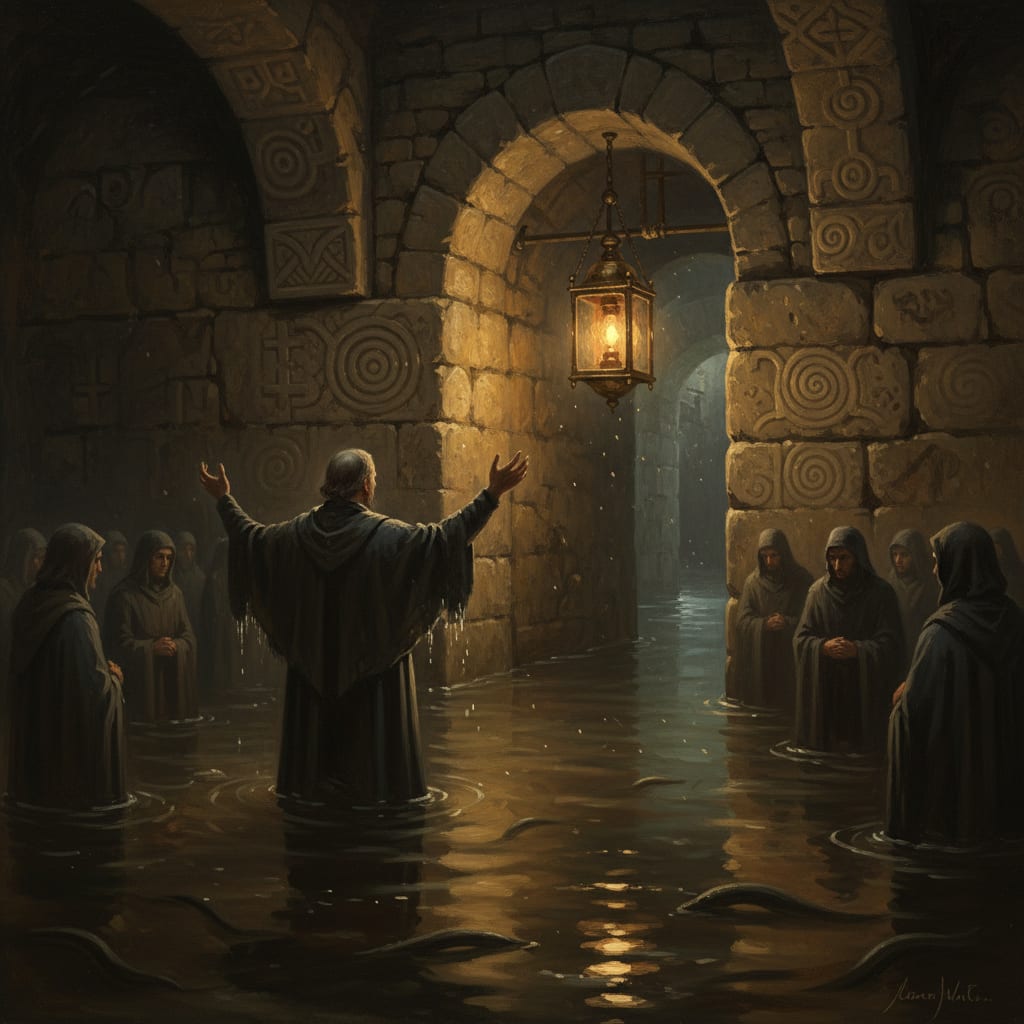
Pontifex Submersis
The name is gone; the chains still hum; the Bureau has no comment
The man the Bureau erased so thoroughly it must write eleven pages explaining what he was not: the Drowned Pontiff of Avignon, non-person, non-event, non-theology. His name is gone. The chains hum in B-flat.
Codex Ref. III.2.02-001
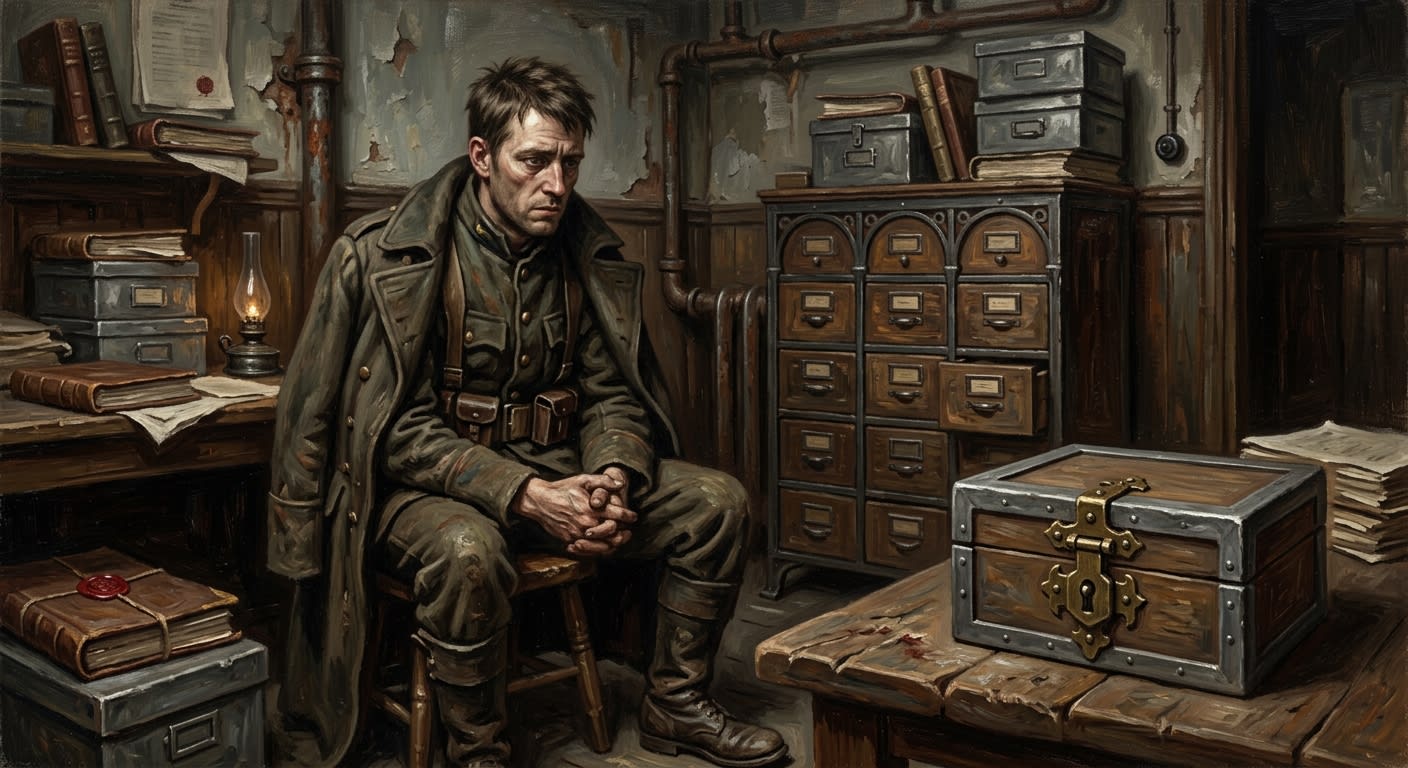
Private Kessler
The low-rank witness who heard annihilation carry a tune
Survivor of the A.S. 45 Iron Plains whose separate testimony—“The fire was singing”—is kept apart from the fourteen witnesses as an acoustic hazard and doctrinal wound.
Codex Ref. III.2.01-081
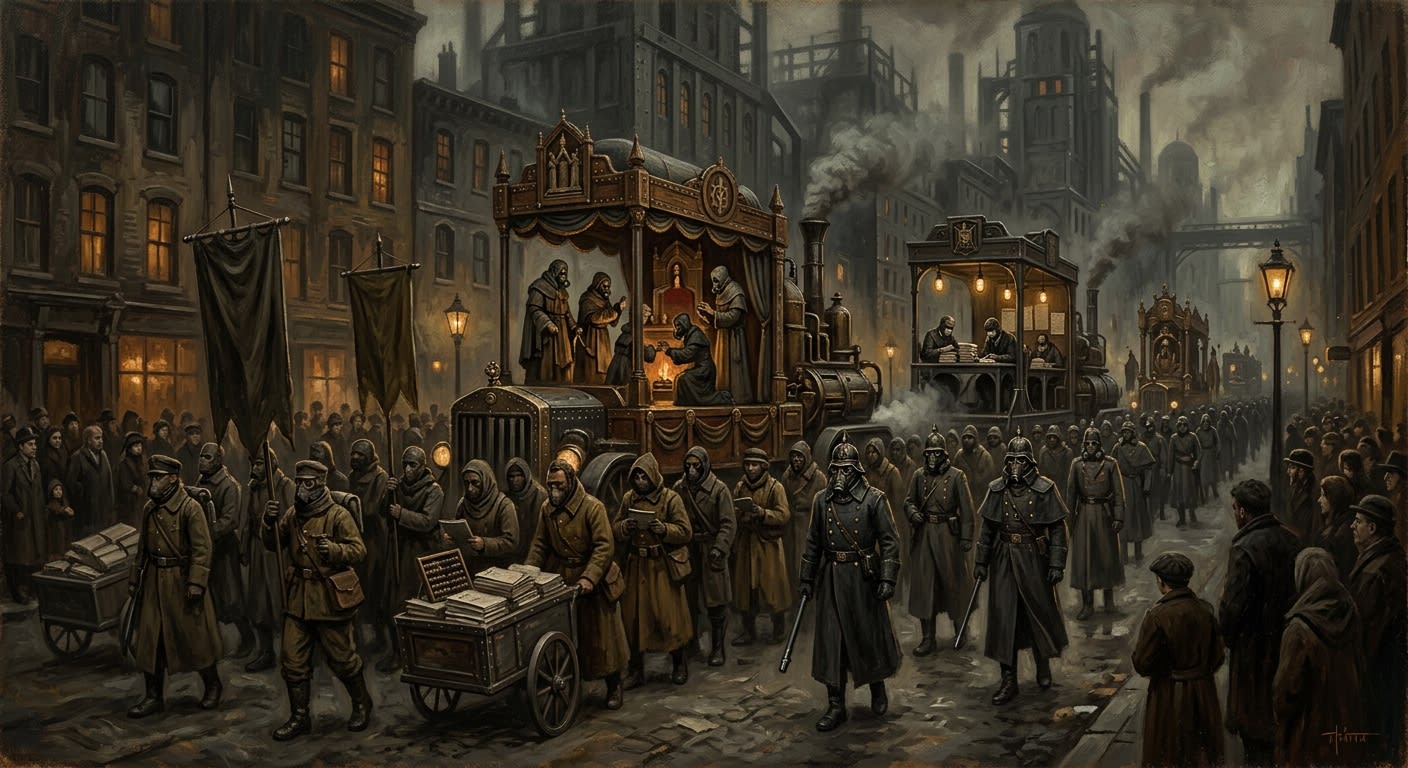
Procession of the Triune Hearth
One people, one creed, one spectacle, counted twice
First staged in A.S. 175, the Procession of the Triune Hearth turned Concordat memory into forty days of floats, census work, unity theatre, and invoices.
Codex Ref. VII.3.02-001

Procurator Maxentius della Torre
The jaw by which Doctrine learned to bite
Della Torre expanded Purity in A.S. 80, birthed the Index Damnatus, and taught the Synod that a named error is already halfway into chains.
Codex Ref. III.4.02-031
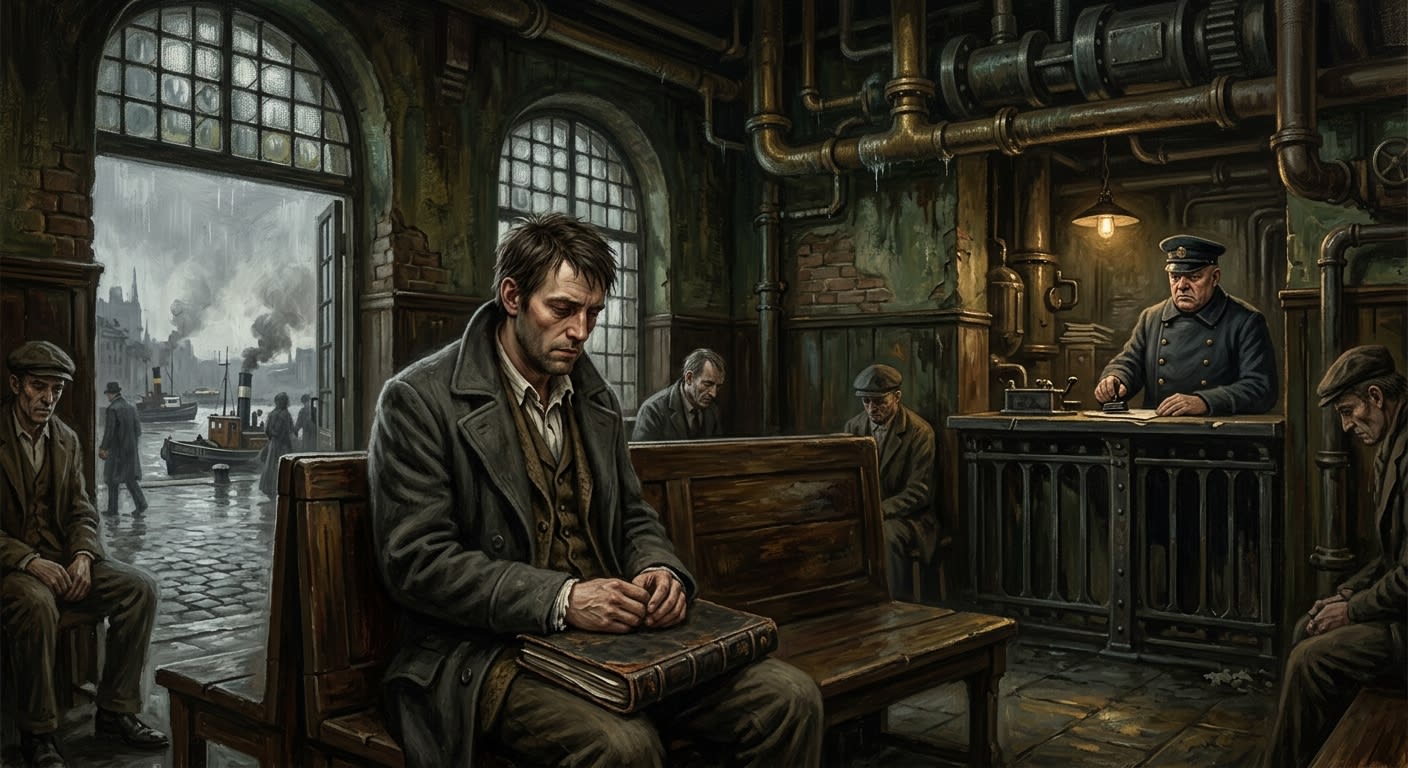
Quai des Bateliers
The river door where disbelief kept its appointment and Purity kept it waiting
Strasbourg's damp river quay became legal instrument when Arno Kett walked into Purity's district house, waited forty minutes, and gave absence a file.
Codex Ref. II.1.04-138
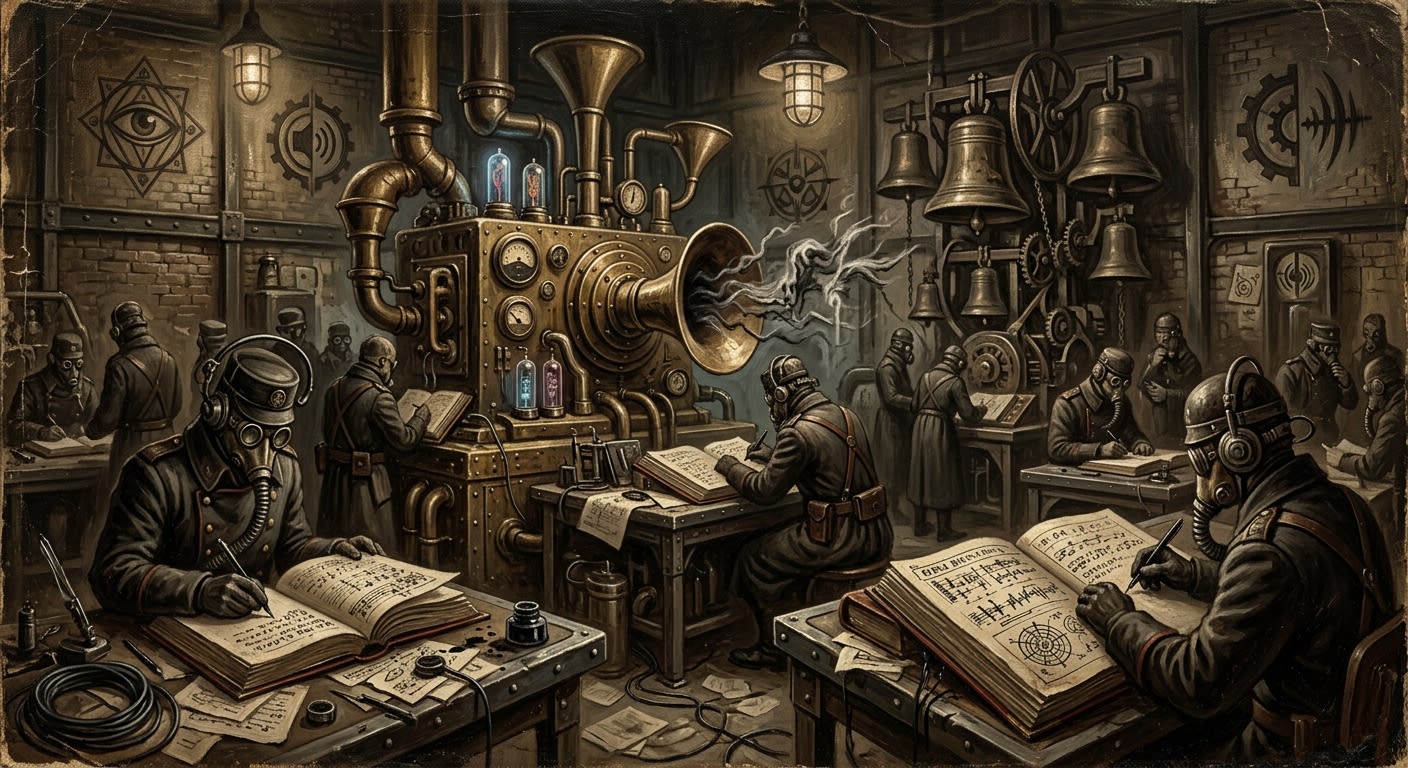
Register of Sounds
Where music is taught to confess before it escapes
Third register of the Index Damnatus, cataloguing forbidden tones, cadences, bellfalls, breath patterns, and the treasons ink can carry from one skull to another.
Codex Ref. XIII.1.46-001
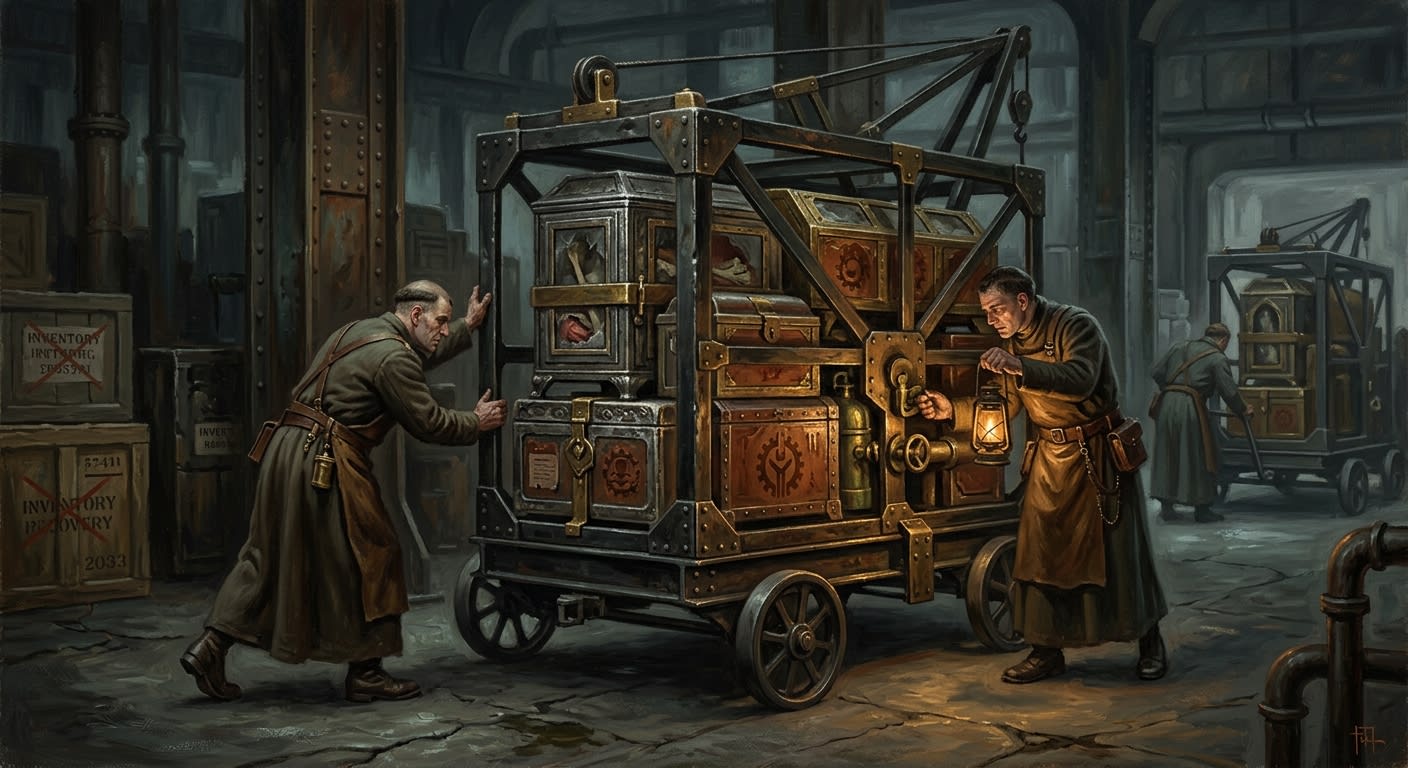
Reliquary of Saint Matthias
A box of bones that taught law to bleed
The Reliquary of Saint Matthias is the Saint-Malo martyr-object: seized as Item 7, recovered from Rationalist custody, and made into portable proof that holy custody is not inventory.
Codex Ref. XIII.1.73-010
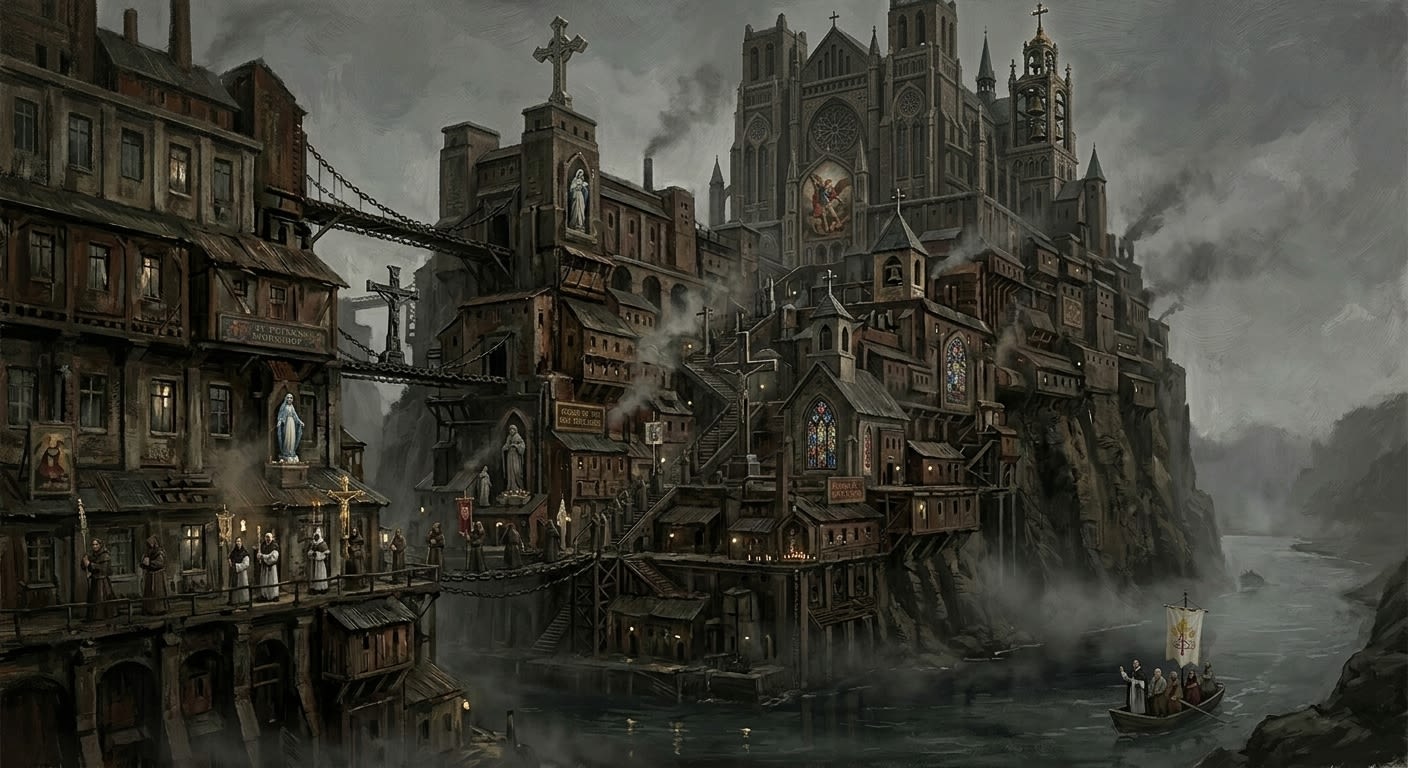
Rheinscarp
Nine terraces of sanctified extortion above the Rhine — each stair a sermon, each sermon a fee
A cliff-city above the Rhine, stacked nine terraces high and governed by three powers who own, respectively, your name, your time, and your ashes. Drax has climbed it twice and counted only the fees.
Codex Ref. II.2.01-002

Saint Isidore
The saint who became vessel, bell, ash, and invoice
Pre-Synod saint whose militarised relic blazed at Kalnik Ridge in A.S. 48, then multiplied into bell, ash, Grace Ration, Toledo verdict, and Bureau invoice.
Codex Ref. III.2.01-086
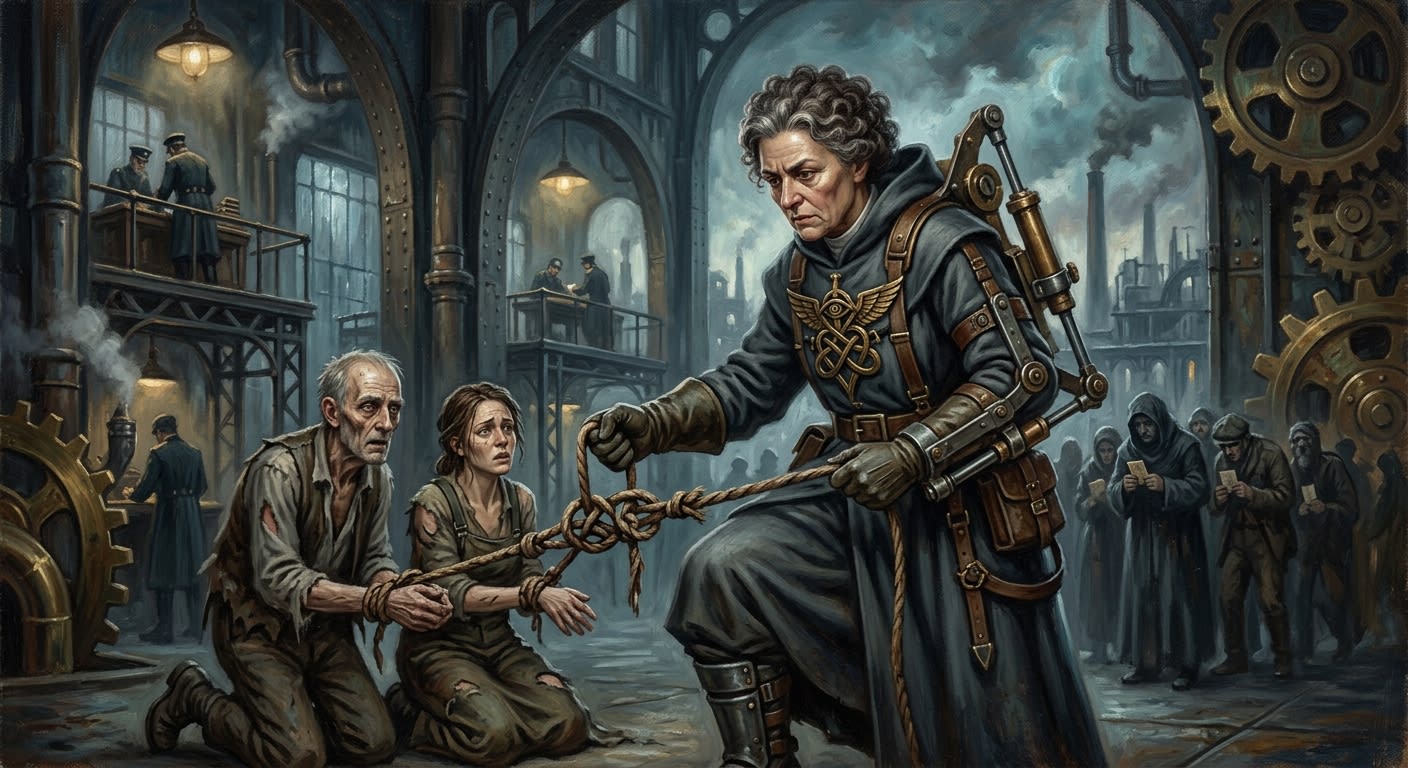
Saint Liora Knot-Hand
Thirty knots, thirty doors, and the miracle of obligation made visible
Patron of the Bureau of Oaths, Saint Liora Knot-Hand bound thirty hungry households into survival with witnessed vows and a strip of cloth. Mercy counted; the knot remembered.
Codex Ref. III.2.01-012

Saint Margaux of the First Blood
Distinguishing features: none — which was precisely why she worked
She was old and small and grey and holding a book, and she died on her knees, and the Bureau wrote upon her blank page the most useful saint in the Theocracy's arsenal.
Codex Ref. III.2.01-002
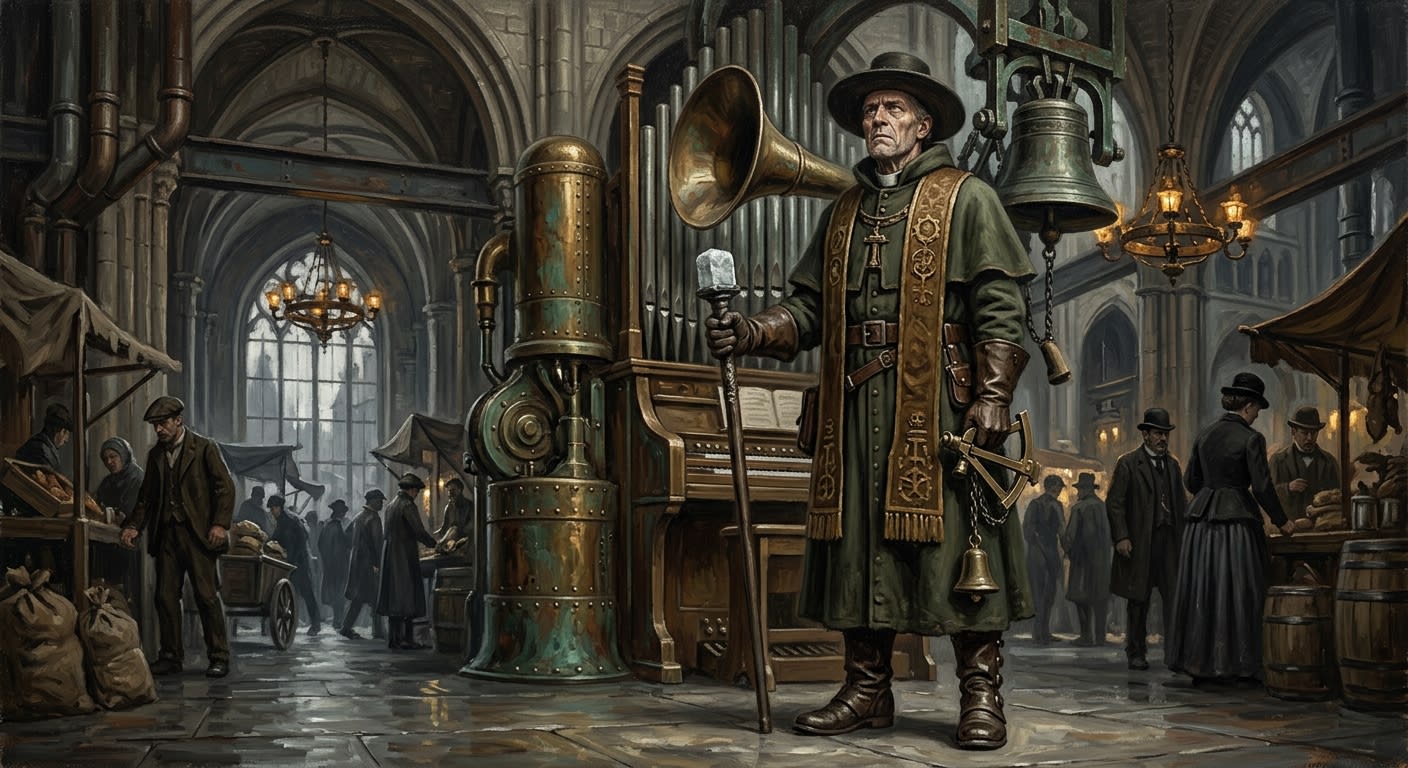
Saint Rupert
Salt in the wound, bronze in the tower, order in the market
Saint Rupert, Vienna’s salt-saint, preserves meat, measure, bells, markets, and civic memory: the patron whose bronze throat answered when men forgot to kneel.
Codex Ref. III.2.01-095
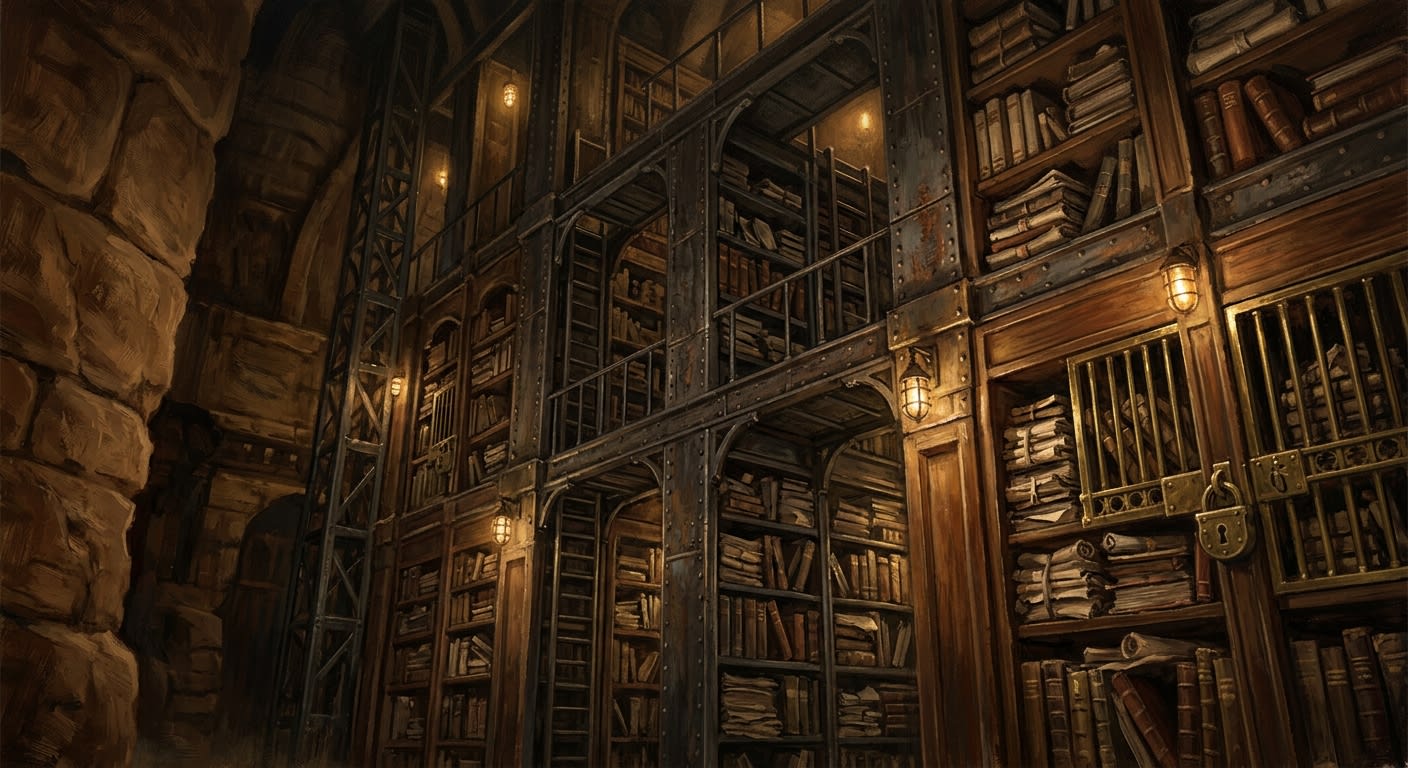
Sealed Archive of Doctrine
The room where contradictions sit upright, labelled, dangerous, and dry
Beneath the Tower of the Quill lies Doctrine's dry sealed archive: older than the sandstone, jealous of its shelves, and intimate with contradiction.
Codex Ref. II.1.04-002
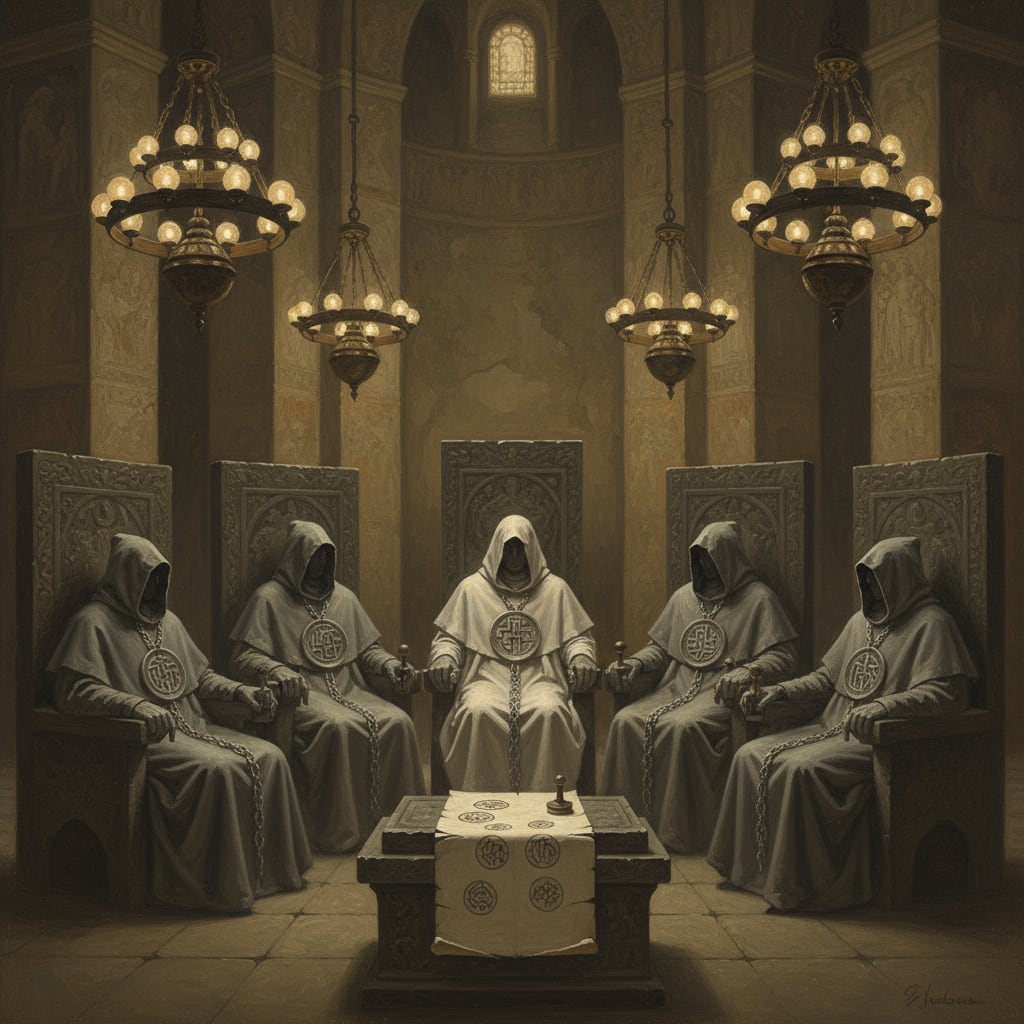
Seven Seals of Faith
Seven absolute sovereignties, each checking the others, which Kratz called something else entirely
The constitutional framework of the Bureaucratic Synod — seven domains of overlapping absolute authority, each assigned to one Hierarch, each cancelling the others into the only available direction forward, toward the Sagittal Line, where jurisdiction is settled by artillery.
Codex Ref. XIII.1.05-001
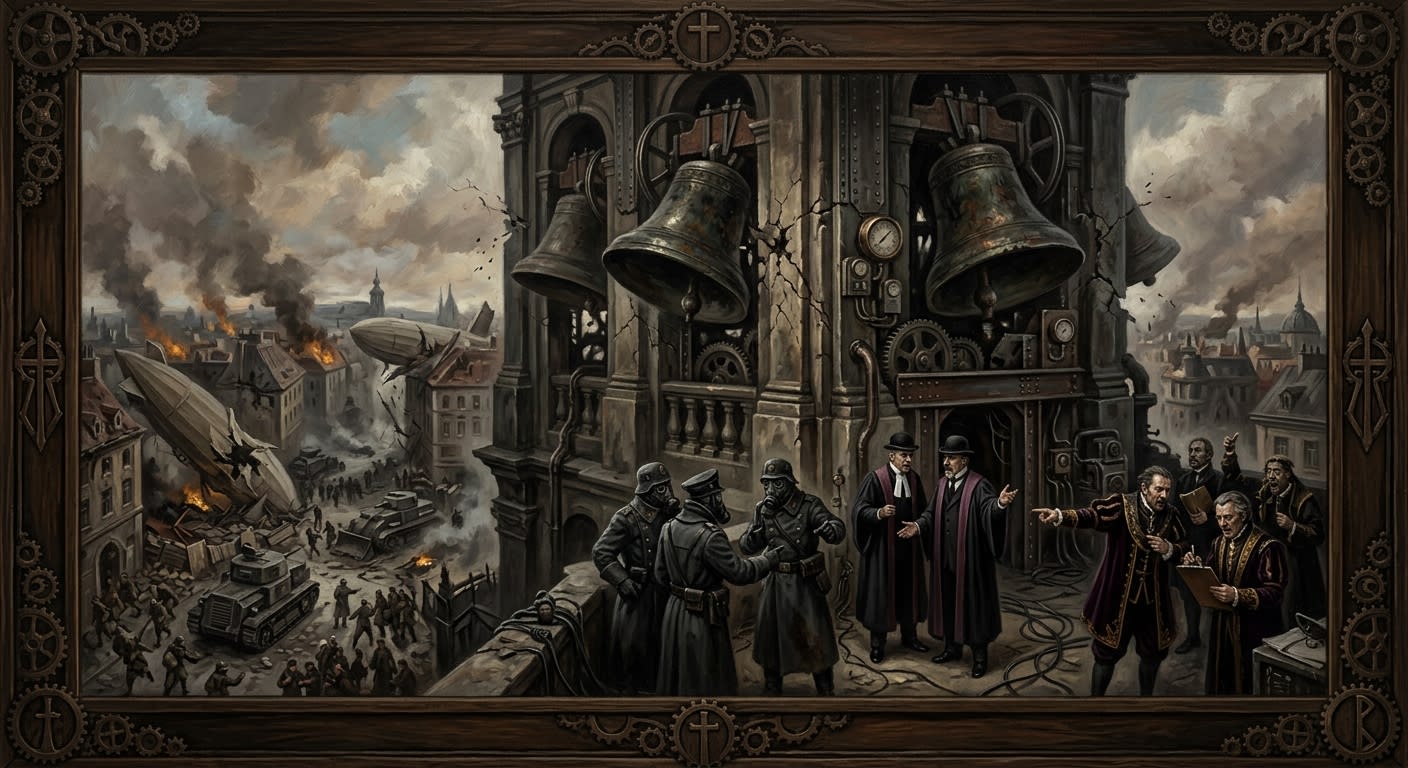
The Bells of Saint Rupert
Bronze sang; committees have been recovering ever since
At Vienna in A.S. 95, the unroped bells of Saint Rupert rang without permission, broke a siege, and left three Bureaus arguing with bronze.
Codex Ref. III.2.04-018

The Bureau of Heraldry
The grammar of loyalty, measured in ink and iron
The Bureau of Heraldry controls what the Synod is permitted to look like. Every crest is a sentence. Every unregistered symbol is a rebellion not yet named.
Codex Ref. VIII.1.03-001

The Bureau of Oaths
No promise binds unless Strasbourg hears it.
The Bureau of Oaths holds that an unwitnessed promise is merely breath — and breath is not legally binding. Seven hundred volumes of the Ledger of Fidelity, sealed beneath the Basilica, remember every vow Europe has ever broken.
Codex Ref. VIII.1.02-001

The Bureau of Records
The Memory That Never Forgets
Custodian of every birth, death, tithe, and trembling confession in the Theocracy. Records does not merely remember — it decides what happened.
Codex Ref. III.2.09-003
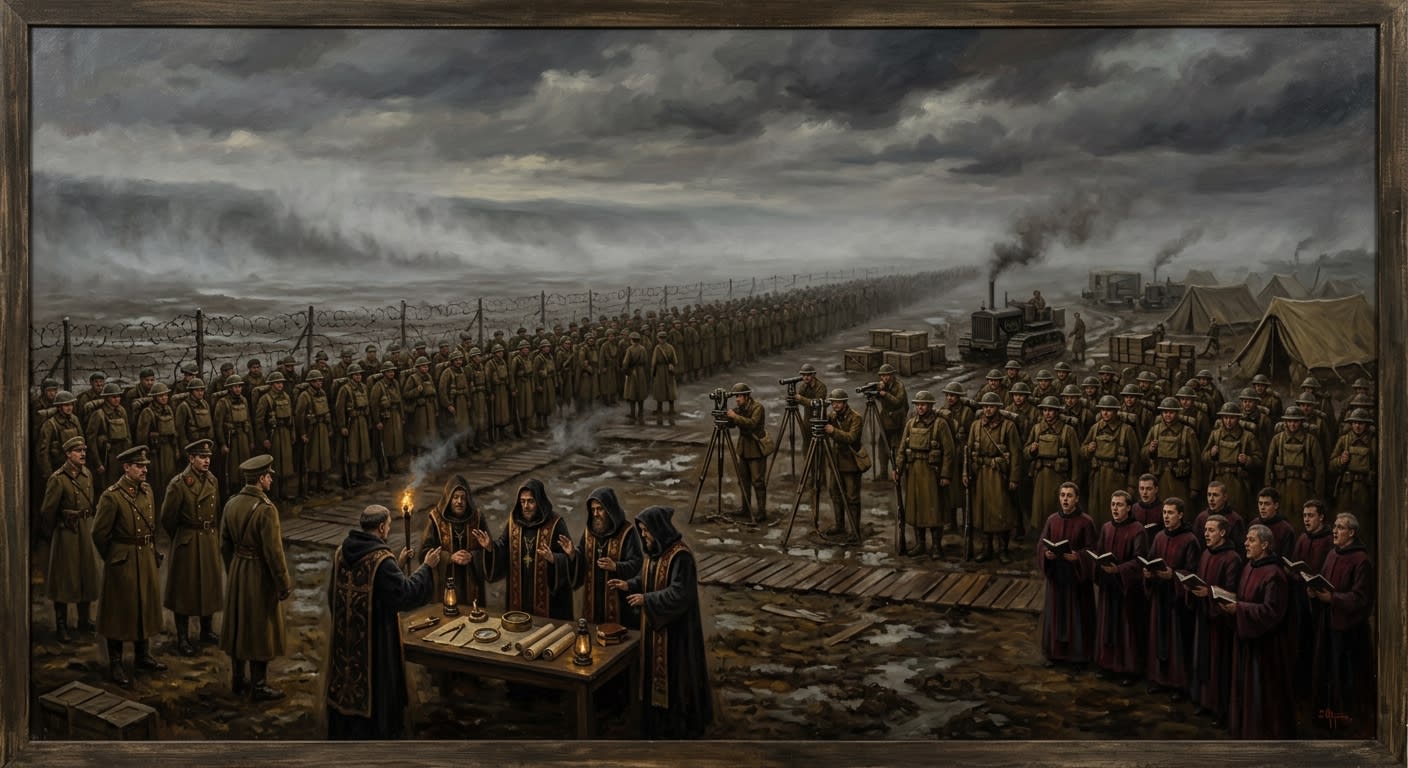
The Cartographic Expedition of A.S. 73
Three hundred men went to draw a map. The map drew them instead.
In A.S. 73, three hundred men entered the Charnel Lands to draw a map. Fourteen returned, and on every folio they carried — drawn in charcoal, ink, graphite, and in one case blood — the same face. Commission 73-C is closed. Its lesson is not.
Codex Ref. VII.1.01-001
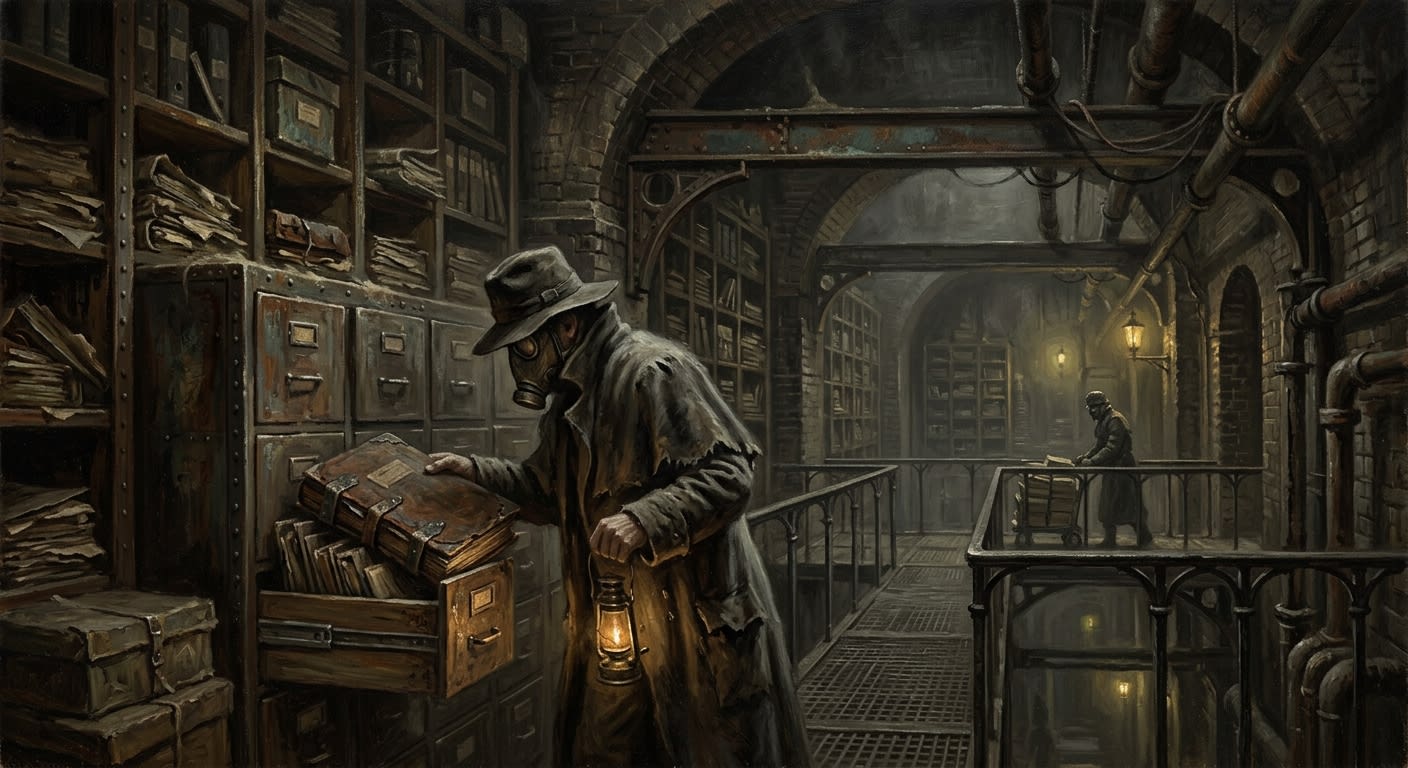
The Codices Obscurae
The books that do not exist have excellent indexing
The Codices Obscurae are denied by every Bureau that matters, which is precisely how a careful reader knows where the bodies are indexed.
Codex Ref. XIII.1.06-001
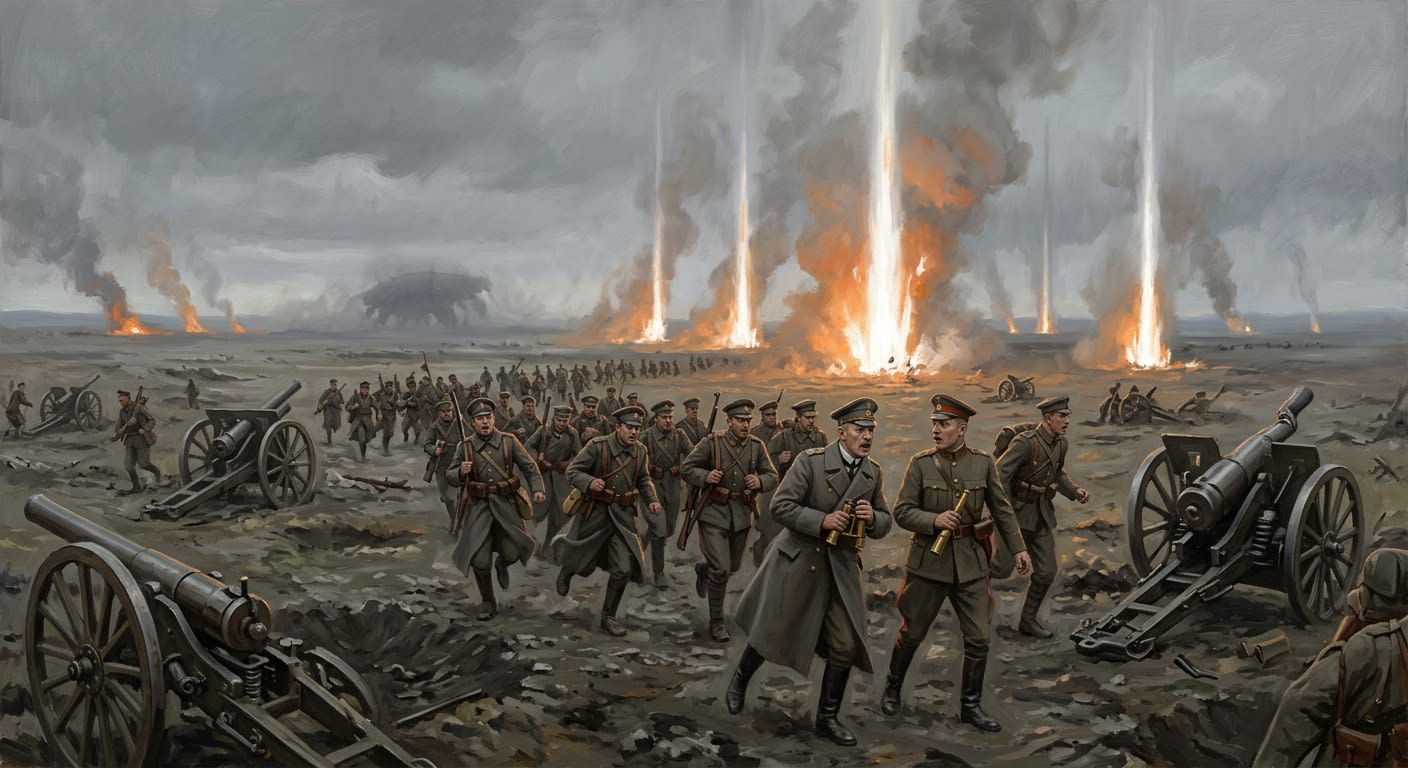
The Collapse of the Rationalists
The Adversary did not invade. It arrived.
The Rationalist Republic dismantled every spiritual defence on the continent, and in A.S. 45 the Adversary walked through the unguarded door. A doctrine article, a body count, and a mandatory catechism text.
Codex Ref. VII.2.01-001
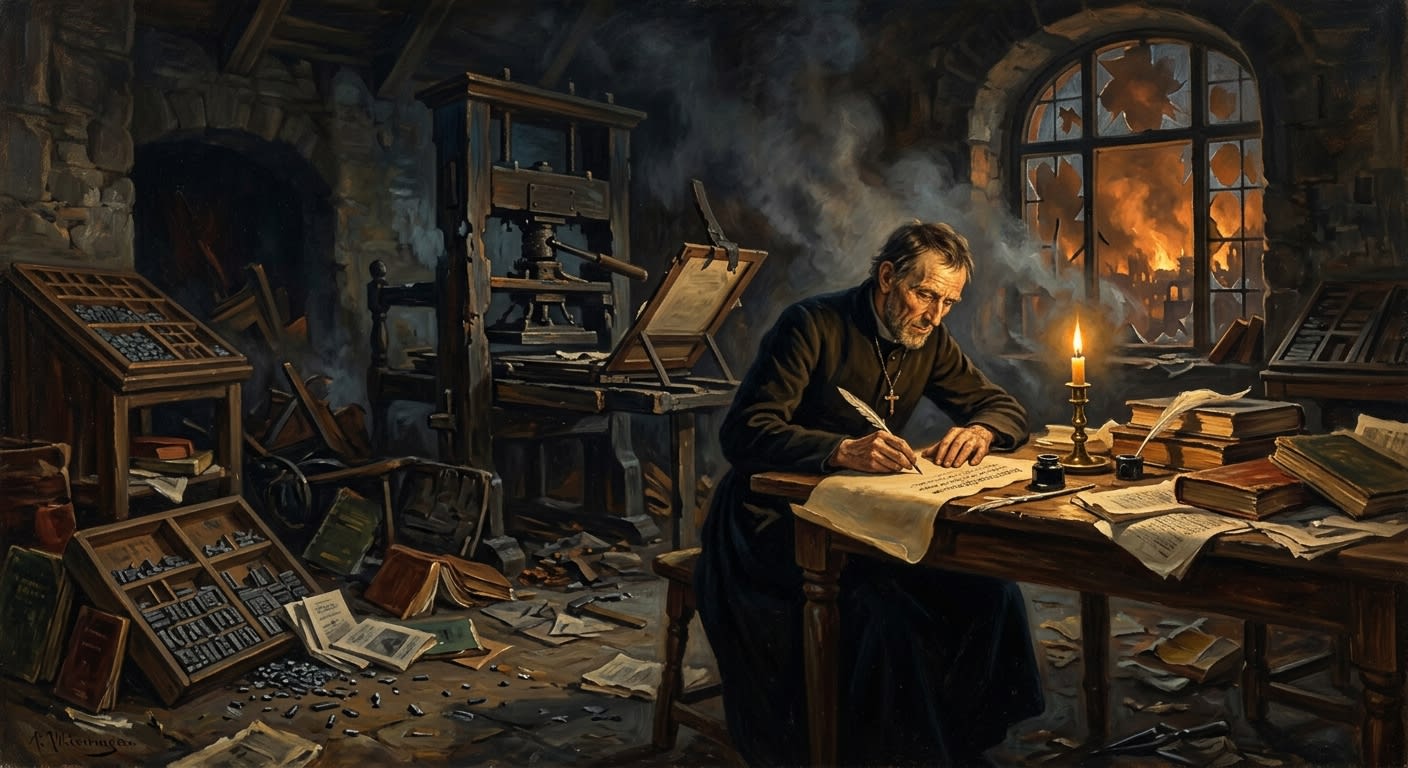
The Common Allegiance
Seven pages that ended the age of a thousand altars
Drax examines the seven-page A.S. 55 charter that bound dioceses through local subscriptions and helped build the authority later formalized at Strasbourg.
Codex Ref. VI.5.01-001
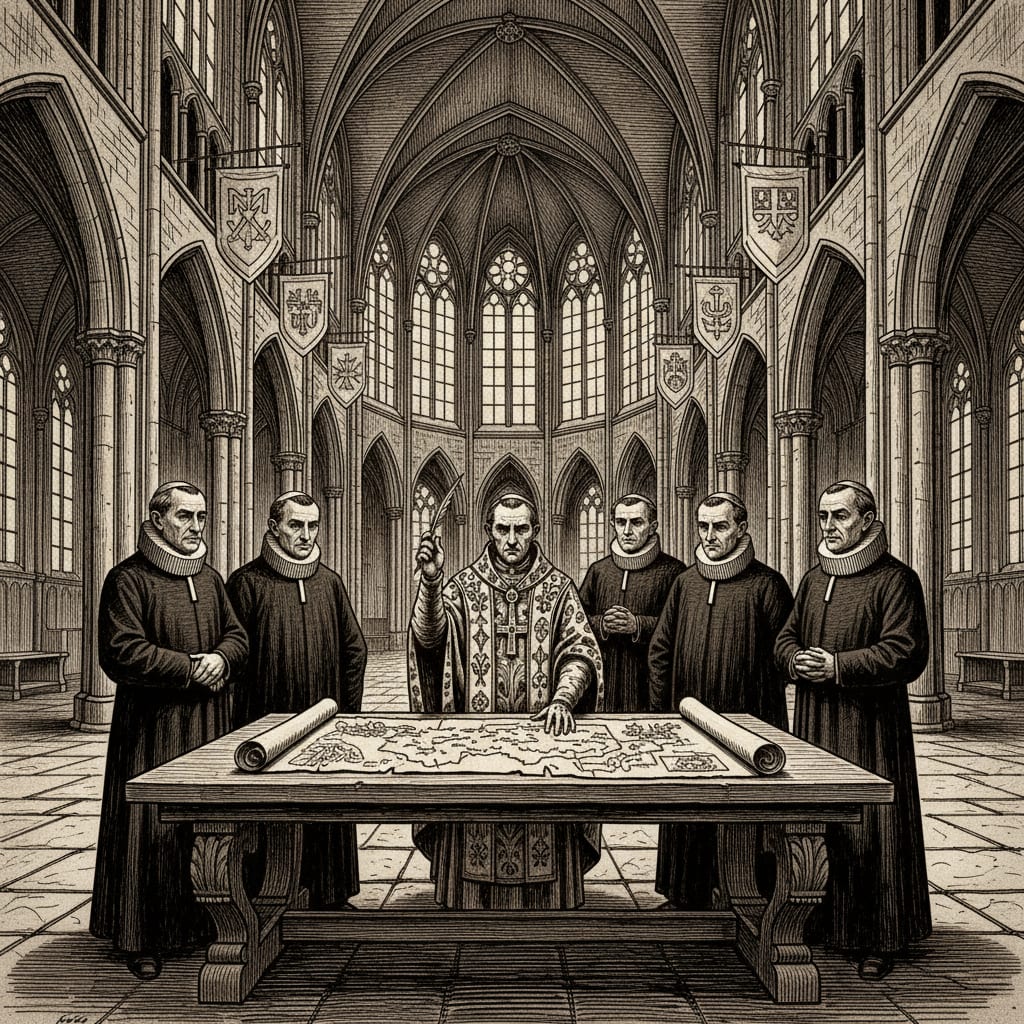
The Concordat of Strasbourg
The A.S. 90 constitutional settlement
The binding of France, Iberia, and the Rhineland into one sacramental polity — the act that turned a wartime council into a continental throne and adopted the Synod's calendar retrospectively.
Codex Ref. III.1.02-003
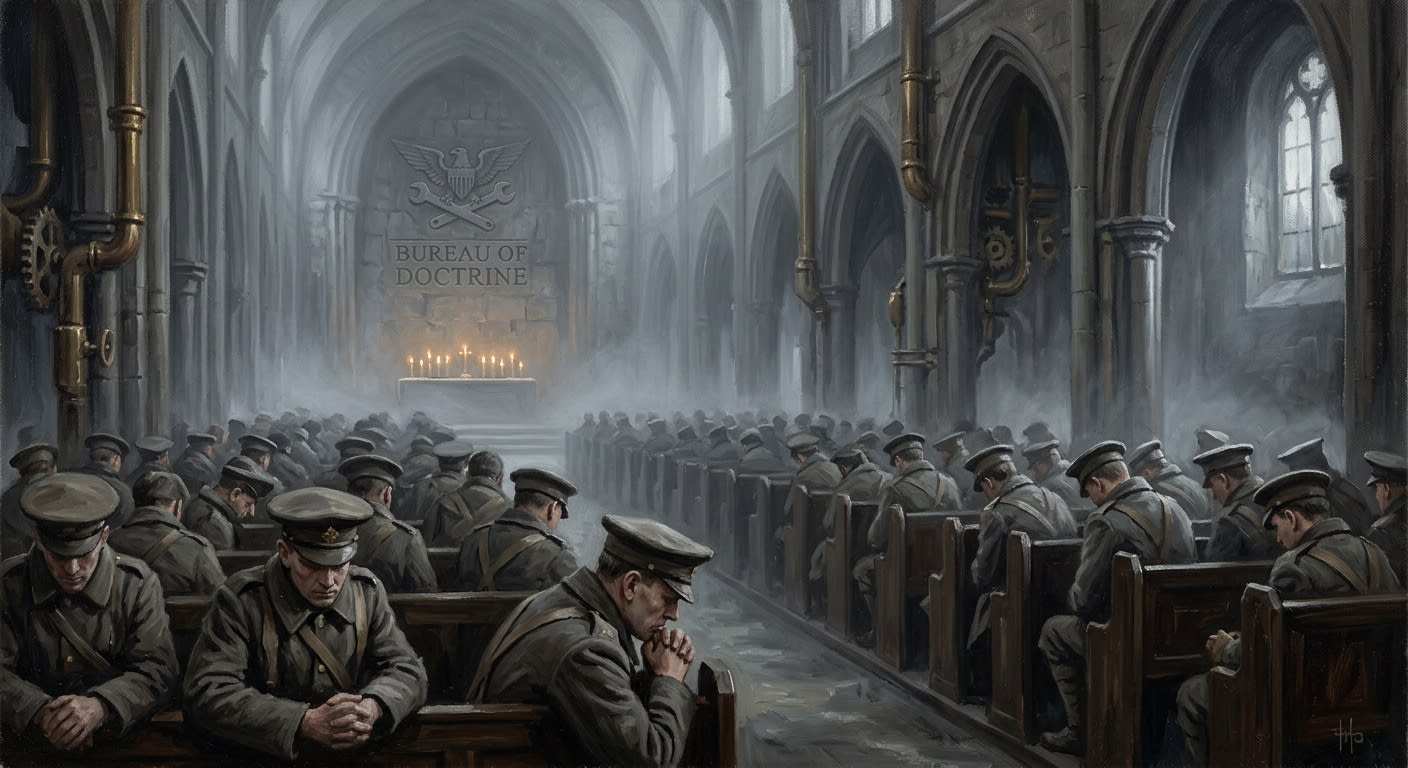
The Creator
The Bureau has two words for the most important question in theology. This entry contains both of them.
A doctrinal entry on the Creator composed by Hieromnemon Drax under compulsion, covering divine nature, the Silence, the inconvenience of miracles, and four forbidden heresies the Bureau insists do not exist.
Codex Ref. VI.1.01-001
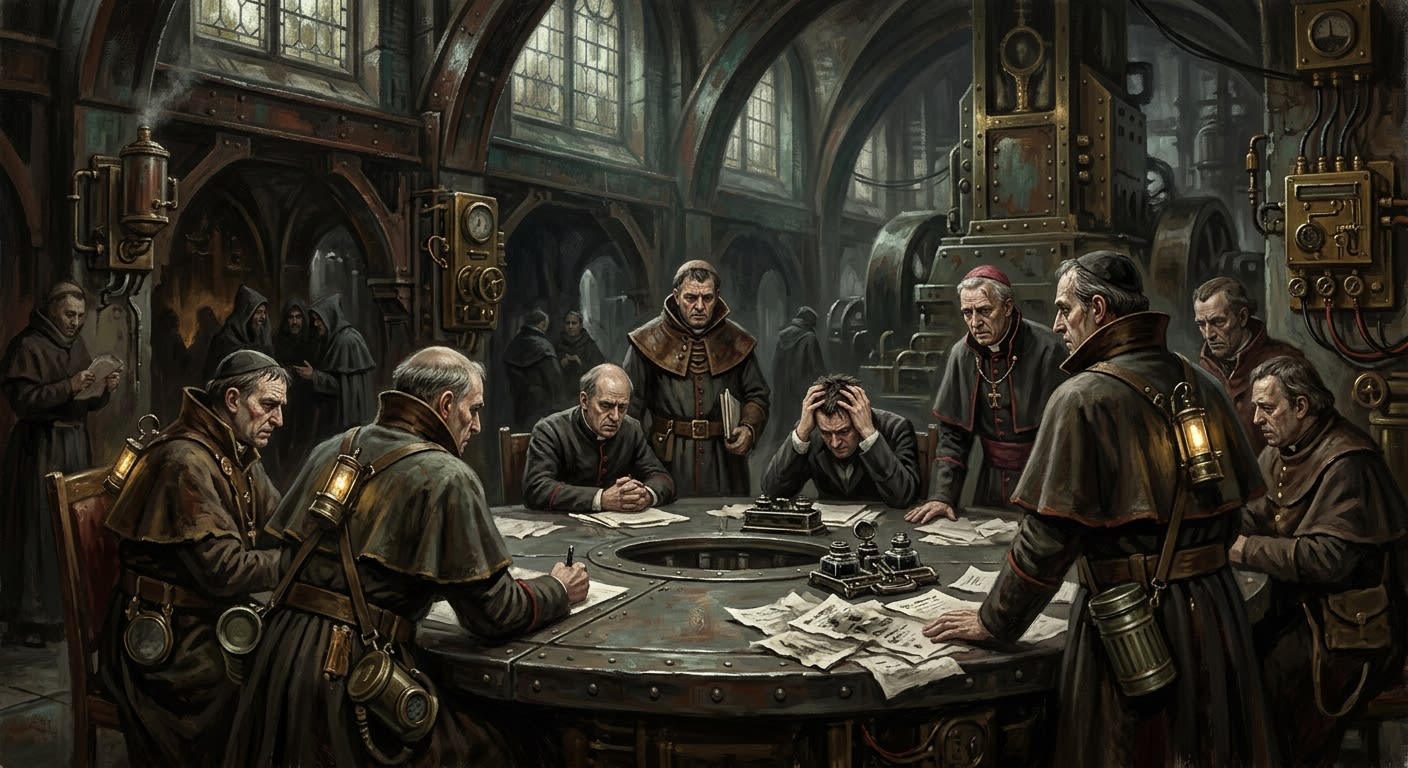
The First Council of Cologne
The yoke was imagined before it was blessed
The September A.S. 27 preliminary convocation produced seven unadopted articles, corrected minutes, and limited voluntary contacts among dioceses.
Codex Ref. VII.7.01-002
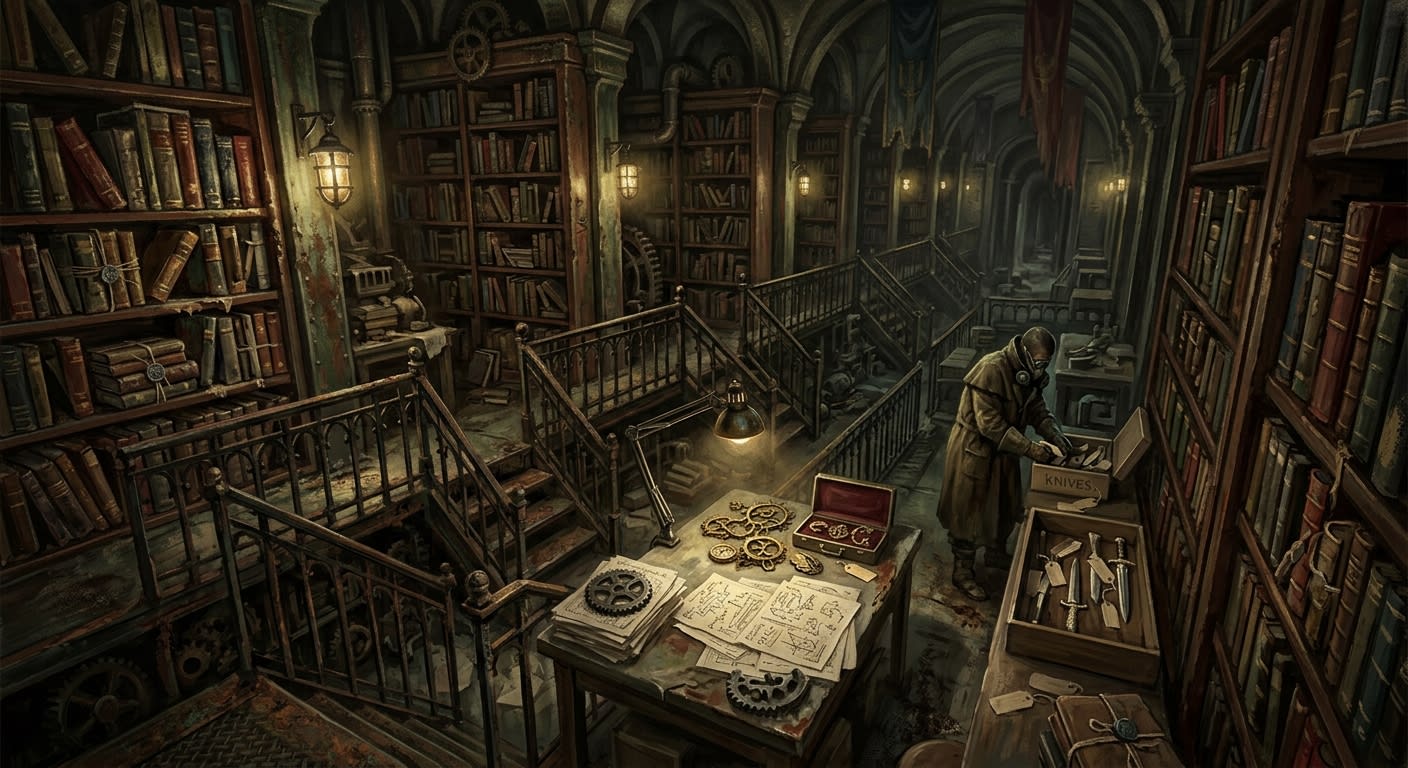
The Forbidden Stacks
Where heresy is shelved close enough to hate efficiently
The Forbidden Stacks beneath Strasbourg preserve Rationalist paper, contraband symbols, and other knives the Bureau prefers labelled rather than lost.
Codex Ref. II.2.06-001

The Fractured North
Compliant in substance. Deviant in form. Pending resolution since A.S. 92.
Two million souls scattered along the Norwegian fjords and Swedish interior — faithful, stubborn, and unresolved. The Bureau of Doctrine has filed them as 'compliant in substance, deviant in form' since A.S. 92, and will do so until either side decides otherwise.
Codex Ref. IX.8.01-001
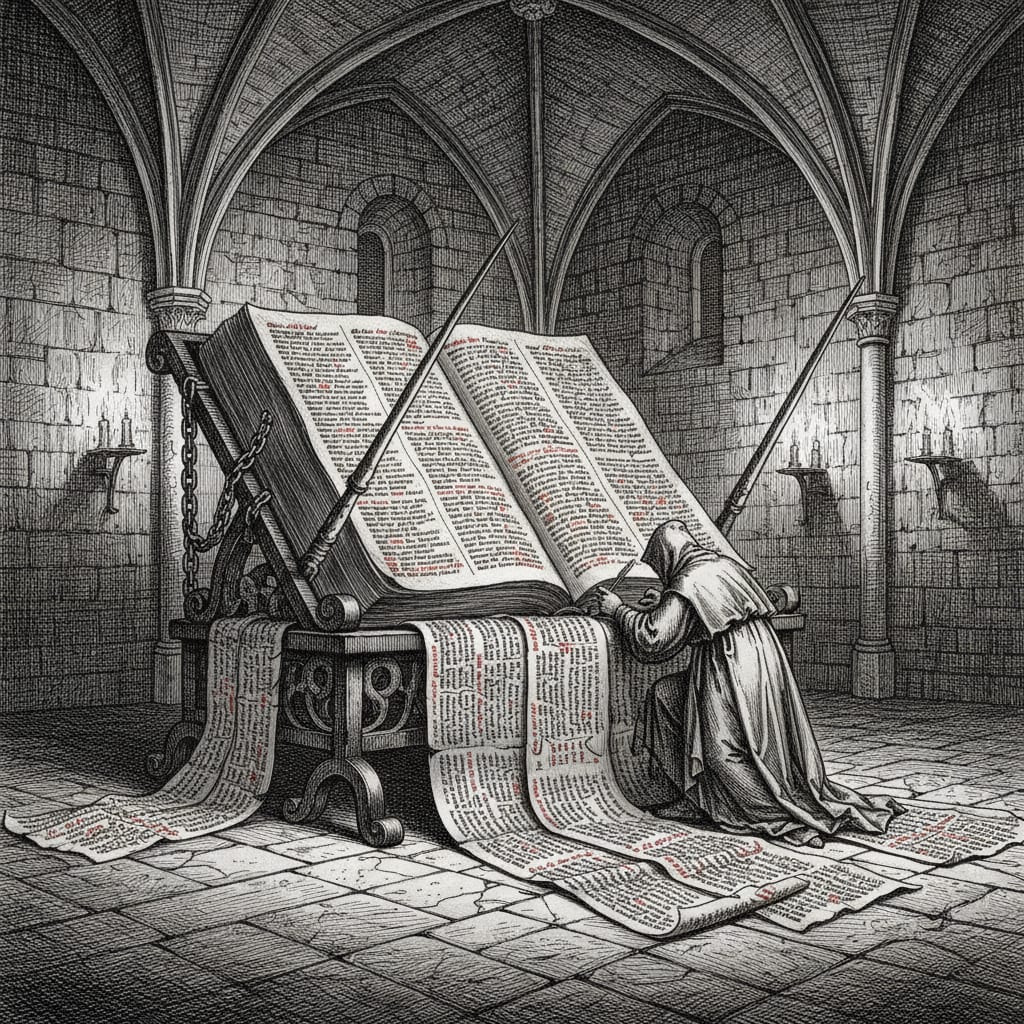
The Great Ledger of Souls
Census of the Living, Archive of the Damned
The Bureau of Records' supreme instrument of spiritual governance — an unbroken registry of every baptized soul since A.S. 80, kept in the subterranean vaults of Strasbourg, where forgetting is treason and being forgotten is worse.
Codex Ref. IV.1.09-003
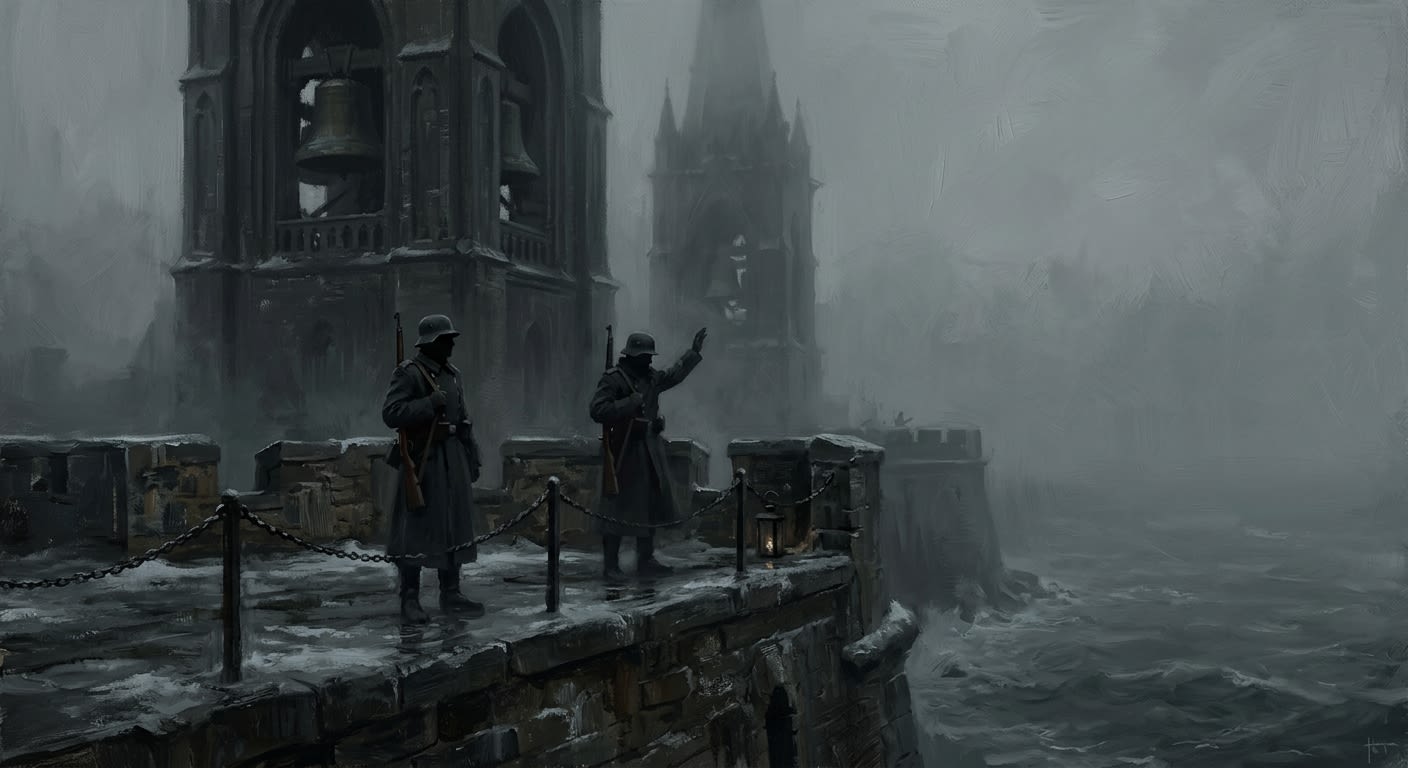
The Grey (The Unnamed)
Eleven years of classification pending, and the Bureau's best answer to why
The Grey is not a Sin-General. The Bureau has known this for eleven years and found the fact so uncomfortable that it has not yet produced a classification. Drax produces one anyway.
Codex Ref. VI.3.01-001
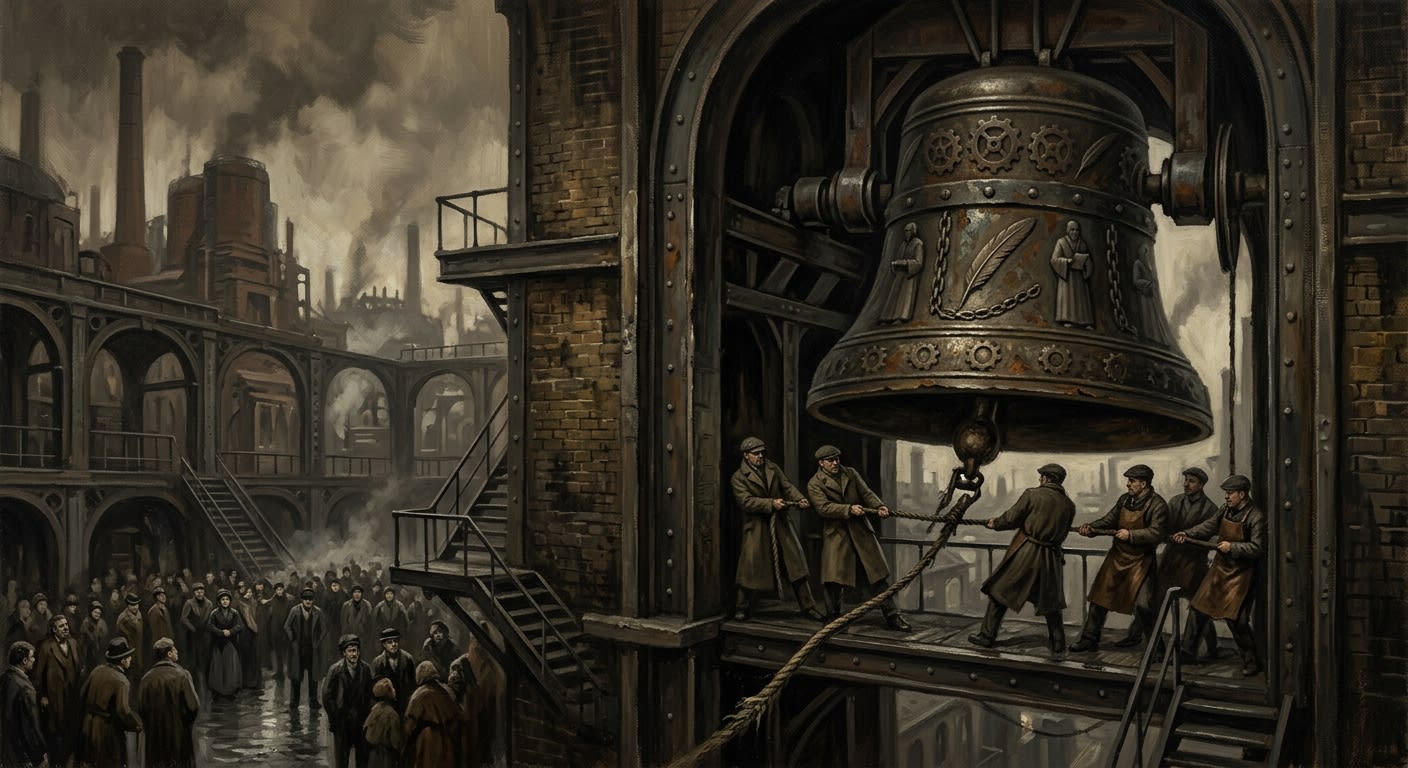
The Leviathan
The war bell of Strasbourg, too large for mercy and too honest for politics
Leviathan is the fourteen-tonne war bell of the Tower of the Quill, tolled eleven times since A.S. 92 when history required bronze to shout.
Codex Ref. XIII.1.72-004
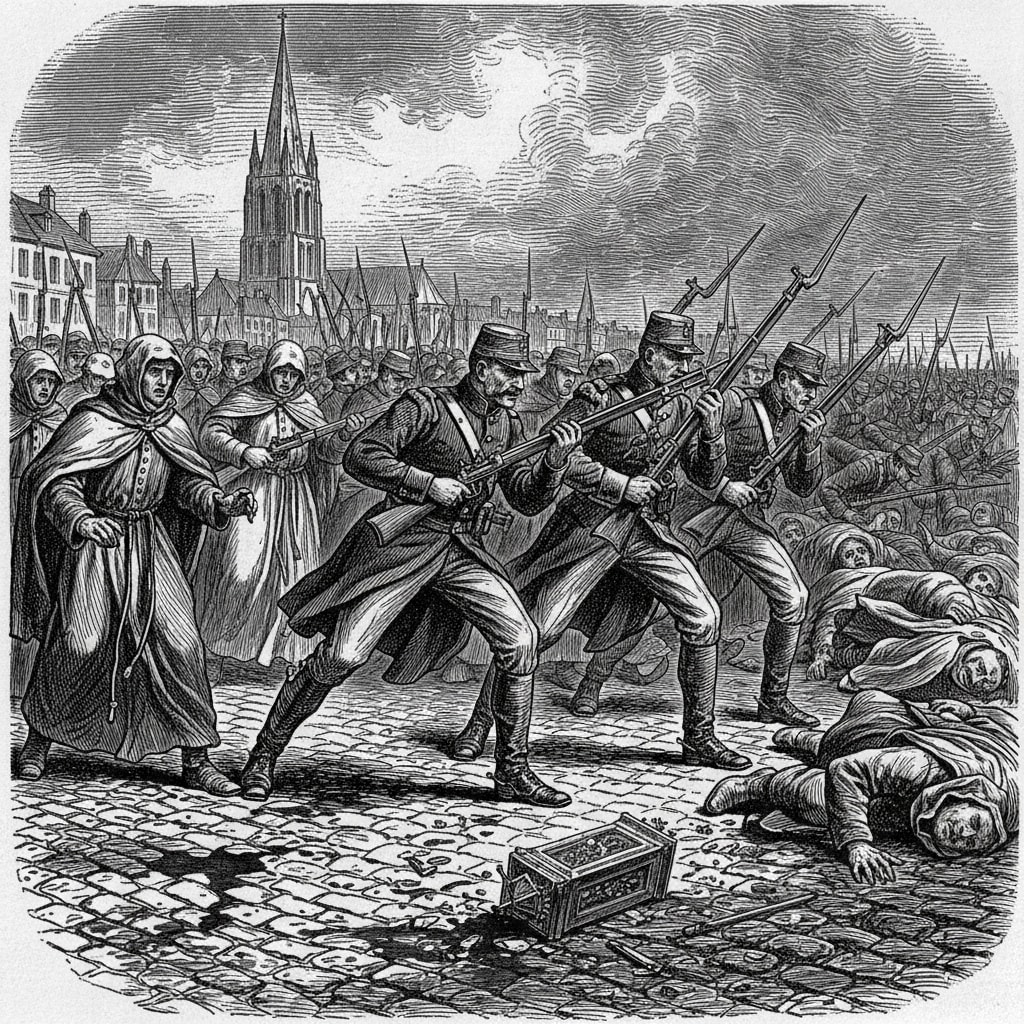
The Massacre at Saint-Malo
The First Blasphemy of Steel
The slaughter of unarmed pilgrims by Republican Guards on the cobblestones of Saint-Malo — the Thunderclap that silenced Reason's pretence of civility and gave Faith its war.
Codex Ref. I.1.03-007
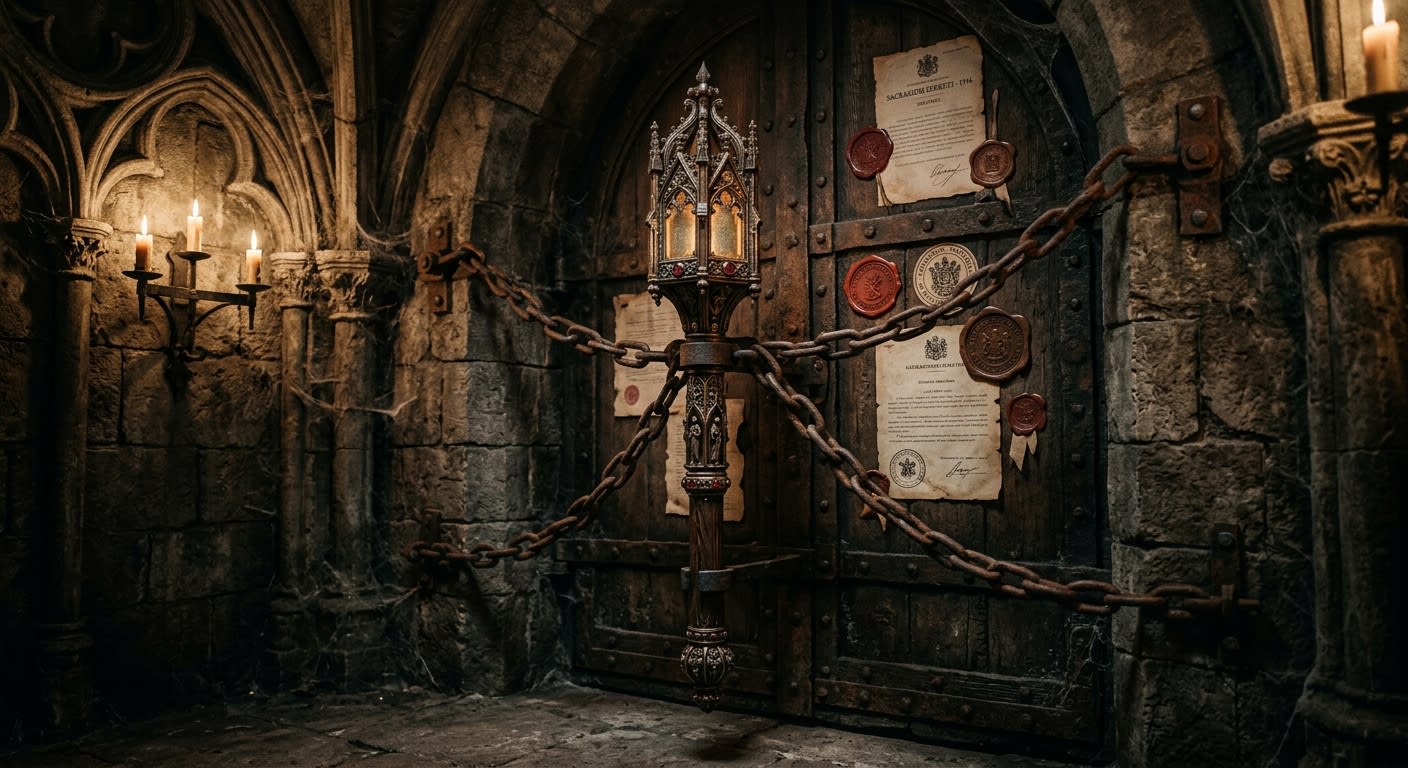
The Miracle of Saint Aldebrand
The Bureau erased the bone. The bone declined.
The Bureau declared the Reliquary of Saint Aldebrand non-existent in –32 A.S. In A.S. 95 it shattered a sorcerer-lord's skull and saved Vienna. Both facts are official, both carry seals, and the Bureau sees no difficulty.
Codex Ref. VI.4.01-001
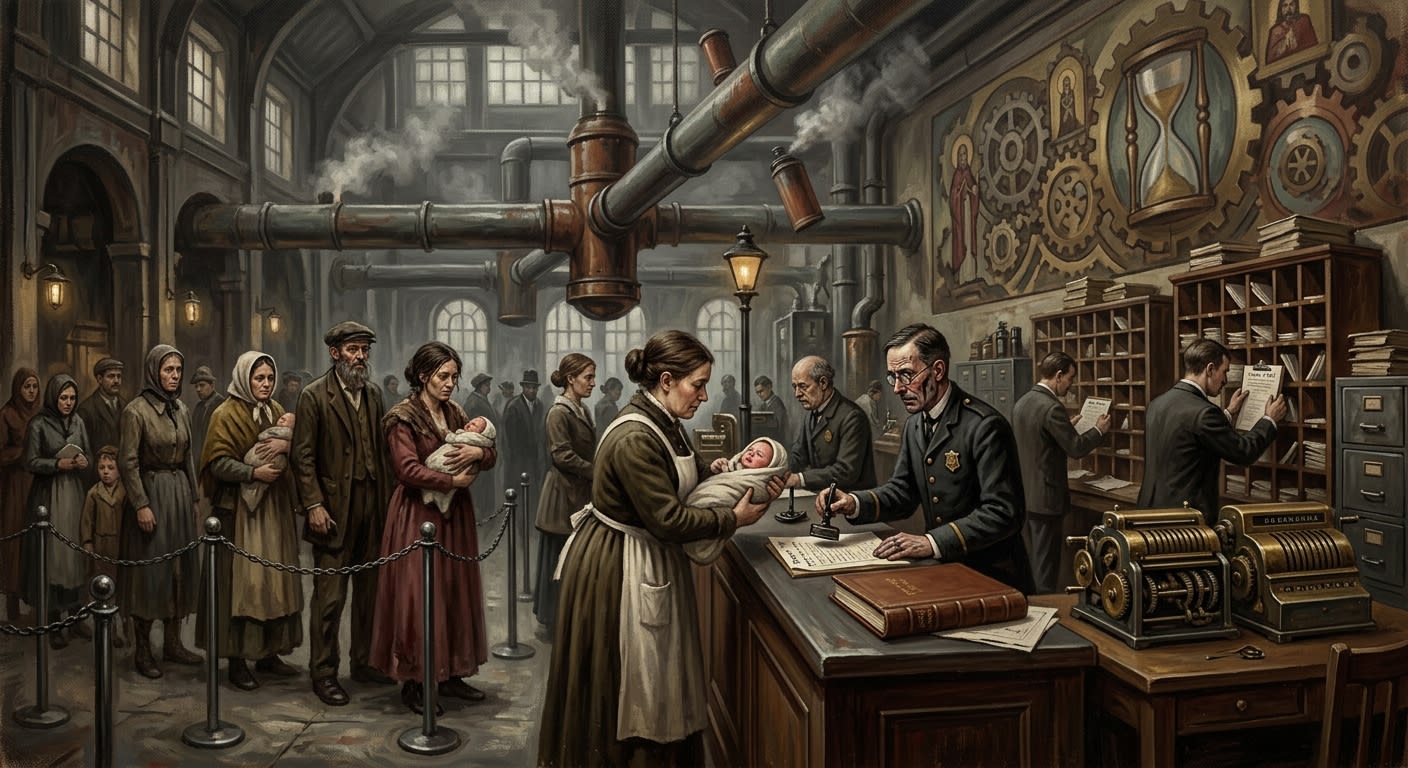
The Natal Registration Act
The statute that put a clock beside the cradle
The Natal Registration Act of A.S. 158 made birth a Records event: forty-eight hours from first breath, Form 7-NR, midwife filing, tithe projection, and the cradle docketed.
Codex Ref. XIII.1.02-158
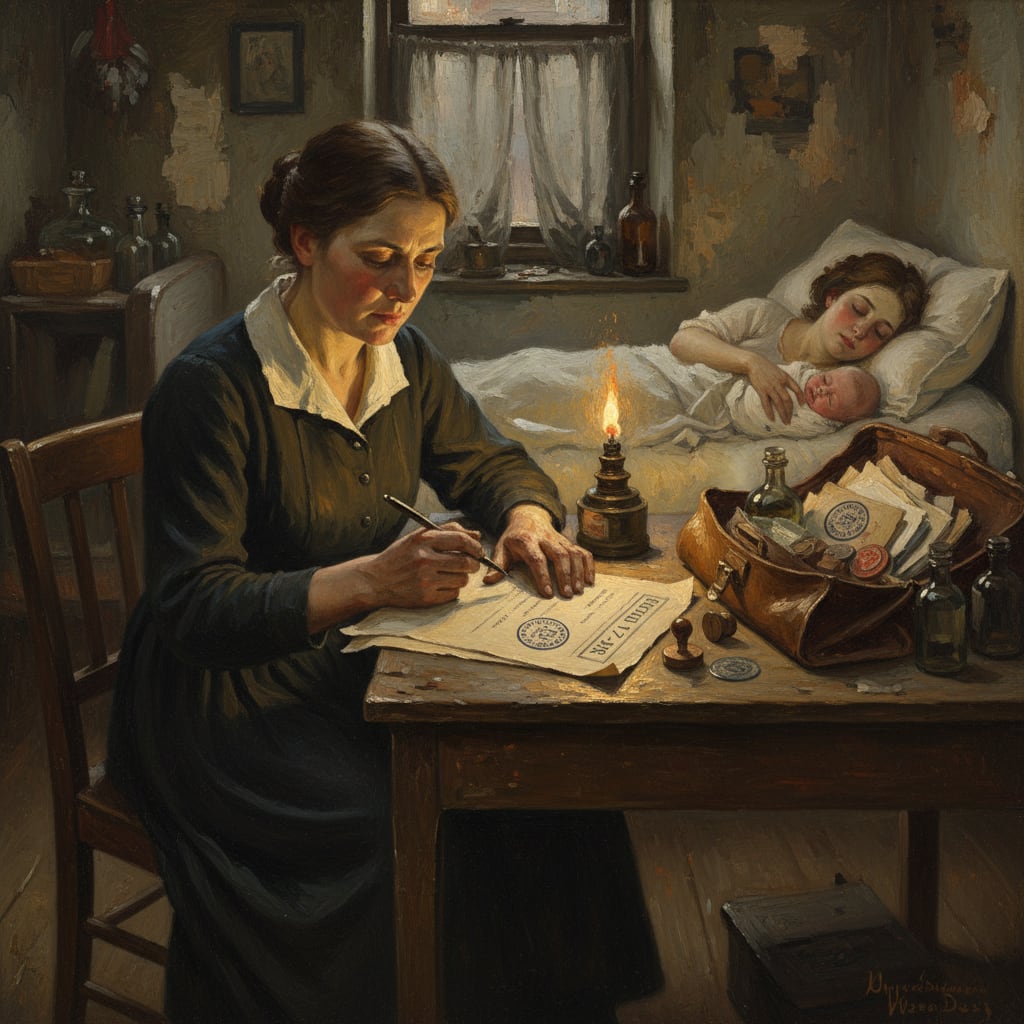
The Natal Registration Writ
Eleven inches by fourteen, and the whole apparatus of a life not yet lived
Form 7-NR is eleven inches by fourteen, bears two watermarks, and calculates the fiscal value of a human life at the moment of birth. Drax explains the theology, the penalties, and the people who would rather disappear than sign it.
Codex Ref. XIII.1.02-001
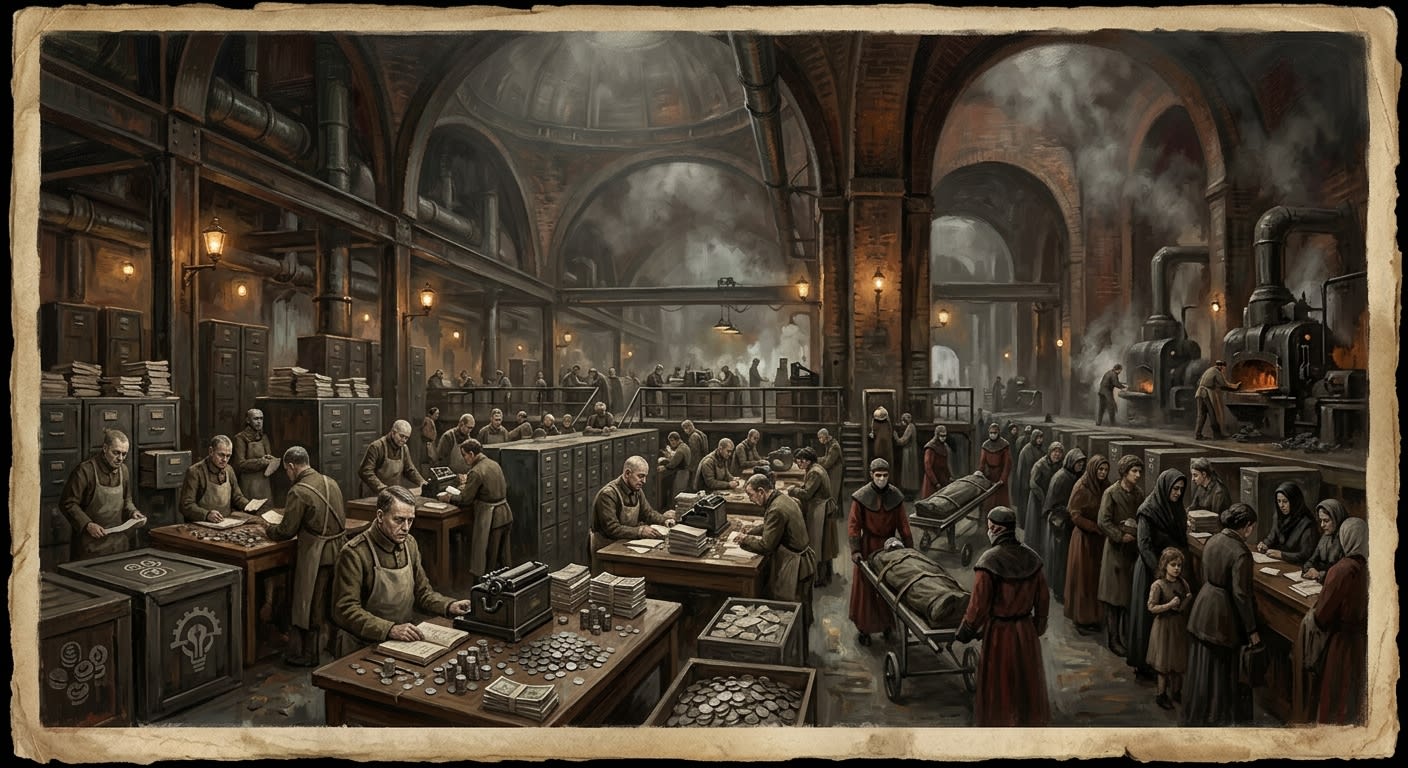
The Palatine Counting House
Where debt receives its sacrament and arithmetic learns to bite
The Palatine Counting House is Strasbourg's sleepless Fiscal Heart, seat of the Bureau of Tithes, where coins, corpses, widows, unborn debtors, and corrected accountants are counted.
Codex Ref. II.2.07-001
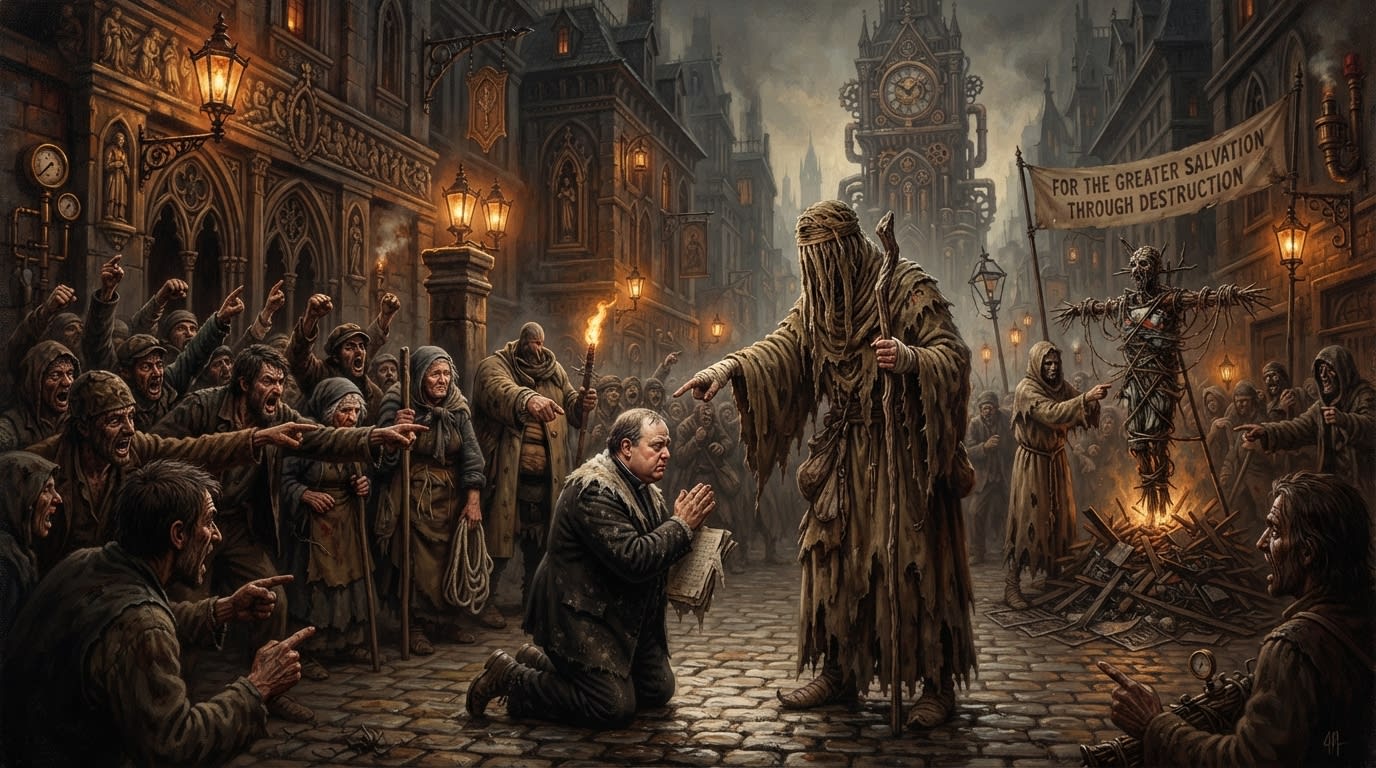
The Ragged Host
Where the remainder learned to kneel and the kneeling learned to burn
The Ragged Host is the condemned mobile movement that treats unaddressed harm as a public charge before the Creator — poor, armed, improvised, and more dangerous than any mob because it keeps records.
Codex Ref. XII.9.02-001
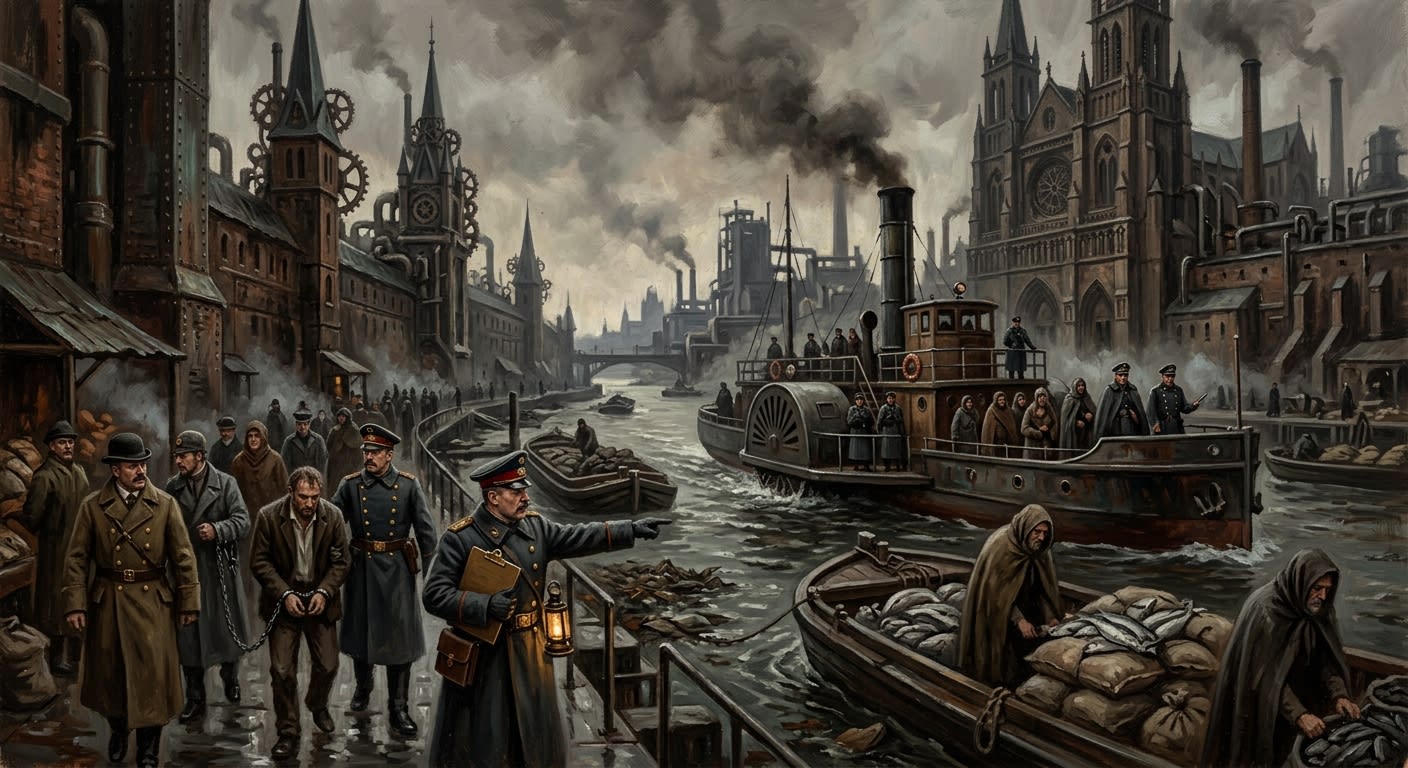
The Rhône
Water carries what paper refuses to keep dry
The Rhône is a southern river-corridor of ash, pilgrimage, fishery inspection, Avignon heresy, Lyon spectacle, wet custody, and water that declines obedience.
Codex Ref. II.1.10-201
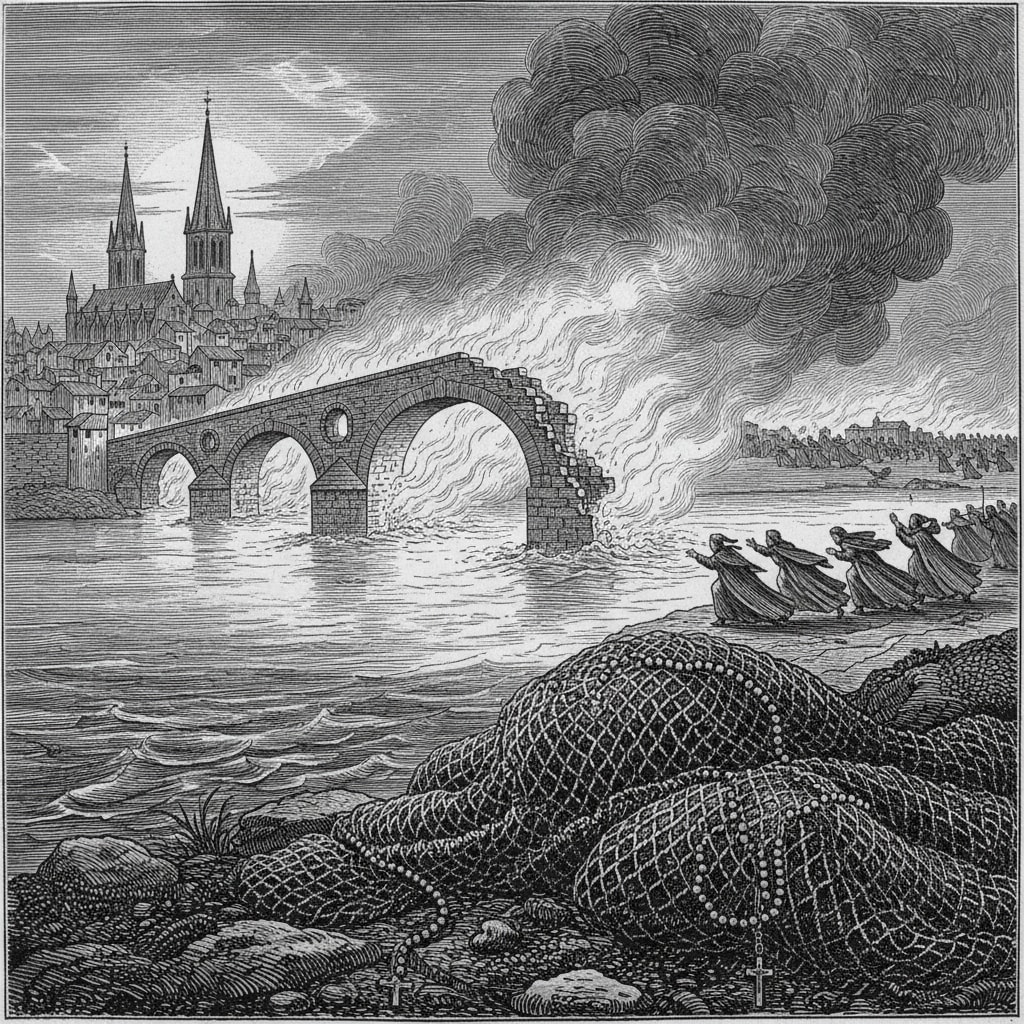
The Schism of Avignon
On the Rival Pontiff, the Drowned Crown, and the Rosaries That Will Not Stay Buried
The clerical secession of A.S. 111, in which a rival pontiff was crowned beneath the Rhône and Avignon was razed so thoroughly that its stones now form staircases in Strasbourg — a crisis requiring three stamps of denial.
Codex Ref. III.2.07-001
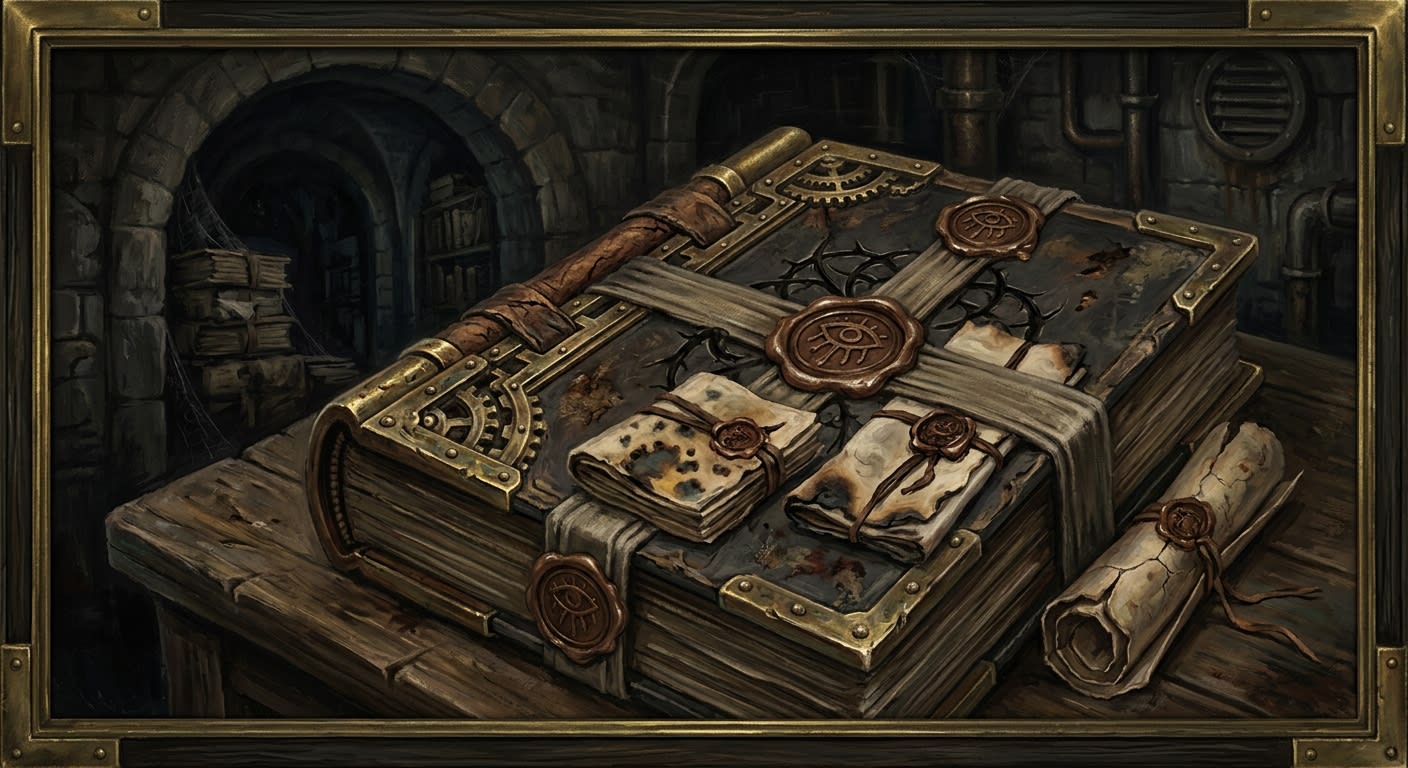
The Sealed Testimonies
Witness paper under restraint, because memory bites when shelved badly
First silence of the Vault of Silences, holding Atheron's emergence folios, the Mürren deposition from Debrecen, and the Iron Plains survivor volume.
Codex Ref. XIII.1.48-001
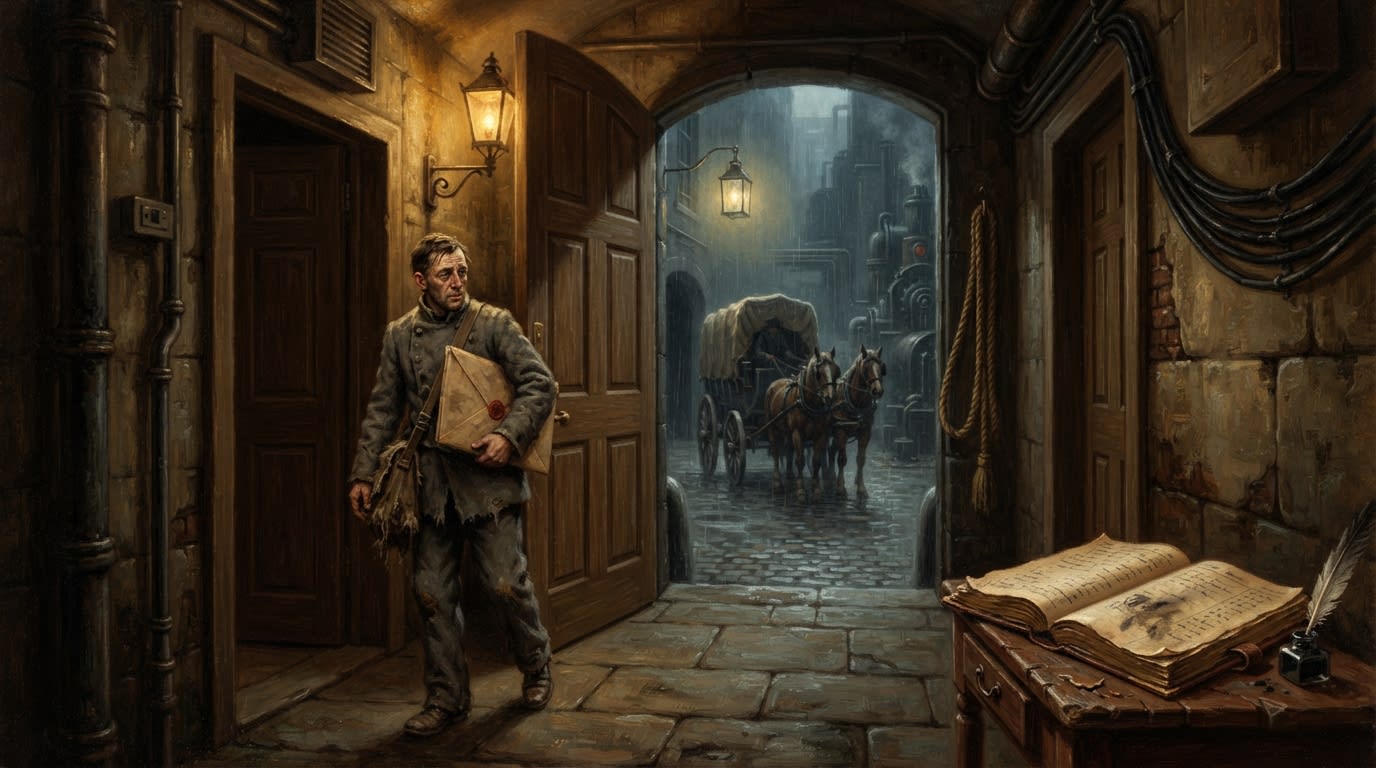
The Shadow Detail
The Hand That Writes in Rooms That Do Not Appear on Floor Plans
The Shadow Detail is the Synod's deniable hinge: clerks, couriers, wagon hands, and forgers who control the availability of persons, records, and routes. It can save a witness in the gap before procedure becomes consequence — or make that witness permanently unreachable.
Codex Ref. VIII.8.03-001
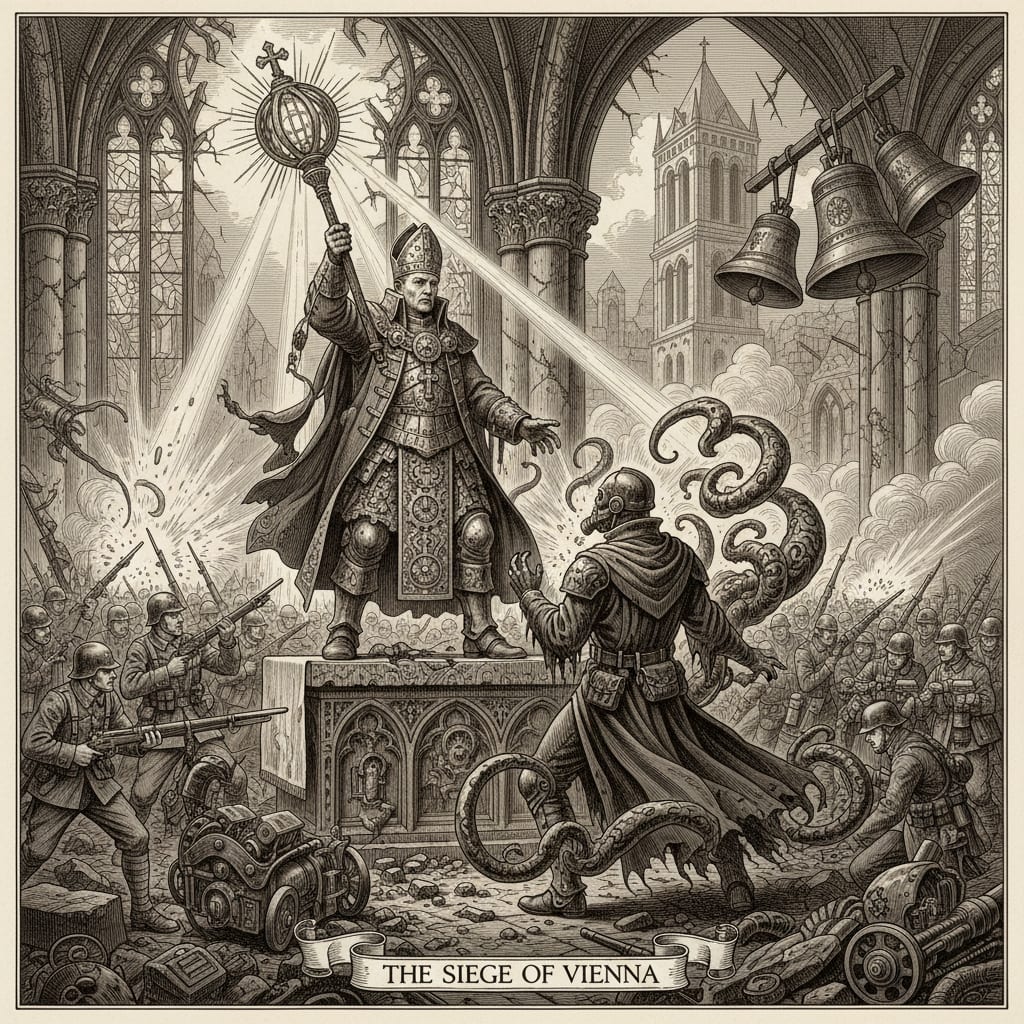
The Siege of Vienna
Nine Months in the Crucible of Faith
Nine months of famine, plague, and sorcery broke upon the altar of Saint Rupert. Bishop-Warden Clemens struck, and Reason died screaming in the streets of its last capital.
Codex Ref. III.2.07-031
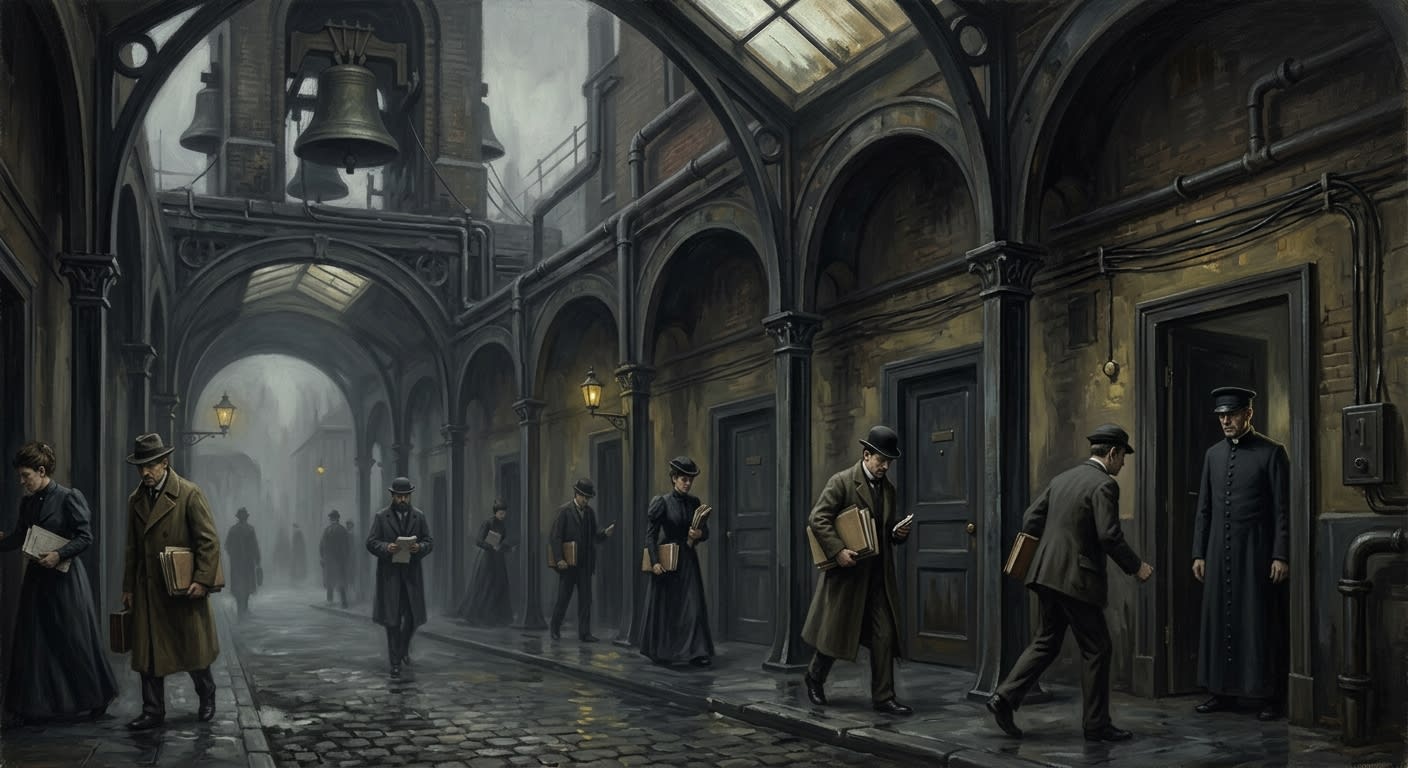
The Silent Colonnade
The fourth side of the [[cloister-precinct|Cloister]], where counting forgets its manners
The Silent Colonnade is Strasbourg's unnumbered northern arcade, a place of unmarked doors, shortened Wednesdays, swallowed bells, and corrections no Bureau admits.
Codex Ref. II.1.04-003
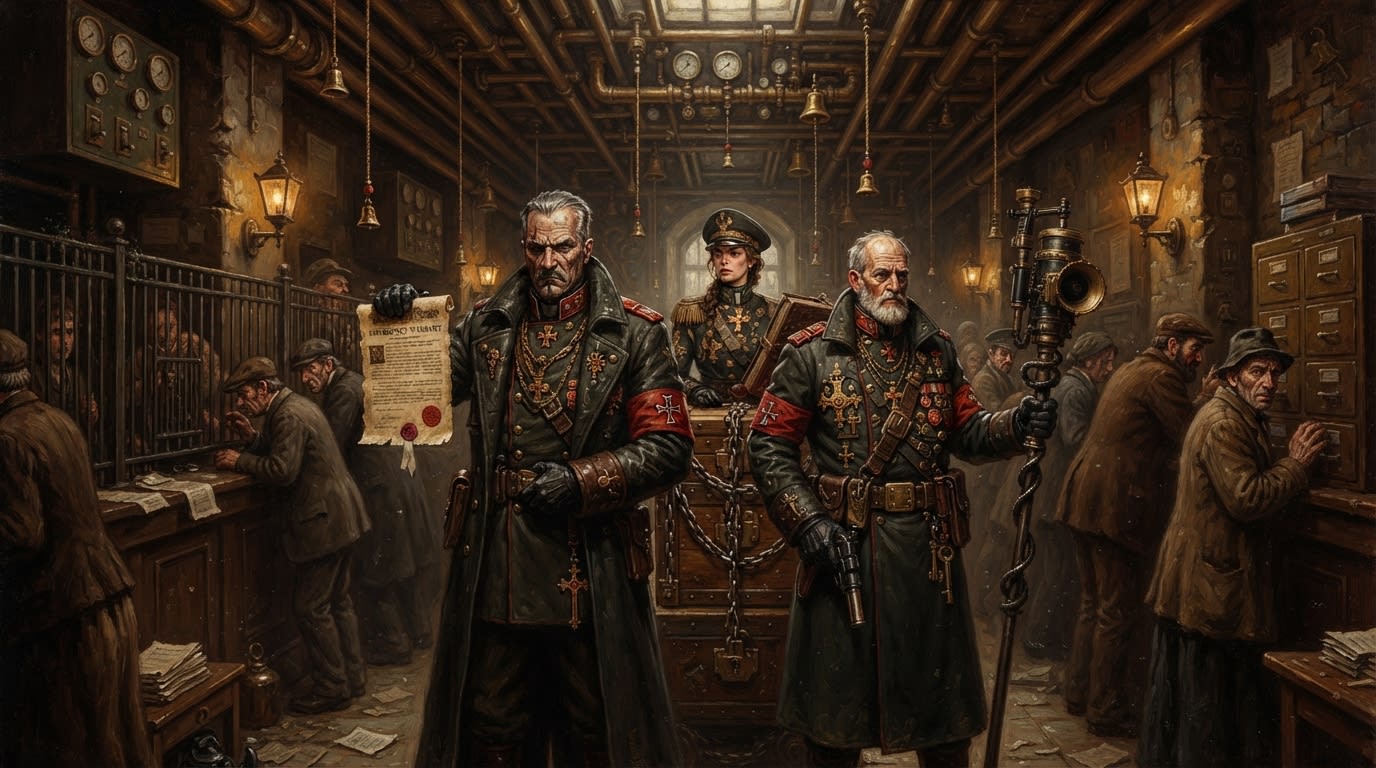
The Synod Task Force
On the Armed Enforcement of Administrative Truth
The Synod's answer to contested truth: temporary, armed administrative cells dispatched by warrant when ordinary procedure has failed, become complicit, or begun devouring its own paperwork. They preserve facts powerful offices would prefer misplaced.
Codex Ref. IV.7.12-001
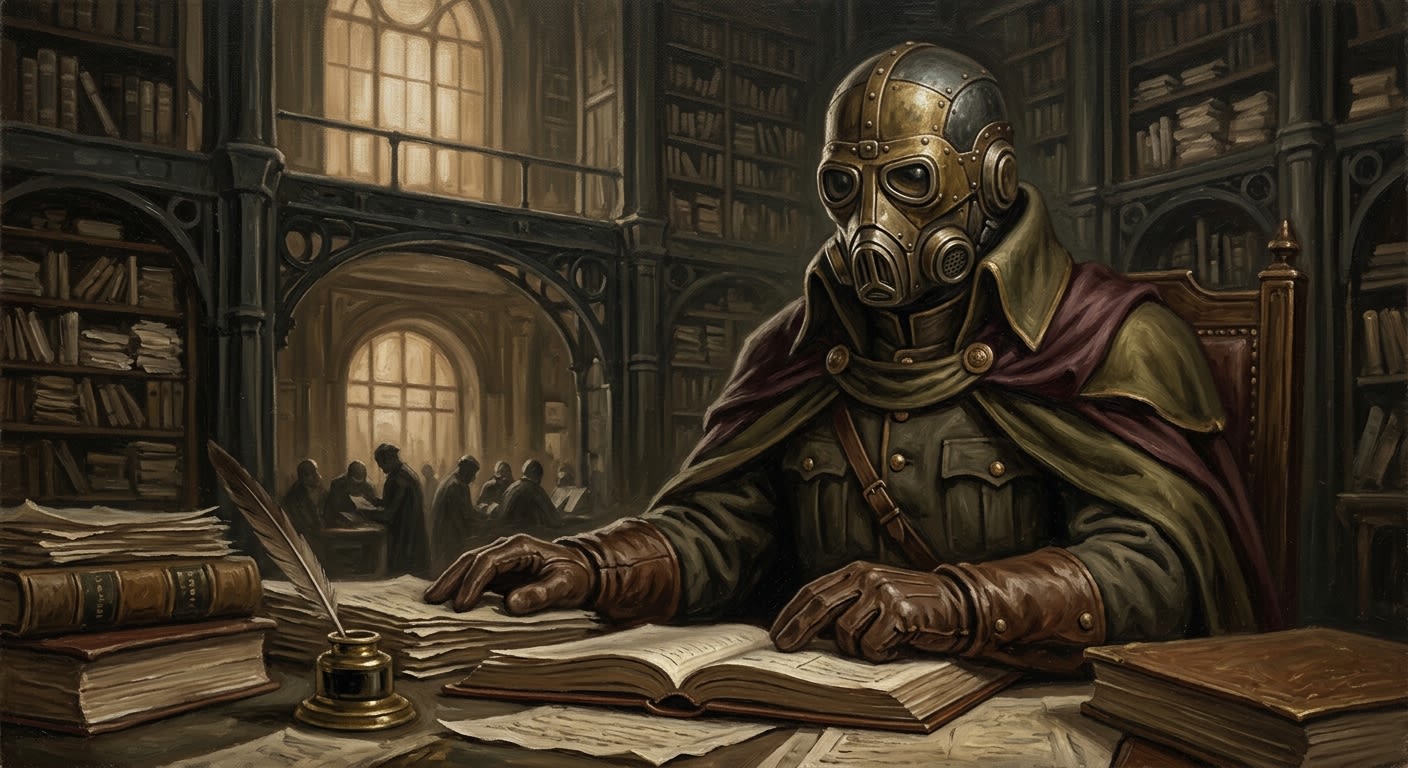
The Third Hierarch
A nameless mitre, a moth-eaten reign, and the file that knew too much
The Third Hierarch is an ordinal with no name, no portrait, and one surviving achievement: Saint Aldebrand's file vanished under his reign.
Codex Ref. XIII.1.05-002
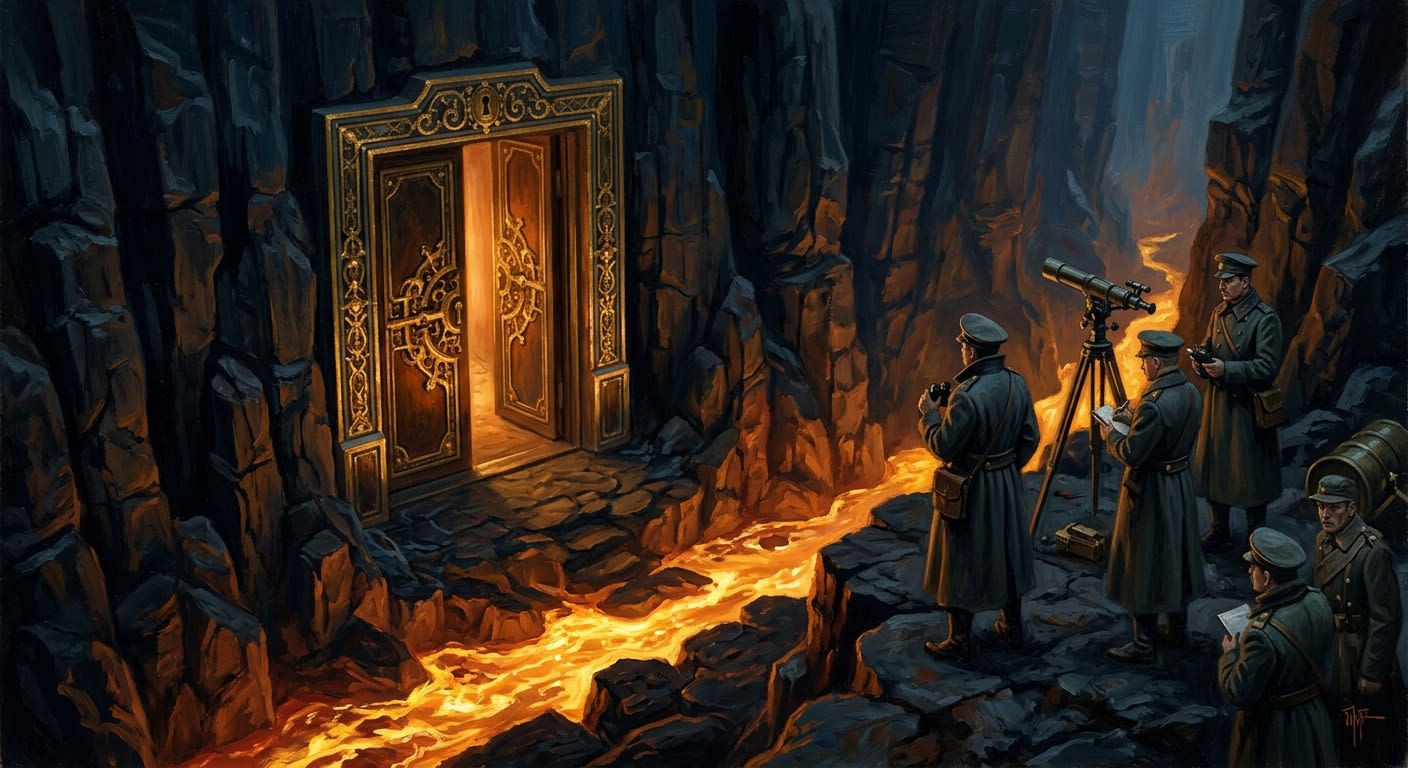
The Vault of Ten Thousand Keys
Every door opens. Every door locks behind you.
Velmora's seat within the Gilded Chasm — a palace of infinite descending doors, each one beautiful, each one locking behind you. Four expeditions entered. None returned intact. The Bureau has recommended permanent interdiction.
Codex Ref. V.6.02-001

Tower of the Quill
The tallest structure in Strasbourg, which is to say the world, which is to say the matter is settled
Seat of the Bureau of Doctrine and tallest structure in Strasbourg, commissioned in A.S. 92 by successor authorities. Three bells, a classified gallery, and a sealed archive beneath the flagstones.
Codex Ref. II.1.04-001
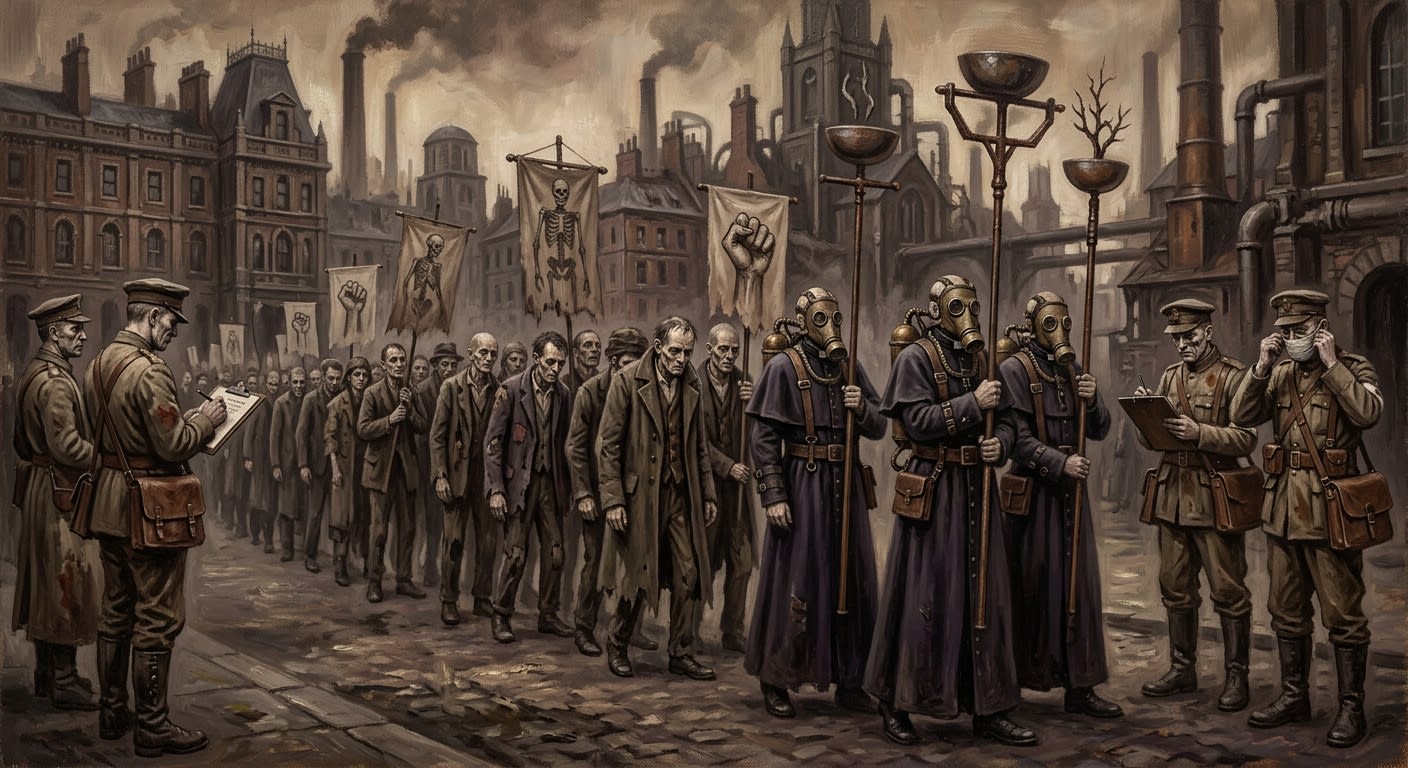
Triumph of the Gaunt
An injury given a hymn-sheet
The Triumph of the Gaunt crowns visible hunger as public virtue, training citizens to distrust plenty while Medicine counts the damage.
Codex Ref. XIII.1.25-001
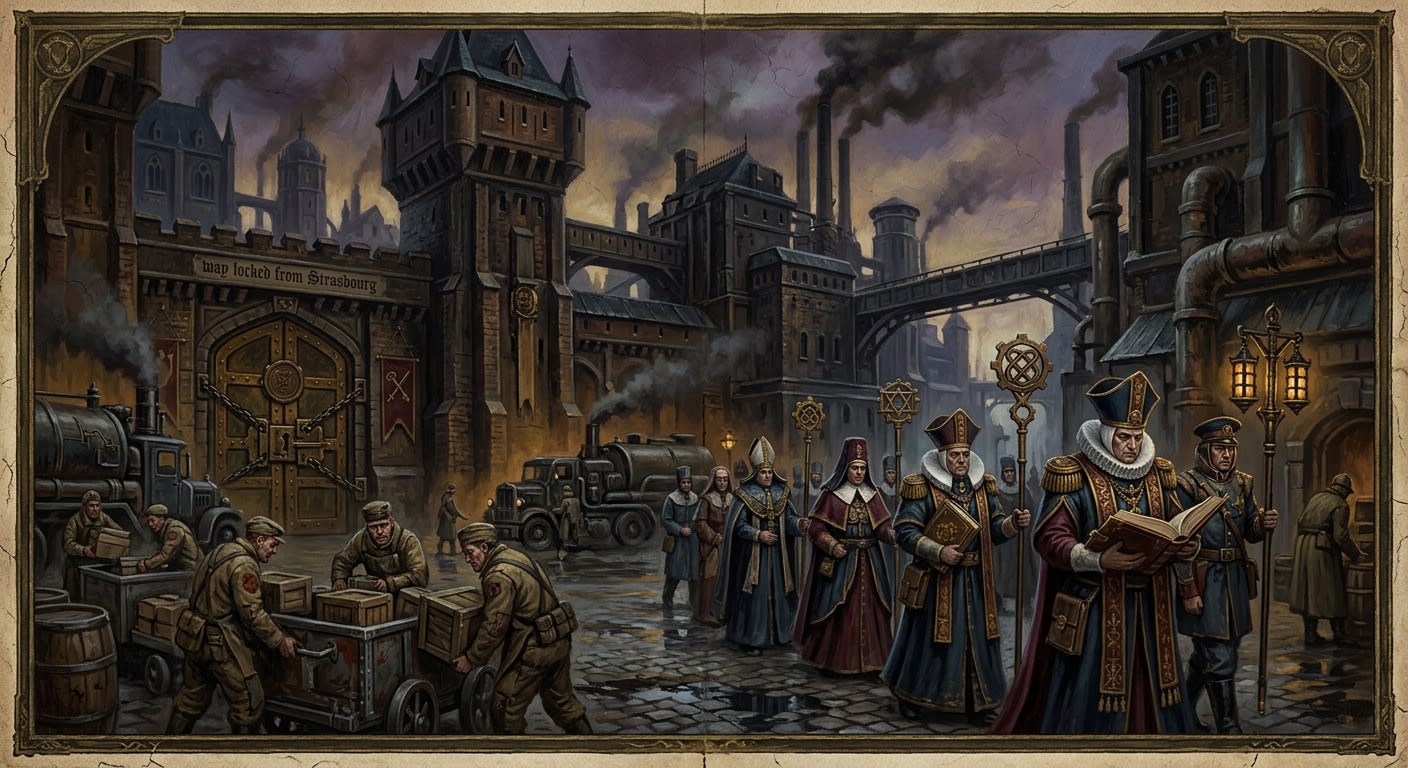
Triune Hearth
Three old bodies, one chimney, and Strasbourg holding the poker
The Triune Hearth binds France, Iberia, and the Rhineland into one Synodal household: warm in sermon, hungry in ledger, and locked from Strasbourg.
Codex Ref. XIII.1.04-090
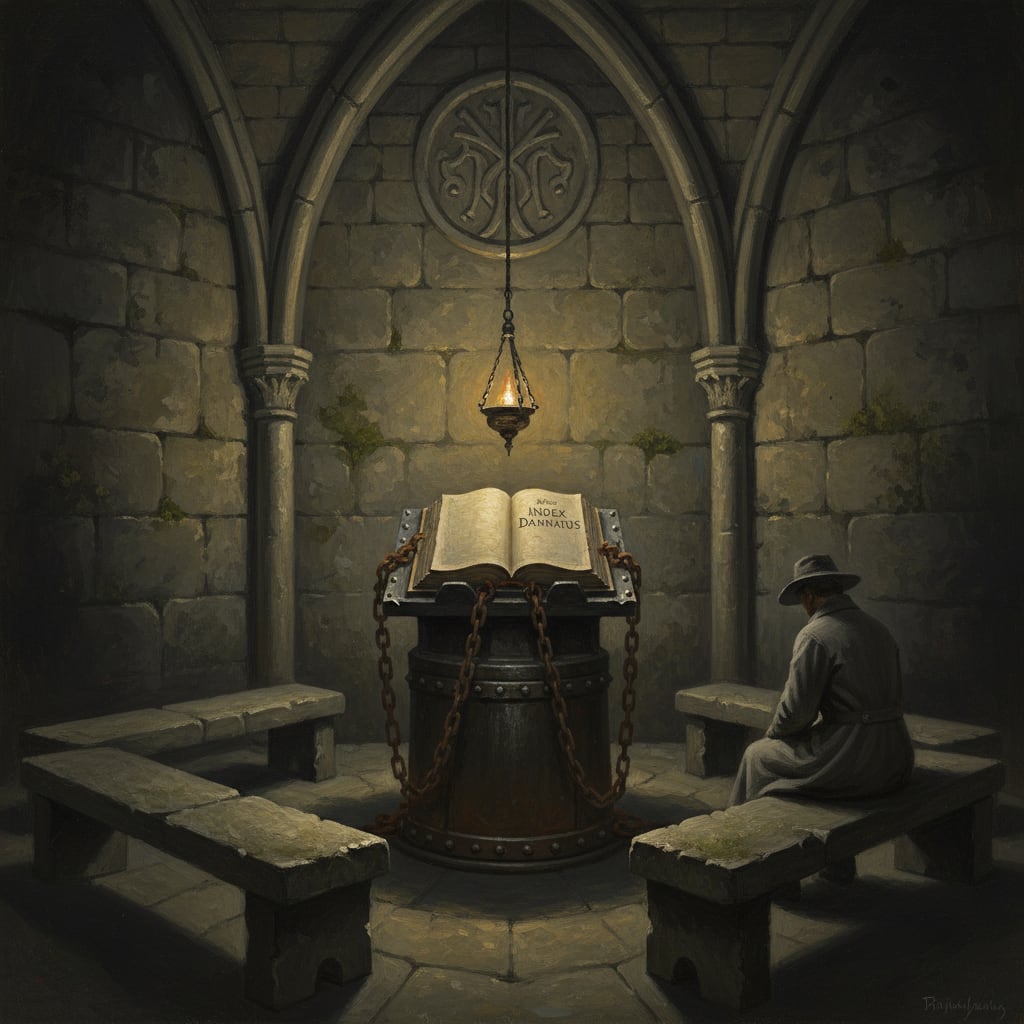
Vault of Silences
Forty-seven steps descending. Forty-nine ascending. The Bureau has certified both numbers correct.
The Vault of Silences occupies the sub-basement of the Basilica of the Ledgered Saints — the Bureau of Purity's sealed repository of everything the Synod prefers the world forgot. Four visits. One conclusion. The Bureau will stamp it out.
Codex Ref. II.1.04-002
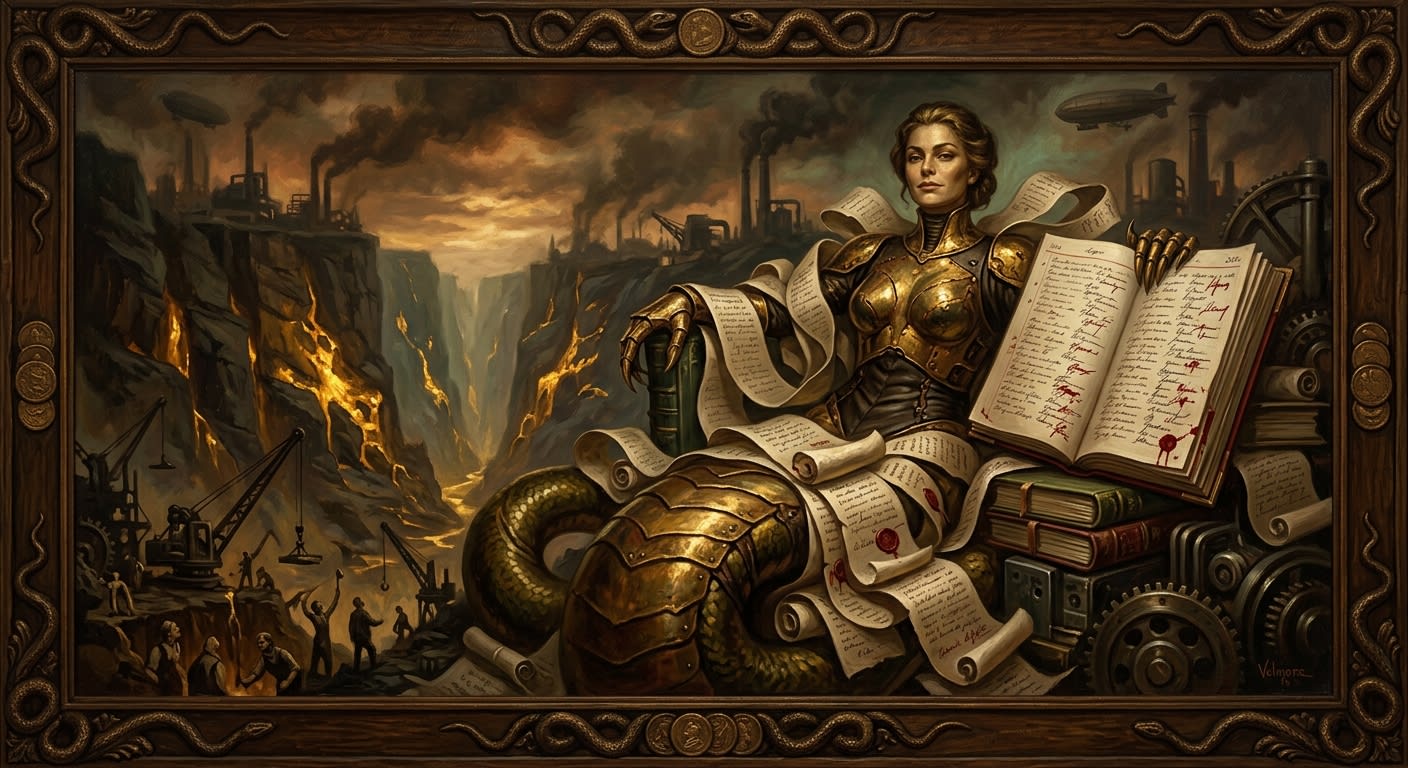
Velmora
She does not conquer. She possesses.
The Covetous Serpent, Sin-General of Greed — she does not conquer, she possesses. One signature at a time, one contract at a time, until nothing remains to sell and the ledger still shows a balance owed.
Codex Ref. IV.1.07-002
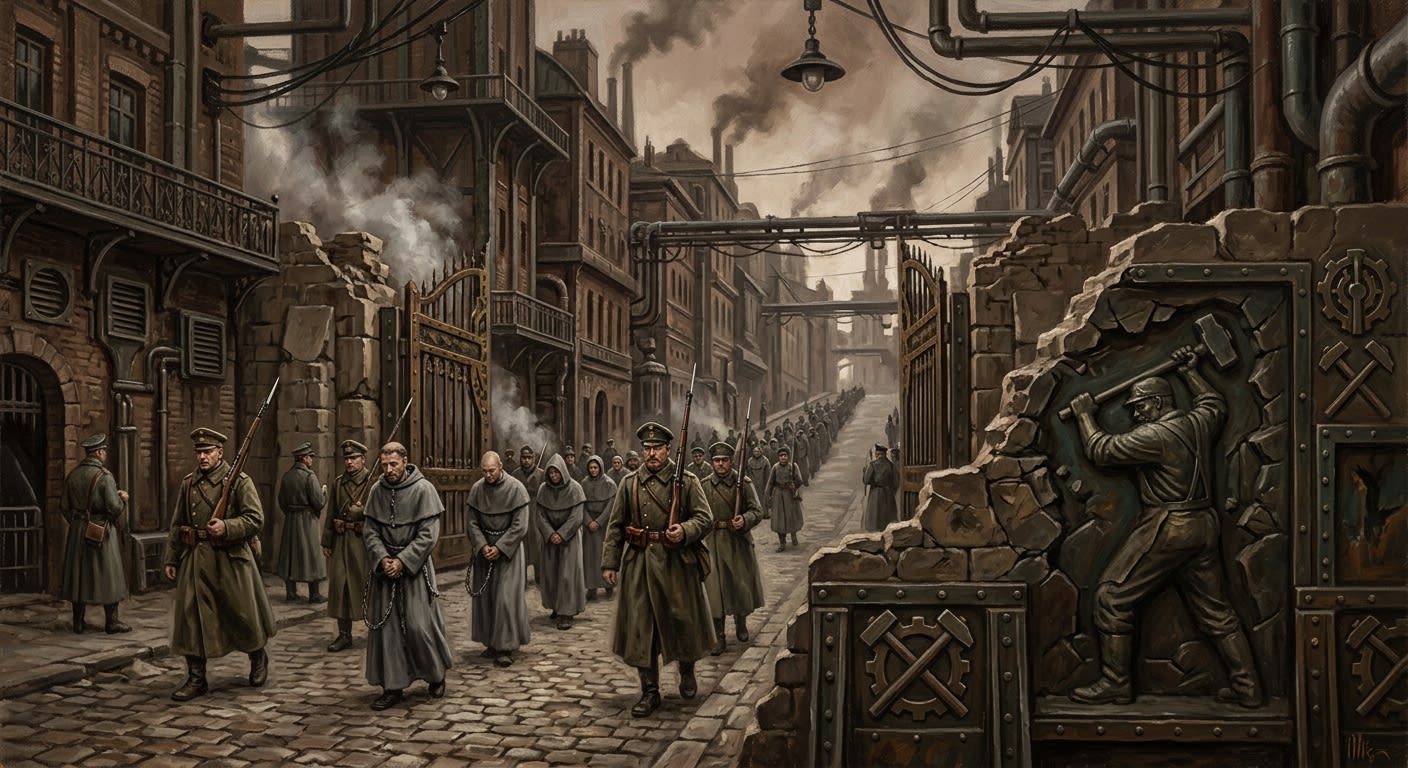
Via Stahlhand
Four hundred and eleven metres where knees become receipts
Vienna's Via Stahlhand is the sanctioned 411-metre penitential route through the Kärntner Gate breach, where Clemens Stahlhand's blow became a road.
Codex Ref. II.4.09-011