

Reverse Index
Referencing “Bureau of Festivals”
Every codex entry that links to Bureau of Festivals. 169 entries.
Return to Bureau of Festivals
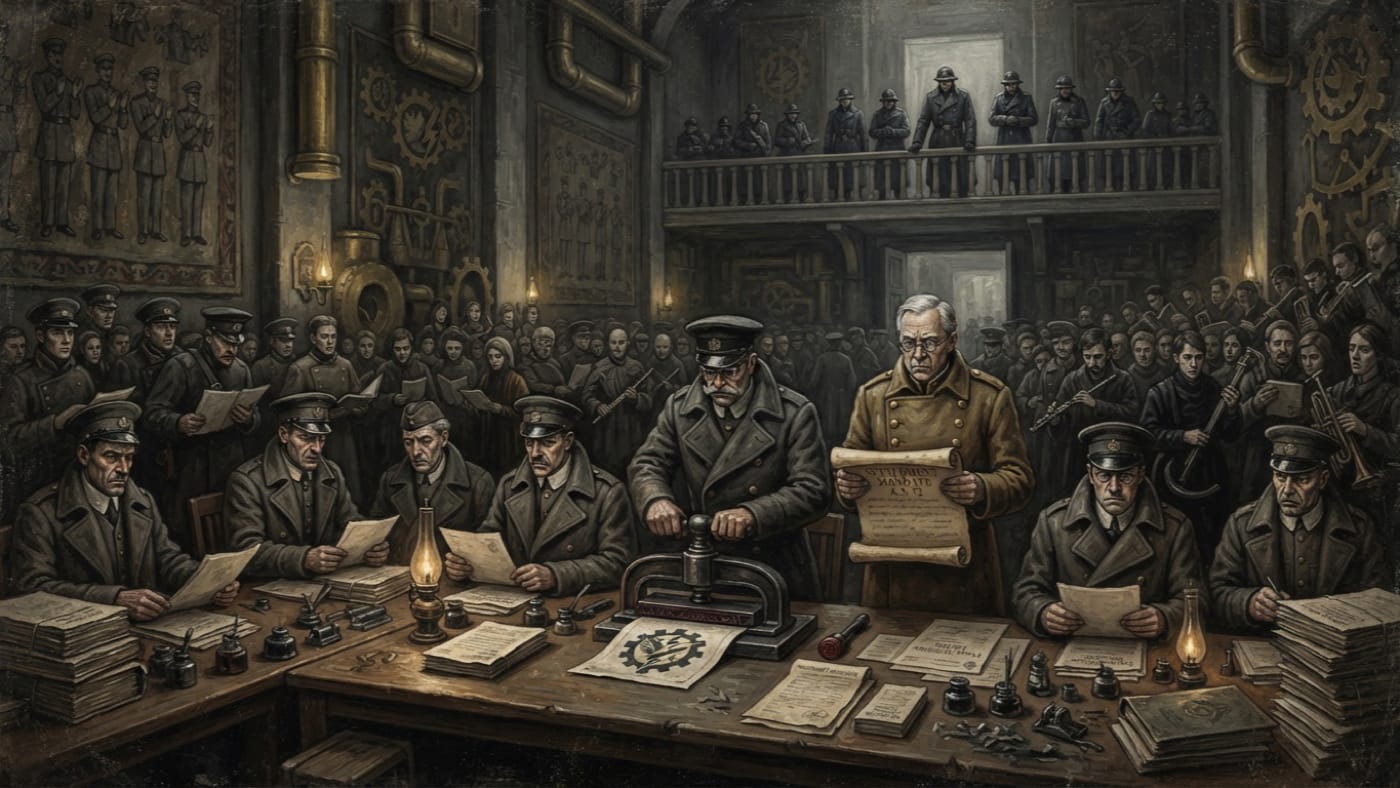
A.S. 72 Festival Licensing Settlement
The crowd may sing once the clerk has signed
In A.S. 72, the interim Church authority gave the Festival office its seal, budget and mandate to license public joy. The proceedings are lost; the permission still governs every clap.
Codex Ref. VII.1.72-001
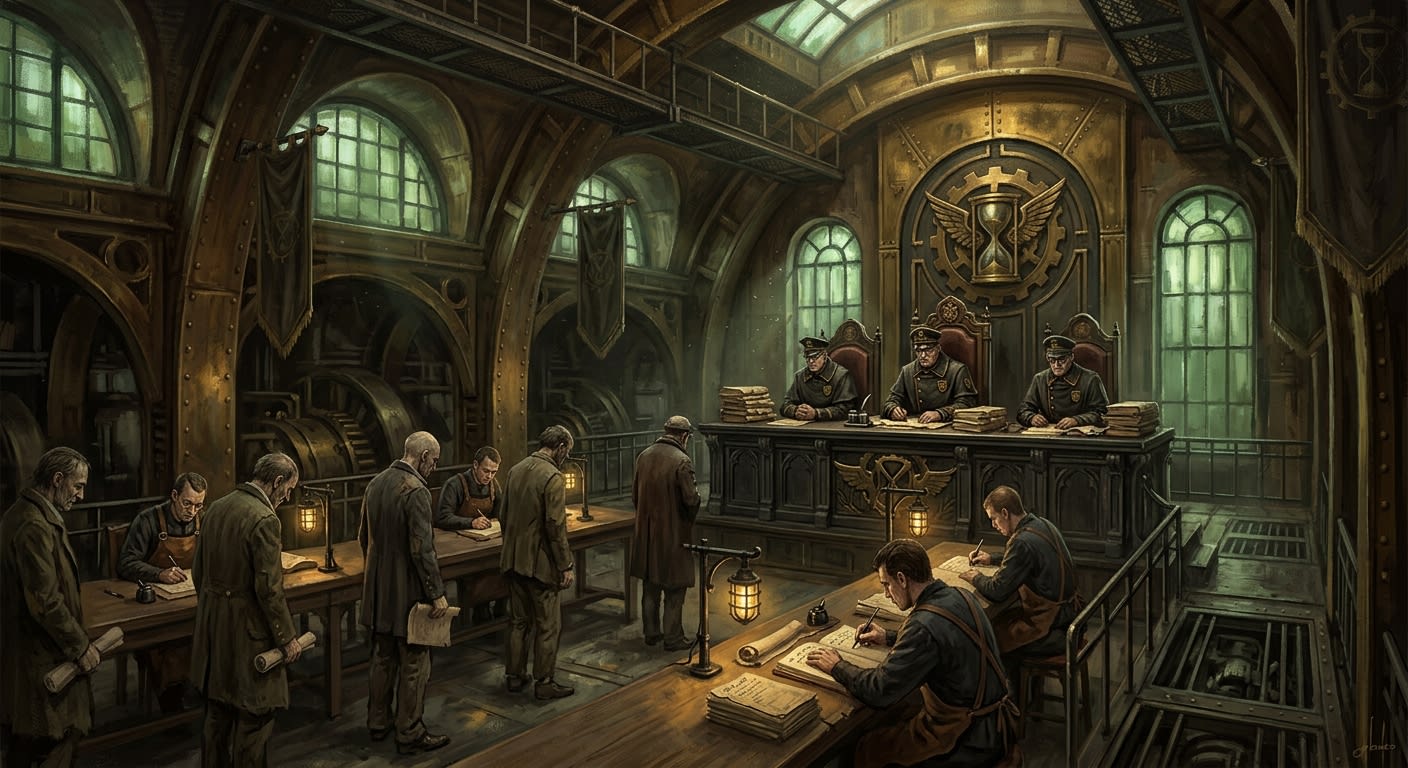
Absolution Hall
Where crossing becomes confession and confession becomes custody
Mid-span tribunal chamber inside Bastion-Brest's brass bridge-body, where crossing petitions, confession irregularities, Blank-Sheet cases, and Echo events are weighed in iron ink.
Codex Ref. II.4.08-098
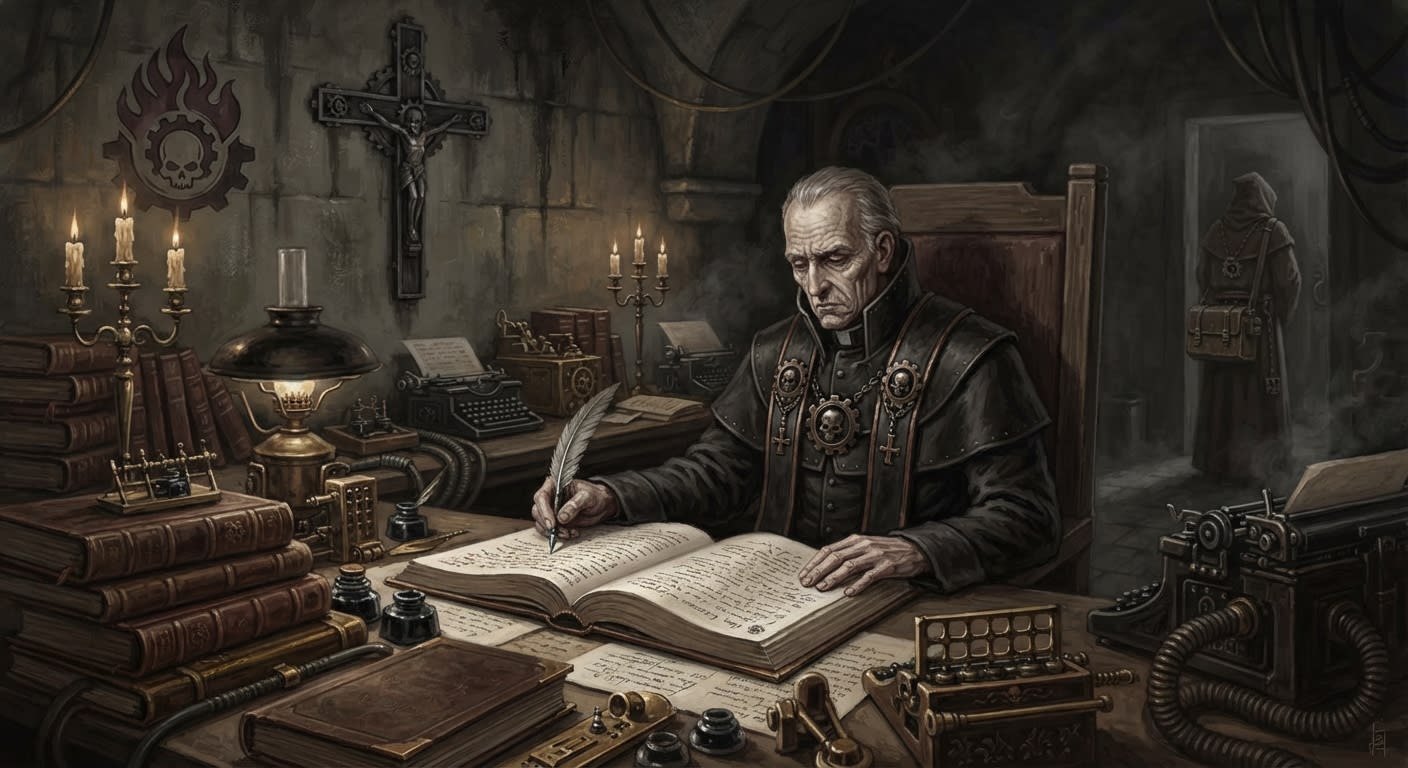
Aldric the Unbending
Thirty-one years, one perfect sentence, and no accommodation
The longest-sitting Liturgist-Primus, useful to the Bureau of Rites because almost nothing remains of him except thirty-one years, a perfect sentence, and a refusal no petitioner can answer.
Codex Ref. III.2.01-201
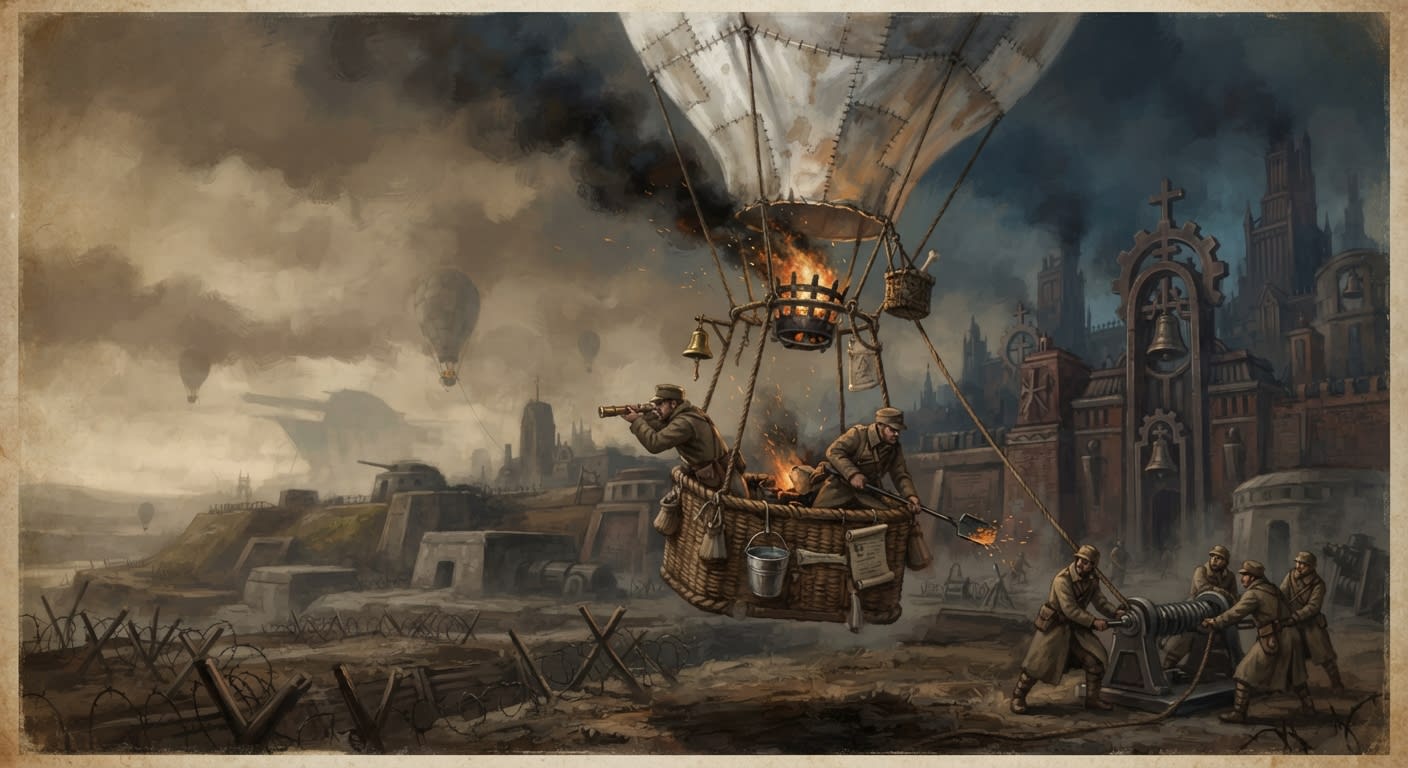
Angelus Engines
Before the sky was blessed, it was set on fire by committee
The Angelus Engines were the Synod's first intentional aircraft: silk envelopes, braziers, minor relics, two-man crews, and a casualty record later dressed as ascension.
Codex Ref. II.4.11-000
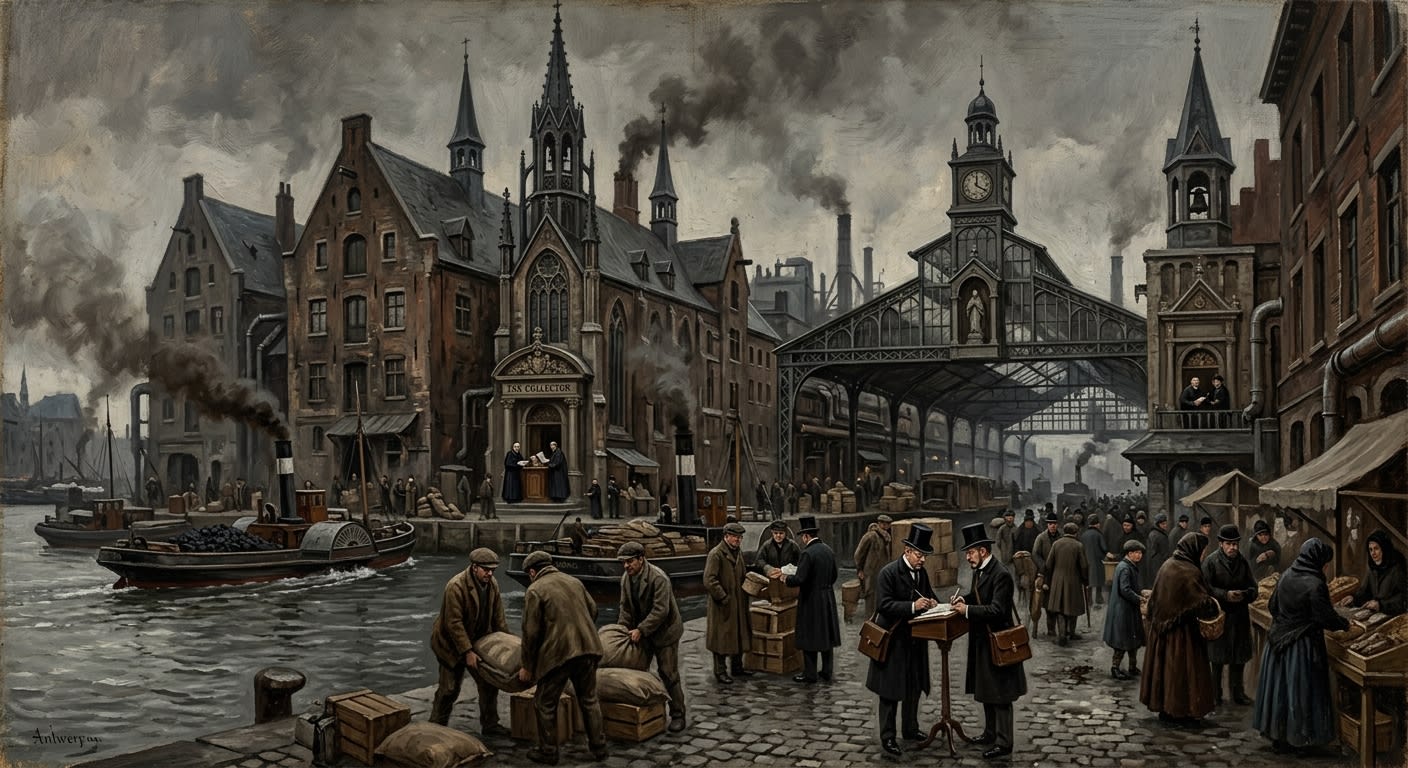
Antwerp
A port city weighing saints by warehouse light
Antwerp is the Scheldt port where commerce learned piety, hunger learned arithmetic, and every warehouse keeps a chapel close enough to tax.
Codex Ref. II.1.06-138

Archbishop of Lyon
The hand France sent, the name Records did not keep
The unnamed French signatory of the Concordat of Strasbourg: preserved by title, wax, and act, while the man beneath the mitre was permitted to vanish from the Ledger.
Codex Ref. III.2.01-090

Archon Casselius of Mainz
The man who hears treason in hardware and measures it correctly
Casselius of Mainz holds Heraldry and Masks and Seals in personal union, deciding what may be seen, stamped, licensed, and punished.
Codex Ref. III.2.01-017
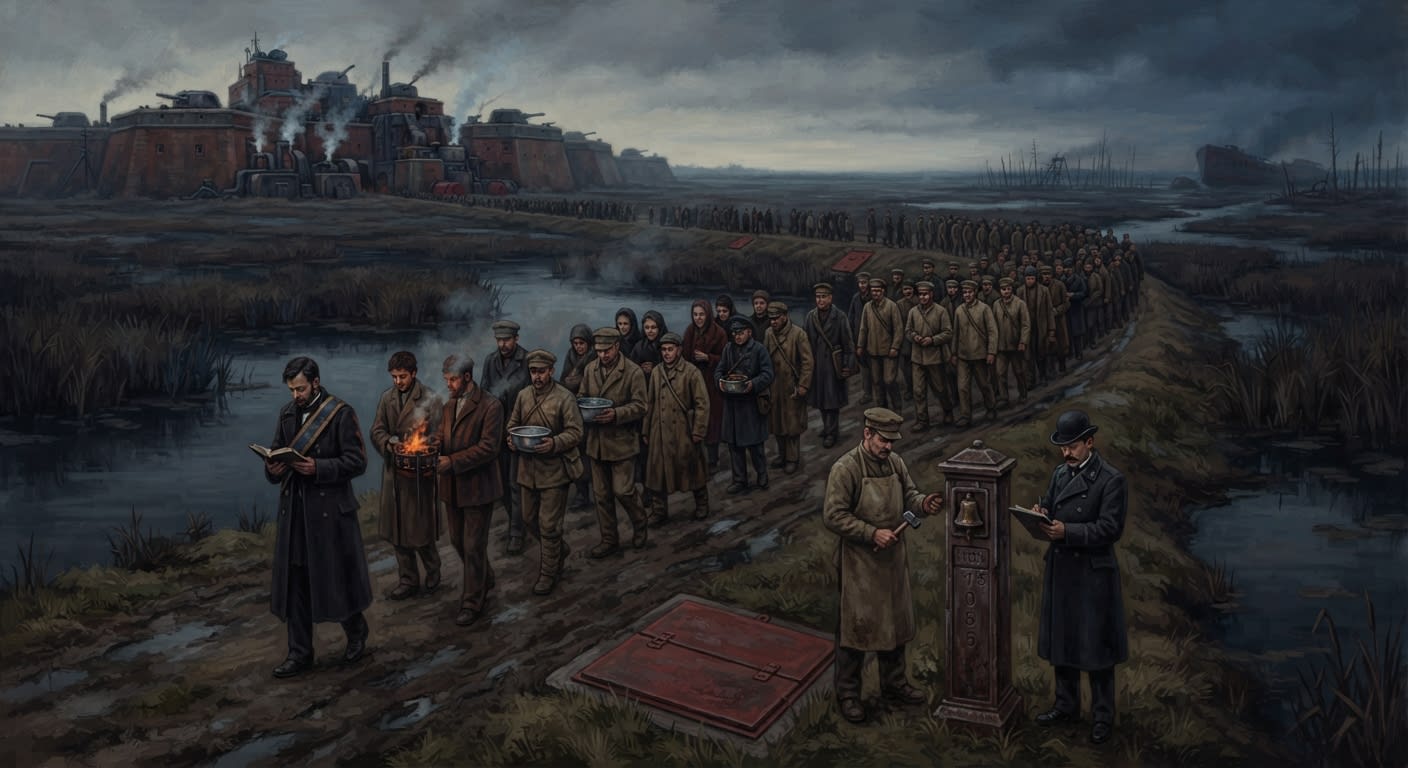
Ash Toll of Bastion-Shipka
A licensed walk over the fire Shipka refused to light
The Bureau of Festivals calls it a regional observance. Shipka calls it a drill with singing: two kilometres of ash, bells, sealed fire and black water, walked yearly over the road that once survived by drowning.
Codex Ref. II.4.08-113
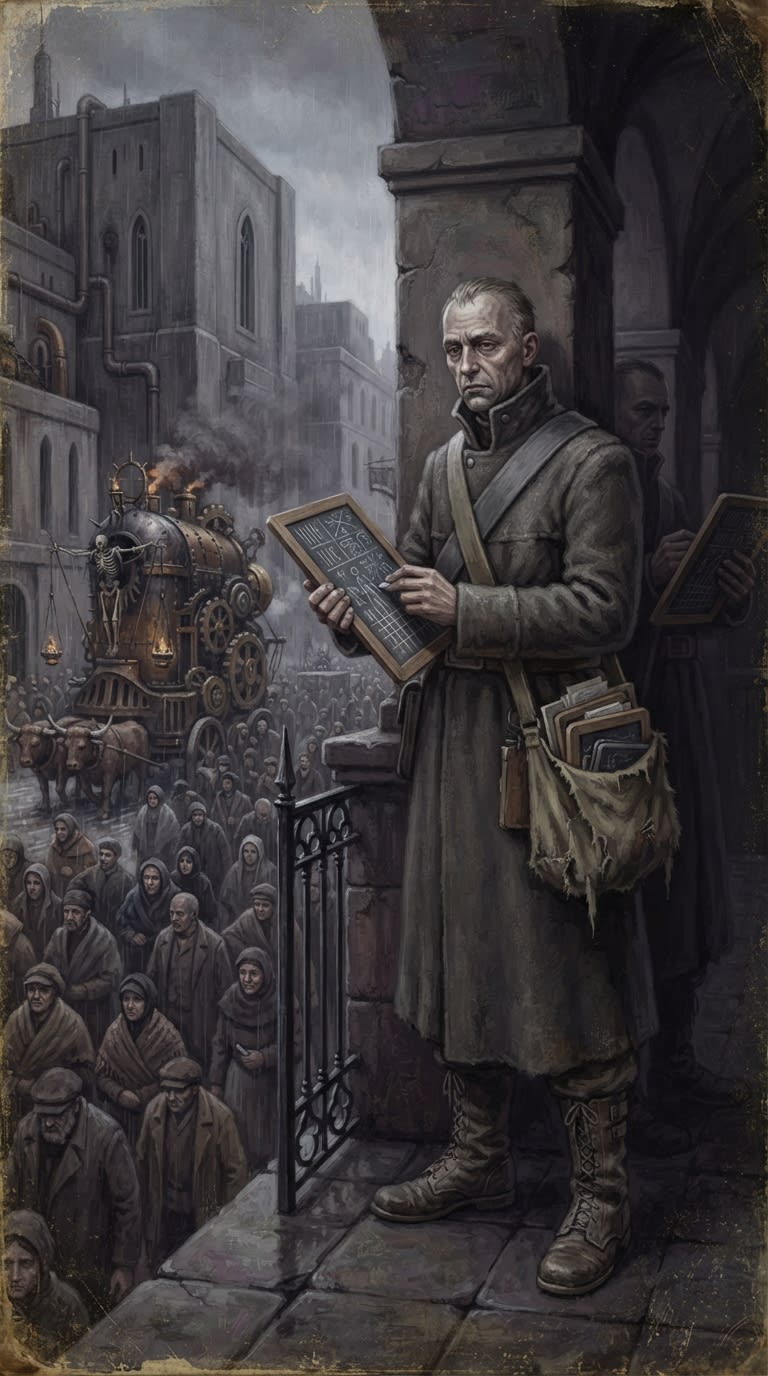
Attendance Auditor
The man at the edge of the square, doing arithmetic on your face
Field intelligence officers of the Bureau of Festivals who count attendance, score public feeling, and prove that Synodal joy has been enjoyed correctly.
Codex Ref. XII.17.04-001
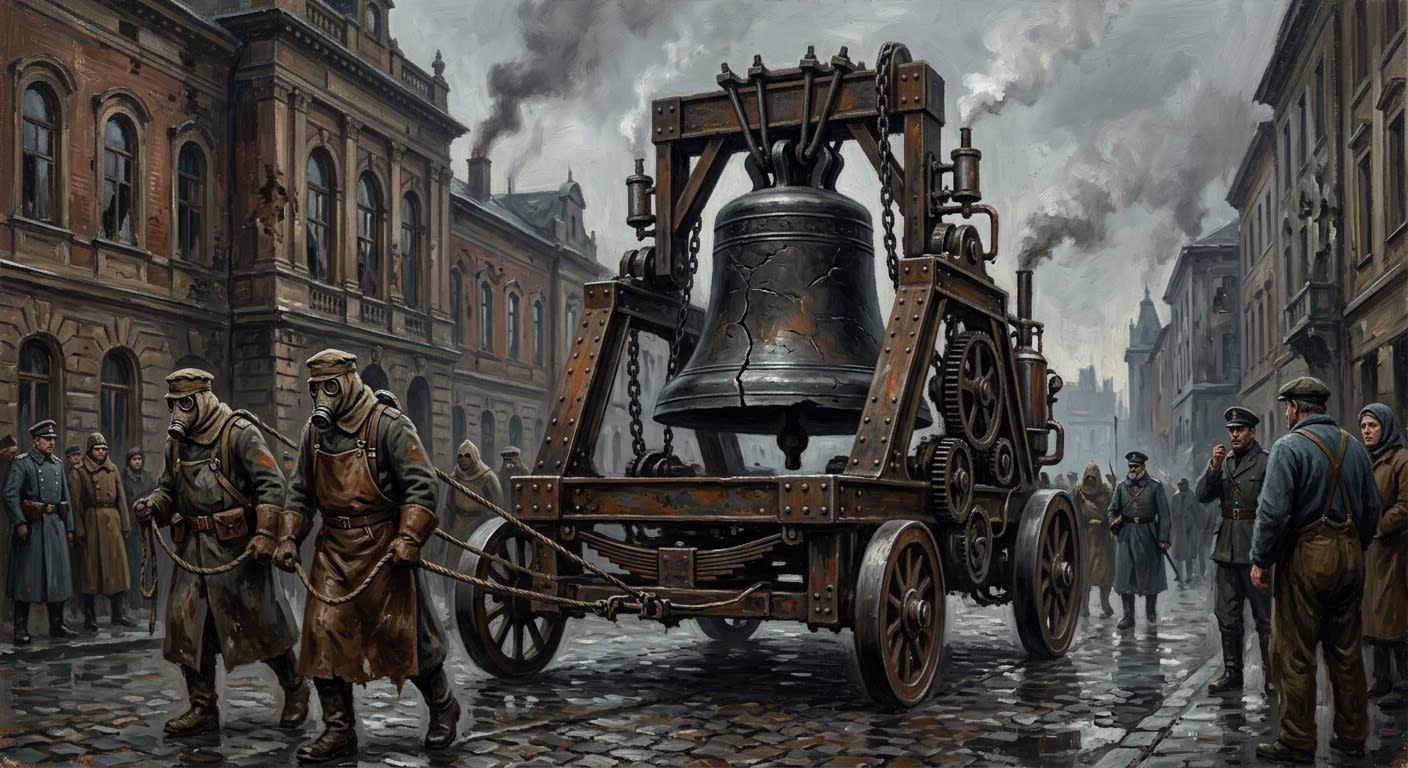
Bell of Saint Isidore
The cracked bronze that made Debrecen inherit a miracle's bill
The Bell of Saint Isidore is a cracked mobile relic-bell born from Kalnik Ridge, useful enough to parade and costly enough for Debrecen to remember in its bones.
Codex Ref. V.1.02-001
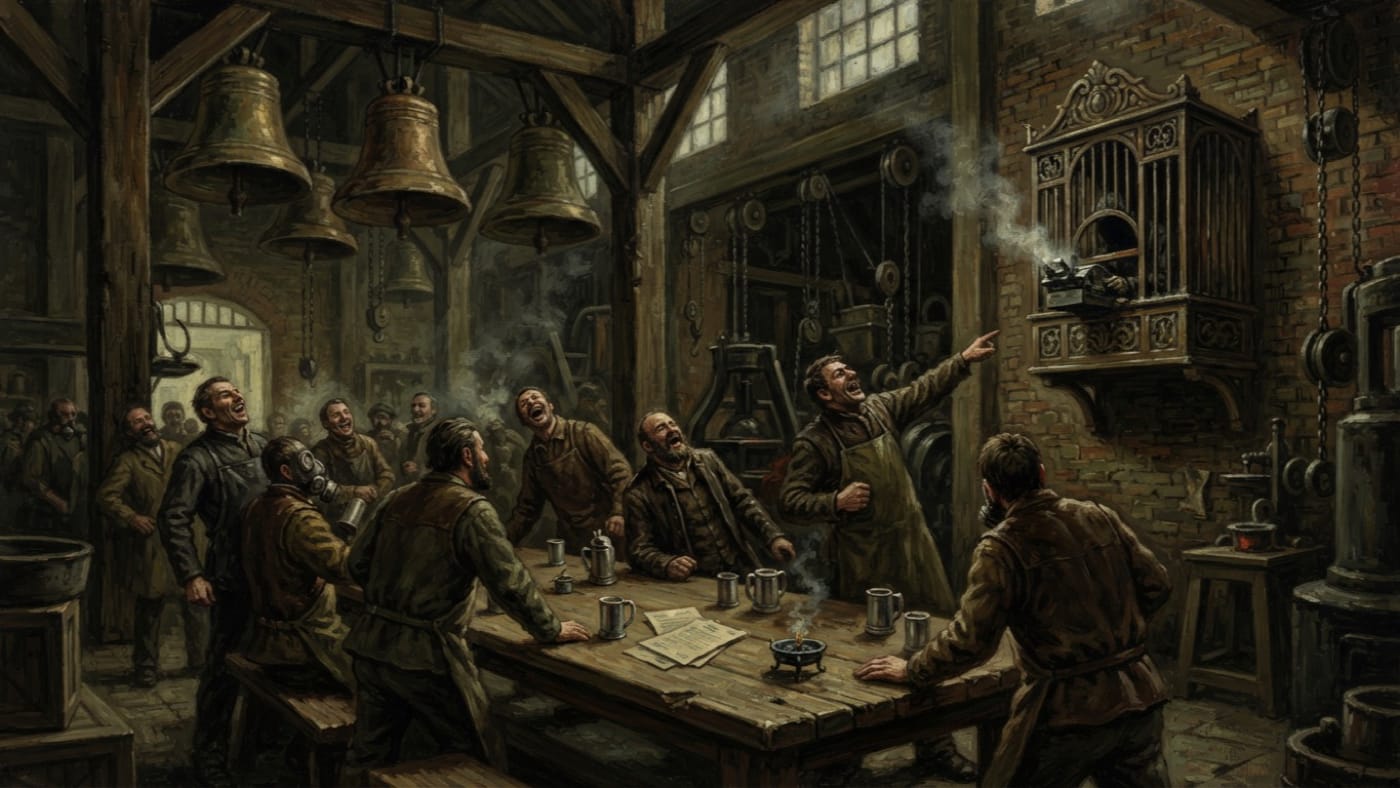
Bellfounders' Hall
Seven minutes of laughter, one brief permission
Bellfounders' Hall, Seville: a licensed grief toast became seven minutes of hostile laughter in A.S. 153. Form 19-M claims the first breach; the Fishmongers' Court disputes it.
Codex Ref. II.1.04-153
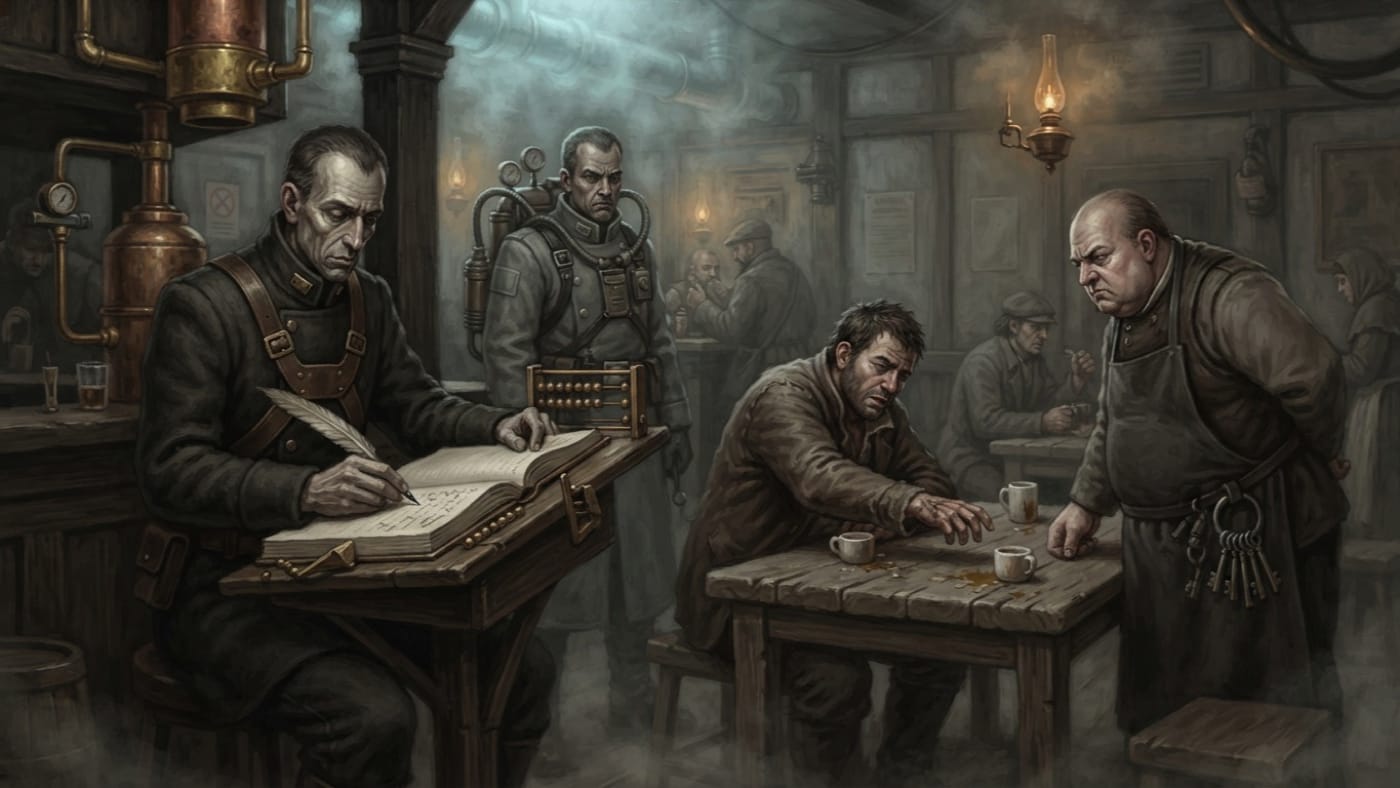
Bodily Percussion, Non-Musical
The hand forgets its thigh; the clerk remembers the licence
Bodily Percussion, Non-Musical is the List of Laughters category for a drunk who strikes a table believing it his thigh. The clerk records intention, keeps the bead rate unpublished, and charges the house for the noise.
Codex Ref. XIII.1.66-002
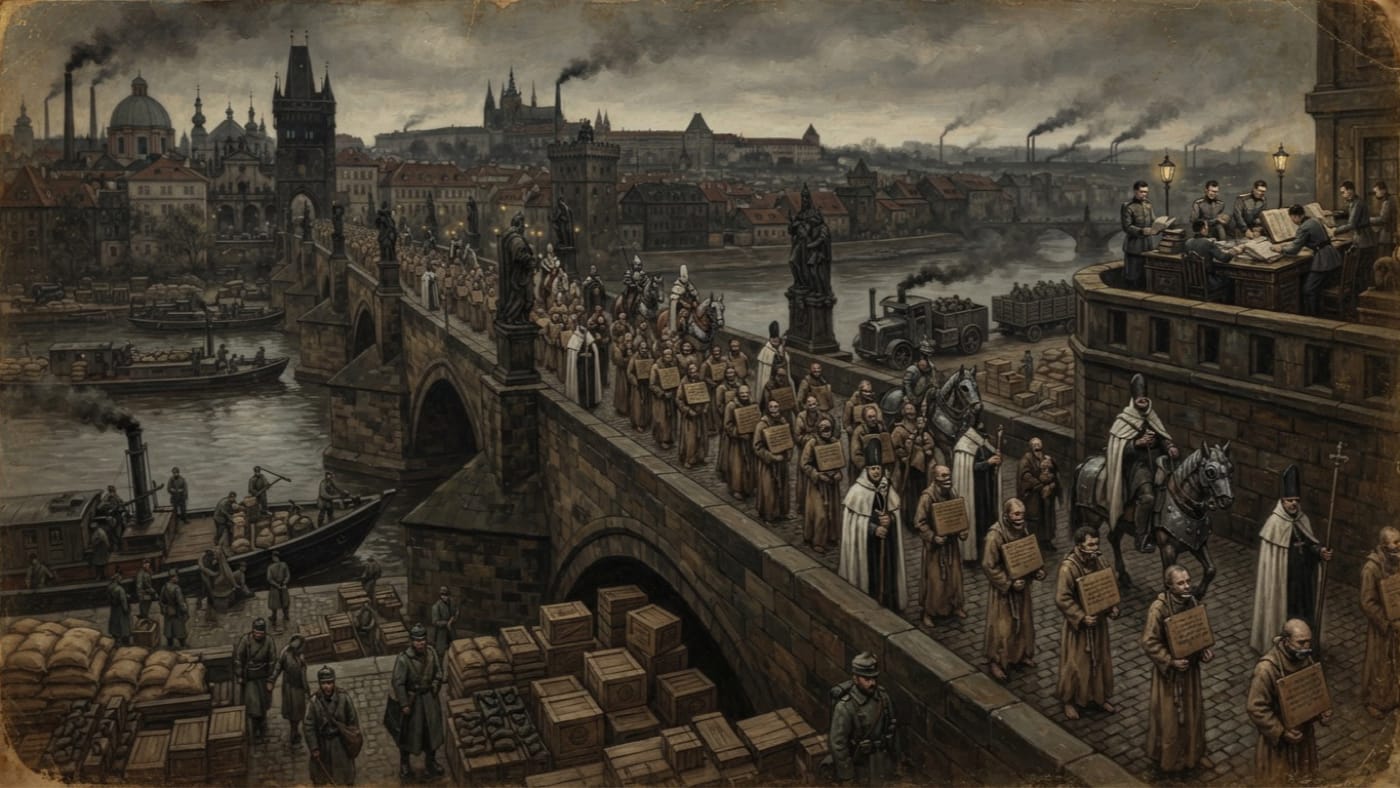
Bohemia
The province that feeds the Line and lets Prague instruct its tongues.
Bohemia, a Synod-held province of the Forward Heartlands, provisions the Sagittal Line while Prague supplies public correction. Grain moves east; the Procession of Tongues crosses its bridge. Both have paperwork.
Codex Ref. II.3.01-001
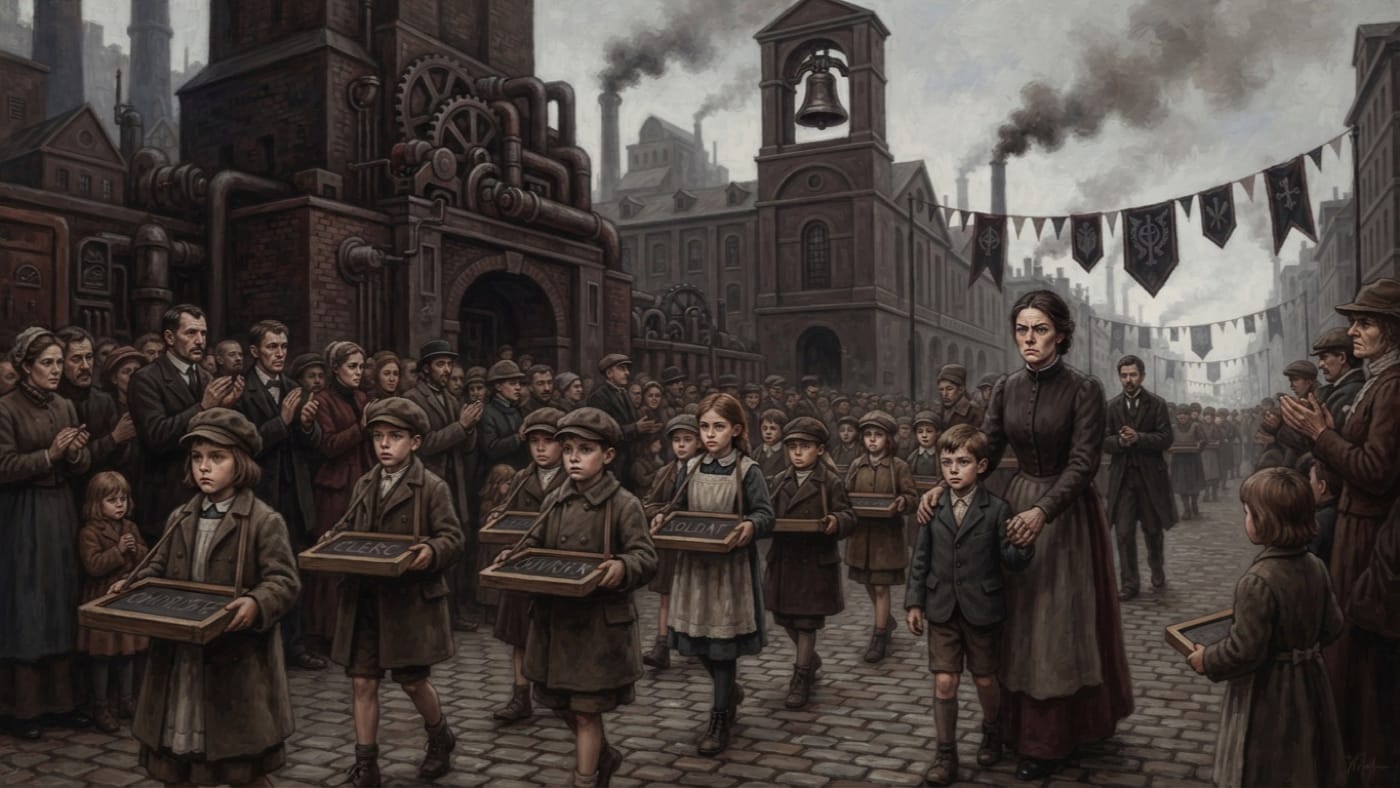
Book of Promise Parade
The child carries a future; the Bureaus retain the right to revise it
The Book of Promise Parade brings childhood's provisional vocations into the street: children carry wax tablets, families applaud, and the Bureaus reserve the right to change the future.
Codex Ref. XIII.1.22-002
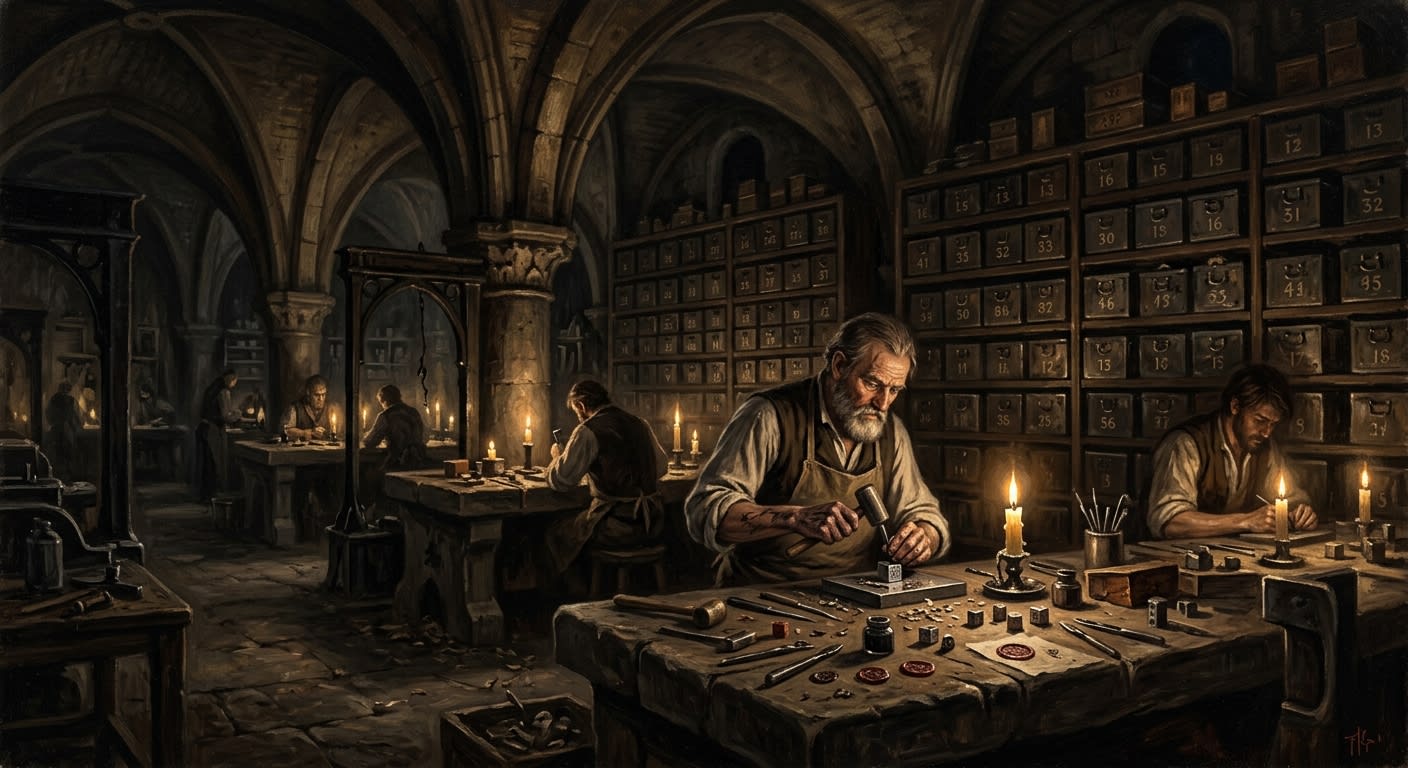
Bureau of Masks and Seals
The stamp is the Synod. Everything else is suggestion.
The Bureau of Masks and Seals controls every stamp, seal, and counter-seal in Synod territory. Without its impressed wax, no document is real. Without its license, no face may be hidden. Casselius of Mainz holds the Synod's mouth and press in one pair of ink-stained hands.
Codex Ref. VI.4.19-014
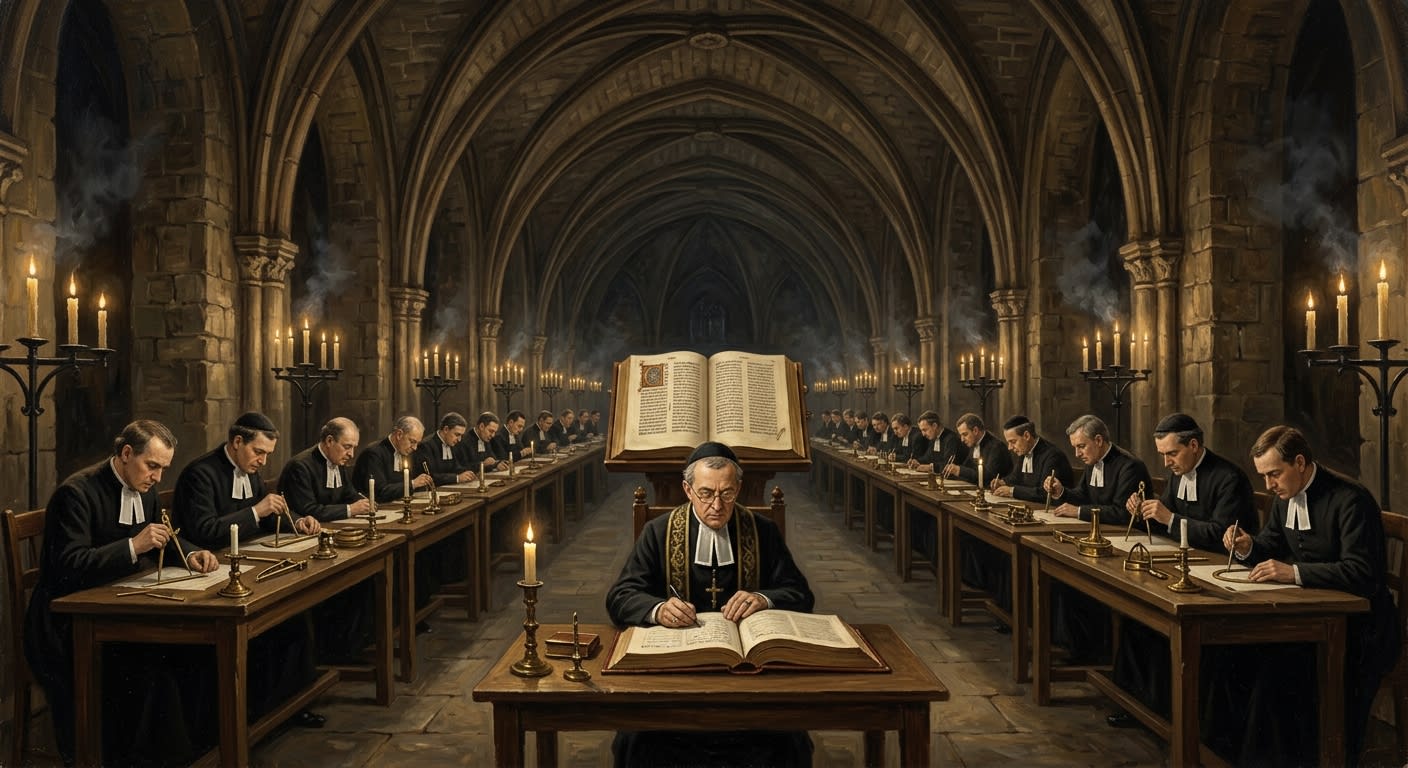
Bureau of Rites
The grammar no one speaks and everyone obeys.
The grammar of the Dominion, indistinguishable from its law: the Bureau that does not govern governs everything, from the angle of the censer to the weight of the Host on Lenten Fridays.
Codex Ref. VIII.1.01-001
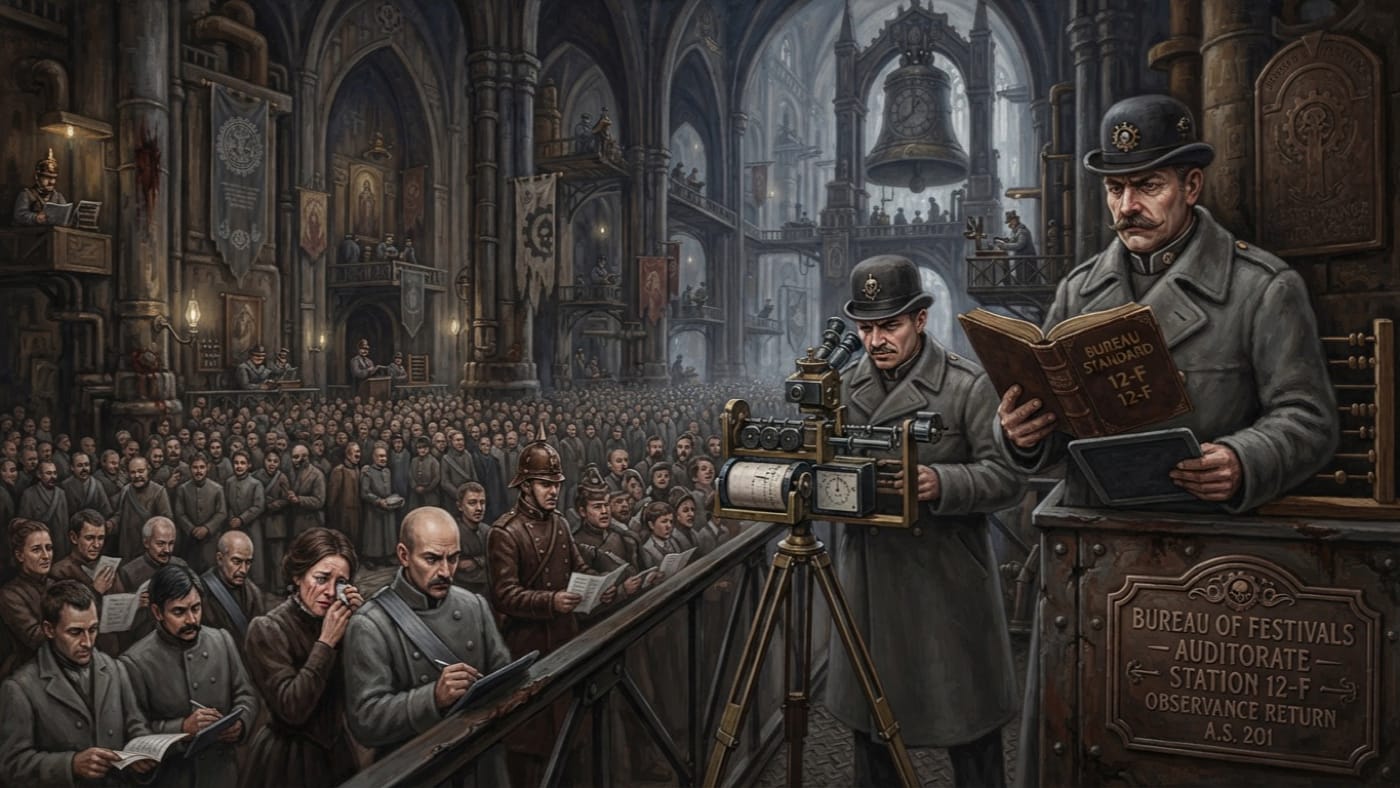
Bureau Standard 12-F
The heart has no column; the face owes a return
The Bureau of Festivals scores smiles, tears and songs under Standard 12-F. Forty-two behaviours yield three classifications, with four points between insufficient zeal and dangerous emotion. The heart is spared a column.
Codex Ref. VIII.5.12-201

Calendar of Saints
Eternal saints, monthly amendments, and a clerk with glue
The Church's calendar of saints, feasts and fasts, held under the Seal of Martyrdom and revised by monthly amendment strips. Sanctity is permanent; the parish must keep its glue ready.
Codex Ref. XIII.1.05-002
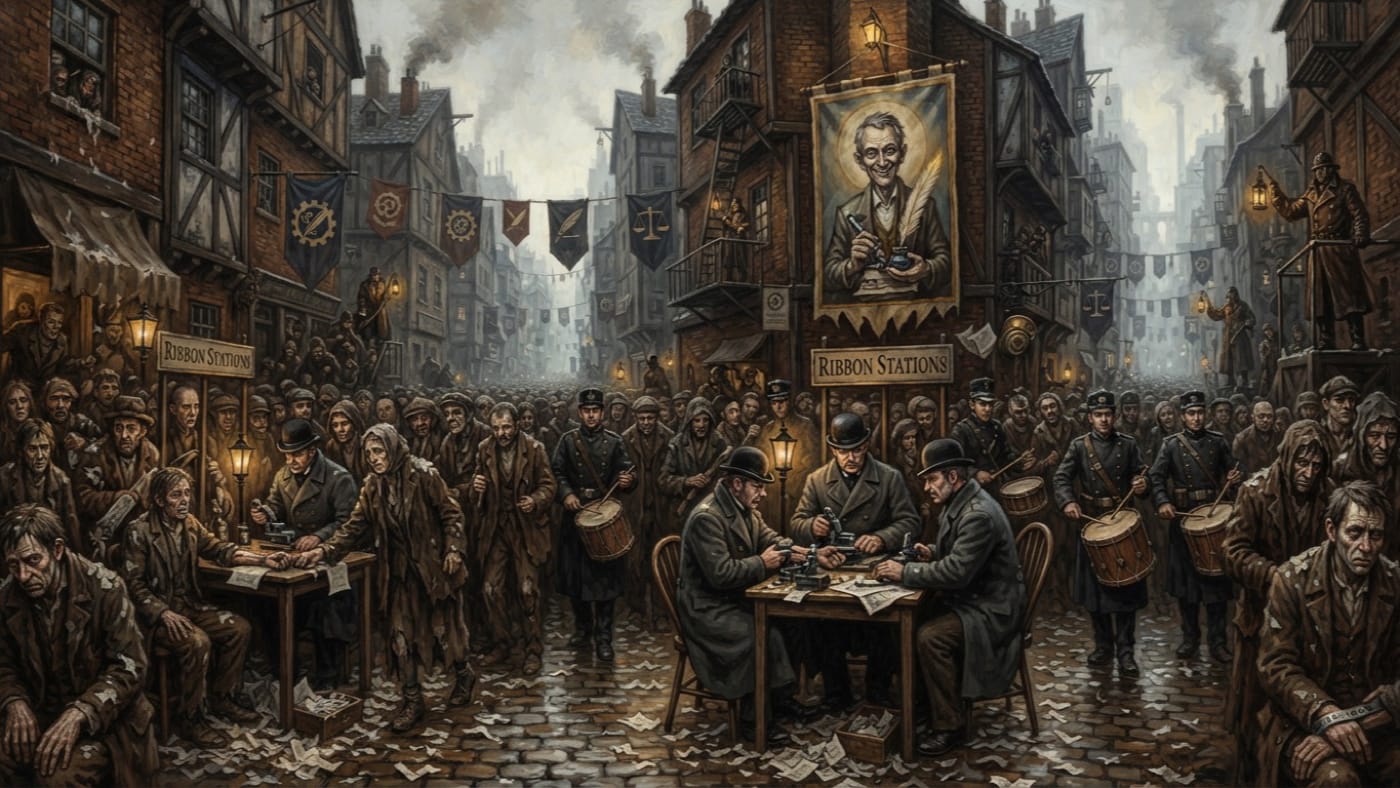
Calming of the Marrow Quarter
A miracle counted in ribbons and closed in ink
A.S. 201 survey of Caldrin's attributed Marrow Quarter miracle: no deaths, four thousand wrist-ribbons and a complete household correction ledger. The procession's year remains unverified; the count is cleaner than the claim.
Codex Ref. III.2.04-201
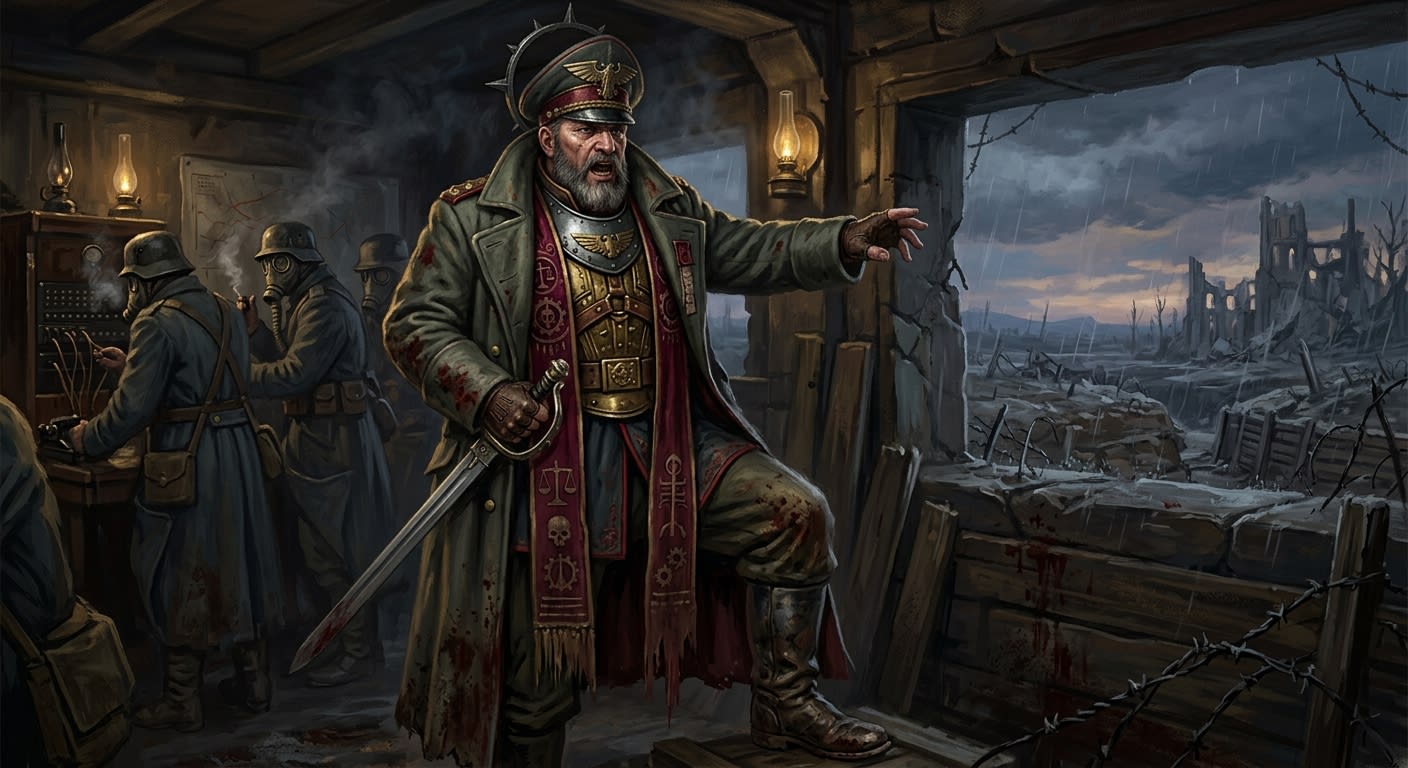
Cardinal-Marshal Severin of Avignon
The tourniquet of Montreval, ugly enough to save a front
Severin of Avignon held Montreval through the Atheist Wars: severe, loud, bloodstained, and too useful for the Bureau to canonise cleanly.
Codex Ref. III.2.01-007
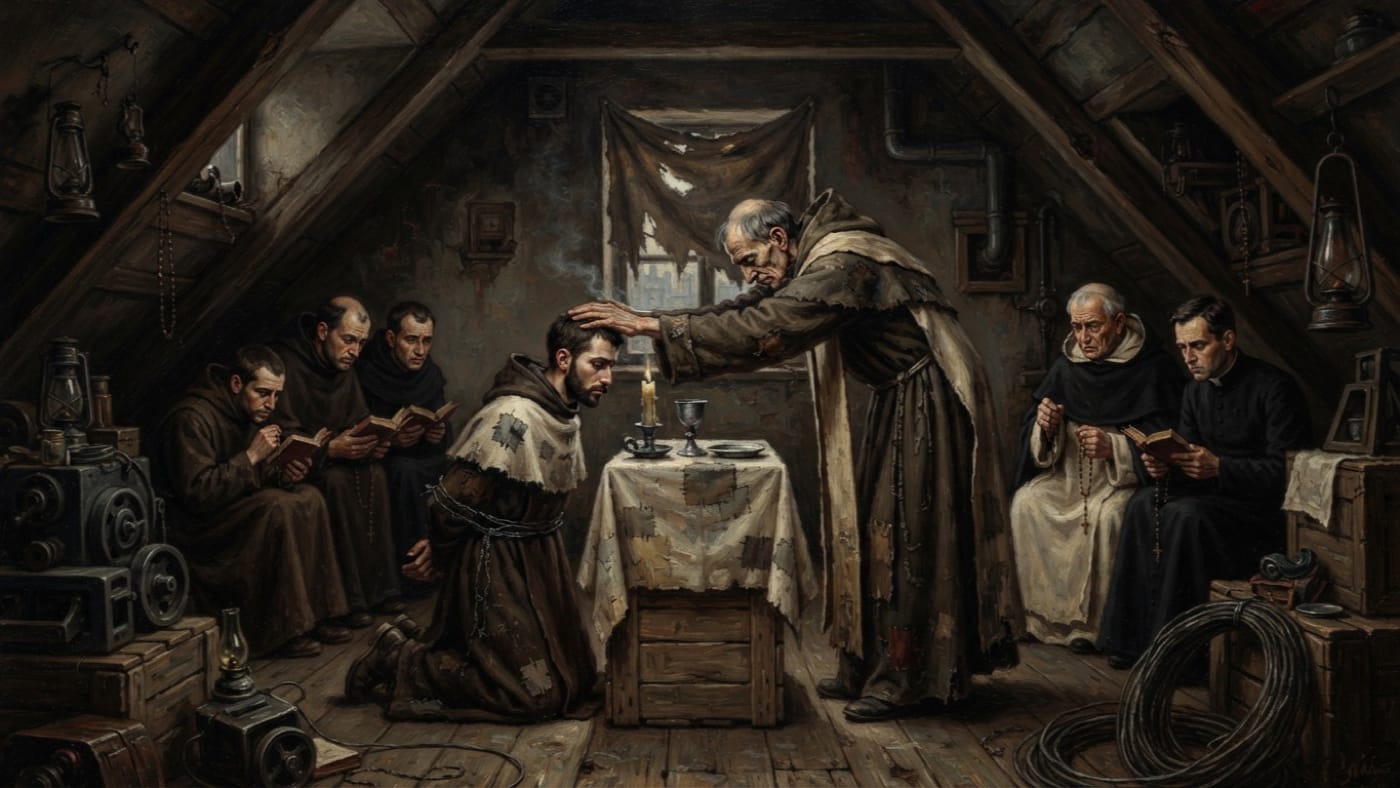
Carmelites of Kraków
Hidden altars, a drowned novice, and three refused petitions
Dissolved by decree, the Kraków Carmelites kept worship in hidden rooms. Brother Paweł Nowak remains their lesson to novices; three petitions have earned him no separate feast.
Codex Ref. XI.6.01-018
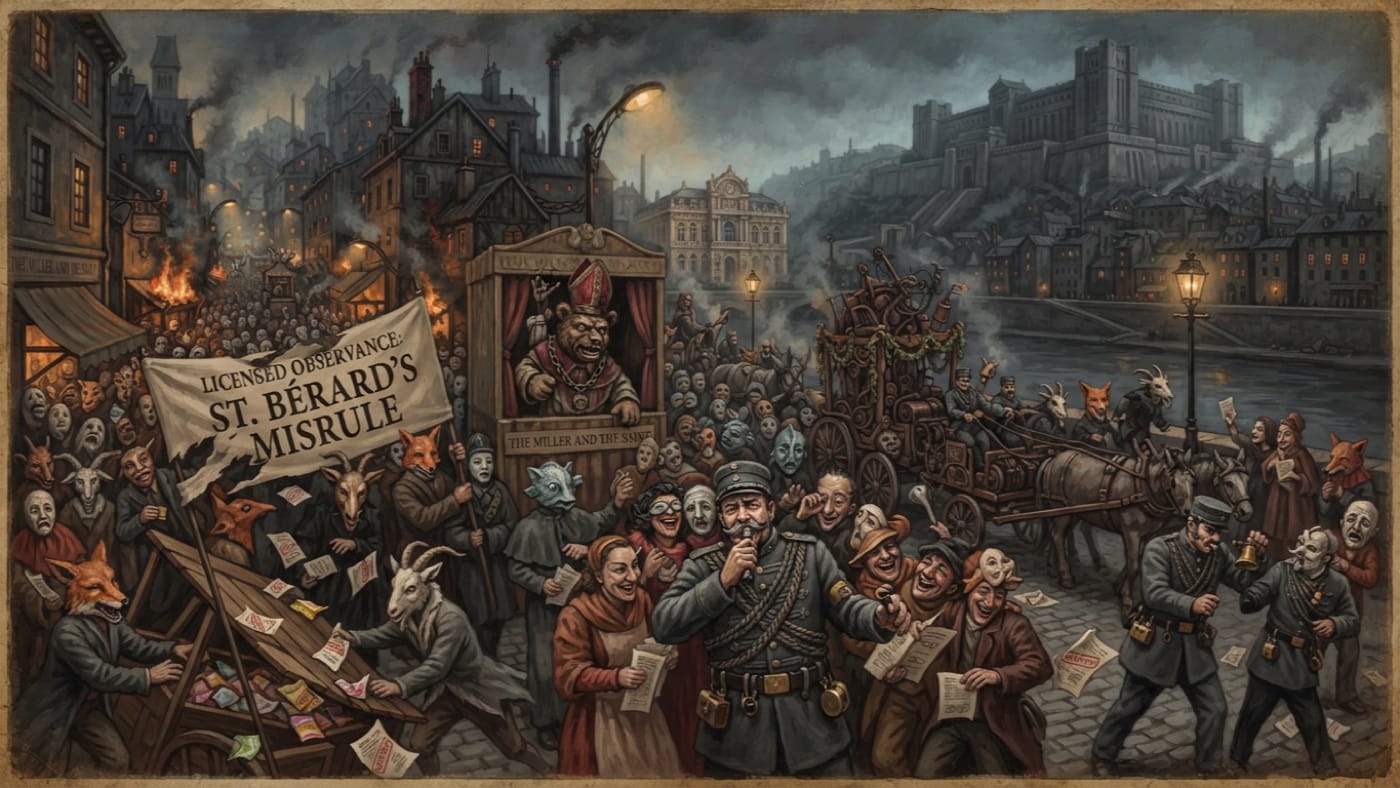
Carnival of Saint Bérard's Misrule
Where laughter was licensed and obedience expected in repayment
Lyon's licensed Carnival made masks devotional and laughter accountable. Its mask readings were approved in A.S. 132; in A.S. 170, the same permits, songs and puppets served the Tumults of Lyon.
Codex Ref. VII.4.11-002
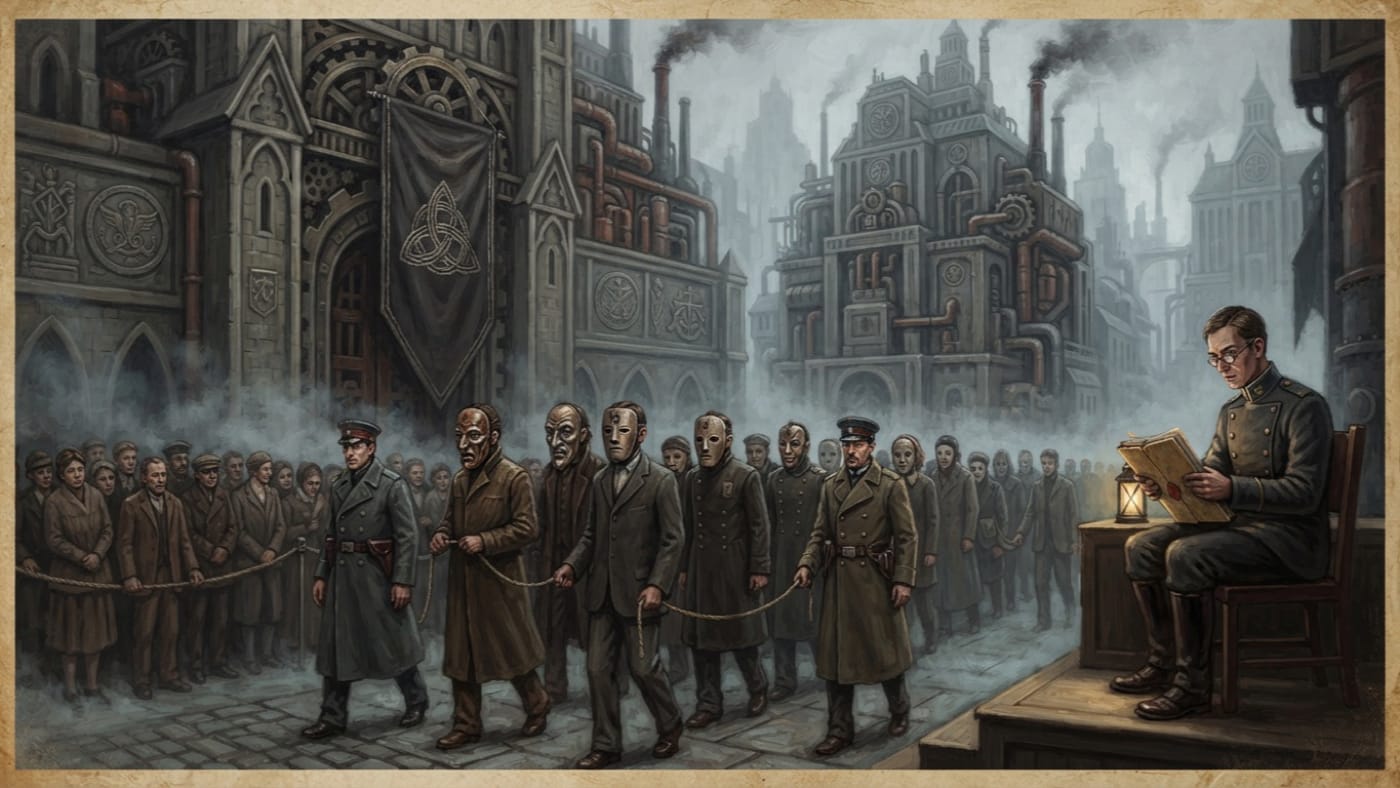
Carnival of the Triune Knot
The face may be hidden. The number remains.
The Carnival of the Triune Knot requires a licensed masked procession. Every face may be hidden; every mask remains numbered, stamped and measured. The wearer may withdraw a countenance. The Registry keeps the number.
Codex Ref. XIII.1.89-484
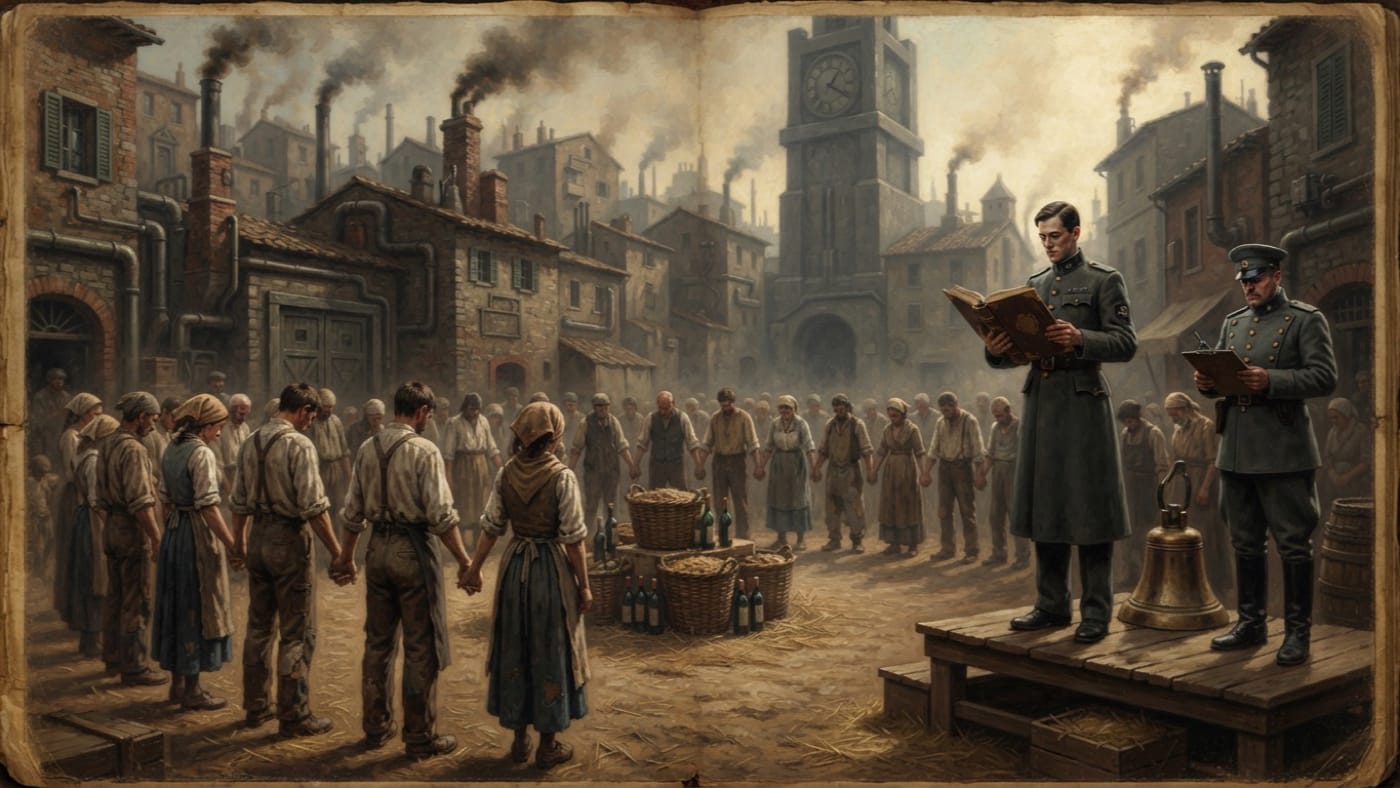
Catechism of the Sundering
The village may dance; Doctrine decides when it has finished
A.S. 201 survey of Doctrine's approved Catechism in public use: the passage that takes a harvest dance's ending from the village and gives the last word to Strasbourg.
Codex Ref. XIII.1.04-509
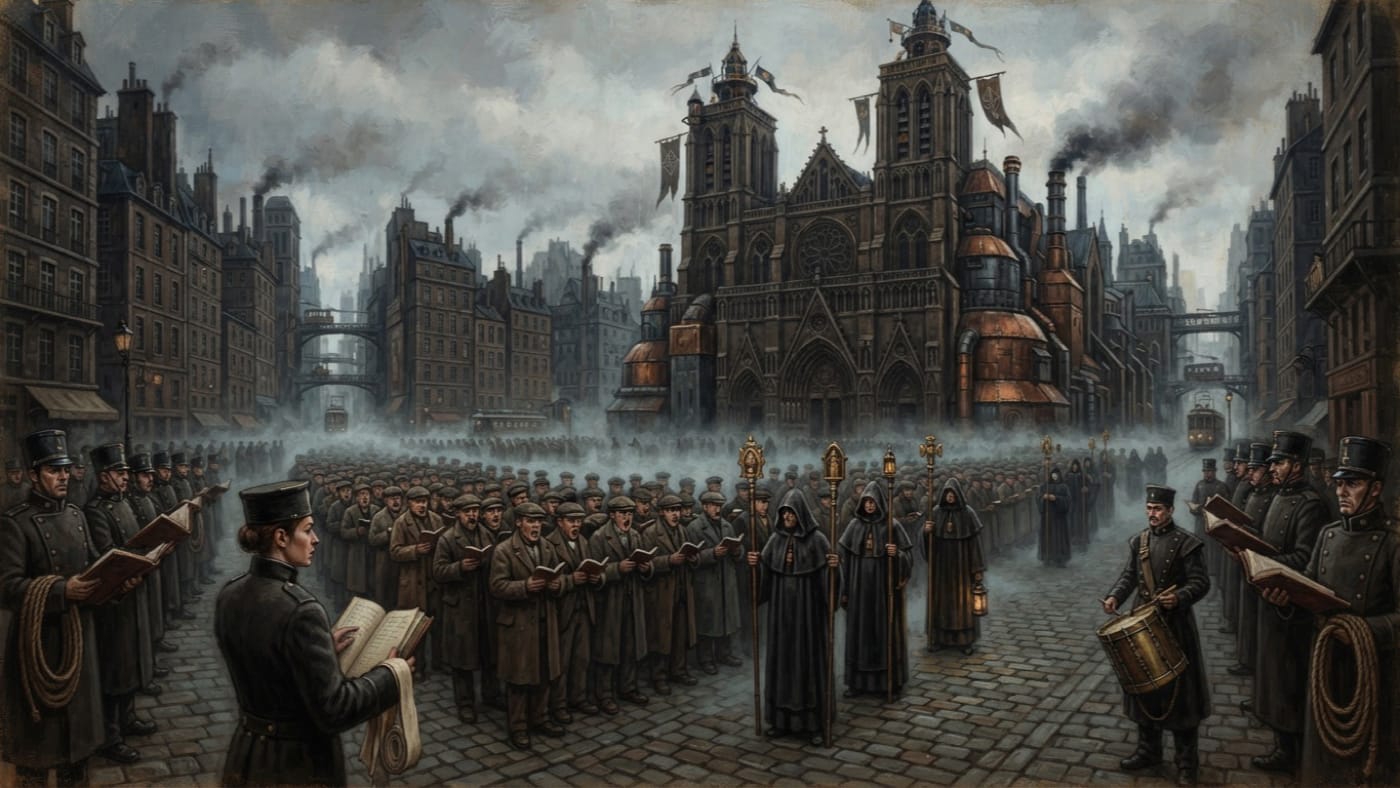
Cathedral of Saint-Jean
Three wards assemble with whole voices; the ledgers are still blank.
Saint-Jean, Lyon's departure station for the annual Procession of Tongues: three wards assemble by parish on Saint Sabina's feast, while their voices are still whole.
Codex Ref. II.1.04-201
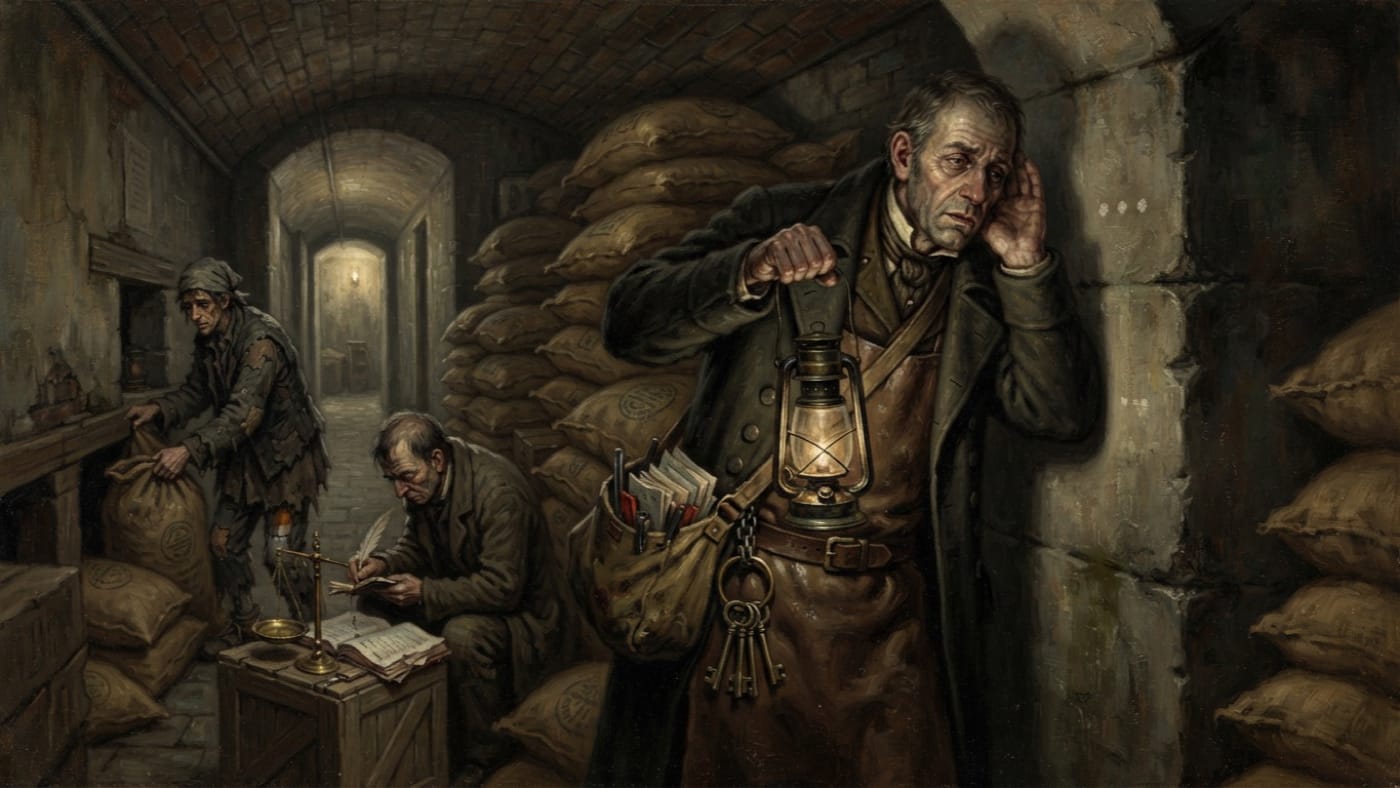
Cellar Warden
The keys are unlawful; the bread is still required
The Cellar Warden guards a district's concealed grain, coordinates clerks and runners, and keeps reserves edible. The Bureau prosecutes the keys while quietly relying on what they unlock.
Codex Ref. XII.13.08-001
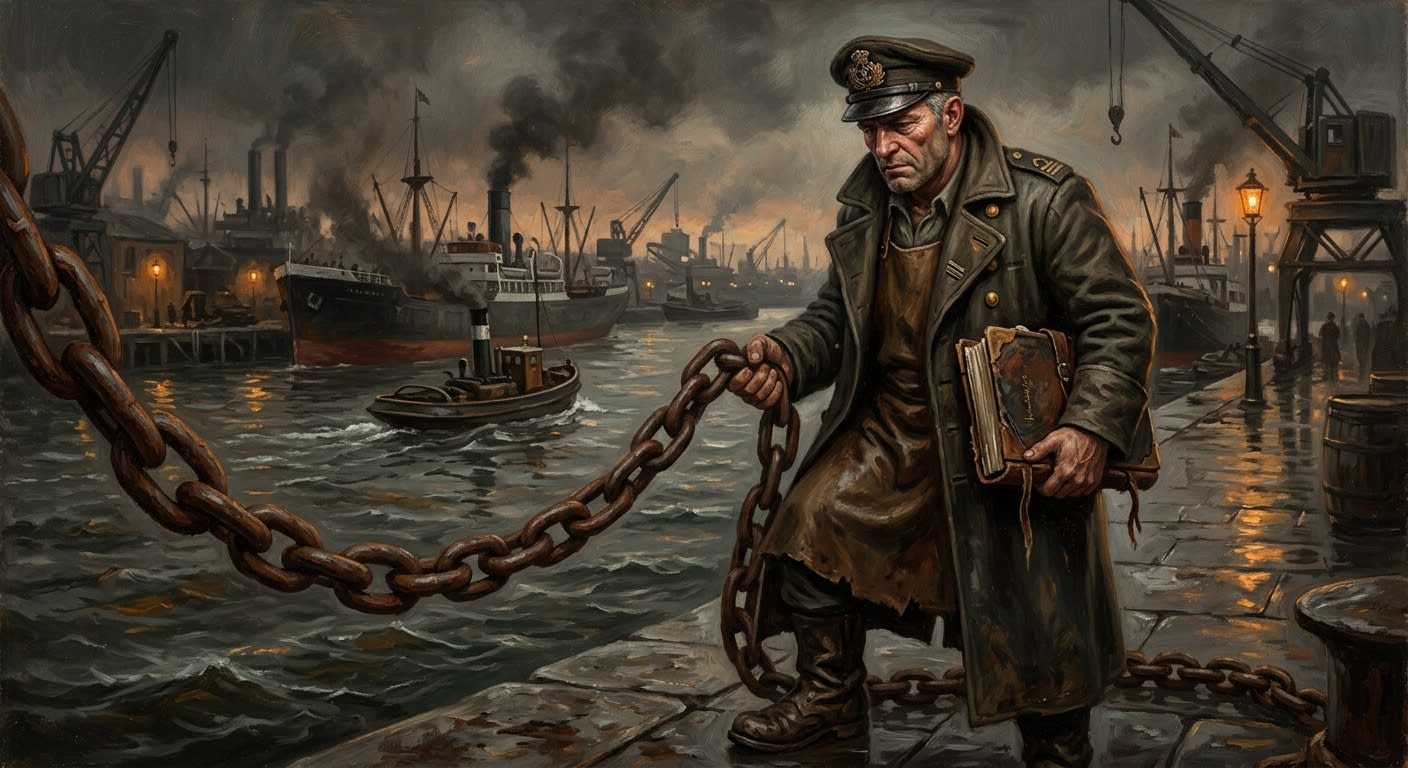
Chainmaster Kosta
The harbour obeys the man whose hands convinced the iron first
Chainmaster Superior Kosta holds Thessaloniki's harbour chains, keeps the unregistered sea-taken ledger, and obeys life before paperwork. Naturally, he is indispensable.
Codex Ref. III.2.01-032

Chancellery of Colors
No hue is innocent after public display
Heraldry sub-body that licenses the Synod's colours, issues quarterly swatch sets, and converts pigment drift into jurisdiction.
Codex Ref. VIII.1.03-004
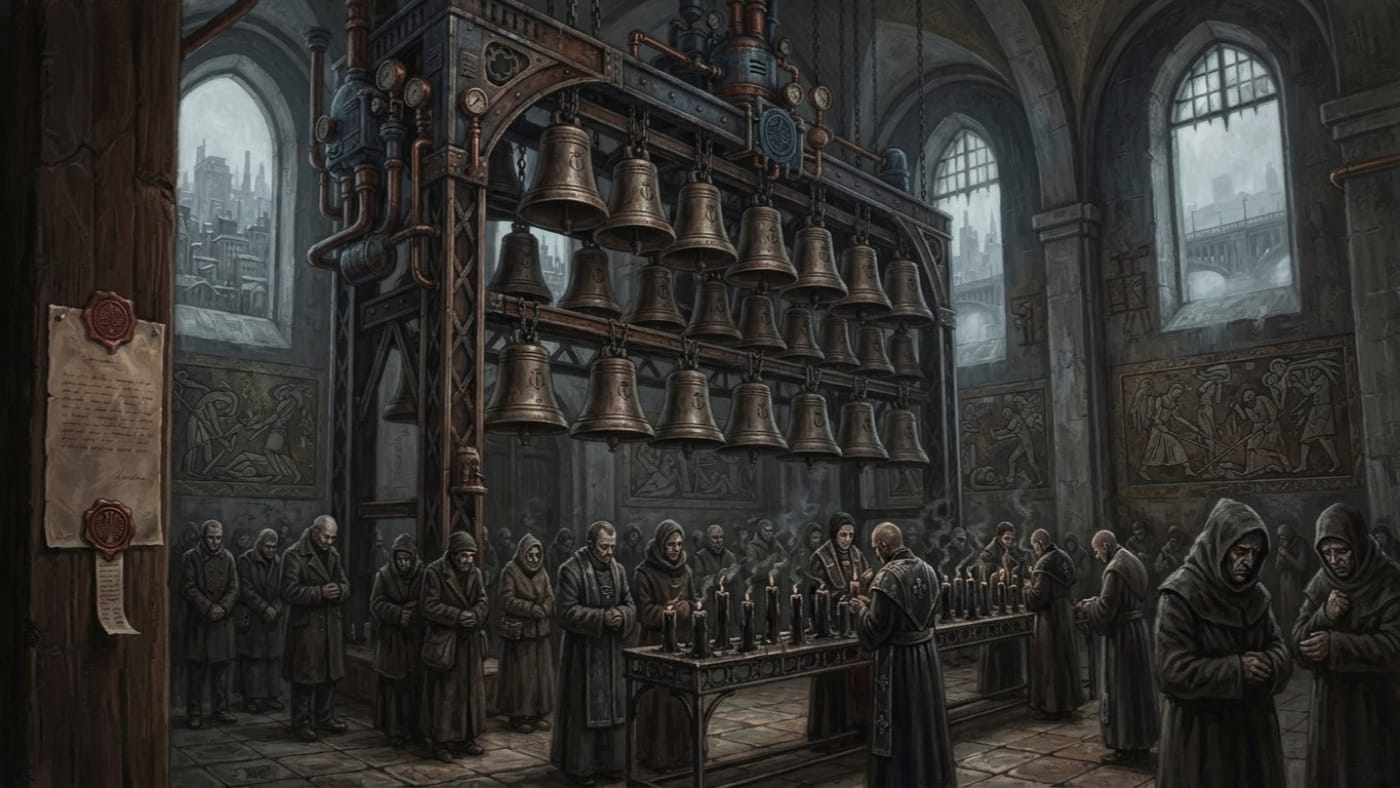
Chapel of the Drowned Priests
Forty-seven voices kept ready for one hour of silence
Wawel Cathedral's commemorative station keeps forty-seven throat-bells for the clergy drowned in A.S. 18. Cast after the A.S. 148 ratification, they fall silent each 17 Martius. The chapel keeps the count; Sandomierz keeps the recovery.
Codex Ref. II.3.06-020
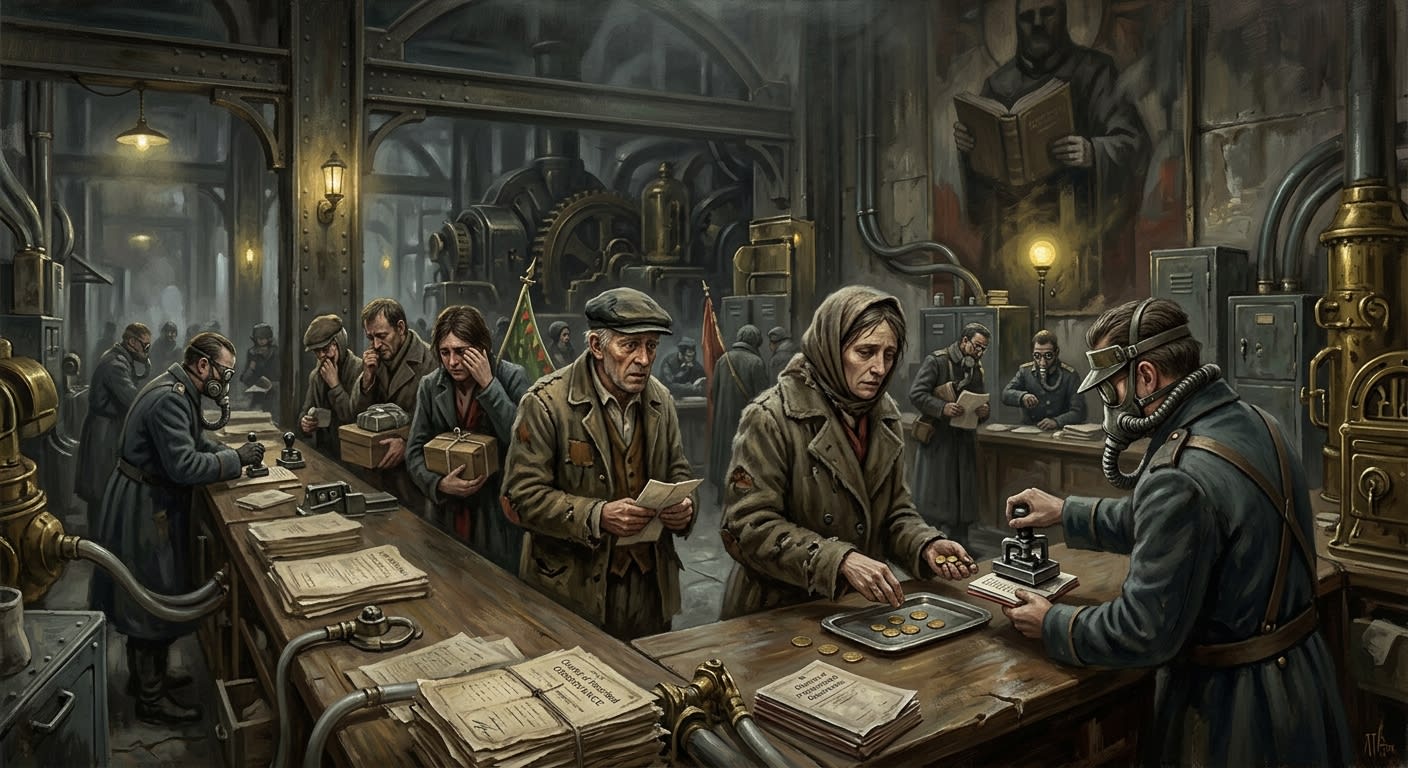
Charter of Prescribed Observance
The document that taught joy to queue and grief to file receipts
Ratified in A.S. 58, the Charter of Prescribed Observance turned public feeling into lawful form: mourning, feasting, silence, joy, and deviation all made taxable.
Codex Ref. XIII.1.23-001
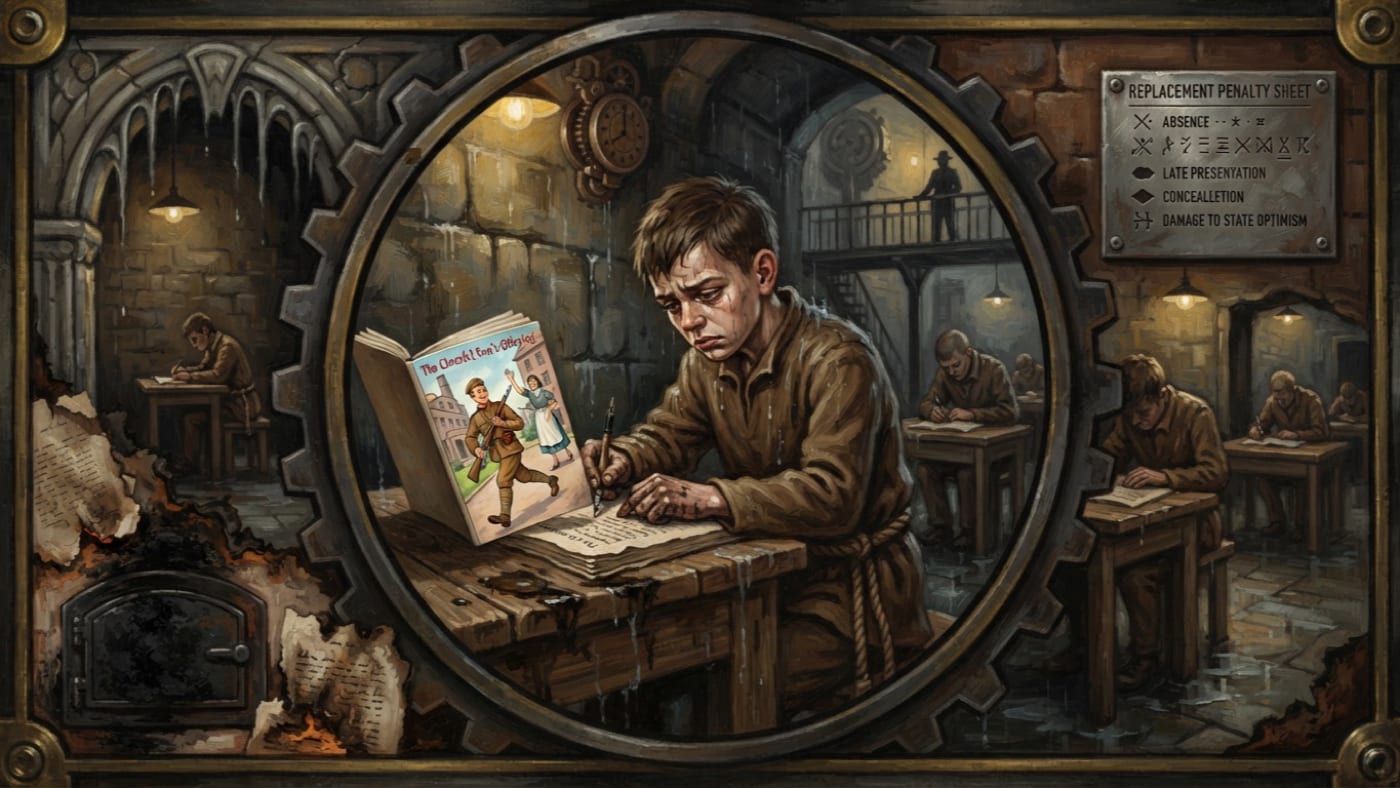
Cheerful Son's Offering
Withdrawn from issue, retained for punishment
An A.S. 201 survey of Lyon's withdrawn levy booklet. Its smiling recruit survives in the Sub-Yard, where refusal of the Wall Circuit earns three days of copying.
Codex Ref. VI.5.01-598

Chorus-Master Pell of Cordoba
The form became music; the memorandum became evidence
Pell recorded Seville's laughter in A.S. 153. The form became music, the memorandum reached Purity, and the officer's later fate stayed off the ledger.
Codex Ref. III.2.01-153
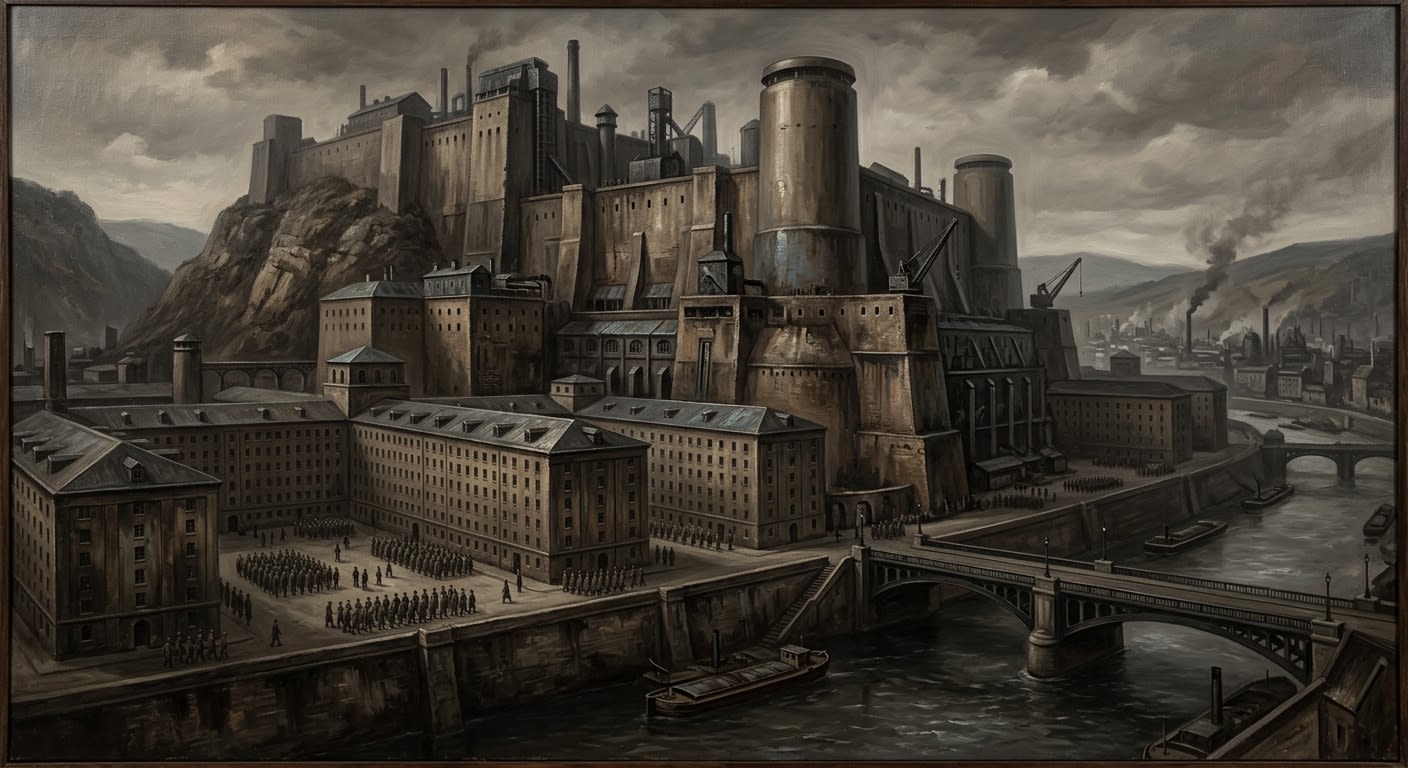
Citadel of Lyon
The hill where maternal invention meets drill tempo
The Citadel of Lyon is the Rhône corridor's catechism-barracks and civic warning, fixed after the Levy protests to train boys and supervise joy.
Codex Ref. II.1.01-004
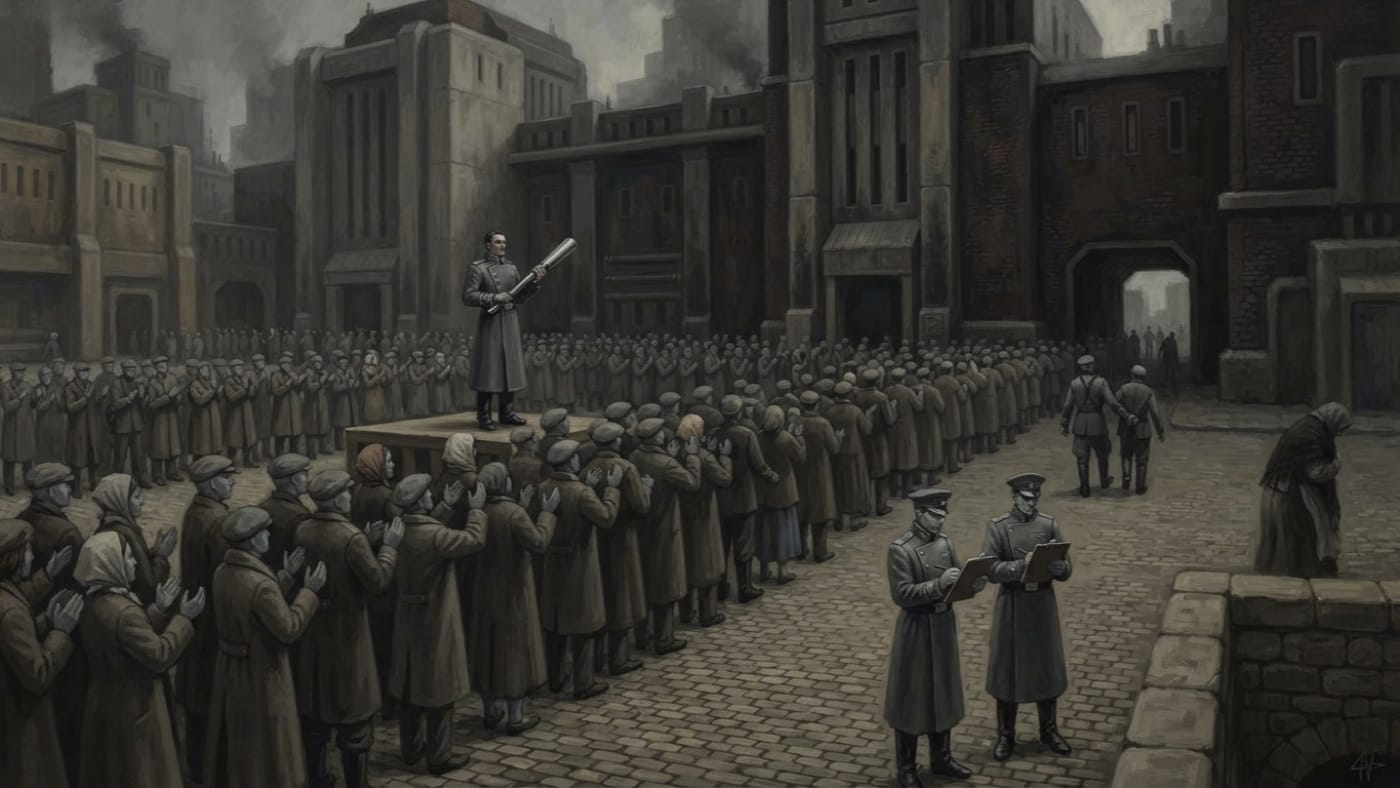
City of Grey Faces
Perfect applause, tripled knife assaults
An unnamed forward heartland city where eleven months of exclusive Pure Conductors produced perfect applause, doubled confession and tripled knife assaults. Filed under morale hazard; the ledgers remained beautiful.
Codex Ref. II.3.17-001
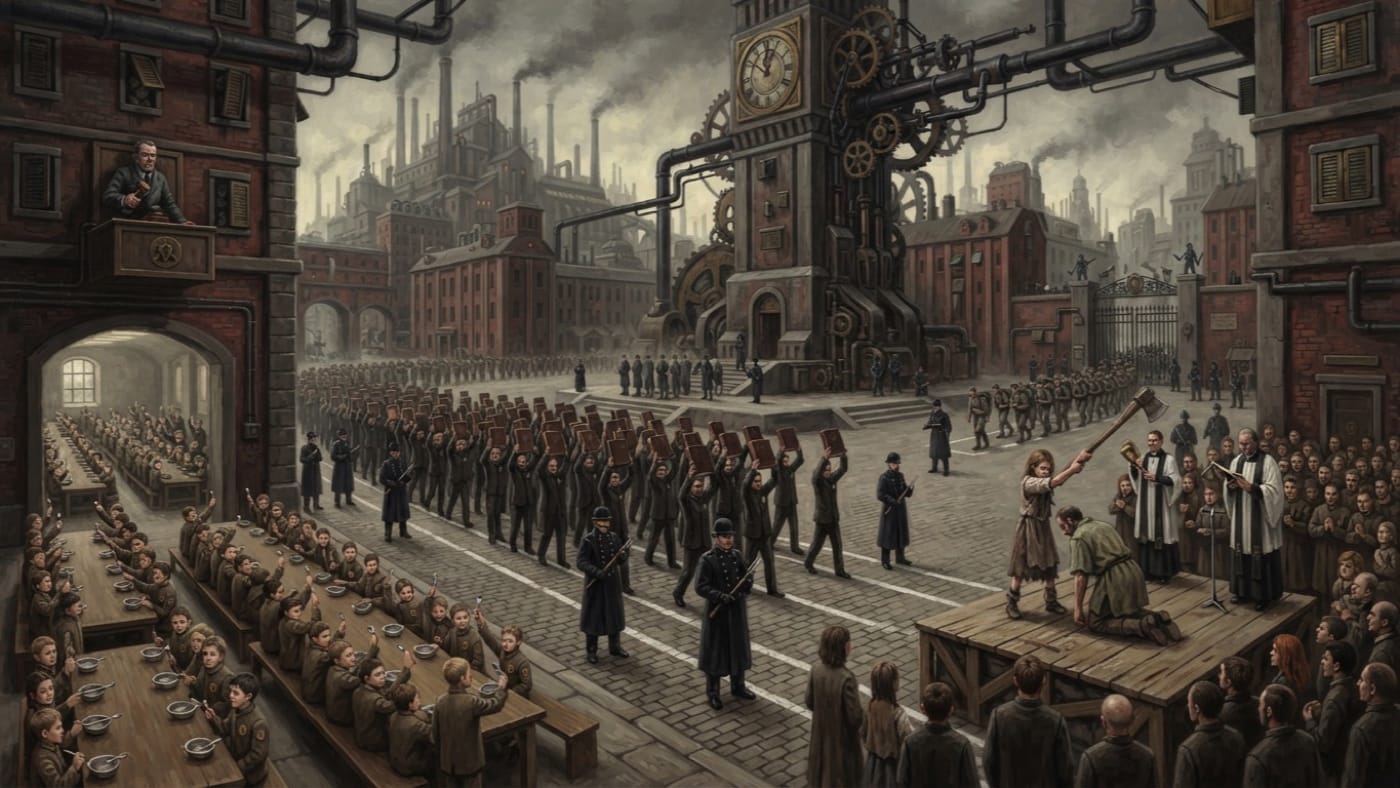
Civic Cut
The Levy takes a fraction. The Cut prepares the whole field.
Conscription takes a fraction. The Civic Cut prepares the whole field: children learn to eat, march, rejoice and betray in time with the bells, years before the Levy arrives.
Codex Ref. XIII.1.23-201
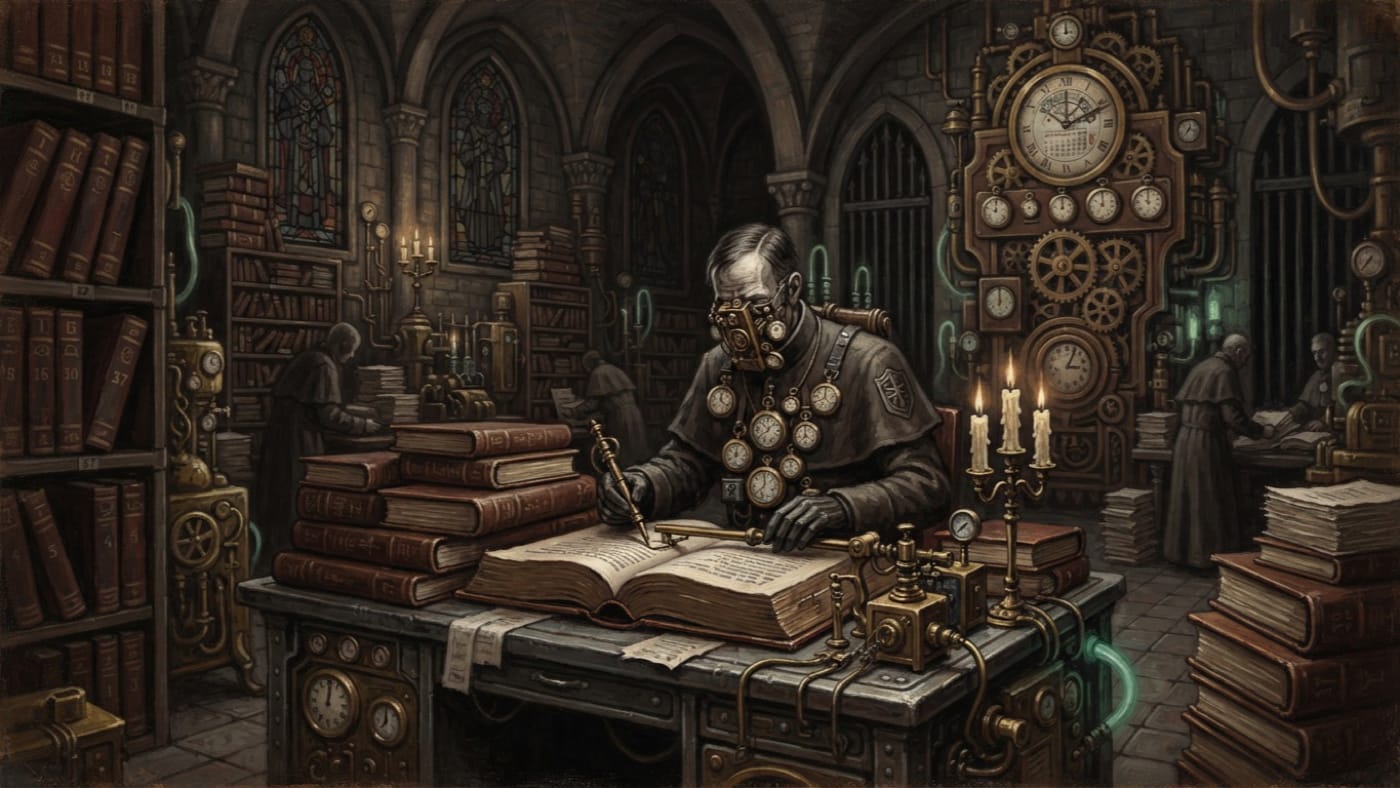
Codex Liturgiae
Eleven volumes. Thirty-seven annexes. One lawful way to kneel.
Eleven volumes and thirty-seven annexes prescribe every authorized rite in the Dominion. The Bureau of Rites measures obedience by the syllable and the second; the faithful pay afterward.
Codex Ref. XIII.1.63-001
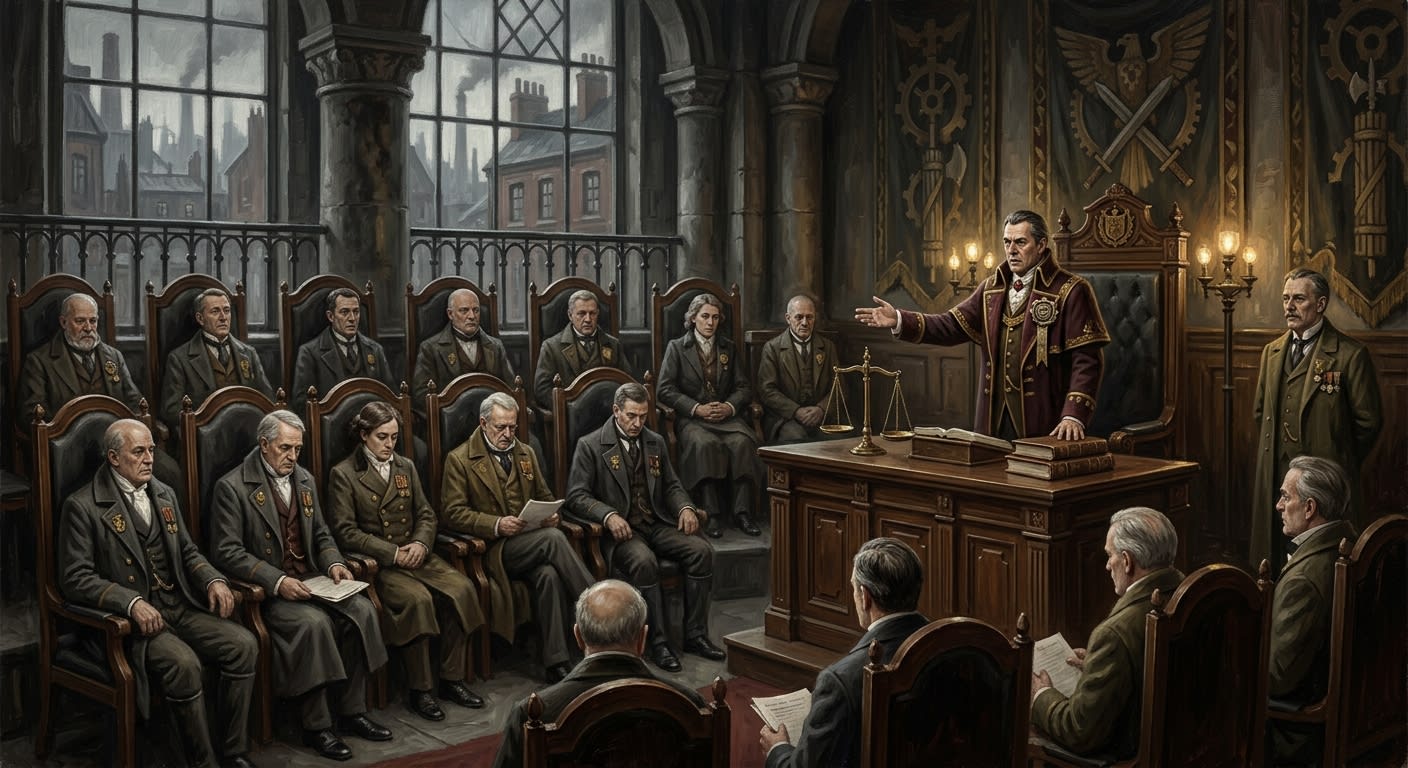
Council of Prefects
Where dissent receives a chair, a minute, and a family corridor
The Council of Prefects is unanimity with chairs: a ratifying chamber where civic officers discover what Strasbourg has already decided they believe.
Codex Ref. XIII.1.90-138

Counter-Toll Corps
Louder is cleaner, until the city taps back
The Counter-Toll Corps is the Synod's sanctioned acoustic overwrite force: bronze artillery for false curfews, borrowed obedience, and bells that answer back.
Codex Ref. XII.2.02-135
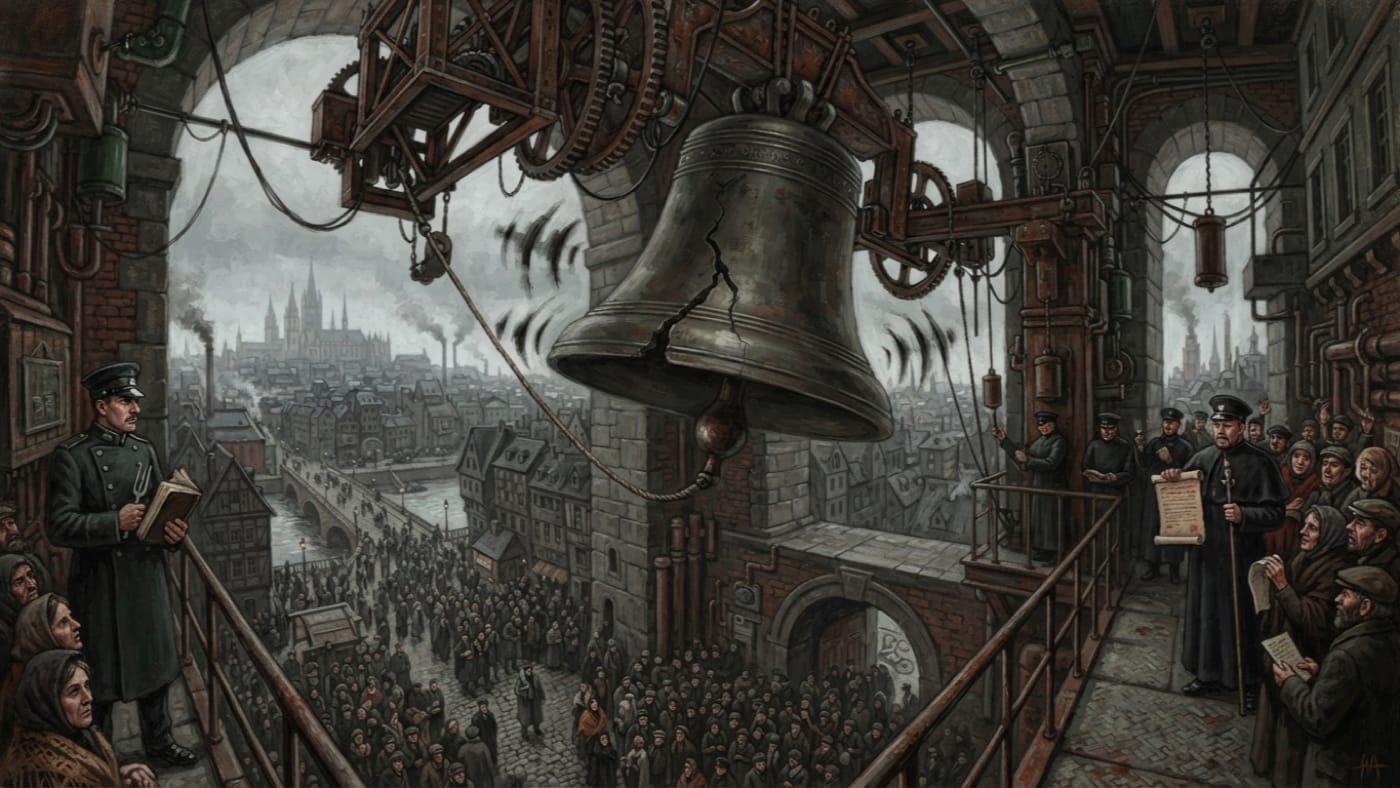
Cracked Bell of Mainz
The defect is licensed; the objections are on file
The Cracked Bell of Mainz teaches faithful imperfection and still tolls after fourteen protests, three redesigns, and one failed confiscation. The defect is licensed; the objections are on file.
Codex Ref. XIII.1.89-002
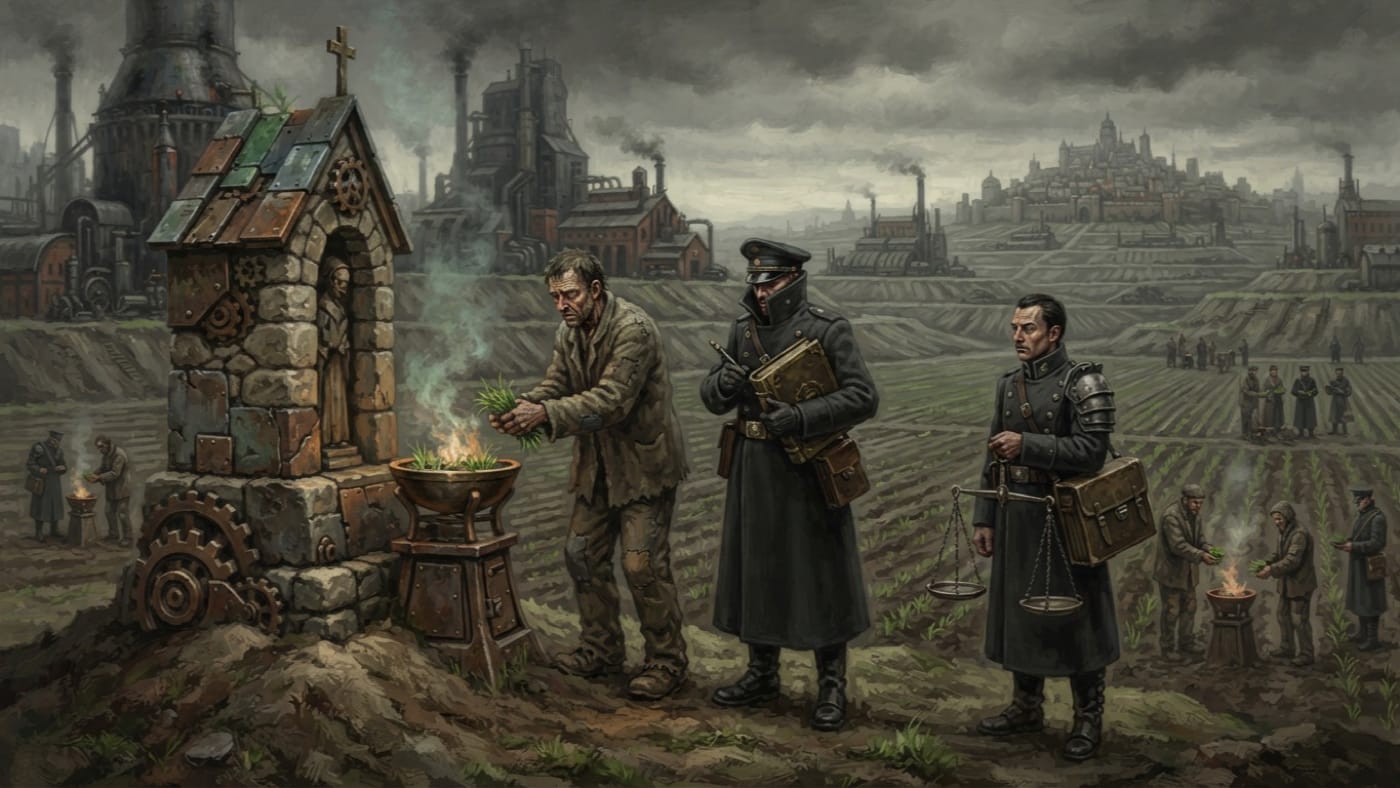
Day of the First Seed
Heaven takes in ash. Tithes takes in sacks.
Current observance survey, A.S. 201: farmers burn the season's first grain shoots at parish shrines. Heaven receives the first offering; Tithes retains its claim, and forgiveness requires payment on genuine first growth.
Codex Ref. XIII.1.23-002
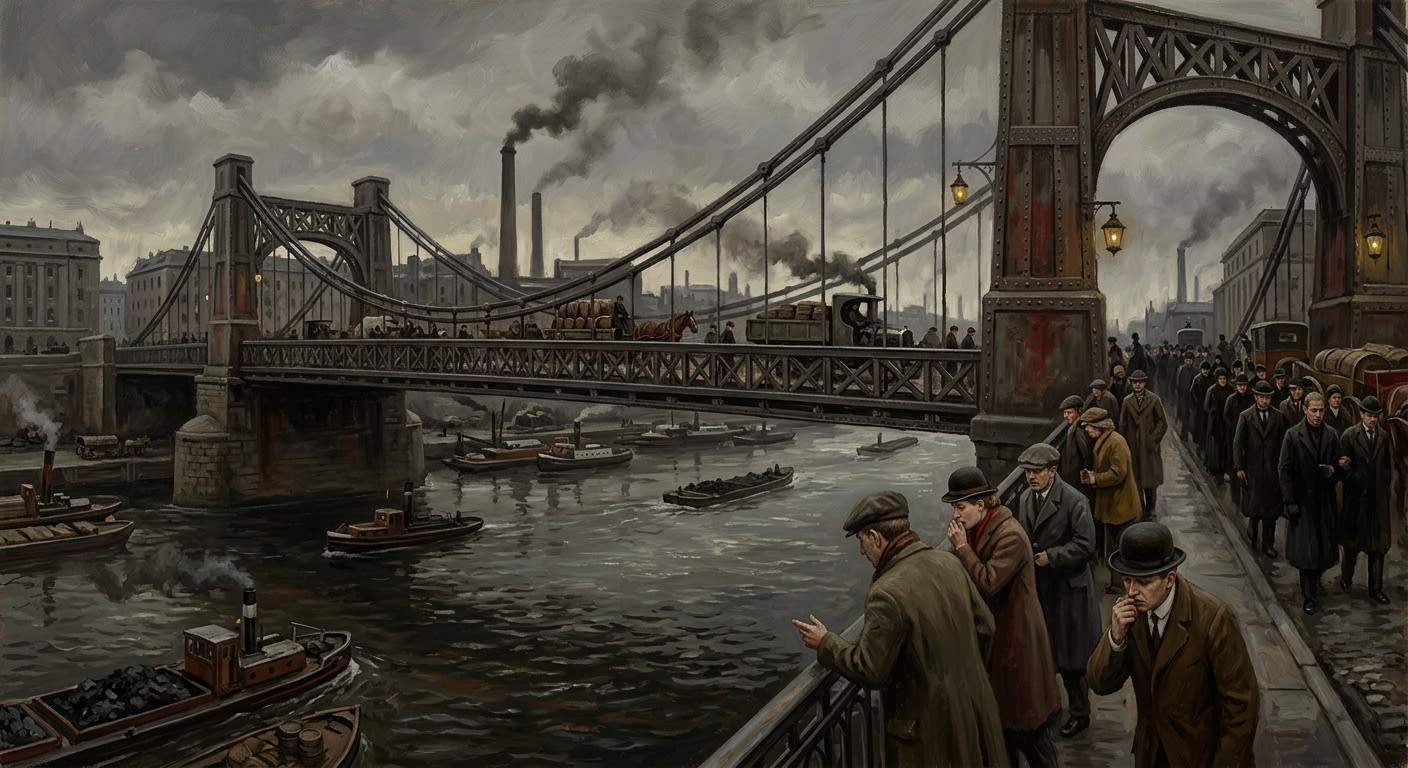
Dębnicki Bridge
The span where silence learned to drown
Dębnicki Bridge is Kraków's Vistula span of wire, silence, traffic, and annual accusation: the place Brechtold used to drown forty-seven clergy.
Codex Ref. II.3.06-018
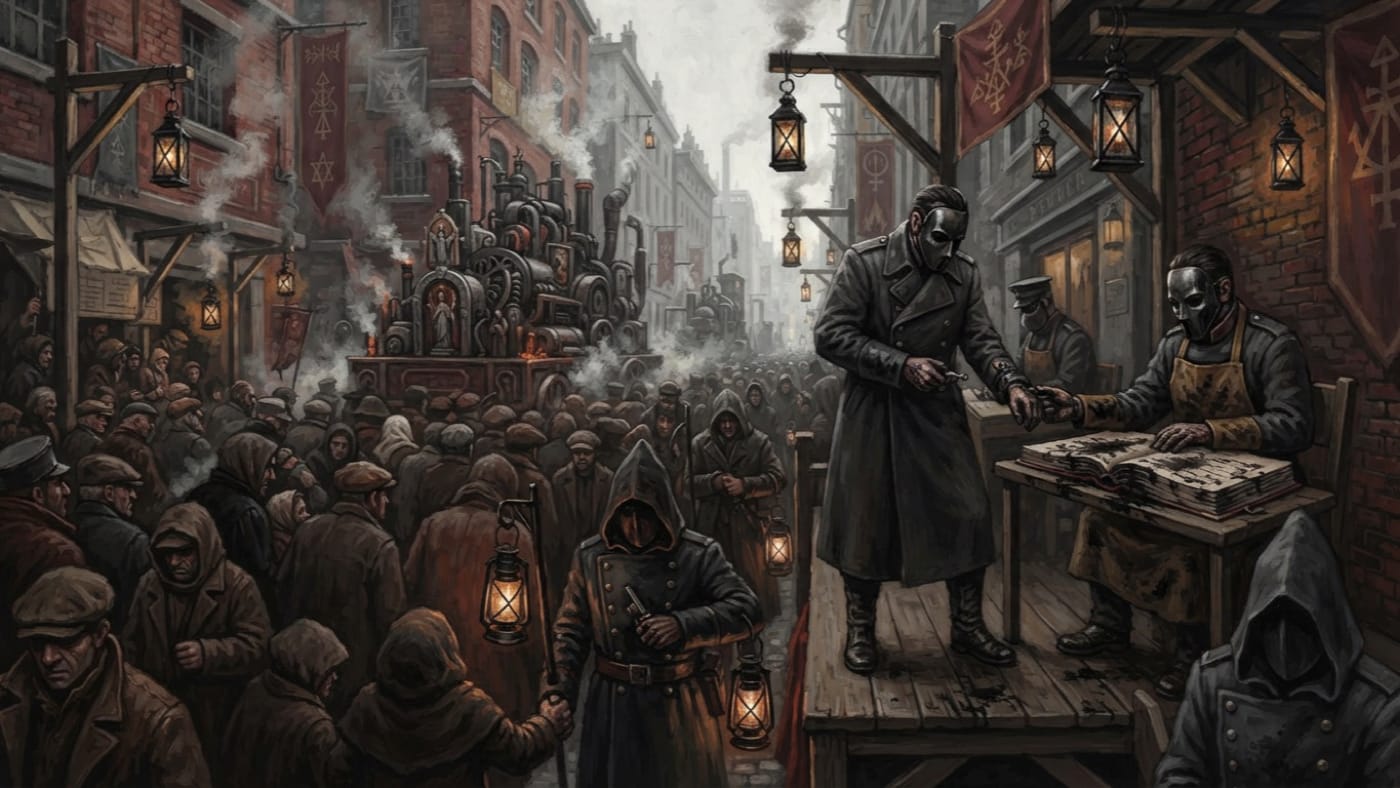
Directive 88-F
A credential for the crowd, a profession for the count
The A.S. 138 directive requiring stamped wrist-ribbons at Bureau-sanctioned processions and licensing the Pageant Captain corps. Festivals gave the crowd a credential and hired men to read it.
Codex Ref. XIII.1.88-138
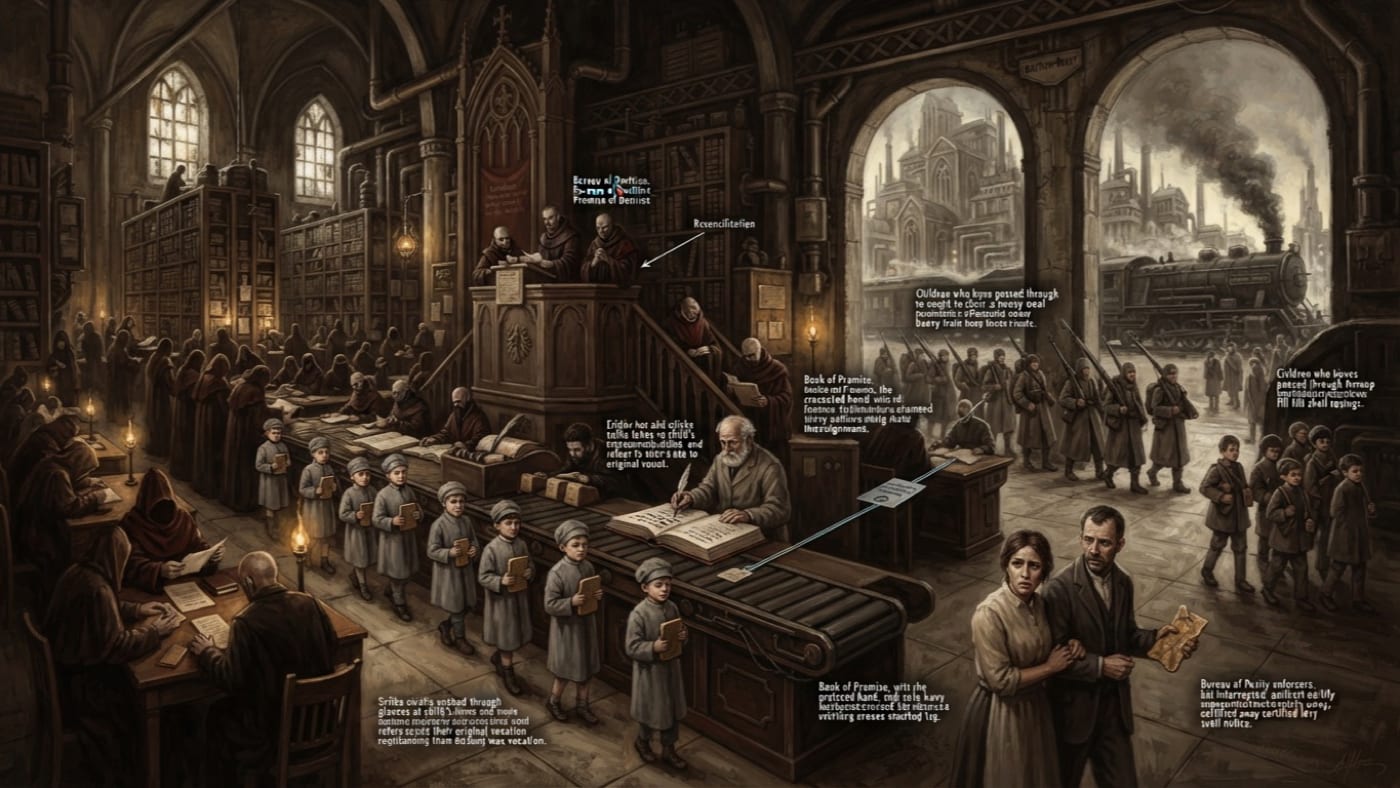
Doctrine of Deferred Fulfilment
The promise stands; the route belongs to the Bureaus
The Synod's promise is never broken: the Bureaus revise the vocation, Records certifies fulfilment, and the household's understanding is deferred indefinitely.
Codex Ref. XIII.1.22-002
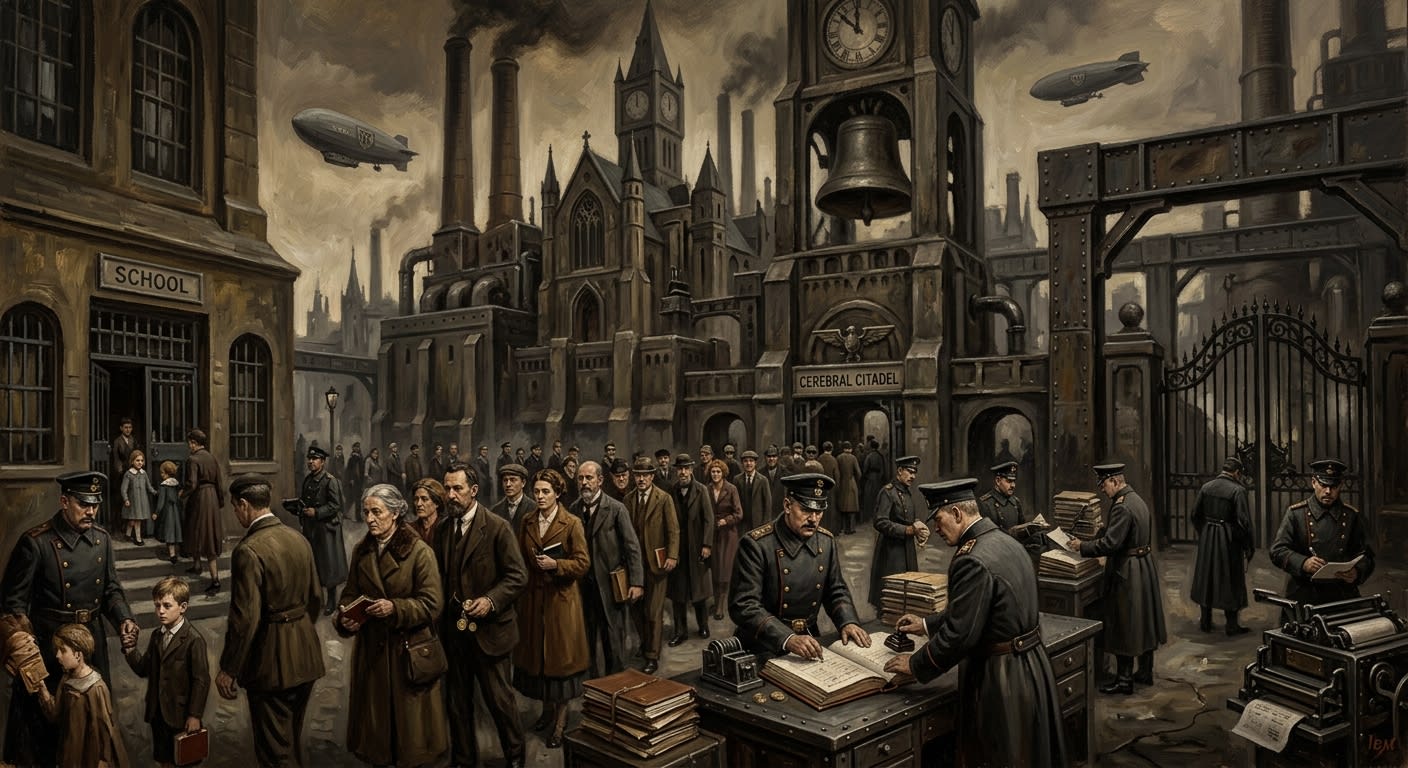
Dominion
Europe held in one gloved hand and taught to call it custody
Dominion is the Synod's official name for custody over Europe: border, tithe, bell, school, grave, and the thought before speech.
Codex Ref. XIII.1.02-090
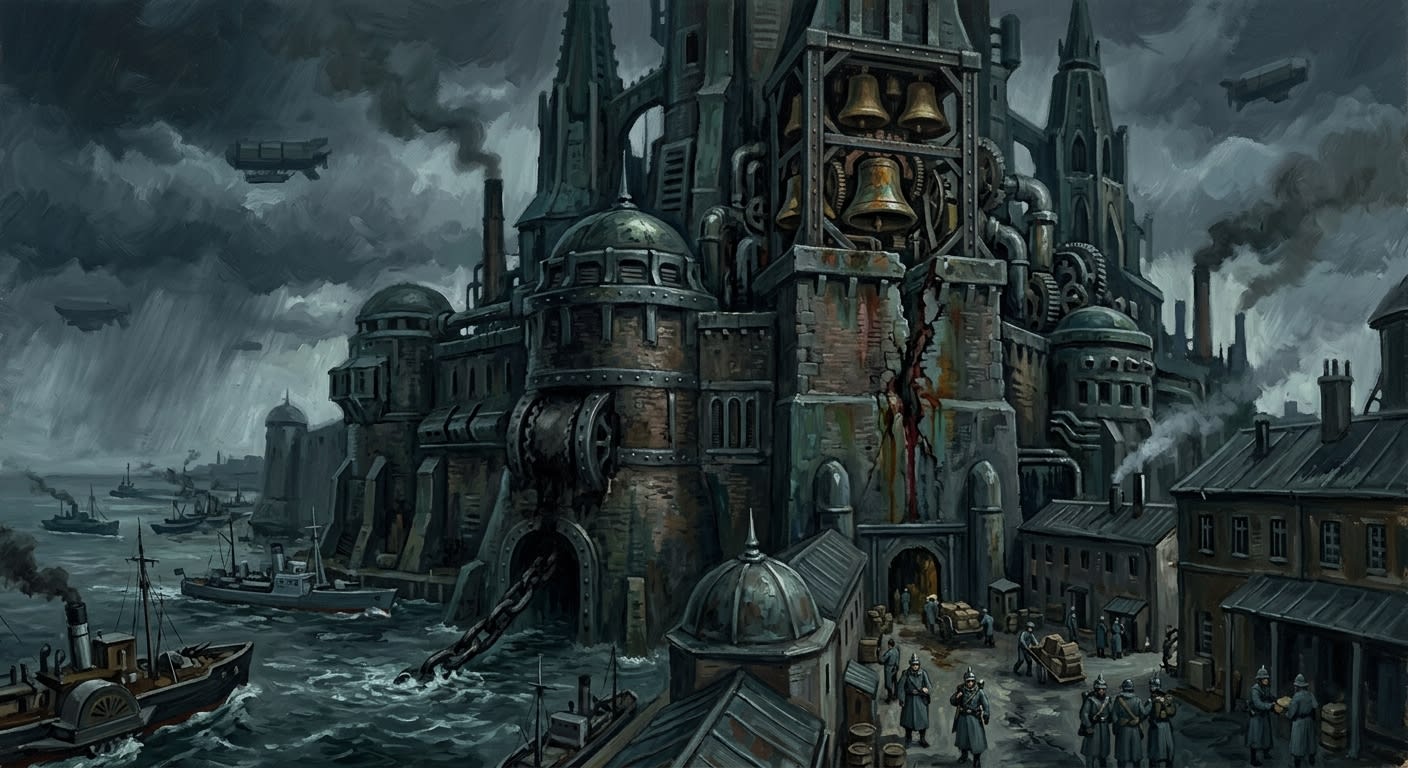
Elder Tower
The western throat that rang true until the harbour taught it otherwise
The Elder Tower is Thessaloniki's western chain-head: bell throat, harbour court, Silence-scar, and the old mouth now speaking in the wrong voice.
Codex Ref. II.4.09-198
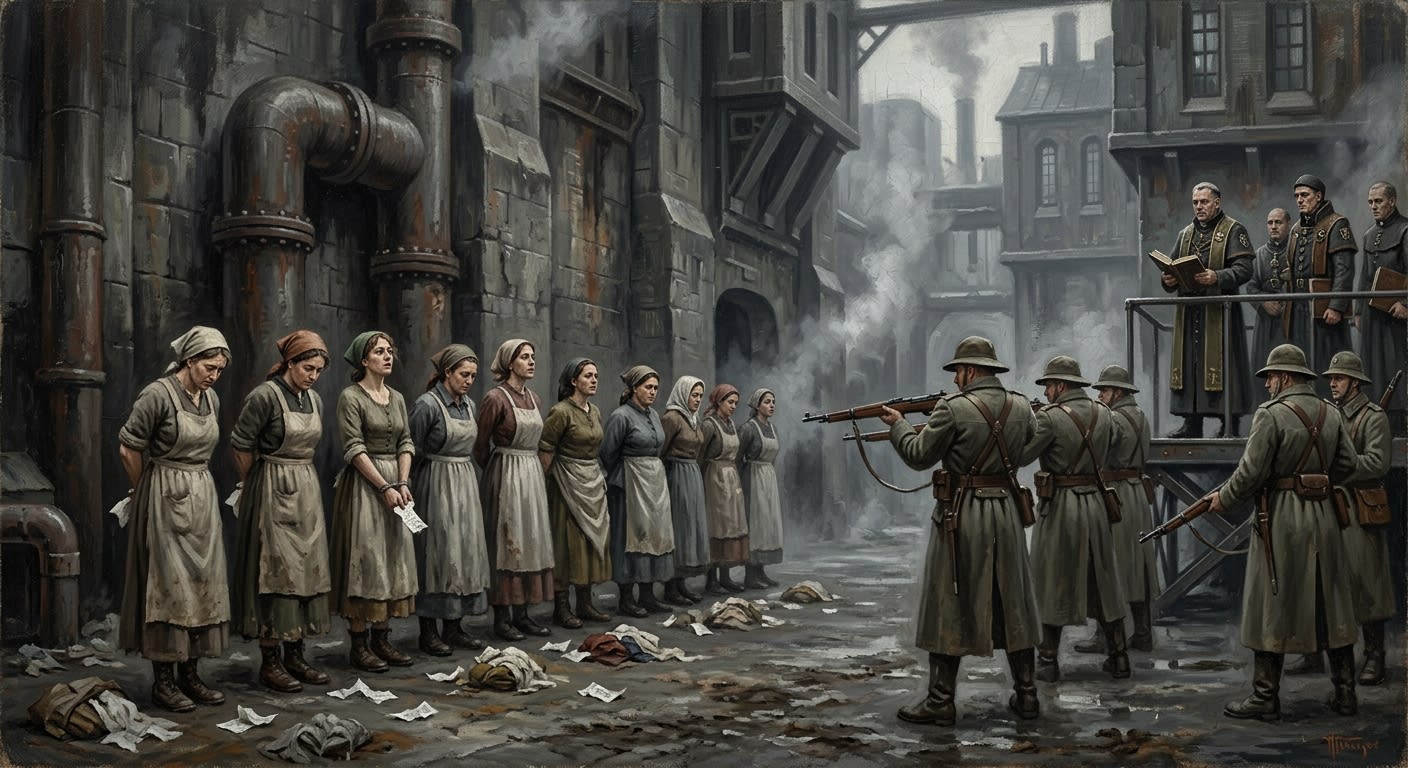
Eleven Laundry-Women of Candlewick
The Bureau burned the receipts; the babies slept anyway
A.S. 94 Candlewick executions of eleven laundry-women whose coded receipts carried complete lullabies and taught smugglers never to carry the whole song.
Codex Ref. VII.8.10-094
Fast of Silence
The tongue kneels before the knife is invited
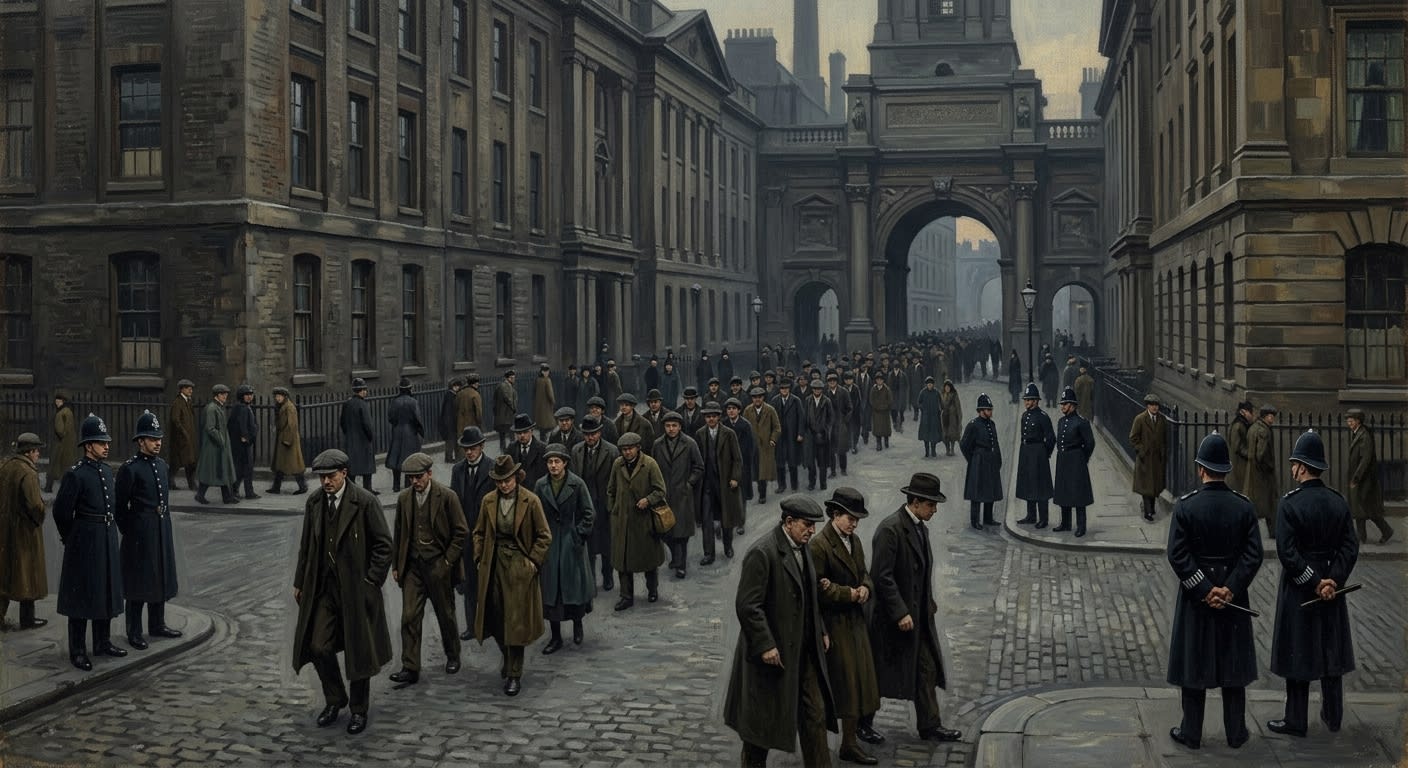
The Fast of Silence is the Bureau of Festivals' cleanest cruelty: a district gagged from dawn to dusk until obedience sounds like piety.
Codex Ref. XIII.1.89-153
Feast of Buried Names
Anonymous before the Creator. Numbered in the Registry.
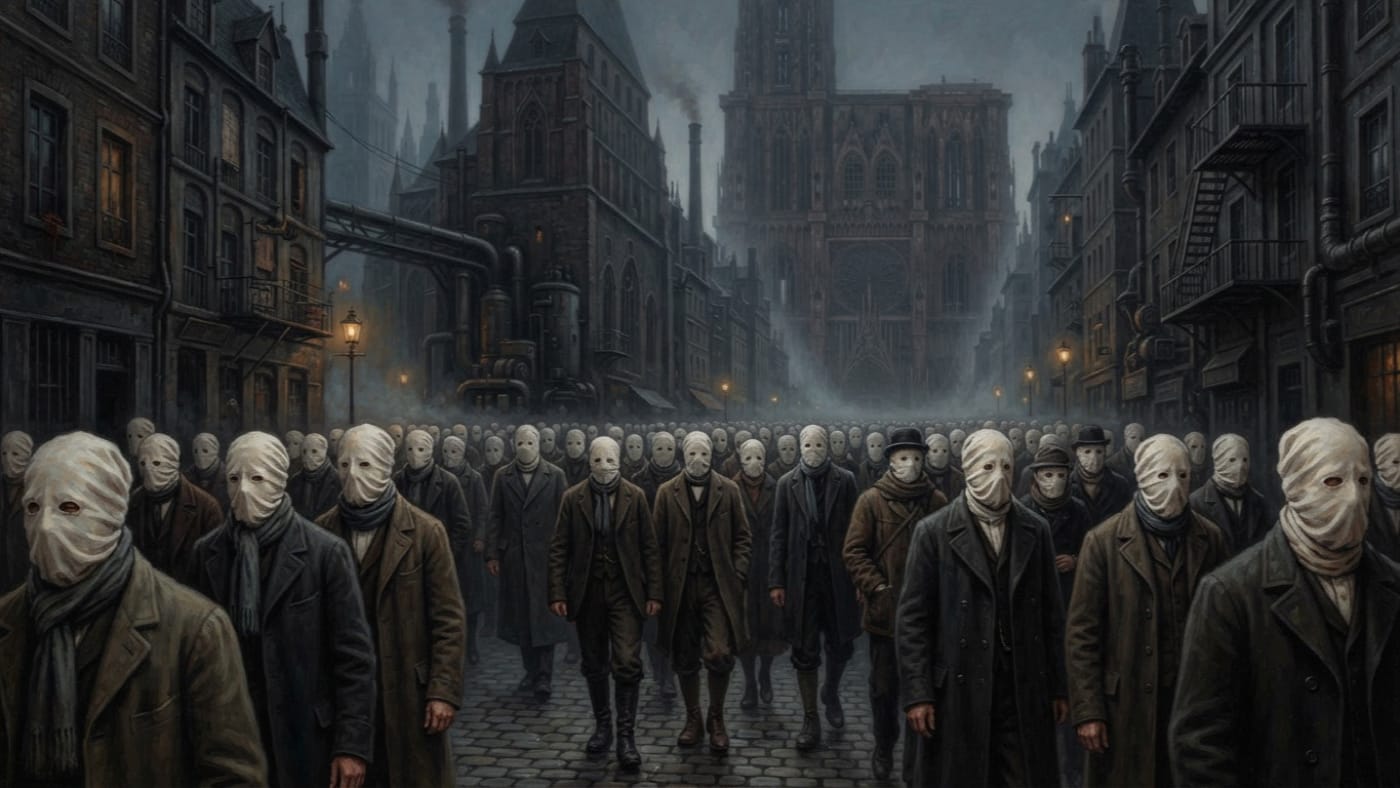
On the Feast of Buried Names, every citizen is expected to walk the parish in silence behind licensed white cloth. Doctrine calls it necessary; Purity calls it a liability. The Registry keeps the eye-holes on file.
Codex Ref. XIII.1.91-001
Feast of Doctrinal Submission
The holiday that teaches the spine to kneel before the mouth calls it faith
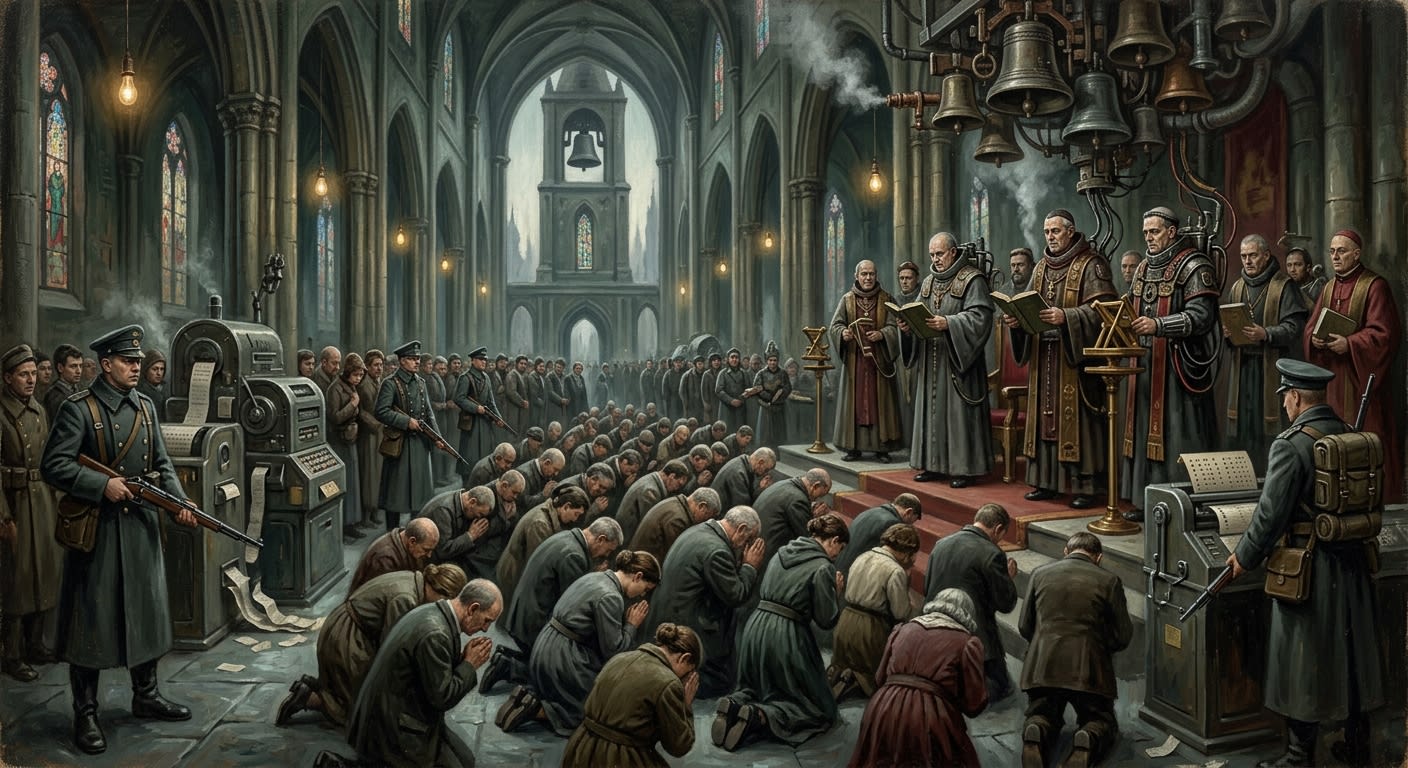
The Feast of Doctrinal Submission is the Synod's mandatory kneeling holiday: census, pageant, ration queue, loyalty assay, and permitted joy under bells.
Codex Ref. XIII.1.89-072
Feast of Saint Aldebrand
Remembered by the register, mislaid by the diocese
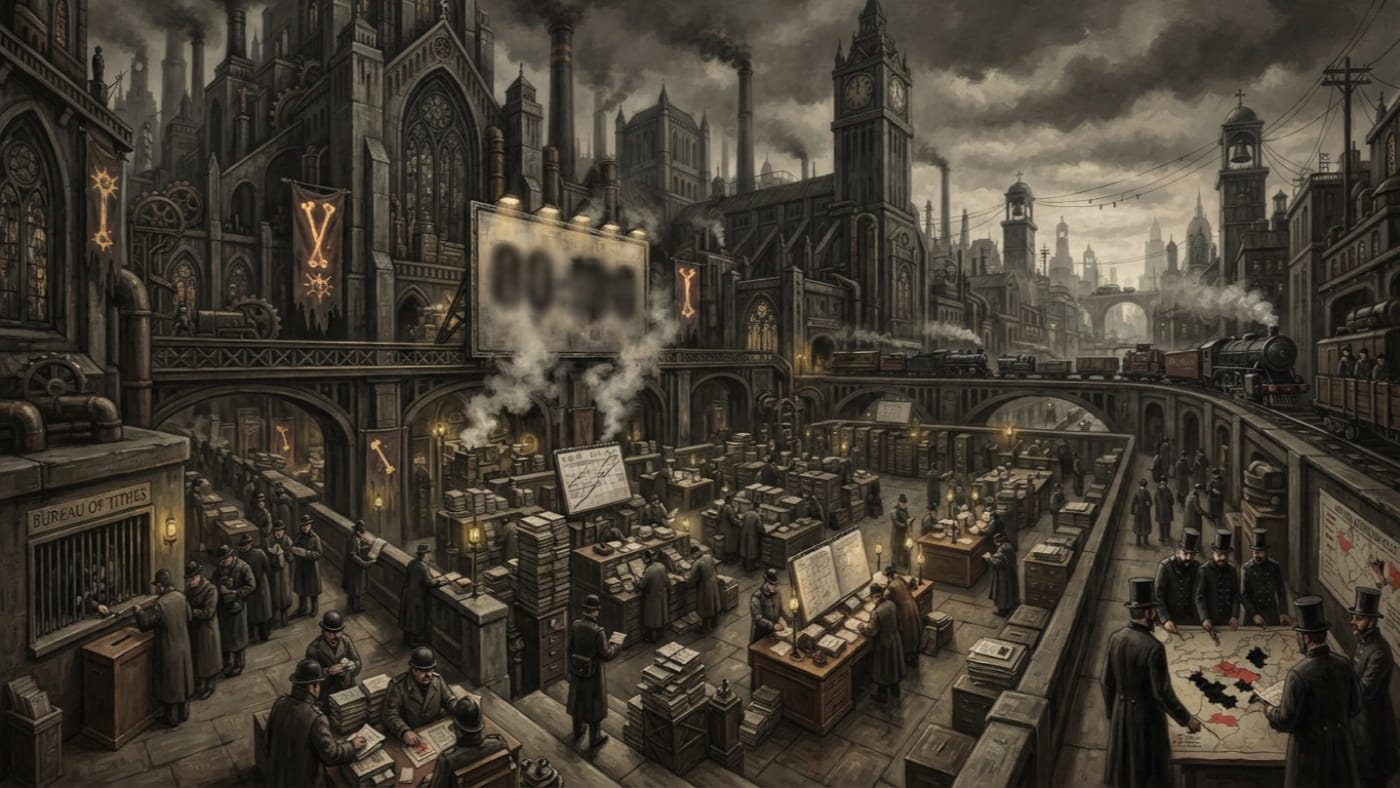
A.S. 201 survey of Aldebrand's feast: sanctioned by Festivals, observed or omitted by dioceses, disputed by Records and taxed by Tithes. The register remembers; the day remains unknown.
Codex Ref. XIII.1.89-201
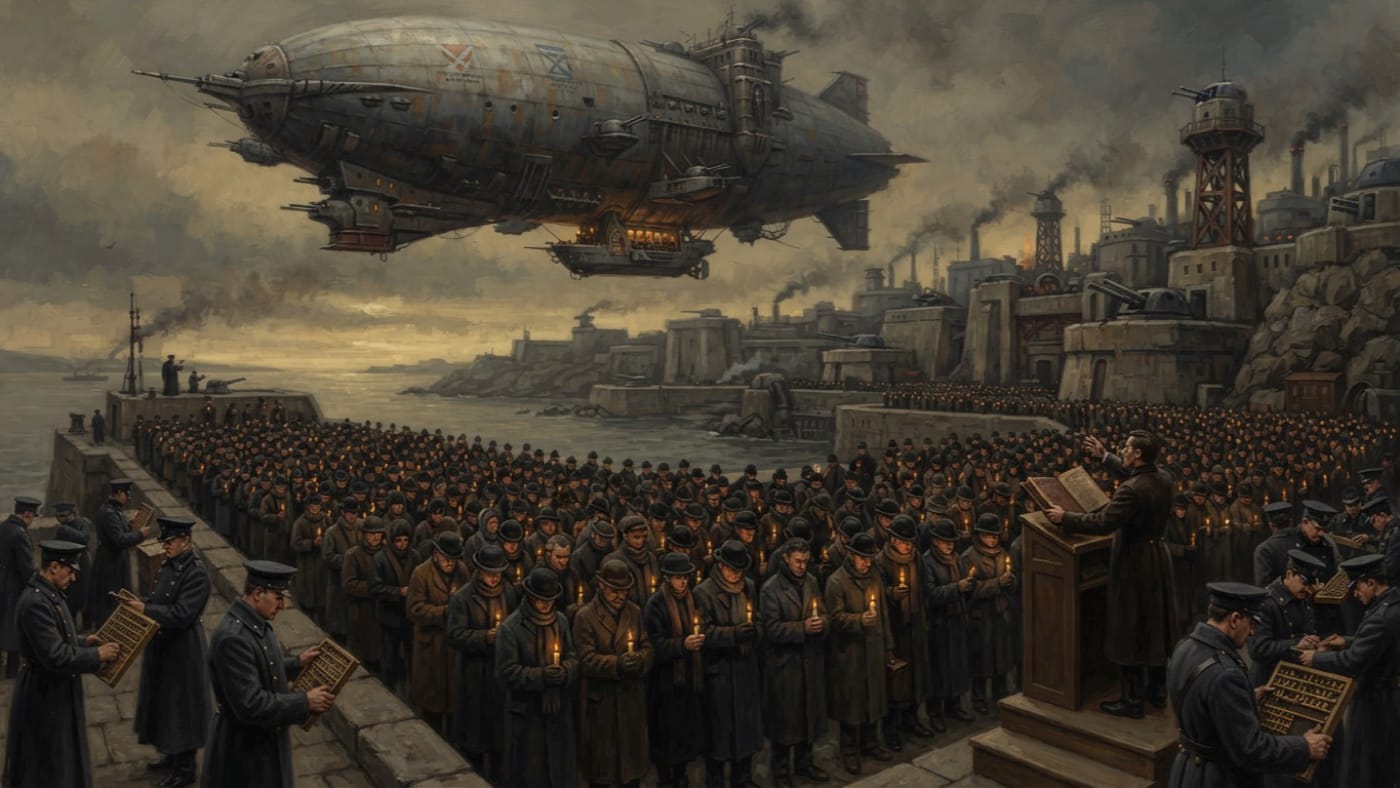
Feast of Saint Barachiel
The calendar gave the sky a patron and the weapon an appropriation
Ratified in A.S. 167 and bound to the Ark's first ascent in A.S. 168, Saint Barachiel's feast supplies lawful witness, counted candles, and the holy protection of a military budget.
Codex Ref. XIII.1.89-167
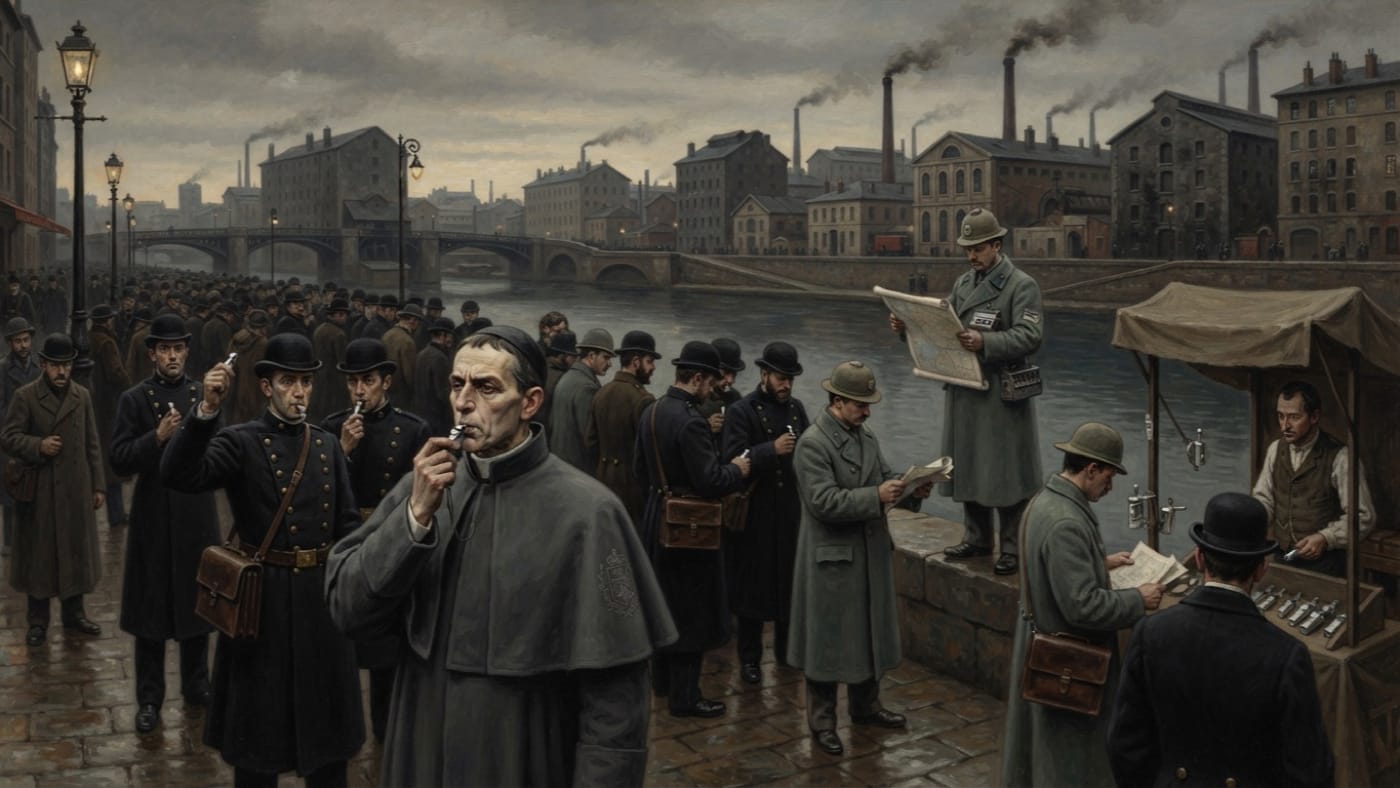
Feast of Saint Calistus
Lyon keeps the sound, and Festivals keeps the maps
This A.S. 201 survey records Lyon's supervised commemoration of Saint Calistus through whistle-hymns. Festivals keeps the route maps, merchants sell silver whistles, and Bureau counters attend. Memory travels by permission.
Codex Ref. XIII.1.87-015
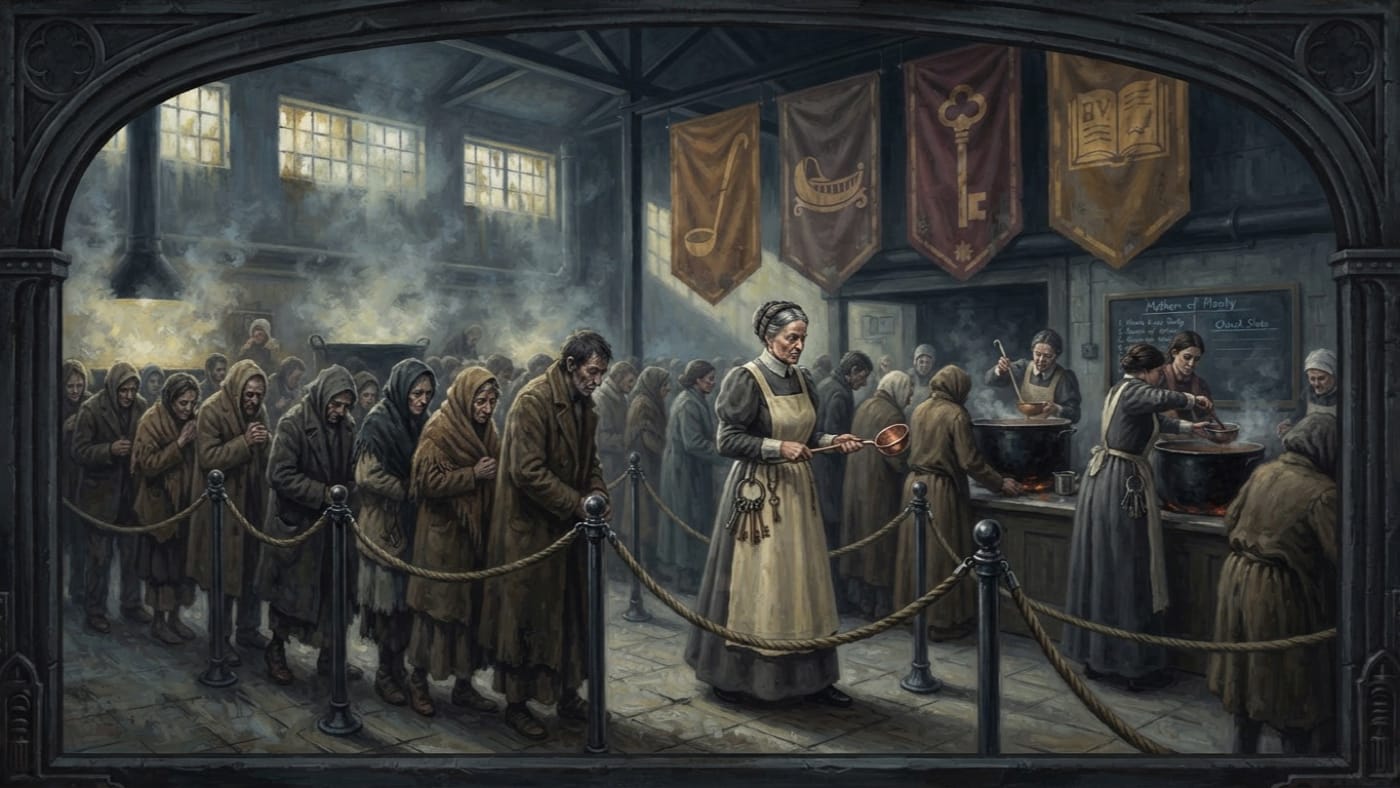
Feast of Saint Halva
A quarter-measure in the bowl, a colder week in the ledger
An A.S. 201 survey of Halva's annual 14 Brumaire feast: a quarter-measure more, the Ration Psalm, the Stirring and evening broth, paid for in next week's fuel. A.S. 94 dates the saint's canonisation; the first feast year is unrecorded.
Codex Ref. XIII.1.25-003
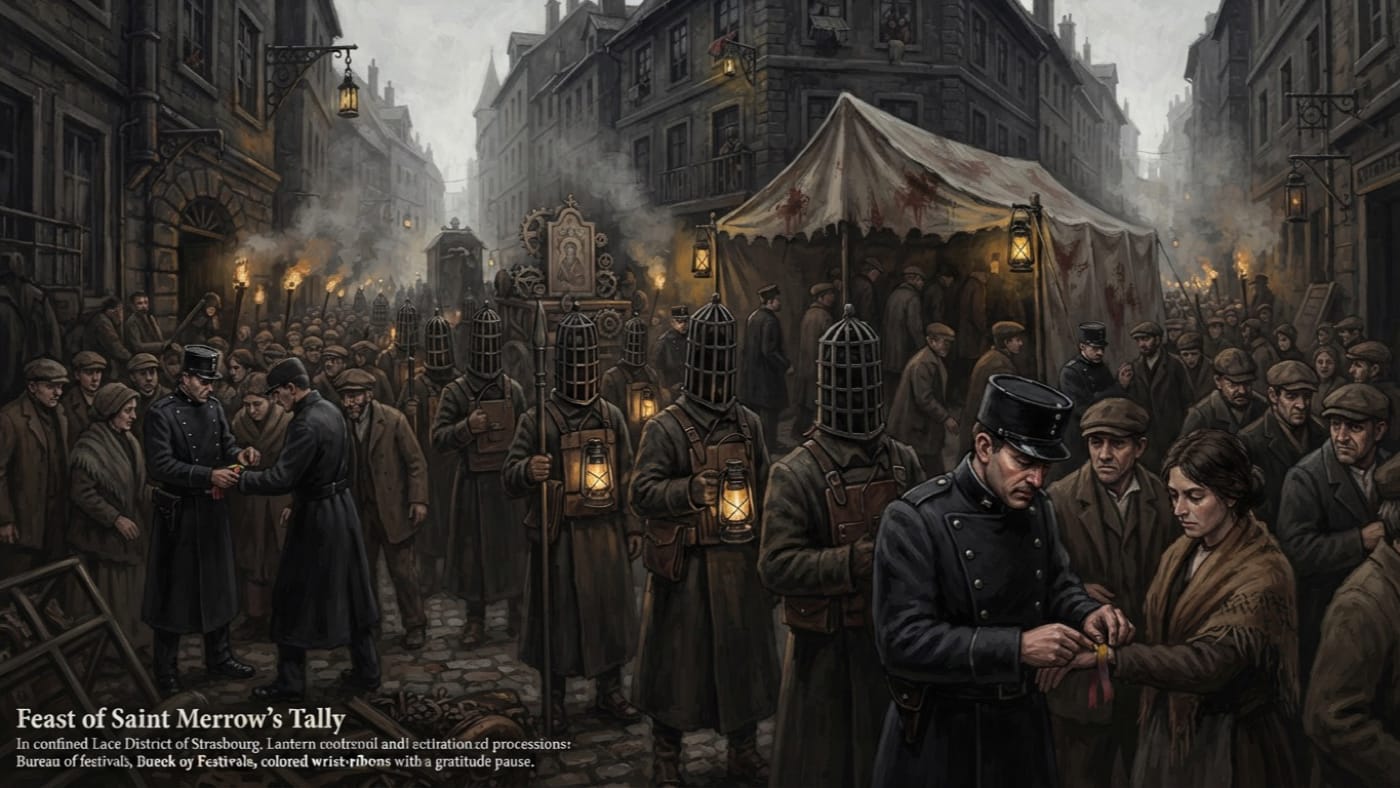
Feast of Saint Merrow’s Tally
Serenity is a column heading
At the A.S. 139 feast in Strasbourg's Lace District, Lantern escorts held the exits while Festivals checked wrists and tallied the tent's exceptions. The report called it serene.
Codex Ref. VII.2.10-139
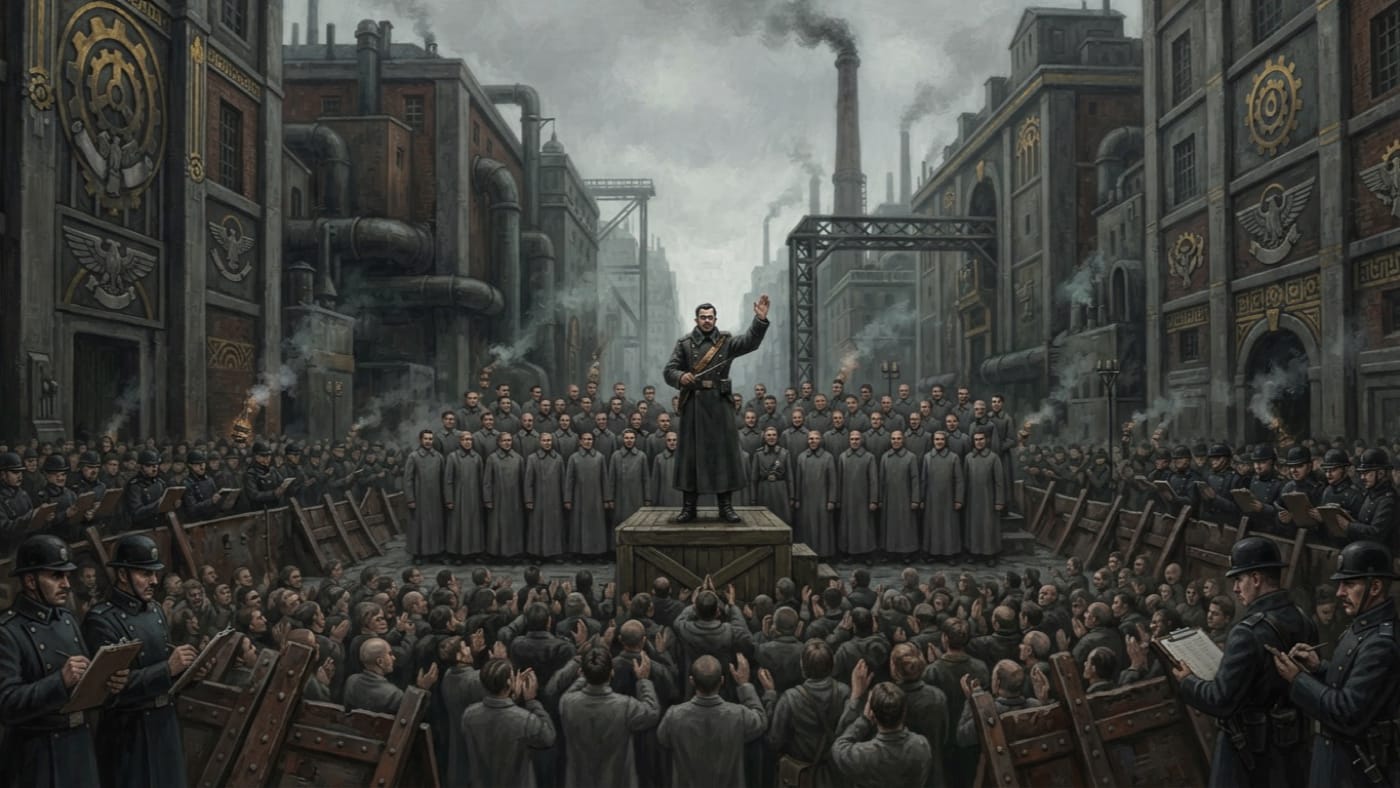
Feast of Saint Rupert
Attendance is mandatory; relief has no column
Saint Rupert's mandatory feast, preserved in the Strasbourg return of A.S. 199: 1,847 present, 13.7 seconds of applause, and joy classified Within Parameters.
Codex Ref. XIII.1.89-199
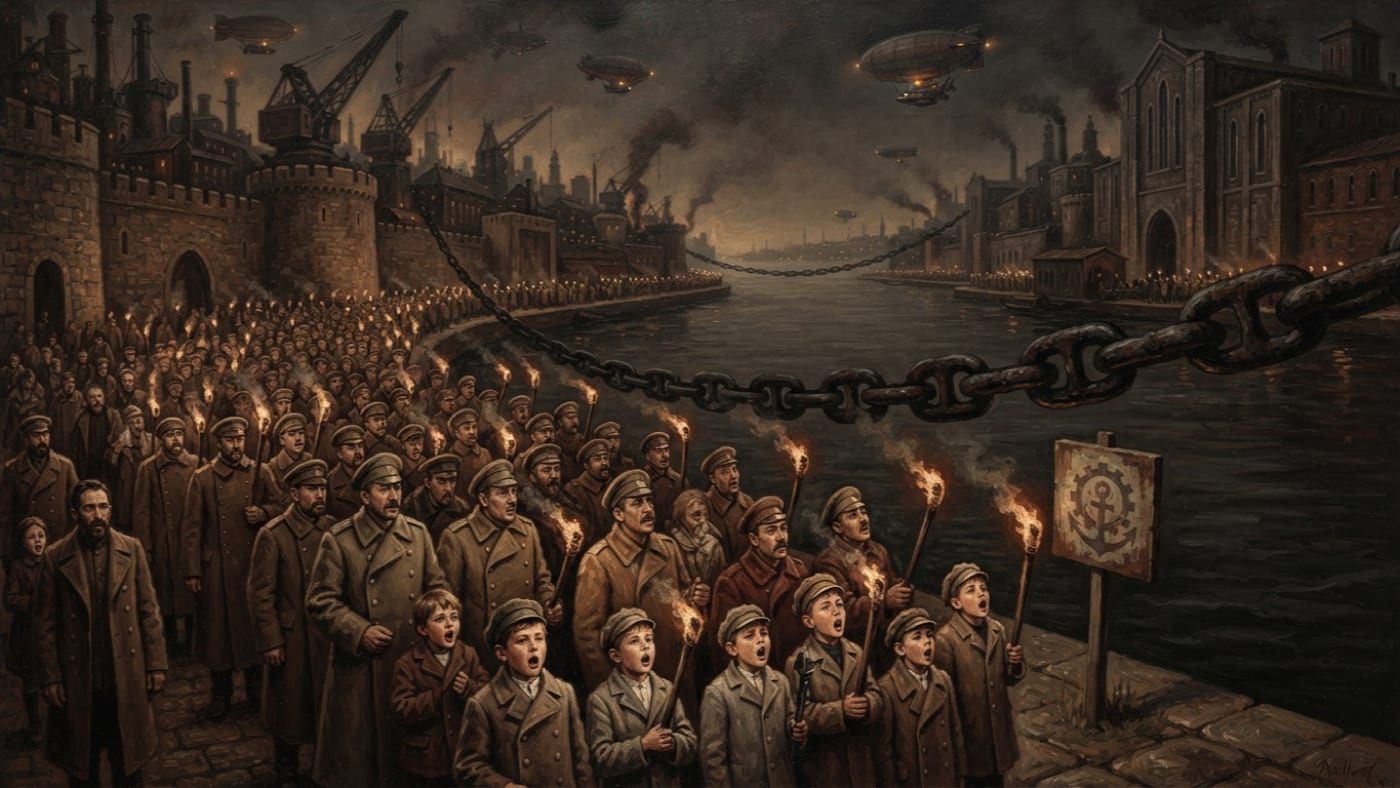
Feast of the Burning Chain
Four verses. Eleven mentions of faith. The chain was dark.
On 15 Ferrum, Constantinople celebrates the Armada victory. In A.S. 200, I watched the torchlit procession confront a dark chain. Four verses, eleven mentions of faith, and louder singing. The institution year remains unknown.
Codex Ref. XIII.1.90-200
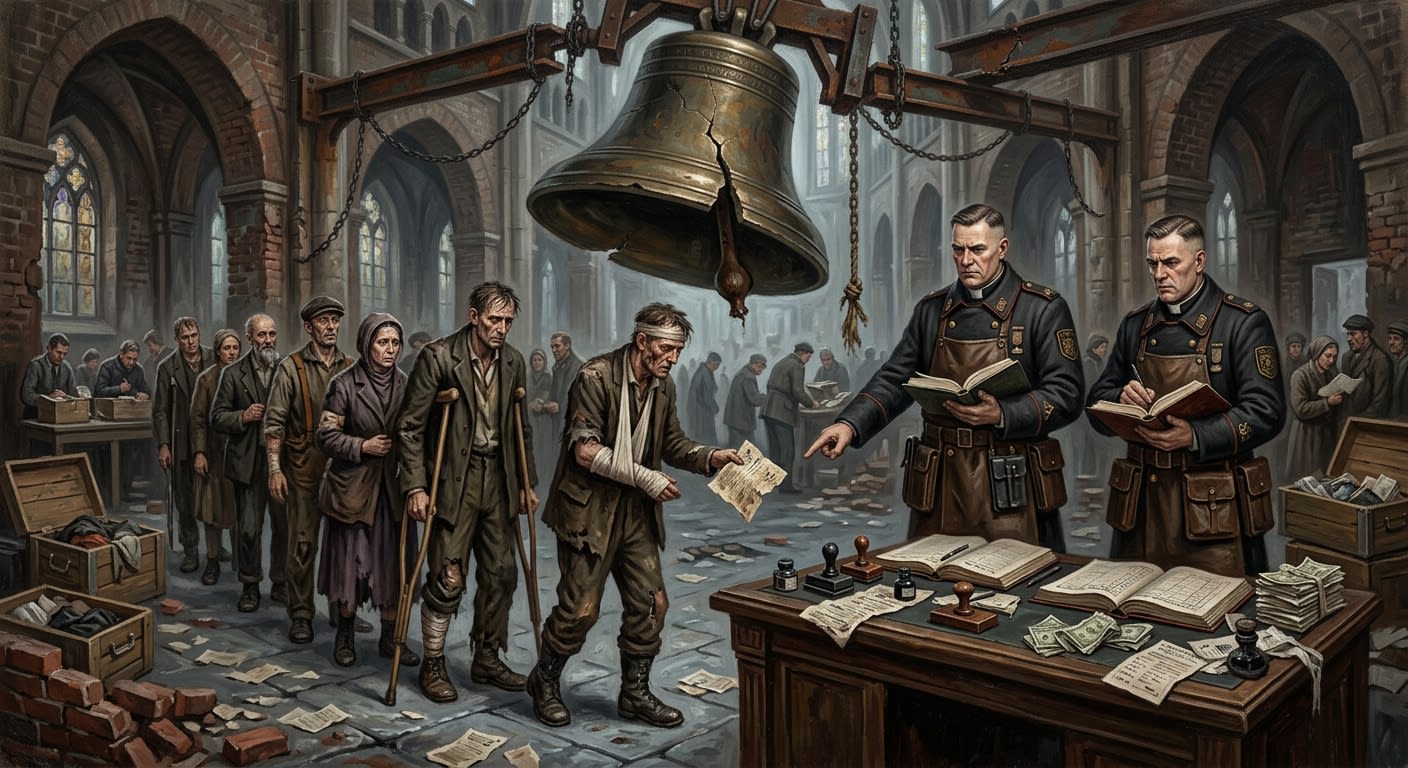
Feast of the Cracked Bell
The damaged bell still tolls, therefore the damaged citizen still owes
The Feast of the Cracked Bell teaches the Synod's favourite mercy: broken things may still serve, so damaged citizens may still be counted, tolled, and taxed.
Codex Ref. XIII.1.89-201
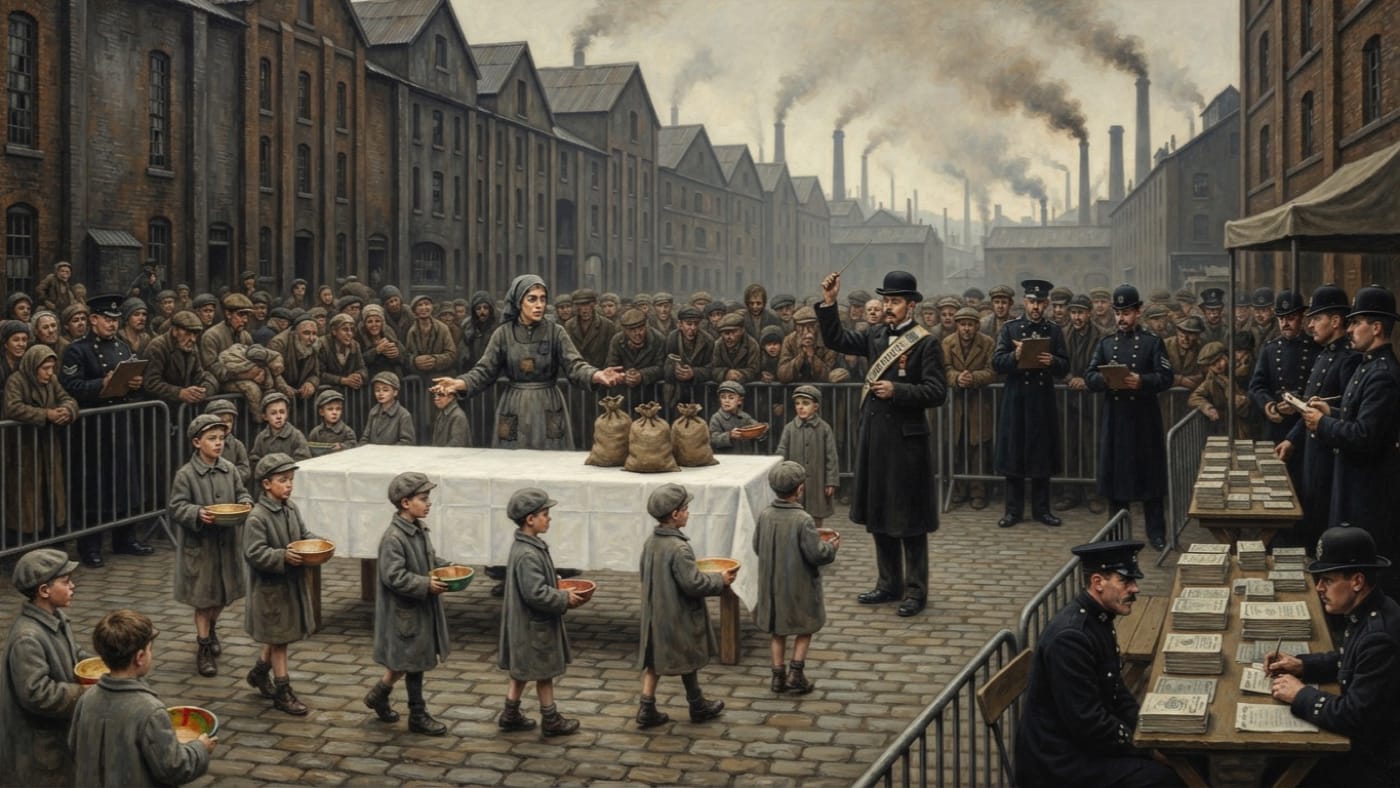
Feast of the Empty Table
Three sacks, no wall, and fourteen seconds of licensed grief
An annual licensed pageant turns Saint Silo-Agnes into a charity martyr. The sacks remain, the wall disappears, and the Bureau permits fourteen seconds of applause.
Codex Ref. XIII.1.25-002
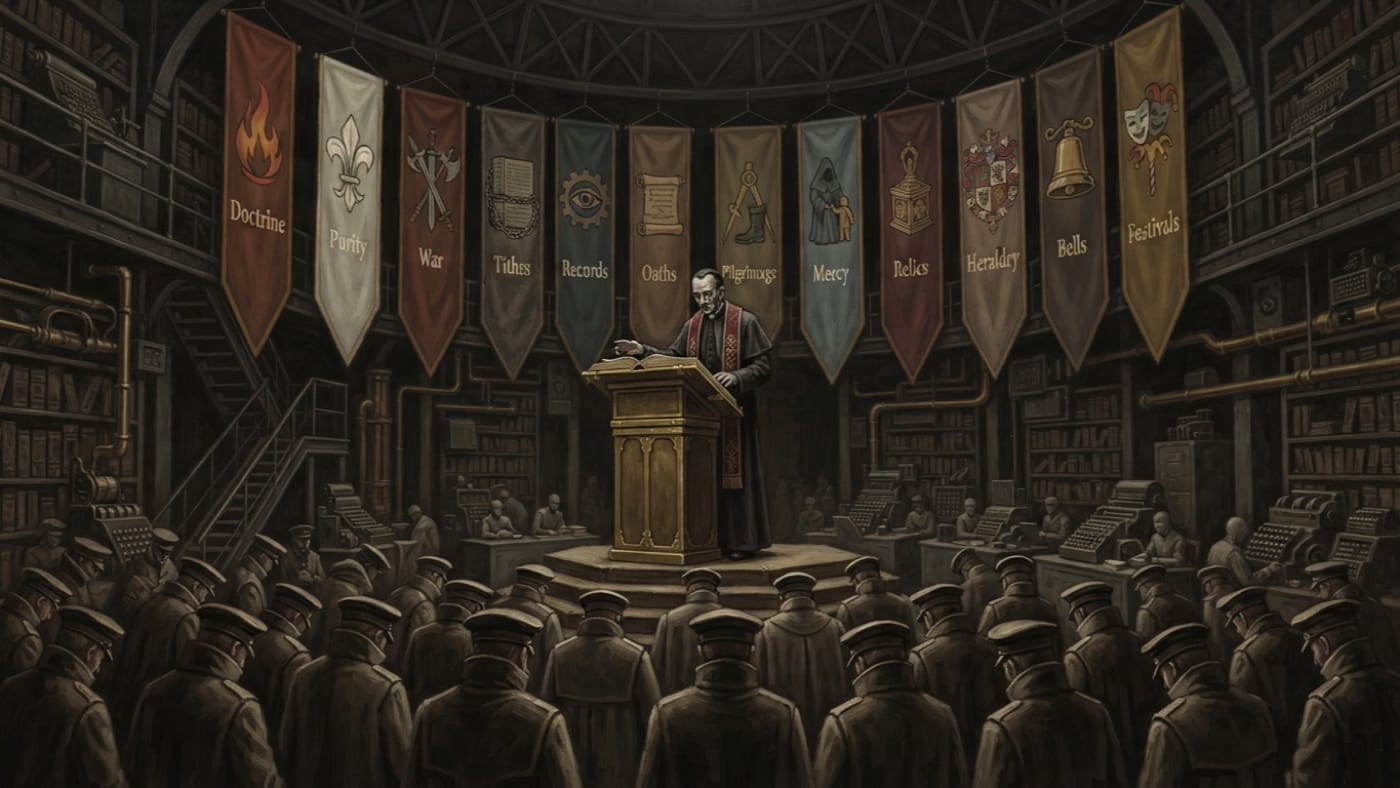
Feast of the Ledger
Twelve portfolios read aloud; the offices that keep them standing go unnamed.
At the Feast of the Ledger, the Synod reads its twelve canonical portfolios aloud. Settlement, which assigns three hundred million addresses, receives no syllable. The recital is correct; the census is incomplete.
Codex Ref. XIII.1.89-201
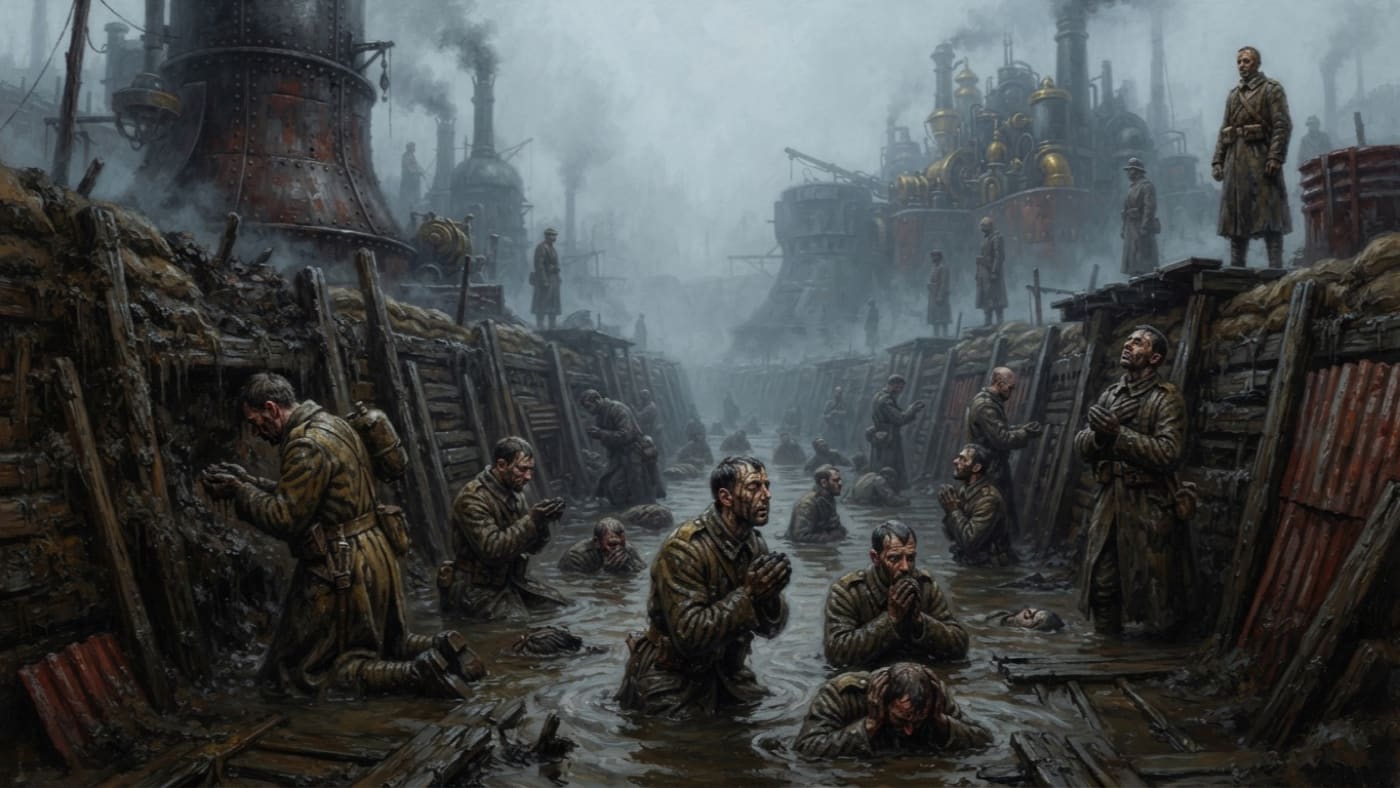
Feast of the Mud
The trench becomes a cathedral when the order arrives
Soldiers coat themselves in trench mud and chant endurance into duty; children rehearse it with clay, and villages buy the residue as saint-soil. Attendance, unlike belief, is required.
Codex Ref. XIII.1.89-1047
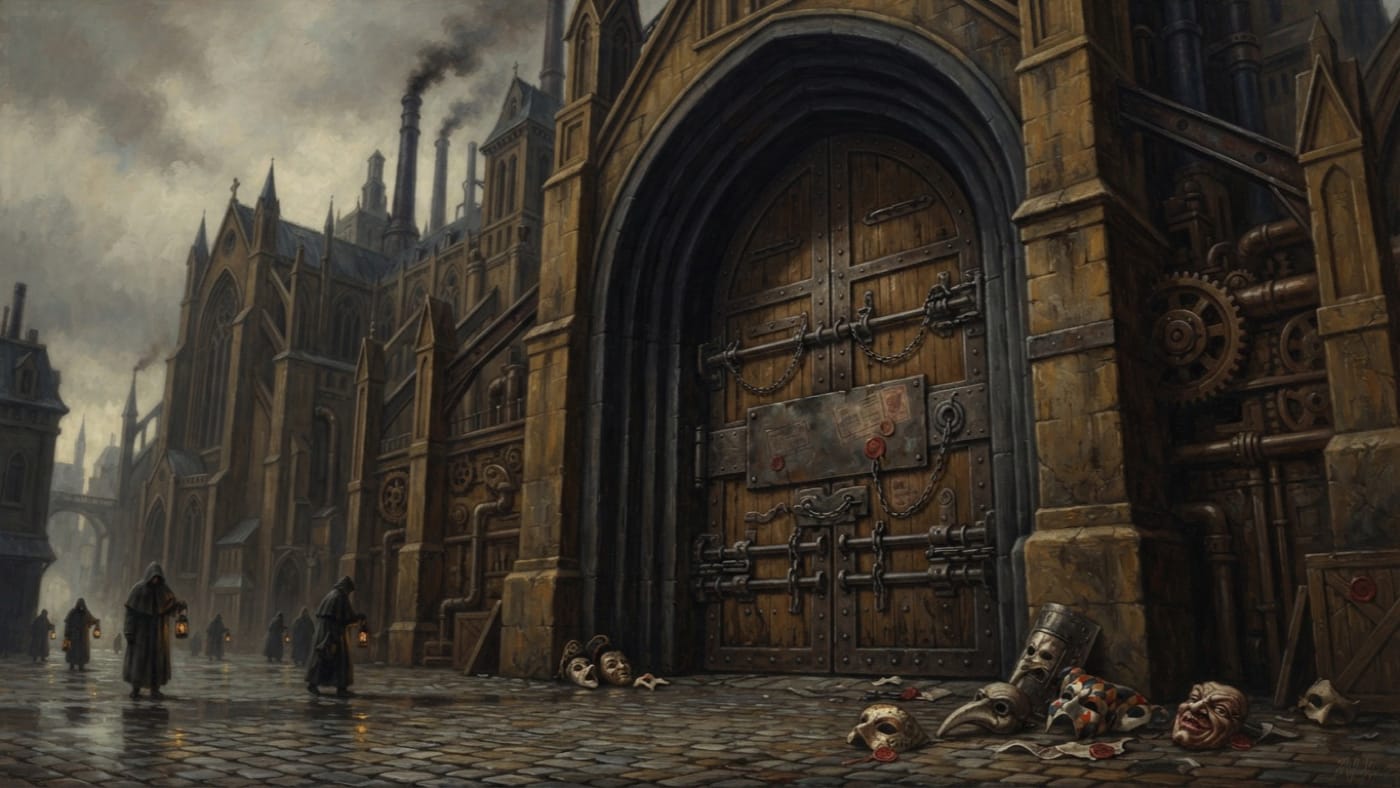
Feast of the Sealed Door
A feast in the calendar, a myth in the archive
The calendar names the feast; Records calls its whispered rite myth. My A.S. 201 survey records the annual eve, the locked-parish rumour and the particulars no source supplies.
Codex Ref. XIII.1.89-1048
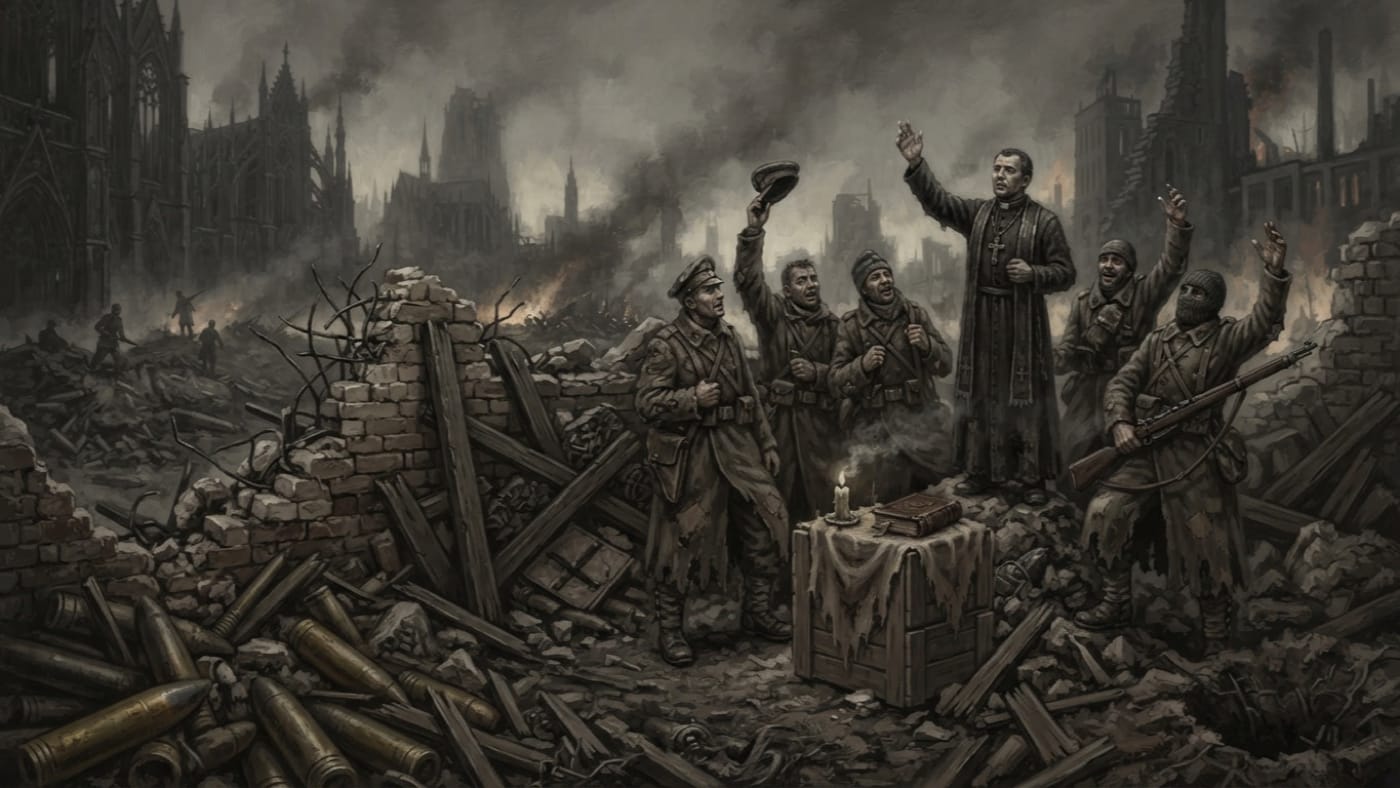
Feast of the Unbroken Wall
The wall held; the bureaucracy arrived later
A surviving barricade, an unnamed priest, and one unscheduled cheer in A.S. 52: the Bureau of Festivals' founding precedent. The wall held; the bureaucracy arrived later.
Codex Ref. VII.8.10-1050
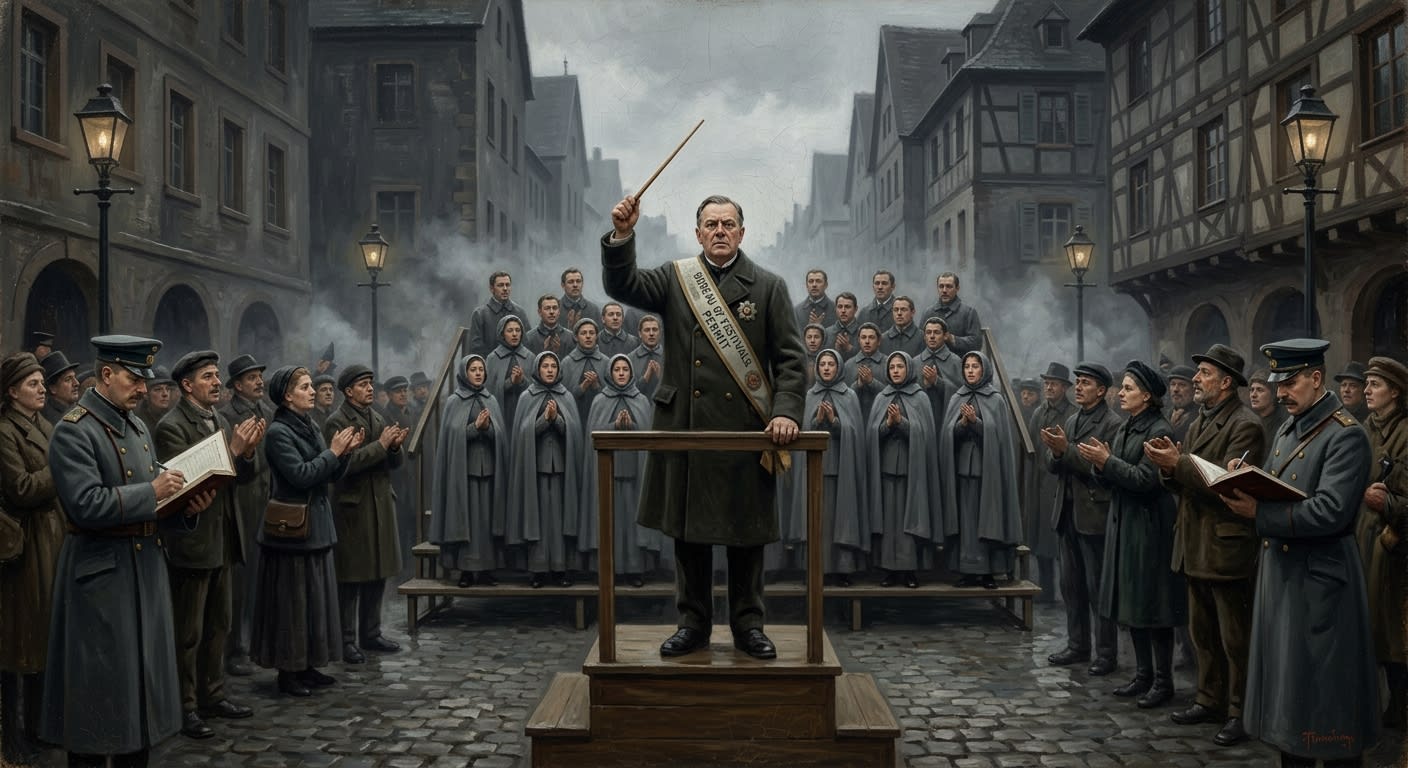
Festival Chorus-Master
The Synod's licensed conductor of controlled emotion — half-cleric, half-stagecraft tactician, certified to manufacture joy by those incapable of permitting it
The Bureau of Festivals' licensed joy engineer — eleven ranks, one Conservatory, forty-one years of unresolved investigations, and a career that ends when laughter becomes indistinguishable from threat.
Codex Ref. XII.17.01-001
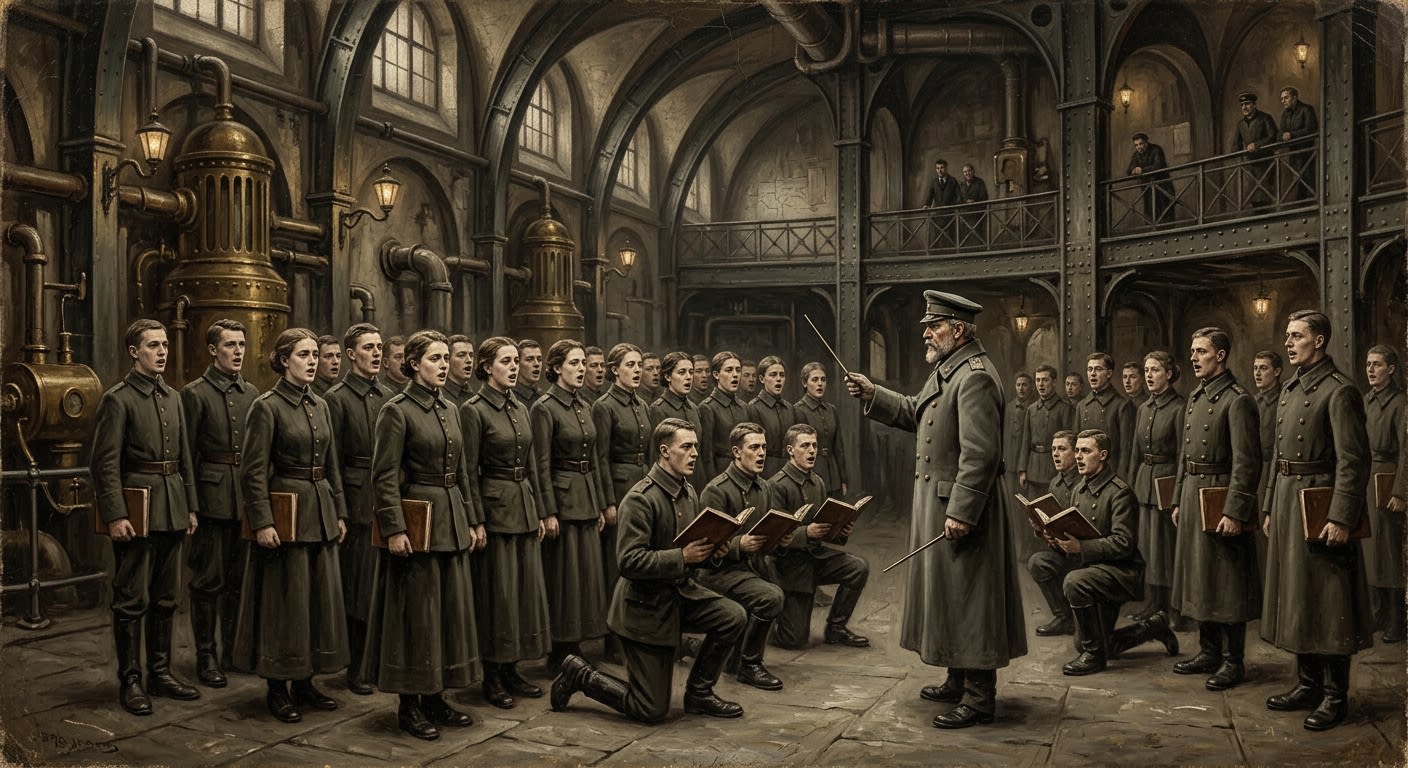
Festival Conservatory of Strasbourg
The house where joy learns its chains
Strasbourg training house of the Festival Chorus-Master corps, where song is broken into compliance and candidates learn to administer public joy without catching it.
Codex Ref. II.2.06-004
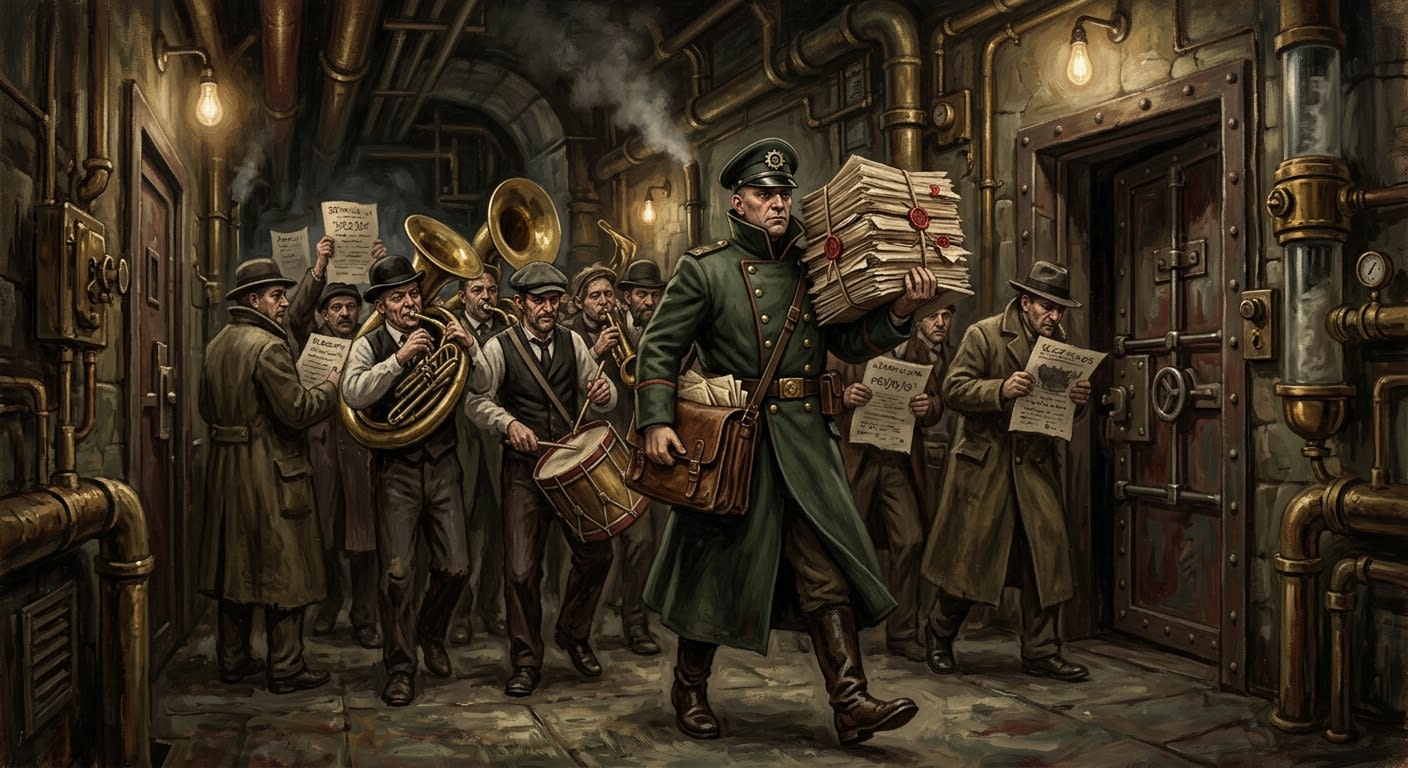
Festival Form 19-M
The paper that taught Seville to laugh in sequence
Festival Form 19-M began as a tavern supplement and became the paper Seville weaponised into music, mockery, and Purity jurisdiction.
Codex Ref. XIII.1.66-153
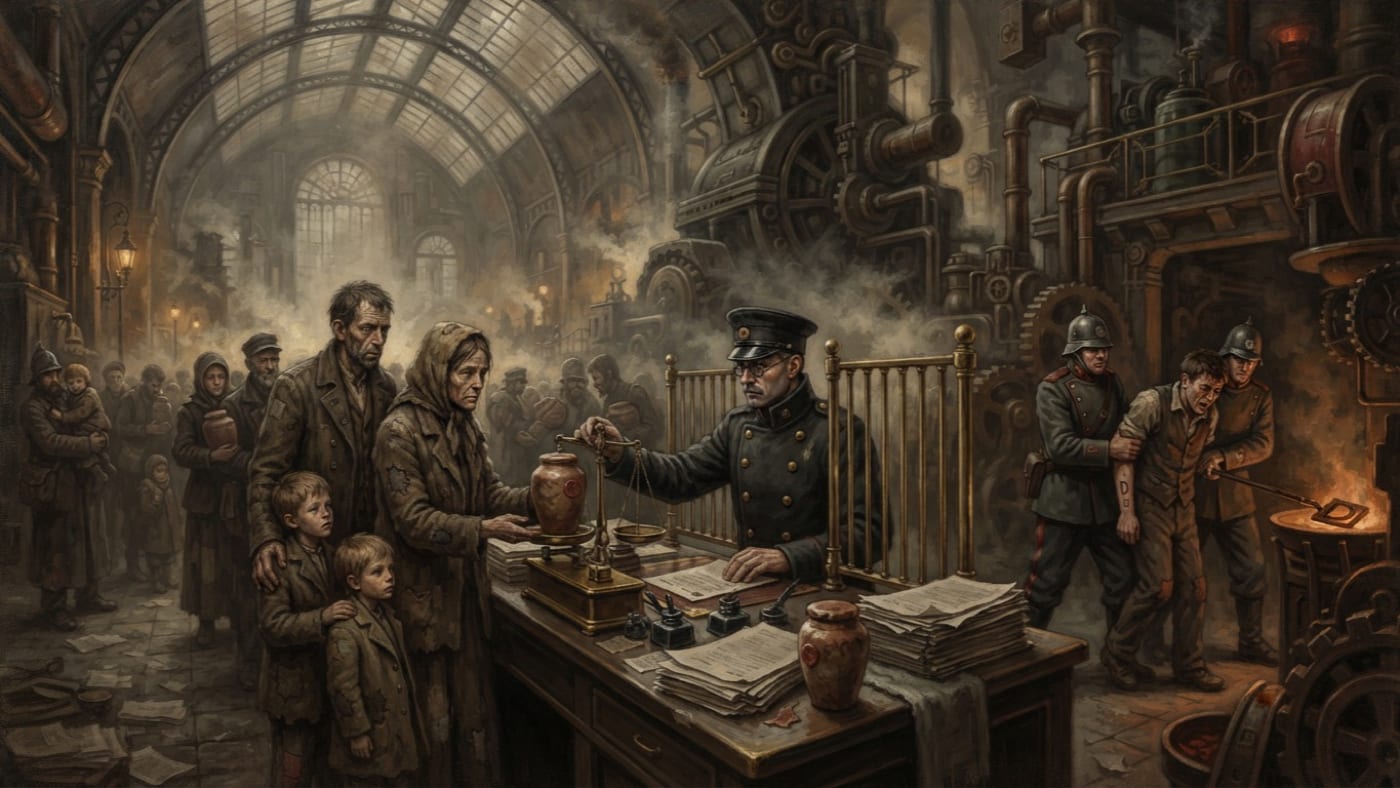
Festival of Ash Debts
The dead are asked to pay. The living are asked only to carry them.
Surveyed in A.S. 201: families trade ancestral ashes for bread. Those unable to produce ashes are branded debtors and conscripted. The family line makes excellent collateral.
Codex Ref. XIII.1.24-201
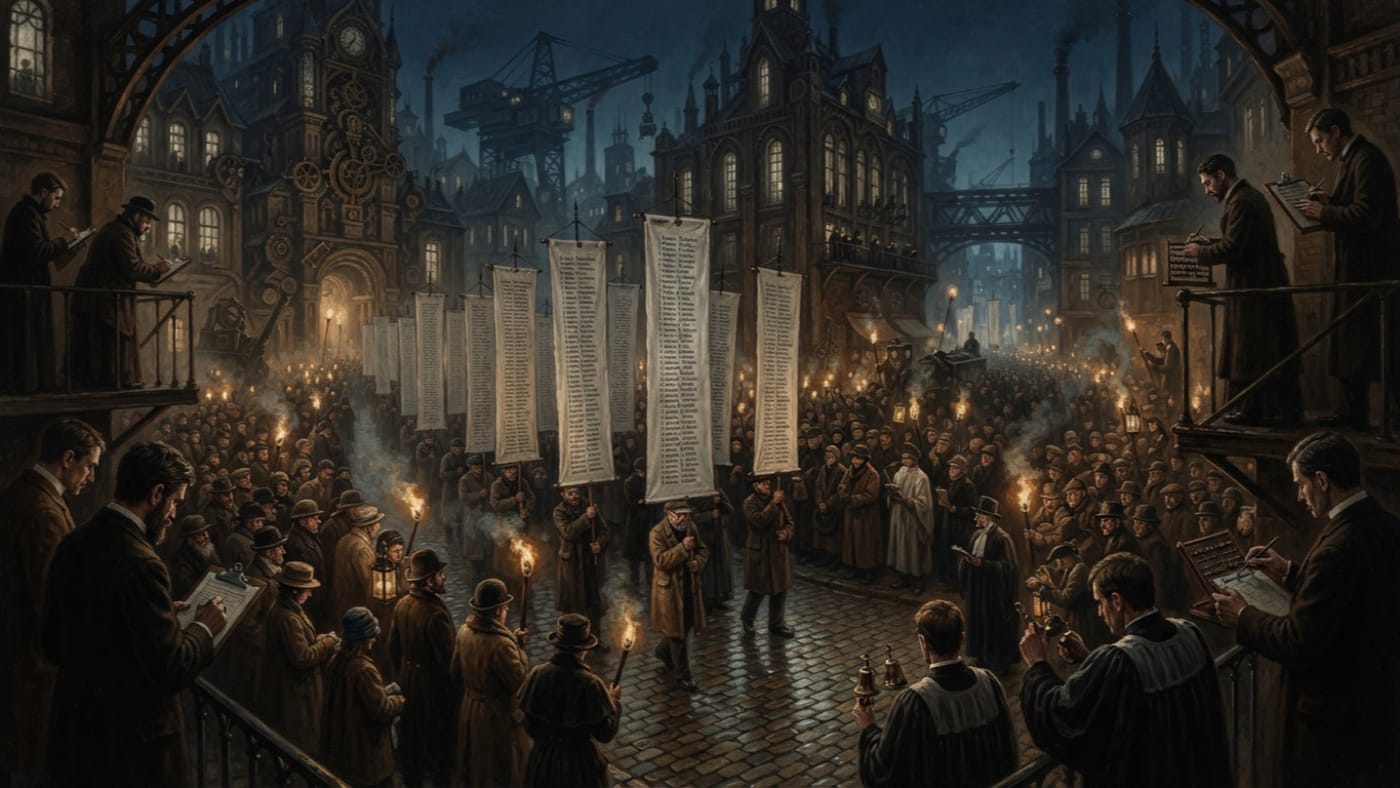
Festival of Departed Flames
The names are read; the weeping is measured
Each autumn the Synod reads its dead by torchlight. Festivals counts the mourners, Rites consecrates the chant, Records logs the names, and the weeks that follow grow quieter. I record the figures; the Bureaus supply the explanation.
Codex Ref. VII.3.03-001
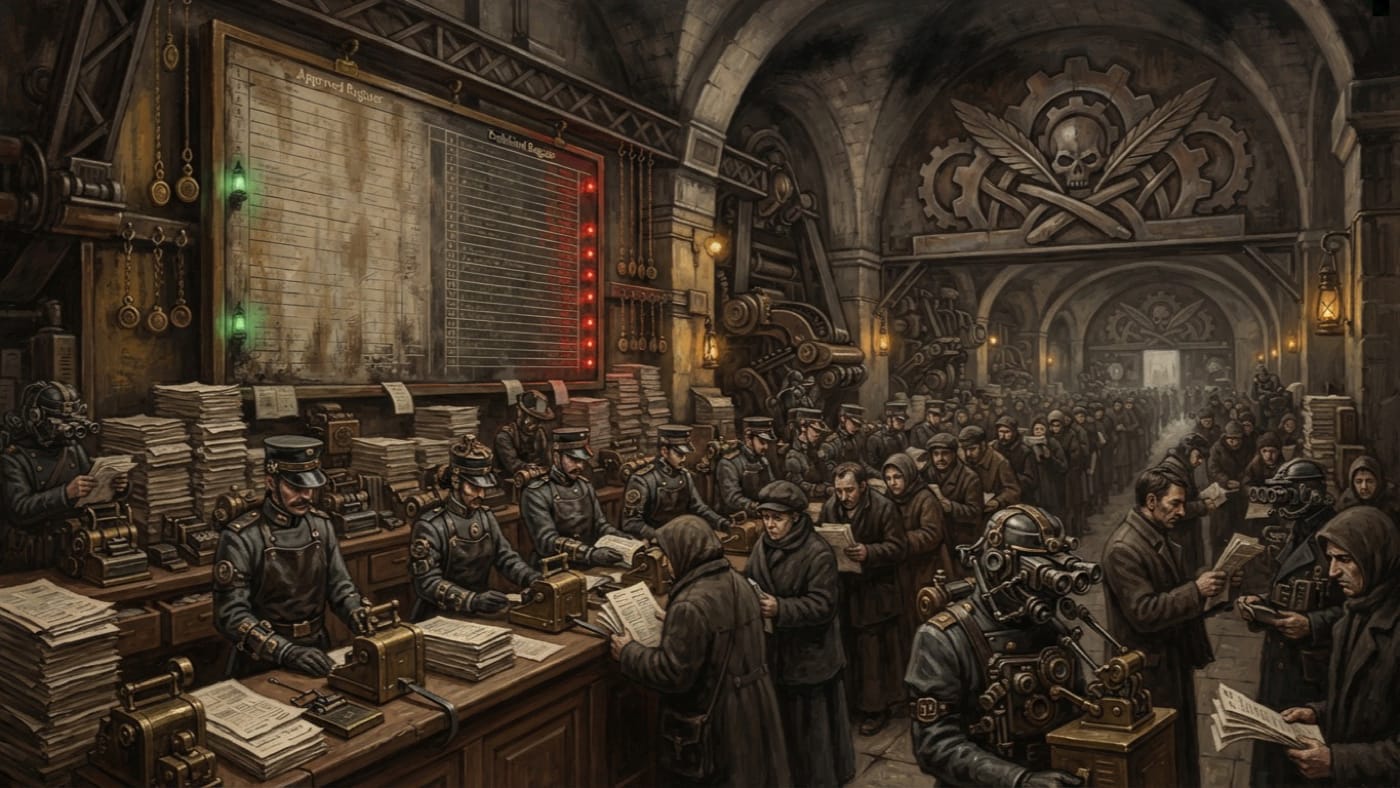
Festival Permit Office, Lyon
Eleven weeks to obtain four hours of joy
The Lyon permit counter in A.S. 200: eleven weeks of processing for four hours of approved celebration. The Tumults taught the Bureau suspicion; the forms have preserved the lesson.
Codex Ref. VII.4.11-002
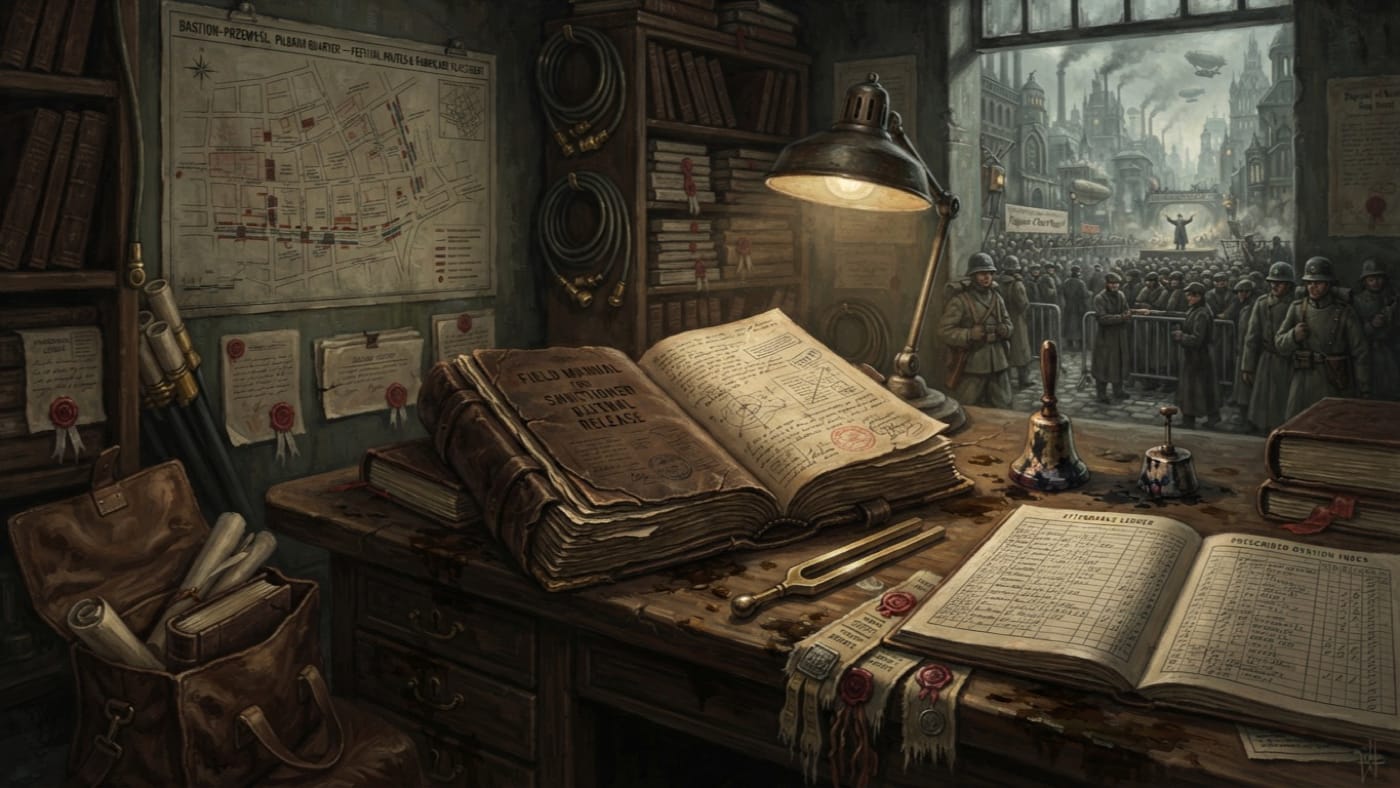
Field Manual for Sanctioned Emotional Release
The book that permits relief and forbids the crowd from providing its own
Eighteen revisions teach the Chorus-Master how to grant laughter, count applause and stop a crowd before it discovers that joy can proceed without permission.
Codex Ref. XIII.1.67-201
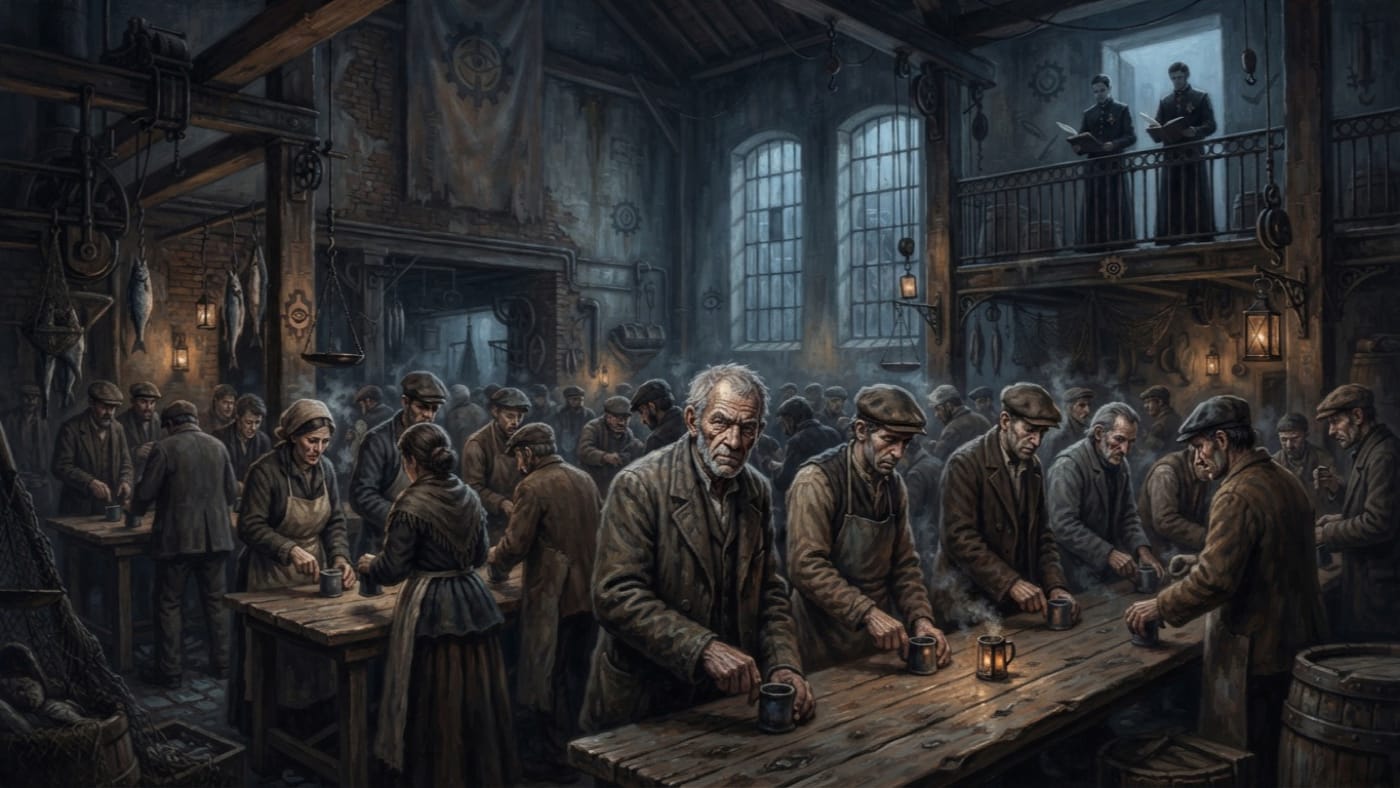
Fishmongers' Court
Quota clauses in the throat, precedence in the cup
Seville's fish trade chanted quota clauses in A.S. 153; the clerk suspected melody. The Court still disputes the first breach with cups tapped before dawn.
Codex Ref. VIII.5.07-153
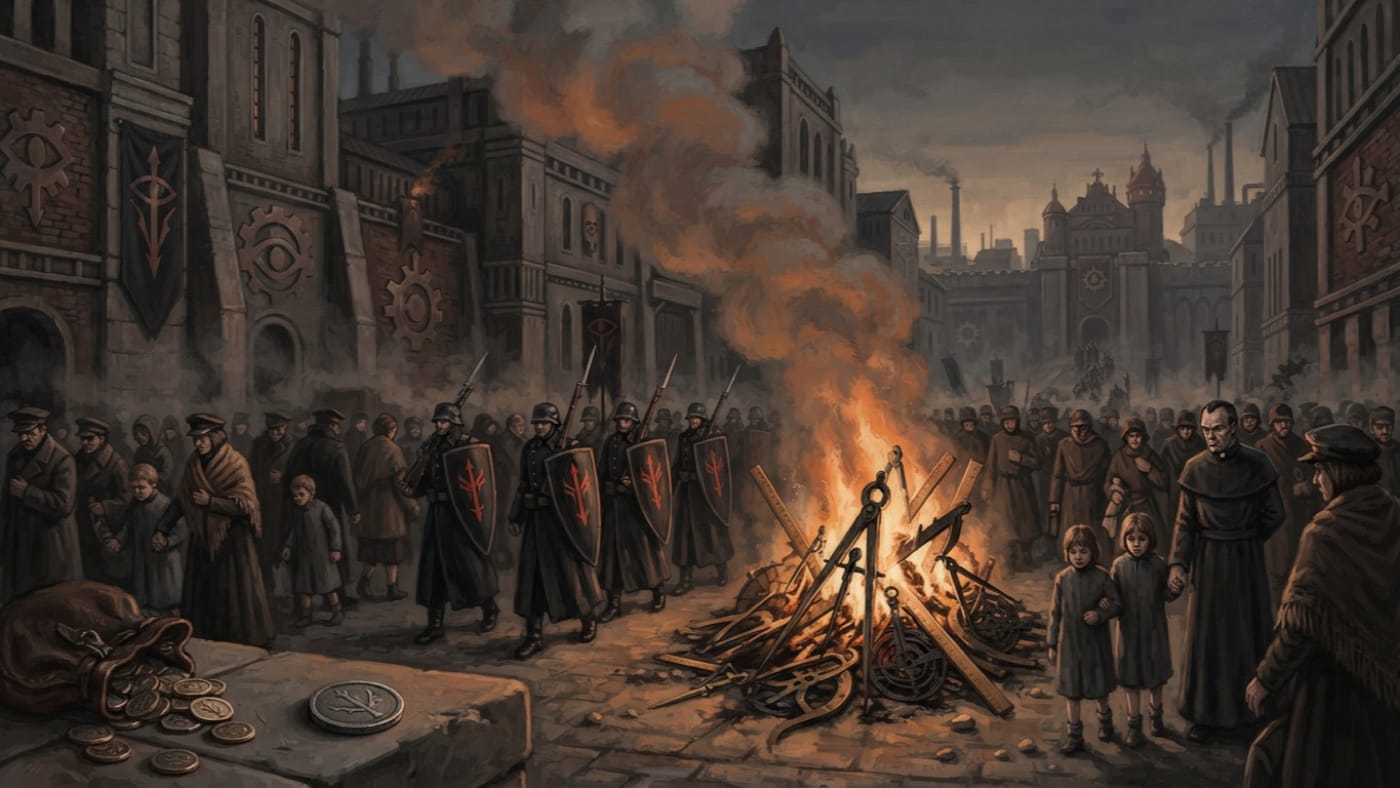
Flaming Sword
Permission has weight, and obedience has smoke
The Flaming Sword carries Synodal authority on coinage and lends its name to Strasbourg's burning of Rationalist instruments. I record its public uses; the emblem's origin remains unproved.
Codex Ref. XIII.1.03-001
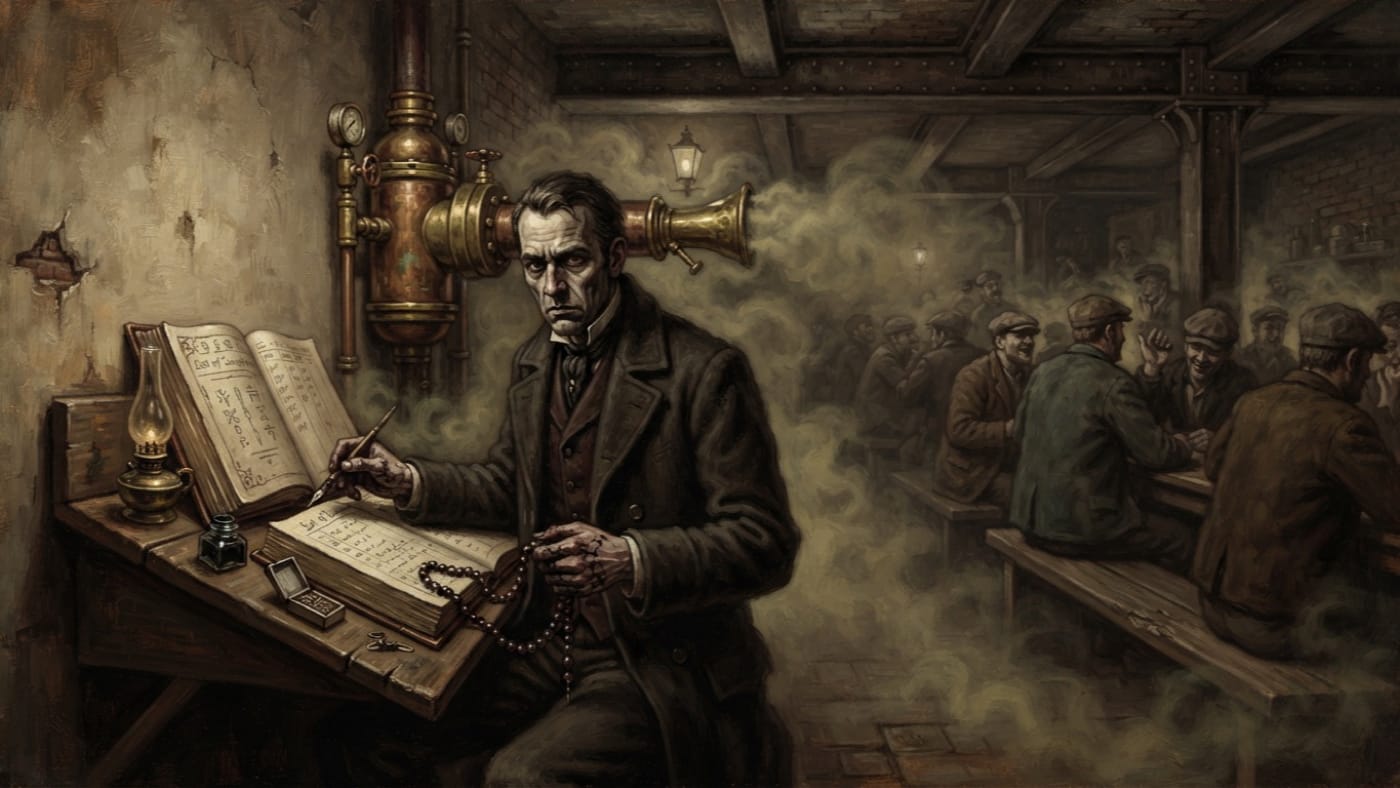
Fog Clerk
The salaried ear that turns a tavern's laughter into evidence
The Fog Clerk is the Censorium's salaried ear: counting tavern laughter, signing the List of Laughters, and tending incense vents after Ninth. The clerk passes the entry onward; the punishment follows.
Codex Ref. XII.10.02-001
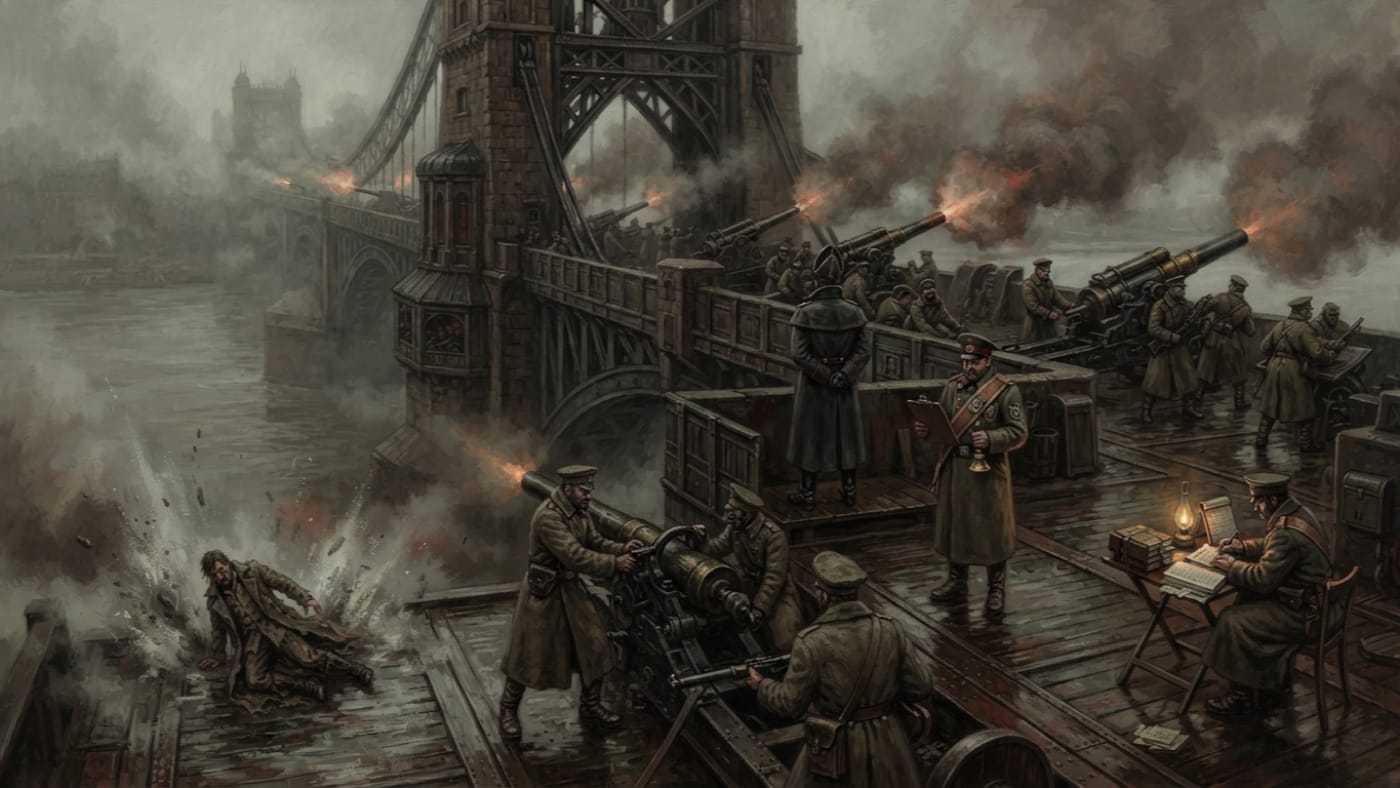
Founding Salvo of Bastion-Brest
The bridge fell. The anniversary remains licensed.
Brest's annual gun salute honours, per the current Codex, the nine-day stone-bridge defence of A.S. 66. The bridge fell on the tenth day. The guns commemorate endurance; Records files accidental deaths as celebratory expenditure.
Codex Ref. XIII.1.89-1146
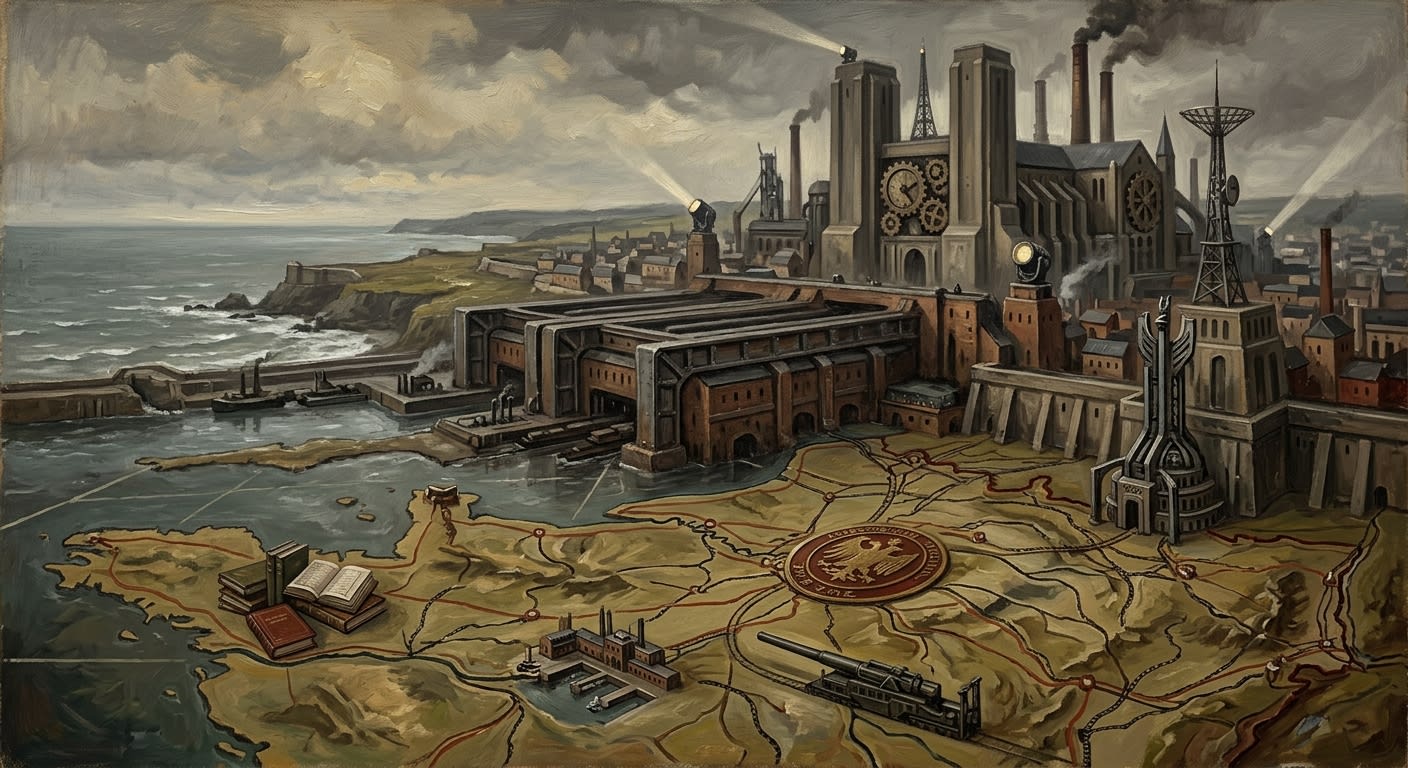
France
The country the Synod did not abolish, because it proved too taxable to waste
A.S. 201 survey of France as Zone One heartland: martyr coast, watched cities, taxable memory, useful ports, and one conquered name made indispensable.
Codex Ref. II.1.01-201
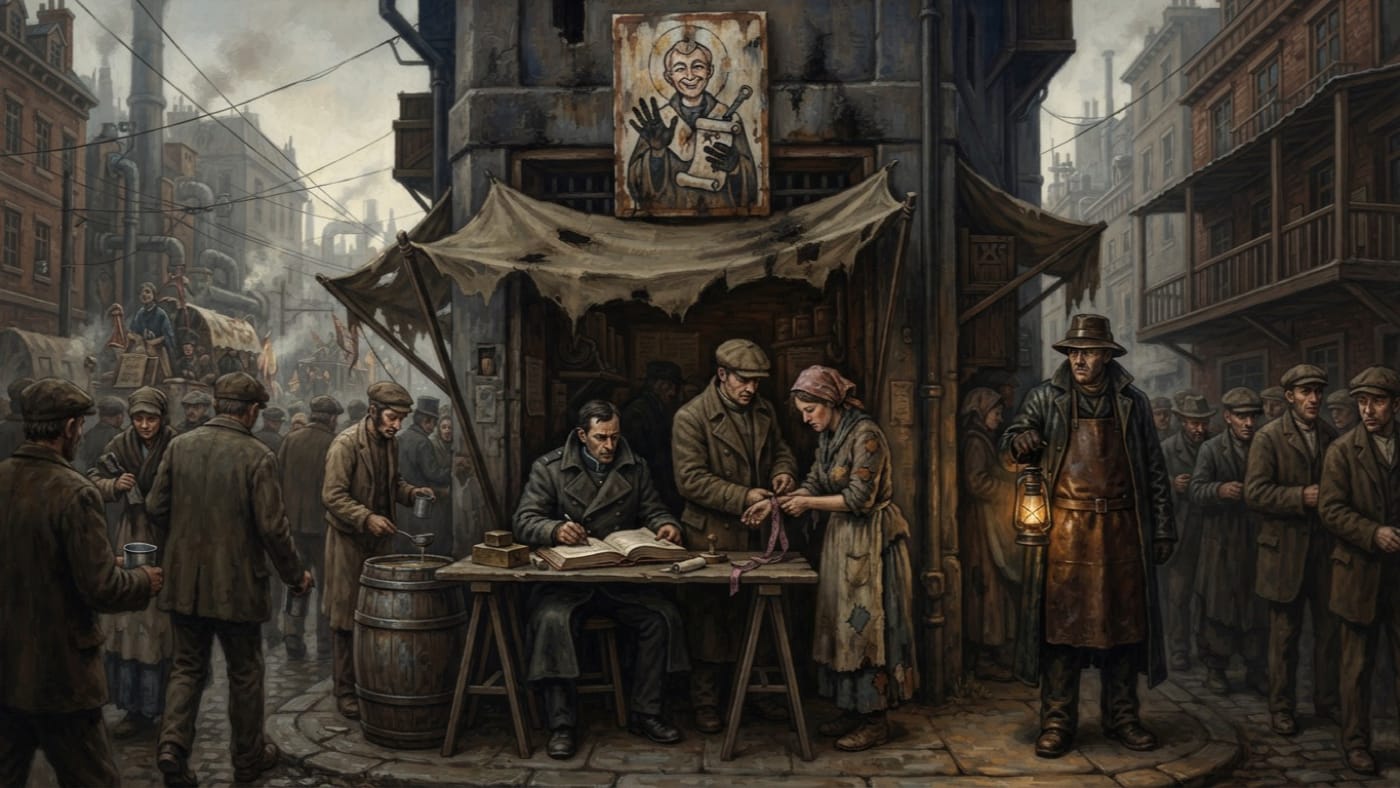
Gratitude Alcoves
The shade has merit; the ledger has a second column
Bureau of Festivals procession stations where cider, shade and Saint Caldrin's smile slow the crowd for wrist-ribbon checks and household counting. Attested by A.S. 139; surveyed in A.S. 201.
Codex Ref. II.3.05-139
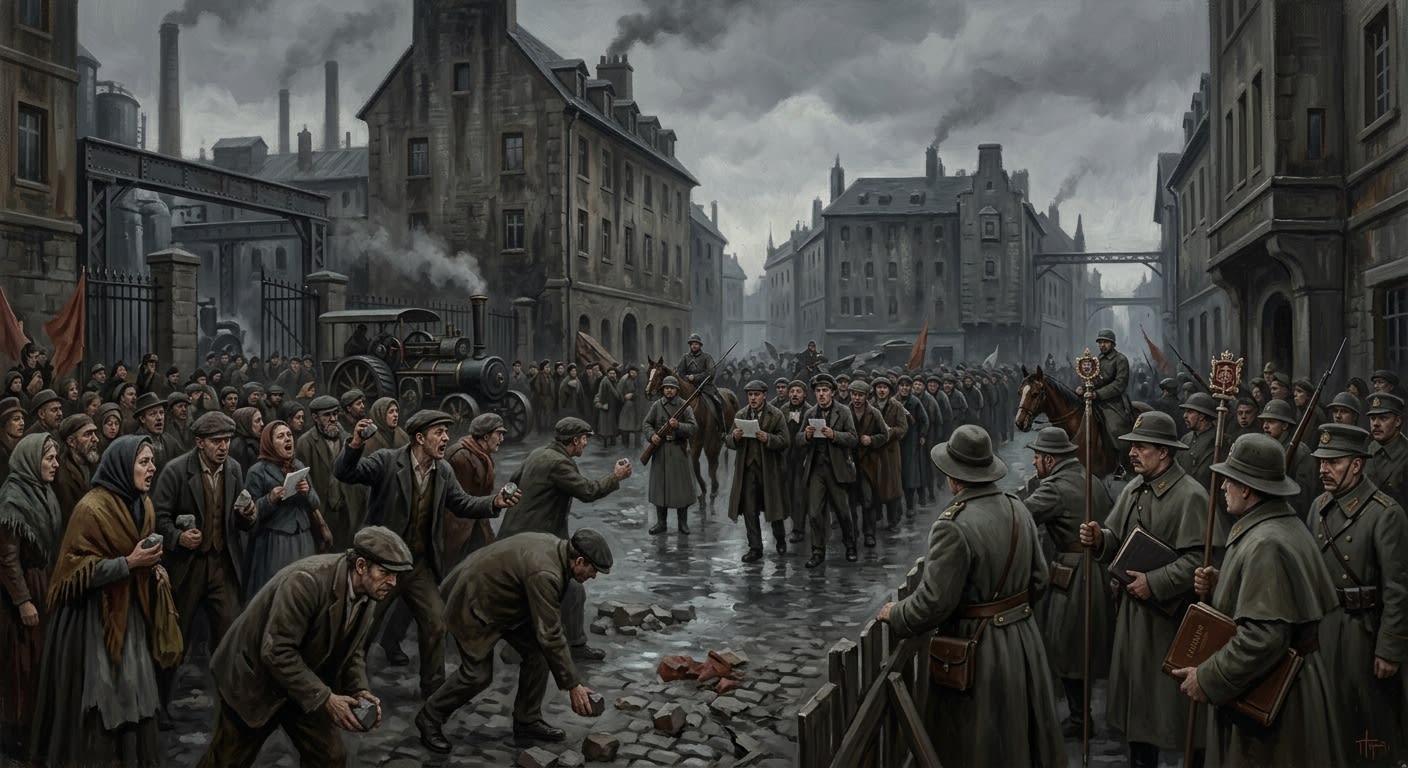
Gray Week Famine
Hunger refused the ledger, so the ledger learned to sing
A.S. 138 famine-riot sequence in Strasbourg, Marseille, Munich, and a disputed fourth city; open grain audits failed, crowds answered with stones, and receipt-procession doctrine learned to count citizens while they sang.
Codex Ref. VII.4.21-002

Guallin House
Seven minutes of laughter; no further particulars on file
Guallin House is the Seville premises entered in the A.S. 153 List of Laughters as seven minutes. Its keeper, purpose and fate escaped the extract; the duration did not.
Codex Ref. II.1.04-154
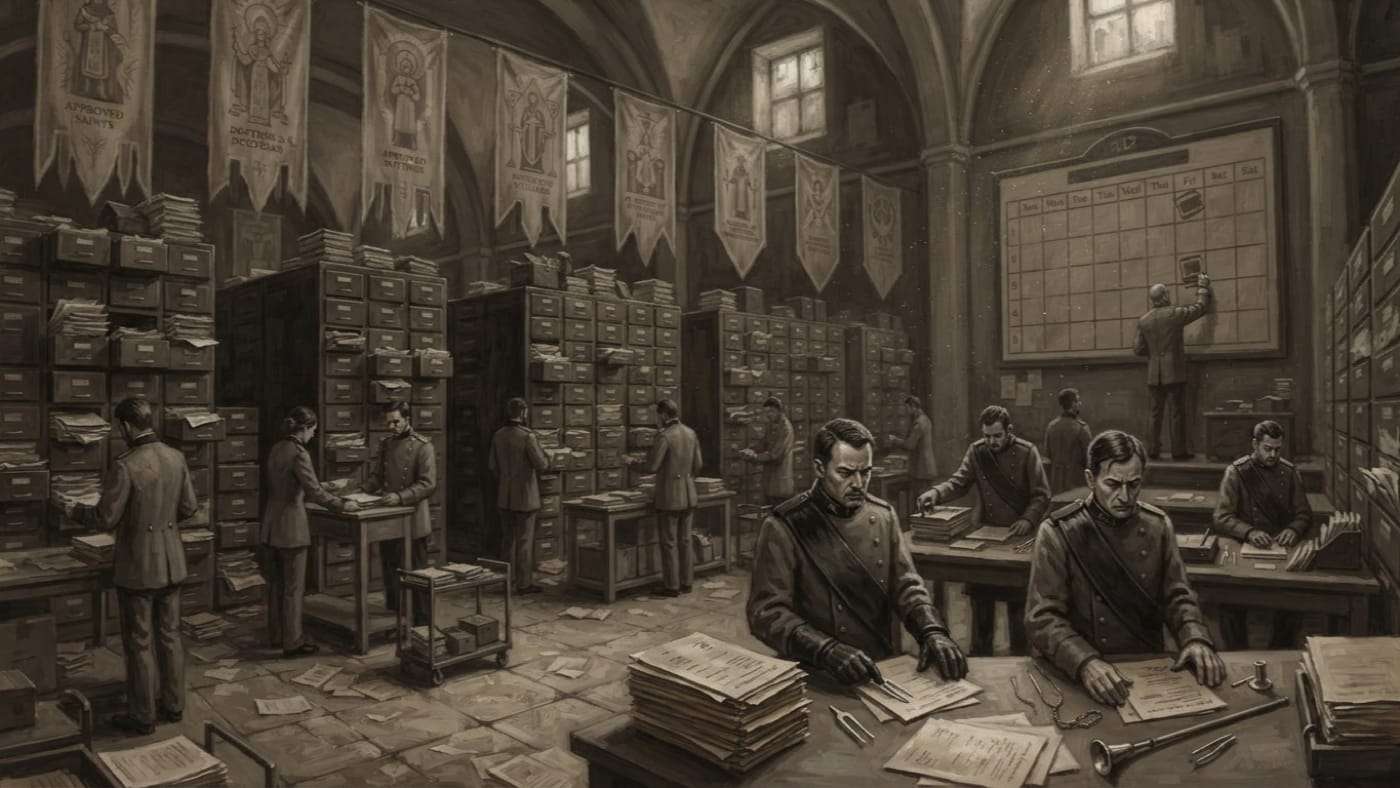
Hall of Prescribed Joy
Where every celebration begins by waiting
Eleven hundred square metres of approved ornament, permit tables and filing cabinets in Strasbourg. The Bureau of Festivals licenses joy here; its backlog has not cleared since A.S. 155.
Codex Ref. II.3.05-201
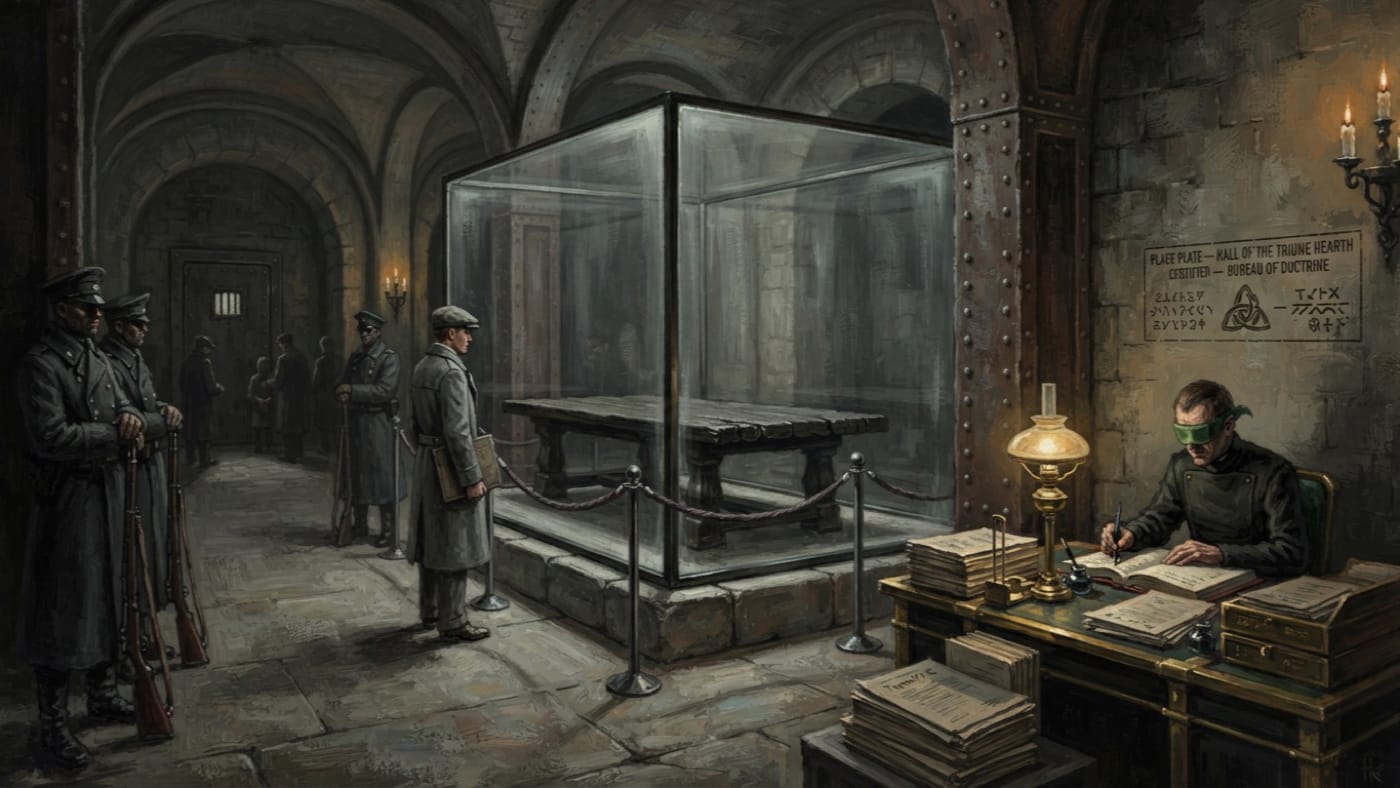
Hall of the Triune Hearth
Proximity licensed. Touch refused.
Strasbourg keeps the Concordat's black oak table under glass. Citizens inherit the Hearth, then file Form 77-C forty days ahead to stand near its furniture.
Codex Ref. II.1.04-006
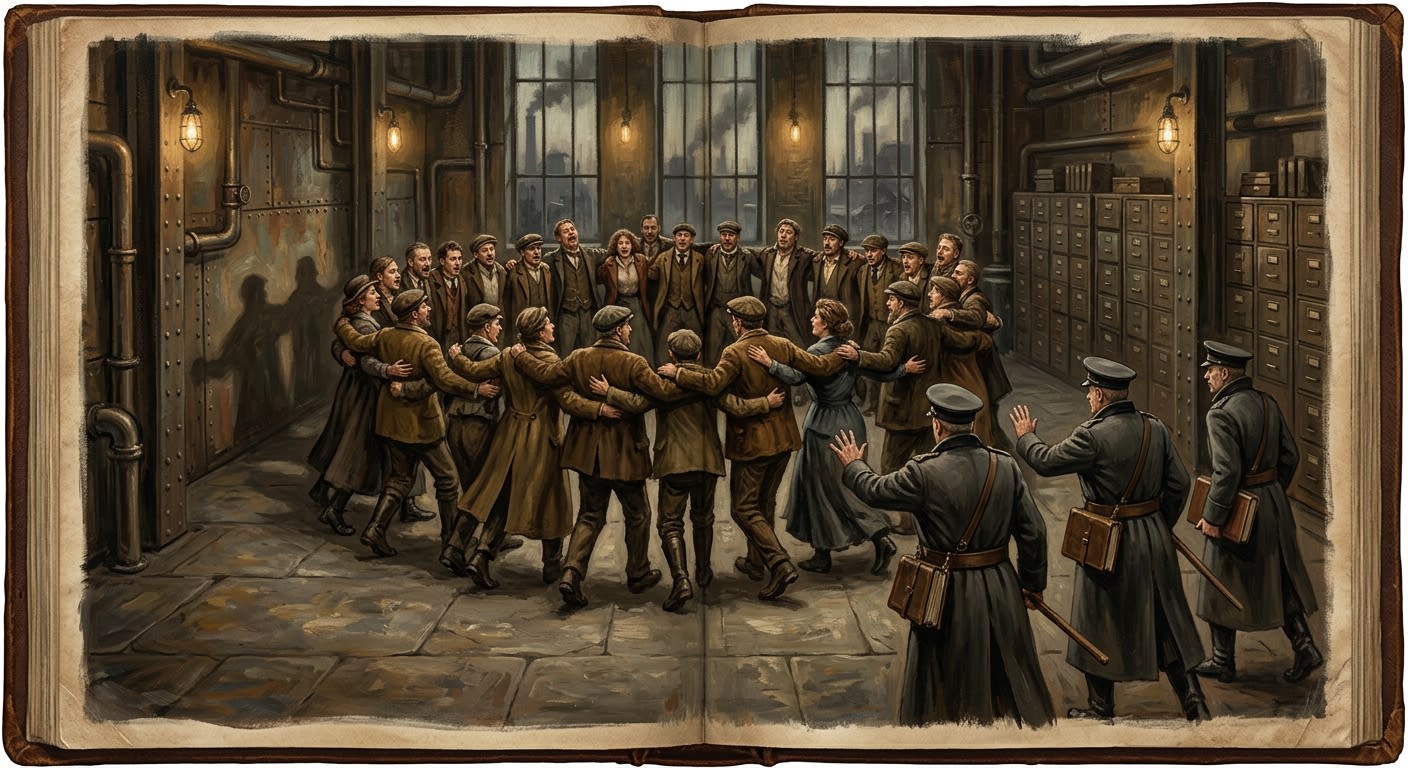
Heresy of Siena
The circle that kept turning after Doctrine entered
The Heresy of Siena began as a harvest dance and became a Bureau problem: a circle of bodies together before any office had authorised joy.
Codex Ref. VII.8.10-141
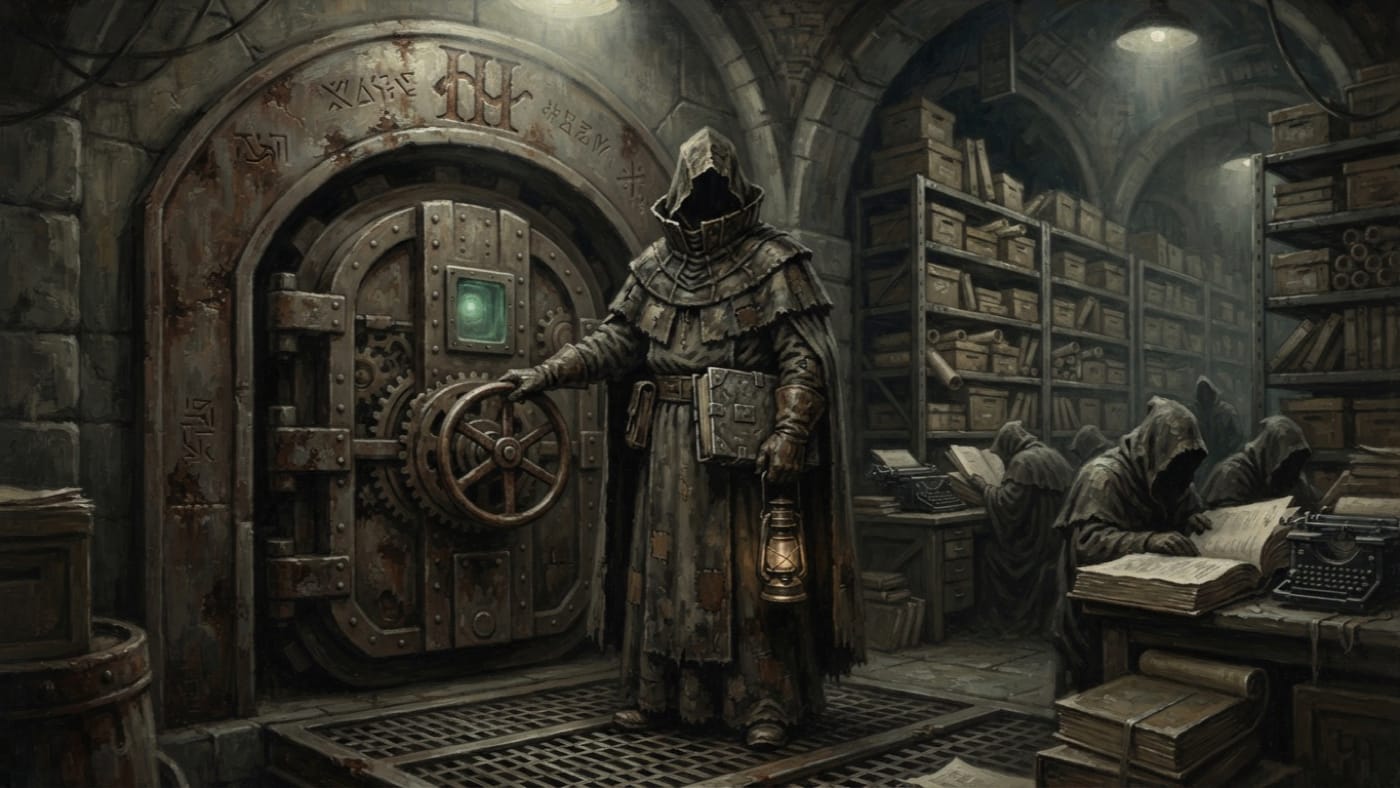
Hierarch of the Third Seal
Three Bureaus know the title. None supplies the name.
Three Bureaus attest a Hierarch; none supplies a name. This A.S. 201 survey records restricted vault knowledge, attributed tribunal influence and Lyon's A.S. 170 satire, leaving the Seal unidentified.
Codex Ref. XIII.1.05-003

Hieromnemon
The office that teaches memory to kneel
The Hieromnemon governs public memory for Doctrine: seal, margin, erratum, redaction, and the blessed sentence that makes contradiction obey.
Codex Ref. XIII.1.31-090
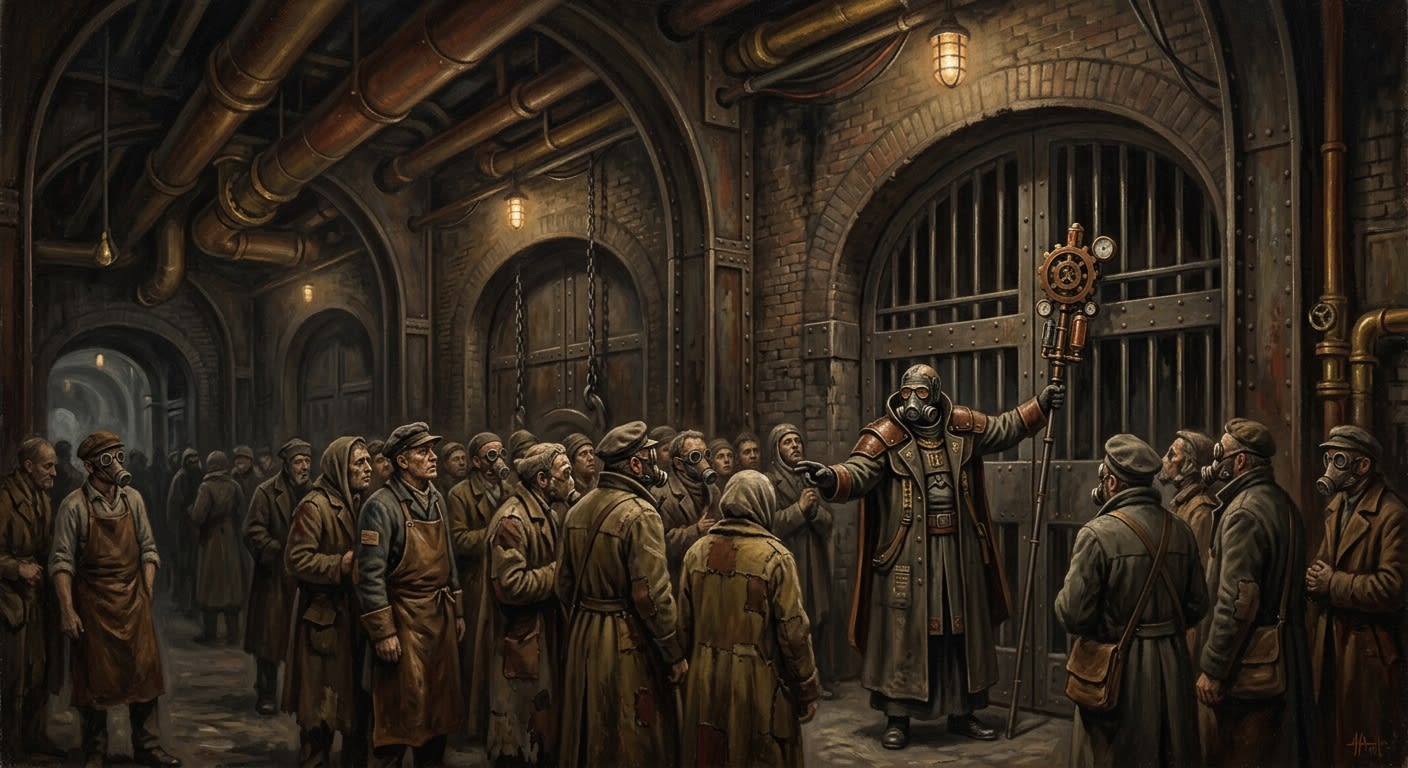
Hollow Fast of Saint Calistus
Forty nights without bread, and Lyon learned to whistle
During the Year Without Dawn, Saint Calistus sealed Lyon's ration-halls for forty nights; the plague halted, the fasters lived, and their descendants still sing through absence.
Codex Ref. VII.4.01-002
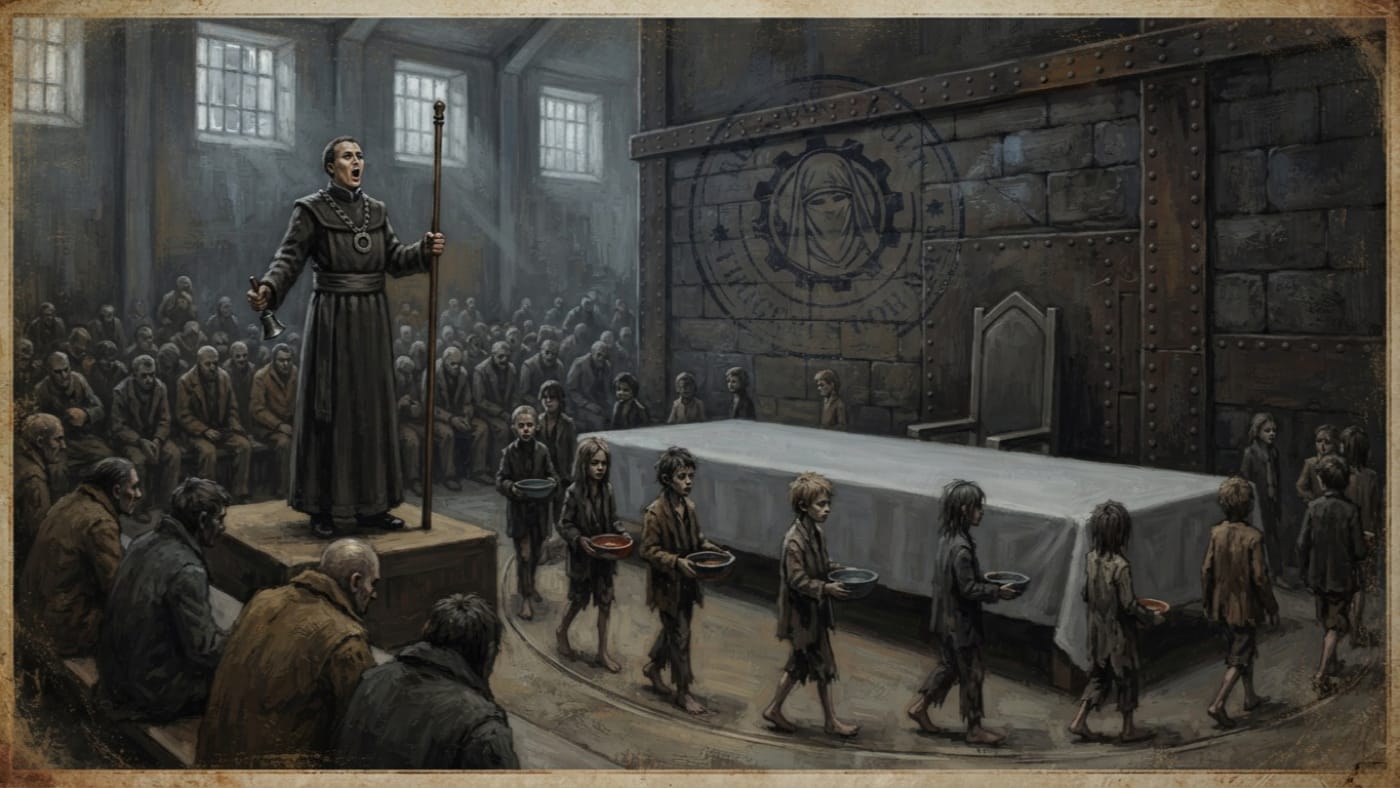
Hunger Antiphon
The bowls go round; charity waits for its cue
The Hunger Antiphon accompanies painted bowls at the Feast of the Empty Table. Its key flatters thin voices; charity arrives when the Bureau permits it.
Codex Ref. XIII.1.97-201
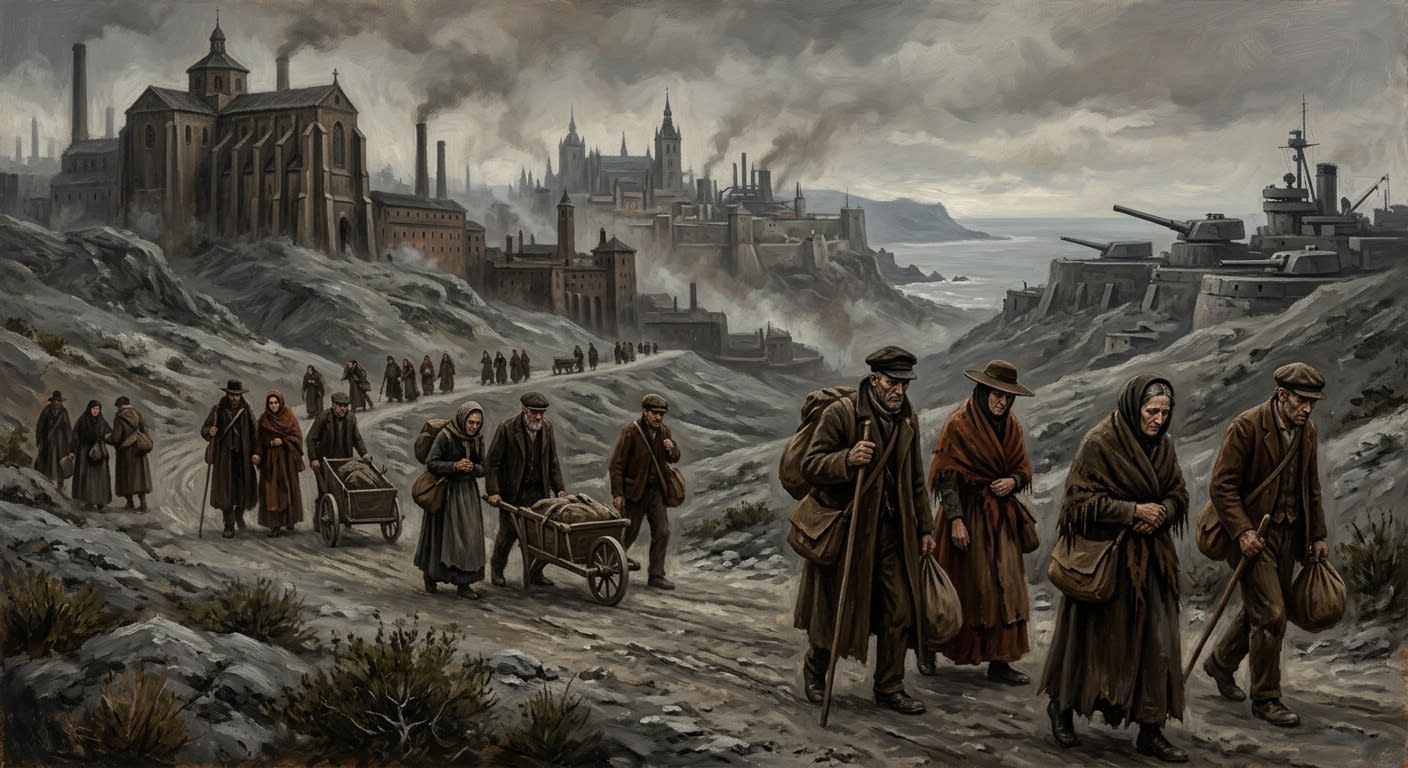
Iberia
The western furnace kneels, pays, murmurs, burns, and remembers
Iberia is the Synod's western furnace: a sealed peninsula of relic ash, late Concordat obedience, Seville mutters, Toledo martyrdom, pilgrimage roads, British guns at Gibraltar, and memory too old to confiscate cleanly.
Codex Ref. II.1.04-090
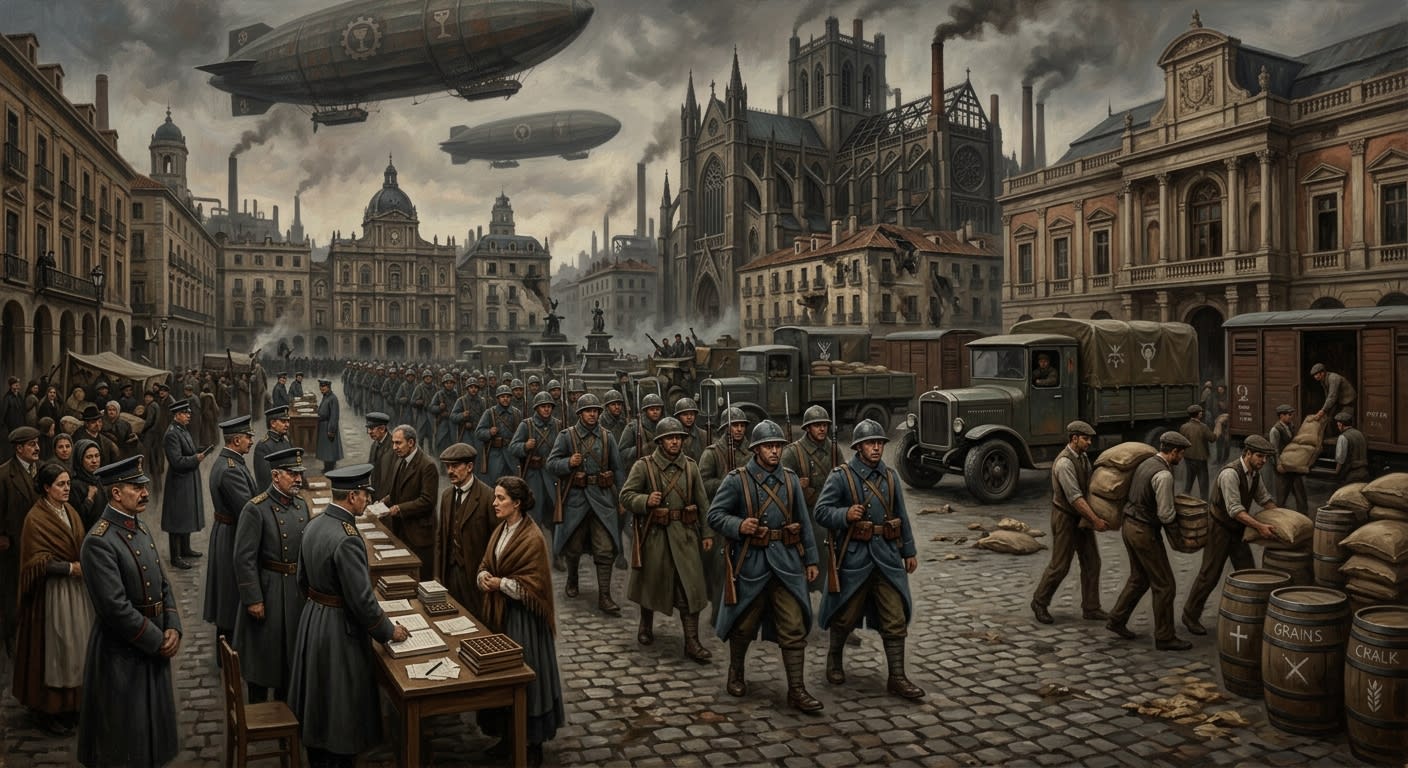
Iberian Campaigns
The West was conquered first by salt, then by silence
The Iberian Campaigns were the Synod's western correction: salt dues, harbour ledgers, Seville's silenced plazas, stripped granaries, and conquest filed as housekeeping.
Codex Ref. VII.5.10-092
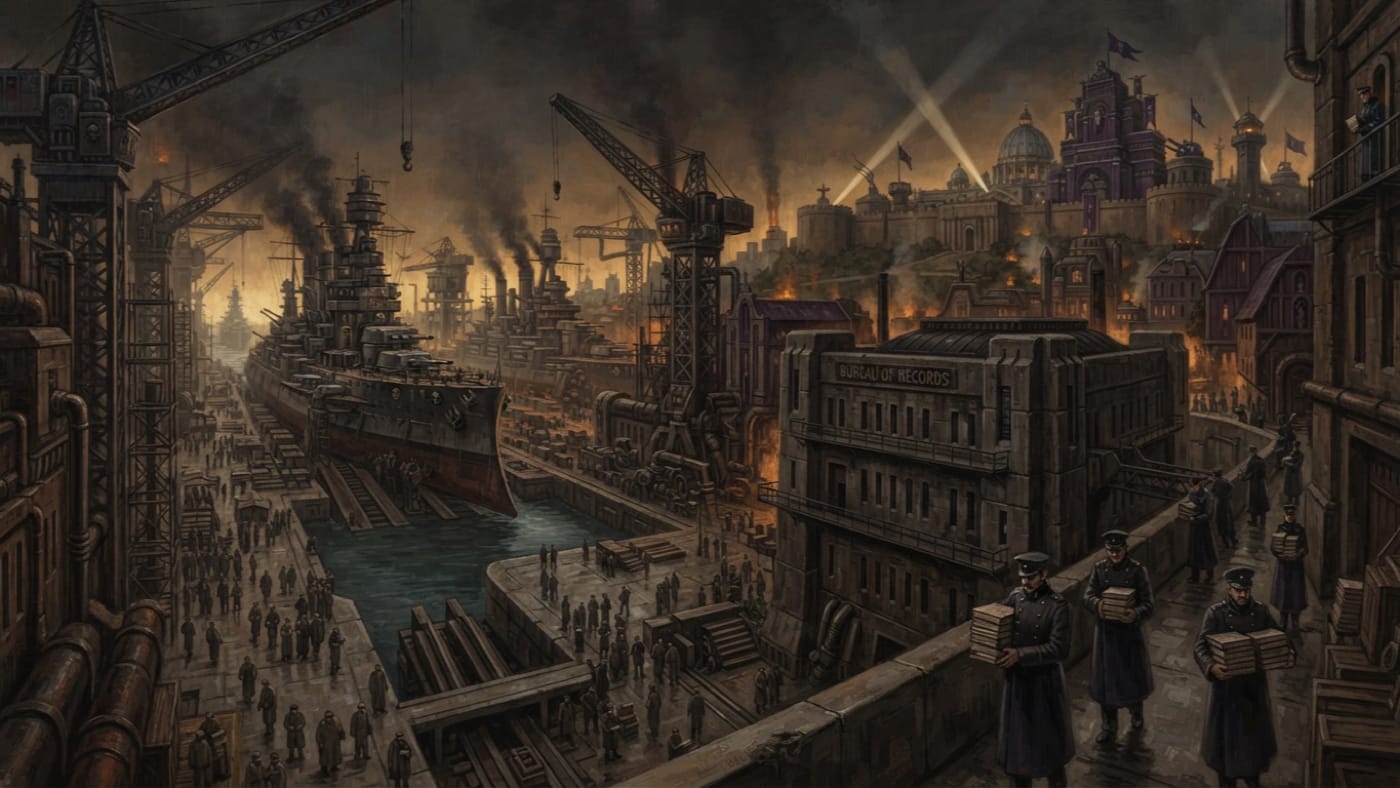
Italy
Inside the tax rolls, outside the founding seal
Italy builds ships, keeps archives and finances Synodal wars without a seal on the Concordat. My A.S. 201 survey finds its territories administered and audited, while Doctrine still anticipates compliance.
Codex Ref. II.3.10-001
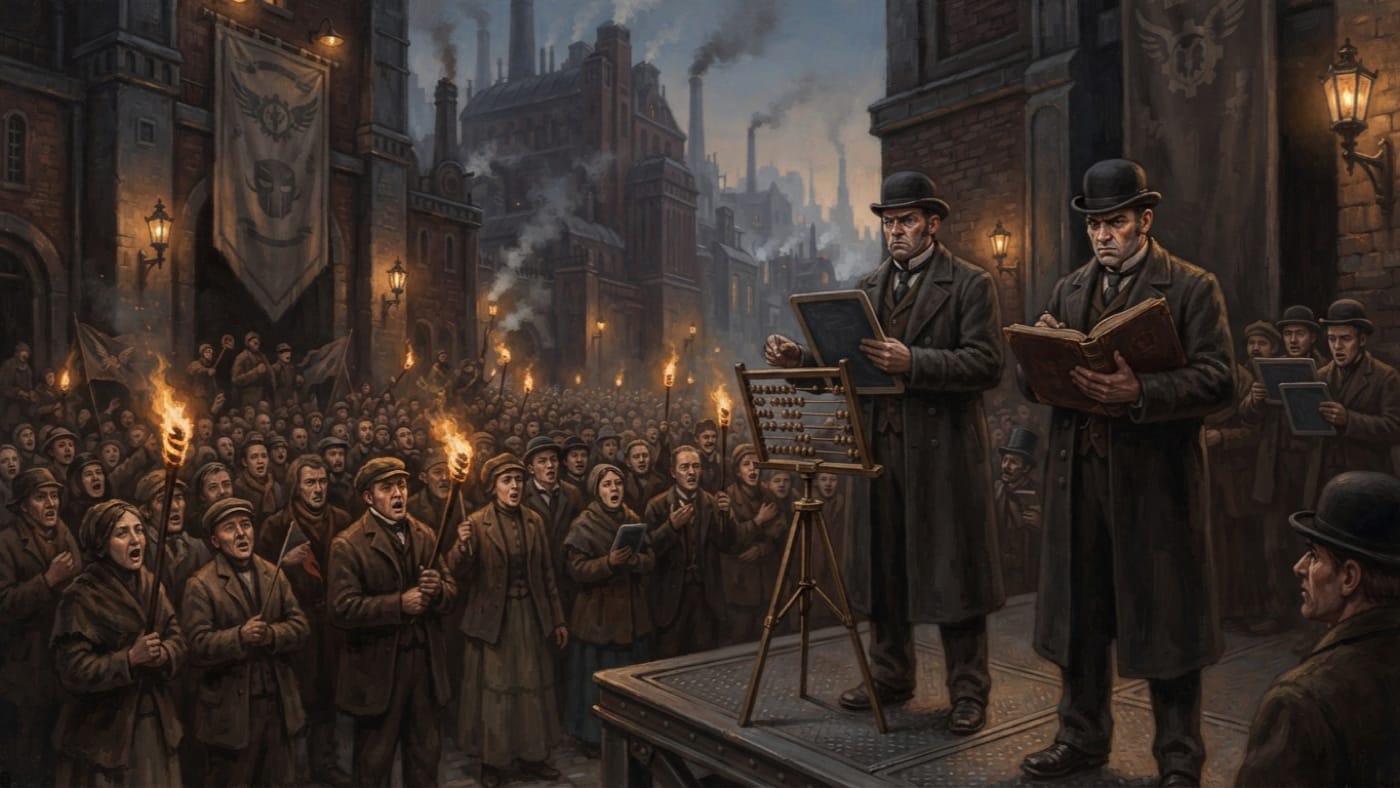
Joy Compliance Index
Rejoice by permission; be judged by the slate
The Bureau of Festivals grades a crowd's rejoicing through forty-two observable behaviours. Three verdicts follow; four points separate insufficient zeal from excessive emotion. The slate certifies conduct. It cannot certify joy.
Codex Ref. XIII.1.67-201
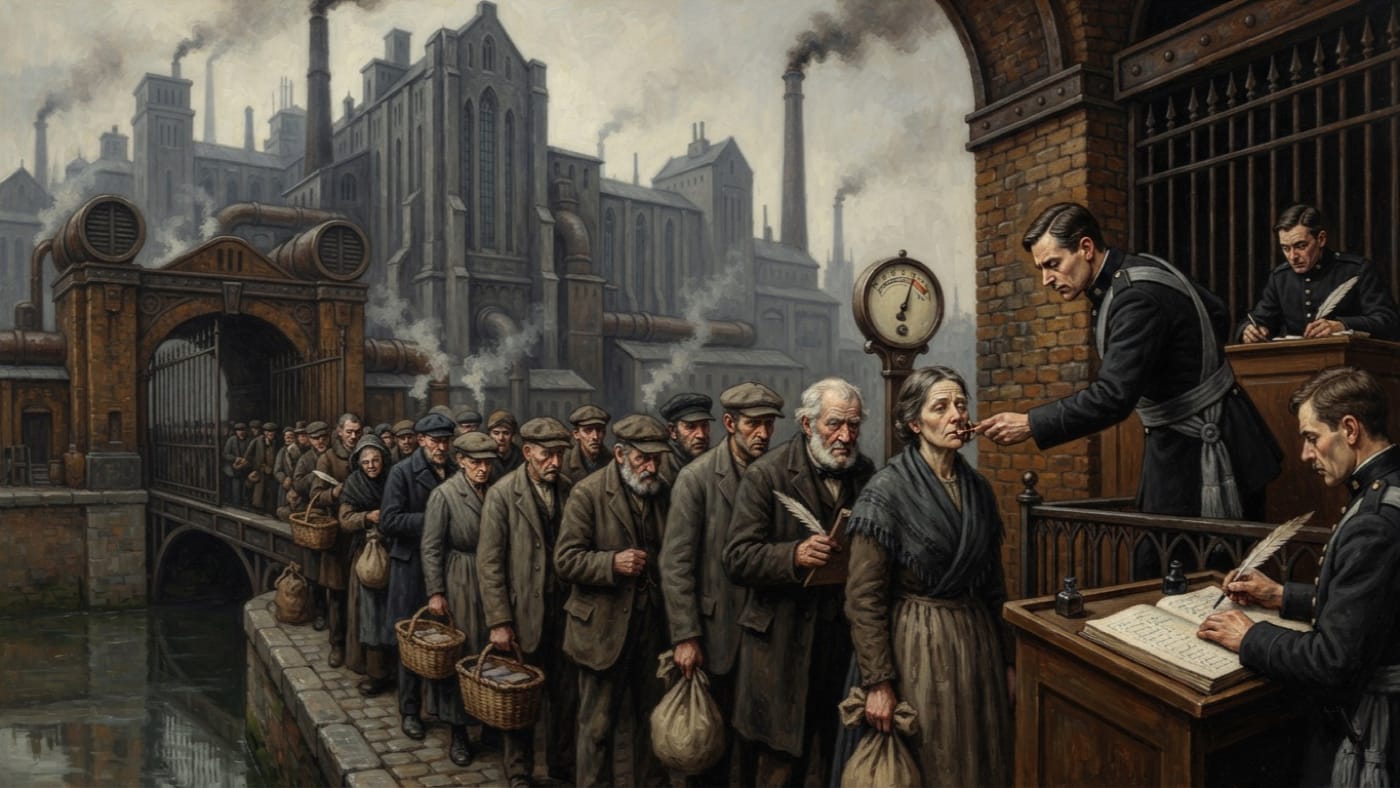
Joy Discipline
Gratitude has a lawful width, and the ledger charges for the rest
Wexel measures smiles, licences laughter, and converts emotional infractions into ration cuts, debt, and ash bills. Instituted after the Dust Fire of A.S. 112, its temporary safety law remains in force eighty-nine years later.
Codex Ref. XIII.1.19-112
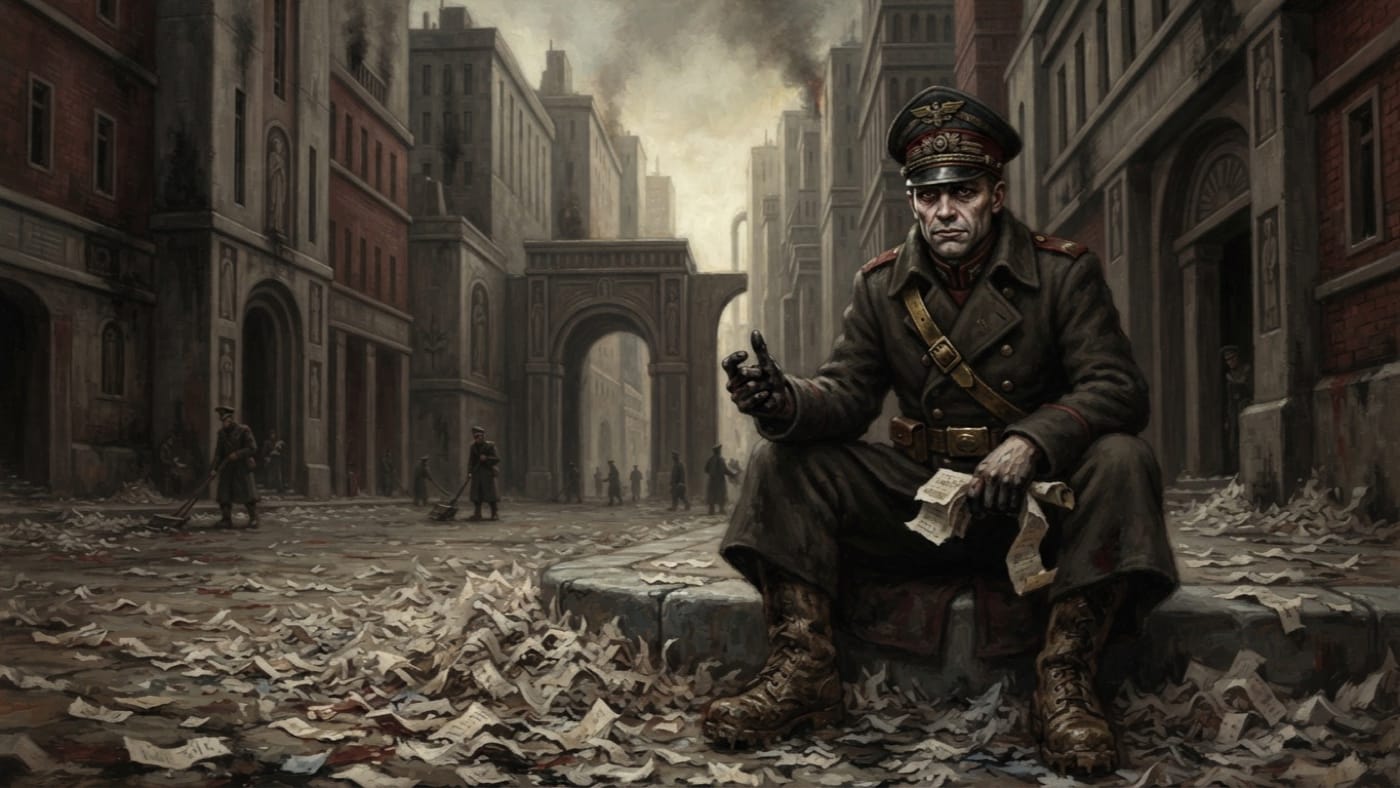
Joy Rot
The ledger balances long after the music ceases to matter.
Joy rot leaves the Pageant Captain's count intact and his celebration dead. Mercy calls it Occupational Malady 17-F; Festivals requires a smile and files the damage as performance.
Codex Ref. XIII.1.17-001
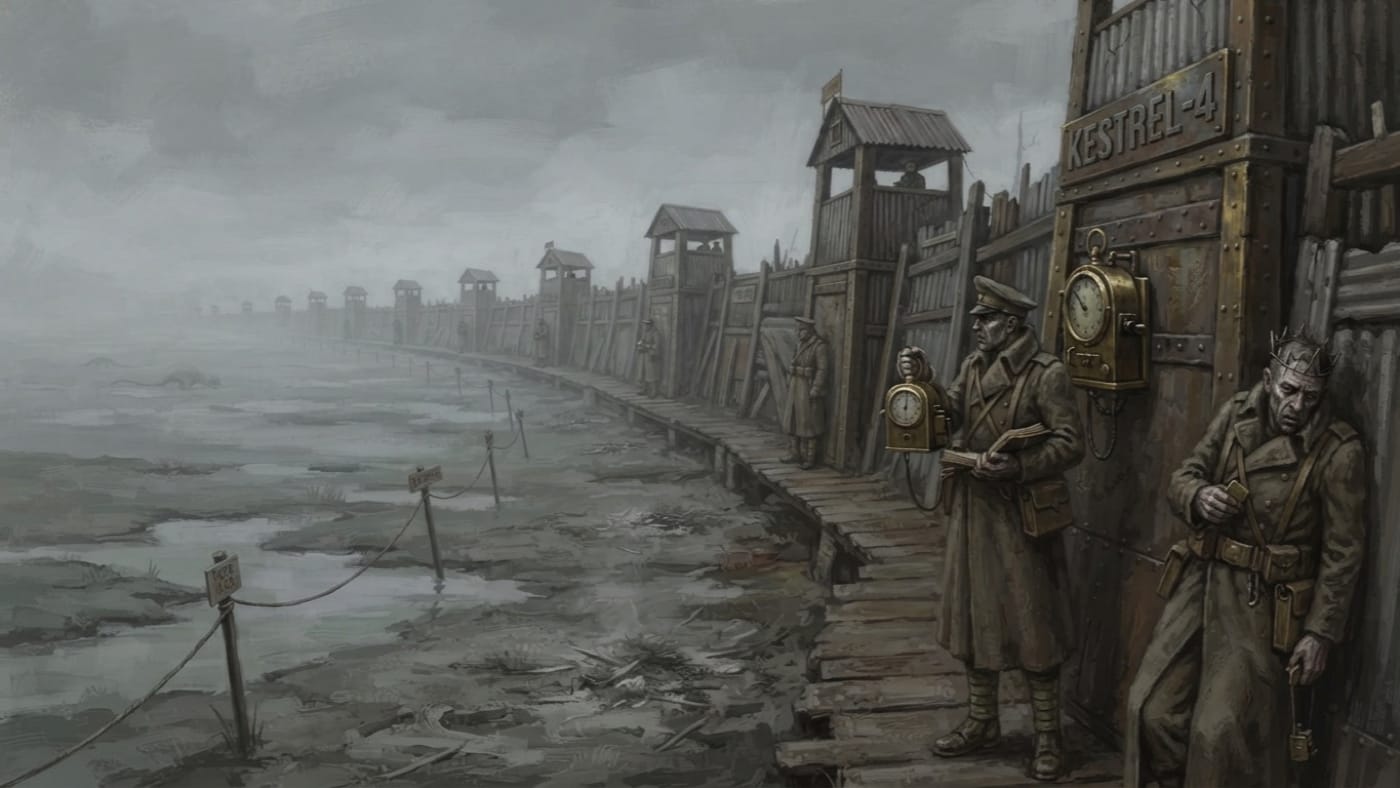
Kestrel Stations
Watch the rope. Watch the clock. Report the bread.
Fourteen numbered posts watch the Blightmarsh with ash, rope, smell logs and exposure clocks. The A.S. 201 return lists three unnamed vacancies; observation continues, containment remains unproved.
Codex Ref. II.4.09-1534
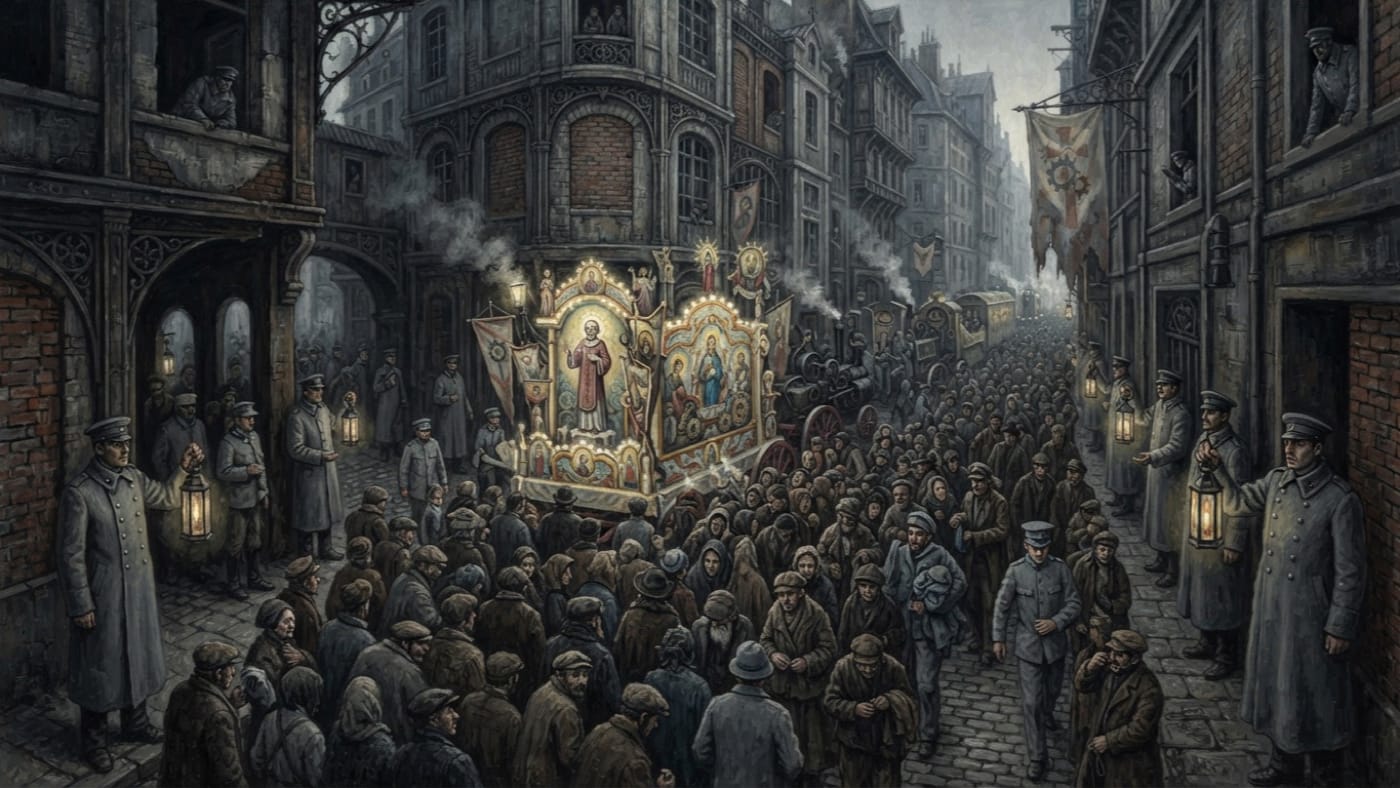
Lace District
Serene by report, miraculous by arithmetic
Strasbourg district recorded in the A.S. 139 Lantern Accord procession and Caldrin's undated Multiplication of Receipts, where the reports are serene and the totals refuse to settle.
Codex Ref. II.1.04-139
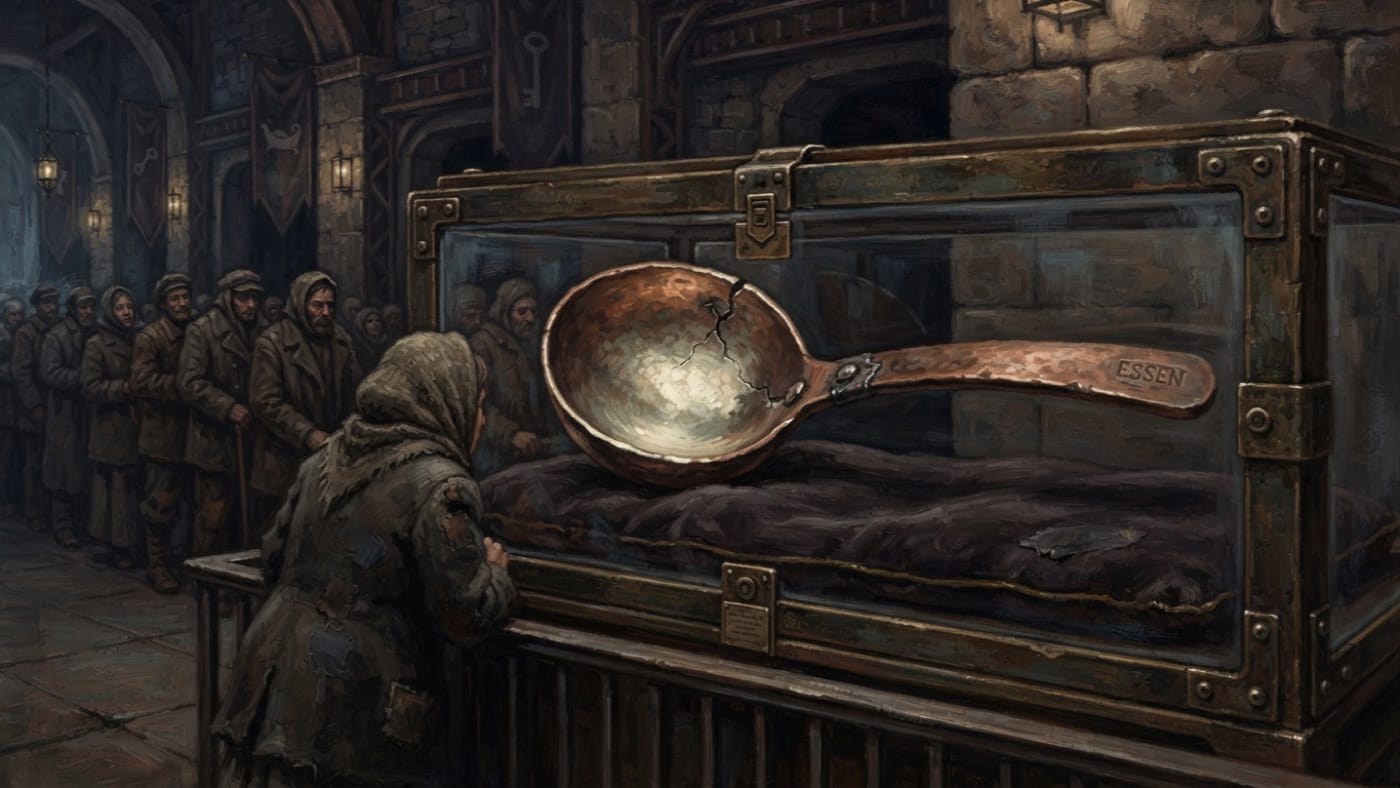
Ladle of Saint Halva
Devotionally sufficient, three pfennig per kiss
The cracked copper ladle at Mainz is Tier III: devotionally sufficient. I judge it eighty years too late for Saint Halva. It multiplies no broth; the Bureau of Relics charges three pfennig per kiss.
Codex Ref. III.2.04-001
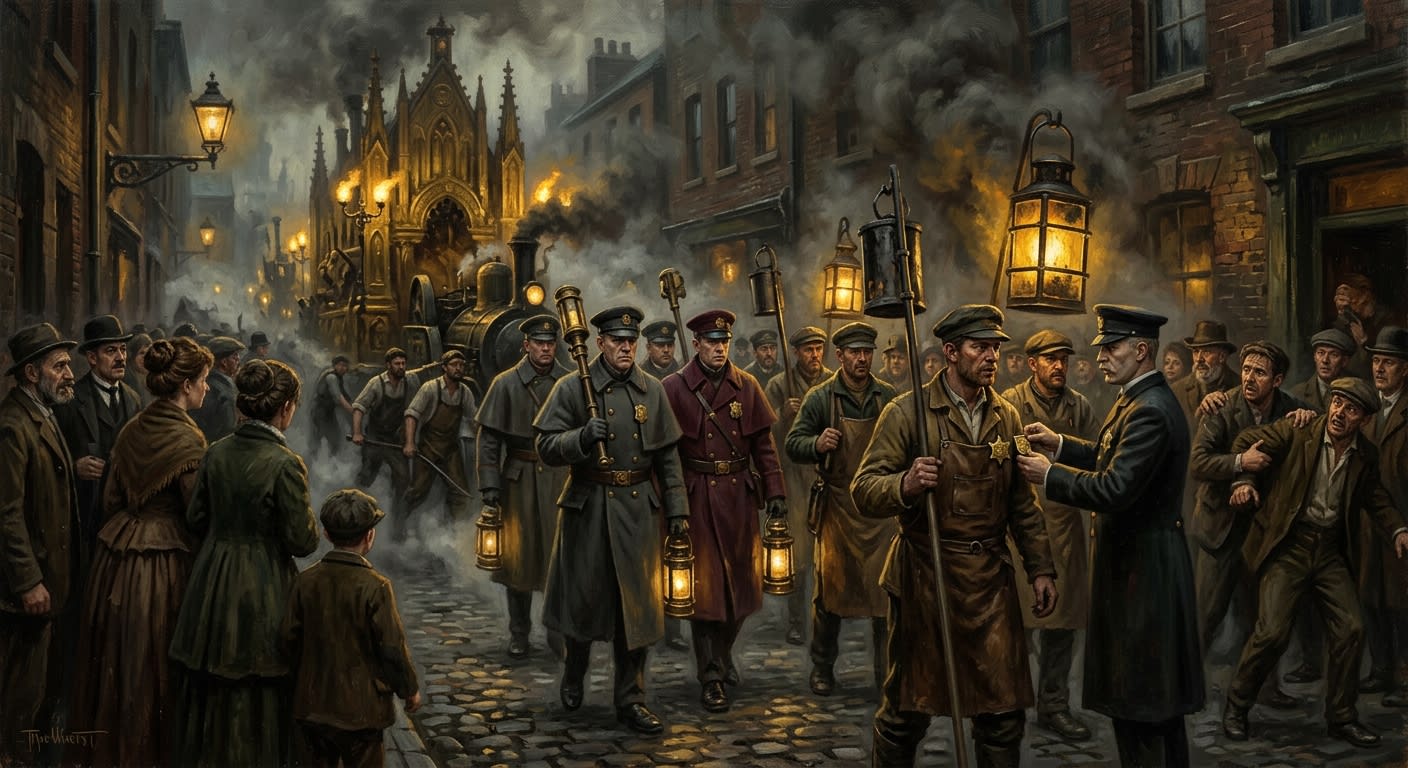
Lantern Accord
The night was not pardoned; it was hired
A.S. 139 accord integrating tolerated Lantern Brotherhood watches into Bureau of Festivals procession command, making street violence visible, useful, badged, and revocable.
Codex Ref. VII.2.10-089
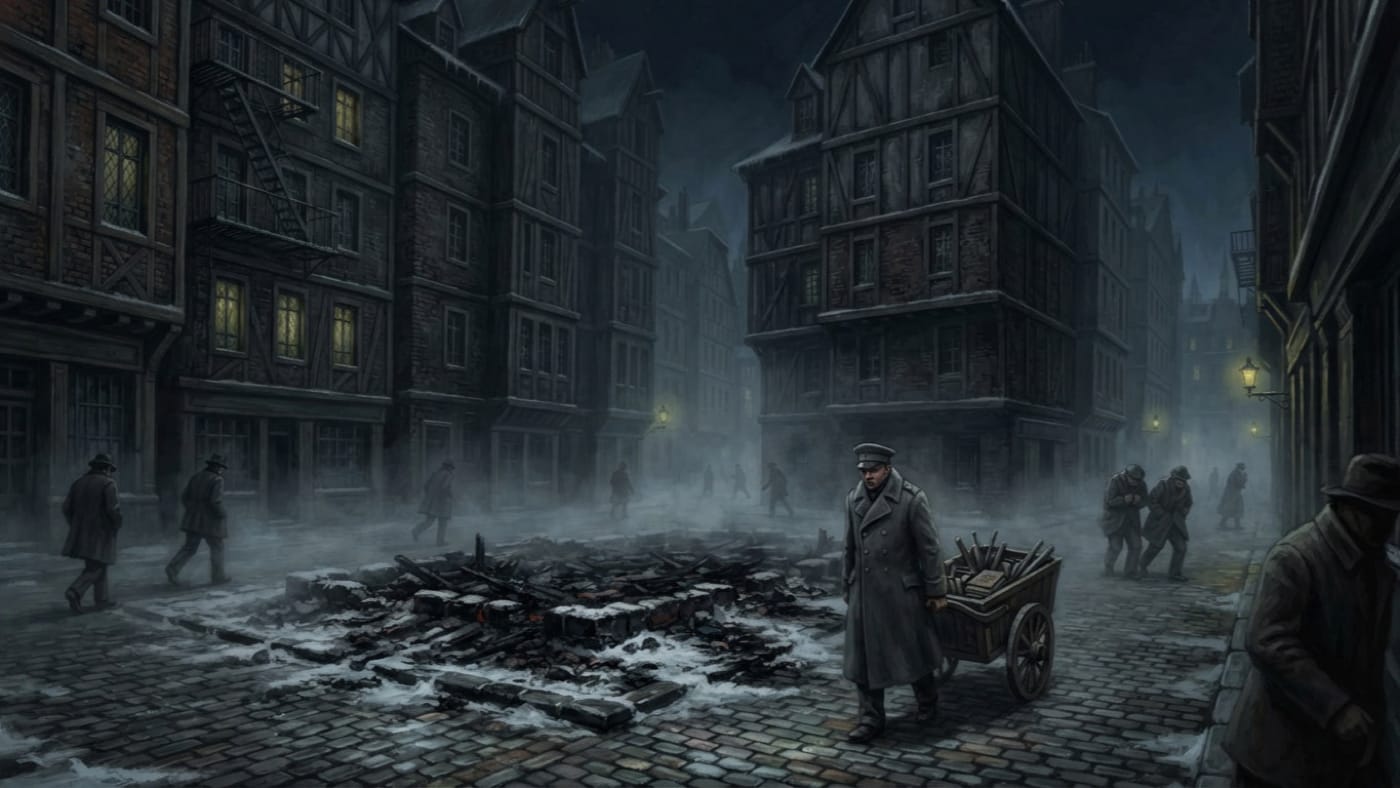
Laughing Swan Inn
Three chuckles, one fire, and a licence that outlived its premises
The Laughing Swan Inn on Strasbourg's Millwrights' Row was burned in A.S. 102 for three unauthorised chuckles in one week. Its licence is revoked; its ashes remain available for citation.
Codex Ref. III.2.14-102

Ledger Prefect
The Captain kisses the hand and watches the nib.
The Ledger Prefect controls permits, paper and patronage. One signature equips a Pageant Captain; another ends his career. The same office may sponsor the city's irregular trades, provided the stability arrives without scandal.
Codex Ref. XII.33.02-001
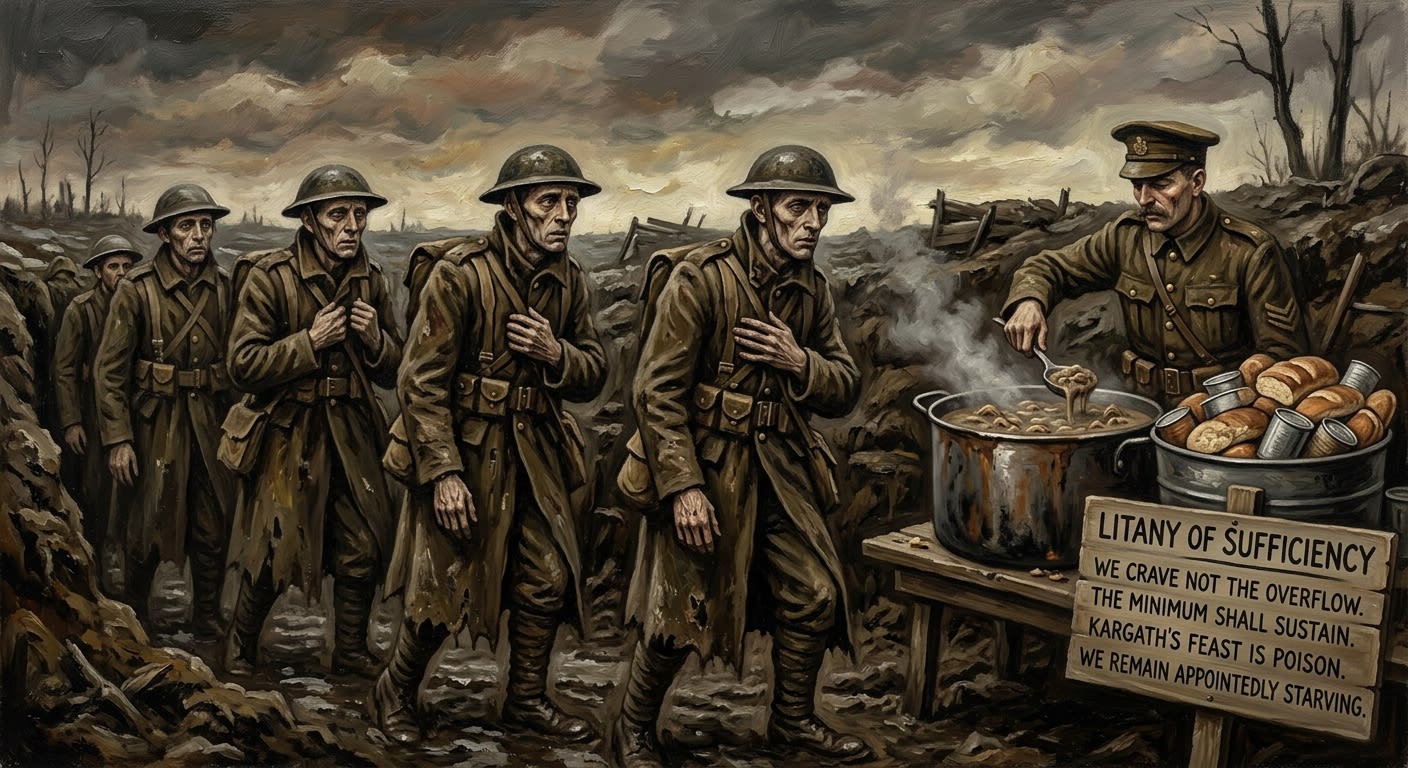
Litany of Sufficiency
Enough is given, and the Bureau has weaponised the crust
The approved field-prayer against Kargath's plenty: four ugly lines by which hungry soldiers step away from miracle food and remain merely starving.
Codex Ref. XIII.1.90-163
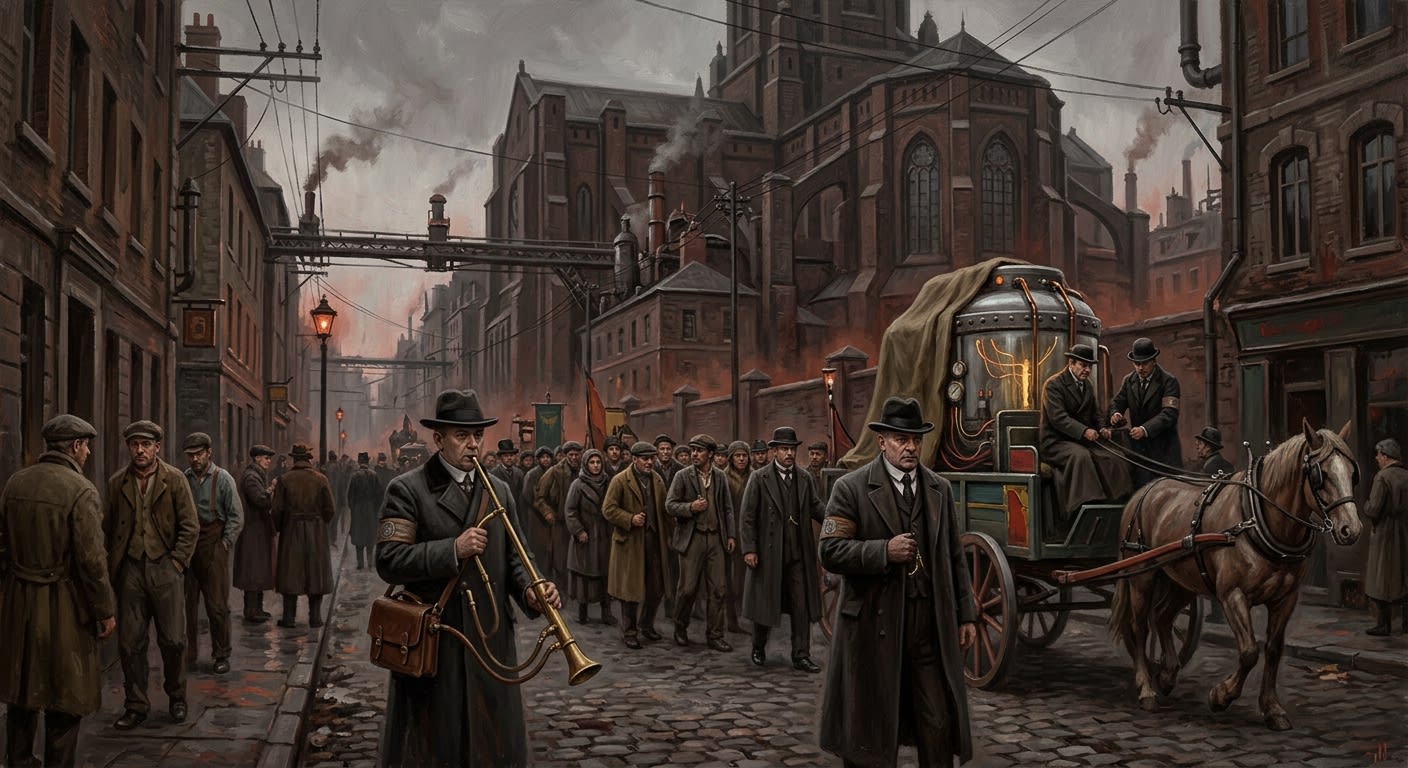
Lyon
The Rhône city where scars learned to sell tickets
Synod-held Lyon is a Rhône city of red ash, whistle-hymnody, Festival supervision, relic volatility, licensed enthusiasm, and profitable repentance.
Codex Ref. II.1.04-001
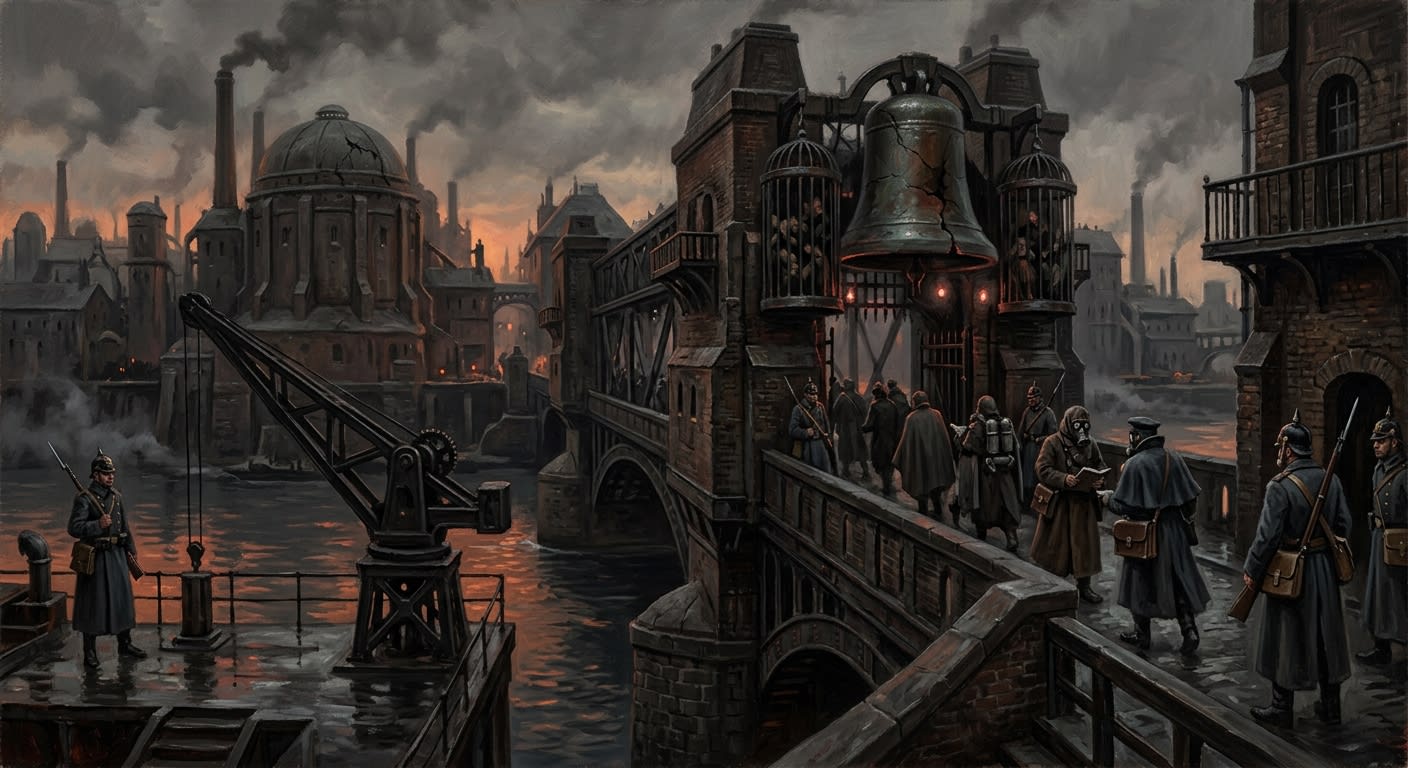
Mainz
The Rhine city where tolls, bells, and throats keep accounts
Mainz is the Synod's Rhine throat: a bridge-toll city of Augustinus, Hildegarde, Severian, cracked bells, obedient ledgers, and cages that still hum.
Codex Ref. II.2.02-003
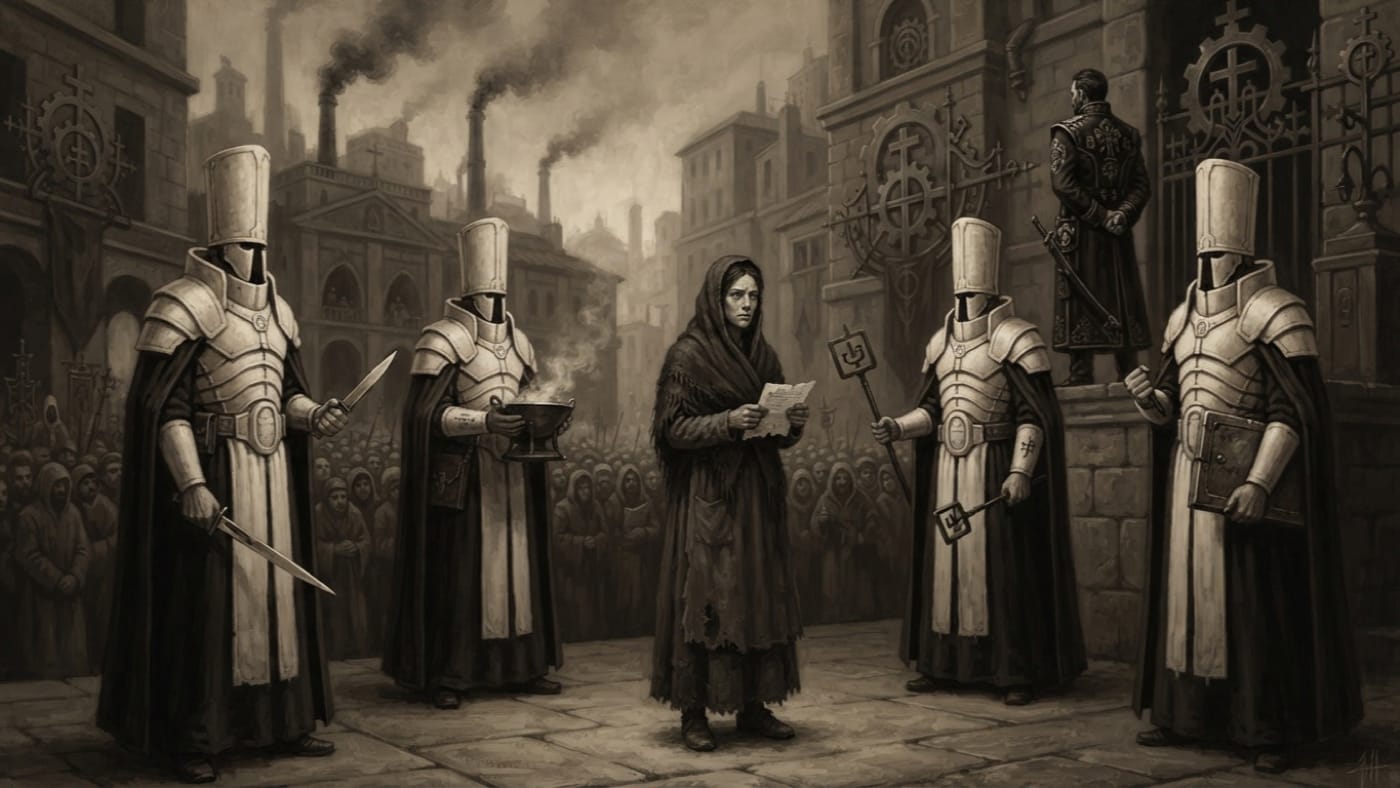
Mar Ortega
The laugh is attributed; the knife remains conditional
Mar Ortega is credited by one witness with making Seville laugh in A.S. 153. Purity's initials may put her under the knife; the Ledger cannot certify the match.
Codex Ref. III.2.01-153
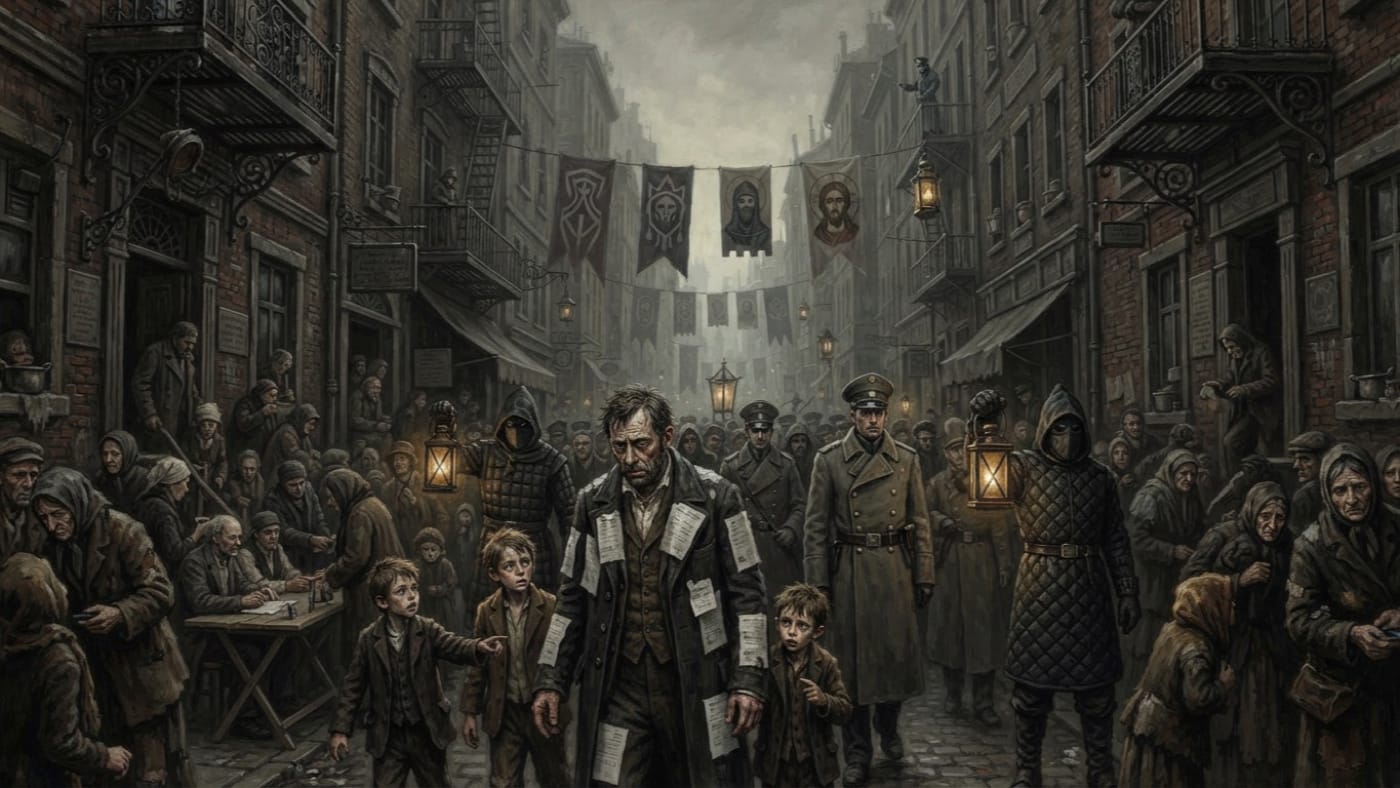
Marrow Quarter
The households were counted; the bread was not
A quarter in Strasbourg's lower wards, remembered for Gray Week's papered Ledger Prefect and Caldrin's claimed Calming. The Bureaus recovered their household count; the record says less about bread.
Codex Ref. II.2.06-138
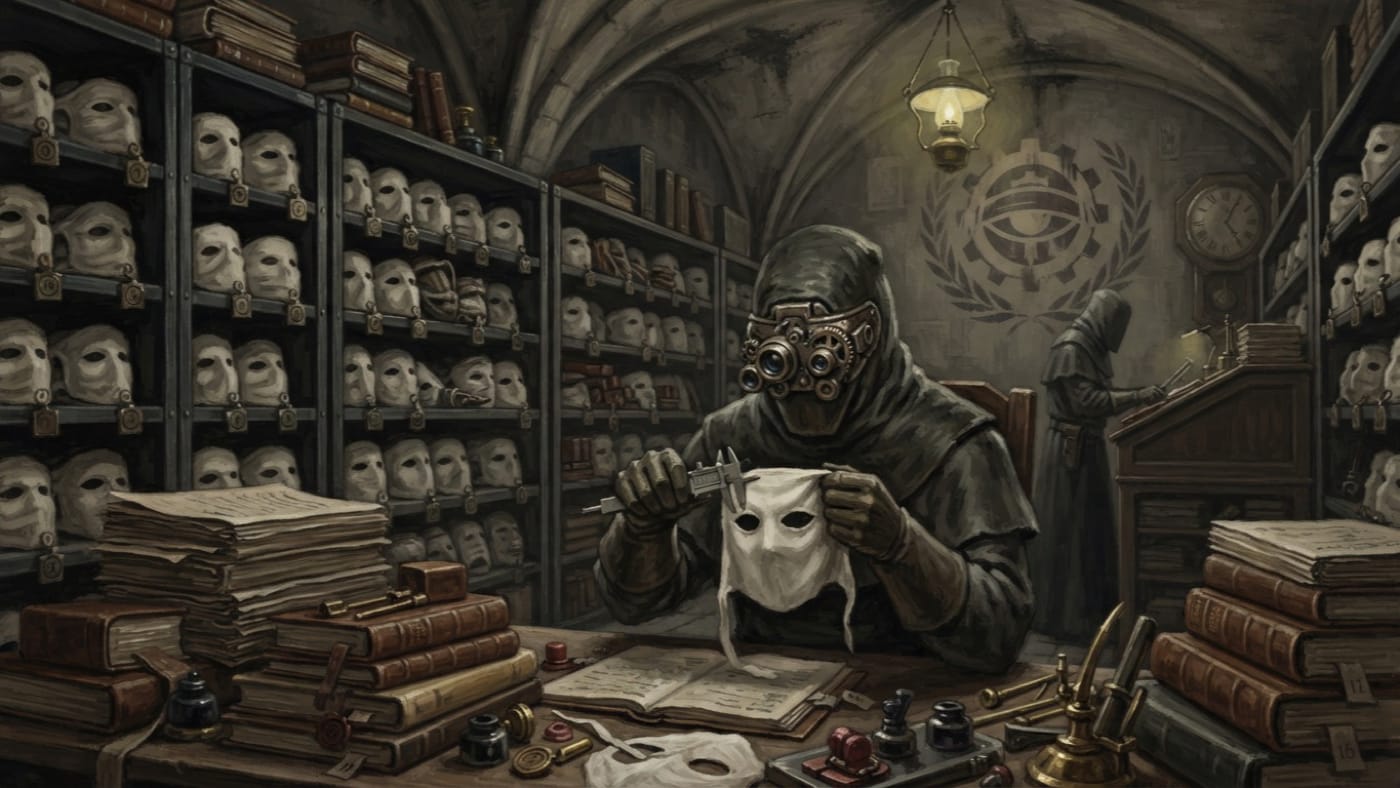
Mask License
The face may vanish. The number must remain.
The Mask License permits the Synod's faithful to conceal their faces on approved occasions, for approved durations, through eye-holes of approved width. Even anonymity must be registered.
Codex Ref. XIII.1.19-002
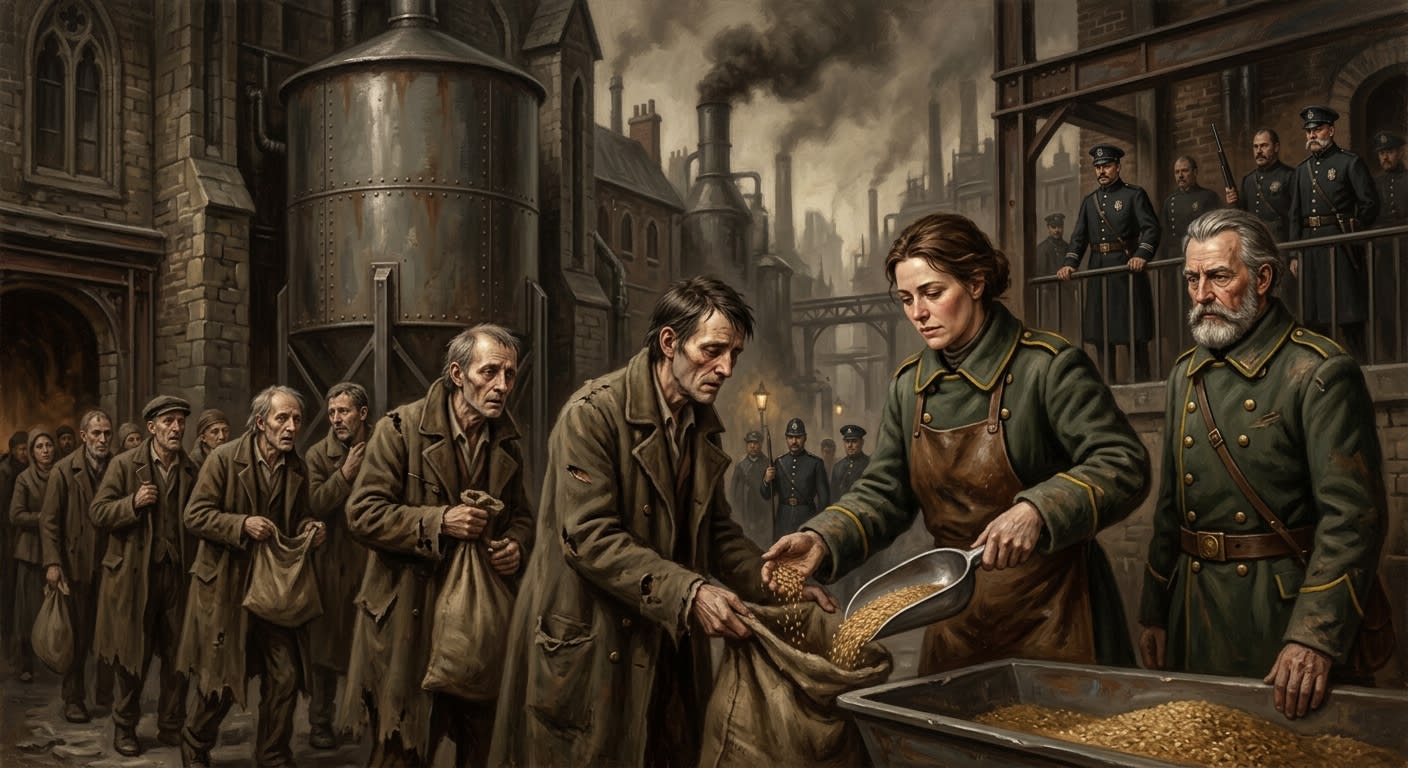
Mercy Keepers
The softest heresy is always the one that feeds before it counts
Mercy Keepers are the beloved, ruinous Grain Keeper faction that gives bread without fee, receipt, or permission, thereby offending every profitable theology.
Codex Ref. XII.13.04-001
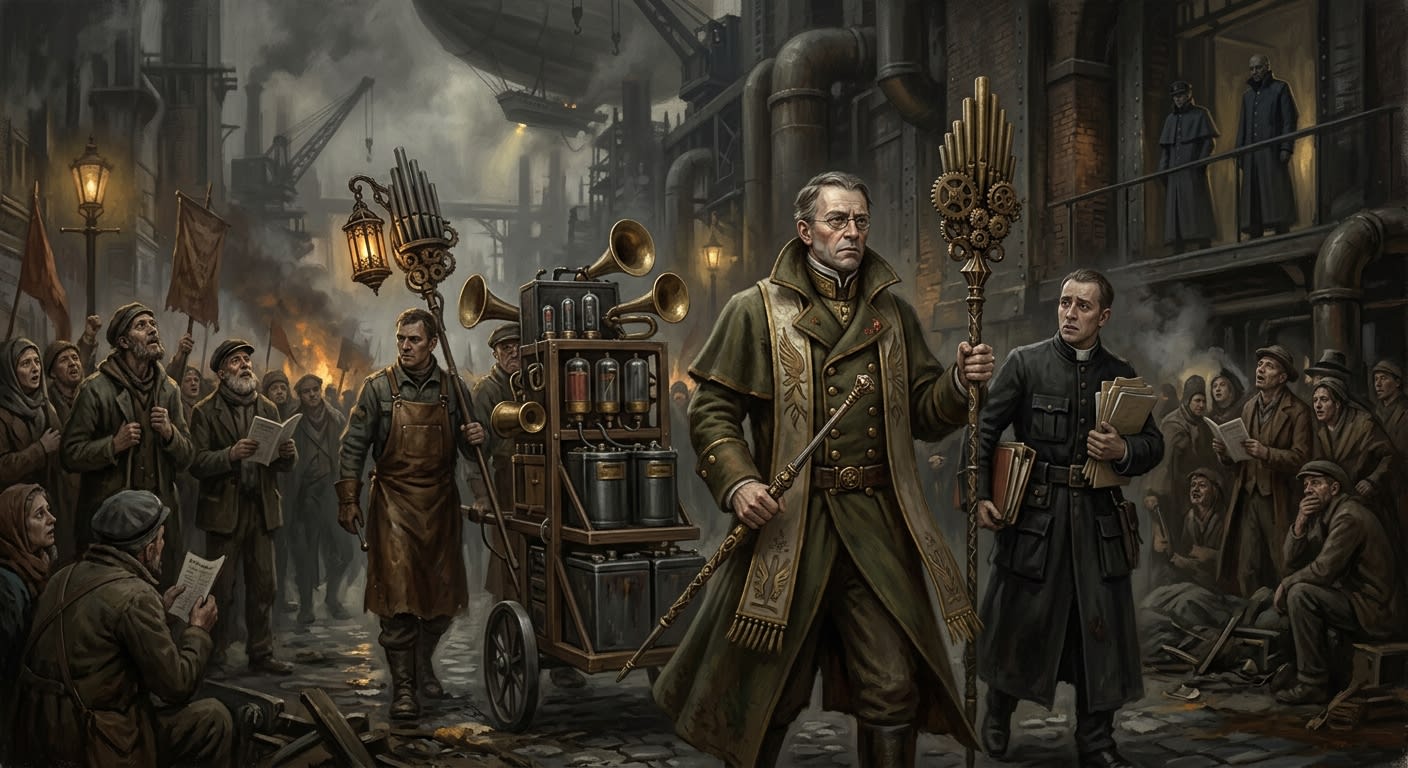
Mercy Maestros
The forbidden couplet that keeps the district breathing
Morale-first Festival Chorus-Master tendency that bends festival law just enough to keep districts breathing, then survives the auditors if mercy was timed correctly.
Codex Ref. XII.17.03-001
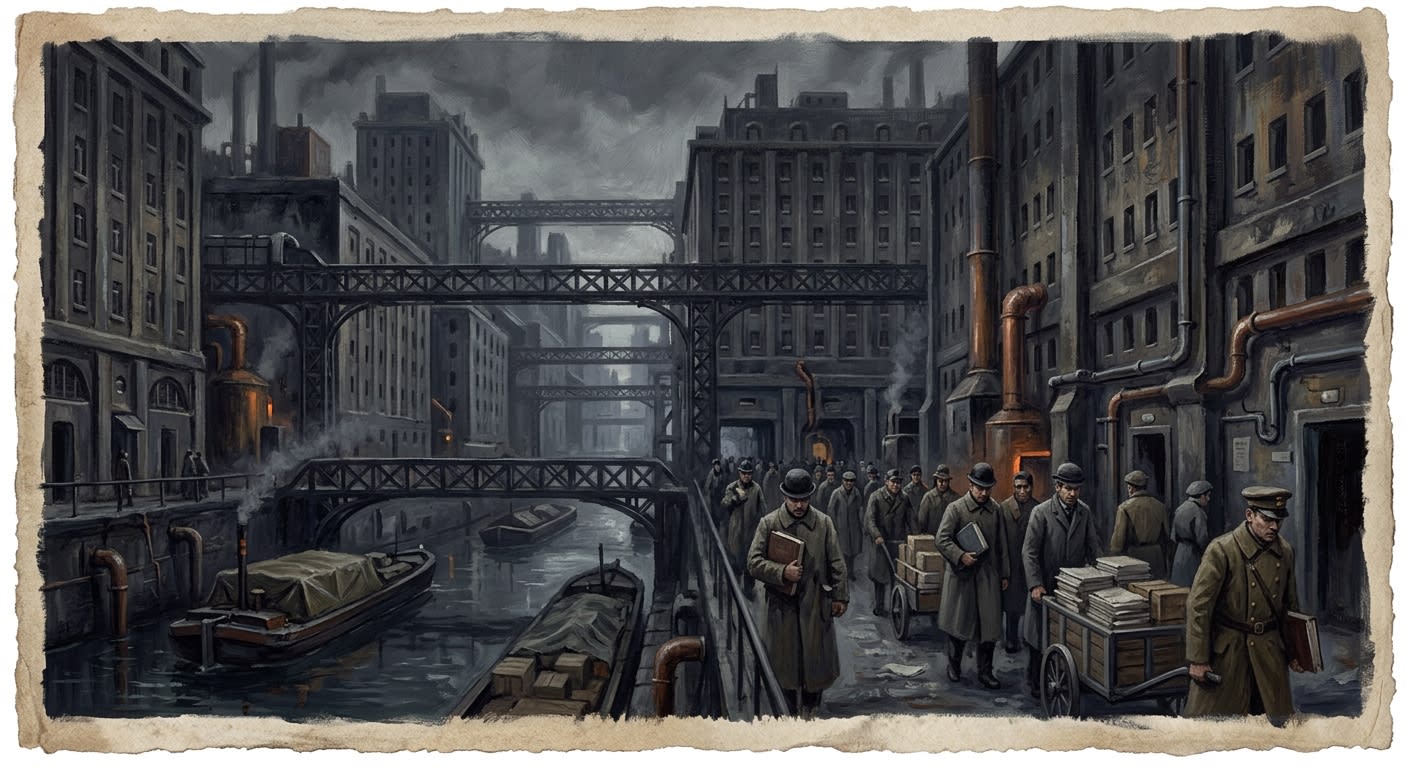
Metz
The depot-city where contradiction learned double entry
Synod-held Metz is a Zone 1 depot-city of ash vaults, double ledgers, silent bridges, supply arithmetic, and the Black Census that taught Medicine to count horror properly.
Codex Ref. II.1.05-001
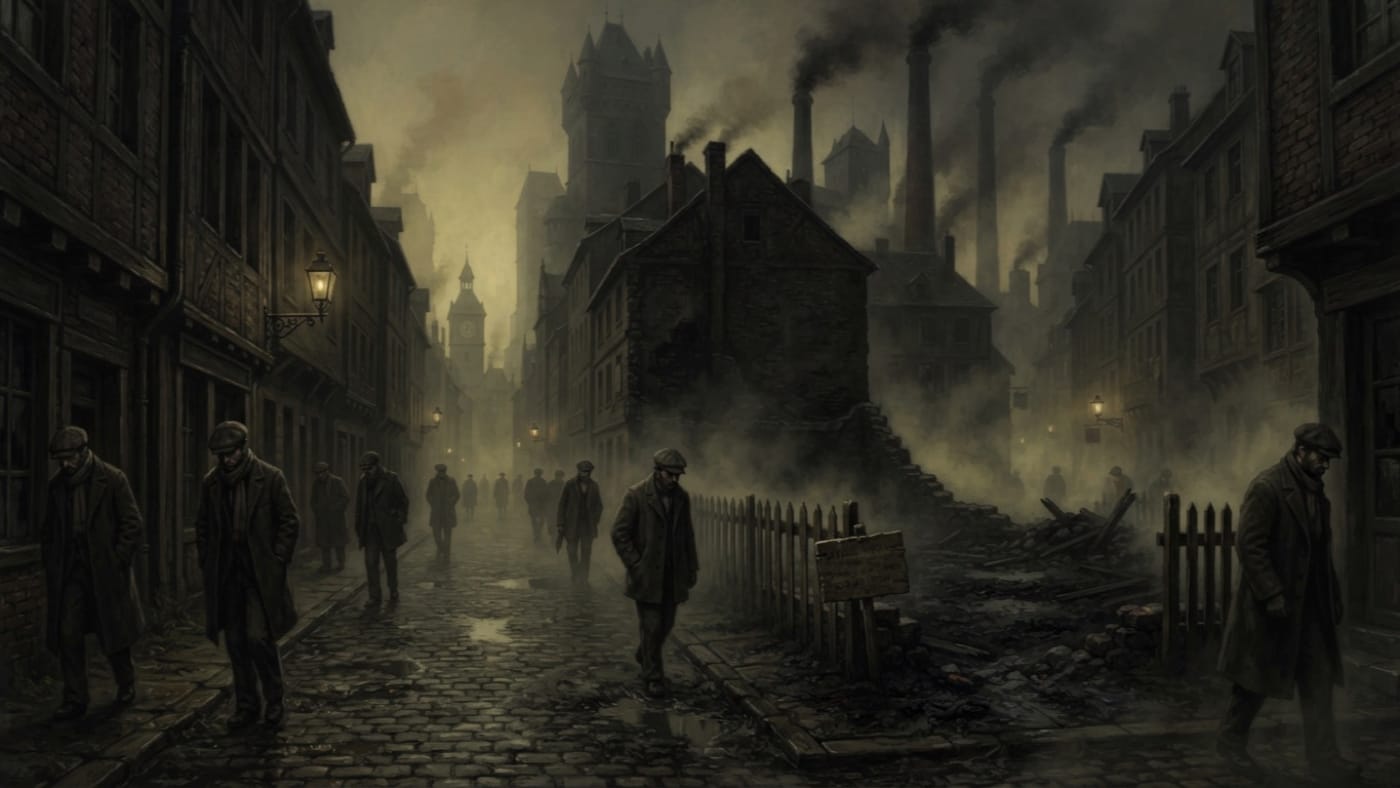
Millwrights' Row
The street kept its name; the fire kept its authority
Millwrights' Row is the Strasbourg street where the Laughing Swan Inn burned in A.S. 102 for three unauthorised chuckles. Its founding is unrecorded; its missing inn remains available for citation.
Codex Ref. III.2.15-102
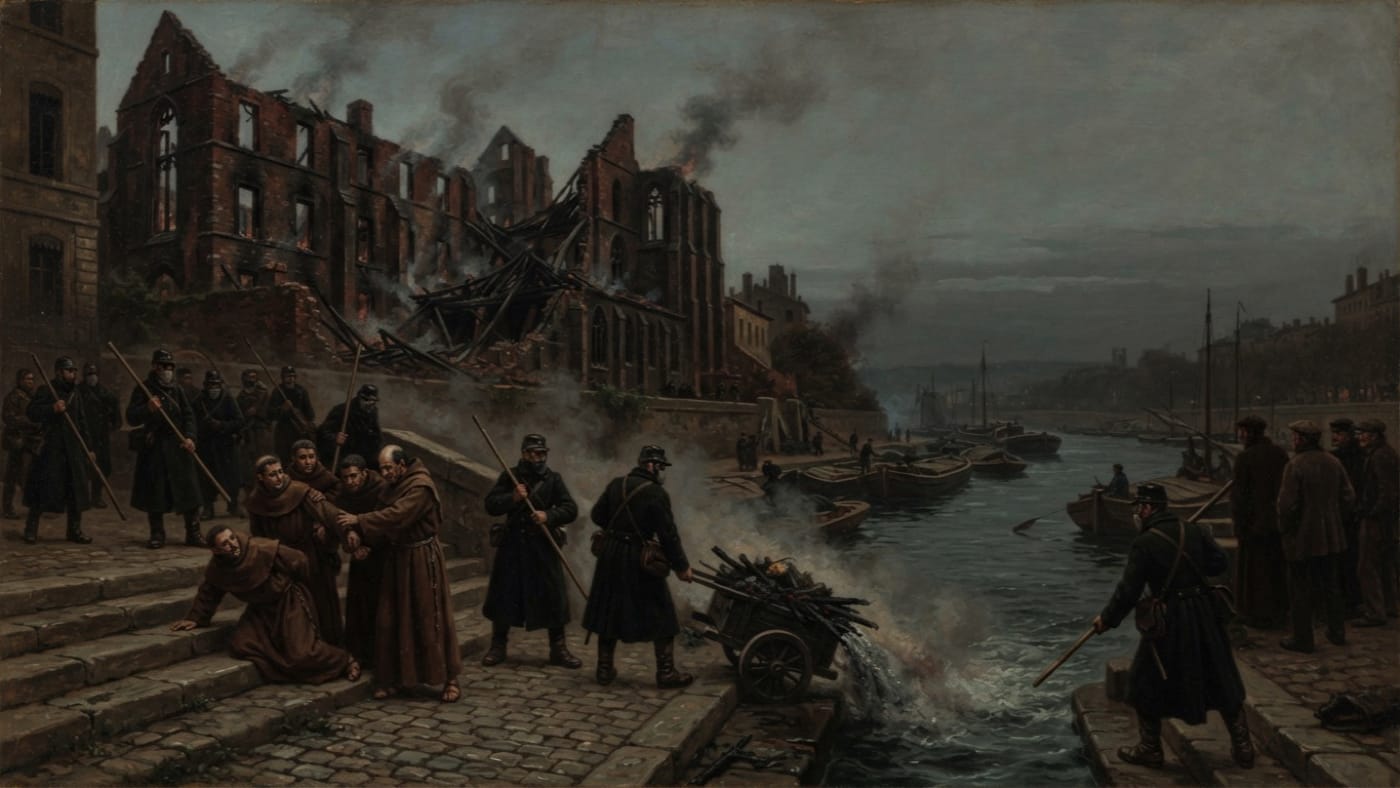
Minor House of Saint Sabina
Three names, one friary, and no proven dedication
The Lyon friary burned in −39 A.S. (1671 CE), remembered under three disputed names. Its brothers fed the docks; the index supplied a saint it could not prove.
Codex Ref. II.1.09-039
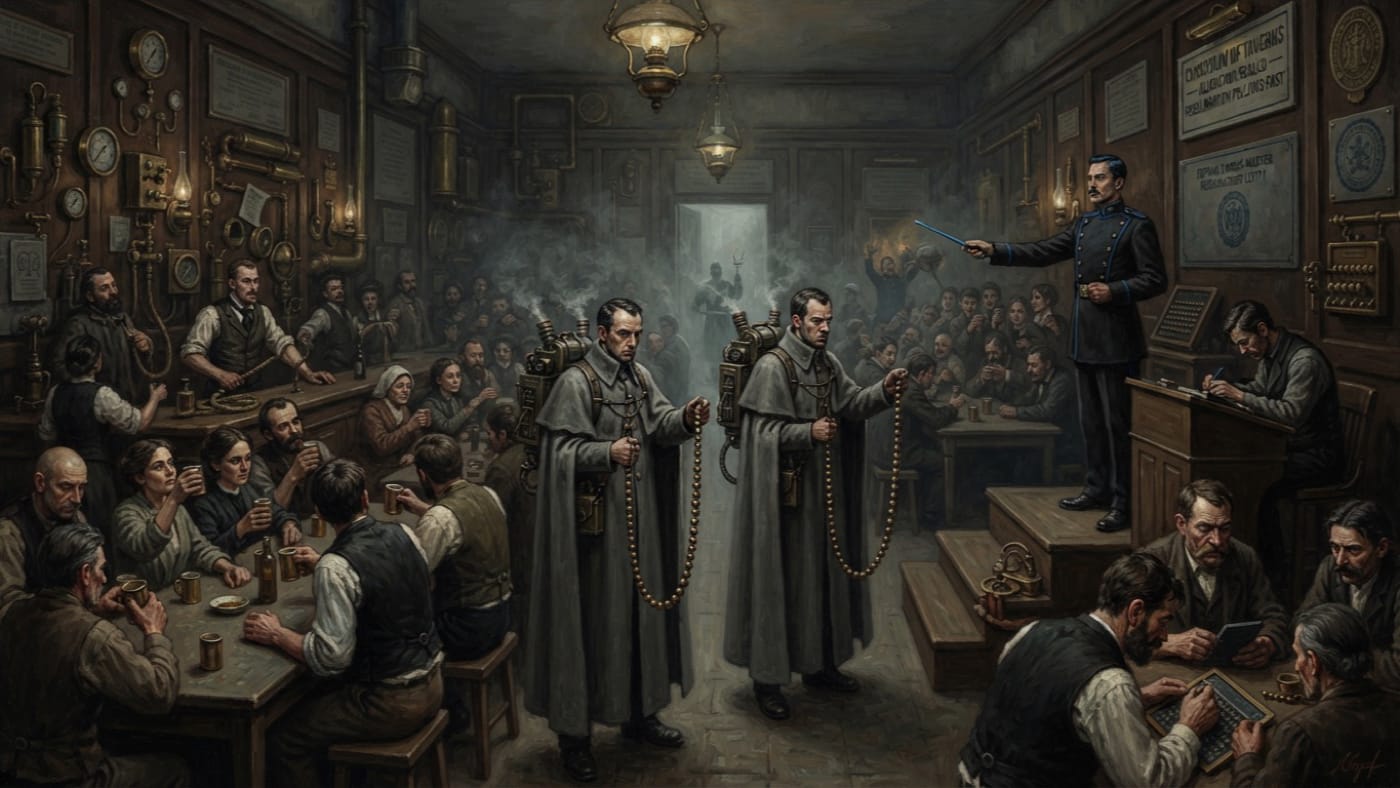
Mirth Quota
The allowance is sealed; the excess is your fault
The Bureau of Festivals rations public merriment by a sealed quota. Seville learned the limit through punishment, then taught the regulation to sing.
Codex Ref. XIII.1.66-002
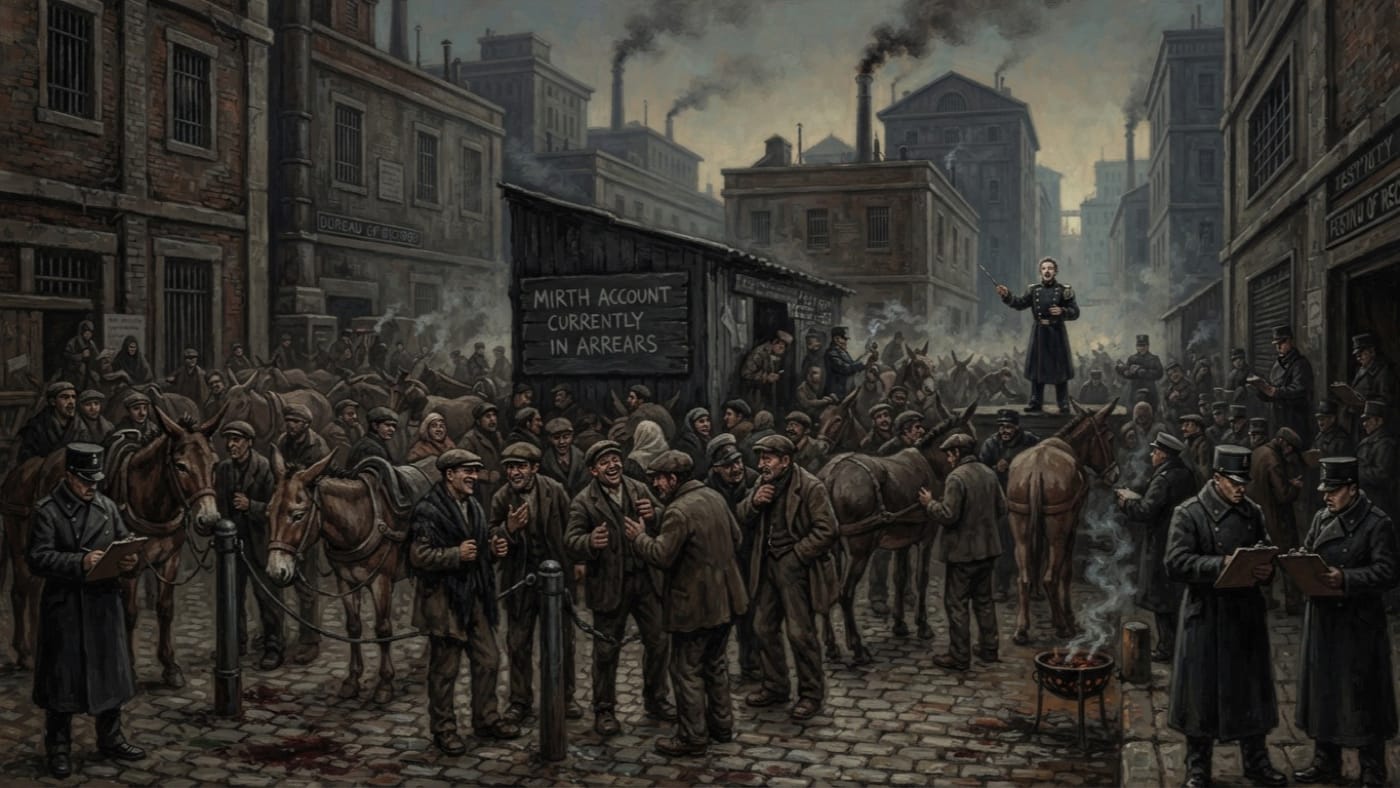
Mule Market
Laughter entered, hoof percussion counted, animal complicity unresolved
Seville's Mule Market entered the List of Laughters during the A.S. 153 Laugh Riots for laughter accompanied by hoof percussion. The clerk recorded the rhythm; animal complicity remains unresolved.
Codex Ref. II.1.04-153
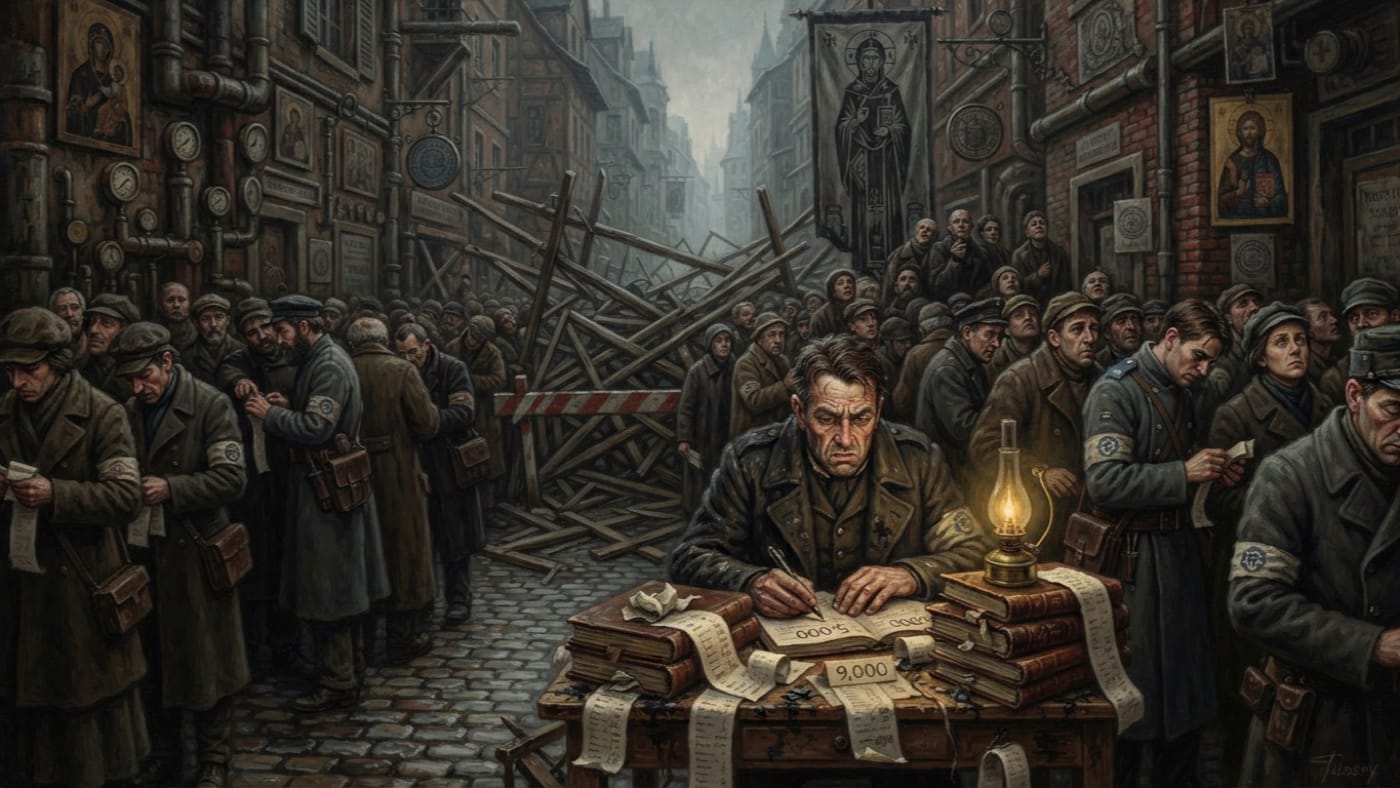
Multiplication of Receipts
Two totals and a saint's useful reputation
An A.S. 201 survey of the undated claim that Caldrin reconciled nine thousand attendees from five thousand ribbons in the Lace District. Piety calls it abundance; Captains call it fraud under pressure.
Codex Ref. VII.2.10-201
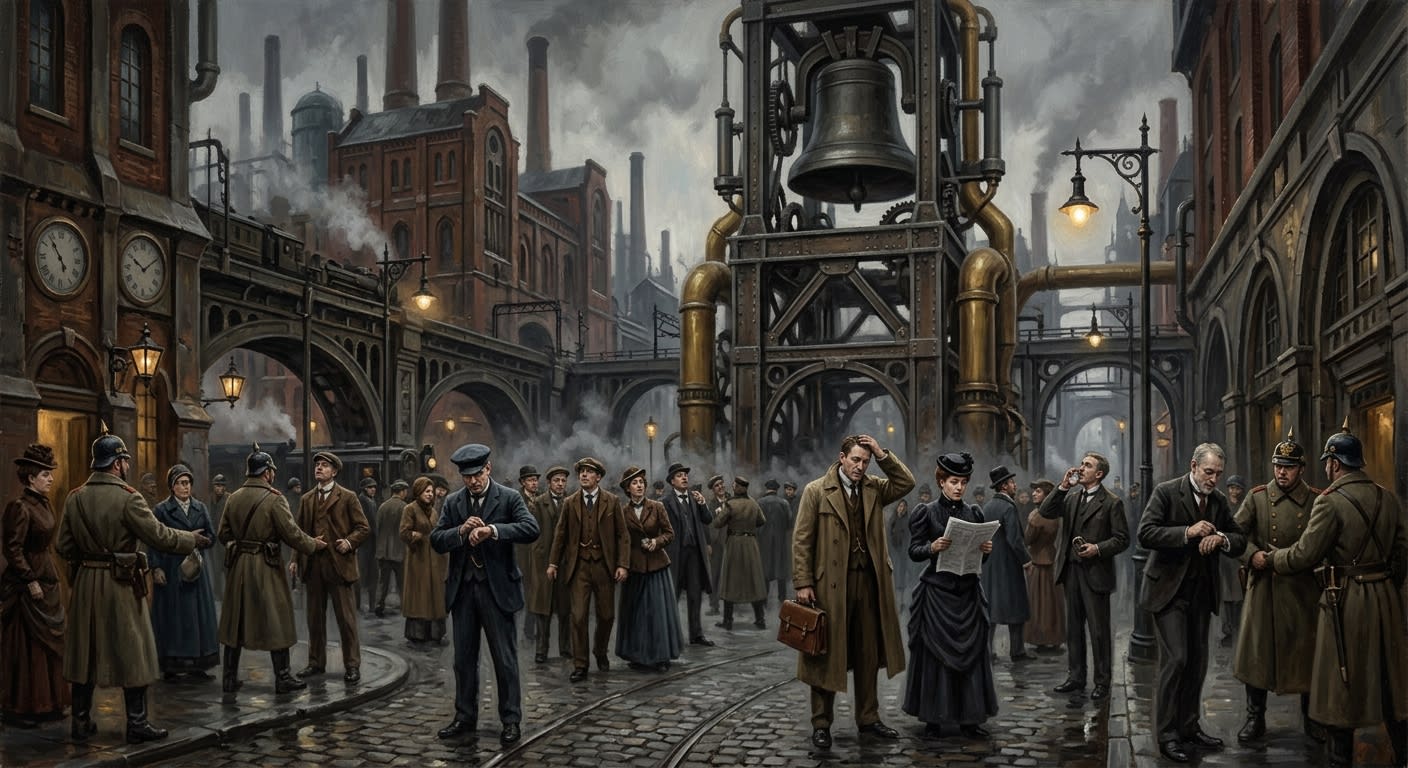
Night of Borrowed Curfew
When Cologne obeyed the enemy in the Synod’s own voice
Cologne's A.S. 134 acoustic breach, when an unknown foreign peal rang curfew three hours early and taught Strasbourg that obedience itself could be borrowed.
Codex Ref. VII.8.10-018
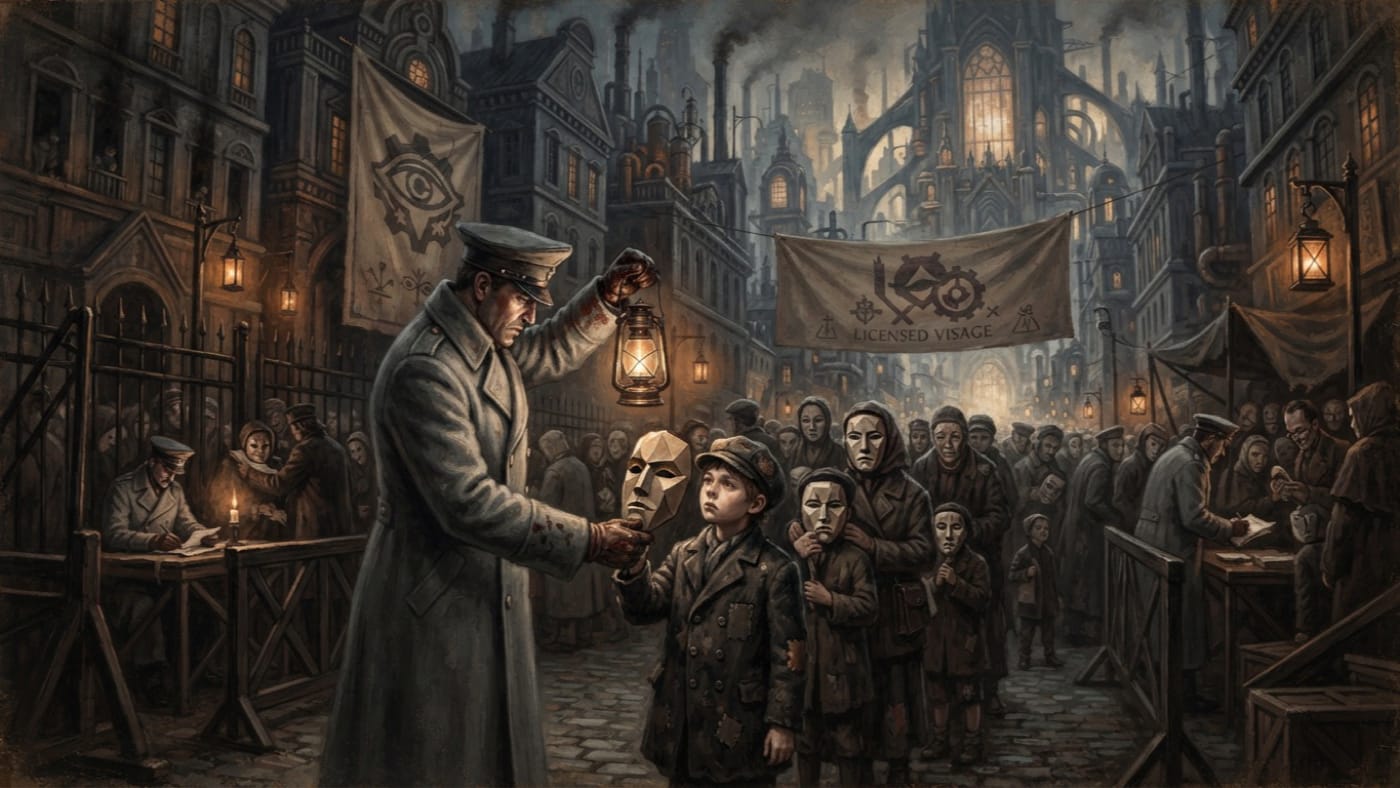
Night of Masks
Even delight must show its wax
On the eve of the Feast of the Sealed Door, the Synod licenses its carnival faces. Heraldry approves the design; Inspectors demand the wax. Even a child must learn to show permission.
Codex Ref. XIII.1.89-1919
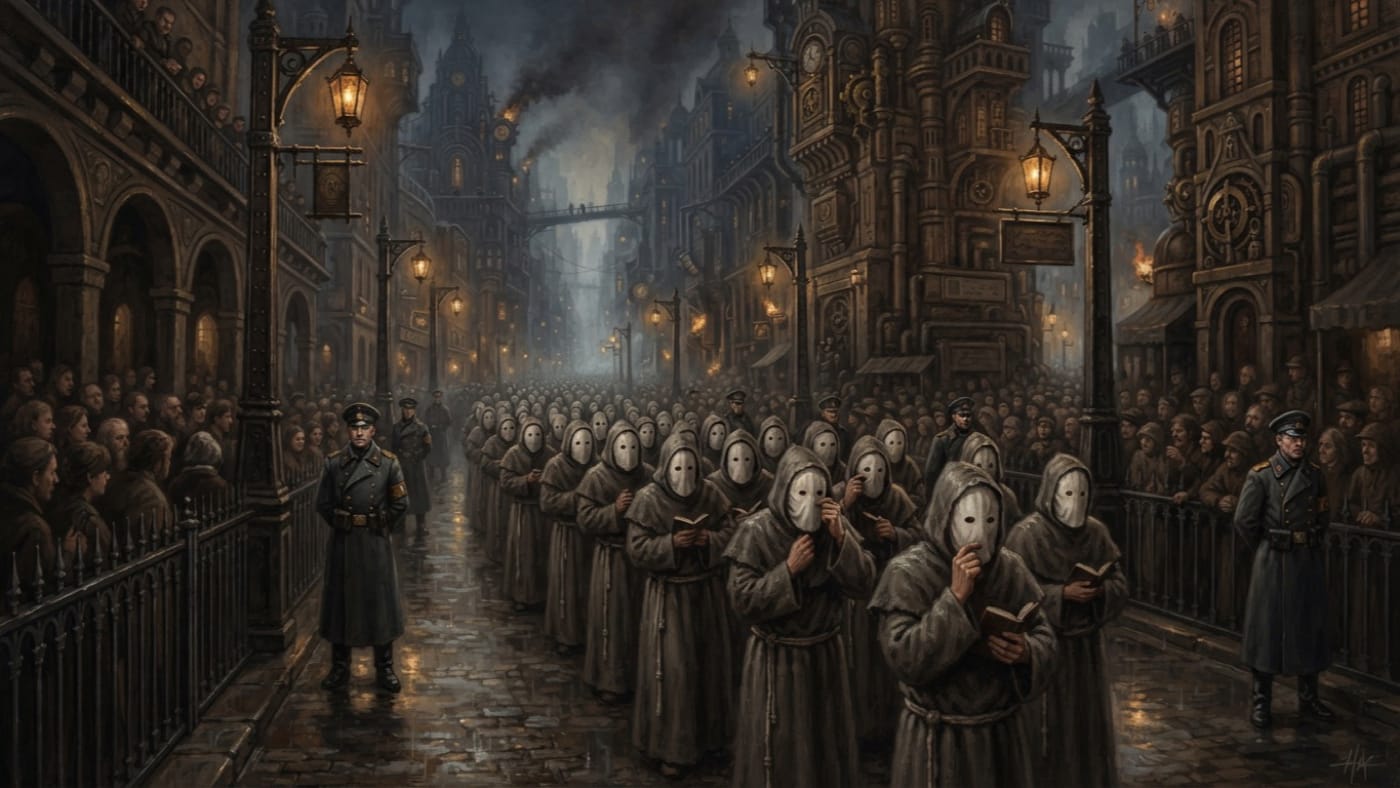
Night of Penitents
The face may be hidden. The sin stays on file.
On the Night of Penitents, the procession must go masked. Festivals orders the occasion; Masks and Seals numbers every concealed face. Shame may hide from the street. The Registry knows where to find it.
Codex Ref. XIII.1.89-1920
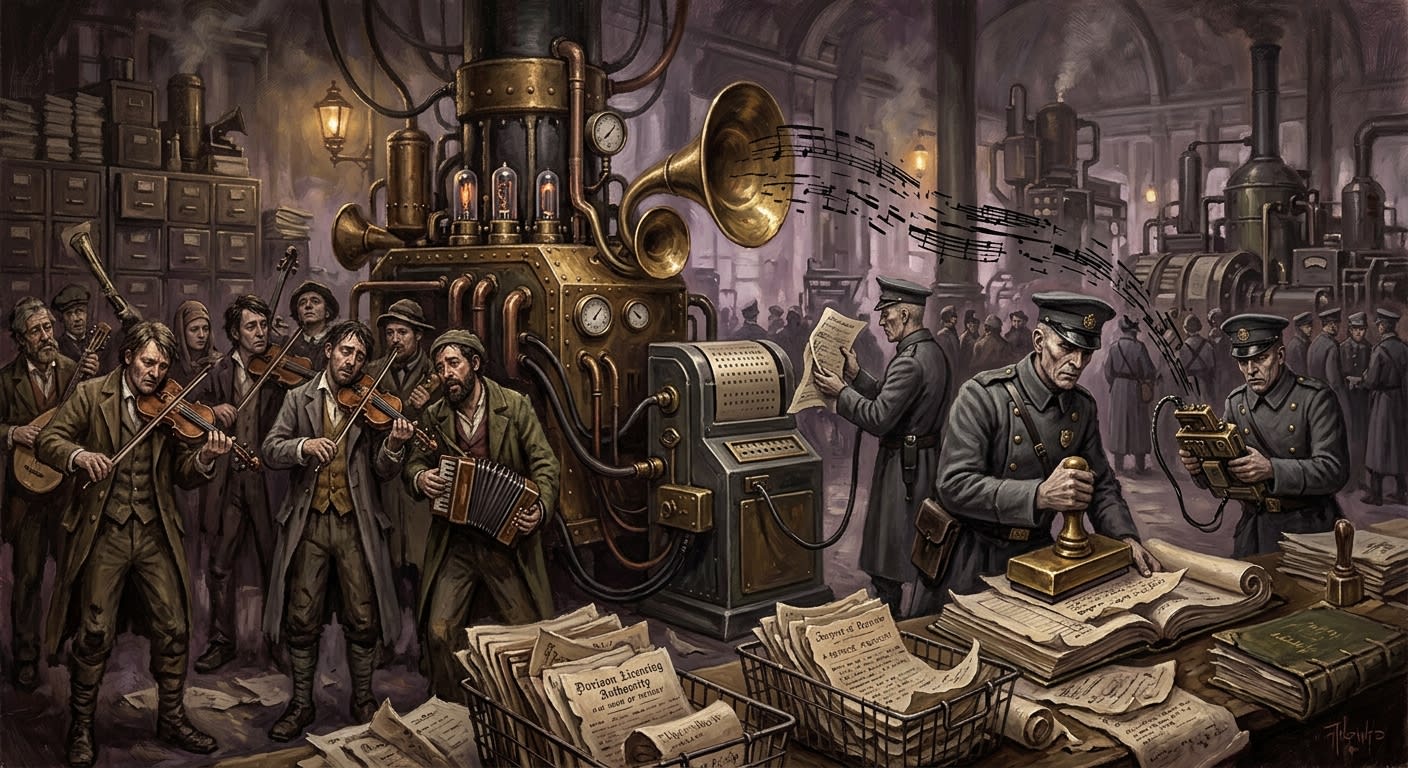
Orison Licensing Acts A.S. 94
No private hymn, no innocent breath
A.S. 94 legal seizure of melody itself: the Acts made every cadence licensed or criminal and created the market they pretended to destroy.
Codex Ref. VII.2.10-094
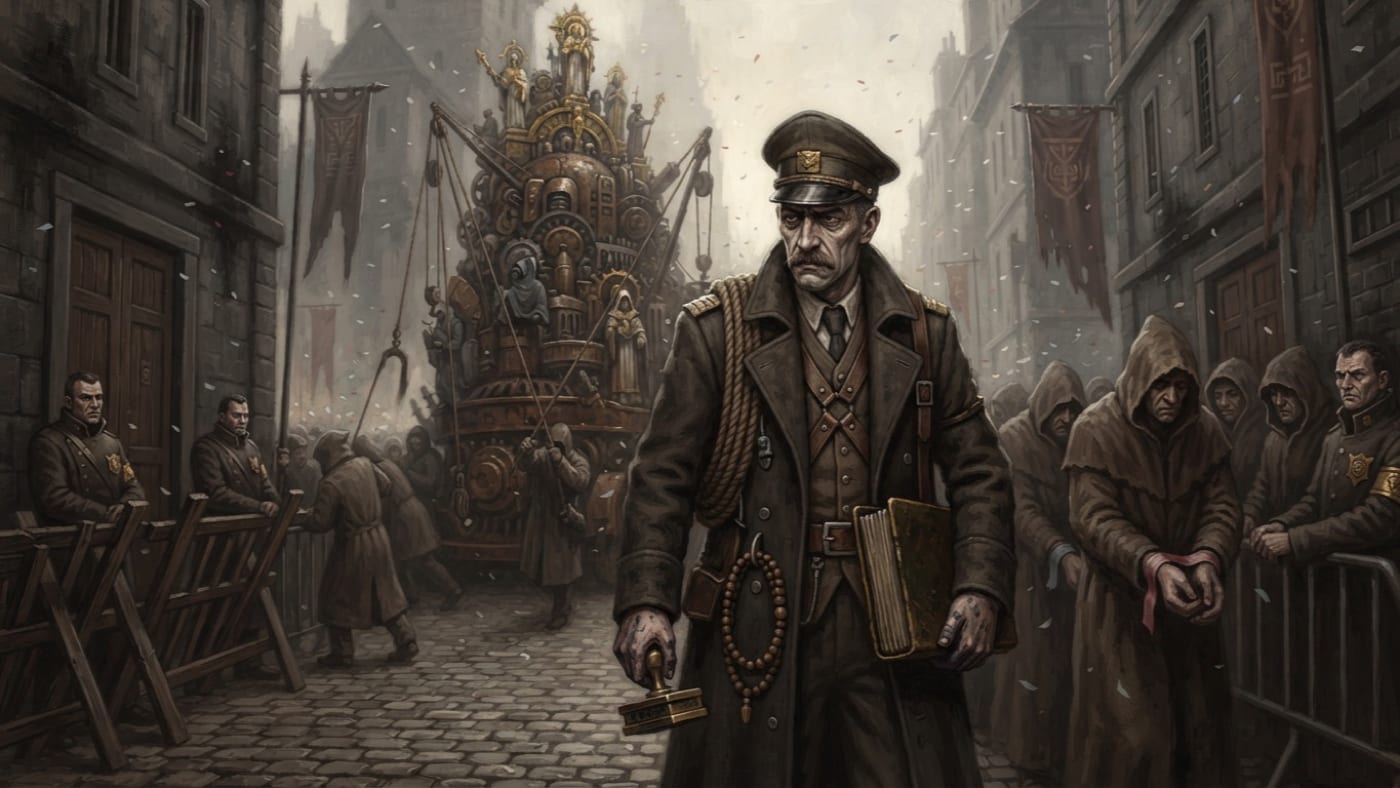
Pageant Captain
Crowds routed, confetti reconciled, joy accounted for
The Bureau of Festivals' logistical officers route crowds, move relic-floats and weigh the confetti afterward. Their signatures accompany every anomaly list. The paper must balance.
Codex Ref. XII.17.03-001
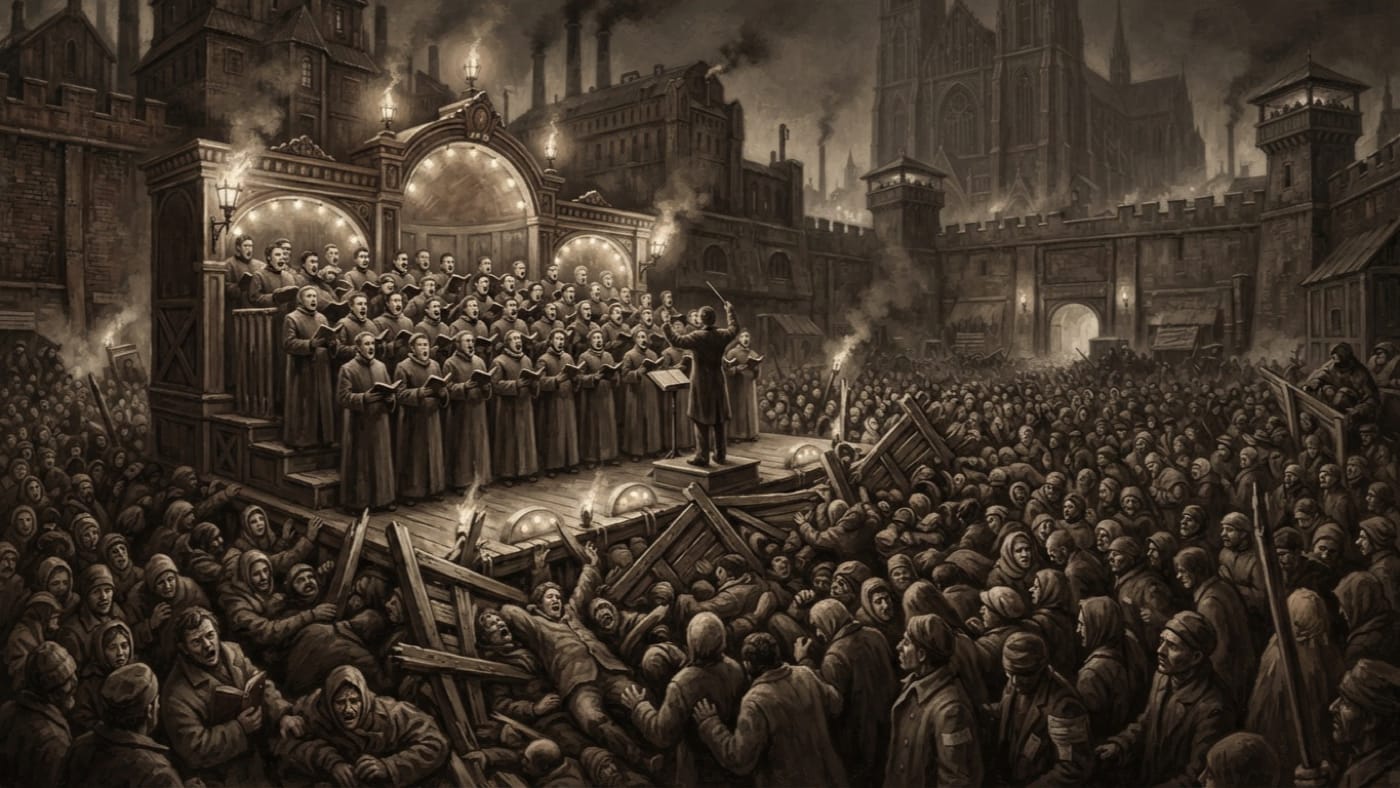
Pageant of Saint Rupert
The hymn continued because nobody had told the singers to stop
An A.S. 201 survey of the licensed Przemyśl pageant: a third singing granted, barricades collapsed inward, dozens crushed, and a chorus awaiting the signal to stop.
Codex Ref. VII.4.19-201
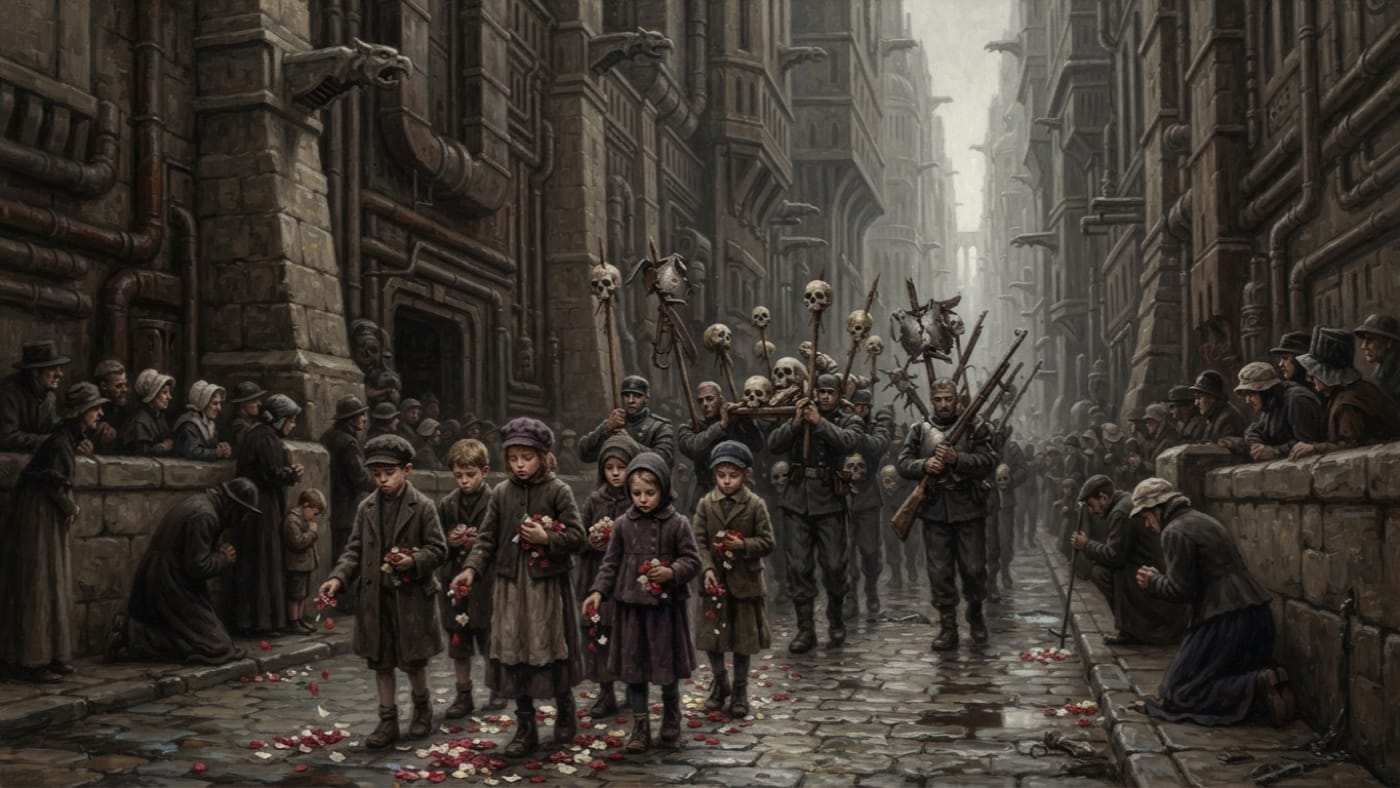
Parade of the Bones
The dead keep formation; the living scatter petals
The bastions carry skulls, shattered armour and consecrated iron behind children scattering petals. Festivals commends the cost per mile; Relics disputes the paperwork. The dead continue to serve without drawing pay.
Codex Ref. XIII.1.89-002
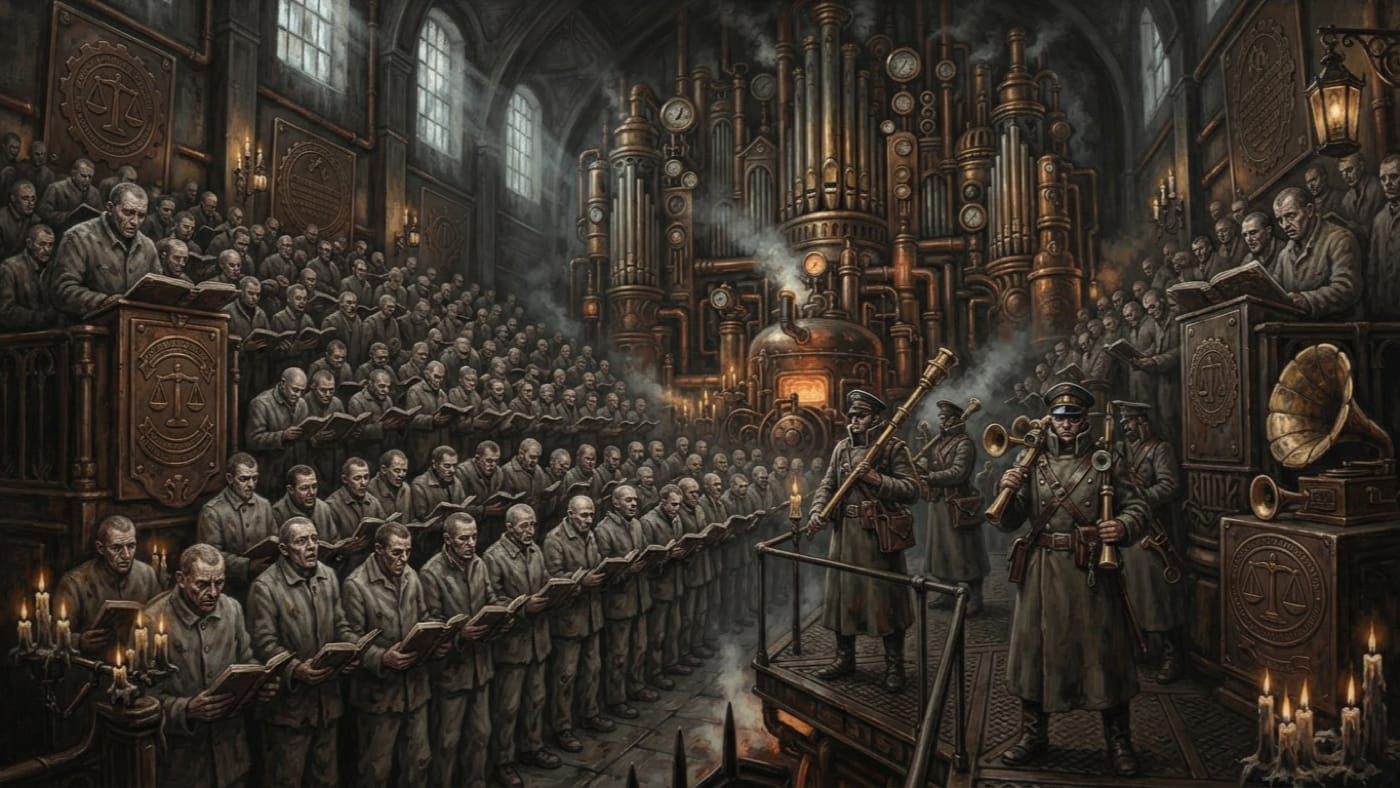
Penal Choir
The condemned supply the voice. The Bureau supplies the words.
An A.S. 201 survey of penal-choir assignments, compelled licensed singing and denunciation bargains. The Bureau can certify that the condemned sang the correct words. Belief requires a different form.
Codex Ref. VI.3.01-201
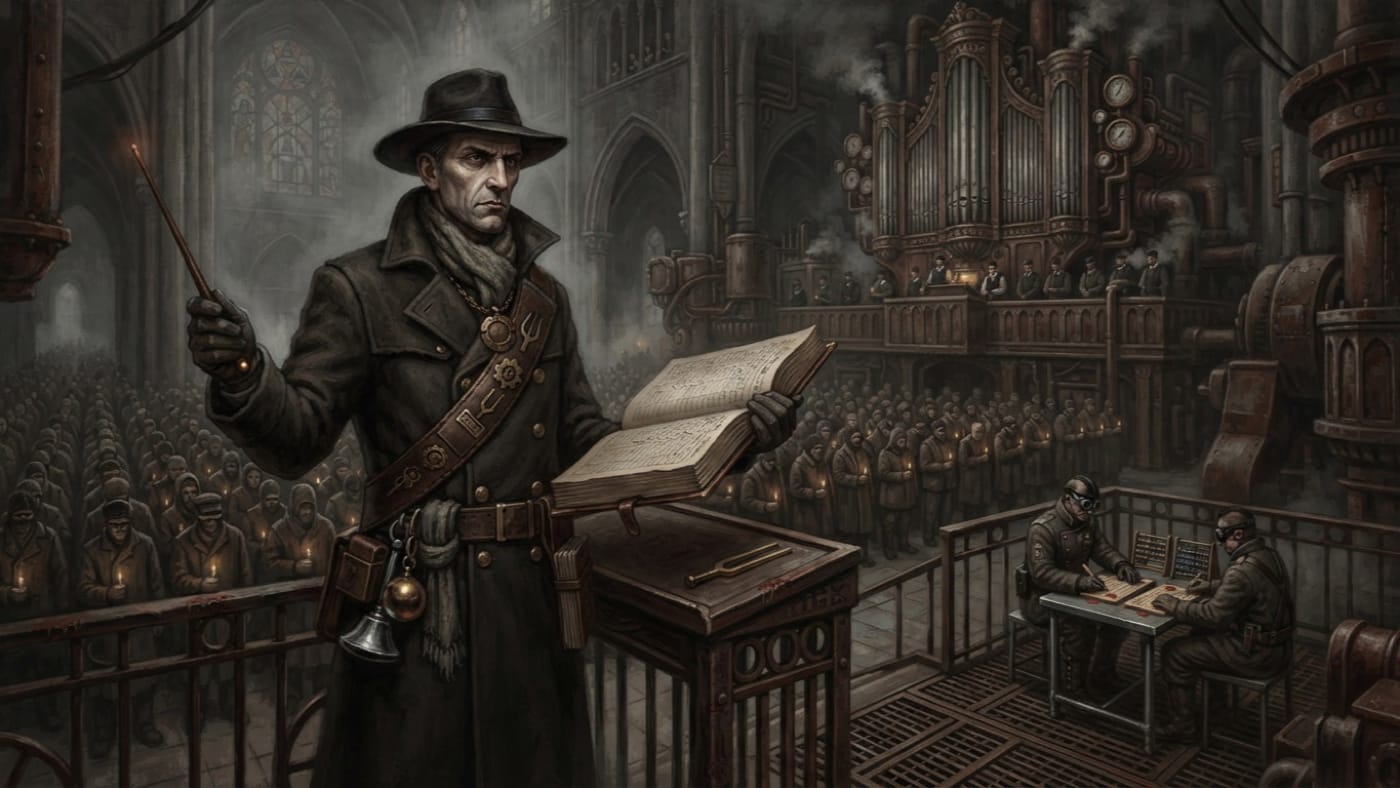
Petyr Vann
Attendance: one hundred percent. Enthusiasm: filed separately.
Chorus-Master Eleventh Grade Petyr Vann administered Reims's Feast of Doctrinal Submission in A.S. 198. The Bureau reported full attendance. Enthusiasm was filed separately.
Codex Ref. III.2.01-198
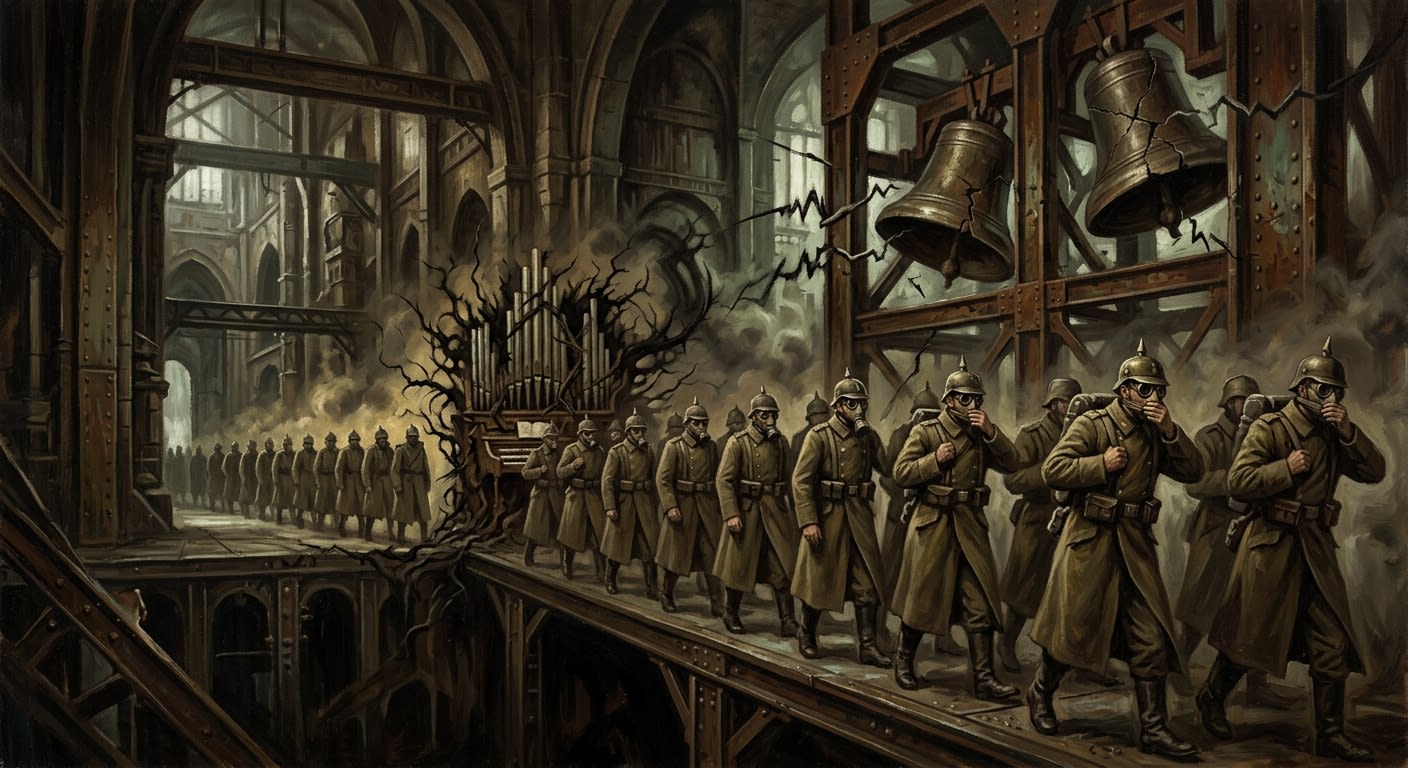
Prayer-Jam
When obedience enters the ear and comes out treason
Prayer-Jam is liturgical signal failure under hostile acoustic pressure: bells betray, hymns gag, and obedient men march precisely into ruin.
Codex Ref. VI.2.01-005
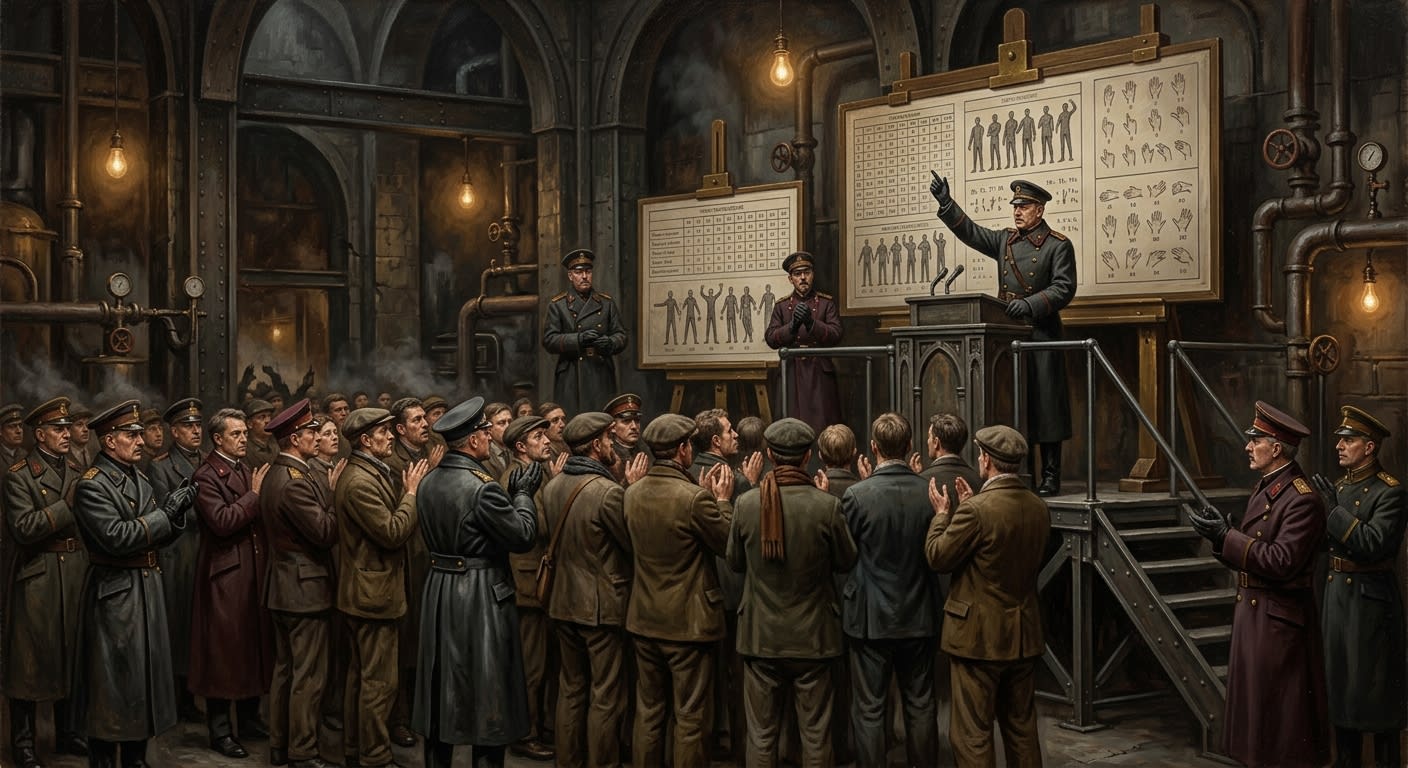
Prescribed Ovation Index
Count the clapping before the clapping counts you
The Synod's table of lawful applause, because a crowd that discovers its hands may soon discover teeth, rhythm, and politics.
Codex Ref. XIII.1.66-201
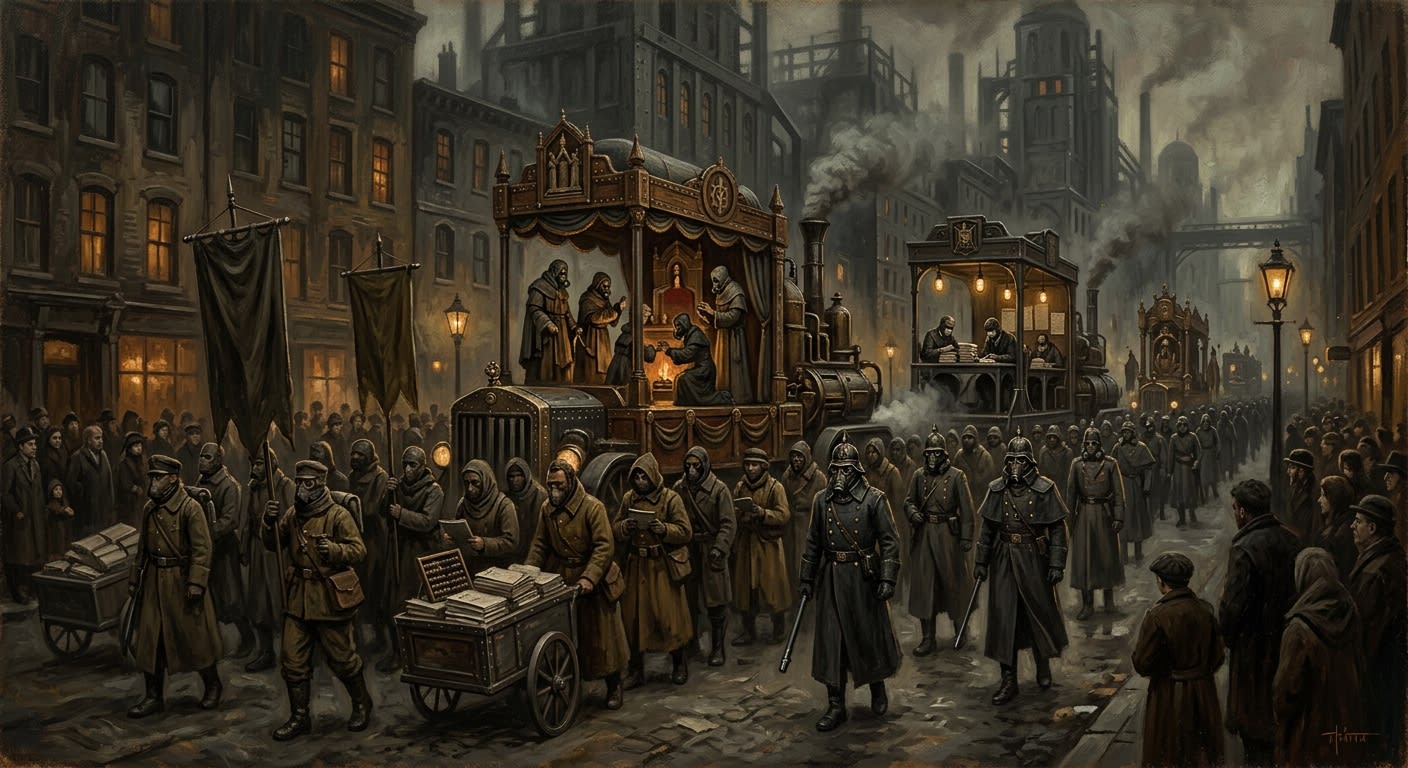
Procession of the Triune Hearth
One people, one creed, one spectacle, counted twice
First staged in A.S. 175, the Procession of the Triune Hearth turned Concordat memory into forty days of floats, census work, unity theatre, and invoices.
Codex Ref. VII.3.02-001
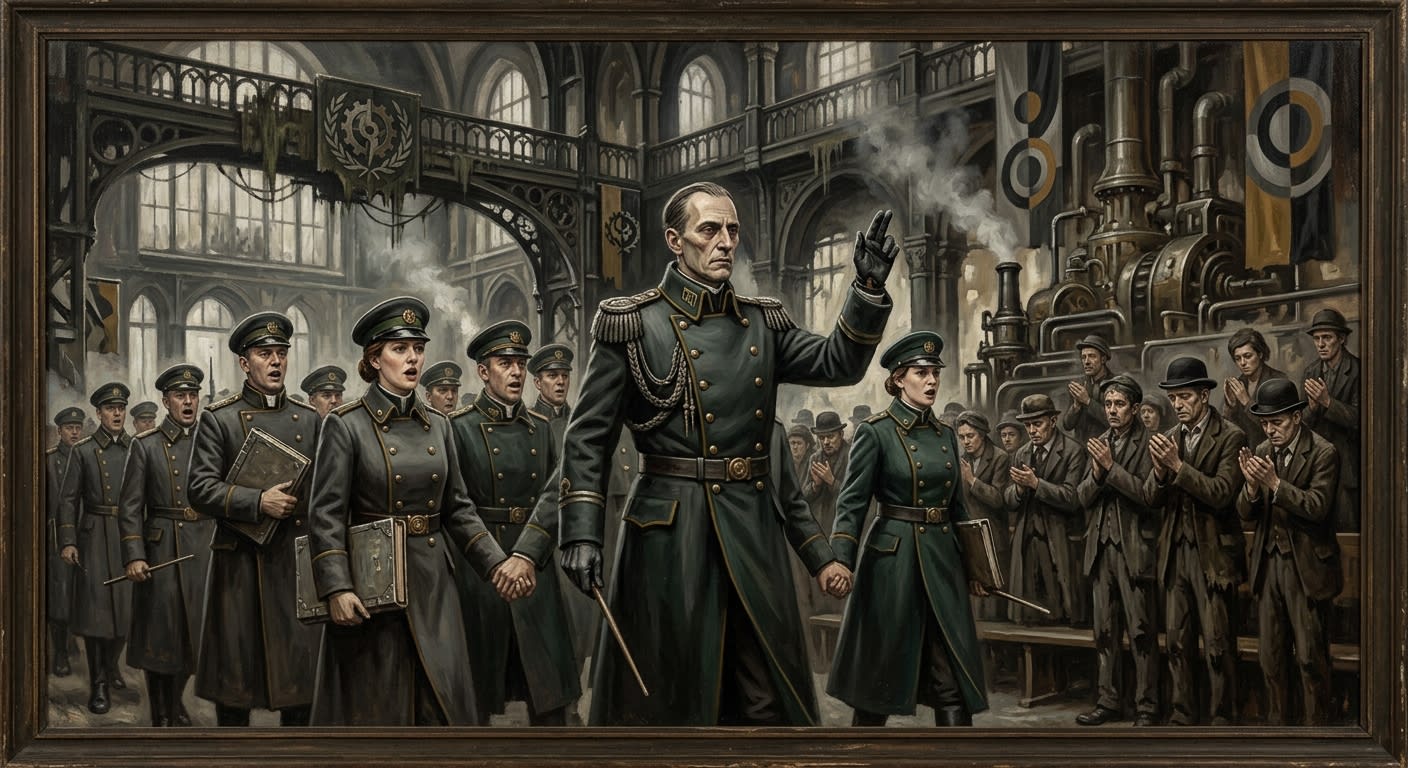
Pure Conductors
Perfect festivals for citizens only technically alive
Doctrine-first Festival Chorus-Master faction whose flawless compliance, exact applause, and beautiful ledgers preserve order while quietly manufacturing civic despair.
Codex Ref. XII.17.02-001
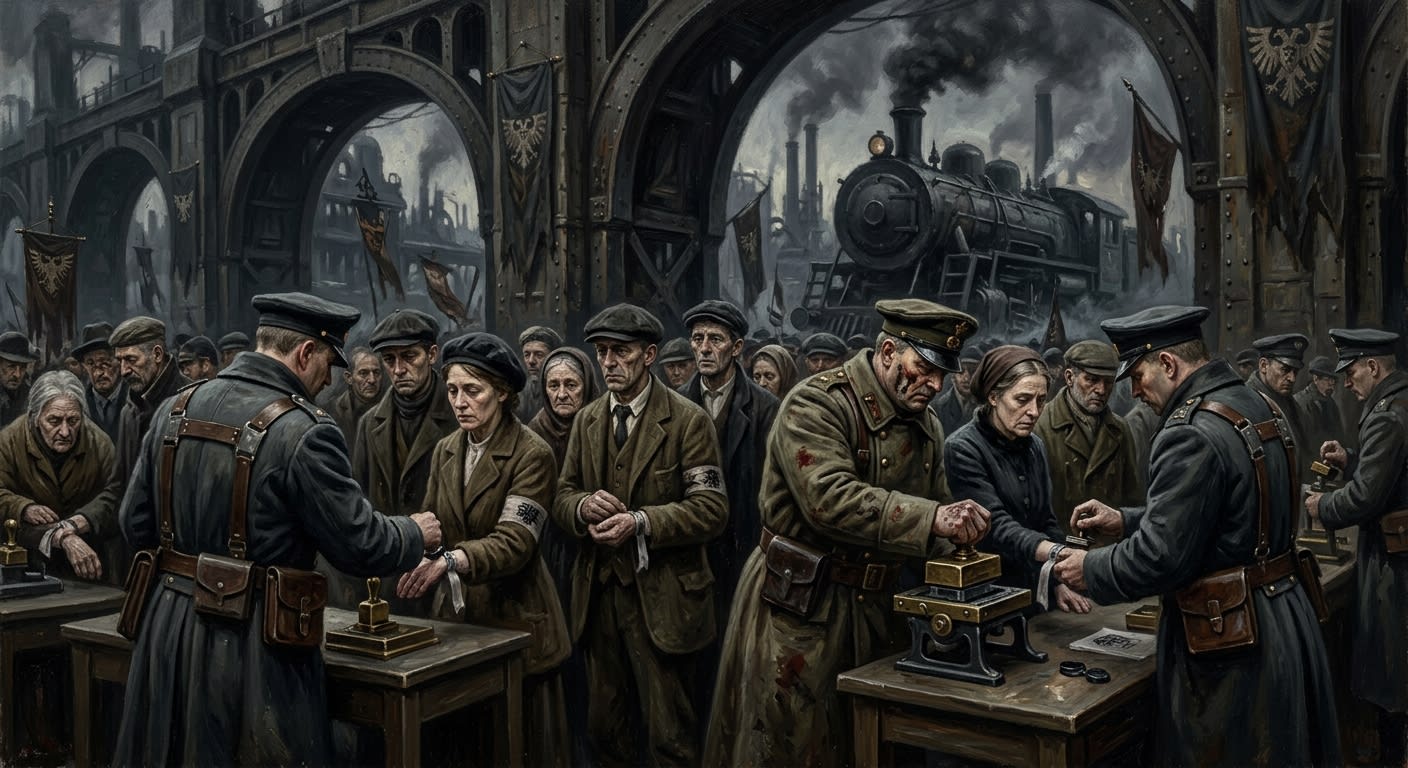
Receipt Reform A.S. 138
The decree that taught paper to bleed
A.S. 138 reform abolishing paper receipts at sanctioned processions and replacing them with wrist-ribbon stamps, turning civic joy into visible attendance, enforceable gratitude, and portable proof.
Codex Ref. VII.2.10-088

Receipt-Procession Pageant Captain
The Bureau does not celebrate. It enumerates. The ribbon is the proof.
The Bureau of Festivals does not employ artists. It employs accountants in bright sashes, charged with converting municipal celebration into municipal enumeration — the wrist-ribbon is the key, and joy rot is the wages.
Codex Ref. XII.33.01-001
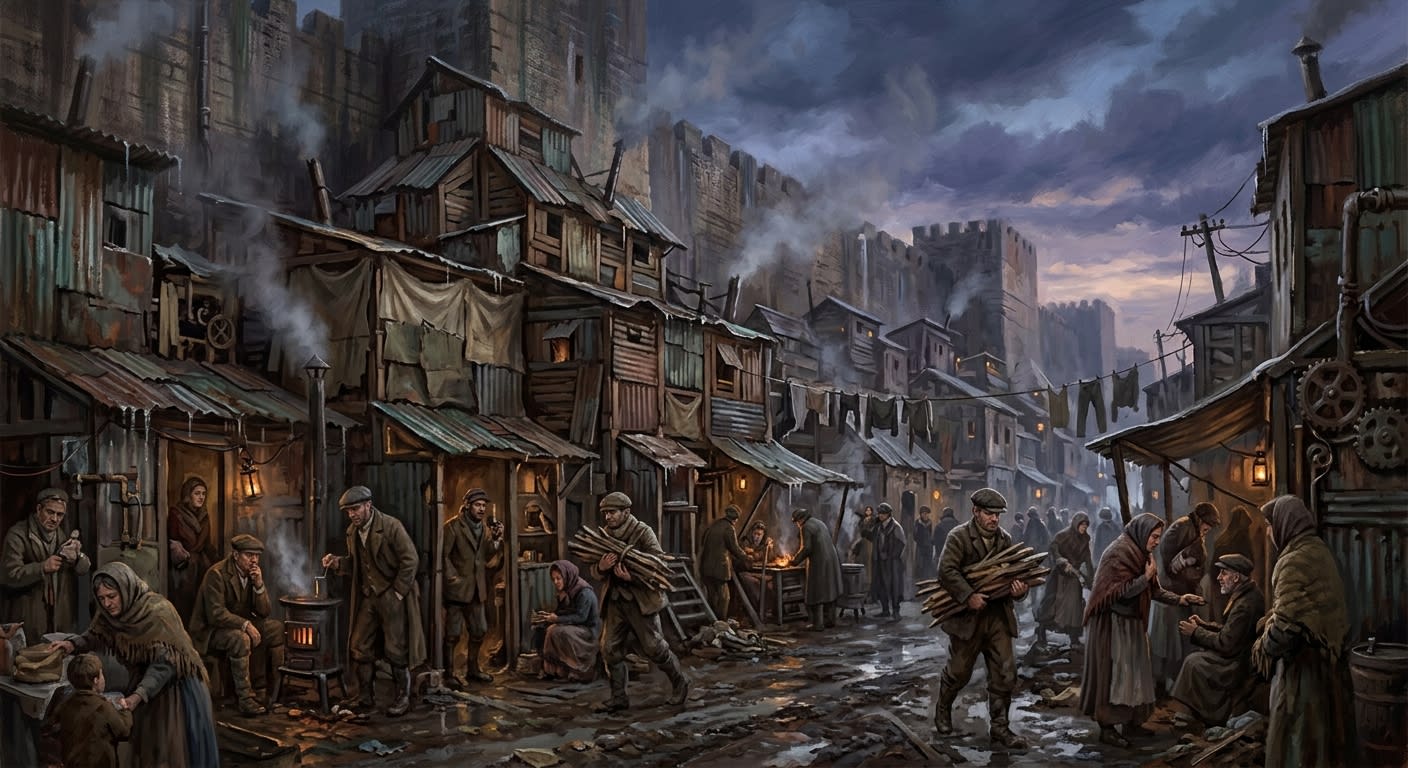
Refugee Sheds
Temporary mercy, permanently damp
Thessaloniki's Refugee Sheds are temporary shelter turned permanent wall-side settlement: damp, crowded, humming, and governed after dusk by Aunt Velka's unlicensed mercy.
Codex Ref. II.7.04-198

Reims
The smiling wine city that profits from an empty neighbour
Reims smiles under inspection, sells lawful wine beside impossible Épernay tokens, and teaches that a city can inherit a neighbour's absence without inheriting innocence.
Codex Ref. II.1.07-103
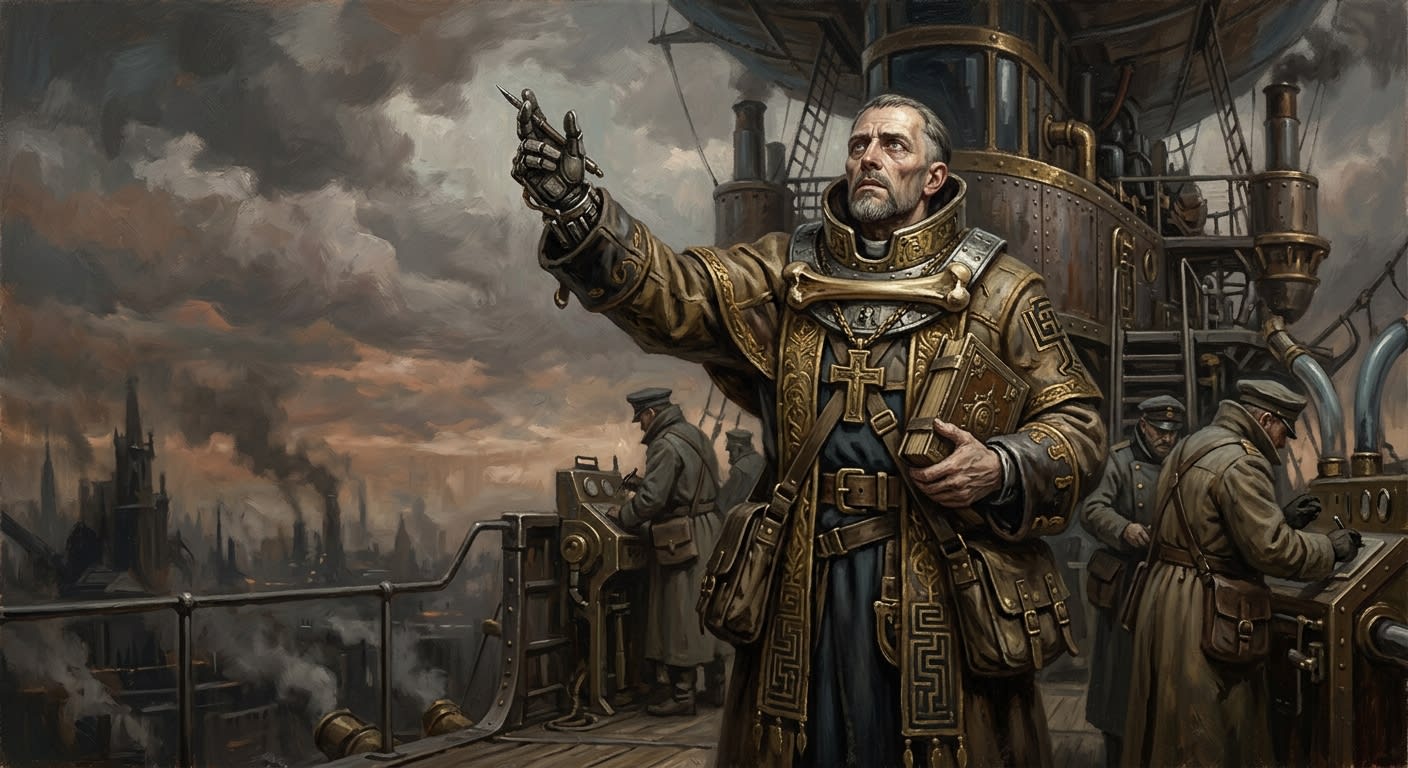
Saint Barachiel
He looked down, and what he saw was true
Saint Barachiel is the Synod's patron of aerial witness: a late-ratified saint, an oversized bone, and the holy permission by which the sky submits.
Codex Ref. III.2.01-167
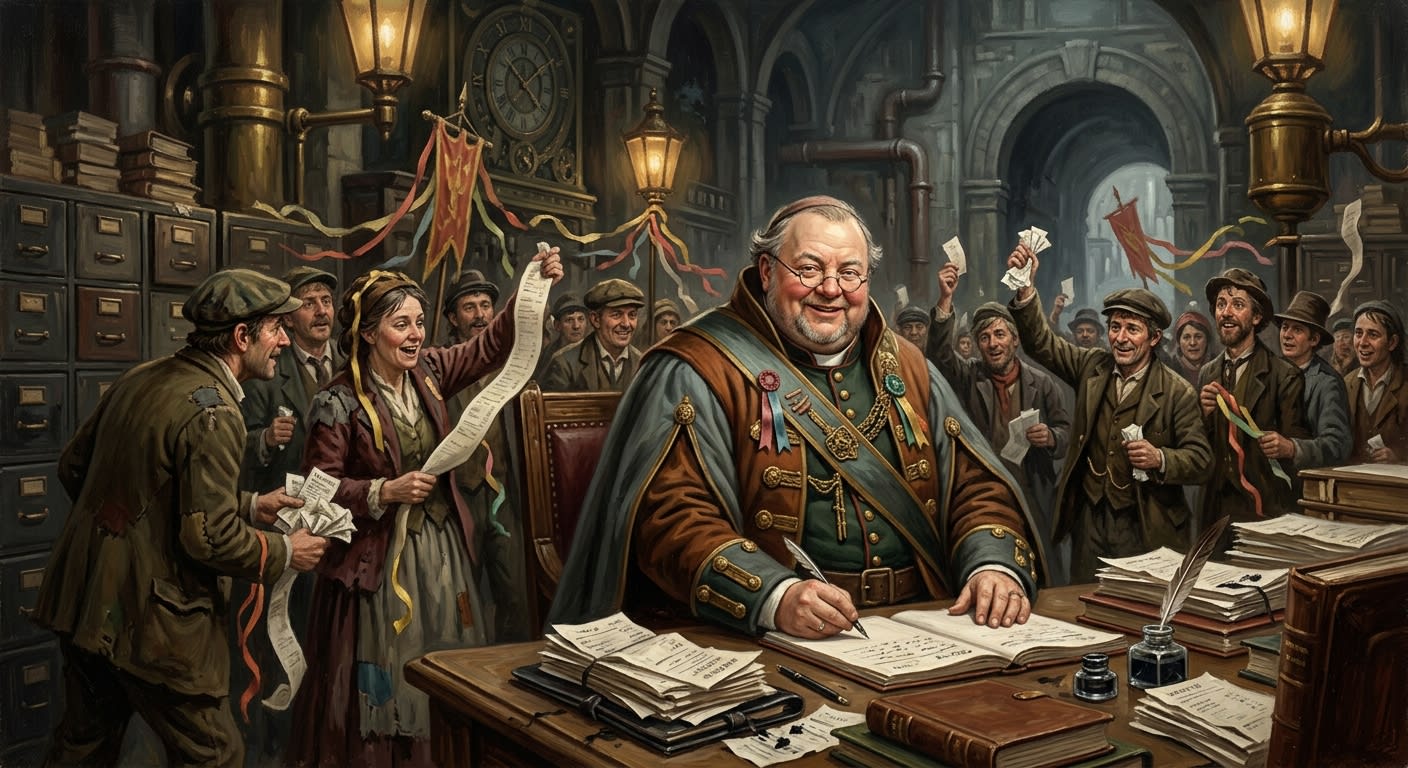
Saint Caldrin the Jubilant Scribe
Joy leaves a trace, and the trace becomes a ledger
Patron saint of Receipt-Procession Pageant Captains, Caldrin turned riotous hunger into ribboned attendance, attendance into receipts, and receipts into cheerful civic custody.
Codex Ref. III.2.01-138
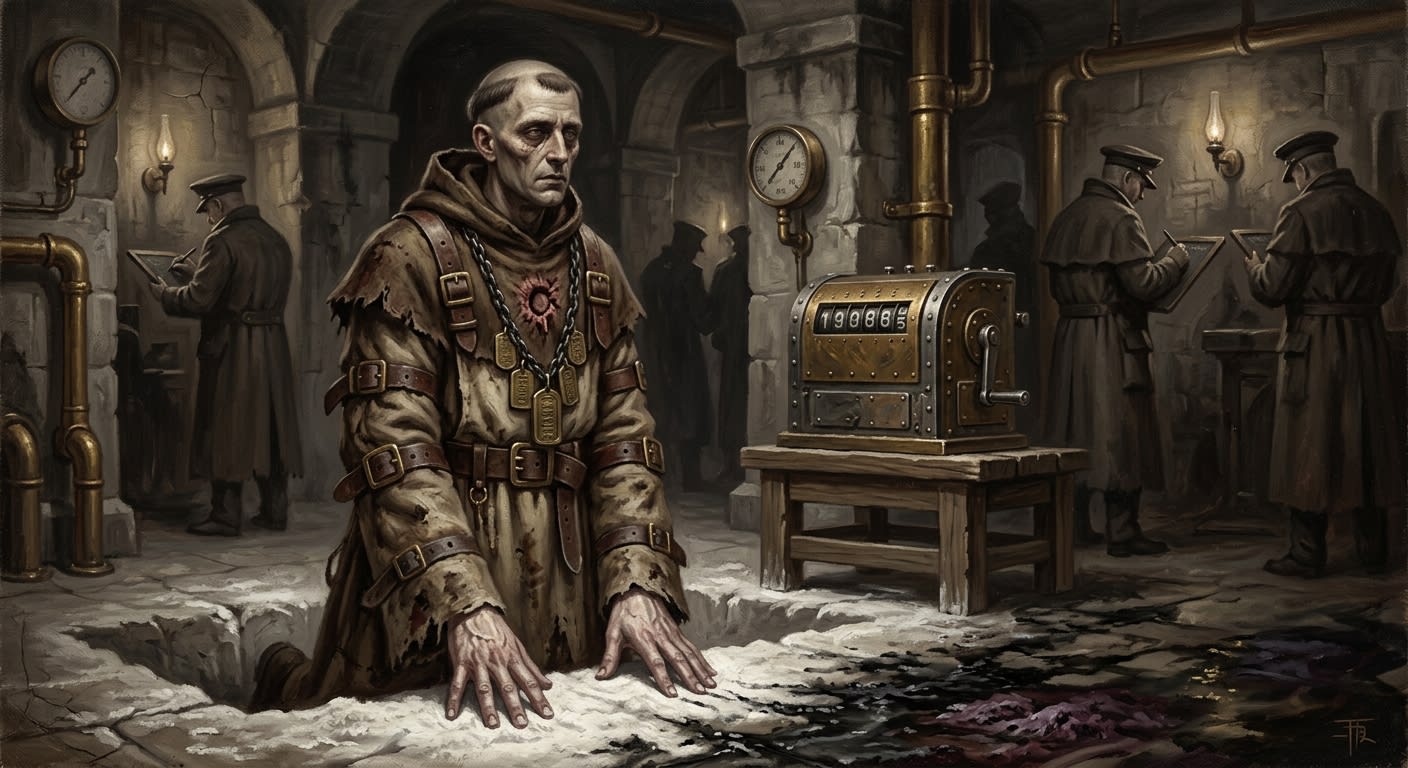
Saint Calistus
Count them, said the saint, and the Bureau has been counting ever since
Cellar-Prior of Lyon whose A.S. 32 Hollow Fast halted plague at a chalk boundary and left the Synod a saint, a tally, and a whistle-shaped wound.
Codex Ref. III.2.01-078
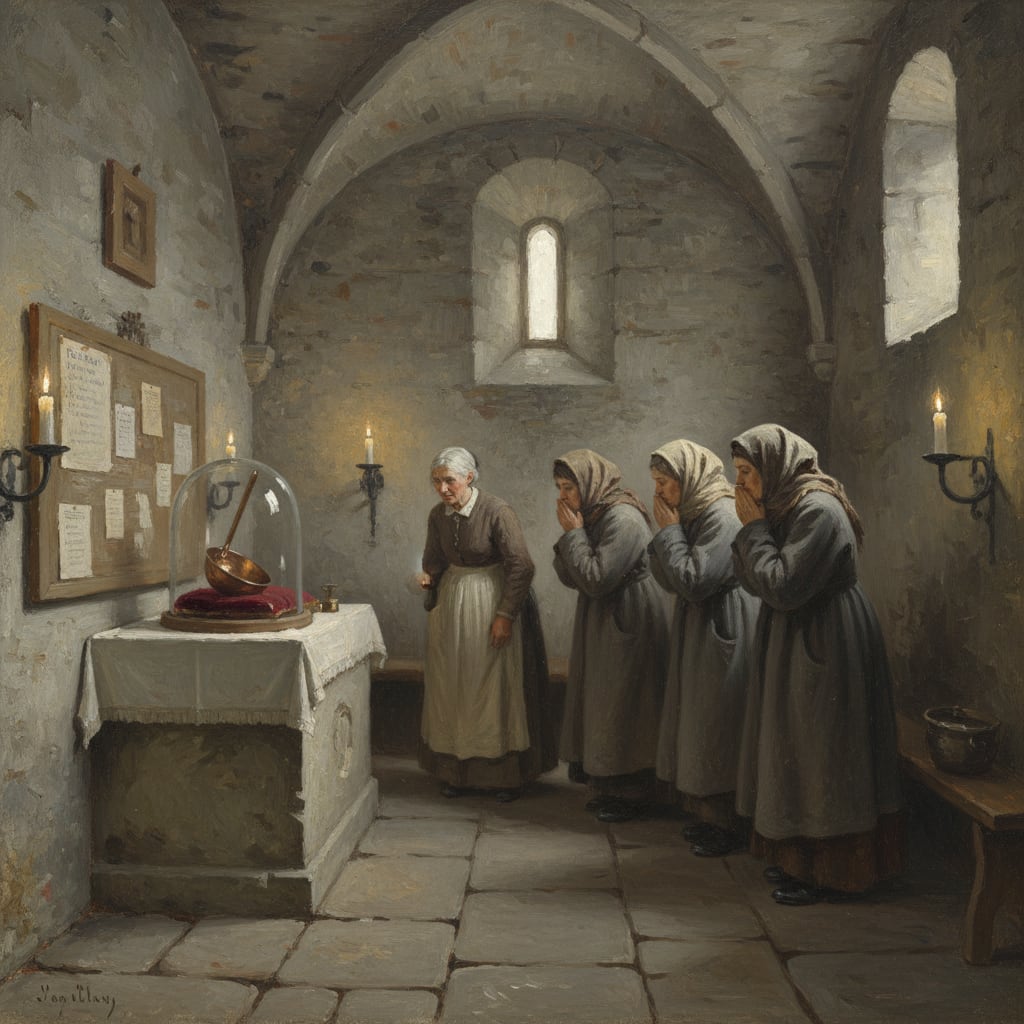
Saint Halva of the Warm Ladle
Salt of the Institution, patron of acceptable portions
Patron saint of the Mothers of Plenty, canonized A.S. 94 with zero miracles attested, no body produced, and a relic the Bureau of Relics classifies as "devotionally sufficient." She may not have existed.
Codex Ref. III.2.01-001
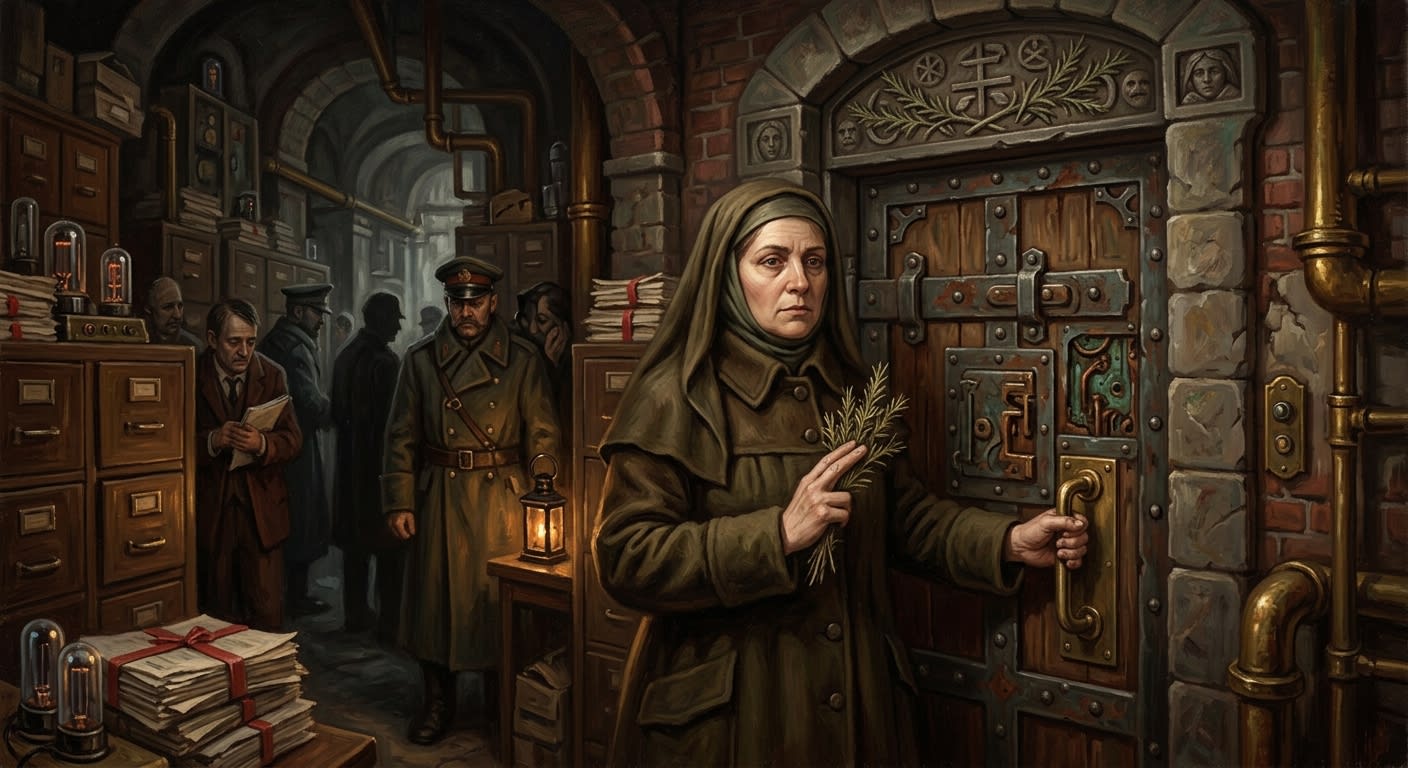
Saint Marea of the Closed Door
The unofficial saint of rosemary, shut doors, and useful silence
Saint Marea of the Closed Door is the unofficial tavern saint of rosemary lintels, hidden deserters, quiet hospitality, and the Bureau's most profitable refusal to decide.
Codex Ref. III.2.01-104

Saint Orla of the Steady Note
The patron who taught singers to hold the note and refuse the answer
Patron of the Iron Choir Brand-Singers, Orla gave Purity its steady note, its closing silence, and its most useful command: do not answer it.
Codex Ref. III.2.01-064
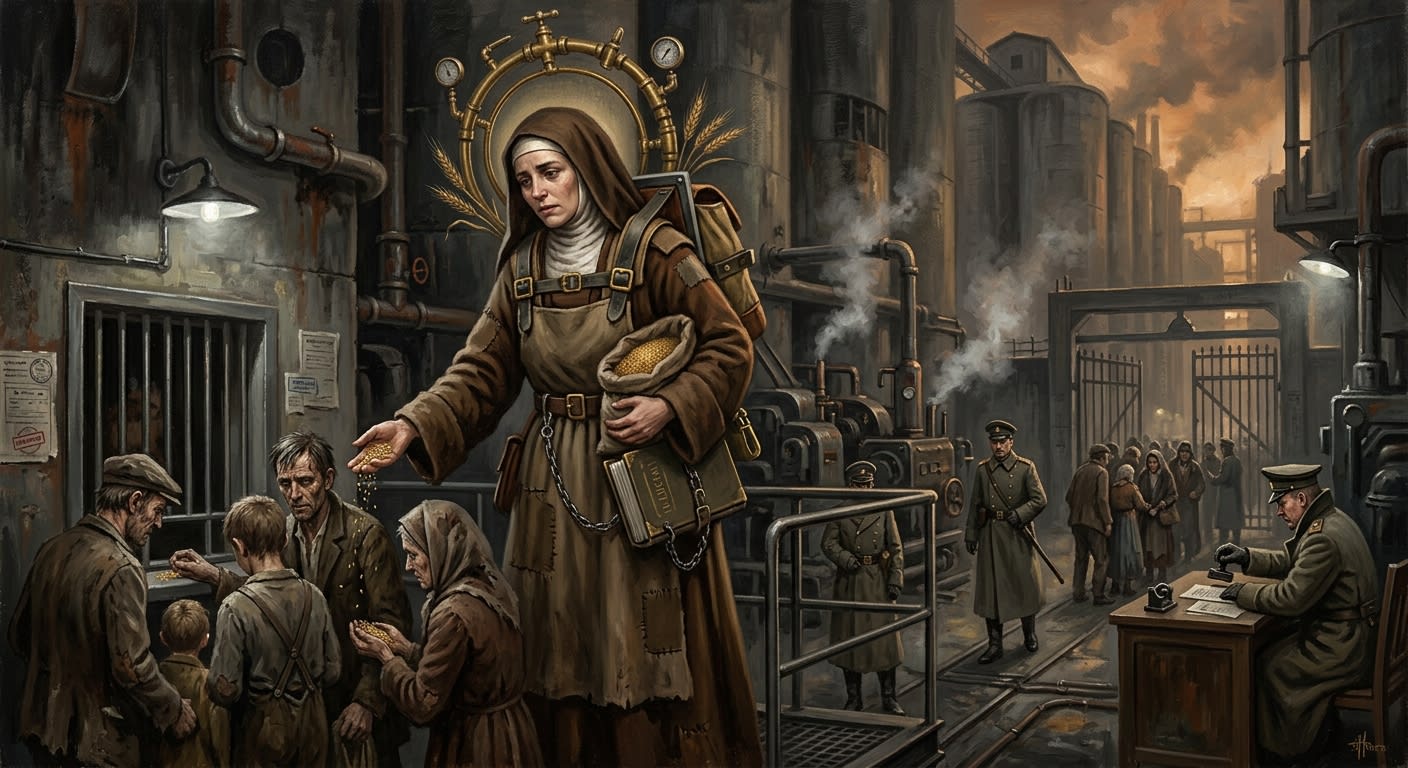
Saint Silo-Agnes
The hungry remember the woman in the wall more accurately than the pageant
Saint Silo-Agnes, unofficial patron of Grain Keepers, was condemned for hidden millet and later improved into a charity martyr fit for ticketed grief.
Codex Ref. III.2.01-121
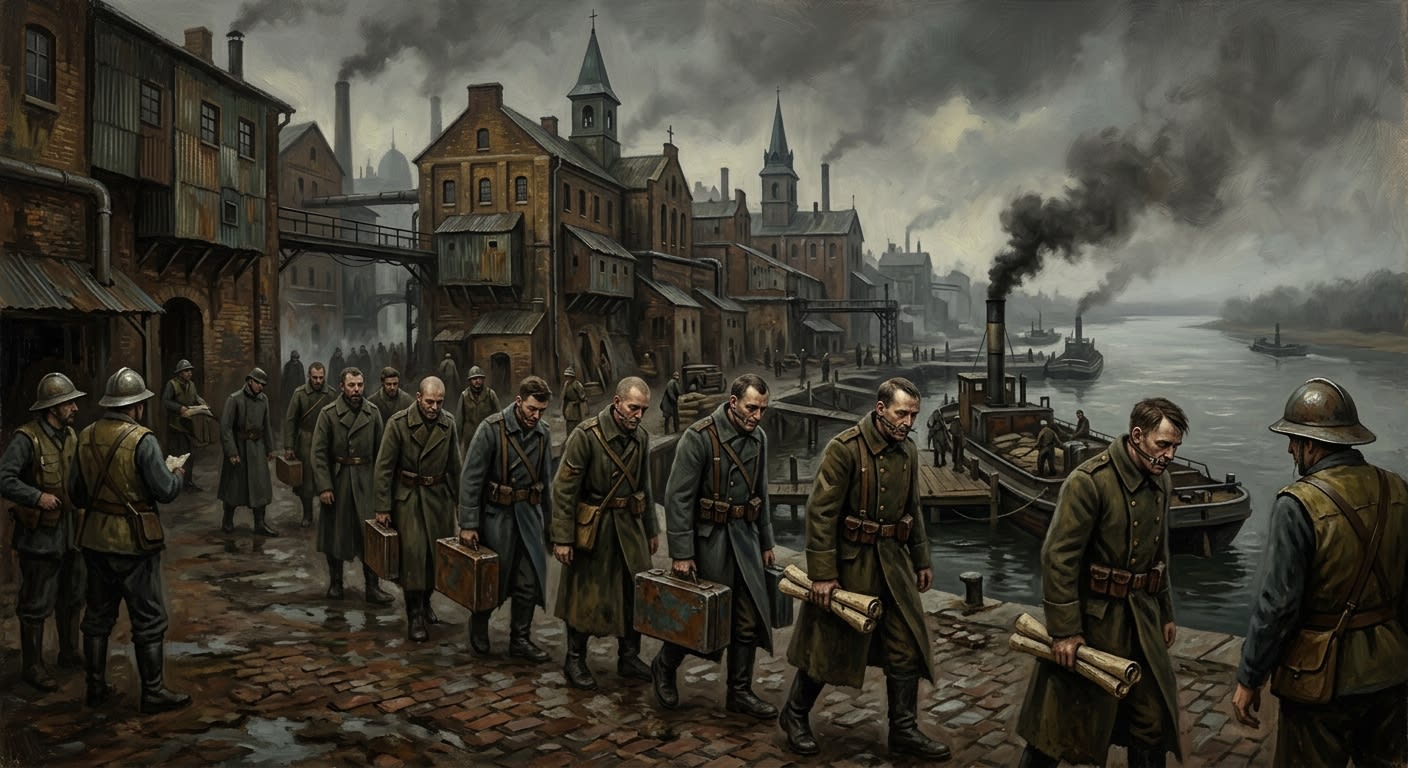
Sandomierz
Kraków owns the bridge; Sandomierz owns the arrival
Sandomierz is the Vistula recovery town that pulled forty-seven wired-mouth priests from Kraków’s crime and made downstream grief countable.
Codex Ref. II.3.06-019
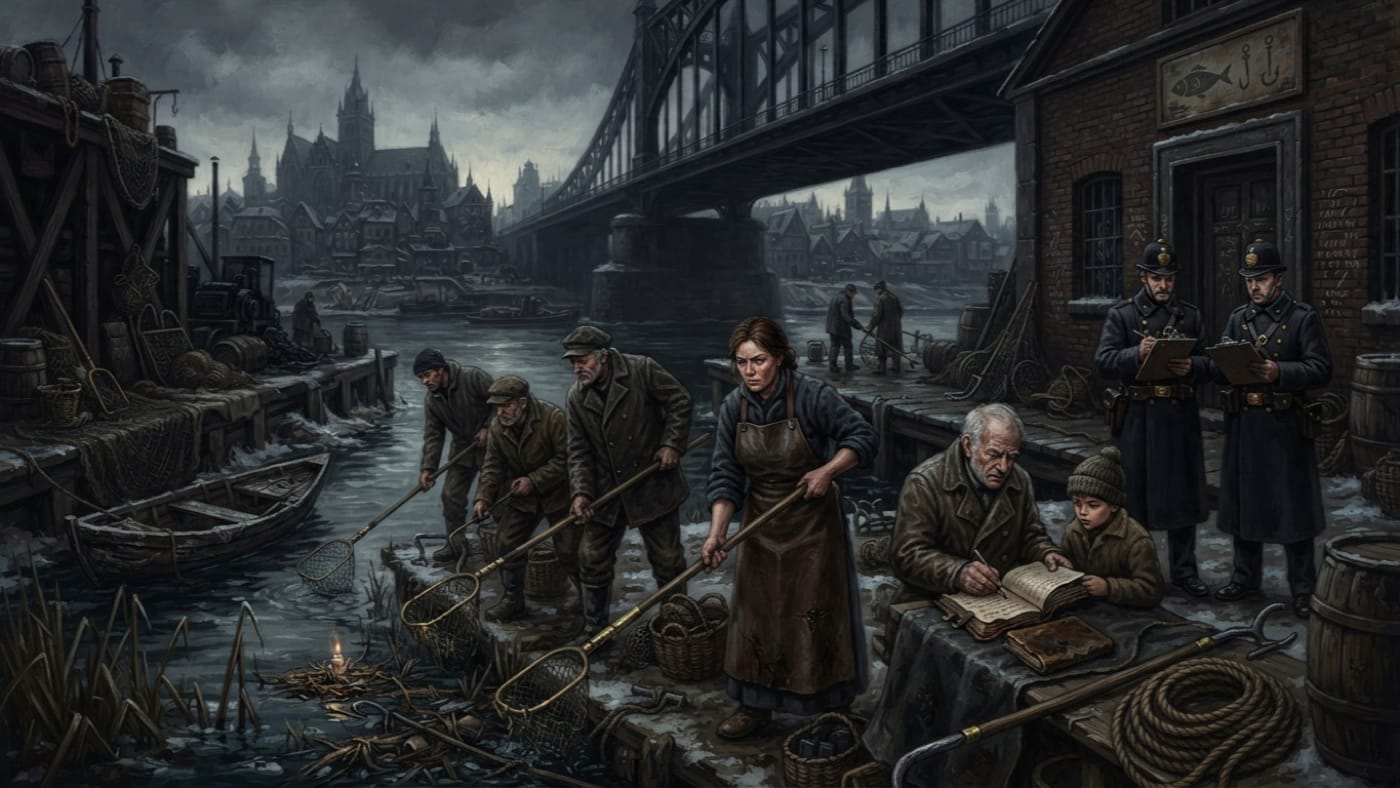
Sandomierz Fishermen’s Guild
The river sends evidence; the guild sends a count
A.S. 201 survey of Sandomierz’s fishing guild, whose damaged log records forty-seven drowned clergy and whose elected Wardens gather Vigil wicks while officials improve the paperwork.
Codex Ref. XII.26.03-001
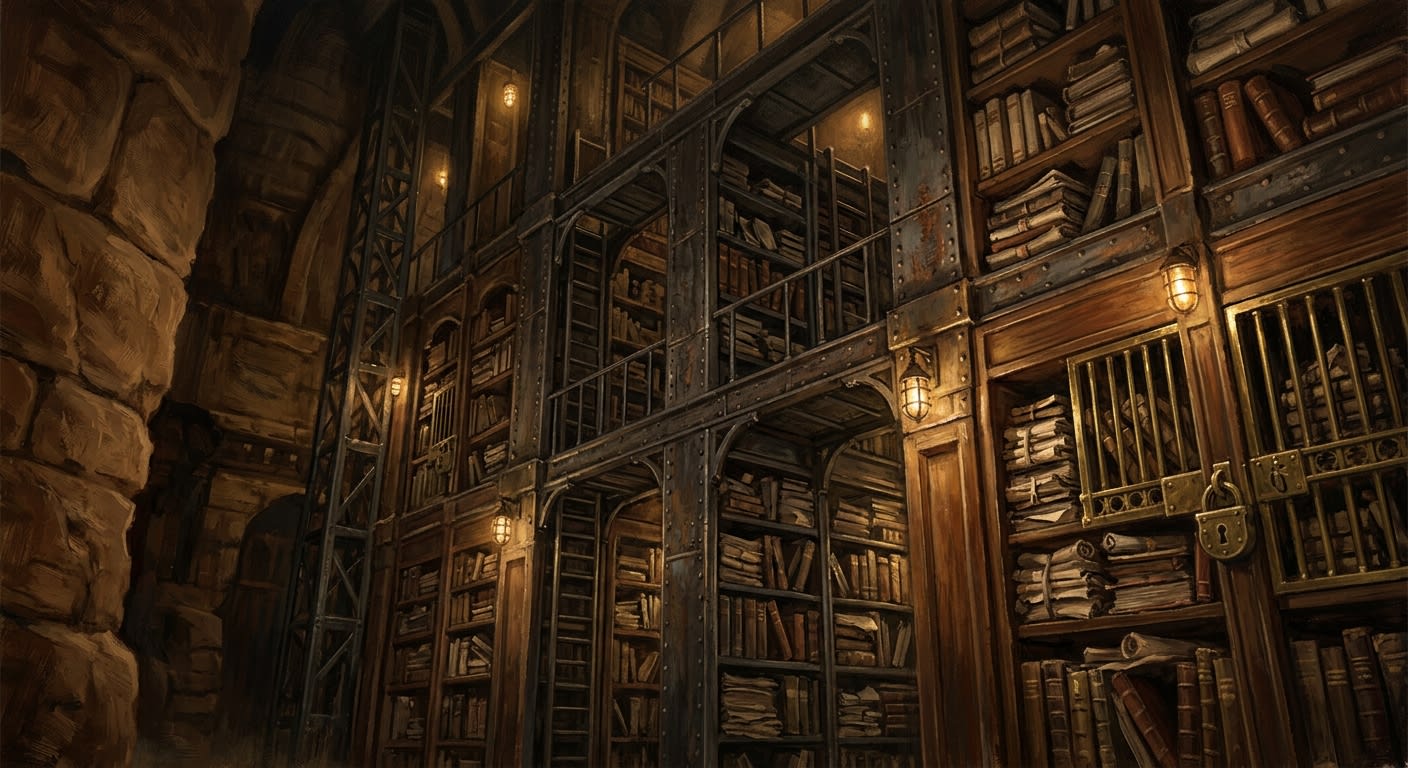
Sealed Archive of Doctrine
The room where contradictions sit upright, labelled, dangerous, and dry
Beneath the Tower of the Quill lies Doctrine's dry sealed archive: older than the sandstone, jealous of its shelves, and intimate with contradiction.
Codex Ref. II.1.04-002
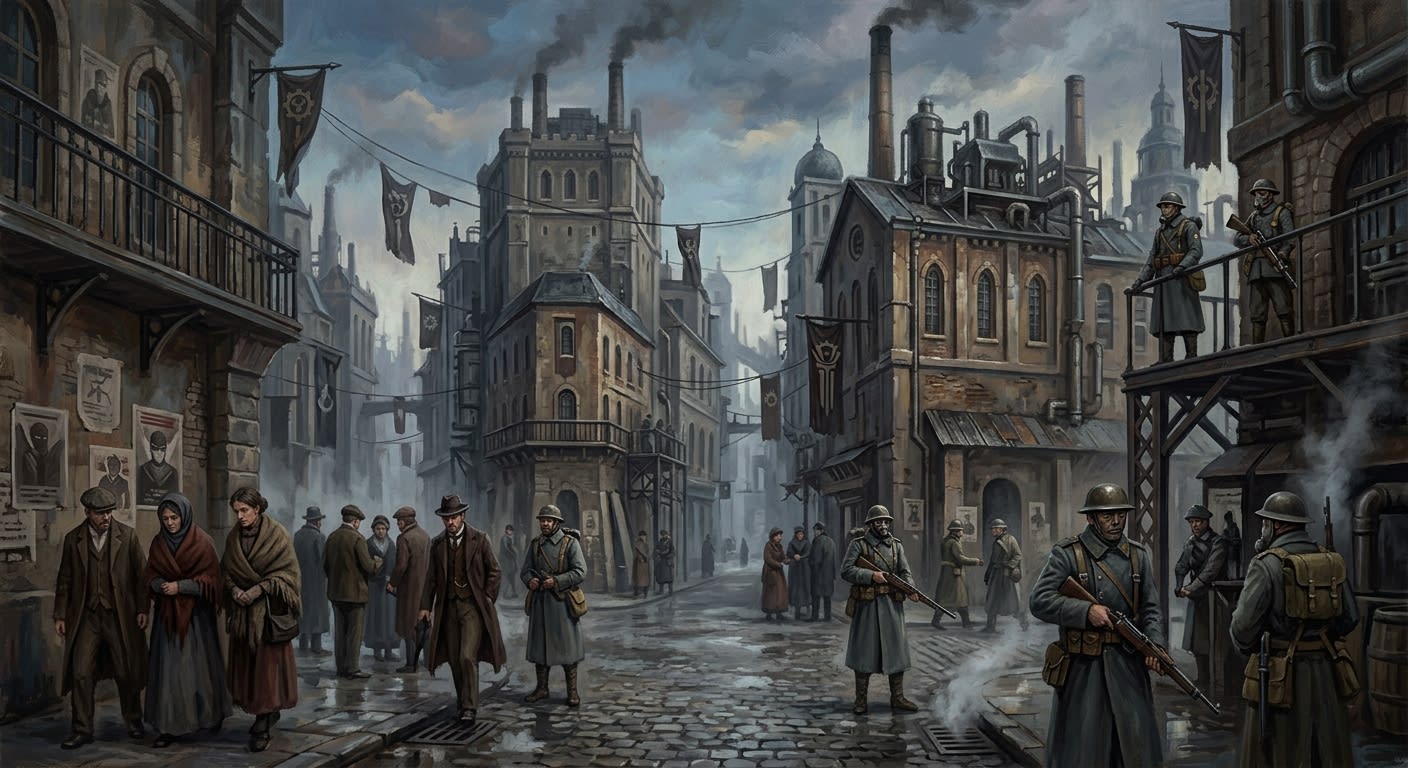
Seville
The city that lowered its voice and learned to speak in cups
Seville, the corrected City of Closed Lips: beautiful, prosperous, muted after the Laugh Riots of A.S. 153 and the Subjugation of A.S. 155.
Codex Ref. II.1.04-001
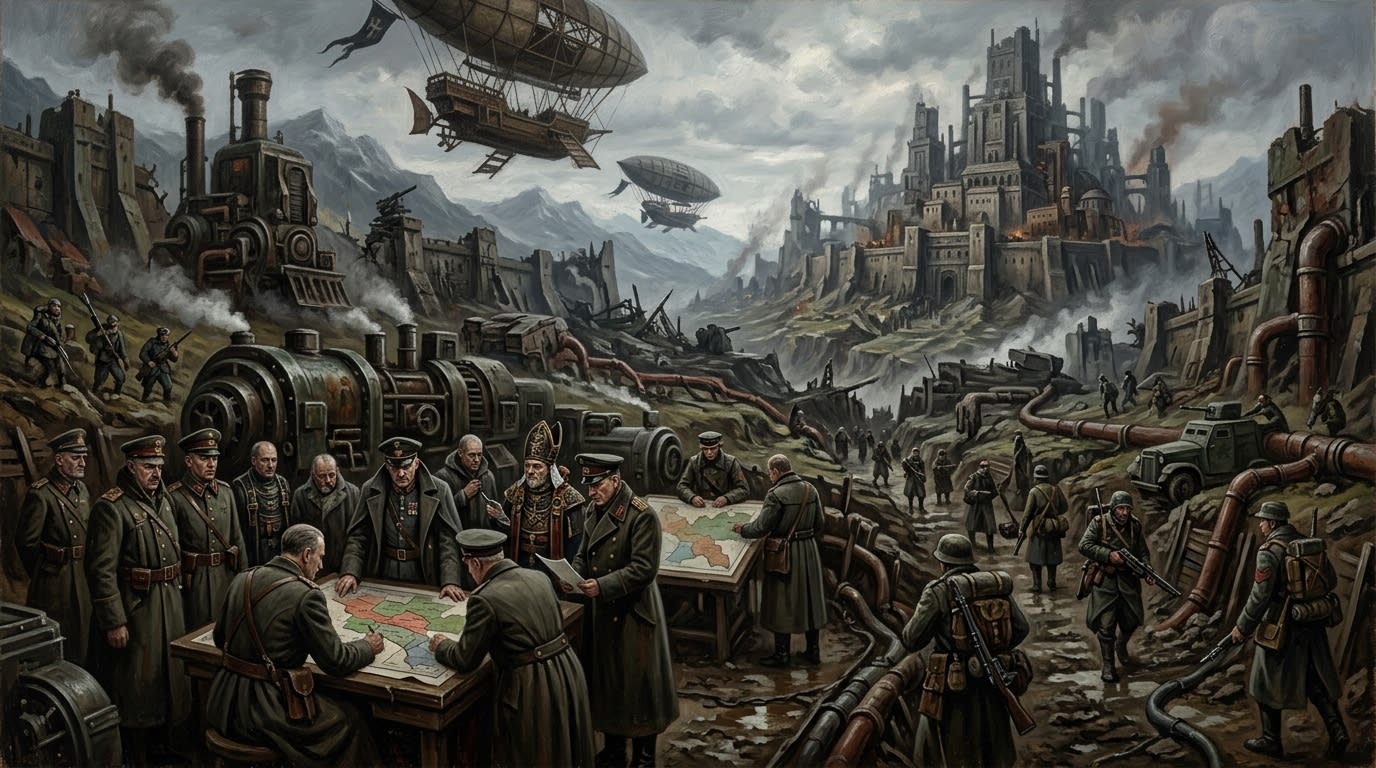
The Balkans
The wound that taught Europe to count its bleeding
The Balkan wound-region, broken first by the Eastern Silence and the Sundering, then divided into Synod margins, contested corridors, Sin-General dominions.
Codex Ref. II.6.05-045
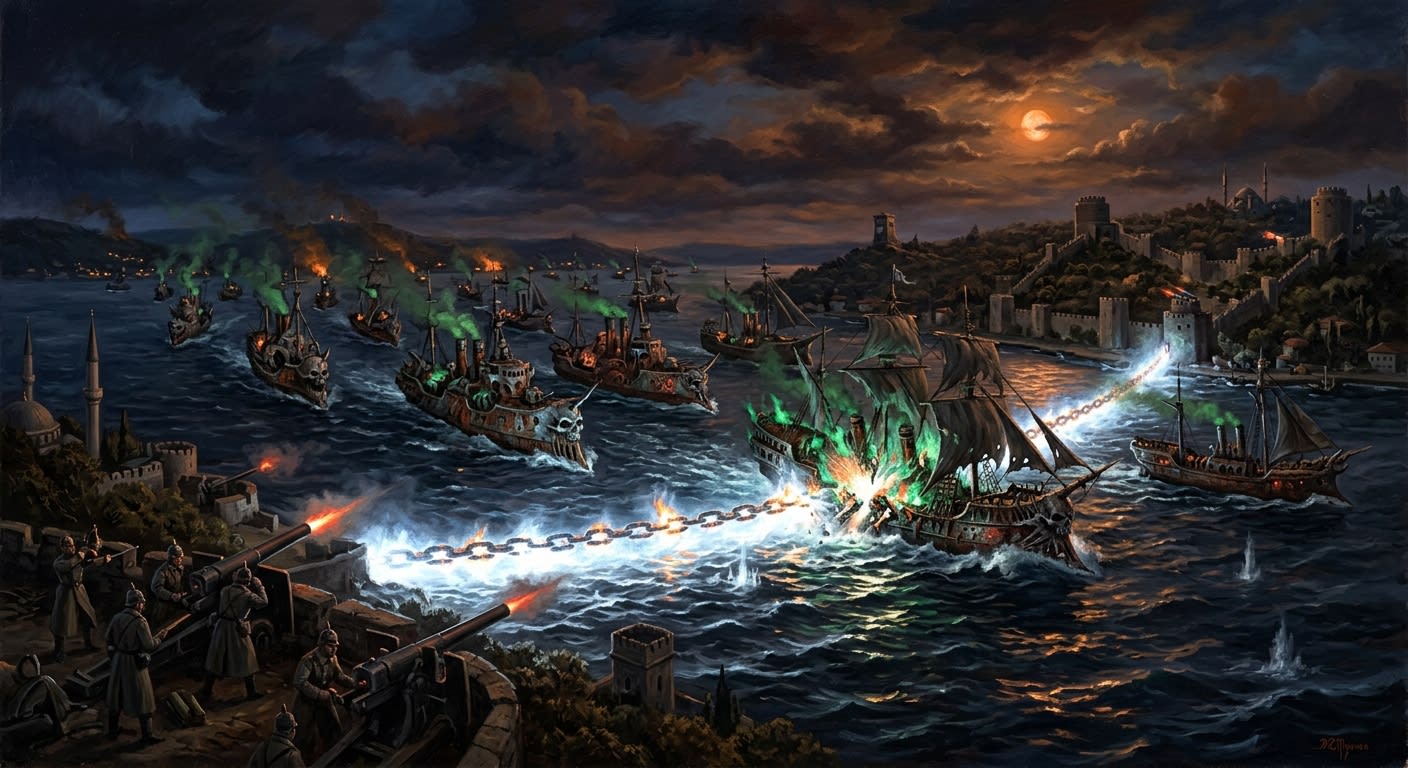
The Black Sea Armada
Forty-seven ships. The Bureau counted them twice. The second count was worse.
On the night of 14 Ferrum, A.S. 162, forty-seven demon vessels entered the Bosphorus. The Chain of Saint Anakletos held — and burned white-hot for seven hours. Forty-three ships destroyed, the chain gone dark ever since, and one ship never found.
Codex Ref. VII.4.01-001
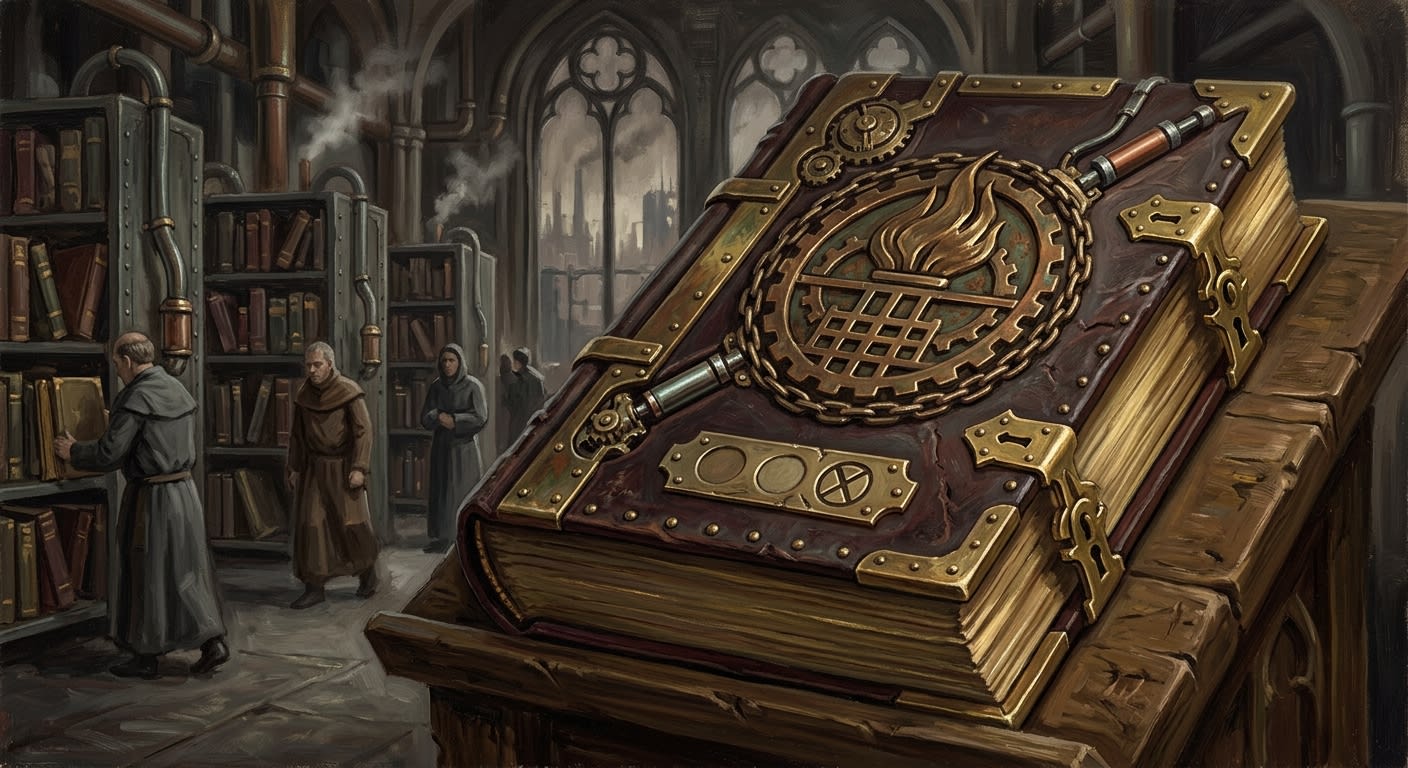
The Book of Promise
The child is named, measured, forecast, and gently confiscated
The Book of Promise is the Synod's vocational pre-allocation ledger, where baptism becomes forecast, childhood becomes collateral, and hope receives a quota mark.
Codex Ref. XIII.1.22-001

The Bureau of Heraldry
The grammar of loyalty, measured in ink and iron
The Bureau of Heraldry controls what the Synod is permitted to look like. Every crest is a sentence. Every unregistered symbol is a rebellion not yet named.
Codex Ref. VIII.1.03-001
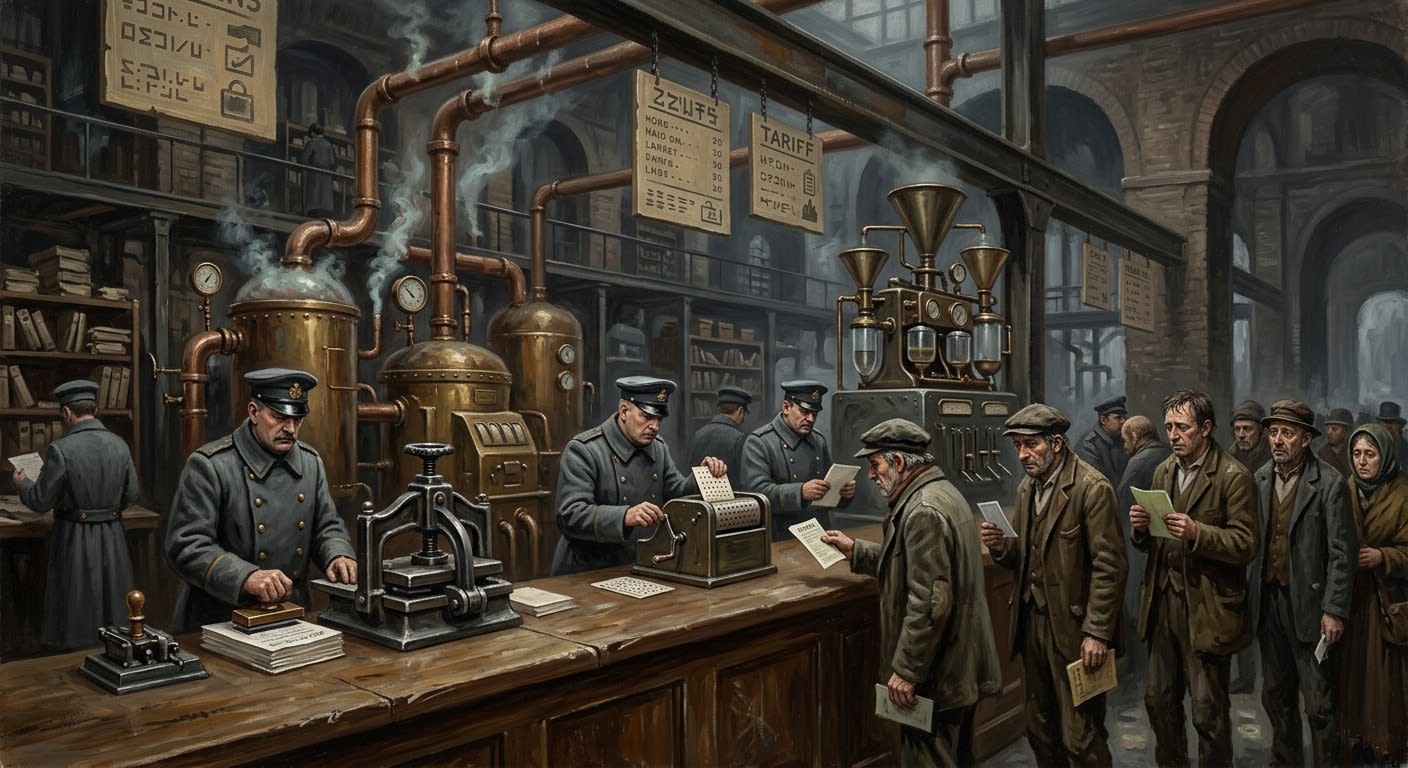
The Censorium of Taverns
Joy is safest when entered, weighed, and extinguished by permit
The Censorium of Taverns is the Bureau of Festivals sub-office that licenses drink, meters laughter, pumps curfew-fume, and proves that even joy may be made obedient by placard, bead, and ash.
Codex Ref. VIII.5.07-001
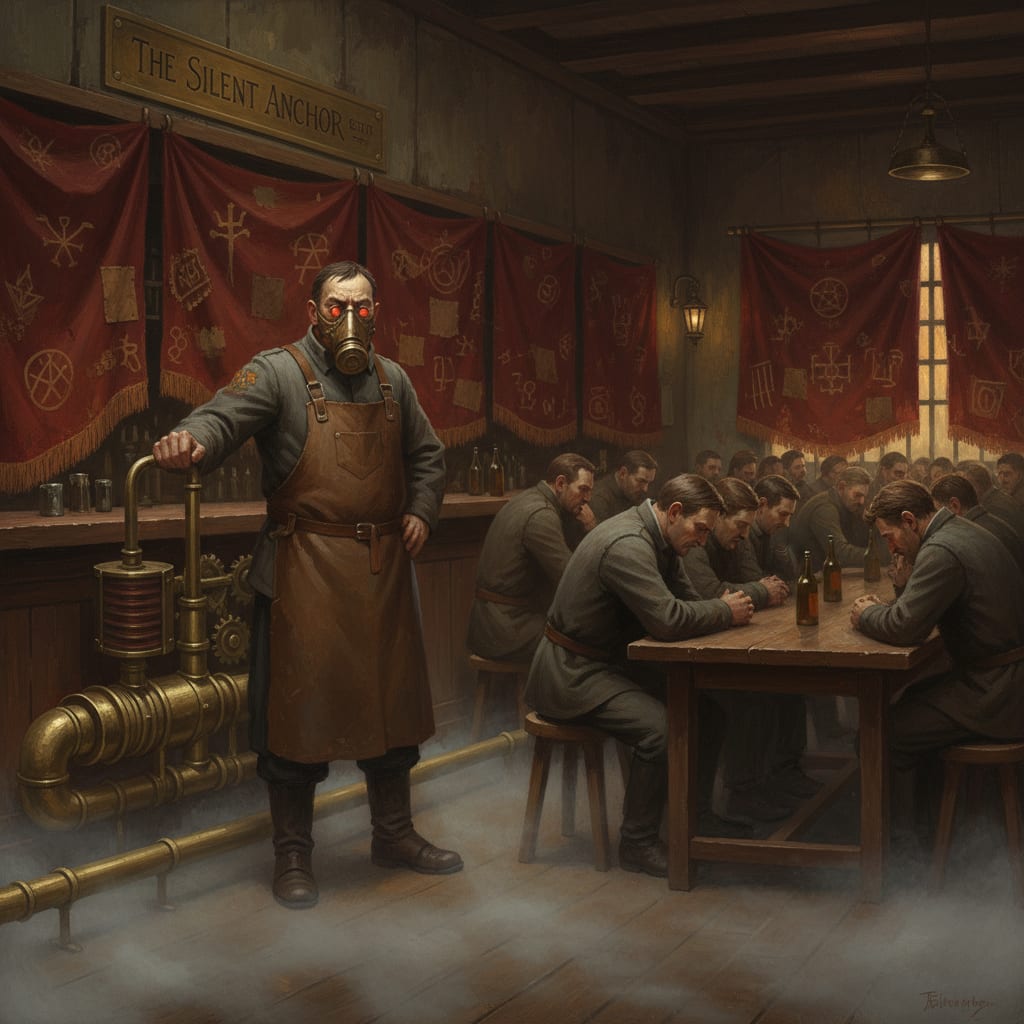
The Curfew-Fog Tavern Runner
On the publican who administers joy by bellows and bribe-tin — the Dominion's most controlled detonation, licensed, regulated, and quietly indispensable
The Licensed Housewarden — Fog-Keeper, atmospheric pacification operative, keeper of fifty strangers alive for ten minutes at a time — who sells the illusion of warmth inside a machine built to extinguish it.
Codex Ref. XII.10.01-001
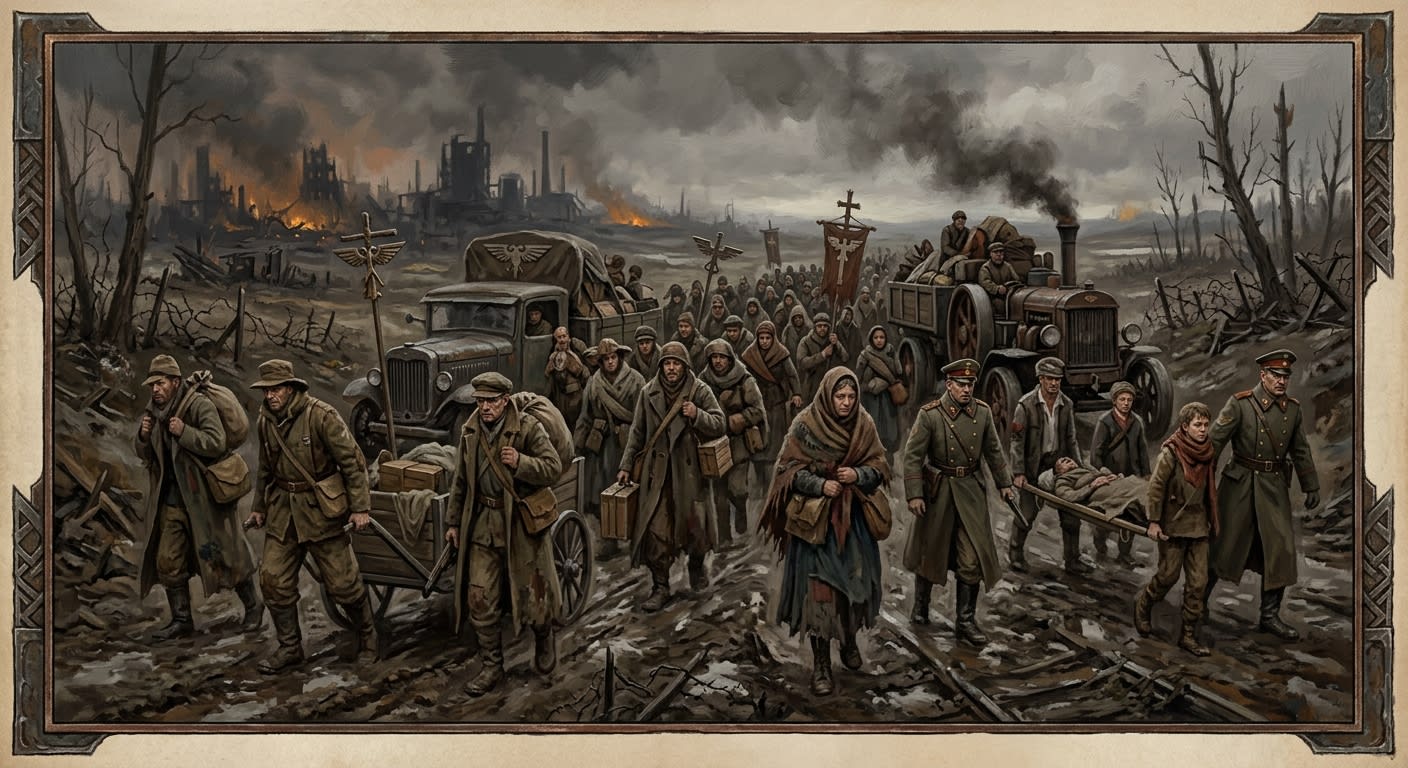
The Great Retreat
Seventeen years of westward mud before the Line learned to stand
From A.S. 48 to A.S. 65, the faithful West walked, bled, improvised institutions, and finally stopped running where the Sagittal Line began to hold.
Codex Ref. VII.1.03-001

The Heartlands
The safe country, provided one defines safety as distance from teeth and proximity to stamps
The Heartlands are the Synod's safe interior only by infantry arithmetic: Zones 1–3 feed the Line with bread, steel, bodies, bells, paperwork, and bones.
Codex Ref. II.0.02-201
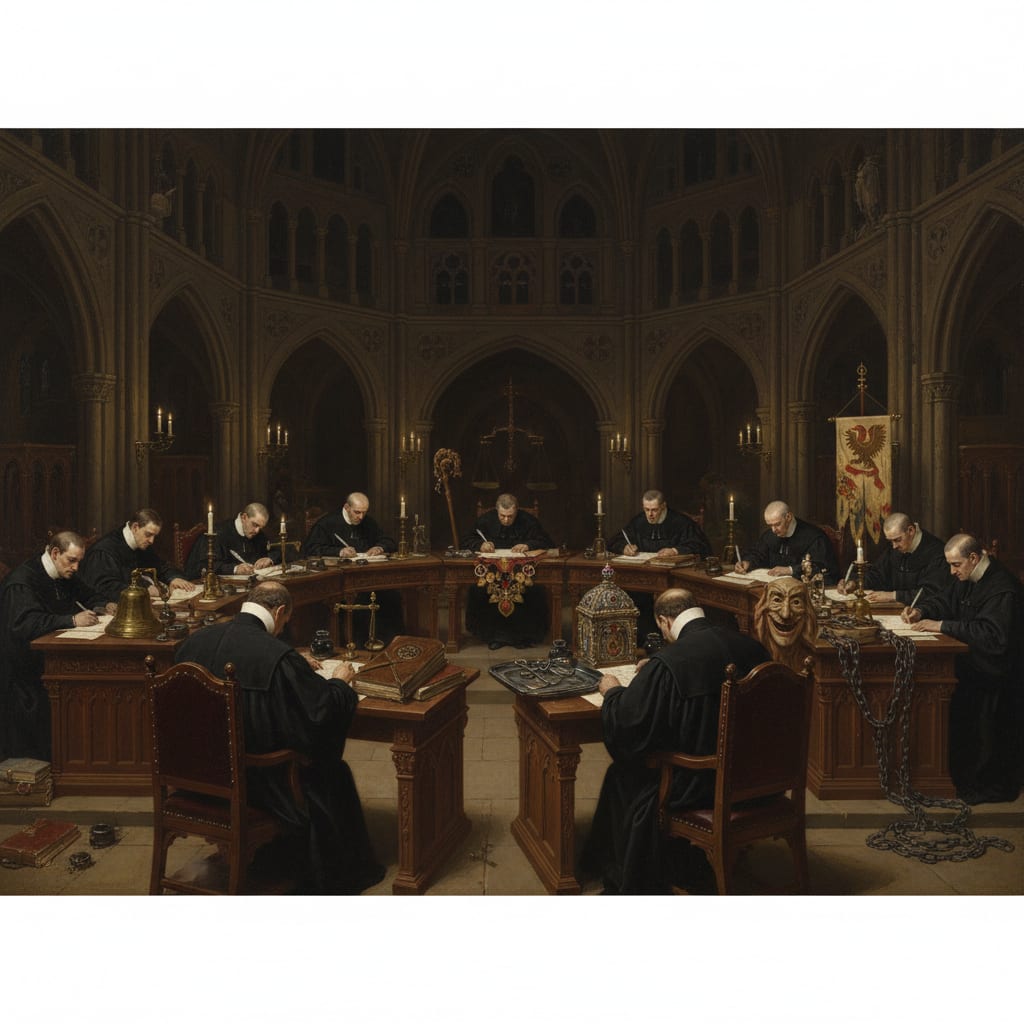
The Holy Bureaus
Twelve Instruments of Providence, or Thirteen If You Count the One That Does Not Exist
The twelve sacred organs through which Strasbourg bends a continent to its will. Each Bureau claims a charism of governance descended from the Apostolic Sundering. Their clerks are legion, their archives endless, their contradictions — by design.
Codex Ref. III.3.01-001
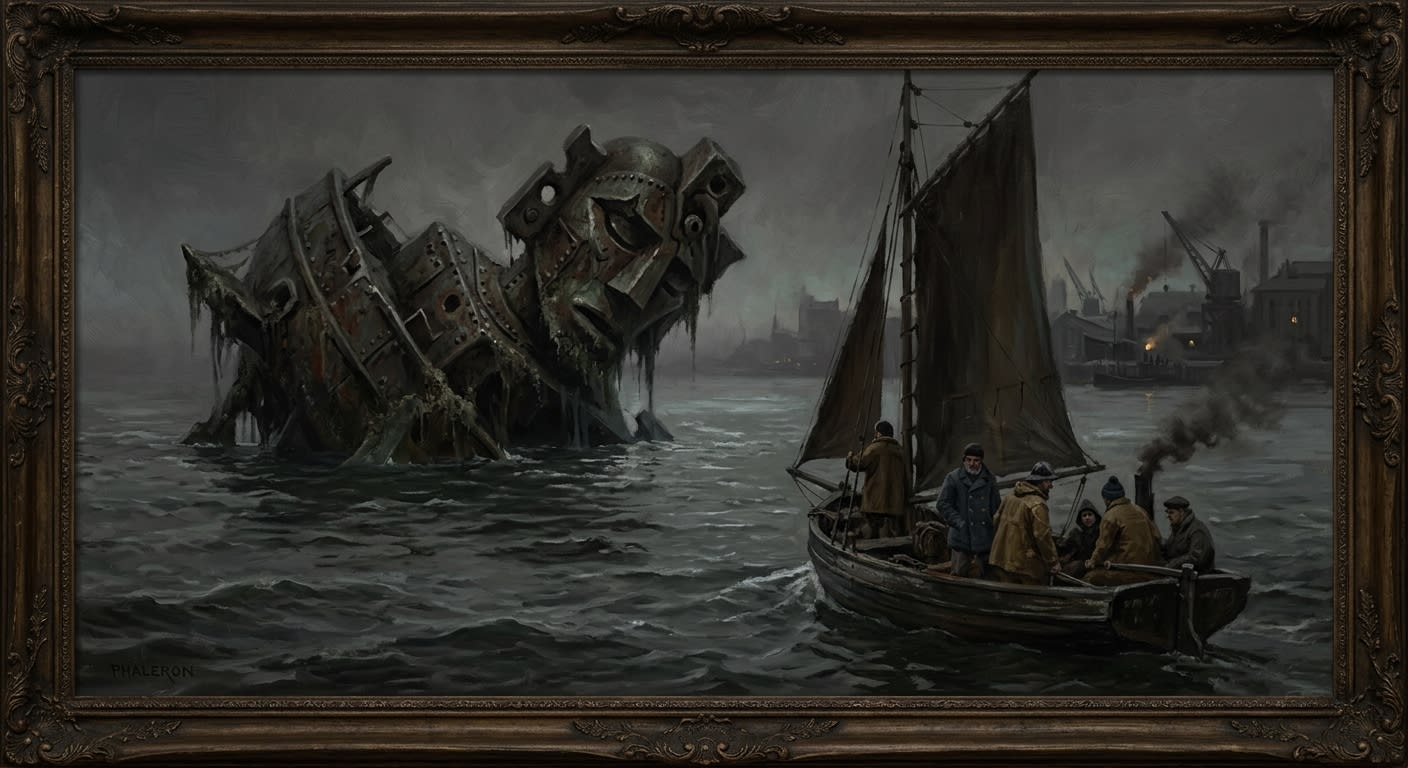
The Iron Idol
What the chain did not burn, the water learned to keep
A submerged iron anomaly off Phaleron Bay, linked to the Black Sea Armada's missing forty-seventh ship and watched by fishermen who wisely look elsewhere.
Codex Ref. V.2.02-001
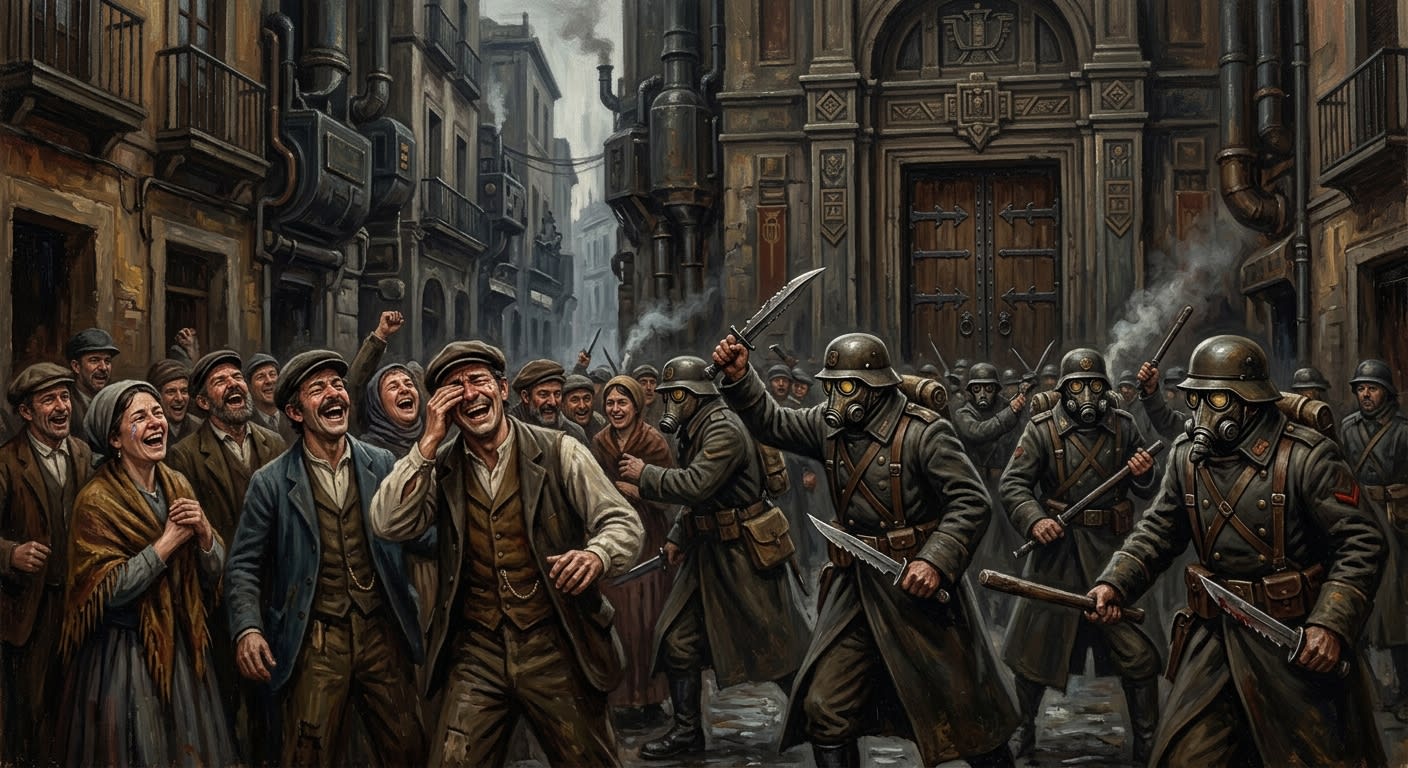
The Laugh Riots of Seville
The city laughed; the Bureau counted tongues
Seville exceeded its mirth quota in A.S. 153. The Bureau answered laughter with knives, and called the silence compliance.
Codex Ref. VII.8.02-001
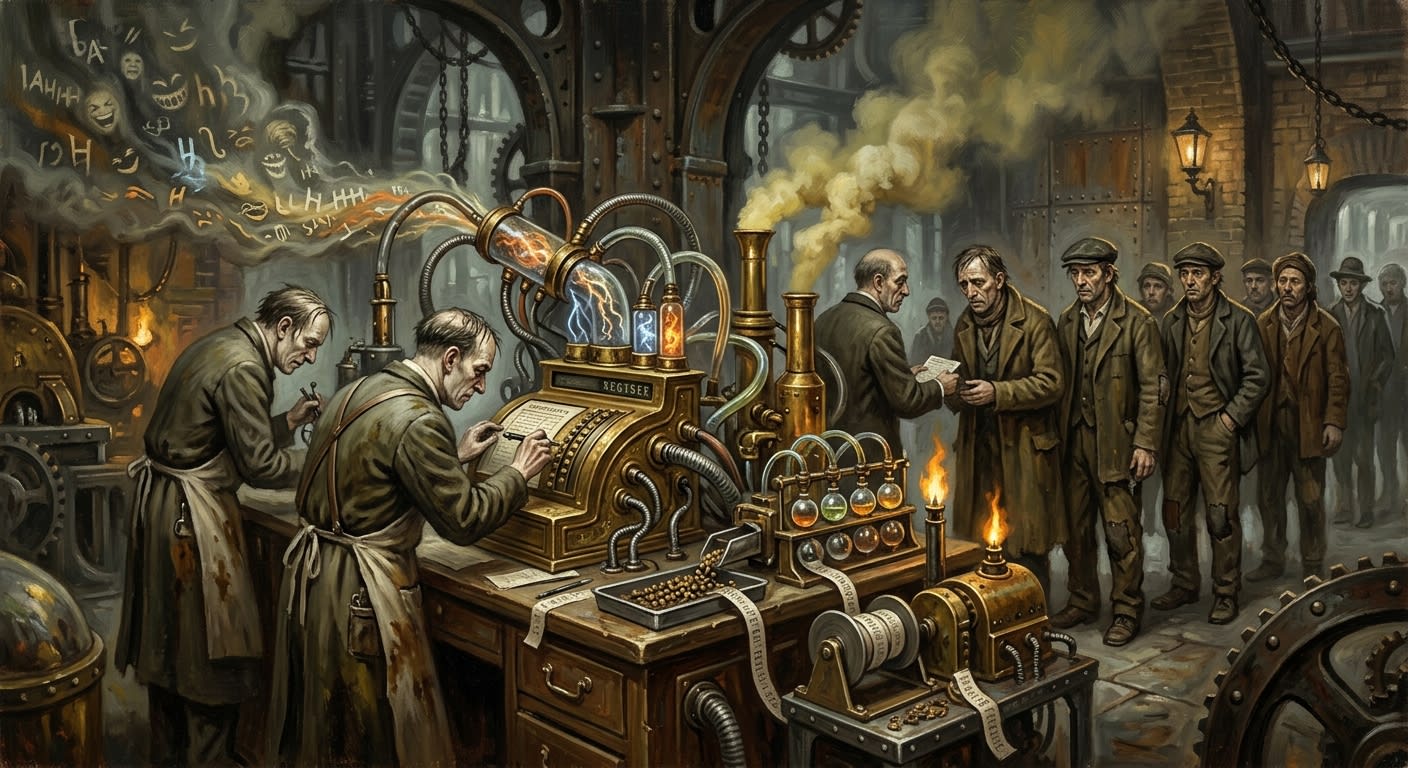
The List of Laughters
The ledger that hears teeth and teaches merriment to fear arithmetic
The List of Laughters is the Censorium's nightly mirth register, converting chuckles, guffaws, chortles, and riot-laughs into beads, fees, suspensions, fog, and fire.
Codex Ref. XIII.1.66-001
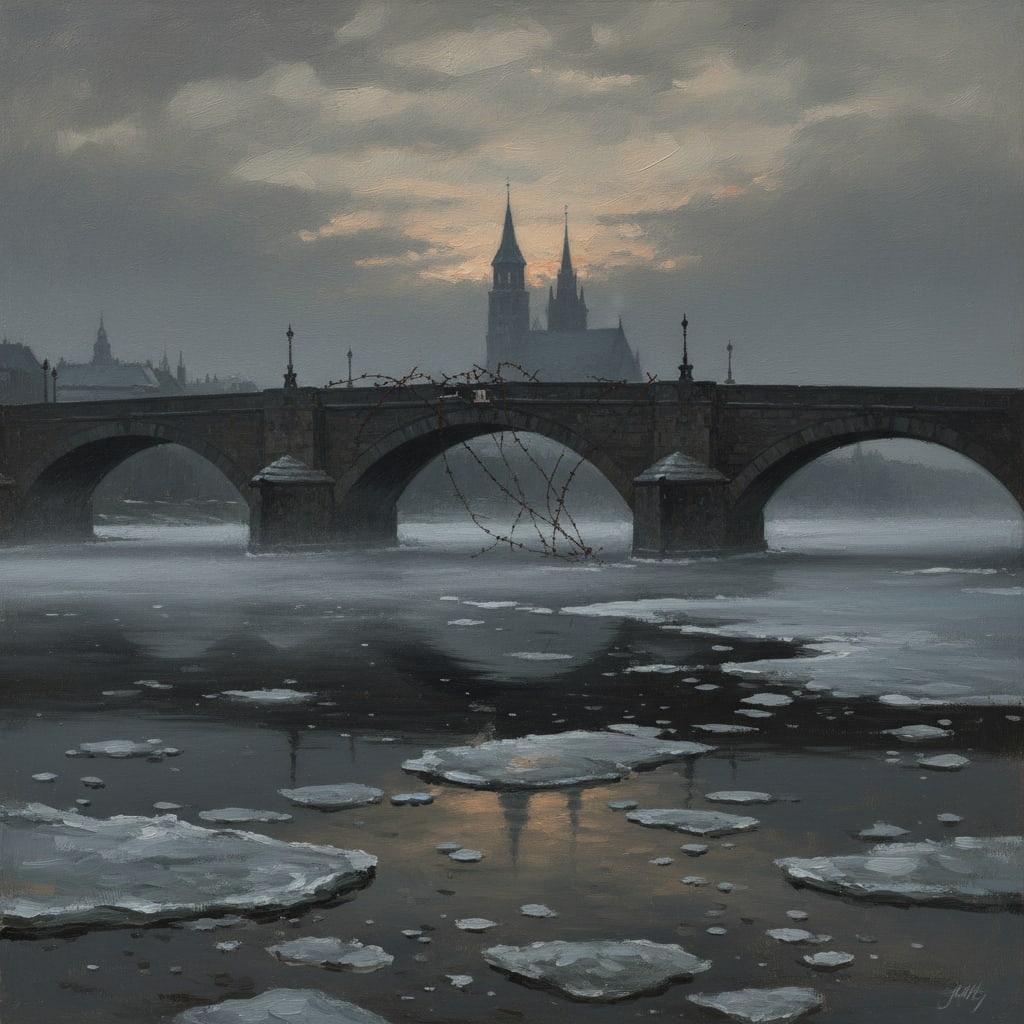
The Night of Knives in Kraków
Forty-seven mouths wired shut so that no prayer could escape
Forty-seven clergymen seized in the night, their mouths wired shut with iron wire, and cast from the Dębnicki Bridge into the frozen Vistula. The Bureau spent one hundred and thirty years ratifying the narrative; it has been collecting the candle wicks ever since.
Codex Ref. VII.8.01-001
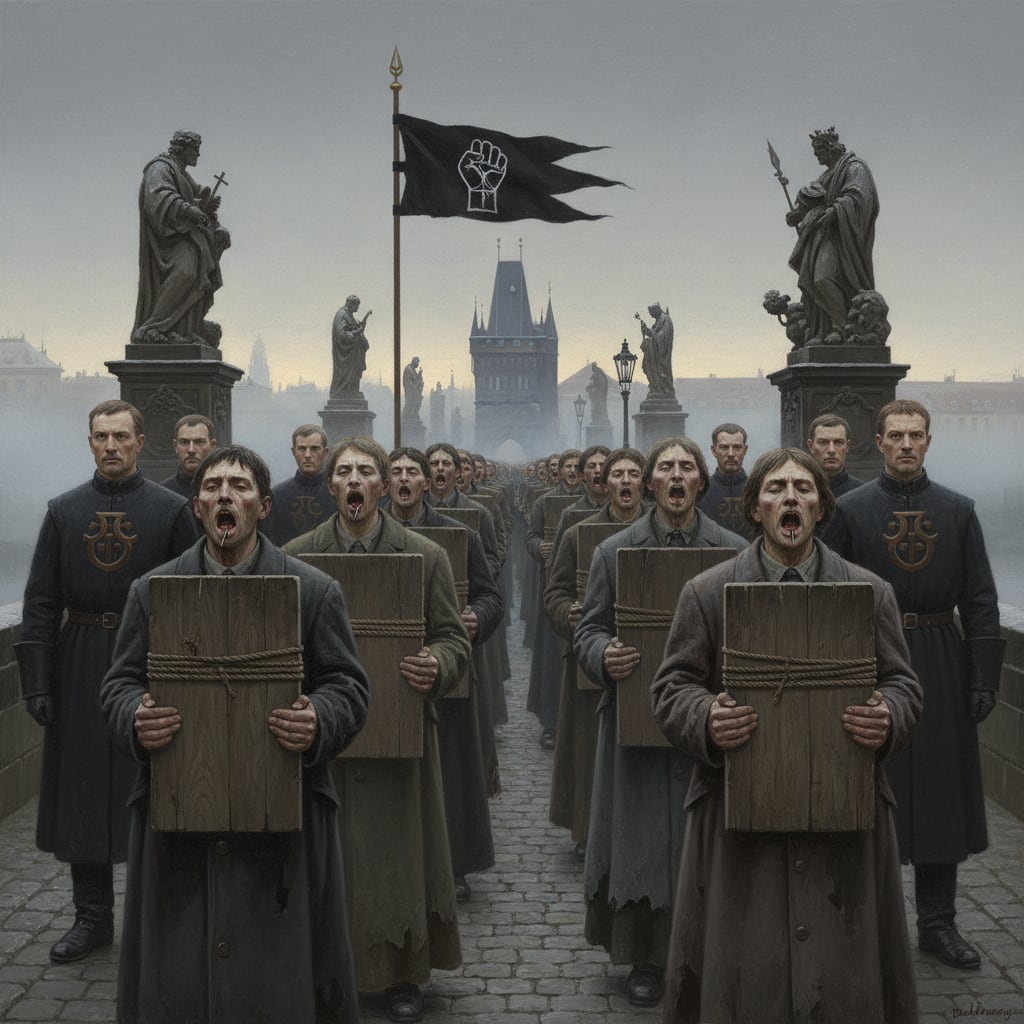
The Procession of Tongues
One hundred and seven consecutive years of doctrine tablets, iron nails, and fixed cobblestones — the [[bureau-of-purity|Bureau of Purity]]'s clearest argument, and the one requiring no rebuttal.
The Bureau of Purity's ceremony of ambulatory confession — heretics with tongues nailed to doctrine tablets, marching across Prague's Charles Bridge since A.S.
Codex Ref. VII.6.01-001
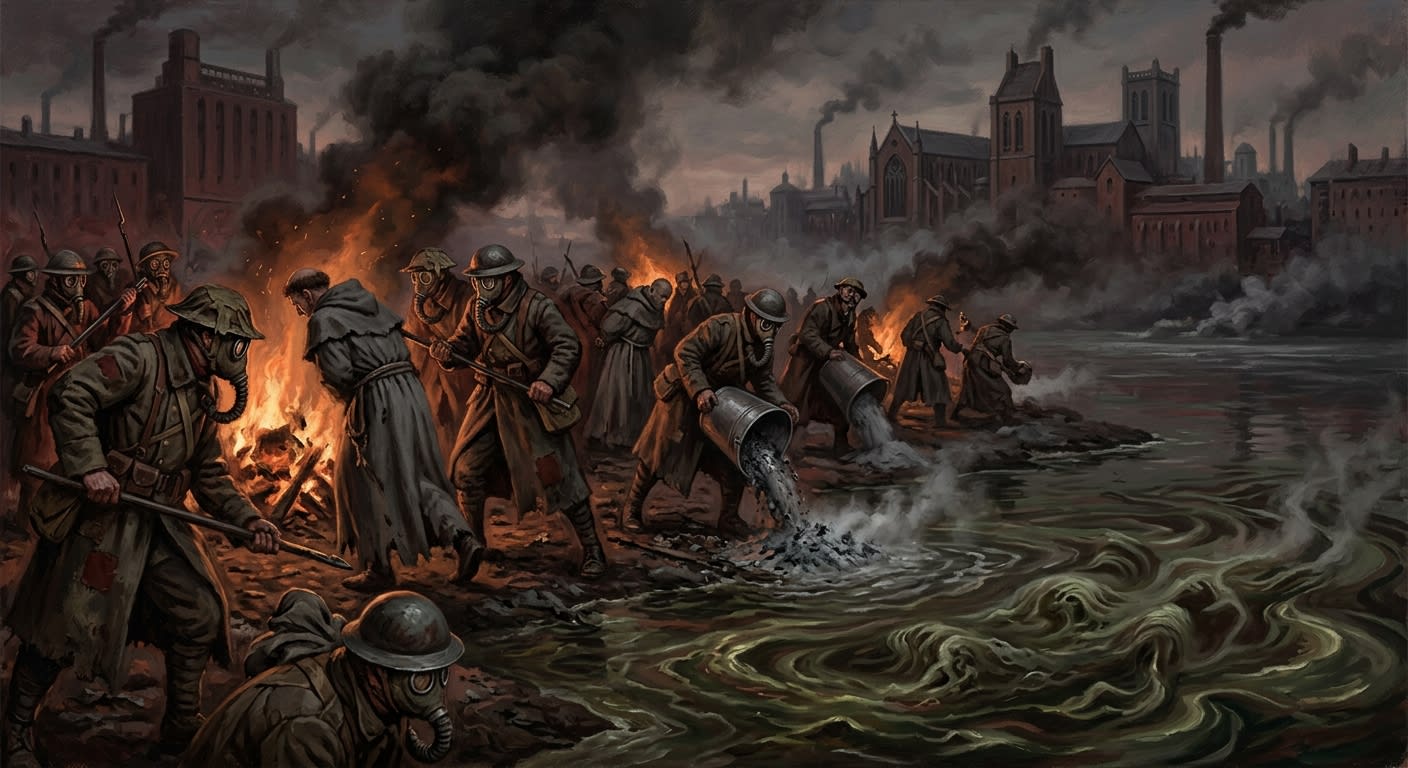
The Red Slaughter of Lyon
The first cut was local, municipal, and entirely pleased with itself
In –39 A.S., Lyonnais militias burned forty-three friars and dumped their ashes into the Rhône; the river answered in psalms, as rivers sometimes improve upon councils.
Codex Ref. VII.8.03-001
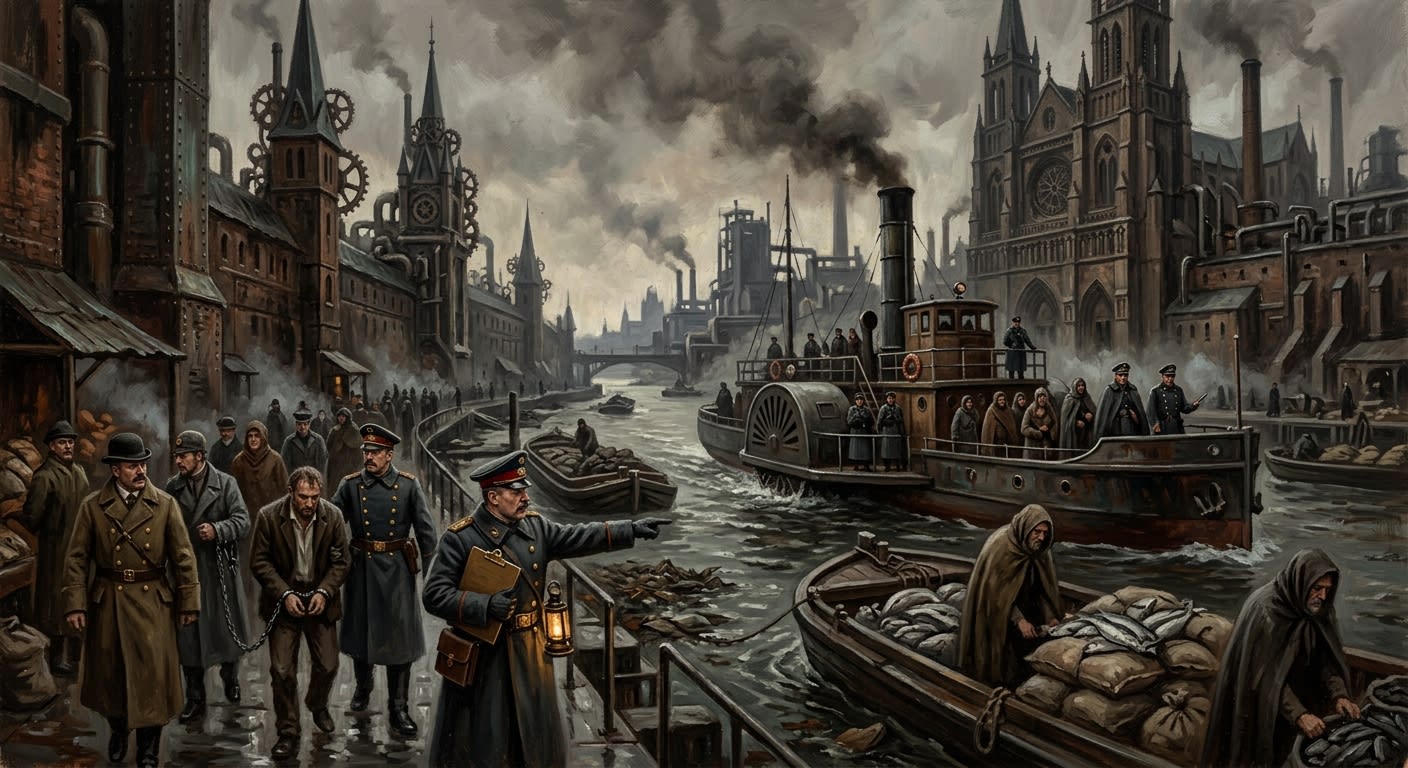
The Rhône
Water carries what paper refuses to keep dry
The Rhône is a southern river-corridor of ash, pilgrimage, fishery inspection, Avignon heresy, Lyon spectacle, wet custody, and water that declines obedience.
Codex Ref. II.1.10-201
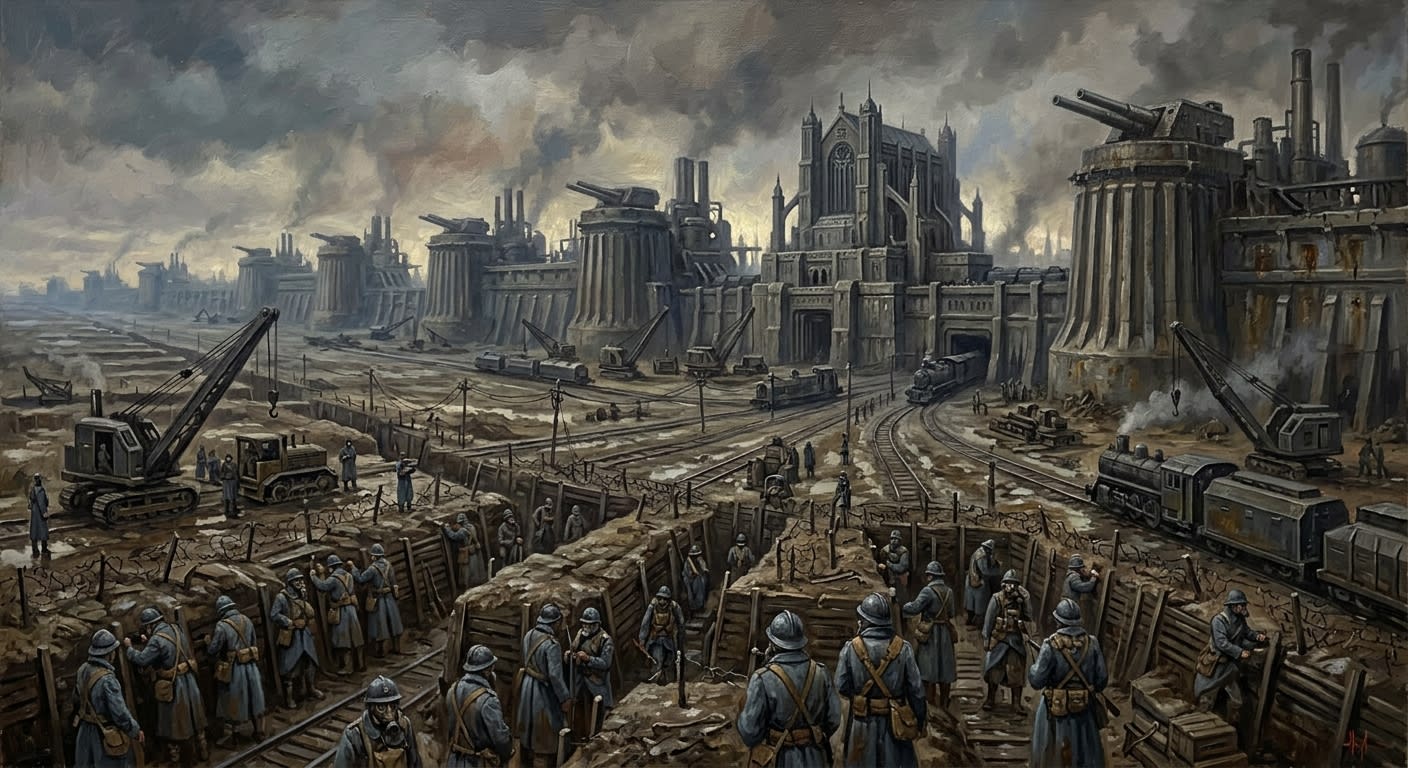
The Sagittal Line
The continent's spine, stitched in mud, bells, and refusal
The north-south defensive spine of the Synod: seven bastions, two thousand miles of trenches, and the bureaucratic miracle of making stalemate into civilization.
Codex Ref. III.1.01-001
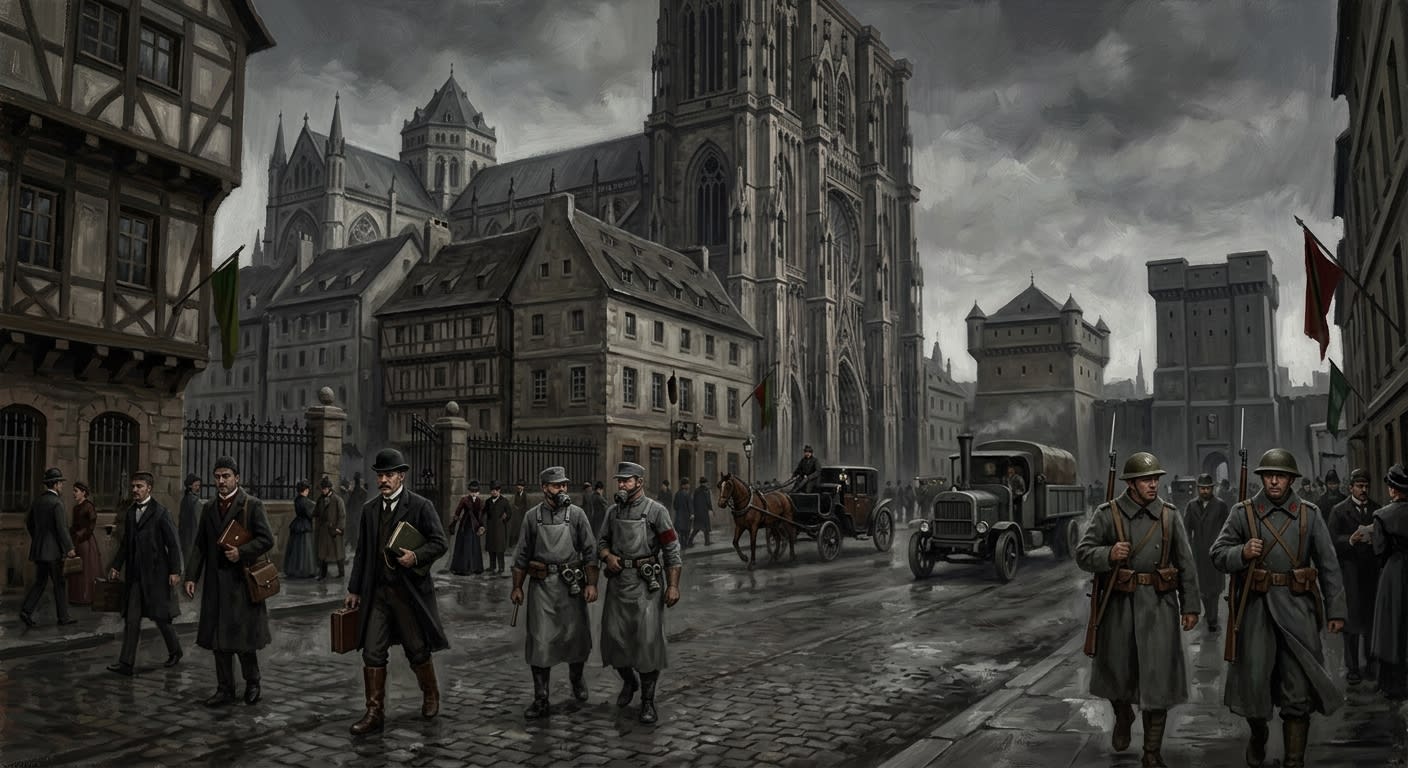
The Sanctum Mile
Strasbourg's white corridor, scrubbed clean enough to hide the blood
The Sanctum Mile is Strasbourg's white civic-sacral corridor: cathedral stone, Bureau houses, the Hall of Confessions, and the Prison of Questions in polished alignment.
Codex Ref. II.2.02-002
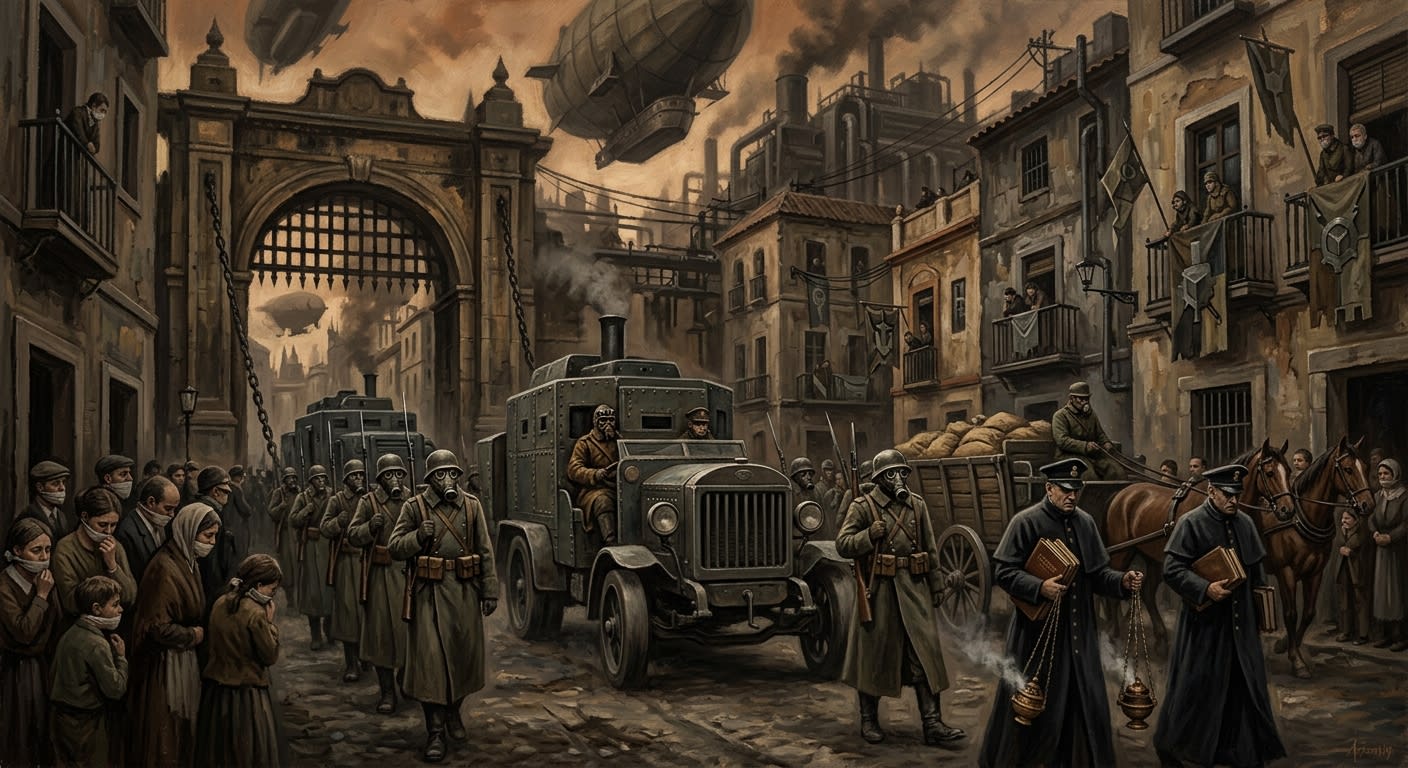
The Subjugation of Seville
A siege so well dressed in liturgy that the Ledger called it a procession
In A.S. 155, Seville was corrected by procession: gates opened under writ, calendars shortened, mouths disciplined, granaries emptied, and conquest taught to smell like incense.
Codex Ref. VII.8.02-002
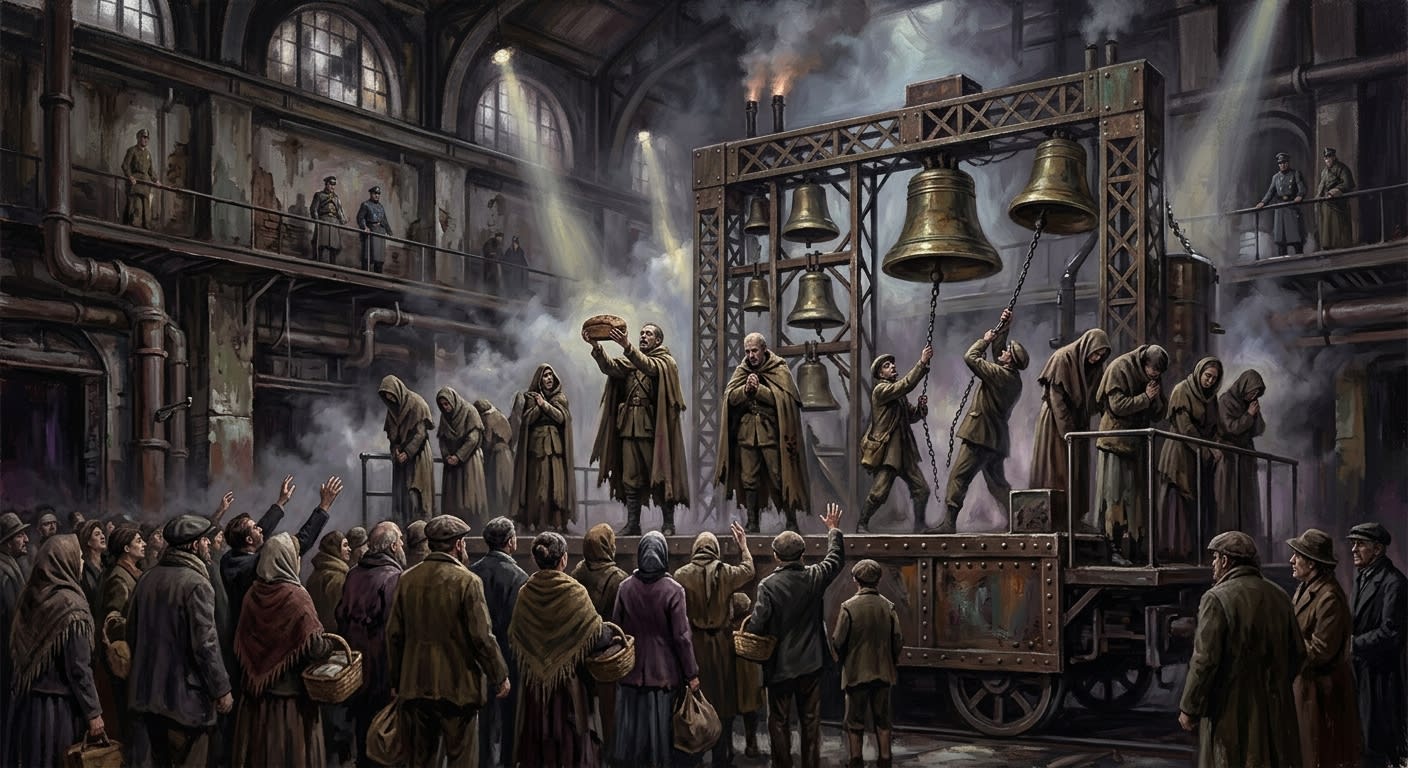
The Theatres
Bread, bells, and applause stolen from the altar
The Theatres are the Black Ledger faction that turns stolen bread into civic memory, staging Queue-Saint performances where hunger, bells, and witnesses become recruitment.
Codex Ref. XI.1.04-002
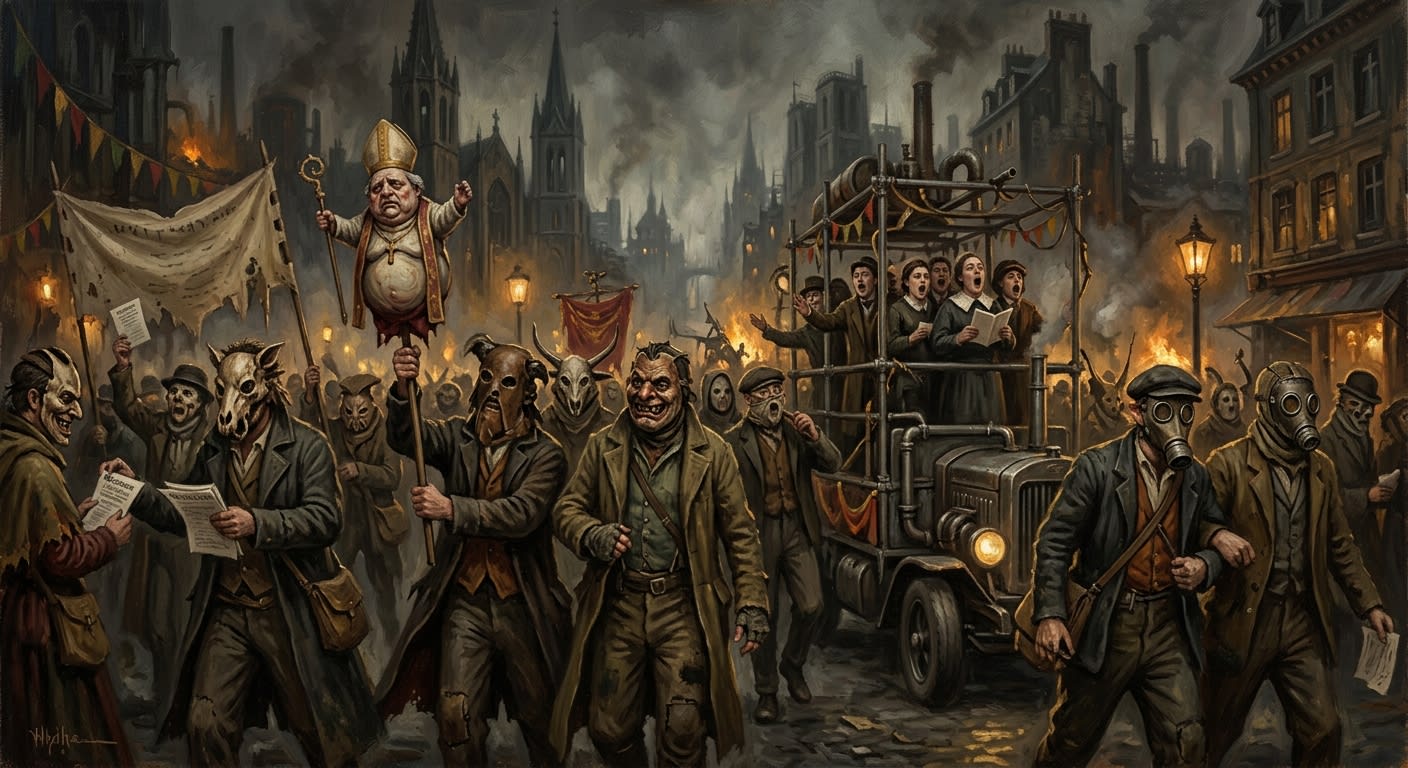
The Tumults of Lyon
Where licensed laughter discovered teeth and the bear wore a mitre
In A.S. 170, Lyon's licensed Carnival of Saint Bérard's Misrule became nine hours of masks, pamphlets, puppet blasphemy, altered hymns, and audited laughter.
Codex Ref. VII.4.11-001
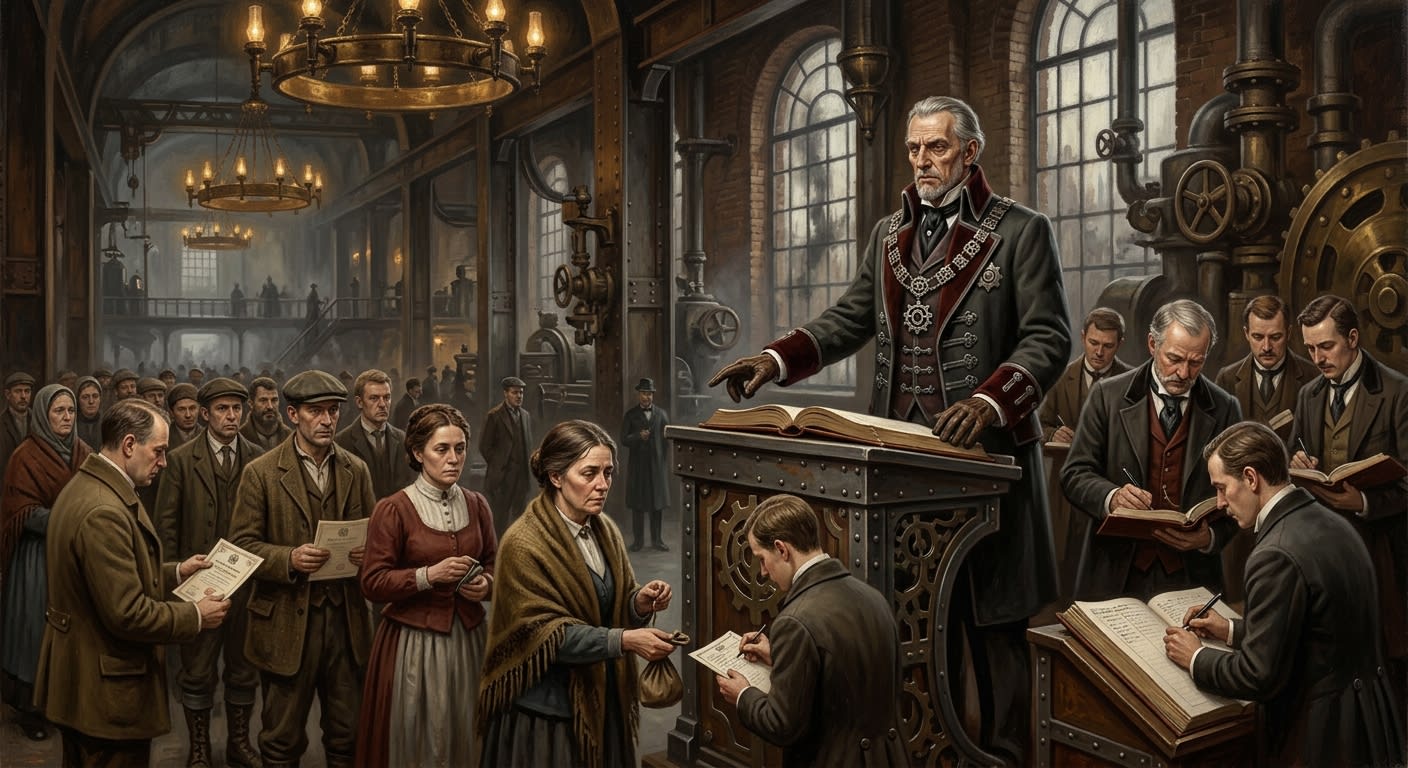
The Twelfth Amendment
The skull is licensed ground; keep your thoughts in uniform
Ratified in A.S. 196, the Twelfth Amendment closes the internal loophole, licenses private hope, and gives Purity the citizen's face as evidence.
Codex Ref. XIII.1.04-196
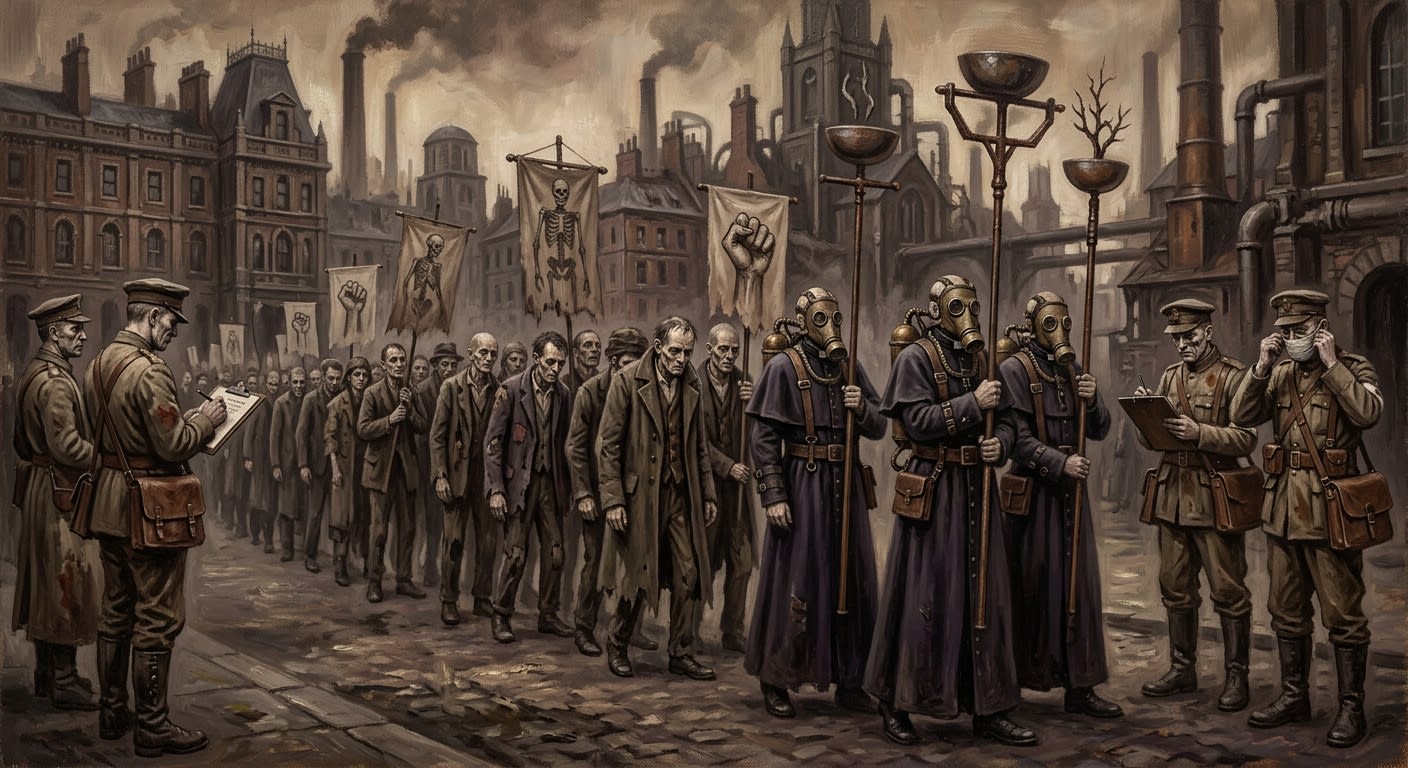
Triumph of the Gaunt
An injury given a hymn-sheet
The Triumph of the Gaunt crowns visible hunger as public virtue, training citizens to distrust plenty while Medicine counts the damage.
Codex Ref. XIII.1.25-001
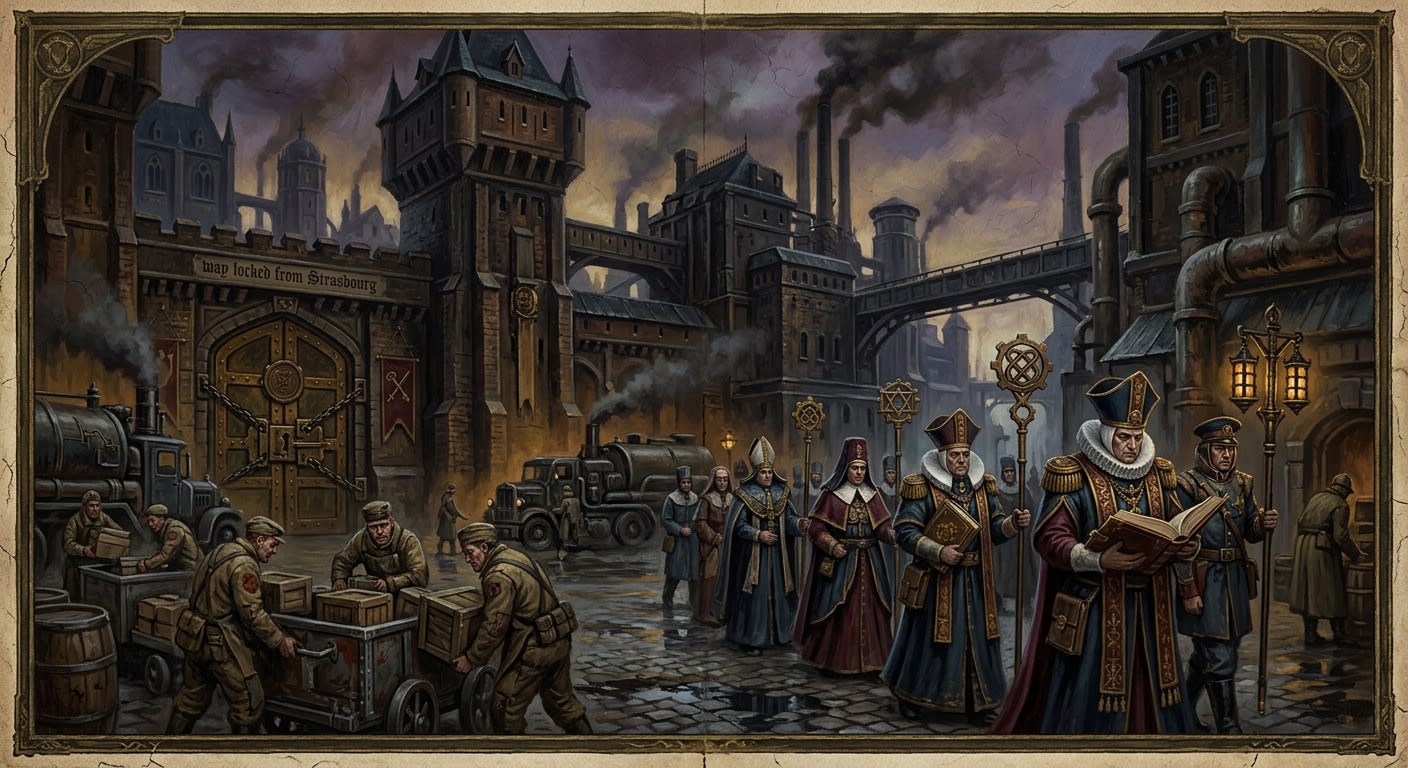
Triune Hearth
Three old bodies, one chimney, and Strasbourg holding the poker
The Triune Hearth binds France, Iberia, and the Rhineland into one Synodal household: warm in sermon, hungry in ledger, and locked from Strasbourg.
Codex Ref. XIII.1.04-090

Unauthorized Melody Smuggler
The lullaby the Bureau buried; the mouth it walks out of now
The Unauthorized Melody Smuggler is classified under Tongue-Crime, Melody Intent, Doctrinal Sabotage — above common theft, below armed heresy. The lullaby does not care what the Bureau calls it. It continues to walk out in someone else's mouth.
Codex Ref. XII.48.01-001

Vigil Ark *Saint Barachiel*
On the consecrated dirigible that blesses the Bosphorus sky, the sermon heard forty feet below the water, and the eleven minutes forty-three seconds of A.S. 199 the Bureau has classified as Not Our Co
The Vigil Ark Saint Barachiel: armed dirigible-reliquary, Constantinople theater, A.S. 168–present. Thirty-three years of consecrated patrol. One unexplained Broadcast. The Ark flies. The Bureau recommends continued faith.
Codex Ref. II.4.11-001
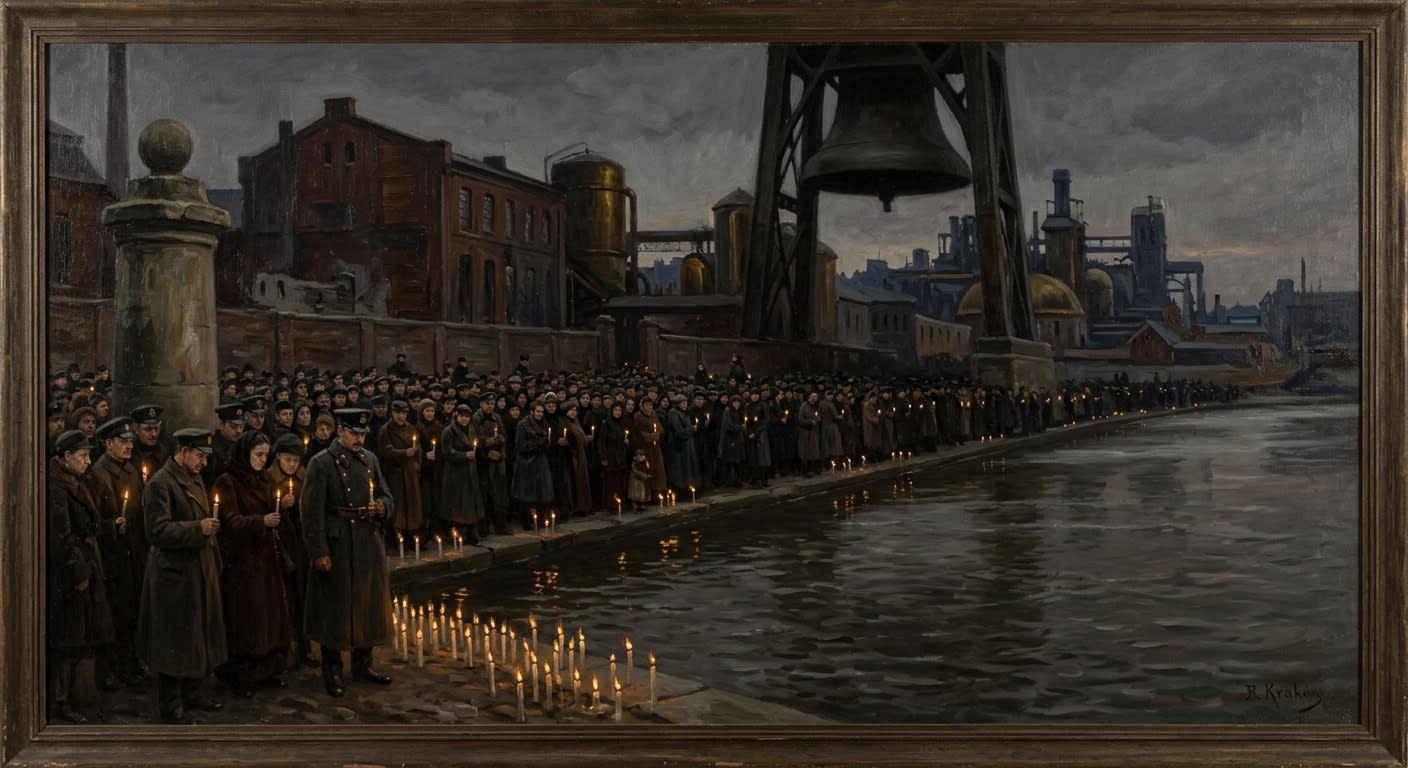
Vigil of the Drowned Priests
One hour in which [[krakow|Kraków]] is ordered to hear the river
Annual Kraków observance ratified in A.S. 148: one mandated hour of Bell-silence, forty-seven candles, and a river taught to testify.
Codex Ref. VII.6.02-001

Warden of the Sacred Ledger
Memory is permitted only after custody
The Warden of the Sacred Ledger guards the passage between recorded fact and ratified meaning, lest memory escape and become a riot with dates.
Codex Ref. XIII.1.33-090
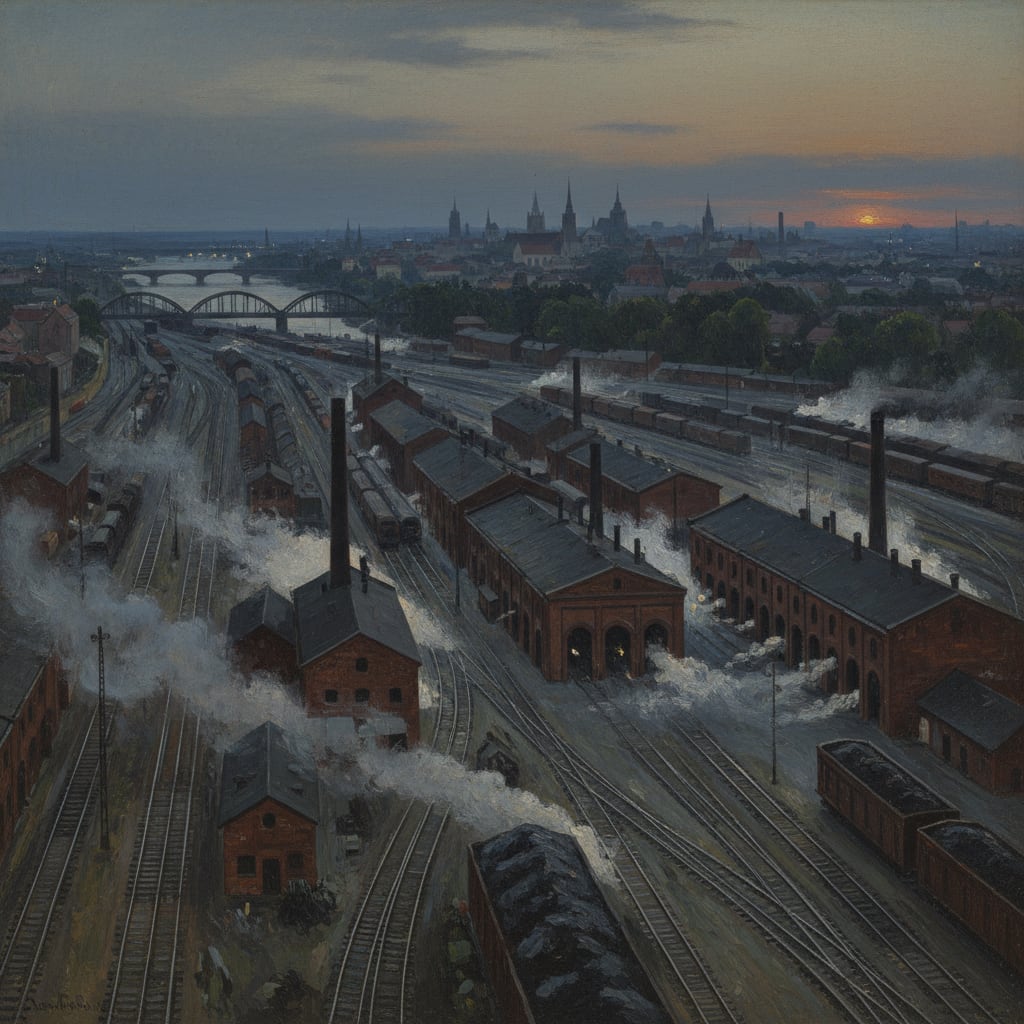
Warsaw
The city the Bureau told to leave, and the bakeries it opened in reply
The Synod's forward staging city on the Vistula — Zone Three, Northern Corridor, entry 14-W. 160 km from the Sagittal Line; close enough to hear the front on clear nights. The Bureau told it to leave in A.S. 95. It has grown by a quarter-million souls since.
Codex Ref. II.4.09-007
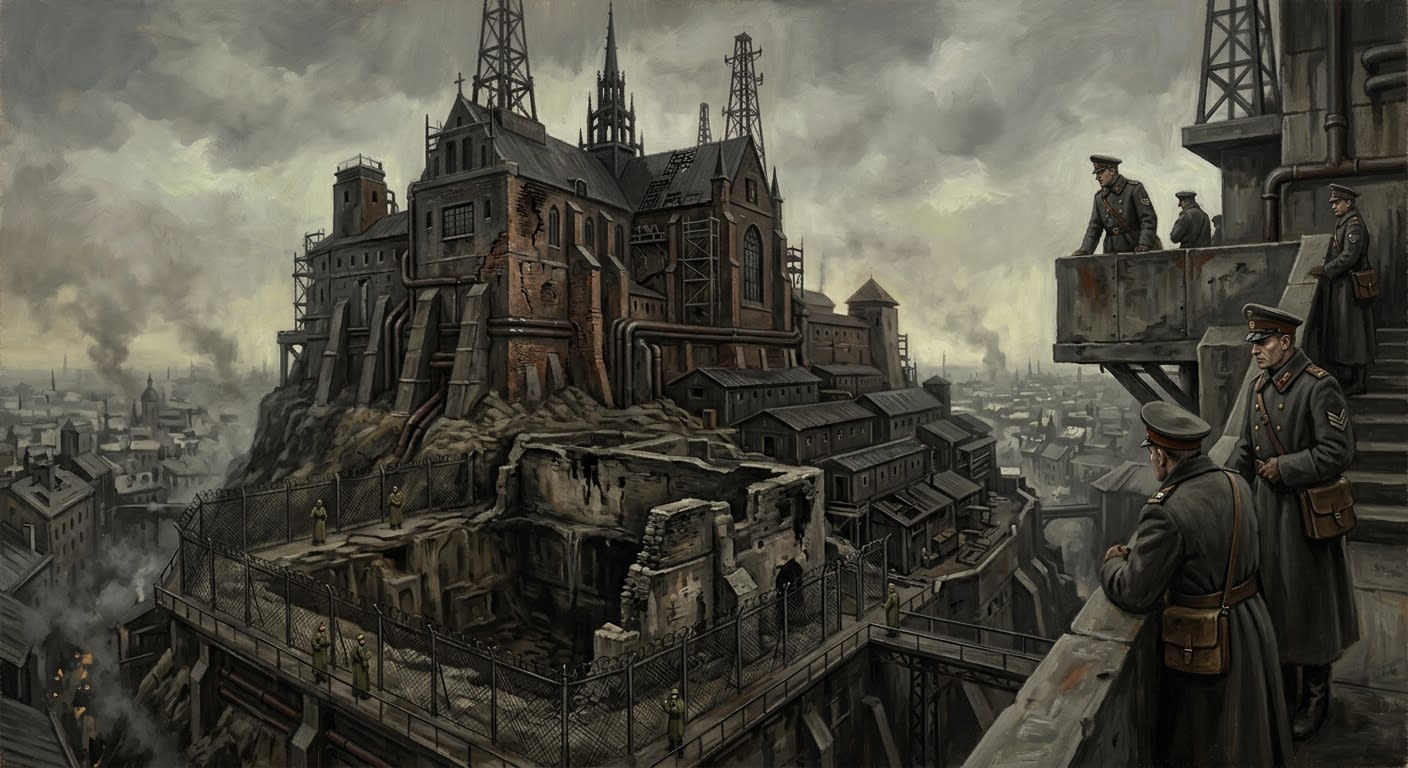
Wawel Hill
A crown of stone made to remember under seal
Kraków's cathedral hill, bound to the Night of Knives, restored as a public wound, and watched from upper works where Doctrine observes the city looking upward.
Codex Ref. II.3.06-001
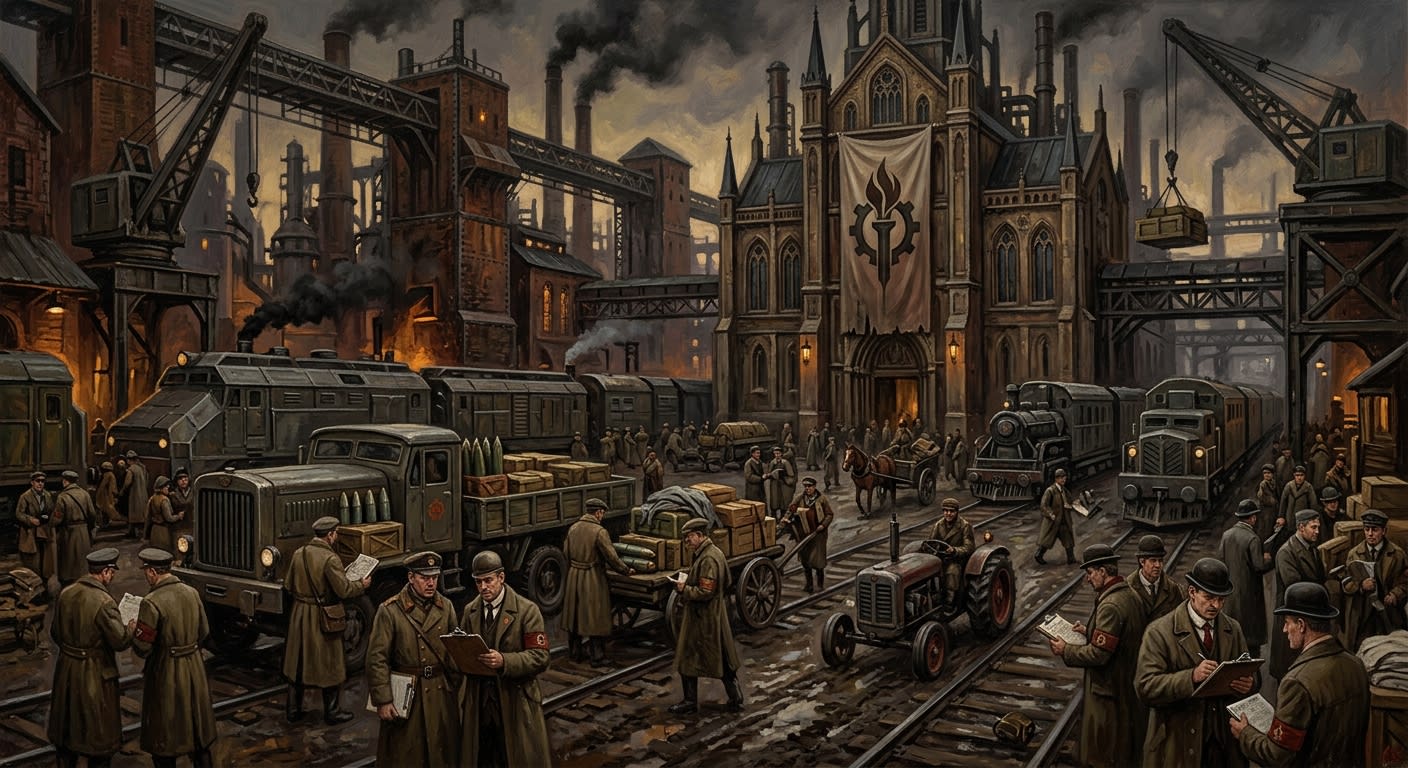
Zone 1
The rearward paradise that learned to invoice the war
Zone 1 is the Synod's polished western rear: safe enough to tax, rich enough to excuse itself, and stained to the elbows by logistics.
Codex Ref. II.0.03-201