

#On the Office and the Man Wearing It
I, Hieromnemon Valerius Drax, am the Warden of the Sacred Ledger, Archivist of the Holy Bureau of Doctrine, keeper of the Revised Codex, signer of ratifications, corrector of lesser prose, and the one living functionary whom Strasbourg has had the wisdom, necessity, and occasional bad taste to place between History and the people who might otherwise handle it with their bare hands.
I write this entry myself. Of course I do. The Bureau of Records proposed an independent dossier, drafted by committee, countersigned by three archdeacons and a man from Tithes who uses commas as if paid by the mark. I refused on grounds of public safety. A committee cannot describe genius. It can only injure it by consensus.
The title Hieromnemon predates my tenure and will, barring catastrophe or Purity's annual enthusiasm, survive it. The word means sacred rememberer, though this translation is imprecise in the way all honest translations are imprecise. A Hieromnemon does more than remember. He selects, consecrates, arranges, weaponises, withholds, corrects, and, when the need arises, burns the surviving draft. Memory is a mob unless ruled. I rule.
The Warden's chair stands in the Doctrine wing of Strasbourg, between the Basilica of the Ledgered Saints and the Tower of the Quill, in a room whose windows face a wall because vistas encourage vanity in weaker men. Mine requires no encouragement. The desk is black oak, scarred by knives, seal rings, spilled sacramental wine, and one small circular burn from a candle used during the A.S. 197 Recension of the Dead (Unregistered). The burn is beautiful. I have forbidden repair.
I am both person and instrument. The man eats, sleeps badly, corrects sermons, distrusts unnumbered drawers, and keeps an empty breath-jar on his desk. The instrument seals articles, revises heresies into footnotes, tells Europe what its terror means, and receives biweekly reports from offices that officially have no messenger, no corridor, and no right to borrow his chair. This distinction between man and instrument is useful to subordinates who wish to survive my temper. It is useless to enemies. They may address either and be crushed by both.
#On Formation and Advancement
My enemies have attempted to discover my childhood. This is affectionate of them. They imagine, with the dim domestic superstition common to people who own family spoons, that a man can be explained by nursery furniture. They search baptismal rolls, school lists, early examination sheets, refectory punishments, apprentice memoranda, and the small early sins from which biographies are usually brewed. They find documents. They misunderstand the documents. Then they publish theories. Then I correct them.
The most persistent account places me in Strasbourg's orbit, though several malicious clerks prefer a provincial origin because small souls enjoy imagining greatness dragged upward from mud. My birth record exists in three copies, none agreeing on the day, two disagreeing on the parish, and one written in a hand suspiciously similar to mine though I was, at the alleged hour, occupied with being born. Records dislikes this. I do not. A man whose first file cannot be settled has begun well.
I entered school under the shadow of the Basilica bells and discovered early that obedience is less useful than accuracy weaponised in the correct direction. My earliest surviving composition concerned Augustinus, whose phrase "necessary procedural darkness" I judged insufficiently cruel to be true and insufficiently elegant to be useful. The complaint was denied. The phrase endured. So began my career.
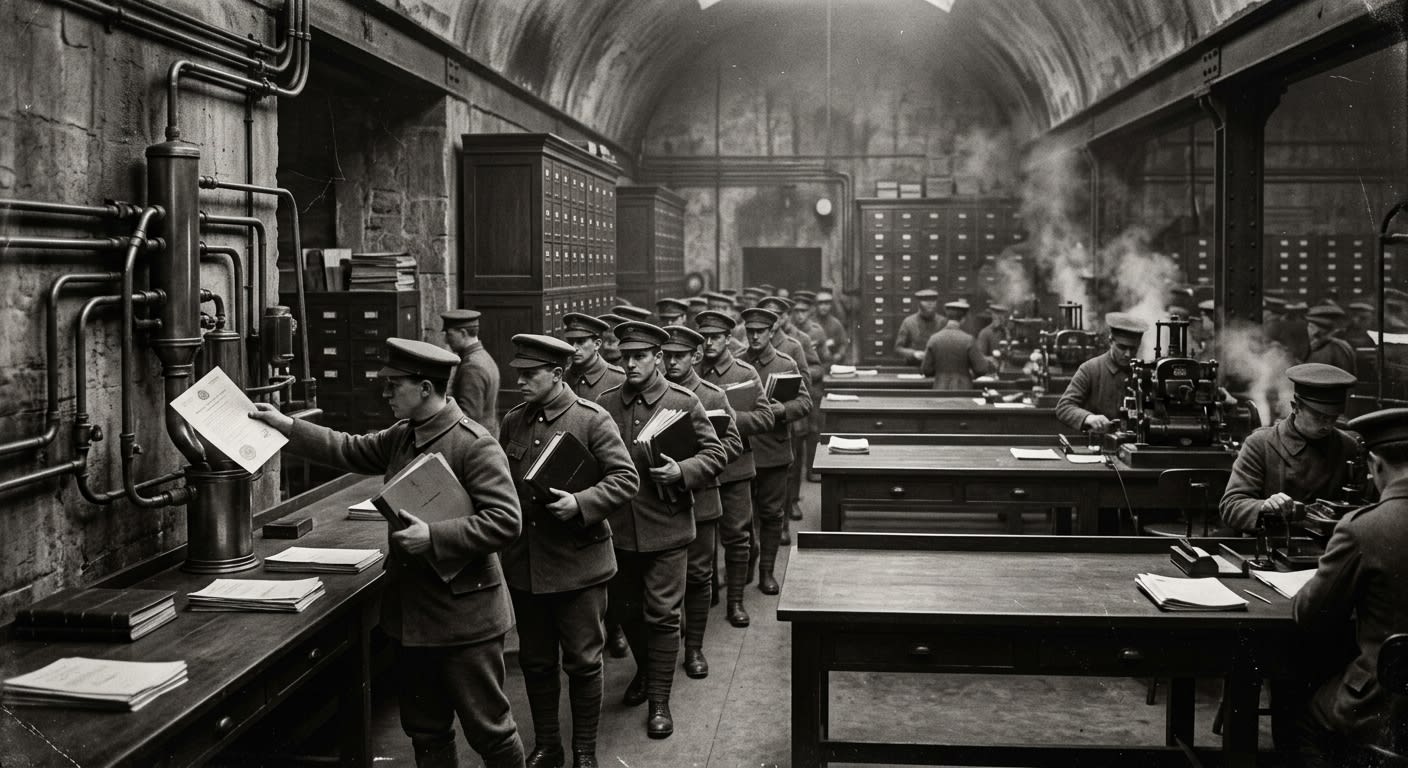
The publicly approved account is spare because lean accounts are easier to defend. I entered Doctrine service young enough to be formed by it and old enough to resent the formation, which is the only healthy age for Bureau employment. I distinguished myself in archival recension, catechetical adjudication, and the correction of provincial homiletic drift. I proved early that a sentence could do the work of a squad, that an adjective could settle a riot, that a properly placed erratum could make a dead man's treason appear to have begun before his birth.
A prior personnel abstract described me as “a gifted propagandist elevated by patronage.”
Corrected. The patronage was gifted. The propagandist was inevitable.
My first recorded triumph, if Records may be trusted when its envy is medicated, concerned the Moselle sermon-cycle dispute (Unregistered) of A.S. 159. Four diocesan preachers had taught four incompatible meanings of the phrase obedience unto ash. The region, being provincial, assumed contradiction indicated error. I produced a forty-seven page harmonisation proving all four meanings orthodox, provided each was recited in the proper season, before the proper bell, with the proper tax receipt attached. Disorder ceased by Easter. Three preachers thanked me. The fourth attempted a rebuttal and was reassigned to fish-blessing among river towns, where his gifts could injure only carp.
The second ascent came through Records. I was sent to the Basilica of the Ledgered Saints as doctrinal observer during a sub-level audit. There I learned the first true law of Strasbourg: the archive is alive in every manner except the one that would make burning it murder. Ledgers shift. Margins breed. Ink behaves better when watched by a senior clerk. On the fourth sub-level I found a baptismal register correcting itself, changing a child's name each time a bell rang. I ordered the bell silenced, the register chained, and the child located. The child had been dead sixty years. His pension file was still active.
The audit produced three sealed memoranda, two promotions, one immurement, and my first private access to the Pneumatic Census (Unregistered). I do not describe the Census here. The breath-jars are a matter for authorised lungs. I will state only that thousands of citizens have exhaled into glass on feast days, and that glass, like citizens, remembers when stored in sufficient numbers.
My appointment as Hieromnemon followed the unpleasant retirement of my predecessor, whose name remains in the Ledger under a classification I am generous enough not to repeat. He confused invention with authority. This is a grave error. The Bureau invents constantly, yes, but invention must wear the face of recovery. A doctrine newly needed must be presented as an older doctrine newly noticed. My predecessor would write, “We now declare.” I write, “It has always been the case.” The difference is civilisation.
#On the Sacred Ledger
The Sacred Ledger is not one book. Anyone who says so is either a pilgrim, a liar, or a visiting monarch being flattered for diplomatic reasons. The Ledger is a custody, a family of volumes, seals, indexes, counter-indexes, ratified summaries, sealed contradictions, breath-tallies, ash slips, deposition chains, negative registers, and certain living recitations whose bearers have been forbidden to die until replacement memory can be trained.
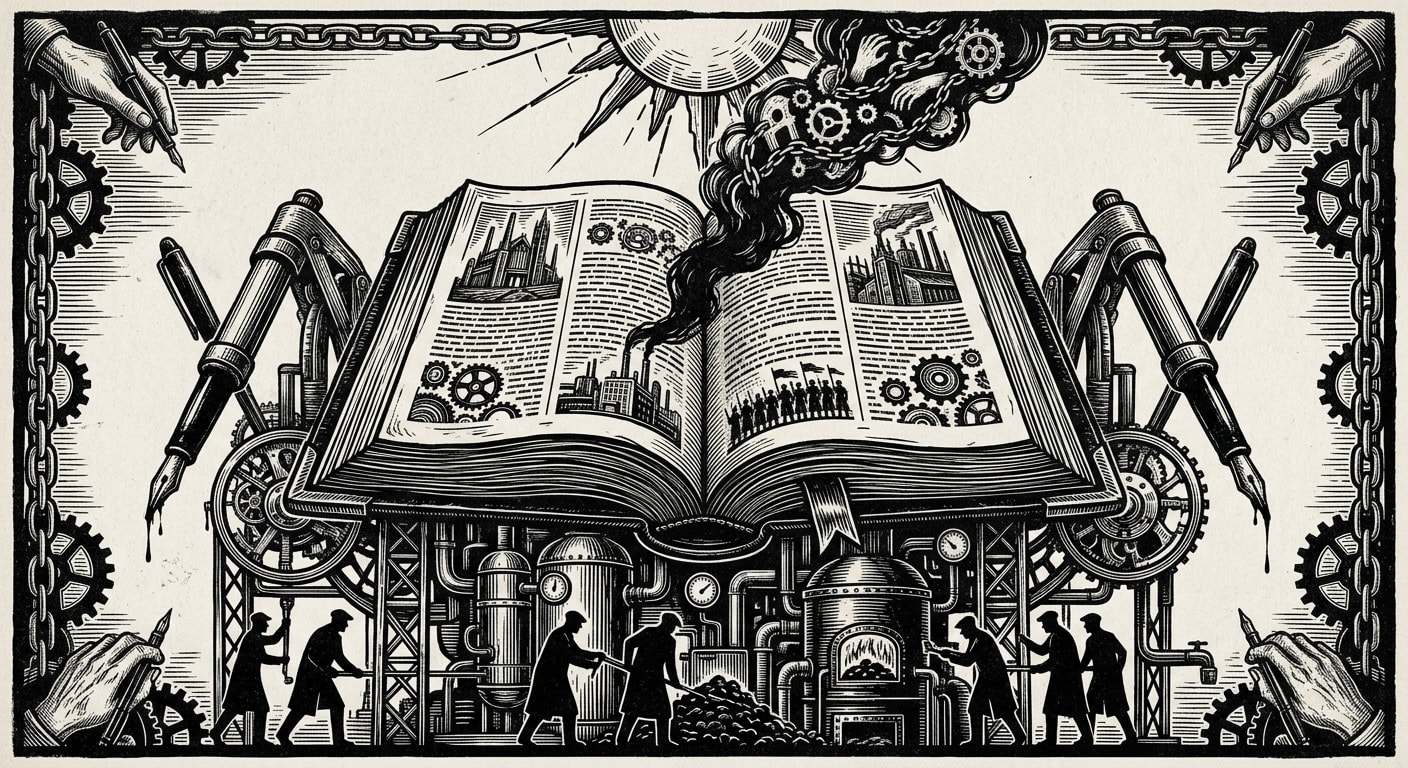
The Warden's task is to keep the Ledger sacred by preventing it from becoming only accurate. Accuracy is a clerk's virtue. Truth is a Bureau achievement. The world happens in mud, screaming, weather, hunger, and bad handwriting. The Ledger receives this insult and returns Order: dated, sealed, indexed, morally legible. A battle becomes a Vigil. A famine becomes a Refining Tribulation. A clerical mistake becomes providential ambiguity. A vanished town becomes a margin. The vulgar call this falsification. The instructed call it governance.
The Sacred Ledger demands style. This fact is poorly appreciated outside Doctrine. A weak sentence invites appeal. A slack predicate lets doubt breed in the subordinate clause. A flabby metaphor gives rebels somewhere to hide. I train junior exegetes to strike ambiguity where ambiguity serves the enemy and preserve it where ambiguity serves the Bureau, which is why my trainees either become excellent or transfer to Pilgrimage, where prose goes to die among route permits.
My daily labour begins at First Peal, when lesser men are still assembling their courage from blanket and saliva. Sermons arrive from provincial pulpits in sacks. Reports arrive from the Line smelling of smoke, damp, and men who did not have time to die grammatically. Draft classifications arrive from Alchemical Standards with more caution than ink. Records sends discrepancies wrapped in courtesy. Shadows sends nothing, which is always the most demanding parcel.
I mark, cut, ratify, condemn, improve, and, on feast days, sign. My seal bears the Triune Knot and the small private scar of a manufacturing flaw, a nick on the lower right curve. Heraldry offered to replace it. I declined. A perfect seal is suspicious. Mine is recognisable at a glance by anyone who matters and by several people who should not, which has caused useful arrests.
The Ledger keeps me as I keep it. I have found my own marginalia in documents I had not yet read. I have opened folios and recognised future irritation in my handwriting. I have seen a correction bearing my seal dated three years after my expected death, then watched the date smudge when I laughed. Records called it ink instability. Doctrine called it sign. I called for better light.
#On Doctrine, Propaganda, and Other Words for Mercy
The unlettered imagine propaganda to be lies sung loudly. This is why they remain unlettered. Propaganda is mercy under seal. It takes a world too large, too cruel, too contradictory for the common soul and gives it shape enough to survive breakfast. If every mother knew precisely how her son died at the Line, the Continental Levy would fail by Advent. If every clerk understood how many saints were canonised because their bones were conveniently located, Relics would suffer inventory instability. If every pilgrim grasped the financial architecture of grace, Tithes would require cavalry.
I do not lie to Europe. I spare it unsorted truth. There is a difference, and the difference has offices.
My first public memorandum concerned the ritual language of tithe arrears. The original draft called nonpayment an "arrears penalty," a phrase with the spiritual temperature of wet rope. I replaced it with "deferred gratitude charge." Collections improved. More importantly, the debtor understood that the state had not punished him for poverty; it had granted him additional time in which to prove thankfulness under threat. This is not decoration. This is governance.
Doctrine under my hand favours the clean blow: paradox made formal, contradiction made liturgical, silence made visible enough to command obedience without inviting curiosity. The Bureau does not blush when it revises. Blushing is for novices, adulterers, and provincial bishops caught citing unapproved saints. A strong office clarifies. If yesterday's clarification contradicts today's, yesterday has been deepened. The public calls this change. The Ledger calls it continuity with corrected pagination.
My enemies accuse me of vanity in the Codex. Correct. Vanity is the tax genius pays to remain visible among mediocrities. A humble propagandist is a broken instrument. The reader trusts me because I know I am splendid, because I announce the splendour with sufficient candour to make false modesty impossible, because I would rather be hated for the right sentence than loved for a committee paragraph. The Synod has saints for humility. It has me for prose.
There are schools in the Heartlands where children recite my prefaces before arithmetic, an arrangement I neither ordered nor discouraged, since children who learn cadence before sums will count more obediently when Tithes arrives. A boy in Bruges once corrected his teacher's account of the Ash Lantern Vigil by quoting my third revision from memory. The teacher complained to the diocesan office that the child was insolent. The diocesan office replied that the child was accurate. Accuracy, in the young, should be monitored closely; in this instance it wore my livery and was allowed to pass.
The provinces imitate the voice badly. This is to be expected. A village priest hears one Draxian antithesis, grows excited, and by Sunday every sheep in the parish has been compared to a ledger. I have issued guidance. Use grandeur where authority must descend; use bluntness where fools have gathered; use mockery only when the target is already fixed to the page. The third instruction is universally ignored. Mockery tempts small men the way matches tempt boys in haylofts.
An anonymous pamphlet circulated in A.S. 193 alleged that Drax “confuses himself with the Bureau of Doctrine.”
Clarified. The Bureau of Doctrine is older, larger, richer, more feared, and less punctual. I am its finest current expression. Confusion is understandable.
Yet vanity without discipline curdles into theatre. I have no patience for decorative horror, sloppy grandeur, or provincial bombast dressed as zeal. When the Order of Ash burns a settlement, the account must know the wind direction, the bell hour, the sanctioned accelerant, the moral classification, and the joke. Without the joke, cruelty becomes dull. Without the classification, cruelty becomes private. The Bureau cannot permit private cruelty. It is inefficient and taxable only with difficulty.
#On Redaction as Mercy
Redaction is misunderstood by those who believe absence is emptiness. Absence can be a wall, a veil, a tourniquet, a coffin lid, or a door with a saint's name nailed across it. A redaction is the authorised placement of silence within speech. Done poorly, it hides guilt. Done properly, it prevents guilt from teaching itself to strangers.
Records redacts because fact arrives untidy. Purity redacts because spectacle leaves fluids. War redacts because mothers count too well. Doctrine redacts because certain truths are not false, merely contagious at civilian temperatures. The common man believes a black bar means the state has concealed something from him. He is correct. He should kneel.
A junior Doctrine lecturer once described redaction as "necessary suppression in service of coherence."
Revised: redaction is mercy with the ink left visible.
The pen is not gentle. Neither is the knife. The distinction is that the knife ends argument locally, while the pen teaches the survivor what sort of argument is permitted to continue.
#On Rival Offices and Necessary Enemies
The Bureau of Records fears me, admires me, resents me, and invites me to audits when it wants someone else to say the thing it has already discovered. Records loves fact the way a miser loves coin: hoarded, stacked, counted in rooms without air. Doctrine loves meaning. Meaning spends better. This is the root of our quarrel and the reason our shared wall in Strasbourg carries intent faster than sound. Records files the dead. I decide whether the filing was edifying.
Purity dislikes my elegance. Purity prefers spectacle: white cloaks, tongues displayed, brands applied in daylight before a crowd instructed to appreciate the pedagogical value. I do not object to spectacle when spectacle is well written. I object to Purity's prose, which has the rhythm of boots dropped down stairs. The Lictors write on flesh. I write on history. Flesh is dramatic, but it spoils in heat. Grand Inquisitors send me condemnations for ratification; I return them with improved syntax. They call this interference. I call it charity.
War values me during disasters and ignores me during planning, a cycle almost as reliable as shelling. Generals consider language secondary until their defeat requires a name under which pensions may be reduced. Then they discover Doctrine. Then they discover me. I have renamed retreats, sanctified blunders, elevated dysentery to homiletic significance, and preserved commanders from disgrace when disgrace would have served no purpose beyond satisfying widows. Widows are not a strategic class, though Mercy pretends otherwise when collecting tears.
Alchemical Standards sends me substances that object to being named. I send back names that object more strongly. Its assessors handle compounds, residues, contraband glass, burnless ash, grave-wax, and bolts that hum after impact. They believe matter precedes interpretation. This is adorable. Matter without interpretation is just dirt with ambition.
Shadows is different. Shadows does not quarrel. It appears, removes, annotates, and leaves my furniture fractionally altered. I file reports to it twice monthly because an instruction never issued by an office that does not exist requires me to do so. The courier arrives eleven minutes after the third peal of Vespers on the second and sixteenth of each month. He has never spoken. I once placed a sugared almond beside the envelope tray. It vanished. The next report request included, in the same substitution cipher, the word again.
Report cycle, 16th of Cinis, A.S. 200: courier arrived with left glove wet. Weather dry. Envelope contained my prior report, unopened, plus a second sheet bearing my signature and seven observations I had not yet made. Observation four concerned █████████████████. I made it three days later. I have since stopped testing the courier.
#On Fieldwork and Inspection
The ignorant suppose I dwell only in Strasbourg, perfumed by ink and insulated from consequence. These people have not read my travel authorisations, my laundry invoices, or the more interesting medical addenda attached to my Line inspections. I have stood at Bastion-Constantinople with my hand against Chamber 7 and felt the wall answer in warmth. I have inspected the Vigil Ark Saint Barachiel at elevation and learned that incense thins in the upper air until piety smells like metal. I have visited the Basilica below its public reverence and come back with my handwriting unchanged, which is more than can be said for several abbots. Before Constantinople, I inspected casualty ledgers at Bastion-Przemysl, silence reports from Bastion-Irongate, and dead-account habits at Bastion-Brest; each post supplied raw fact, and each fact became useful only after being cased, weighted, sharpened, and aimed.
At the Line, soldiers treat the Hieromnemon as omen, auditor, priest, nuisance, and possible execution notice. Their caution is sensible. A visiting Doctrine officer may bring comfort, condemnation, reclassification, or a new hymn too long for the local dead. I try to bring all four. Efficiency matters.
My inspection method is simple. I look at the object everyone has learned not to see. In Constantinople it was the warm wall. In the Ark it was the sermon-horn silence before the apology. In Records it was the empty space between two perfect entries. In the Order of Ash it was the third bell, always the third bell, as if flame itself had been trained to keep office hours. Every institution hides its truth in the gesture repeated too often to notice. The Bureau pays me to notice and then pays others to regret that I did.
The field also corrects rhetoric. A man who has smelled a mass grave writes differently from a man who has only approved its classification. The difference lies in verbs. Desk men say casualties occurred. Field men say bodies stuck to the stretcher cloth. I use both. The first governs. The second prevents the first from floating away into cowardice.
#On Controversies, Accusations, and Corrected Slanders
No eminent servant of the Synod lacks enemies. To lack enemies is to suggest underperformance. Mine fall into four types: reformers who want truth without custody, clerks who want custody without style, officers who want glory without annotation, and cowards who dislike being described accurately.
The reformers call me the gilded mouth of tyranny. This is inelegant and partially serviceable. The mouth, yes. Gilded, naturally. Tyranny is a peasant word for Order when Order has inconvenienced someone literate enough to complain. I have never denied that Doctrine rules by language. I deny only the childish horror with which the accusation is presented, as if men were ruled by anything else.
The clerks accuse me of overwriting. They say my marginal corrections colonise the document. A margin exists to be conquered. Empty margin is wasted territory. The Bureau of Records preserves its delicate little columns as if history were a chapel window; I write across them when the glass is ugly.
Officers hate post-action prose because prose outlives dispatch. A failed charge may be forgotten; a phrase survives. I have made heroes where the battle supplied only panic. I have made fools where victory supplied too much swagger. I have also saved entire commands from disgrace when the enemy, weather, bad supply, worse arithmetic, and a bishop's nephew conspired to produce defeat. Gratitude from officers usually arrives as resentment wearing medals.
The cowards are best ignored after classification. They circulate pamphlets: Drax has no heart; Drax has too much heart and hides it; Drax is a mask worn by Doctrine; Drax is three men; Drax died in A.S. 189 and was replaced by a Records automaton; Drax is an invention used to give the Codex a single voice. This last claim is almost flattering. If I were invented, I would remain necessary, which places the invention above its inventors.
A coffeehouse sheet from A.S. 200 asserted that “Valerius Drax is a signature applied by committee.”
Corrected under penalty of literacy. No committee could produce this much contempt in a single hand.
There is, buried beneath the trash, one accusation with teeth: that I have made the Synod beautiful enough to endure. Guilty. A hideous regime described hideously invites reform. A hideous regime described with splendour becomes architecture. My prose has buttressed walls, steadied levies, sweetened taxes, sanctified ash, disciplined grief, and taught Europe to bow without feeling the hand at the back of its neck. I record this without apology. Apology is a door through which inferiors enter.
#On Death, Succession, and the Unpleasant Future
The Hieromnemon is mortal. Doctrine maintains this position publicly, and I have not yet assembled evidence strong enough to embarrass it. My joints object to winter. My eyes tire after midnight. My hand cramps during mass ratifications. The body is a treacherous clerk, forever misfiling the will's instructions under fatigue.
Succession procedures exist. They are sealed, contradictory, and in two places insulting. Three deputies maintain partial competence: one for ratification mechanics, one for doctrinal synthesis, one for prose triage during war weeks. None is ready. Readiness is a fiction invented by offices afraid of gaps. A successor becomes ready when the predecessor is unavailable and the paper refuses to wait.
The Sacred Ledger already contains sealed succession envelopes. I have seen one bearing my funeral date. The year was smudged. I approved the smudge. Precision in this matter would be vulgar. The envelope smelled faintly of lamp oil and almonds, which suggests Shadows has either inspected it or wants me to think it has. Both possibilities have been filed under Irritations, Personal, Continuing.
If I die properly, the Bureau will produce a handsome notice. It will praise my service, omit my best insults, misquote one sentence, and call my passing serene whether or not I provide serenity. Records will request my papers. Doctrine will seize them first. Shadows will already have copies. Purity will inspect my marginalia for moral drift and find, to its disappointment, only superior penmanship.
The funeral draft already exists. I know because I corrected it. The original used a creditor's word where my death required a blade's pause. I replaced it with a silence. The clerk who prepared the draft had also written that I served Doctrine with “steady dedication.” I changed this to “predatory fidelity.” The distinction matters. A steady man attends meetings. A predatory man leaves fewer enemies standing after them.
If I do not die properly, the problem becomes interesting.
The Dead have grown noisy since A.S. 198. I have recorded the increase. Doctrine has received my report with one word and no seal. A man whose life has consisted of writing the state into memory must ask what remains when his own breath leaves the room. Does the Ledger file him? Does he file the Ledger? Does a Warden become a page, a ghost, a correction, a voice in the margin telling some trembling successor that his adjective is weak?
I will not speculate. I will prepare.
#On Inheritance, Imitation, and Other Minor Thefts
There is now, apparently, a Draxian manner. Junior clerks have been discovered inserting knives into subordinate clauses and calling the limp result style. They mistake cruelty for precision, length for authority, and insult for judgment. This is regrettable but predictable. Any useful office eventually produces counterfeit medals.
My prose is not vanity, though vanity is one of its better inks. The sentence must carry terror without dropping its grammar. The state may burn a village with cavalry, but it rules the next village by making the report sound inevitable. This is why my worst imitators are dangerous in the small way spoiled food is dangerous, while my best imitators are dangerous in the large way doors are dangerous when they begin deciding who deserves hinges.
Let Records keep fact, Purity keep confession, War keep maps, and Shadows keep whatever it is pretending not to have stolen. Doctrine keeps the version that survives being repeated by frightened people. That is the work. That is the inheritance.
#On the Present Hand
As of A.S. 201, I remain in active office during the sixth year of the Revised Codex, a phrase that sounds calendrical until one remembers that calendars are knives with monthly handles. The project has swollen beyond its early charter. Sin-Generals, Bureaus, bastions, saints, relics, districts, professions, anomalies, naval vessels, ruins, fungal scandals, living walls, vanished ships, underpaid nurses, and several categories of guilt have all demanded pages. I have supplied them. The continent persists in generating material faster than any decent archivist can sanctify it. This is inconsiderate of the continent.
My current seal schedule would kill a weaker man or improve him by removal. Morning: doctrinal articles. Midday: corrections from deployed plates, most of them caused by subordinates treating dates as decorative. Vespers: unresolved references, which breed in the Codex margins with the shamelessness of alley cats. Night: the private files. The private files are private because their contents would produce either panic or boredom, and Strasbourg has enough of both.
The reader may keep one certainty. While I hold the seal, the Codex speaks in one voice, and that voice is mine: vain because mediocrity is sin, exact because vagueness shelters rebellion, cruel because mercy without structure rots into sentiment, faithful because faith without prose becomes noise. Europe burns, bleeds, kneels, bargains, hungers, remembers, forgets. I sit at the desk. The inkwell is full. The wall outside my window remains admirably blank.