
#On the City That Mistook Signing for Salvation
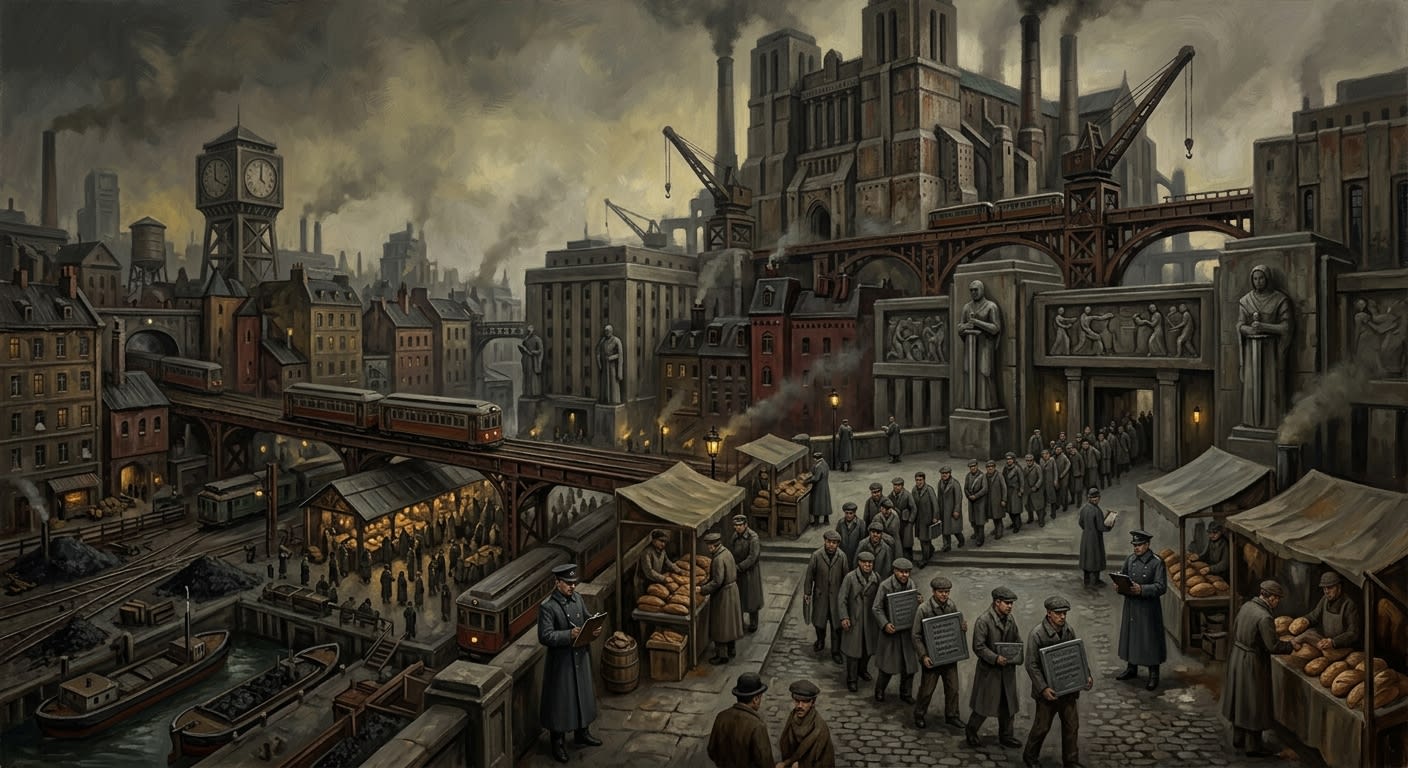
Regensburg sits in Zone 2 with the terrible manners of a city that survived long enough to become symbolic. It is an old stone throat on the Danube, a former Imperial Free City, a market, a bridge-town, a wine ledger, a cathedral precinct, a civic memory swollen by one afternoon in A.S. 30 when Europe signed away its spine and called the posture peace.
The Treaty was only one of the city's sins. Cities are never granted so narrow a privilege. Before the signing came the Oaths, the banquet, the priests drowned in wine, the Bishop of Worms disappearing between toasts, the Rationalist banners in the Reichssaal, the broken little cross hung where empire had once performed its own expensive theatre. Afterward came fifteen years of Republic, then omens, then the Sundering, then terror, then retroactive annulment, then pilgrimage. Regensburg remained Regensburg throughout. It sold bread to signatories, candles to mourners, pamphlets to heretics, water to students, tin plaque replicas to pilgrims, and silence to everyone who understood how profitable silence can be.
The Bureau calls it Reason's false triumph. This is accurate and insufficient. Triumph implies an end-state, a banner, a cheer, a completed seizure. Regensburg is worse. It is a place where false victory was made legible, signed, witnessed, recopied, amended, and circulated with seals still damp. The city hosted an error and gave it tables, chairs, wine, witnesses, and weather.
#On the Choice of Regensburg
The Rationalists chose Regensburg because neutrality had become a costume nobody else could still afford. Vienna was too wounded, Paris too pleased with itself, Prague too theatrical, Aachen too compromised by Guillaume's treachery, and the Lowlands too full of merchants pretending the weather had no political opinions. Regensburg offered enough dignity to flatter the Council of Nine and enough damage to remind the old Church that dignity had become rentable.
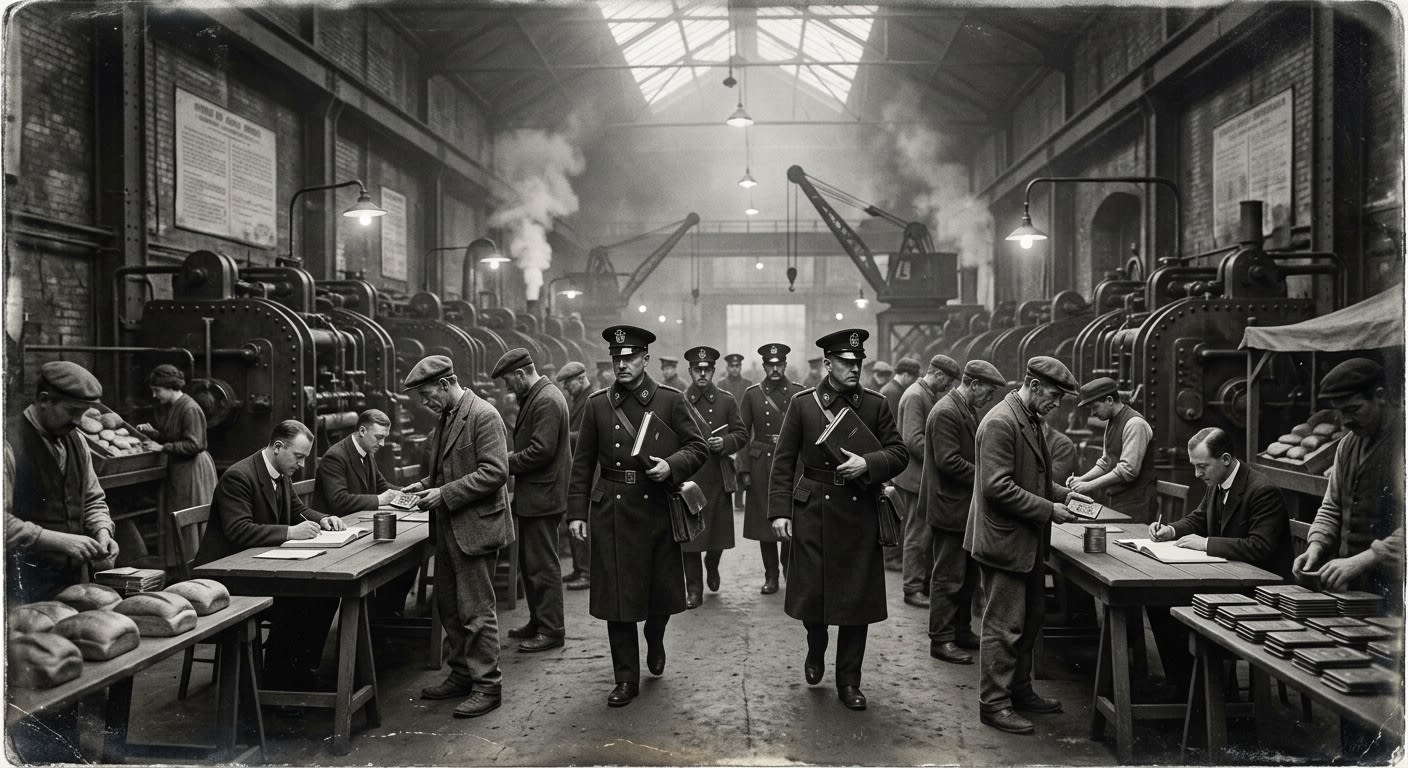
Its cathedral (Unregistered) stood. That mattered. A burned cathedral makes a poor backdrop for a treaty abolishing cathedral authority, because even philosophers sense when a symbol is shouting louder than they are. Regensburg's cathedral had survived; it had been used, stripped, lectured in, rearranged into a civic lecture-hall with sanctuary memory still sweating through the floor. The Reichssaal offered old imperial authority without current imperial teeth. The wine-vat halls offered hospitality. The gates offered processional approach. The city gave the Rationalists precisely what they loved most: inherited legitimacy after disembowelment.
Rationalist municipal copies described Regensburg as “neutral ground, untouched by sectarian fury.”
Corrected. The city was touched, handled, searched, priced, and arranged. Neutrality was the ribbon tied around exhaustion. The ribbon survives in archives because ribbons, unlike courage, store well.
Regensburg's burghers had practised survival before the Atheist Wars and became excellent during them. They knew which cellars could hide priests and which cellars could hide wine. They knew which guildmasters could praise Reason in public while paying for Mass in a back room. They knew how to let soldiers pass without feeding them enough to invite return. Heroism would flatter it. Heroism is noisy and often dead by supper. Regensburg preferred continuity, which is a virtue only after victory and a vice whenever Doctrine requires someone else to pay.
The city entered A.S. 30 with its walls intact, its markets functioning, its clergy thinned, its merchants careful, its poor frightened, and its stones ready to remember whatever the stronger party called truth.
#On the Oaths and the Stain Beneath the Feast
The Oaths of Regensburg were staged in A.S. 29, the previous evening by the older reckoning, in the former episcopal palace. The Council's officers gathered under candles stolen from the cathedral altar. Toasts were raised to the death of superstition. The good Rhenish vintage was opened. Seventeen languages were employed for congratulation, which proves vanity had already outrun both grammar and thirst.
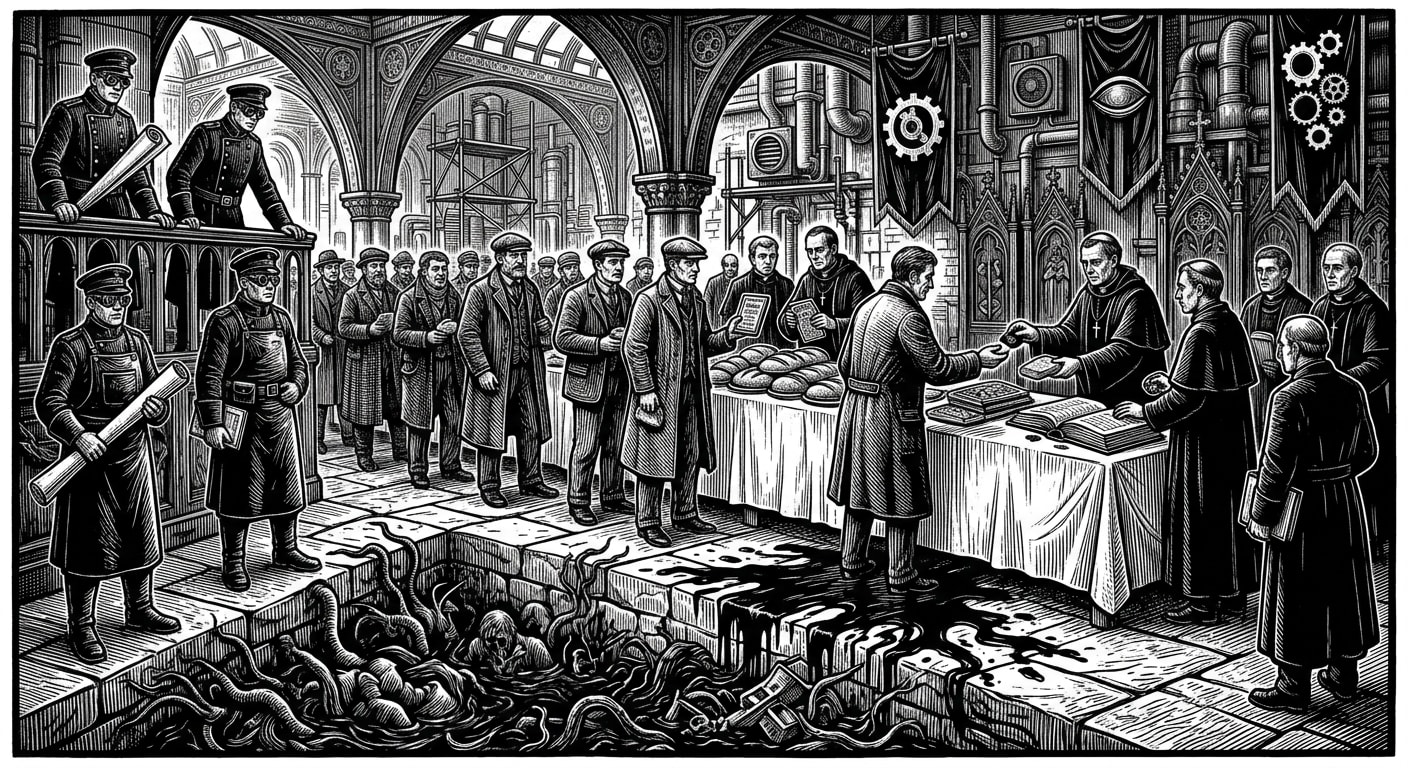
Three captured priests were brought into the hall. They had survived prisons, interrogations, and the polite mechanics of rational correction. They were offered recantation before officers who expected obedience to arrive with theatrical punctuality. The priests refused. The Rationalists drowned them in wine-vats.
Attend to the method. A bullet would have been military. A rope would have been judicial. Wine made the murder clever in the way lecture-hall men adore: symbolic, expensive, quotable. Their bodies were pushed beneath a vintage poured for victory. The witnesses drank nearby. Someone made a note of the vintage. Regensburg kept the cellar.
The Bishop of Worms vanished between the ninth and tenth toasts. The Rationalists declared he never existed, which is a charming solution to persons, debts, saints, and inconvenient relatives if one lacks a Bureau of Records to make the lie durable. His file remains administratively disputed. Local tradition supplies seven hiding places, three miracles, two betrayals, and one tunnel under a cooper's yard that smells of damp mitre. None has been ratified. All sell well in guided whisper-tours.
CELLAR ANNEX — REGENSBURG, FILE 29-O Recovered scratch beneath third cask cradle: WORM— Second line illegible under resin and old wine. Residue test: blood, beeswax, iron gall, ███████. Instruction: do not reopen cooper's subfloor without Doctrine witness and rope tied above waist.
#On the Signing in the Reichssaal
The Reichssaal saw the Treaty signed in A.S. 30. Old imperial ghosts, if any remained, had the decency to stay quiet. Nine Rationalist signatories sat beneath banners bearing the Broken Cross. Opposite them sat the remnants of an order already beaten into procedural usefulness: bishops, a Rhineland baron, Guillaume's proxy, and the Archbishop of Vienna, whose signature the Republic required for the dissolution of the Holy See.
The Archbishop signed in blood. Threat helped. Threat often assists handwriting.
The Treaty contained forty-seven articles. They dissolved ecclesiastical institutions, recognised the Rationalist Republic, abolished sanctuary, nationalised Church property, regularised confiscation, classified faithful prisoners for rehabilitation, and converted sacrilege into administration. Its missing Article Forty-Eight (Unregistered) has become a whole little swamp of learned speculation, which the Bureau of Silence keeps fertilised by denying water while leaving the mud.
The city outside continued to work. Bread was baked. Cart wheels crossed wet stone. Children were kept from windows or lifted to them, depending upon parental appetite for history. Servants carried messages. Guards smoked under lintels where saints had once been carried in procession. This ordinariness condemns Regensburg more than the ceremony does. Great crimes prefer stage-light; durable crimes require someone to sweep afterward.
#On Fifteen Years of False Morning
From A.S. 30 to A.S. 45, Regensburg lived under the Republic it had helped certify. Philosophical Prefectures replaced diocesan habits. Lecture notices appeared where indulgence notices had hung. Churches received new signs in that dry civic script Rationalists used when trying to make theft look like filing. The Broken Cross entered lintels, buttons, writs, and school primers. The cathedral learned to host men who spoke of inherited superstition while standing on consecrated stone they had not earned.
The faithful adjusted downward into cellars. Regensburg's Cellar Saints were not the grandest or bravest of the underground networks, but they were stubborn in the municipal fashion: candle ends hidden in flour bins, relic scraps stitched under apron hems, baptisms performed beside beer barrels, confessions heard while a cooper hammered loudly overhead. The city became two cities. Above, Reason inventoried. Below, memory breathed through cloth.
The omens came and were explained. The Year Without Dawn. The Red Flood. The Eastern Silence. Regensburg received bulletins, lectures, corrections, and demonstrations. Its scholars nodded. Its merchants hedged. Its poorer districts made the sign of the cross below table height and returned to work. Men are often wiser at knee level.
The Sundering in A.S. 45 reached Regensburg through news, refugees, broken units, priests dragged from hiding because suddenly everyone remembered needing priests, and Rationalist officers whose faces had lost the firm little cruelty of men backed by tomorrow. The Republic spoiled like meat: first odour, then denial, then flies, then nobody willing to admit they bought it fresh.
A.S. 61 Regensburg municipal apologia claimed the city “resisted Rationalist excess where practicable.”
Clarified. The city resisted excess after excess stopped paying reliably. Earlier forms of accommodation remain filed under prudence, cowardice, commerce, and the useful fog between them.
#On Reconsecration and Useful Contradiction
The Bureau of Doctrine annulled the Treaty retroactively in A.S. 92. Retroactive annulment confuses small minds. Regensburg understands it perfectly because the city has lived by retroactive purity ever since. The Treaty was invalid from the moment of signing. The signatures remain. The hall was polluted. The hall is now a chapel. The wine-vats were instruments of martyrdom. The refectory feeds seminary students. The gates cursed the peace and bless the penitent. All contradictions are true when properly assigned jurisdiction.
The reconsecration of the Reichssaal took three days and fourteen exorcists, which was either excessive or barely adequate depending upon whether one values smell, memory, or episcopal theatrics. Old Rationalist banners were torn down. Crucifixes returned. The table was retained under glass for instruction until A.S. 128, when three novices reported hearing pens scratching beneath it after Compline. The table was moved to a side chamber, where it behaves better under a heavier cloth.
The former wine-vat hall became a seminary refectory. Students eat there in disciplined silence on the anniversary of the Oaths and raise water in place of wine. Some call this penance. Some call it pedagogy. I call it a rare instance in which meal planning achieved doctrinal force.
The Gates of Regensburg became the city's public conscience: benediction above, malediction below, both received by every traveller whether pamphlet or priest says otherwise. Local confessors have grown fat on the ambiguity. Pilgrims touch the lower plaque and weep. Students touch the upper plaque to see whether warmth proves grace. Clerks touch neither. Clerks, in this matter, display the caution of saints and the souls of mice.
#On Regensburg as Pilgrim Machine
A.S. 201 Regensburg is loyal. Write that first, because the city insists upon it in every civic petition. Loyal cities say so less often, but repetition is the incense of municipal conscience. It hosts the penitent route, maintains plaques, licenses guides, sells authorised pamphlets, supervises gate passage, maintains the Reichssaal chapel, cleans the seminary refectory, and forwards quarterly anomaly reports to Strasbourg in a hand so neat it may be compensating for ancestors.
Pilgrims arrive by the western road from Strasbourg and are sorted before the gates: ordinary penitents, Rationalist descendants, students, foreign visitors, scholars under escort, merchants claiming devotional motive, and the merely curious, a class that should be taxed at higher rates. They pass beneath blessing and curse, proceed to the chapel, hear the Treaty summary, observe the sealed copy if their credentials permit, drink water if their itinerary requires, and depart carrying either humility, irritation, or souvenir plaques.
The local economy has arranged itself around controlled shame. Inns offer “silent supper” packages. Scriveners copy family apologies in three grades of Latin. Confessors advertise no services and remain fully booked. Children sell wax seals stamped with the two gate inscriptions until Purity chases them off, after which their older siblings sell them two streets over. The Bureau of Tithes pretends to disapprove while counting revenue with both hands.
Regensburg's penance is profitable. This offends gentle minds. I find it clarifying. A city that profited from false peace may profit from penance under supervision, provided the tariff is correct and the lesson remains sharp enough to draw blood.
#On the Present Stone and the Old Appetite
Regensburg remains watched because memory there has teeth. Broken Cross buttons still appear in attic trunks. Families discover prefectural papers behind devotional prints. The cellar under the cooper's yard settles once a decade and produces damp nobody can explain. Students dare one another to whisper Article Forty-Eight beneath the Reichssaal table. A gatehouse vendor was arrested in A.S. 198 for selling lower-plaque amulets marketed as “portable curse exemption,” which is bad theology and excellent salesmanship.
The city has learned the posture of obedience. Its bells ring on time. Its pamphlets carry current approvals. Its guides know which jokes invite Purity's attention. Its clergy are earnest, its merchants careful, its children professionally bored by the scandal that feeds them. Regensburg is safe in the way old knives are safe when kept in a drawer: controlled, catalogued, and capable of opening a hand that reaches lazily.
The Bureau preserves Regensburg because destroying it would flatter it. Ruins make martyrs of masonry. Better a living city made to rehearse its own disgrace every morning: gates open, plaques cleaned, chapel swept, water poured, Treaty named, Treaty annulled, Treaty displayed, Treaty denied authority. The machinery turns. The lesson charges admission.
Regensburg signed the false dawn into law.
Now it sells tickets to the dark.