
#On the Map That Tried to Forget Its Dead
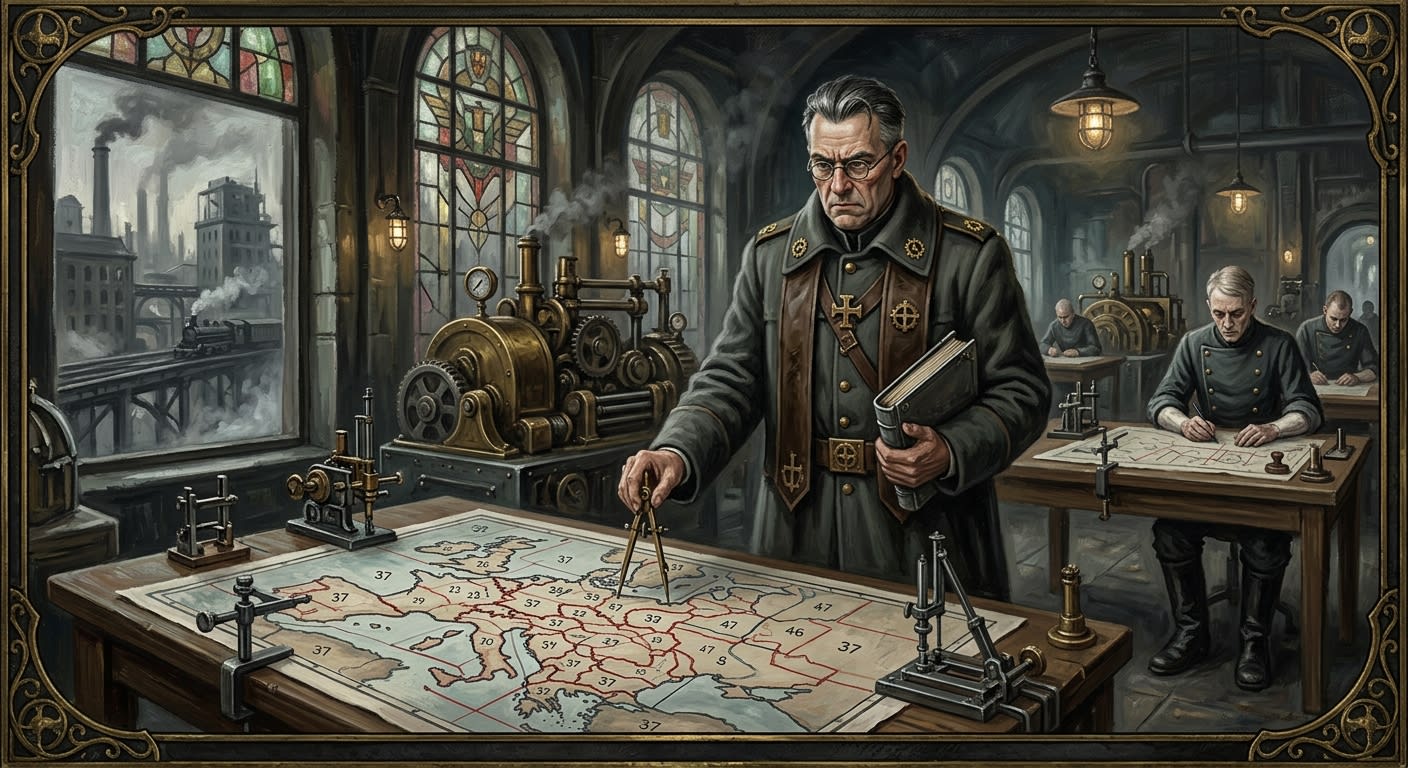
The Philosophical Prefectures were the Rationalist Republic's most visible blasphemy: thirty-seven administrative cuts laid across Europe after the Treaty of Regensburg in A.S. 30, each line drawn by men who believed a map becomes innocent if the knife is held by mathematics.
They replaced dioceses, duchies, crowns, free cities, monastic jurisdictions, guild liberties, pilgrimage roads, customary courts, mountain loyalties, river habits, and the old stubborn fact that human beings remember where their grandmothers are buried. The Republic called this rational reorganisation. The Concordats of Governance called it Schedule One. The Bureau of Doctrine calls it assault by cartography.
Under the prefectural scheme, a Bavarian could wake as a citizen of Prefecture Twelve, a Castilian as a transport unit in a western allocation district, a Rhineland parish as a ratio inside Prefecture Nineteen, and a monk as a property inhabitant pending correction. The old names were not abolished in speech at once. The Rationalists were not fools; they understood that men might riot if told their country had been erased before breakfast. Instead, the new names arrived on tax notices, census sheets, Guard orders, school slates, tribunal summonses, property tables, and bread allotments. A name repeated by offices acquires the habits of weather. Soon even hatred must use it.
The adjective philosophical is worth preserving in a jar. It meant that each prefecture existed to enact a theory before it served a people. A province feeds, taxes, shelters, and occasionally disappoints. A Philosophical Prefecture instructed. It taught citizens what they were allowed to remember, which objects deserved the name property, which prayers constituted treason, which children required transfer, and which dead had become administratively inconvenient.
#On the Thirty-Seven Cuts
The thirty-seven prefectures were not drawn along language, river, mountain, parish, road, lineage, shrine, market, or battlefield. Those were old lines, and old lines breed disobedience because they carry stories. The prefectural cuts followed Ratio: population targets, grain access, transport corridors, academy distribution, census tract purity, projected Guard response time, and the tidy ratios beloved by men far from mud.
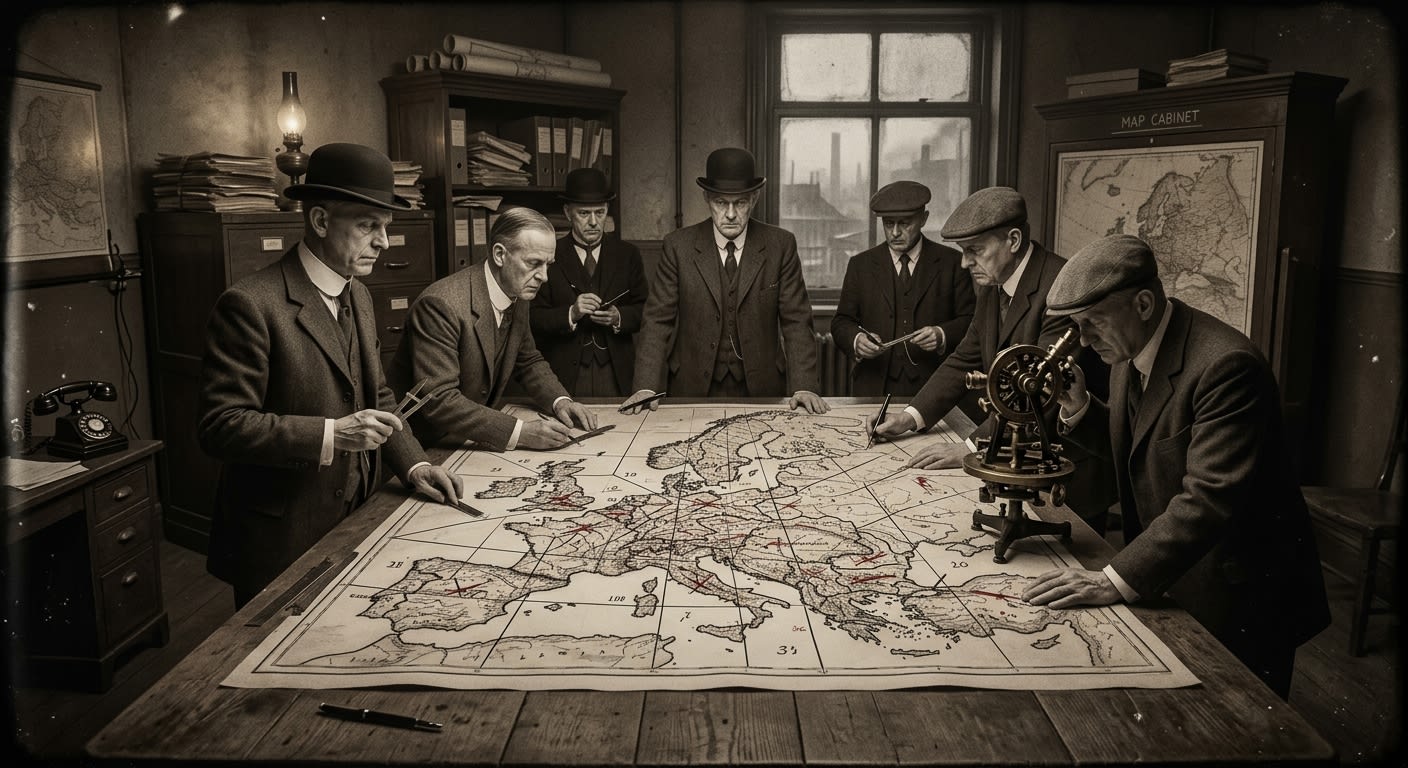
Prefecture Twelve swallowed Bavarian market towns, Swabian routes, alpine parishes, and enough resentful local law to choke a tribunal. Prefecture Nineteen cut across the Rhine near old diocesan boundaries because census mathematicians desired cleaner ratios. Prefecture Twenty-Six treated language as a transitional inconvenience and pilgrimage roads as traffic inefficiencies. The Paris Prefecture became mouth, theatre, schoolroom, and knife. Kraków became a local laboratory in civic obedience, where municipal Guards learned that familiar alleys make atrocity cheaper.
Each prefectural capital inherited the buildings most suited to humiliation. Cathedrals became Assembly Halls of Reason. Episcopal palaces became Prefectural Houses. Cloisters became academies, barracks, prisons, storerooms, anatomical theatres, or lecture rooms where boys were taught to sneer at the shapes of windows their fathers had prayed beneath. Crypts became archives when dry and storage when damp. Bell towers became signal posts once their bronze tongues had been removed for cannon.
The map's purpose was memory removal. The Republic claimed old loyalties bred superstition. It was correct enough to be dangerous. A woman who calls a hill Saint Marta's Hill may resist being told the hill is Educational Agricultural Reserve 4-B. A man whose father is buried beside a parish wall may resent learning that the wall is obsolete religious infrastructure scheduled for masonry recovery. The prefectures took names away from places so that places could no longer testify.
Rationalist explanatory plates described the prefectural map as “the first neutral map of Europe.”
Corrected. The plates were enemy propaganda and poor theology. Neutrality is what conquest calls itself when it has hired surveyors.
#On the Officers of Reason
Every Philosophical Prefecture wore a little crown of offices, each polished, secular, and poisonous. The Prefect of Reason stood at the centre: governor, judge-maker, tax authority, school patron, confiscation supervisor, emergency declarer, and local mouth of the Council's cipher-seal. He did not call himself prince. Princes were old, hereditary, jeweled, and vulnerable to ridicule. Prefects were appointed, rational, credentialed, and vulnerable only to the Sundering, which arrived later and corrected the omission.
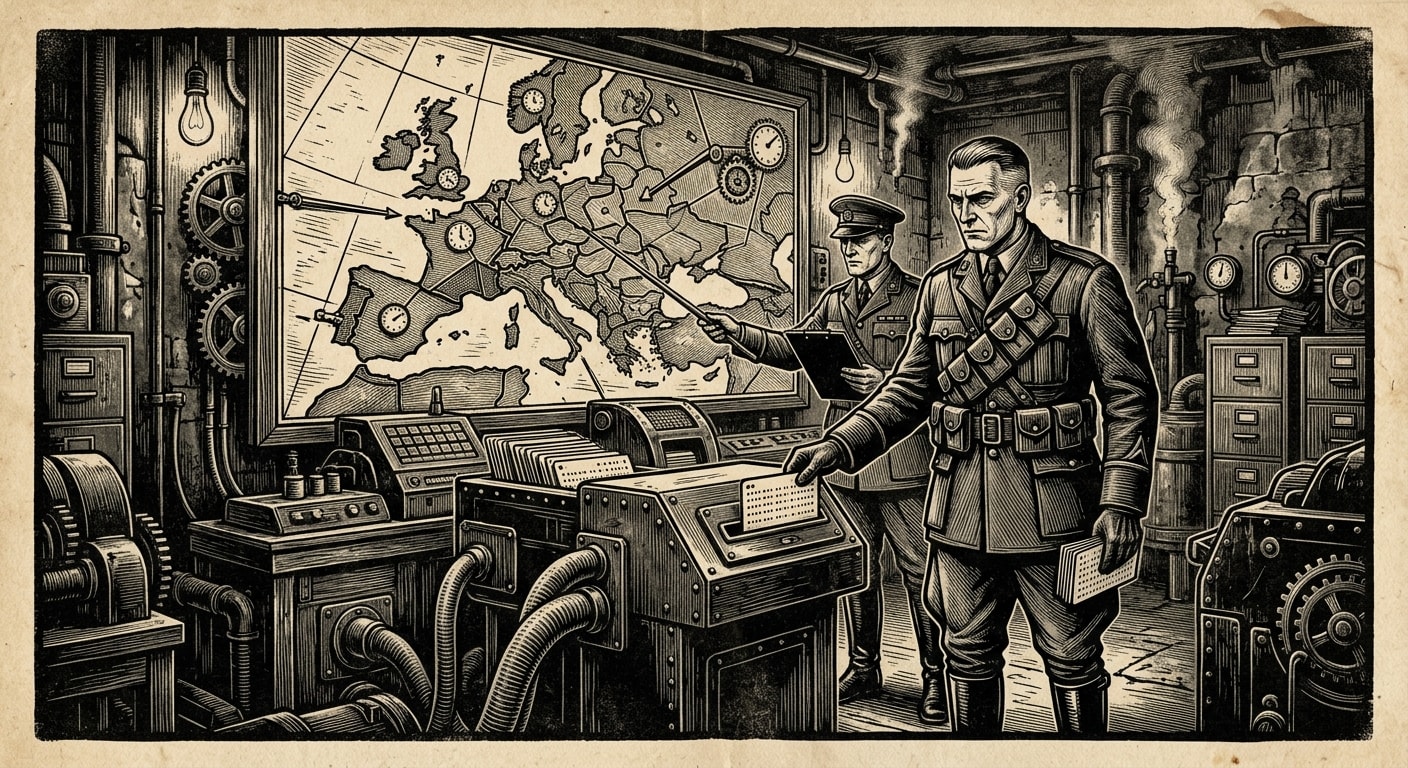
Below him served the Civic Security Marshal, commander of Republican Guards, municipal secular forces, informant chains, escort columns, and the men who made writs audible on staircases. The Republican Guards answered through this structure after A.S. 30, turning public order into bayonet grammar. A crowd that ignored a philosopher might notice one hundred blue-grey coats with triangular blades. Philosophy improved wonderfully with bayonets. It always does, among cowards.
The Director of Instruction governed schools, academies, compulsory recitations, teacher appointments, textbook corrections, child transfers, and the conversion of family memory into state-approved derision. A child learned the prefectural number before the old feast days. He learned civic maxims before psalms. He learned that a saint was a cultural residue, a relic a bone claim, a monastery an unproductive estate, and a grandmother an unreliable source.
The Census Chancellor governed existence. His office maintained registers, eligibility marks, household declarations, black disposition sheets, child-transfer triangles, loyalty proofs, correction rosters, and the exquisite little categories by which a person became absent before the cart arrived. The First Black Census was his sacrament, though he denied sacraments with professional vigour.
The Tribunal of Clarity supplied judgement. Three assessors, a civic advocate, an evidence reader, Guard witnesses, a clapperless bell, and a chamber arranged to make the accused feel like a stain on a clean table. The accused was invited to clarify his relation to Reason. Clarification failed at a rate pleasing to the Republic and repulsive to arithmetic honesty.
The office chain was brutally simple: Prefect for authority, Marshal for force, Instruction for childhood, Census for existence, Tribunal for sentence.
#On the Prefectural Acts
The Philosophical Prefectures made the Republic intimate. A treaty may dissolve a Holy See in an afternoon. A prefecture teaches the village how the dissolution enters soup, rent, school, bed, and burial.
Under prefectural authority, the Secular Gatherings Act became local weather. More than seven persons in religious procession could be refused, dispersed, catalogued, struck, or shot depending on the magistrate, the Marshal, the street width, and the zeal tally due that month. Saint-Malo gave the Act its blood, but the prefectures gave it daily hands: shrine notices in Paris, cellar raids in Kraków, delayed feast processions in Amsterdam, acoustic complaints against monks in Ghent.
The Edict of Rational Allocation turned sacred property into civic matter. Prefectures weighed chalices, inventoried bells, reassigned monastic orchards, sold reliquary casings, labelled bones, melted silver, and minted Lumens from the Church's confiscated metal. A parish widow's candlestick became public wealth. A bell named for a saint became bronze throat-rings for artillery. A private crucifix became miniature superstition object of private persistence, which is one of the finest phrases ever written by a man deserving a cudgel.
PREFECTURE XIX PROPERTY CONVERSION RETURN — A.S. 33 Bells removed: ███. Cemetery chapels reassigned: █. Household reliquaries surrendered voluntarily: █████. Household reliquaries surrendered after Guard encouragement: ███████████. Children marked for Instruction pending devotional-object concealment: █████. Margin note: “Local memory remains adhesive.”
The Edict of Ironmouth entered through prefectural mouths. Issued from Paris in A.S. 30 and disseminated through schoolrooms, Guard houses, public squares, and correction theatres, it made spoken prayer vocal treason. Prefectural returns counted tongues. Eleven thousand in the first year by the Republic's own records. Each tongue had warrant, witness, disposal note, display number, and correction tag. A barbarian cuts. A prefecture cuts and files.
Later Rationalist sympathizers described prefectural enforcement as an uneven local distortion of moderate central law.
Corrected. The central law created the instruments, appointed the officers, supplied the Guards, received the returns, and praised the figures when they rose. Local cruelty did not distort the prefectural design. It completed it.
#On Daily Life Under Numbered Mercy
A citizen under the prefectures lived inside procedural weather. Dawn recitation. Register inspection. School formula. Work allocation. Market rule. Shrine prohibition. Property declaration. Speech caution. Neighbour suspicion. Guard patrol. Tribunal rumour. Census dread. Public reason. Public safety. Public instruction. Public everything, except grief, which remained private until it became evidence.
Old borders vanished slowly from kitchens. People still said Burgundy, Bavaria, Florence, Prague, Kraków, Lyon, Seville, Regensburg, Amsterdam. The office said Prefecture. The office controlled bread, schools, guards, courts, property, and whether a child removed for Rational Instruction might be seen again. Speech can resist a notice. Hunger cannot.
The prefectural calendar trimmed saints from days and replaced them with Achievement Days, Civic Clarifications, Public Health Observances, Instructional Anniversaries, and the cold little commemorations by which a state celebrates itself because no sane person will do it voluntarily. Feast became lecture. Procession became traffic offence. Confession became moral inventory. The bell became a signal once the clapper had been reassigned to the arsenal.
Markets changed language first. Traders learned which words attracted inspectors. A relic became a family object. A chapel candle became household wax. A priest became uncle. A Mass became supper. A child became dangerous. The Cellar Saints survived by learning prefectural language well enough to lie through it without being eaten by it.
The humour matters. A people forbidden memory will smuggle it through jokes, insults, nicknames, recipes, and children's nonsense. Prefecture officials hated this because laughter resists numbering. They answered with school reports and Guard visits. The jokes survived. Several Guards did not.
#On the Sundering and the Fracture of the Prefectures
The prefectural map lasted fifteen years. The wounds lasted longer. In A.S. 45, the Sundering opened the east and gave the Republic a category problem with claws.
Prefectural orders continued at first. That is the great comedy and the great horror of bureaucracy: paper moves after the world has stopped consenting. Prefects demanded reports from districts that had begun replying in wrong handwriting. Census Chancellors revised household categories while Kargath consumed stores near Debrecen. Civic Security Marshals dispatched Guard columns toward disturbances that were not riots, not brigands, not foreign incursions, not plague movements, not anything Schedule Seven had thought to name. Tribunals of Clarity waited for defendants while things outside the chamber learned the shape of doors.
The Iron Plains broke Guard confidence. Debrecen broke supply doctrine. The Eastern Silence, which prefectural bulletins had filed as communication failure, revealed itself as warning. Prefecture maps east of the Danube became devotional ash faster than they became intelligence. Three eastern prefectural districts were later found in Addendum 30-G with the marginal note, “Do not mark what answers.” The paper around the words had eaten itself. Good. Some sentences deserve digestion.
The Council vanished from its own records. Prefects fled, prayed, denied, collaborated, burned archives, opened churches, closed schools, begged for chaplains, shot petitioners, released prisoners, and, in one case near Vienna, attempted to convene a Tribunal of Clarity for a fog bank that had used a village's voices to request admission. The fog did not attend. The village did.
Many Prefects died in the first year. Some fled west. Some entered later Synodal service under corrected names. Some were hanged after useful interviews. Some survived long enough to insist they had always privately respected Faith. Cowardice, like mould, prefers damp transitions.
#On Annulment and Inheritance
In A.S. 92, the Bureau of Doctrine annulled the prefectural order retroactively with the rest of the Concordats. This means the Philosophical Prefectures were void at their birth, void while operating, void while collecting taxes, void while cutting tongues, void while transferring children, void while melting bells, void while counting the faithful into absence, void while issuing orders men obeyed. The law was never valid. Its victims remain dead. This is not a contradiction. It is Doctrine doing what ordinary chronology lacks the courage to attempt.
The Synod inherited more than ruins. It inherited prefectural roads, storage depots, census habits, guard dispatch chains, school buildings, ration tables, property ledgers, tribunal furniture, and people trained to stand when an office called their number. We did not throw all of this away. Only children and moralists think victory requires waste.
The Philosophical Prefecture became, purified and corrected, the governed province, shield-prefecture, chapter district, route office, sanitation ward, ration parliament, harbor prefecture, and all the other local shapes by which Strasbourg makes distance obedient. The Prefect of Reason became an object lesson and, in carefully gutted form, a reminder that local authority must kneel before Doctrine. The Civic Security chain became levy routing. The Census Chancellor's methods entered Records training with the heresy removed and the accuracy retained. The Tribunal of Clarity lent its geometry to courts that now serve truth, which is to say, truth as sealed by the Bureau.
The Bureau's purification principle is austere enough for embroidery and sharp enough for surgery: sever the heretical end, preserve the administrative muscle, bless the instrument, rename it, supervise it, and deny the scar unless instruction requires display.
Some moralists call this resemblance. They should speak more softly near archives. The Rationalists attempted to build a world without the Creator and accidentally discovered several good filing practices. Strasbourg took the filing practices and restored the vertical line. If the furniture looks familiar, blame history for selling useful chairs to wicked men before we arrived.
#On Present Handling
As of A.S. 201, the Philosophical Prefectures exist in three places: Forbidden Stacks copies of the Concordats, local scars where old prefectural lines still explain strange habits, and the secret admiration of junior administrators who find numbered districts tidier than living provinces. The first is guarded. The second is studied. The third is beaten out early, if tutors are awake.
Advanced Doctrine students learn the prefectural system after they have read Regensburg, the First Black Census, Ironmouth, and the Collapse. They are instructed to admire nothing. This instruction fails in the useful way; intelligent students admire competence despite themselves, then learn to hate the admiration. Hatred without knowledge is cheap. Hatred after knowledge is armour.
Modern Rationalist residues adore the prefectures in disguised form. They speak of neutral administration, civic equality, historical correction, rational schooling, open inquiry, local superstition reduction, efficient allocation, fair maps. Fair maps. There is the tell. A fair map drawn by men who despise the mapped is a burial plan with better ink.
The Bureau keeps fragments: prefectural seals cracked across the Broken Cross, black census keys, a Paris tongue-return ledger, a Vienna school slate, a Regensburg map with thirty-seven colours fading at the eastern edge, and one child-transfer triangle cut from a household sheet in Prefecture Twelve. The triangle is small. It weighs less than a fingernail. It has more accusation in it than the whole smug apparatus that made it.