
#On the City That Was Bitten
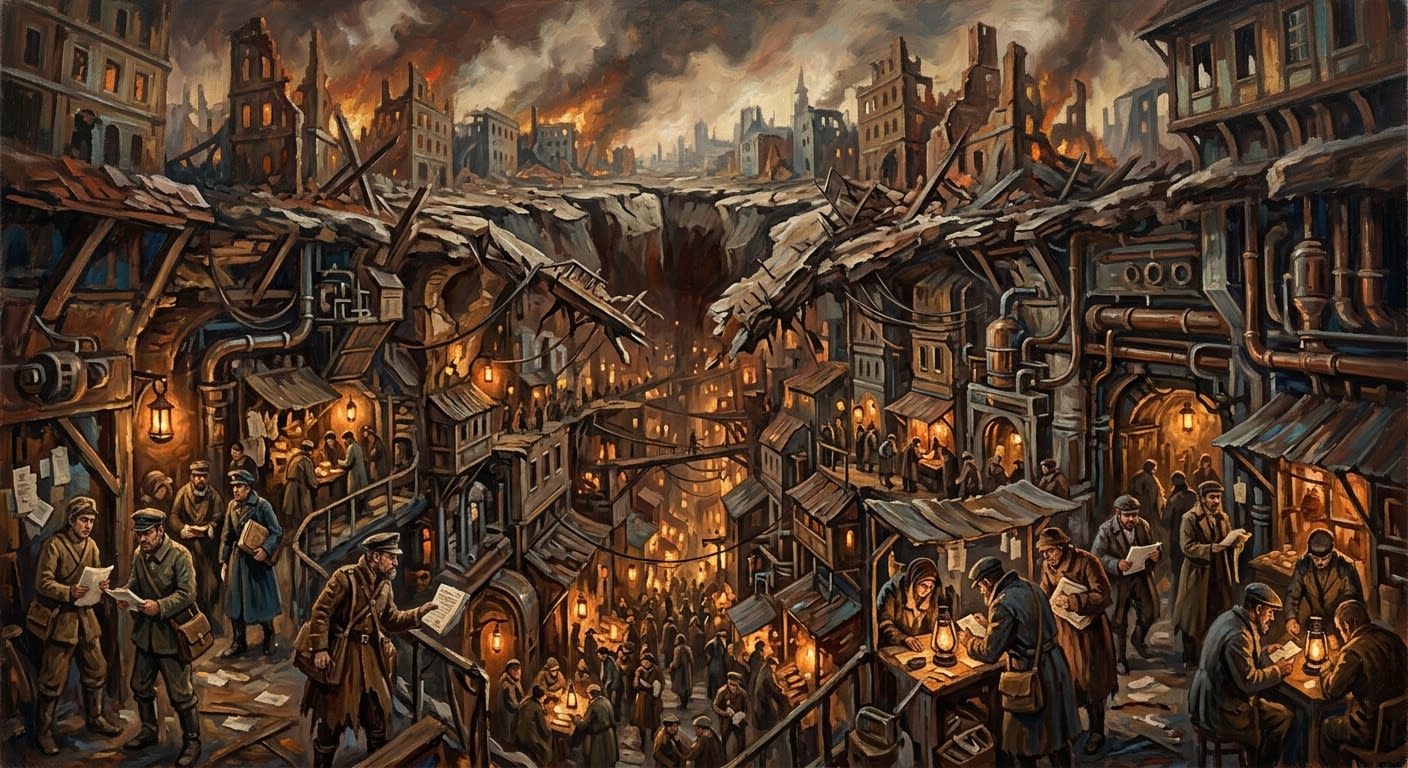
Skopje was a city before it became an aperture, a market before it became a mouthprint, and a road-knot before the first day of the Sundering taught roads that arrival can be fatal. It sat on the Vardar route, beneath hills that had watched empires change uniforms with the weary patience of stone, guarding the southern Macedonian approaches between Thessaloniki, Sofia, Belgrade, and the roads that later acquired the Synod’s names for terror. Its people argued about taxes, grain, church authority, garrison command, and the usual municipal impurities by which mankind proves it is alive and tedious.
Then A.S. 45 arrived.
The official record states that Skopje fell within hours. This is one of those clean sentences the Bureau of Records produces when the truth has too many teeth for public schooling. Older deposits are less polite. Buildings vanished inward. Market roofs folded as if pulled by hooks from below. Livestock, parish rolls, artillery teams, old Ottoman drains, Rationalist cellars, babies in swaddling, wheelbarrows, bridge stones, the south gate, and three separate claims to legitimate military command were swallowed into Kargath’s impossible appetite. The city did not burn. Burning leaves ash, and ash can be swept, weighed, preached over, taxed, and interred. Skopje was bitten.
The upper city became ruin, patrol-ground, bone weather, and cautionary geography. What survived went below. Cellars opened into cisterns. Crypts broke into smuggler runs. Drains became avenues. Bell pits collapsed sideways into chapel holes. Refugees dug where foundations had failed and called the hole shelter; their children inherited the shelter and called it district; their grandchildren taxed it with knives and called it civic order.
So Skopje endures: surface devoured, undercity denied, both productive enough to embarrass the Bureaus.
#On the Silence Before the Bite
Skopje had warning. This is the part citizens dislike and theologians enjoy too much. In A.S. 38, during the Eastern Silence, the Balkans stopped answering. A magistrate in Skopje failed to submit the quarterly arrest tally. A rail office south of Belgrade filed a schedule with all destination columns blank and all departure columns marked ARRIVED. Couriers vanished. Maps held village names after the villages had ceased to correspond. Vienna called the failure regional communication disorder, because the Rationalist mind could hold damnation if the label had enough syllables and no incense.
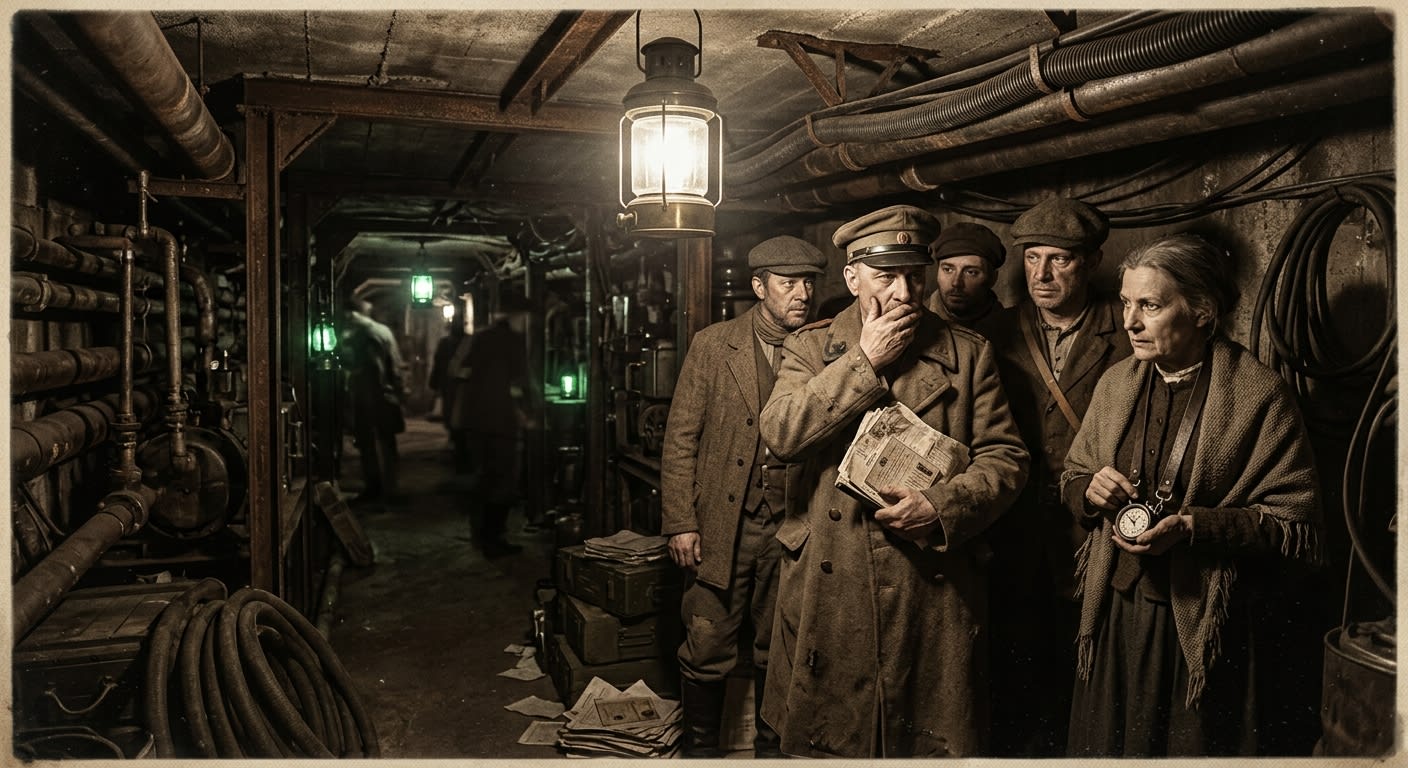
The first Skopje reports were clerical. Missing grain abstracts. Unreturned military receipts. Telegraph delays attributed to weather that never appeared on instruments. Then refugees brought less useful evidence and better evidence besides: forests moving without wind, fogs that counted families wrongly, church walls blackened from within, bells kneeling against nave floors as if listening for the next world chewing through the foundations.
The Vardar road supplied one of the Eastern Silence’s ugliest statements. A patrol entered fog near Skopje and emerged two days later in reverse order, each man carrying the pack of the man behind him, each answering to the wrong name. The Rationalists entered this as nervous exhaustion. I cherish their vocabulary the way one cherishes a condemned man’s final attempt at good manners.
Skopje’s silence mattered because it trained the region in absence before the Sundering translated absence into appetite. For seven years, letters failed, names loosened, and roads became unreliable witnesses. When Kargath’s force came, it did not strike a healthy civic body. It struck a city whose papers already doubted its own edges.
Certain old plates date Skopje’s fall to later southern-front campaigns and describe the city as “gradually lost.”
Corrected. Skopje fell on the first day of the Sundering, A.S. 45, within hours of the first eastern eruption. Later campaigns altered possession of the approaches, burned districts, opened and closed routes, and lied about control. They did not create the wound. They merely learned to rent stalls around it.
#On the Surface Ruin
The surface of Skopje is not empty. Emptiness would be a mercy. The surface belongs to patrols, weather, bones, collapsed markets, tooth-marked stone, winter grasses that grow in rings where houses once stood, and ruined streets that still remember processions without having the courtesy to keep their routes consistent. It is classified as contested Charnel border terrain, southern approaches, ruin-market exclusion, with additional footnotes whenever the Bureau of Cartography has mislaid enough junior staff to require fresh terminology.
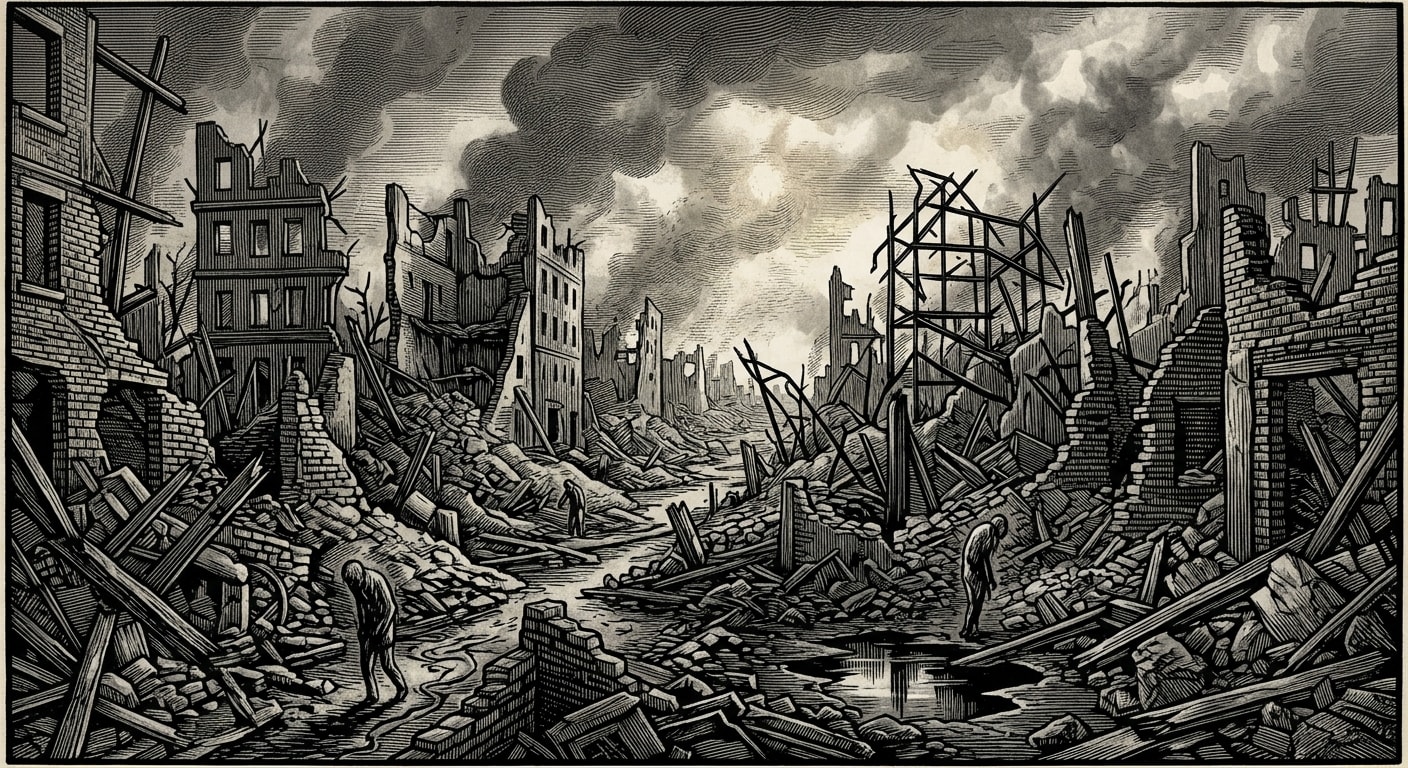
No wall remains whole. Some foundations descend too far and end in warm air. Some streets stop abruptly at bite-scarps: vertical cuts through masonry, earth, timber, and household layers where Kargath’s first hunger removed civic volume rather than merely destroying buildings. In one such scar, surveyors counted four floors of a merchant house, a cellar shrine, two drains, a horse trough, a municipal archive shelf, and the upper half of a baker’s oven, all sheared into a single exposed face. The lower half had gone somewhere with the baker’s wife, the baker’s sons, and seventeen sacks of flour.
The ruin is acoustically wrong. Sound carries down. Boots on surface paving produce answers from below when no tunnel mouth is visible. A whispered order under a broken arch returns in the voice of a market woman selling onions at pre-Sundering prices. Gunshots flatten. Bells, if rung above, sink into the ground and emerge hours later as hums in lamps beneath. The Bureau of Bells hates Skopje with a specialist’s fury.
The bones are unevenly distributed. Some quarters contain none, which is worse than abundance because Kargath’s absence of leftovers has theological weight. Some cellars hold heaps of small bones mixed with hinges. Some upper rooms contain adult skeletons seated around tables with plates of blackened wax. The Bureau of Medicine attempted a demographic study in A.S. 162. The study ended after its lead anatomist found his own childhood milk tooth in a jaw recovered from a ruin-house that had been sealed since A.S. 45. He requested reassignment to plague work, and Medicine granted it, proving that even physicians possess limits when the alternative is Skopje.
Surface patrols do not camp overnight unless paid by someone whose authority outranks prudence. Dogs refuse several squares. Horses sweat near the old grain exchange. Rats travel in lines too orderly for comfort. In spring, candles sometimes appear in upper windows of houses whose staircases are gone. The locals below call that the city “remembering rent.” They are disgusting people and often correct.
#On the Lantern Warrens Below
The Lantern Warrens are the city beneath the city: old cellars, cisterns, drains, collapsed churches, smuggler galleries, refugee holes, pipe-crawls, bell-shafts, and tallow rooms connected by work, terror, barter, and the shared understanding that official maps are things made by men who wish to die indoors. They are Skopje’s surviving civic fact. The surface has monuments. The Warrens have prices.
On paper, the Warrens do not exist as a lawful settlement. In practice, they contain route-mothers, wick-priests, paper uncles, tallow captains, forged-paper brokers, black-diesel carriers, ash families, fugitives, hymn-sick children, bell-tappers, pipe-runners, and saints too unofficial to receive reliquary theft insurance. Their markets run below ruined streets whose names have changed four times and still answer to the old ones when sung in the right key.
The known trades are tallow, forged papers, black diesel, route gossip, marrow-fat, counterfeit bell exemptions, relic splinters that are mostly furniture, silence purchased by the hour, and debt cancellations too elegant to be trusted. The forged-paper trade deserves admiration and fire. Skopje forgers have had a century and a half to study the documents of dead garrisons, old Rationalist offices, Synod Bureaus, smugglers, pilgrims, and desperate families. Their best work is so good Records confiscates examples for training and later misplaces the originals, which is the Bureau’s highest compliment.
The Warrens maintain etiquette through mutual heresy accusation. Fuel carriers call tallow men corpse-grease votaries. Tallow men call paper forgers name-thieves. Paper forgers call lamp families hymn-whores. Lamp families call everyone else loud. At inquiry, each faction denounces the others with tears, witnesses, and credible dates. By the next bell, trade resumes. Hatred feeds pride; Skopje prefers commodities that survive damp.
The authorities are practical. Route-mothers hold stair mouths and know which surface patrols can be bribed with grease, which with children, which with silence. Wick-priests tend lamp shrines without approval from Rites, which makes them illegal, effective, and popular, the three conditions every Bureau fears in combination. Paper uncles arbitrate names when forged identities collide. Tallow captains own vats and the bodies that disappear near them. Pipe-runners own warmth. Above them sits whichever armed company currently controls a ruin-mouth and mistakes vertical access for sovereignty. First descent cures that error.
#On Black Diesel and the Lamp-Hymns
The Warrens are named for their lamps because the lamps are Skopje’s confession. They burn black diesel, tallow-cut oil, marrow adulterants, saint-dust knockoffs, and whatever the district can obtain before winter makes orthodoxy expensive. When lit, the lamps sometimes hum.
Not always. Not predictably. Never with enough obedience to satisfy Bells. The hum begins as pressure in the glass, a tiny muscular tremor inside the flame, then rises into a hymn no licensed chorister has composed. Acoustic analysis places several modes before the Bell Codex by at least a century. That is the polite finding. The impolite finding is that some tones appear older than the Synod’s right to explain sound.
The A.S. 171 harmonic remains the central case. An entire lamp-array beneath the old north market produced a Category Four tone. Every dog in the ruin lay down facing east. Children repeated fragments before speech. A Bureau of Bells observer identified the mode and was reassigned before countersignature. Purity burned the affected corridors, seized lamp stock, punished several sellers, and declared recurrence unlikely. By spring, the lamps were humming again, because Skopje treats Purity declarations as seasonal weather.
Early Purity pamphlets described the Skopje lamp-hymns as local superstition caused by inferior fuel, poor ventilation, and Balkan temperament.
Corrected. The phenomenon has been recorded by Bells instruments, Pipe-Runner slates, confiscated lamp chimneys, and one Fume-Inspector who later denied his own handwriting with the full majesty of a man who had read the report sober and preferred guilt.
The phrase “Skopje weather” has escaped the Warrens. A Pipe-Runner in Constantinople says it when a pipe hums like pre-Codex chant. A Lamp-Mercer at Brest says it before snapping a wick that has begun to answer a grandmother’s prayer. A Bell-Tapper near Irongate does not say it at all, since silence fattens his invoices. The phrase means: sound has entered fuel, fuel has entered doctrine, and no one present is being paid enough to explain the relation.
BUREAU OF BELLS — SKOPJE HARMONIC ADDENDUM, A.S. 171 Mode classified: ███████████████████. Observed effect: dogs aligned east; child-vocal recurrence; lamp glass sweating black oil. Phrase heard under final chord: ███████████████████. Recommendation: do not replay cylinder in rooms containing brass, children, or debt instruments.
The residents keep rules. Do not harmonise. Do not write the notes. Do not sell a singing lamp to a stranger unless the stranger cheated first. Do not answer if the flame sings your childhood name. If the hymn matches a surface bell, extinguish every light and wait for rats to move. If the rats sing, abandon the corridor.
#On Debt, Bells, and the Parish That Paid in Blood
Skopje’s ruin is gluttonous in origin, but Greed found tenancy early. The southern routes pass through enough hunger, displacement, and forged identity to make Velmora’s servants feel almost clerical. The Ten Thousand Keys operate best where need arrives before law, and Skopje has been need with stairways since A.S. 45.
A parish case survives in the official documentation and in the deployed doctrine on Miracles and Sorcery. At Skopje, a bell was rung against a contract the Greed-born had inscribed into the marrow of its debtor. The clause demanded obedience. The chime demanded repentance. The named debtor pulled the rope himself. The parchment ignited in blue flame; the man fell dead before the altar; the contract died with him. Bureau classification: successful countermeasure, Category Three, regrettable mortality.
The parish no longer stands in ordinary geography. The Warrens claim three candidate sites: the Chapel of the Uncounted Toll, the Lower Blue Bell (Unregistered), and a sealed cistern where paper scraps surface after rain though no paper has been stored there since the second fire purge. Each faction insists its site is genuine. Each sells relics. All three may be false. All three may be true, which is how Skopje multiplies revenue without improving accuracy.
The debt cults learned from the case. Modern Skopje contracts avoid bells, bell-rope materials, bell-metal witnesses, and signatures made within earshot of licensed peals. They prefer wax buttons, debt tokens, warmth loans, child-route guarantees, and the little informal promise made under hunger when no one calls it a promise because naming the thing would summon Purity and shame. The Ten Thousand Keys need not own Skopje to profit from it. A city already bitten is full of people willing to sign for a blanket.
#On the Four Purges and Their Recurrence
The Warrens have been purged by fire four times, according to Records, which means four purges became politically visible enough to require numbering. Fire crews descended with oil, ash, hooks, printed absolutions, and the solemn confidence of men entering tunnels they did not build. They burned corridors, chapels, paper forges, nurseries, vats, and shrines. They seized lamp stock. They dragged Wick-Kids upward for spectacle. They declared the matter contained. Skopje waited for them to leave and relit itself.
The first purge followed the A.S. 171 harmonic. The second took the tallow quarter after marrow-fat adulteration produced a flame that made adult men remember being infants. The third reached the lower cistern and failed when water burned on top. The fourth reached the Chapel of the Uncounted Toll, where a bell without clapper had hung from a rusted beam since before the Warrens had a name. The crews reported successful destruction. The bell was listed as melted, removed, and doctrinally neutralised. Six weeks later, smugglers swore it rang once under no hand when a convoy of forged papers passed beneath it.
Fire does not cleanse Skopje. It negotiates with available air. Flames run where tunnels permit. Smoke climbs, curls, stalls, returns through drains, and settles on families already hiding in cavities no survey marked. The Warrens do not rebuild after purges; they reoccupy. Reoccupation is cheaper, faster, and less flattering to authority.
Purity hates Skopje because it refuses finality. War hates it because contraband routes are useful until they are embarrassing. Records hates it because forged documents from the Warrens have passed Records inspection. Tithes hates it because unassessed trade is theft, unless a Bureau office is receiving heat from the same trade, in which case unassessed trade becomes deferred policy. Doctrine hates it because Skopje is proof that survival can become a rival church.
#On the Southern Route and the Market of Necessary Lies
Skopje sits two to four days from Thessaloniki by the working route, depending on patrols, weather, bribe quality, and whether geography has chosen to be catechetical. Its position makes it indispensable to the southern theater. Cargo moving between Thessaloniki, Sofia, the Macedon approaches, and the Constantinople road often passes near the ruin even when official route sheets pretend otherwise. Convoys need fuel, papers, spare names, silence, tallow, and information. Skopje sells all six.
The market’s genius lies in conversion. Official cargo becomes unofficial without changing wagon. A pilgrim group loses three persons and gains five licenses. A Purity detachment confiscates fuel publicly and purchases cleaner fuel privately. A War convoy reports delay due to road conditions while its quartermaster trades broken seals for replacement seals whose wax is almost the correct shade. A Bureau of Passage officer declares a stair mouth closed and then uses it on alternate Thursdays.
Route gossip is the finest commodity. Which patrol has a new captain. Which bell schedule has gaps. Which Purity assessor drinks. Which surface street has begun answering with market noise. Which pipe hum means pressure and which means prayer. Which forged route slip bears a dead seal too famous for safe use. Which families below have started speaking of “the warm creditor,” a phrase that makes Inter-Infernal Analysis reach for knives.
The Warrens also move people: defectors, fugitives, bribed clerks, orphaned children, conscripts avoiding enumeration, cult messengers, desperate widows, informants, failed informants, and men whose names have become expensive in their home districts. Some are saved by the passage. Some are sold by it. Skopje makes no moral promise beyond price.
#On Children, Names, and the Census That Cannot Finish
No city survives honestly without children, and Skopje has survived long enough to make honesty look like a luxury purchased by safer towns. Children born belowground enter no lawful parish roll unless a route-mother chooses to sell the registration, a paper uncle chooses to forge it, or a Bureau clerk chooses to buy a number instead of a name. Many have three names: the lamp-name spoken by family, the market-name used for trade, and the surface-name printed on whichever passage slip will carry them past the next checkpoint. A fourth name may exist if the child is pledged to debt, song, or fuel. The Warrens consider four names unlucky. The Bureau considers one name sufficient. Both positions are foolish in different dialects.
The census attempts began in A.S. 112, A.S. 149, A.S. 176, and A.S. 200. Each failed for reasons instructive enough to be suppressed. The first counted stair mouths and produced a population lower than the number of tallow lamps observed during one market night. The second counted ration purchases and discovered several dead garrisons still buying flour. The third counted baptisms and found that a single child had been baptised under seven names by three priests, one wick-priest, one defrocked Bellwarden, and a woman who claimed she had authority from a saint beneath the cistern stones. The fourth used heat signatures, which counted lamps, dogs, corpses, cooking pots, and two sealed rooms that should have been cold.
Childhood in Skopje is apprenticeship to concealment. A child learns which tunnels carry adult voices too clearly, which lamps must never be stared at, which paper uncle can be trusted to misspell a name for safety, which surface patrols accept grief as bribe, and which rats flee before bad air. He learns to sleep through dripping, footsteps, distant bells, and the soft talk of creditors. He learns never to sing back. The last rule saves more lives than the first nine together.
The Bureau of Mercy periodically announces recovery missions. These missions retrieve a handful of children, photograph their soot, wash their hair, rename them, and place them in orphanage systems whose wardens are convinced soap is theology. Some children thrive. Some run back. Some wake screaming because the dormitory lamps burn silently, which to a Skopje child feels less like safety than a predator holding its breath. Mercy records the returns as relapse into criminal environment. The route-mothers call them homecomings and charge a small re-entry fee.
Names are currency. Names are also shelter. A child with too stable a name can be found by Purity, drafted by War, claimed by Tithes, registered by Mercy, indexed by Records, or purchased by a Keys creditor who knows where the mother bought winter flour. A child with too many names risks splitting under them. Skopje’s genius is teaching its young to answer without belonging. This is damnable. It is also how several thousand souls have avoided being eaten, counted, or both.
#On What Skopje Remembers
The common theory belowground says Skopje remembers being eaten and sings through whatever burns. Doctrine dislikes this because cities do not remember, wounds do not sing, and fuel is not a witness unless properly summoned, examined, and signed out by a senior authority with ash on his cuffs. Doctrine is correct on every narrow point and wrong in the gross total, which is how committees usually approach mystery.
The surface bite-scarps change in wet weather. Stone sweats grease. Old thresholds exhale cellar air. A ruined arch near the south market drops flakes of plaster stamped with market prices from A.S. 44, the last full year before the city ceased to be a city in the ordinary cowardly sense. Prices vary. Salt is cheap on one fragment and impossible on the next. Bread appears as a blank. A fragment found in A.S. 193 listed “mother” under taxable livestock and was burned by a Records clerk who later claimed the ink had already been smudged.
Beneath, memory behaves like a trade good with poor packaging. It leaks. A lamp hums an old wedding tune and three widowers claim it. A tunnel smells of horse sweat before a surface patrol arrives, though horses have refused that quarter for decades. A forged pass bears the correct seal of a magistrate whose office was swallowed on the first day. Children dream of market stalls they never saw and wake knowing the old price of onions. Fuel smoke forms letters too briefly to read, which does not prevent everyone present from knowing what the sentence accused.
The most dangerous memory is kindness. A bitten city can tolerate hatred; hatred hardens and labels itself. Kindness returns as bait, debt, song, or false proof that the past can be negotiated with. A stranger offers to guide a fugitive child and knows the mother’s lamp-name. A creditor forgives a winter’s interest and asks only for a sealed envelope carried through three tunnels. A wick-priest shelters a Mercy orphan and later demands silence when the lamp begins to sing. Skopje’s wound is not that it forgot mercy. Skopje’s wound is that mercy survives there in forms no Bureau can bless without becoming an accomplice.
#On the Present Condition
As of A.S. 201, Skopje remains contested ruin, contraband artery, acoustic hazard, debt-market, southern-route abscess, and a municipal corpse that keeps submitting invoices. The surface belongs to patrols, bones, weather, and bite-scarred masonry. The Warrens belong to those who can breathe soot without coughing near inspectors.
No Bureau controls Skopje. Several profit from it. This is the sacred distinction on which half the Synod rests its boots.
Skopje’s importance has not diminished with time. It has become more useful as the southern theater has grown more complex: Black Diesel Distillers need route cavities; Hidden Pipe-Runners need shelter; Ten Thousand Keys agents need hunger; forged-paper brokers need old seals; Bell-Tappers need unlicensed acoustics; Purity needs public victims; War needs heat; Records needs plausible denial. Skopje supplies each party while remaining, officially, a place no sensible person should enter.
Some nights the ruin is quiet. Papers are stamped, lamps trimmed, knives hidden, children hushed, bribes counted, fuel bled, and route-mothers sit at stair mouths with the air of abbesses whose convent sells forged passports. Other nights one lamp begins. The glass trembles. Conversation lowers. A hymn older than permission climbs out of the flame, and the whole warren bows its head with that practical reverence by which survivors greet a danger they cannot afford to leave.
Above them, the broken city waits with its teeth in the foundations.