

Reverse Index
Referencing “Marseille”
Every codex entry that links to Marseille. 148 entries.
Return to Marseille
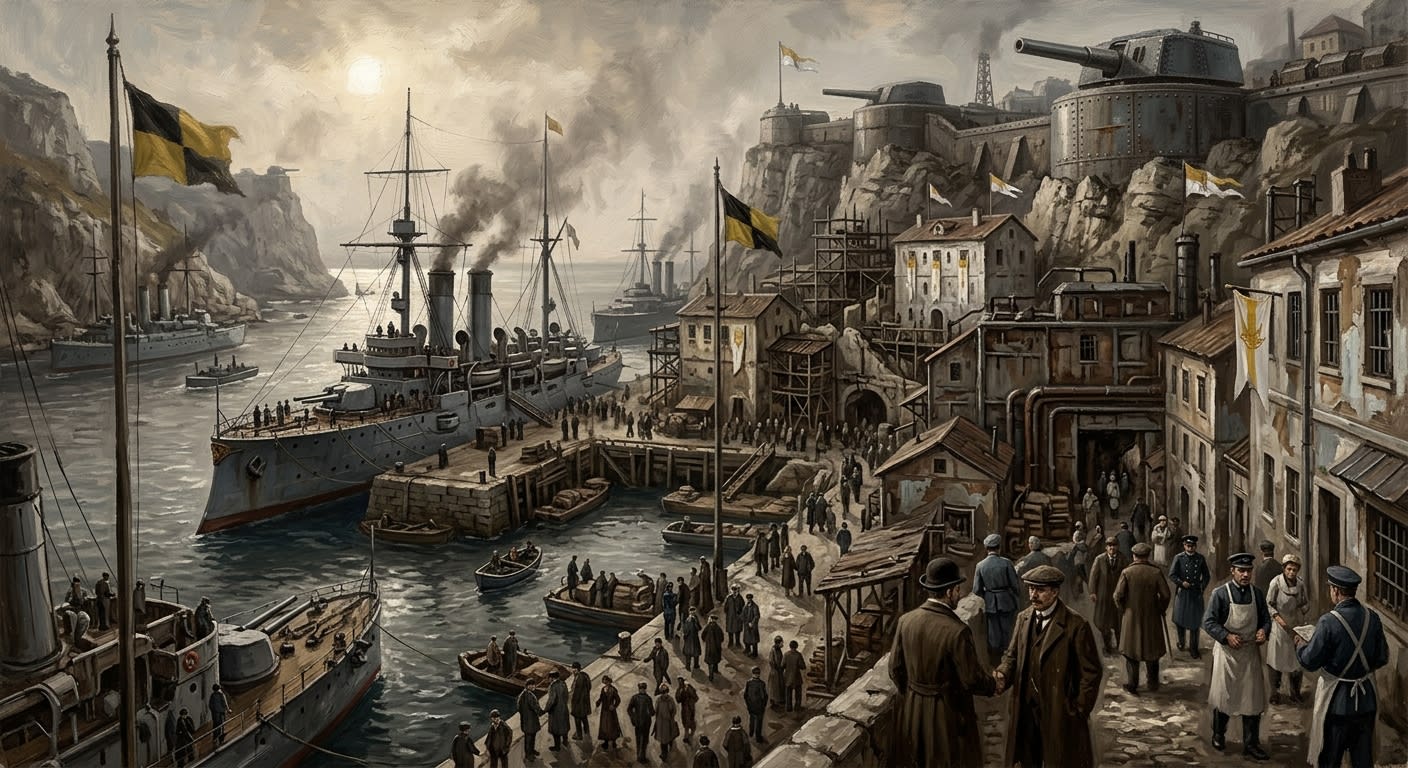
Adriatic Coast
The white edge where pilgrimage, quarantine, and invoice learn to float
The Adriatic Coast is the Synod's white southern hinge: pilgrim piers, quarantine flags, cliff guns, fever wards, and profitable fraud.
Codex Ref. II.7.03-201
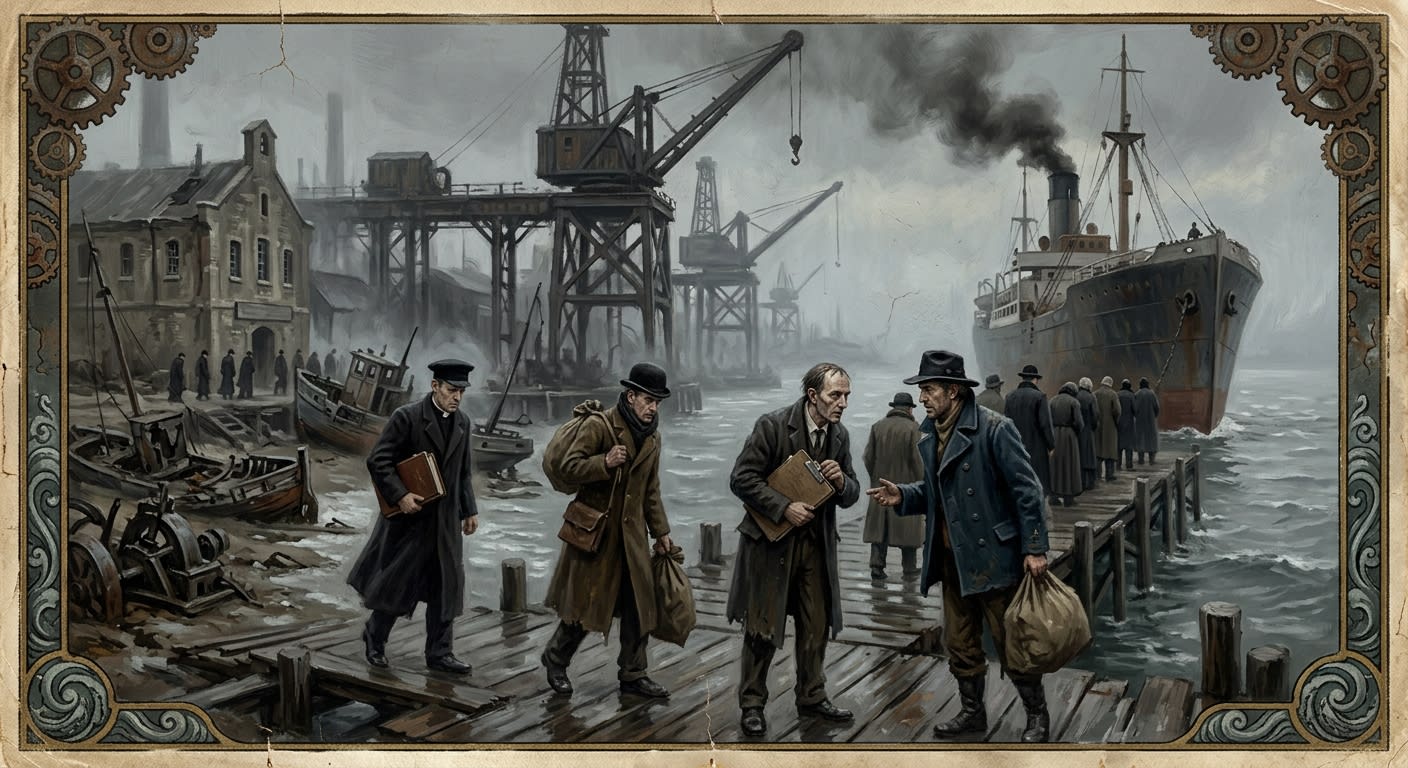
Aegean
The sea is held where it is counted
The Aegean is the Synod's southern salt-ledger: supply lane, pilgrim road, smuggler's chapel, drown-office, and sea with a clerical appetite.
Codex Ref. II.4.09-072
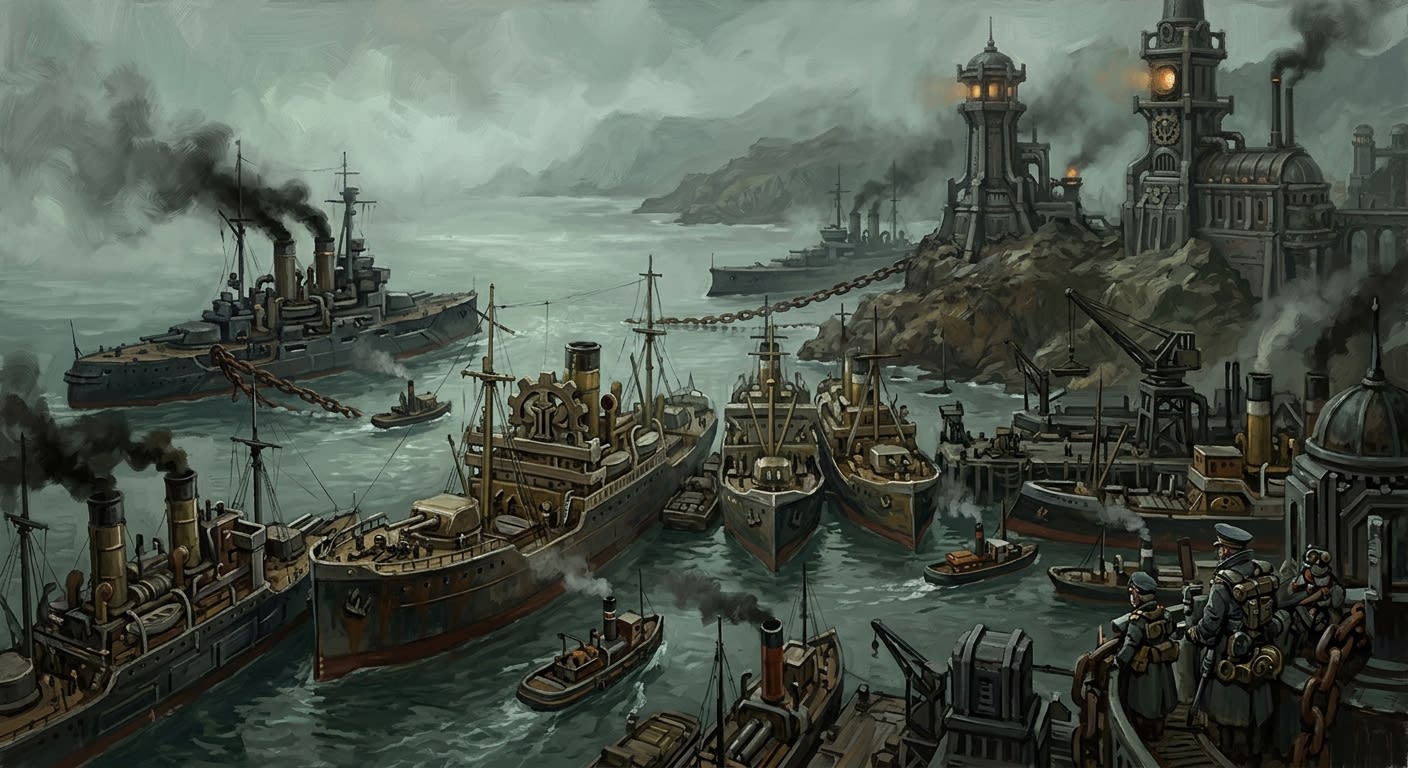
Aegean Approaches
The sea route where even sleep must show papers
Southern maritime threshold where the Aegean supply sea, Shipka road, Thessaloniki chains, and Syrion's fog politely conspire to make motion taxable.
Codex Ref. II.4.09-072
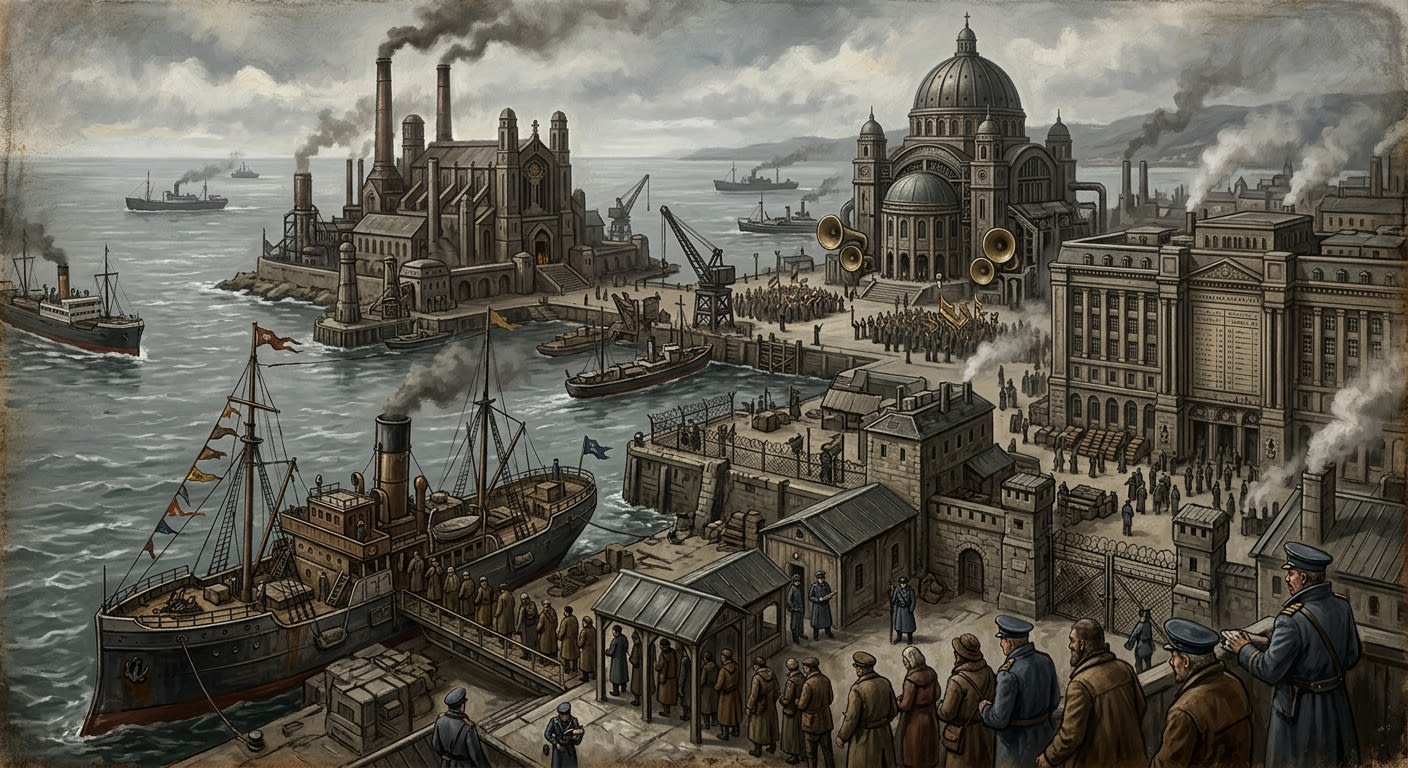
Aegean Shrine-Circuit
Devotion by convoy, tariff, bell, and brine
Licensed pilgrim sea-route where Marseille weighs devotion, Saffron quarantines it, Thessaloniki sings at it, and the Bureau invoices the miracle.
Codex Ref. XIII.1.40-123
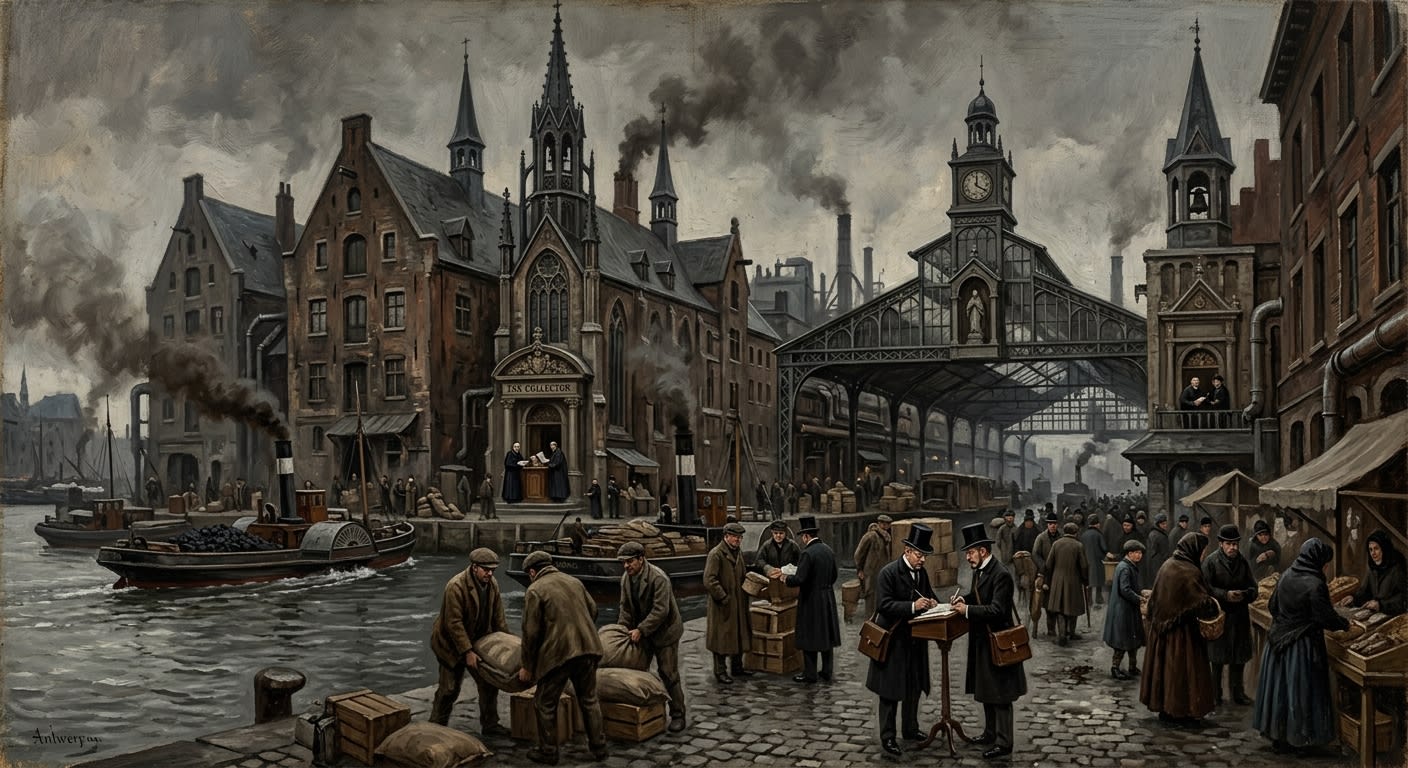
Antwerp
A port city weighing saints by warehouse light
Antwerp is the Scheldt port where commerce learned piety, hunger learned arithmetic, and every warehouse keeps a chapel close enough to tax.
Codex Ref. II.1.06-138

Archbishop Salome Veyrault
The smile that made arrears a sacrament
Archbishop Salome Veyrault governs the Bureau of Tithes with a smile sharp enough to audit grief, humble Purity, and make the Sagittal Line pay for one more day of survival.
Codex Ref. III.2.01-055
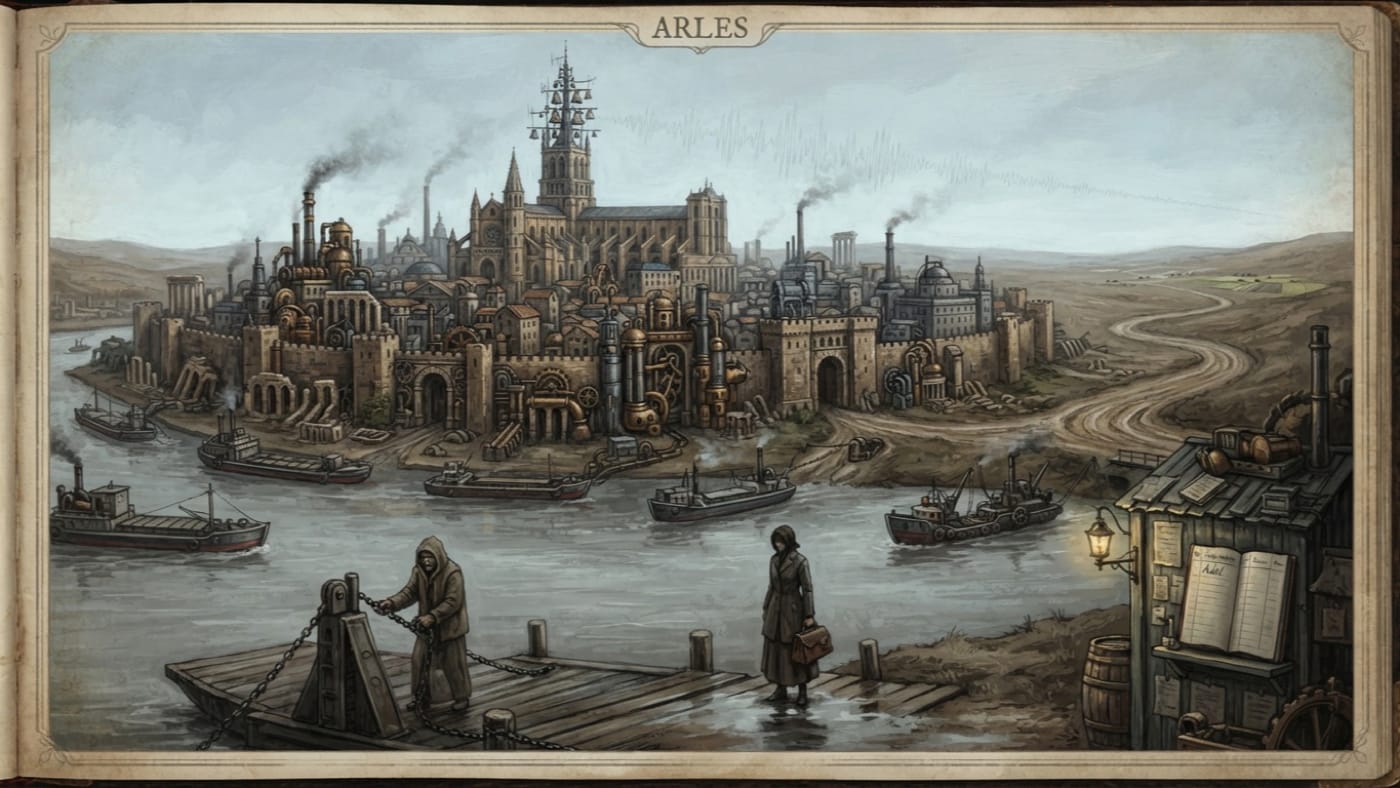
Arles
A town, a diocesan claim, and a name without a destination
Arles stands on the lower Rhône. An undated account gives its diocese fields sixty miles away by bell and ledger; a ferry registry near the town gives Adel no destination. Paper hears further than it explains.
Codex Ref. II.1.08-201
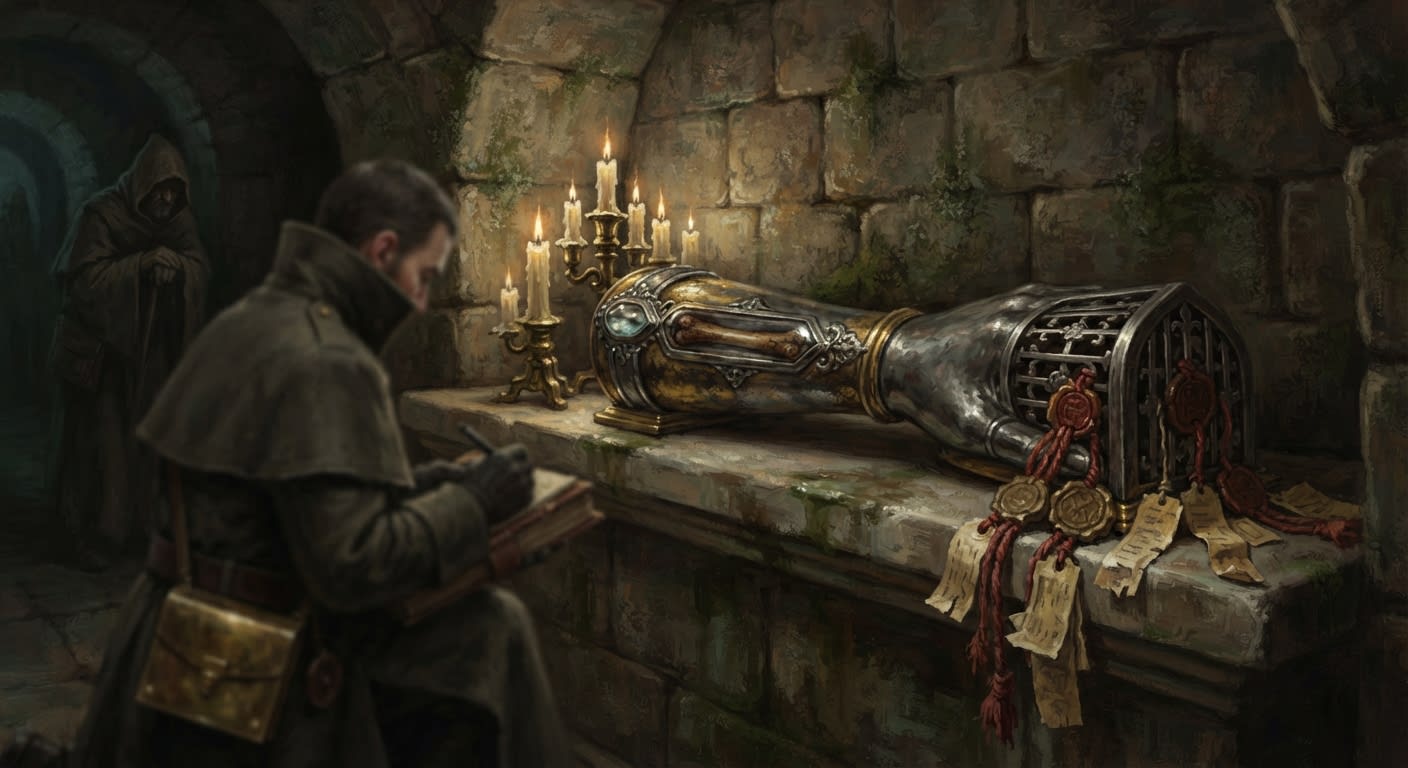
Arm of Victor
A forearm twice certified, once contested, and still too close to the bell
The Arm of Victor is the twice-authenticated forearm reliquary in Saint-Victor's crypt: a nervous bone under Relics seal, market hunger, and bell-shadow.
Codex Ref. III.2.04-018
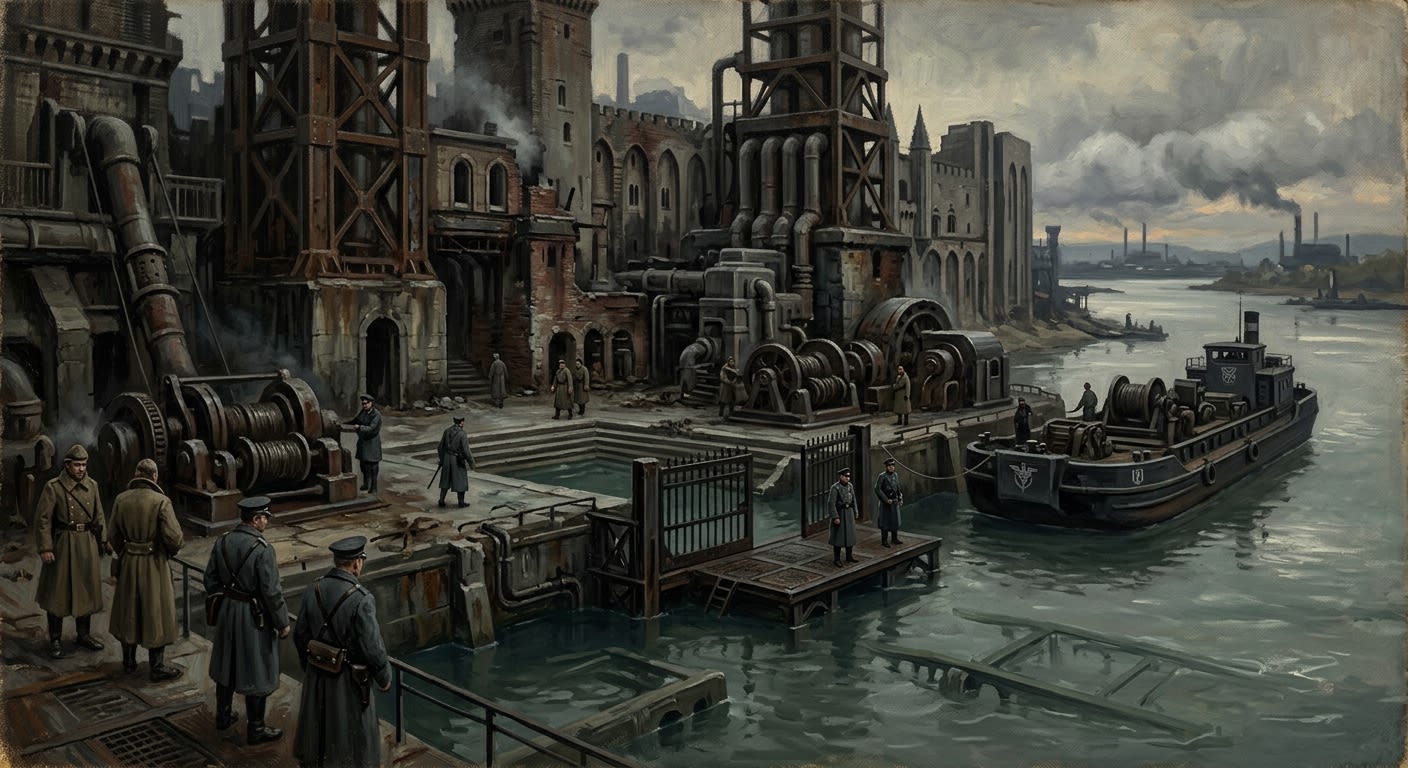
Avignon
A city corrected so thoroughly the river kept the receipt
Penitential ruins on the Rhône, where the Pontifex Submersis was crowned beneath water in A.S. 111, Avignon was razed into correction, and A.S. 145 burned the calendars into agreement.
Codex Ref. II.1.08-111
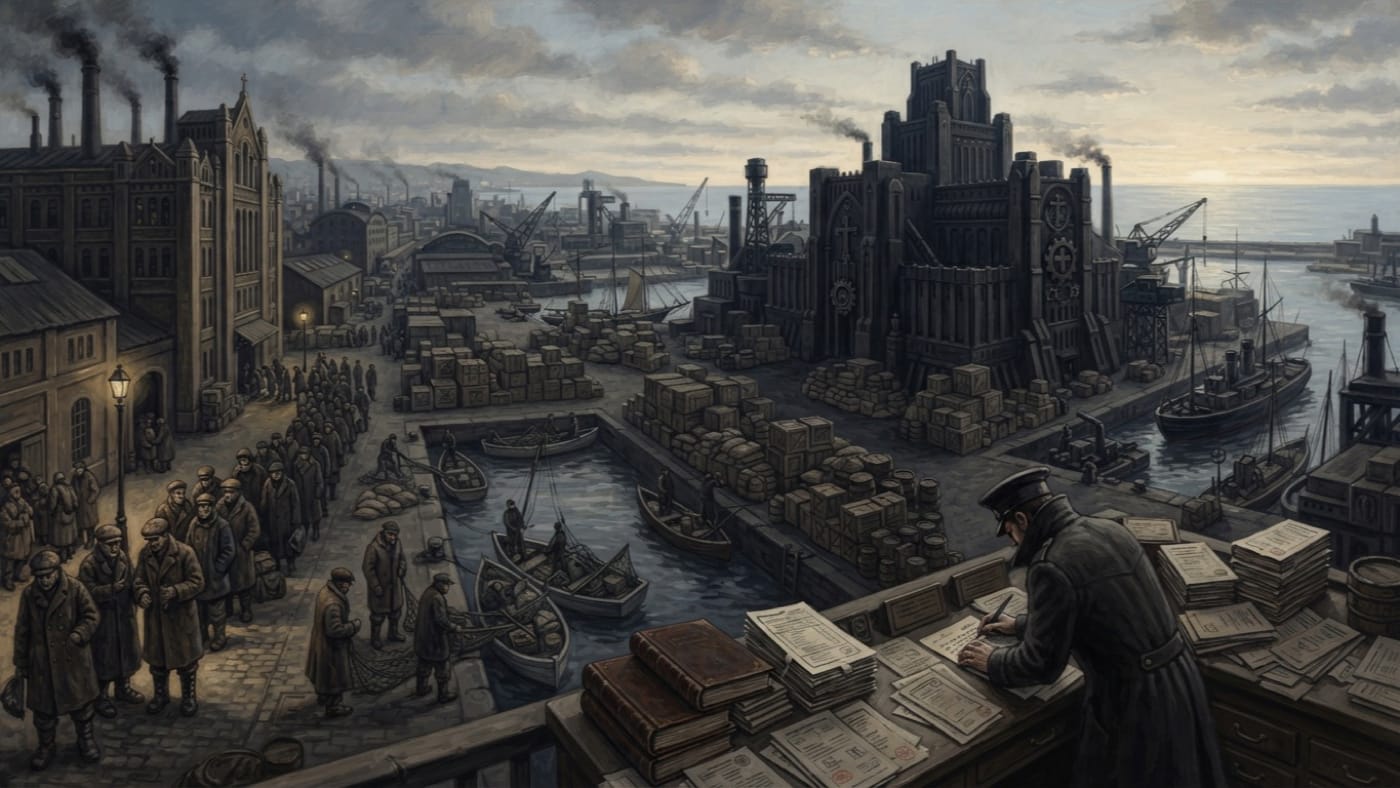
Barcelona
The dead are read correctly; the living appeal
Barcelona keeps Saint-Malo's Thirty-One Names at dawn and its dialect disputes on the clerk's desk. An Iberian port where the dead are read correctly and the living appeal.
Codex Ref. II.1.04-166
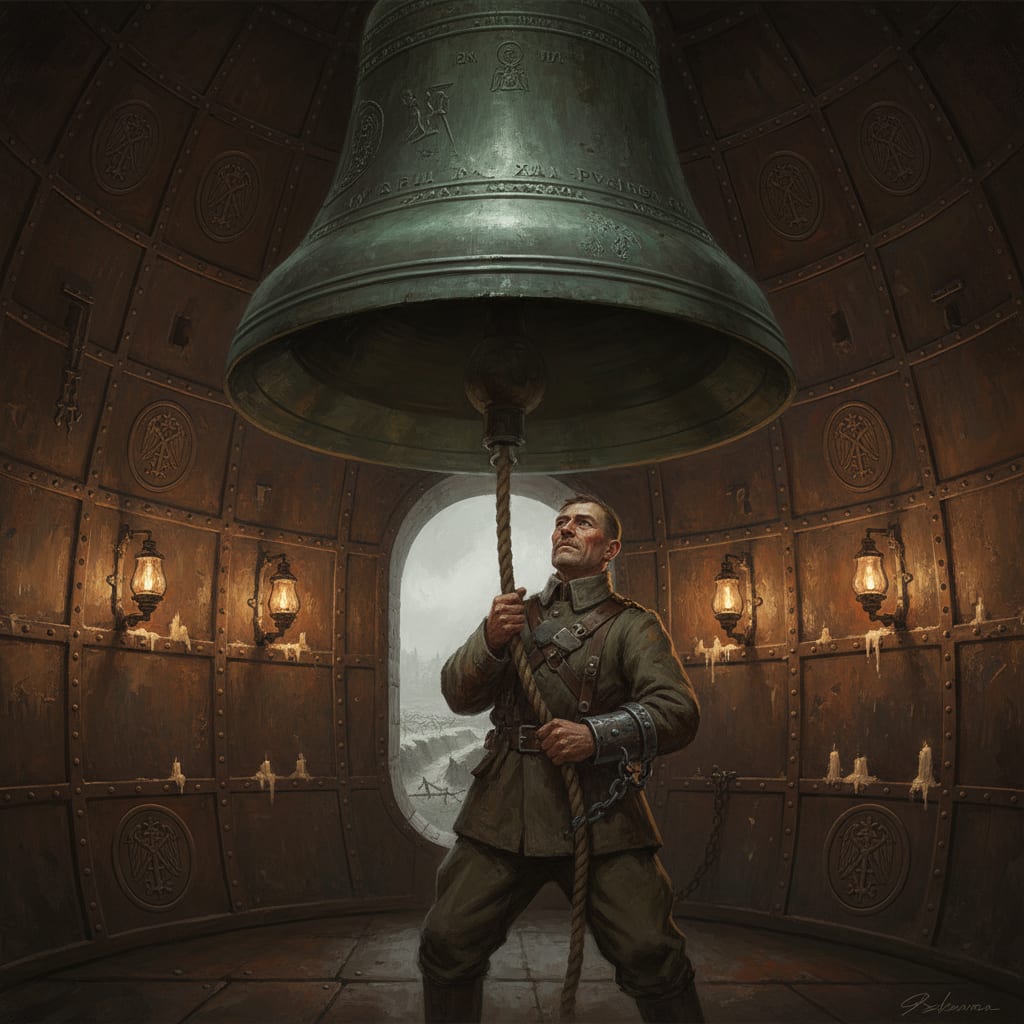
Bellwarden
Chained by the wrist to the Synod's schedule, he rings a war he will never be permitted to understand.
Eleven thousand four hundred souls chained by the wrists to a Synod schedule they did not write, ringing a war they cannot explain, in service of a theology their bells increasingly refuse to perform.
Codex Ref. XII.2.01-001
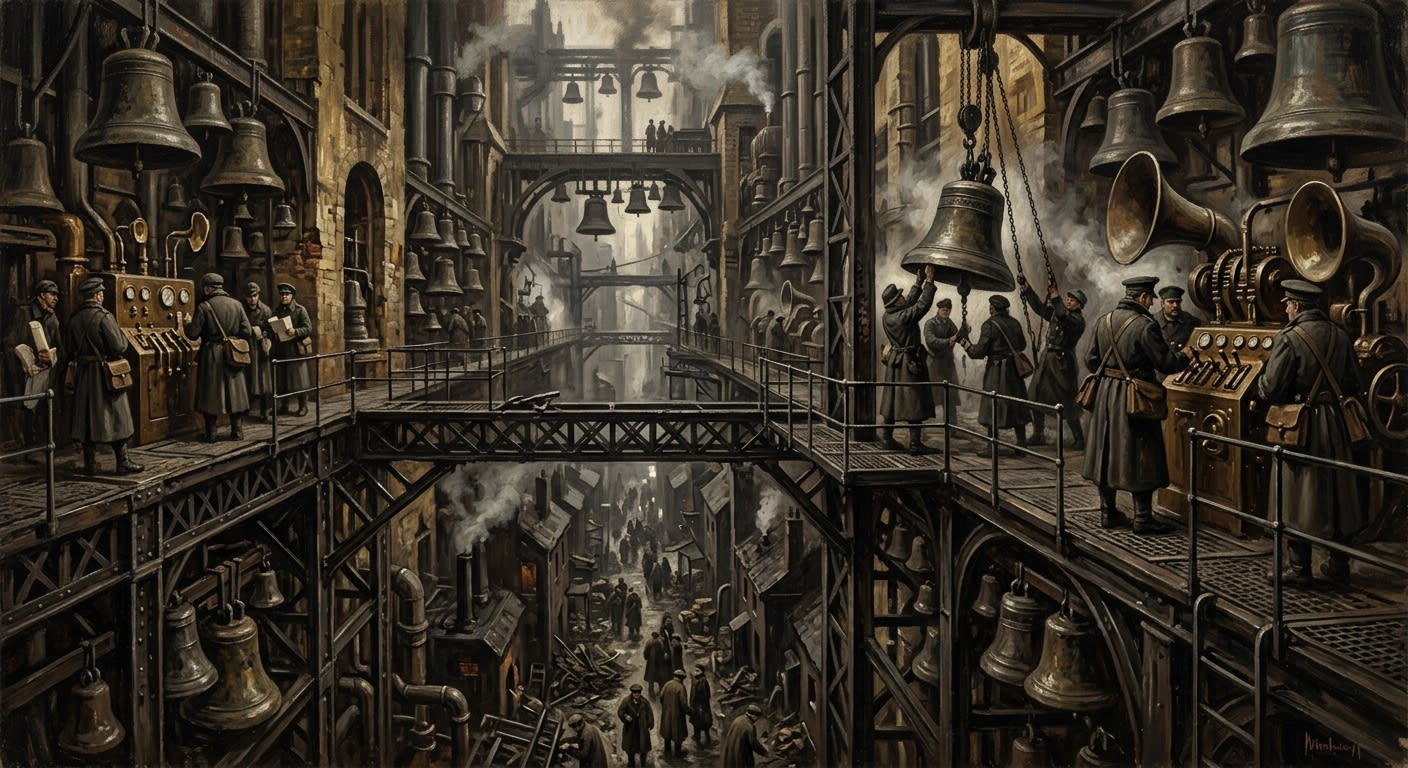
Bellways
The plural doctrine of roads, sky, trench, and taxable obedience
Bellways are the Synod's plural acoustic jurisdiction: low roads, middle war-lattices, high Ark corridors, and every quarrel they make audible.
Codex Ref. XIII.1.89-201

Bishops-Praetorial
Mitres welded to prefectures, and souls counted twice
The Bishops-Praetorial keep souls, quotas, provinces, and grudges: mitred governors whose pastoral care arrives with tithe tables attached.
Codex Ref. VIII.3.04-093
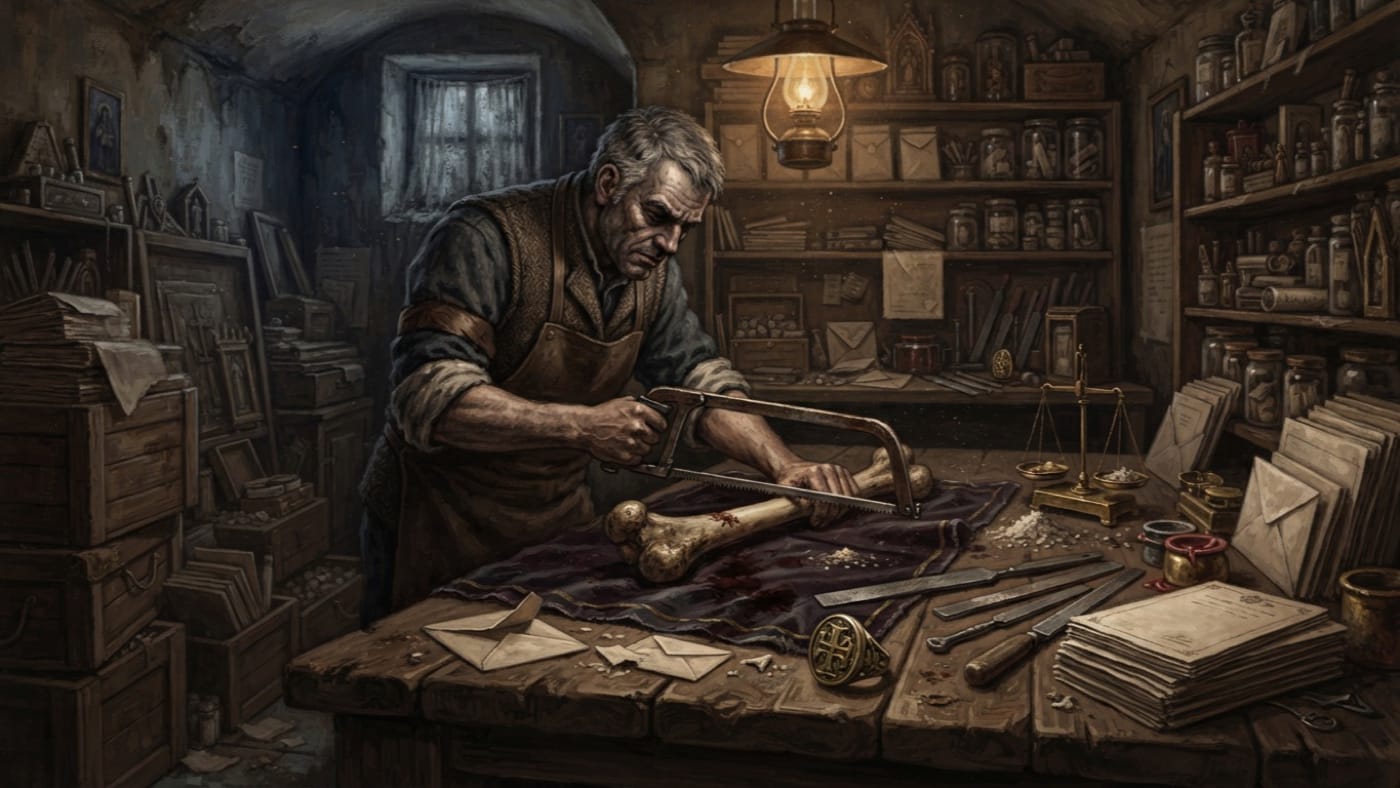
Bone Splitters
The certificate travels separately; the saint travels in pieces
The Paper-Only insult for Peace and Profit brokers who divide authenticated saint-bones into separately certified portions. Surveyed in A.S. 201: tolerated when useful, denied when caught, and indispensable whenever calendars fail.
Codex Ref. XII.15.05-001
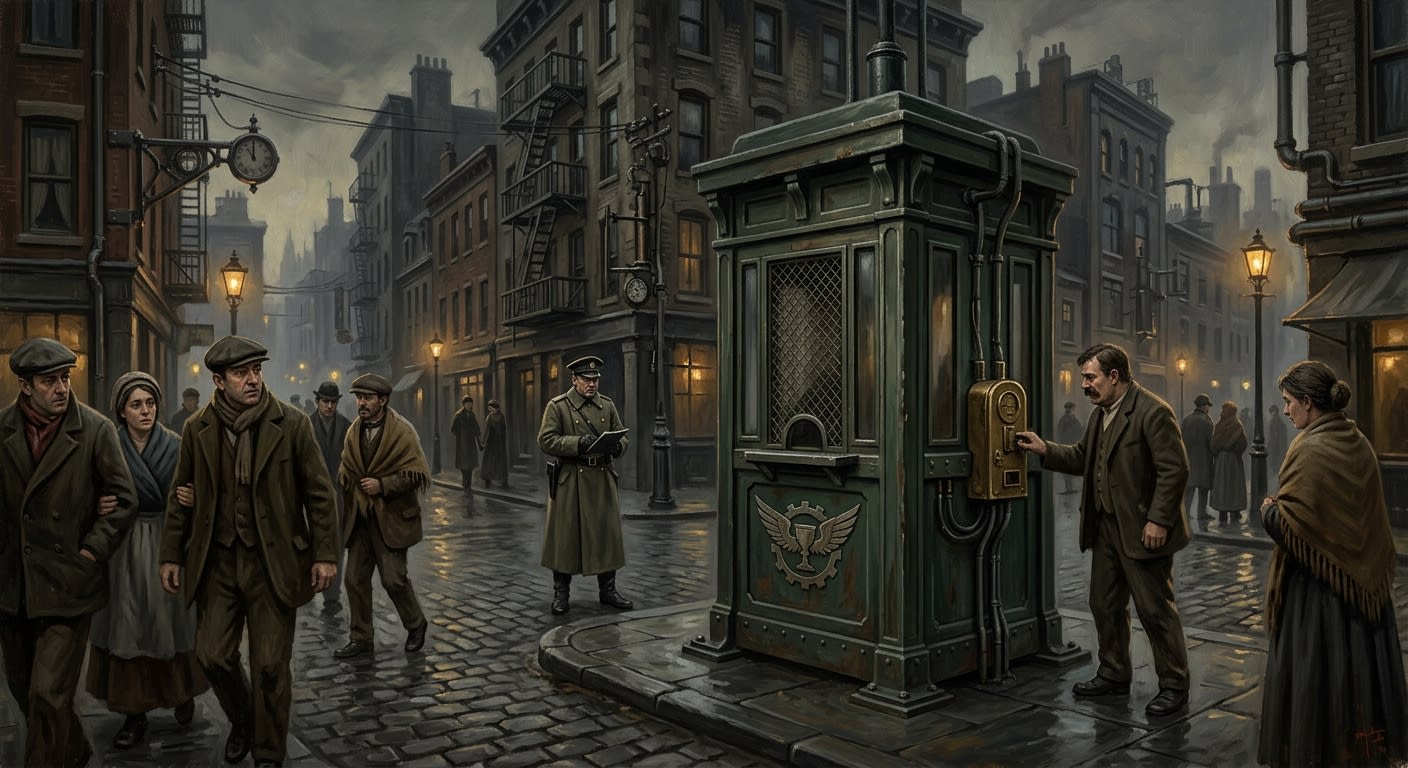
Booth Proliferation Decree of A.S. 112
One wooden box every three blocks, and Europe called it grace
A.S. 112 Bureau of Rites decree mandating one registered confession booth per three city blocks, turning confession into local, billable, auditable street infrastructure.
Codex Ref. VII.8.10-015
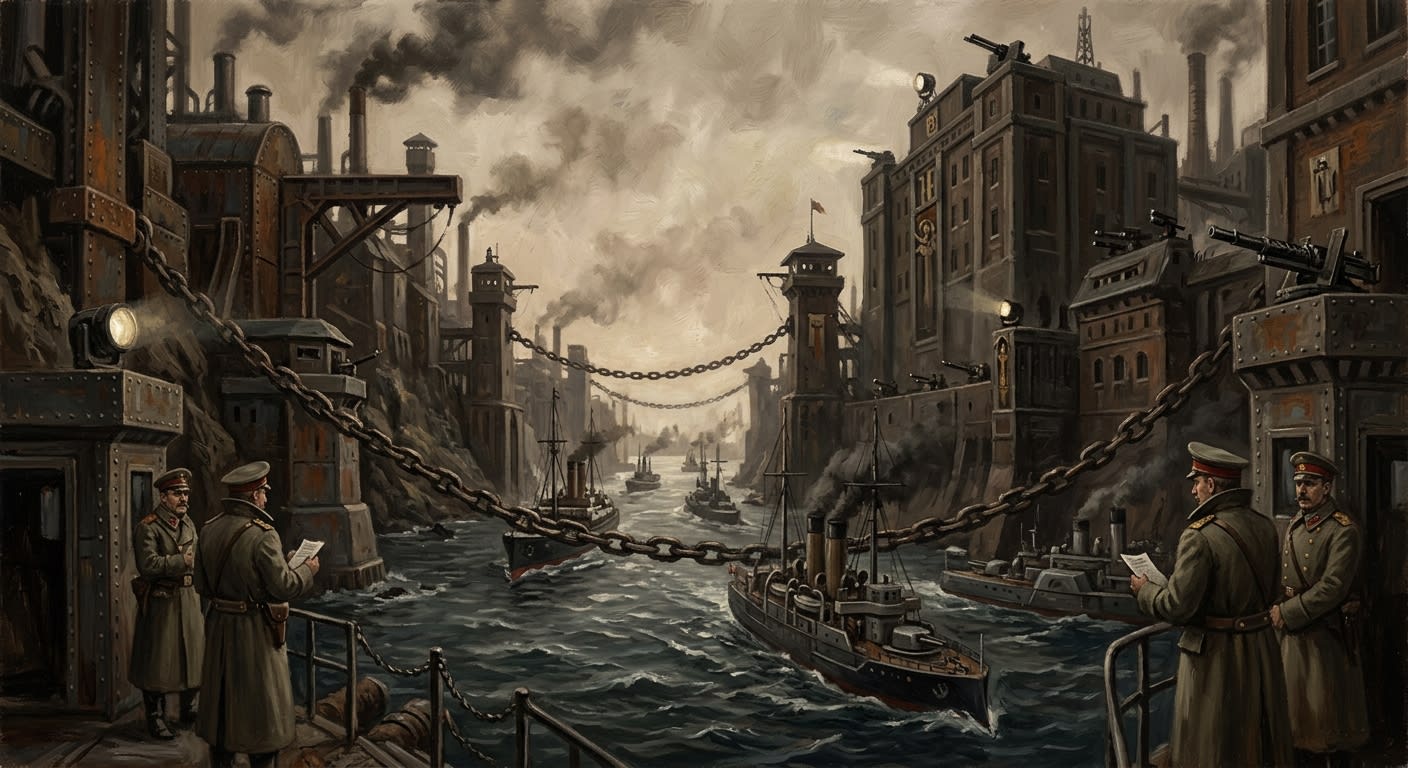
Bosphorus Strait
The wet throat where the Line learns to drown
The Bosphorus Strait is the southern maritime hinge of the Sagittal Line, chained, taxed, watched, and never quite obedient to the maps that claim it.
Codex Ref. II.4.09-004
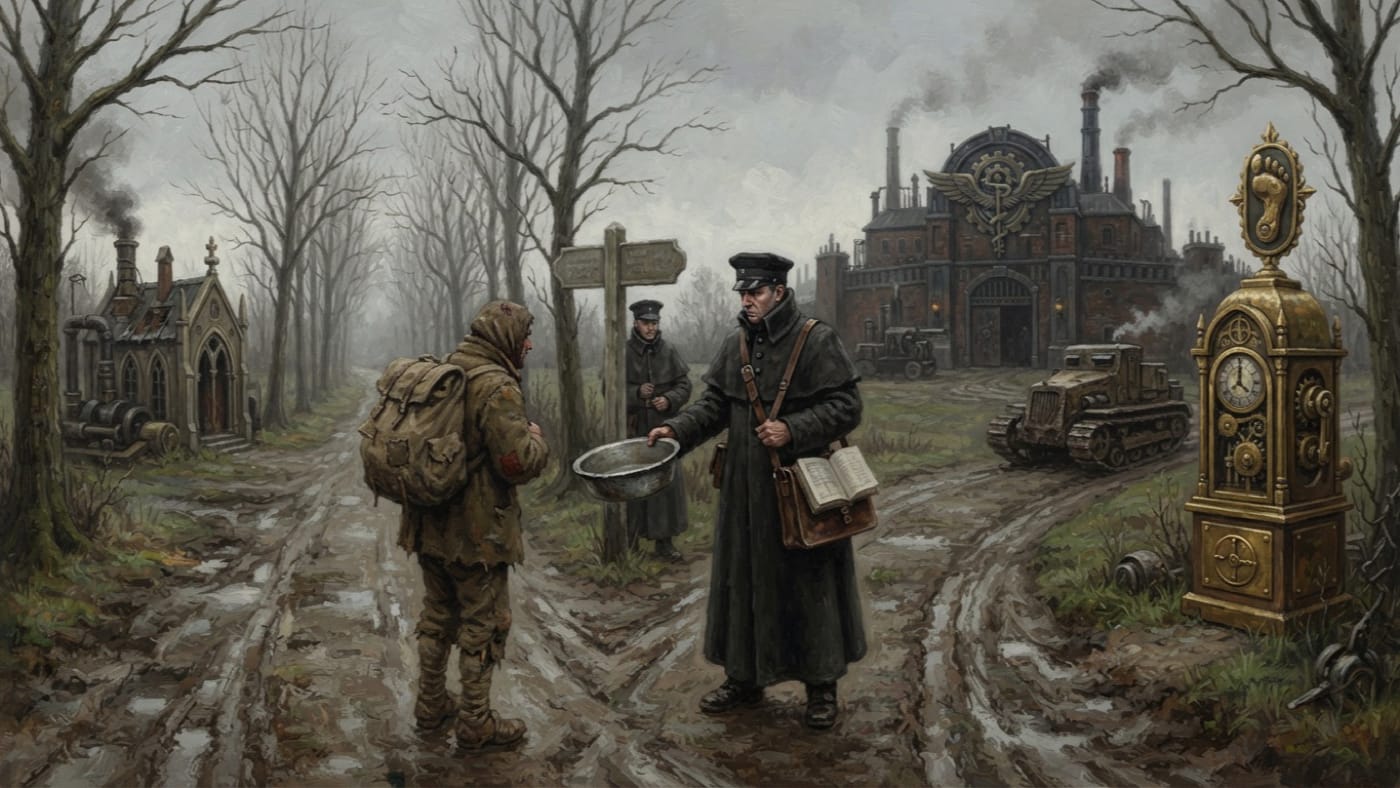
Brotherhood of the Blessed Foot
Flemish feet, private fees, and an audit into penitence
The Brotherhood of the Blessed Foot taxed Flemish pilgrims at crossroads it did not own, selling protection from unnamed threats until litigation, audit and the A.S. 123 Harmonized Routes Edict ended its independent authority.
Codex Ref. XI.5.01-123
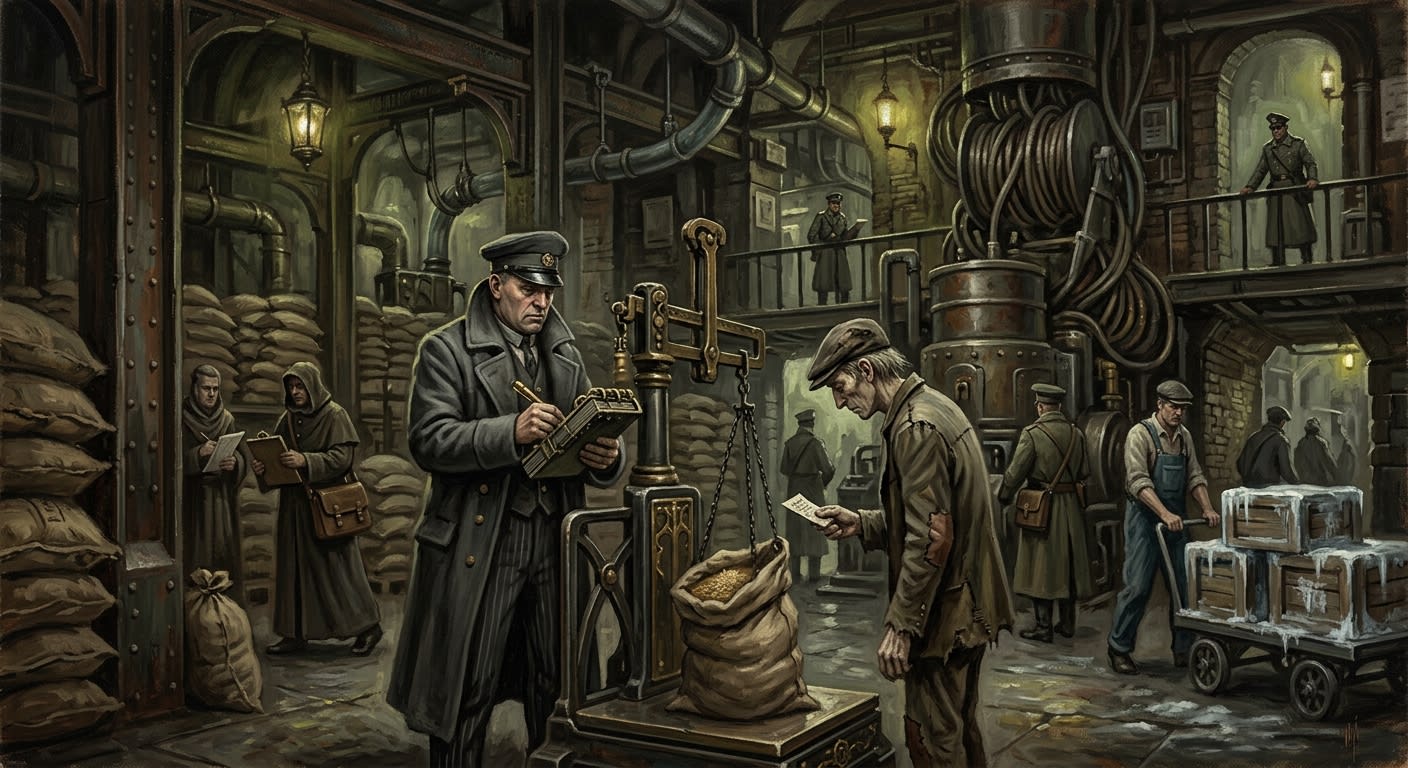
Bureau of Commerce
Bread becomes law before it becomes bread
The Bureau of Commerce prices obedience: weighing grain, freezing cargo, selling road-sound, licensing shortage, and making hunger kneel before the scale.
Codex Ref. VIII.2.10-097
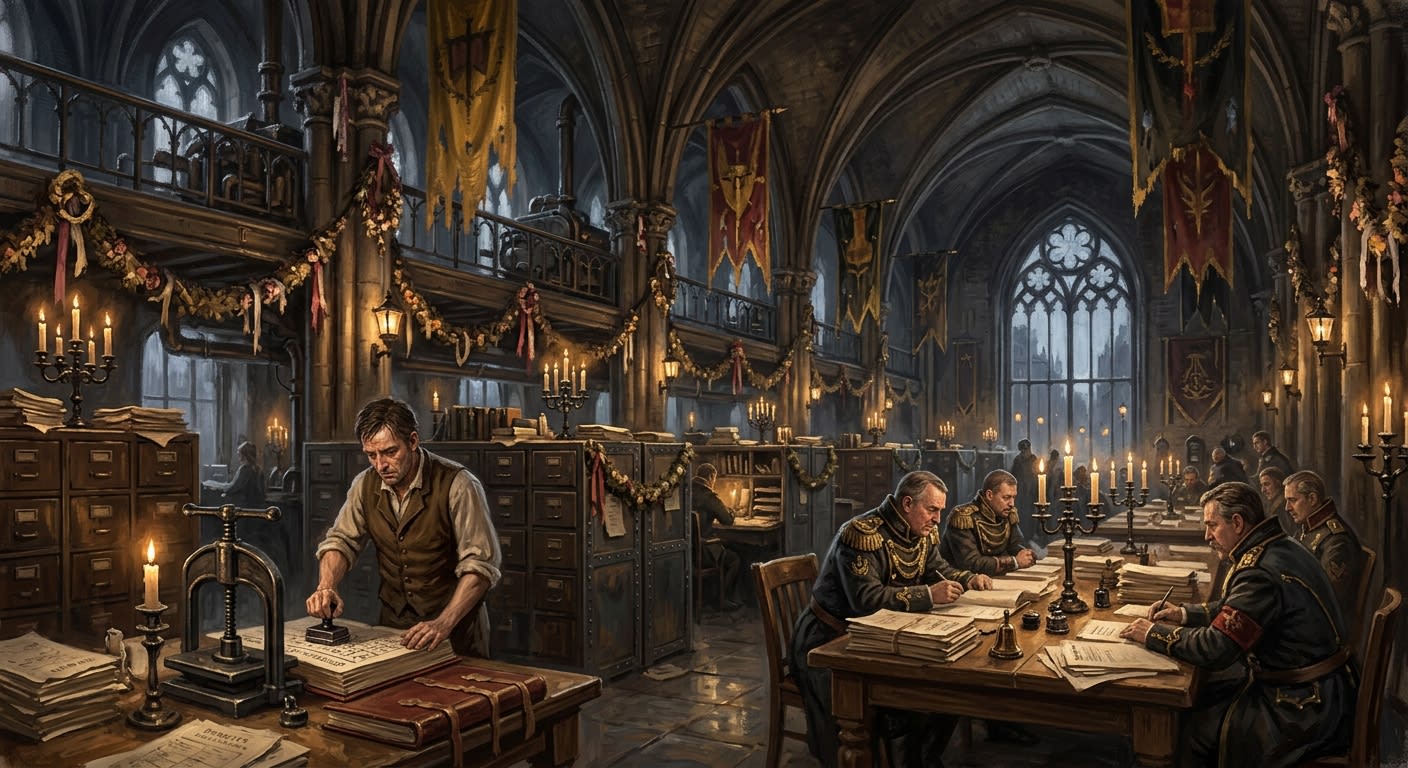
Bureau of Festivals
Joy, administered at scale — licensed, measured, and periodically revoked
The Bureau that manufactures joy, schedules grief, and meters celebration with the same rigour the Bureau of War applies to troop rotations — and which has, on seventeen documented occasions, deployed confetti.
Codex Ref. VIII.5.01-001
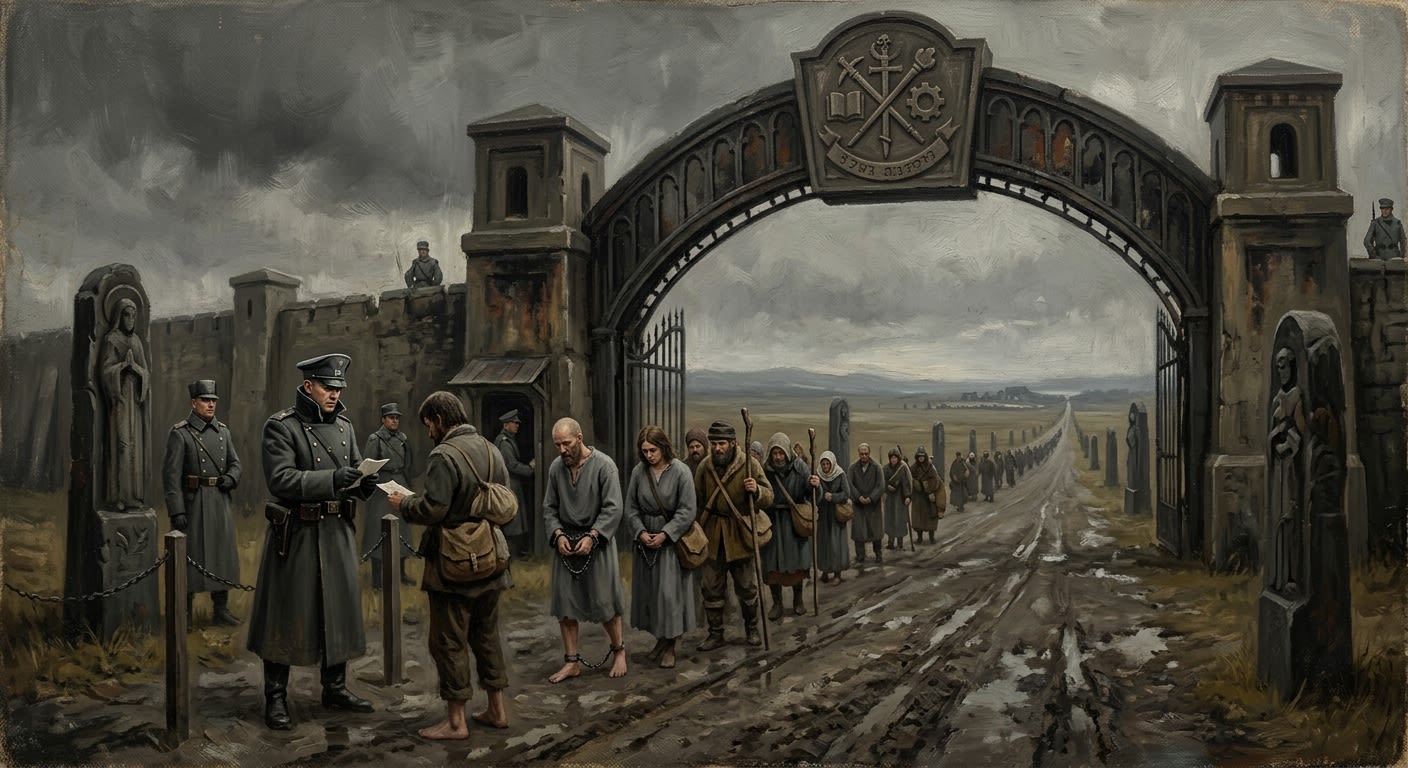
Bureau of Pilgrimage
Three million permits. Six million Crowns. No foot moves unwatched.
The Bureau of Pilgrimage governs all movement across the Theocracy's holy roads — issuing tokens, licensing routes, crushing guilds, and extracting revenue from every soul who dares to walk toward sanctity without prior authorisation.
Codex Ref. III.2.07-004
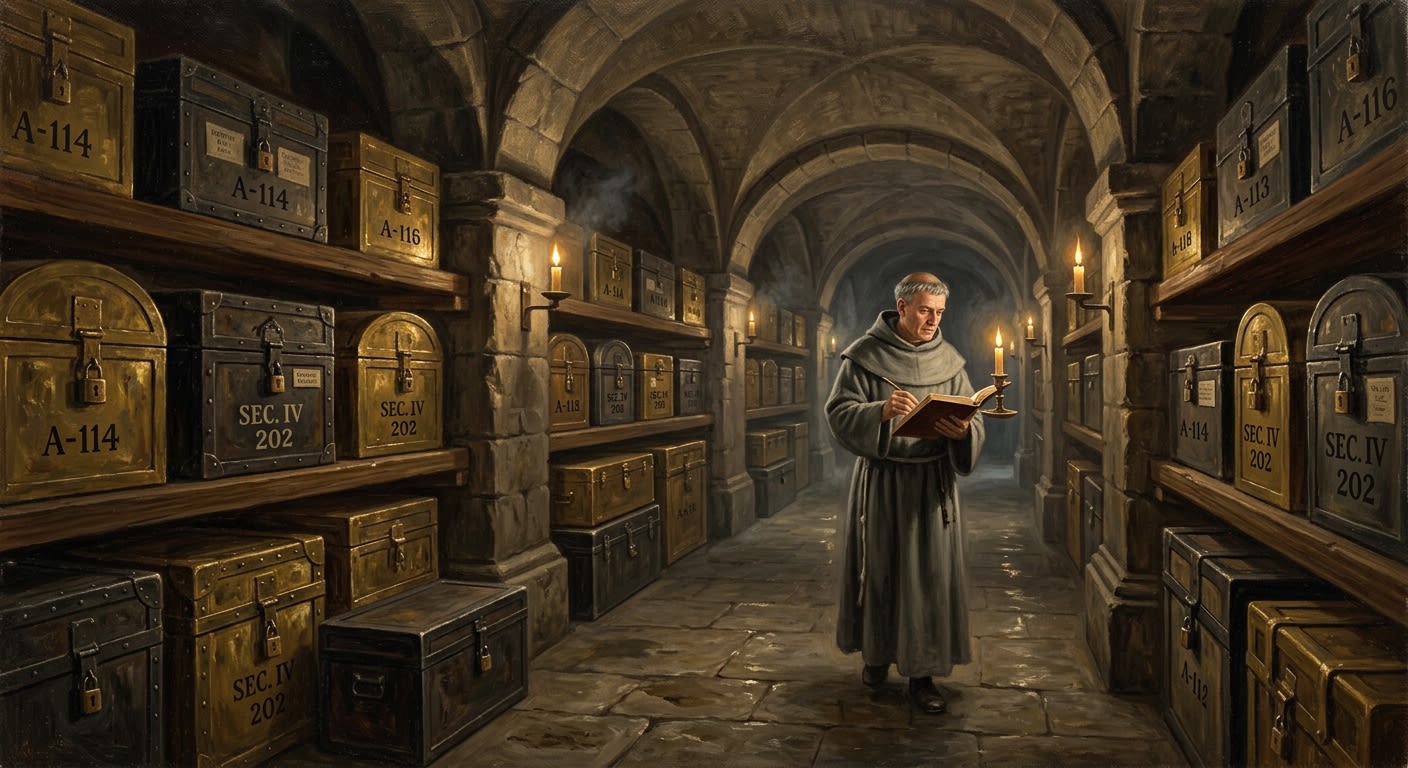
Bureau of Relics
The stamp is not the sanctity. The stamp is merely necessary.
The Bureau of Relics guards four thousand seven hundred authenticated bones, adjudicates the holiness of ash, and maintains the cheerful institutional fiction that it controls the things it catalogues.
Codex Ref. IV.3.12-019

Bureau of Tithes
The organ no one praises and no one dares remove
The Bureau of Tithes is the Synod's fiscal organ — the stomach no one praises and no one dares remove. It taxes breath, grain, bereavement, and the management of its own taxation.
Codex Ref. VIII.4.01-001
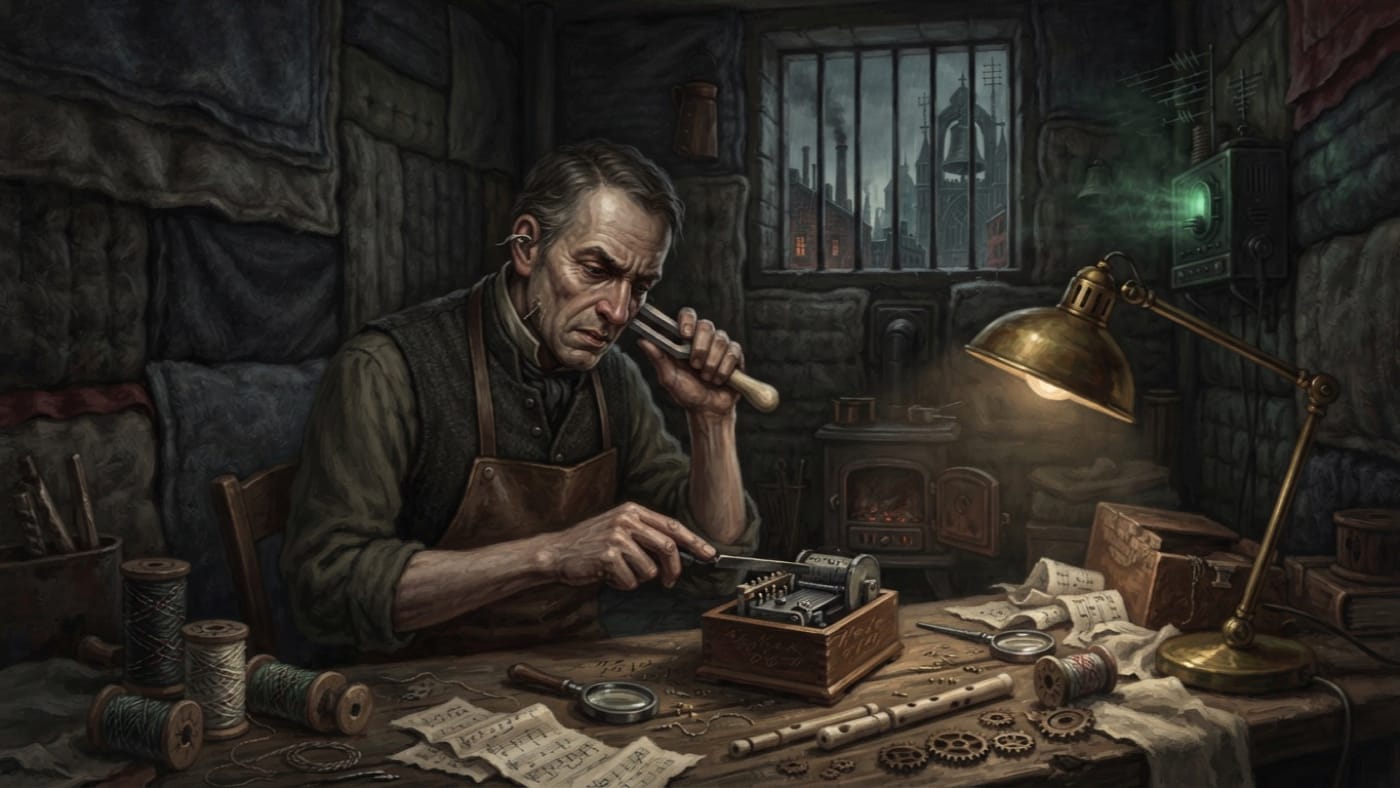
Cadence Surgeons
Lower the note; the charge remains
Upper-rank specialists of the melody-smuggling trade who edit forbidden fragments into bell-safe ranges. The pitch may pass beneath the bells; the charge of Melody Intent remains.
Codex Ref. XII.48.03-001
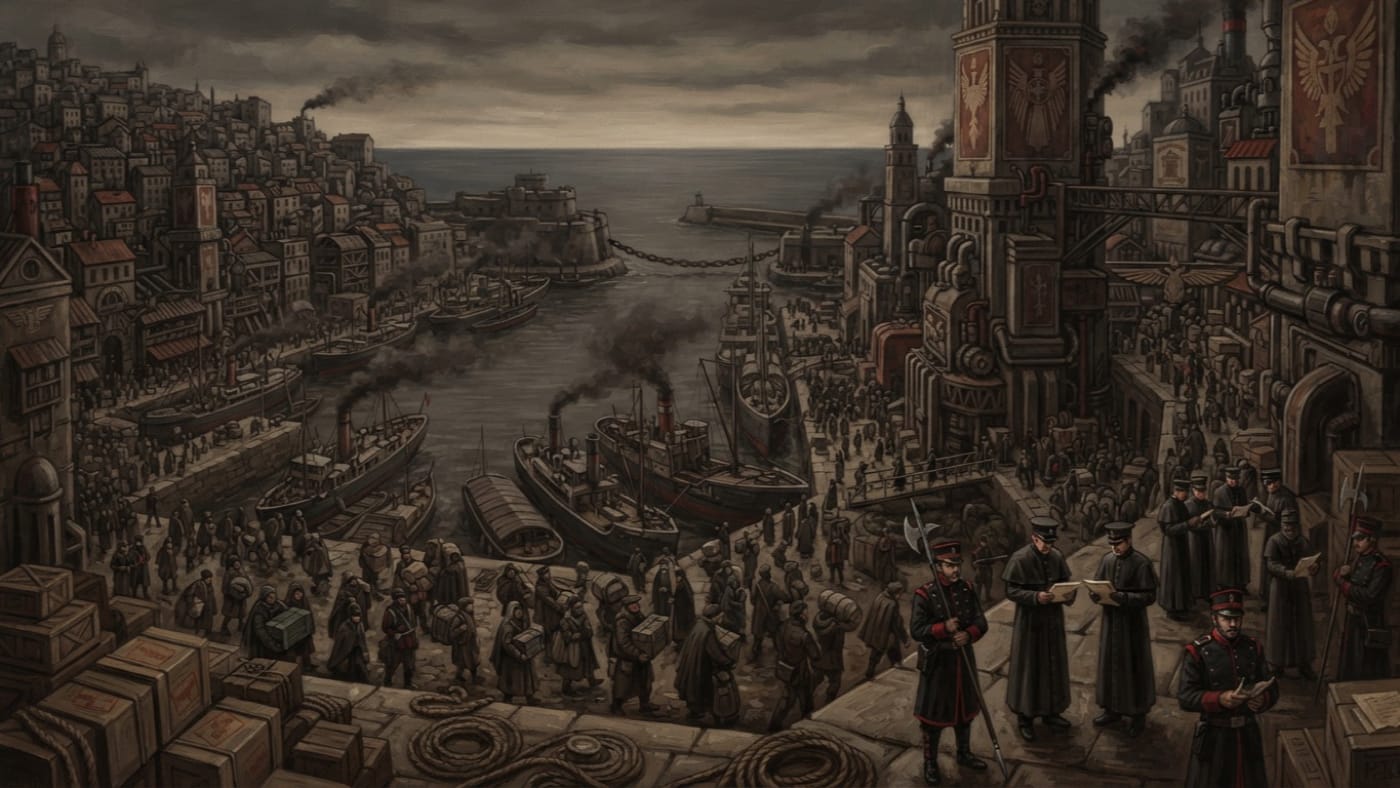
Cádiz
The tide carries pilgrims; the ink keeps them
Cádiz sells Atlantic passage, pilgrim safety, and deniability. Its Peregrine Cartel desk fell in A.S. 193; Pilgrimage kept the registers and the profitable habit of knowing who sailed.
Codex Ref. II.4.09-193
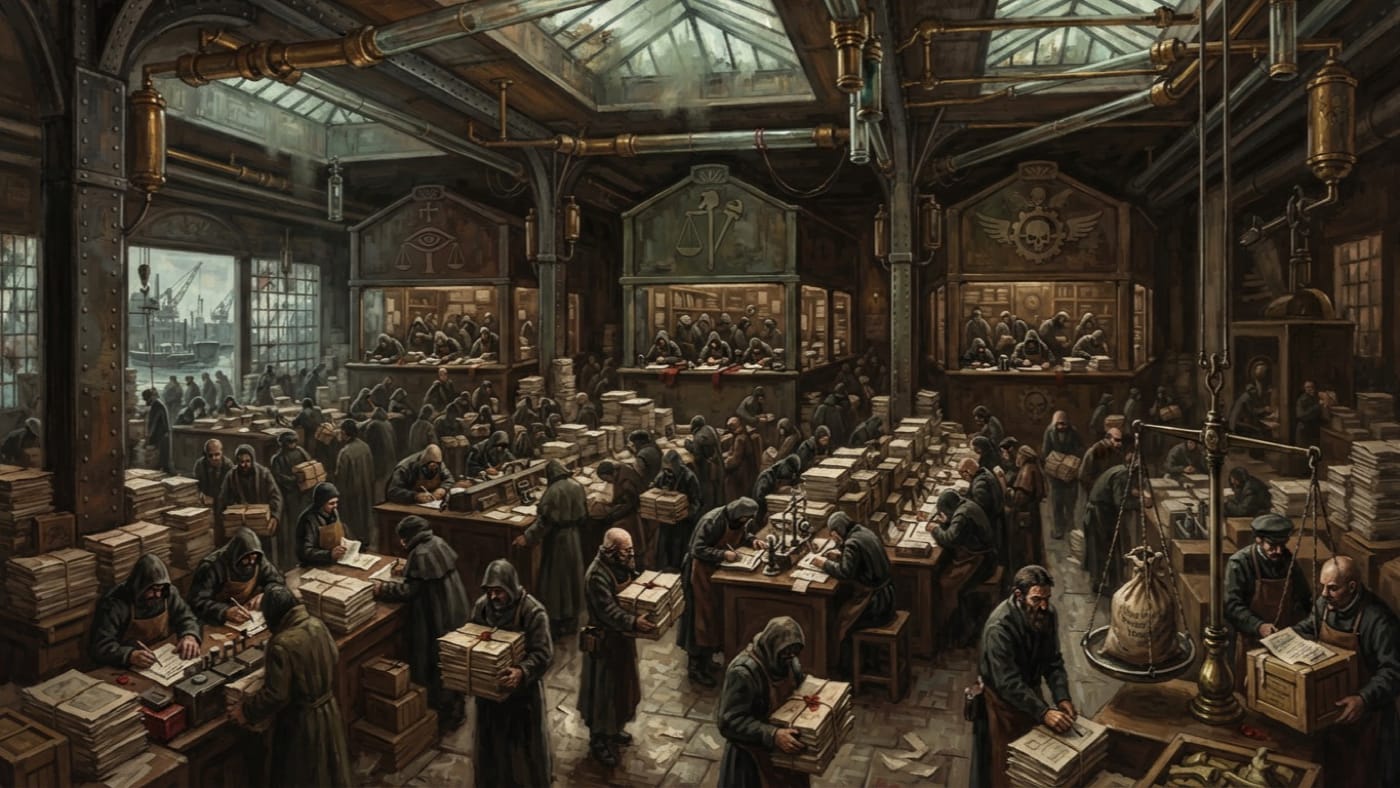
Canebière
Where cargo becomes paper, and paper waits for permission
Marseille's commercial quarter, where merchant houses turn cargo into paper under three competing Bureau offices. Goods may leave once their description has acquired every necessary seal.
Codex Ref. II.4.09-019
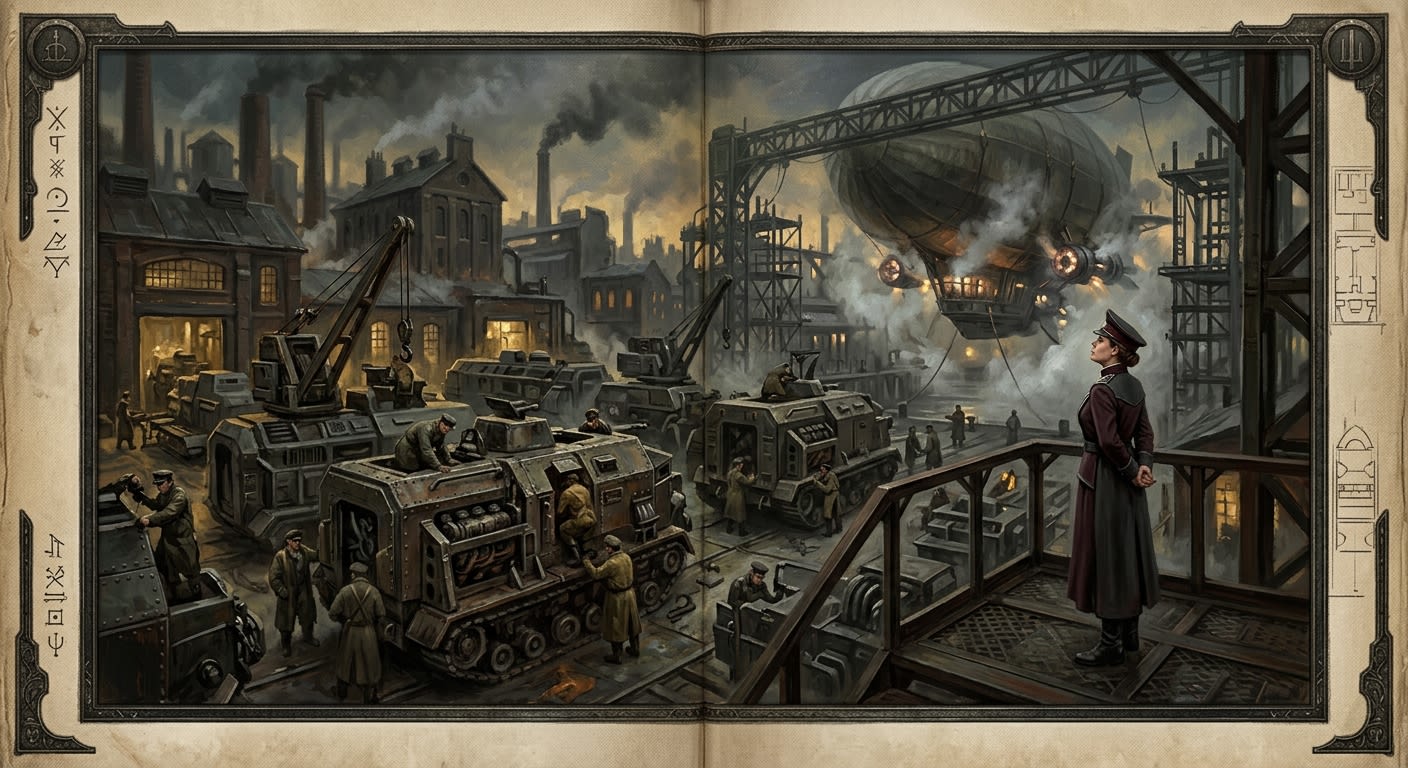
Carrier Yard
Where crawling cathedrals learn obedience from chains
Southern Foundry Quarter yard where Catacomb-Carriers are assembled, Threnody hums at Pier Seven, and Saint Uriel refuses the sky.
Codex Ref. II.4.10-006
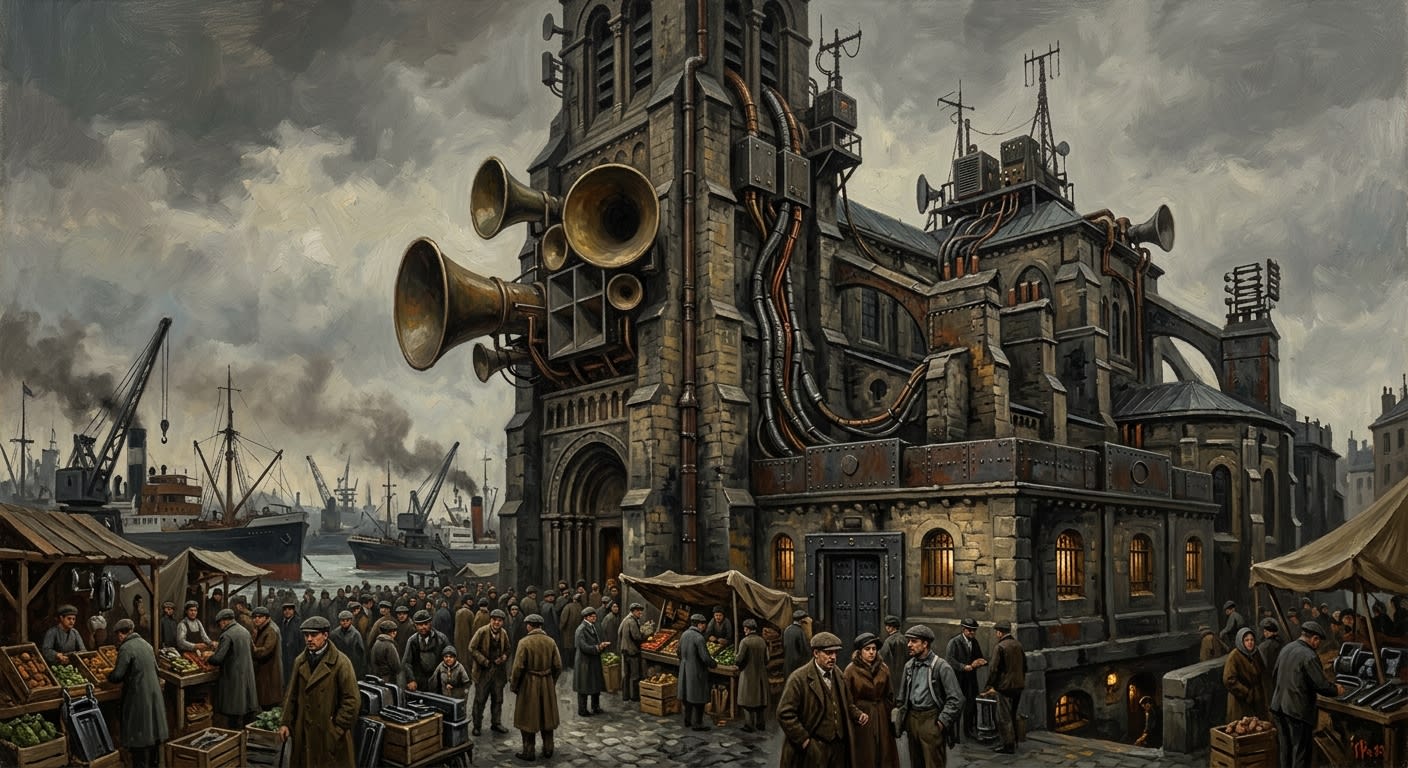
Cathedral of Saint-Victor
Marseille's bells govern the harbour because bronze argues better than clerks
The Cathedral of Saint-Victor is Marseille's acoustic throne: relay tower, crypt of disputed bones, parish market-anchor, and bell-mouthed rebuke to the harbour.
Codex Ref. II.4.09-018
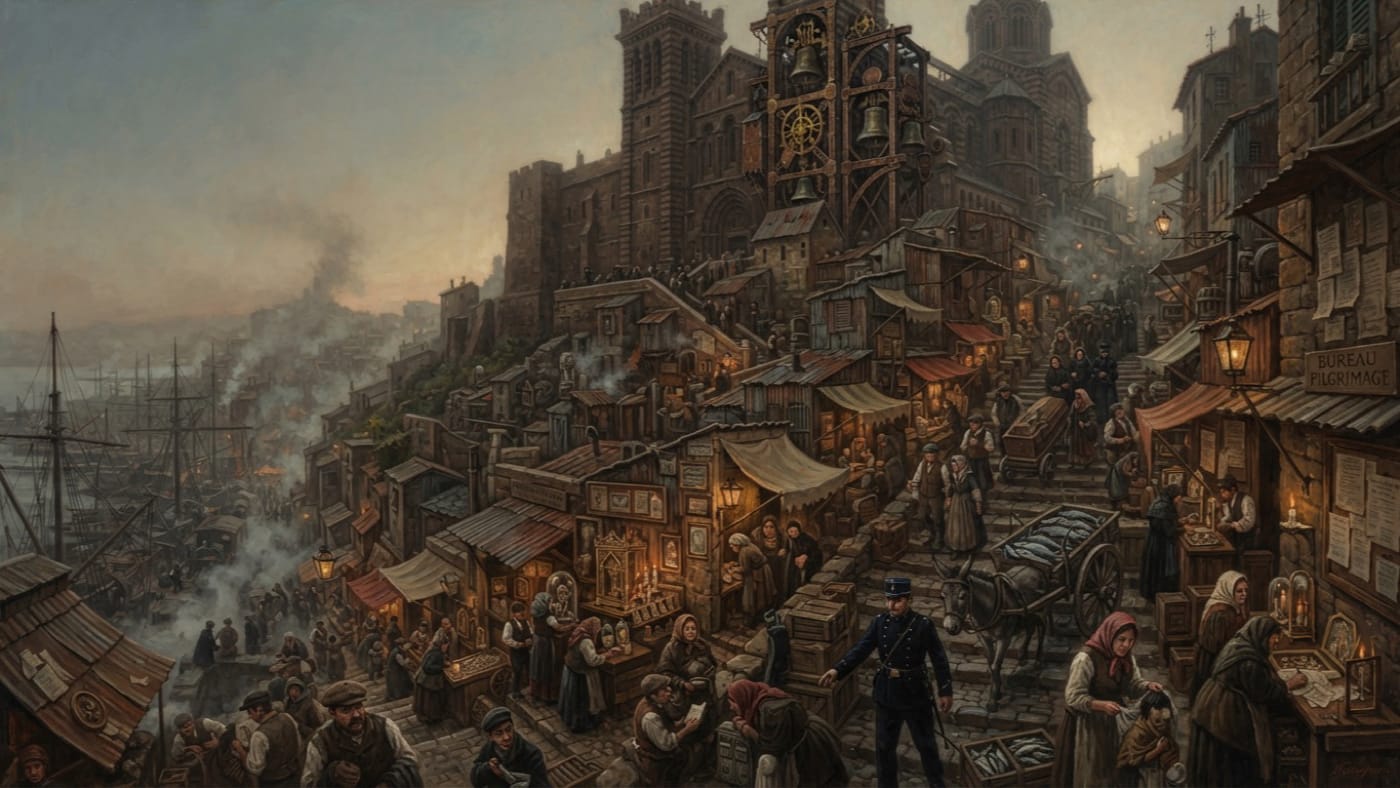
Cathedral Quarter
Saint-Victor keeps the hours; the slope keeps the accounts
The Cathedral Quarter is Marseille's slope of relic stalls, pilgrim hostels and parish rents: Saint-Victor's bells keep the hours while its claimants keep the accounts.
Codex Ref. II.4.09-019
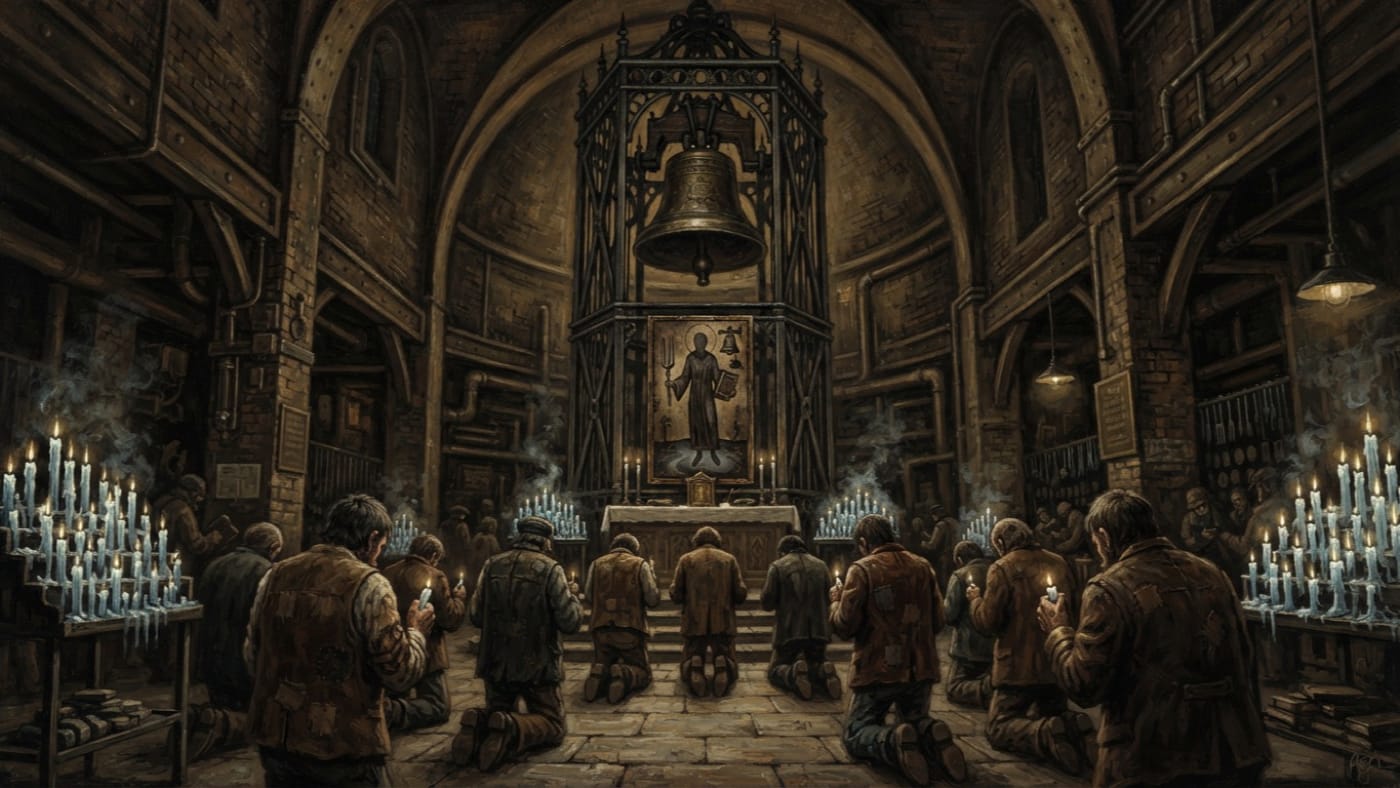
Chapel of Saint Cadrin
Confiscated permission, recast to keep the hour
Strasbourg's primary chapel of Saint Cadrin keeps an hourly bell recast from the Lyon Stampers' Guild master die. Three Bureaus explain its late undertone; none agrees.
Codex Ref. II.4.09-578
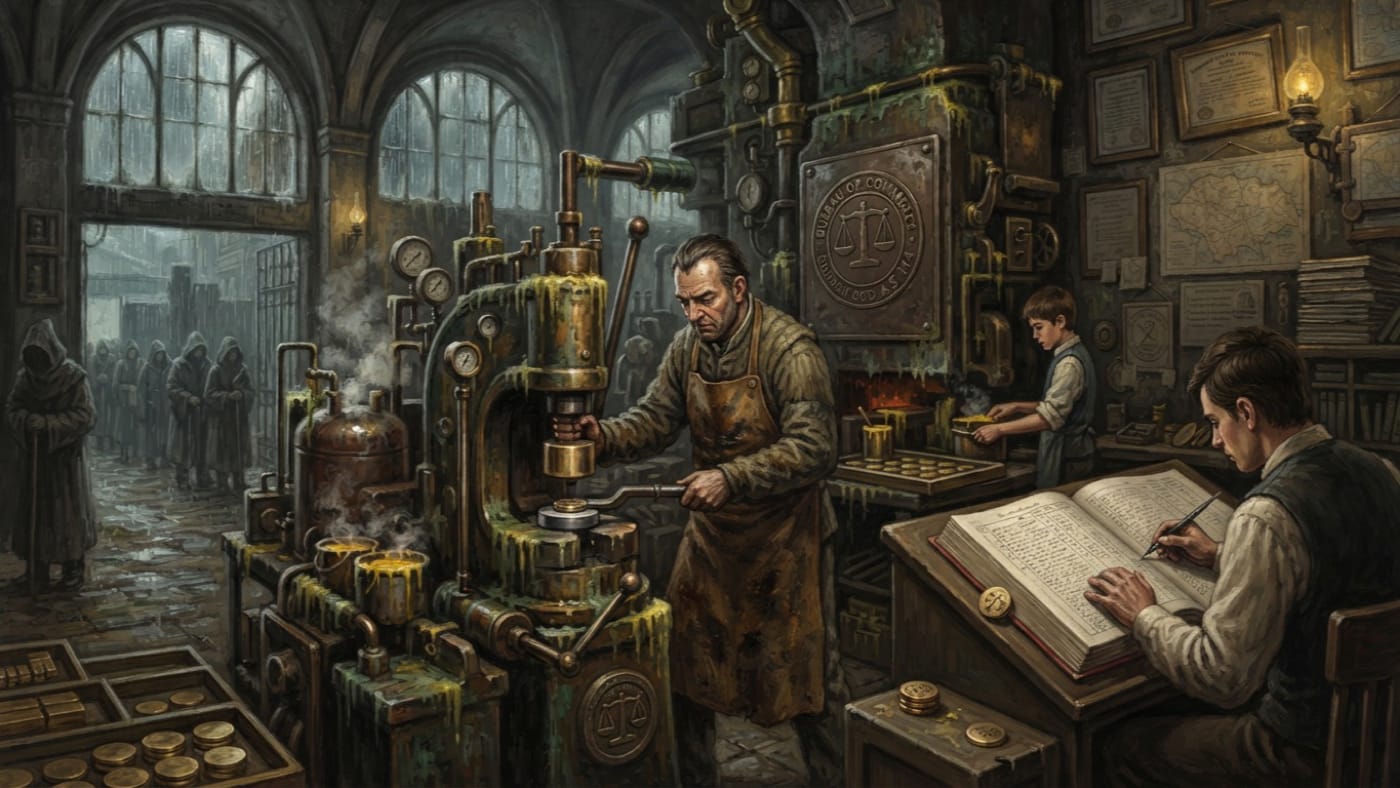
Commerce Charter A.S. 114
The Charter made the toll admissible
The A.S. 114 Charter licensed the Route-Stamper trade under Commerce and reserved Records veto authority over every forge. Brass could certify a journey; the ledger would decide whether it counted.
Codex Ref. XIII.1.38-114
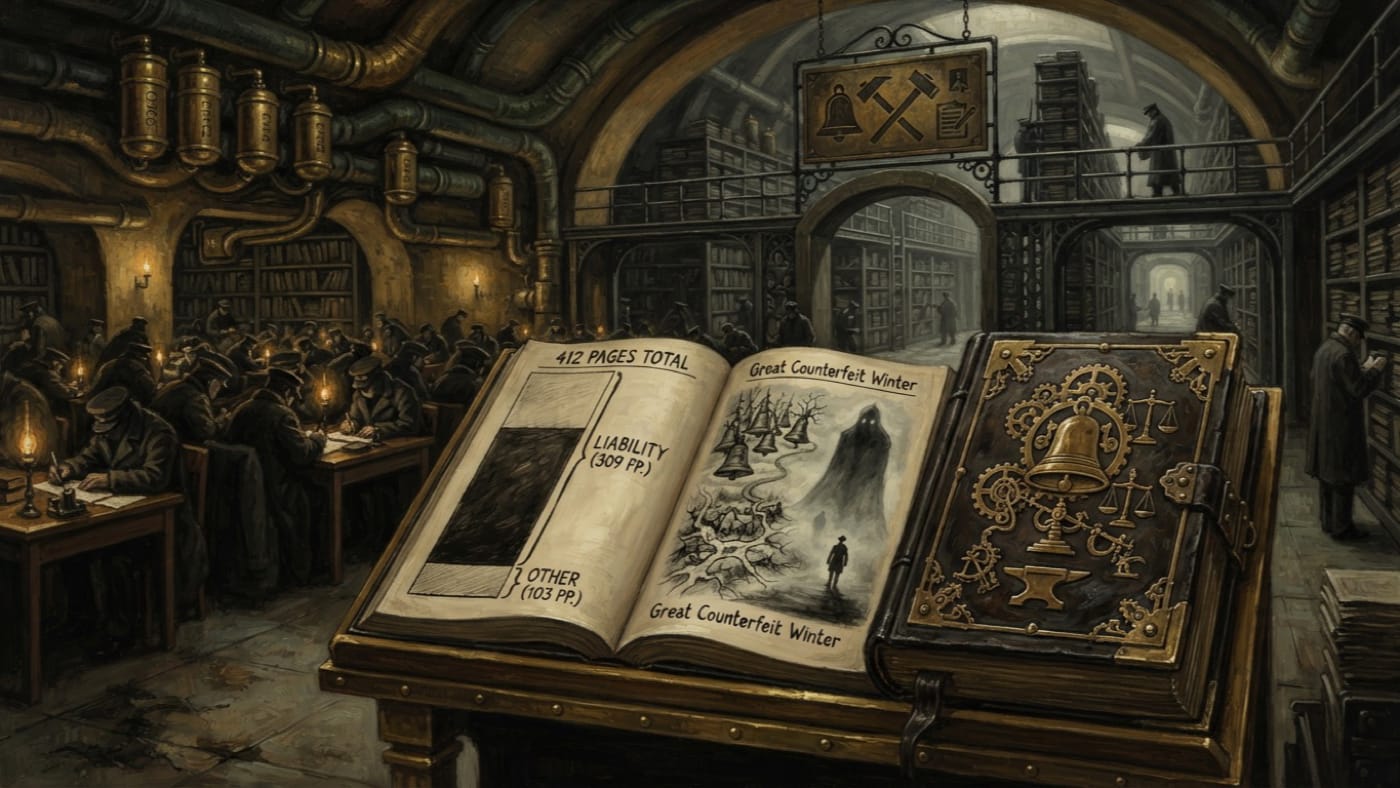
Concerning the True Toll and Its Faithful Reproduction
Three quarters of the book explain who is to blame
The Route-Stampers' workshop manual survives in the record at its Third Revision, A.S. 178: 412 pages, 309 devoted to liability. The traveller does not read it. The traveller is read.
Codex Ref. XIII.1.178-001
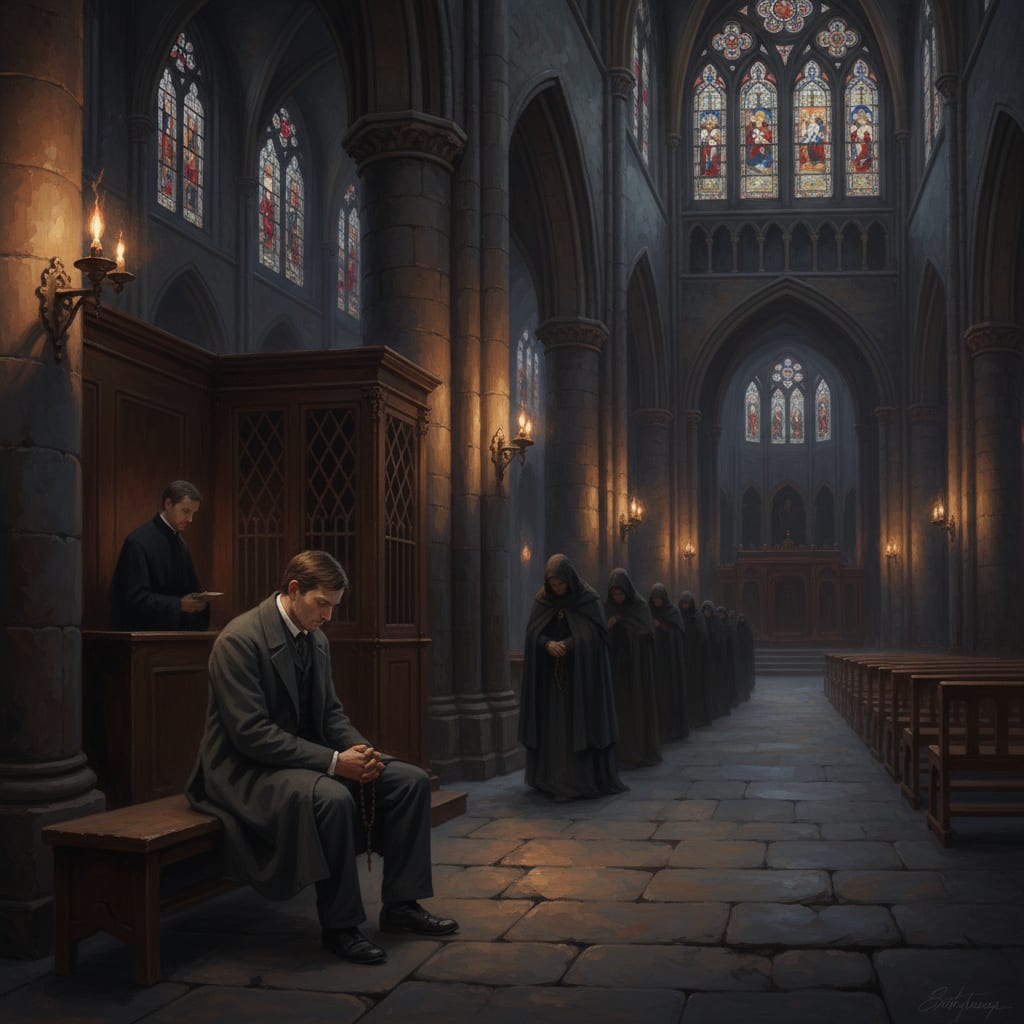
Confessarii
Two hundred and eighty-six reports filed; three blank pages received; the system functions as intended
The Confessarii are the Bureau of Shadows' listening network, which does not exist because the Bureau does not exist. They attend. They absorb. They file. The courier departs. Nothing is acknowledged. The system functions as designed.
Codex Ref. XIII.1.06-001
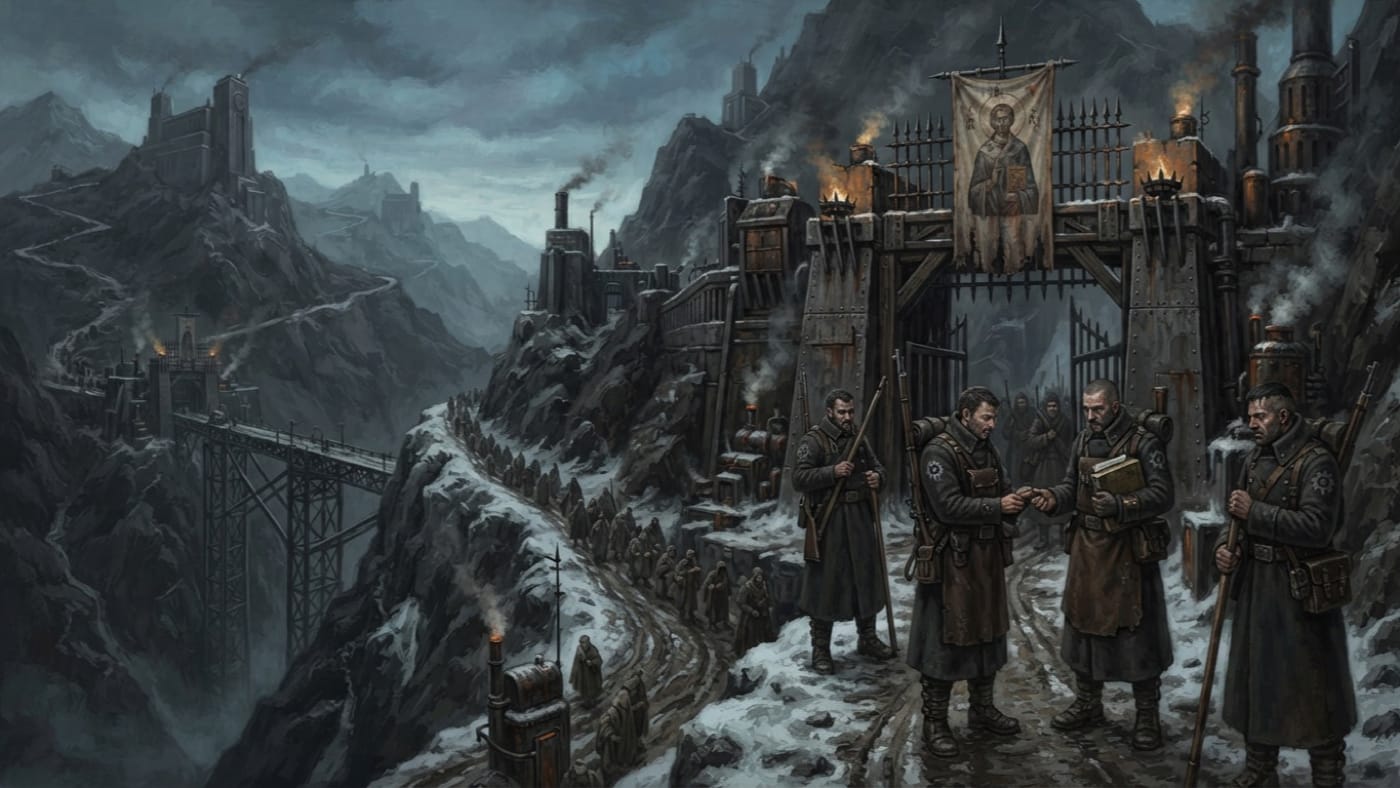
Confraternity of Saint Edras
The saint kept his name. The guild lost the road.
A private pilgrimage guild claiming the Carpathian passes, named among Santiago's rival toll claimants in A.S. 121 and superseded by the Harmonized Routes Edict in A.S. 123. The saint's name outlived its authority.
Codex Ref. XI.5.02-123
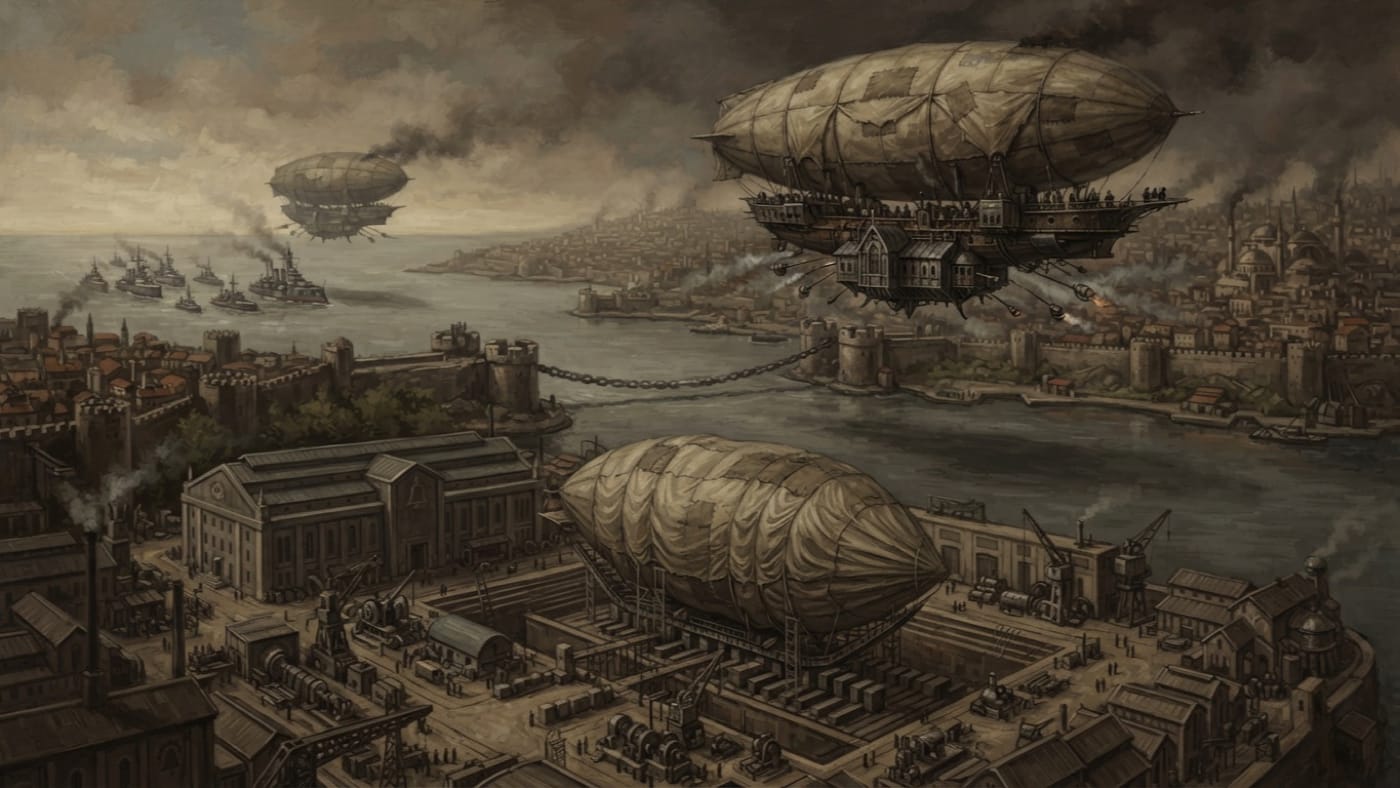
Constantinople Vigil Ark Fleet
Three Arks on the register, two in the air, and a southern Bellway guarded by a certificate.
Constantinople's aerial register lists three Vigil Arks: Saint Barachiel and Saint Gabriel patrol the Bosphorus approaches; Saint Uriel remains grounded. The southern Bellway is uncovered. Every paper is in order.
Codex Ref. VIII.5.11-168
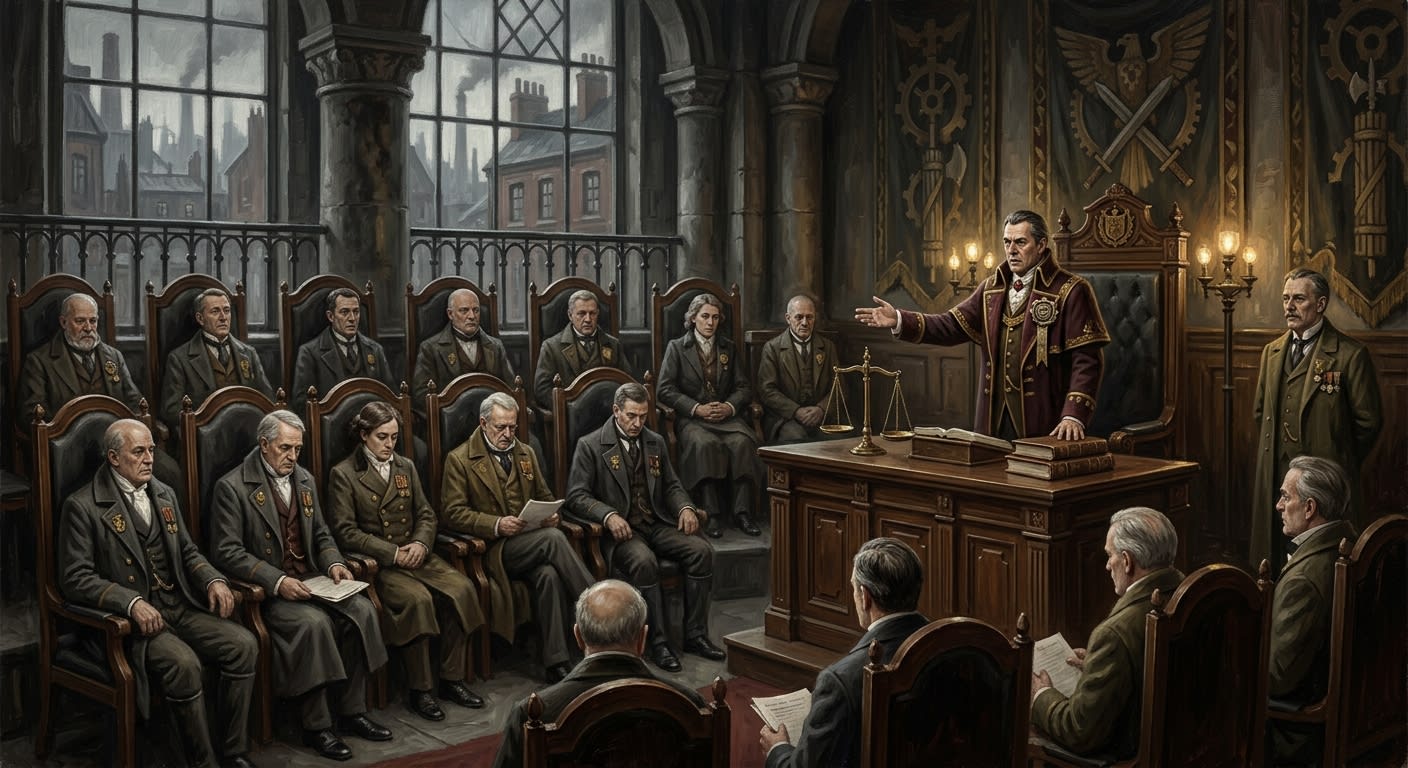
Council of Prefects
Where dissent receives a chair, a minute, and a family corridor
The Council of Prefects is unanimity with chairs: a ratifying chamber where civic officers discover what Strasbourg has already decided they believe.
Codex Ref. XIII.1.90-138
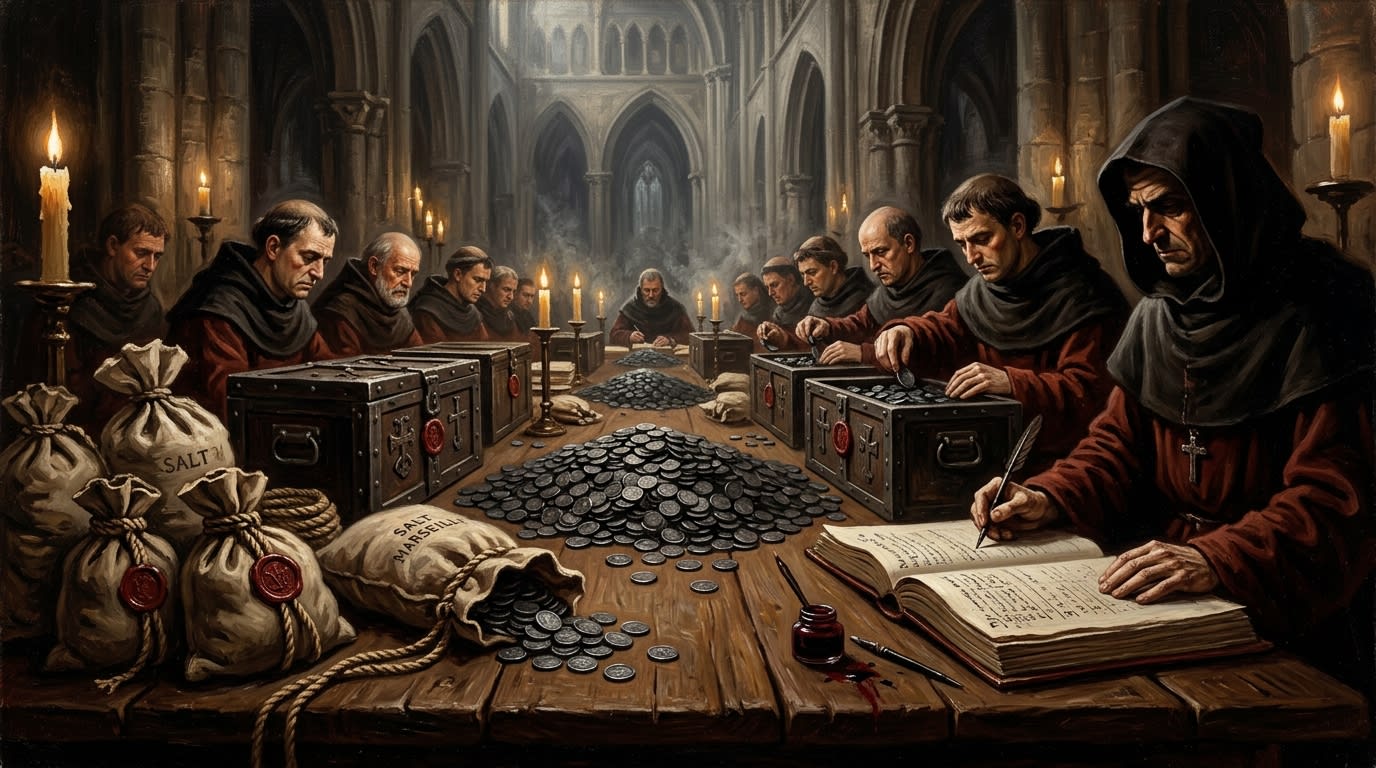
Crowns of Grace
One coin buys bread; the plural buys obedience
Crowns of Grace in the plural are obedience under arithmetic: harbour revenue, soldier arrears, salt dues, foreign insult, and bread counted until it kneels.
Codex Ref. XIII.1.22-093
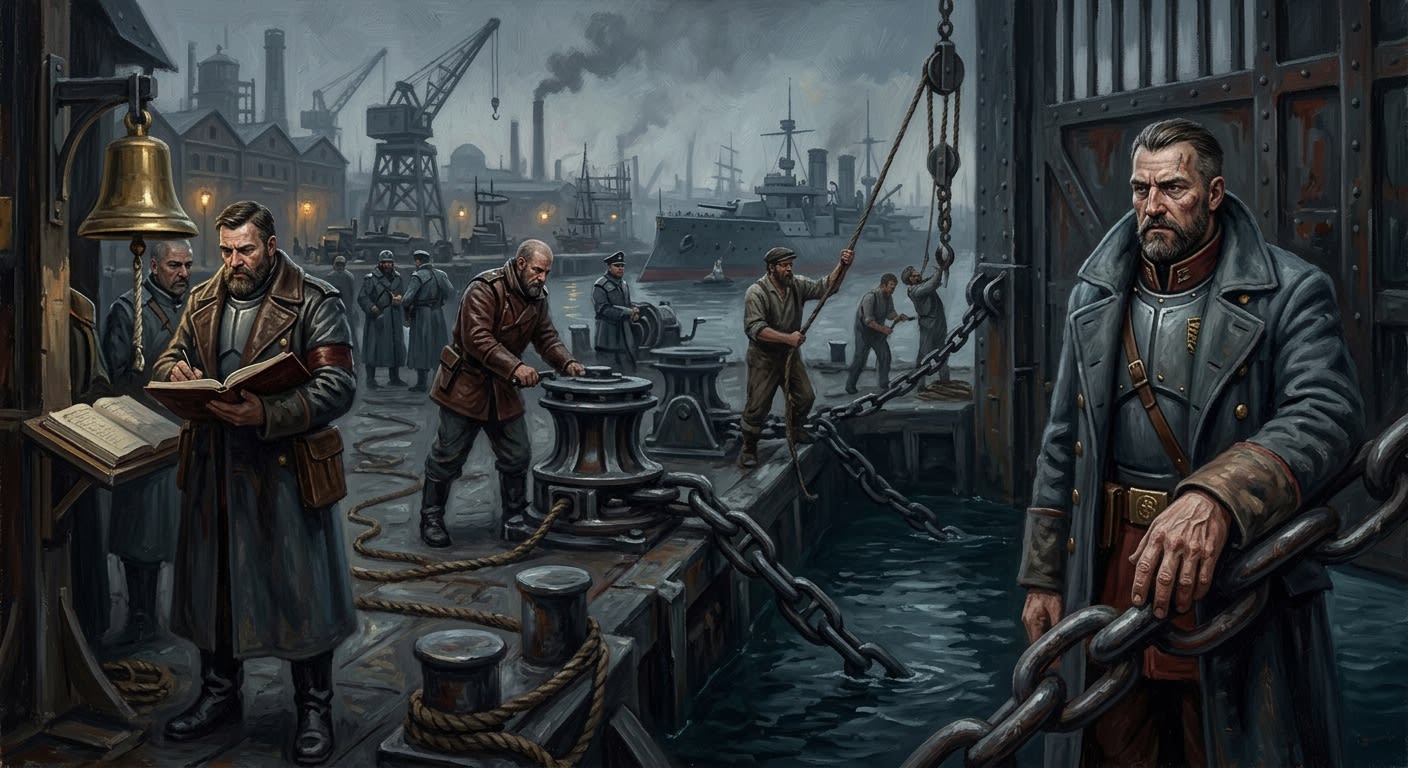
Custodians of the Chain
The iron held while the bronze lied, and Strasbourg has not forgiven the hands that knew it first
Thessaloniki's Custodians of the Chain keep the Elder and Younger harbour chains: guild, gate, diver-law, rope-law, and the callused proof that iron may count when bells fail.
Codex Ref. XII.44.09-198
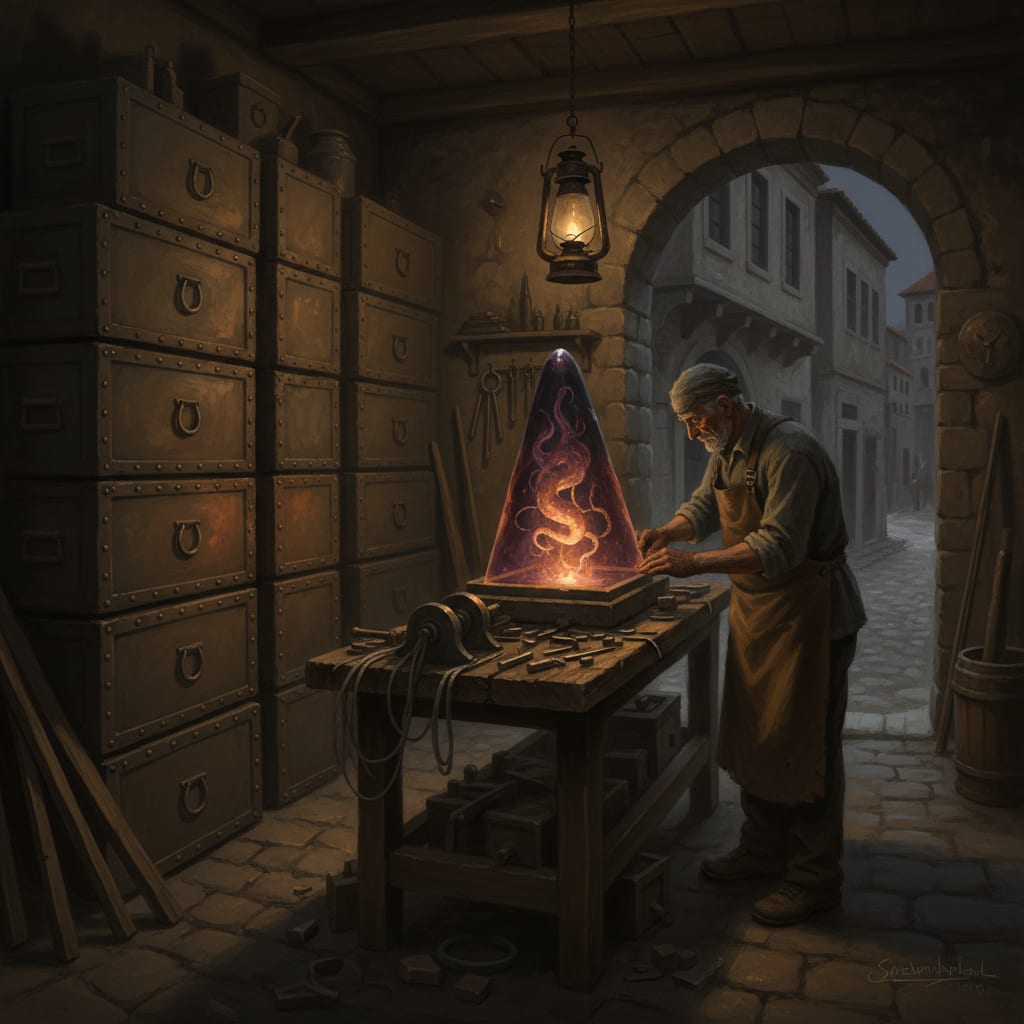
Demon-Glass Polisher
The craft the Bureau has shattered, blessed, interred in lime, and declined to stop purchasing
The profession the Bureau insists does not exist: found in every port from Marseille to the Harbor of Chains, supplying the Bureau of War with combat-grade optics, having developed a hierarchy, a patron saint, and three factions — all since the last Purity raid.
Codex Ref. XII.13.01-001
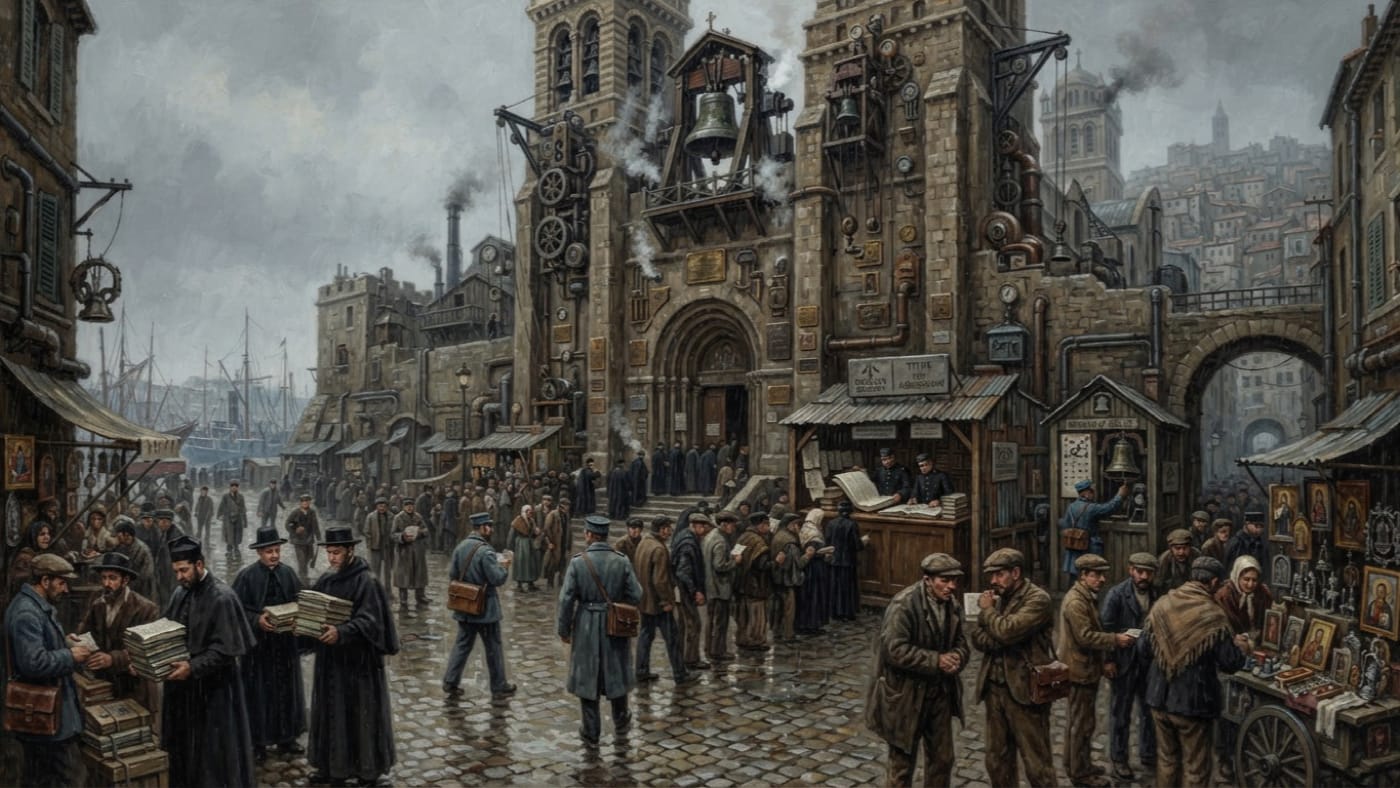
Diocese
Marseille's souls are entered; its dues are owed
The Diocese keeps Marseille's souls in ledgers and its claim on Saint-Victor beneath every Bureau's mandate. Its perimeter is unproved; its dues are collected.
Codex Ref. I.3.09-201
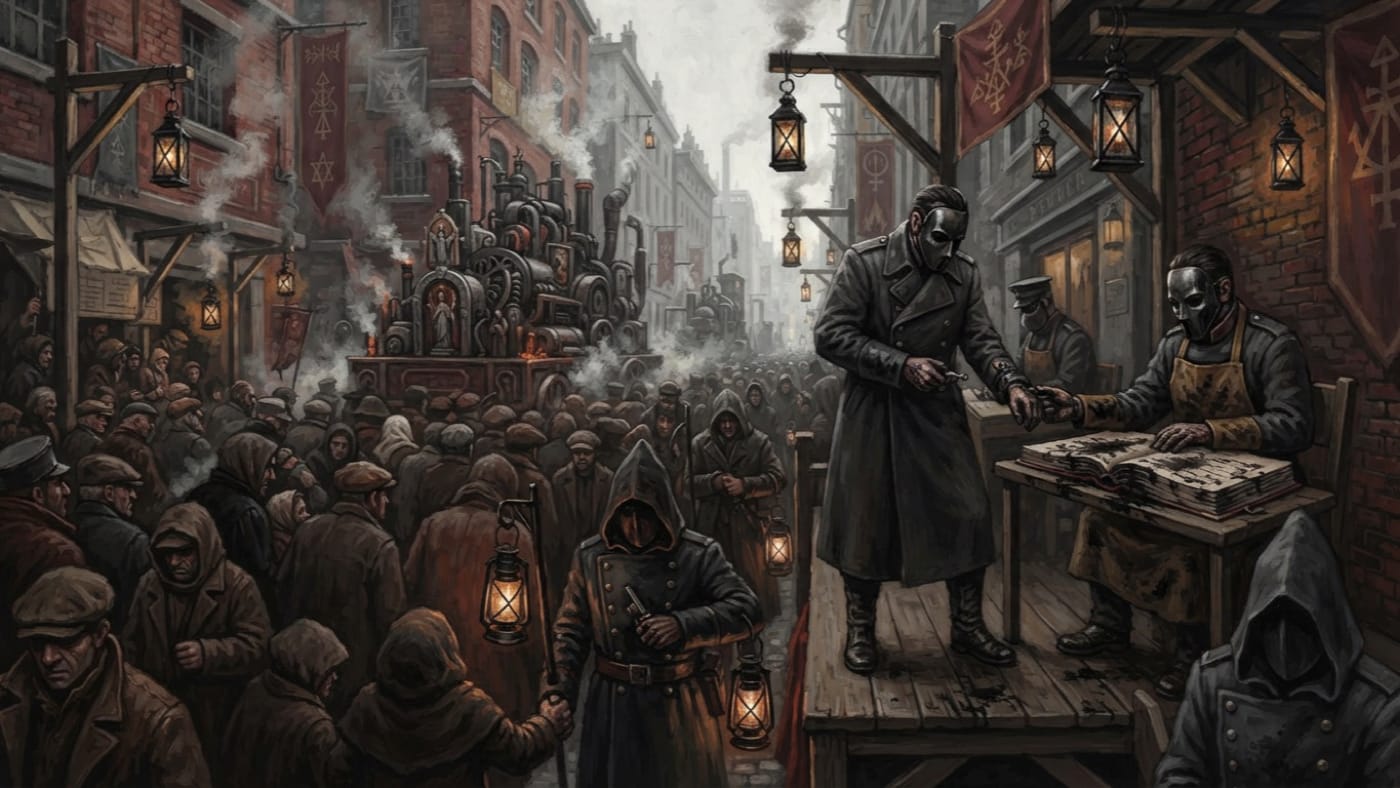
Directive 88-F
A credential for the crowd, a profession for the count
The A.S. 138 directive requiring stamped wrist-ribbons at Bureau-sanctioned processions and licensing the Pageant Captain corps. Festivals gave the crowd a credential and hired men to read it.
Codex Ref. XIII.1.88-138
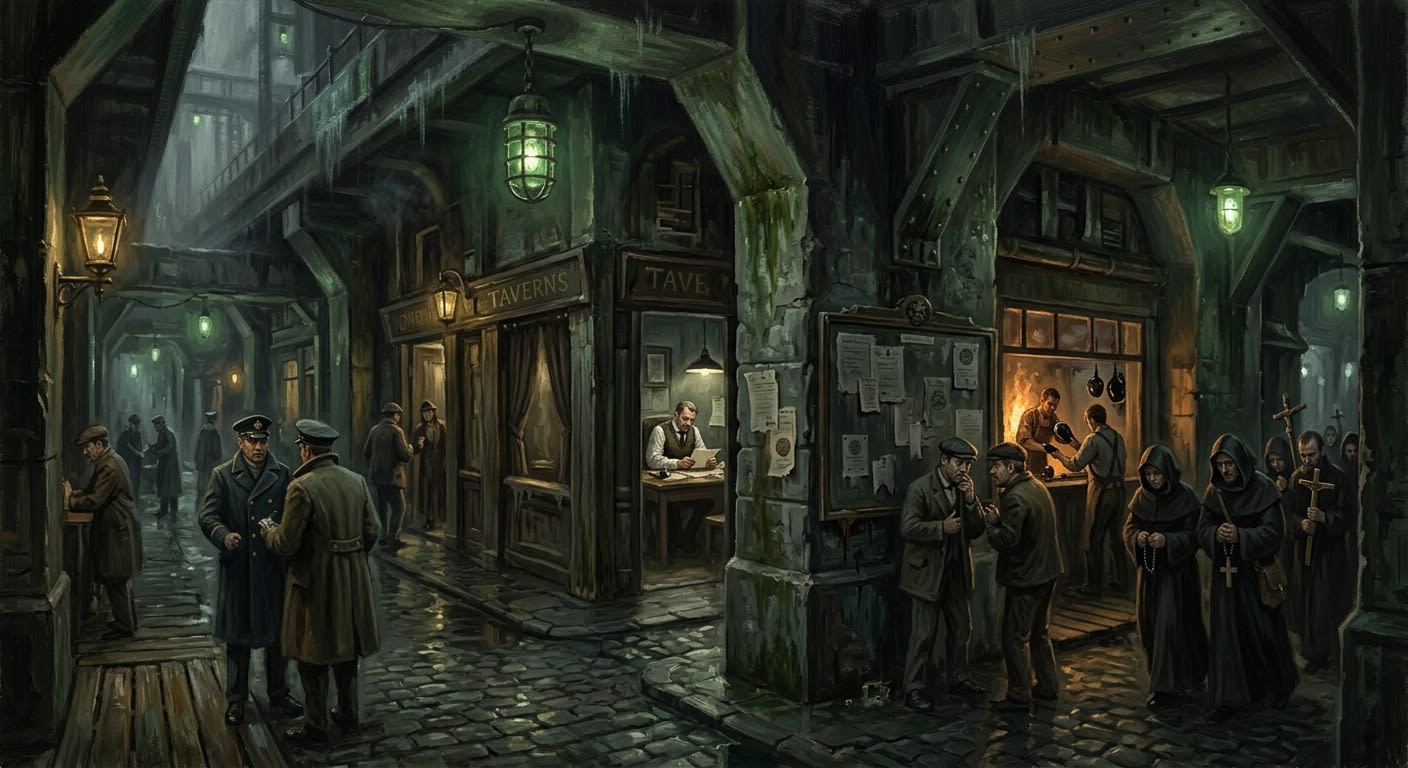
Drowned Row
The harbour beneath the harbour keeps its own ledger
Drowned Row is Thessaloniki's under-quay sailor quarter: wet taverns, false papers, pilots, glass traffic, Choir terror, and bureaucracy's useful shame.
Codex Ref. II.7.04-198
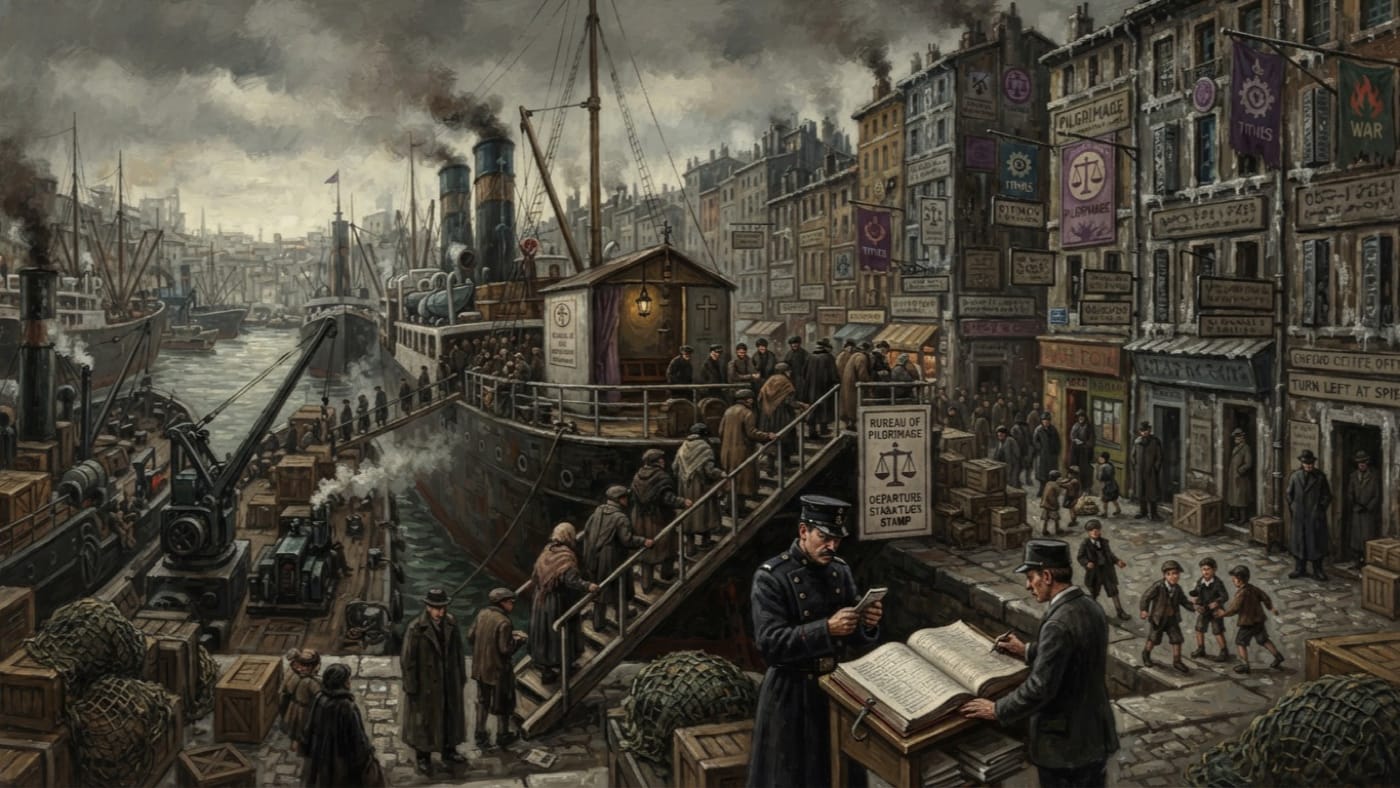
Eastern Basin
Pilgrims sail under seal; the spies serve as landmarks
A.S. 201 survey of Marseille's enlarged harbour and quayside quarter: pilgrims sail under seal, relics arrive under suspicion, three Bureaus dispute the water, and the officially nonexistent spies serve as landmarks.
Codex Ref. II.4.09-013
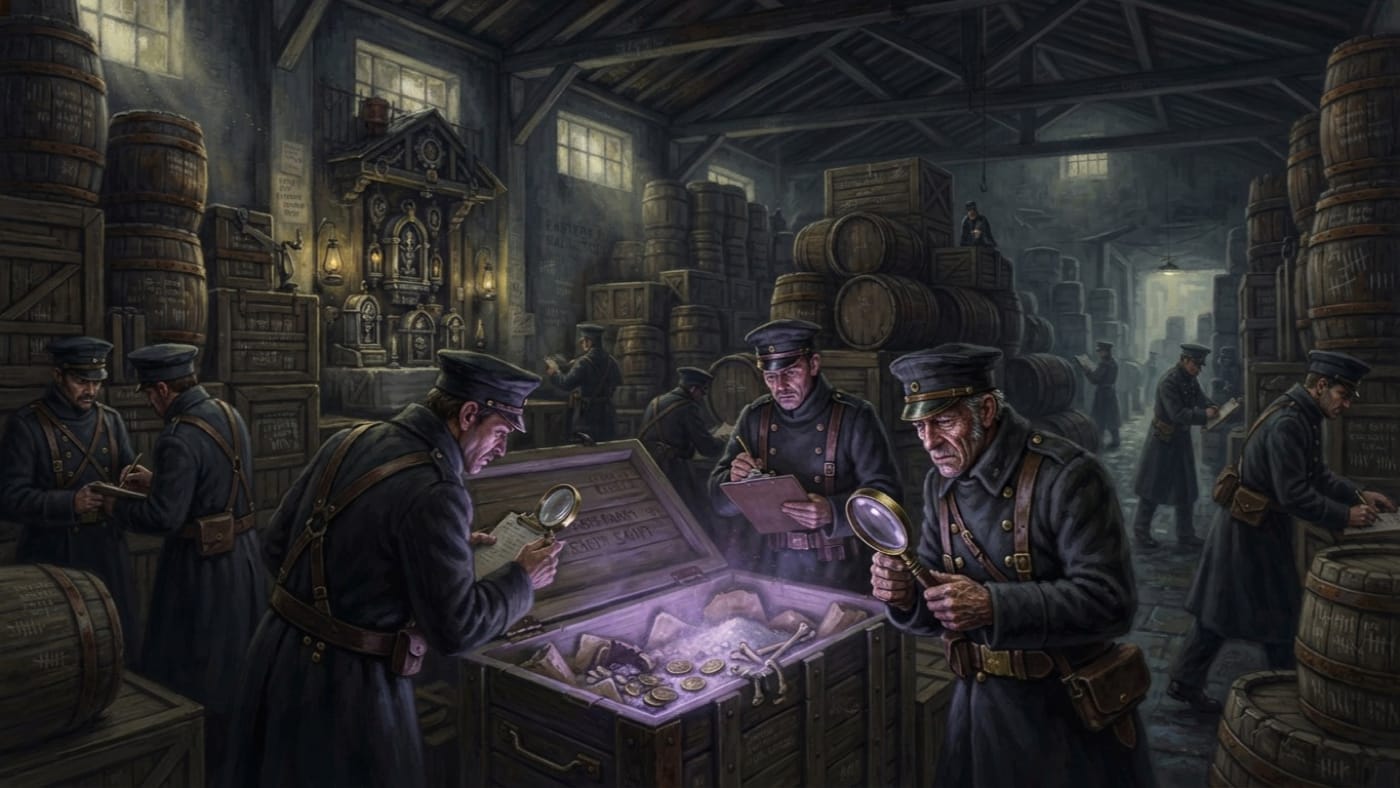
Eastern Basin Salt Stores
Five Bureaus claimed the cargo; the ledger called it spoilage
The Eastern Basin Salt Stores survive in Marseille's A.S. 199 audit: cured fish declared, children and violet light found, five Bureaus claiming custody, and the account closed as spoilage.
Codex Ref. II.4.09-019
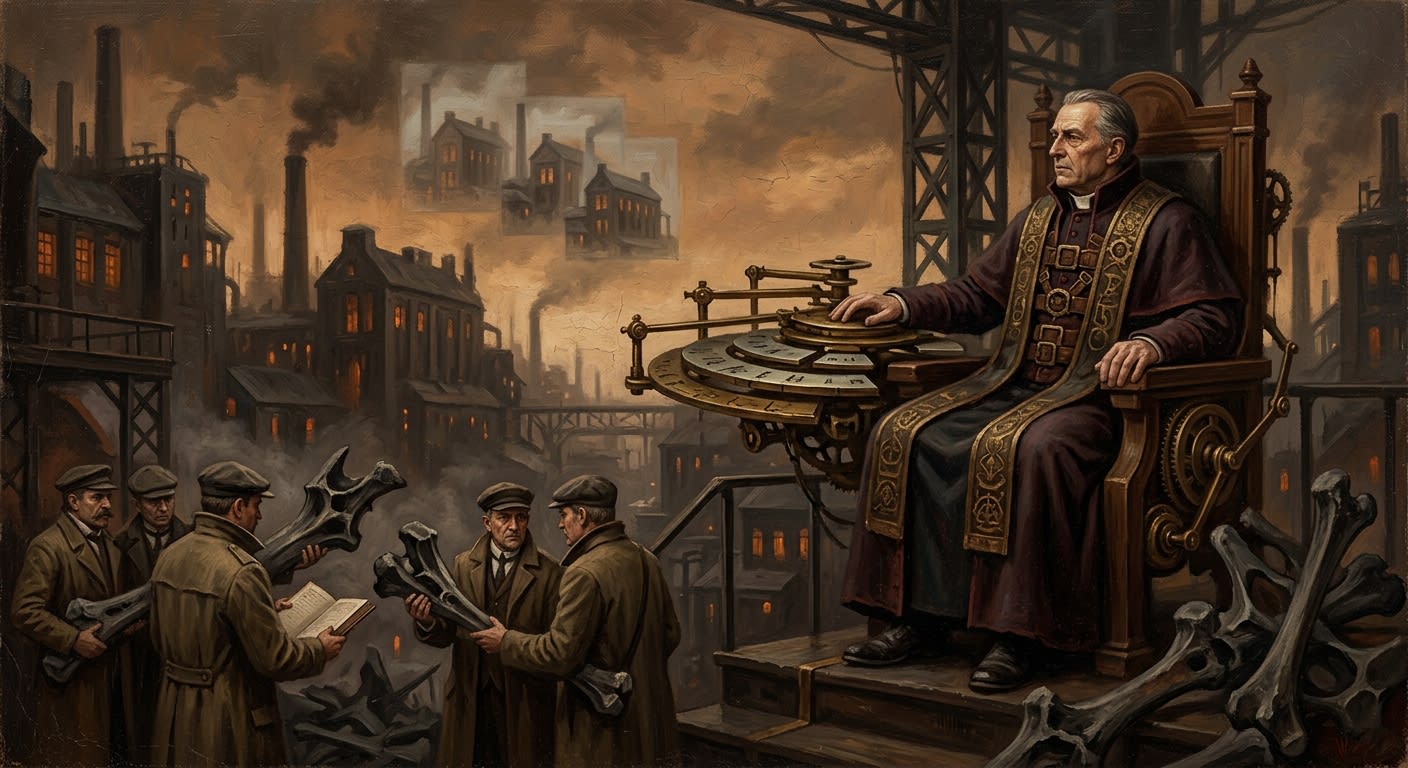
Elder Noxa
She taught the contradiction manners
Elder Noxa, sealed former registry scribe and practical founder of Femur-War brokerage, settled the Triplicate Femur Incident by separating impossible relic truths across time.
Codex Ref. III.2.01-114
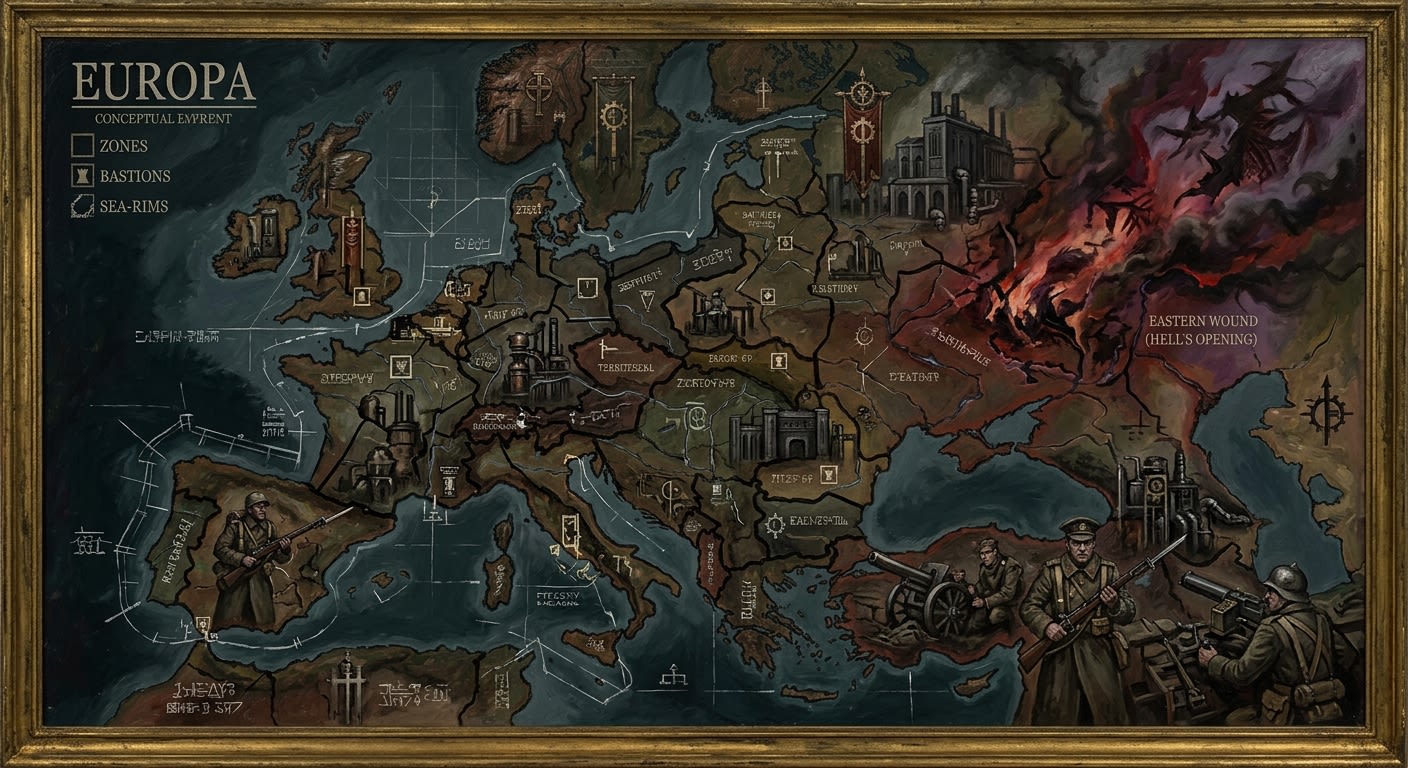
Europa
The continent as filed, wounded, taxed, and made obedient enough
Europa is not whole; it is the continent filed into zones, bastions, sea-rims, independent nuisances, and the eastern wound Hell keeps open.
Codex Ref. II.0.00-201

Europe
The wounded continent, held together by rails, bells, hunger, and denial
Europe is the wounded continent: Synod west, Charnel east, Line between, and every road, harbour, cradle, ration card, bell, and grave bent toward survival.
Codex Ref. II.0.01-201
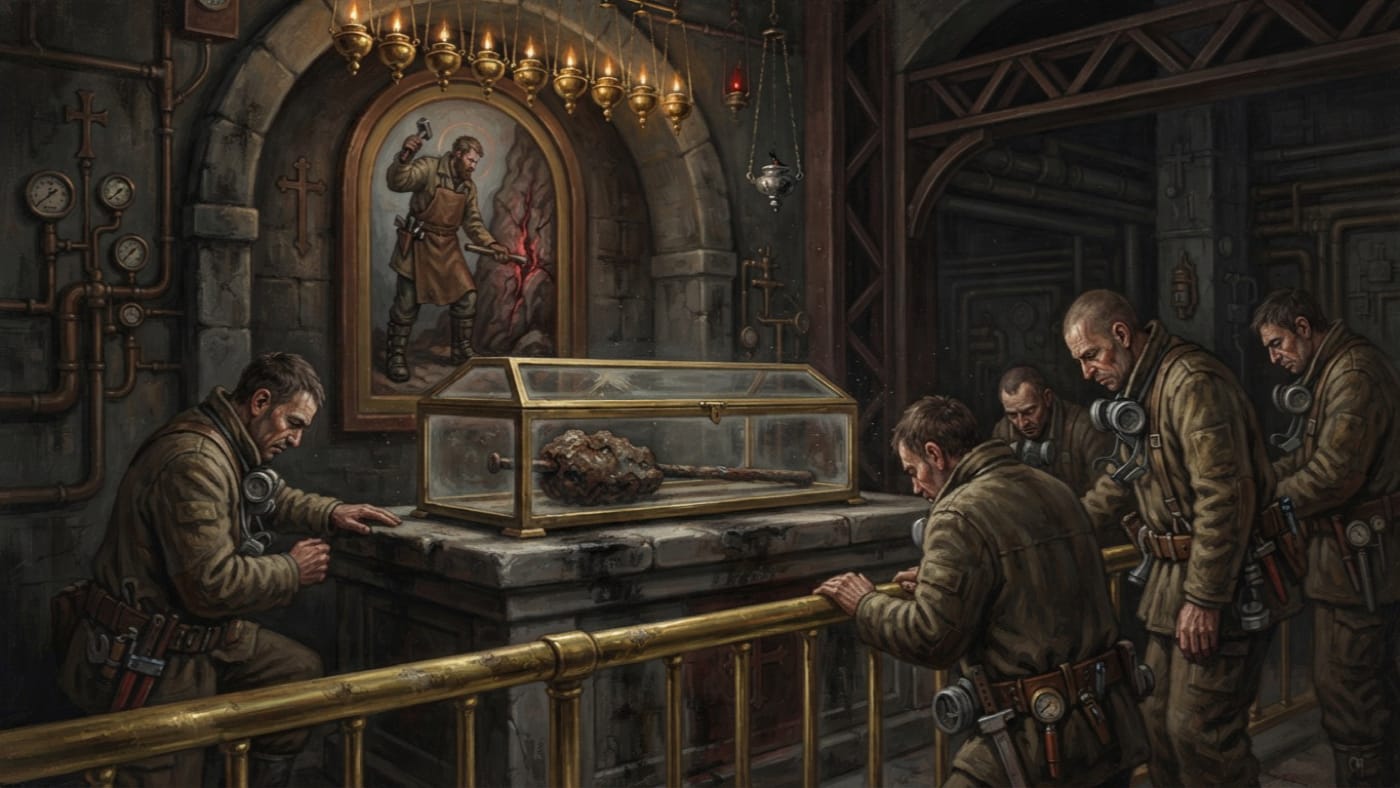
Extraction Chapel
The plug rests under glass; its age remains an argument
Budapest's Extraction Chapel holds Saint Orren's provisionally authenticated iron plug in a sealed case. Prospectors come for a patron who bought nine hours; Relics keeps the dating dispute open.
Codex Ref. II.3.12-112
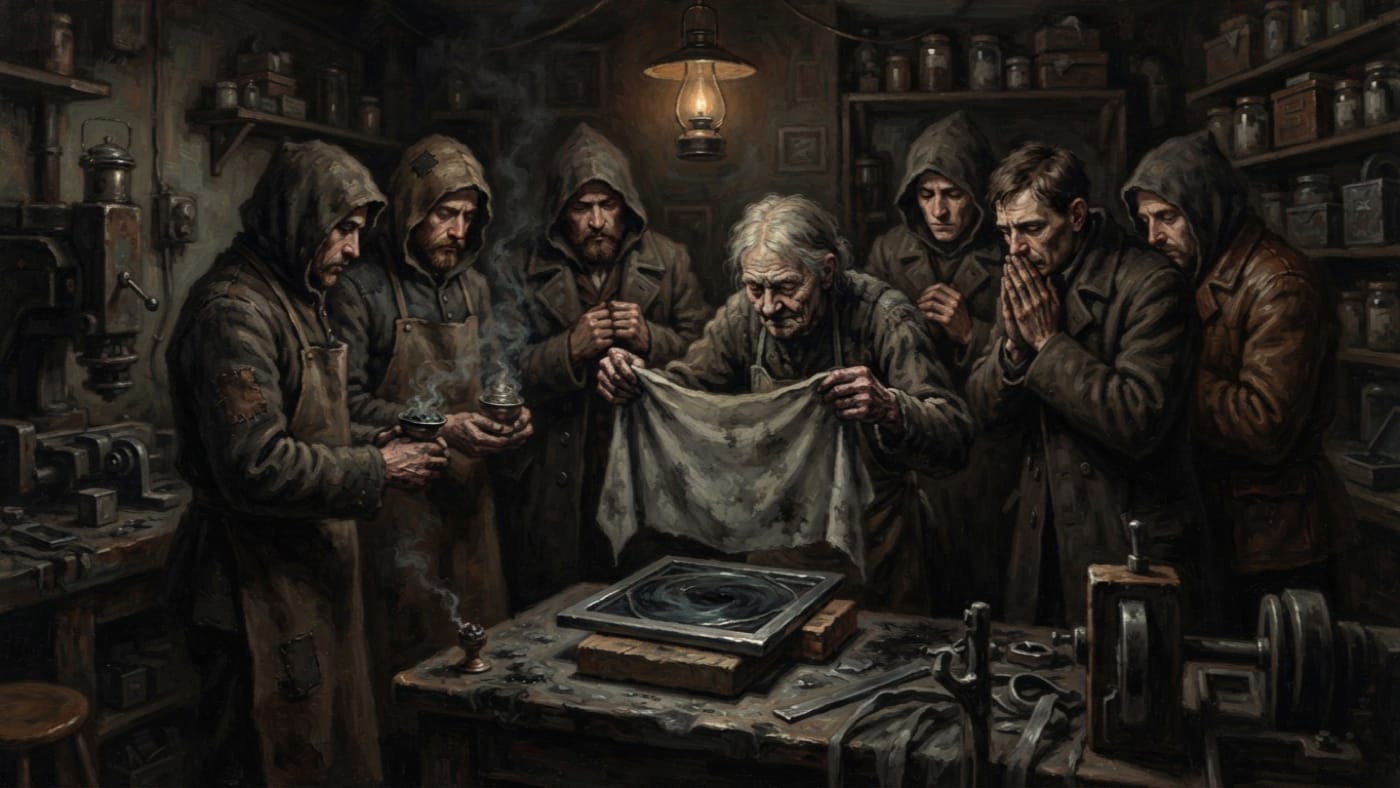
Feast of Silenced Tongues
A craft without a charter keeps the feast of a saint without a file
The Demon-Glass Polishers honour Saint Varda after Matins, on a night chosen by workshop consensus and denied by morning. A cloth is lifted for one breath; silence earns thanks, and a whisper earns them faster.
Codex Ref. XIII.1.92-001
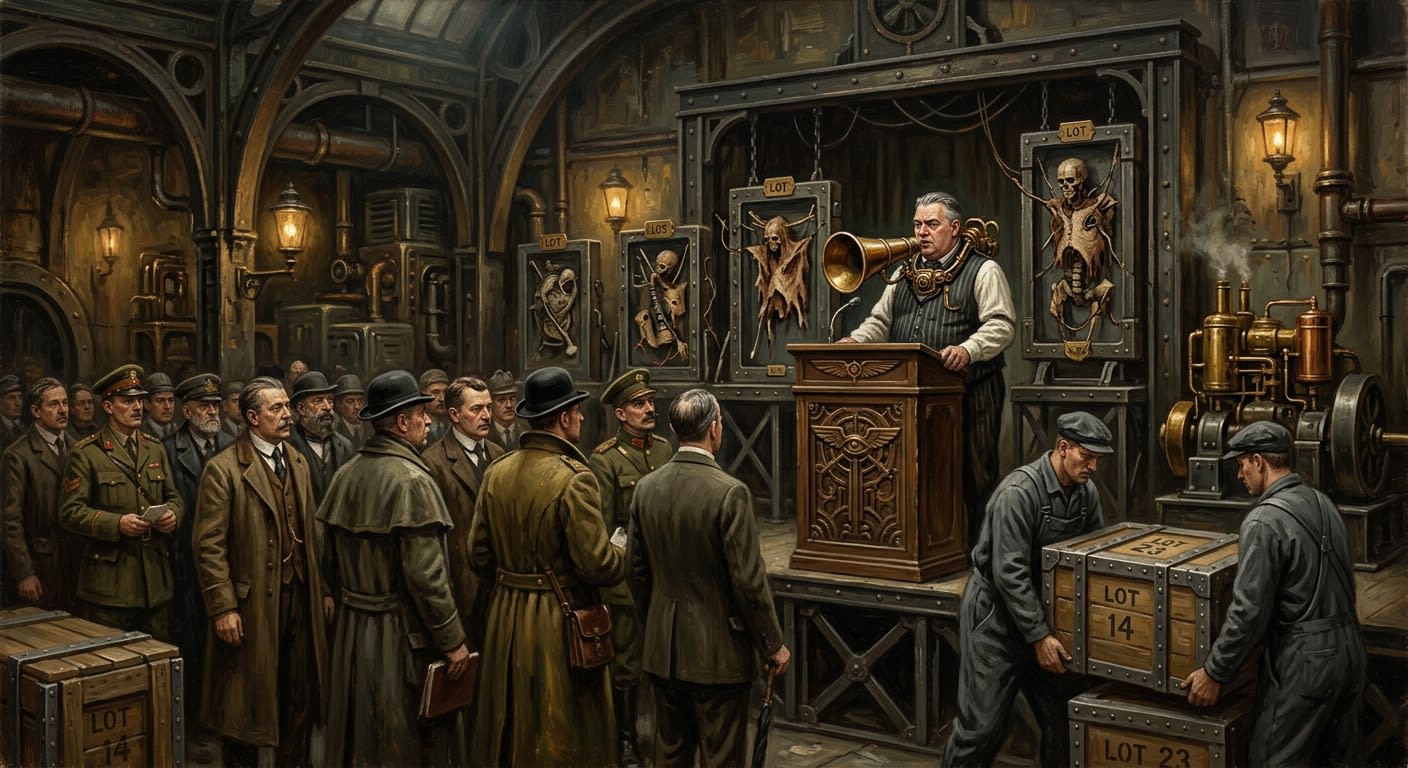
First Relic Auctions of Amsterdam
When the hammer learned to price a saint without blushing
Amsterdam's first relic auction season made sacrilege respectable by catalogue, turning stolen bones into lots and provenance wounds into profit.
Codex Ref. VII.8.10-007
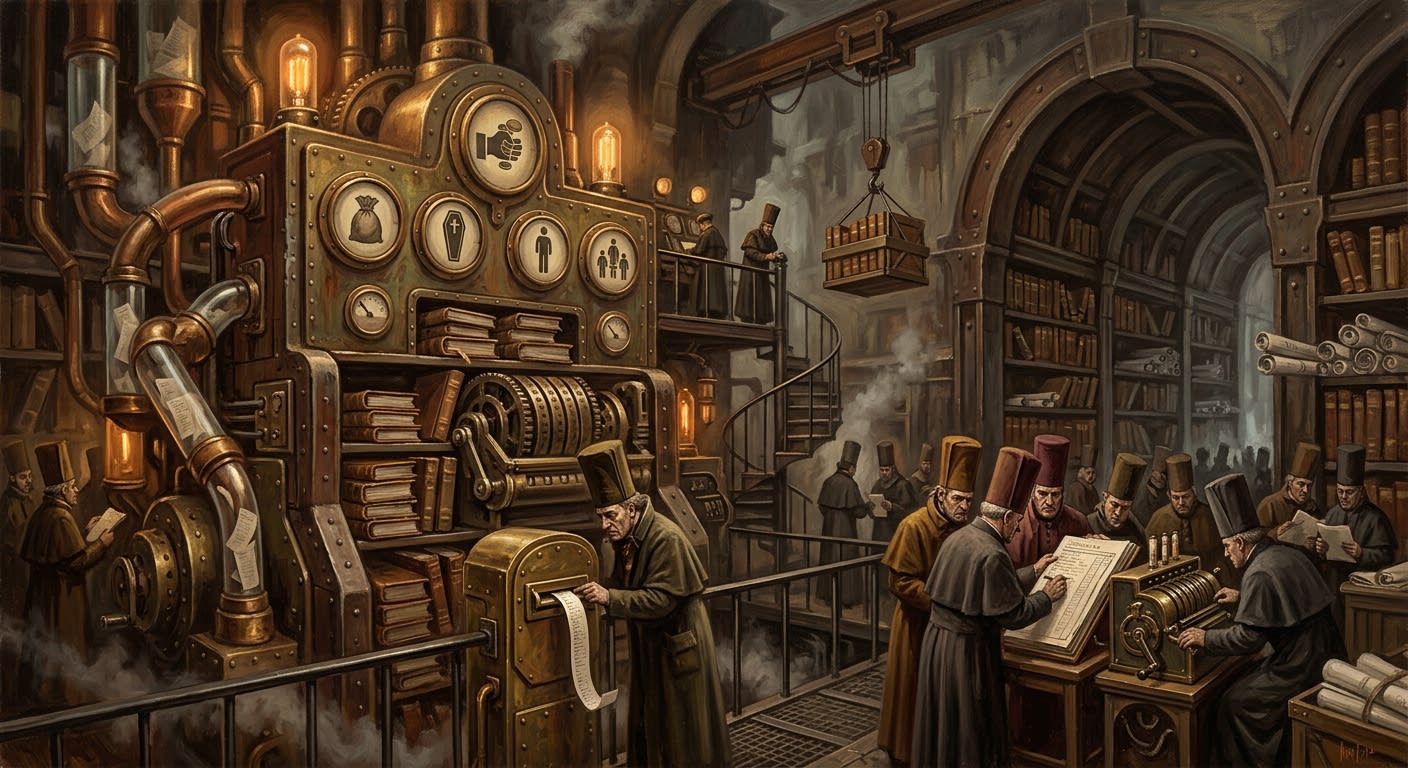
Fiscal Census
The mouth beneath the Ledger, still hungry after burial
The Fiscal Census is Tithes' continental obligation register: a vault-machine counting what the living, dead, unborn, and administratively inconvenient still owe.
Codex Ref. XIII.1.38-092
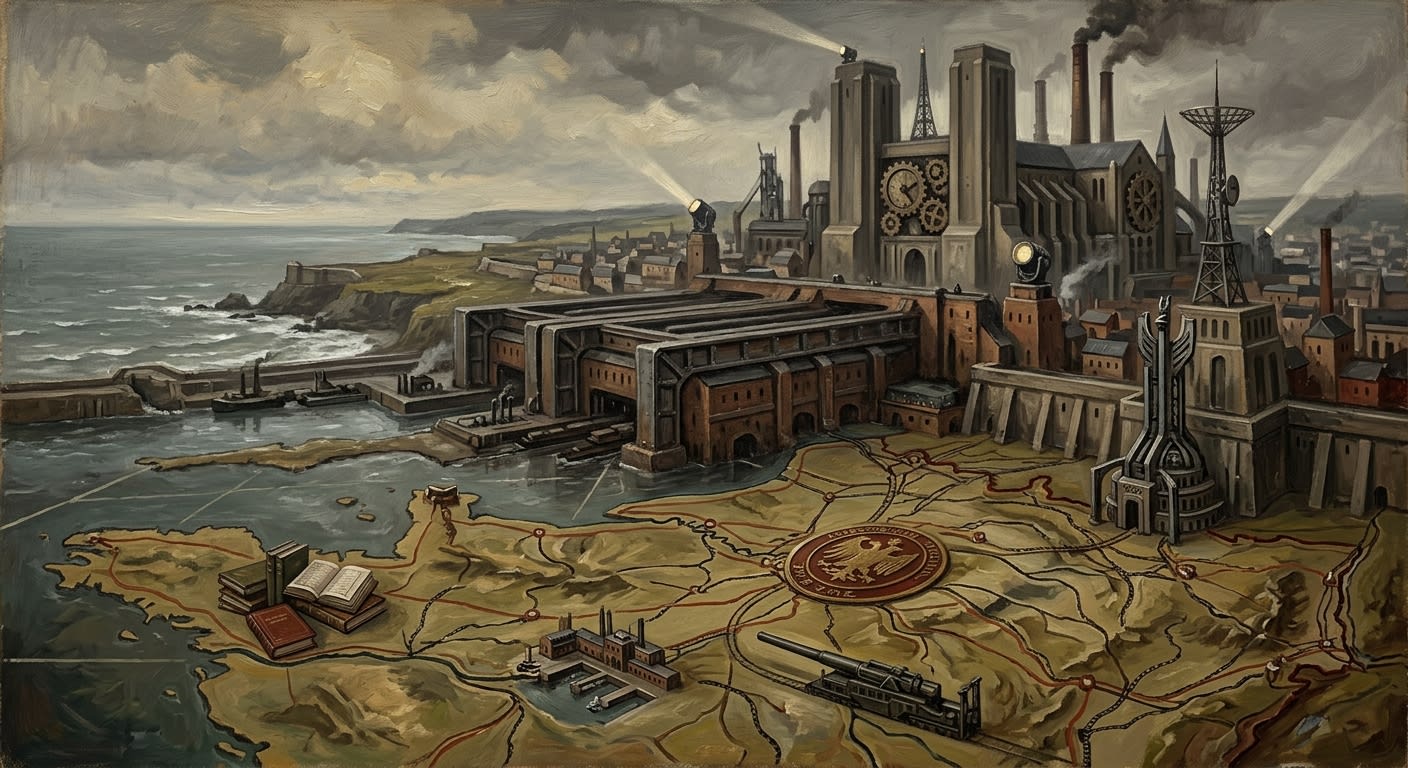
France
The country the Synod did not abolish, because it proved too taxable to waste
A.S. 201 survey of France as Zone One heartland: martyr coast, watched cities, taxable memory, useful ports, and one conquered name made indispensable.
Codex Ref. II.1.01-201
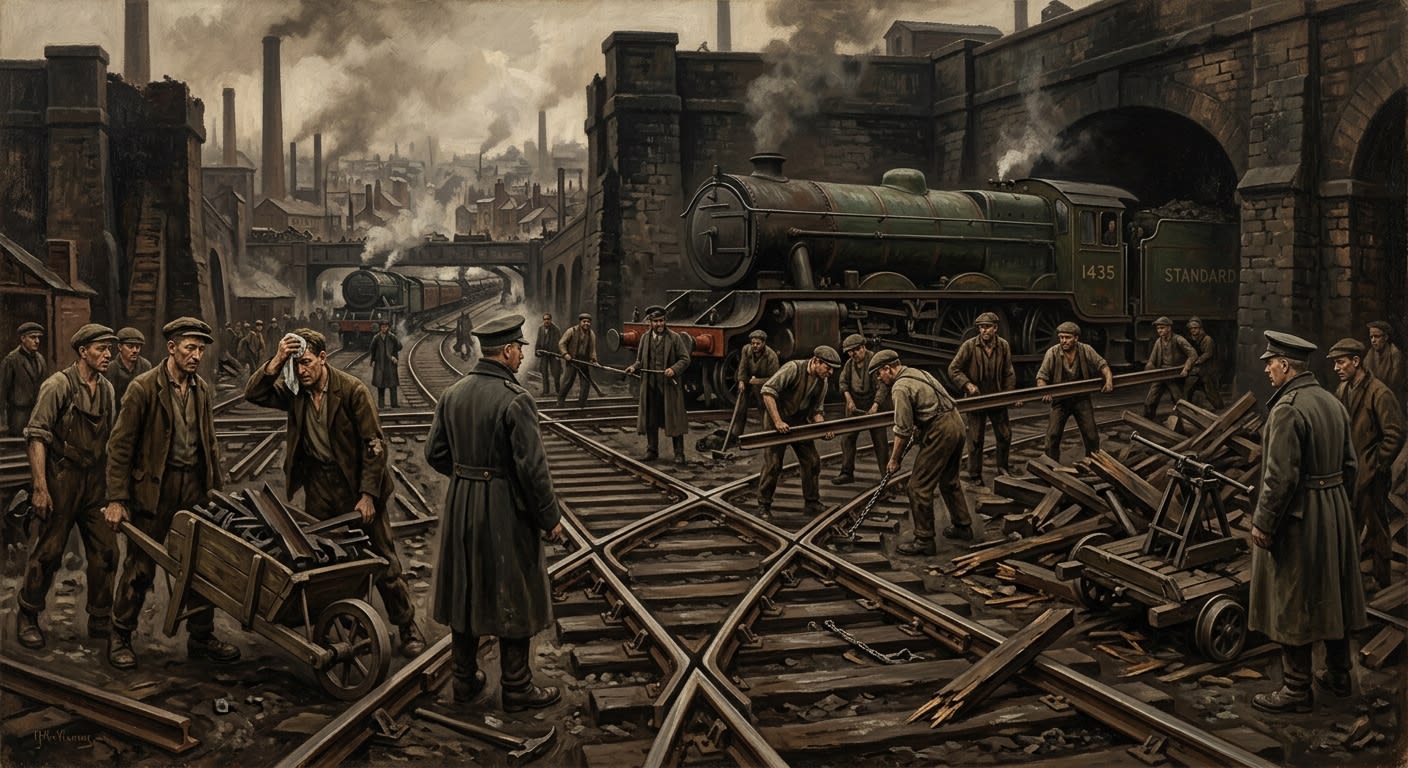
Gauge War
Forty years to agree on the distance between two rails
A.S. 96–136 rail-standardization conflict in which rival gauges starved bastion corridors until Engineering imposed 1,435 millimetres and labour paid in hands, hunger, and four thousand dead.
Codex Ref. VII.2.10-136
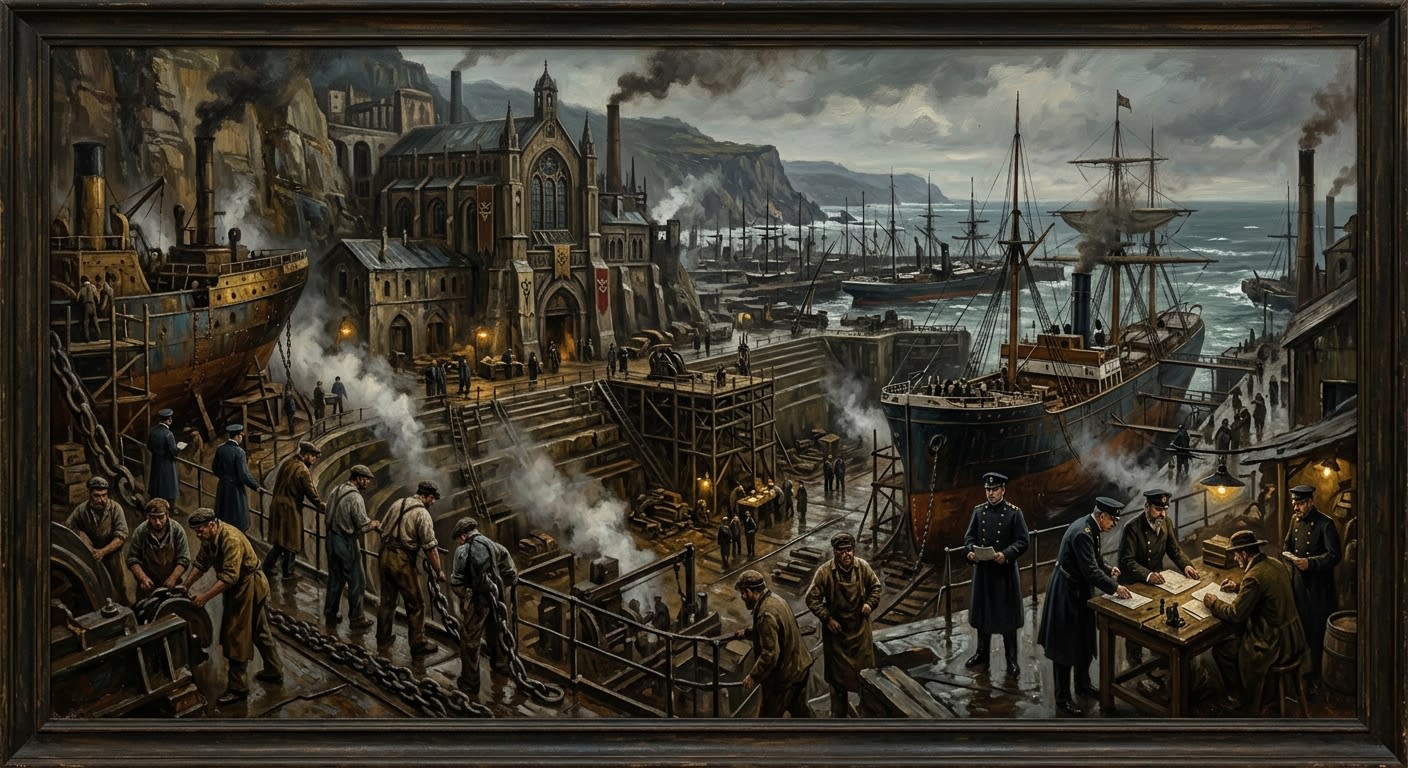
Genoa
The Synod owns the harbour by law; the harbour invoices it by clause
Genoa is the Synod's Ligurian contract-port: grudgingly compliant, rich in drydocks and debt, and indispensable in every way Doctrine resents.
Codex Ref. II.4.09-016
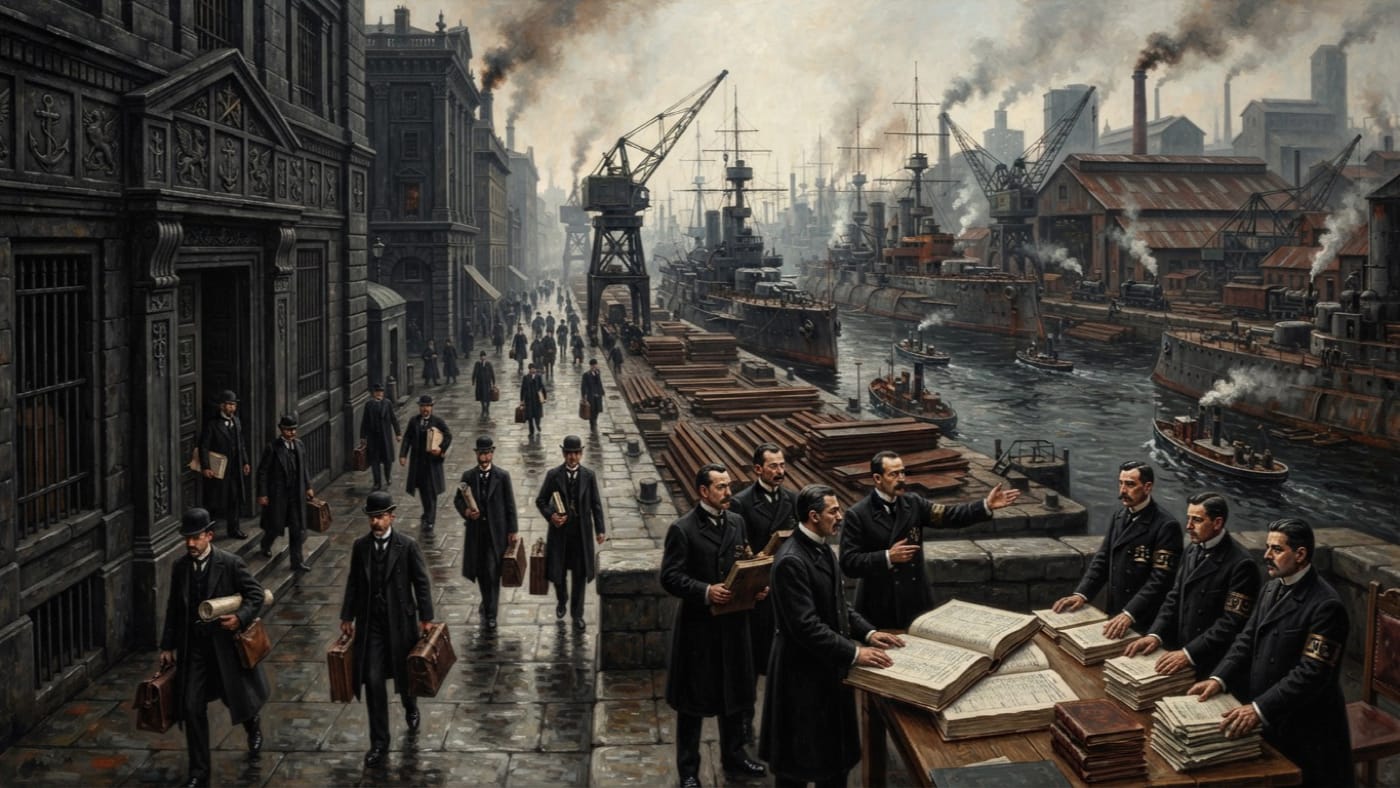
Genoese Banking Houses
Southern naval authority belongs to the Synod; its credit belongs to the Quay
Genoa's private banking houses guarantee the Bureau of War's southern naval contracts. Tithes audits the ledgers; the Quay decides when the hulls move.
Codex Ref. XII.26.03-001
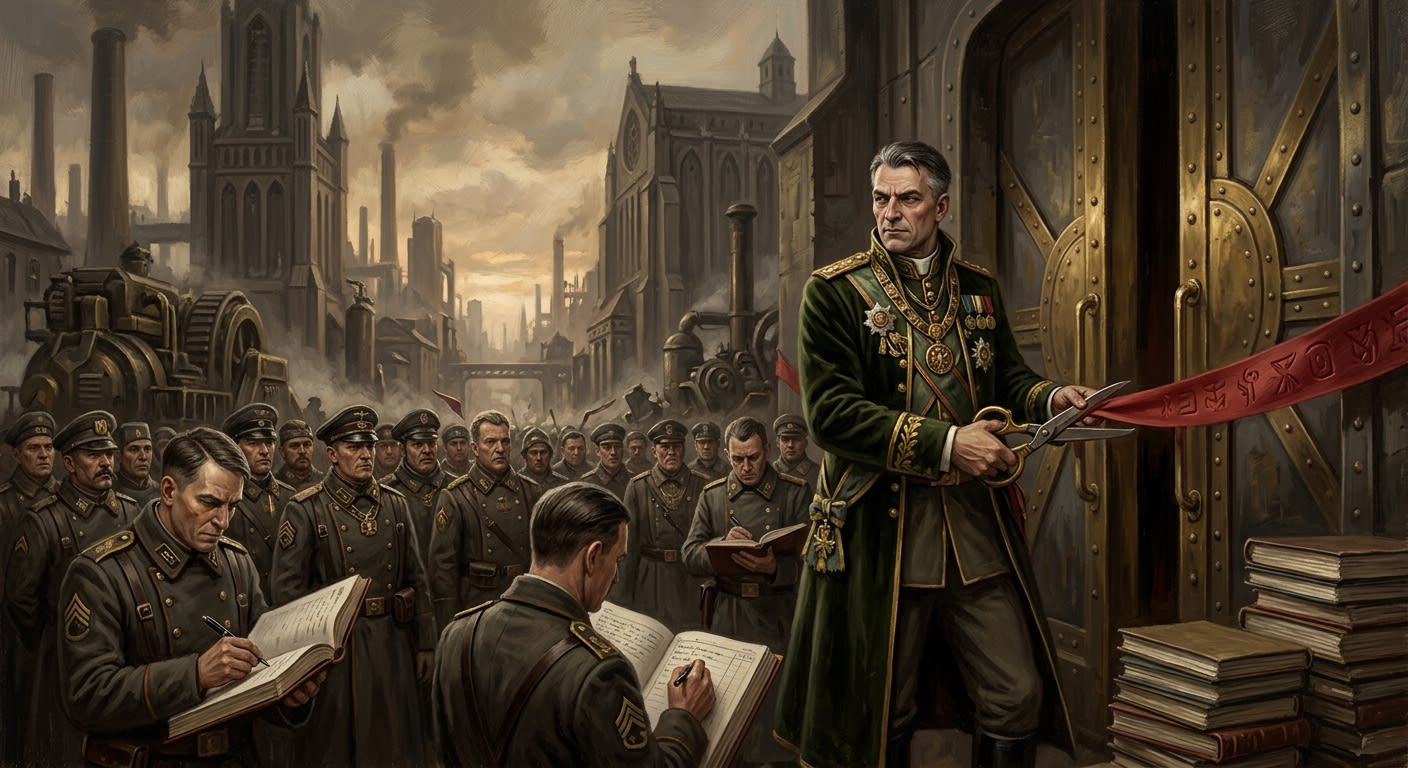
Governor-Praelate Alaricus
The dangerous administrator who made mercy balance
Toledo's Governor-Praelate, watched for the A.S. 185 opening of the Granaries of Saint Benedict: mercy recorded so thoroughly that Tithes could not call it theft.
Codex Ref. III.2.01-085
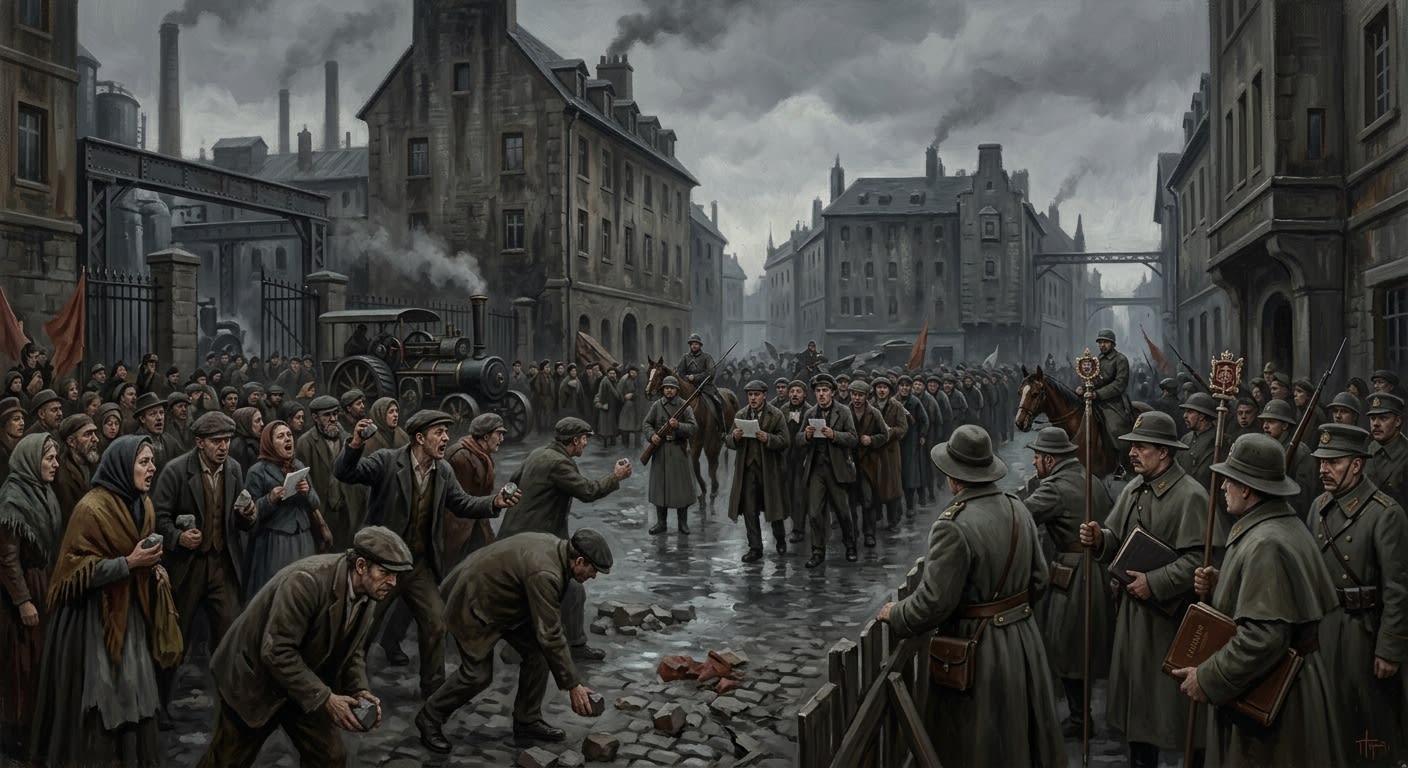
Gray Week Famine
Hunger refused the ledger, so the ledger learned to sing
A.S. 138 famine-riot sequence in Strasbourg, Marseille, Munich, and a disputed fourth city; open grain audits failed, crowds answered with stones, and receipt-procession doctrine learned to count citizens while they sang.
Codex Ref. VII.4.21-002
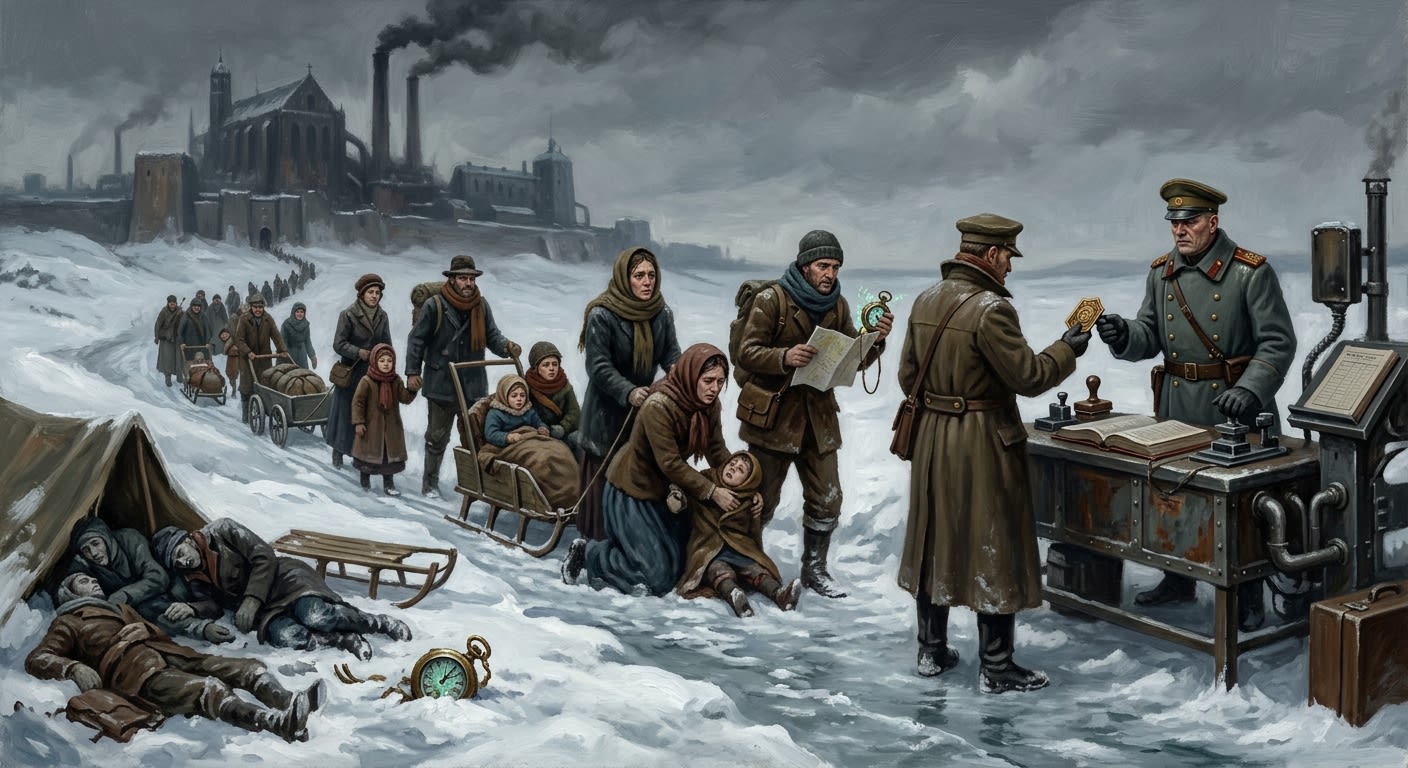
Great Counterfeit Winter A.S. 160
Near-truth is falsehood with better penmanship
A.S. 160 bell-hour token forgery crisis in which drift-tuned cores led travellers beyond Bellway protection, killed families near lawful roads, and remade Route-Stamper discipline.
Codex Ref. VII.8.10-093
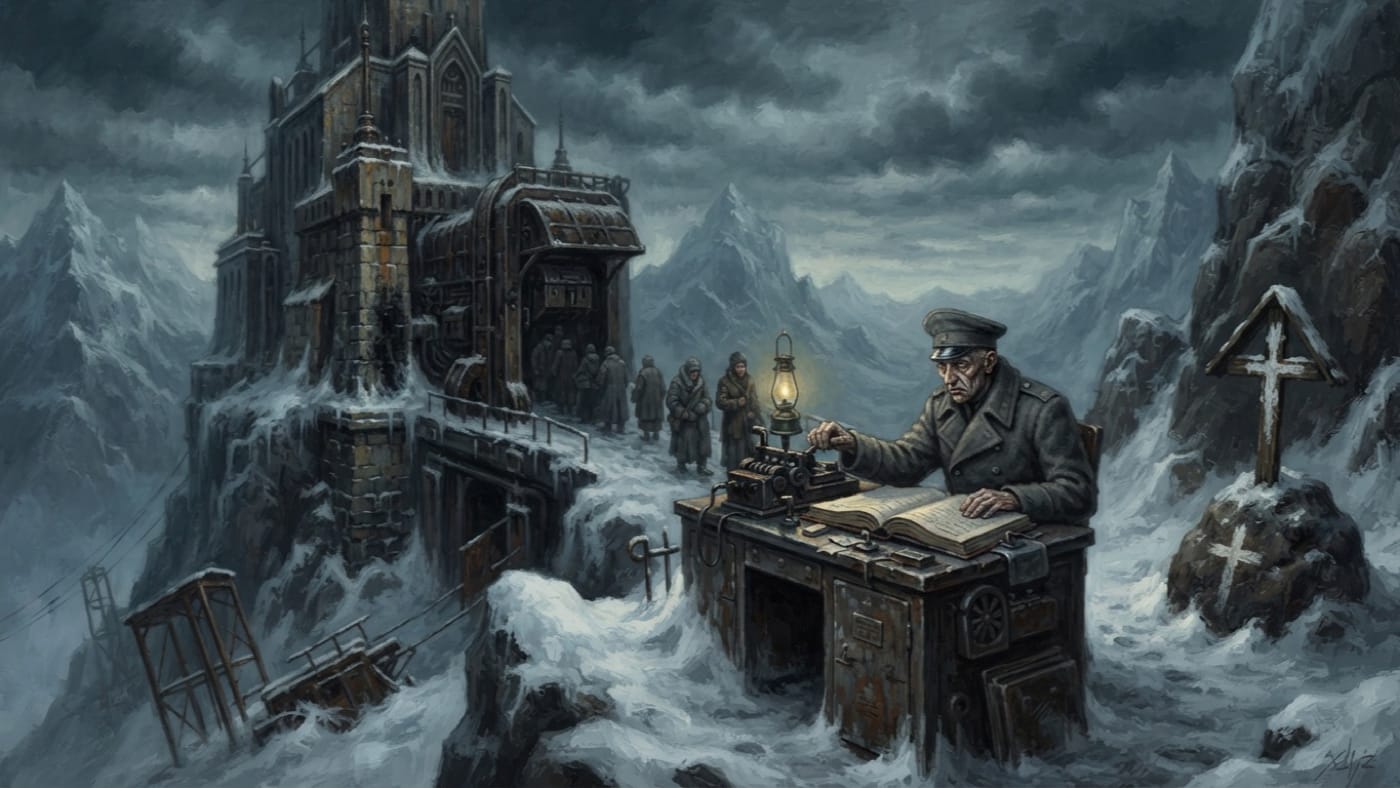
Guild of the Golden Sole
The master kept his life. The Bureau kept the roads.
The private guild that held the Rhineland pilgrimage approaches until its absorption in A.S. 123. Its master signed the Harmonized Routes Edict and kept his life; the Bureau rewarded him with a desk above the Carpathian snow-line.
Codex Ref. XI.5.01-123

Harbor Prefect-Archivist Iolana
She keeps the harbour legal after reality forgets how to ring
Harbor Prefect-Archivist Iolana rules the Ledger Steps of Thessaloniki, resurrects lost paperwork, and kept legality breathing through the A.S. 198 Silence.
Codex Ref. III.2.01-033
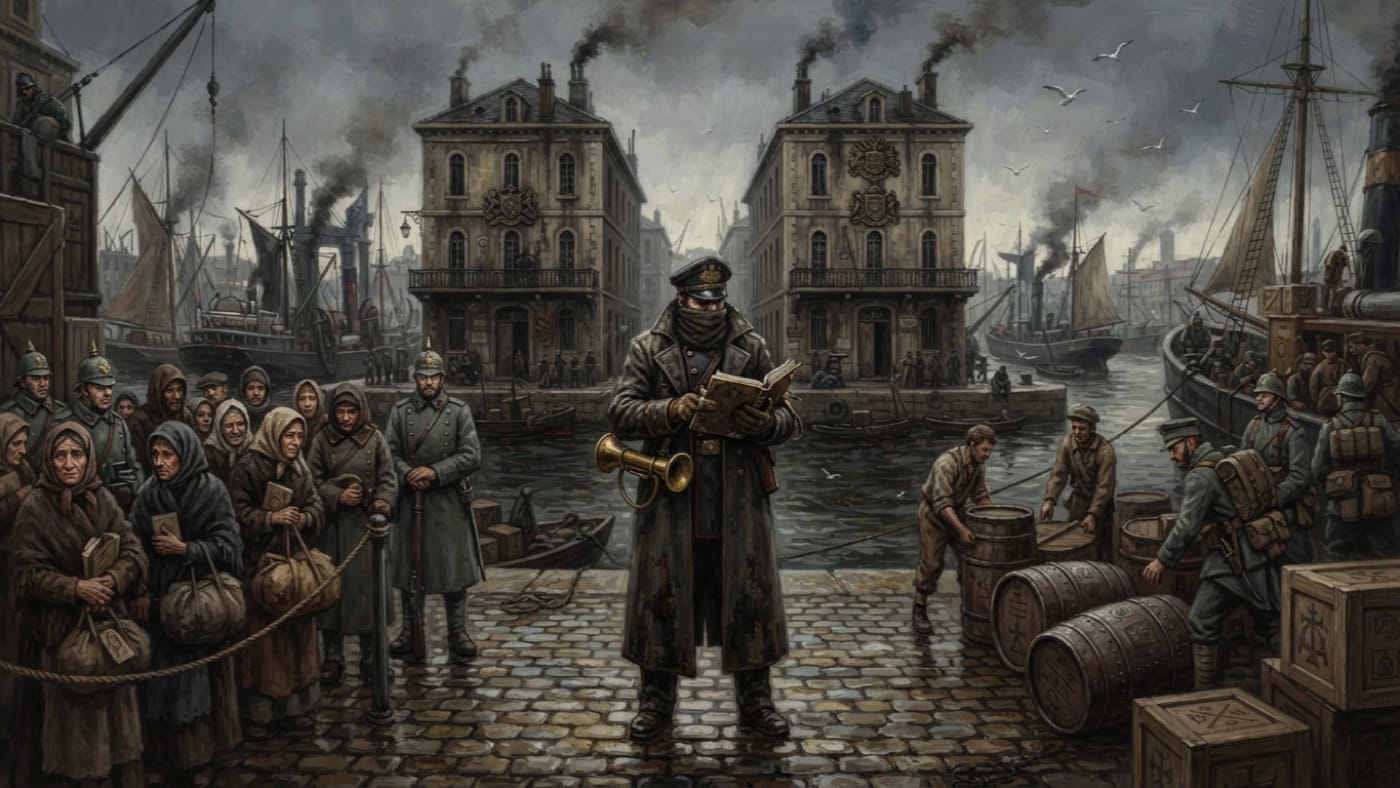
Harbour-Master
Authority has five claimants; responsibility awaits a name
Marseille's Harbour-Master claims authority beside four Bureaus. The Ledger records the title; the cargo waits for someone willing to answer for it.
Codex Ref. XIII.1.39-002
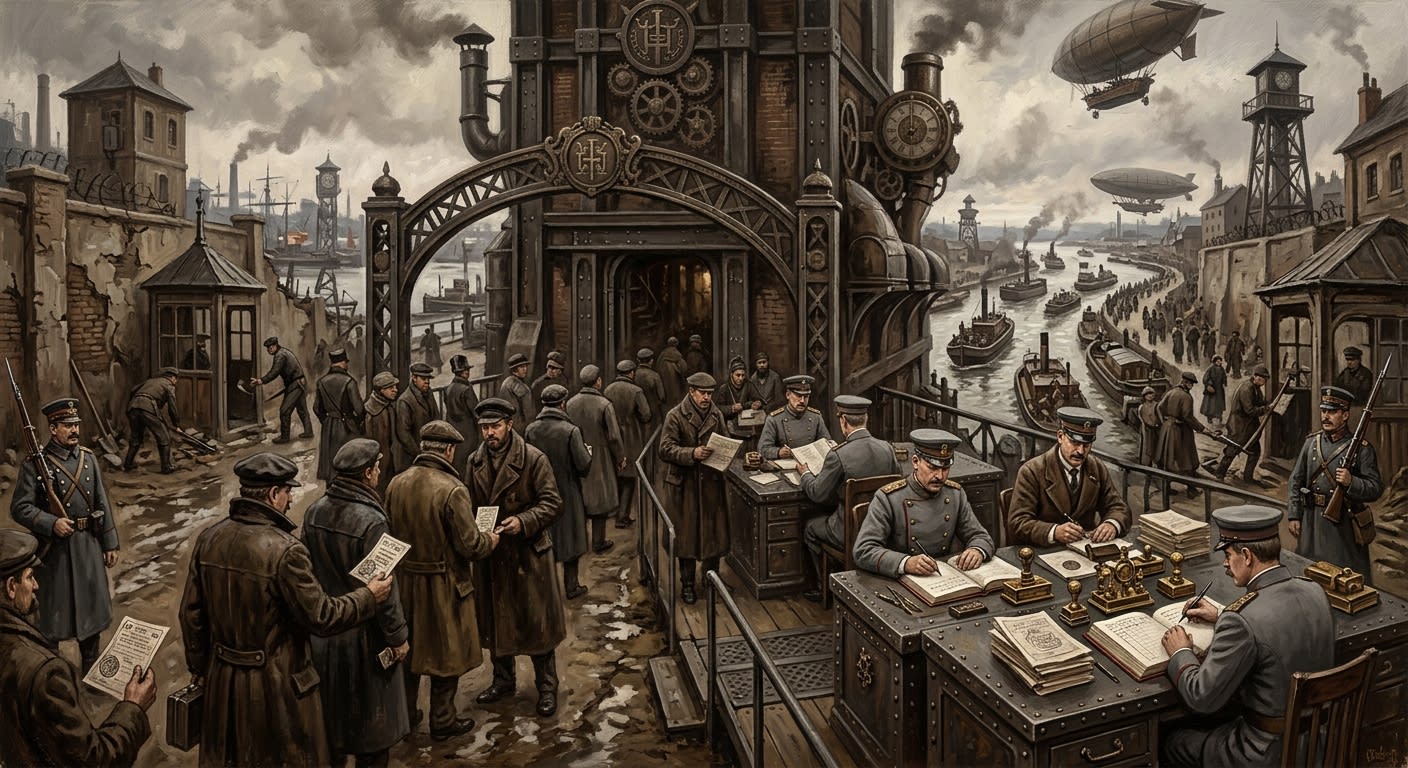
Harmonized Routes Edict
The road to holiness was improved by tolls, seals, and foundation screams
The A.S. 123 Harmonized Routes Edict licensed pilgrimage, broke the private guild roads, founded Marseille's groaning headquarters, and made walking taxable.
Codex Ref. VII.2.10-123
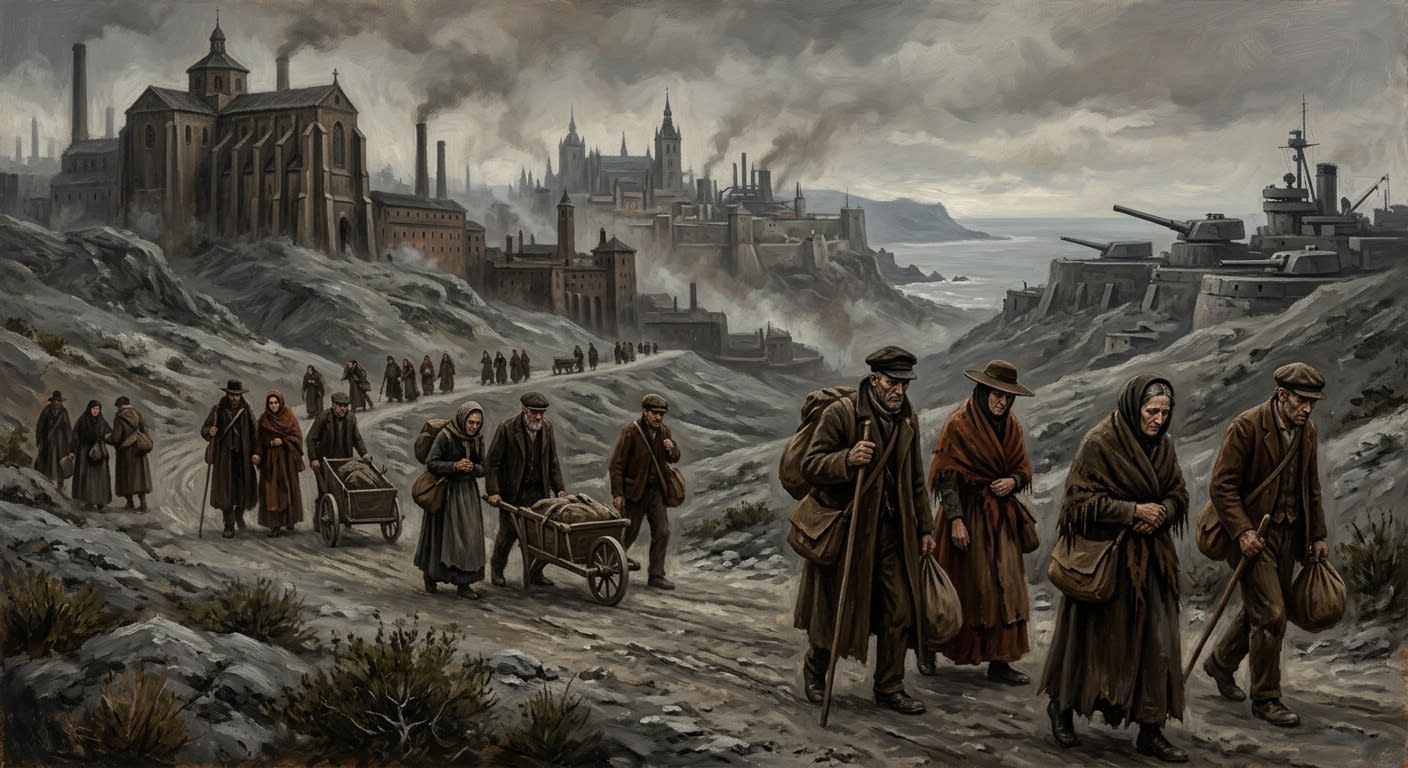
Iberia
The western furnace kneels, pays, murmurs, burns, and remembers
Iberia is the Synod's western furnace: a sealed peninsula of relic ash, late Concordat obedience, Seville mutters, Toledo martyrdom, pilgrimage roads, British guns at Gibraltar, and memory too old to confiscate cleanly.
Codex Ref. II.1.04-090
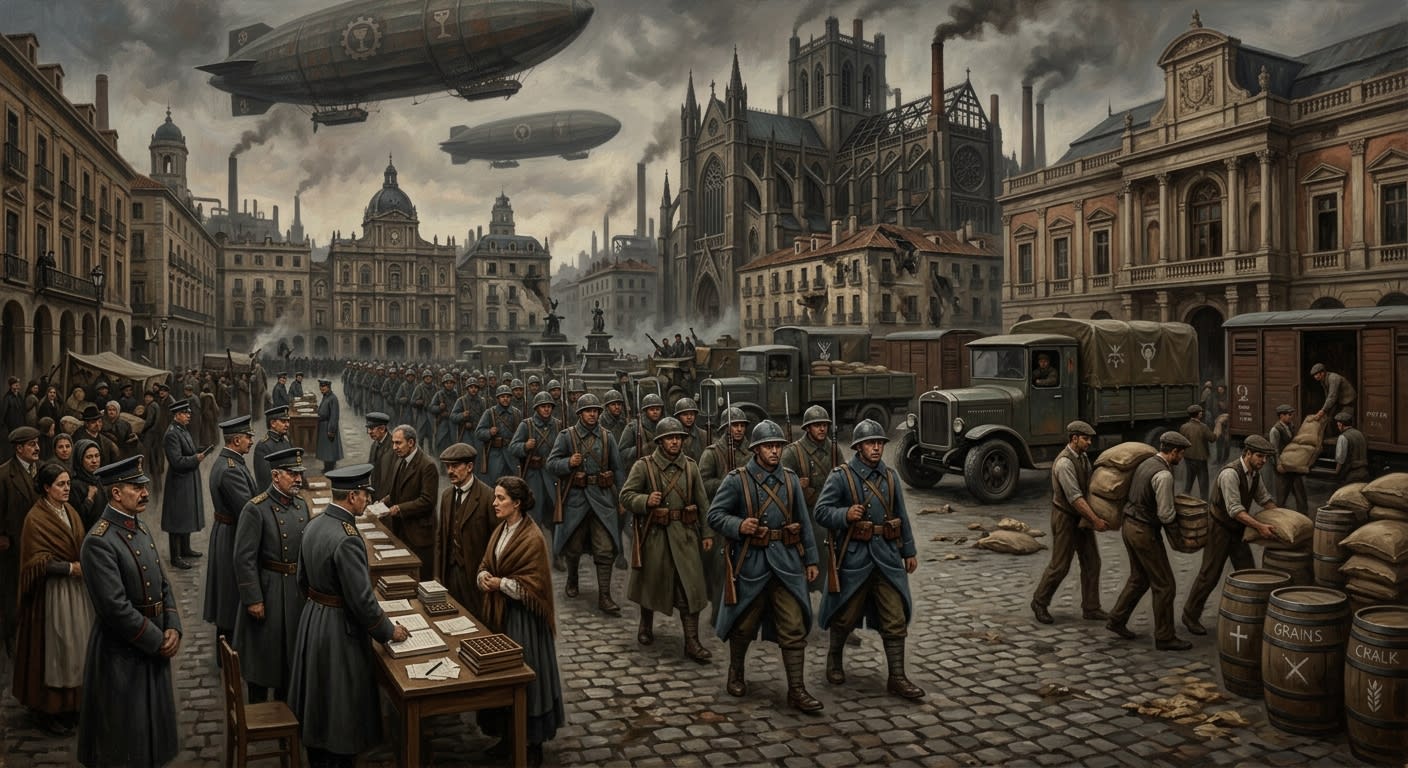
Iberian Campaigns
The West was conquered first by salt, then by silence
The Iberian Campaigns were the Synod's western correction: salt dues, harbour ledgers, Seville's silenced plazas, stripped granaries, and conquest filed as housekeeping.
Codex Ref. VII.5.10-092
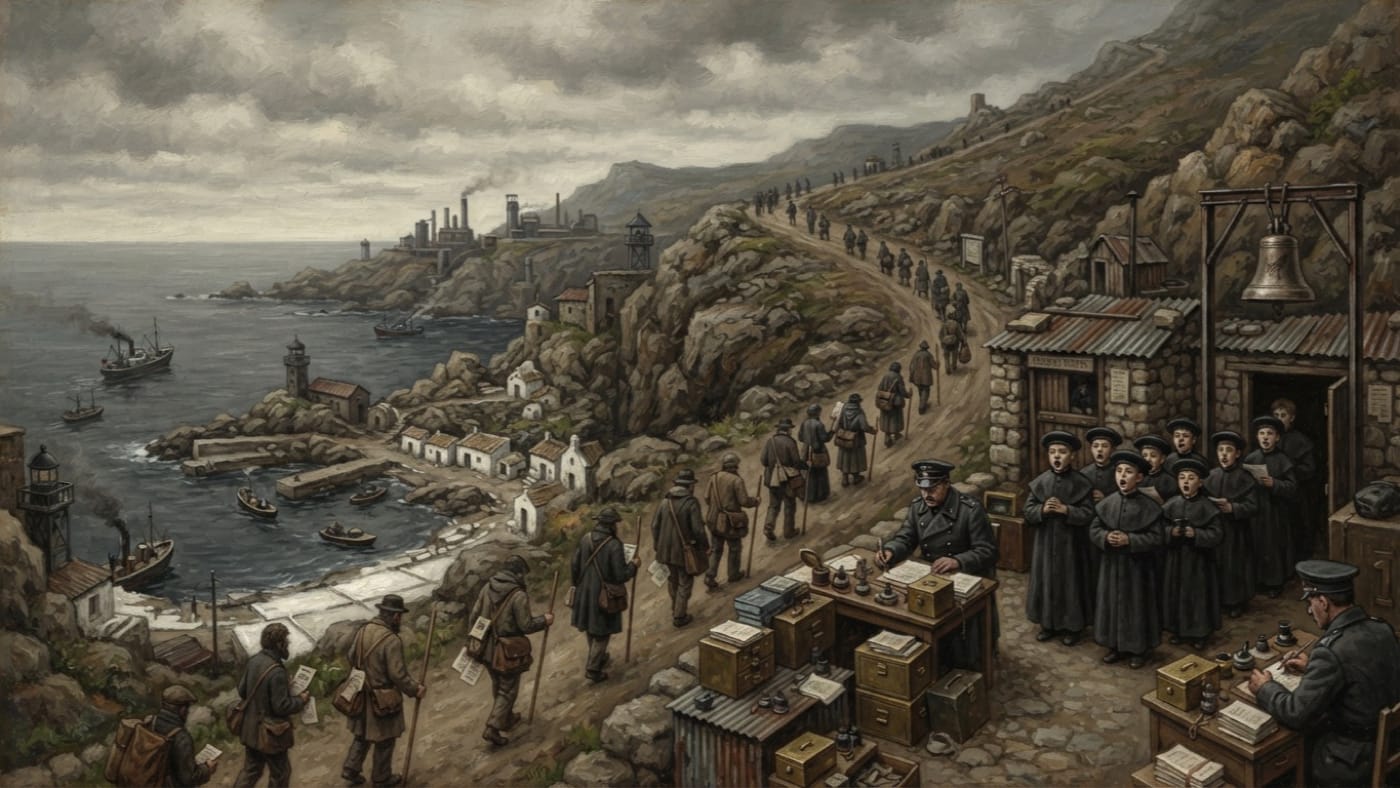
Iberian coast
The roads are safer; the invoices survived
The Iberian coast feeds pilgrims from salt flats, harbours and smugglers' coves onto inland shrine-roads. The A.S. 193 Jubilee dissolved the Peregrine Cartel; Pilgrimage kept its intelligence, its methods and the invoices.
Codex Ref. II.4.01-193

Iberian Intelligence Desk
The racket lost its name; its memory received a cleaner seal
Pilgrimage's Iberian Intelligence Desk received three Peregrine Cartel principals during the A.S. 193 Jubilee dissolution. The racket was extinguished; its useful men found a cleaner seal.
Codex Ref. III.2.07-005
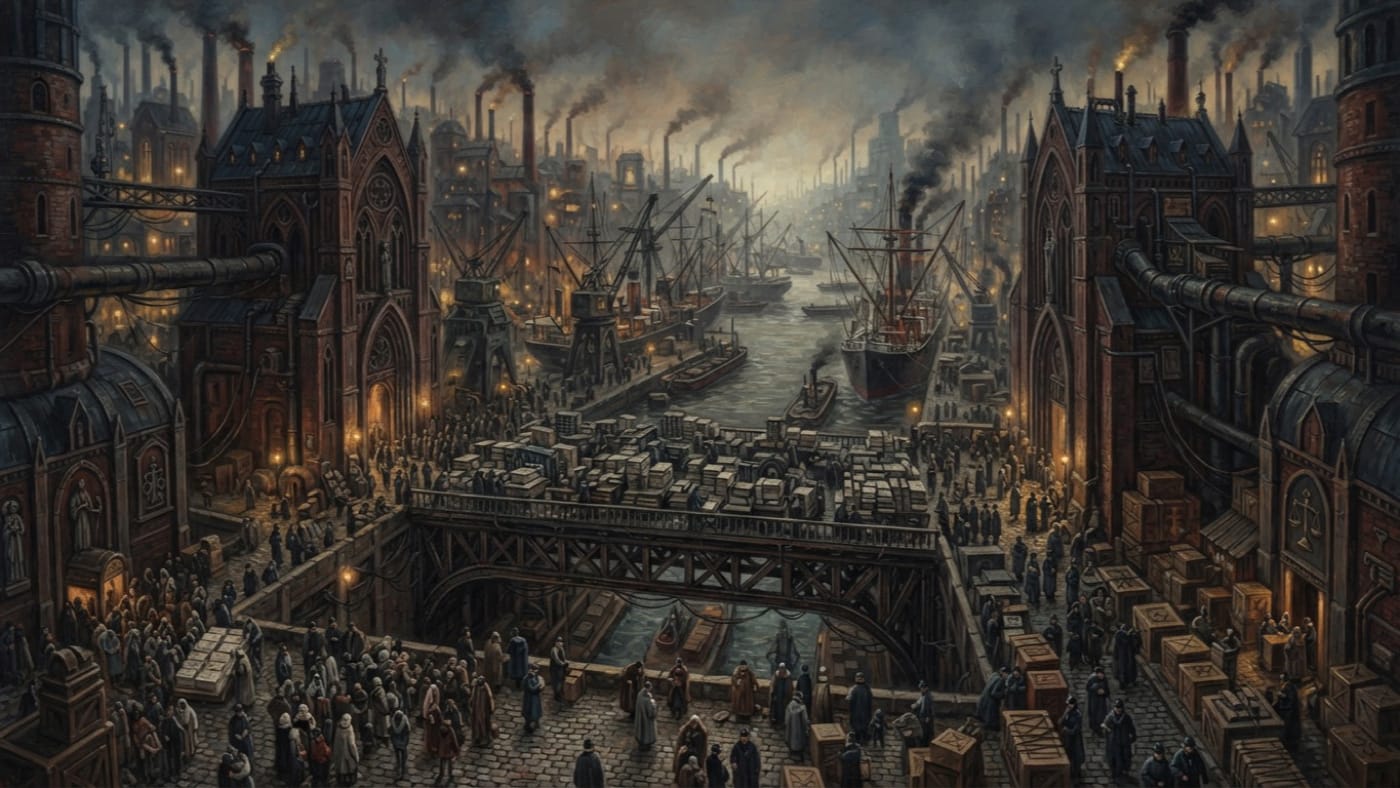
Inter-Bureau Arbitration Panel
One corrected tally, two refusals, and a ruling still pending
Convened in A.S. 199 to decide whether Marseille's corrected pilgrim-fleet departure count requires return-voyage harbour dues to be refunded. Pilgrimage refuses; Tithes refuses the refusal. The ruling remains pending as of A.S. 201.
Codex Ref. VIII.4.09-199
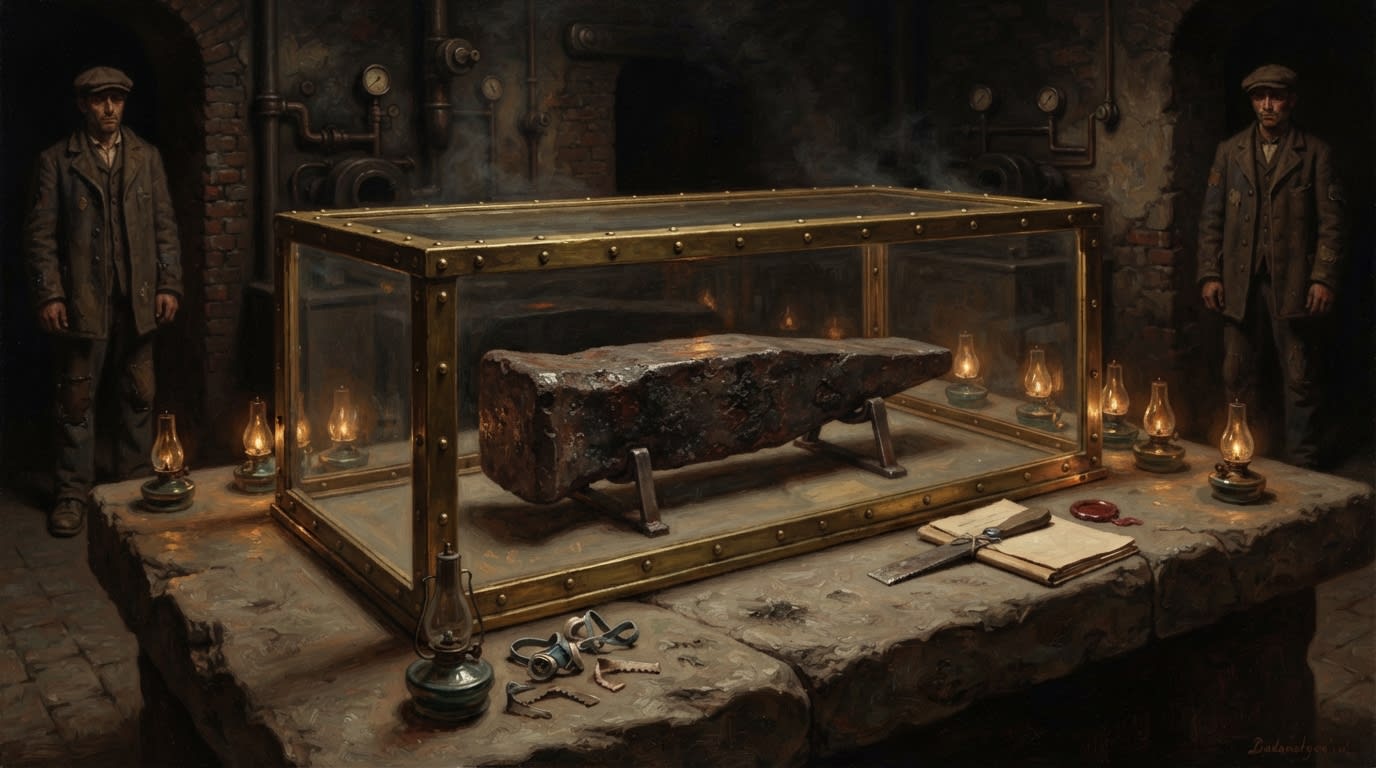
Iron Plug
The iron survives; its pedigree is a petition
R-0447-BP, the iron plug attributed to Saint Orren, rests under glass in Budapest. Nine hours are doctrine; the relic's identity remains provisional.
Codex Ref. III.2.04-447
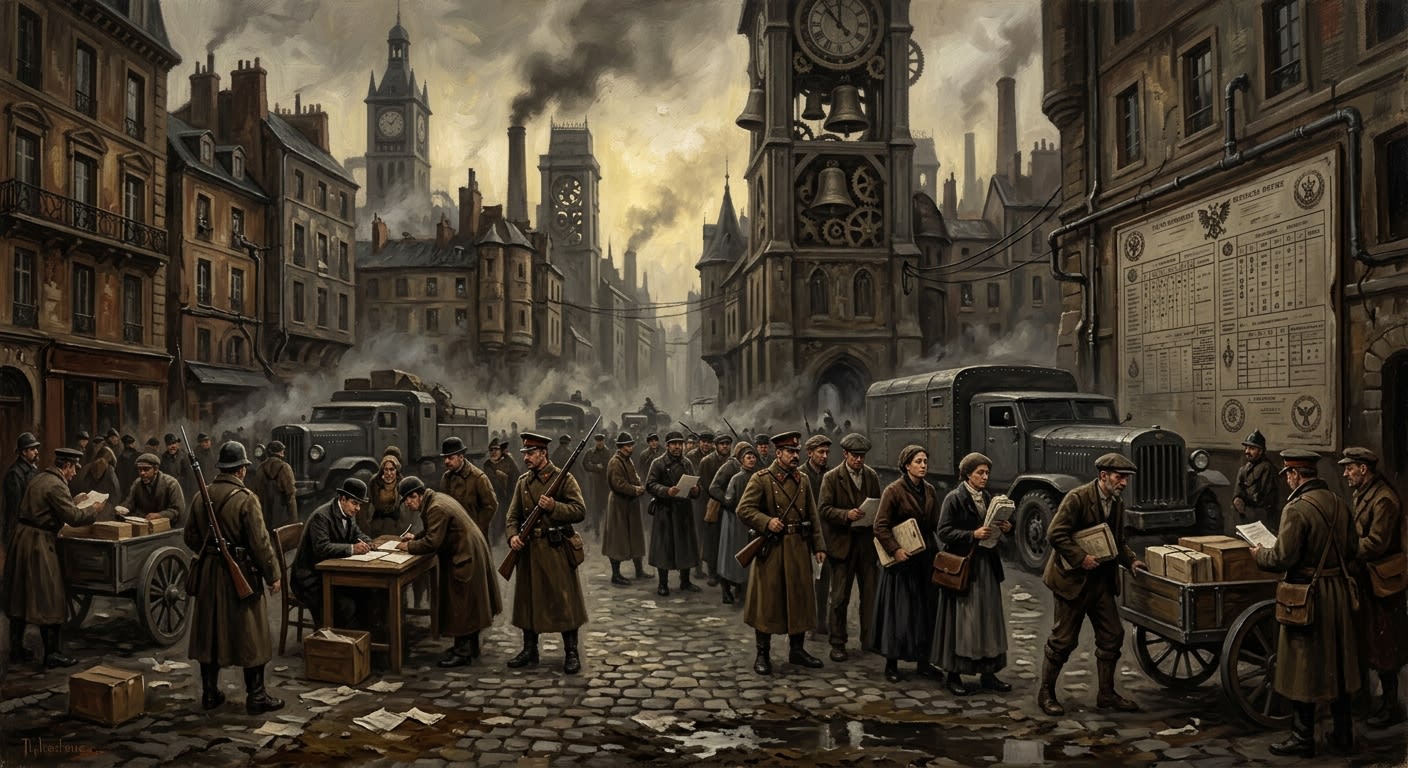
Languedoc
The province that made sunlight prosecutable
Languedoc is the southern heartland province where bells kept local time, songs bent under audit, and the Purges of A.S. 130 made sunlight a fileable risk.
Codex Ref. II.1.06-130
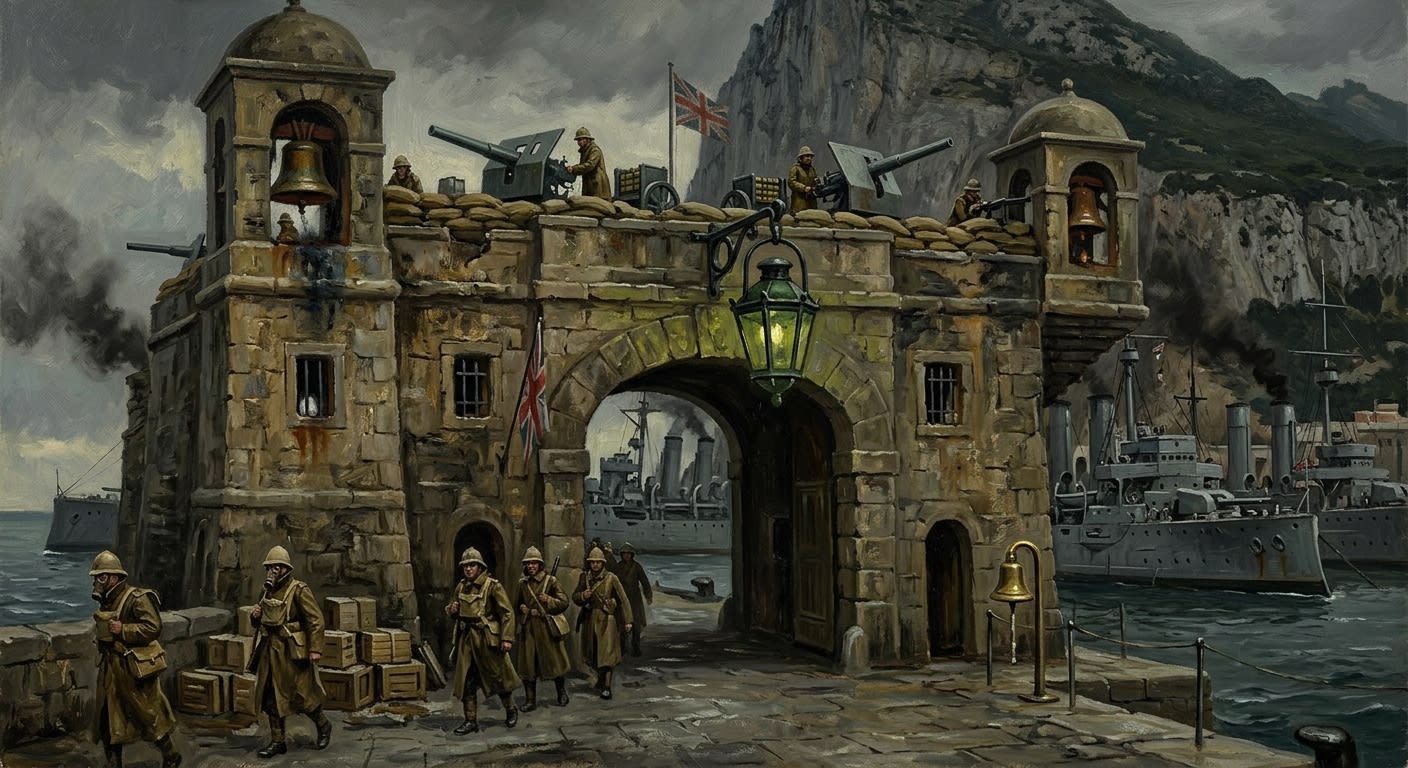
Lantern Gate, Gibraltar
The British fist at the Mediterranean mouth, politely denying it is a hand on our throat
The Lantern Gate at Gibraltar is Britain's southern naval knuckle: bell towers, chapel guns, anti-piracy patrols, and leverage disguised as maritime courtesy.
Codex Ref. II.4.09-010
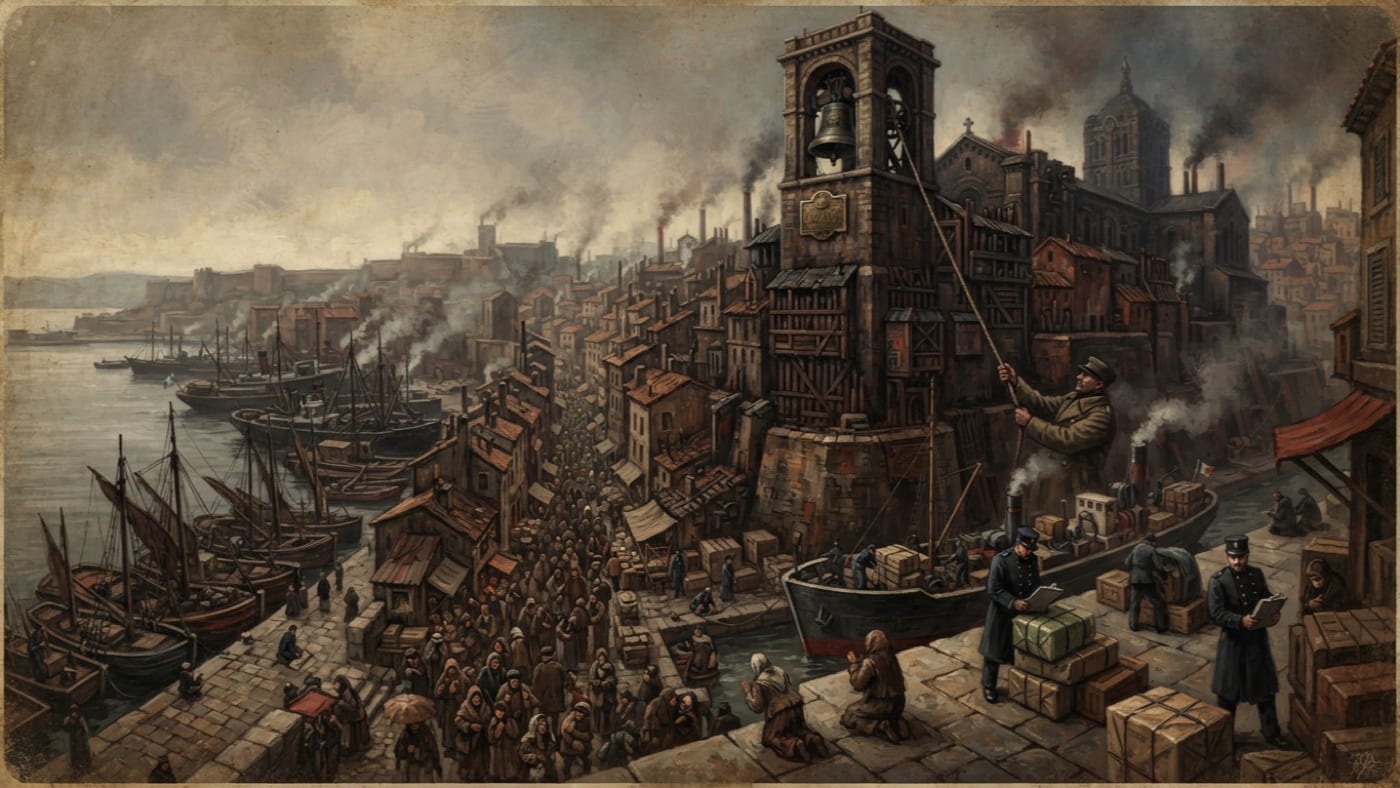
Lazare
Two errands for one bell; neither promises a verdict
Lazare is Saint-Victor's bell for relic arrivals and disputed deaths: bronze announces the matter, while Marseille argues over the verdict.
Codex Ref. XIII.1.62-215
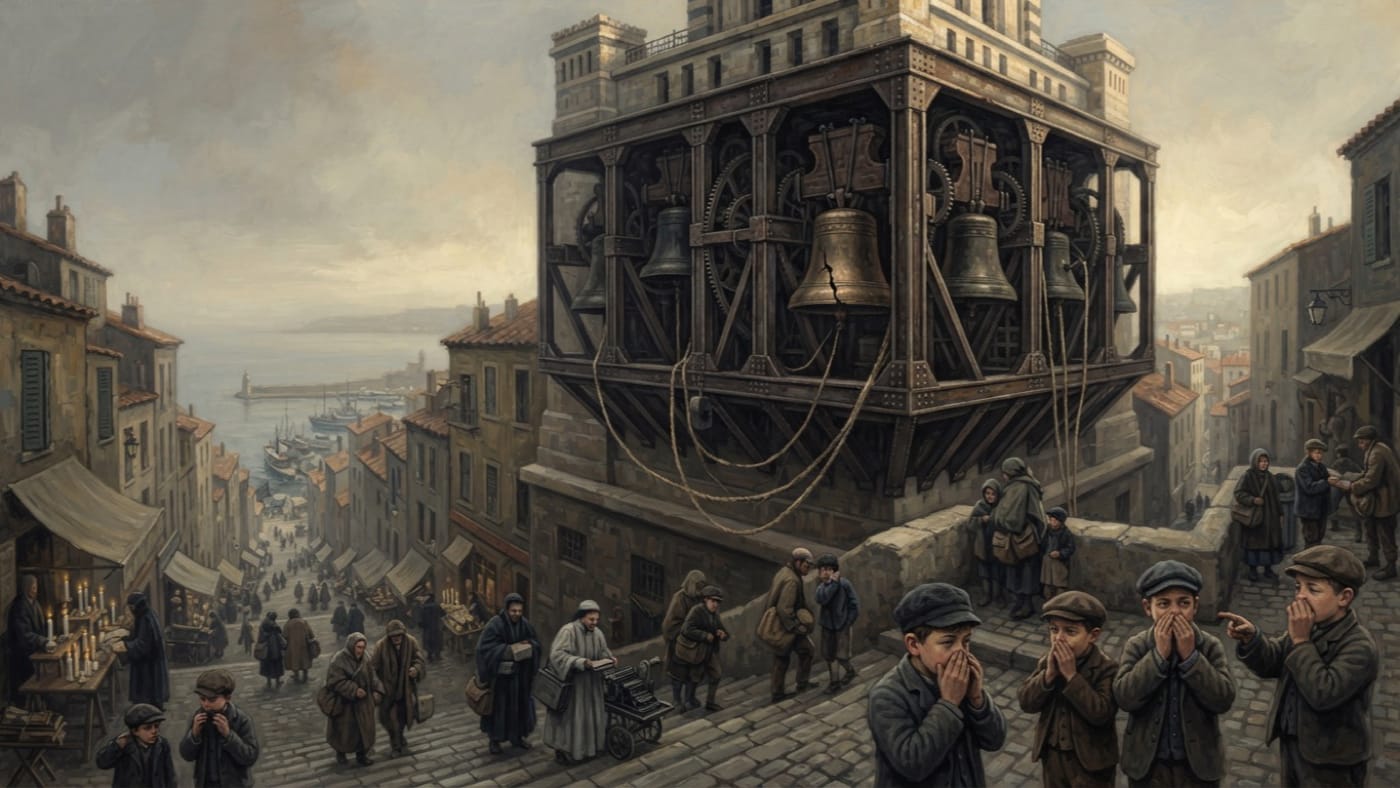
Little Beryn
Marseille knows the hour by a complaint its children can imitate
Little Beryn is Saint-Victor's bell for terce: cracked in A.S. 167, never properly repaired, and known to every Marseille child by its nasal complaint.
Codex Ref. XIII.1.62-218
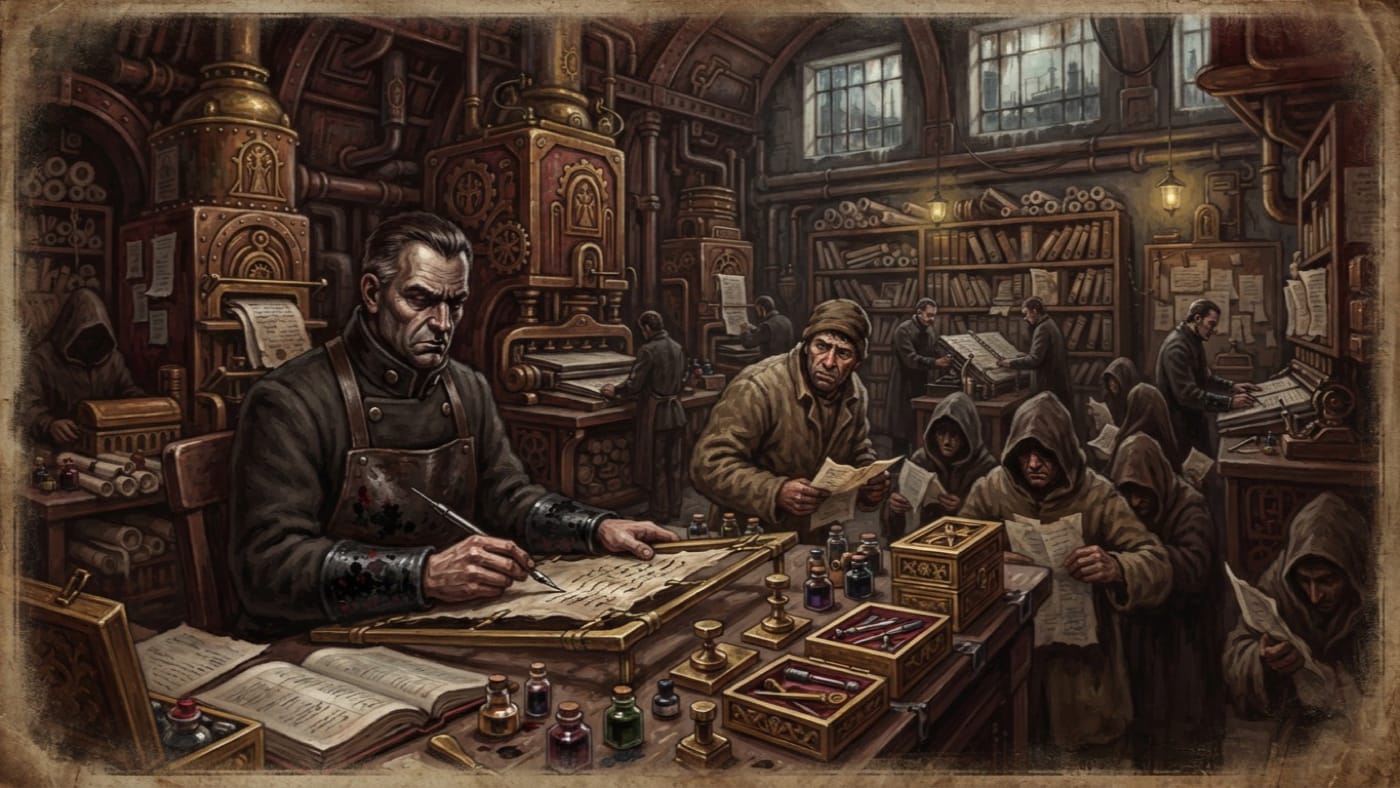
Lost Paperwork Resurrection
The paper returns; resemblance remains uncertified
The Harbor Ledger Office of Thessaloniki resurrects lost manifests, permits, and witness slips. Every return is accepted, every charge recorded; resemblance to the original remains uncertified.
Codex Ref. XIII.1.94-002
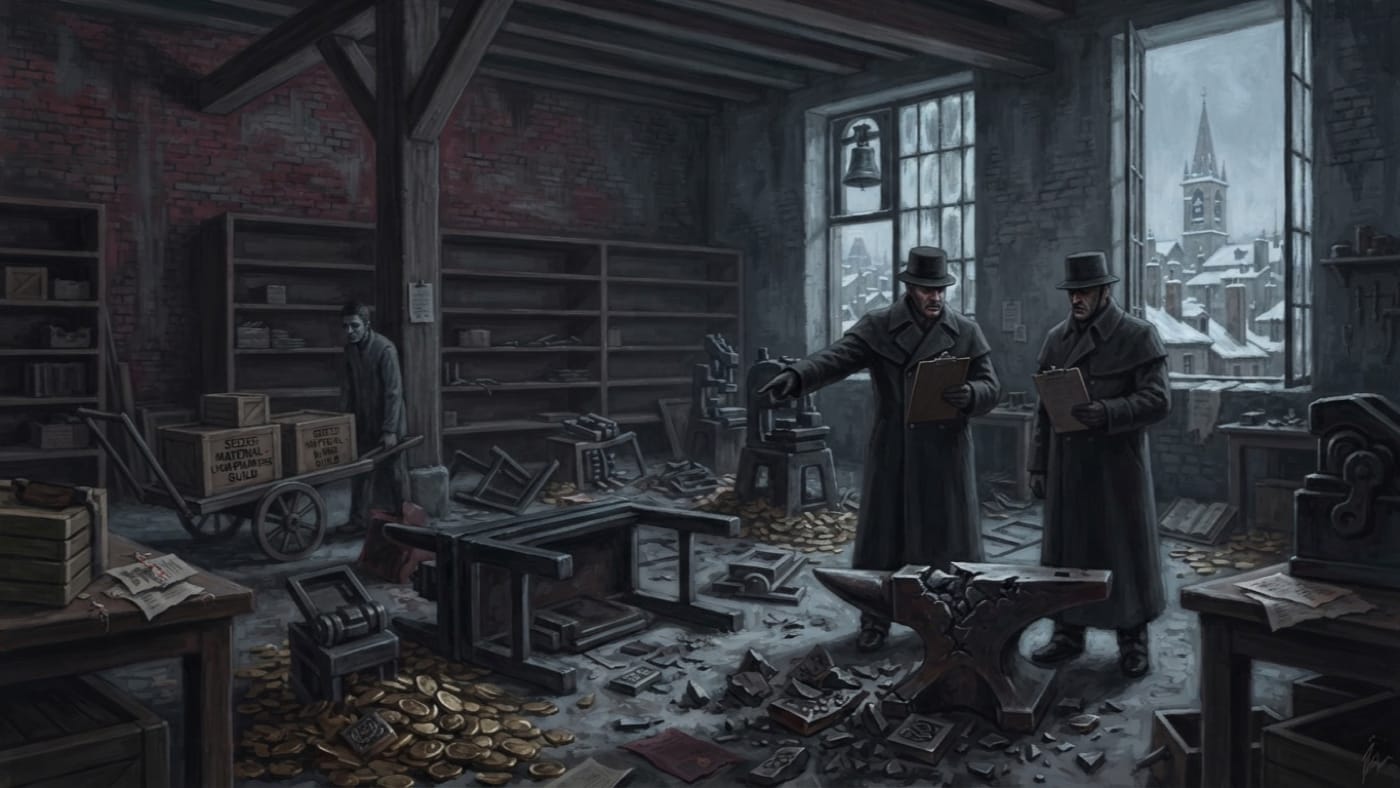
Lyon Stampers’ Guild
The charter is void; the bell still keeps the hour
Lyon's dissolved token-smith guild, broken in the Great Counterfeit Winter of A.S. 160. Its charter was voided, its apprentices redistributed, and its master die made to toll the hour in Strasbourg.
Codex Ref. XII.38.02-160

Manifest Litigant
In which the Bureau confirms that identity is paper, paper can be disputed, and dispute, correctly licensed, is a revenue stream.
The licensed enforcers of documentary reality at the port courts — the profession that cannot save the grain but can prove, conclusively, why it was permitted to rot.
Codex Ref. XII.26.01-001
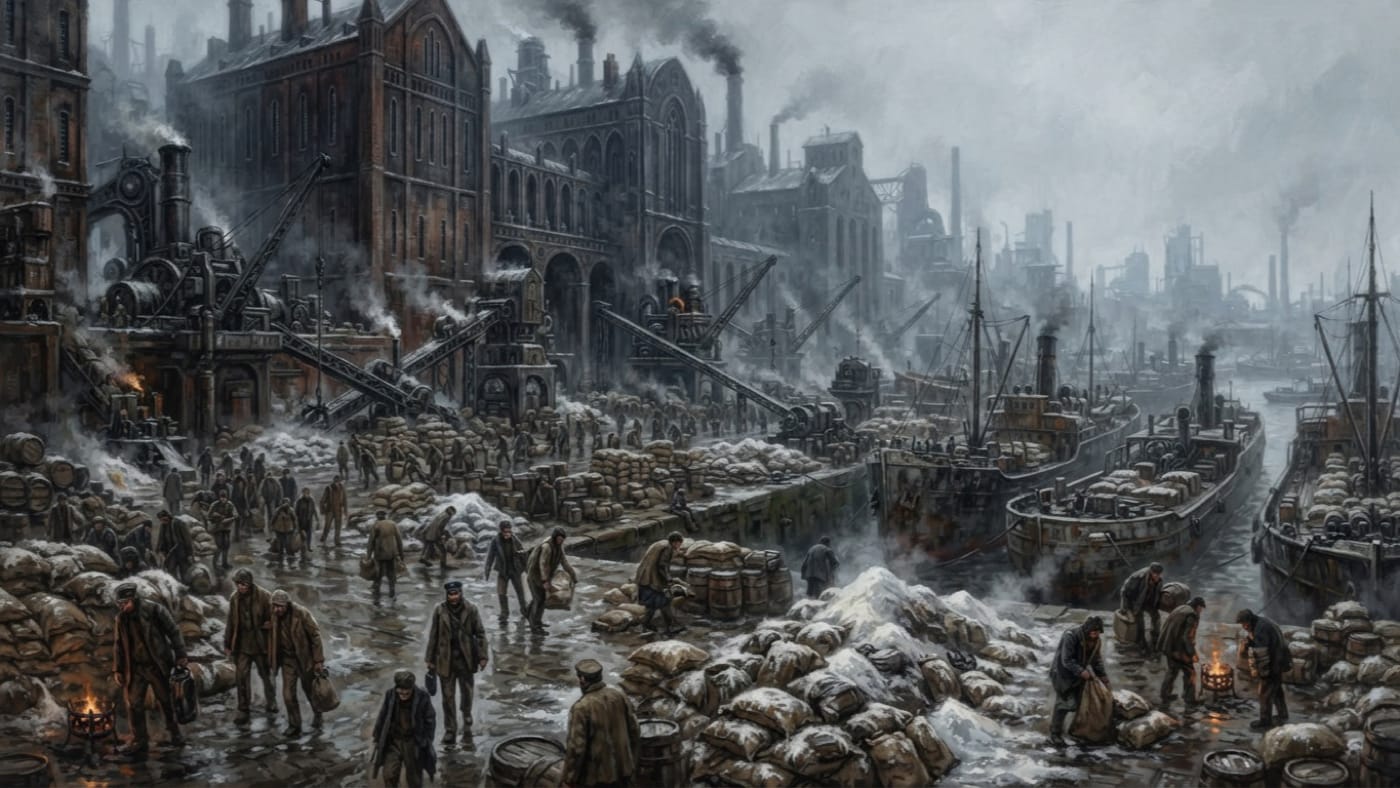
Marseille Salt Crisis
The winter lost its year; the Bureau kept its levy
An A.S. 201 survey of Marseille's undated winter emergency, preserved in Tithe Assessor tradition, and the Salt Dues first imposed in A.S. 92. The Bureau kept the levy more carefully than the winter's year.
Codex Ref. VII.4.22-001
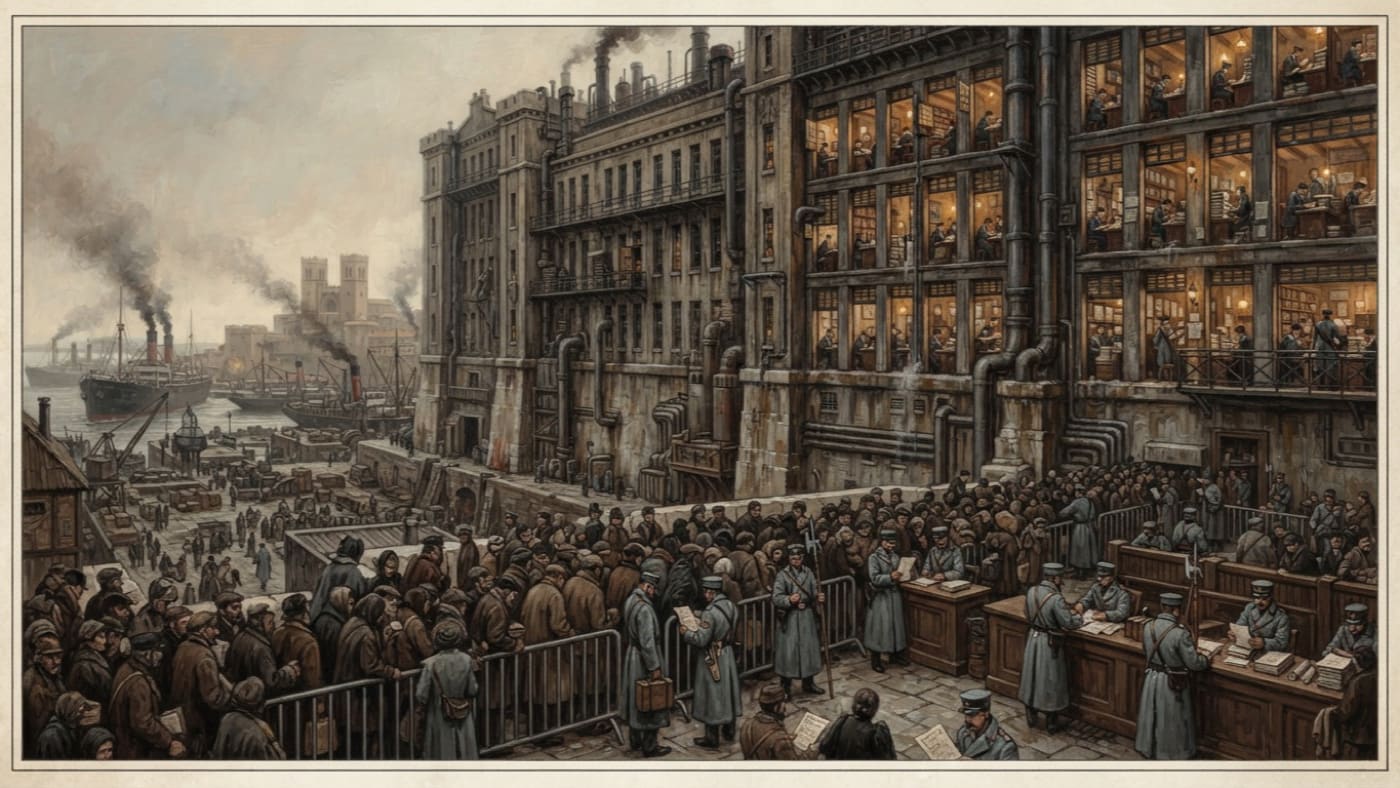
Marseille Southern Headquarters
Four hundred thousand permits, three foundation corrections
Authorised in A.S. 123, Marseille's southern pilgrimage headquarters processes approximately 400,000 embarkation permits yearly above three immured guild-masters. The groaning is classified as structural settlement.
Codex Ref. II.4.09-123
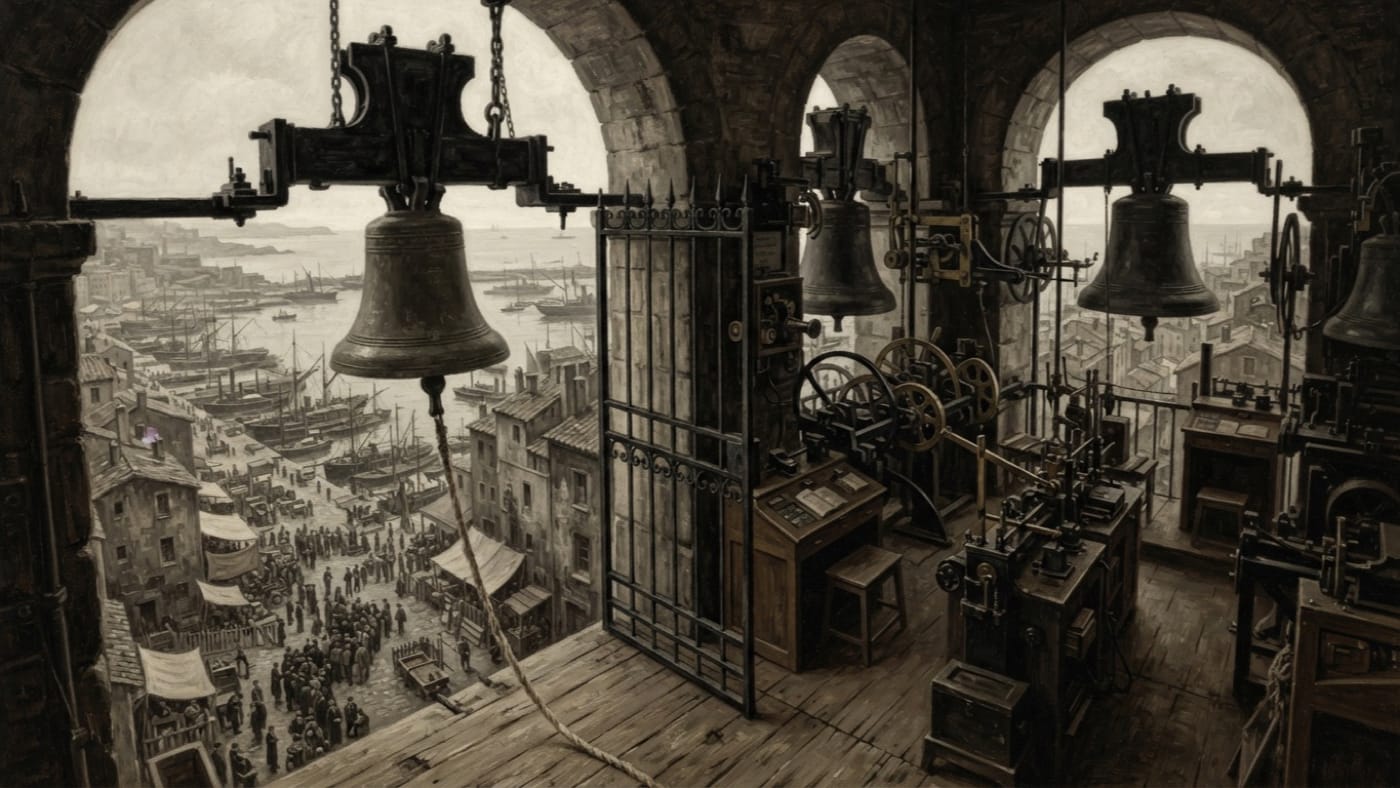
Marthe
Thin bronze gathers the faithful; ink decides where they go
Marthe is Saint-Victor's thin, sharp pilgrim muster bell: she gathers Marseille's faithful where the Bureau expects them, leaving permits and berths to Pilgrimage.
Codex Ref. XIII.1.62-222
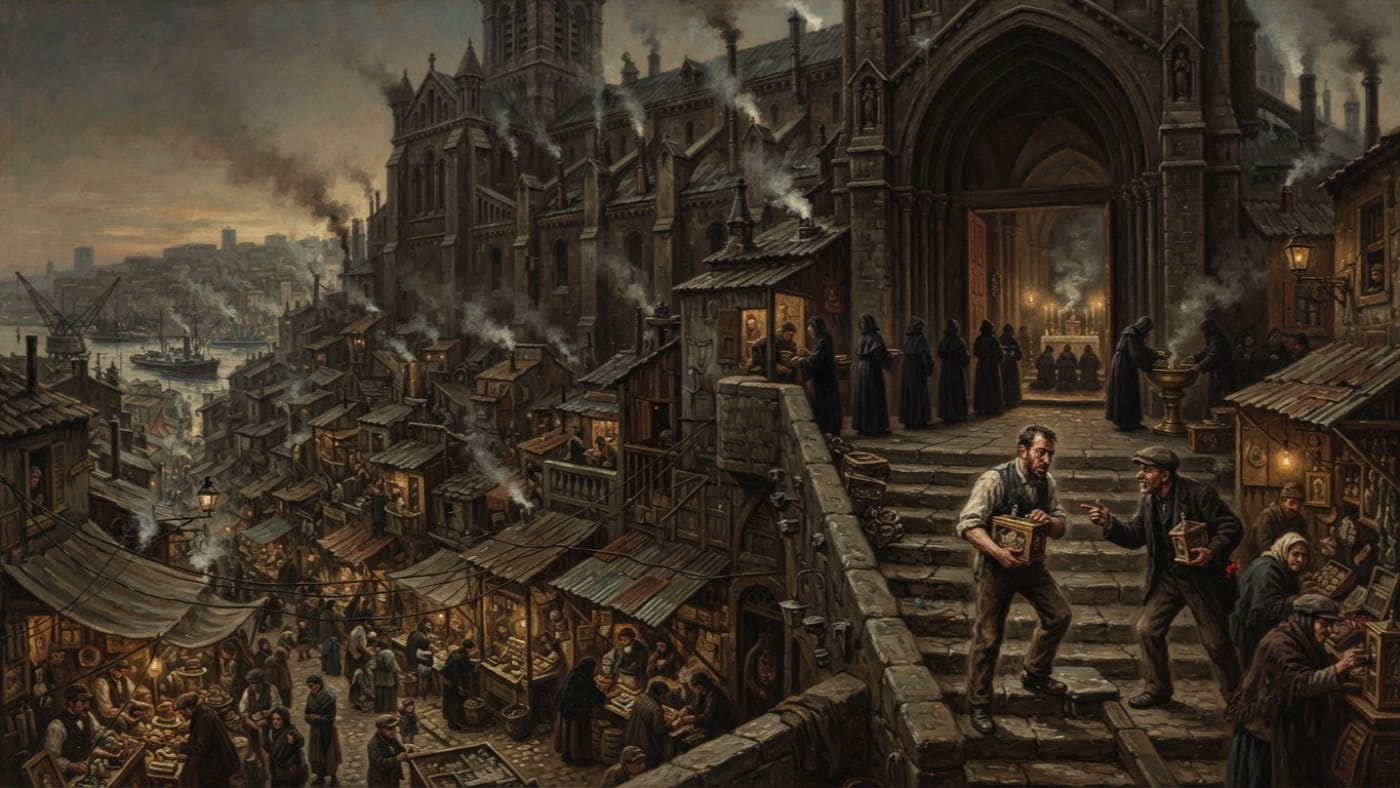
Masses of Remedial Doubt
The dealer pays for prayer; the knuckle keeps its provenance
At Saint-Victor in Marseille, relic dealers buy Masses of Remedial Doubt when customers complain. The cathedral receives an offering; the disputed bone acquires no certificate.
Codex Ref. XIII.1.43-002
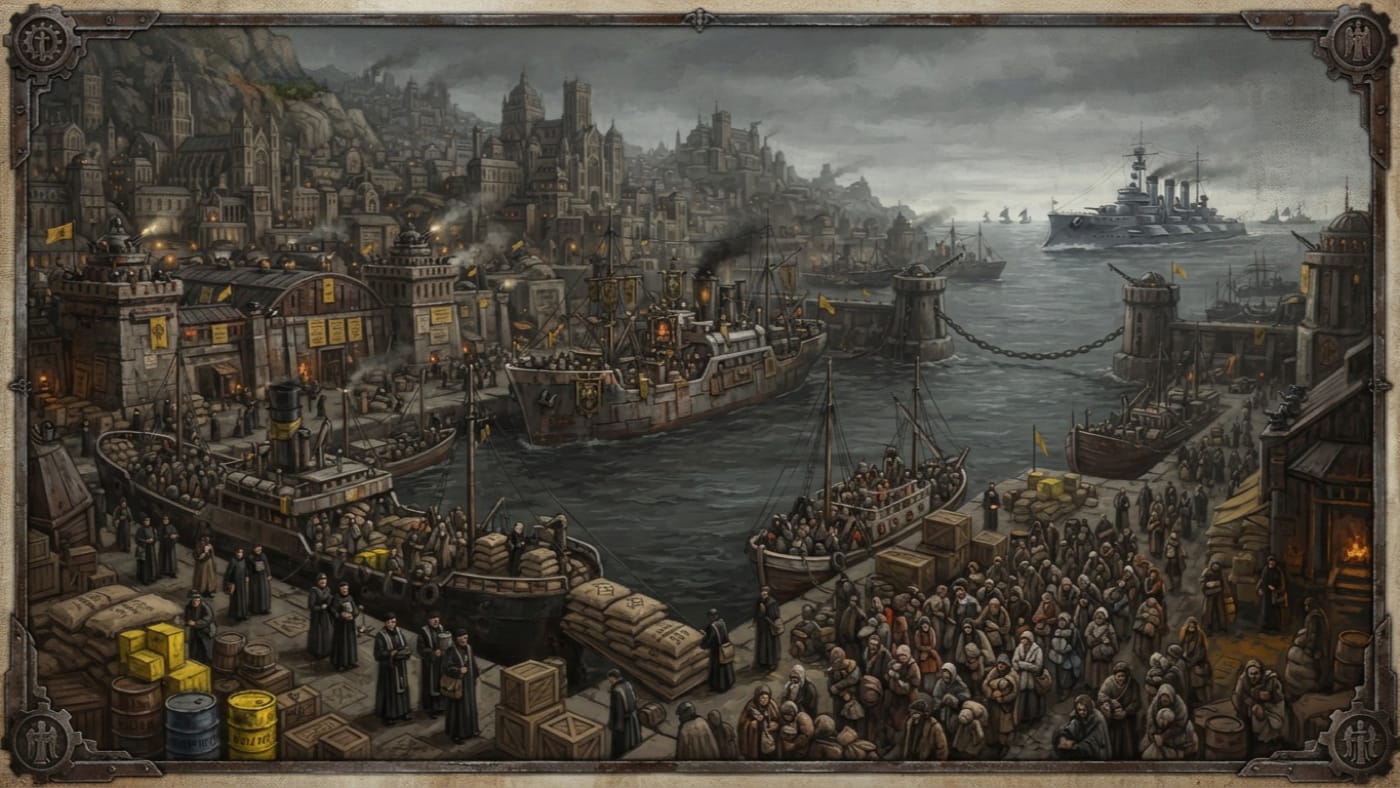
Mediterranean
The oldest road the Church holds, and the only one it cannot pave
The Mediterranean feeds the southern Line with grain, shot and pilgrims. Rival ports tax the passage, quarantine the passengers and leave room for contraband. The sea takes its share without a receipt.
Codex Ref. II.7.01-201
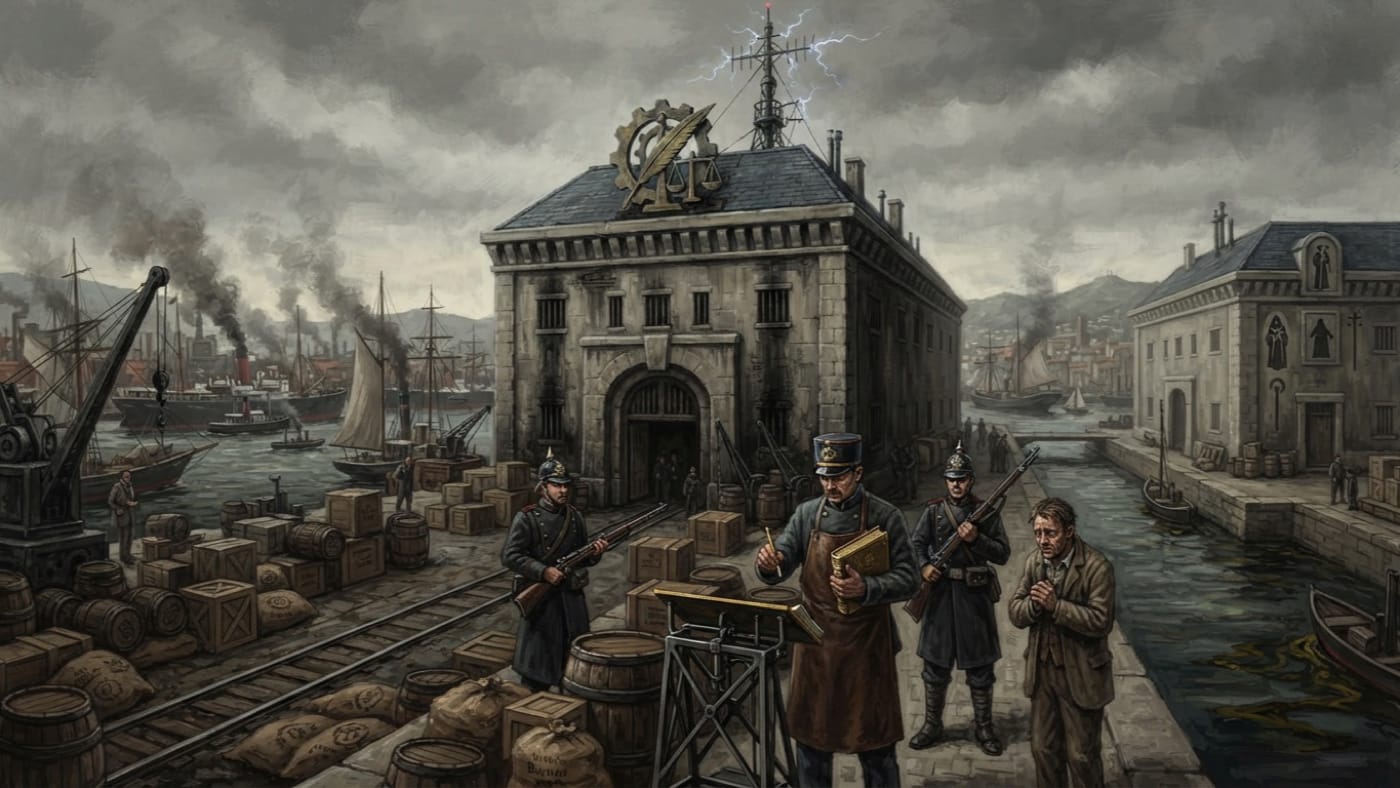
Mediterranean Revenue Office
Jurisdiction contested, collection continuous
The Bureau of Tithes' regional seat in Marseille weighs cargo and collects Salt Dues still temporary after 109 years. Harbour jurisdiction remains contested. Collection continues.
Codex Ref. II.4.09-201
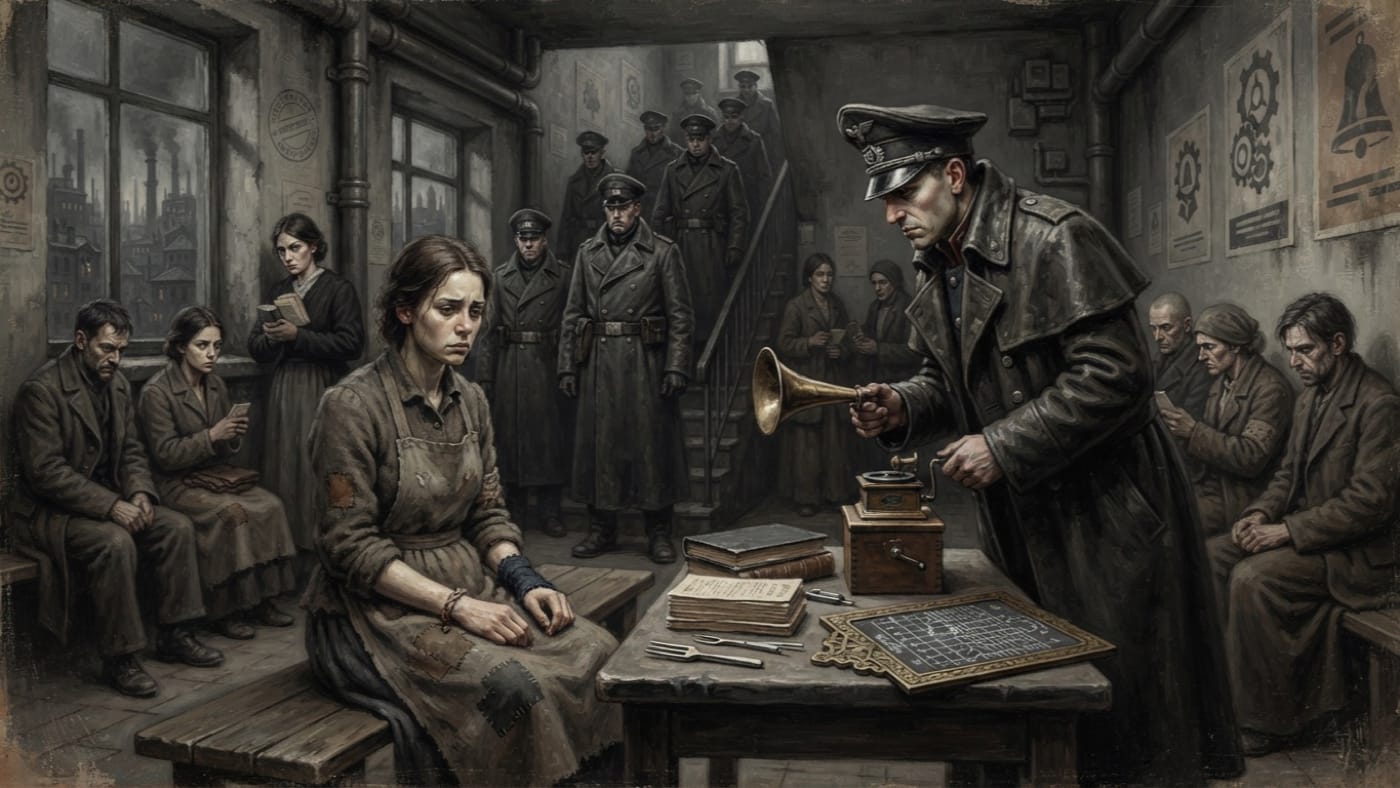
Melody Intent
The song need not be heard for the charge to be filed
Orison's charge for inferred knowledge of an unlicensed cadence and intent to transmit it; a silent cuff and a willing neighbour can begin the paperwork.
Codex Ref. XIII.1.86-201
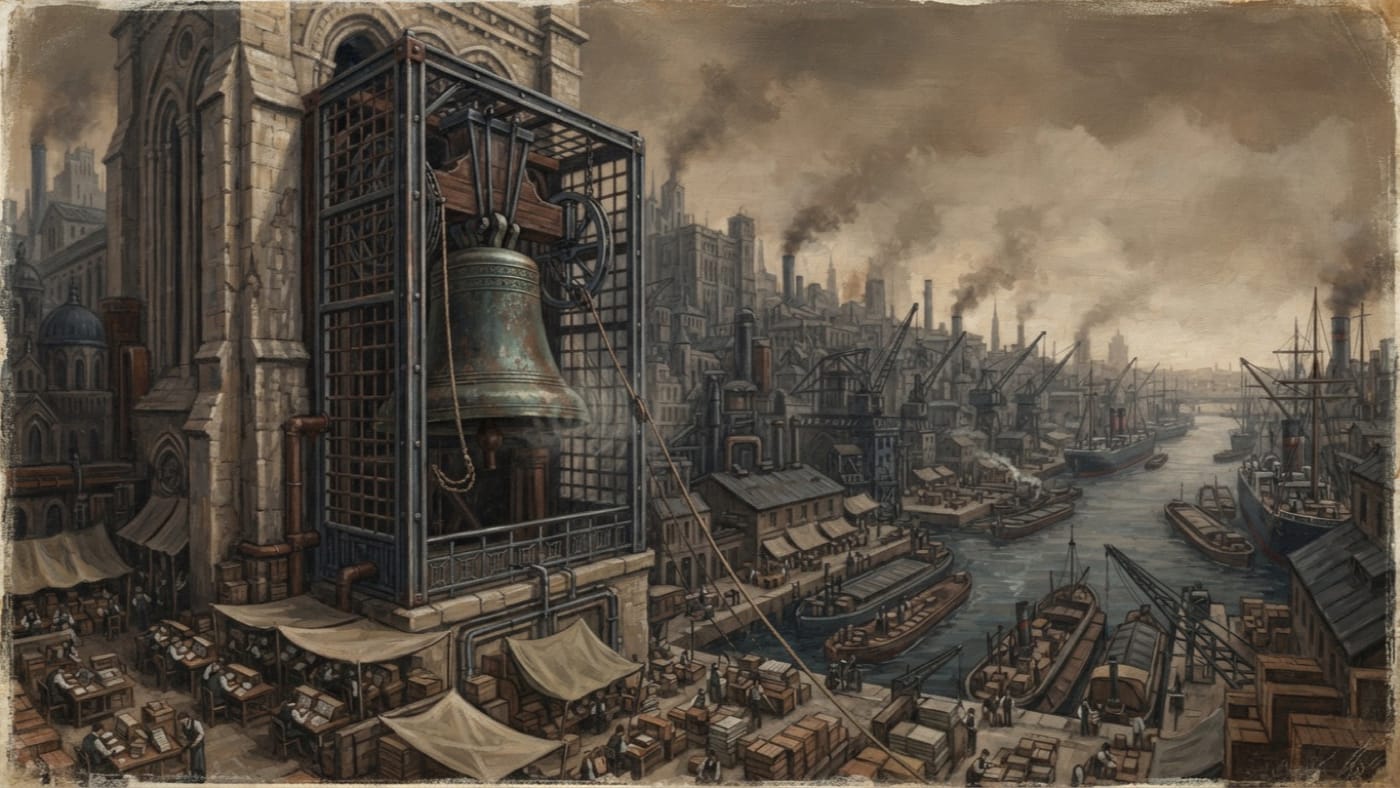
Oraison
Saints draw crowds; someone must ring for the ledgers
Oraison is one of Saint-Victor's nine principal bells in Marseille, marking Bureau business at the quay. The clerks supply the ink; the Bureau of Bells supplies the bronze.
Codex Ref. XIII.1.62-225
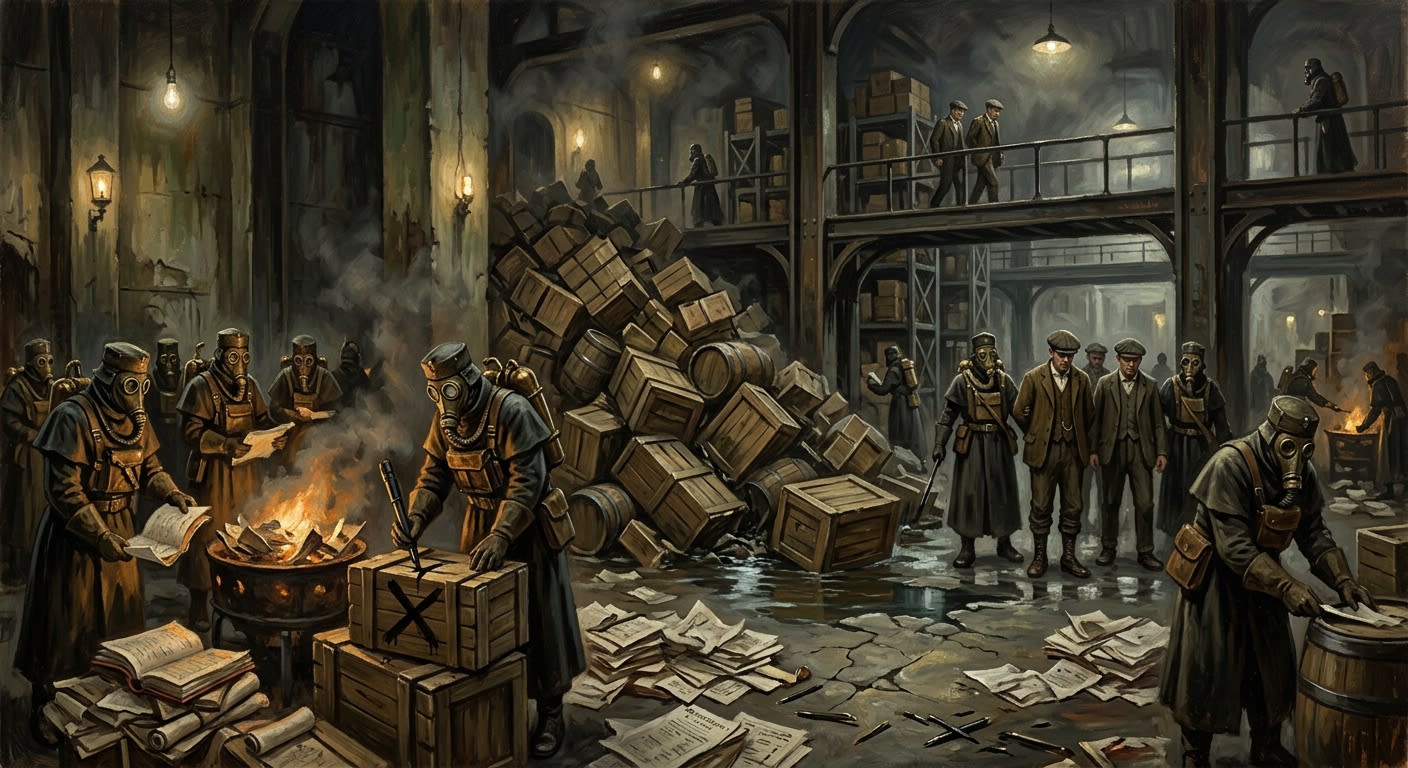
Orthography Purge of A.S. 112
When the letter changed, the invoice died obediently
The Orthography Purge of A.S. 112 reopened 411 manifest cases, stripped eleven Litigants of practice rights, and taught merchants that one suspect stroke can bankrupt a warehouse.
Codex Ref. VII.8.10-002

Paper-Only Faction
The smallest heresy says the seal moves faster than the saint
The Paper-Only faction is the smallest Femur-War Broker branch, refusing relic contact while selling provenance chains, delay writs, and custody narratives.
Codex Ref. XII.15.04-001
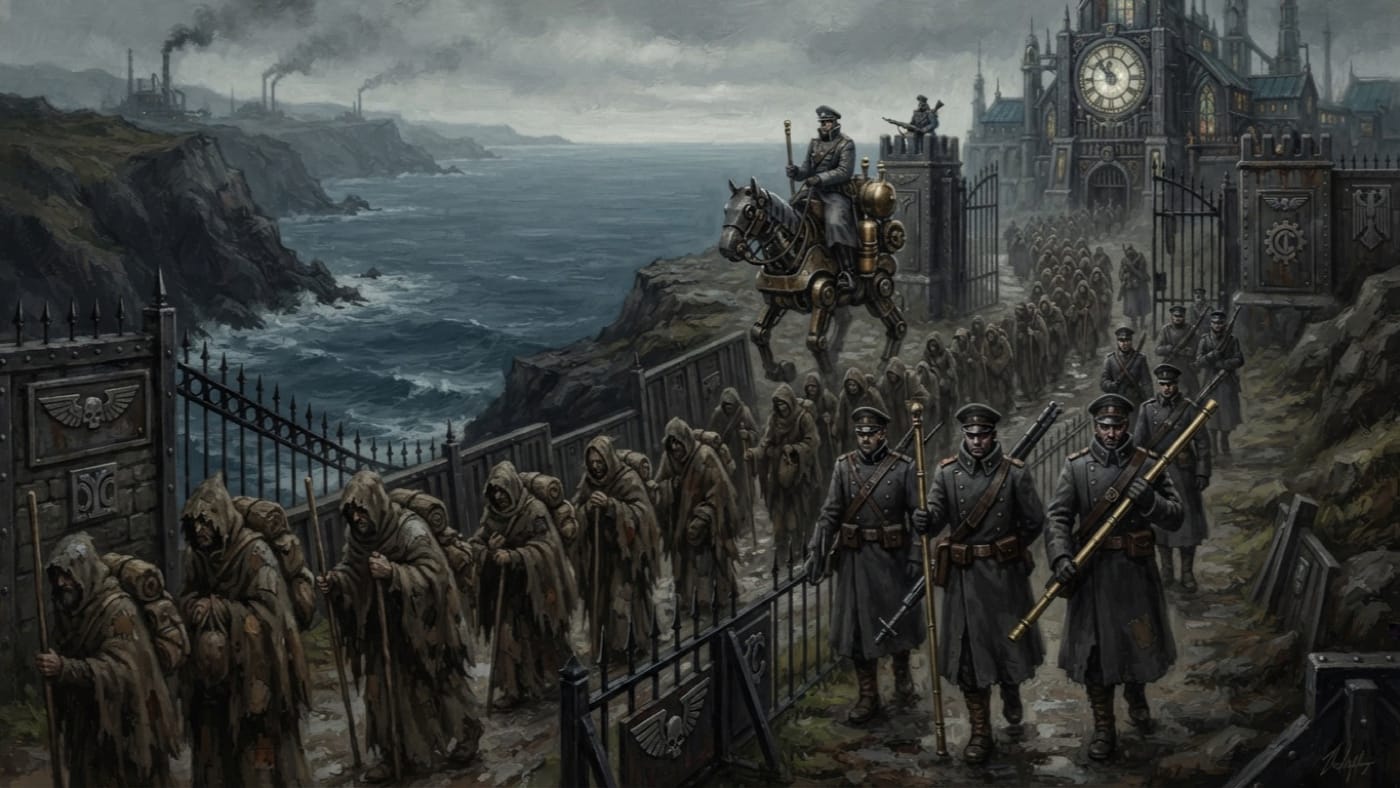
Peregrine Brotherhood
Enough escorts to trouble a prince. No authority after A.S. 123.
The Peregrine Brotherhood controlled Iberian coastal pilgrimage with escorts fit to trouble a prince. Implicated in Santiago's A.S. 121 riots, it lost independent authority under the A.S. 123 Harmonized Routes Edict. The Bureau kept the roads.
Codex Ref. XI.5.03-123
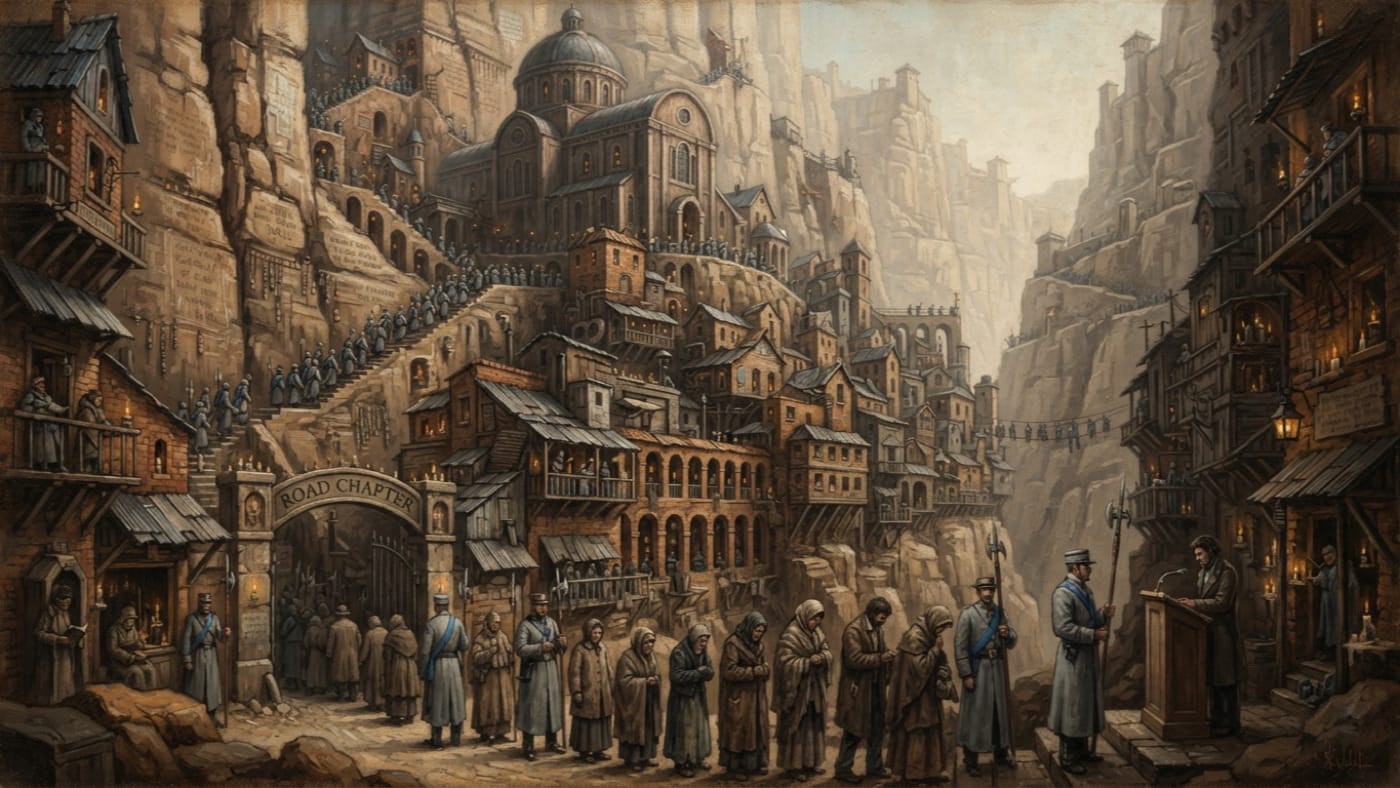
Peregrine Row
Where clean tongues buy passage and the canyon collects the rest
Peregrine Row is a canyon town on the Pilgrim Roads where water, creed-clearance and safe passage carry separate charges. The Wardens train on its cliffs; the brokers turn the canyon's echoes into fees.
Codex Ref. II.1.03-201
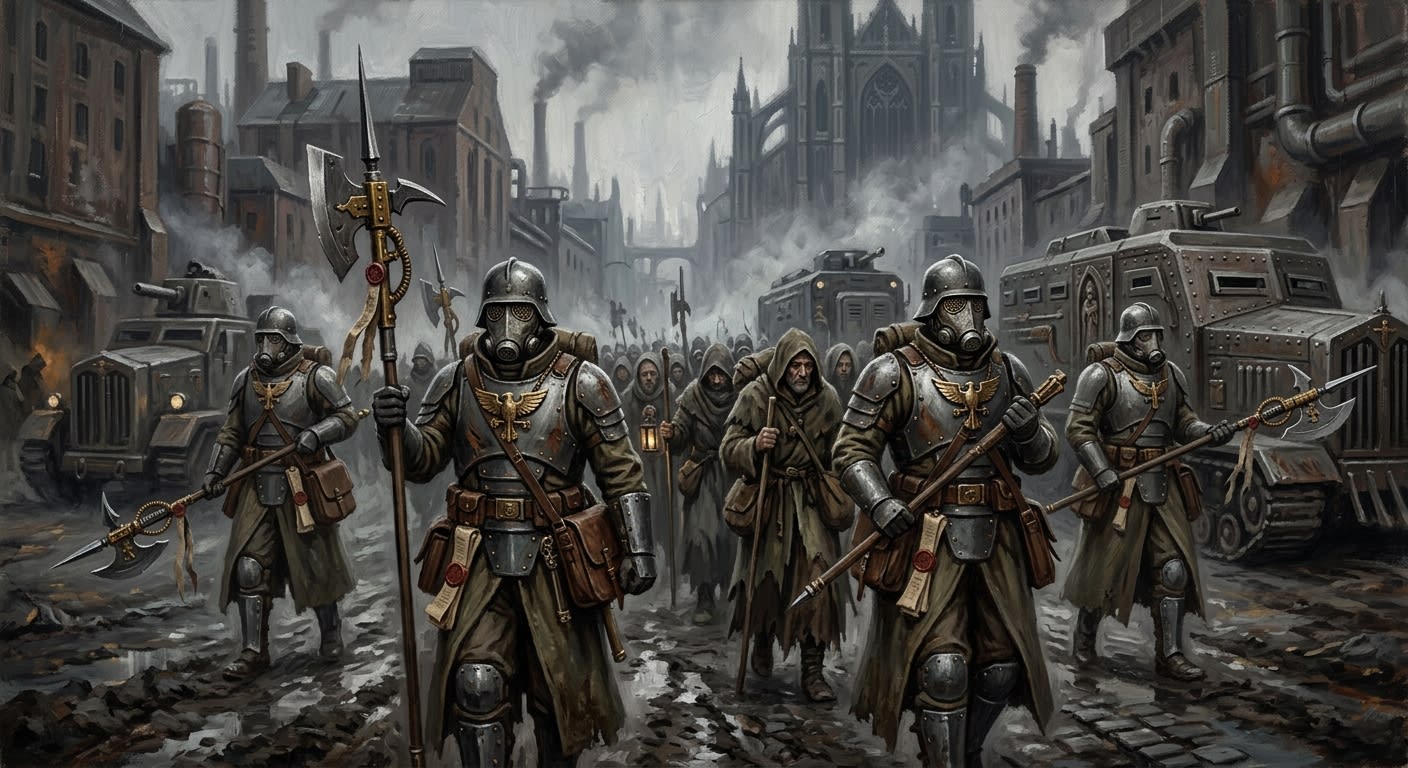
Peregrine Wardens
The walking seal that keeps pilgrims profitable and roads holy
The Peregrine Wardens are the Bureau of Pilgrimage's armed road-enforcement arm, escorting pilgrims, voiding licences, dissolving guilds, and proving that holy travel walks best under halberd and seal.
Codex Ref. VIII.7.04-001
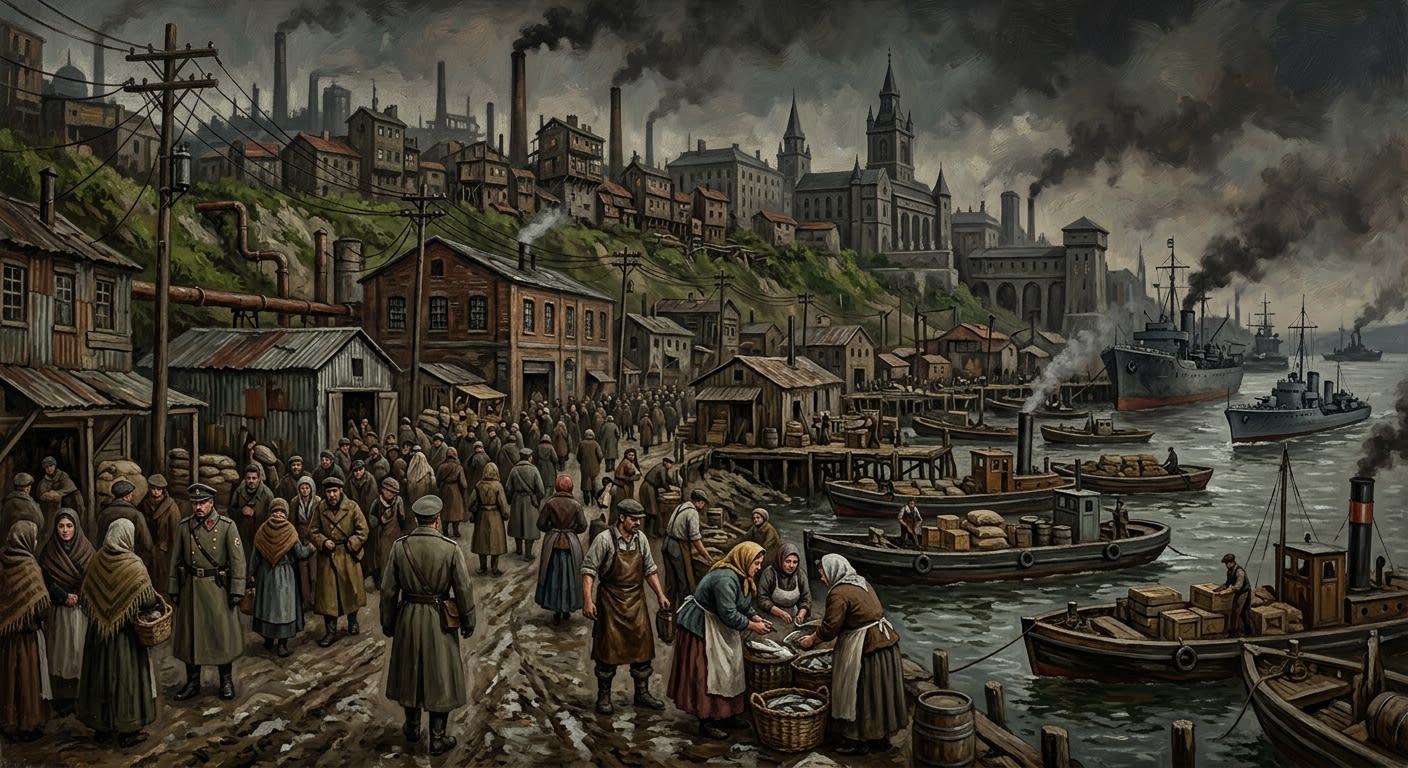
Pilgrim's Coast
A shore pretending to be a road, and a map pretending to govern it
The Pilgrim's Coast is Constantinople's green shore: landing road, supply seam, smuggler hymn, fishwife law, and map-denied life.
Codex Ref. II.4.09-068
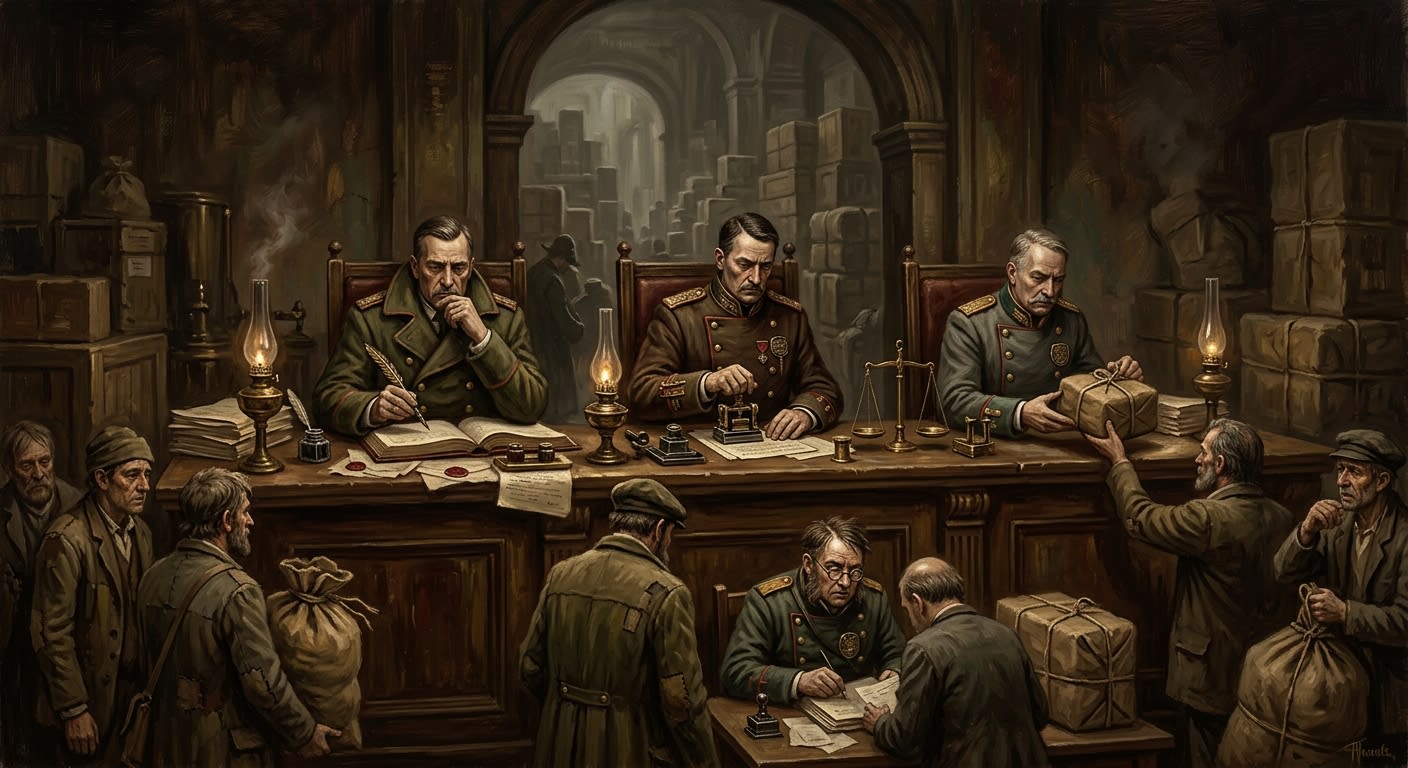
Port Court
Where cargo waits while permission proves it has a soul
The Port Court names cargo before mercy may touch it: a Commerce bench where sacks become law, law becomes delay, and delay invoices the hungry.
Codex Ref. XIII.1.89-112

Precedent Curator
The cargo is gone; the case remains, sharpened and shelved
Precedent Curators are archive-retired Manifest Litigants who preserve citations, reconcile variants, feed the Thirty-Seal Index, and make old disputes profitable again.
Codex Ref. XII.26.01-001
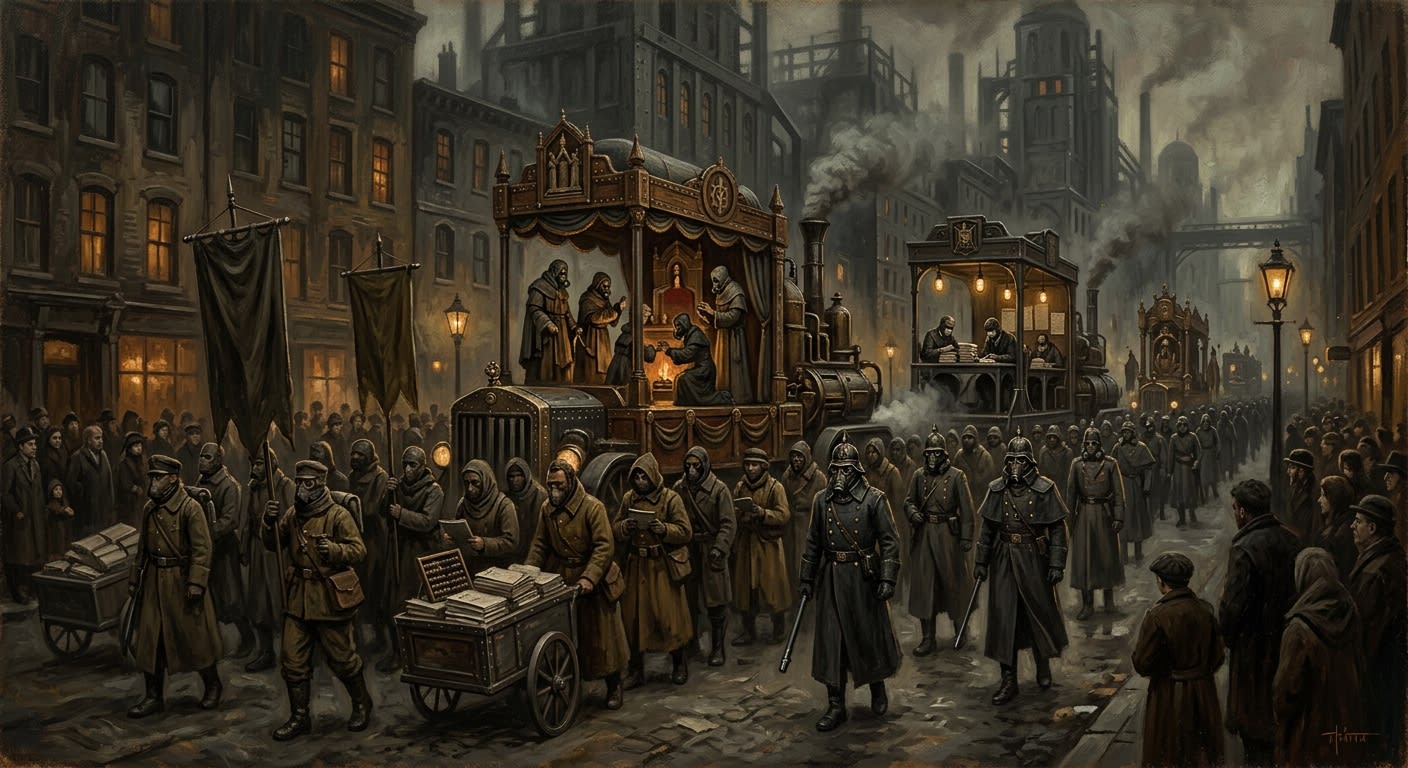
Procession of the Triune Hearth
One people, one creed, one spectacle, counted twice
First staged in A.S. 175, the Procession of the Triune Hearth turned Concordat memory into forty days of floats, census work, unity theatre, and invoices.
Codex Ref. VII.3.02-001
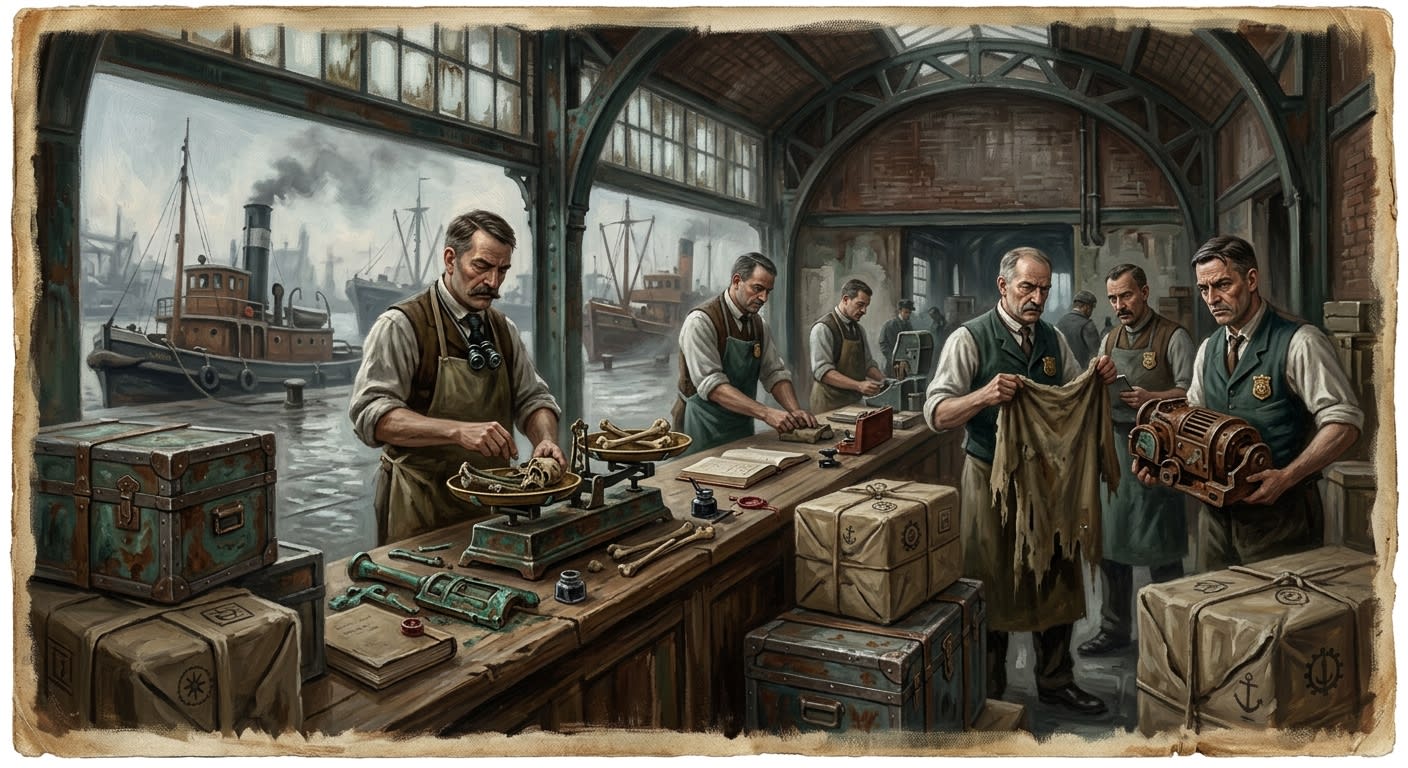
Quai Saint-Lazare
Where holiness queues, fraud pays duty, and Marseille sells the answer twice
Quai Saint-Lazare is Marseille's salt-crusted relic throat, where the Bureau of Relics weighs bones, doubts miracles, prices fraud, and forwards danger under seal.
Codex Ref. II.4.09-017
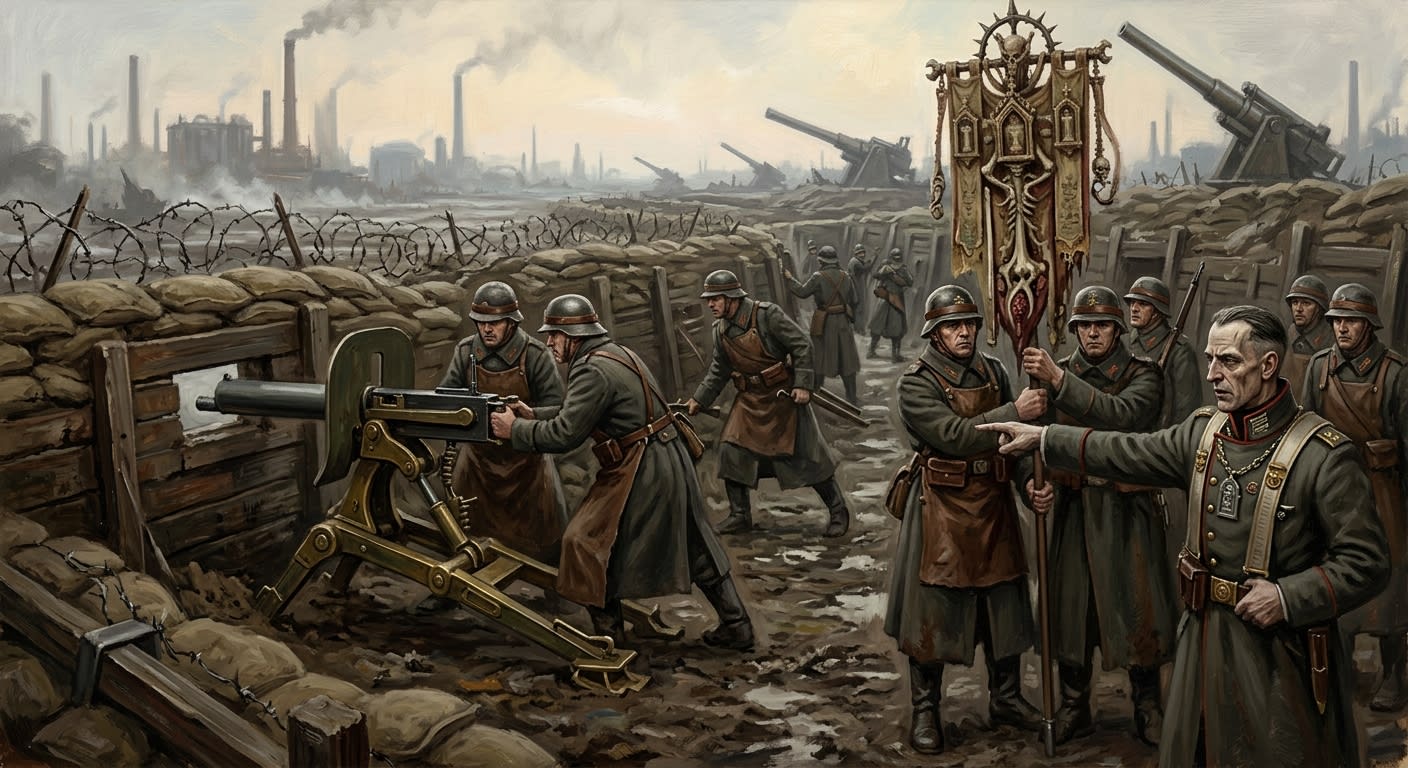
Ravelin of Vigilance
The eye that learned to blink by rotation
The First Ravelin of Bastion-Constantinople watches the Knife Mile, drills low guns, carries Saint Iselda's Bone Walk, and teaches sentries the cost of seeing first.
Codex Ref. II.4.10-137
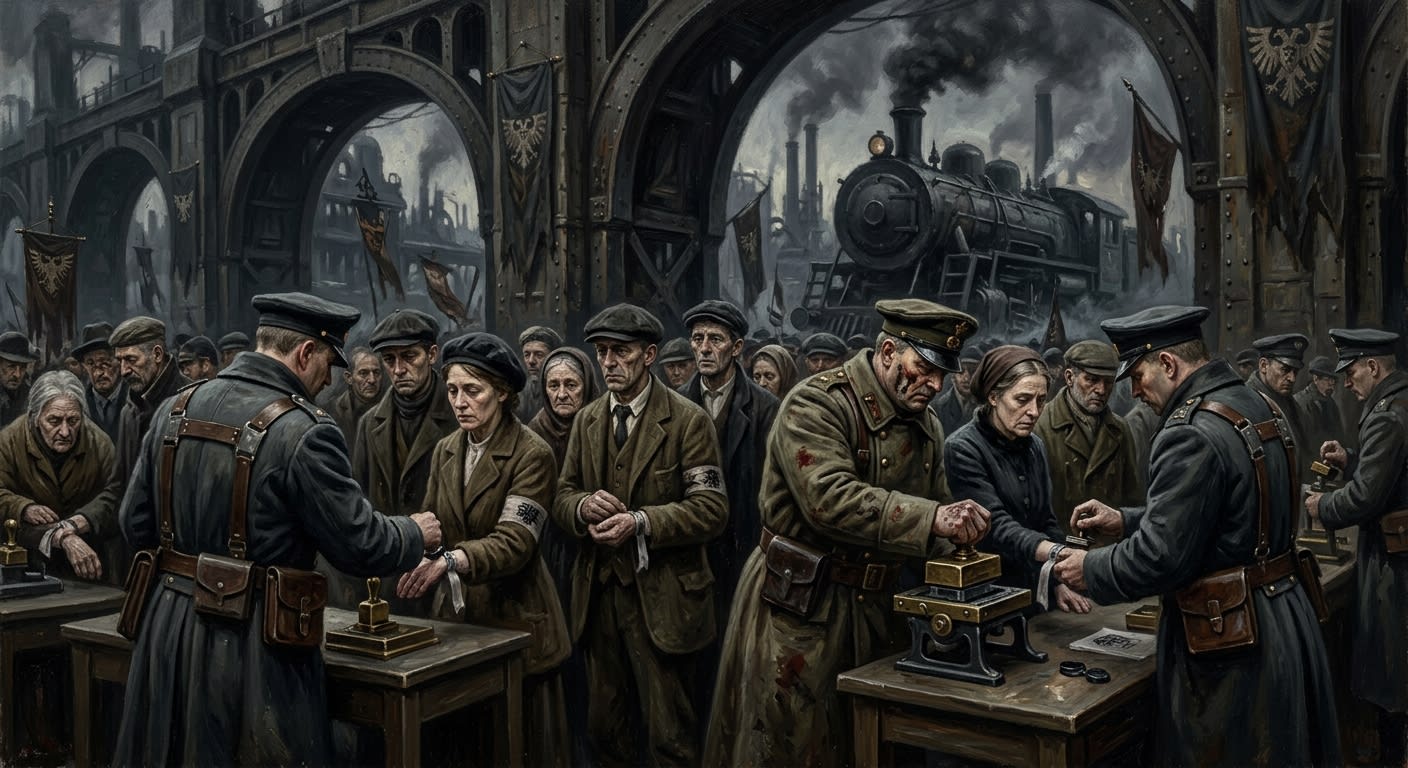
Receipt Reform A.S. 138
The decree that taught paper to bleed
A.S. 138 reform abolishing paper receipts at sanctioned processions and replacing them with wrist-ribbon stamps, turning civic joy into visible attendance, enforceable gratitude, and portable proof.
Codex Ref. VII.2.10-088

Receipt-Procession Pageant Captain
The Bureau does not celebrate. It enumerates. The ribbon is the proof.
The Bureau of Festivals does not employ artists. It employs accountants in bright sashes, charged with converting municipal celebration into municipal enumeration — the wrist-ribbon is the key, and joy rot is the wages.
Codex Ref. XII.33.01-001
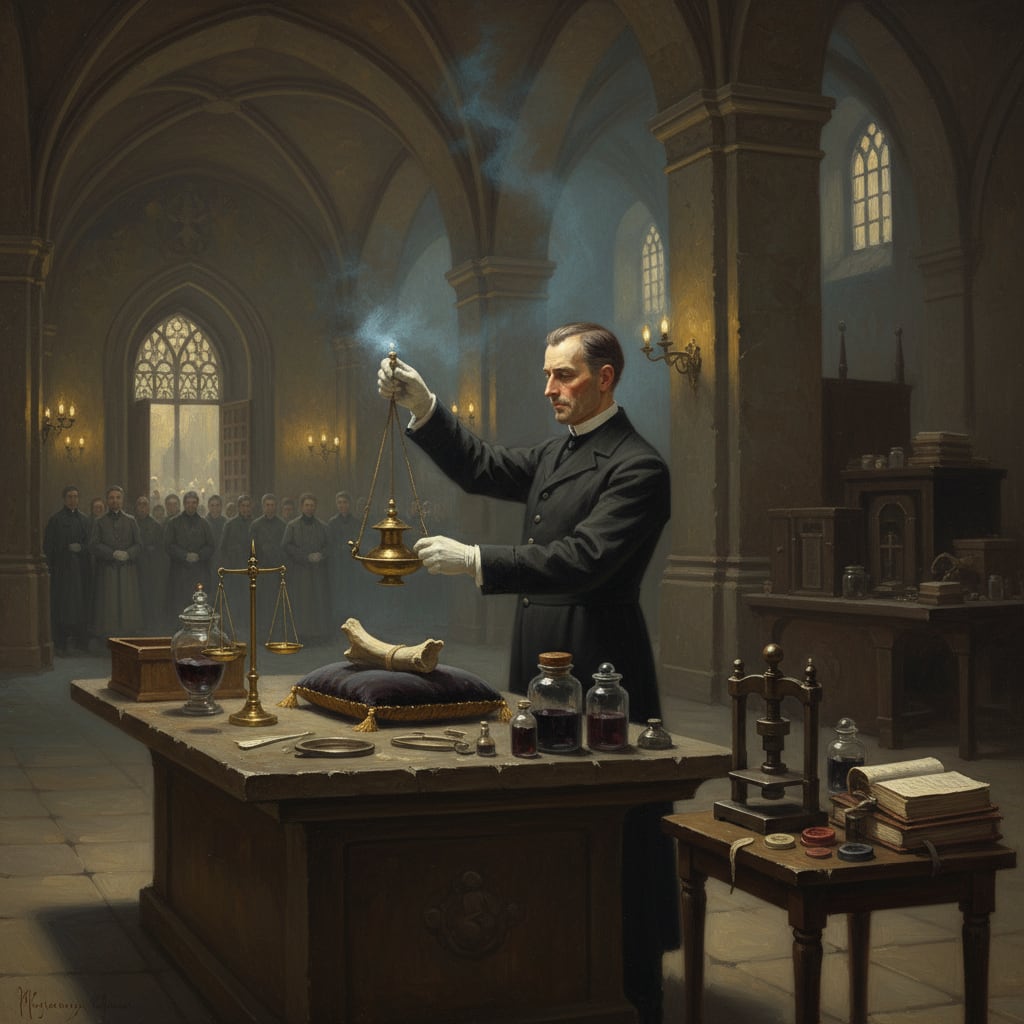
Relic Authenticator
The stamp makes the filing complete; the bone remains what it was
The Synod's miracle-bureaucrats — clerks with gloves, lamps, and seal-presses who decide whether a fragment of bone is holy or merely expensive.
Codex Ref. XII.35.01-001
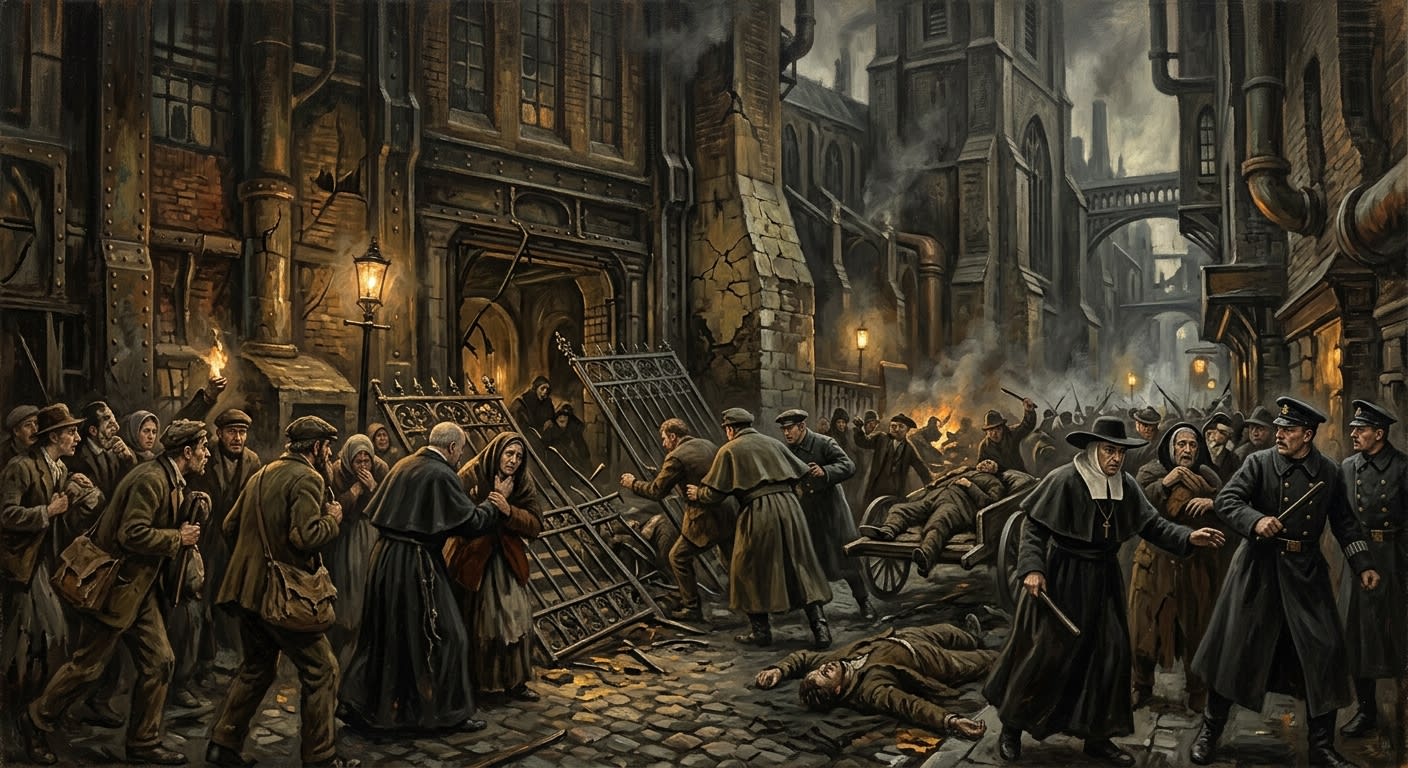
Riots of Santiago
Forty-one dead pilgrims taught Strasbourg that roads prefer owners
The A.S. 121 Riots of Santiago killed forty-one pilgrims, broke a shrine screen, exposed private road-guild predation, and gave Strasbourg the corpse-count it needed.
Codex Ref. VII.8.10-121
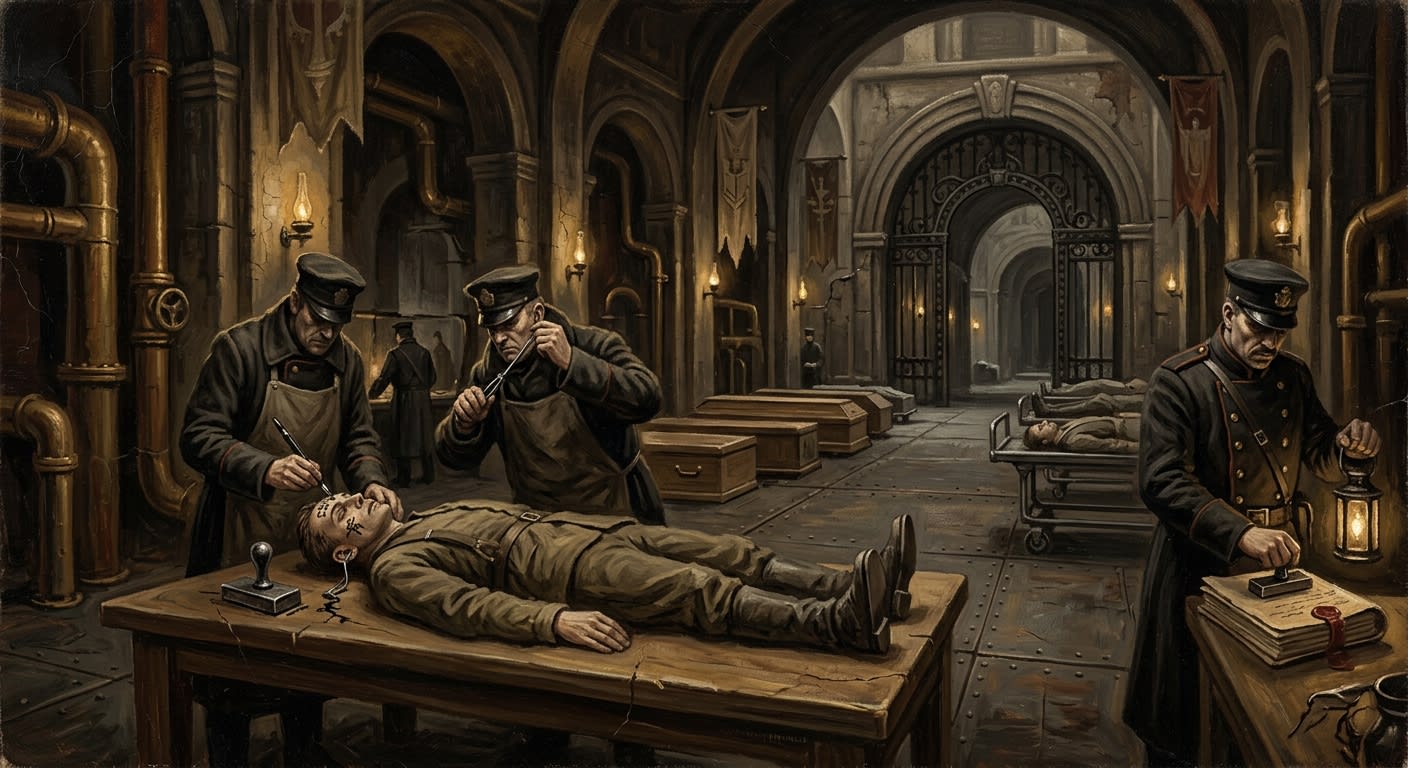
Rite of Passing
No soul departs until the Ledger has improved the death
The Rite of Passing turns death into lawful custody: right ear, last words, body display, black ink, routed remains, and no soul left vulgarly private.
Codex Ref. XIII.1.85-080
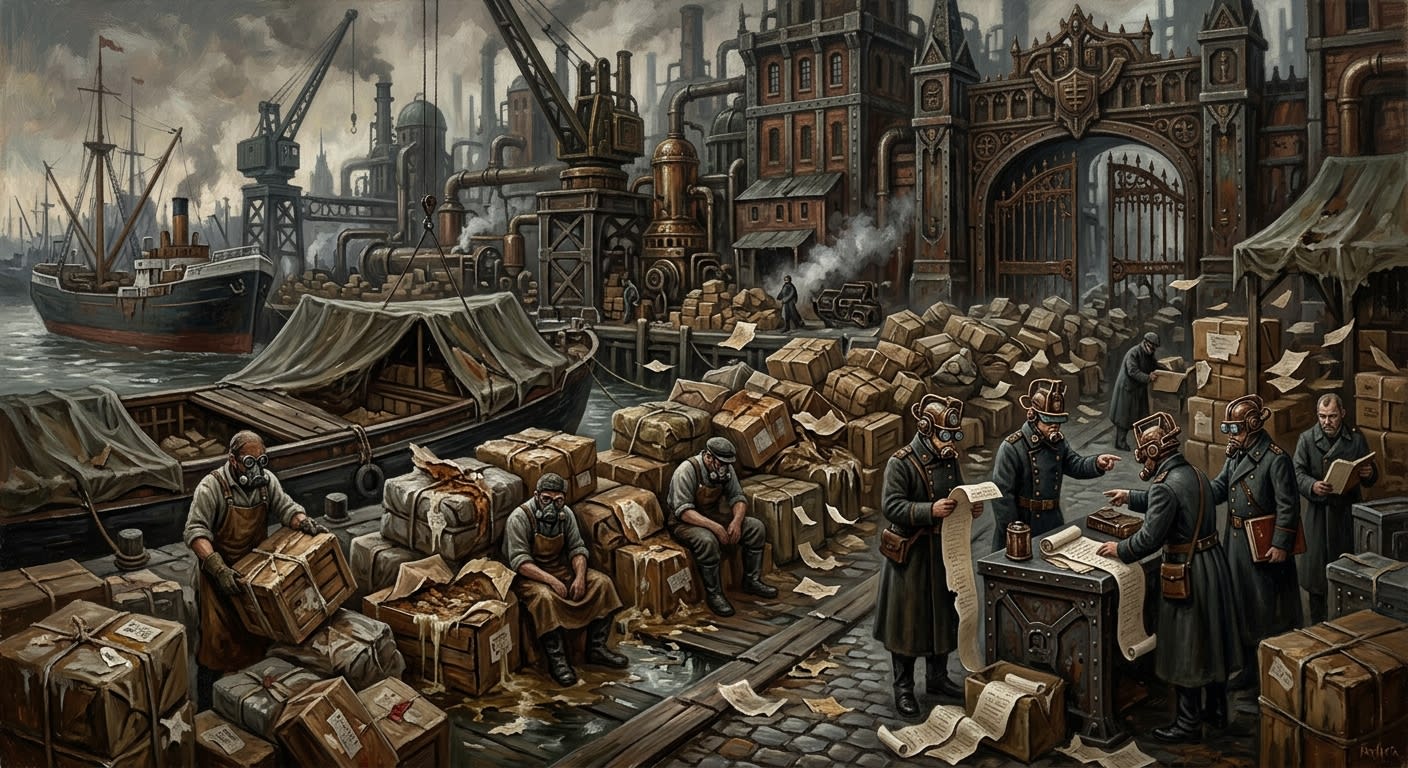
Rot-Week of Saint Vellum
Eleven days to save the forms, four days to lose the food
The Rot-Week of Saint Vellum was an eleven-day port paralysis in which disputed cargo names perfected the paperwork, spoiled the food, and licensed Manifest Litigants into profitable necessity.
Codex Ref. VII.8.10-001
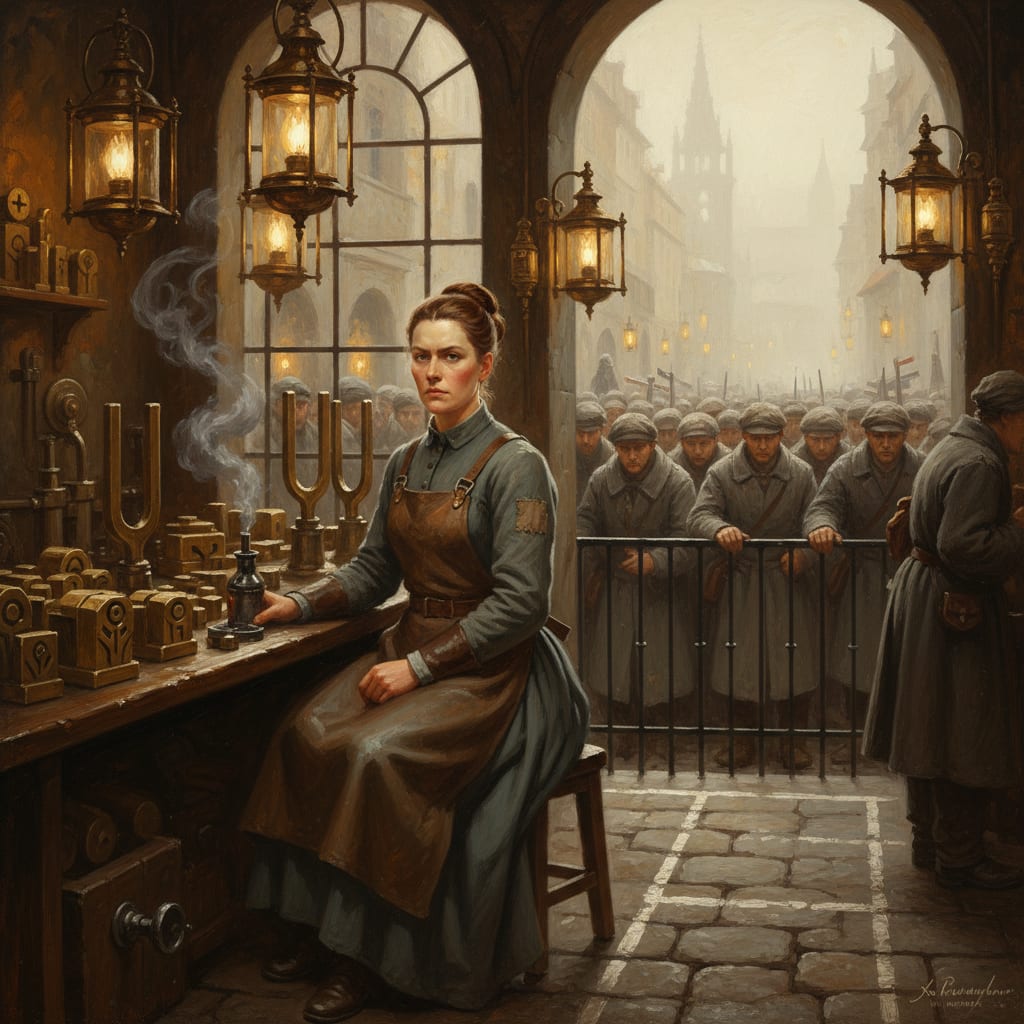
Route-Stamper / Indulgence-Token Smith
Walking is a contract; the Route-Stamper is the notary
Makers of the indulgence-token — a brass palm-piece whose captive bell-hour counts steps, repels road-spirits, and distinguishes the sanctioned traveller from the heretic-with-legs. The art is measured by one question only: whether it lies.
Codex Ref. XII.38.01-001
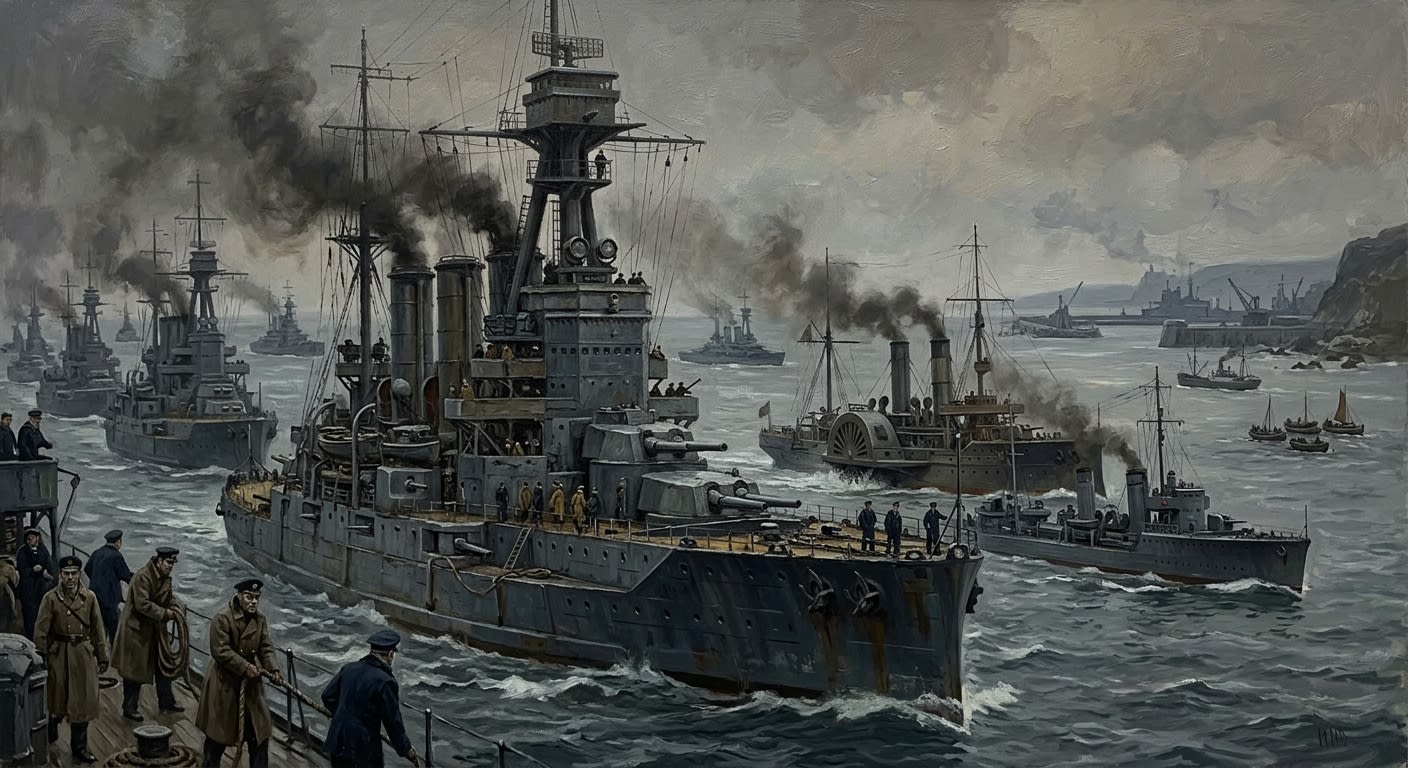
Royal Fleet
The island's parliament of hull, bell, chapel, and gun
Britain's Royal Fleet keeps the Channel, Gibraltar, grain, pilgrims, and Synod pride afloat; Strasbourg counts the hulls and calls dependence cooperation.
Codex Ref. X.1.05-001
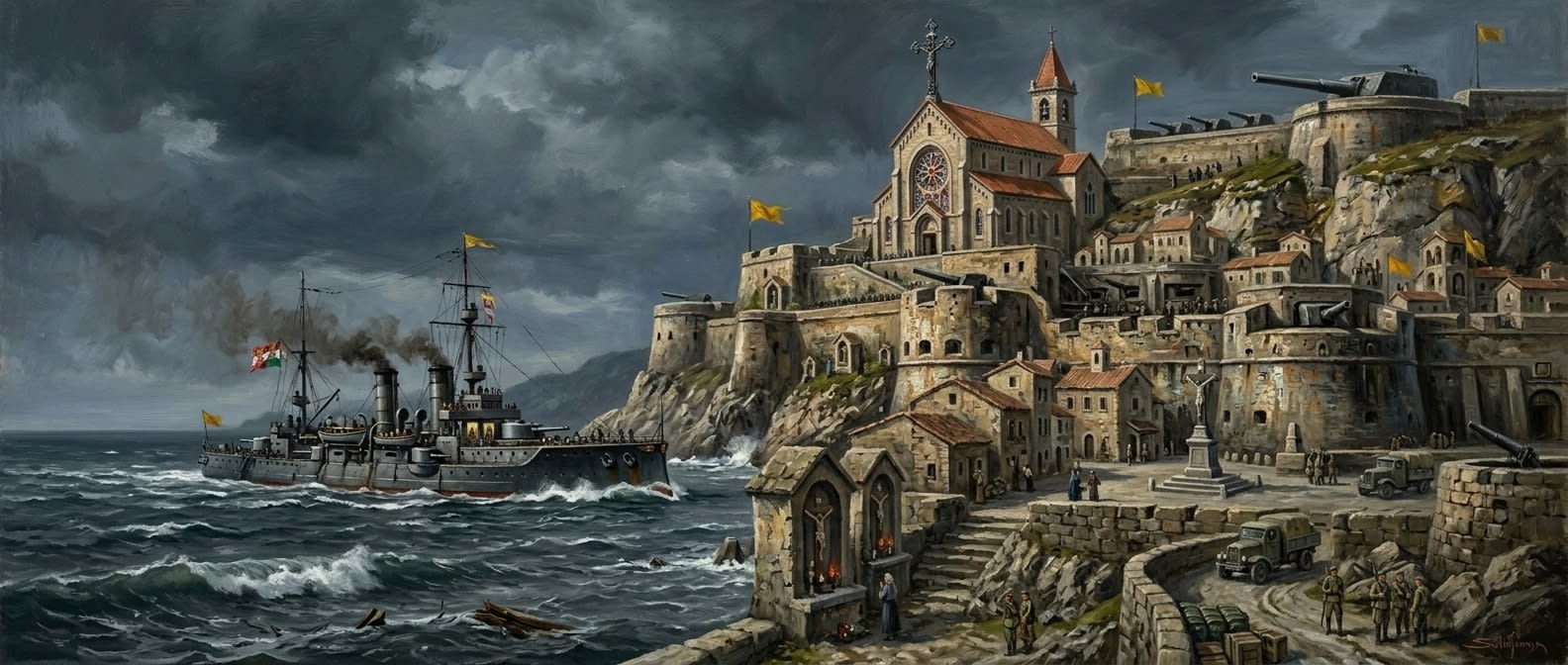
Saffron Bastion
Where quarantine is mercy, mercy is leverage, and the sea pays what it owes
The Synod's coastal chokepoint on the Adriatic — quarantine piers, cliff batteries, saffron flags, and one hundred and twenty thousand souls balanced on the edge of an audit. The sea pays what it owes.
Codex Ref. II.4.09-001
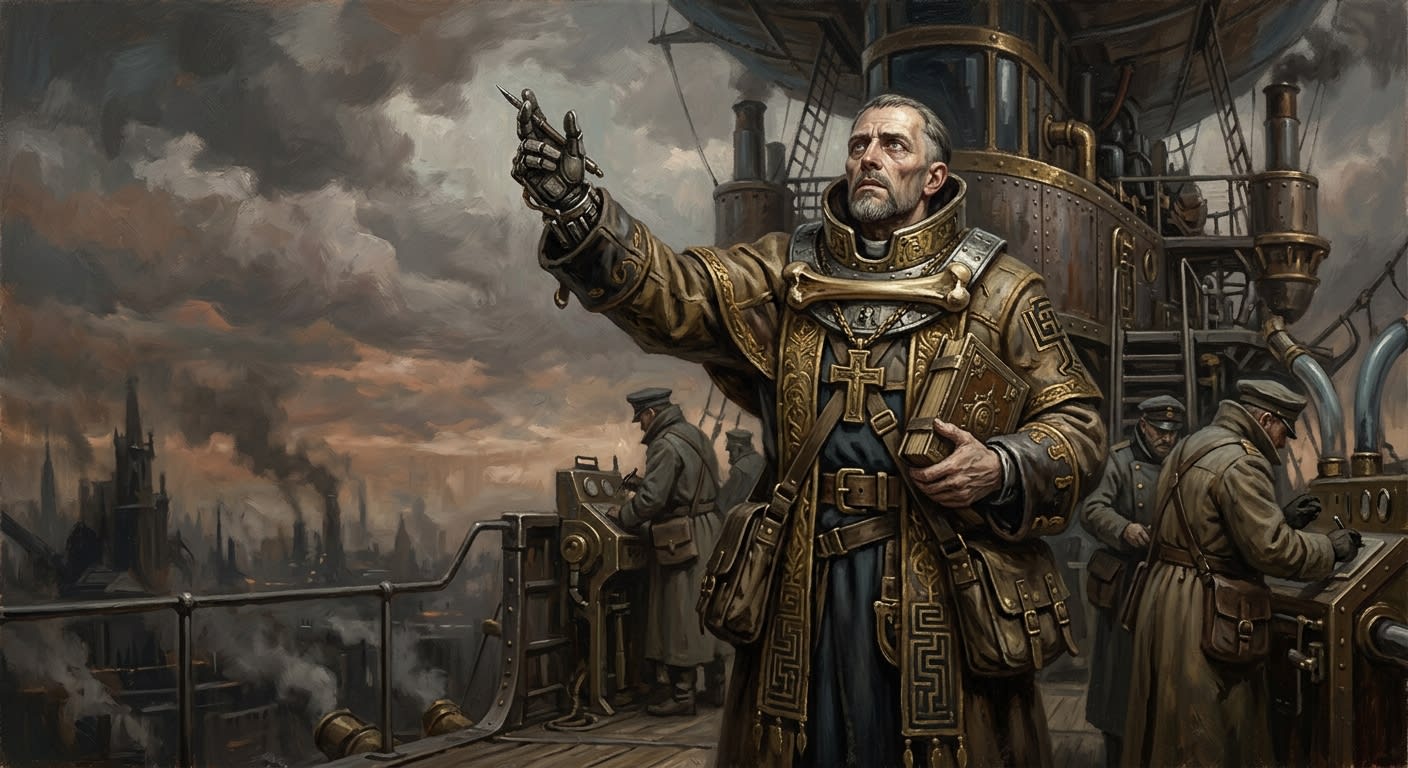
Saint Barachiel
He looked down, and what he saw was true
Saint Barachiel is the Synod's patron of aerial witness: a late-ratified saint, an oversized bone, and the holy permission by which the sky submits.
Codex Ref. III.2.01-167

Saint Cadrin the Measured
A saint so useful the archive had no choice but to discover him
Patron saint of Route-Stampers and Indulgence-Token Smiths, canonised in A.S. 112 to make counted movement, stamped routes, and profitable delay holy.
Codex Ref. III.2.01-141
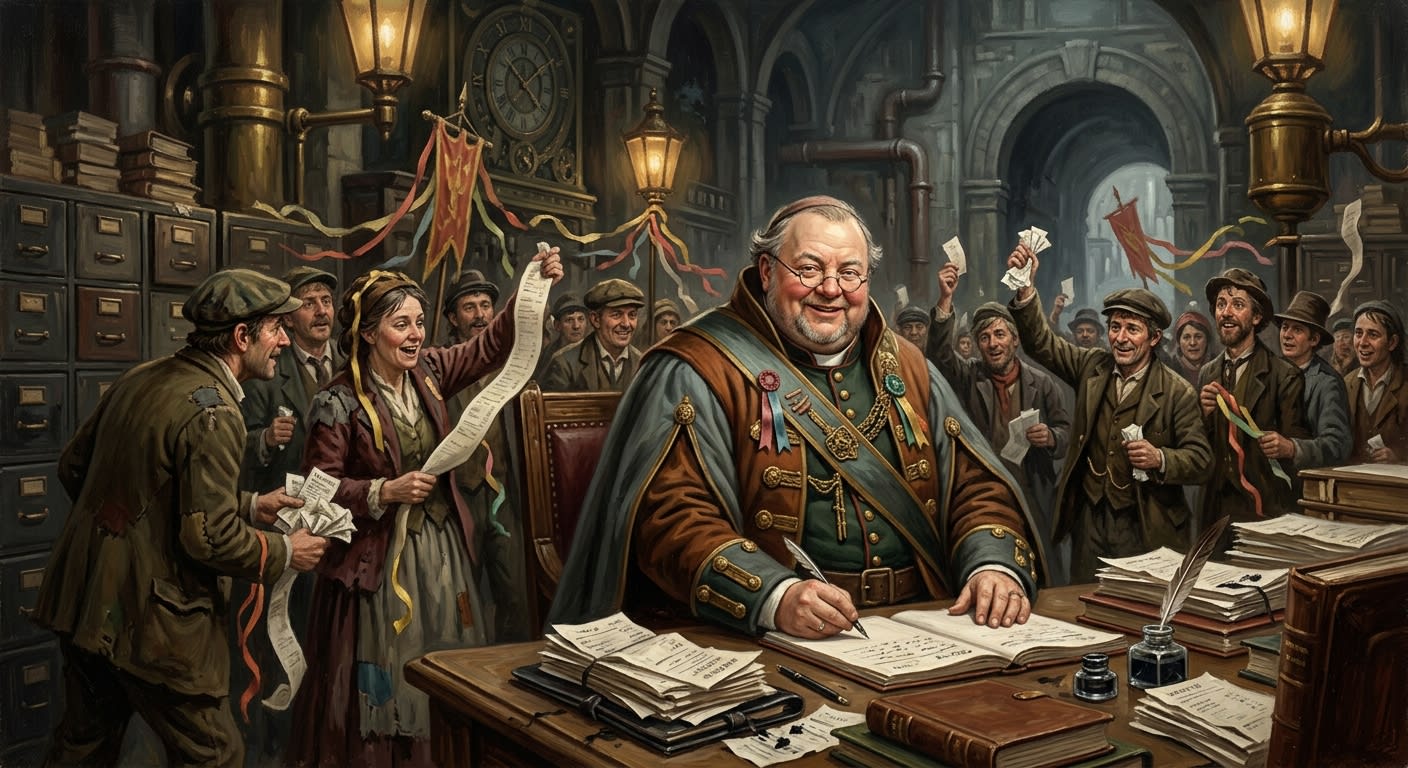
Saint Caldrin the Jubilant Scribe
Joy leaves a trace, and the trace becomes a ledger
Patron saint of Receipt-Procession Pageant Captains, Caldrin turned riotous hunger into ribboned attendance, attendance into receipts, and receipts into cheerful civic custody.
Codex Ref. III.2.01-138
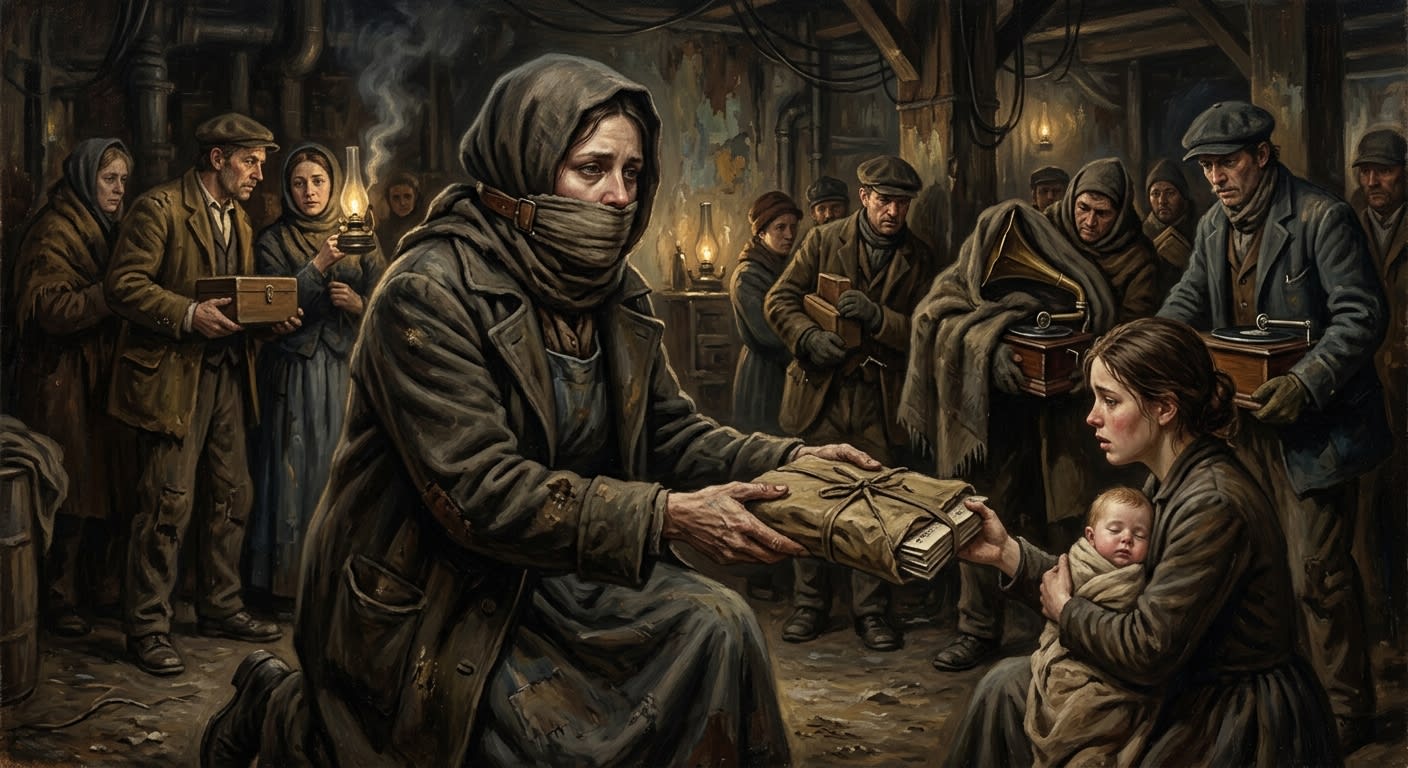
Saint Hessa of the Closed Mouth
The song delivered by silence
Uncanonised patron of melody smugglers, saint-knots, lull-runners, and mothers who move songs where licensed hymns have failed.
Codex Ref. III.2.01-148
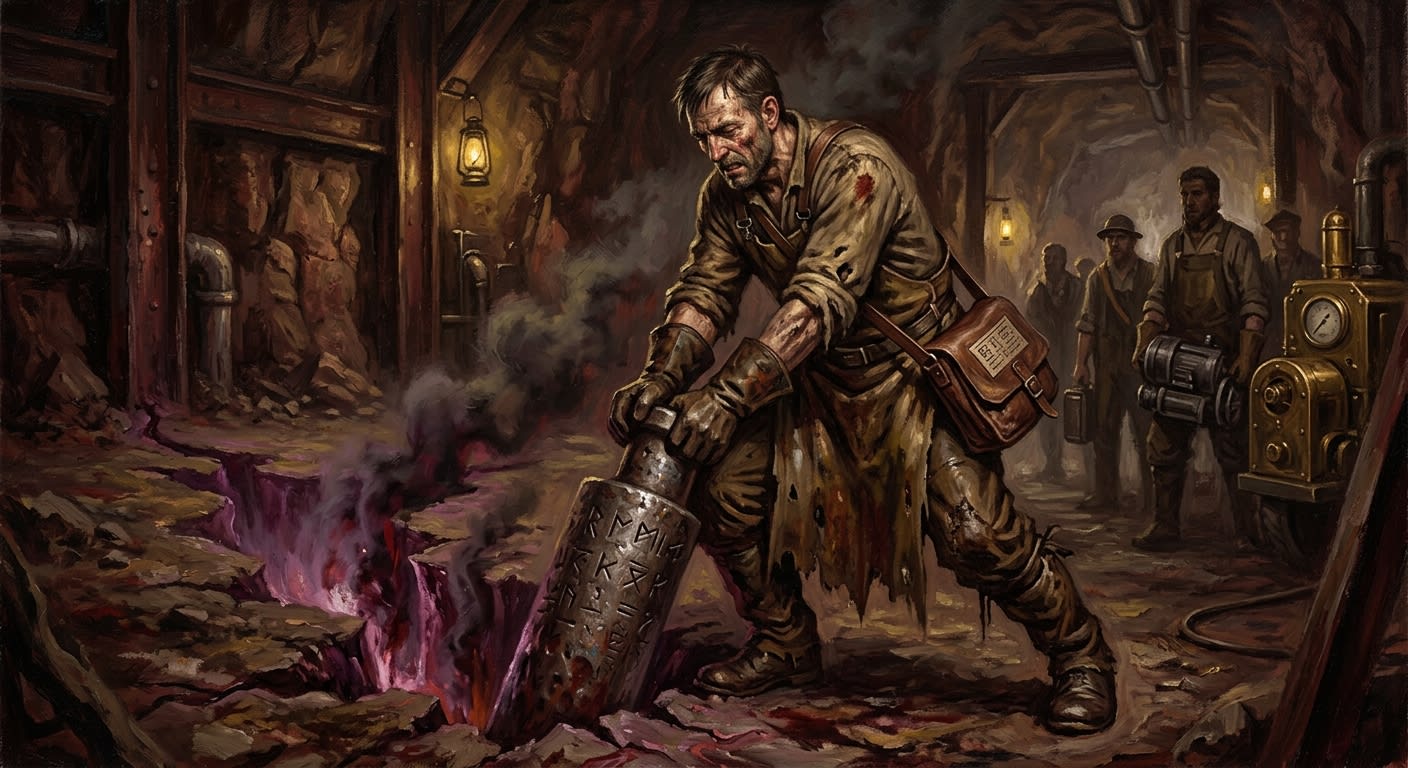
Saint Orren of the Iron Plug
Nine hours is a miracle when Hell keeps the clock
Patron saint of Wound-Site Prospectors, remembered for driving an iron plug into a demon-seep rupture, holding the wound nine hours, and vanishing when it reopened.
Codex Ref. III.2.01-148
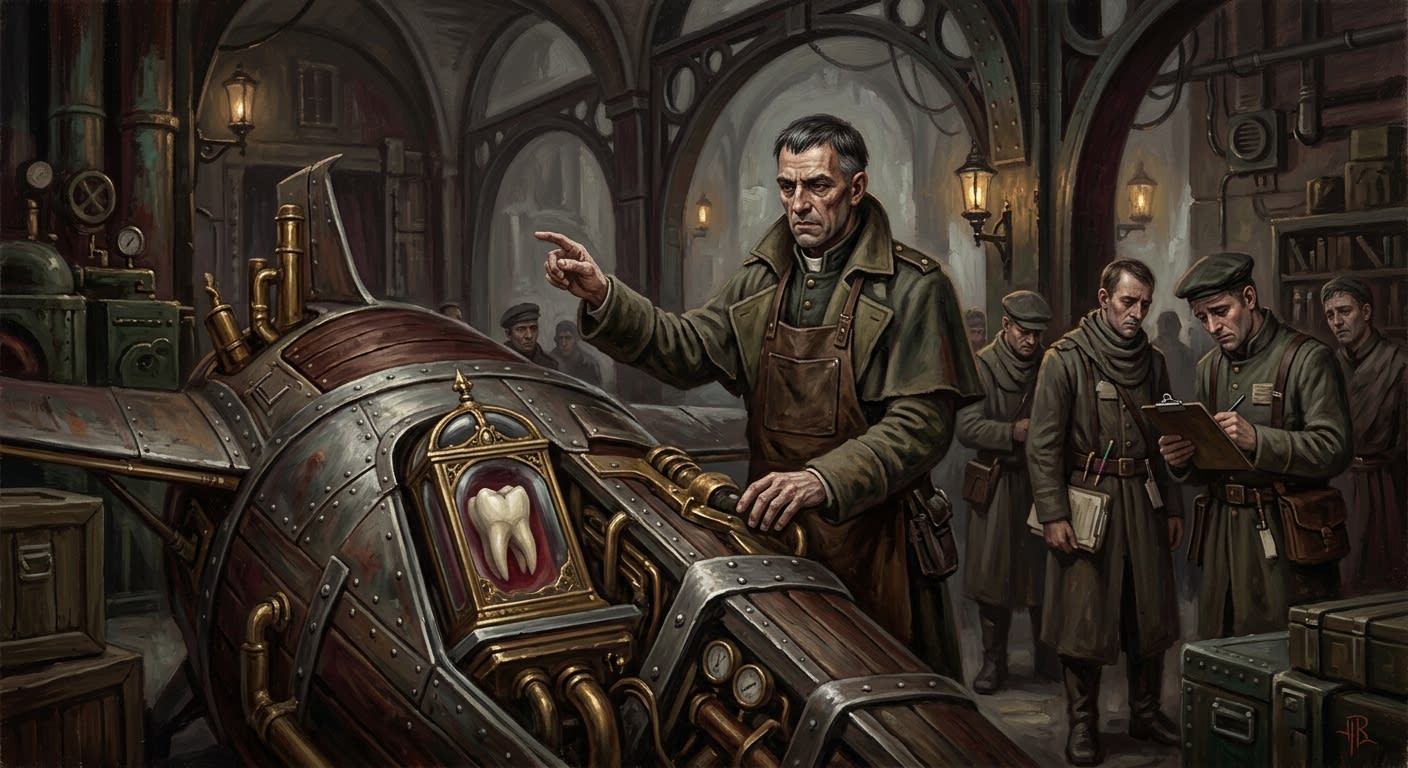
Saint Uriel
The warning tooth that refused to bless the southern sky
Saint Uriel is warning, tooth, patron, and refusal: the authenticated molar whose Ark will not fly, thereby accomplishing theology by humiliation.
Codex Ref. III.2.01-191

Saint Varda of the Lead Hands
A saint without a file is still a tool if the hand survives the glass
Uncanonised patroness of Demon-Glass Polishers, Varda teaches the bench-law of lead first and vision second wherever raw shards whisper and official files refuse to exist.
Codex Ref. III.2.01-107
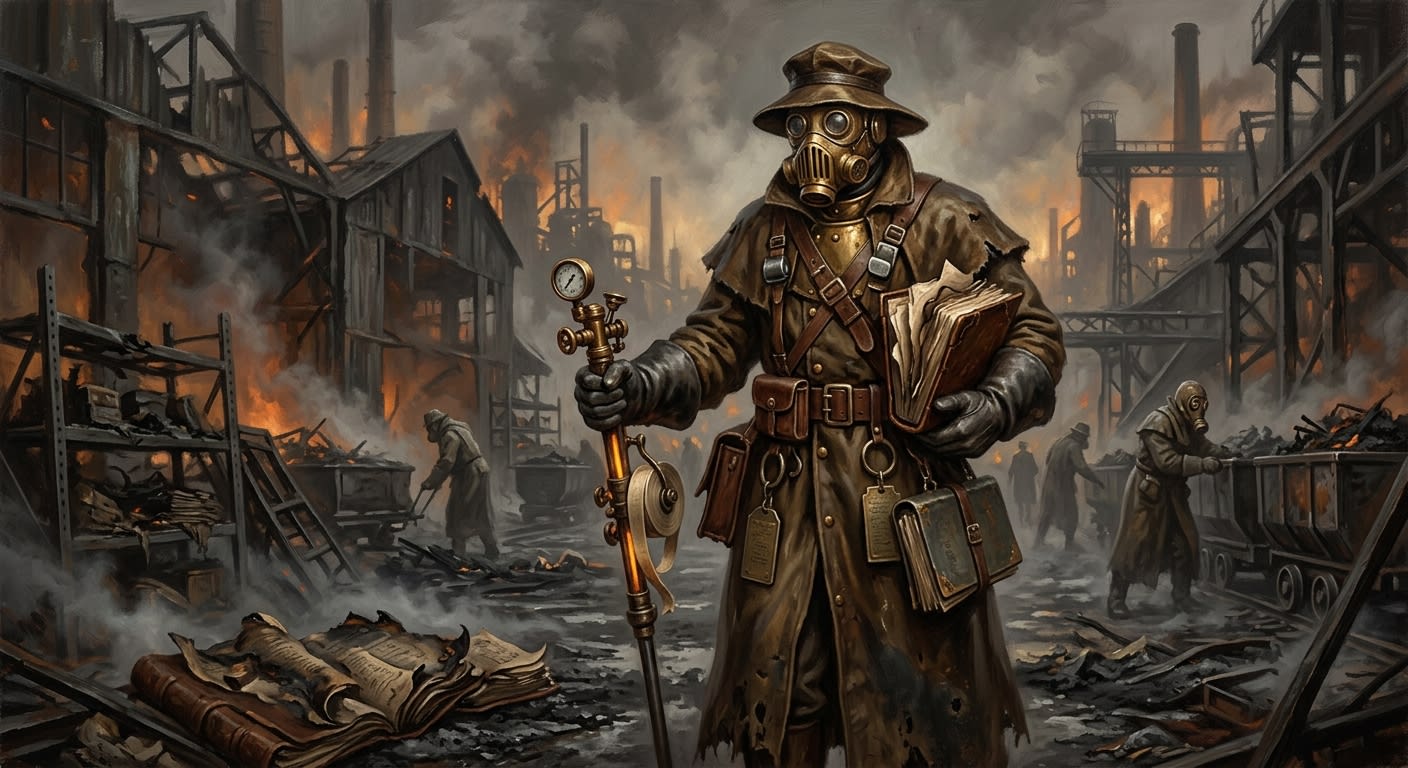
Saint Vellum of the Narrow Line
He proved a warehouse may burn correctly if its name burns first
Saint Vellum, patron of Manifest Litigants and cargo-identity quarrels, entered the Ledger by invoice: no bone, uncertain vita, and a burning warehouse rendered clean enough for doctrine.
Codex Ref. III.2.01-066
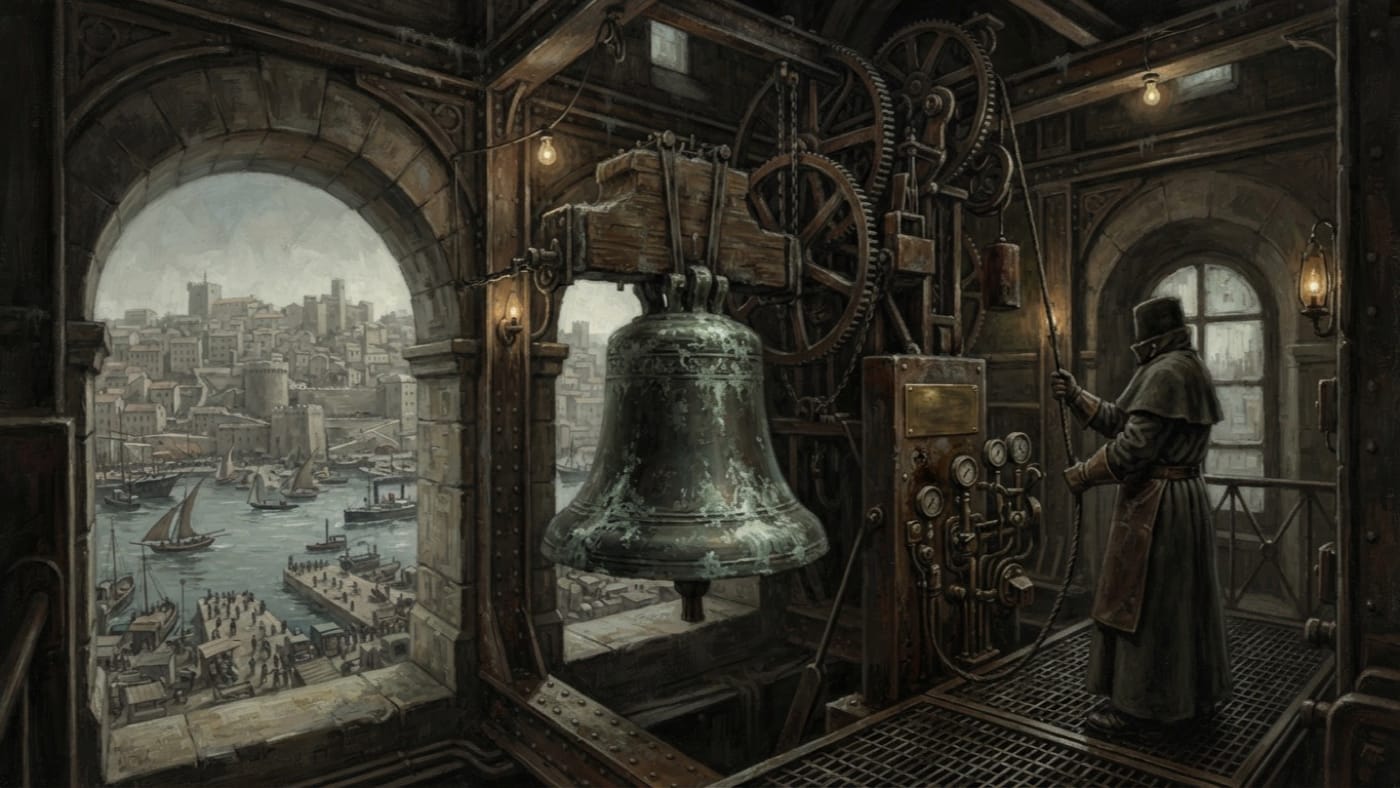
Salt-John
One bronze voice reserved for the hour when Marseille must listen
Salt-John sounds harbour danger from Saint-Victor's western relay in Marseille. One of nine principal bells, it remains under Bureau of Bells authority: a warning loses its power when every clerk may ring it.
Codex Ref. XIII.1.62-232
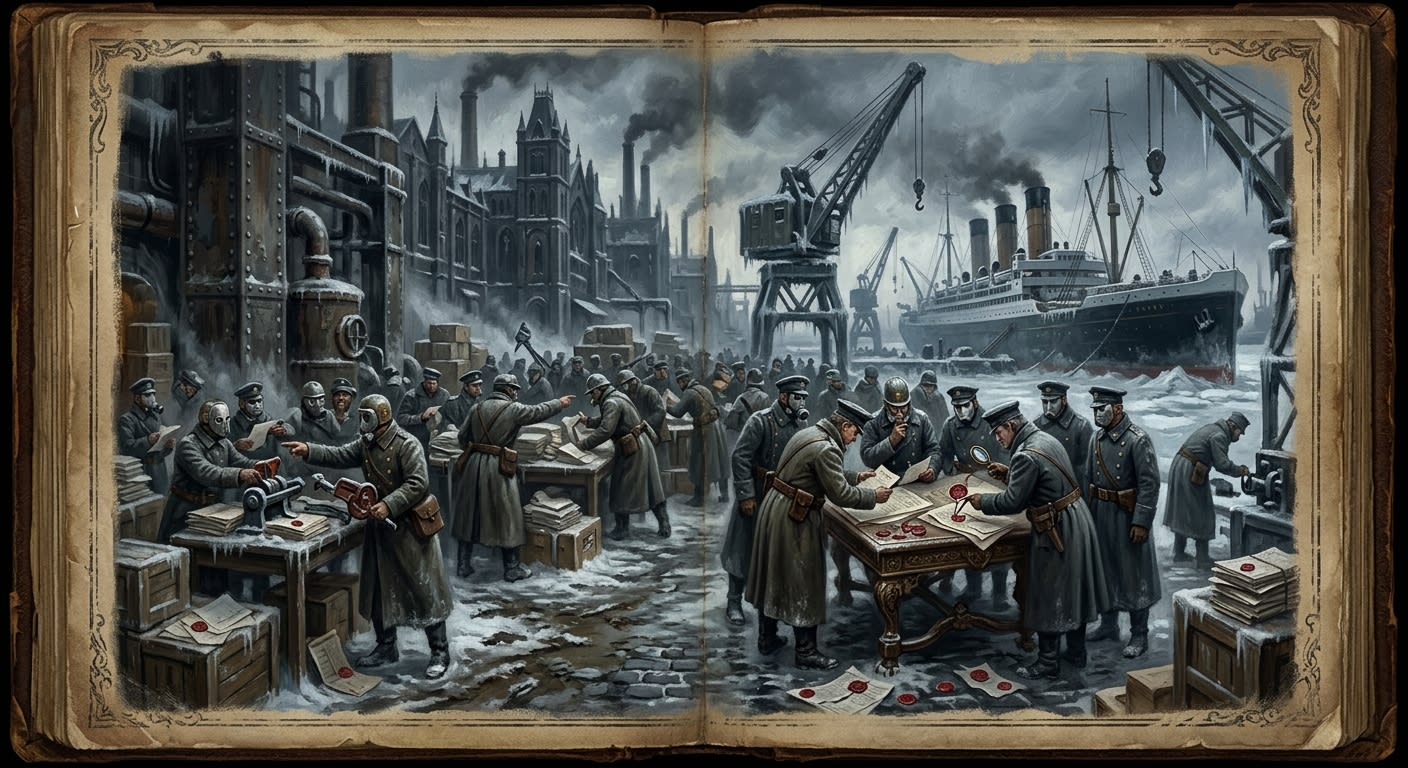
Seal-Forgers' Winter
When wax learned to lie, doubt became a licensed knife
The Seal-Forgers' Winter of A.S. 145 was the counterfeit seal crisis that froze ports, humiliated Masks and Seals, and made seal autopsy a billable Manifest Litigant right.
Codex Ref. VII.8.10-003

Shadow Counsel
Where the law does not break, but bends toward the purse
Shadow Counsel are purchased Manifest Litigants: licensed mouths rented by smugglers, syndicates, and caravan houses to make lawful procedure serve private dirt.
Codex Ref. XI.1.06-001

Sister Adelhaid
A name, a correspondence, a fire, and the blessed cowardice of files
Sister Adelhaid survives as a name in a Confessarius report, attached to Marseille letters, Saint Isidore's Eve, and a bookseller's fire too clean to comfort anyone.
Codex Ref. III.2.01-151

Stitch-Score Couriers
Where paper burns, the hem remembers the tune
Mid-rank melody-smuggling couriers who hide forbidden middle bars in cuffs, hems, vestments, infant bands, and every domestic cloth authority mistakes for harmless labor.
Codex Ref. XII.48.02-001
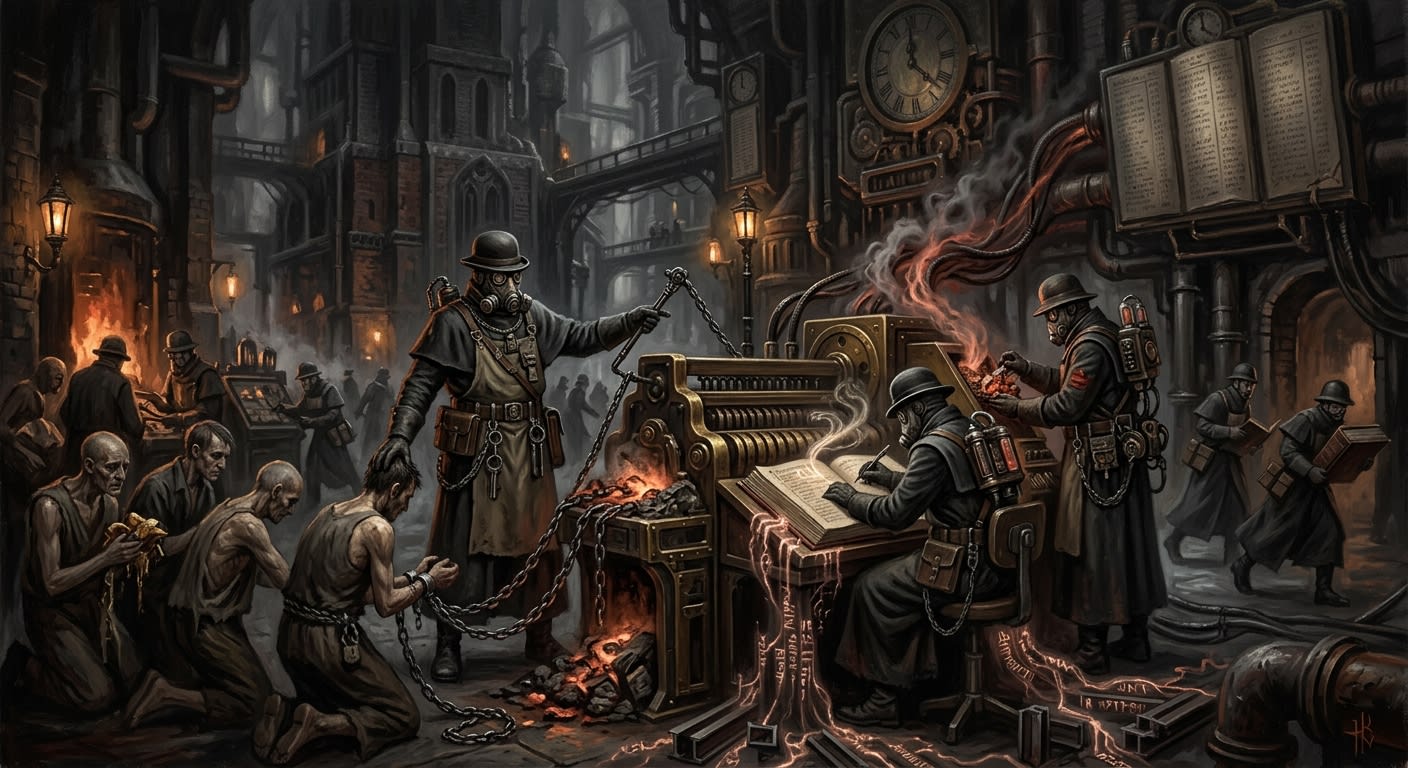
The Accountants
The book beneath the bread and the debt beneath mercy
The Accountants are the Black Ledger's second-book faction: Ledgerwrights who turn gifts into debts, hunger into jurisdiction, and gratitude into infrastructure.
Codex Ref. XI.1.04-003
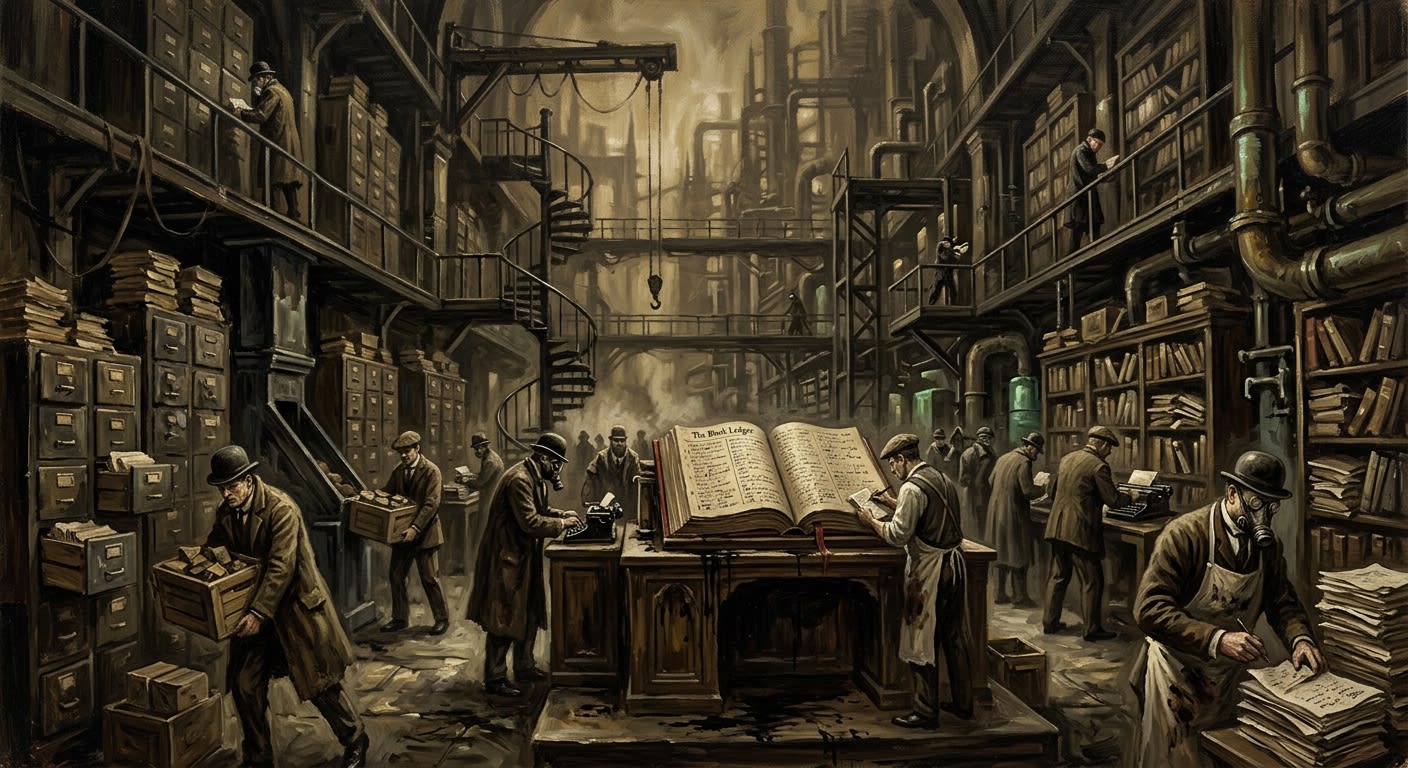
The Black Ledger
Hunger with a filing system and better memory than mercy
The Black Ledger is the Synod's gutter-mirror: a criminal heretical network that steals, feeds, records debt, and turns absence into jurisdiction.
Codex Ref. XI.1.04-001
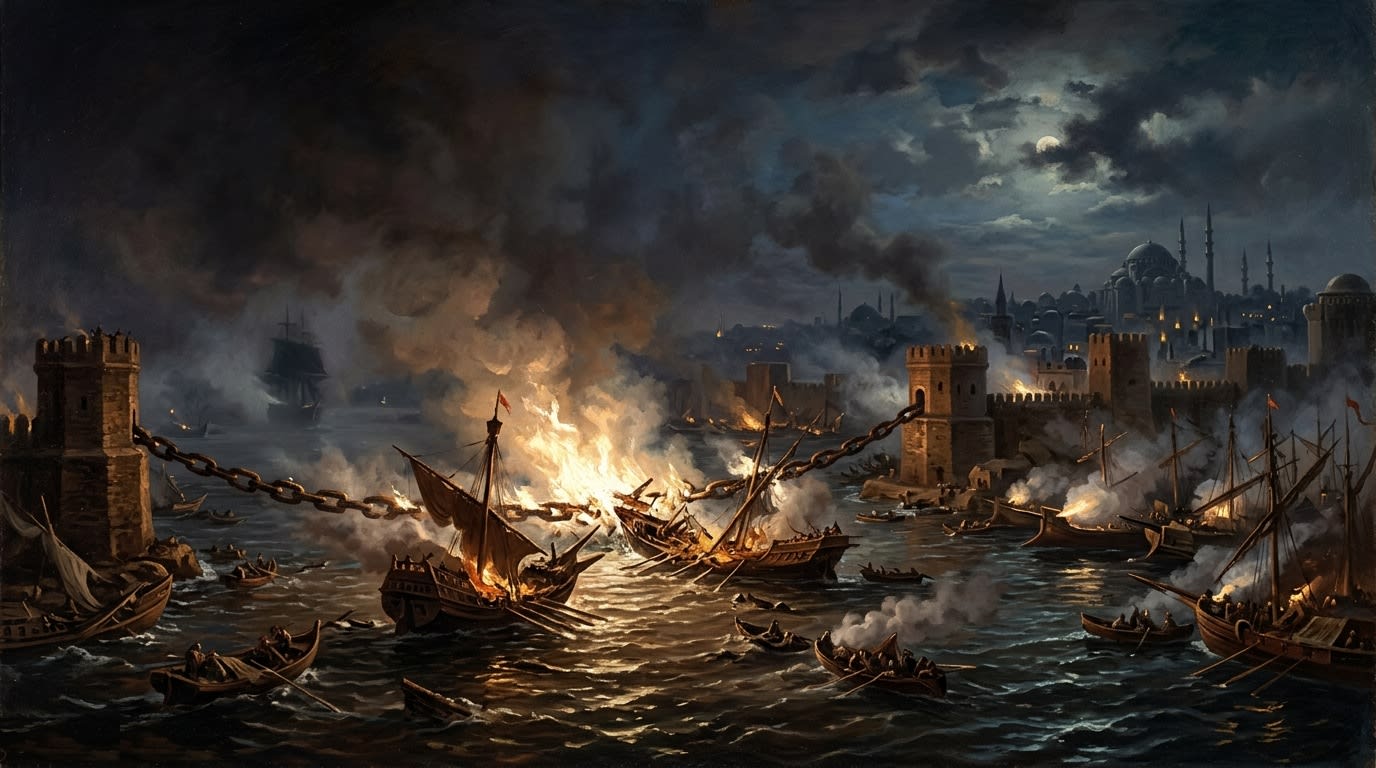
The Black Sea Armada Engagement
Forty-seven ships entered the ledger; one refused arithmetic
The A.S. 162 naval assault on Bastion-Constantinople's Harbor of Chains: forty-seven demon vessels, seven hours of white fire, and one ship-shaped absence still drawing interest.
Codex Ref. VII.5.10-162
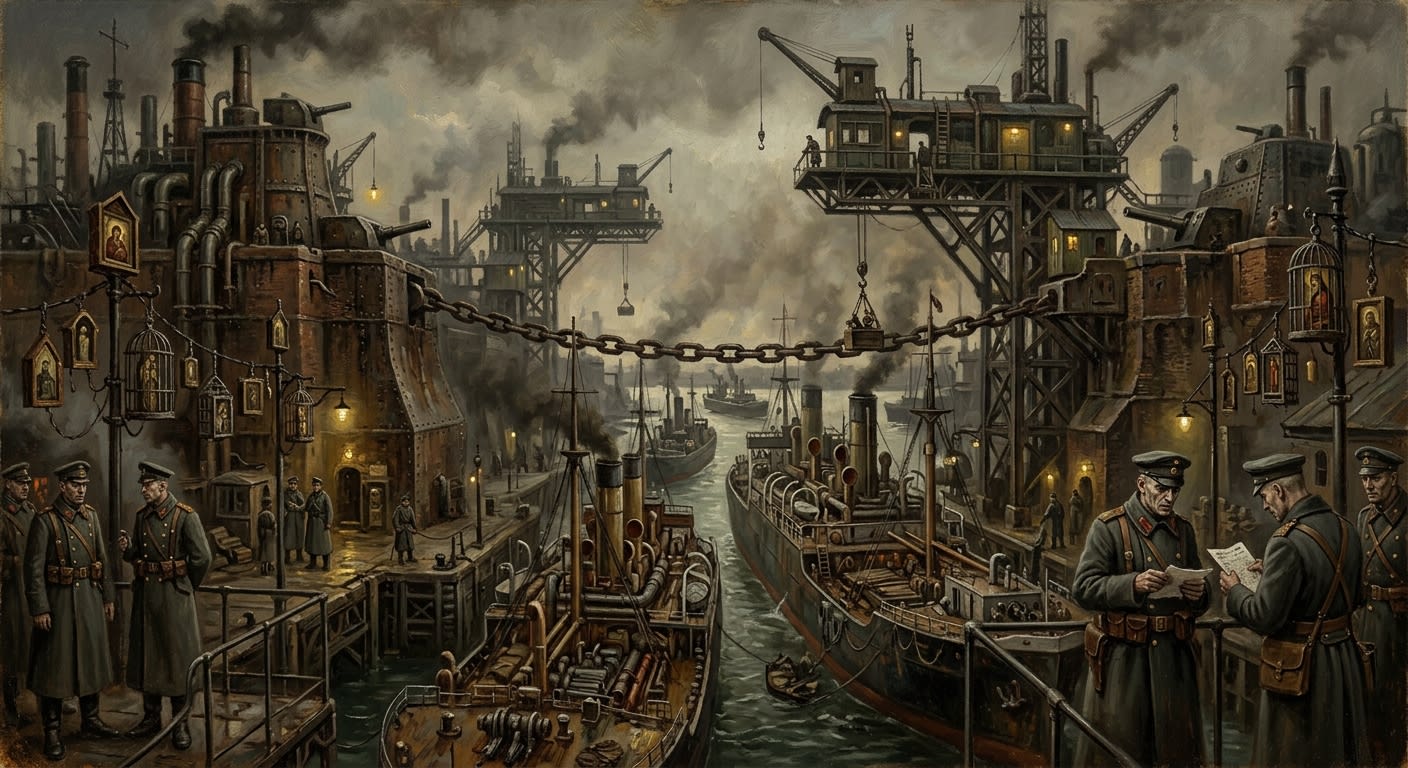
The Bosphorus
The water has not countersigned
The Bosphorus is the southern hinge of the Sagittal Line: chain-defended, tariff-choked, relic-strung, and still refusing to admit that water can be owned.
Codex Ref. II.4.09-004
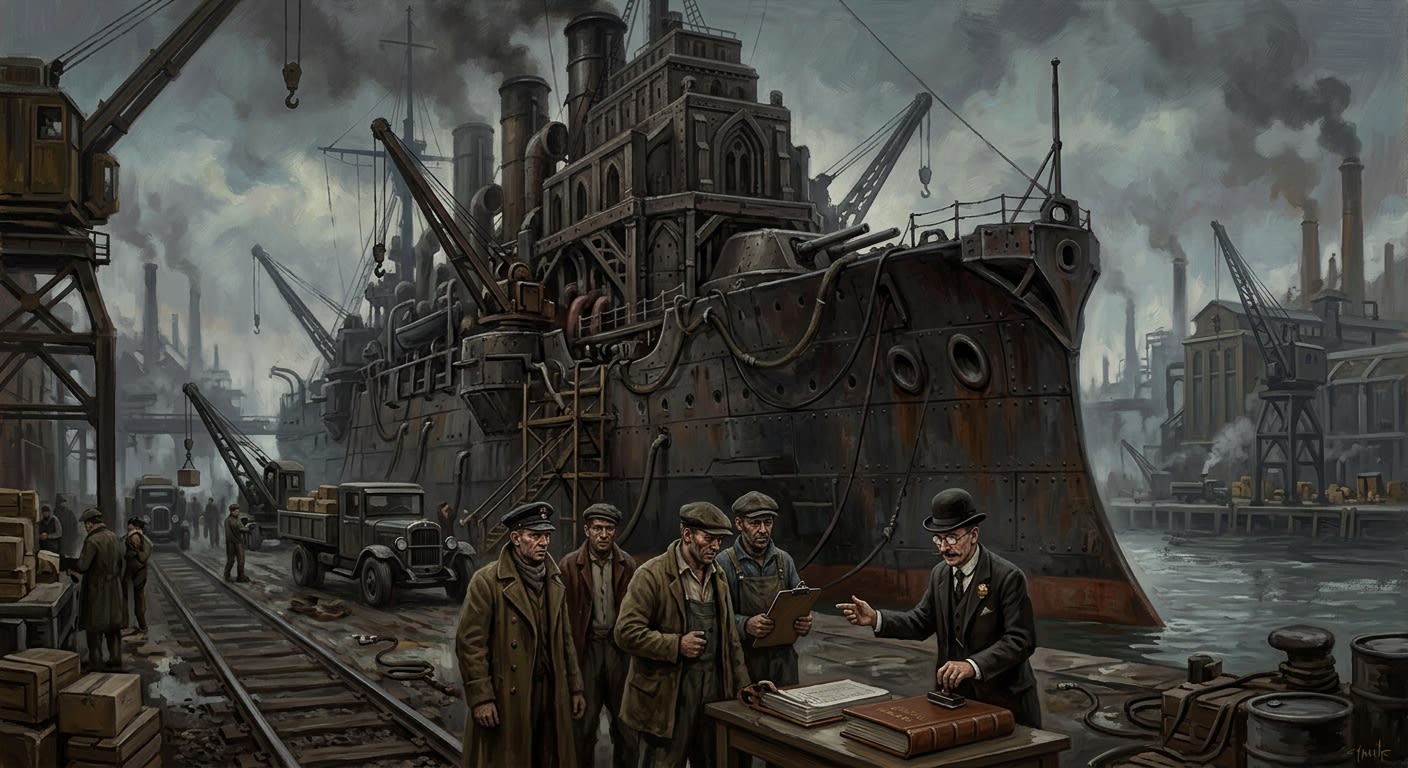
The Catacomb-Carrier Threnody
A land engine paying harbor fees to remain mercifully still
The Catacomb-Carrier Threnody occupies Pier Seven under continuous maintenance, drawing rations for an intact crew no one sees and fees no clerk queries.
Codex Ref. XIII.1.72-008
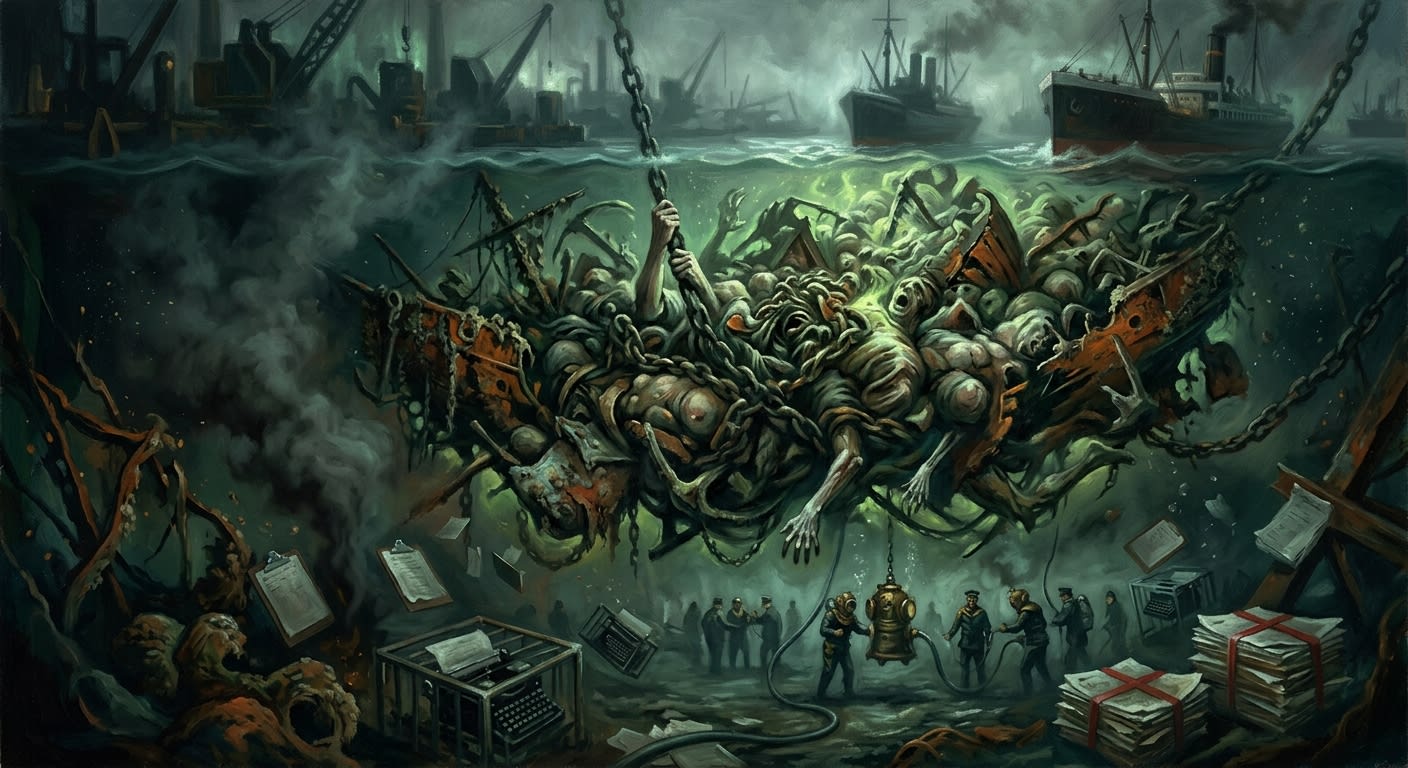
The Drowned Choir
The sea has learned the bell-schedule, and it sings the names back wrong
Beneath Thessaloniki's harbour, a Category Three Harmonic Anomaly gathers names through chain, fog, hull, dream, tooth, and Bureau denial.
Codex Ref. XIII.1.12-001
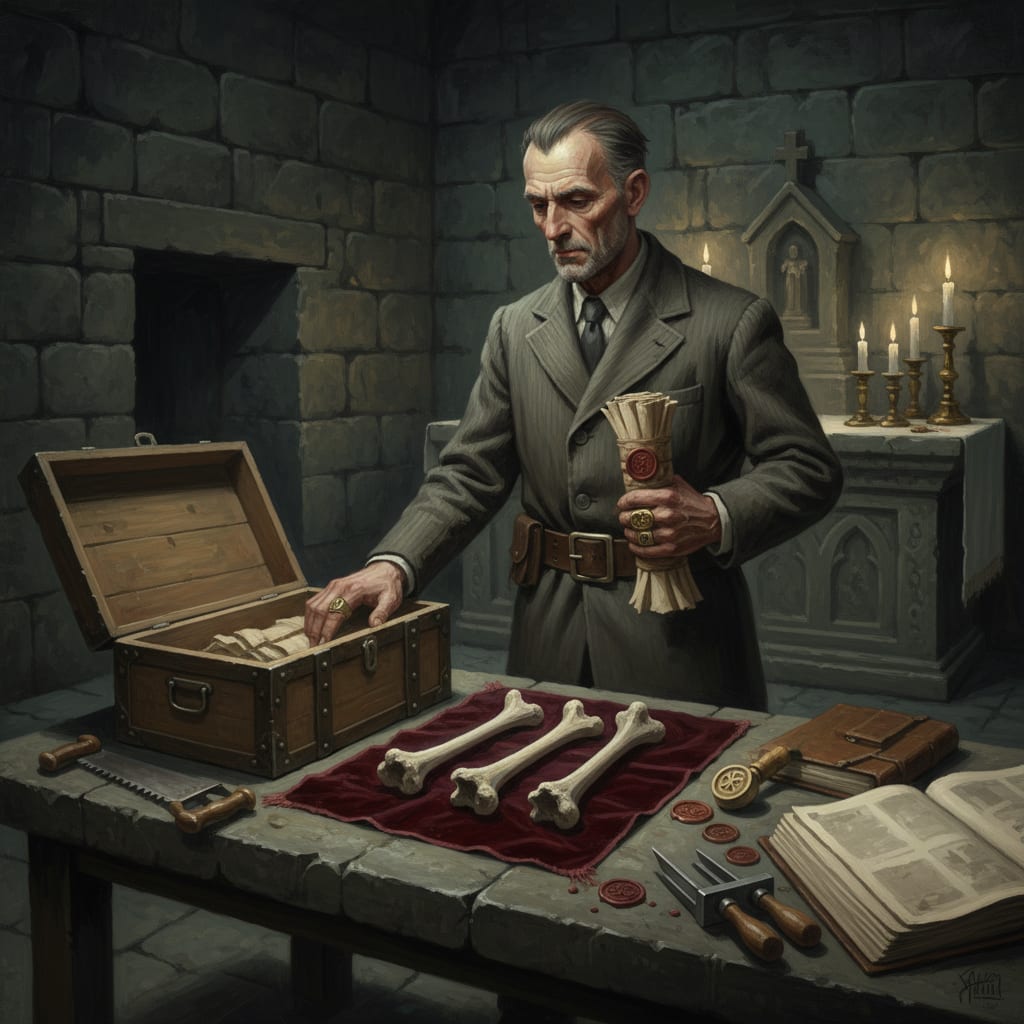
The Femur-War Broker
The unofficial routing service that keeps authenticated contradictions from becoming authenticated riots
The officially nonexistent profession that routes authenticated relic contradictions without collision — the Femur Principle's logical consequence, managed for a fee by two hundred brokers the Bureau insists do not exist.
Codex Ref. XII.15.01-001
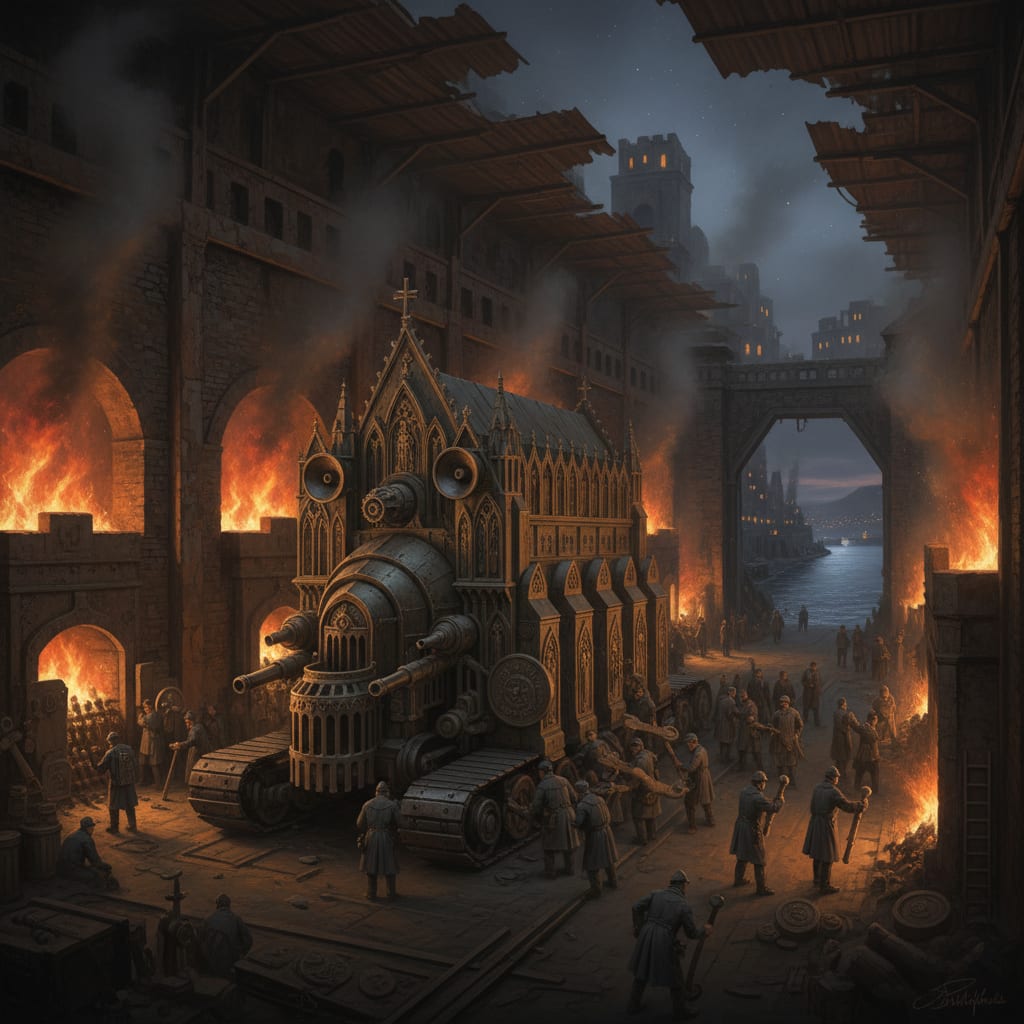
The Foundry Quarter
The forge that does not stop, and the question that does not ask itself
The Foundry Quarter of Bastion-Constantinople manufactures the weapons that hold the Wall. It has not stopped since A.S. 179. No one has verified what is inside the engines. The Bureau files the question under Restricted Access.
Codex Ref. II.4.10-003
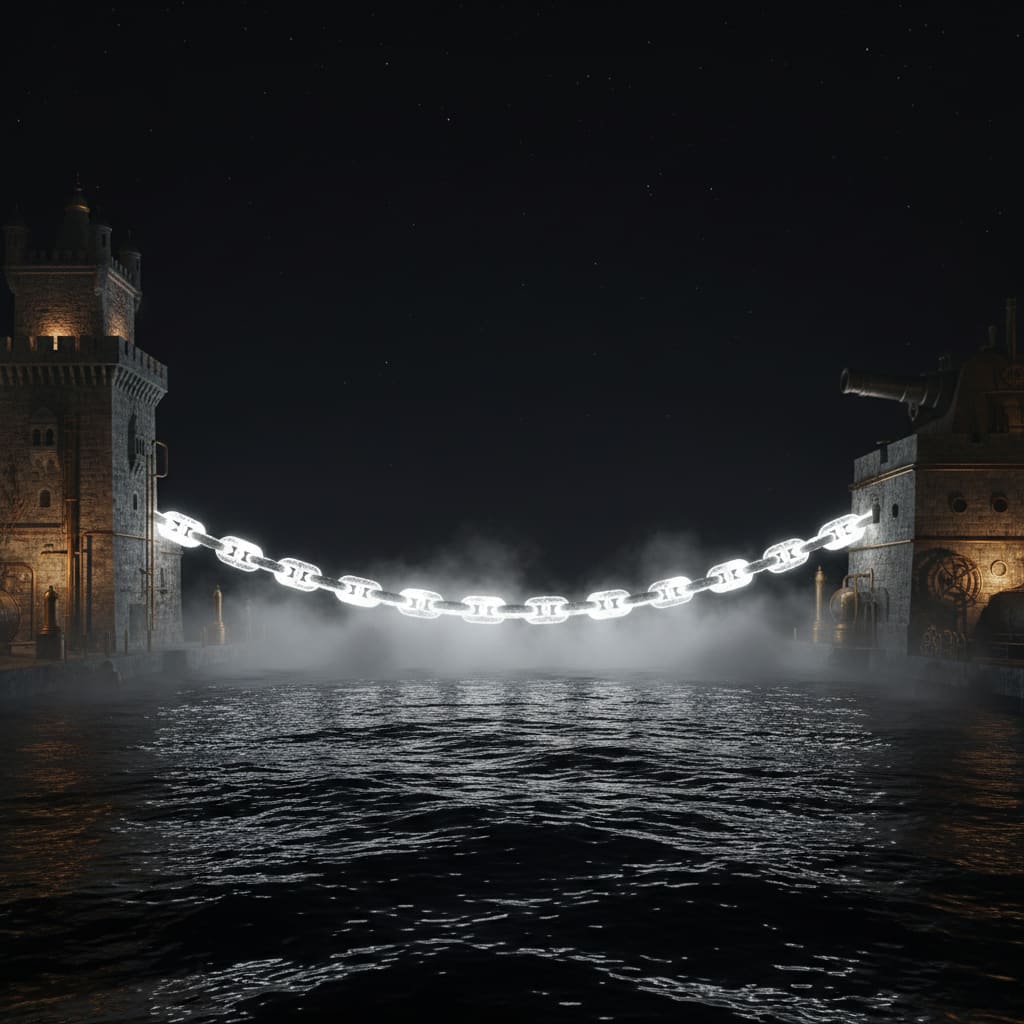
The Harbor of Chains
A mile of quay, a hundred fathoms of iron, and what the chain is becoming
The Harbor of Chains guards the Bosphorus with one mile of fortified quay and the Chain of Saint Anakletos — consecrated iron that burned the Black Sea Armada white in A.S. 162 and has not glowed since.
Codex Ref. II.4.10-005

The Heartlands
The safe country, provided one defines safety as distance from teeth and proximity to stamps
The Heartlands are the Synod's safe interior only by infantry arithmetic: Zones 1–3 feed the Line with bread, steel, bodies, bells, paperwork, and bones.
Codex Ref. II.0.02-201
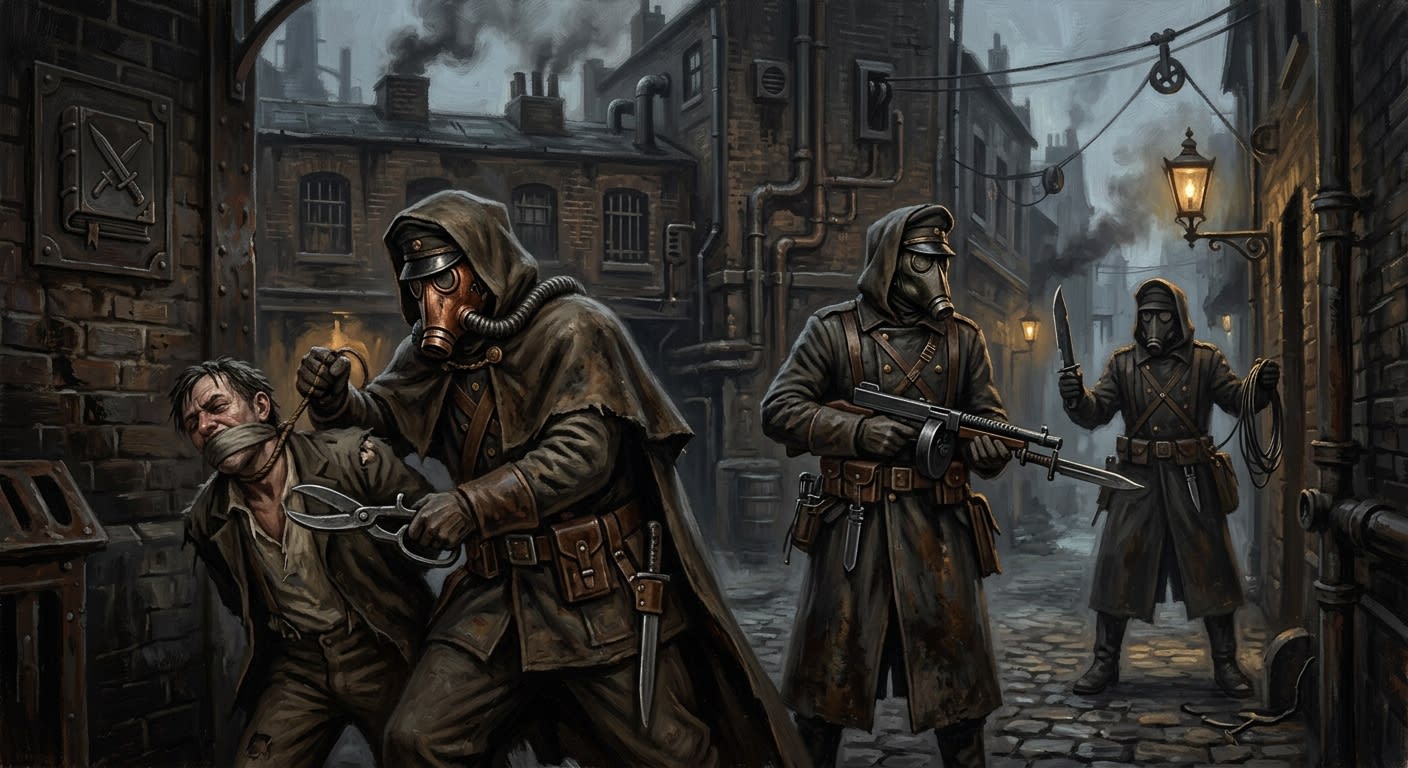
The Knives
Private sentence, no seal, no trial, no bell
The Knives are the Black Ledger's enforcement faction: Quiet Knives, alley-correctors, and cord-men who settle audible debts by disappearance.
Codex Ref. XI.1.04-004
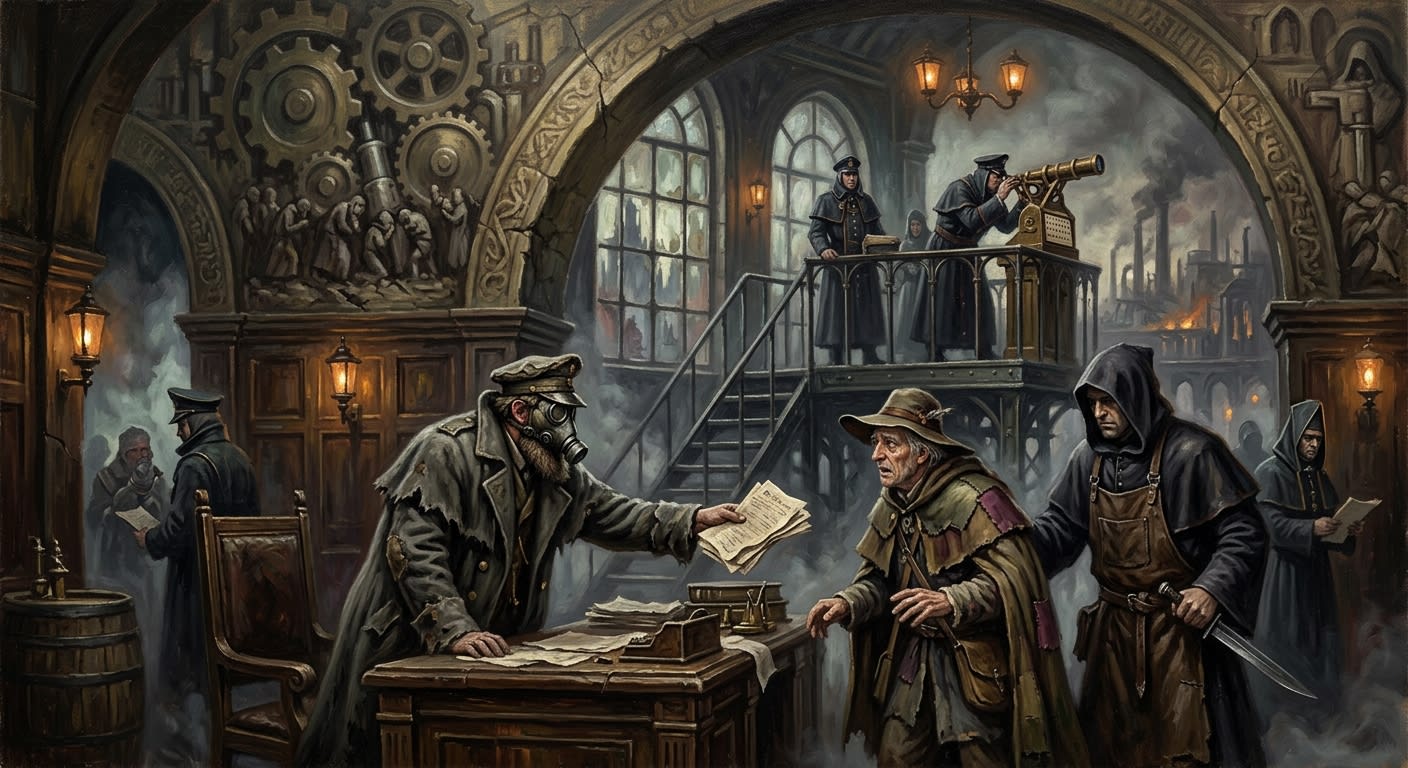
The Peregrine Cartel
A protection racket is merely insurance without liturgical manners
The Peregrine Cartel was an Iberian pilgrim-insurance racket with episcopal cover, choirboy knives, War-adjacent intelligence value, and a profitable terror that Pilgrimage destroyed in A.S. 193 because it was useful enough to absorb.
Codex Ref. XI.5.01-001
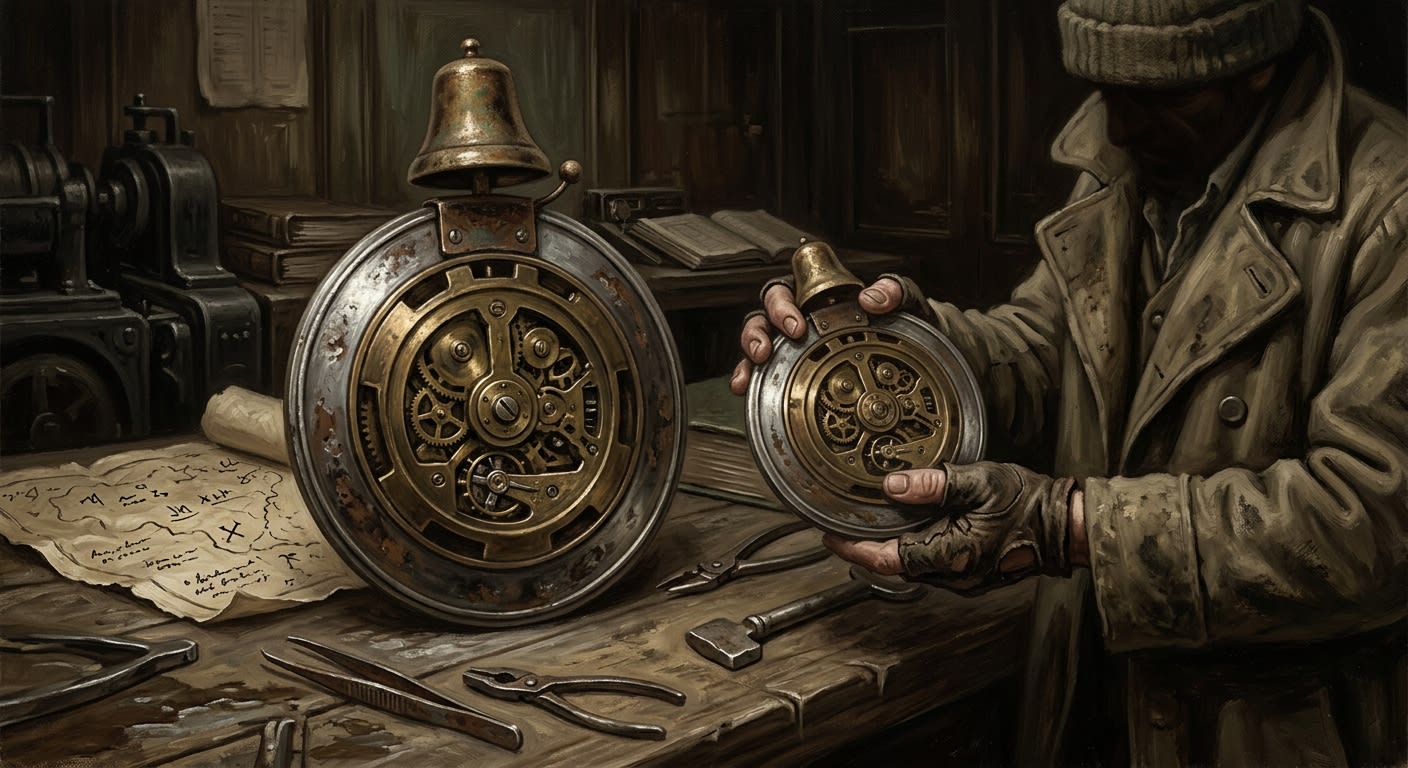
The Pilgrim Token
A tiny bell at the throat, counting every licensed step toward mercy
The pilgrim token is Pilgrimage's stamped disc of licensed motion: bronze, silver, or gold by road and rank, fitted after A.S. 140 with a bell-hour core that turns approved walking into billable absolution.
Codex Ref. XIII.1.40-001
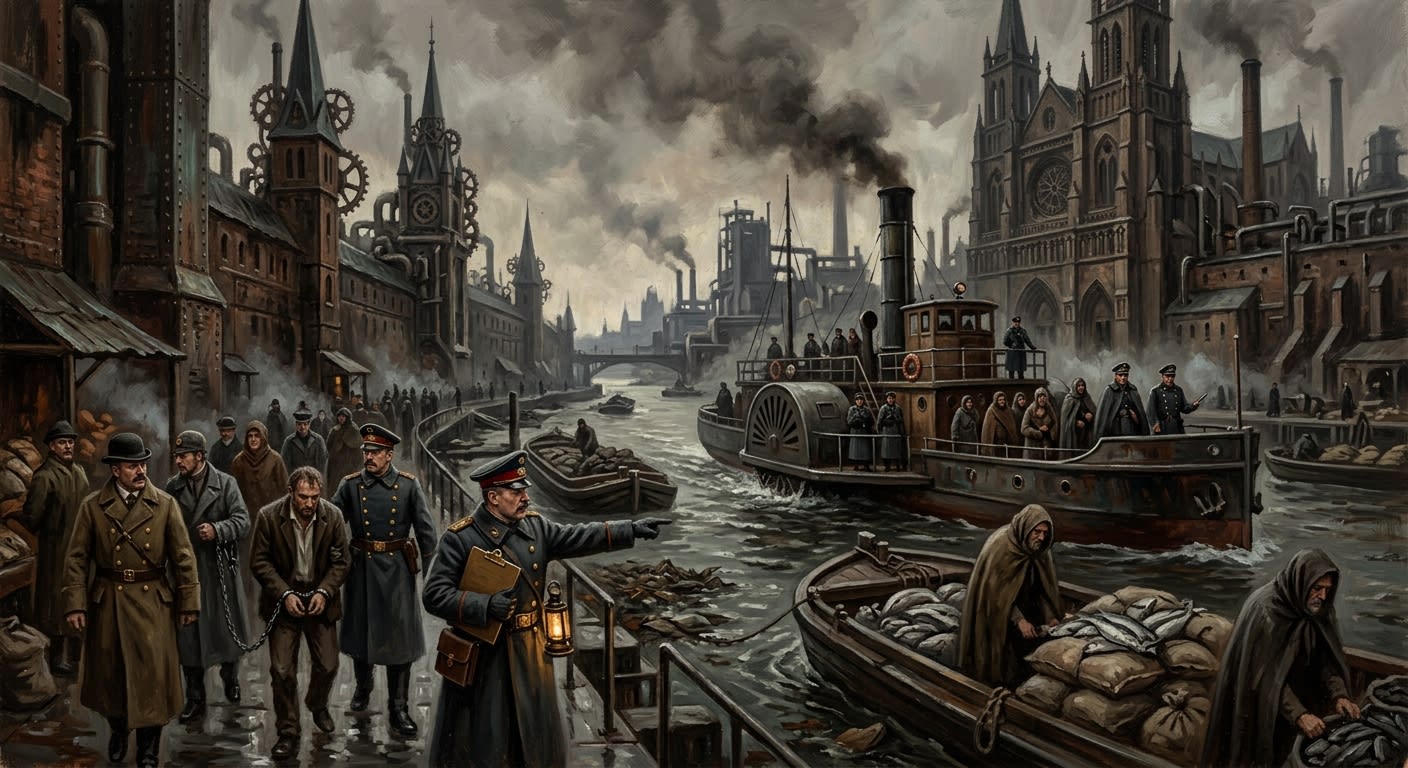
The Rhône
Water carries what paper refuses to keep dry
The Rhône is a southern river-corridor of ash, pilgrimage, fishery inspection, Avignon heresy, Lyon spectacle, wet custody, and water that declines obedience.
Codex Ref. II.1.10-201
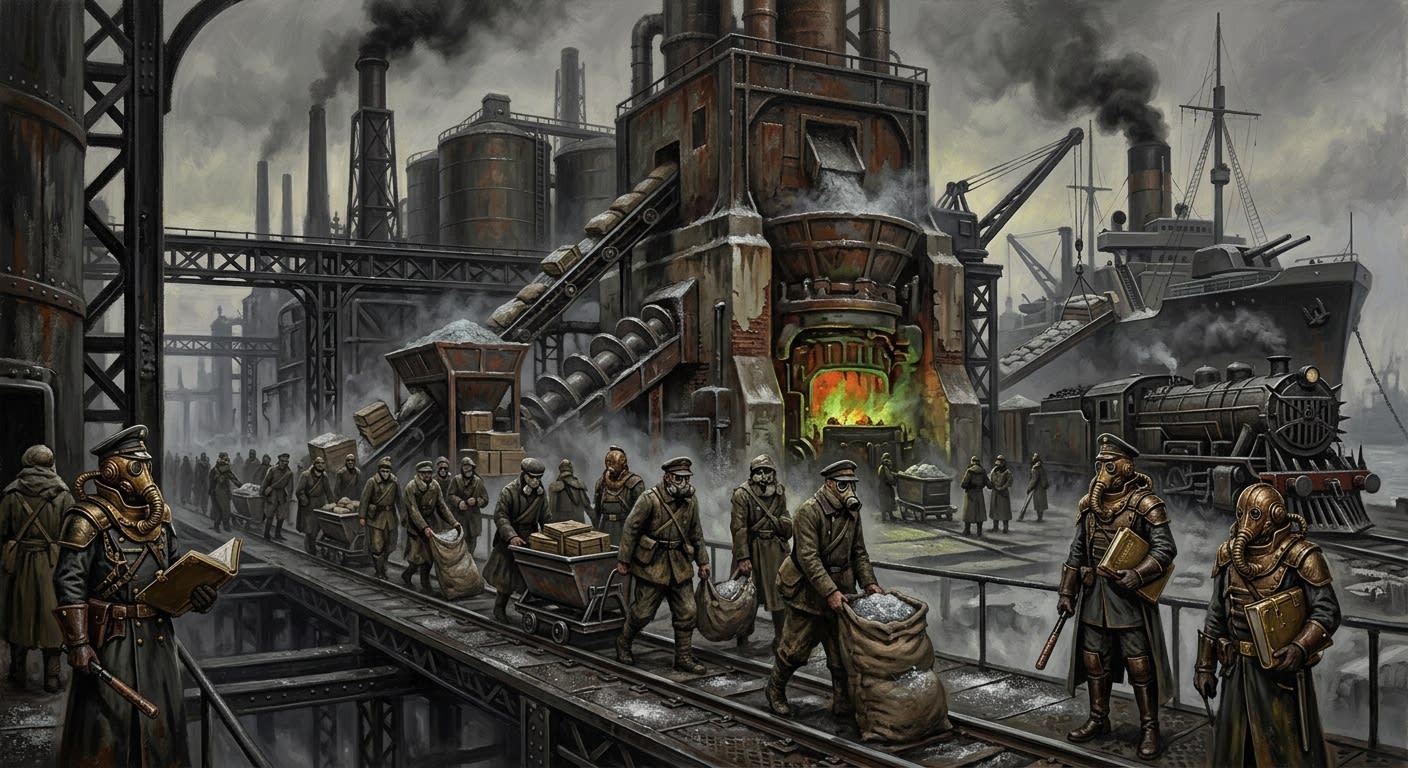
The Salt Dues of Marseille
Temporary measures have the finest survival instincts
The Salt Dues of Marseille began as an A.S. 92 emergency surcharge on coastal salt and learned immortality, feeding war, pilgrimage, and every clerk hungry enough to call permanence temporary.
Codex Ref. XIII.1.39-001
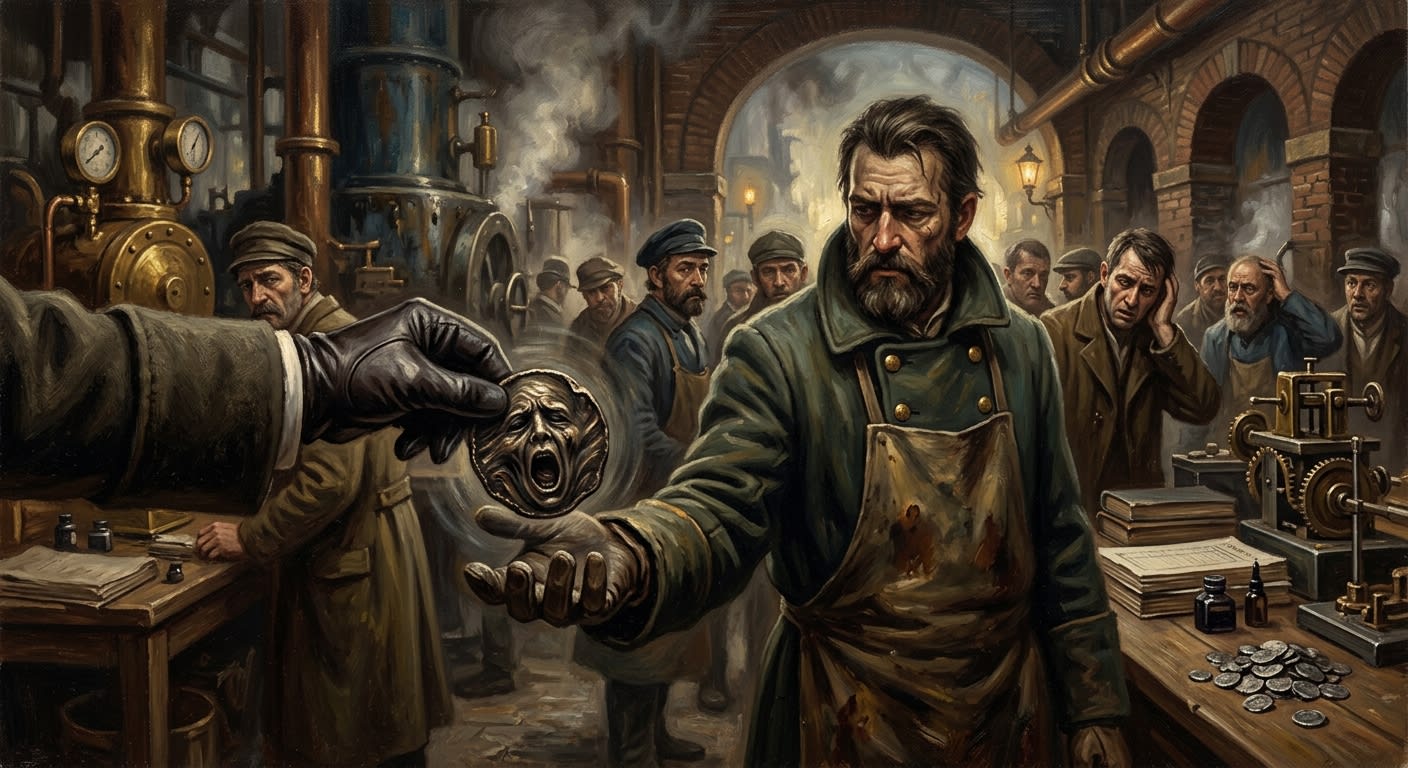
The Screaming Coin
The smallest transaction Hell ever notarised
A coin-like anomaly from Constantinople's Foundry Quarter passes through lawful hands, screams at transfer, and returns after every recorded destruction.
Codex Ref. V.2.01-001
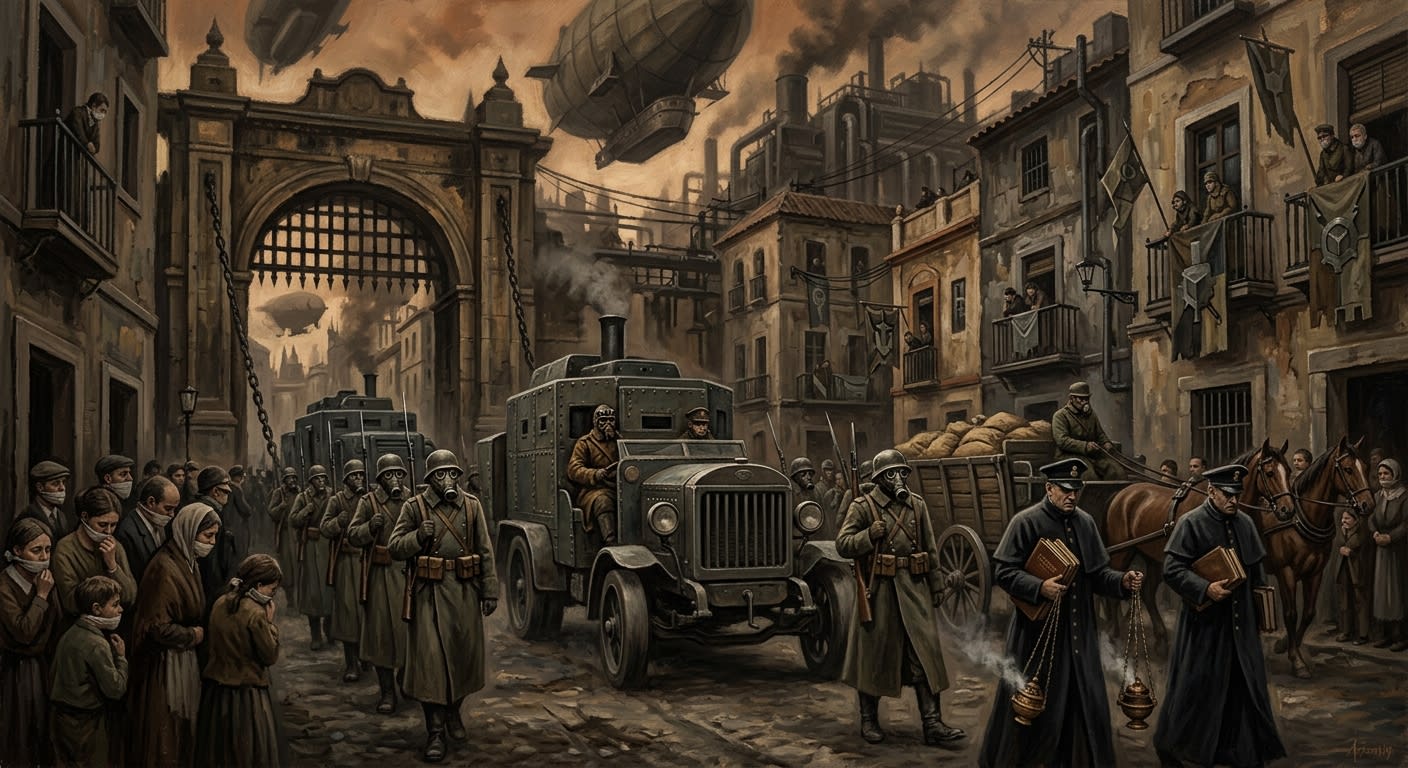
The Subjugation of Seville
A siege so well dressed in liturgy that the Ledger called it a procession
In A.S. 155, Seville was corrected by procession: gates opened under writ, calendars shortened, mouths disciplined, granaries emptied, and conquest taught to smell like incense.
Codex Ref. VII.8.02-002
The Theatres
Bread, bells, and applause stolen from the altar
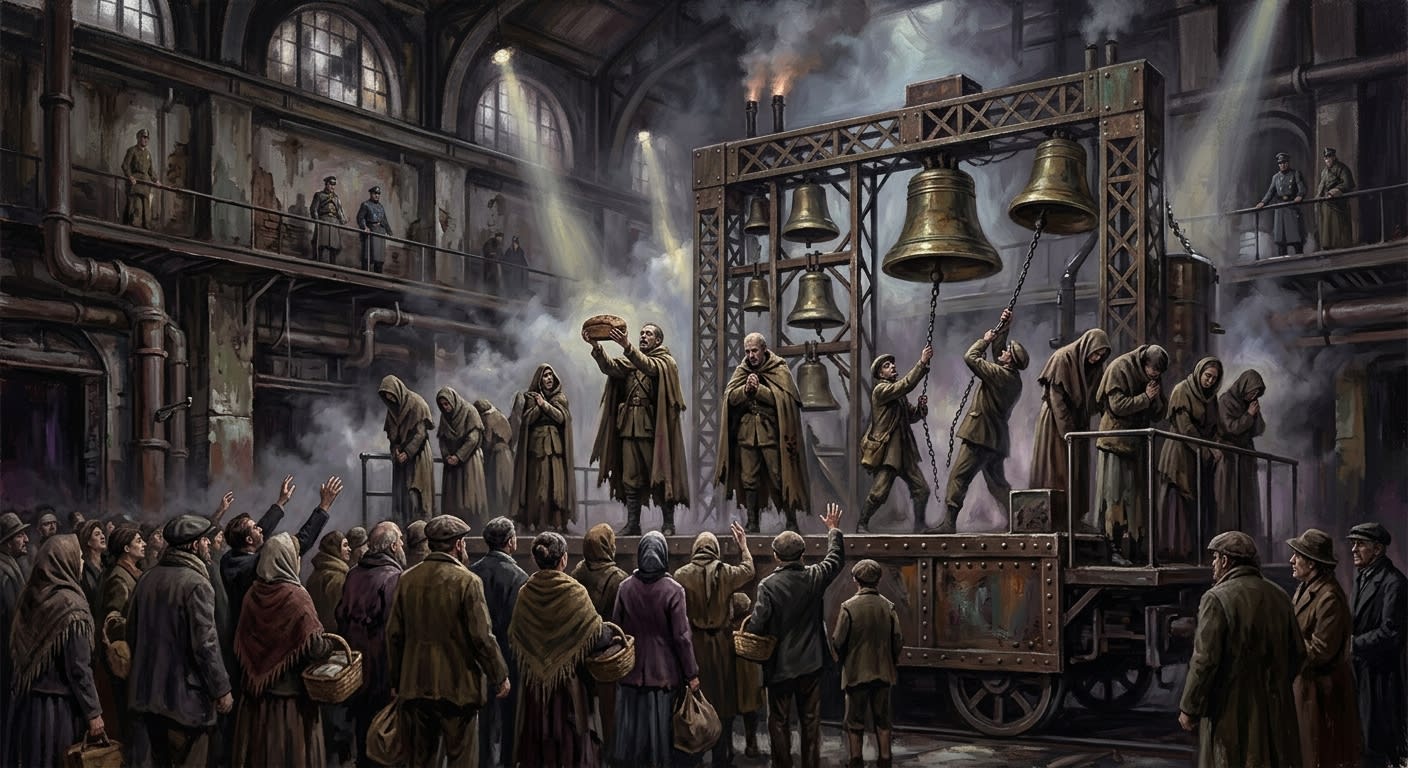
The Theatres are the Black Ledger faction that turns stolen bread into civic memory, staging Queue-Saint performances where hunger, bells, and witnesses become recruitment.
Codex Ref. XI.1.04-002
The Widow-Notary
The hand that taught charity to forge receipts
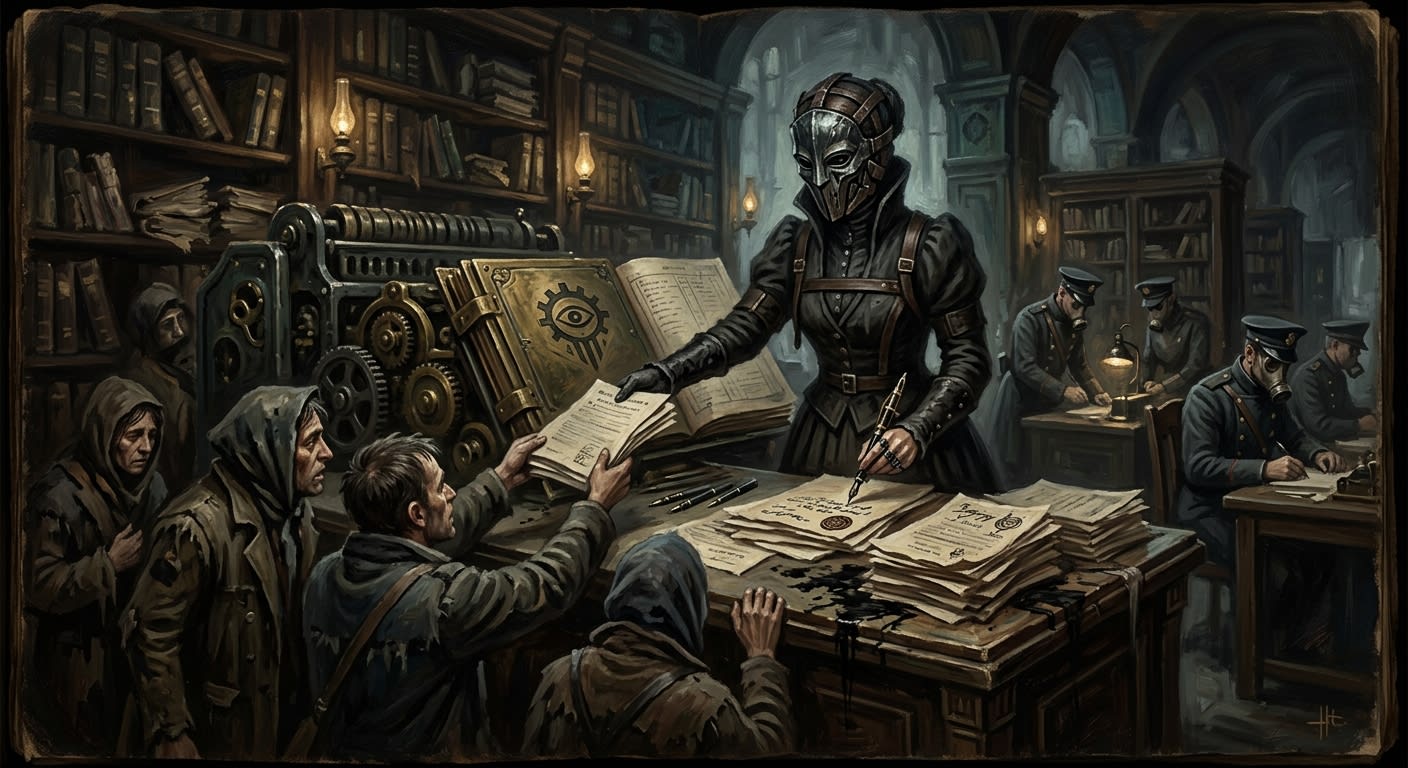
The Widow-Notary may be one woman, seven women, or a criminal mask; her forged assessments fed Strasbourg's poor and taught the Black Ledger to steal in the Bureau's own hand.
Codex Ref. III.2.01-062
Thessaloniki (Harbor-Chain Towers)
Where every passage is a registration event, and the chains keep the ledger
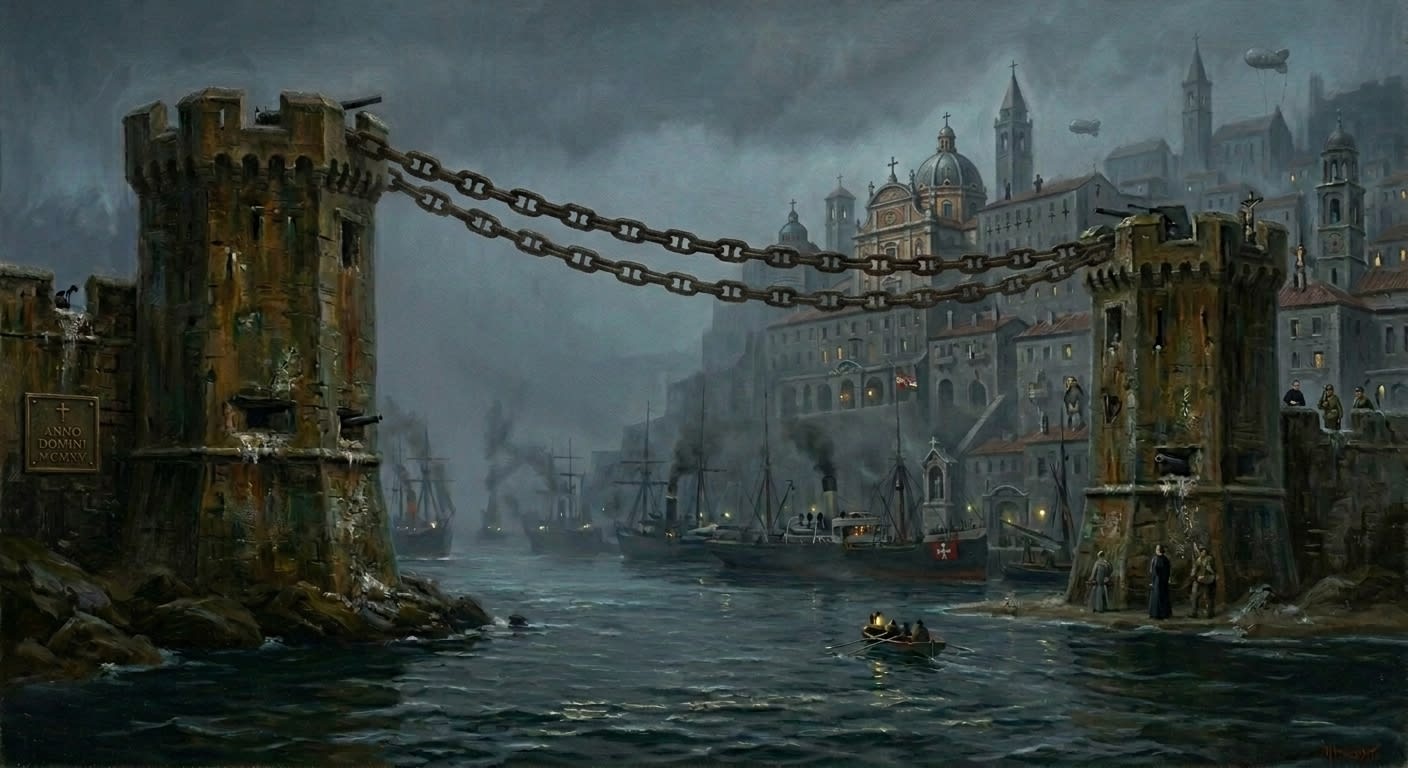
The Synod's Aegean gullet — Twin Towers of the Harbor-Chain processing ~280,000 souls and every caravan bound for the southern Line, while the Drowned Choir counts beneath the psalm-hum.
Codex Ref. II.4.09-003
Thirty-Seal Index of Precedent
The book that lets old disputes bite new throats
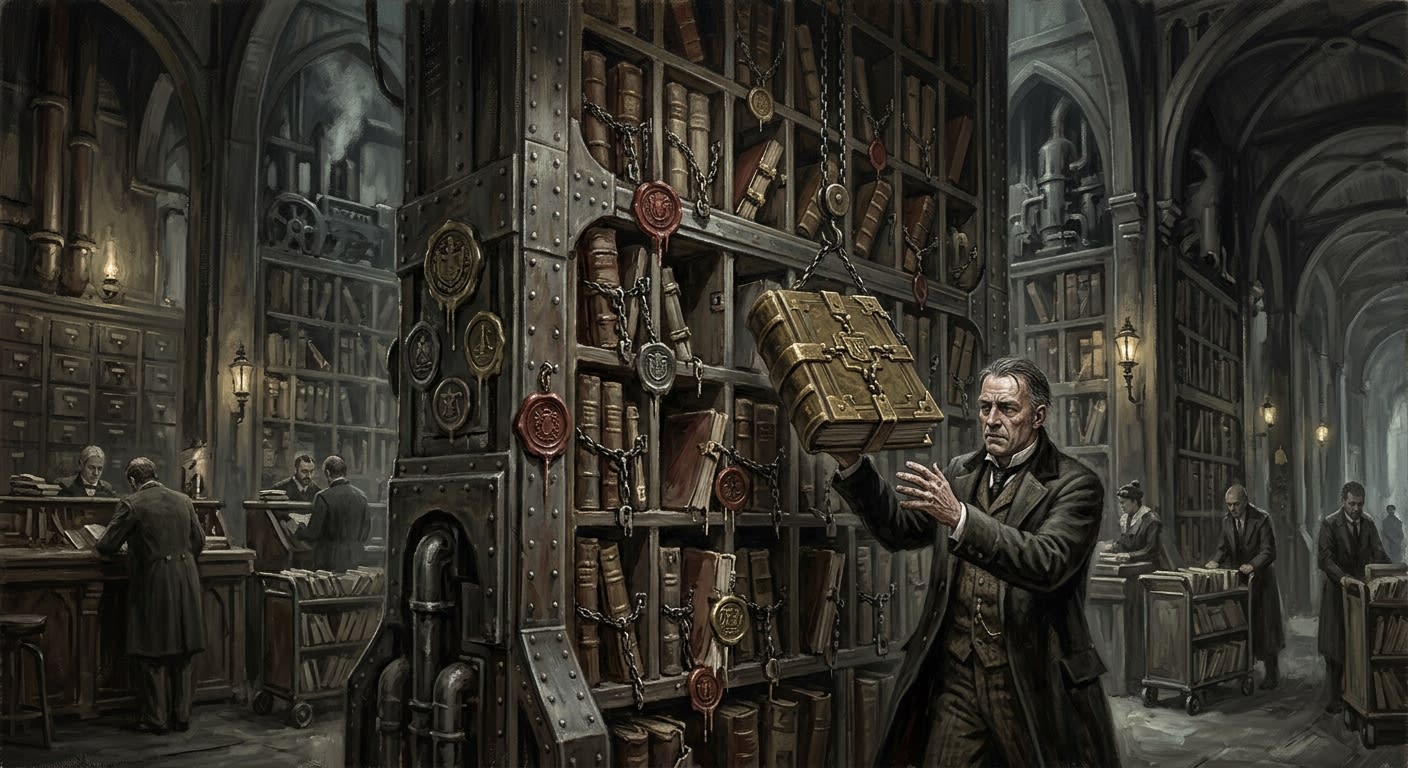
The Thirty-Seal Index is Commerce's weaponised memory: port-court precedent sealed thirty ways, kept cold, and lent to litigants who know where hunger must wait.
Codex Ref. XIII.1.89-187
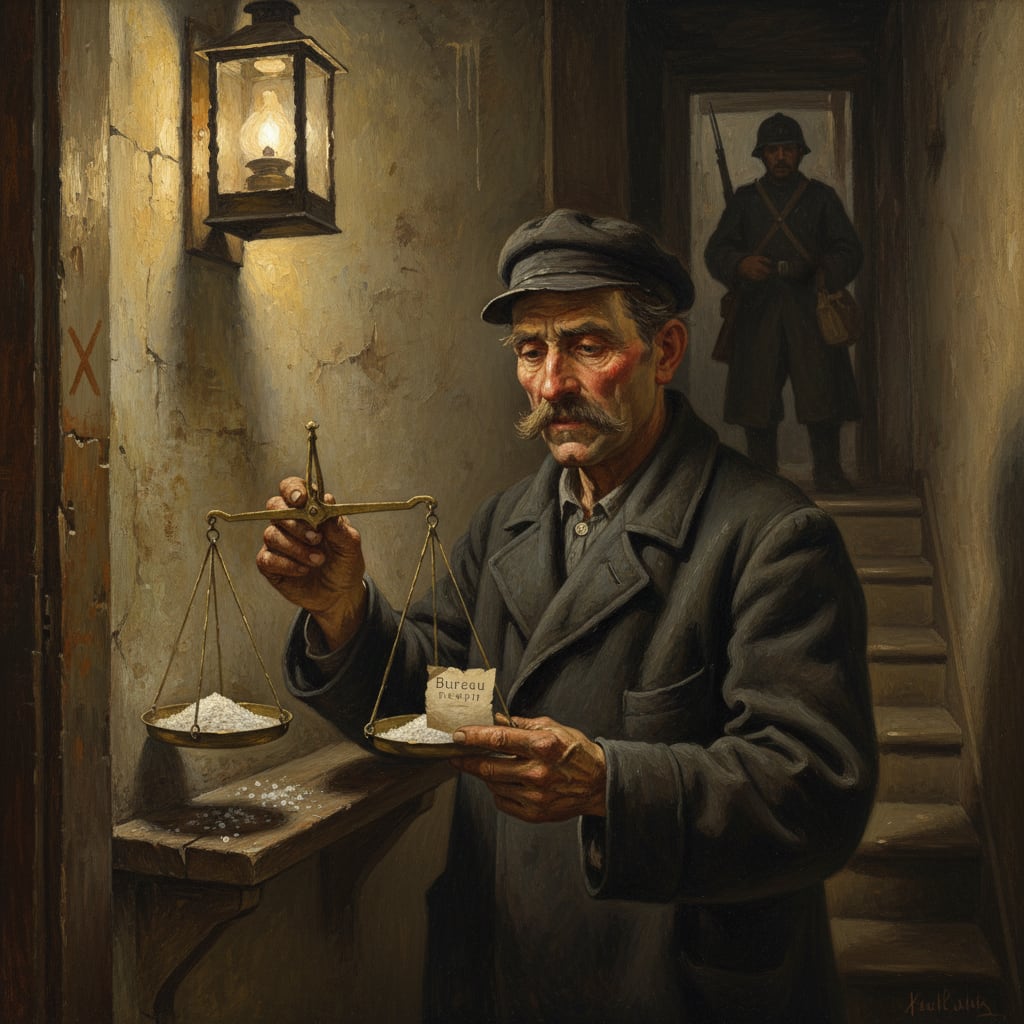
Tithe Assessor
The Bureau's walking appetite; or, what it costs to weigh the widow's salt
The Tithe Assessor is the Bureau of Tithes' primary field instrument — a man with scales, seal cord, and an armed escort who determines whether a family's payment purchases another week of existence. He arrives. He weighs. He chalks the door.
Codex Ref. XII.46.01-001
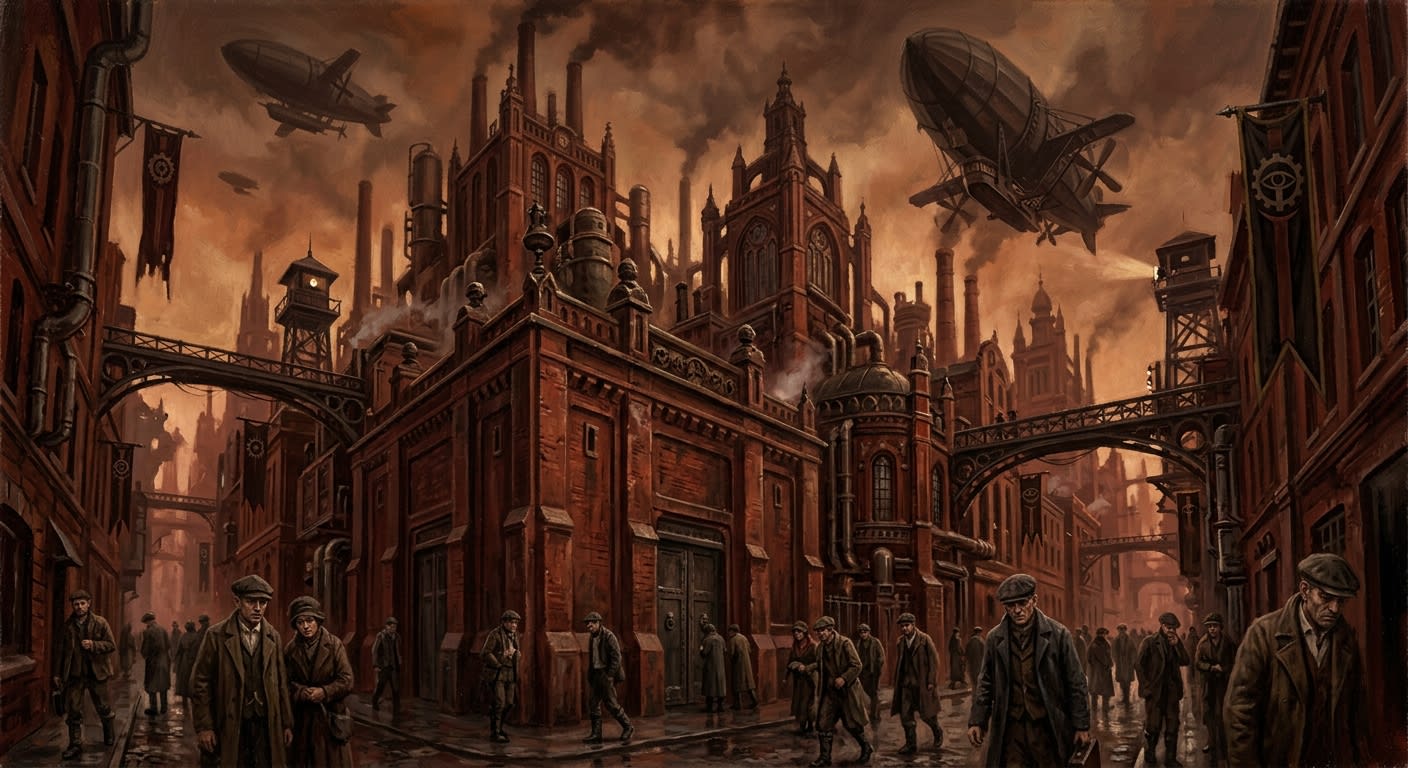
Toulouse
The safe city where Purity learned its grammar
Toulouse is the red-brick safe city corrected in A.S. 93: birthplace of Purity's public dread, still loyal, profitable, lowered-voiced, and watched.
Codex Ref. II.1.09-093

Unauthorized Melody Smuggler
The lullaby the Bureau buried; the mouth it walks out of now
The Unauthorized Melody Smuggler is classified under Tongue-Crime, Melody Intent, Doctrinal Sabotage — above common theft, below armed heresy. The lullaby does not care what the Bureau calls it. It continues to walk out in someone else's mouth.
Codex Ref. XII.48.01-001
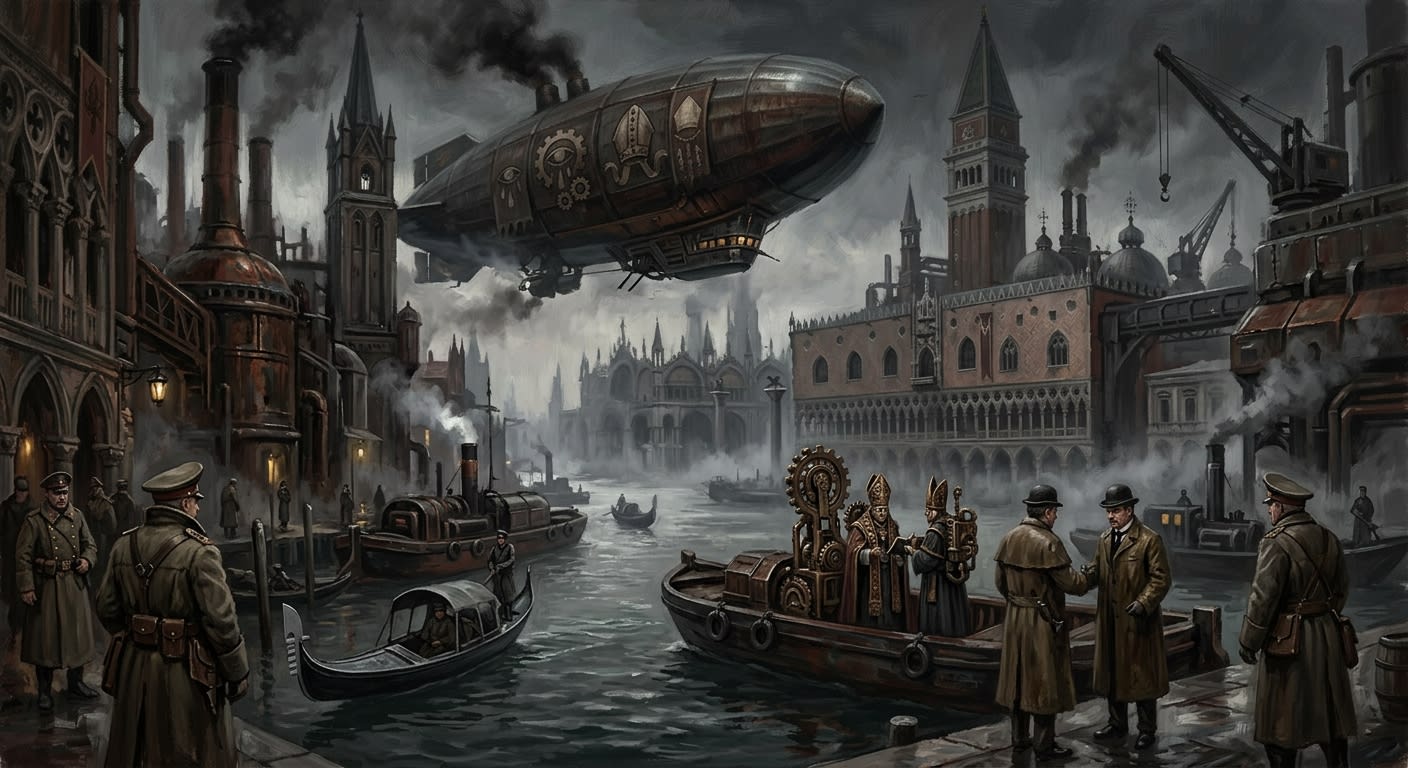
Venice
The city that obeys by tide and invoices by fog
Venice is loyal, wealthy, damp, evasive, and necessary: an Adriatic city the Synod owns by writ and must still ask politely by tide.
Codex Ref. II.4.09-201
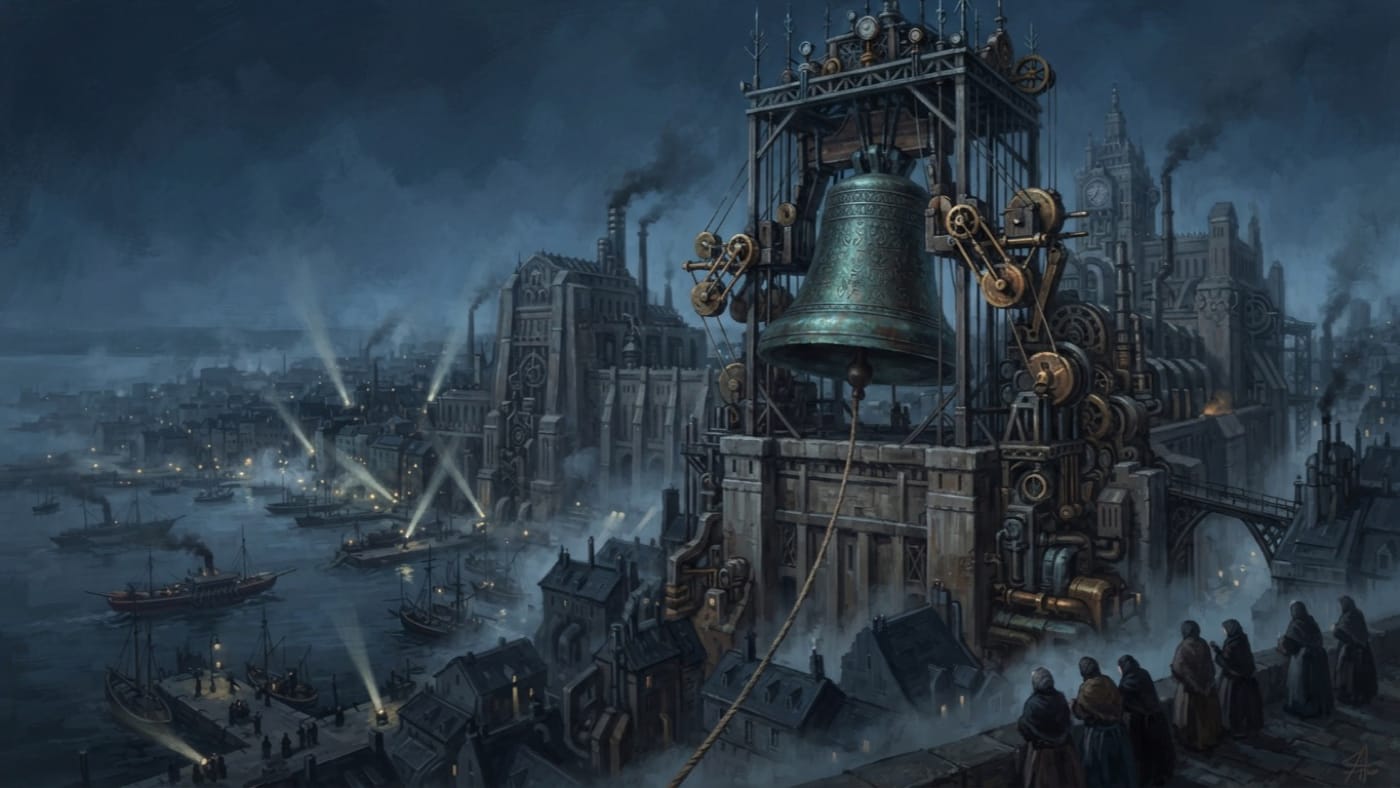
Victor, Great Bell of Marseille
The prayer is registered; the midnight peal has no authorised hand
Victor is the largest of Saint-Victor's nine bells, bronze bearing a prayer against shipwreck over Marseille. Its midnight return-peal remains filed, denied and unexplained.
Codex Ref. XIII.1.62-235
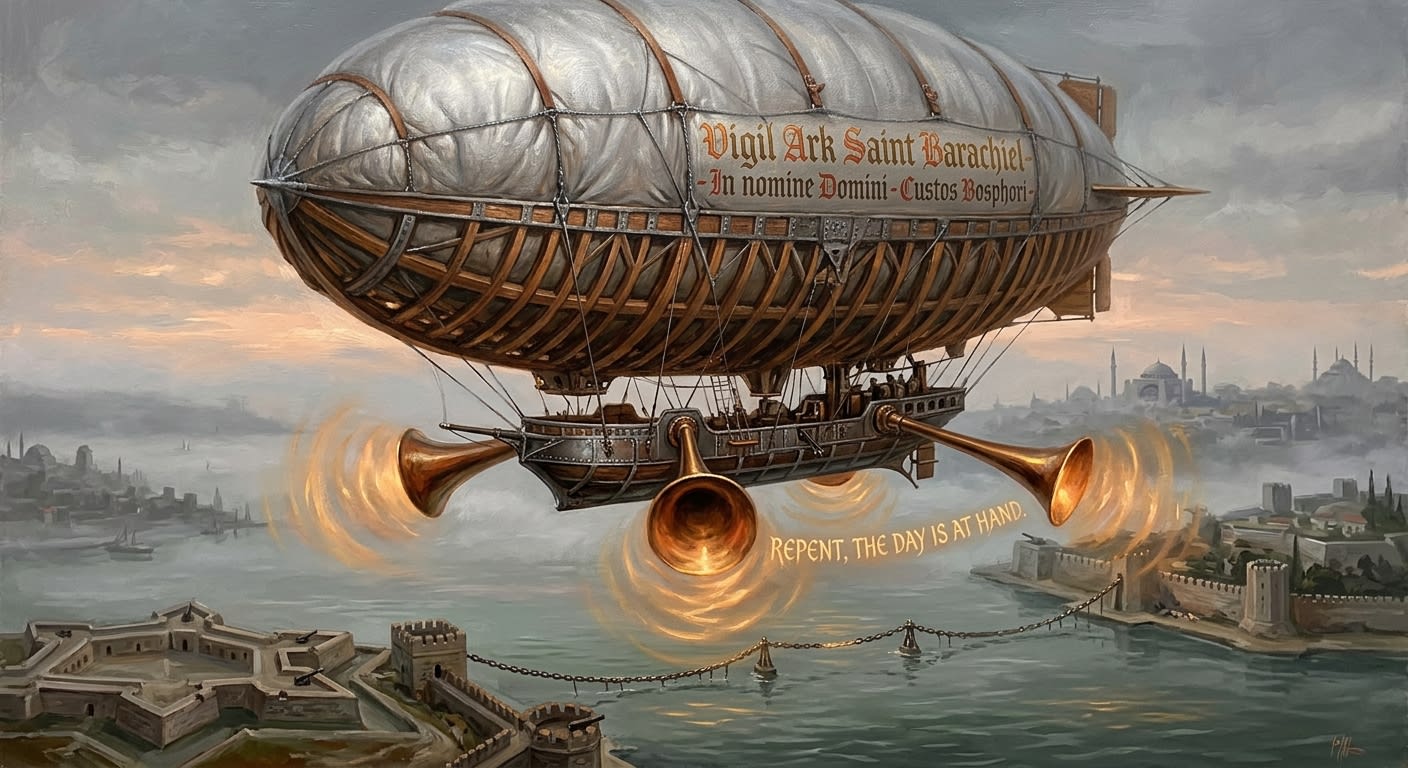
Vigil Ark *Saint Barachiel*
On the consecrated dirigible that blesses the Bosphorus sky, the sermon heard forty feet below the water, and the eleven minutes forty-three seconds of A.S. 199 the Bureau has classified as Not Our Co
The Vigil Ark Saint Barachiel: armed dirigible-reliquary, Constantinople theater, A.S. 168–present. Thirty-three years of consecrated patrol. One unexplained Broadcast. The Ark flies. The Bureau recommends continued faith.
Codex Ref. II.4.11-001
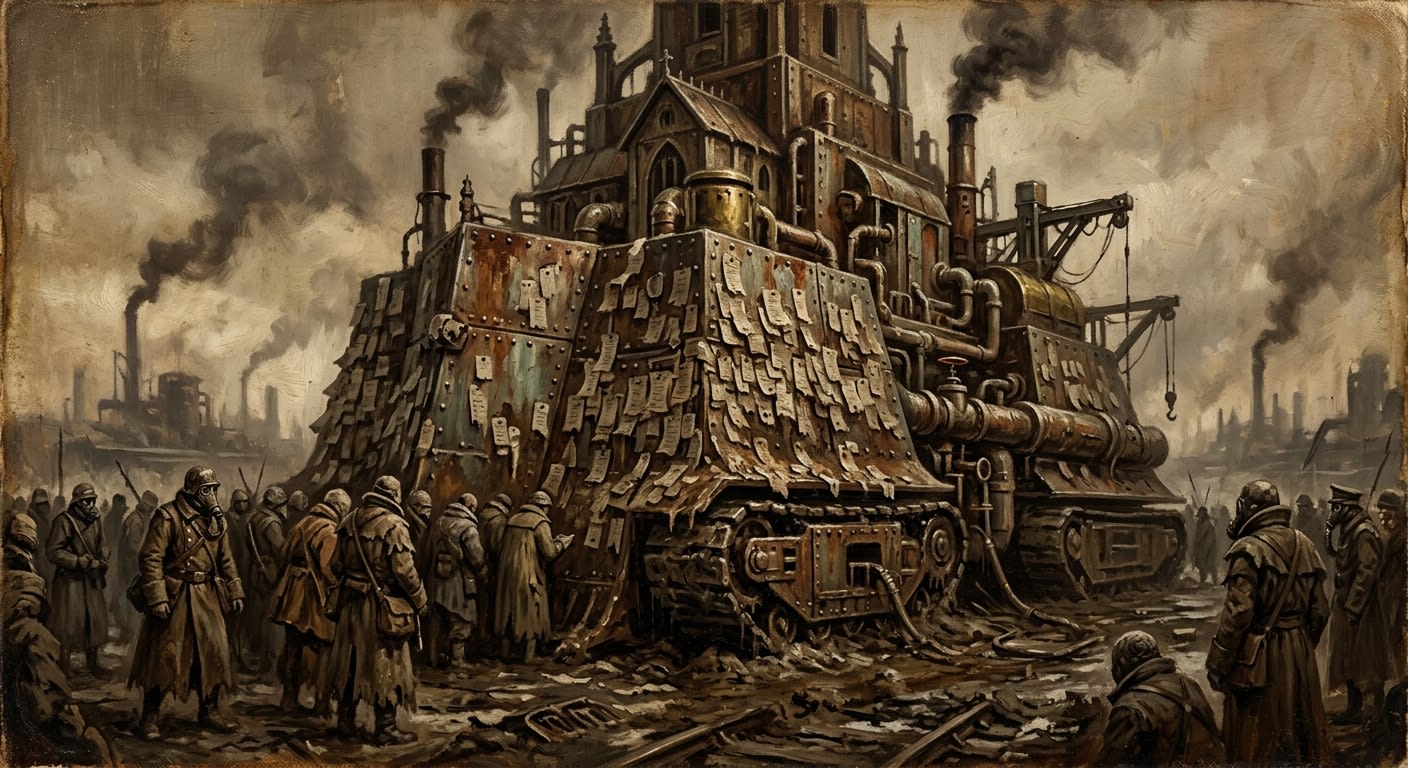
Vigil Ark of Saint Uriel
Fully assembled, fully consecrated, fully maintained, and grounded
The Vigil Ark of Saint Uriel was authorised to sanctify the southern Bellway in A.S. 191. It has lifted four times, flown never, and gathered petitions like rust.
Codex Ref. XIII.1.21-002
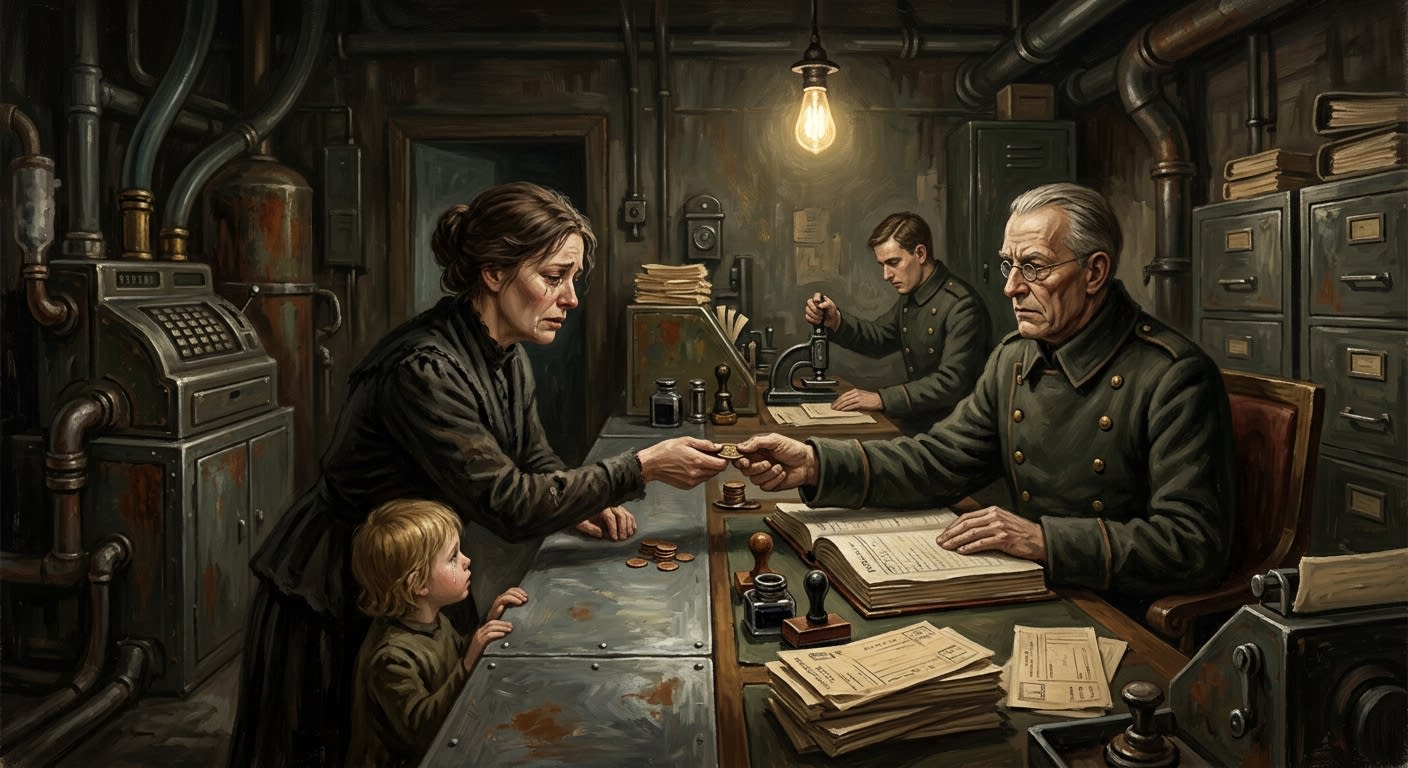
Widow's Pennies
A penny enters the palm and waits for the scale
The Widow's Pennies are the Bureau of Tithes' smallest perfected cruelty: bereavement turned into household continuity, route discipline, and receipt.
Codex Ref. XIII.1.85-065
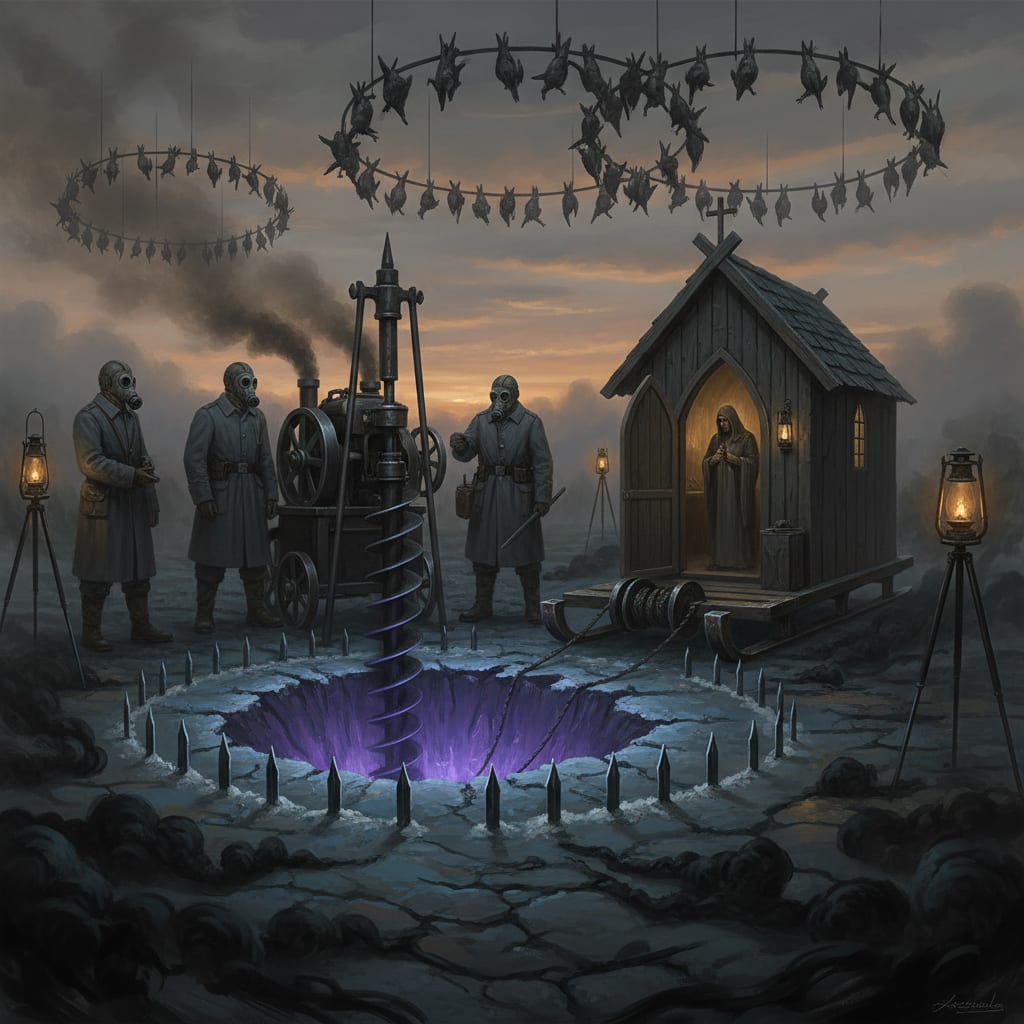
Wound-Site Prospector
The earth seeps; the drums breathe; the Bureau explains neither, and taxes both
The licensed harvesters of demon-seep from wound-sites — chartered by the Bureau of Tithes, destroyed by the work, and collectively silent on the one event that explains everything. The drums breathe at night.
Codex Ref. XII.50.01-001
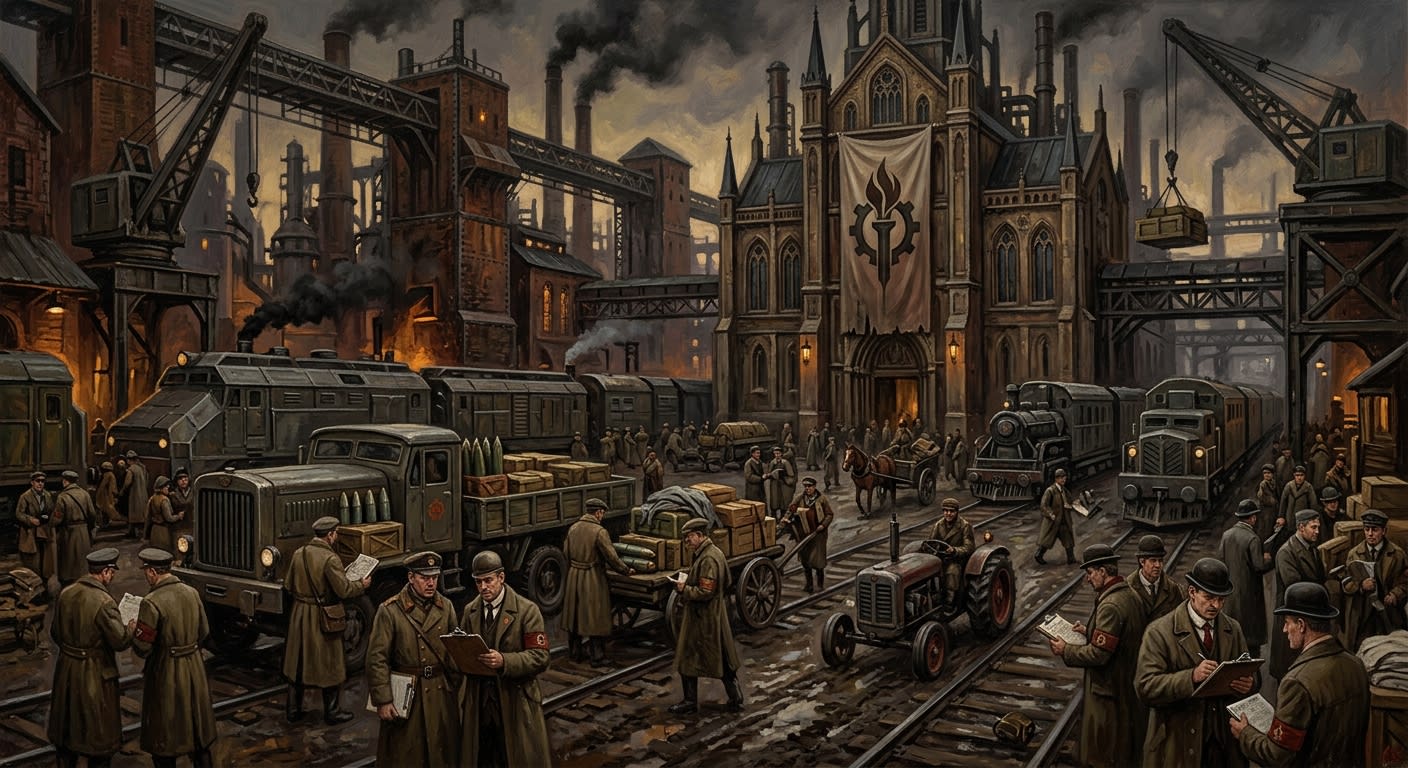
Zone 1
The rearward paradise that learned to invoice the war
Zone 1 is the Synod's polished western rear: safe enough to tax, rich enough to excuse itself, and stained to the elbows by logistics.
Codex Ref. II.0.03-201
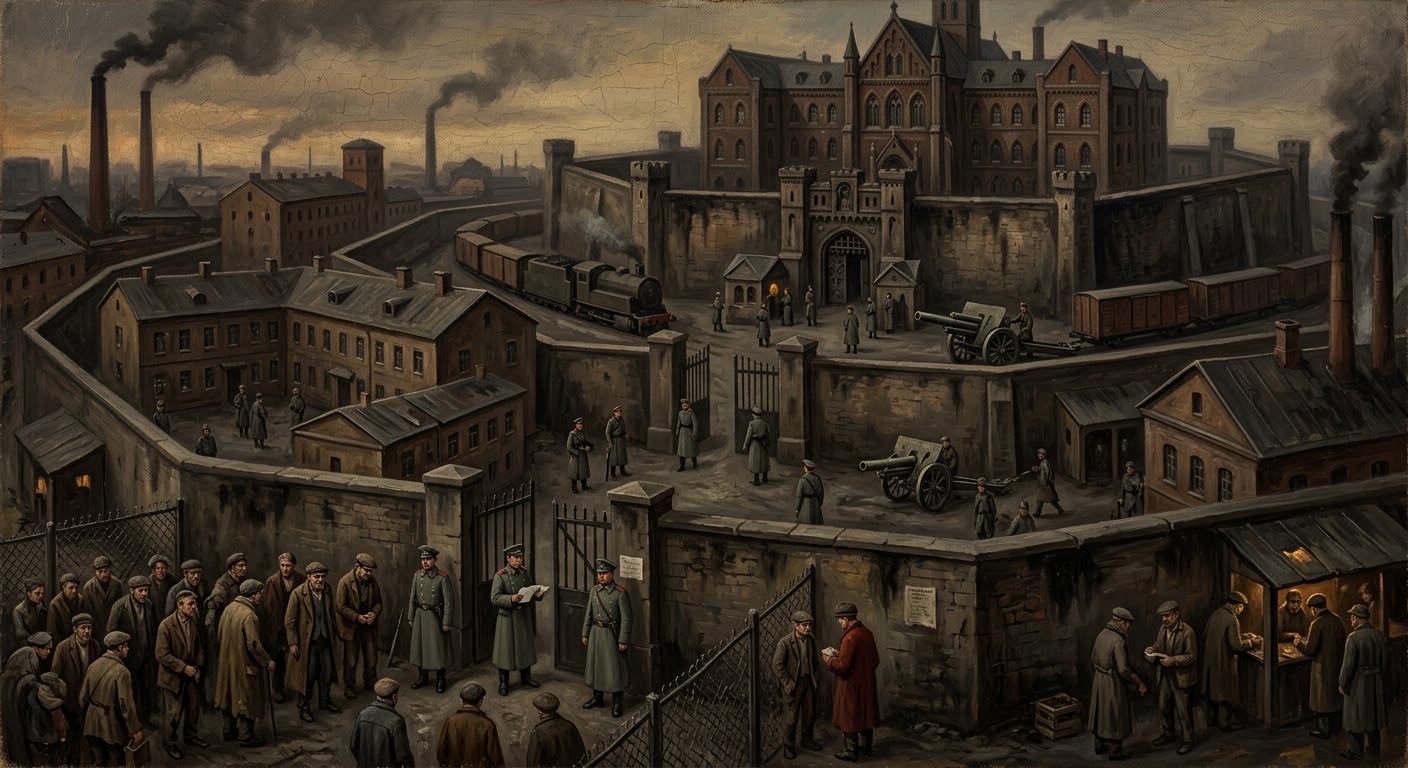
Zones 1 through 5
Five lawful pressures between invoice and mud
Zones 1 through 5 are graded permissions for bread, sons, movement, fear, artillery, and the state’s appetite.
Codex Ref. XIII.1.00-201
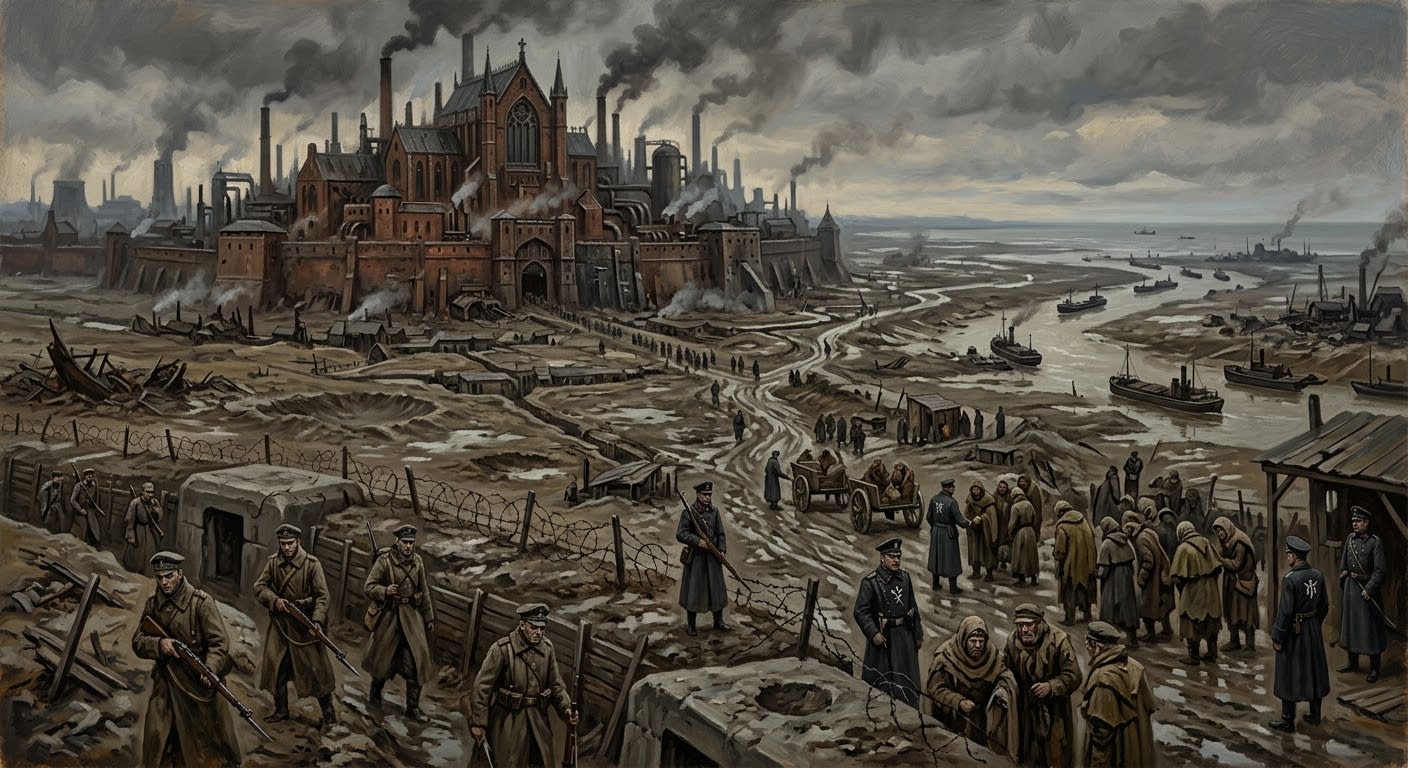
Zones 5 through 7
Mud, mouth, water — the outer grammar of danger
Zones 5 through 7 are the Synod’s controlled contact belt: contested mud, demonic custody, sea-rim commerce, contraband, pilgrimage, and useful contamination.
Codex Ref. XIII.1.00-207