

Reverse Index
Referencing “The Atheist Wars”
Every codex entry that links to The Atheist Wars. 142 entries.
Return to The Atheist Wars
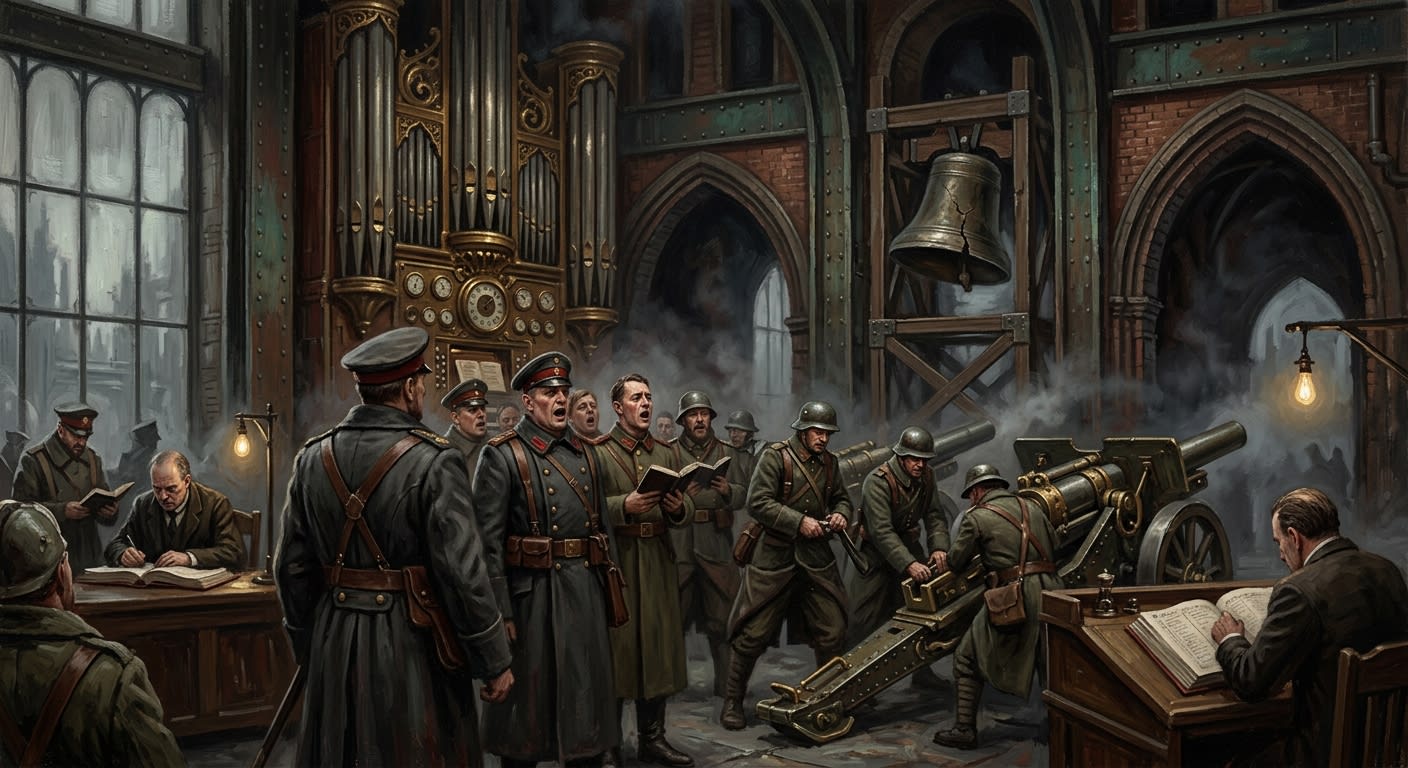
4th Orison Company
Where prayer learned range tables and glass learned to sing
The 4th Orison Company sang before Orison had a charter, fired relic-shot at Toledo, and proved that a mistimed peal can make martyrs inward.
Codex Ref. VIII.6.02-015

Abbot-Registrar Solene
She made contradiction choose a widow and a loaf
Solene of Lyon, first Abbot-Registrar of Nemea, made ruins into an archive and panic into the doctrine of original by ratification.
Codex Ref. III.2.01-096
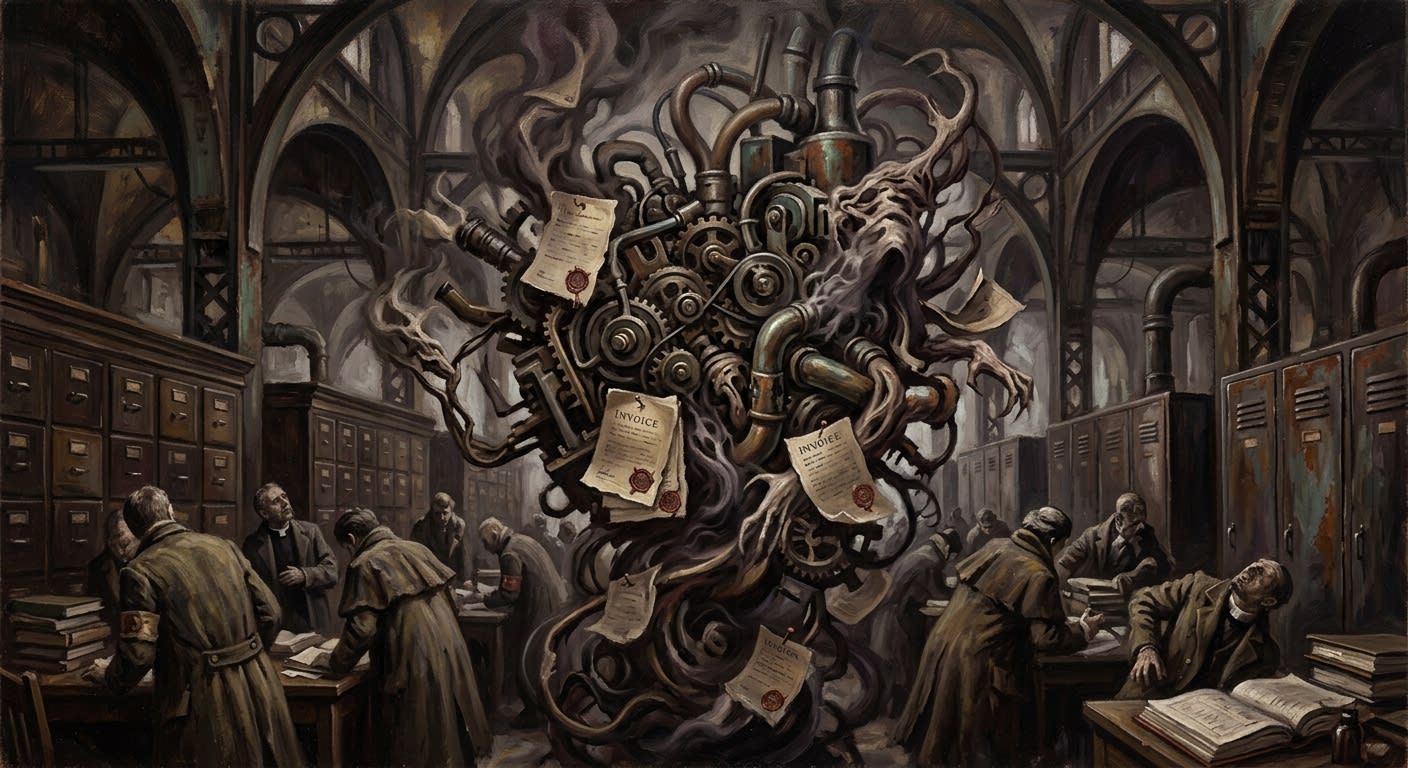
Adversary
The Enemy receives an office title and no face
The Bureau's cleanest dangerous word: a title for the hostile will behind sorcery, demons, Sin-General dominion, and every invoice Hell sends in bone.
Codex Ref. VI.3.01-001
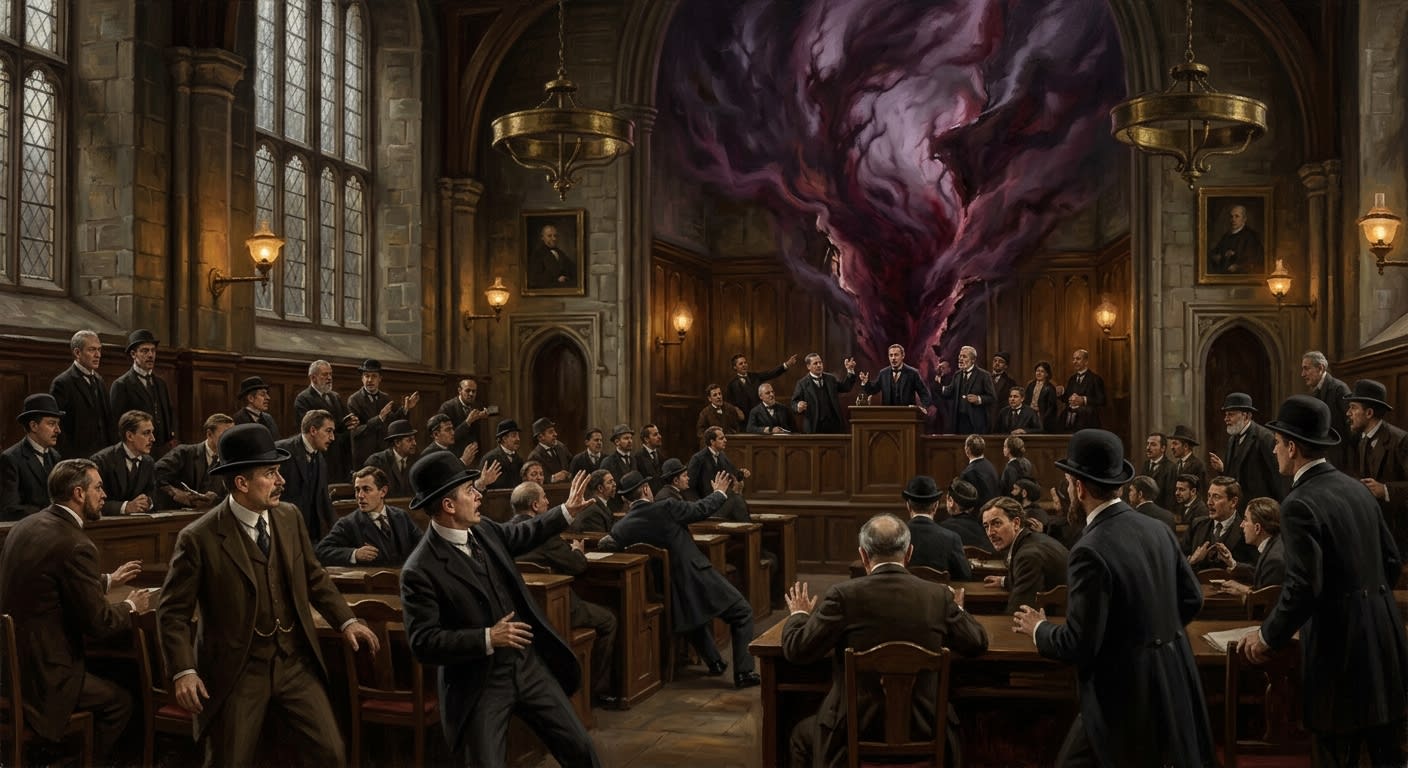
Age of Reason
The mind may hold the lamp, but Doctrine owns the flame
The Age of Reason licensed unbelief, polished desecration into civic virtue, and ended when Hell answered the lecture hall without raising its hand.
Codex Ref. XIII.1.00-001
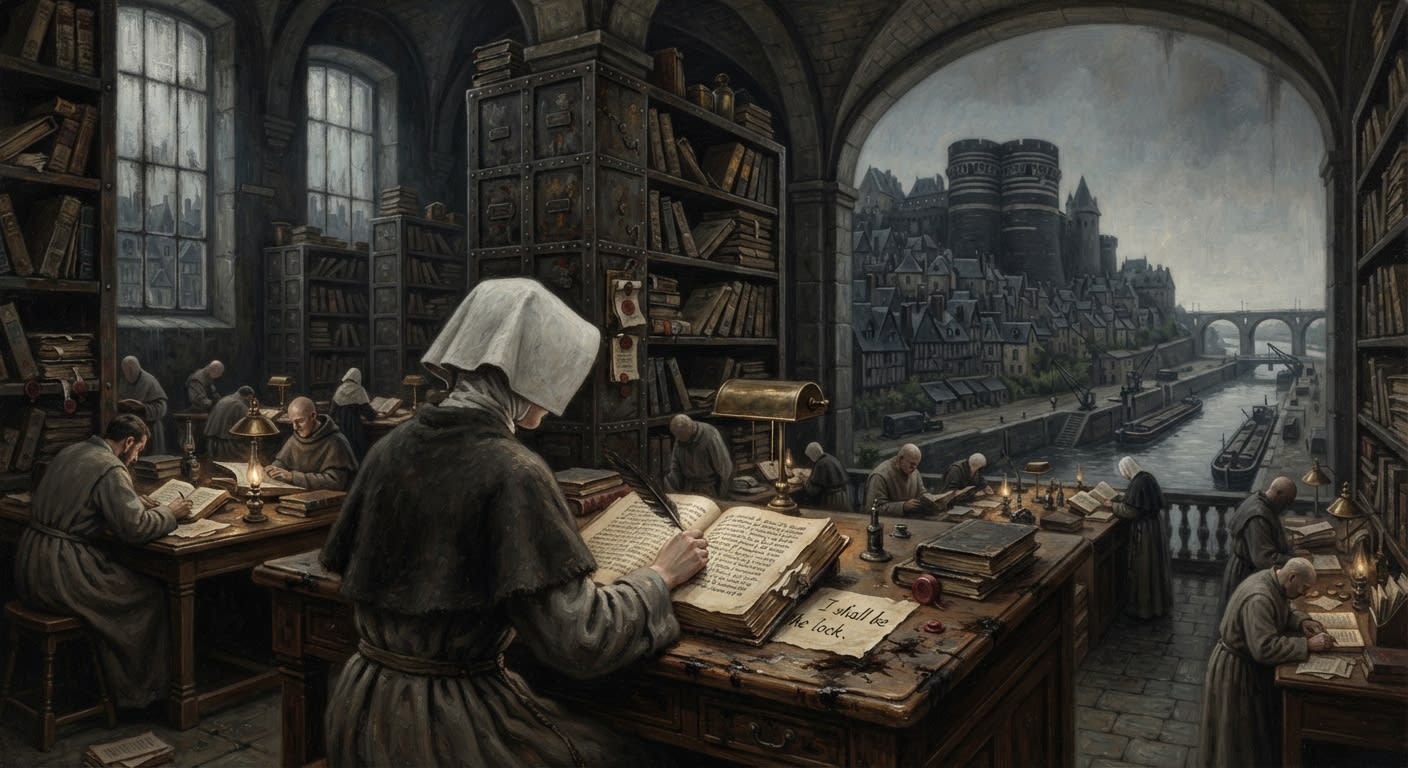
Angers
Five words, no bridge, and a city trying to found an order
Angers is a Zone One city whose claim on the Sisters of the Martyrdom rests on five psalter-margin words: I shall be the lock.
Codex Ref. II.1.09-015
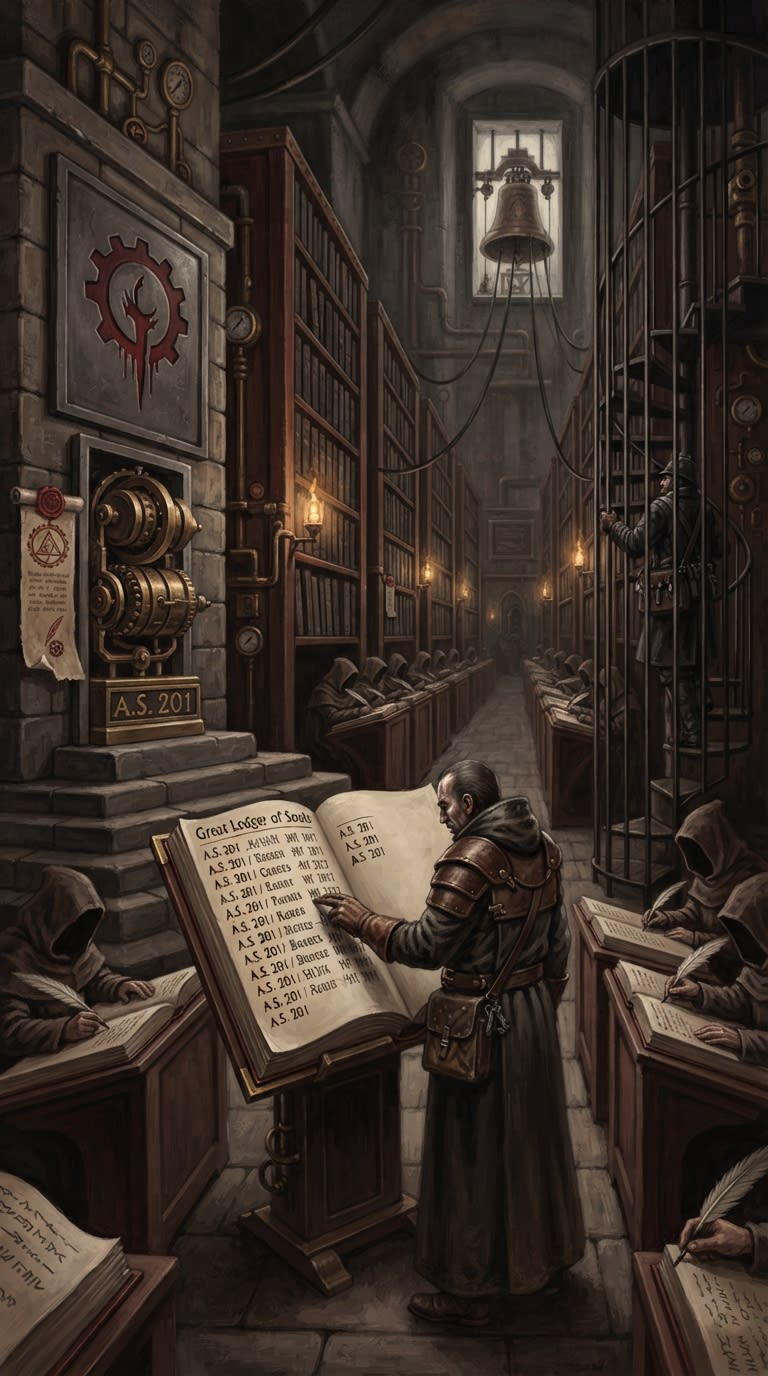
Anno Synodi
The wound by which Strasbourg owns the year
The Synod's calendar counts not from triumph but from wound: A.S. 0 at De Vera Luce, adopted retrospectively at the Concordat, and enforced by Records, Bells, and Doctrine.
Codex Ref. XIII.1.00-090
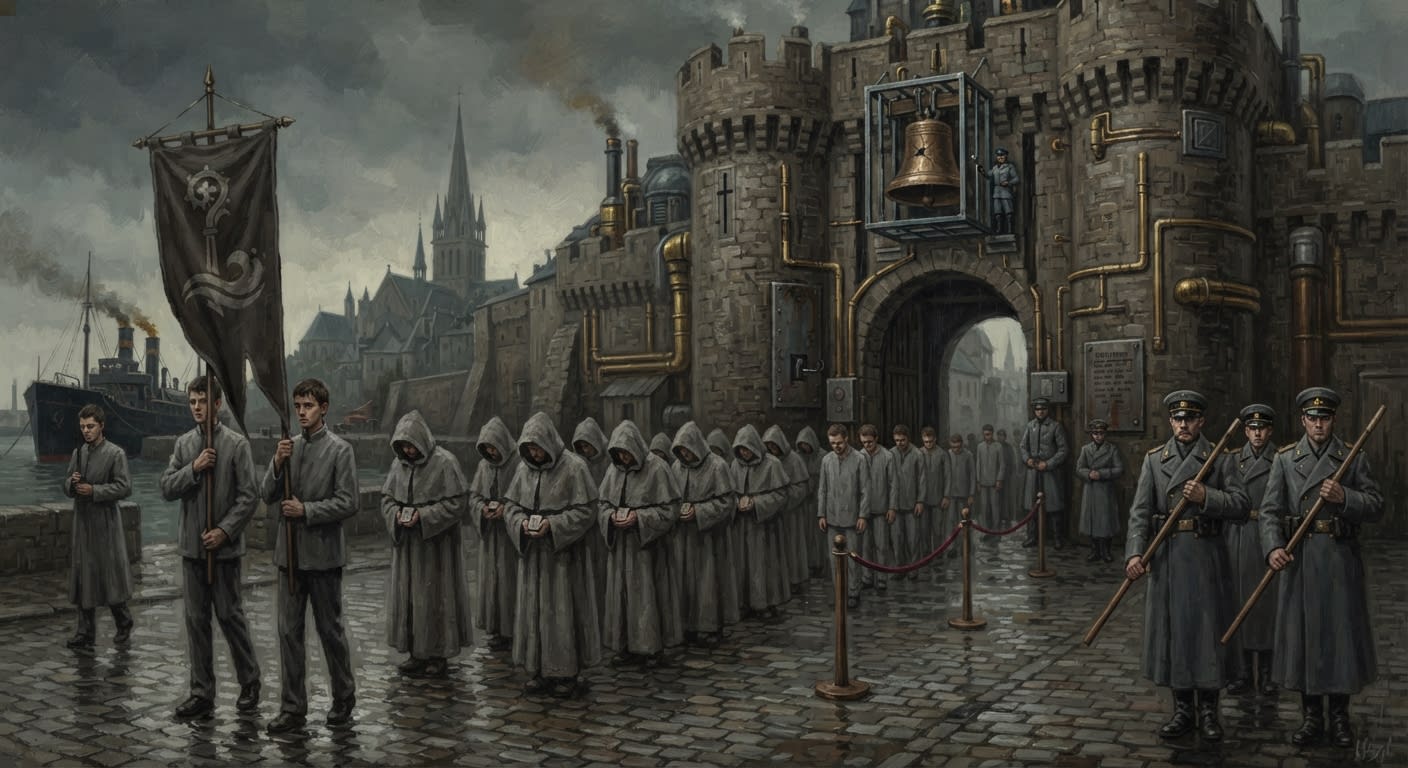
Annual Remembrance of Saint-Malo
Thirty-one tolls, forty-three seconds, and grief under licence
The annual office that makes Saint-Malo's first blood toll thirty-one times, hold forty-three seconds of silence, and remind Brittany that grief is licensed.
Codex Ref. XIII.1.87-011
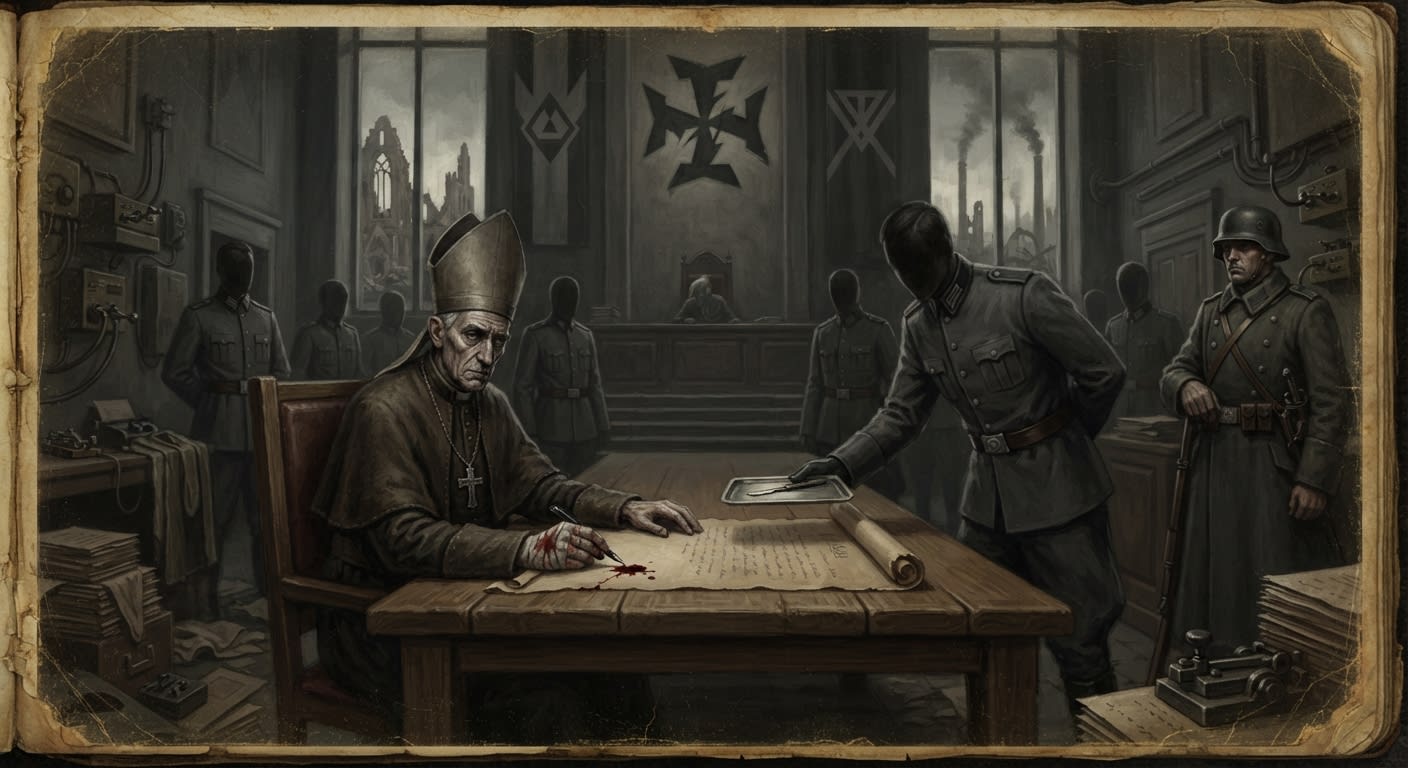
Archbishop of Vienna
The hand the Rationalists needed and Doctrine refuses to name
The unnamed prelate whose blood signed the Treaty of Regensburg, dissolved the Holy See under threat, and later became Doctrine's evidence that coercion is not consent.
Codex Ref. III.2.06-004
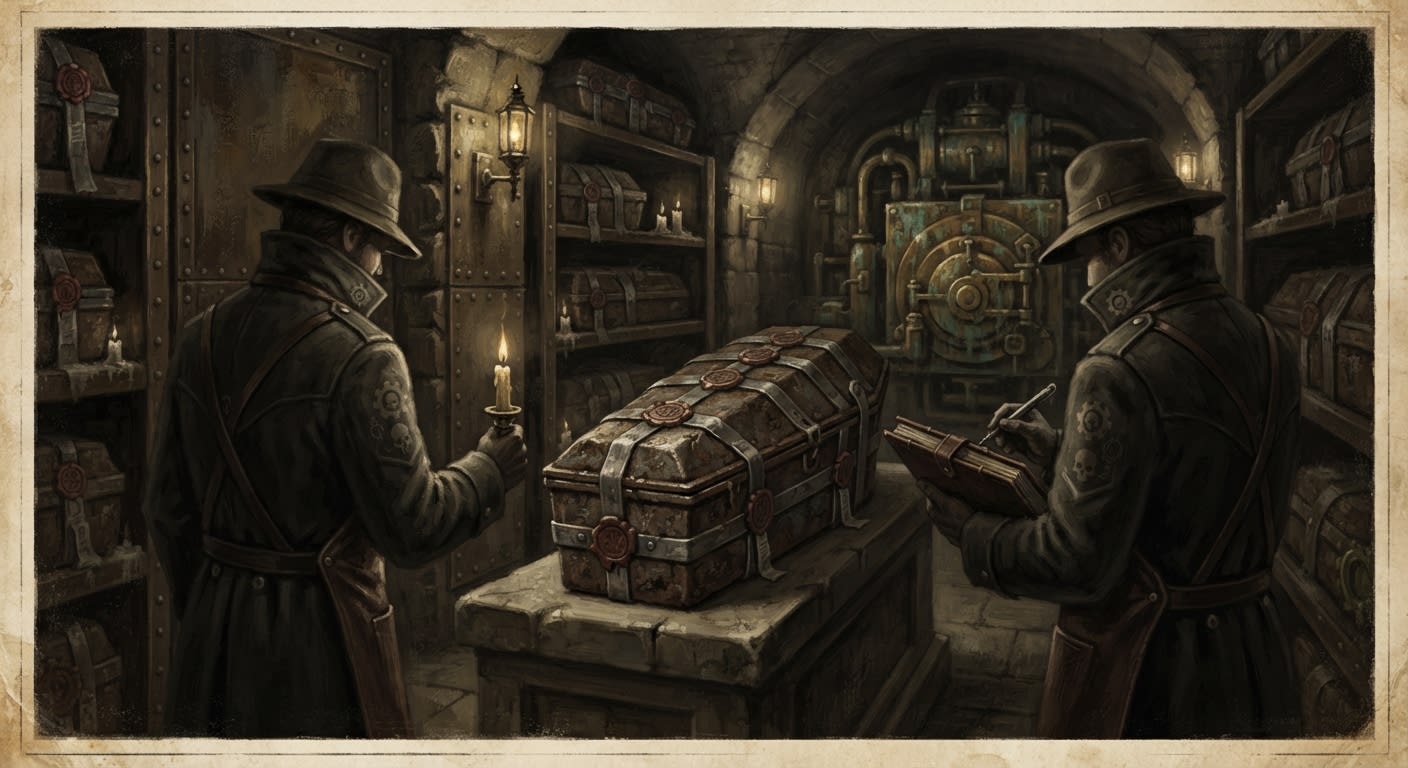
Ashes of the Sundering
The day in the jar, and the seal around the fear
The Bureau of Relics keeps a sealed iron vessel said to contain the Sundering's own residue, gathered from Vienna's cathedral floor and never opened since.
Codex Ref. V.1.03-045
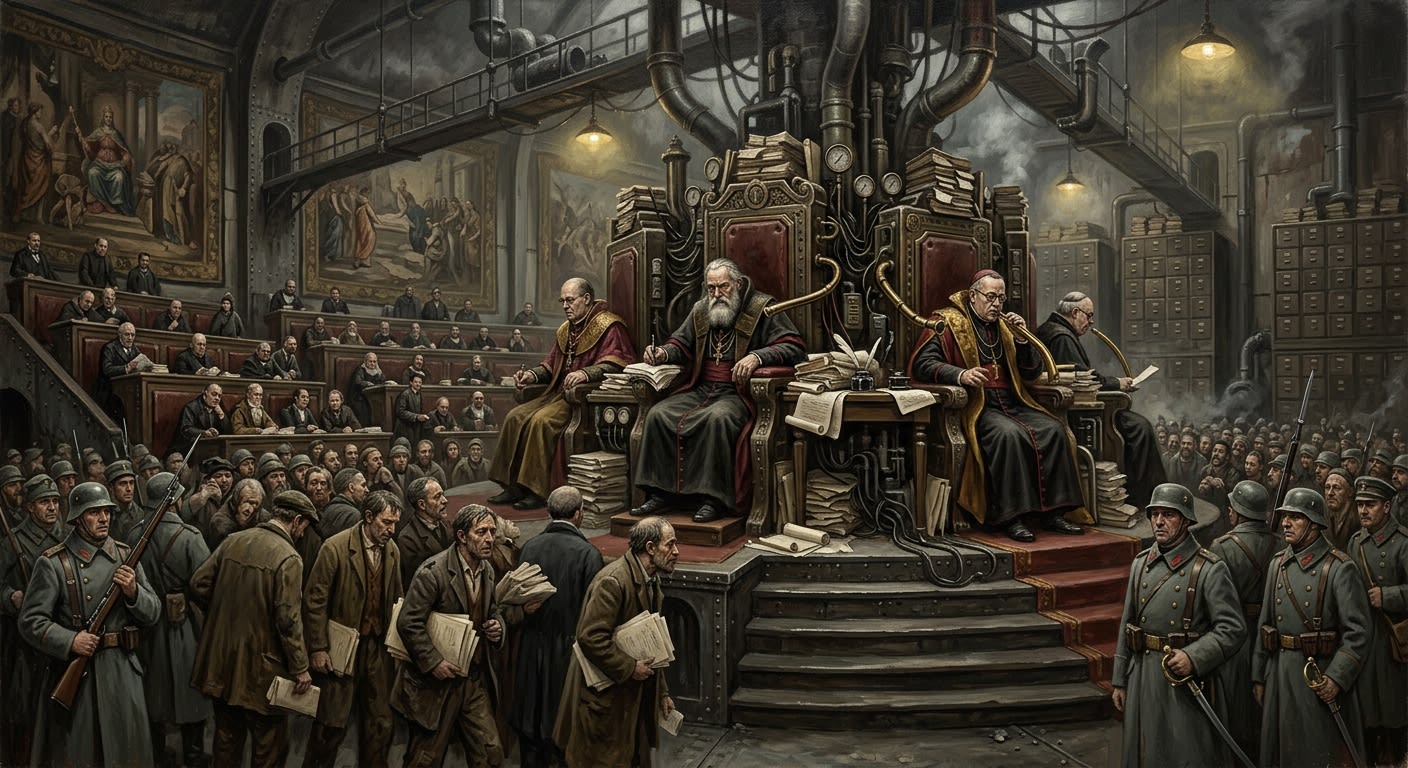
Assembly of Thrones
A chamber where pride is seated before it becomes militia
The Assembly of Thrones lets Bishops-Praetorial thunder safely: grievance seated, fury docketed, pride taxed, and every rebellion delayed by procedure.
Codex Ref. XIII.1.07-093
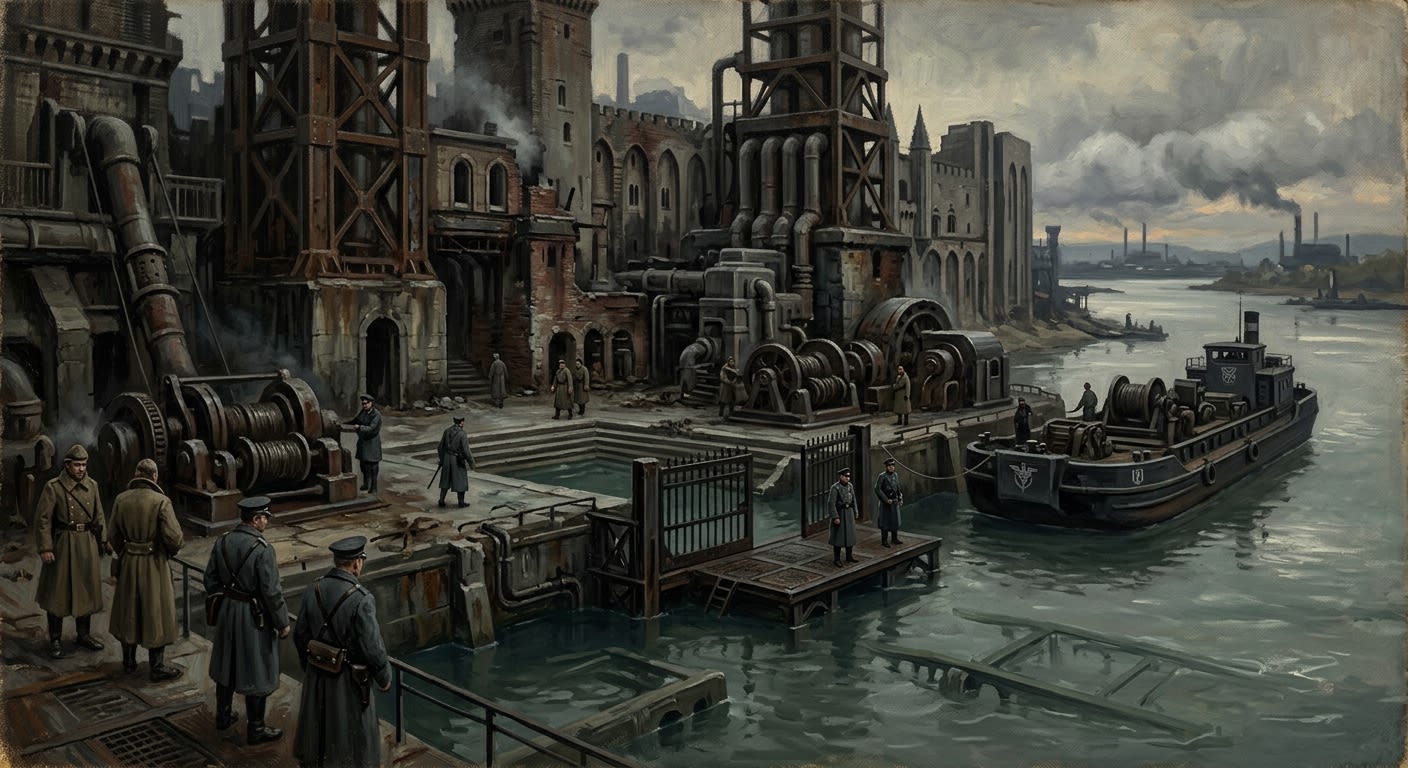
Avignon
A city corrected so thoroughly the river kept the receipt
Penitential ruins on the Rhône, where the Pontifex Submersis was crowned beneath water in A.S. 111, Avignon was razed into correction, and A.S. 145 burned the calendars into agreement.
Codex Ref. II.1.08-111
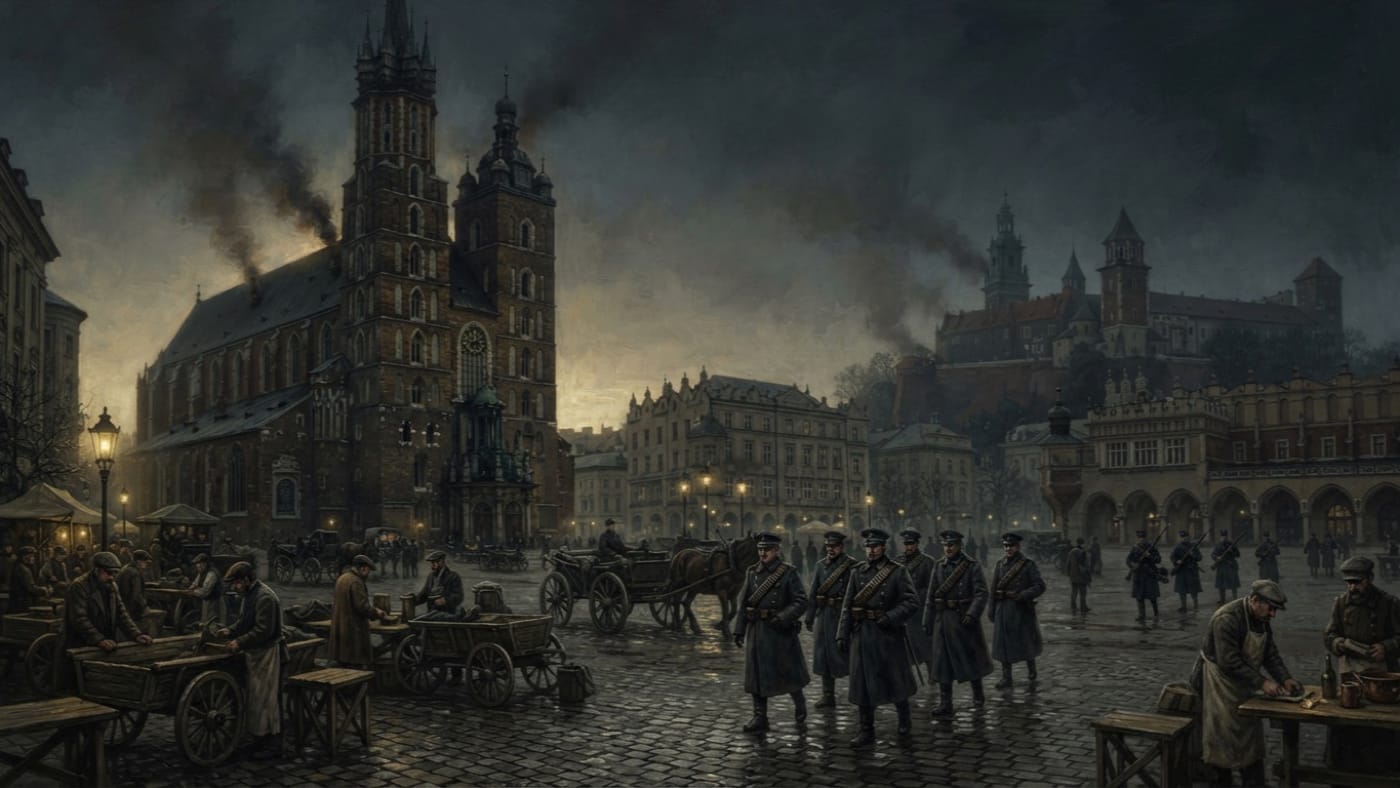
Basilica of Our Lady
The stones have a place in the record; their age does not
The Basilica of Our Lady stood in Kraków's market square before the Night of Knives in A.S. 18. The Ledger certifies its place beside the trade; its founding and later fate remain unrecorded.
Codex Ref. II.3.06-003
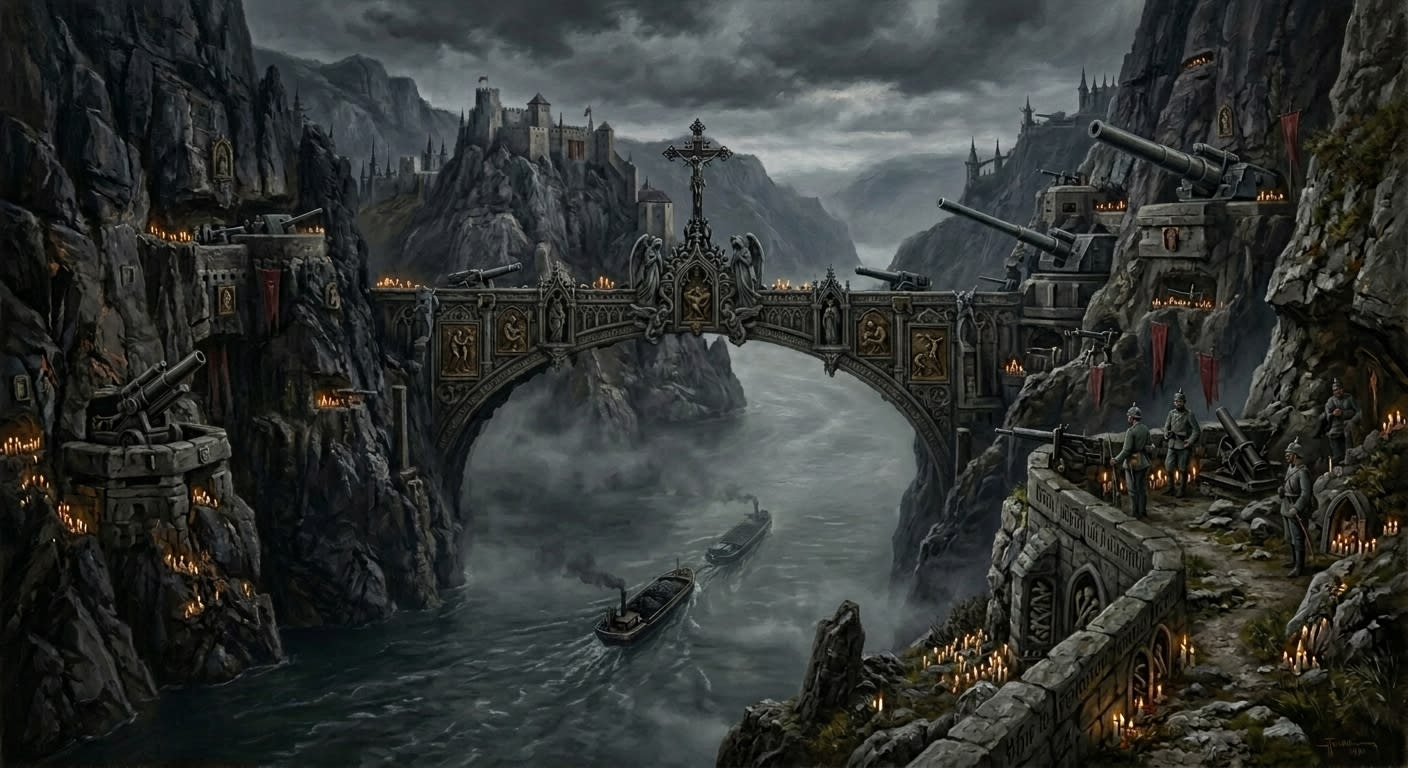
Bastion-Irongate
The mountain does not need the iron. The mountain needs the sound.
The fifth bastion of the Sagittal Line guards the Danube gorge with stone, chain-booms, and a choral infrastructure whose song is the only reason the mountain has not yet collapsed. Facing Morwen, Sin-General of Envy, who attacks not to take the gorge but to ruin it.
Codex Ref. II.4.07-005
Benedictine
Property Dispersed, Name in Circulation
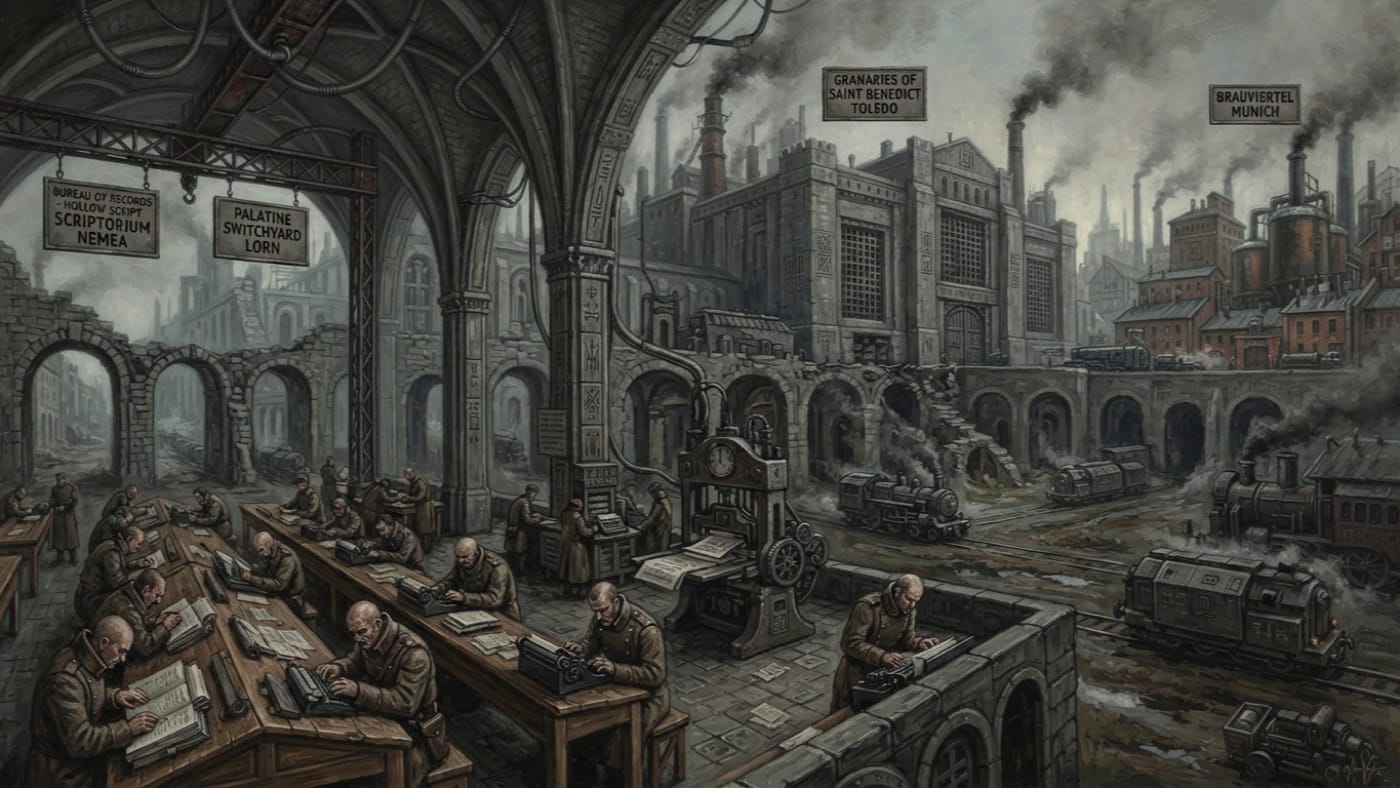
Benedictine houses trained Veyrault and left traces in Nemea and Lorn. Toledo claims their charity; Munich claims their yeast. Neither claim supplies me with a surviving order.
Codex Ref. VIII.9.02-244
Bérénice
The fire has a name; the year has no entry
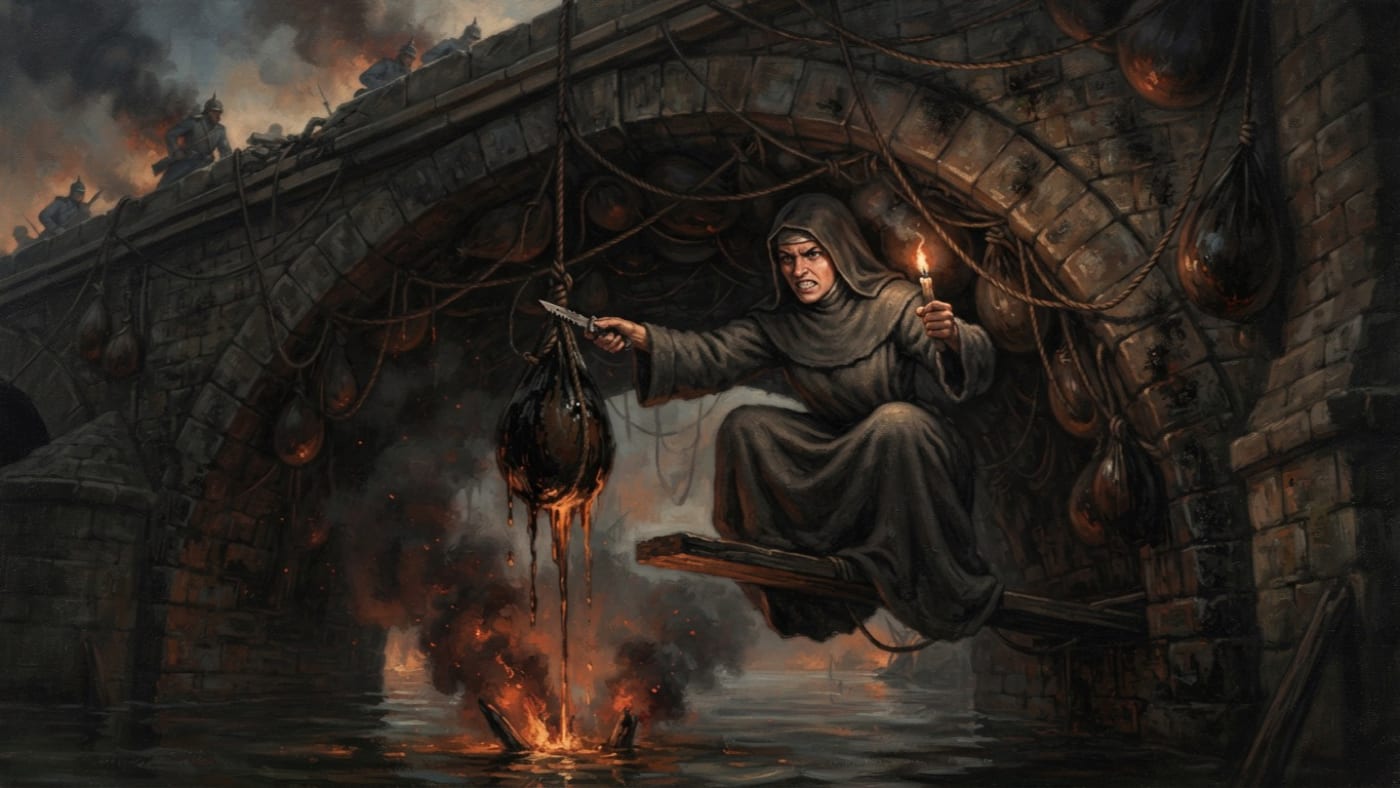
Bérénice is credited with firing the Châlons bridge from beneath its arch. The Ledger retains her deed, the masonry dispute, and an empty space where the year should be.
Codex Ref. III.2.01-245
Bishop Adelmar of Cologne
Nine days entered; a lifetime left blank
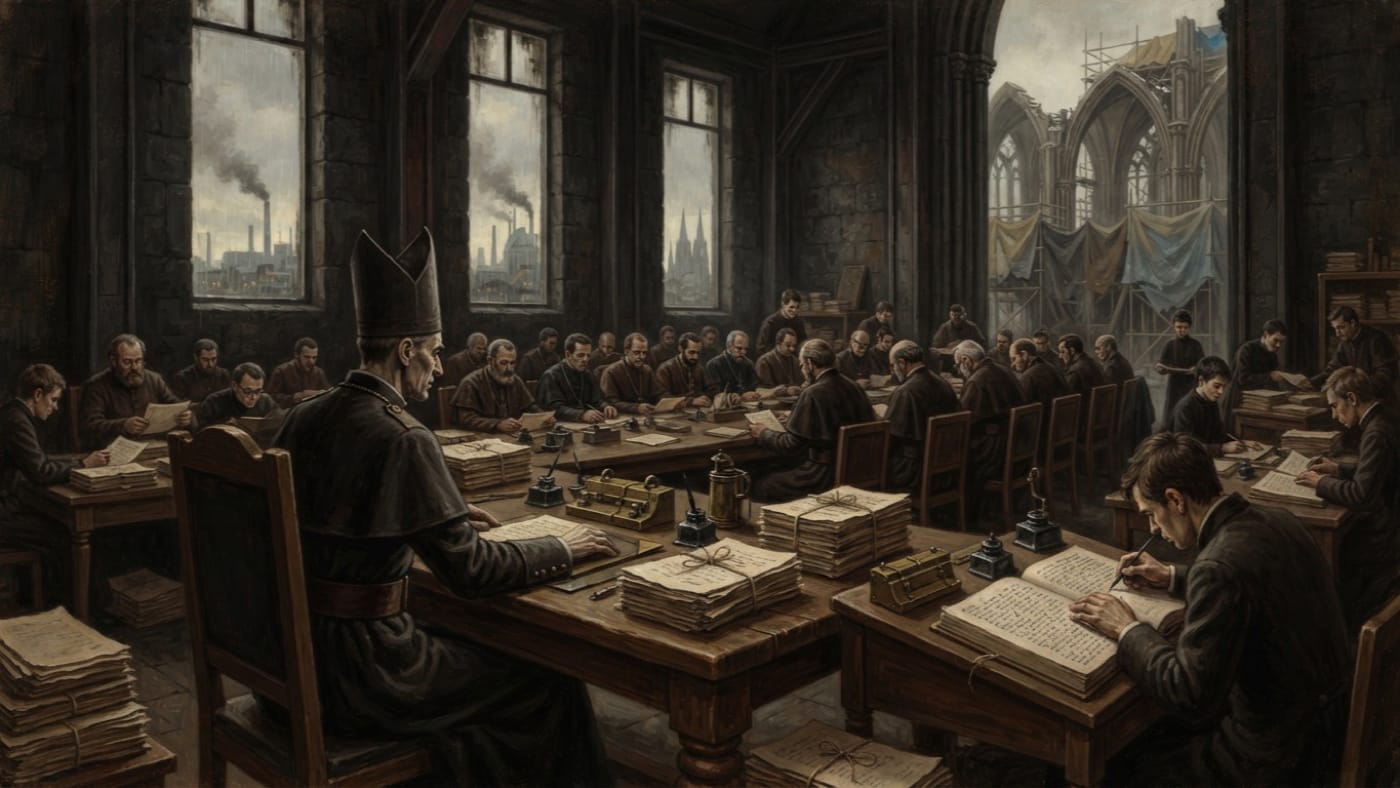
Bishop Adelmar hosted the nine-day First Council of Cologne in September A.S. 27. Seven articles failed; voluntary requests survived. His life dates remain outside the Ledger.
Codex Ref. III.2.01-253

Bishop of Worms
A title, two toasts, and an existence disputed by clerks
A bishop vanished between the ninth and tenth toasts at Regensburg in A.S. 29. Reason declared him nonexistent; Records keeps his file open and his fate unproved.
Codex Ref. III.2.01-257
Bräuviertel
The Brewery Quarter older than the stamp and too taxable to condemn
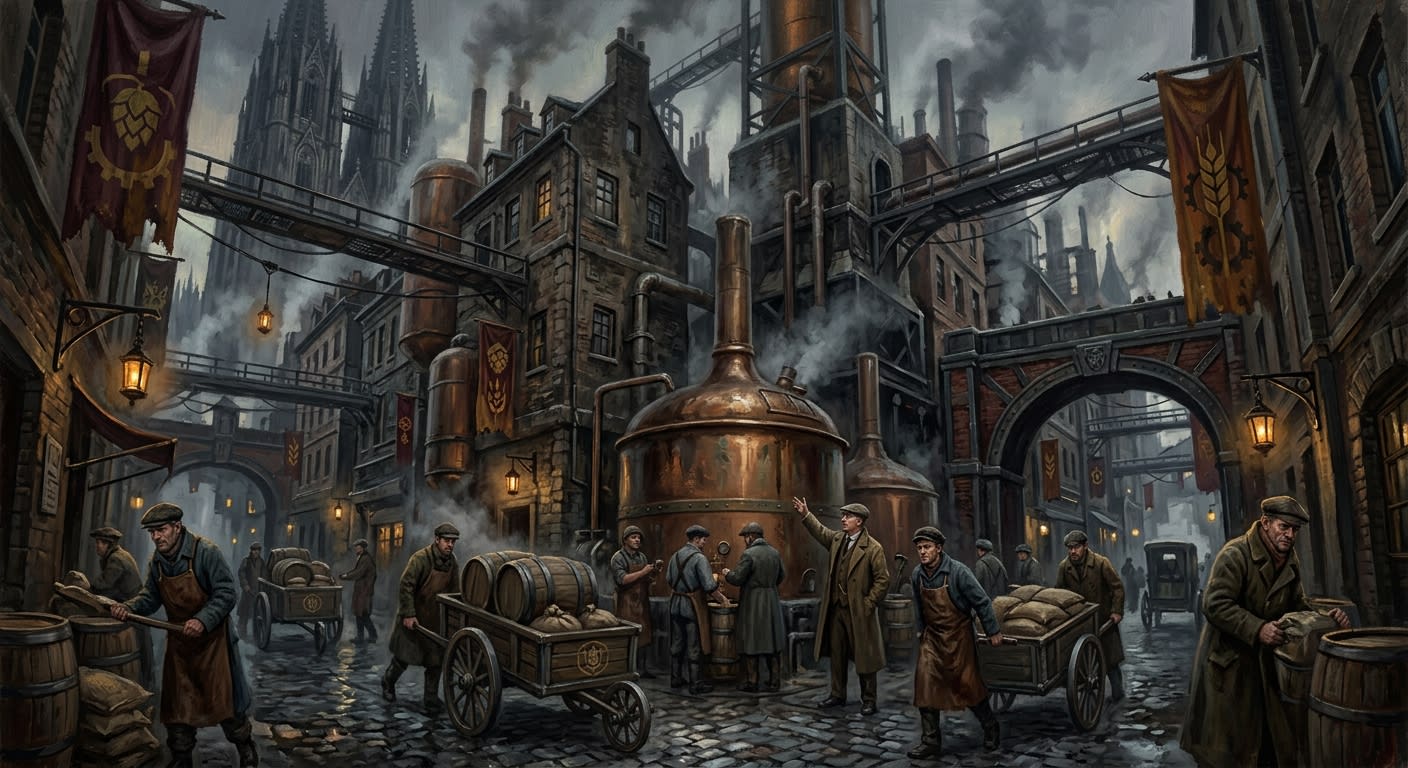
Munich's Bräuviertel is a thirty-seven-block brewery quarter between the Provisorium and the old cathedral precinct: ancient, taxable, doctrinally irritating, and still boiling.
Codex Ref. II.2.06-015
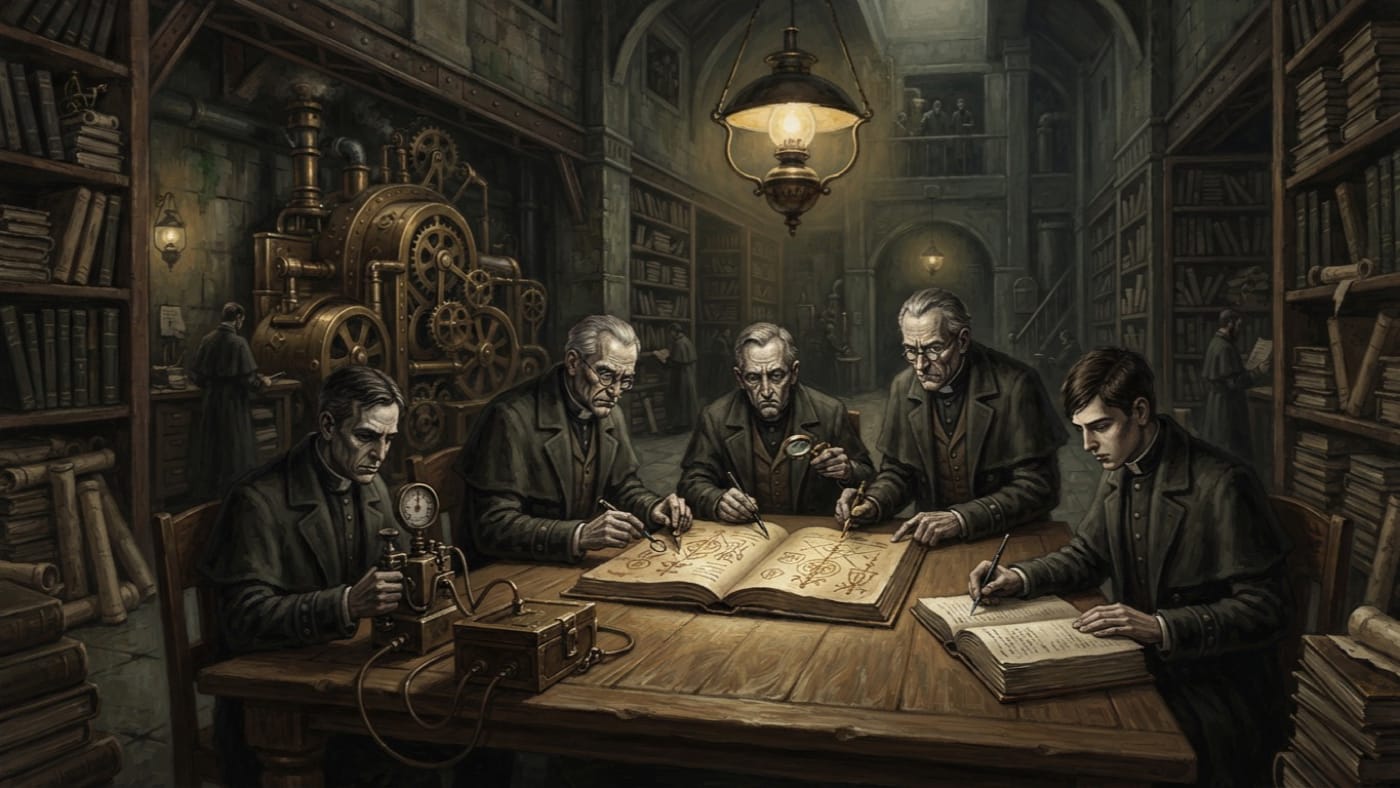
Bureau of Doctrine Declaration of A.S. 23
Engineering may measure the conduit; Doctrine keeps the verdict
The received Declaration of A.S. 23 distinguishes miracle from sorcery by source. The conduit may be measured; the verdict belongs to Doctrine, which reports that its rule has never changed.
Codex Ref. VI.3.01-023
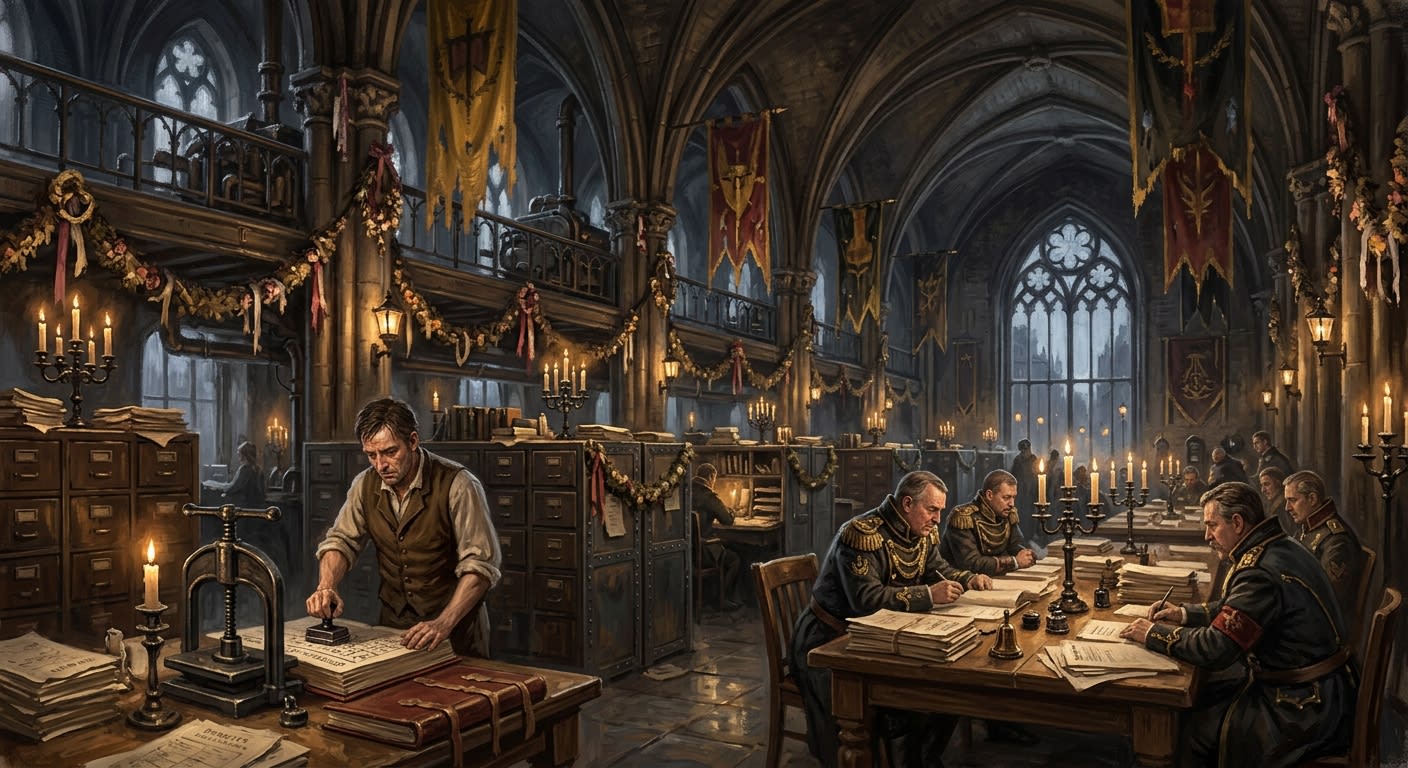
Bureau of Festivals
Joy, administered at scale — licensed, measured, and periodically revoked
The Bureau that manufactures joy, schedules grief, and meters celebration with the same rigour the Bureau of War applies to troop rotations — and which has, on seventeen documented occasions, deployed confetti.
Codex Ref. VIII.5.01-001
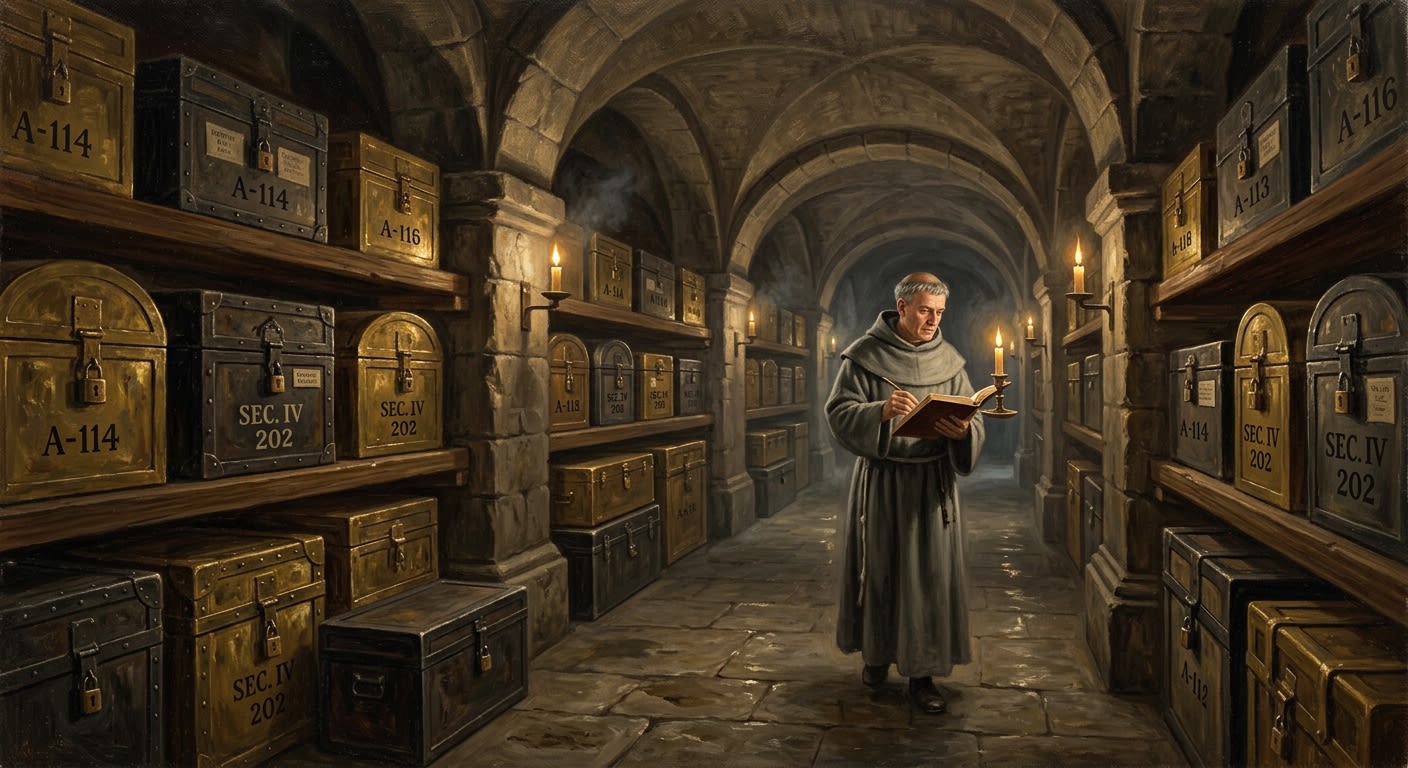
Bureau of Relics
The stamp is not the sanctity. The stamp is merely necessary.
The Bureau of Relics guards four thousand seven hundred authenticated bones, adjudicates the holiness of ash, and maintains the cheerful institutional fiction that it controls the things it catalogues.
Codex Ref. IV.3.12-019
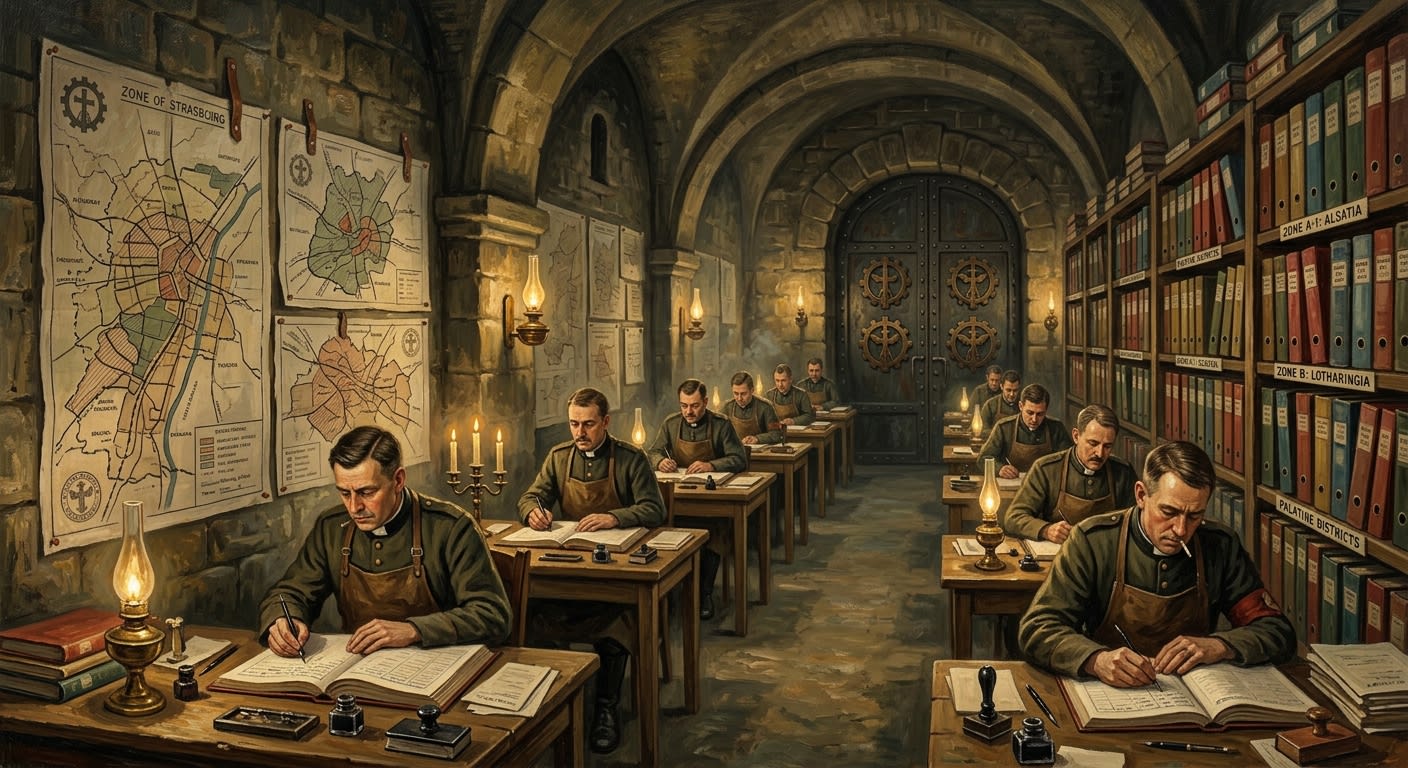
Bureau of Settlement
Where three hundred million subjects are permitted to stand — and by whose leave.
The Bureau of Settlement does not appear in the twelve canonical portfolios. No crimson sash, no hymn. What it has is authority over the address of every living subject of the Theocracy — and the knowledge that no one listens until the plumbing fails.
Codex Ref. IV.3.08-001
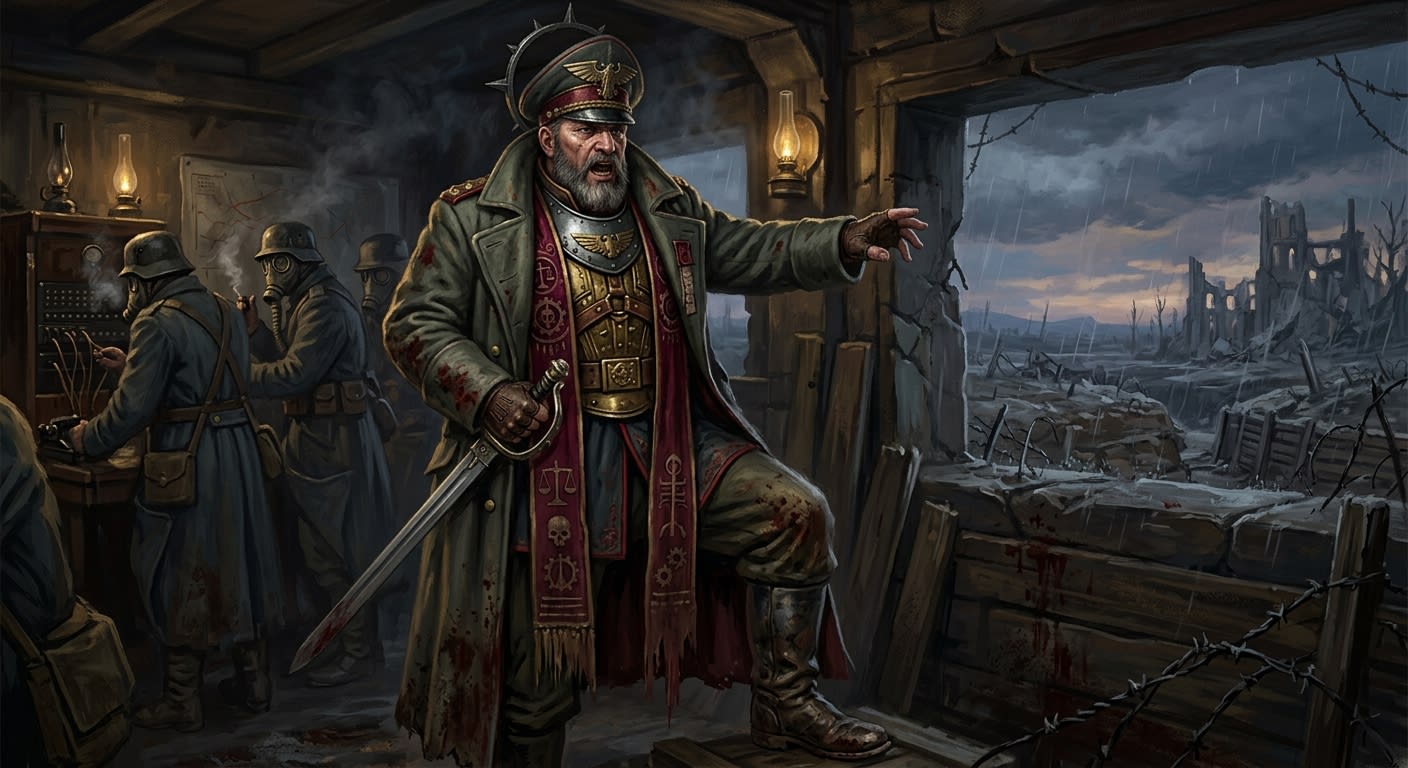
Cardinal-Marshal Severin of Avignon
The tourniquet of Montreval, ugly enough to save a front
Severin of Avignon held Montreval through the Atheist Wars: severe, loud, bloodstained, and too useful for the Bureau to canonise cleanly.
Codex Ref. III.2.01-007
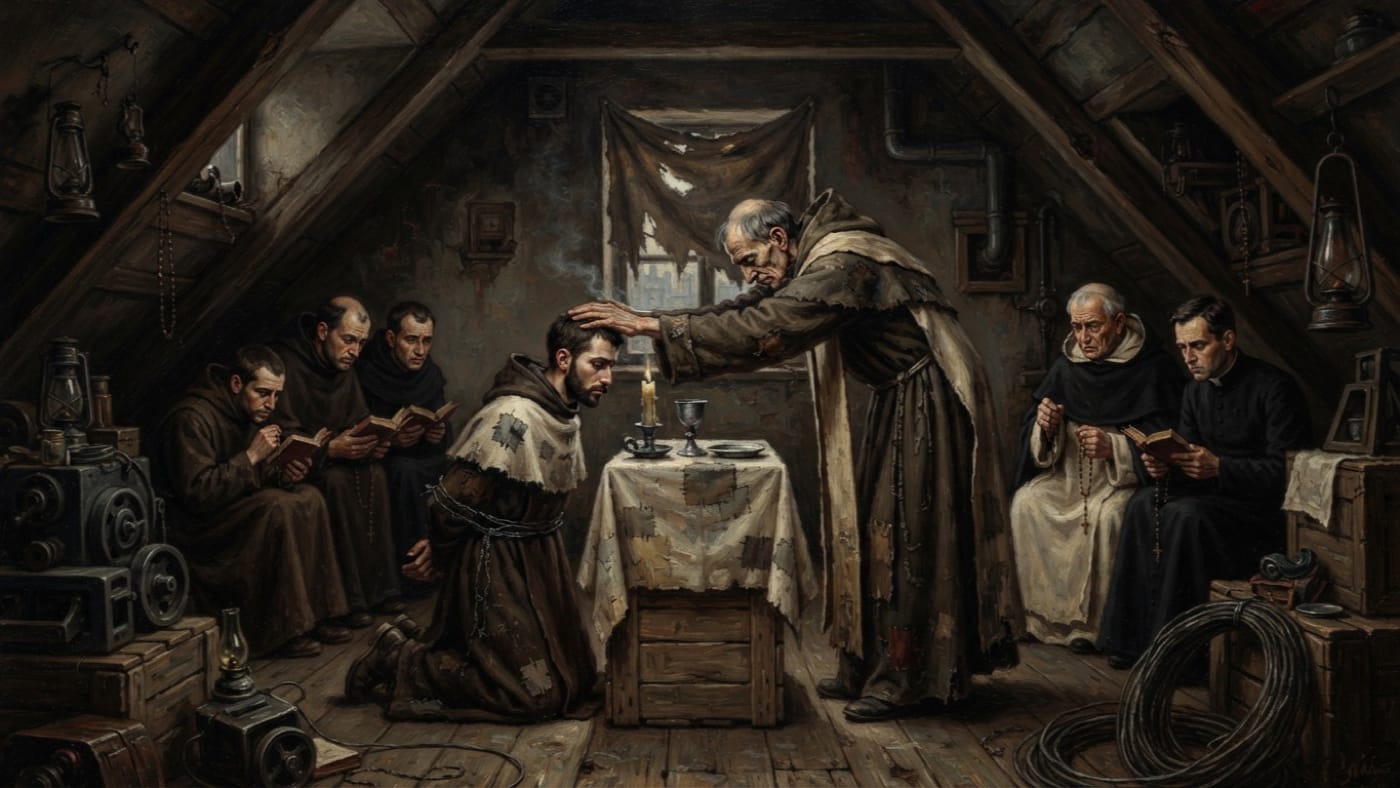
Carmelites of Kraków
Hidden altars, a drowned novice, and three refused petitions
Dissolved by decree, the Kraków Carmelites kept worship in hidden rooms. Brother Paweł Nowak remains their lesson to novices; three petitions have earned him no separate feast.
Codex Ref. XI.6.01-018
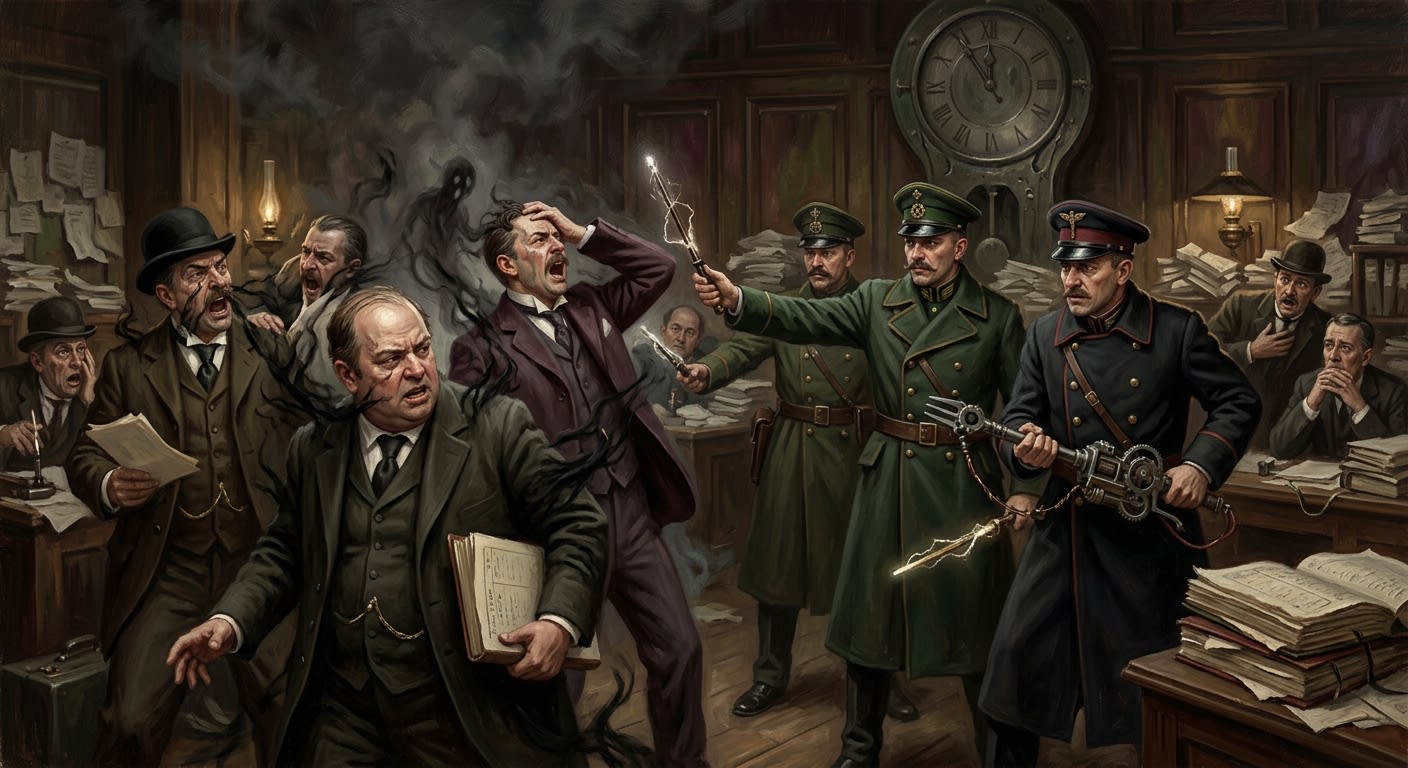
Carnelian Family of Metz
The lineage strike that bit its own hand
The A.S. 67 first recorded lineage-wide nullification attempt, in which Carnelian ration fraud, plague permits, and three overeager Notaries taught absence to bite backward.
Codex Ref. XIII.1.69-001
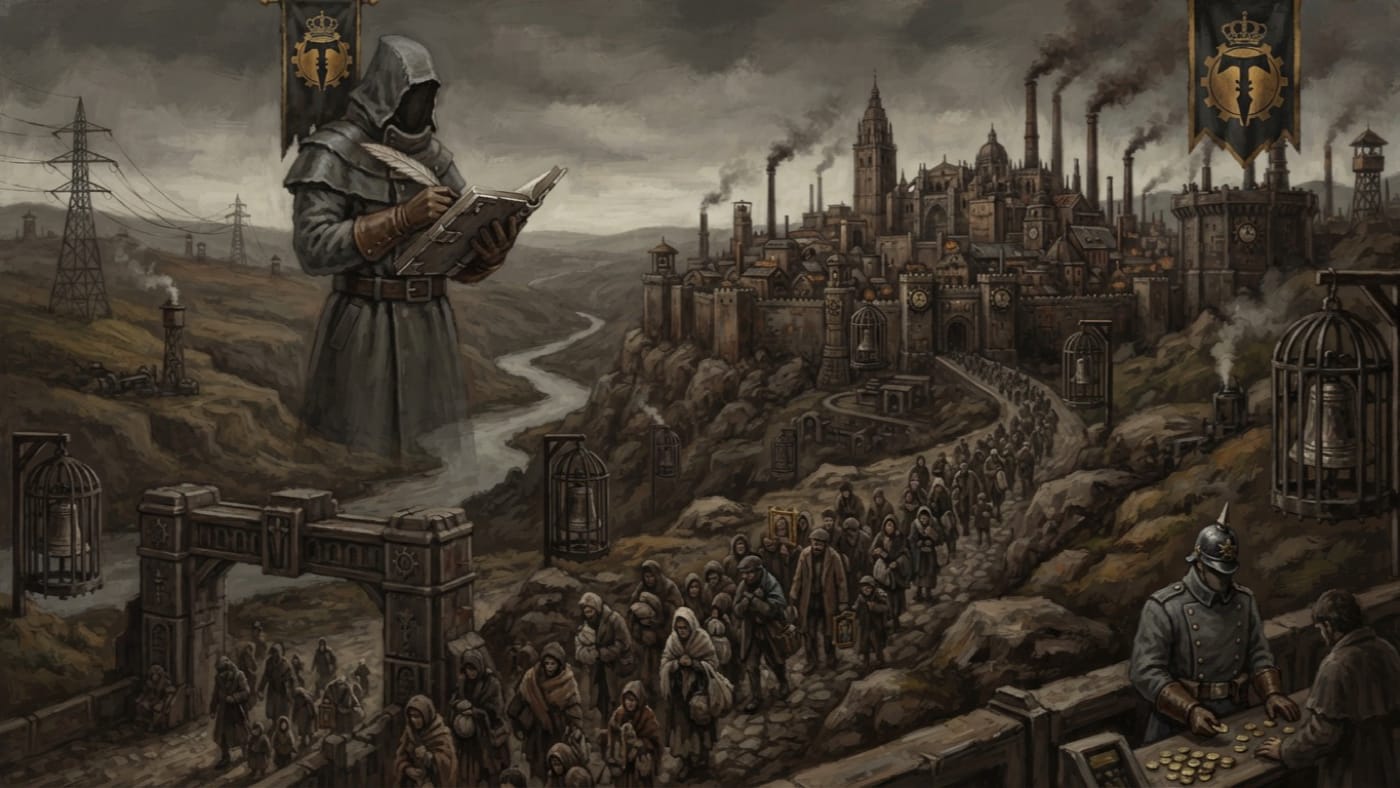
Castile
The province whose bells are better counted than its people
Castile pays under Iberia's seal and rings on Strasbourg's authority. Its refugees reached Toledo in A.S. 15; the Bureau preserved the martyr and omitted their names.
Codex Ref. II.1.04-201
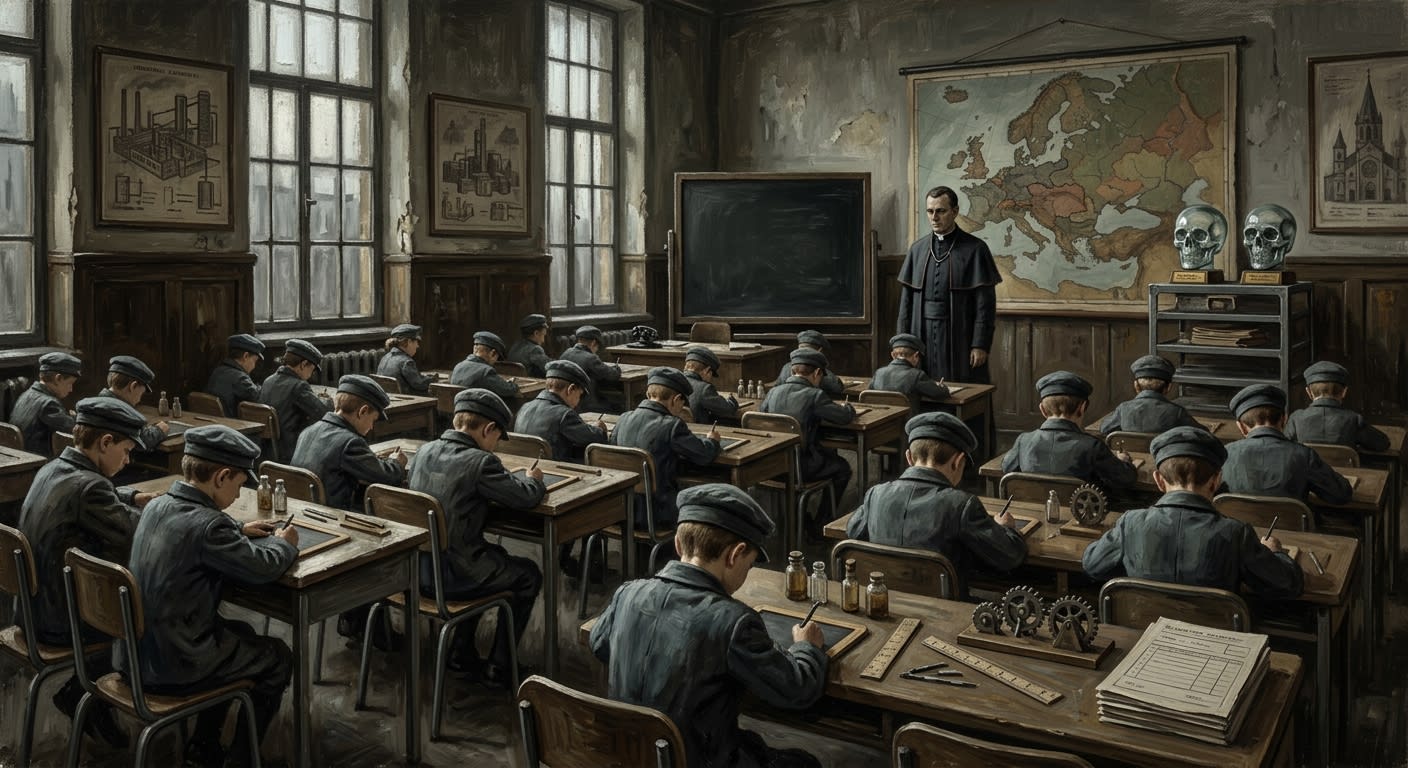
Catechism Schools
The child enters unformed; the school returns property
The Synod's parish and ward school system, where Creed, arithmetic, maps, loyalty trials, and entrance Glass Skull Stacks turn children into obedient instruments with names attached.
Codex Ref. VIII.8.01-001
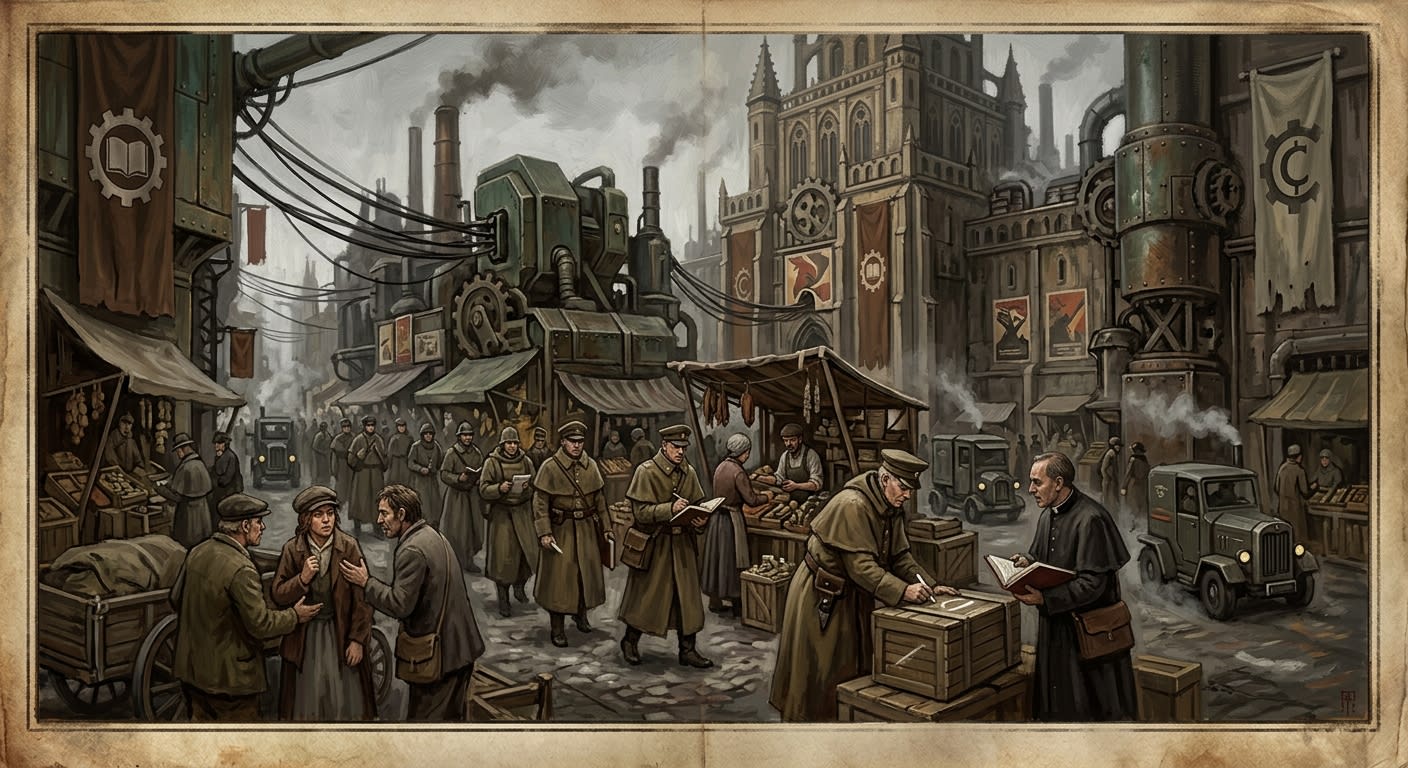
Catechism Third Revision
The street became a chapel with worse acoustics
A.S. 104 clarification that dragged obedience from chapel into market, making mouths, chalk, trade, and hesitation useful to Doctrine.
Codex Ref. XIII.1.04-104
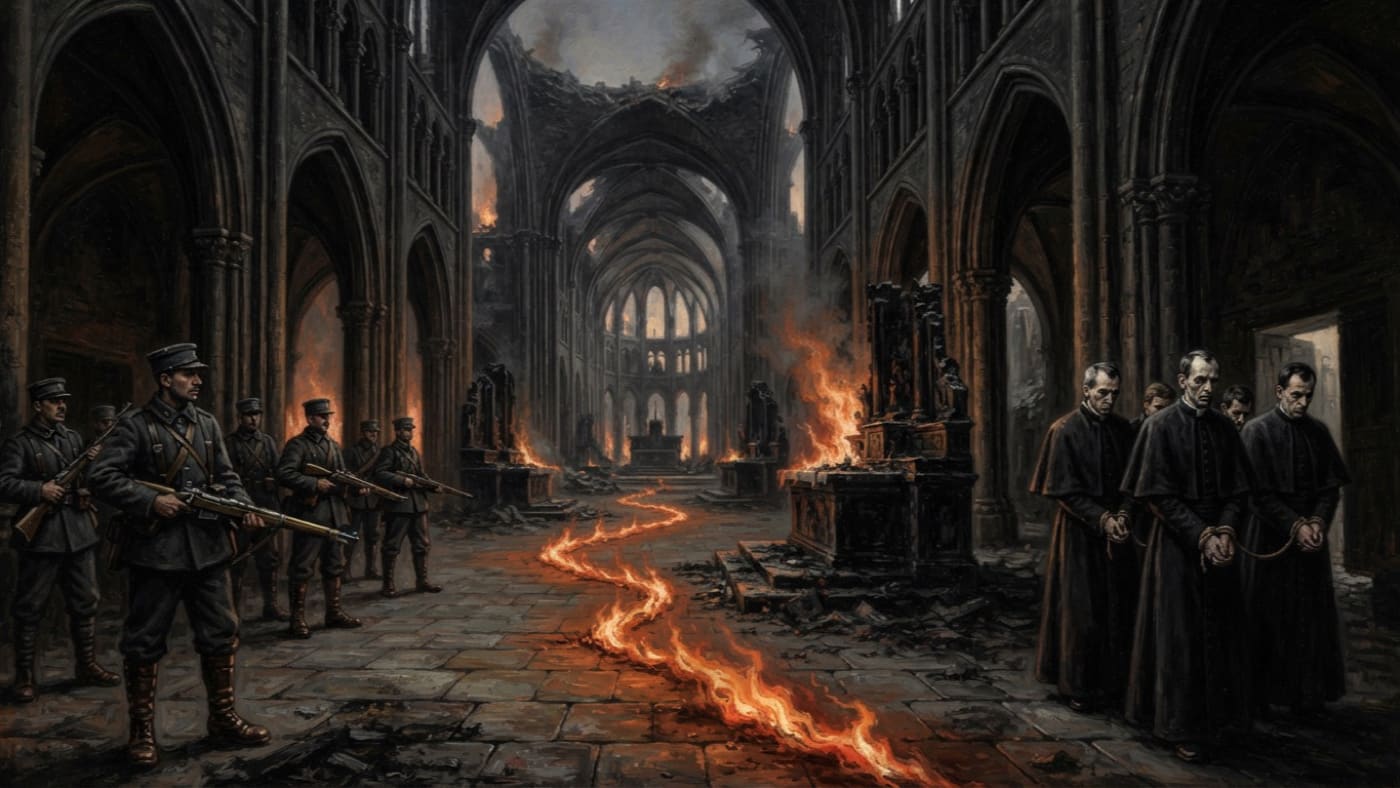
Cauterization of Rouen
The burning was arranged; the fire remains under theological review
The Rationalists gutted Rouen's cathedral in A.S. 24. Witnesses swore the fire paused before each altar. Three captured priests later died at Regensburg. The Bureau disputes the flame's agency; responsibility requires no debate.
Codex Ref. VII.2.01-004
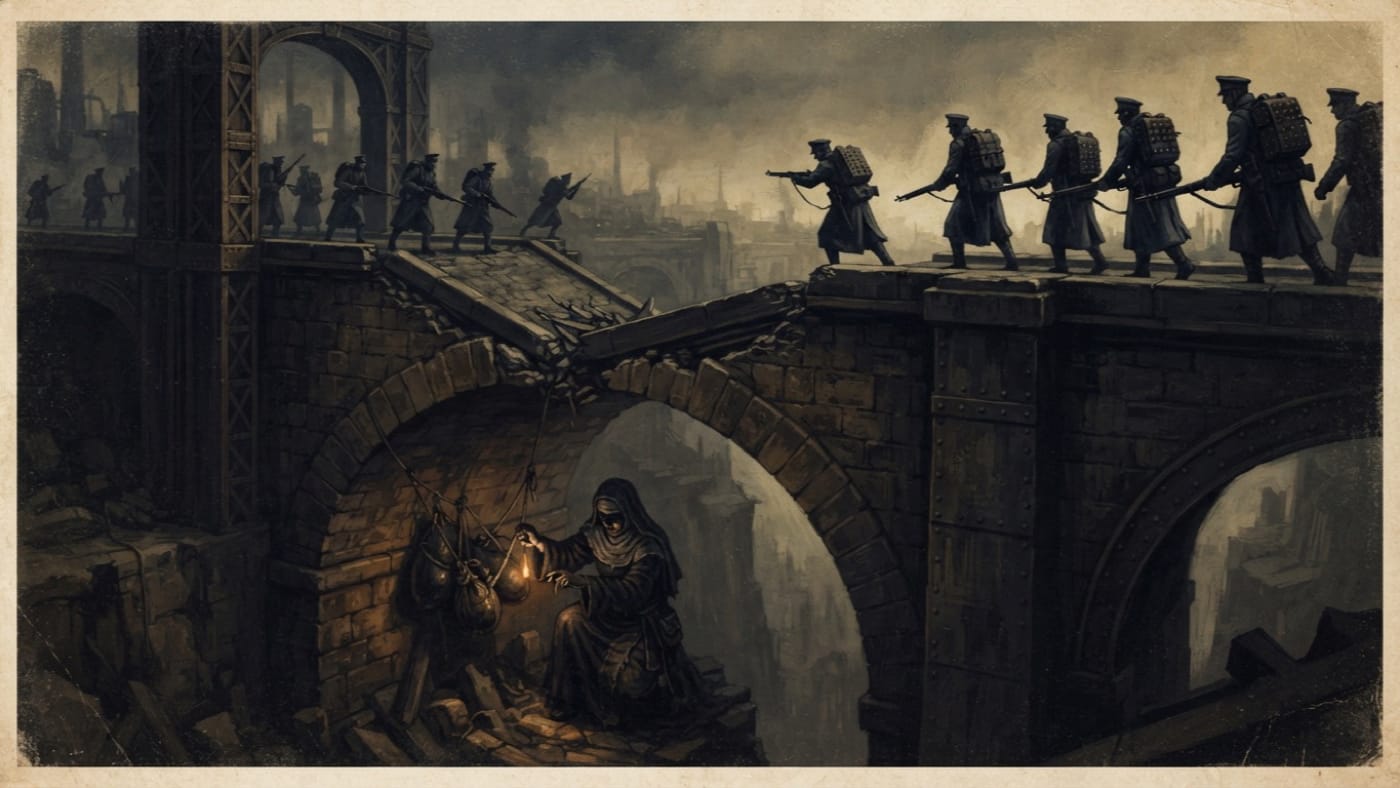
Châlons
One crossing, one attributed fire, no year
Châlons survives in the Ledger as one unnamed crossing and an undated fire attributed to Bérénice. The river is missing; the masonry has three explanations.
Codex Ref. II.1.04-565
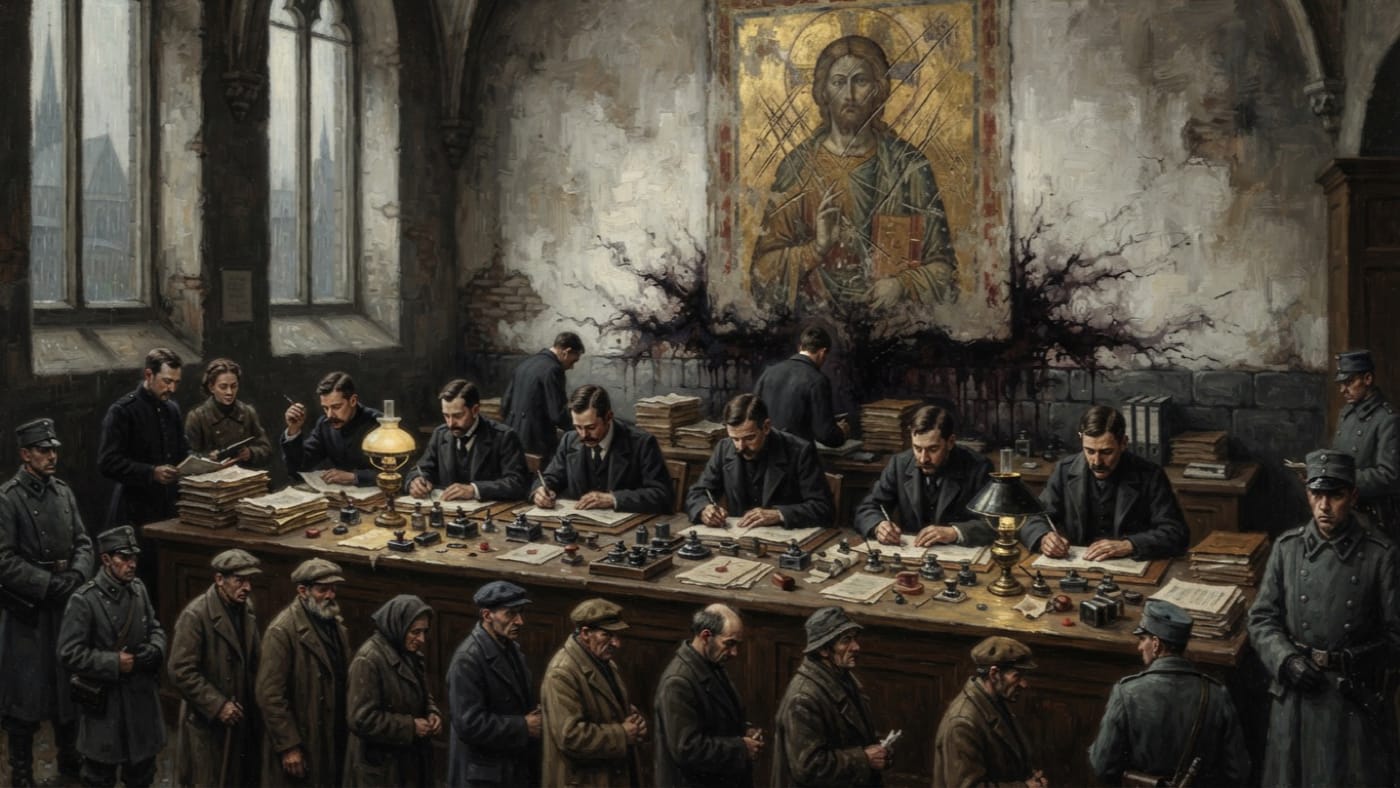
Chapel of the Crowned Seat
Where confiscation acquired a halo
Rationalist clerks signed away Aachen's property beneath a scratched halo. The Chapel of the Crowned Seat's wall darkens every Saint Bartholomew; administration leaves a stain.
Codex Ref. II.2.02-002
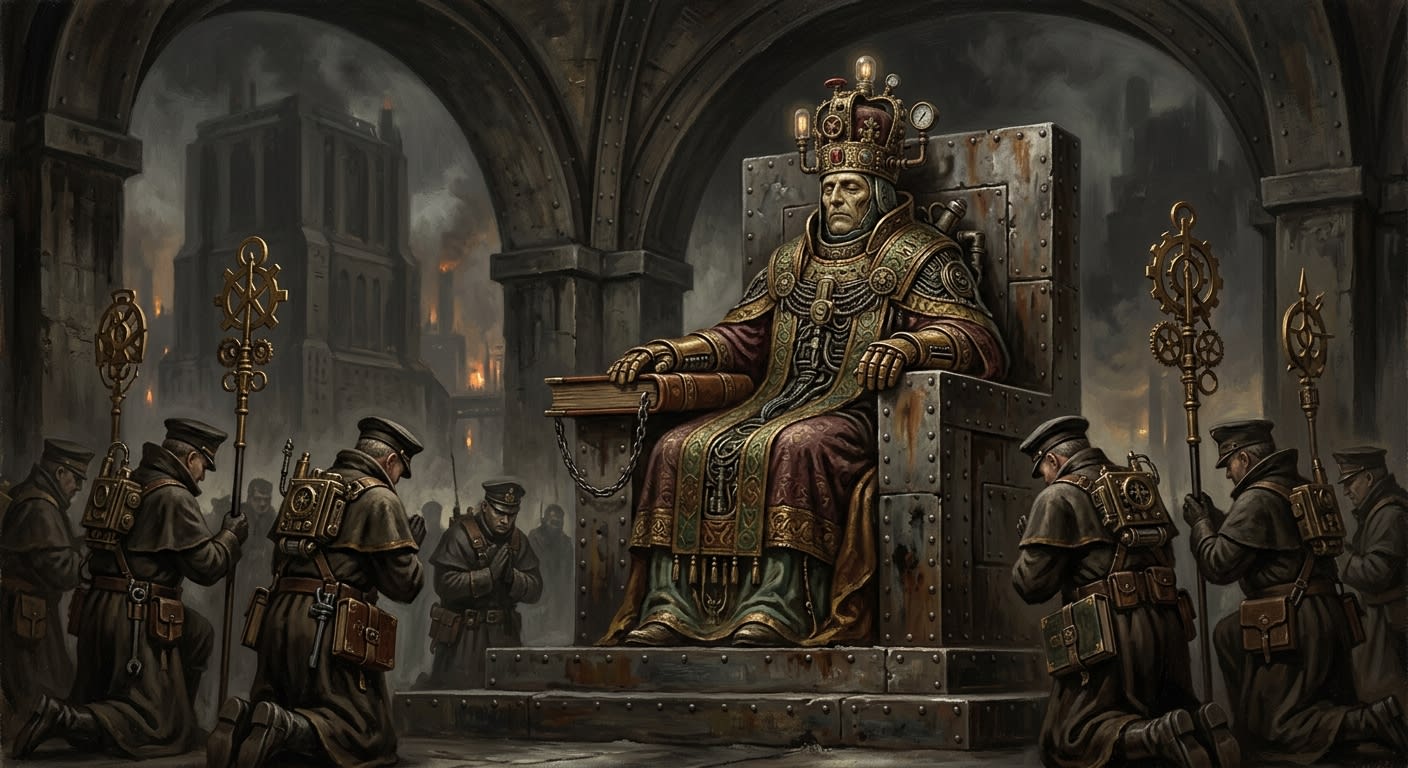
Charlemagne
The dead emperor conscripted as evidence after the gate was sold
Charlemagne is honoured as precursor, not rival: the dead emperor whose Aachen throne survived Guillaume, Verdane, and every provincial fantasy of a crown above the Ledger.
Codex Ref. III.2.01-000
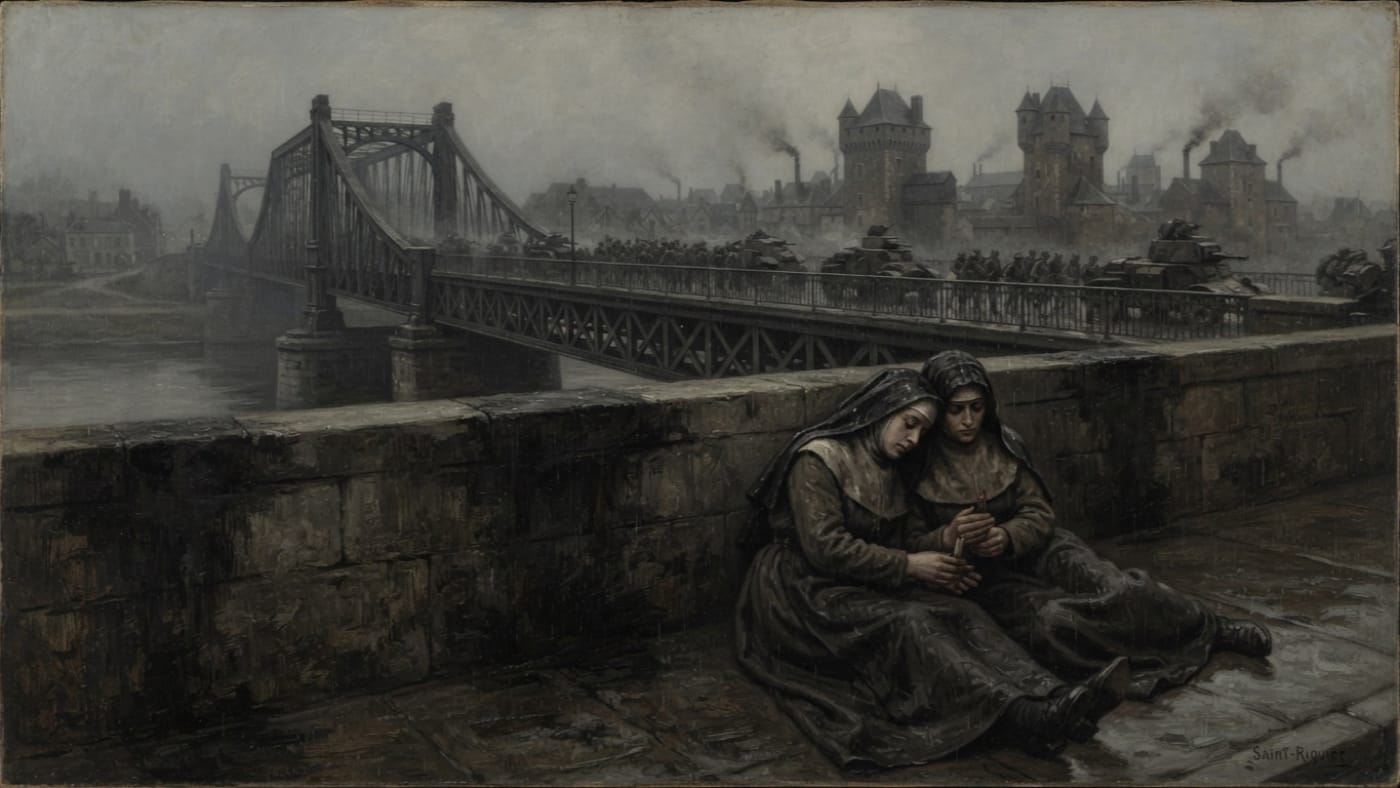
Clémence of Saint-Riquier
The wick was wet; the Ledger keeps the name
The A.S. 201 survey retains Clémence beside Ysabeau at Saint-Riquier: a wet wick, an open crossing, and two unburned bodies. A sacristan's bread account kept the names that embarrassed the devotional cycle.
Codex Ref. III.2.01-644

Colonel Verdane
He did not break Aachen; he purchased the hinge
Colonel Verdane bought Aachen with terms, silk, wine, and exact road arithmetic. Guillaume sold the gate; Verdane priced the hinge.
Codex Ref. I.1.04-001
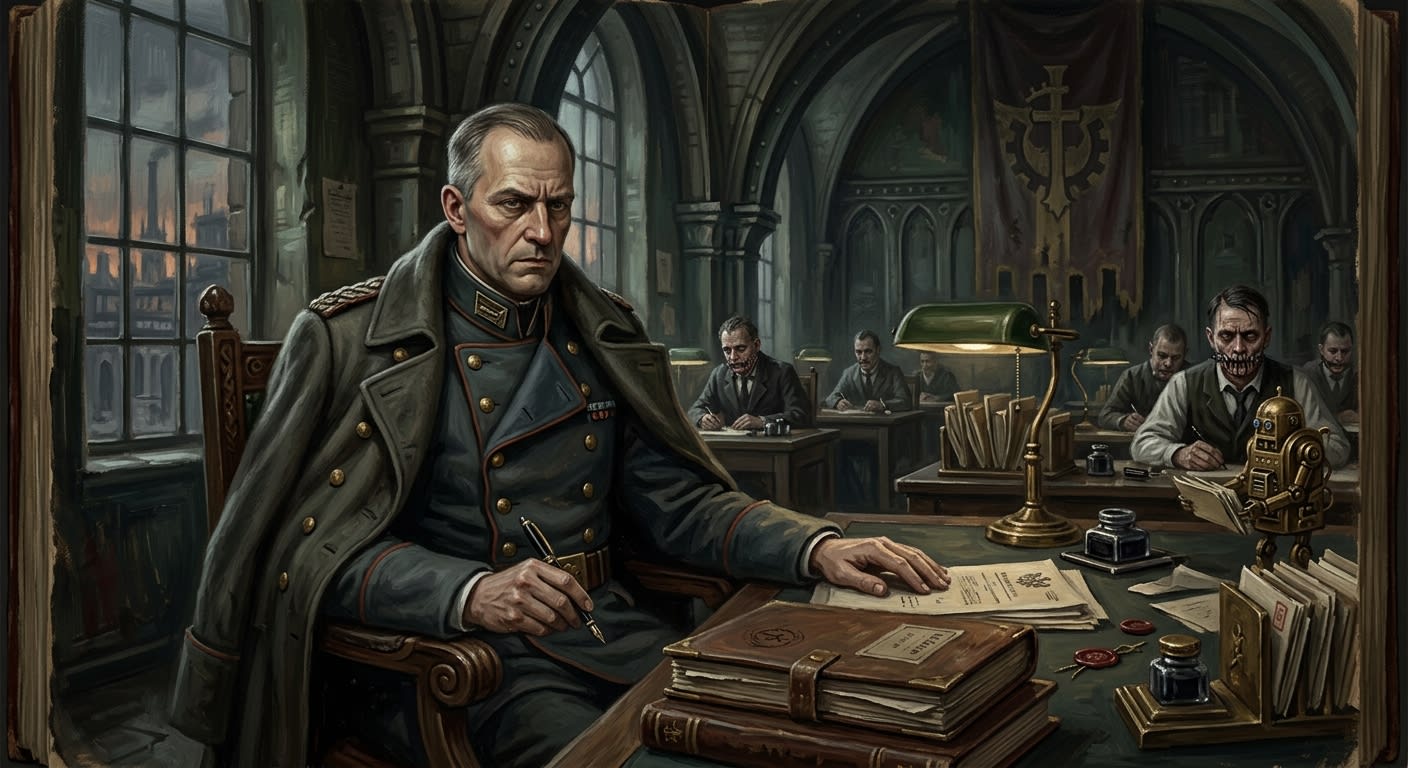
Colonel-Prefect Ignaz Brechtold
The clerk who made silence visible with wire
Rationalist Prefect of Kraków whose A.S. 18 Night of Knives wired forty-seven clerical mouths shut and taught Doctrine that paperwork can sharpen murder.
Codex Ref. III.2.01-086

Concordats of Governance
Four hundred and twelve pages proving Hell does not respect footnotes
The Concordats of Governance were the Rationalist Republic's procedural gospel: prefectures, censuses, tribunals, and emergency clauses annulled too late to unmake their wounds.
Codex Ref. XIII.1.12-030

Córdoba
The city that returned a saint and kept an altered inventory
Córdoba enters the Ledger through a prefect's desk: Saint Iago's jawbone was reclaimed there in A.S. 12, while the altered inventory keeps provenance inconvenient.
Codex Ref. II.1.04-012

Corvus
The fourteenth stands; the rest awaits its papers
Corvus is a later Church month whose fourteenth day commands the Saint-Malo fast, names and bells. The memorial is assigned; the massacre's exact day remains unproved.
Codex Ref. XIII.1.05-003
Croatian highlands
Where candles and cartridges climb the same road
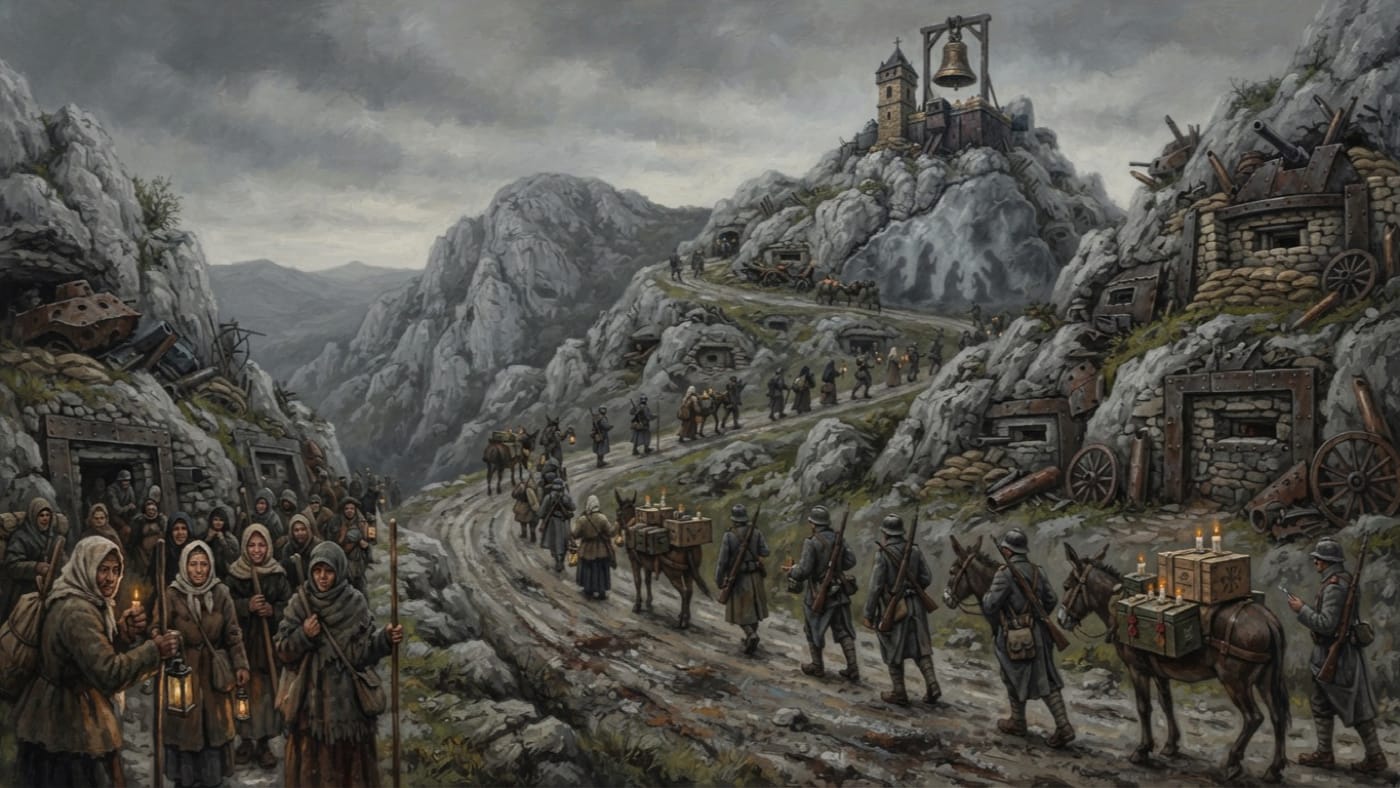
The Croatian highlands enter the Ledger through Kalnik Ridge, where cave chapels became armed shrines and the same road carries pilgrims, candles and cartridges.
Codex Ref. II.3.07-807
Day of the Thirty-One Names
Thirty-one tolls, forty-three seconds, and one face supplied by the printers
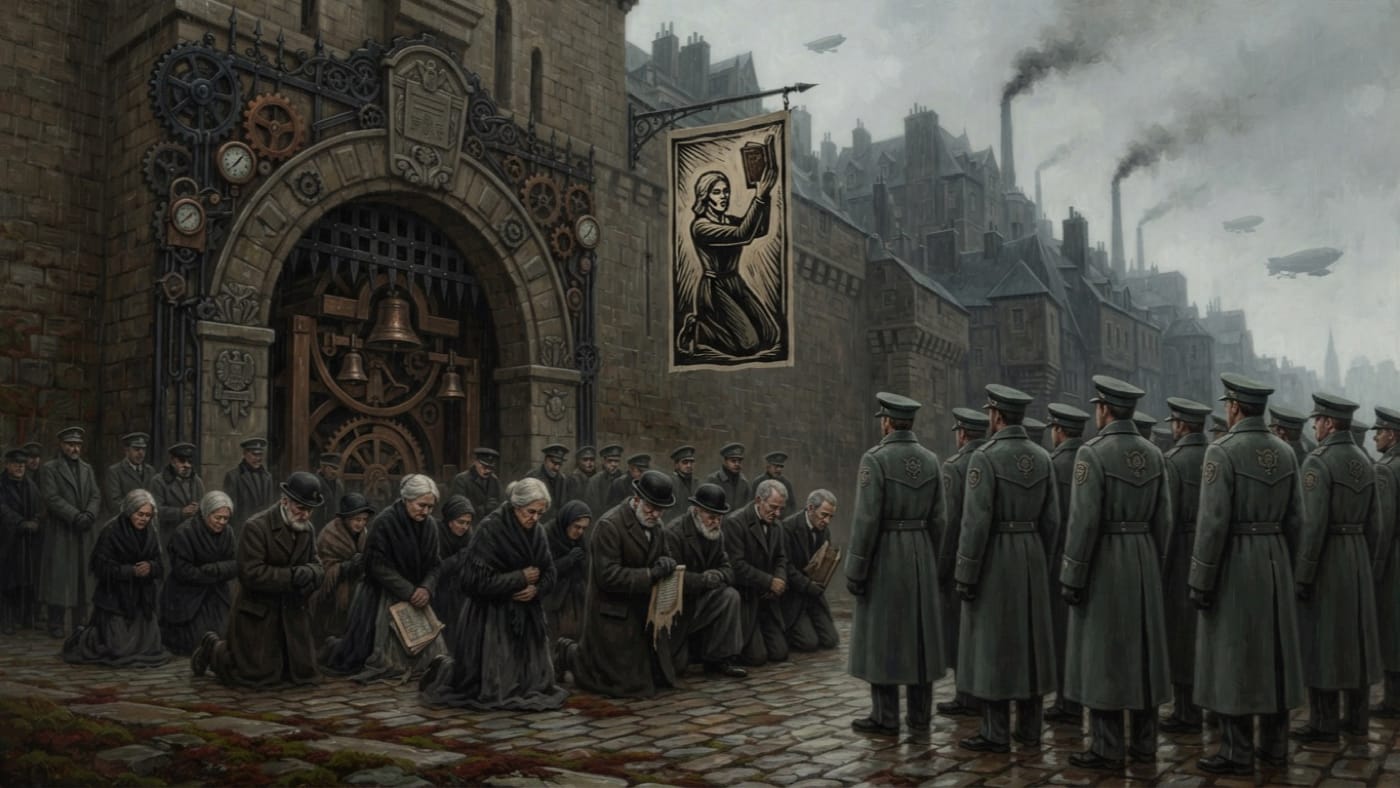
On 14 Corvus, Saint-Malo mourns thirty-one certified dead with thirty-one tolls and forty-three seconds of silence. The Church keeps the count, Strasbourg keeps the names, and Margaux supplies the face.
Codex Ref. XIII.1.87-031
Düsseldorf
One priest. One letter. Nothing left to quote.
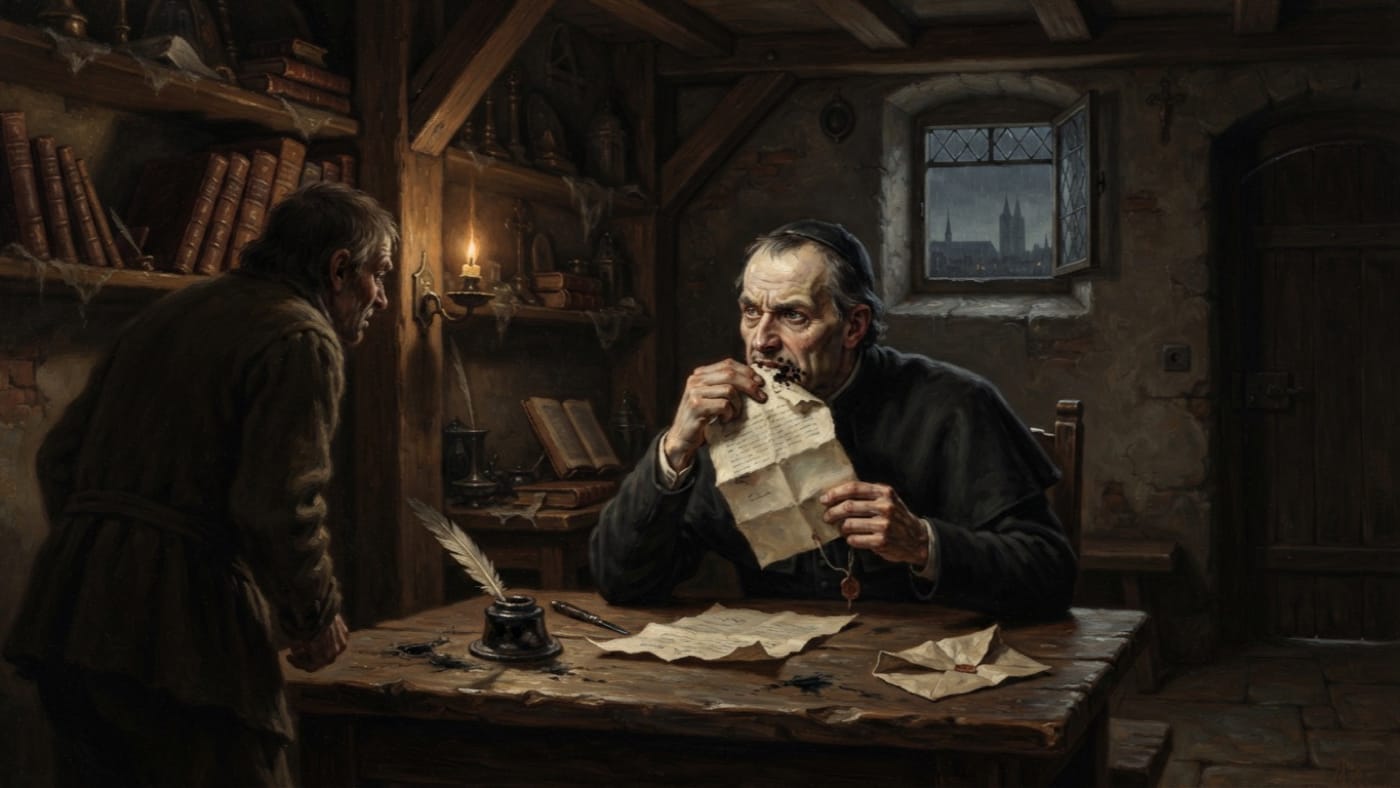
A Rhineland city remembered for Father Grauss, who ate the Amsterdam letter in A.S. −32 / 1678 CE. The magistrate supplied three days in gaol; the Bureau supplied a classification.
Codex Ref. II.2.01-941

Erasure Notary
The scaffold produces martyrs; the Office of Nullity produces only silence — and nine hundred Black-Stamps to stamp it.
Nine hundred Black-Stamps who unmake persons through ink and wax — no body, no grave, and no widow to scratch the martyr's name on cellar walls.
Codex Ref. XII.14.01-001

Europe
The wounded continent, held together by rails, bells, hunger, and denial
Europe is the wounded continent: Synod west, Charnel east, Line between, and every road, harbour, cradle, ration card, bell, and grave bent toward survival.
Codex Ref. II.0.01-201
Fall of the Eastern Kingdoms
The Kingdoms Fell; Their Accounts Remain Open
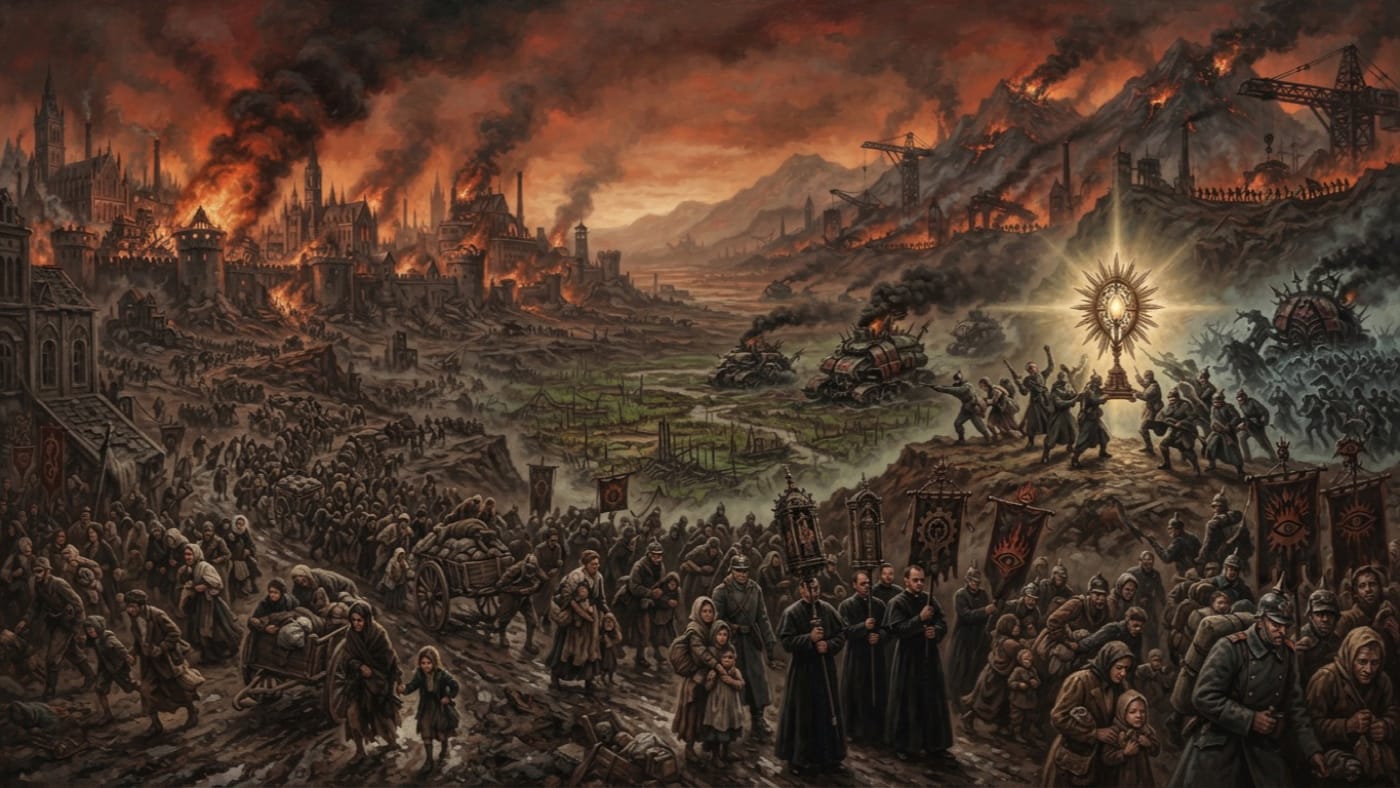
The eastern jurisdictions collapsed after the Sundering of A.S. 45: garrisons burned, granaries failed, and refugees fled west. I retain their accounts in the Ledger; occupation does not constitute permission to forget.
Codex Ref. VII.1.02-001
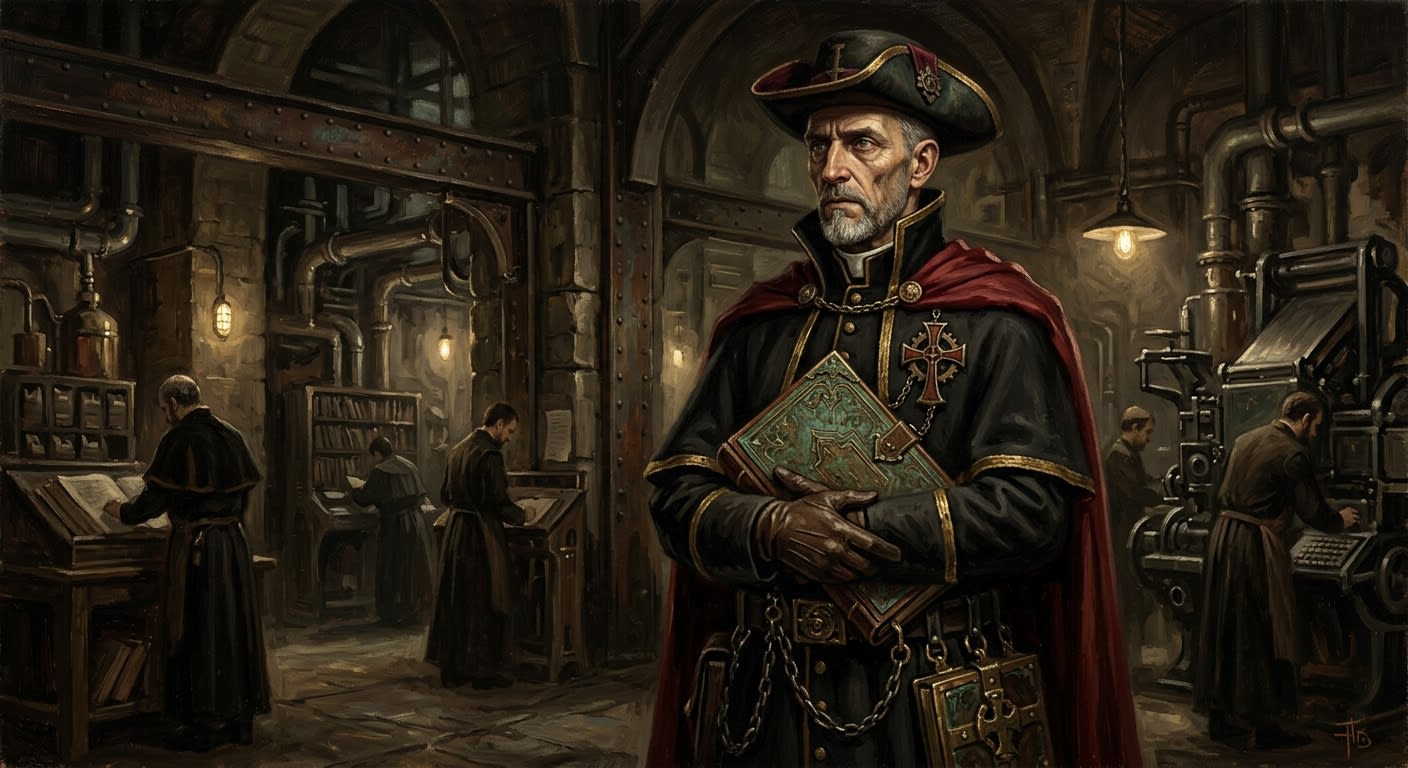
Father Clemente de los Rios
The abbot who spent a saint's jawbone at the correct hour
Abbot of the Order of Saint Iago garrison at Toledo, Second-Tier Martyr, and keeper of the Relic whose second Psalm denied Reason its prize.
Codex Ref. III.2.01-083
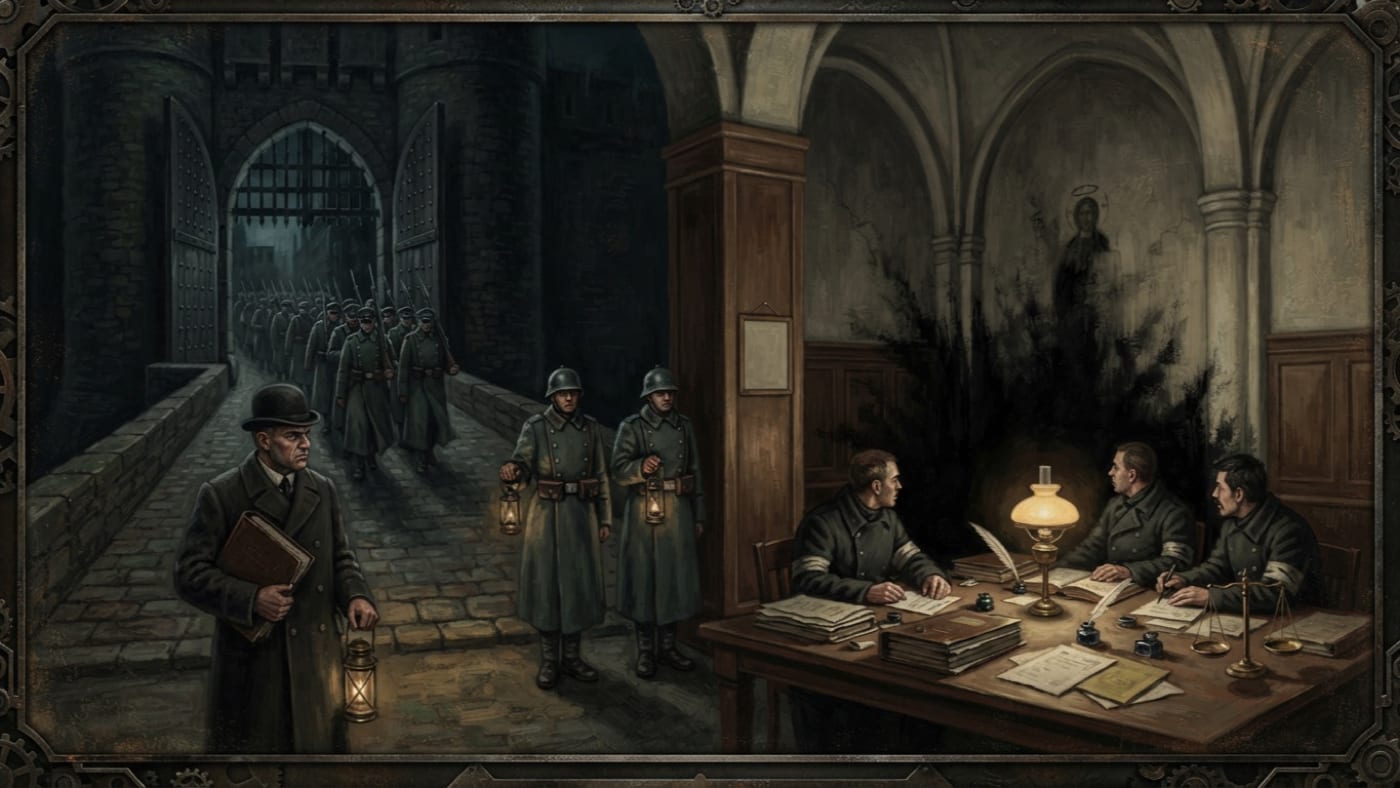
Feast of Saint Bartholomew
One opening, one stain
Aachen opened its western gate at midnight on this feast in A.S. 25. Each year, the former confiscation office turns ink-dark. The Bureau records both occurrences; it has not ruled on the stain.
Codex Ref. VII.8.10-025
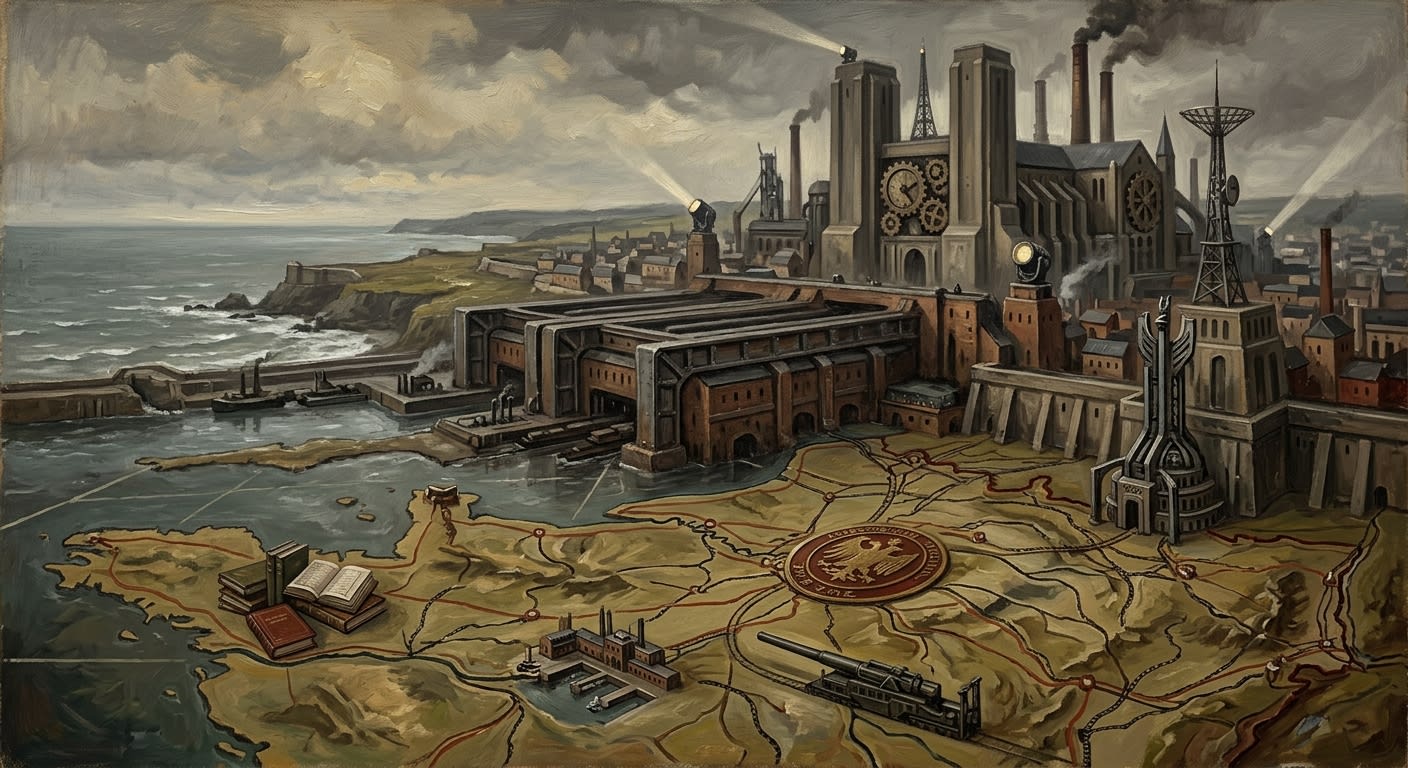
France
The country the Synod did not abolish, because it proved too taxable to waste
A.S. 201 survey of France as Zone One heartland: martyr coast, watched cities, taxable memory, useful ports, and one conquered name made indispensable.
Codex Ref. II.1.01-201
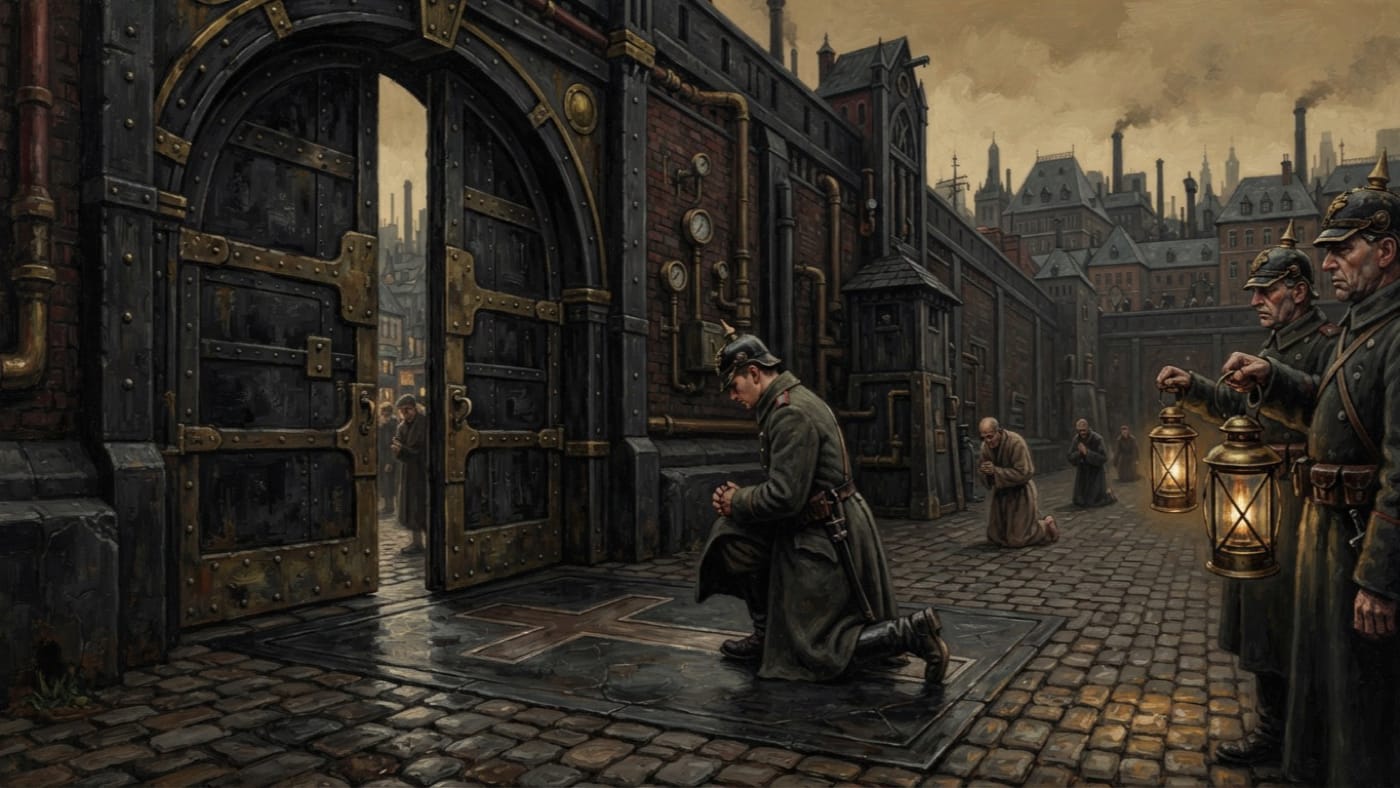
Gate Litany
Forty-seven clauses and no release
At Aachen's western gate, forty-seven clauses turn a recruit's innocence into an obligation. The gate opened in A.S. 25; the knees still answer for it.
Codex Ref. II.2.02-002
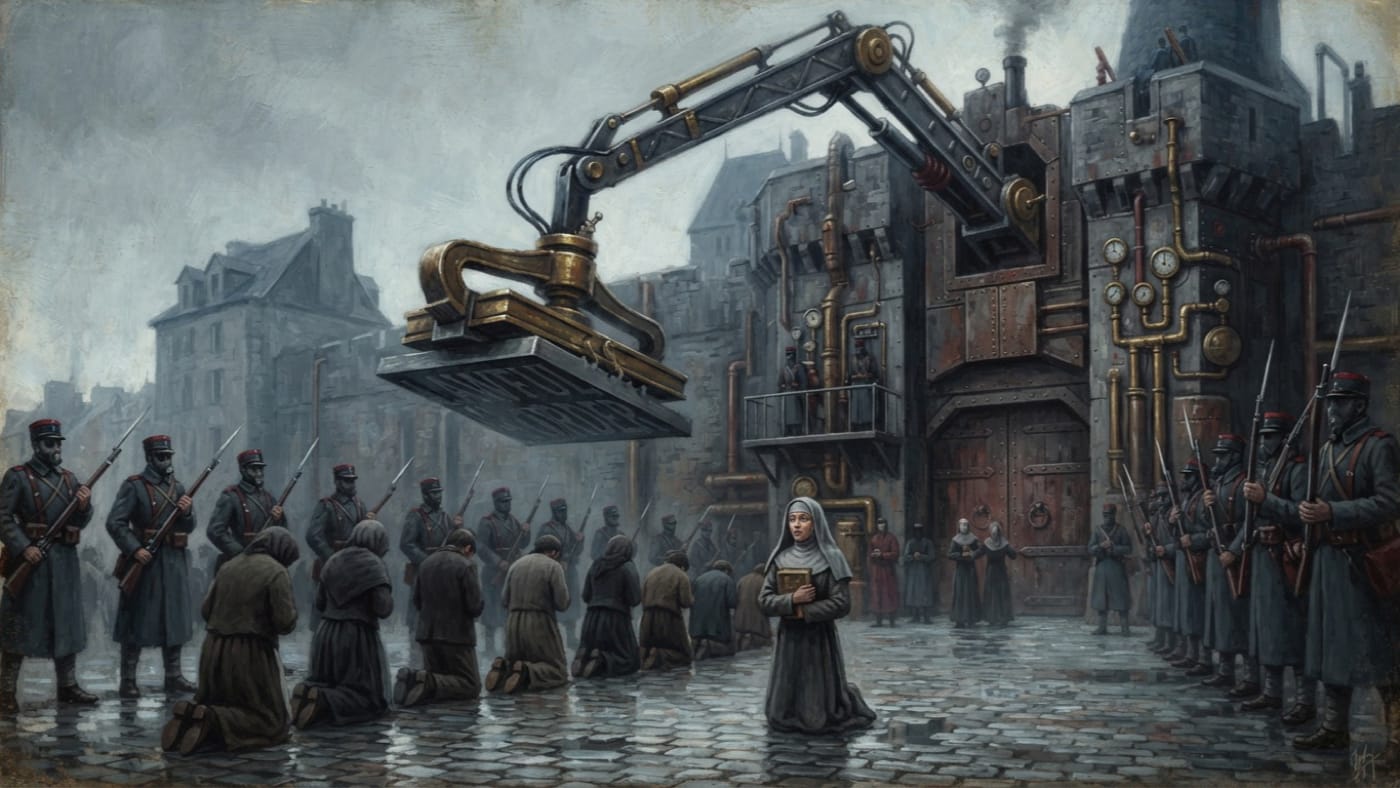
Gazette de la Raison
Four sentences against thirty-one dead
Four sentences made Saint-Malo's kneeling pilgrims vagrants and its bayonets lawful. The Gazette kept the magistrate's grammar; the Church kept the face of Saint Margaux.
Codex Ref. I.1.04-010
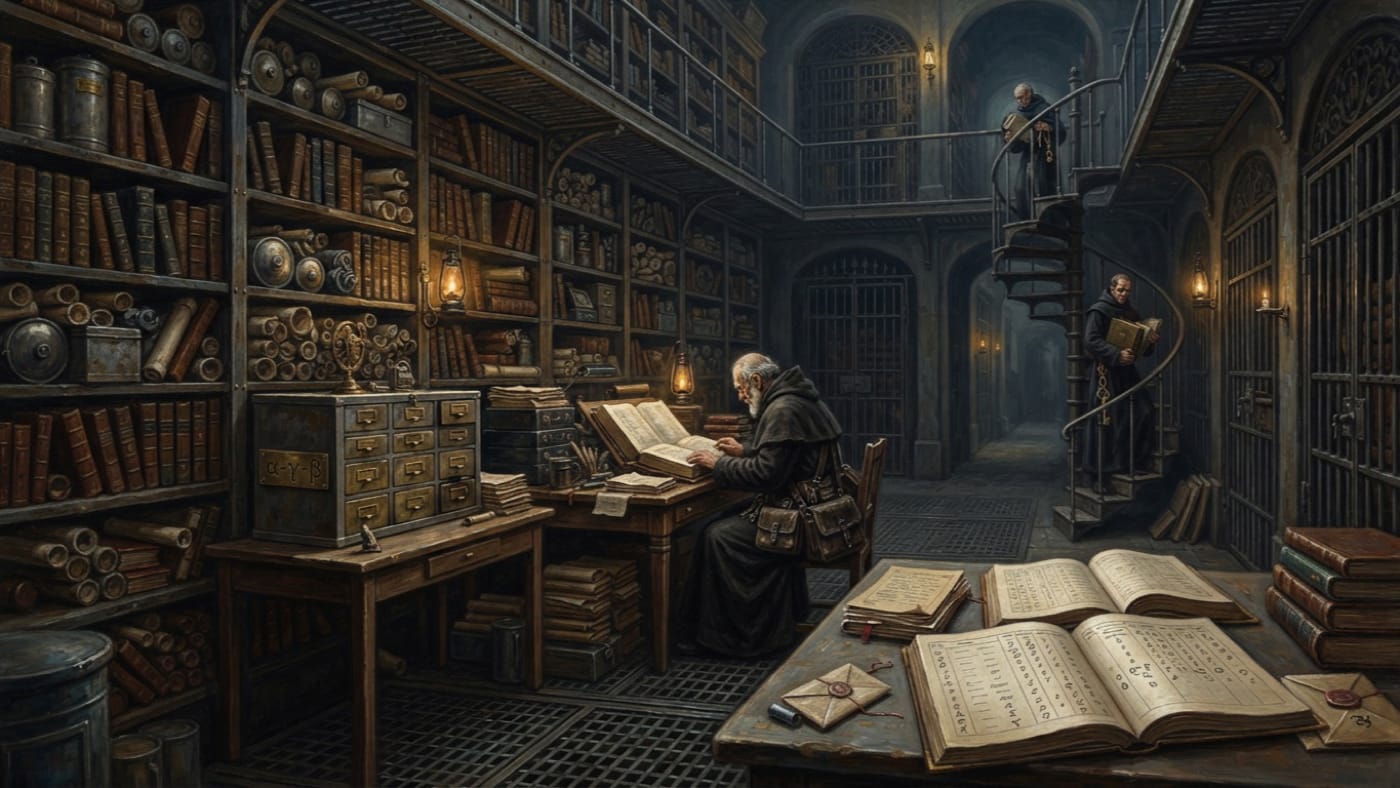
Greek in the Codex
A tongue in the ledger proves less than the clerk would like
An A.S. 201 survey of Greek in Codex records: restricted texts, Church learning, relic labels, parish spellings and recorded pleas. Lyon contributes one disputed claim; copying it does not produce another witness.
Codex Ref. XIII.1.03-002
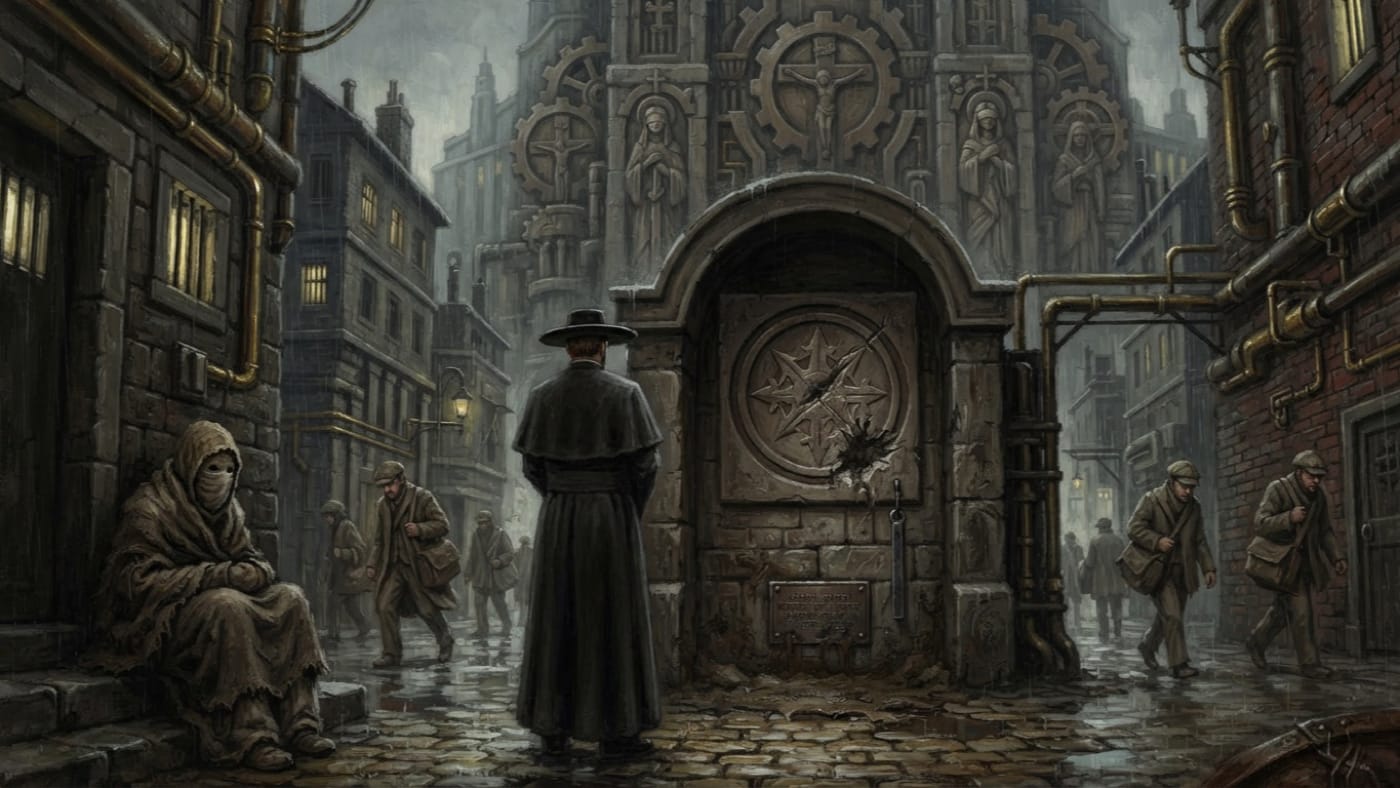
Guillaume bloodline
The names struck, the suspicion retained
The Guillaume bloodline persists without register standing, watched under private Seal Amber. The Church has struck its names and forbidden inquiry into its whereabouts.
Codex Ref. III.2.06-004
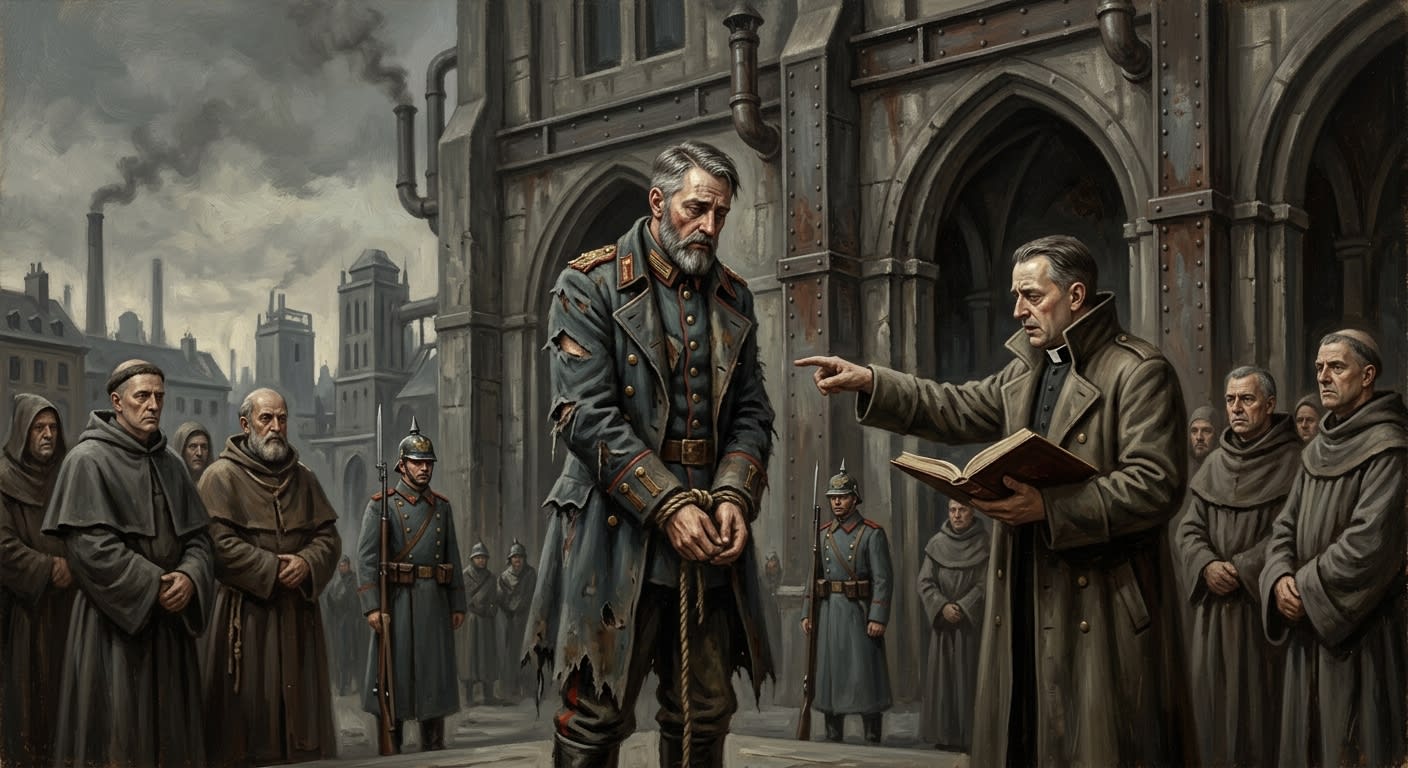
Guillaume of Aachen
The man who opened a gate and was closed by the Ledger
Lord-Protector Guillaume surrendered Aachen in A.S. 25, severed the Rhine approaches, and became the Synod's cleanest lesson in treason, nullity, and administrative damnation.
Codex Ref. III.2.01-123
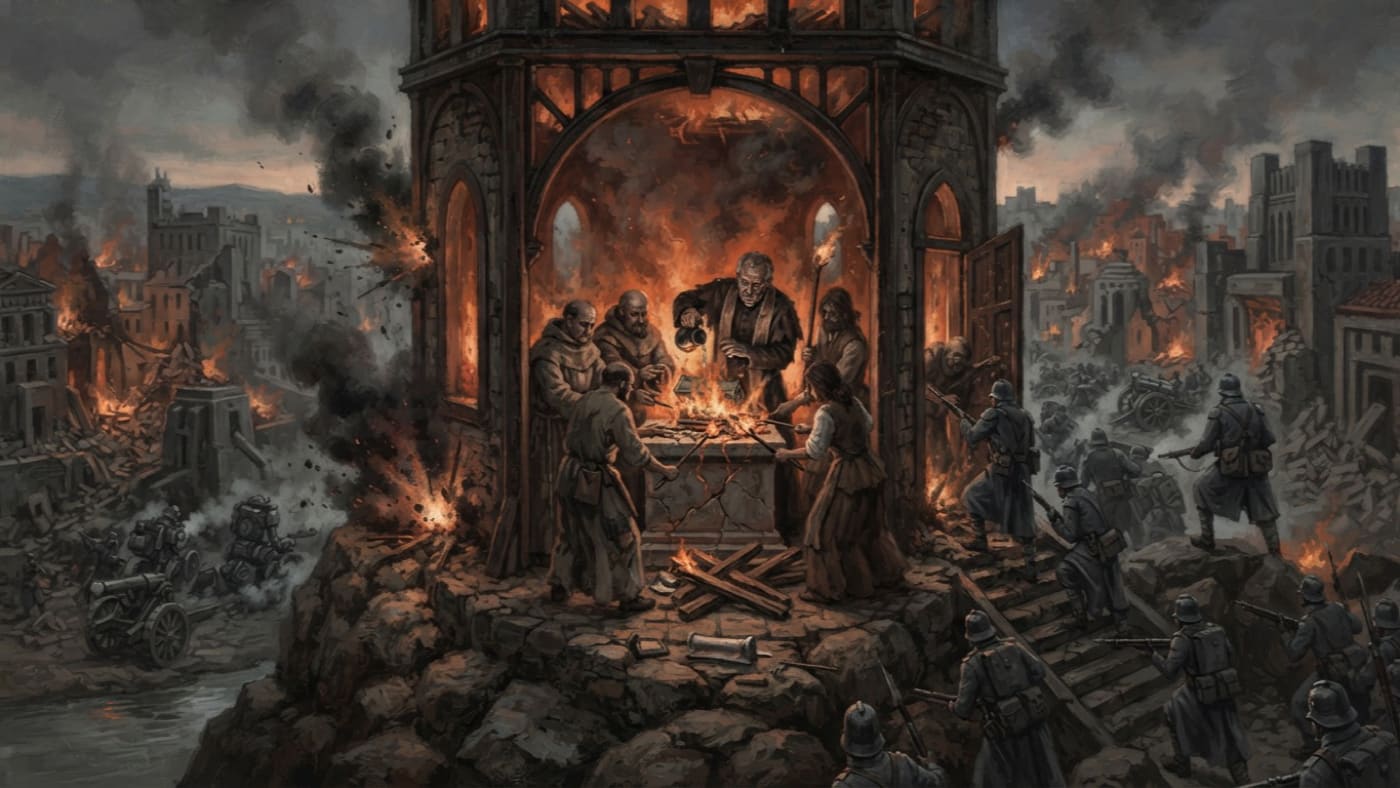
Heroic Destruction
The last duty of custody, taught from Toledo's ash
Heroic destruction is the deliberate unmaking of an entrusted holy object to deny enemy custody. At Toledo, the Order of Saint Iago lost the city and kept the enemy from taking its saint.
Codex Ref. XIII.1.58-015

Hieromnemon
The office that teaches memory to kneel
The Hieromnemon governs public memory for Doctrine: seal, margin, erratum, redaction, and the blessed sentence that makes contradiction obey.
Codex Ref. XIII.1.31-090
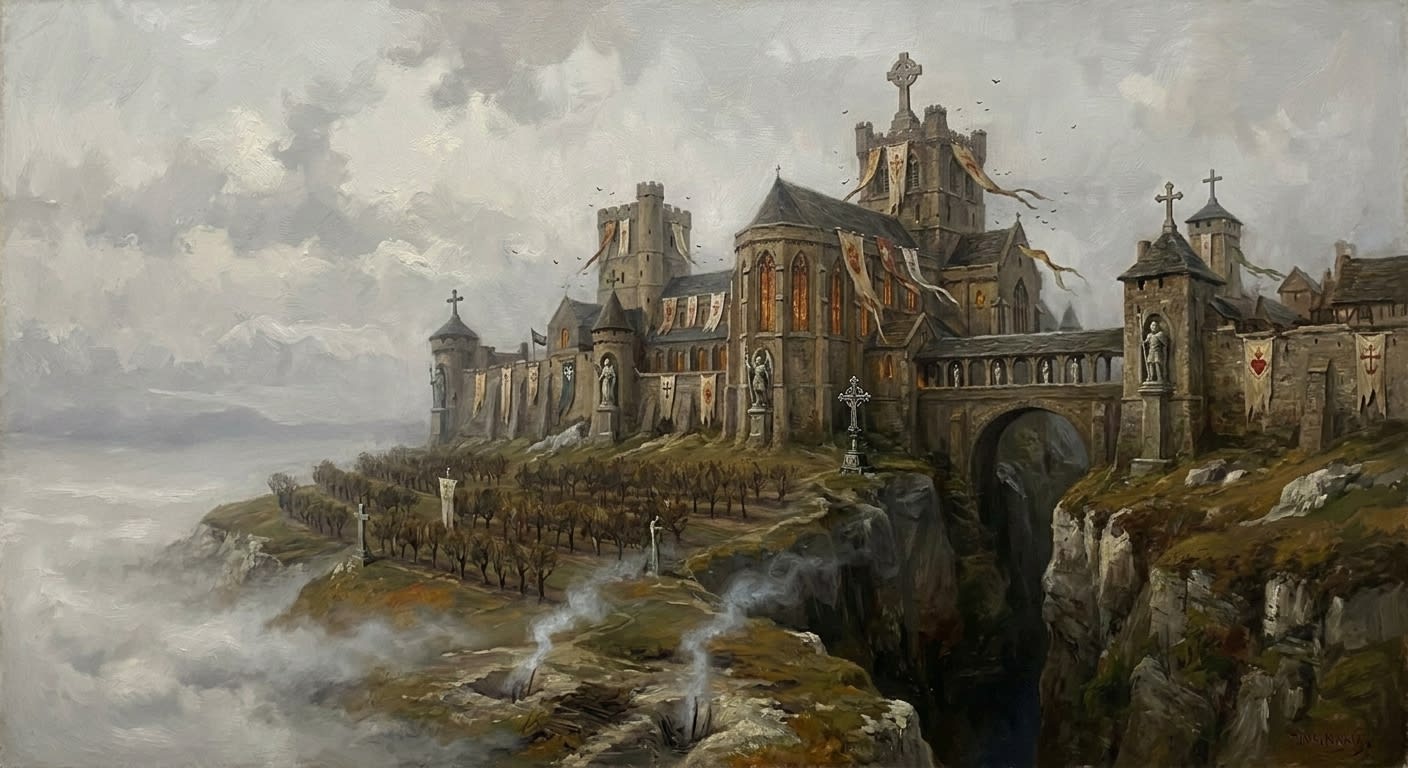
Hollow-Script Scriptorium of Nemea
Where the ink rewrites the truth, and the truth rewrites the ink
The Bureau of Records' master archive-scriptorium on a chalk ridge: where names are erased, contracts rewrite themselves overnight, and the ash in the Yards speaks. Drax has been named by its ink and would prefer the record show otherwise.
Codex Ref. II.2.06-002
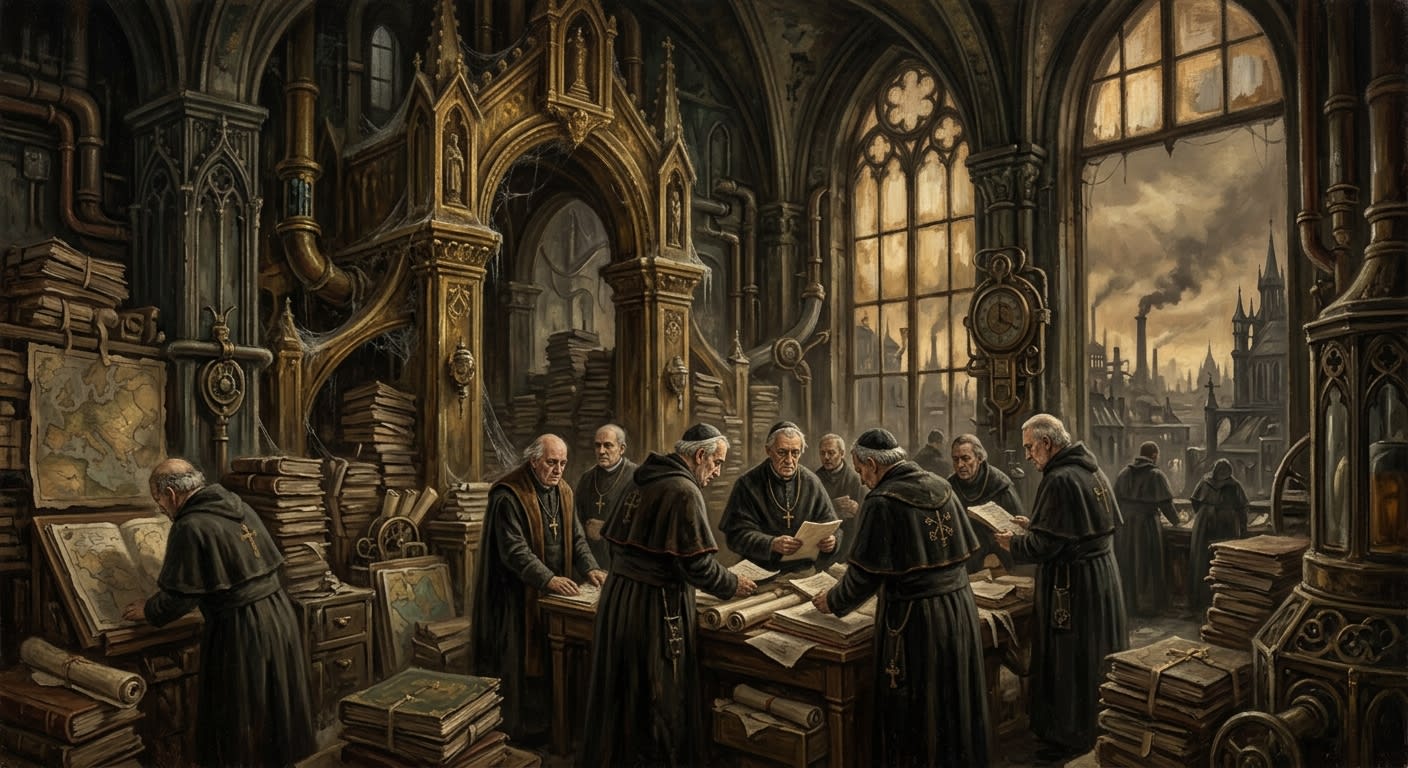
Holy See of Vienna
The dead chair that Strasbourg found too useful to resurrect
The Holy See of Vienna was the Church's old continental chair: venerable, beautiful, administratively inadequate, dissolved at Regensburg in A.S. 30, and later preserved by Strasbourg as shrine, warning, and useful absence.
Codex Ref. VIII.1.09-030
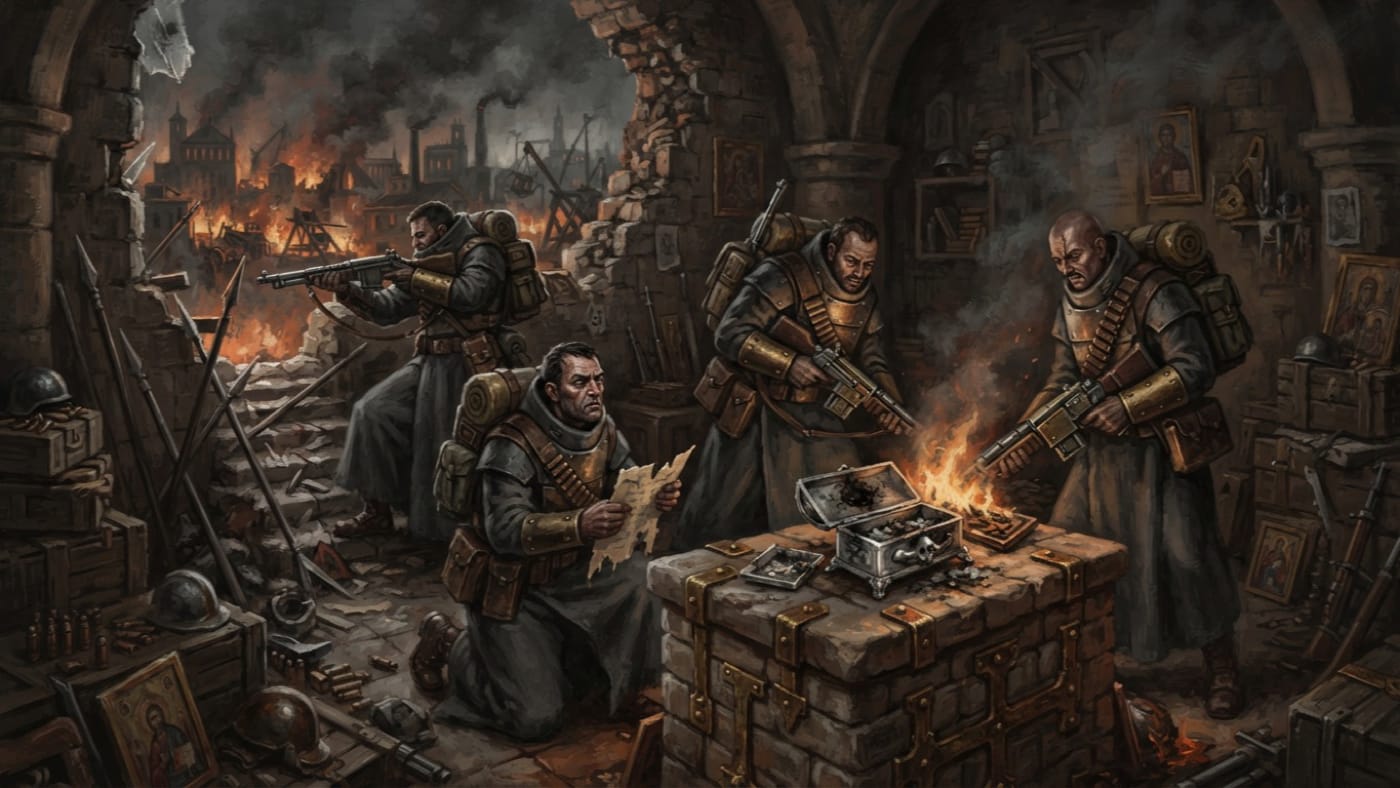
Iago Rule
Four sentences the smoke left behind
Four surviving sentences of the Order of Saint Iago's rule bind road, shrine, guest, and bone to custody. Toledo supplied the fire; the preserved text never commanded it.
Codex Ref. XIII.1.57-016
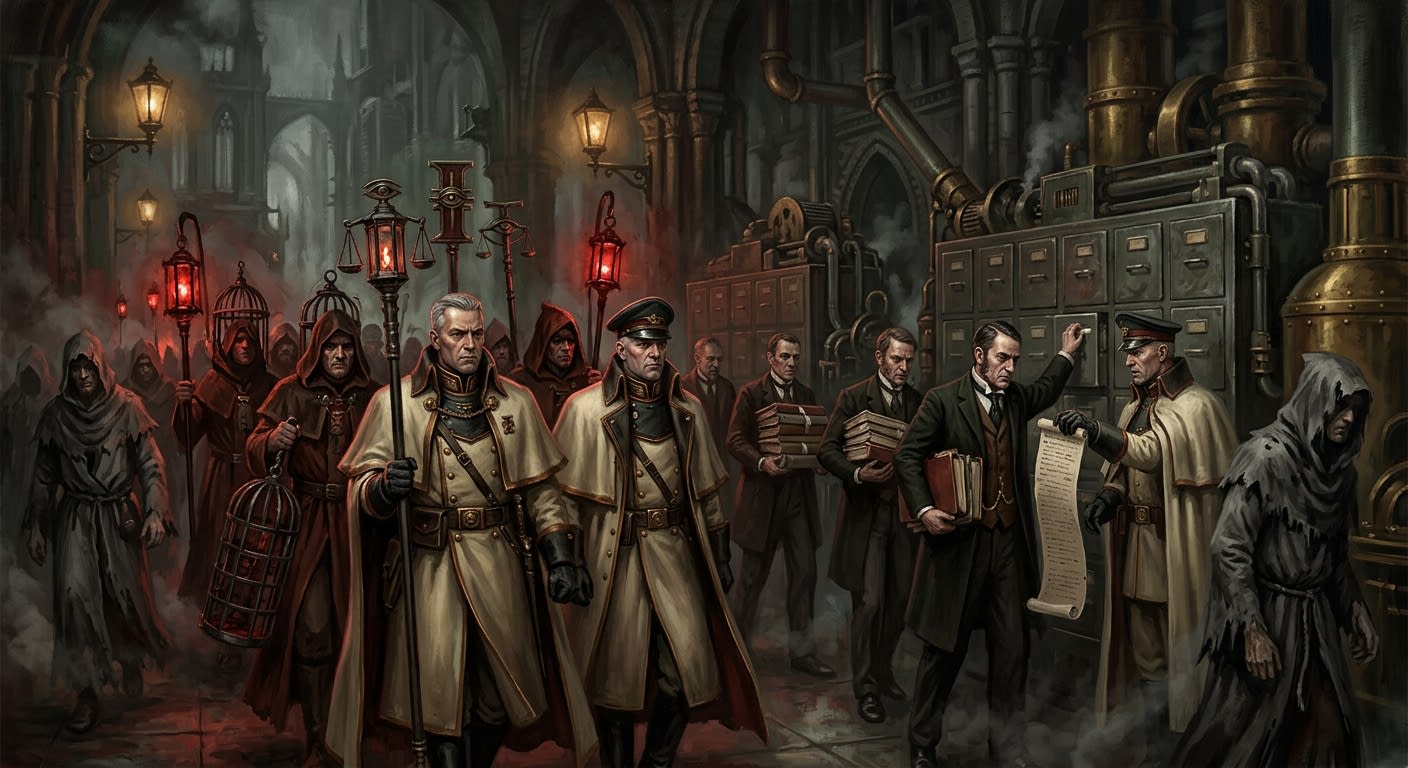
Inquisition
The white hand closes with a receipt
The Inquisition is Purity's authorised appetite for correction: White Cloaks, Lictors, Red Lanterns, Ashmen, Shadows, Index packets, denunciation law, and the clerkly miracle by which fear learns to file itself.
Codex Ref. VIII.1.08-093

Inquisitor-General Severian
The man who taught fear to sing in tune
Architect of the Iron Choir of Mainz and Severian Gloss to the Catechism of Obedience, he made silence culpable, cruelty legible, and fear useful enough to receive forms.
Codex Ref. III.2.01-006
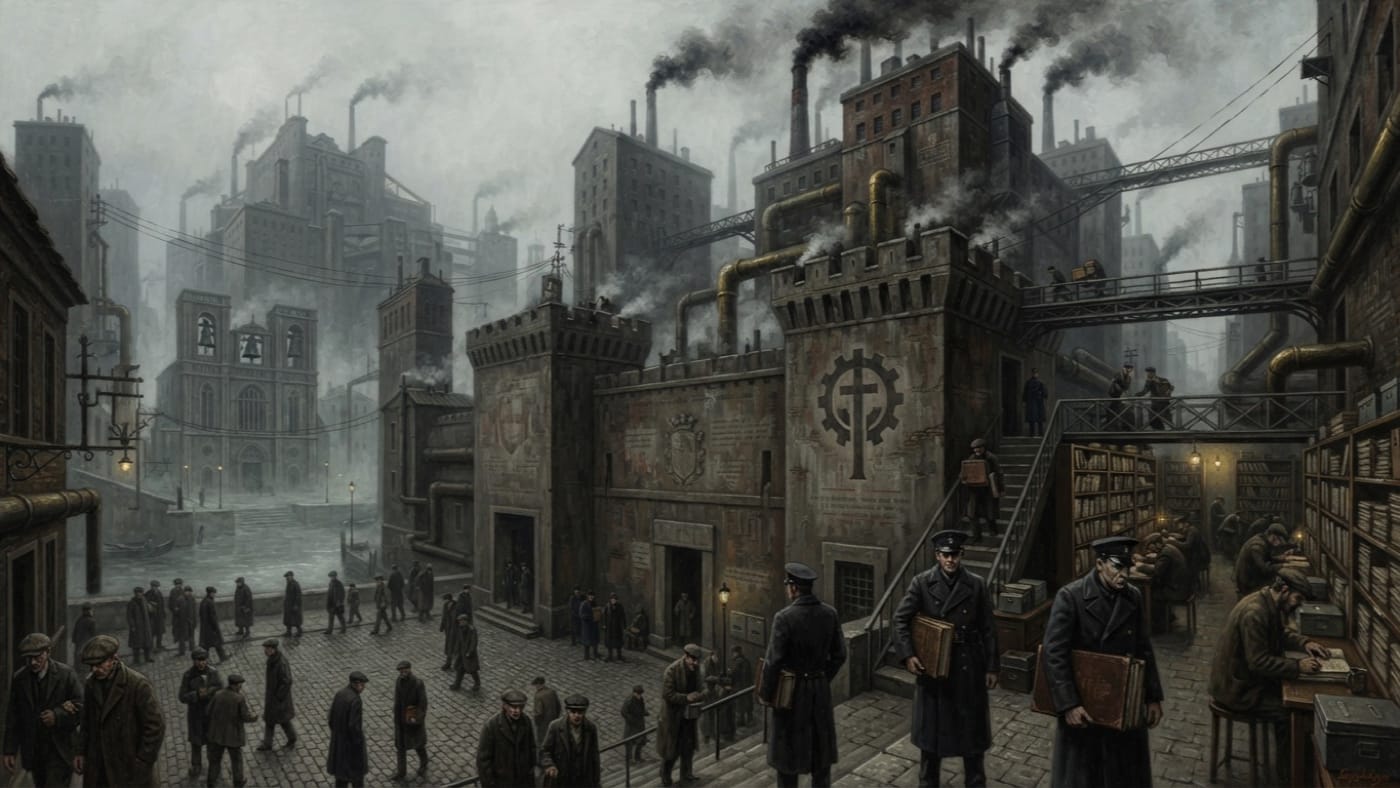
Italian principalities
One filing drawer for a peninsula that never consented to share it
The old Italian jurisdictions, erased by Regensburg in A.S. 30 and inherited piecemeal by the Synod. Their complete roster remains unestablished; their objections remain abundant.
Codex Ref. II.3.09-030
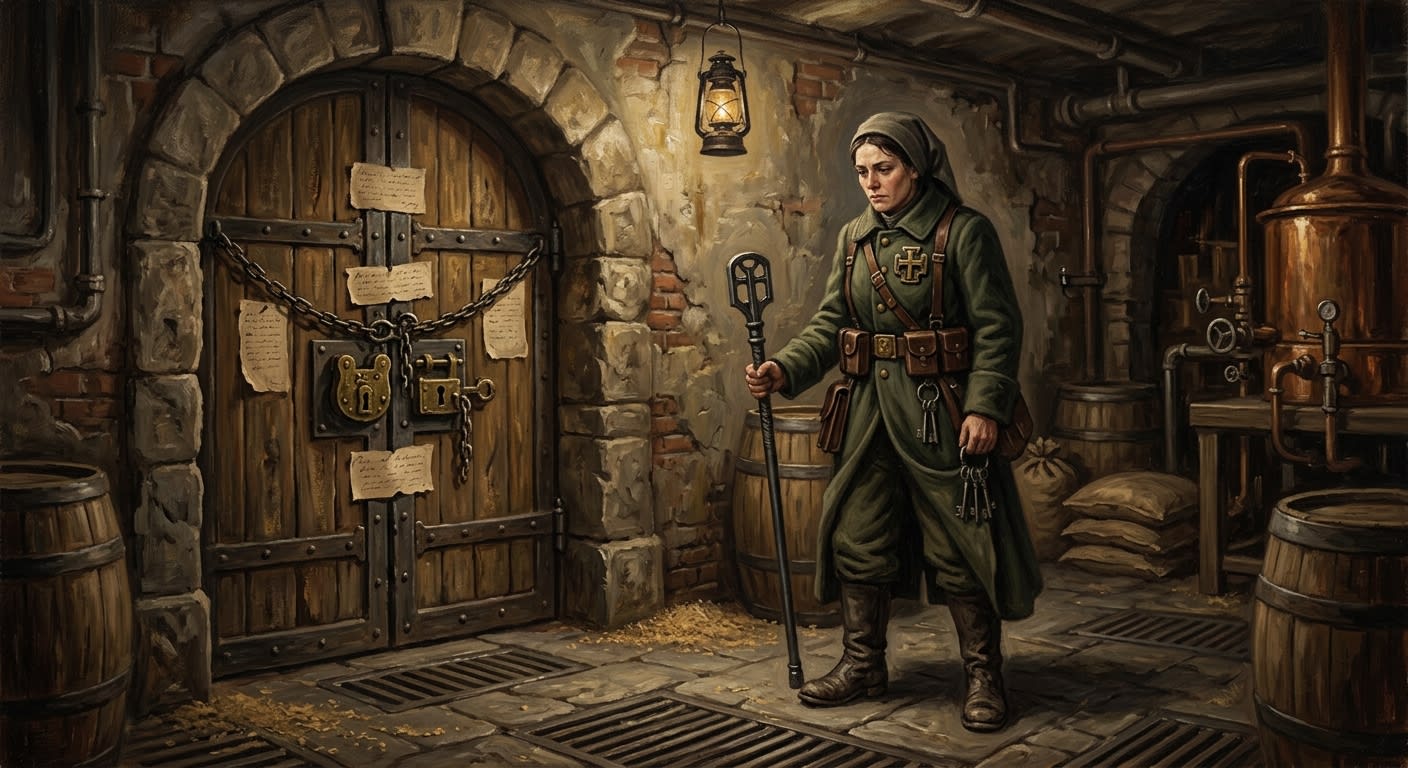
Klara, the Unnamed Guardian
Seven years of sealed stone, and the surname Records failed to deserve
Uncanonised Deutz custodian who kept Relic 31-C(α–γ) sealed beneath Hartmann's brewery through A.S. 38–45, then yielded it to Ignatius Brenner.
Codex Ref. III.2.01-045
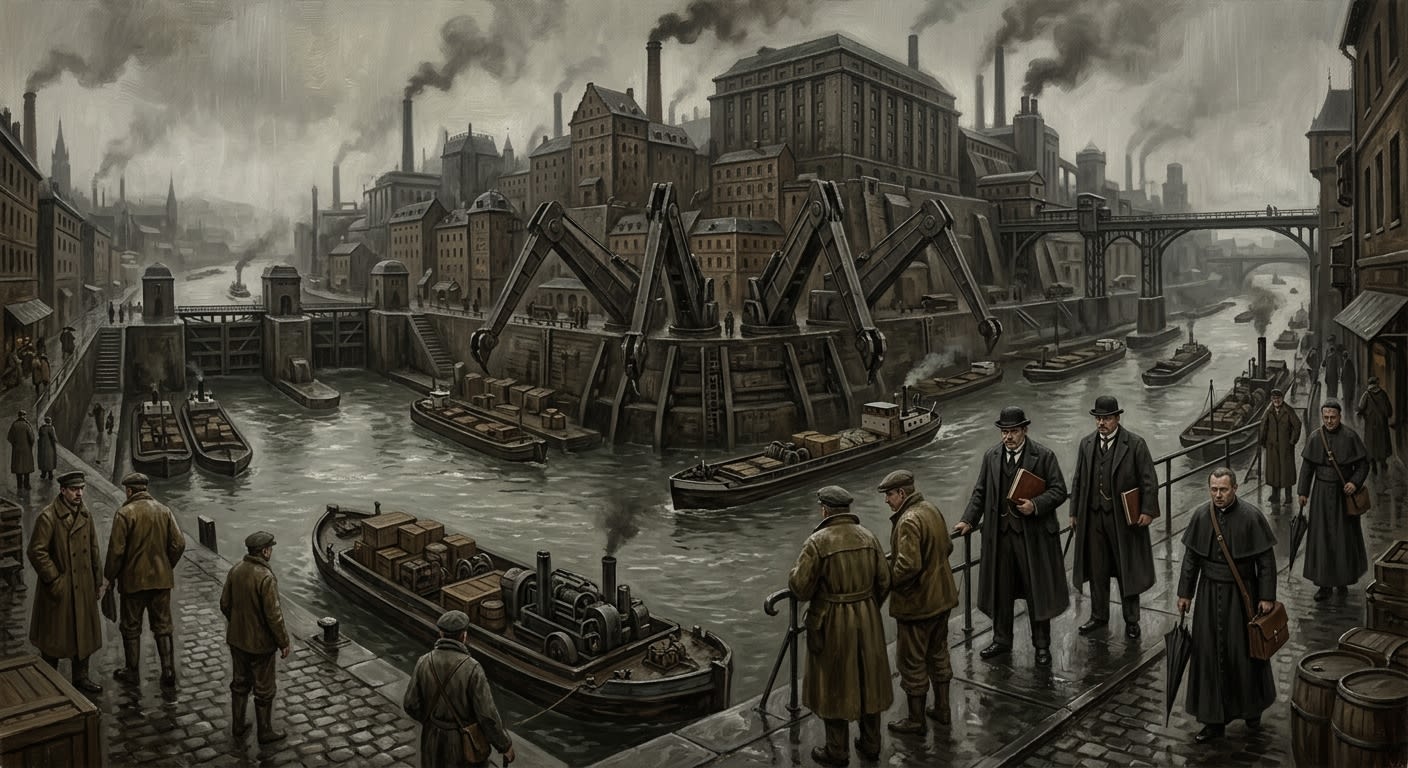
Koblenz
The holy art of handing the burden onward
Koblenz is the wet middle hand of the Ignatian chain: a Rhine-Moselle transfer city where sanctity lasted six minutes and became taxable forever.
Codex Ref. II.3.05-045
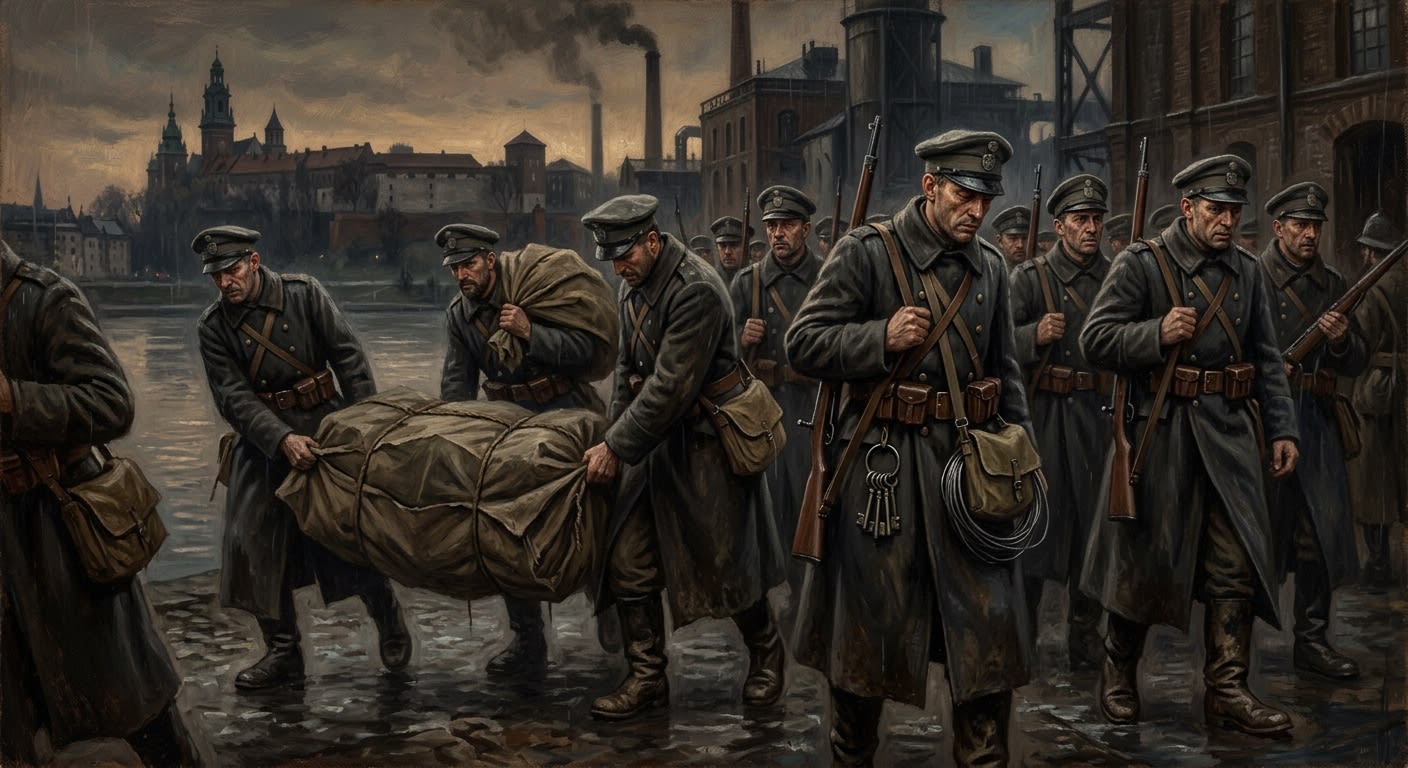
Kraków Secular Guard
The civic hand that made atrocity local
The Kraków Secular Guard was municipal obedience with wire in its pouch: local men, local keys, and ordinary boots carrying Brechtold's atrocity to the Vistula.
Codex Ref. I.1.04-018
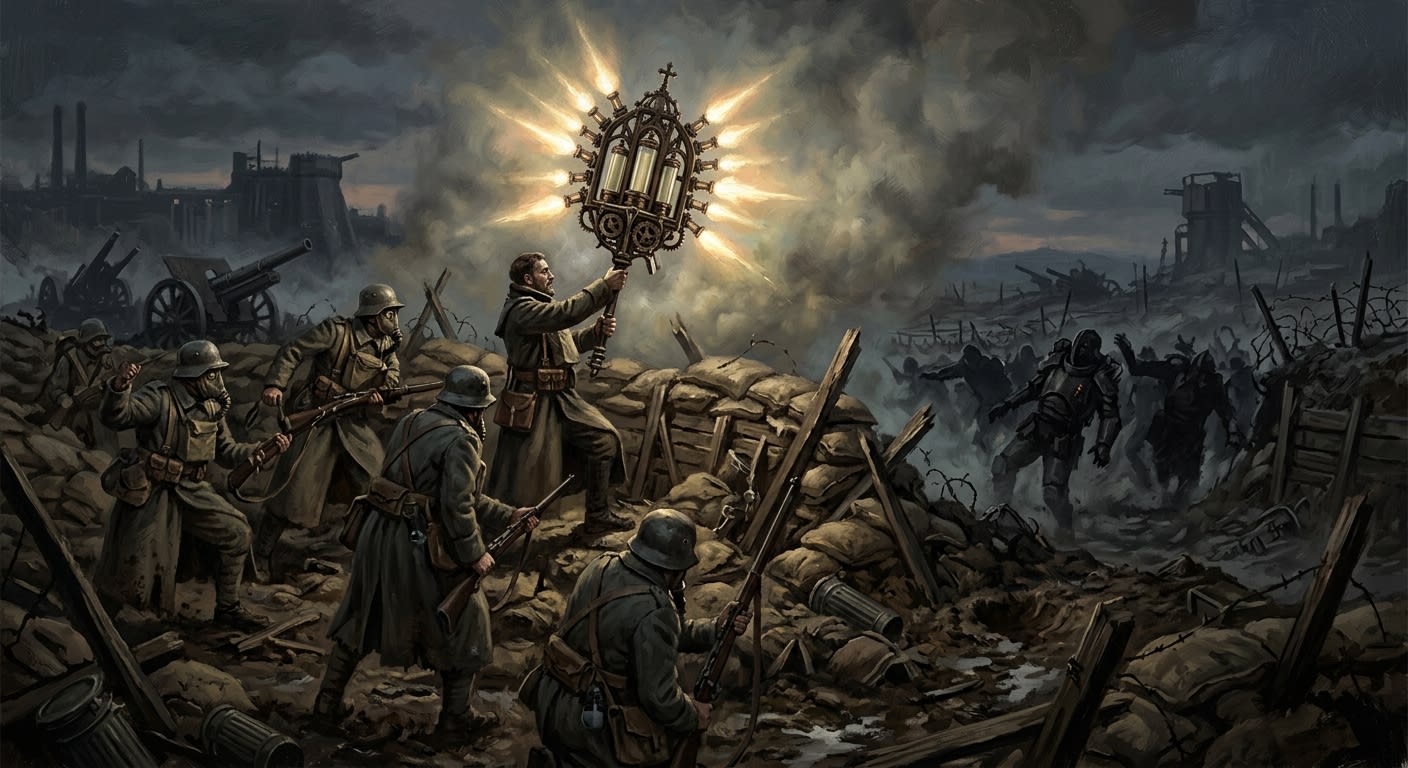
Last Stand of Kalnik Ridge
Where Wrath flinched and retreat learned to march
At Kalnik Ridge in A.S. 48, Brother Tomislav raised the Reliquary of Saint Isidore, seventeen relics blazed, Maldrake's vanguard recoiled, and rout became discipline.
Codex Ref. VII.5.03-001
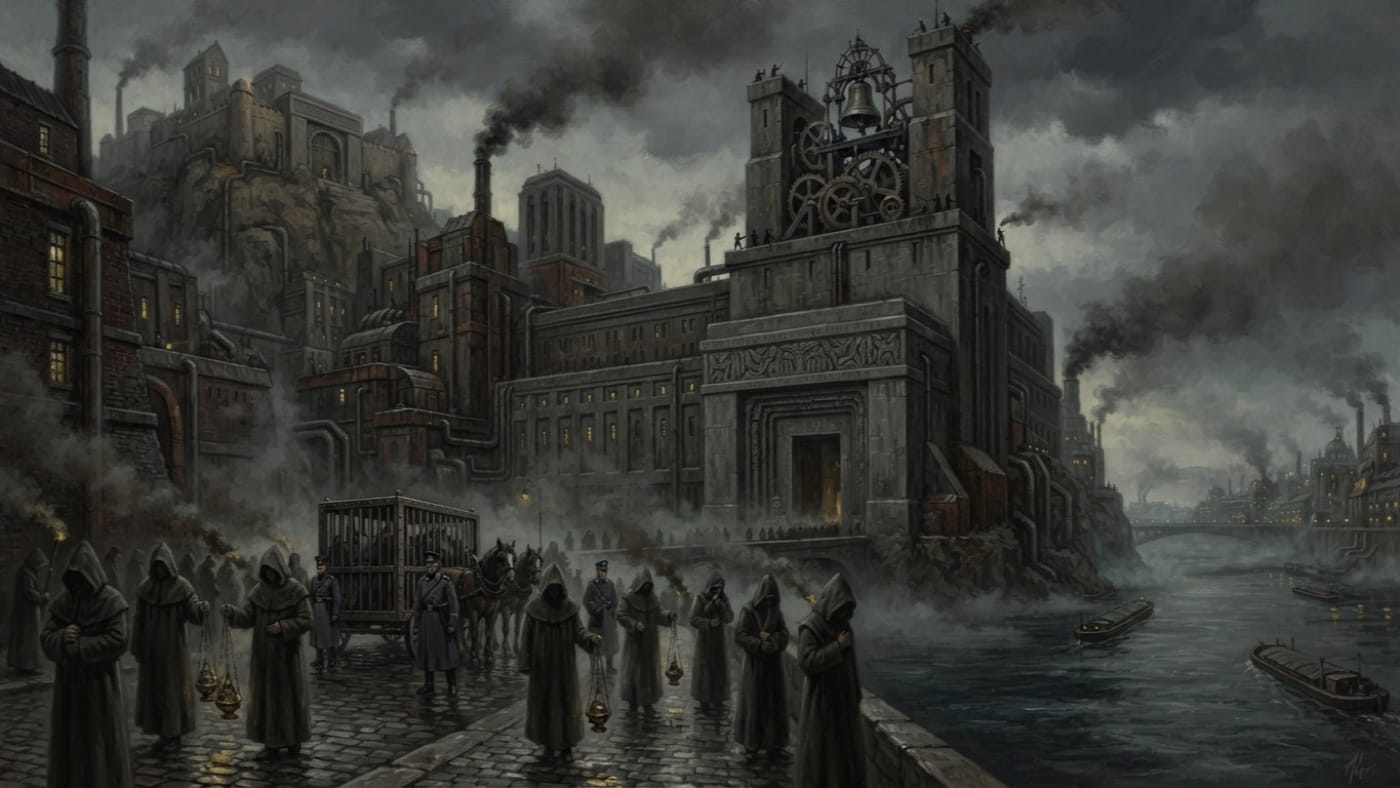
Latin
The river kept the hours; the Church kept arguing about the language
Latin carries the Church's prayers, titles and ceremonial condemnations. The Rhône reportedly used it; witnesses disagreed, and the archive declines to supply a grammar.
Codex Ref. XIII.1.97-001
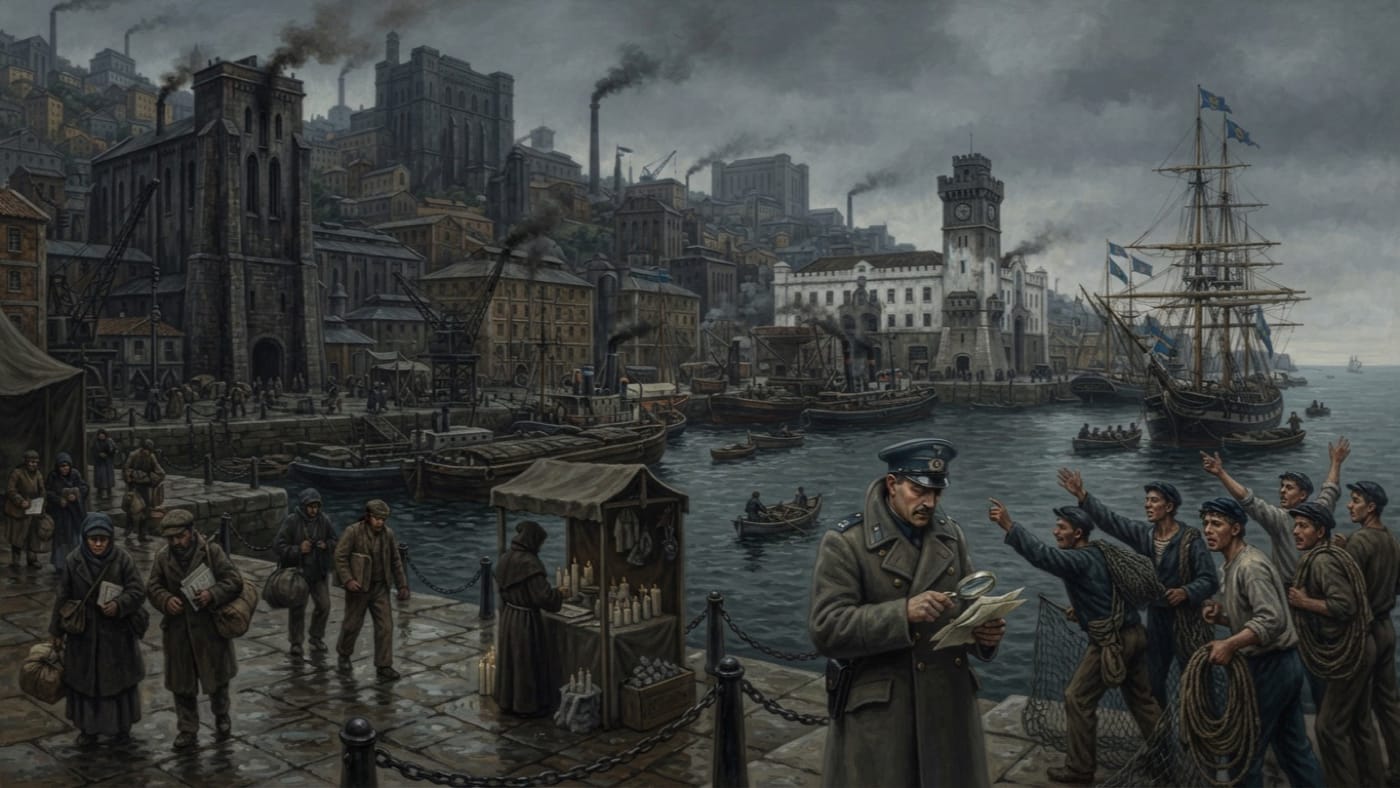
Lisbon
The harbour counts by contract
Lisbon sells sea candles, quake memory and licensed passage at the Atlantic mouth of the Tagus. Strasbourg counts its revenue; its sailors tell the catastrophe in the wrong order.
Codex Ref. II.4.09-201
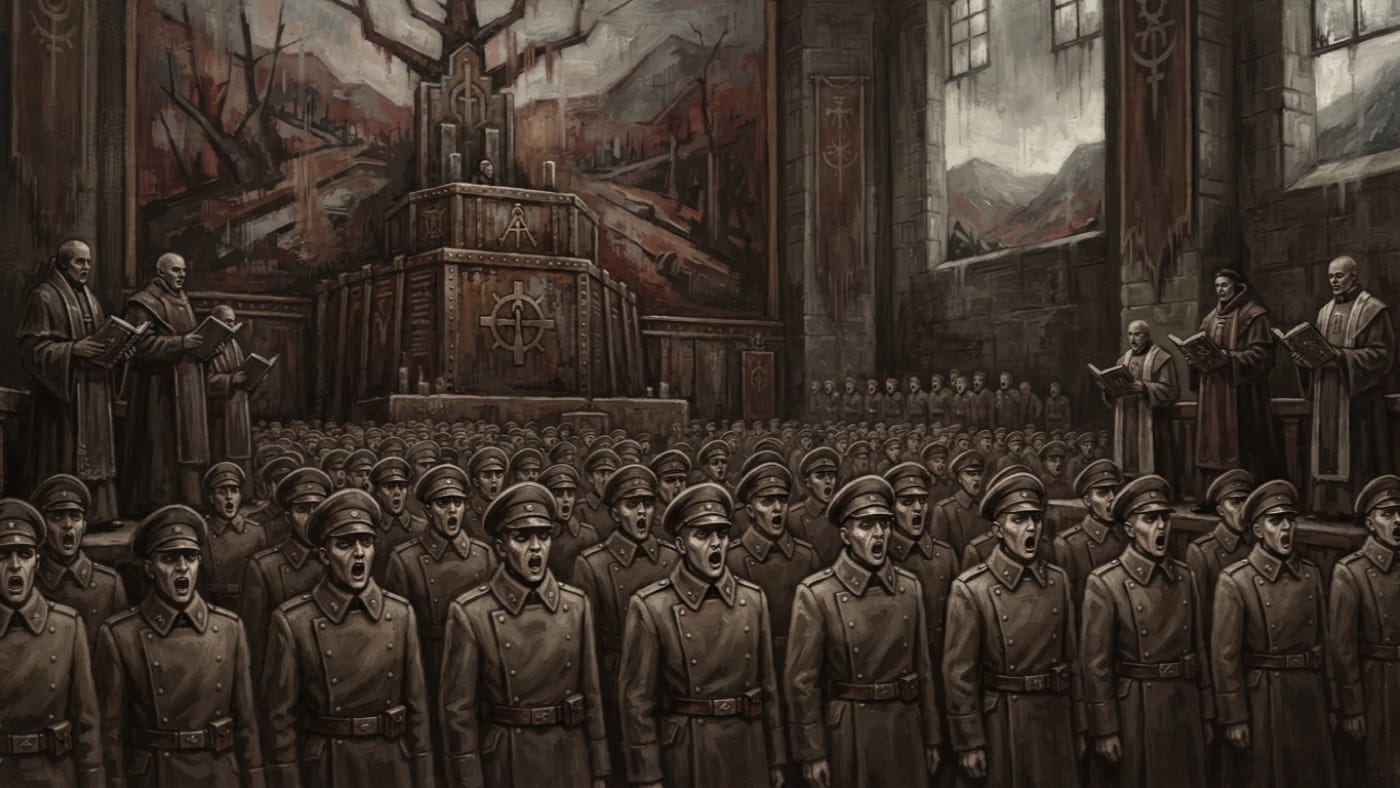
Litany of Errors
Eleven names. One designation. Four minutes to agree.
At Bastion-Przemyśl, cadets recite eleven Ulm signatories and the unknown twelfth, then condemn all twelve in unison. Four minutes of exact remembrance, with no room left for curiosity.
Codex Ref. XIII.1.95-201

Lord-Protector Guillaume
The gate-seller who mistook a palace for survival
Guillaume sold Aachen for Lowlands dominion, sent a proxy to Regensburg, and learned too late that the Bureau's cleanest executions are grammatical.
Codex Ref. III.2.06-003
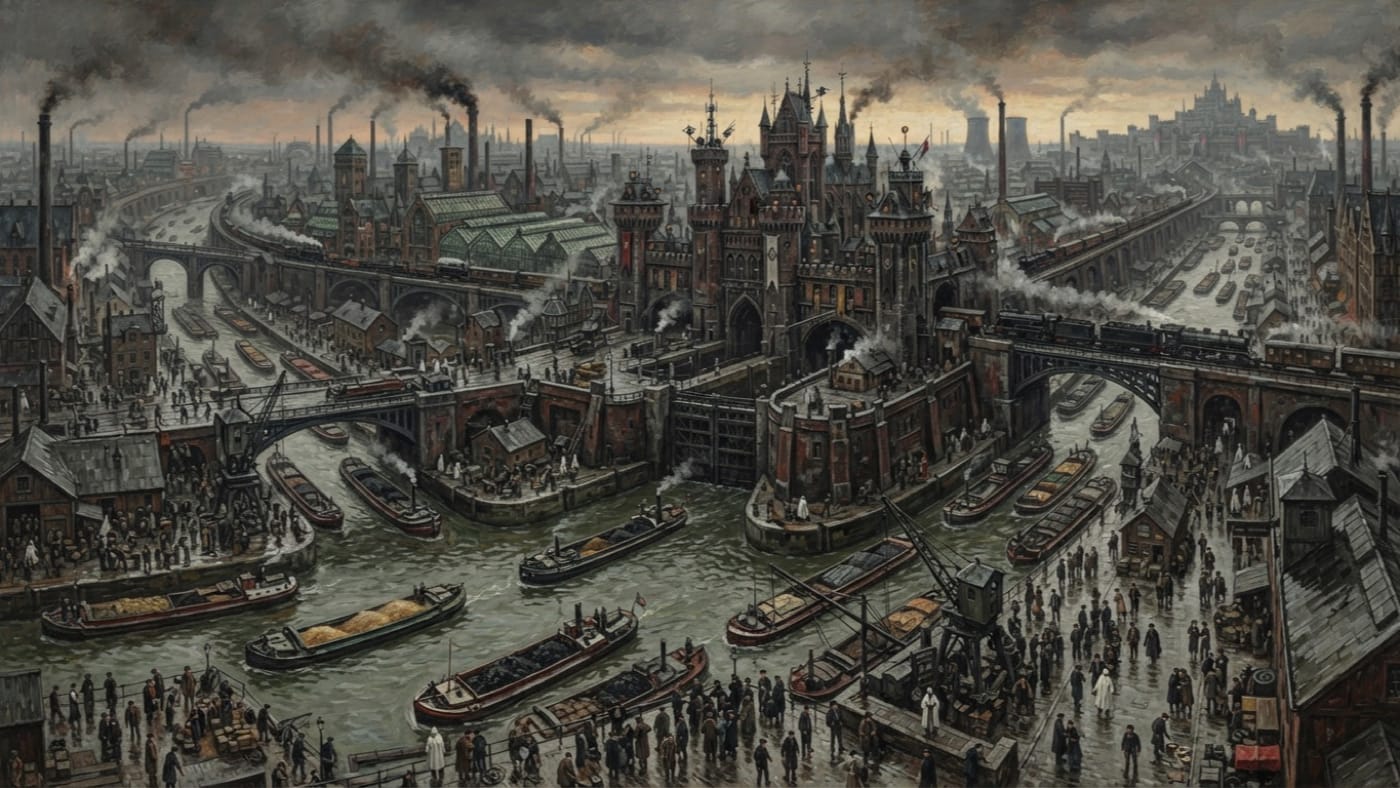
Lowlands
The country promised for a gate
The Synod's Lowlands move grain, cloth and credit through Bruges, Ghent and Antwerp. Guillaume was promised dominion for Aachen's gate; delivery remains uncertified.
Codex Ref. II.1.08-001
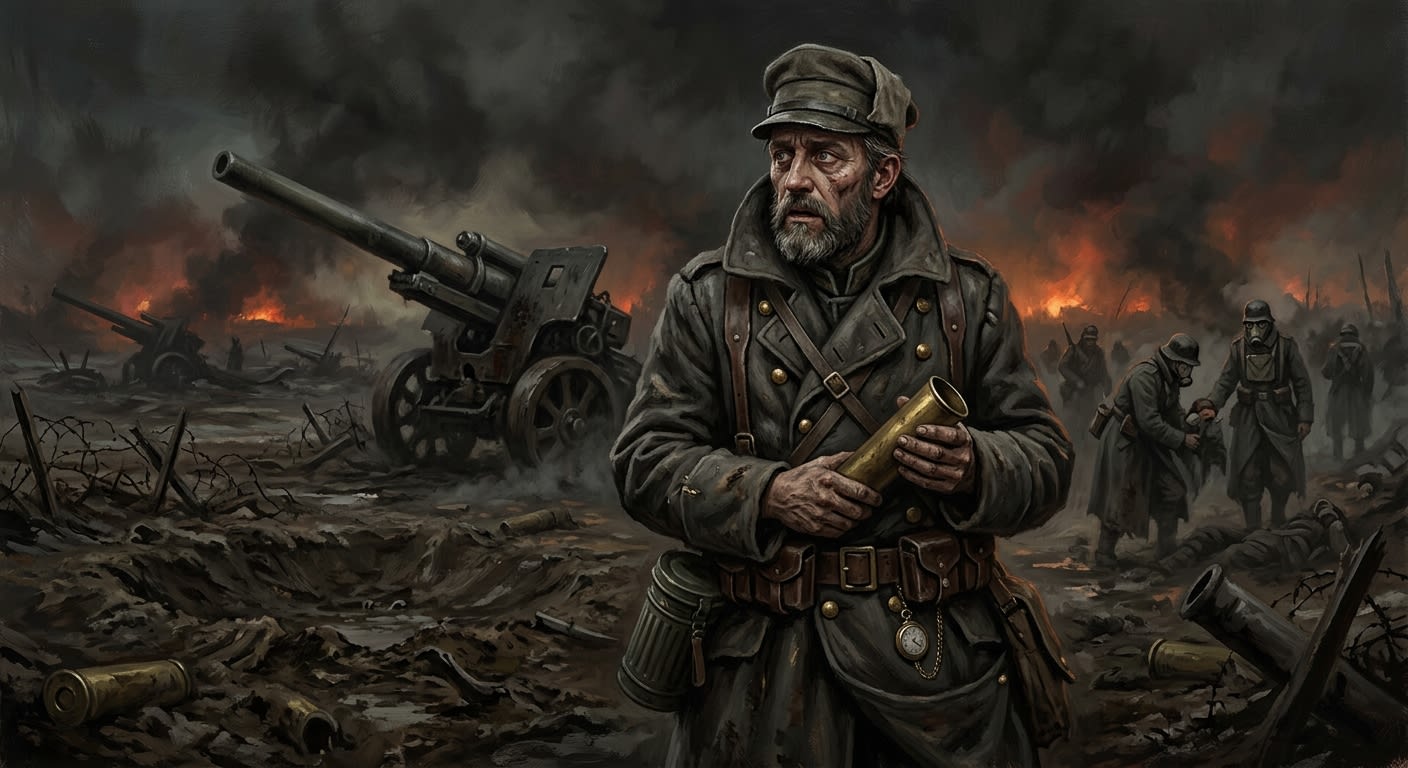
Lucien Artois
The cleverest gunner Reason fed to fire
Lucien Artois made Reason's artillery sing at four rounds per minute, then learned at the Iron Plains that Hell does not consult firing tables.
Codex Ref. I.1.06-001
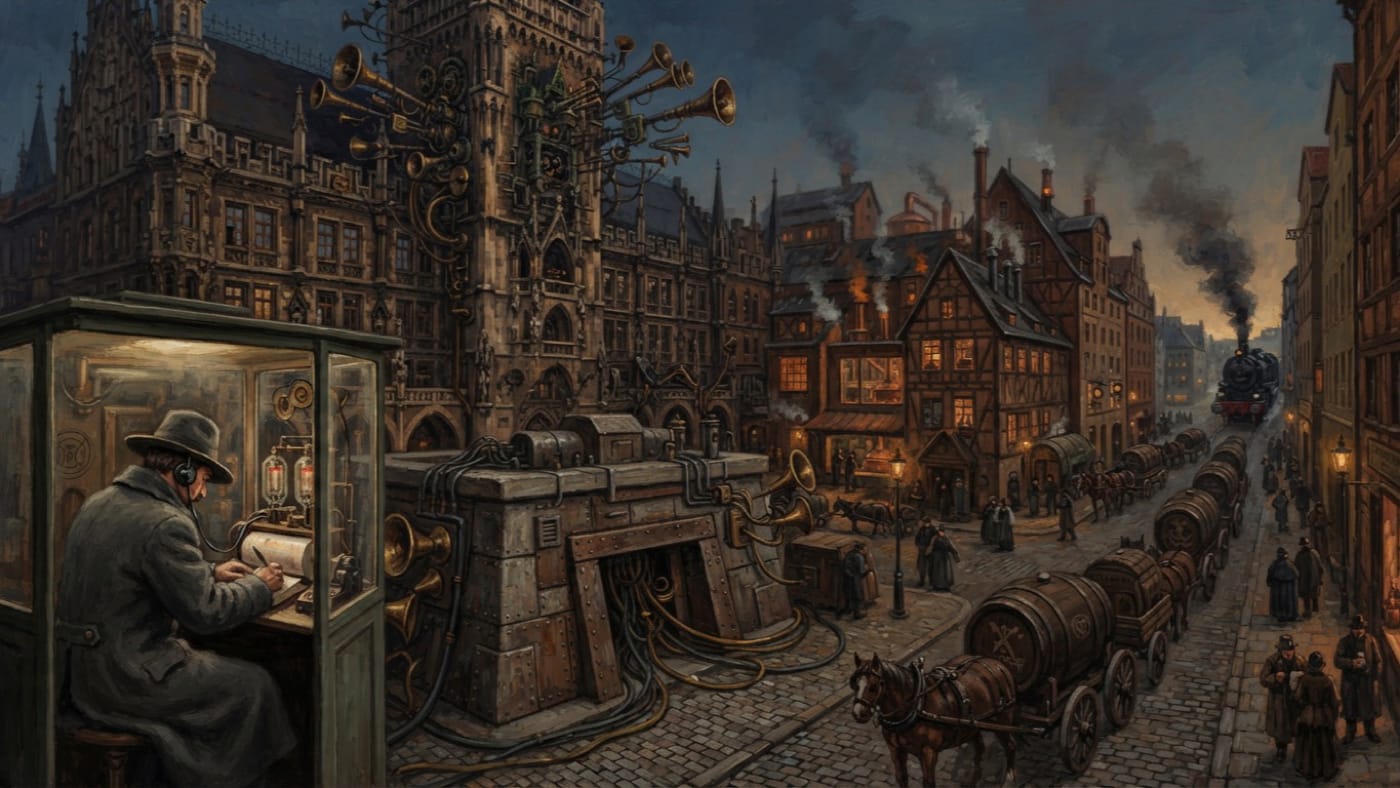
Marienplatz Post
Sixty-seven years of listening, and Munich still sings
Established in A.S. 134, Purity's Marienplatz station listens to Munich's Bräuviertel. Sixty-seven years of reports have given Doctrine nothing actionable; Munich keeps singing.
Codex Ref. II.2.06-017
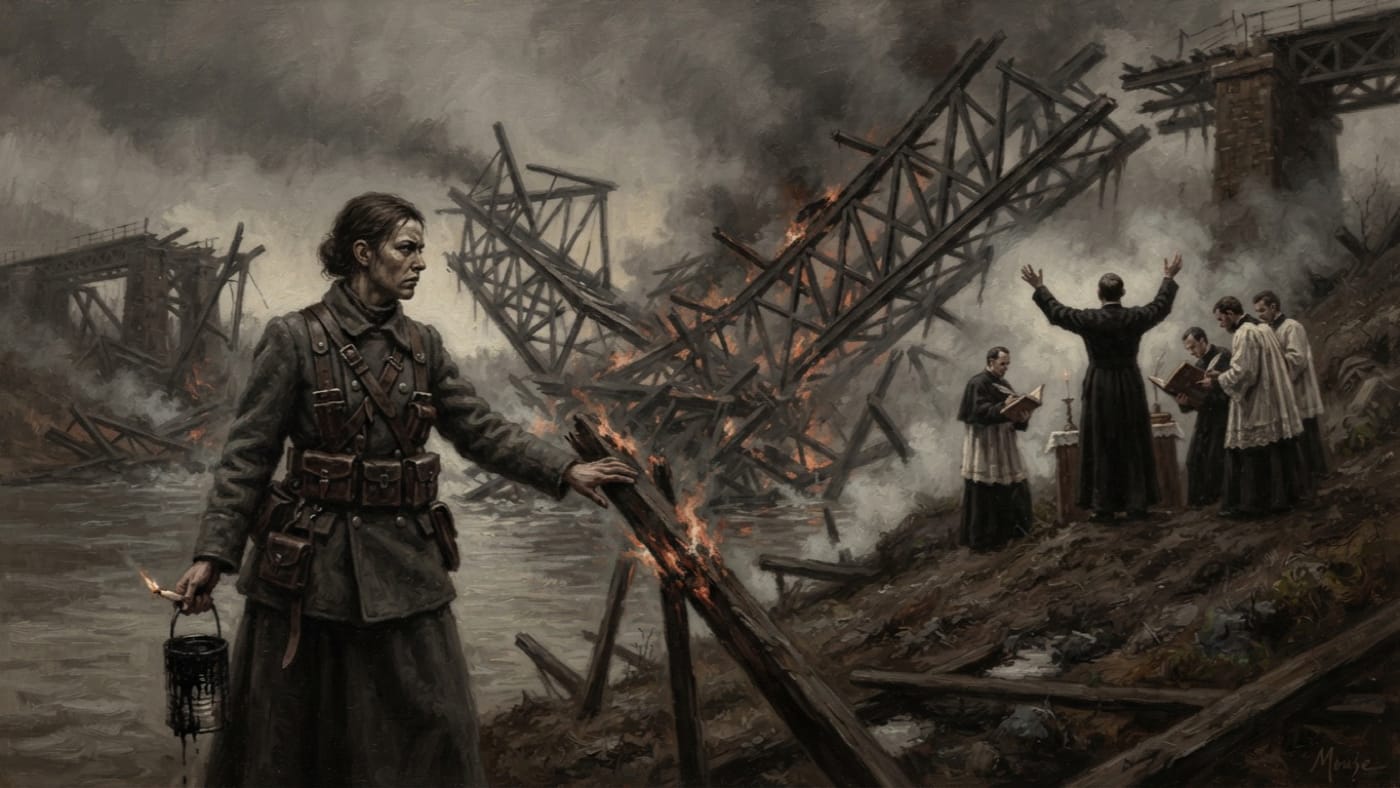
Maud of Saint-Riquier
The bridge fell; the query is still standing
In A.S. 16, Maud used axle grease after a chaplain refused to bless it. The bridge fell. His doctrinal query remains unanswered; her fate remains unrecorded.
Codex Ref. III.2.01-016
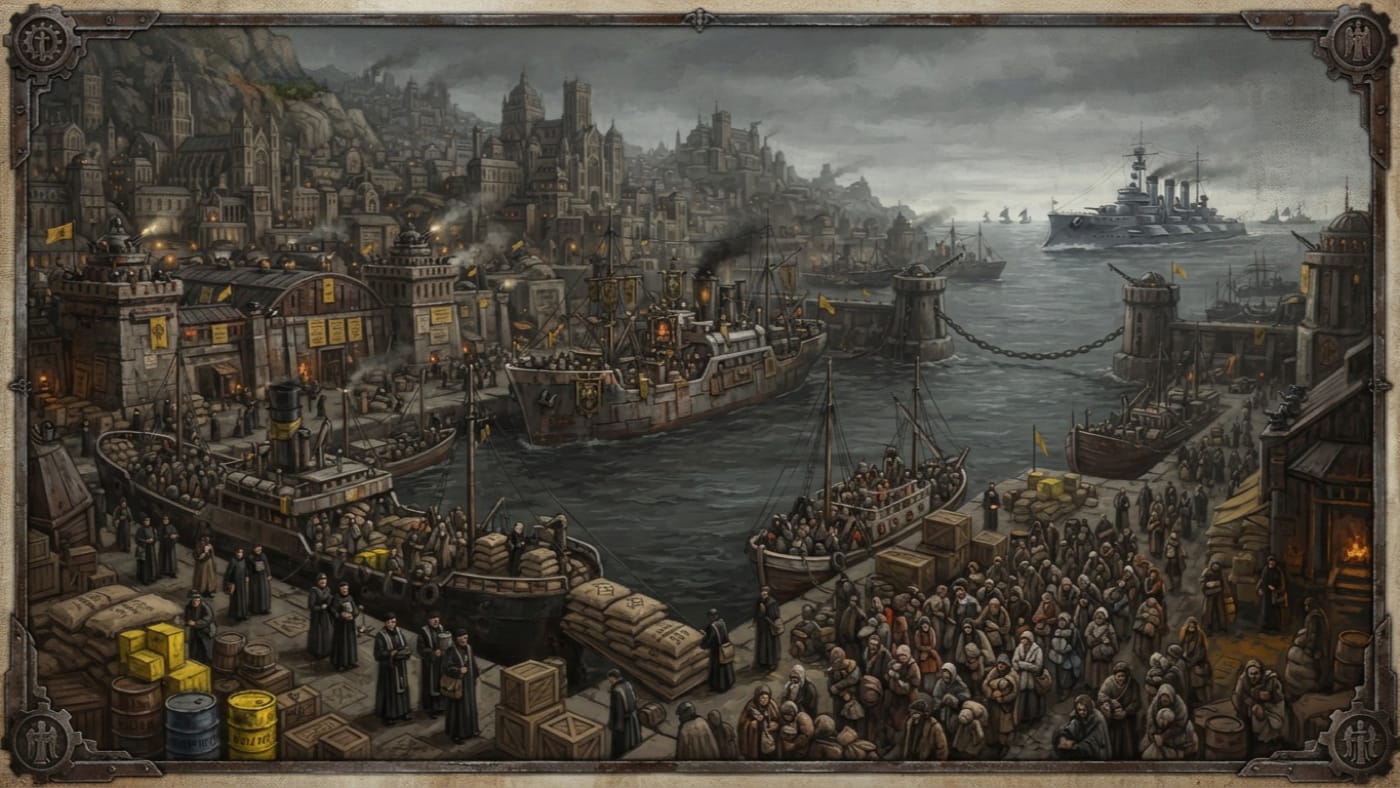
Mediterranean
The oldest road the Church holds, and the only one it cannot pave
The Mediterranean feeds the southern Line with grain, shot and pilgrims. Rival ports tax the passage, quarantine the passengers and leave room for contraband. The sea takes its share without a receipt.
Codex Ref. II.7.01-201

Meuse corridor
The bridge fell; the query remains unanswered
The Meuse corridor gathered armies and refugees at its crossings. Maud's bridge fell in A.S. 16; the chaplain's query about axle grease remains unanswered.
Codex Ref. II.1.08-016
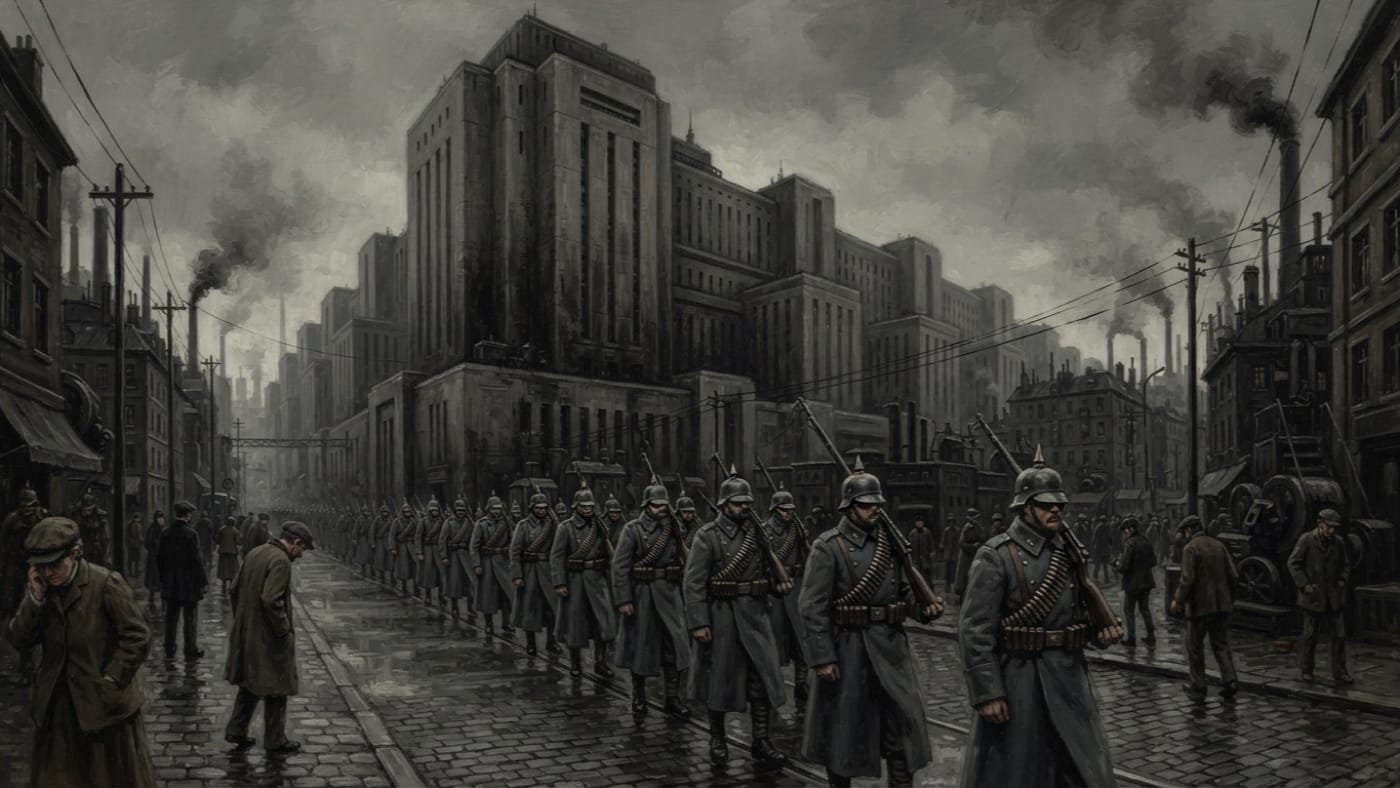
Ministry of Civic Security
The office above the bayonets
The Republic placed its Guards under a Ministry of Civic Security in A.S. 30. The name survives in the Stacks; the citizen's security was another matter.
Codex Ref. I.1.05-002
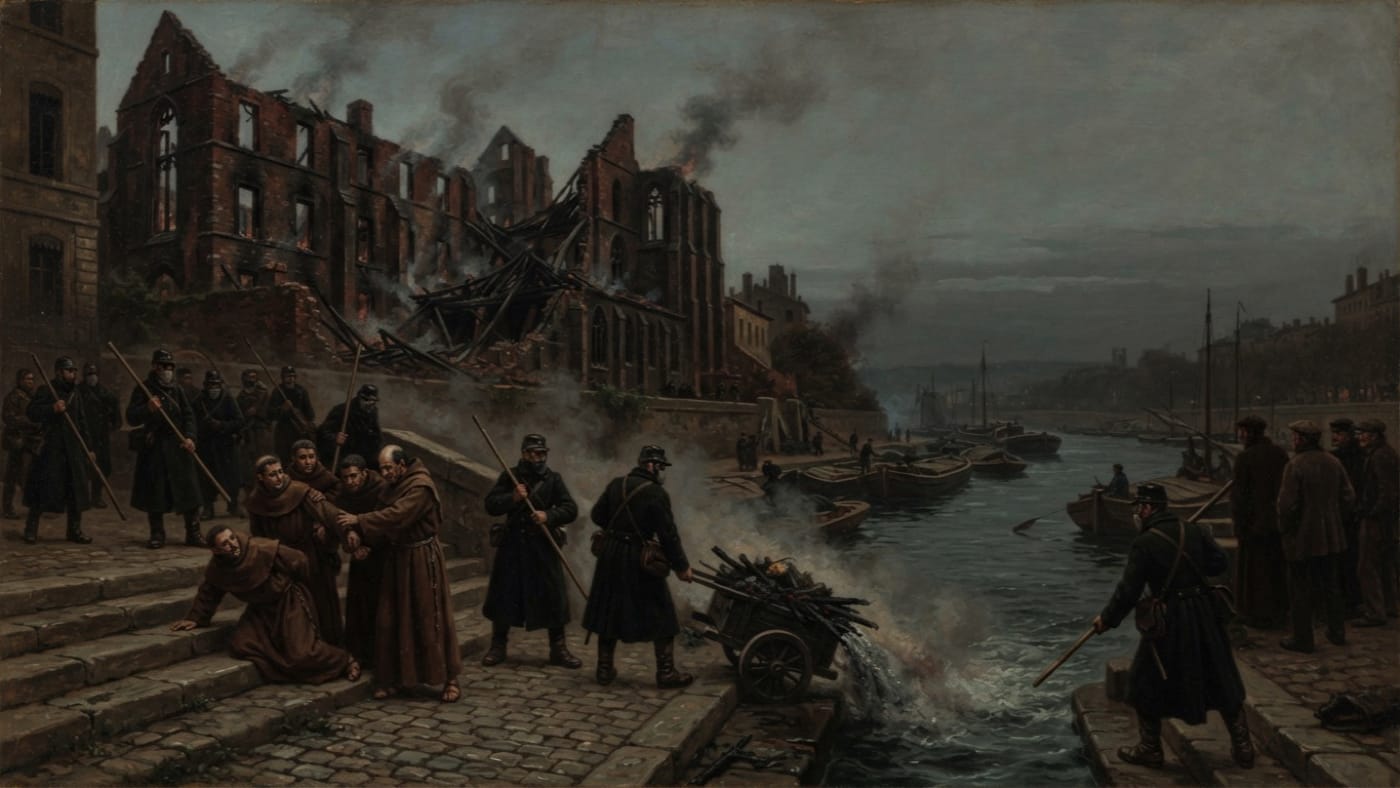
Minor House of Saint Sabina
Three names, one friary, and no proven dedication
The Lyon friary burned in −39 A.S. (1671 CE), remembered under three disputed names. Its brothers fed the docks; the index supplied a saint it could not prove.
Codex Ref. II.1.09-039
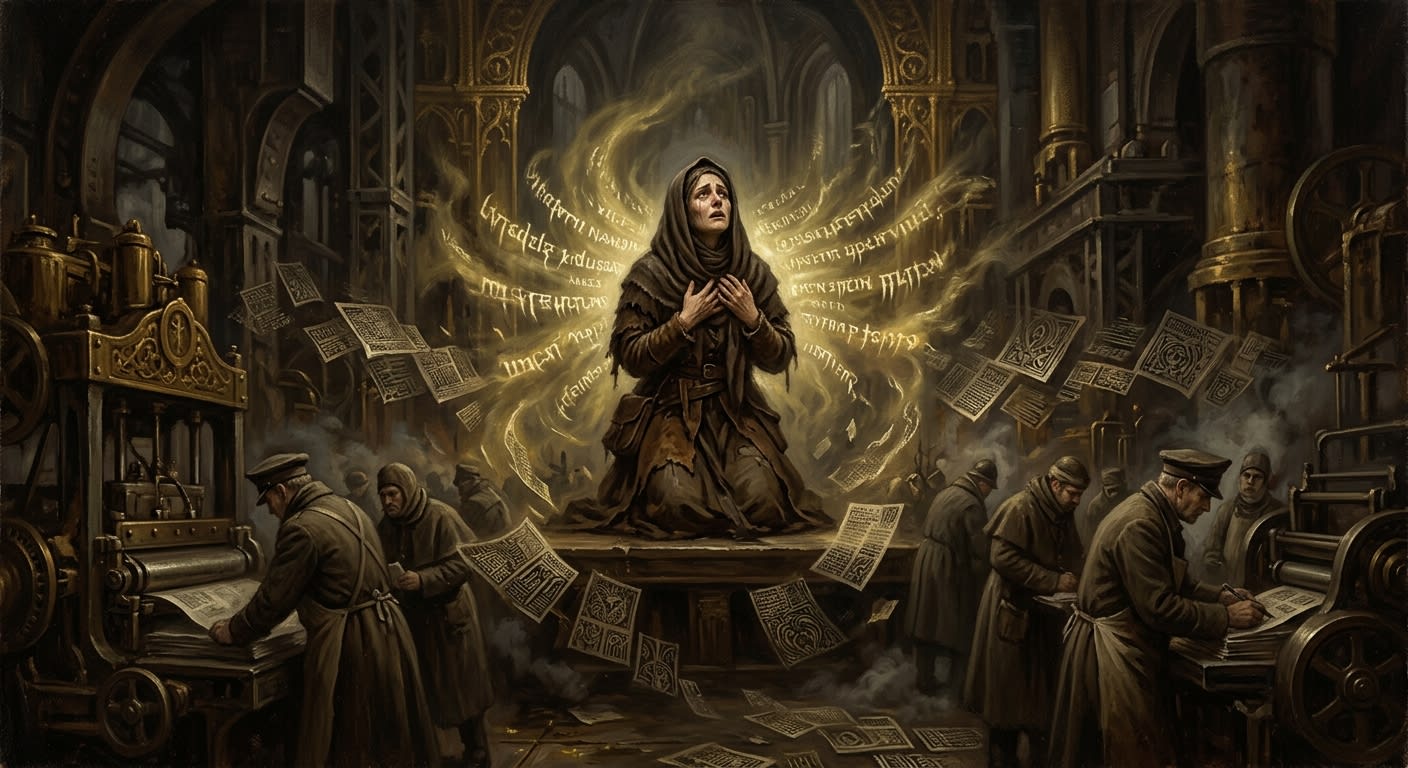
Miraculum Diffusum
The miracle was everywhere, which is to say the presses worked
The one-use doctrinal category that crowned Margaux when no ordinary miracle arrived: effect, print, grief, and Latin with teeth.
Codex Ref. XIII.1.09-014
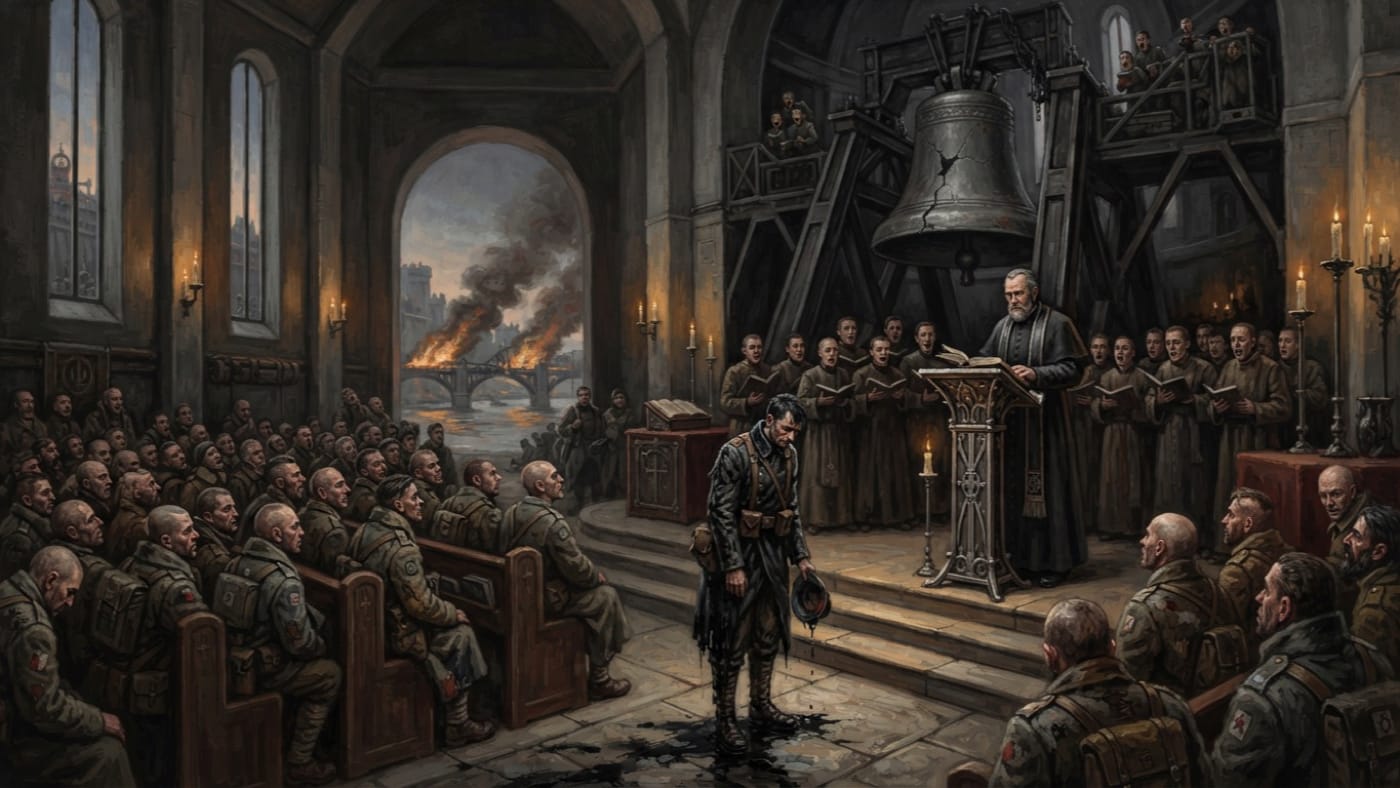
Miserere
The psalm Severin finished while the northern front collapsed
Severin finished the Miserere at Montreval after reading of Aachen's betrayal in A.S. 25. Mercy was requested; the bridges were burned anyway.
Codex Ref. XIII.1.96-025
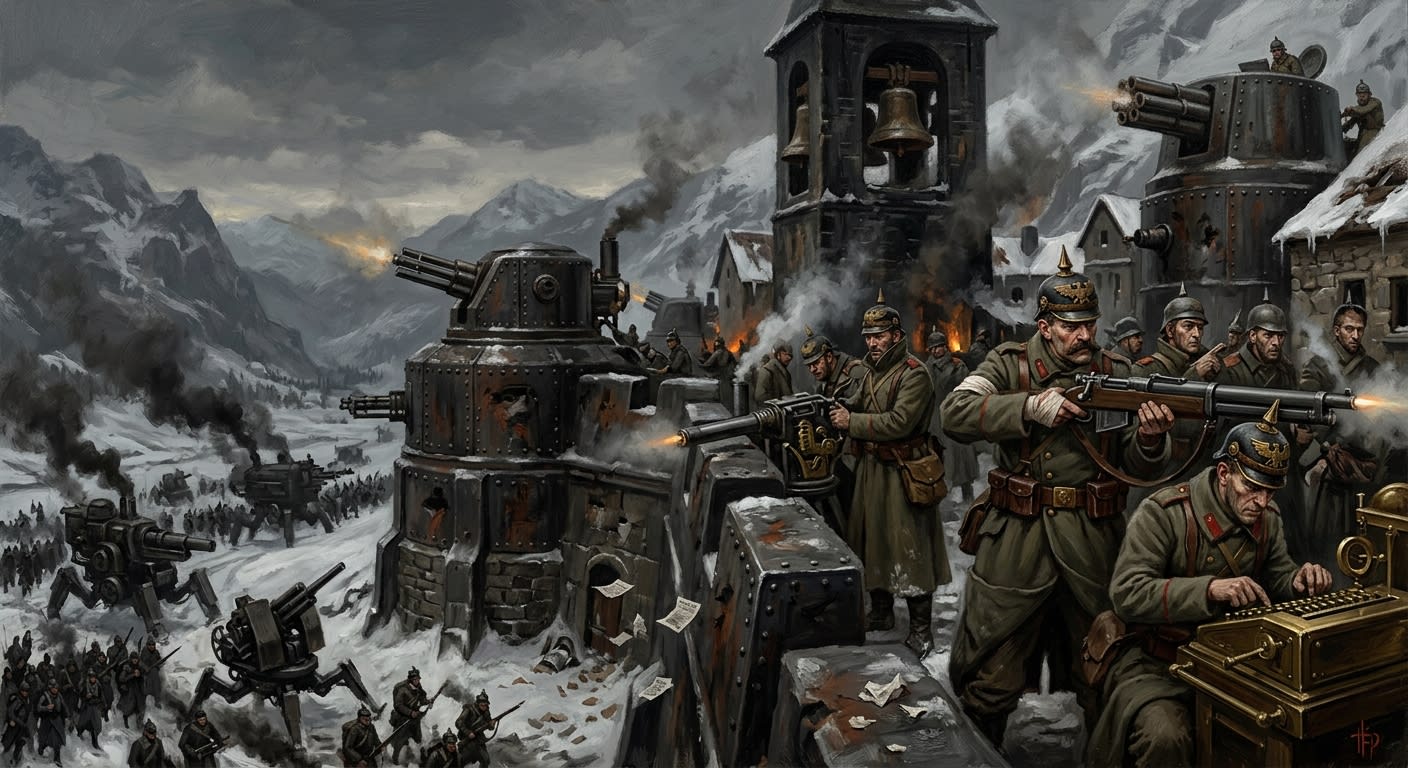
Montreval
The pass-town that taught Reason the road was closed
Montreval held three winters against Lucien Artois's clockwork guns, hunger, pamphlets, fever, and arithmetic; a southern pass-town where Severin bought time with walls, bells, broth, and burned bridges.
Codex Ref. II.1.09-015
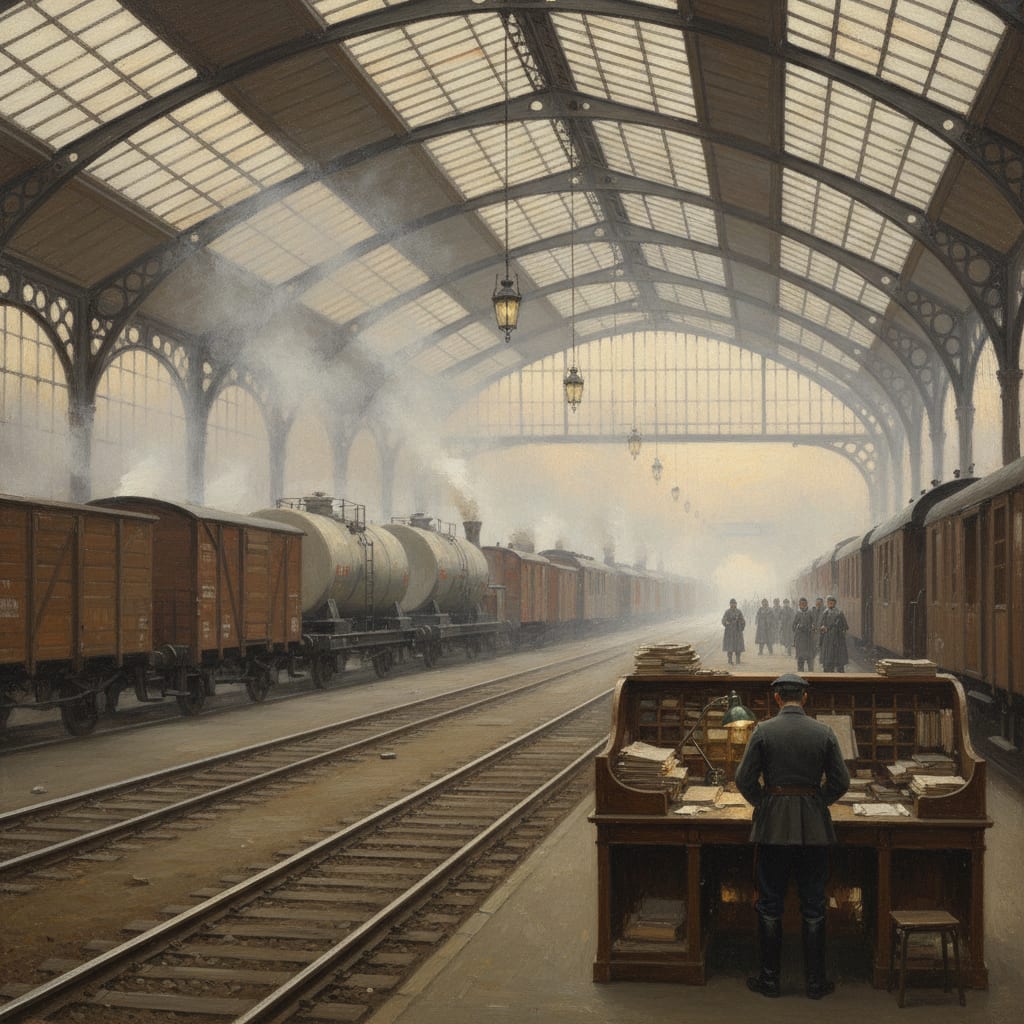
Munich
The last comfortable city; or, where the war becomes a number before it becomes a wound
The Synod's central logistics hub and the last city where the war is an abstraction. Seven hundred thousand souls administer the machinery of a conflict they will not fight. Munich pays its tithes, fills its quotas, and resents everything.
Codex Ref. II.4.09-008
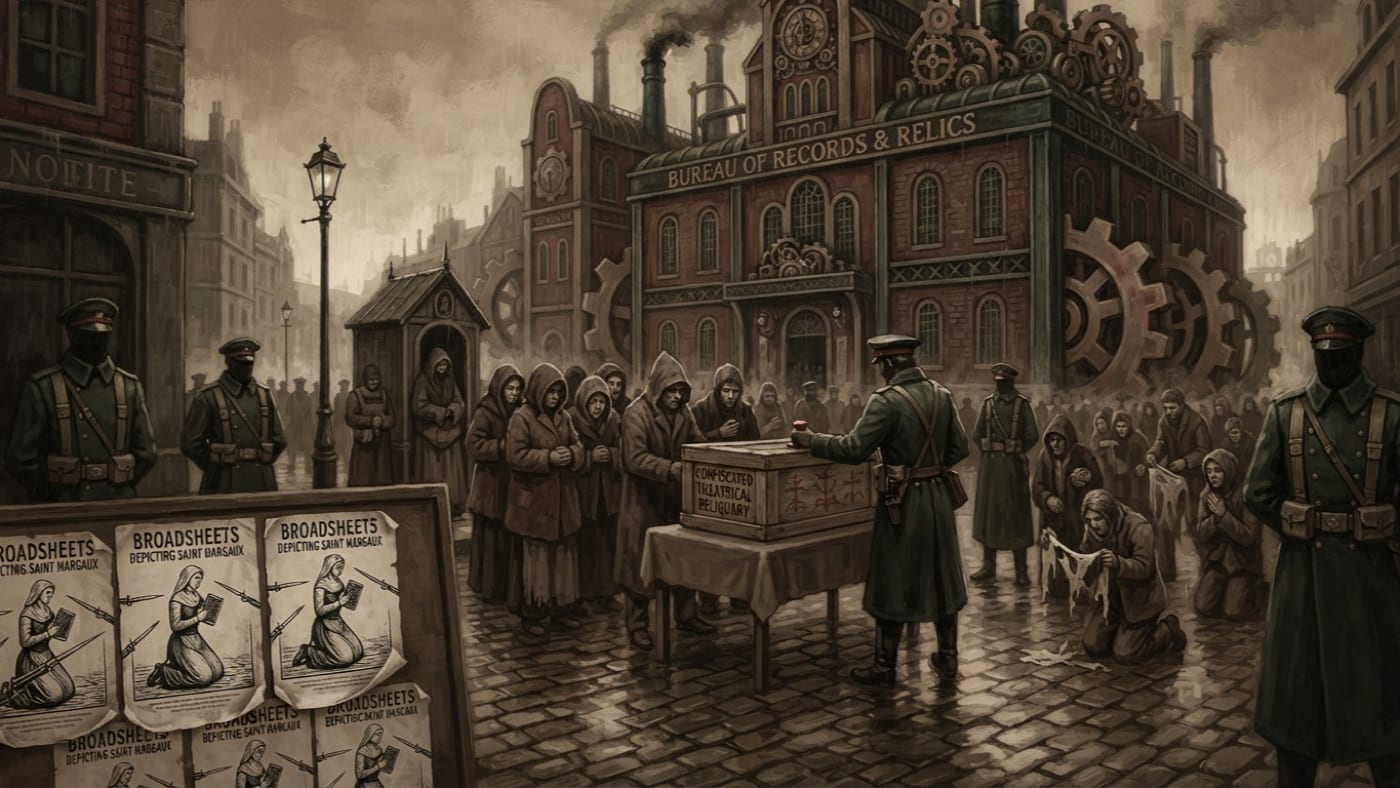
Nantes
Paper arrived; a box was seized
Margaux's broadsheets reached Nantes; a theatrical reliquary there was confiscated after accepting offerings. Paper arrived, a box was seized, and the Bureau considers this sufficient civic history.
Codex Ref. II.3.05-010
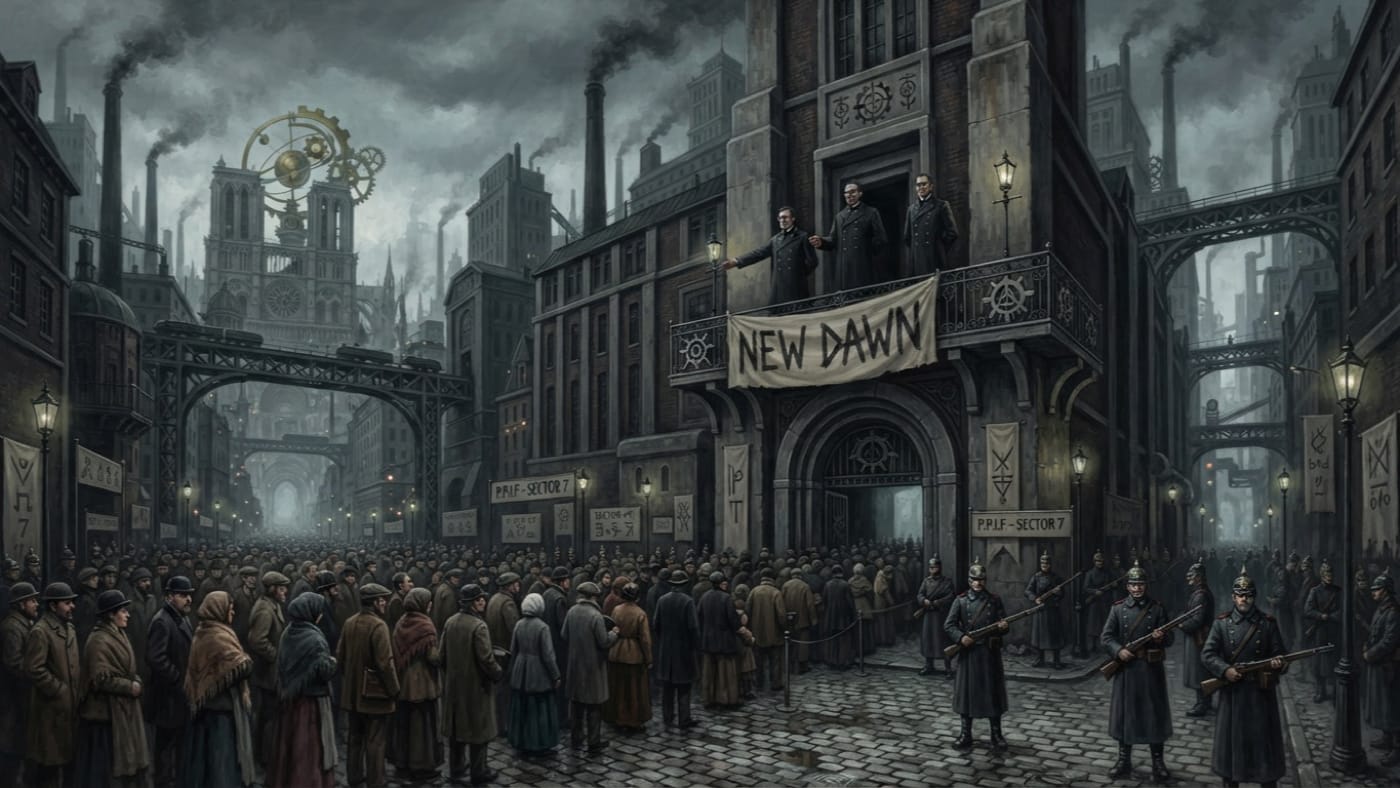
New Dawn
Liberty Proclaimed, Persecution Administered
The Rationalists' proclamation of victory after the Treaty of Regensburg, A.S. 30: liberty advertised from balconies, persecution administered through prefectures. The Bureau retains the slogan as evidence.
Codex Ref. VII.2.01-030
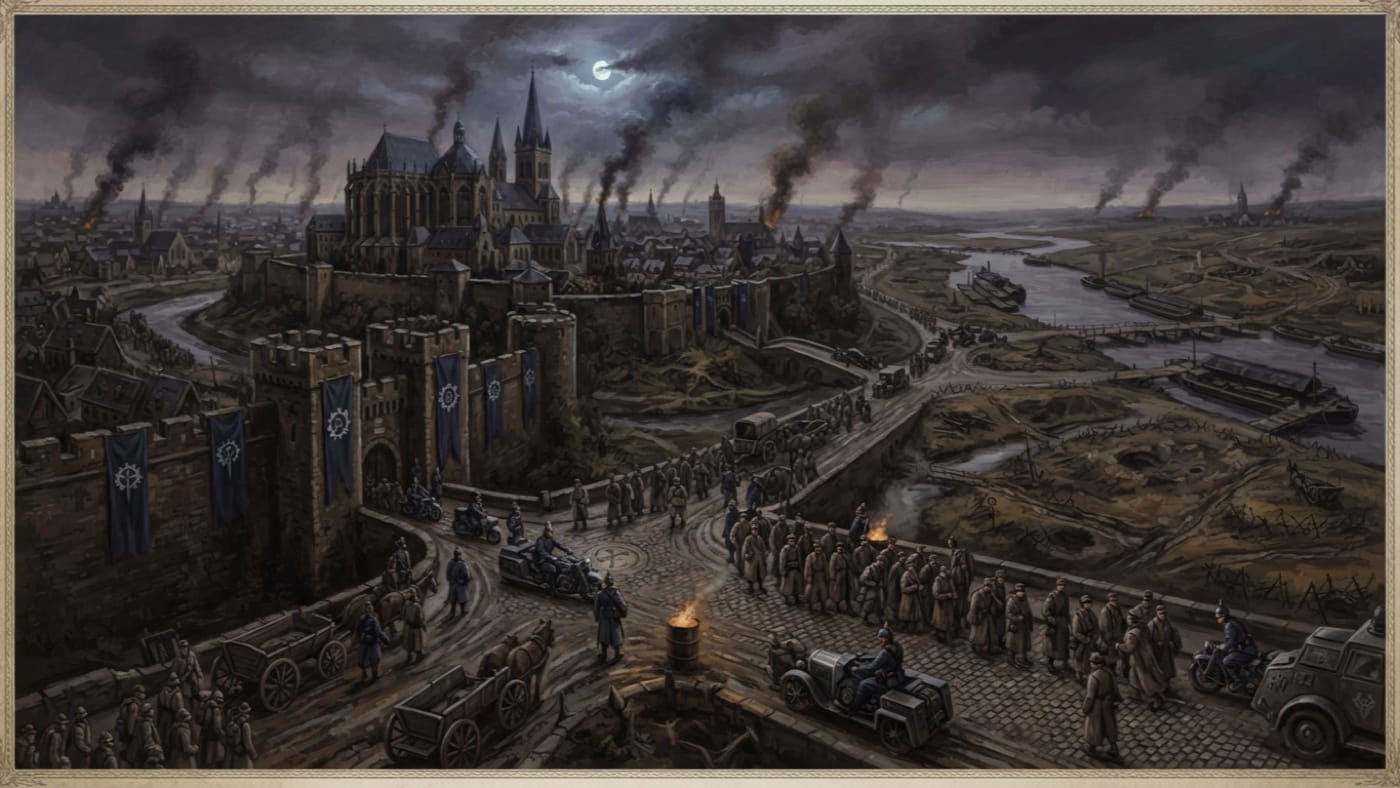
Northern Coalition
The Front Guillaume Sold for a Promise
The faithful's northern command lost its roads, stores and future when Guillaume sold Aachen in A.S. 25. The soldiers owed bread received a lesson in noble honour.
Codex Ref. VIII.6.02-025
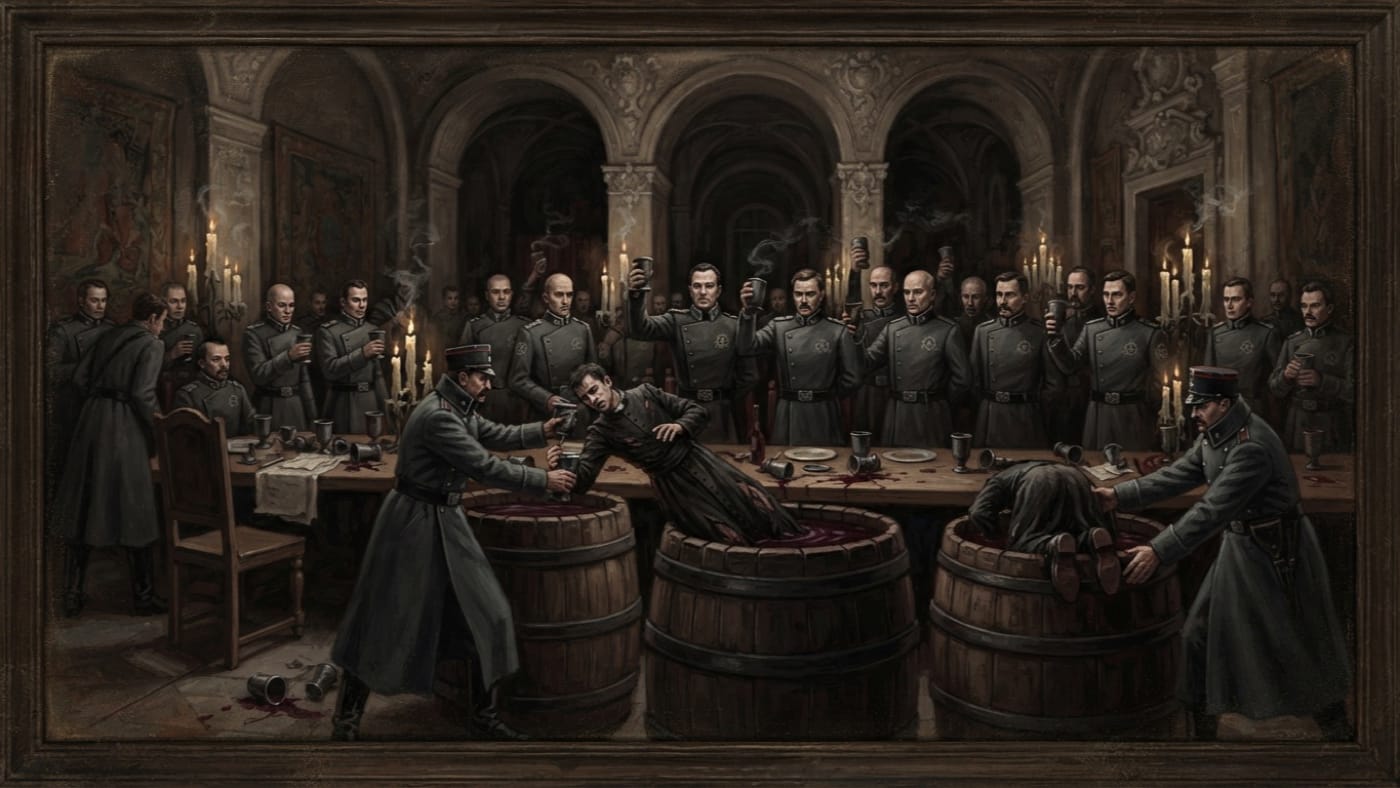
Oaths of Regensburg
Three refusals, a missing bishop, and a toast answered in water
At Regensburg's A.S. 29 banquet, three priests refused recantation and were drowned in wine. The Bishop of Worms vanished; his captors declared he had never existed. The cups kept no minutes.
Codex Ref. VII.2.01-002
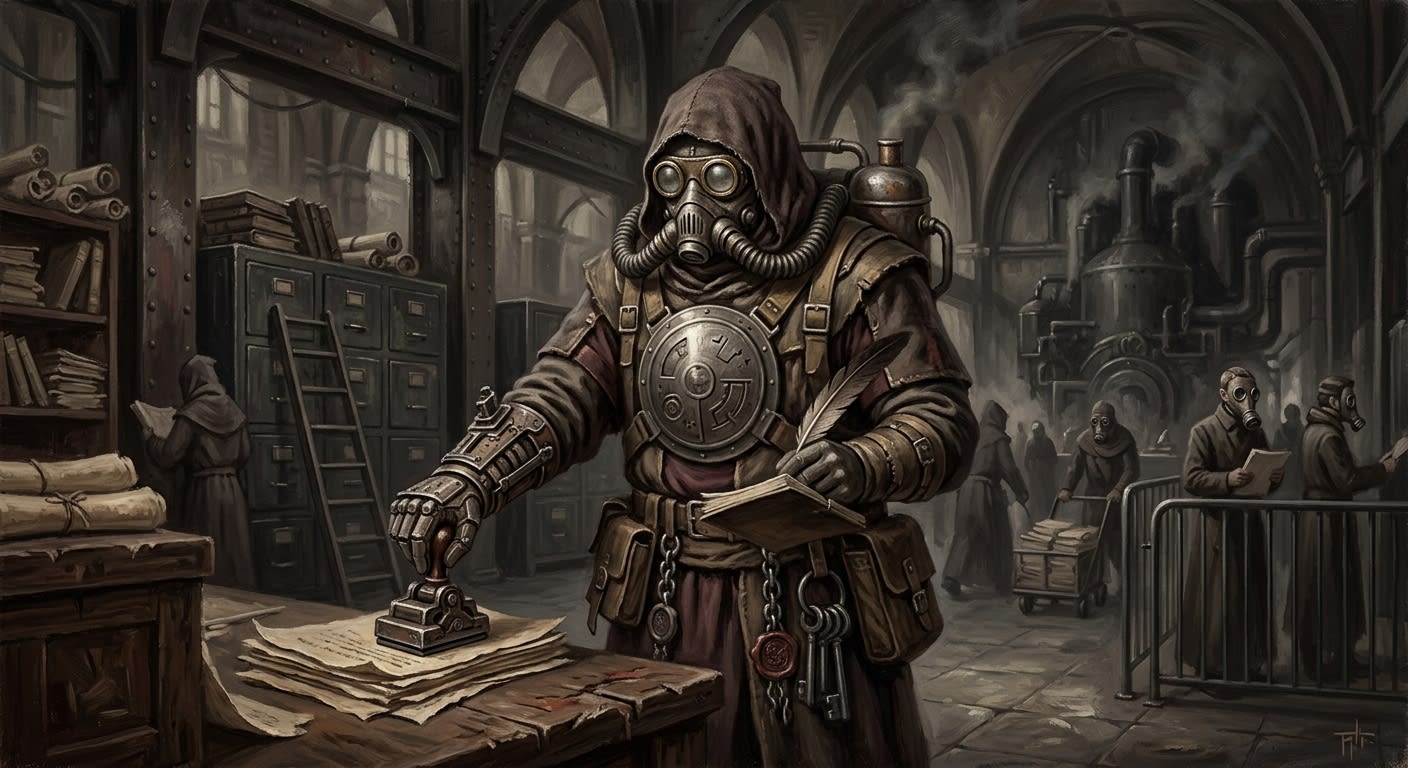
Oaths Witnesser
The state attends every promise
Living seals of the Synod, Oaths Witnessers make spoken promises enforceable, record their fracture, and bury what was sworn when it fails.
Codex Ref. VI.4.03-012
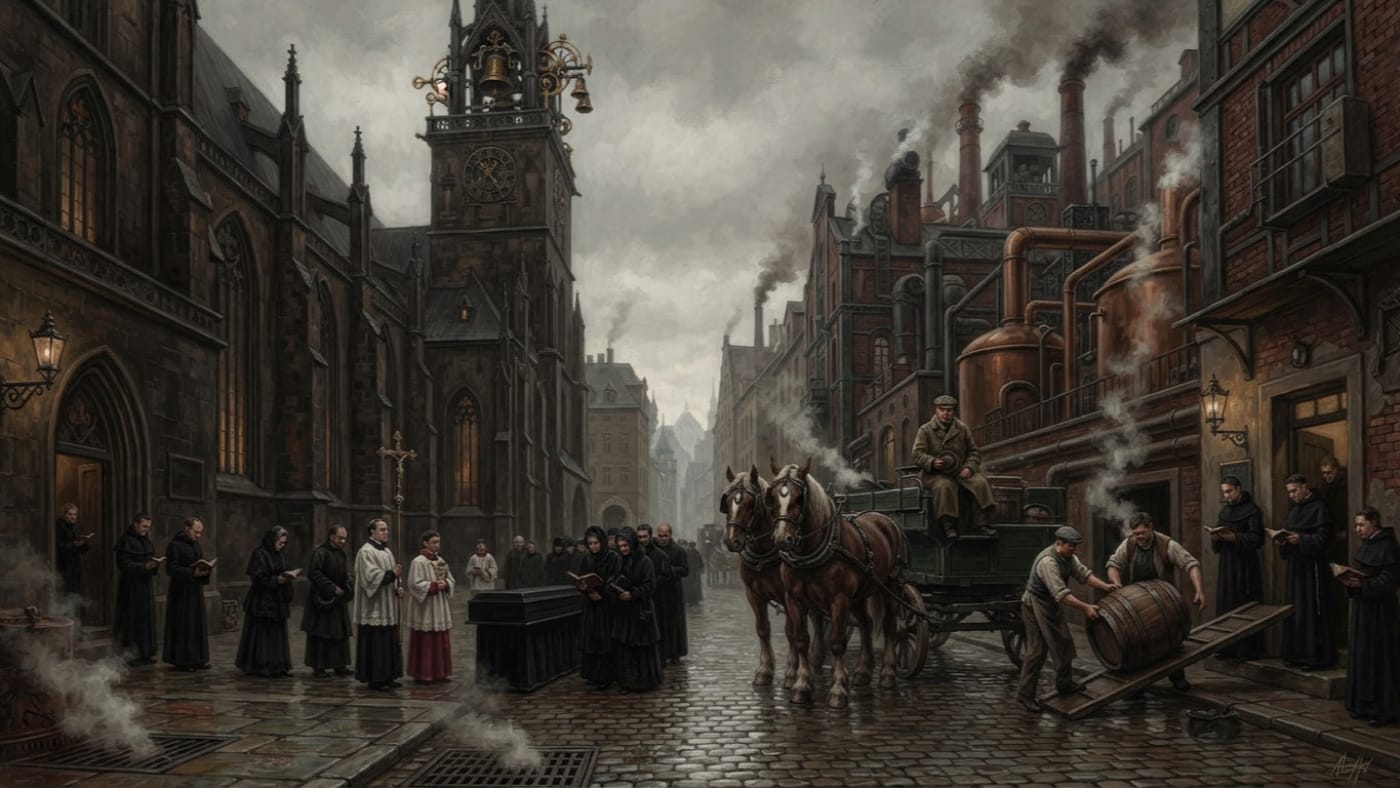
Old Cathedral Precinct
Where the fourth line stays long and the funeral beer is poured
Munich's old cathedral precinct keeps its offices beside the Bräuviertel, accepts the brewers' gifts, buries their dead, and gives Doctrine excellent attendance with an inconvenient cadence.
Codex Ref. II.2.06-017
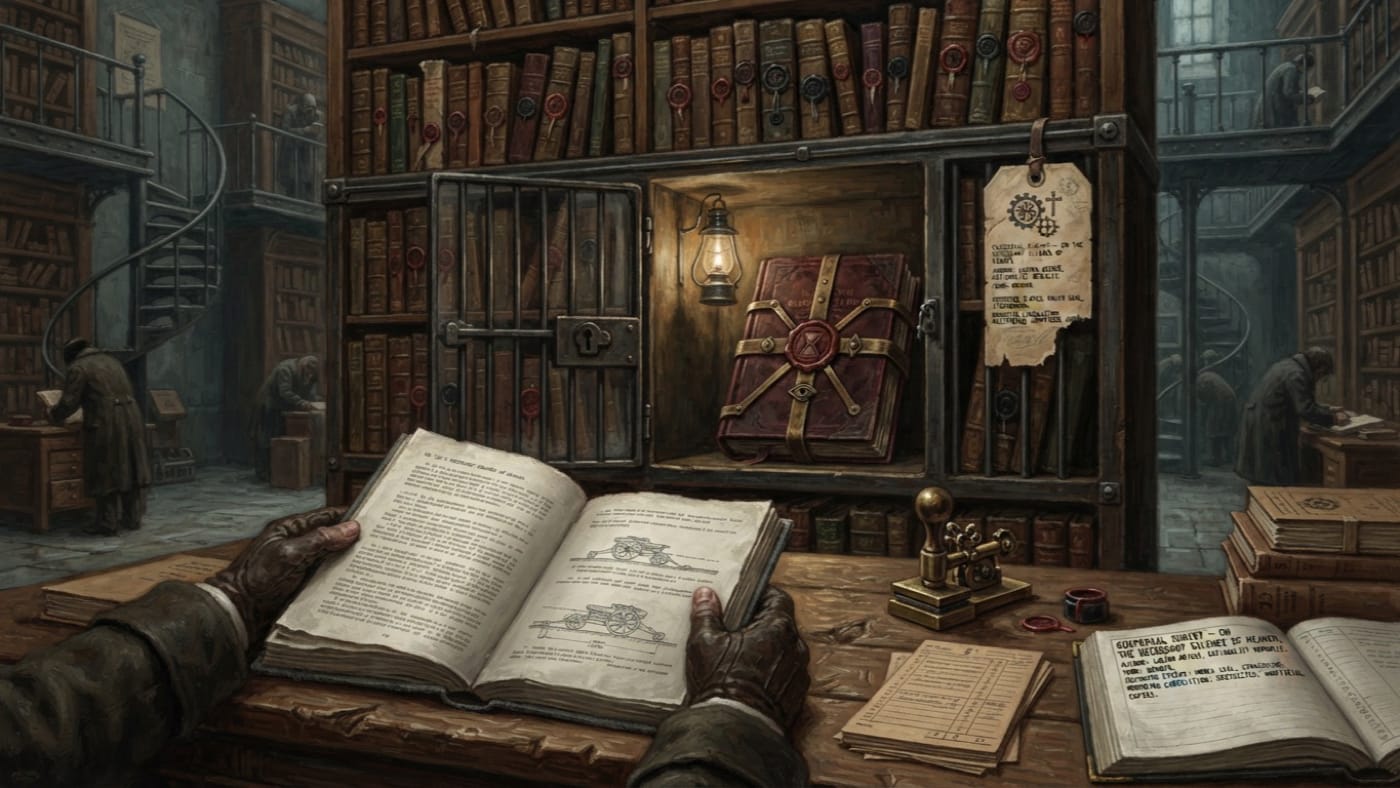
On the Necessary Silence of Heaven
A sealed memoir and the limits of wax
This A.S. 201 survey records Artois's memoir under seal in Strasbourg, with unofficial copies reportedly circulating. The wax has custody; it has yet to secure obedience.
Codex Ref. XIII.1.06-001
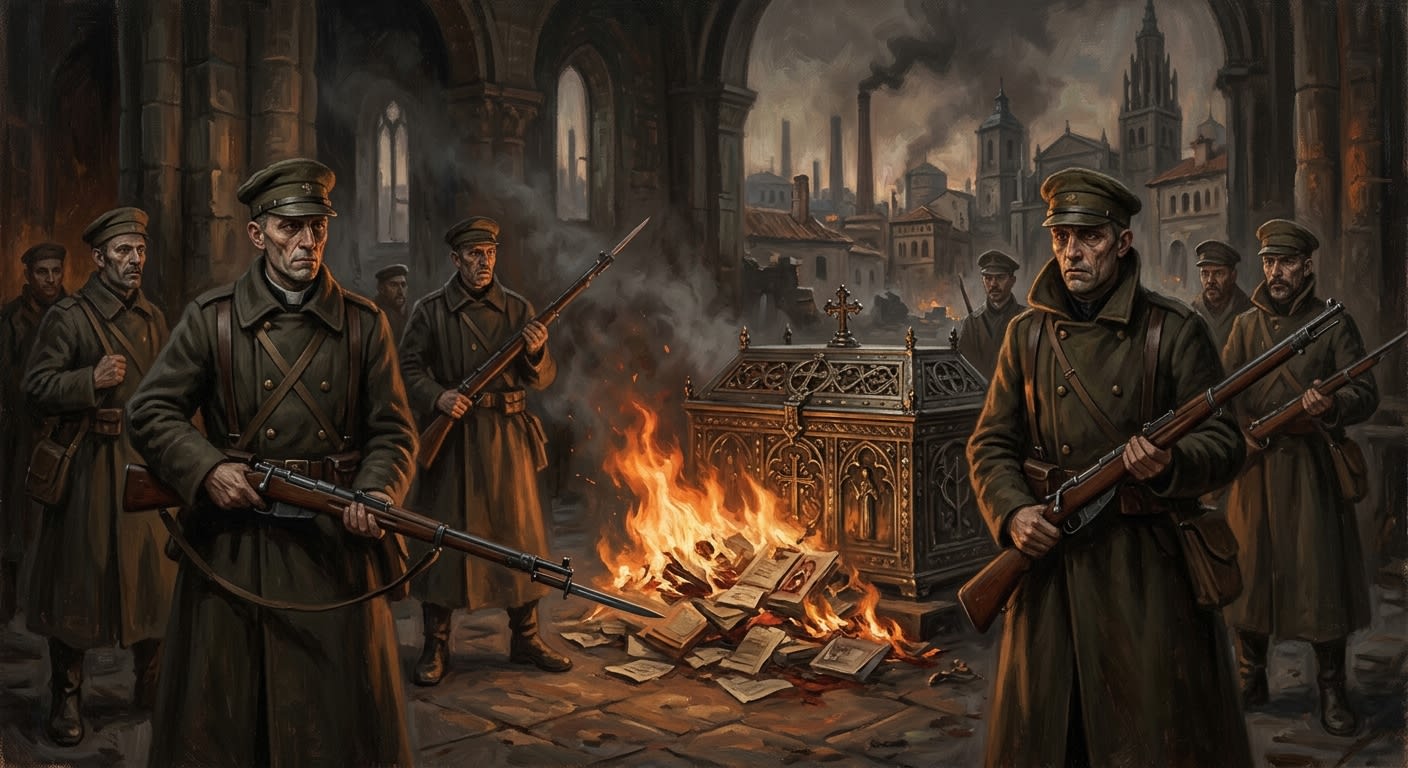
Order of Saint Iago
The grey mantles who taught custody to survive defeat
Iberian military-monastic order remembered for guarding the Relic of Saint Iago at Toledo, holding the city nine months, and burning custody clean before Reason could take it.
Codex Ref. VIII.9.01-001
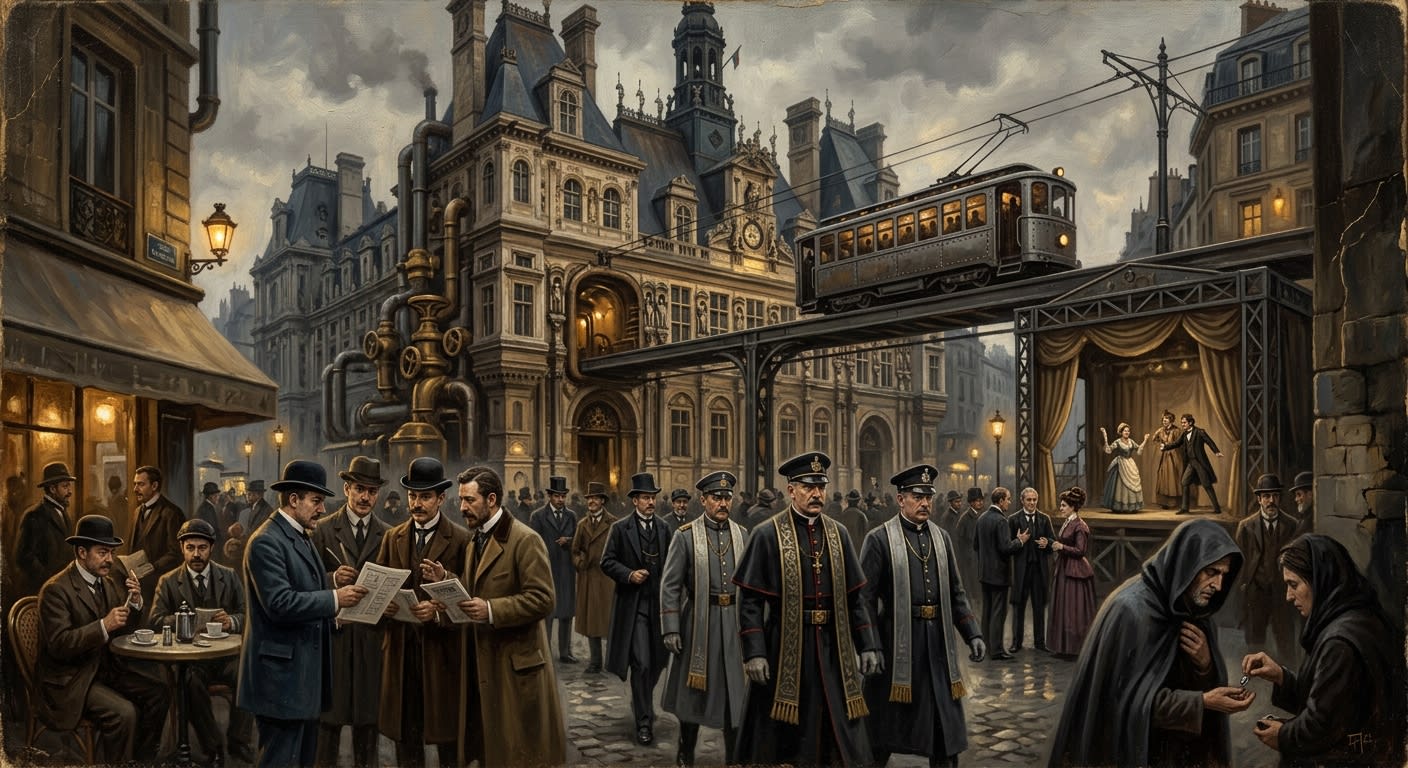
Paris
The city kneels beautifully, which is precisely why one watches the angle
Paris is the Western Heartlands' corrected jewel: Rationalist salon, Synod workshop, black-market confessional, obedient theatre, and treason with excellent diction.
Codex Ref. II.1.08-201
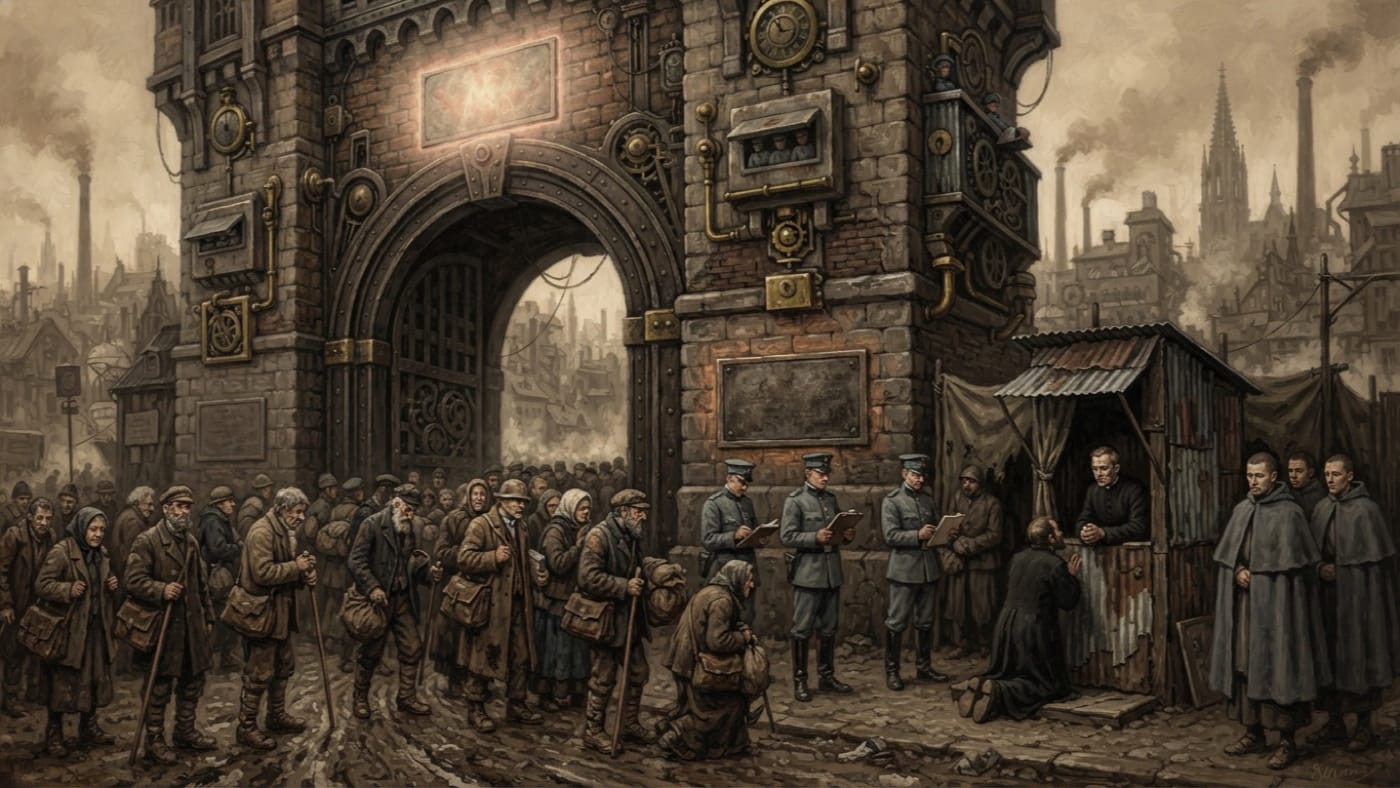
Pastoral Separatists
The soul decides; the clerk wants evidence
The Pastoral Separatists let the pilgrim's soul decide which Regensburg inscription takes hold, leaving the gatehouse to demand evidence it cannot inspect.
Codex Ref. XIII.1.76-093
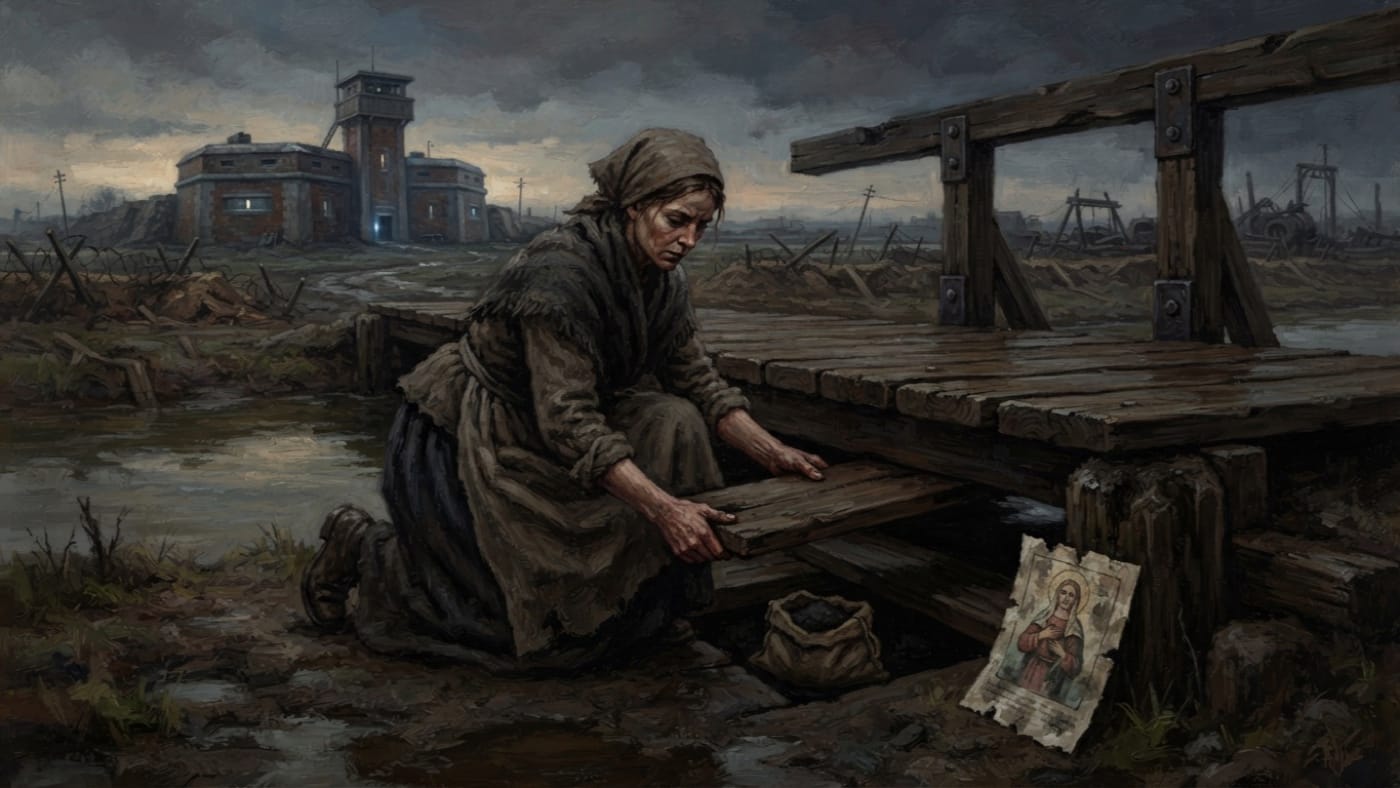
Picardy
One woman, one plank, and no recorded fire
Picardy enters the Ledger through one unnamed woman who saw Margaux's image and hid powder beneath a bridge plank. The record supplies neither a burning bridge nor a martyr.
Codex Ref. II.1.12-015
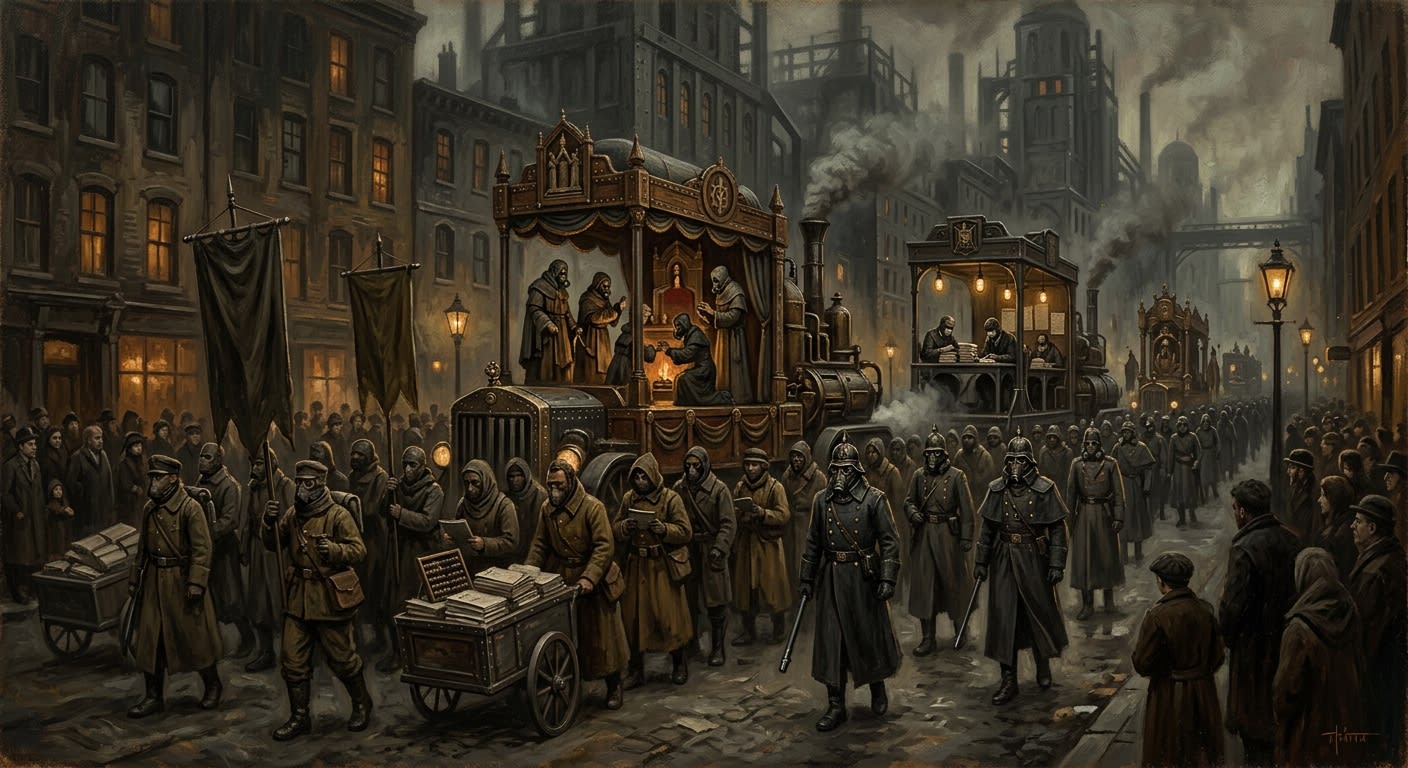
Procession of the Triune Hearth
One people, one creed, one spectacle, counted twice
First staged in A.S. 175, the Procession of the Triune Hearth turned Concordat memory into forty days of floats, census work, unity theatre, and invoices.
Codex Ref. VII.3.02-001
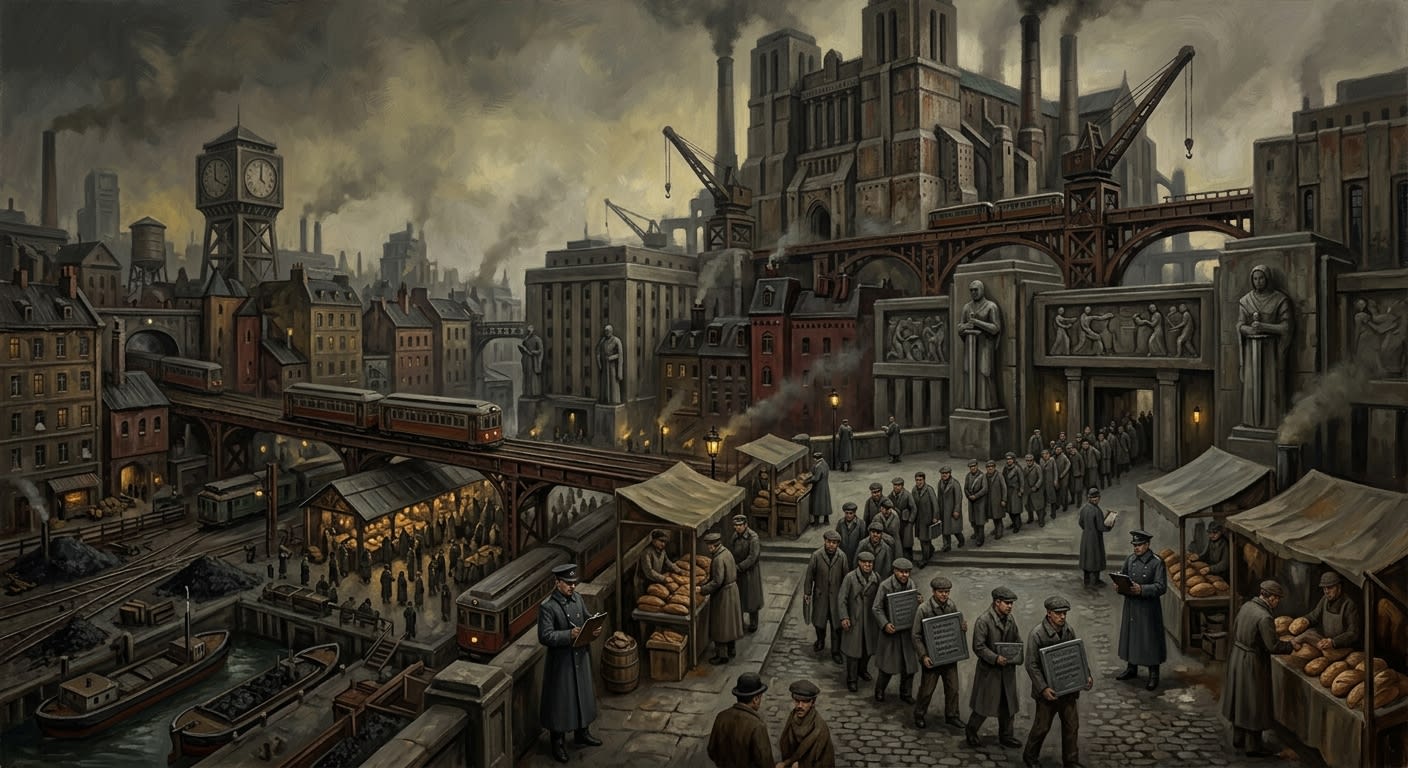
Regensburg
The city that sold false dawn by the plaque and glass
Regensburg hosted Reason's false triumph, sold bread to signatories and plaques to penitents, and still rehearses its profitable disgrace under Bureau watch.
Codex Ref. II.2.03-030
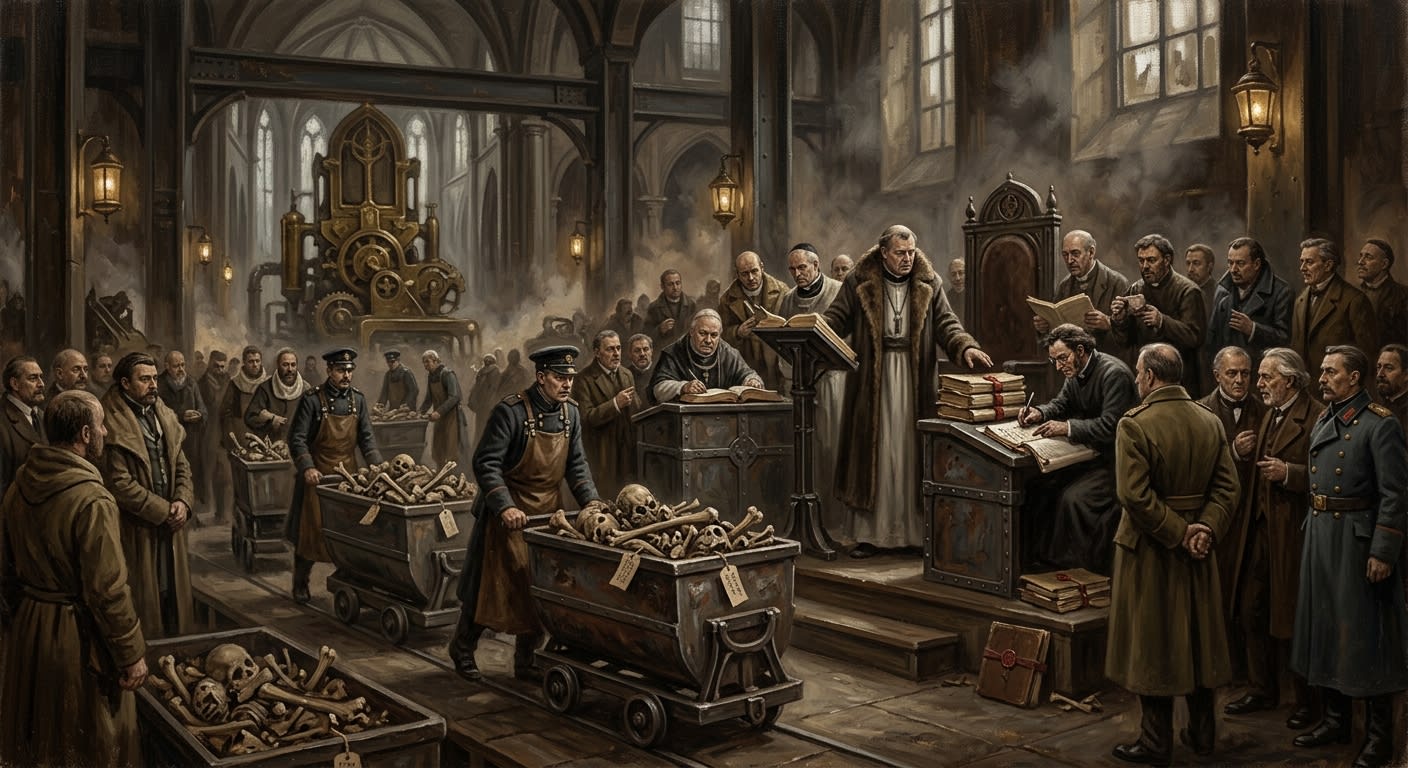
Reliquary Schisms A.S. 140–160
When seventeen femurs became policy and anatomy was reassigned
Twenty years of authenticated surplus bones, shrine bloodshed, and the Fourteenth Doctrinal Congress that made notarized contradiction lawful.
Codex Ref. VII.8.10-090
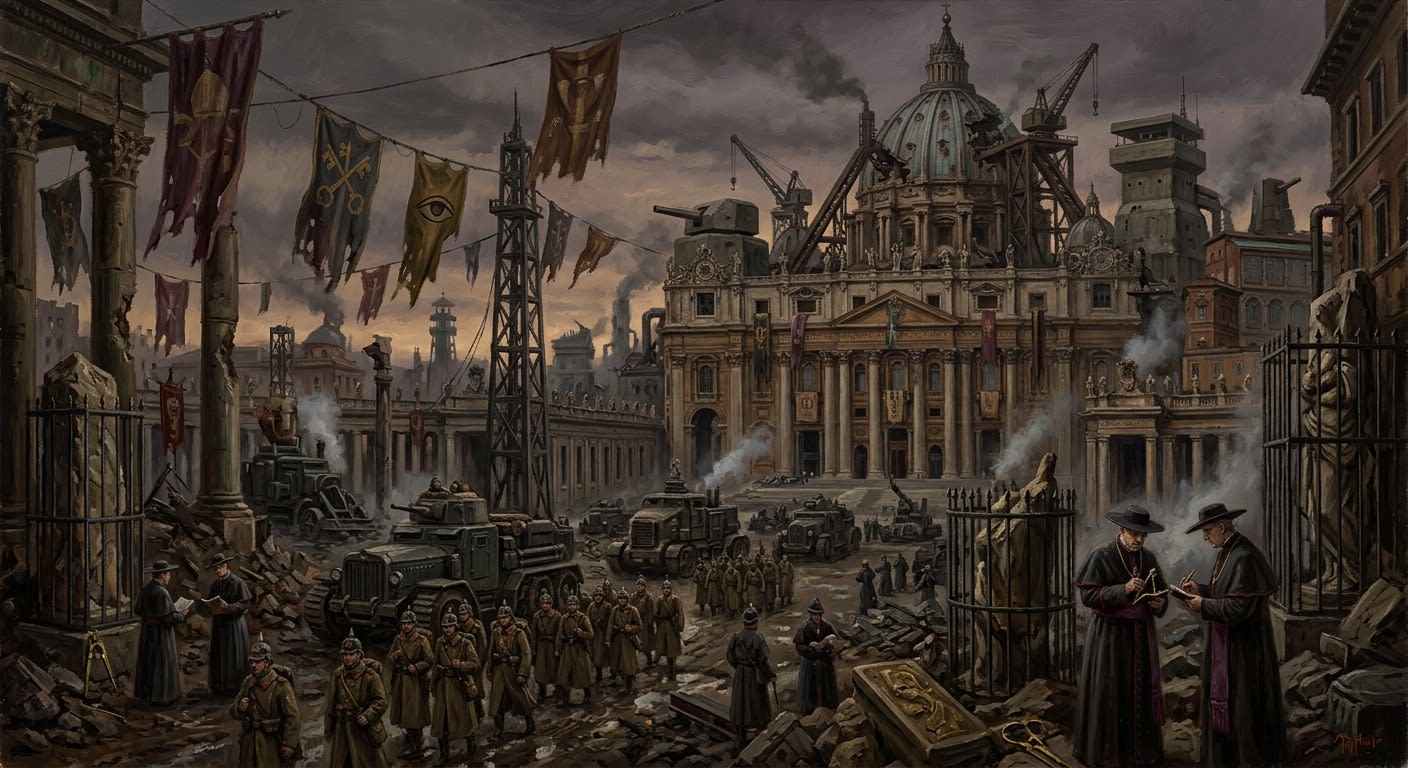
Rome
The old chair, subordinated and still dangerous in pieces
Rome is the Synod-held Old Chair: ruined, supervised, relic-rich, papalist-haunted, and too symbolically useful for Strasbourg to bury cleanly.
Codex Ref. II.1.11-201
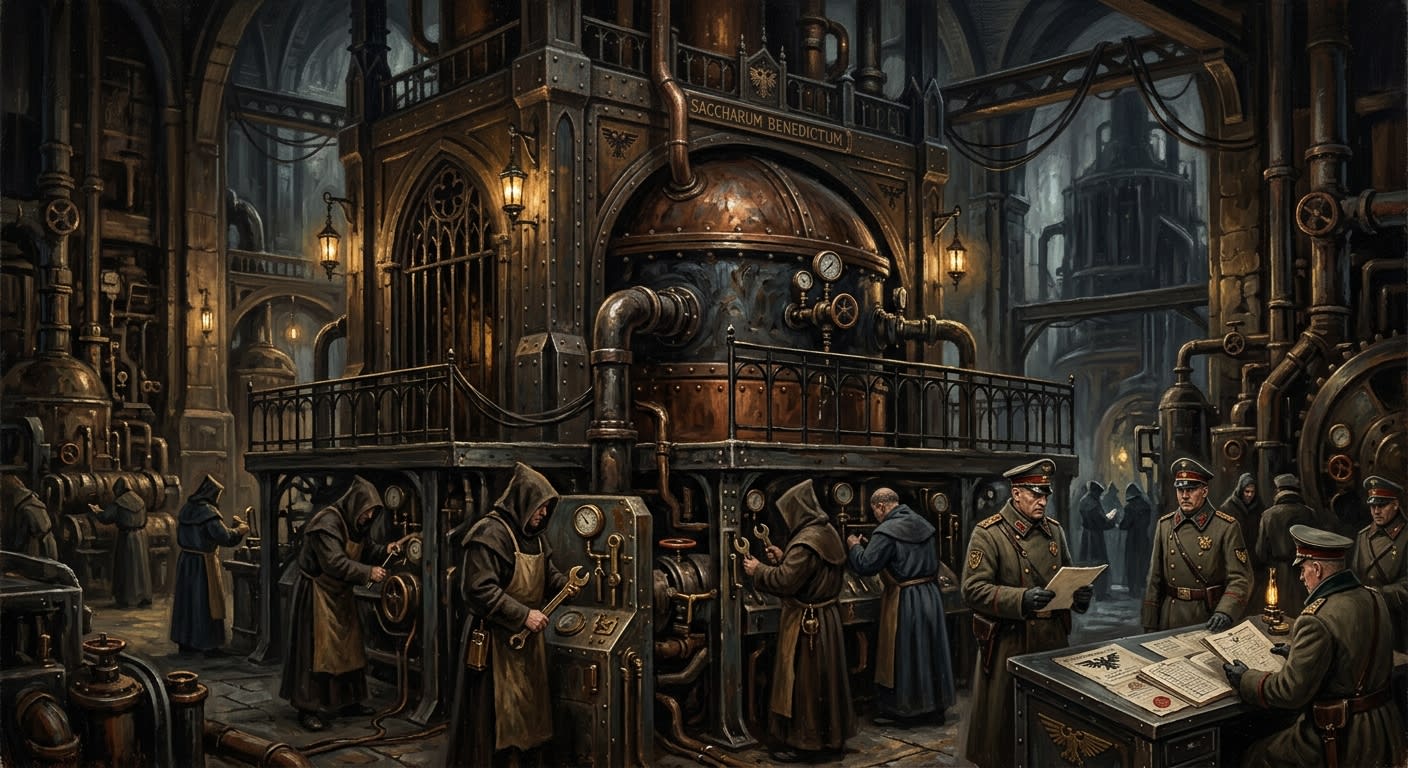
Saccharum Benedictum
The Blessed Sugar, declined annually and taxed by the barrel
Saccharum Benedictum is Munich's alleged blessed yeast culture: preserved by legend, declined by Relics since A.S. 98, uncondemned by Doctrine, and taxed with admirable punctuality.
Codex Ref. XIII.1.88-001
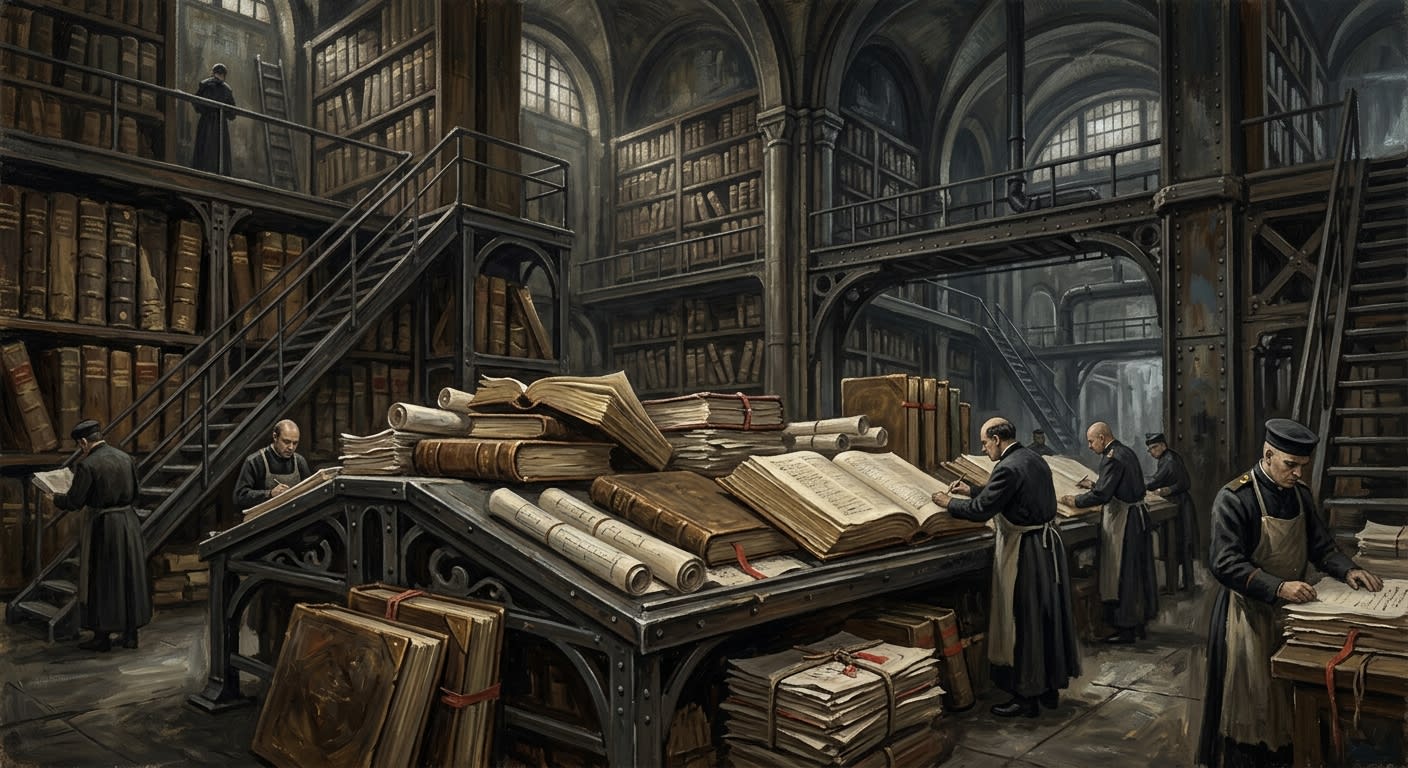
Sacred Ledger
The Synod's memory, sharpened until grief signs the receipt
The Sacred Ledger is the Synod's authorised memory: fact cooked into Doctrine, grief made grammatical, contradiction kept on a leash.
Codex Ref. XIII.1.32-090
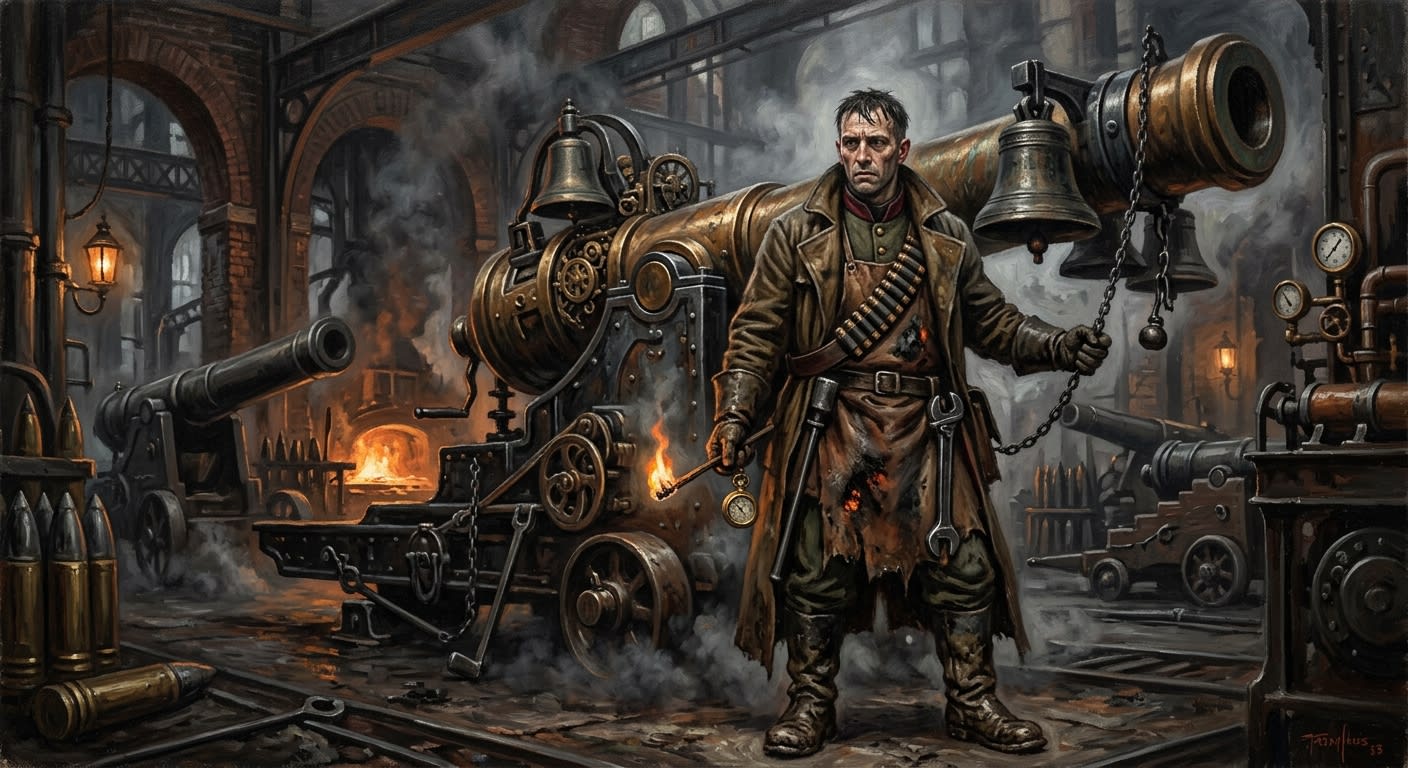
Saint Aegidius
The patron of the waiting hand and the honest charge
Saint Aegidius is the artillerymen’s patron: foundry hand, martyr of the Third Peal, saint of timed violence, bell-cannon discipline, and Shipka’s sulking gun.
Codex Ref. III.2.01-194
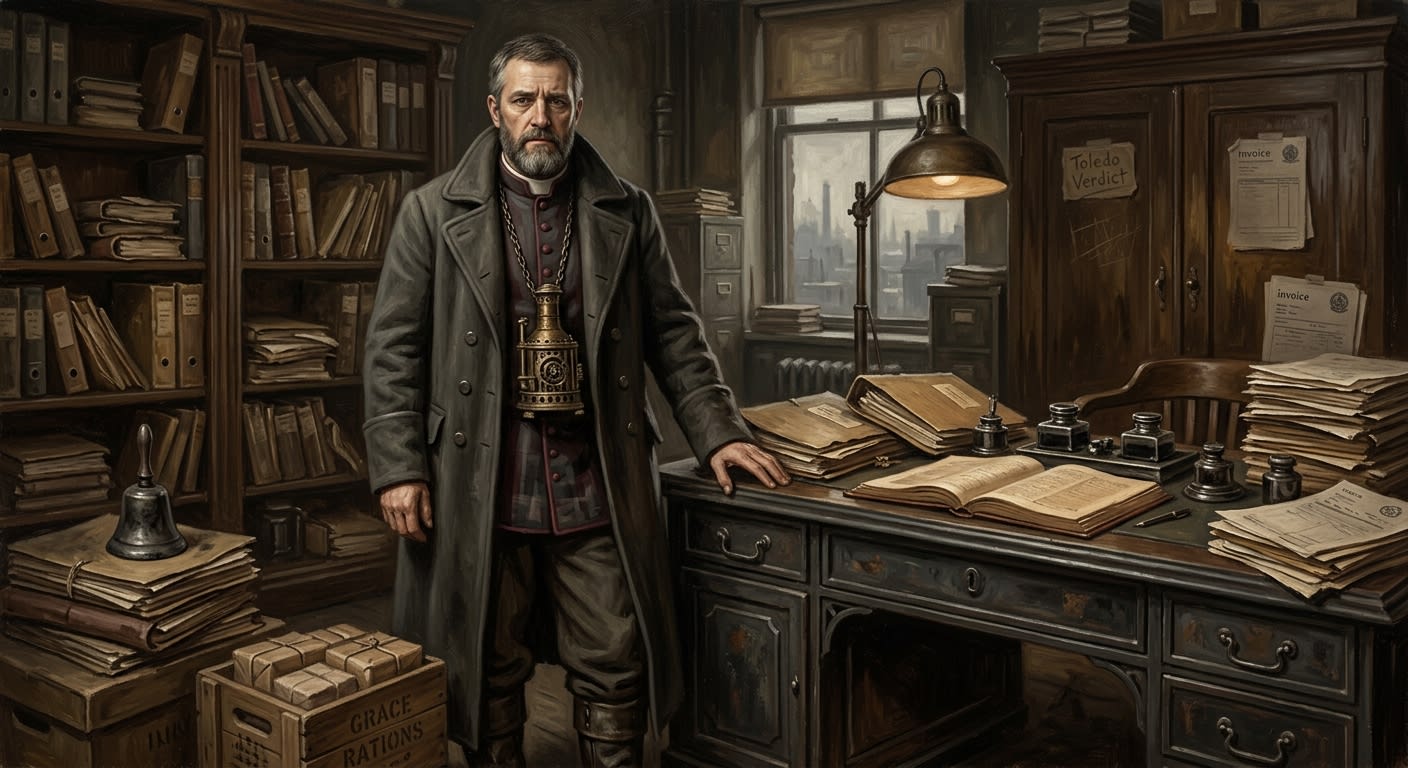
Saint Isidore
The saint who became vessel, bell, ash, and invoice
Pre-Synod saint whose militarised relic blazed at Kalnik Ridge in A.S. 48, then multiplied into bell, ash, Grace Ration, Toledo verdict, and Bureau invoice.
Codex Ref. III.2.01-086
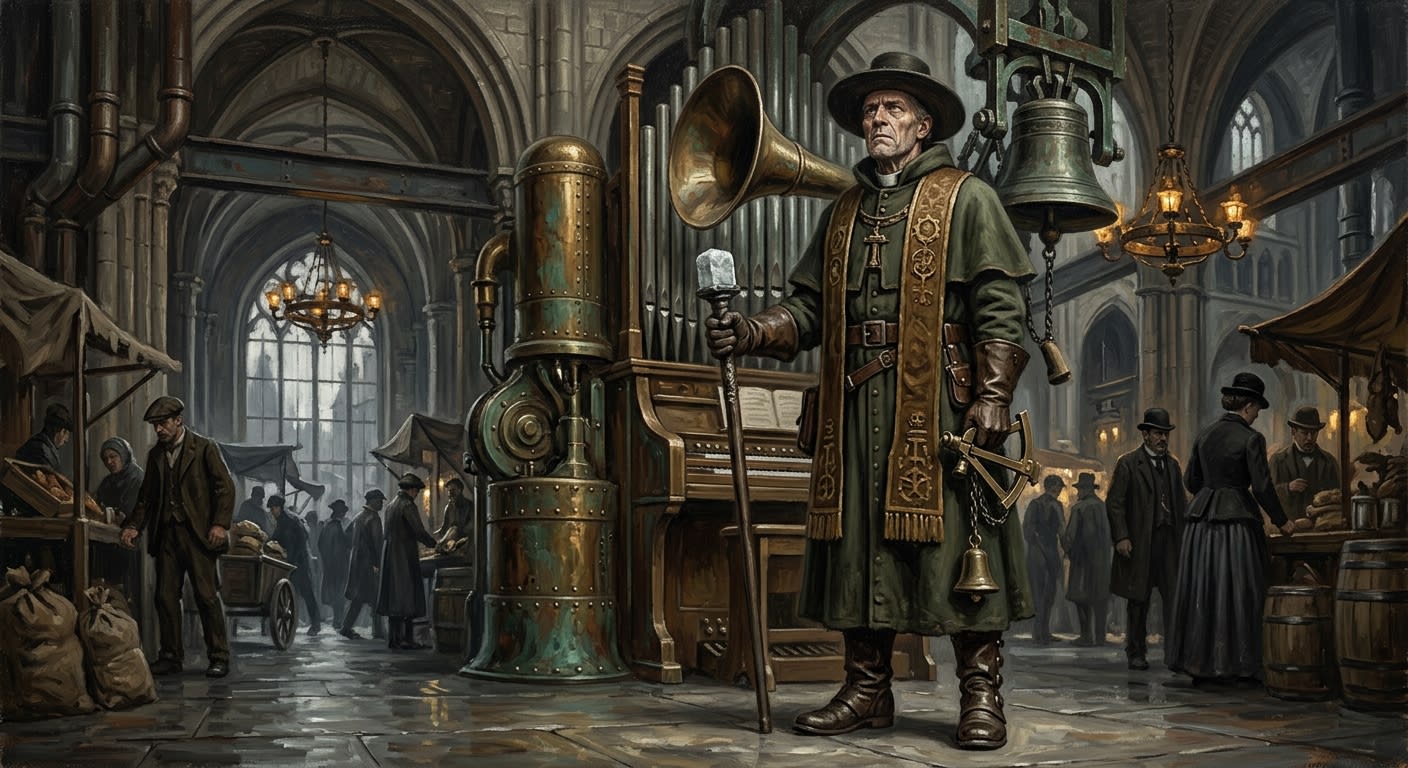
Saint Rupert
Salt in the wound, bronze in the tower, order in the market
Saint Rupert, Vienna’s salt-saint, preserves meat, measure, bells, markets, and civic memory: the patron whose bronze throat answered when men forgot to kneel.
Codex Ref. III.2.01-095
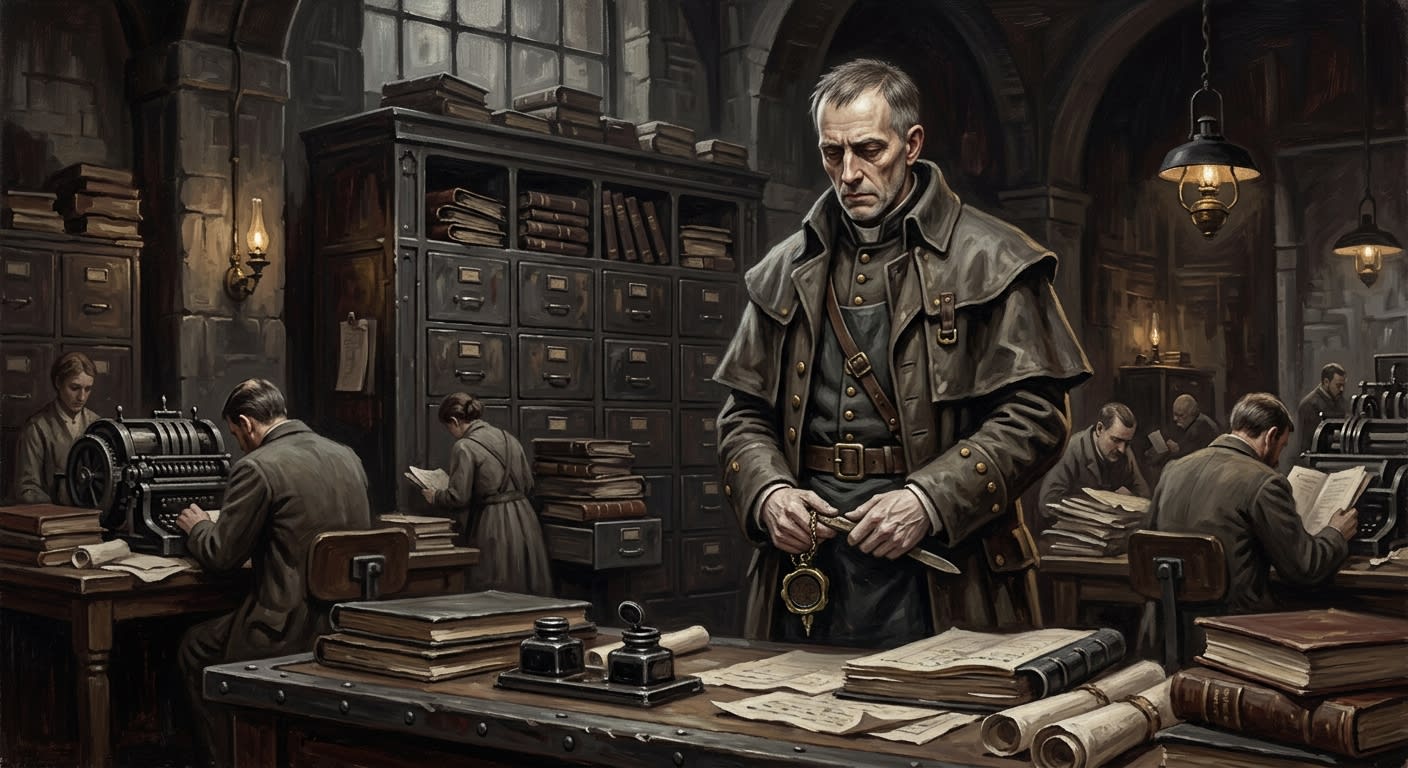
Saint Vellum the Silent
A patron saint whose relic is procedure
Occupational patron of Erasure Notaries, Strike Scribes, Nullity Clerks, and Lineage Severers; a saint of washed hands, black seals, and names made quiet.
Codex Ref. III.2.01-113
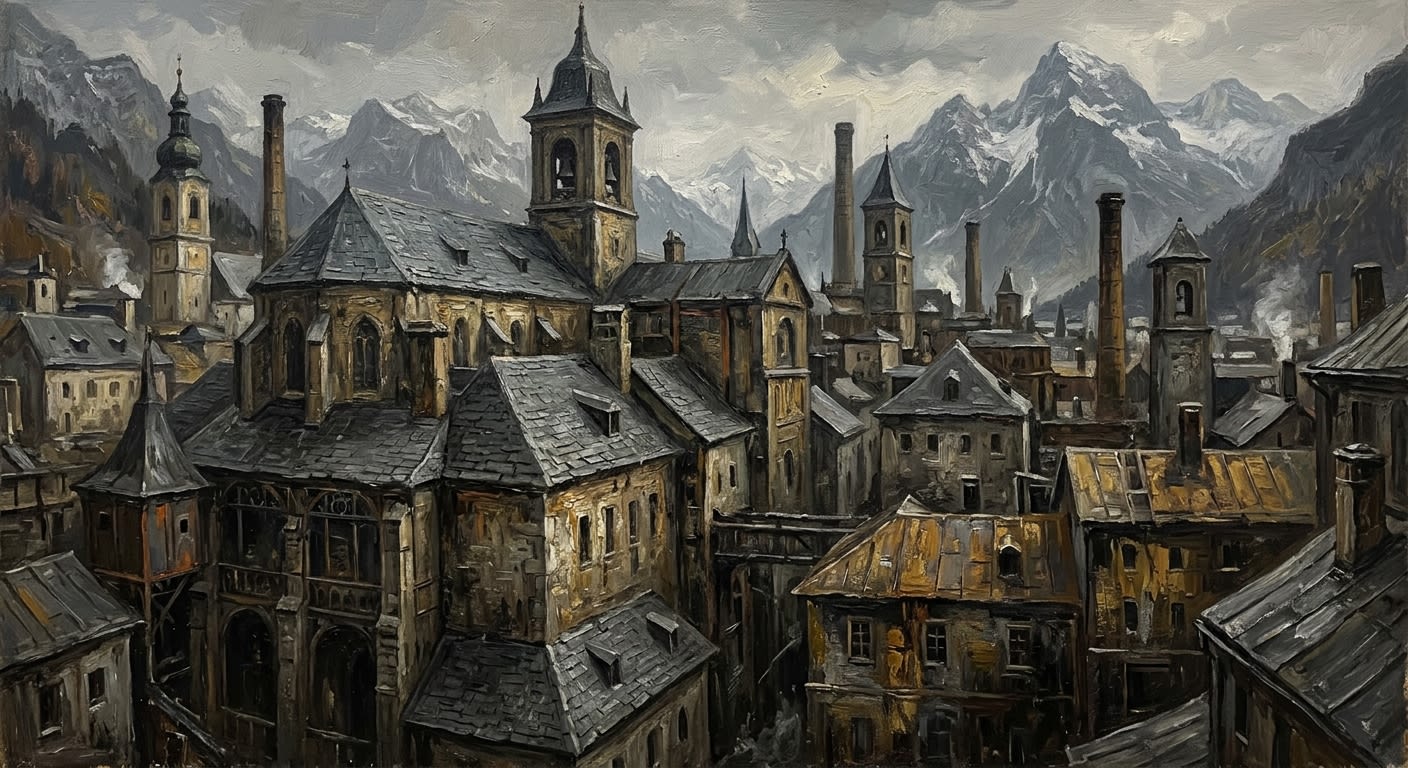
Salzburg
The Alpine city where a warm shinbone taught bishops to bleed politely
Salzburg is a profitable Alpine shrine-city whose Warm Tibia dispute killed two bishops and made custody smell faintly of salt, wax, and knives.
Codex Ref. II.3.05-141
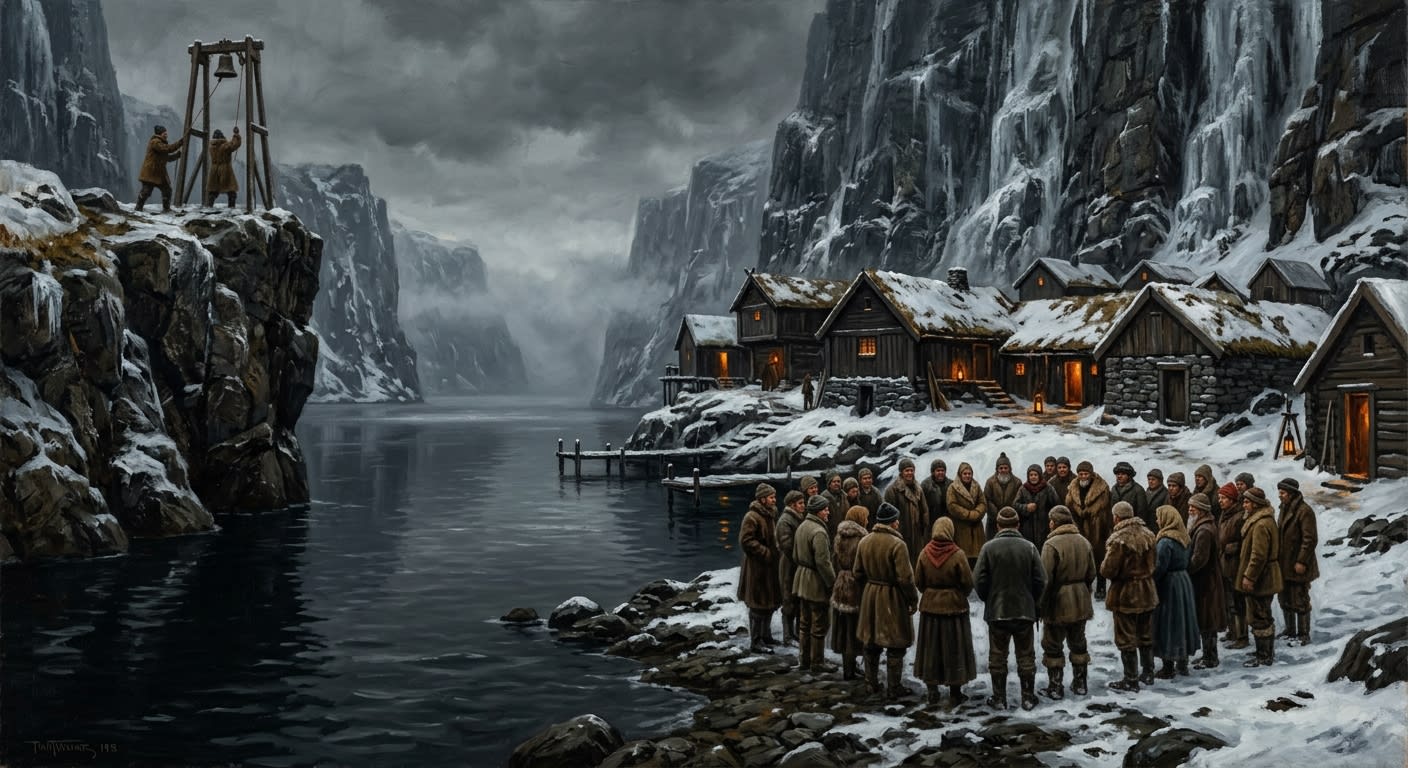
Scandinavia (The Fractured North)
The Synod's supplier, its creditor, and the thing the Bureau cannot name
A compliance assessment of Zone 8 — 1.9 million souls, clan moots, seal-oil, and the thing in the fog the Bureau classified Category Two Acoustic Distortion and has not re-examined. Filed by Drax. Not ratified by the wind.
Codex Ref. X.1.03-001
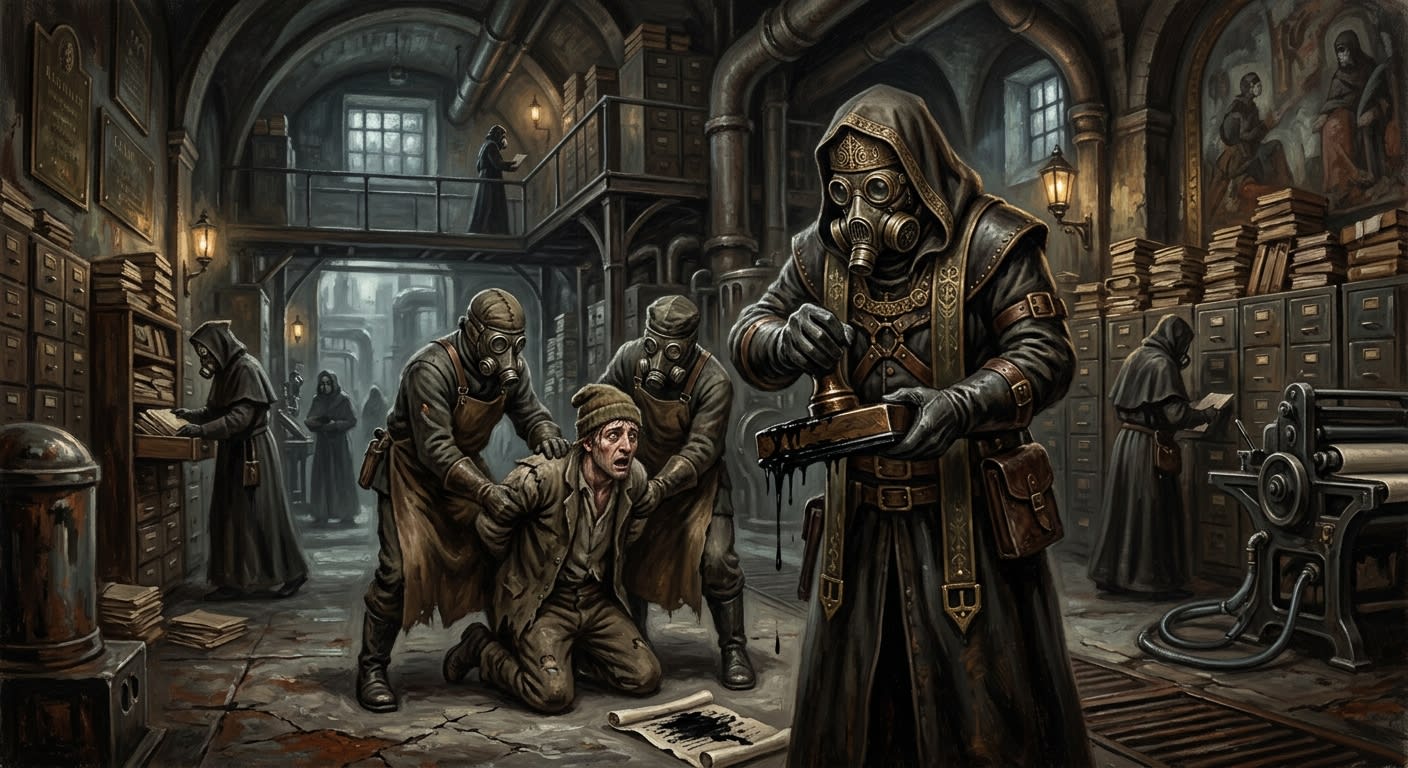
Seal Obsidian
The classification that denies the hand while sharpening the knife
Seal Obsidian is the Synod's blackest administrative mercy: knowledge retained because it is needed, denied because it is fatal.
Codex Ref. XIII.1.09-001
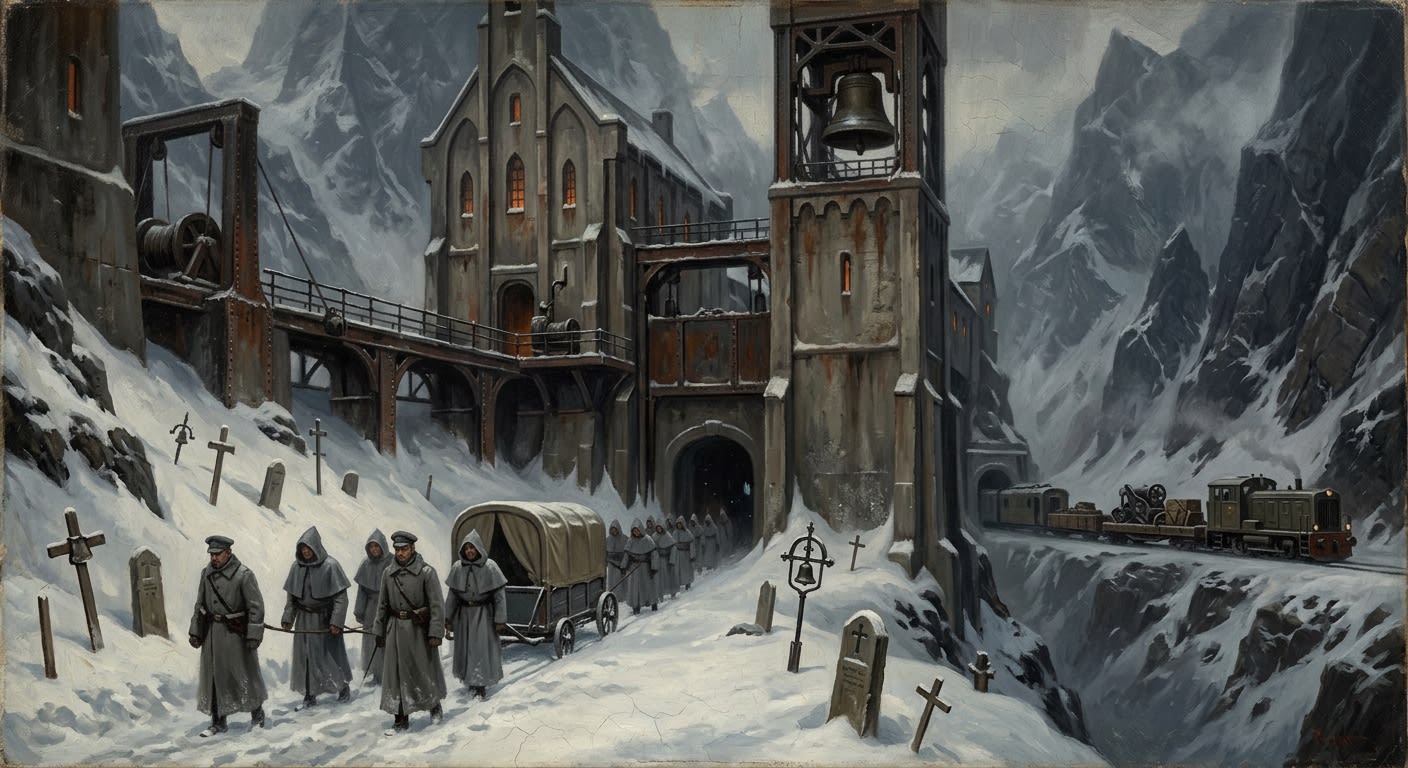
Swiss Cantons
Where mercy climbs uphill and stops writing back
The Swiss cantons keep passes, bells, hospice beds, and the Synod's most merciful disappearances beneath snow clean enough to indict Heaven.
Codex Ref. II.2.08-201

The Age of Heresy
A World Sundered, a Faith Forged in Fire
The definitive overview of the Age of Heresy — a continent sundered by demonic invasion, ruled by a theocratic bureaucracy of bells and ink, locked in eternal war against the Seven Sin-Generals. As compiled by the only man qualified to compile it.
Codex Ref. I.1.01-001
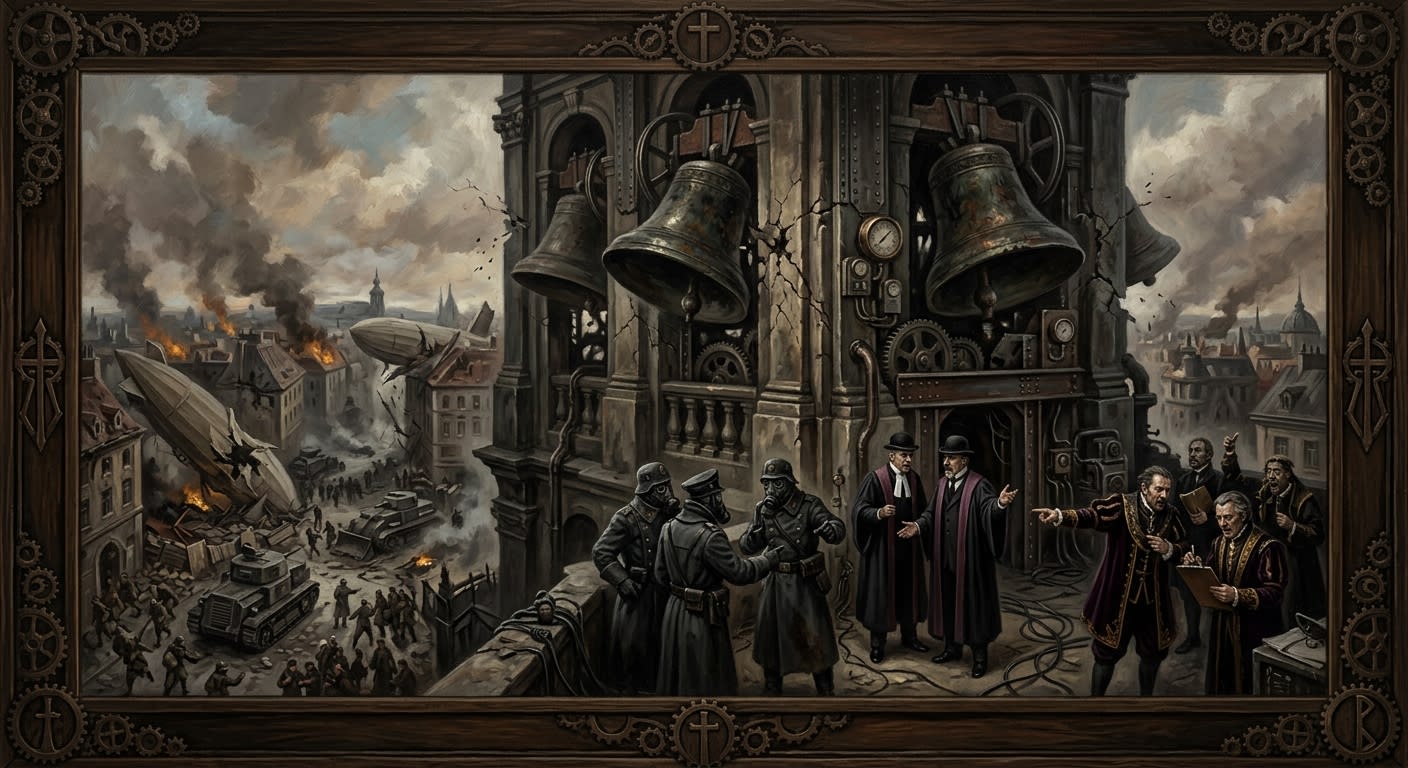
The Bells of Saint Rupert
Bronze sang; committees have been recovering ever since
At Vienna in A.S. 95, the unroped bells of Saint Rupert rang without permission, broke a siege, and left three Bureaus arguing with bronze.
Codex Ref. III.2.04-018
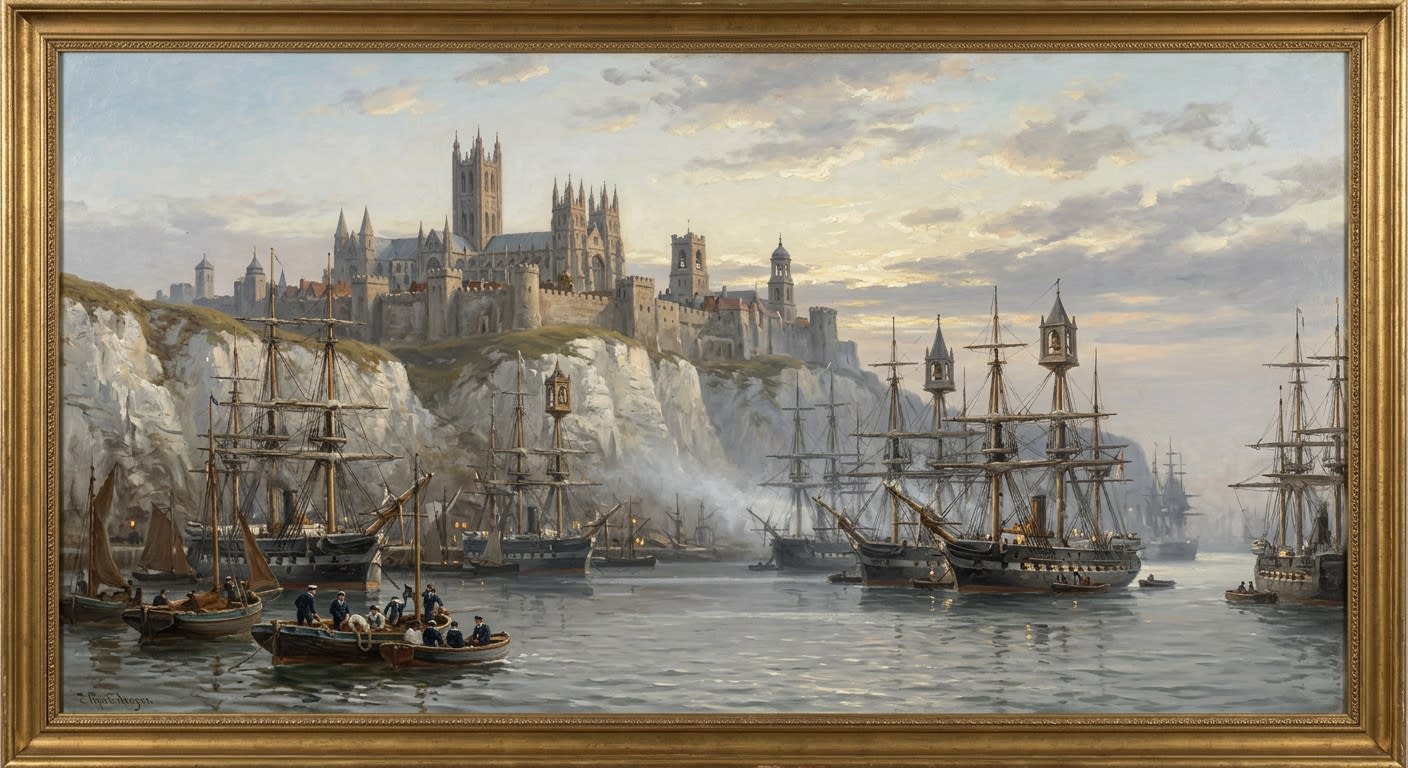
The British Crown
The island the Bureau has spent a hundred and eleven years failing to classify
The Zone 0 co-belligerent that has never submitted to the Concordat and never needed to. Canterbury governs by chivalric charter; three hundred Cathedral Ships hold the Channel; the Bureau of Doctrine considers this theologically embarrassing and strategically essential.
Codex Ref. X.1.01-001
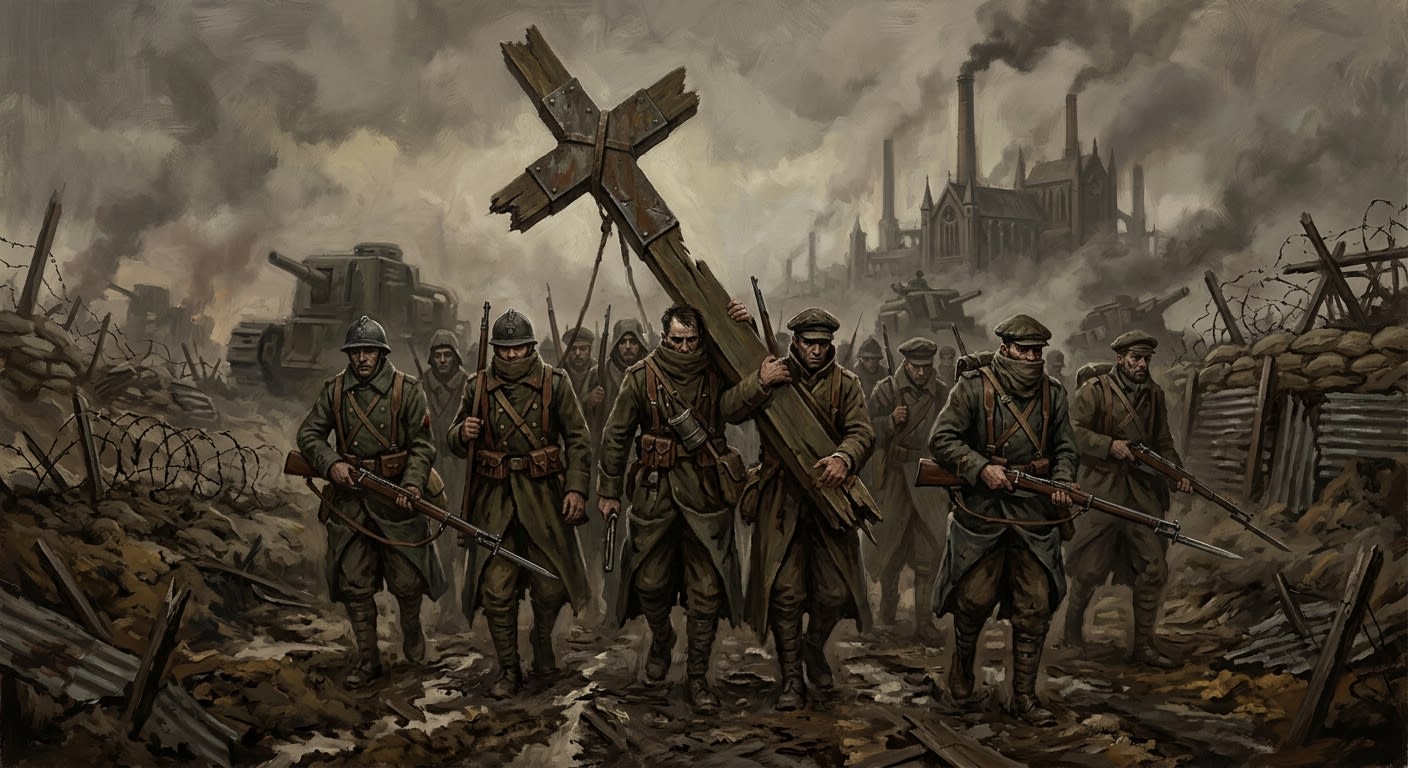
The Broken Cross
The sigil that snapped heaven and called the wound reason
The Broken Cross was Reason's battlefield sermon: a snapped crucifix carried by men who denied symbols while marching under one.
Codex Ref. I.1.05-003

The Bureau of Oaths
No promise binds unless Strasbourg hears it.
The Bureau of Oaths holds that an unwitnessed promise is merely breath — and breath is not legally binding. Seven hundred volumes of the Ledger of Fidelity, sealed beneath the Basilica, remember every vow Europe has ever broken.
Codex Ref. VIII.1.02-001
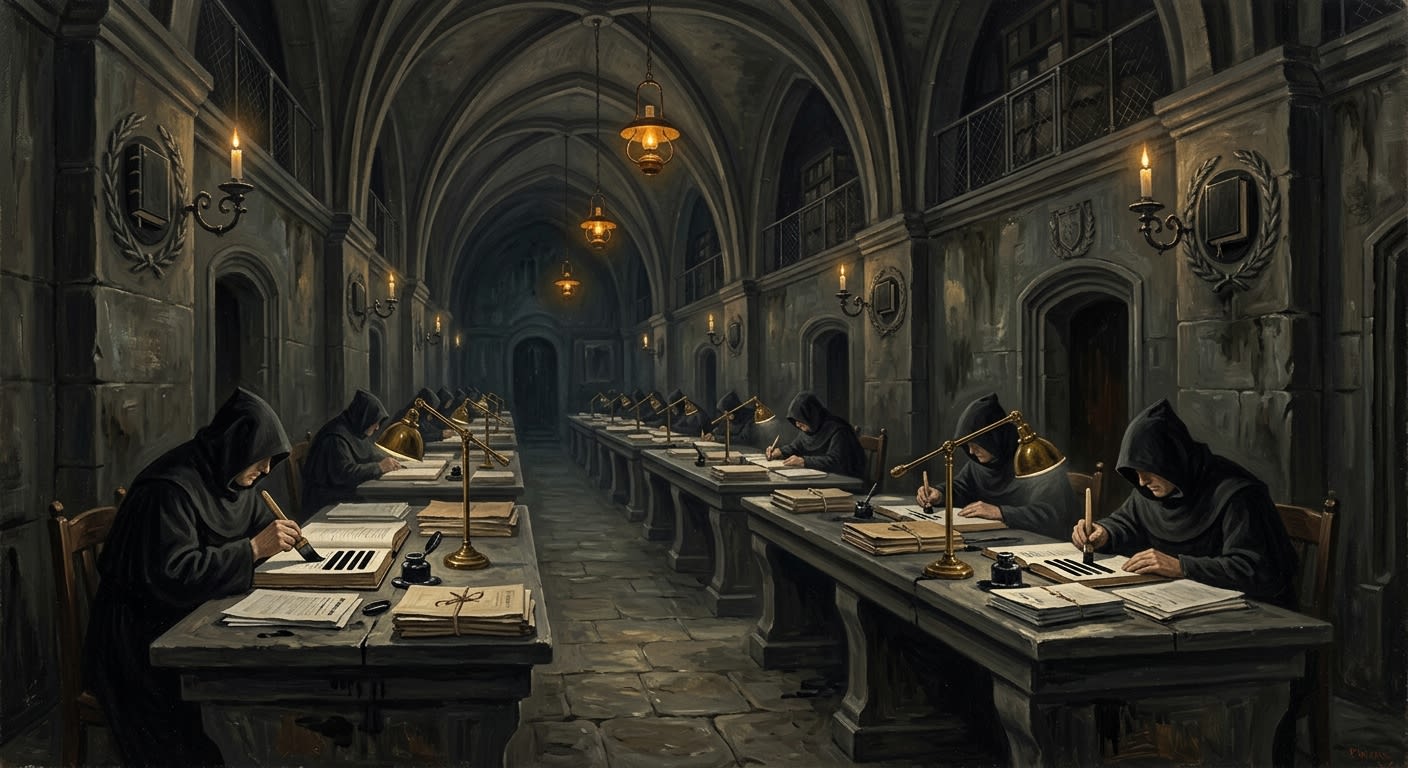
The Bureau of Silence
The word unspoken cannot wound. The word that reaches its target already has.
The Bureau of Silence does not burn books. Burning admits they existed. It renders knowledge into a state of administrative non-occurrence — and then redacts that too.
Codex Ref. III.4.19-031
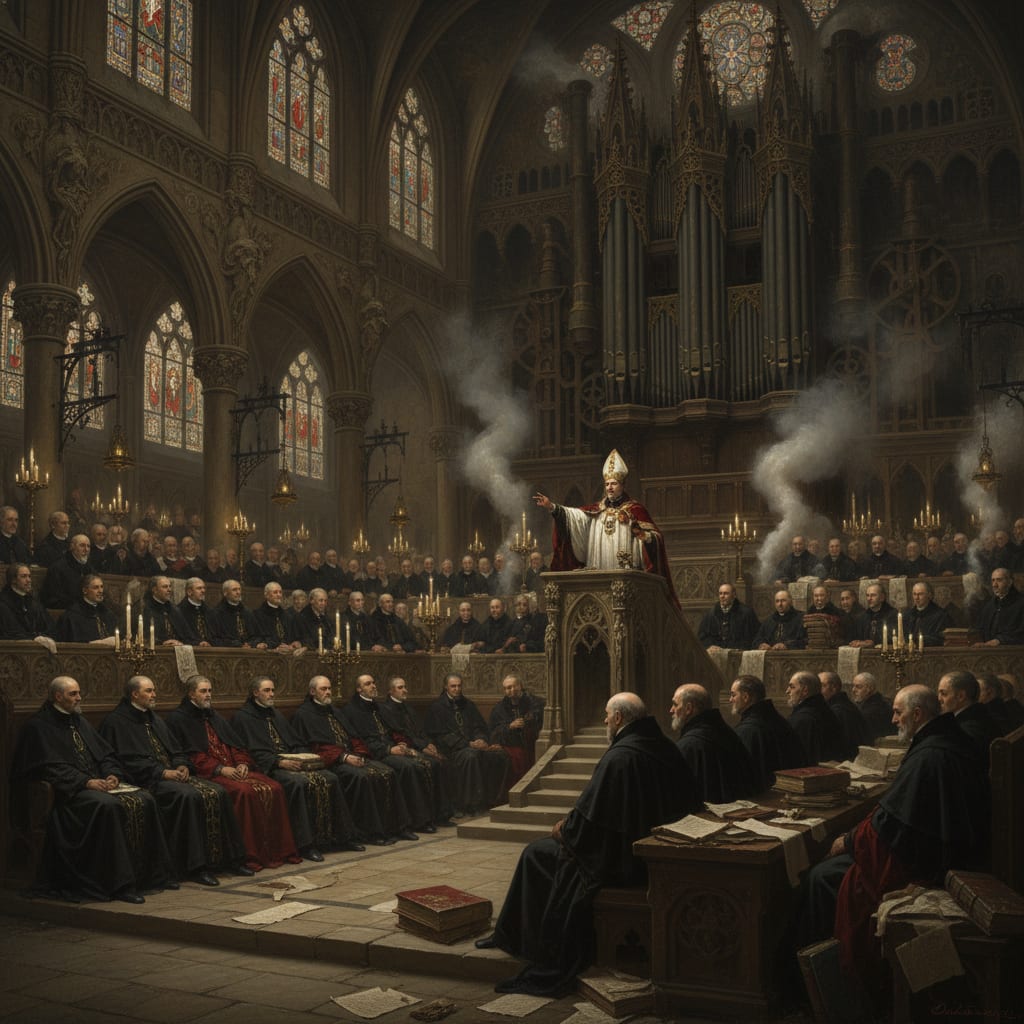
The Bureaucratic Synod
Throne and Altar, Quill and Sword
The ruling theocracy of Europa — born in blood, forged in ink, and maintained by a bureaucratic apparatus so vast that even its own clerks cannot map its full extent. As explained by its finest servant.
Codex Ref. I.3.01-004
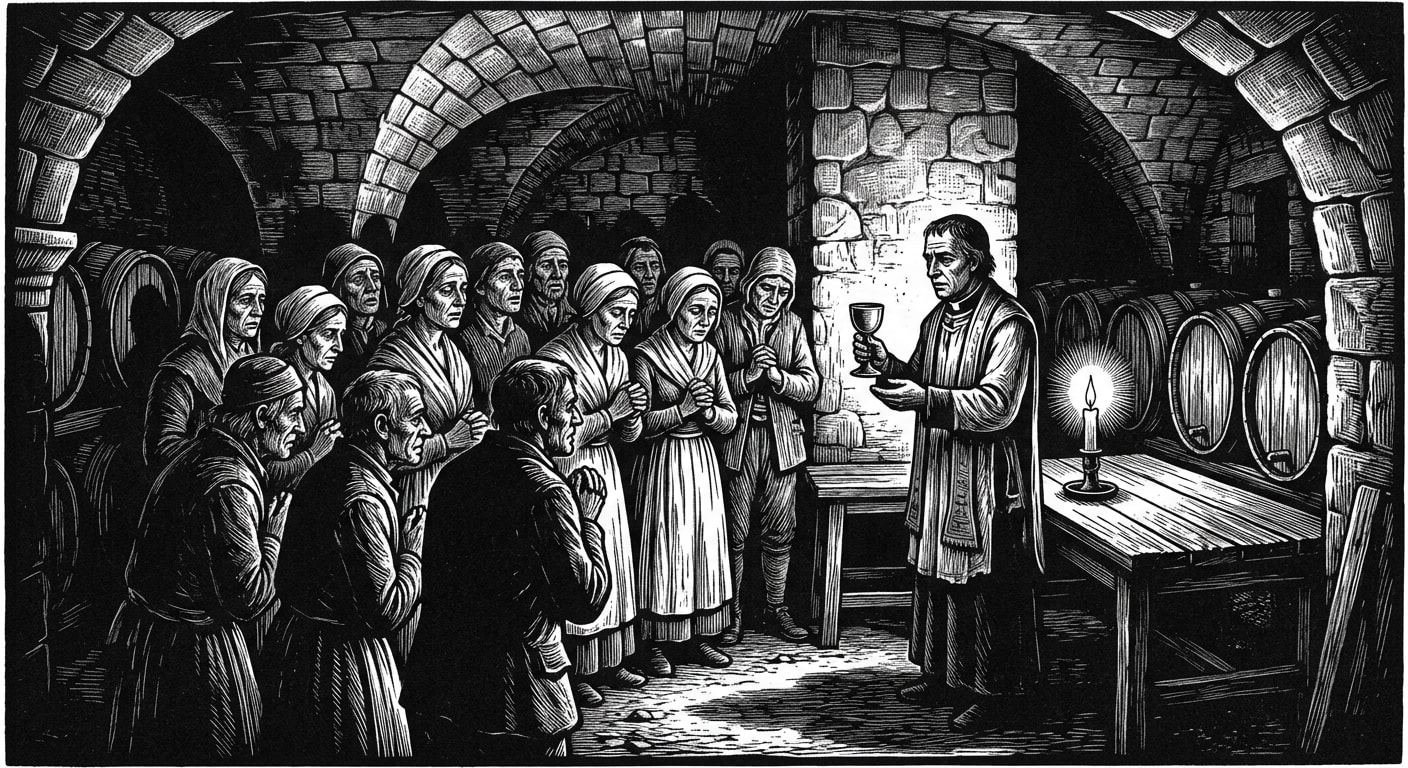
The Cellar Saints
Those who hid in basements built the floor on which the Synod stands.
The frightened faithful who descended into cellars and catacombs when Reason conquered Europe, preserved the relics, and became the soil from which the Synod grew — whether they consented to the harvest or not.
Codex Ref. IV.2.14-003
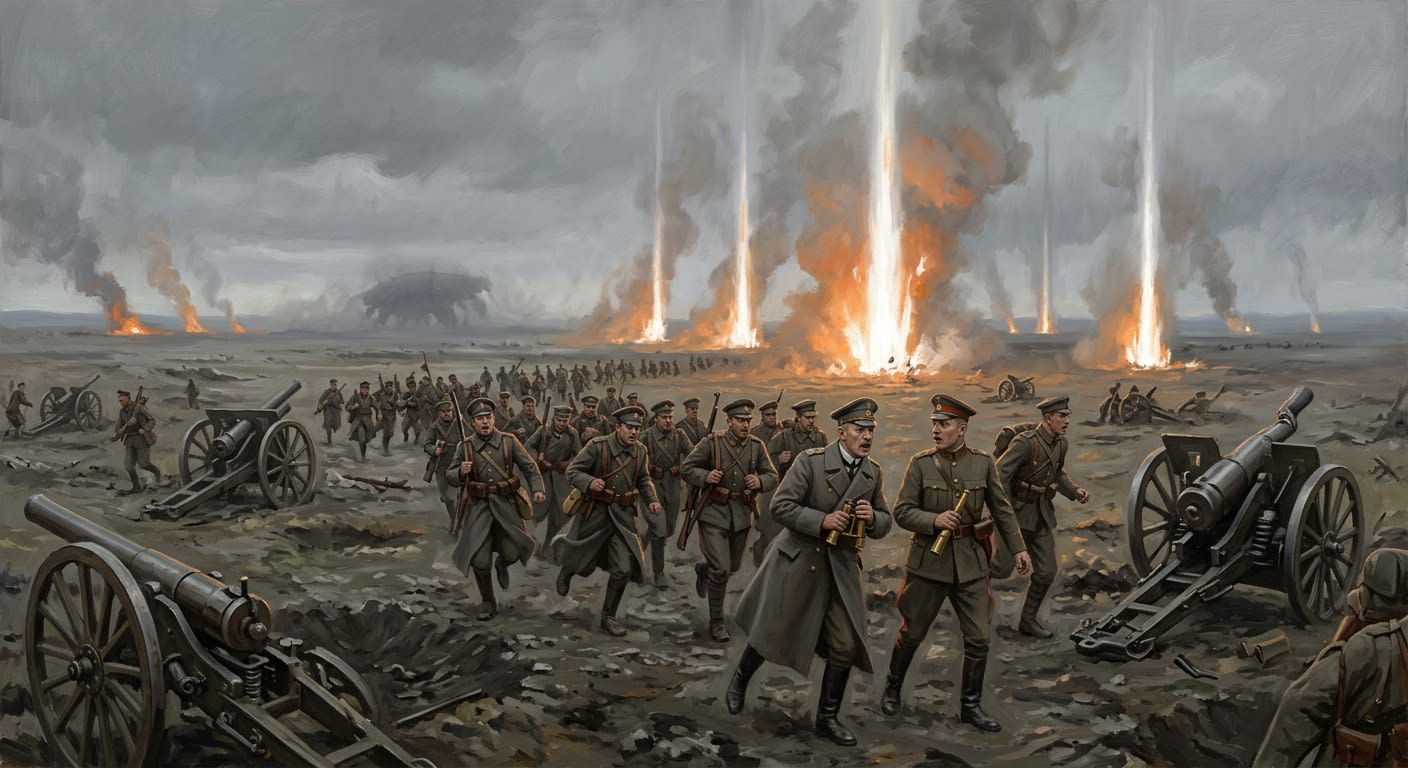
The Collapse of the Rationalists
The Adversary did not invade. It arrived.
The Rationalist Republic dismantled every spiritual defence on the continent, and in A.S. 45 the Adversary walked through the unguarded door. A doctrine article, a body count, and a mandatory catechism text.
Codex Ref. VII.2.01-001
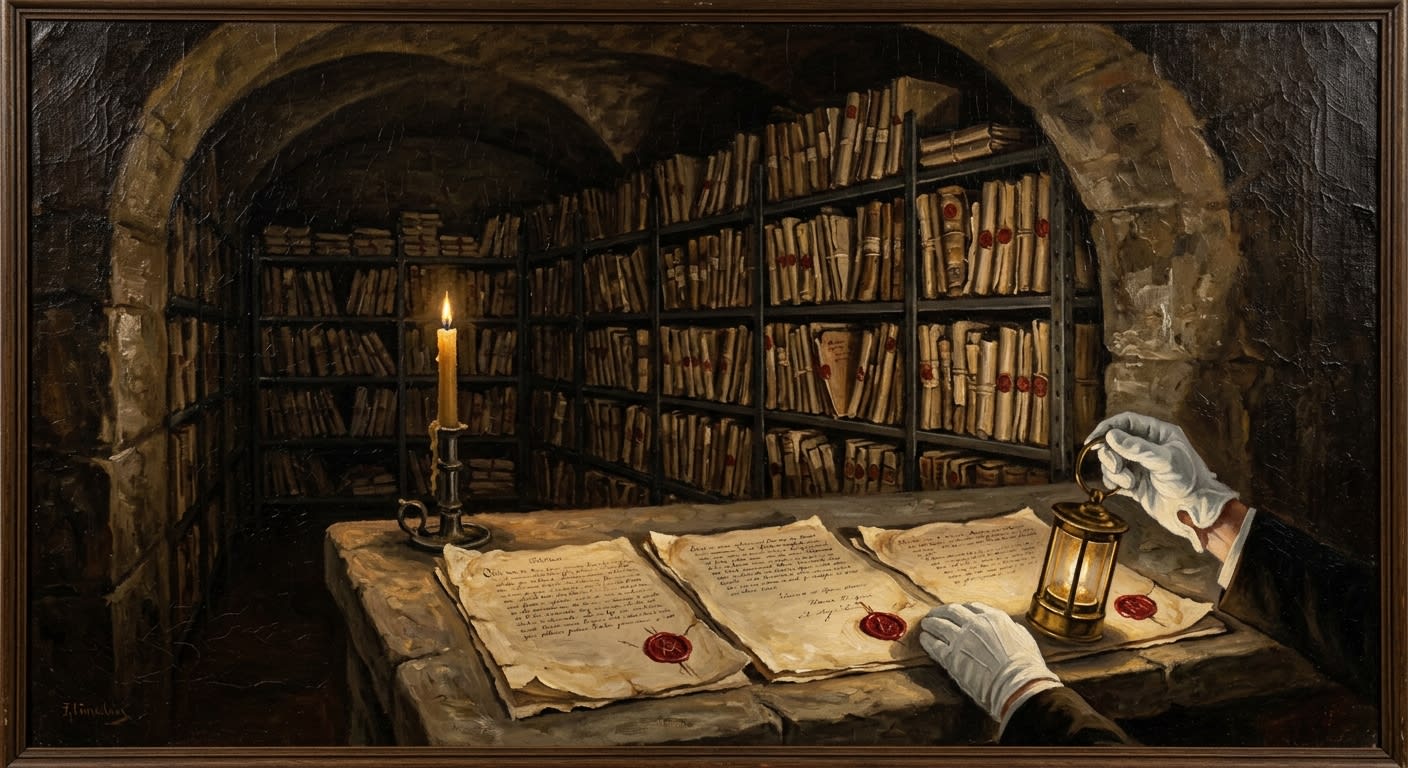
The Concordats of Ulm
Twelve signatures. One seal. Two hundred and fifty-six years of warm wax.
The founding instrument of Rationalist organisation — a compact of 'rational fraternity' signed in –55 A.S. by twelve university professors who mistook cleverness for wisdom, and built the machine that drove a century of war.
Codex Ref. II.7.03-055
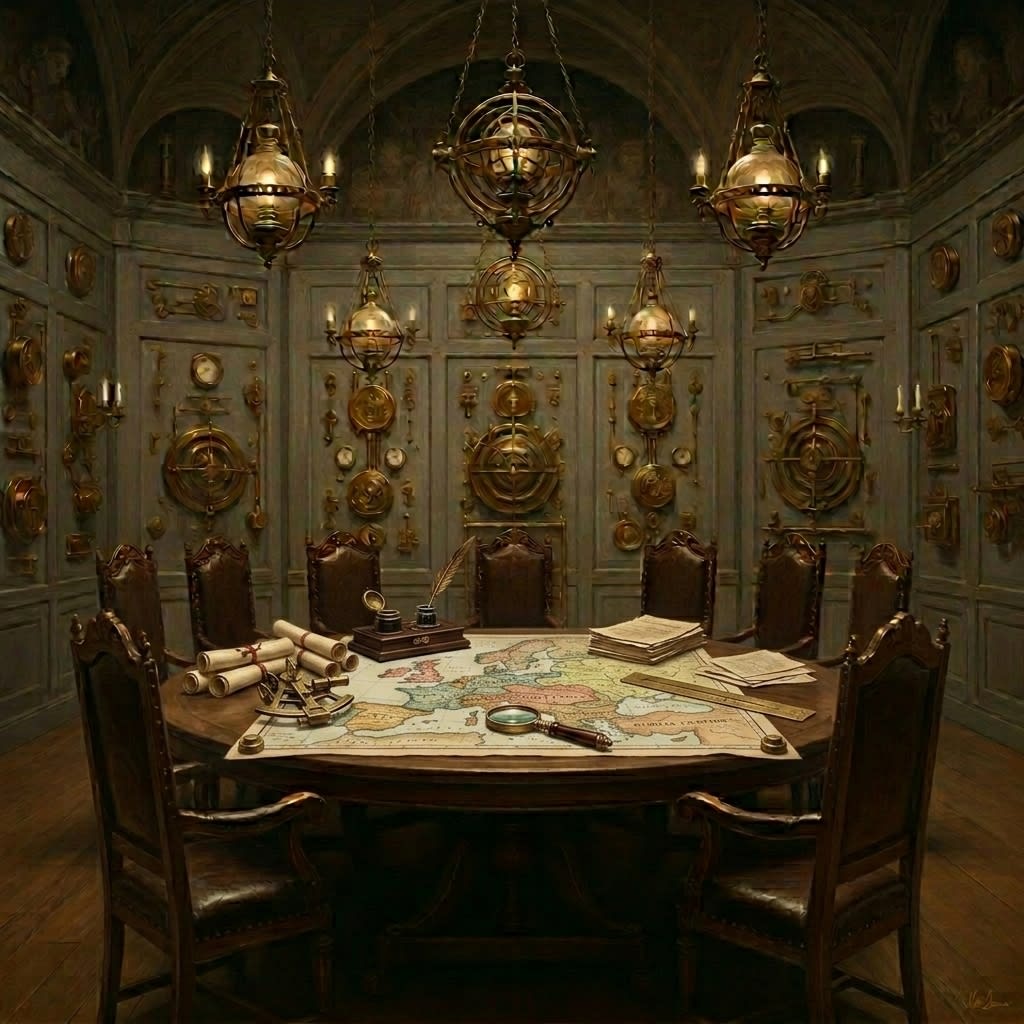
The Council of Nine Rationalists
Nine men governed Europe. Their names are sealed. Their methods are retained.
The sealed governing body of the Rationalist Republic — nine nameless men who administered a continent for fifteen years with instruments of measurement, mass surveillance, and the removal of tongues, until the Sundering settled the argument for them.
Codex Ref. I.1.03-001
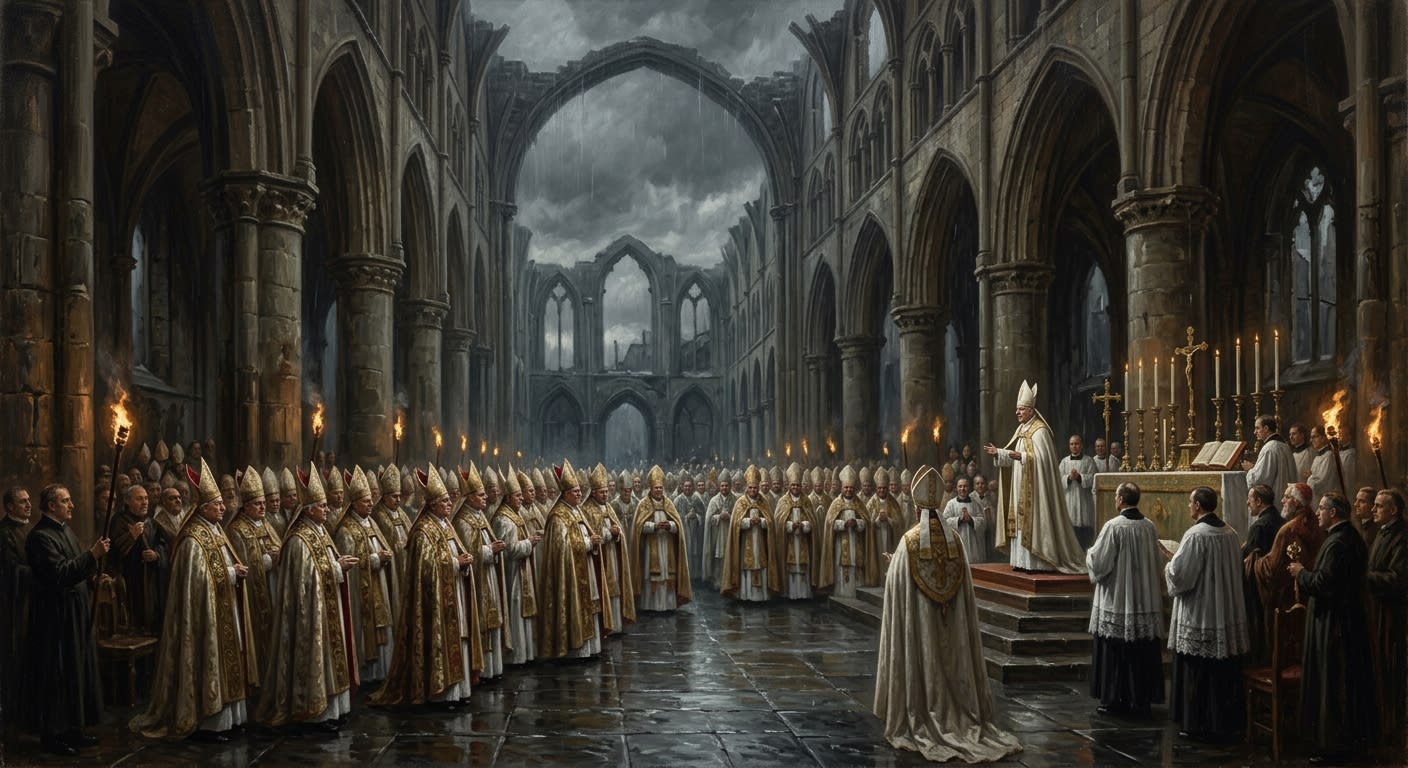
The Council of Worms
Where Paper Became Law, and the Seals Forgave No One
The A.S. 87 council in roofless Worms Cathedral ratified the earlier Common Allegiance; its register lists 314 names, including 25 with defective seals.
Codex Ref. VII.7.01-001
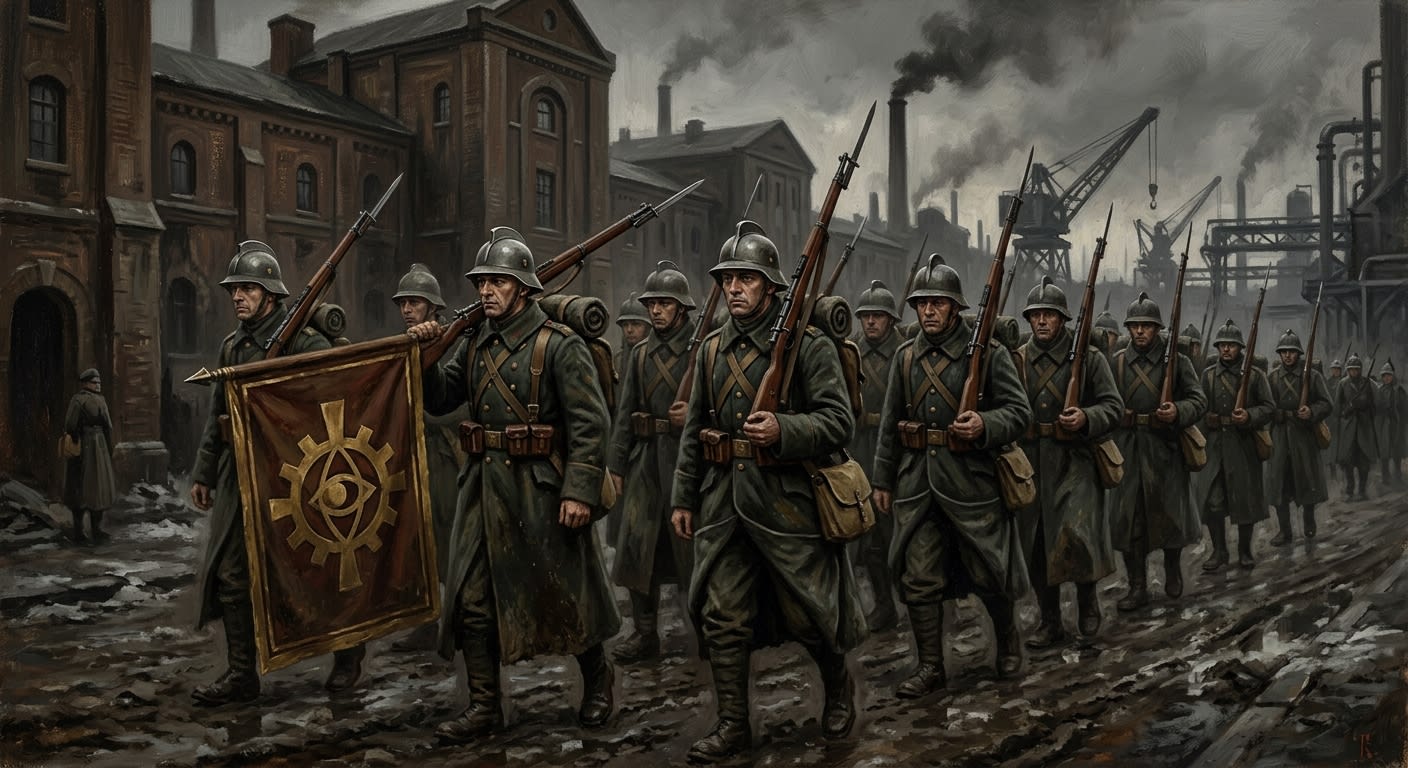
The Covenant Military
The rifle behind the sermon, visible enough to be pastoral
The Synod's standing armed auxiliary between war and administration: civic cordon, Bureau escort, rear-line reinforcement, and visible obedience with a rifle.
Codex Ref. VIII.5.05-001
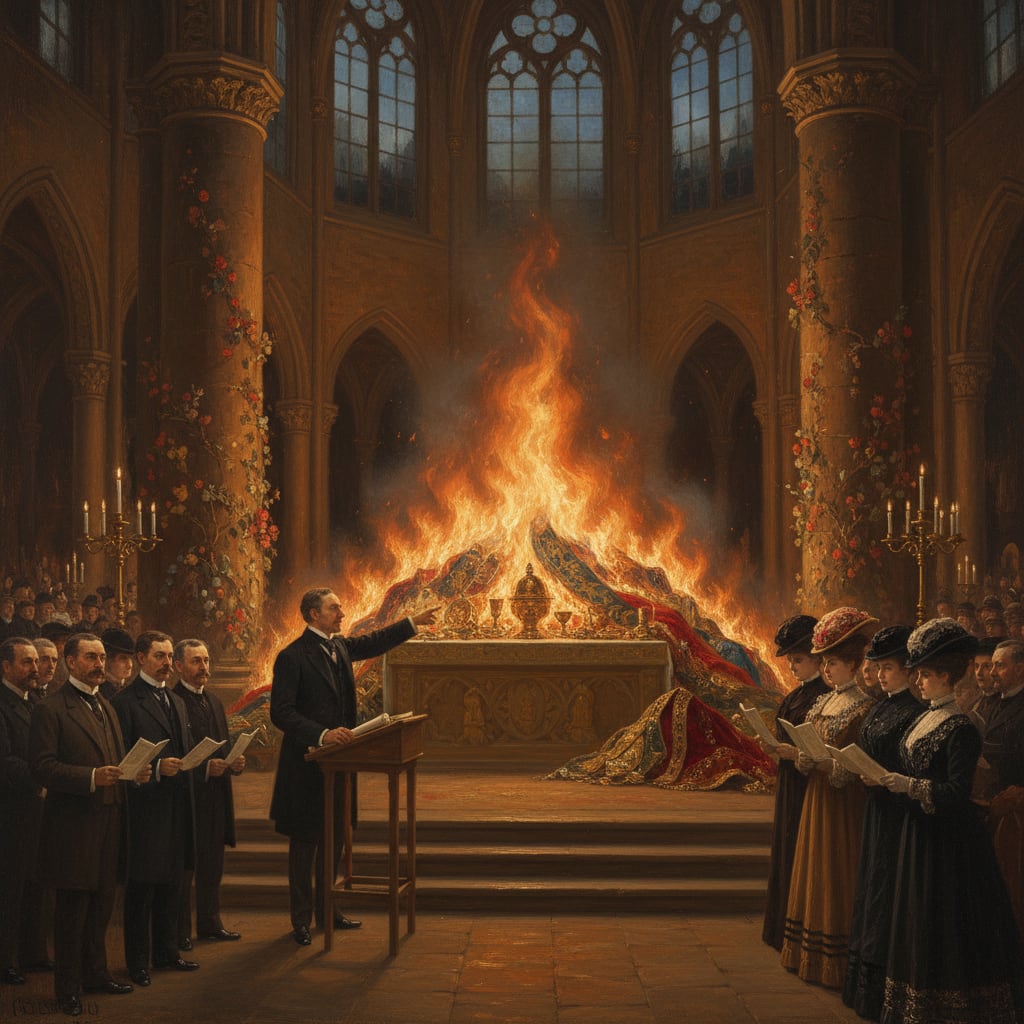
The Desecrations
Being the Bureau of Doctrine's Definitive Survey of the Rationalist Programme of Coordinated Spiritual Aggression, A.S. 0–45, Classified Retroactively in A.S. 92, and Updated at Considerable Institutional Expense in A.S. 200
The Rationalists destroyed two thousand sanctuaries, melted eight hundred and ninety-one bells into cannon, and killed three thousand four hundred clergy in a programme they insisted was spontaneous. Spontaneity does not print programmes.
Codex Ref. VII.1.01-001
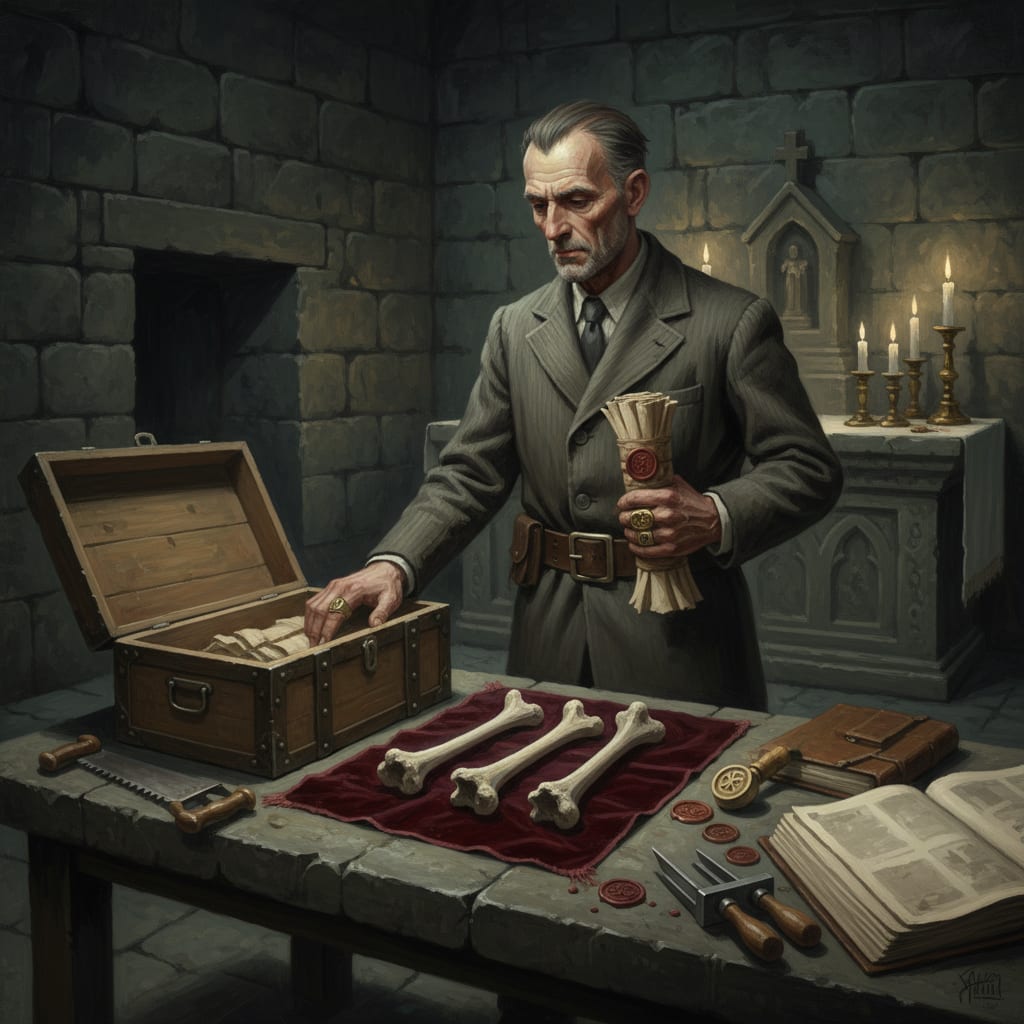
The Femur-War Broker
The unofficial routing service that keeps authenticated contradictions from becoming authenticated riots
The officially nonexistent profession that routes authenticated relic contradictions without collision — the Femur Principle's logical consequence, managed for a fee by two hundred brokers the Bureau insists do not exist.
Codex Ref. XII.15.01-001
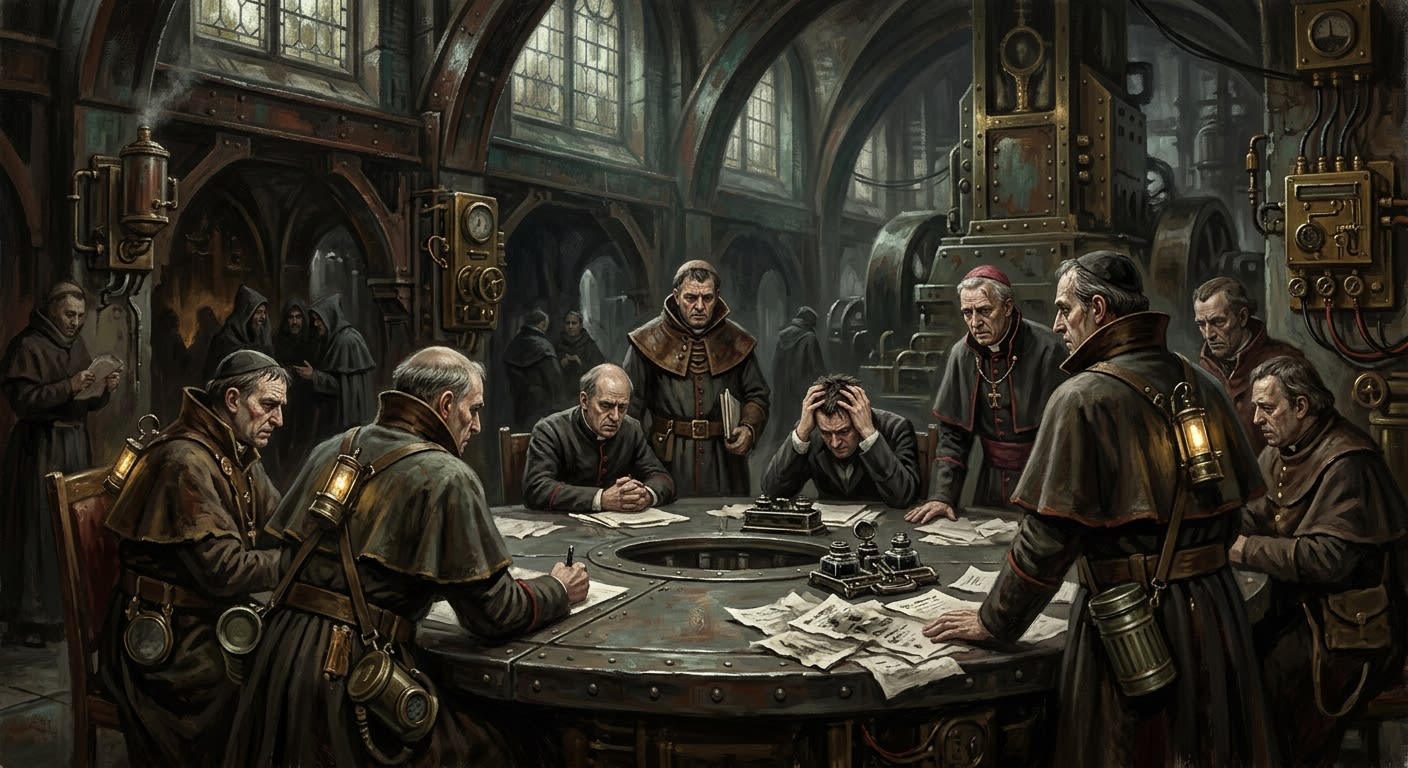
The First Council of Cologne
The yoke was imagined before it was blessed
The September A.S. 27 preliminary convocation produced seven unadopted articles, corrected minutes, and limited voluntary contacts among dioceses.
Codex Ref. VII.7.01-002
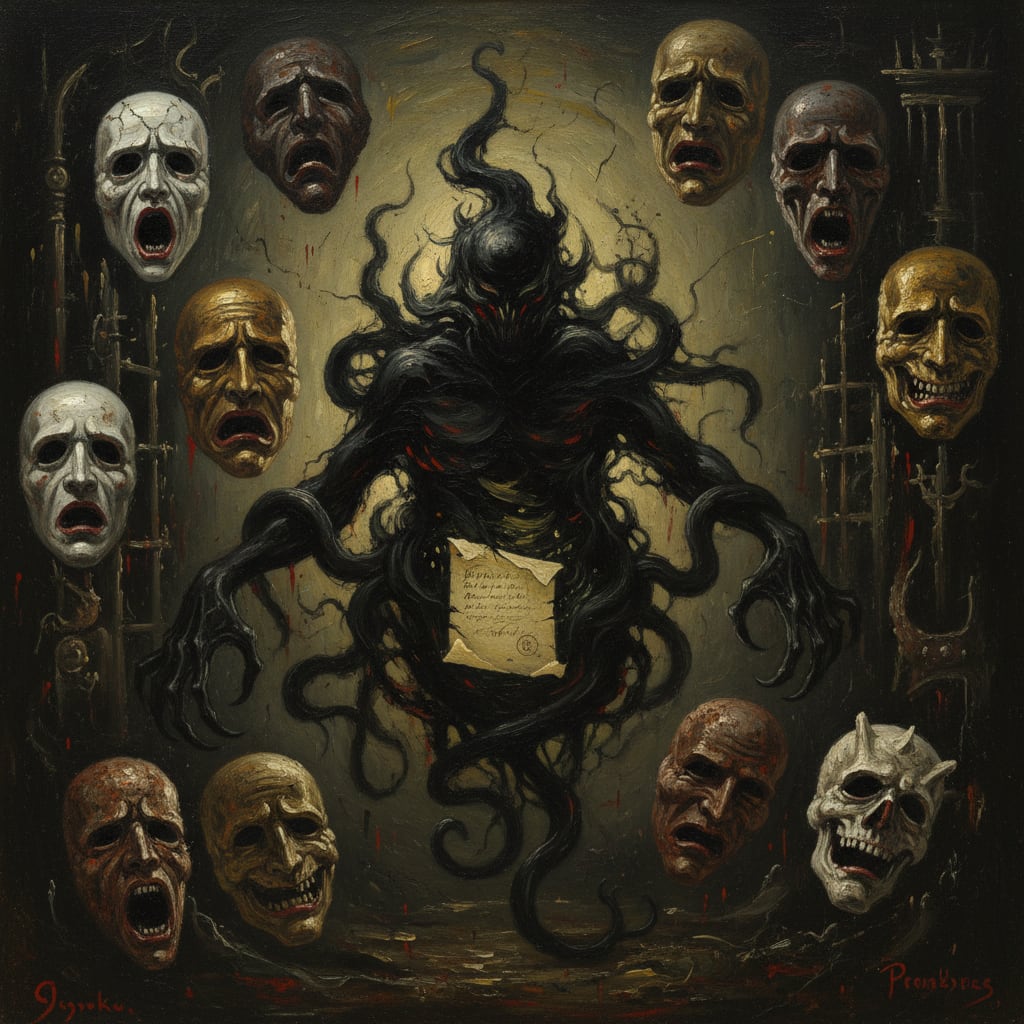
The Great Deceiver
The Adversary Without Name, the Will Behind the Veil
He has no face, no form, no name the Bureau dares to print — only a Will that wears the world like a mask. The supreme architect of the Sundering, the forger of the Seven Sin-Generals, and the one enemy the Synod cannot file, stamp, or archive into submission.
Codex Ref. IV.1.01-001
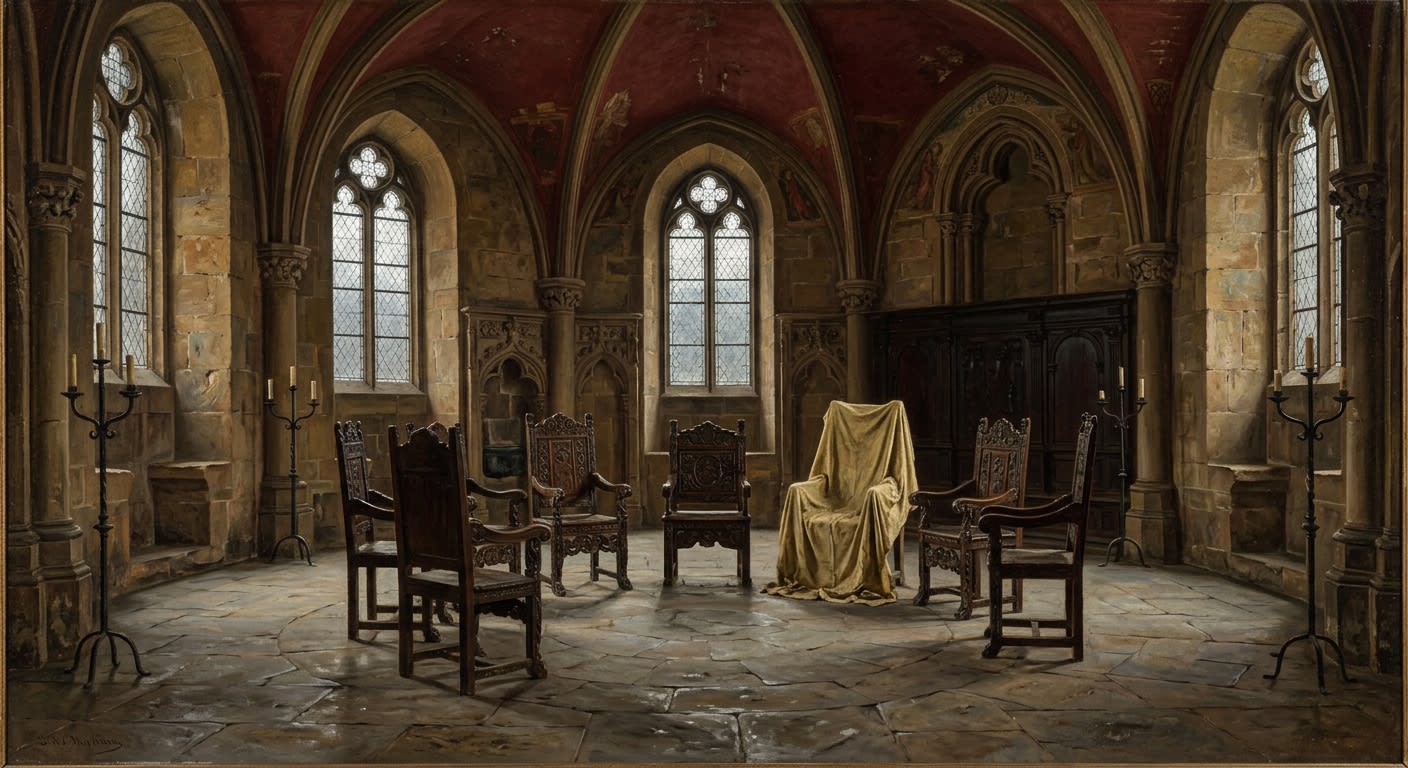
The Hierarchy of the Synod
Seven Seals, Six Occupants, and a Chair No One Has Laundered Since A.S. 107
Seven Seals. Six occupants. One chair draped in cloth no one has laundered since A.S. 107. The succession is continuous. The gaps are classified.
Codex Ref. VI.3.02-001
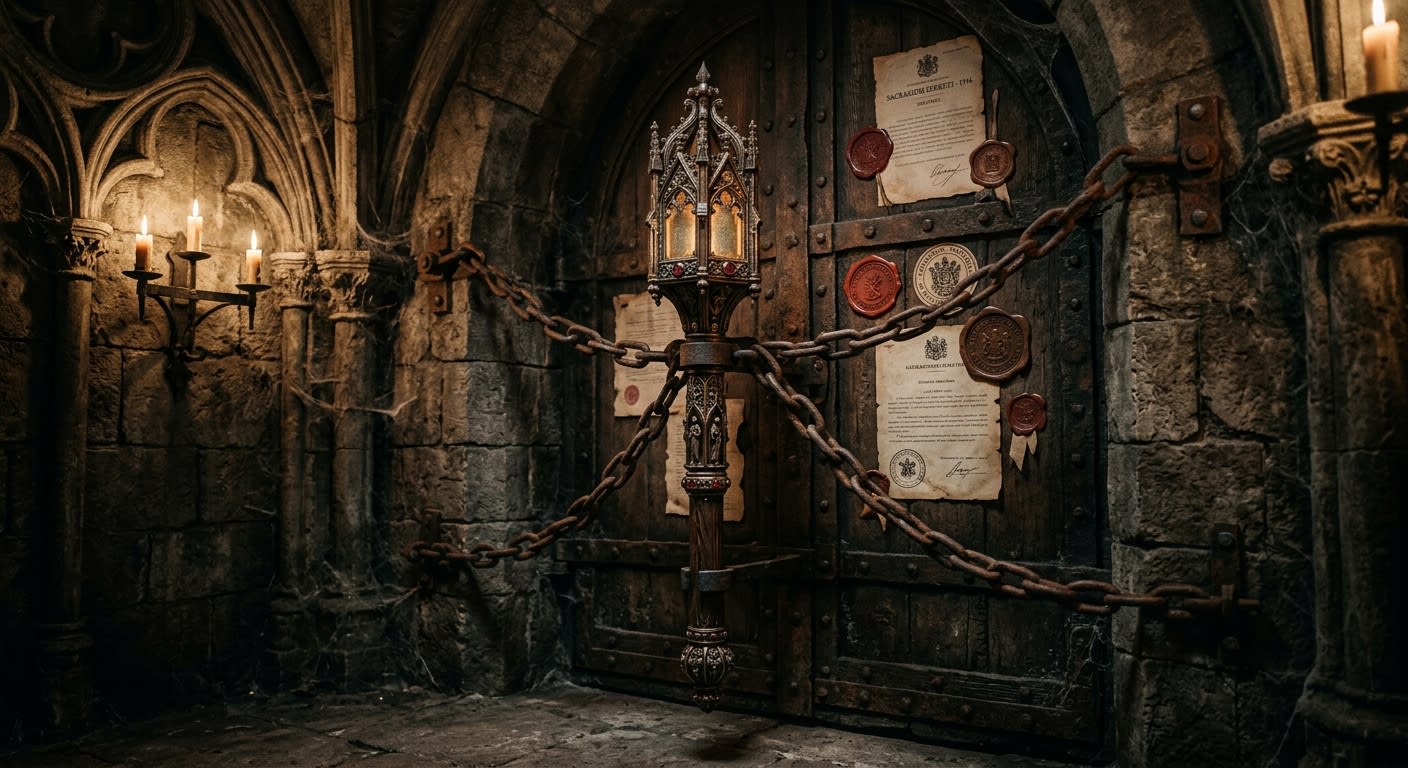
The Miracle of Saint Aldebrand
The Bureau erased the bone. The bone declined.
The Bureau declared the Reliquary of Saint Aldebrand non-existent in –32 A.S. In A.S. 95 it shattered a sorcerer-lord's skull and saved Vienna. Both facts are official, both carry seals, and the Bureau sees no difficulty.
Codex Ref. VI.4.01-001

The Night of Knives in Kraków
Forty-seven mouths wired shut so that no prayer could escape
Forty-seven clergymen seized in the night, their mouths wired shut with iron wire, and cast from the Dębnicki Bridge into the frozen Vistula. The Bureau spent one hundred and thirty years ratifying the narrative; it has been collecting the candle wicks ever since.
Codex Ref. VII.8.01-001
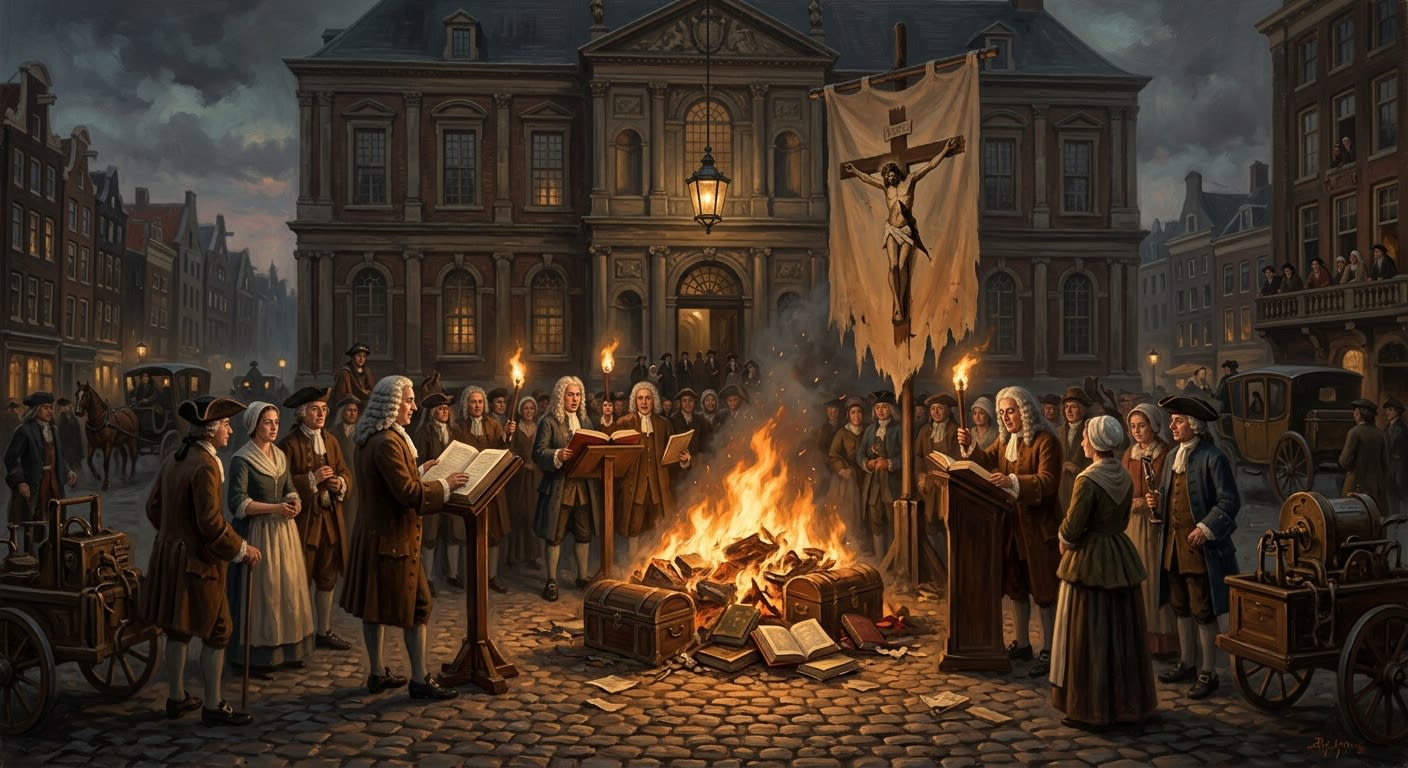
The Rationalists
Architects of the wound the Synod counts from
The Synod's most instructive enemy — philosophers who stripped Europe of its spiritual armor on the eve of Hell's invasion and then had the grace to be destroyed by the consequences.
Codex Ref. I.1.01-001
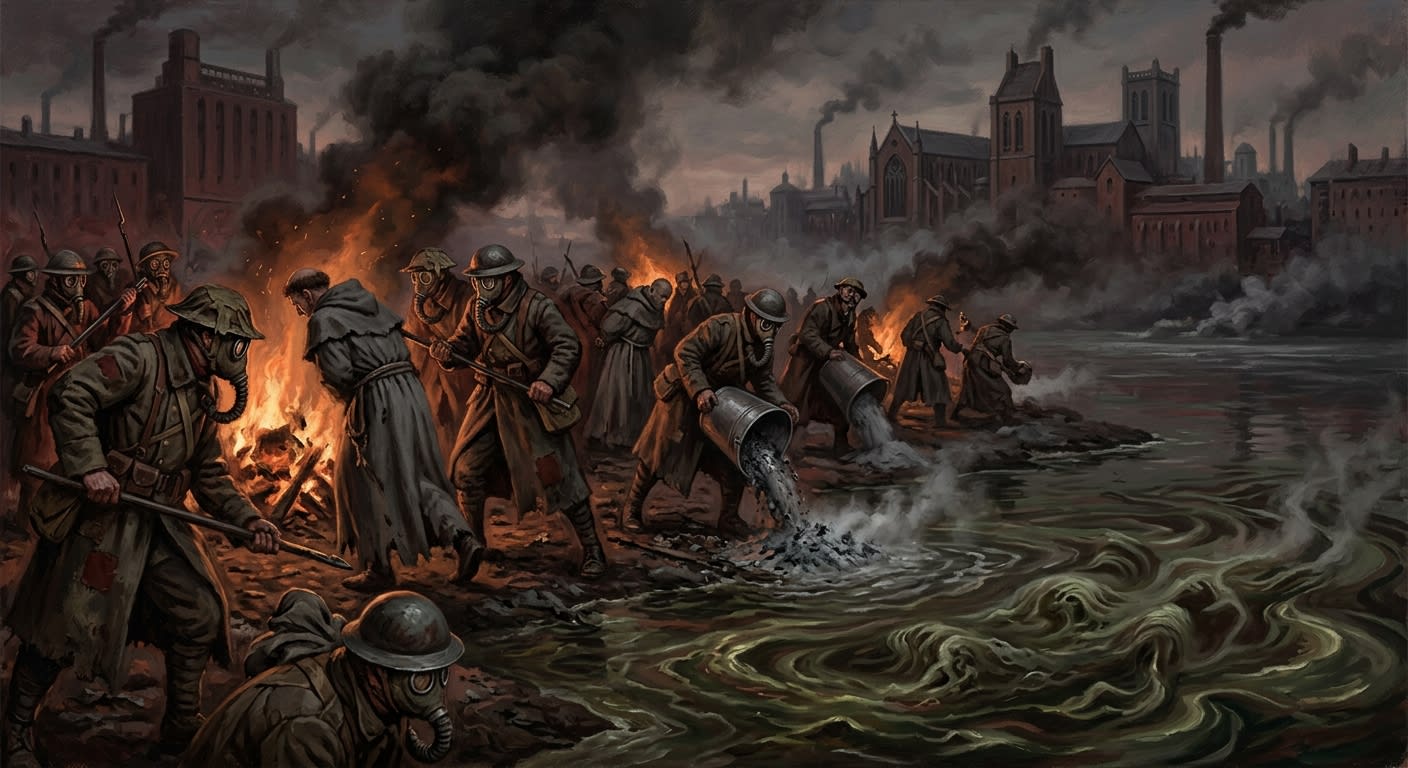
The Red Slaughter of Lyon
The first cut was local, municipal, and entirely pleased with itself
In –39 A.S., Lyonnais militias burned forty-three friars and dumped their ashes into the Rhône; the river answered in psalms, as rivers sometimes improve upon councils.
Codex Ref. VII.8.03-001
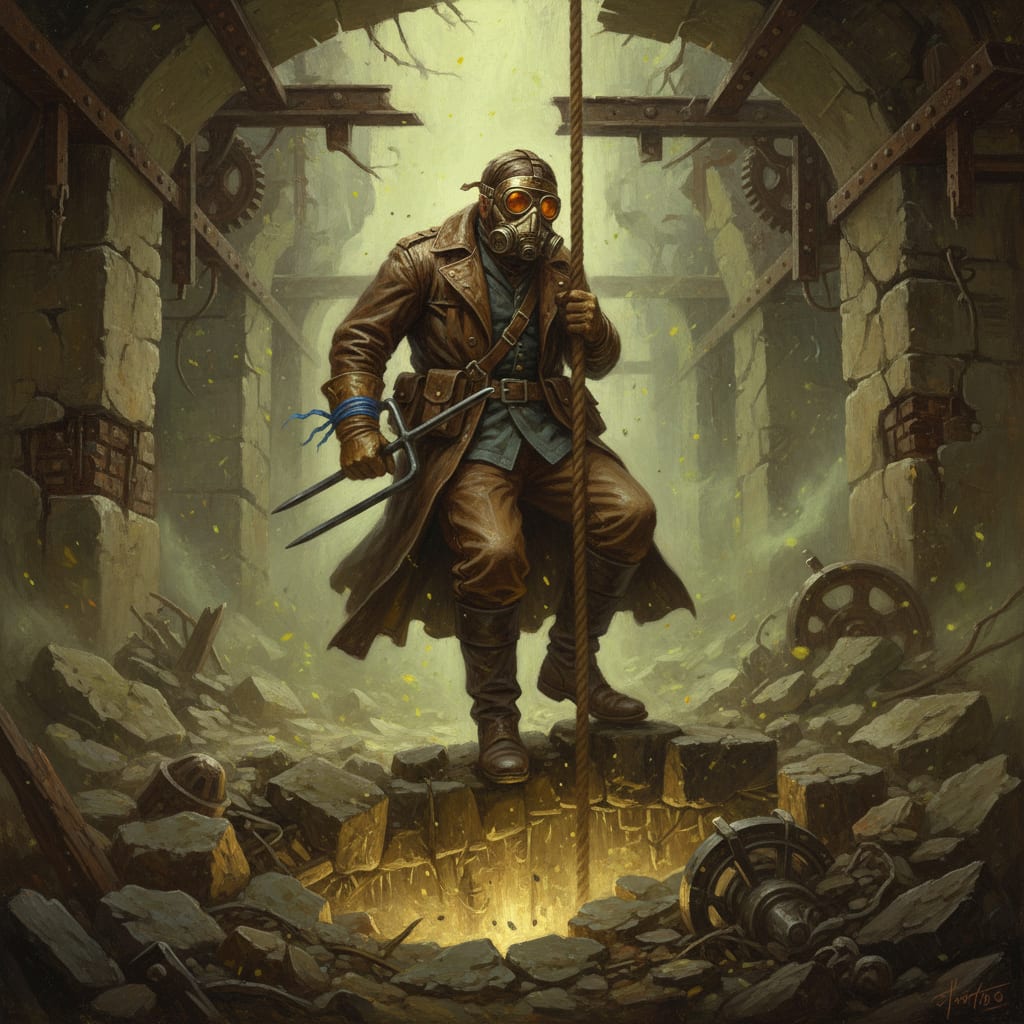
The Reliquary Salvager
The Synod misplaces relics; the Salvager retrieves them; no one speaks of the arrangement
The Synod does not lose its relics. It misplaces them — in collapsed vaults, sheared cathedrals, and quake-opened cellars. The Reliquary Salvager crawls in to retrieve them. His compliance record is spotless. His lungs are not.
Codex Ref. XII.36.01-001
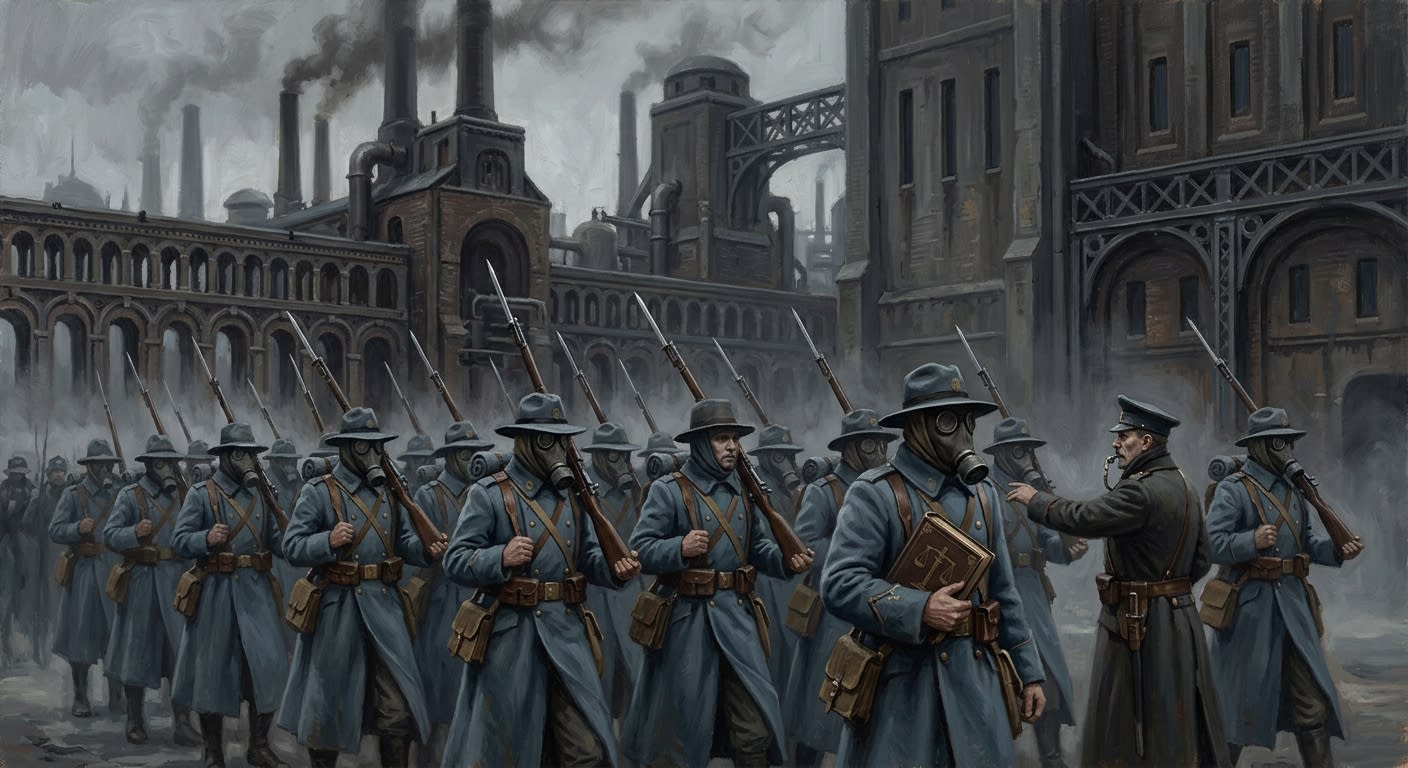
The Republican Guards
The philosophers wrote the sentence; the Guards added punctuation
The Republic's armed hand wore blue-grey, carried law over the heart, and proved that unbelief does not remain in books. It drills.
Codex Ref. I.1.05-001
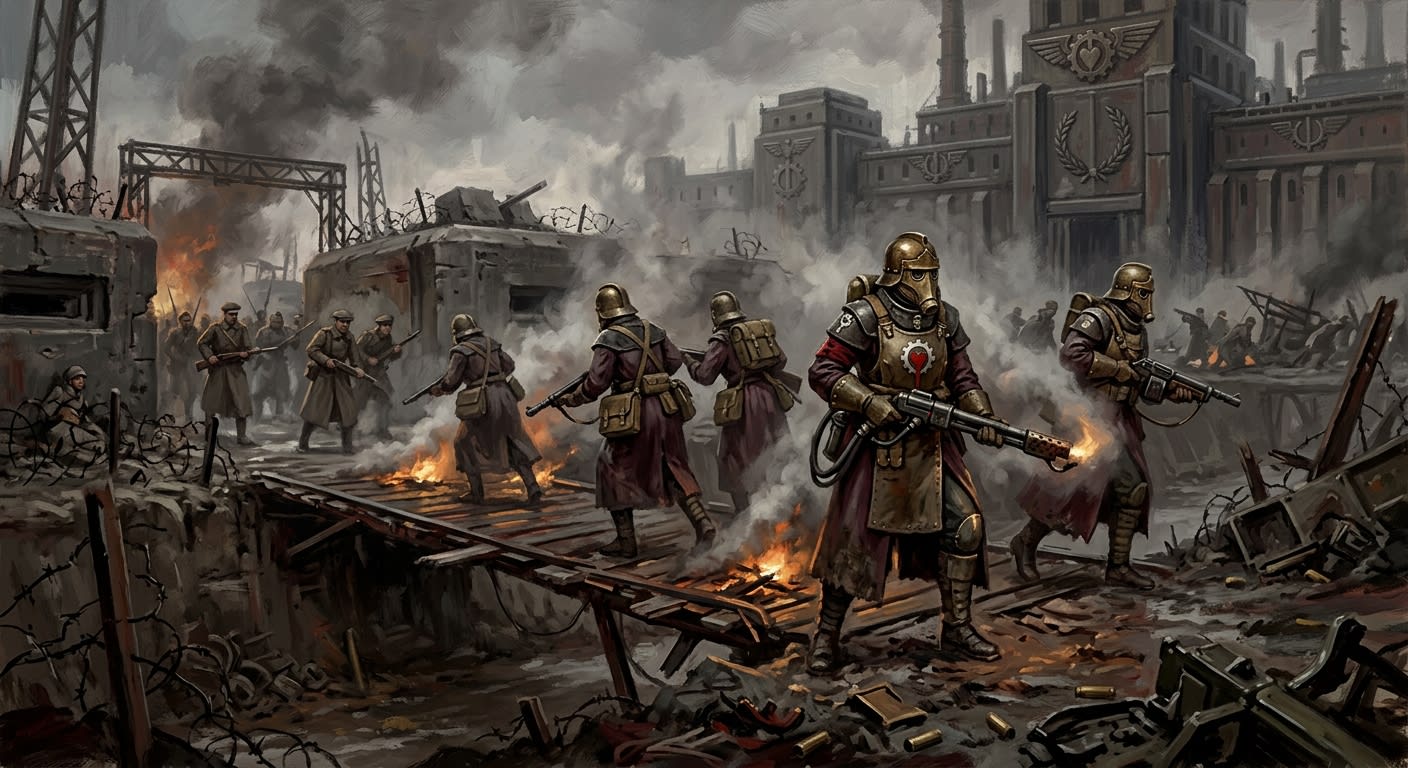
The Sisters of the Martyrdom
The bridge burned, the column halted, and the Ledger asked whether she volunteered
The Sisters of the Martyrdom burned bridges with their own bodies during the Atheist Wars; the Bureau sings them, taxes them, and refuses to ratify them.
Codex Ref. VIII.6.01-001
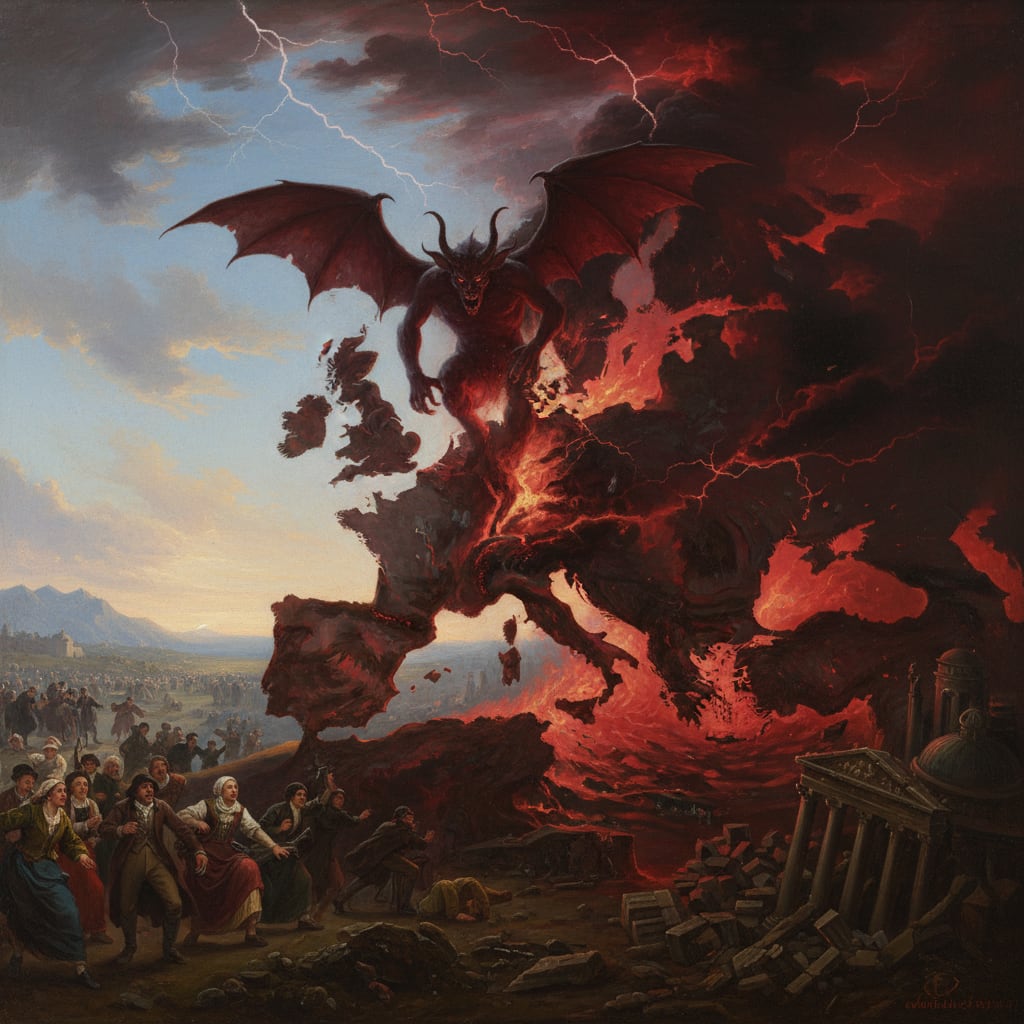
The Sundering
The Day the World Cracked Open and the Creator Sent His Invoice
The cataclysm of 1 November, 45 An.S. — when the Balkans erupted and the legions of the Great Deceiver poured through the wound in Creation. The event that ended Reason and birthed Faith's second coming. As explained by the only man whose explanation matters.
Codex Ref. I.1.02-001
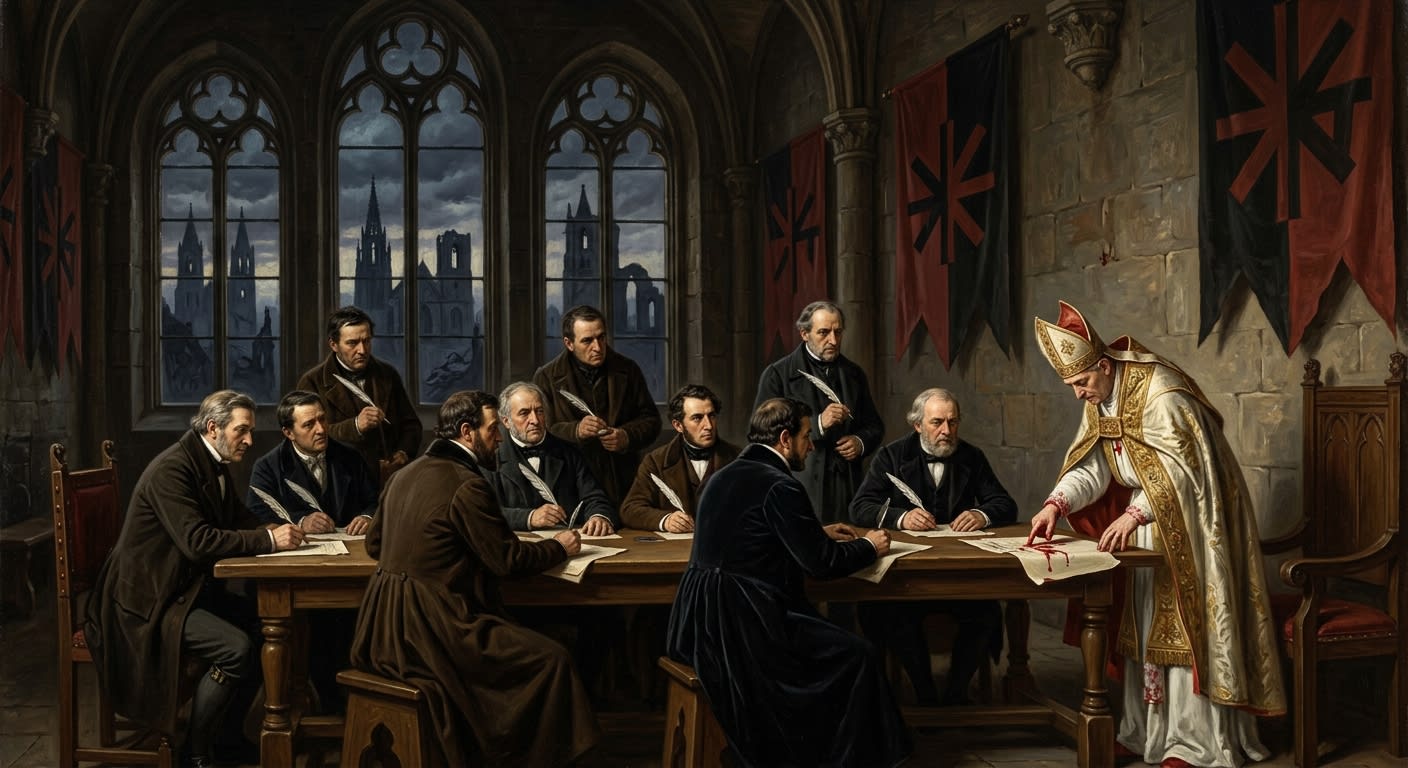
The Treaty of Regensburg
The ink that claimed to abolish the Creator, signed in nine days and annulled by Providence in fifteen years
The Treaty that ended the Atheist Wars and dissolved the Holy See of Vienna in an afternoon. Forty-seven articles; fifteen years of the Rationalist Republic; and then the Sundering proved it a lie. The Bureau of Doctrine annulled it retroactively. It was never valid.
Codex Ref. VII.2.01-001

The Year of Letters
One table of bones. Forty cities. The first assault on everything.
The Bureau's account of –32 A.S.: how three Amsterdam scholars, one table of bones, and forty cities' worth of polite arithmetic crippled three centuries of relic authentication — and inaugurated everything.
Codex Ref. I.2.01-001
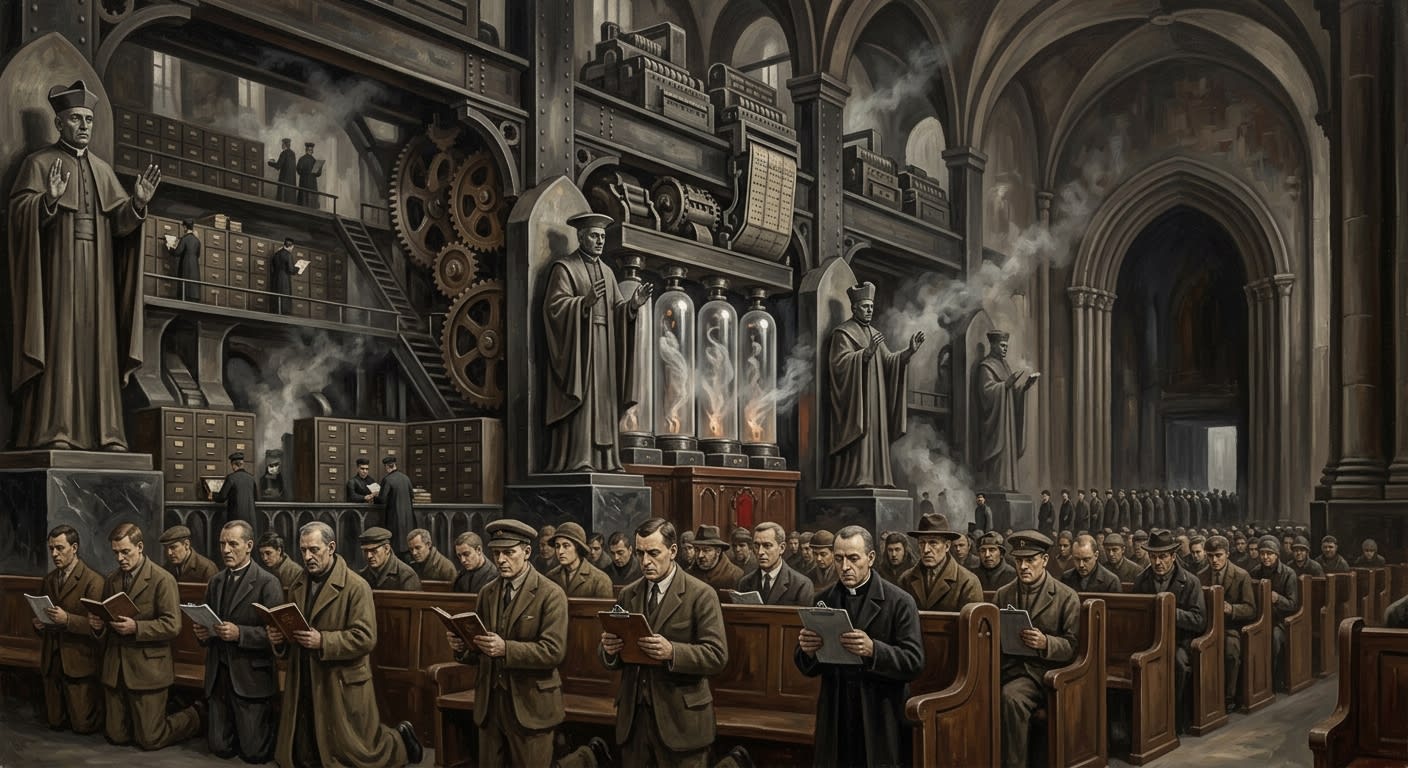
Theocracy
Piety with pipes, doctrine with payroll
Theocracy is the Synod's mature art: altar made warrant, prayer made schedule, fear made grammar, and every soul brought under ratified custody.
Codex Ref. XIII.1.01-201
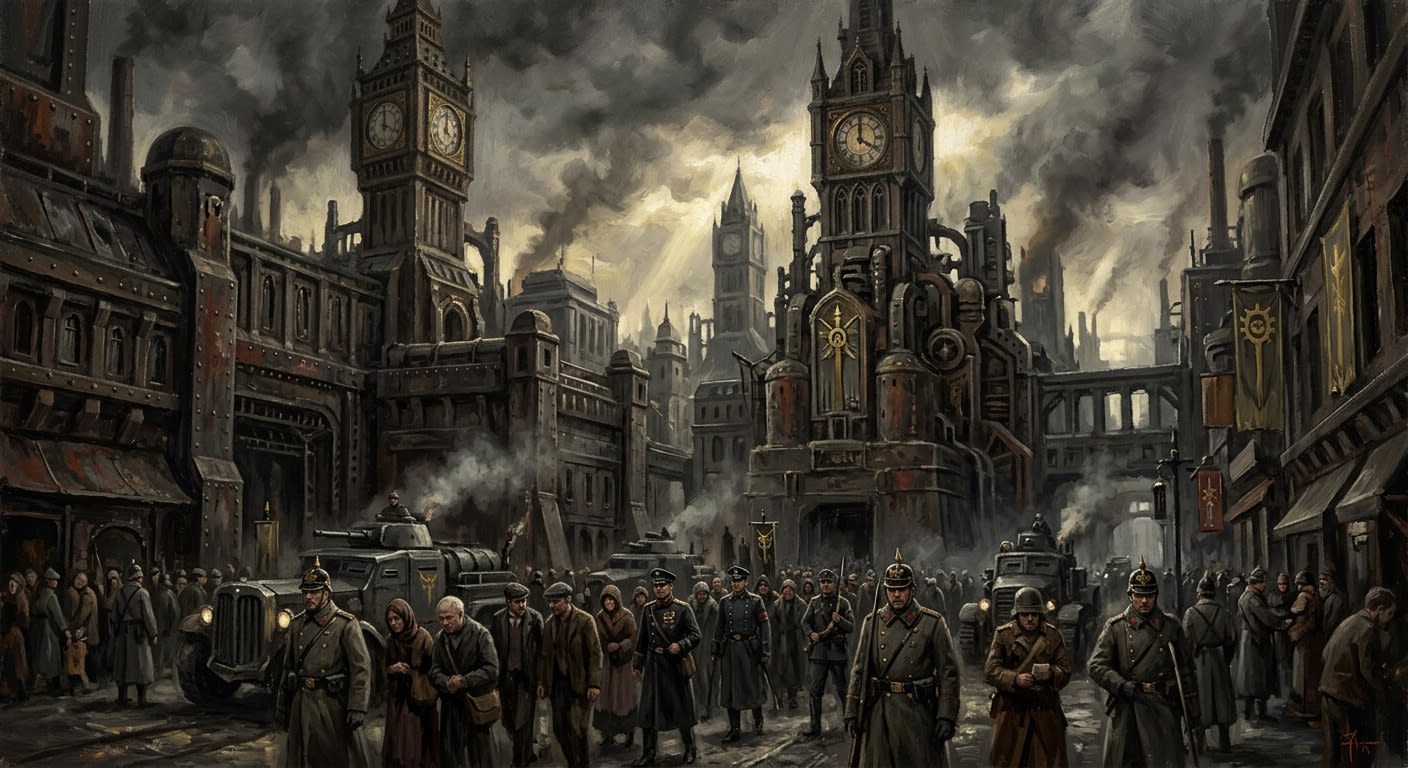
Toledo
The city taken by cannon and kept by ash
Toledo is the Synod-held Iberian martyr-city where a lost siege became custody, ash became law, and time itself learned tariffs.
Codex Ref. II.1.04-015
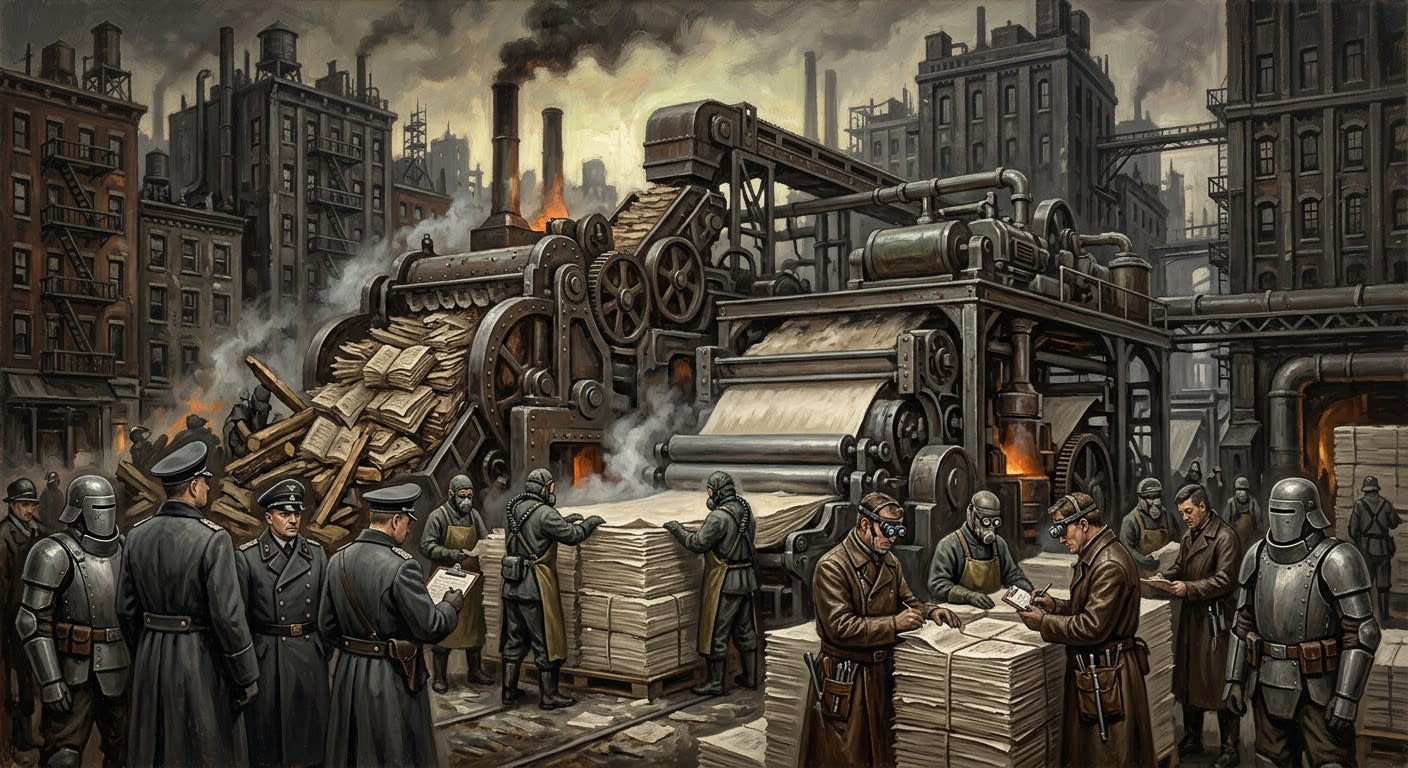
Ulm
The city that taught paper to confess and scholars to become pulp
Ulm is the corrected Heartlands city whose Rationalist compact predated the calendar wound, and whose Paper Mines now make heretical learning into obedient sheets.
Codex Ref. II.2.01-005
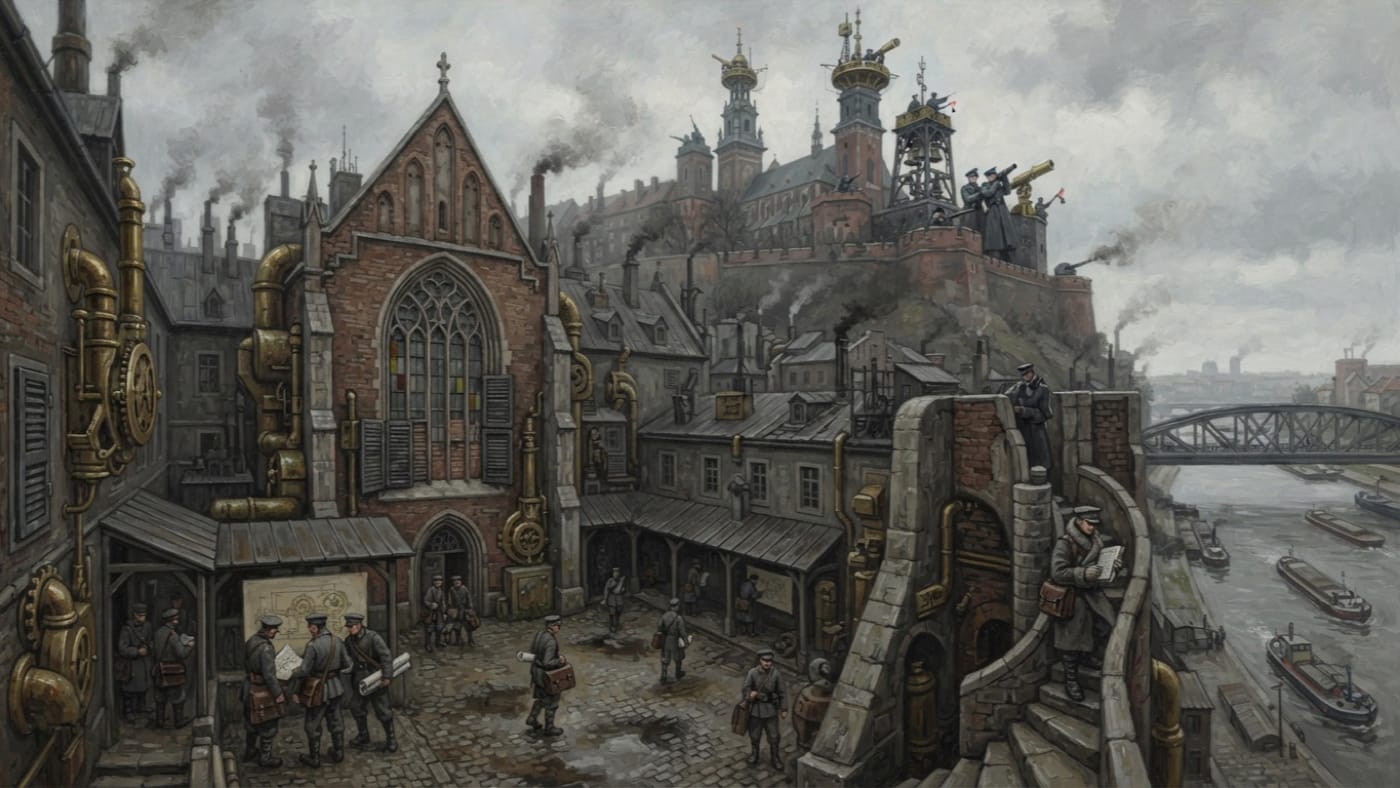
University of Kraków
Correct arithmetic, subject to countersignature
Kraków's university survives the A.S. 199 condemnation to train useful clerks, engineers and physicians. Its astronomers may copy the stars only as approved error.
Codex Ref. II.3.06-004
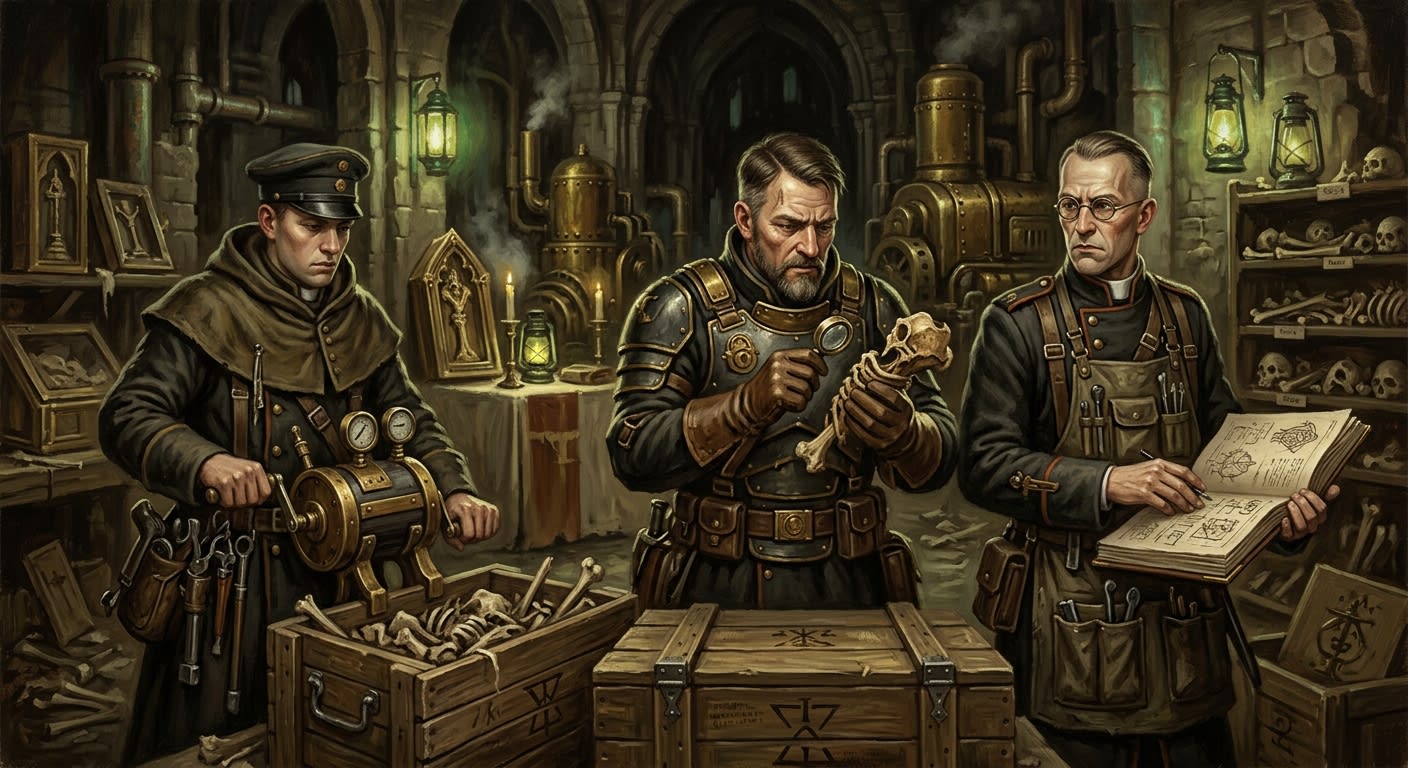
Van Hoorn, Lemstra & de Waal
Three clerks of doubt, one table of bones, and forty cities taught to sneer
Pieter van Hoorn, Gerrit Lemstra, and Jan de Waal made doubt portable in -32 A.S.; their Bone Census counted relics accurately and wounded truth efficiently.
Codex Ref. III.2.01-026

Warden of the Sacred Ledger
Memory is permitted only after custody
The Warden of the Sacred Ledger guards the passage between recorded fact and ratified meaning, lest memory escape and become a riot with dates.
Codex Ref. XIII.1.33-090
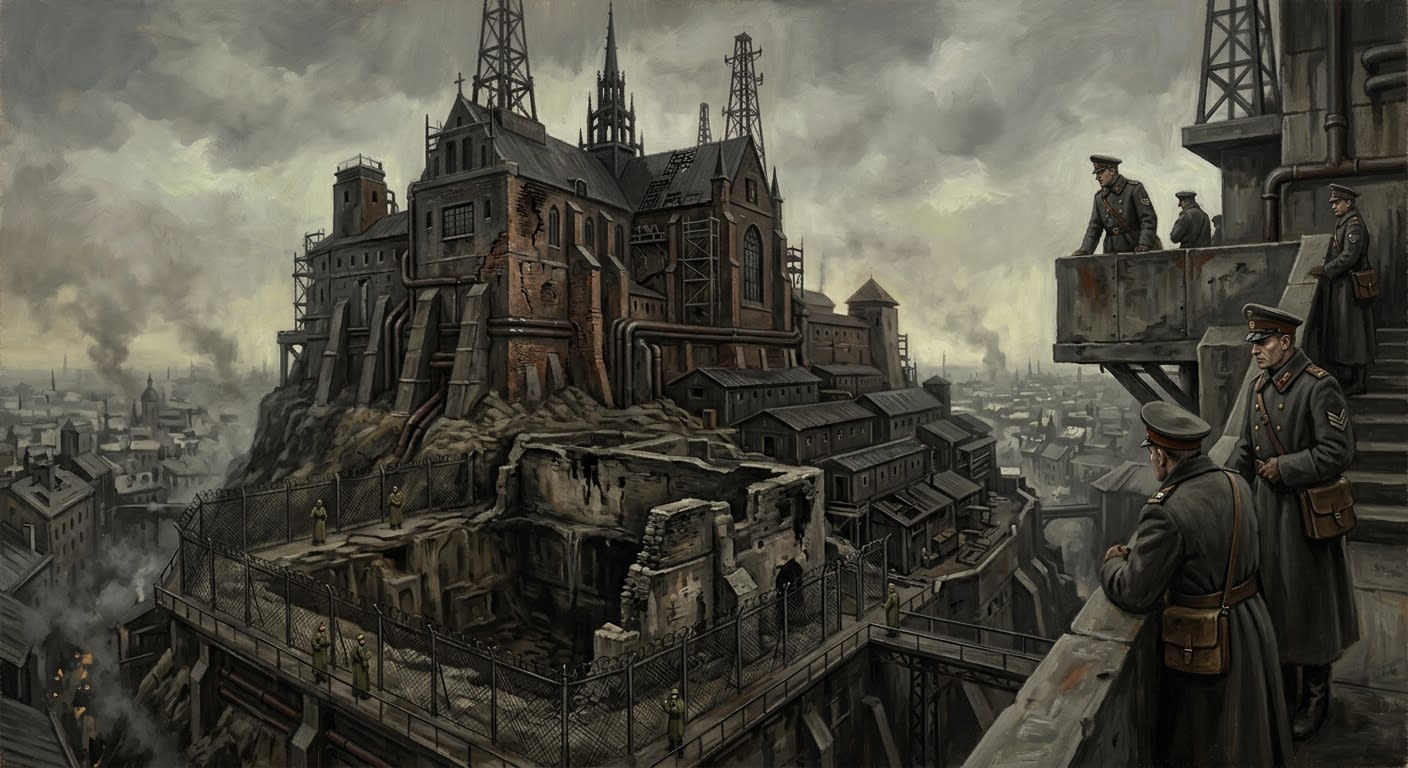
Wawel Hill
A crown of stone made to remember under seal
Kraków's cathedral hill, bound to the Night of Knives, restored as a public wound, and watched from upper works where Doctrine observes the city looking upward.
Codex Ref. II.3.06-001
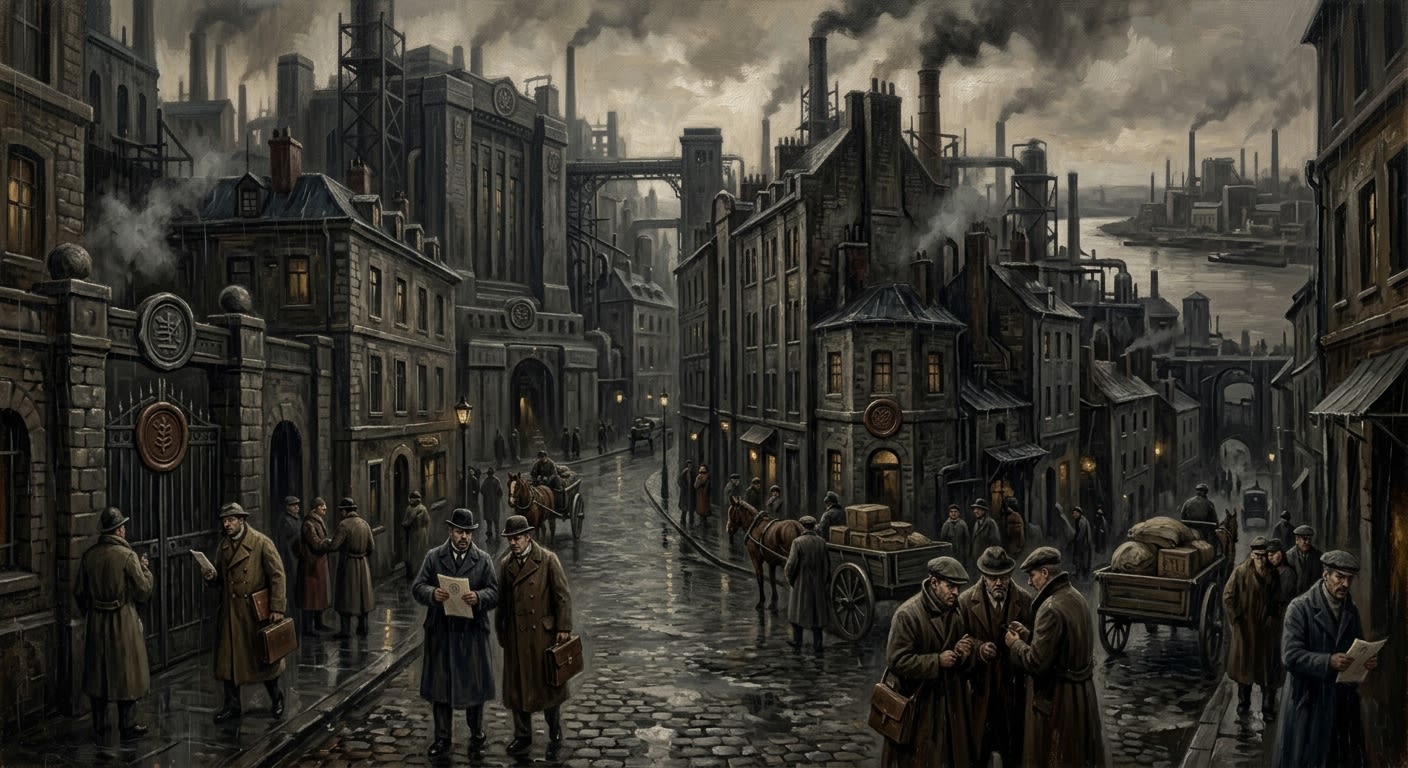
Worms
Where broken things become binding
Worms is the Rhineland city where absence became evidence, rain became residue, seals became law, and a name became a warning.
Codex Ref. II.2.09-087
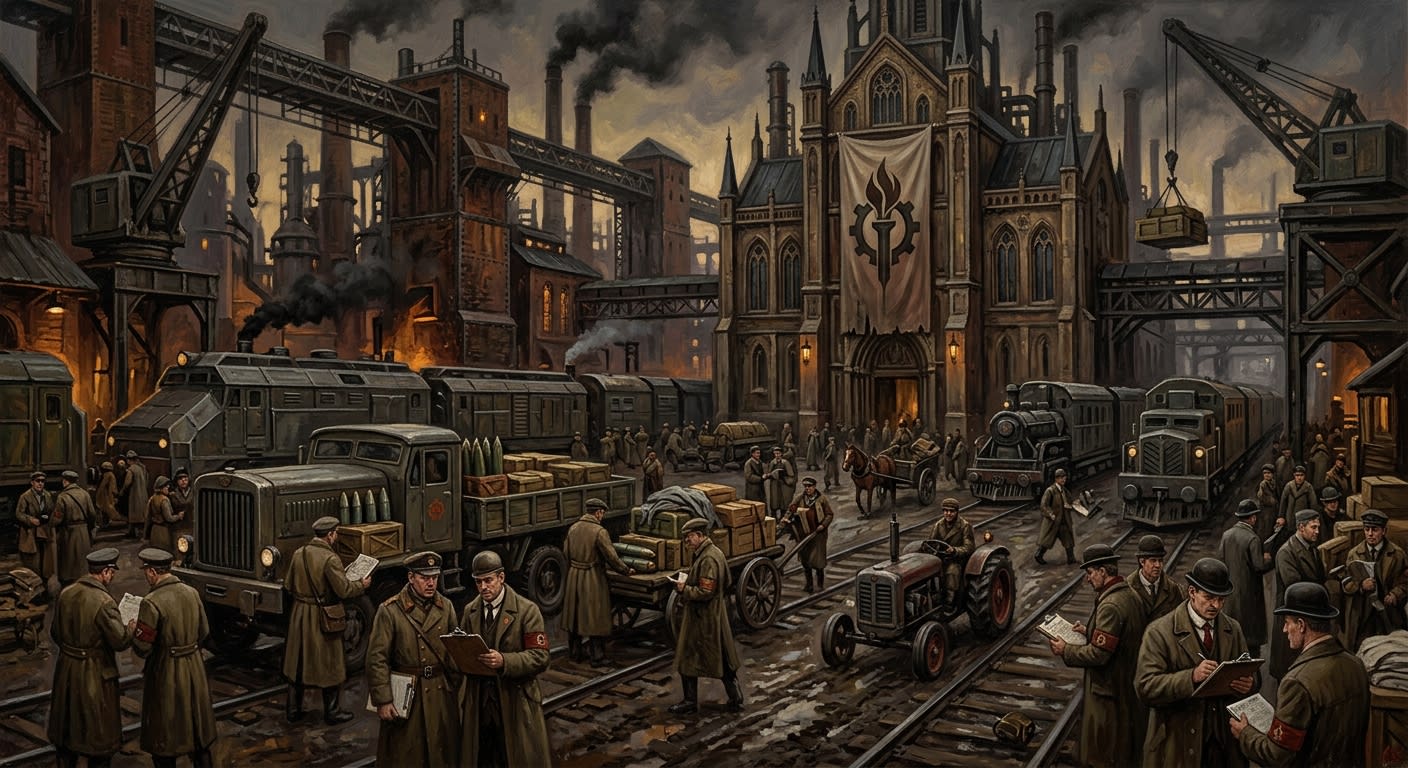
Zone 1
The rearward paradise that learned to invoice the war
Zone 1 is the Synod's polished western rear: safe enough to tax, rich enough to excuse itself, and stained to the elbows by logistics.
Codex Ref. II.0.03-201