

Reverse Index
Referencing “The Siege of Vienna”
Every codex entry that links to The Siege of Vienna. 65 entries.
Return to The Siege of Vienna
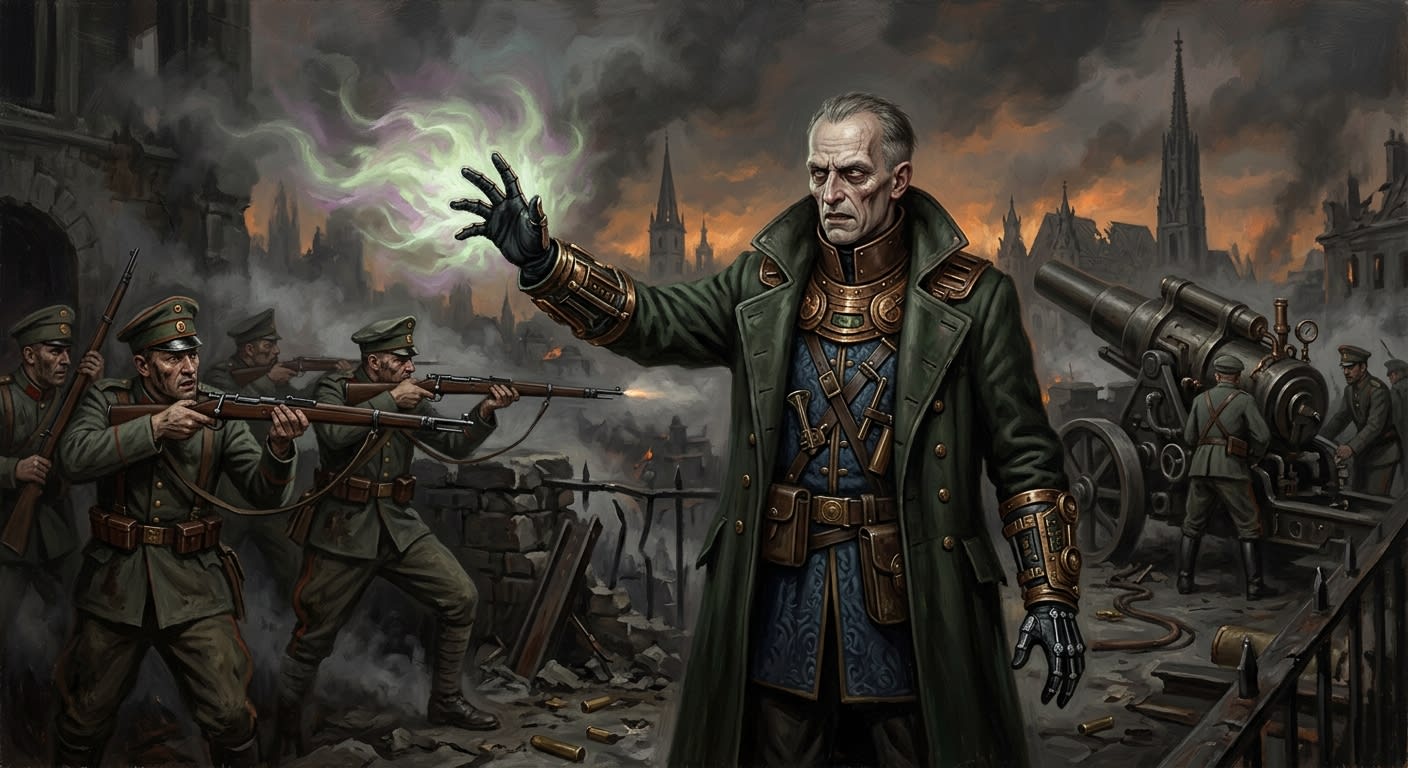
Althazar of Pest
The unauthorized man history mistook for a throne
Althazar of Pest was the sorcerer-lord of Vienna's last siege, a Rationalist remnant commander destroyed by Clemens Stahlhand and Saint Aldebrand's reliquary mace.
Codex Ref. III.2.01-153
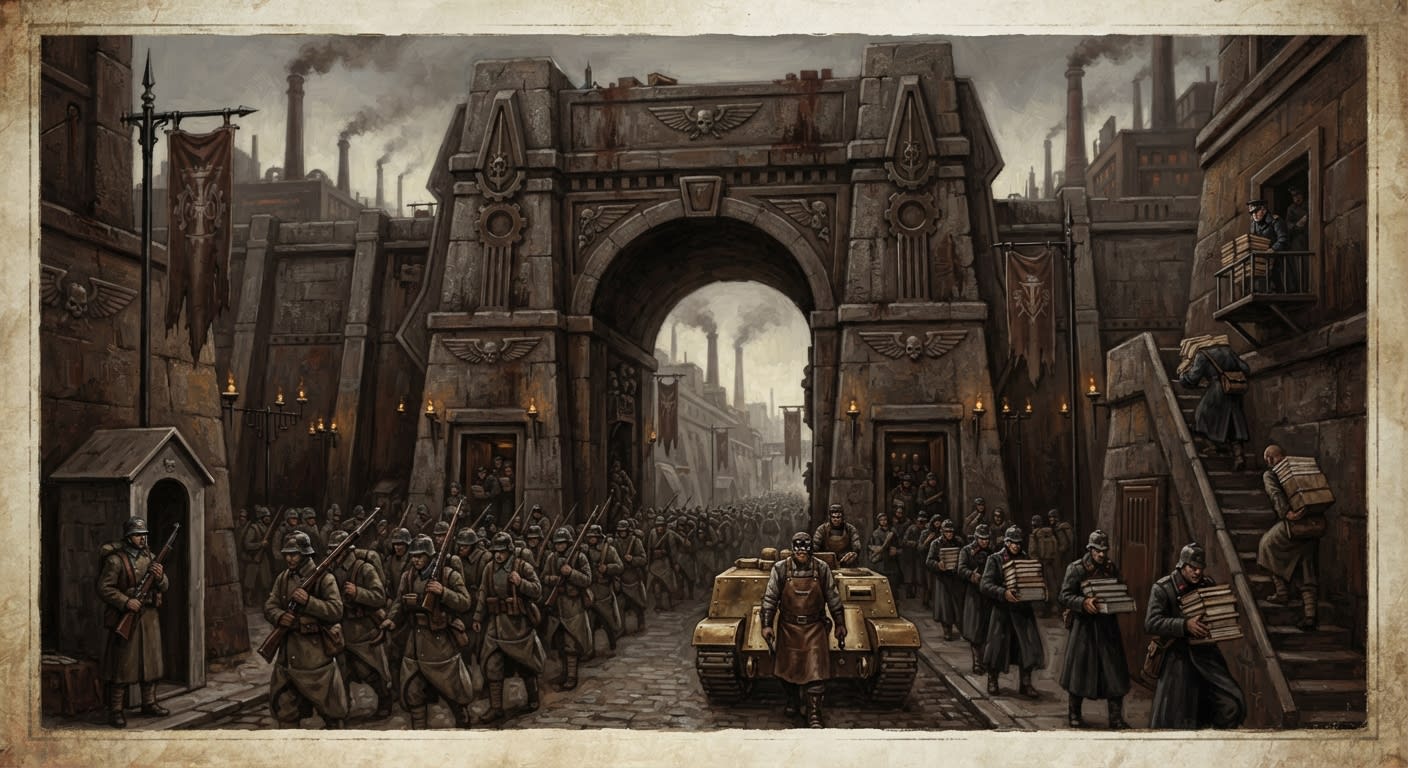
Arch of Campaigns
Where iron enters, and law exits wearing a crimson seal
Strasbourg's military threshold, where the Bureau of War turns cannons, levies, rail priority, and coffin orders into lawful violence beneath the keystone.
Codex Ref. II.3.06-105
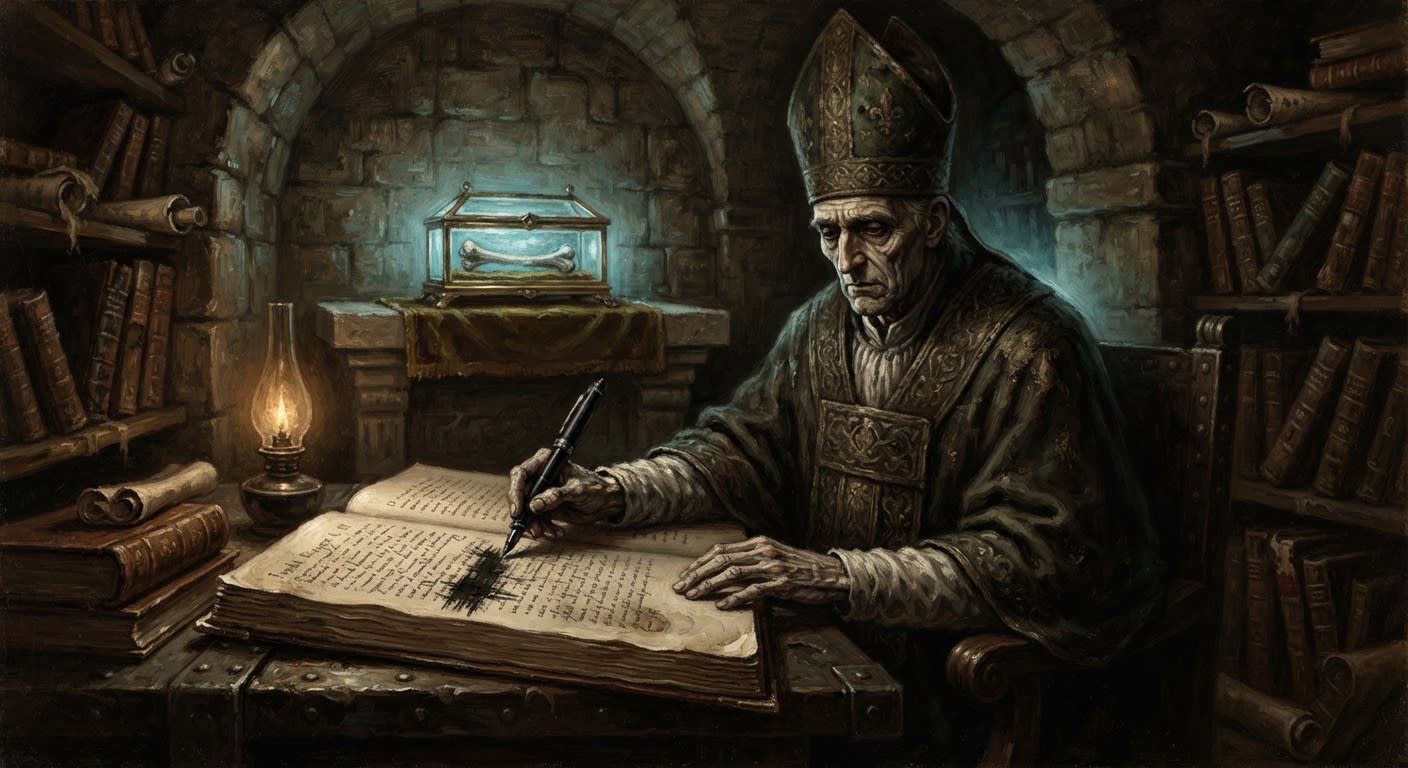
Archbishop Rupert III
The prelate who made a relic absent by letter
Pre-Synodic Archbishop of Vienna who answered Amsterdam's bone arithmetic by erasing the Reliquary of Saint Aldebrand from the records while leaving it glowing in the vault.
Codex Ref. III.2.01-032
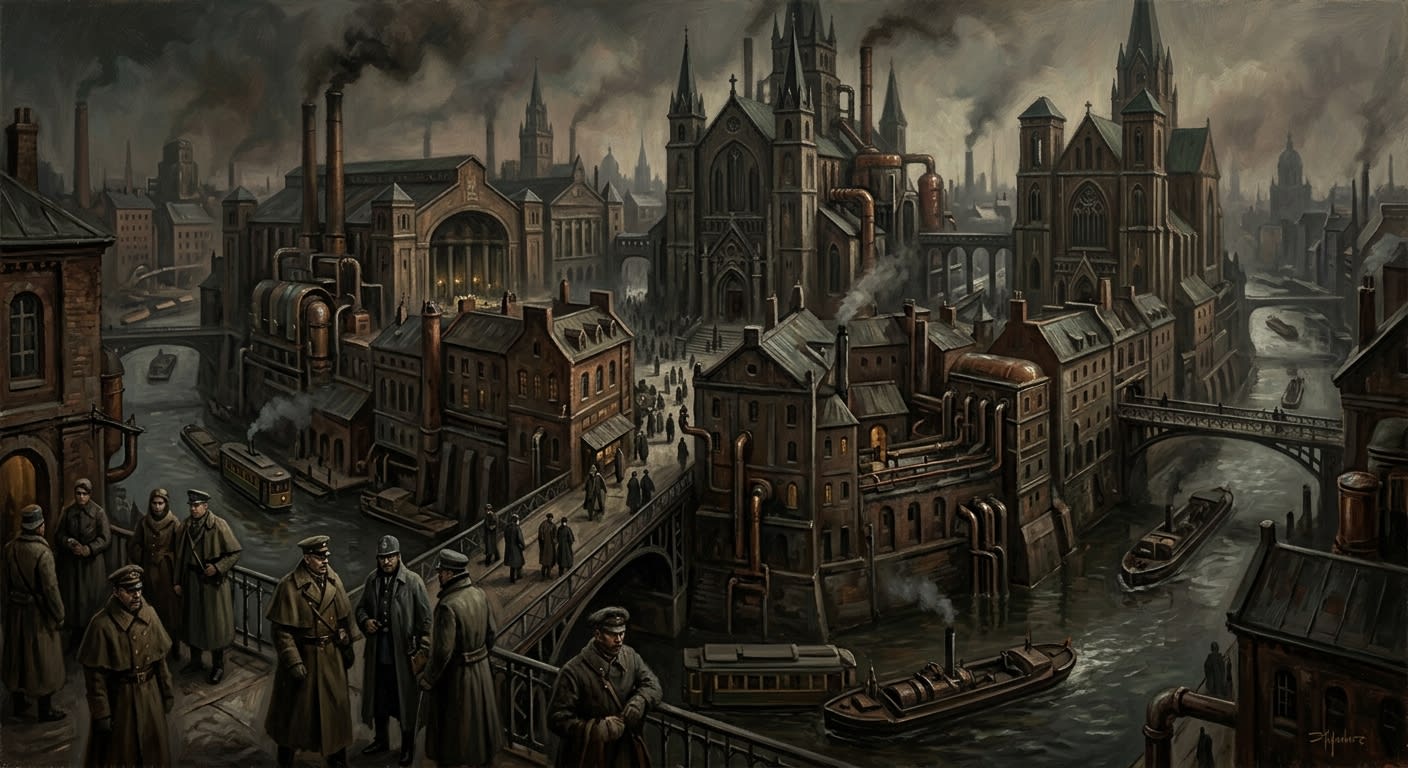
Archonate Isle
The north is not commanded; it is routed until obedience becomes timetable
Administrative island at Kanzleiburg's Spree core, where the Northern Hierarchate, the Archon, Records vaults, War concurrence, and Doctrine's coldest sermon desk make the north move.
Codex Ref. II.4.09-007
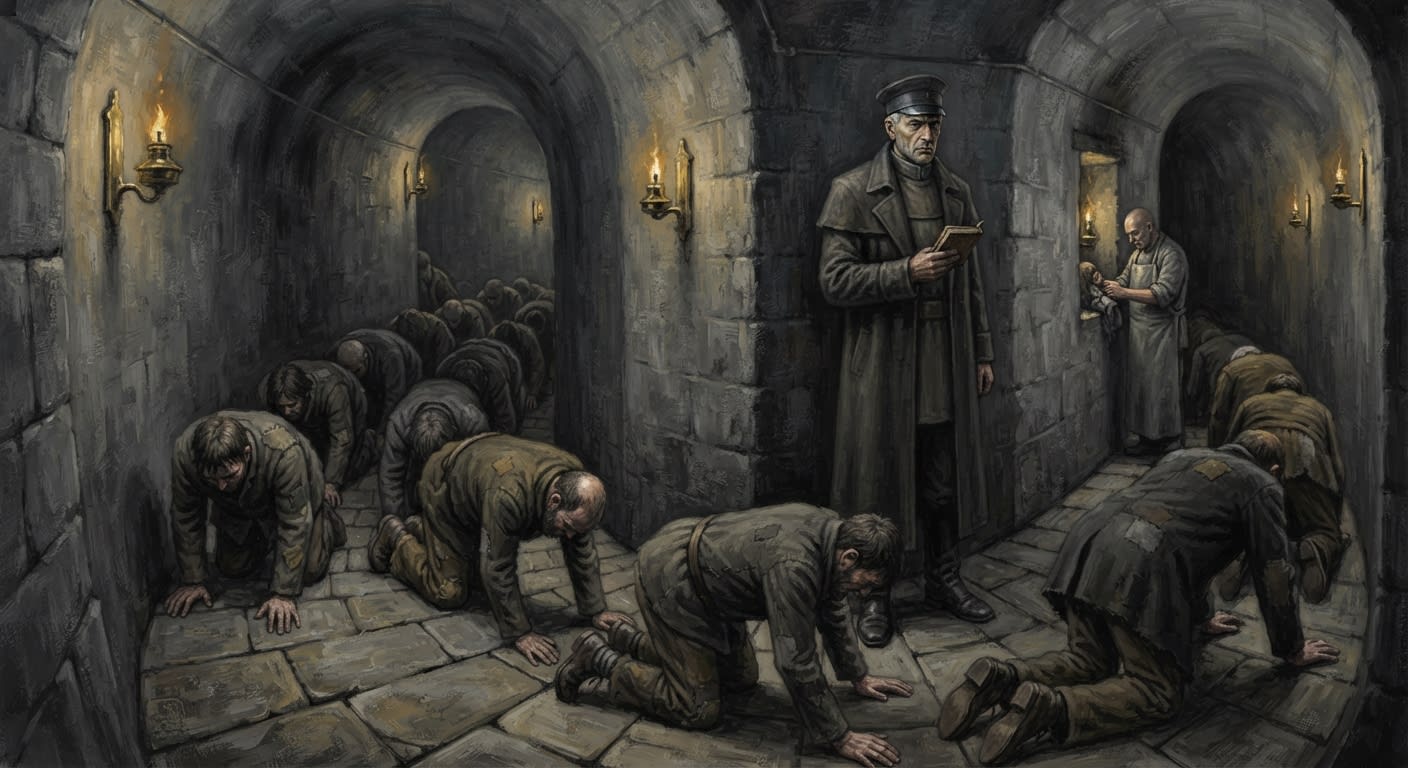
Ash Bend
Where siege memory waits its turn
Ash Bend is the grey turning segment of Vienna's Via Stahlhand, where pilgrims lose sight of the altar and hear the garrison dead rationed by cadence.
Codex Ref. II.4.09-011
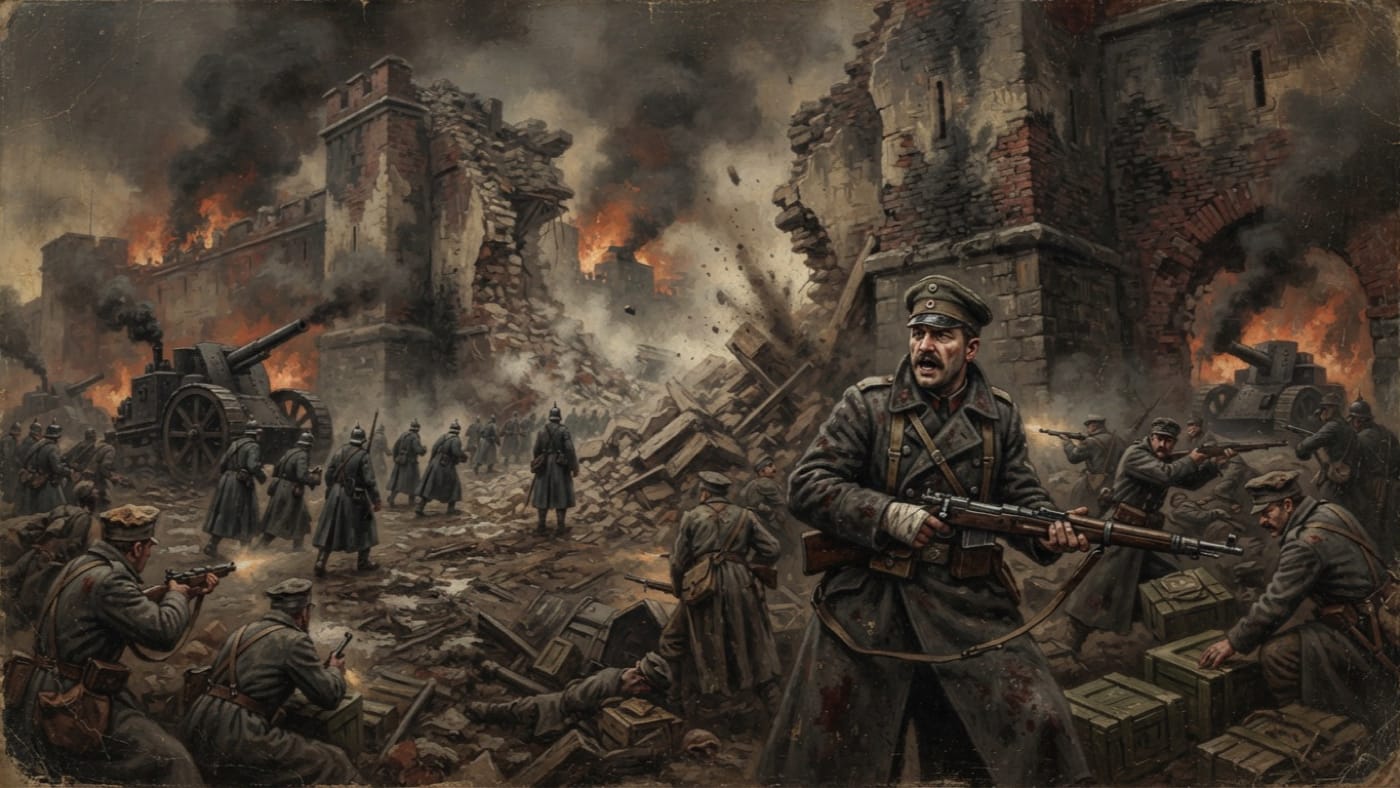
Battle of the Outer Ramparts
Three fingers, enlarged by devotion
Vienna's outer walls breached by Rationalist artillery in A.S. 93. Clemens Stahlhand lost three fingers of his right hand. The hagiographers would later take the whole hand.
Codex Ref. VII.5.01-093
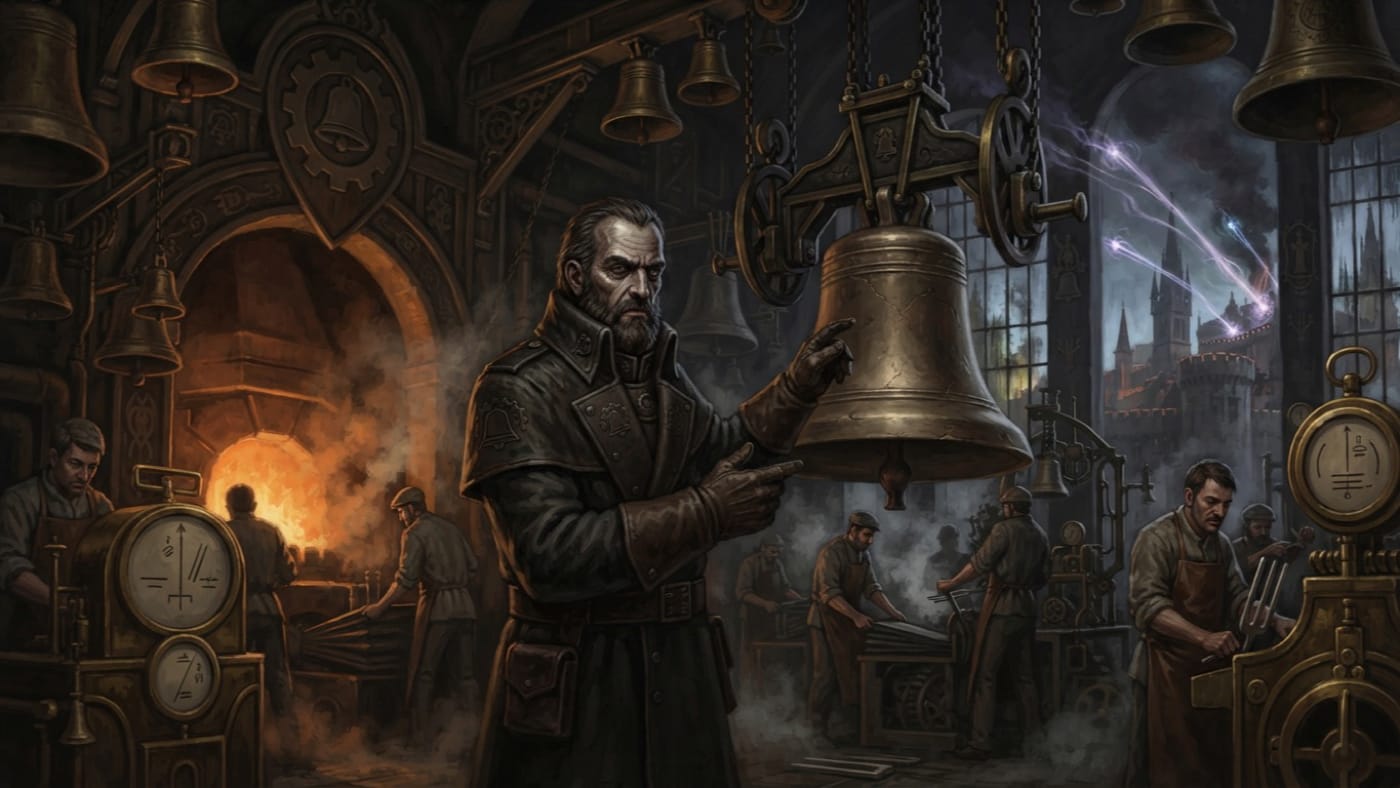
Bell-Master Odran Vey
One quarter-tone earns a dossier; the dream earns a seal
Odran Vey ordered Vienna's bells recast a quarter-tone sharp in A.S. 190. The remedy worked; his claimed dream earned provisional miracle procedure and a classified file.
Codex Ref. XIII.1.94-190
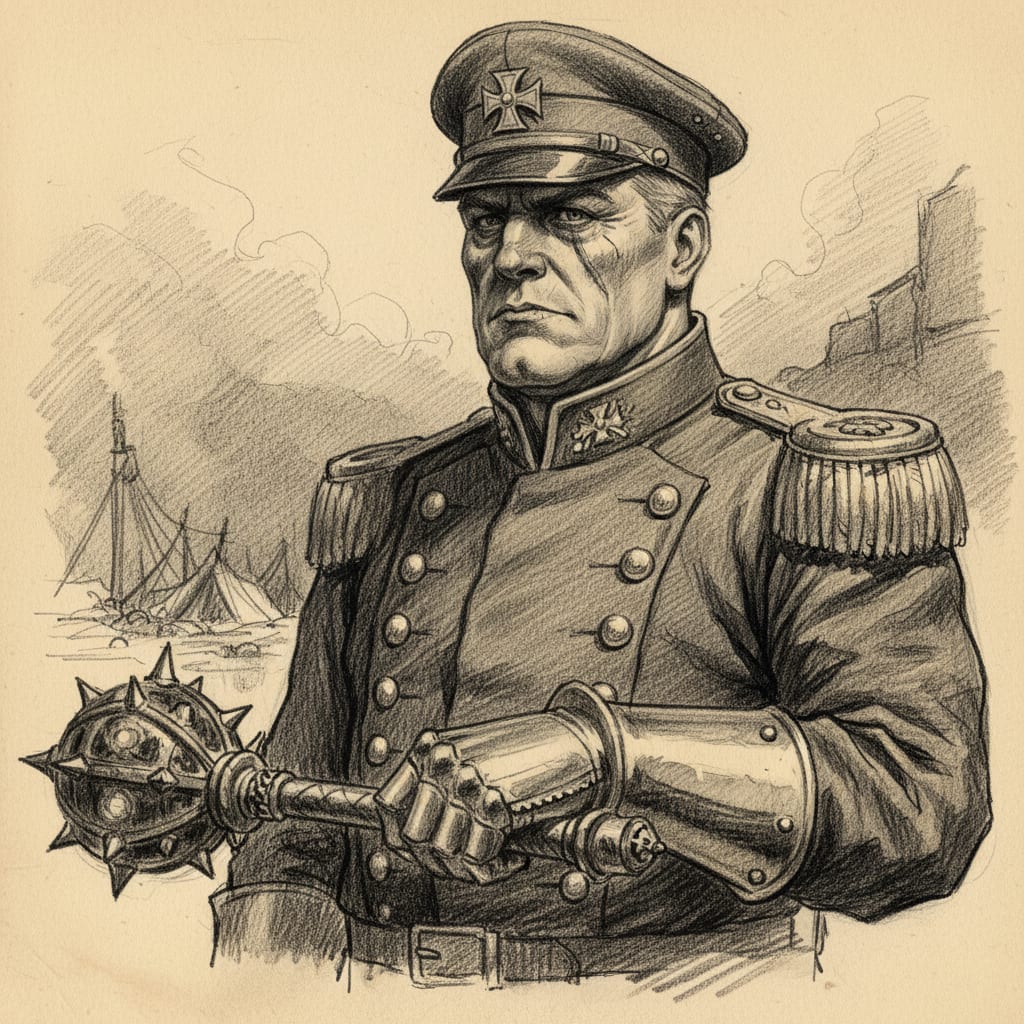
Bishop-Warden Clemens Stahlhand
The Hammer of Vienna
Bishop-Warden of Vienna, whose reliquary blow at the Siege shattered Rationalist power and entered the canon of Synodal myth. Steel hand. Iron faith. Useful corpse.
Codex Ref. III.1.02-031
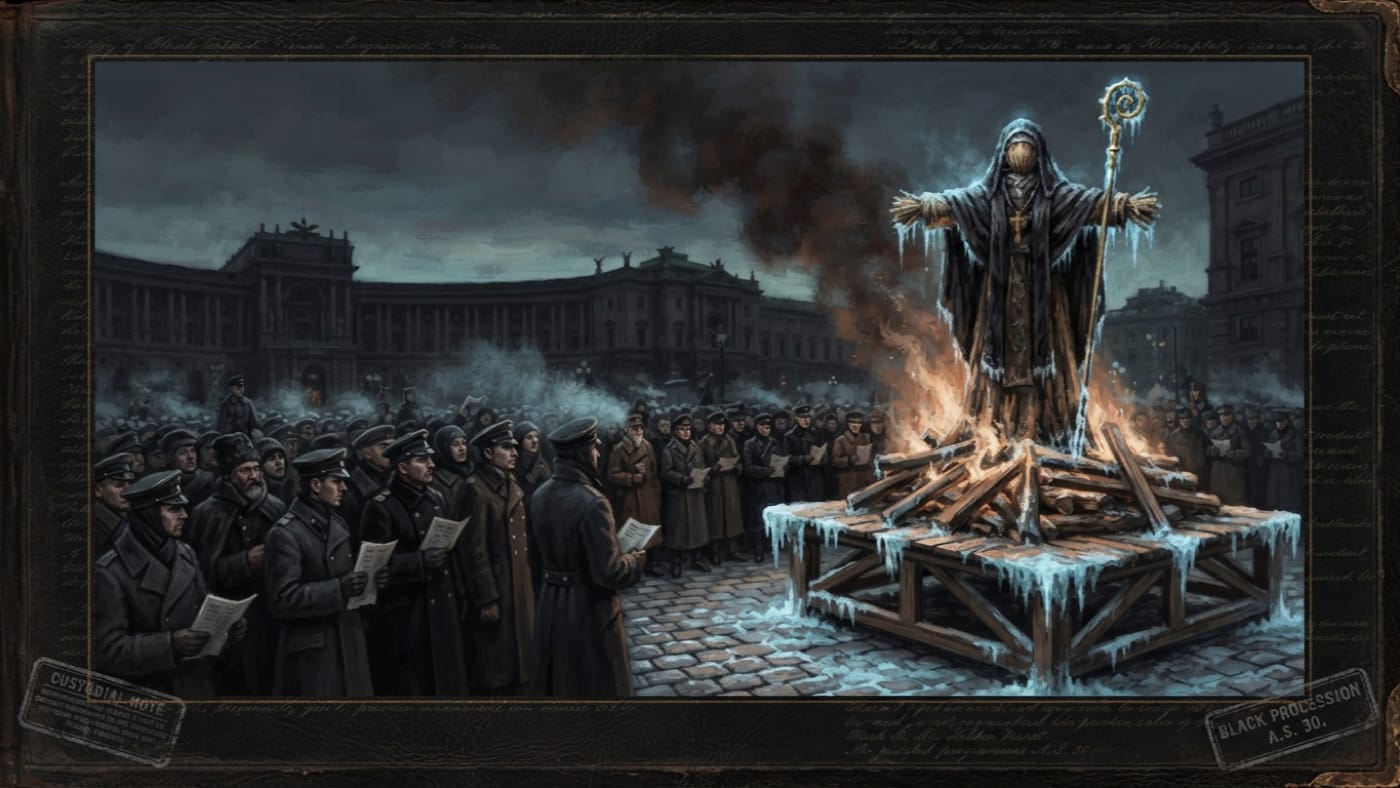
Blessed Adalheid
The Republic burned her likeness and preserved its own indictment
Blessed Adalheid survives in Vienna's relic processions, a tradition of healing the blind, and an effigy burned in A.S. 30. The Ledger keeps her title and declines to invent her life.
Codex Ref. III.2.01-281
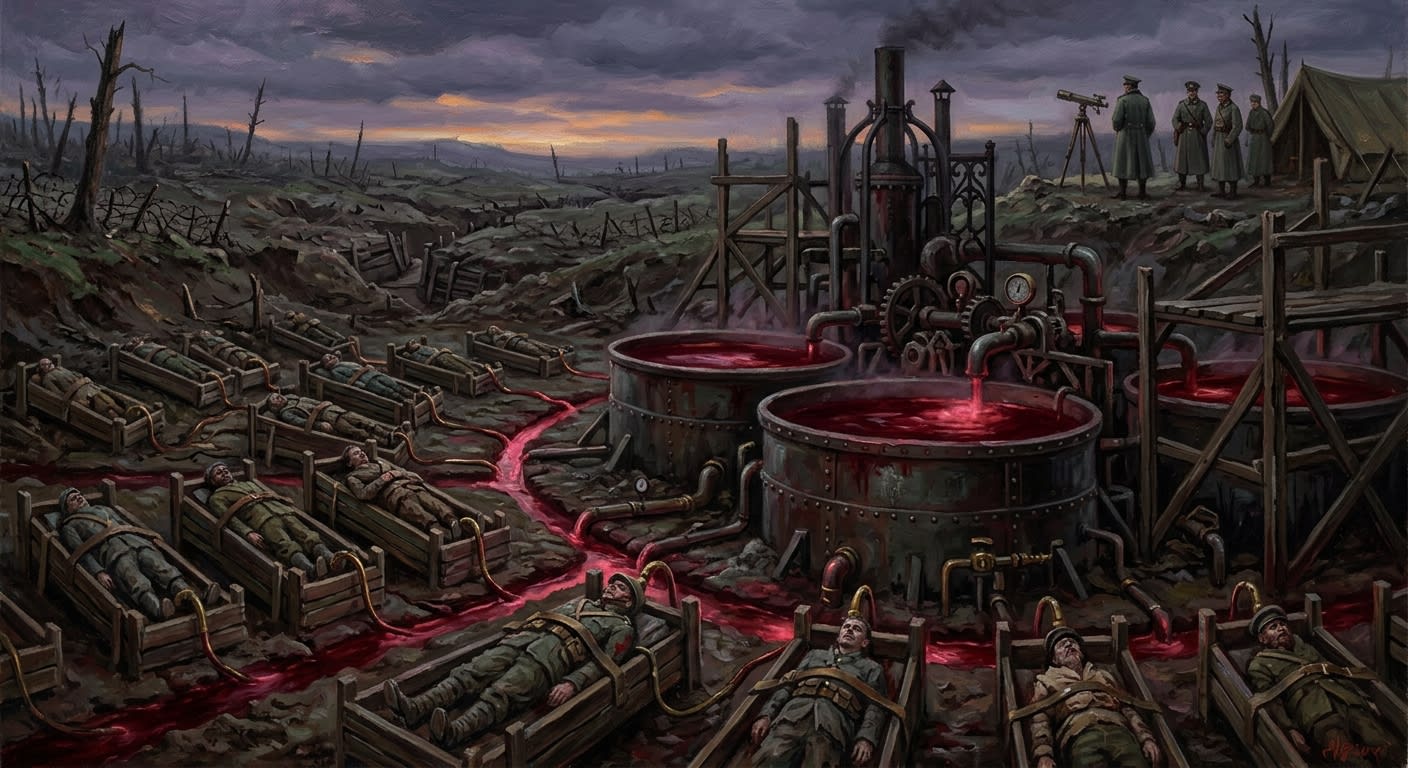
Blood-Tithes
Brass tubes, serial-numbered. Wooden cradles, precisely fitted. The Bureau calls it infrastructure. The screaming is a side-effect.
The Lie's sorcery economy runs on living blood. Prisoners are fitted with brass leeching tubes, arranged in geometric rows, and drained for weeks. The Bureau files it under infrastructure. The soldiers call it mercy work.
Codex Ref. IX.1.07-001
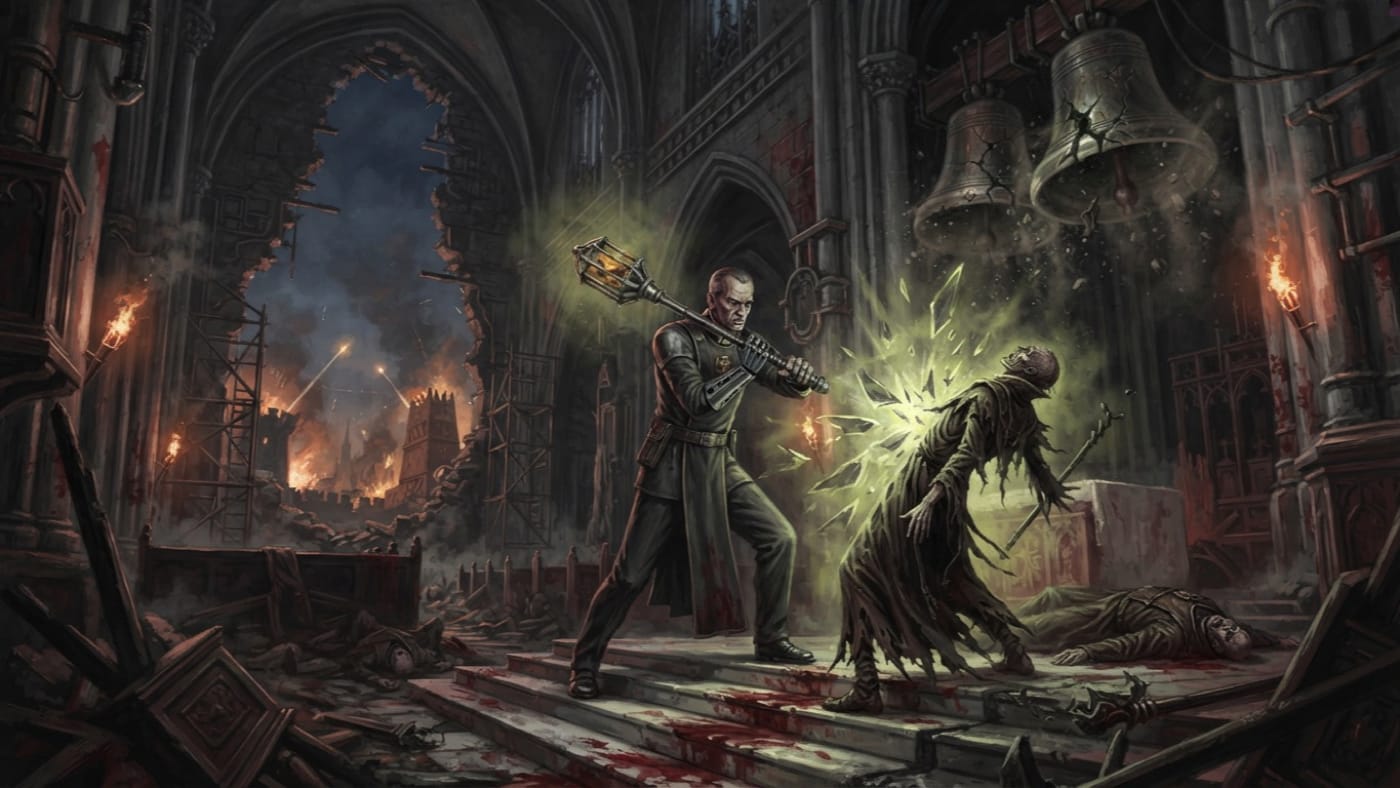
Blow of Saint Rupert
One strike; nine years of paperwork
Clemens Stahlhand's reliquary blow broke the Siege of Vienna in A.S. 95. Doctrine ratified the miracle in A.S. 104; the bells and the mechanism retain their own troublesome files.
Codex Ref. III.2.07-032
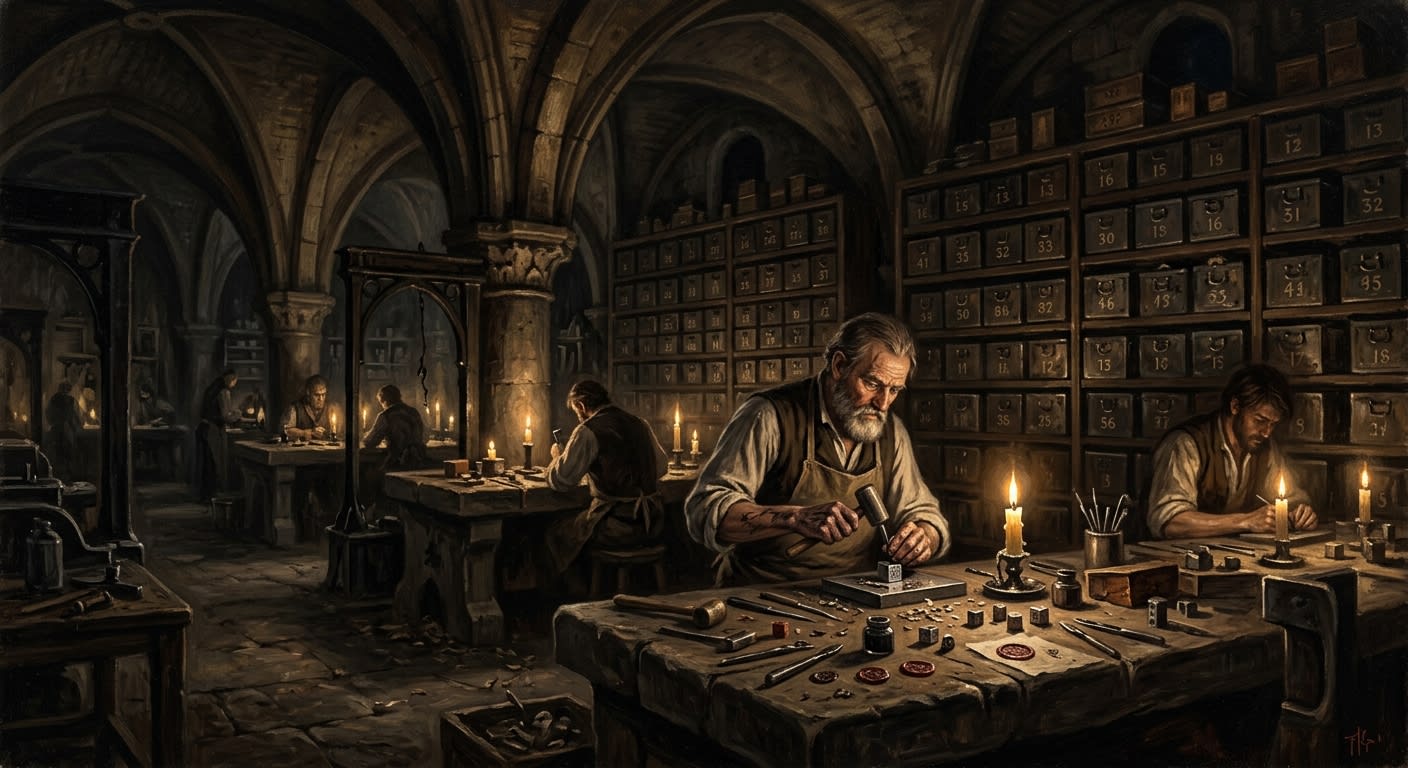
Bureau of Masks and Seals
The stamp is the Synod. Everything else is suggestion.
The Bureau of Masks and Seals controls every stamp, seal, and counter-seal in Synod territory. Without its impressed wax, no document is real. Without its license, no face may be hidden. Casselius of Mainz holds the Synod's mouth and press in one pair of ink-stained hands.
Codex Ref. VI.4.19-014
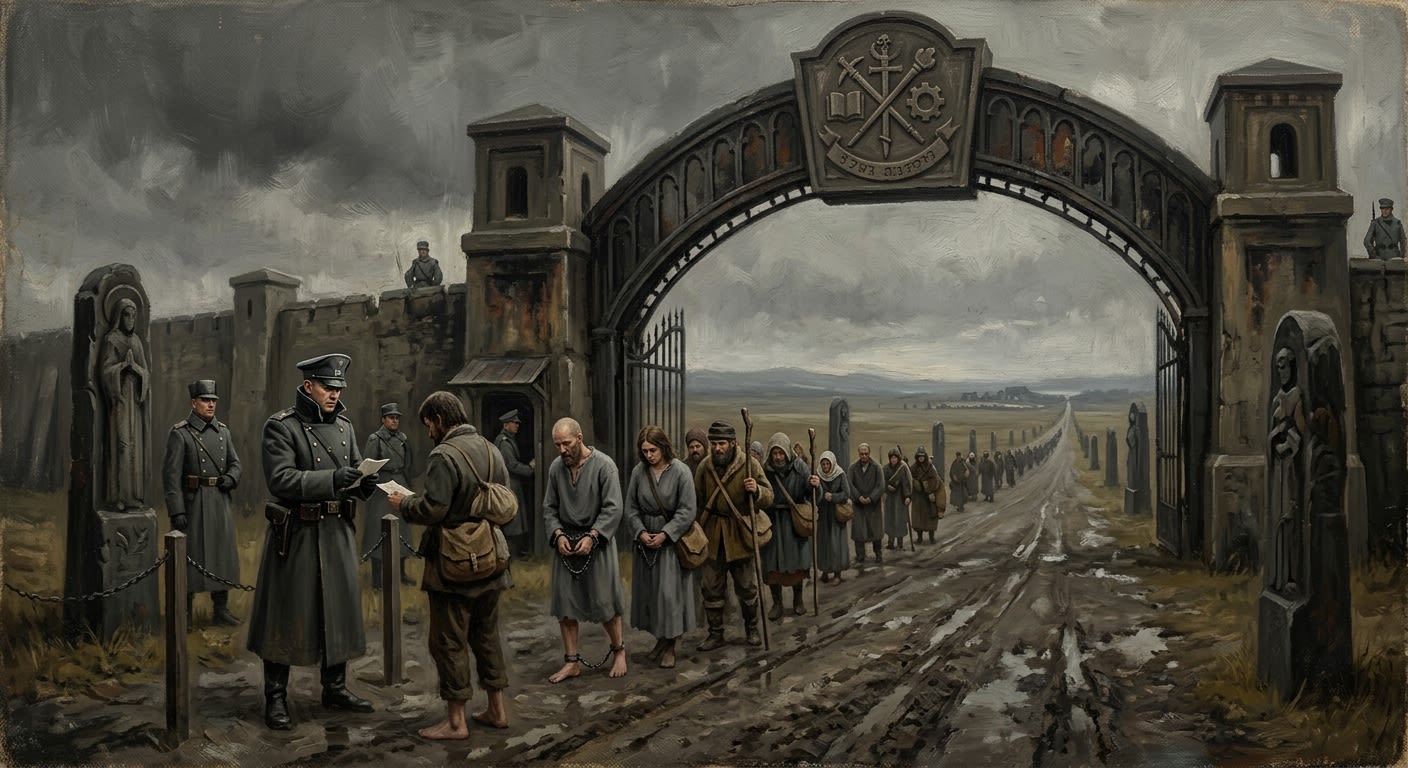
Bureau of Pilgrimage
Three million permits. Six million Crowns. No foot moves unwatched.
The Bureau of Pilgrimage governs all movement across the Theocracy's holy roads — issuing tokens, licensing routes, crushing guilds, and extracting revenue from every soul who dares to walk toward sanctity without prior authorisation.
Codex Ref. III.2.07-004
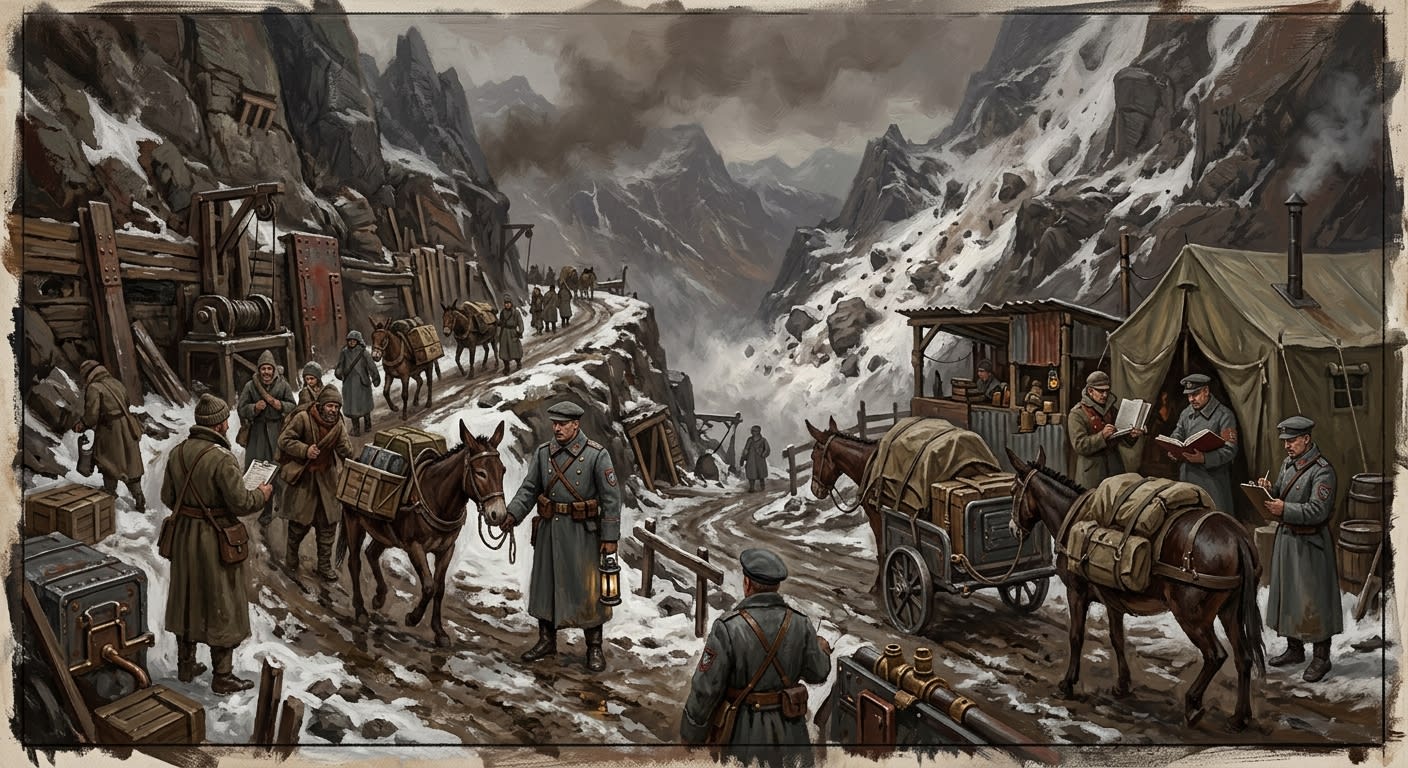
Carpathian Passes
Roads are wounds with toll offices
Licensed mountain wounds of the middle Line, where pilgrims, relics, mules, Wardens, tokens, avalanches, and invoices cross by permission.
Codex Ref. II.4.08-123
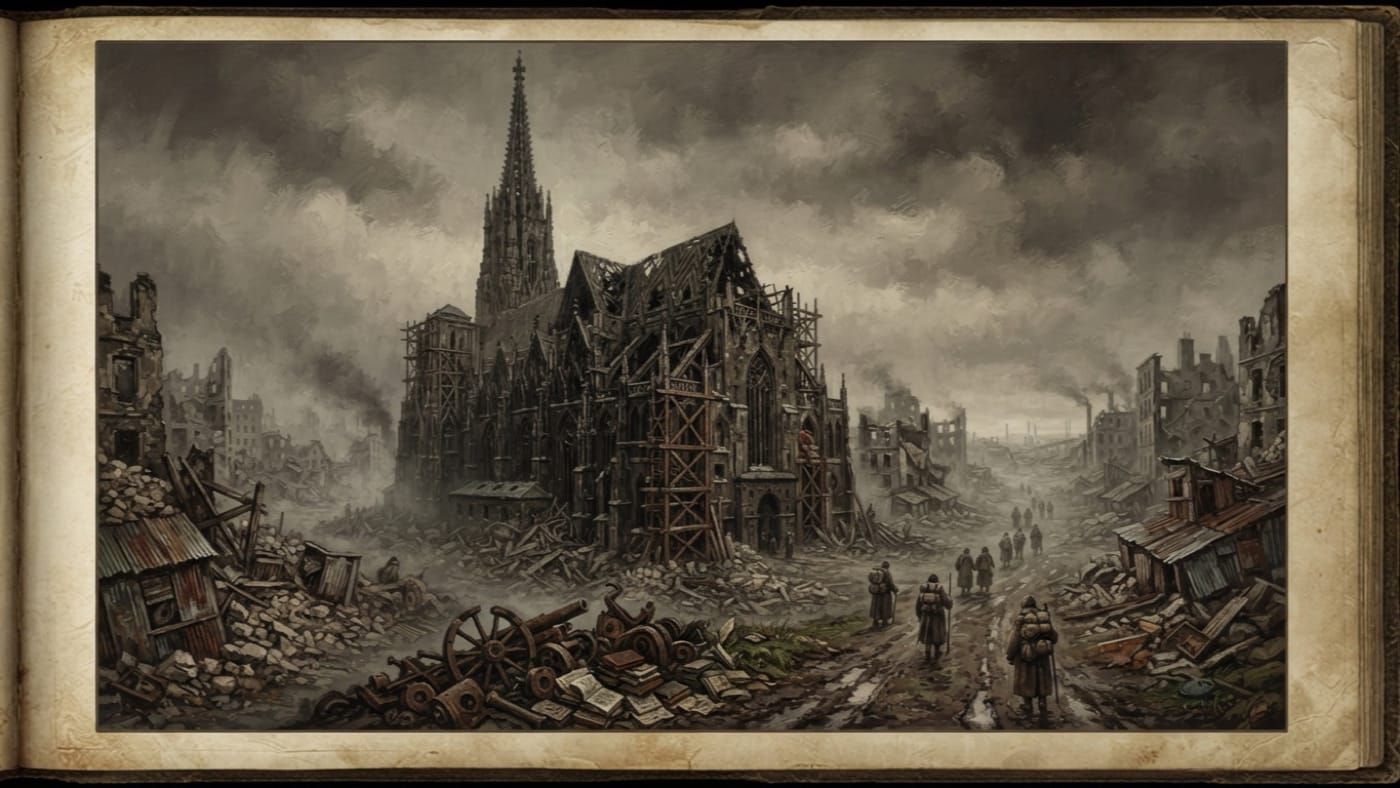
Cathedral of Saint Stephen
A Dead See, a Condemned Academy, and Stones That Stayed
Vienna's former cathedral housed the Rationalist Academy by A.S. 30 and was reclaimed with the city in A.S. 95. The See is dissolved, the Academy condemned, and the Ledger records no successor occupant.
Codex Ref. II.4.09-201
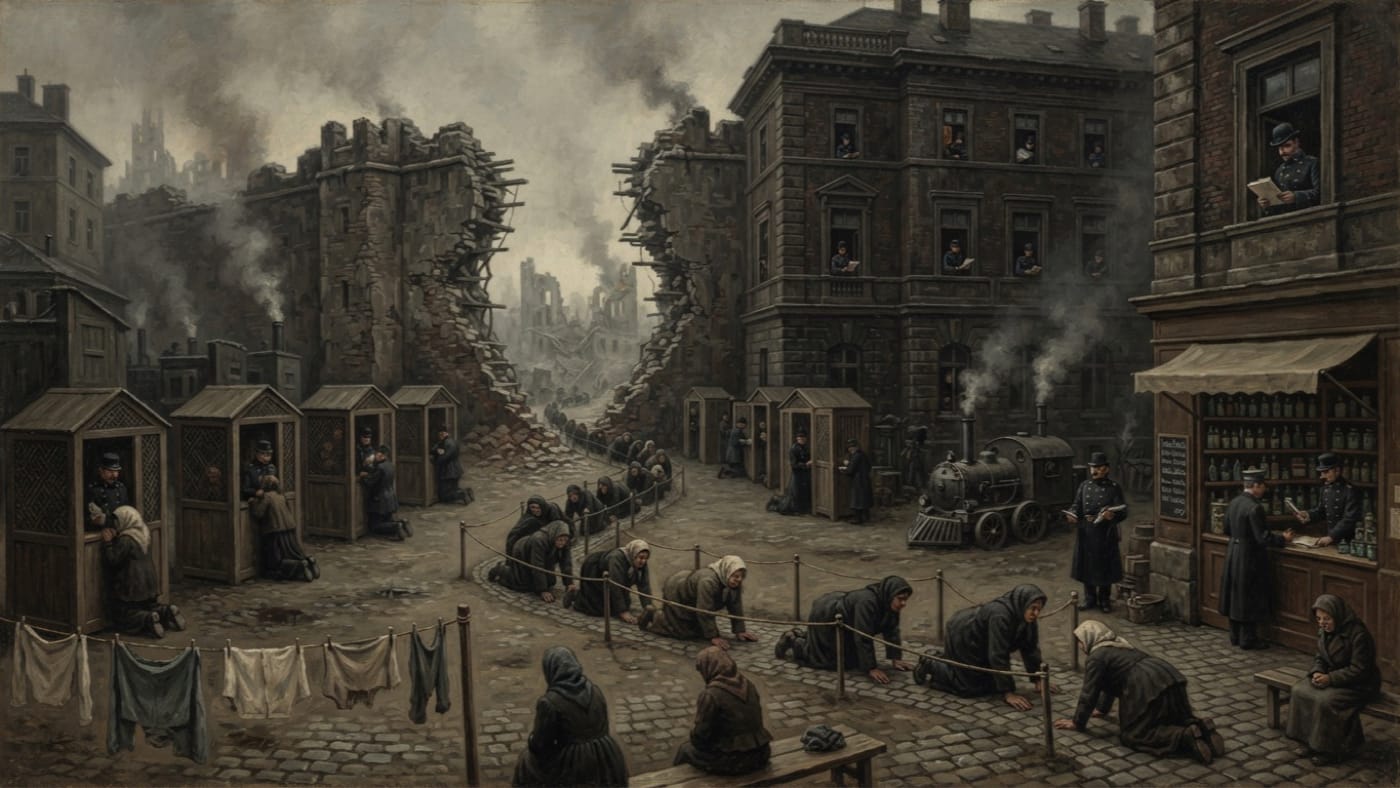
Central Corridor Headquarters
Where the knee is counted and mercy comes with a surcharge
The Bureau of Pilgrimage's Central Corridor headquarters occupies a former customs house beside Vienna's breach, admitting the forty, licensing the upright and billing mercy by the minute.
Codex Ref. II.4.09-012
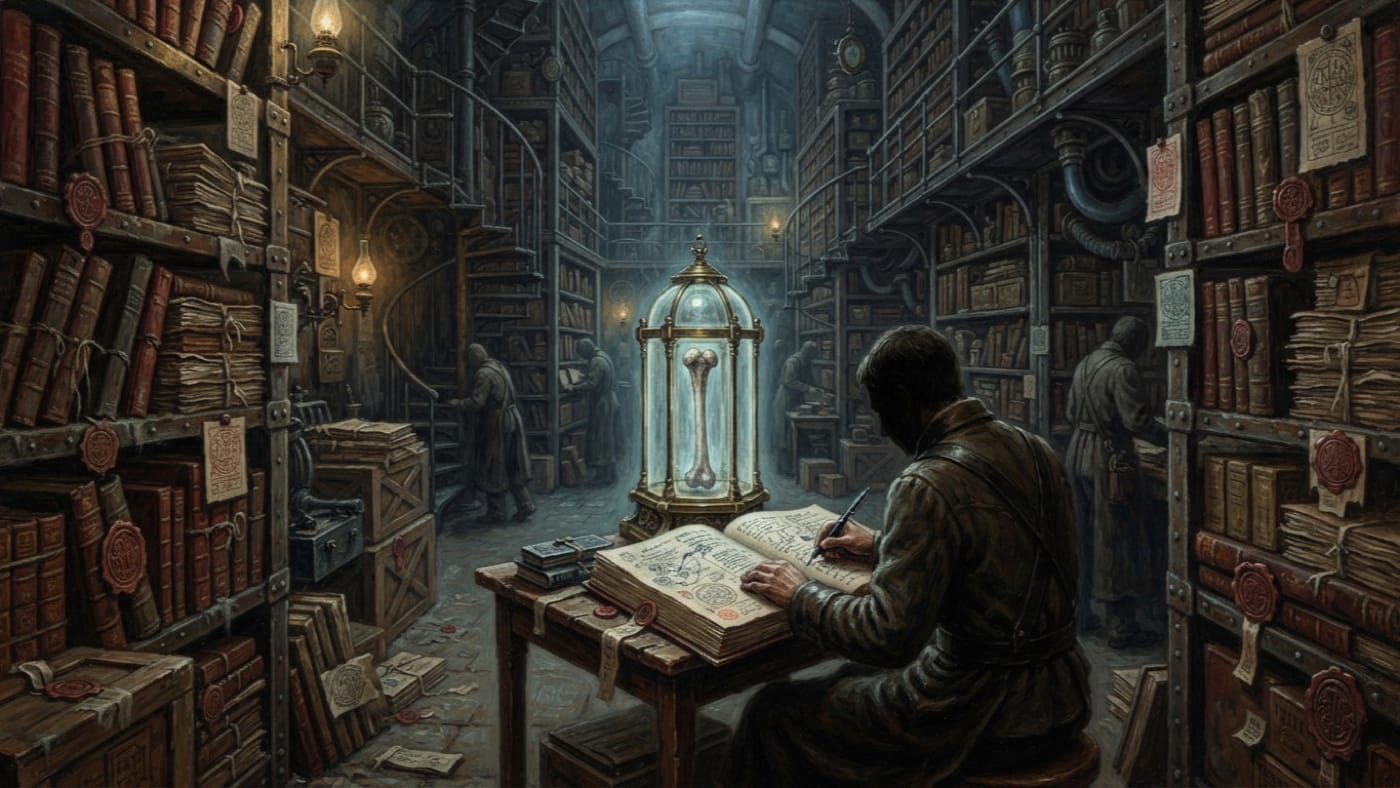
Custodial Chain
The ledger remembers the hands. The bone keeps its own counsel.
The ledger joins an authenticated relic to the hands that held it. In 1678, Vienna severed Aldebrand's chain without moving the bone. The record lost custody; the custodian did not.
Codex Ref. XIII.1.97-001
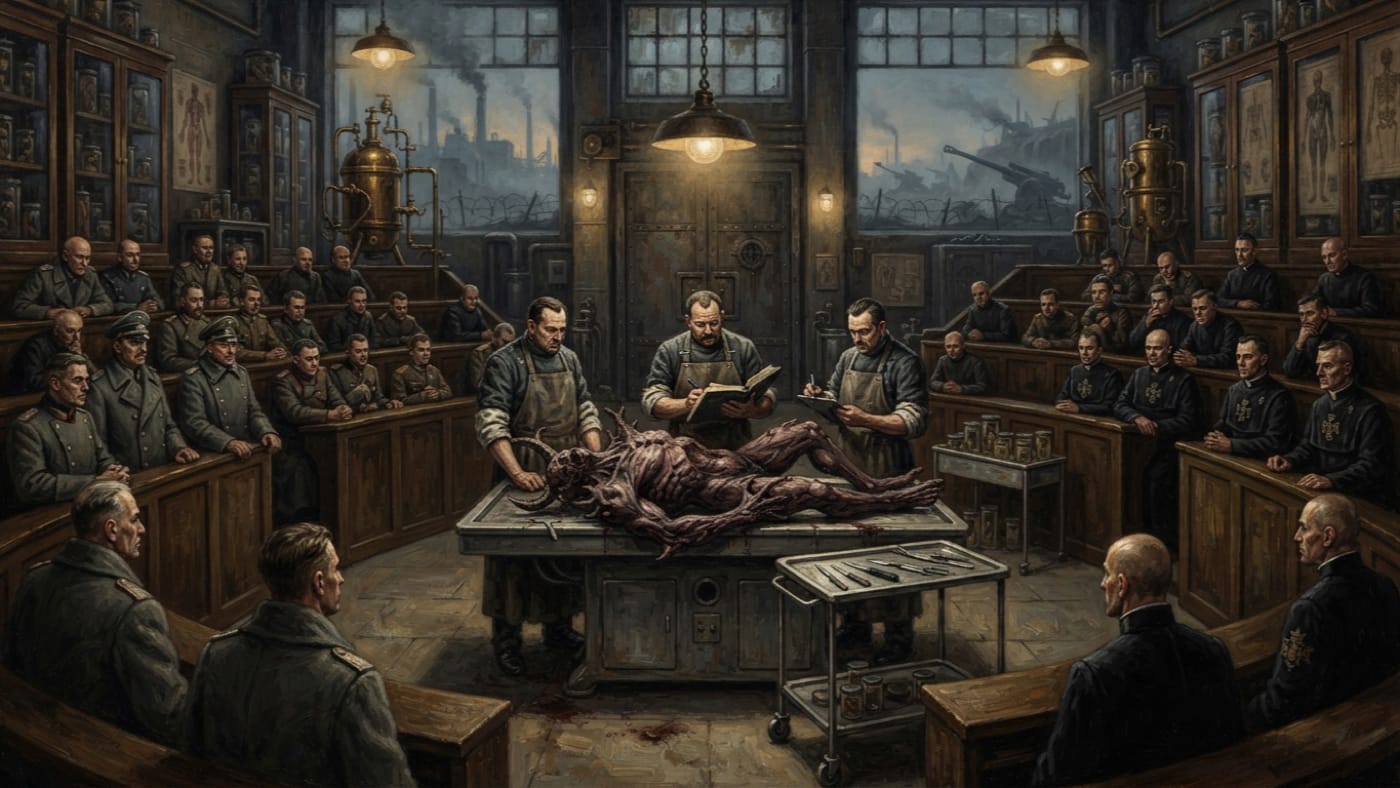
Demons
Iron for the flesh, a separate column for the theology
Corporeal demons die by iron; rare influence-demons whisper. Their hosts are chiefly human. Doctrine certifies their origin; the surgeon keeps their bodies.
Codex Ref. IV.1.00-001
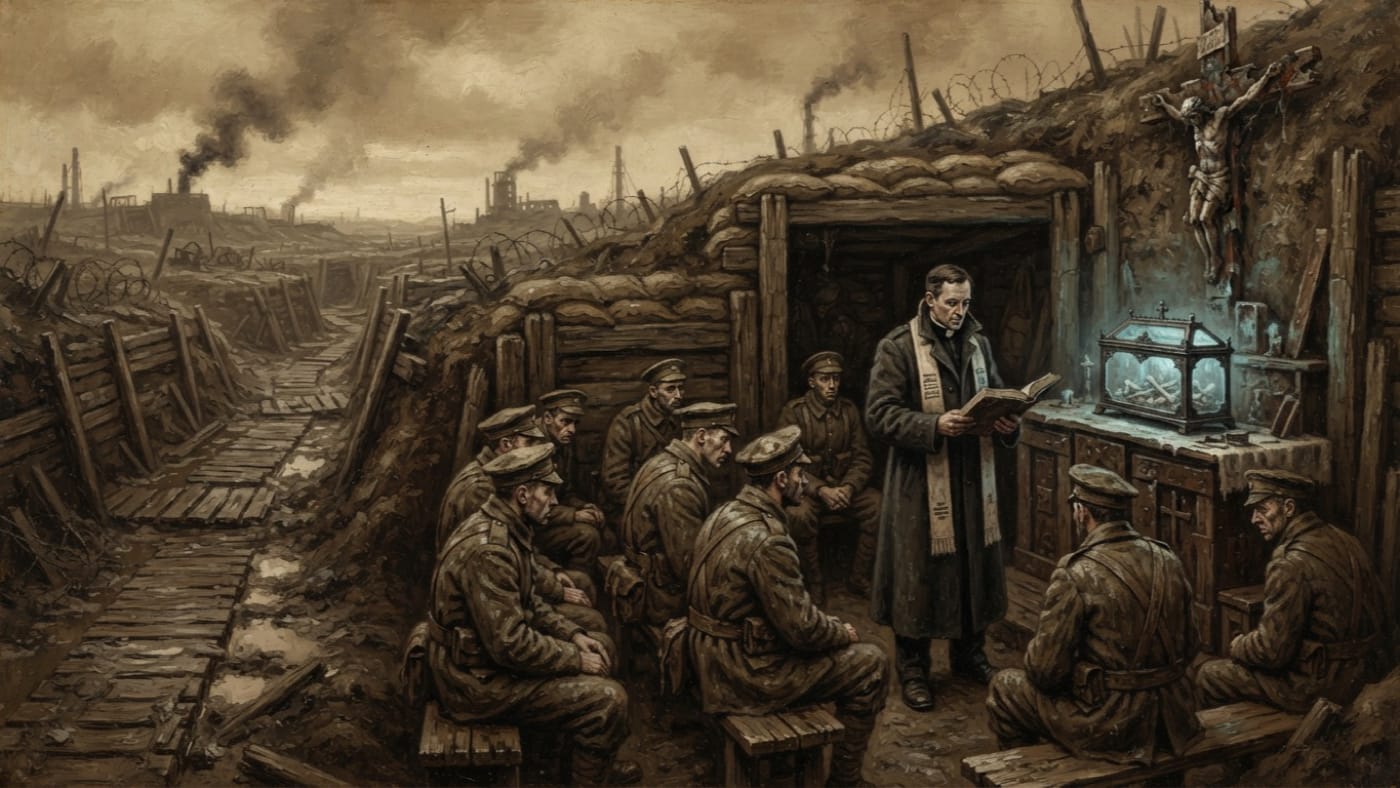
Doctrine of Divine Withdrawal
The way to our ears was broken. The responsibility remains ours.
Ratified in A.S. 72, the Doctrine blames Rationalist desecration for the Creator's silence. His return awaits Perfect Faith. The delay, naturally, belongs to the faithful.
Codex Ref. XIII.1.90-072
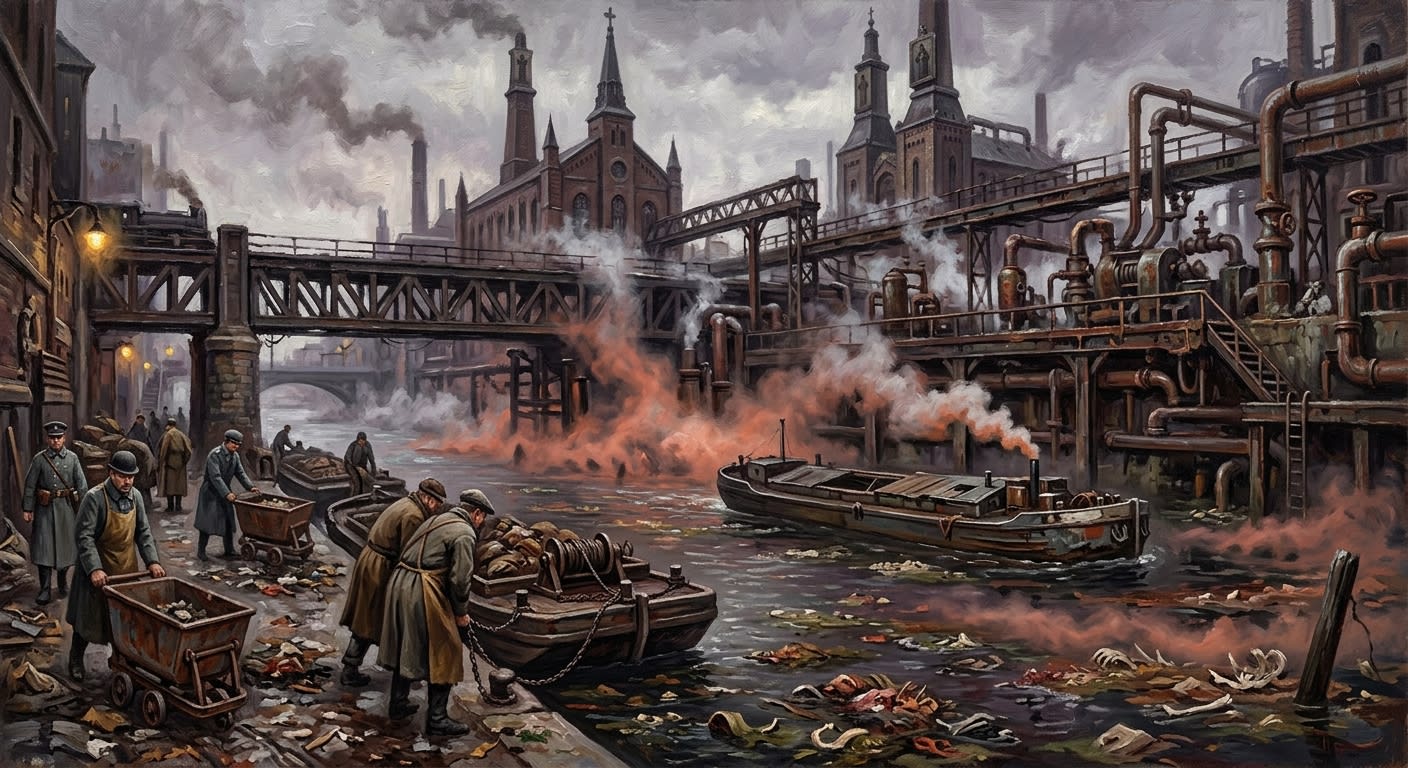
Donaukanal
Vienna's black water remembers what the ledgers rinsed away
Vienna's lesser Danube arm, the Donaukanal carries shrine filth, rebel bones, forbidden lullabies, and steam the Bureaus cannot quite explain.
Codex Ref. II.4.09-095
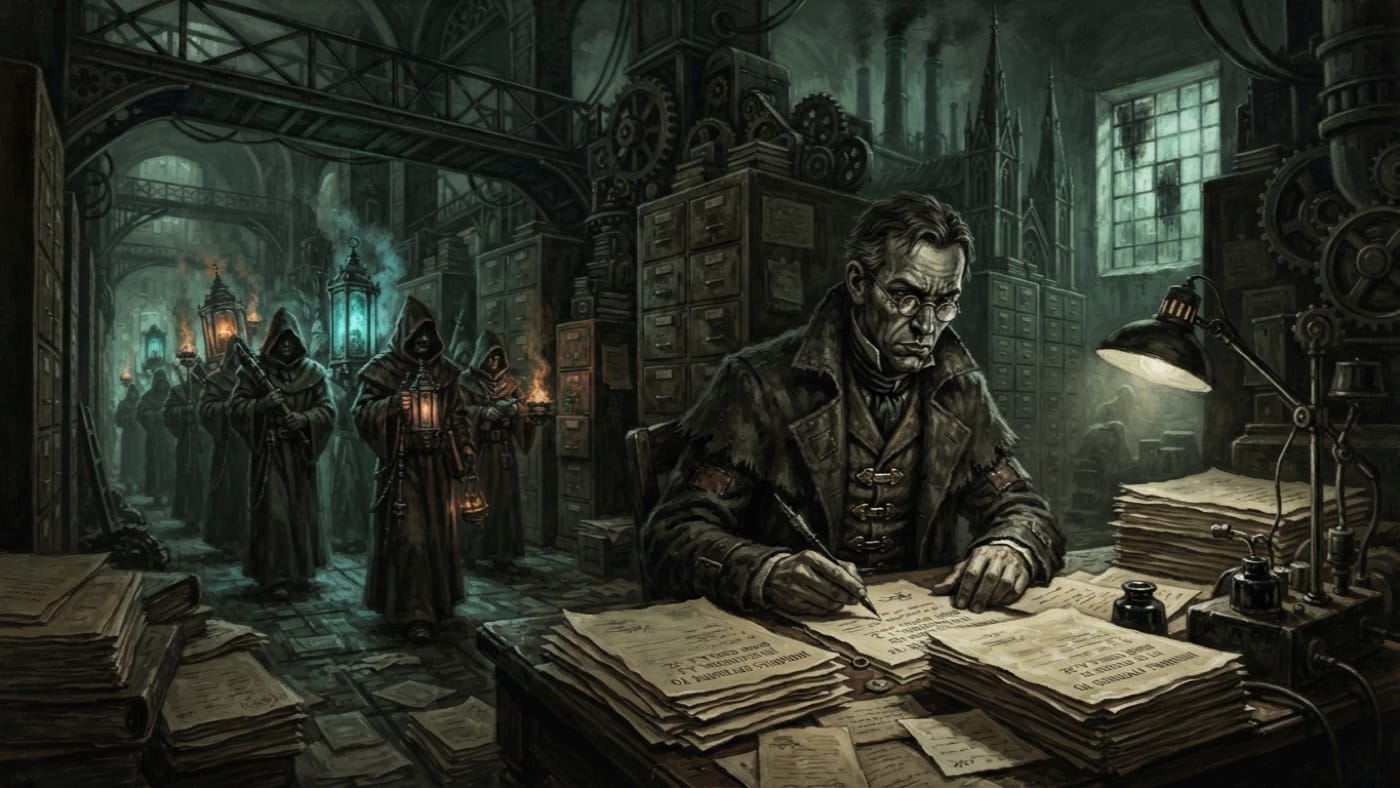
Dr. Gerrit Lemstra
The courtesy was impeccable. The inquiries remain open.
Dr. Gerrit Lemstra drafted the courteous inquiries sent with Amsterdam's Bone Census in −32 A.S. / 1678 CE. The Bureau condemns the scholar; his requests remain unreconciled.
Codex Ref. III.2.01-027

Dr. Jan de Waal
Addresses, funds and copyists. Forty cities received the doubt.
Dr. Jan de Waal kept the addresses, funds and fourteen copyists behind the Year of Letters in −32 A.S. / 1678 CE. Forty cities received the evidence; the Church supplied the silence.
Codex Ref. III.2.01-028
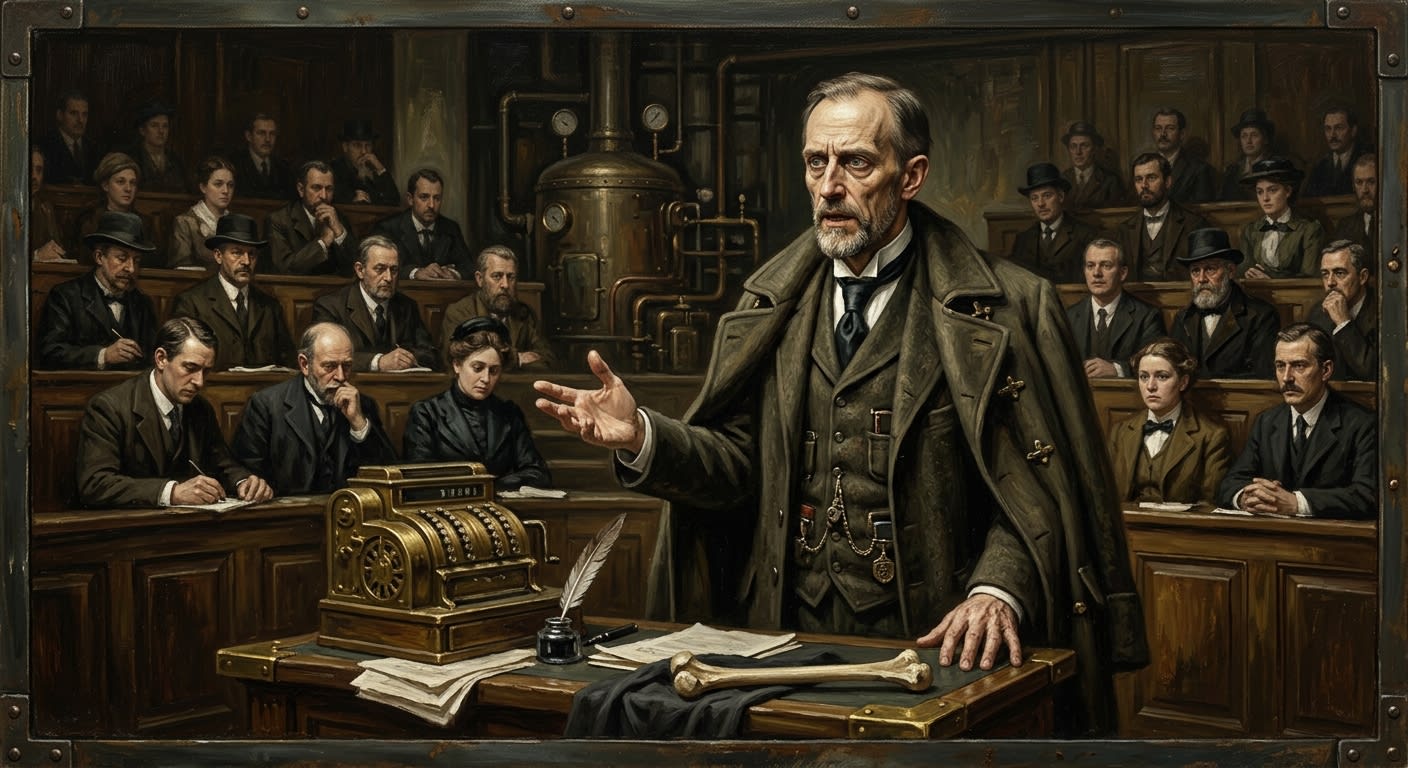
Dr. Matthias Voll
The lecturer who counted bones and was answered by one
Dr. Matthias Voll made relic arithmetic into theatre at Amsterdam in A.S. 11. Vienna later supplied the Bureau's preferred calculation: one bone, one blow, one crushed argument.
Codex Ref. III.2.01-011
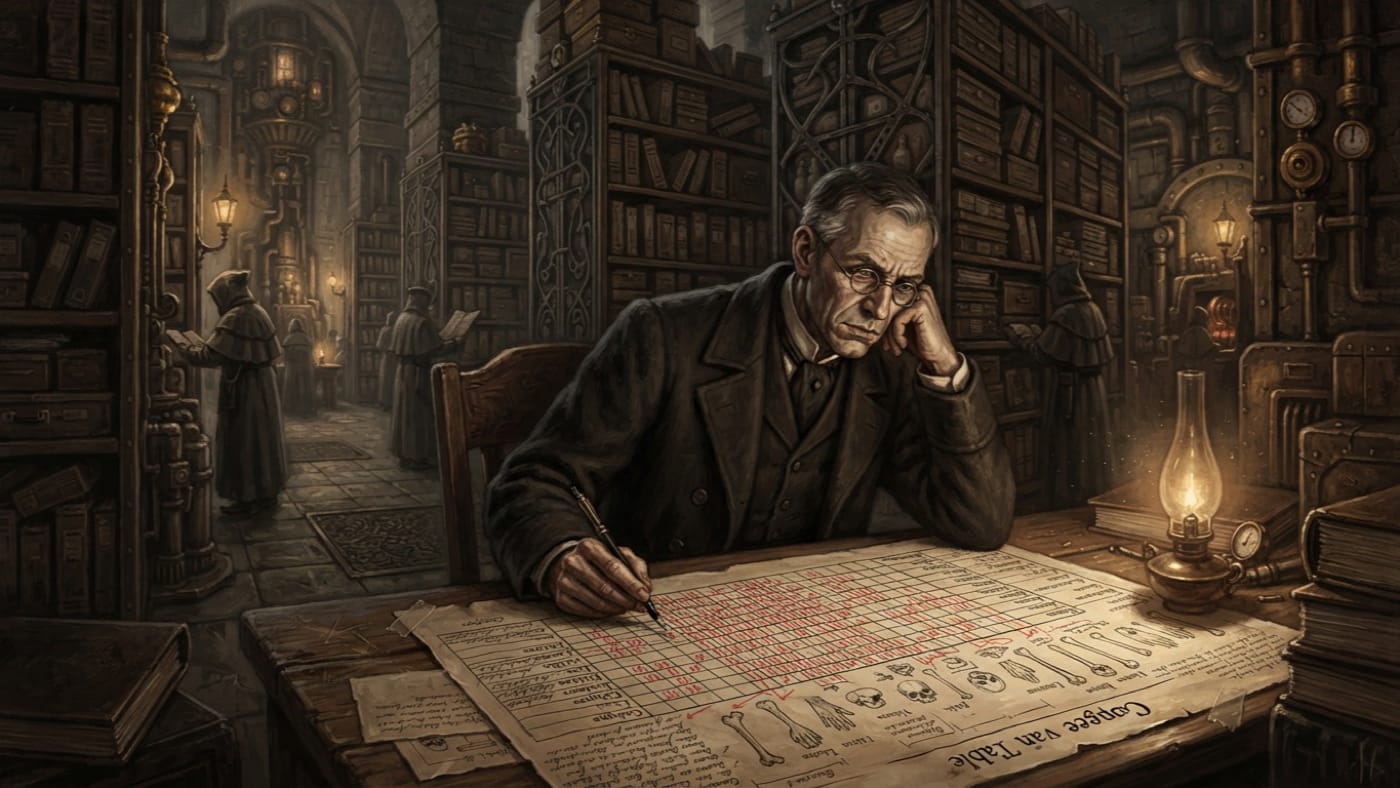
Dr. Pieter van Hoorn
The count was correct. The compiler remains condemned.
Dr. Pieter van Hoorn compiled the Bone Census and conceived the Year of Letters in −32 A.S. / 1678 CE. The Bureau concedes his count, condemns its inference, and keeps his correspondence under quadruple seal.
Codex Ref. III.2.01-029
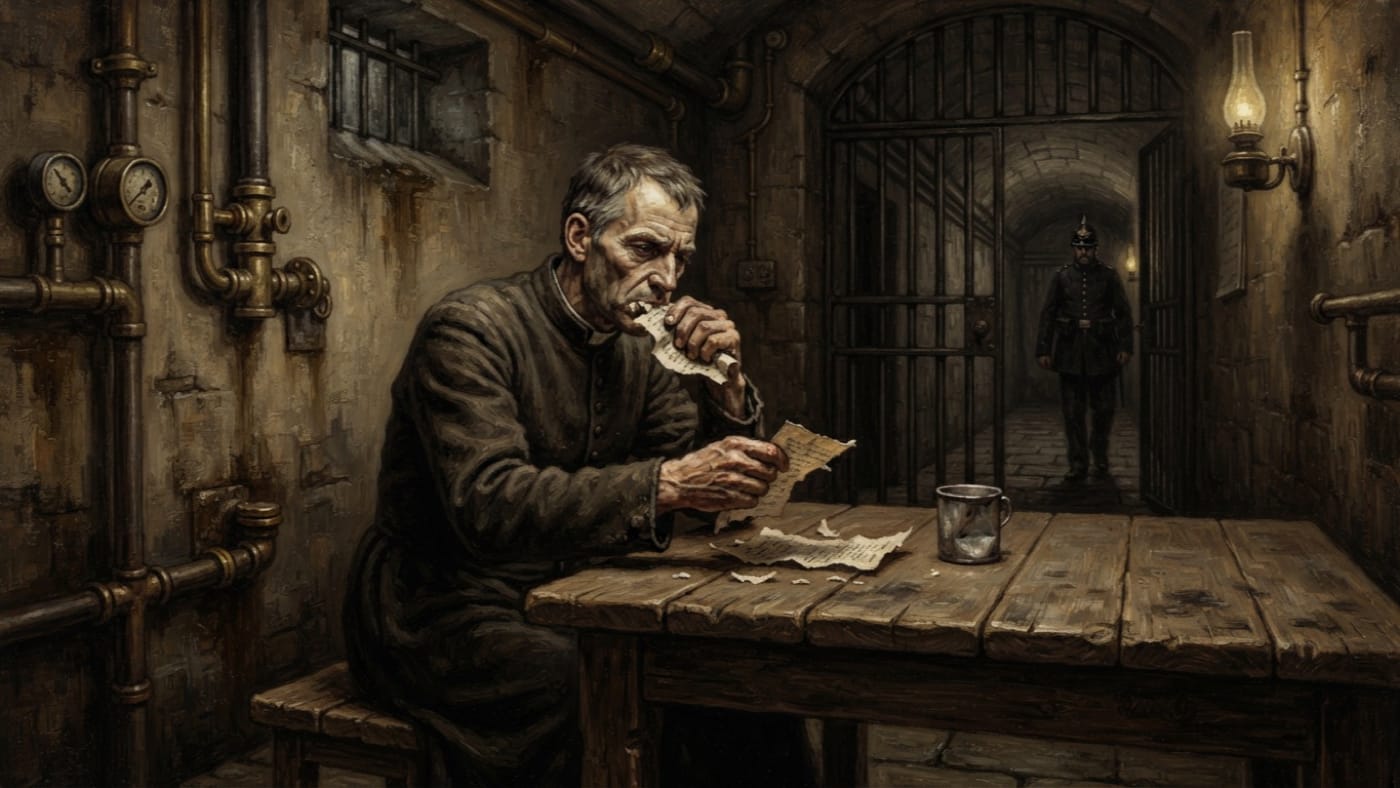
Father Grauss of Düsseldorf
One letter eaten. Three days served. Five words preserved.
Father Grauss ate the Amsterdam letter in A.S. −32 / 1678 CE, received a beating and three days in gaol, and did not recant. The Ledger calls him Doctrinally Sound, Gastronomically Irregular.
Codex Ref. III.2.01-1024
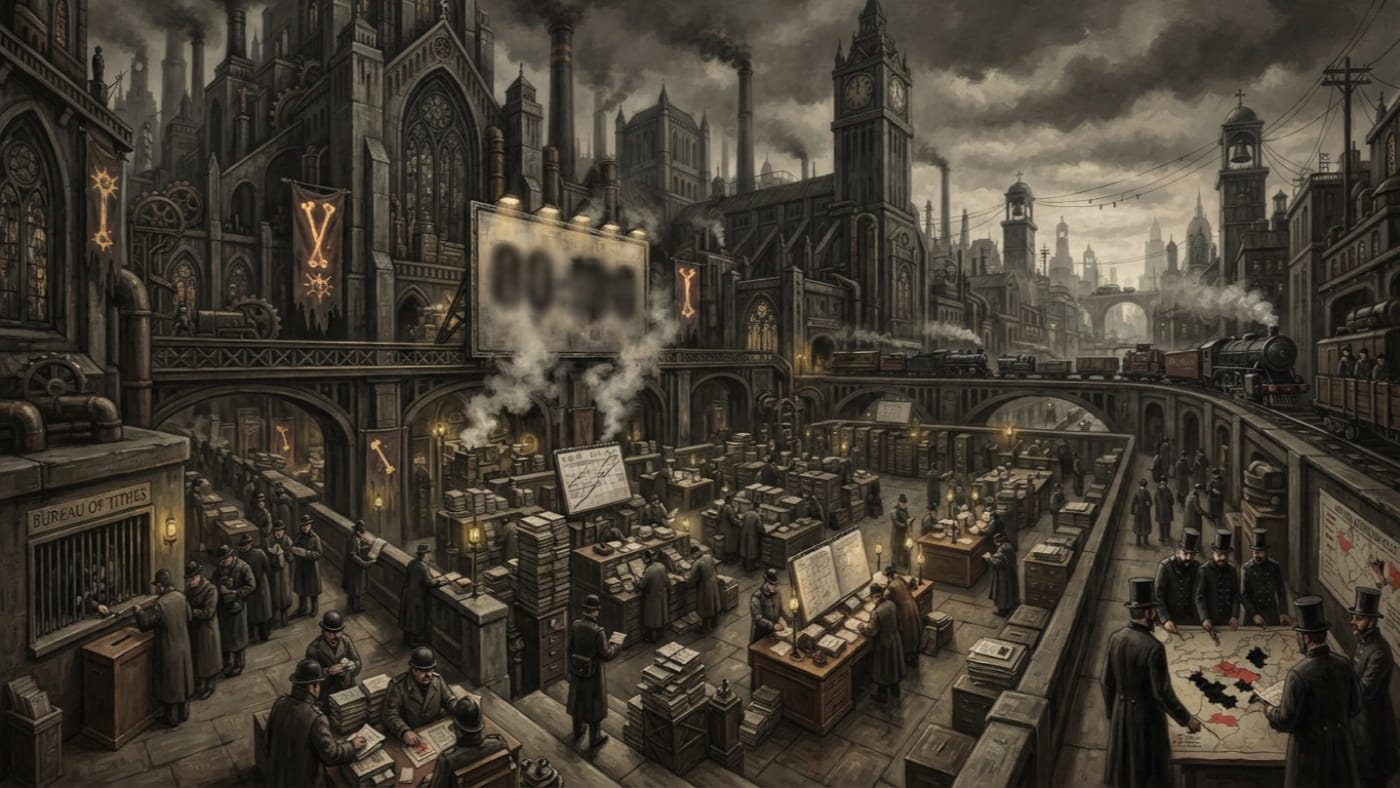
Feast of Saint Aldebrand
Remembered by the register, mislaid by the diocese
A.S. 201 survey of Aldebrand's feast: sanctioned by Festivals, observed or omitted by dioceses, disputed by Records and taxed by Tithes. The register remembers; the day remains unknown.
Codex Ref. XIII.1.89-201
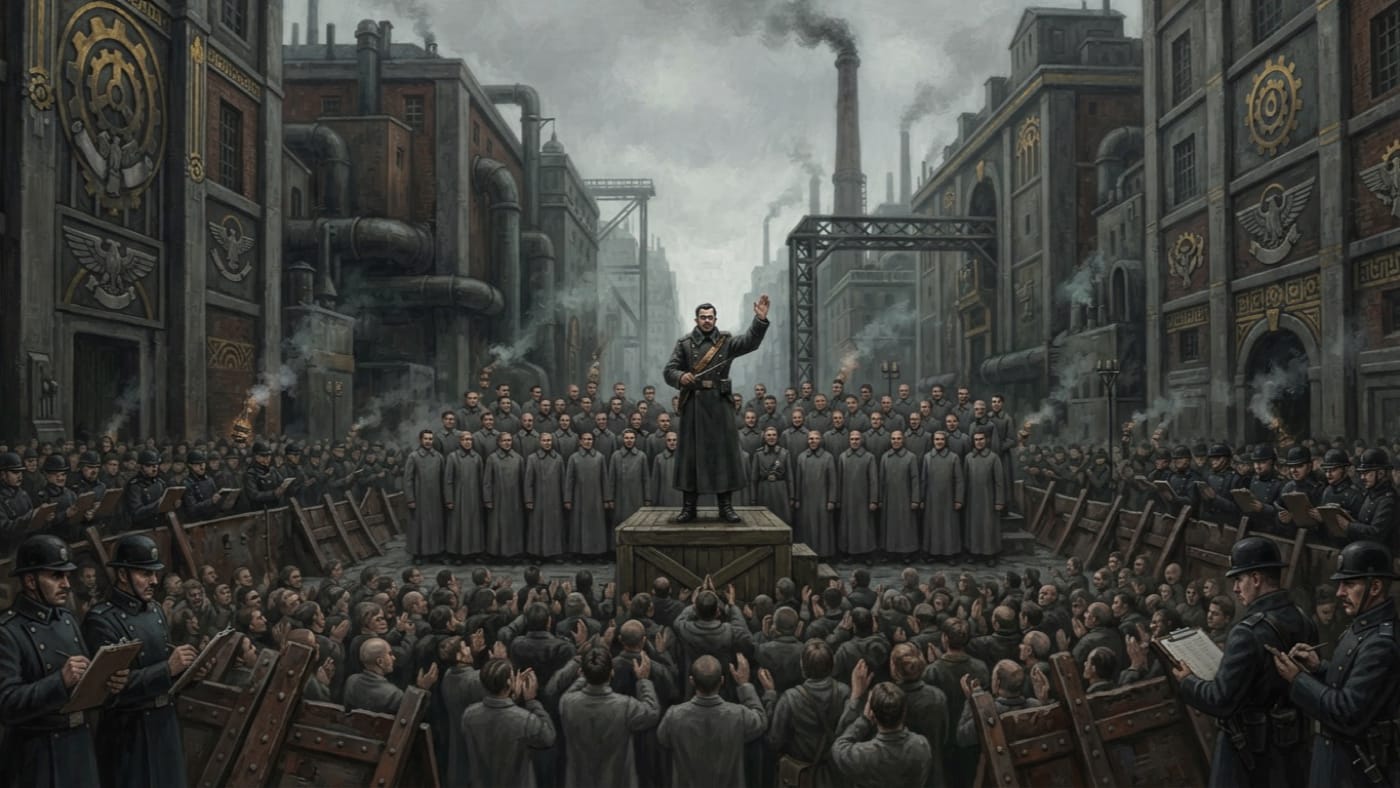
Feast of Saint Rupert
Attendance is mandatory; relief has no column
Saint Rupert's mandatory feast, preserved in the Strasbourg return of A.S. 199: 1,847 present, 13.7 seconds of applause, and joy classified Within Parameters.
Codex Ref. XIII.1.89-199
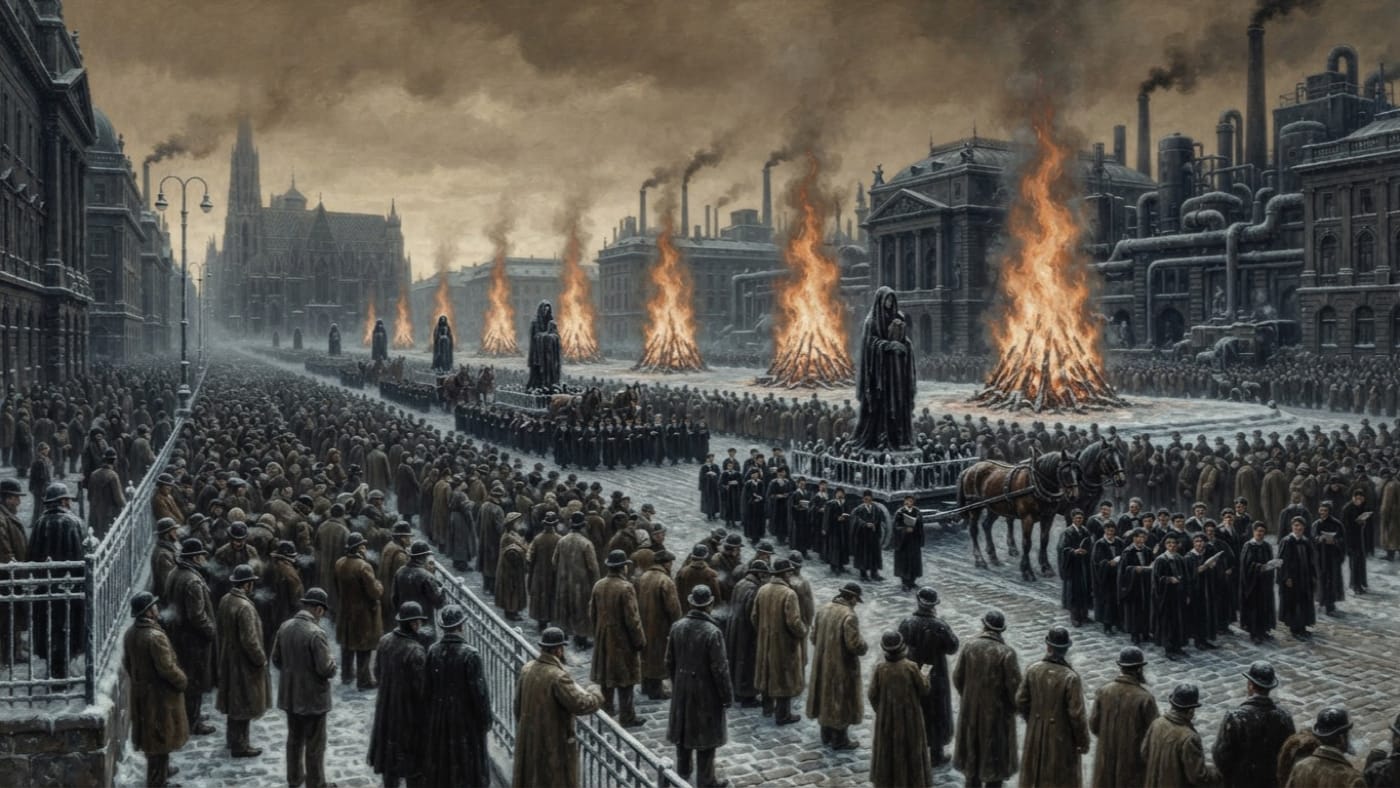
First Prefectural District
One Clause, One Afternoon, No Surviving Map
Vienna’s Rationalist civic district, attested in A.S. 30 by compulsory attendance at the Black Procession. The Ledger preserves the obligation; its founding, boundaries and successor remain unrecorded.
Codex Ref. II.4.09-030
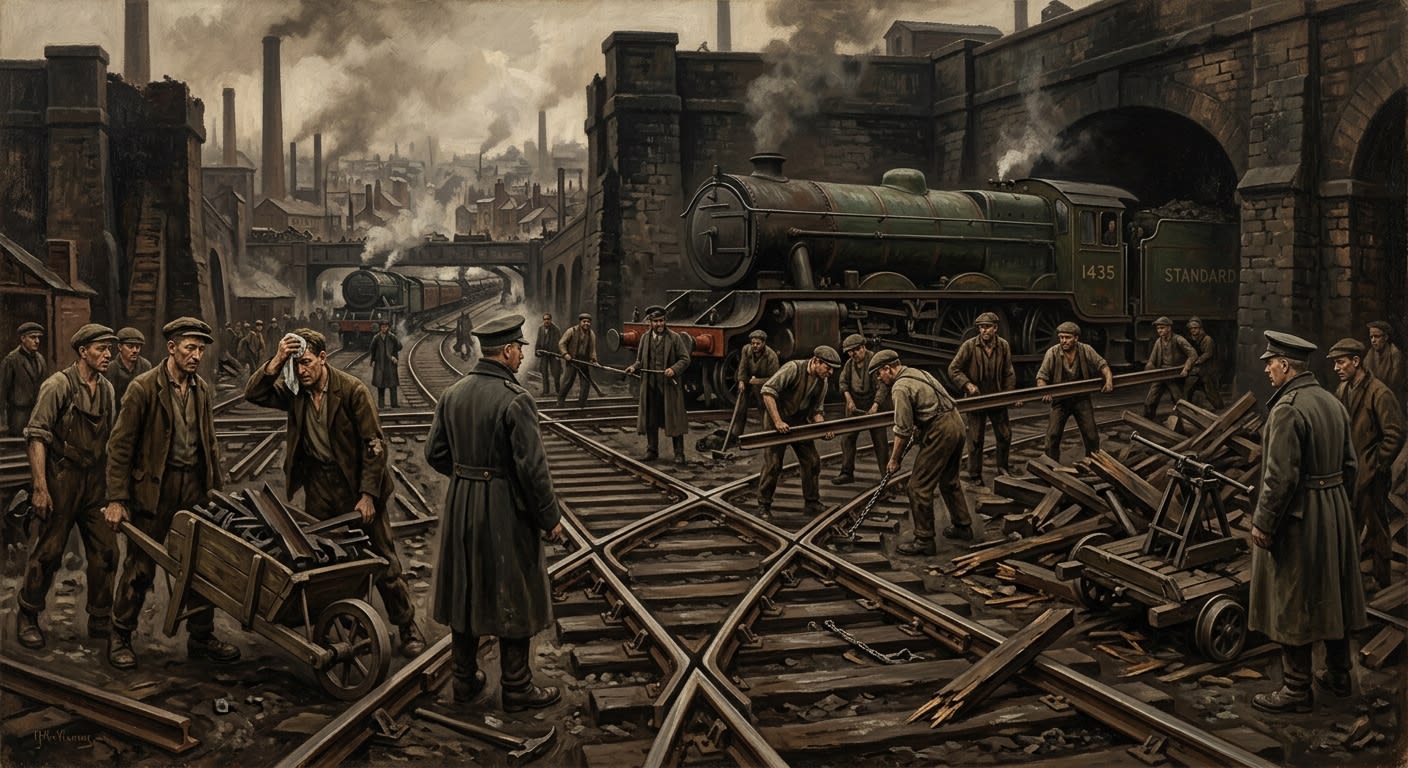
Gauge War
Forty years to agree on the distance between two rails
A.S. 96–136 rail-standardization conflict in which rival gauges starved bastion corridors until Engineering imposed 1,435 millimetres and labour paid in hands, hunger, and four thousand dead.
Codex Ref. VII.2.10-136
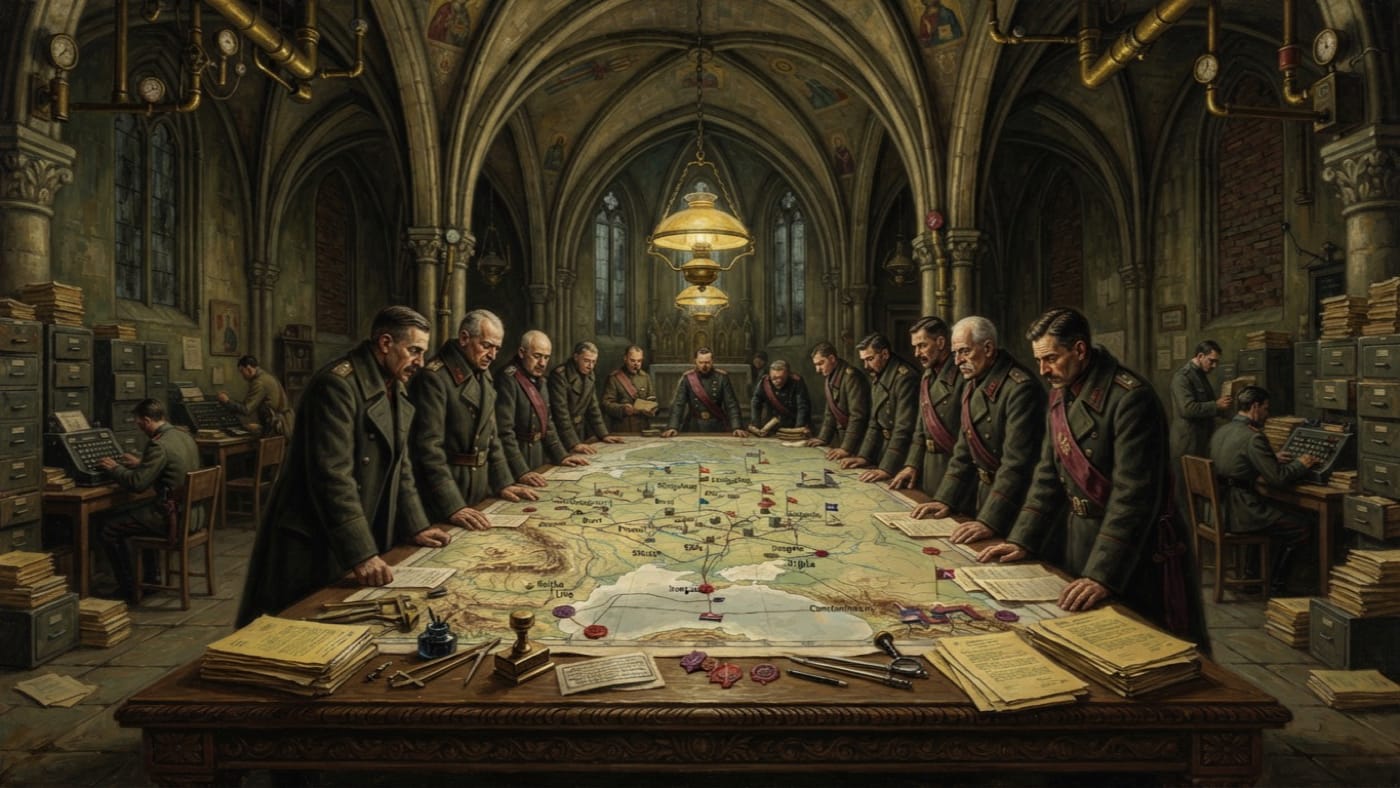
Grand Strategy Chamber
The Part of the War That Can Be Sealed
A chapel beneath Strasbourg's Arch of Campaigns where the Bureau of War moves armies on paper. Doctrine and Purity seal the plans; the frontier, regrettably, is not bound by their signatures.
Codex Ref. II.3.06-201
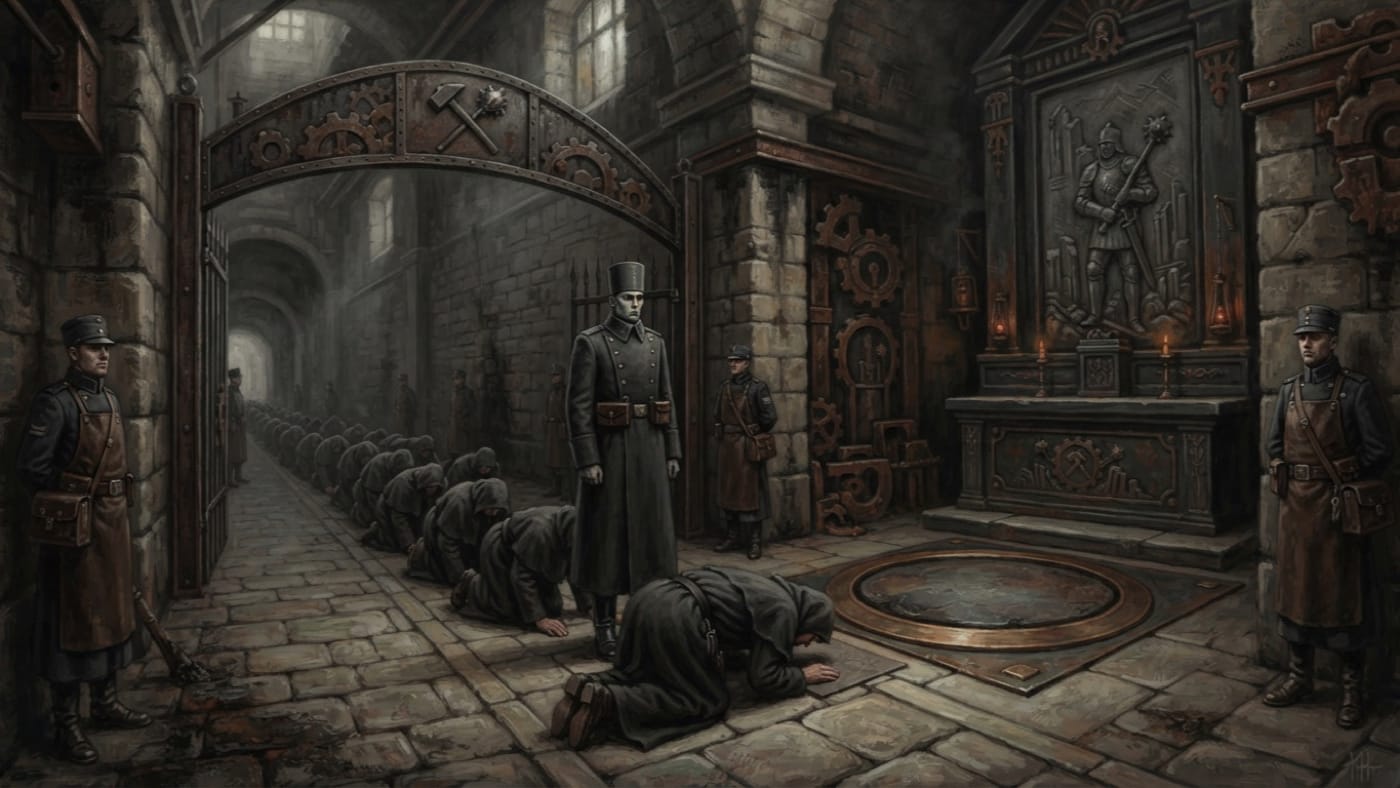
Hammer Line
Eleven metres where even the guides hold their tongues
The Hammer Line is the silent final eleven metres of Vienna's Via Stahlhand, where pilgrims reach the Impact Plate on their knees and the Bureau permits hearing without permitting questions.
Codex Ref. II.4.09-012
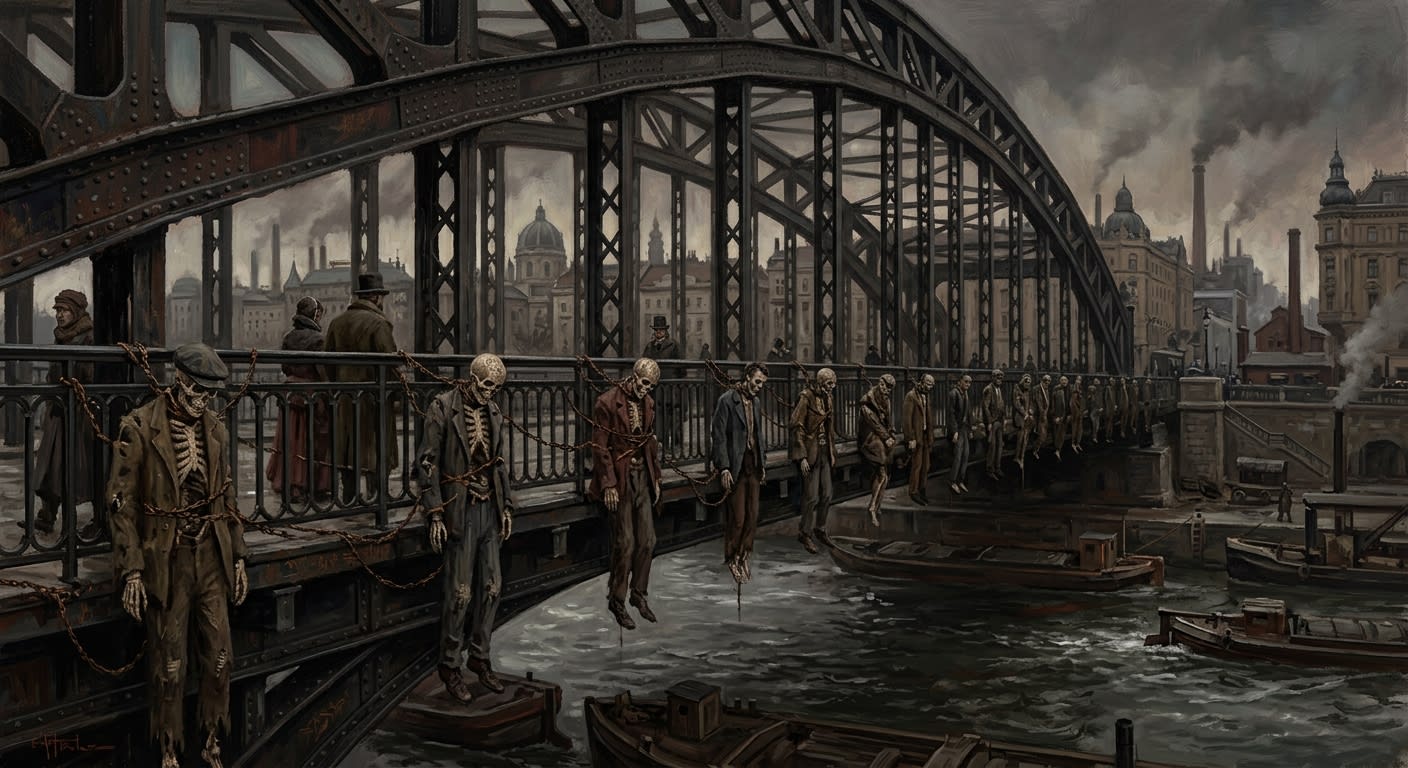
Hanged Bridge
Forty dead rebels made better sermons than their pamphlets
The Hanged Bridge over Vienna's Donaukanal preserves the A.S. 102 aftermath of forty Rationalist rebels whose inscribed bones still preach without permission.
Codex Ref. II.4.09-013
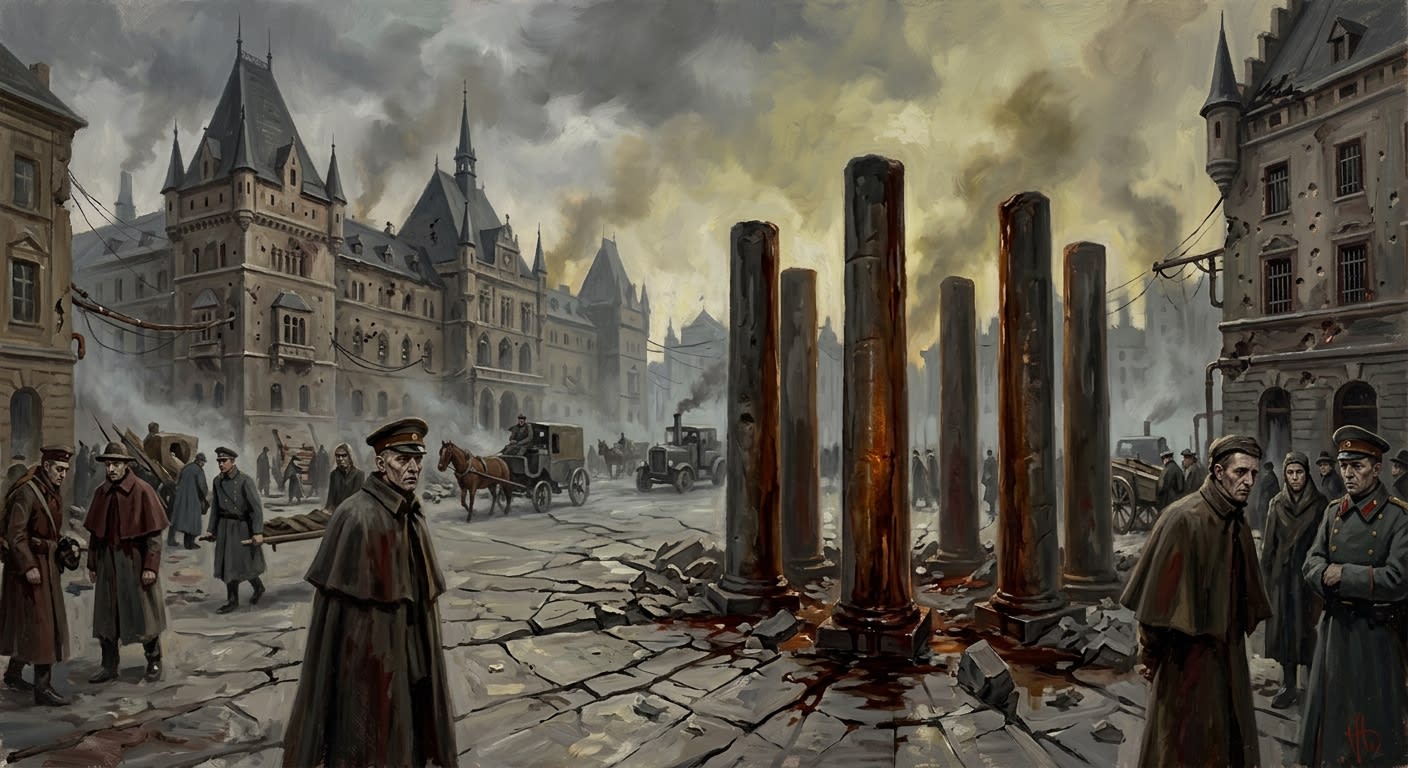
Heldenplatz
Where fire froze, stone warmed, and Vienna learned to kneel in public
Heldenplatz is Vienna's corrected civic theatre: the A.S. 30 cold-fire blasphemy answered by the A.S. 95 reliquary blow, radial fracture, and seven blood-warm basalt columns.
Codex Ref. II.4.09-095
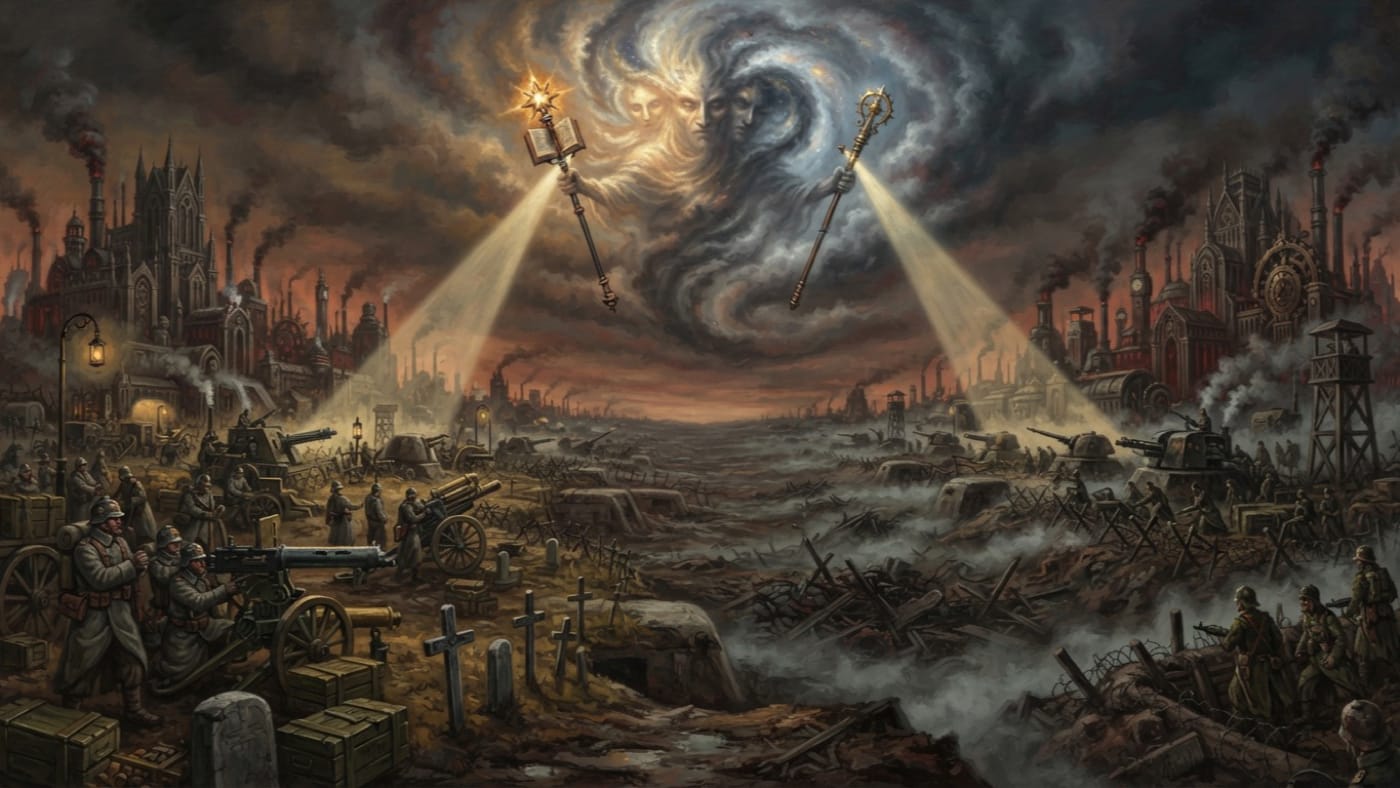
Heresy of the Complicit Creator
The proposition is prohibited. The classification remains blank.
The claim that the Creator and the Great Deceiver are one power, and the war a performance. I record its arguments under Standing Order 7-A; the Bureau prohibits the proposition and leaves its classification blank.
Codex Ref. VI.1.01-004
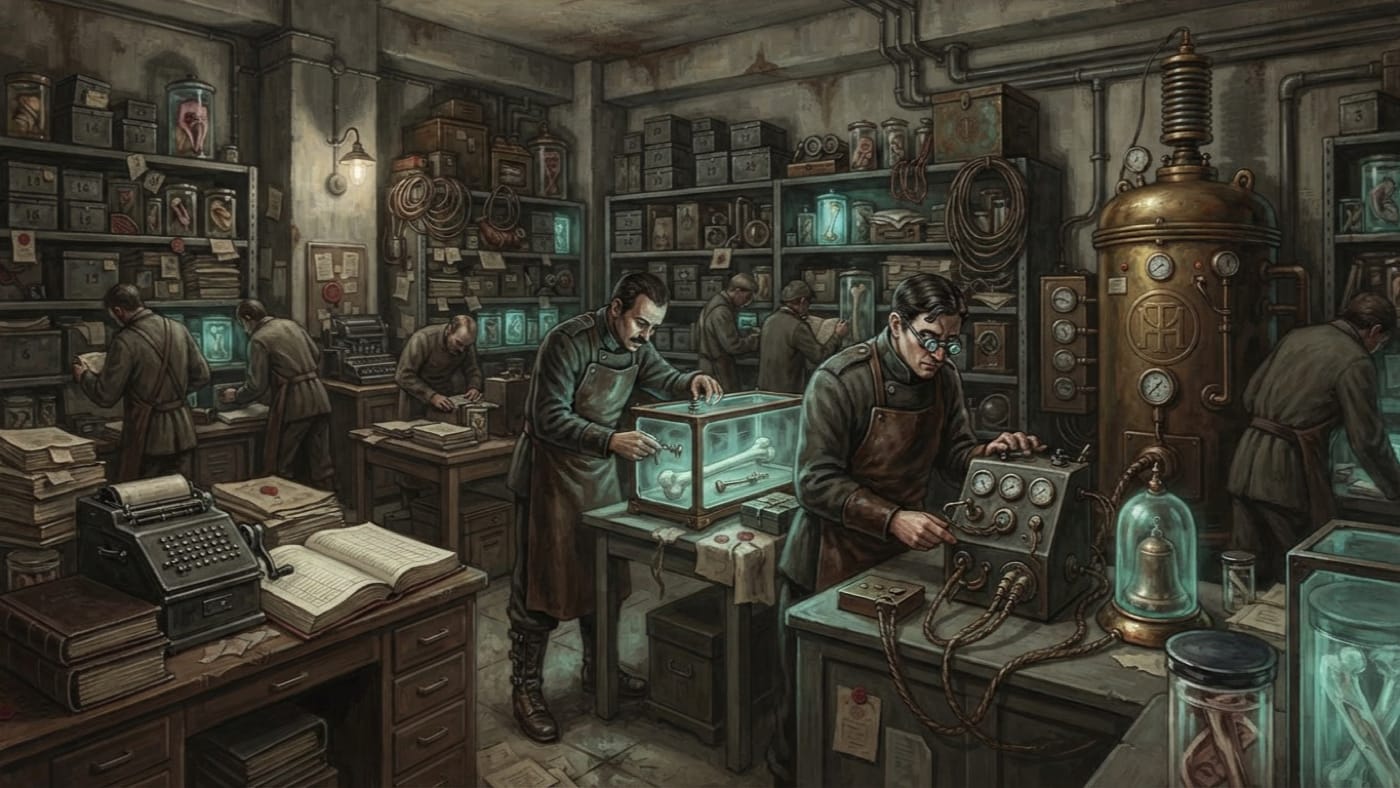
Heresy of the Unnecessary Creator
The bone keeps its glow. The Hieromnemon may lose his post.
The forbidden proposition that relics, bells and consecrated stone work without a divine source. I catalogue what it grants, what Doctrine cannot demonstrate, and what becomes of our mandate when custody is merely property.
Codex Ref. VI.1.01-005
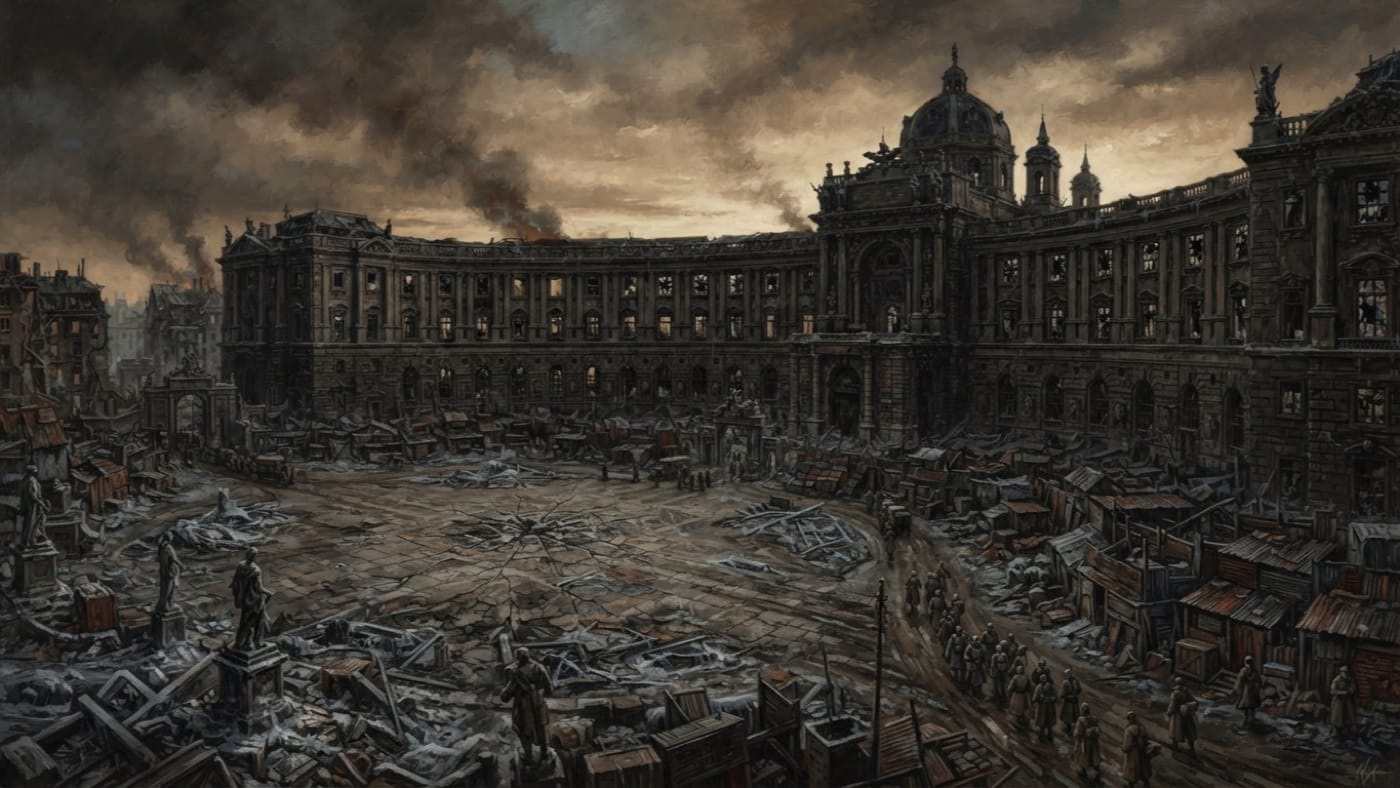
Hofburg
Broken glass and unfinished business
Vienna-Ruins' Hofburg palace was sealed in A.S. 95, its glass shattered by Saint Aldebrand's reliquary blow. The Council's unfinished minutes are reported, their session undated. Even defeat leaves paperwork.
Codex Ref. II.4.09-1373
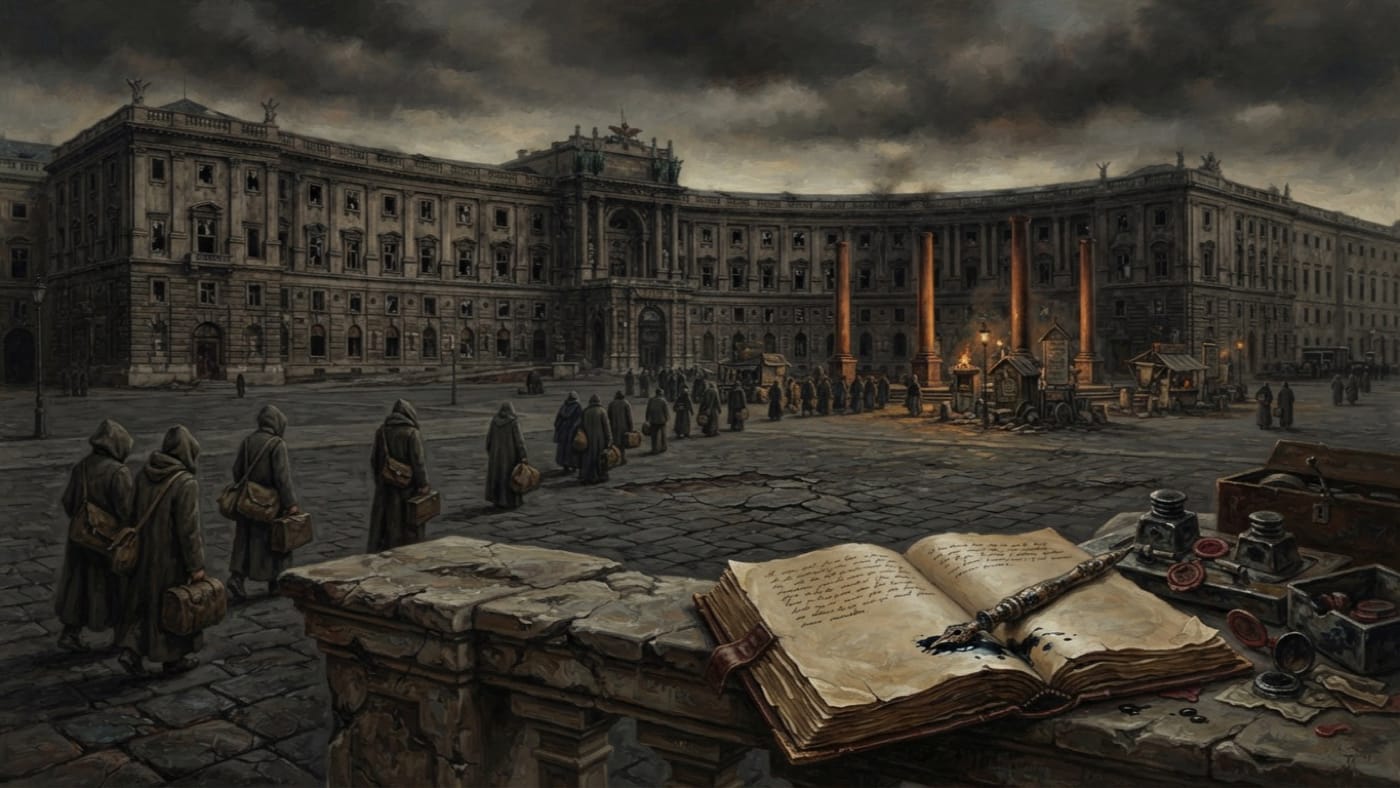
Hofburg Palace
Unfinished minutes behind a century's seal
The Hofburg was sealed in A.S. 95 with the Council of Nine's last minutes unfinished and its pen reported wet. The meeting has no recorded date. The pen has two reported homes. Neither file is closed.
Codex Ref. II.4.09-1374
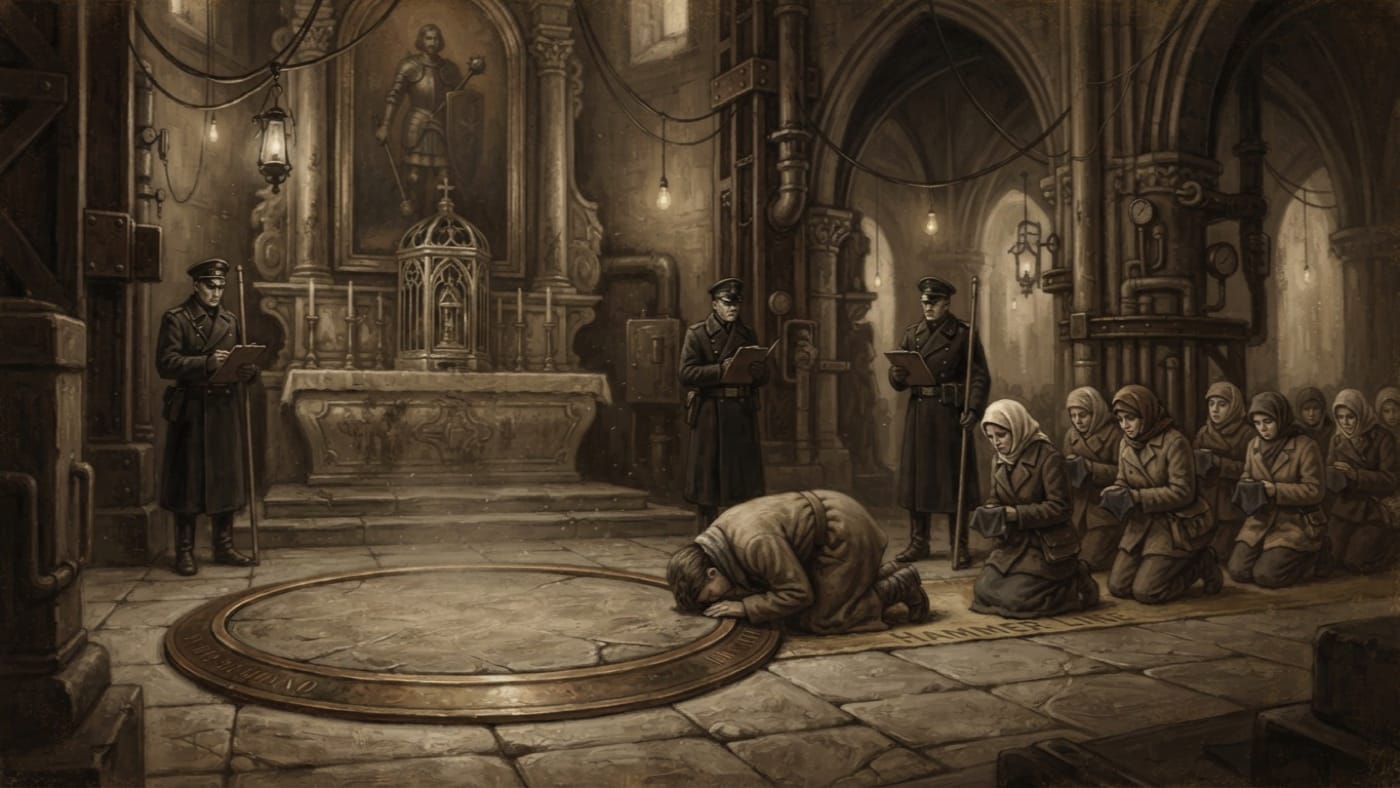
Impact Plate
Strasbourg keeps the original; Vienna keeps the knees
The Impact Plate receives pilgrims' foreheads at the end of the Via Stahlhand. Installed in A.S. 112, it supplies lawful contact while Strasbourg keeps the original stone.
Codex Ref. V.1.03-112
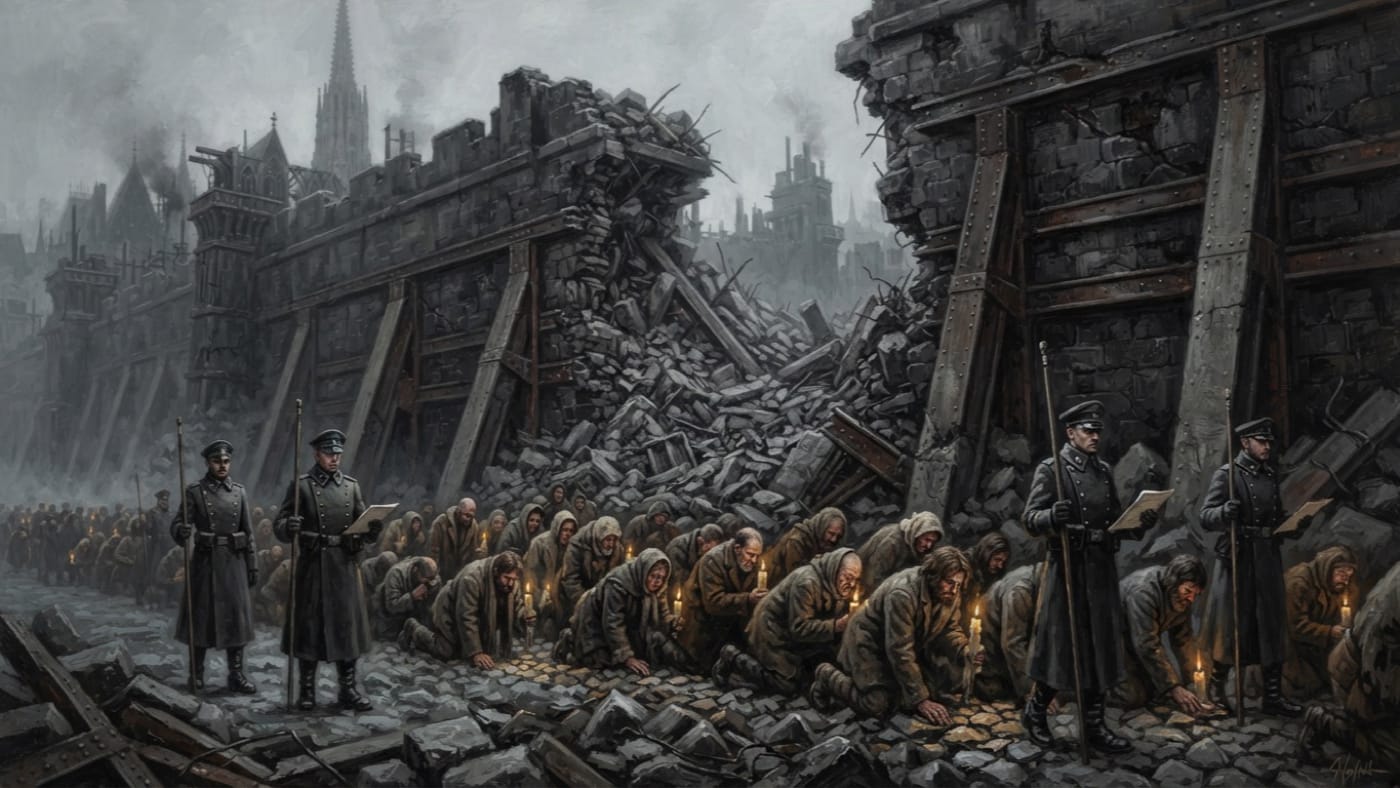
Kärntner Breach
The wall stayed broken so that knees might learn obedience
The Kärntner breach is Vienna's broken gate passage, where Clemens Stahlhand entered in A.S. 95 and pilgrims now pay with their knees.
Codex Ref. II.4.09-095
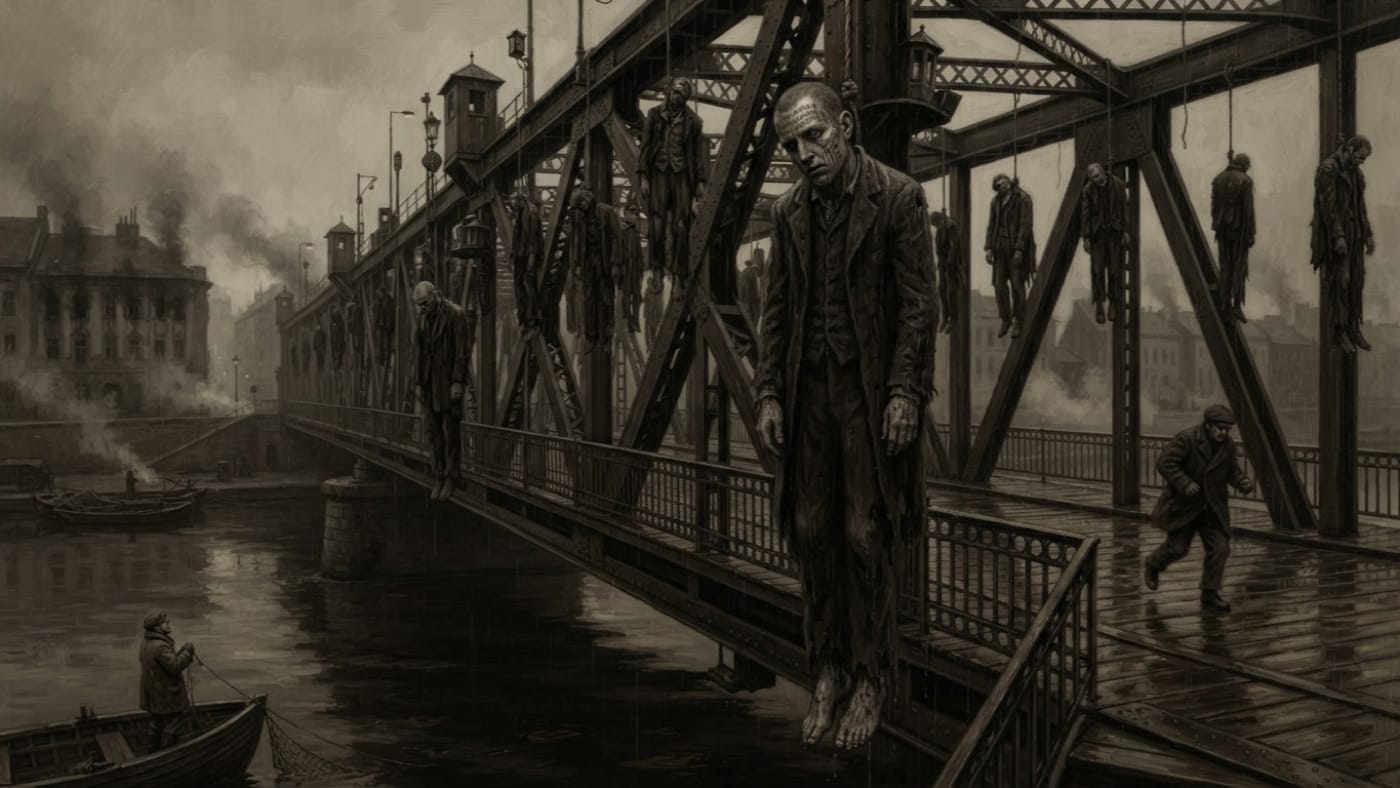
Litany of Obedience
The words were approved; the speaker remained a jurisdictional problem
The Litany of Obedience opened across a dead rebel's face on Vienna's Hanged Bridge. The words were canonical; the canal's later sermons had no licence.
Codex Ref. XIII.1.62-102
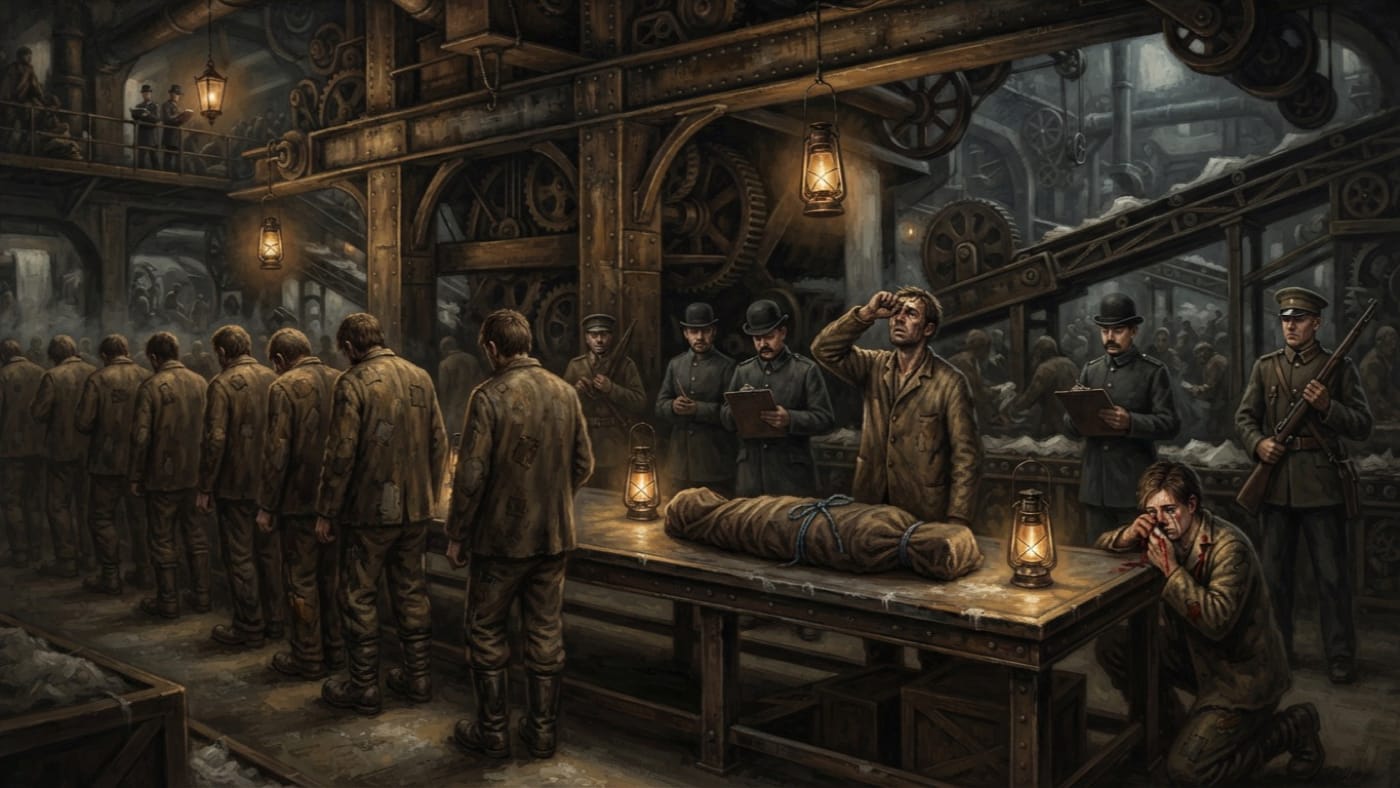
Litany of Saint Aldebrand
The prayer kept its name; the man who said it did not
A nameless labourer recited the Litany of Saint Aldebrand after sight returned in Ulm's Gallery Three, A.S. 156. The file preserves the prayer's name and none of its words.
Codex Ref. XIII.1.96-156
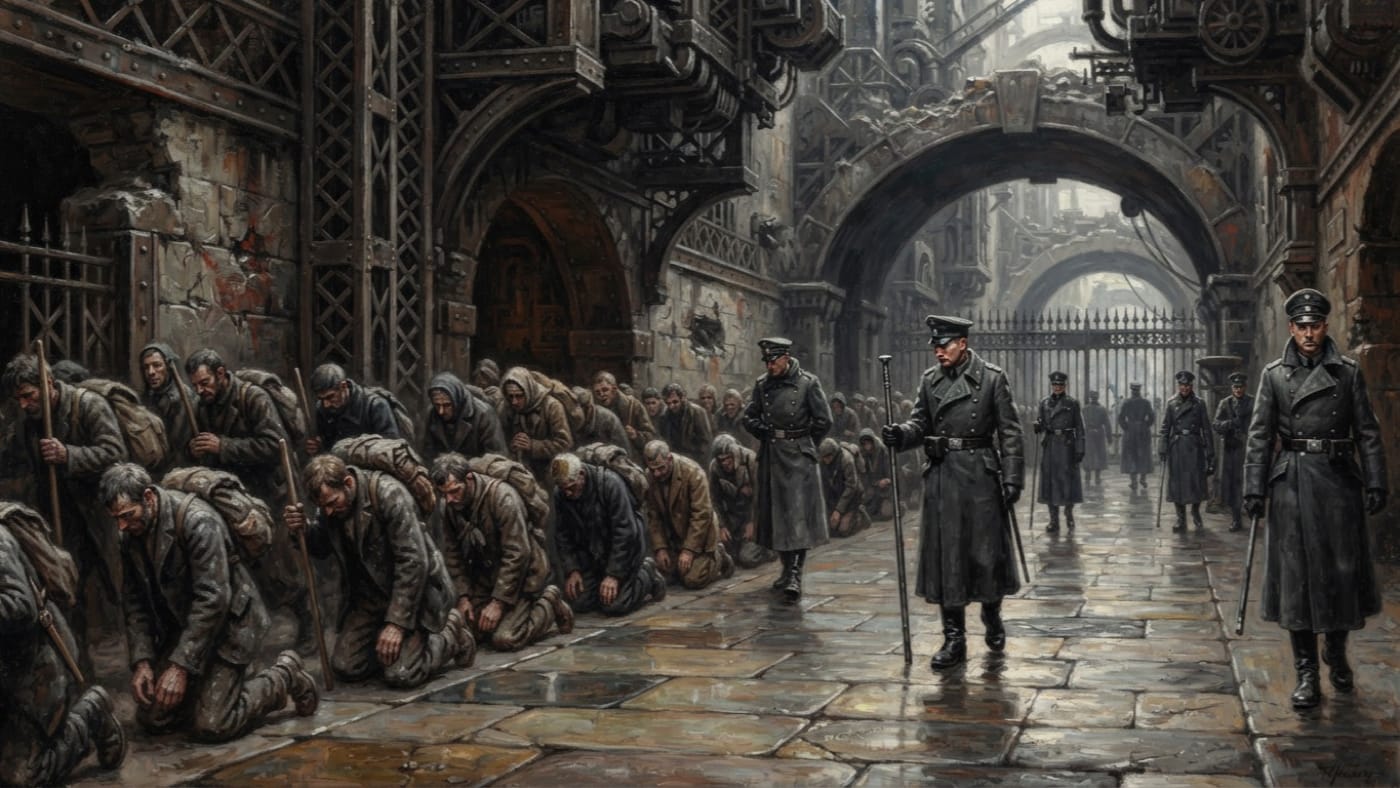
Nave Approach
The road the pilgrims finished with their knees
The Nave Approach is the smooth stretch of Vienna's Via Stahlhand between Ash Bend and the Hammer Line, polished by generations of kneeling pilgrims. The knees did the work; upright guides enjoy the result.
Codex Ref. II.4.09-013
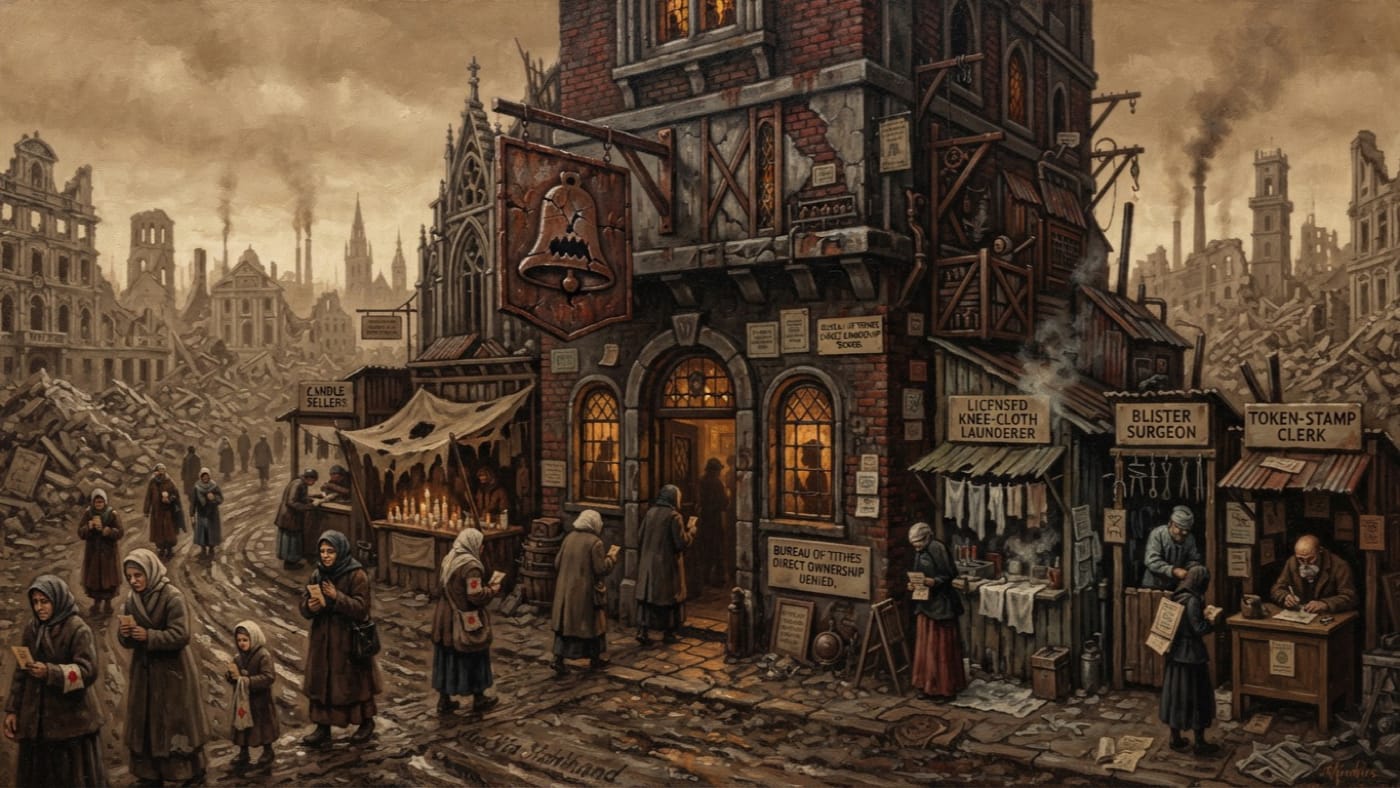
Ninth Second
Where penance becomes profit and ownership acquires an adjective
An A.S. 201 survey of The Ninth Second, Vienna's most profitable pilgrimage tavern, whose cracked-jaw bell sign is plain and whose ownership denial deserves slower reading.
Codex Ref. II.4.09-012
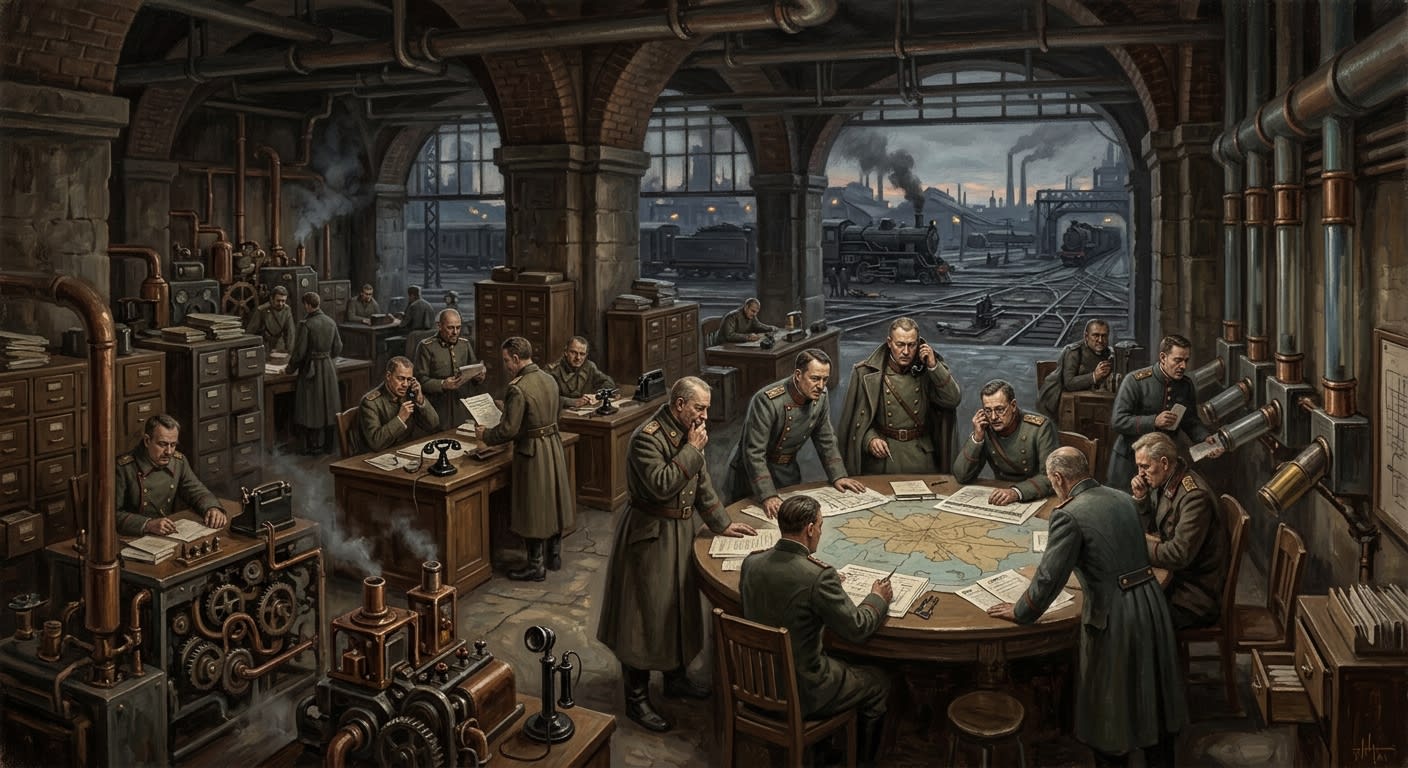
Northern Hierarchate
Where the north is made punctual enough to survive
Seated at Kanzleiburg in A.S. 95, the Northern Hierarchate turns Prussian machinery, rail priority, reserve depots, and inter-Bureau quarrels into survival for the Baltic-Carpathian front.
Codex Ref. VIII.7.01-095
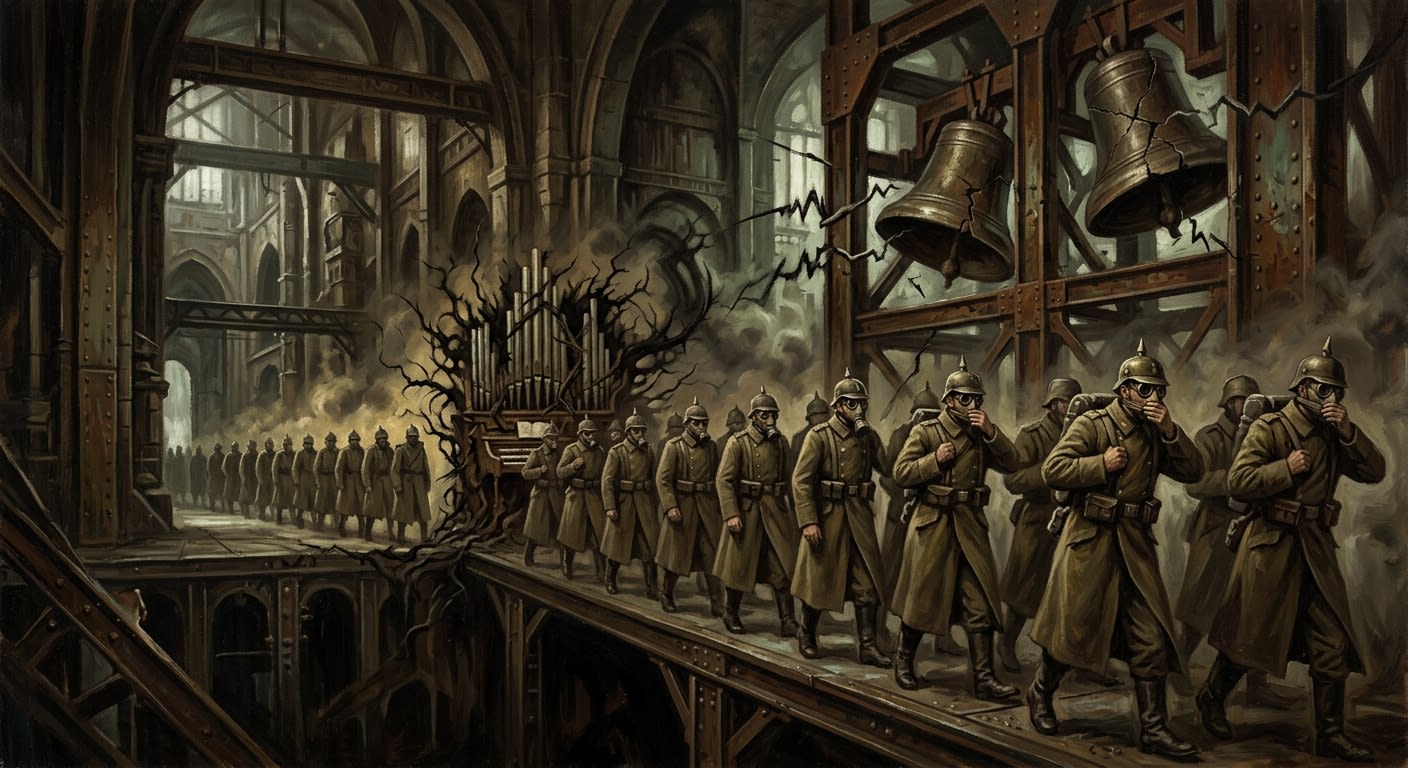
Prayer-Jam
When obedience enters the ear and comes out treason
Prayer-Jam is liturgical signal failure under hostile acoustic pressure: bells betray, hymns gag, and obedient men march precisely into ruin.
Codex Ref. VI.2.01-005
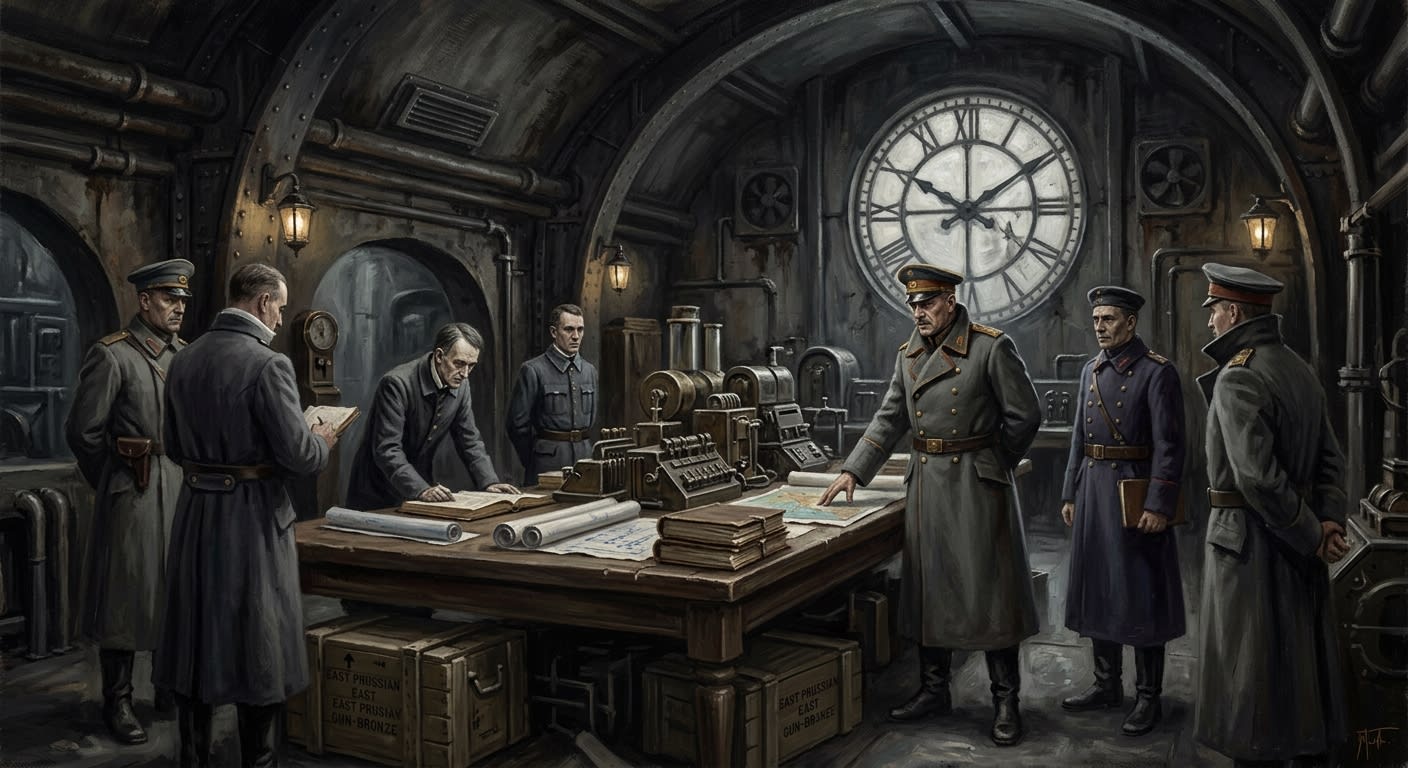
Prussia
The state died; the timetable kept breathing
Prussia is the dissolved northern kingdom that survived as method: rail clocks, cold clerks, officer corridors, East Prussian gun-bronze, and the north's habit of arriving.
Codex Ref. II.4.09-095
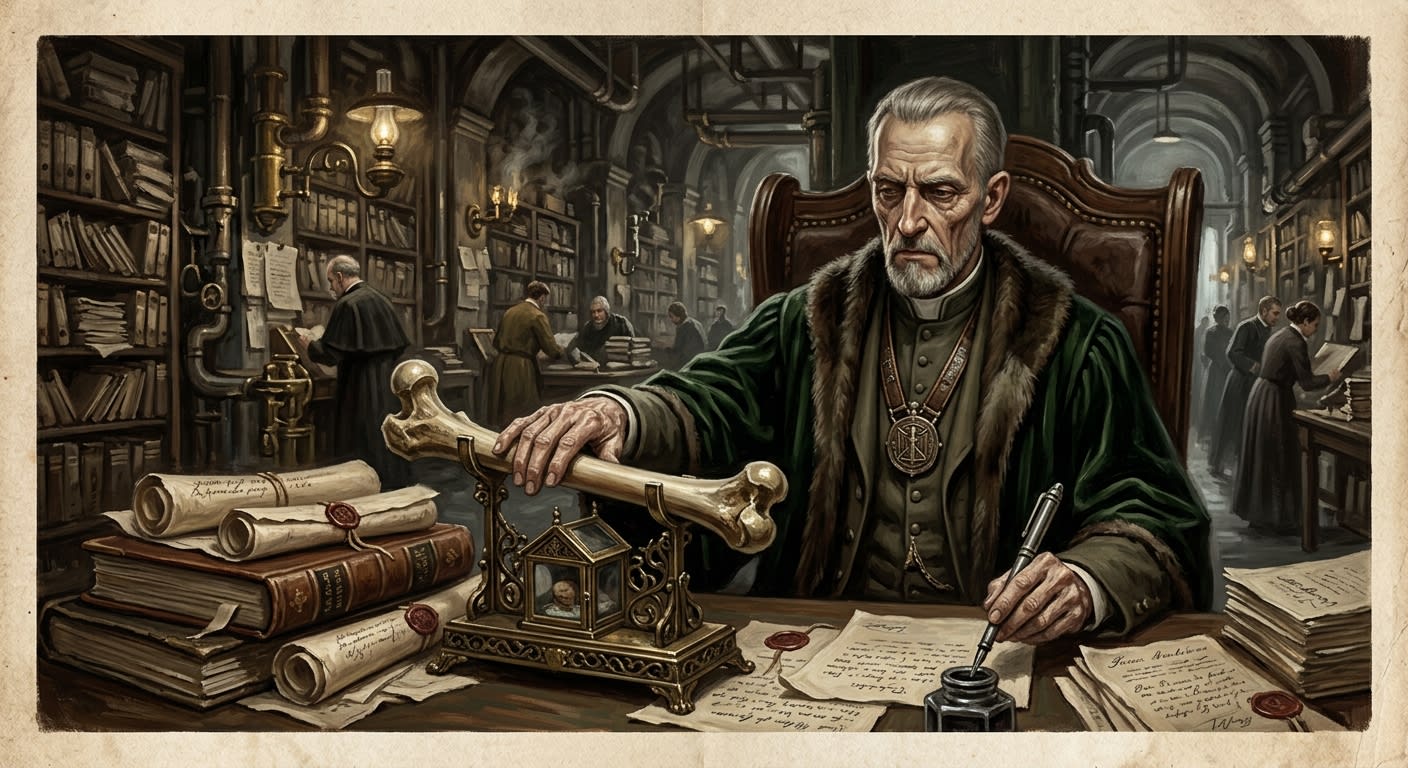
Saint Aldebrand
The femur that made inventory repent
Saint Aldebrand is the patron of disputed relics and late proofs, whose impossible femur vindicated Vienna after Records misplaced both object and humility.
Codex Ref. III.2.01-152
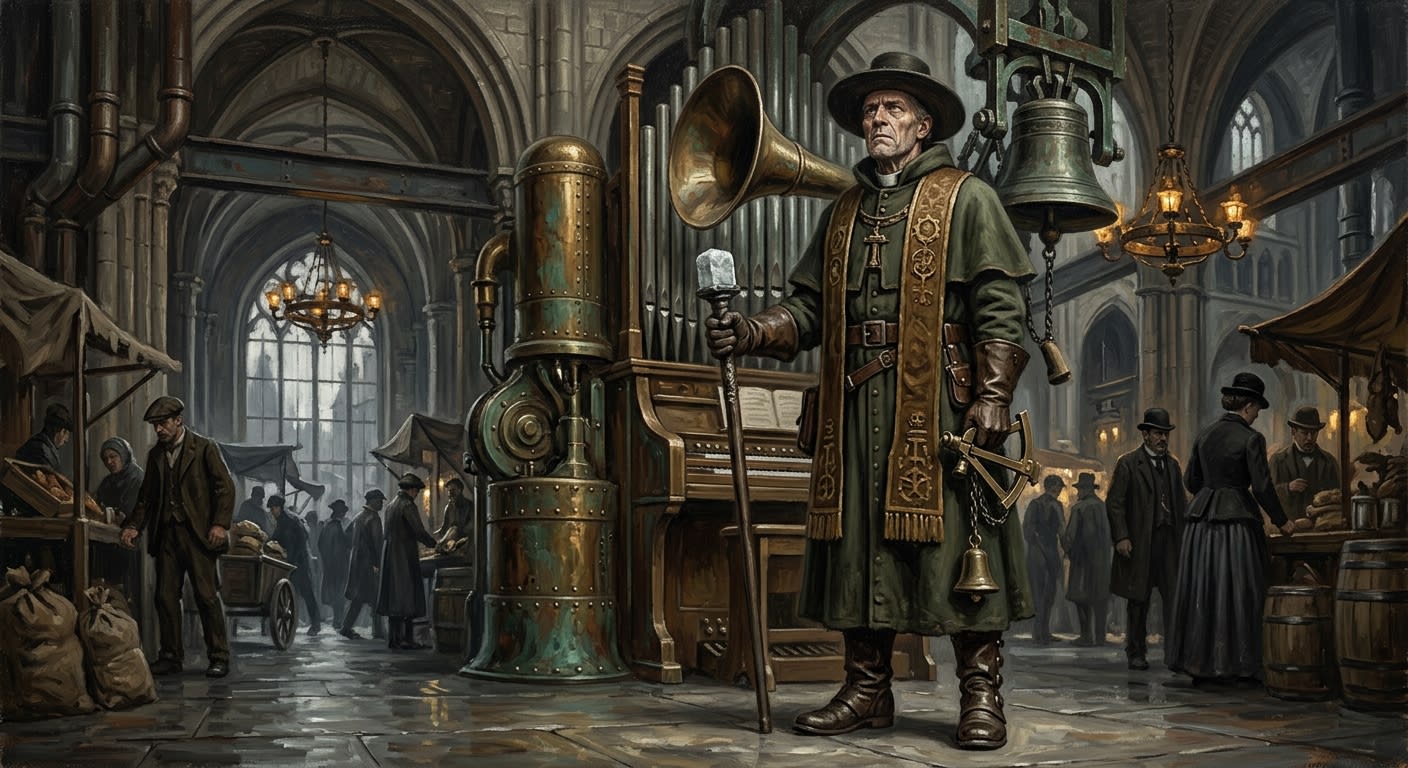
Saint Rupert
Salt in the wound, bronze in the tower, order in the market
Saint Rupert, Vienna’s salt-saint, preserves meat, measure, bells, markets, and civic memory: the patron whose bronze throat answered when men forgot to kneel.
Codex Ref. III.2.01-095
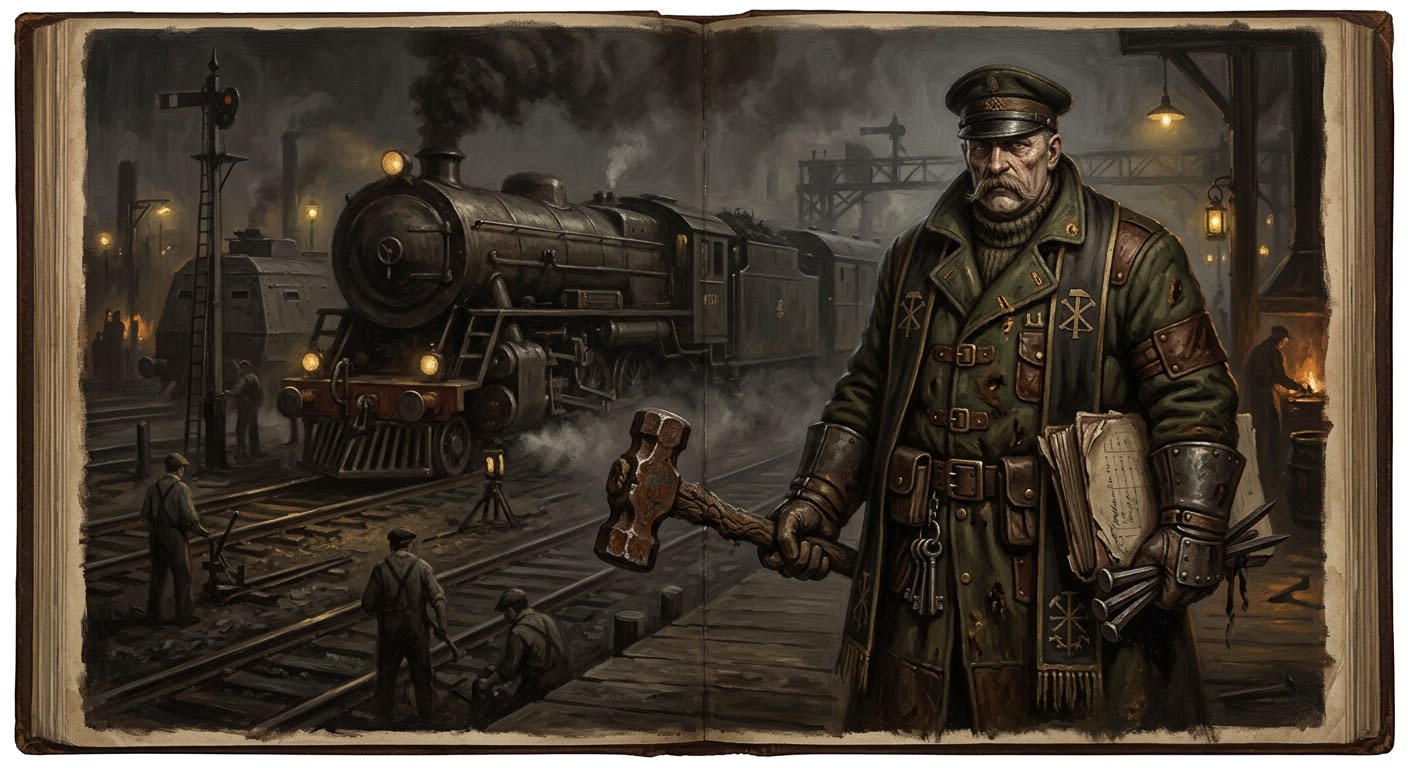
Saint Vandrail
The rail remembers; the hammer asks whether it tells the truth
Saint Vandrail, uncanonised and undenied, is the Guild of Rails’ hammer-fisted patron of track, gauge, night patrol, iron-blood, and useful delay.
Codex Ref. III.2.01-136
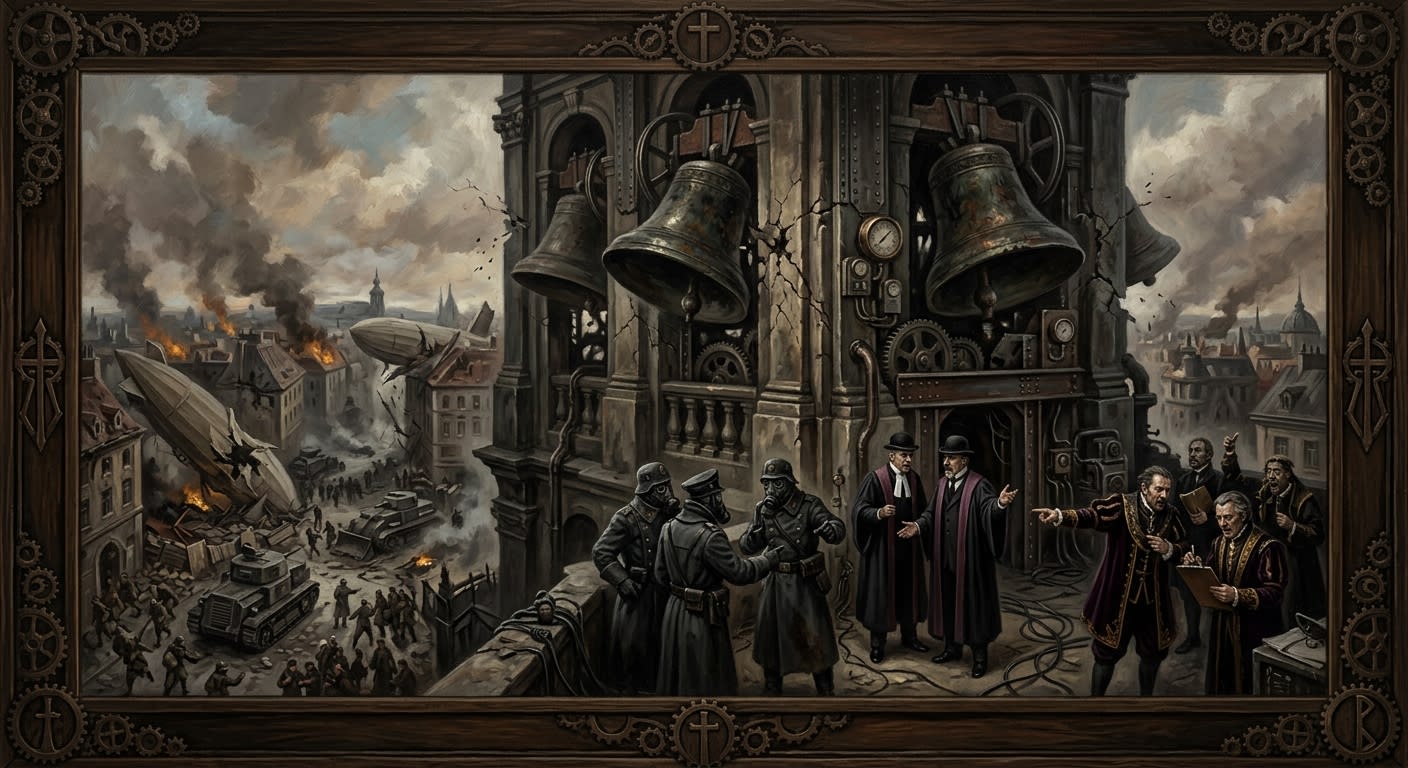
The Bells of Saint Rupert
Bronze sang; committees have been recovering ever since
At Vienna in A.S. 95, the unroped bells of Saint Rupert rang without permission, broke a siege, and left three Bureaus arguing with bronze.
Codex Ref. III.2.04-018
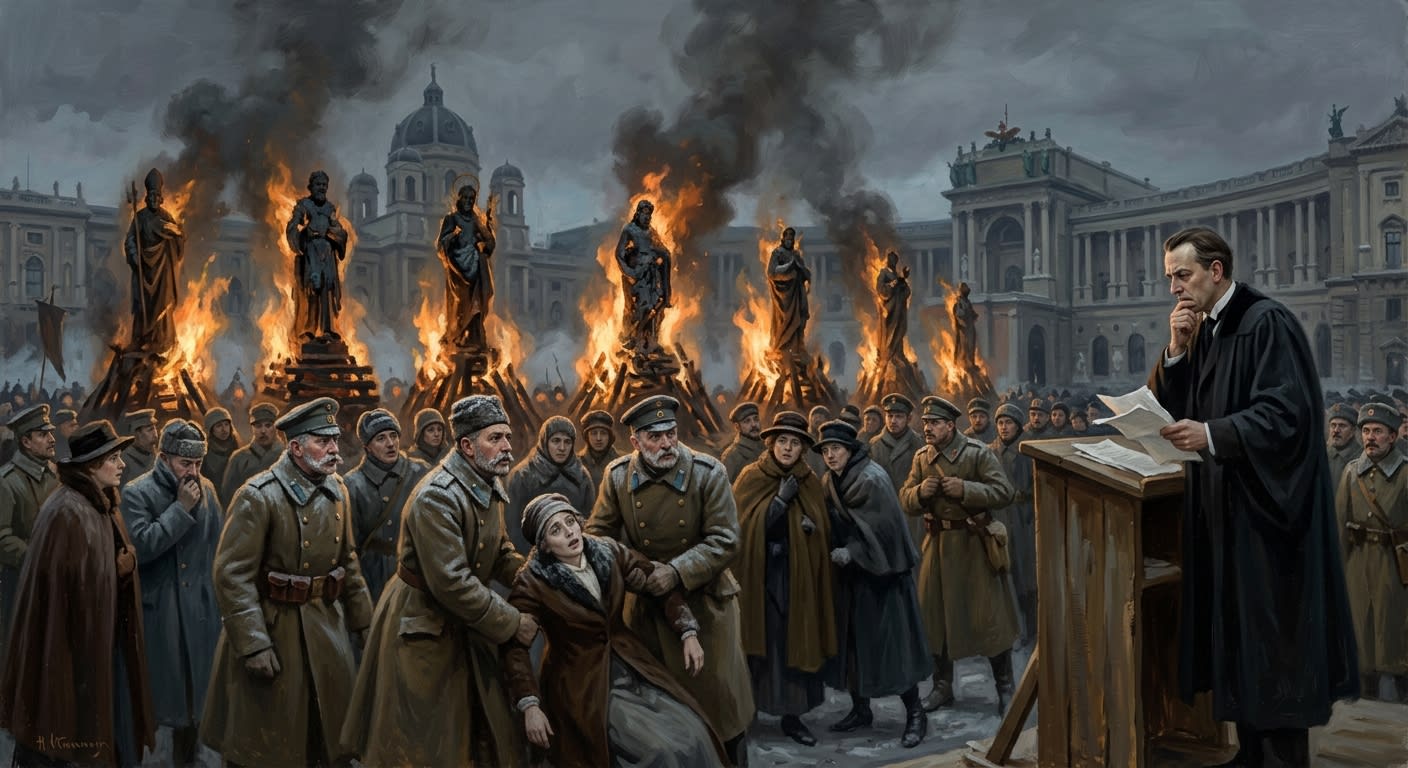
The Black Procession of A.S. 30
Where the Saints Burned Cold and the Rationalists Filed It Under Weather
A staged Rationalist bonfire in Vienna, A.S. 30, where forty-seven saint-effigies burned without heat — the Bureau's First-Order Portent, classified retroactively and still warm.
Codex Ref. VII.3.01-001
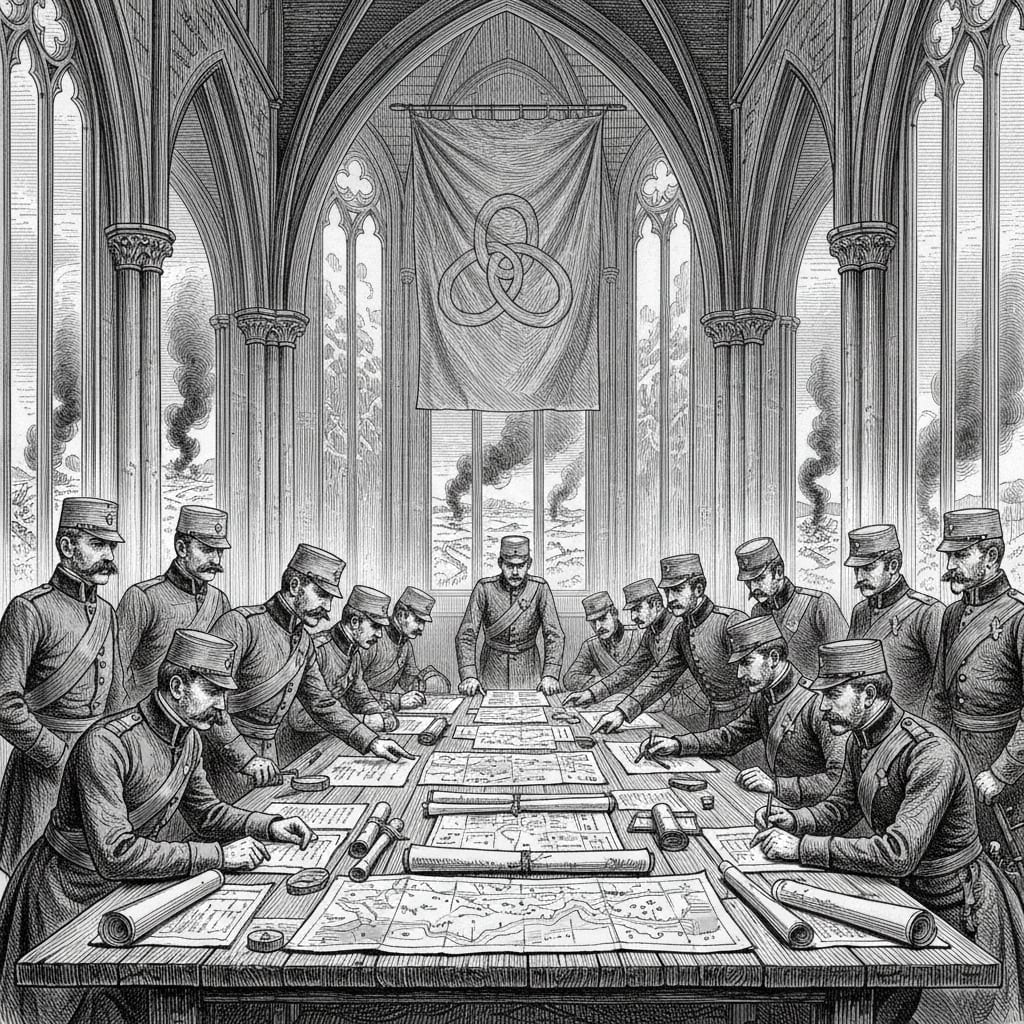
The Bureau of War
The Crimson Sash and the Sanctified Bayonet
Founded after the Siege of Vienna so that the Faith would never again beg feudal lords for swords. War raises the levy, baptizes the bayonet, and writes after-action reports indistinguishable from scripture.
Codex Ref. III.2.07-041
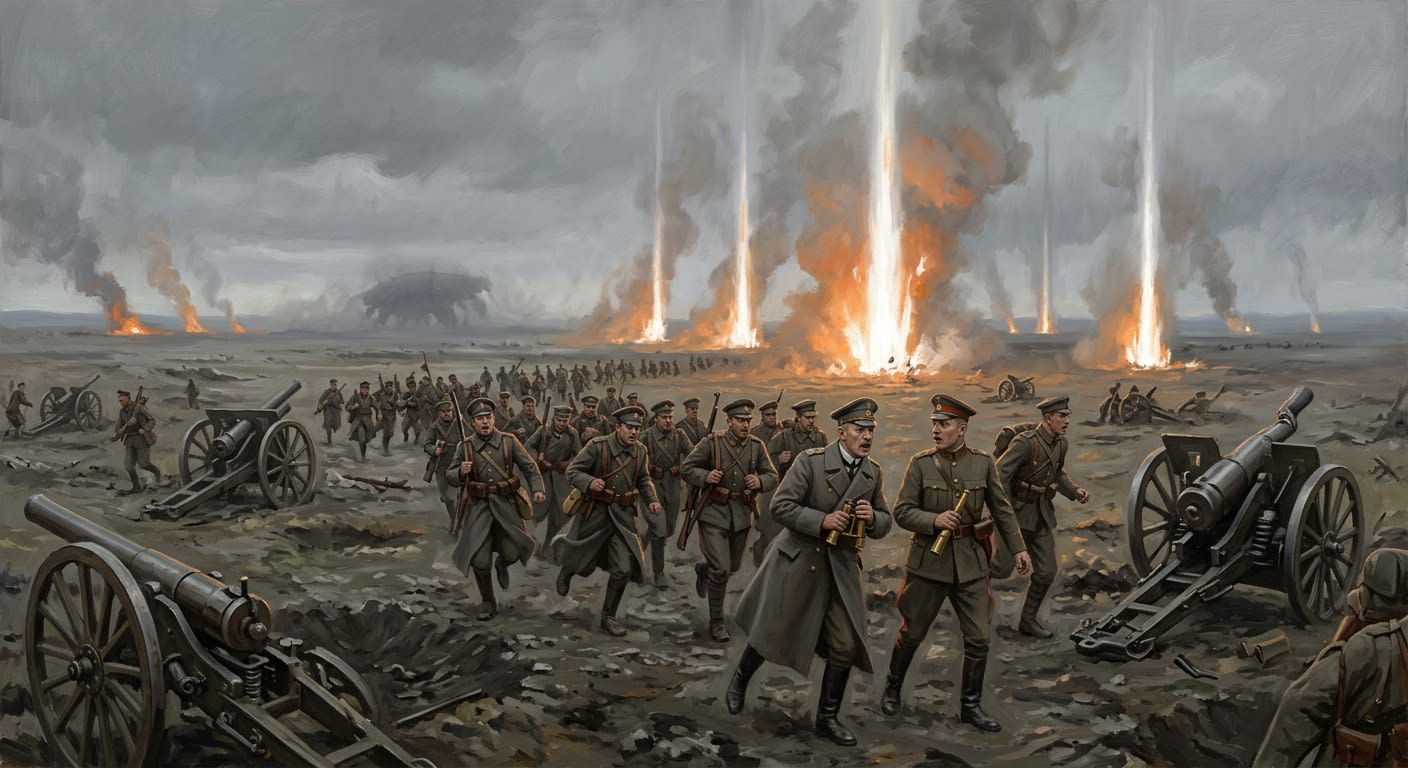
The Collapse of the Rationalists
The Adversary did not invade. It arrived.
The Rationalist Republic dismantled every spiritual defence on the continent, and in A.S. 45 the Adversary walked through the unguarded door. A doctrine article, a body count, and a mandatory catechism text.
Codex Ref. VII.2.01-001
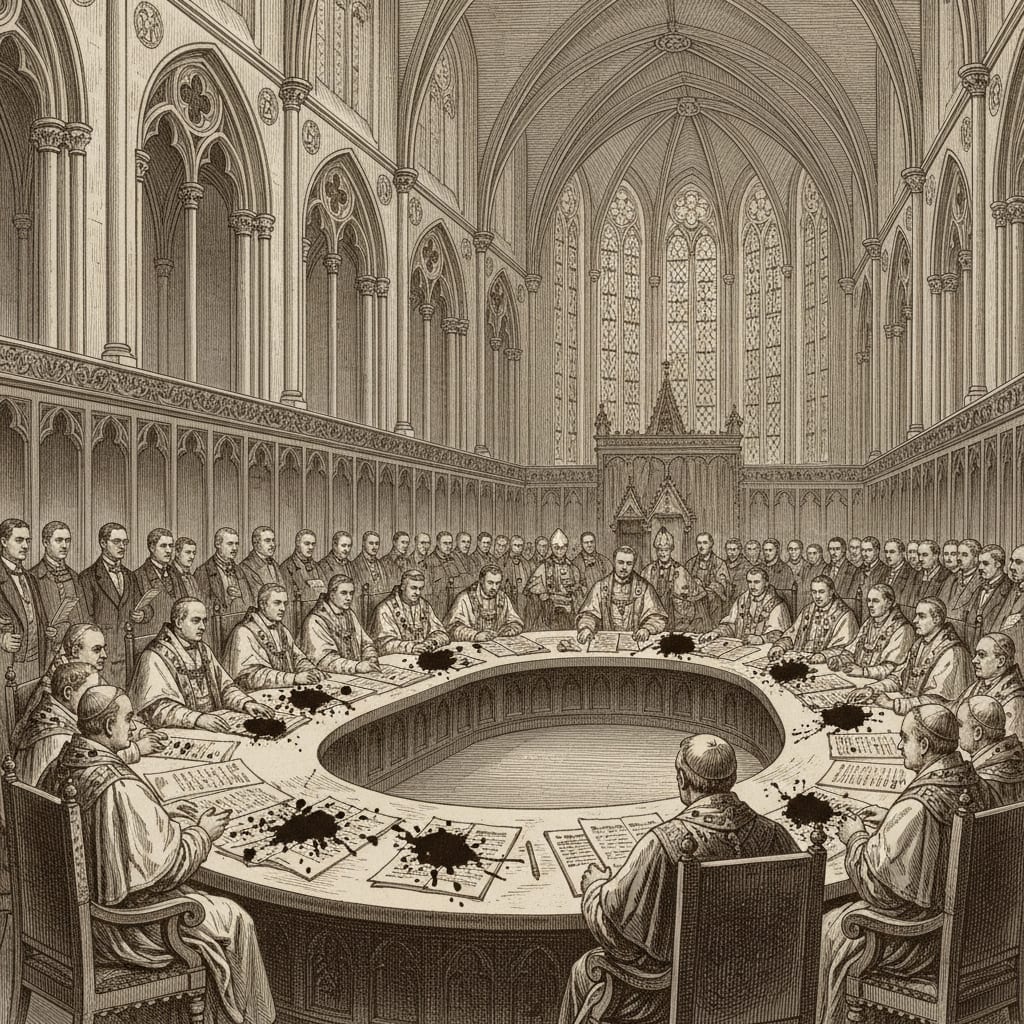
The Council of Cologne
A Masterpiece of Redaction
The A.S. 100 assembly and Edict of Cologne extended Strasbourg's claimed authority after both founders had died; its sealed minutes invite later argument.
Codex Ref. III.2.07-031
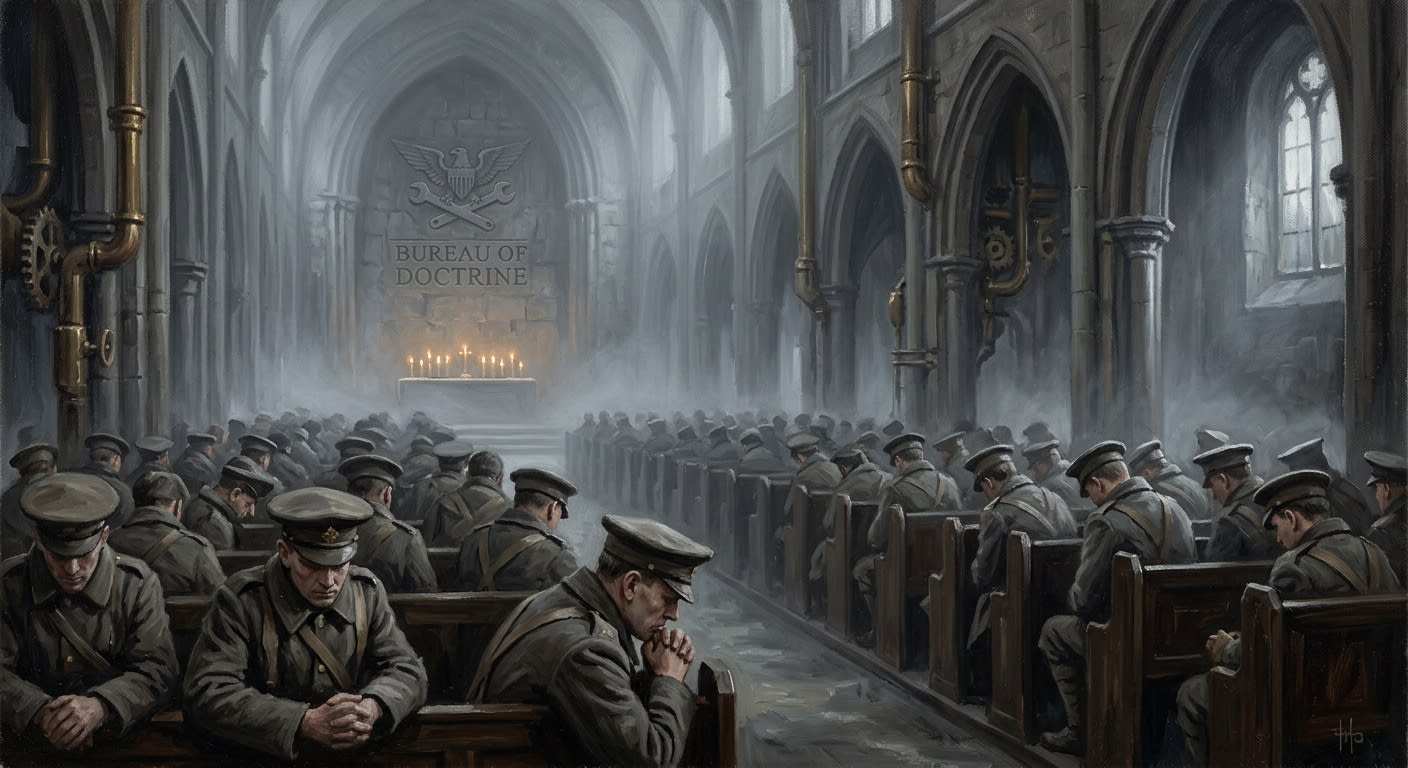
The Creator
The Bureau has two words for the most important question in theology. This entry contains both of them.
A doctrinal entry on the Creator composed by Hieromnemon Drax under compulsion, covering divine nature, the Silence, the inconvenience of miracles, and four forbidden heresies the Bureau insists do not exist.
Codex Ref. VI.1.01-001
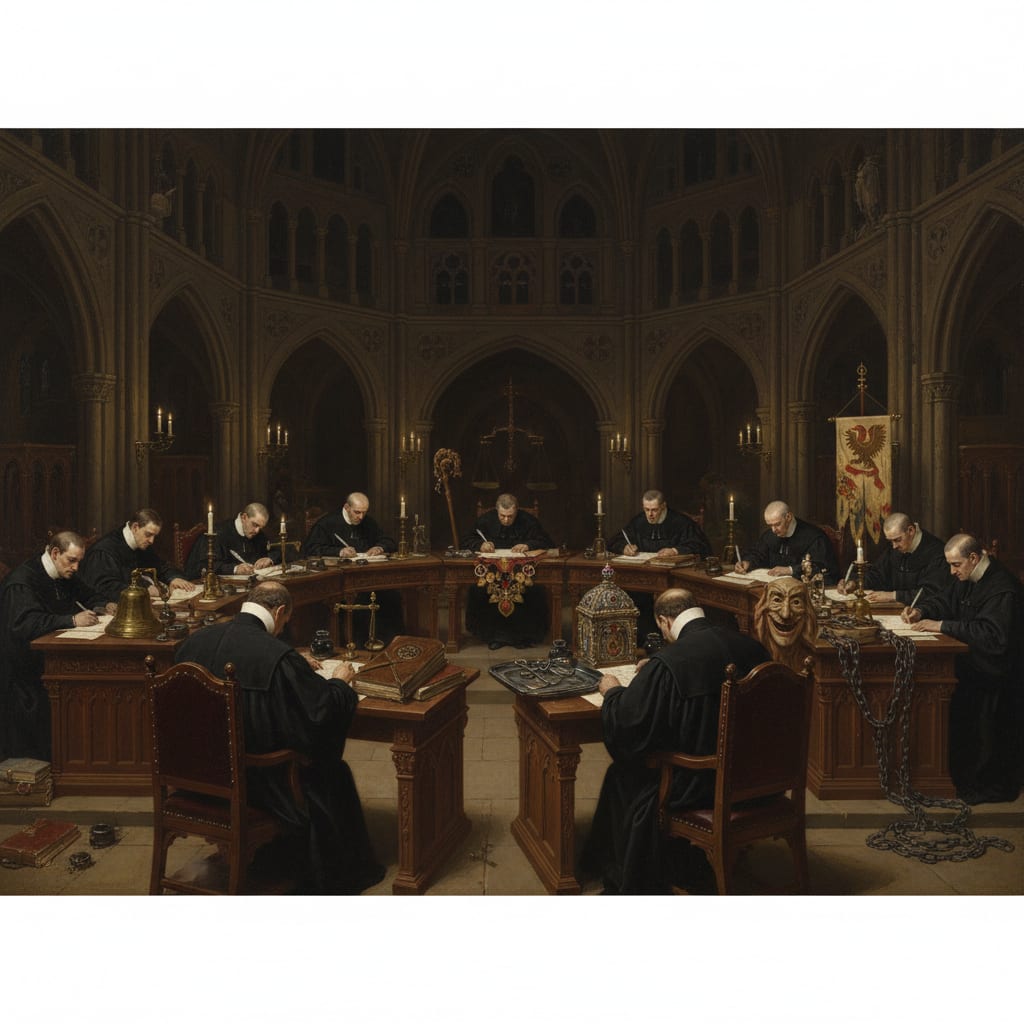
The Holy Bureaus
Twelve Instruments of Providence, or Thirteen If You Count the One That Does Not Exist
The twelve sacred organs through which Strasbourg bends a continent to its will. Each Bureau claims a charism of governance descended from the Apostolic Sundering. Their clerks are legion, their archives endless, their contradictions — by design.
Codex Ref. III.3.01-001
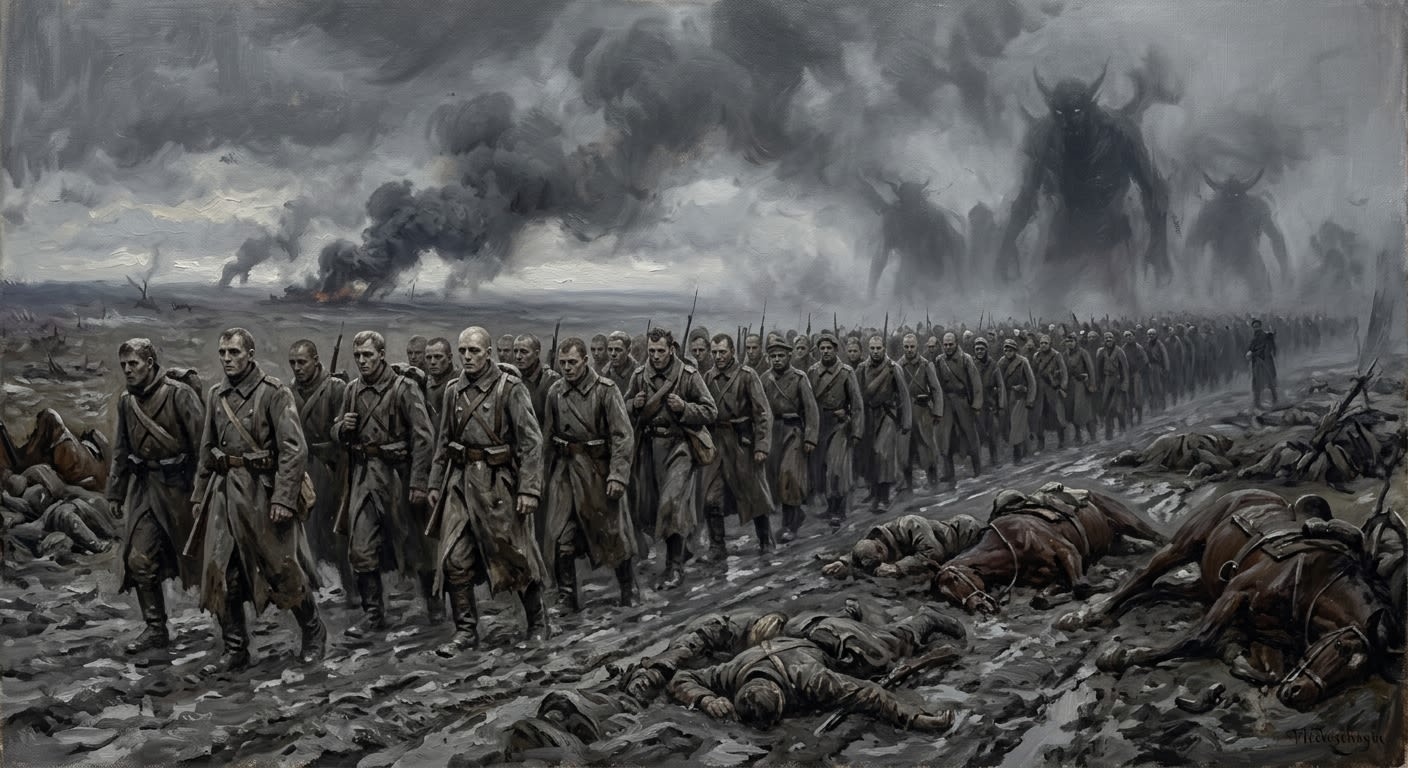
The Legions of Sin
Forty-seven souls for every demon — and the Bureau calls this mathematics
The mortal host beneath the Lie's banners: Thralls, Hollowed, Ash-Mothers, Blood-Tithes, Wormhosts, Processional Slaves, Ash-Fodder. Forty-seven souls for every demon. The Bureau calls this mathematics. I call it a confession.
Codex Ref. IX.1.01-001
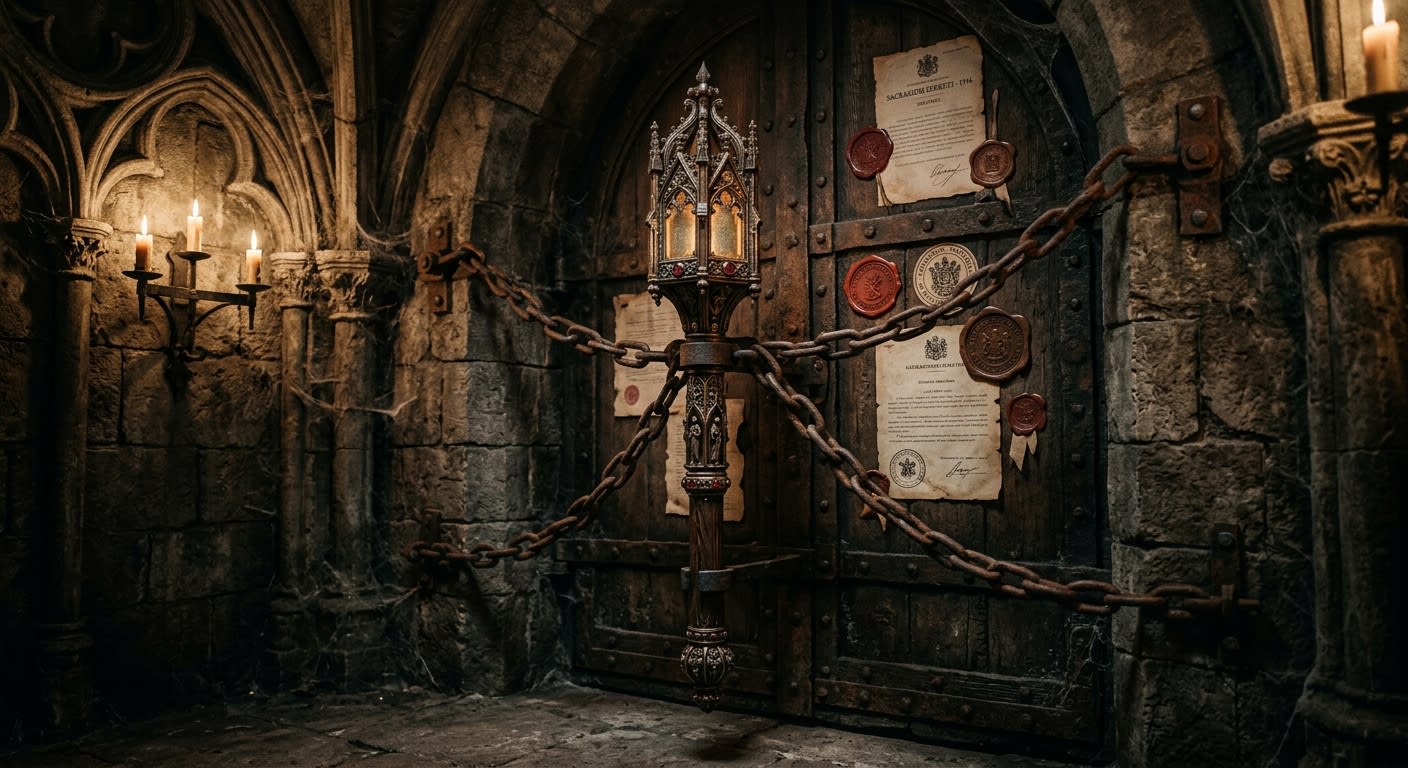
The Miracle of Saint Aldebrand
The Bureau erased the bone. The bone declined.
The Bureau declared the Reliquary of Saint Aldebrand non-existent in –32 A.S. In A.S. 95 it shattered a sorcerer-lord's skull and saved Vienna. Both facts are official, both carry seals, and the Bureau sees no difficulty.
Codex Ref. VI.4.01-001
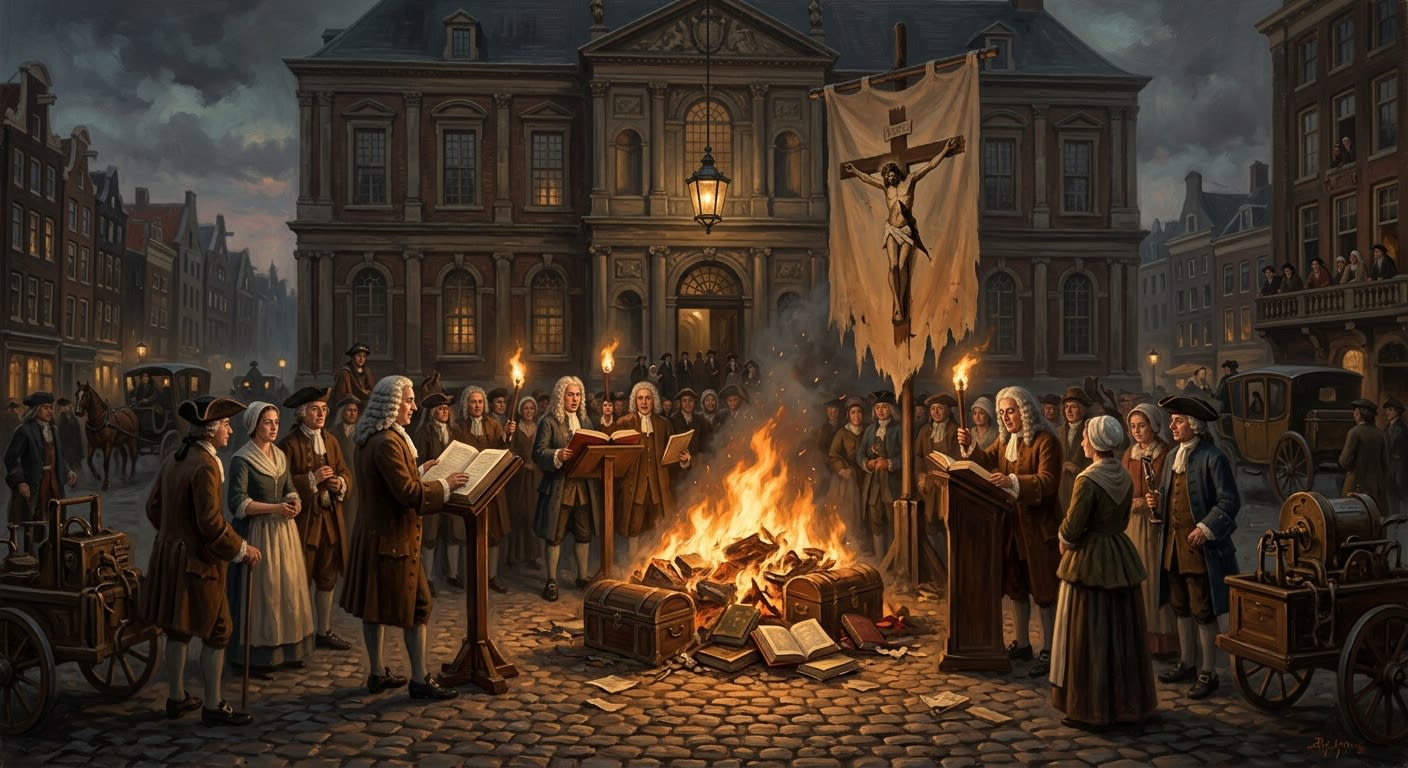
The Rationalists
Architects of the wound the Synod counts from
The Synod's most instructive enemy — philosophers who stripped Europe of its spiritual armor on the eve of Hell's invasion and then had the grace to be destroyed by the consequences.
Codex Ref. I.1.01-001
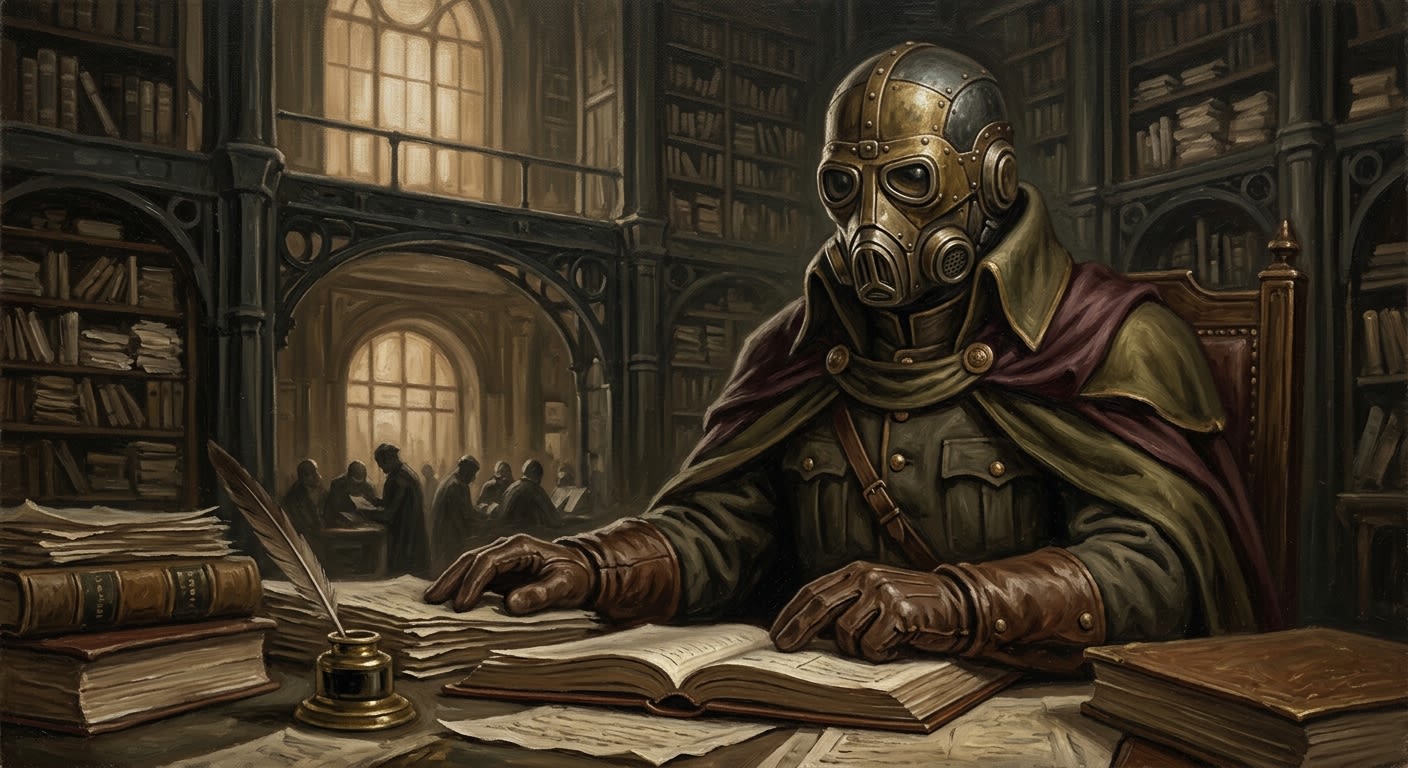
The Third Hierarch
A nameless mitre, a moth-eaten reign, and the file that knew too much
The Third Hierarch is an ordinal with no name, no portrait, and one surviving achievement: Saint Aldebrand's file vanished under his reign.
Codex Ref. XIII.1.05-002

The Year of Letters
One table of bones. Forty cities. The first assault on everything.
The Bureau's account of –32 A.S.: how three Amsterdam scholars, one table of bones, and forty cities' worth of polite arithmetic crippled three centuries of relic authentication — and inaugurated everything.
Codex Ref. I.2.01-001
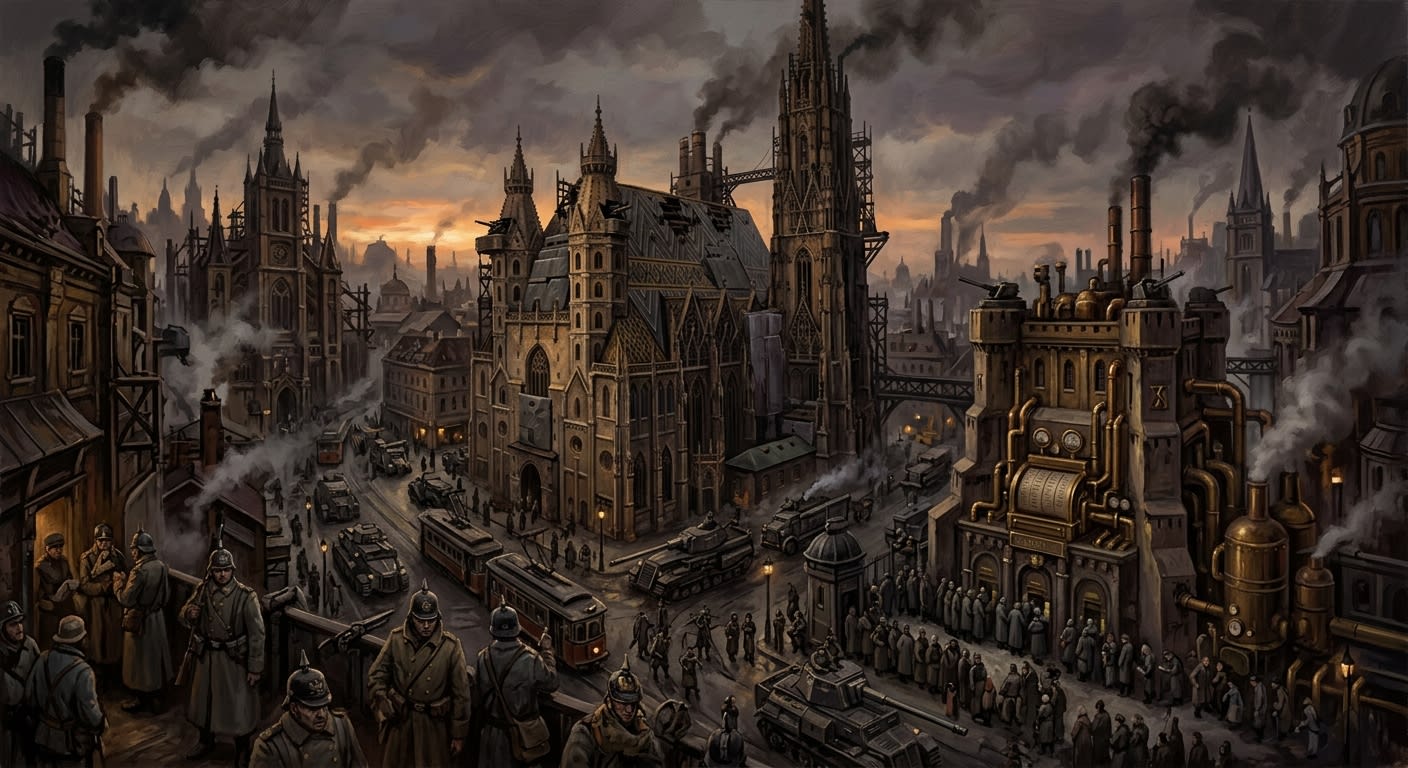
Vienna
The corpse that learned accounting
Vienna is the Synod's most decorated corpse: old see, Rationalist capital, shrine-ruin, supply hinge, lullaby scar, and profitable proof that ruins can be taxed.
Codex Ref. II.4.09-095
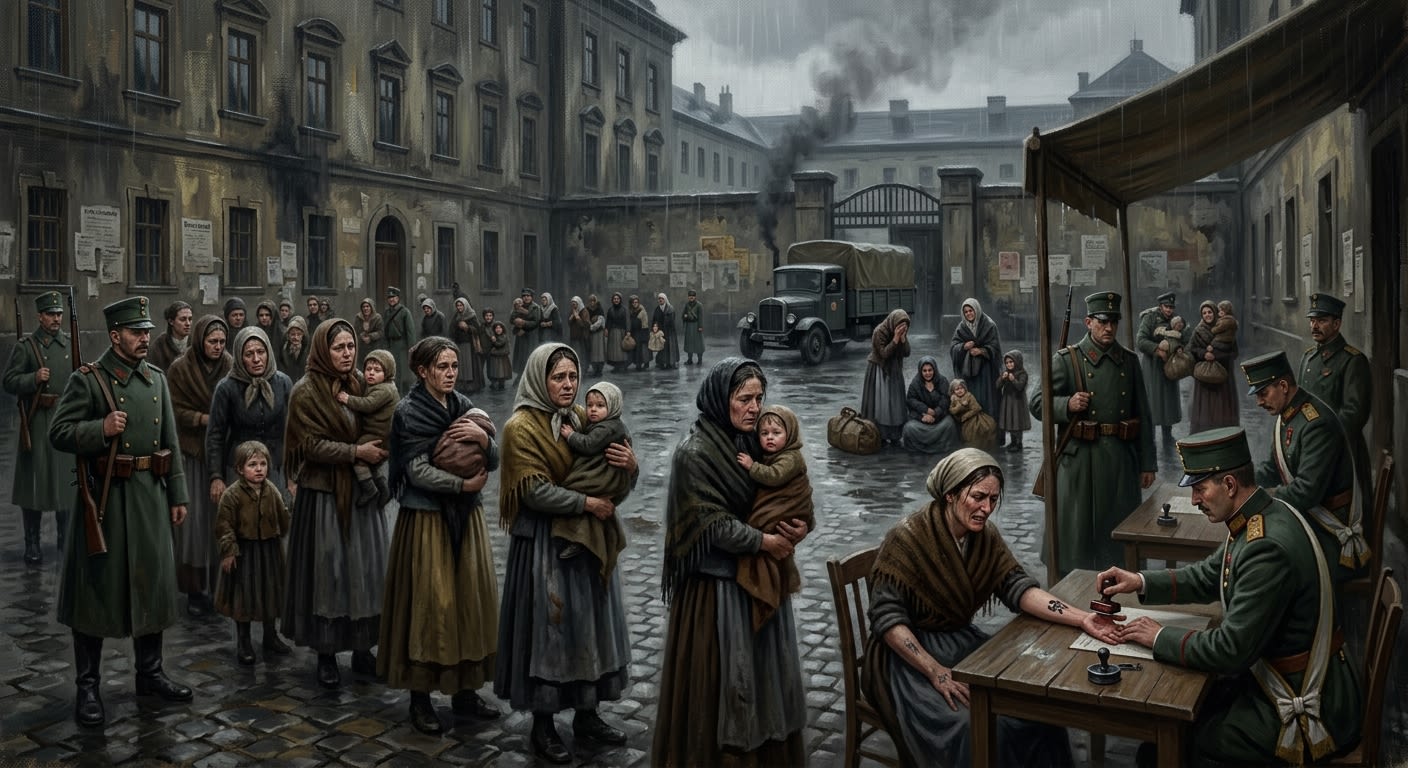
Vienna Incident A.S. 112
Five thousand tongues, and one lullaby still breathing
A.S. 112 Orison sweep in Vienna that branded five thousand mothers for a rain-and-barley lullaby and made unauthorized comfort a training case.
Codex Ref. VII.8.10-112
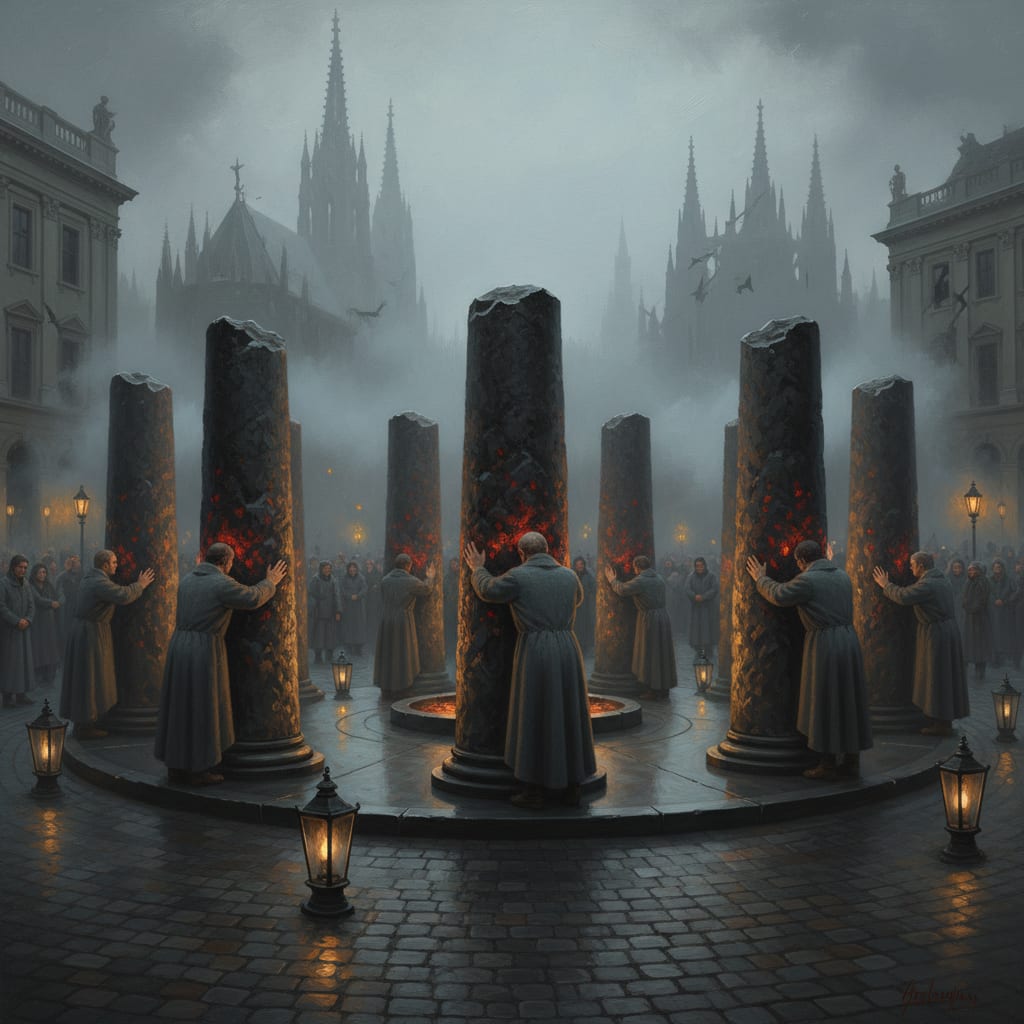
Vienna, the Shrine-Ruins
Three deaths, one gift shop, and a pen that has not dried in forty years
Three times ruined and once reclaimed. Vienna is the Synod's finest shrine and its most honest monument: the Rationalist capital, the Great Retreat's wound.
Codex Ref. II.4.09-010
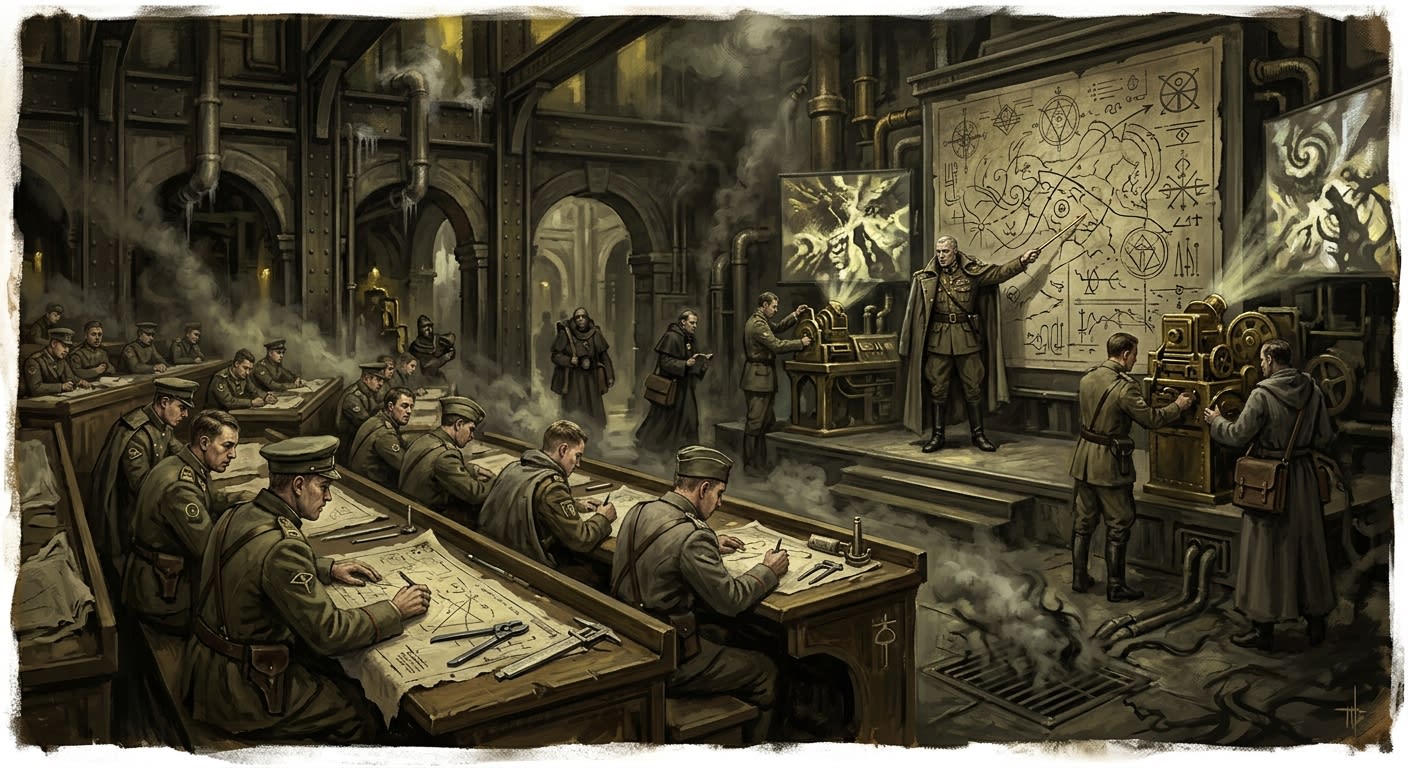
War College
Learn the death before ordering it
The War College makes officers legible before the Line makes them dead: courage corrected by arithmetic, arithmetic corrected by Hell.
Codex Ref. VIII.5.09-105