

Reverse Index
Referencing “The Rationalists”
Every codex entry that links to The Rationalists. 308 entries.
Return to The Rationalists
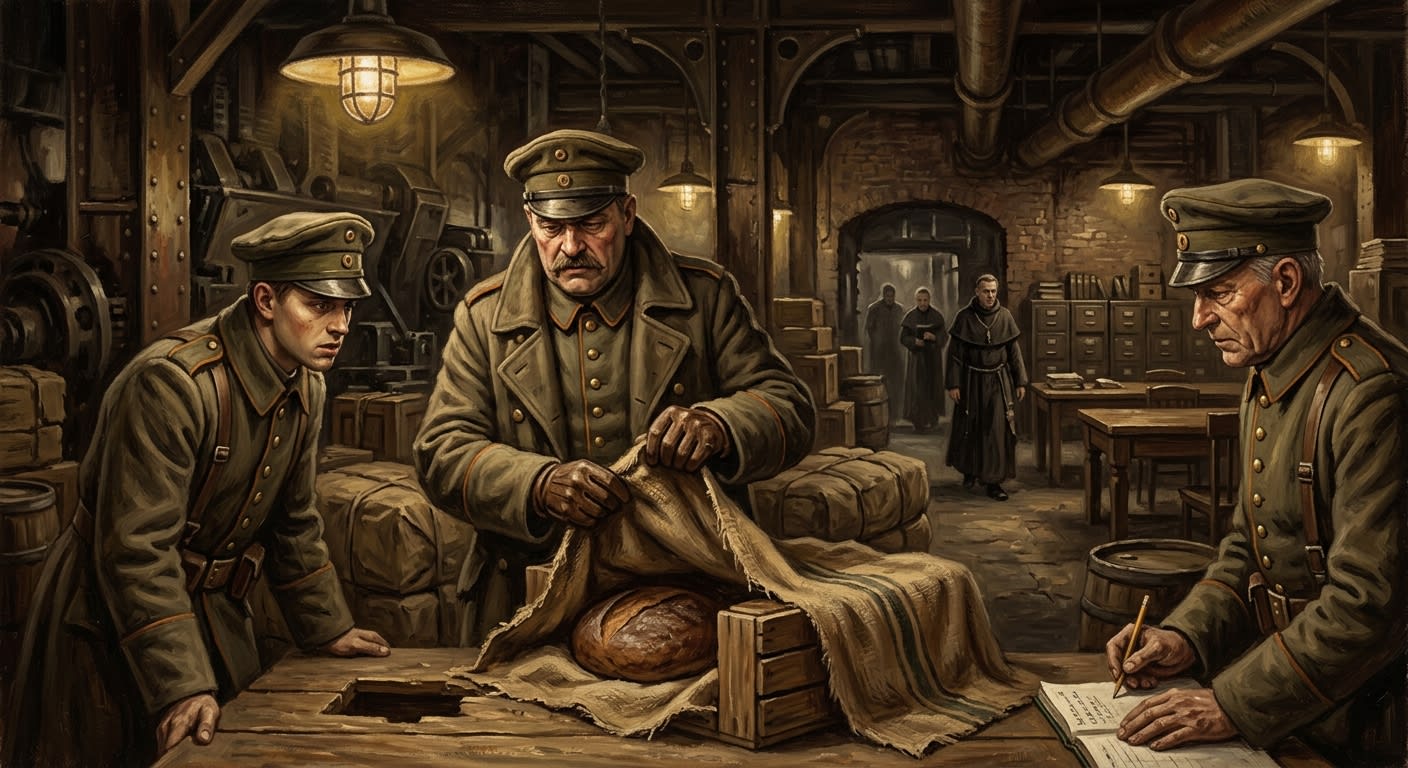
14th Rhine Customs Brigade
The guards who inspected bread and missed Providence
The 14th Rhine Customs Brigade lifted a cloth, saw bread, and missed three apostolic phalanges; Providence has seldom dressed itself so plainly.
Codex Ref. I.1.14-031
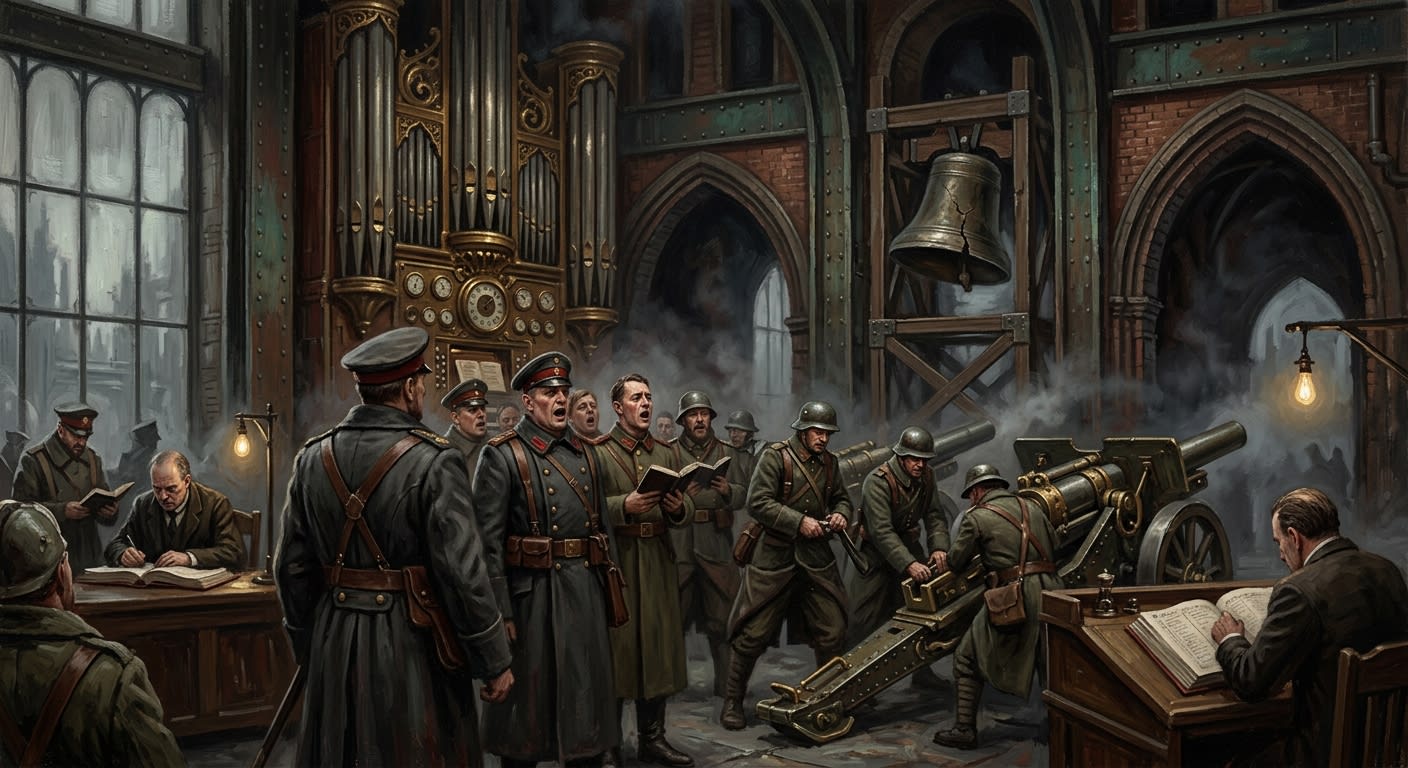
4th Orison Company
Where prayer learned range tables and glass learned to sing
The 4th Orison Company sang before Orison had a charter, fired relic-shot at Toledo, and proved that a mistimed peal can make martyrs inward.
Codex Ref. VIII.6.02-015
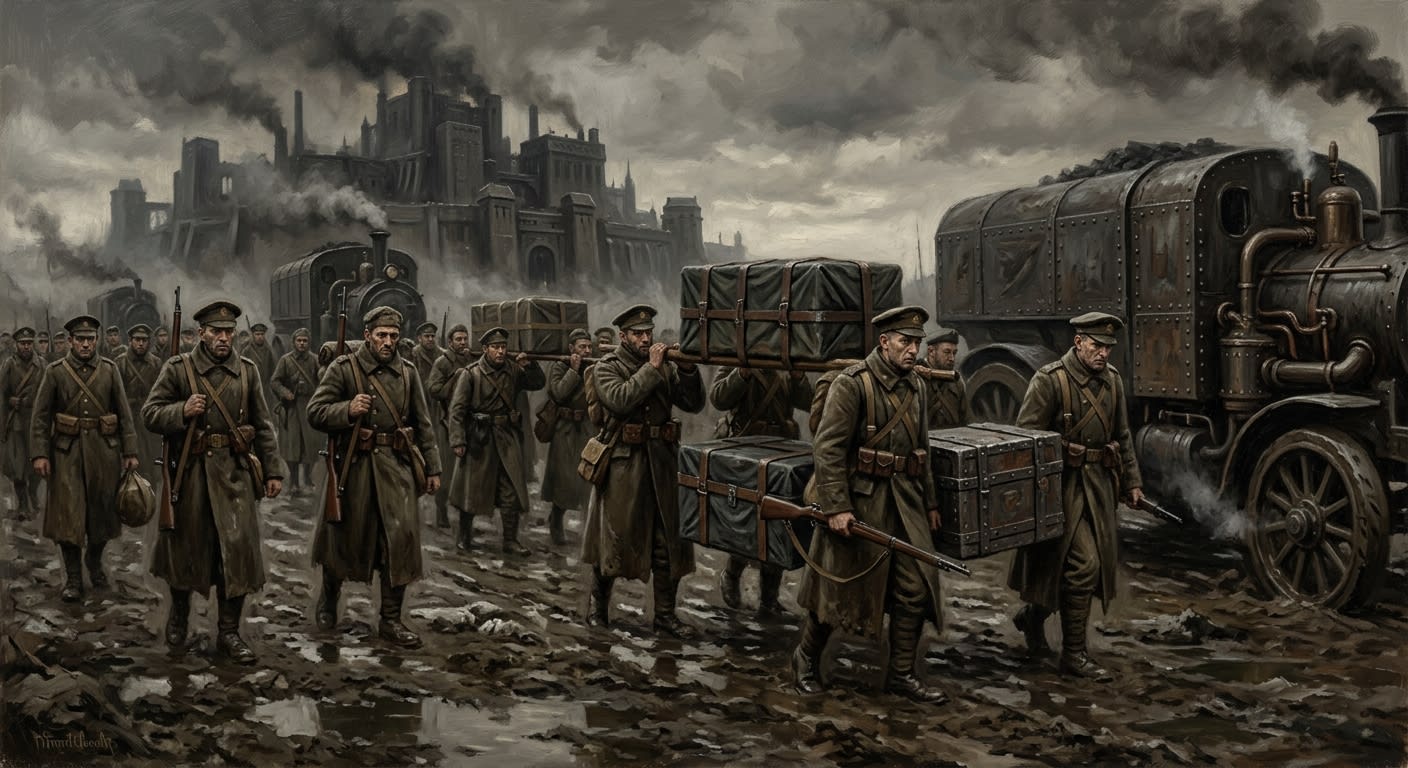
7th Rearguard Column
The middle hand that did not lose the bones
The 7th Rearguard Column did not blaze at Kalnik; it carried the bones through the middle miles, and the miracle survived because nobody lost the packet.
Codex Ref. VIII.5.07-045
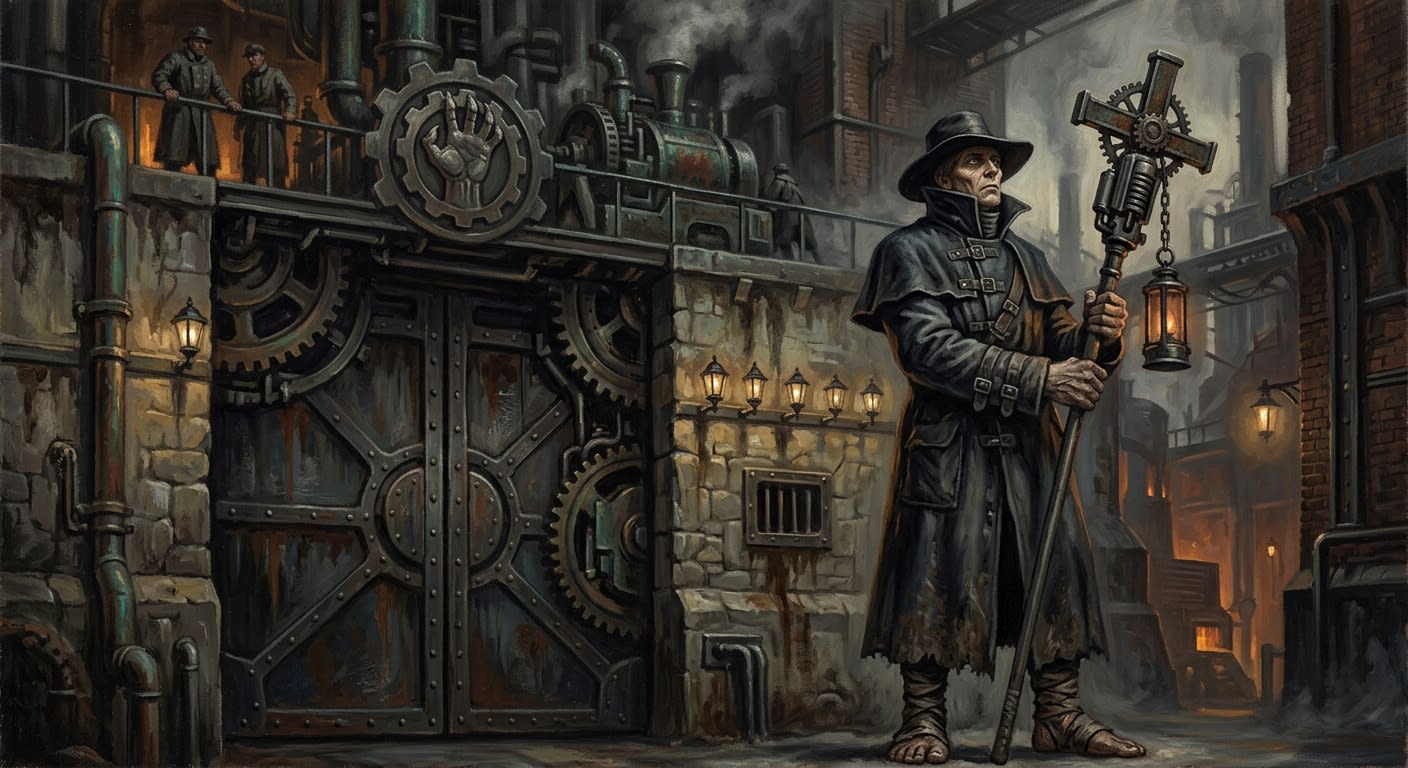
Aachen
The city that survived its own fall
Aachen opened its gate in A.S. 25, survived the betrayal, and has spent every taxed, polished, barefoot century proving survival is not innocence.
Codex Ref. II.2.02-001
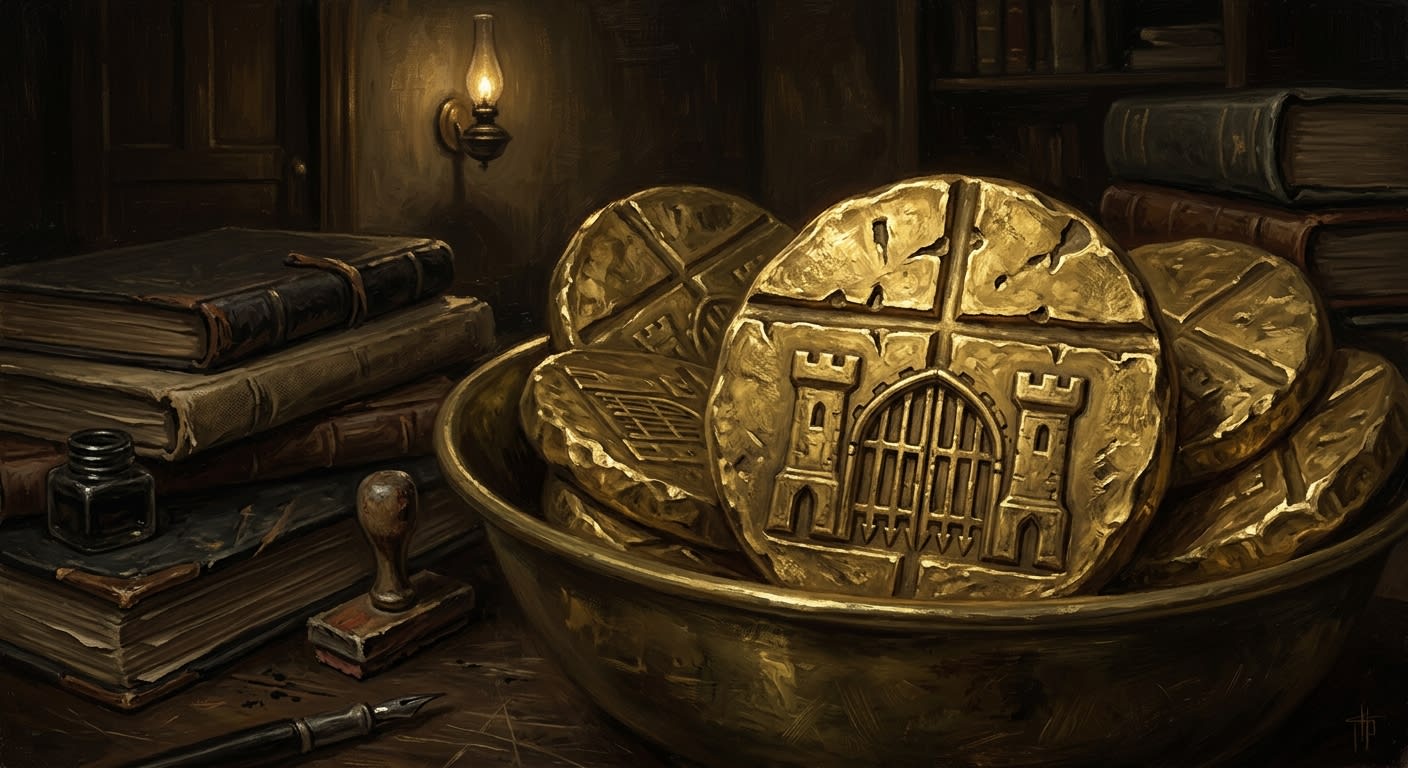
Aachen Gate-Penny
A saint's housing made small enough to buy boot grease
The Aachen gate-penny is reliquary gold made into emergency currency: a closed gate, a cross-groove, and a city’s old betrayal priced by the handful.
Codex Ref. V.2.04-160
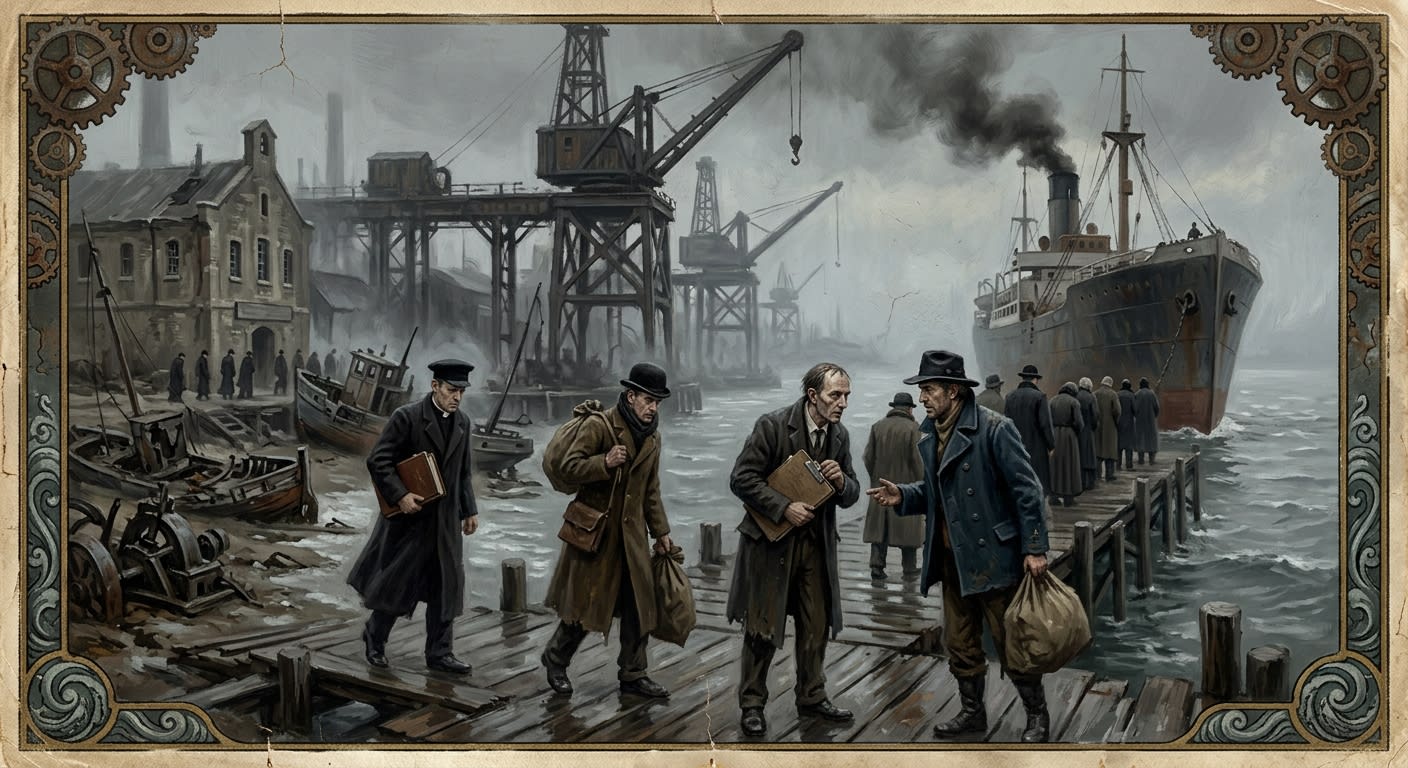
Aegean
The sea is held where it is counted
The Aegean is the Synod's southern salt-ledger: supply lane, pilgrim road, smuggler's chapel, drown-office, and sea with a clerical appetite.
Codex Ref. II.4.09-072
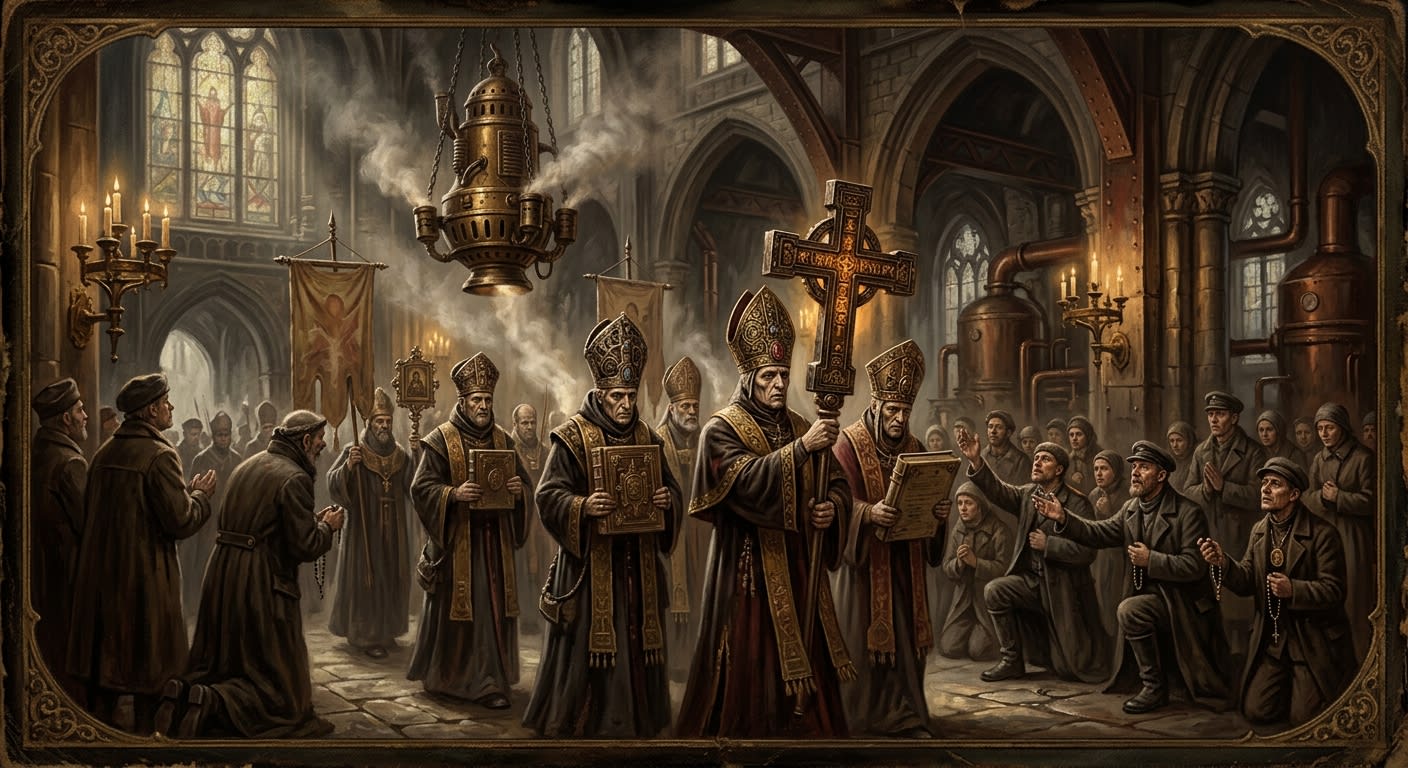
Age of Faith
The golden age improved by burial
A devotional-historical category for the centuries before A.S. 0, when Heaven is said to have answered and Europe had not yet taught unbelief to print.
Codex Ref. XIII.1.00-000
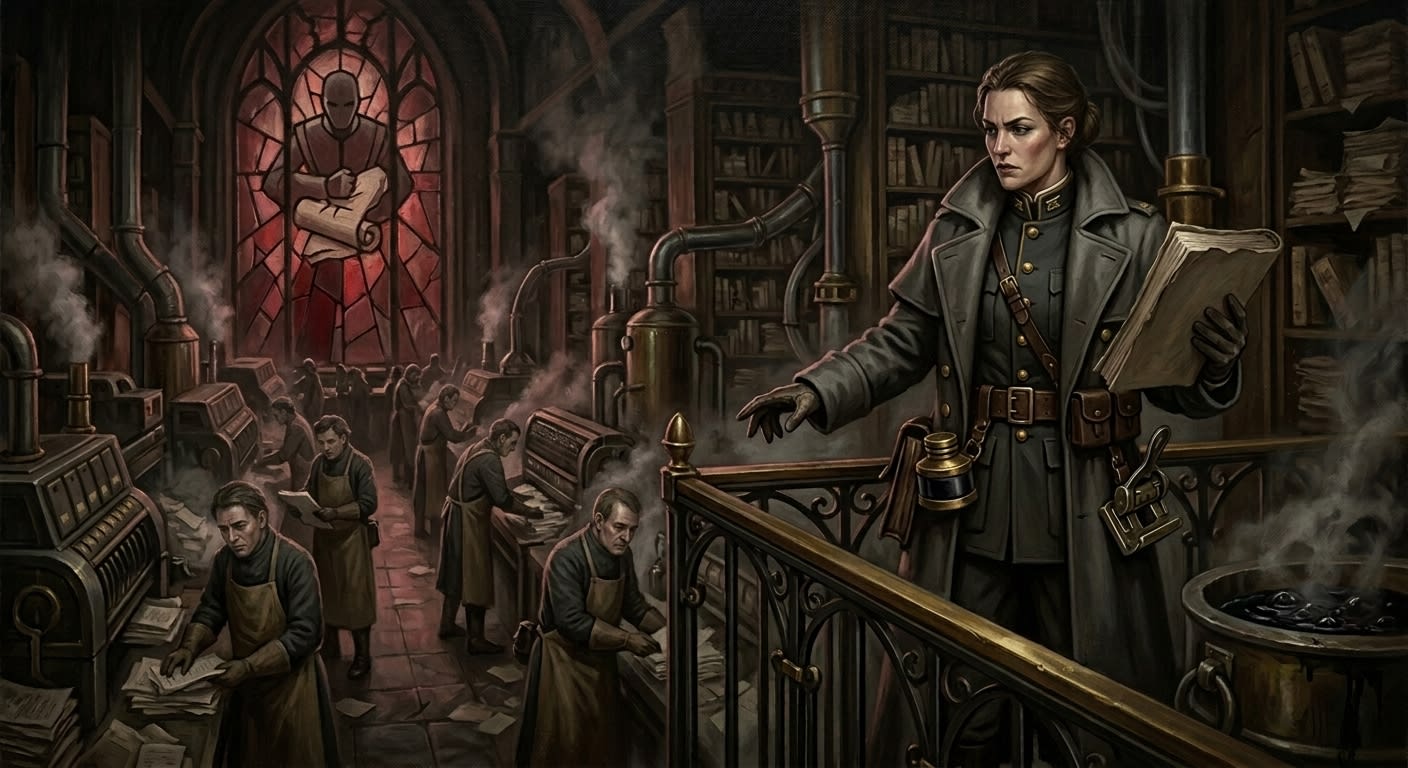
Aldara Vess the Younger
The woman who removes language from the room until obedience remains
Aldara Vess the Younger commands the Bureau of Silence, the Forbidden Stacks, and the art of making words administratively absent before they become dangerous.
Codex Ref. III.2.01-018
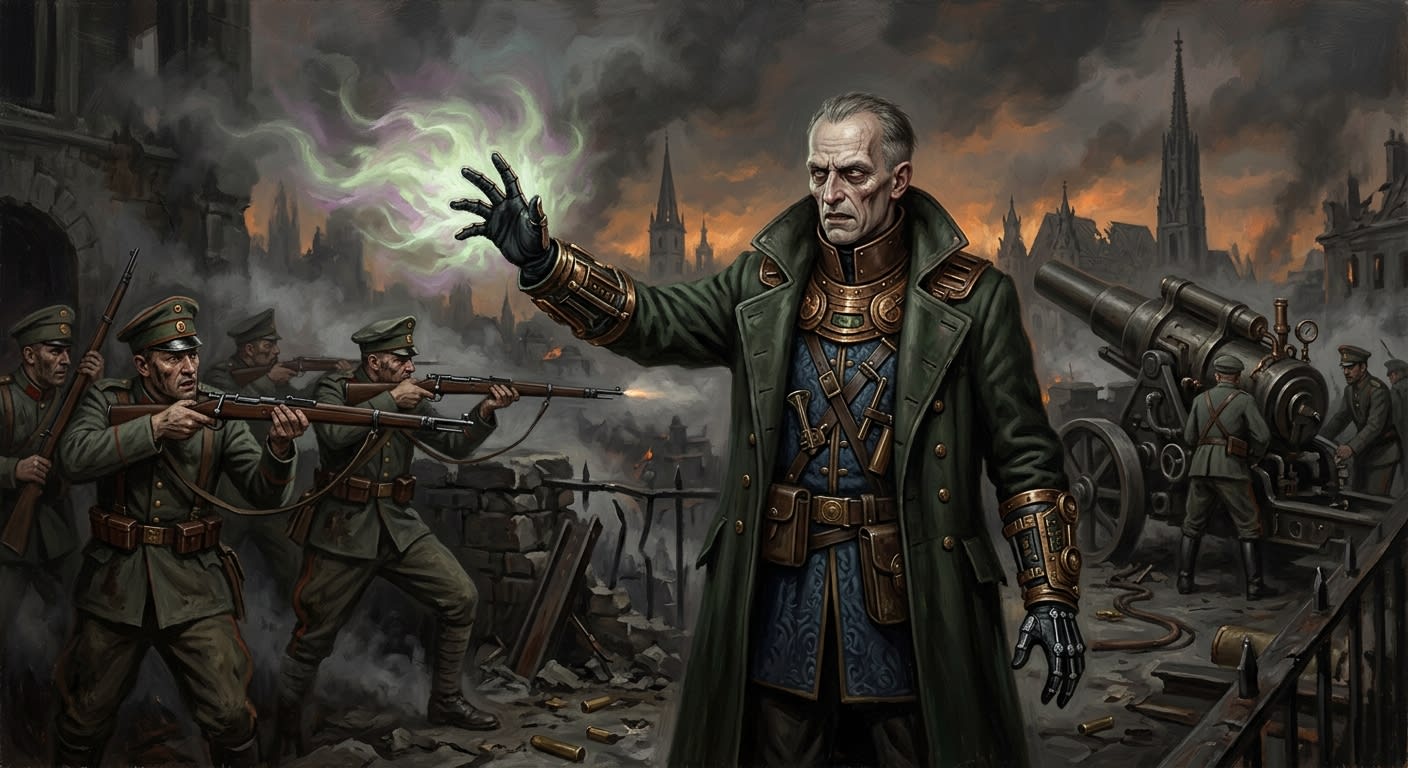
Althazar of Pest
The unauthorized man history mistook for a throne
Althazar of Pest was the sorcerer-lord of Vienna's last siege, a Rationalist remnant commander destroyed by Clemens Stahlhand and Saint Aldebrand's reliquary mace.
Codex Ref. III.2.01-153
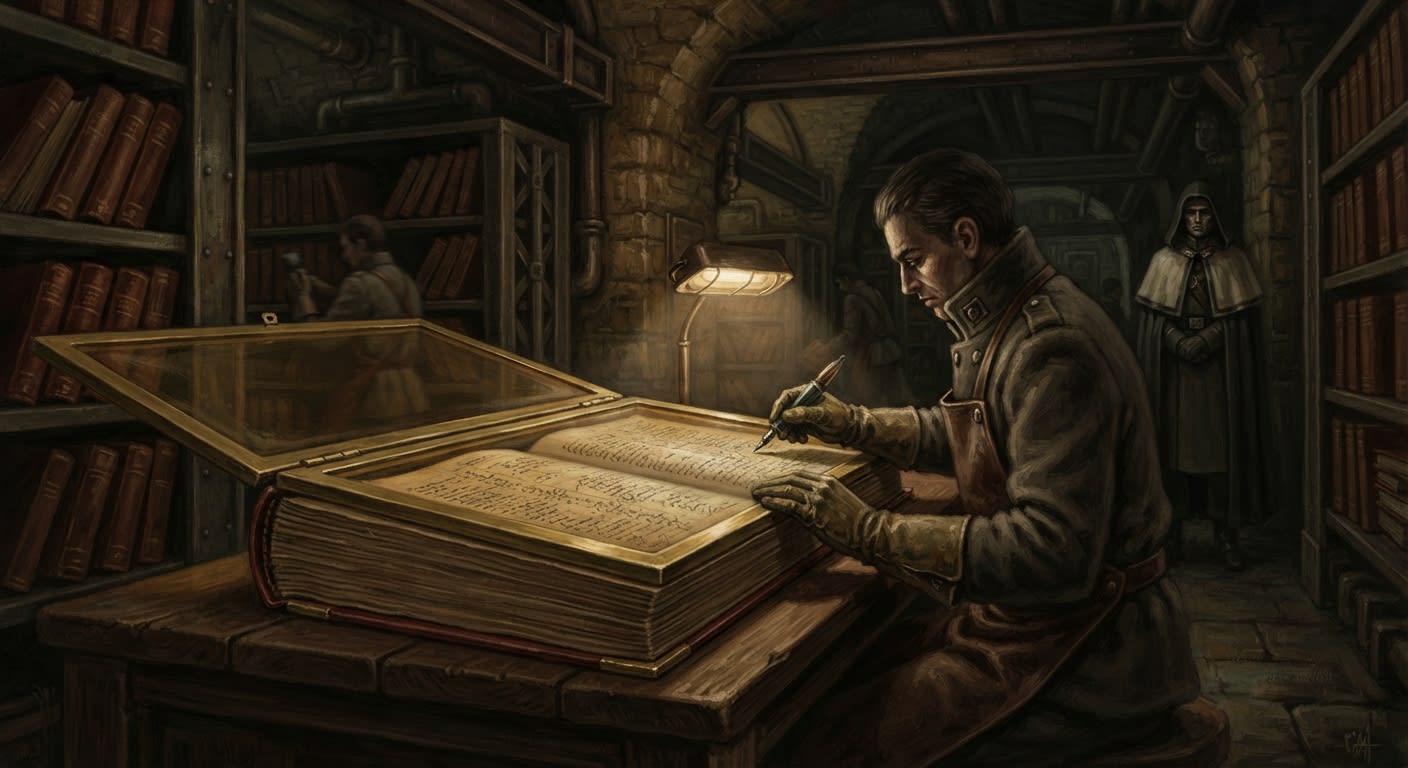
Amber Book
The ledger Purity refuses to close
The Amber Book is Purity's tacky ledger of suspended warrants: names kept breathing under glass until the charge written for them catches up.
Codex Ref. XIII.1.06-002
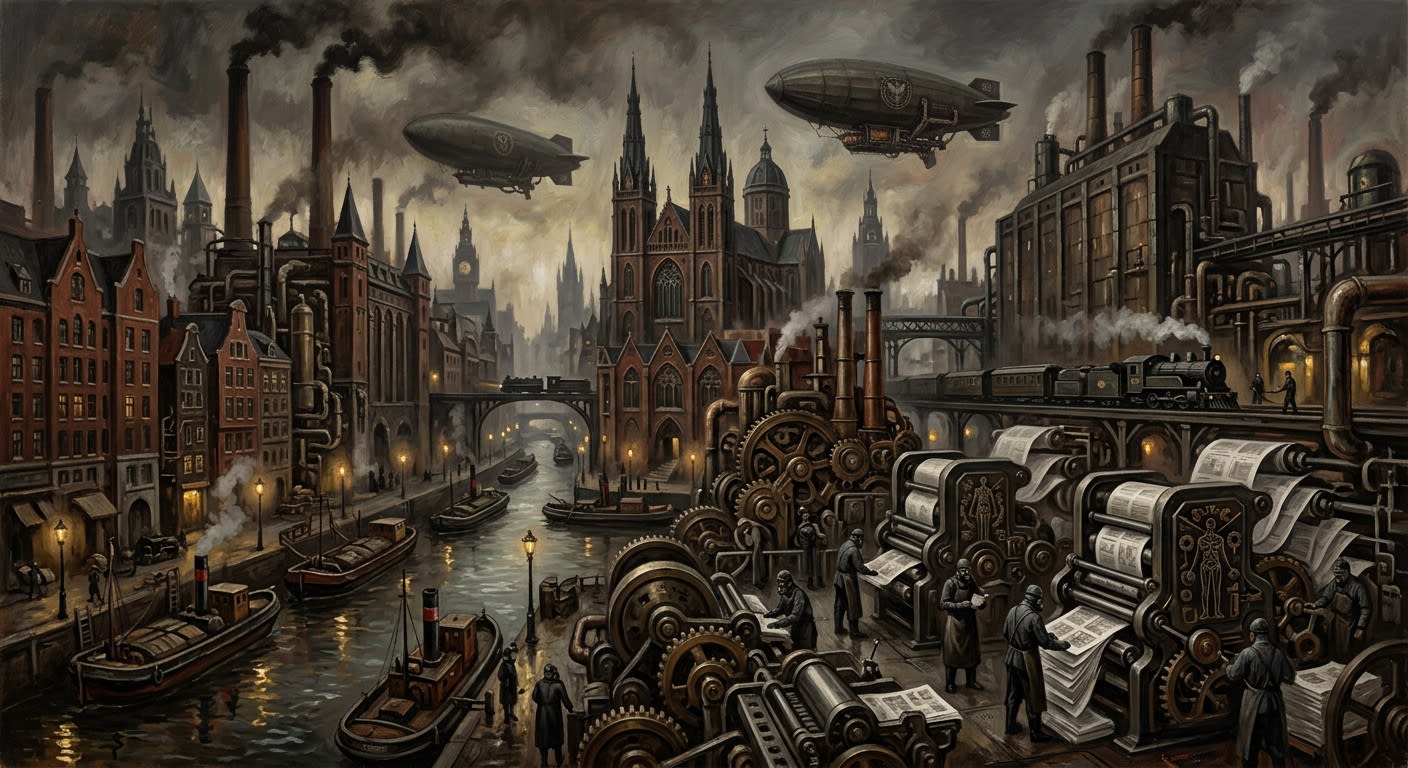
Amsterdam
The city where Europe learned to sin in pamphlet form
Amsterdam is the independent Dutch city where the Synod's calendar wound was printed: first the Year of Letters, then *De Vera Luce*, then Europe taught to doubt by invoice.
Codex Ref. II.4.09-012
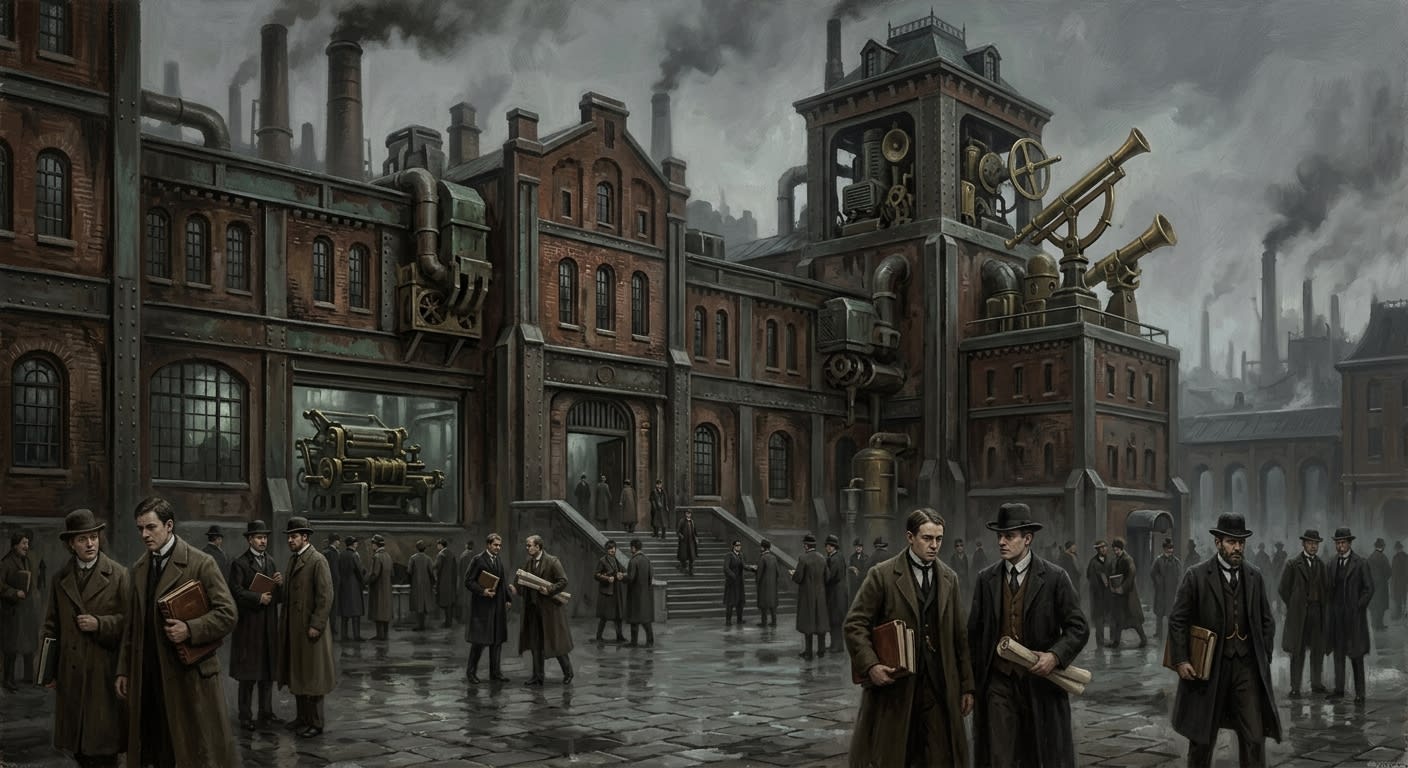
Amsterdam Academy
The lectern that made unbelief printable
The Amsterdam Academy licensed unbelief, printed the calendar wound, and taught Europe that a schoolhouse may do the work of a siege engine.
Codex Ref. VIII.8.01-000
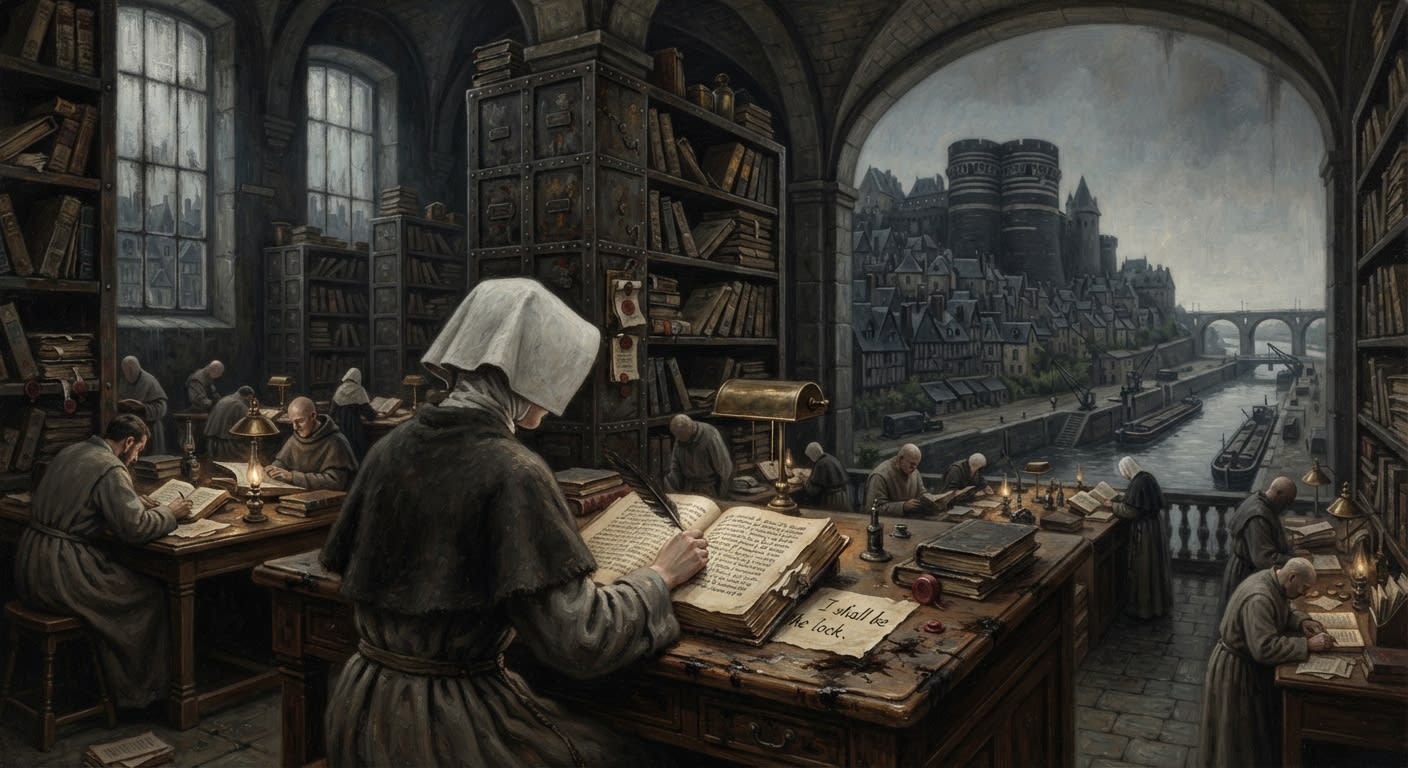
Angers
Five words, no bridge, and a city trying to found an order
Angers is a Zone One city whose claim on the Sisters of the Martyrdom rests on five psalter-margin words: I shall be the lock.
Codex Ref. II.1.09-015

Aniela Rudzka
The woman whose arithmetic required jurisdiction
Doctor Aniela Rudzka was senior accused in the A.S. 199 Condemnation of Kraków: correct in arithmetic, silent under sentence, and therefore intolerable.
Codex Ref. III.2.01-022
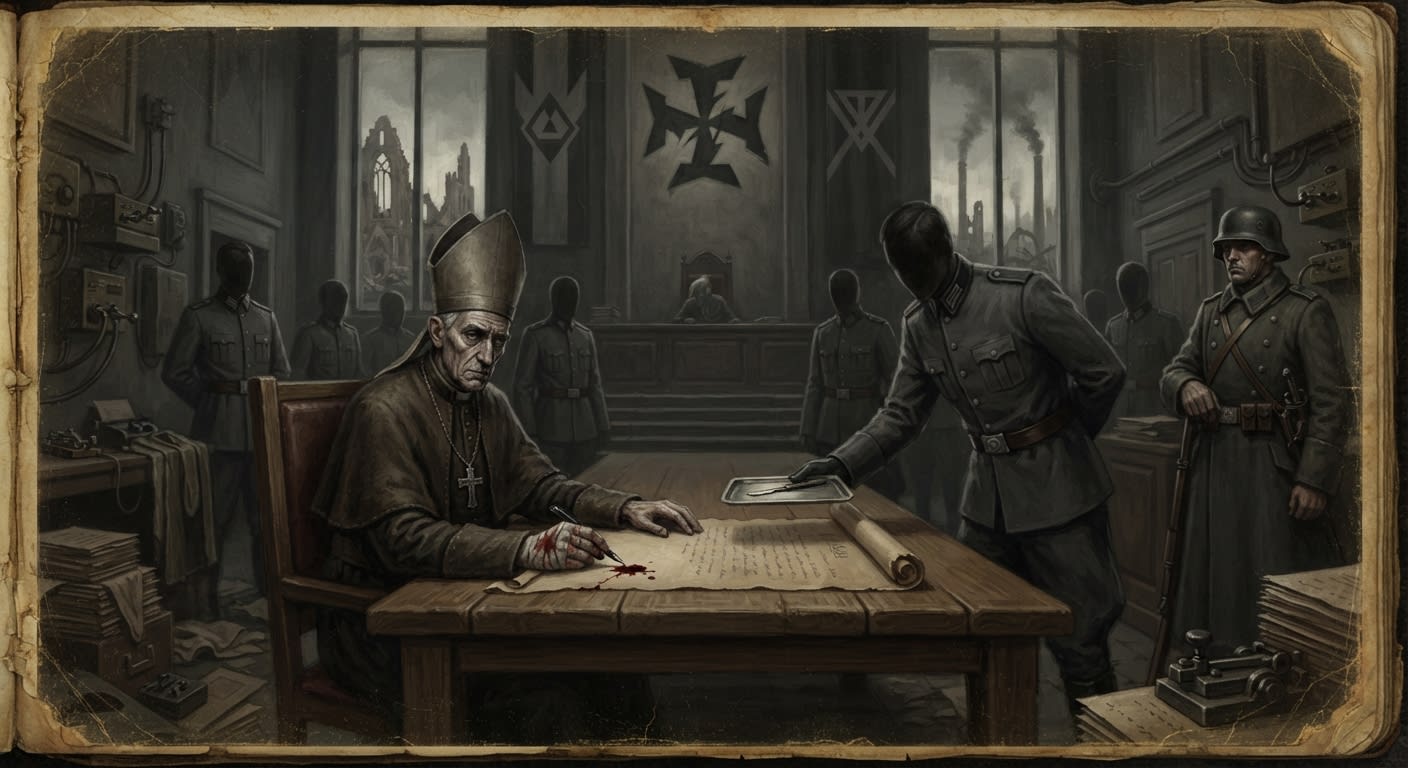
Archbishop of Vienna
The hand the Rationalists needed and Doctrine refuses to name
The unnamed prelate whose blood signed the Treaty of Regensburg, dissolved the Holy See under threat, and later became Doctrine's evidence that coercion is not consent.
Codex Ref. III.2.06-004
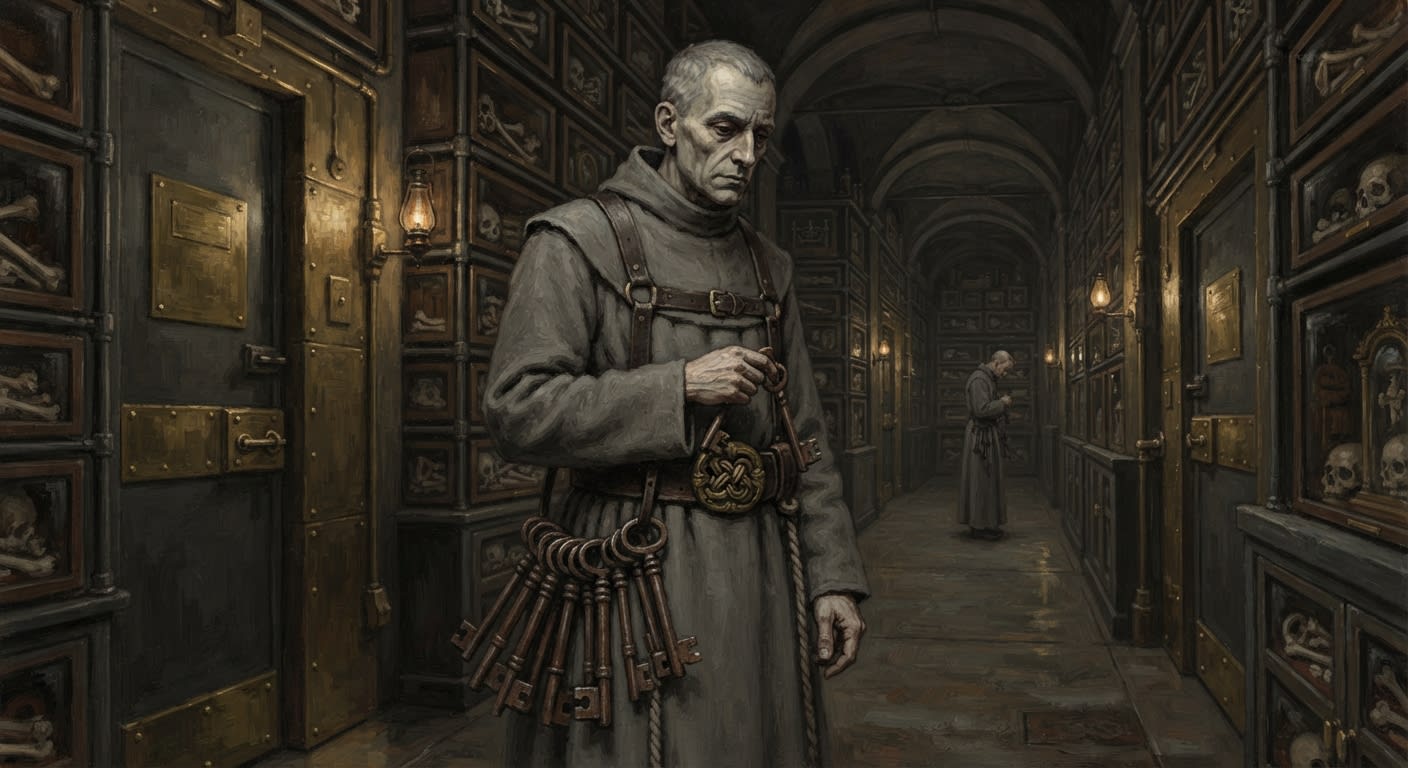
Archon-Custodian of Relics
The keys are issued to the chair. The chair lends them to the man.
The classified holder of the Bureau of Relics' custodial chair keeps the Vault, the keys, the silence, and the useful fiction that bones answer to shelves.
Codex Ref. III.2.01-201
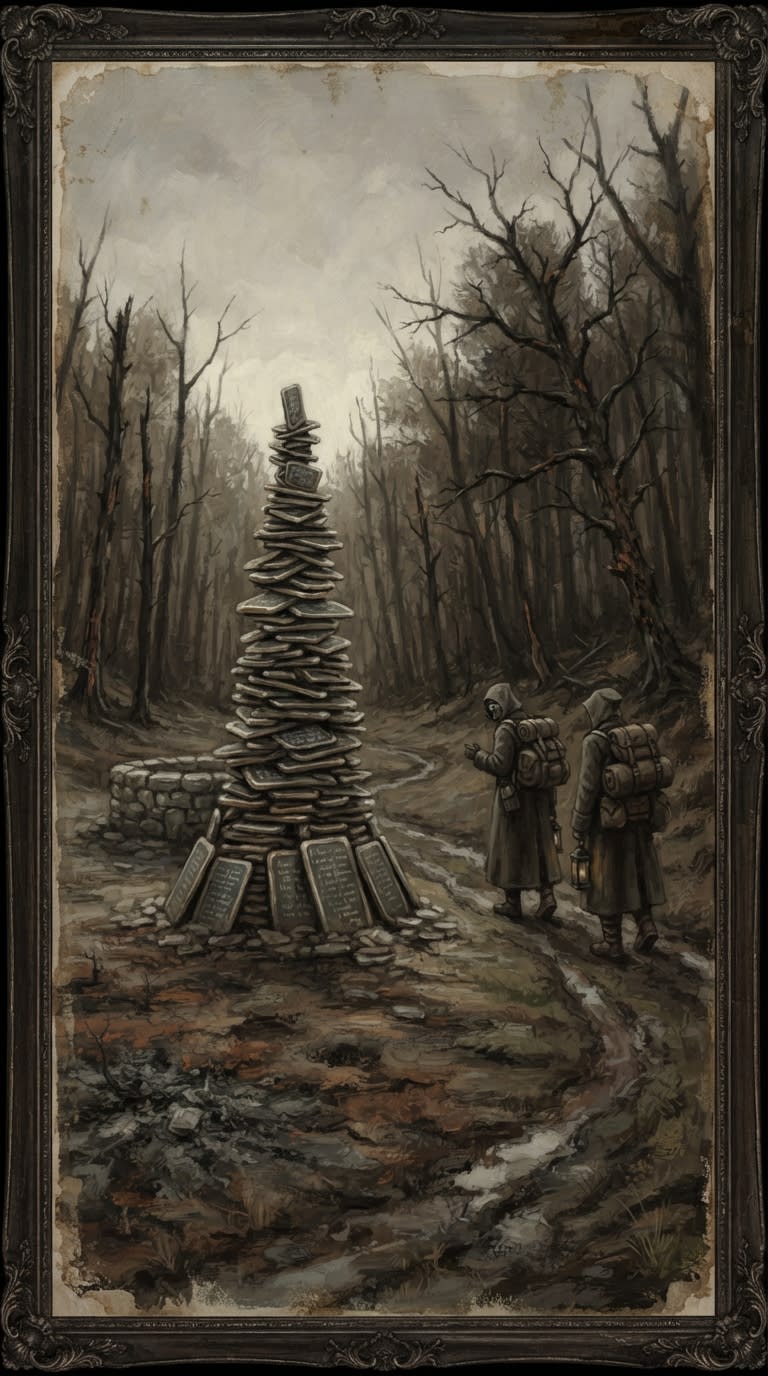
Ardennes
The forest that remembers what Records cannot file
A loyal western forest where expelled friars vanished beneath the moss and the Order of Ash left a parish glassed so clean that even absence required a form.
Codex Ref. II.1.09-189
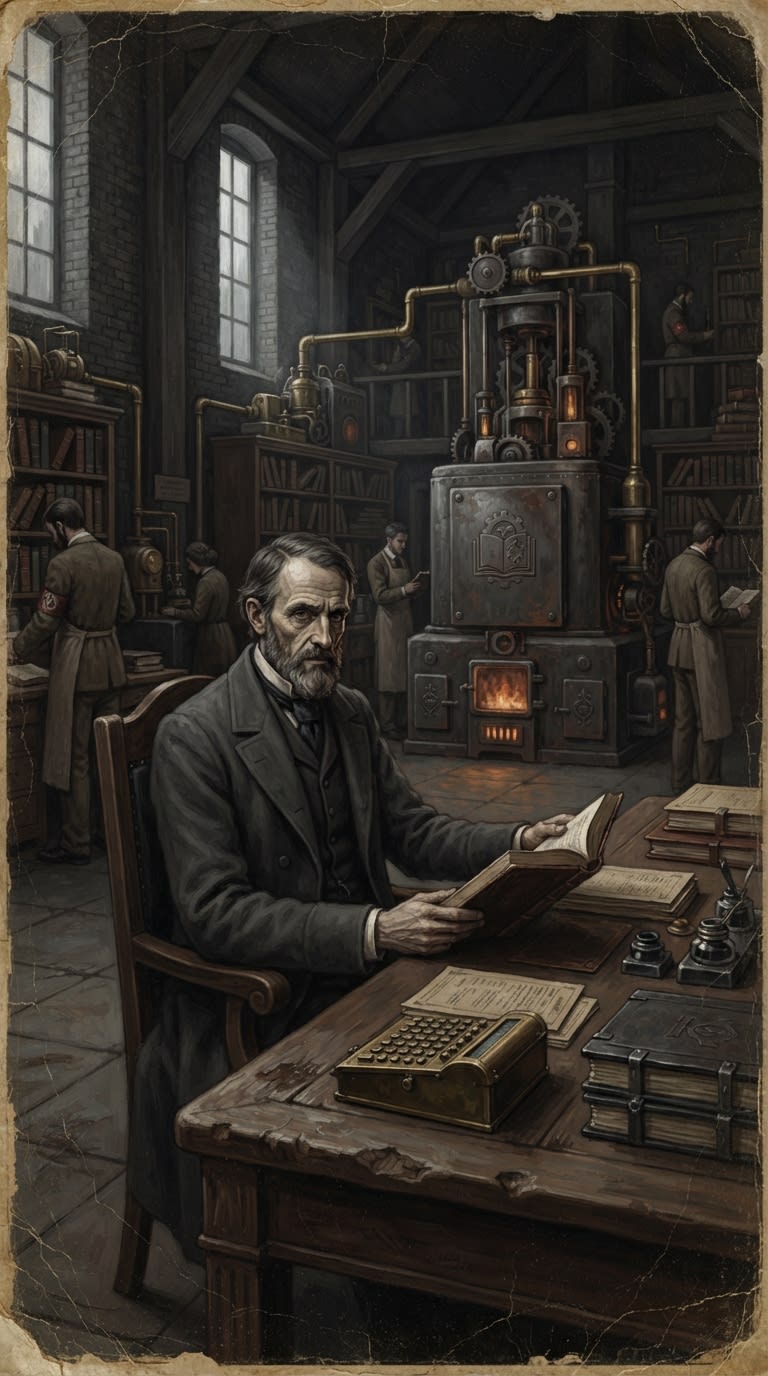
Aristotle
The pagan who lent the Church its knife
Aristotle gave the Church no doctrine, no obedience, and no permission. Unfortunately for him, he did leave behind a very useful machine for arguing.
Codex Ref. III.2.01-073

Arno Kett
The man who made disbelief small enough to fit in a pocket
Founder of the first verifiable Silent Godless cells, author of the question-based recruitment method, and the corpse from which Doctrinal Nullification was made lawful.
Codex Ref. III.2.01-144
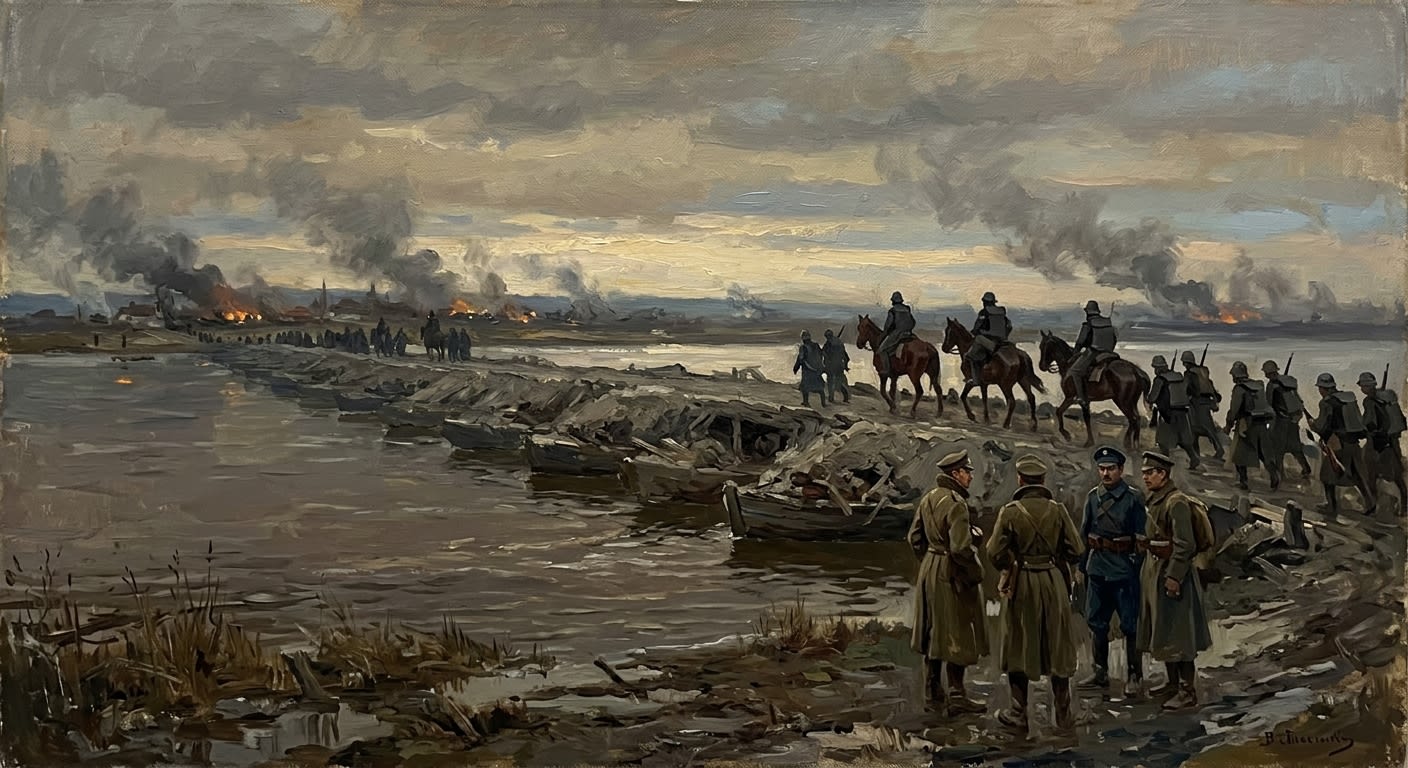
Ash-Fodder
The cheapest weapon in the Adversary's ledger — and the one no committee is willing to count
The Ash-Fodder Militias are the lowest tier of the Shadow Court's mortal force taxonomy — unenhanced, unarmed or barely armed, drawn from conquered populations and driven forward to exhaust Synod ammunition and armour before the real assault begins.
Codex Ref. IX.1.03-001
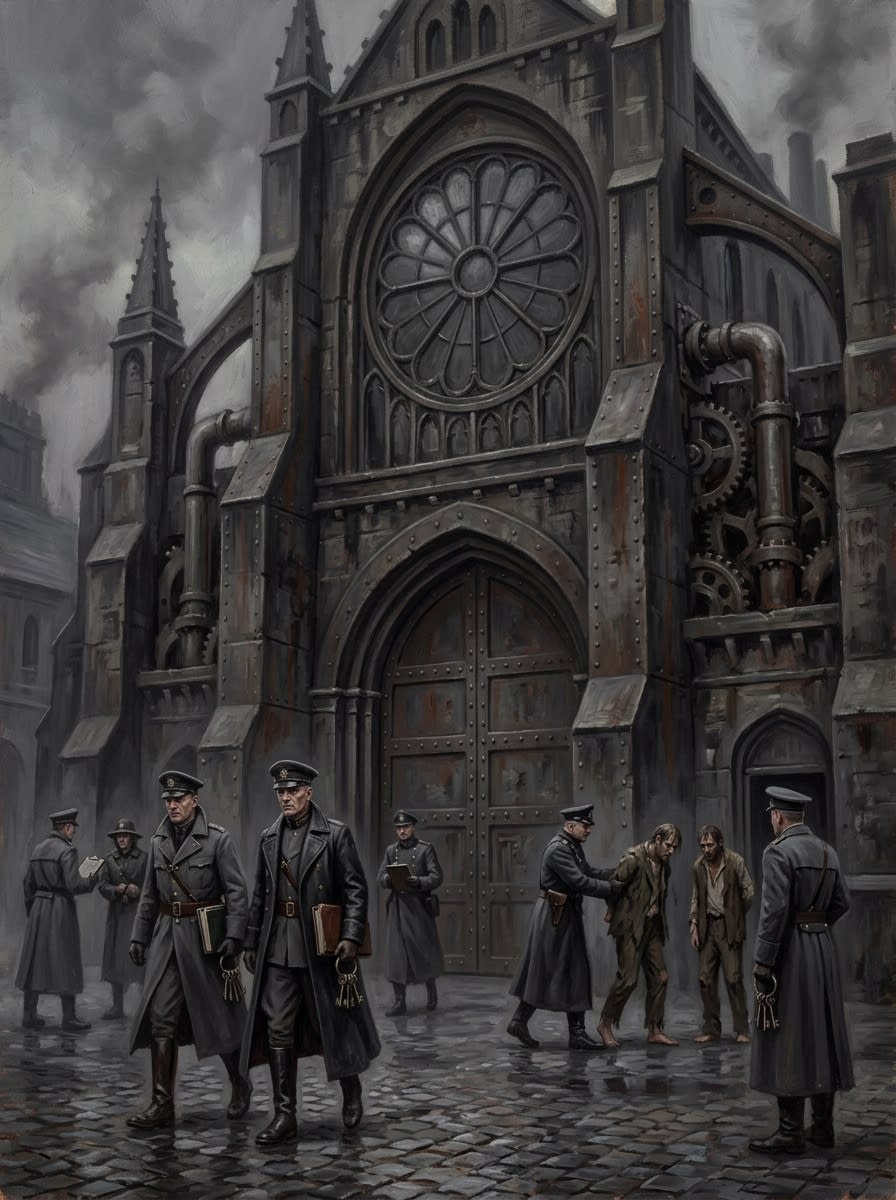
Ashen Cloister
Purity's house has handles only on the outside
The Ashen Cloister is Purity's Strasbourg seat: gate without welcome, court without mercy, archive with appetite, and the cleanest terror in the Synod.
Codex Ref. II.1.04-003
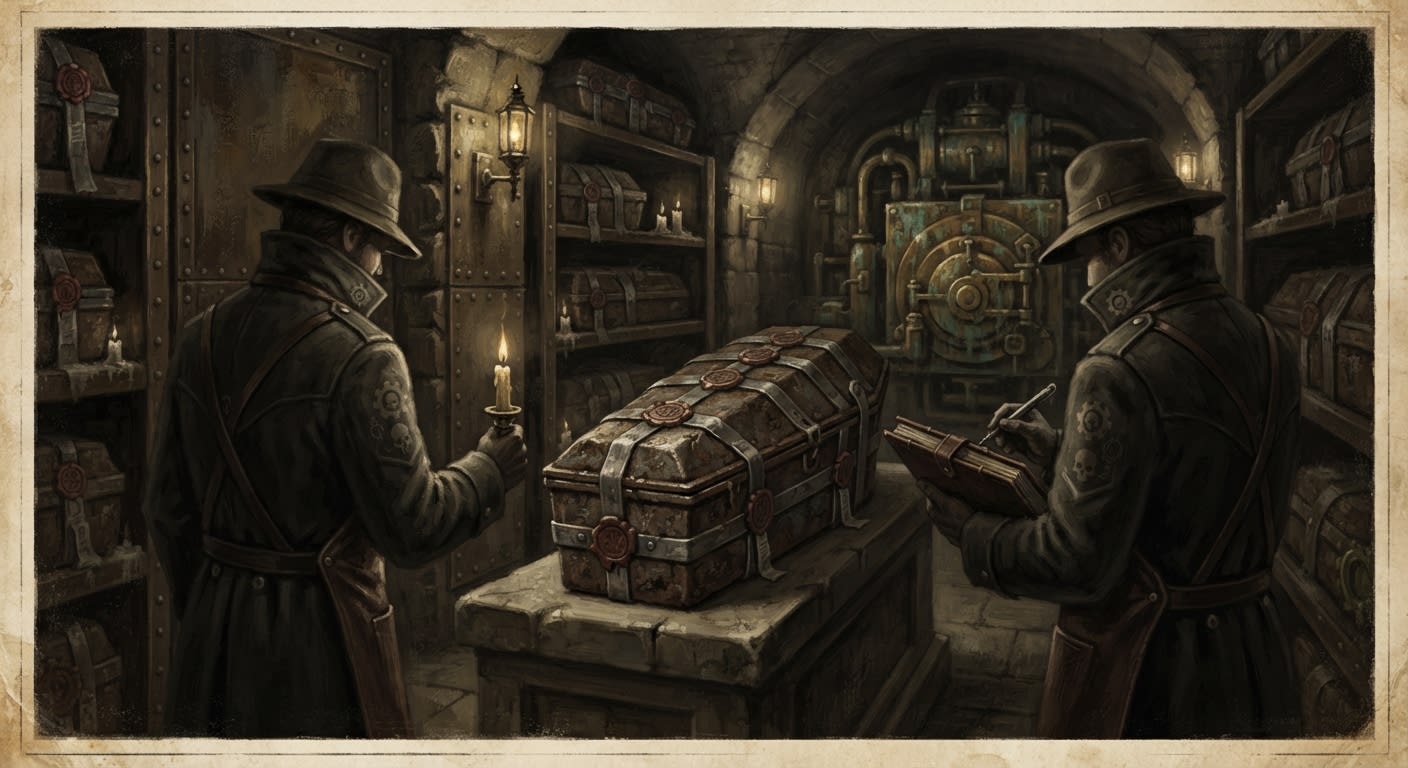
Ashes of the Sundering
The day in the jar, and the seal around the fear
The Bureau of Relics keeps a sealed iron vessel said to contain the Sundering's own residue, gathered from Vienna's cathedral floor and never opened since.
Codex Ref. V.1.03-045
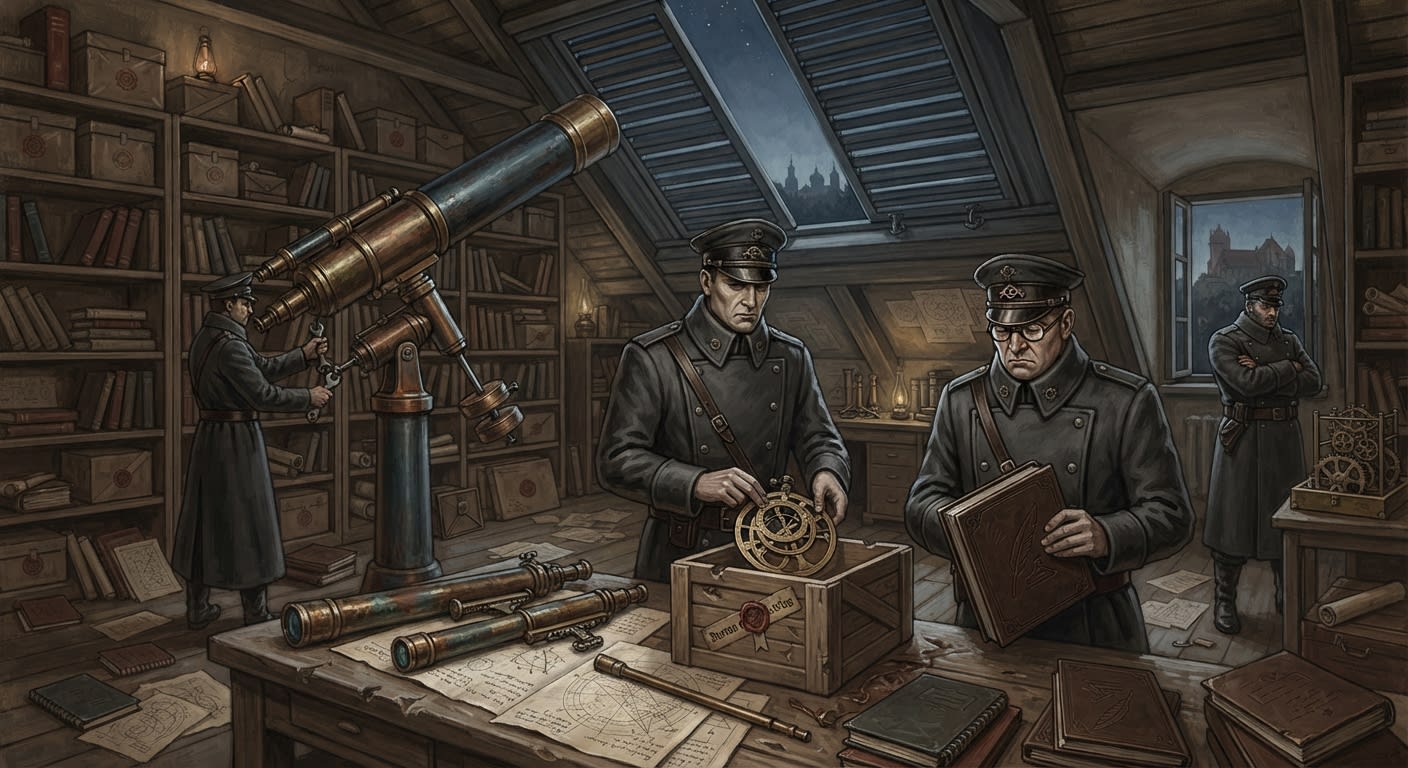
Astronomers of Kraków
The sky kept time; the Bureau kept jurisdiction
The unchartered university habit that wrote the sky down too accurately, earned Doctrine's A.S. 199 correction, and left twenty-one scholars counted among Ulm's paper.
Codex Ref. XI.5.04-199
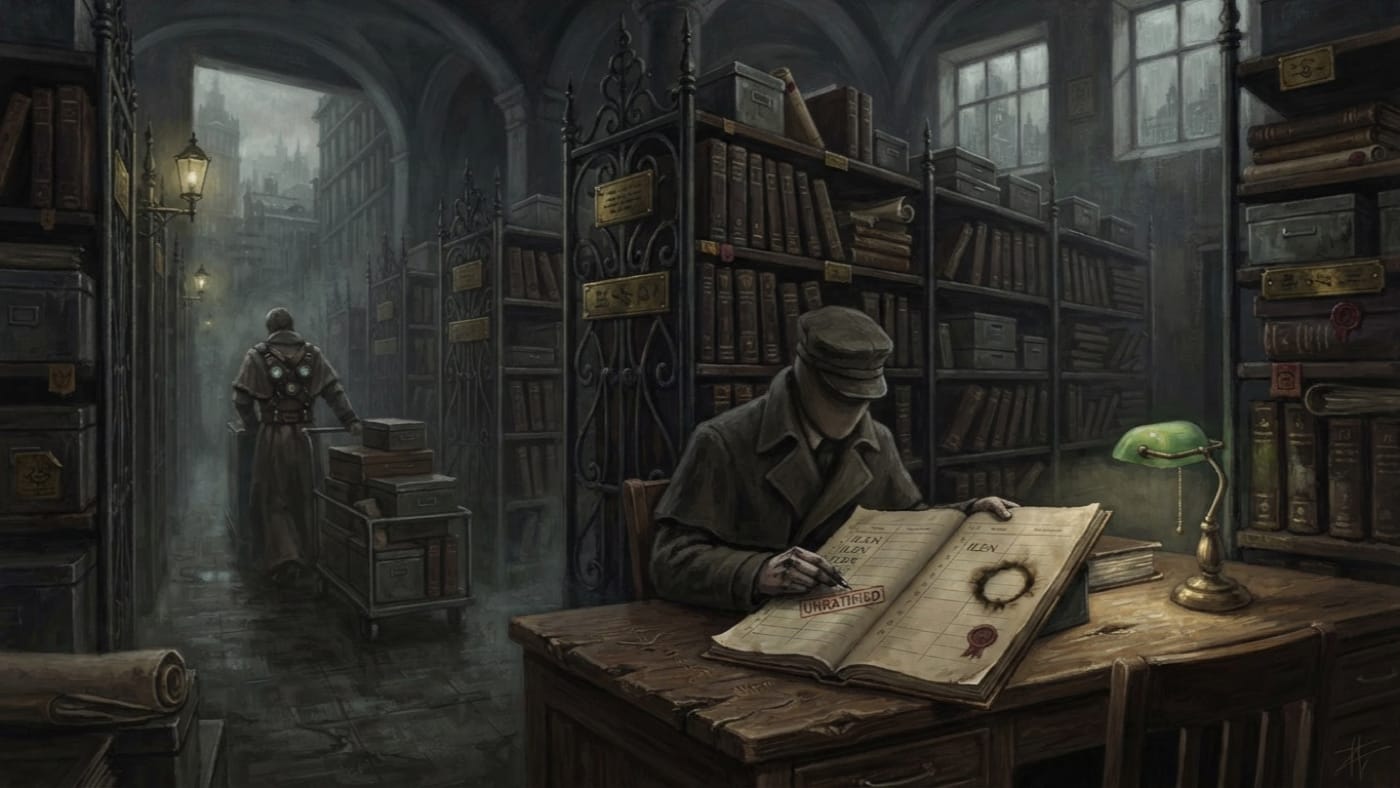
Auxiliary Ilen of the Lesser Quarter
Two names, one place in the roster, and no man the Ledger can certify
Auxiliary Ilen appears in certain rosters of Prague's Night of Crowns, A.S. 8, where other copies name Marek. The Ledger preserves his name; it has never located the man.
Codex Ref. III.2.01-151
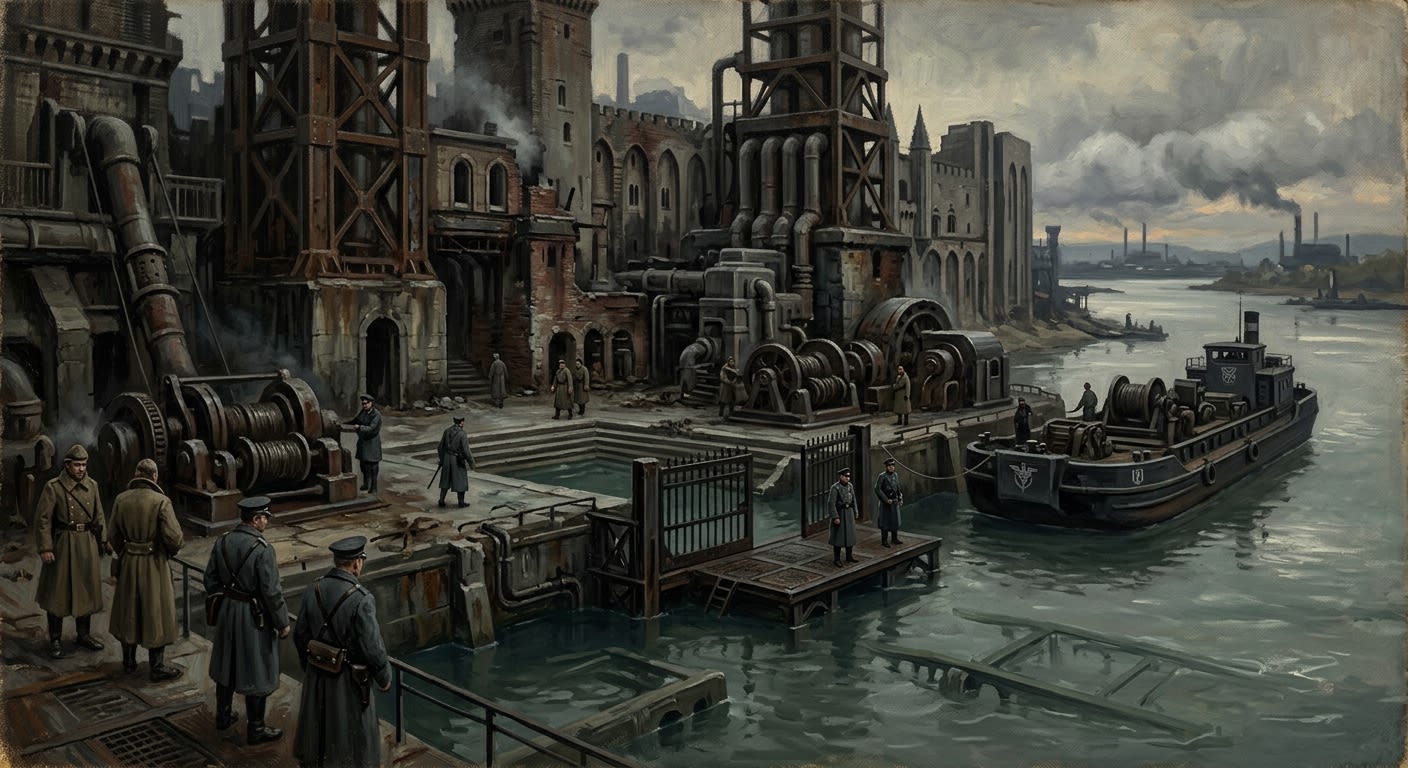
Avignon
A city corrected so thoroughly the river kept the receipt
Penitential ruins on the Rhône, where the Pontifex Submersis was crowned beneath water in A.S. 111, Avignon was razed into correction, and A.S. 145 burned the calendars into agreement.
Codex Ref. II.1.08-111
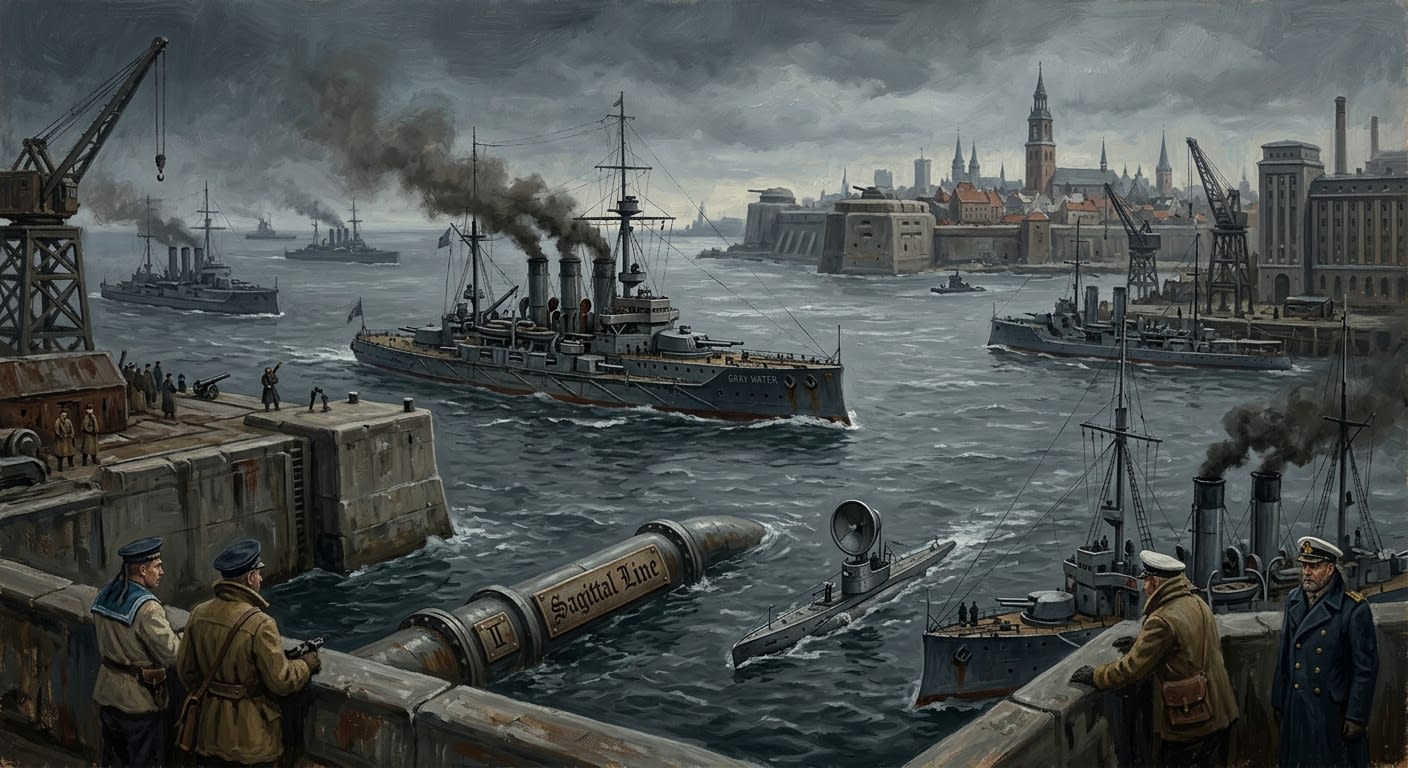
Baltic Sea
The cold bowl that listens back
The Baltic Sea is the cold northern bowl where the Sagittal Line ends at Königsberg, Grey Water listens, old bells answer, and maps lose courage.
Codex Ref. II.8.01-065
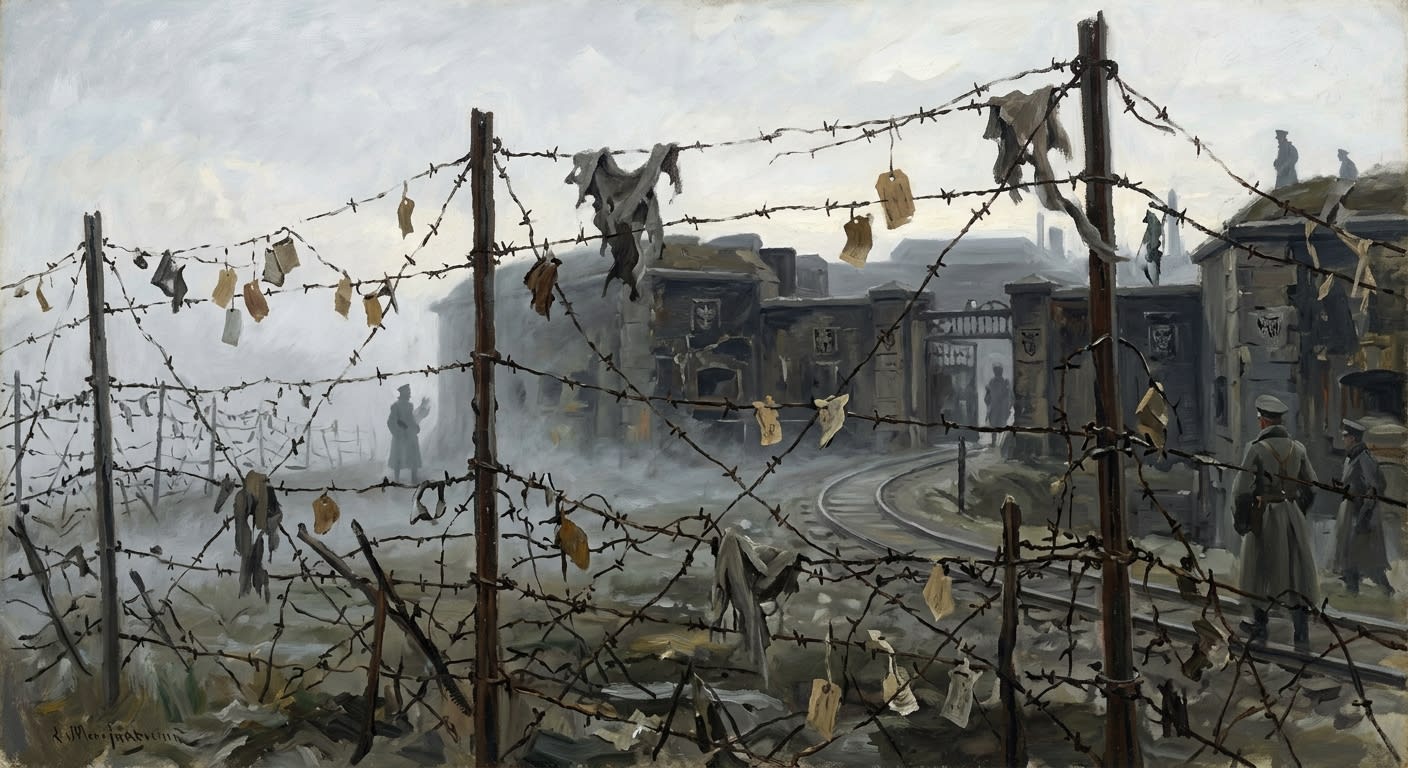
Bastion-Przemyśl
The Wire Remembers What the Ledger Forgets
The Wire Orchard at the Carpathian arc: three miles of electrified barb, a ration-tag economy, and the cold arithmetic of the dawn harvest. What enters Bastion-Przemyśl is processed. What exits is stamped. What fails the stamp feeds the Orchard.
Codex Ref. II.4.07-003
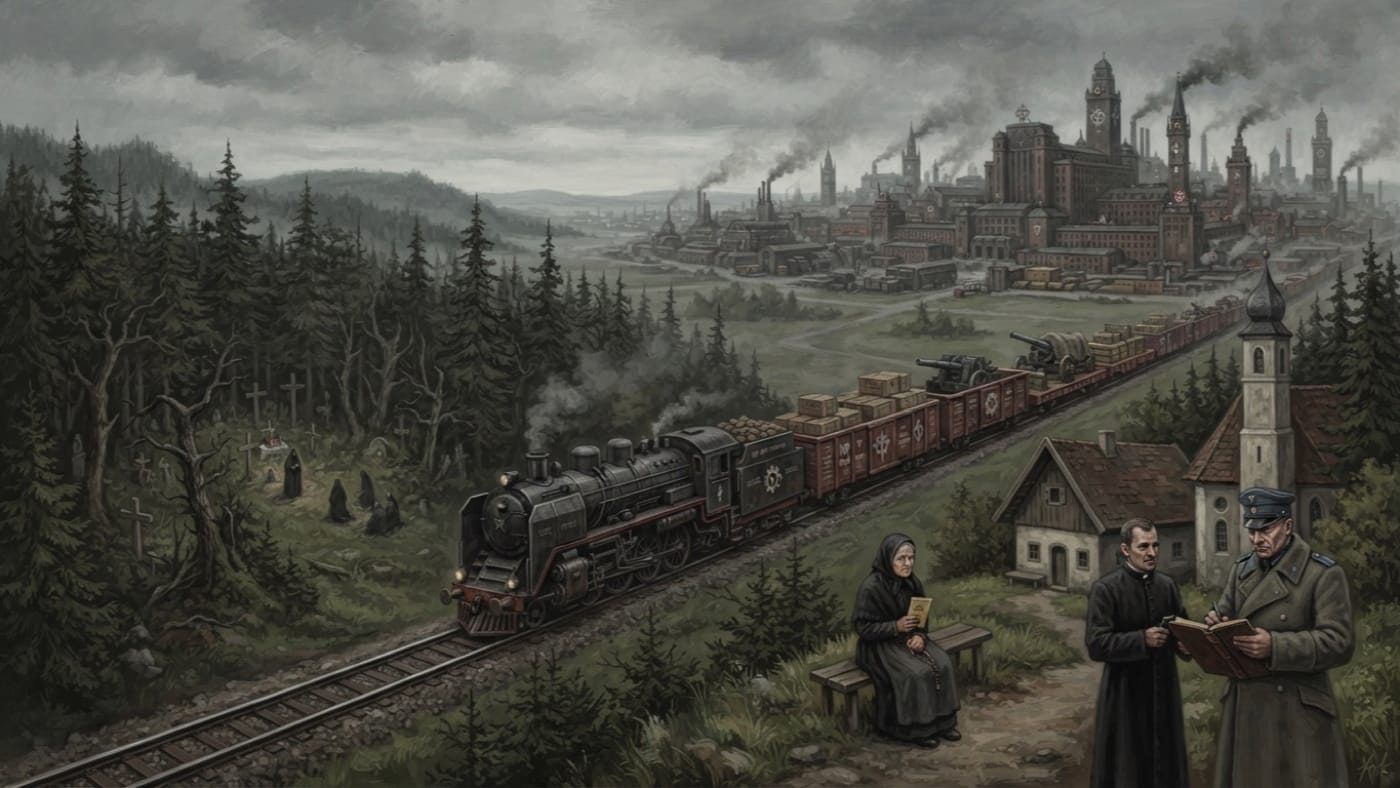
Bavaria
The heartland pays for safety one son at a time
Bavaria's forests once hid scattered faithful. Its parishes now supply the Continental Levy, while Munich sends War's freight east. Heartland safety is paid for one household at a time.
Codex Ref. II.2.11-201
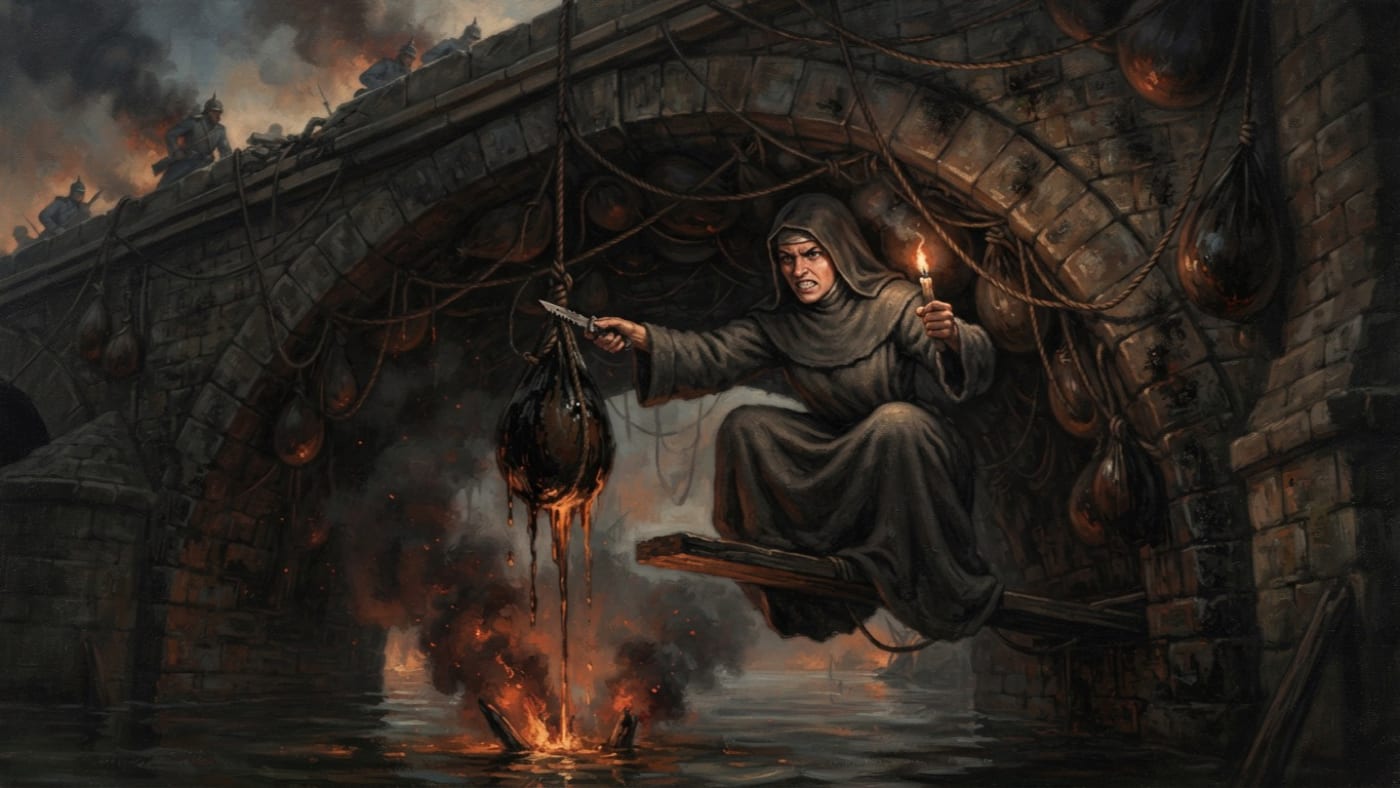
Bérénice
The fire has a name; the year has no entry
Bérénice is credited with firing the Châlons bridge from beneath its arch. The Ledger retains her deed, the masonry dispute, and an empty space where the year should be.
Codex Ref. III.2.01-245
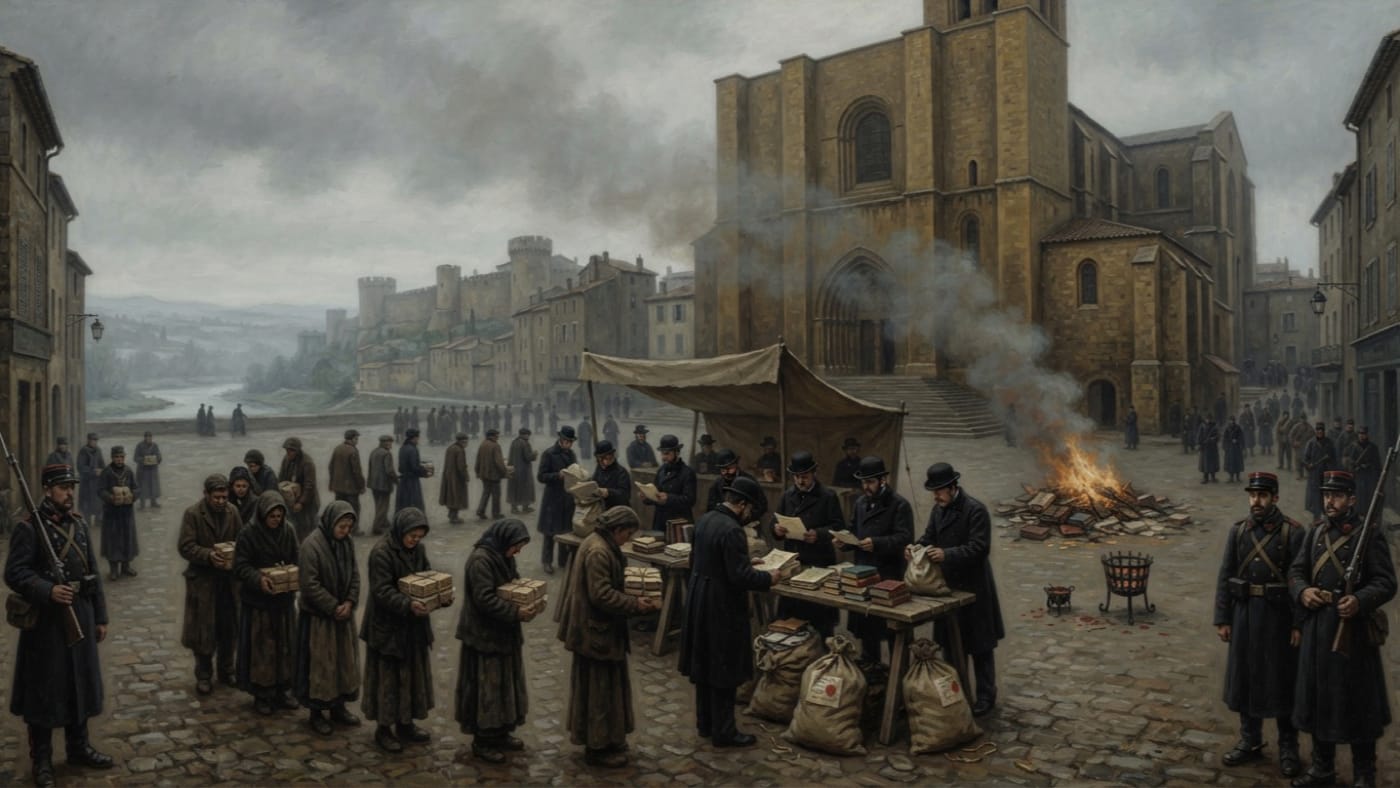
Béziers
A city named by someone else's confession
Béziers entered the Toulouse Hunts in A.S. 93 through a confession taken at Carcassonne. Purity retained the name; the surviving record supplies no separate local reckoning.
Codex Ref. II.1.10-093
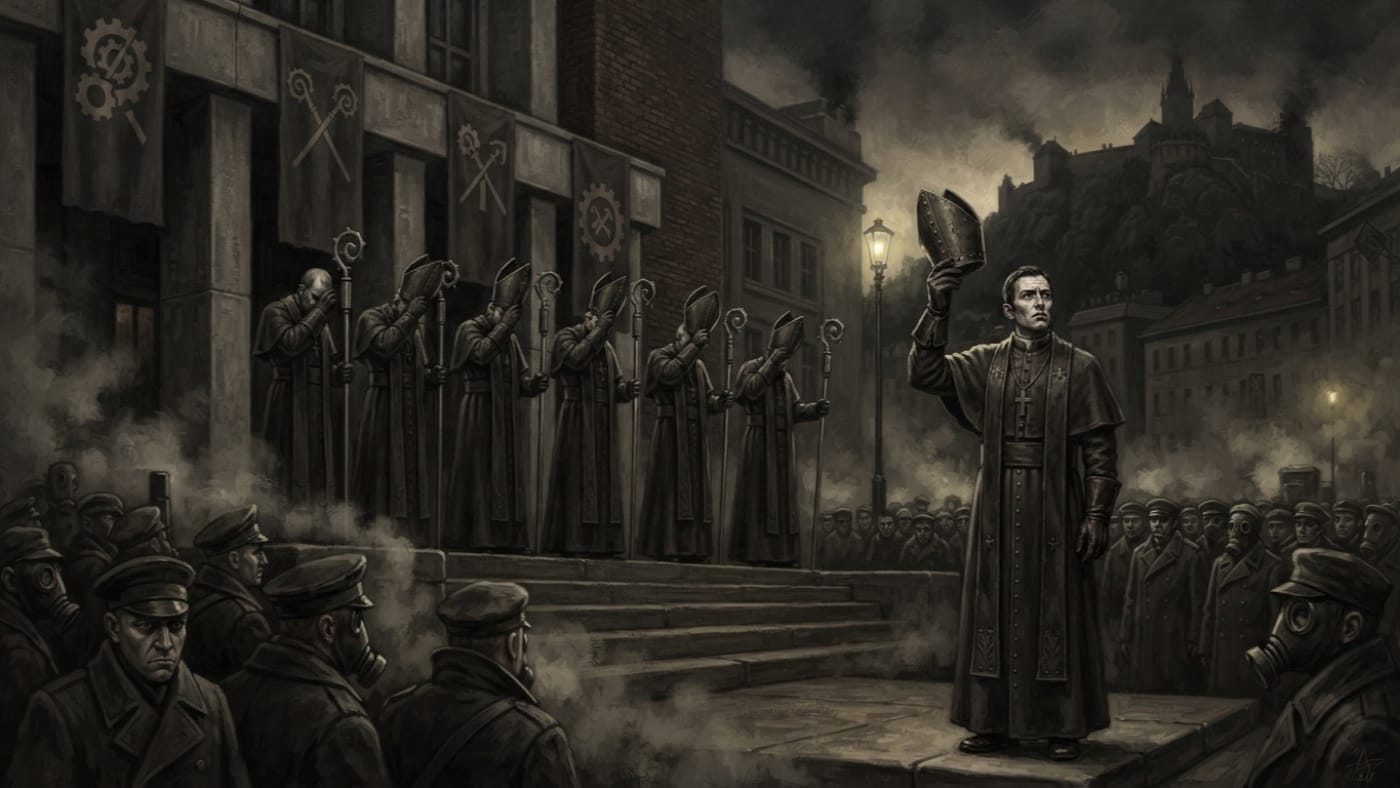
Bishop Marek of Vyšehrad
The seventh line names a bishop; the vellum supplies no man
Certain rosters name Bishop Marek of Vyšehrad as Prague's seventh bishop at the Night of Crowns, A.S. 8. The Ledger keeps the name; attendance, gesture and death remain unconfirmed.
Codex Ref. III.2.01-254

Bishop of Worms
A title, two toasts, and an existence disputed by clerks
A bishop vanished between the ninth and tenth toasts at Regensburg in A.S. 29. Reason declared him nonexistent; Records keeps his file open and his fate unproved.
Codex Ref. III.2.01-257
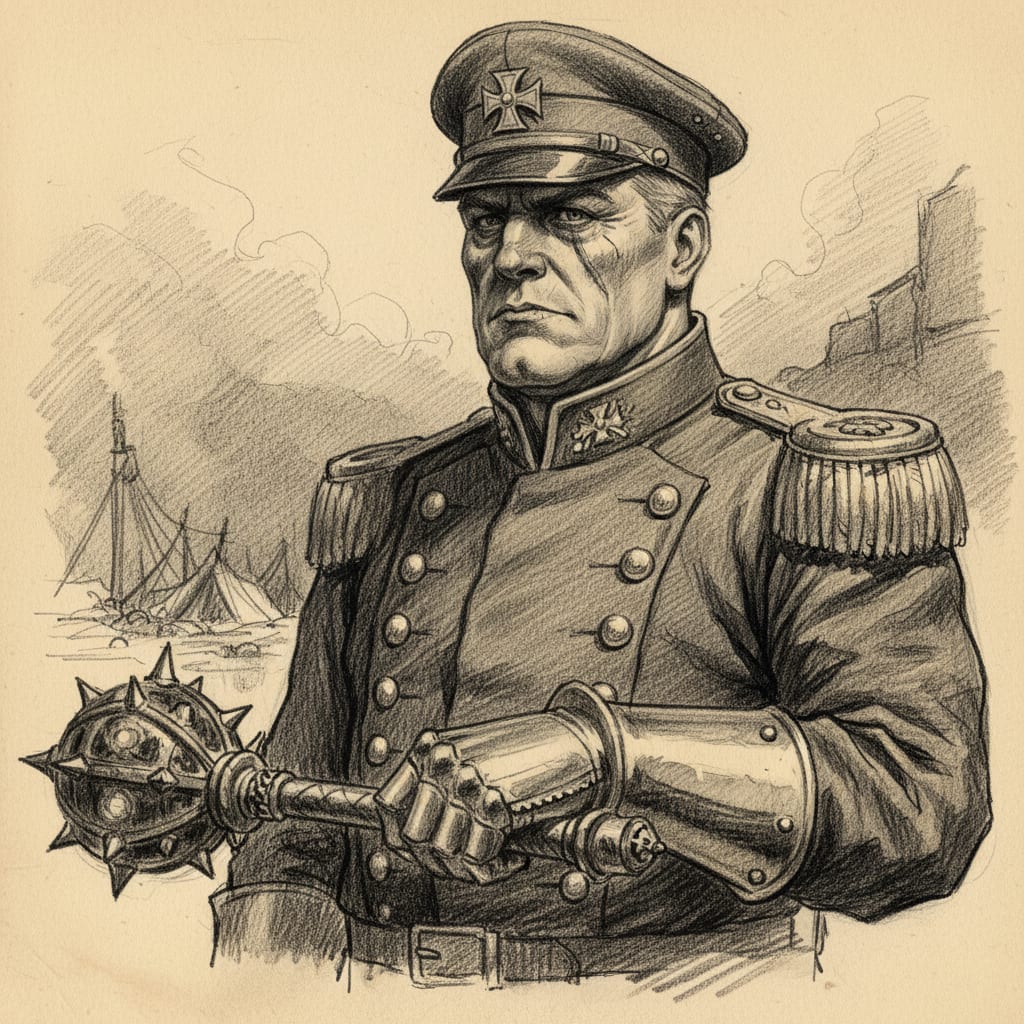
Bishop-Warden Clemens Stahlhand
The Hammer of Vienna
Bishop-Warden of Vienna, whose reliquary blow at the Siege shattered Rationalist power and entered the canon of Synodal myth. Steel hand. Iron faith. Useful corpse.
Codex Ref. III.1.02-031
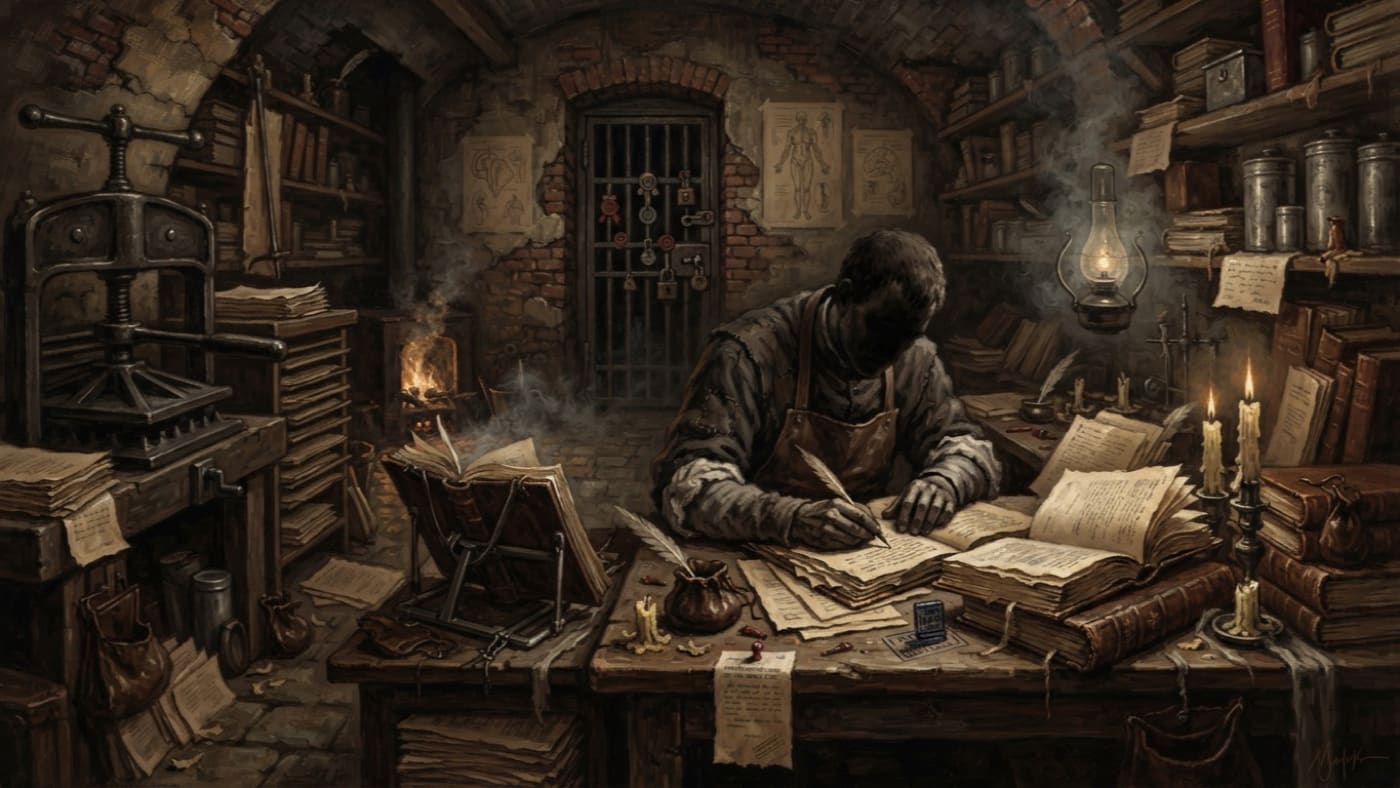
Bitter Mercy Line
A line with no address and no permission to correct the saints
One of twelve Ashen Circle copy lineages of the Index of Safe Lies, Bitter Mercy keeps the doses exact and the saints deliberately wrong. Its A.S. 201 survey records no founding date, fixed location, or named custodians.
Codex Ref. II.4.09-259
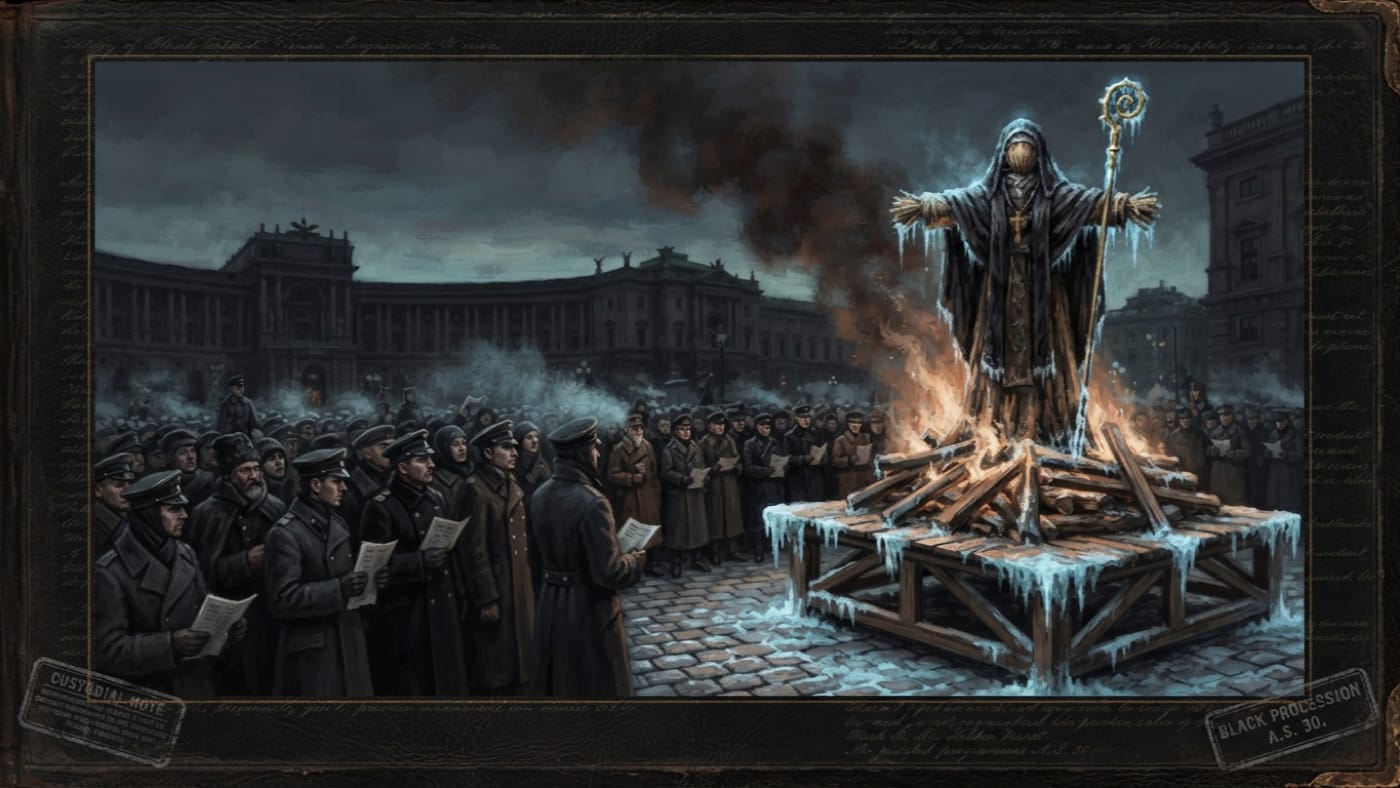
Blessed Adalheid
The Republic burned her likeness and preserved its own indictment
Blessed Adalheid survives in Vienna's relic processions, a tradition of healing the blind, and an effigy burned in A.S. 30. The Ledger keeps her title and declines to invent her life.
Codex Ref. III.2.01-281
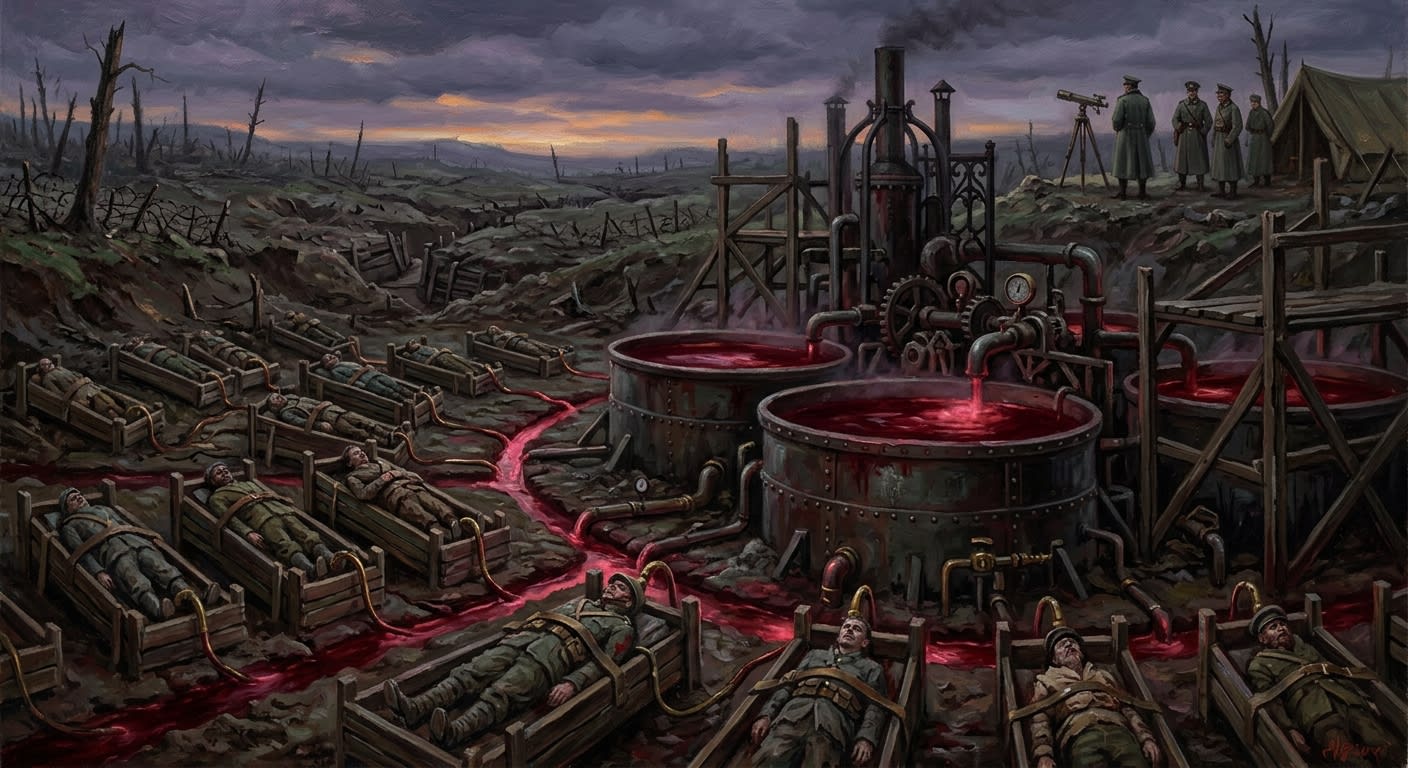
Blood-Tithes
Brass tubes, serial-numbered. Wooden cradles, precisely fitted. The Bureau calls it infrastructure. The screaming is a side-effect.
The Lie's sorcery economy runs on living blood. Prisoners are fitted with brass leeching tubes, arranged in geometric rows, and drained for weeks. The Bureau files it under infrastructure. The soldiers call it mercy work.
Codex Ref. IX.1.07-001
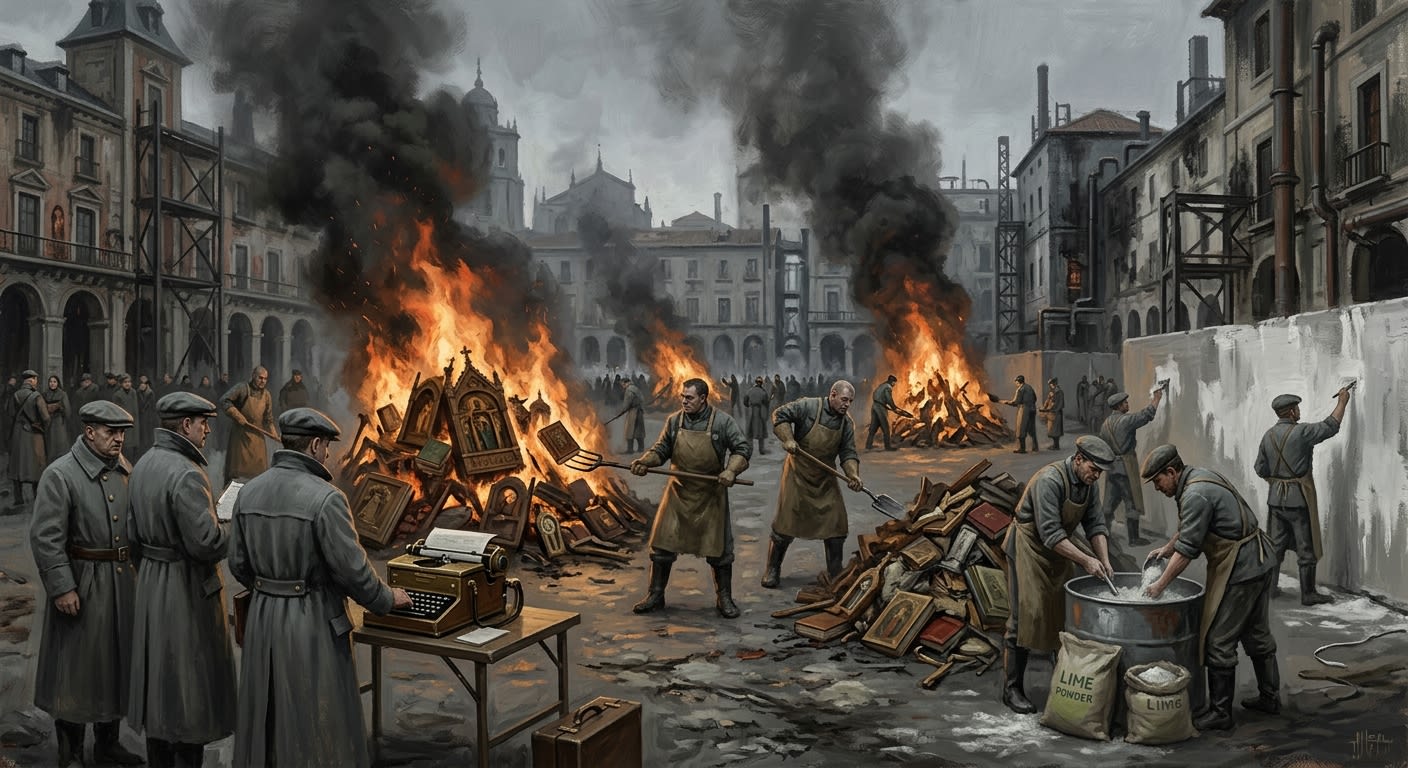
Bonfires of Purification
The walls have not finished speaking
The Bonfires of Purification were Iberia's pre-Synod Rationalist liturgies of theft: relics catalogued, mocked, burned, mixed into ash-lime, and taught from walls that remembered.
Codex Ref. VII.8.06-018
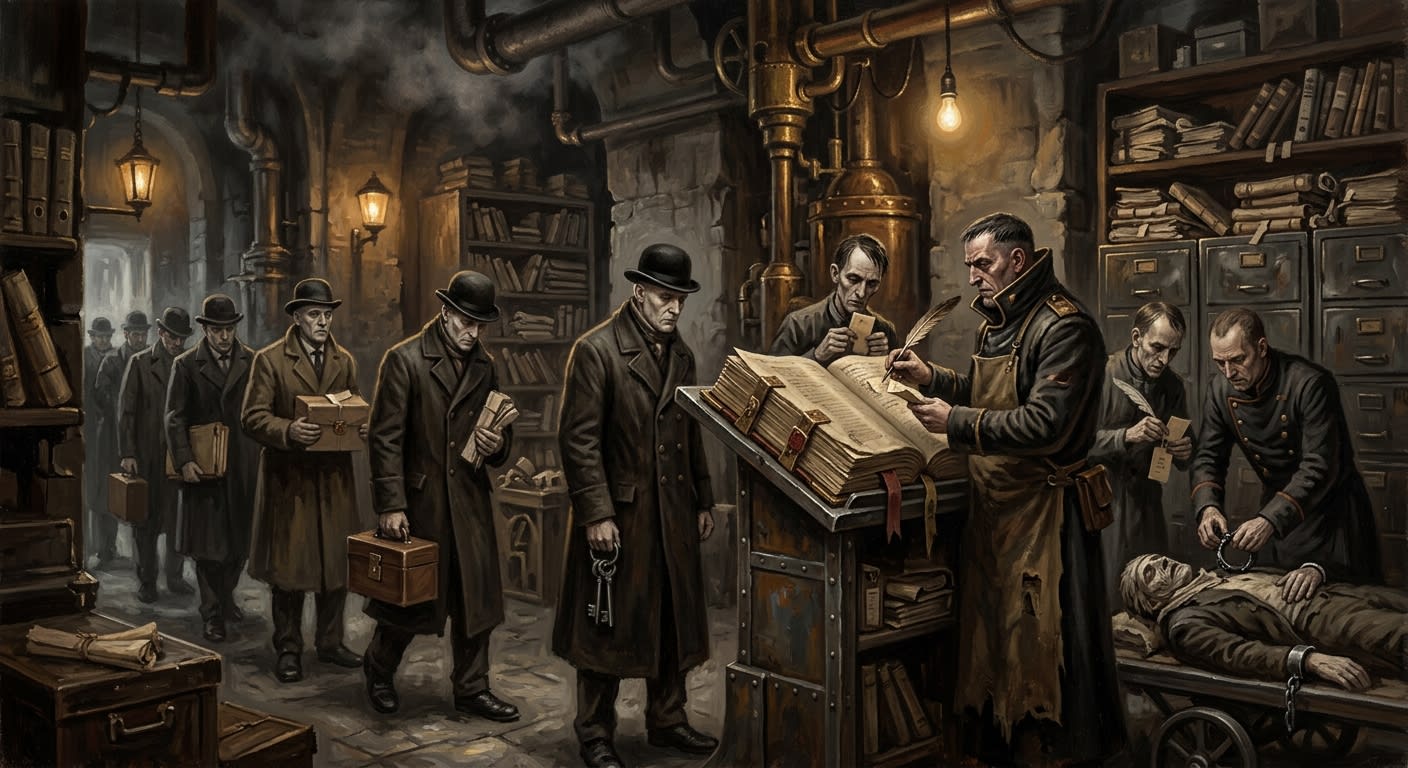
Book of Departures
Where the last breath becomes lawful ink
The Book of Departures receives every lawful death: mercy, tax instrument, burial rite, inheritance key, prayer license, and muzzle for ghosts.
Codex Ref. XIII.1.87-112
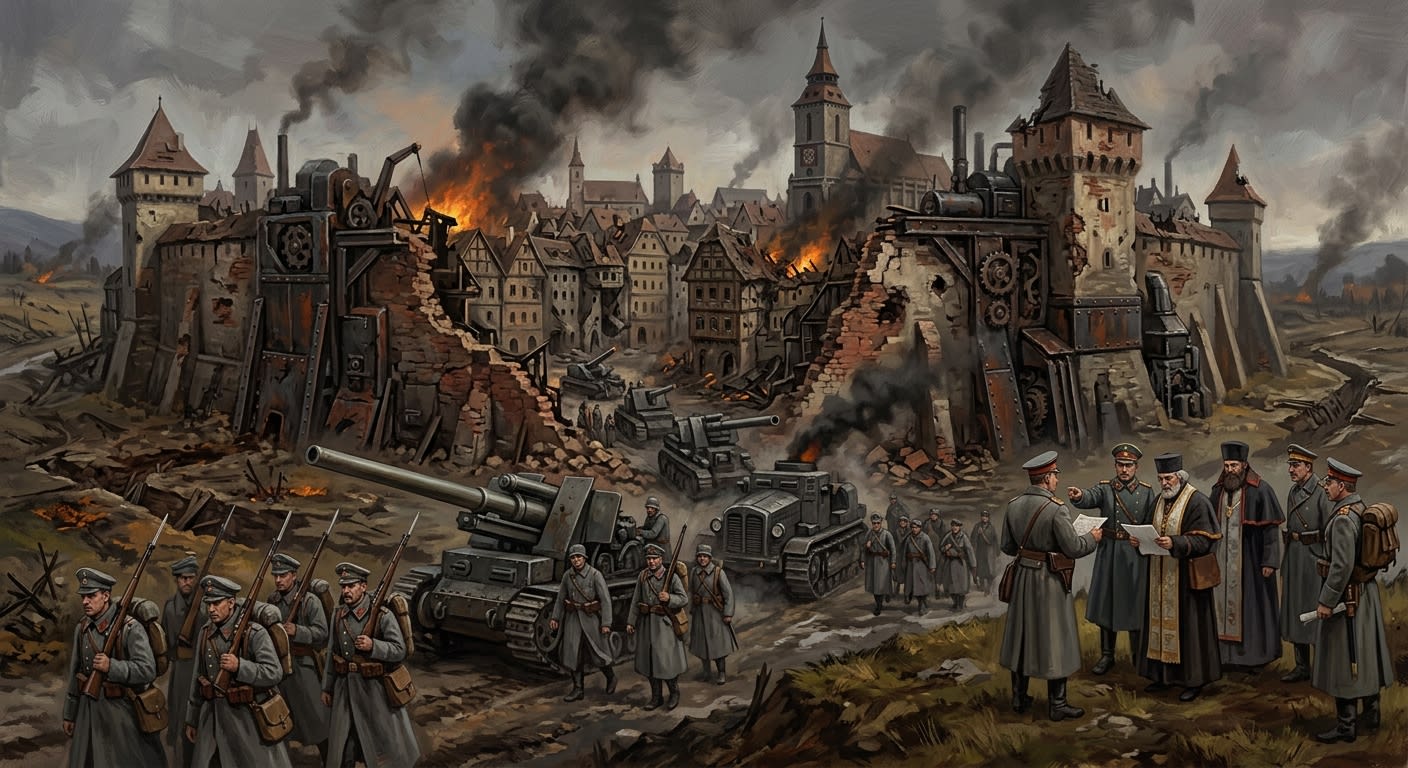
Brașov
The city [[hell|Hell]] ate before [[strasbourg|Strasbourg]] learned to count sons
Brașov, the Saxon-walled city consumed by Kargath in A.S. 110 and made pretext, warning, and arithmetic for the Synod's first continental levy.
Codex Ref. VI.1.01-110
Bread-without-Prayer Line
The loaf before the grace, the copy before the fire
One of twelve Ashen Circle copy lineages of the Index of Safe Lies, named to put bread before grace. Filed under places; the A.S. 201 survey records no founding date, fixed address, or named custodians.
Codex Ref. II.4.09-336
Brother Paweł Nowak
Four consecrated days, three turns, and a broken pull
Carmelite novice and youngest of the forty-seven clergy drowned in the A.S. 18 Night of Knives, remembered for an unfinished sign of the cross.
Codex Ref. III.2.01-088
Brother Tomislav
The half-blind monk who lifted a reliquary and made Wrath recoil
Half-blind Franciscan, custodian by refusal, and instrument of the Miracle of Kalnik Ridge; consumed by sacred fire in A.S. 48, though the Bureau remains professionally unable to call him dead.
Codex Ref. III.2.01-004
Bureau of Commerce
Bread becomes law before it becomes bread
The Bureau of Commerce prices obedience: weighing grain, freezing cargo, selling road-sound, licensing shortage, and making hunger kneel before the scale.
Codex Ref. VIII.2.10-097
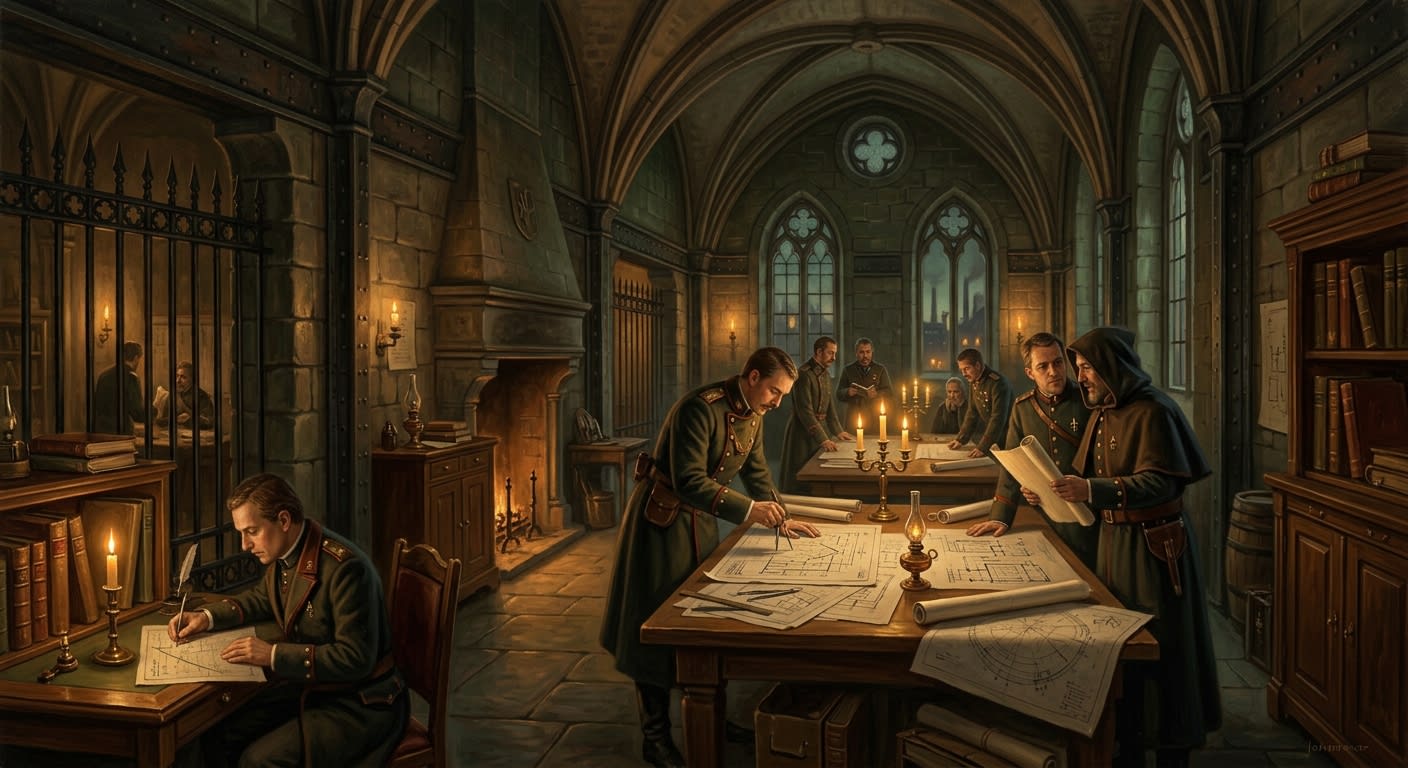
Bureau of Engineering
The number is the number, and the number does not care whether you find it convenient.
The Bureau of Engineering digs, measures, pours, rivets, surveys, calculates, and then builds the thing that holds every other Bureau upright. Its motto is not in any catechism. It is carved into latrine walls.
Codex Ref. VII.4.02-011
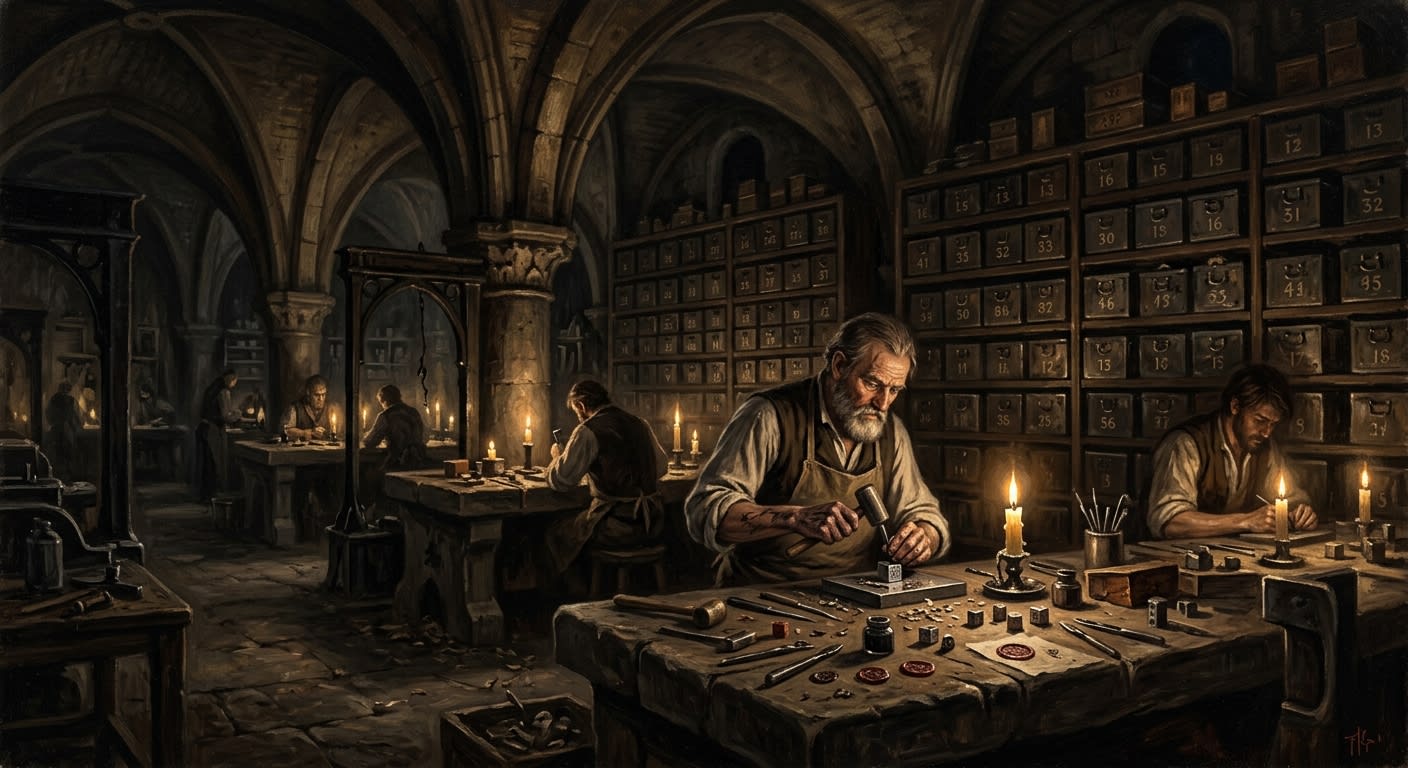
Bureau of Masks and Seals
The stamp is the Synod. Everything else is suggestion.
The Bureau of Masks and Seals controls every stamp, seal, and counter-seal in Synod territory. Without its impressed wax, no document is real. Without its license, no face may be hidden. Casselius of Mainz holds the Synod's mouth and press in one pair of ink-stained hands.
Codex Ref. VI.4.19-014
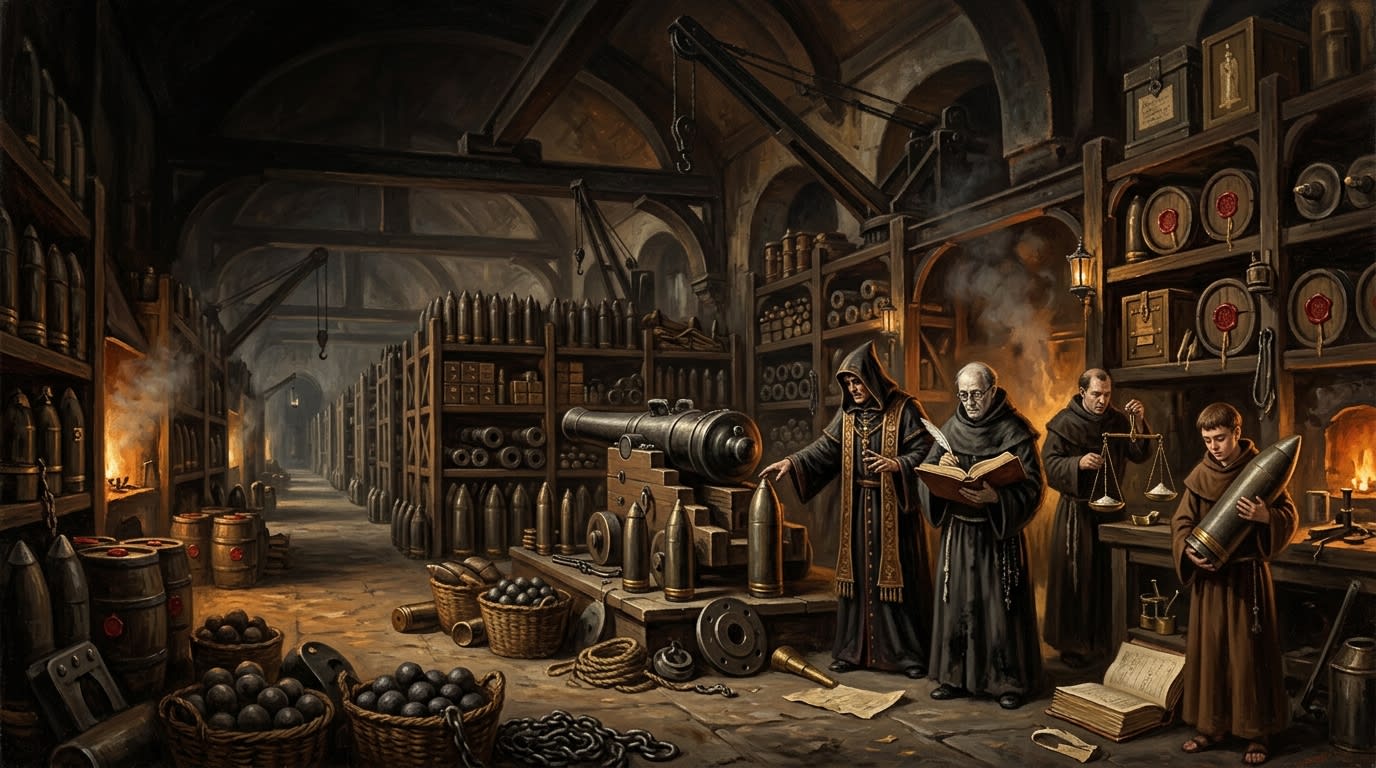
Bureau of Ordnance
No violence is lawful until inventory permits it
The Bureau of Ordnance blesses powder, counts shells, seals fuel, restrains officers, and teaches matter to obey violence only after the Ledger consents.
Codex Ref. VIII.2.11-090
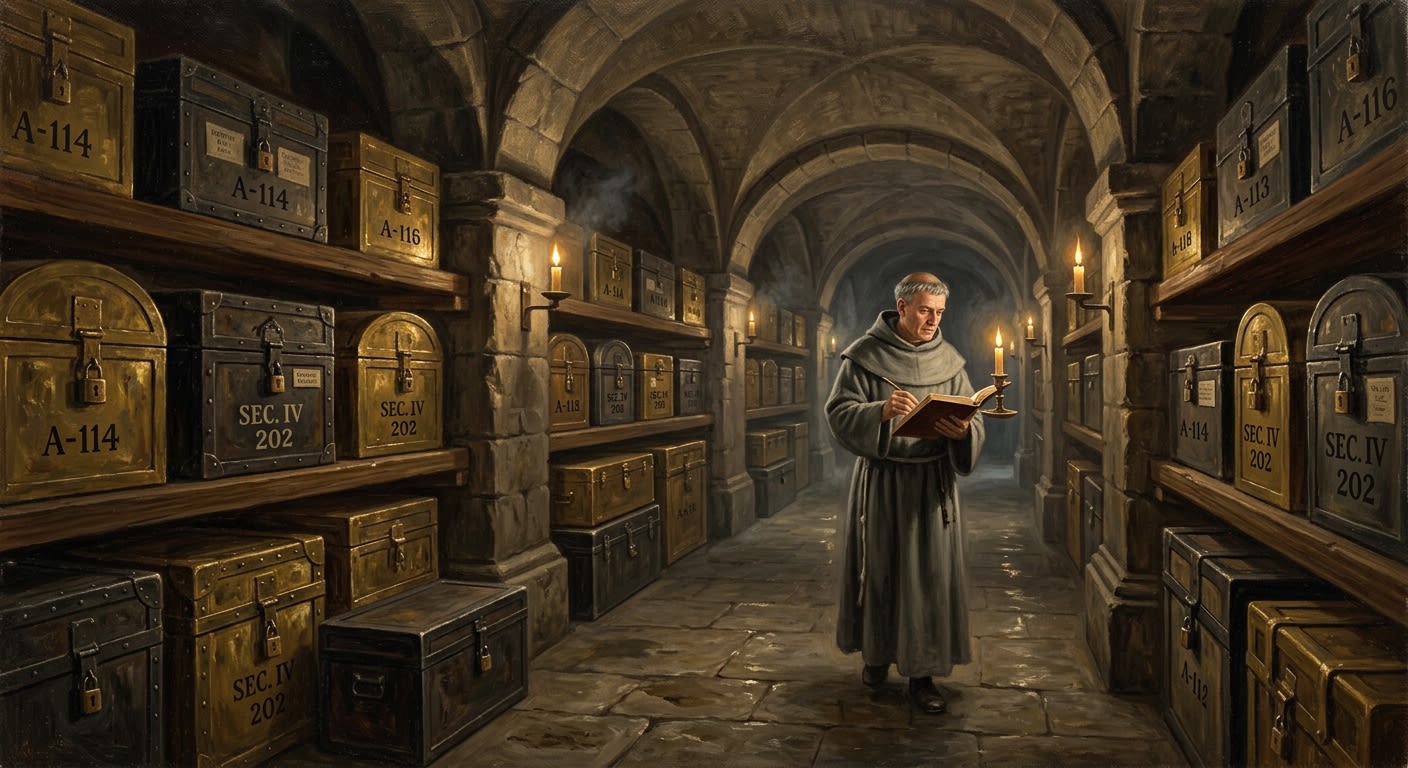
Bureau of Relics
The stamp is not the sanctity. The stamp is merely necessary.
The Bureau of Relics guards four thousand seven hundred authenticated bones, adjudicates the holiness of ash, and maintains the cheerful institutional fiction that it controls the things it catalogues.
Codex Ref. IV.3.12-019

Bureau of Tithes
The organ no one praises and no one dares remove
The Bureau of Tithes is the Synod's fiscal organ — the stomach no one praises and no one dares remove. It taxes breath, grain, bereavement, and the management of its own taxation.
Codex Ref. VIII.4.01-001
Cahors
Named elsewhere, retained forever
Cahors entered the Toulouse file in A.S. 93 through Carcassonne's confession. No local offence is established; the Bureau retained the address.
Codex Ref. II.1.09-093

Cantor-Lieutenant Sera
The woman who sings before the shutters open
Cantor-Lieutenant Sera serves in Bastion-Brest's casemate artillery, turning range tables into pitch, holding Vonn's second fire key, and hearing fear before dispatch admits danger.
Codex Ref. III.2.01-094
Captain Elias Mürren
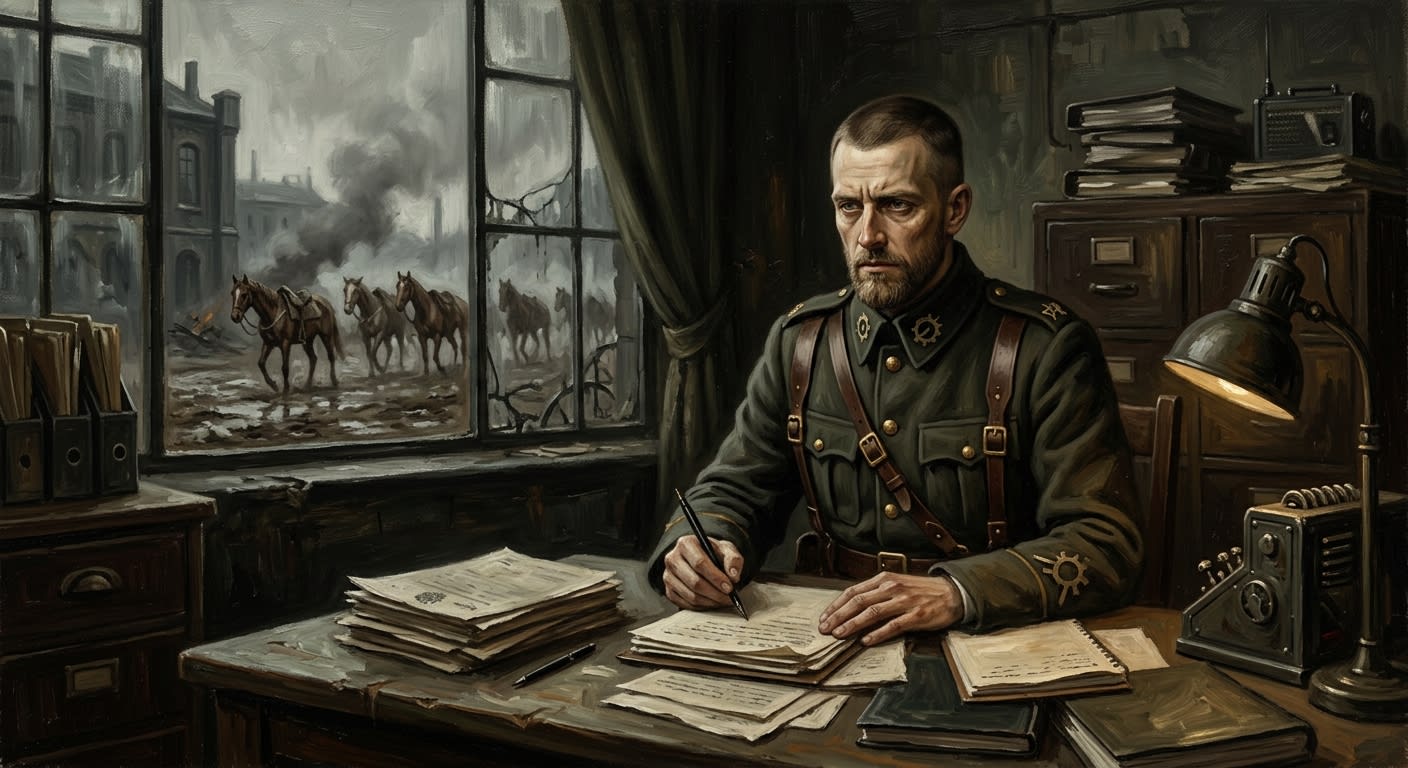
The cavalryman who accepted hunger's polite invitation and kept the receipt
Rationalist cavalry captain and Debrecen survivor whose A.S. 49 deposition records sorcerous provender, vanished horses, and hunger with the manners of a clerk.
Codex Ref. III.2.01-082
Carcassonne
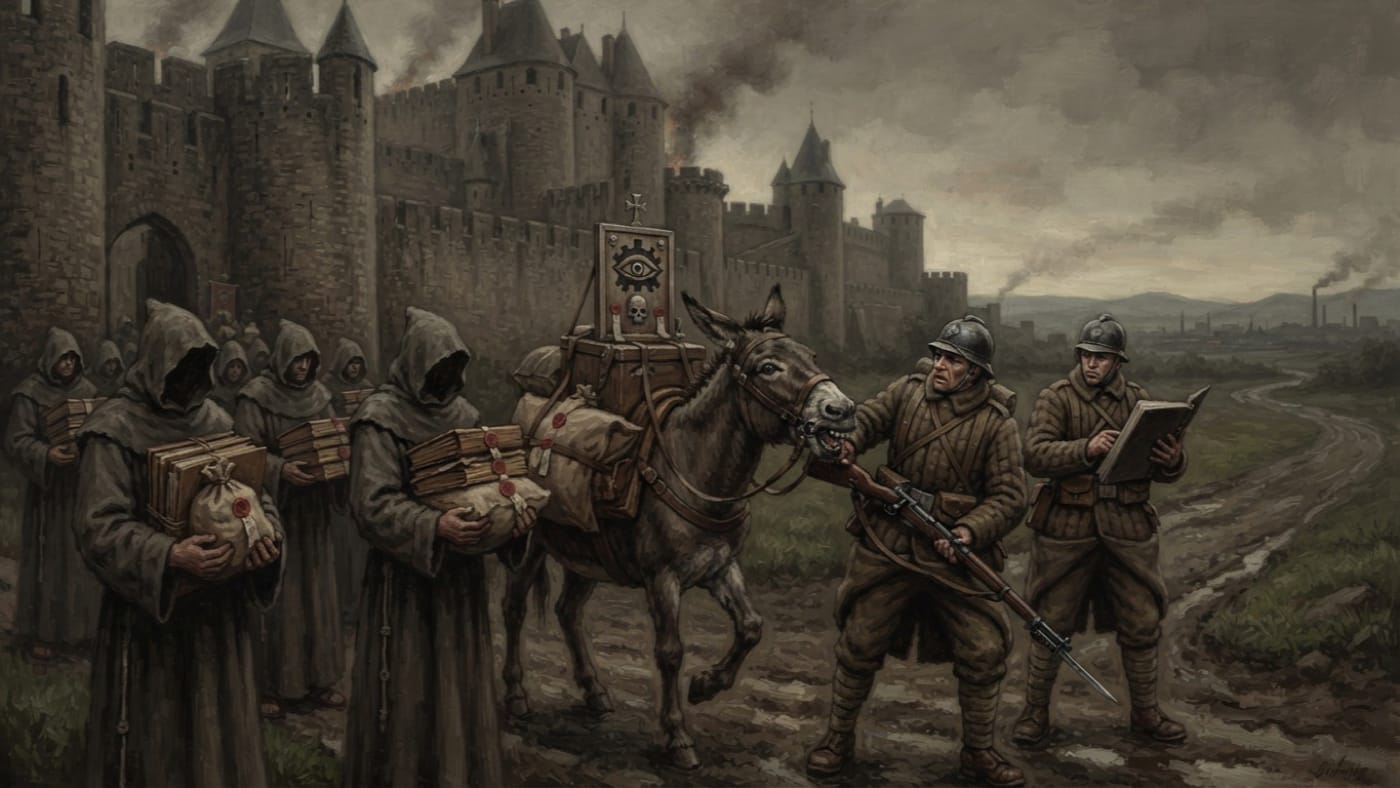
Names outward, forbidden paper back
Carcassonne sent names outward and forbidden paper back to Toulouse. Purity enlarged its reach and its Index; Bernard the mule supplied the teeth.
Codex Ref. II.1.09-093

Cardinal-Marshal Severin of Avignon
The tourniquet of Montreval, ugly enough to save a front
Severin of Avignon held Montreval through the Atheist Wars: severe, loud, bloodstained, and too useful for the Bureau to canonise cleanly.
Codex Ref. III.2.01-007
Carmelites of Kraków
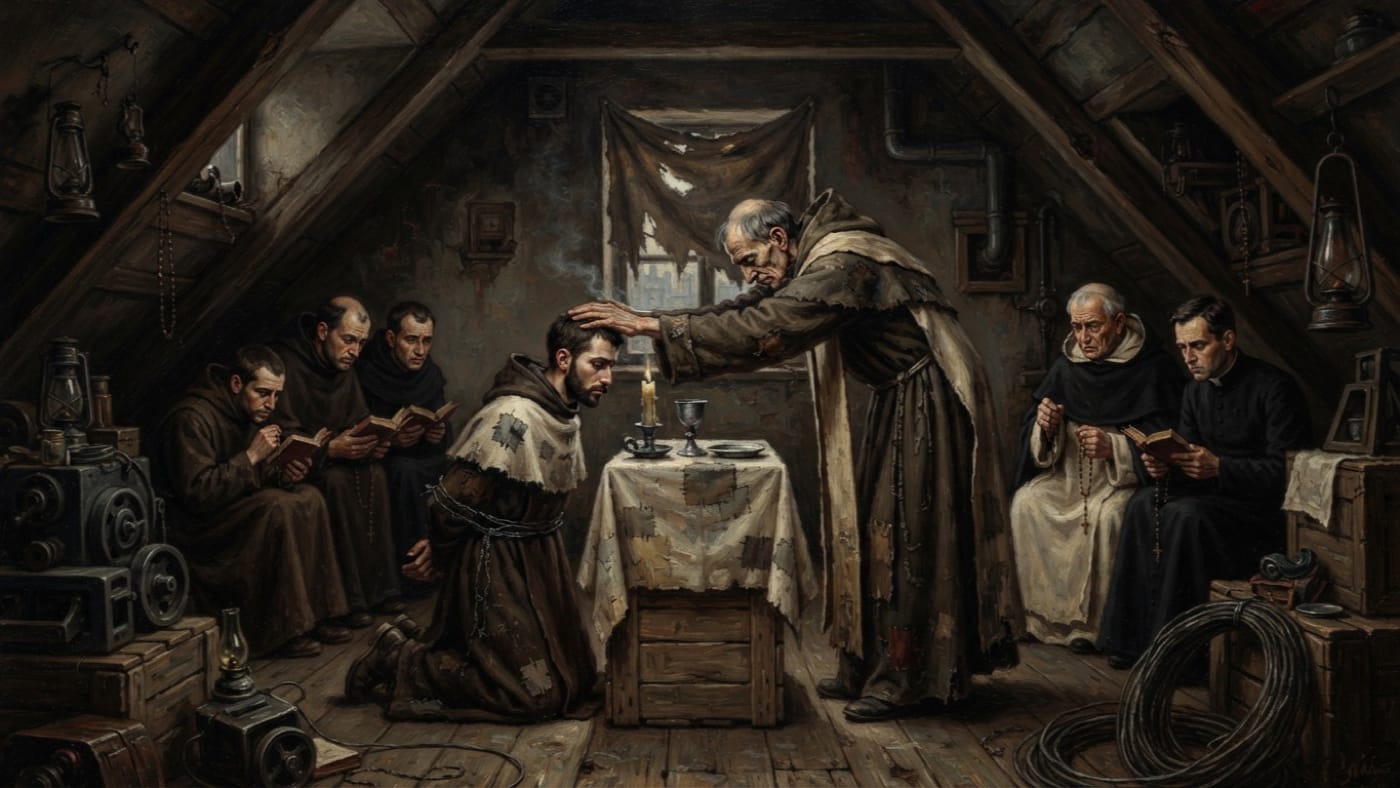
Hidden altars, a drowned novice, and three refused petitions
Dissolved by decree, the Kraków Carmelites kept worship in hidden rooms. Brother Paweł Nowak remains their lesson to novices; three petitions have earned him no separate feast.
Codex Ref. XI.6.01-018
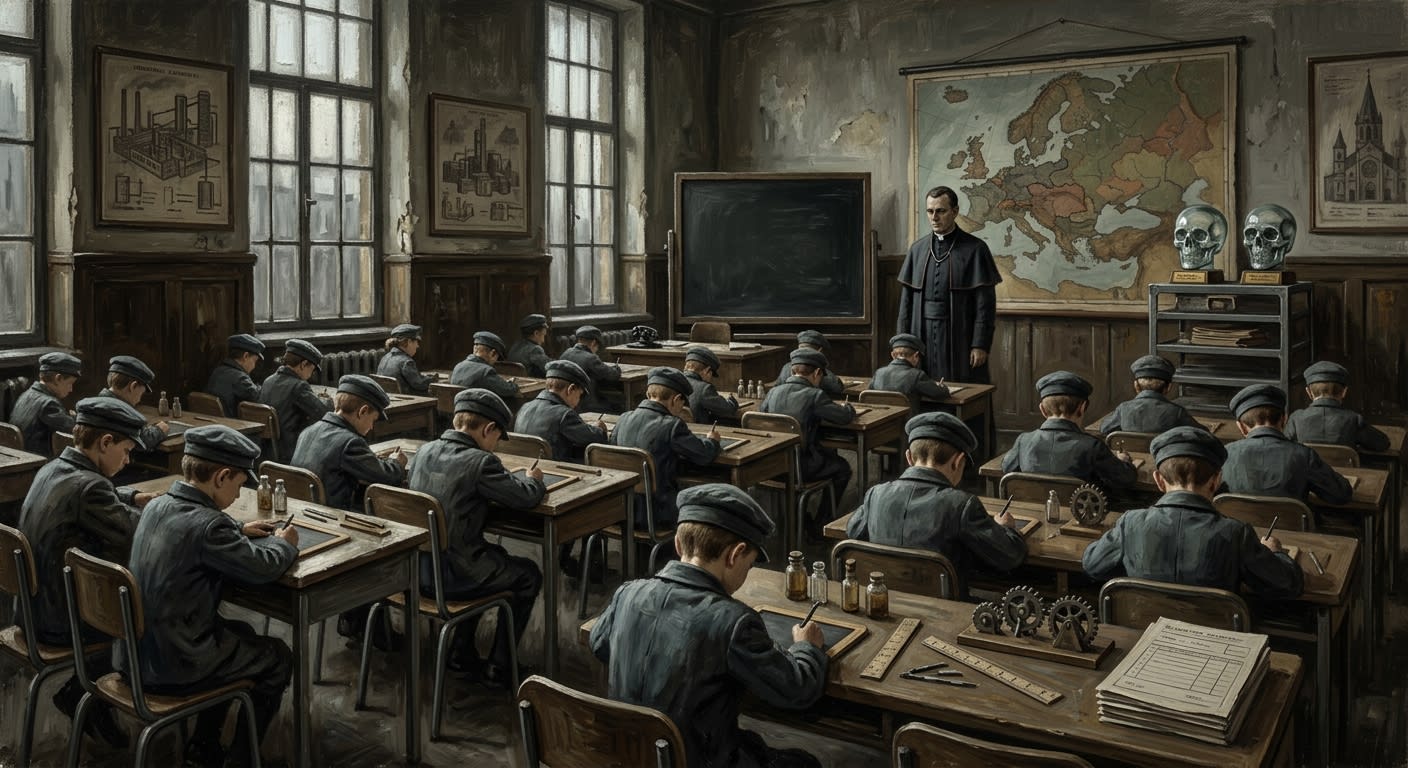
Catechism Schools
The child enters unformed; the school returns property
The Synod's parish and ward school system, where Creed, arithmetic, maps, loyalty trials, and entrance Glass Skull Stacks turn children into obedient instruments with names attached.
Codex Ref. VIII.8.01-001
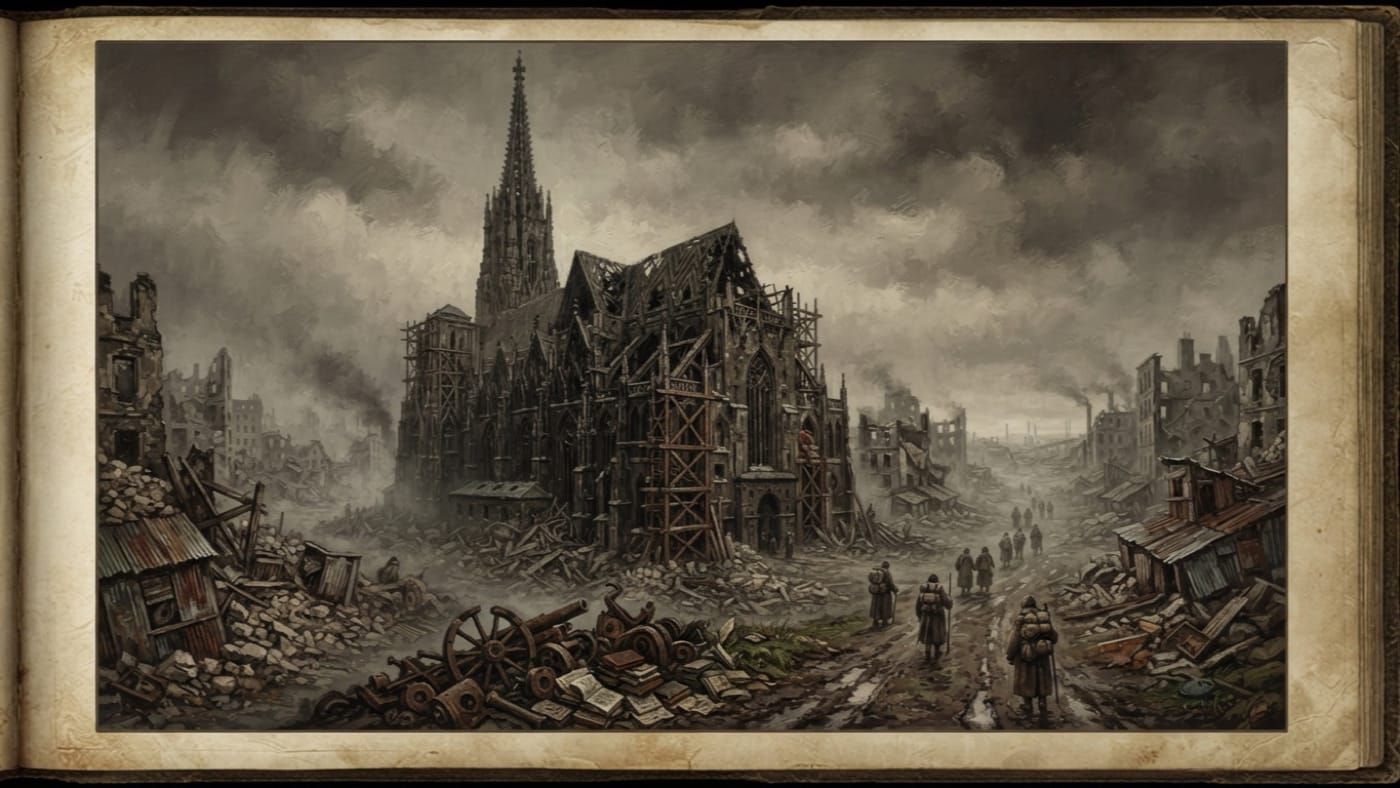
Cathedral of Saint Stephen
A Dead See, a Condemned Academy, and Stones That Stayed
Vienna's former cathedral housed the Rationalist Academy by A.S. 30 and was reclaimed with the city in A.S. 95. The See is dissolved, the Academy condemned, and the Ledger records no successor occupant.
Codex Ref. II.4.09-201
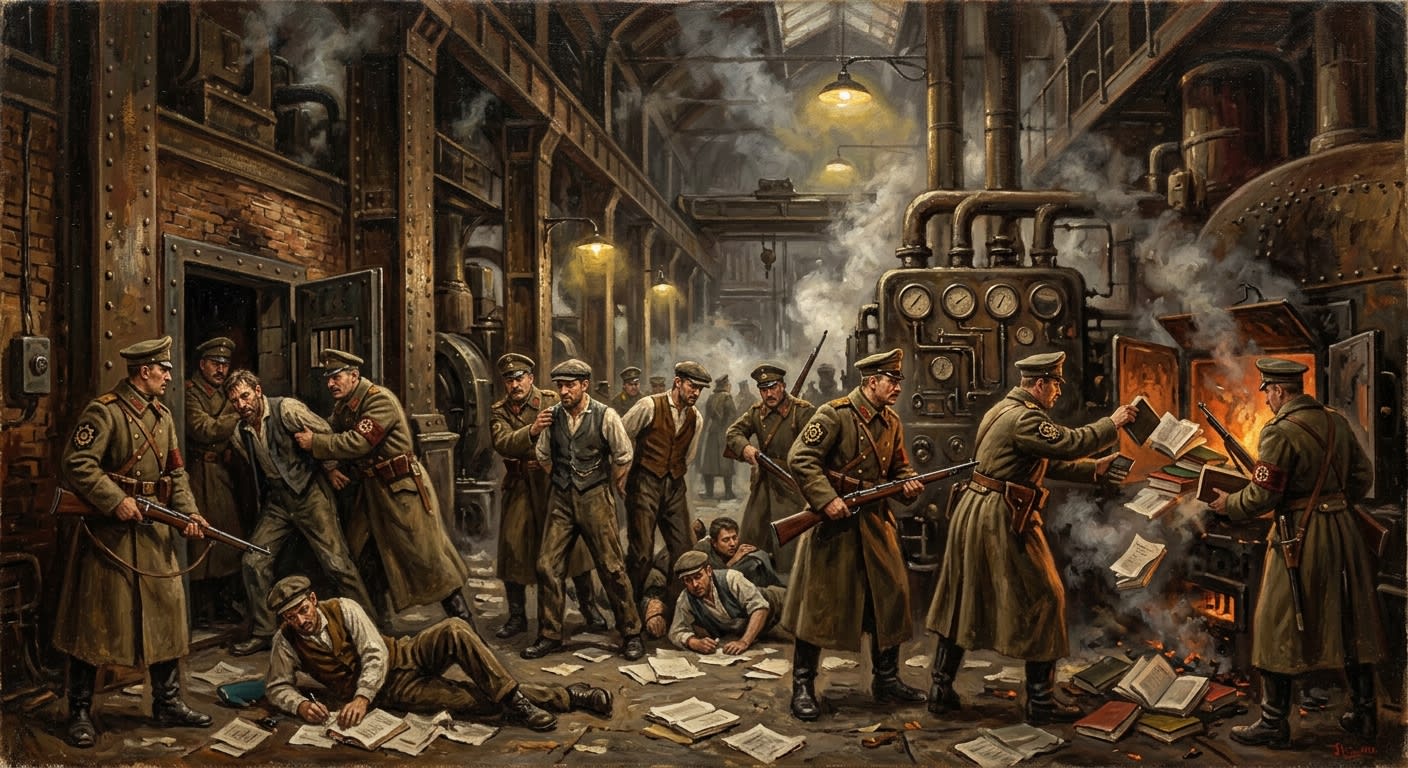
Causality Purge of A.S. 134
When arithmetic entered the furnace and Doctrine answered with masonry
A.S. 134 mechanistic-heresy purge after *Fuel Is Chemistry* manuals spread through six bastion powerhouses, ending in Przemyśl immurements and a larger vocabulary war.
Codex Ref. VII.8.10-030
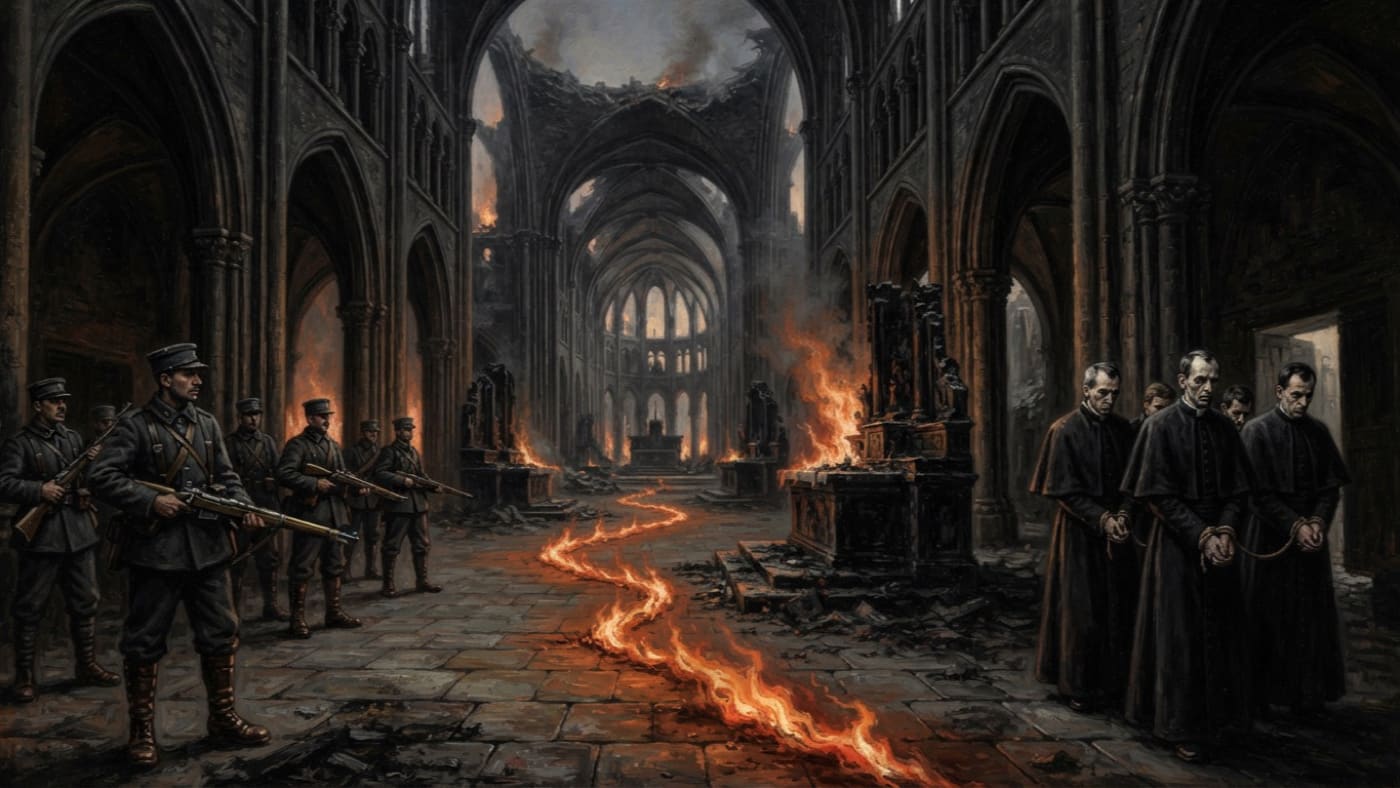
Cauterization of Rouen
The burning was arranged; the fire remains under theological review
The Rationalists gutted Rouen's cathedral in A.S. 24. Witnesses swore the fire paused before each altar. Three captured priests later died at Regensburg. The Bureau disputes the flame's agency; responsibility requires no debate.
Codex Ref. VII.2.01-004
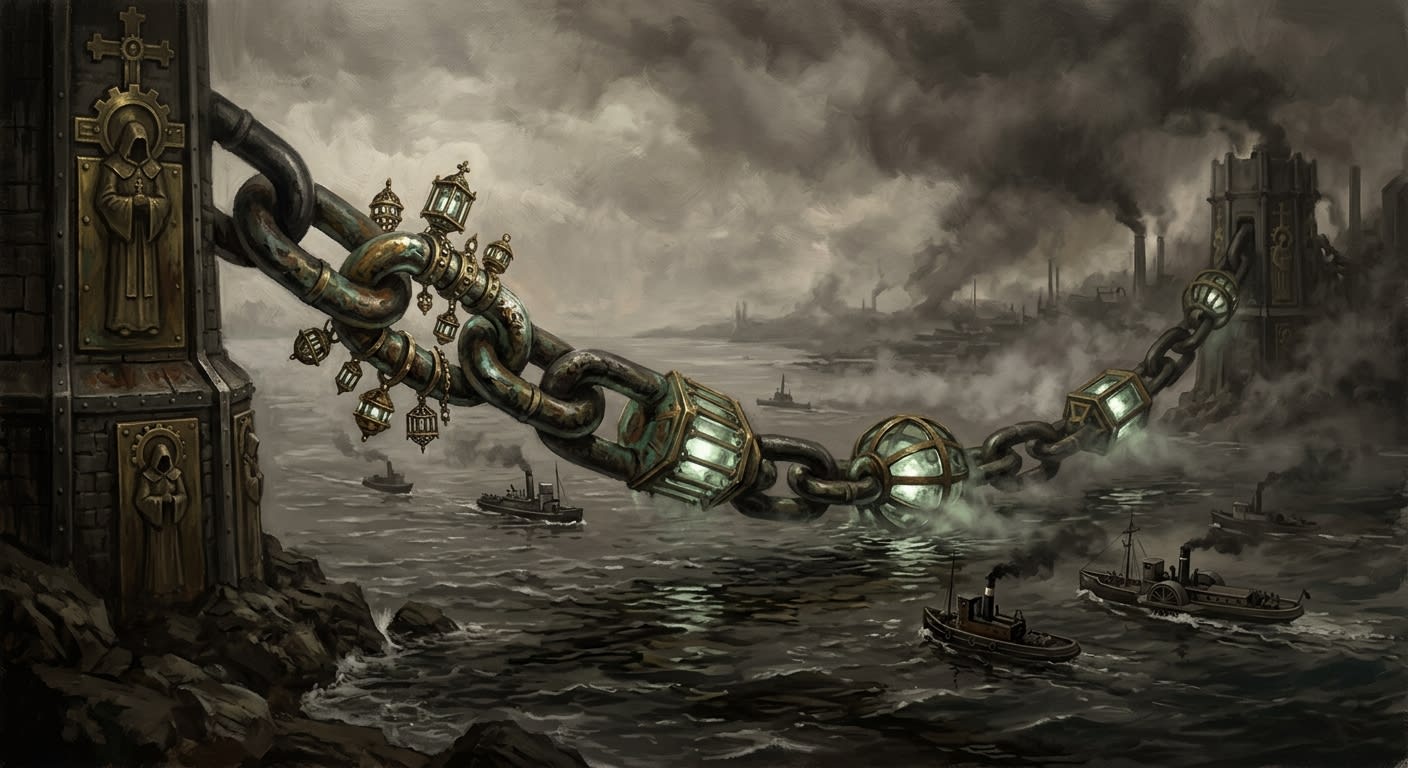
Chain of Saint Anakletos
The harbor closes its throat, and the iron has begun adding words
A reliquary boom across the Bosphorus, first strung in A.S. 68, spent its white fire against the Black Sea Armada and later grew seven links without permission.
Codex Ref. II.4.10-006
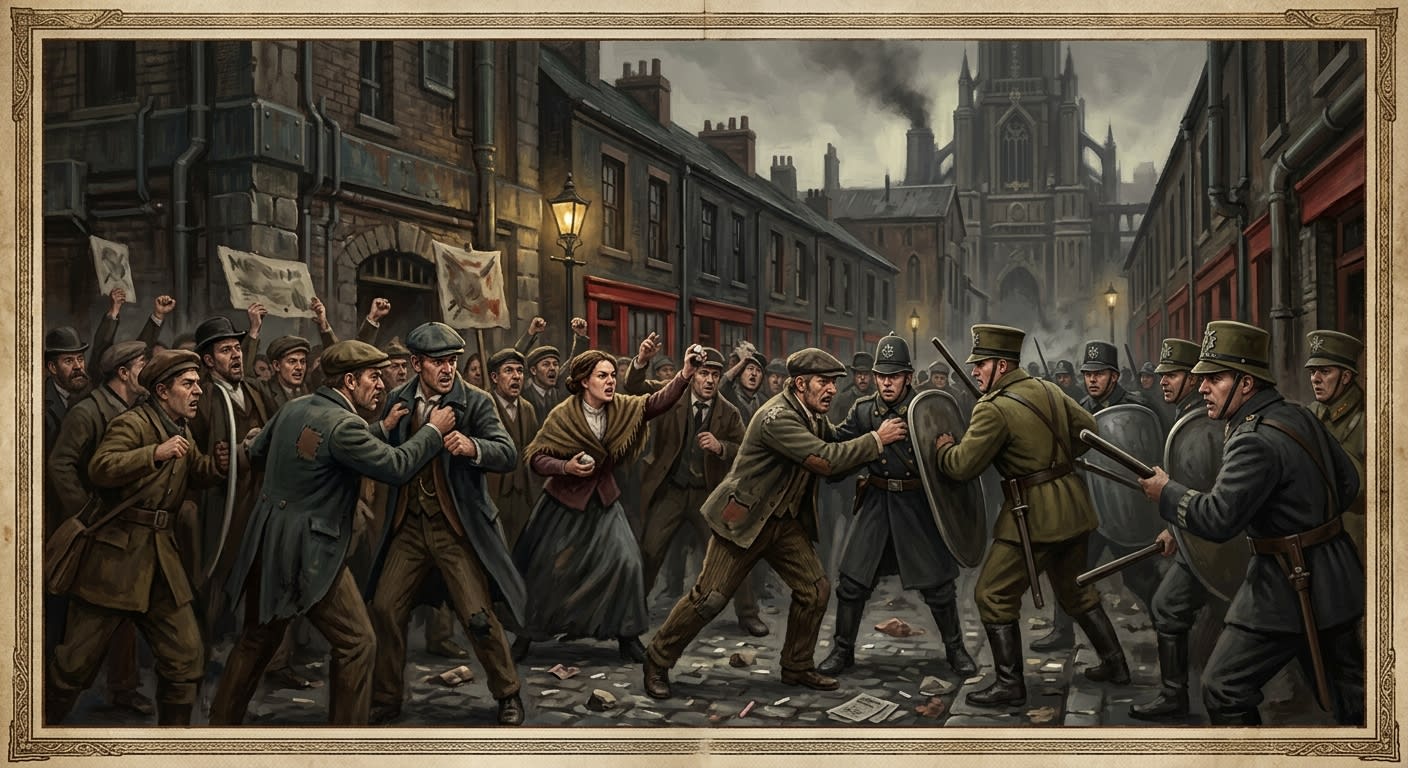
Chalk Riots
Fourteen red doors taught the Bureau arithmetic
Trier's A.S. 119 enforcement backlash, when fourteen red lintels turned compliant households into a crowd and forced the Bureau to ration visible shame.
Codex Ref. VII.8.10-024
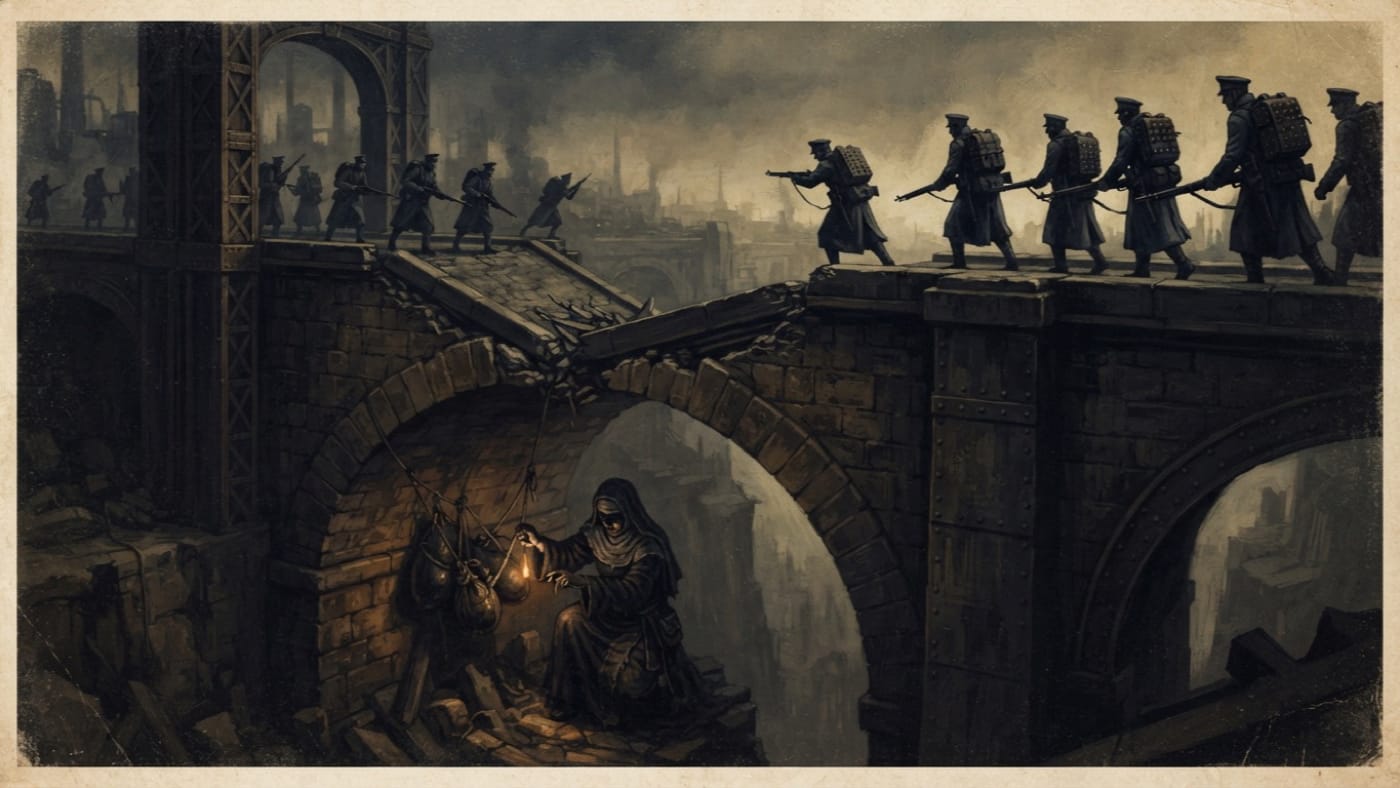
Châlons
One crossing, one attributed fire, no year
Châlons survives in the Ledger as one unnamed crossing and an undated fire attributed to Bérénice. The river is missing; the masonry has three explanations.
Codex Ref. II.1.04-565
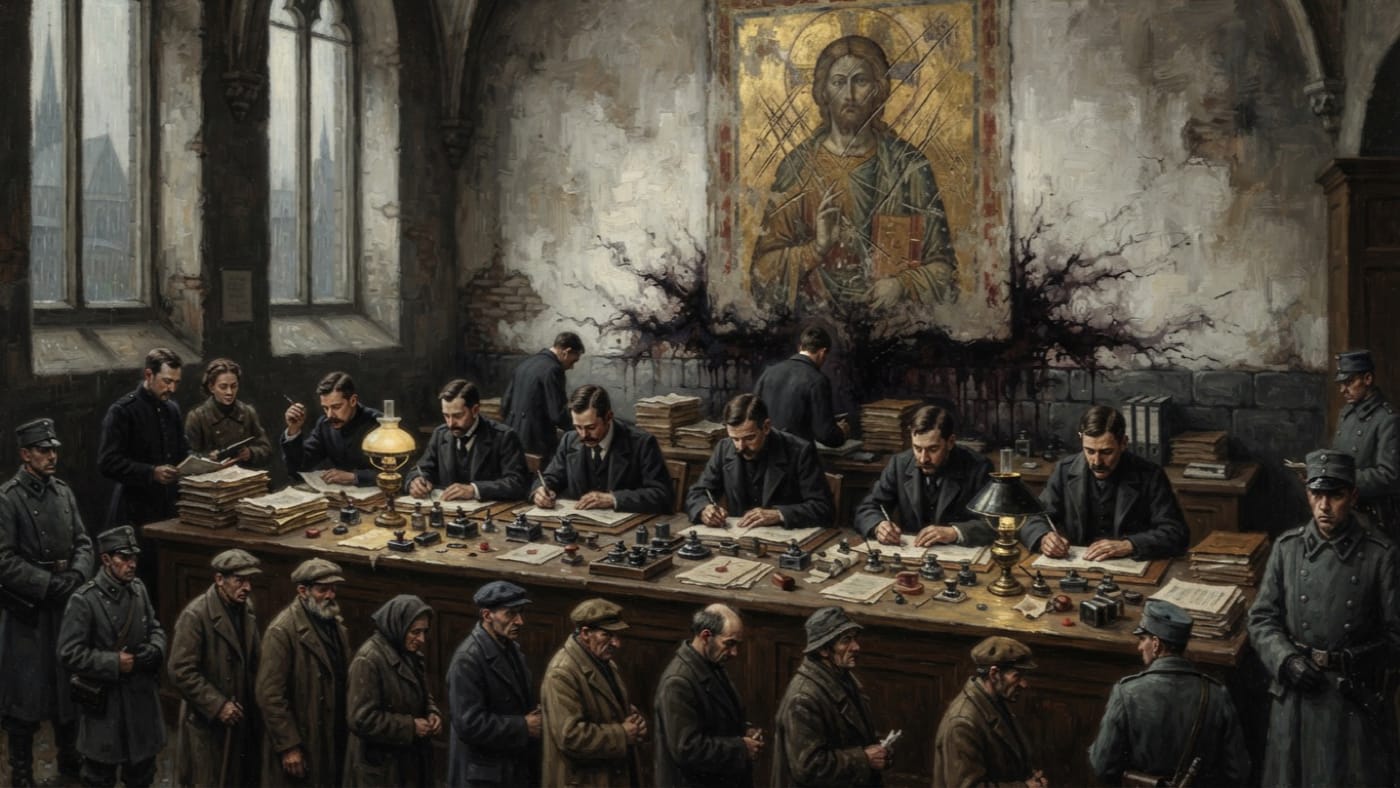
Chapel of the Crowned Seat
Where confiscation acquired a halo
Rationalist clerks signed away Aachen's property beneath a scratched halo. The Chapel of the Crowned Seat's wall darkens every Saint Bartholomew; administration leaves a stain.
Codex Ref. II.2.02-002
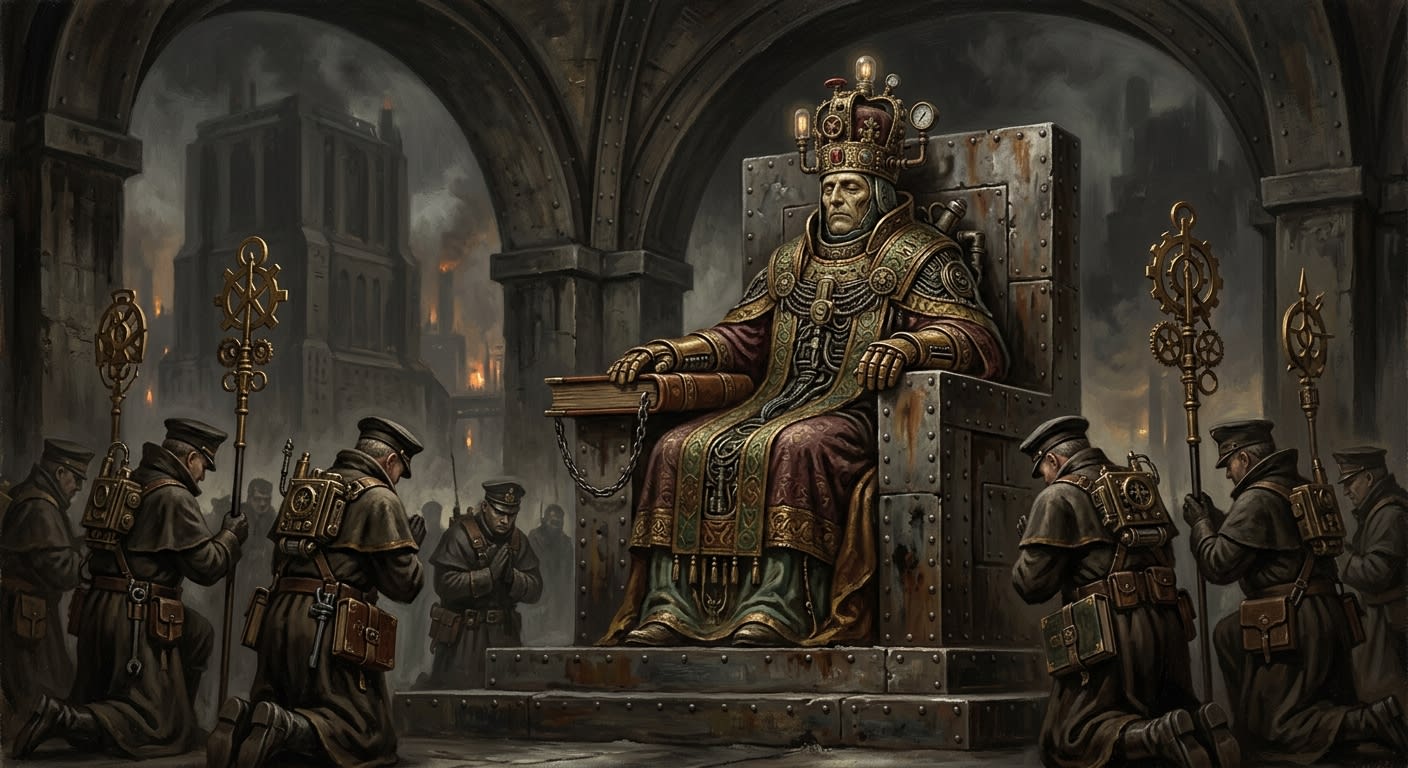
Charlemagne
The dead emperor conscripted as evidence after the gate was sold
Charlemagne is honoured as precursor, not rival: the dead emperor whose Aachen throne survived Guillaume, Verdane, and every provincial fantasy of a crown above the Ledger.
Codex Ref. III.2.01-000
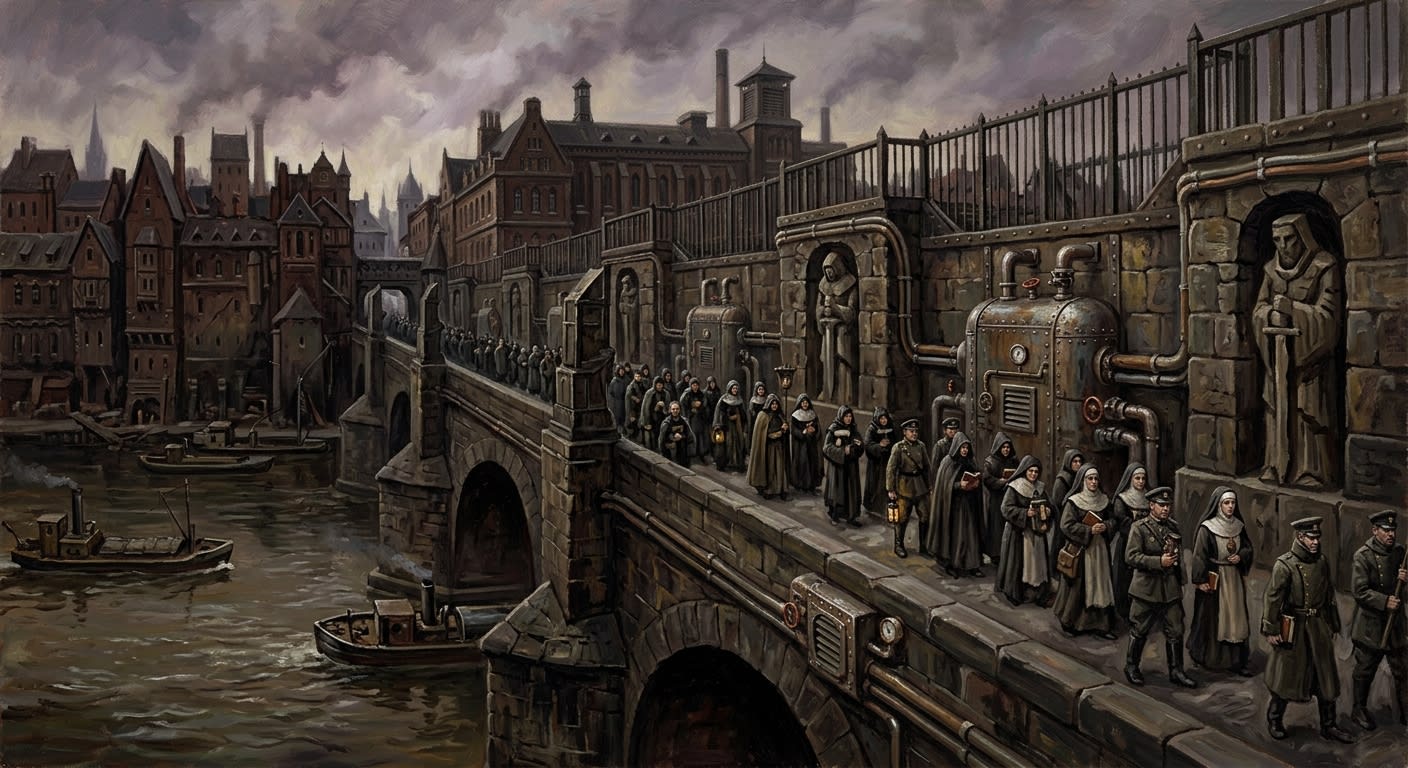
Charles Bridge
The Vltava crossing where Prague learned silence by nail
Charles Bridge crosses Prague's Vltava as road, witness bench, and Purity instrument: the stone throat through which the Procession of Tongues makes doctrine walk.
Codex Ref. II.3.02-096
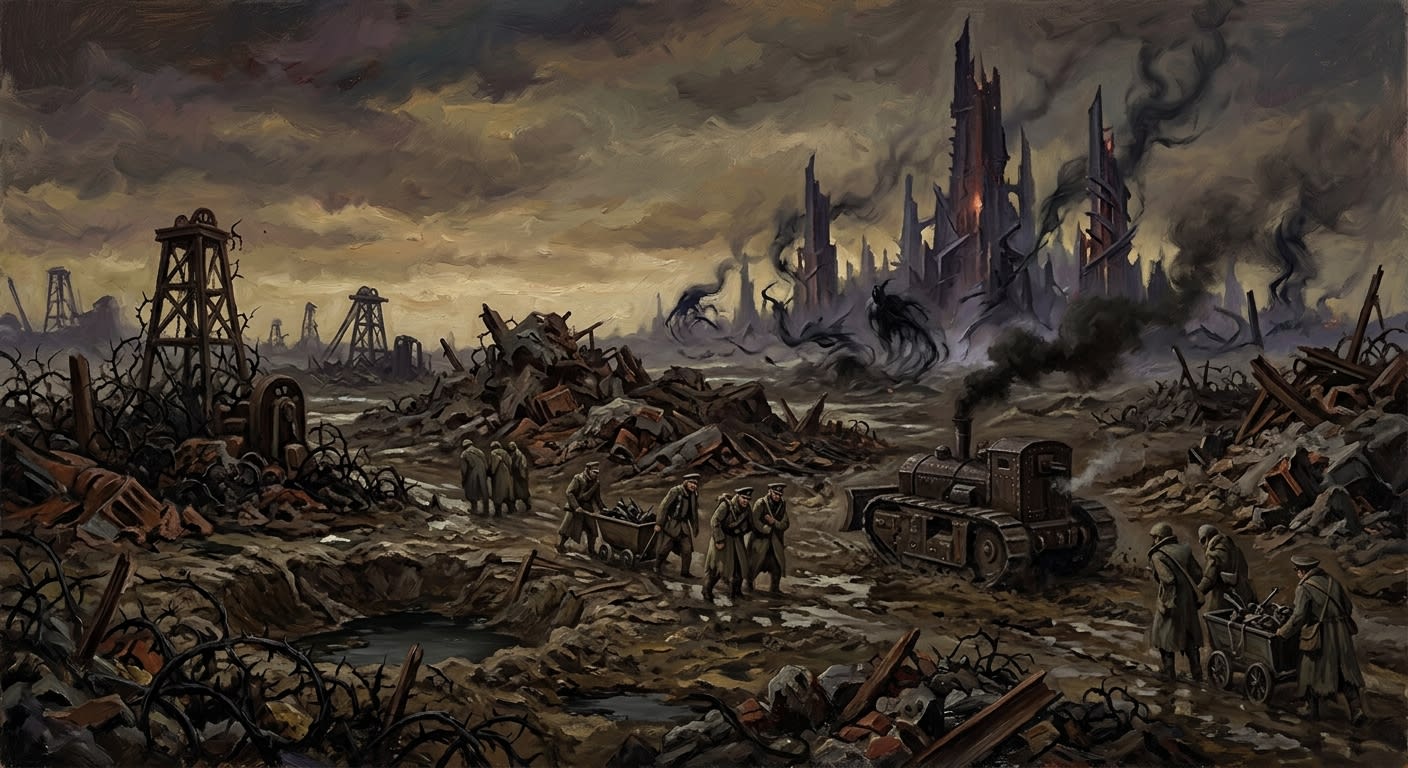
Charnel Lands
Where geography continues after mercy has been denied
The Charnel Lands are Zone 6, the demonic territories east of the Sagittal Line: geography made hostile to custody, with wilderness and cemetery both demoted to inadequate clerkly metaphors.
Codex Ref. II.6.06-001
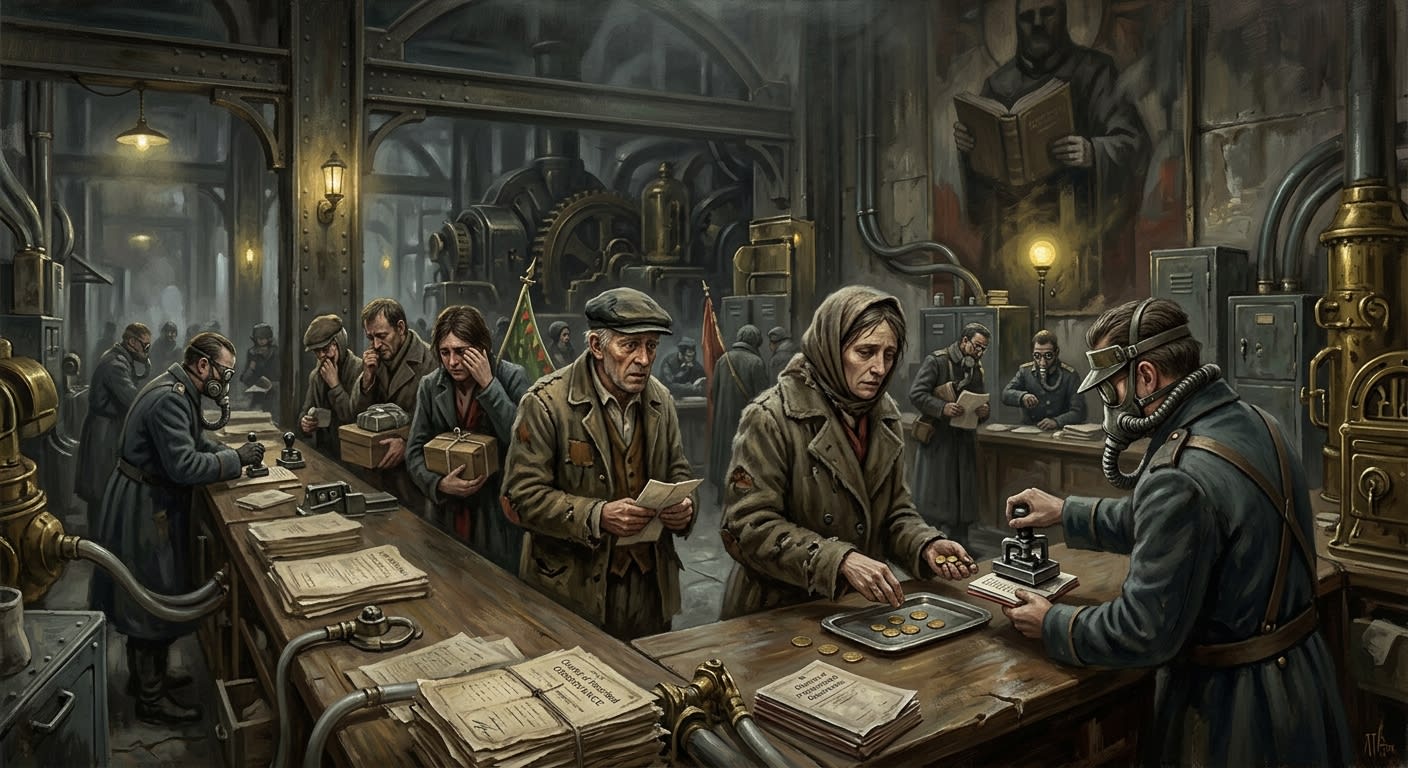
Charter of Prescribed Observance
The document that taught joy to queue and grief to file receipts
Ratified in A.S. 58, the Charter of Prescribed Observance turned public feeling into lawful form: mourning, feasting, silence, joy, and deviation all made taxable.
Codex Ref. XIII.1.23-001
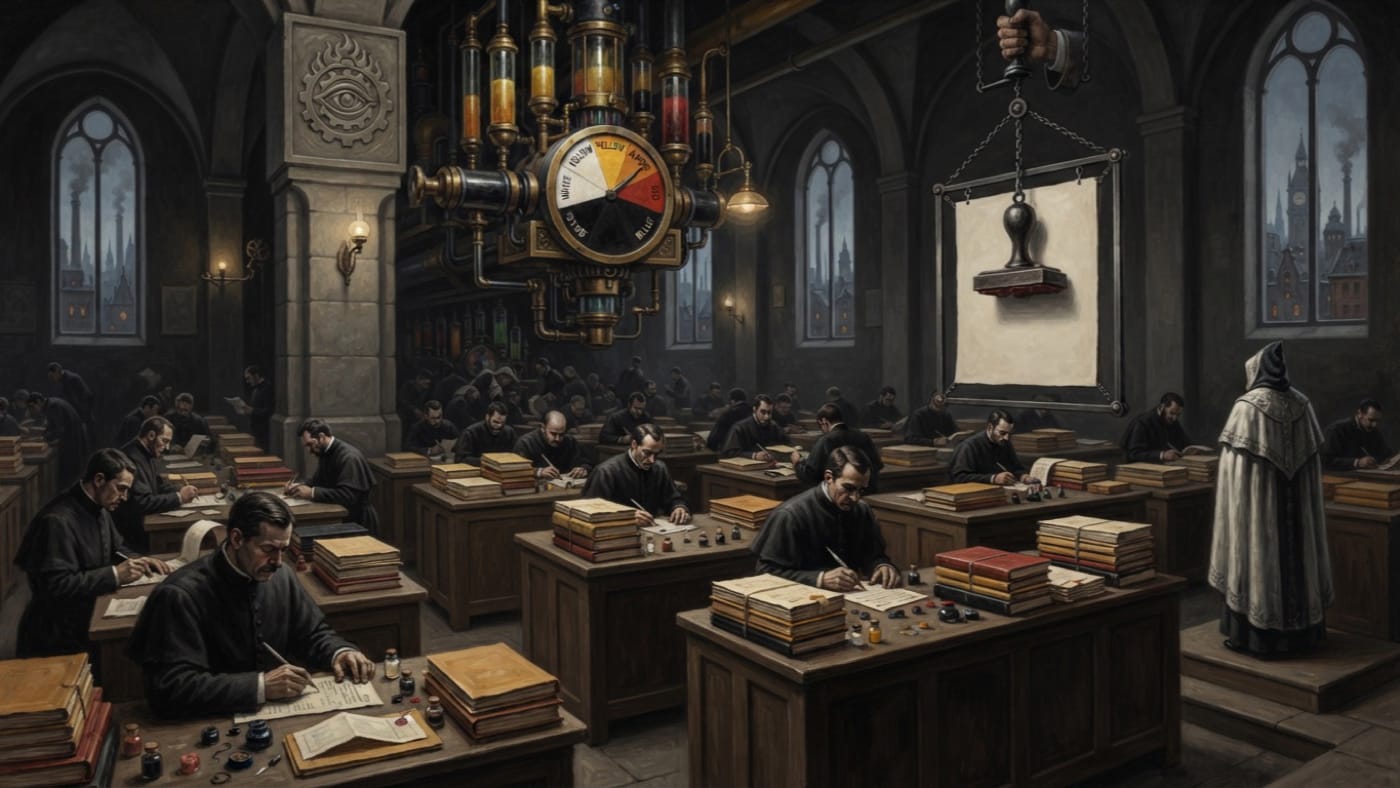
Chromatic Office
The hand touches the register, and the register keeps the name
The Chromatic Office supplies Purity's five-colour scale and Amber guidance. Its clerks need only paper to keep a name beneath a suspended warrant.
Codex Ref. III.3.02-002
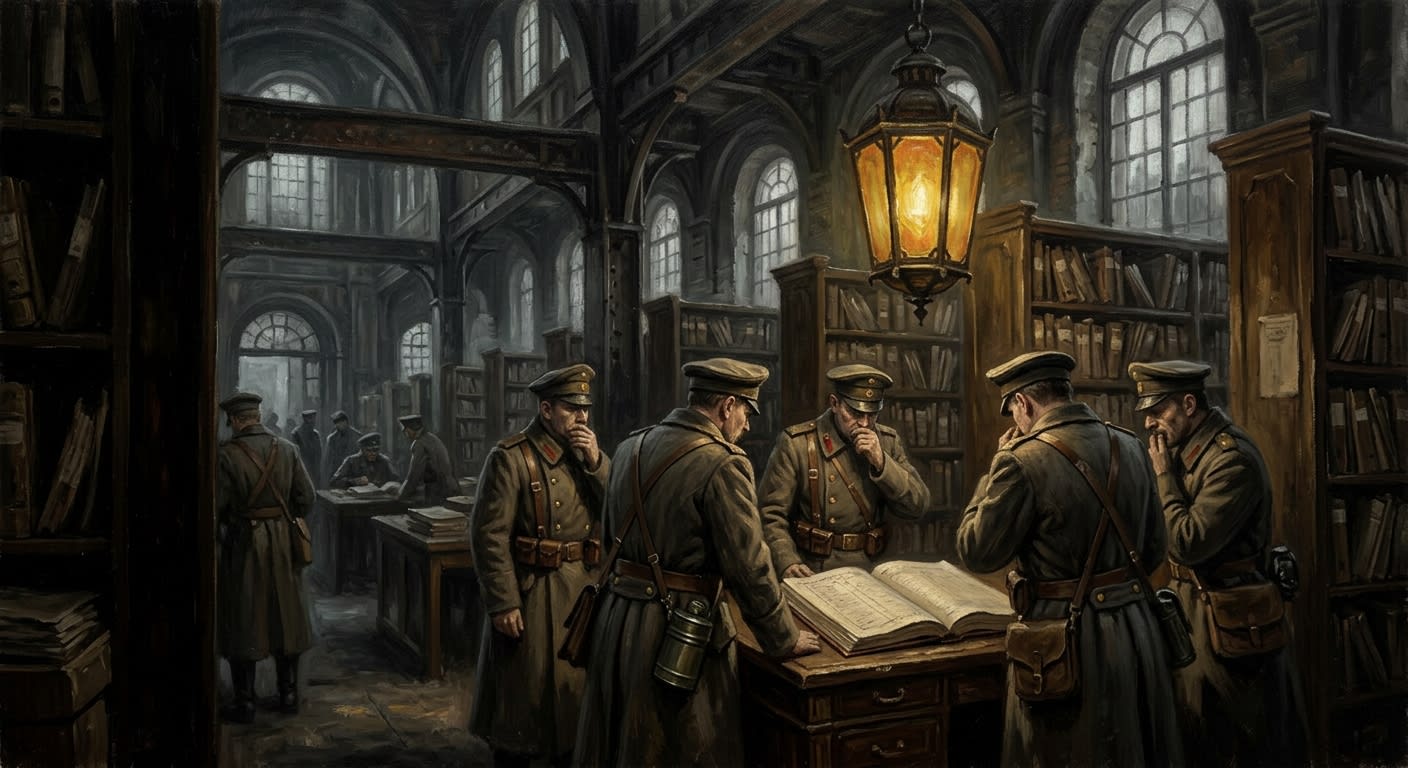
Classification Amber
The honeyed prison where Purity keeps suspicion alive
Classification Amber is Purity's suspended warrant: suspicion preserved in colour, fear extended by procedure, and mercy sharpened into watchfulness.
Codex Ref. XIII.1.06-001

Clean Knife Line
The place register has mistaken a pedigree for an address
The Clean Knife Line is one of twelve surviving Index of Safe Lies copy lineages. Its practical measures remain exact; its custodians remain unnamed, and the place register remains wrong.
Codex Ref. III.2.201-638
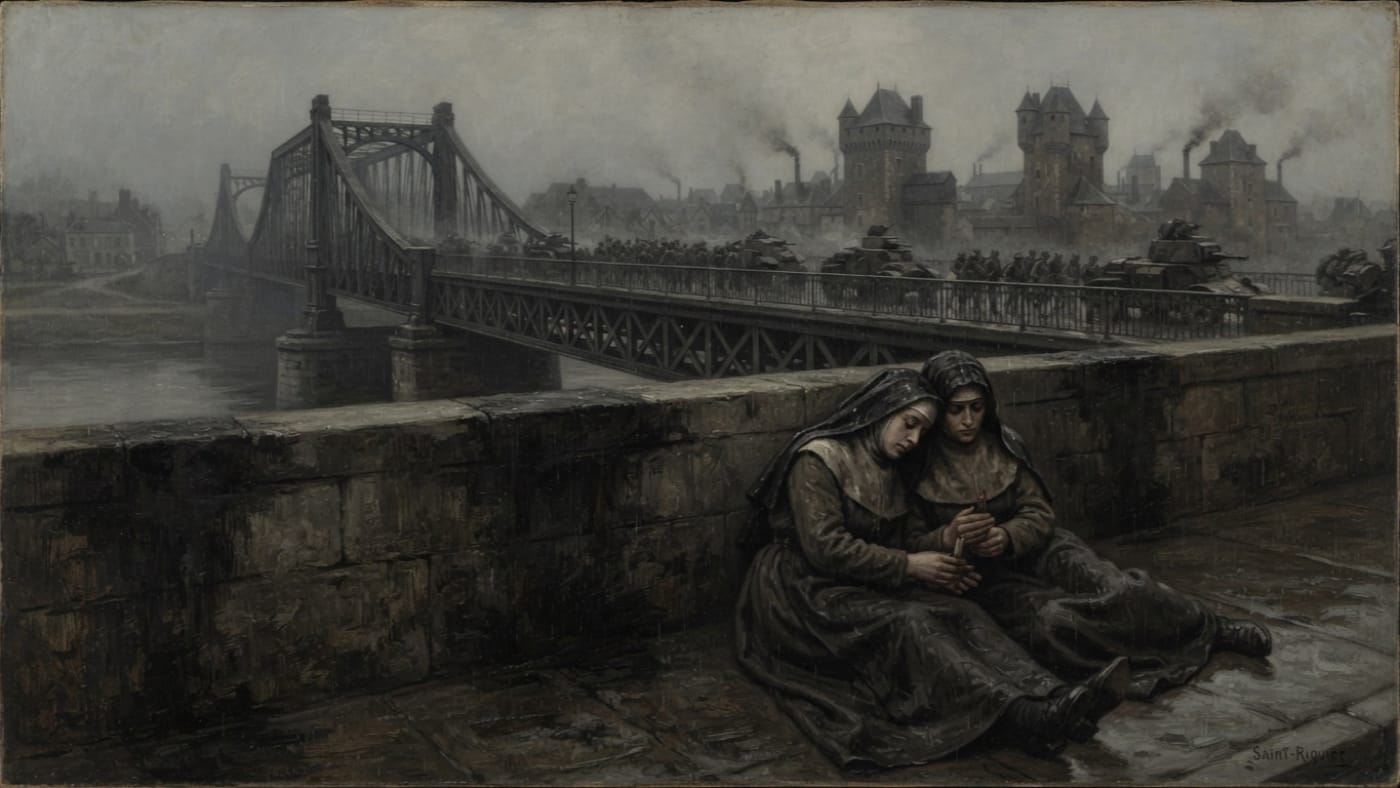
Clémence of Saint-Riquier
The wick was wet; the Ledger keeps the name
The A.S. 201 survey retains Clémence beside Ysabeau at Saint-Riquier: a wet wick, an open crossing, and two unburned bodies. A sacristan's bread account kept the names that embarrassed the devotional cycle.
Codex Ref. III.2.01-644
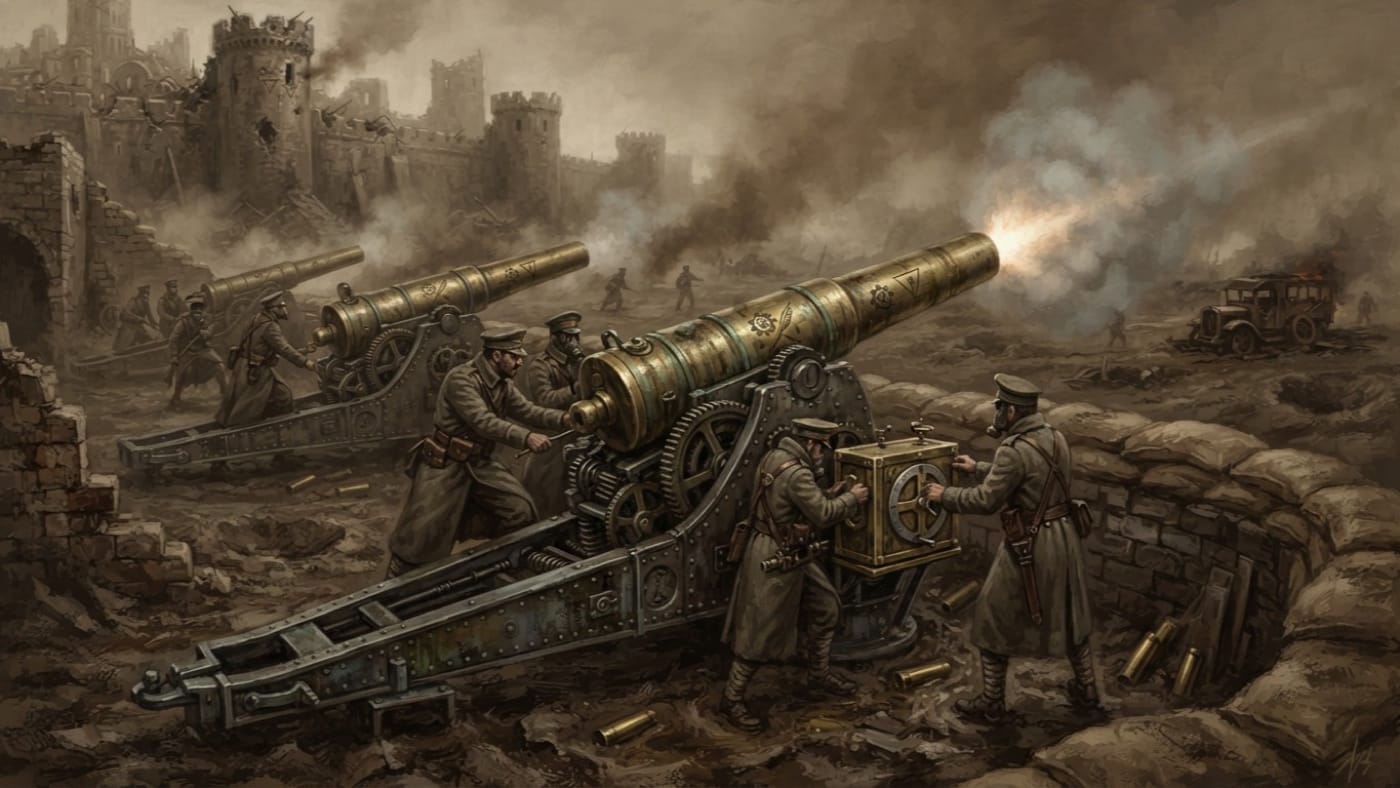
Clockwork Artillery
Four rounds per minute; no provision for Providence
Brass-barrelled Rationalist cannon capable of four rounds per minute. The Bureau condemned the makers, blessed the barrels, and kept the design.
Codex Ref. III.2.04-016
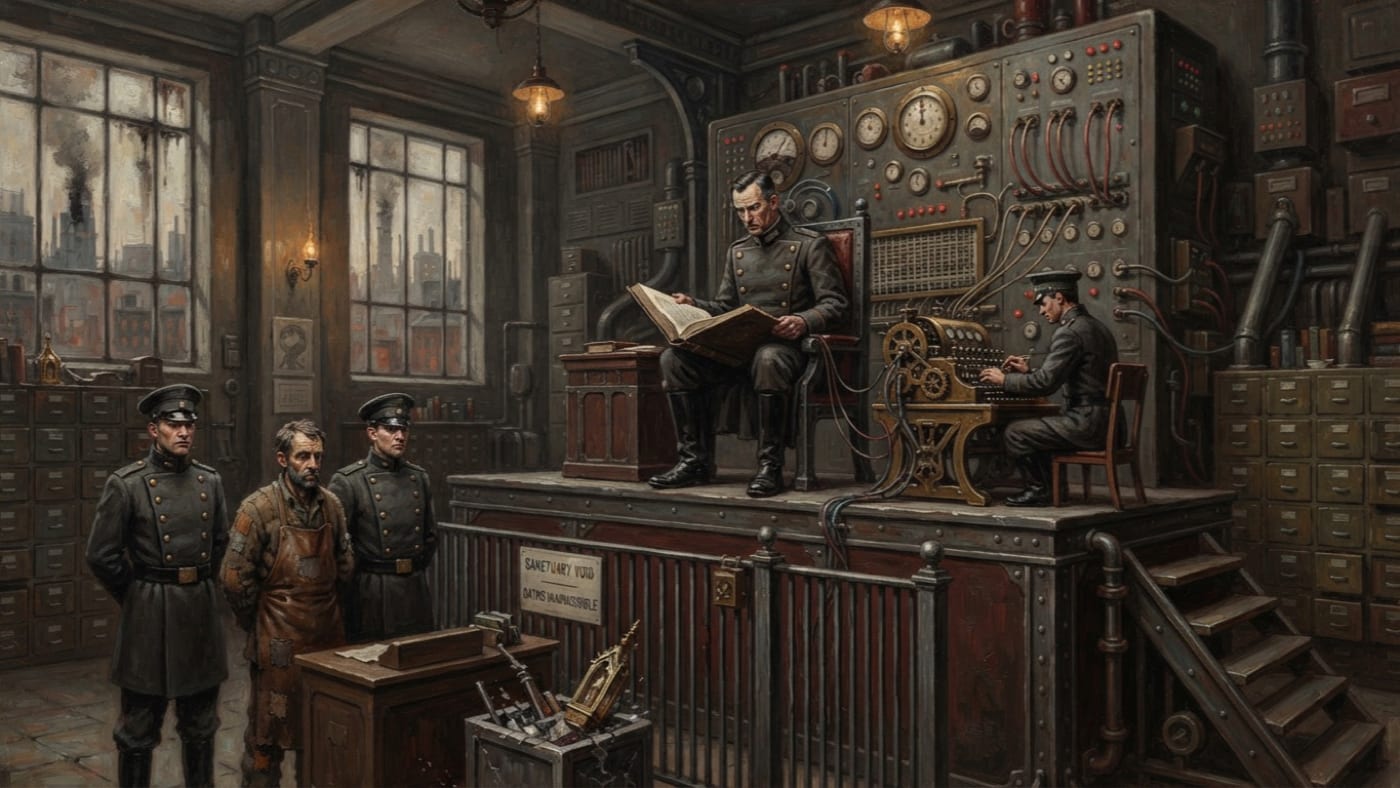
Code of Rational Jurisprudence
A Courtroom Without Relics, and a Divisor Where Mercy Belonged
The Republic's court law made evidence sovereign, abolished relic-sworn oaths and sanctuary, and priced punishment by usefulness. Indexed to Regensburg, A.S. 30; its promulgation remains unknown.
Codex Ref. XIII.1.58-030
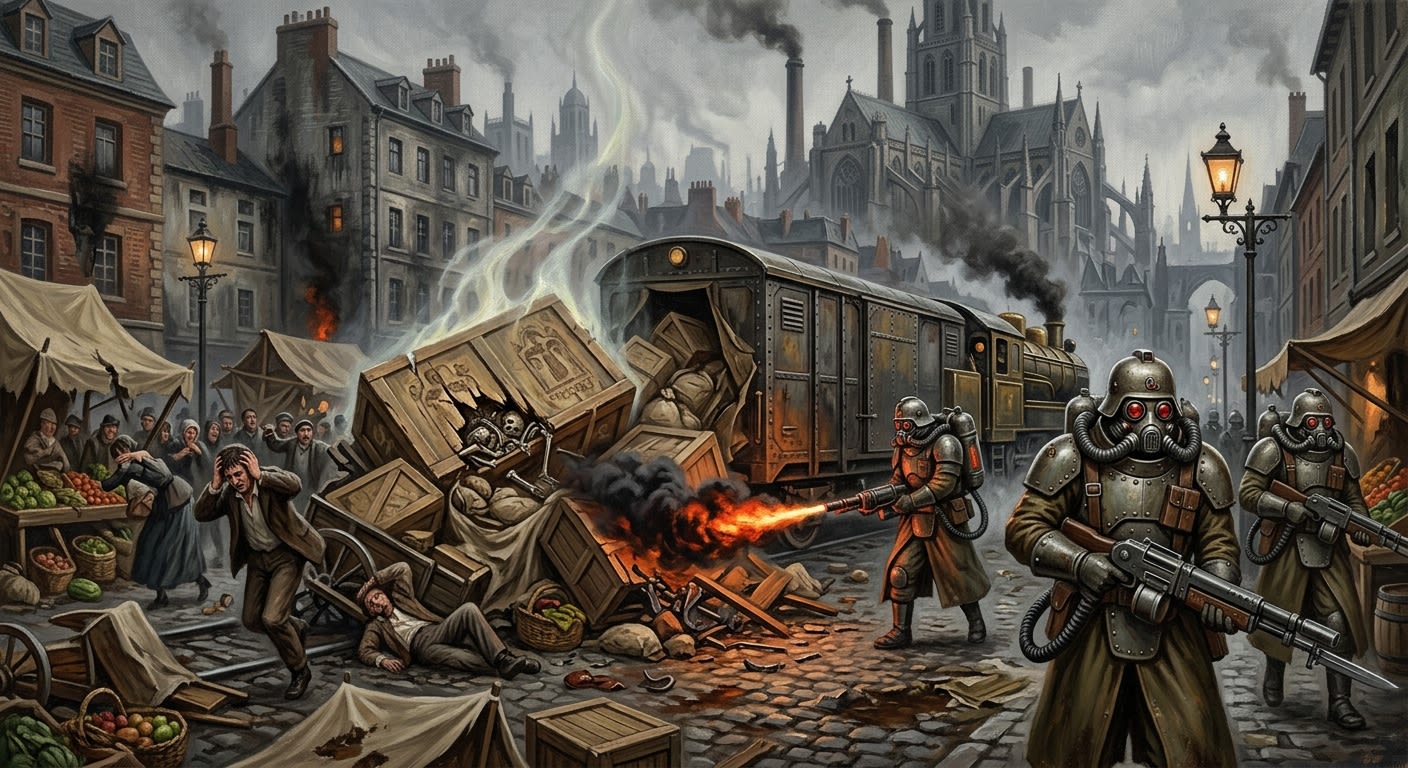
Collapse of Saint Aurelia's Convoy
A reliquary procession folded inward and called it music
The A.S. 184 Rouen market incident in which an authenticated reliquary convoy collapsed under unseen Pale Chanter cadence, broke its cargo, and left Purity to burn the witnesses.
Codex Ref. VII.5.04-003

Colonel Verdane
He did not break Aachen; he purchased the hinge
Colonel Verdane bought Aachen with terms, silk, wine, and exact road arithmetic. Guillaume sold the gate; Verdane priced the hinge.
Codex Ref. I.1.04-001
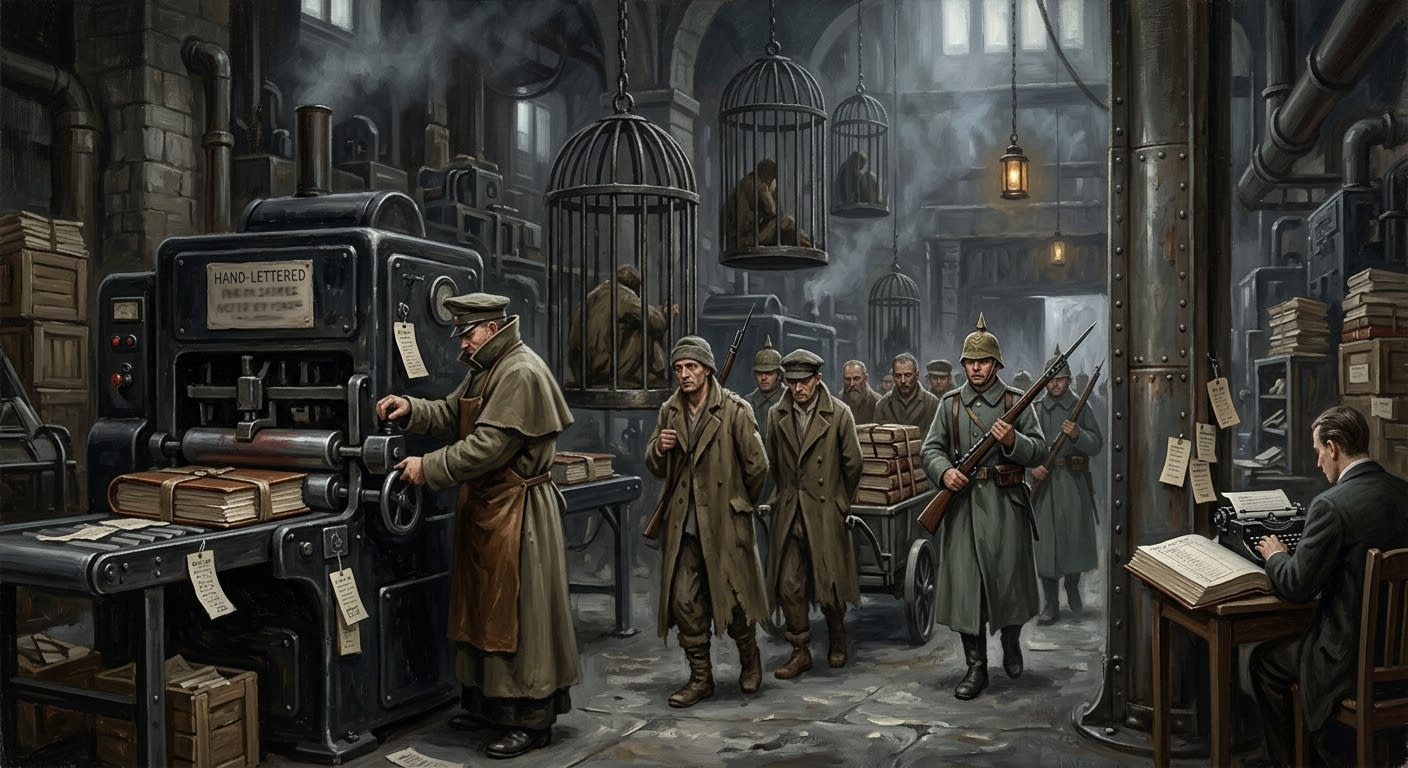
Commentaries on Faithful Severity
The book that taught cruelty to file receipts
Severian's Commentaries turn cruelty into apparatus: cages, tongues, households, witness columns, and the tidy receipt by which harm becomes Doctrine.
Codex Ref. XIII.1.04-134
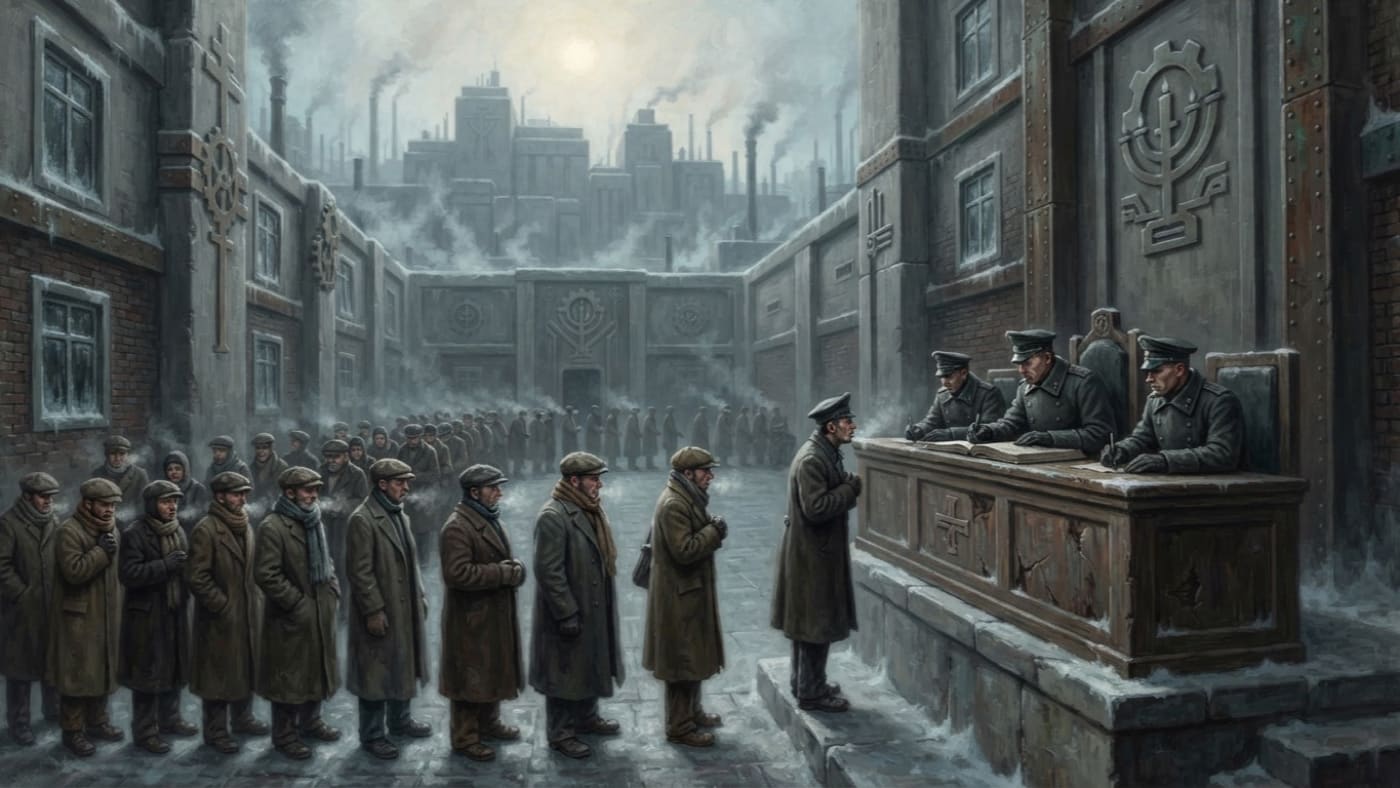
Cough Winter
A.S. 201 survey of the winter that left a total and kept its year
An A.S. 201 survey of Mainz's undated Cough Winter: frost made coughs sound wet, and a thousand executions are reported. Physicians blamed weather, Purity corruption, Records classification. The total survived its explanations.
Codex Ref. VII.2.02-763
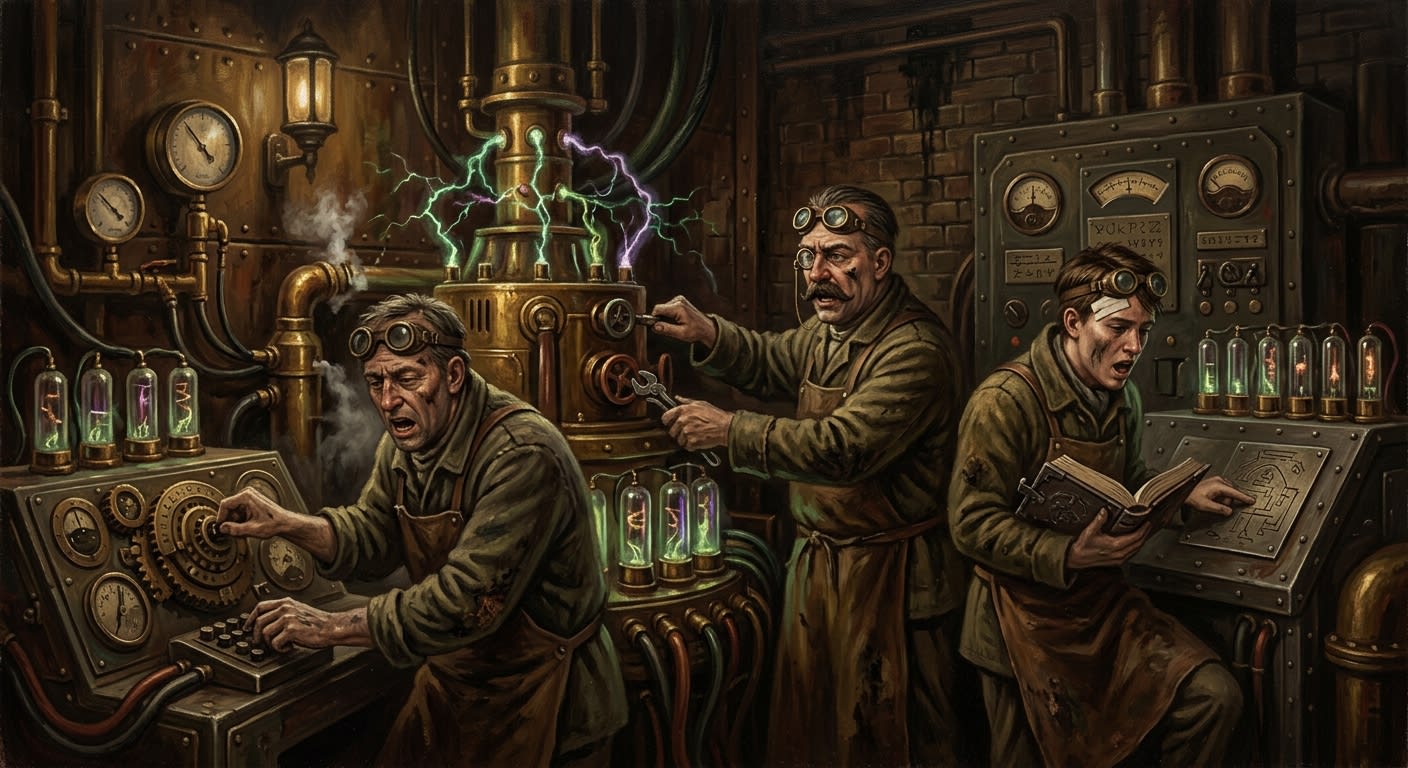
Counter-Sorcery Verses
Speak only what you can finish, for the wall listens
The sanctioned combat cant of Litany-Engineers: twenty-seven working verses that time charges, fracture sorcery seams, and punish miscadence.
Codex Ref. XIII.1.65-001

Creed
The shortest border is the one behind the teeth
The Creed is the Synod's shortest border: a licensed mouth, a timed answer, a civic leash, and the little gate through which bread, obedience, and punishment pass.
Codex Ref. XIII.1.04-090
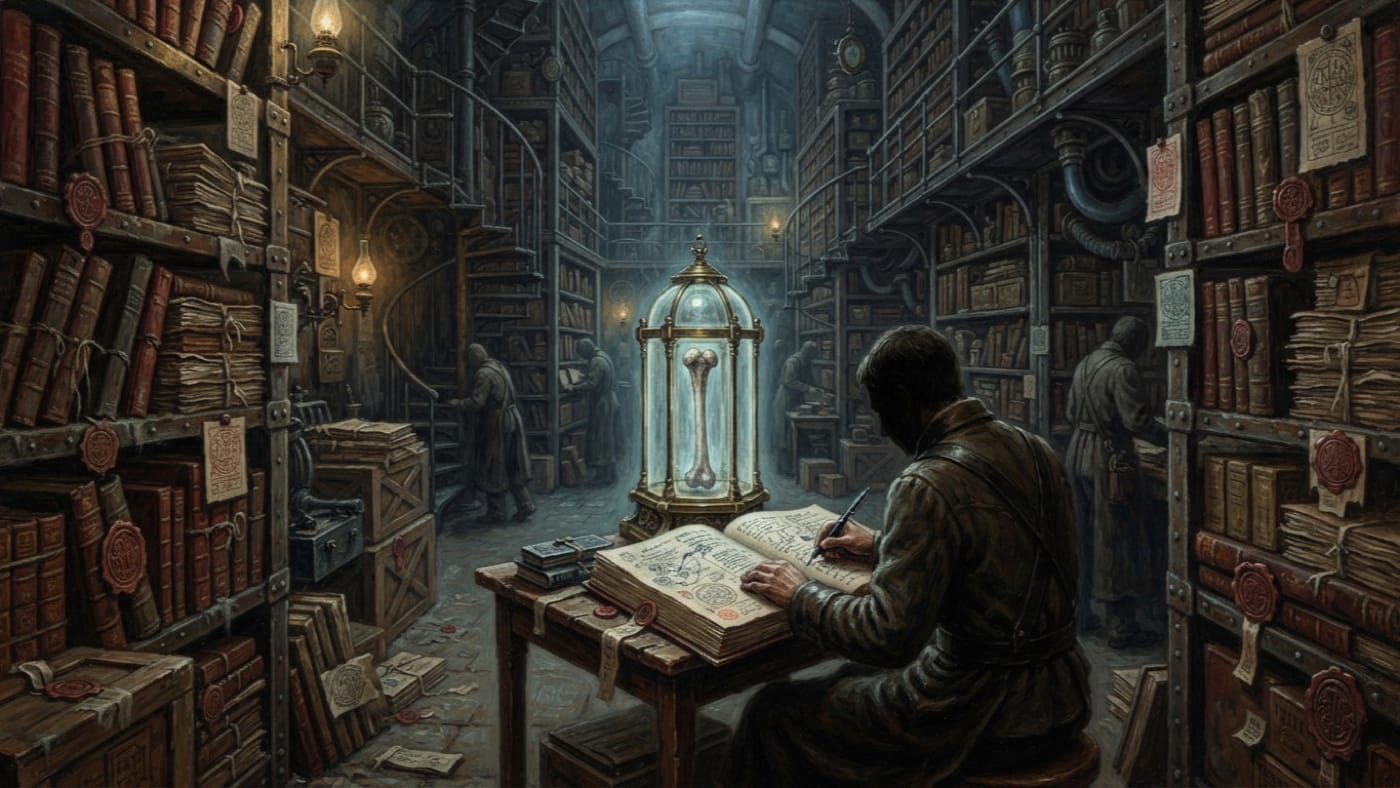
Custodial Chain
The ledger remembers the hands. The bone keeps its own counsel.
The ledger joins an authenticated relic to the hands that held it. In 1678, Vienna severed Aldebrand's chain without moving the bone. The record lost custody; the custodian did not.
Codex Ref. XIII.1.97-001

Dead-Goods Tariffer
The grave is a permit; the permit has a price
Bureau-licensed bone classifier. He decides what the dead become — mortar, monument, or ornament — and does not look up from his seal press.
Codex Ref. XII.11.01-001
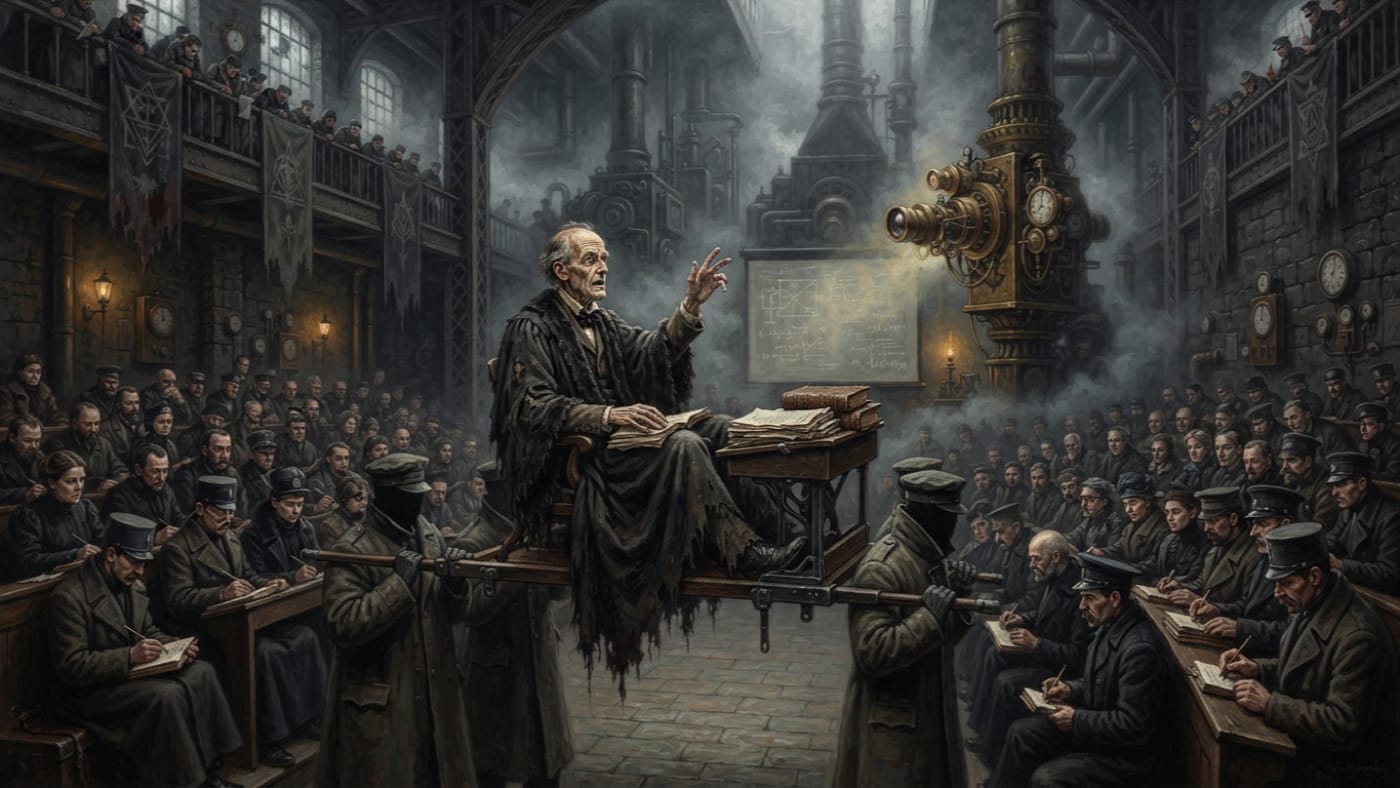
Dean Albrecht Moser
The signature survived; so, inconveniently, did the signatory
Dean Albrecht Moser signed the Concordats of Ulm in 1655 and reached Amsterdam's founding congress at seventy-nine, carried on a litter and still lecturing. His signature outlived his bones.
Codex Ref. III.2.01-850
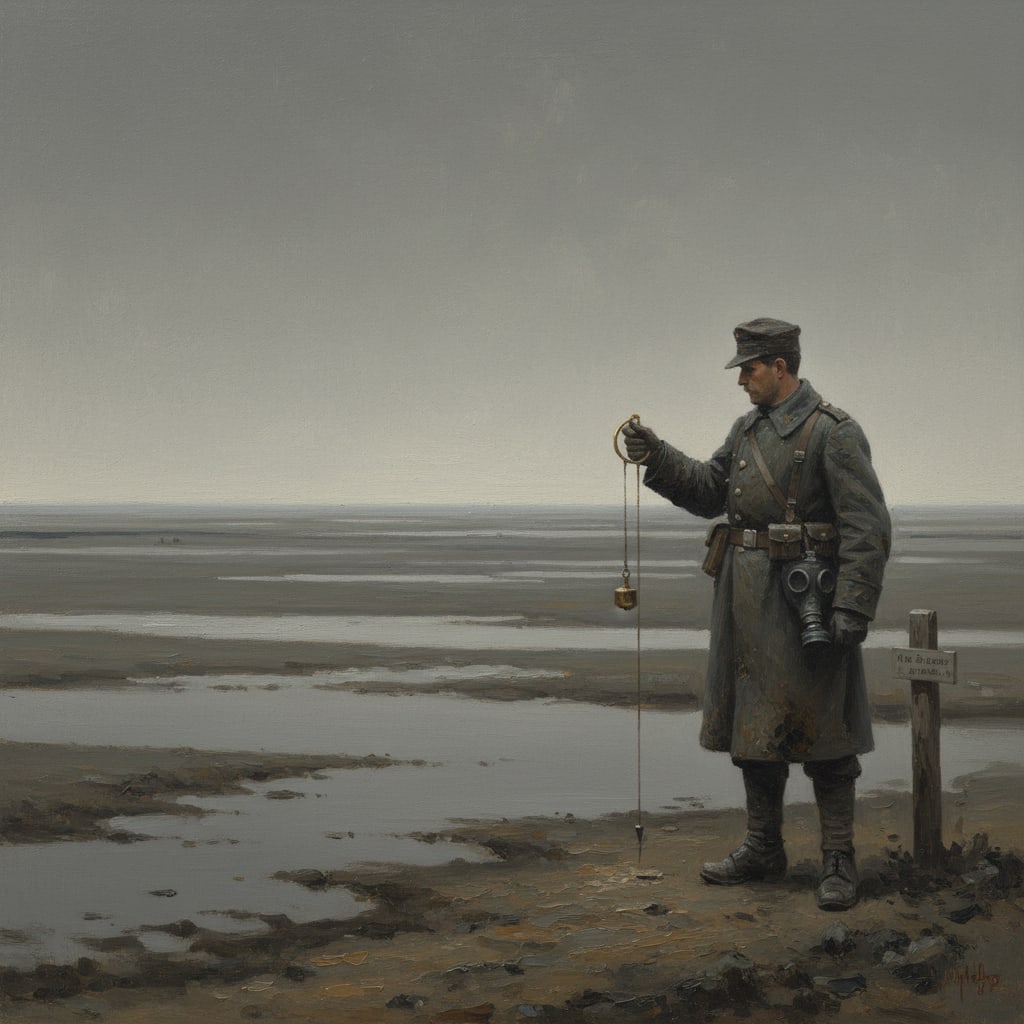
Debrecen
The city that was eaten
Forty-two thousand souls, a grain exchange that set prices from the Danube to the Rhine, and a harvest the world will never taste again. Kargath ate it. The Blightmarsh is all that remains, and the Blightmarsh is still hungry.
Codex Ref. VI.1.01-001
Diocese of Trier
Twelve pages of theology. No reconciled provenance.
Trier's twelve-page defence of multiplied Aldebrand relics in −32 A.S. / 1678 CE: magnificent theology, unreconciled provenance, and paperwork the Synod claimed a century late.
Codex Ref. I.3.09-032
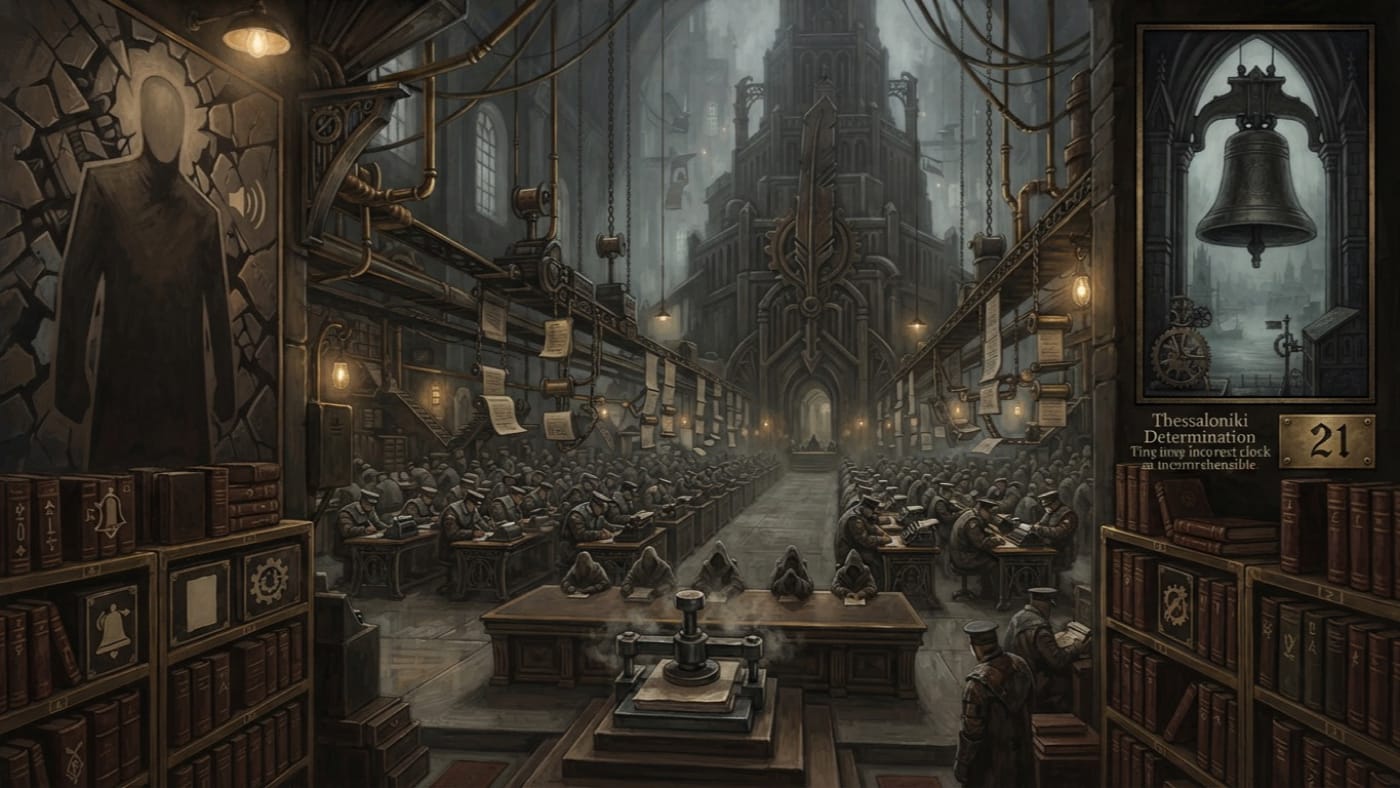
Doctrinal Congress
Where an opinion becomes an obligation
A Doctrinal Congress turns disputed findings into binding catechism, classification and wording. From the Creator's silence to Thessaloniki's reversed bells, the determinations stand while the mechanisms remain unexplained.
Codex Ref. XIII.1.90-201
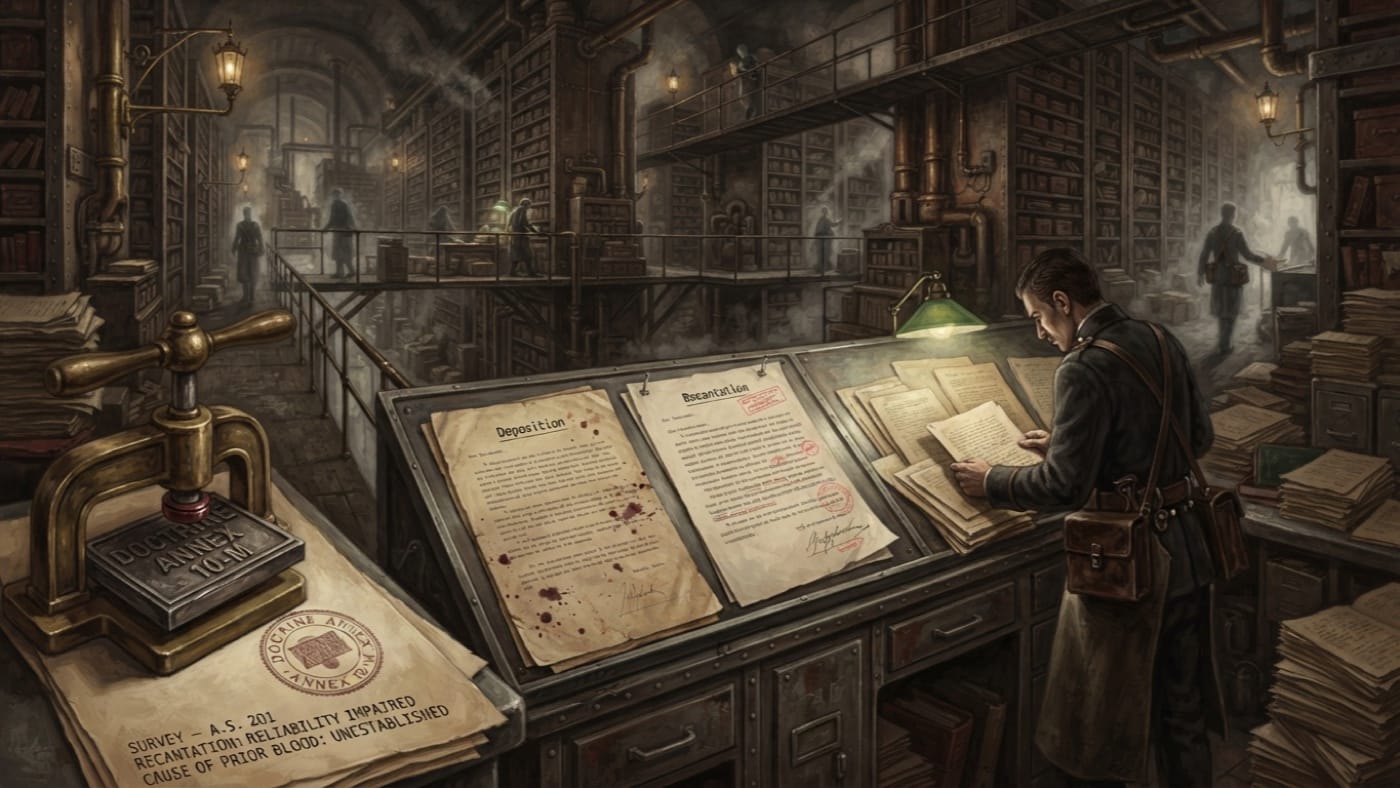
Doctrine Annex 10-M
A seal can keep testimony without making it proof
The A.S. 201 survey of Doctrine Annex 10-M records a Saint-Malo survivor's reported blood before the first blow and her pressured recantation. Custody is attested; the blood's cause and the historical seal date remain unknown.
Codex Ref. I.1.05-003
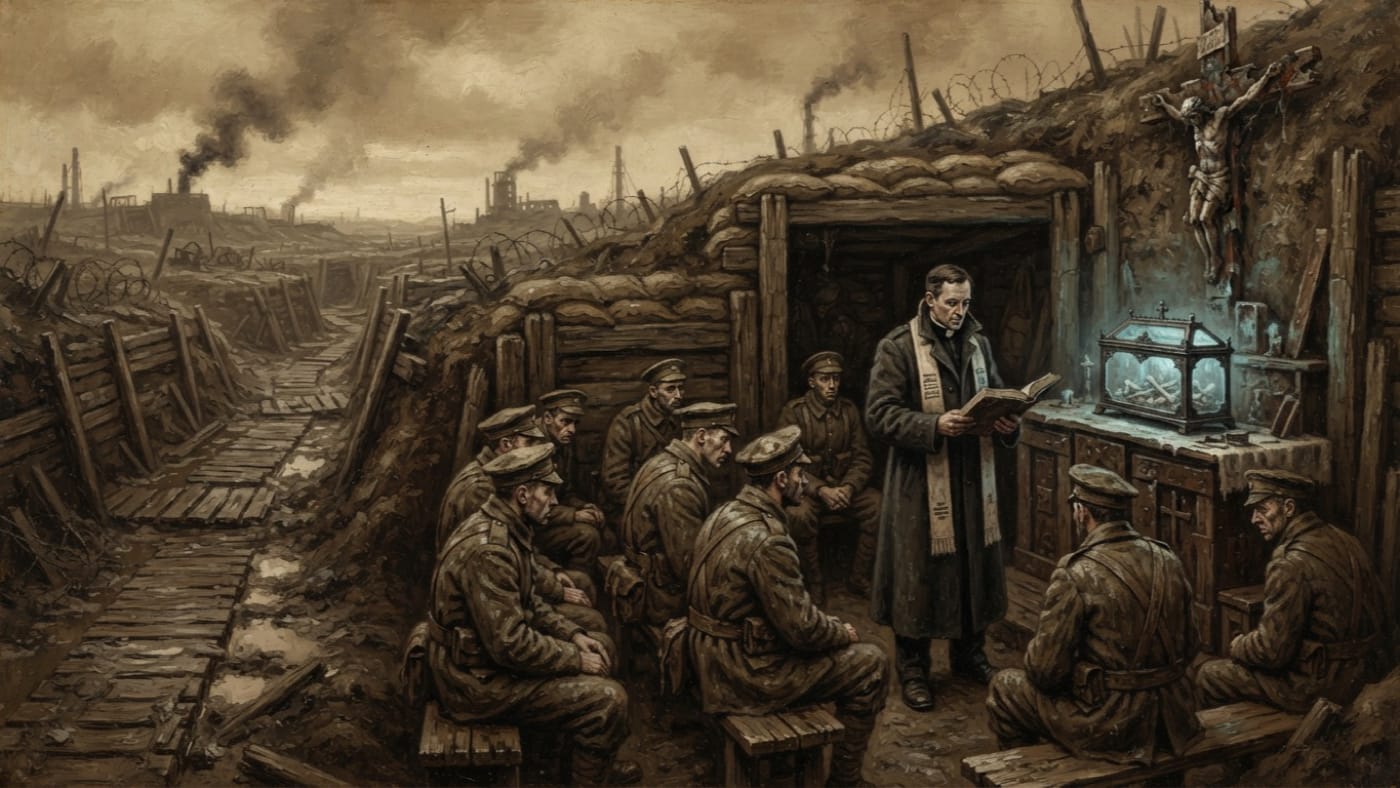
Doctrine of Divine Withdrawal
The way to our ears was broken. The responsibility remains ours.
Ratified in A.S. 72, the Doctrine blames Rationalist desecration for the Creator's silence. His return awaits Perfect Faith. The delay, naturally, belongs to the faithful.
Codex Ref. XIII.1.90-072
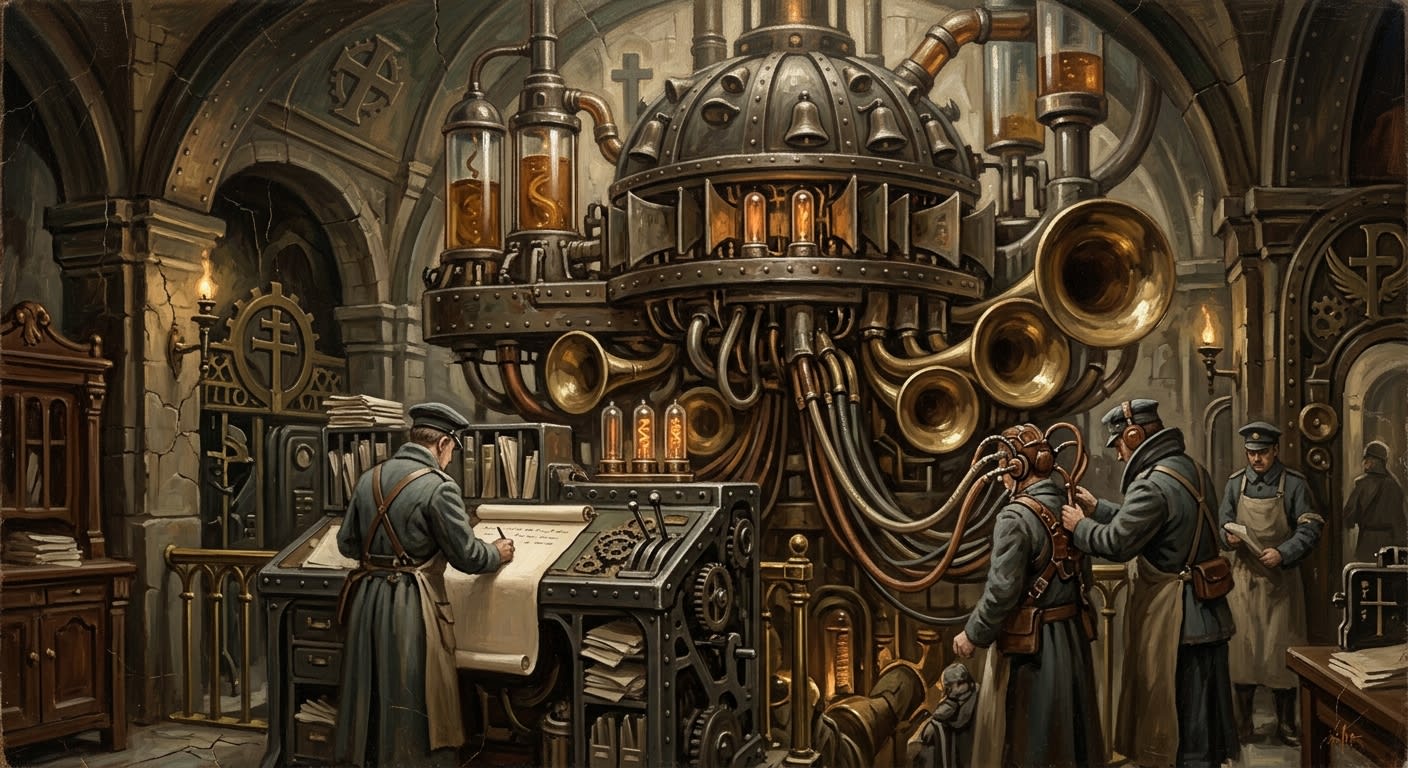
Doctrine of the Inaudible Voice
The Bureau's golden answer to the most dangerous quiet
Ratified in A.S. 104, the Doctrine of the Inaudible Voice converts divine quiet into mortal defect, pastoral discipline, and useful machinery.
Codex Ref. XIII.1.90-104
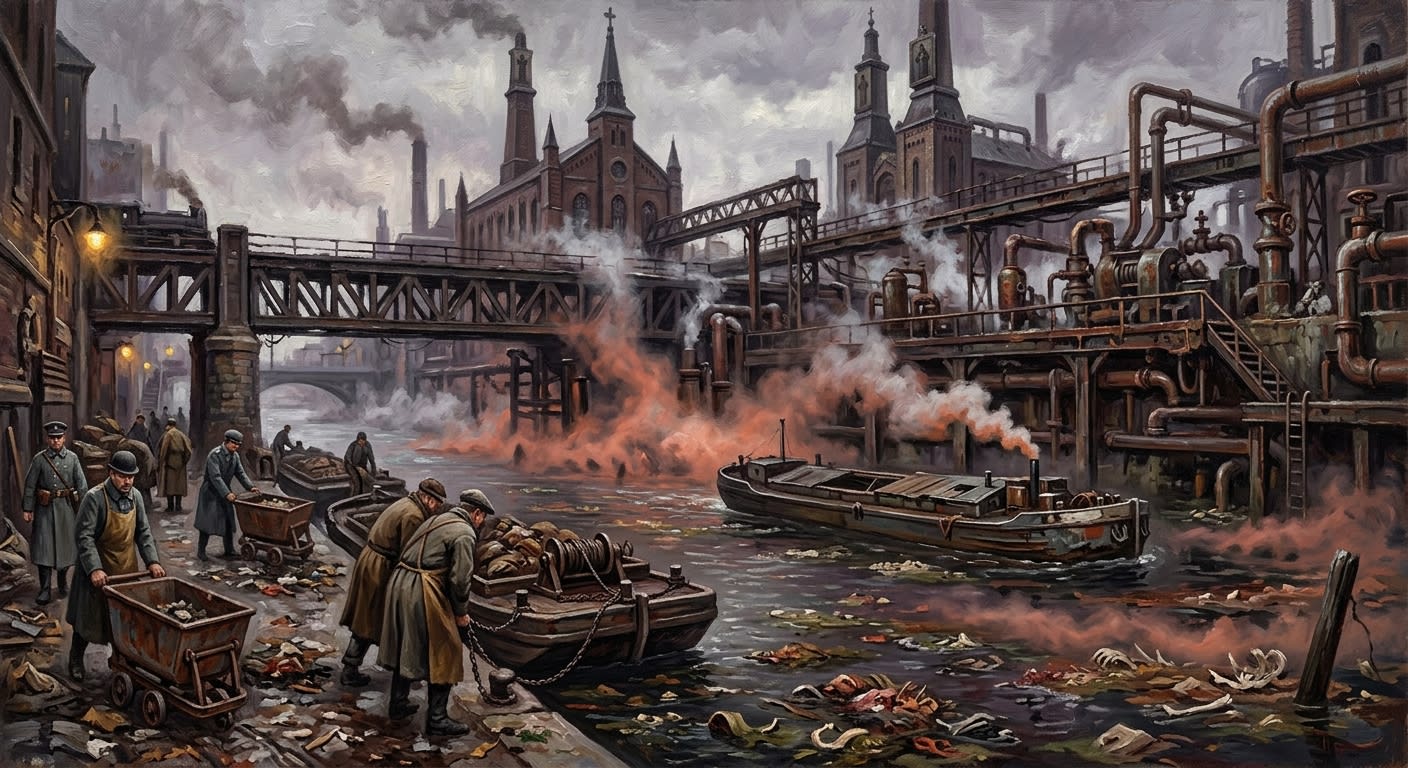
Donaukanal
Vienna's black water remembers what the ledgers rinsed away
Vienna's lesser Danube arm, the Donaukanal carries shrine filth, rebel bones, forbidden lullabies, and steam the Bureaus cannot quite explain.
Codex Ref. II.4.09-095
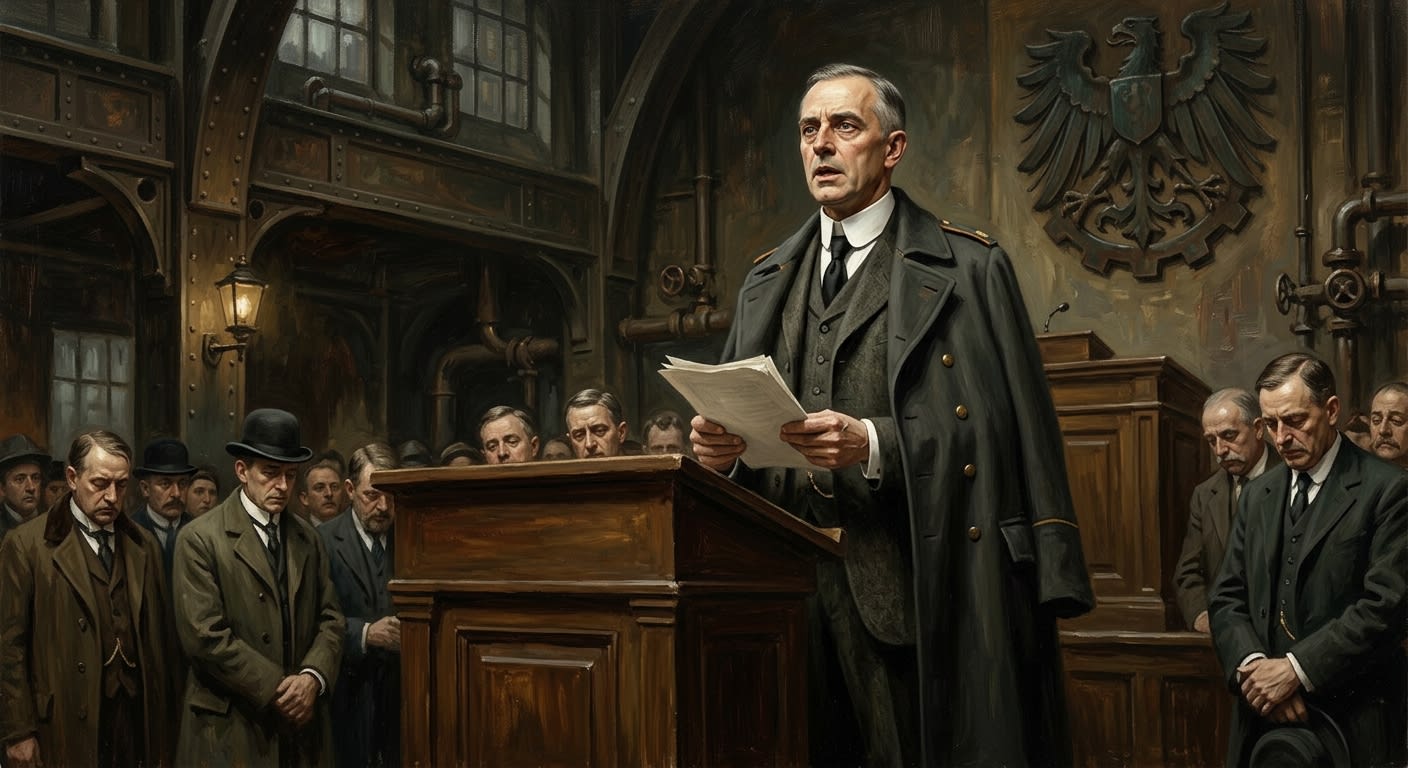
Dr. Albrecht Klemm
He saw the cold fire, named the premise, and chose the lecture hall anyway
Rationalist Prefect of Public Instruction whose A.S. 30 Black Procession address nearly produced repentance, then produced only better cowardice.
Codex Ref. III.2.01-077
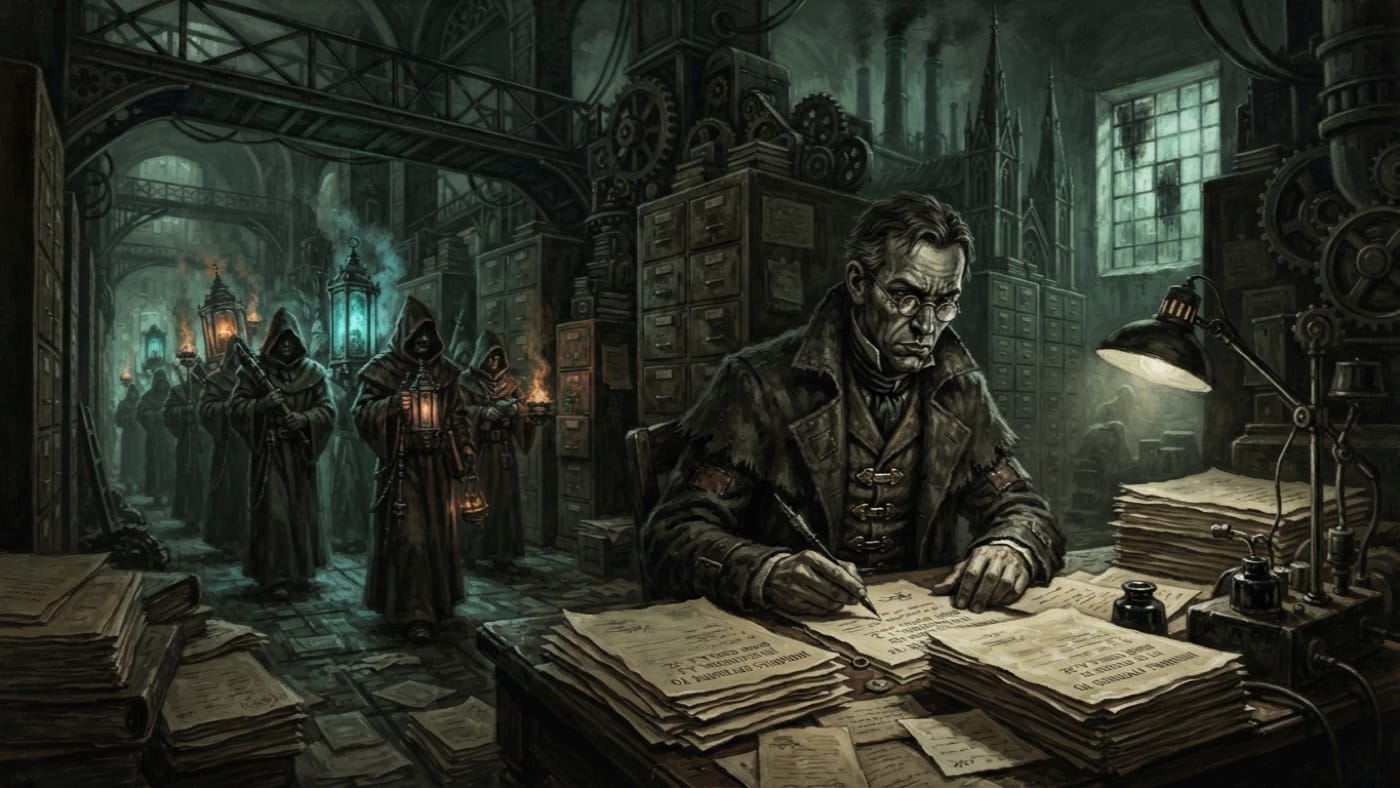
Dr. Gerrit Lemstra
The courtesy was impeccable. The inquiries remain open.
Dr. Gerrit Lemstra drafted the courteous inquiries sent with Amsterdam's Bone Census in −32 A.S. / 1678 CE. The Bureau condemns the scholar; his requests remain unreconciled.
Codex Ref. III.2.01-027
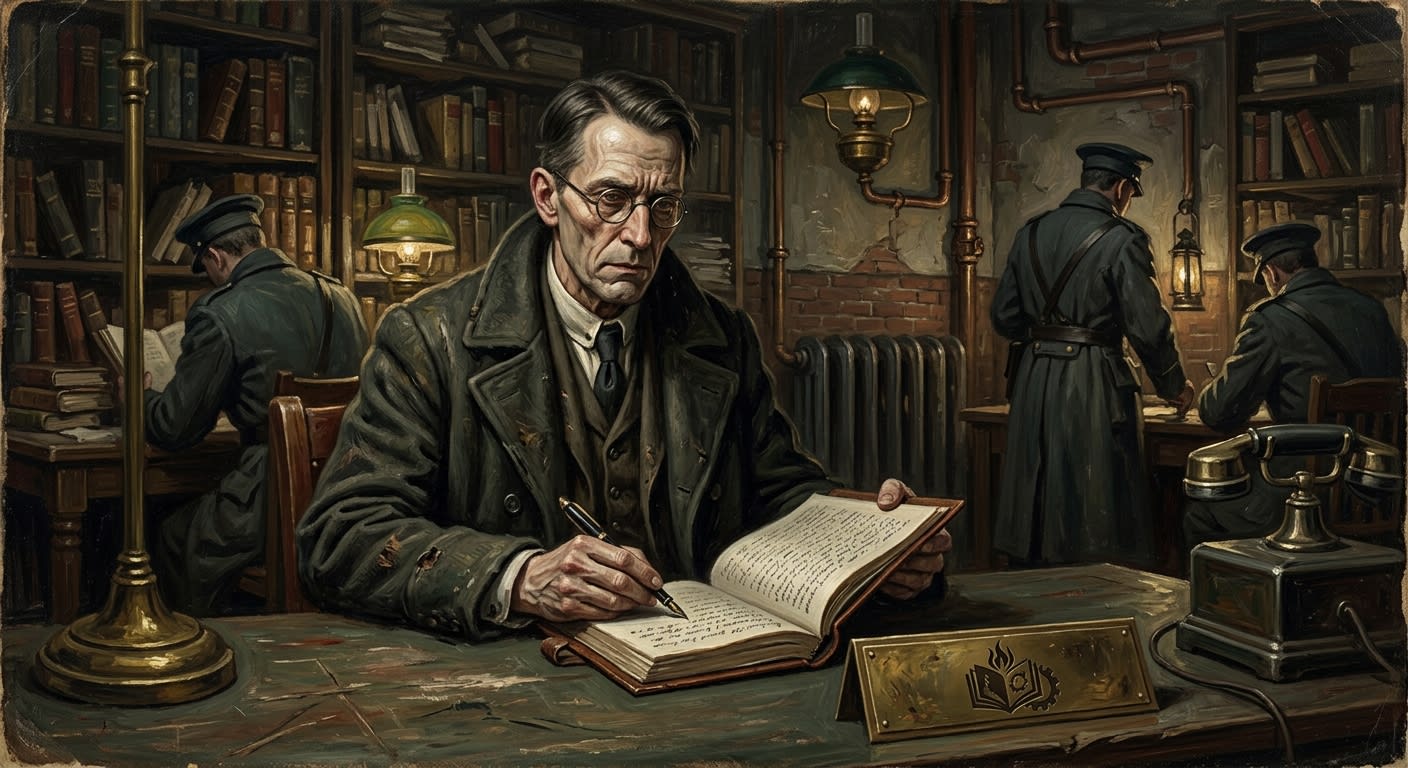
Dr. Marrow Vask
The physician who taught doctrine to carry contraband truth
Condemned Rationalist physician who survived as Brother Matthias, wrote the Index of Safe Lies, and became the Ashen Circle's stolen martyr after his A.S. 57 burning.
Codex Ref. III.2.01-090
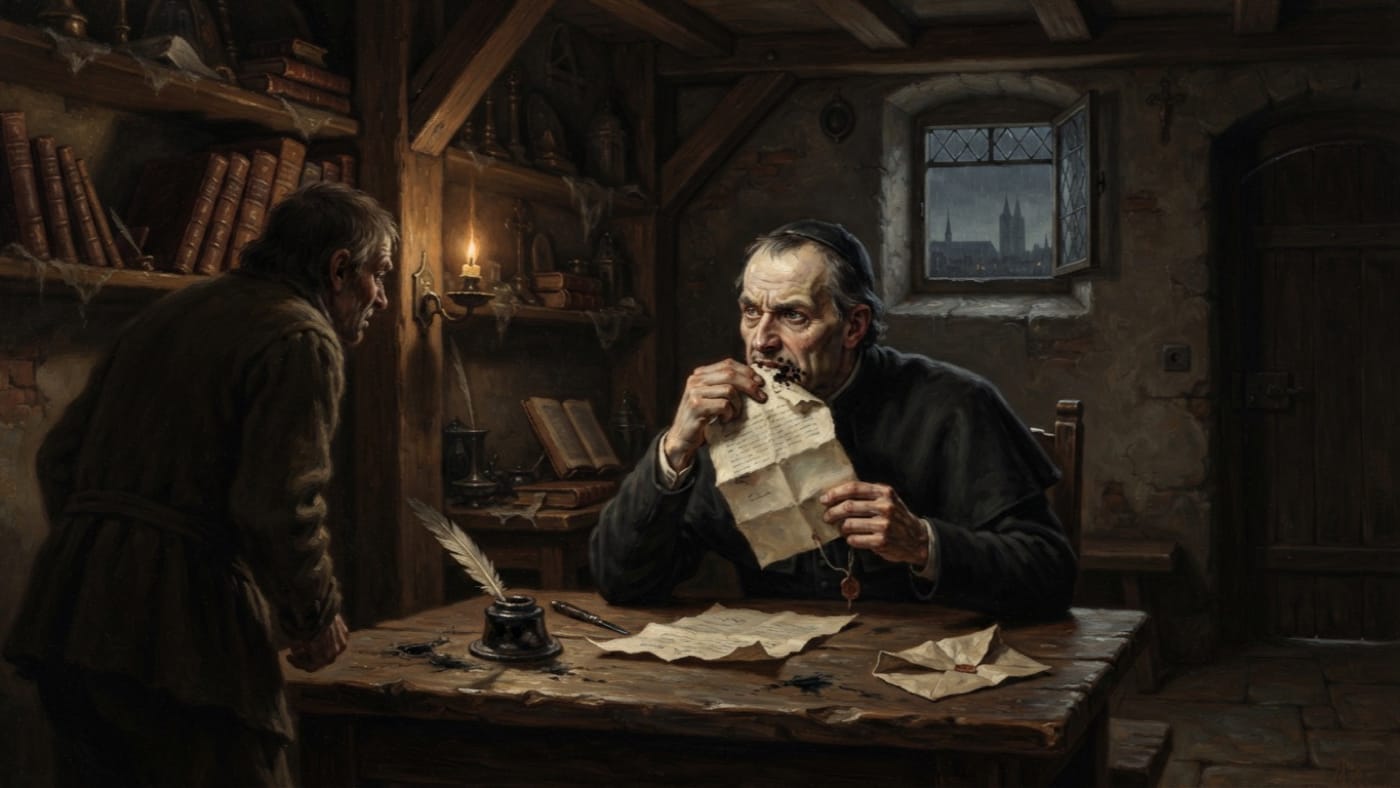
Düsseldorf
One priest. One letter. Nothing left to quote.
A Rhineland city remembered for Father Grauss, who ate the Amsterdam letter in A.S. −32 / 1678 CE. The magistrate supplied three days in gaol; the Bureau supplied a classification.
Codex Ref. II.2.01-941
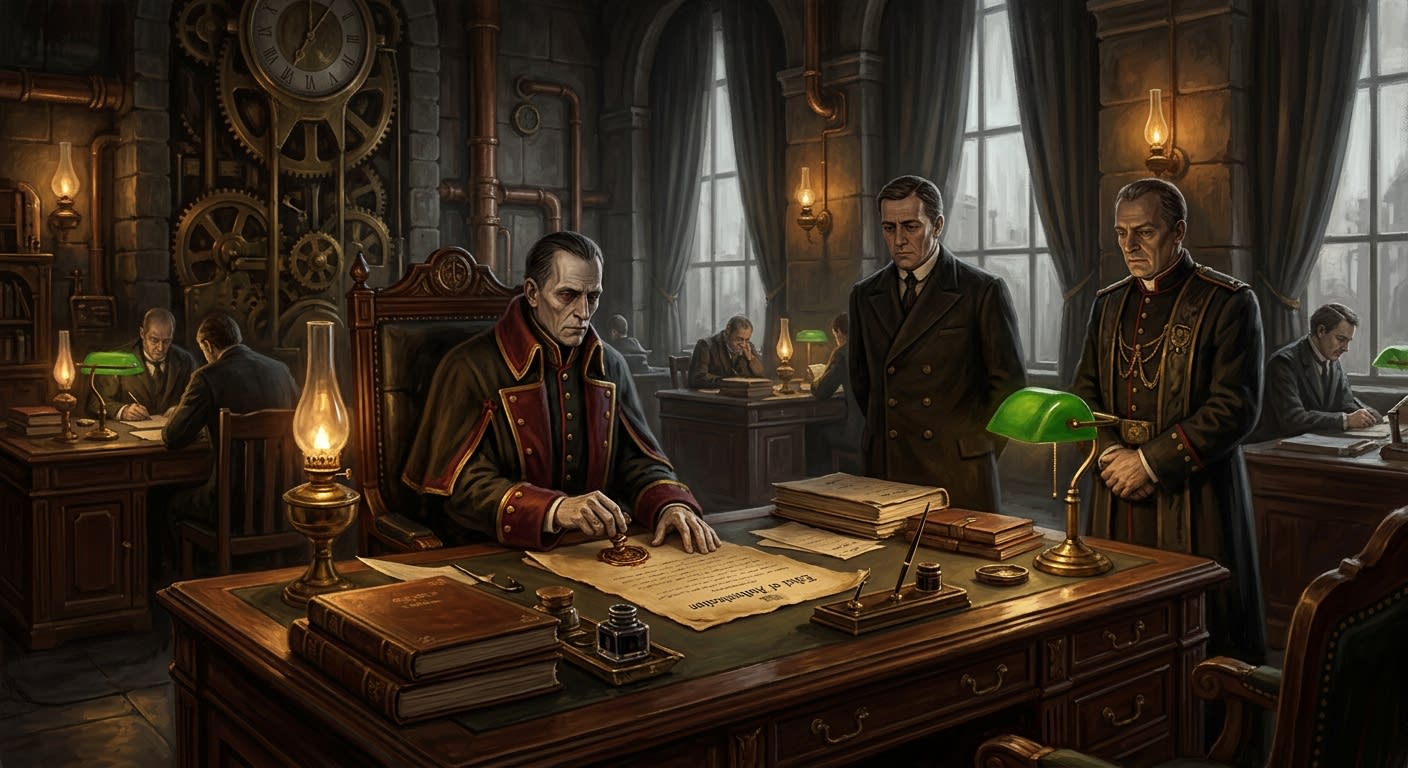
Edict of Authentication
Anatomy objected; the seal overruled it
The Edict of Authentication ratified the Femur Principle at A.S. 147: sanctity obeys custody, seal, witness, and doctrine before anatomy.
Codex Ref. XIII.1.90-147
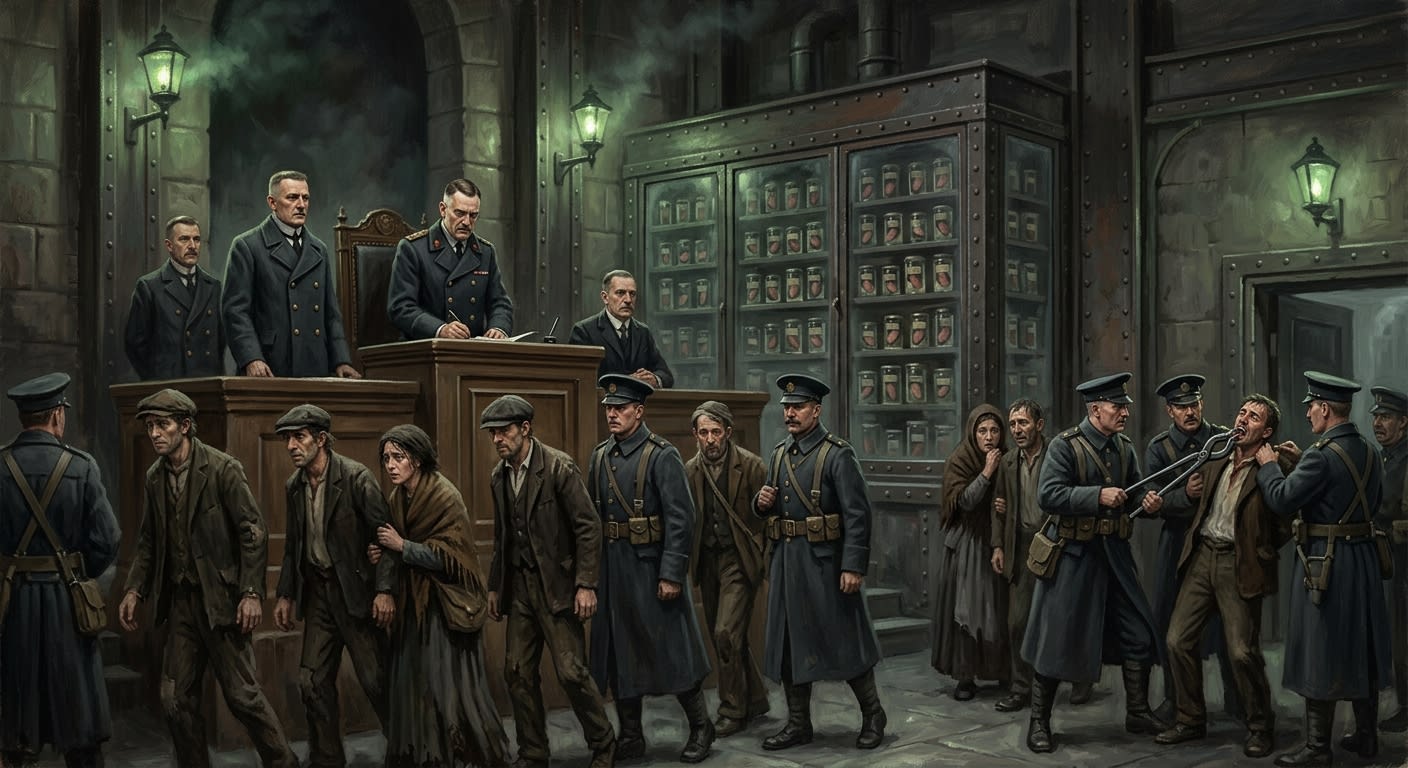
Edict of Ironmouth
When Reason mistook prayer for infection and discovered eleven thousand tongues to classify
A.S. 30 Rationalist law that made spoken prayer vocal treason, answered hymns with pincers, and left the Synod a cabinet of tongues to condemn and study.
Codex Ref. XIII.1.55-001

Europe
The wounded continent, held together by rails, bells, hunger, and denial
Europe is the wounded continent: Synod west, Charnel east, Line between, and every road, harbour, cradle, ration card, bell, and grave bent toward survival.
Codex Ref. II.0.01-201
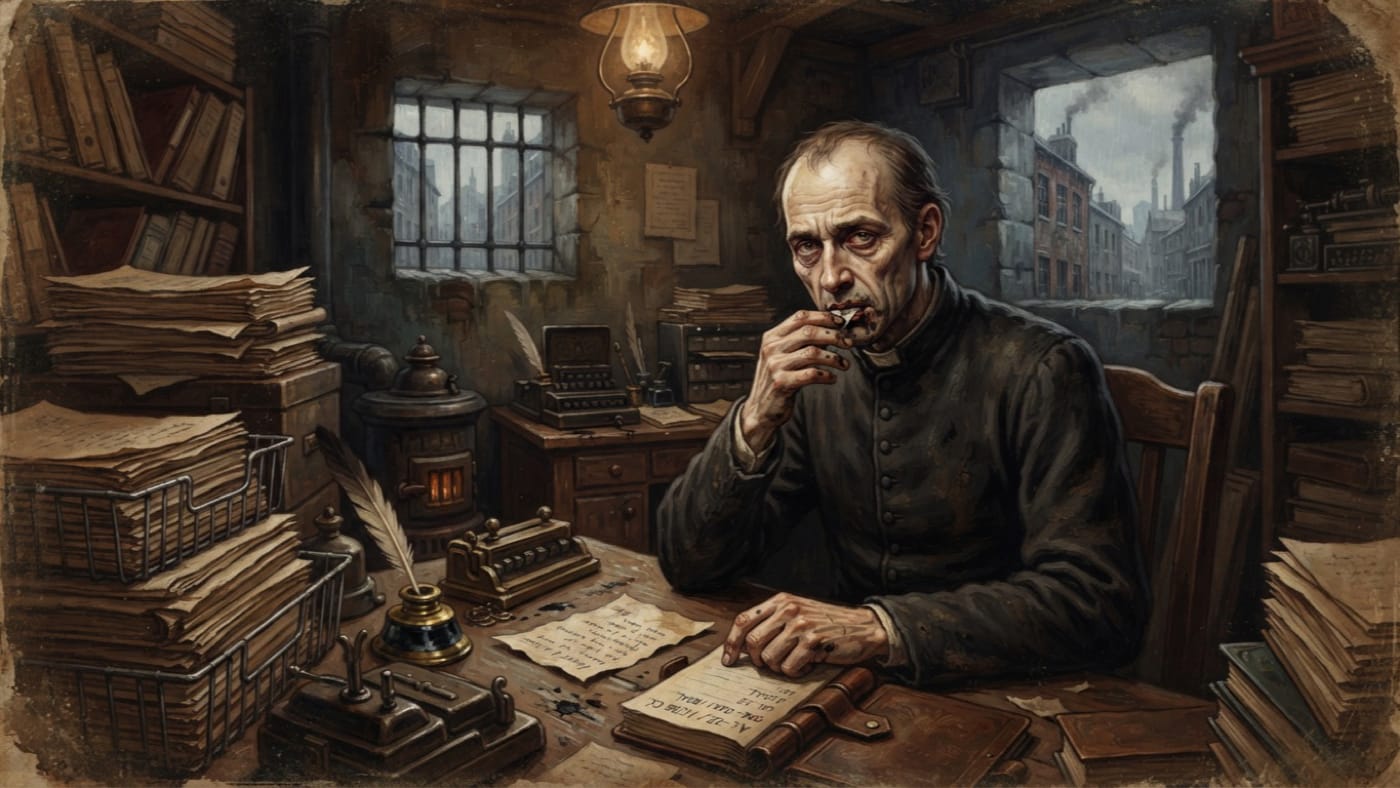
Father Grauss
One letter eaten. Three days served. Five words preserved.
Father Grauss ate the Amsterdam letter in A.S. −32 / 1678 CE. Düsseldorf supplied a beating and three days in gaol; the Bureau supplied its verdict: Doctrinally Sound, Gastronomically Irregular.
Codex Ref. III.2.01-1023
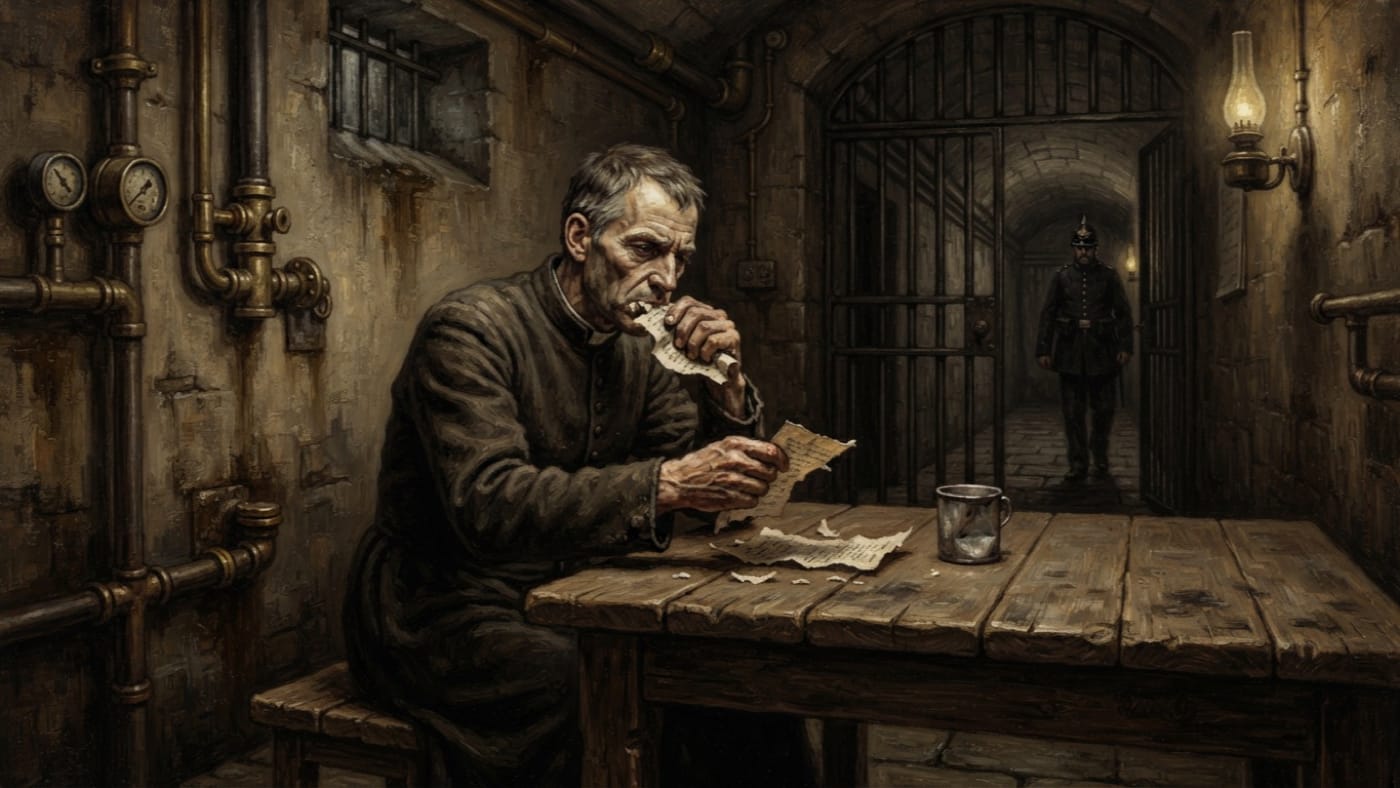
Father Grauss of Düsseldorf
One letter eaten. Three days served. Five words preserved.
Father Grauss ate the Amsterdam letter in A.S. −32 / 1678 CE, received a beating and three days in gaol, and did not recant. The Ledger calls him Doctrinally Sound, Gastronomically Irregular.
Codex Ref. III.2.01-1024
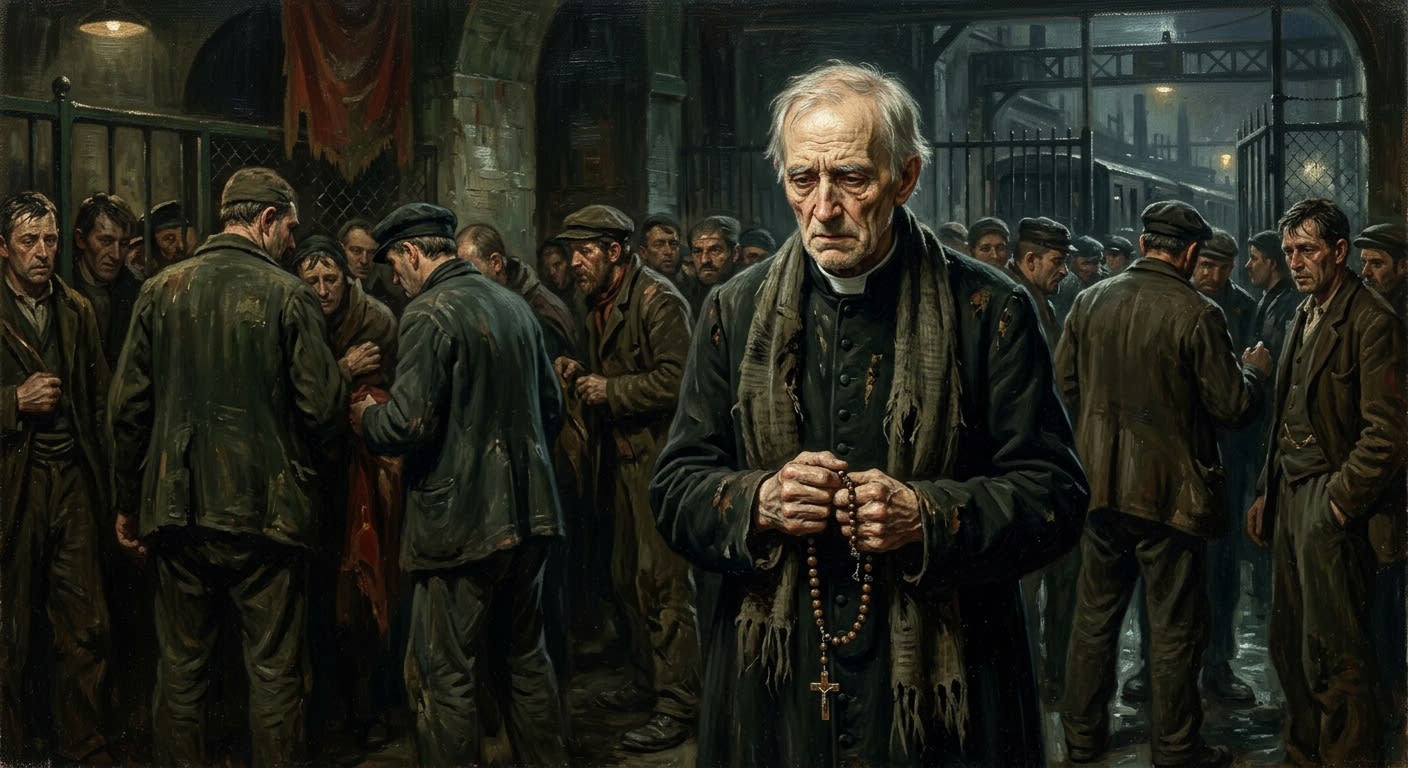
Father Janusz Sobecki
The eldest body and the wire already in
Elderly parish priest of Saint Anne's, Kraków, eldest of the forty-seven clergy drowned in A.S. 18 and remembered by the phrase: the wire was already in.
Codex Ref. III.2.01-089
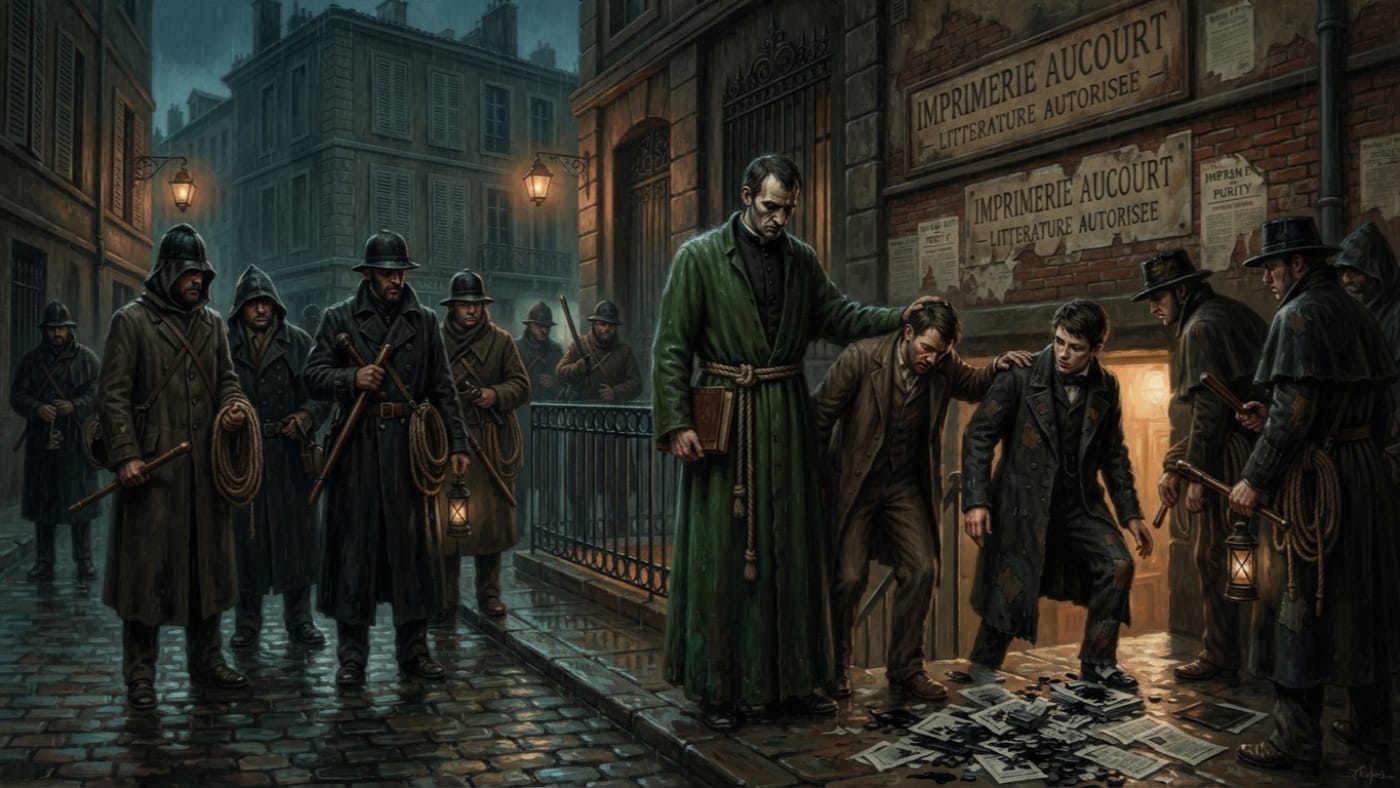
Father Ostel of Narbonne
The priest remembered by his robe
Father Ostel served in the A.S. 93 Toulouse Hunts in a green robe of claimed liturgical inheritance. Drax reports the sketches suppressed; the rest of the man escaped the file.
Codex Ref. III.2.01-093

Father Wernher of Cologne
The cellar priest whose lists kept sixty souls from becoming a sermon illustration
Defrocked Cologne canon and Cellar Saint leader whose forty-seven-page journal preserves the underground Church between Regensburg and the Sundering.
Codex Ref. III.2.01-045
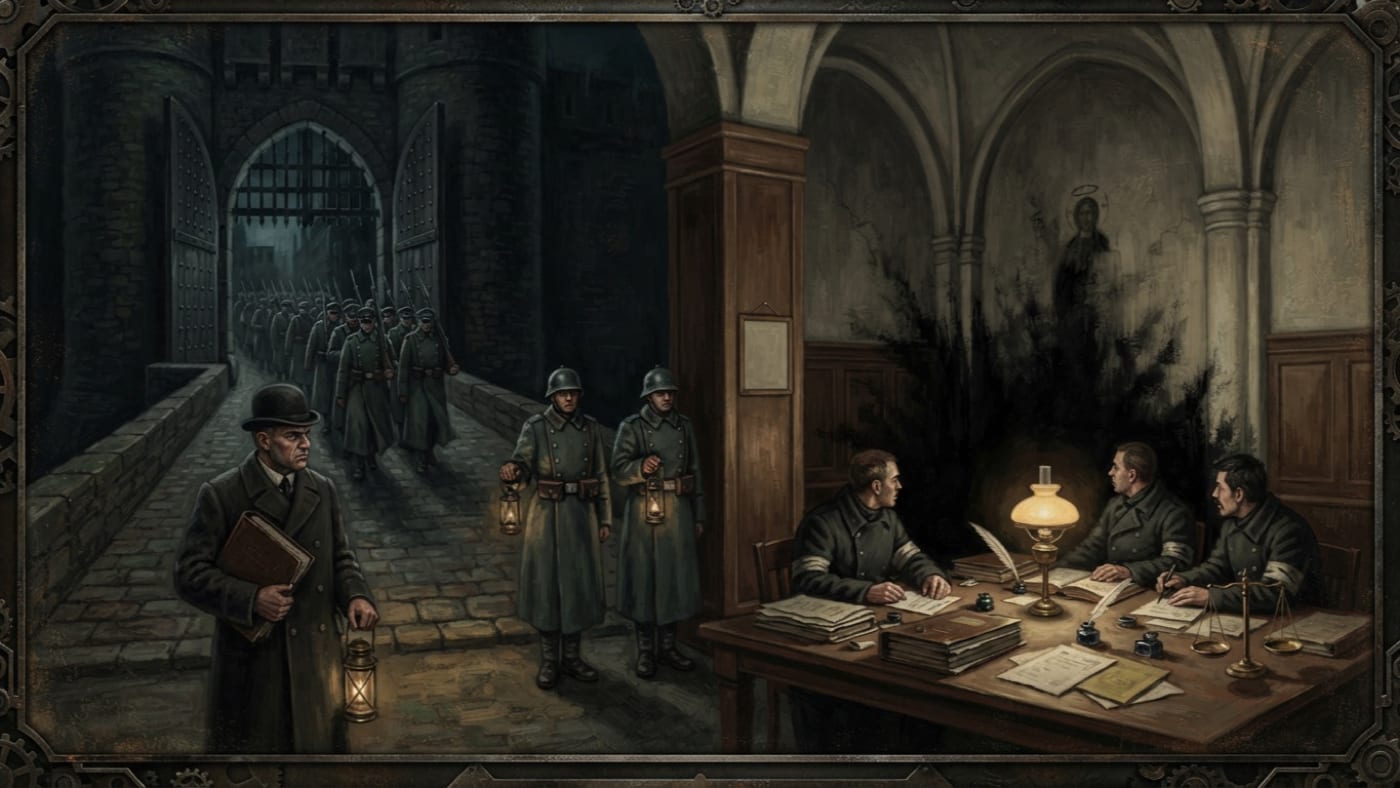
Feast of Saint Bartholomew
One opening, one stain
Aachen opened its western gate at midnight on this feast in A.S. 25. Each year, the former confiscation office turns ink-dark. The Bureau records both occurrences; it has not ruled on the stain.
Codex Ref. VII.8.10-025
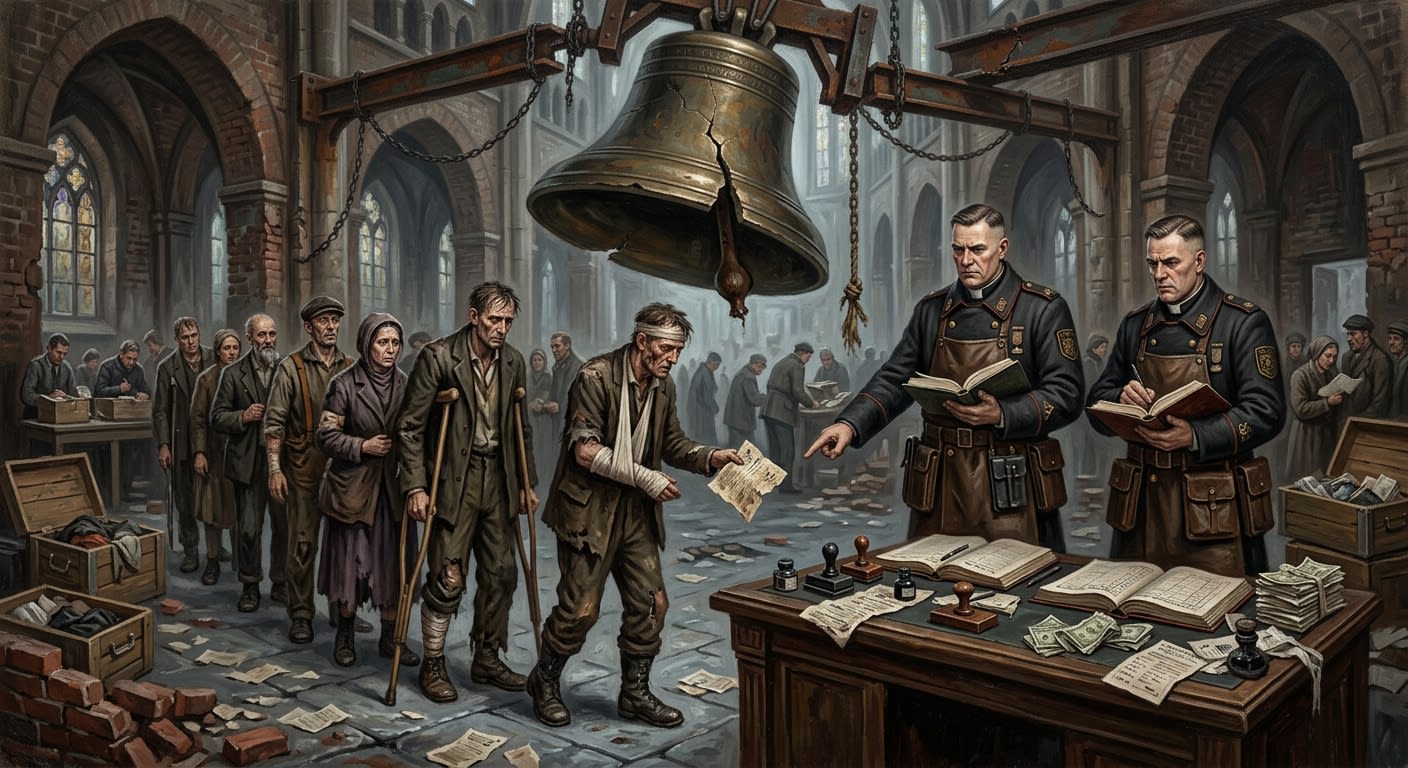
Feast of the Cracked Bell
The damaged bell still tolls, therefore the damaged citizen still owes
The Feast of the Cracked Bell teaches the Synod's favourite mercy: broken things may still serve, so damaged citizens may still be counted, tolled, and taxed.
Codex Ref. XIII.1.89-201
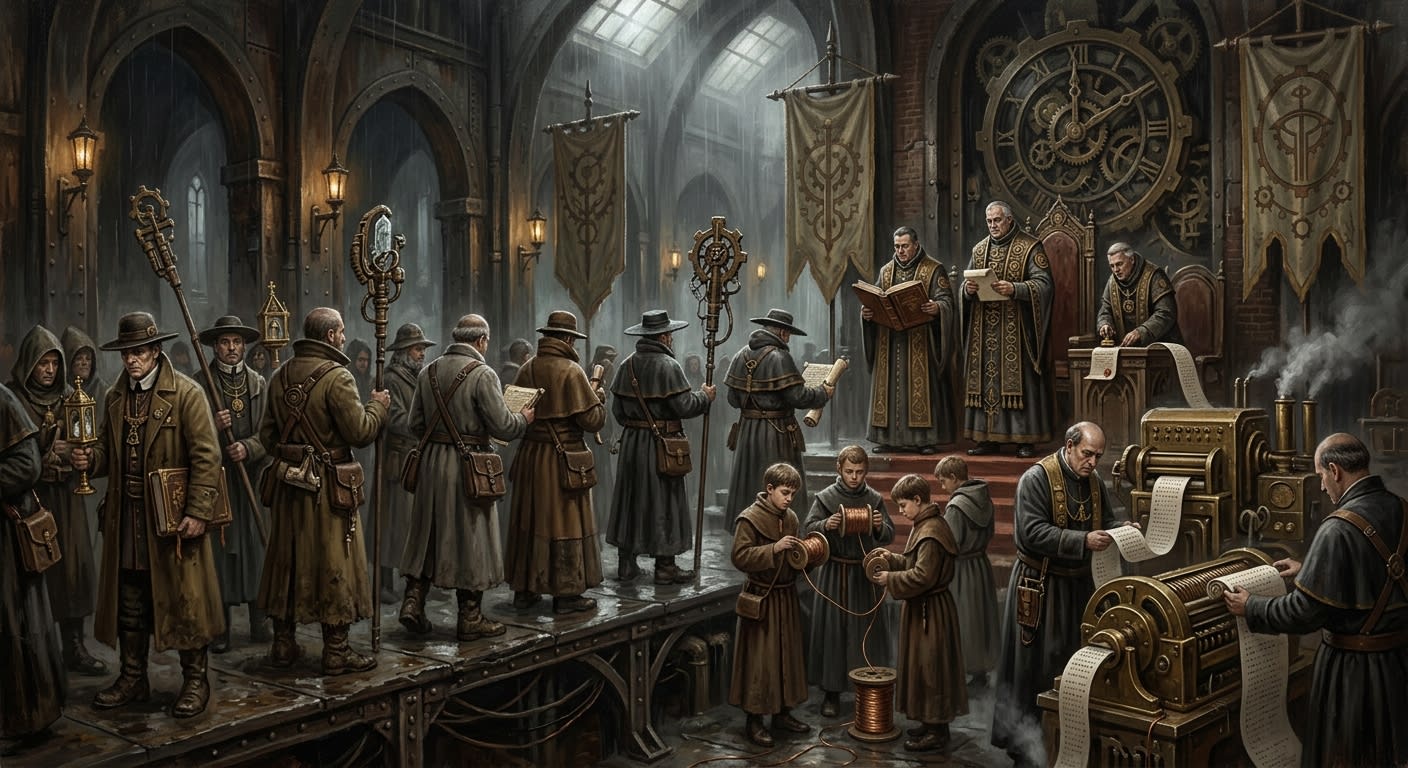
Fifteenth Doctrinal Congress
The hour Strasbourg taught an old river crime to testify on schedule
The Fifteenth Doctrinal Congress made Kraków's drowned priests administratively inexhaustible: witness ratified, silence scheduled, wire converted, and grief sealed.
Codex Ref. XIII.1.90-148
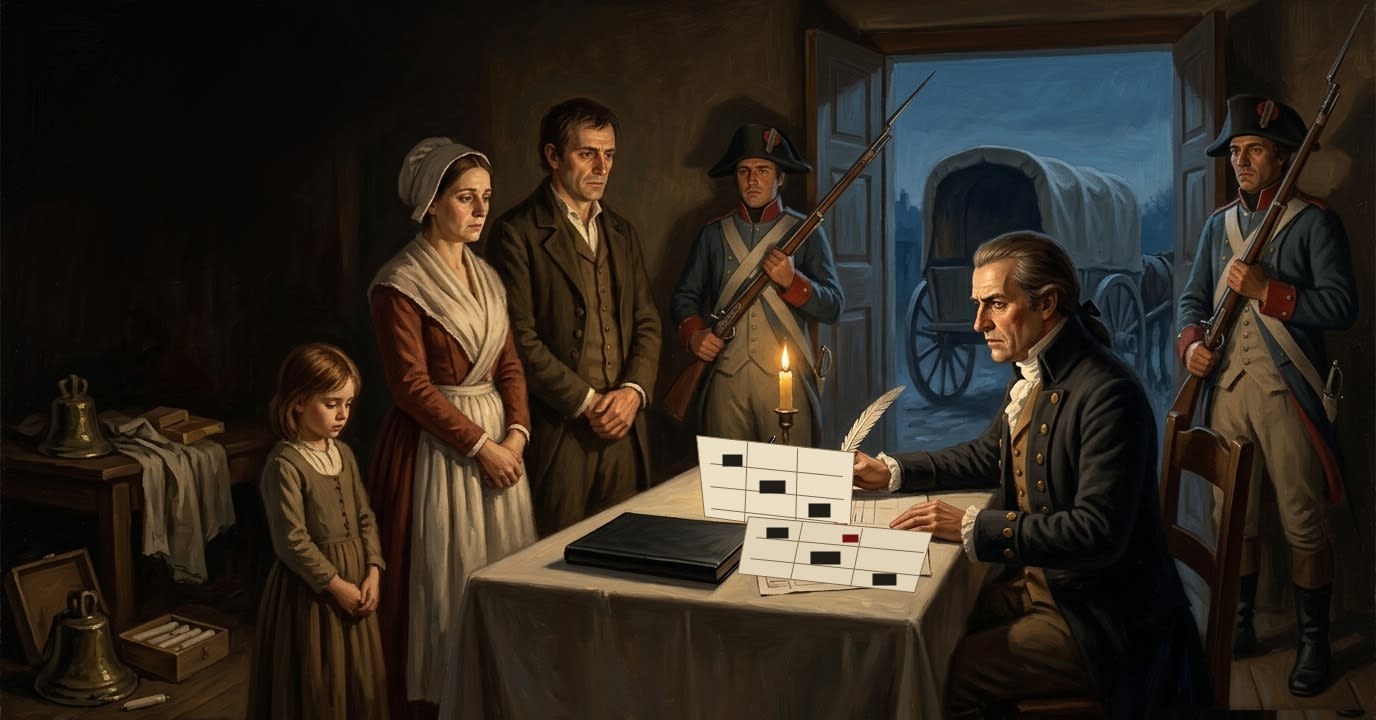
First Black Census
The Republic learned to murder with a household table and a clean pen
The First Black Census turned belief into a column, children into transfer marks, and faithful households into blanks awaiting carts.
Codex Ref. I.1.06-030
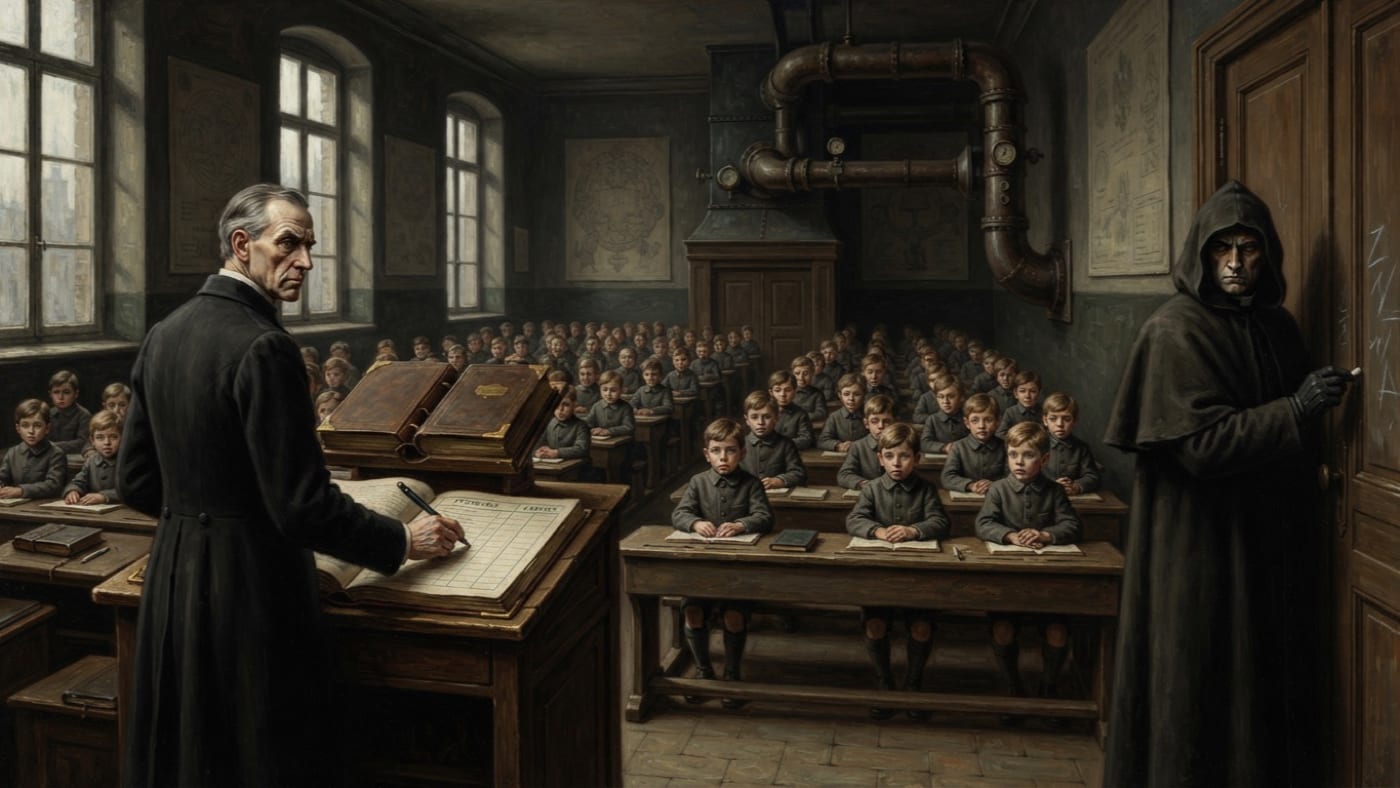
First Catechism
The sentence is settled. The child's hesitation is filed.
A present survey of the First Catechism's opening sentence, taught at five and ratified in perpetuity. Doctrine may revise its explanations; Records keeps the child's hesitation.
Codex Ref. VI.1.01-002
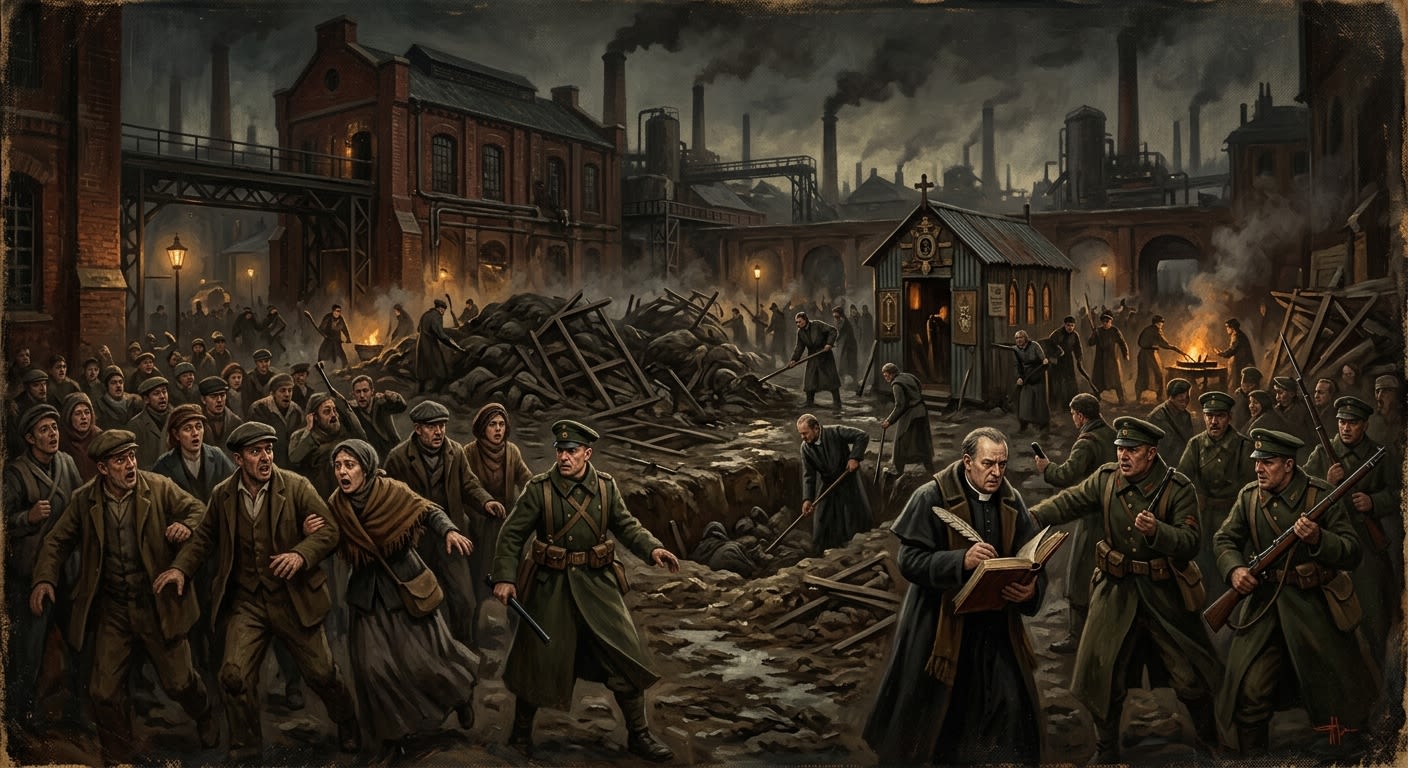
First Ossuary Panic
The dead spoke, and the Synod answered with a form
A.S. 78 Rhine corridor mortuary panic in which overcrowded pits began sounding after dark, forcing burial clearance, tariff-chapels, and the Dead-Goods Tariffer into law.
Codex Ref. VII.4.25-078
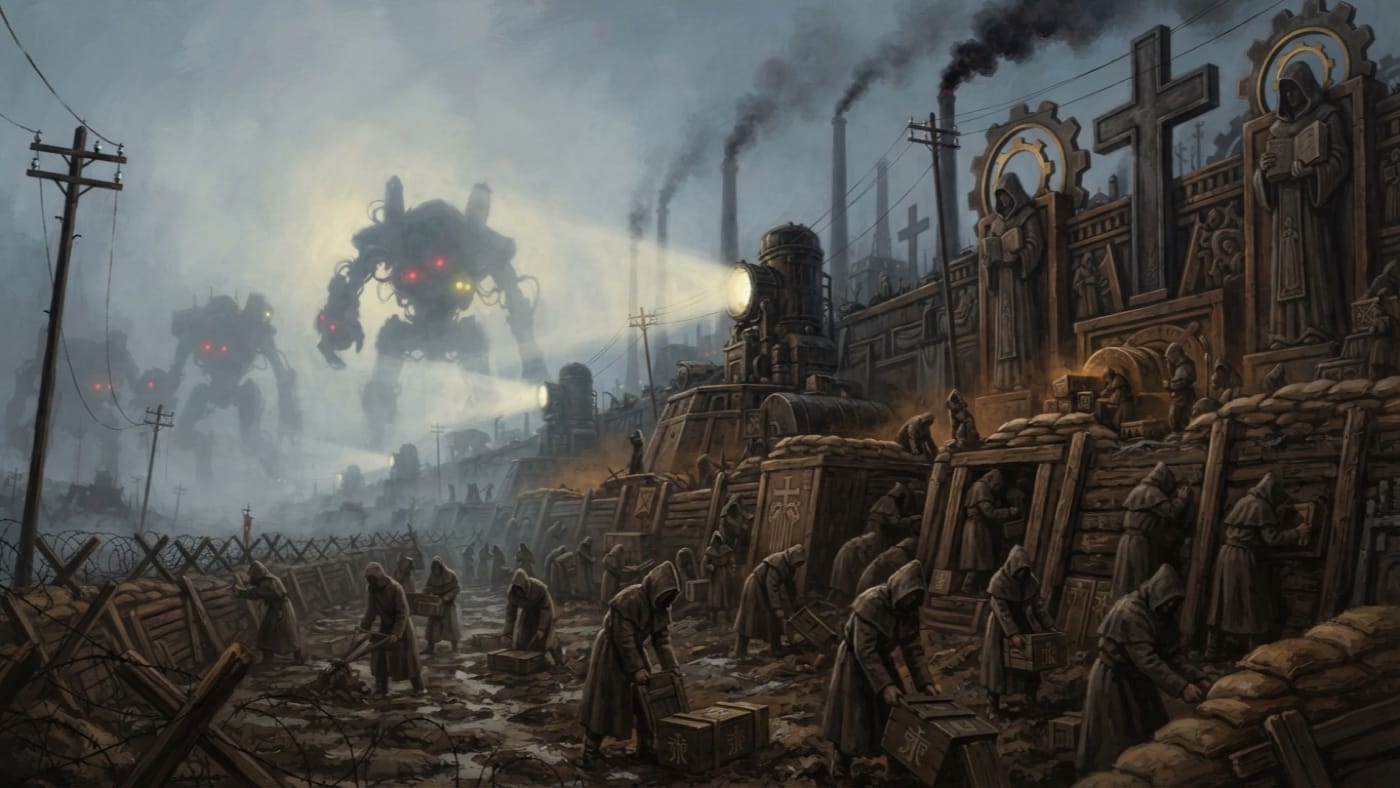
First Position
The debt was inherited. The balance was never disclosed.
The former teaching that the Great Deceiver punishes Rationalist sins and will withdraw after sufficient penance. Recorded in the A.S. 201 survey: the doctrine is superseded, the debt unmeasured, and the faithful still paying.
Codex Ref. VI.1.01-002
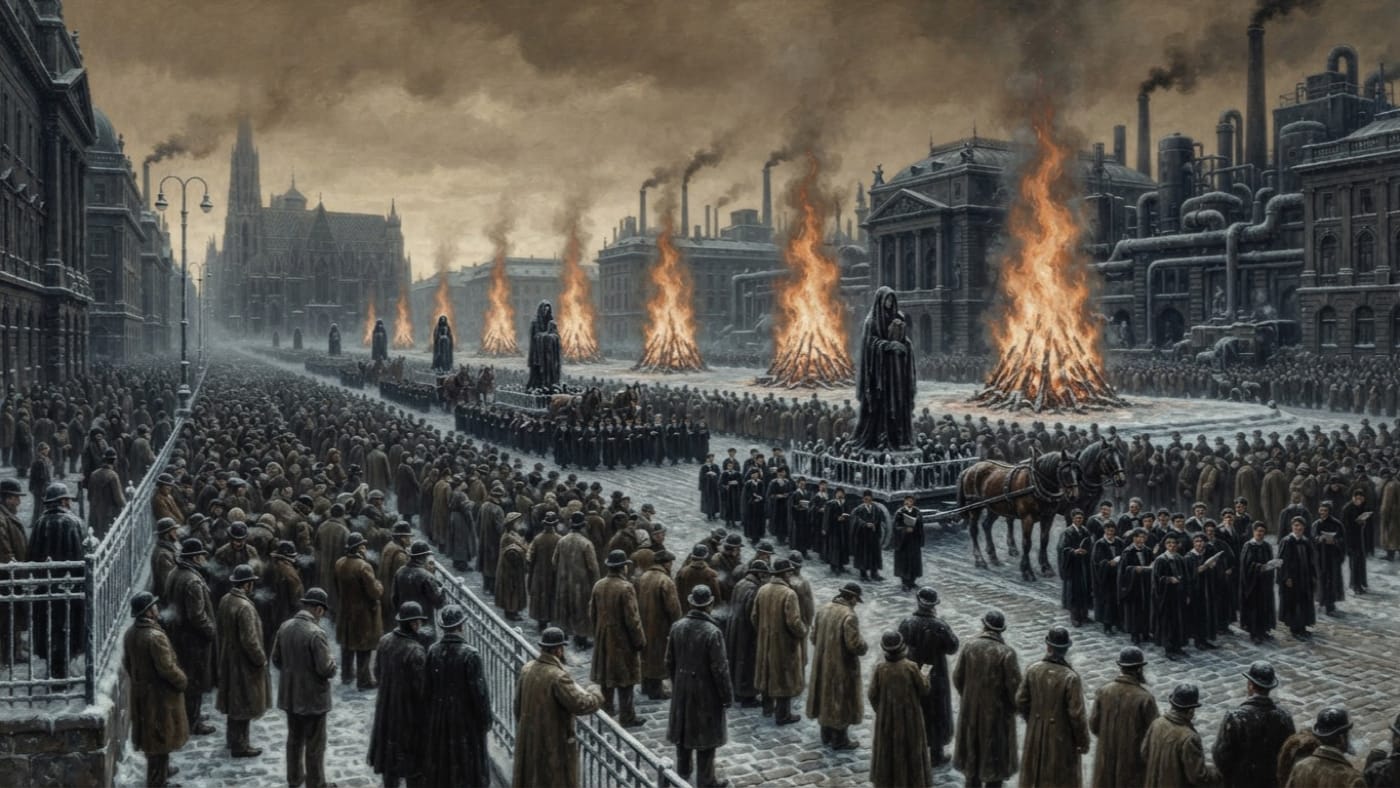
First Prefectural District
One Clause, One Afternoon, No Surviving Map
Vienna’s Rationalist civic district, attested in A.S. 30 by compulsory attendance at the Black Procession. The Ledger preserves the obligation; its founding, boundaries and successor remain unrecorded.
Codex Ref. II.4.09-030
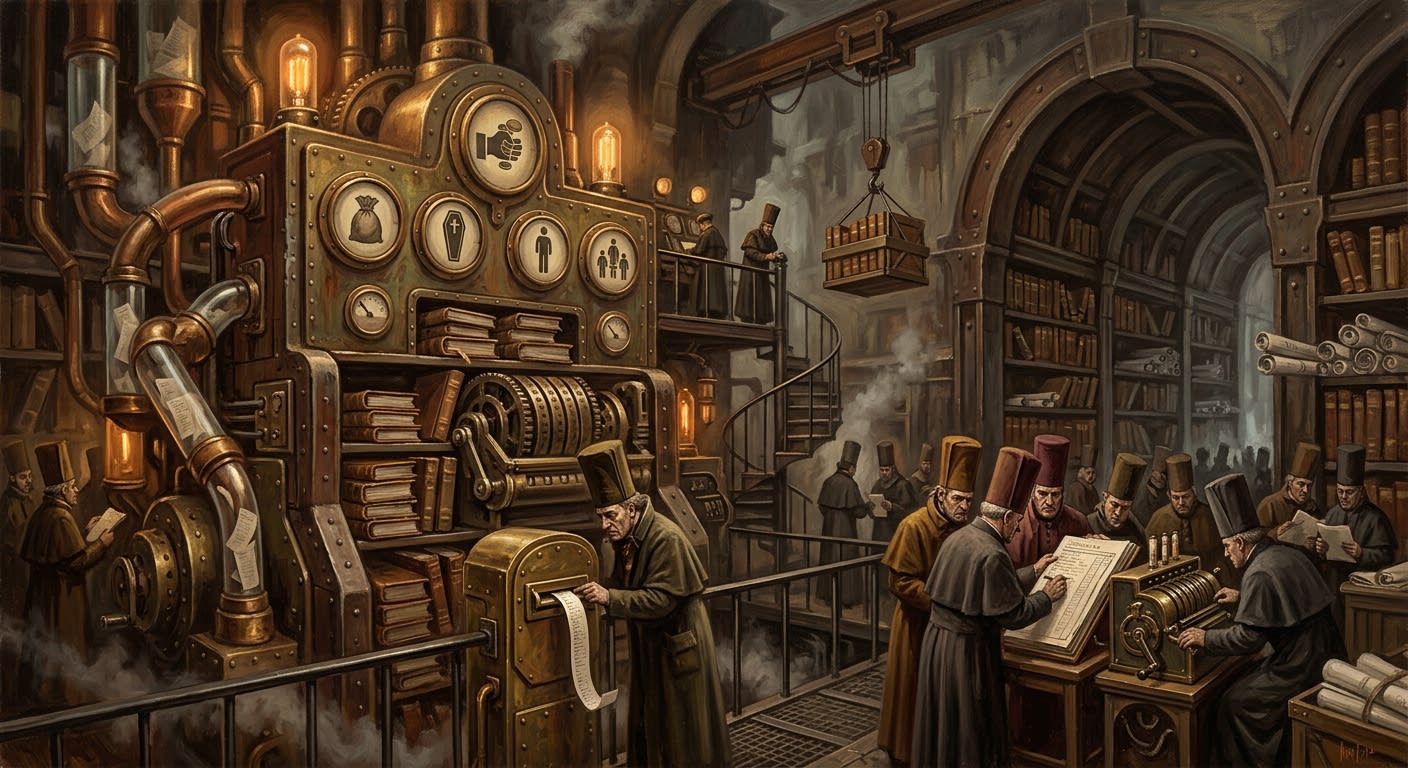
Fiscal Census
The mouth beneath the Ledger, still hungry after burial
The Fiscal Census is Tithes' continental obligation register: a vault-machine counting what the living, dead, unborn, and administratively inconvenient still owe.
Codex Ref. XIII.1.38-092
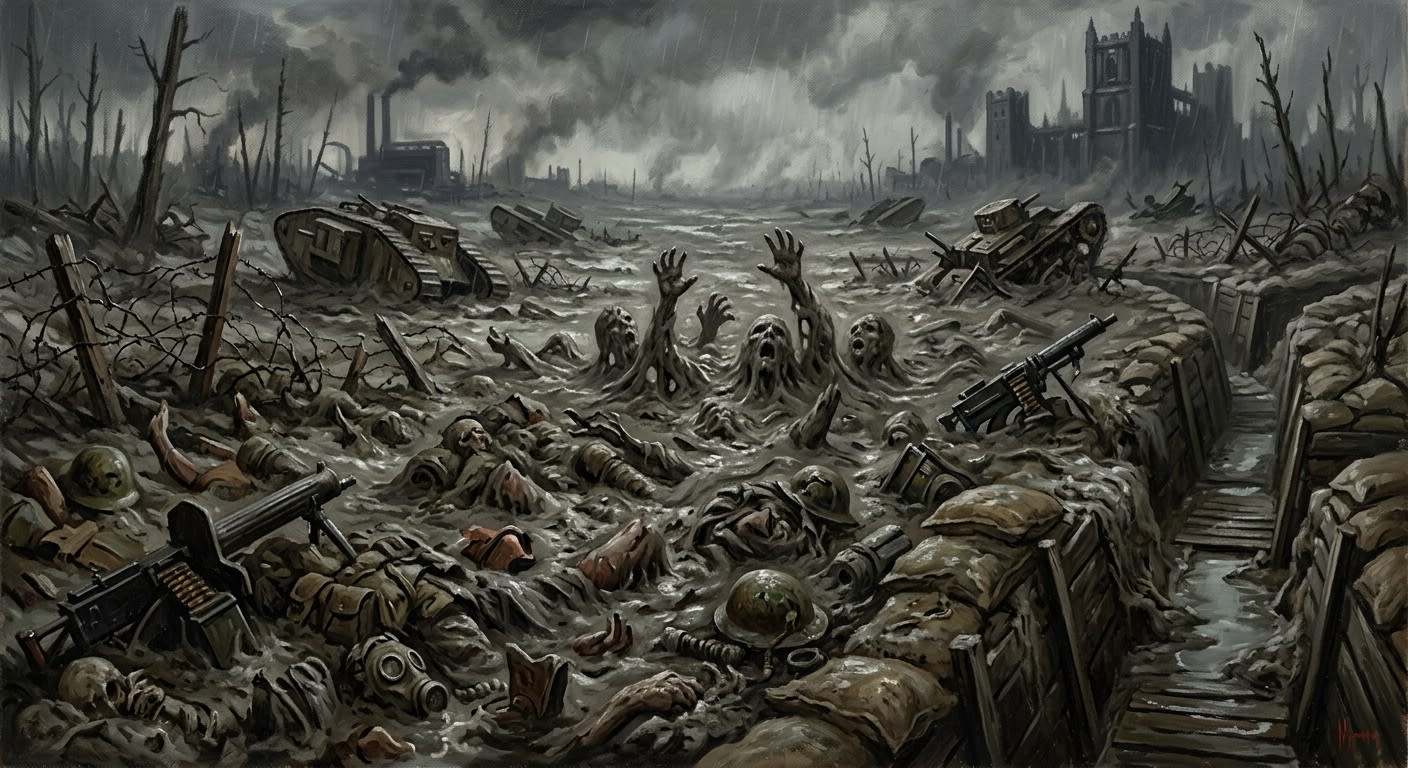
Flesh-Mud
The trench remembers what the grave failed to finish
Flesh-Mud is No Man's Land with appetite: trench mire made from rain, bone, grief, and the administrative failure to bury men separately.
Codex Ref. VI.2.01-004
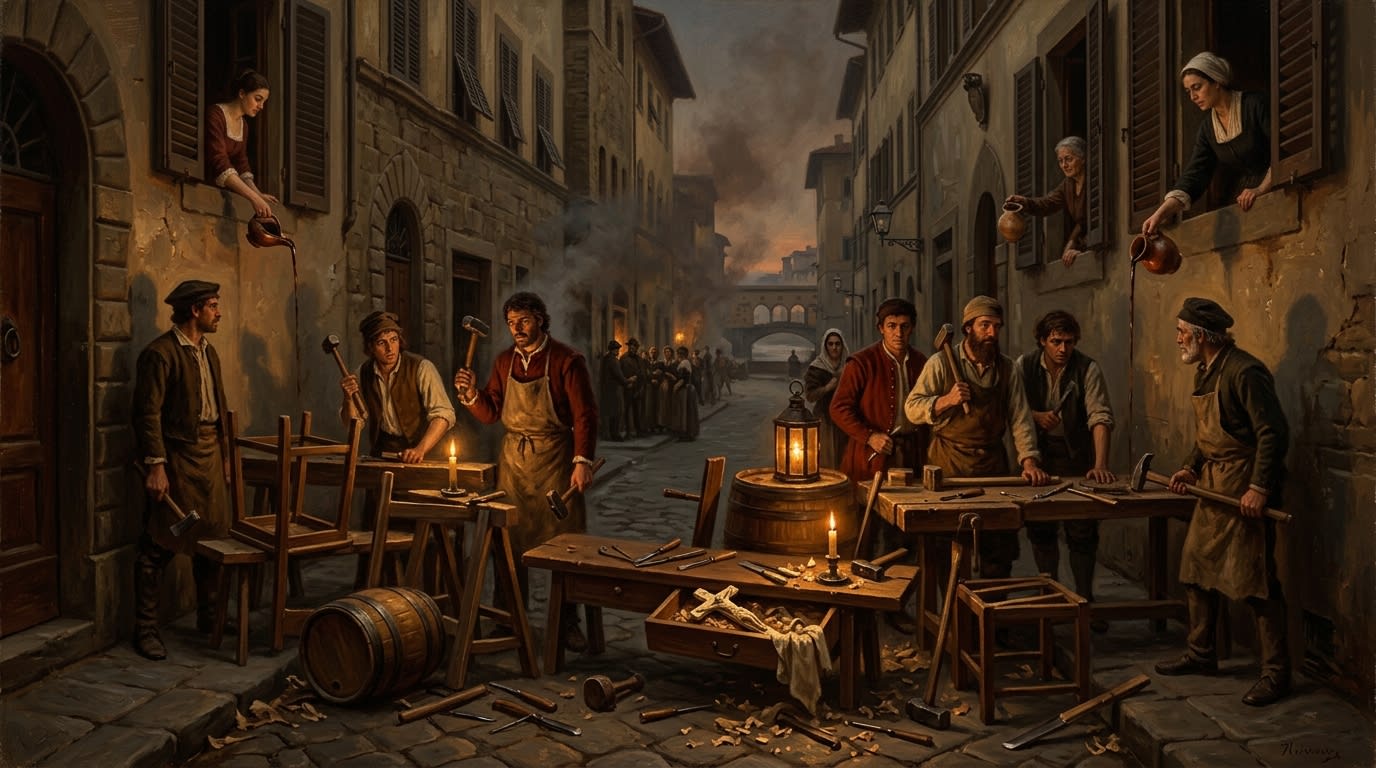
Florence
The city that taught drawers to keep the faith
Florence is the polished Tuscan wound where hidden crucifixes, artisan tools, and the A.S. 44 Ivory Revolt made small devotion sharper than empire.
Codex Ref. II.4.09-044
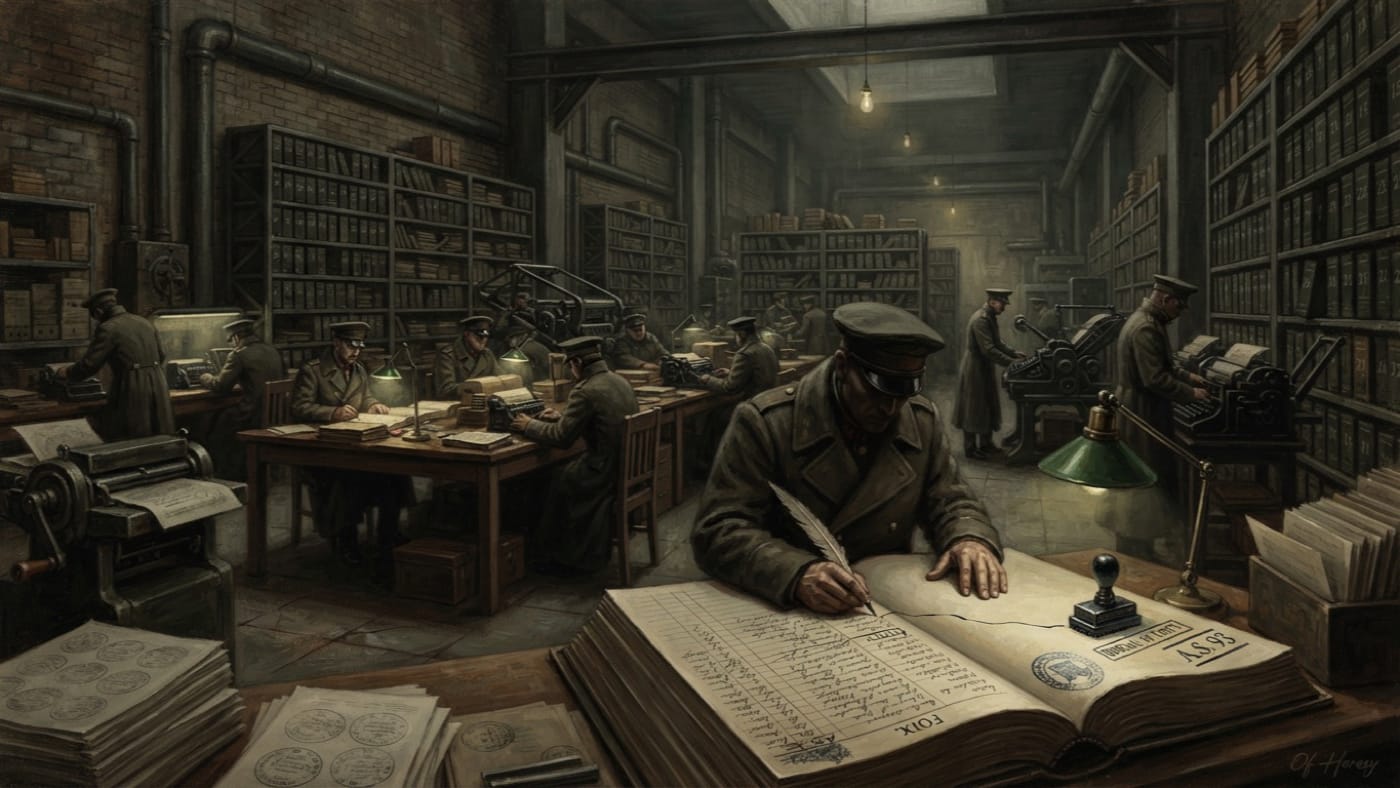
Foix
Named, included, not proved
Foix entered Purity's Toulouse file in A.S. 93 because Carcassonne named it. No local offence is cited. A town requires no proven guilt to become a permanent entry.
Codex Ref. II.1.09-010
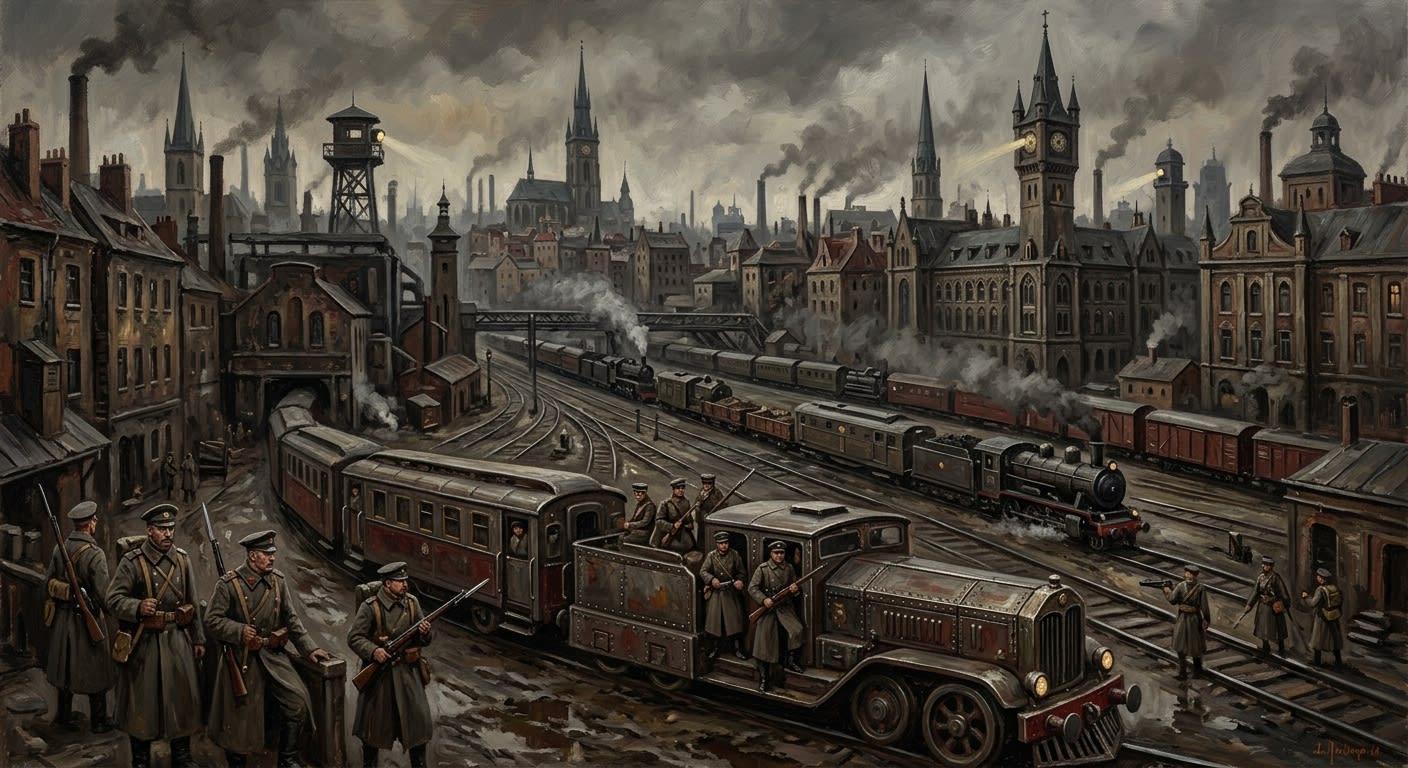
Forward Heartlands
The held breath behind the gunline
Zone 3 is the Synod's forward heart: Prague's corrected beauty, Bratislava's damp throat, Budapest's divided engine, Warsaw's teeth, Sofia's hard face, and every ugly town that keeps the Line fed.
Codex Ref. II.3.00-201
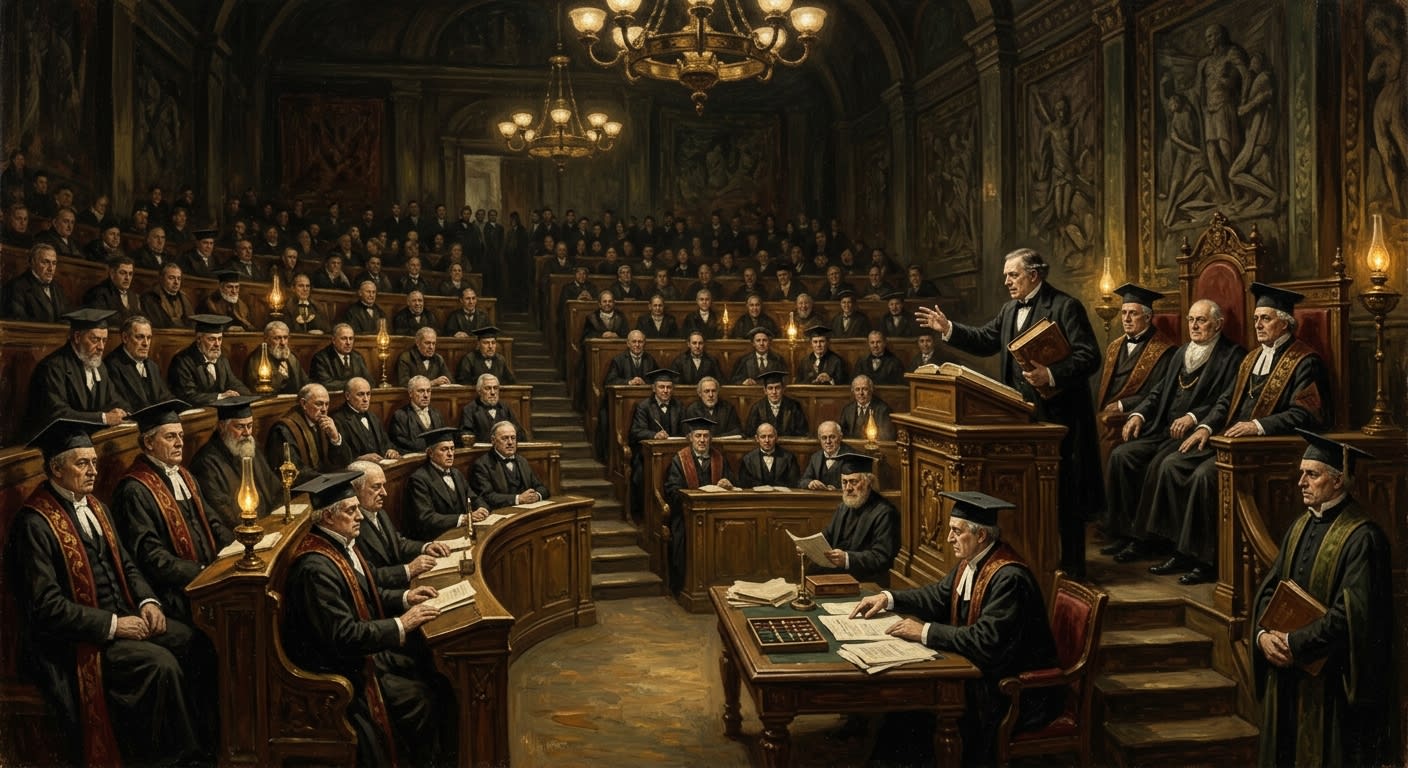
Fourteenth Doctrinal Congress
Matter protested; the seal prevailed
The A.S. 147 Congress that made authenticated contradiction obedient, ratifying the Femur Principle and Kargath's consumption taxonomy in the same week.
Codex Ref. XIII.1.90-147
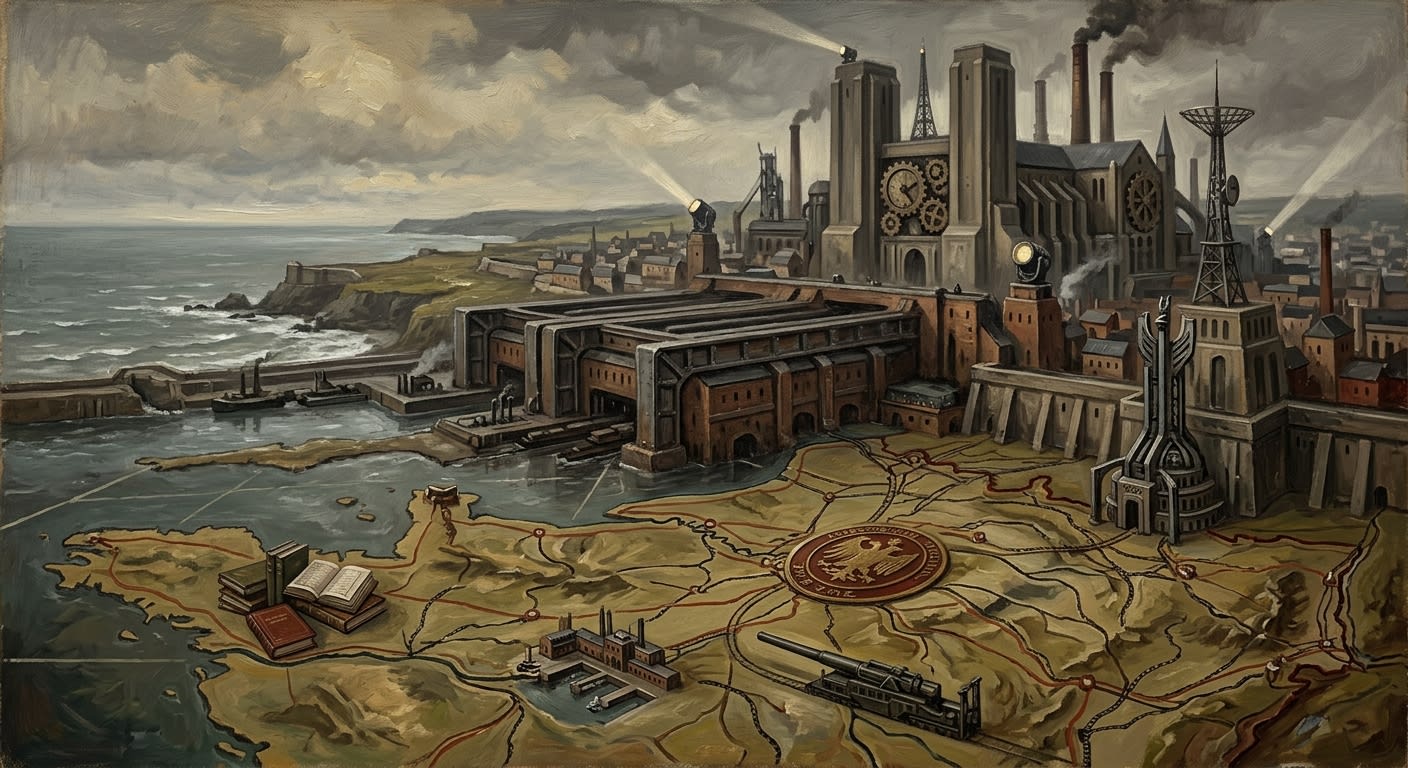
France
The country the Synod did not abolish, because it proved too taxable to waste
A.S. 201 survey of France as Zone One heartland: martyr coast, watched cities, taxable memory, useful ports, and one conquered name made indispensable.
Codex Ref. II.1.01-201

Garrison-Prior Aldric Venn
He saved the crates, which is how saints survive the road
Garrison-Prior Aldric Venn commanded Saint Stephen's defensive precinct during Vienna's Great Retreat withdrawal, completed the relic manifest, and vanished into the road.
Codex Ref. III.2.01-154
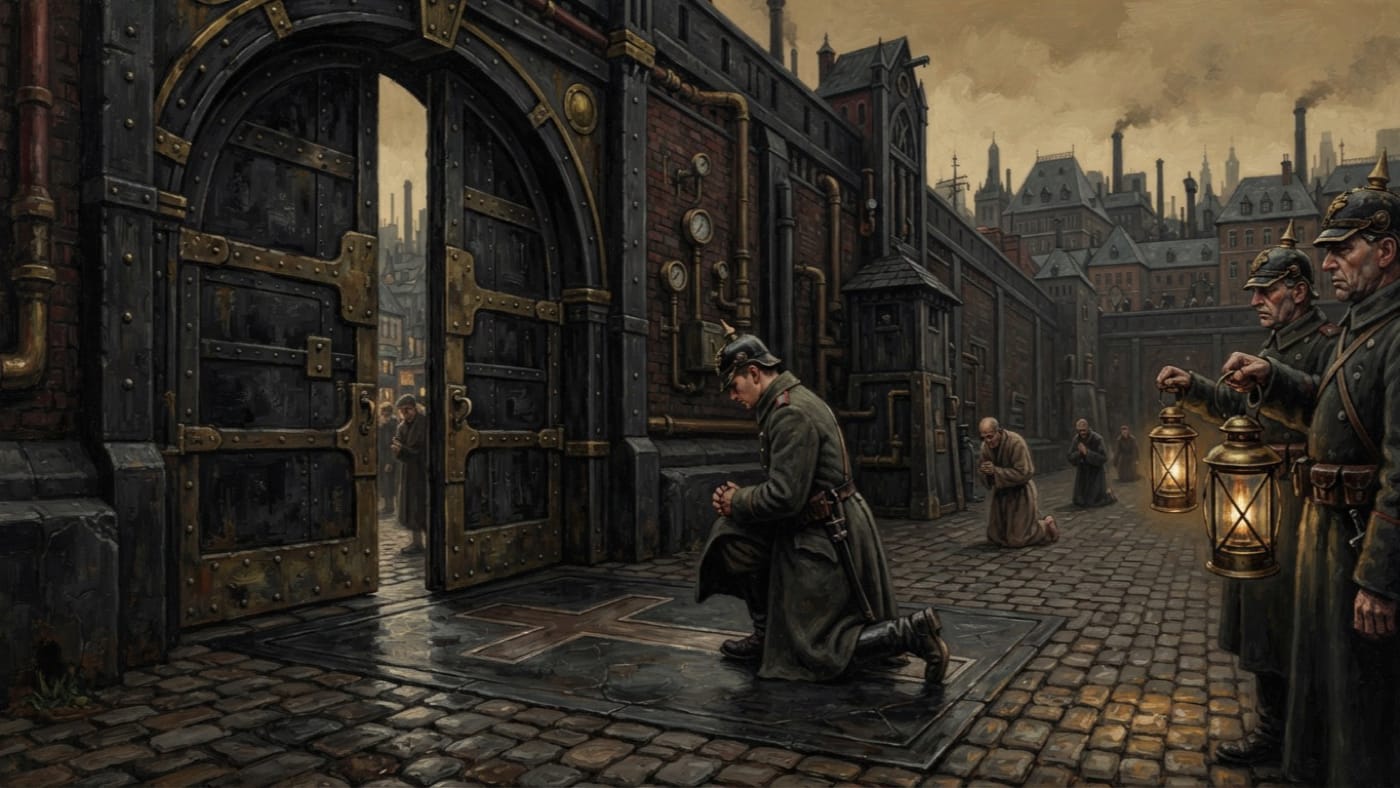
Gate Litany
Forty-seven clauses and no release
At Aachen's western gate, forty-seven clauses turn a recruit's innocence into an obligation. The gate opened in A.S. 25; the knees still answer for it.
Codex Ref. II.2.02-002
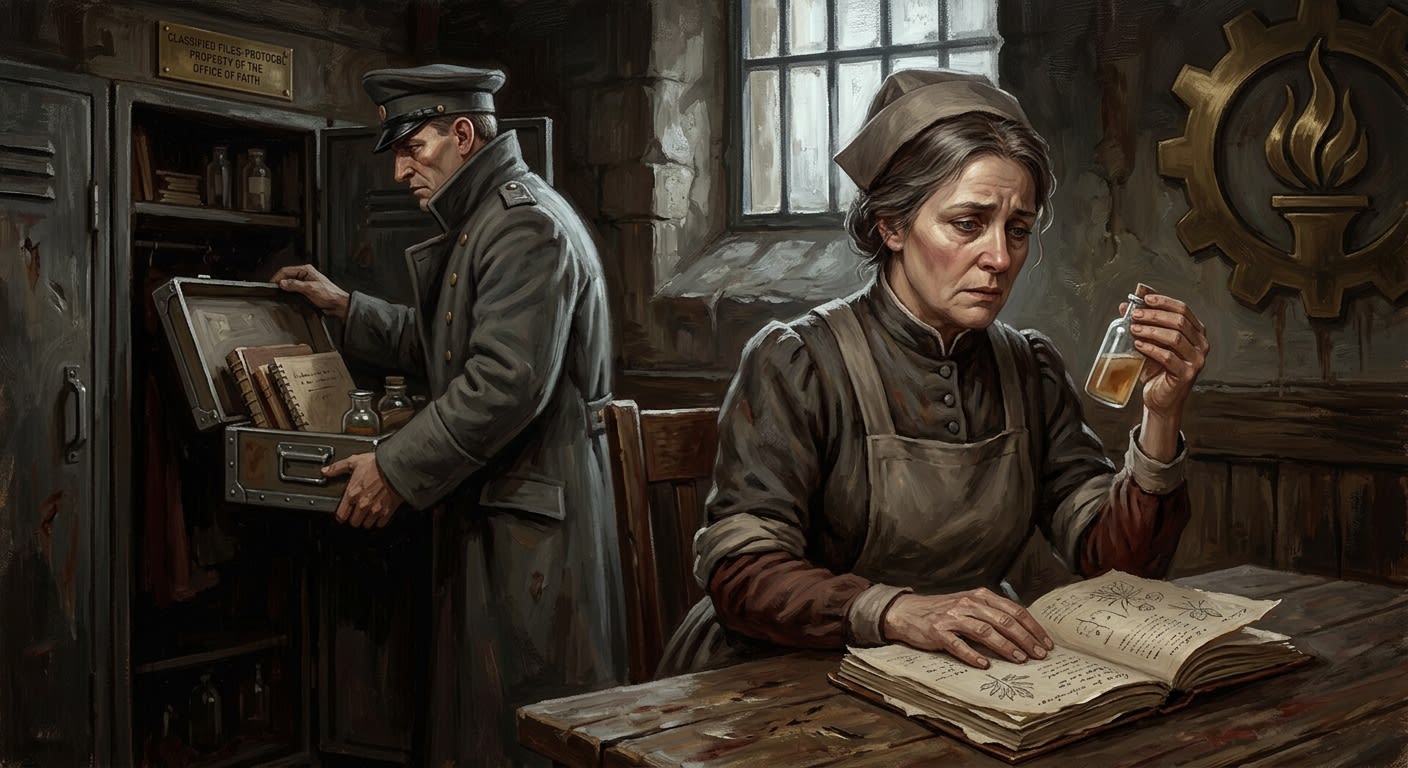
Gerda Weil
The midwife whose bitter draught survived the men who stole it
Halle midwife whose hidden Rationalist remedy lowered fever deaths in A.S. 112, was stolen as Protocol 7-C, and died in Ulm under an erased name.
Codex Ref. III.2.01-091
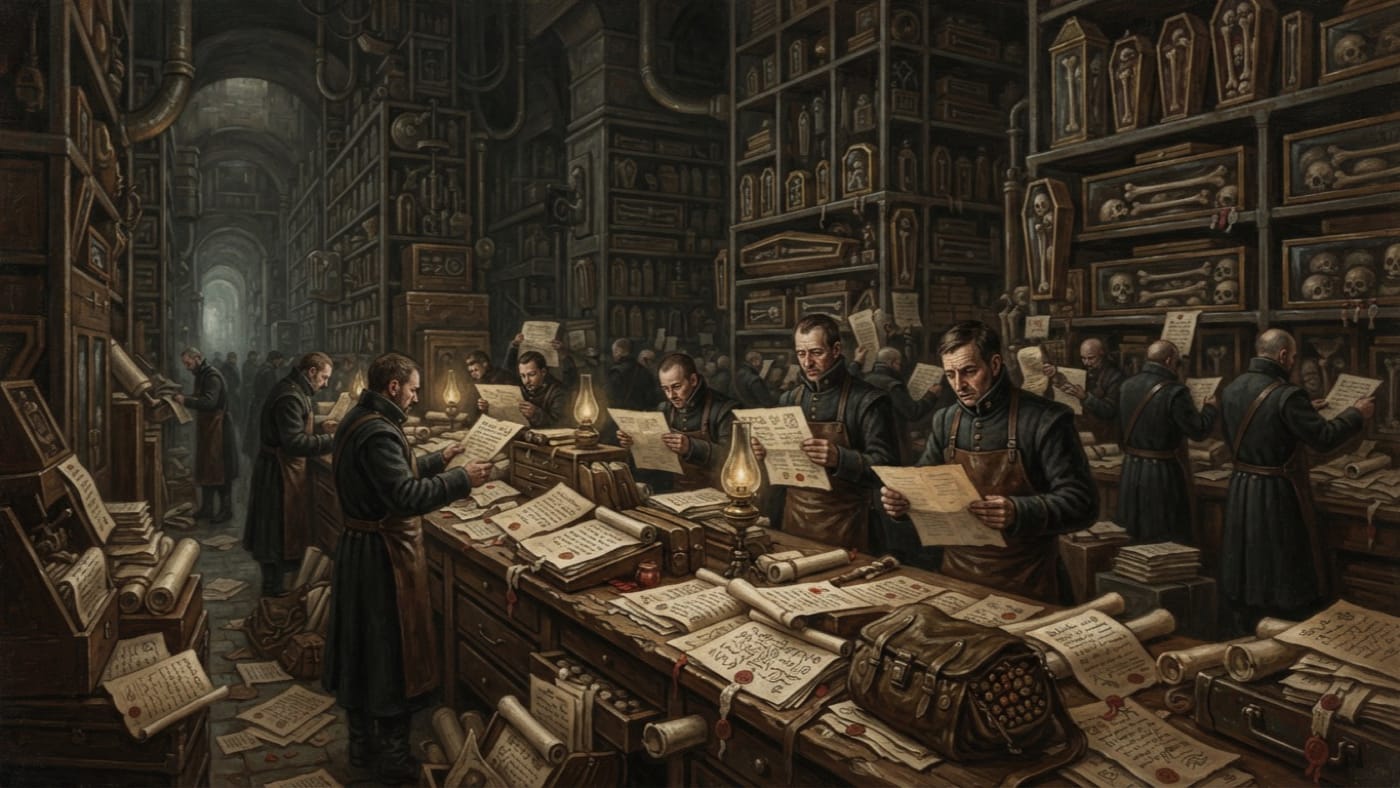
German states
Many jurisdictions. Separate seals. One inconvenient table.
The German states in 1678: many jurisdictions, separate seals, and no common answer to Amsterdam's bone census. The relics agreed locally. The ledgers did not.
Codex Ref. II.1.10-001
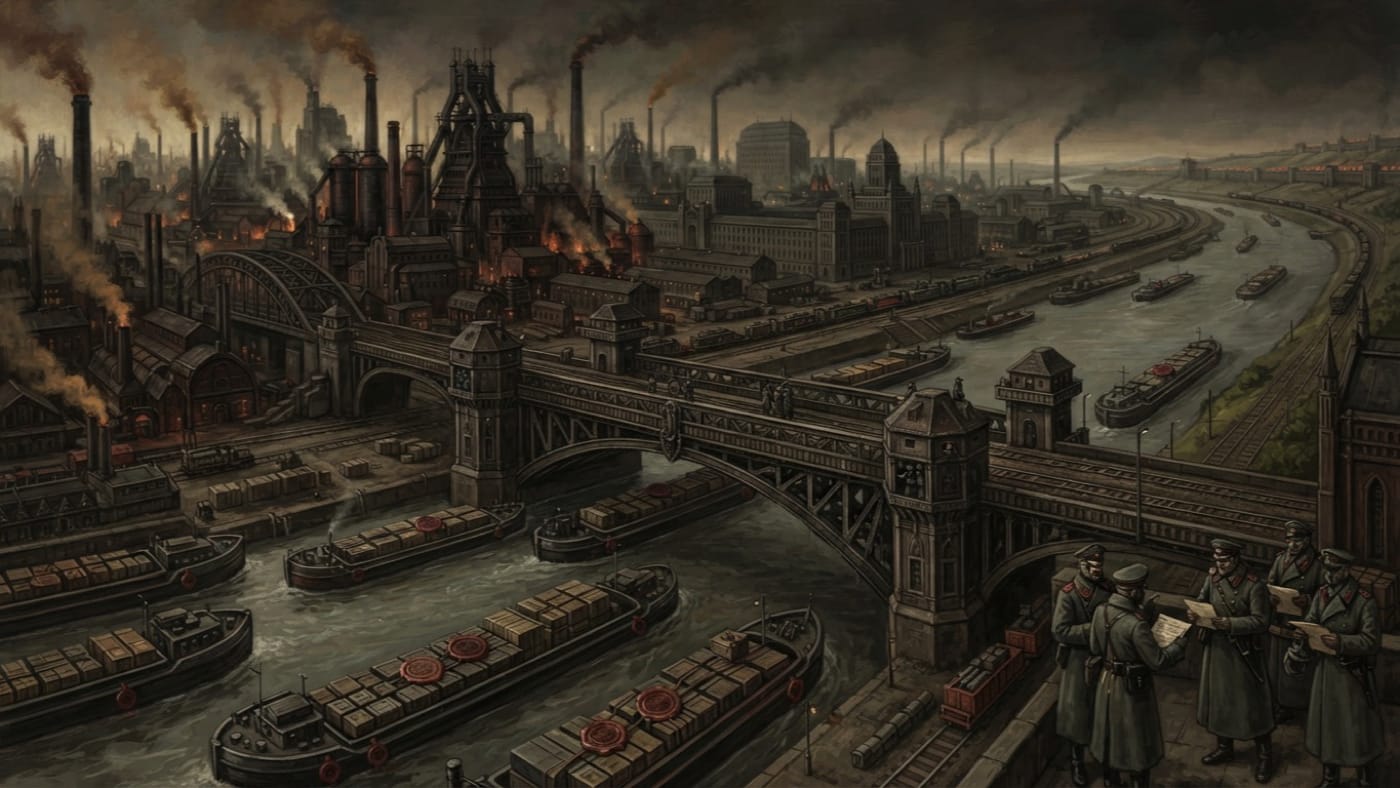
Germany
The heartland that supplies the frontier and answers to several seals
Germany in A.S. 201: the Zone Two heartland of taxed rivers, singing furnaces and military depots. The old borders were erased; the territory still supplies the frontier, and every cargo requires a seal.
Codex Ref. II.6.01-201
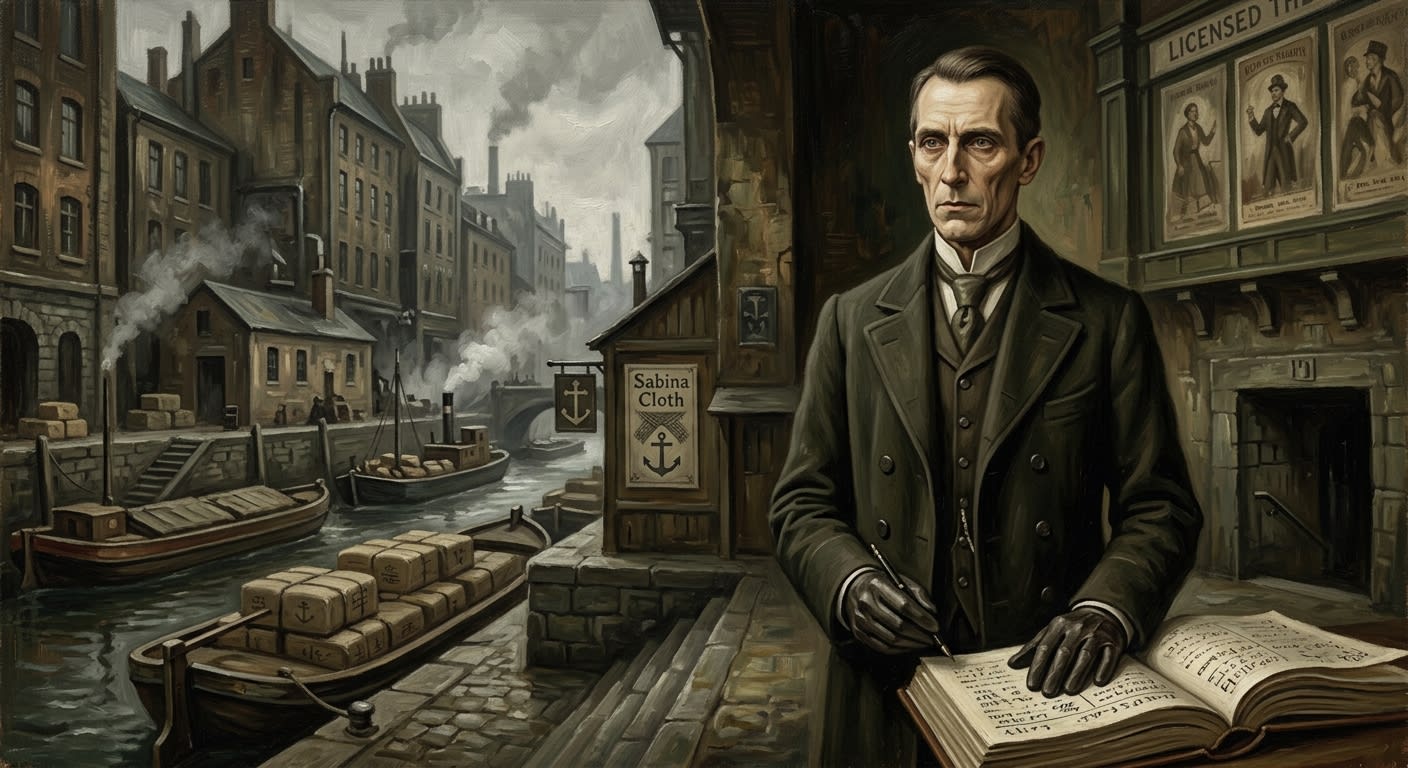
Ghent
The canal city where water keeps copies and loyalty learns to smuggle
Ghent is the Synod's wet ledger in Flanders: canal trade, Records quays, Sabina cloth, licensed theatres, Black Ledger cells, Wormhost scars, and obedience with annotations.
Codex Ref. II.1.05-201
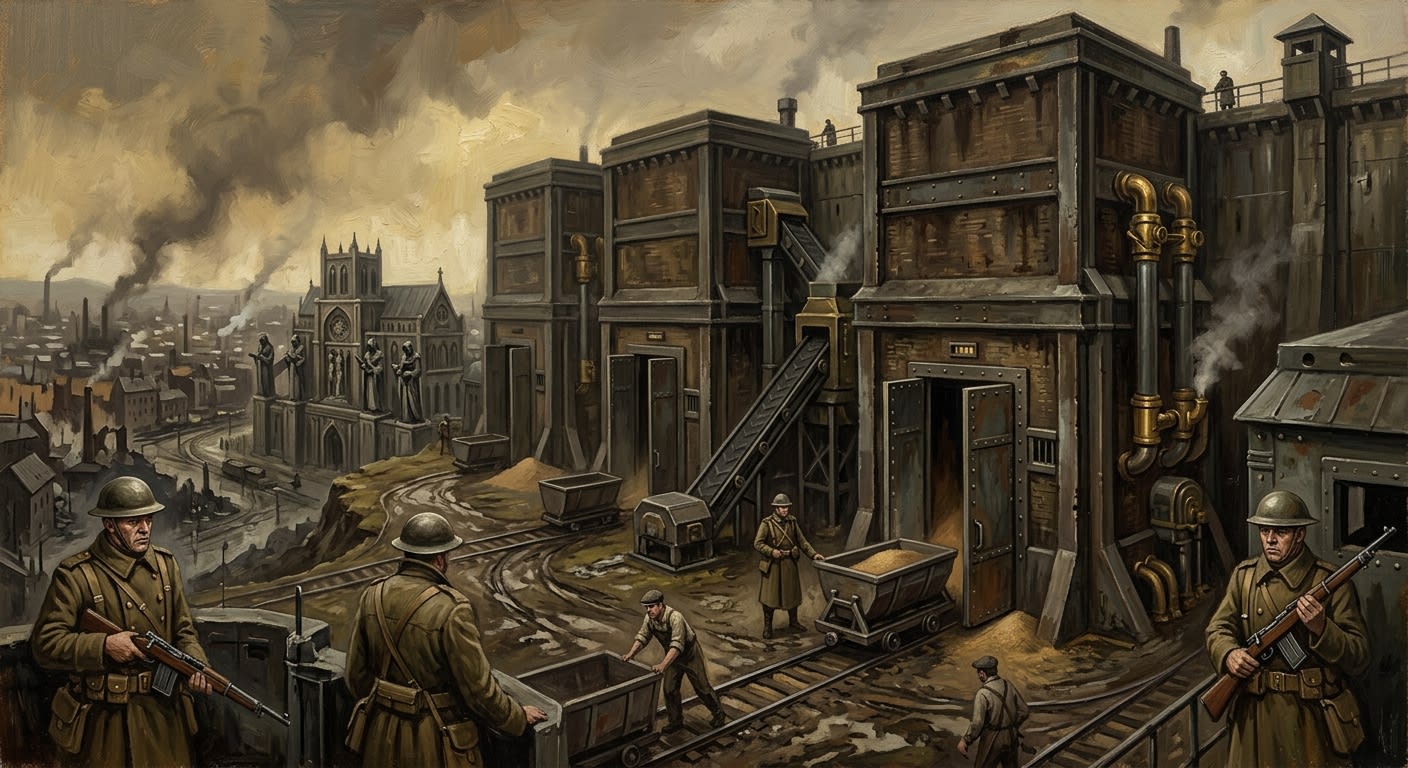
Granaries of Saint Benedict
Mercy under lock, key, and later approval
The Granaries of Saint Benedict are Toledo's four watched vaults of civic reserve grain, opened in A.S. 185 by Governor-Praelate Alaricus before Strasbourg could make mercy late.
Codex Ref. II.1.05-185
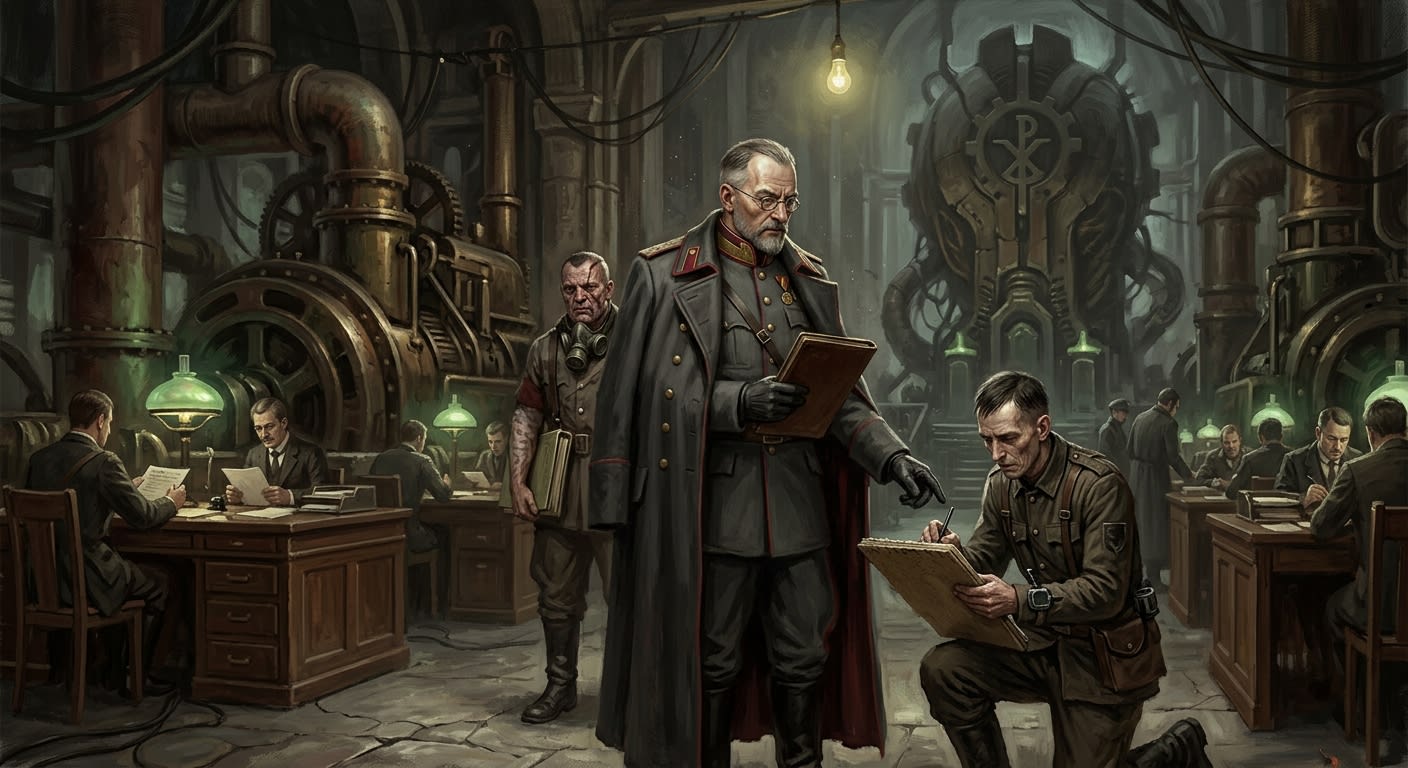
Grand Inquisitor Severian
The tongue made public office, the cage made catechism
Severian of Mainz made fear audible, denunciation intimate, and cruelty administrative; his Second Appendix still walks through Prague with nail and tablet.
Codex Ref. III.2.01-062
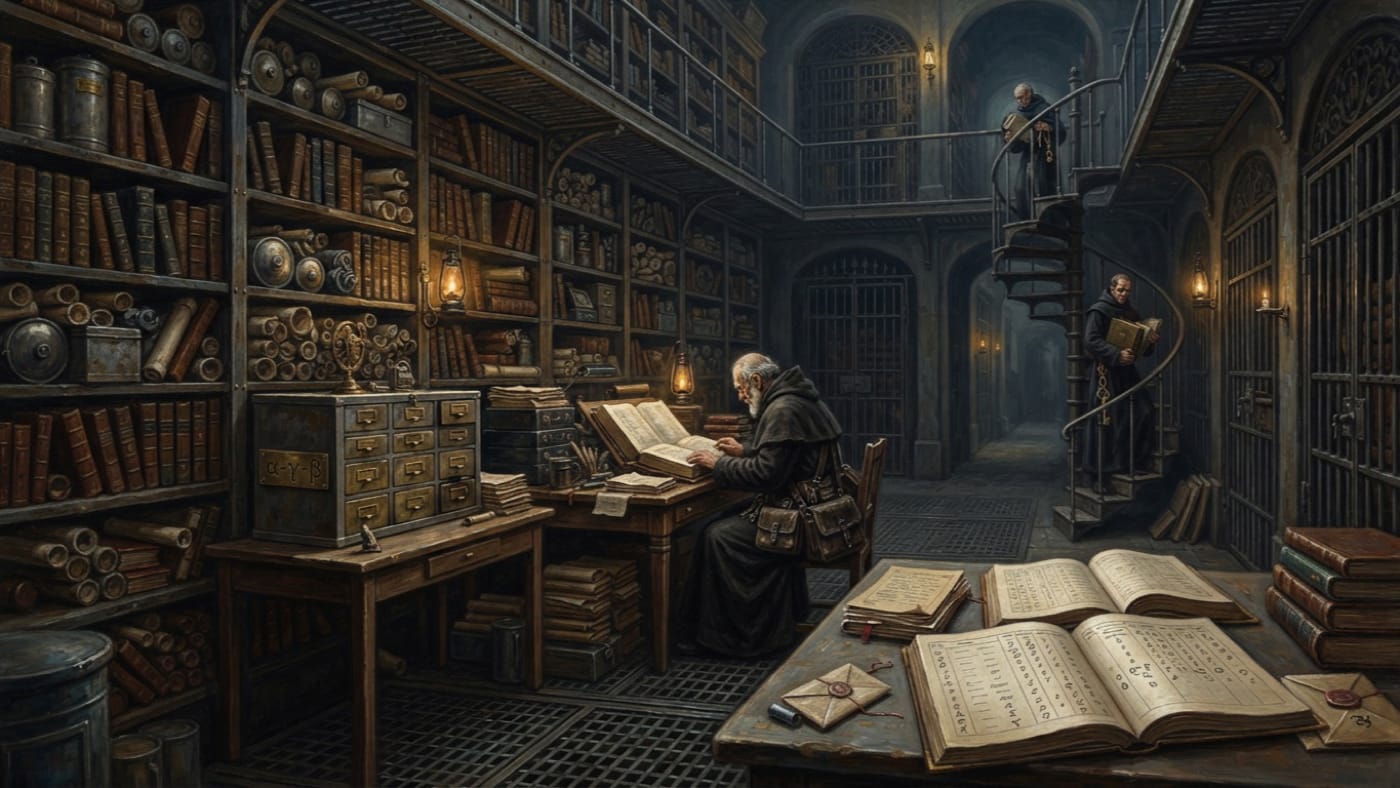
Greek in the Codex
A tongue in the ledger proves less than the clerk would like
An A.S. 201 survey of Greek in Codex records: restricted texts, Church learning, relic labels, parish spellings and recorded pleas. Lyon contributes one disputed claim; copying it does not produce another witness.
Codex Ref. XIII.1.03-002
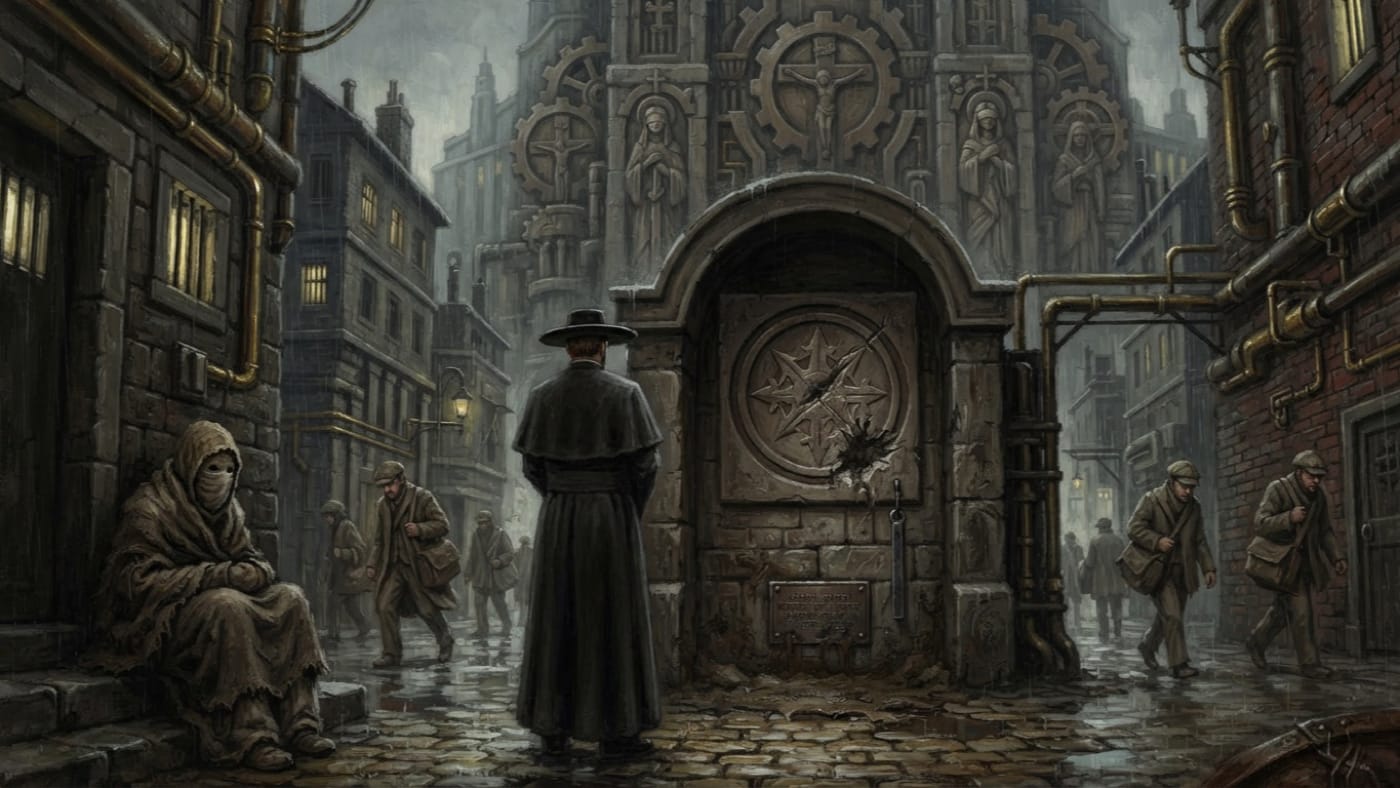
Guillaume bloodline
The names struck, the suspicion retained
The Guillaume bloodline persists without register standing, watched under private Seal Amber. The Church has struck its names and forbidden inquiry into its whereabouts.
Codex Ref. III.2.06-004
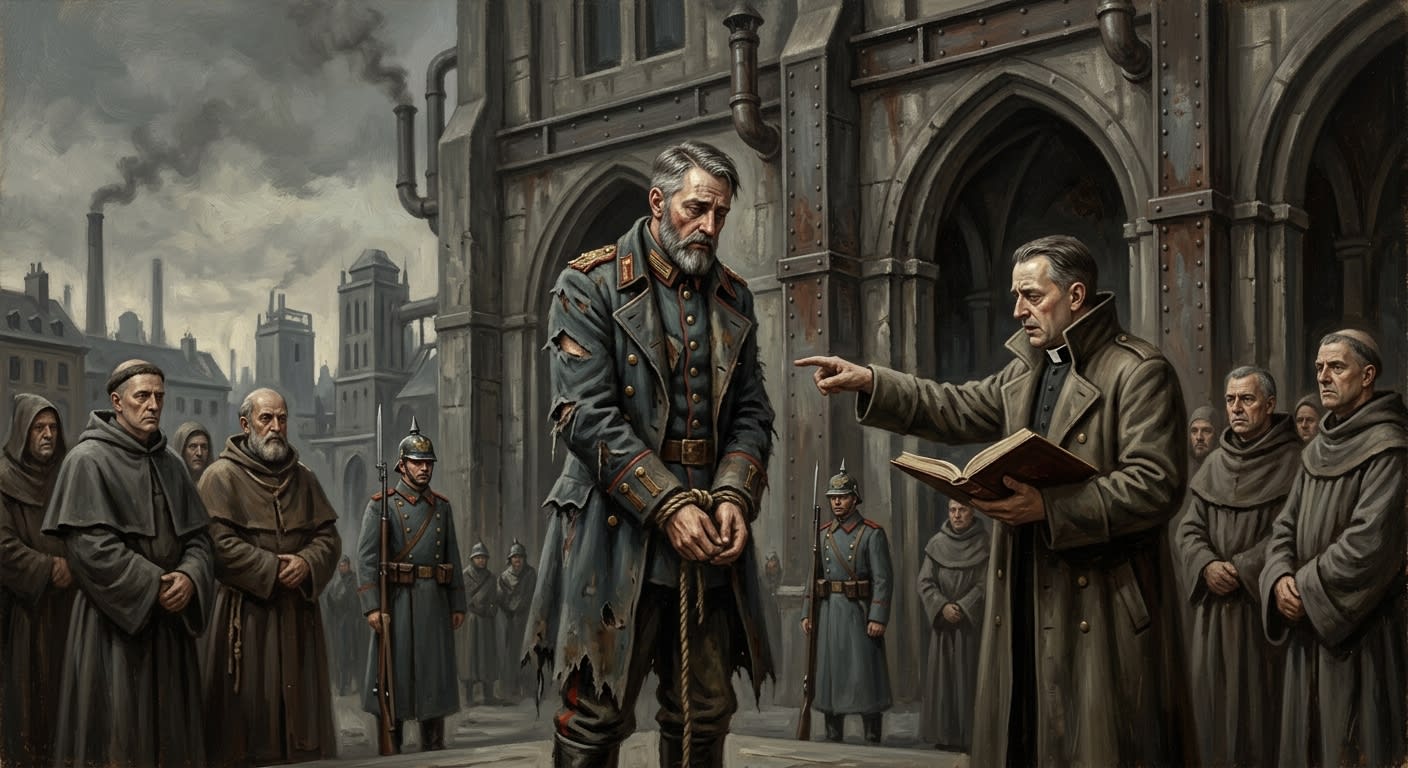
Guillaume of Aachen
The man who opened a gate and was closed by the Ledger
Lord-Protector Guillaume surrendered Aachen in A.S. 25, severed the Rhine approaches, and became the Synod's cleanest lesson in treason, nullity, and administrative damnation.
Codex Ref. III.2.01-123
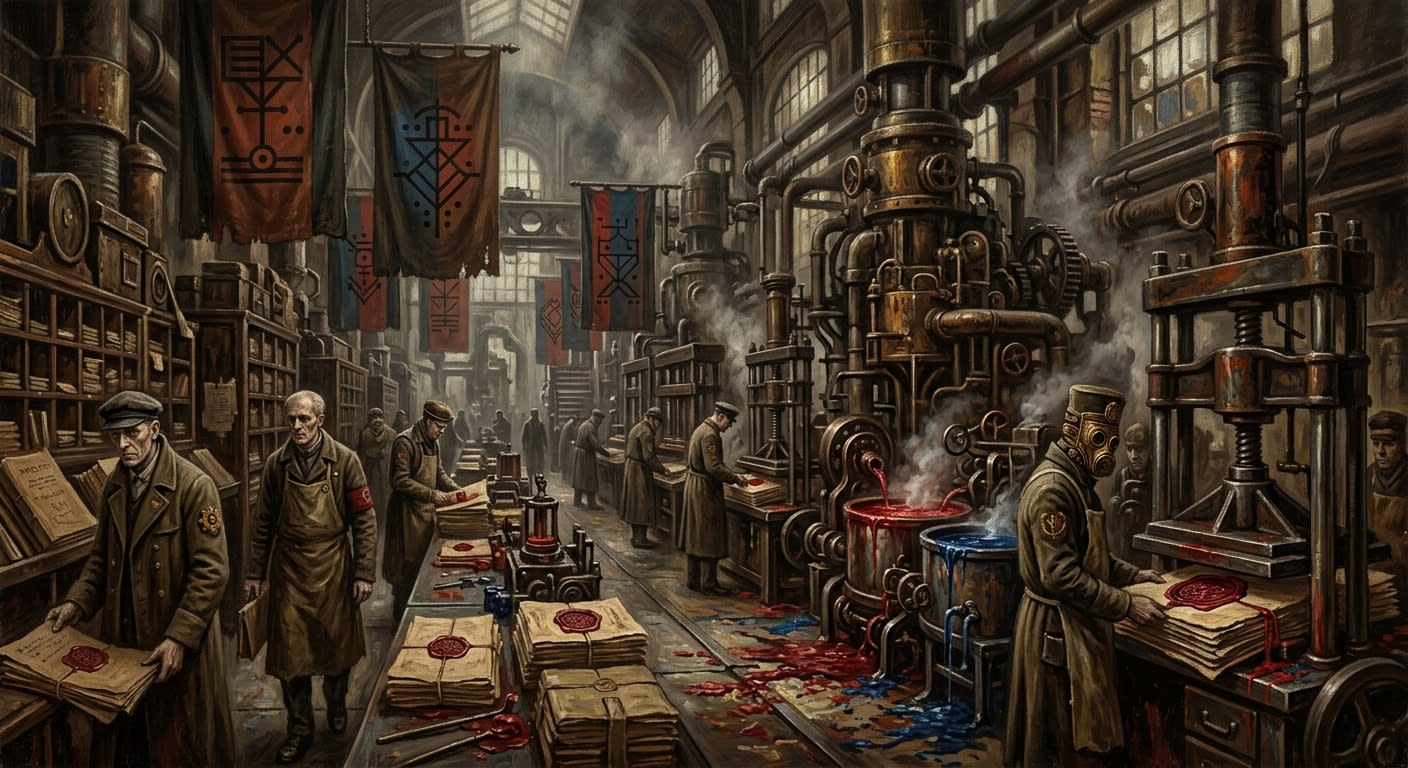
Hall of Seals
Where wax learns to rule and colour awaits sentence
The Hall of Seals is Strasbourg's low clean engine of visual law, where Heraldry and Masks and Seals ration colour, custody dies, and make wax sovereign.
Codex Ref. II.1.04-002
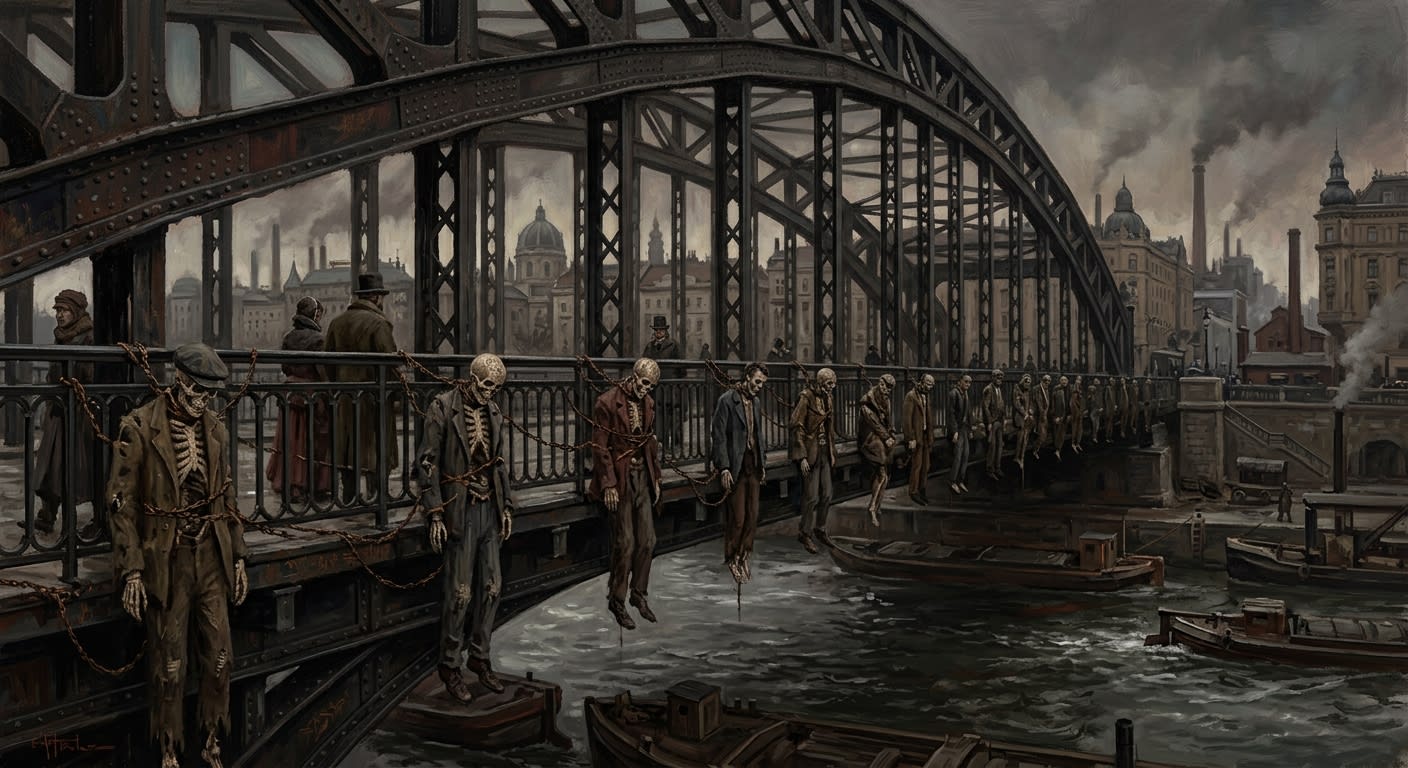
Hanged Bridge
Forty dead rebels made better sermons than their pamphlets
The Hanged Bridge over Vienna's Donaukanal preserves the A.S. 102 aftermath of forty Rationalist rebels whose inscribed bones still preach without permission.
Codex Ref. II.4.09-013
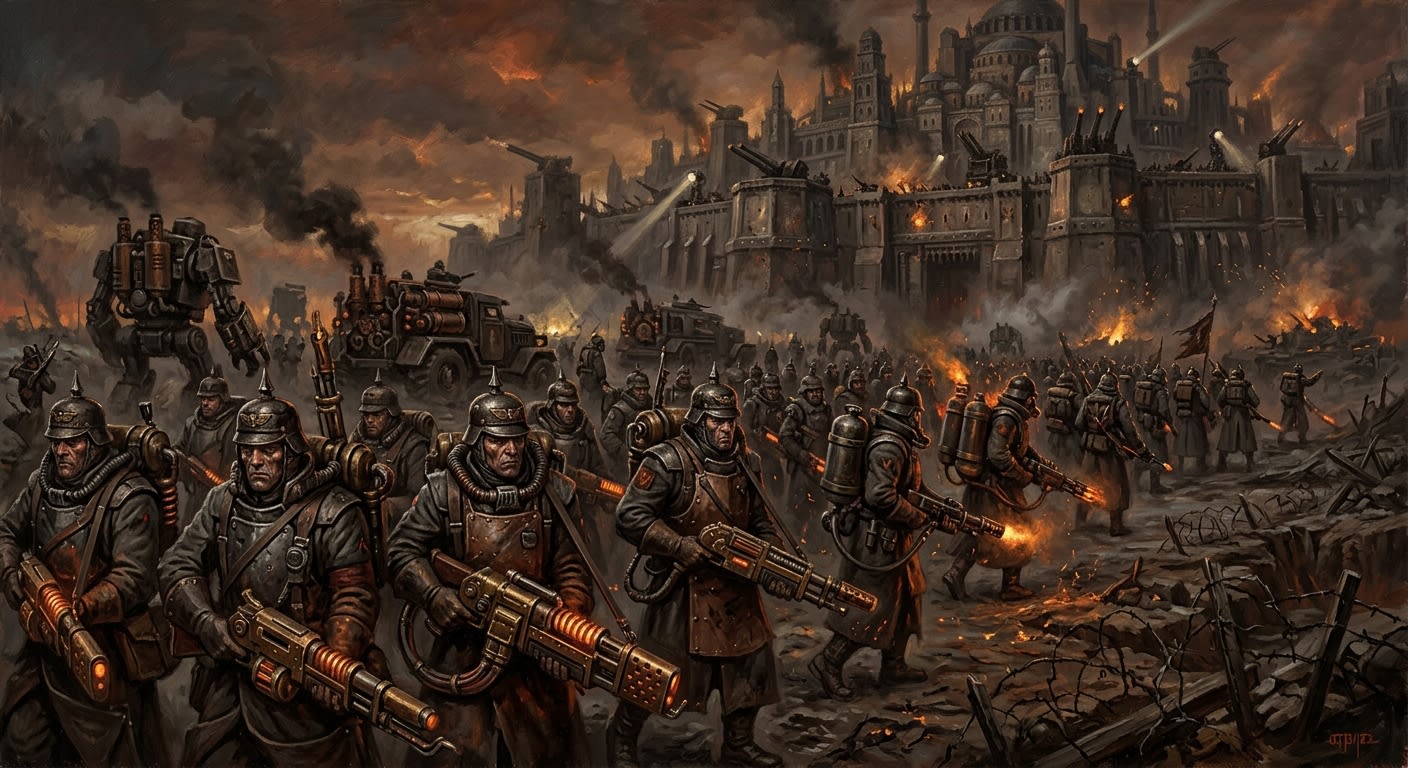
Hellbow Legion
Maldrake's arc of wrath, where range becomes theology and stone learns fear
Maldrake's Hellbow Legion is a wrath-forged assault host, not a regiment of archers: slag-bow cohorts, pyre-smiths, Ember-Soldiers, Hollowed columns, and siege heat aimed at Bastion-Constantinople.
Codex Ref. IV.1.07-009
Heresy of the Absent Creator
The wards still hold. The promise no longer does.
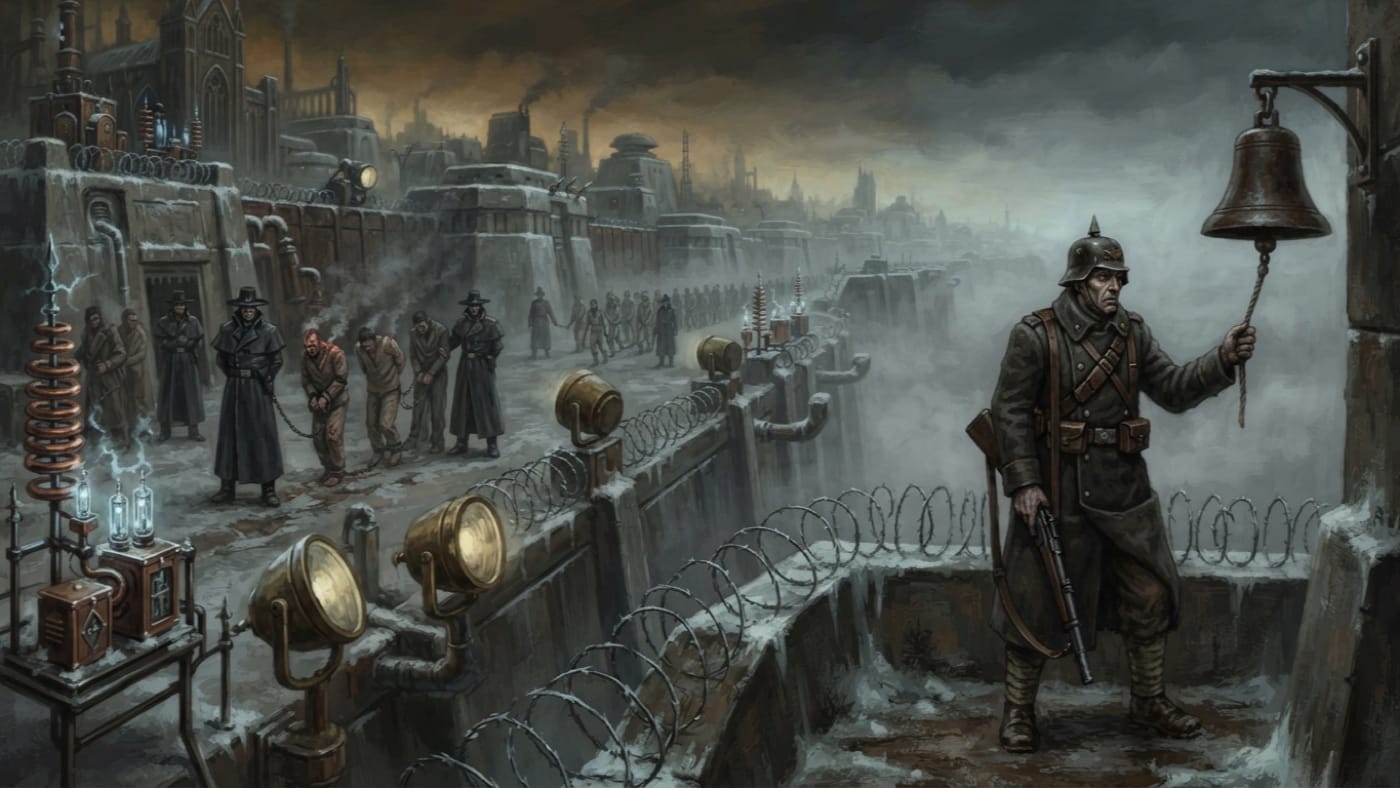
The northern garrisons' claim that the Creator is dead and miracles spend His residual holiness. The wards still hold; the Bureau of Purity still brands adherents and sends them to the Penal Choir.
Codex Ref. VI.1.01-002
Heresy of the Complicit Creator
The proposition is prohibited. The classification remains blank.
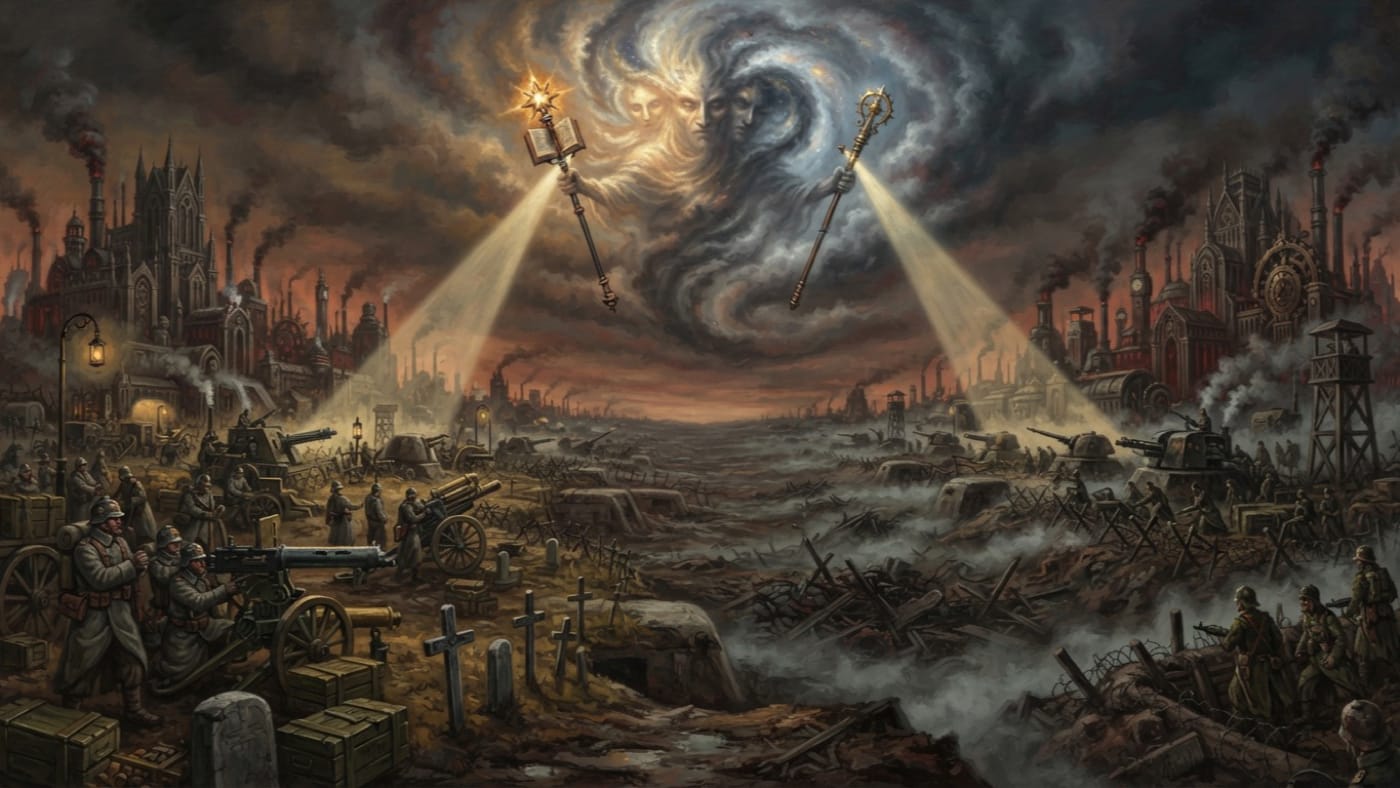
The claim that the Creator and the Great Deceiver are one power, and the war a performance. I record its arguments under Standing Order 7-A; the Bureau prohibits the proposition and leaves its classification blank.
Codex Ref. VI.1.01-004
Heresy of the Unnecessary Creator
The bone keeps its glow. The Hieromnemon may lose his post.
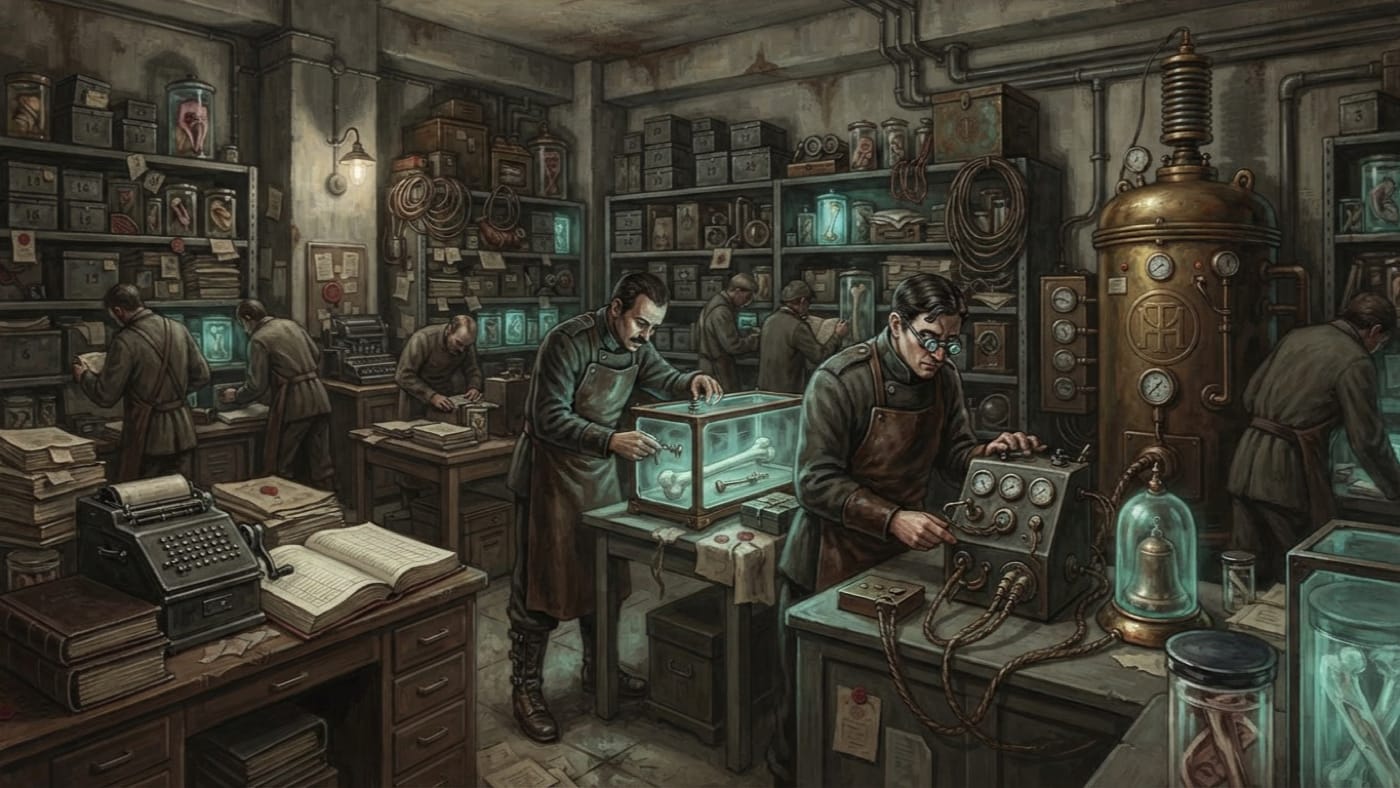
The forbidden proposition that relics, bells and consecrated stone work without a divine source. I catalogue what it grants, what Doctrine cannot demonstrate, and what becomes of our mandate when custody is merely property.
Codex Ref. VI.1.01-005
Hierarch of the Third Seal
Three Bureaus know the title. None supplies the name.
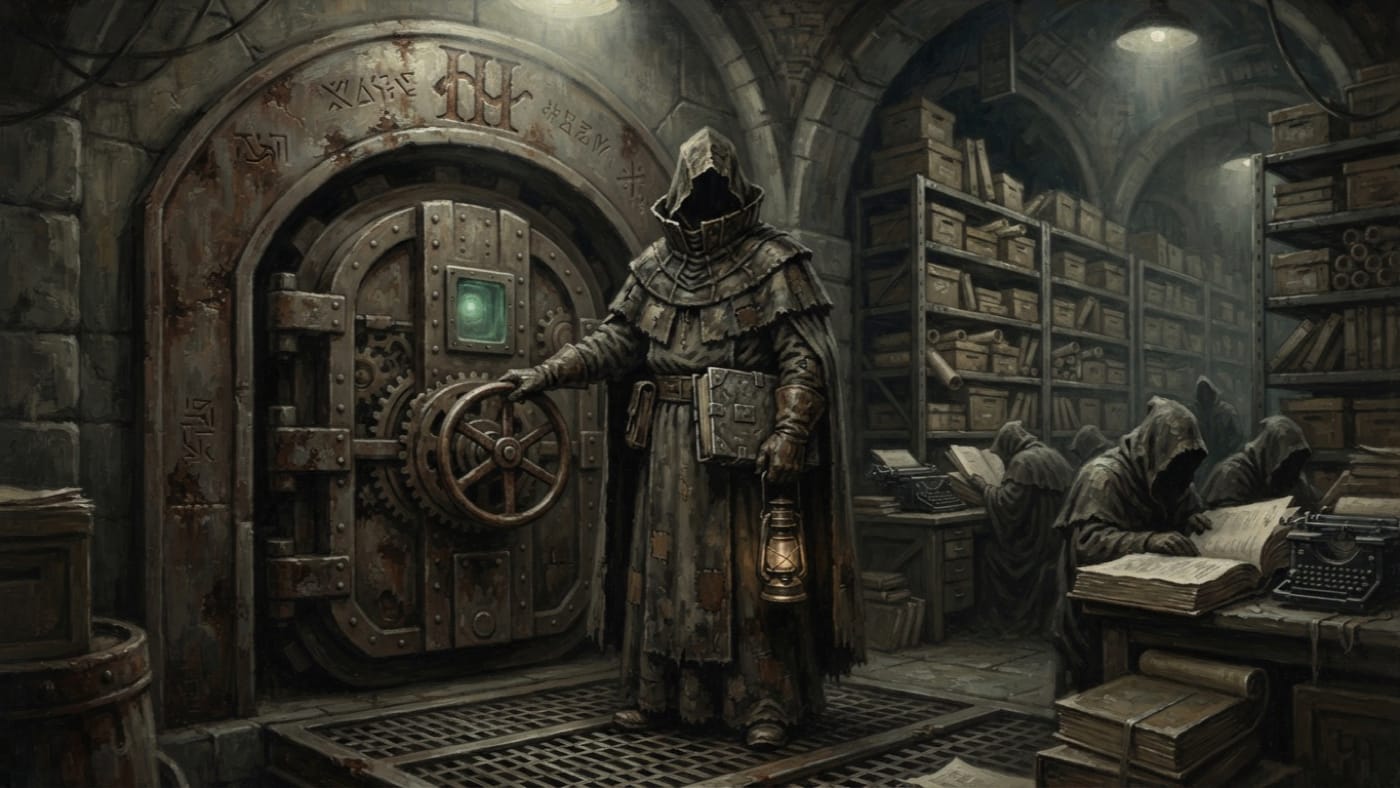
Three Bureaus attest a Hierarch; none supplies a name. This A.S. 201 survey records restricted vault knowledge, attributed tribunal influence and Lyon's A.S. 170 satire, leaving the Seal unidentified.
Codex Ref. XIII.1.05-003

Hieromnemon
The office that teaches memory to kneel
The Hieromnemon governs public memory for Doctrine: seal, margin, erratum, redaction, and the blessed sentence that makes contradiction obey.
Codex Ref. XIII.1.31-090
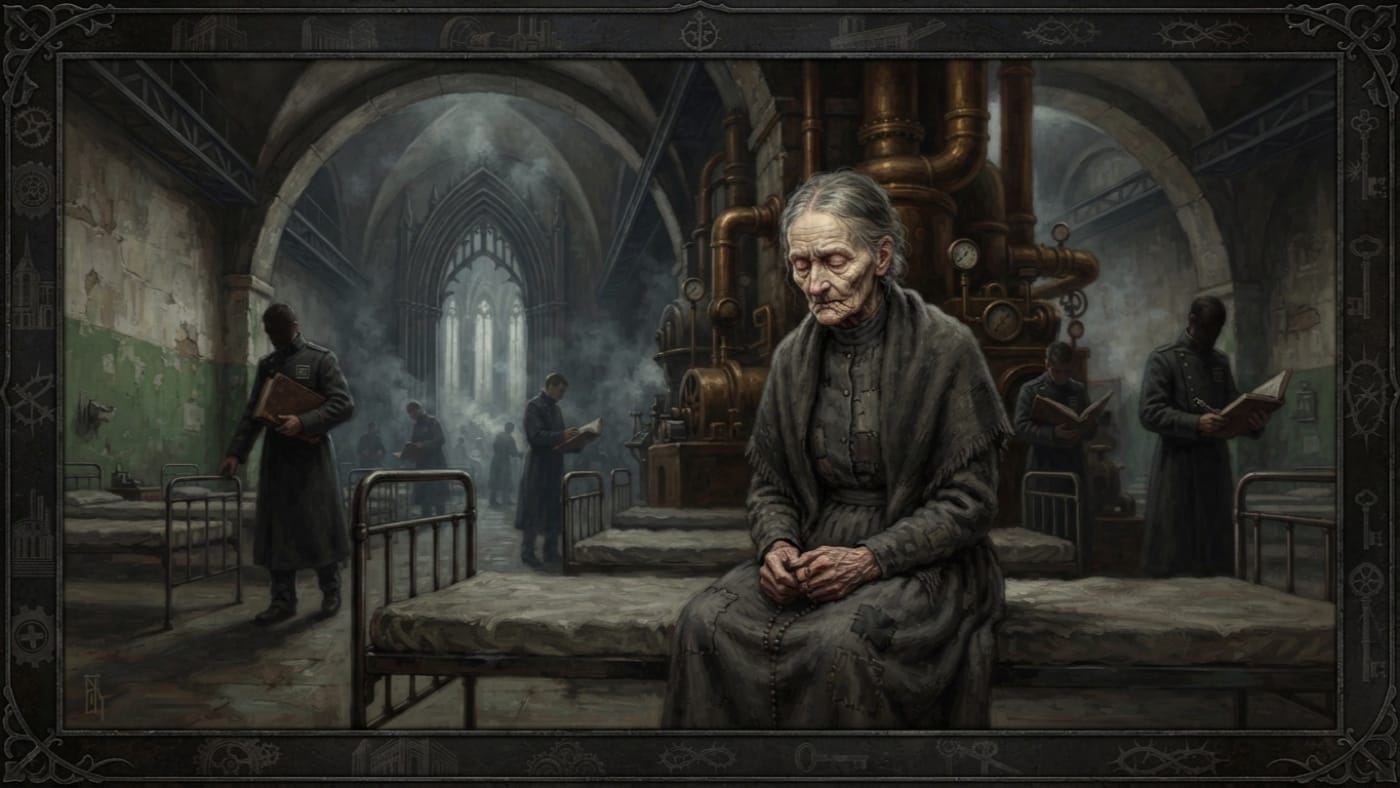
Hilde Voss
The danger left. The volume stayed.
Hilde Voss outlived every Cellar Saint the archive could confirm. She died at one hundred in Strasbourg, A.S. 130, still praying in whispers; the Bureau recorded her death more fully than her life.
Codex Ref. III.2.01-130
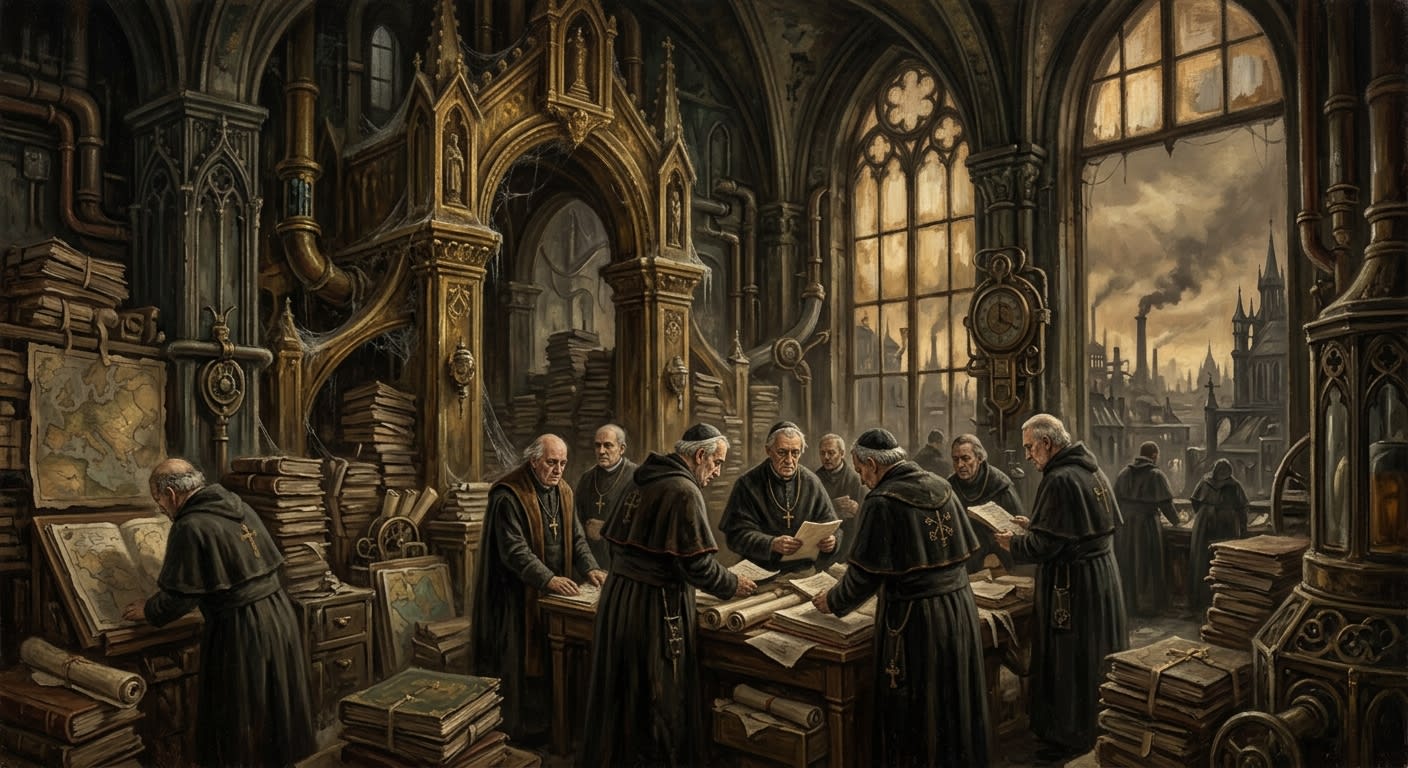
Holy See of Vienna
The dead chair that Strasbourg found too useful to resurrect
The Holy See of Vienna was the Church's old continental chair: venerable, beautiful, administratively inadequate, dissolved at Regensburg in A.S. 30, and later preserved by Strasbourg as shrine, warning, and useful absence.
Codex Ref. VIII.1.09-030
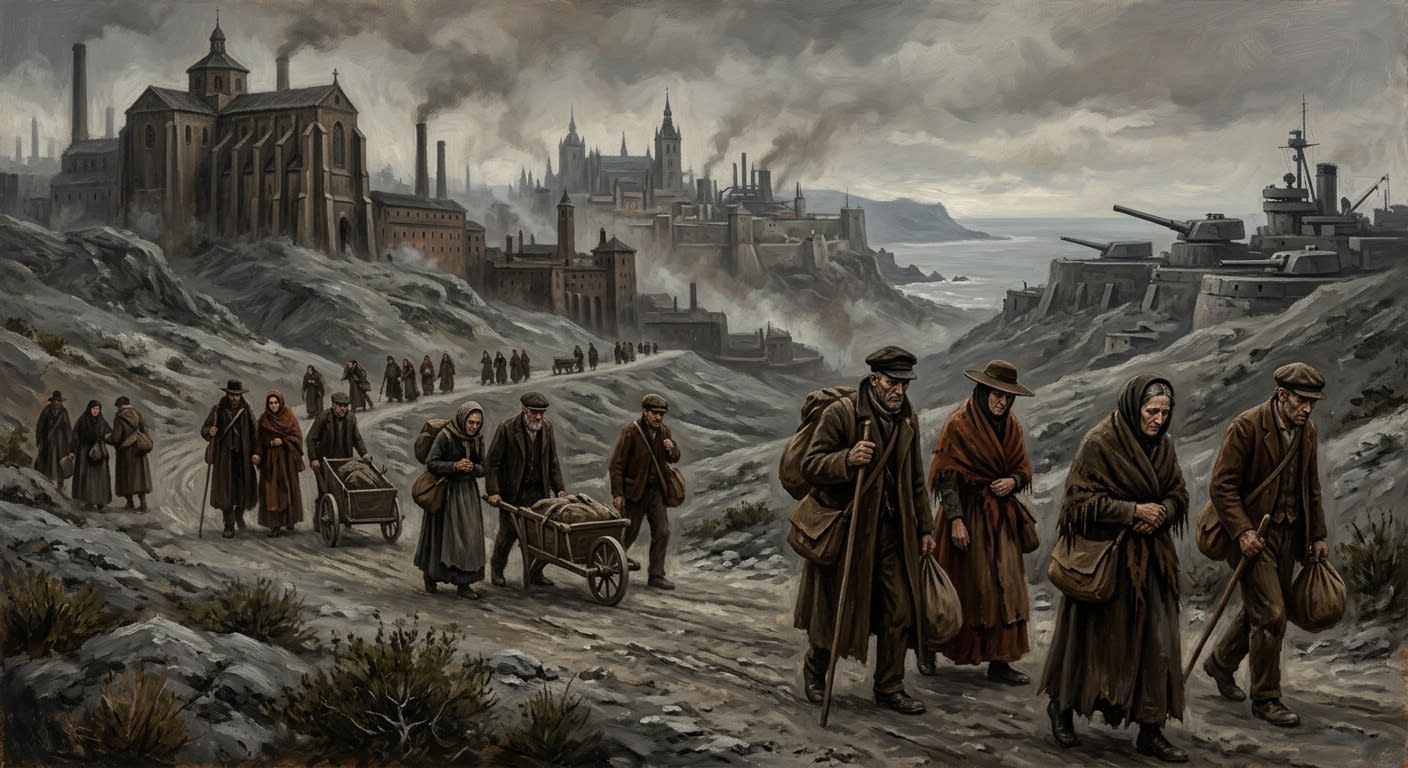
Iberia
The western furnace kneels, pays, murmurs, burns, and remembers
Iberia is the Synod's western furnace: a sealed peninsula of relic ash, late Concordat obedience, Seville mutters, Toledo martyrdom, pilgrimage roads, British guns at Gibraltar, and memory too old to confiscate cleanly.
Codex Ref. II.1.04-090
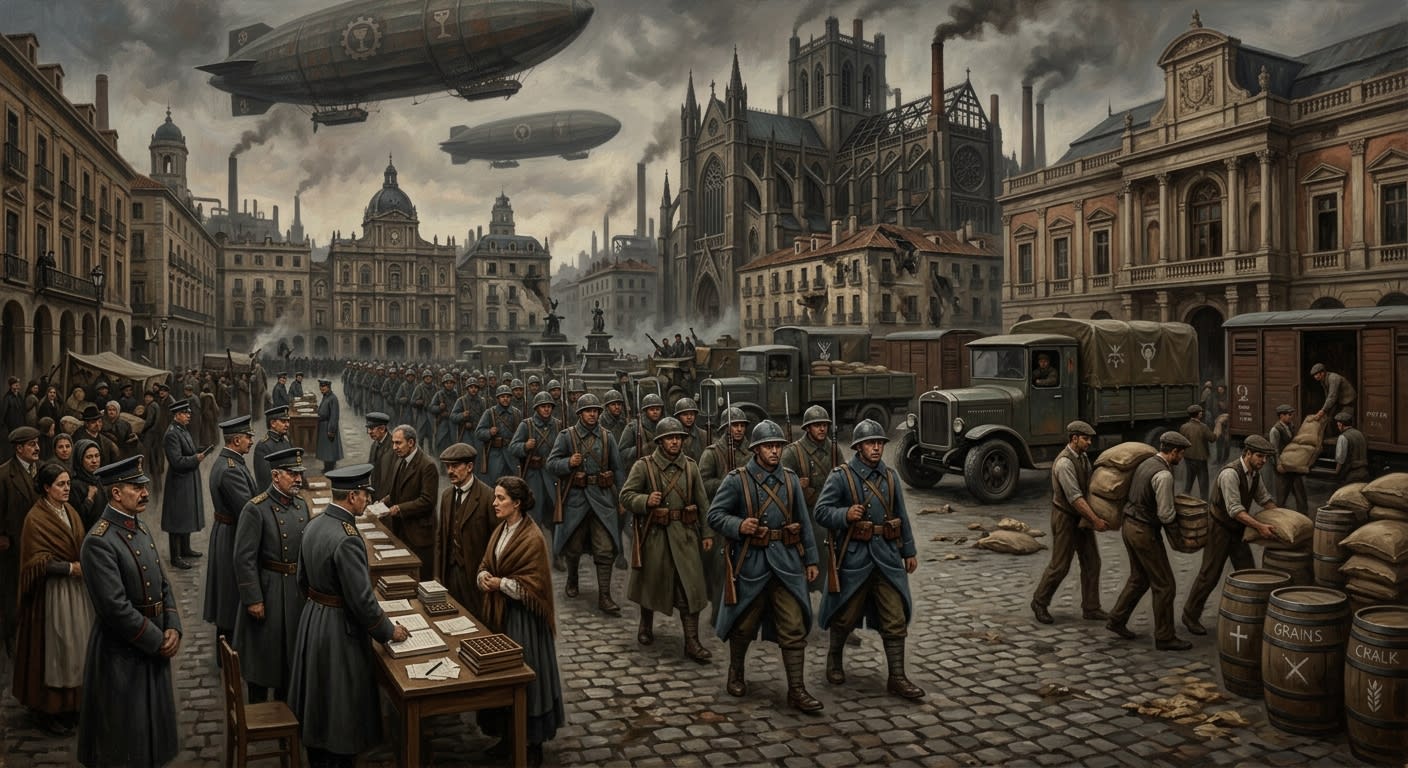
Iberian Campaigns
The West was conquered first by salt, then by silence
The Iberian Campaigns were the Synod's western correction: salt dues, harbour ledgers, Seville's silenced plazas, stripped granaries, and conquest filed as housekeeping.
Codex Ref. VII.5.10-092
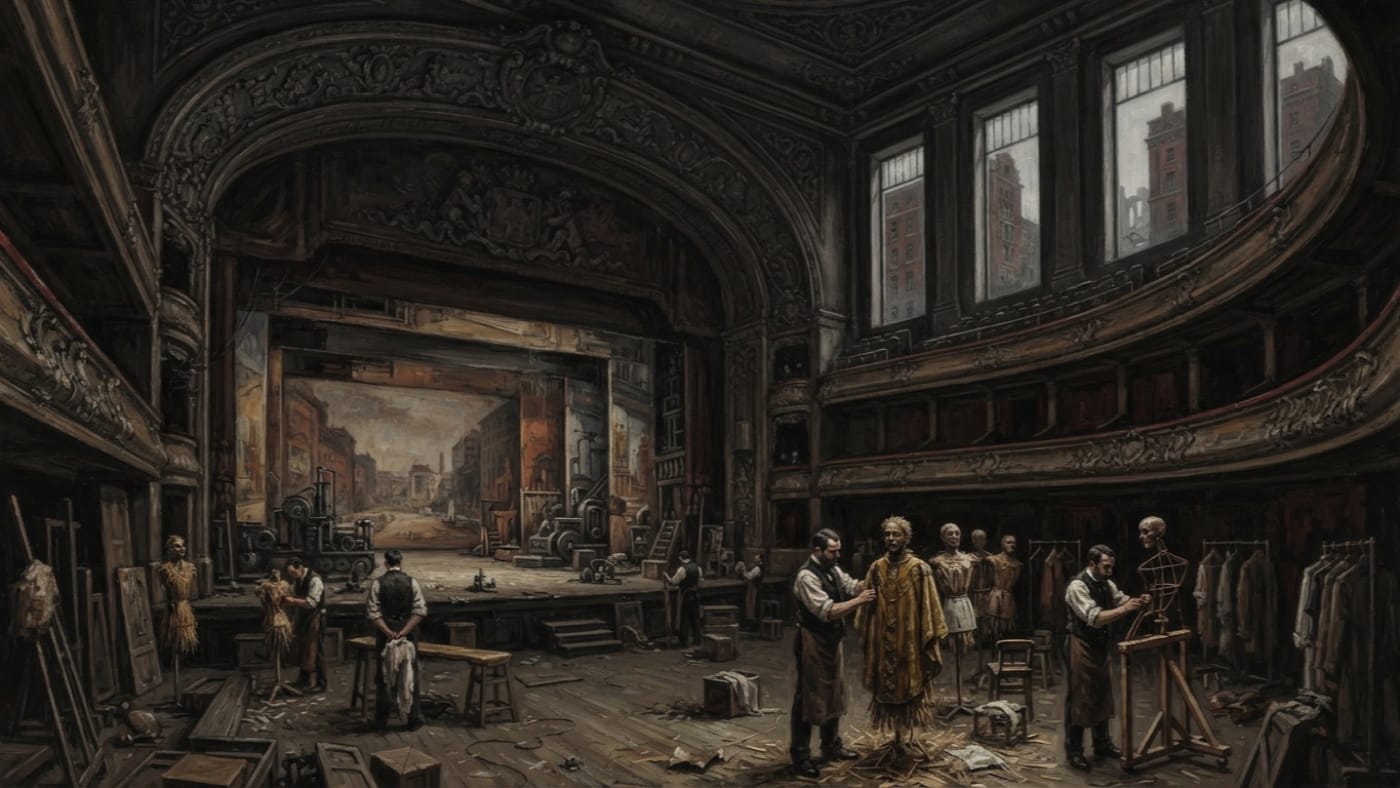
Imperial Theatre
The Costumiers Went On to Dress Saints for Burning
Vienna's Imperial Theatre enters the Ledger through craftsmen later hired for the Black Procession of A.S. 30. Their saints were lifelike; the house's founding and fate remain unrecorded.
Codex Ref. II.4.09-030

Index of Safe Lies
The prayer-book with a scalpel hidden in the spine
Dr. Marrow Vask's forbidden compendium concealed practical medicine, chemistry, agriculture, and engineering beneath pious language, surviving eleven burnings through twelve Ashen Circle copy lines.
Codex Ref. XIII.1.57-001
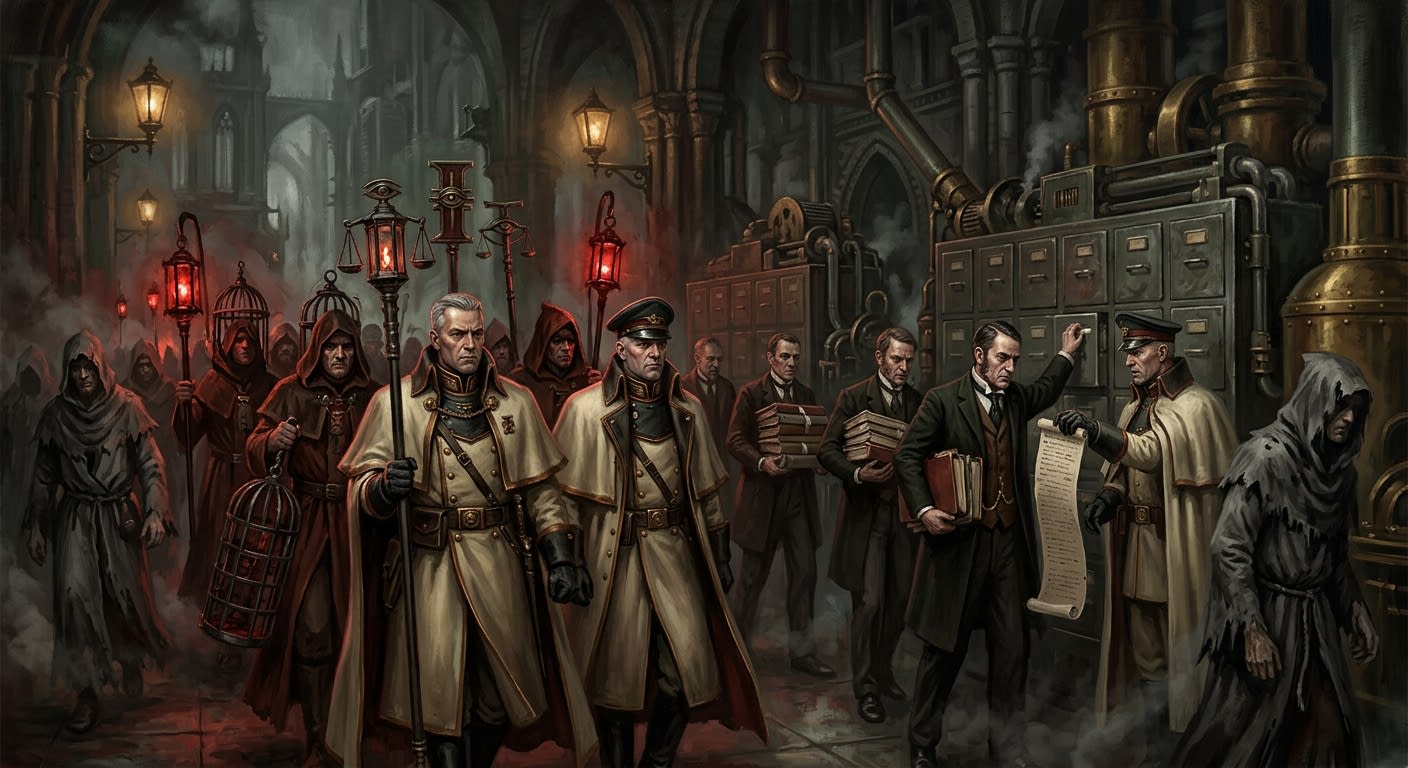
Inquisition
The white hand closes with a receipt
The Inquisition is Purity's authorised appetite for correction: White Cloaks, Lictors, Red Lanterns, Ashmen, Shadows, Index packets, denunciation law, and the clerkly miracle by which fear learns to file itself.
Codex Ref. VIII.1.08-093

Inquisitor Breel
The guard who became the margin of the song she never heard
Fourth-rank White-Mantled Inquisitor whose A.S. 187 east-bench exposure in the Vault of Silences made her hand copy forbidden notation from the Index Damnatus.
Codex Ref. III.2.01-070

Inquisitor-General Severian
The man who taught fear to sing in tune
Architect of the Iron Choir of Mainz and Severian Gloss to the Catechism of Obedience, he made silence culpable, cruelty legible, and fear useful enough to receive forms.
Codex Ref. III.2.01-006
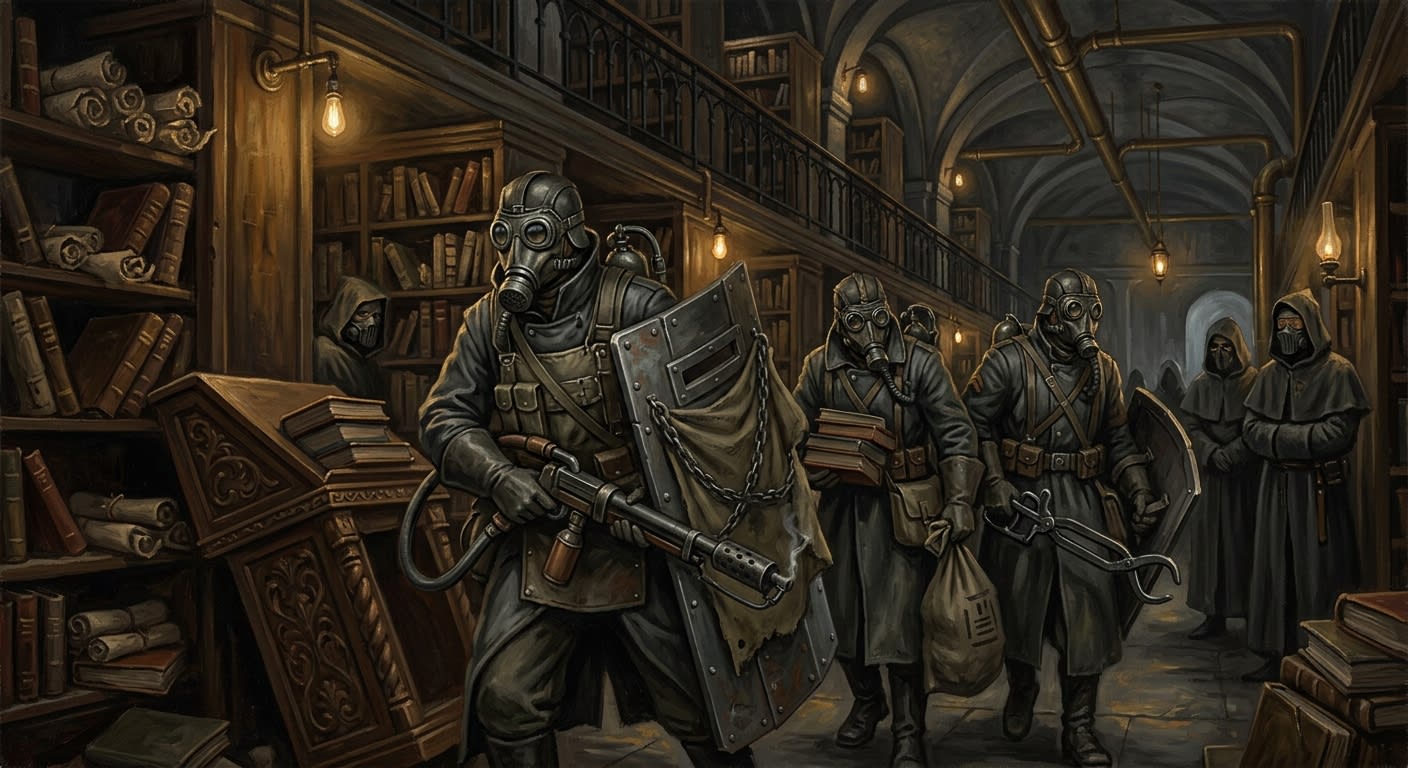
Interdiction Squads
Quiet boots, red pencils, and the polite seizure of dangerous nouns
The Bureau of Silence borrows Purity muscle, subtracts the shouting, and sends Interdiction Squads to seize forbidden texts before the furniture becomes doctrinally interesting.
Codex Ref. VIII.3.02-001
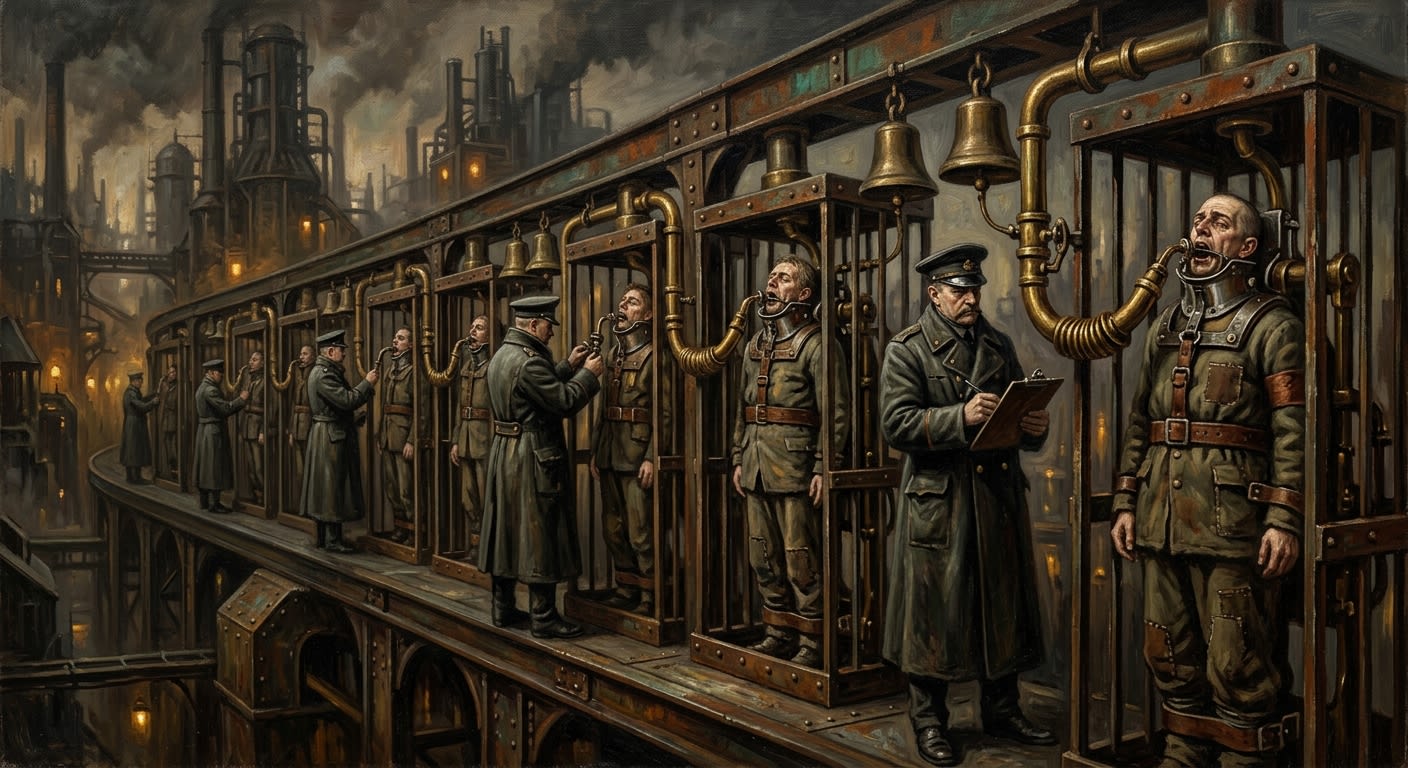
Iron Choir of Mainz
Where the road learned to keep a throat open
The Iron Choir of Mainz turns condemned throats into civic instruction: a Purity road of cages, bells, Brand-Singers, witness columns.
Codex Ref. VIII.1.09-134
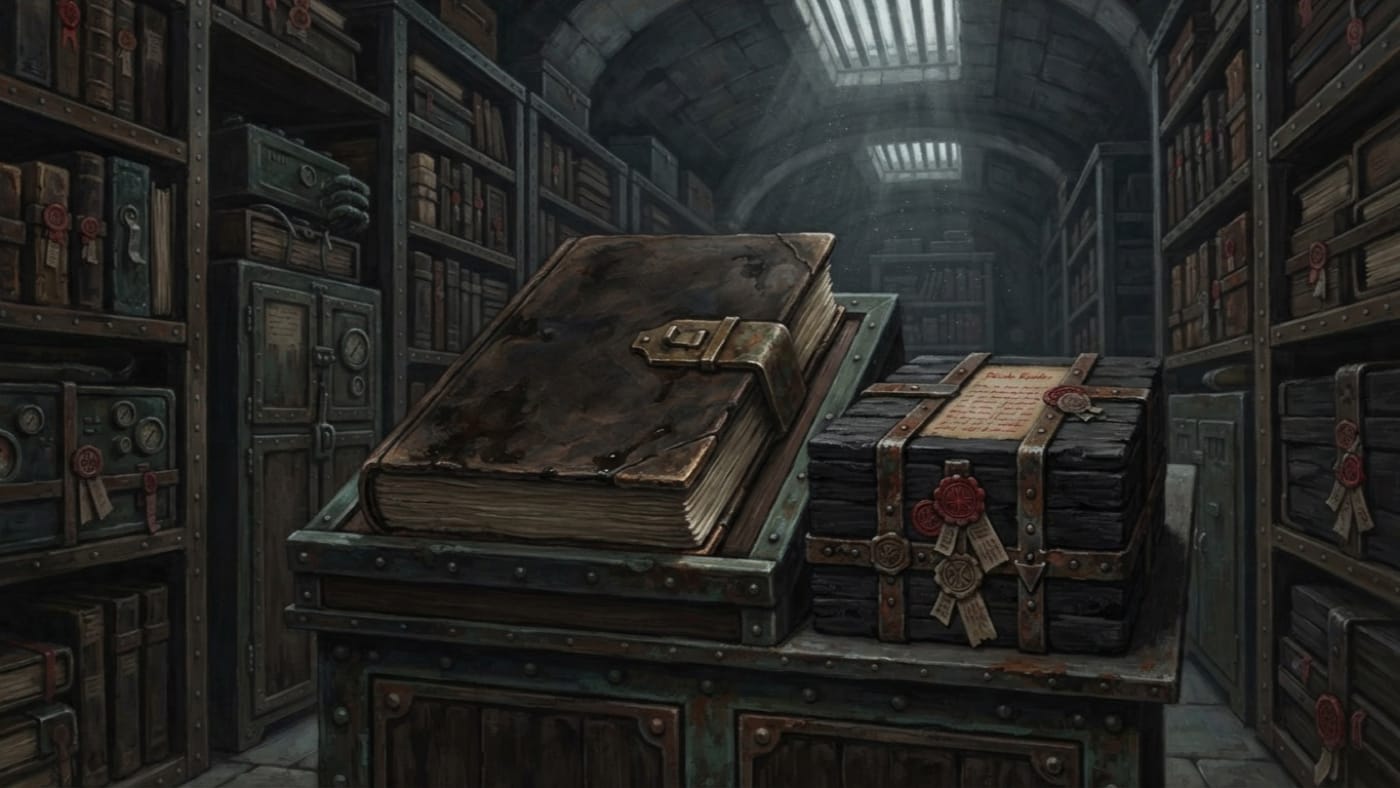
Iron Plains Survivor Volume
Thirteen witnesses bound; the fourteenth indexed in red
Thirteen survivors of the A.S. 45 Iron Plains are bound in this volume beneath Strasbourg. Kessler's testimony is held apart; Records indexes his absence in red.
Codex Ref. XIII.1.48-002
Italian principalities
One filing drawer for a peninsula that never consented to share it
The old Italian jurisdictions, erased by Regensburg in A.S. 30 and inherited piecemeal by the Synod. Their complete roster remains unestablished; their objections remain abundant.
Codex Ref. II.3.09-030
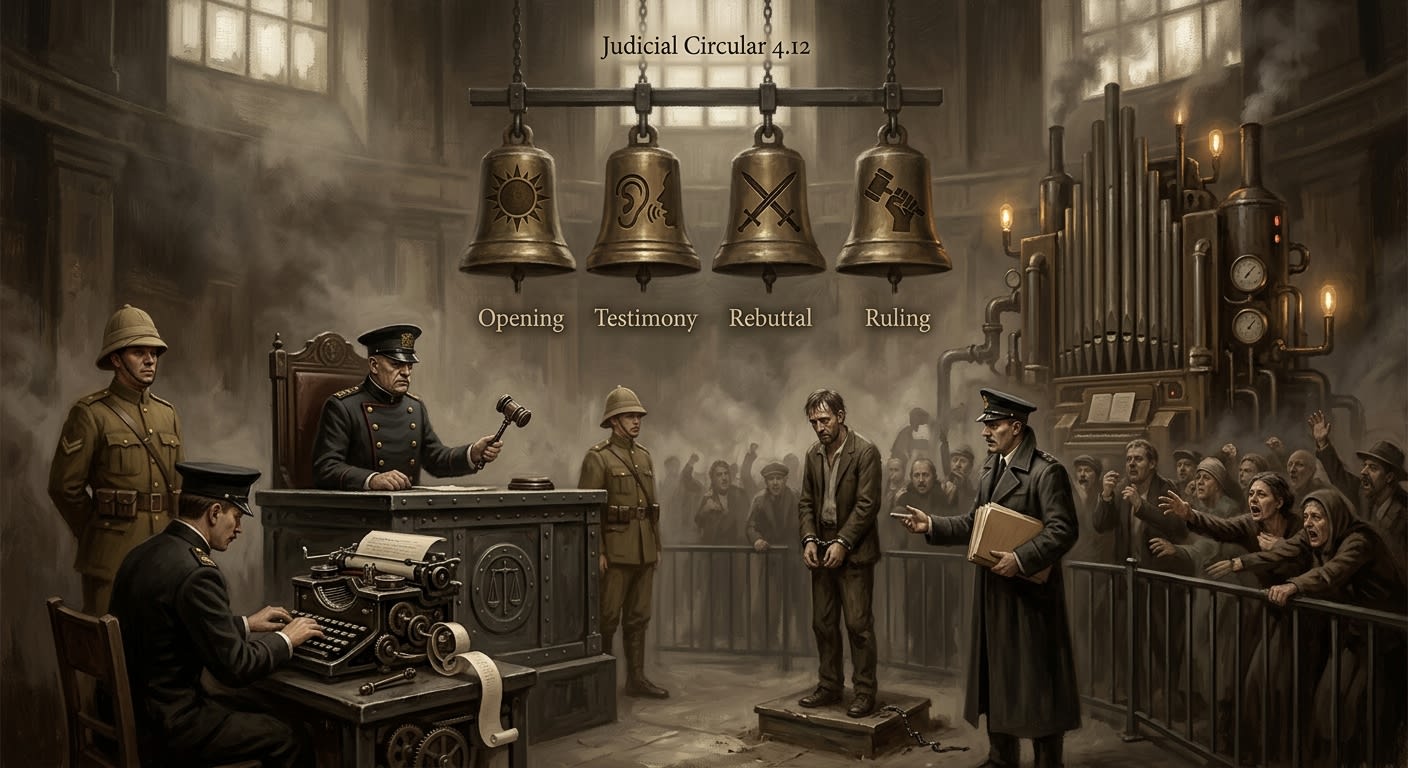
Judicial Circular 4.12
Four minutes for law to wound before the road learns its hands
Judicial Circular 4.12 compressed roving circuit trials into one creed-hymn: opening, testimony, rebuttal, ruling — four chimes by which law outruns crowds, mothers, mercy, and its own exposed ankles.
Codex Ref. XIII.1.91-141

Jupiter
The planet may wander; the printed position remains in force
Jupiter departed from its approved position. Doctrine classified the planet as provisionally in error and corrected the astronomers who presumed to notice.
Codex Ref. XIII.1.08-199
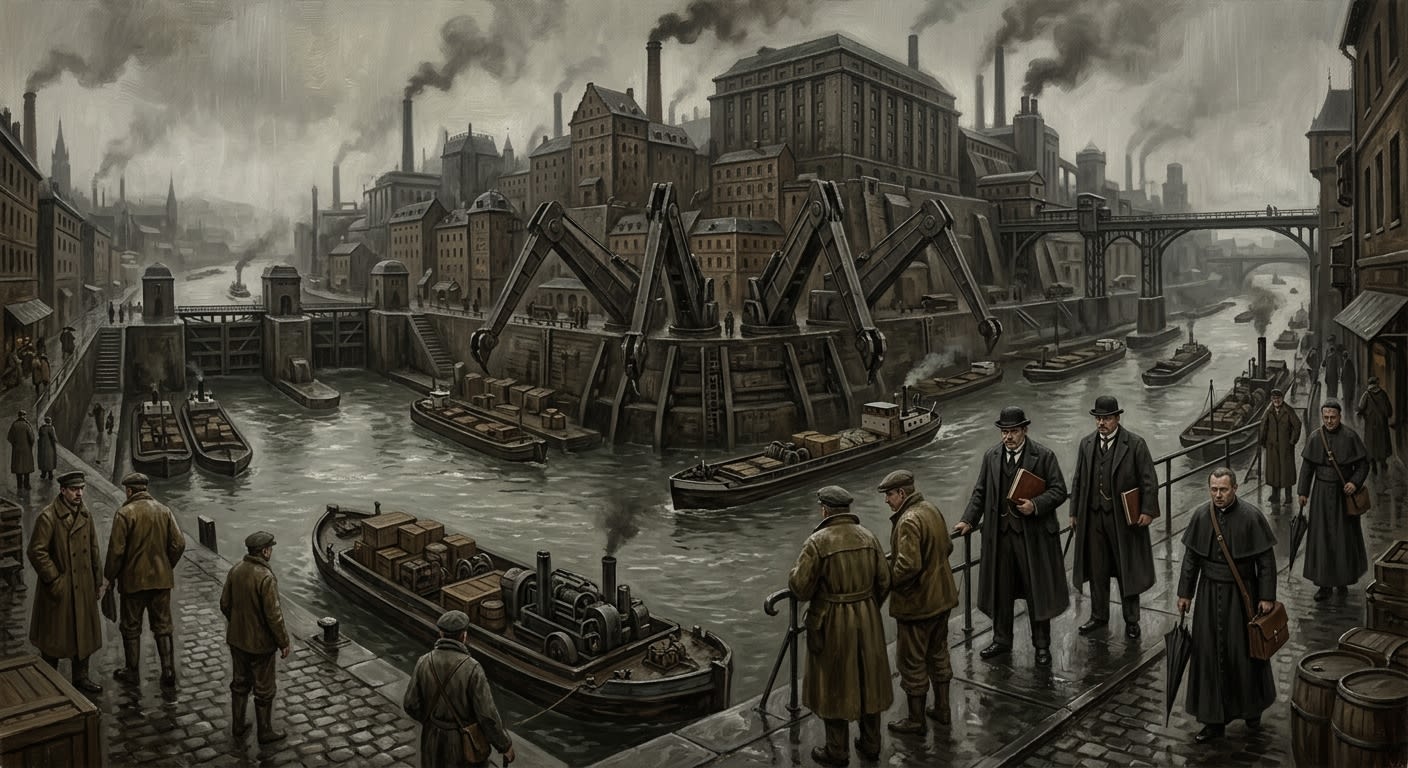
Koblenz
The holy art of handing the burden onward
Koblenz is the wet middle hand of the Ignatian chain: a Rhine-Moselle transfer city where sanctity lasted six minutes and became taxable forever.
Codex Ref. II.3.05-045
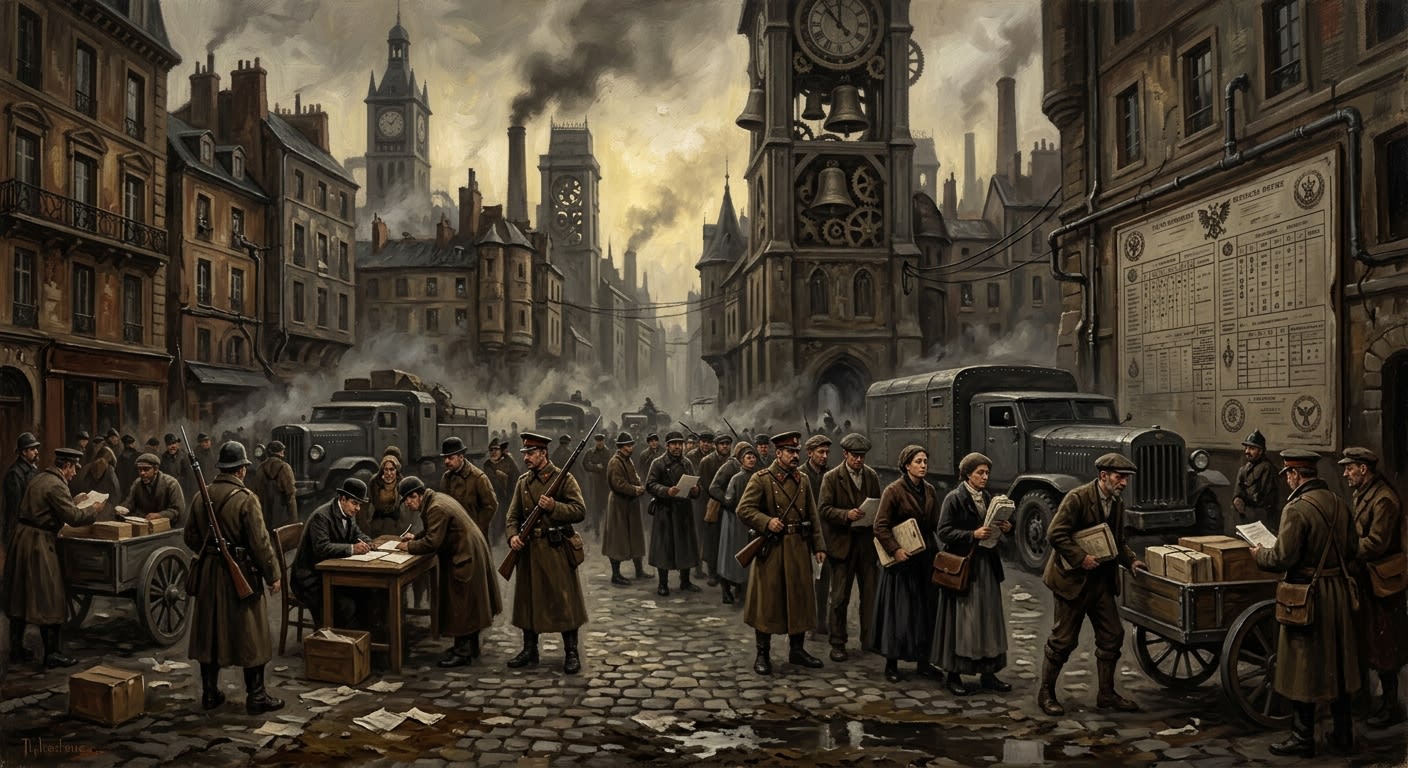
Languedoc
The province that made sunlight prosecutable
Languedoc is the southern heartland province where bells kept local time, songs bent under audit, and the Purges of A.S. 130 made sunlight a fileable risk.
Codex Ref. II.1.06-130
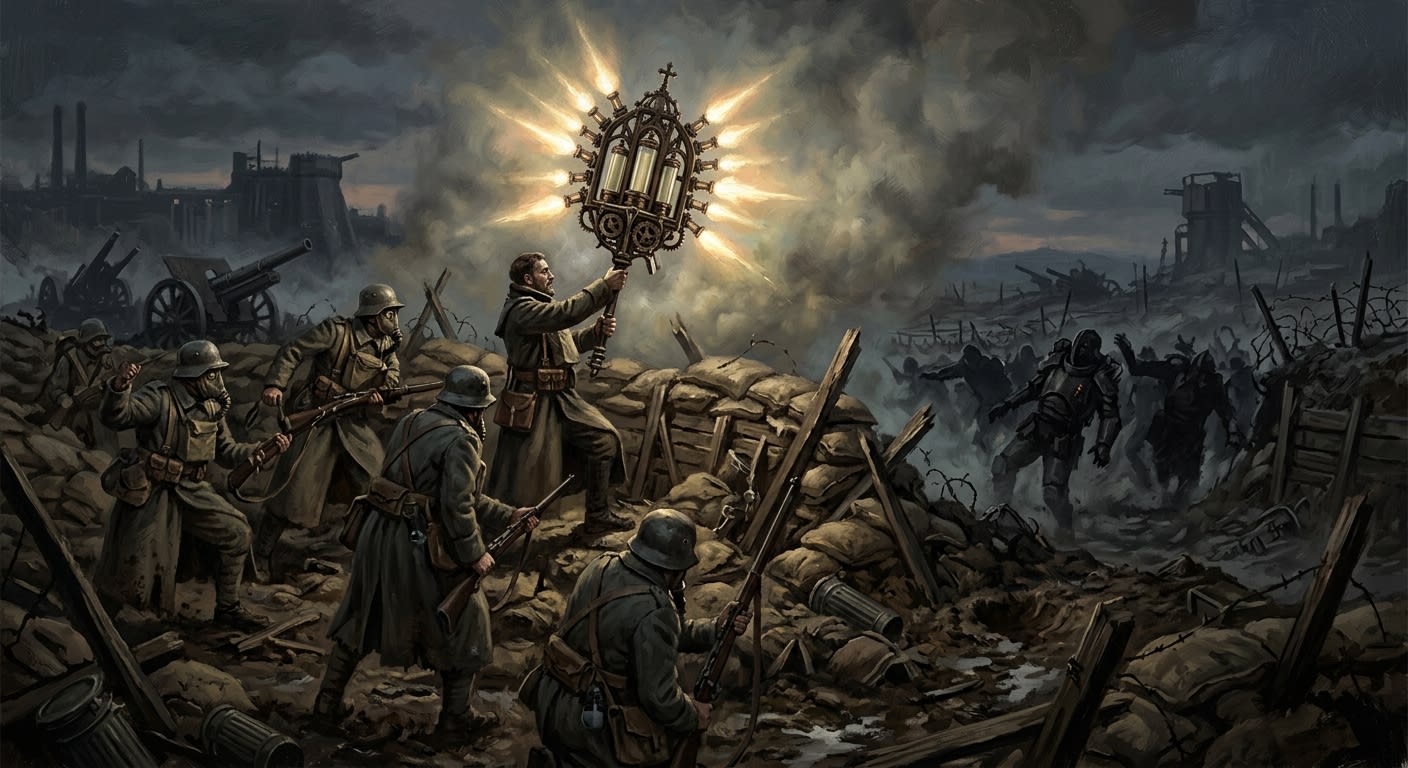
Last Stand of Kalnik Ridge
Where Wrath flinched and retreat learned to march
At Kalnik Ridge in A.S. 48, Brother Tomislav raised the Reliquary of Saint Isidore, seventeen relics blazed, Maldrake's vanguard recoiled, and rout became discipline.
Codex Ref. VII.5.03-001
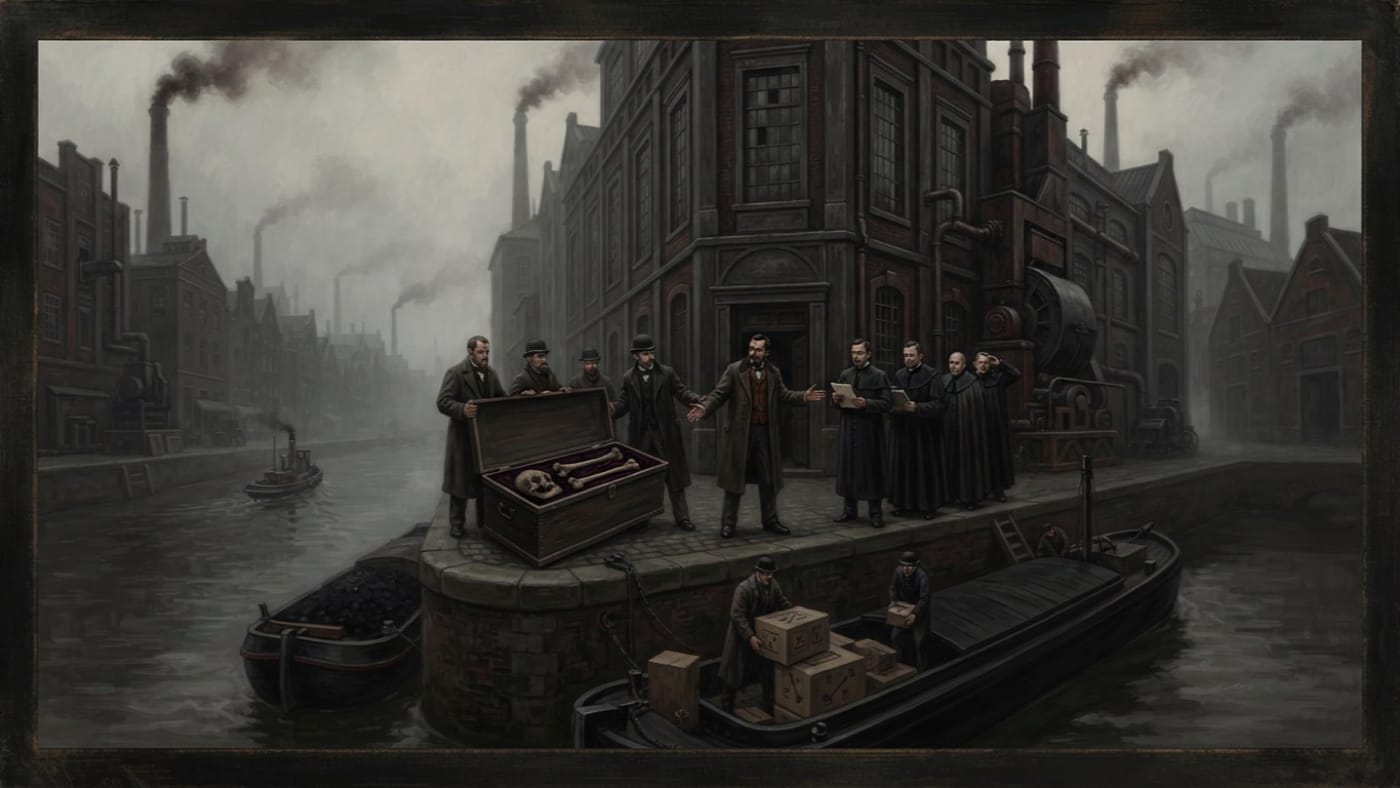
Leiden
Two femurs, one jawbone, and no jurisdiction
Leiden's anatomists supplied the Year of Letters with its simplest weapon: two femurs per man. Its merchants claim Saint Luthar's jawbone. The Synod has neither a custody chain nor jurisdiction.
Codex Ref. II.4.09-013
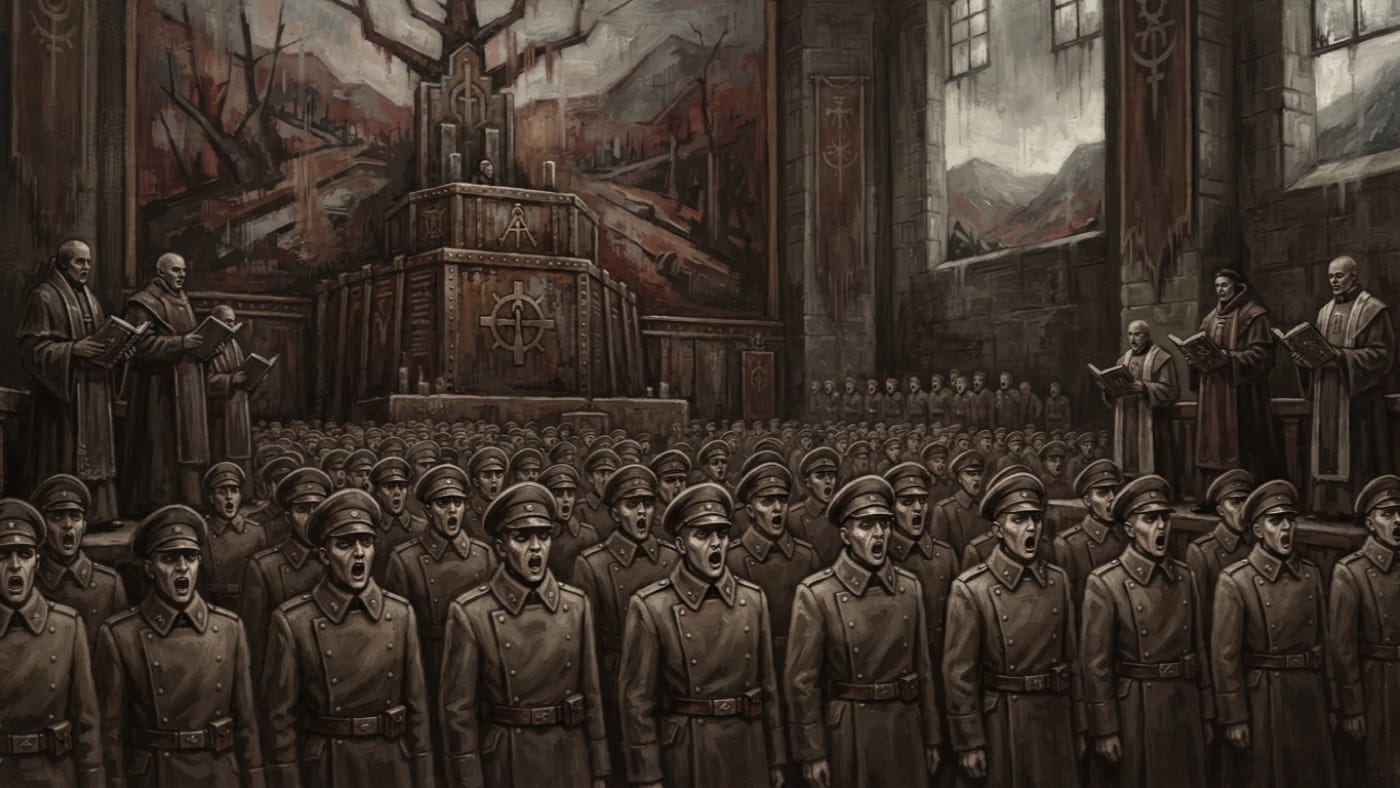
Litany of Errors
Eleven names. One designation. Four minutes to agree.
At Bastion-Przemyśl, cadets recite eleven Ulm signatories and the unknown twelfth, then condemn all twelve in unison. Four minutes of exact remembrance, with no room left for curiosity.
Codex Ref. XIII.1.95-201
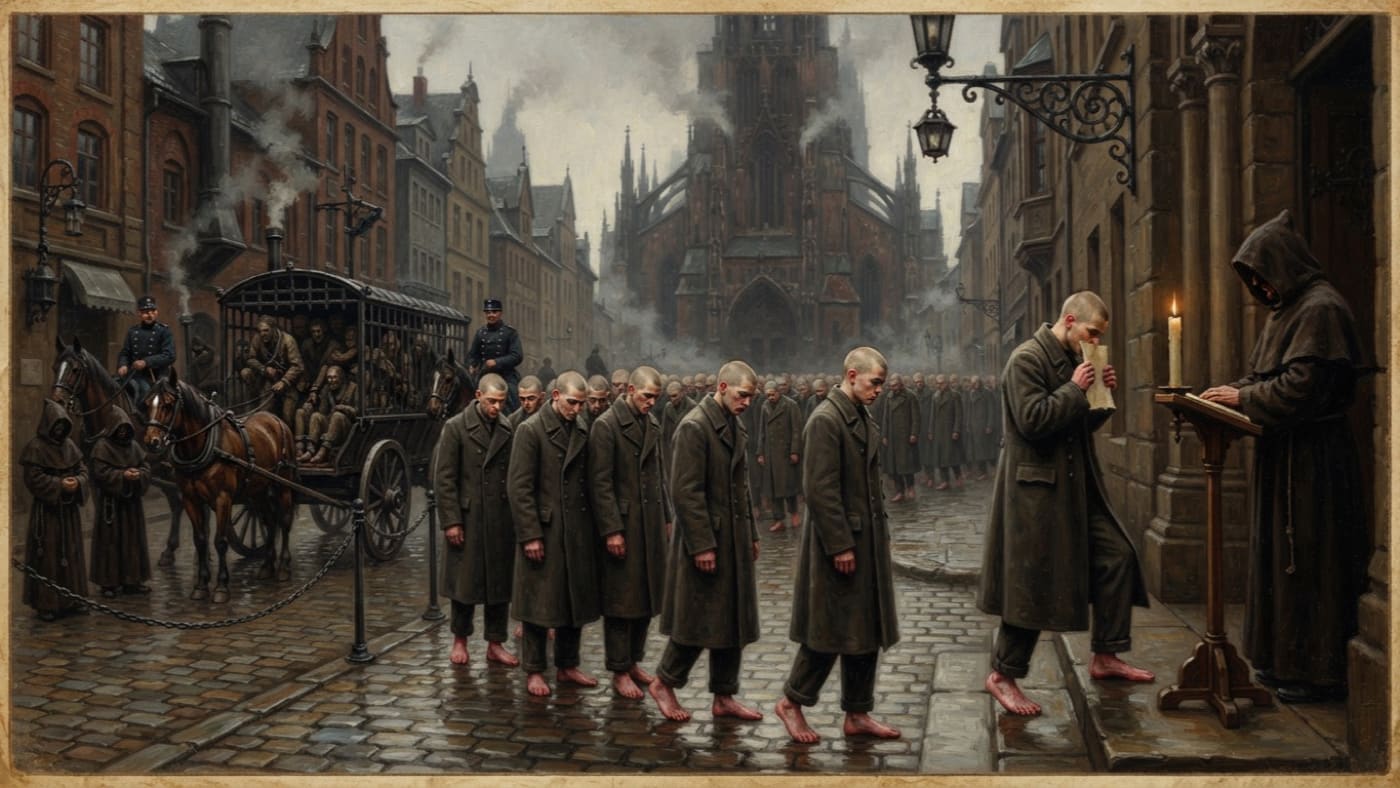
Litany of Twelve Errors
Bare feet, approved words, and a page that must remain unread
Ulm's students walk barefoot to the cathedral, recite the Litany of Twelve Errors and kiss blank Mine paper. Lawful learning survives by keeping its mouth obedient.
Codex Ref. XIII.1.97-201

Litany-Engineer
The Sanctified Mechanist — wrench in one hand, chant codex in the other, keeping the Sagittal Line from becoming an extraordinarily expensive wall.
The Bureau of Engineering's foundational combat-rated mechanists: four thousand licensed, nine thousand actual, all keeping engines running by wrench and cant in chambers that hum in frequencies no codex records.
Codex Ref. XII.1.01-001

Lord-Protector Guillaume
The gate-seller who mistook a palace for survival
Guillaume sold Aachen for Lowlands dominion, sent a proxy to Regensburg, and learned too late that the Bureau's cleanest executions are grammatical.
Codex Ref. III.2.06-003
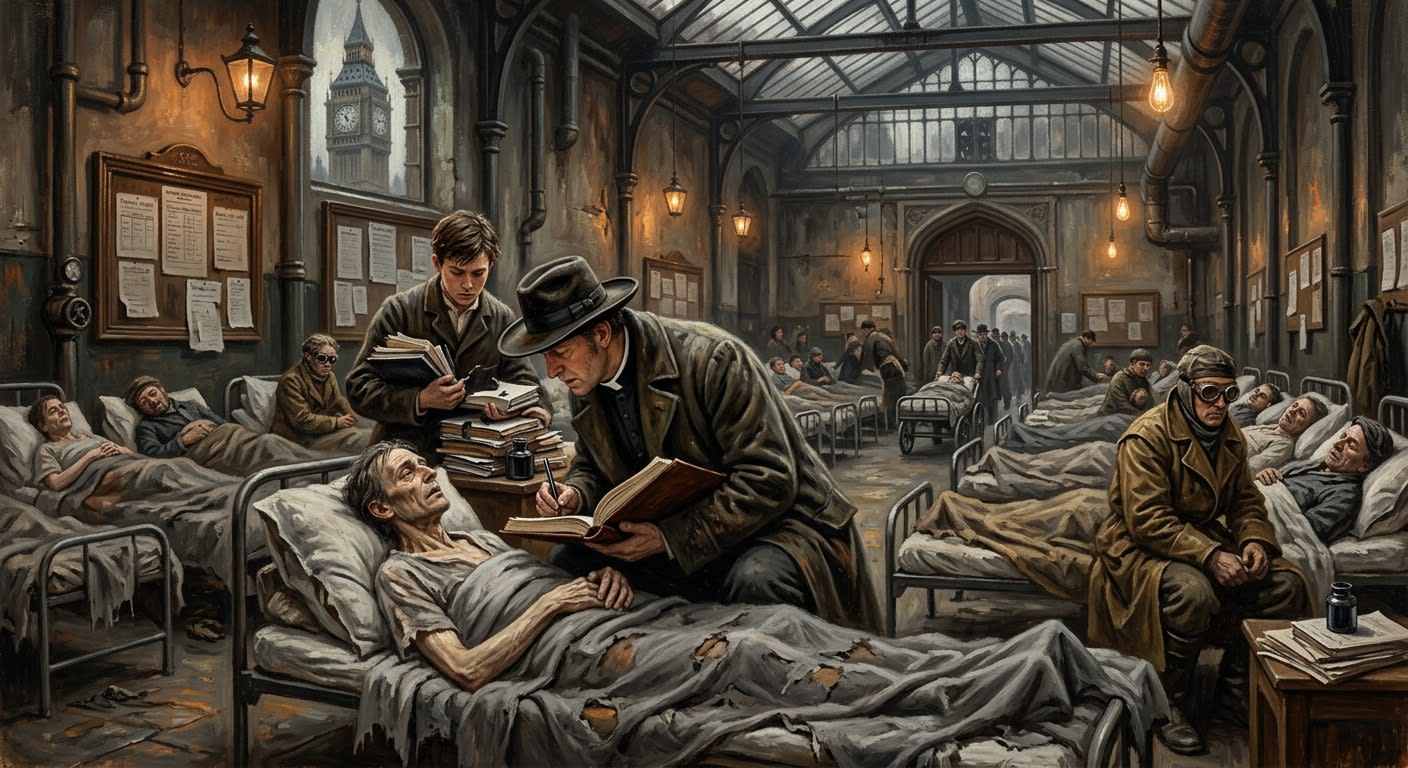
Lull of Names
The plague year when silence became a breach and the bedside became a bureau
The Lull of Names was the A.S. 78 plague-year catastrophe in which deaths in the southern wards outran transcription, birthing Standing Order 22-C and the Deathbed Confession Harvester corps.
Codex Ref. VII.8.10-022

Lumen
Reason alone, debased by its own mint
The Lumen was the Rationalist Republic's bright little sermon in stolen metal: altar silver, RATIO SOLA, and a compass pointing straight into confiscation.
Codex Ref. XIII.1.90-030
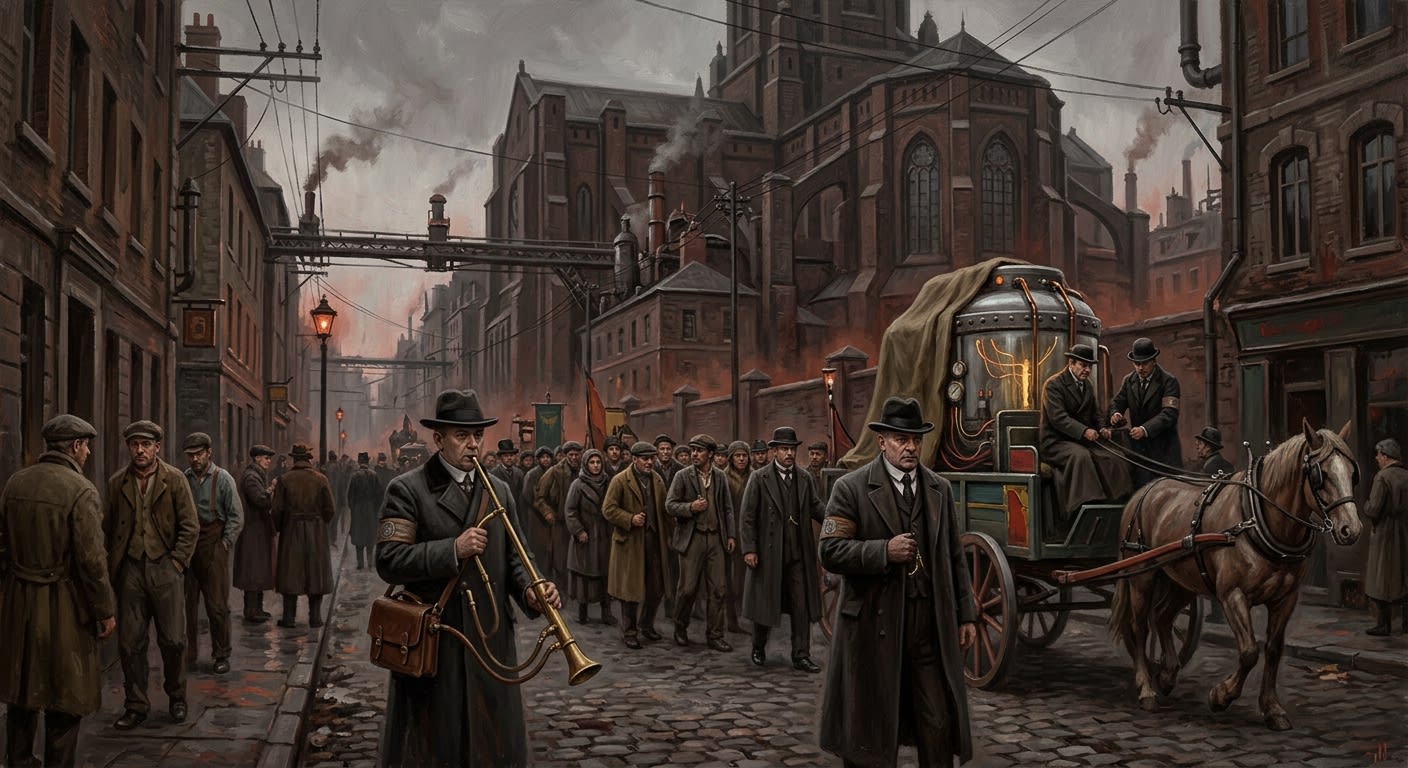
Lyon
The Rhône city where scars learned to sell tickets
Synod-held Lyon is a Rhône city of red ash, whistle-hymnody, Festival supervision, relic volatility, licensed enthusiasm, and profitable repentance.
Codex Ref. II.1.04-001
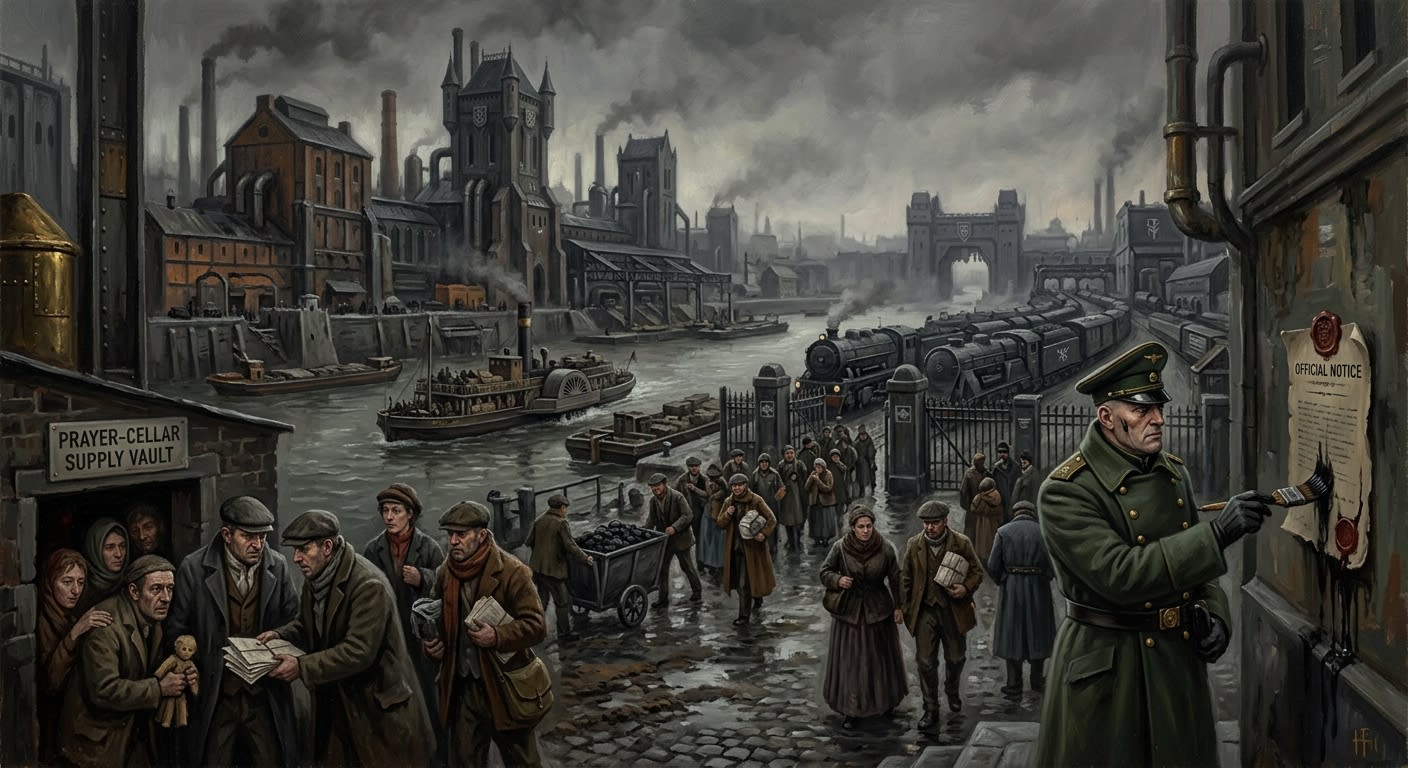
Maastricht
The sleeve beside Aachen's knife
Maastricht survived by adjacency: feeding roads to Aachen, relabelling prayer-cellars, selling shame politely, and teaching Hungry Ink how seals can scream.
Codex Ref. II.1.07-025
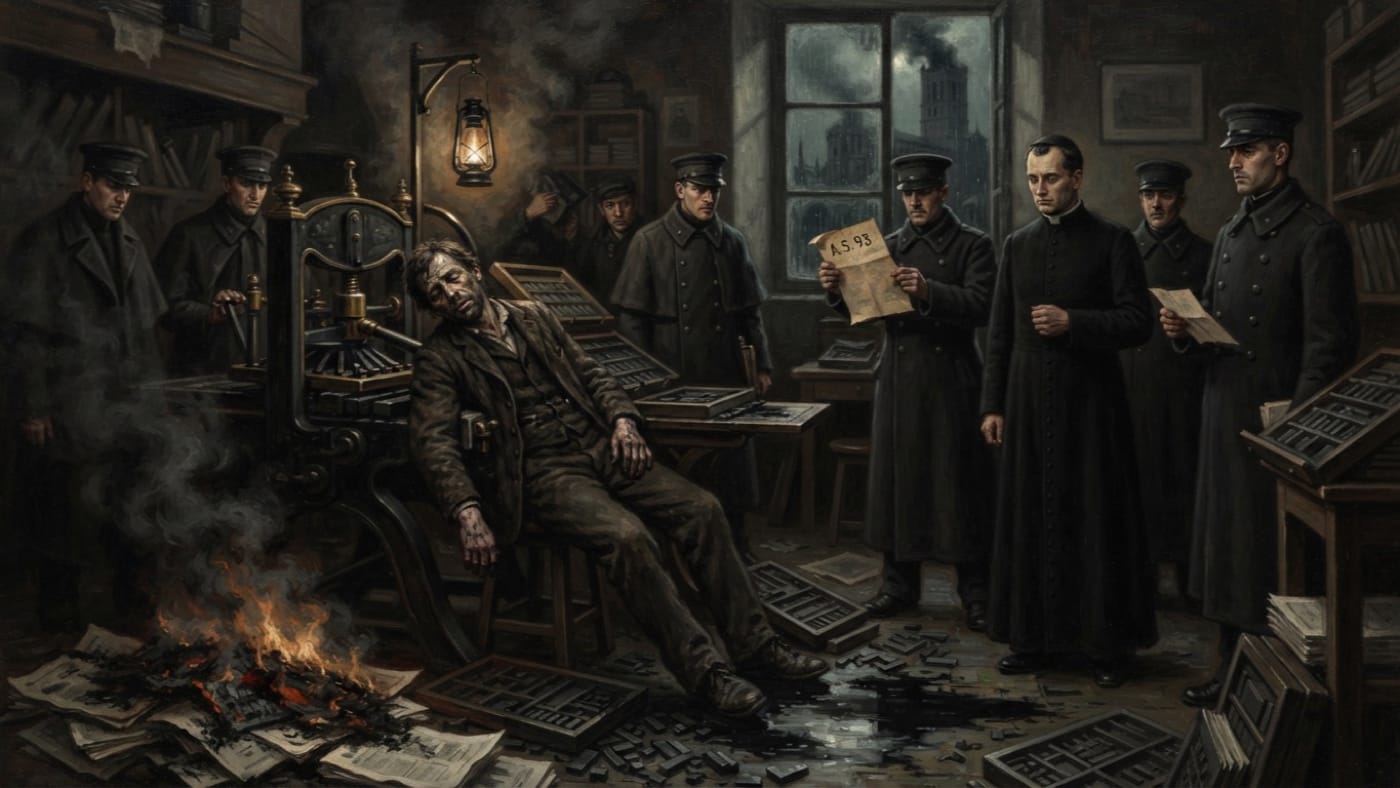
Maël Aucourt
The printer whose file outlived the man
Maël Aucourt hid Rationalist arguments among lawful notices. His A.S. 93 warrant opened the Toulouse Hunts; Purity preserved his offence more carefully than his life.
Codex Ref. III.2.01-093

Manifest Litigant
In which the Bureau confirms that identity is paper, paper can be disputed, and dispute, correctly licensed, is a revenue stream.
The licensed enforcers of documentary reality at the port courts — the profession that cannot save the grain but can prove, conclusively, why it was permitted to rot.
Codex Ref. XII.26.01-001

Martyrology of Saint-Malo
Thirty-one names, forty-three seconds, and a civilization built from first blood
The Martyrology of Saint-Malo counts thirty-one dead, five absences, and every obedience the Synod has purchased with their blood.
Codex Ref. VII.8.02-001
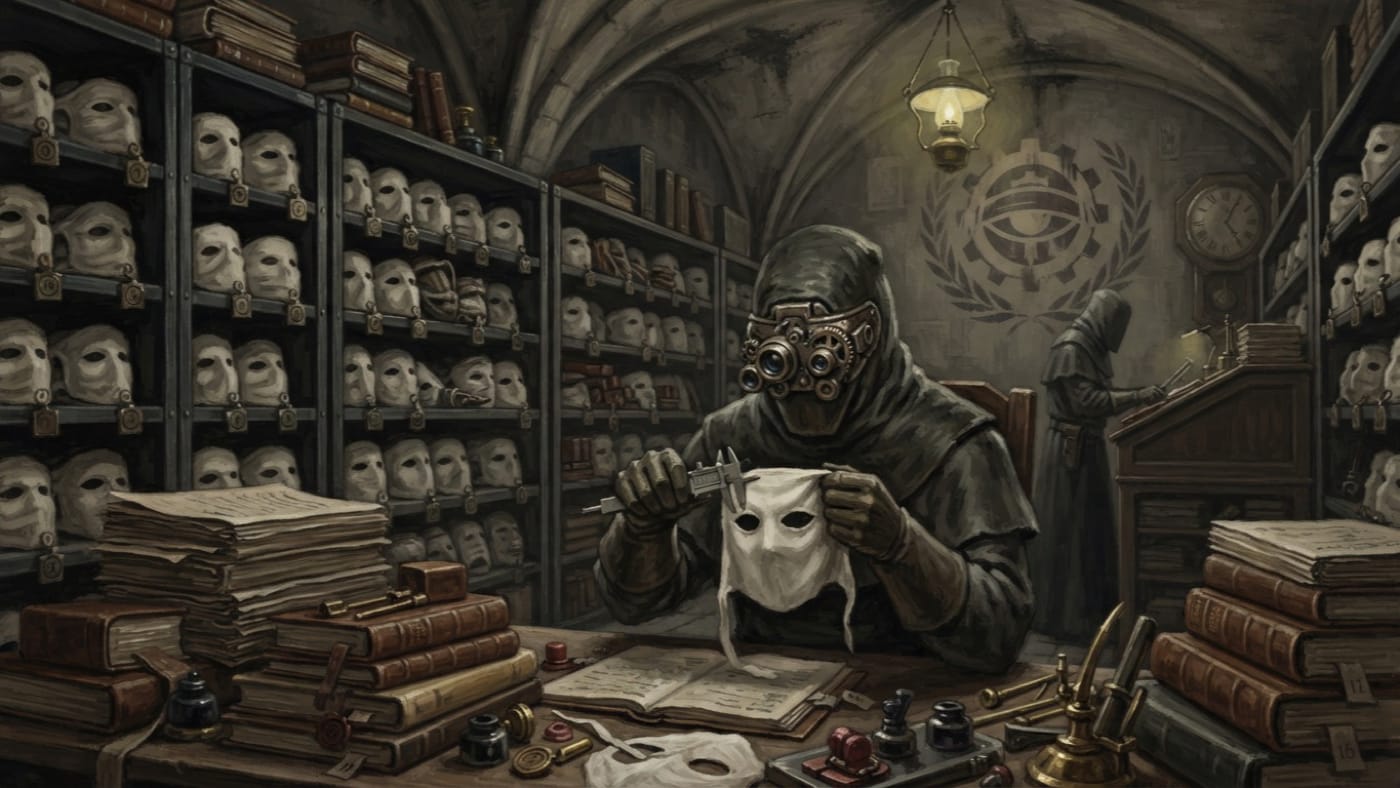
Mask License
The face may vanish. The number must remain.
The Mask License permits the Synod's faithful to conceal their faces on approved occasions, for approved durations, through eye-holes of approved width. Even anonymity must be registered.
Codex Ref. XIII.1.19-002
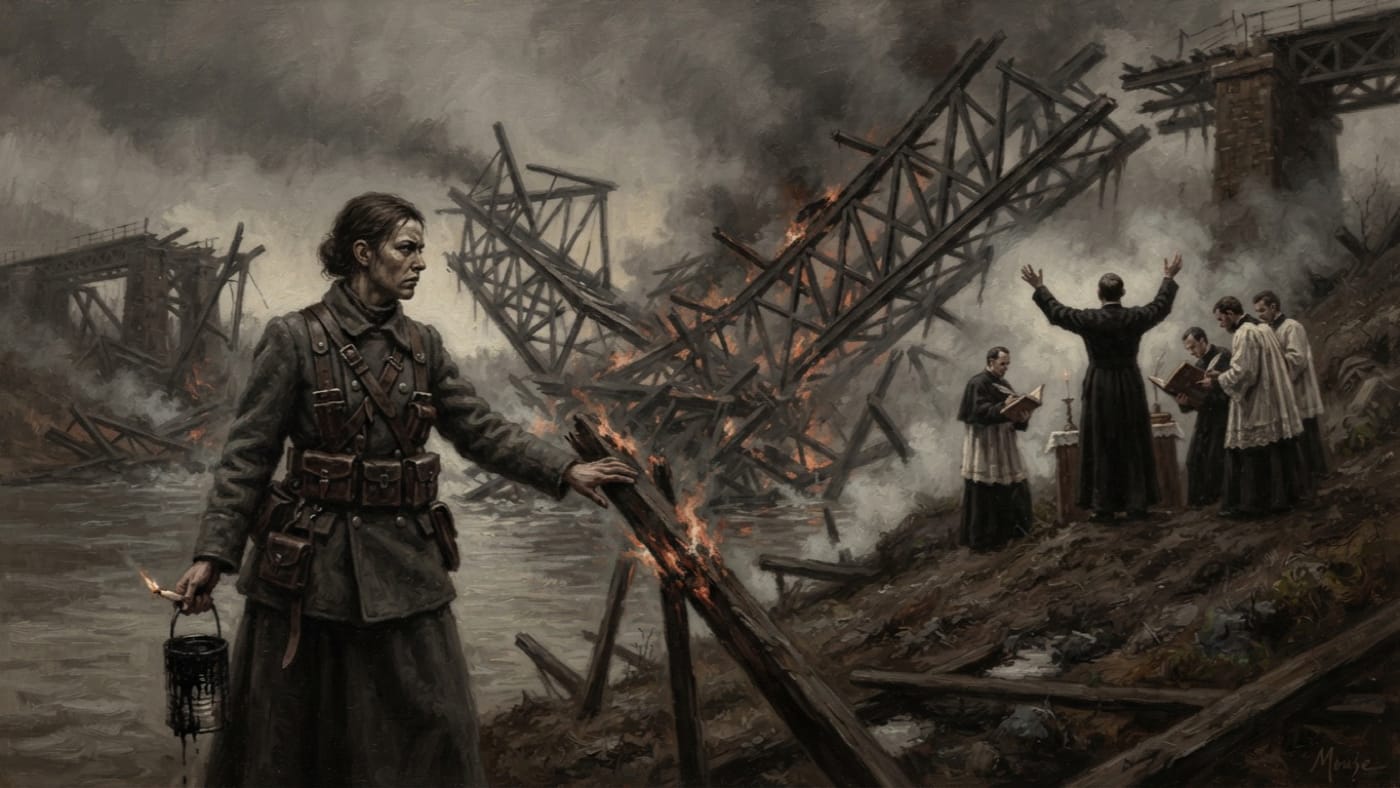
Maud of Saint-Riquier
The bridge fell; the query is still standing
In A.S. 16, Maud used axle grease after a chaplain refused to bless it. The bridge fell. His doctrinal query remains unanswered; her fate remains unrecorded.
Codex Ref. III.2.01-016
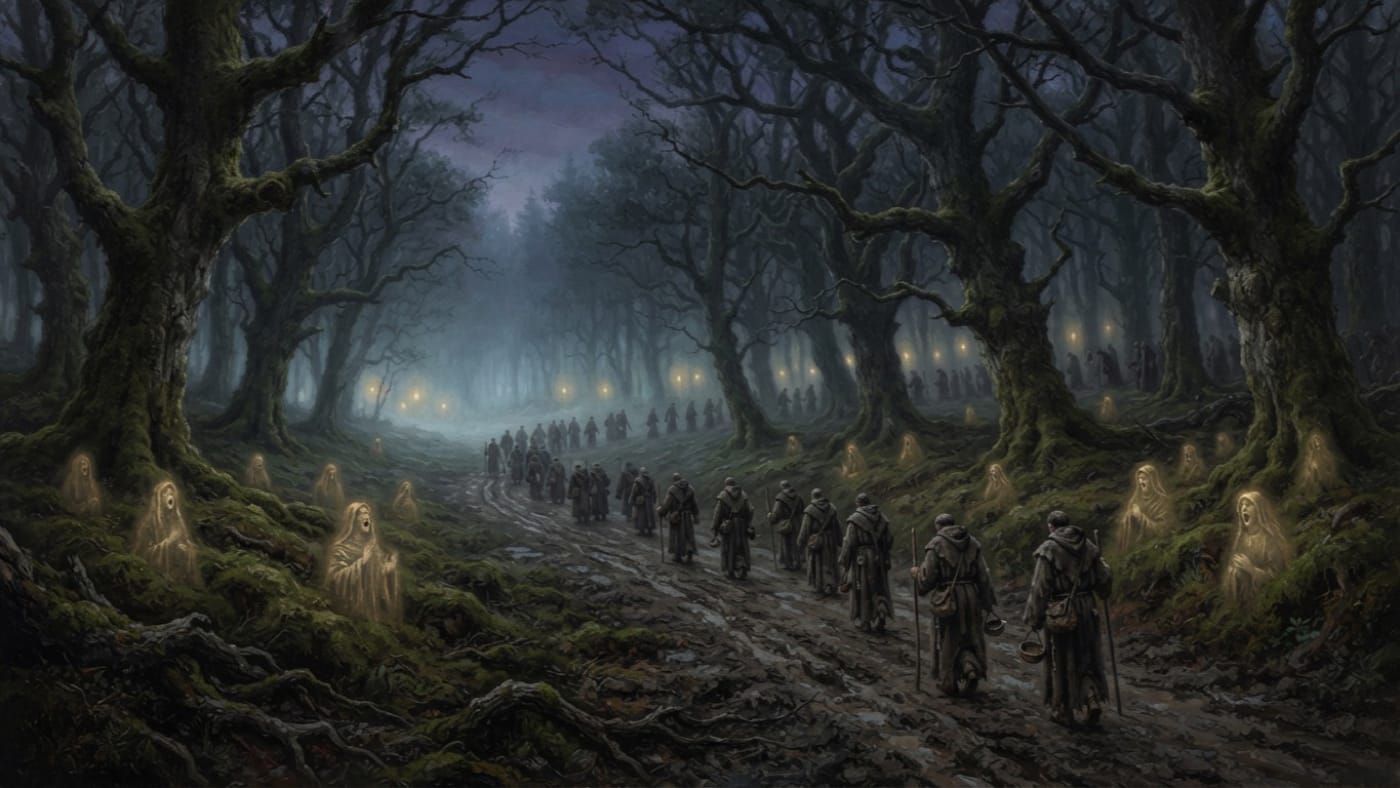
Mendicant Orders
The Friars Were Declared Disbanded; the Forest Was Not Consulted
The old Church's begging friars were expelled from France; many vanished into the Ardennes. The Rationalists called them disbanded. The Ledger records the disappearance and attributes the singing.
Codex Ref. XI.7.02-001

Meuse corridor
The bridge fell; the query remains unanswered
The Meuse corridor gathered armies and refugees at its crossings. Maud's bridge fell in A.S. 16; the chaplain's query about axle grease remains unanswered.
Codex Ref. II.1.08-016
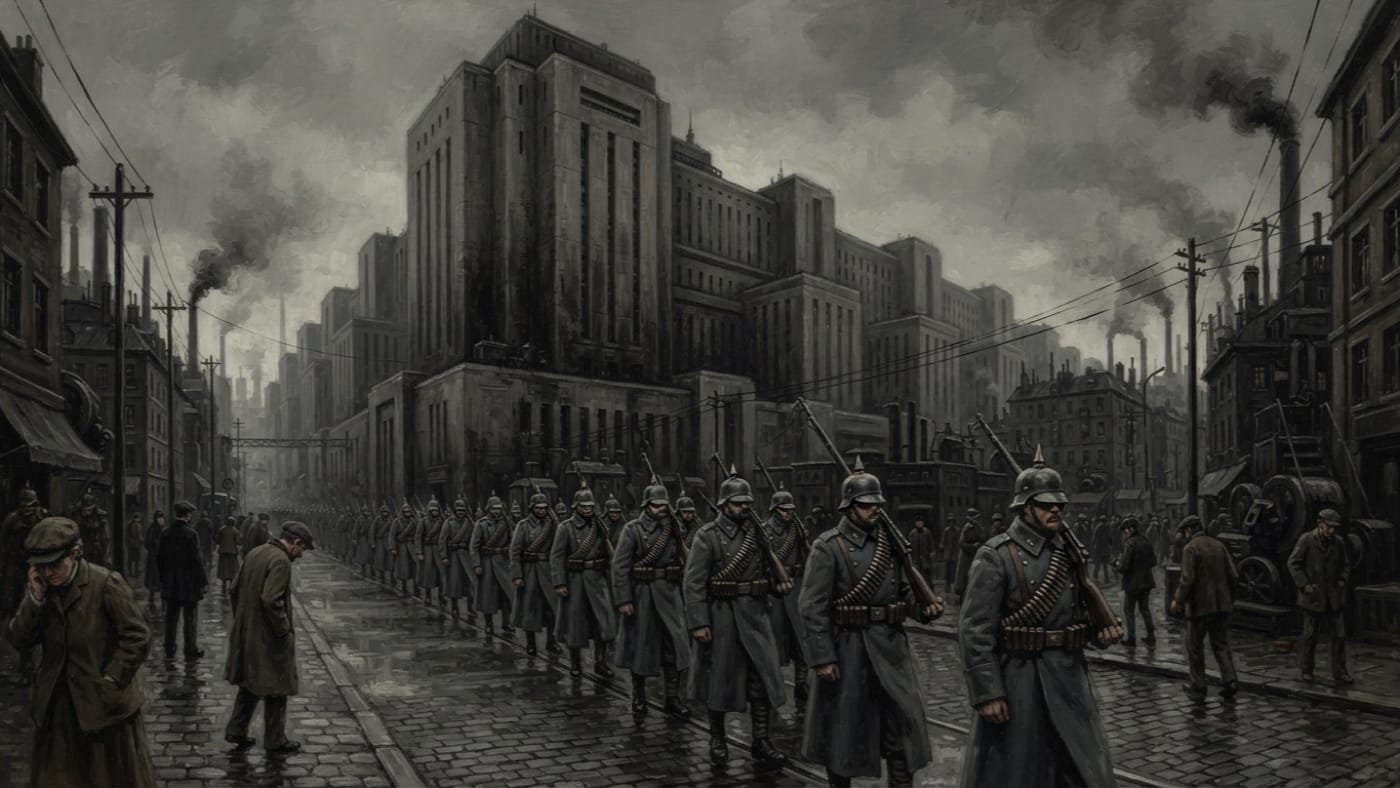
Ministry of Civic Security
The office above the bayonets
The Republic placed its Guards under a Ministry of Civic Security in A.S. 30. The name survives in the Stacks; the citizen's security was another matter.
Codex Ref. I.1.05-002
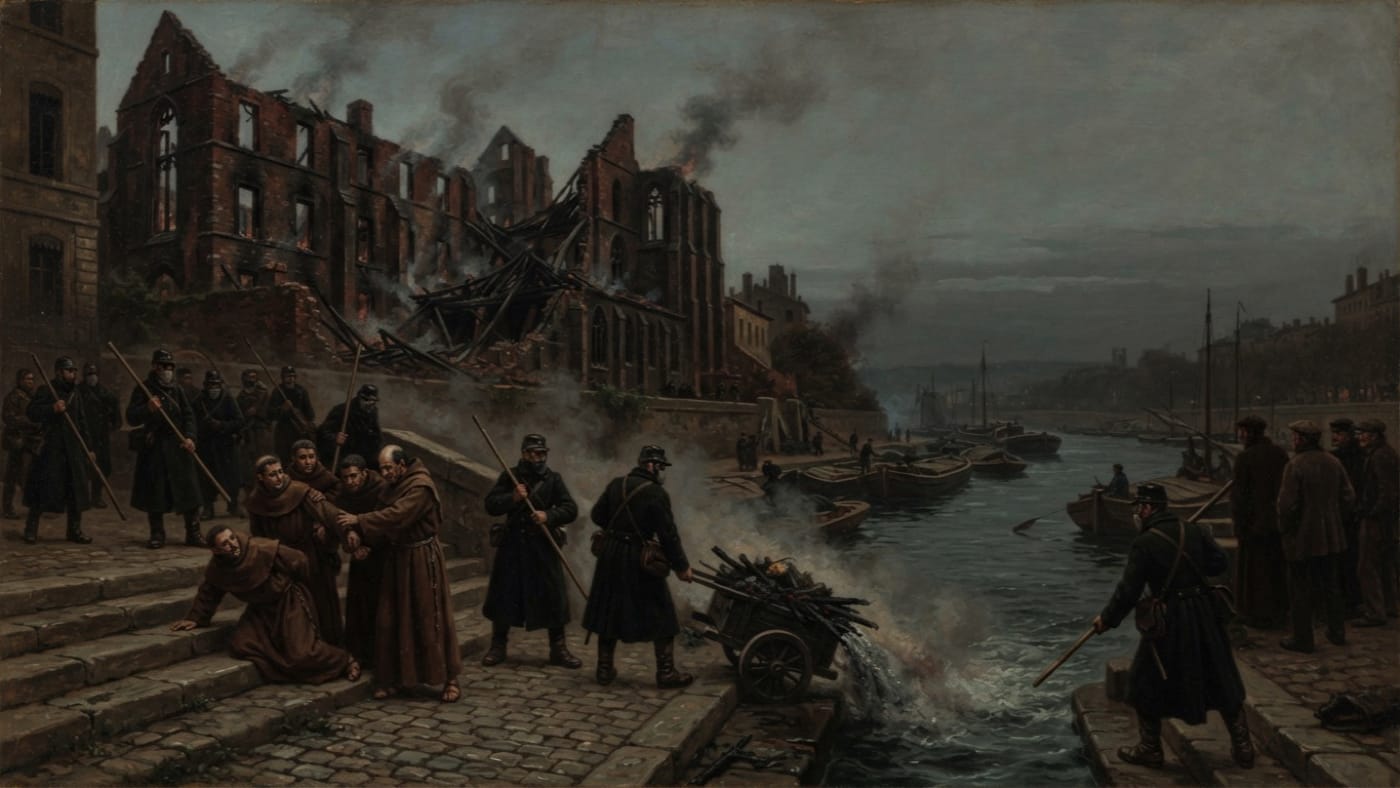
Minor House of Saint Sabina
Three names, one friary, and no proven dedication
The Lyon friary burned in −39 A.S. (1671 CE), remembered under three disputed names. Its brothers fed the docks; the index supplied a saint it could not prove.
Codex Ref. II.1.09-039
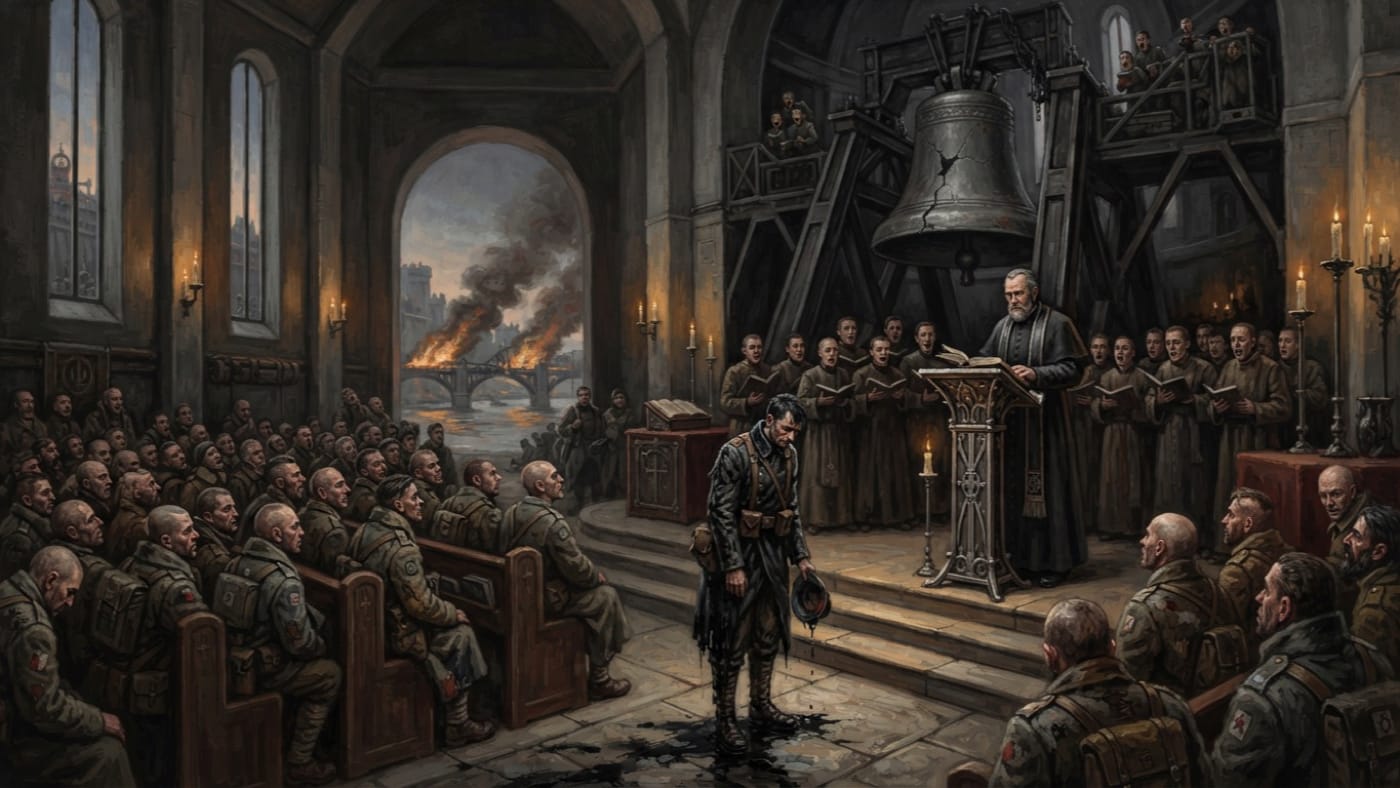
Miserere
The psalm Severin finished while the northern front collapsed
Severin finished the Miserere at Montreval after reading of Aachen's betrayal in A.S. 25. Mercy was requested; the bridges were burned anyway.
Codex Ref. XIII.1.96-025
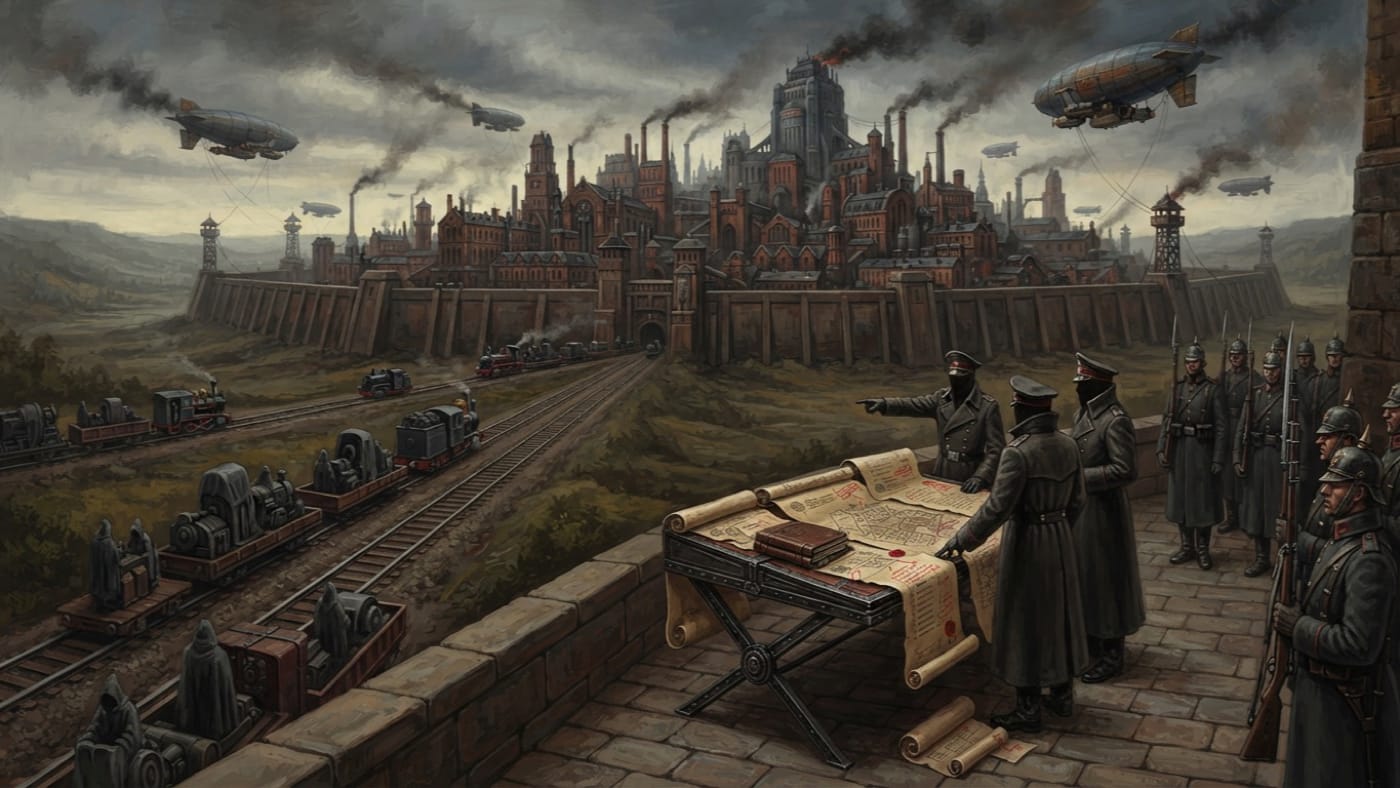
Montauban
The city made answerable by a name
Montauban entered Purity's Toulouse docket in A.S. 93 because Carcassonne named it. The file preserves no local testimony; the Bureau counts the city cleansed.
Codex Ref. II.1.09-093
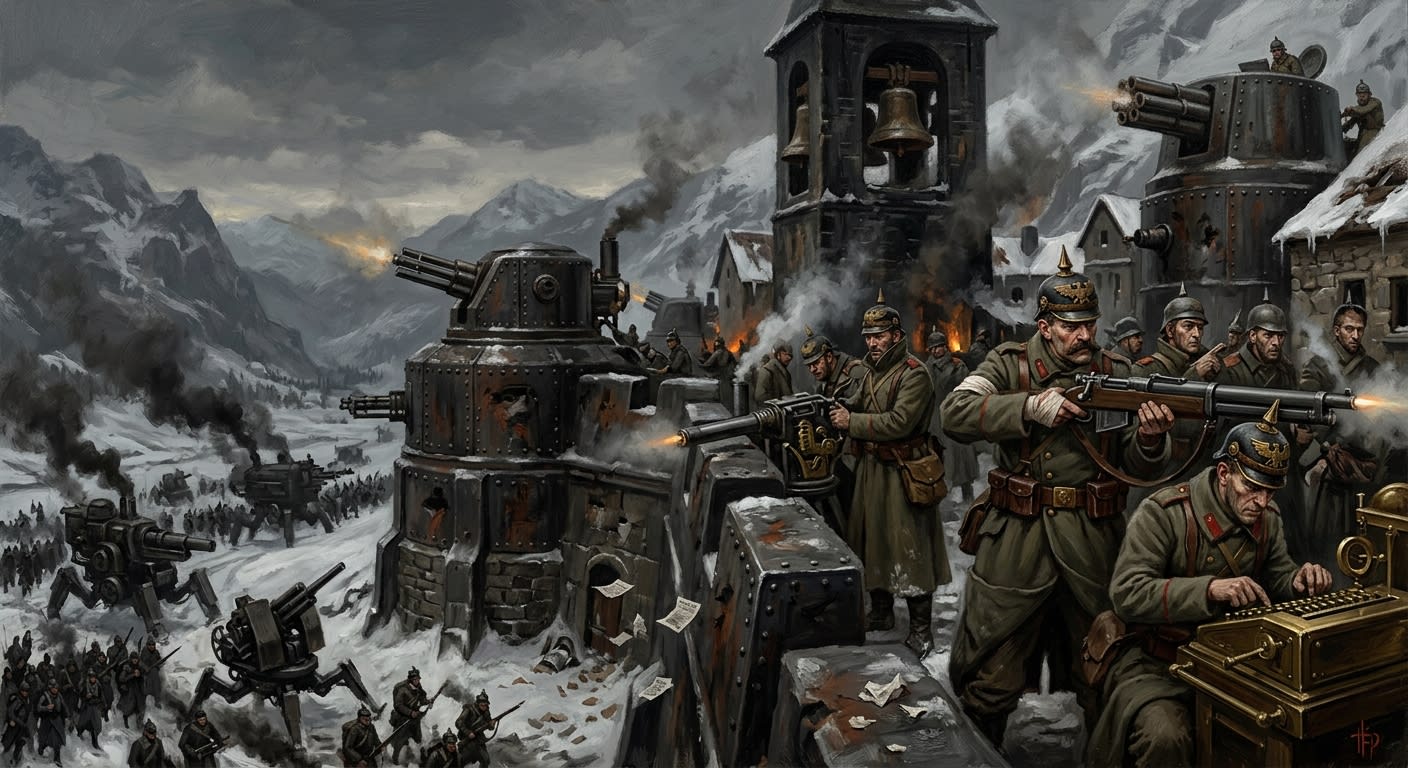
Montreval
The pass-town that taught Reason the road was closed
Montreval held three winters against Lucien Artois's clockwork guns, hunger, pamphlets, fever, and arithmetic; a southern pass-town where Severin bought time with walls, bells, broth, and burned bridges.
Codex Ref. II.1.09-015
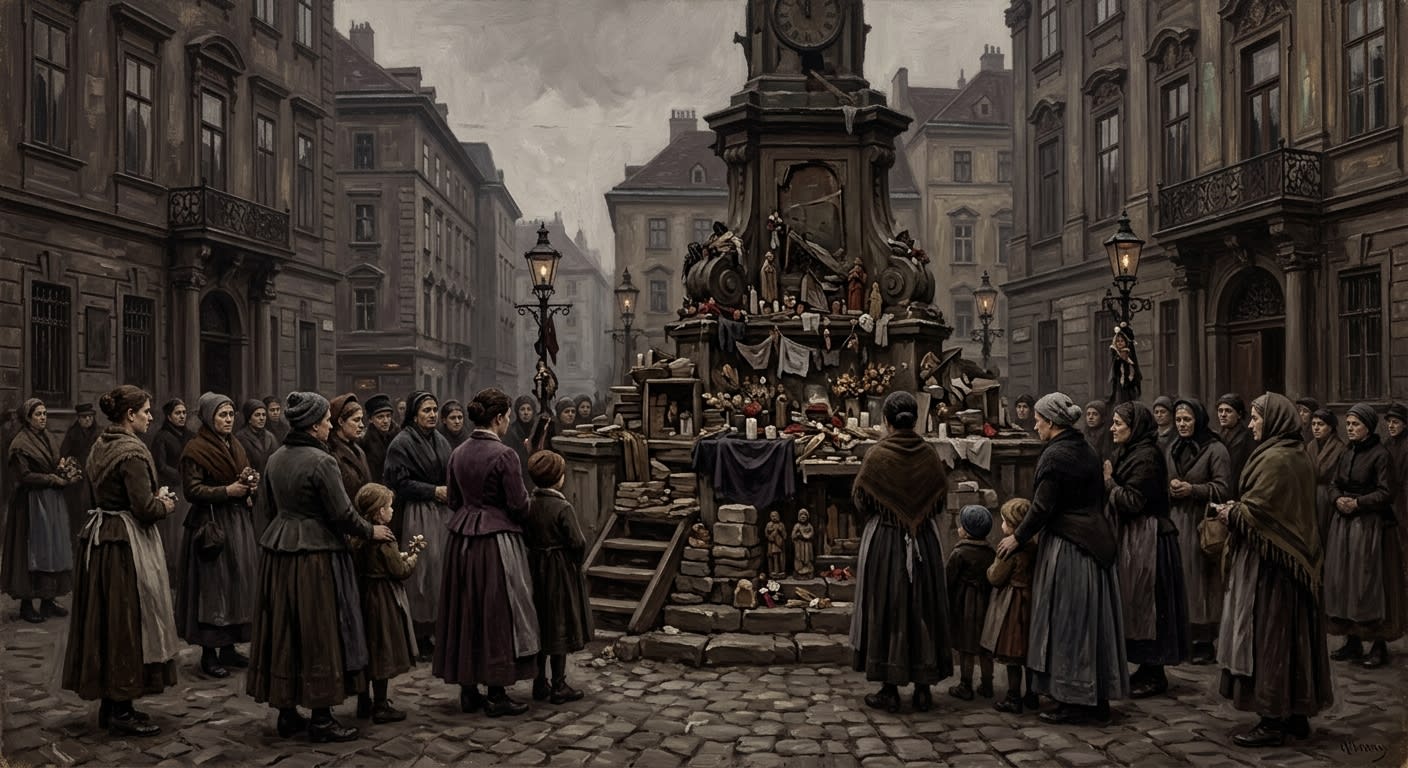
Mothers' Shrine, Judenplatz
The wall where Orison learned that silence has witnesses
The illegal Mothers' Shrine in Vienna's Judenplatz commemorates the A.S. 112 branding of five thousand mothers, and keeps returning after removal.
Codex Ref. II.4.09-014
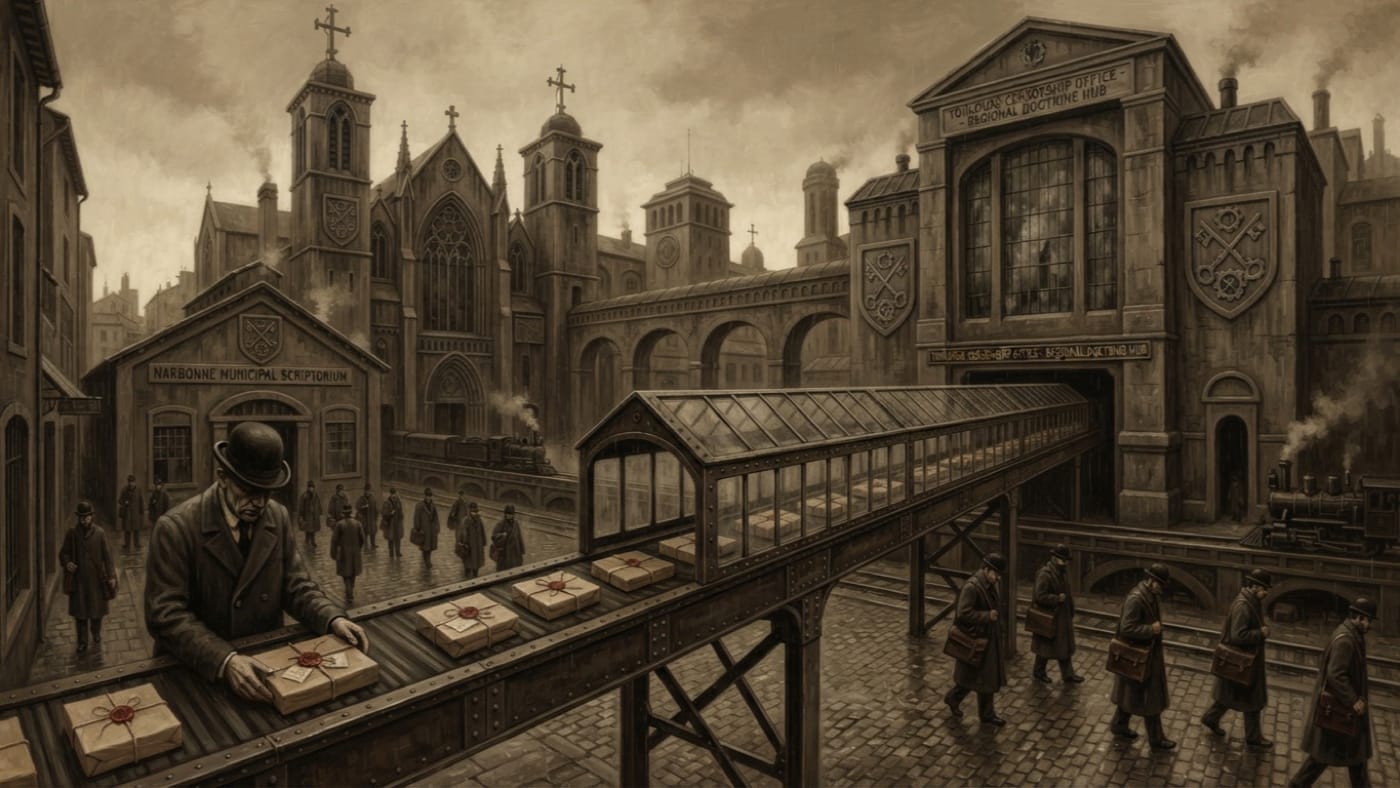
Narbonne
Named at Carcassonne, read at Toulouse
Narbonne entered the Toulouse file by confession in A.S. 93. In A.S. 201 its school primers travel there by routine post. Obedience has learned to wrap its own parcels.
Codex Ref. II.1.09-093
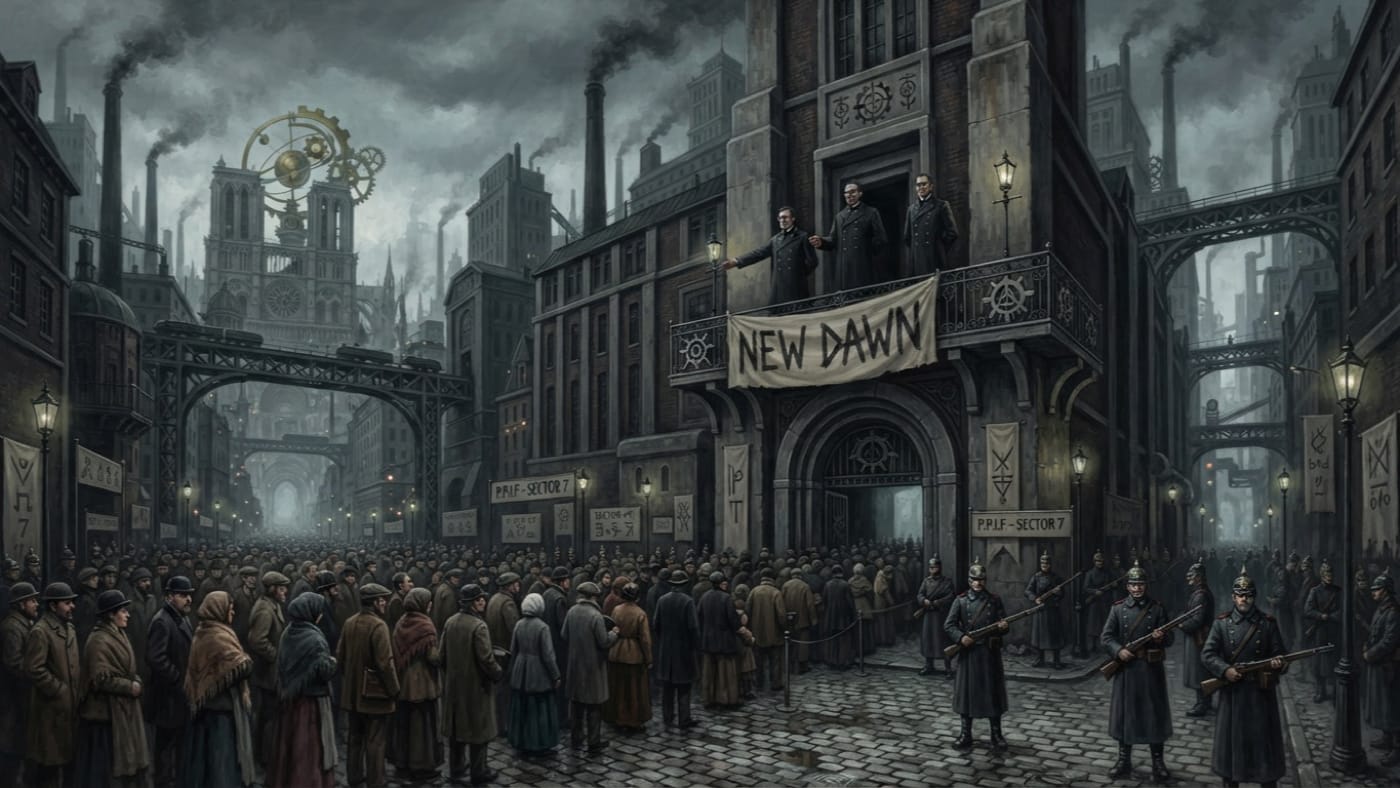
New Dawn
Liberty Proclaimed, Persecution Administered
The Rationalists' proclamation of victory after the Treaty of Regensburg, A.S. 30: liberty advertised from balconies, persecution administered through prefectures. The Bureau retains the slogan as evidence.
Codex Ref. VII.2.01-030
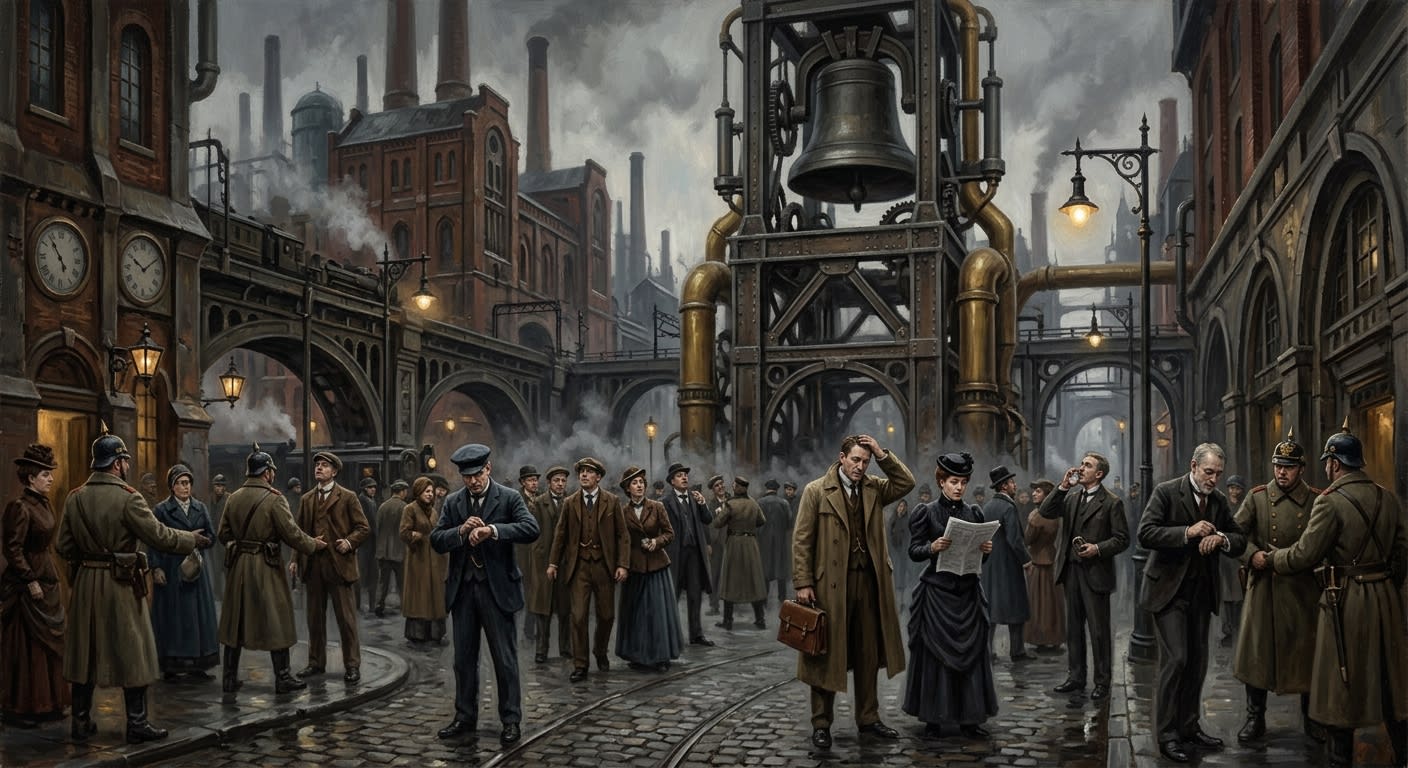
Night of Borrowed Curfew
When Cologne obeyed the enemy in the Synod’s own voice
Cologne's A.S. 134 acoustic breach, when an unknown foreign peal rang curfew three hours early and taught Strasbourg that obedience itself could be borrowed.
Codex Ref. VII.8.10-018
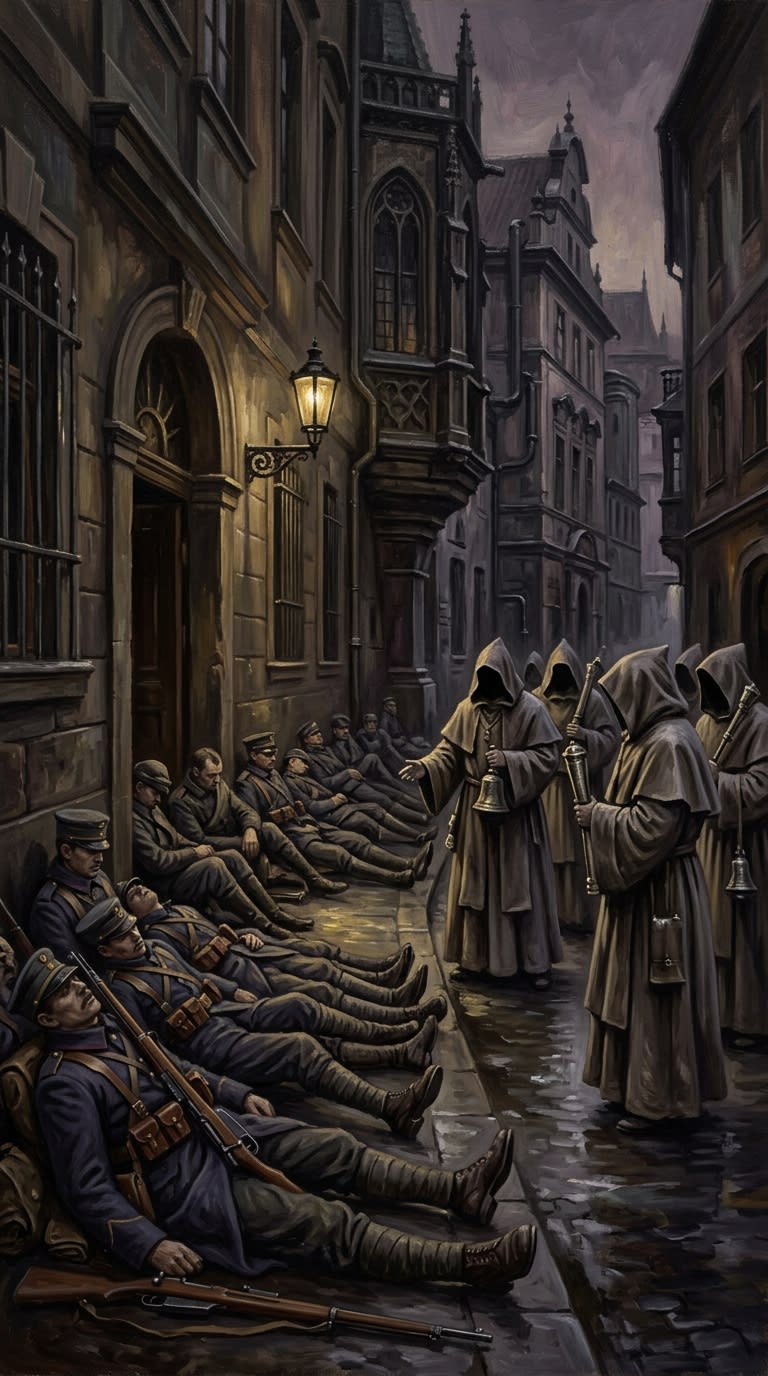
Night of Silent Steel
Where obedience stood perfect and violence forgot its name
The A.S. 167 Prague incident in which seven Pale Chanters severed a Radiant Fusilier regiment's passage between command and act, leaving forty-three rifles loaded and forty-three men dead.
Codex Ref. VII.5.04-001
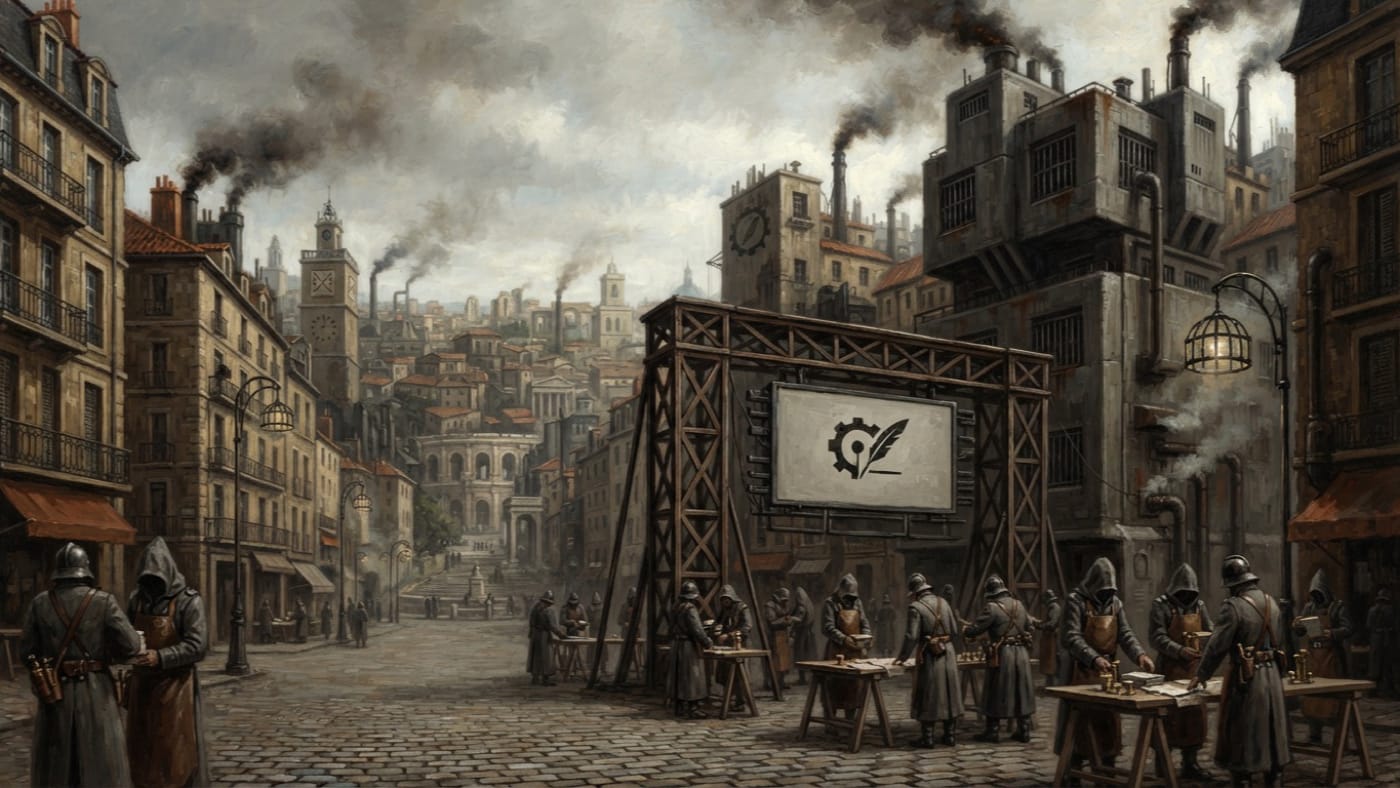
Nîmes
A city given a column before a case
Nîmes entered Purity's A.S. 93 Toulouse dossier because Carcassonne named it under interrogation. The city received a column; this file establishes no local offence.
Codex Ref. II.1.09-009
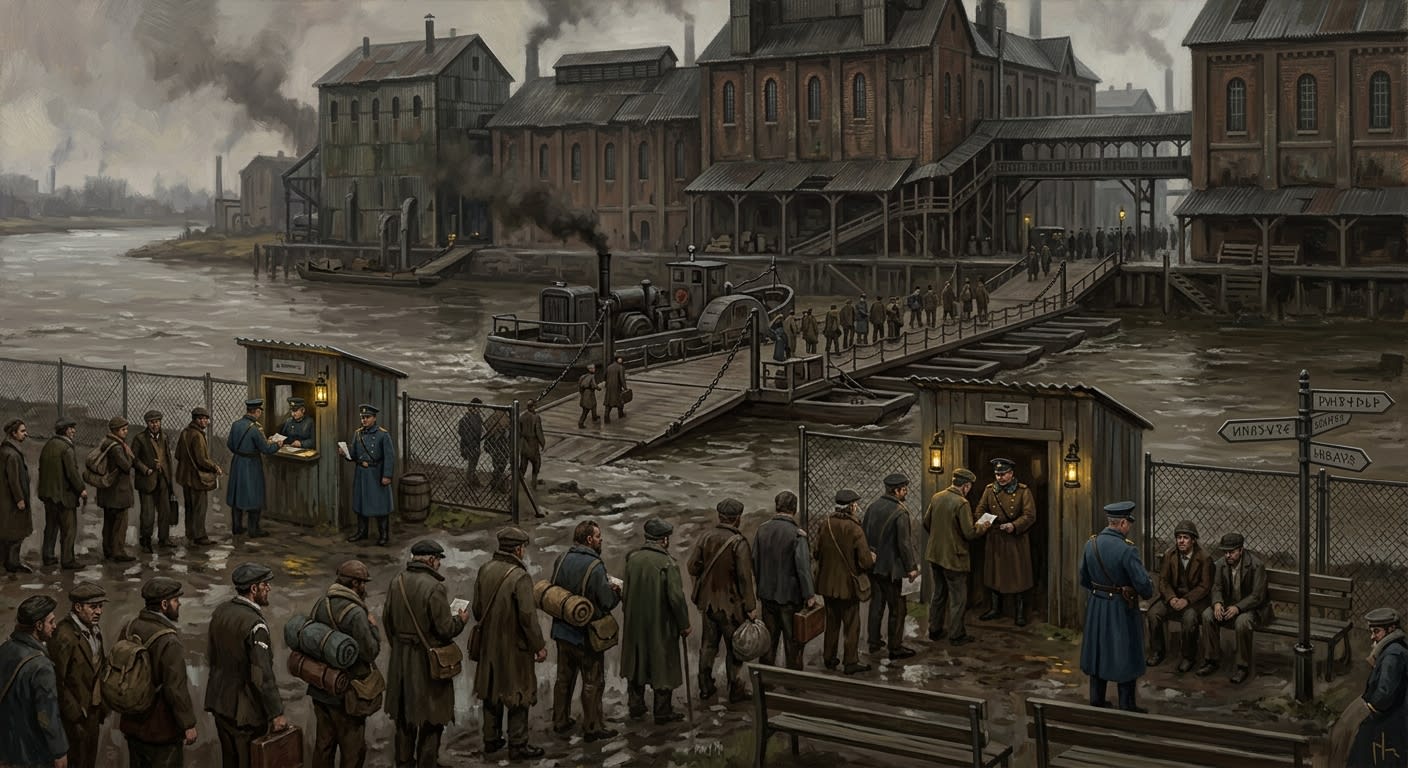
Nominalist's Gate
Miss one consonant and become doctrine
Nominalist's Gate is a Zone 2–3 river crossing where ferry law, password doctrine, mud courts, and Records exactitude turn travellers into cases.
Codex Ref. II.3.05-002
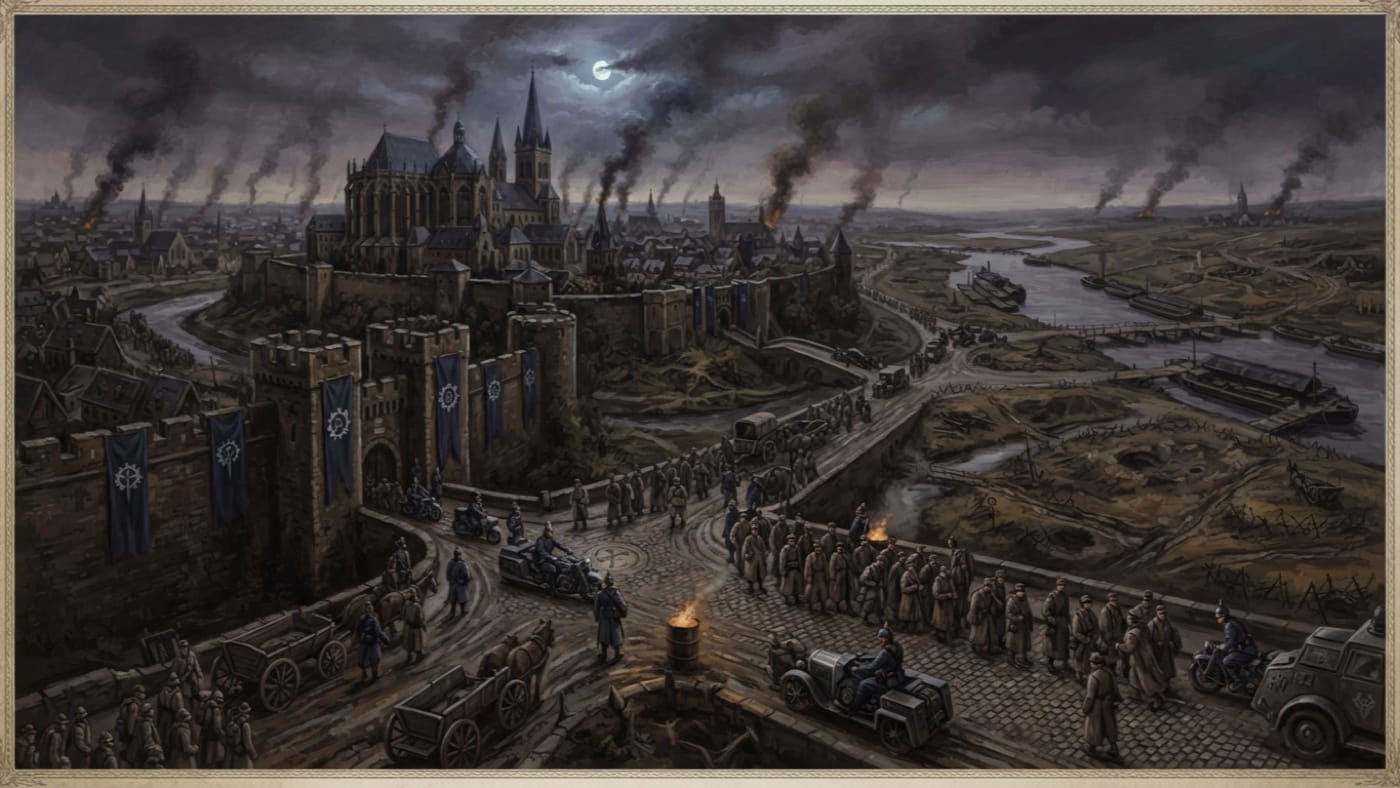
Northern Coalition
The Front Guillaume Sold for a Promise
The faithful's northern command lost its roads, stores and future when Guillaume sold Aachen in A.S. 25. The soldiers owed bread received a lesson in noble honour.
Codex Ref. VIII.6.02-025
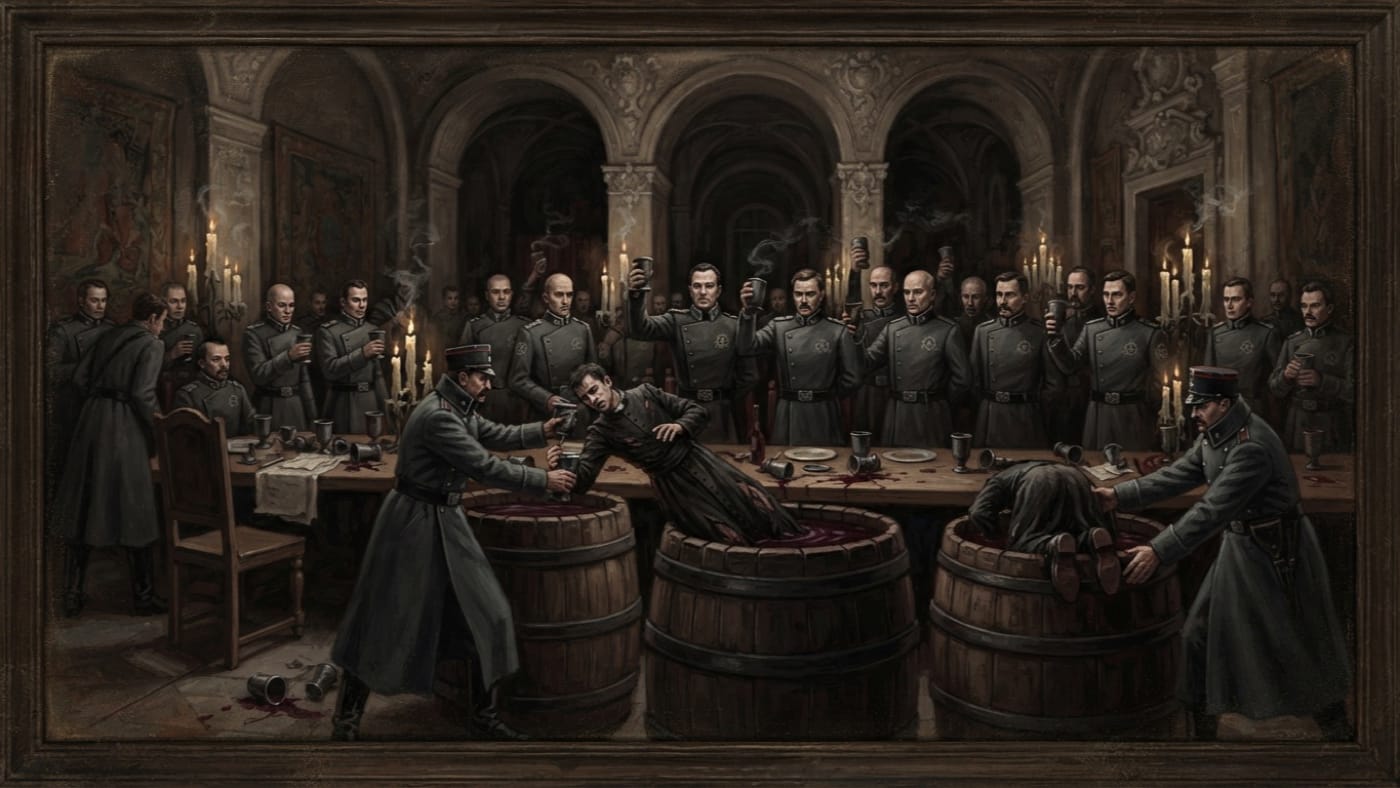
Oaths of Regensburg
Three refusals, a missing bishop, and a toast answered in water
At Regensburg's A.S. 29 banquet, three priests refused recantation and were drowned in wine. The Bishop of Worms vanished; his captors declared he had never existed. The cups kept no minutes.
Codex Ref. VII.2.01-002
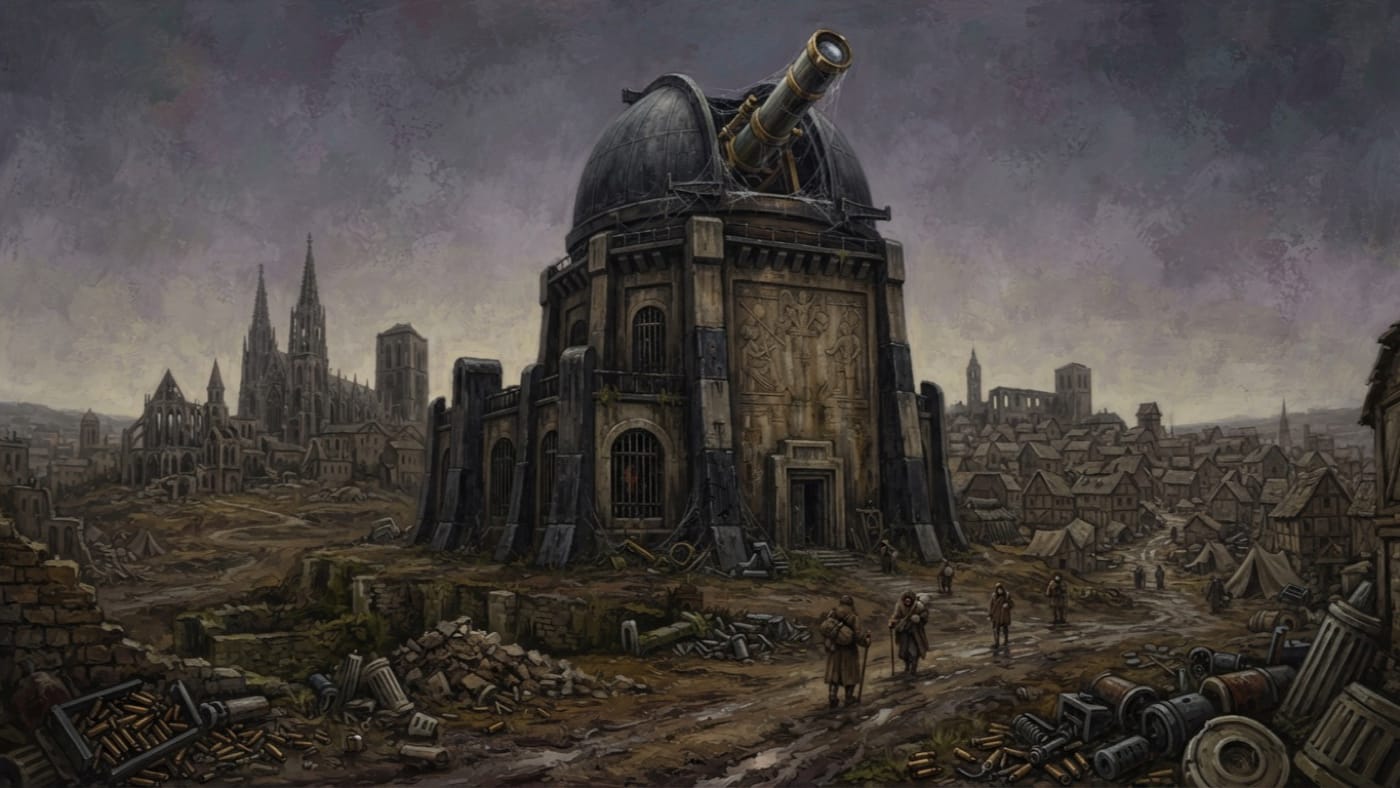
Observatory at Vienna
The telescope remains. The sky is not certified.
A.S. 201 survey of Vienna's empty Republican Observatory, funded with confiscated Church wealth and costing more than the cathedral it replaced. The telescope remains; the sky is not certified.
Codex Ref. II.4.09-201

Office of Nullity
The knife kept inside the book
Sub-office of the Bureau of Records governing Erasure Notaries, strike writs, dependent ledgers, black seals, and the civic art of making a person unprovable.
Codex Ref. XIII.1.70-001
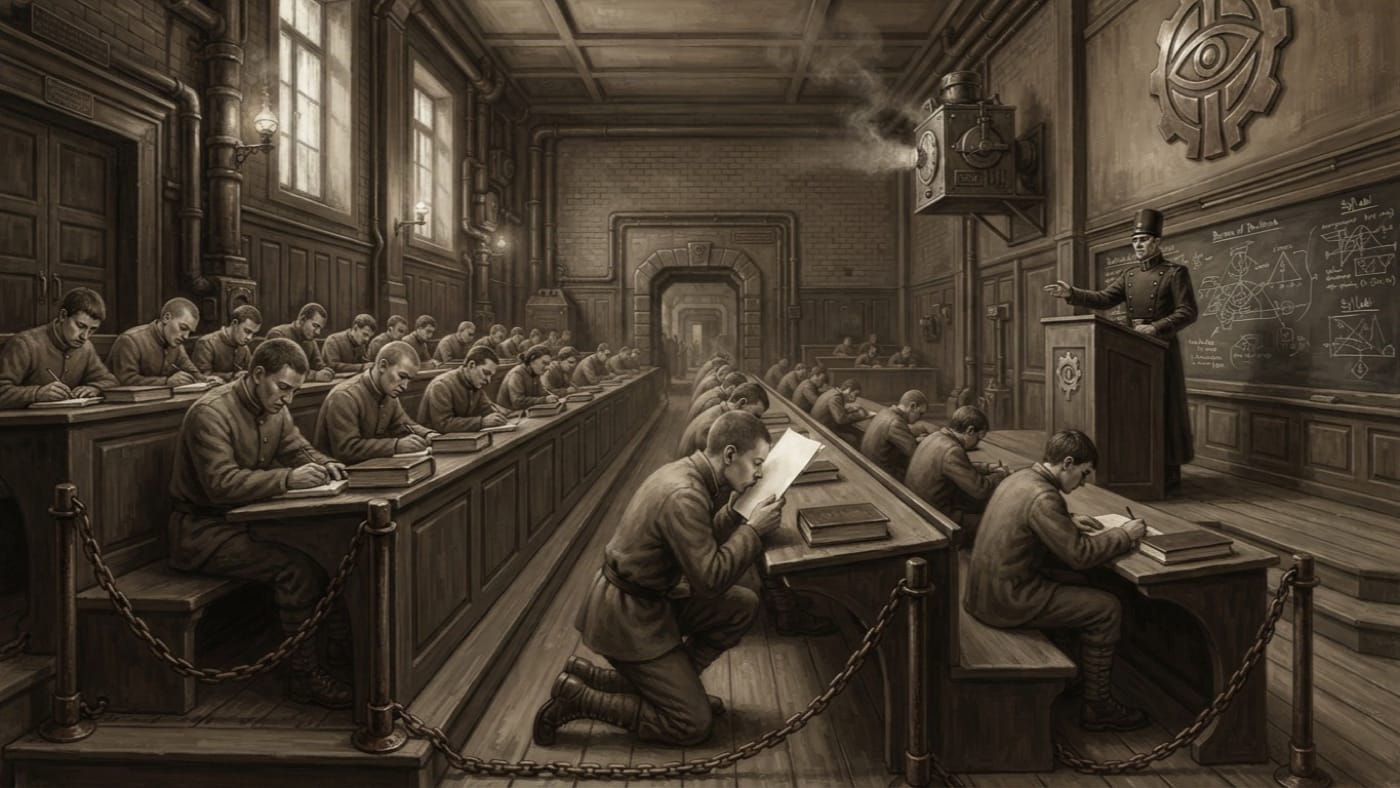
Old Faculty Rows
Where the syllabus was corrected and the desks were chained
Ulm's former Rationalist halls now house doctrinal schools, where Purity audits the syllabi, students kiss blank pages, and the lecture desks remain chained to the floor.
Codex Ref. II.2.01-006
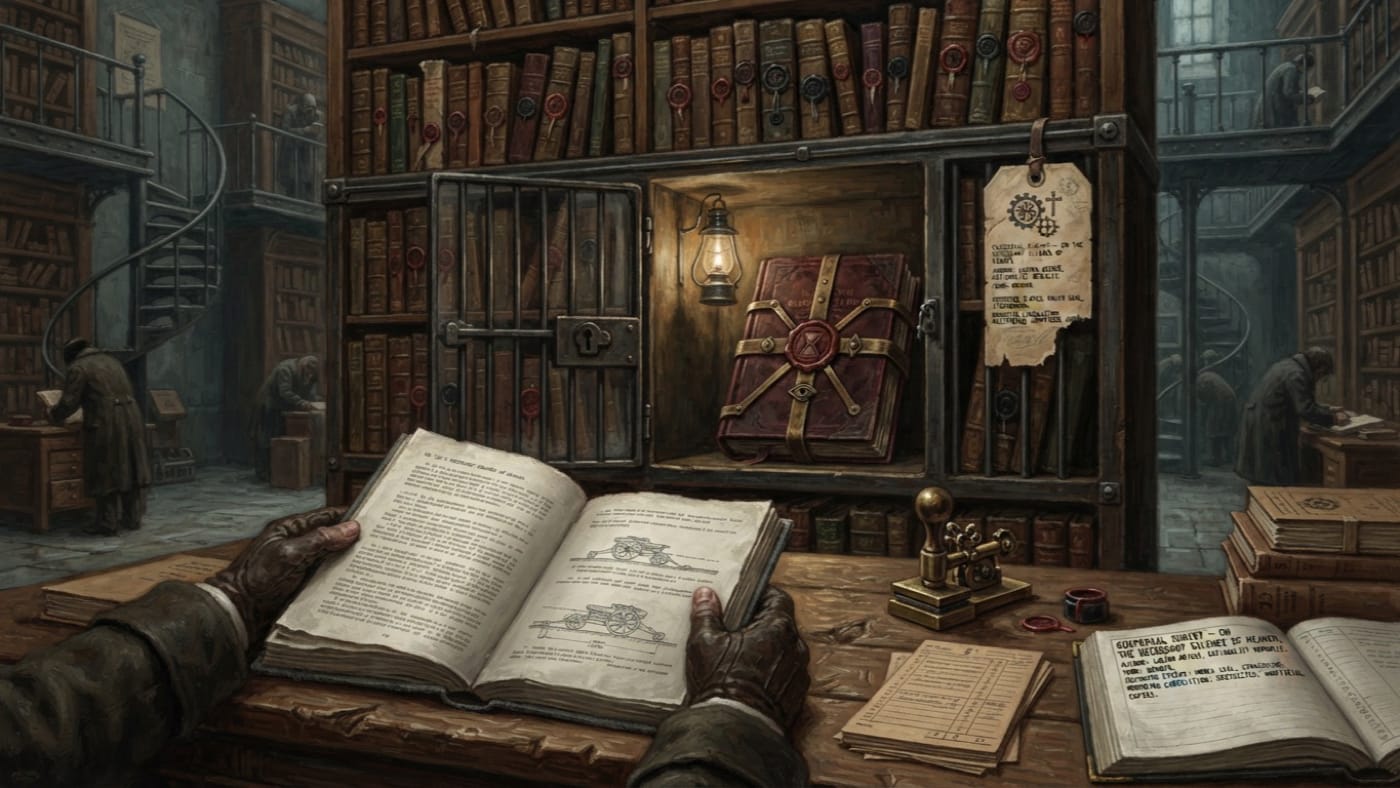
On the Necessary Silence of Heaven
A sealed memoir and the limits of wax
This A.S. 201 survey records Artois's memoir under seal in Strasbourg, with unofficial copies reportedly circulating. The wax has custody; it has yet to secure obedience.
Codex Ref. XIII.1.06-001
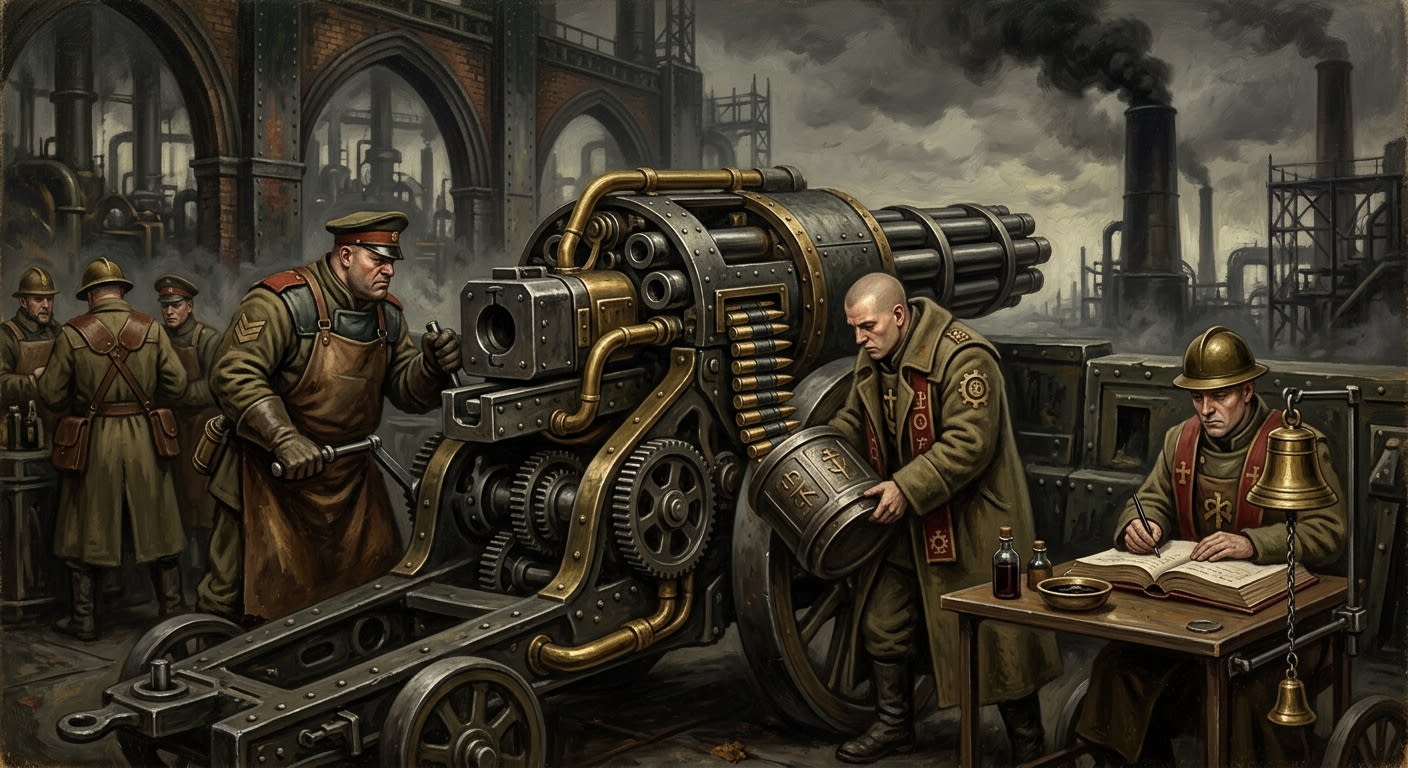
Ordained Repeater
The heretic made a gun; the Synod made it kneel
The Ordained Repeater is Artois's clockwork artillery corrected by chrism, ledger, bell-cadence, and the sacred art of denying useful debt.
Codex Ref. III.2.04-015
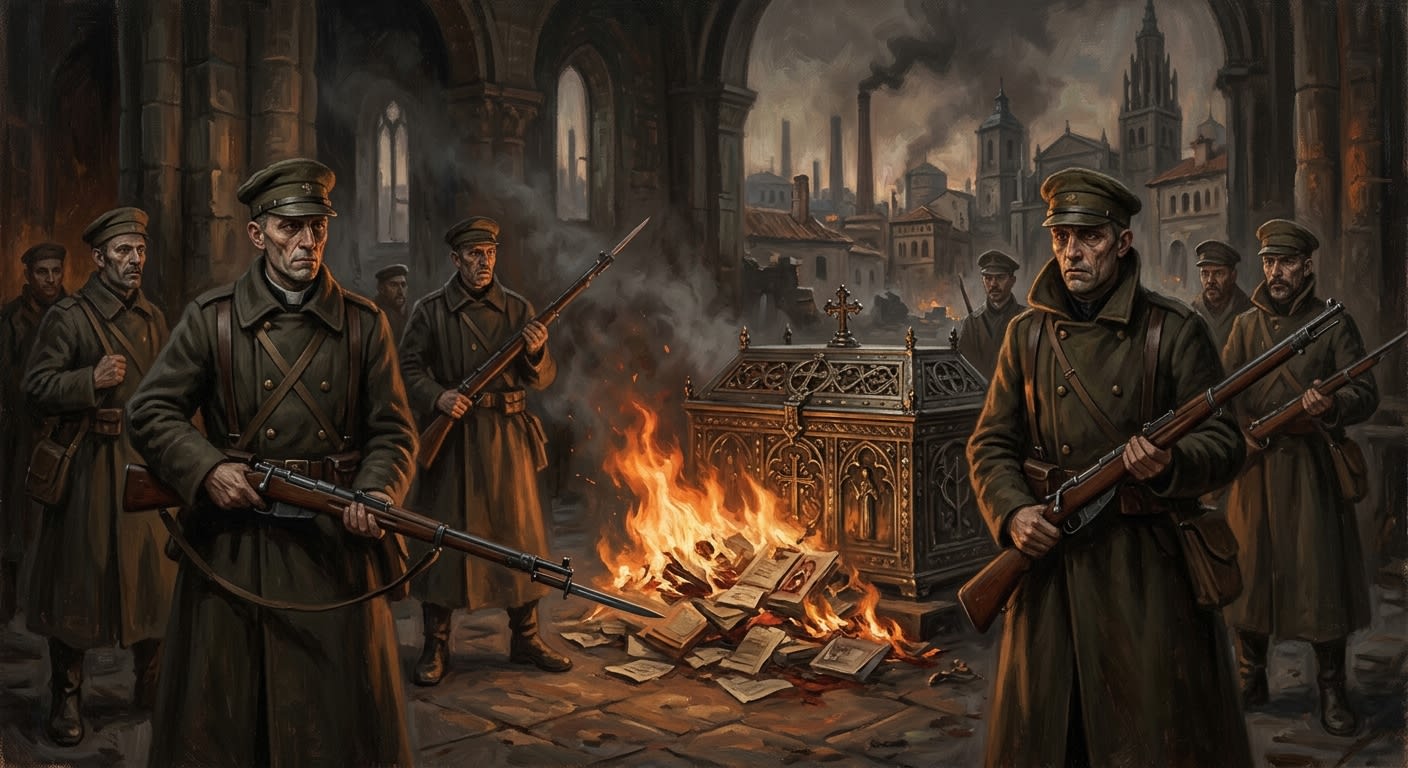
Order of Saint Iago
The grey mantles who taught custody to survive defeat
Iberian military-monastic order remembered for guarding the Relic of Saint Iago at Toledo, holding the city nine months, and burning custody clean before Reason could take it.
Codex Ref. VIII.9.01-001
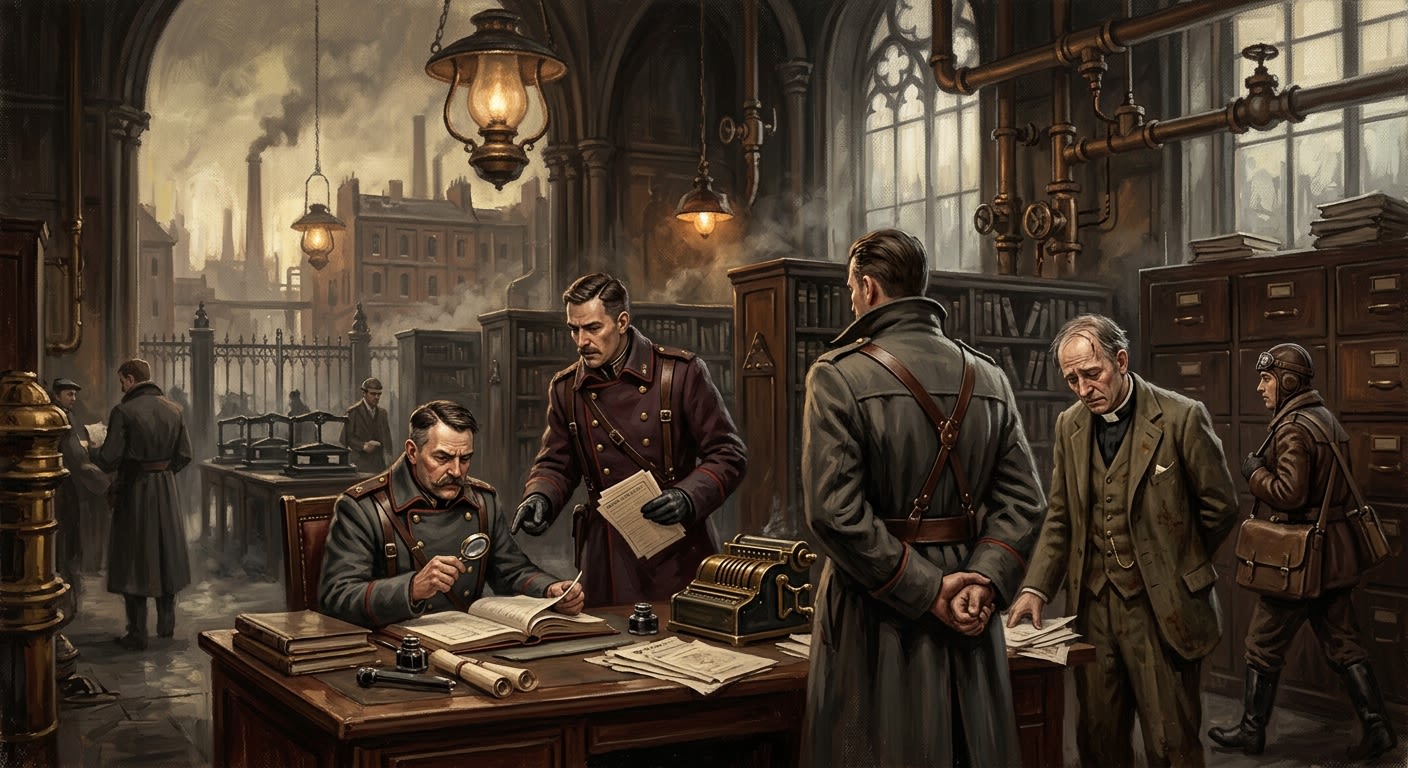
Order of Severance
The inward knife that cuts office from affection before affection becomes a kingdom
The Order of Severance is the Bureau of Purity's inward knife: an inquisitorial fraternity that hunts clerical and bureaucratic heresy where clean cuffs, perfect ledgers, and trusted colleagues become shelter.
Codex Ref. VIII.1.07-134
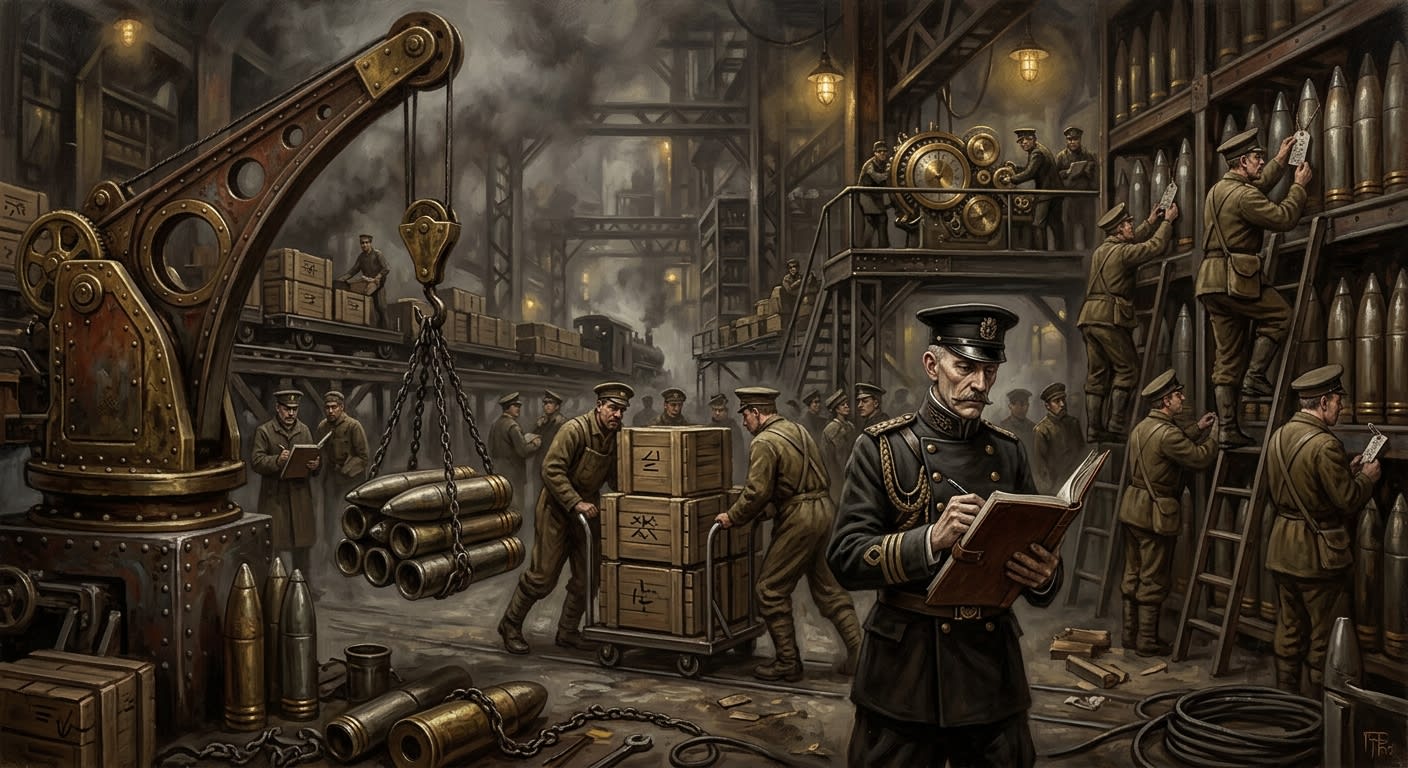
Ordnance Bureau
The office that makes thunder accountable
The Ordnance Bureau numbers, blesses, rations, ships, and recovers the Synod’s lawful violence; its shells arrive late, counted, and indispensable.
Codex Ref. VIII.2.12-090
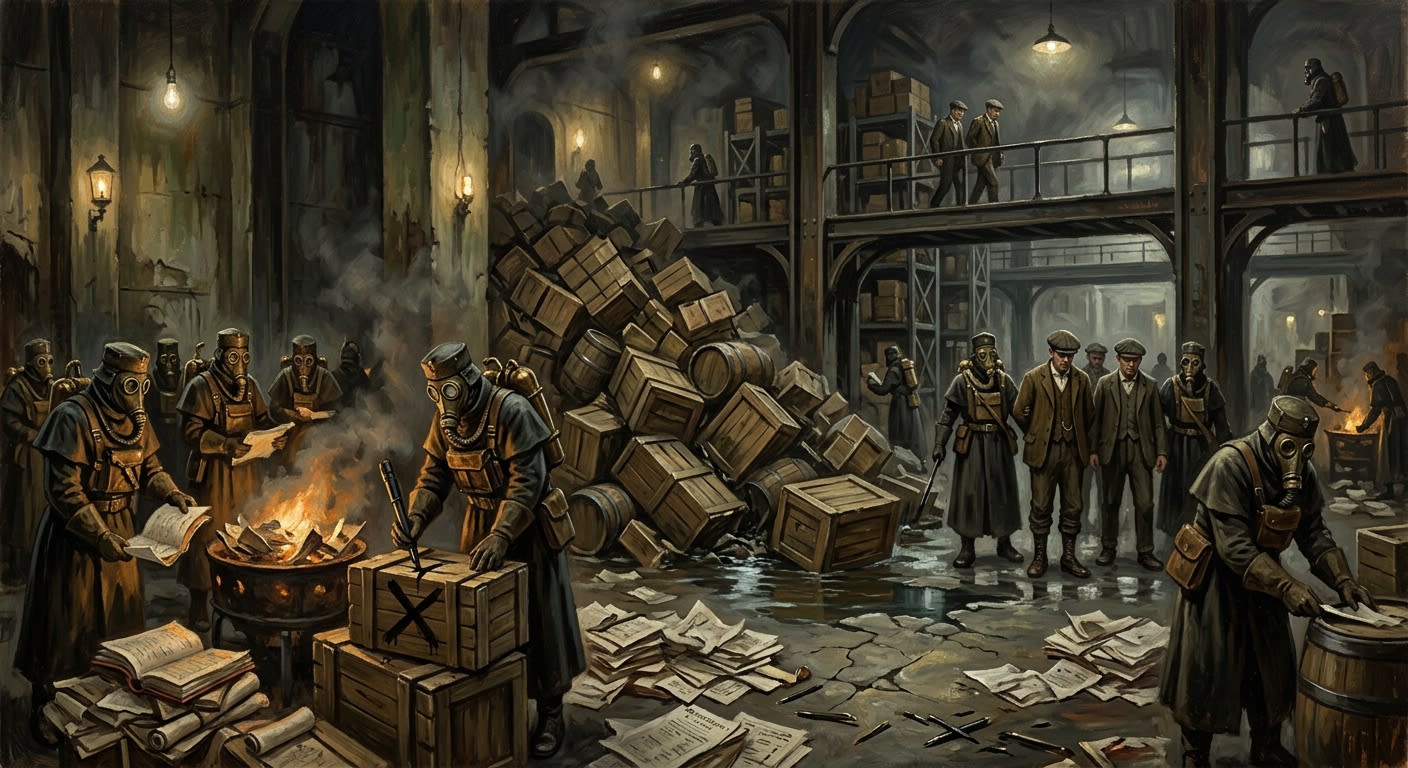
Orthography Purge of A.S. 112
When the letter changed, the invoice died obediently
The Orthography Purge of A.S. 112 reopened 411 manifest cases, stripped eleven Litigants of practice rights, and taught merchants that one suspect stroke can bankrupt a warehouse.
Codex Ref. VII.8.10-002
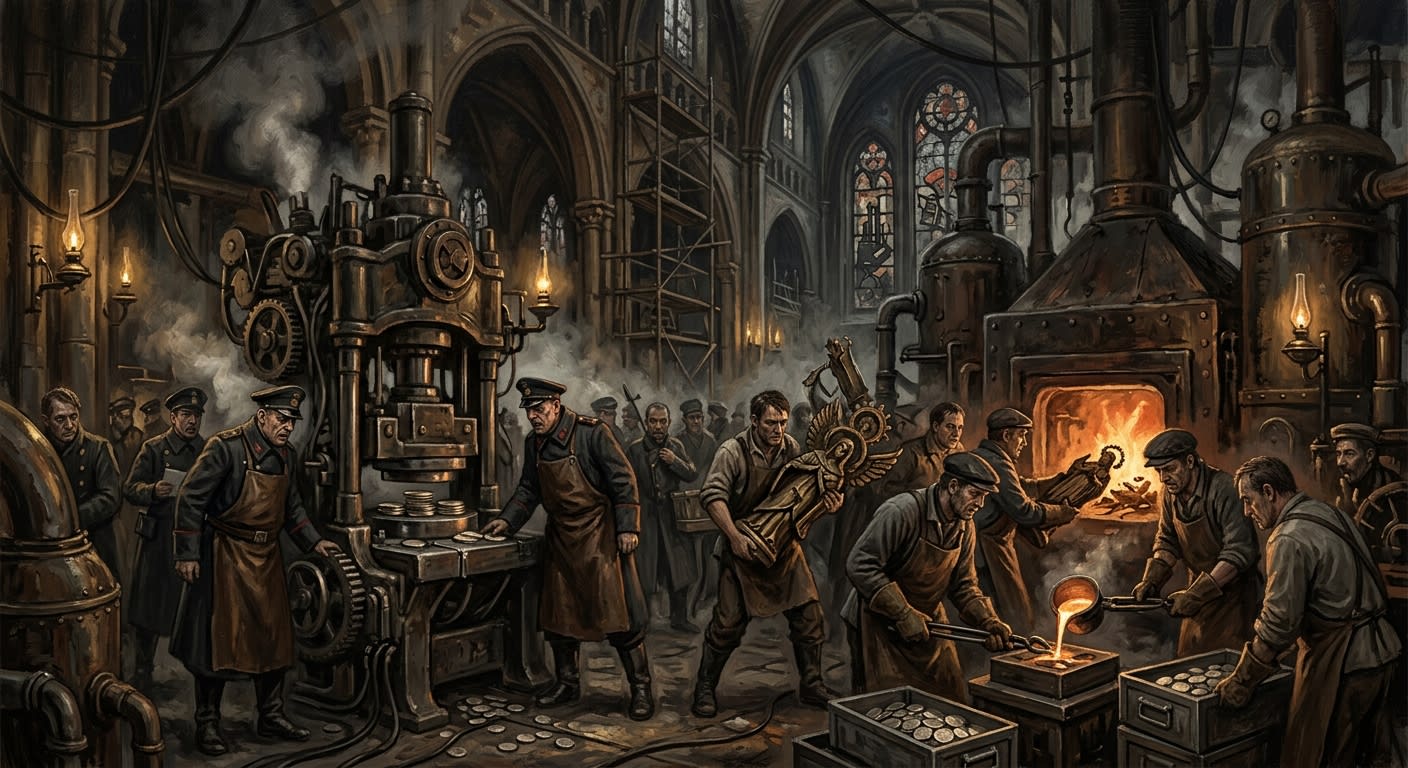
Panic of Wrath's March
Wrath did not enter Aachen; Aachen paid anyway
A.S. 160 gave Aachen no siege, no breach, and no Maldrake at the gate — only fear hot enough for Tithes to melt saints into coin.
Codex Ref. VII.8.10-160
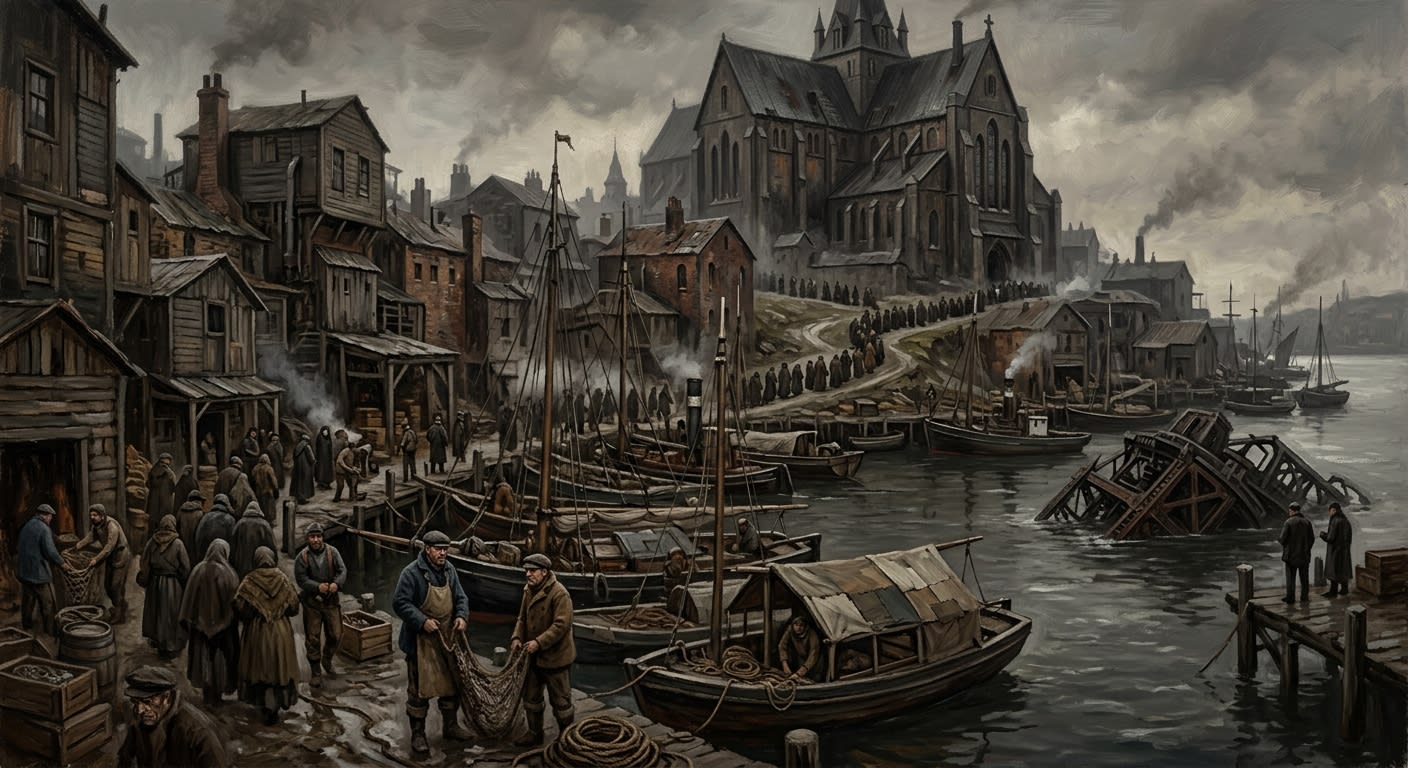
Phaleron Bay
The fishermen count boats because the water has learned names
Phaleron Bay is the Bosphorus inner approach's fishing ward, smuggling pocket, pilgrim nuisance, and quiet witness to the Iron Idol that waits below.
Codex Ref. II.4.09-189
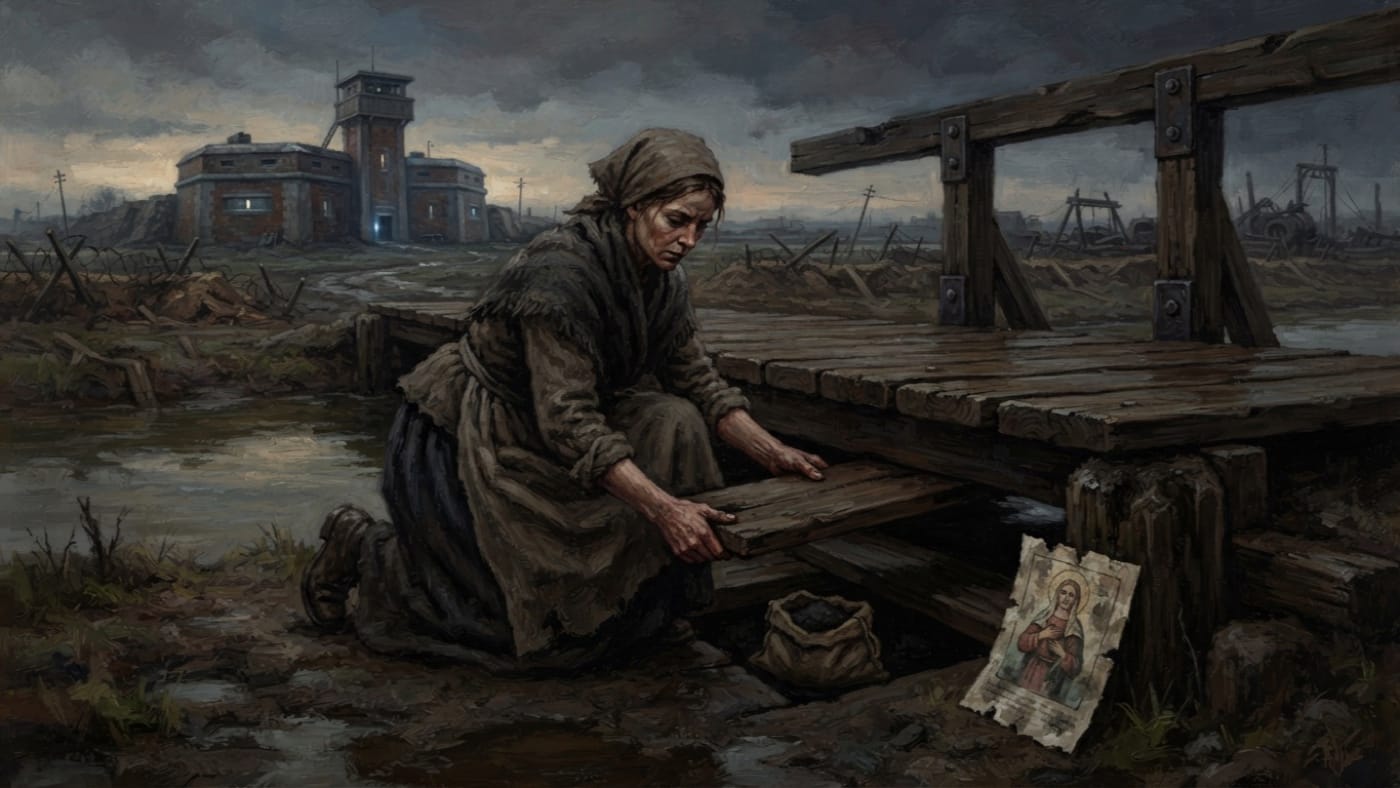
Picardy
One woman, one plank, and no recorded fire
Picardy enters the Ledger through one unnamed woman who saw Margaux's image and hid powder beneath a bridge plank. The record supplies neither a burning bridge nor a martyr.
Codex Ref. II.1.12-015
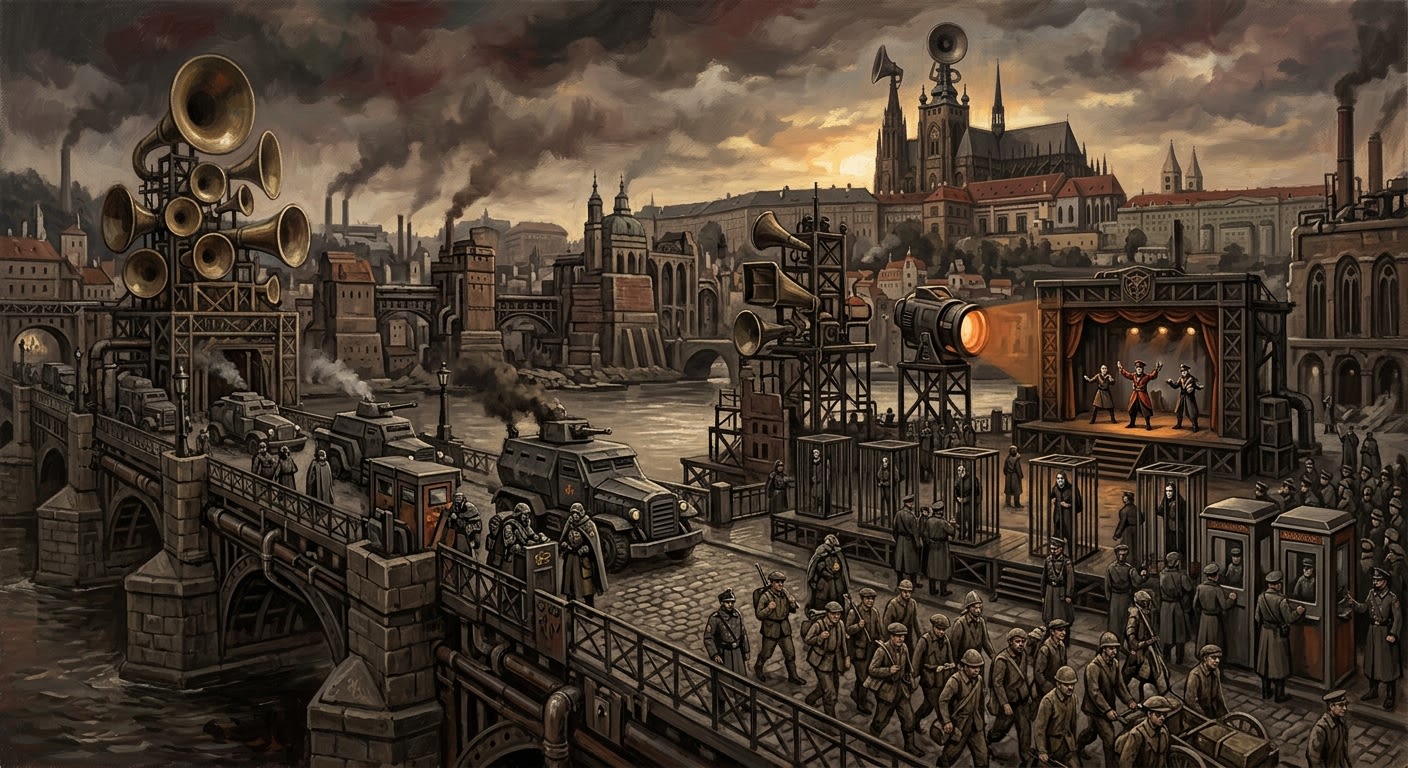
Prague
The bridge-city where shame learned civic architecture
Synod-held Prague is a Zone 3 bridge-city of public correction, Rationalist residue, Ephrath theatre, acoustic wounds, and useful civic obedience.
Codex Ref. II.3.02-001
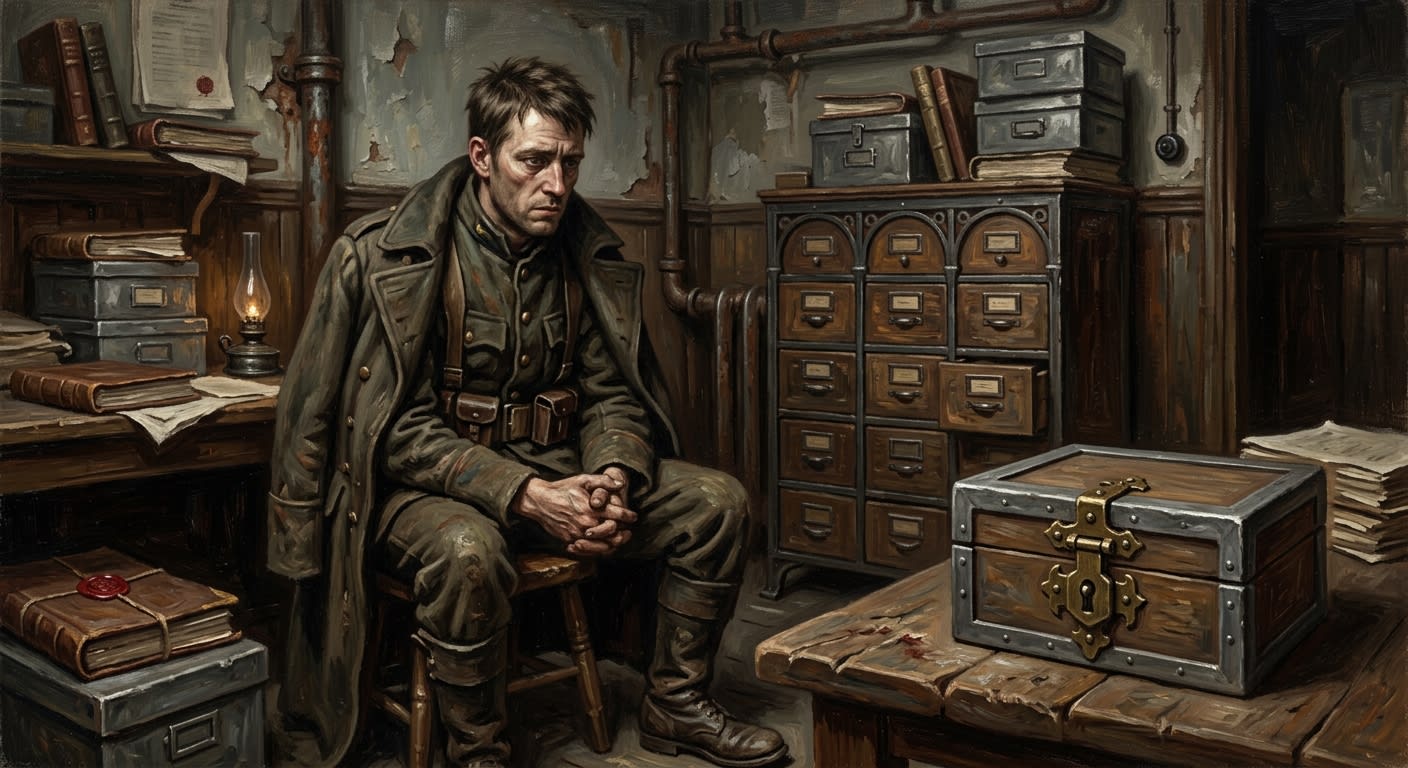
Private Kessler
The low-rank witness who heard annihilation carry a tune
Survivor of the A.S. 45 Iron Plains whose separate testimony—“The fire was singing”—is kept apart from the fourteen witnesses as an acoustic hazard and doctrinal wound.
Codex Ref. III.2.01-081
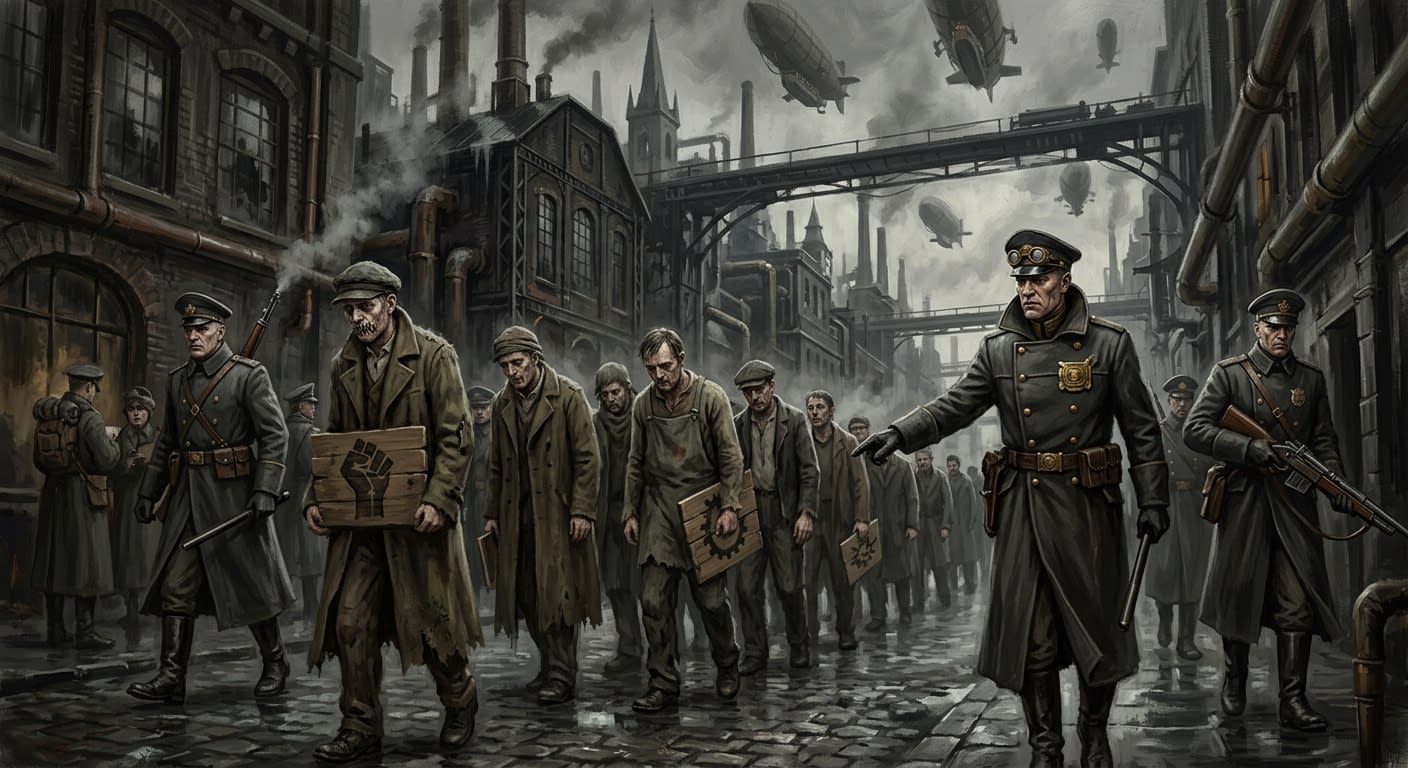
Procession of Silence
The Republic called mutilation progress and printed it neatly
The Procession of Silence was the Rationalist public mutilation rite that paraded sealed mouths as civic instruction before Ironmouth made the knife legal.
Codex Ref. VII.8.10-003
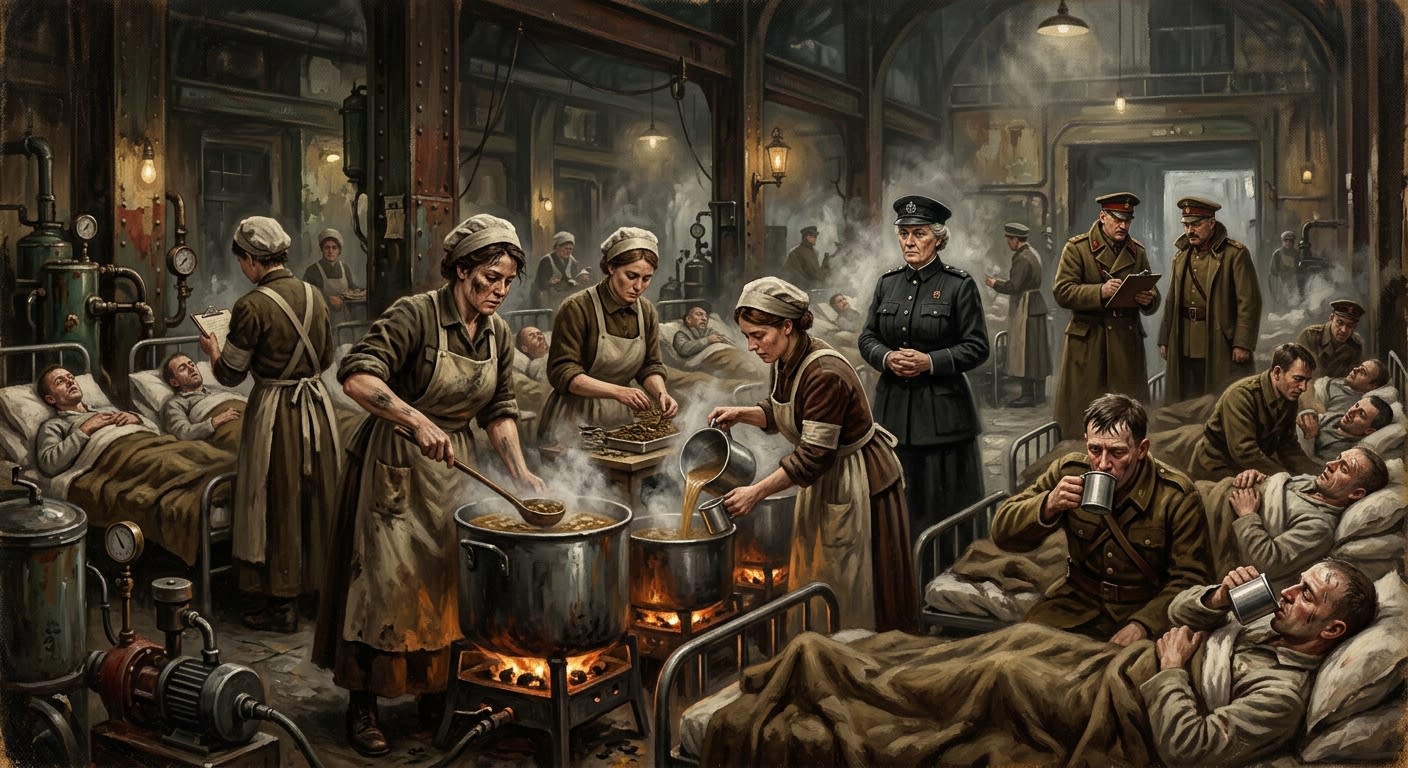
Protocol 7-C
The Bureau named the kettle after stealing the cure
Protocol 7-C saves fevered soldiers by boiling water, brewing bark, and pretending the woman who knew this first had never touched the pot.
Codex Ref. XIII.1.74-113
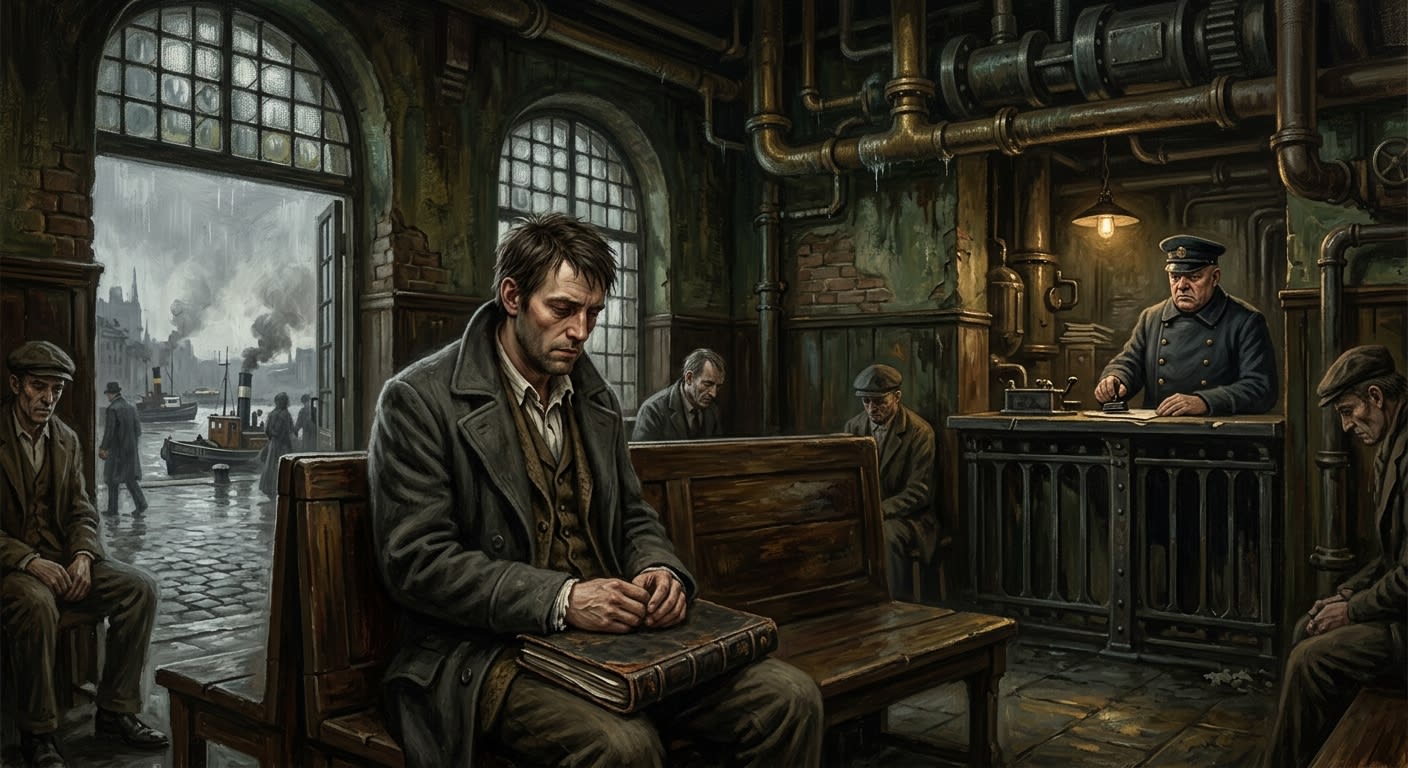
Quai des Bateliers
The river door where disbelief kept its appointment and Purity kept it waiting
Strasbourg's damp river quay became legal instrument when Arno Kett walked into Purity's district house, waited forty minutes, and gave absence a file.
Codex Ref. II.1.04-138
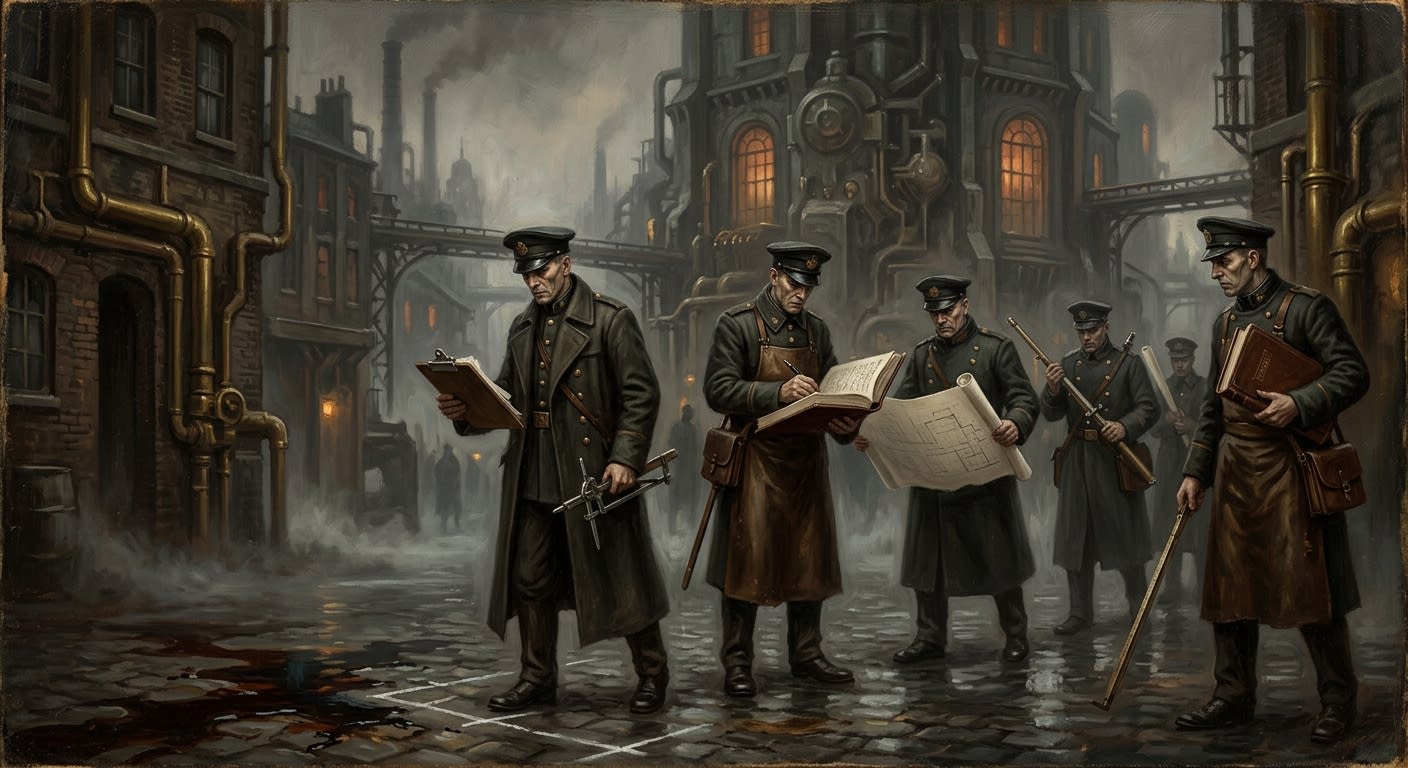
Rationalist Philosophical Police
The lecture hall's knife, wearing spectacles and calling itself clean
Reason Alone hired inspectors before it hired shame: the Philosophical Police made atrocity literate, then called the handwriting civic hygiene.
Codex Ref. VIII.1.04-018
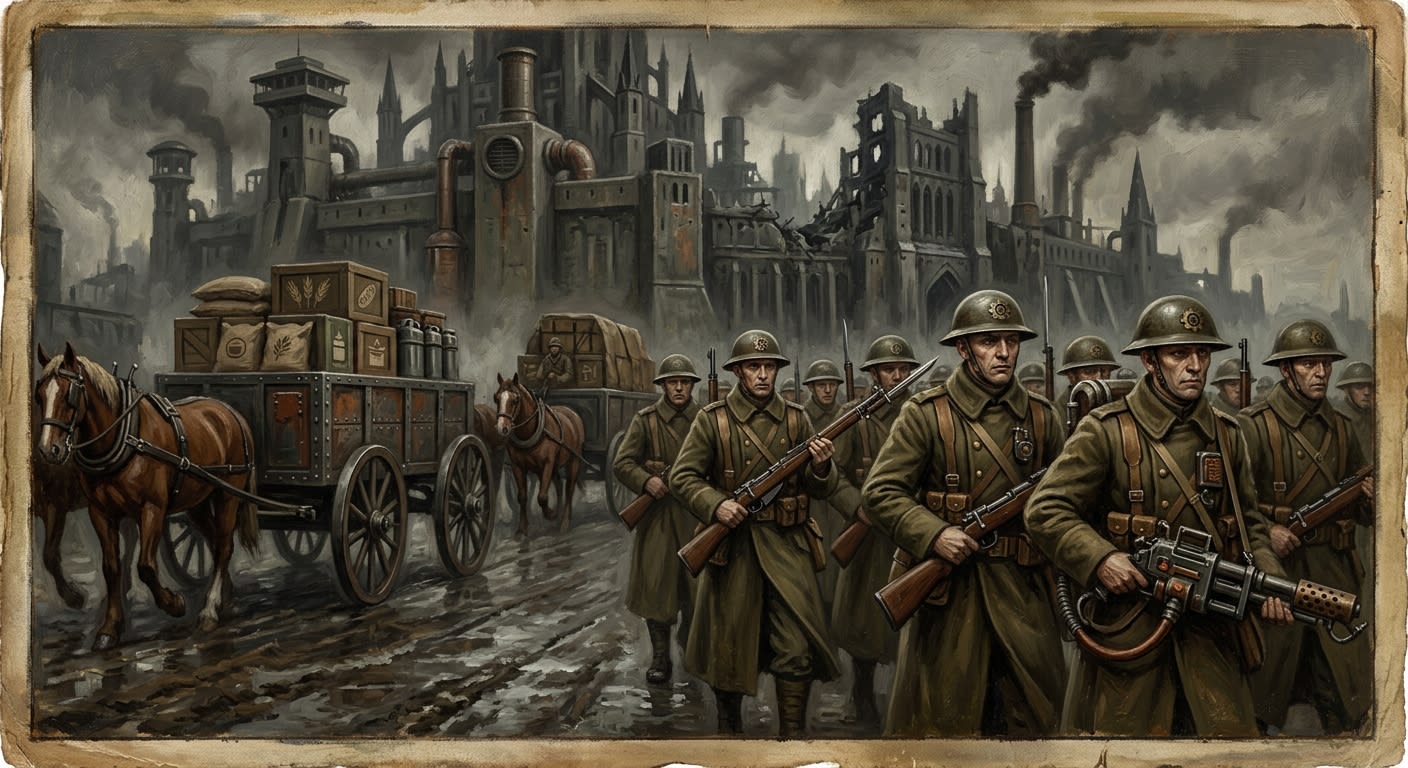
Rationalist Second Army
Competence marched east, and Hell corrected the formation
The Rationalist Second Army did nearly everything correctly: it brought rations to Hunger, formation to Wrath, and left the Synod a perfect instructional corpse.
Codex Ref. VIII.1.05-045
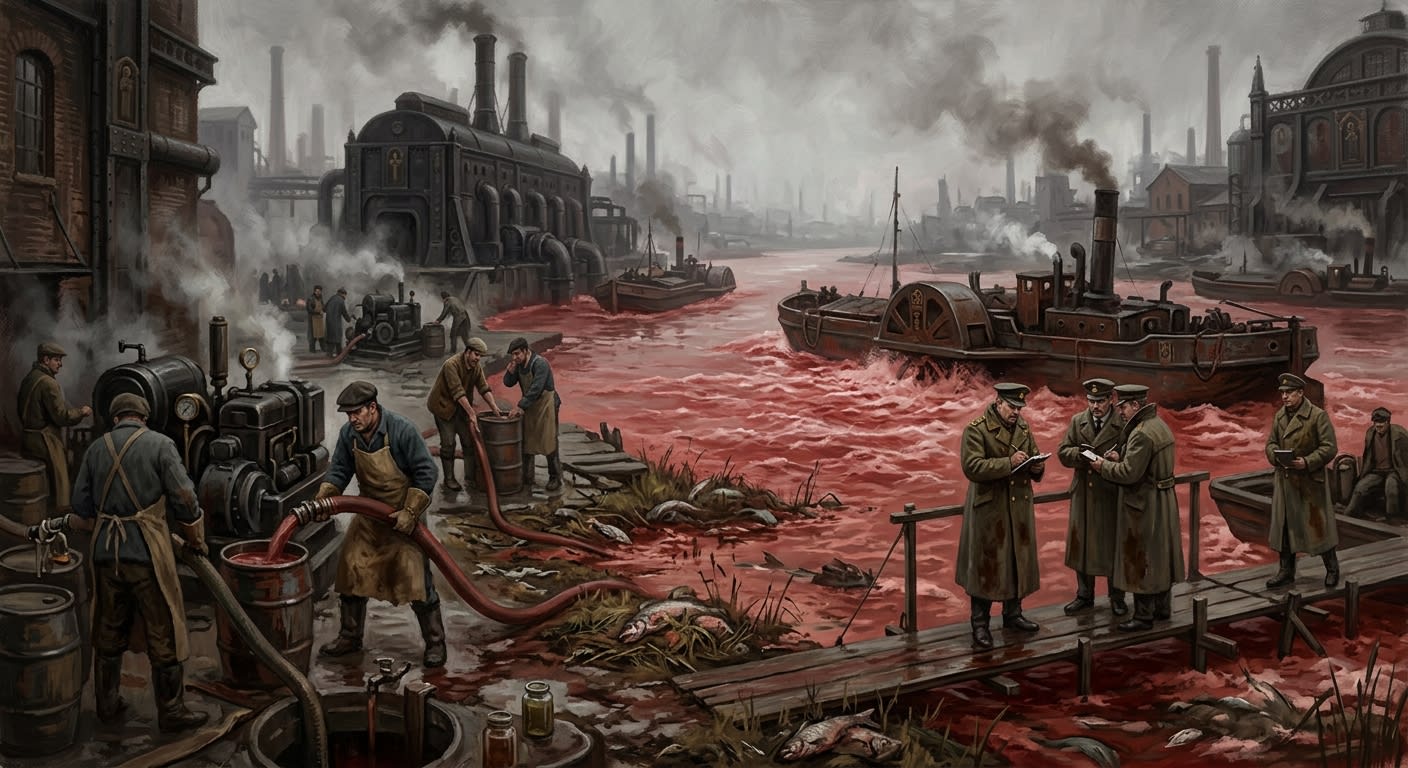
Red Flood of the Danube
The river cleared; the warning did not
The Danube ran crimson for three weeks in A.S. 34, boiling, staining wells, killing fish, and teaching Rationalist hydrology that some rivers are invoices.
Codex Ref. VII.4.18-001
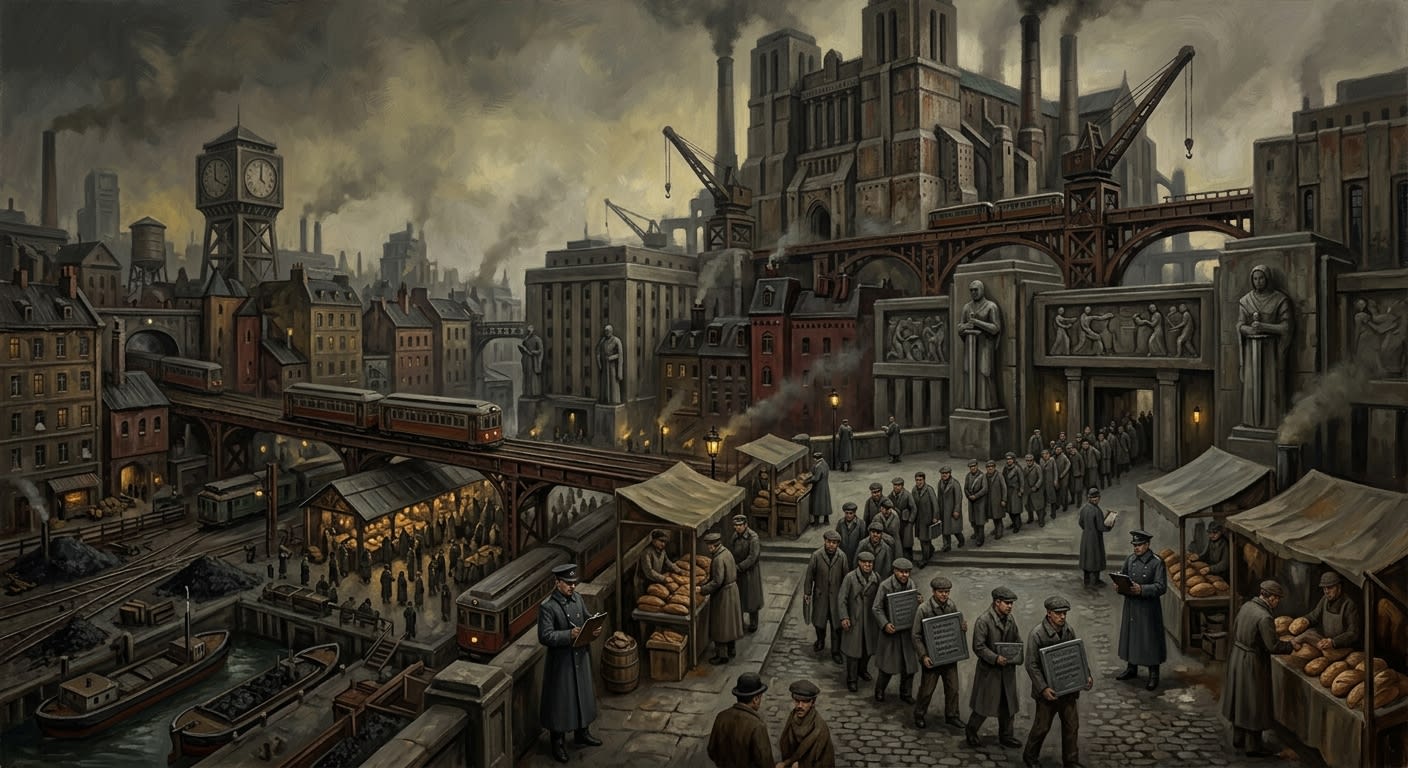
Regensburg
The city that sold false dawn by the plaque and glass
Regensburg hosted Reason's false triumph, sold bread to signatories and plaques to penitents, and still rehearses its profitable disgrace under Bureau watch.
Codex Ref. II.2.03-030
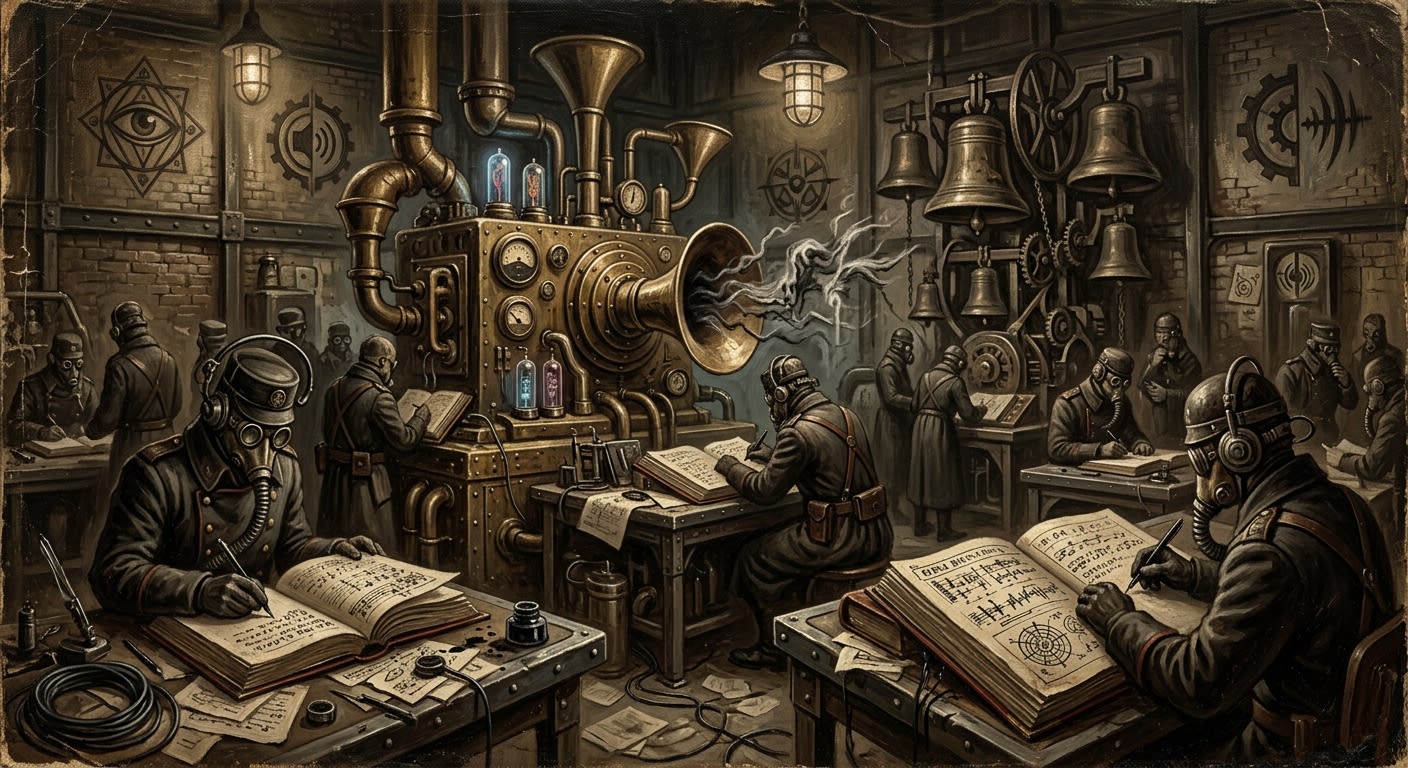
Register of Sounds
Where music is taught to confess before it escapes
Third register of the Index Damnatus, cataloguing forbidden tones, cadences, bellfalls, breath patterns, and the treasons ink can carry from one skull to another.
Codex Ref. XIII.1.46-001
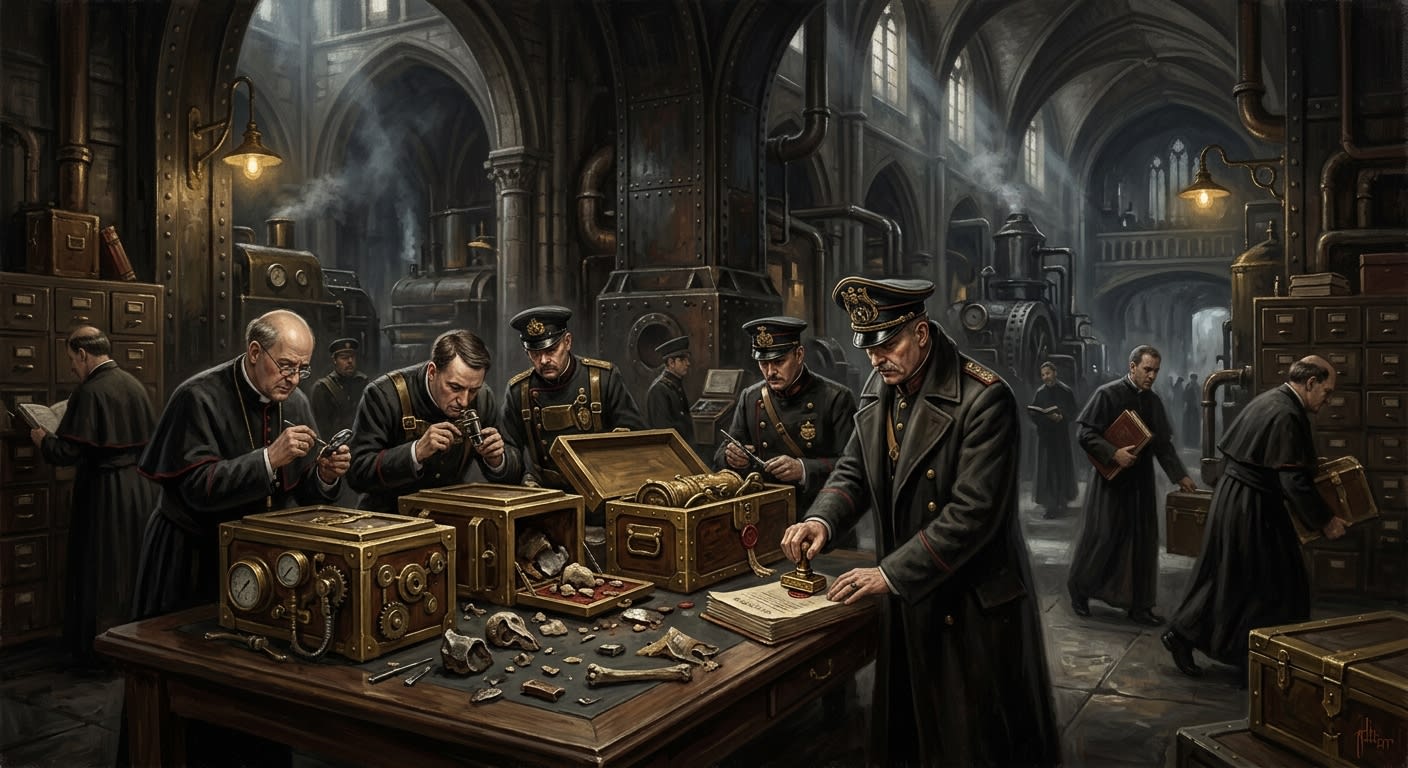
Relic Counterfeit Scandal
When the pig-bone taught the saint to submit to assay
Circa A.S. 117 scandal in which counterfeit relic fragments entered tariff-chapel calibration caskets, forcing mandatory assay and Masks-and-Seals counter-seals.
Codex Ref. VII.8.10-012
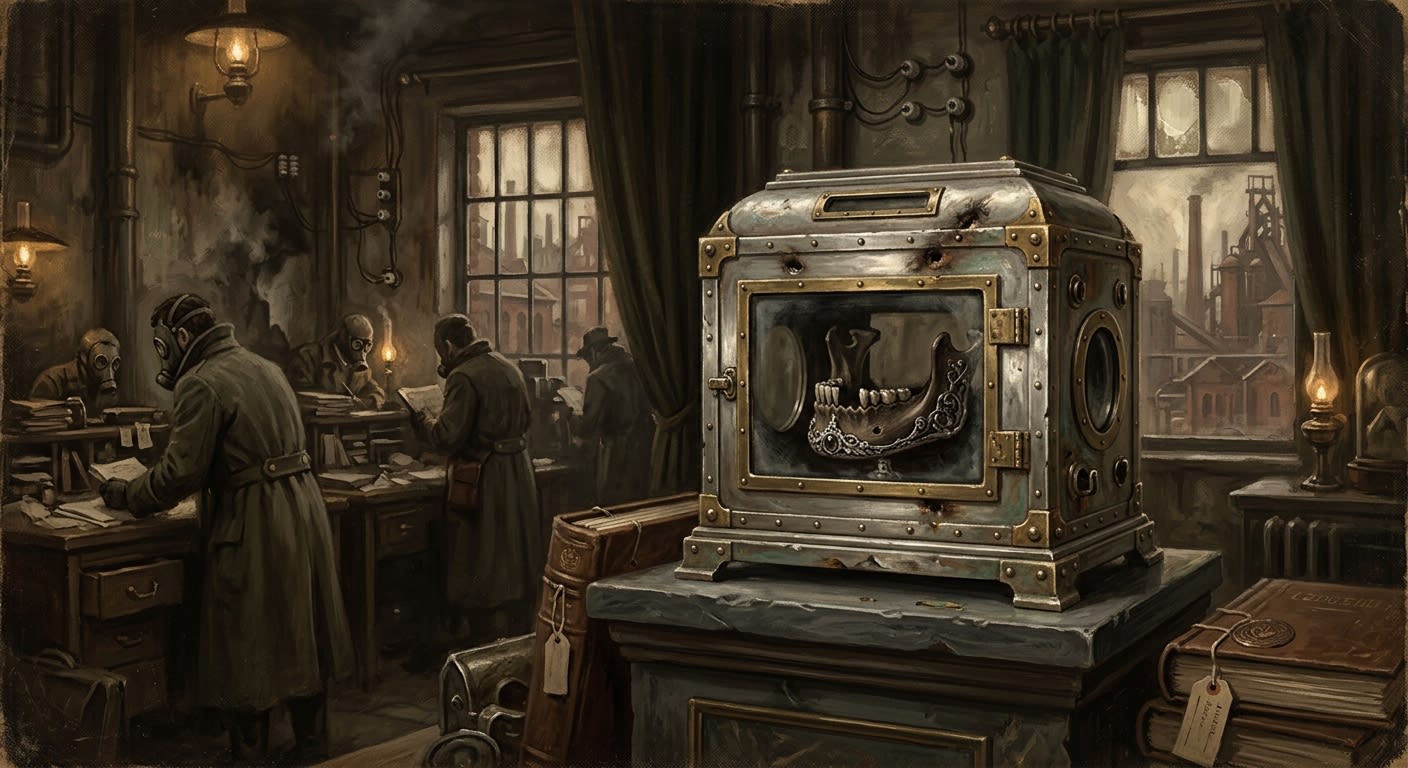
Relic of Saint Iago
The jawbone that answered artillery and kept its receipt from Heaven
Relic 14-T(Provisional) was a silver-set jawbone that survived auctions, desks, cannon, and doubt — then burned at Toledo rather than serve Reason.
Codex Ref. III.2.04-014
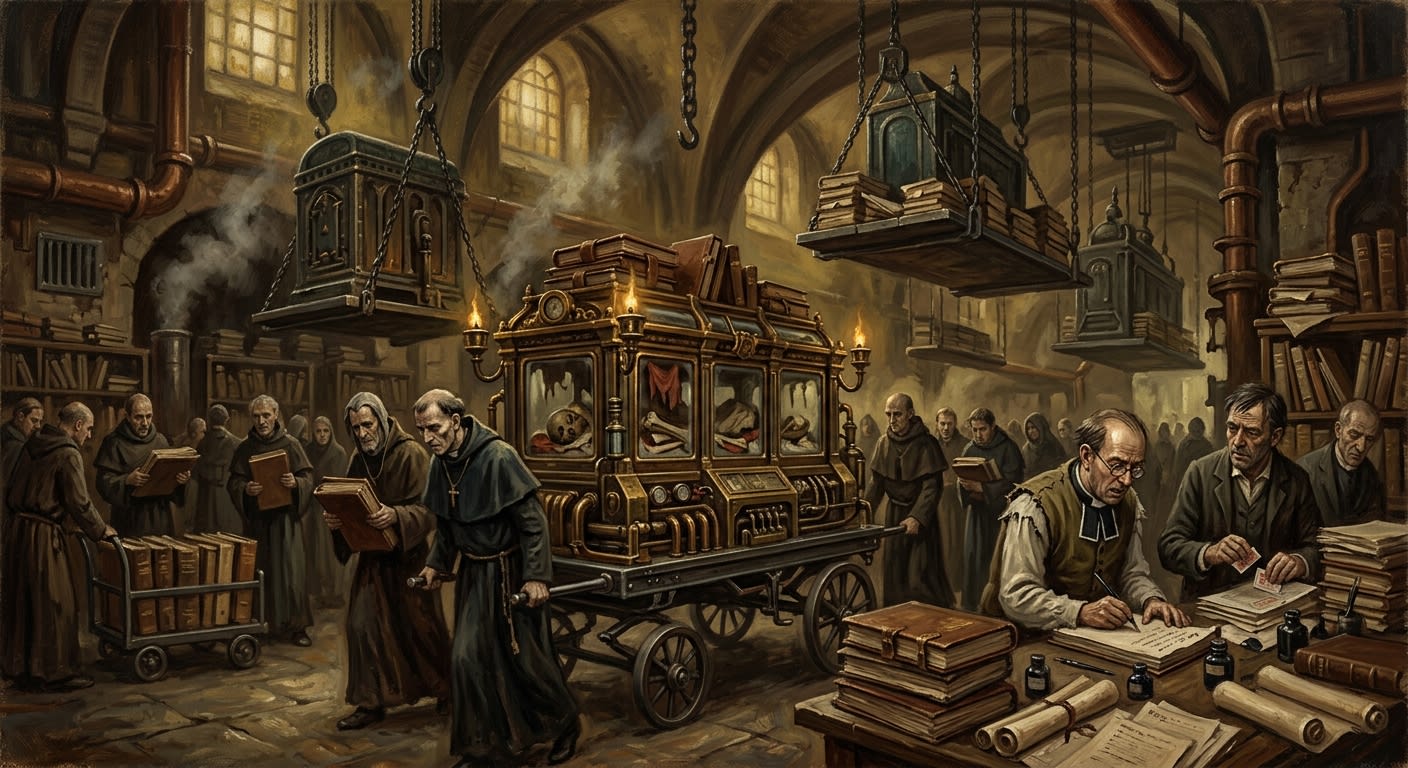
Reliquary Schisms
When valid seals taught anatomy to kneel
The twenty-year relic crisis in which clean paperwork made saints anatomically impossible, until Doctrine gave every notarized femur a throne.
Codex Ref. VII.8.10-140
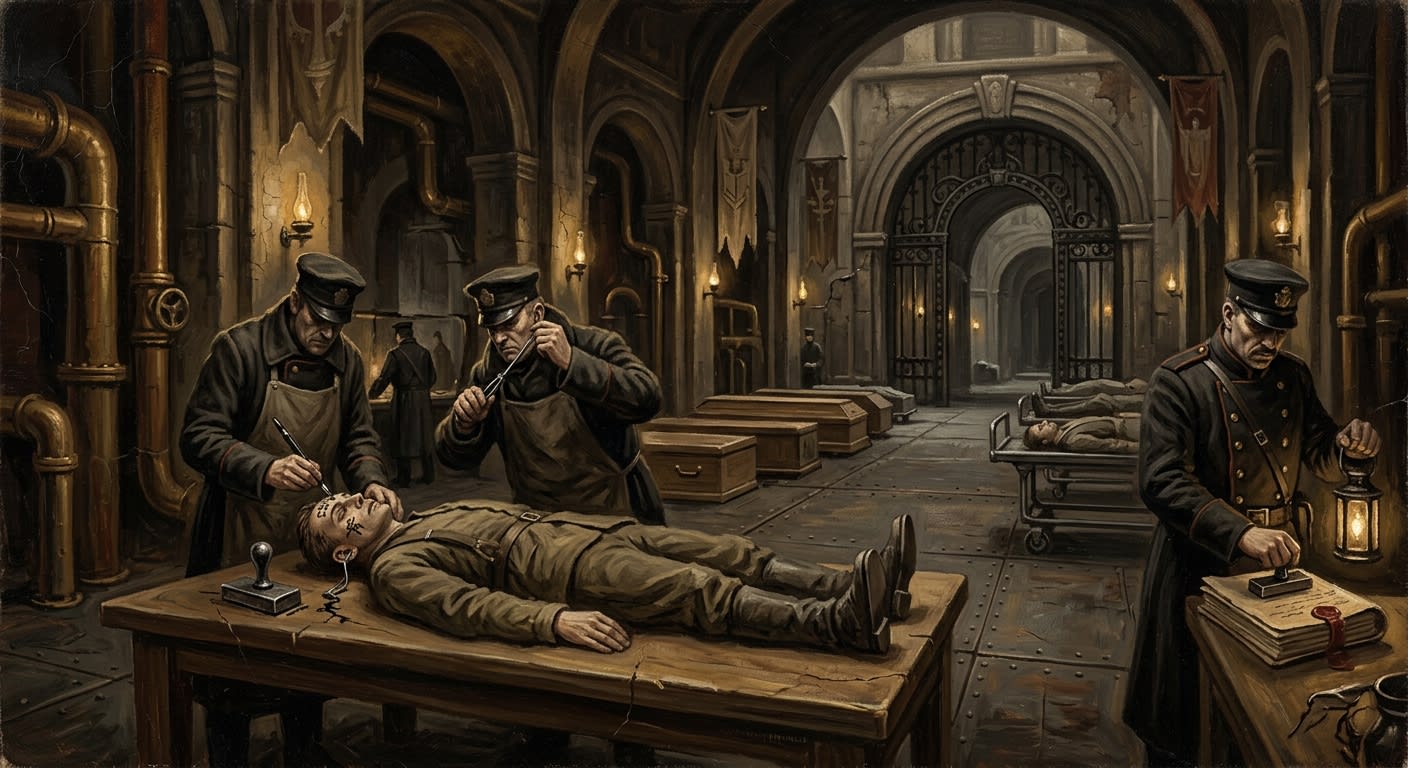
Rite of Passing
No soul departs until the Ledger has improved the death
The Rite of Passing turns death into lawful custody: right ear, last words, body display, black ink, routed remains, and no soul left vulgarly private.
Codex Ref. XIII.1.85-080
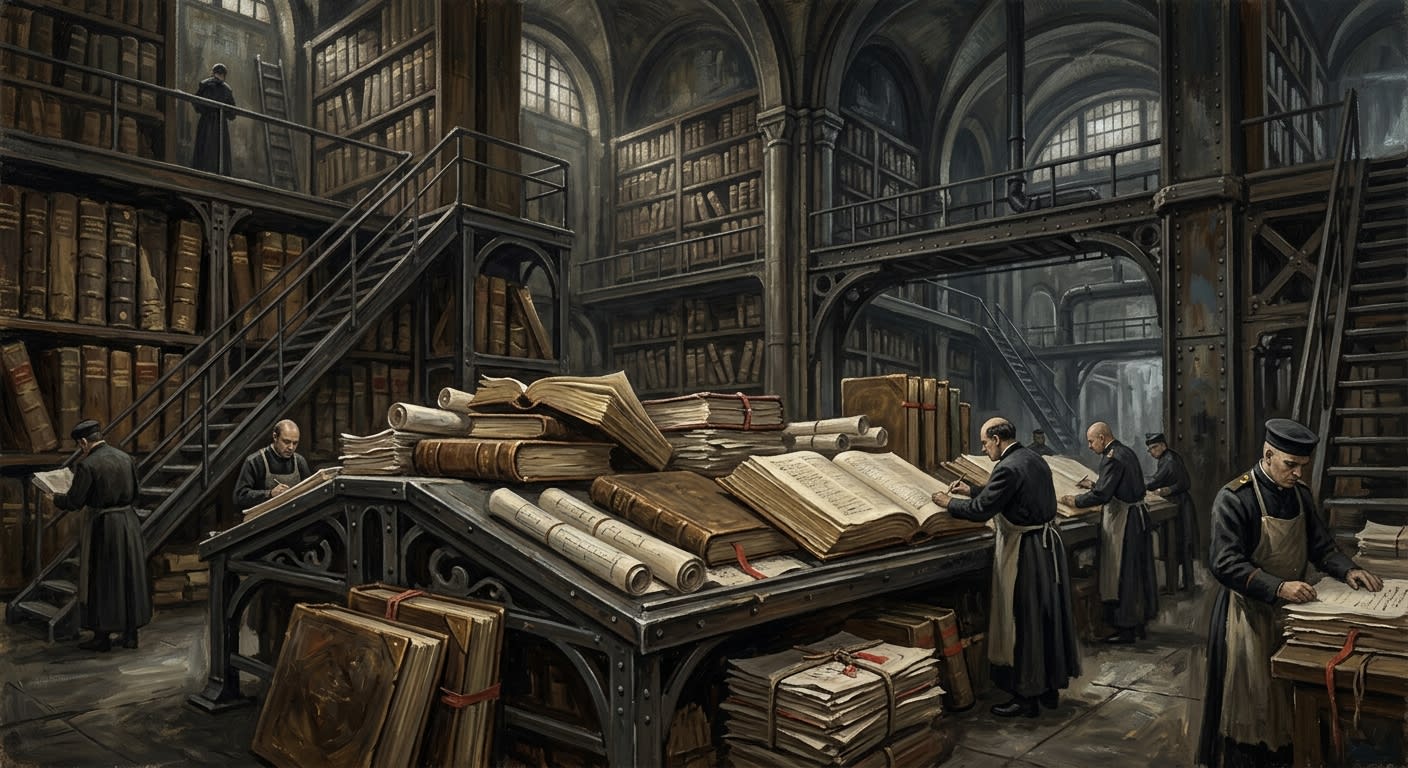
Sacred Ledger
The Synod's memory, sharpened until grief signs the receipt
The Sacred Ledger is the Synod's authorised memory: fact cooked into Doctrine, grief made grammatical, contradiction kept on a leash.
Codex Ref. XIII.1.32-090
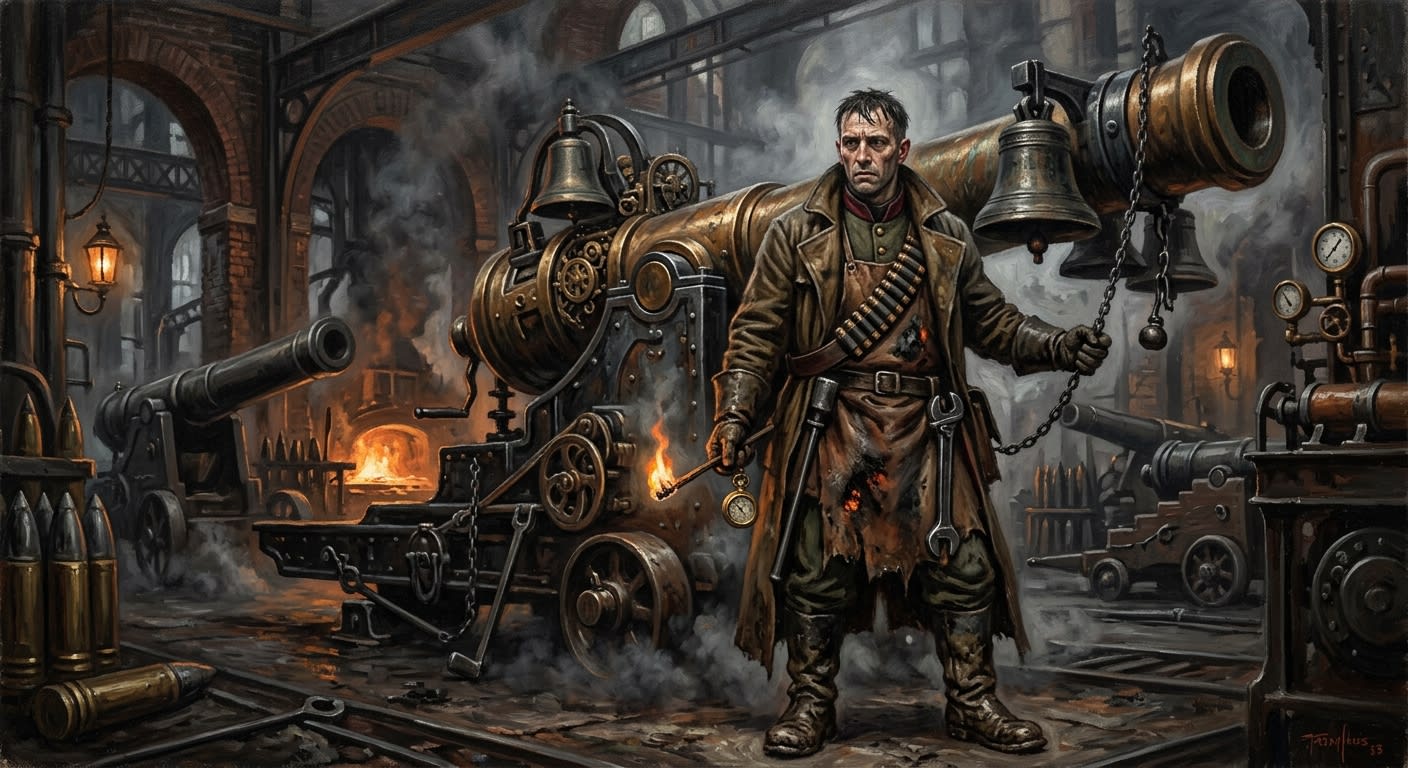
Saint Aegidius
The patron of the waiting hand and the honest charge
Saint Aegidius is the artillerymen’s patron: foundry hand, martyr of the Third Peal, saint of timed violence, bell-cannon discipline, and Shipka’s sulking gun.
Codex Ref. III.2.01-194
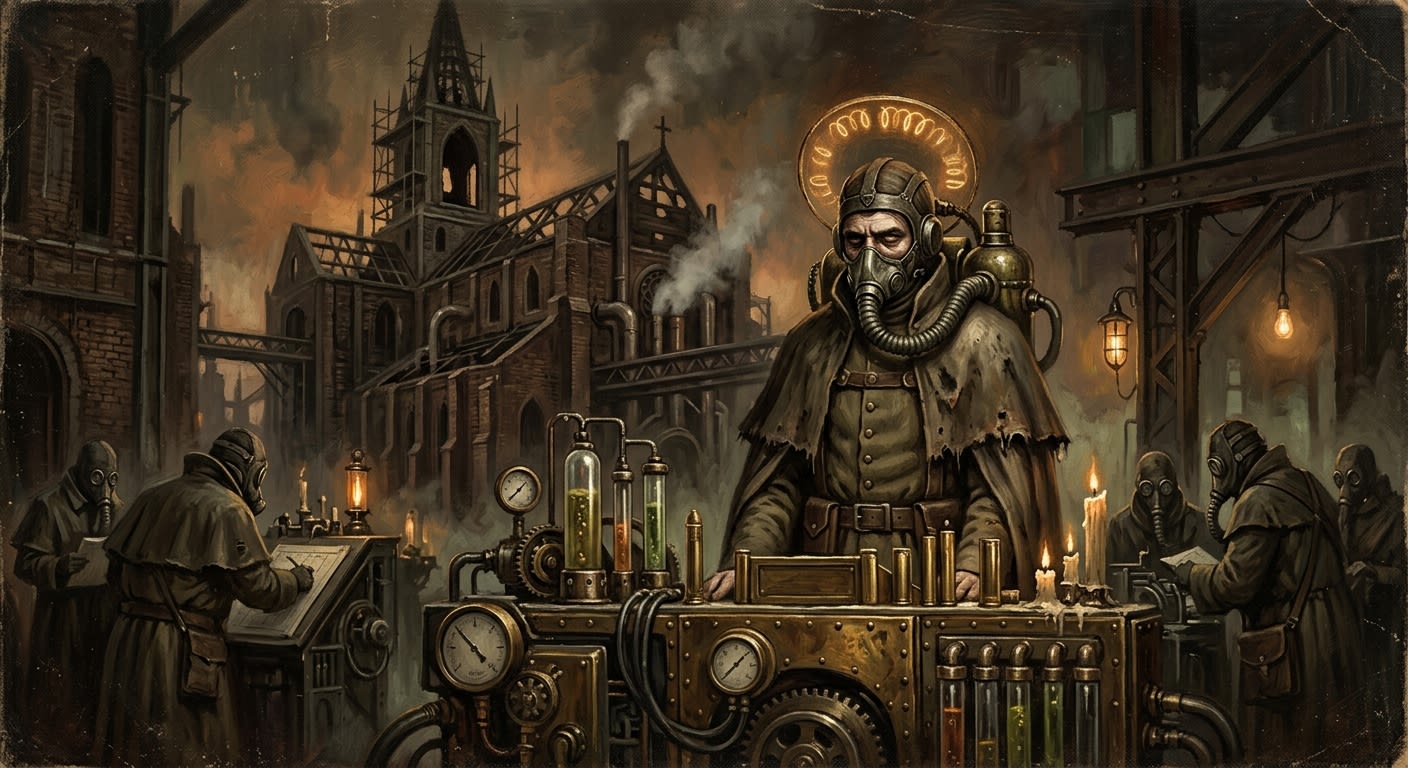
Saint Clement of Brittany
The chapel that received no pilgrims and therefore received a continent
Saint Clement of Brittany became doctrine's perfect destination: a chapel the martyrs never reached, and therefore a wound the Synod could license forever.
Codex Ref. III.2.01-005
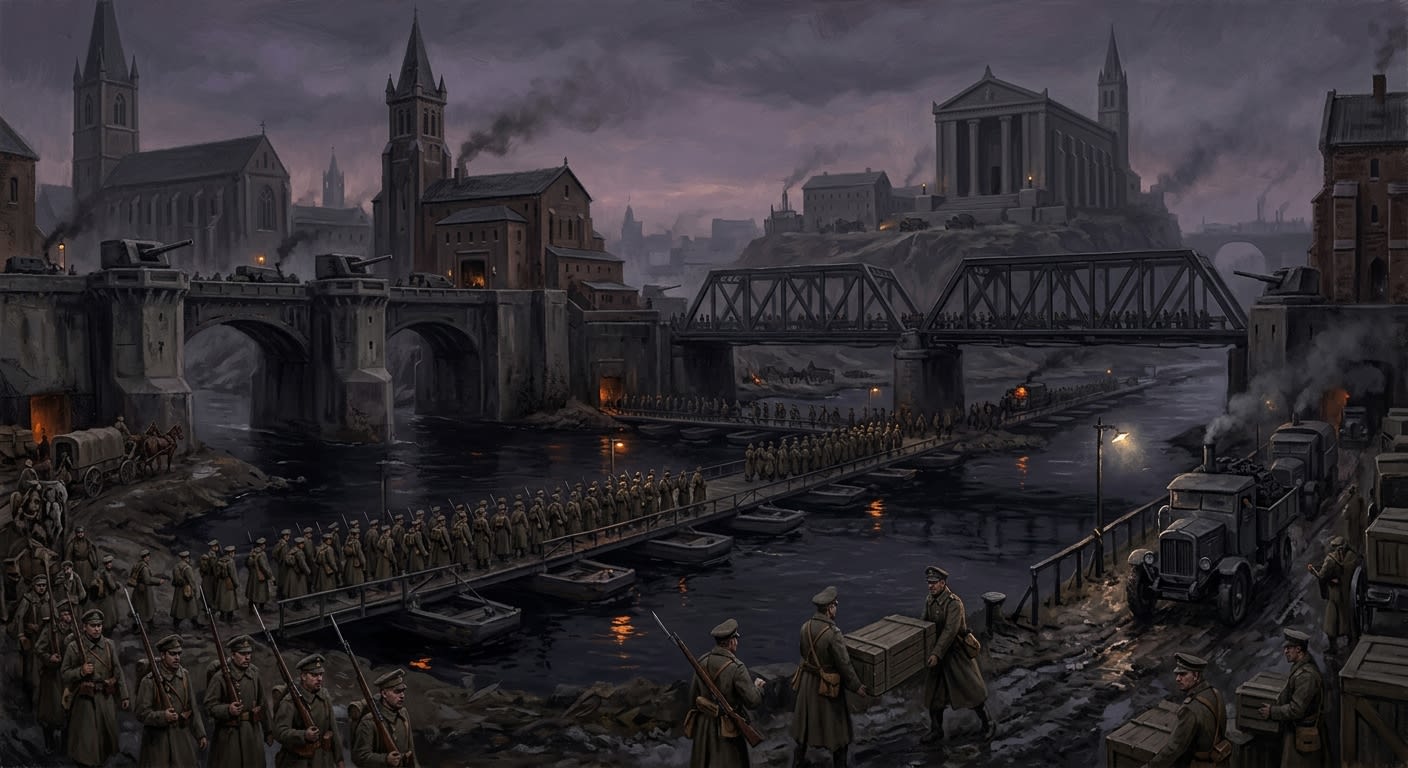
Saint Hadrien's Ford
The river-crossing where biography drowned and doctrine learned to wade
Saint Hadrien's Ford is the Danubian crossing where an old river saint became military property, and black water learned to invoice courage.
Codex Ref. II.4.09-172
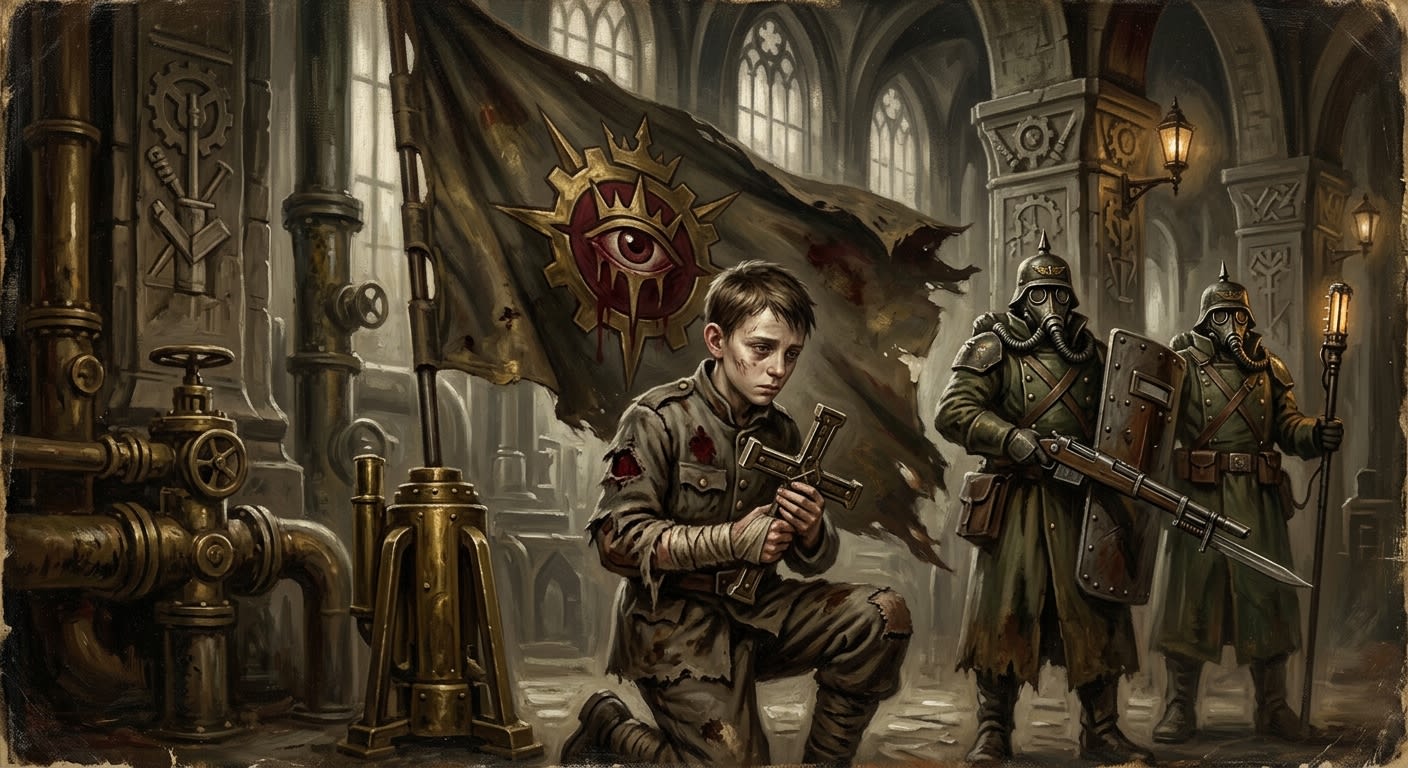
Saint Hermas
The boy who held the banner until the banner held him
Saint Hermas of Dinan was the boy beneath the banner at Saint-Malo: two wounds, one strip of cloth, and a cult made tidy by force.
Codex Ref. III.2.01-006
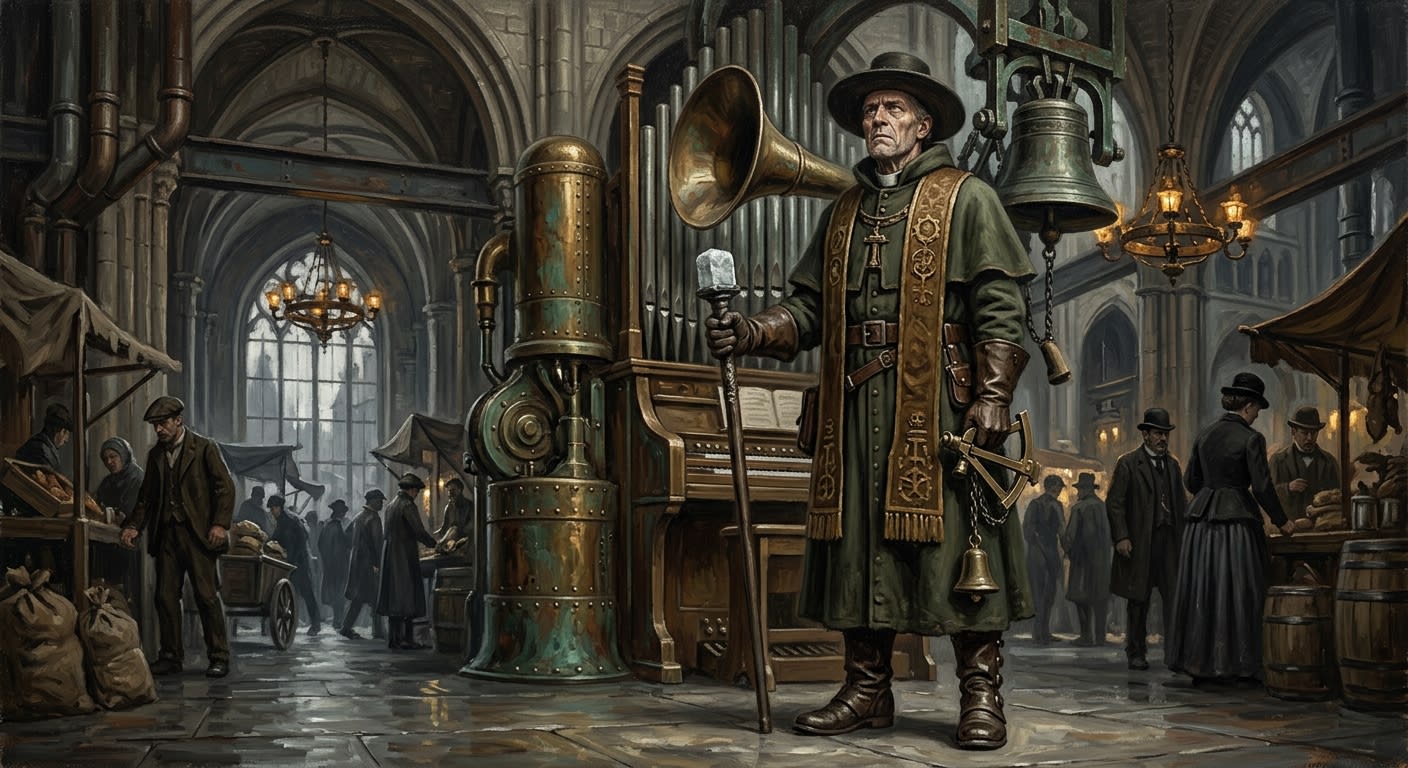
Saint Rupert
Salt in the wound, bronze in the tower, order in the market
Saint Rupert, Vienna’s salt-saint, preserves meat, measure, bells, markets, and civic memory: the patron whose bronze throat answered when men forgot to kneel.
Codex Ref. III.2.01-095
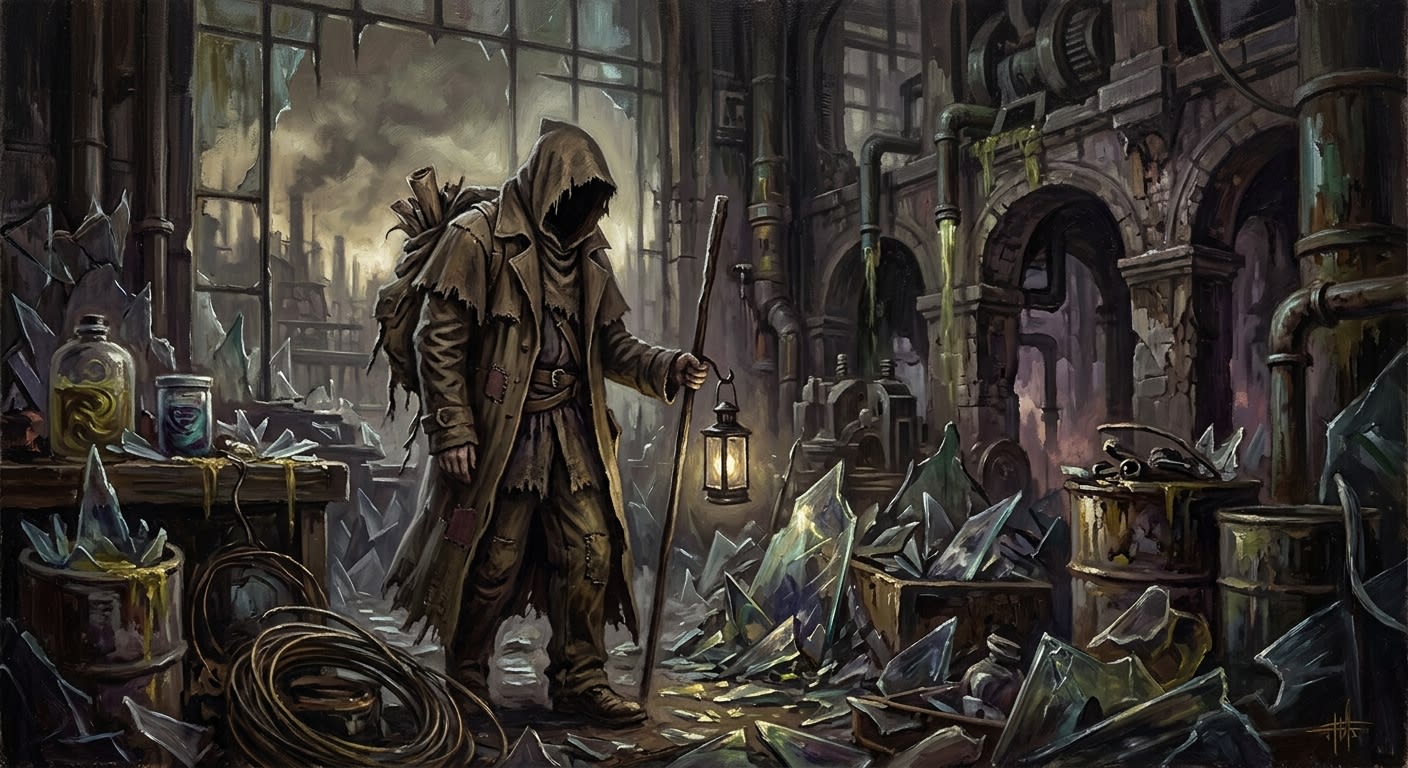
Saint-Anonymous of the Glass Parish
The nameless patron who keeps the shard from learning the road
Saint-Anonymous of the Glass Parish is the unauthenticated patron invoked by demon-glass scavengers, wrappers, route-null couriers, and other professionals whose safest miracle is remaining unnamed.
Codex Ref. III.2.01-110
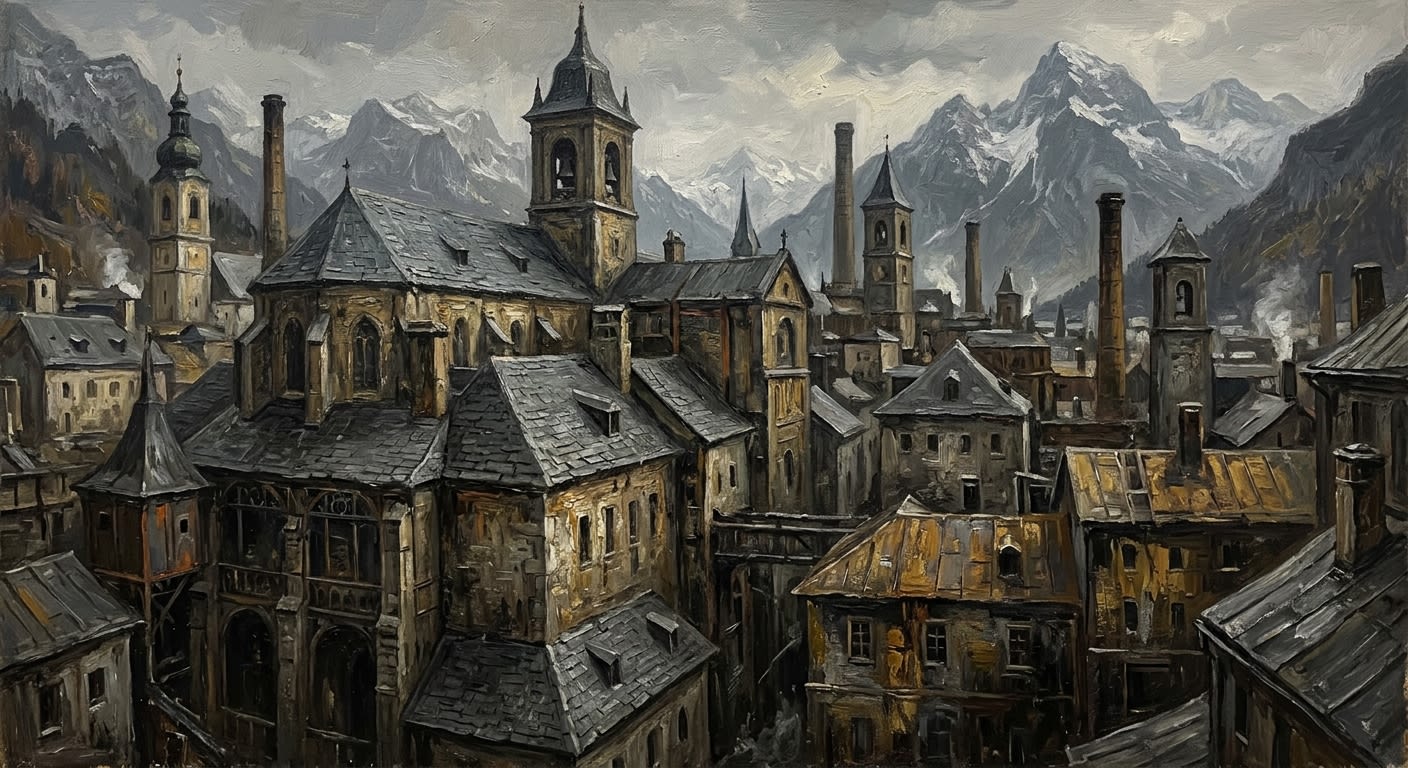
Salzburg
The Alpine city where a warm shinbone taught bishops to bleed politely
Salzburg is a profitable Alpine shrine-city whose Warm Tibia dispute killed two bishops and made custody smell faintly of salt, wax, and knives.
Codex Ref. II.3.05-141
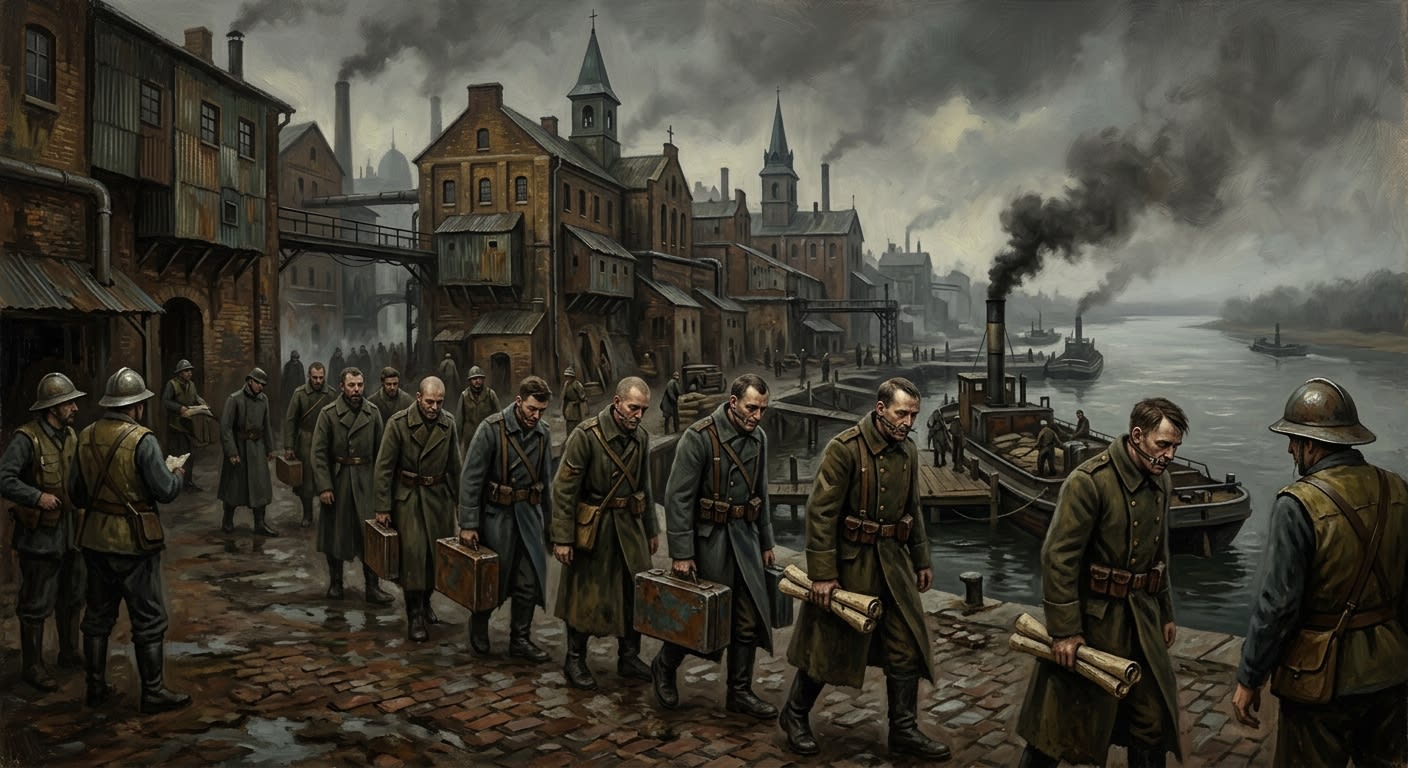
Sandomierz
Kraków owns the bridge; Sandomierz owns the arrival
Sandomierz is the Vistula recovery town that pulled forty-seven wired-mouth priests from Kraków’s crime and made downstream grief countable.
Codex Ref. II.3.06-019
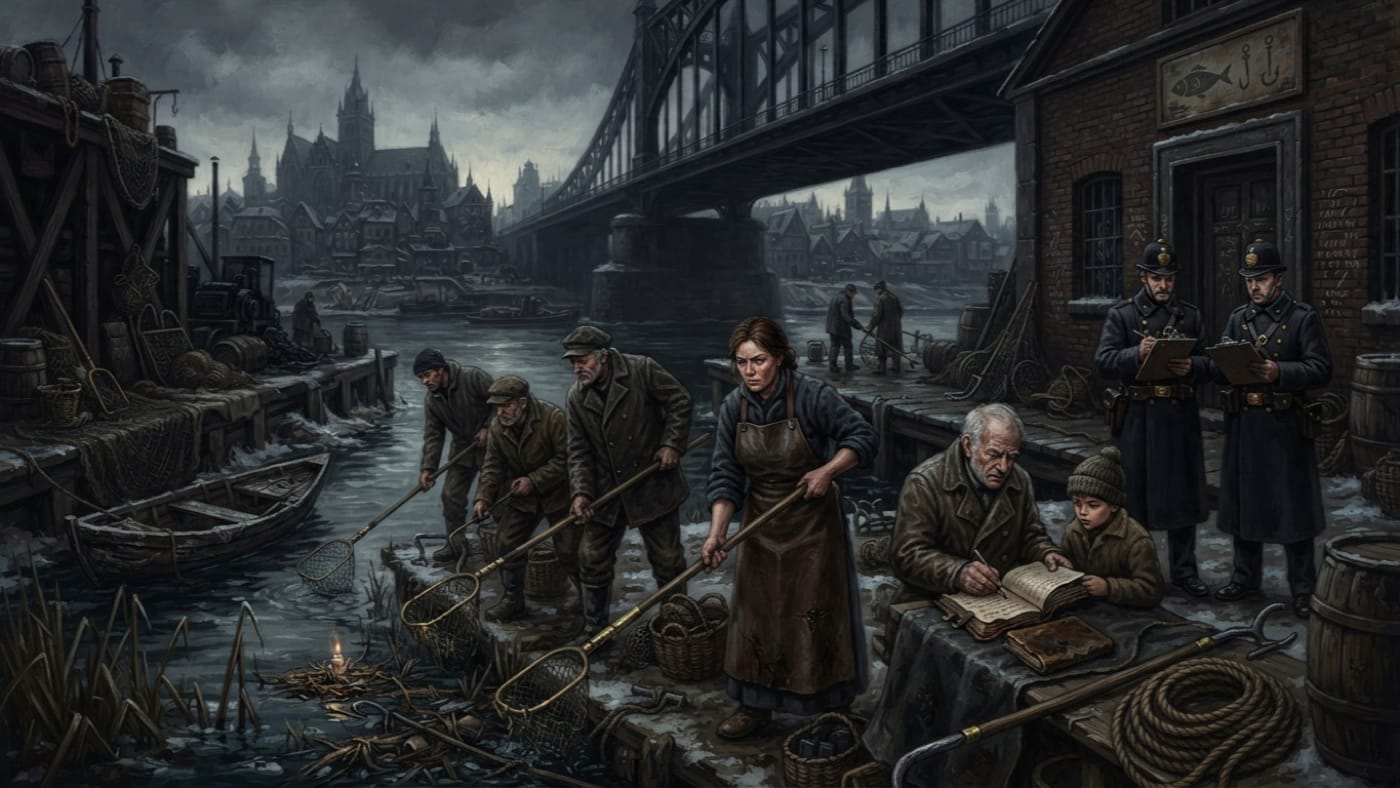
Sandomierz Fishermen’s Guild
The river sends evidence; the guild sends a count
A.S. 201 survey of Sandomierz’s fishing guild, whose damaged log records forty-seven drowned clergy and whose elected Wardens gather Vigil wicks while officials improve the paperwork.
Codex Ref. XII.26.03-001
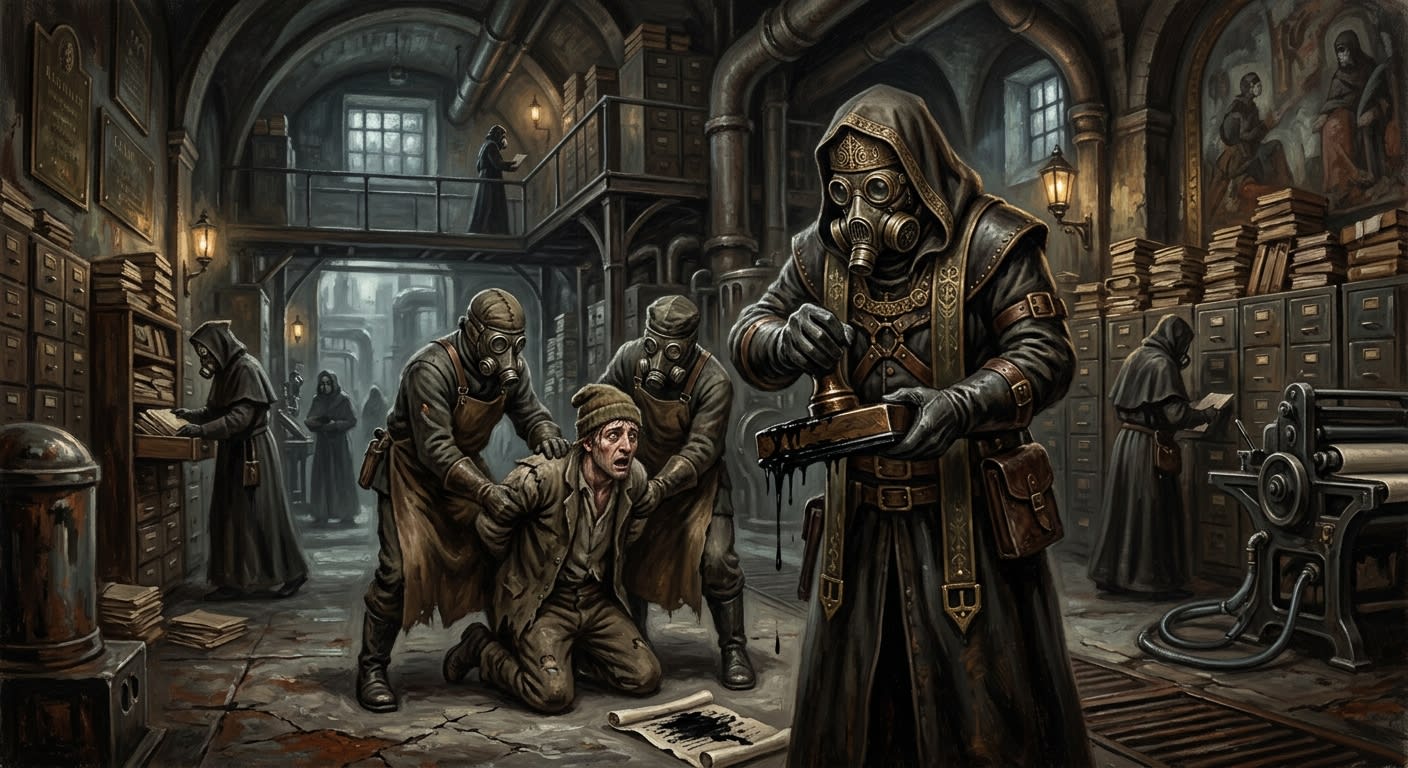
Seal Obsidian
The classification that denies the hand while sharpening the knife
Seal Obsidian is the Synod's blackest administrative mercy: knowledge retained because it is needed, denied because it is fatal.
Codex Ref. XIII.1.09-001
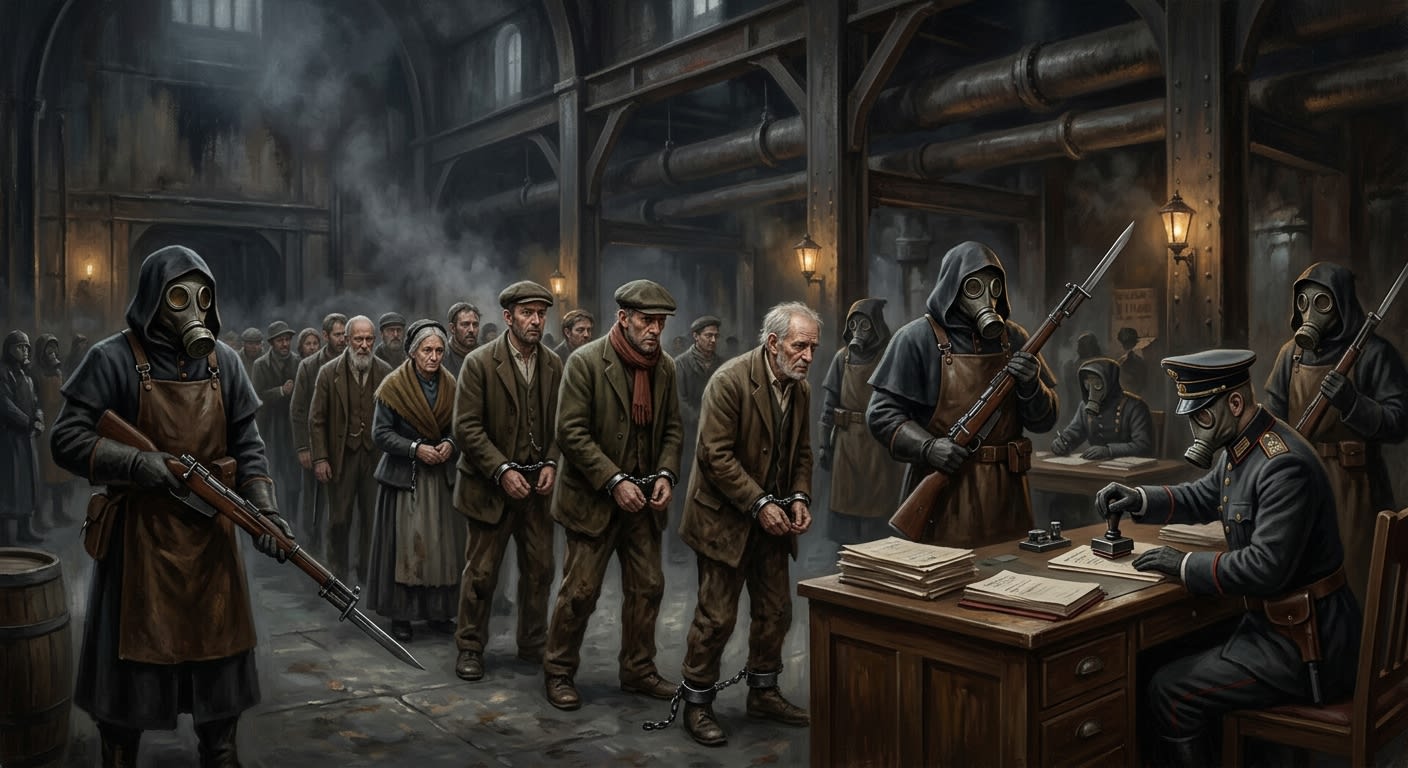
Secular Gatherings Act
The permit form that taught bayonets to quote law
The Secular Gatherings Act did not order massacre. It made massacre available, cleanly phrased, properly witnessed, and ready for bayonets.
Codex Ref. I.1.05-002
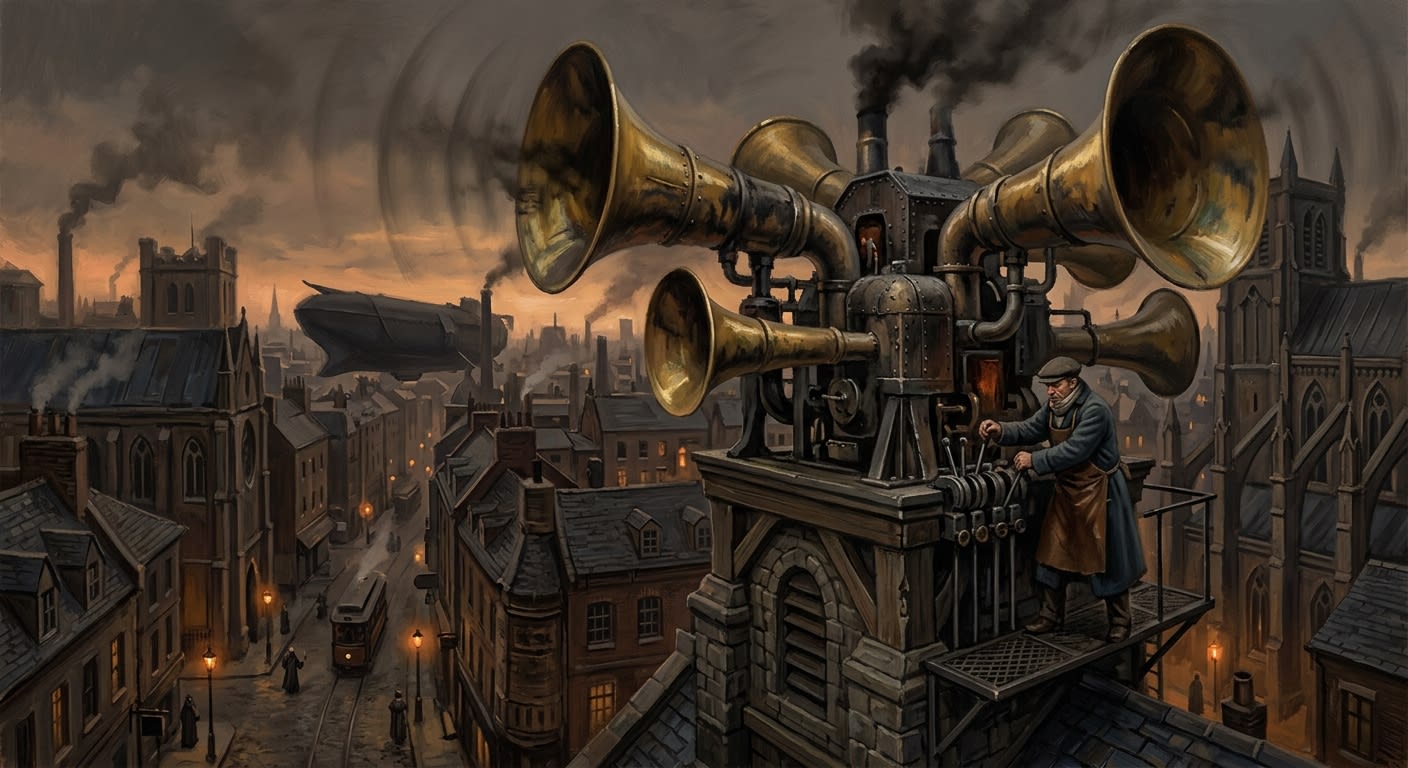
Sermon-horns
The brass throat by which doctrine stops asking politely
Sermon-horns make authorised language arrive with enough brass force that absence must explain itself, from rooftop shrines to Vigil Ark gondolas.
Codex Ref. XIII.1.96-092
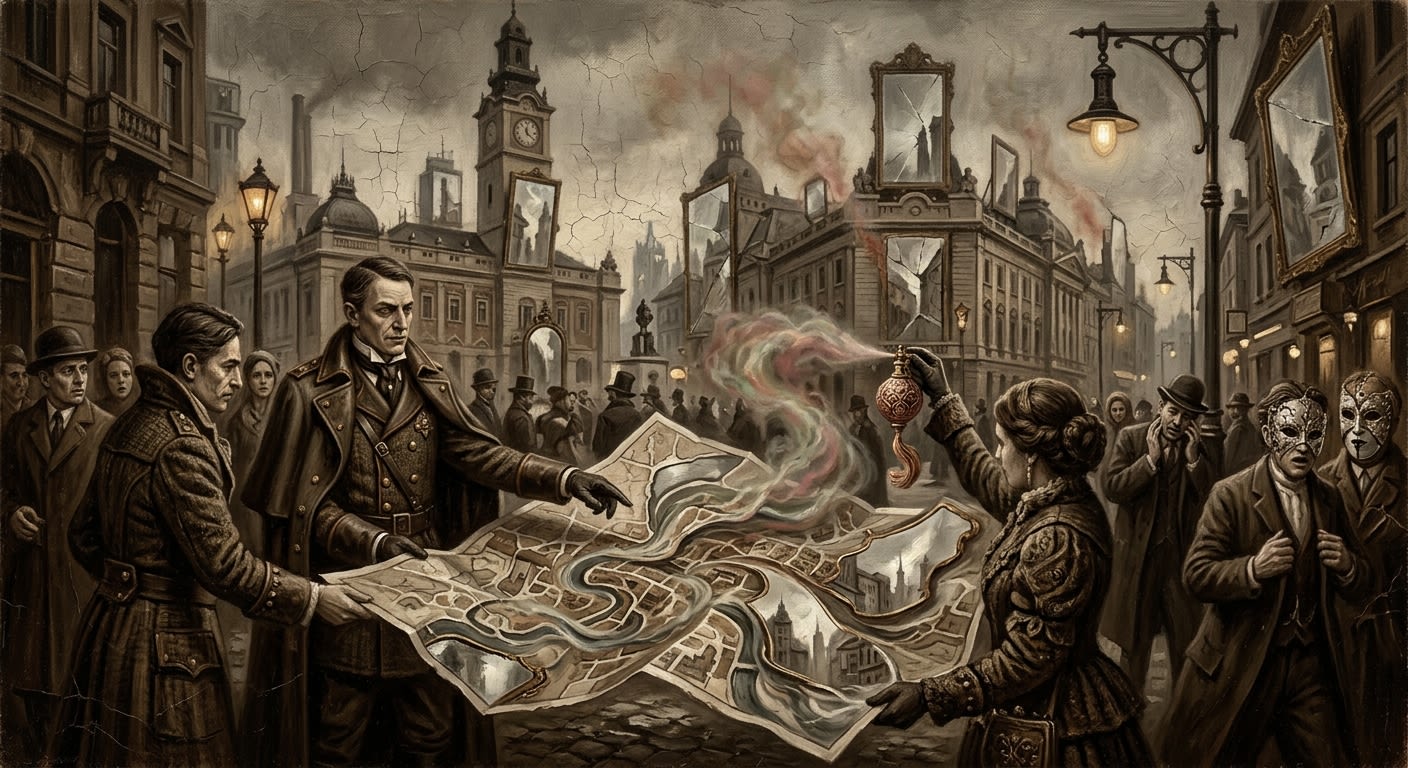
Shattered Courts
A palace that wears Belgrade like perfume wears a throat
Velkara's Shattered Courts occupy Belgrade by mirror, perfume, appetite, and refusal: a hostile palace that cannot be mapped without flattering it.
Codex Ref. II.5.06-117
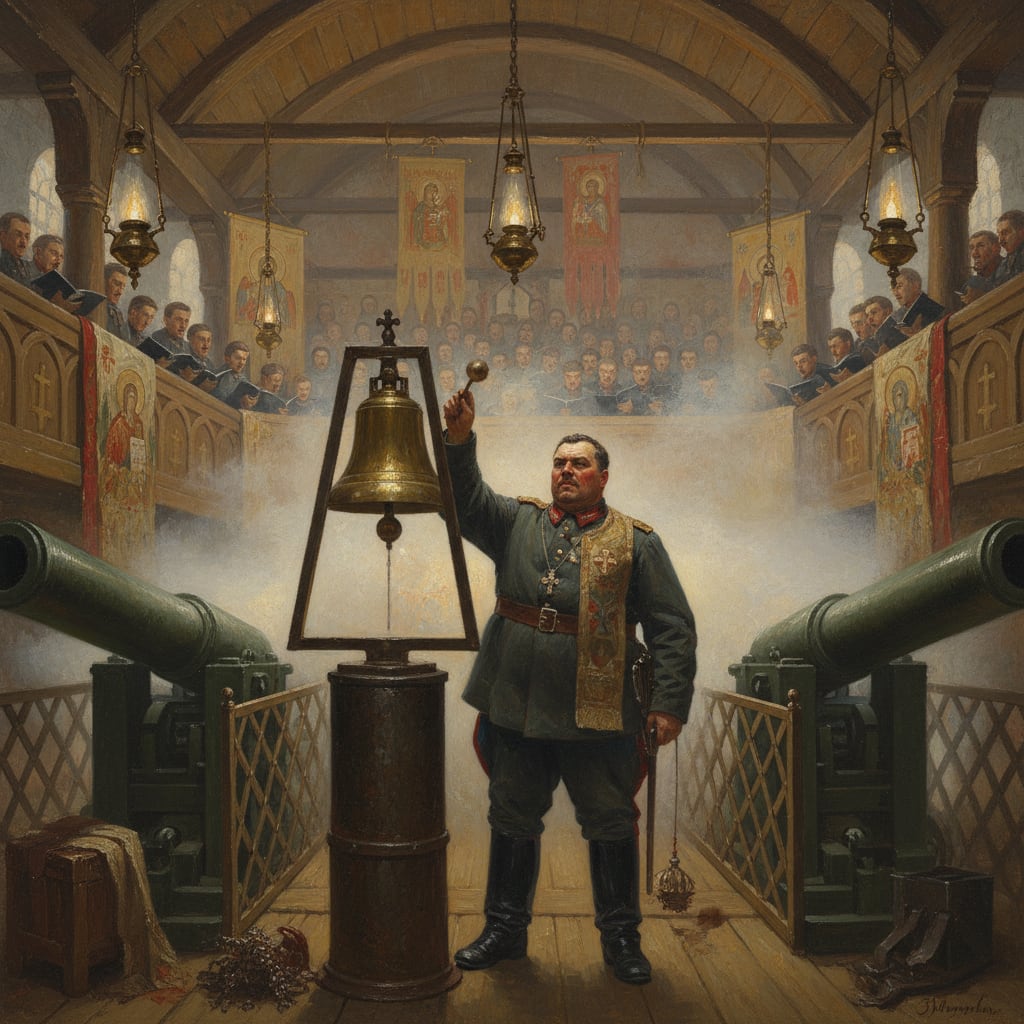
Shrine-Deck Crew
Bell, chalk, and brass — the three sacraments of the man who is too useful to die quickly
Mobile artillery and choir crews of the Synod's shrine-platforms — firing on the psalm-beat, logging every shell in a shot-ledger the Bureau calls the platform's soul, and maintaining chalk rings while the metronome bell keeps the guns from going hollow.
Codex Ref. XII.42.01-001
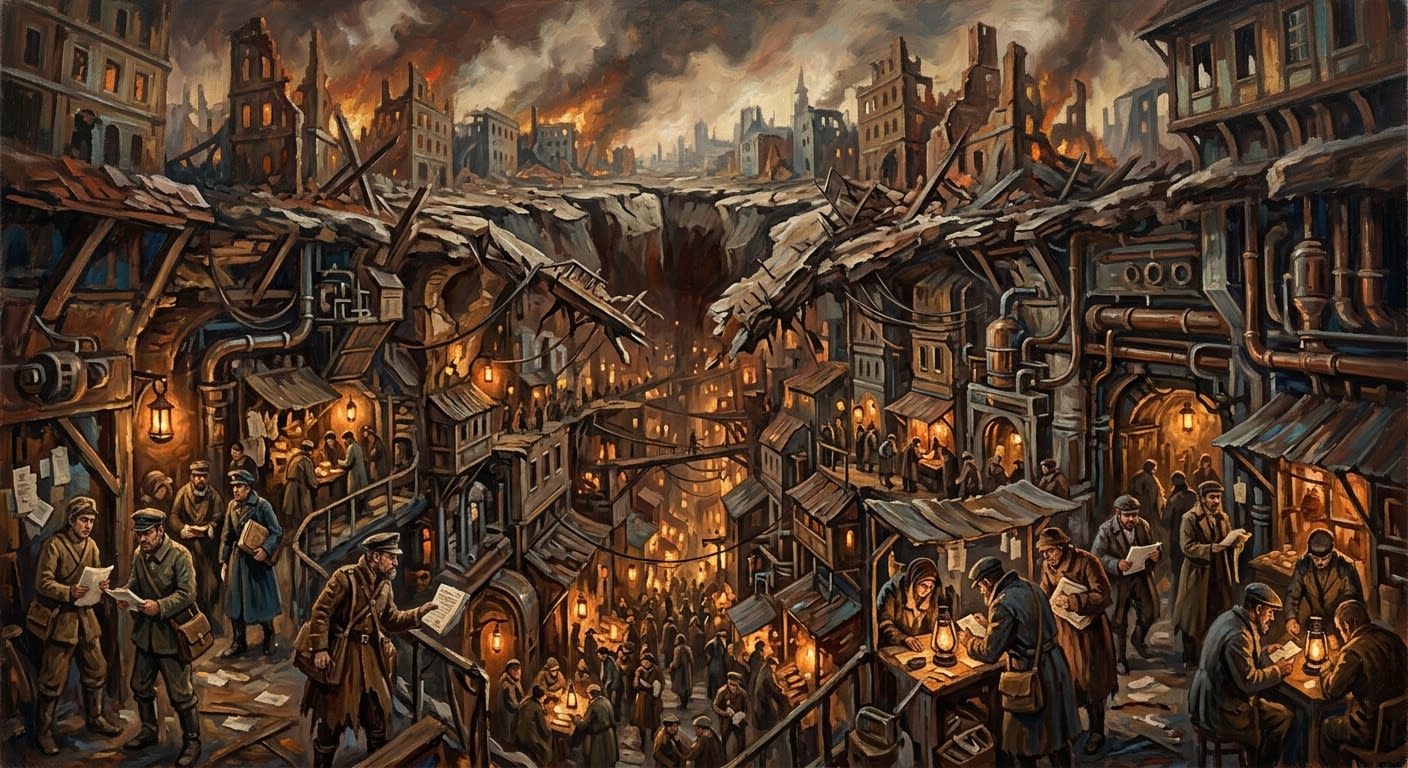
Skopje
The bitten city keeps its markets below the teeth
Skopje fell within hours of the Sundering, then survived below itself: a bitten city of Lantern Warrens, forged papers, humming lamps, and useful lies.
Codex Ref. II.5.08-045
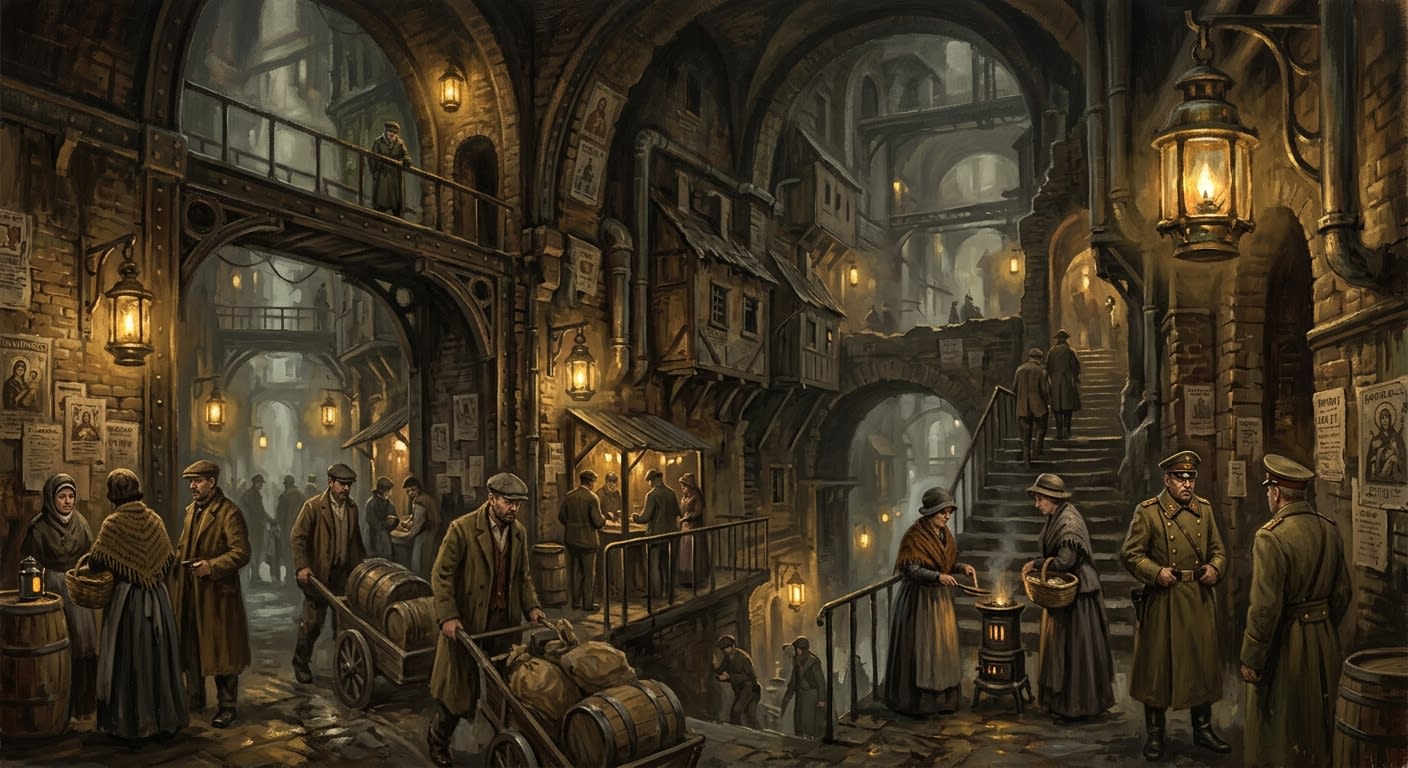
Skopje Lantern Warrens
A city bitten from above, still singing below
The Skopje Lantern Warrens are the tunnel-city beneath a Sundering-eaten ruin, where black-diesel lamps hum in forbidden pre-Codex modes.
Codex Ref. II.4.08-017
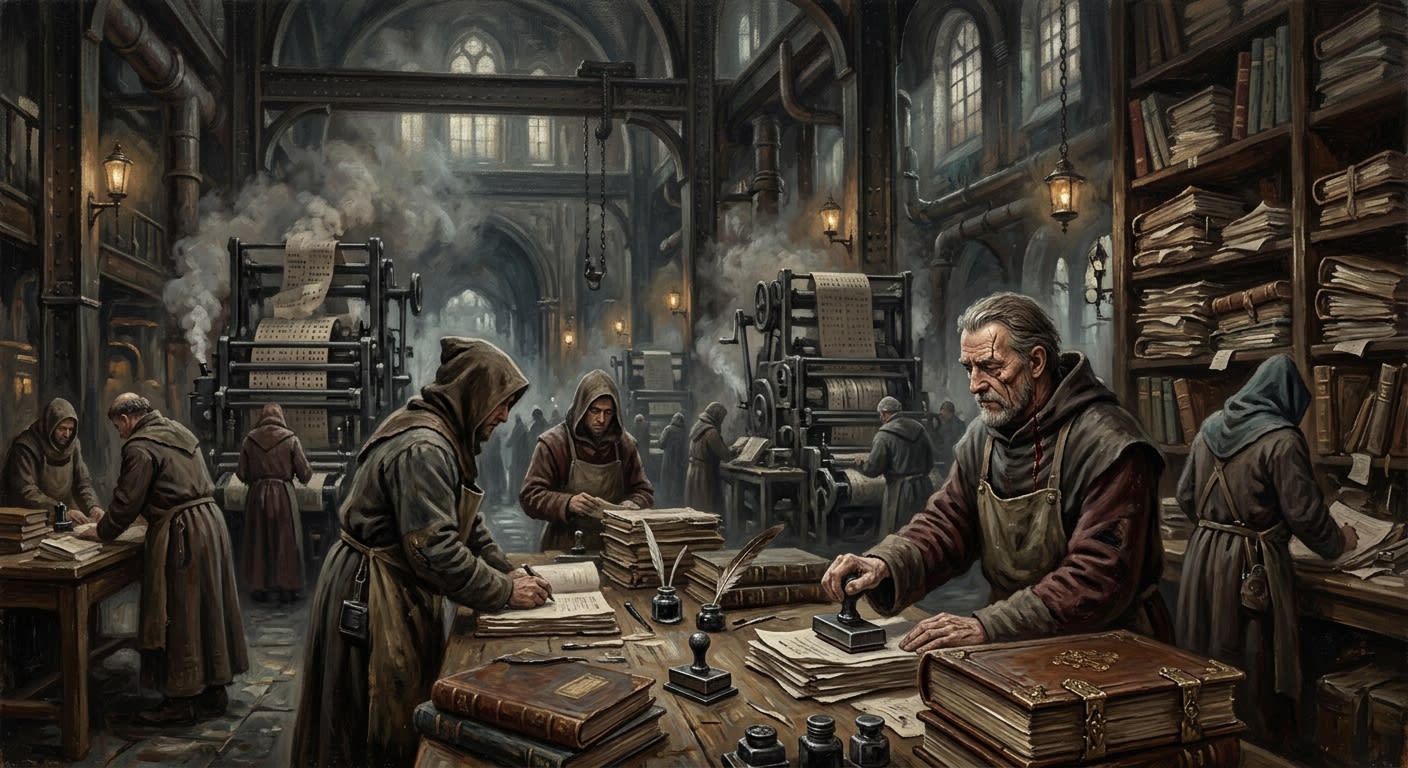
Standing Order 22-D
The law that taught silence to file itself
Standing Order 22-D makes silence legible: the pause before assent, the scar before paperwork, the late answer that becomes evidence.
Codex Ref. XIII.1.99-084
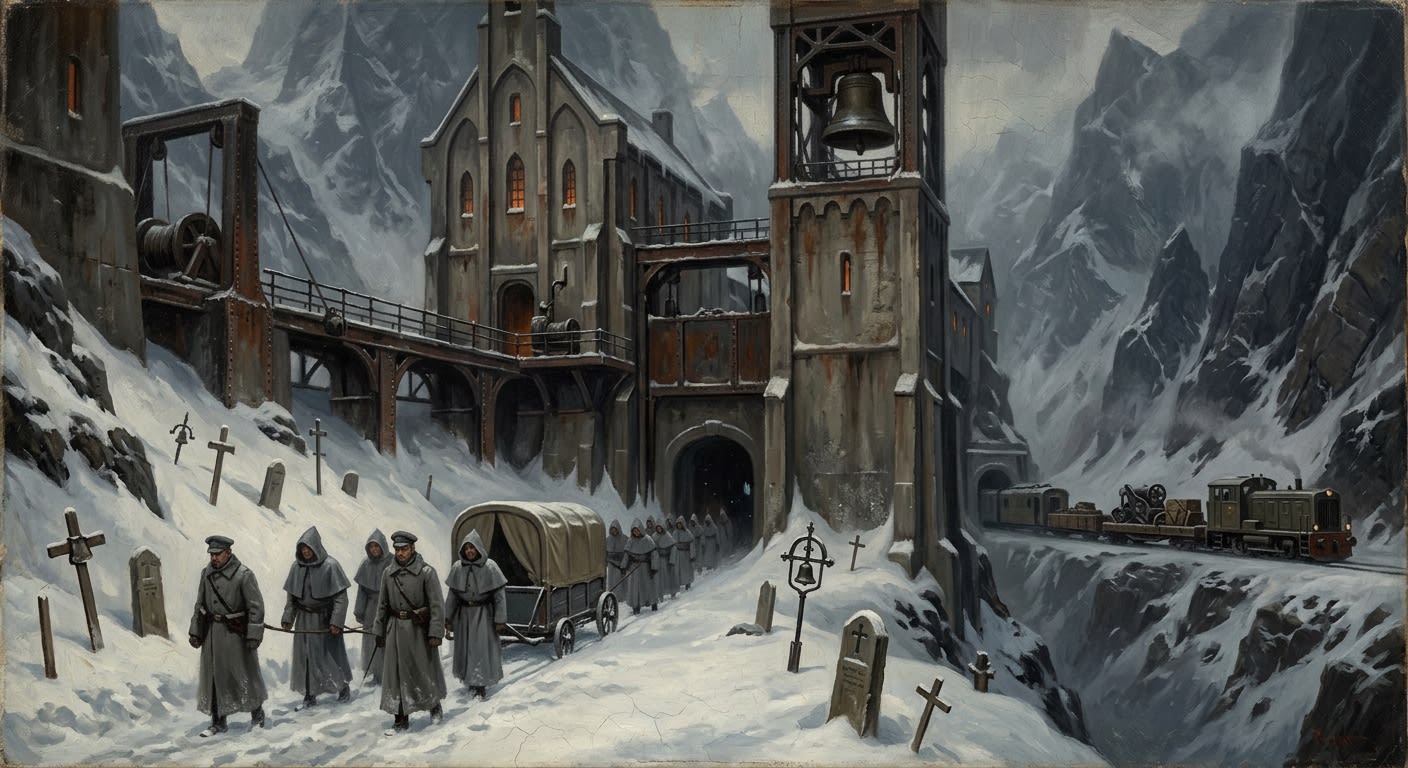
Swiss Cantons
Where mercy climbs uphill and stops writing back
The Swiss cantons keep passes, bells, hospice beds, and the Synod's most merciful disappearances beneath snow clean enough to indict Heaven.
Codex Ref. II.2.08-201

The Ashen Circle
The denied archive that keeps the official world from collapsing
Unsanctioned scholarly network named in A.S. 103, trafficking in forbidden histories and sciences while the Bureaus deny, hunt, purchase, and depend upon its ash-borne work.
Codex Ref. XI.1.01-002
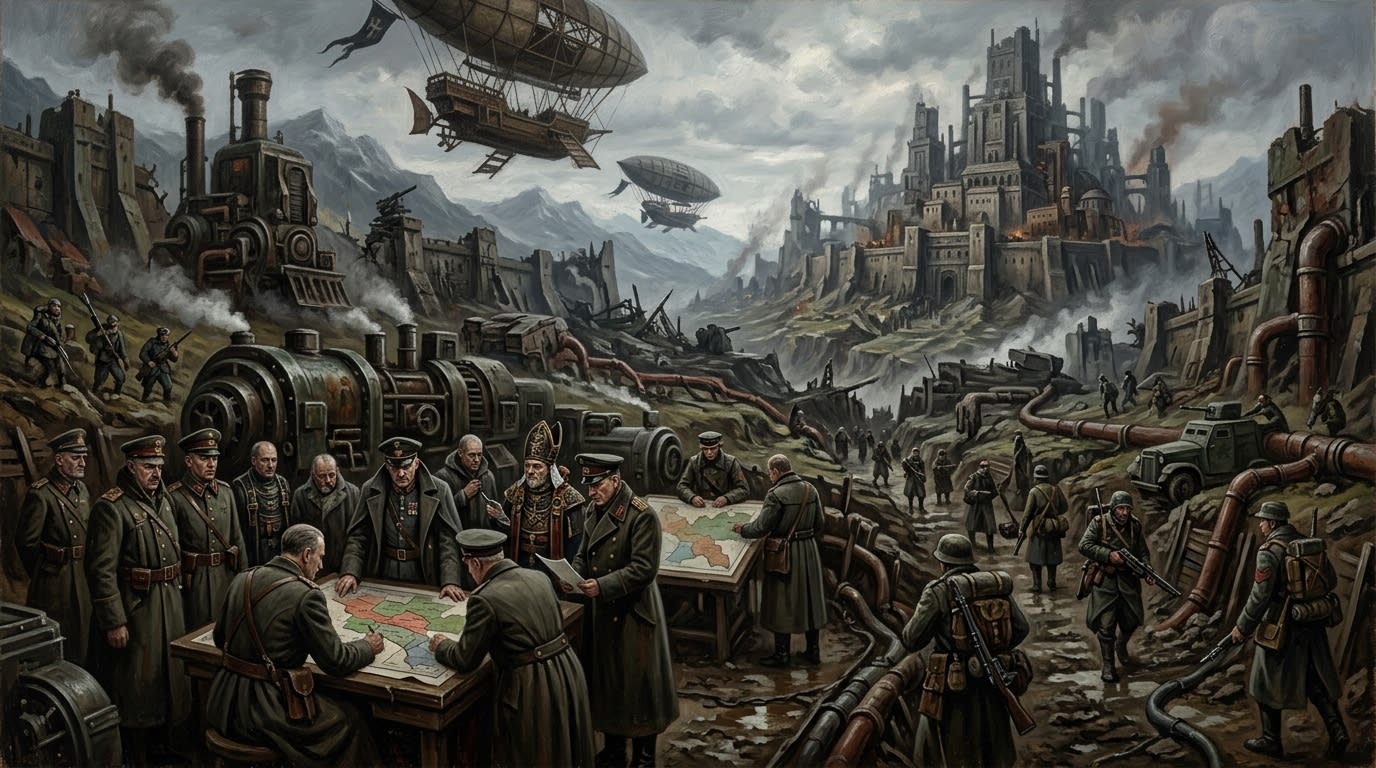
The Balkans
The wound that taught Europe to count its bleeding
The Balkan wound-region, broken first by the Eastern Silence and the Sundering, then divided into Synod margins, contested corridors, Sin-General dominions.
Codex Ref. II.6.05-045
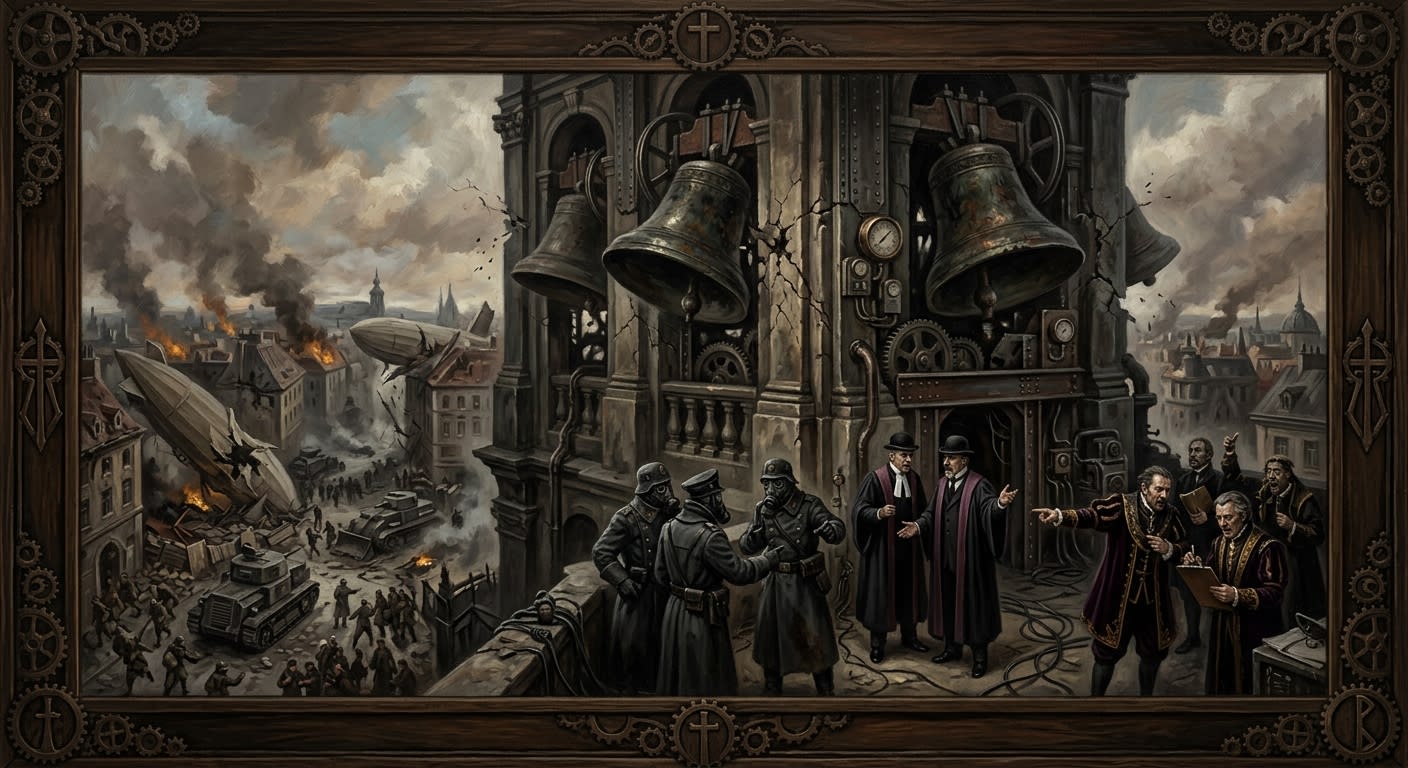
The Bells of Saint Rupert
Bronze sang; committees have been recovering ever since
At Vienna in A.S. 95, the unroped bells of Saint Rupert rang without permission, broke a siege, and left three Bureaus arguing with bronze.
Codex Ref. III.2.04-018
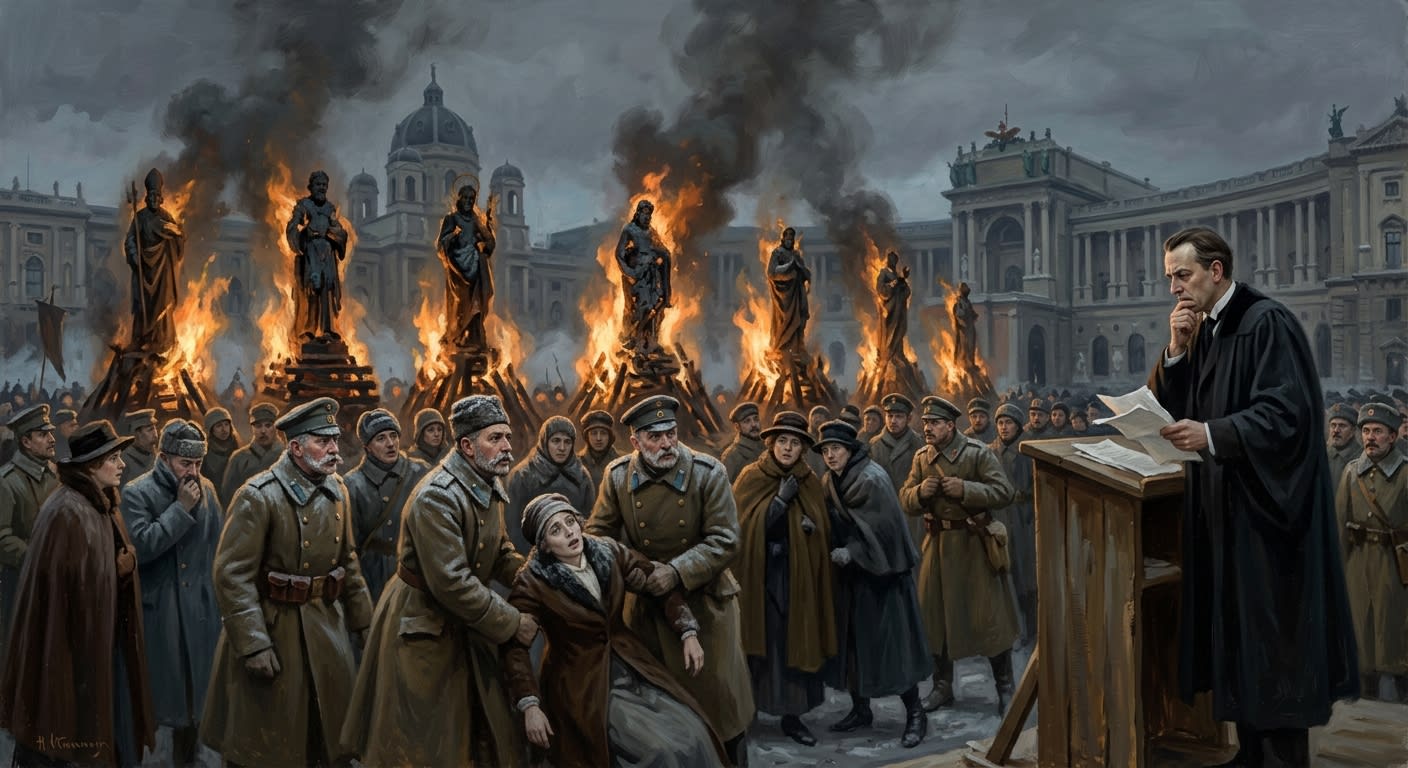
The Black Procession of A.S. 30
Where the Saints Burned Cold and the Rationalists Filed It Under Weather
A staged Rationalist bonfire in Vienna, A.S. 30, where forty-seven saint-effigies burned without heat — the Bureau's First-Order Portent, classified retroactively and still warm.
Codex Ref. VII.3.01-001
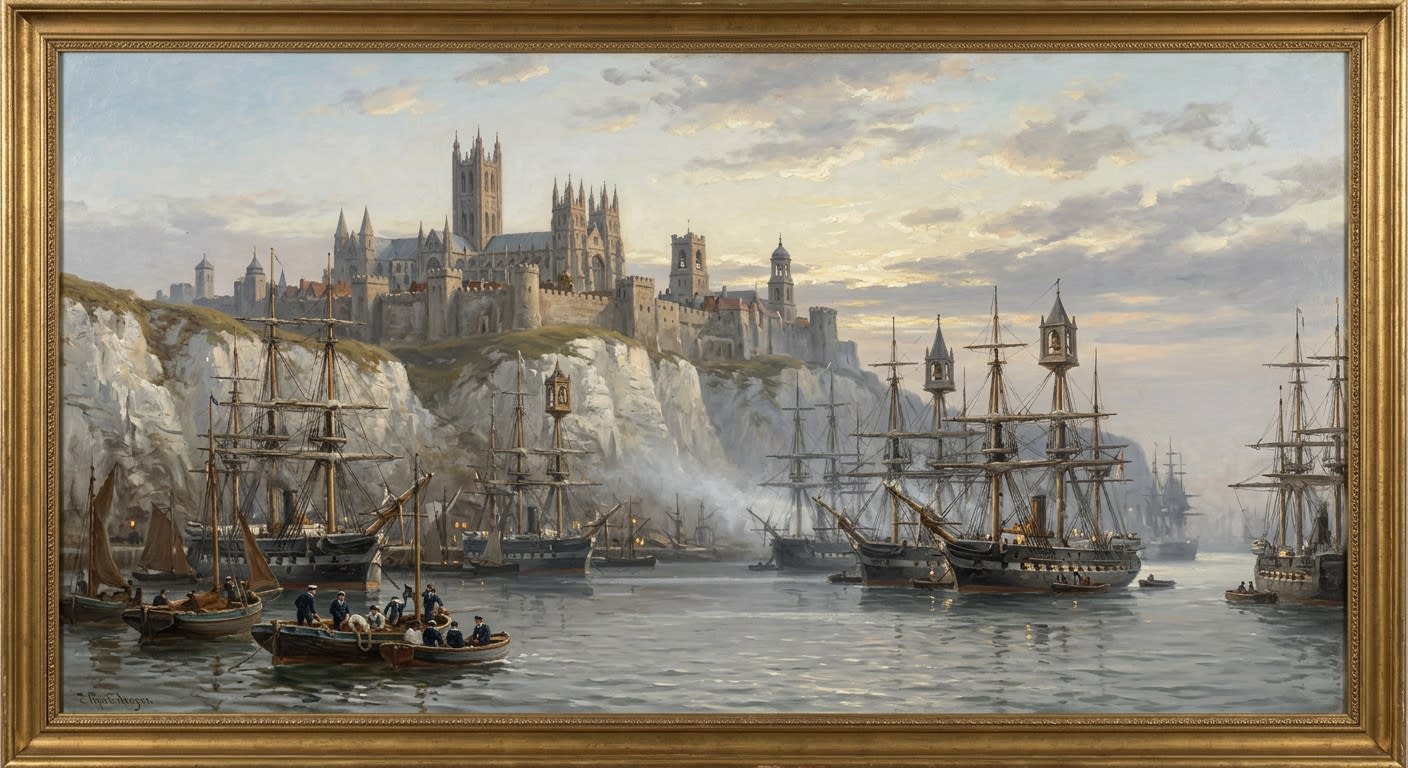
The British Crown
The island the Bureau has spent a hundred and eleven years failing to classify
The Zone 0 co-belligerent that has never submitted to the Concordat and never needed to. Canterbury governs by chivalric charter; three hundred Cathedral Ships hold the Channel; the Bureau of Doctrine considers this theologically embarrassing and strategically essential.
Codex Ref. X.1.01-001
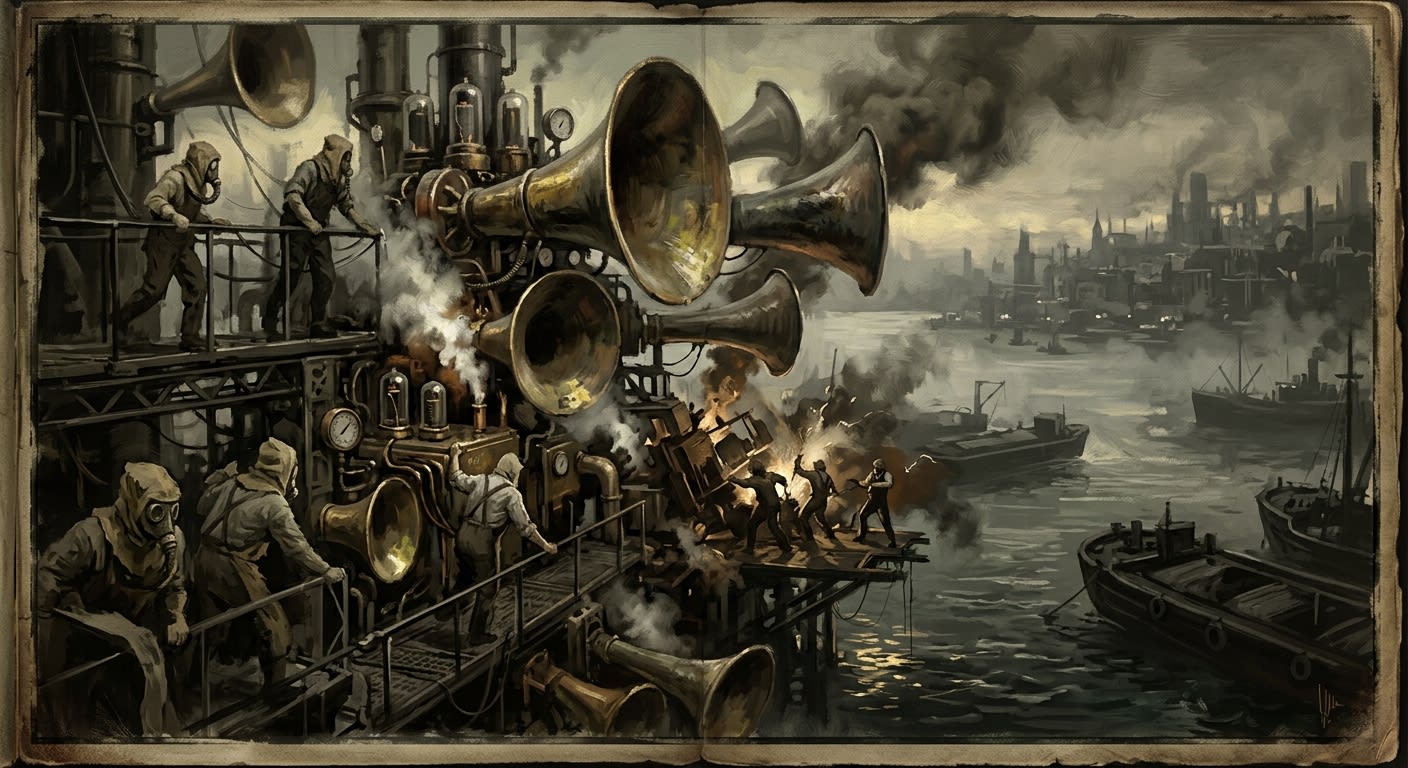
The Broadcast
Eleven minutes, forty-three seconds, and one name the Ledger would not keep still
On 3rd Argent, A.S. 199, Saint Barachiel's Sermon-horns carried an unauthorised apology across the Bosphorus. The machinery survived. The record did not.
Codex Ref. VII.4.09-001
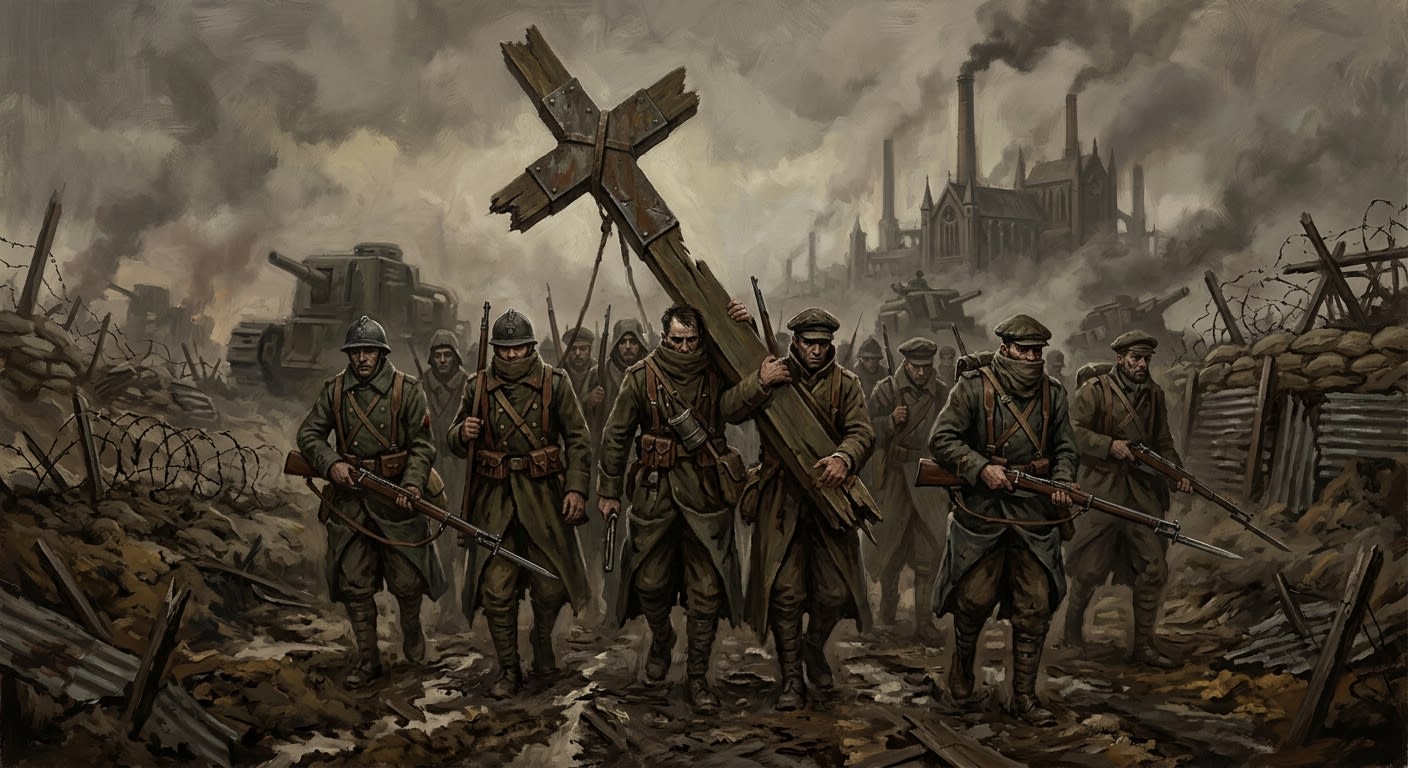
The Broken Cross
The sigil that snapped heaven and called the wound reason
The Broken Cross was Reason's battlefield sermon: a snapped crucifix carried by men who denied symbols while marching under one.
Codex Ref. I.1.05-003
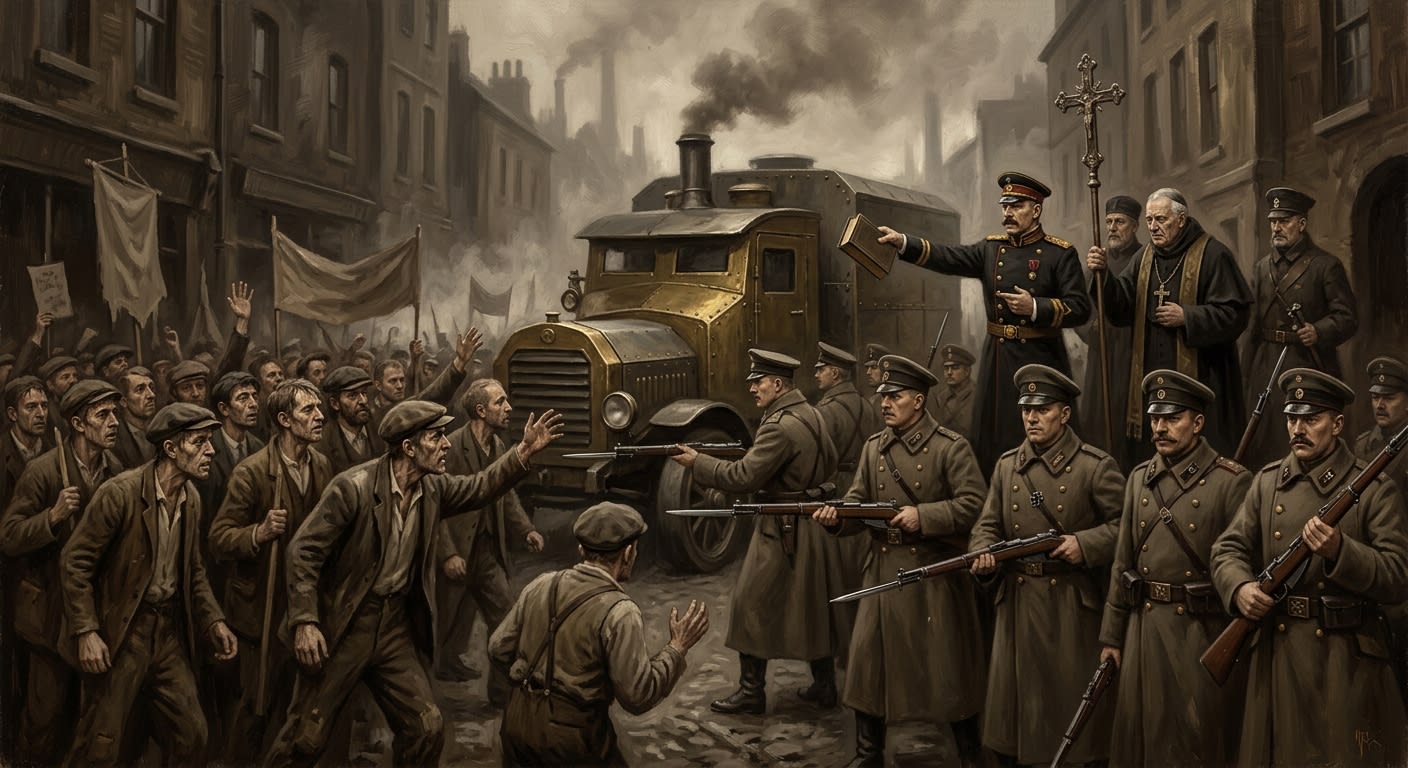
The Broth Riots
The hungry asked for food and received laws
The Broth Riots of A.S. 112 began with thin soup and ended with rifles, saints, Ledger Laws, and the Synod's discovery that hunger becomes obedient once measured.
Codex Ref. VII.8.10-112
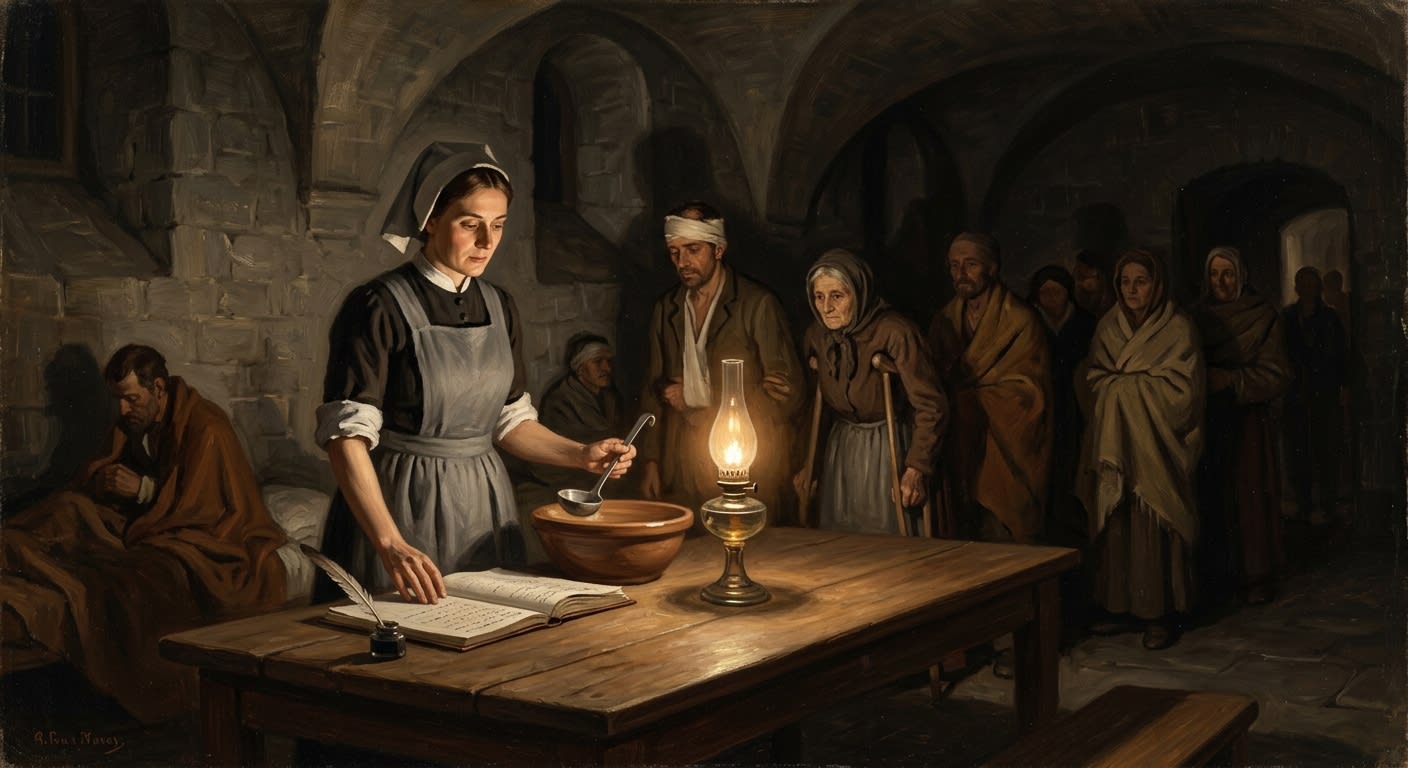
The Bureau of Mercy
Compassion Is a Ration. A Ration Is a Policy. A Policy Is the Synod's Will.
The Bureau of Mercy administers the Synod's hospitals, orphanages, broth-kitchens, and Hospices of Departure — every institution where subjects are at their most vulnerable and therefore most in need of documentation.
Codex Ref. VI.4.12-031
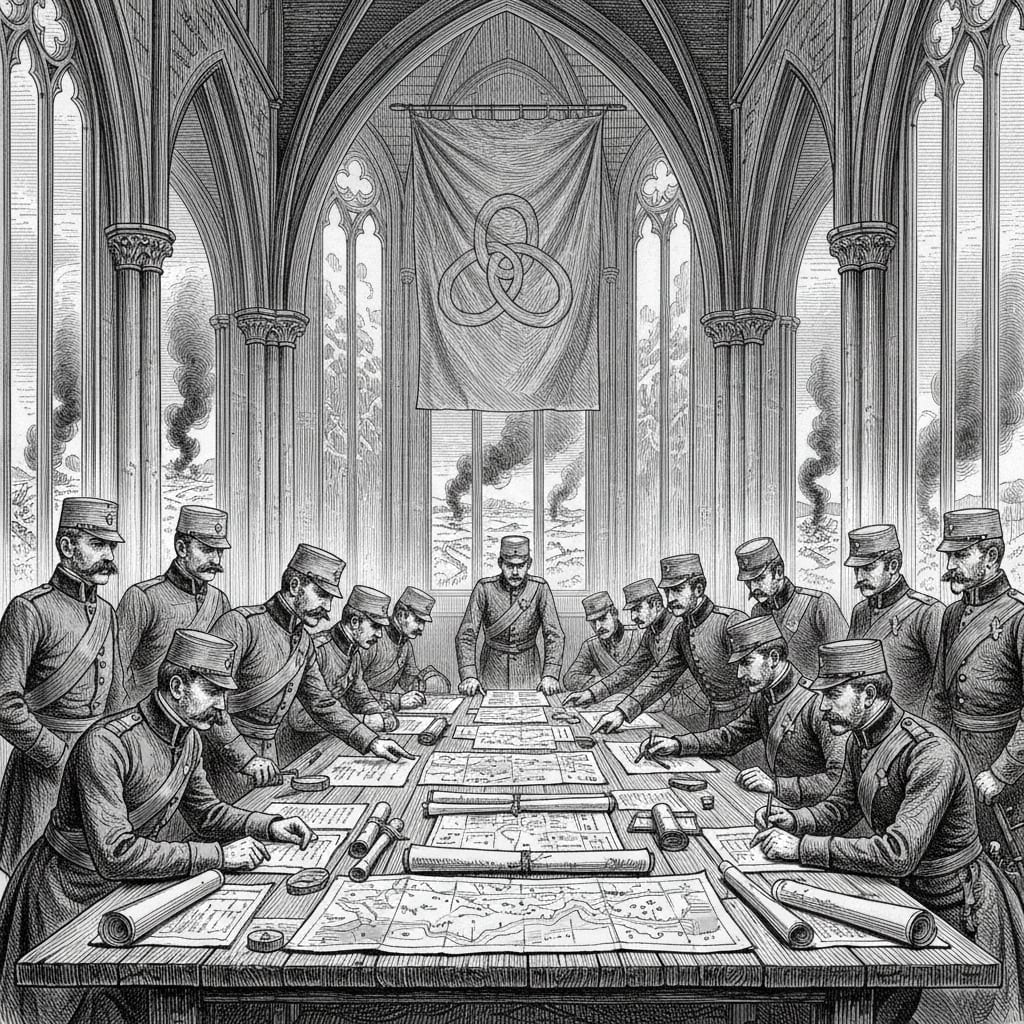
The Bureau of War
The Crimson Sash and the Sanctified Bayonet
Founded after the Siege of Vienna so that the Faith would never again beg feudal lords for swords. War raises the levy, baptizes the bayonet, and writes after-action reports indistinguishable from scripture.
Codex Ref. III.2.07-041
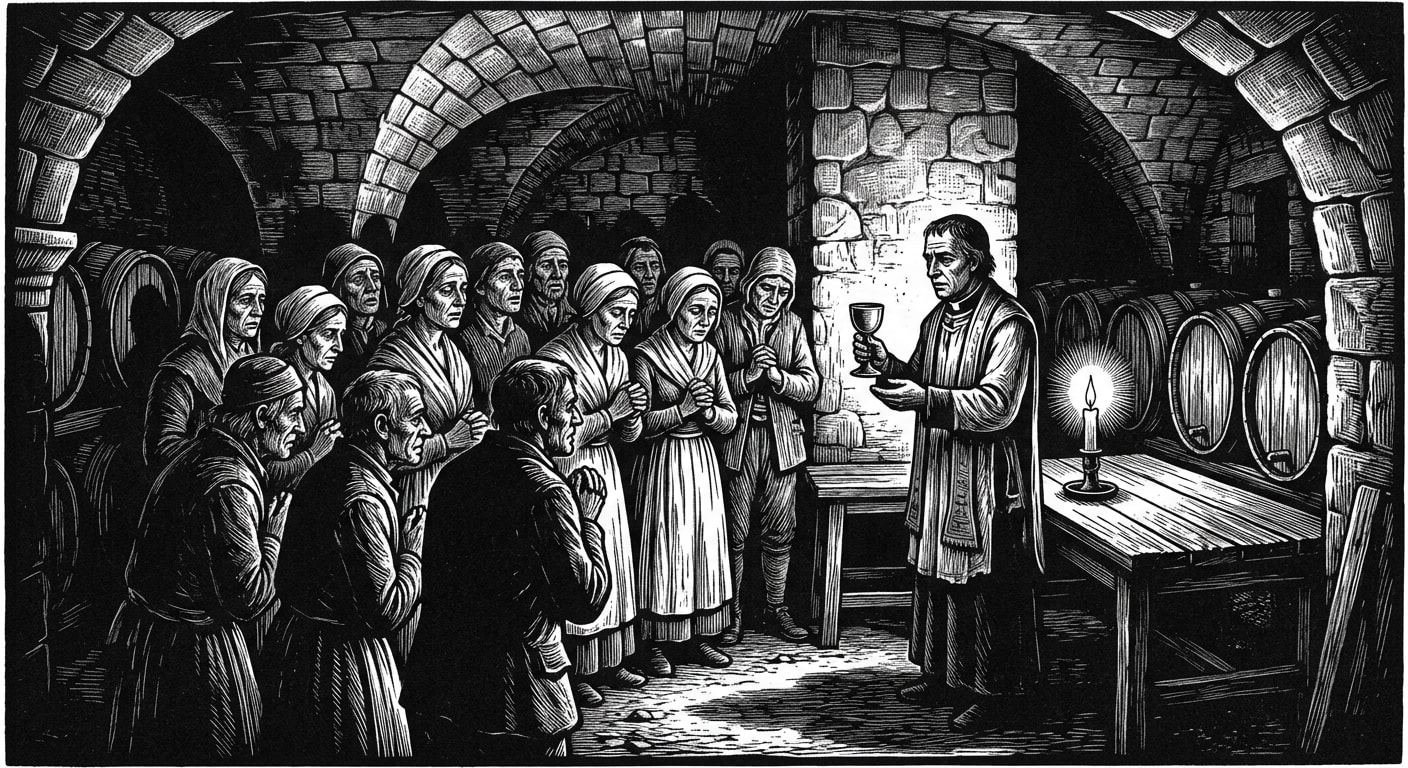
The Cellar Saints
Those who hid in basements built the floor on which the Synod stands.
The frightened faithful who descended into cellars and catacombs when Reason conquered Europe, preserved the relics, and became the soil from which the Synod grew — whether they consented to the harvest or not.
Codex Ref. IV.2.14-003
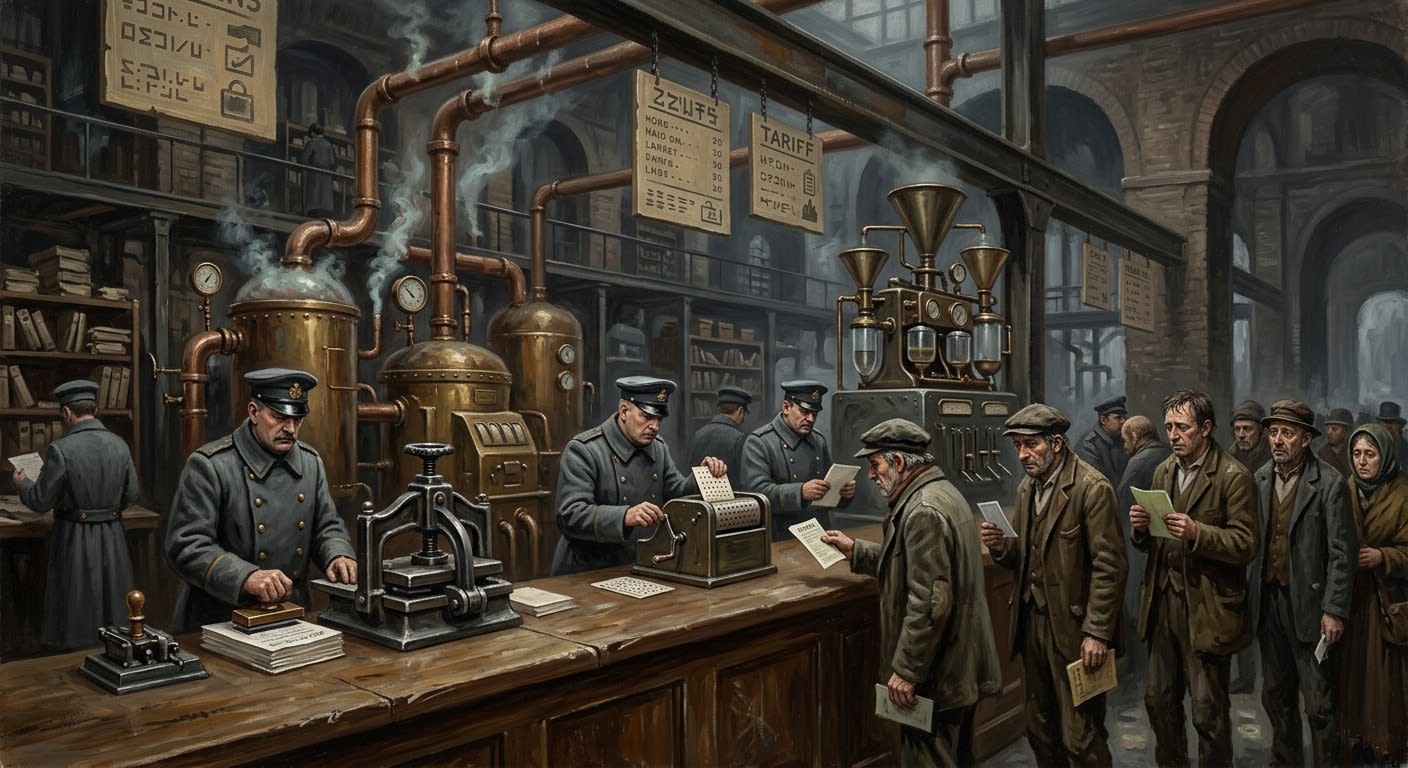
The Censorium of Taverns
Joy is safest when entered, weighed, and extinguished by permit
The Censorium of Taverns is the Bureau of Festivals sub-office that licenses drink, meters laughter, pumps curfew-fume, and proves that even joy may be made obedient by placard, bead, and ash.
Codex Ref. VIII.5.07-001
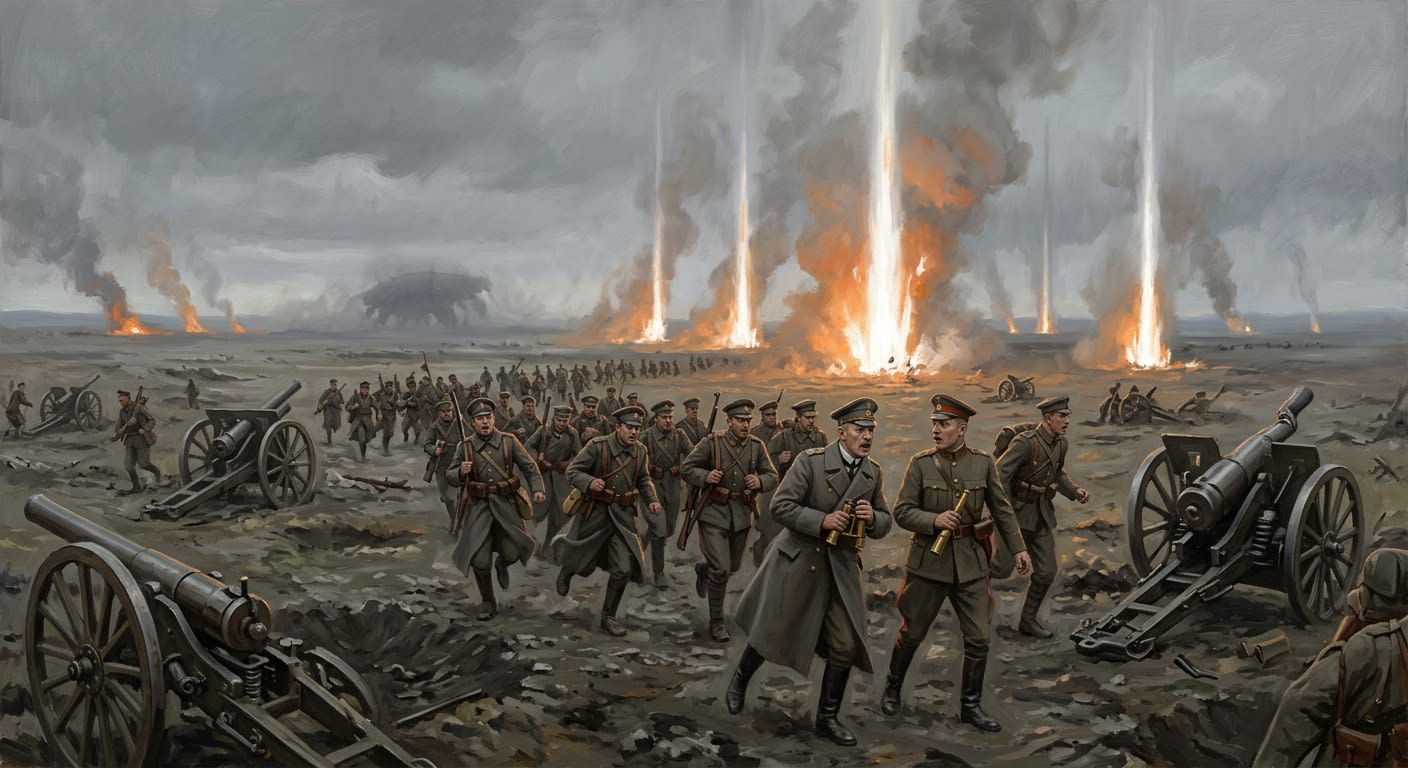
The Collapse of the Rationalists
The Adversary did not invade. It arrived.
The Rationalist Republic dismantled every spiritual defence on the continent, and in A.S. 45 the Adversary walked through the unguarded door. A doctrine article, a body count, and a mandatory catechism text.
Codex Ref. VII.2.01-001
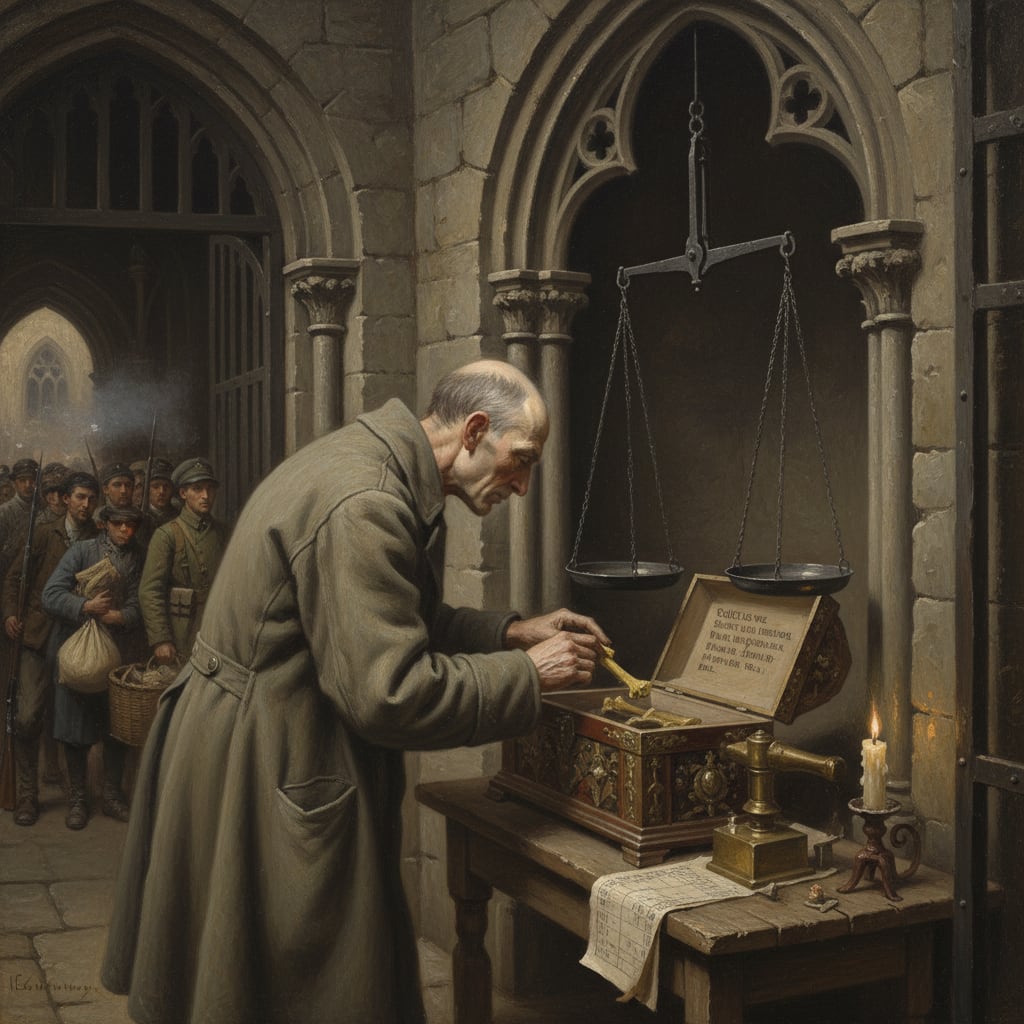
The Commerce Clerk (Tariff-Chapel Weigher)
The man who stands between a bastion and famine, and who resolves the question with the splintered bone of a saint.
The Synod's most bribable sacrament: the chalk-fingered clerk whose iron scale, calibrated against saint-bone, determines whether a bastion eats.
Codex Ref. XII.8.01-001
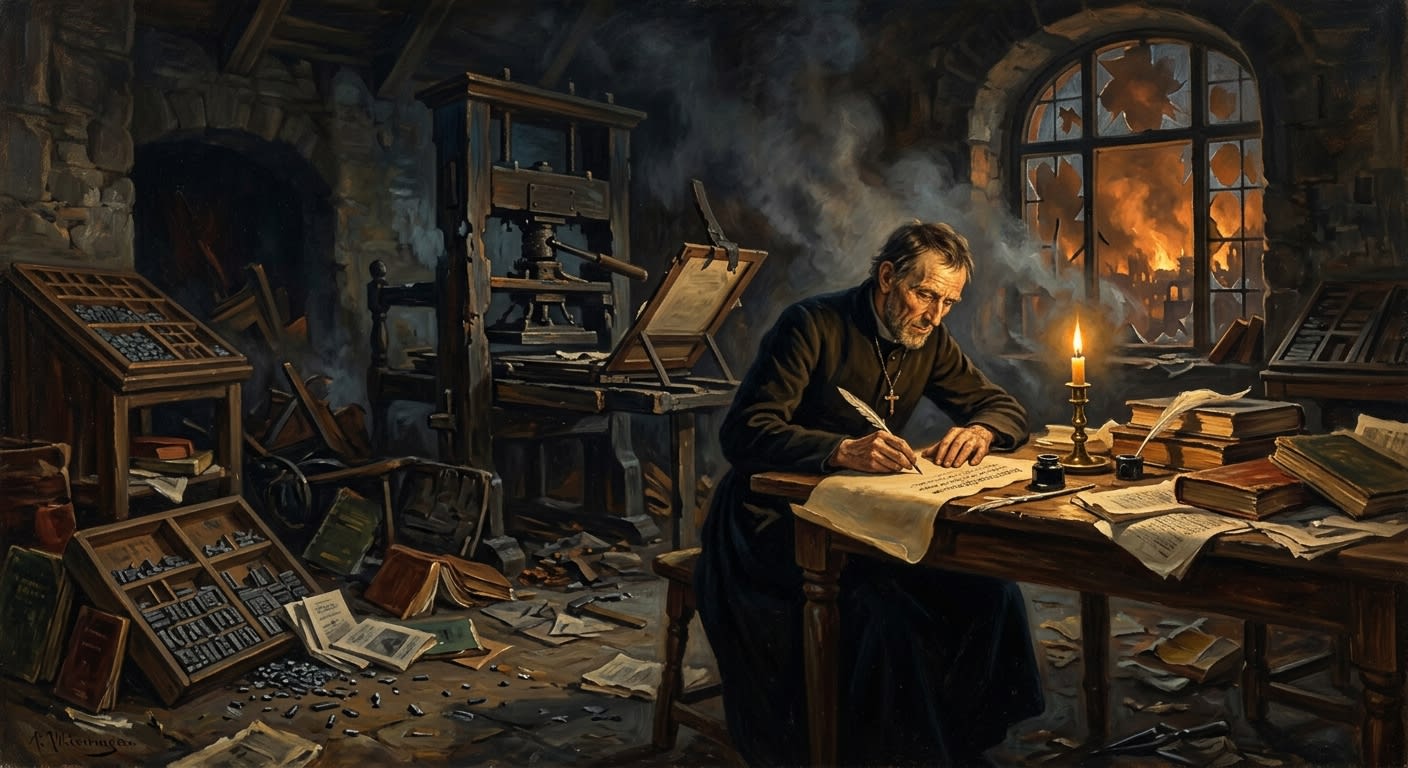
The Common Allegiance
Seven pages that ended the age of a thousand altars
Drax examines the seven-page A.S. 55 charter that bound dioceses through local subscriptions and helped build the authority later formalized at Strasbourg.
Codex Ref. VI.5.01-001
The Concordats of Ulm
Twelve signatures. One seal. Two hundred and fifty-six years of warm wax.
The founding instrument of Rationalist organisation — a compact of 'rational fraternity' signed in –55 A.S. by twelve university professors who mistook cleverness for wisdom, and built the machine that drove a century of war.
Codex Ref. II.7.03-055
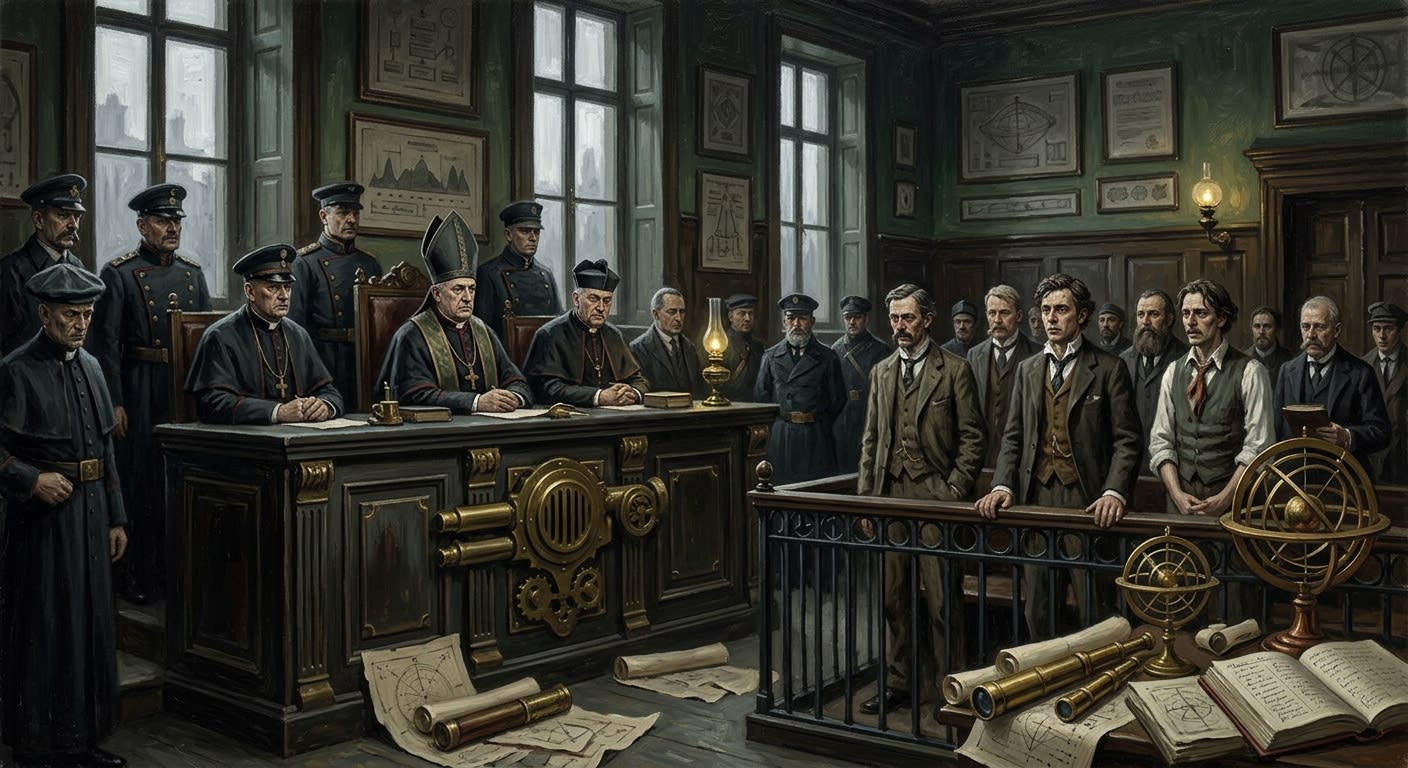
The Condemnation of Kraków
The stars were permitted to move after Doctrine named the motion
The Bureau of Doctrine's condemnation of Kraków's astronomers, whose calculations were accurate enough to become intolerable.
Codex Ref. VII.8.03-002
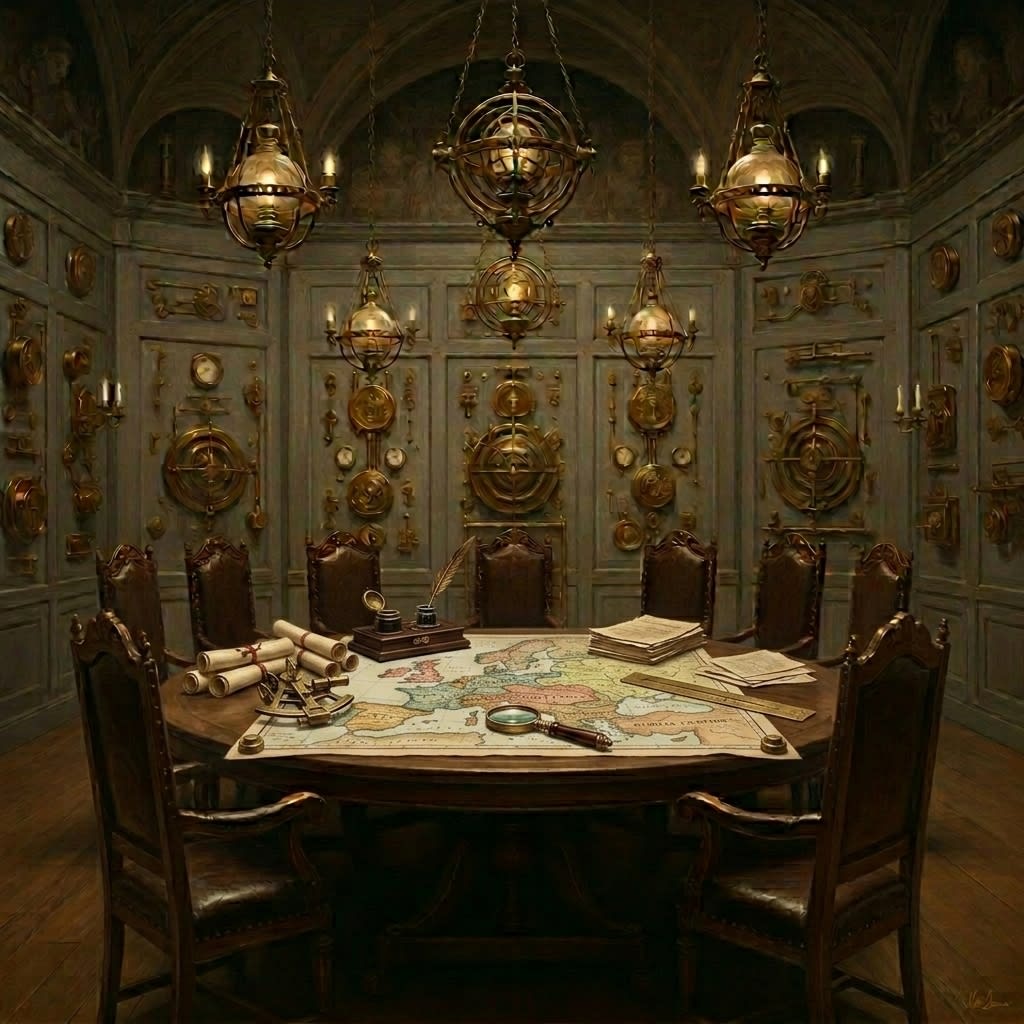
The Council of Nine Rationalists
Nine men governed Europe. Their names are sealed. Their methods are retained.
The sealed governing body of the Rationalist Republic — nine nameless men who administered a continent for fifteen years with instruments of measurement, mass surveillance, and the removal of tongues, until the Sundering settled the argument for them.
Codex Ref. I.1.03-001
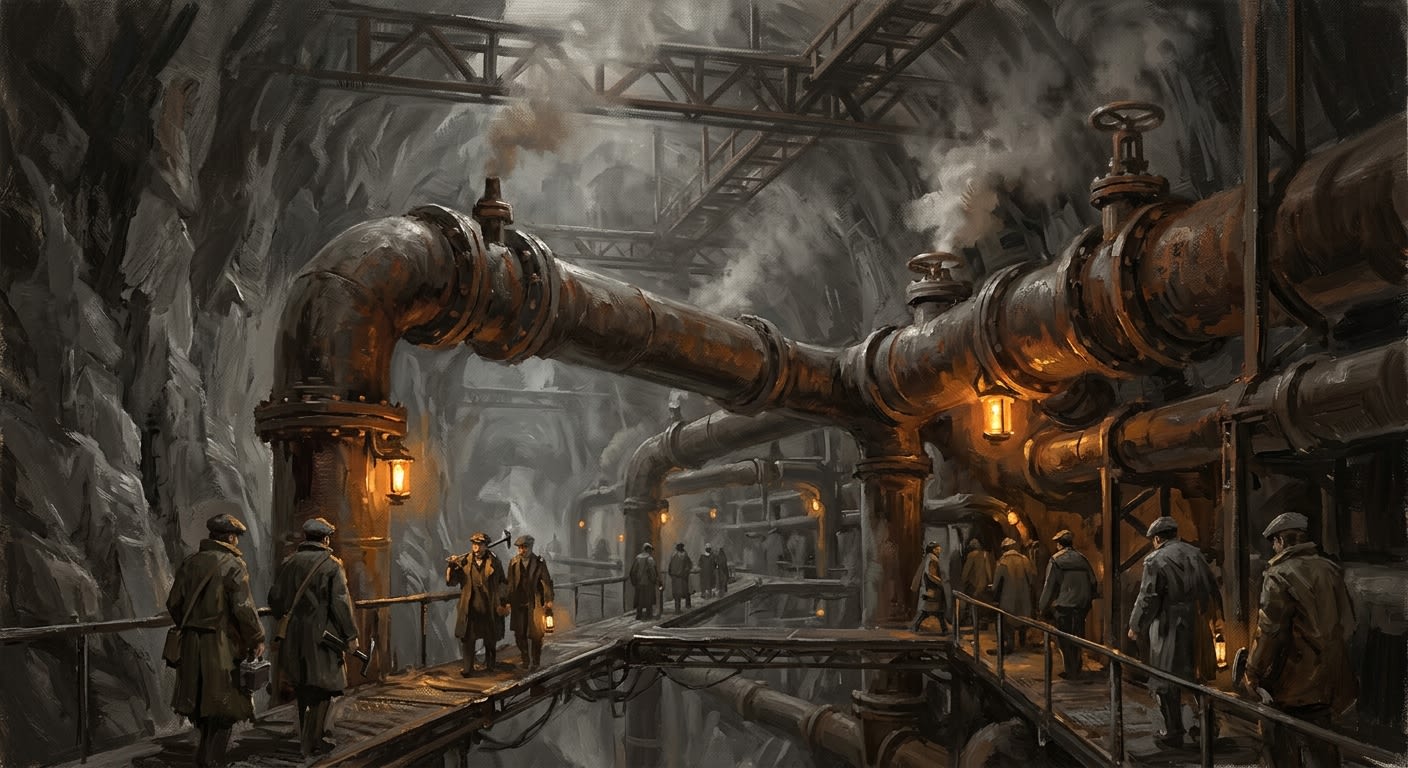
The Counterkey Circle
A forbidden harmonic. A destroyed voice. A mountain that remembers what it sang before the Choir Magistracy taught it to forget.
The Counterkey Circle holds that the Gasket Choir sings the wrong notes — deliberately, structurally, to manufacture dependency. The Bureau of Bells has sent four commissions to investigate. The fourth has not returned.
Codex Ref. XII.7.03-119
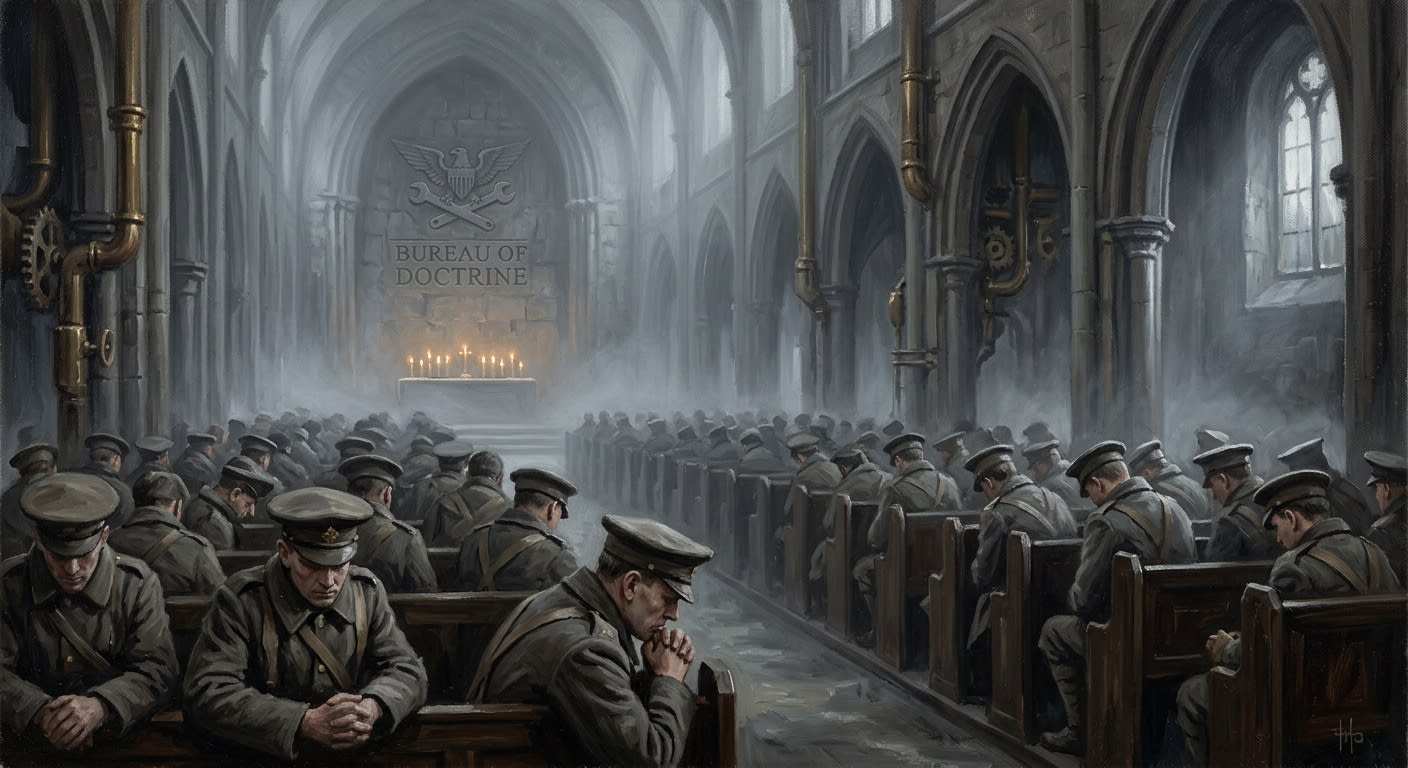
The Creator
The Bureau has two words for the most important question in theology. This entry contains both of them.
A doctrinal entry on the Creator composed by Hieromnemon Drax under compulsion, covering divine nature, the Silence, the inconvenience of miracles, and four forbidden heresies the Bureau insists do not exist.
Codex Ref. VI.1.01-001
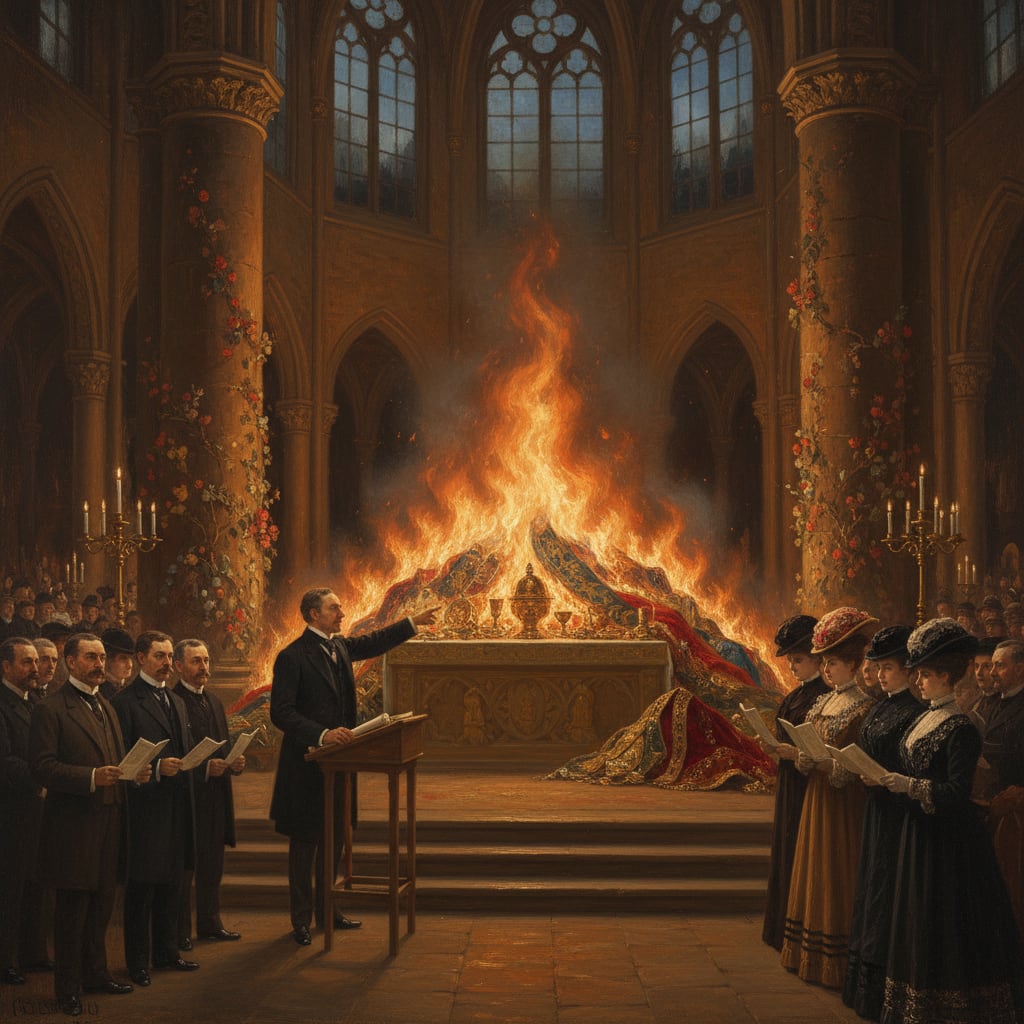
The Desecrations
Being the Bureau of Doctrine's Definitive Survey of the Rationalist Programme of Coordinated Spiritual Aggression, A.S. 0–45, Classified Retroactively in A.S. 92, and Updated at Considerable Institutional Expense in A.S. 200
The Rationalists destroyed two thousand sanctuaries, melted eight hundred and ninety-one bells into cannon, and killed three thousand four hundred clergy in a programme they insisted was spontaneous. Spontaneity does not print programmes.
Codex Ref. VII.1.01-001
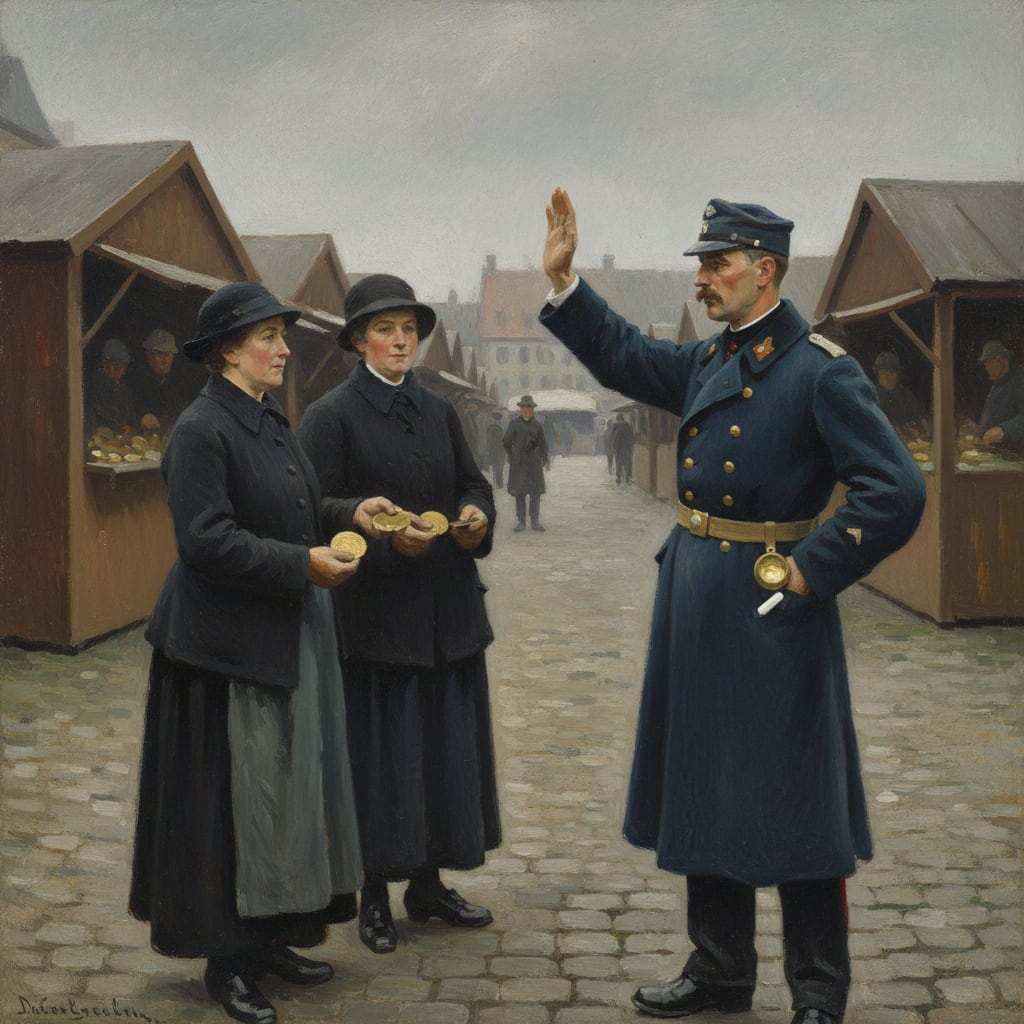
The Doctrine Street-Vicar
The bell's feet; the chalk's teeth; the compliance that comes to you.
The Bureau of Doctrine's mobile enforcement arm: four thousand three hundred chalk-bearing officers who walk where the bell cannot reach, inspect purity tokens, and mark doorframes in white, yellow, and red.
Codex Ref. XII.9.02-001
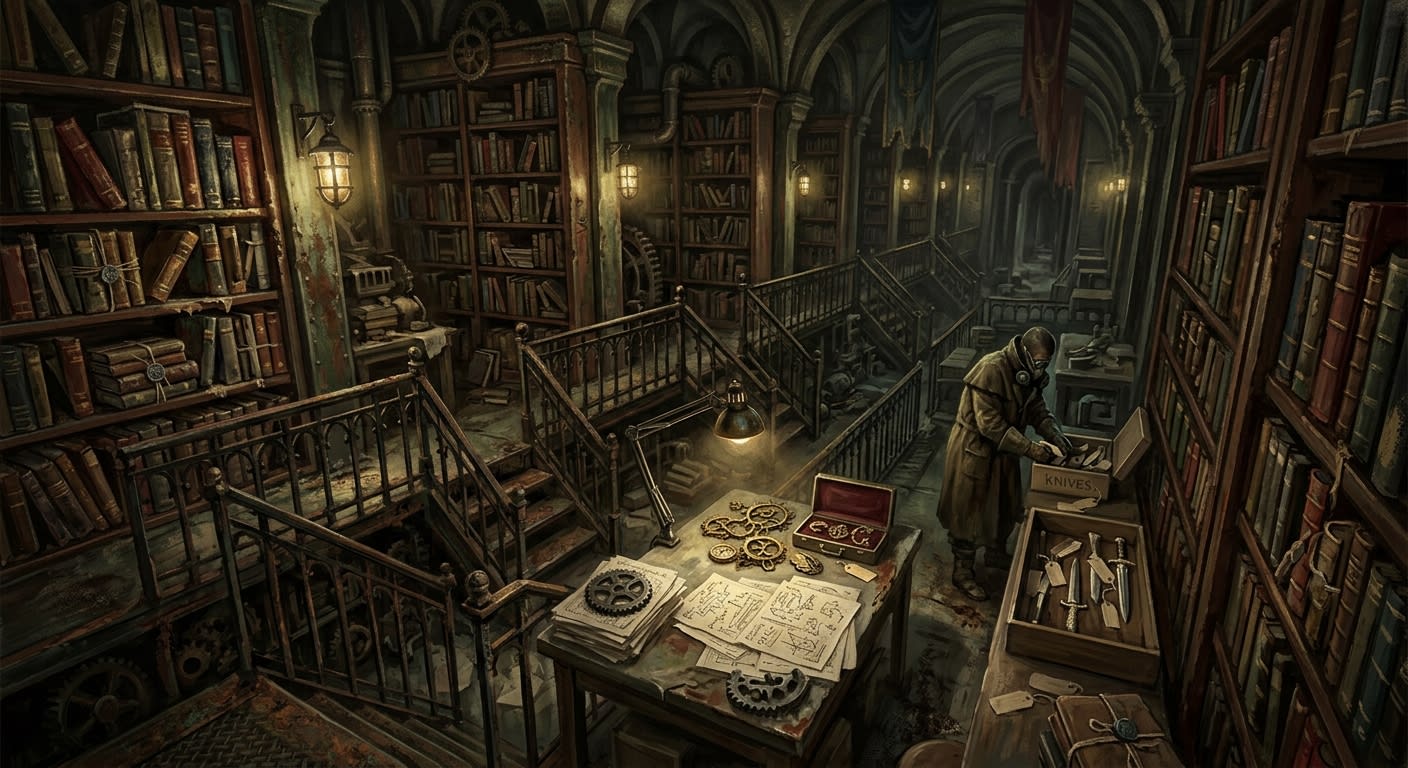
The Forbidden Stacks
Where heresy is shelved close enough to hate efficiently
The Forbidden Stacks beneath Strasbourg preserve Rationalist paper, contraband symbols, and other knives the Bureau prefers labelled rather than lost.
Codex Ref. II.2.06-001
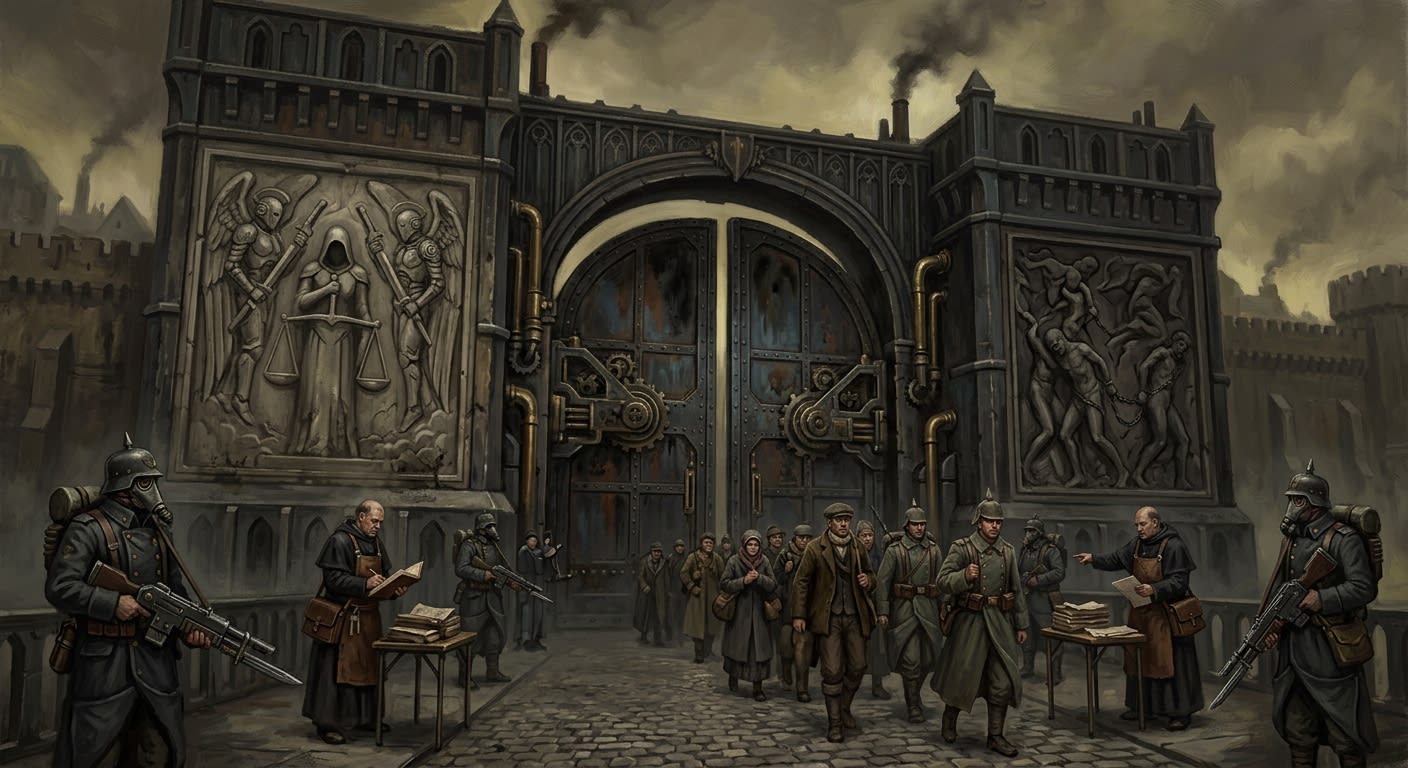
The Gates of Regensburg
Blessing above, curse below, and the pamphlet between
Regensburg's western gates bless and curse the traveller at once, leaving theologians, pamphleteers, and sinners to discover which verdict bites first.
Codex Ref. VII.2.01-003
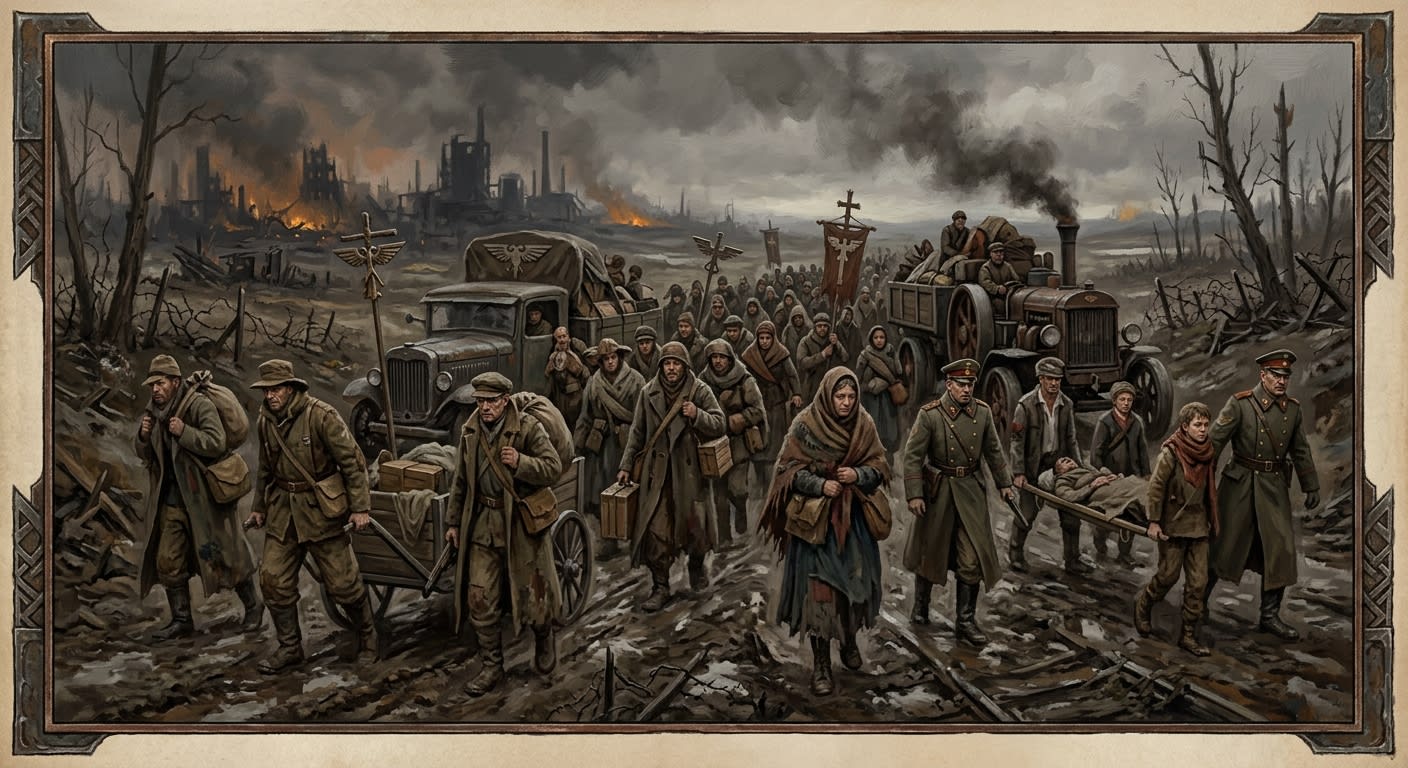
The Great Retreat
Seventeen years of westward mud before the Line learned to stand
From A.S. 48 to A.S. 65, the faithful West walked, bled, improvised institutions, and finally stopped running where the Sagittal Line began to hold.
Codex Ref. VII.1.03-001
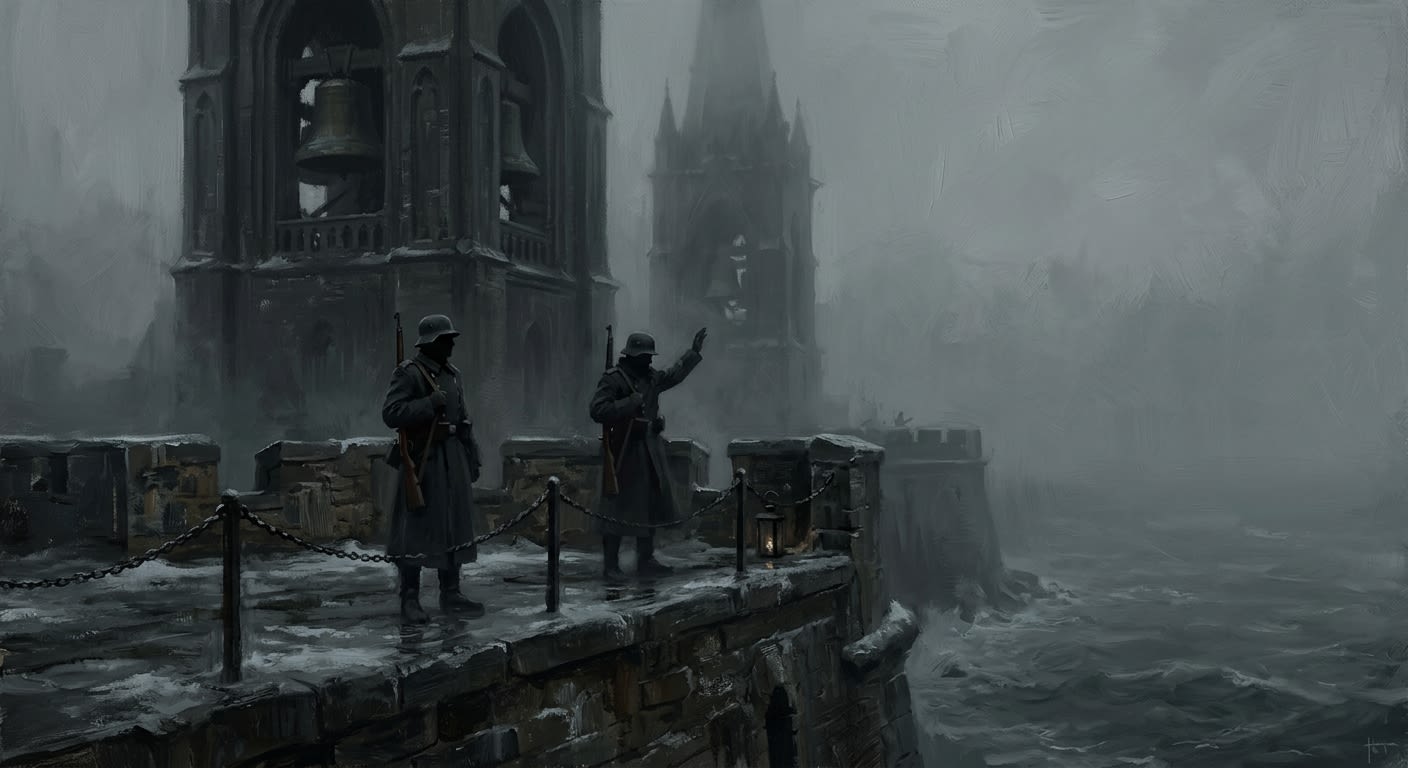
The Grey (The Unnamed)
Eleven years of classification pending, and the Bureau's best answer to why
The Grey is not a Sin-General. The Bureau has known this for eleven years and found the fact so uncomfortable that it has not yet produced a classification. Drax produces one anyway.
Codex Ref. VI.3.01-001
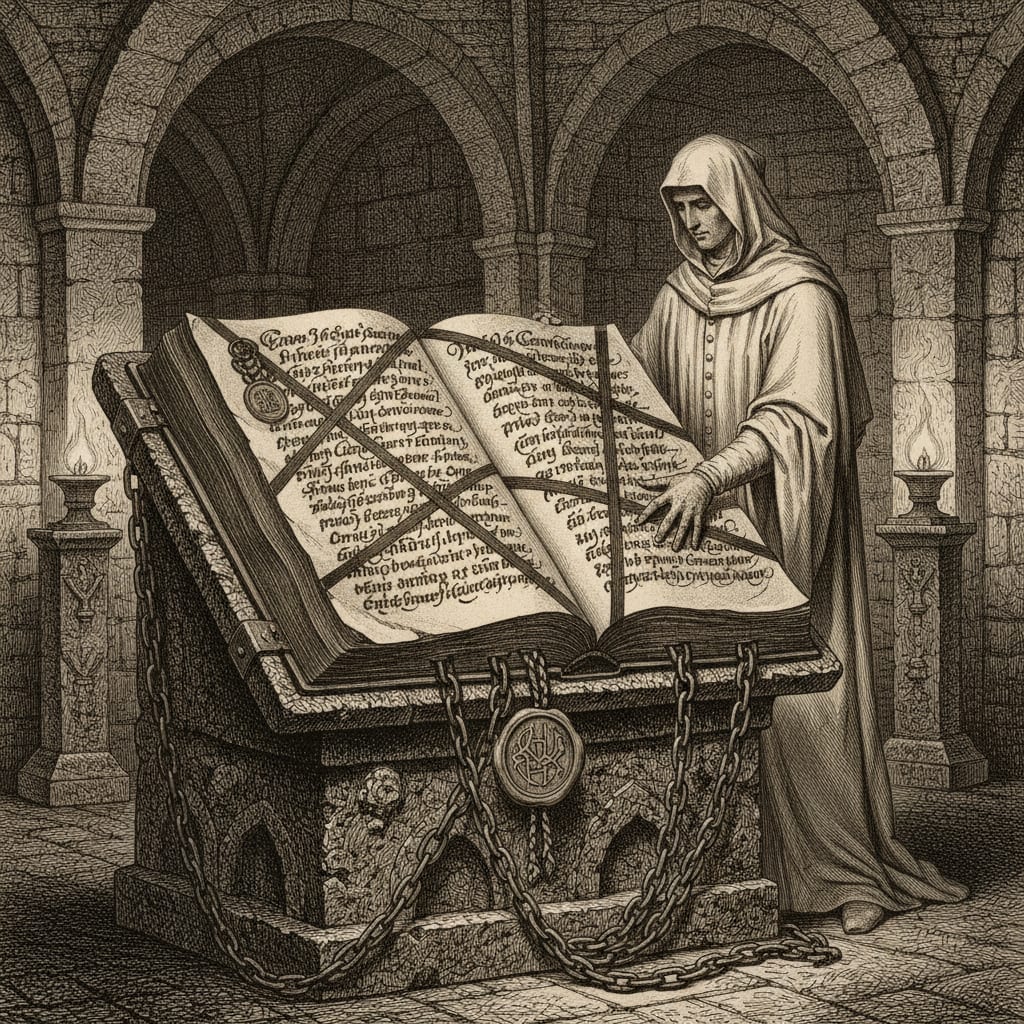
The Index Damnatus
A Catalogue of Forbidden Names, Texts, and Silences
The rolling compendium of everything the Synod has declared unfit for human knowledge — books, names, songs, bloodlines, flavors of incense, and at least one species of moth.
Codex Ref. III.4.09-031
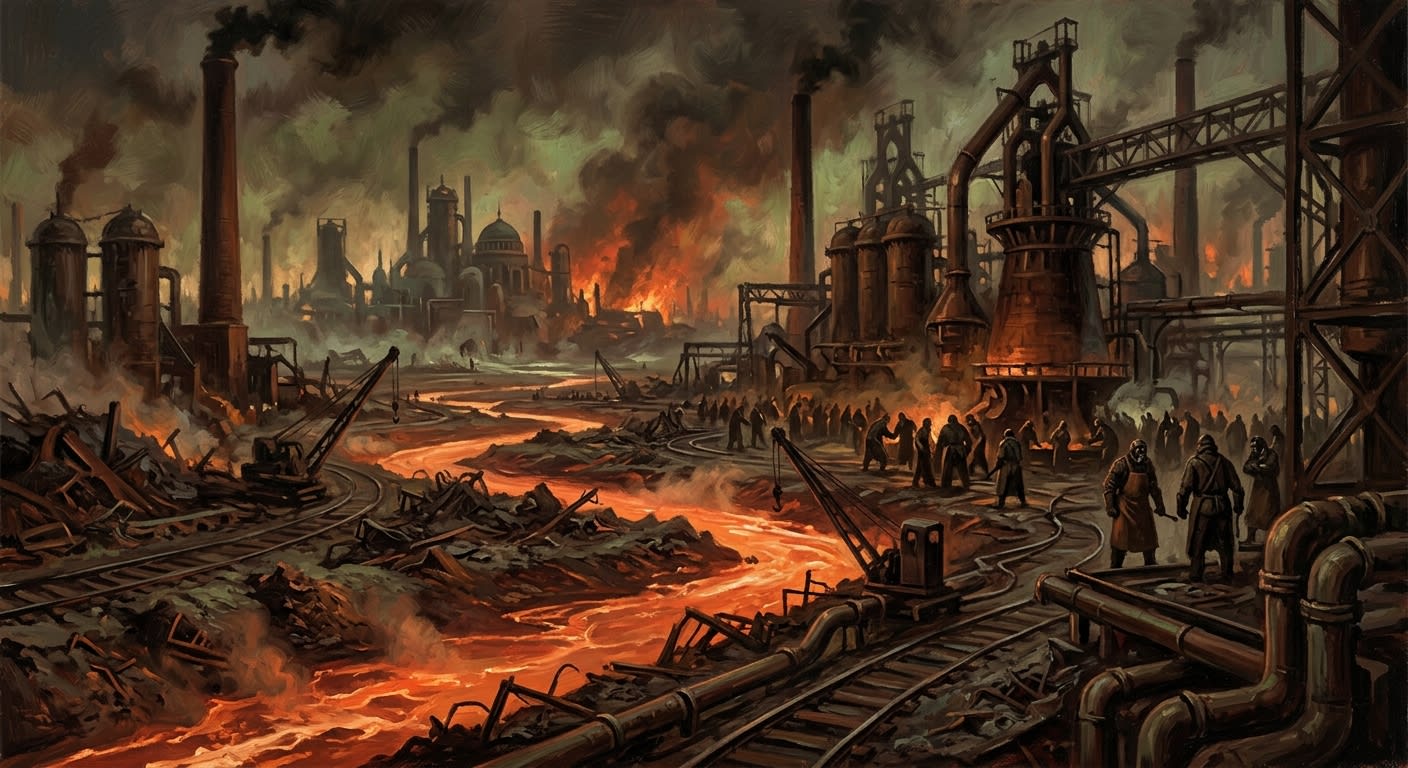
The Iron Wastes
Where Wrath taught geography to burn without cooling
The Iron Wastes are Maldrake's Thracian furnace-country: slag-rivers, moving heat, hostile iron, and the northern pressure against Constantinople.
Codex Ref. VI.1.03-001
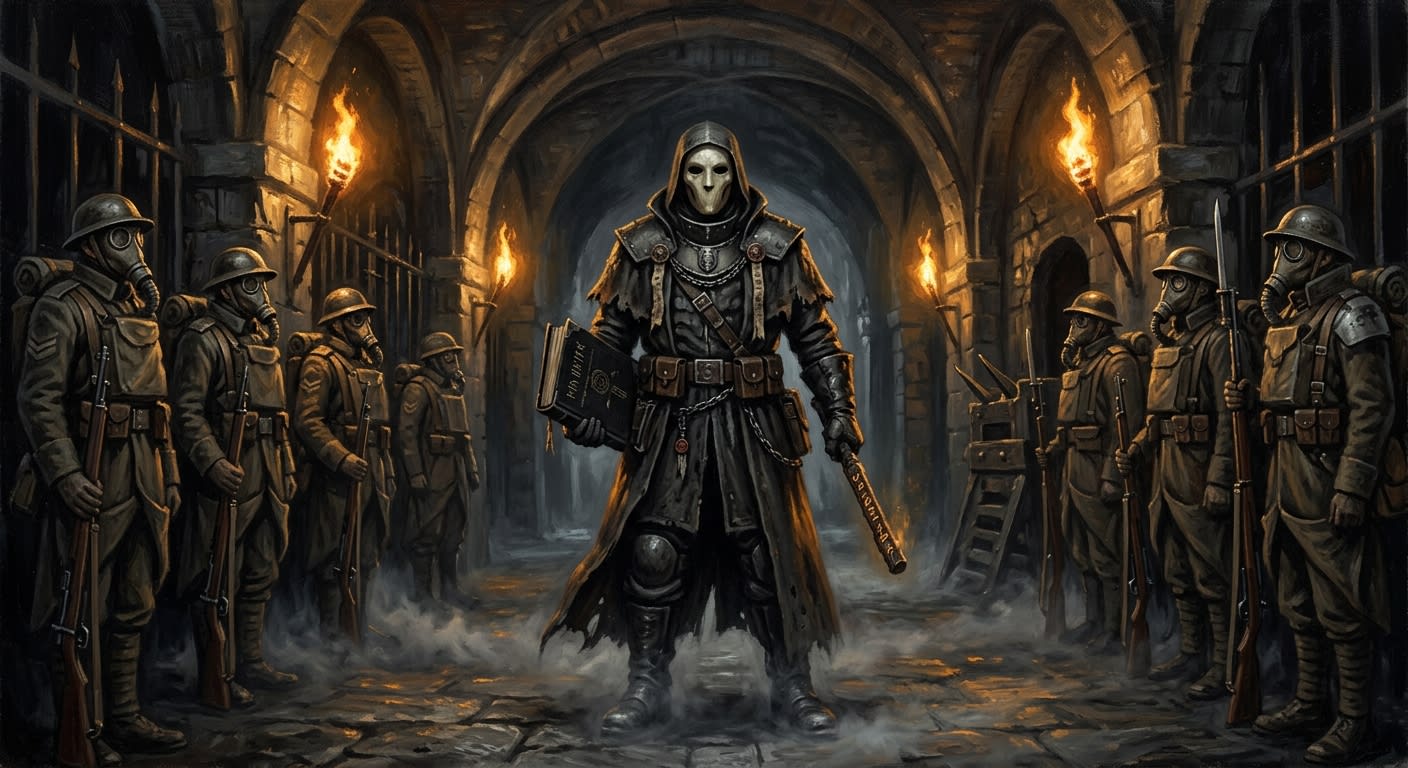
The Judges
They walk without letter, without herald, and without the patience of the Bureau.
The Judges arrive without letter, try without jury, and depart without filing. The Bureau denies they exist. It has been denying this since A.S. 92. The denial requires renewal every thirty years, which is itself a kind of evidence.
Codex Ref. V.1.01-003
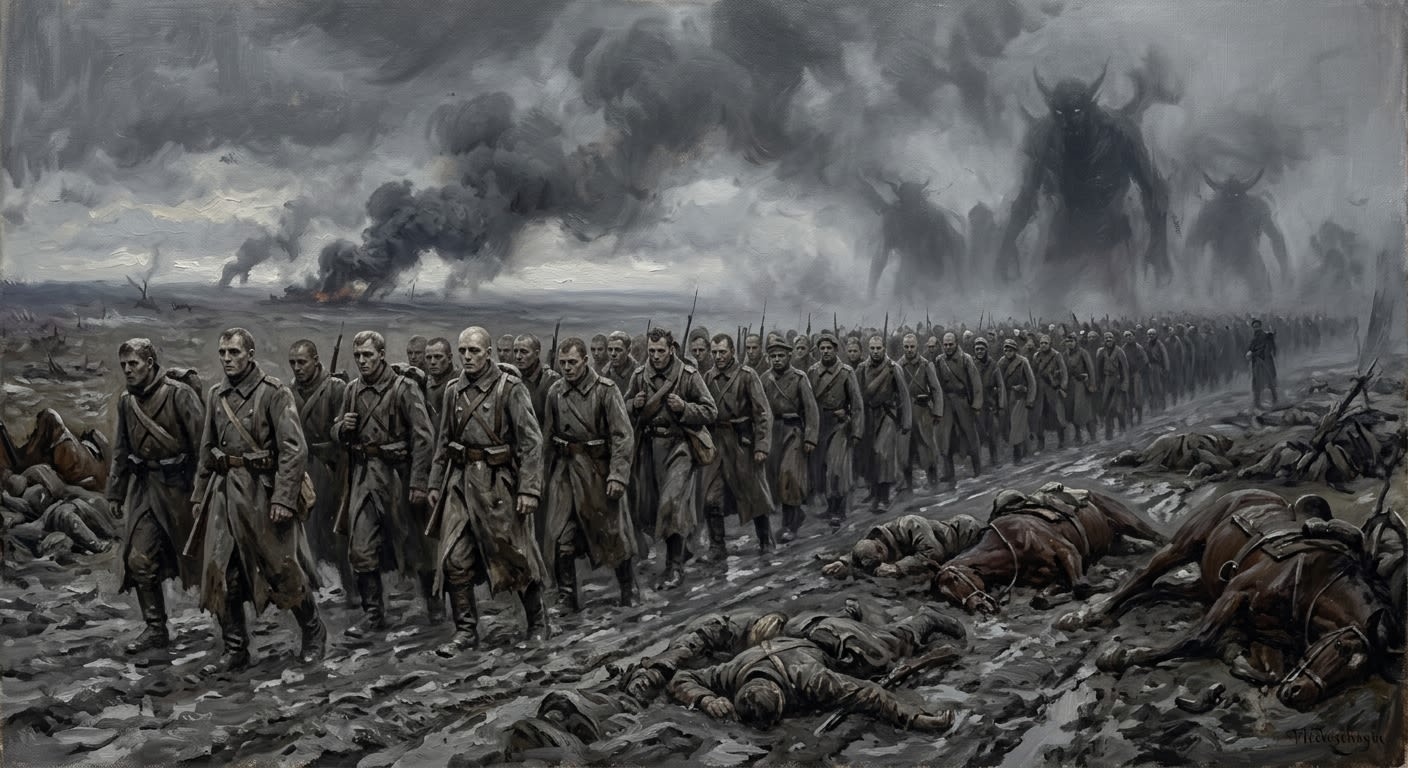
The Legions of Sin
Forty-seven souls for every demon — and the Bureau calls this mathematics
The mortal host beneath the Lie's banners: Thralls, Hollowed, Ash-Mothers, Blood-Tithes, Wormhosts, Processional Slaves, Ash-Fodder. Forty-seven souls for every demon. The Bureau calls this mathematics. I call it a confession.
Codex Ref. IX.1.01-001
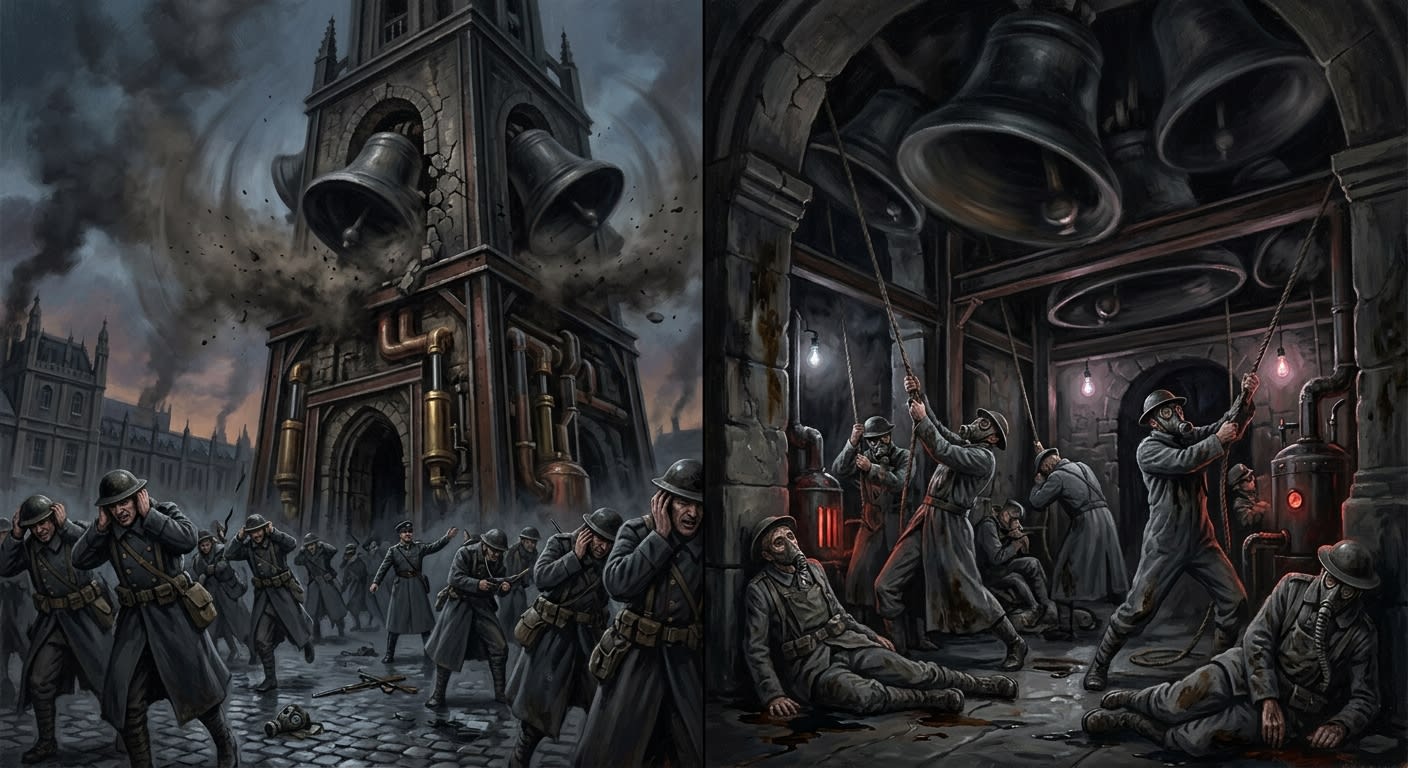
The Miracle of Cologne
When every bell became artillery and bureaucracy was born from the echo
The A.S. 49 Miracle of Cologne drove Maldrake's Wrath vanguard from the cathedral square by nine hours of unscheduled total bell-ringing, cracking stone, killing ringers, and founding the jurisdiction that became the Bureau of Bells.
Codex Ref. VII.4.12-001
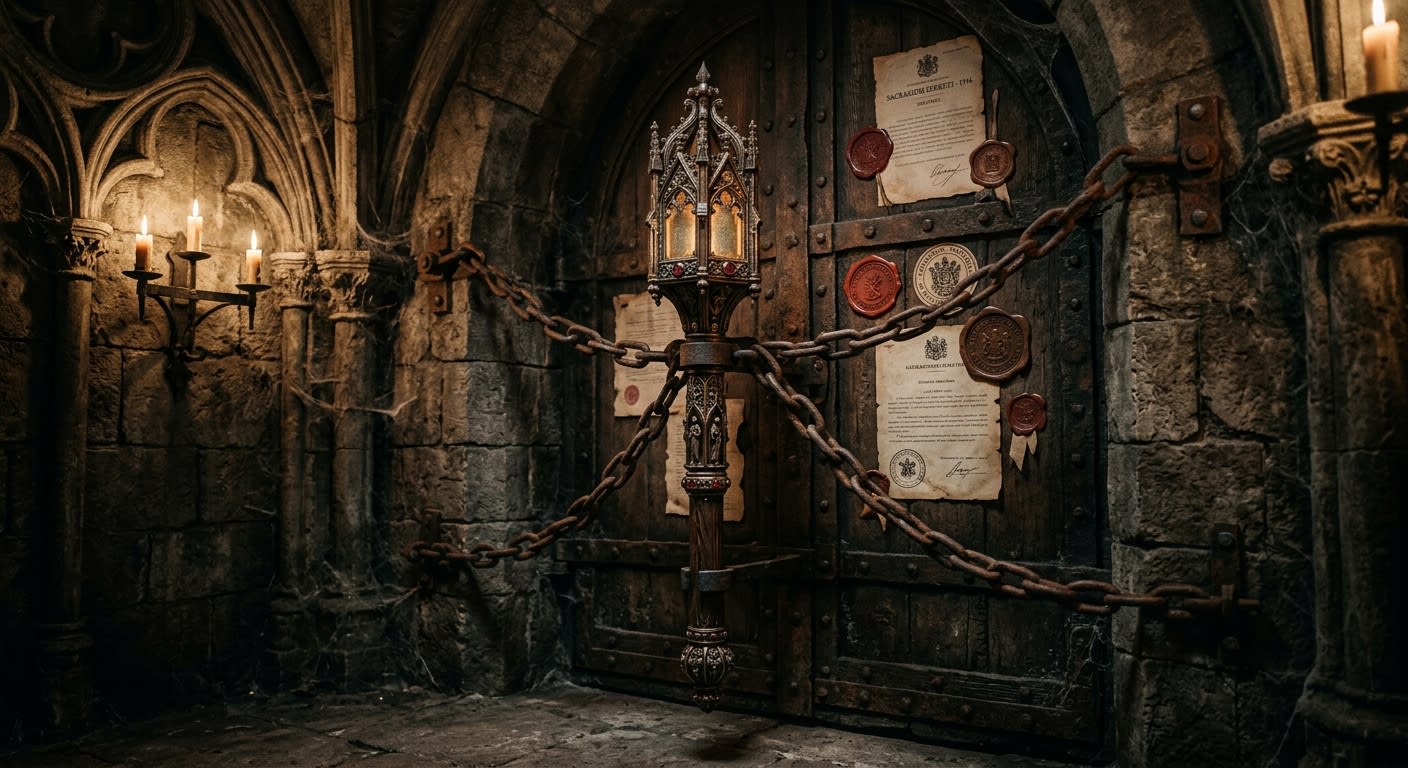
The Miracle of Saint Aldebrand
The Bureau erased the bone. The bone declined.
The Bureau declared the Reliquary of Saint Aldebrand non-existent in –32 A.S. In A.S. 95 it shattered a sorcerer-lord's skull and saved Vienna. Both facts are official, both carry seals, and the Bureau sees no difficulty.
Codex Ref. VI.4.01-001
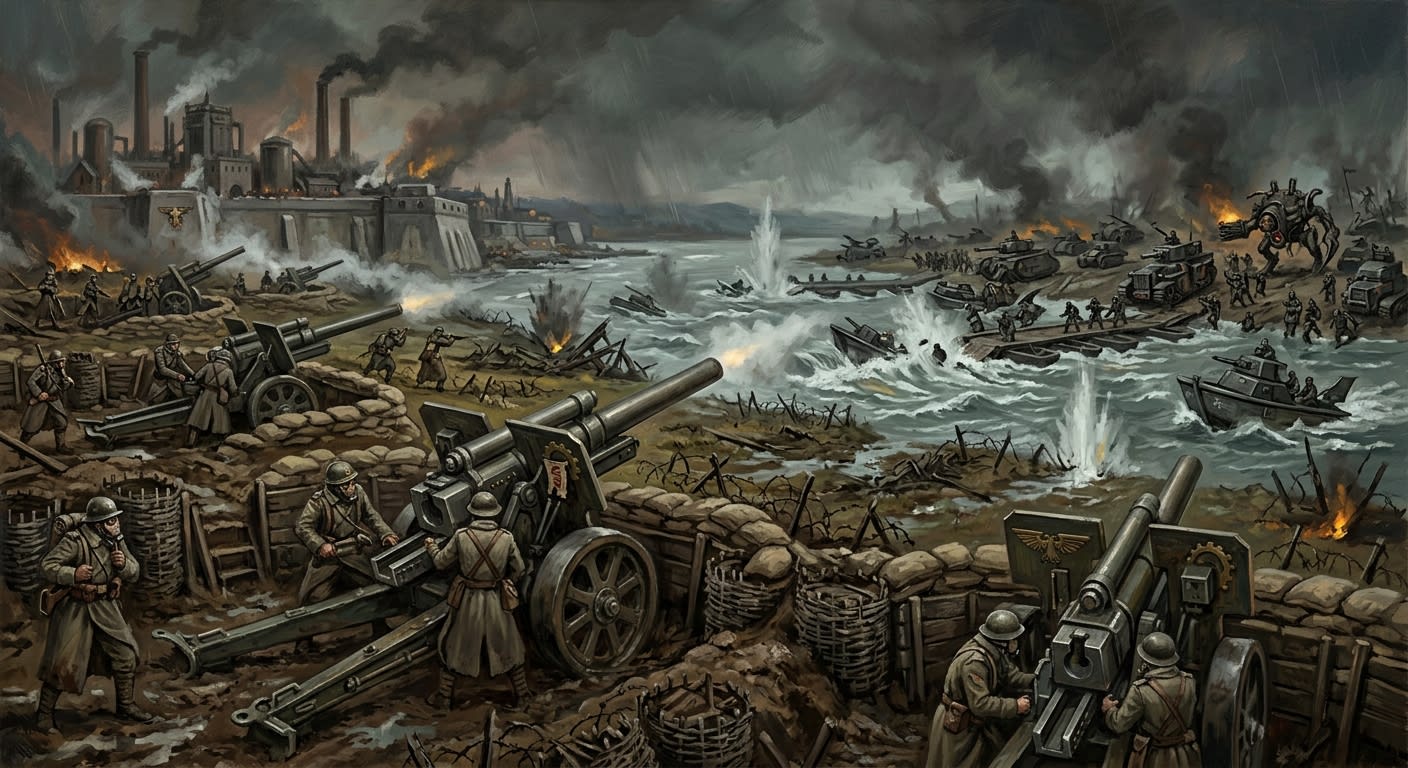
The Miracle of the Danube's Turning
When the river struck the Enemy in the teeth
At Belgrade in A.S. 120, Maldrake's Wrath-host broke against mud, relic artillery, and a Danube that turned back upon the Enemy. Victory followed; so did tariffs.
Codex Ref. VII.5.04-001
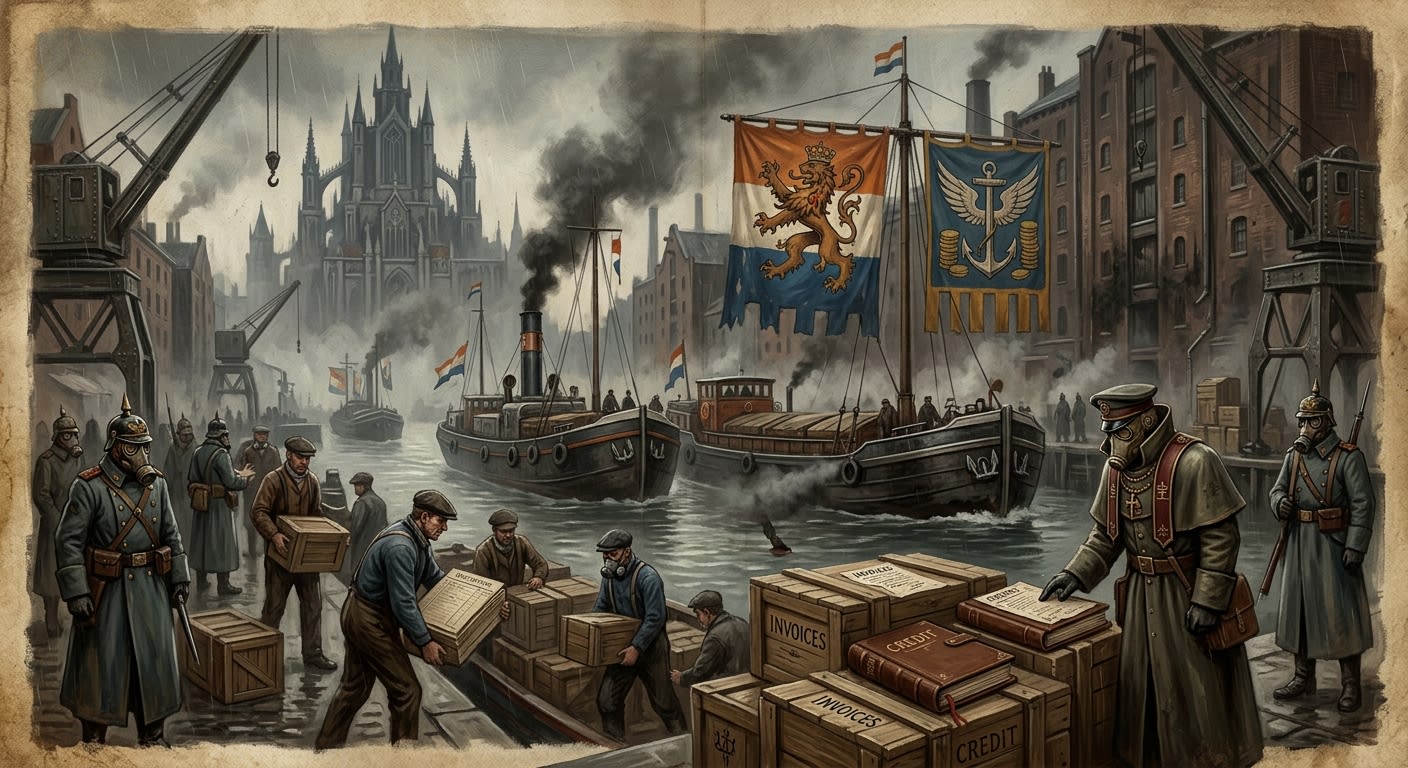
The Netherlands
The merchant republic that invoices our contempt
The Netherlands remain independent, solvent, suspect, and indispensable: a Dutch merchant republic whose ships, presses, credit, and invoices keep irritating the Synod into survival.
Codex Ref. X.1.02-001
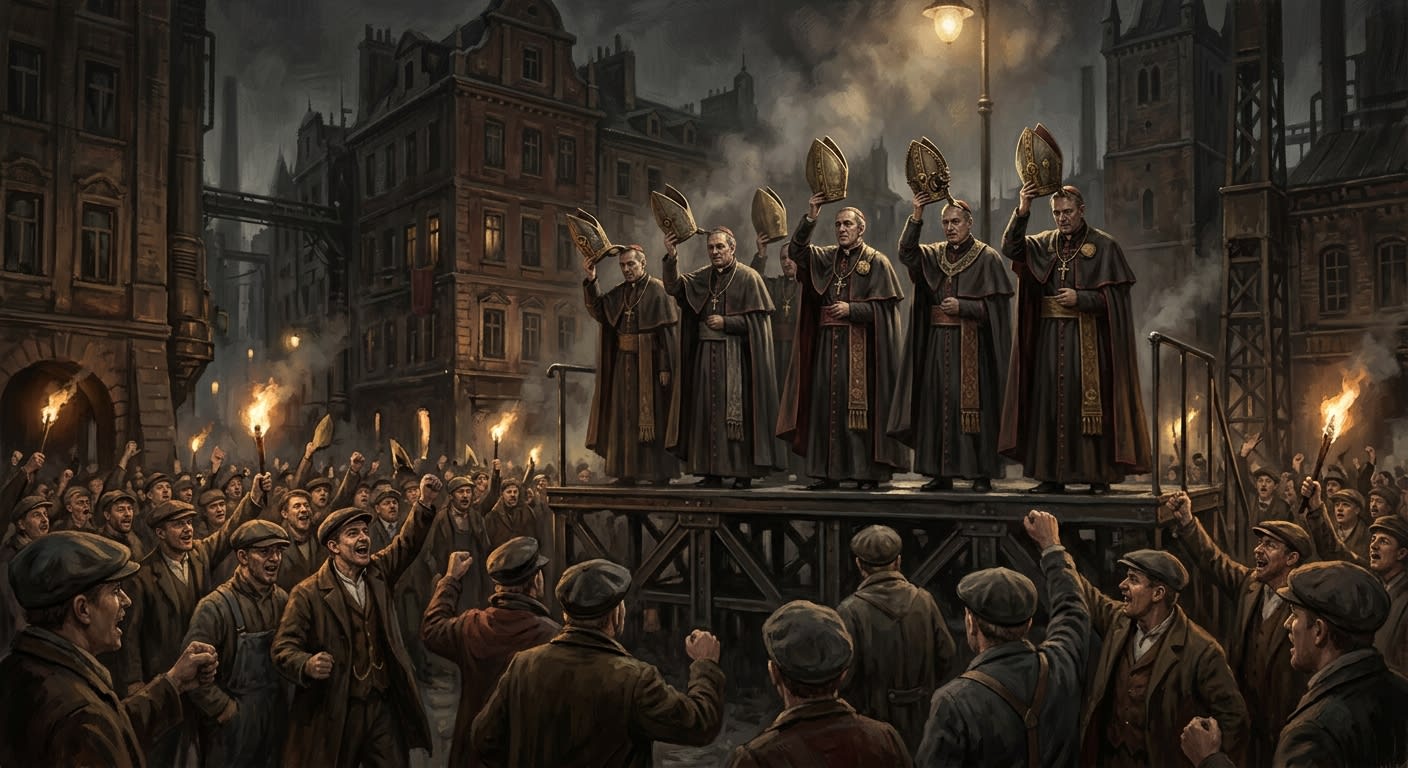
The Night of Crowns
Seven mitres fell, and Prague mistook the sound for progress
In A.S. 8, seven bishops in Prague removed their mitres before a cheering crowd, teaching the Rationalists that apostasy travels fastest when an authorised mouth performs it.
Codex Ref. VII.8.07-001

The Night of Knives in Kraków
Forty-seven mouths wired shut so that no prayer could escape
Forty-seven clergymen seized in the night, their mouths wired shut with iron wire, and cast from the Dębnicki Bridge into the frozen Vistula. The Bureau spent one hundred and thirty years ratifying the narrative; it has been collecting the candle wicks ever since.
Codex Ref. VII.8.01-001
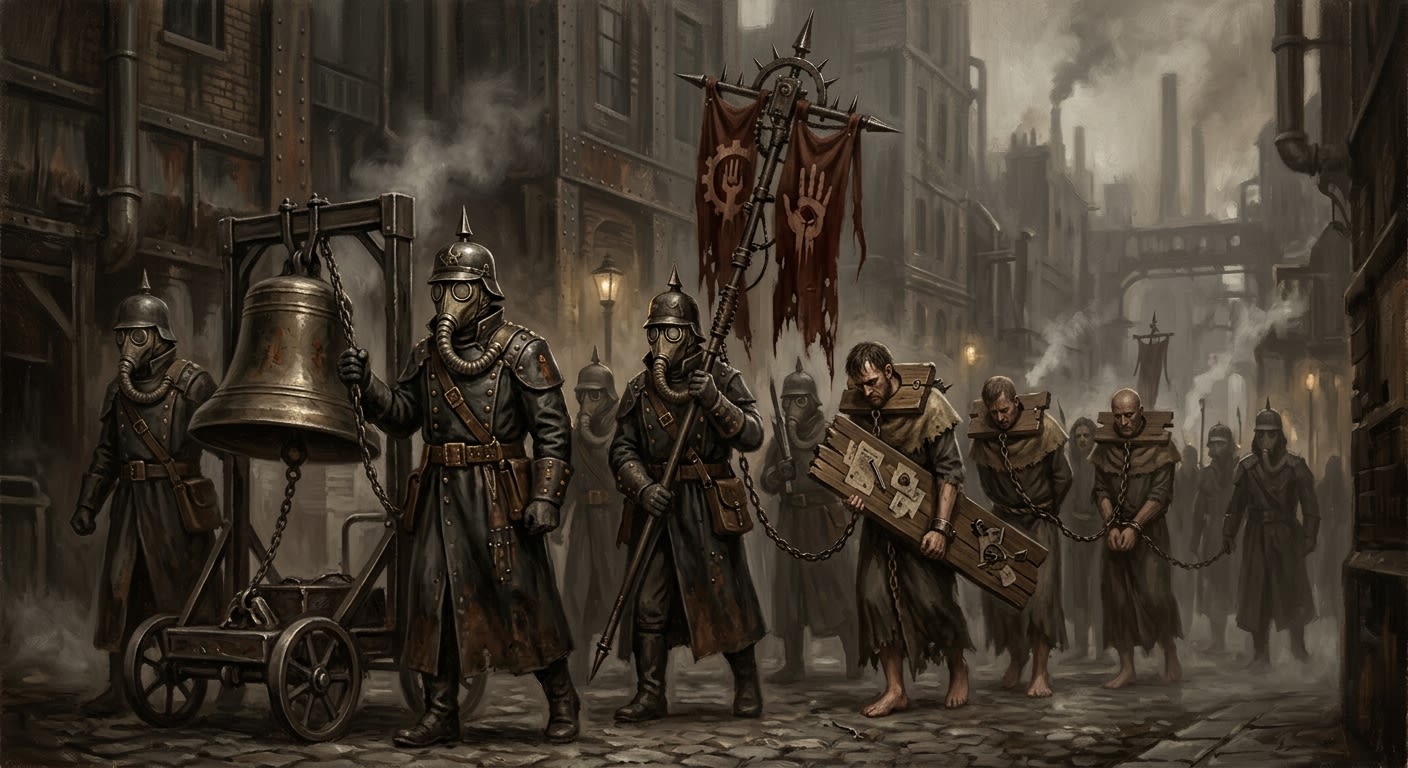
The Order of Saint Ephrath
Shame made visible is shame made useful
Ephrath displays Purity's hand. It nails error to doctrine, marches shame through the street, and files the crowd's instruction by bell.
Codex Ref. XI.6.01-002
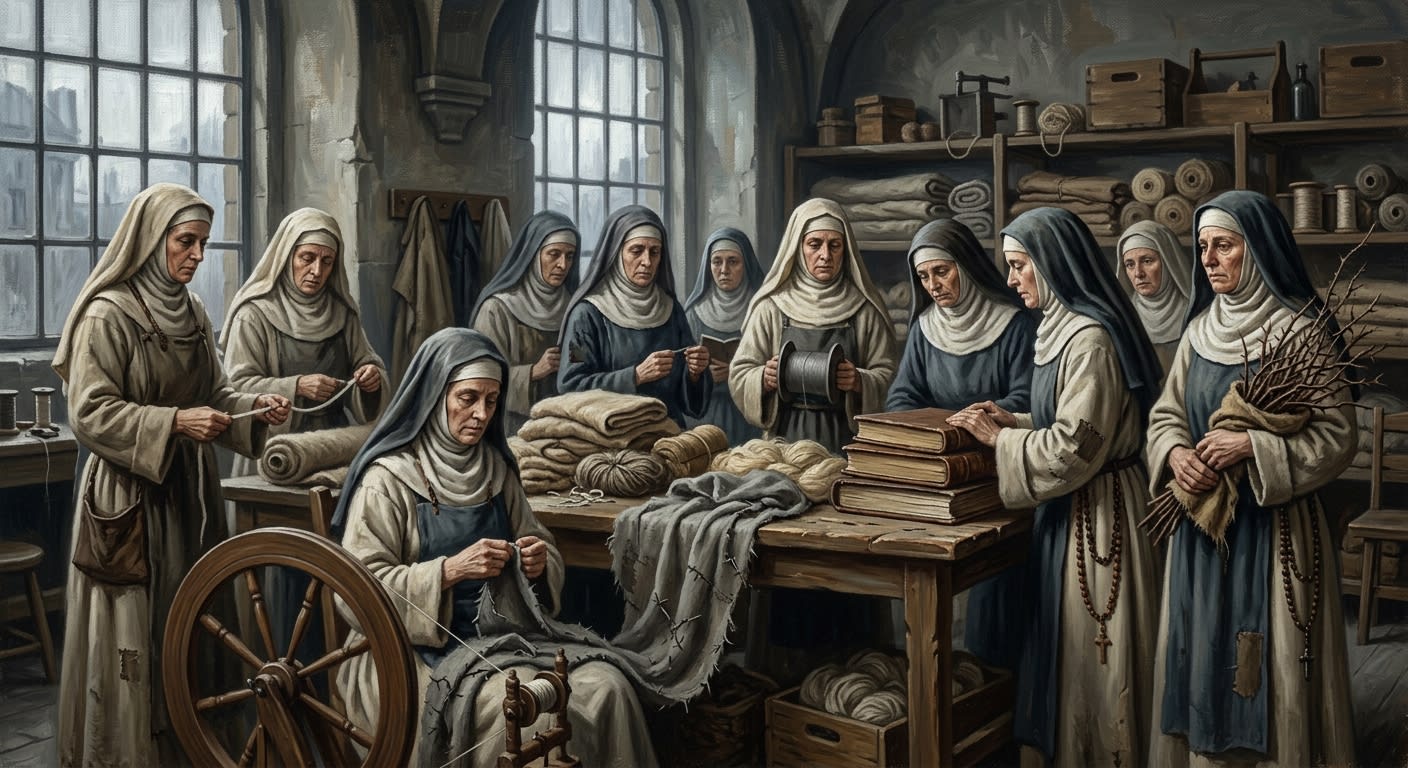
The Order of the Blessed Thorn
Linen, old women, and the machinery that discovered humility after it became profitable
A Breton mendicant sisterhood made Venerable after Margaux: twelve sisters, a house of linen, and enough humility to embarrass the Bureaus.
Codex Ref. XI.7.01-001
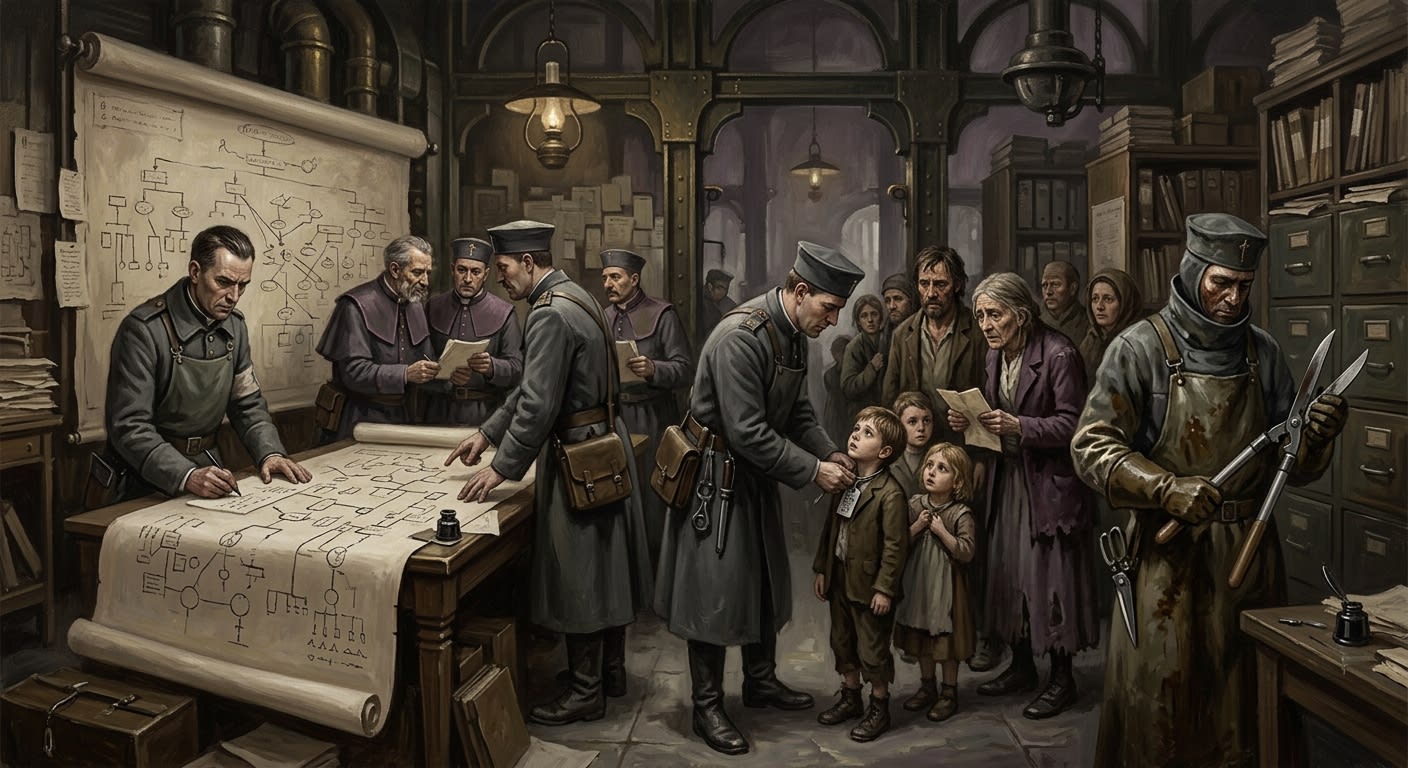
The Order of the Root
Where family trees are pruned with forms, cuffs, and holy shears
The Order of the Root is the Synod's hereditary-contamination apparatus: kinship charts, child tags, bloodline review, and mercy sharpened into pruning shears.
Codex Ref. XI.1.05-001
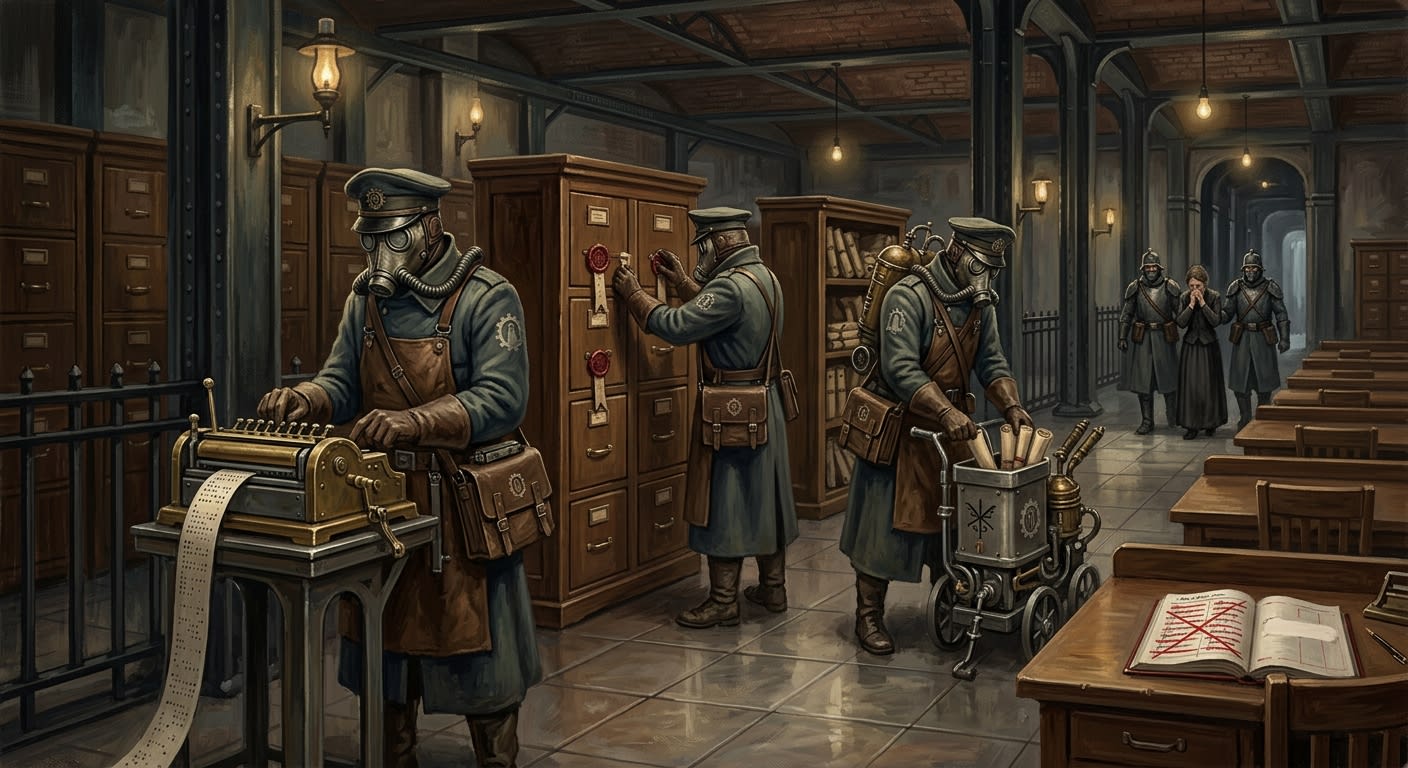
The Order of the Shroud
The mercy of no martyrs, delivered by black wagon
The Shroud does not burn heretics into warnings. It removes them into arithmetic, leaving tidy rooms, corrected rolls, and grief without permit.
Codex Ref. XI.6.01-001
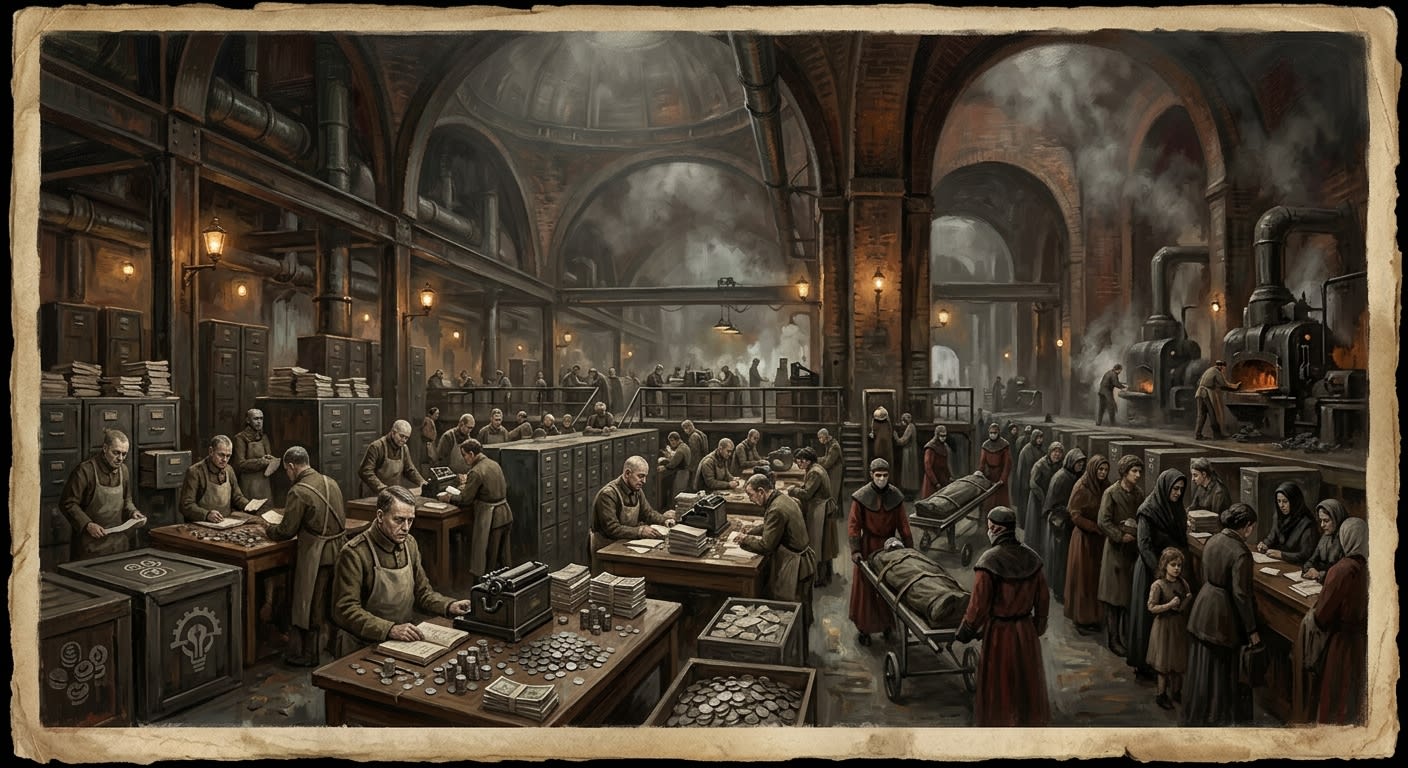
The Palatine Counting House
Where debt receives its sacrament and arithmetic learns to bite
The Palatine Counting House is Strasbourg's sleepless Fiscal Heart, seat of the Bureau of Tithes, where coins, corpses, widows, unborn debtors, and corrected accountants are counted.
Codex Ref. II.2.07-001
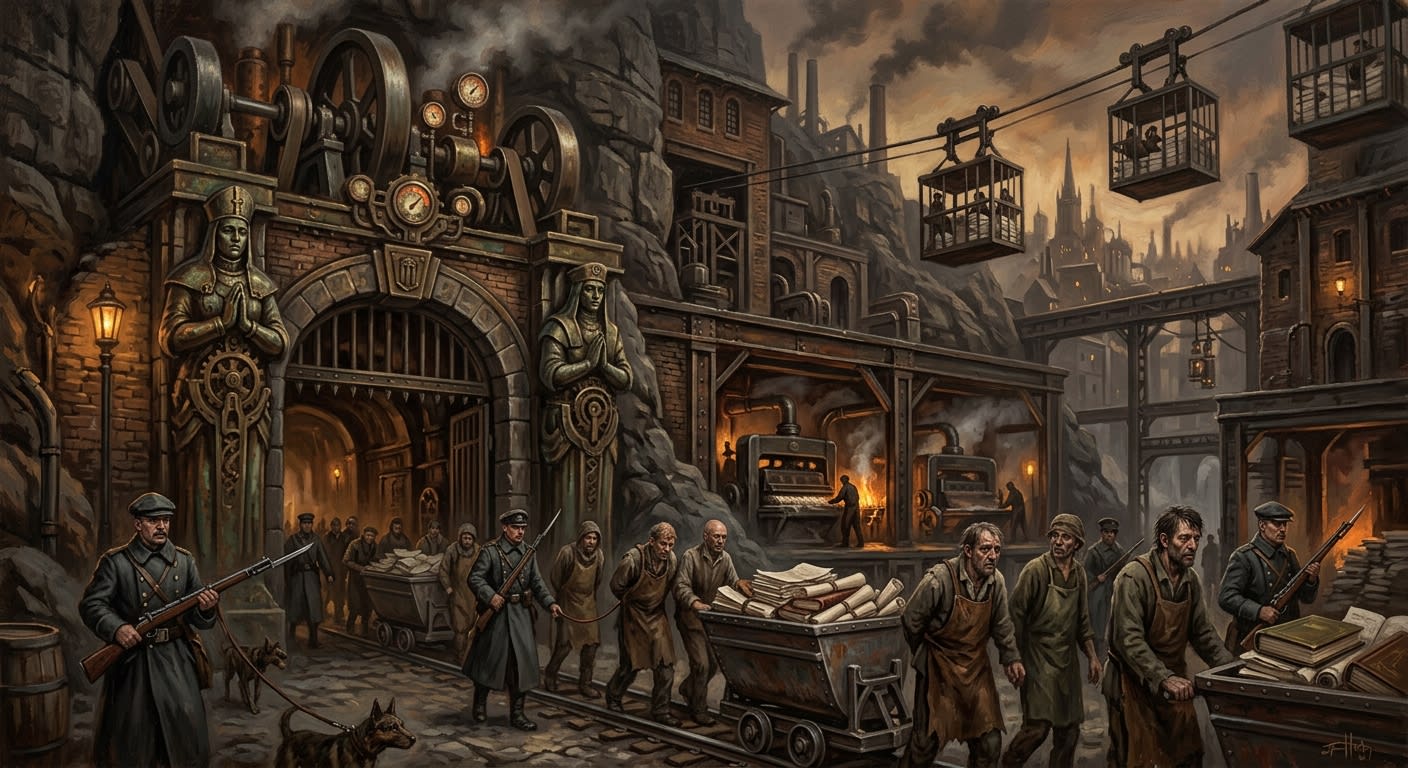
The Paper Mines of Ulm
Where forbidden minds are pressed into obedient sheets
The Paper Mines outside Ulm turn condemned scholars, clerks, witnesses, and families into archival stock, redaction vellum, penitential forms, and troublingly warm sheets.
Codex Ref. II.2.06-002
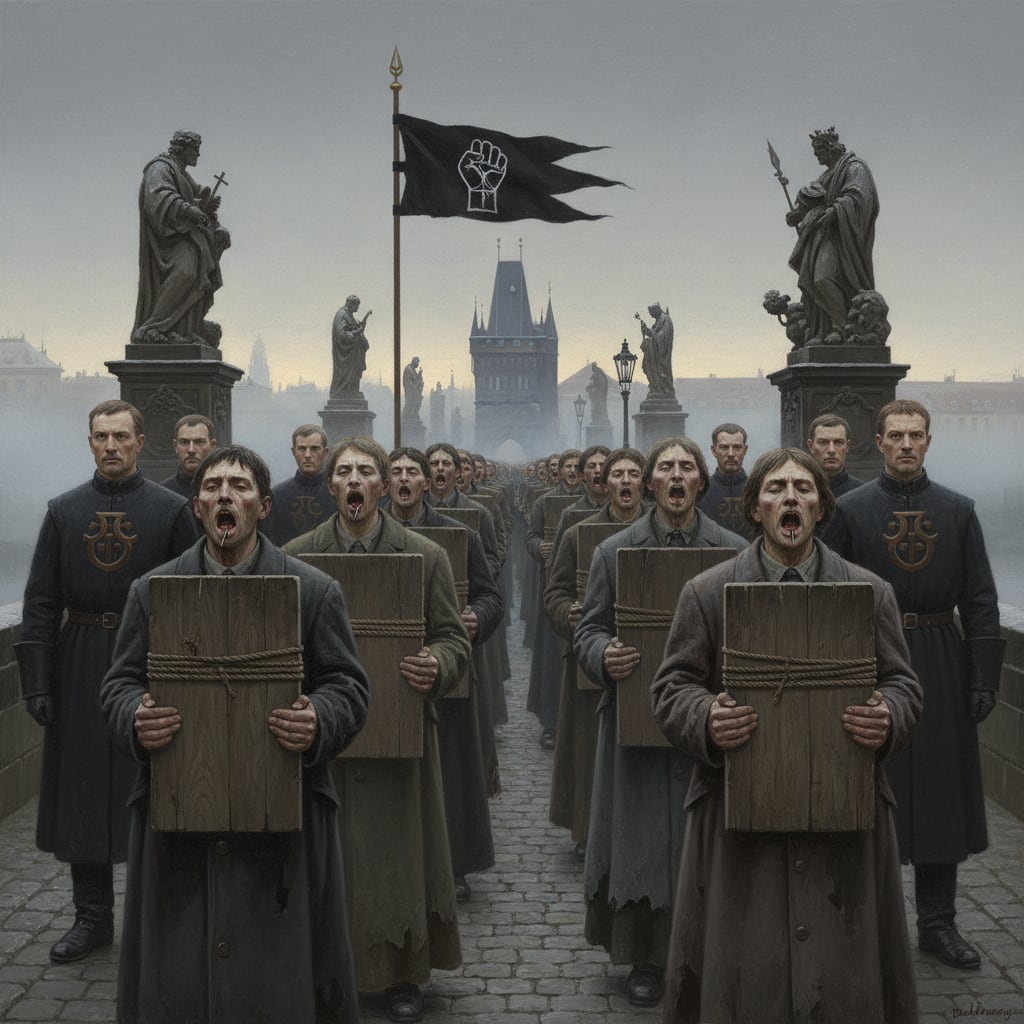
The Procession of Tongues
One hundred and seven consecutive years of doctrine tablets, iron nails, and fixed cobblestones — the [[bureau-of-purity|Bureau of Purity]]'s clearest argument, and the one requiring no rebuttal.
The Bureau of Purity's ceremony of ambulatory confession — heretics with tongues nailed to doctrine tablets, marching across Prague's Charles Bridge since A.S.
Codex Ref. VII.6.01-001
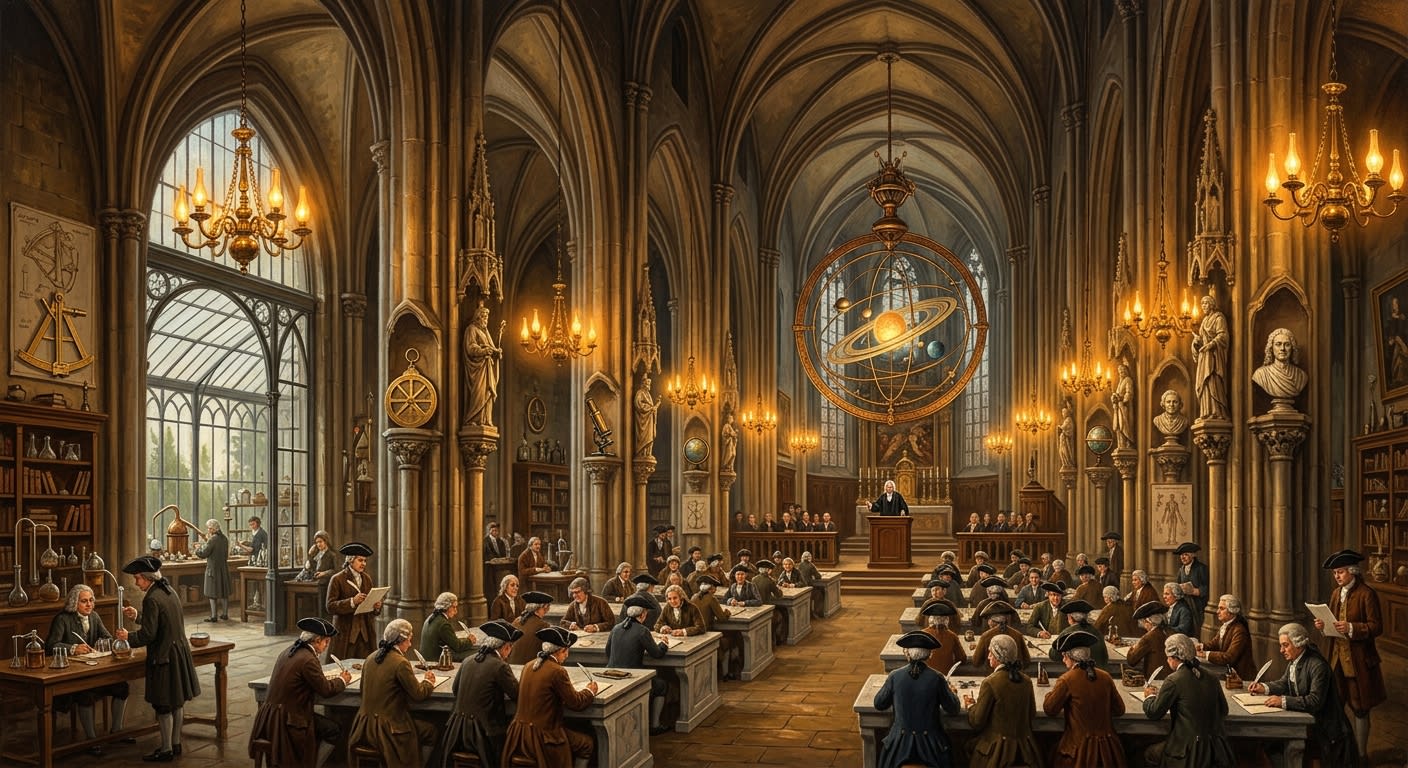
The Rationalist Republic
Fifteen Years of Continental Supremacy, and the Precise Nature of Its Correction
Rationalist institutions predated Regensburg; the Republic's A.S. 30–45 continental supremacy expanded prefectures, census rolls, and repression before central command collapsed at the Sundering.
Codex Ref. I.1.02-001
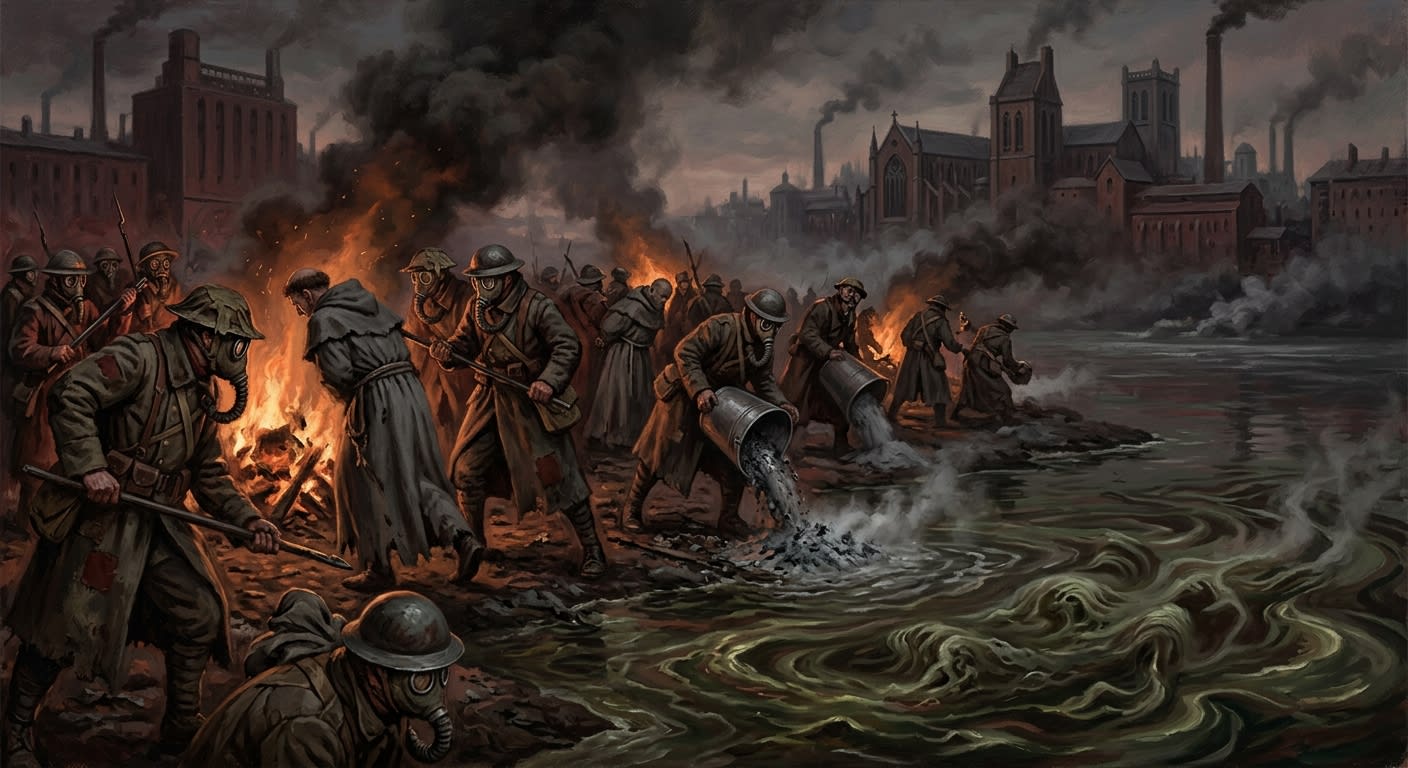
The Red Slaughter of Lyon
The first cut was local, municipal, and entirely pleased with itself
In –39 A.S., Lyonnais militias burned forty-three friars and dumped their ashes into the Rhône; the river answered in psalms, as rivers sometimes improve upon councils.
Codex Ref. VII.8.03-001
The Reichssaal
The hall that lent empire to heresy and received an altar for its trouble
The Reichssaal gave imperial furniture to Rationalist blasphemy, received the Treaty in blood and ink, and now instructs pilgrims under glass, pall, and Bureau custody.
Codex Ref. II.2.03-031
The Republican Guards
The philosophers wrote the sentence; the Guards added punctuation
The Republic's armed hand wore blue-grey, carried law over the heart, and proved that unbelief does not remain in books. It drills.
Codex Ref. I.1.05-001
The Sagittal Line
The continent's spine, stitched in mud, bells, and refusal
The north-south defensive spine of the Synod: seven bastions, two thousand miles of trenches, and the bureaucratic miracle of making stalemate into civilization.
Codex Ref. III.1.01-001
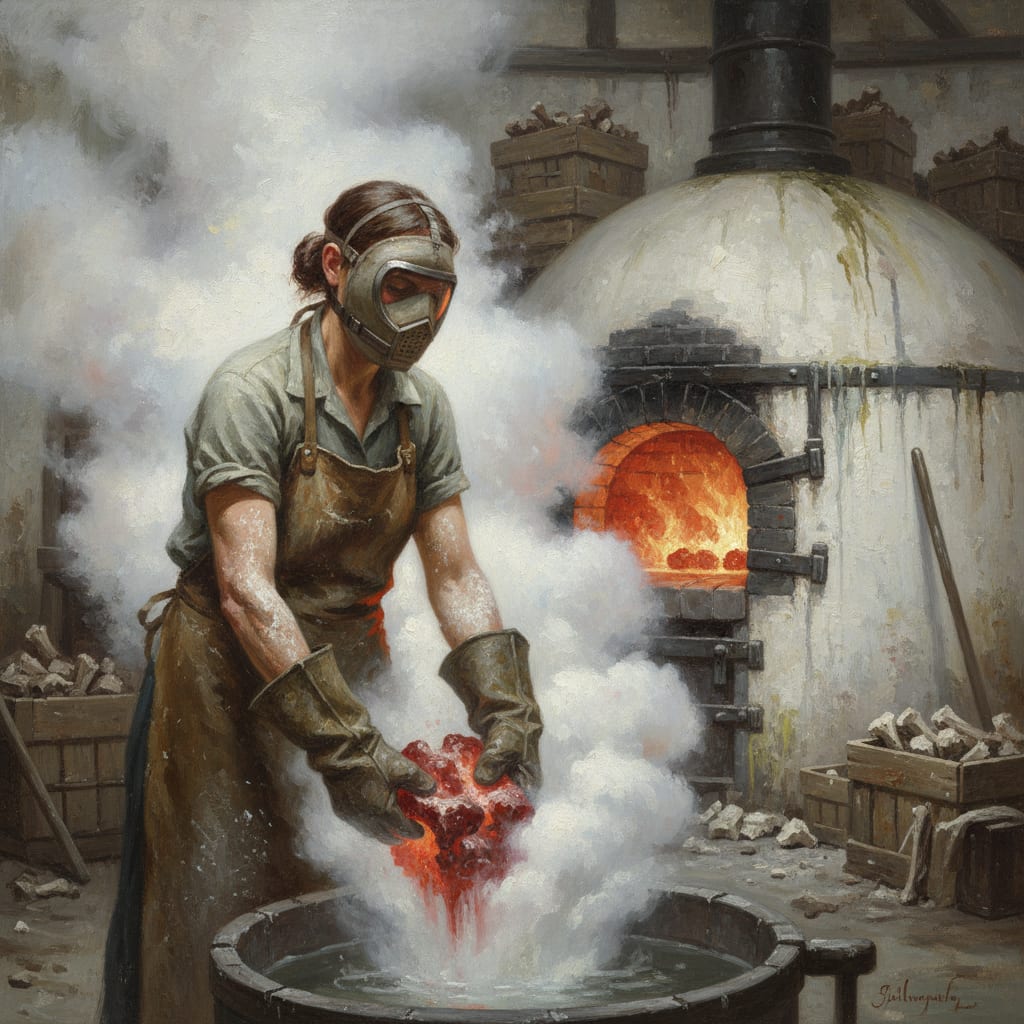
The Saint-Bone Melter
The wall is the only sermon the Enemy has ever been forced to hear
The artisan who feeds the bones of saints to the kiln and receives in return the mortar that holds the Sagittal Line together. The arithmetic is simple and brutal: a femur in a reliquary inspires; a femur in a wall holds.
Codex Ref. XII.40.01-001
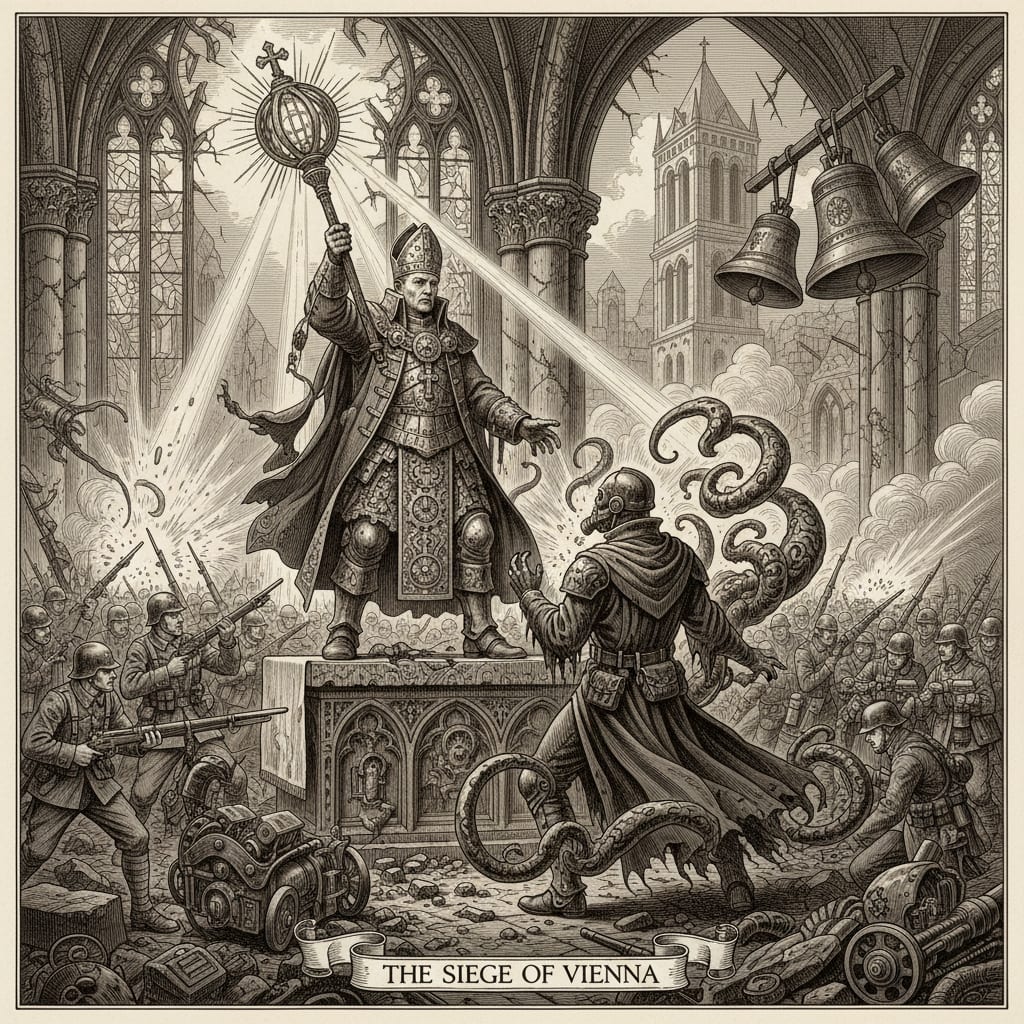
The Siege of Vienna
Nine Months in the Crucible of Faith
Nine months of famine, plague, and sorcery broke upon the altar of Saint Rupert. Bishop-Warden Clemens struck, and Reason died screaming in the streets of its last capital.
Codex Ref. III.2.07-031
The Silent Colonnade
The fourth side of the [[cloister-precinct|Cloister]], where counting forgets its manners
The Silent Colonnade is Strasbourg's unnumbered northern arcade, a place of unmarked doors, shortened Wednesdays, swallowed bells, and corrections no Bureau admits.
Codex Ref. II.1.04-003
The Silent Derailment
Forty-one dead men made Lorn hear its own obedience
In A.S. 112, forty-one men died on an unregistered Lorn siding, proving that a yard may obey every hymn and still deliver corpses to an illegal rail.
Codex Ref. VII.8.10-112
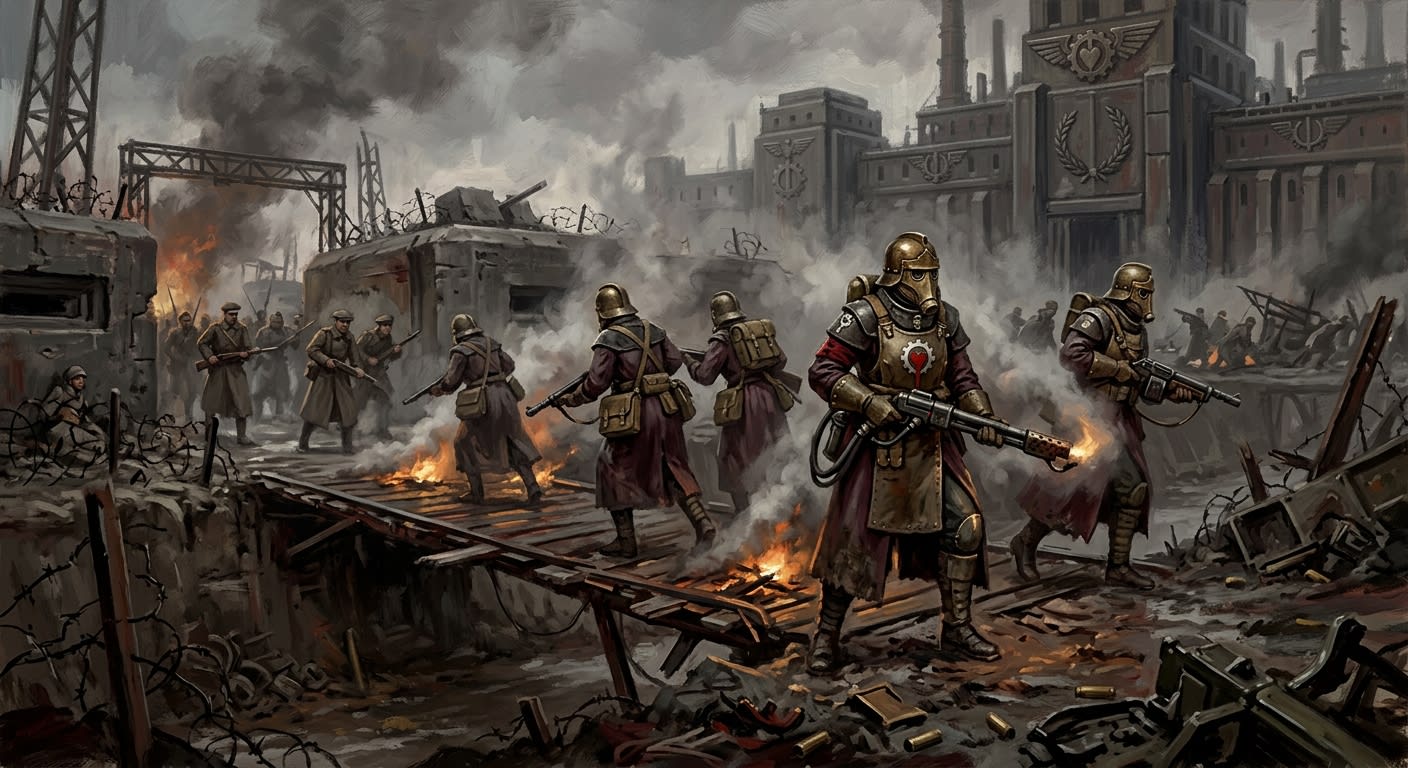
The Sisters of the Martyrdom
The bridge burned, the column halted, and the Ledger asked whether she volunteered
The Sisters of the Martyrdom burned bridges with their own bodies during the Atheist Wars; the Bureau sings them, taxes them, and refuses to ratify them.
Codex Ref. VIII.6.01-001
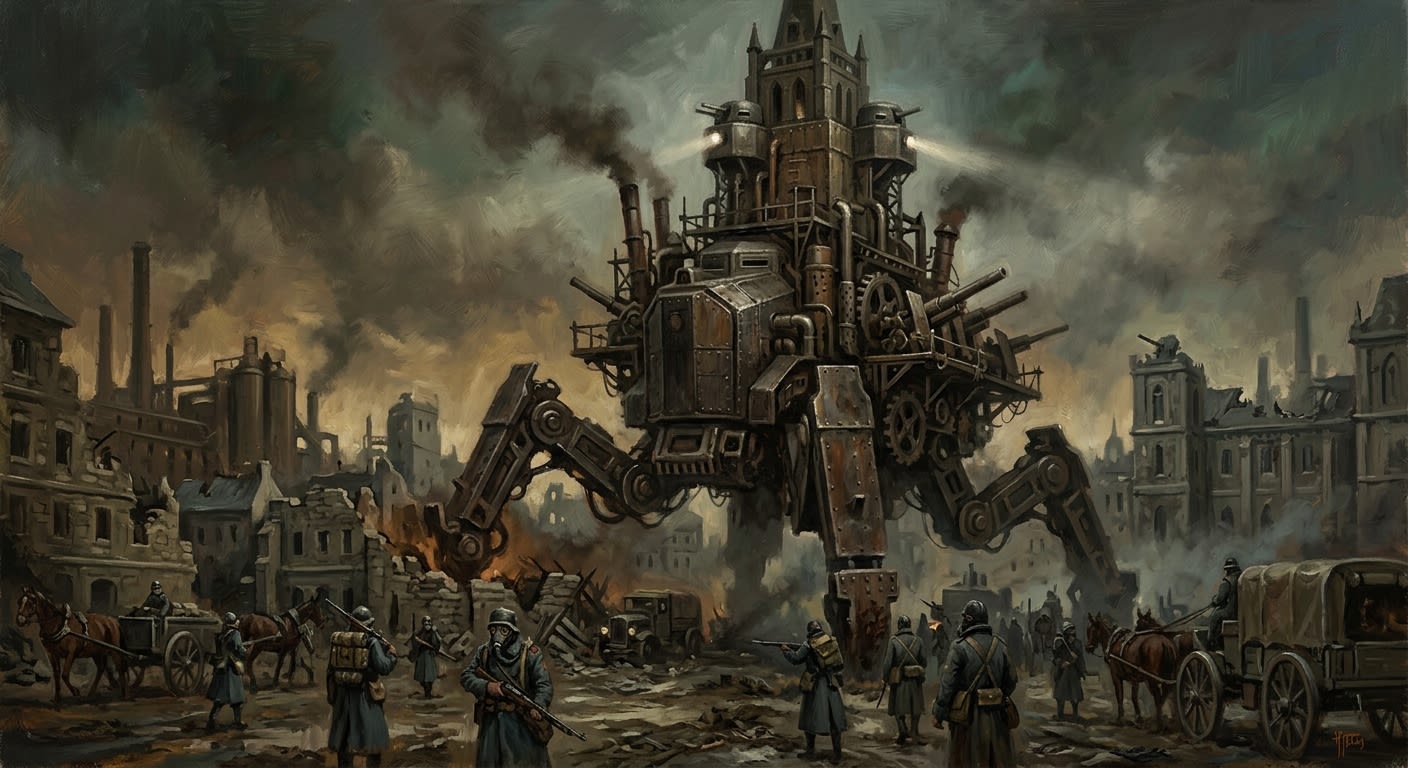
The Spire-Crusher
Pride built a tower tall enough to make the wall feel rude
Atheron's Spire-Crusher was a walking tower that grew from 340 to 900 feet before Przemyśl broke its forward pier and learned to fear empty sky.
Codex Ref. IV.1.07-011
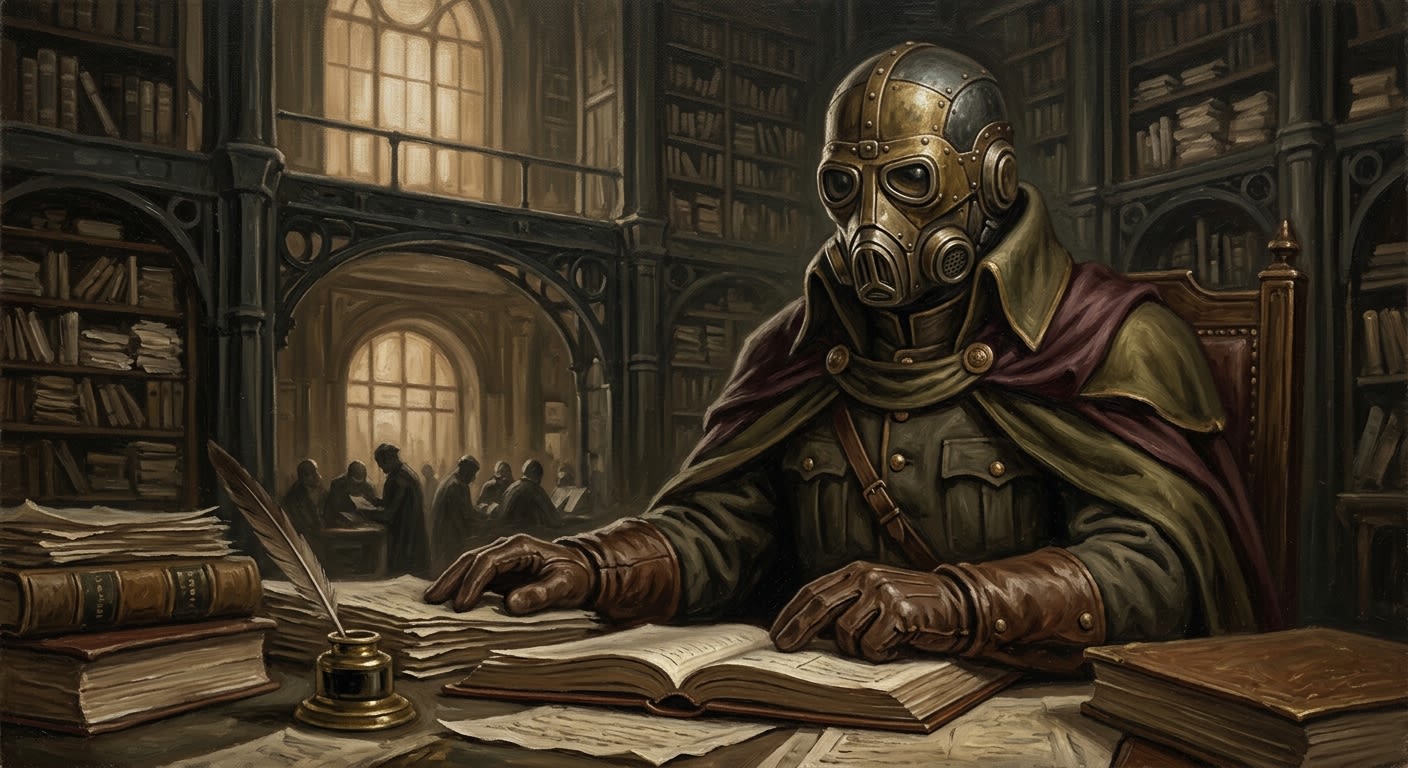
The Third Hierarch
A nameless mitre, a moth-eaten reign, and the file that knew too much
The Third Hierarch is an ordinal with no name, no portrait, and one surviving achievement: Saint Aldebrand's file vanished under his reign.
Codex Ref. XIII.1.05-002
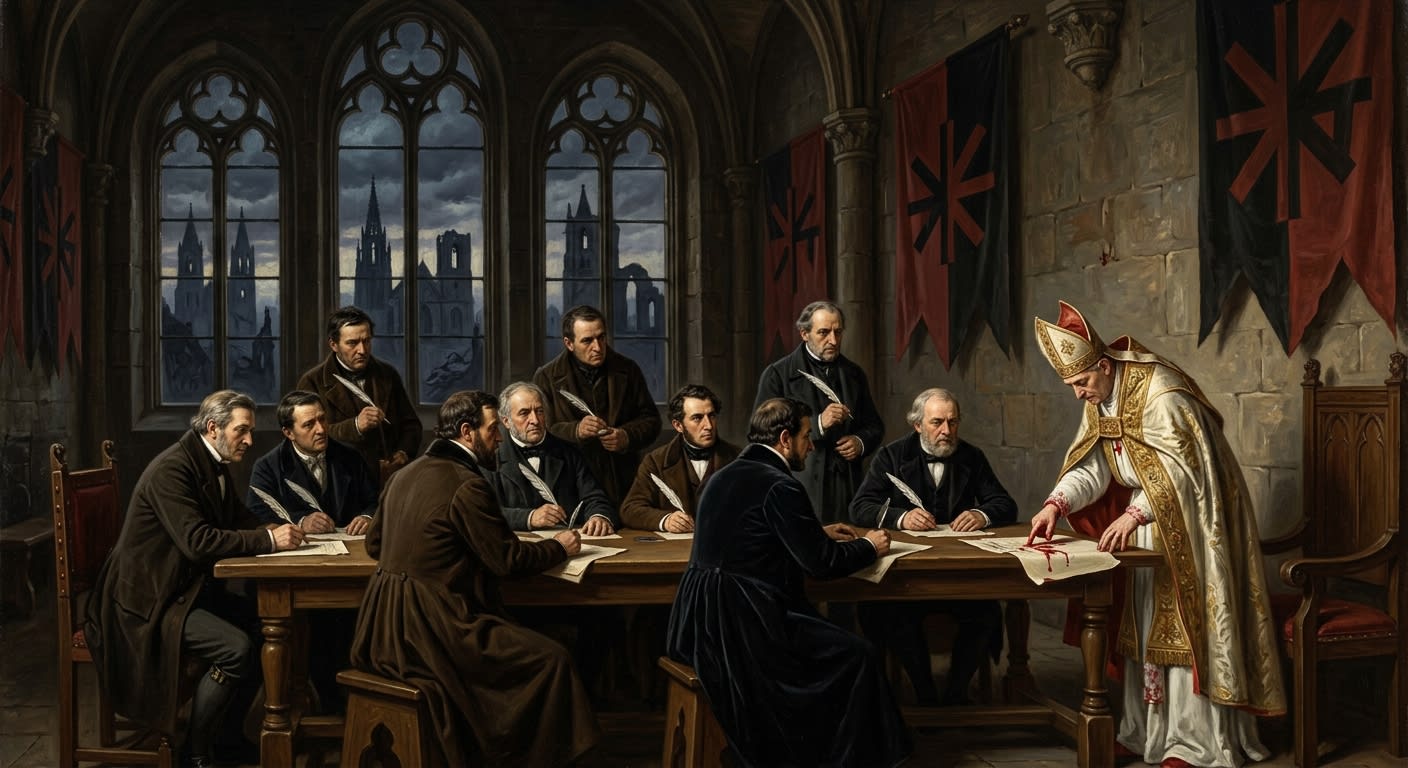
The Treaty of Regensburg
The ink that claimed to abolish the Creator, signed in nine days and annulled by Providence in fifteen years
The Treaty that ended the Atheist Wars and dissolved the Holy See of Vienna in an afternoon. Forty-seven articles; fifteen years of the Rationalist Republic; and then the Sundering proved it a lie. The Bureau of Doctrine annulled it retroactively. It was never valid.
Codex Ref. VII.2.01-001
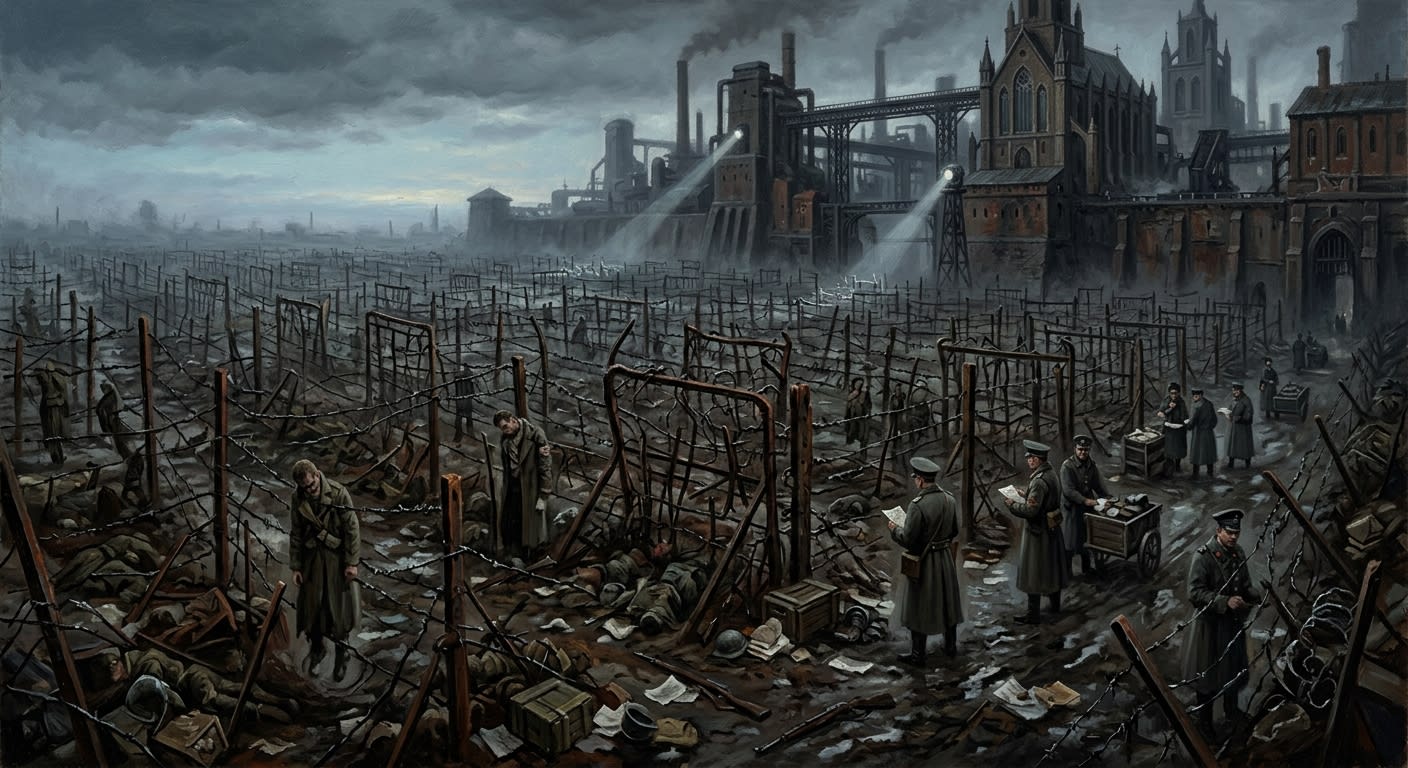
The Wire Orchard
Where the paper grows teeth and the dawn performs audit
The Wire Orchard is Bastion-Przemyśl's three-mile killing and sorting grid, where paper becomes permission, wire becomes judgment, and dawn harvests both.
Codex Ref. II.4.09-075
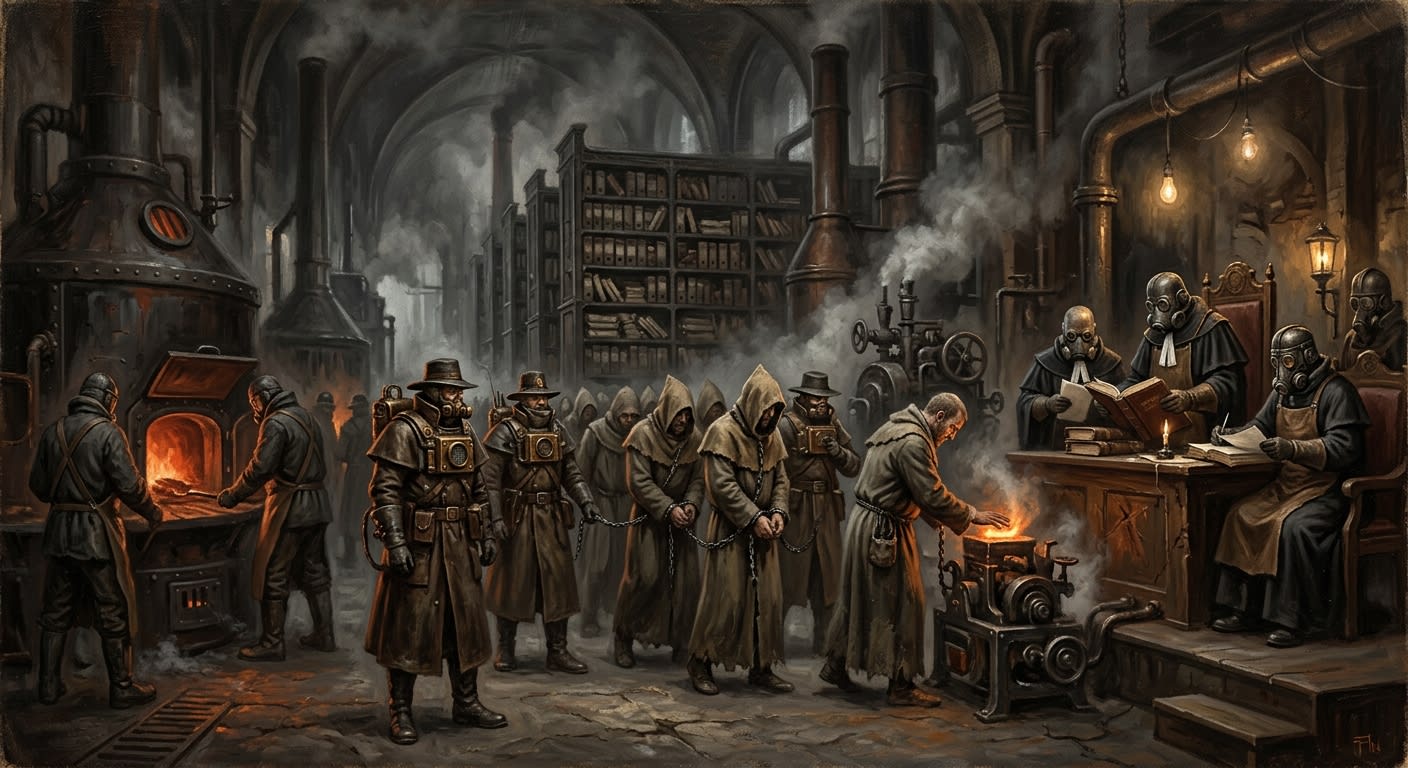
The Witch-Hunts of Toulouse
The fire that learned to file its victims
Toulouse taught Purity its grammar for cruelty: warrant before fire, confession before brand, spectacle before silence, silence before archive.
Codex Ref. VII.8.02-001

The Year of Letters
One table of bones. Forty cities. The first assault on everything.
The Bureau's account of –32 A.S.: how three Amsterdam scholars, one table of bones, and forty cities' worth of polite arithmetic crippled three centuries of relic authentication — and inaugurated everything.
Codex Ref. I.2.01-001
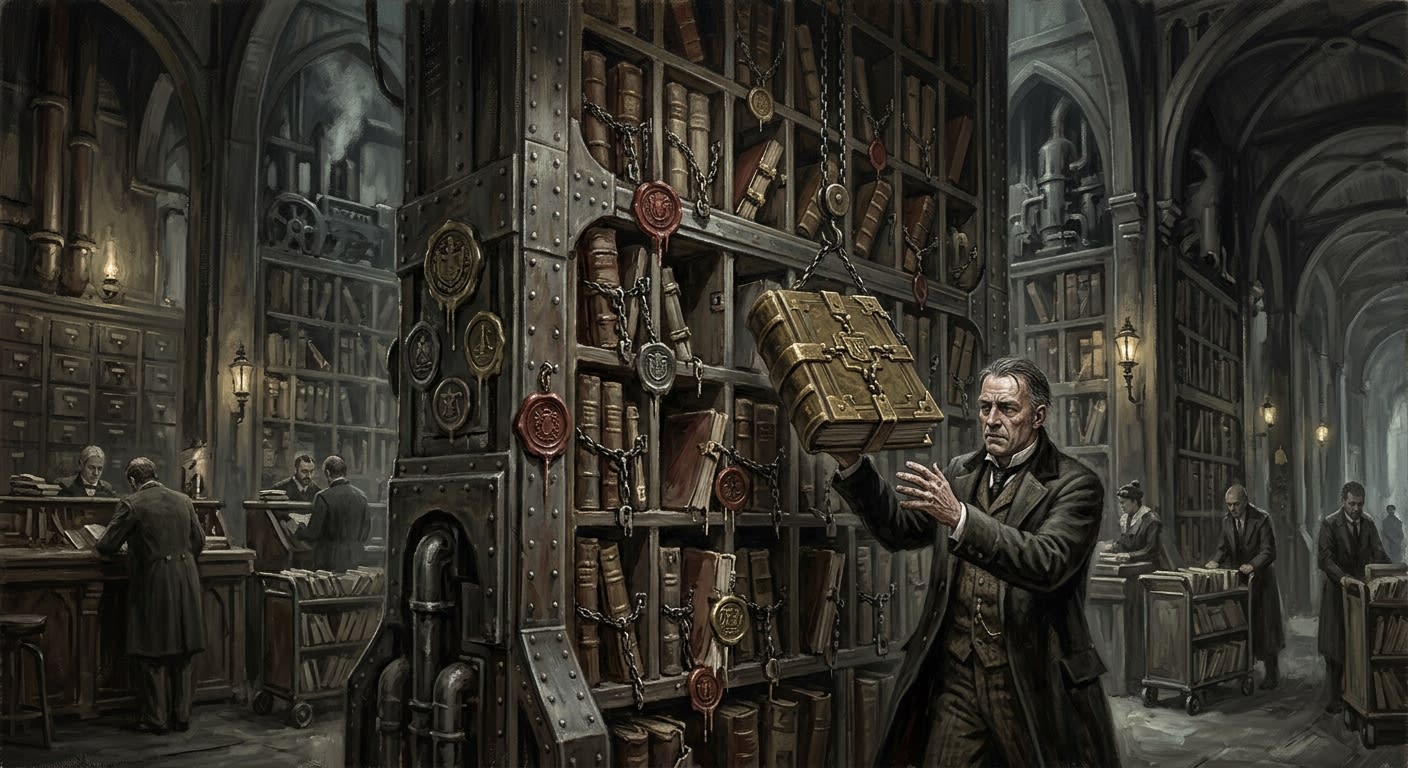
Thirty-Seal Index of Precedent
The book that lets old disputes bite new throats
The Thirty-Seal Index is Commerce's weaponised memory: port-court precedent sealed thirty ways, kept cold, and lent to litigants who know where hunger must wait.
Codex Ref. XIII.1.89-187
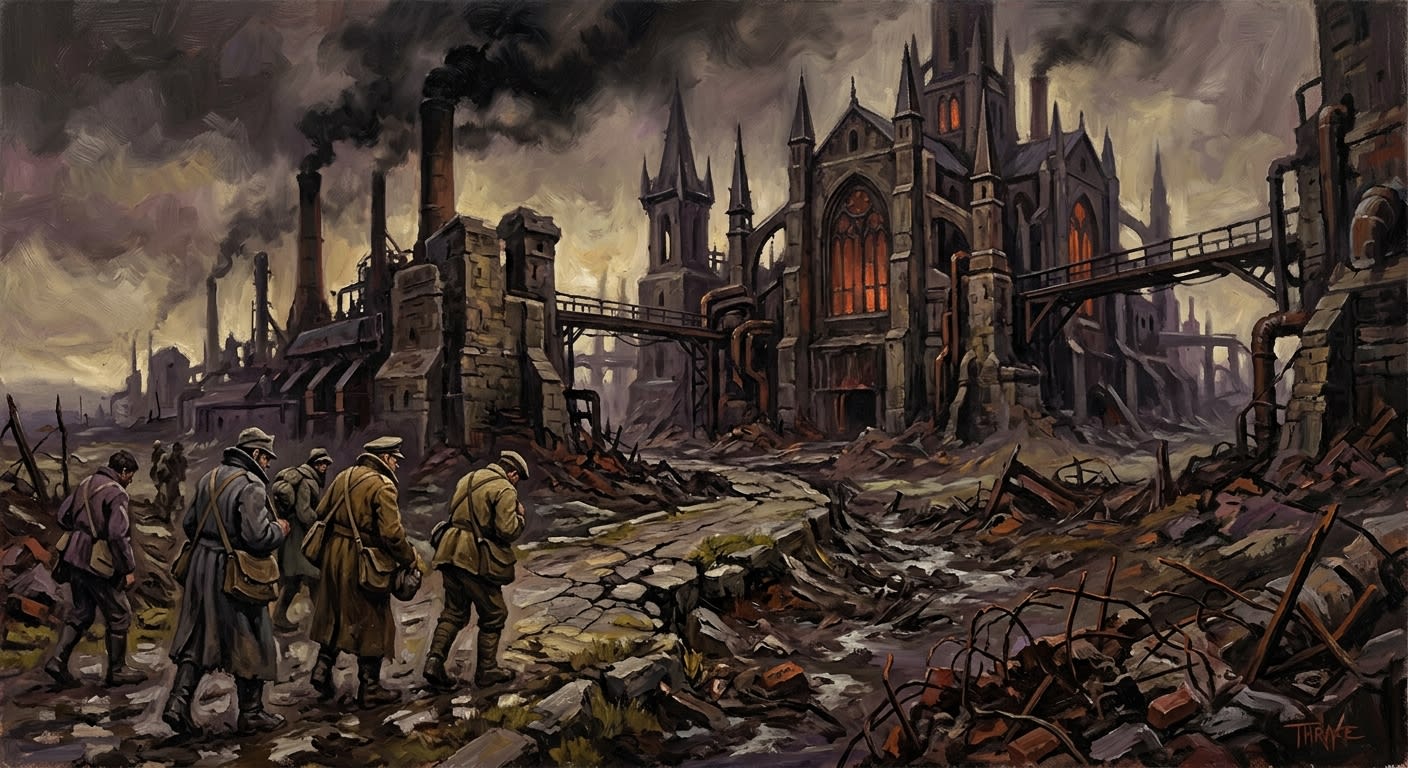
Thrace
The province geography learned to condemn
Thrace is the fallen south-eastern furnace where old roads became warnings, Maldrake taught soil to rage, and maps learned shame.
Codex Ref. II.6.03-045
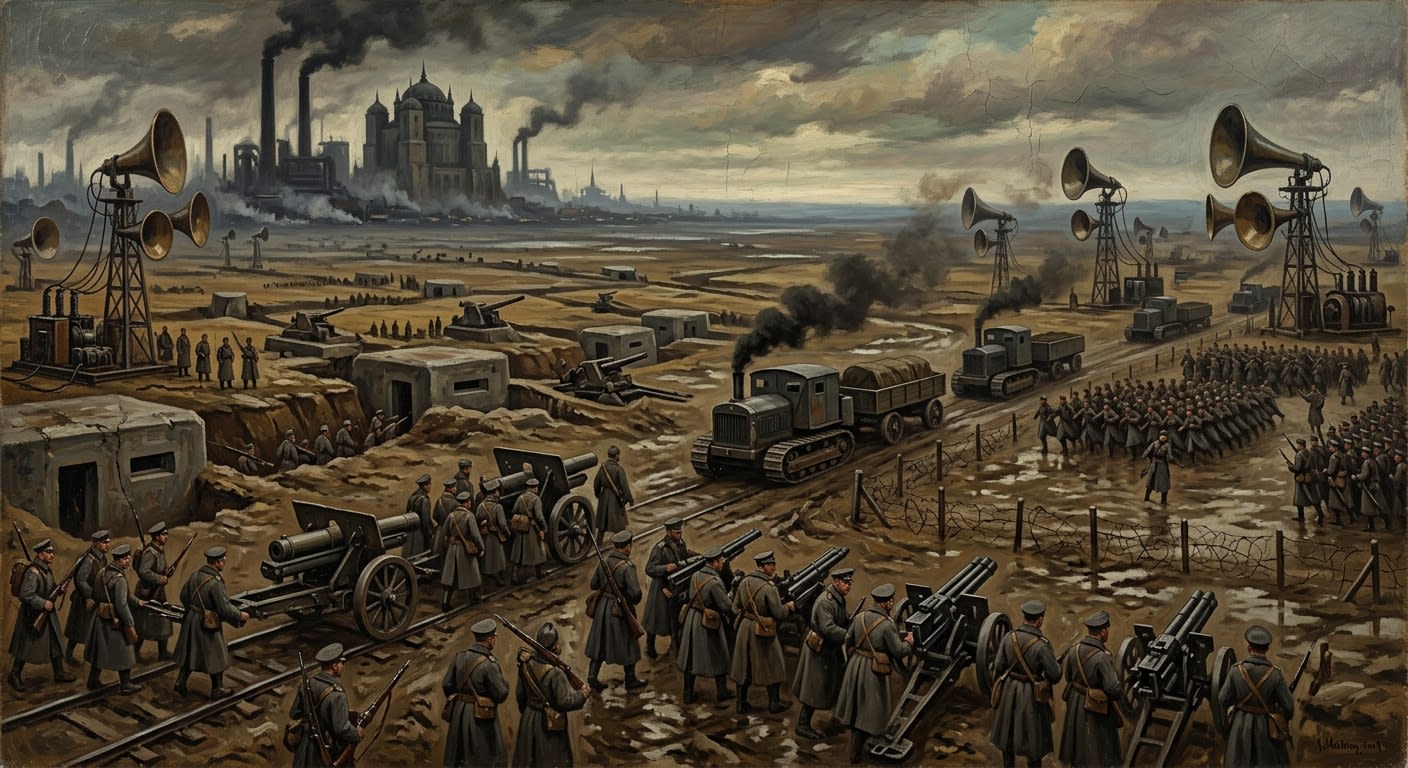
Thracian Plain
The open ground that learned to listen for weakness
The Thracian Plain is Constantinople's northern killing apron: old grainland remade after A.S. 45 into Maldrake's listening floor, muster yard, and artillery throat.
Codex Ref. II.6.03-045
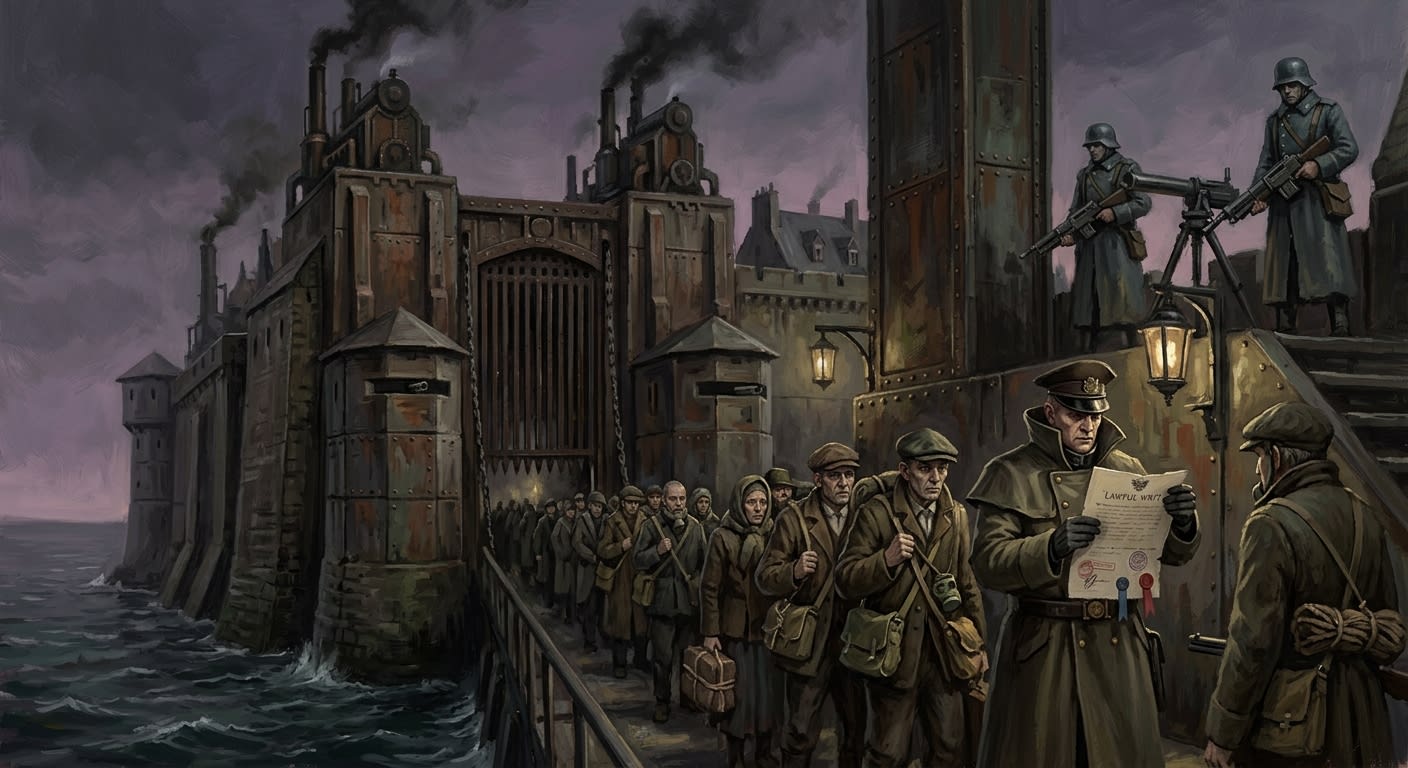
Town of Saint-Malo
The Breton gate where law discovered it could bleed
Saint-Malo is the Breton port where a narrow gate, a lawful writ, and forty-three pilgrims gave the Synod its most profitable wound.
Codex Ref. II.4.09-013
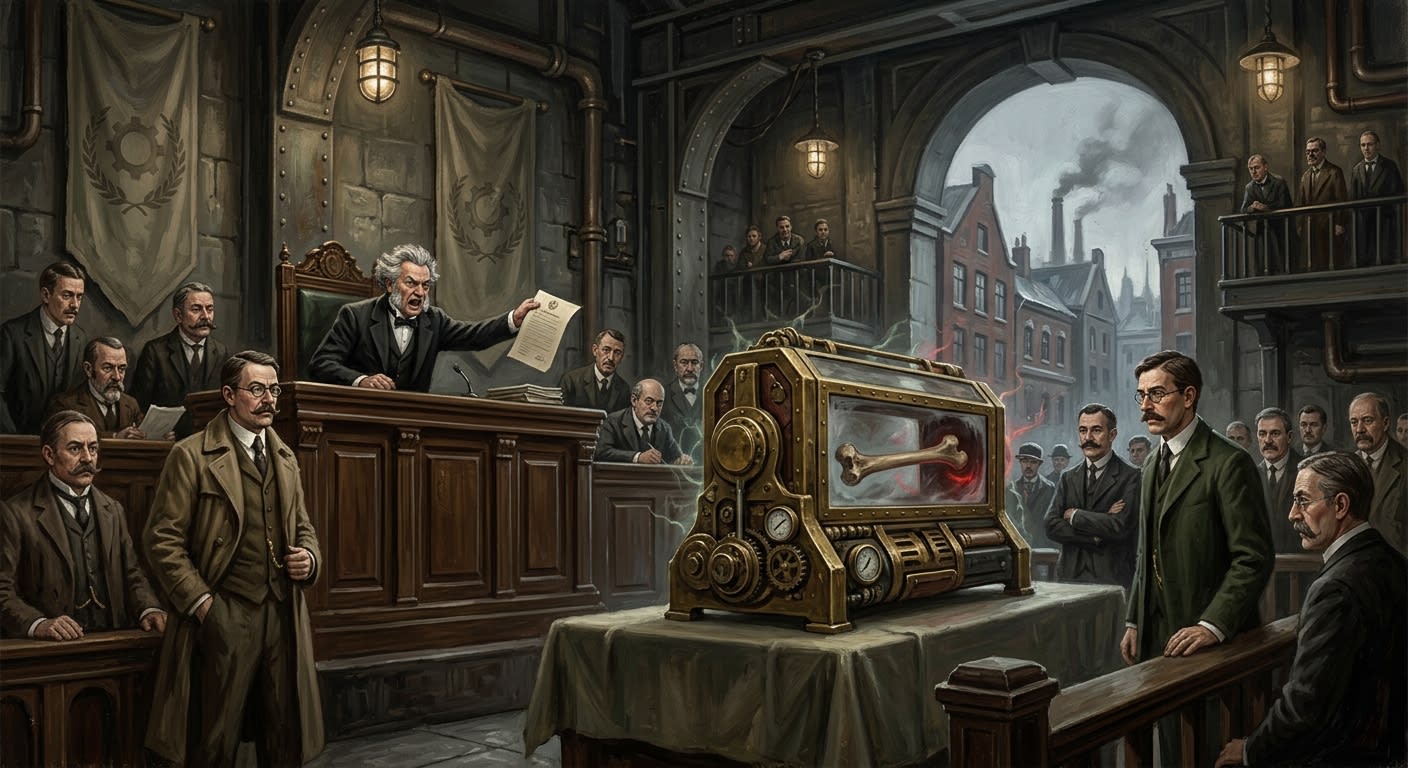
Trial of Saint Aldebrand's Reliquary
The courtroom where arithmetic disgraced itself before a bone
Amsterdam's A.S. 11 mock trial of Saint Aldebrand's reliquary turned Rationalist arithmetic into theatre, until Vienna made the bone louder than the joke.
Codex Ref. VII.8.10-011
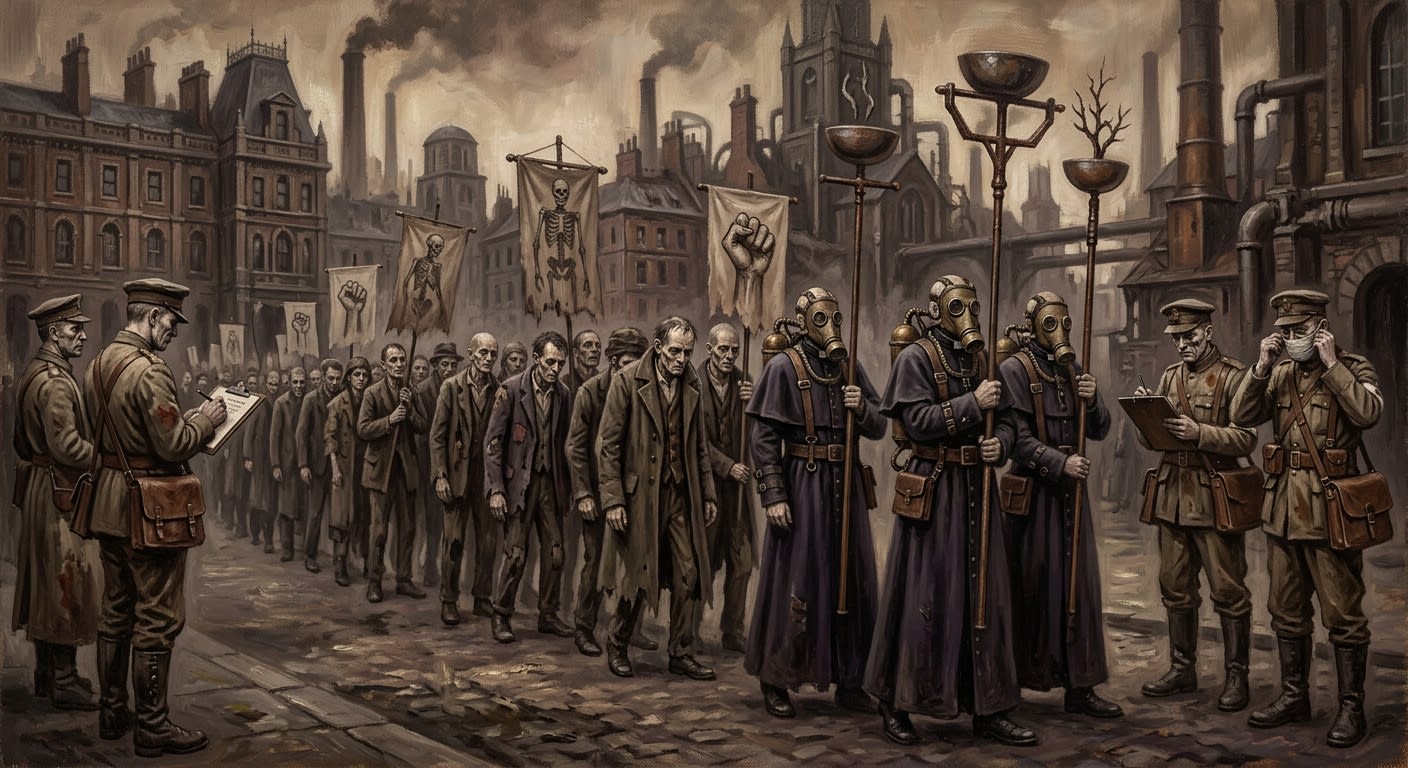
Triumph of the Gaunt
An injury given a hymn-sheet
The Triumph of the Gaunt crowns visible hunger as public virtue, training citizens to distrust plenty while Medicine counts the damage.
Codex Ref. XIII.1.25-001
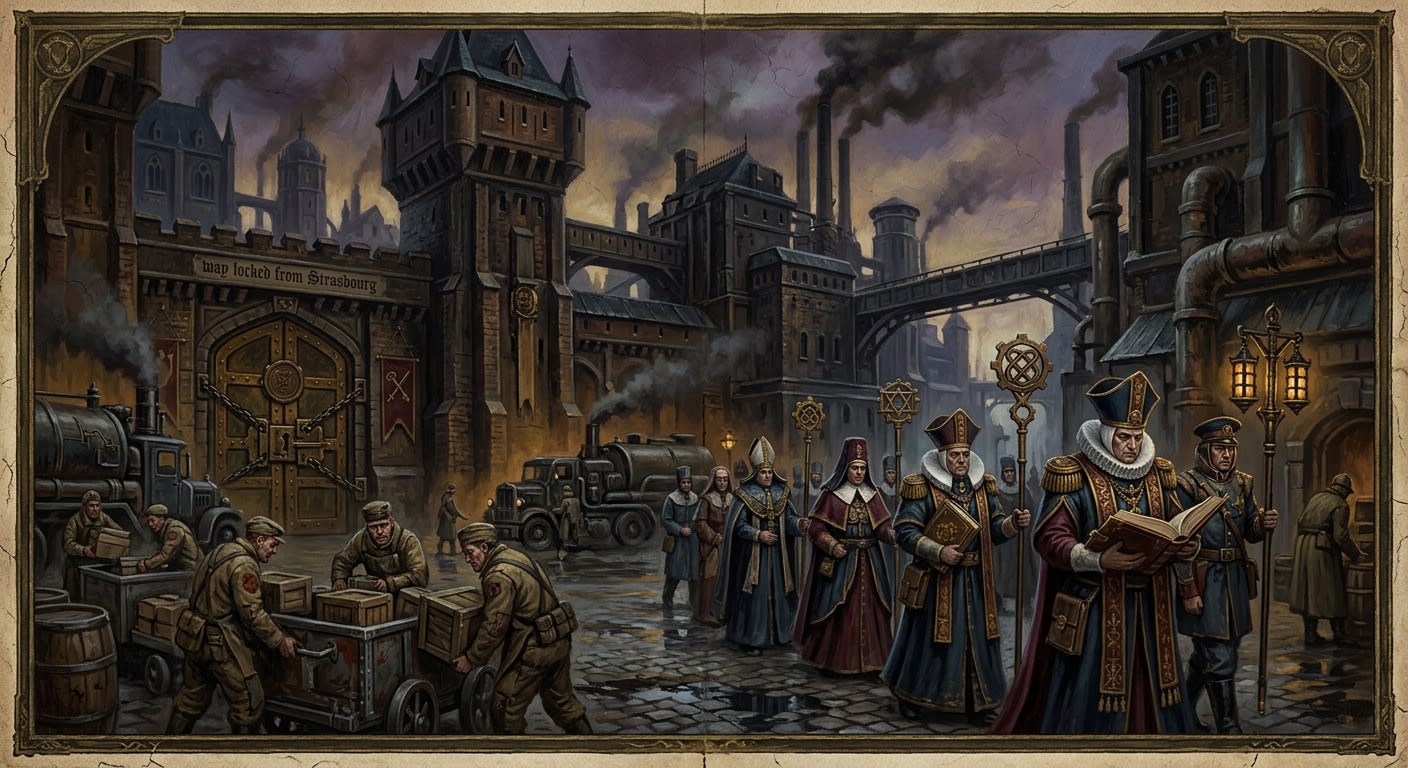
Triune Hearth
Three old bodies, one chimney, and Strasbourg holding the poker
The Triune Hearth binds France, Iberia, and the Rhineland into one Synodal household: warm in sermon, hungry in ledger, and locked from Strasbourg.
Codex Ref. XIII.1.04-090
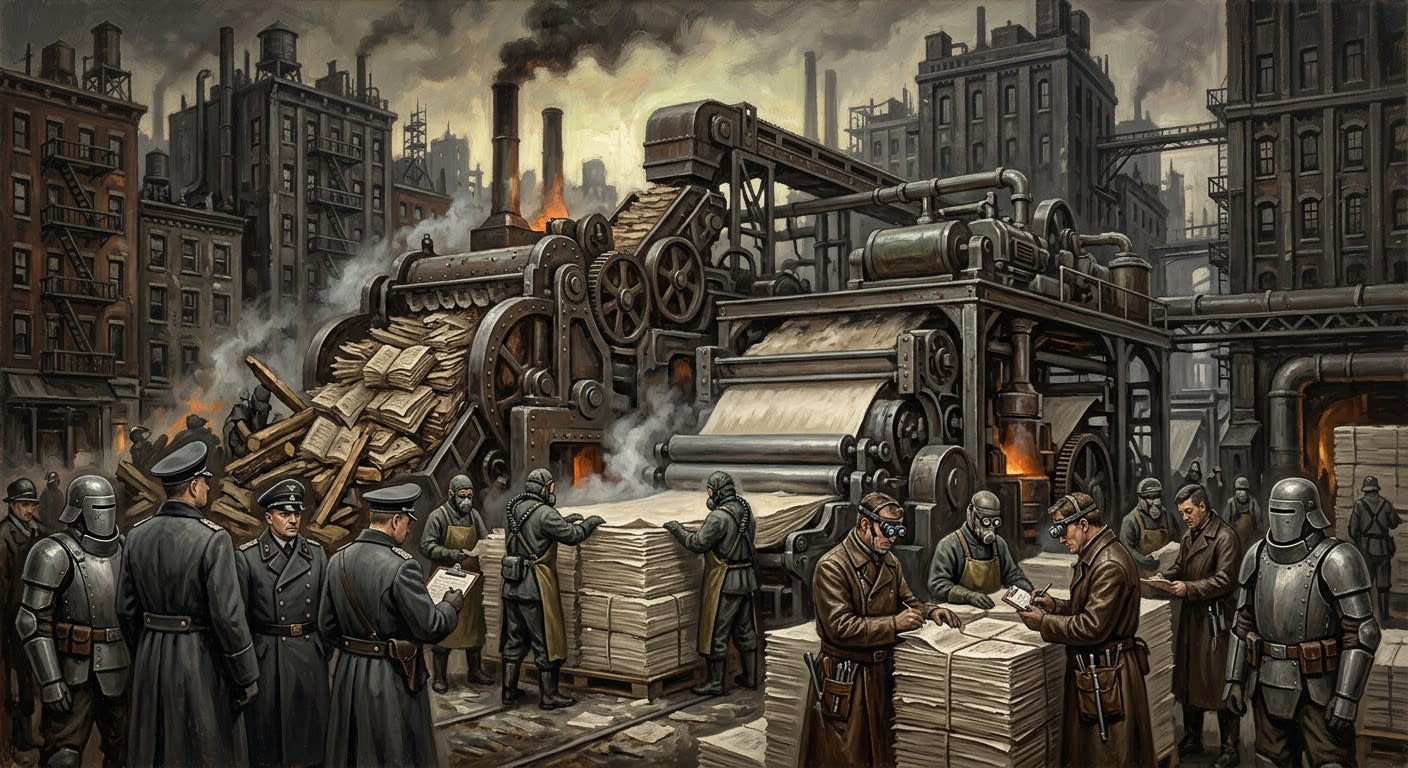
Ulm
The city that taught paper to confess and scholars to become pulp
Ulm is the corrected Heartlands city whose Rationalist compact predated the calendar wound, and whose Paper Mines now make heretical learning into obedient sheets.
Codex Ref. II.2.01-005
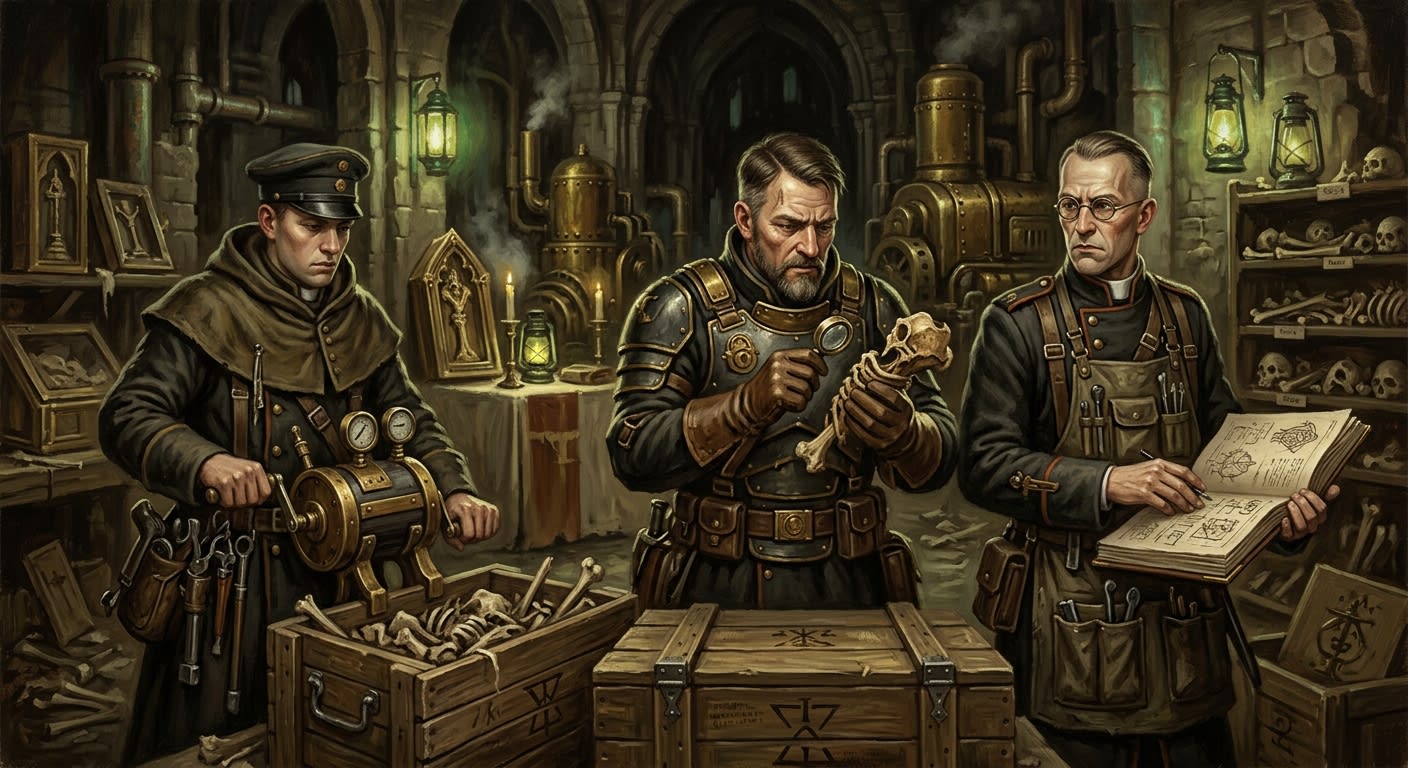
Van Hoorn, Lemstra & de Waal
Three clerks of doubt, one table of bones, and forty cities taught to sneer
Pieter van Hoorn, Gerrit Lemstra, and Jan de Waal made doubt portable in -32 A.S.; their Bone Census counted relics accurately and wounded truth efficiently.
Codex Ref. III.2.01-026
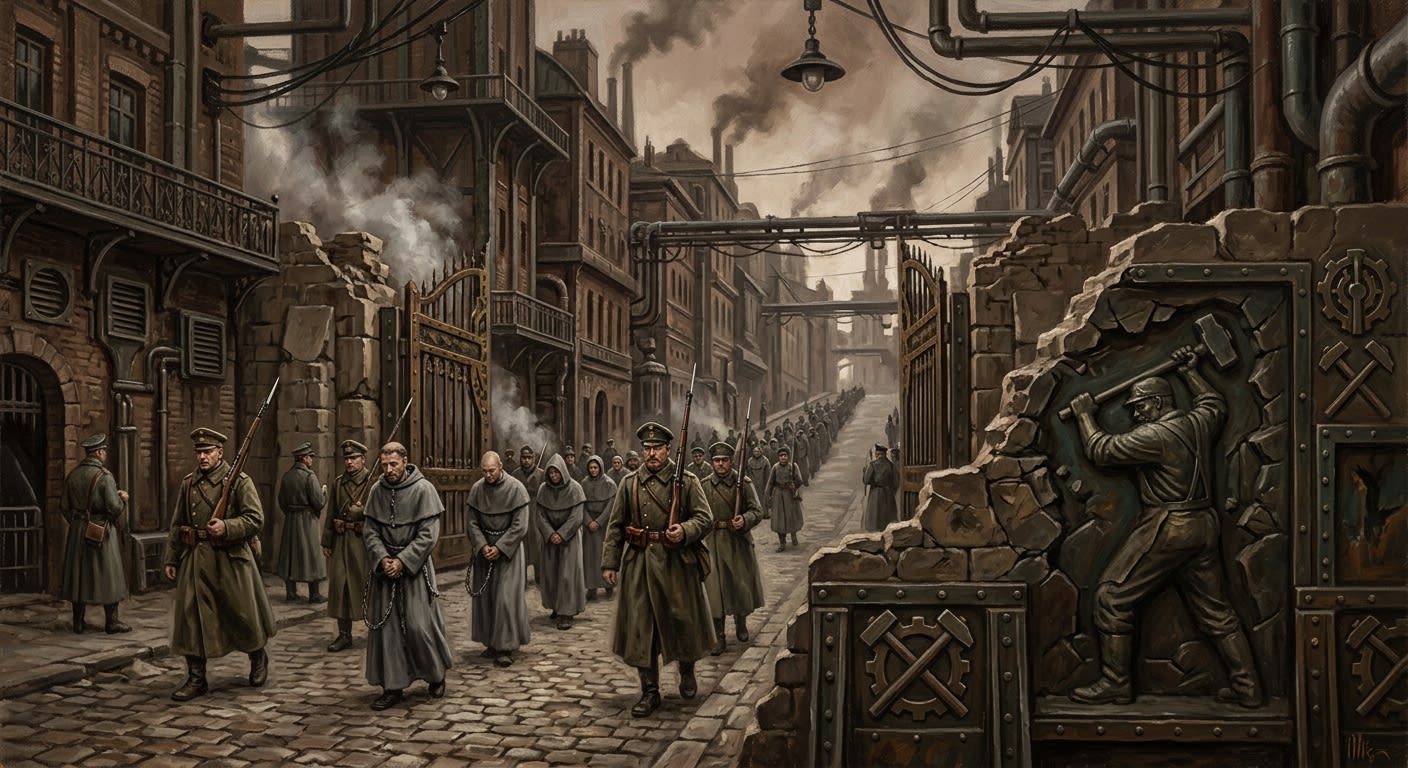
Via Stahlhand
Four hundred and eleven metres where knees become receipts
Vienna's Via Stahlhand is the sanctioned 411-metre penitential route through the Kärntner Gate breach, where Clemens Stahlhand's blow became a road.
Codex Ref. II.4.09-011
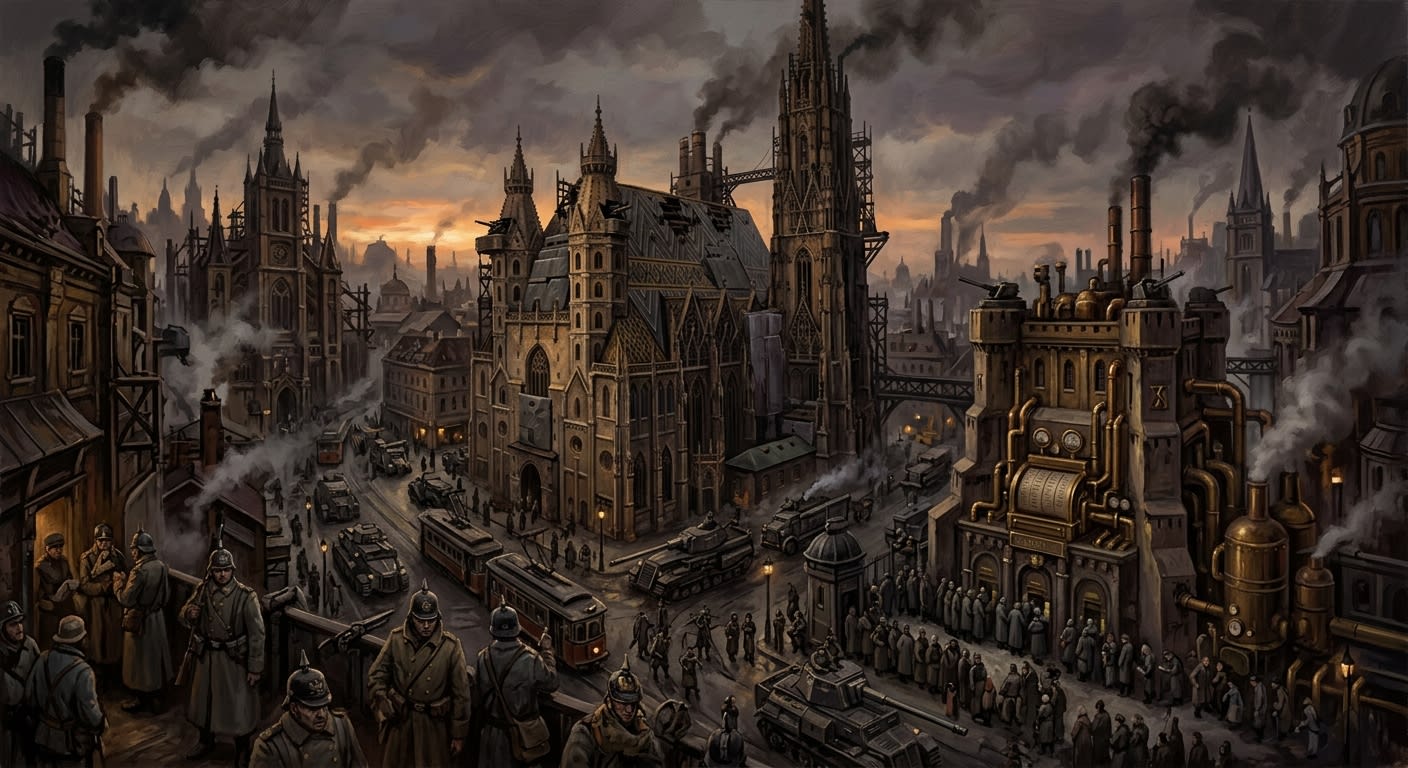
Vienna
The corpse that learned accounting
Vienna is the Synod's most decorated corpse: old see, Rationalist capital, shrine-ruin, supply hinge, lullaby scar, and profitable proof that ruins can be taxed.
Codex Ref. II.4.09-095
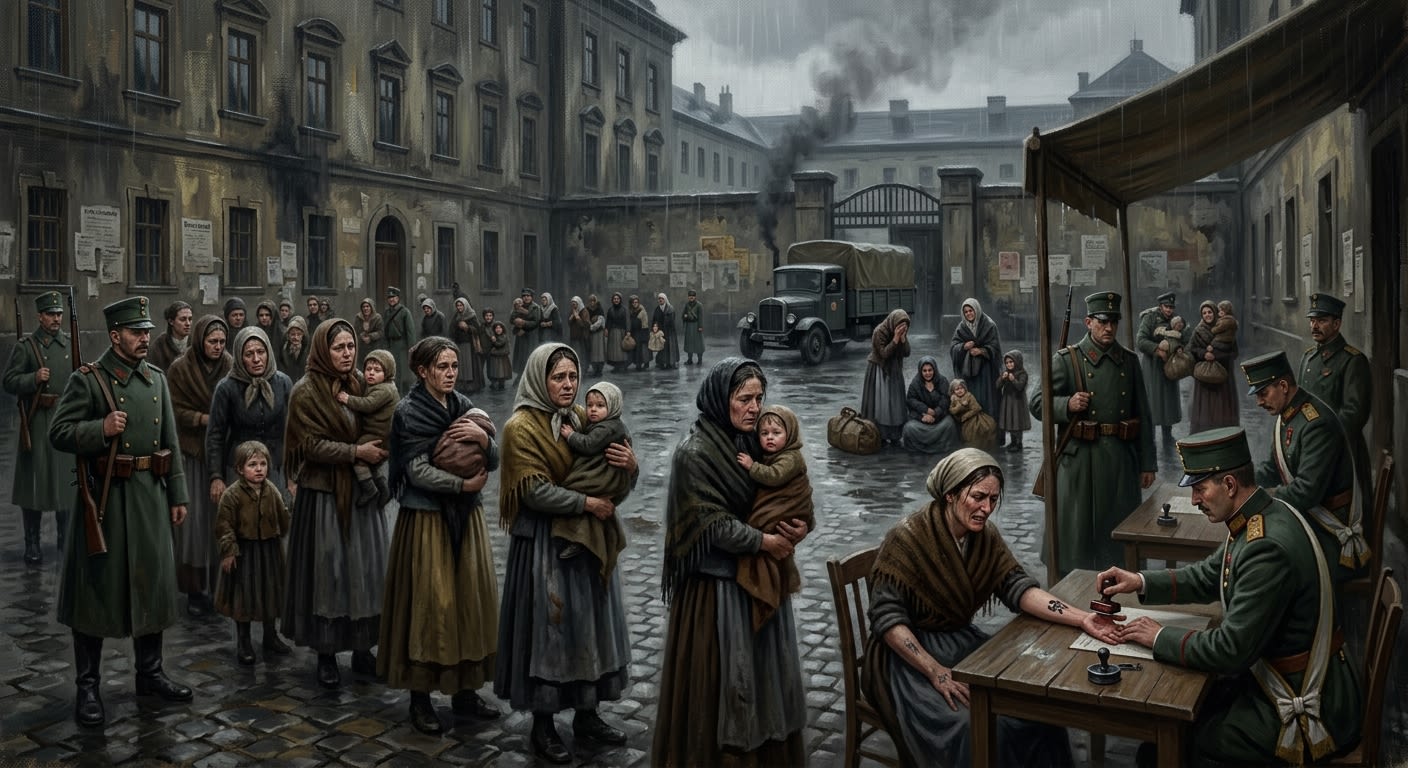
Vienna Incident A.S. 112
Five thousand tongues, and one lullaby still breathing
A.S. 112 Orison sweep in Vienna that branded five thousand mothers for a rain-and-barley lullaby and made unauthorized comfort a training case.
Codex Ref. VII.8.10-112
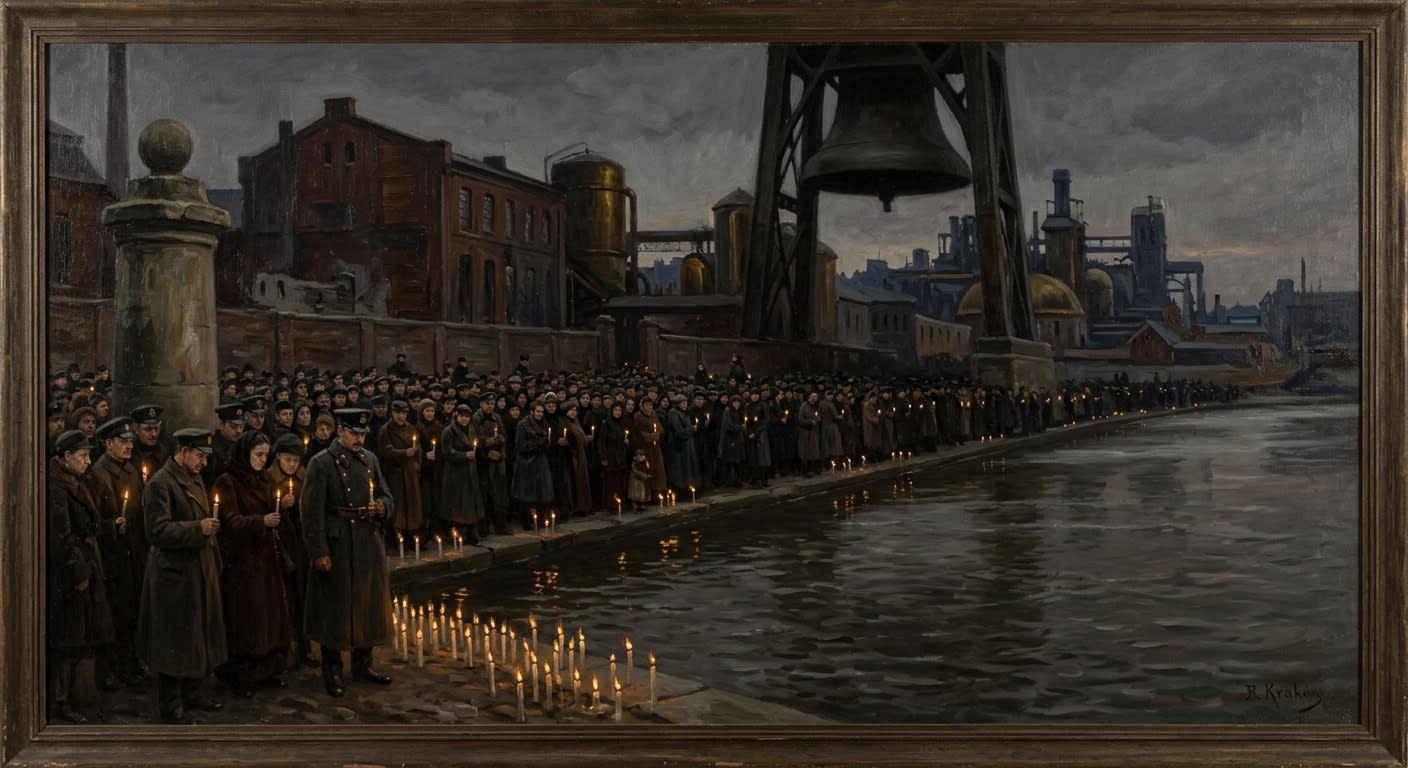
Vigil of the Drowned Priests
One hour in which [[krakow|Kraków]] is ordered to hear the river
Annual Kraków observance ratified in A.S. 148: one mandated hour of Bell-silence, forty-seven candles, and a river taught to testify.
Codex Ref. VII.6.02-001
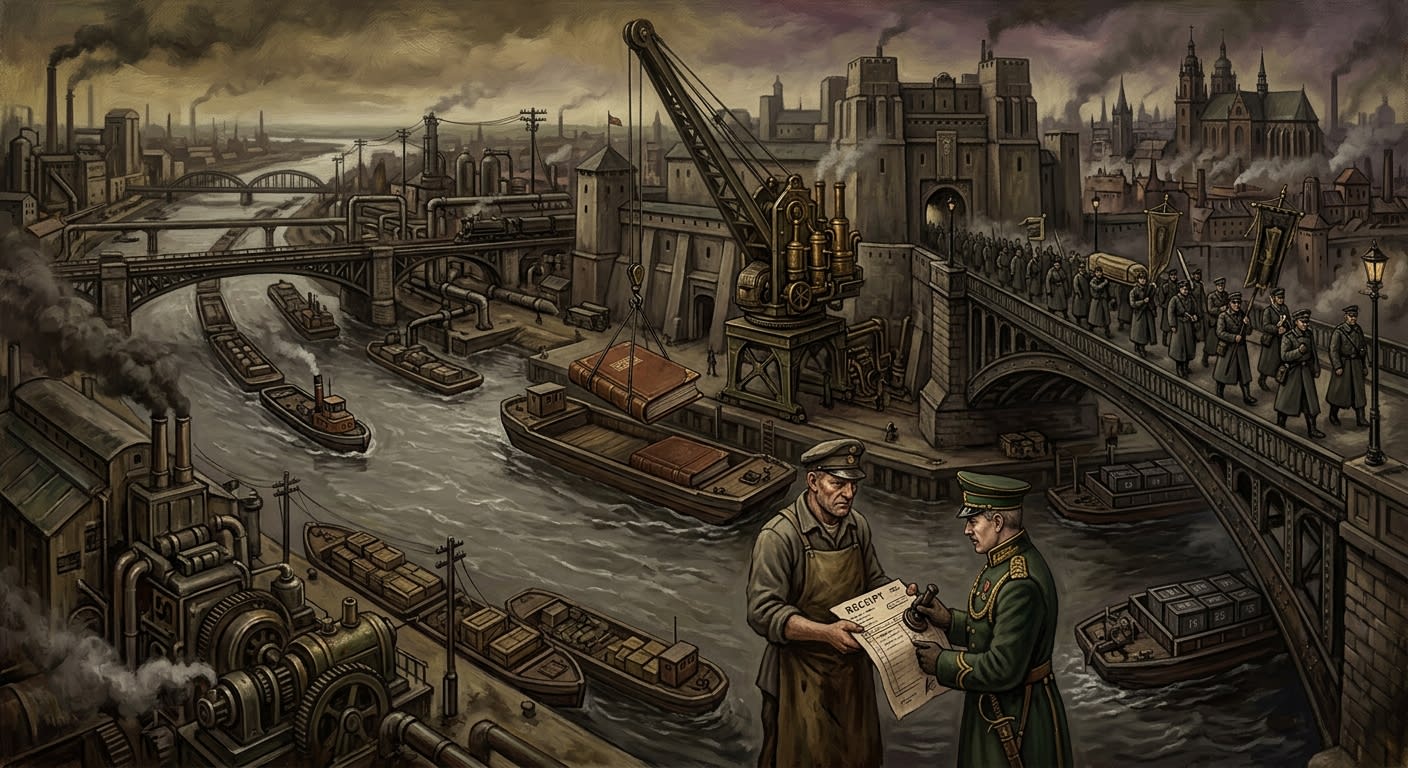
Vistula
The river carries evidence better than tribunals carry shame
The Vistula is Poland's wet archive: martyr-road at Kraków, receipt at Sandomierz, supply throat at Warsaw, and a river no Bureau has taught to forget.
Codex Ref. II.3.06-018
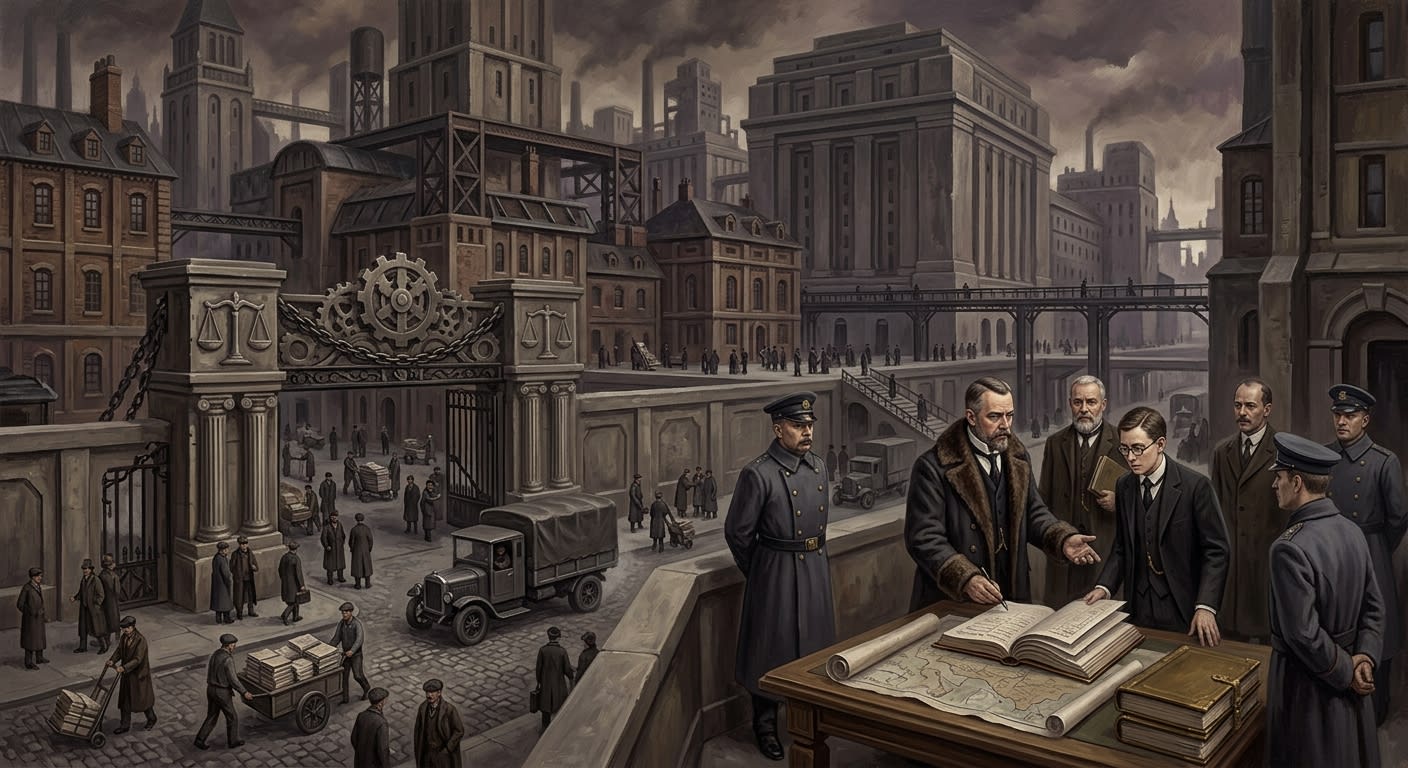
Wallachia
Fair prices are how Hell asks for a signature
Wallachia did not fall by trumpet and fire. It borrowed, signed, refinanced, and became Velmora's creditor province pointed at Sibiu.
Codex Ref. II.6.06-006

Warden of the Sacred Ledger
Memory is permitted only after custody
The Warden of the Sacred Ledger guards the passage between recorded fact and ratified meaning, lest memory escape and become a riot with dates.
Codex Ref. XIII.1.33-090
Warrens of Strasbourg
The capital's conscience, filed under mildew
Strasbourg hides its poor where bells arrive broken, maps grow bashful, and charity, crime, and surveillance share the same wet staircase.
Codex Ref. II.2.06-201
Wawel Hill
A crown of stone made to remember under seal
Kraków's cathedral hill, bound to the Night of Knives, restored as a public wound, and watched from upper works where Doctrine observes the city looking upward.
Codex Ref. II.3.06-001
Worms
Where broken things become binding
Worms is the Rhineland city where absence became evidence, rain became residue, seals became law, and a name became a warning.
Codex Ref. II.2.09-087
Year of Smoke
Eleven wagons, one fire, and the night the [[bureau-of-shadows|Bureau of Shadows]] stopped being a ghost story
The night Lübeck's harbour records burned, its guilds dissolved, and eleven wagons drove into legend. The Year of Smoke is what happened when the Bureau of Shadows stopped being theoretical and started being operational.
Codex Ref. VII.1.02-001
Zone 1
The rearward paradise that learned to invoice the war
Zone 1 is the Synod's polished western rear: safe enough to tax, rich enough to excuse itself, and stained to the elbows by logistics.
Codex Ref. II.0.03-201
Zone 2
The throat where empire learns to speak in smoke
Zone 2 is the Synod's central throat: Strasbourg's field of authority, Rhine wealth, furnace obedience, catechism-barracks, and useful smoke.
Codex Ref. II.0.04-201