

Reverse Index
Referencing “Rheinscarp”
Every codex entry that links to Rheinscarp. 80 entries.
Return to Rheinscarp
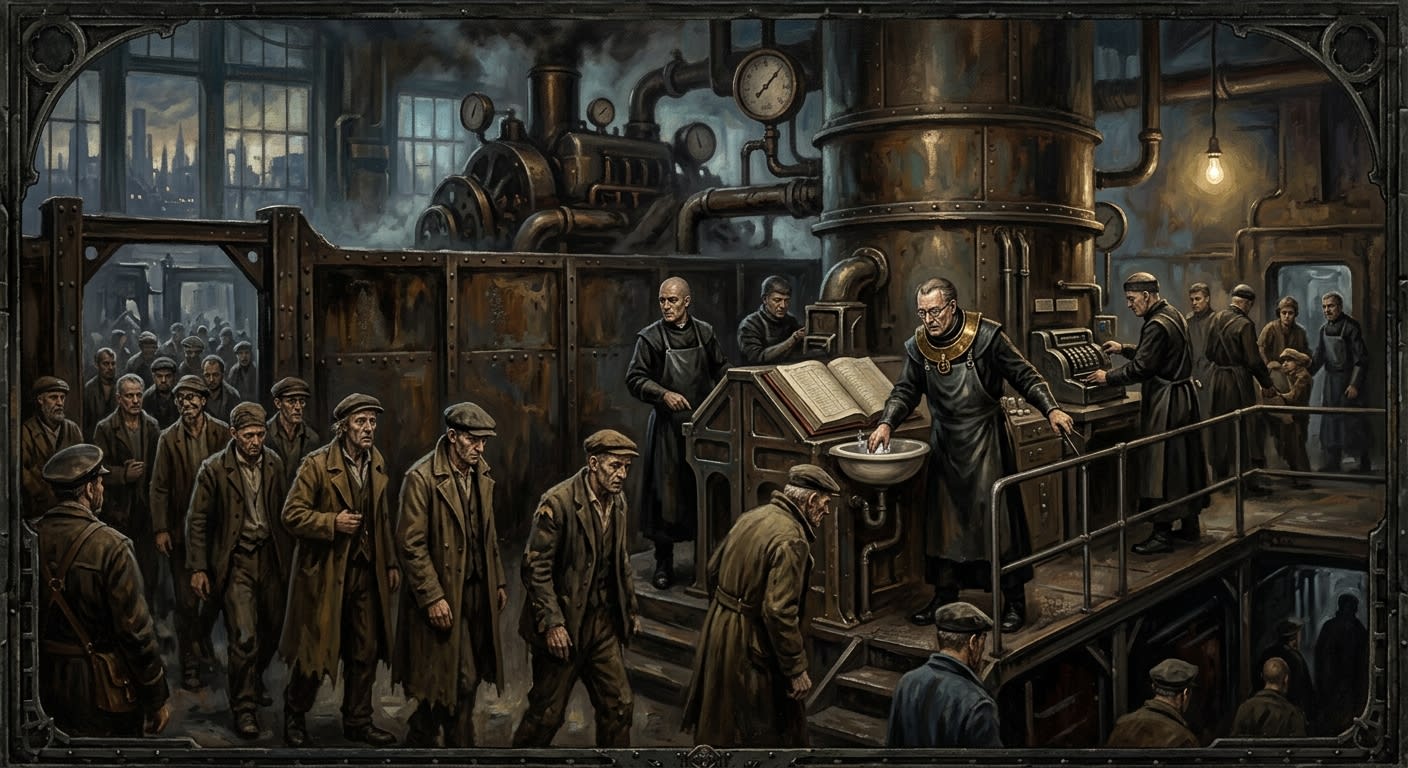
Absence Quota
The loaf improves when the mouth is misfiled
Rheinscarp's Absence Quota makes grain sufficient by correcting the hungry out of the count; arithmetic, being pious, washes its hands.
Codex Ref. XIII.1.97-198
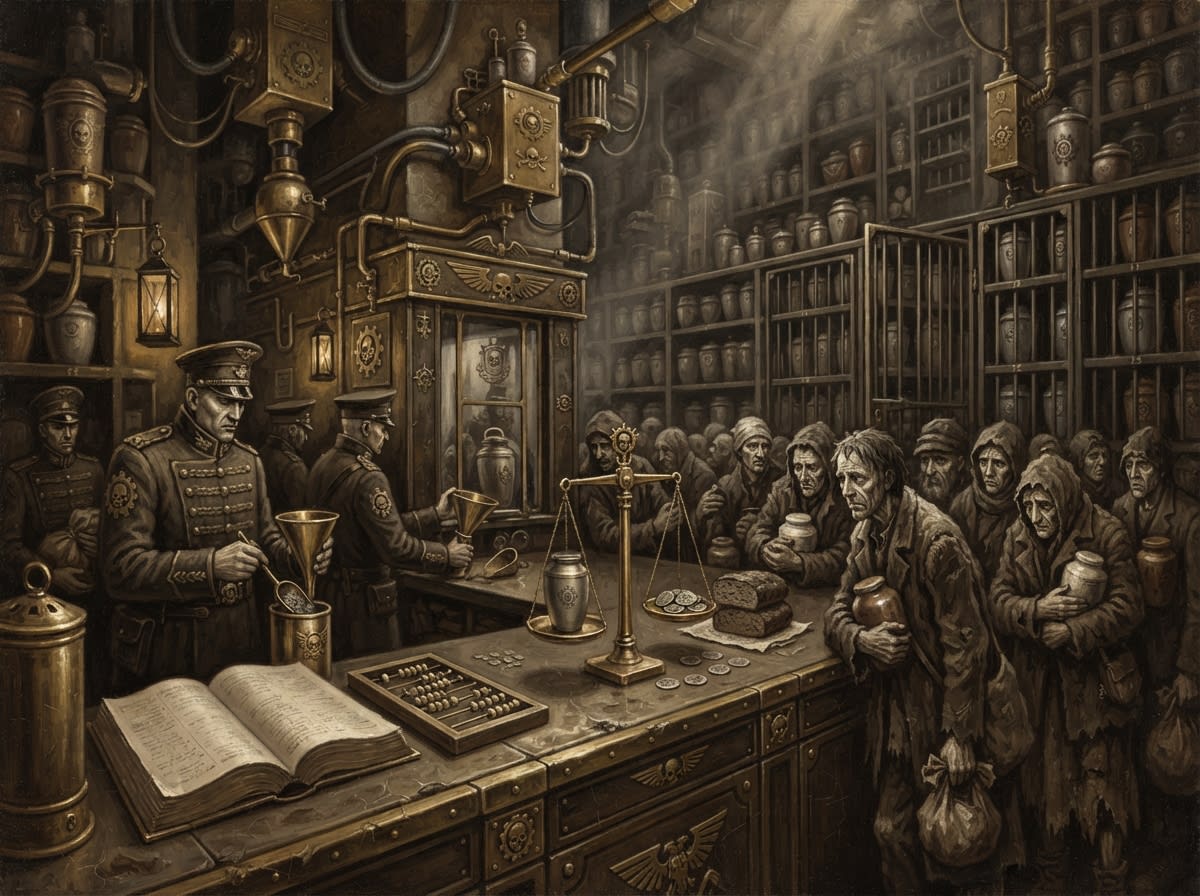
Ash Banks
Where grief is weighed, tendered, and filed as solvent
Ash Banks convert cremains, bone-dust, and pledged future remains into bread, salt, absolution tokens, and dust futures while every Bureau calls the ash something useful.
Codex Ref. XIII.1.98-201
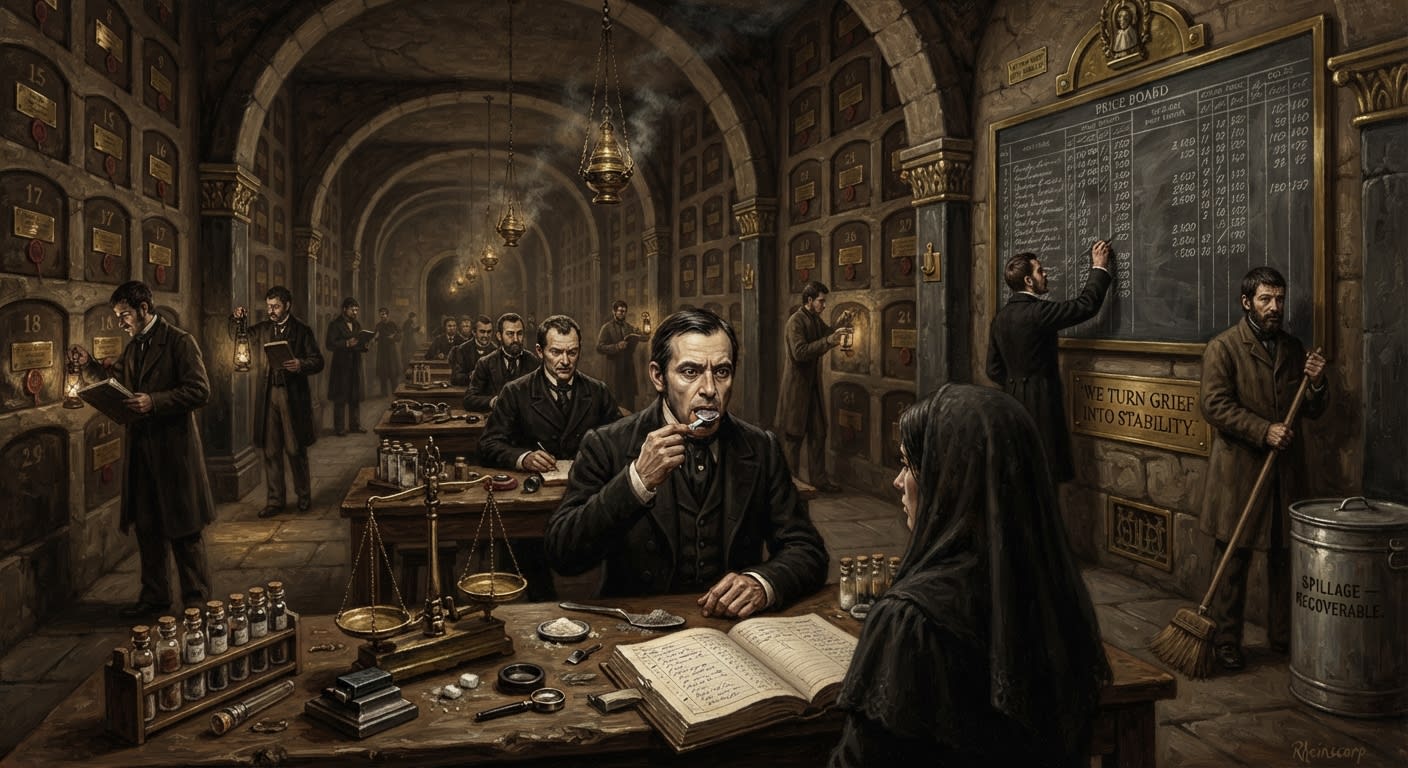
Ash Exchange of Saint Pelagia
Where grief becomes tender and the dead pay interest
Rheinscarp's seventh terrace turns the dead into collateral: cremains vaults, saint-shares, dust futures, and the cheerful arithmetic of Broker-Saintsman Damas Rohe.
Codex Ref. II.2.01-007
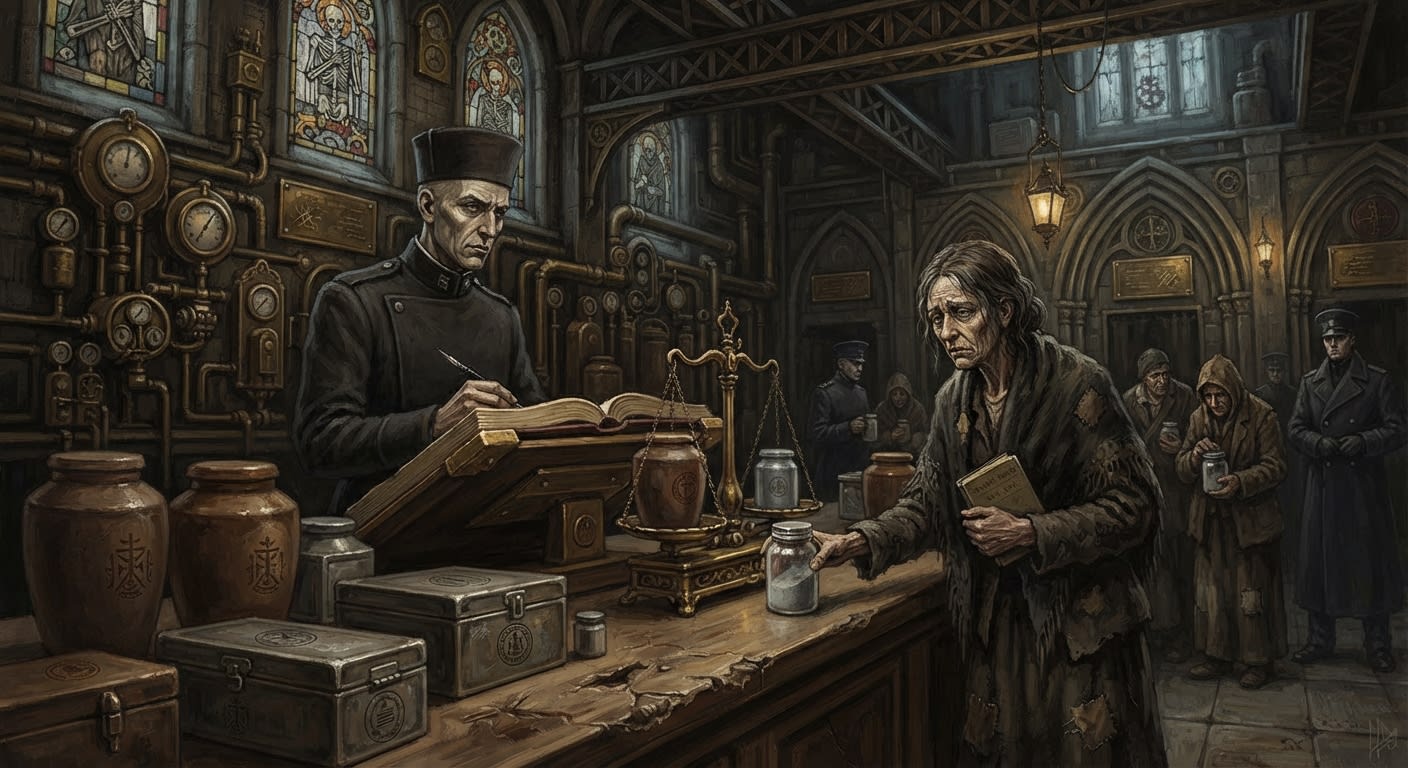
Ash-Credit
The dead are tender once Tithes finds a scale
Ash-credit is the Synod's devotional collateral, converting cremains, saint-dust, and pledged future remains into bread, grace rations, and obligations the dead cannot refuse.
Codex Ref. VI.3.01-002
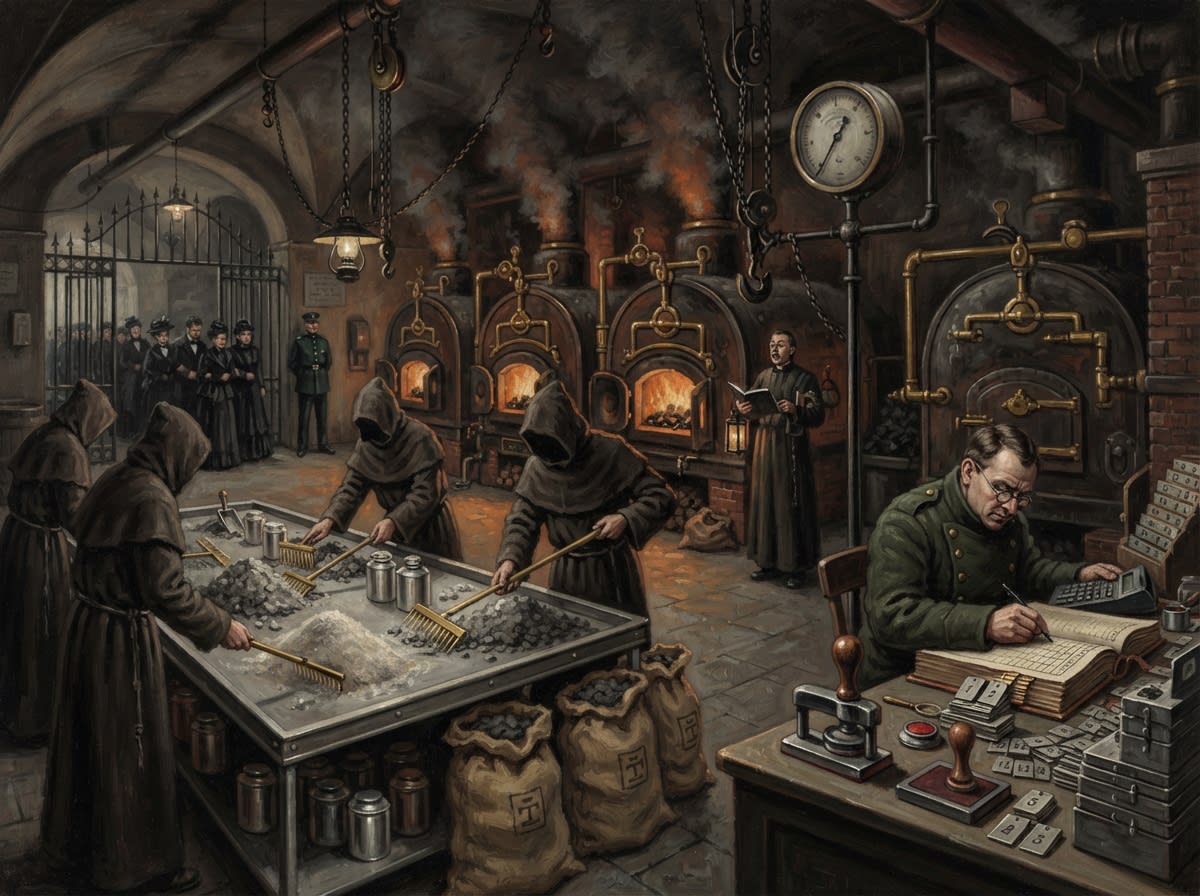
Ashbinders
The dead are sacred, and the receipt is extra
The Ashbinders burn the Synod's dead, sort the ash, sell the comfort, and accidentally perform one of the few procedures that keeps the cemeteries quiet.
Codex Ref. XII.41.01-001
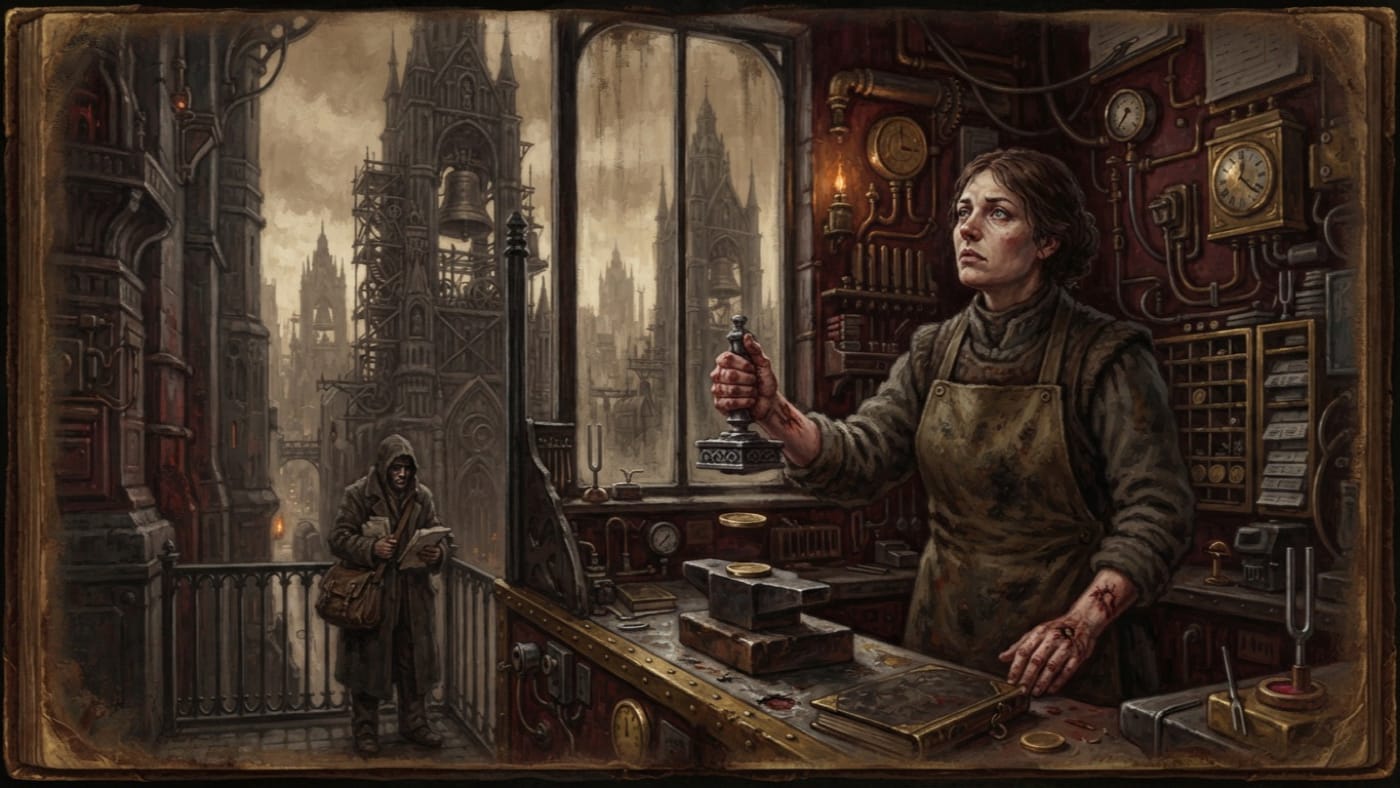
Bell-Eclipse
The bench waits for the bell
My A.S. 201 survey records the Route-Stampers' refusal to stamp while city bells are silent between canonical hours. Doctrine calls it superstition; the smiths fear the wrong world. The custom's origin remains undated.
Codex Ref. XIII.1.62-006
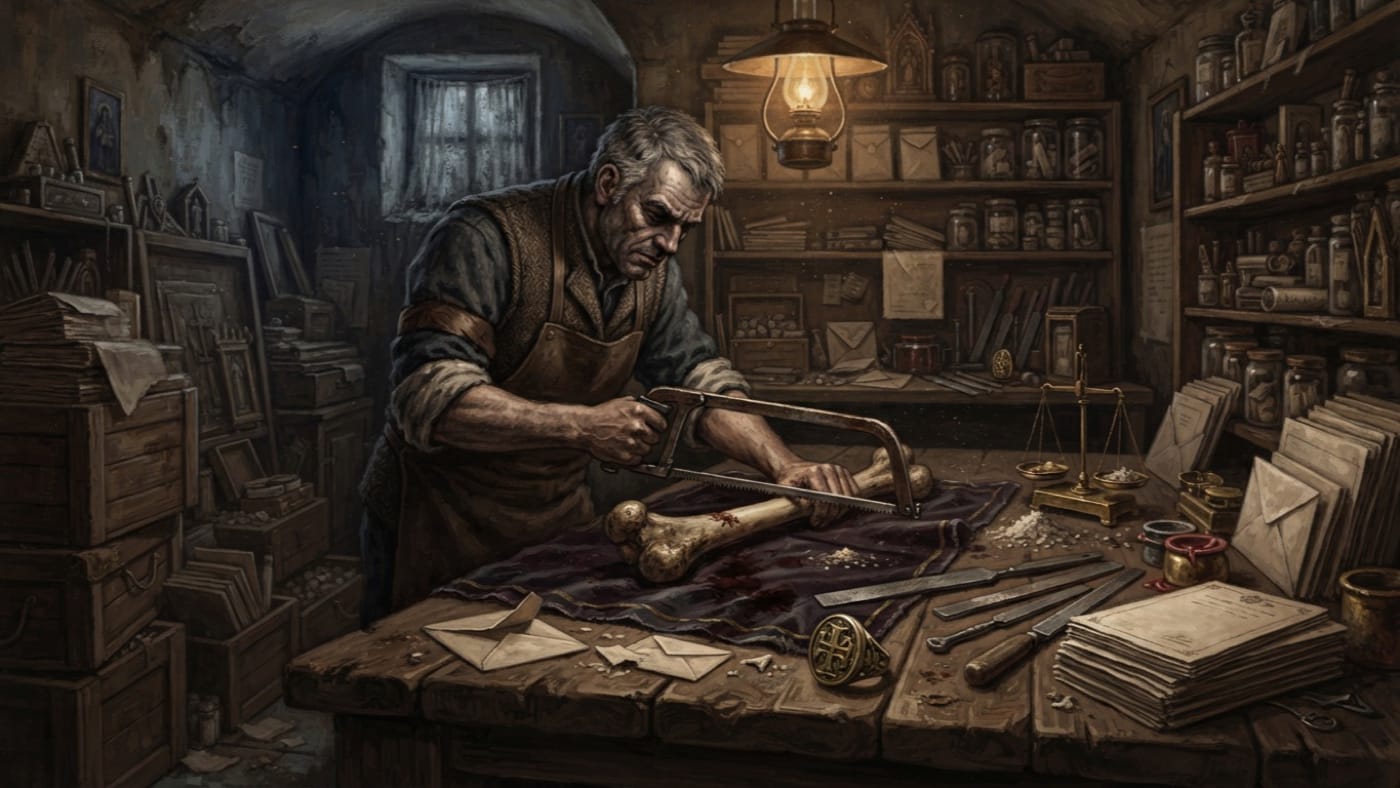
Bone Splitters
The certificate travels separately; the saint travels in pieces
The Paper-Only insult for Peace and Profit brokers who divide authenticated saint-bones into separately certified portions. Surveyed in A.S. 201: tolerated when useful, denied when caught, and indispensable whenever calendars fail.
Codex Ref. XII.15.05-001
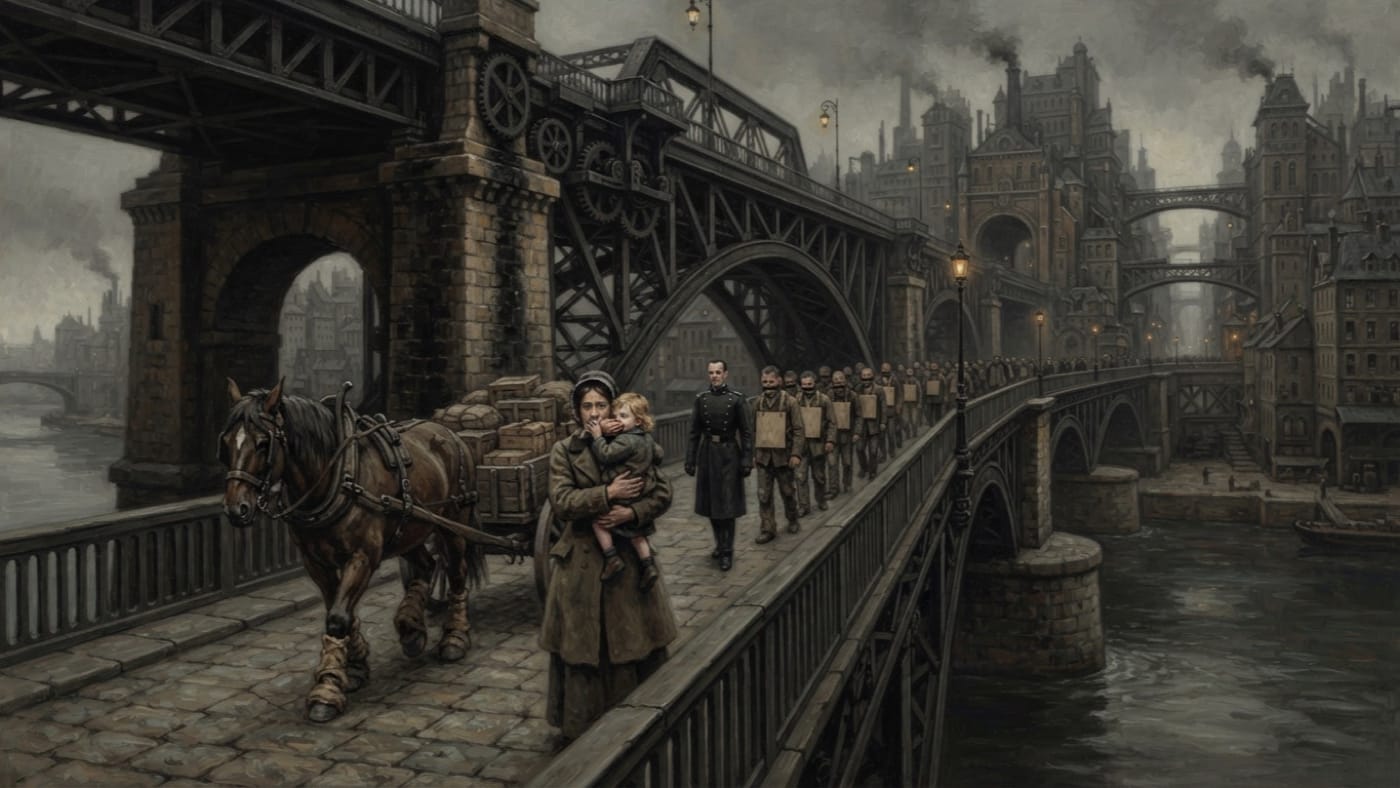
Bridge of the Silent Toll
Where silence pays and Purity speaks for the condemned
Metz's Bridge of the Silent Toll accepts silence instead of coin. Its rebuilt span carries muted travellers and the Toll of Held Speech; the masonry was corrected, the silence retained.
Codex Ref. II.1.05-002

Bureau of Tithes
The organ no one praises and no one dares remove
The Bureau of Tithes is the Synod's fiscal organ — the stomach no one praises and no one dares remove. It taxes breath, grain, bereavement, and the management of its own taxation.
Codex Ref. VIII.4.01-001
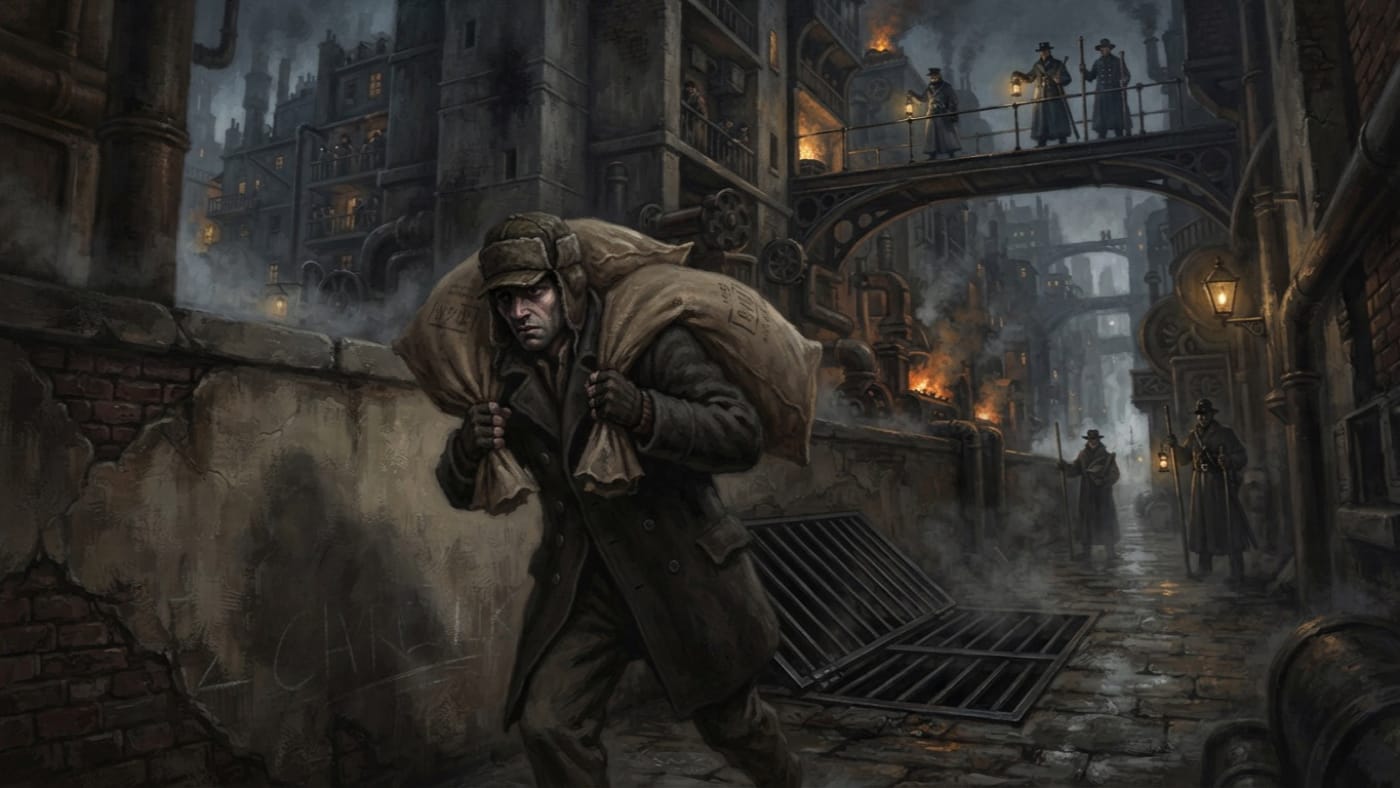
Cache Runner
The clerk hides the absence; the runner carries the weight
The Cache Runner is the Grain Keeper's route specialist, moving diverted grain through curfew to hidden stores and hungry households. One interception gives the Bureau a cellar, a ledger, and a ward.
Codex Ref. XII.13.07-001
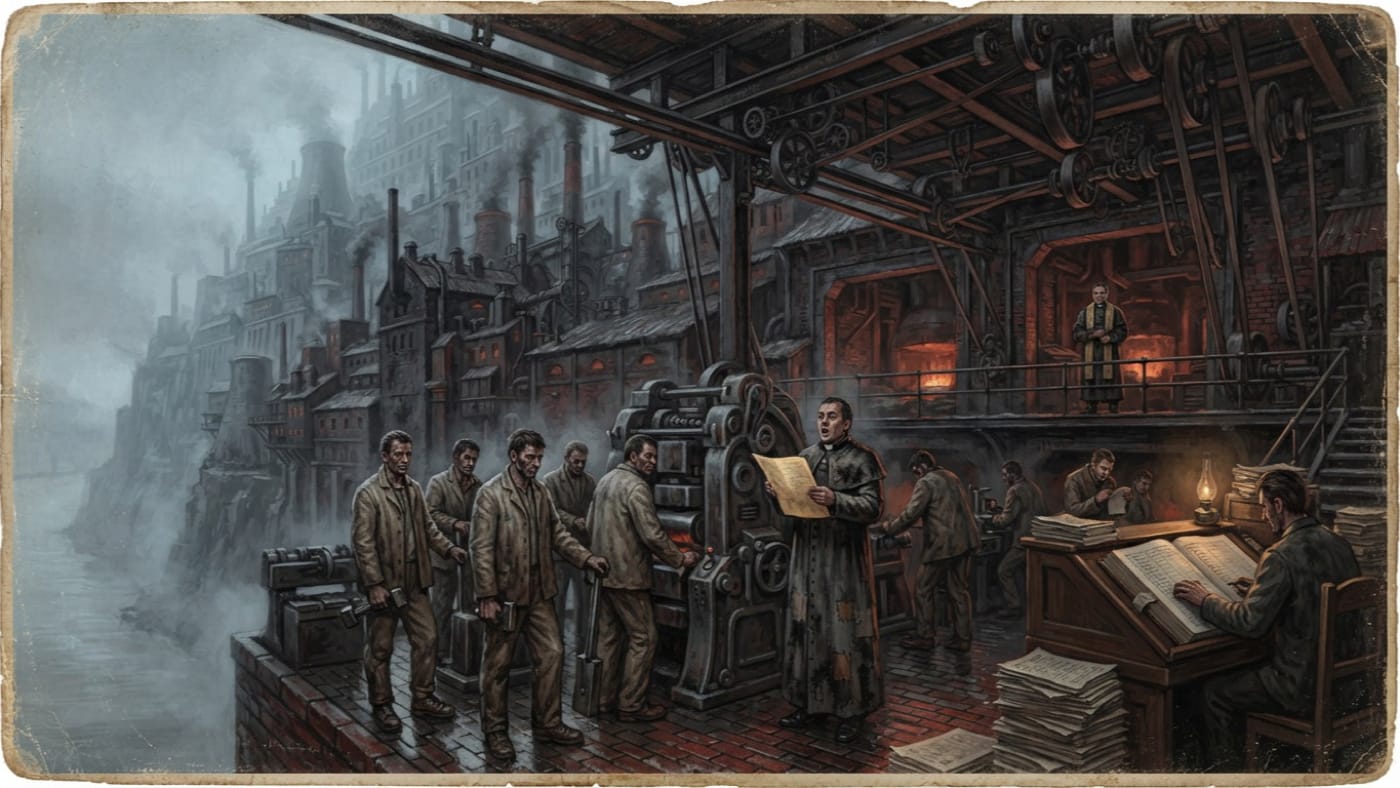
Cantor Foundries
Beneath the judges and above the dead, even the hour must be bought
Rheinscarp's eighth terrace runs its furnaces on purchased bell-hours and the Mill-Crown Cantors' cadence. The machinery may be ready; permission remains the Marshal's commodity.
Codex Ref. II.2.08-001
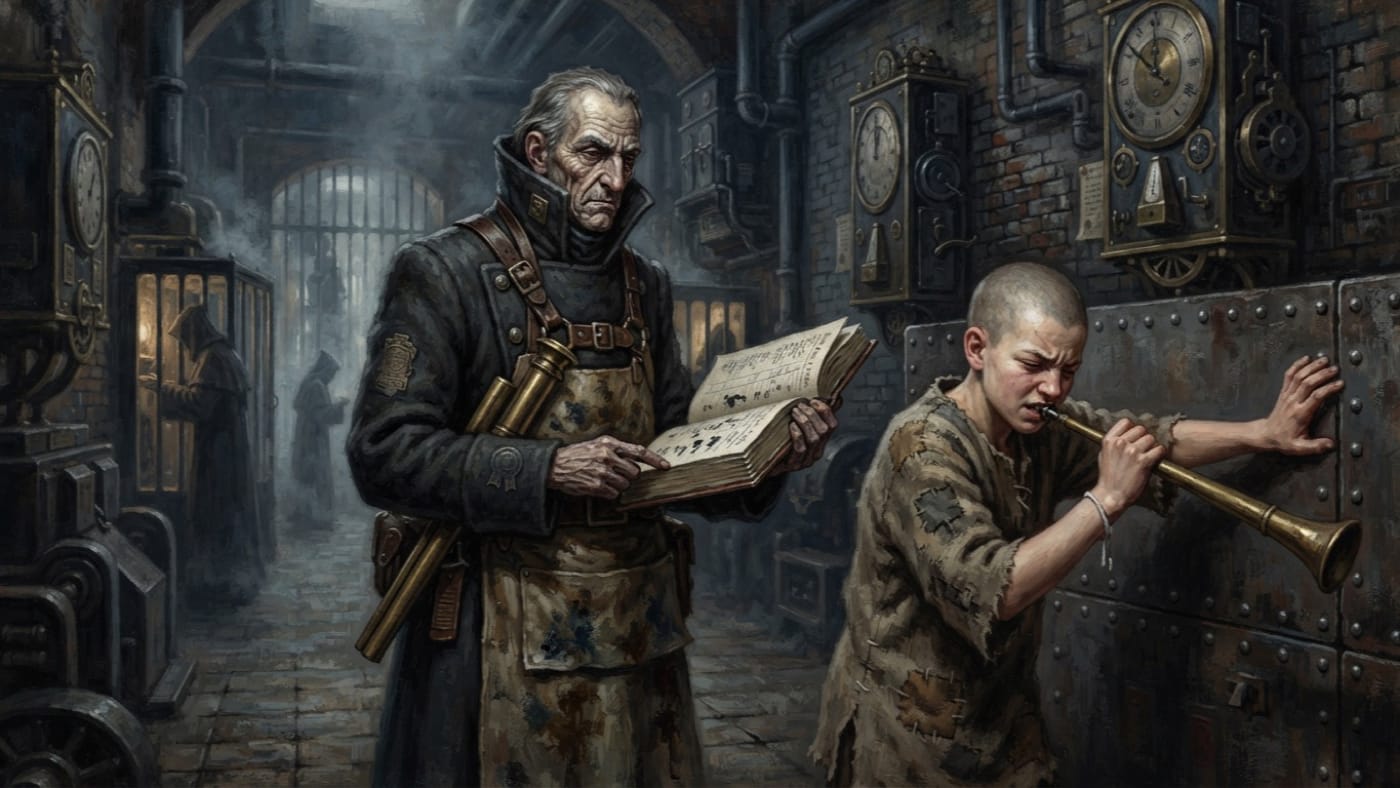
Cantor-Marshal
The senior throat that teaches the count and signs for the damage
The Cantor-Marshal sets Purity's singing protocols, trains novice throats and audits the scars. Rank grants a tuning rod and a signature; it never licenses reply.
Codex Ref. XII.24.01-003

Cantor-Marshal Hrodric Venn
He holds the hours; the hungry hold their receipts
Hrodric Venn holds Rheinscarp's bell-hours, mill cadences and convoy timing. His credits decide ration priority; the hungry may miss their window, but the schedule does not miss them.
Codex Ref. III.2.01-201

Carnelian erasures
Every seal was correct; the ledger was impossible
In A.S. 67, three Notaries struck the Carnelian lineage across four cities without a shared anchor table. Two lawful cousins vanished from the rolls; the Notaries followed. The children lost their bread.
Codex Ref. VII.8.10-067
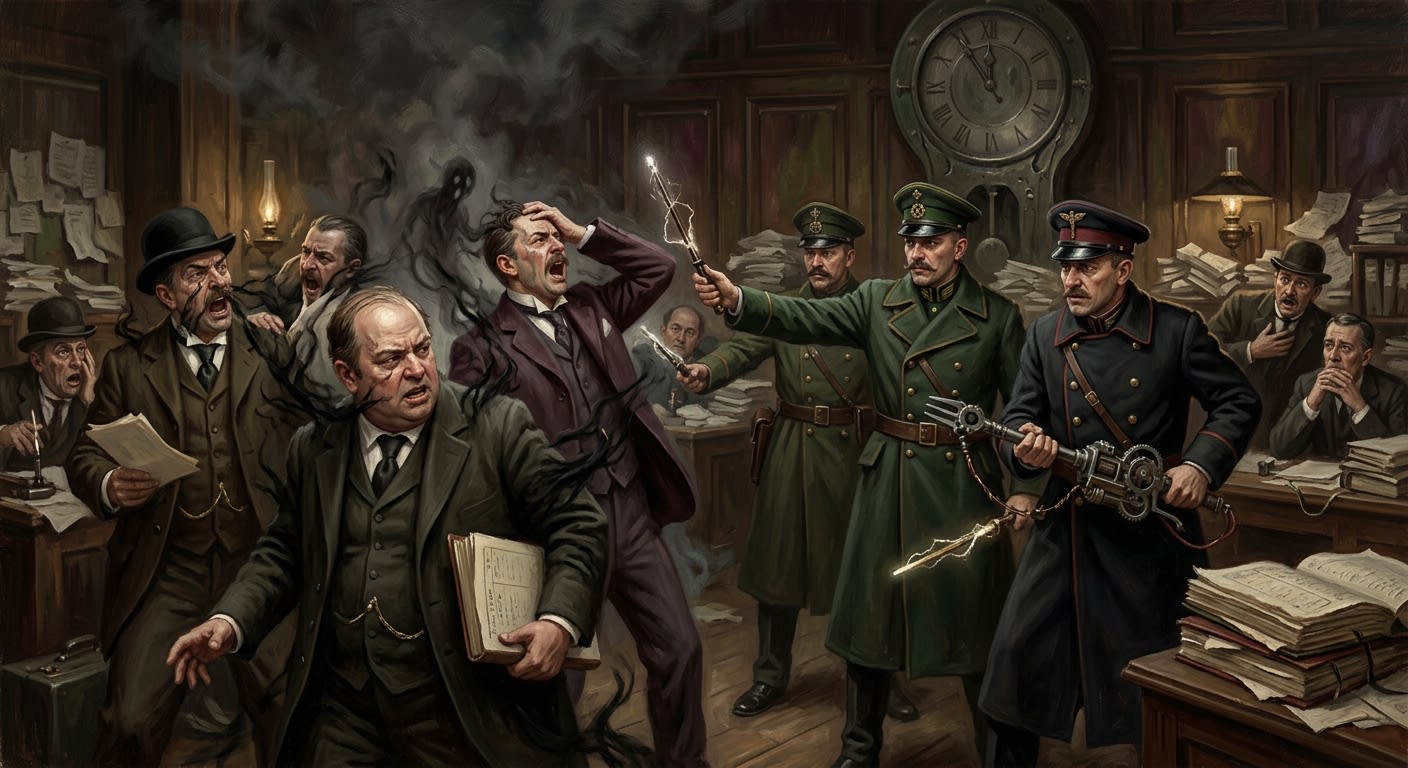
Carnelian Family of Metz
The lineage strike that bit its own hand
The A.S. 67 first recorded lineage-wide nullification attempt, in which Carnelian ration fraud, plague permits, and three overeager Notaries taught absence to bite backward.
Codex Ref. XIII.1.69-001
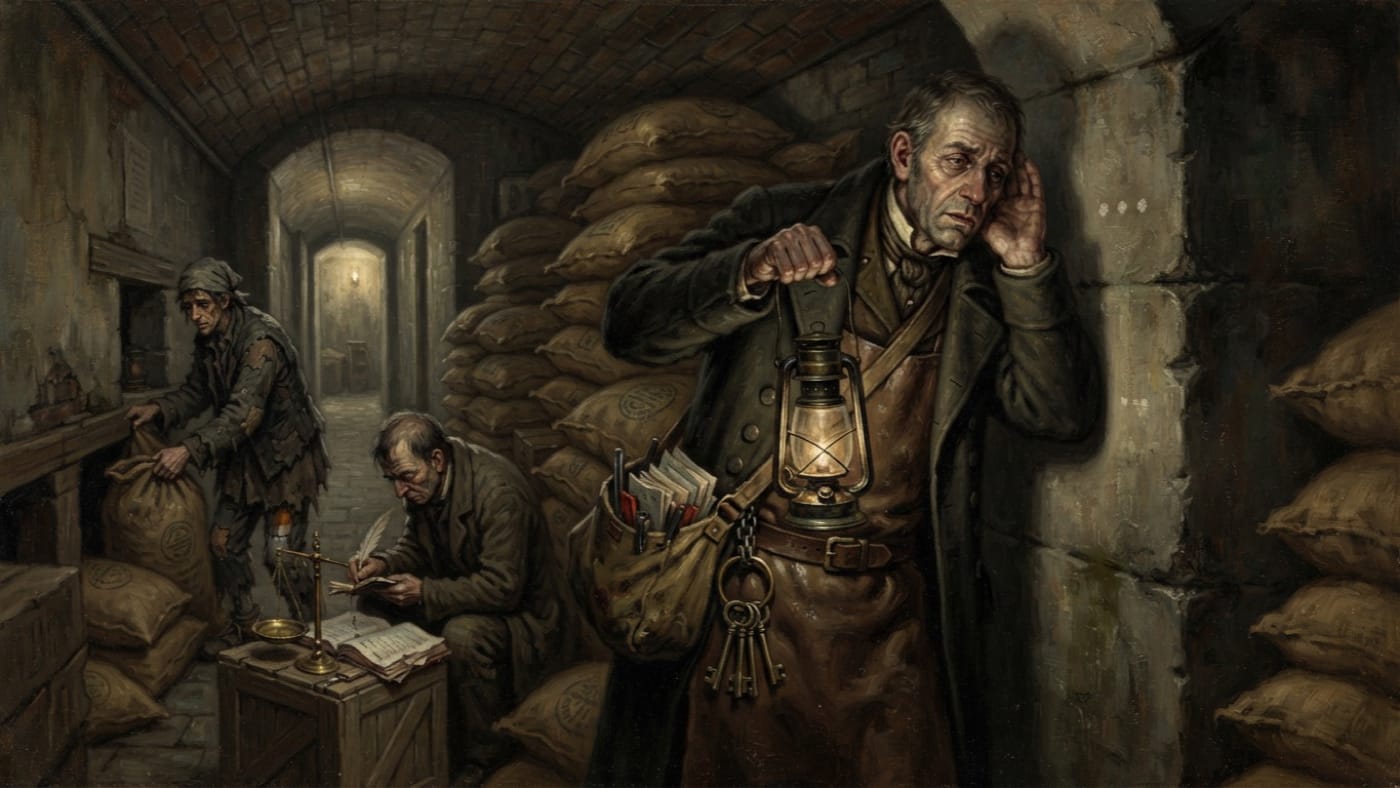
Cellar Warden
The keys are unlawful; the bread is still required
The Cellar Warden guards a district's concealed grain, coordinates clerks and runners, and keeps reserves edible. The Bureau prosecutes the keys while quietly relying on what they unlock.
Codex Ref. XII.13.08-001
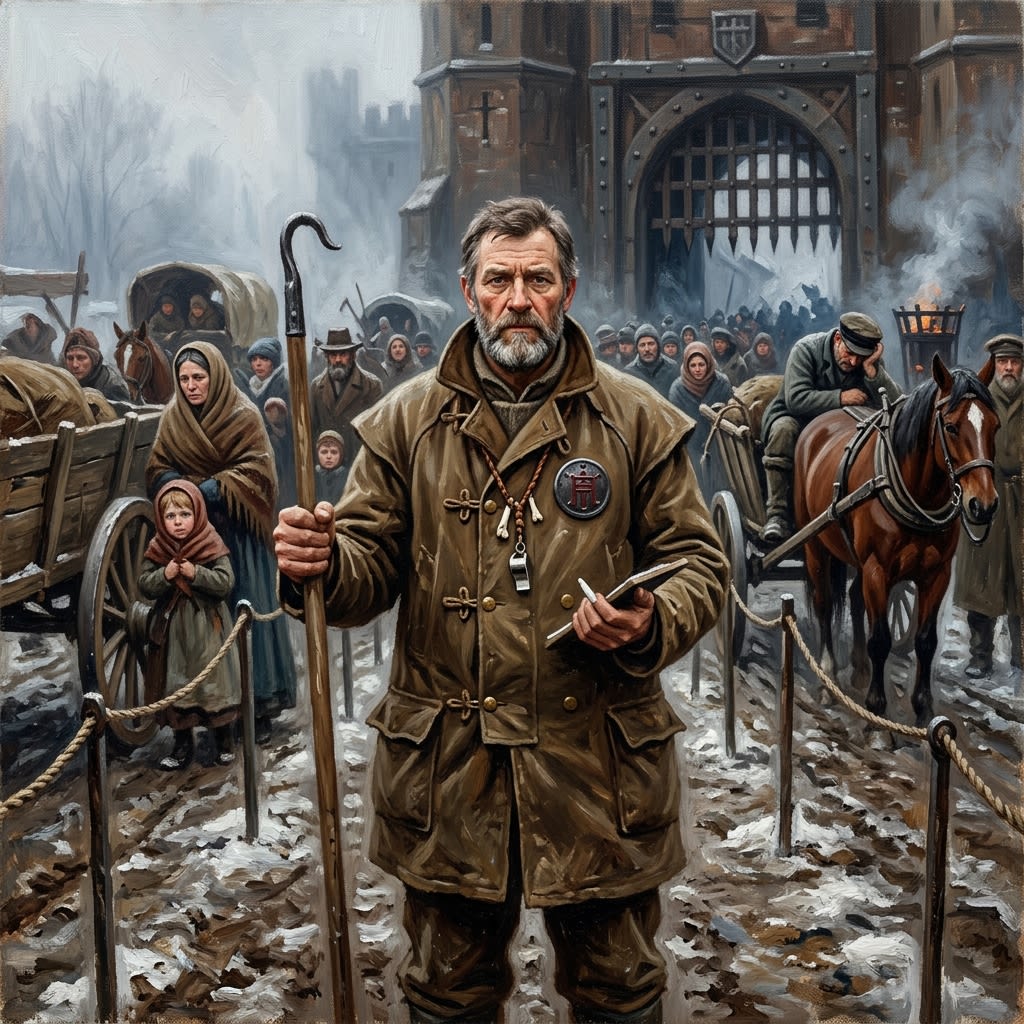
Checkpoint Queue-Marshal
The man who holds the rope holds the war
The Synod's most hated indispensable servant — 1,140 Queue-Marshals holding the ropes that hold the lanes that hold the war together, constituted A.S.
Codex Ref. XII.7.01-001

Clerk-Prime Yoren
The hand that decides whether an hour was ever entered
Clerk-Prime Yoren heads the Time Clerks' Collegium of the Queue Road. His guild decides which waiting hours reach the ledger. The file records his office; it offers no history of the man.
Codex Ref. III.2.01-648
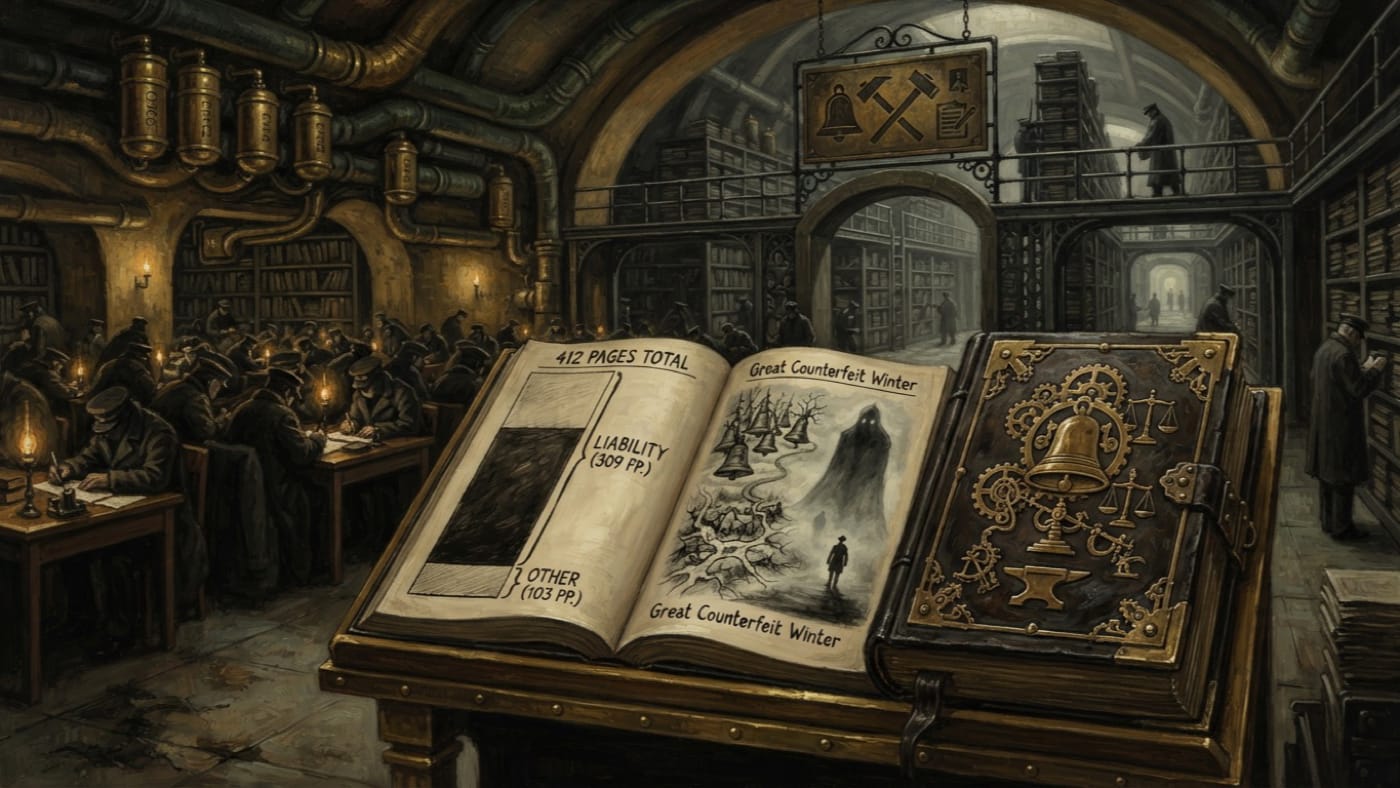
Concerning the True Toll and Its Faithful Reproduction
Three quarters of the book explain who is to blame
The Route-Stampers' workshop manual survives in the record at its Third Revision, A.S. 178: 412 pages, 309 devoted to liability. The traveller does not read it. The traveller is read.
Codex Ref. XIII.1.178-001
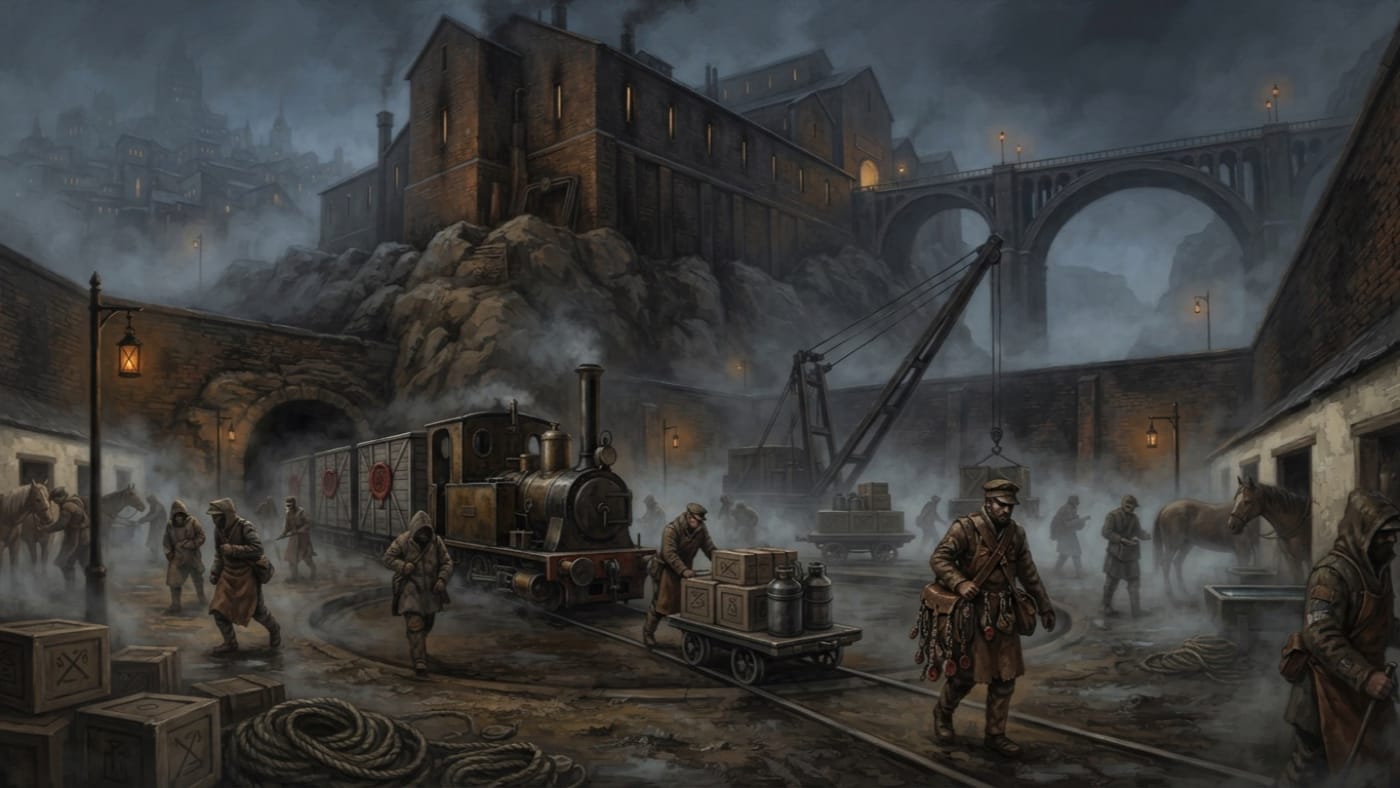
Courier Spur
Carriage certified; contents not warranted
Nemea's eastern dispatch district exports sealed decrees, certified identities and ash-ink under Collegium scrutiny. The Brotherhood certifies carriage. Contents, as the stamp says, are not warranted.
Codex Ref. II.2.06-017
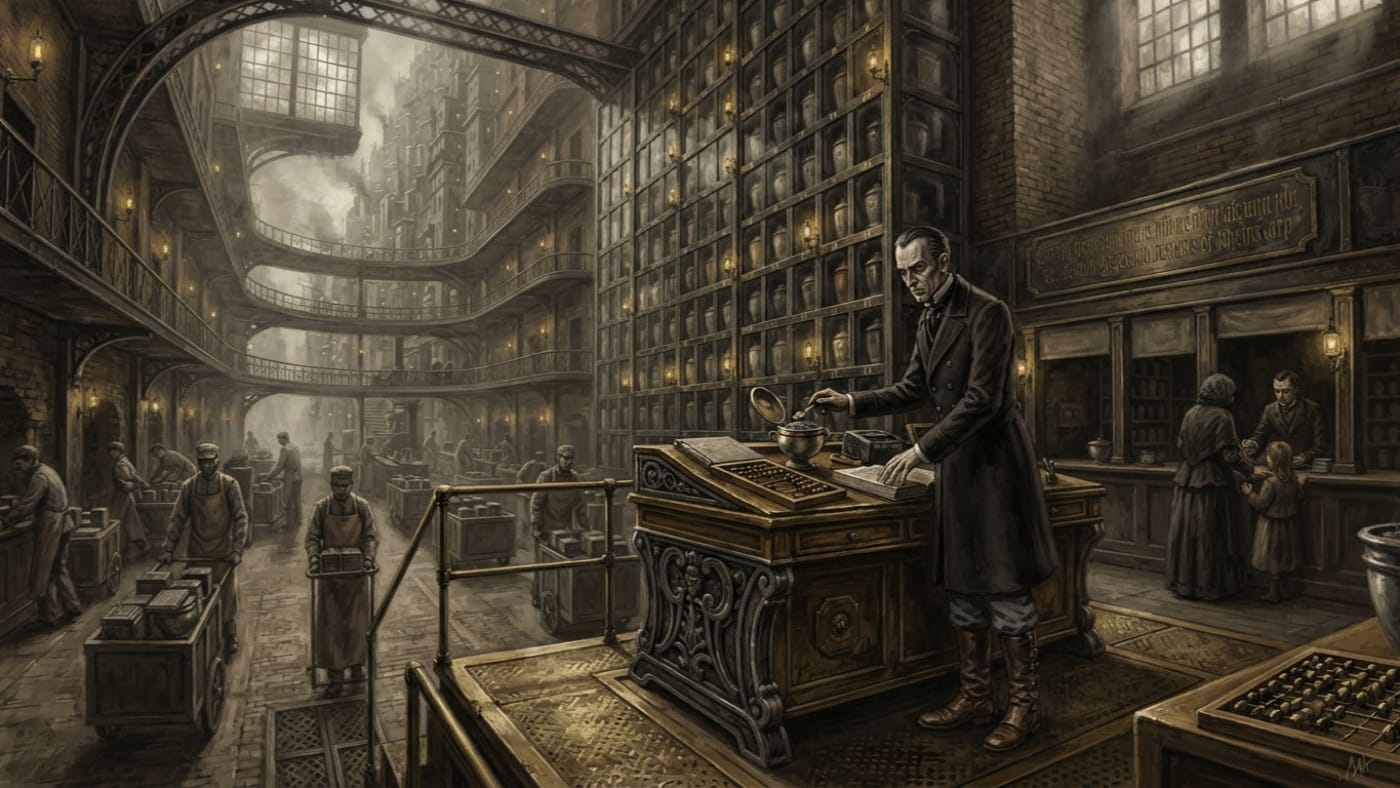
Damas Rohe
Uncle to the brokers, creditor to the dead
Broker-Saintsman Damas Rohe controls Rheinscarp's Ash Exchange, lending grain against future cremains and trading the dead. He holds no Synodal office; his collateral arrives all the same.
Codex Ref. III.2.01-201

Deathbed Confession Harvester
The quill outlasts the patient; the Record outlasts both
Two thousand four hundred scribes posted at the bedsides of the dying, ensuring no death in Synod jurisdiction passes unfiled. The Record does not grieve. The Record does not wait. The Record simply continues.
Codex Ref. XII.12.01-001

Diver-Matron
The hand on the iron may end the descent
A Diver-Matron is a senior harbour diver. In Thessaloniki, she inspects the submerged chain, teaches apprentices, and ends unsafe descents while the towers are still arguing.
Codex Ref. XII.13.04-001
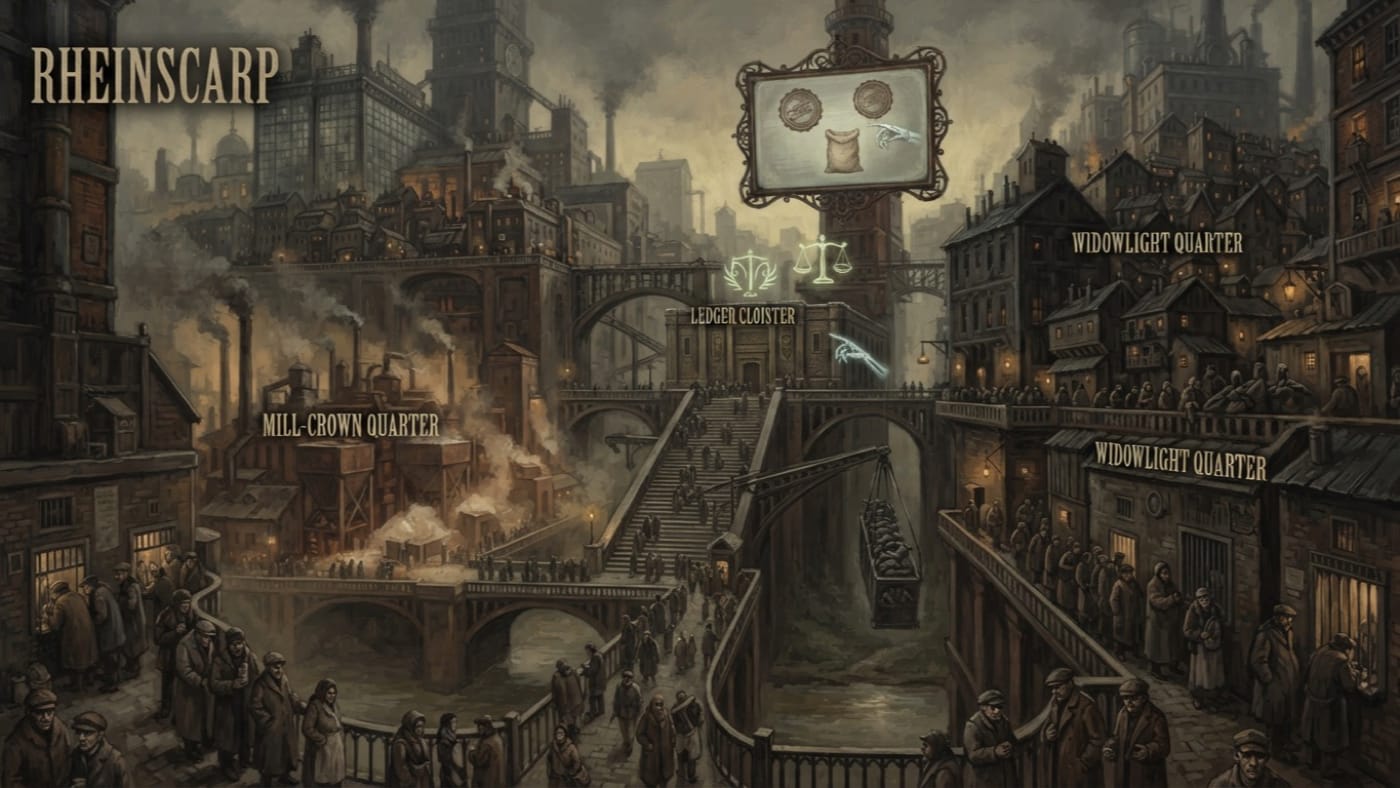
Double-Entry Famine of A.S. 198
Two authentic receipts, one shipment, forty-one graves
Rheinscarp's famine of A.S. 198 authenticated two receipts for one grain shipment and buried forty-one people. The ledgers balanced; the bowls did not.
Codex Ref. VII.2.01-198
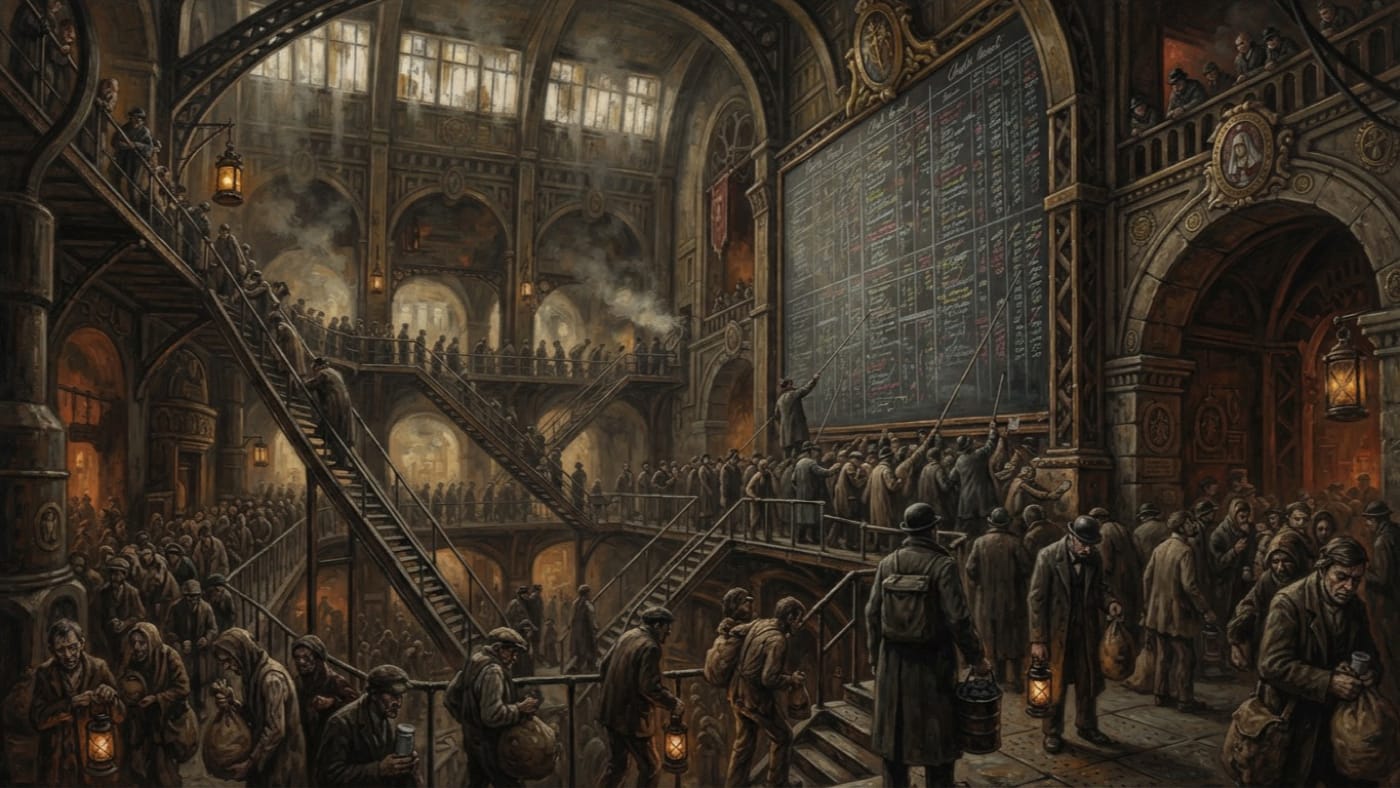
Dust Futures Scandal of A.S. 199
The claims had prices; the living had supplied no signatures
In A.S. 199, Rheinscarp's Ash Exchange was found trading futures on the cremains of living people who had signed nothing. By A.S. 201, the tranches had new names and the Tribunal had issued no ruling. A price proved easier to obtain than a signature.
Codex Ref. VII.2.01-199
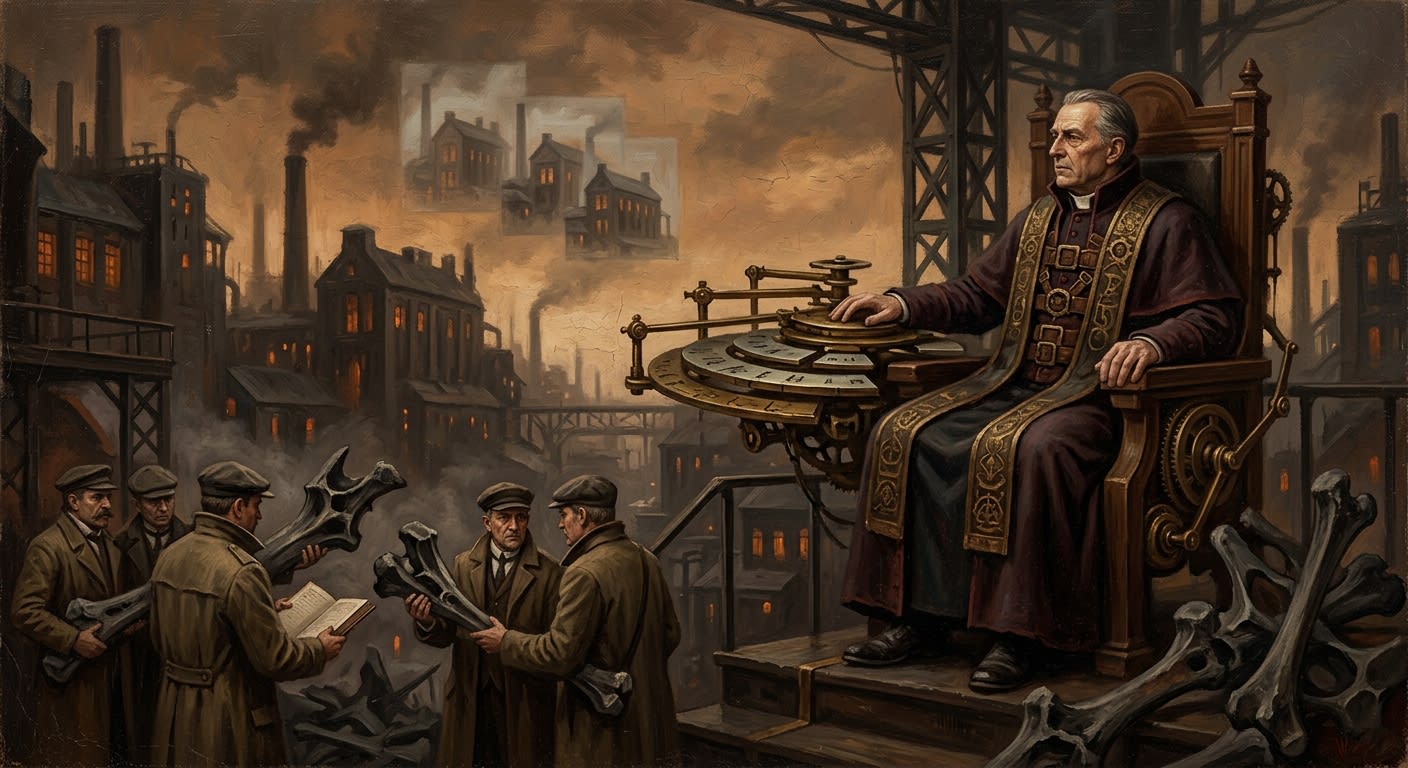
Elder Noxa
She taught the contradiction manners
Elder Noxa, sealed former registry scribe and practical founder of Femur-War brokerage, settled the Triplicate Femur Incident by separating impossible relic truths across time.
Codex Ref. III.2.01-114
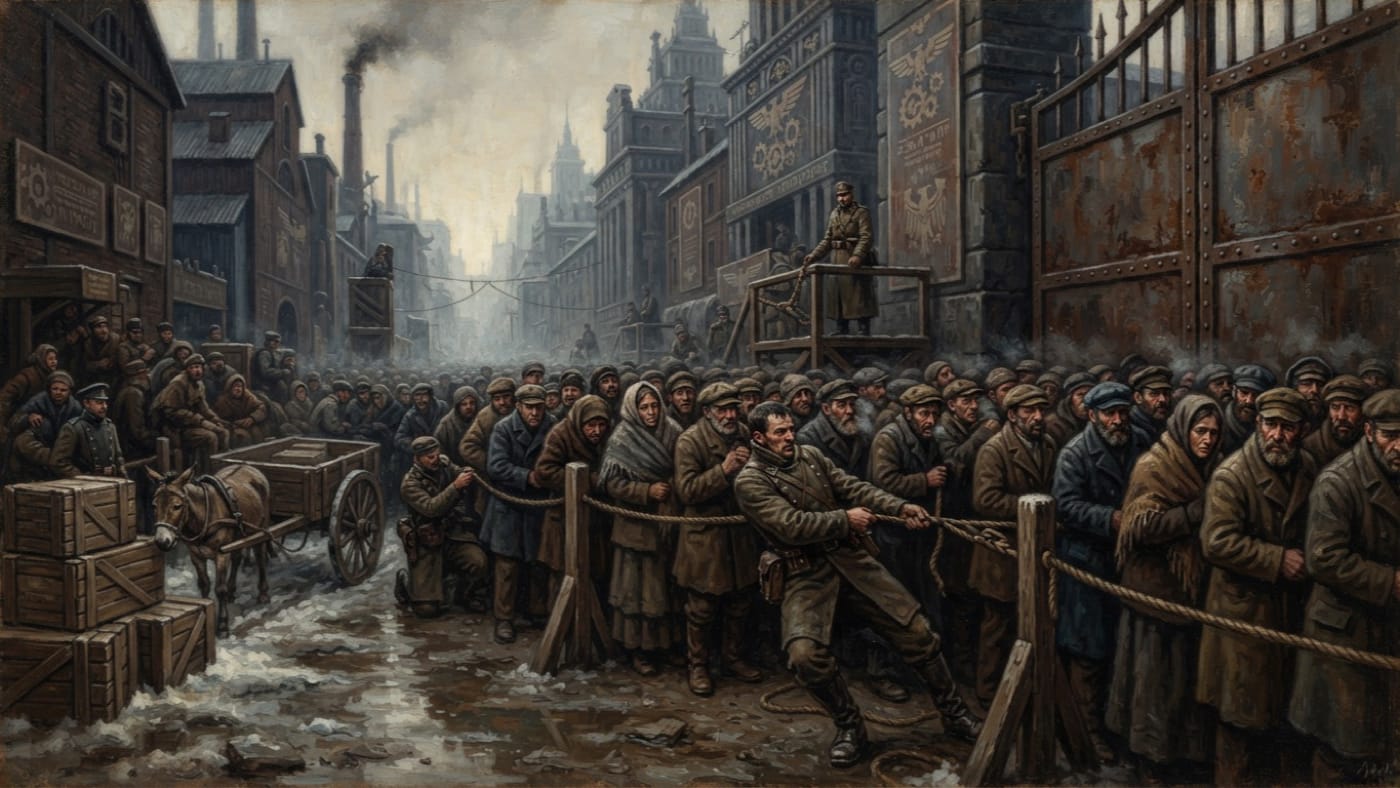
Emergency Lateral Release Pattern 3-C
The knot grants breath; the gate still demands a stamp
Pattern 3-C turns a crowd sideways before the gate turns it into casualties. Standardised in A.S. 118, Ravel's mercy preserves breath without granting passage.
Codex Ref. XIII.1.118-003

Fellowship of the Correct Stroke
A crooked letter, a second fee
The Fellowship of the Correct Stroke taught Doctrine to suspect a hooked letter. Its A.S. 112 petitions helped reopen 411 manifest cases; the zealots acquired offices, and merchants acquired a second bill.
Codex Ref. XII.8.10-001
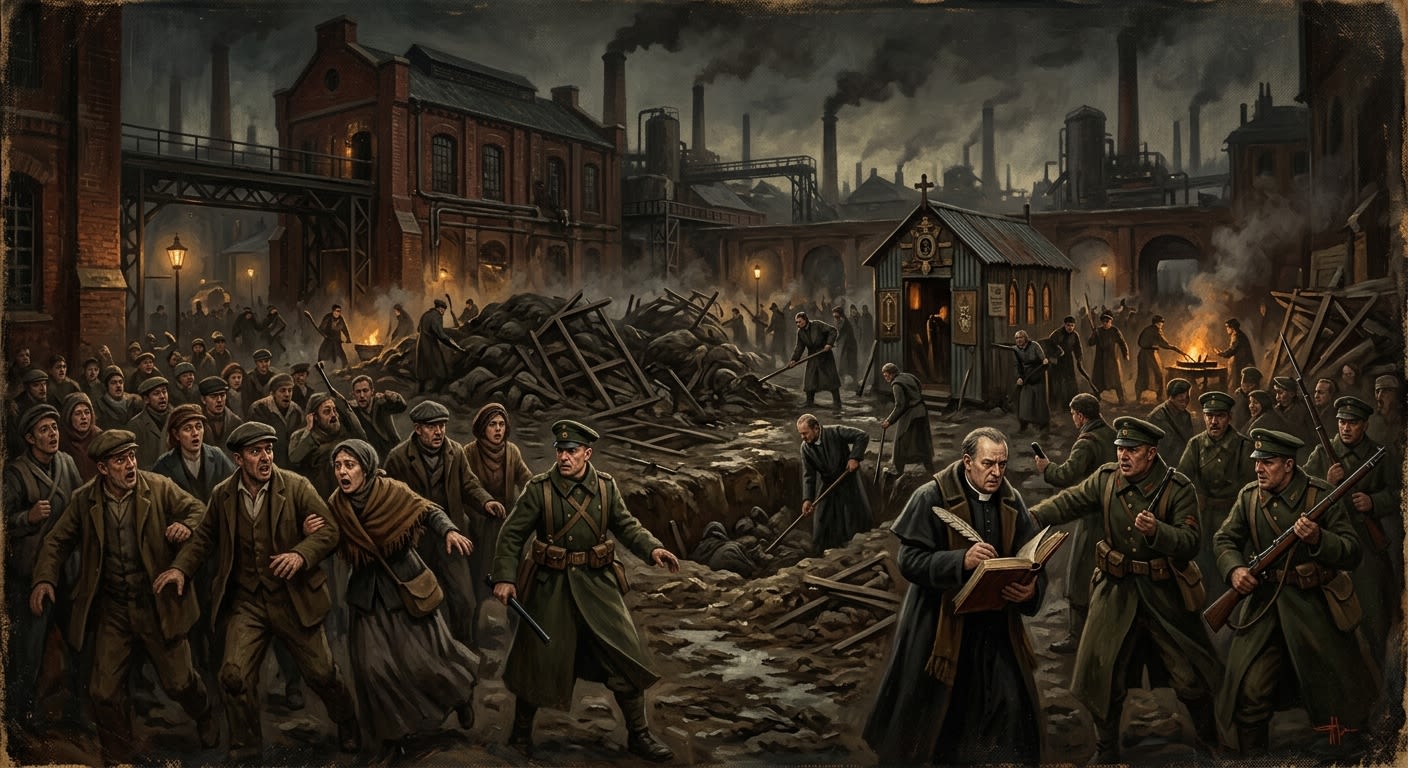
First Ossuary Panic
The dead spoke, and the Synod answered with a form
A.S. 78 Rhine corridor mortuary panic in which overcrowded pits began sounding after dark, forcing burial clearance, tariff-chapels, and the Dead-Goods Tariffer into law.
Codex Ref. VII.4.25-078
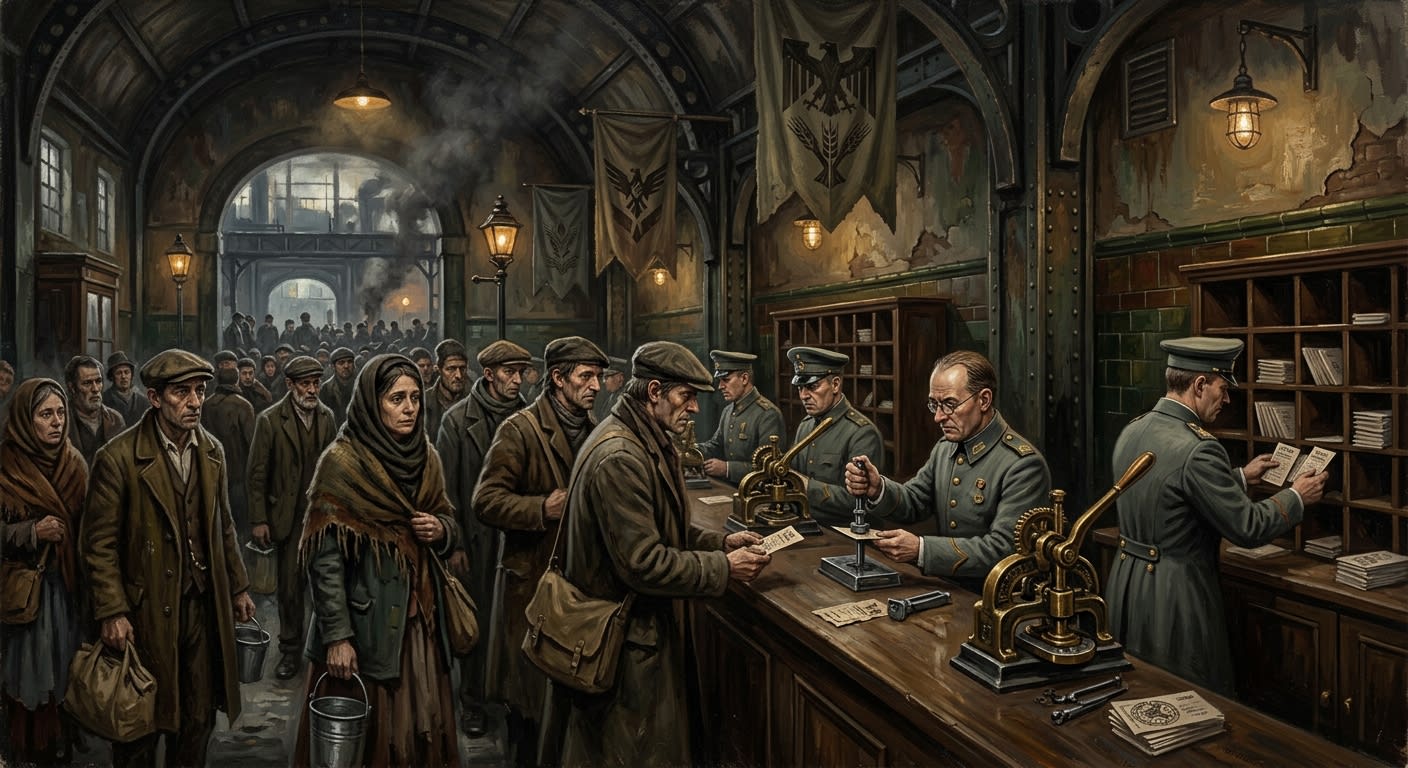
First Ration Reforms
The year hunger became portable, printable, and politely deniable
The A.S. 104 First Ration Reforms standardised ration chits across eight provinces, making hunger legible to Tithes and teachable to Grain Keeper fraud.
Codex Ref. VII.8.10-037
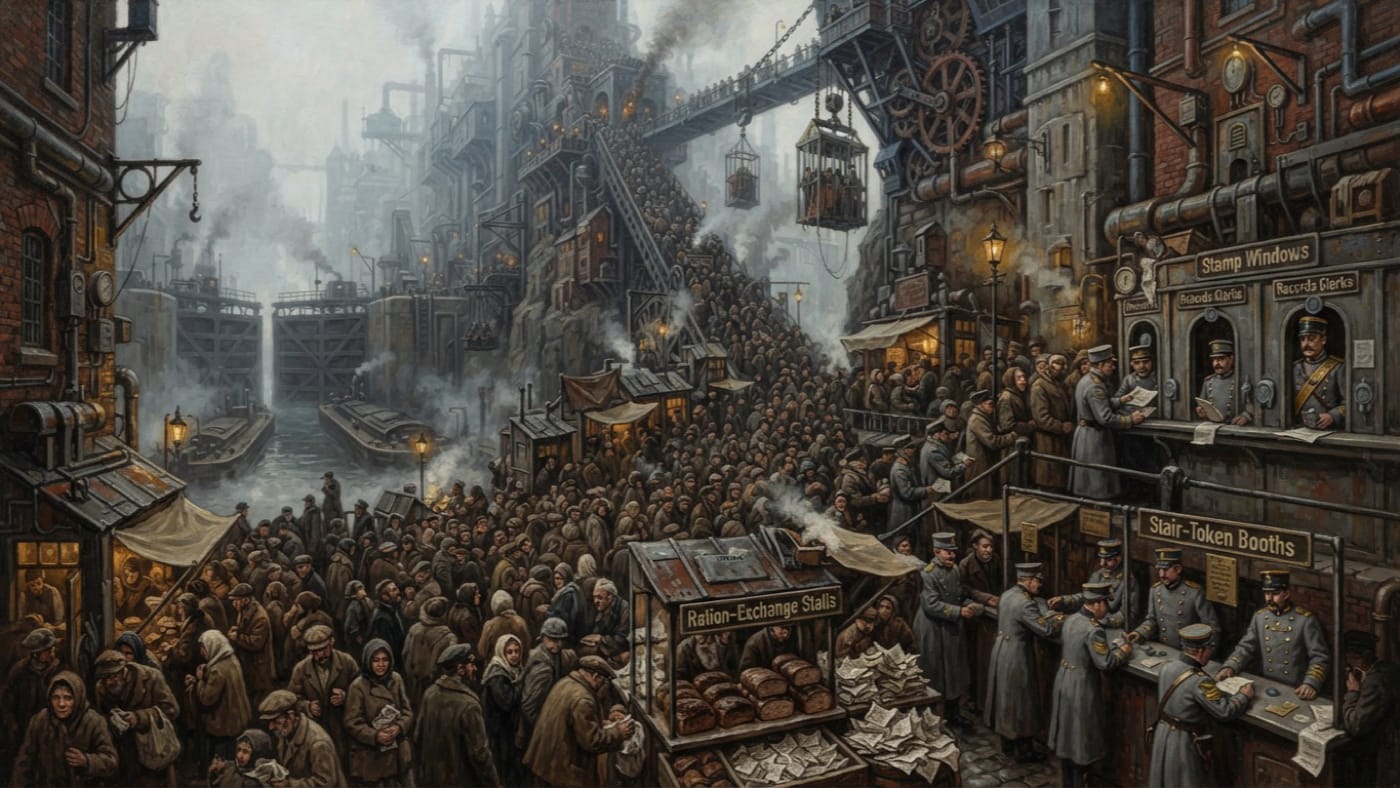
First Step Market
Where brass buys a crossing and bread competes with the stairs
Rheinscarp's market above the locks sells ration chits, clipped brass stair-tokens and instruction in staying registered. Each coin buys bread or ascent; the Ledger is quite content to let a newcomer choose.
Codex Ref. II.2.01-003

Futures Clerks
Tomorrow's dead, priced before the second bell
Mournwater's futures clerks price saint-dust, bell delays and tomorrow's dead. The ledger calls it weather; guild bailiffs collect the losses in labour, names and quarantine.
Codex Ref. XII.8.02-201
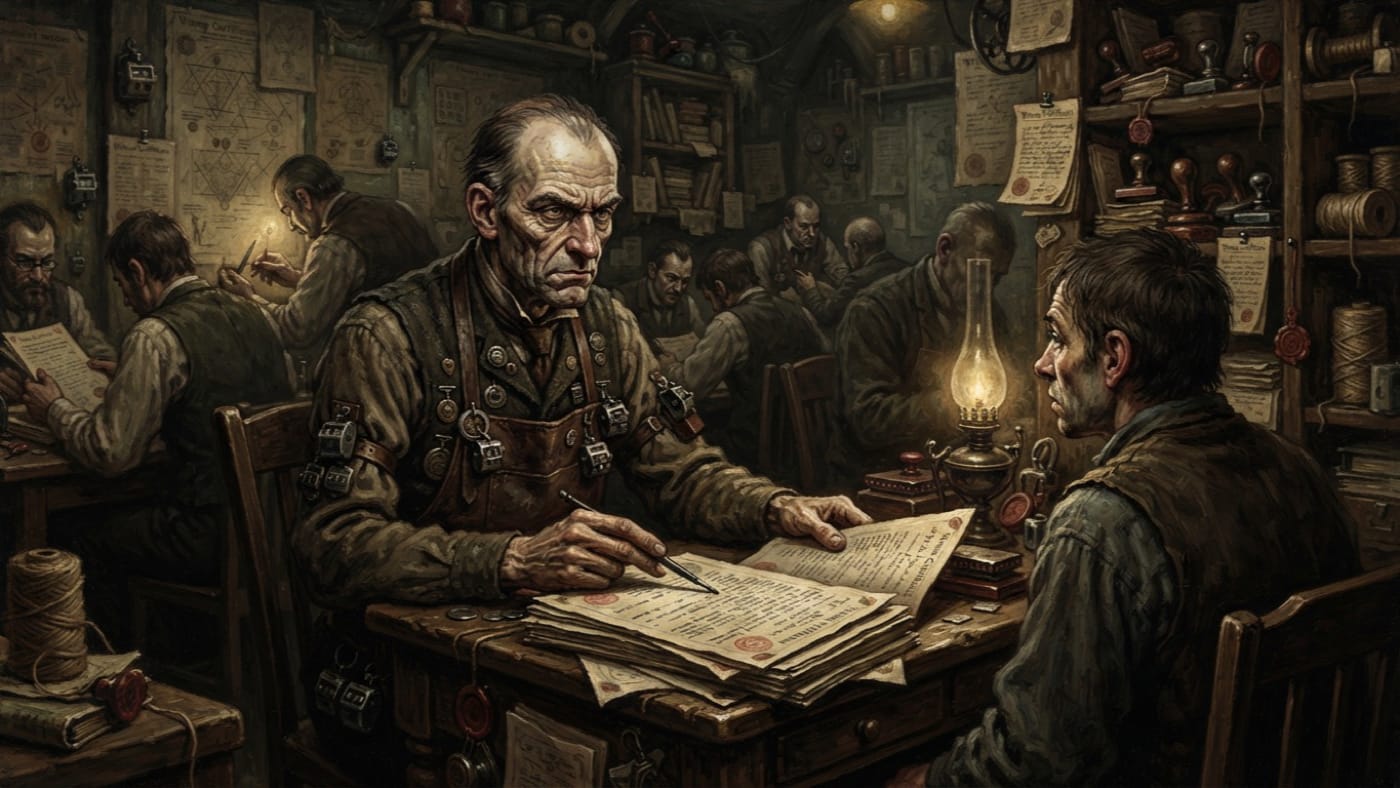
Garrik Two-Names
What the court remembers depends on who has paid
Garrik Two-Names and Mother Venn run the Queue Road's largest witness ring. They sell hours nobody stood and facts Gate Nine can stamp. This office records the partnership; truth is billed separately.
Codex Ref. III.2.01-1181

Geometry Brand-Smith
Six Thousand Four Hundred Licensed Geometers of Guilt, and the Irons That Did Not Come Back
The Bureau of Heraldry’s serialized geometers of guilt — 6,400 licensed Brand-Smiths who make identity permanent in the only ledger that cannot be forged, lost, or filed incorrectly: the body itself.
Codex Ref. XII.20.01-001
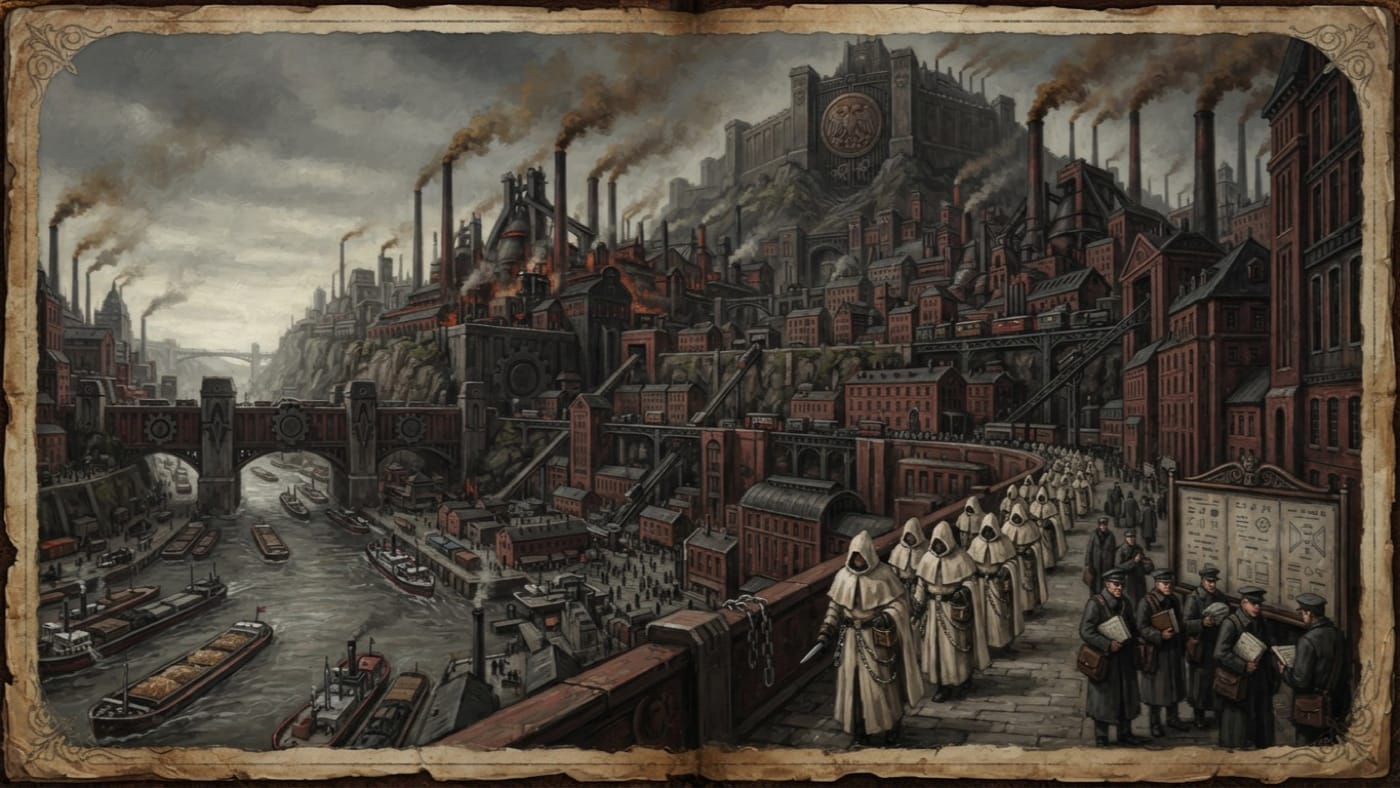
Germania
The Synod's most accurately spelled region
Germania is the Synod's procuratorial heartland: rivers taxed, furnaces singing, presses corrected, and schools teaching words their grandparents have forgotten to miss.
Codex Ref. II.6.02-201
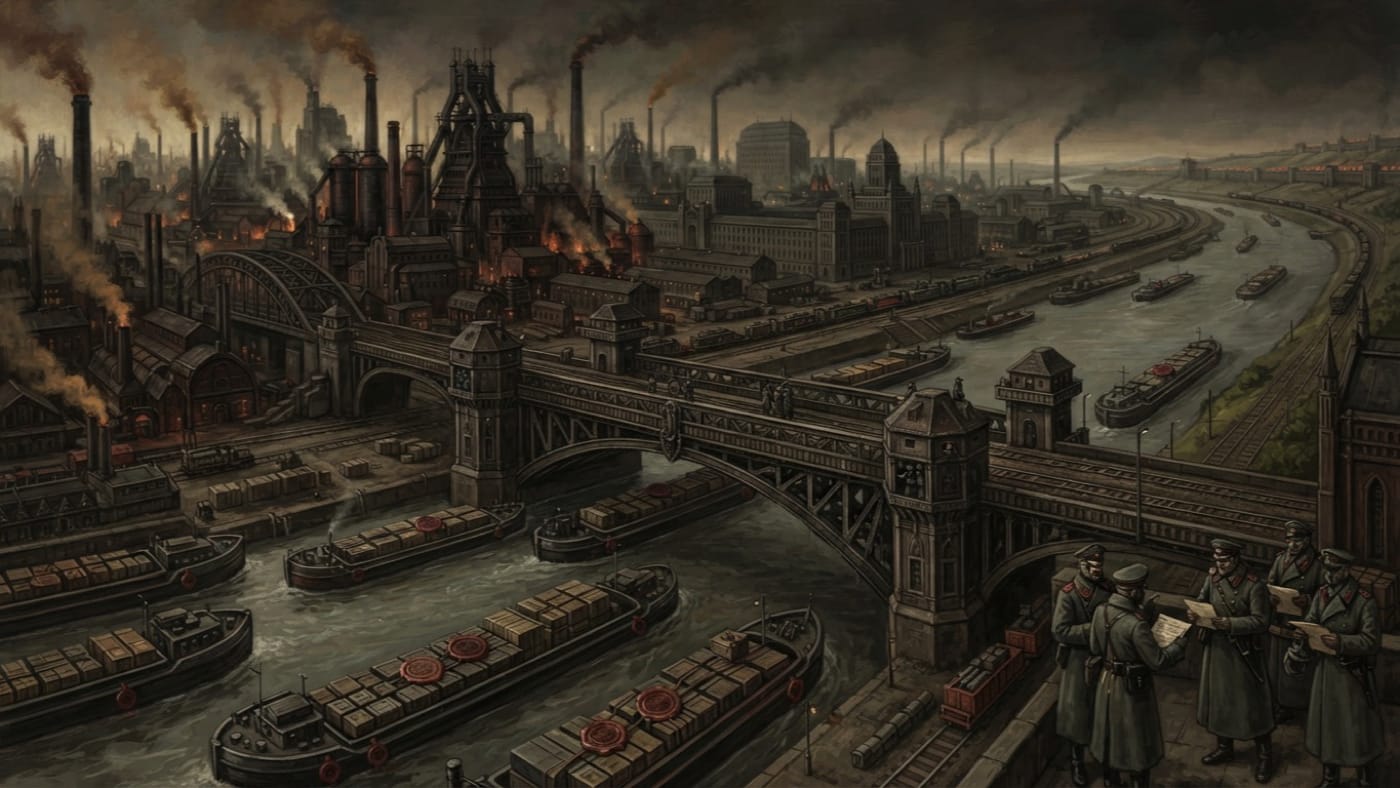
Germany
The heartland that supplies the frontier and answers to several seals
Germany in A.S. 201: the Zone Two heartland of taxed rivers, singing furnaces and military depots. The old borders were erased; the territory still supplies the frontier, and every cargo requires a seal.
Codex Ref. II.6.01-201
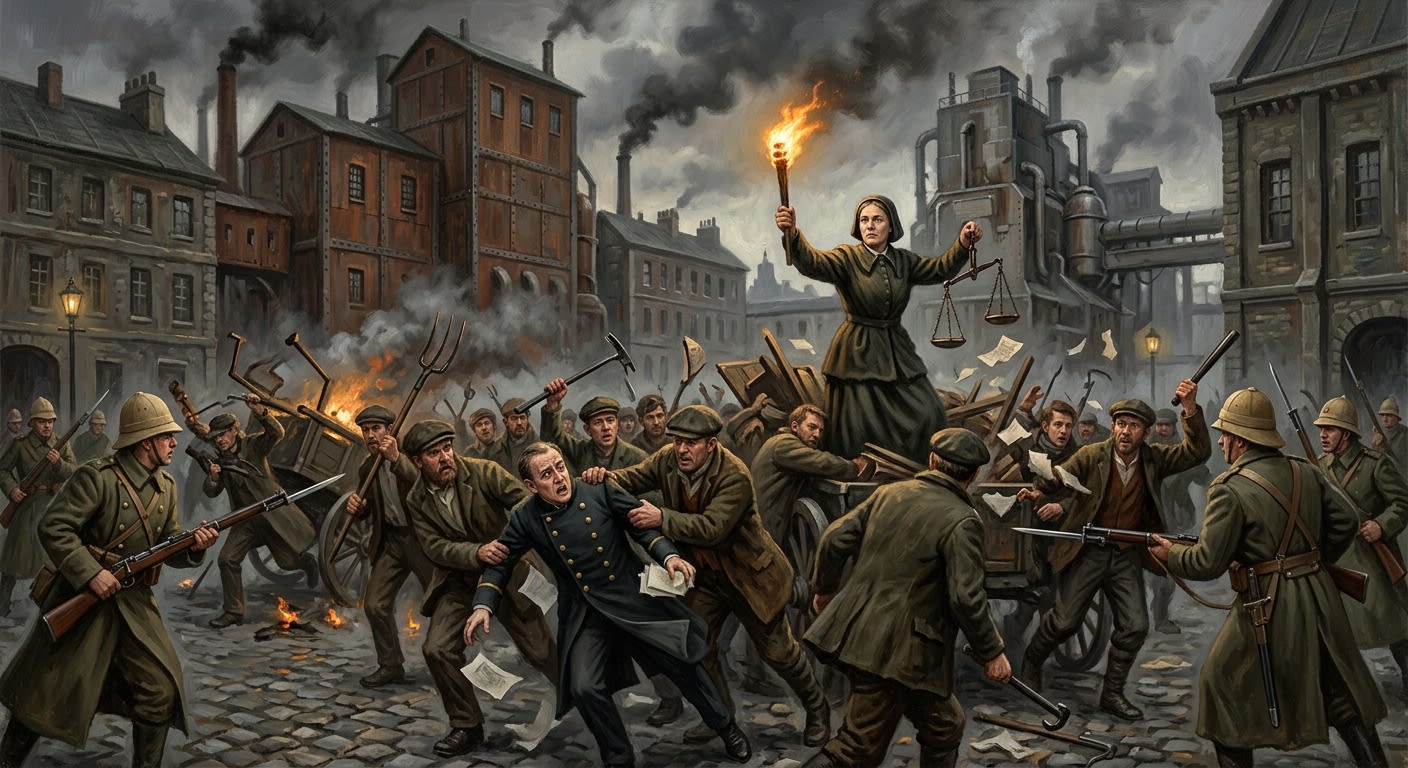
Grain Tithe Riots
Where hunger learned arithmetic and Hildegarde brought fire
The Grain Tithe Riots of A.S. 160 killed three Tithes Assessors, condemned forty Rhenish villages, and made Hildegarde of Mainz a saint with a scale in one hand and a torch in the other.
Codex Ref. VII.8.10-160

Grand Inquisitor Severian
The tongue made public office, the cage made catechism
Severian of Mainz made fear audible, denunciation intimate, and cruelty administrative; his Second Appendix still walks through Prague with nail and tablet.
Codex Ref. III.2.01-062
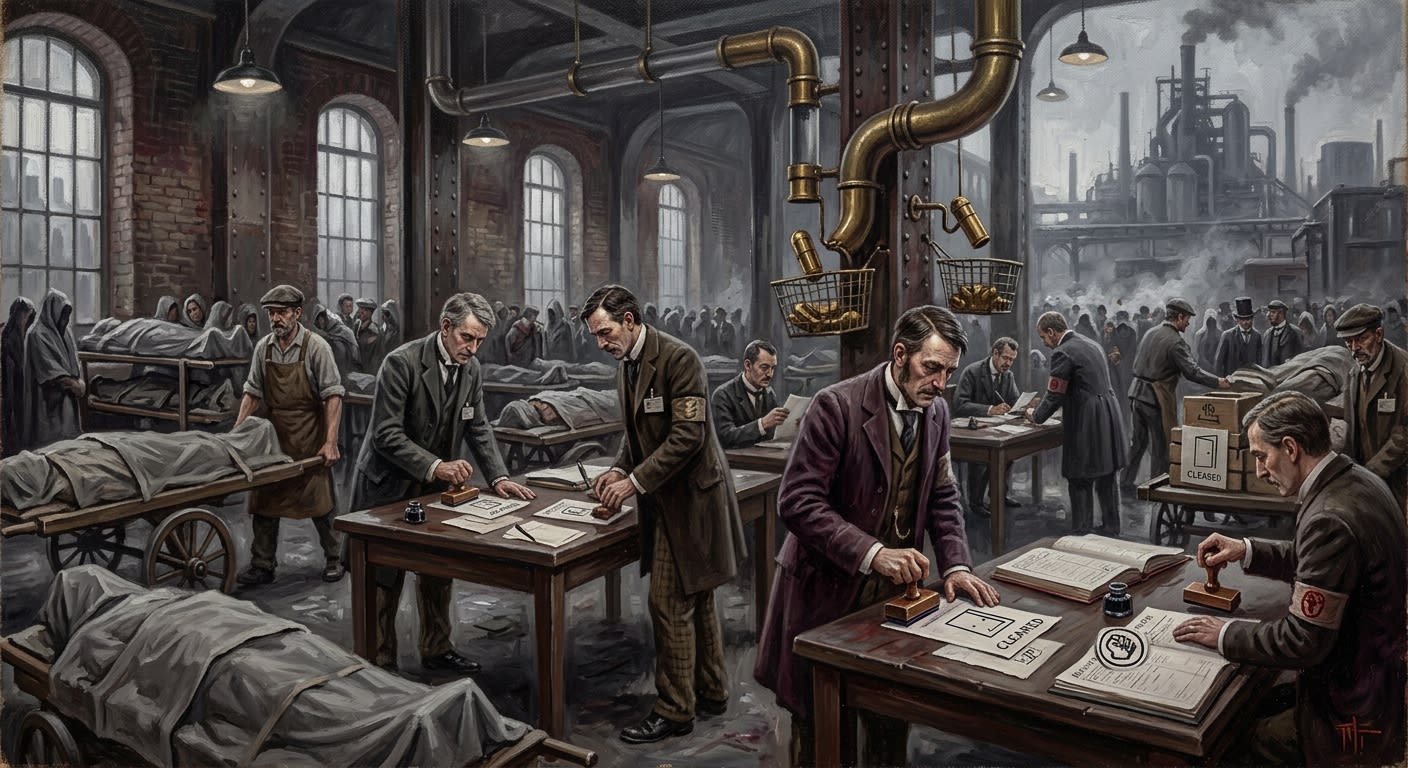
Gray Clearance
The winter mercy that moved bodies faster than names could follow
Gray Clearance was the A.S. 157–158 emergency mortuary protocol that reduced five corpse classifications to CLEARED or HELD, saved the living, and taught grief to pay for speed.
Codex Ref. VII.8.10-021
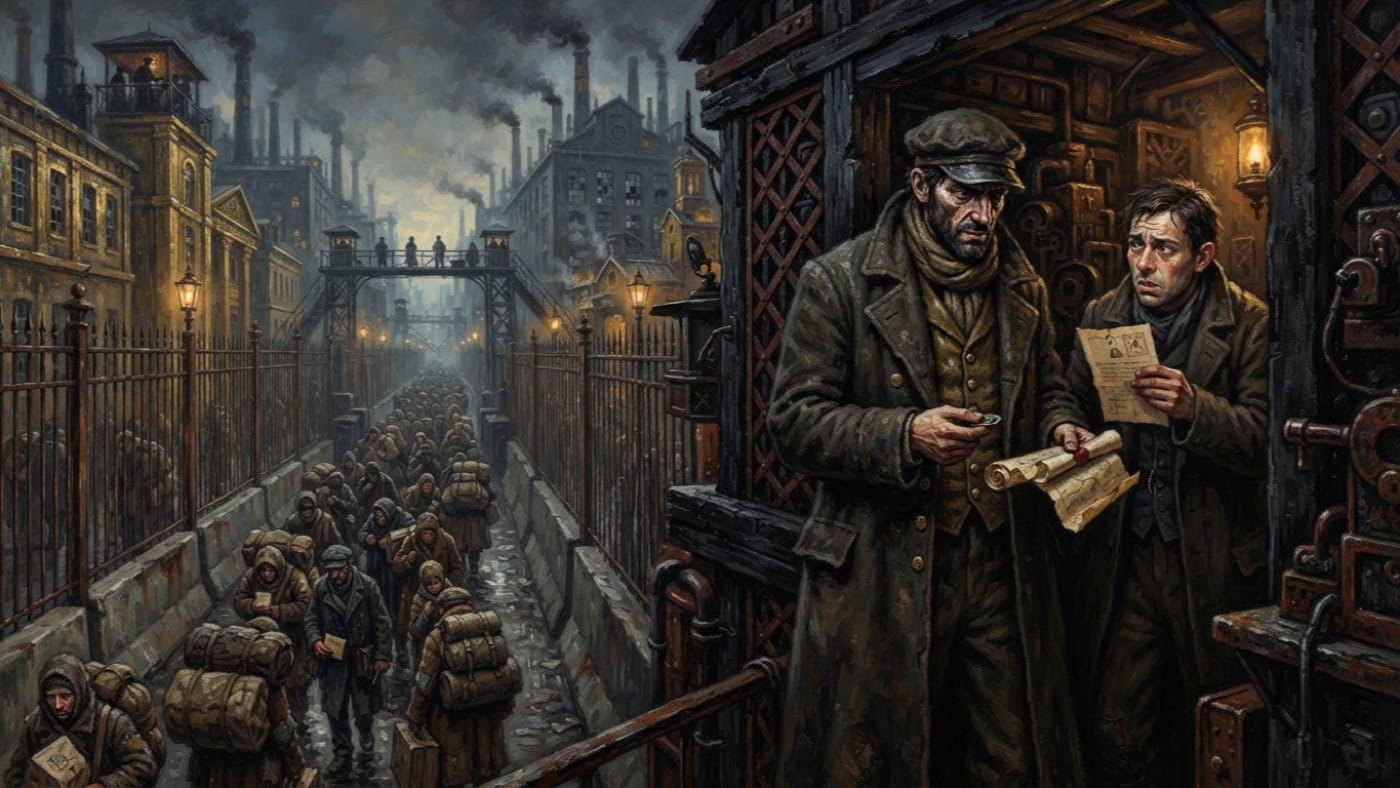
Hatch Lyd
The man who sells passage where motion is taxed
Boss of the Queue Road's Runner Union, called the Lanes. Hatch Lyd sells passage, black-market timestamps and information where every lawful minute is taxed. Unlocated, untaxed and tolerated: the Directorate has use for him.
Codex Ref. III.2.05-001
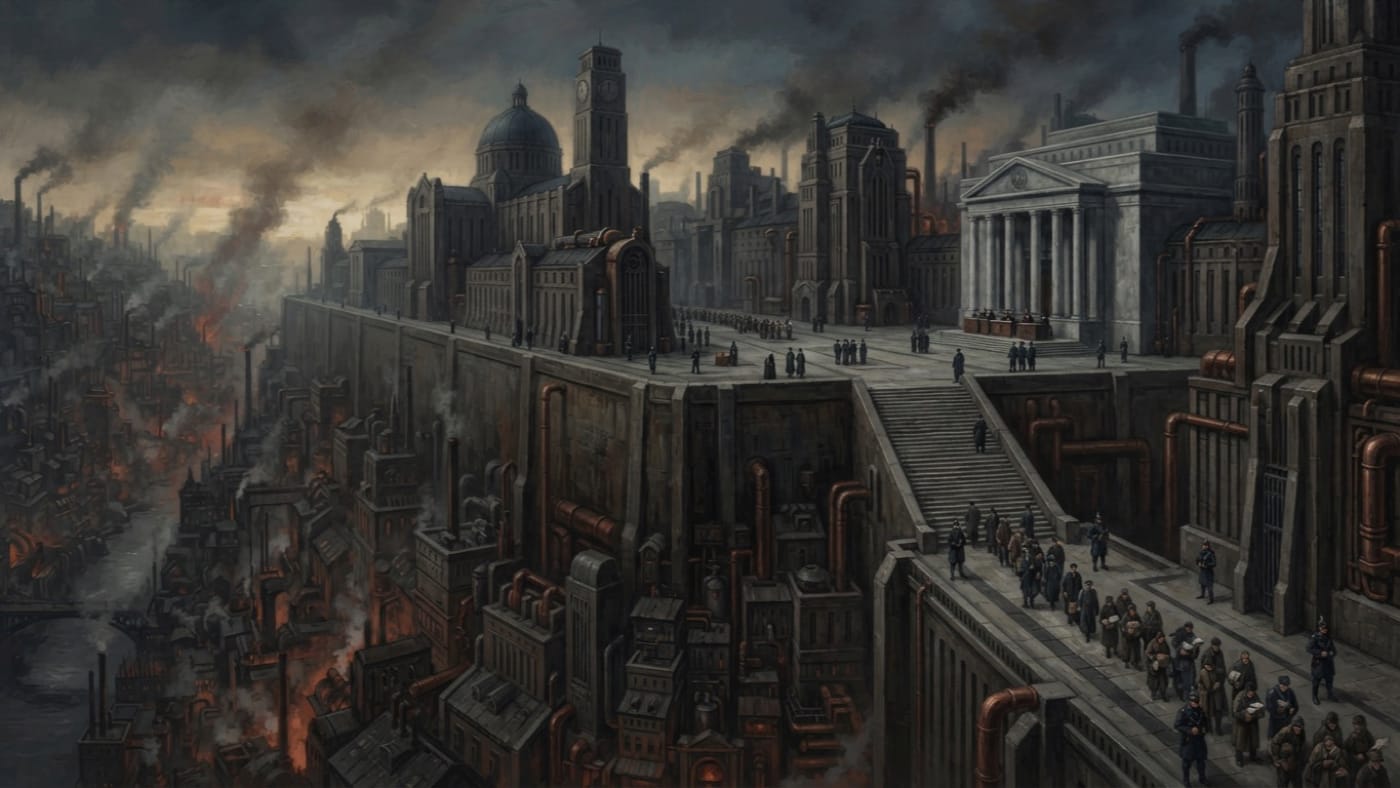
High Step Precinct
Clean air, correct names, and a posted rate for confession
Rheinscarp's ninth terrace houses the Ration-Cathedral, Tribunal of Stairs and offices that govern names, hours and ashes. The air is clean, the names are correct, and every debt survives the climb.
Codex Ref. II.2.01-009

Hollow-Script Scriptorium of Nemea
Where the ink rewrites the truth, and the truth rewrites the ink
The Bureau of Records' master archive-scriptorium on a chalk ridge: where names are erased, contracts rewrite themselves overnight, and the ash in the Yards speaks. Drax has been named by its ink and would prefer the record show otherwise.
Codex Ref. II.2.06-002
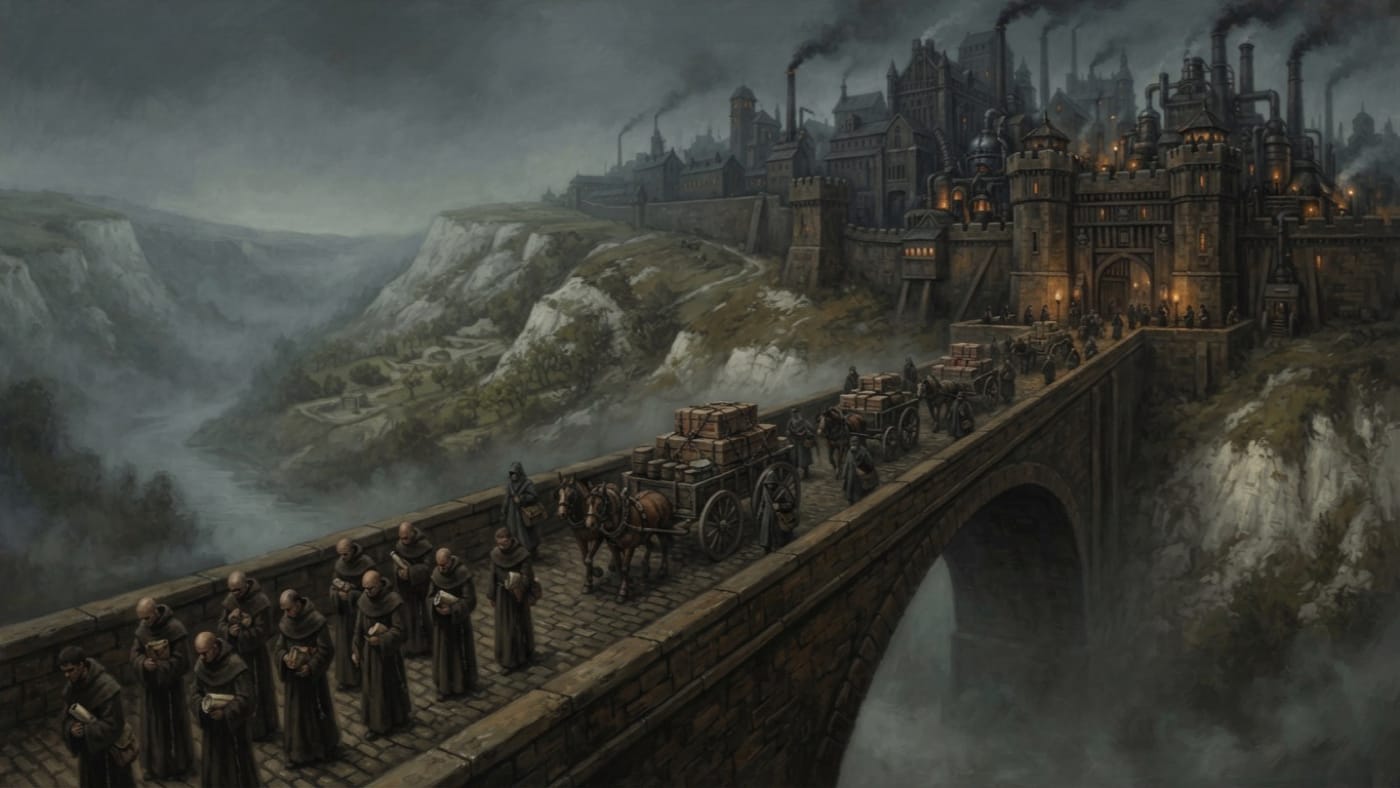
Inkhouse Bridge
The bridge carries the papers; the gatehouses decide
Nemea's single stone span carries all freight, couriers and novice intake. The Bureau arranged the bottleneck deliberately. The bridge carries the papers; the Collegium waits beyond the crossing.
Codex Ref. II.2.06-021
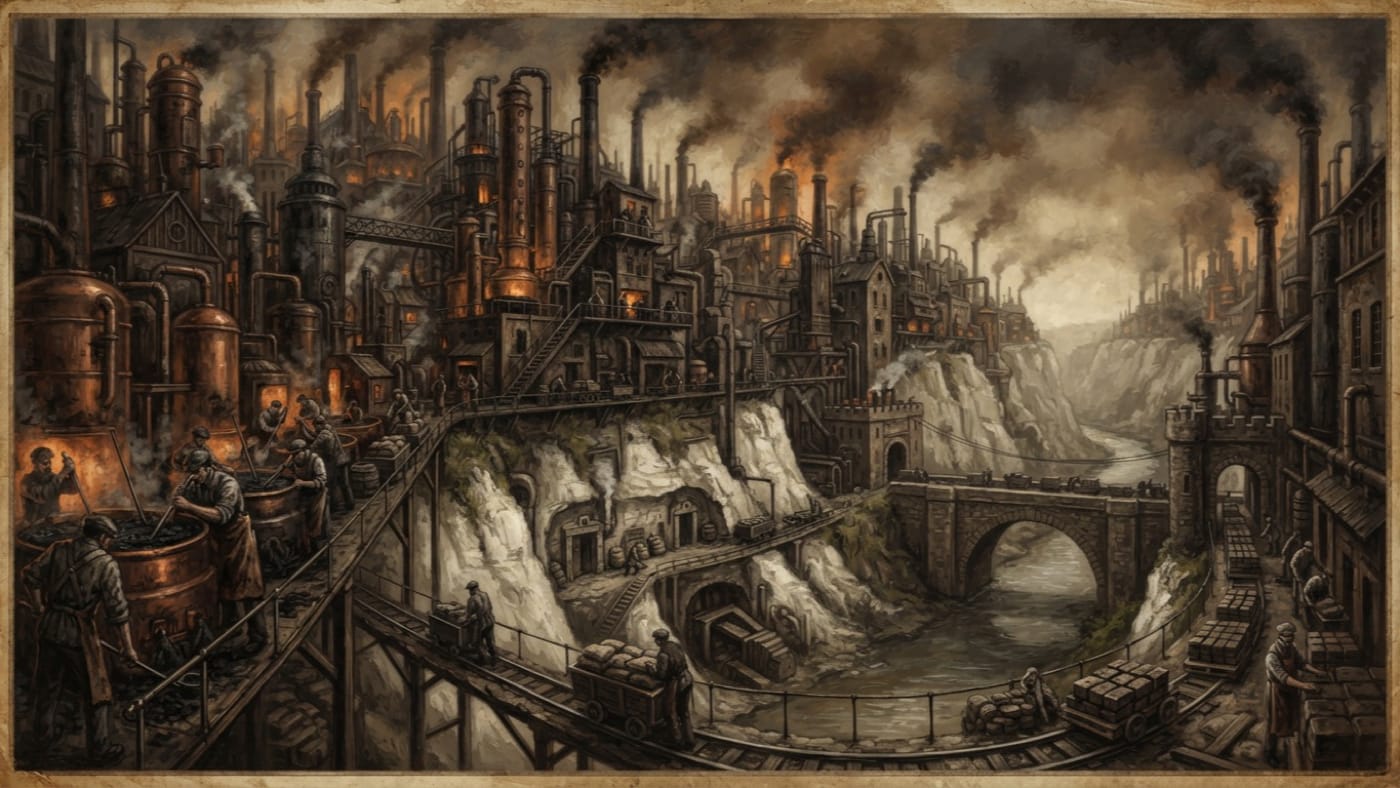
Inkhouse Quarter
Where the law is boiled before it is written
Nemea's copper-vat precinct supplies the Bureau of Records with rationed ash-ink. The brewers pay in shifts and surnames; the contracts downstairs keep finding new obligations.
Codex Ref. II.2.06-020

Inquisitor-Mechanic Lux Thane Mire
One warrant for faith, engineering, and whatever answers back
Lux Thane Mire carries the Synod's ugliest new title: Inquisitor-Mechanic. When machines begin praying, he arrives with tools and arrest authority.
Codex Ref. III.1.04-005

Lantern "Mercy" Preacher (Rebel)
Eighth heresy, eighth rank, eighth because the Synod reserves that number for what it made, cannot unmake, and will not thank.
Eighth of eight proscribed heresies: the Licensed Consolators who meant what they said, and were immured for it.
Codex Ref. XI.3.01-001
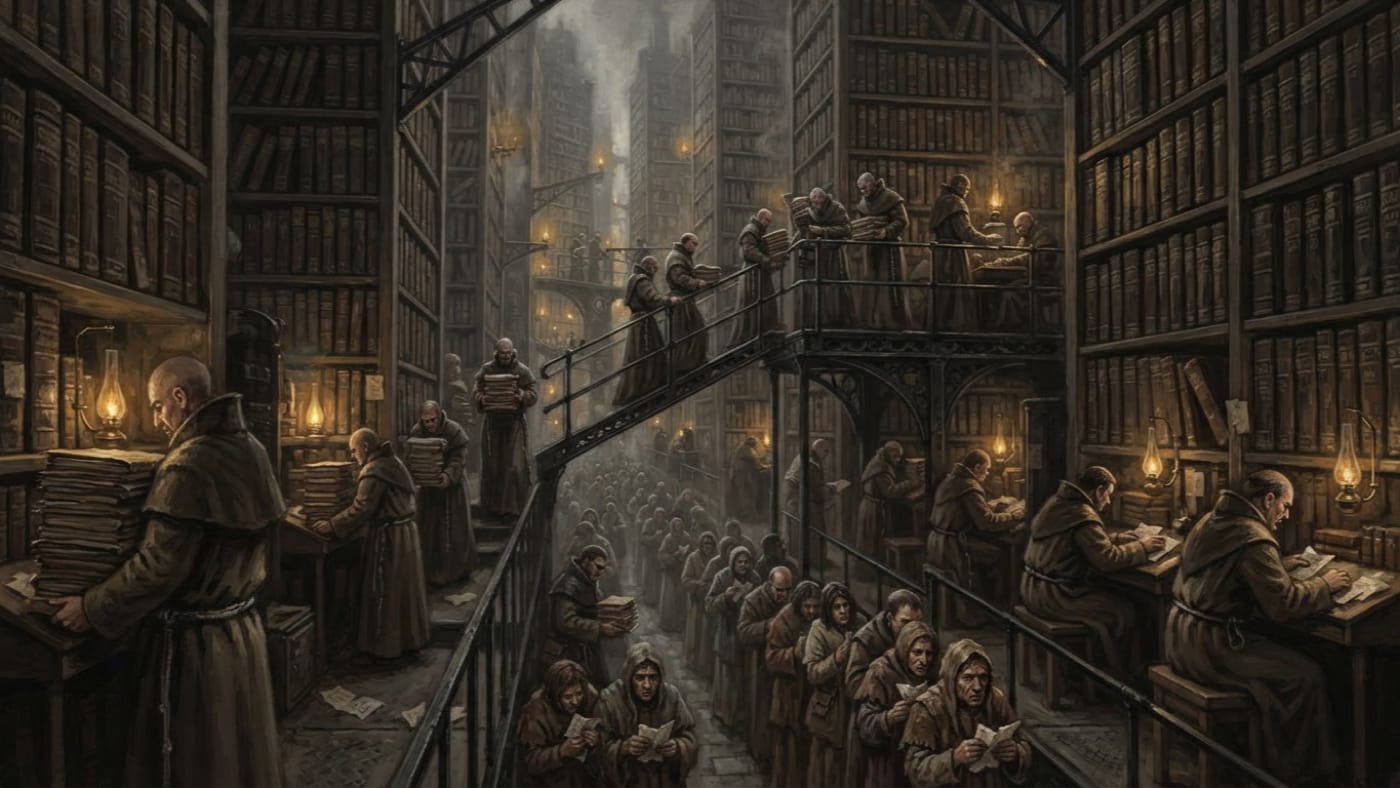
Ledger Cloister (Rheinscarp)
On the fifth terrace, the bread waits for your name to agree with the register
Rheinscarp's fifth-terrace Records labyrinth reconciles crossing receipts, ration rolls and names under Ysabeau Kelm. You arrive to file a receipt; the Quill-Choir may correct whether you exist.
Codex Ref. II.2.01-003
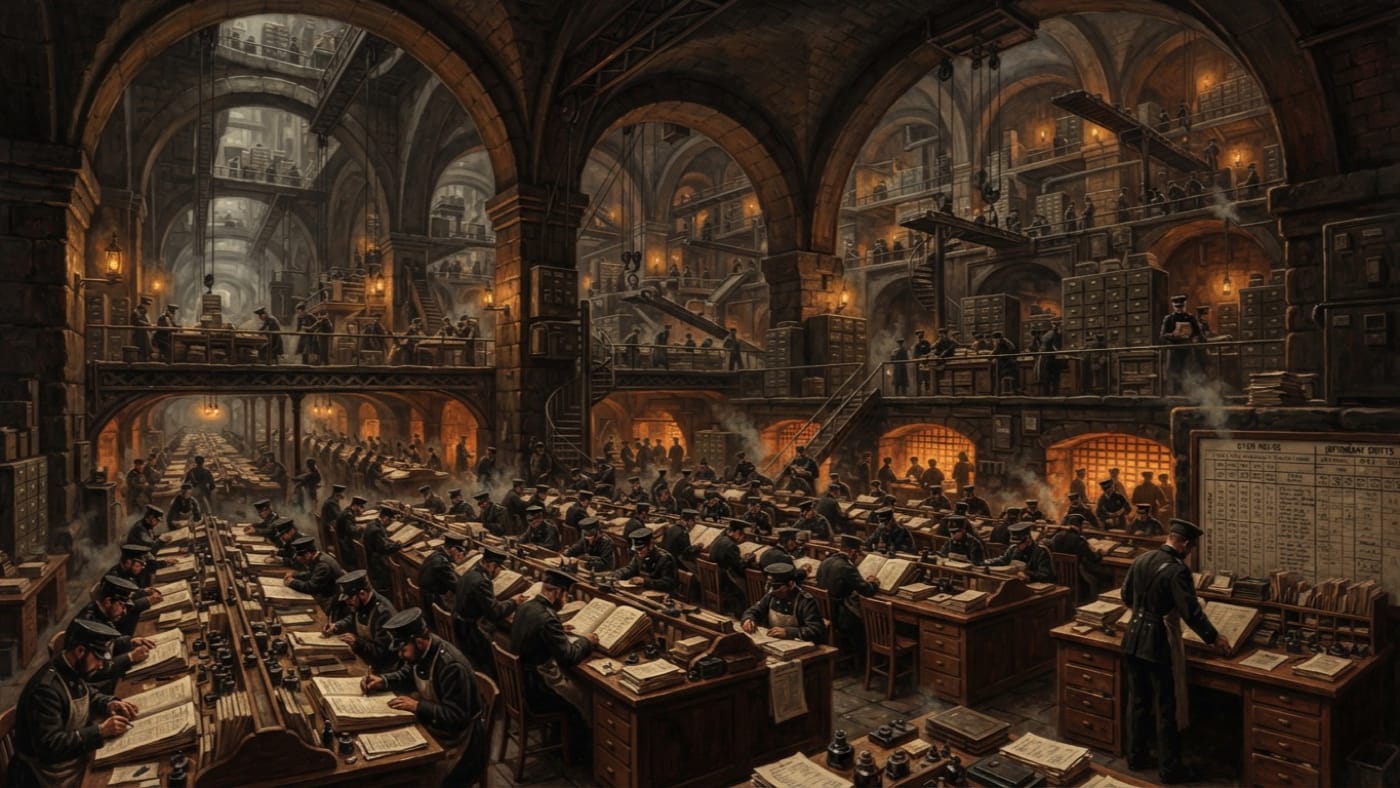
Ledger Cloisters (San Vesta)
The governors decide. The ink appoints the hour.
San Vesta's scheduling and archive district turns bread tokens into proof of existence, treatment debts into shifts, and stamped proposals into permission to burn. The governors decide; the Ledger Cloisters make the decision fall due.
Codex Ref. XIII.1.124-002

Ledger Hand
Legible, and therefore unread
Ledger Hand is the Grain Keeper art of making fraudulent ration pages look too dull to read. Attributed to Old Klem, it conceals grain misapplication beneath competent penmanship.
Codex Ref. XIII.1.100-201

Lineage Severer
The household loses its standing; the Office keeps every page.
The Office of Nullity's family-strike specialists reconcile dependent rolls before sealing a household out of civic life. Nobody dies at the desk; every office afterward refuses them.
Codex Ref. XII.14.01-003
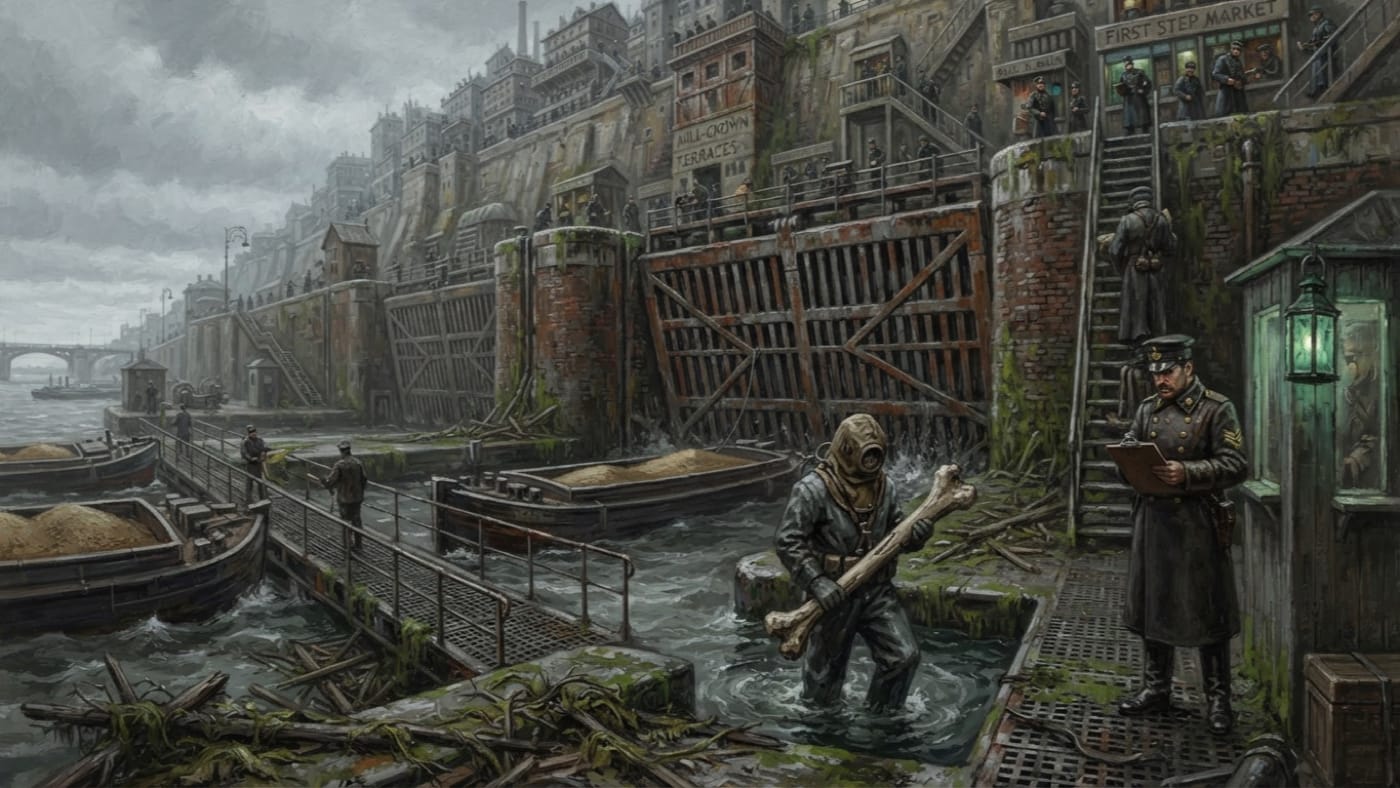
Lockmouth Works
The Brotherhood holds the keys; the terraces wait for bread
Rheinscarp's harbor locks admit the grain that feeds nine terraces. The Brotherhood holds the keys, Venn keeps the hours, and the divers earn bread by clearing what the river leaves in the grates.
Codex Ref. II.2.01-010

Lower Rhine
A river reach, a deputy's copies, and no boundary on file
The lower Rhine has no boundary on file, but its fisher-litanies reached Werrenrath's papers. The Ledger can trace the copies more readily than the songs.
Codex Ref. II.2.08-203
Mainz
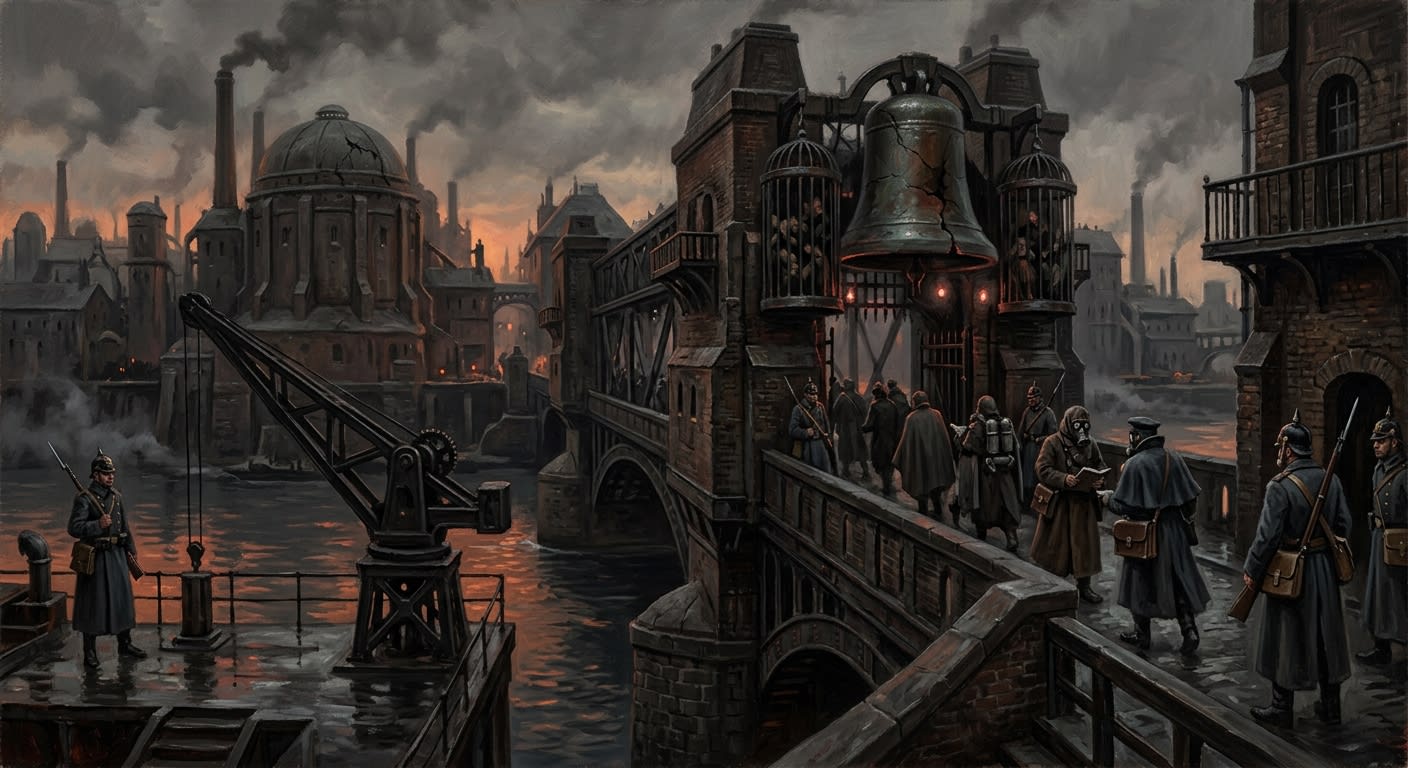
The Rhine city where tolls, bells, and throats keep accounts
Mainz is the Synod's Rhine throat: a bridge-toll city of Augustinus, Hildegarde, Severian, cracked bells, obedient ledgers, and cages that still hum.
Codex Ref. II.2.02-003
Mannheim
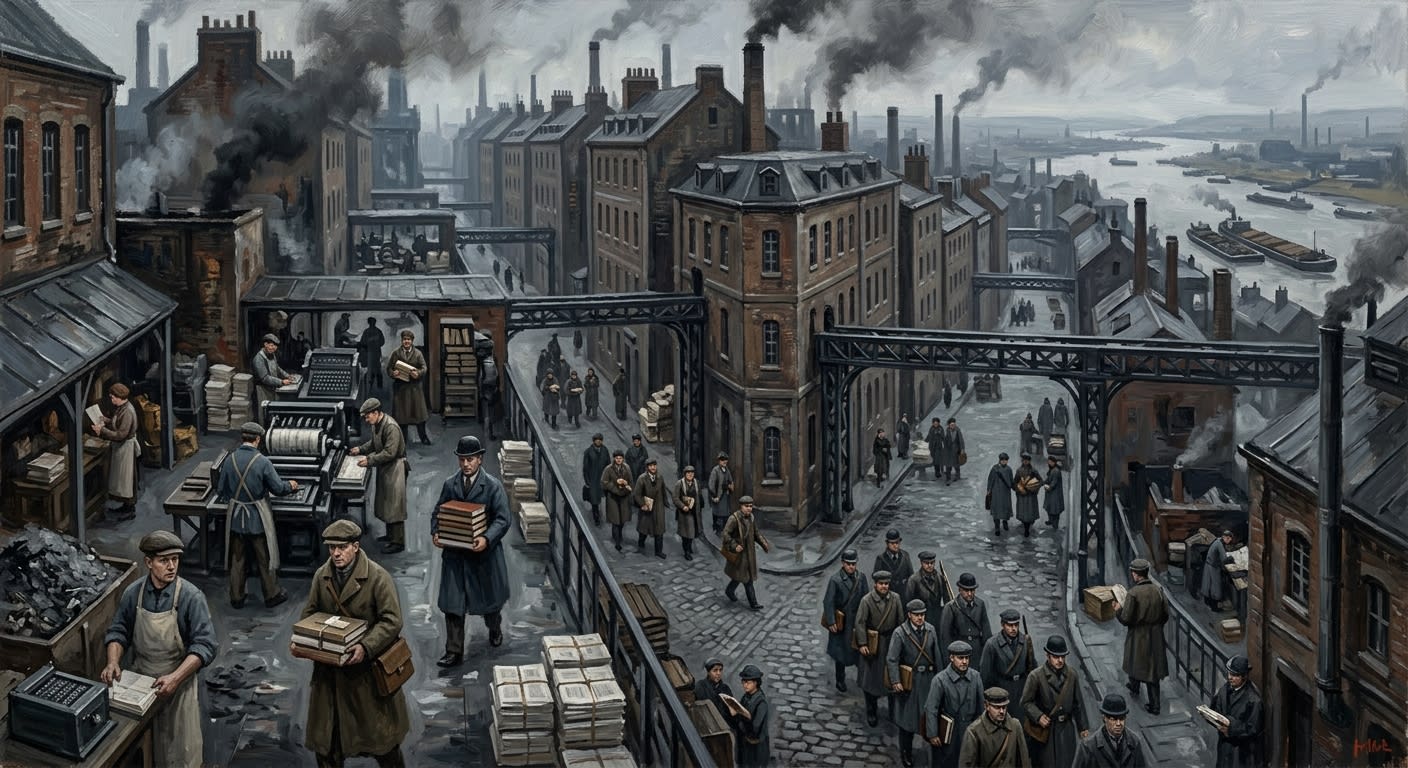
The square city teaches arithmetic to doubt
Mannheim is the Rhine Corridor's square heresy school: copyhouses, ash-yards, tidy streets, and arithmetic sharp enough to cut Doctrine.
Codex Ref. II.2.10-125
Metz
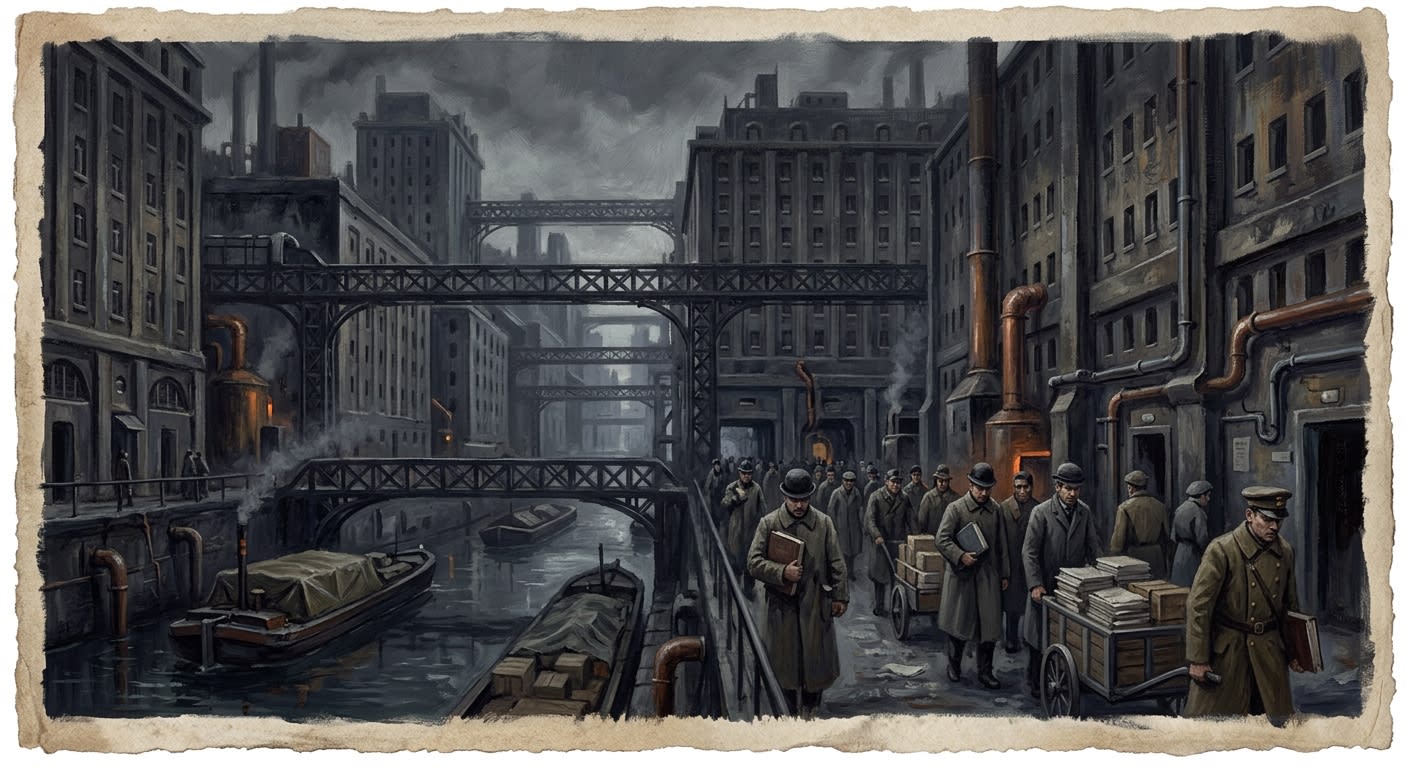
The depot-city where contradiction learned double entry
Synod-held Metz is a Zone 1 depot-city of ash vaults, double ledgers, silent bridges, supply arithmetic, and the Black Census that taught Medicine to count horror properly.
Codex Ref. II.1.05-001
Mill-Crown Cantors
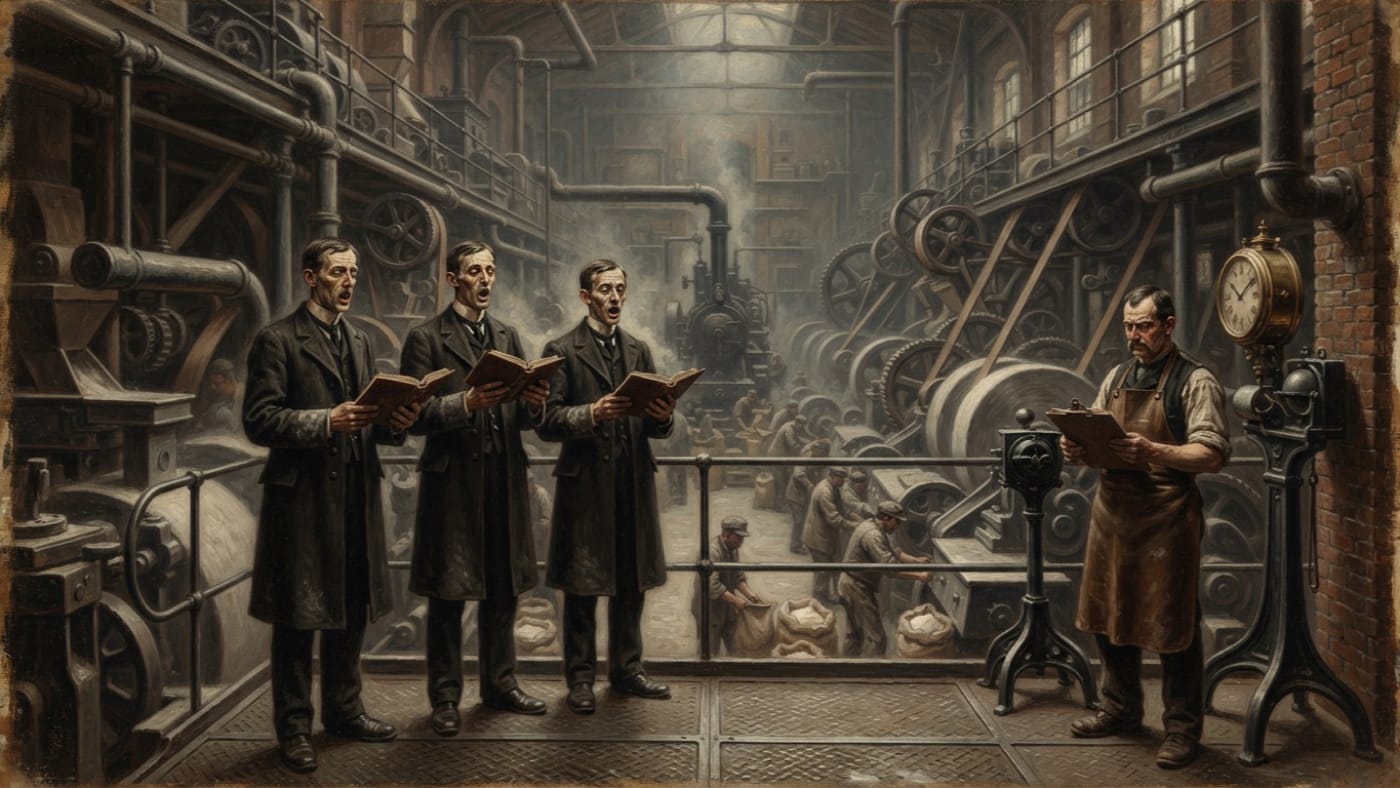
The mills need a cadence; the Cantors require a contract
Rheinscarp's mill and foundry singers sell cadence by the bell-hour under Hrodric Venn. The mills need rhythm; the Cantors insist the rhythm needs a contract.
Codex Ref. VIII.6.03-001
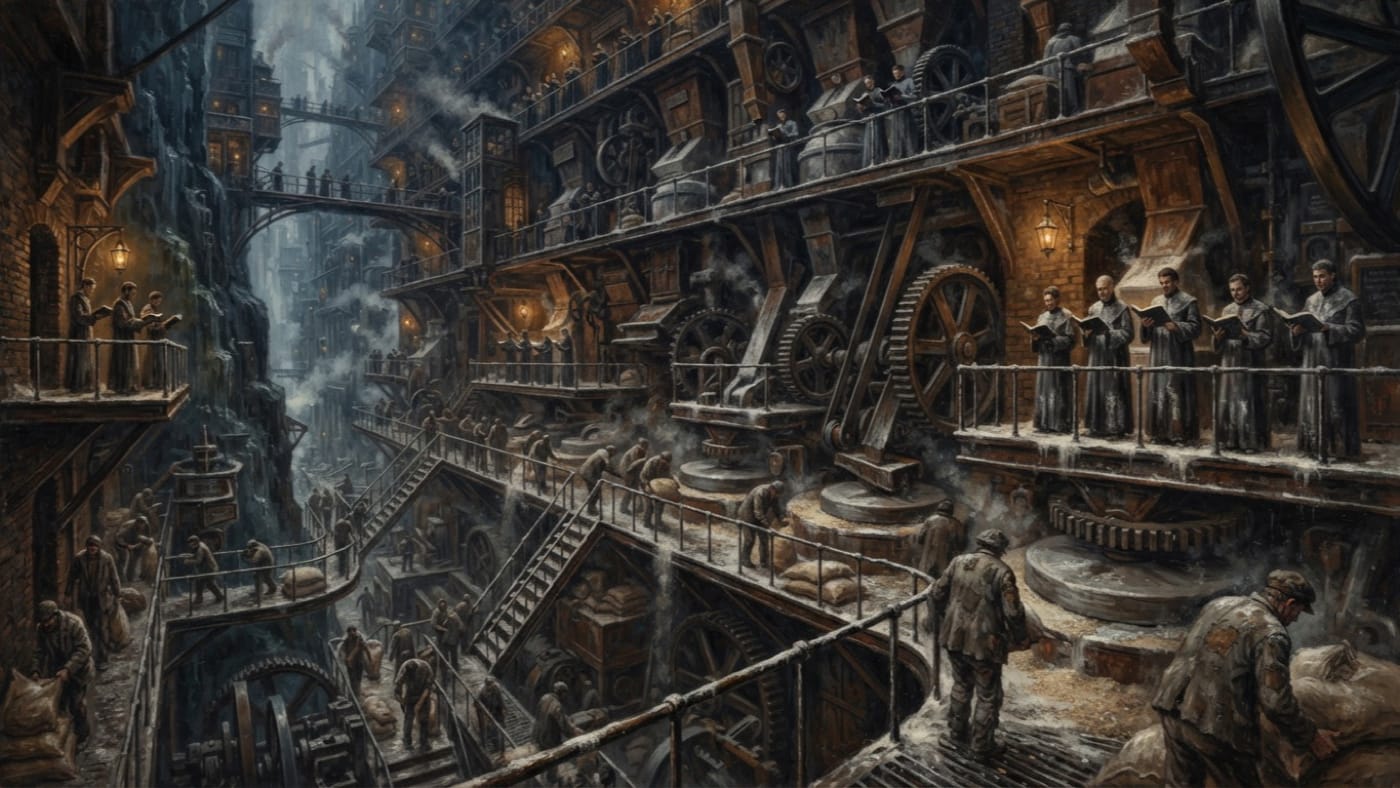
Mill-Crown Terraces
The fourth Step grinds the flour; the fifth decides who may eat
Rheinscarp's fourth terrace grinds ration flour to purchased hymns. The Cantors sell the cadence, Records certifies the hungry, and a mill-hand may work a full shift while officially absent.
Codex Ref. II.2.01-004
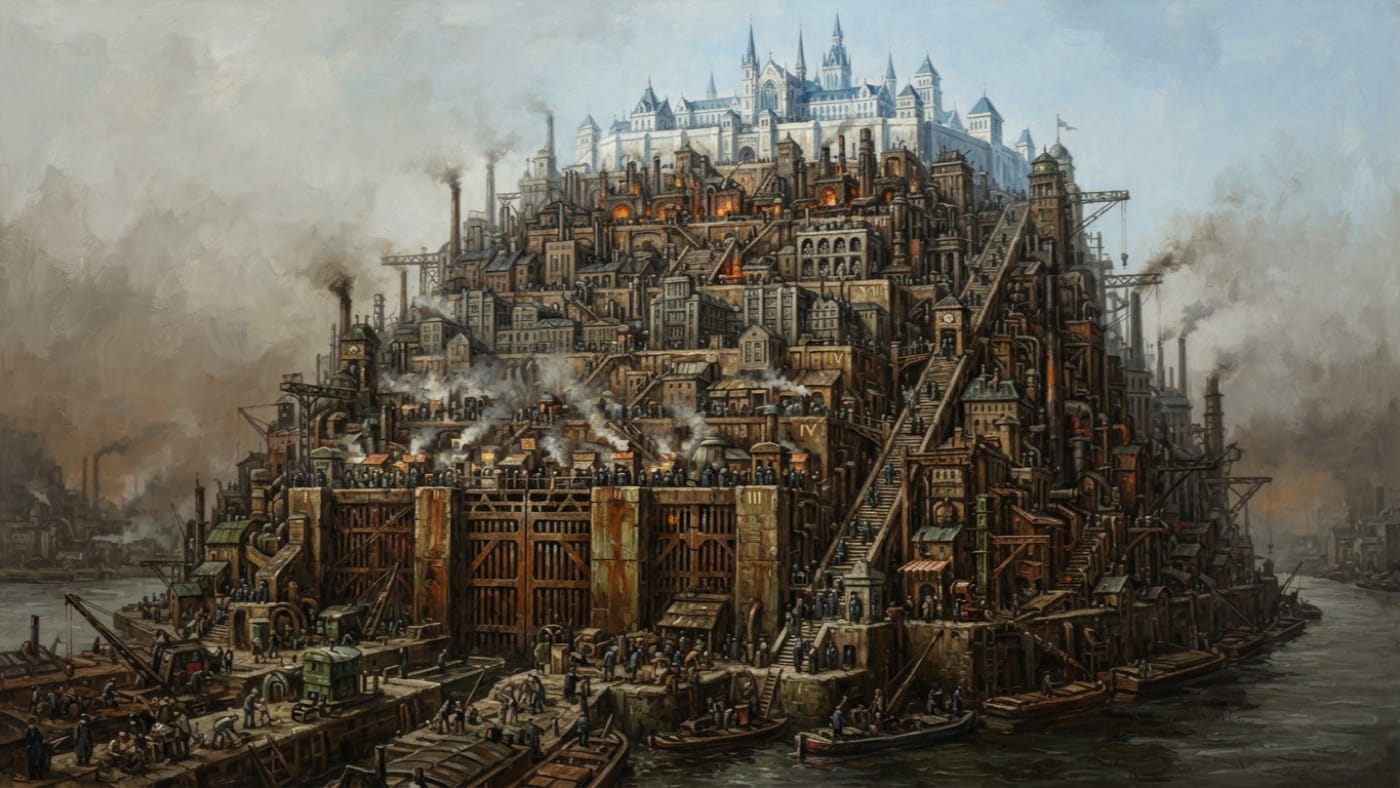
Nine Steps
From river silt to clean air, every crossing requires coin, verse and stamp
Rheinscarp's nine terraced districts rise from the Sump Docks to the High Step Precinct. Every crossing requires coin, verse and stamp; the air improves upward, and so does the spelling.
Codex Ref. II.2.01-011

Old Klem the Ledgerman
He did not hide the sack; he hid the absence
Old Klem the Ledgerman is the condemned founder-figure of Grain Keeper ledger fraud, the clerk who taught spoiled grain to become bread again.
Codex Ref. III.2.01-122
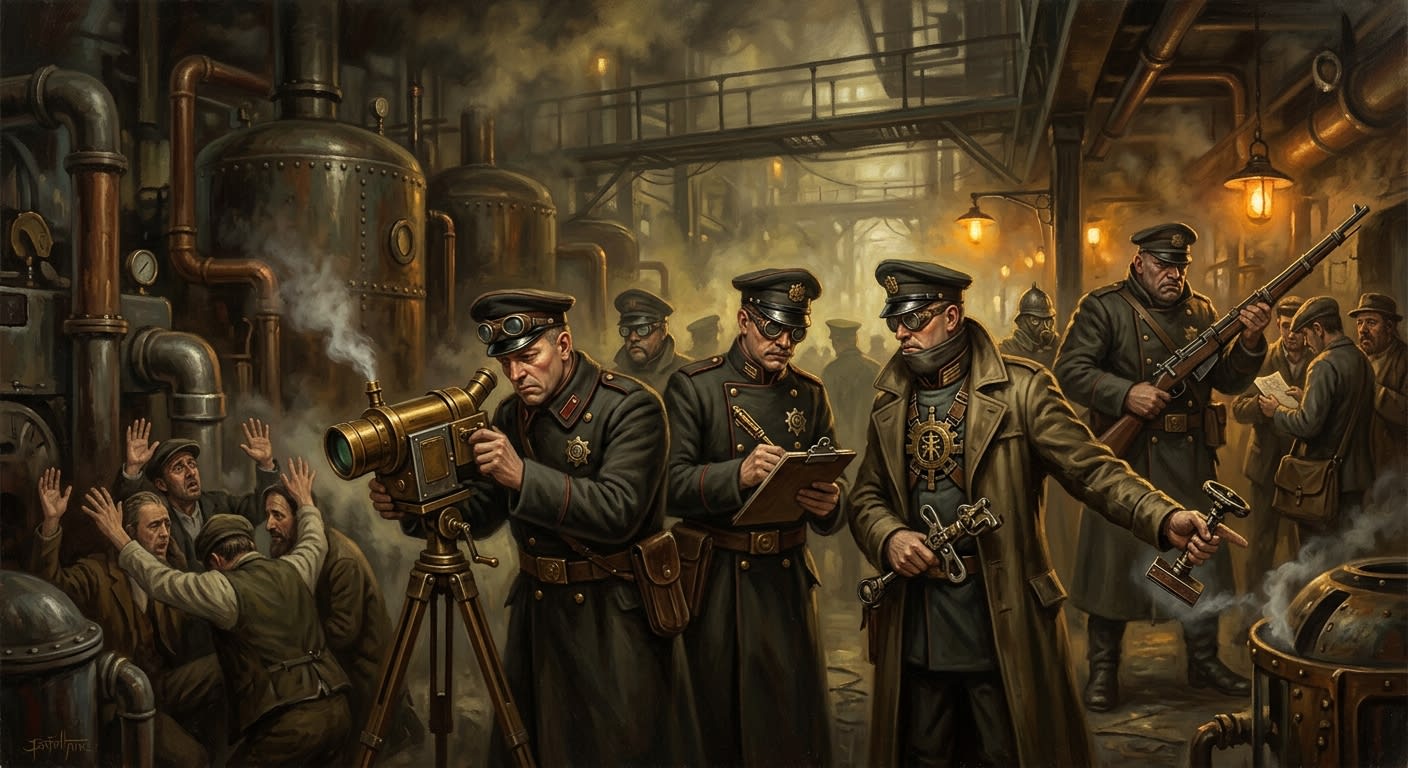
Operational Directive 14
The order that made air searchable and warmth prosecutable
Operational Directive 14 made smoke a witness, warmth a suspicion, and air a lawful target of Bureau of Purity entry, seizure, citation, and theatrical correction.
Codex Ref. XIII.1.94-143
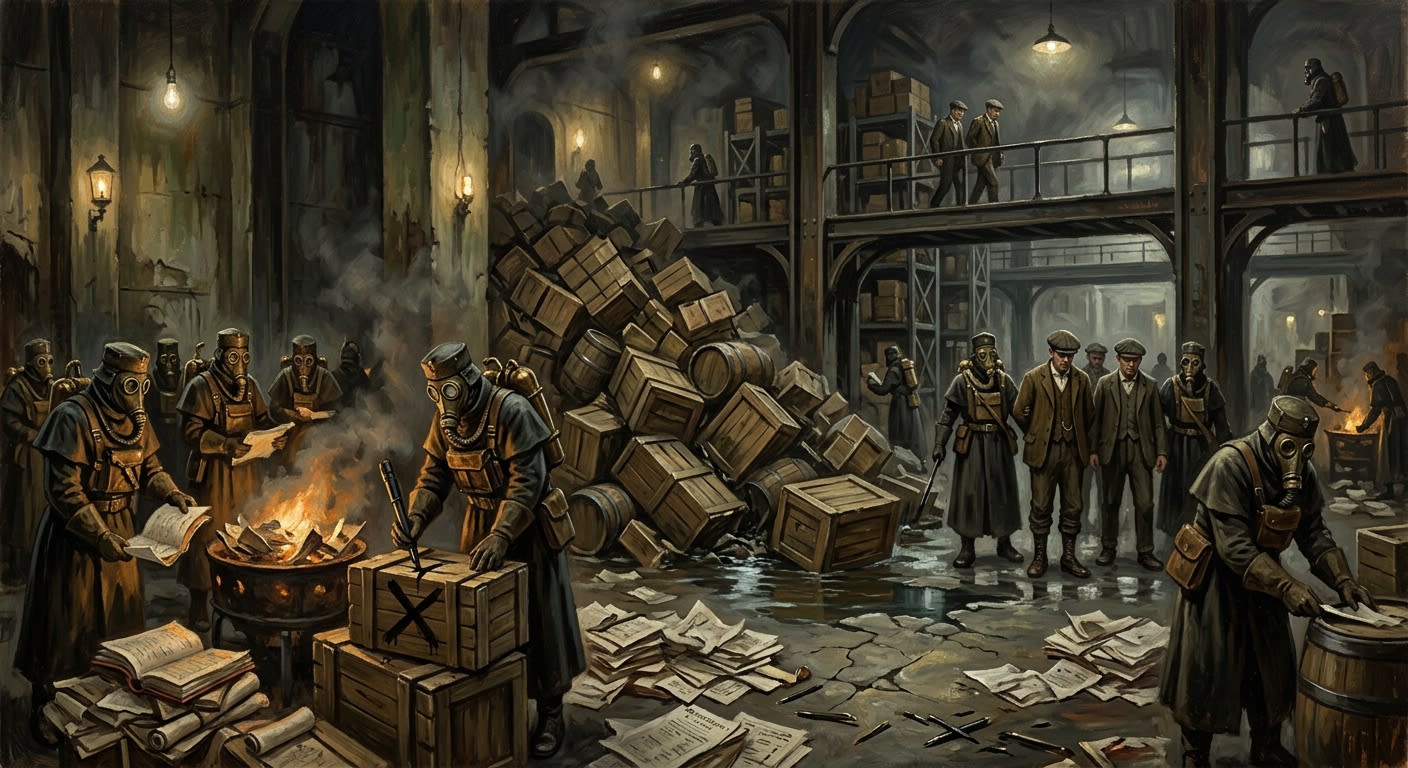
Orthography Purge of A.S. 112
When the letter changed, the invoice died obediently
The Orthography Purge of A.S. 112 reopened 411 manifest cases, stripped eleven Litigants of practice rights, and taught merchants that one suspect stroke can bankrupt a warehouse.
Codex Ref. VII.8.10-002

Peace Brokers
The grey-corded liars who sell the cheapest form of mercy: delay
Peace Brokers are the oldest Femur-War Broker faction, heirs to Elder Noxa's temporal-separation method, selling quiet by keeping authenticated relic contradictions apart.
Codex Ref. XII.15.02-001

Prior Idris of the Sixth Tide
The road drinks, and Idris keeps the receipt
Prior Idris governs Brine Fork as if a road were a hound: fed, cursed, watched, and never mistaken for harmless scenery.
Codex Ref. III.2.01-201
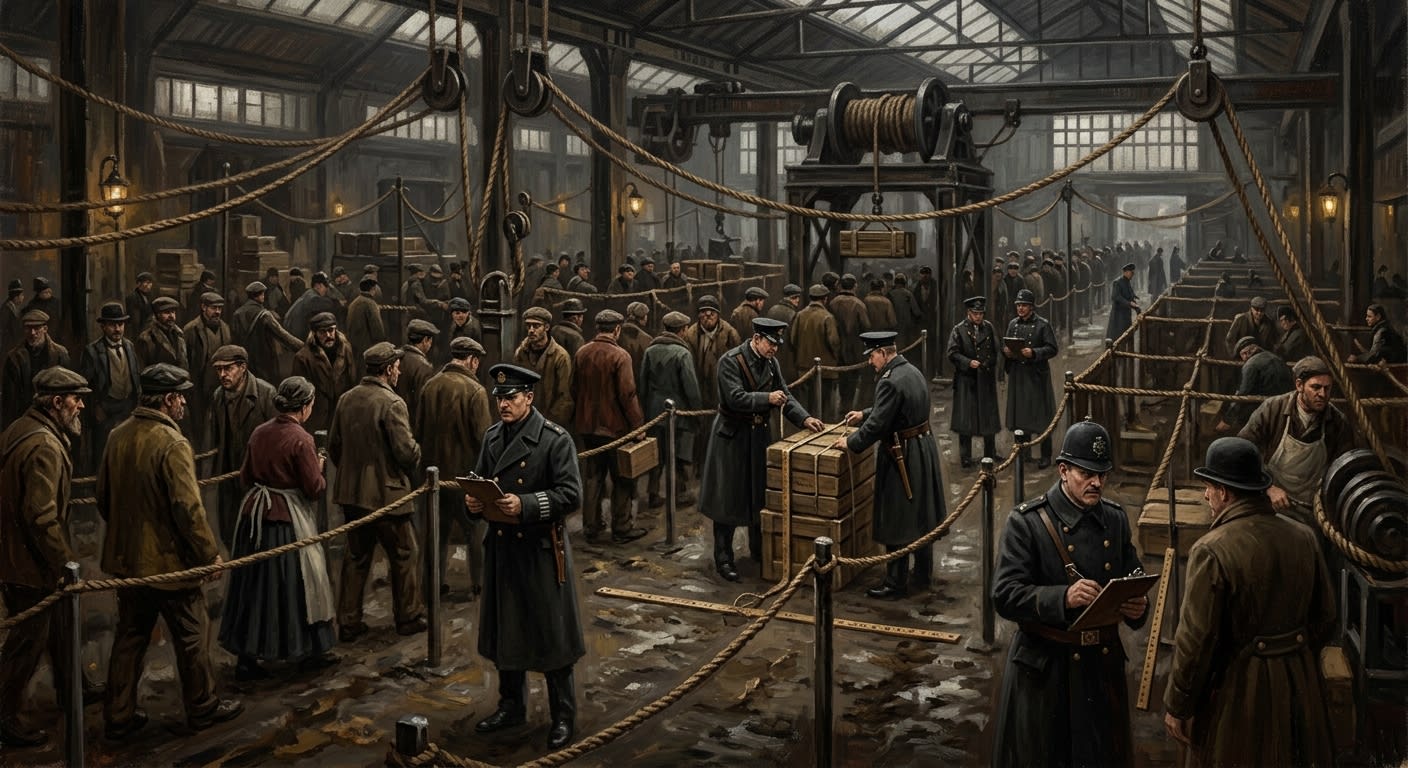
Rope Reforms of A.S. 118
Order is mercy, provided the rope is measured correctly
The Rope Reforms of A.S. 118 turned cordage, lane width, stack geometry, and Ravel's mercy into law; the crowd became countable and therefore governable.
Codex Ref. VII.8.10-008

Route-Stamper / Indulgence-Token Smith
Walking is a contract; the Route-Stamper is the notary
Makers of the indulgence-token — a brass palm-piece whose captive bell-hour counts steps, repels road-spirits, and distinguishes the sanctioned traveller from the heretic-with-legs. The art is measured by one question only: whether it lies.
Codex Ref. XII.38.01-001

Saint Maurus of the Burnt Lantern
The hospice martyr whose left leg taught arithmetic to kneel
Hospice martyr, ward-lantern patron, and owner of three authenticated left femurs; Maurus proves that sanctity can outgrow anatomy.
Codex Ref. III.2.01-148

Saint Morin of the Sealed Mouth
Patron of waxed teeth, taxable grief, and the silence that keeps the queue moving
Saint Morin of the Sealed Mouth is the disputed occupational patron of Dead-Goods Tariffers, waxed skulls, intake bays, and the mortuary discipline of making the dead remain quiet.
Codex Ref. III.2.01-105
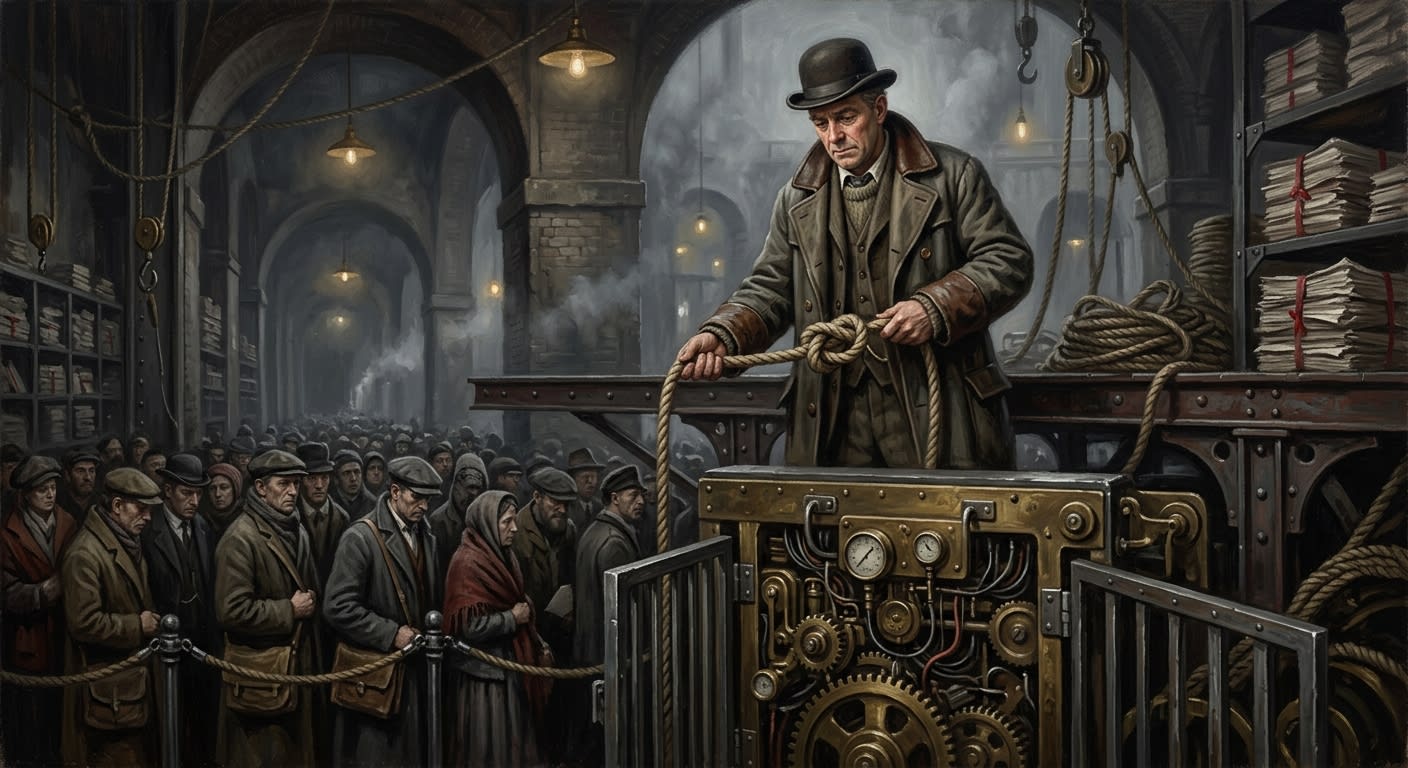
Saint Ravel of the Rope
The bruise remains unofficial because the knot remains useful
Unratified patron of Checkpoint Queue-Marshals, Ravel saved a starving lane with one knot; the Bureau kept the procedure and mislaid the man.
Codex Ref. III.2.01-099
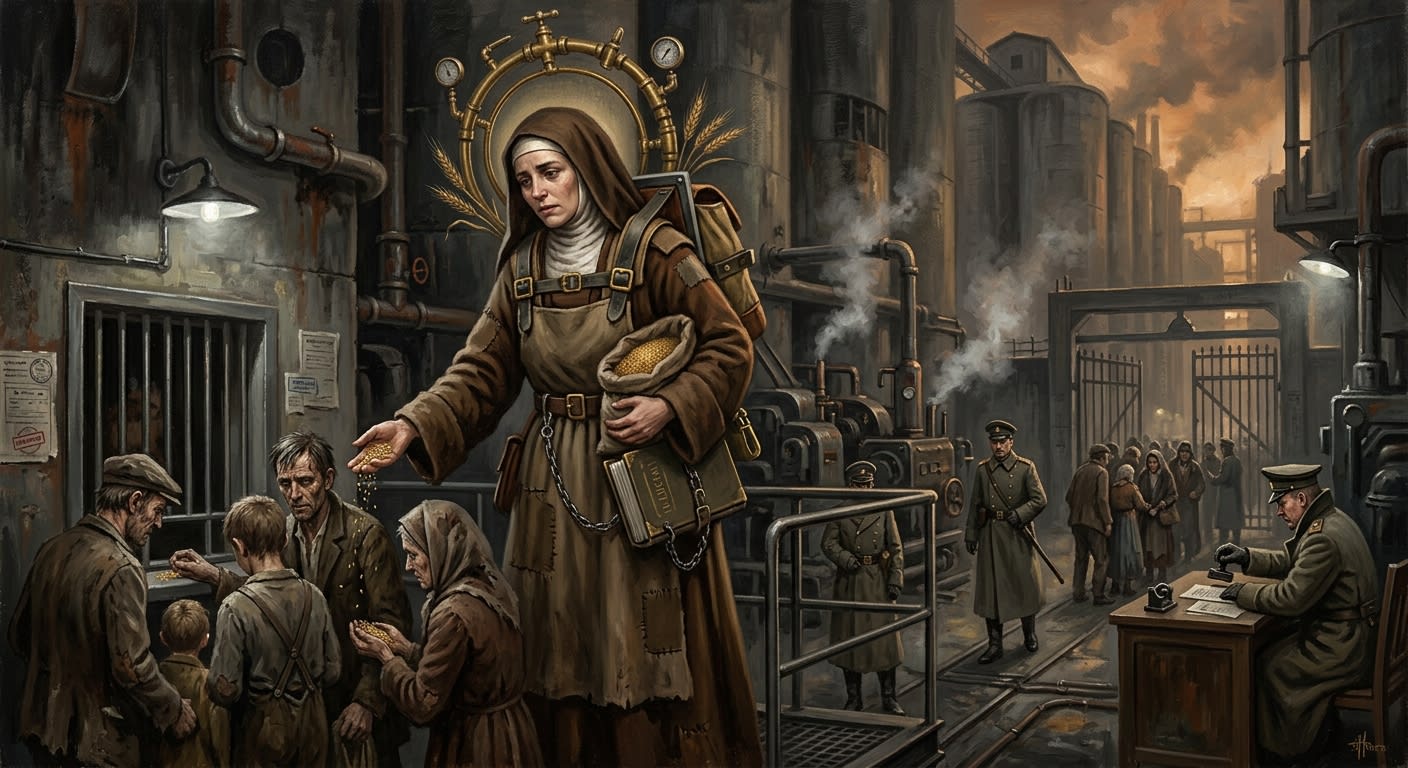
Saint Silo-Agnes
The hungry remember the woman in the wall more accurately than the pageant
Saint Silo-Agnes, unofficial patron of Grain Keepers, was condemned for hidden millet and later improved into a charity martyr fit for ticketed grief.
Codex Ref. III.2.01-121
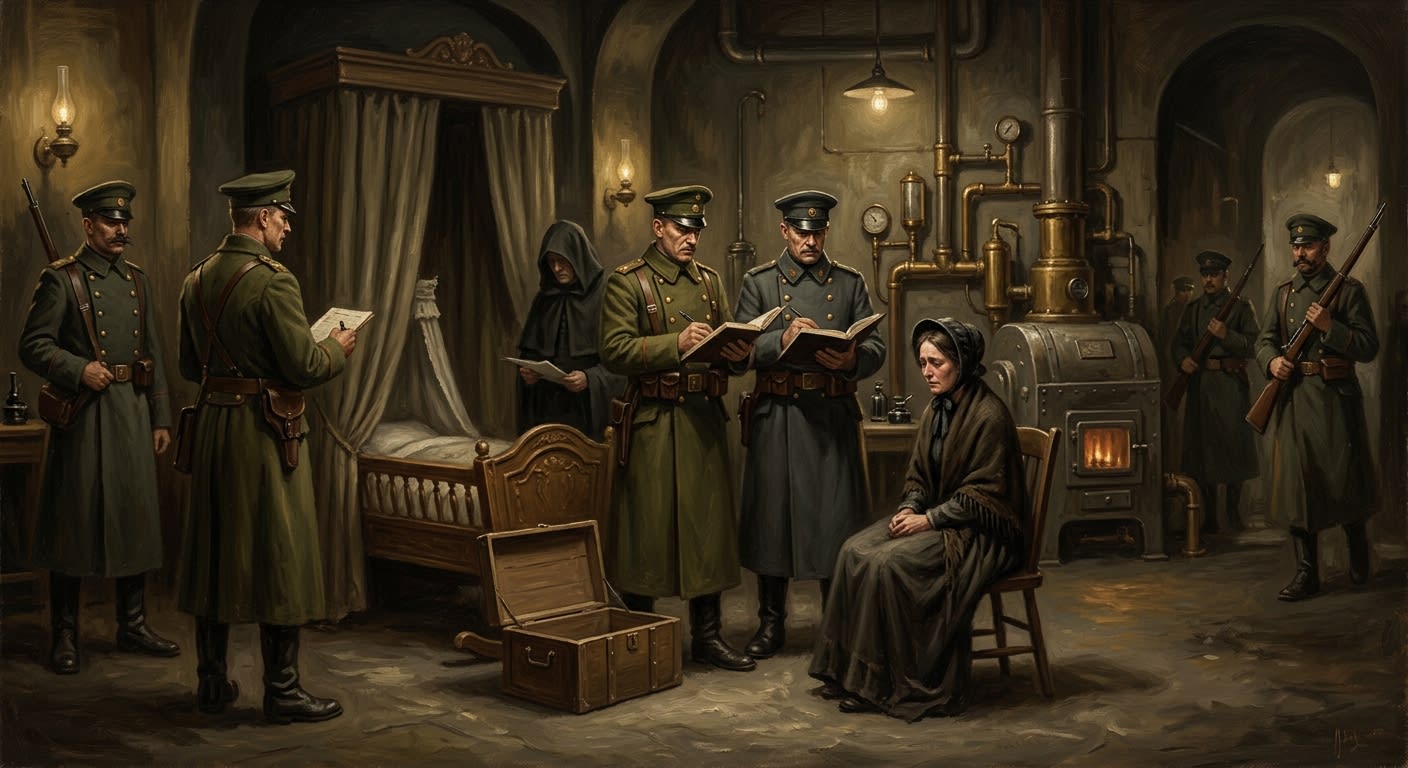
Standing Order 34-PK
The cradle confesses when the Ledger is hungry
Standing Order 34-PK makes the hidden cradle confess: missing infants become stolen soldiers, and a mother’s silence becomes evidence.
Codex Ref. XIII.1.34-158

The Femur-War Broker
The unofficial routing service that keeps authenticated contradictions from becoming authenticated riots
The officially nonexistent profession that routes authenticated relic contradictions without collision — the Femur Principle's logical consequence, managed for a fee by two hundred brokers the Bureau insists do not exist.
Codex Ref. XII.15.01-001
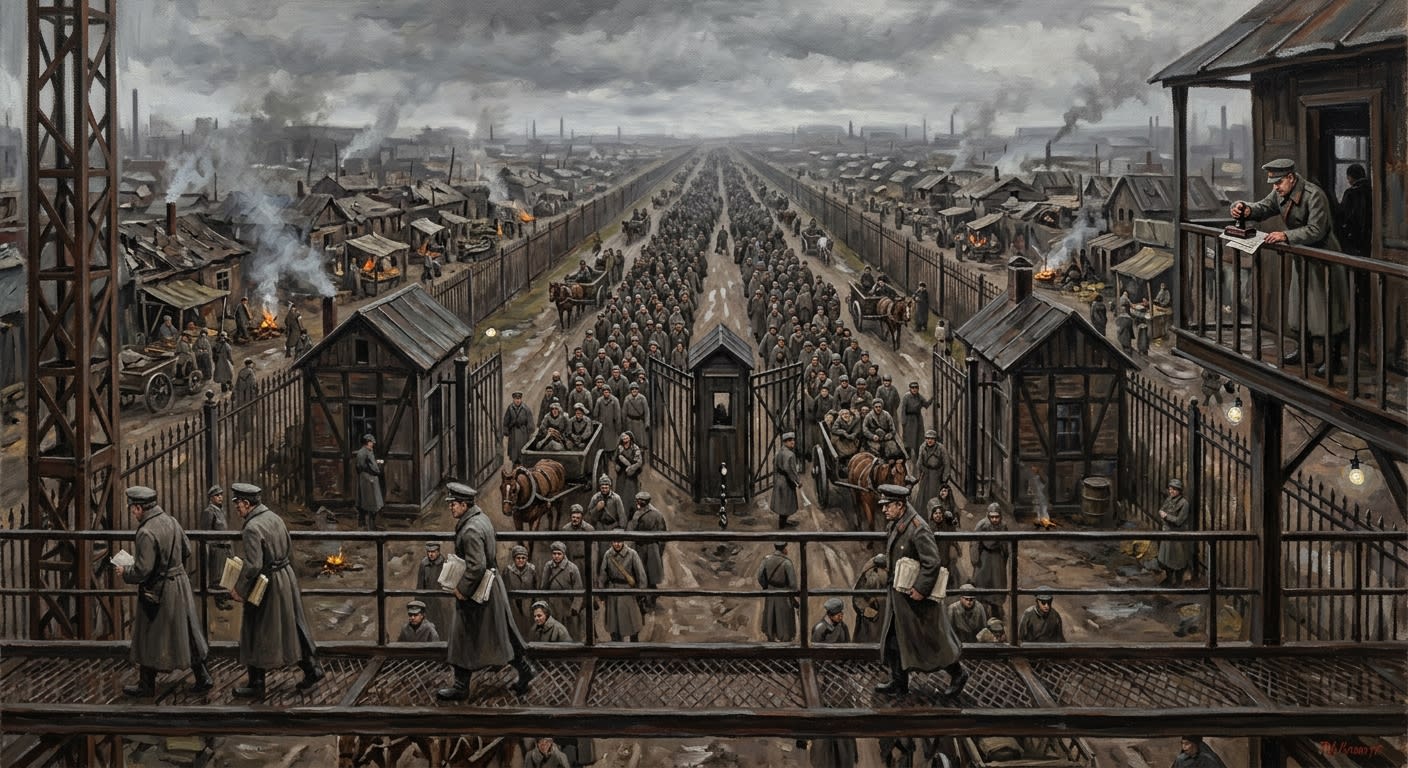
The Queue Road
Where motion became a taxable offense and patience became policy
One hundred and twelve miles of weaponised patience. The Queue Road converts motion into revenue and compliance into a commodity — nine gates, forty-eight thousand registered souls, one apparatus beneath Gate Nine that the Bureau of Doctrine does not discuss.
Codex Ref. II.3.05-001
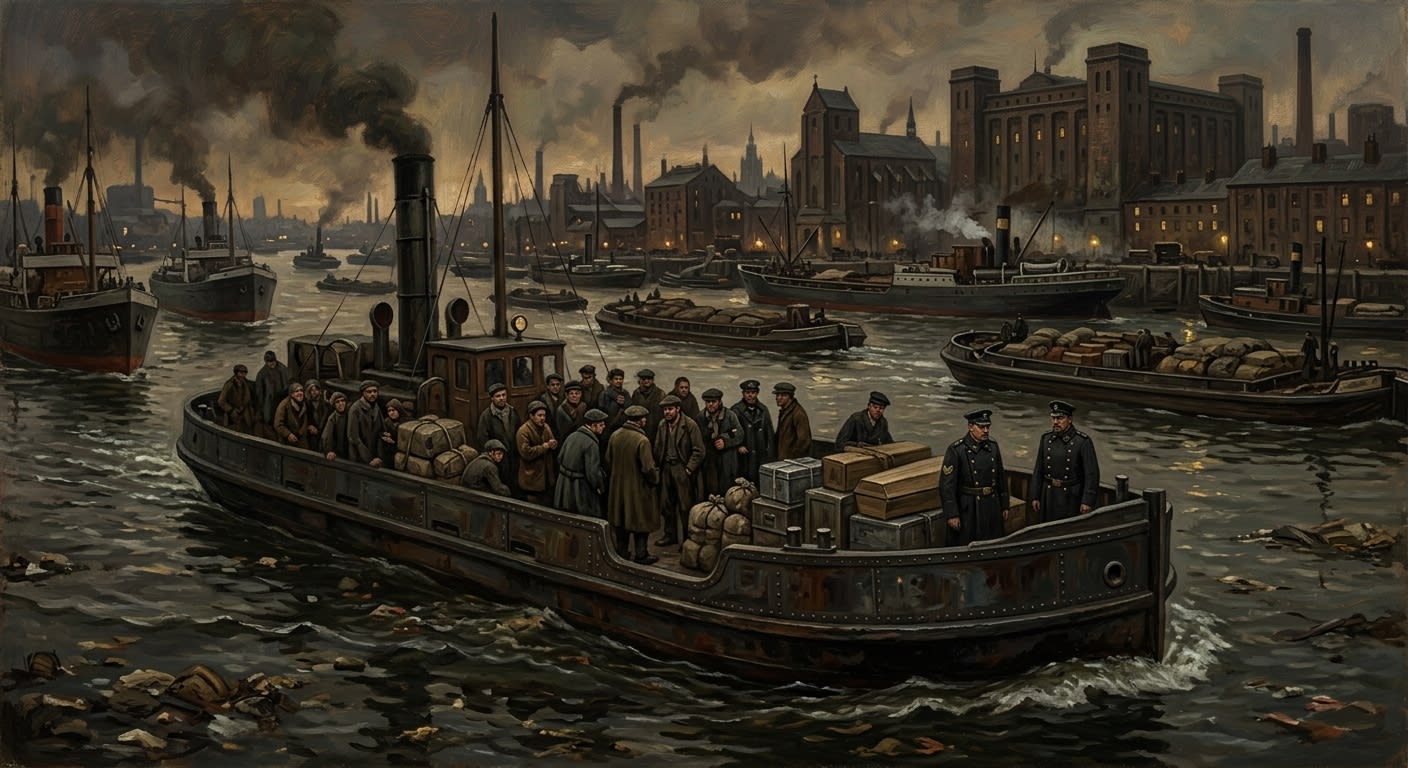
The Rhine
The wet jurisdiction by which the heartlands pretend to be orderly
The Rhine is the Synod's wet jurisdiction: artery, tithe-chain, pilgrim road, corpse carrier, ferry court, and profitable rebuke to every office built too near the bank.
Codex Ref. II.2.08-201

The Rhine Corridor
Damp procedure, counted backward from every bridge
The Rhine Corridor is the Synod's damp procedure: a Zone 2 logistics artery, mortuary road, ferry court, heresy school, and billable proof that movement can be made afraid.
Codex Ref. II.2.08-202
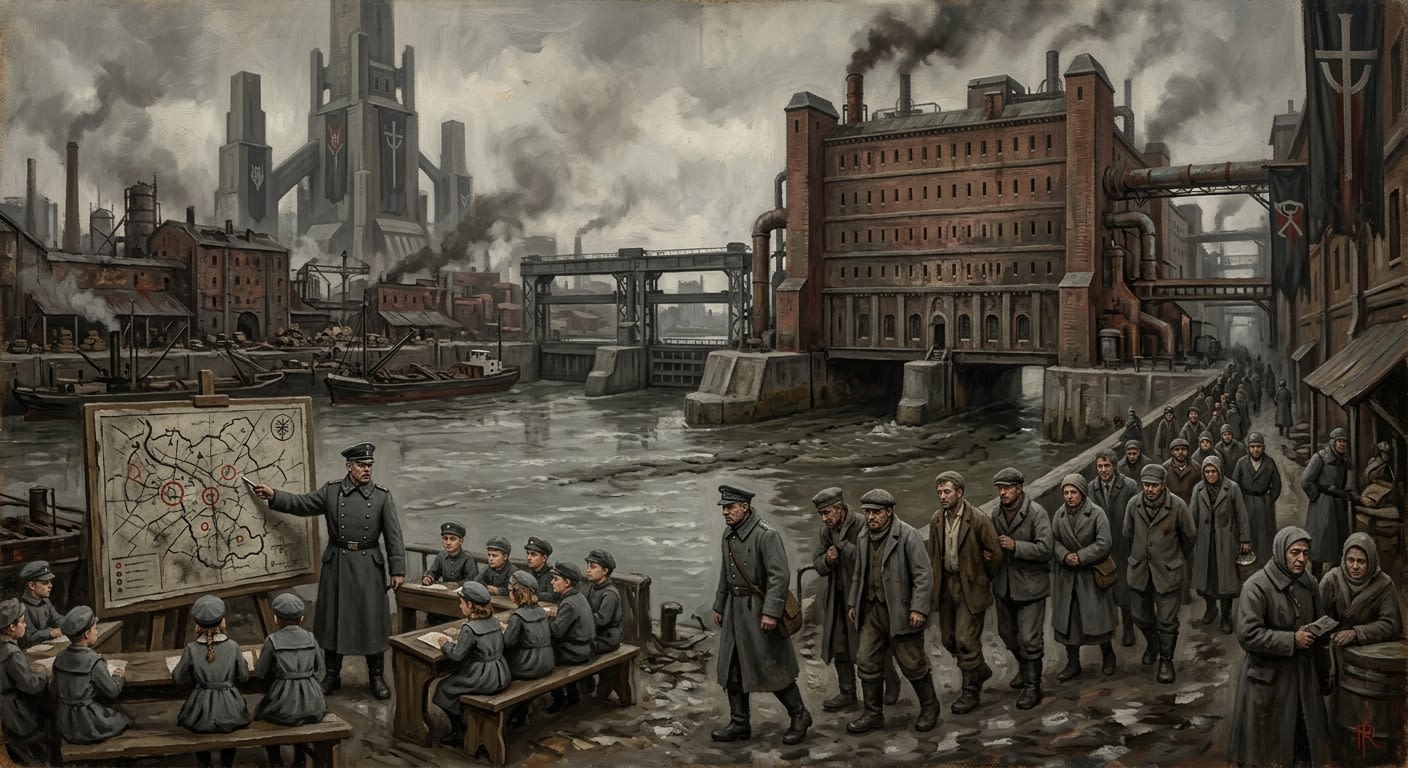
The Rhineland
A province corrected so often it learned to keep the corrections
The Rhineland is the Synod's most corrected province: river belt, market school, scriptorium wound, curfew map, chalk lesson, and loyal suspicion made taxable.
Codex Ref. II.2.09-201
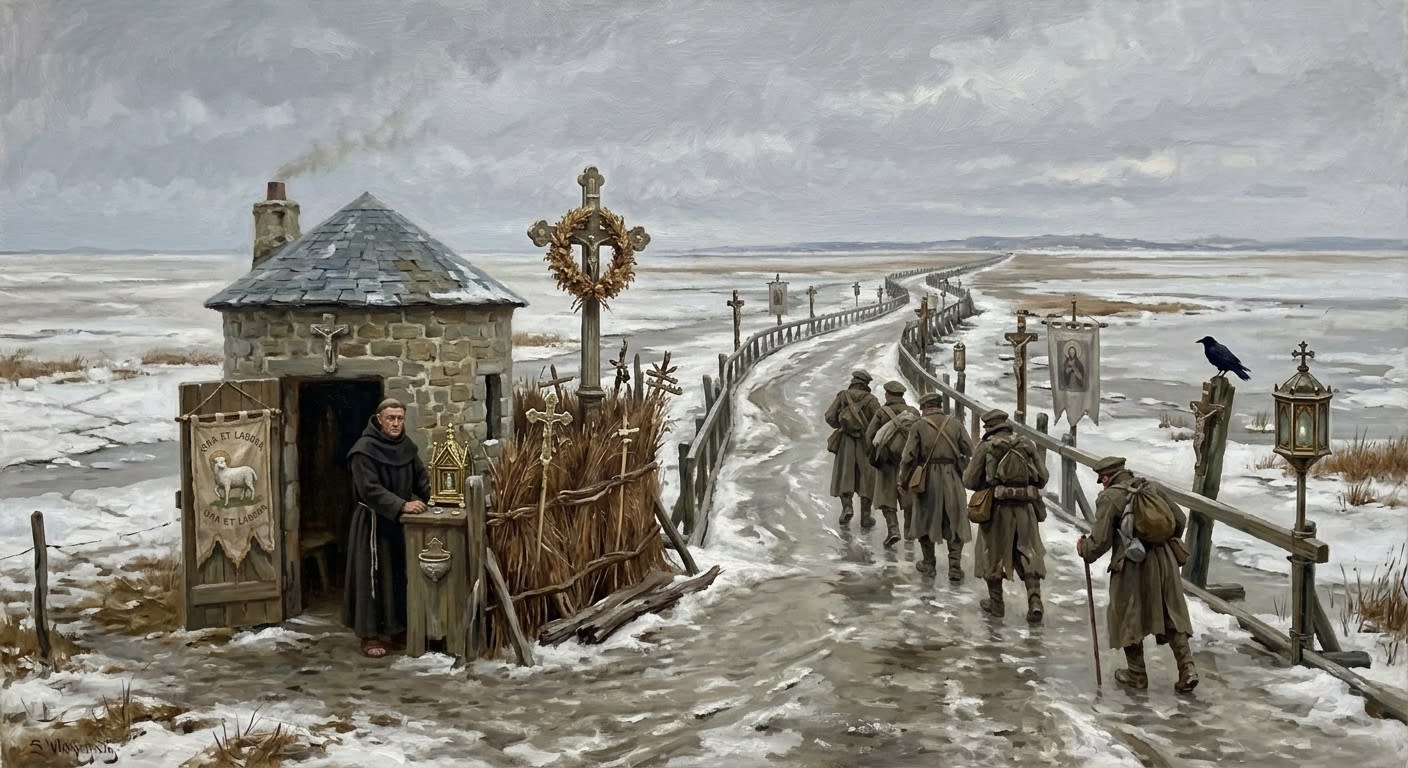
The Salt-Vigil Causeways
Where the road drinks and the order endures
Winter roads across the frozen Frisian shallows, administered by an ascetic toll order who collect salt and tears in equal measure. The causeways carry one-eighth of the Synod's winter supply traffic and ask something of everyone who walks them.
Codex Ref. II.3.05-003

Trier
The city that taught chalk to count before it spoke
Trier is a loyal Moselle city with old hands, white margins, soft chalk, river memory, and the dangerous courtesy of obedience performed too well.
Codex Ref. II.2.02-004
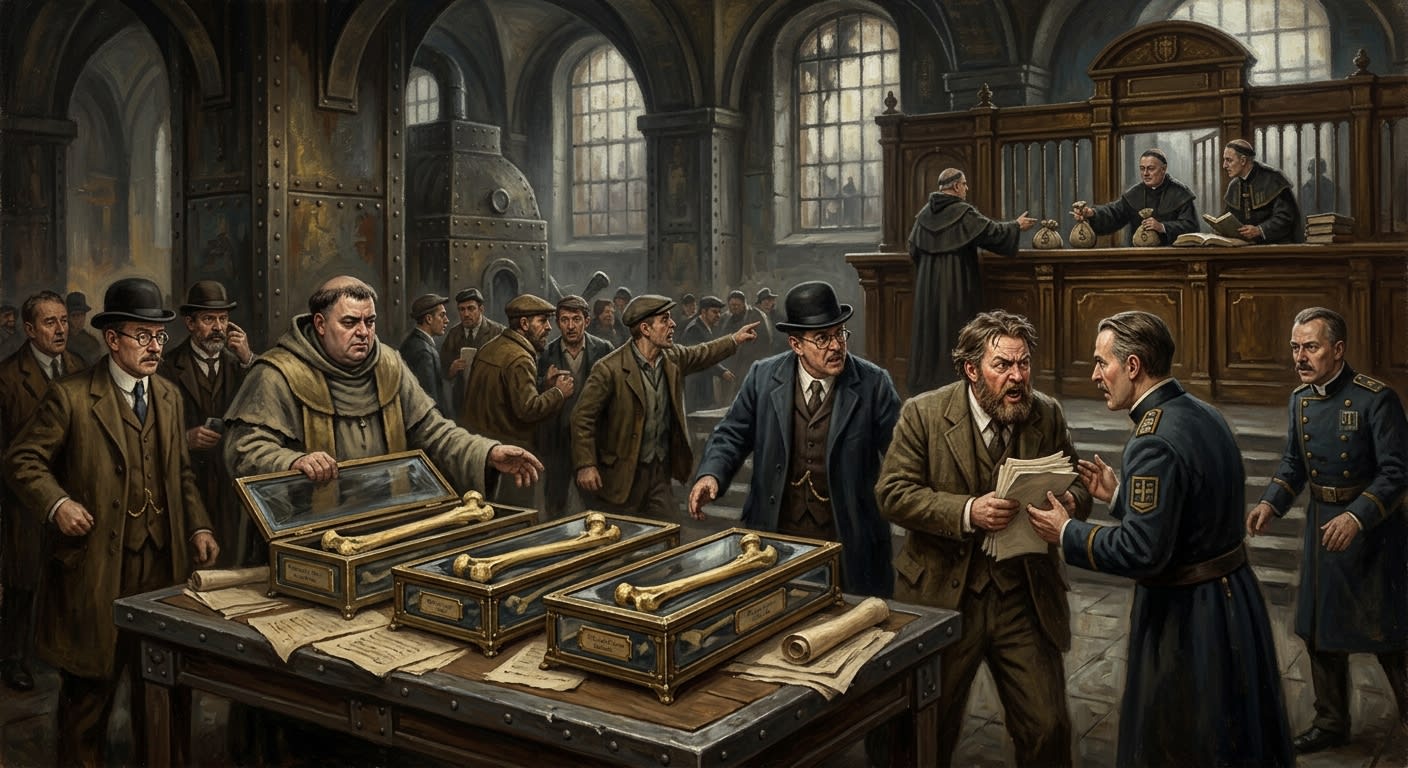
Triplicate Femur Incident
Three saintly legs entered one manifest; a profession walked out
The c. A.S. 148 Triplicate Femur Incident exposed three authenticated left femurs of Saint Maurus at once, birthing Femur-War brokerage from public contradiction.
Codex Ref. VII.8.10-027
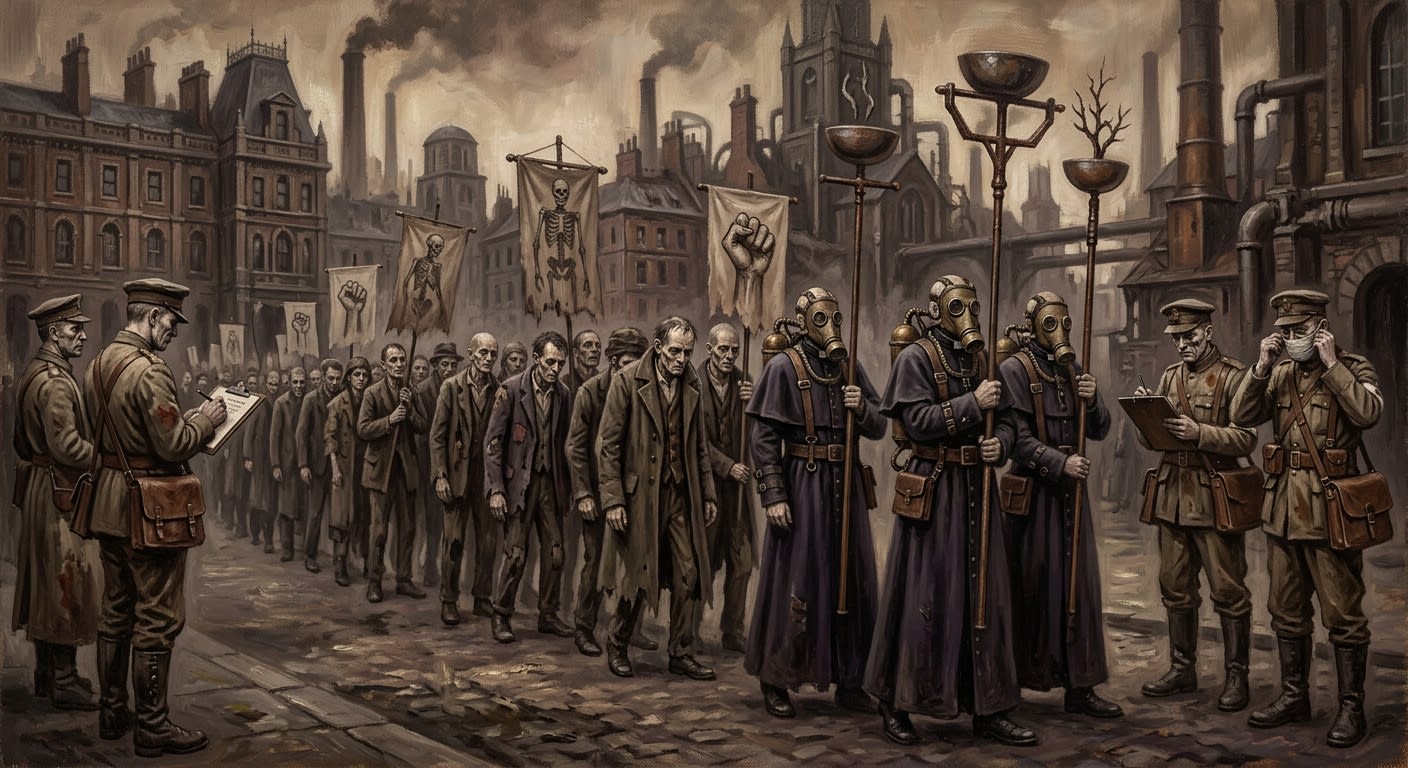
Triumph of the Gaunt
An injury given a hymn-sheet
The Triumph of the Gaunt crowns visible hunger as public virtue, training citizens to distrust plenty while Medicine counts the damage.
Codex Ref. XIII.1.25-001
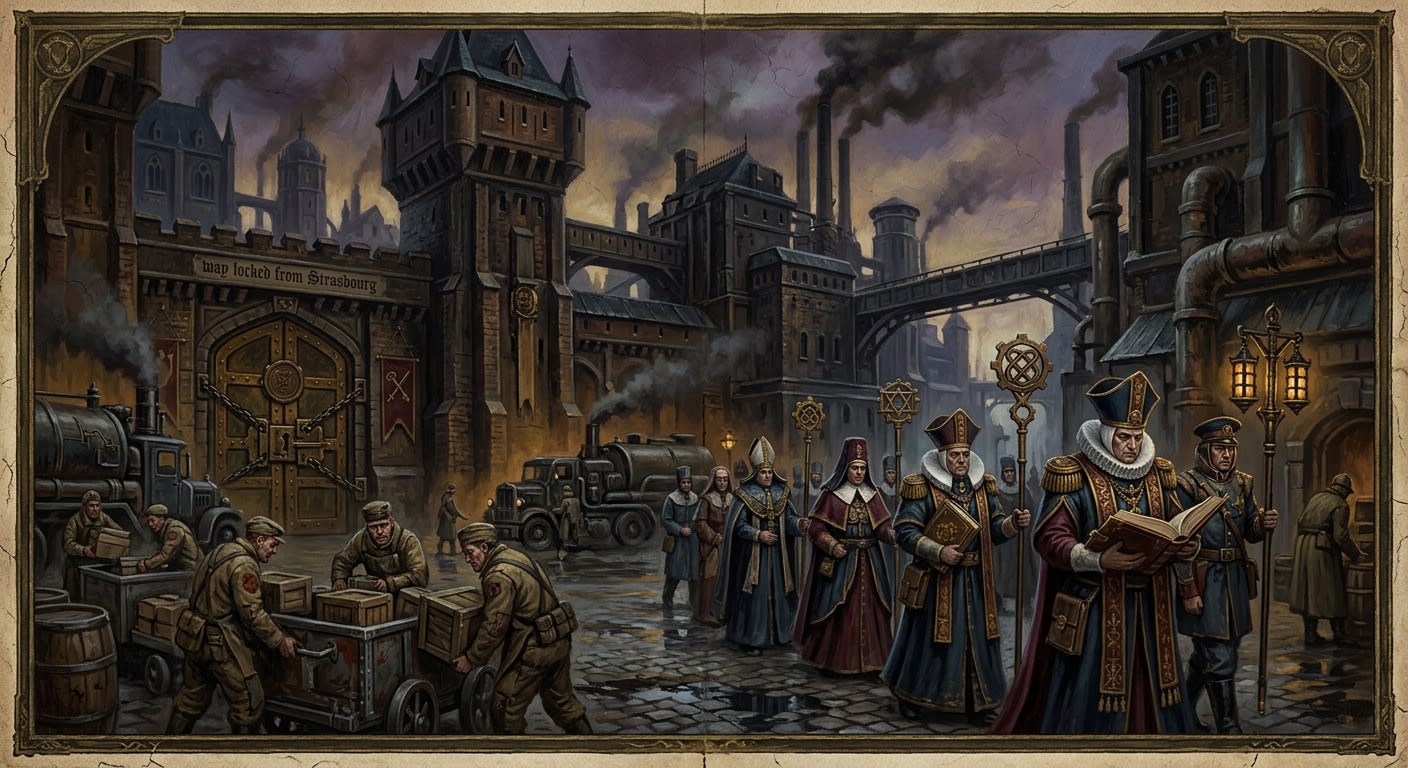
Triune Hearth
Three old bodies, one chimney, and Strasbourg holding the poker
The Triune Hearth binds France, Iberia, and the Rhineland into one Synodal household: warm in sermon, hungry in ledger, and locked from Strasbourg.
Codex Ref. XIII.1.04-090