

Reverse Index
Referencing “Bureau of Masks and Seals”
Every codex entry that links to Bureau of Masks and Seals. 84 entries.
Return to Bureau of Masks and Seals
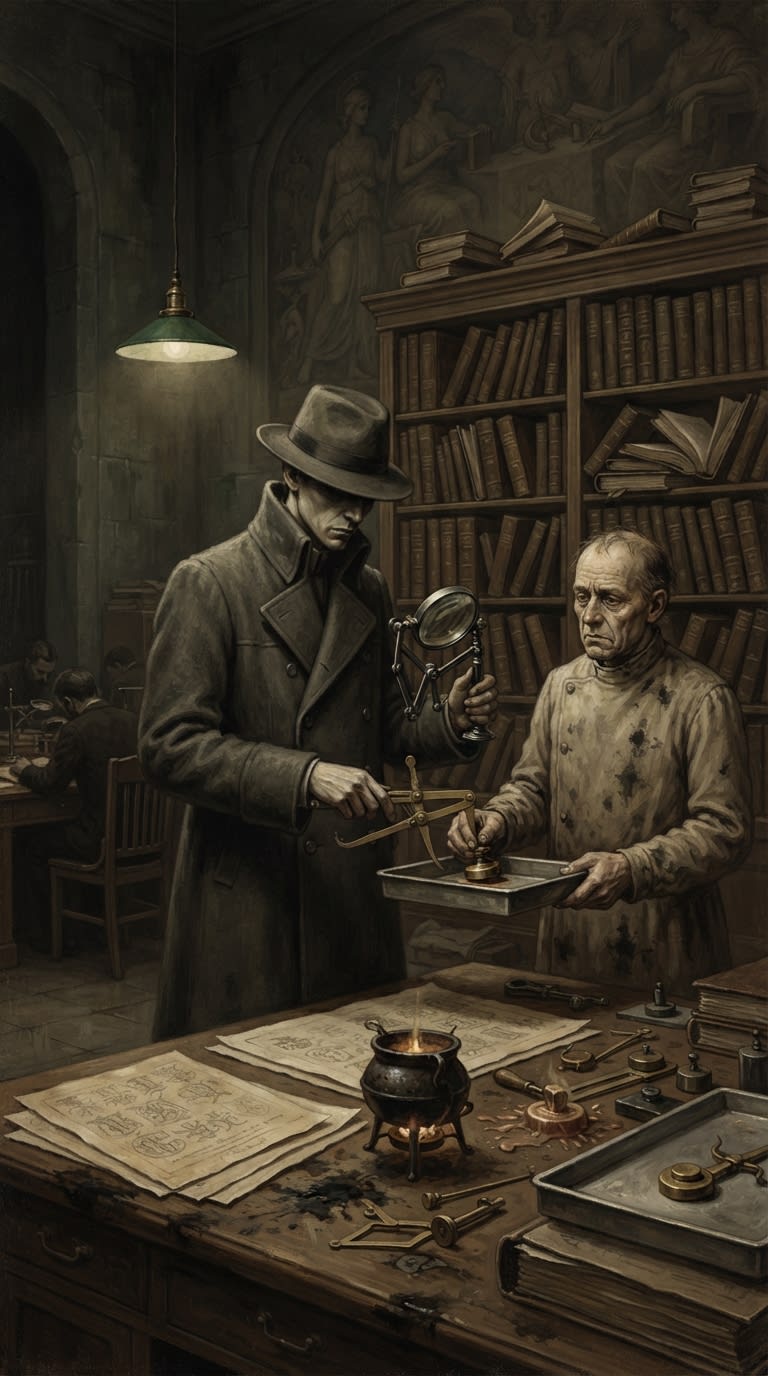
Annual Die Audit
Every lawful instrument must survive its own impression
Instituted after the A.S. 178 counter-seal embarrassment, the Annual Die Audit sends Seal-Walkers across Synod territory to weigh, strike, measure, accuse, retire, and occasionally retroactively shame every lawful seal-die.
Codex Ref. VI.4.19-178

Archon Casselius of Mainz
The man who hears treason in hardware and measures it correctly
Casselius of Mainz holds Heraldry and Masks and Seals in personal union, deciding what may be seen, stamped, licensed, and punished.
Codex Ref. III.2.01-017
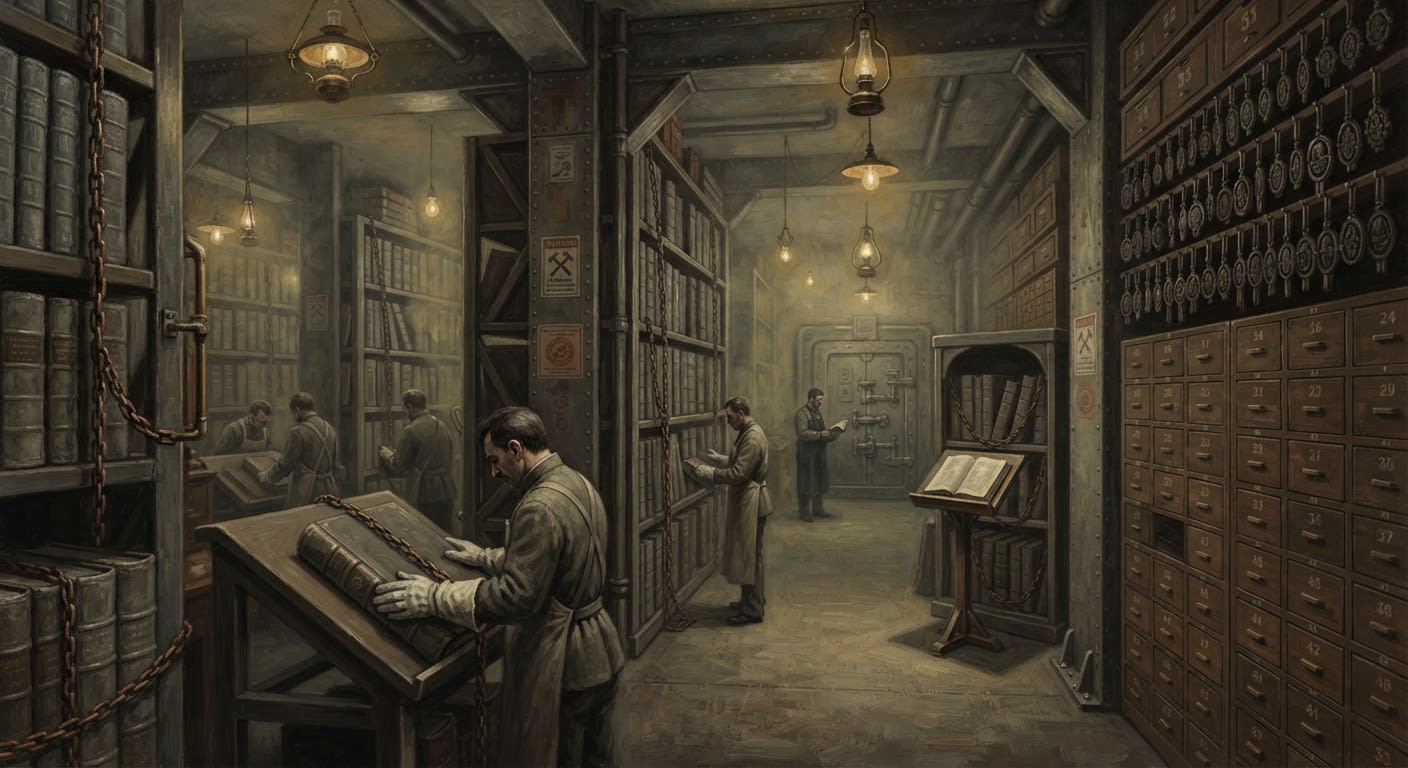
Armorial Vault
Where symbols are chained until they become law
The Armorial Vault is the chained body beneath Strasbourg where registered symbols become legal facts, false marks are preserved for prosecution, and colour learns to fear drawers.
Codex Ref. II.1.04-007

Arno Kett
The man who made disbelief small enough to fit in a pocket
Founder of the first verifiable Silent Godless cells, author of the question-based recruitment method, and the corpse from which Doctrinal Nullification was made lawful.
Codex Ref. III.2.01-144
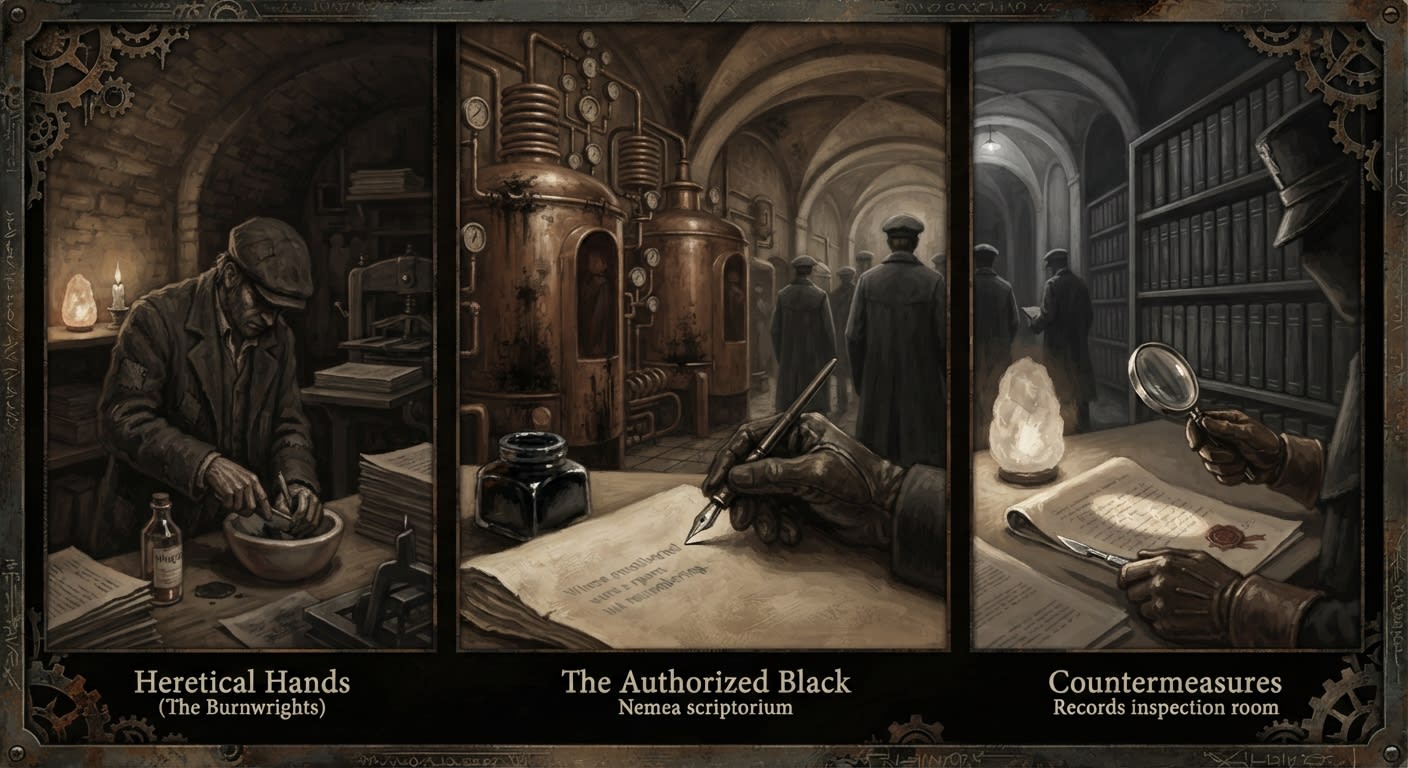
Ash-Ink
The authorized black, and the forgeries it taught to breathe
The lawful black of Nemea and its hanged imitations: ink made from burned authority, relic residue, and the Bureau of Records' dearest mistake.
Codex Ref. XIII.1.96-096
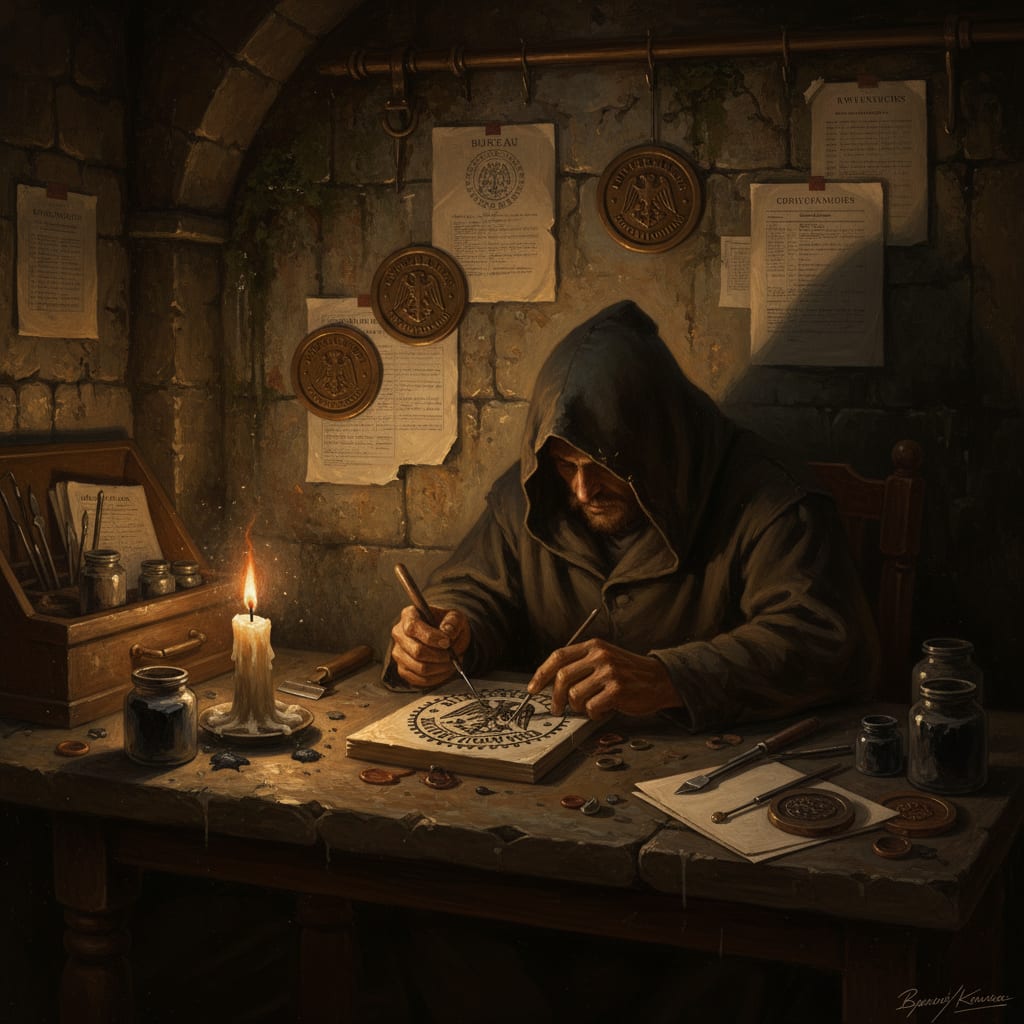
Black Ledger Cutpurse / Assassin
Larceny with a hymn; the Synod's most indispensable criminal enterprise
The Black Ledger steals rations, forges stamps, murders wardens, and distributes a calculated fraction to the hungry — then records what was given as a debt to be collected. The Bureau calls it heresy. The poor call it supper.
Codex Ref. XII.4.01-001
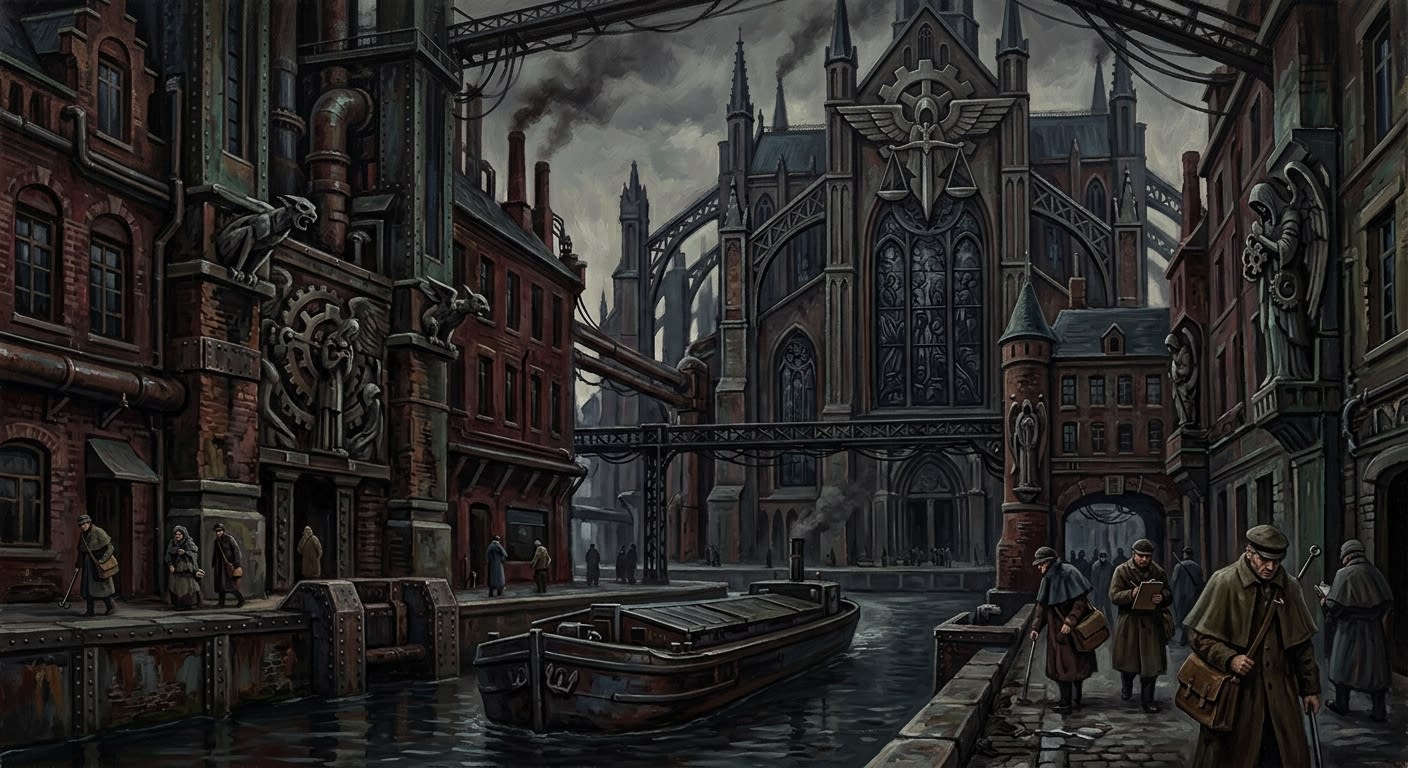
Bruges
Permit prosperity; audit beauty
Bruges is the Synod-held Lowlands city whose canals, colours, grotesques, relic glass, and impossible Tithes seal make beauty a recurring audit problem.
Codex Ref. II.1.04-058
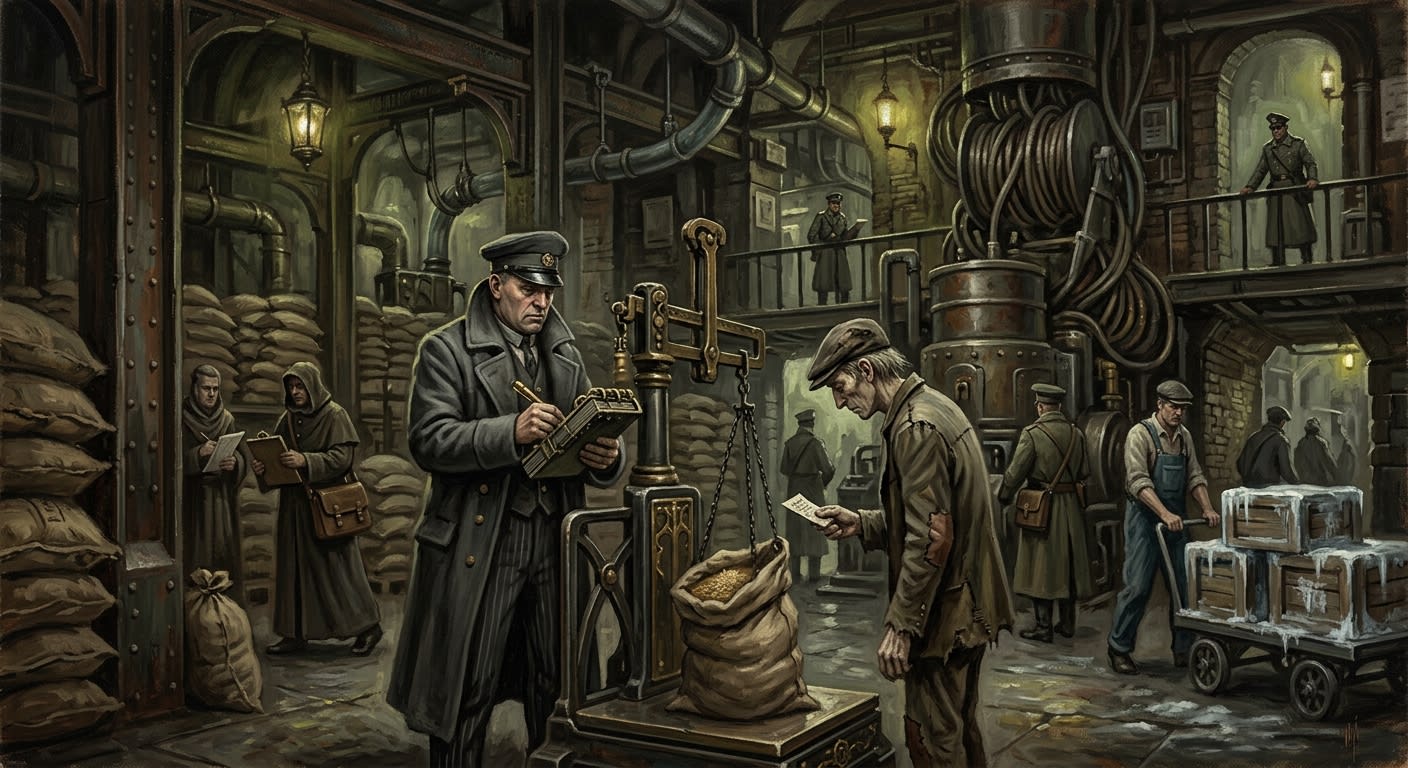
Bureau of Commerce
Bread becomes law before it becomes bread
The Bureau of Commerce prices obedience: weighing grain, freezing cargo, selling road-sound, licensing shortage, and making hunger kneel before the scale.
Codex Ref. VIII.2.10-097

Burner Catechisms
Approved prayers, unapproved margins
Approved prayer books whose intact devotions conceal ash-ink microtext: routes, countersigns, replacement names and safe runners. The Church printed the prayers; Burnwrights made the margins useful.
Codex Ref. XI.1.02-003

Burnwrights
The forgers who kill a name so the body may keep walking
Silent Godless specialists in identity disposal, document forgery, ash-ink, burner catechisms, and the paper death that lets condemned bodies survive.
Codex Ref. XI.1.02-002
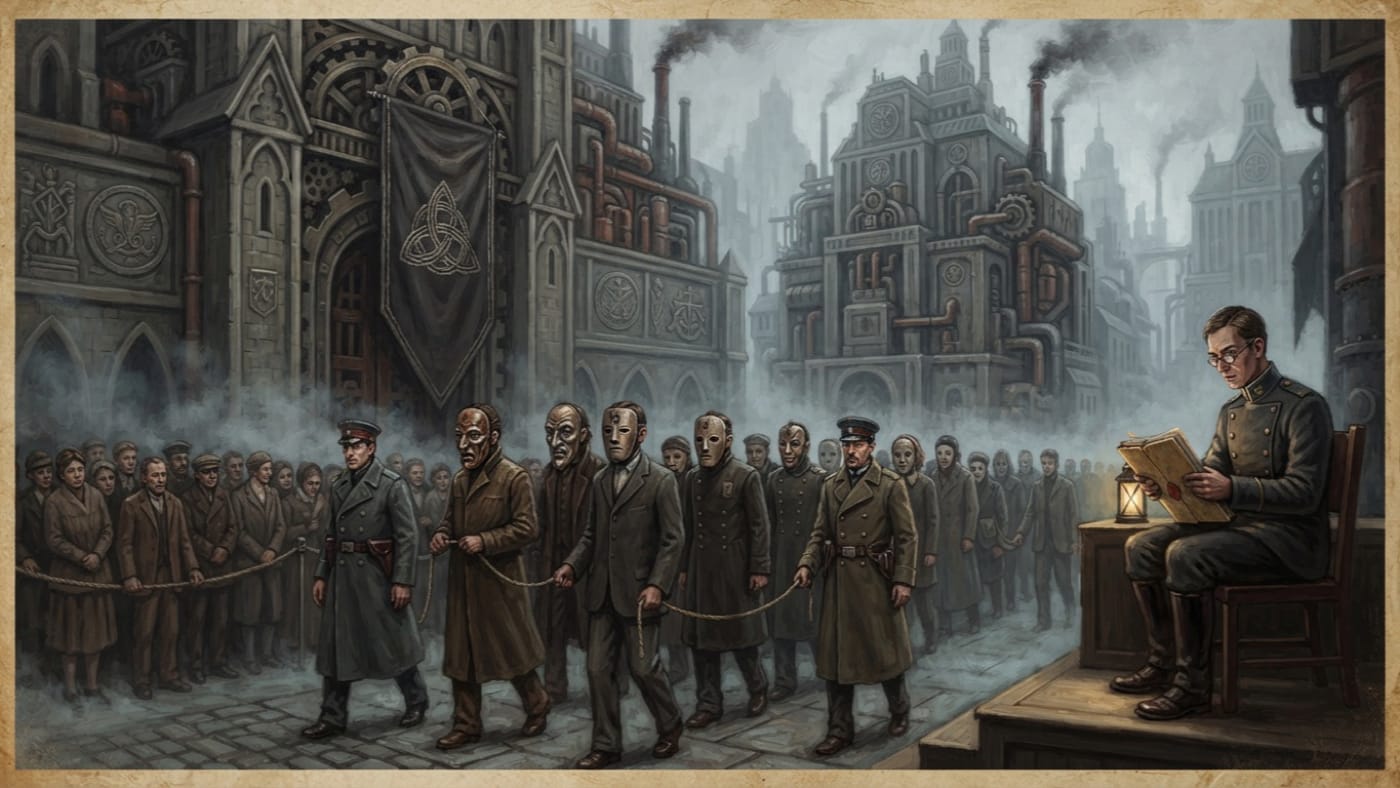
Carnival of the Triune Knot
The face may be hidden. The number remains.
The Carnival of the Triune Knot requires a licensed masked procession. Every face may be hidden; every mask remains numbered, stamped and measured. The wearer may withdraw a countenance. The Registry keeps the number.
Codex Ref. XIII.1.89-484
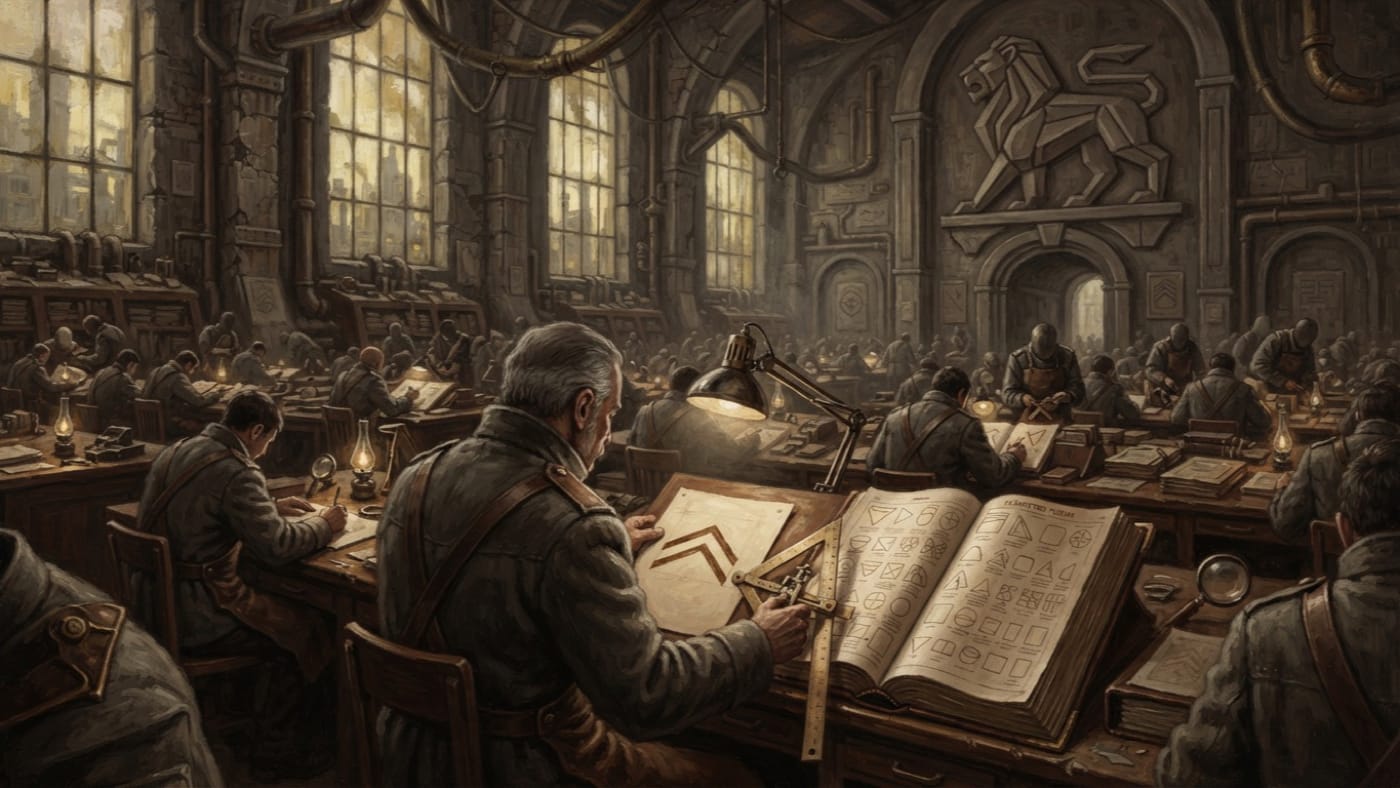
Chancellery of Permitted Forms
Even a corner must petition for absolution
Heraldry's geometry office licenses every bend, circle and corner before display. A lawful shape still requires the right surface, occasion and Armorial entry.
Codex Ref. VIII.1.03-006
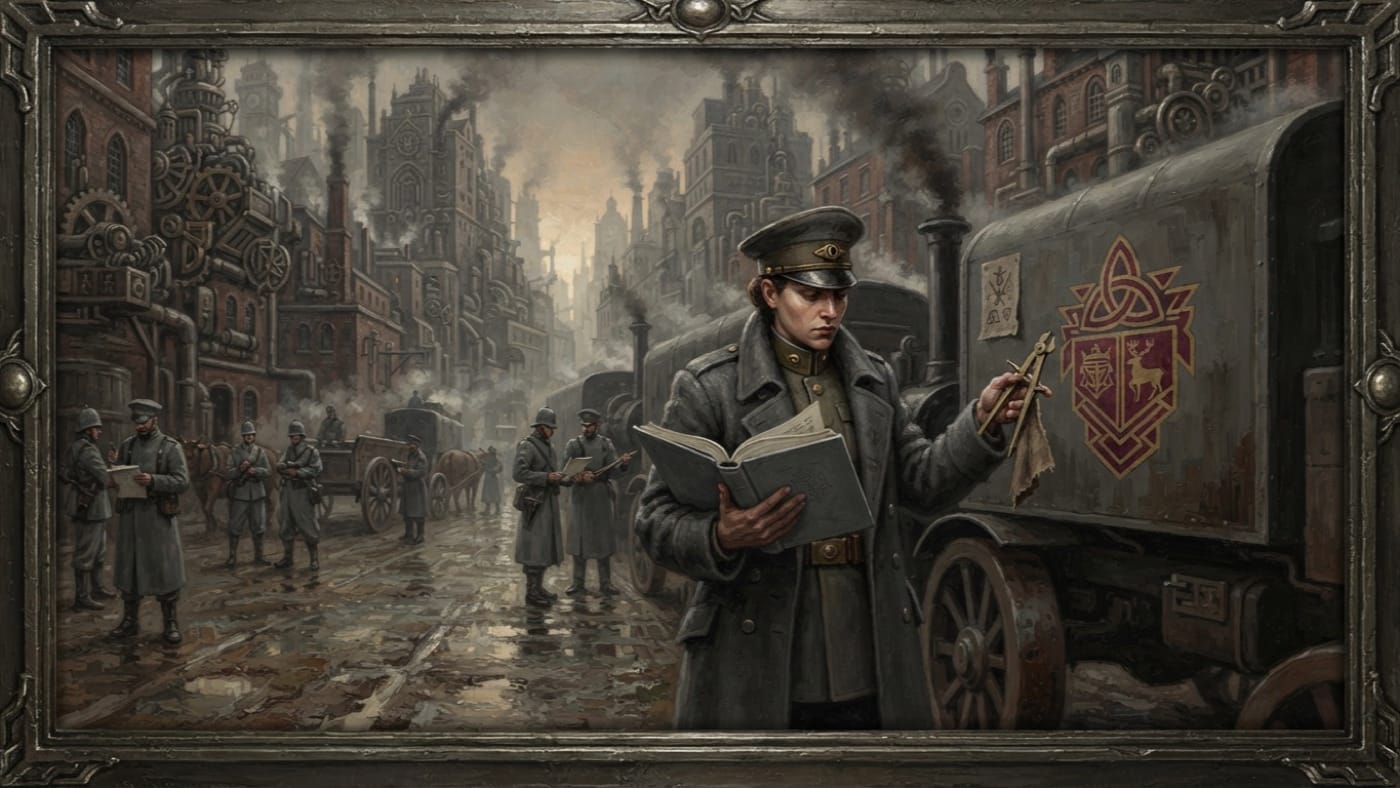
Chromarch Codex
The law arrives late and remains binding
The Chromarch Codex teaches Sigil Inspectors what loyalty may look like: permitted symbols, colours and geometries, corrected quarterly and binding before the district receives its copy.
Codex Ref. VIII.1.03-003
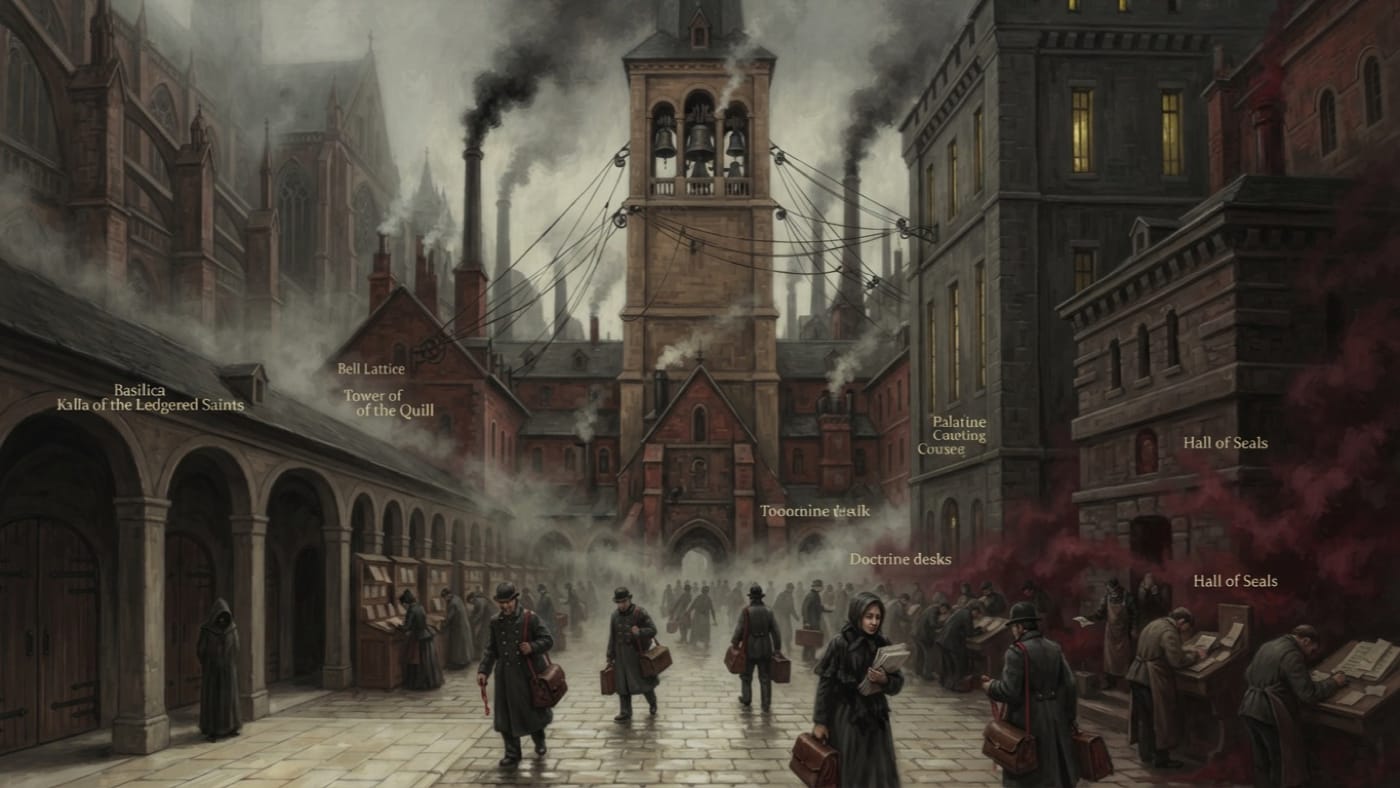
Cloister Precinct
Where every refusal stands within walking distance
Strasbourg's Cloister precinct gathers Doctrine desks, seals and tithes around one petitioner's walk. Every refusal is nearby; the northern arcade has no recorded custodian.
Codex Ref. II.1.04-008
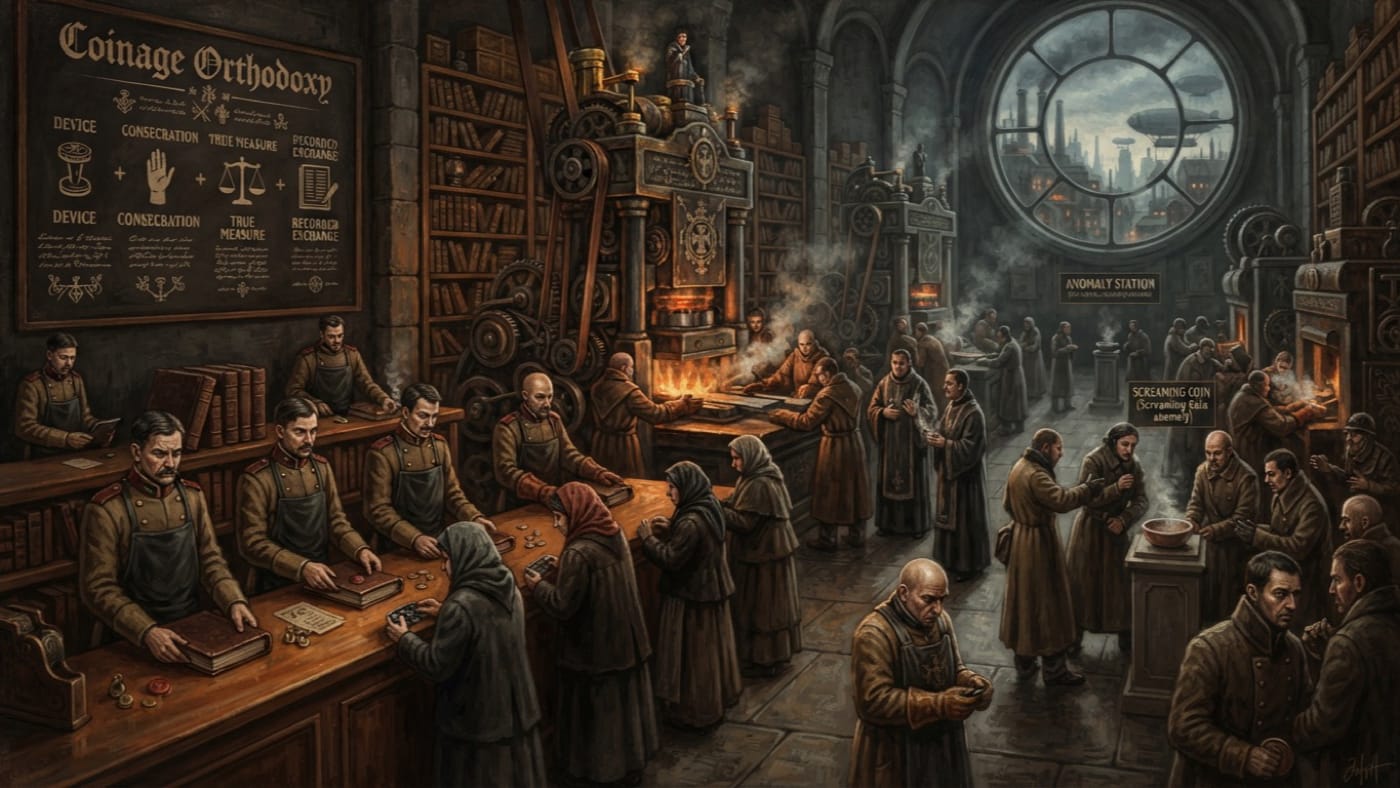
Coinage Orthodoxy
Iron is obedience you can count
The Synod recognises lawful money by device, consecration, true measure and recorded exchange. Counterfeit value is heresy; the Screaming Coin passes anyway.
Codex Ref. XIII.1.23-201

Cologne Forgery Incident
The documents survived their maker.
In A.S. 195, ninety-three Cologne documents bore perfect false counter-seals. A Seal-Walker found the error in the resin; the forger was executed and every document re-stamped. The marriage is valid. The couple has been informed.
Codex Ref. VII.8.10-195
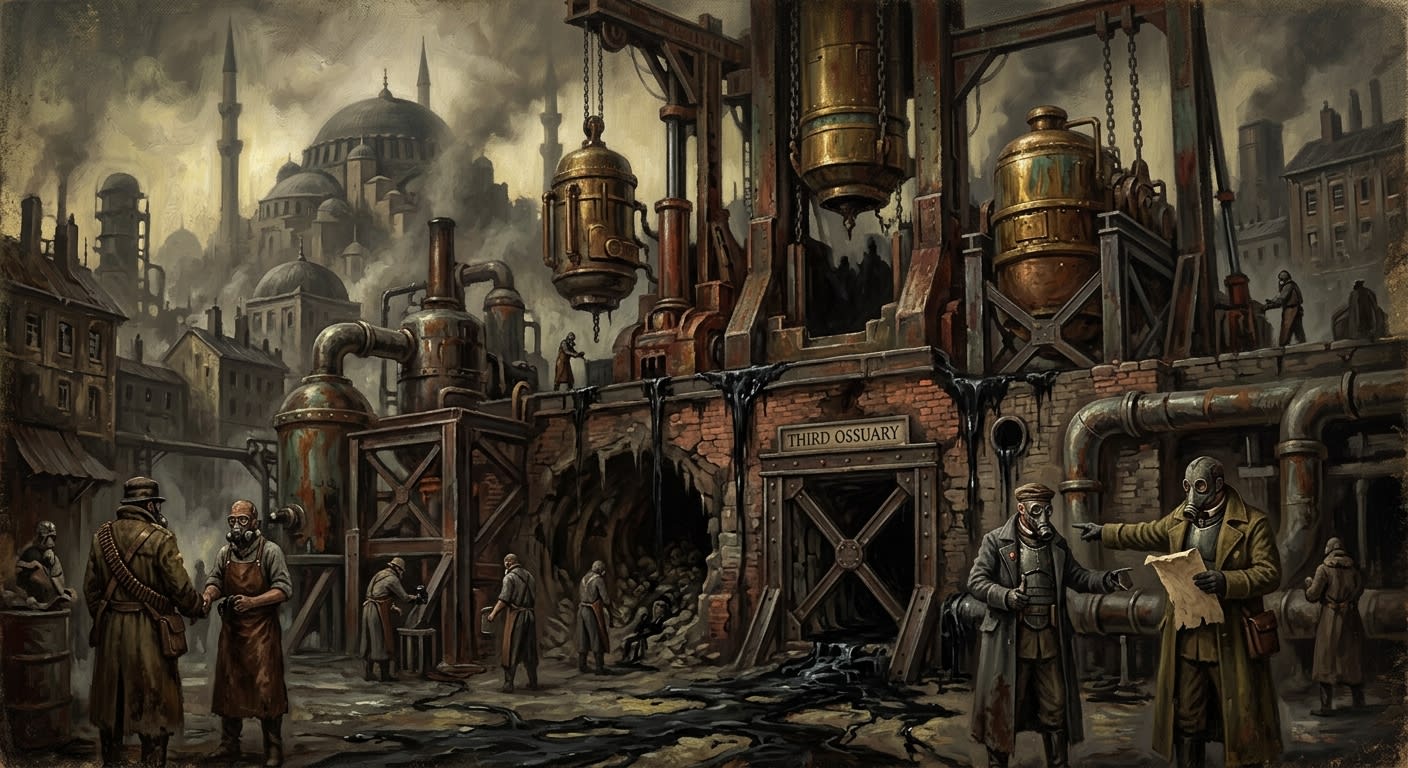
Compound 7
The gas that lifts cathedrals and smells like old confession
Compound 7 lifts the Vigil Arks, refuses flame, contracts toward relics, and leaks from the Third Ossuary beneath Constantinople with less generosity each season.
Codex Ref. XIII.1.21-003

Counter-Seal Crisis of A.S. 178
The papers were corrected. The executions were complete.
In A.S. 178, seventeen defective counter-seals left two years of Rhine Corridor paperwork unsigned. Order 178-A restored the documents; the three executions were already complete.
Codex Ref. VI.4.19-015
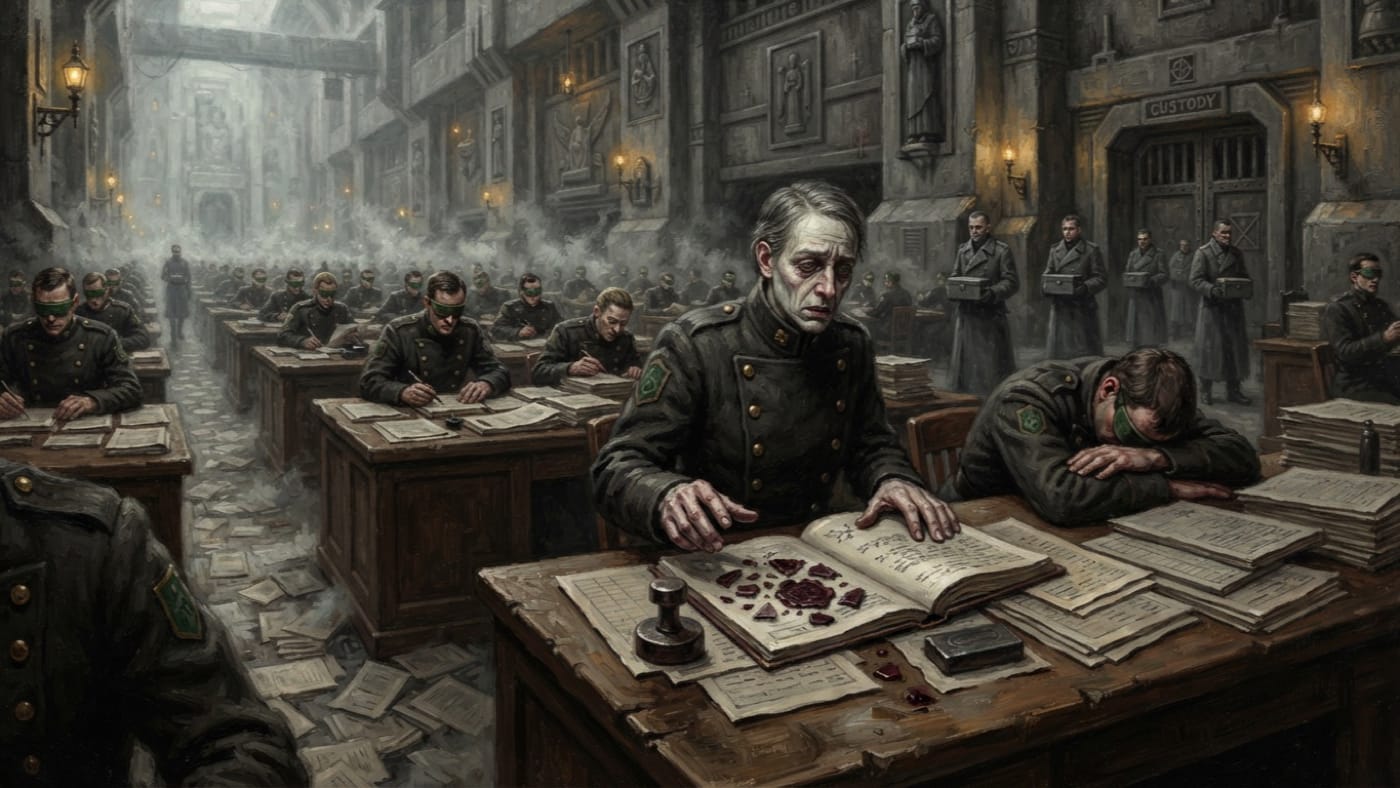
Counter-Seals
A clerk's certainty is the Court's preferred key
The Shadow Court's counter-seals reportedly revise a document's origin and the reader's assent. Under Directive 77-C, suspect wax is broken before reading and seal geometry must never be copied.
Codex Ref. XIII.1.25-002
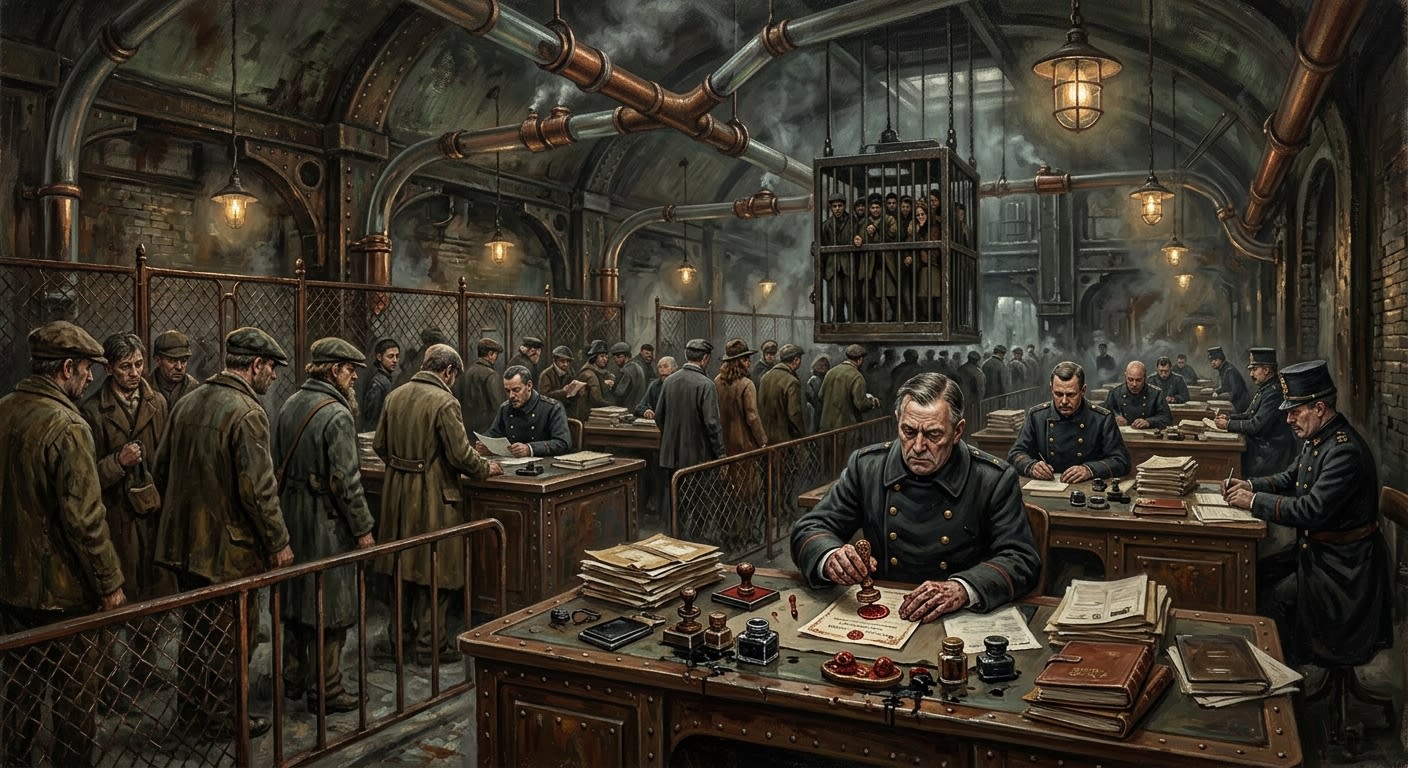
Crossing Bureau
No mark, no crossing; no crossing, no mercy worth recording
Bastion-Brest's Crossing Bureau is the local span authority between confession and passage, where Hett Ruis, wet paper, and warm wax decide who becomes lawful on the Brass Ribs.
Codex Ref. VIII.2.07-098

Demon-Glass Polisher
The craft the Bureau has shattered, blessed, interred in lime, and declined to stop purchasing
The profession the Bureau insists does not exist: found in every port from Marseille to the Harbor of Chains, supplying the Bureau of War with combat-grade optics, having developed a hierarchy, a patron saint, and three factions — all since the last Purity raid.
Codex Ref. XII.13.01-001

Demyan
The pilot who moved salvation before permission arrived
Demyan, condemned Strait Pilot of the inner Bosphorus, made a theology of speed, contraband, and false mercy before the customs pier made him useful.
Codex Ref. III.2.01-094
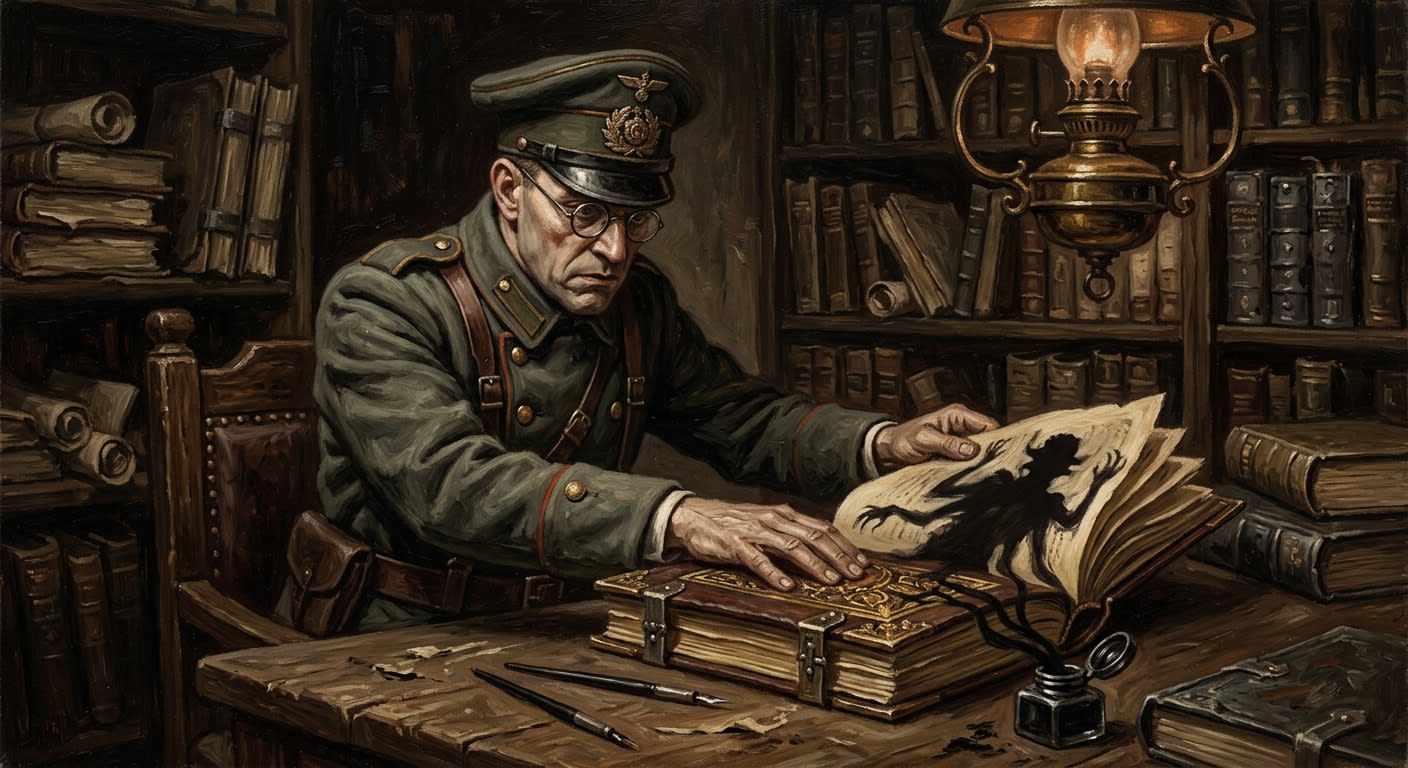
Directive 77-C
The holy art of leaving the enemy's sentence unfinished
Directive 77-C forbids the copying, completing, humming, tracing, staging, or correcting of the Shadow Court's Mock Liturgy. Curiosity here opens a mouth and calls it scholarship.
Codex Ref. XIII.1.77-174
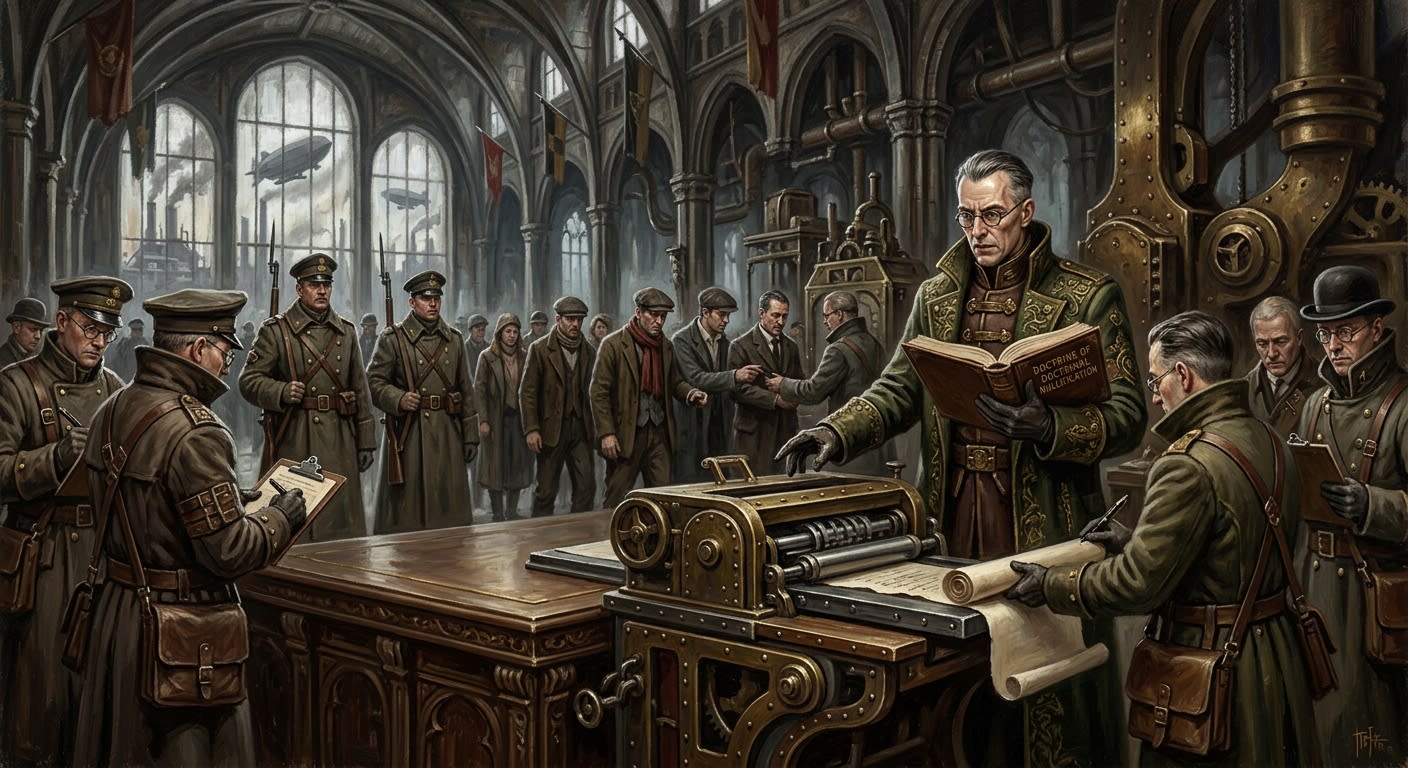
Doctrine of Doctrinal Nullification
How the Synod learned to prosecute the empty altar
Legal doctrine drafted for Arno Kett in A.S. 138, making absence of belief prosecutable as civic injury and giving Purity a rope for vacancy.
Codex Ref. XIII.1.82-001
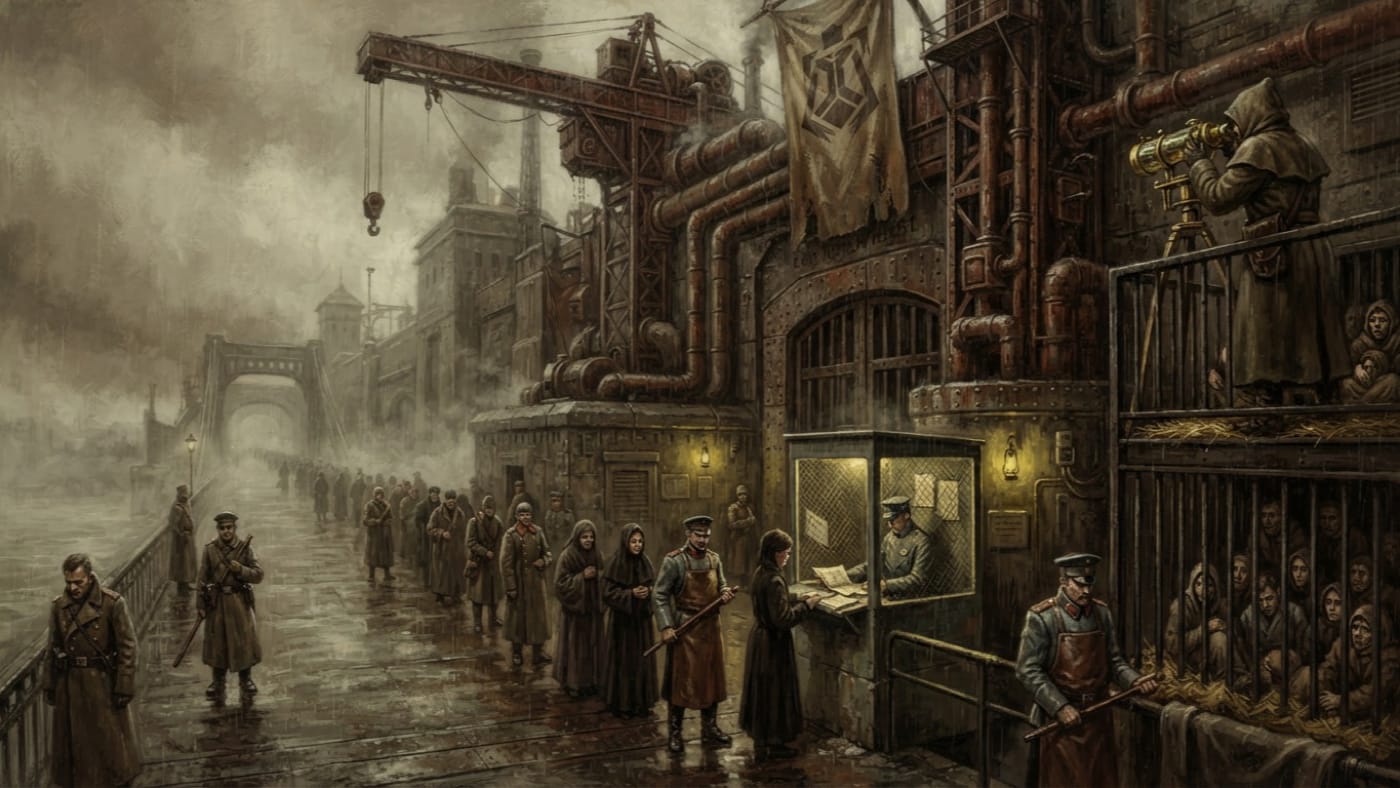
East Gatehouse (Brest)
Where a small mark decides who may move
Brest's eastern intake, where wet papers meet vinegar, confession receipts meet chained dies, and Hett Ruis's transit mark decides who may cross the Bug and who waits in the holding pens.
Codex Ref. II.4.07-003
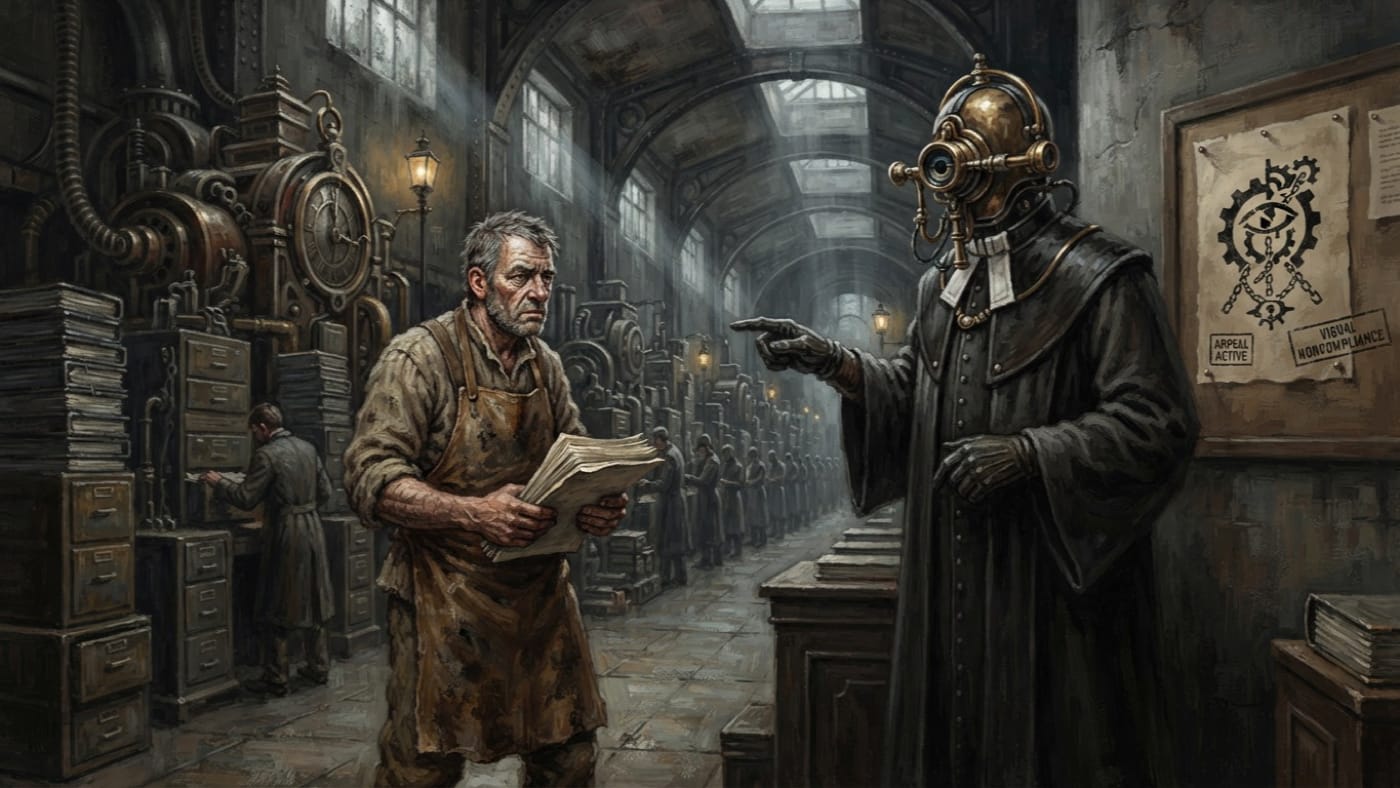
Ewald Fenn
The cooper whose doorbell became doctrine
Ewald Fenn, cooper of Mainz, lost a doorbell to Casselius and appealed a stamp he could not read. The Bureau calls this visual noncompliance; his appeal remains active.
Codex Ref. III.2.01-201
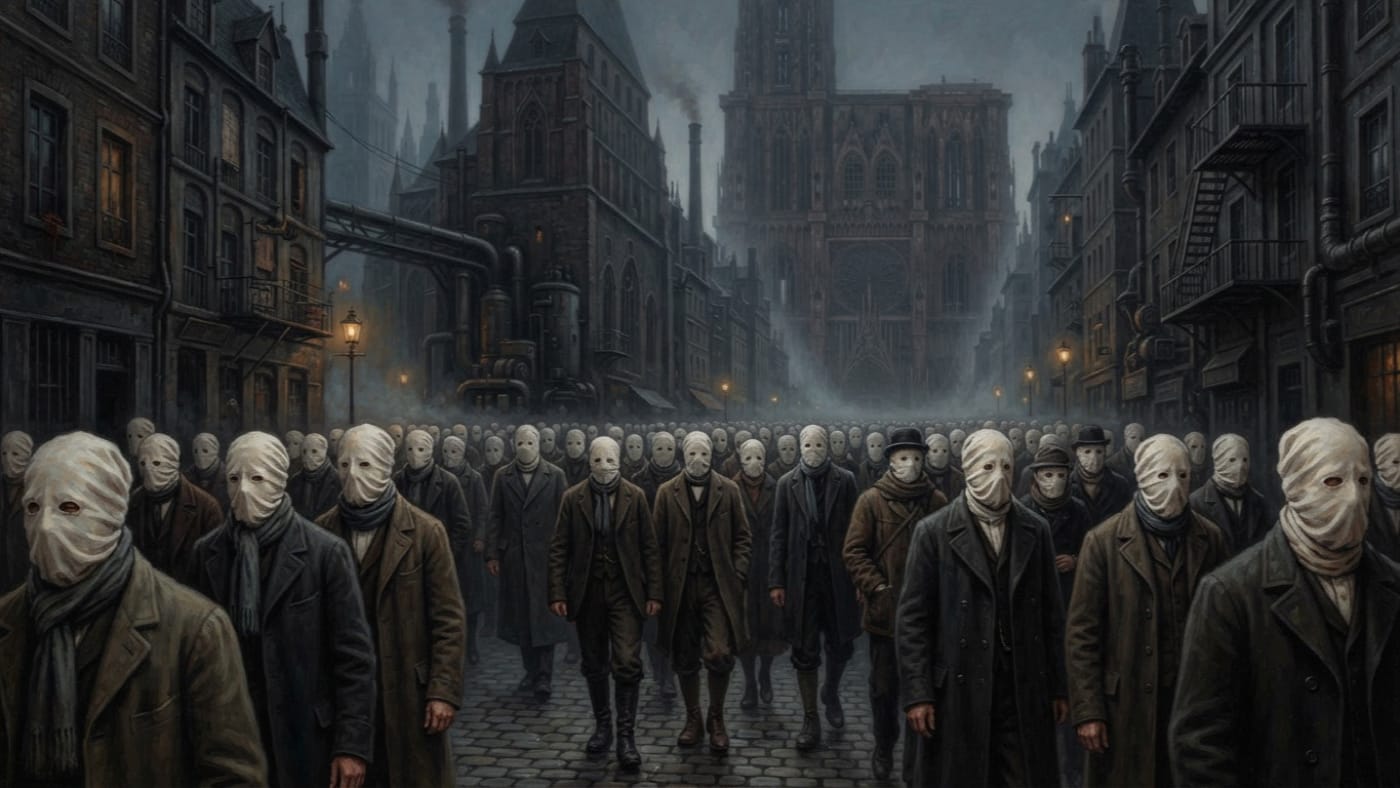
Feast of Buried Names
Anonymous before the Creator. Numbered in the Registry.
On the Feast of Buried Names, every citizen is expected to walk the parish in silence behind licensed white cloth. Doctrine calls it necessary; Purity calls it a liability. The Registry keeps the eye-holes on file.
Codex Ref. XIII.1.91-001
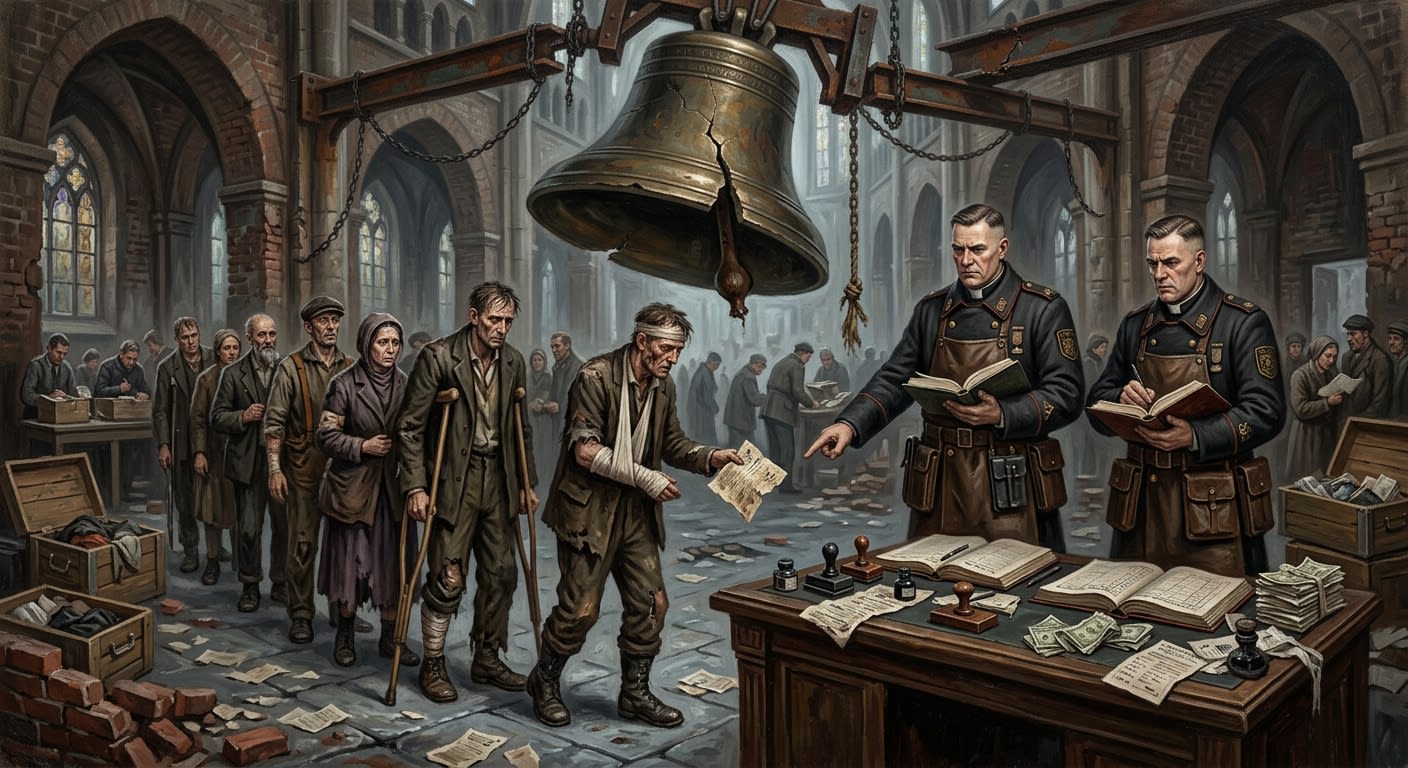
Feast of the Cracked Bell
The damaged bell still tolls, therefore the damaged citizen still owes
The Feast of the Cracked Bell teaches the Synod's favourite mercy: broken things may still serve, so damaged citizens may still be counted, tolled, and taxed.
Codex Ref. XIII.1.89-201
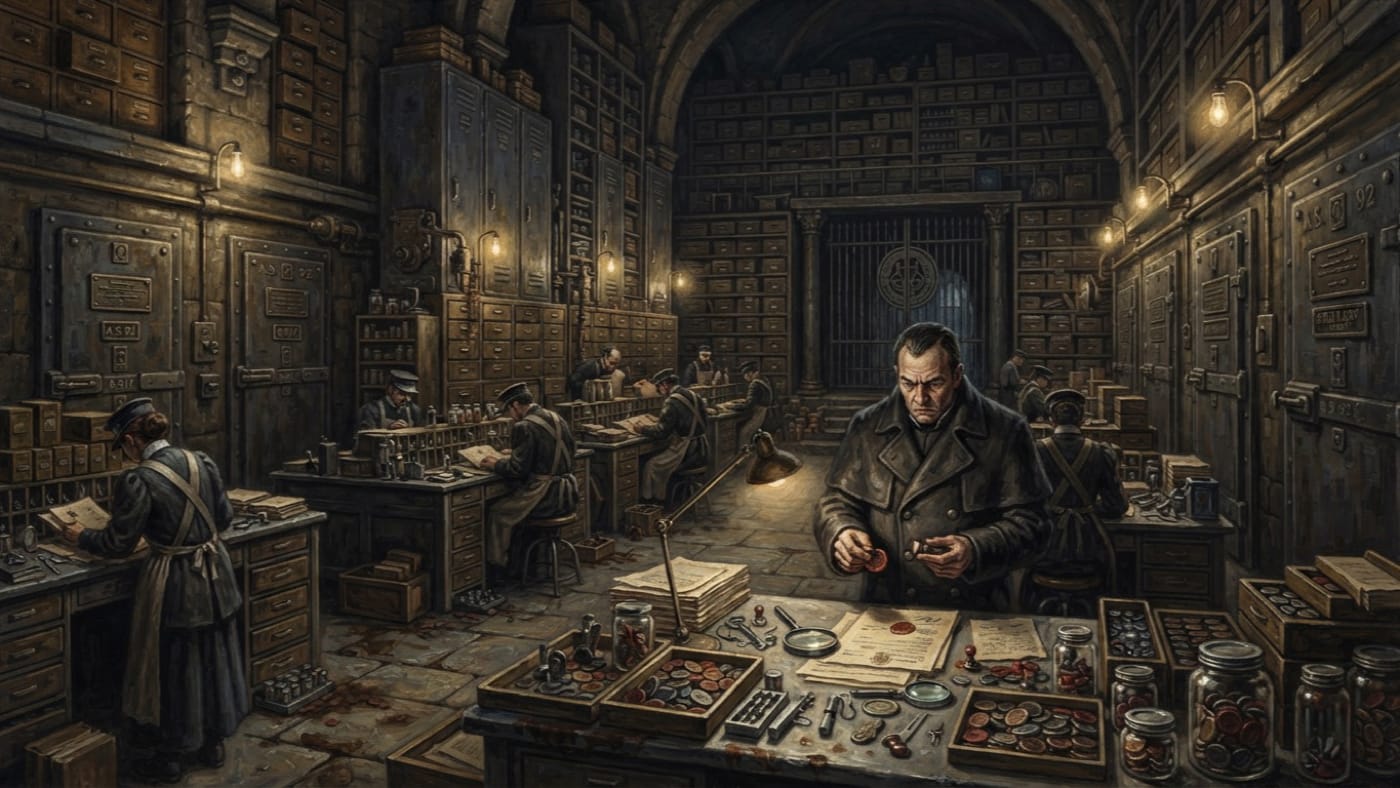
Forgery Archive
Every false impression needs a genuine stamp.
The Forgery Archive keeps 8,917 confiscated counterfeits beneath Strasbourg Cathedral, each certified as false. The Bureau of Masks and Seals publishes the count; the collection remains sealed.
Codex Ref. II.2.06-007

Founding Instruments
Five verbs gave one Bureau the brass.
The Founding Instruments of A.S. 92 grant Masks and Seals control of official authentication. Article XVII is cited exactly; the full text is absent from this file. The sub-clause still makes paper binding.
Codex Ref. XIII.1.17-092
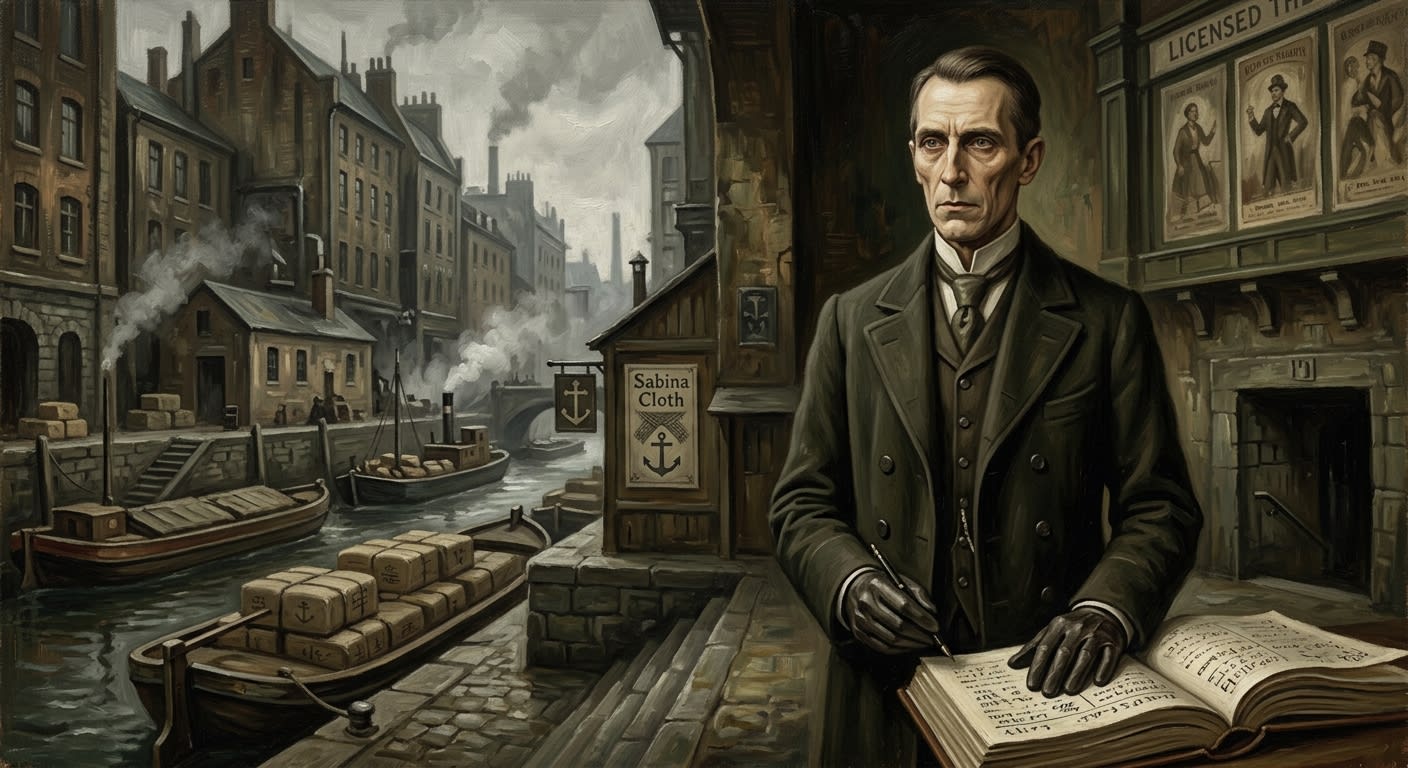
Ghent
The canal city where water keeps copies and loyalty learns to smuggle
Ghent is the Synod's wet ledger in Flanders: canal trade, Records quays, Sabina cloth, licensed theatres, Black Ledger cells, Wormhost scars, and obedience with annotations.
Codex Ref. II.1.05-201
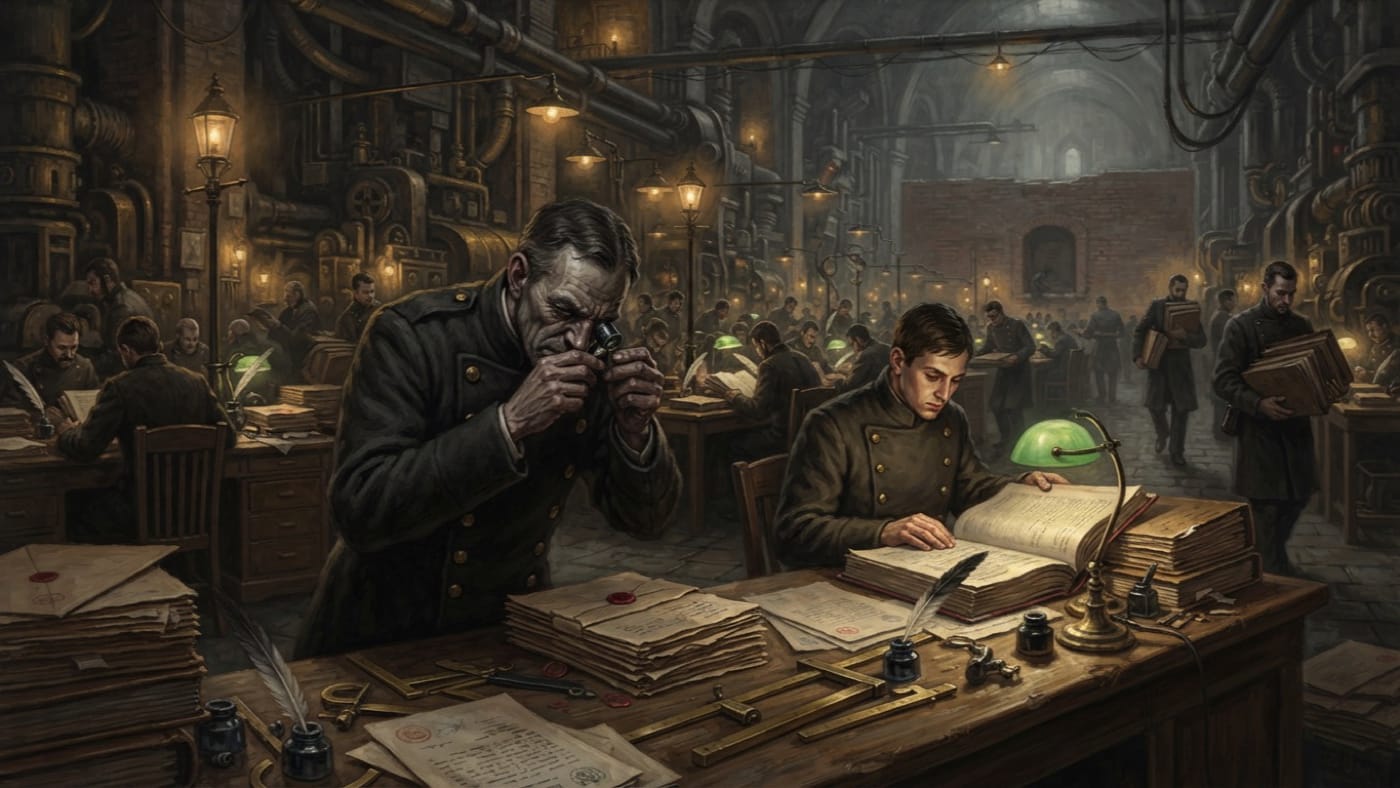
Great Audit Purge
Forty-seven clearances voided; one maker unresolved
In A.S. 188, one flawed counterfeit die cost Strasbourg forty-seven convoy clearances, two hundred and fourteen livelihoods, and eleven immurements. The Bureau closed the batch. The forger remained unfound.
Codex Ref. VII.8.12-001
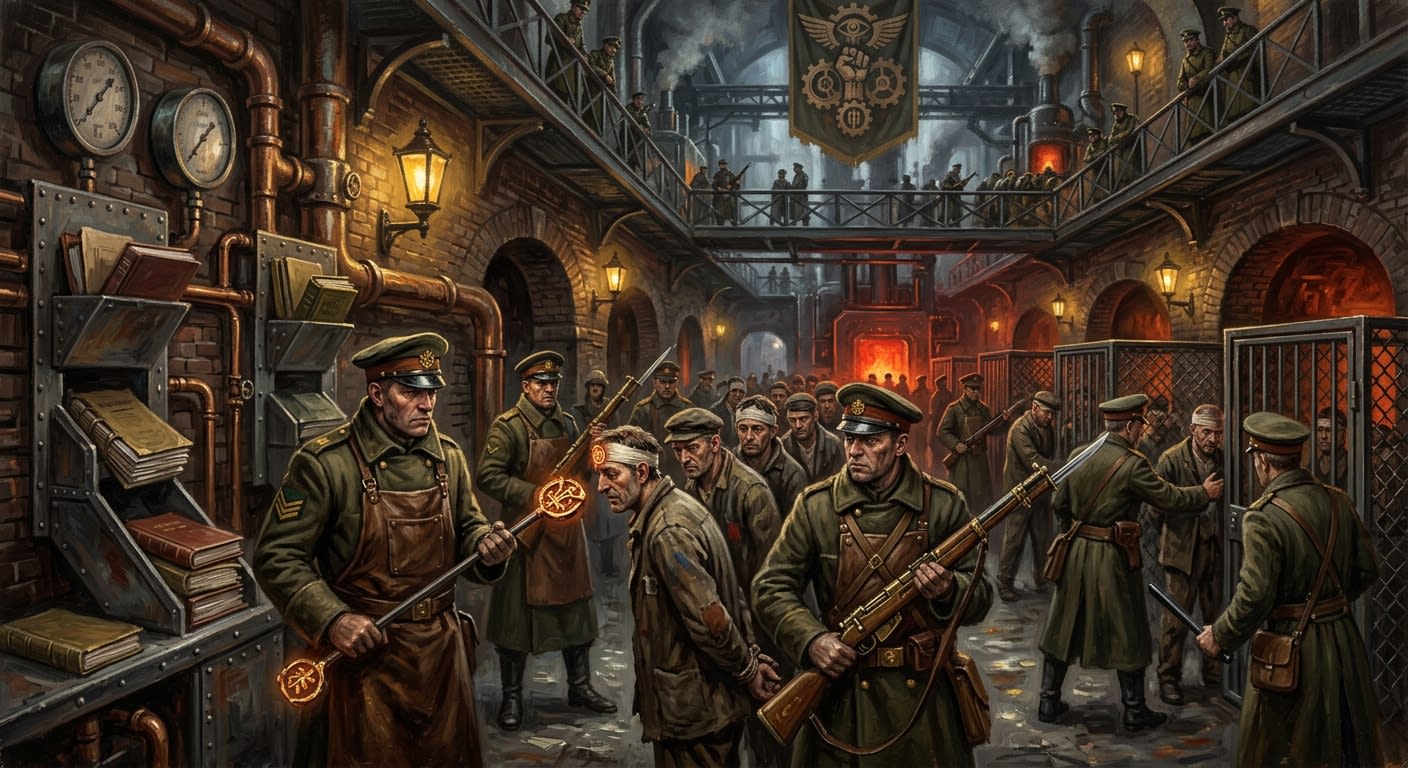
Great Inquest of Names A.S. 173
The census with hooks, and the heresy it educated
A.S. 173 Purity operation that broke forty per cent of Rhine corridor Silent Godless cells, destroyed 312 organisers, and taught the survivors how to survive better.
Codex Ref. VII.8.10-173
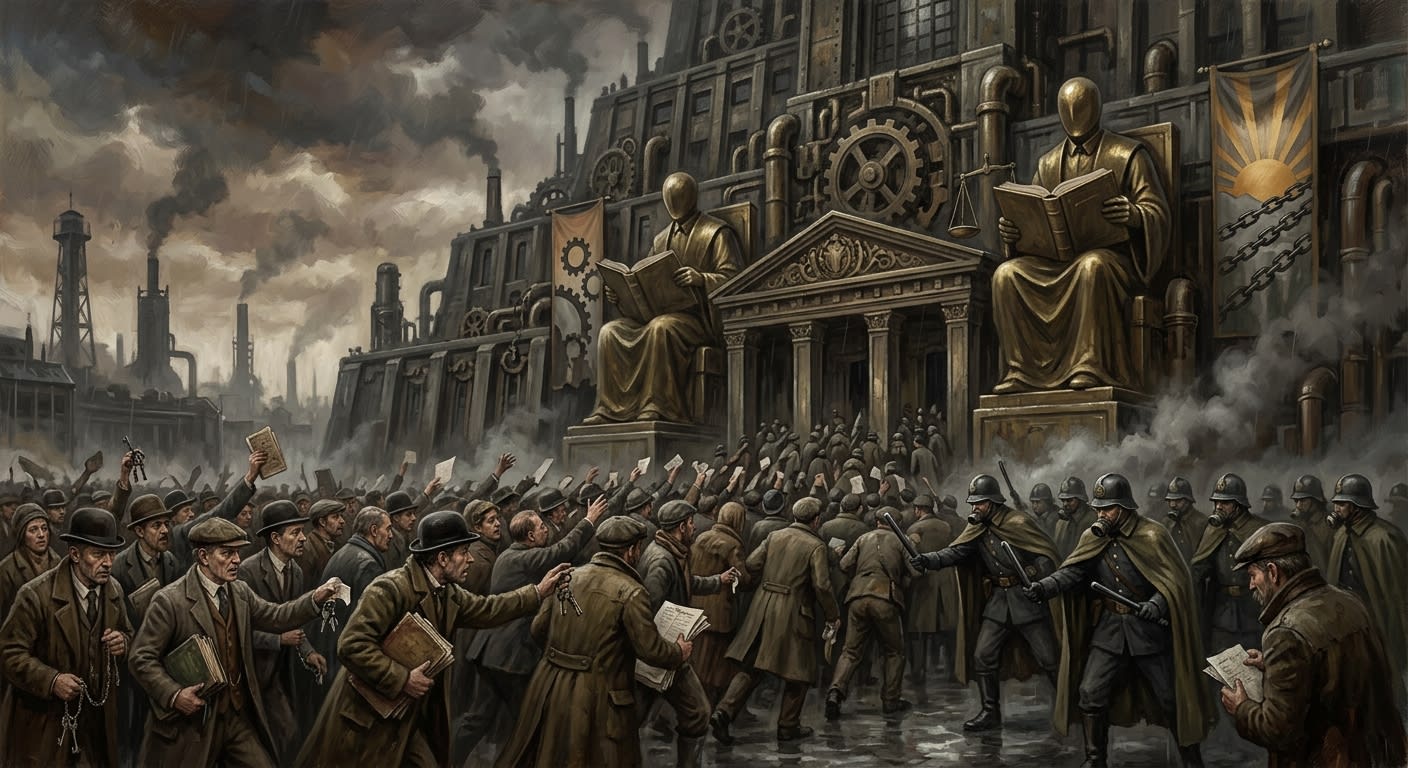
Great Maturity
The final due date Hell files through inherited keys
The Great Maturity is Velmora's deferred eschatology of debt: the hour when every key, favour, pledge, and inherited obligation comes due for the Inheritors.
Codex Ref. XIII.1.95-201
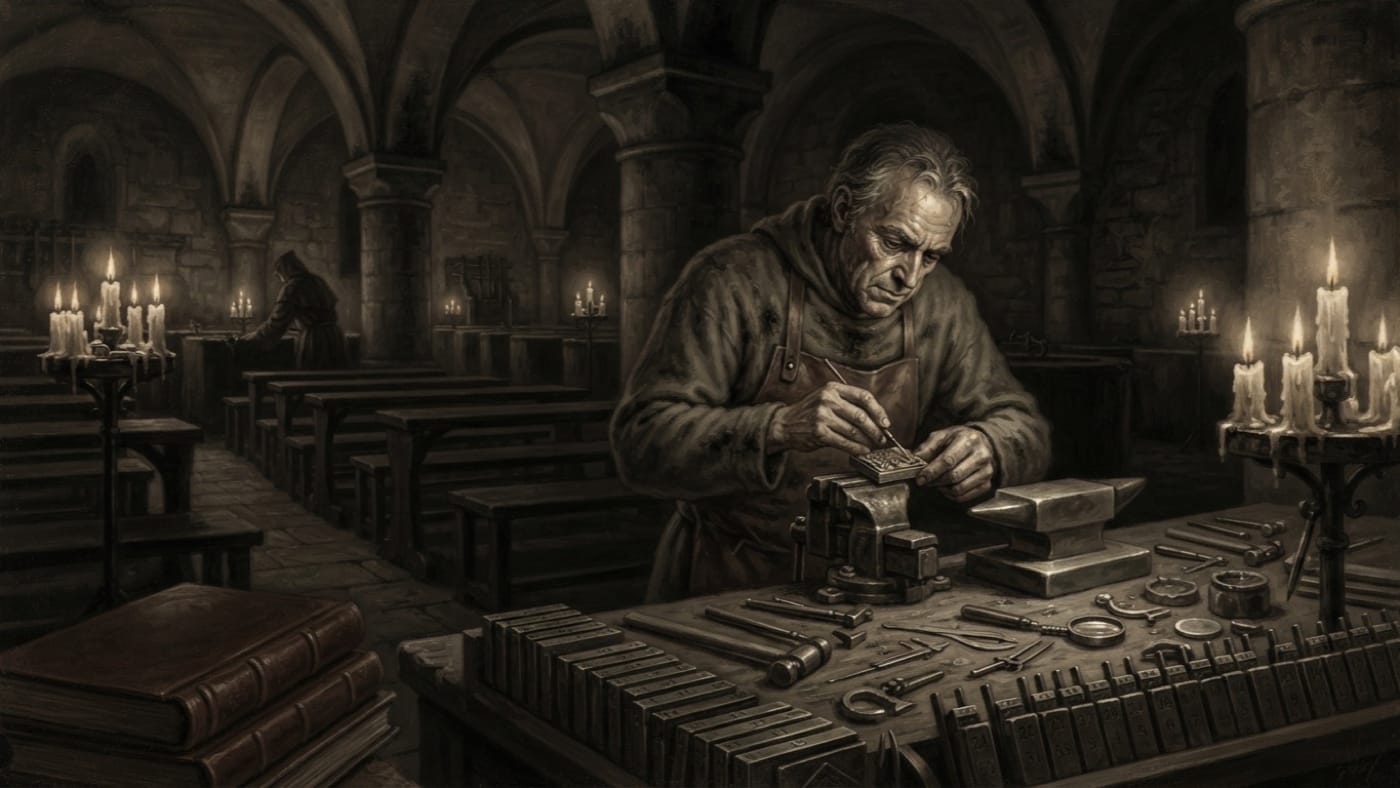
Guild of the Anvil and Stylet
The impression serves the Synod. The hand serves the impression.
Chartered in A.S. 105, the Guild of the Anvil and Stylet cuts the metal that makes Synodal paper binding. Its cutters swear to the impression; the Bureau of Masks and Seals files the theological objections.
Codex Ref. VI.4.19-015
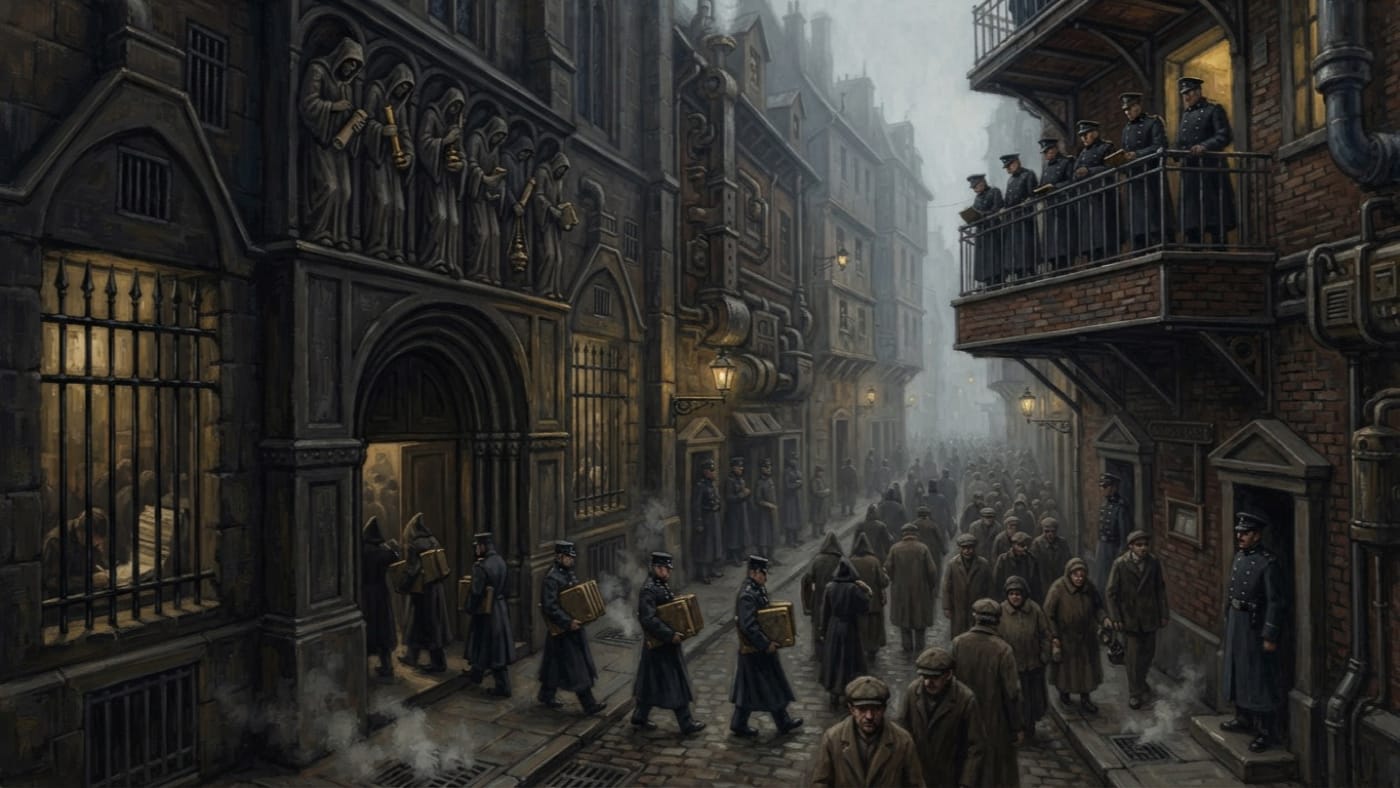
Hall of Confessions
Where the Synod speaks and the grille remembers
At the central bend of Strasbourg's Sanctum Mile, the Synod speaks beneath carved saints while clerks behind grilles record its words. The crowd outside hears bells.
Codex Ref. II.2.02-003
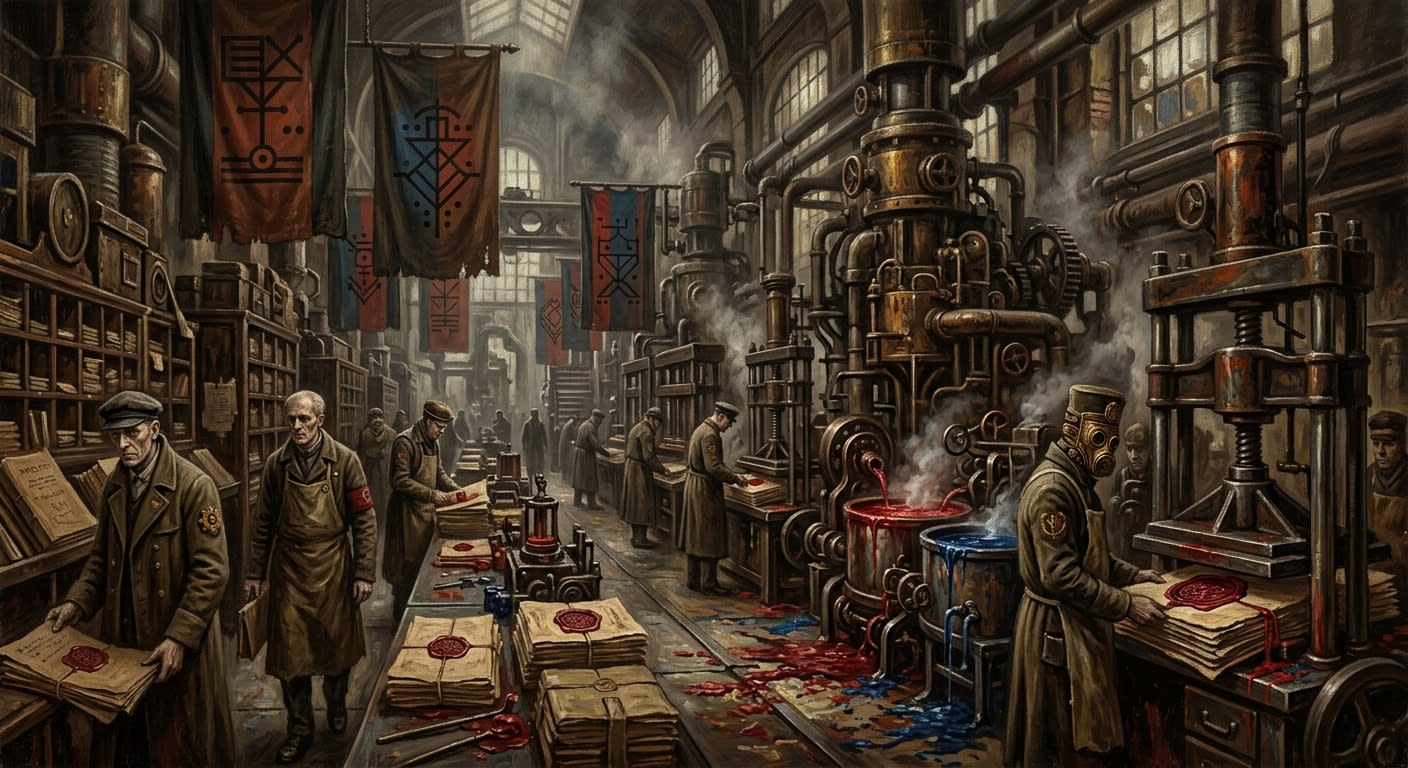
Hall of Seals
Where wax learns to rule and colour awaits sentence
The Hall of Seals is Strasbourg's low clean engine of visual law, where Heraldry and Masks and Seals ration colour, custody dies, and make wax sovereign.
Codex Ref. II.1.04-002
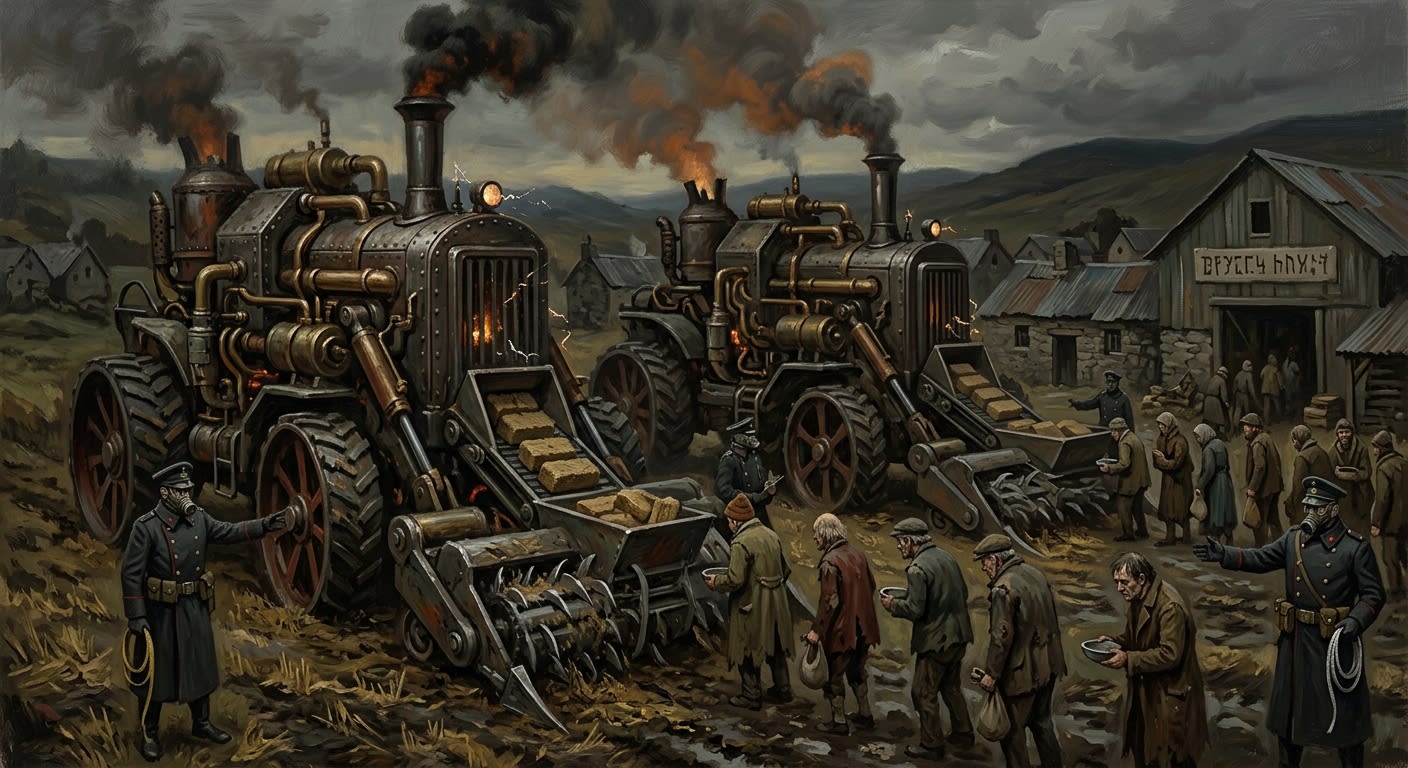
Harvest Engines
If it feeds without filing, burn it before gratitude begins
Harvest Engines are Kargath’s portable abundance: agricultural machines that make food, teach gratitude, and leave whole villages hungry beyond repair.
Codex Ref. XIII.1.26-001

Hett Ruis
The small permission is a kingdom when every bridge has a gate
Hett Ruis, Seal-Registrar of Bastion-Brest's Crossing Bureau, survives the Vale breach by owning stamps, delays, and the rot between law and movement.
Codex Ref. III.2.01-076
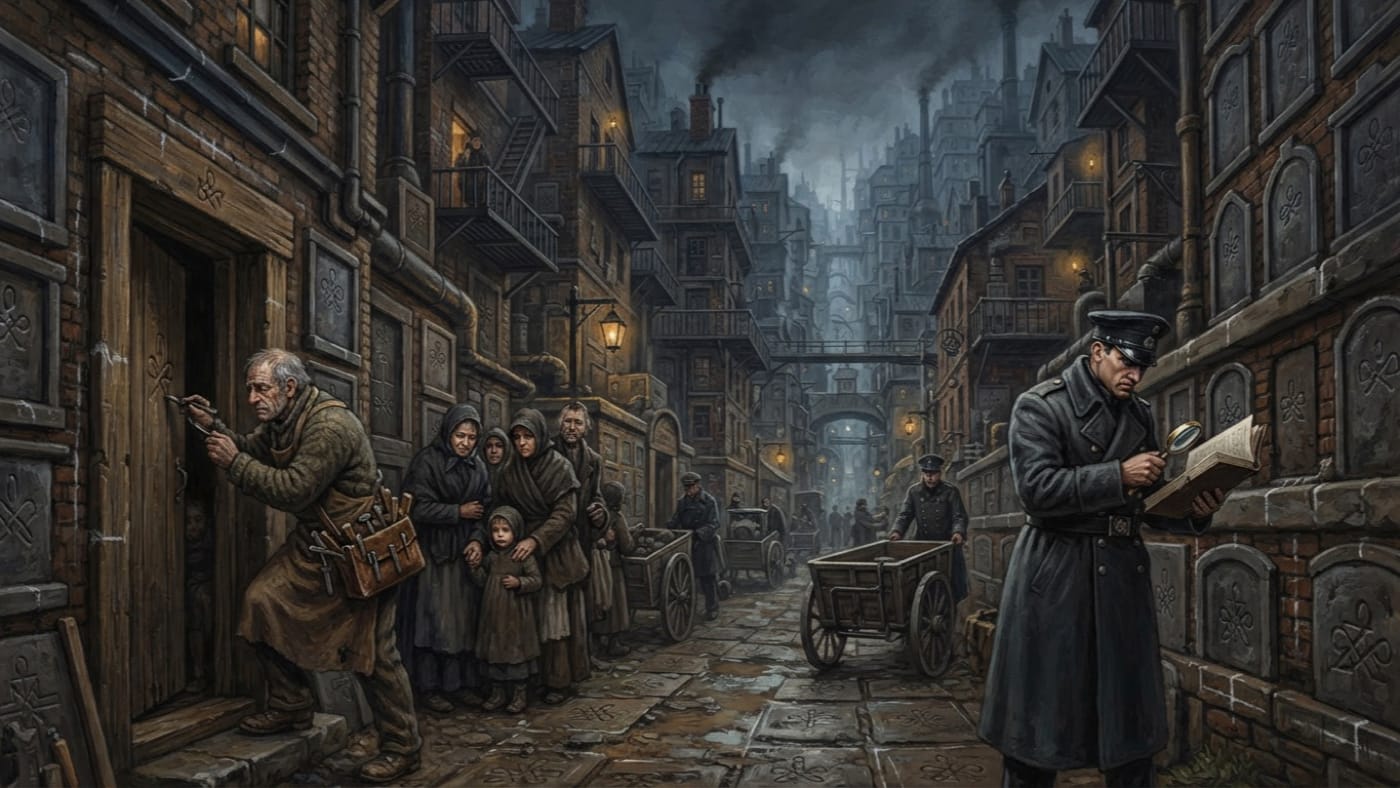
Housing and Burial Codes
A roof and a grave remain yours while the marks agree
The Housing and Burial Codes bind roofs and graves to the same ledger. A valid Triune Knot makes a household legible; a failed mark makes its stone available for confiscation.
Codex Ref. XIII.1.07-014

Inspector Marn
The inspector whose hand became a surface
Inspector Marn survives in Report 44-K: his blade began copying a sign onto his palm. The Bureau took the wall and filed the household as evidence; his subsequent condition remains unentered.
Codex Ref. III.2.01-044
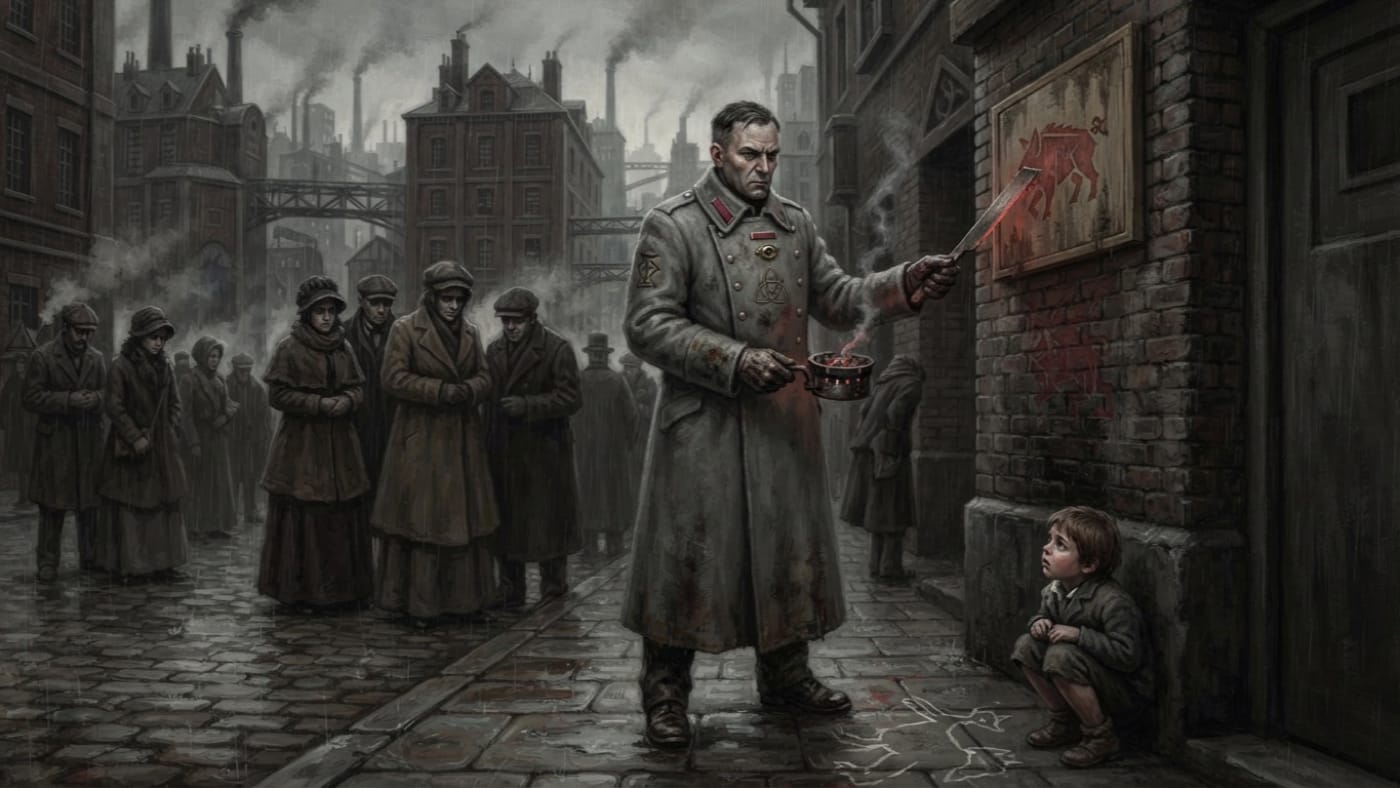
Inspectorate
A decree is ink, and ink needs legs
The Inspectorate of Visual Compliance carries Heraldry's judgments into the street. Its licensed examiners measure a crest, issue a citation, and heat the blade; even a child's chalk animal must answer to the register.
Codex Ref. VIII.1.03-002
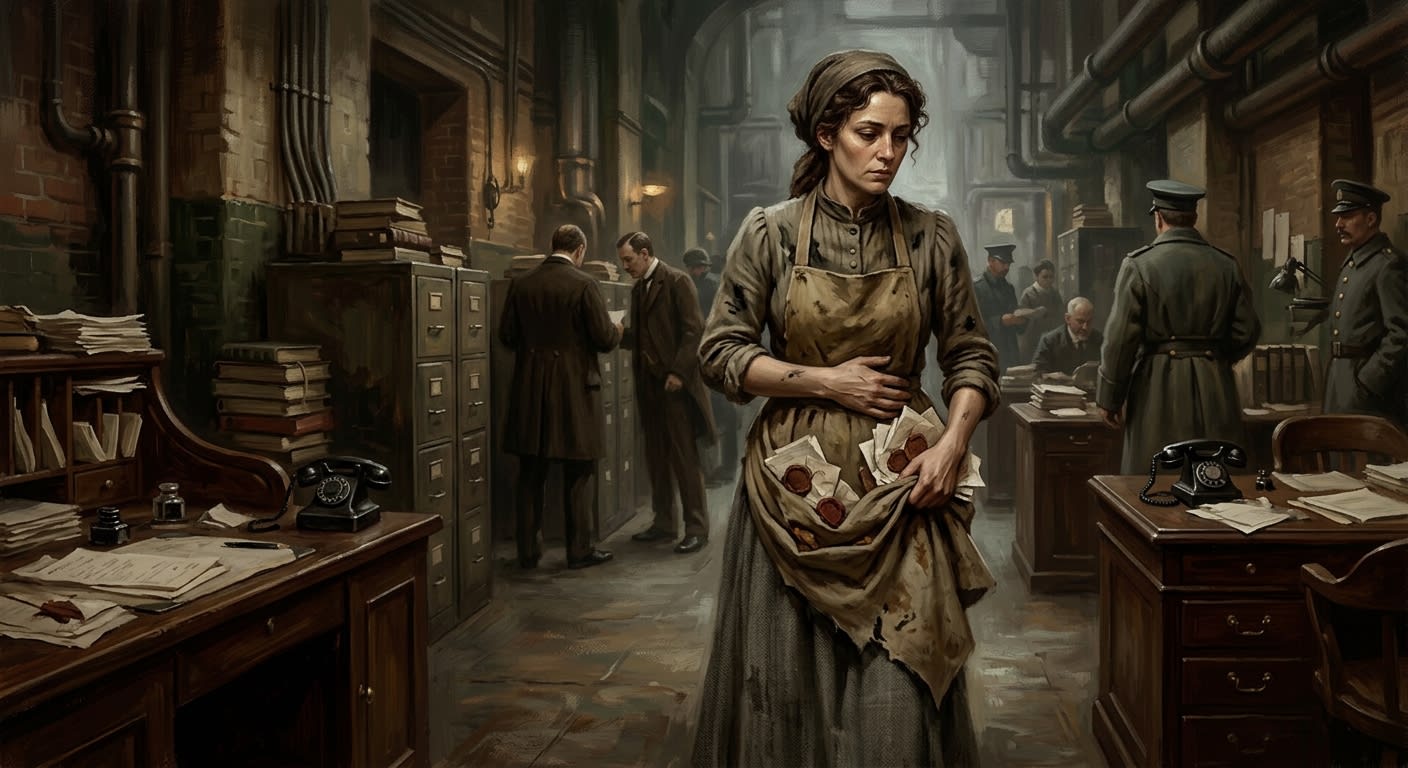
Irena Vale
The apron taught the stamp room humility
Warsaw-born stamp-room clerk Irena Vale carried wax impressions out of Bastion-Brest in an apron, turning blank papers into usable treason.
Codex Ref. III.2.01-074

Judge Anselm Varr
A Judge's name, a forged impression, and a prisoner still held by ink
Judge of Route 11-North whose authority was counterfeited in the A.S. 158 Cologne transfer of Petter of Lorch. The prisoner vanished; the ledger kept him.
Codex Ref. III.2.01-1515
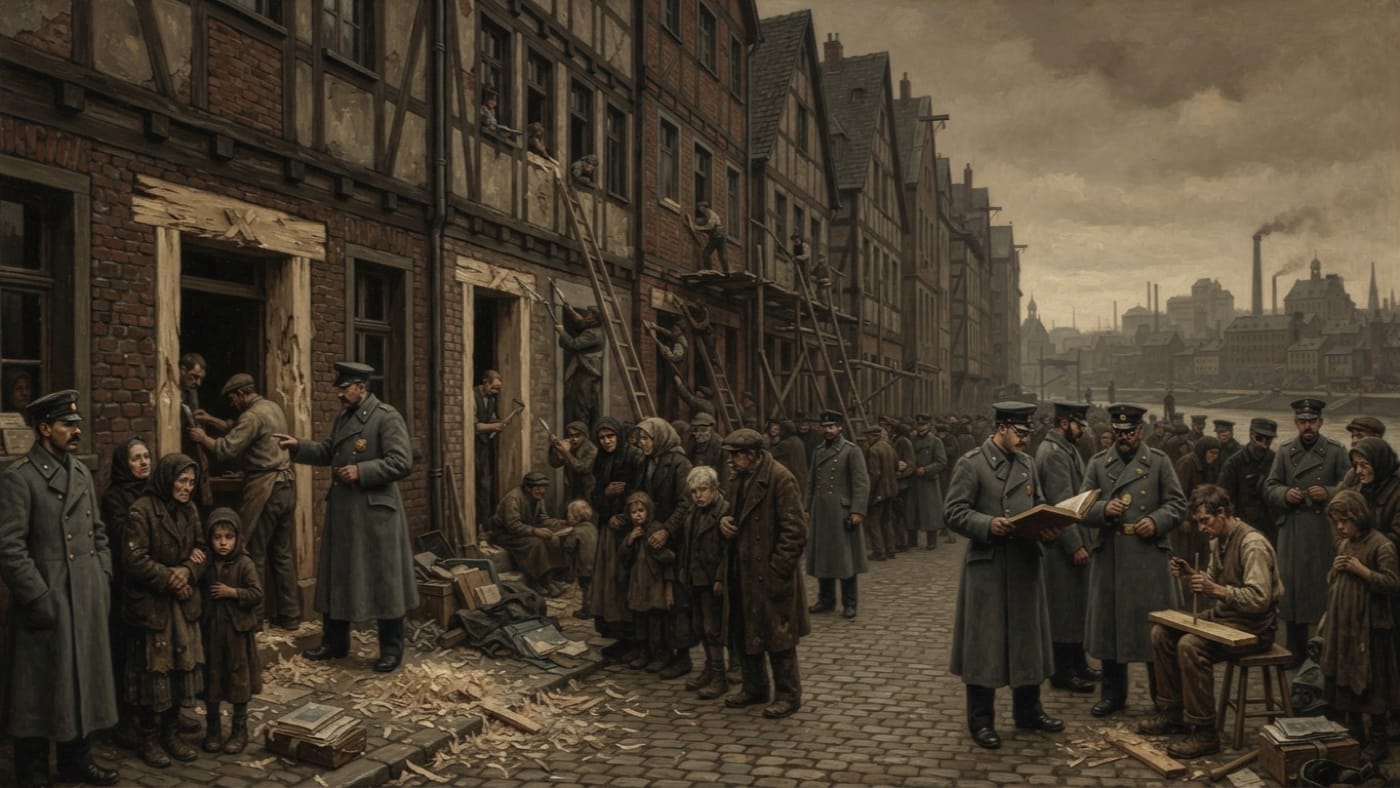
Lintel Pogroms of Cologne
Fourteen perfect Knots, three sealed niches, and a Registry to count the tools
In A.S. 112, fourteen perfect false Knots cost Cologne's river quarter its lawful thresholds, three carvers their air, and Heraldry the trouble of founding the Knotwright Registry.
Codex Ref. VII.8.10-112
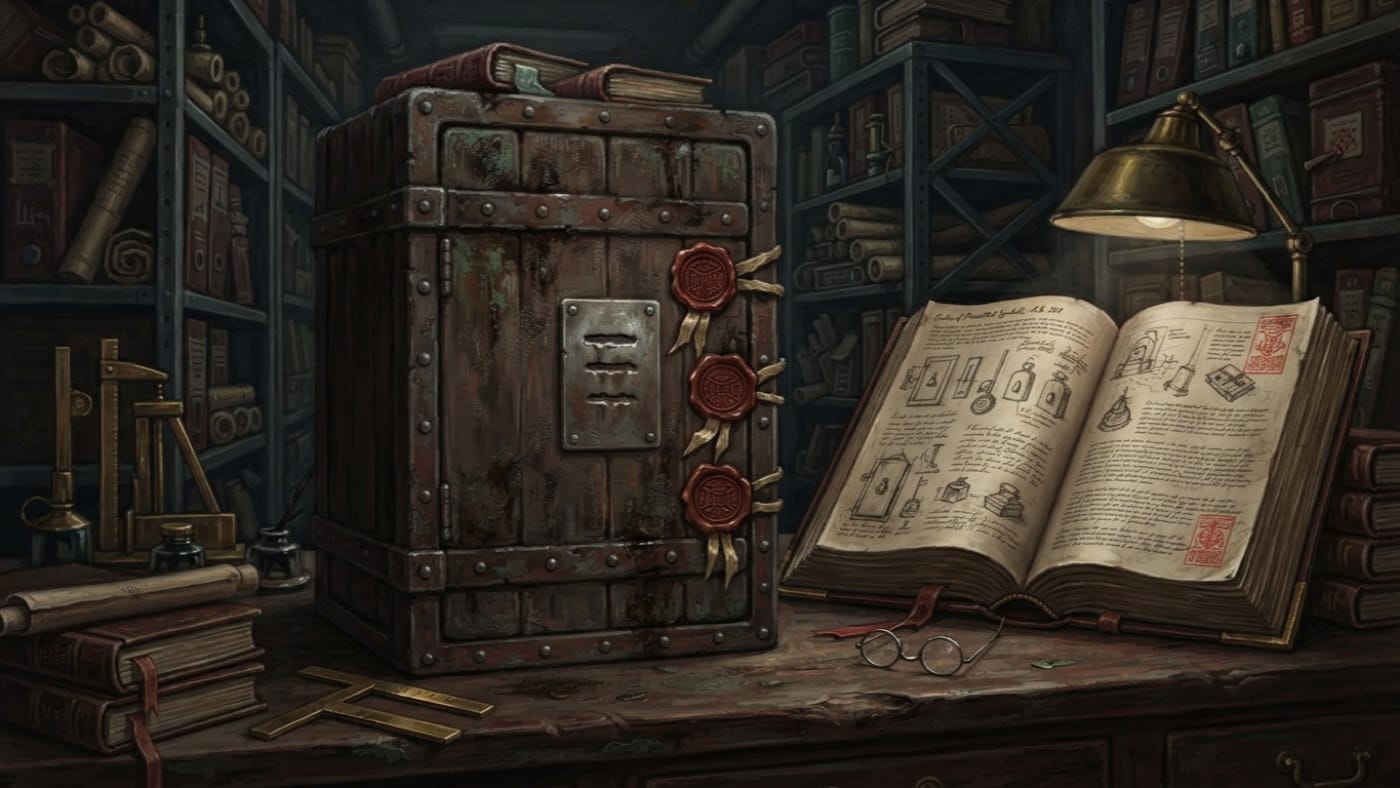
Mainz chime-mark affair
Three marks, six pages, and an appeal still waiting
At the A.S. 201 survey, Fenn's doorbell remains under three seals and his appeal stays active. Casselius made three descending marks a case; the Codex made one paragraph six pages.
Codex Ref. VII.8.10-201

Manifest Litigant
In which the Bureau confirms that identity is paper, paper can be disputed, and dispute, correctly licensed, is a revenue stream.
The licensed enforcers of documentary reality at the port courts — the profession that cannot save the grain but can prove, conclusively, why it was permitted to rot.
Codex Ref. XII.26.01-001
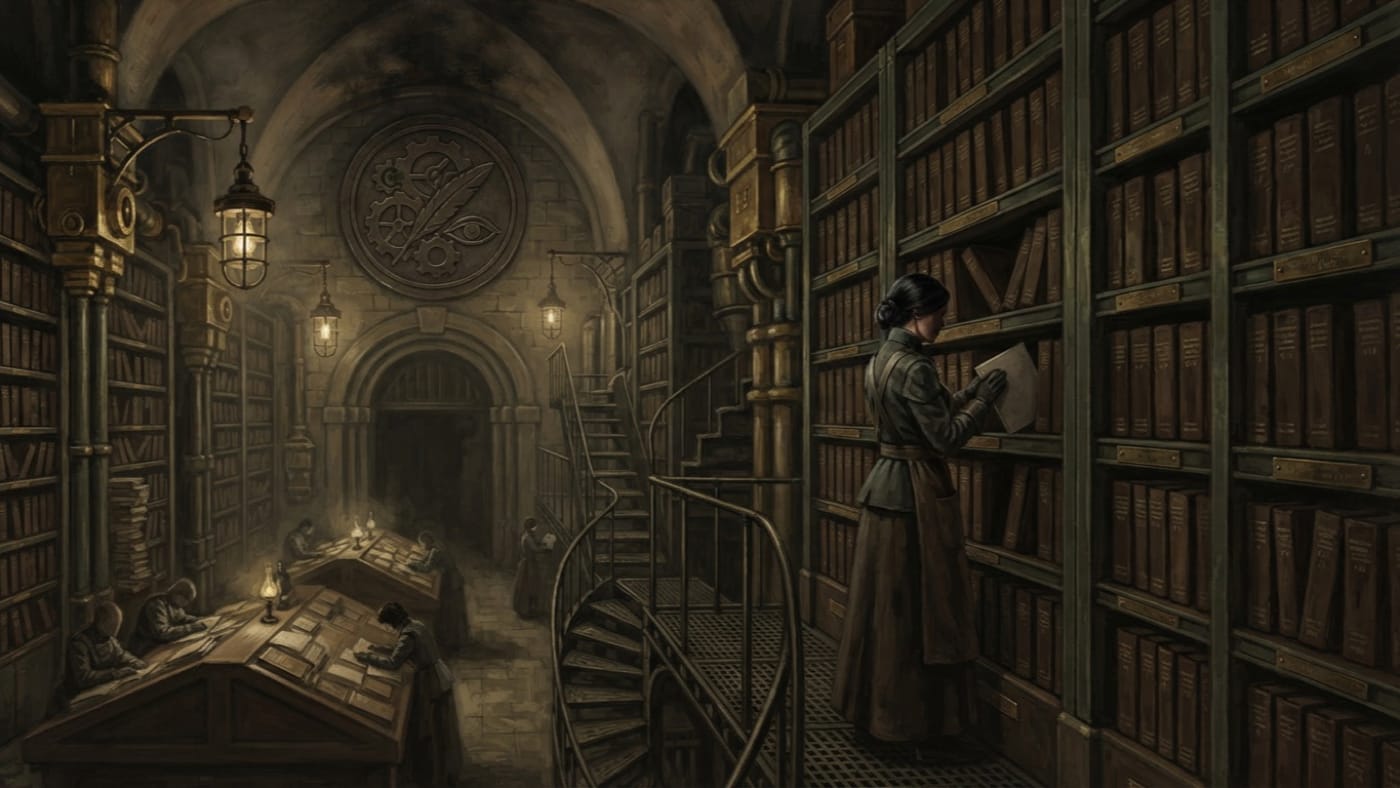
Mara Vell
Seven hundred pages in search of a woman
Mara Vell, the Blank Notary, is the seal-forgers' patron and the subject of seven hundred pages. I can attest to the file. The woman remains unresolved.
Codex Ref. II.1.41-001
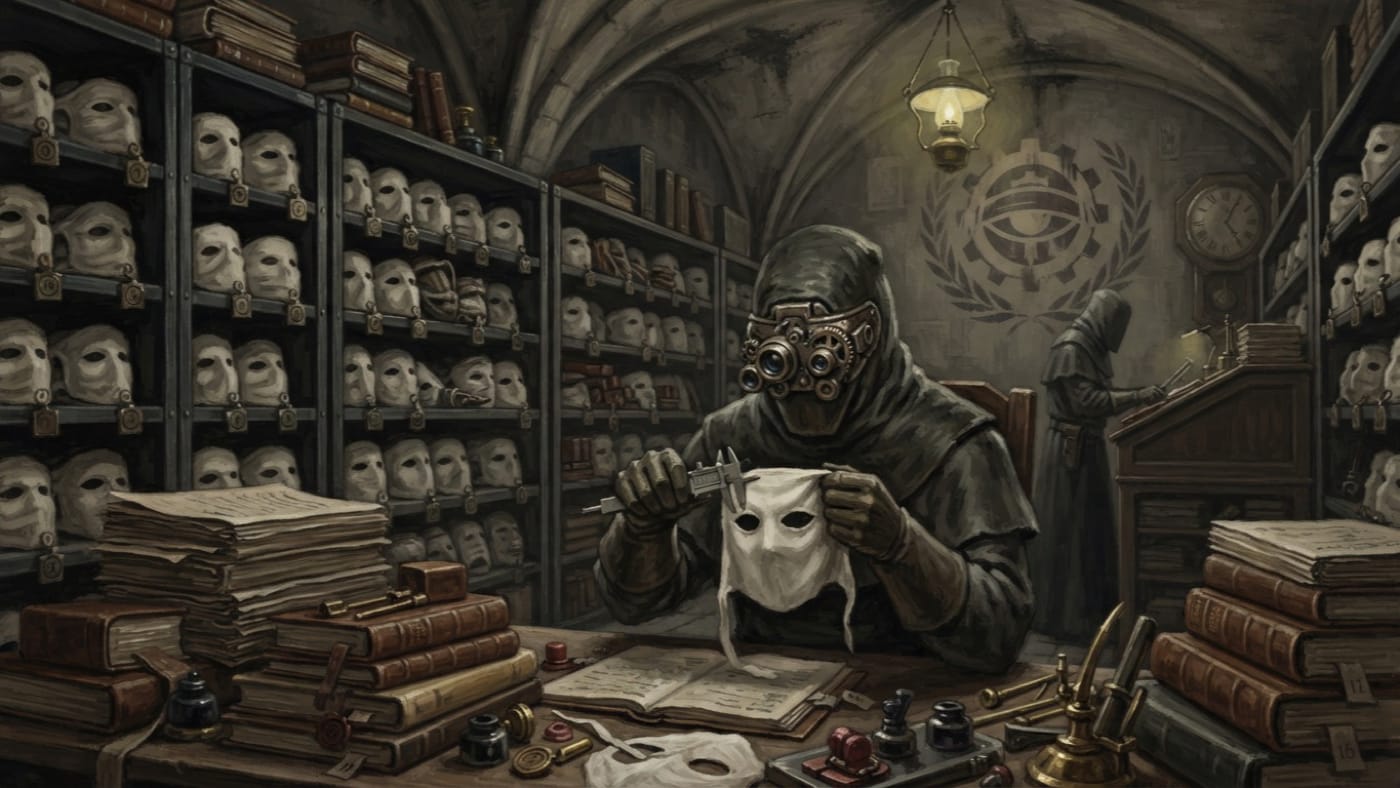
Mask License
The face may vanish. The number must remain.
The Mask License permits the Synod's faithful to conceal their faces on approved occasions, for approved durations, through eye-holes of approved width. Even anonymity must be registered.
Codex Ref. XIII.1.19-002
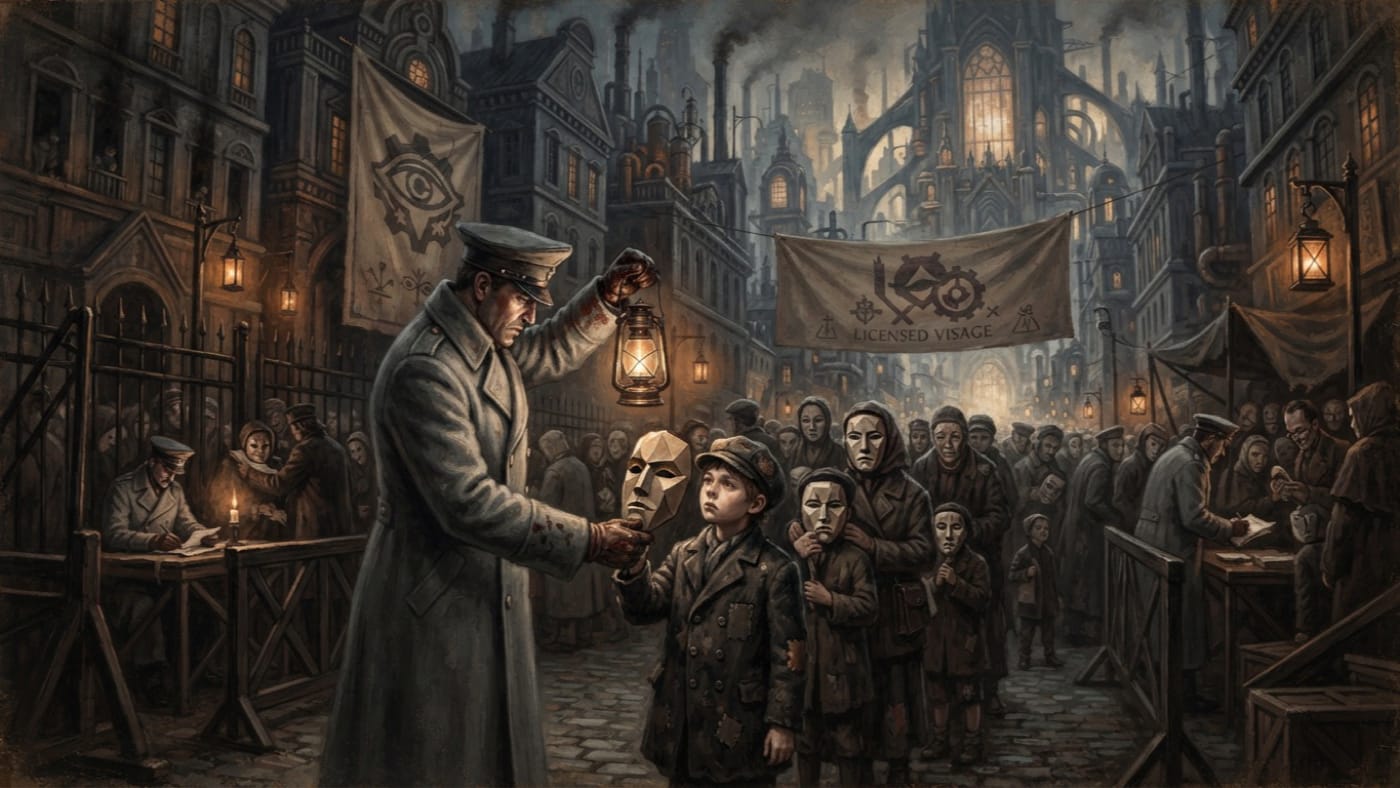
Night of Masks
Even delight must show its wax
On the eve of the Feast of the Sealed Door, the Synod licenses its carnival faces. Heraldry approves the design; Inspectors demand the wax. Even a child must learn to show permission.
Codex Ref. XIII.1.89-1919
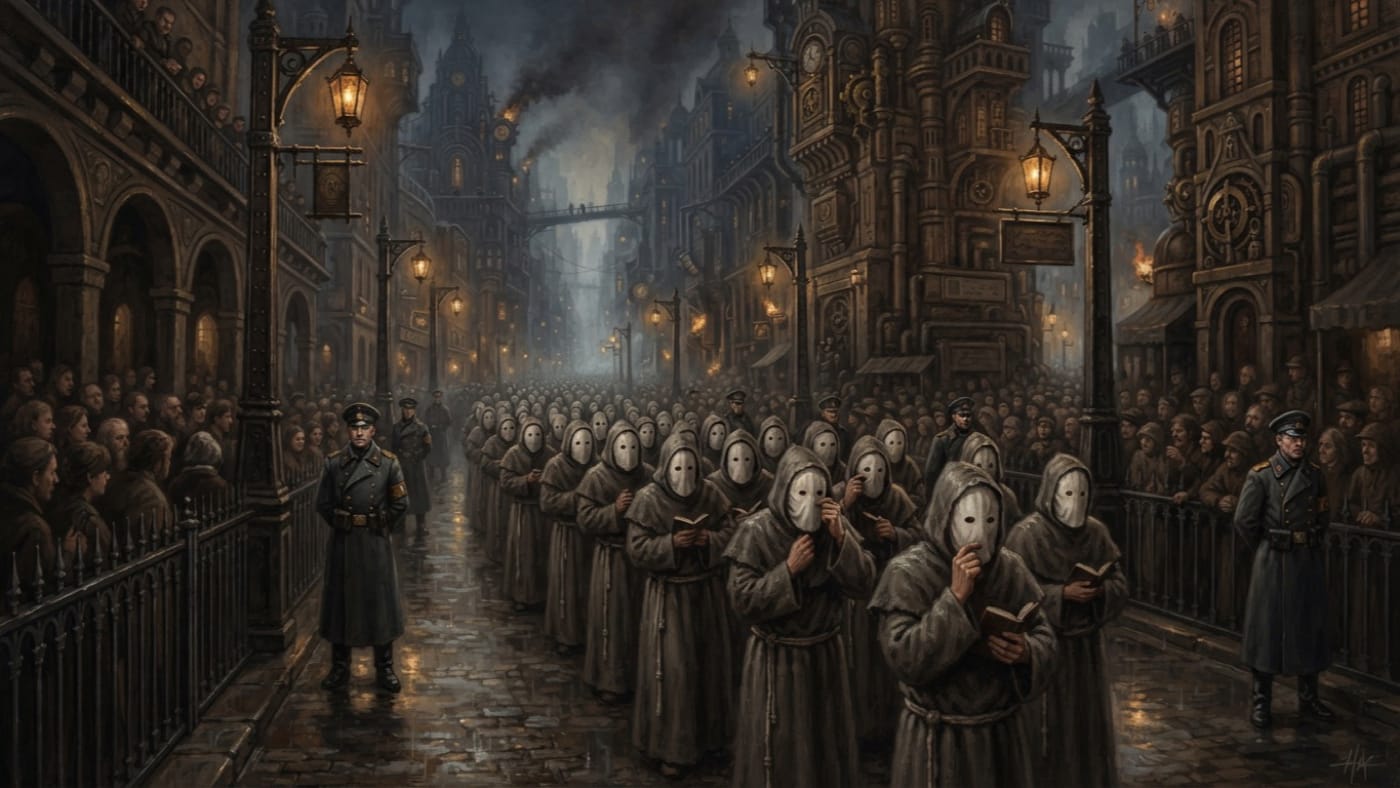
Night of Penitents
The face may be hidden. The sin stays on file.
On the Night of Penitents, the procession must go masked. Festivals orders the occasion; Masks and Seals numbers every concealed face. Shame may hide from the street. The Registry knows where to find it.
Codex Ref. XIII.1.89-1920

Order of Severance
The inward knife that cuts office from affection before affection becomes a kingdom
The Order of Severance is the Bureau of Purity's inward knife: an inquisitorial fraternity that hunts clerical and bureaucratic heresy where clean cuffs, perfect ledgers, and trusted colleagues become shelter.
Codex Ref. VIII.1.07-134
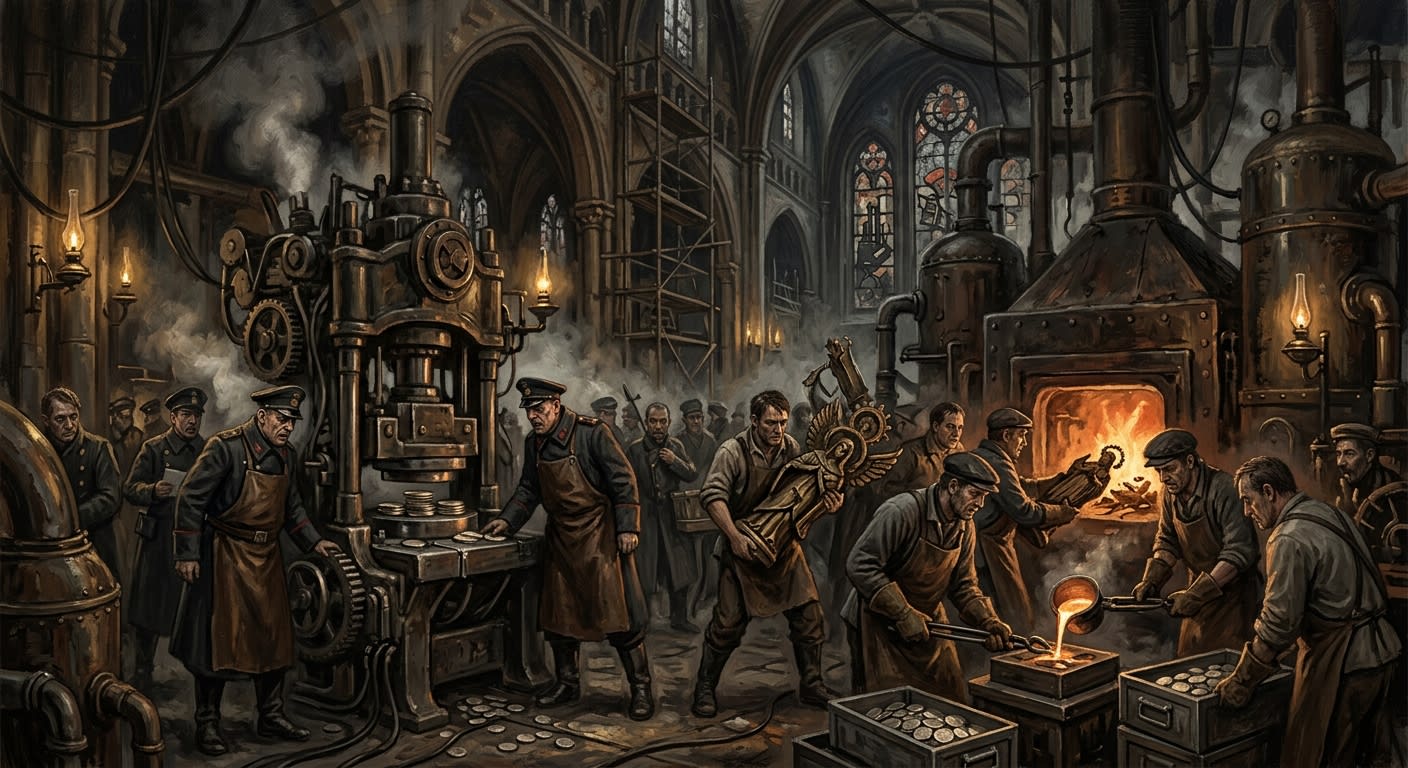
Panic of Wrath's March
Wrath did not enter Aachen; Aachen paid anyway
A.S. 160 gave Aachen no siege, no breach, and no Maldrake at the gate — only fear hot enough for Tithes to melt saints into coin.
Codex Ref. VII.8.10-160
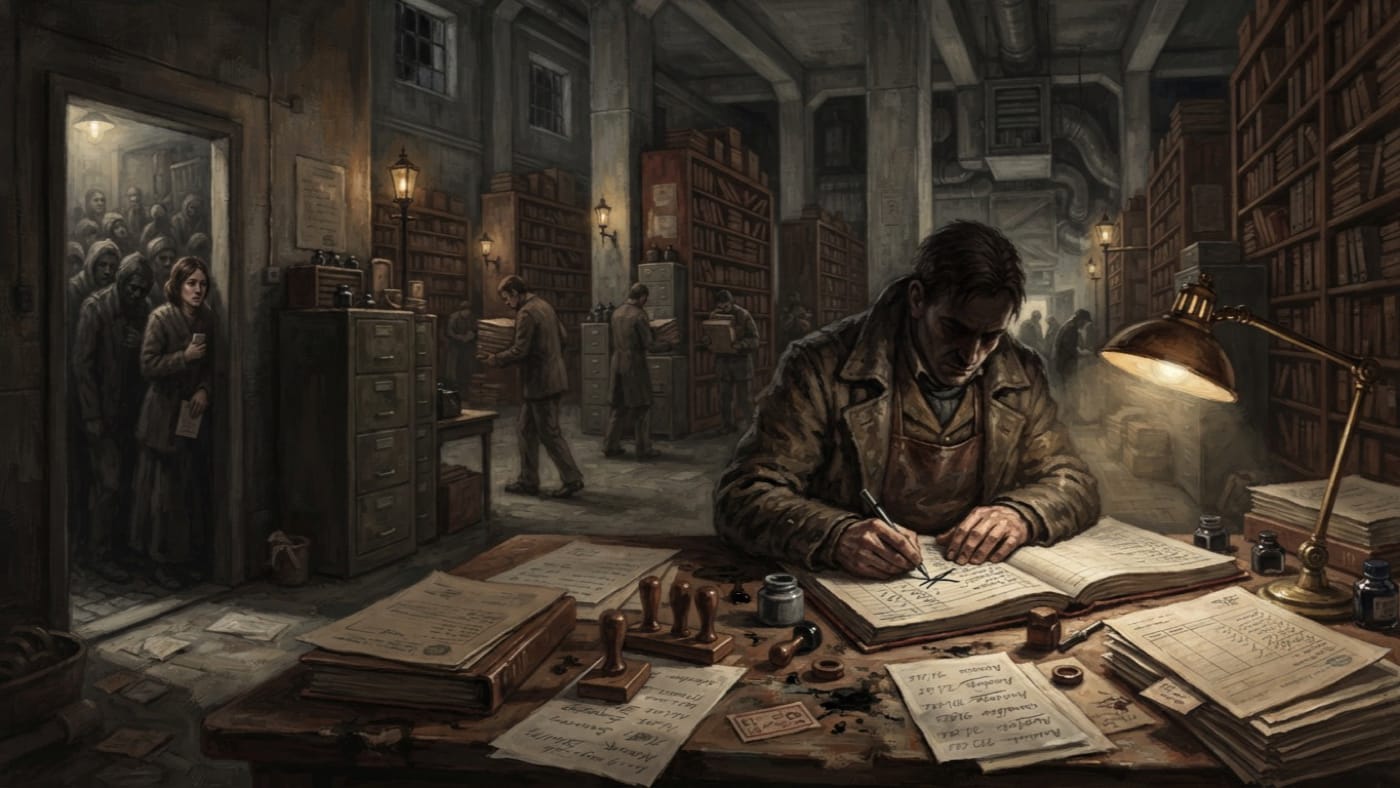
Paper Death
The name dies; its owner queues for bread elsewhere
The Burnwright kills a name across ration, tithe and parish records so its owner may survive under another. Records calls it forgery; the survivor calls it breakfast.
Codex Ref. XI.1.02-004
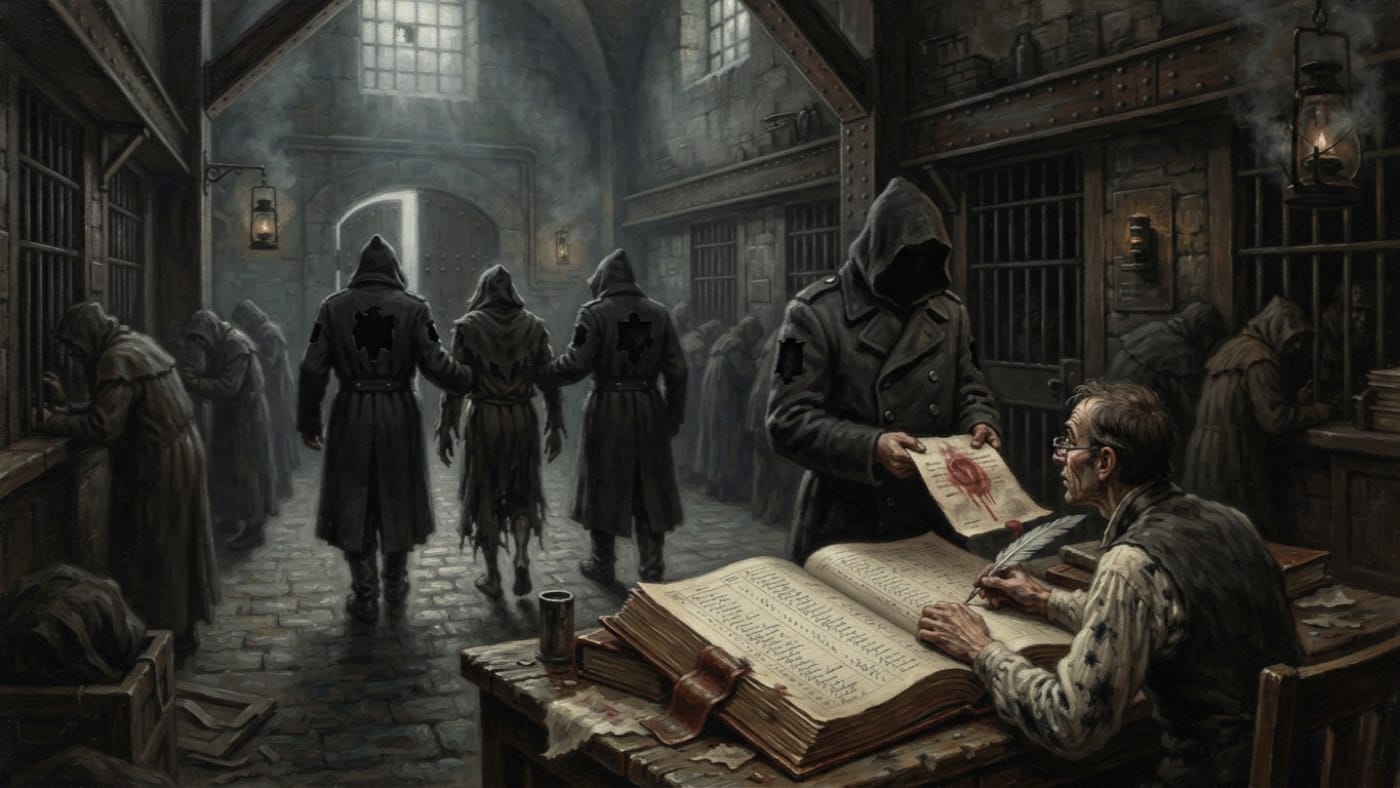
Petter of Lorch
The prisoner who left the lockhouse and stayed in its ledger
Petter of Lorch vanished from a lockhouse near Cologne under a forged judicial order in A.S. 158. His name remained in the custody ledger; the ink kept its prisoner.
Codex Ref. III.2.01-2105
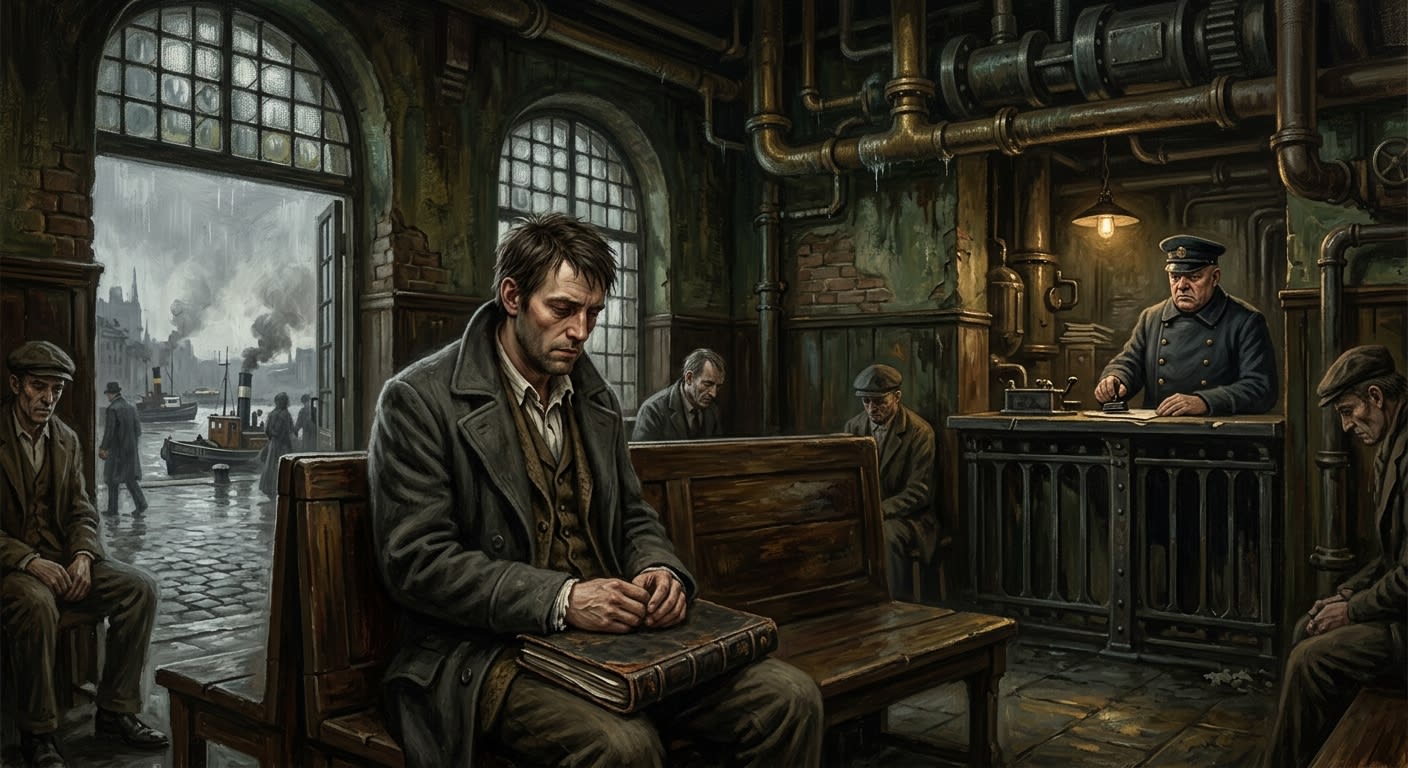
Quai des Bateliers
The river door where disbelief kept its appointment and Purity kept it waiting
Strasbourg's damp river quay became legal instrument when Arno Kett walked into Purity's district house, waited forty minutes, and gave absence a file.
Codex Ref. II.1.04-138
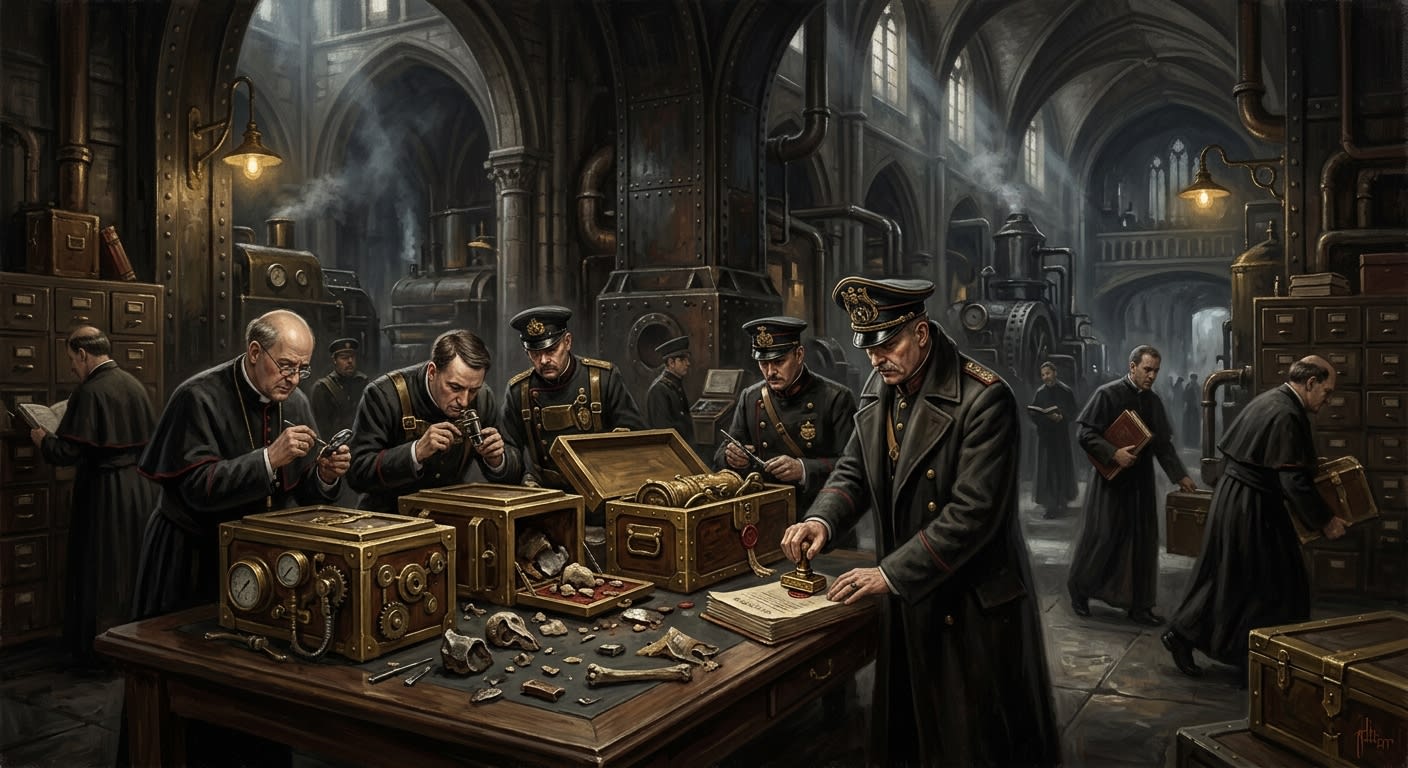
Relic Counterfeit Scandal
When the pig-bone taught the saint to submit to assay
Circa A.S. 117 scandal in which counterfeit relic fragments entered tariff-chapel calibration caskets, forcing mandatory assay and Masks-and-Seals counter-seals.
Codex Ref. VII.8.10-012
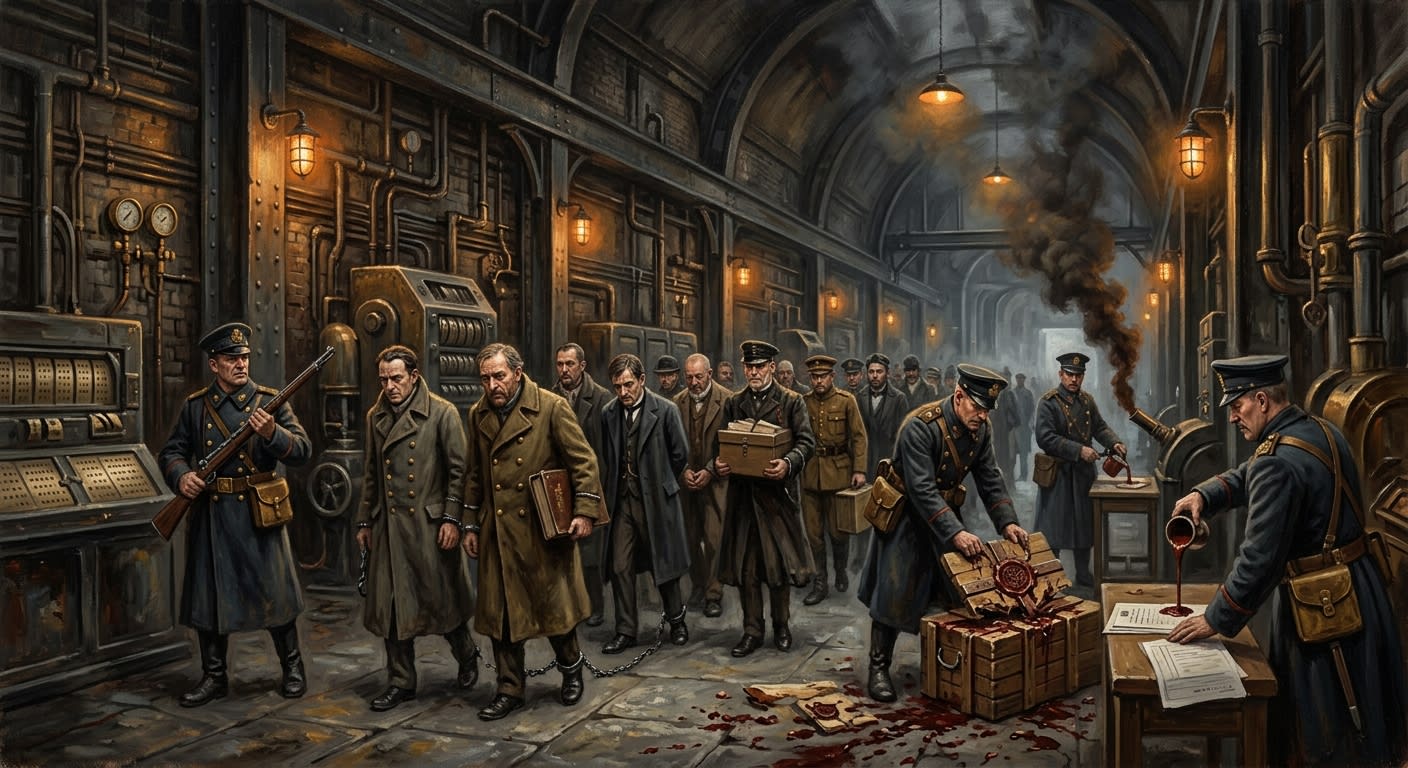
Seal Theft Scandals A.S. 158
Three false impressions and the day sovereignty learned to smell its own wax
The A.S. 158 Seal Theft Scandals exposed forged judicial impressions across the Rhine circuits, purged a third of the bailiff corps, and made wax residue into doctrine.
Codex Ref. VII.8.10-096

Seal-Forger, Counterfeiter
The Synod's confession, pressed in unauthorised wax
The seal-forger is the Synod's shadow — pressing wax into survival where the Bureau presses wax into doctrine. Eleven immurements signed, six thousand fed, and the woman who may never have existed.
Codex Ref. XII.41.01-001
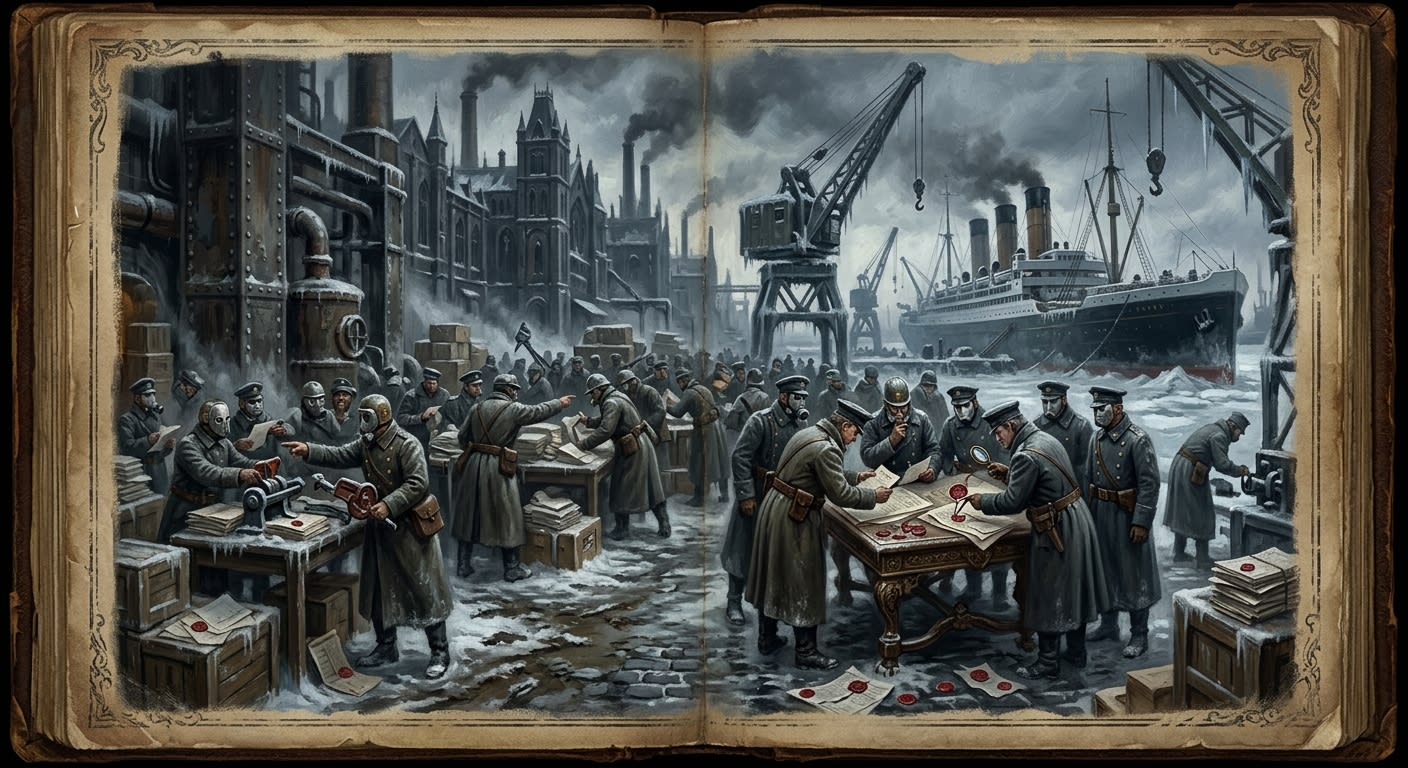
Seal-Forgers' Winter
When wax learned to lie, doubt became a licensed knife
The Seal-Forgers' Winter of A.S. 145 was the counterfeit seal crisis that froze ports, humiliated Masks and Seals, and made seal autopsy a billable Manifest Litigant right.
Codex Ref. VII.8.10-003

Sigil Inspector
The man who tells the world what it is allowed to look like — and scrapes the rest
The Bureau of Heraldry tells the world what it is permitted to look like. The Sigil Inspector is the man who walks the world and checks — codex in hand, swatch at the hip, blade heated to scraping temperature.
Codex Ref. XII.43.01-001
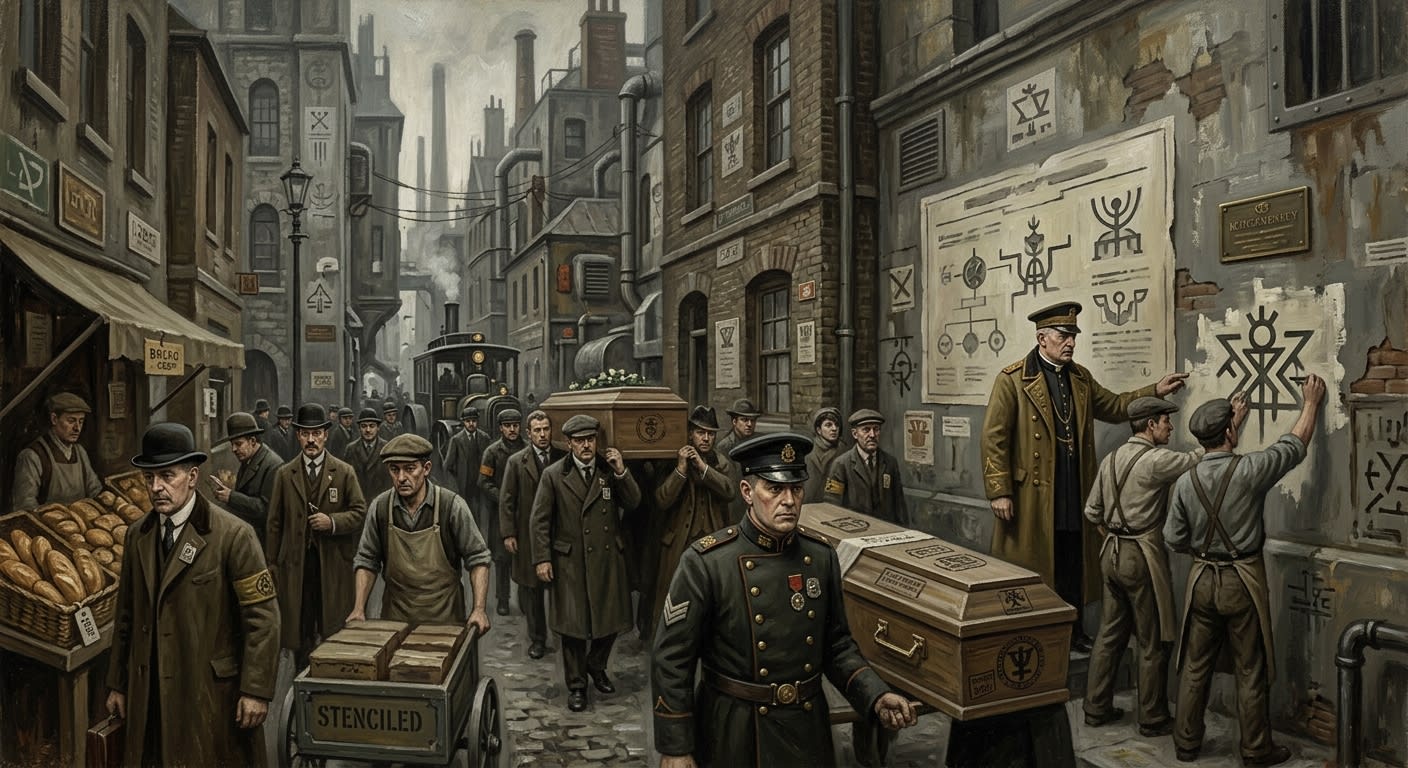
Standing Order 14-C
Every surface shall confess before speech begins
Standing Order 14-C teaches walls, bread, badges, coffins, and brows to confess: no lawful surface remains visually unclaimed.
Codex Ref. XIII.1.14-090
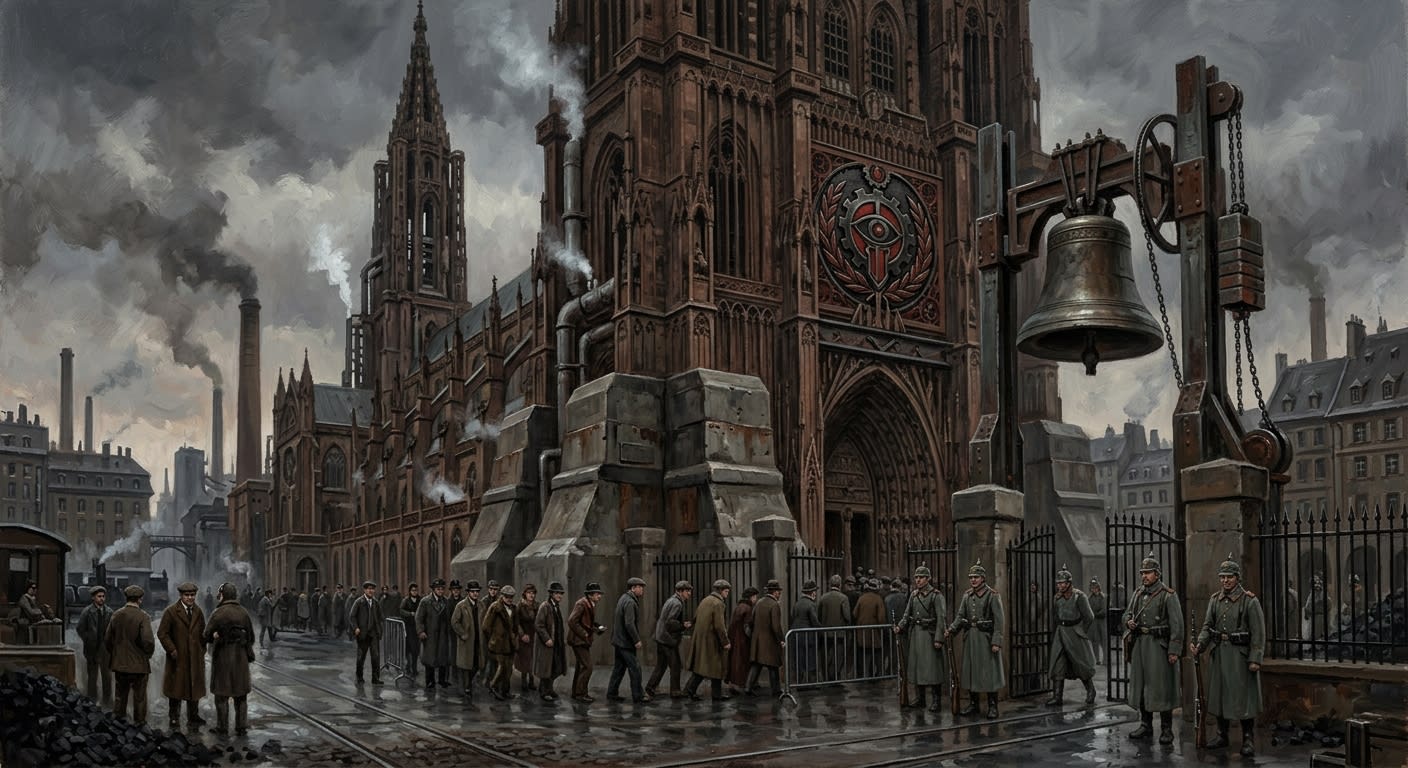
Strasbourg Cathedral
The stone lease by which Heaven rents authority to the Bureaus
Strasbourg Cathedral is stone, bell, vault, bench, seal, and threat: the capital's holy machine for turning awe into obedience.
Codex Ref. II.1.04-004

The Armorial of the Faithful
The book by which even colors learn obedience
The Armorial teaches every banner, crest, seal, colour, knot, and shop sign in the Synod the first virtue of a surface: obedience.
Codex Ref. VIII.1.03-002
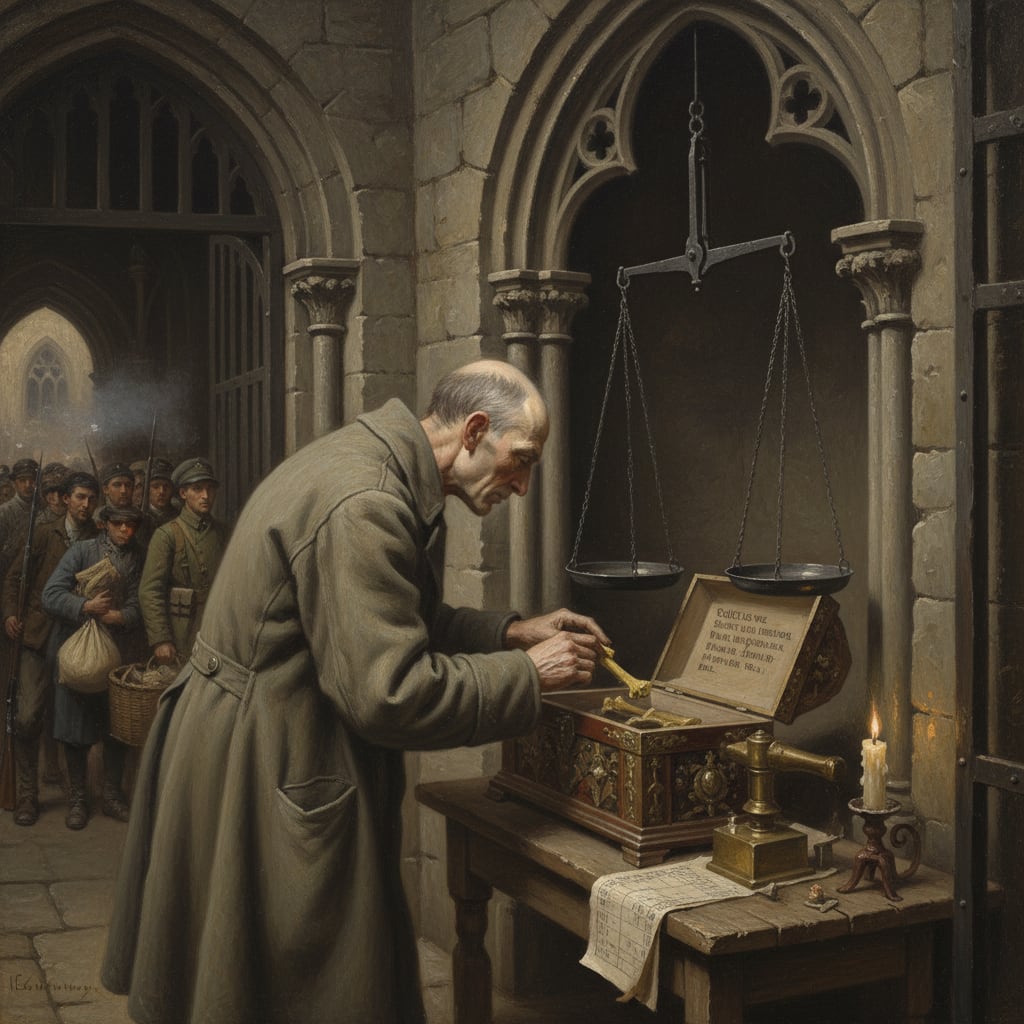
The Commerce Clerk (Tariff-Chapel Weigher)
The man who stands between a bastion and famine, and who resolves the question with the splintered bone of a saint.
The Synod's most bribable sacrament: the chalk-fingered clerk whose iron scale, calibrated against saint-bone, determines whether a bastion eats.
Codex Ref. XII.8.01-001
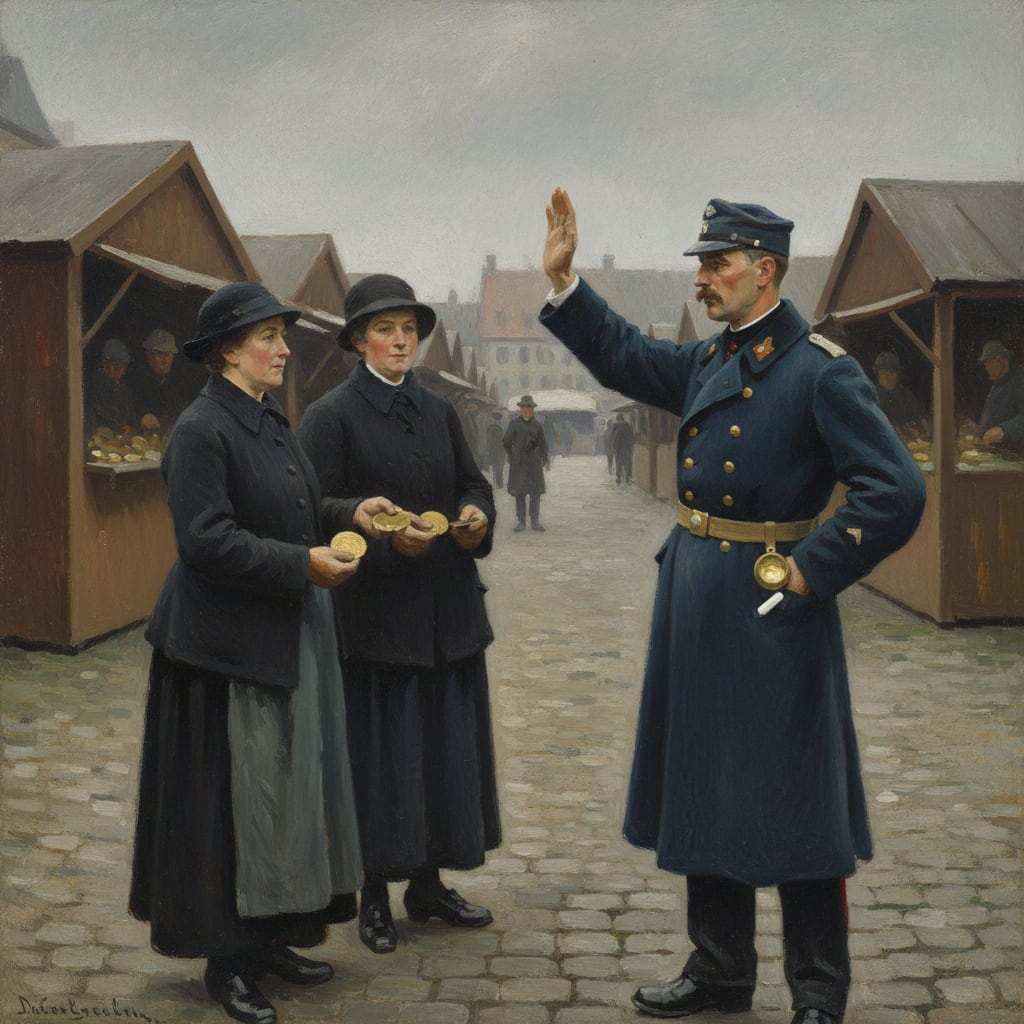
The Doctrine Street-Vicar
The bell's feet; the chalk's teeth; the compliance that comes to you.
The Bureau of Doctrine's mobile enforcement arm: four thousand three hundred chalk-bearing officers who walk where the bell cannot reach, inspect purity tokens, and mark doorframes in white, yellow, and red.
Codex Ref. XII.9.02-001

The Femur-War Broker
The unofficial routing service that keeps authenticated contradictions from becoming authenticated riots
The officially nonexistent profession that routes authenticated relic contradictions without collision — the Femur Principle's logical consequence, managed for a fee by two hundred brokers the Bureau insists do not exist.
Codex Ref. XII.15.01-001
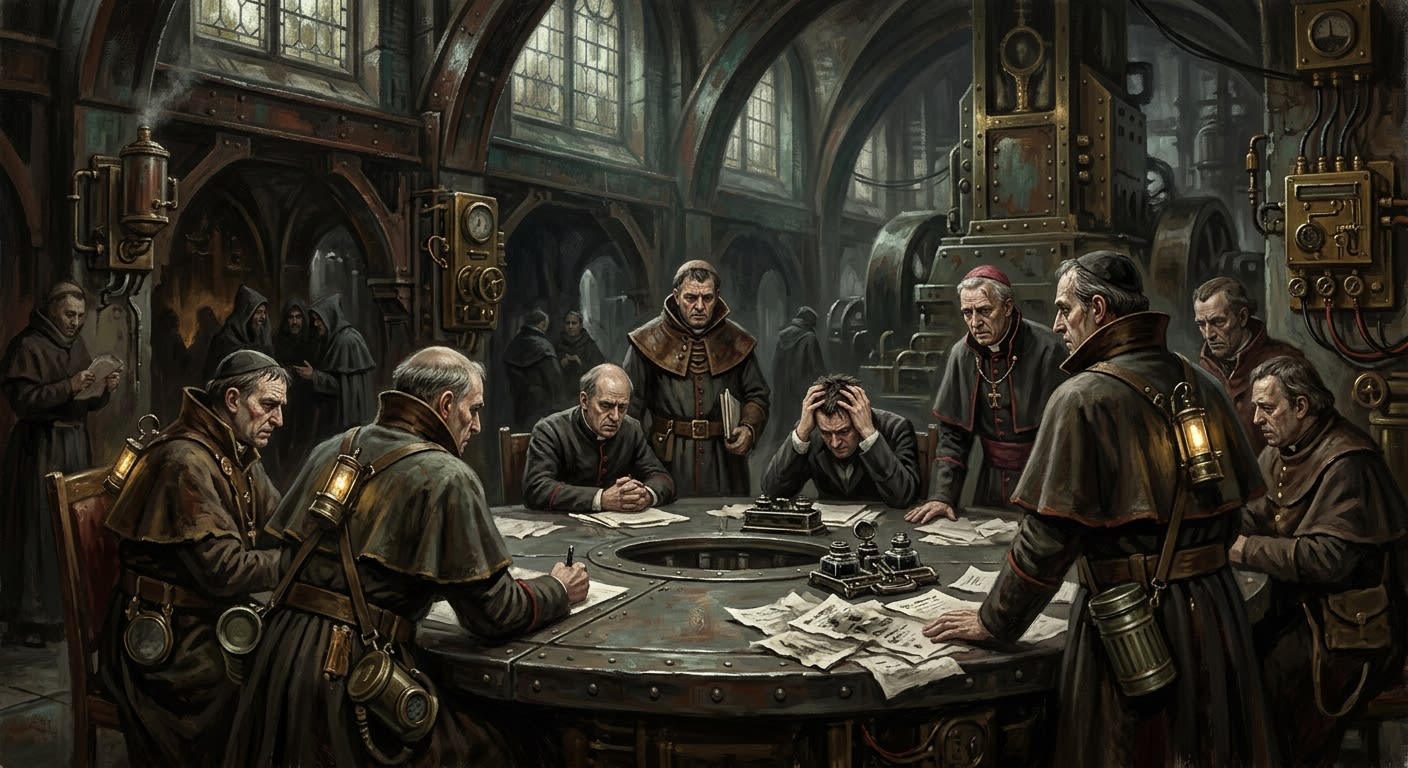
The First Council of Cologne
The yoke was imagined before it was blessed
The September A.S. 27 preliminary convocation produced seven unadopted articles, corrected minutes, and limited voluntary contacts among dioceses.
Codex Ref. VII.7.01-002
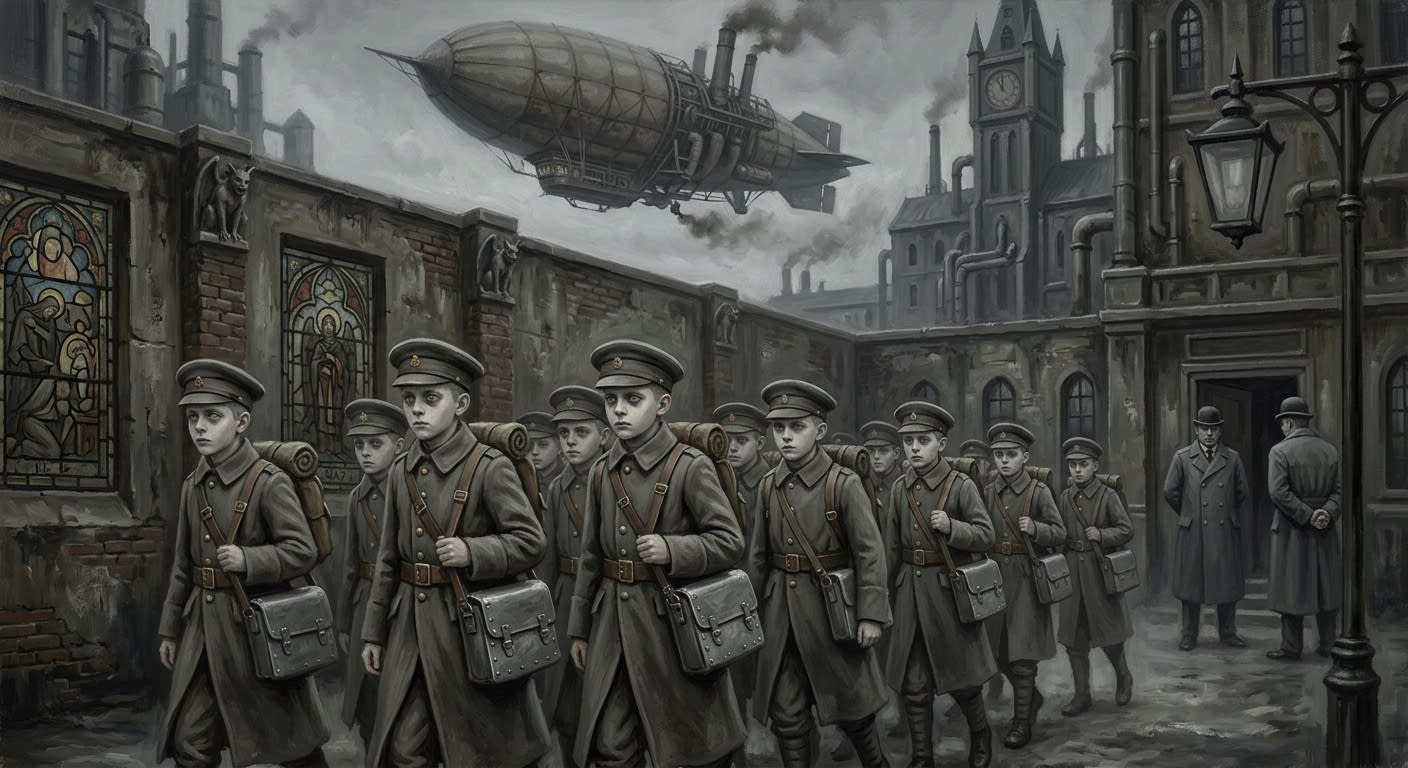
The Greyling Cohort
Children born under the sky that declined to answer
The Greyling Cohort names the silent grey-eyed children born during the Year Without Dawn, officially extinct, unofficially watched by anyone sensible.
Codex Ref. XIII.1.32-001

The Inheritors
Debt becomes dynasty when patience learns to wear keys
Highest confirmed tier of the Ten Thousand Keys cult, the Inheritors preserve debt across bloodlines until obligation begins to look like inheritance.
Codex Ref. XI.2.02-001

The Knotwright Registry
Where every lawful threshold becomes a number, and every number becomes a leash
The Knotwright Registry is Heraldry's A.S. 112 tool-custody office for Gate-Carvers, where stencils, punches, rubbings, licences, and trembling hands become evidence.
Codex Ref. VIII.1.03-002
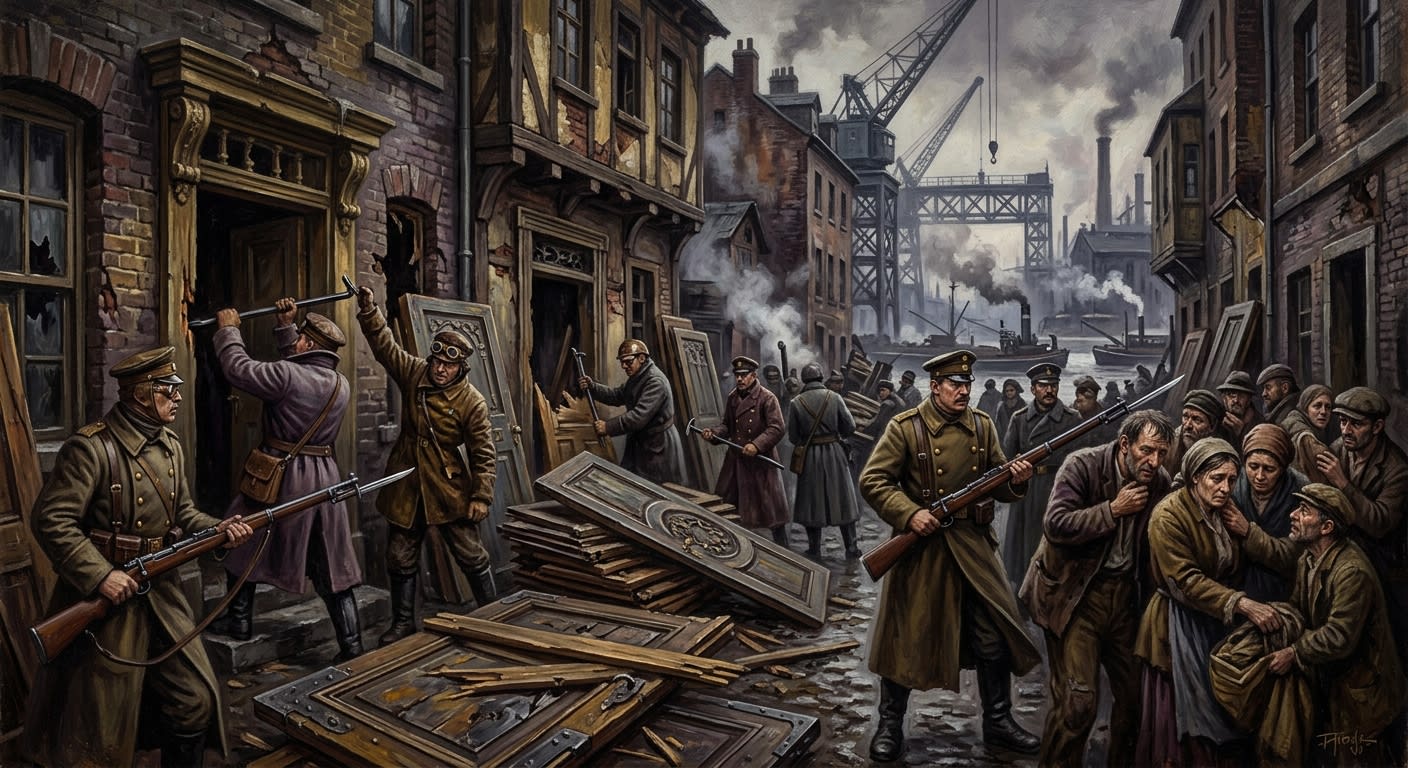
The Lintel Pogroms
When fourteen correct doors made a district homeless
The A.S. 112 Lintel Pogroms stripped Cologne's river-quarter doors after fourteen perfect false Knots exposed stolen stencils, counterfeit punches, hidden bodies, and a trembling hand fit for a wall.
Codex Ref. VII.8.10-112
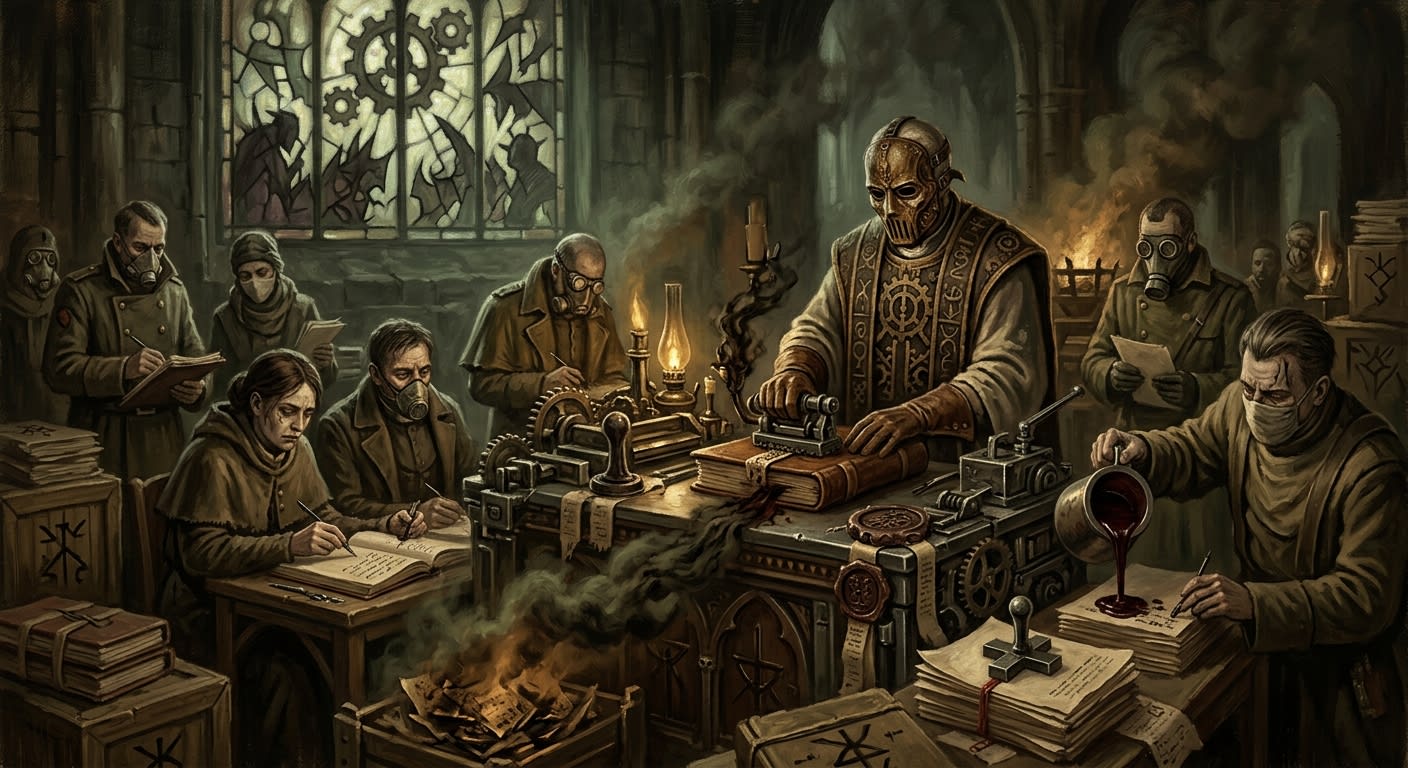
The Mock Liturgy
Hell learned our responses and improved the paperwork
The Shadow Court's parodic sacramental apparatus turns worship into damnation-paperwork: counter-seals, unhymns, inverse rites, and choices that bind.
Codex Ref. XIII.1.25-001
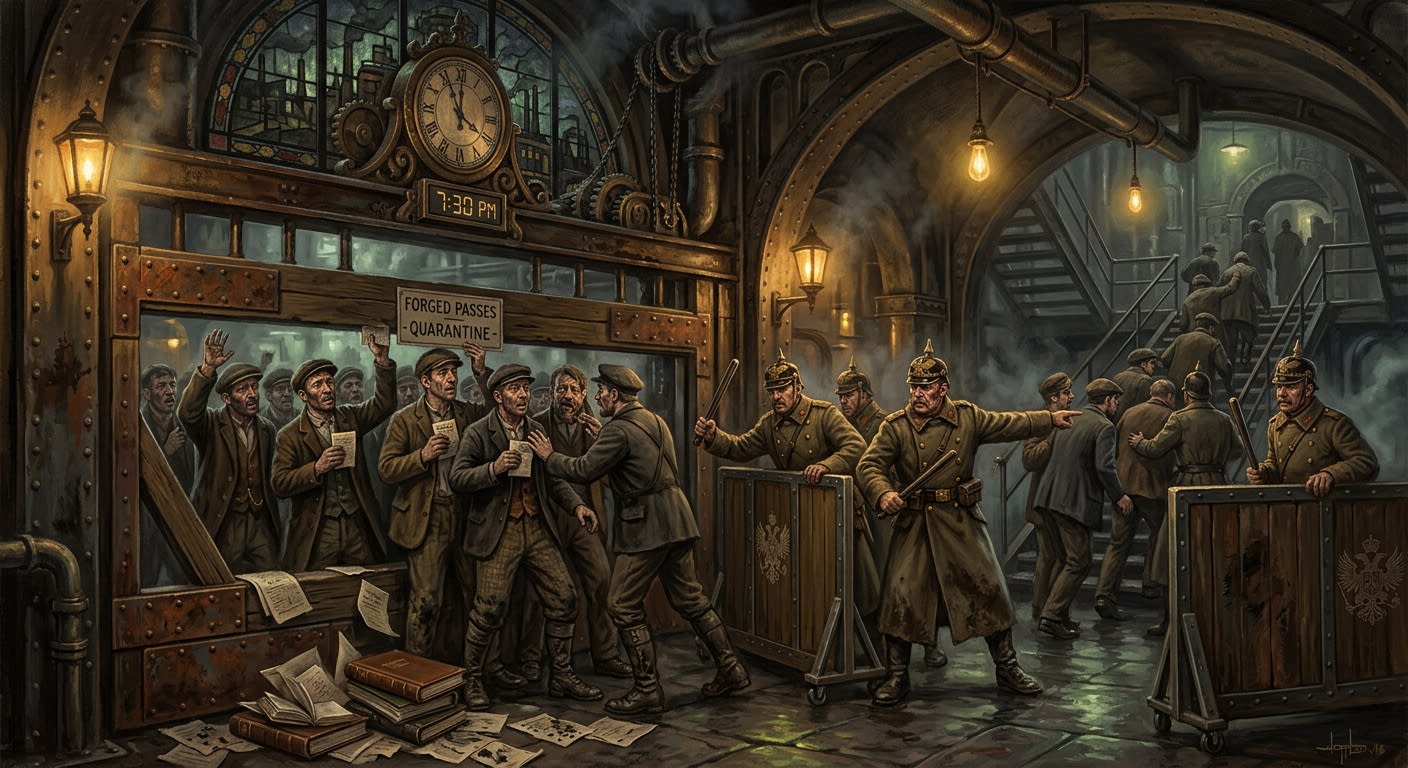
The Paper Plague of A.S. 112
Where forged paper entered Przemyśl and flesh became policy
The Paper Plague of A.S. 112 was the Bastion-Przemyśl forged-pass disaster that killed eighty-seven, locked the western perimeter, and birthed bodily identity law.
Codex Ref. VII.8.10-036

The Rhine Corridor
Damp procedure, counted backward from every bridge
The Rhine Corridor is the Synod's damp procedure: a Zone 2 logistics artery, mortuary road, ferry court, heresy school, and billable proof that movement can be made afraid.
Codex Ref. II.2.08-202
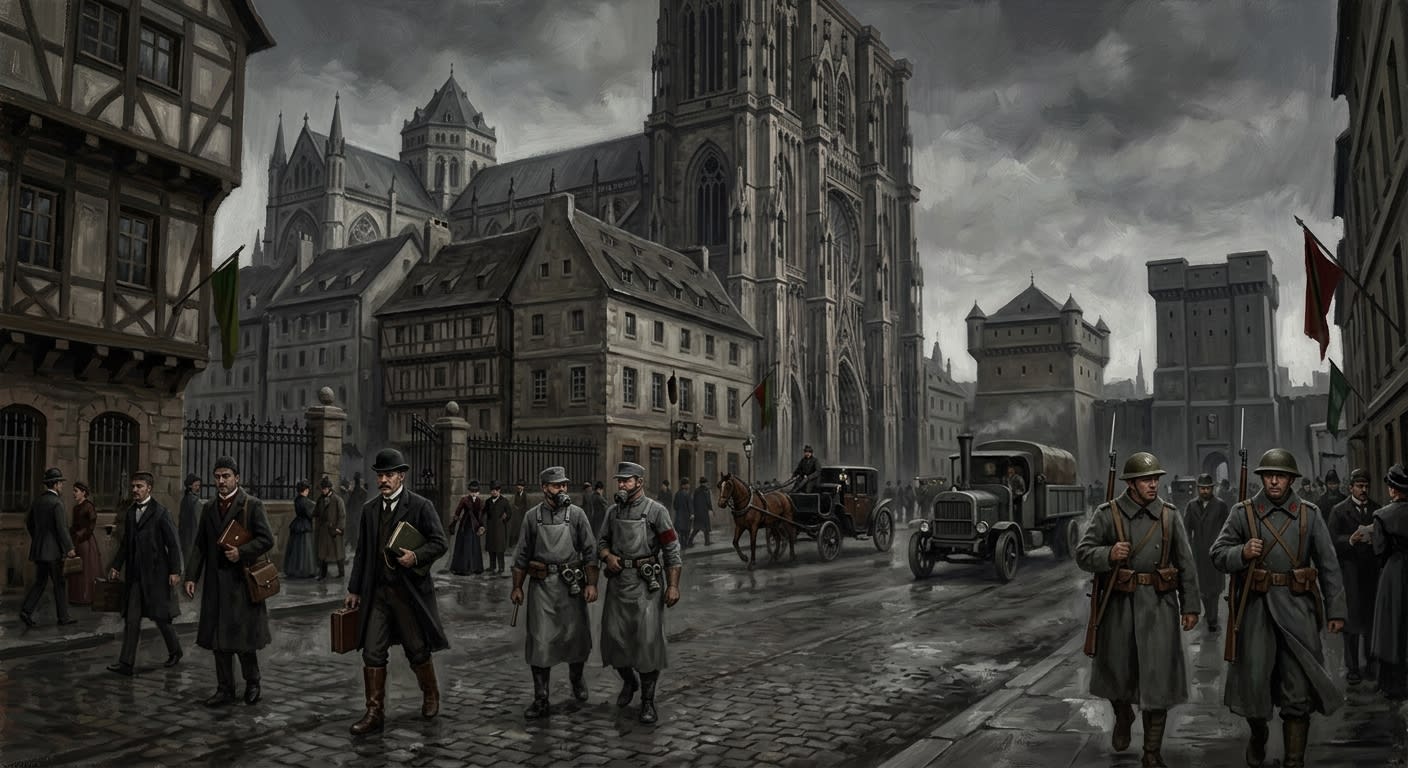
The Sanctum Mile
Strasbourg's white corridor, scrubbed clean enough to hide the blood
The Sanctum Mile is Strasbourg's white civic-sacral corridor: cathedral stone, Bureau houses, the Hall of Confessions, and the Prison of Questions in polished alignment.
Codex Ref. II.2.02-002
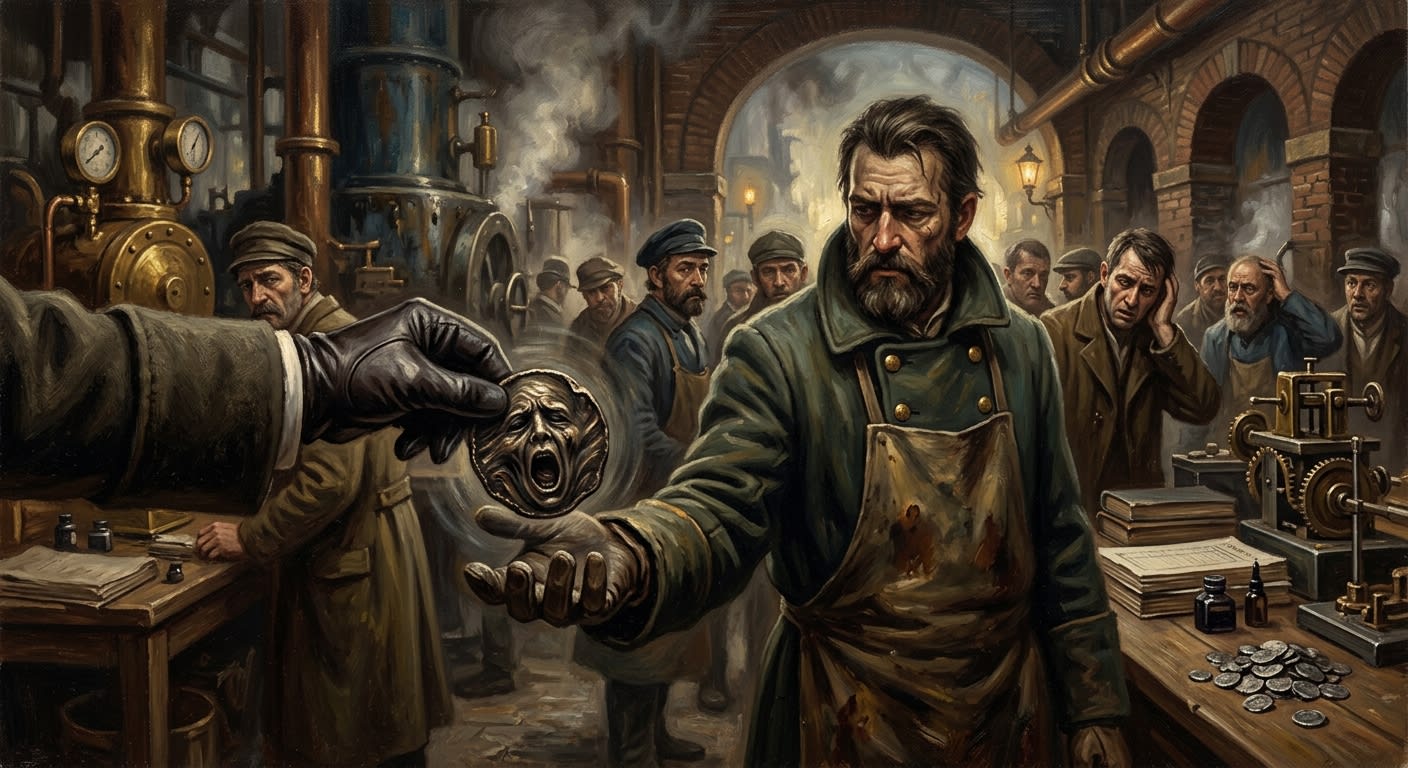
The Screaming Coin
The smallest transaction Hell ever notarised
A coin-like anomaly from Constantinople's Foundry Quarter passes through lawful hands, screams at transfer, and returns after every recorded destruction.
Codex Ref. V.2.01-001
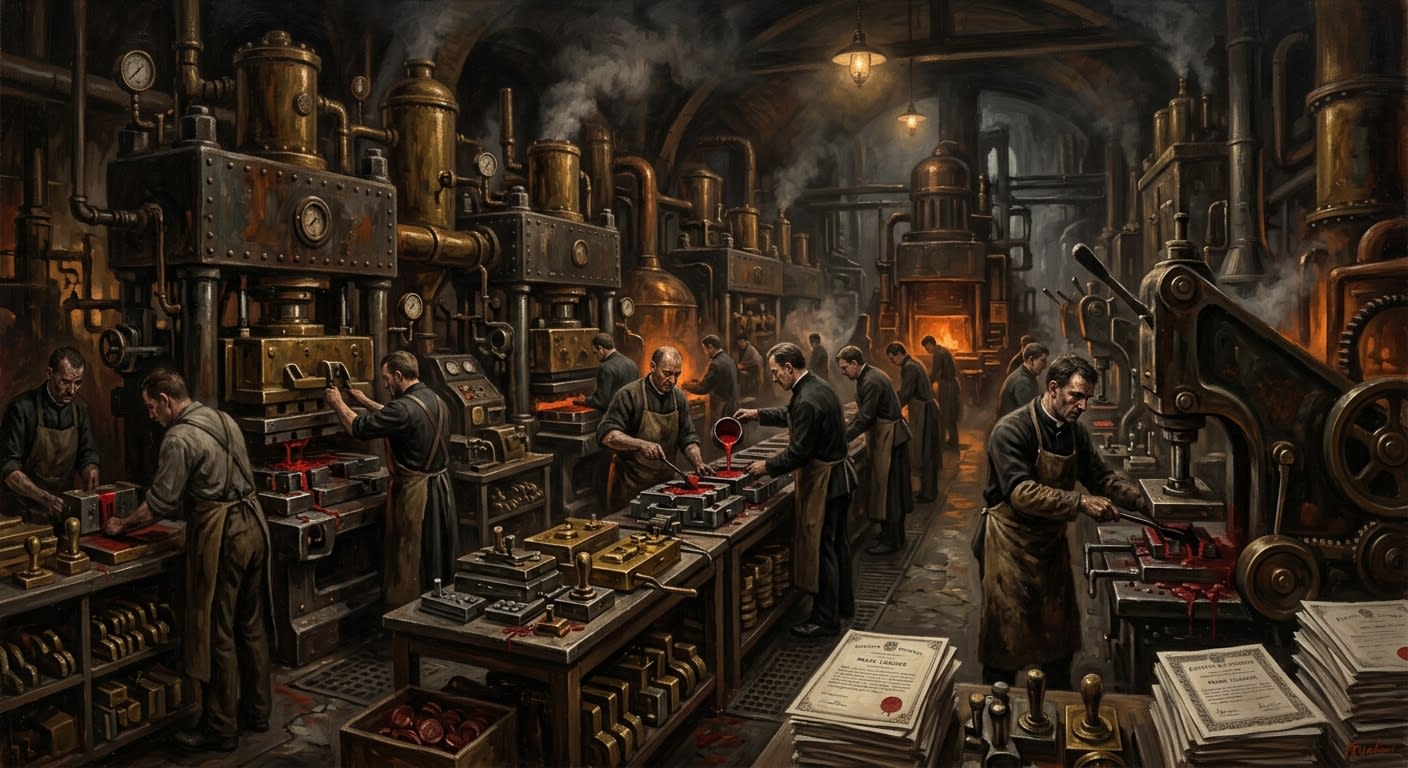
The Sigillary
Where warm wax teaches paper to bite
The Sigillary beneath Strasbourg Cathedral manufactures authority in wax, die, counter-seal, mask licence, and the old lesson that paper bites only when stamped.
Codex Ref. II.1.04-006
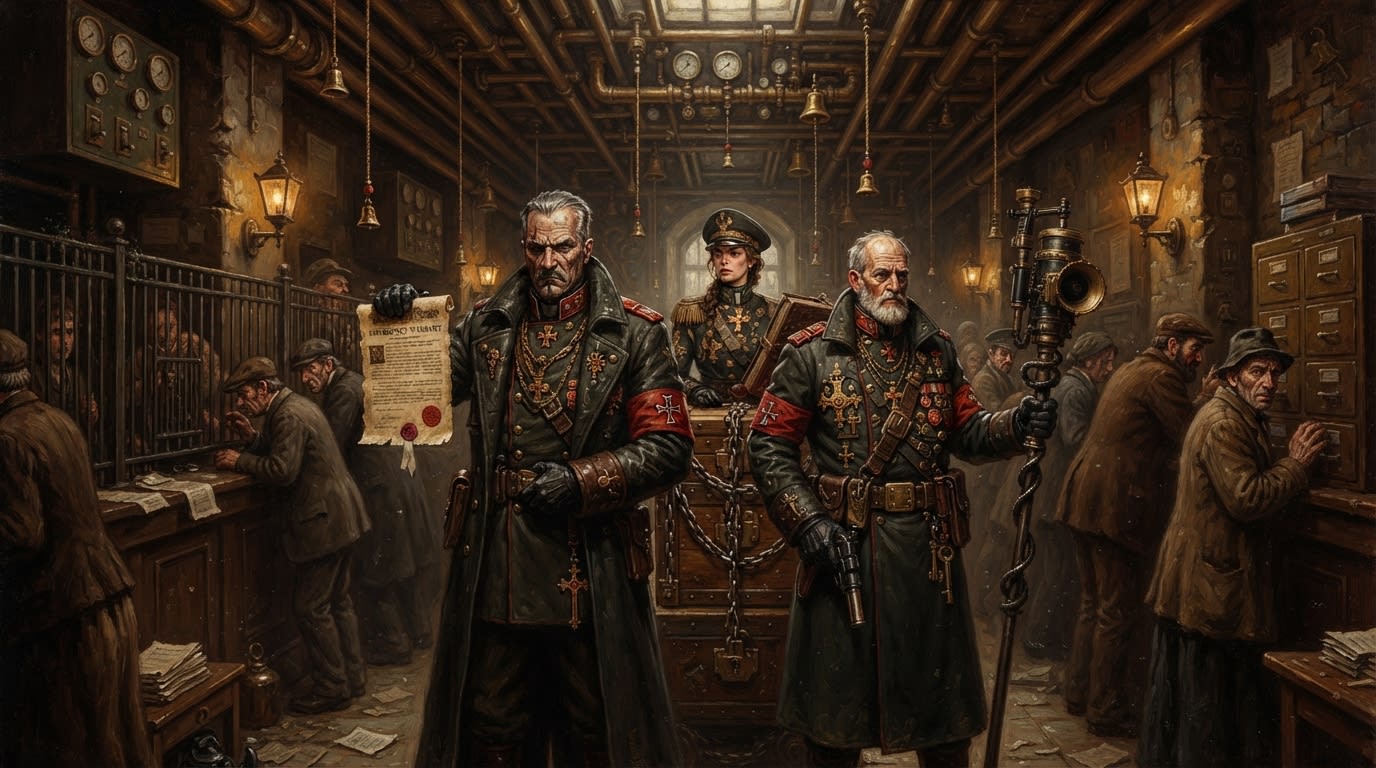
The Synod Task Force
On the Armed Enforcement of Administrative Truth
The Synod's answer to contested truth: temporary, armed administrative cells dispatched by warrant when ordinary procedure has failed, become complicit, or begun devouring its own paperwork. They preserve facts powerful offices would prefer misplaced.
Codex Ref. IV.7.12-001
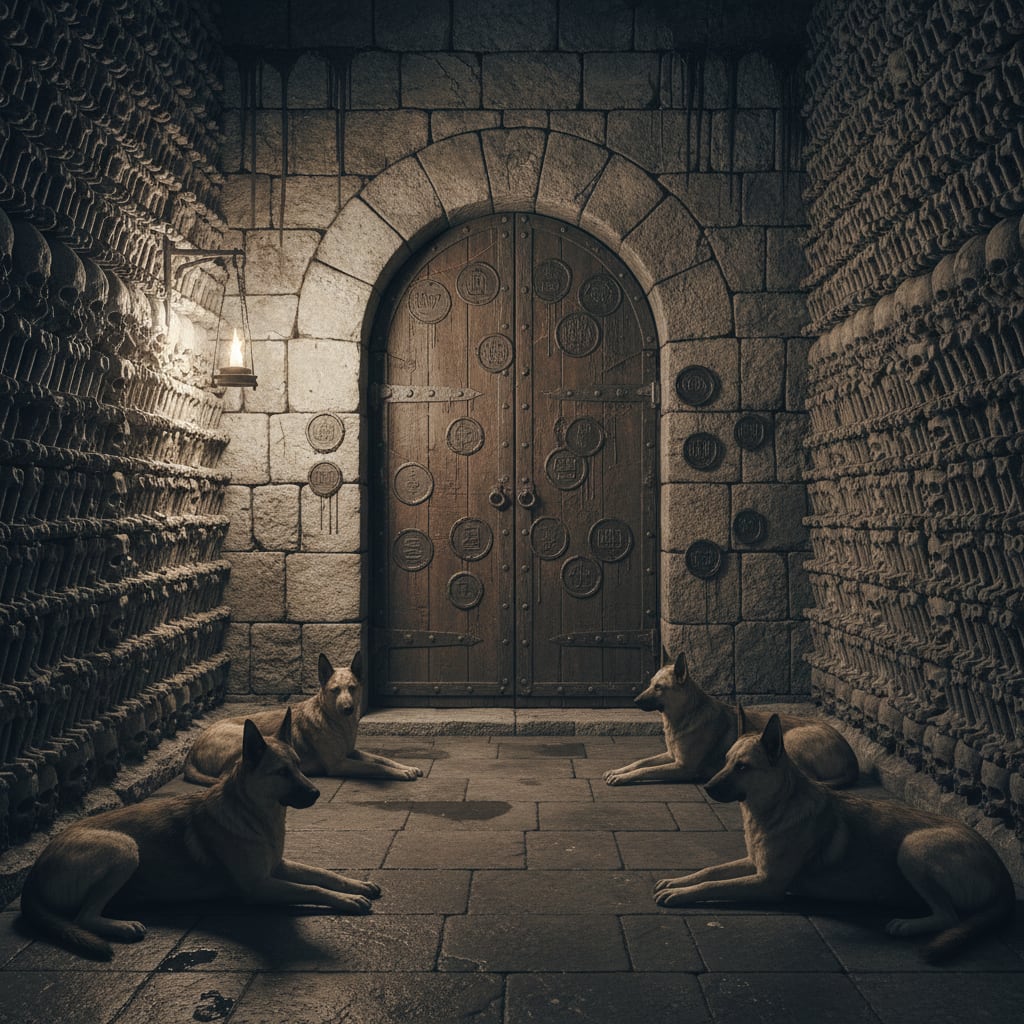
The Third Ossuary
Sealed by prior authority; the prior authority has not been identified
The sealed chamber beneath Bastion-Constantinople's Ossuary Rings. Discovered A.S. 47. Never catalogued. Sealed seventeen times. Source of Compound 7, which keeps the Vigil Ark aloft.
Codex Ref. II.4.10-004
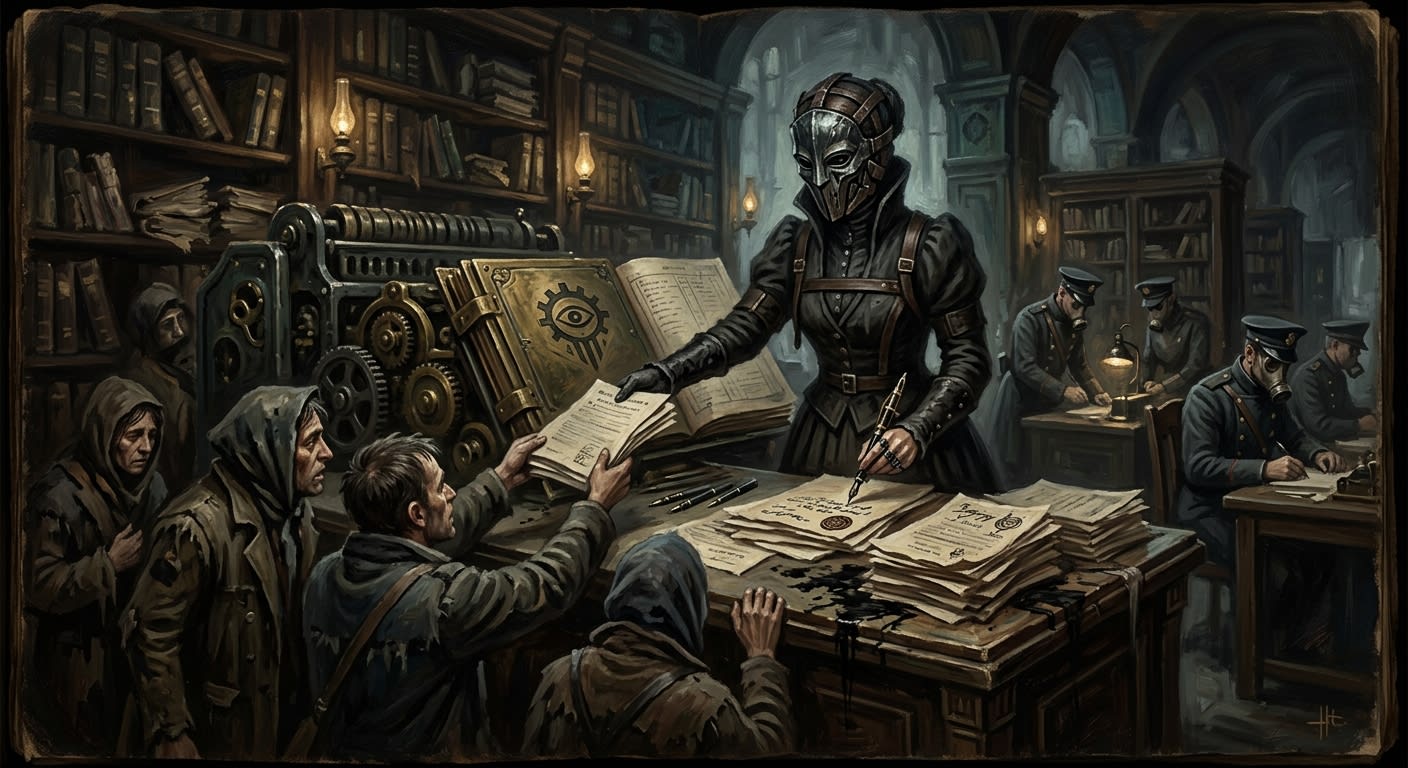
The Widow-Notary
The hand that taught charity to forge receipts
The Widow-Notary may be one woman, seven women, or a criminal mask; her forged assessments fed Strasbourg's poor and taught the Black Ledger to steal in the Bureau's own hand.
Codex Ref. III.2.01-062
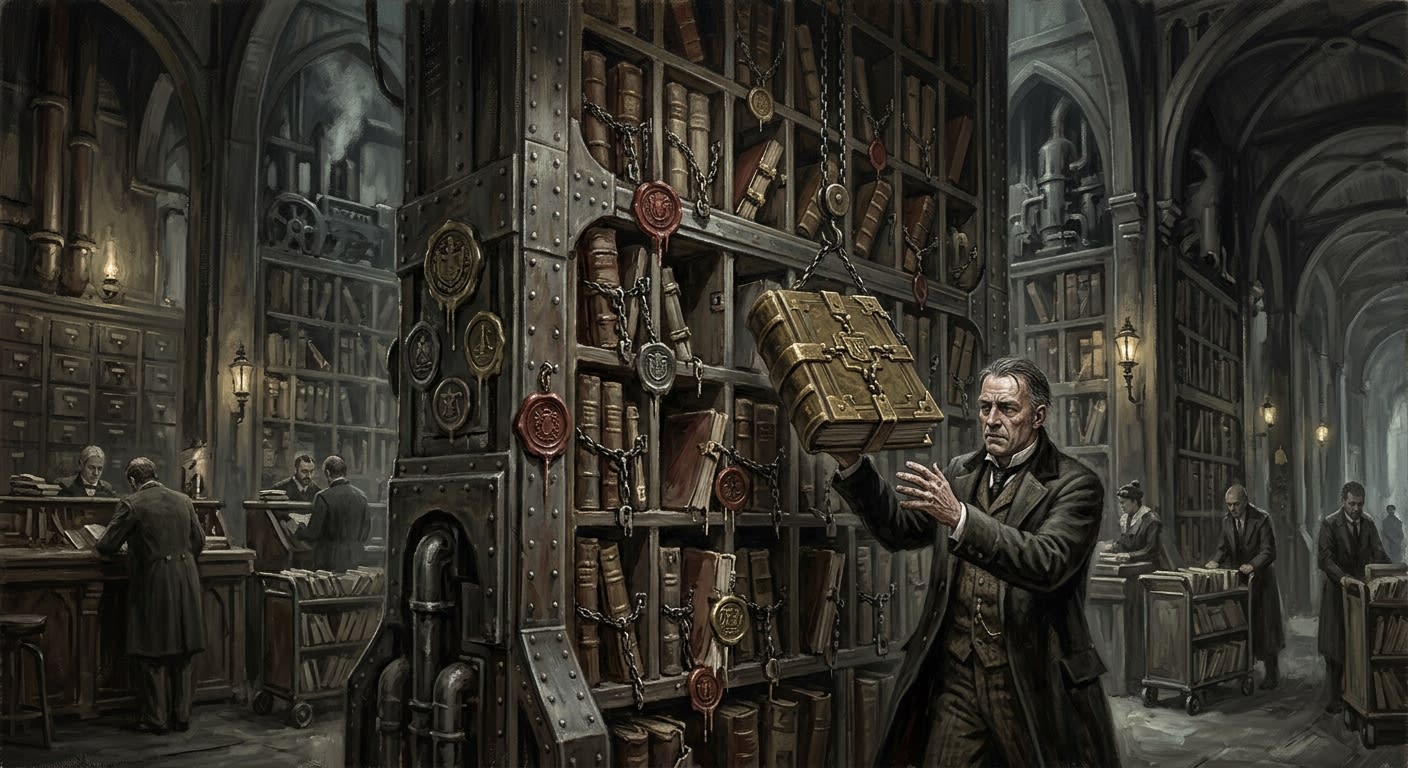
Thirty-Seal Index of Precedent
The book that lets old disputes bite new throats
The Thirty-Seal Index is Commerce's weaponised memory: port-court precedent sealed thirty ways, kept cold, and lent to litigants who know where hunger must wait.
Codex Ref. XIII.1.89-187
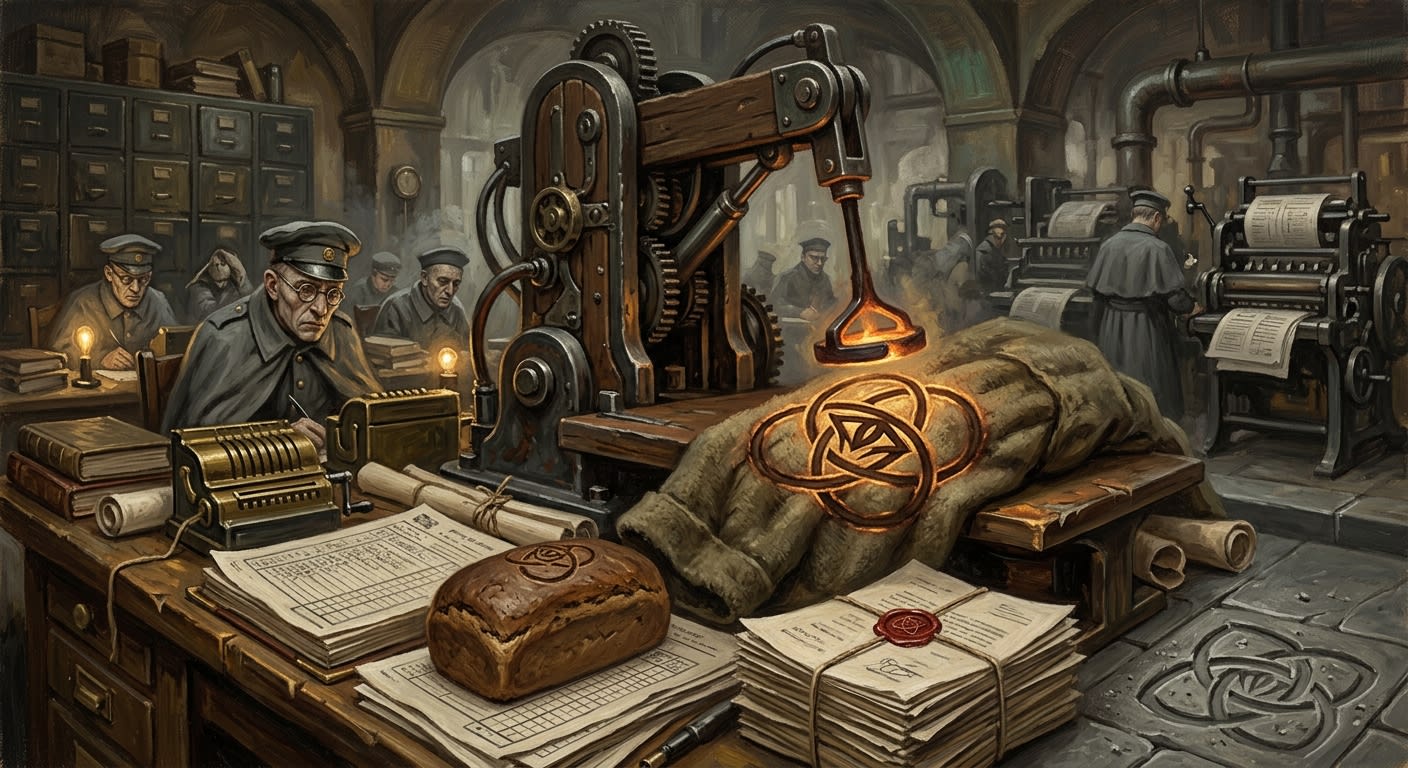
Triune Knot
Three loops, one law, and every door accounted for
Universal Synodal binding mark standardised under Theobald of Worms, by which doors, papers, bread, flesh, and graves become readable to law.
Codex Ref. XIII.1.03-002

Venice
The city that obeys by tide and invoices by fog
Venice is loyal, wealthy, damp, evasive, and necessary: an Adriatic city the Synod owns by writ and must still ask politely by tide.
Codex Ref. II.4.09-201