

Reverse Index
Referencing “Bureau of Medicine”
Every codex entry that links to Bureau of Medicine. 266 entries.
Return to Bureau of Medicine
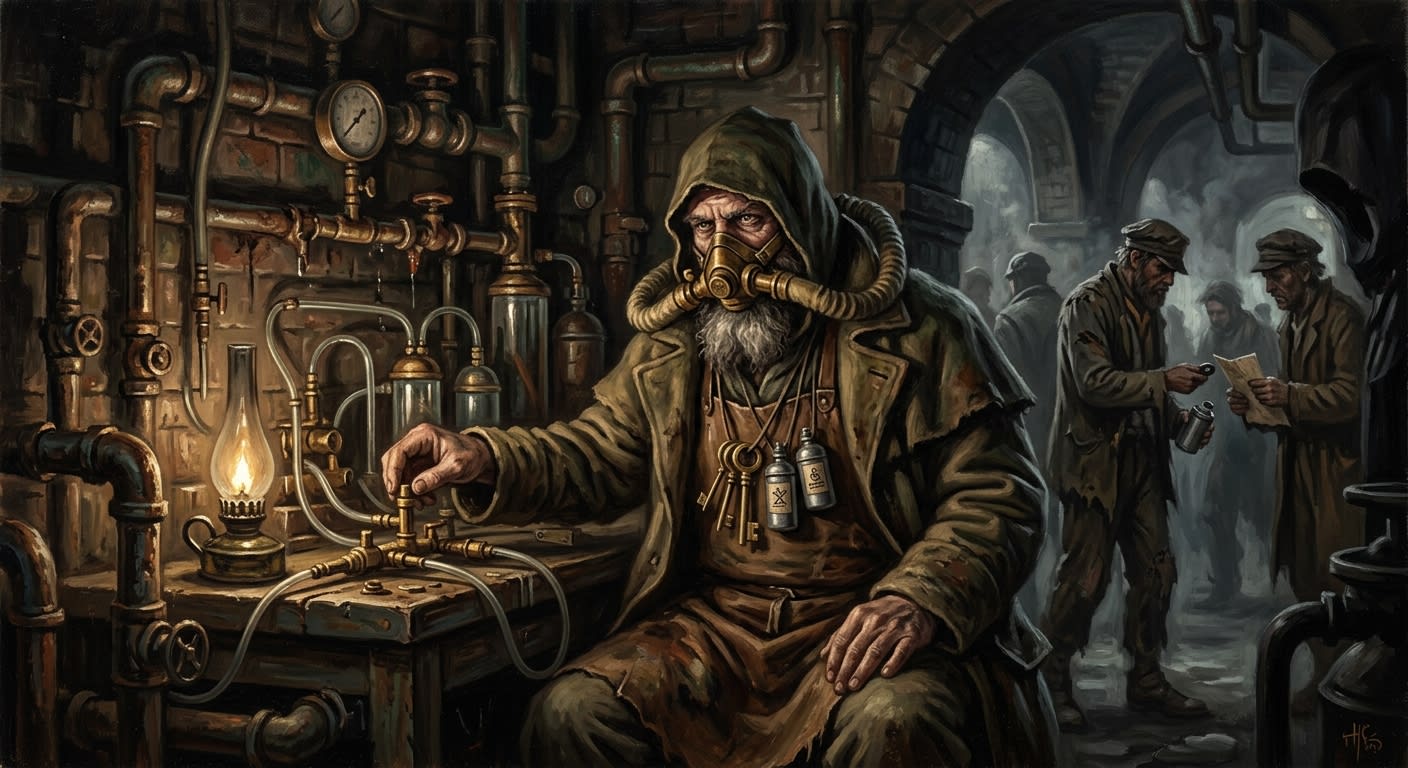
"Tap-King" Jaro
The silent monarch of Irongate's illegal lungs
Jaro has not spoken since A.S. 187. Beneath Bastion-Irongate, his pipe-code sells air, silence, routes, and the little mercies official power cannot admit it needs.
Codex Ref. III.2.01-026
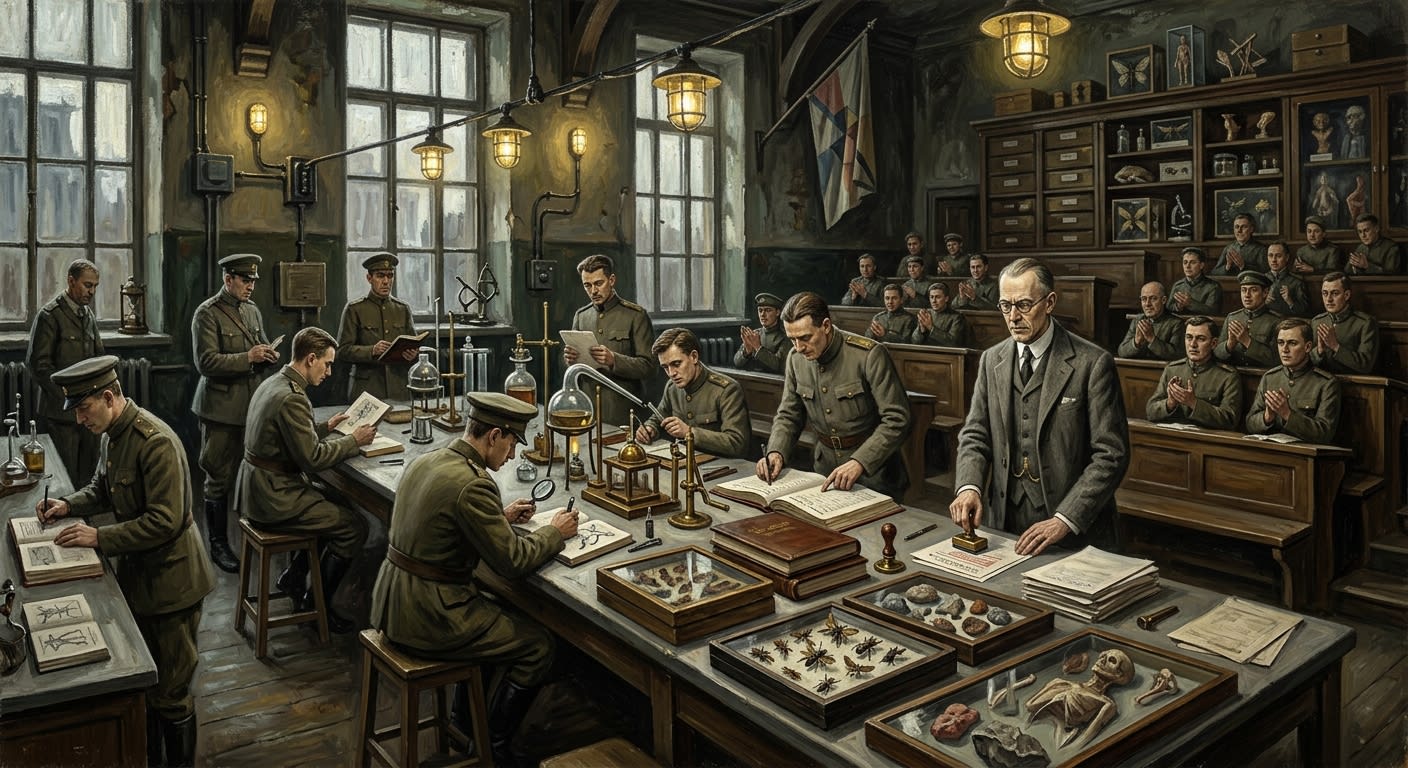
Academies
New cathedrals of Reason, with better brass and worse gods
The Academies taught Europe to replace altar with demonstration table, relic with specimen case, prayer with applause, and cruelty with excellent paperwork.
Codex Ref. I.1.03-000
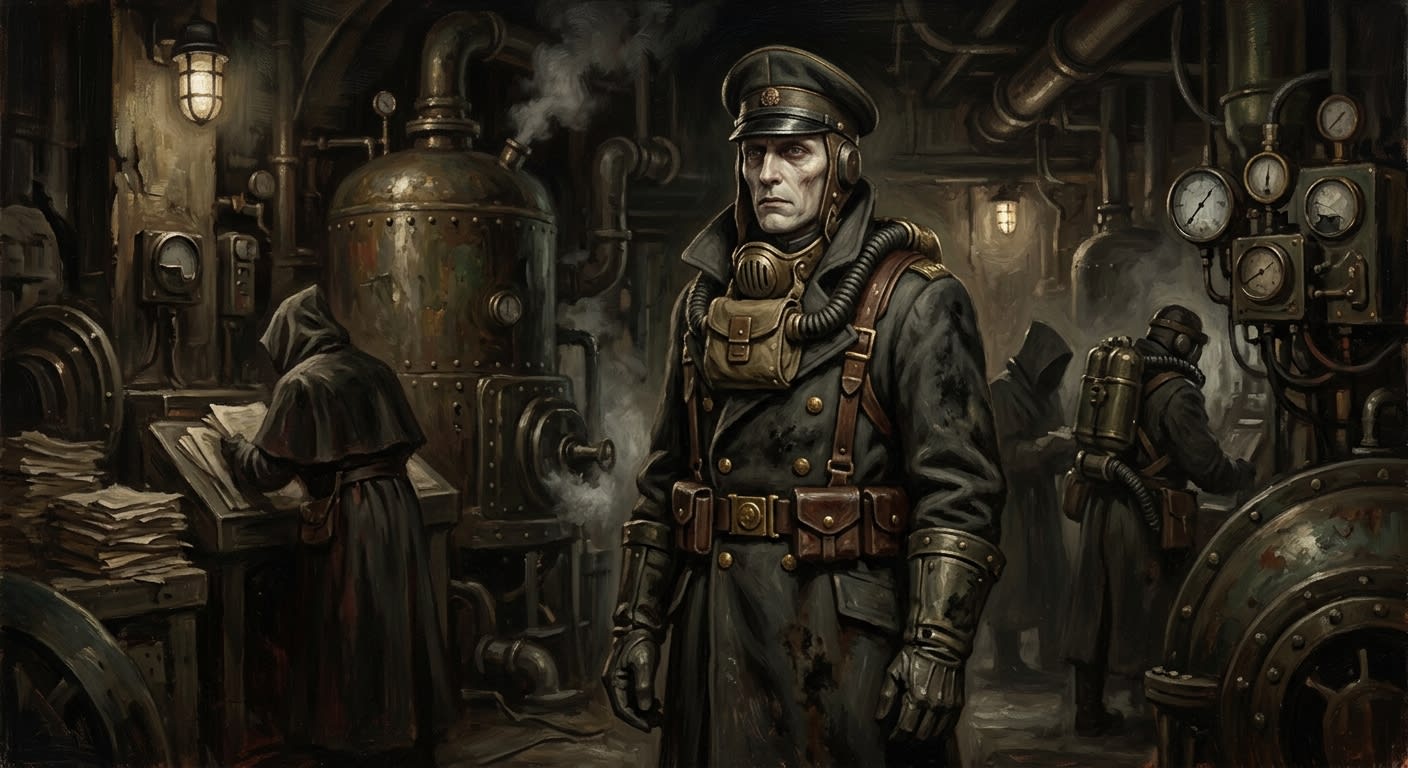
Adept Harlen
The dead cartographer who may still be measuring the river
Adept Harlen vanished during the A.S. 174 Drava survey, was declared dead by exposure, and was sighted unchanged at Kestrel-11 twenty-six years later.
Codex Ref. III.2.01-021
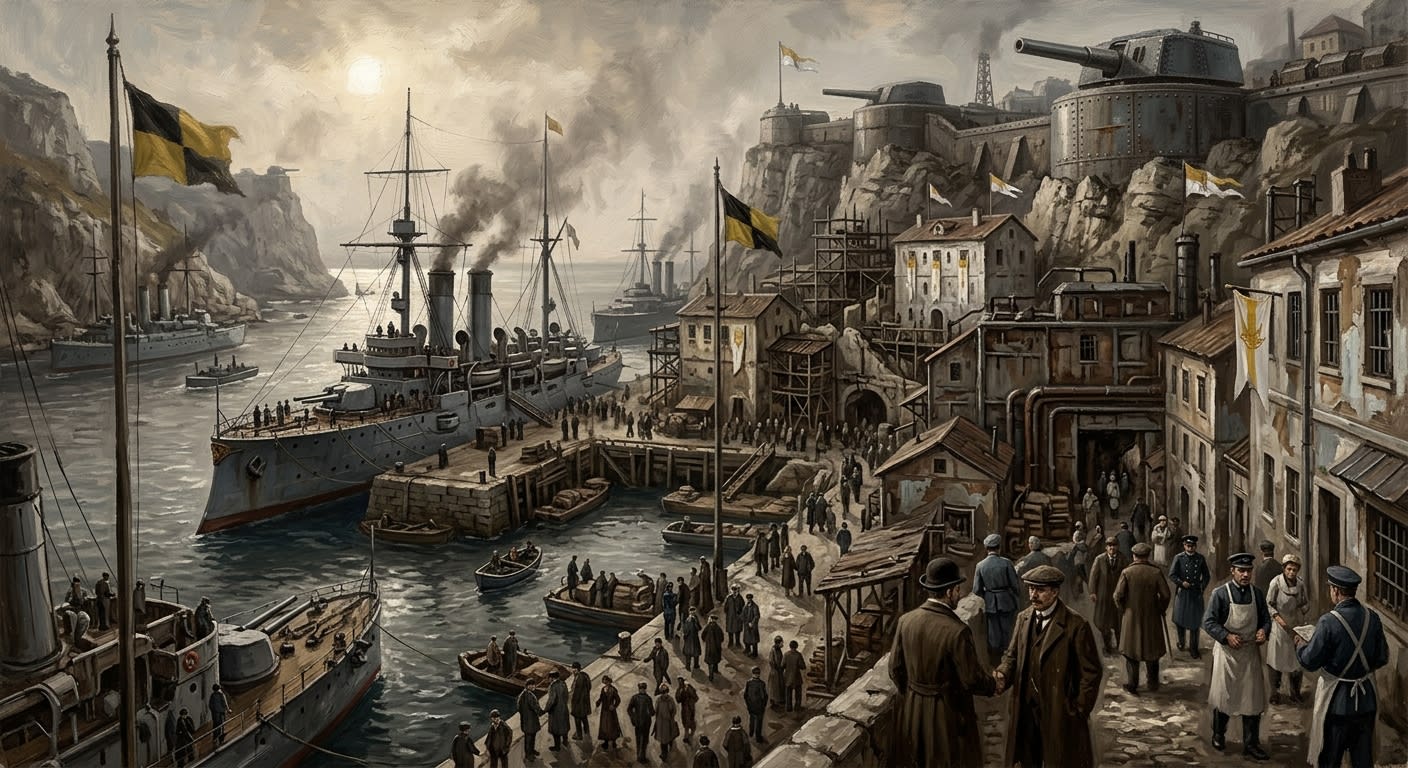
Adriatic Coast
The white edge where pilgrimage, quarantine, and invoice learn to float
The Adriatic Coast is the Synod's white southern hinge: pilgrim piers, quarantine flags, cliff guns, fever wards, and profitable fraud.
Codex Ref. II.7.03-201
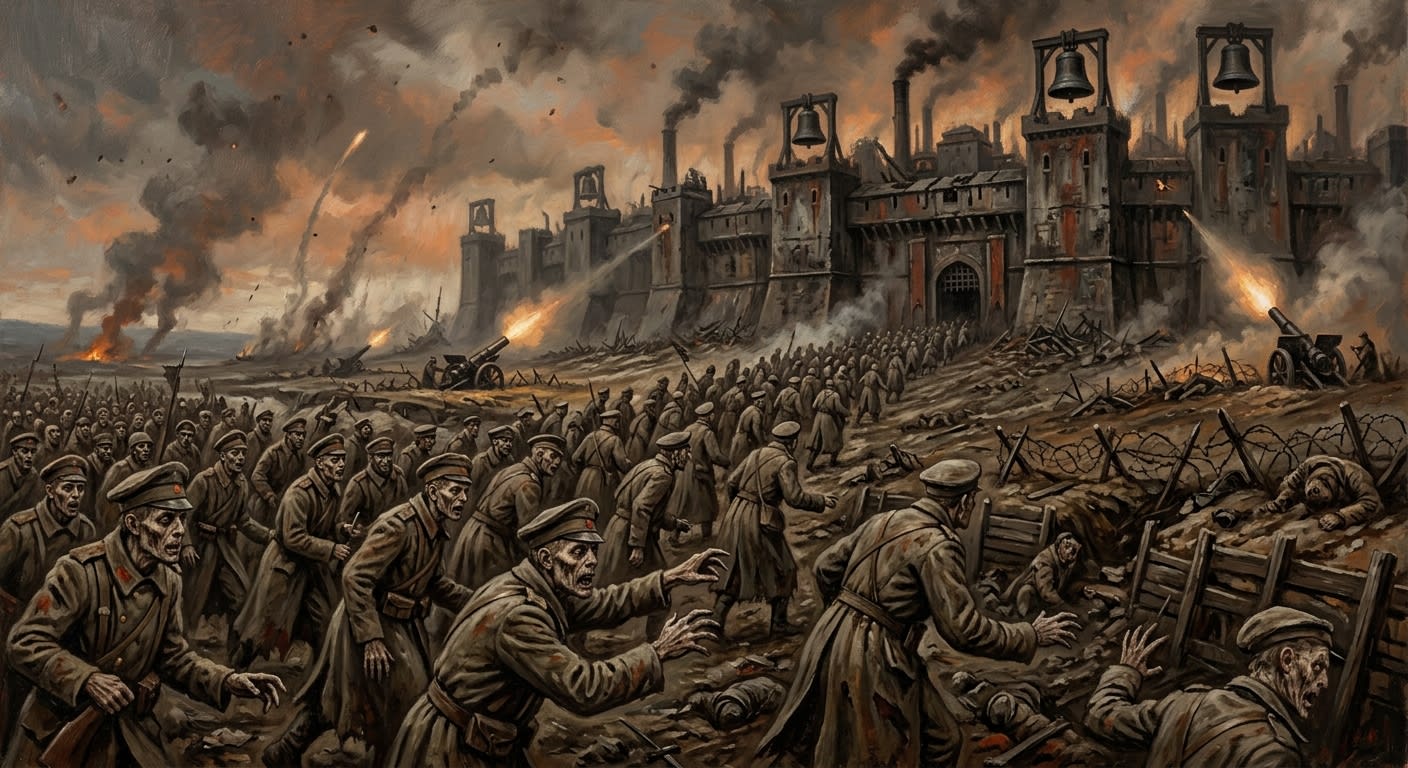
Advance of the Empty Maw
Hunger came walking; the bells taught it arithmetic
A.S. 195 plate of Kargath's hunger-host before Bastion-Constantinople, where artillery slowed appetite and bells kept men from eating themselves.
Codex Ref. VII.5.10-195
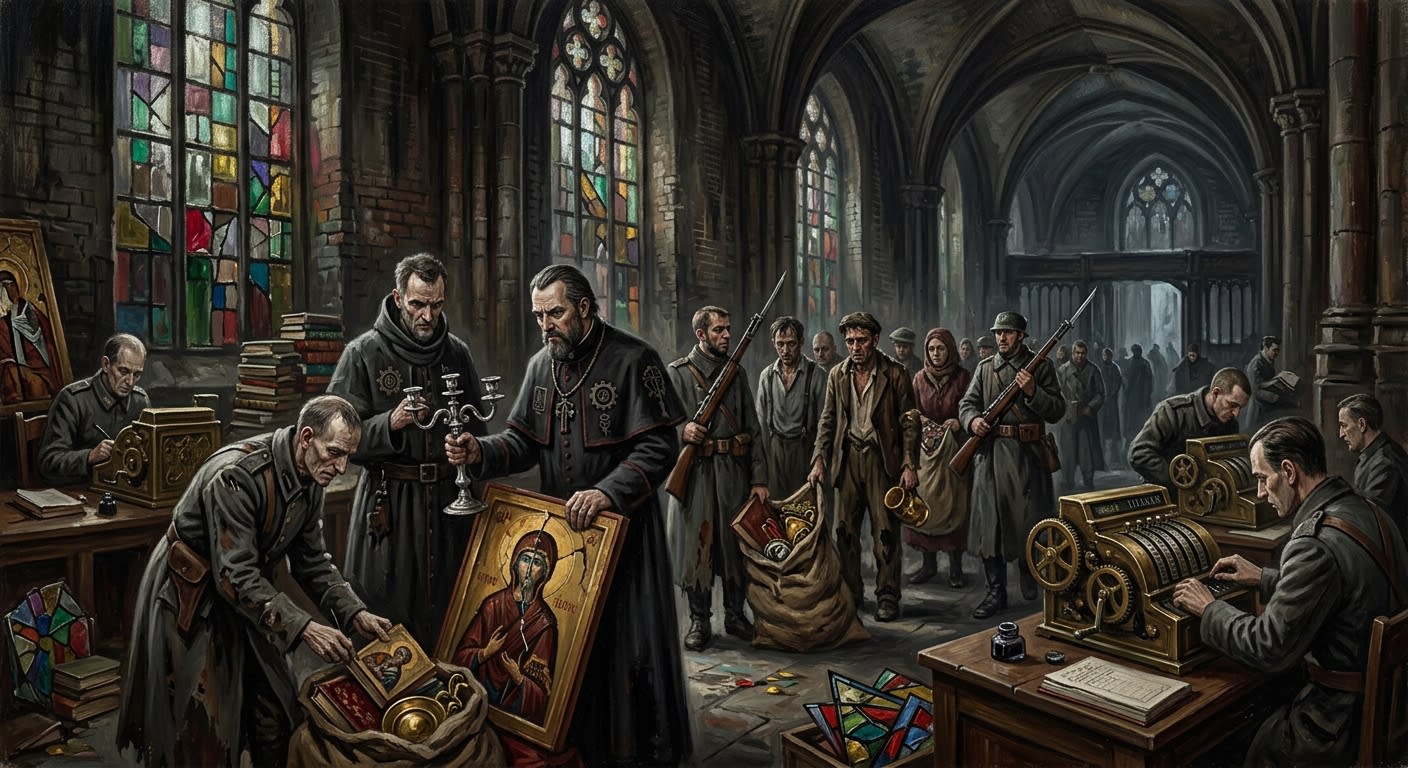
Aesthetic Tithe
When destruction discovers taste
Denied revenue, tolerated theft, and stained-glass hypocrisy: the Aesthetic Tithe turns seized beauty into patronage under the smile of useful sin.
Codex Ref. XIII.1.76-094
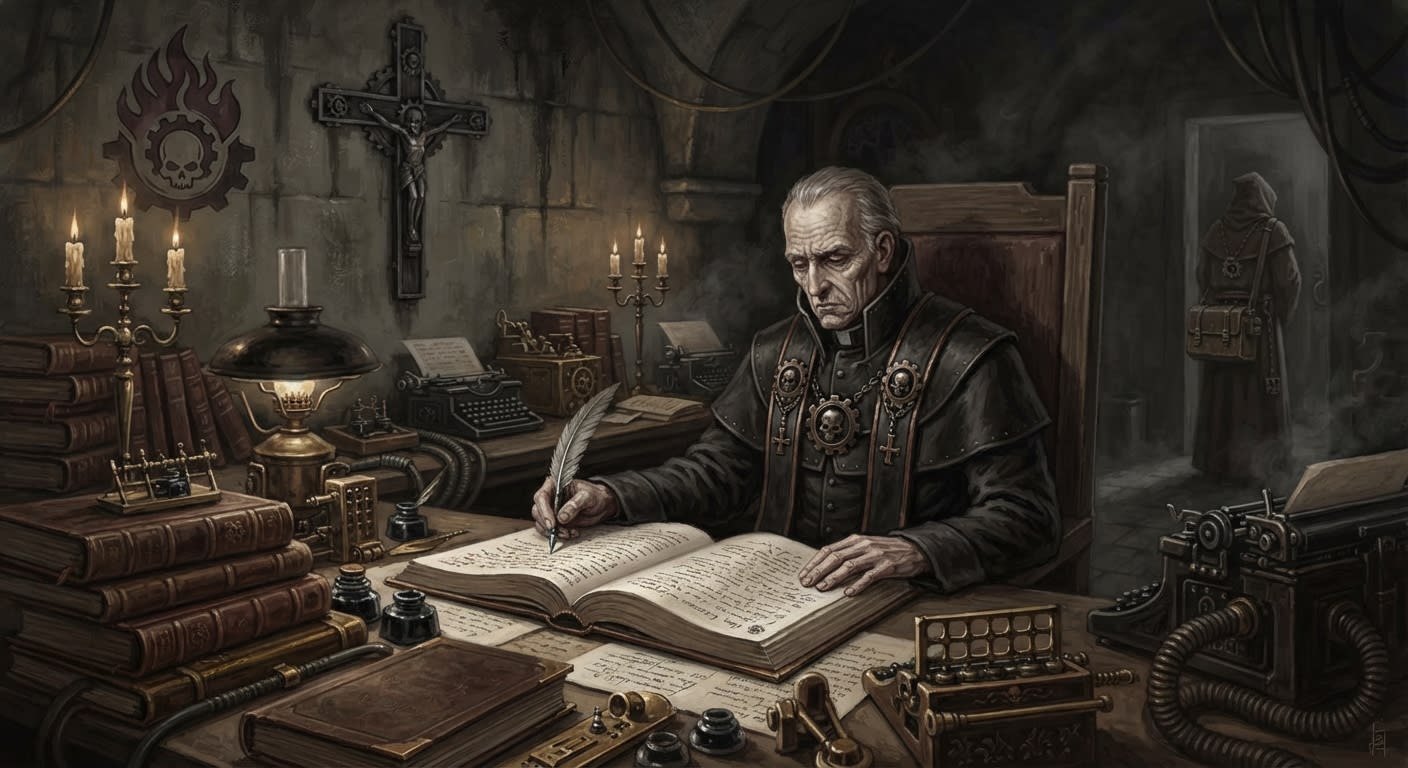
Aldric the Unbending
Thirty-one years, one perfect sentence, and no accommodation
The longest-sitting Liturgist-Primus, useful to the Bureau of Rites because almost nothing remains of him except thirty-one years, a perfect sentence, and a refusal no petitioner can answer.
Codex Ref. III.2.01-201
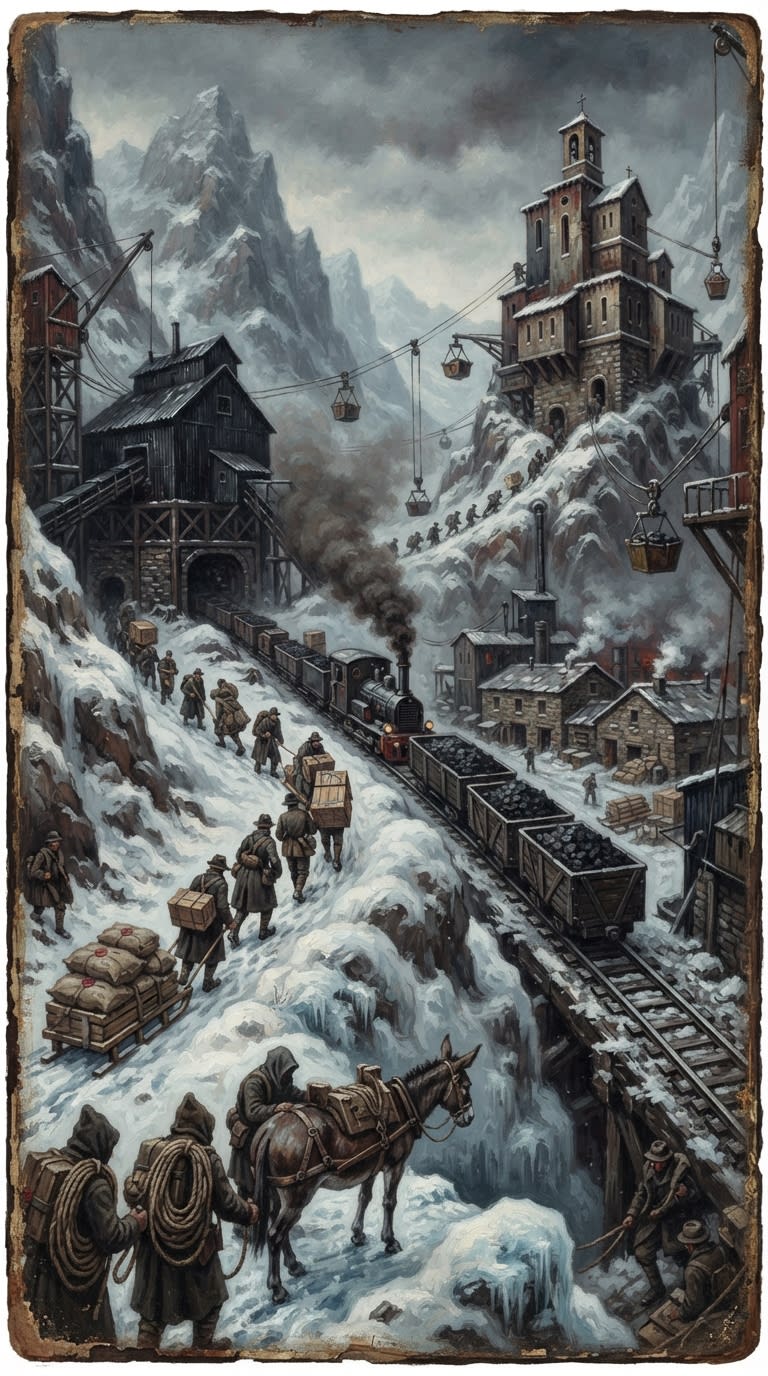
Alpine Marches
The Mountain Province That Obeys by Receipt
The snowbound Procuratorial region of passes, salt roads, coal depots and hidden wards whose obedience is meticulous, profitable and never quite submission.
Codex Ref. II.2.08-201
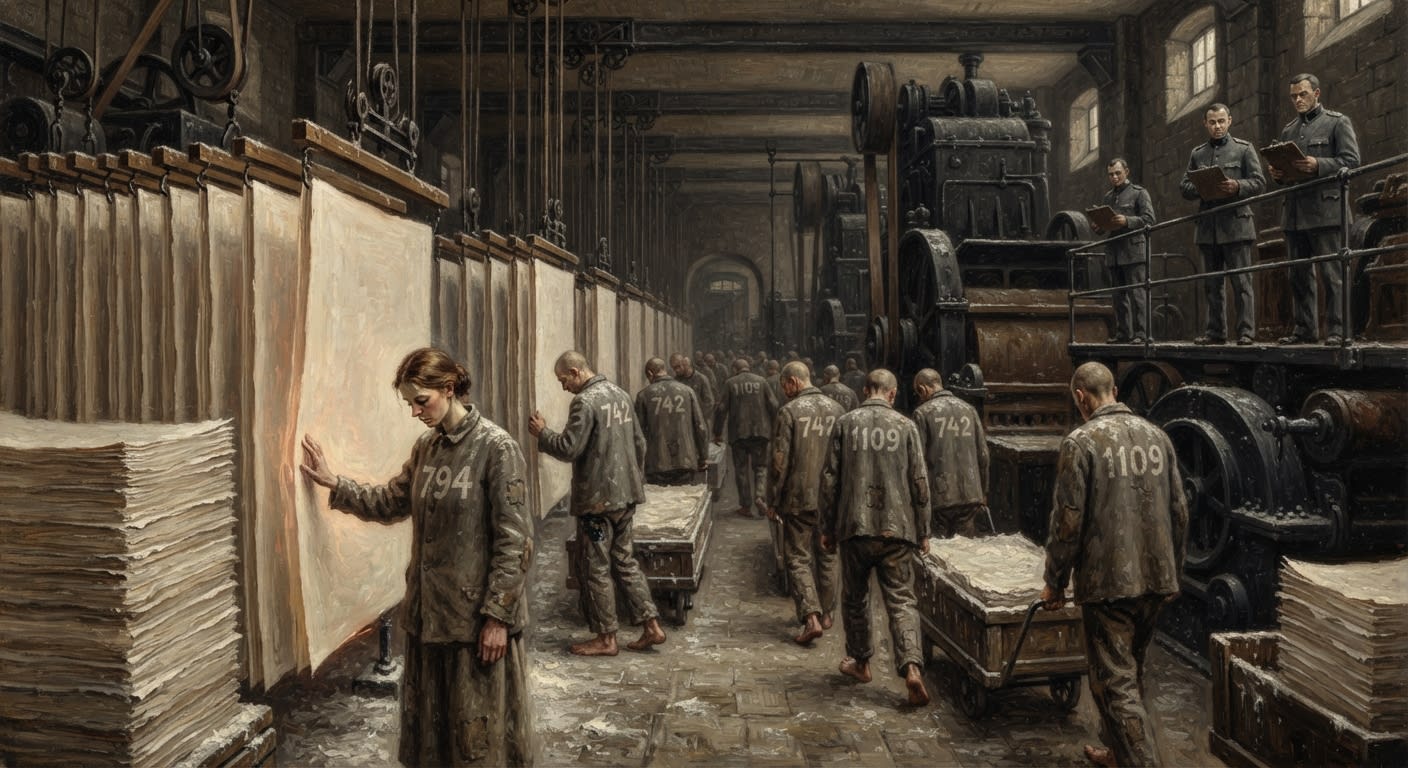
Anonymous Productive Penance
Where a name becomes a number, and the number becomes paper
Anonymous Productive Penance is the Paper Mines sentence that strips condemned workers of names, invoices their labour, and turns guilt into warm, troublesome sheets.
Codex Ref. XIII.1.02-114
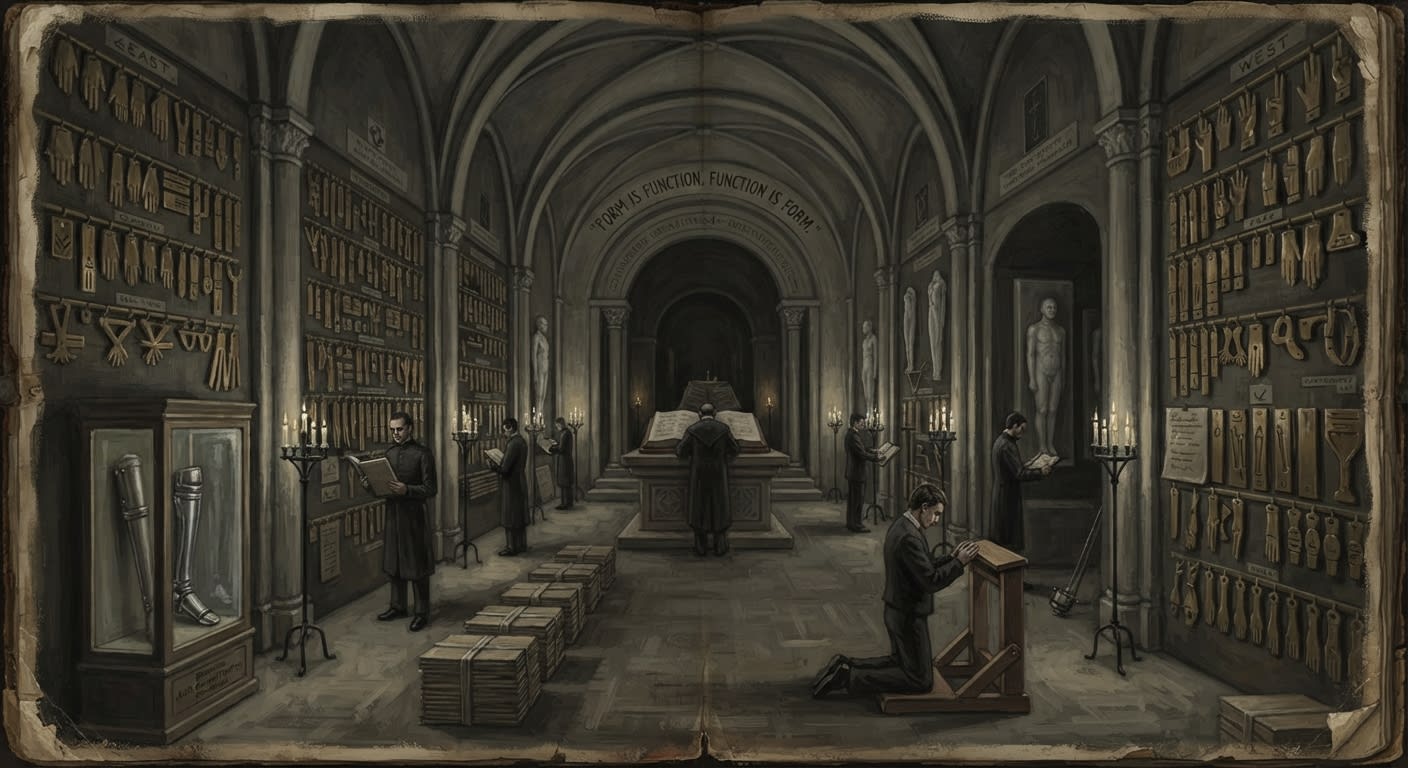
Archive of Prescribed Gesture
The room where the Synod files the body.
A vaulted Strasbourg hall where posture becomes law: brass plates, knee gauges, timing tables, sealed anomalies, and every lawful motion the faithful may perform before the Creator.
Codex Ref. II.2.06-195

Archon
The chair survives the man and charges rent to history
An Archon is less a man than a legal altitude: Bureau sovereign, city master, seal threshold, and chair that lets the Synod replace the occupant while preserving the blame.
Codex Ref. XIII.1.07-090
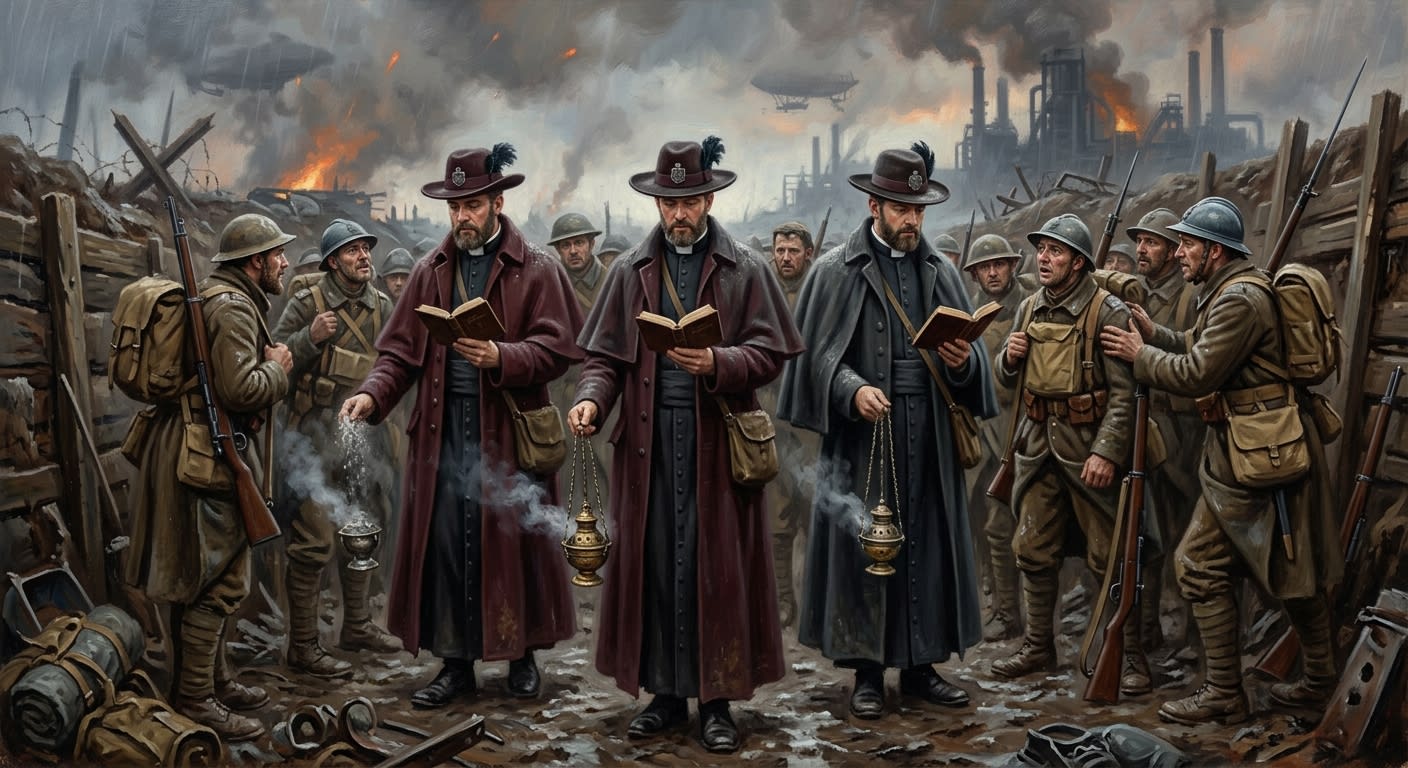
Ash Chaplains
Breath is only pastoral after War has taught it to hold
Bureau of War lung-clergy who deploy relic-ash, the Litany of Stones, cadence discipline, and name-silence to keep breach cohorts breathing in obedience under shell, song, and rupture.
Codex Ref. VIII.5.07-001
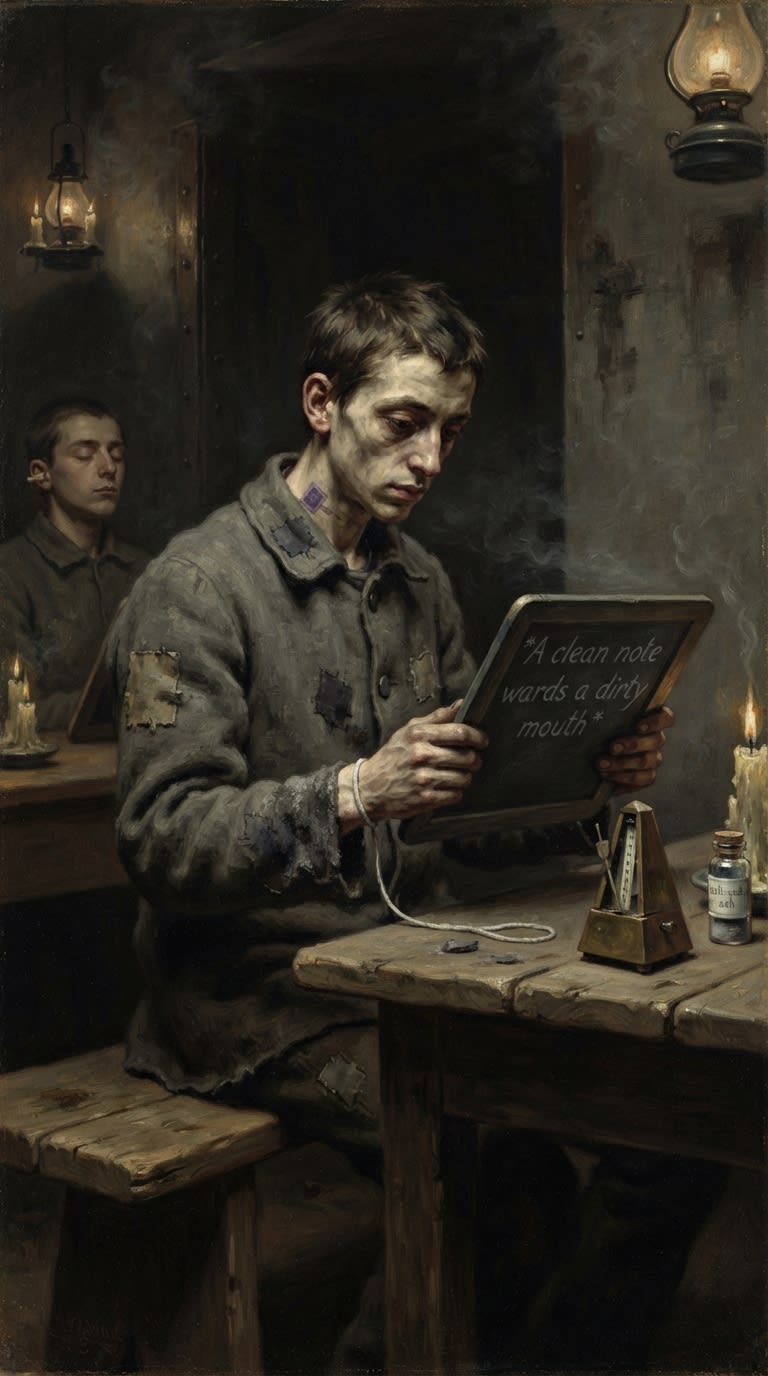
Ash Chorister
The novice rank where the Iron Choir teaches breath by blame
Ash Choristers are Purity's lowest licensed throats: novice drones with ash on the tongue, a token under it, and a professional gift for receiving blame.
Codex Ref. XII.24.01-002
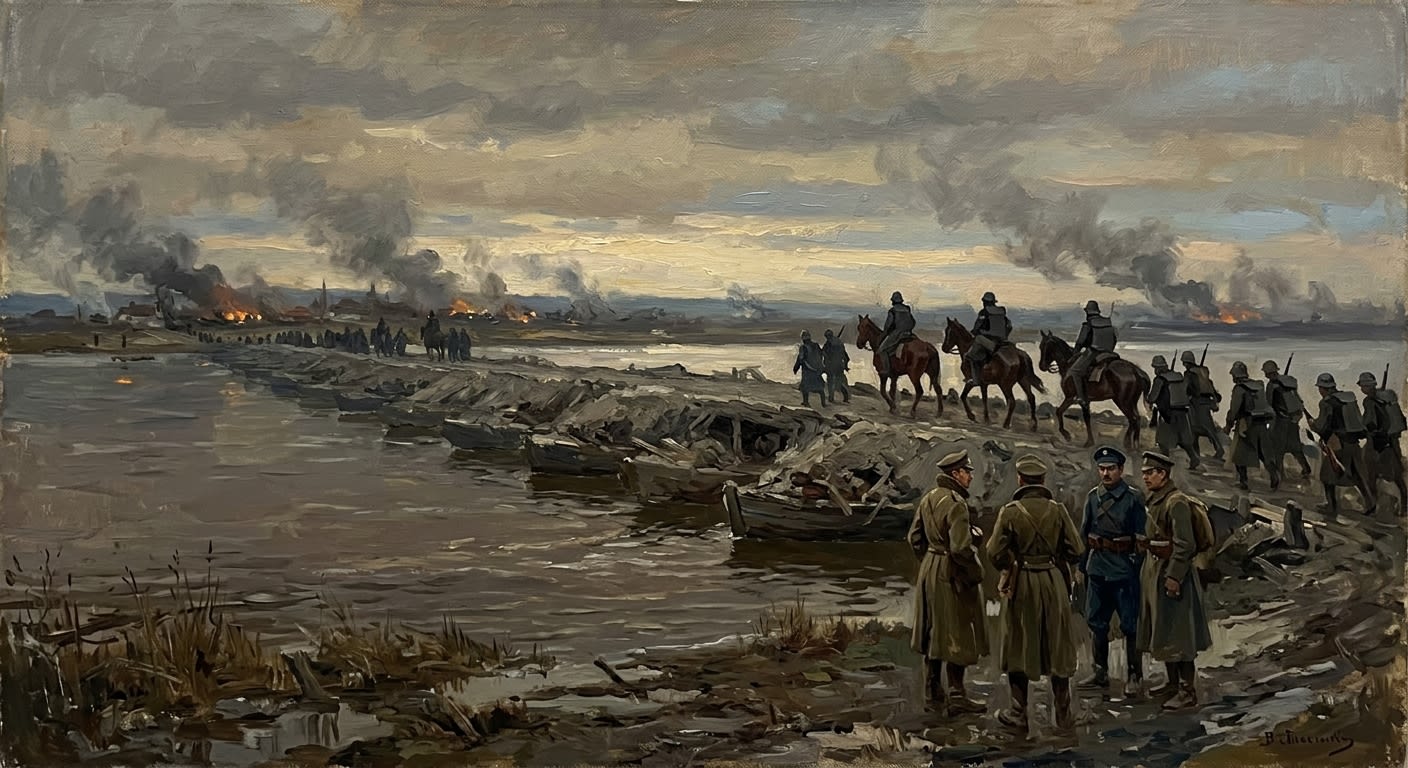
Ash-Fodder
The cheapest weapon in the Adversary's ledger — and the one no committee is willing to count
The Ash-Fodder Militias are the lowest tier of the Shadow Court's mortal force taxonomy — unenhanced, unarmed or barely armed, drawn from conquered populations and driven forward to exhaust Synod ammunition and armour before the real assault begins.
Codex Ref. IX.1.03-001
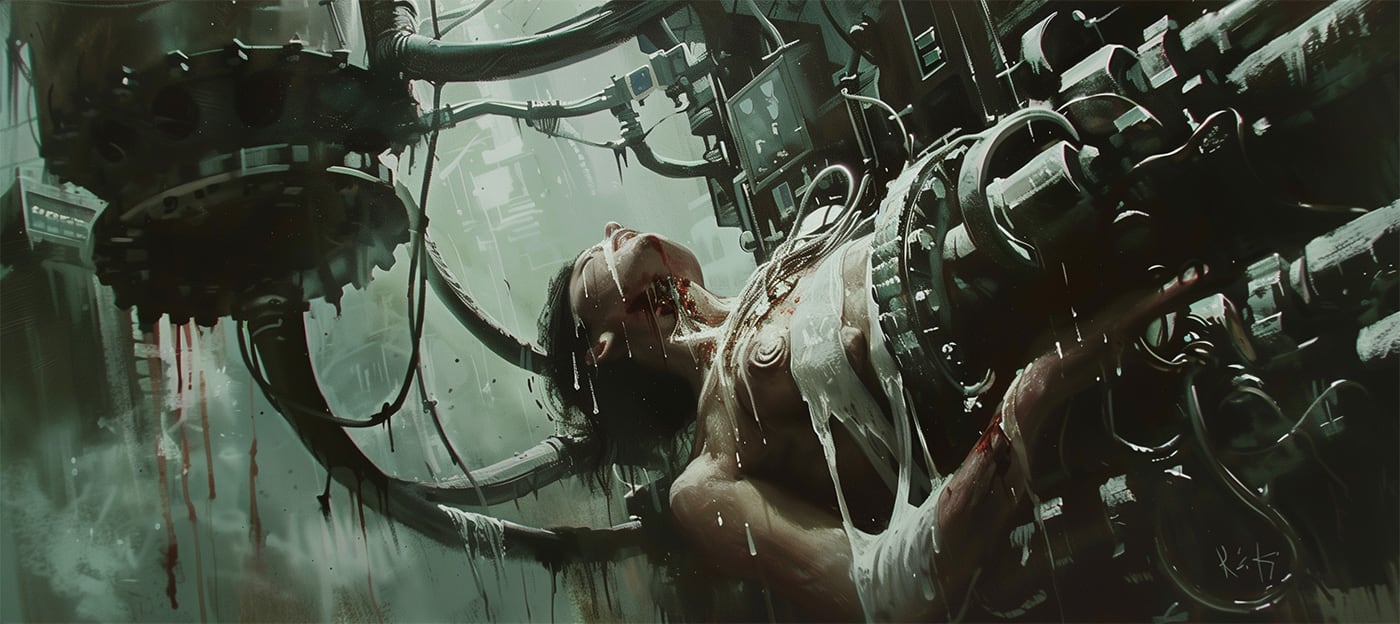
Ash-Mothers
A production line. The Bureau said two paragraphs were enough. They were not.
The Bureau's most exhaustive silence — Ash-Mothers are enemy reproductive logistics cells, captured women sustained by sorcery to generate Thrall regiments at industrial scale. I file the account that two paragraphs could not contain.
Codex Ref. IX.1.02-001
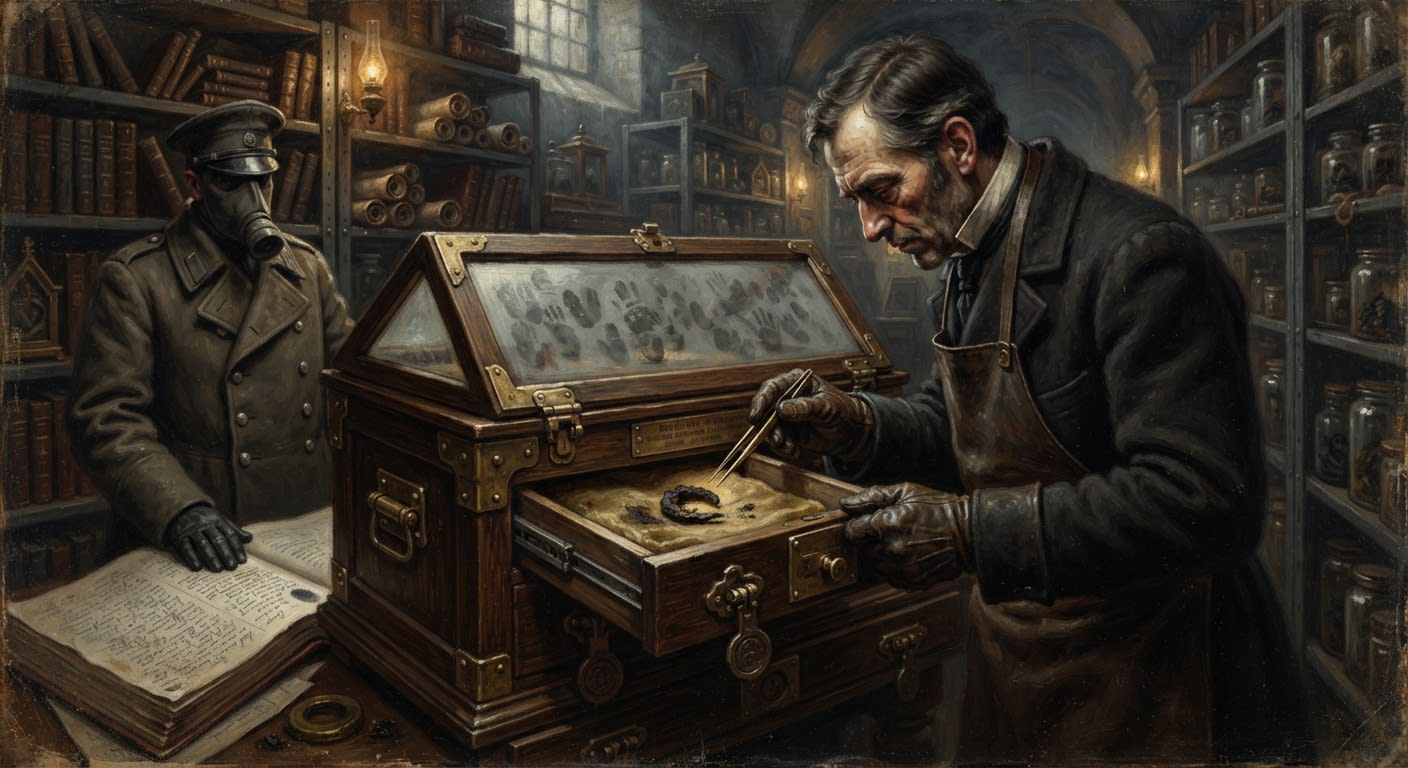
Ashen Thumbnail of Cologne
A relic too small for proof and too useful for disposal
Blackened nail-fragment attributed to Saint Vellum-of-the-Quiet-Hand, never authenticated by Relics and never surrendered by Records because Cologne's corridors keep answering the practical question.
Codex Ref. III.2.04-120
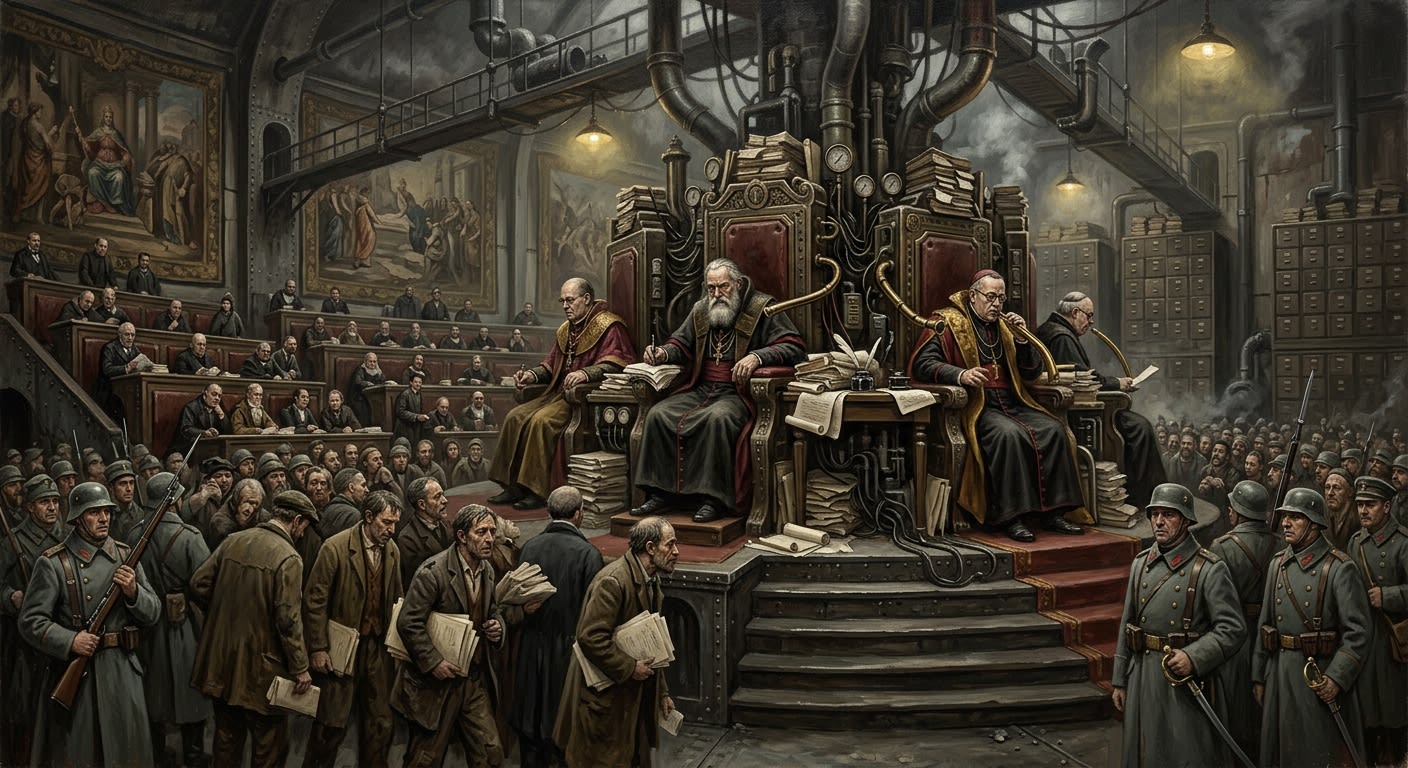
Assembly of Thrones
A chamber where pride is seated before it becomes militia
The Assembly of Thrones lets Bishops-Praetorial thunder safely: grievance seated, fury docketed, pride taxed, and every rebellion delayed by procedure.
Codex Ref. XIII.1.07-093

Assessment Engines
The machine does not ask what you cost. It tells you what may be bought.
Velmora's Assessment Engines price objects, persons, loyalties and betrayals with intolerable accuracy; the Synod captured them, ordered them destroyed, and then kept their accounts.
Codex Ref. XIII.1.27-201
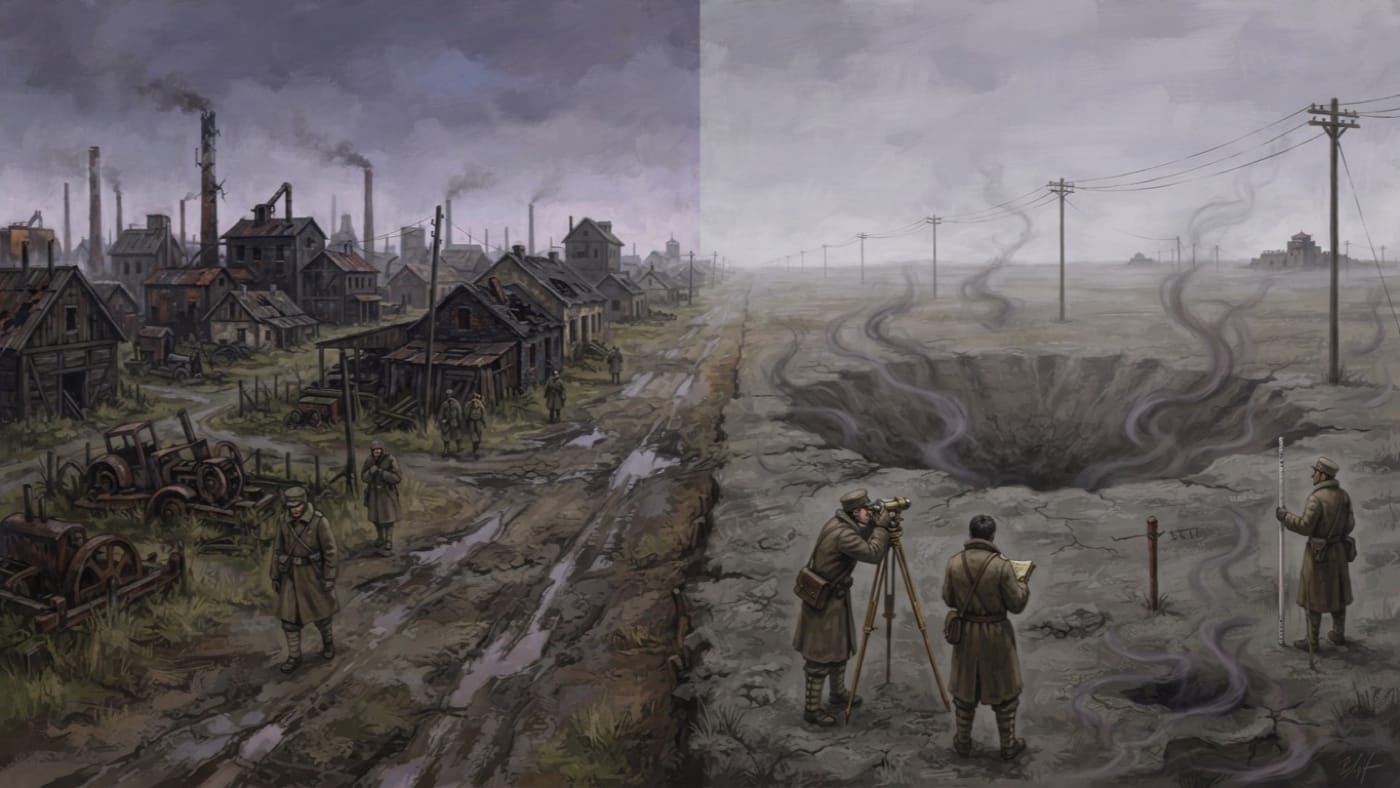
Baja
A town kept as an address for a grave whose hunger is reaching.
Baja survives as the locator for Famine Pit Twelve on the former road to Szeged. Two surveys record its hunger reaching farther; neither counts the dead. I have kept the town and the grave in separate columns.
Codex Ref. V.6.01-003
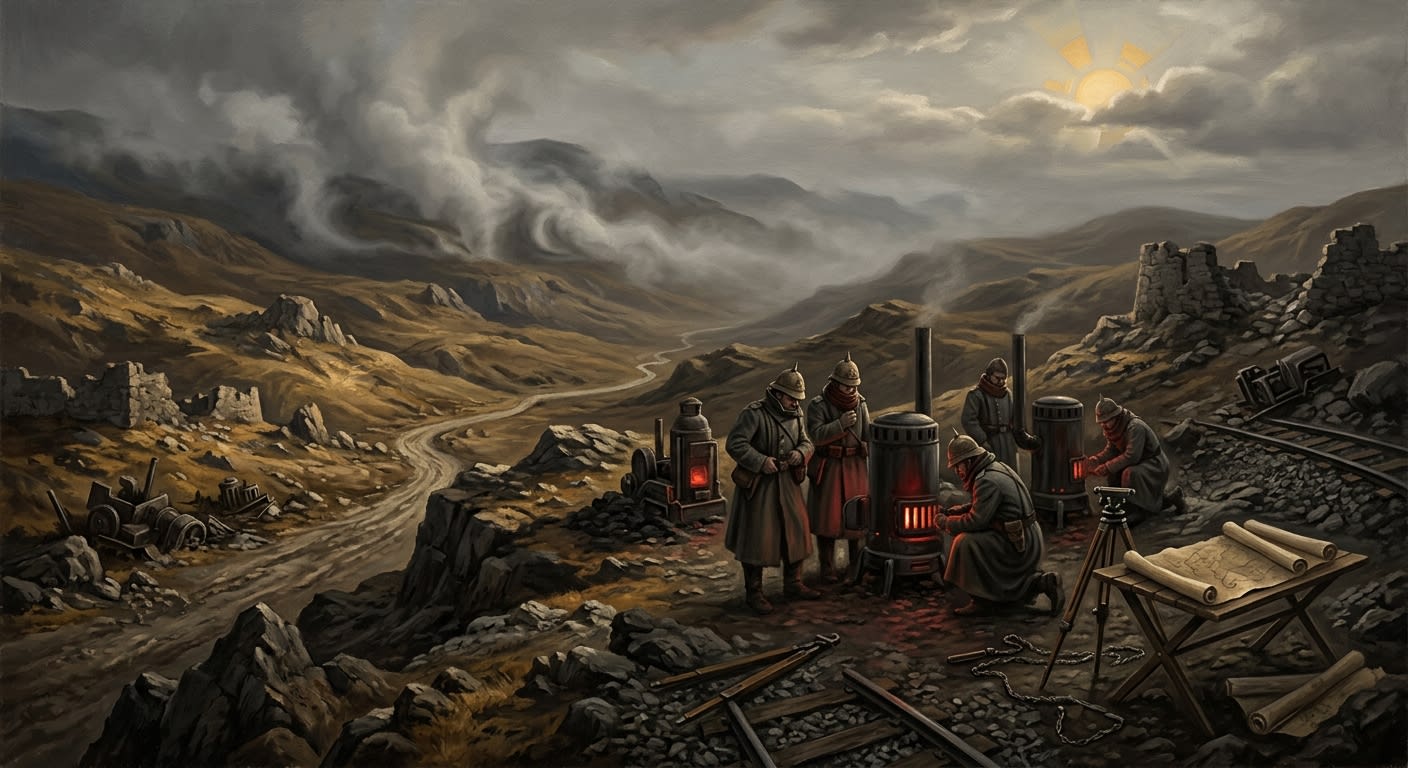
Balkan Foothills
Where the weather learned politics
The Balkan foothills are the broken stair below Shipka, where Maldrake's furnace weather, Syrion's time-fog, and Synodal maps all lose jurisdiction.
Codex Ref. II.4.12-045
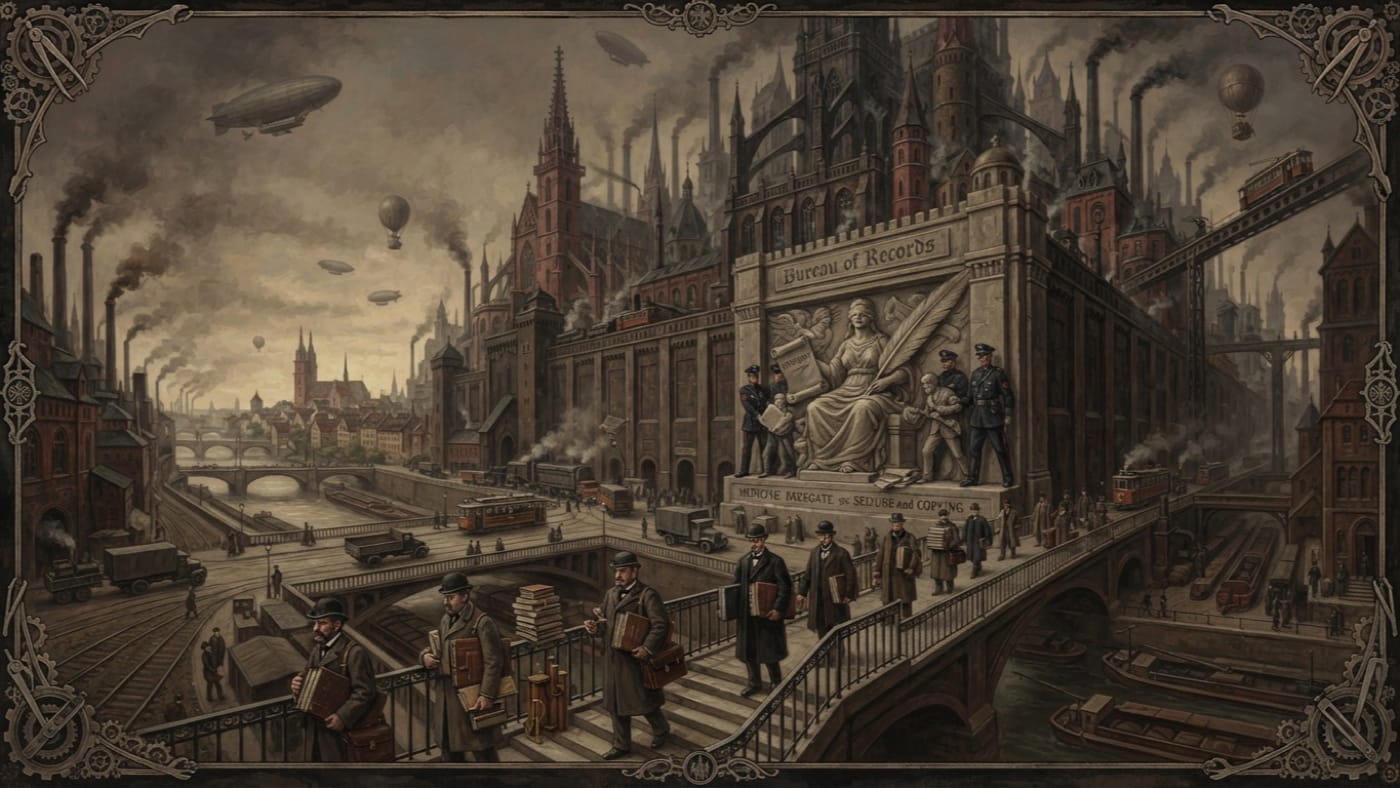
Basel
A city of letters; three words against the seal
Basel sent letters, physicians and one stubborn anatomist into the Ledger. Its unnamed Medicine delegate was removed from the A.S. 147 Congress; his treatise was seized, copied, studied and denounced.
Codex Ref. II.2.01-147
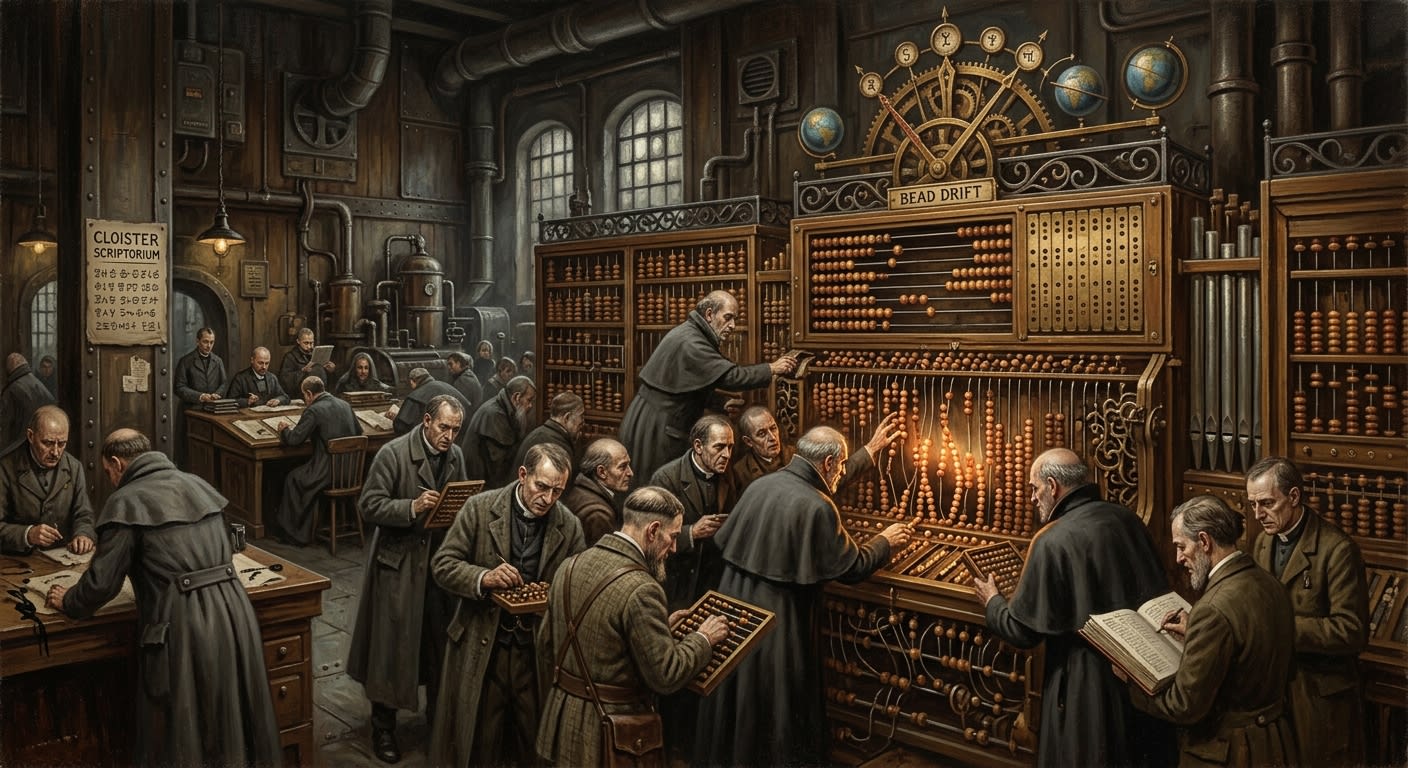
Bead Drift
The count moves, and Records bills the correction
Bead Drift is the Cloister's forbidden arithmetic: strings warm, names return, counts alter, and Records writes handling deviation over the sound of beads counting back.
Codex Ref. XIII.1.72-004
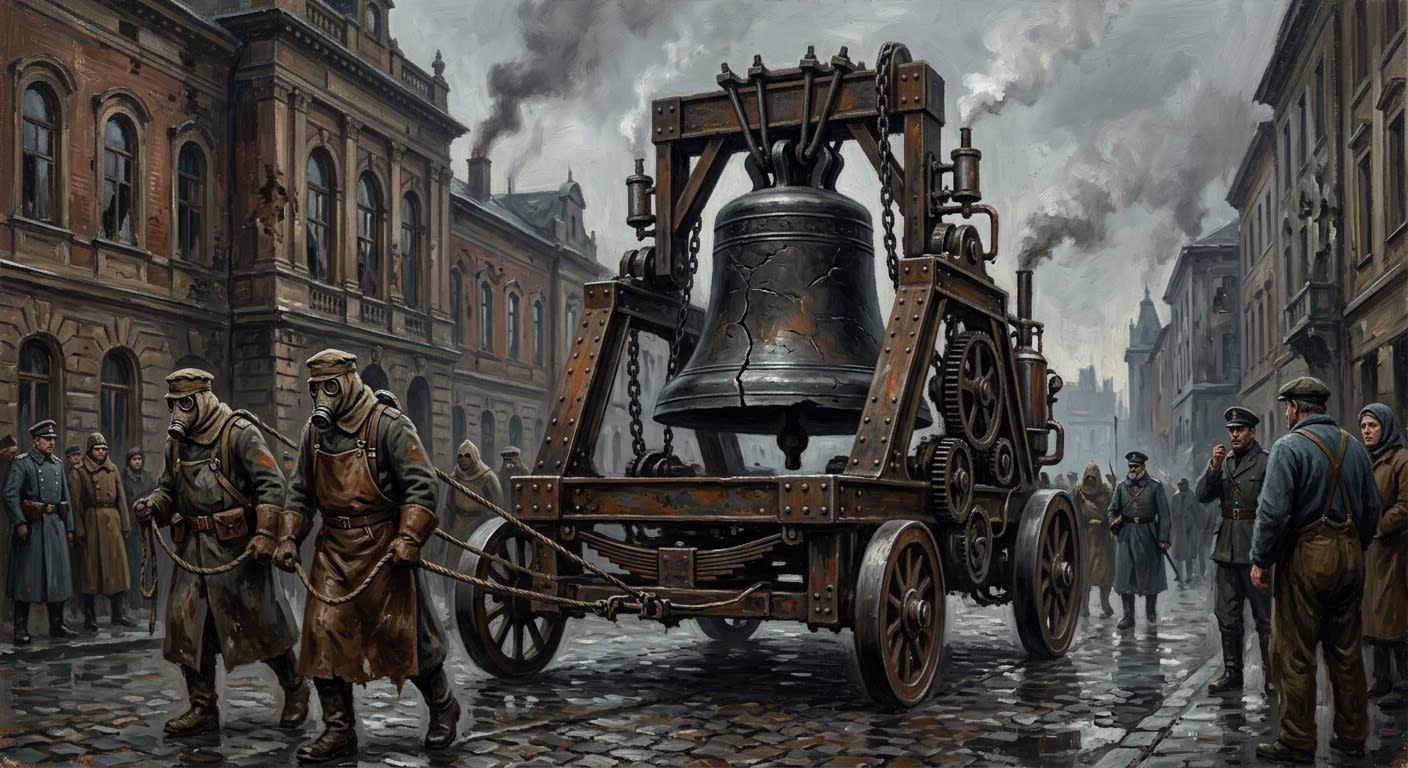
Bell of Saint Isidore
The cracked bronze that made Debrecen inherit a miracle's bill
The Bell of Saint Isidore is a cracked mobile relic-bell born from Kalnik Ridge, useful enough to parade and costly enough for Debrecen to remember in its bones.
Codex Ref. V.1.02-001
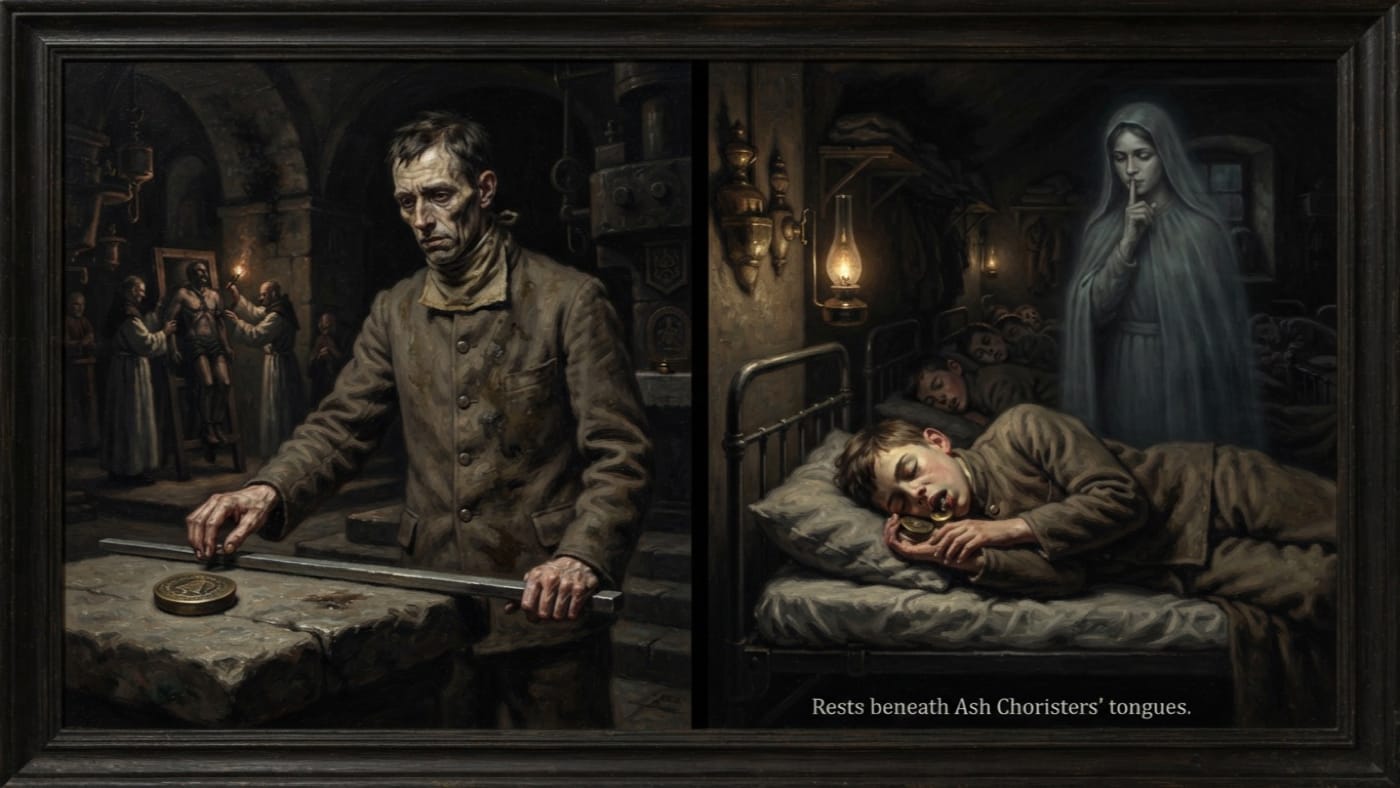
Bell-hour Metronome Token
The bell enters the mouth; the pension remains under review
Purity's bell-hour token keeps cadence by day and rests beneath Ash Choristers' tongues by night. Medicine calls the dreams sickness; Doctrine calls them devotion.
Codex Ref. XIII.1.41-213
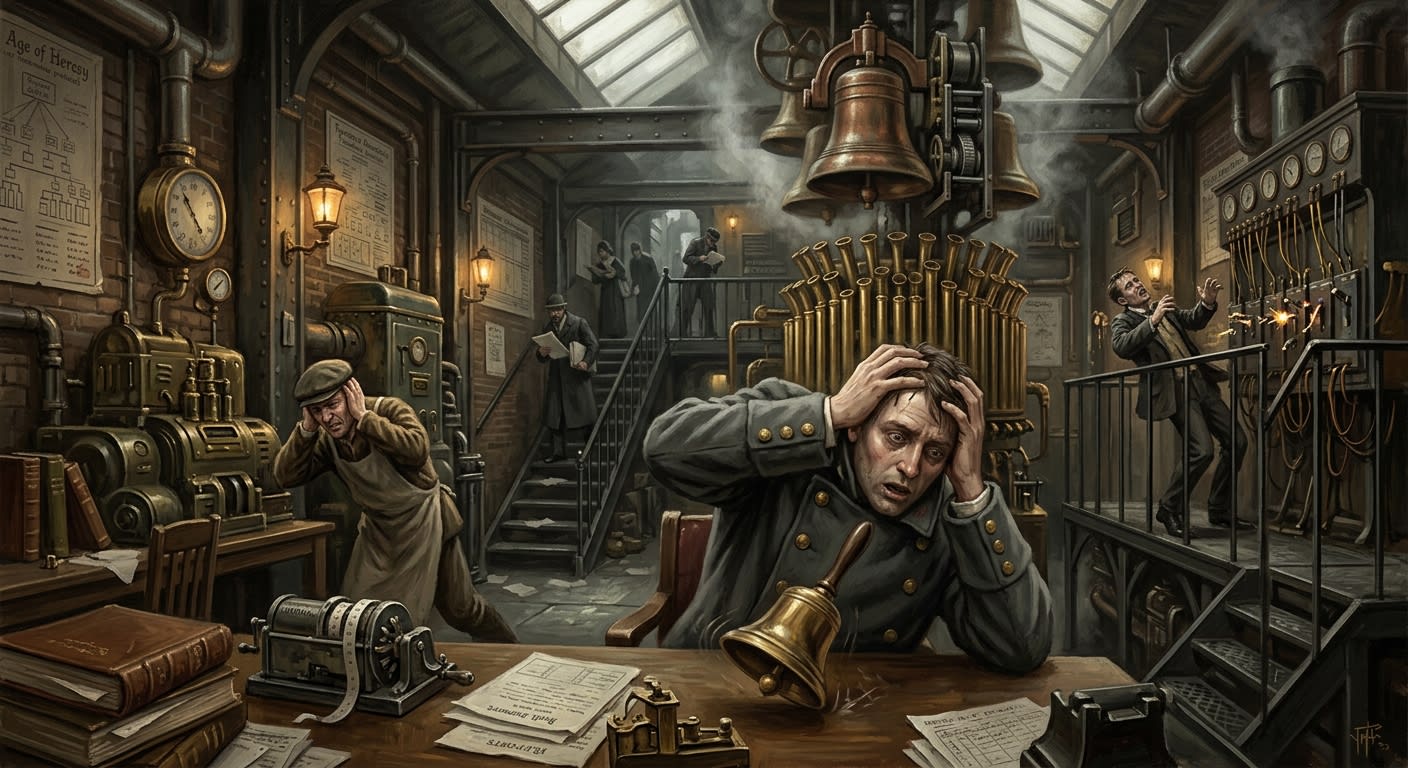
Bell-sickness
The bell stops; the obedient skull keeps ringing
Bell-sickness is the Synod's recognised resonance affliction: phantom peals, compulsive cadence, command mislocation, and the small theological problem of obedience ringing back.
Codex Ref. XIII.1.87-201
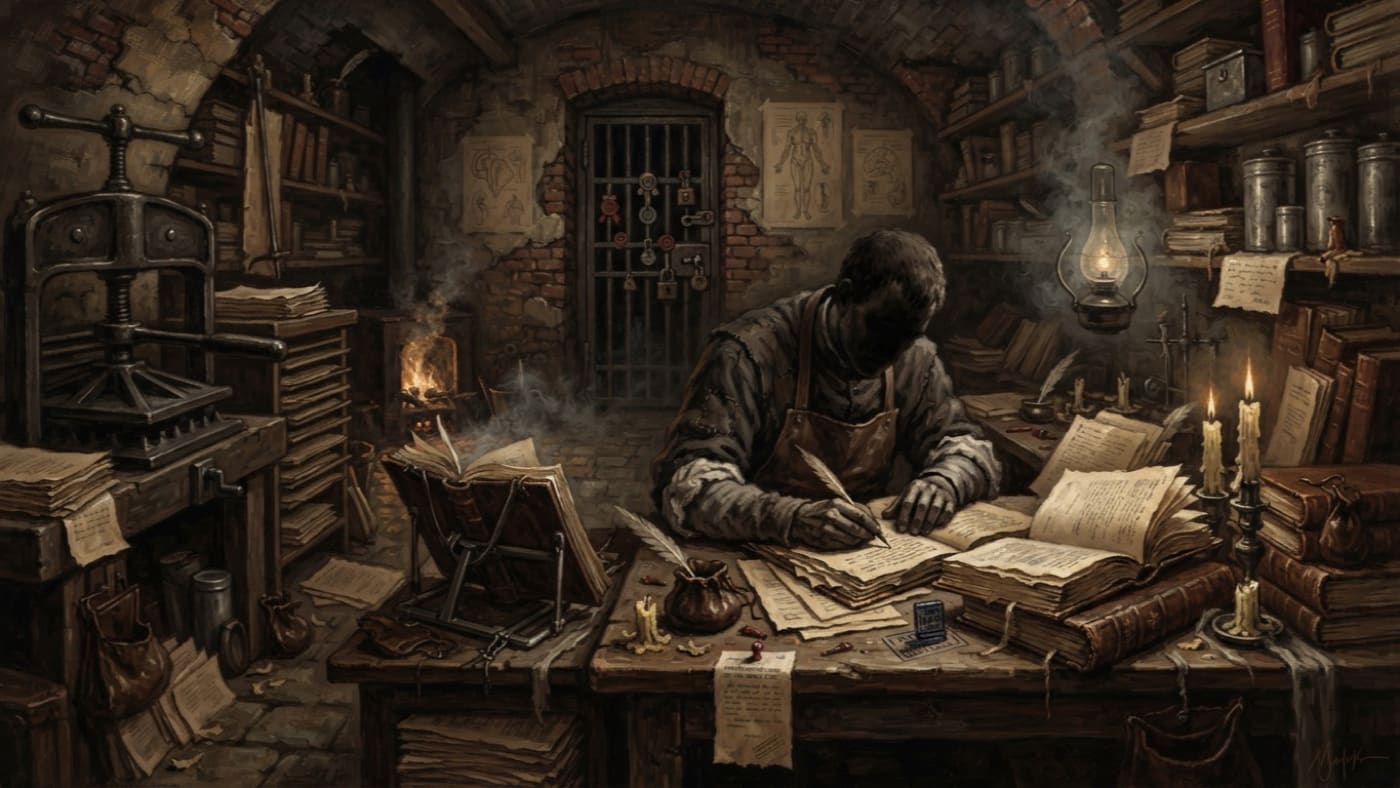
Bitter Mercy Line
A line with no address and no permission to correct the saints
One of twelve Ashen Circle copy lineages of the Index of Safe Lies, Bitter Mercy keeps the doses exact and the saints deliberately wrong. Its A.S. 201 survey records no founding date, fixed location, or named custodians.
Codex Ref. II.4.09-259
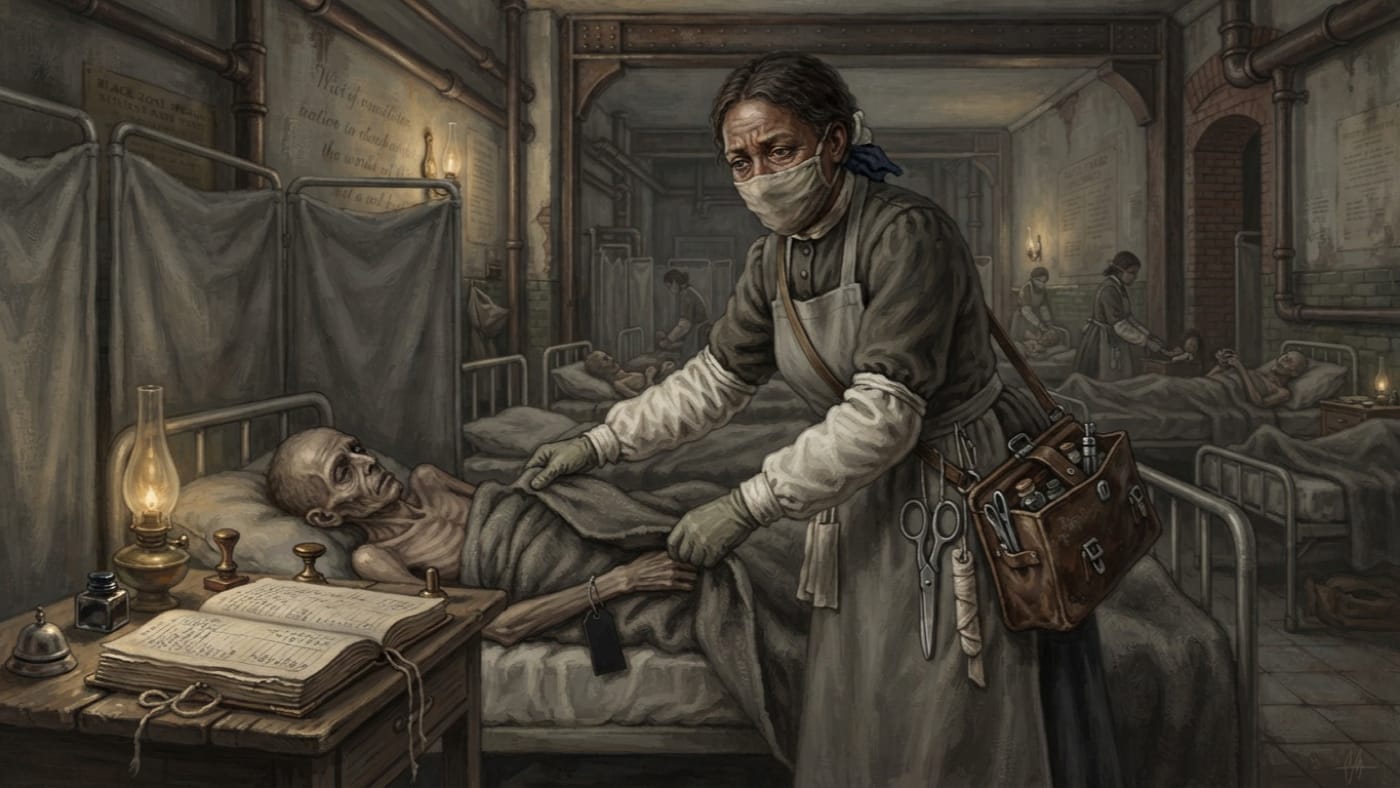
Black-Zone Specialist
Behind the screen, every kindness needs a signature
The Black-Zone Specialist serves Mercy Ward patients classified as terminal, contagious, anomalous, inconvenient, or beyond allotment. Every kindness needs a signature; every death must balance the ledger.
Codex Ref. XII.6.04-002

Blessing Lamp
The little tribunal with a brass handle
Brass-handled reliquary examination lamp whose sanctified beam makes bones, ash, and confiscated fragments answer before paperwork is ready.
Codex Ref. XIII.1.80-001
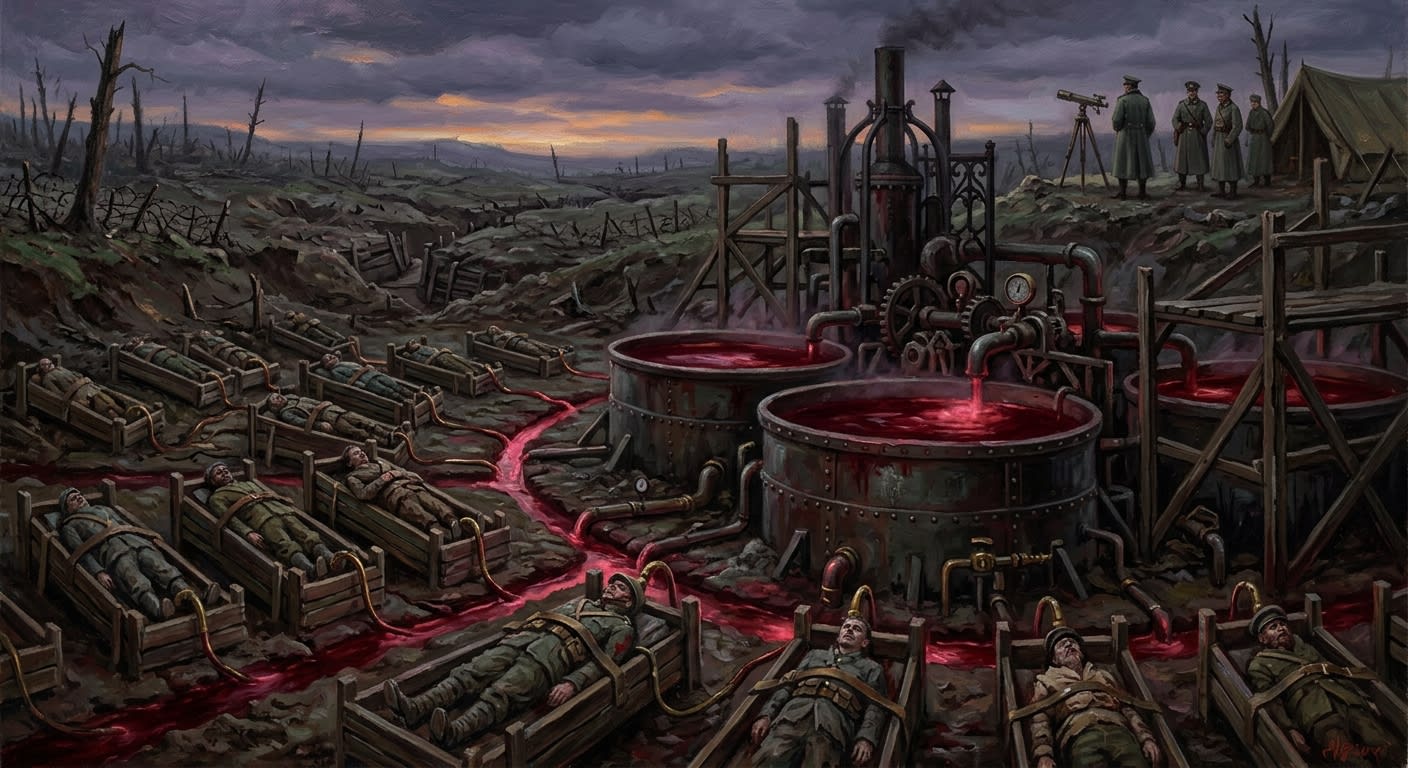
Blood-Tithes
Brass tubes, serial-numbered. Wooden cradles, precisely fitted. The Bureau calls it infrastructure. The screaming is a side-effect.
The Lie's sorcery economy runs on living blood. Prisoners are fitted with brass leeching tubes, arranged in geometric rows, and drained for weeks. The Bureau files it under infrastructure. The soldiers call it mercy work.
Codex Ref. IX.1.07-001
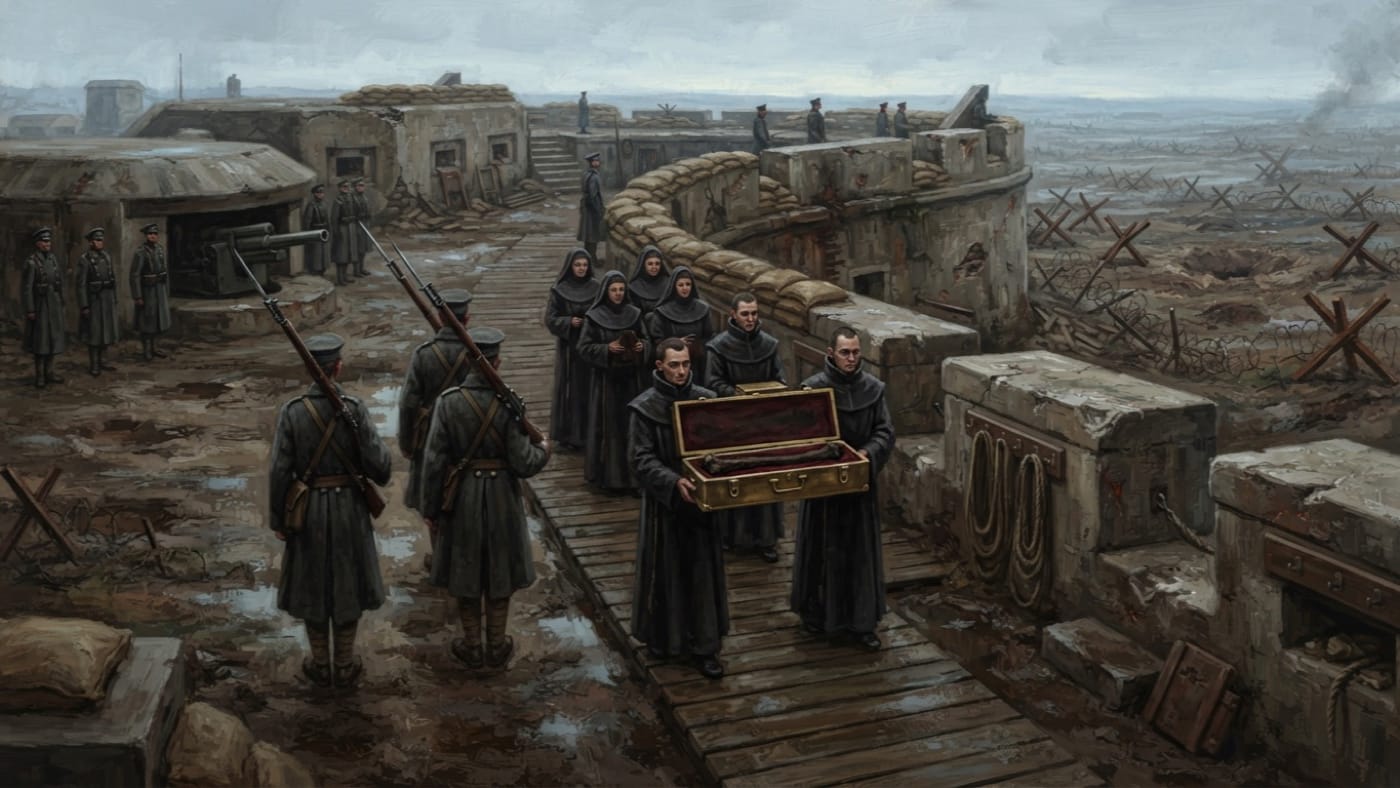
Bone Walk
Mechanism uncertified. Posture improved.
A notarized femur passes along the Ravelin of Vigilance on the third Friday of each month. The soldiers stand straighter. The miracle remains uncertified.
Codex Ref. XIII.1.12-311
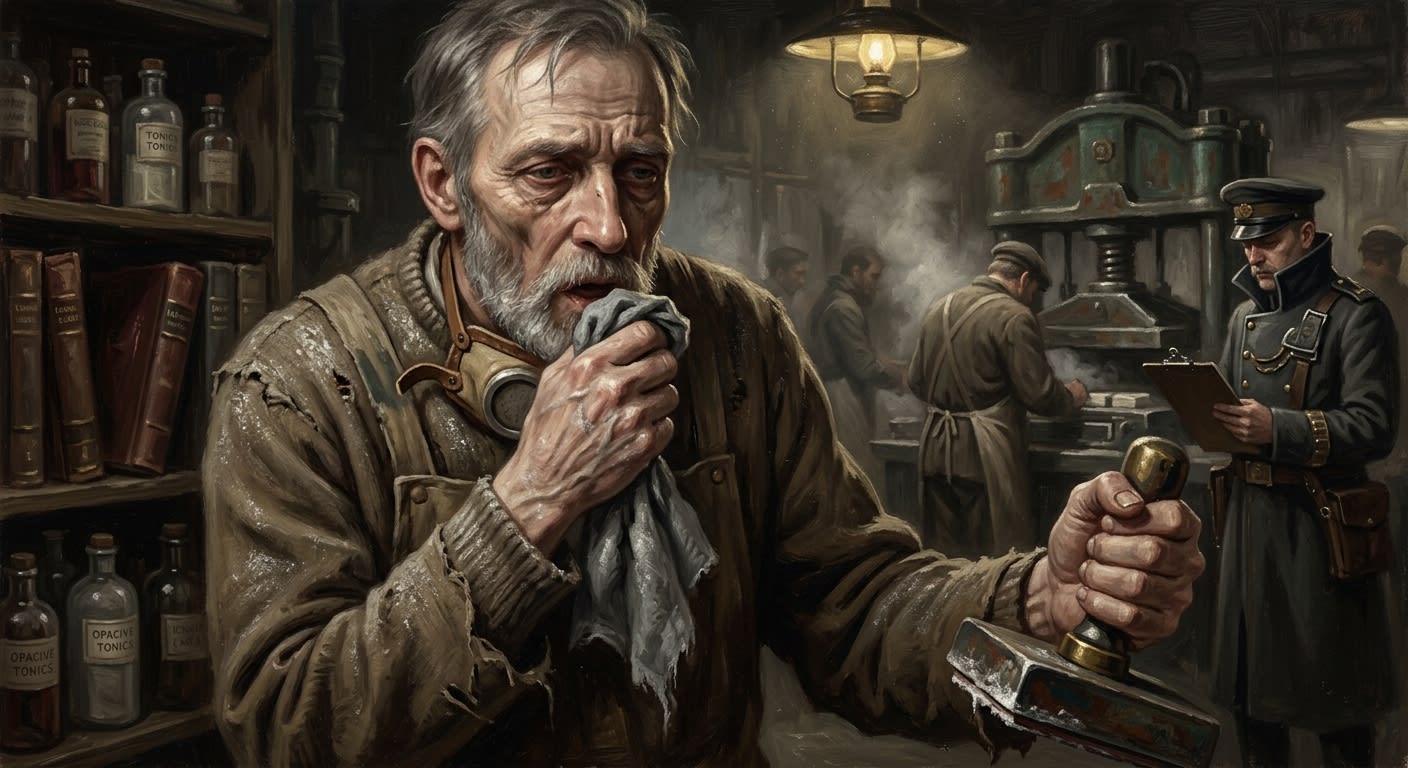
Bone-Lung
The dead enter the chest one opened rack at a time
Progressive marrow-dust sickness of Ritual Bone-Stampers, politely misnamed by Medicine, cheaply classified by Records, and compensated by no one with a soul or budget.
Codex Ref. XIII.1.44-001
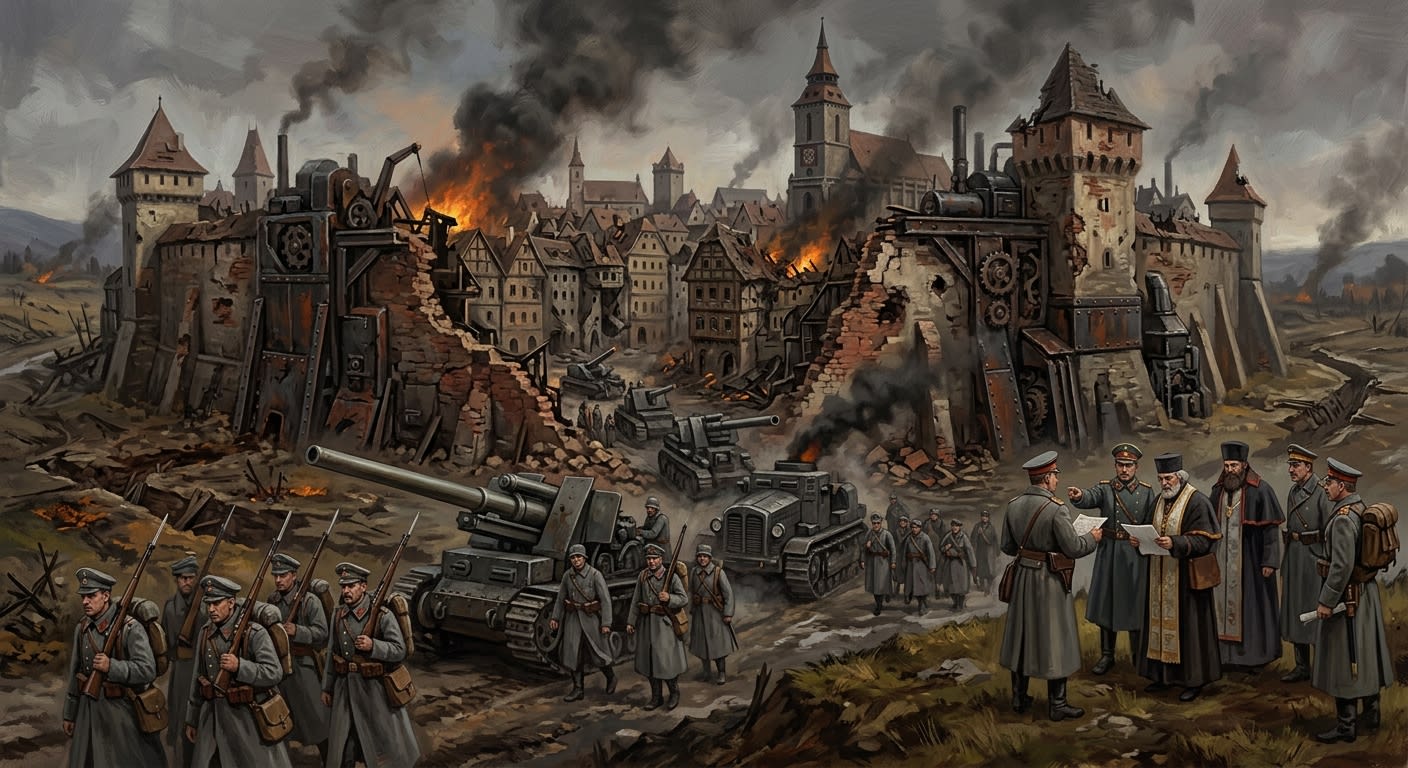
Brașov
The city [[hell|Hell]] ate before [[strasbourg|Strasbourg]] learned to count sons
Brașov, the Saxon-walled city consumed by Kargath in A.S. 110 and made pretext, warning, and arithmetic for the Synod's first continental levy.
Codex Ref. VI.1.01-110
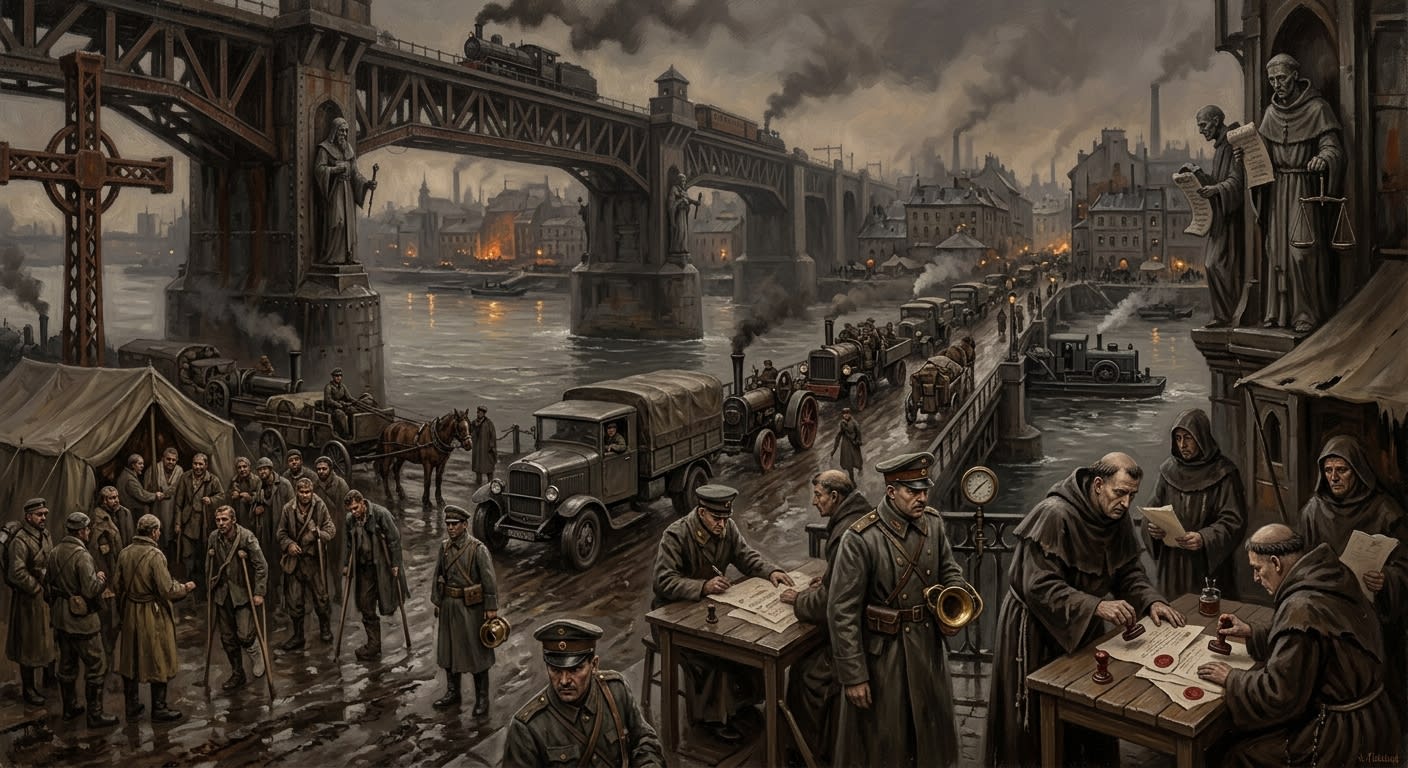
Bratislava
The throat between ruin, command, and the next inspection
Bratislava is the Central Corridor's damp throat: a Zone 3 Danube crossing where convoys, writs, wounded men, and official impatience are slowed into usefulness.
Codex Ref. II.4.09-011

Bread-without-Prayer Line
The loaf before the grace, the copy before the fire
One of twelve Ashen Circle copy lineages of the Index of Safe Lies, named to put bread before grace. Filed under places; the A.S. 201 survey records no founding date, fixed address, or named custodians.
Codex Ref. II.4.09-336
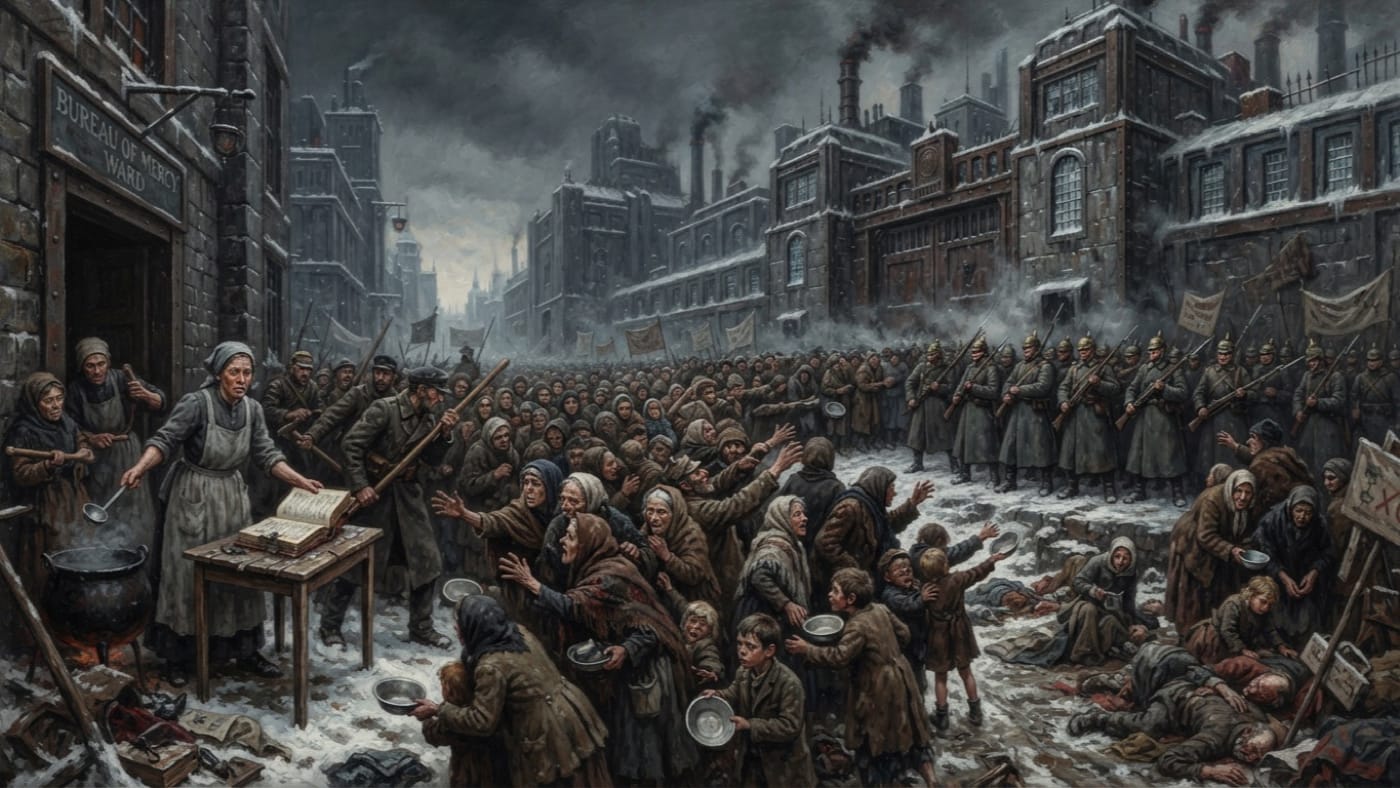
Broth Riots of A.S. 112
The hungry approached the granary; Mercy opened a ledger
The Broth Riots of A.S. 112 lasted eleven days: three hungry garrison populations sought grain; War supplied rifles, Purity arrests, and Mercy the Ledger Laws.
Codex Ref. VII.8.10-112
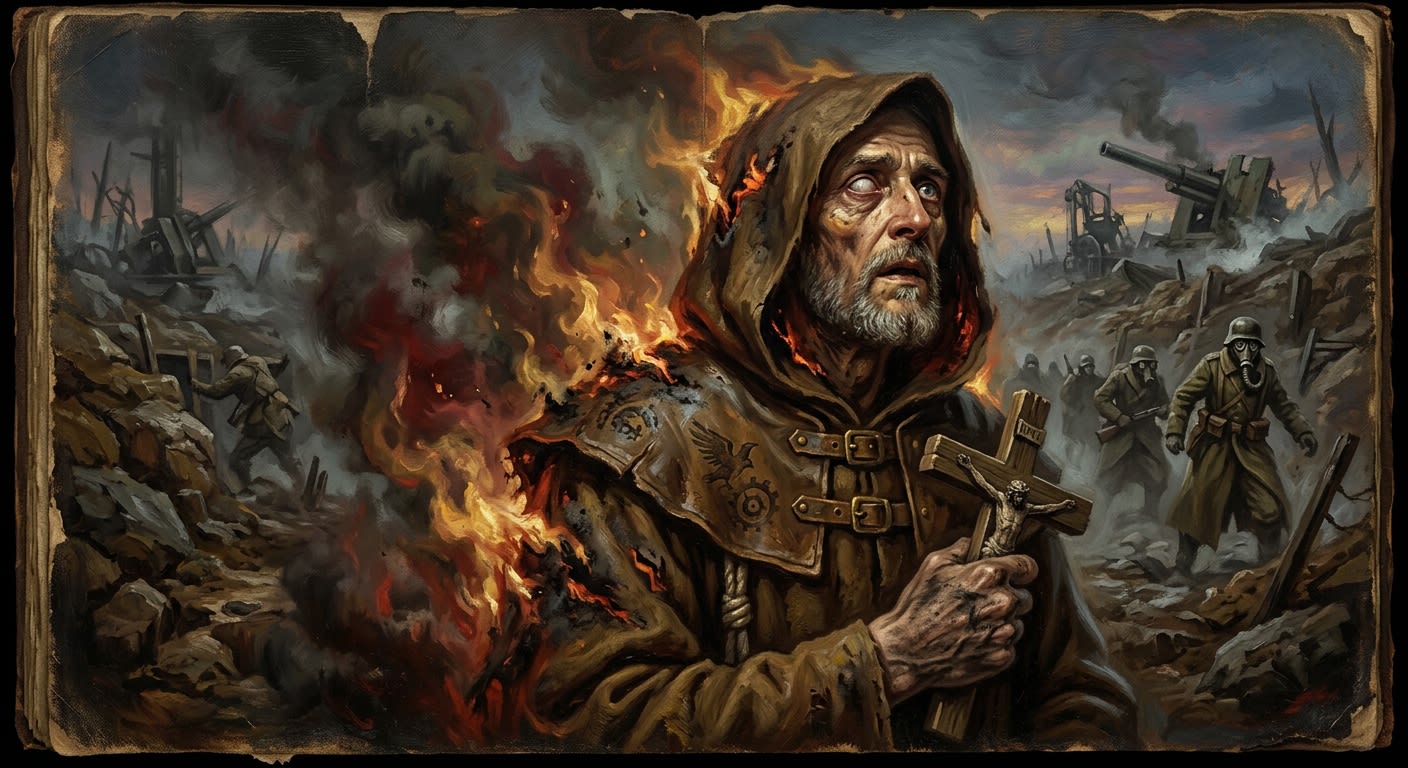
Brother Tomislav
The half-blind monk who lifted a reliquary and made Wrath recoil
Half-blind Franciscan, custodian by refusal, and instrument of the Miracle of Kalnik Ridge; consumed by sacred fire in A.S. 48, though the Bureau remains professionally unable to call him dead.
Codex Ref. III.2.01-004
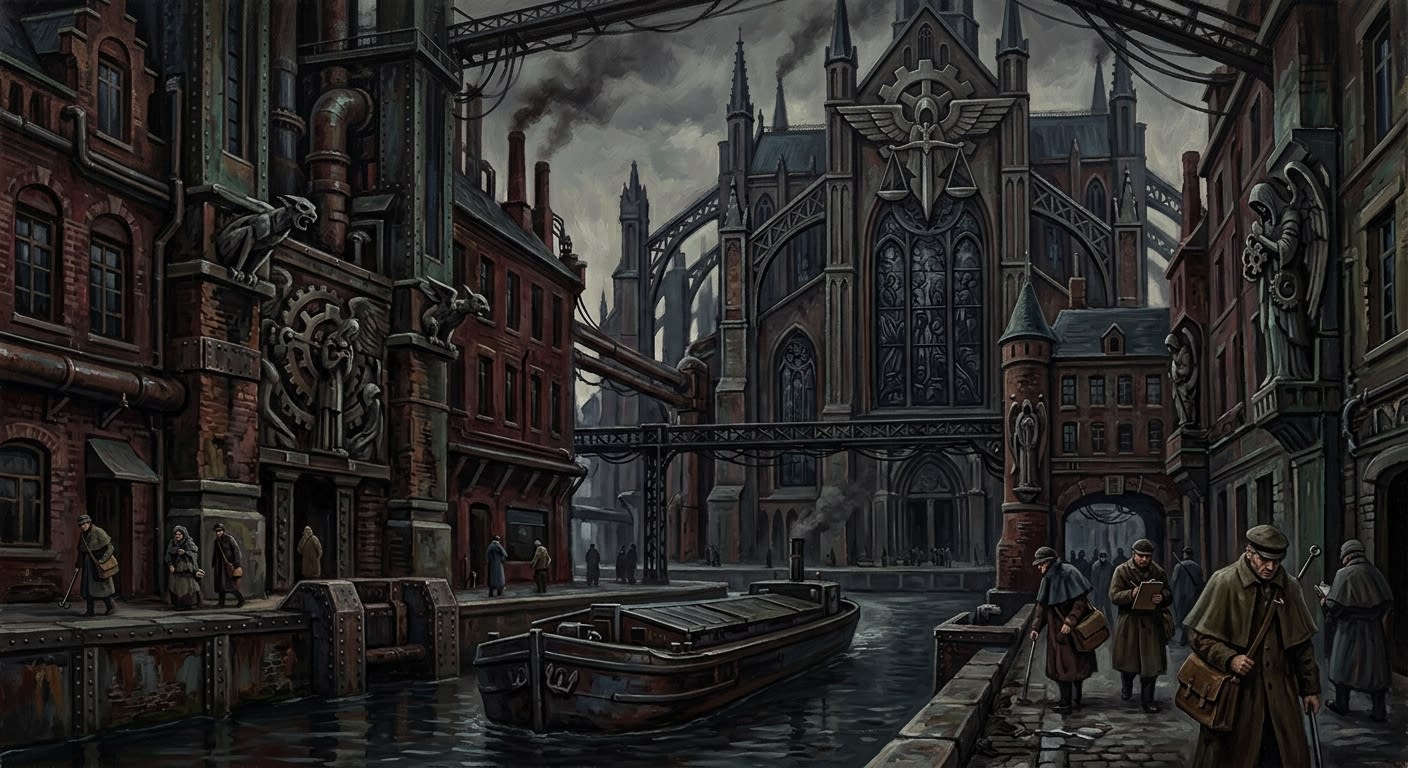
Bruges
Permit prosperity; audit beauty
Bruges is the Synod-held Lowlands city whose canals, colours, grotesques, relic glass, and impossible Tithes seal make beauty a recurring audit problem.
Codex Ref. II.1.04-058
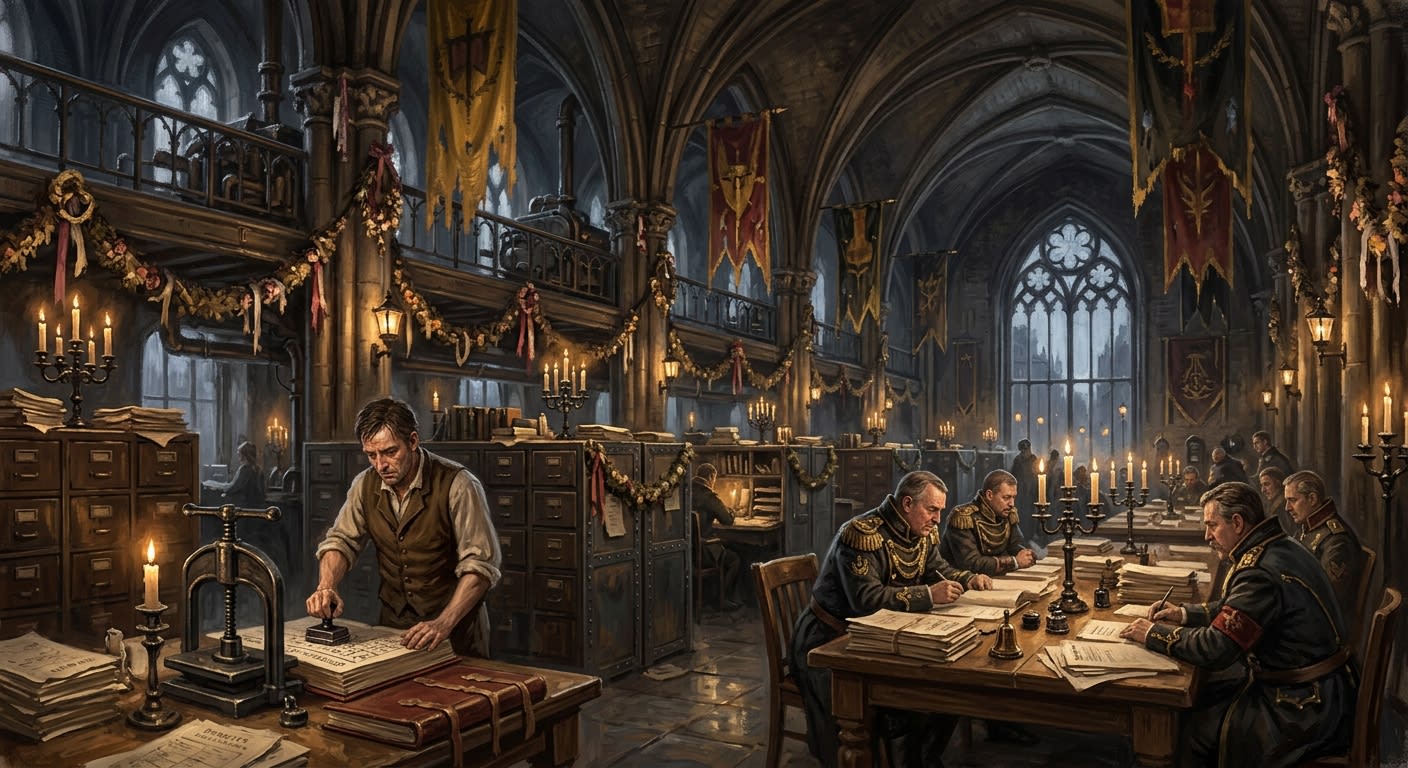
Bureau of Festivals
Joy, administered at scale — licensed, measured, and periodically revoked
The Bureau that manufactures joy, schedules grief, and meters celebration with the same rigour the Bureau of War applies to troop rotations — and which has, on seventeen documented occasions, deployed confetti.
Codex Ref. VIII.5.01-001
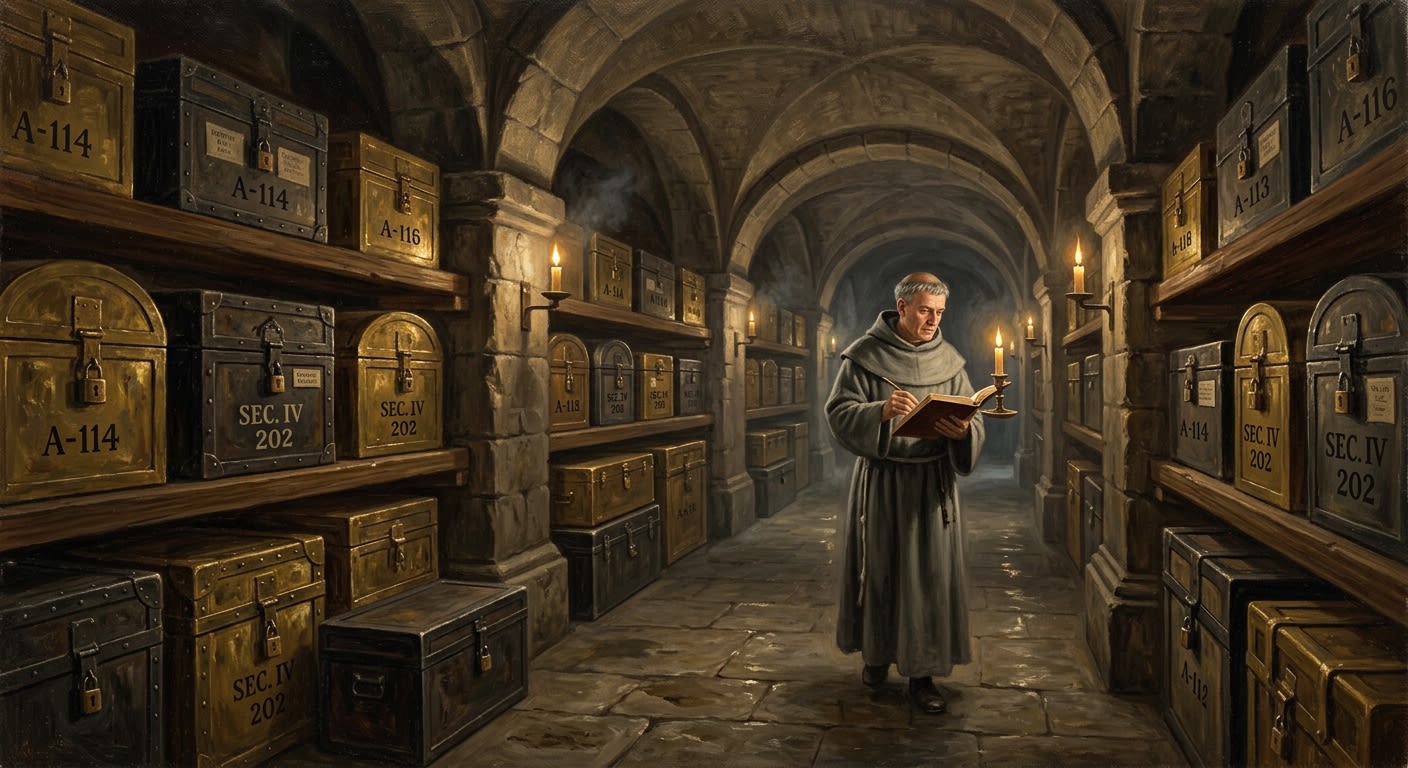
Bureau of Relics
The stamp is not the sanctity. The stamp is merely necessary.
The Bureau of Relics guards four thousand seven hundred authenticated bones, adjudicates the holiness of ash, and maintains the cheerful institutional fiction that it controls the things it catalogues.
Codex Ref. IV.3.12-019
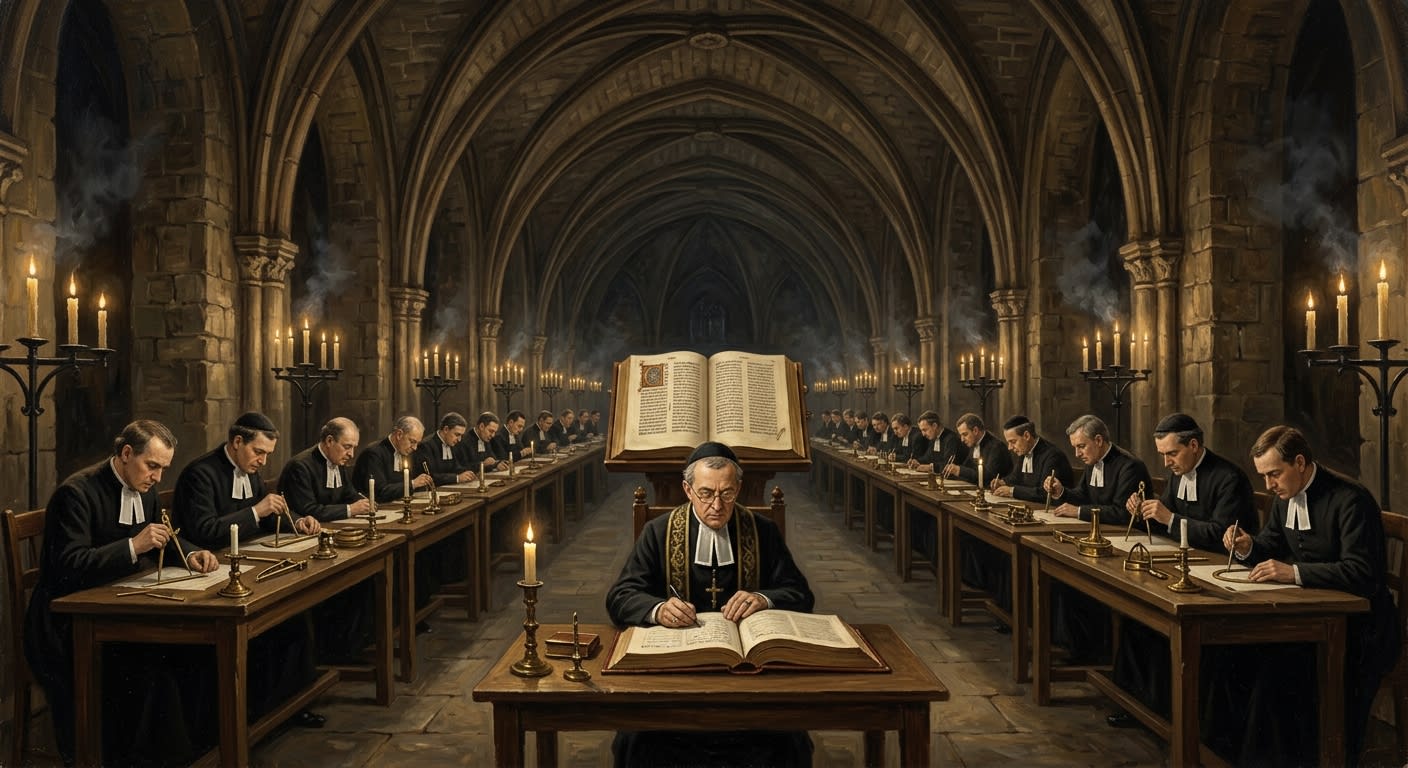
Bureau of Rites
The grammar no one speaks and everyone obeys.
The grammar of the Dominion, indistinguishable from its law: the Bureau that does not govern governs everything, from the angle of the censer to the weight of the Host on Lenten Fridays.
Codex Ref. VIII.1.01-001
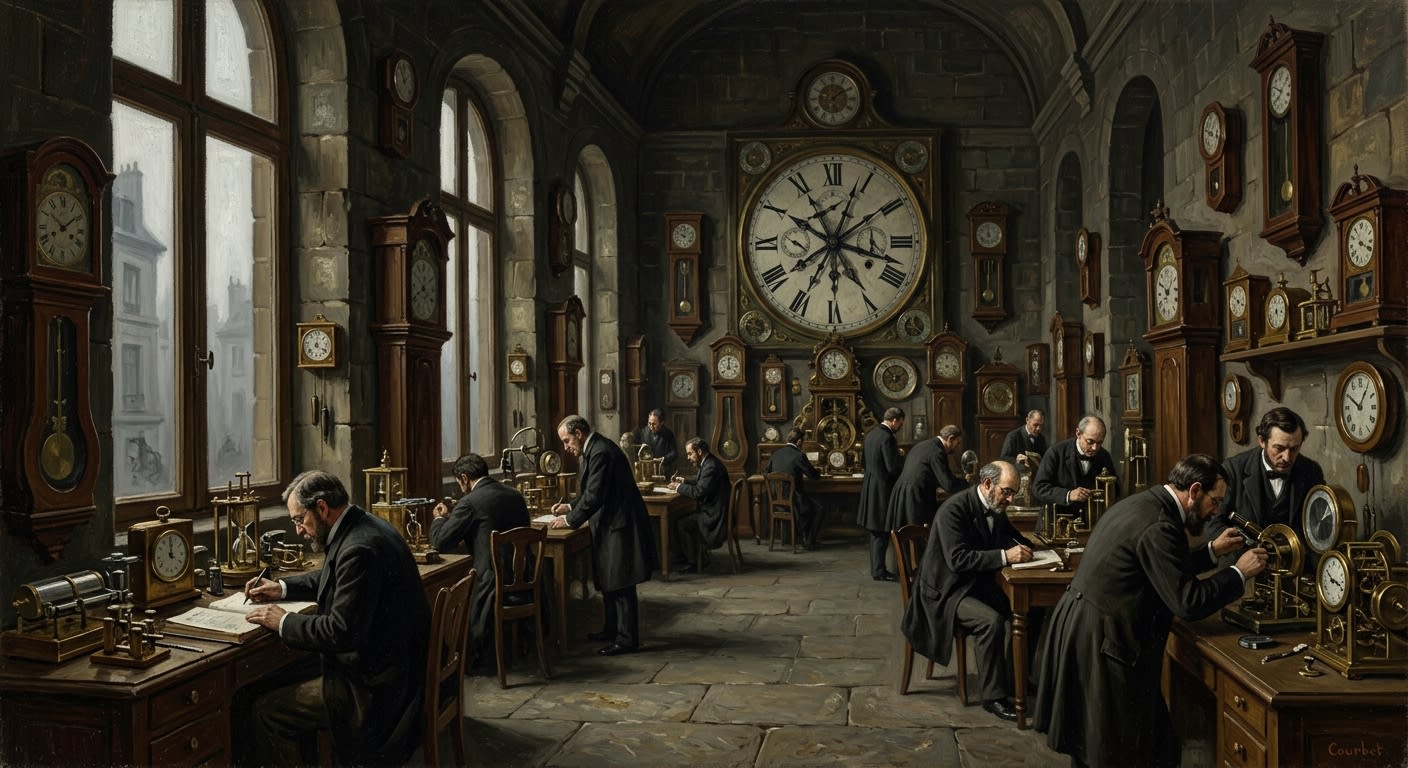
Bureau of the Hourglass
The Bureau measures. The Synod does not read. Time continues to disagree.
The Bureau of the Hourglass, constituted A.S. 134 to measure the Languid Dreamer's temporal drift along the Line, publishes quarterly reports no one reads, and has spent sixty-seven years proving that time is thinner near the front.
Codex Ref. VIII.3.01-001

Bureau of Tithes
The organ no one praises and no one dares remove
The Bureau of Tithes is the Synod's fiscal organ — the stomach no one praises and no one dares remove. It taxes breath, grain, bereavement, and the management of its own taxation.
Codex Ref. VIII.4.01-001
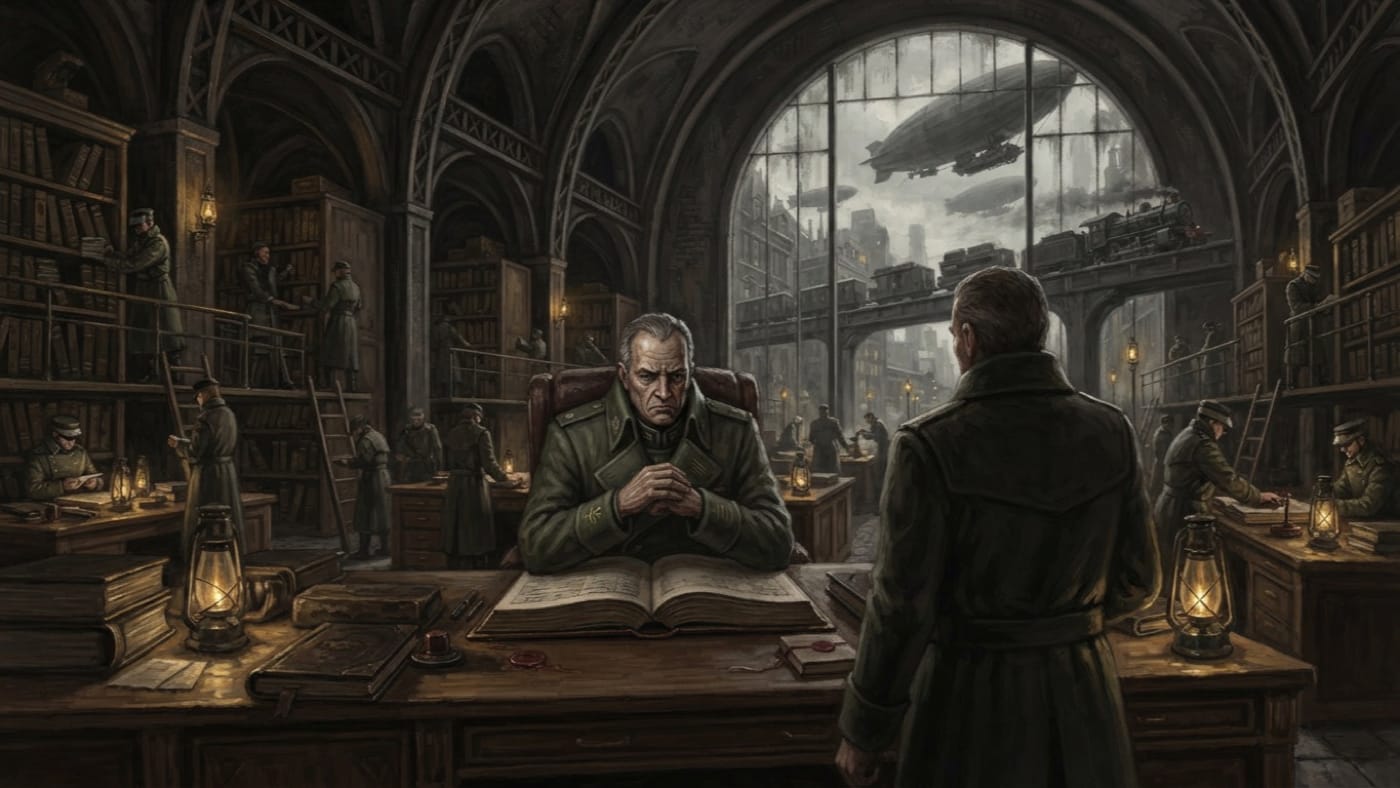
Bureau of War Chief Logistician
The number is classified. The arithmetic is not.
War's Chief Logistician speaks for its replacement arithmetic and keeps the installation total classified. I record two exchanges, a withheld number and the footnote nobody wishes to write.
Codex Ref. III.2.07-043
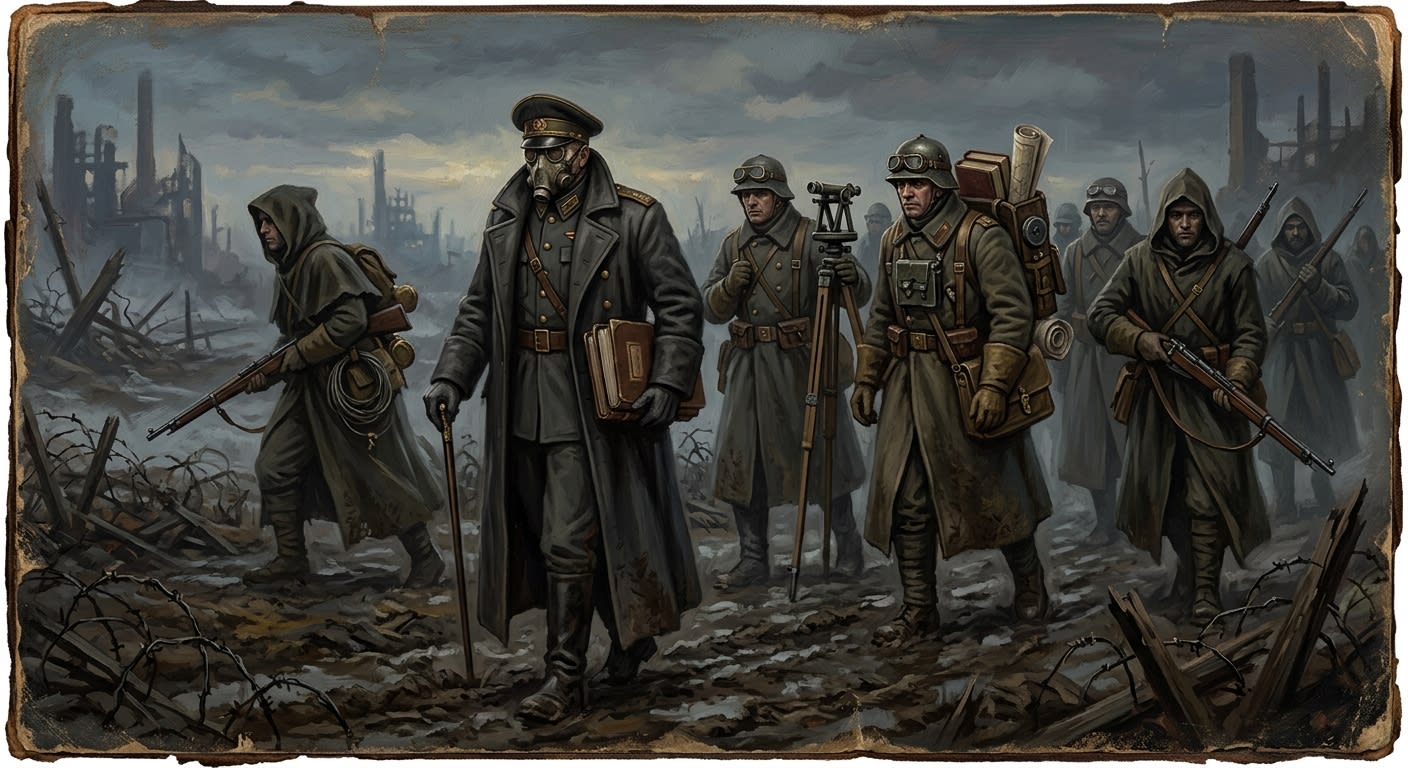
Bureau of War Reconnaissance Commissariat
The office that walks first and returns as evidence
The Reconnaissance Commissariat walks first into hostile terrain, purchasing the Synod's knowledge with scouts, ledgers, and actionable silence.
Codex Ref. VIII.7.03-001

Captain Elias Brekke
The officer who saw [[debrecen|Debrecen]], wrote it down, and was filed away alive
Captain Elias Brekke discovered the Ash-Mothers at Debrecen in the A.S. 78–83 window, filed the deposition that made horror procedural, and vanished into Candlewick inventory after A.S. 84.
Codex Ref. III.2.01-056
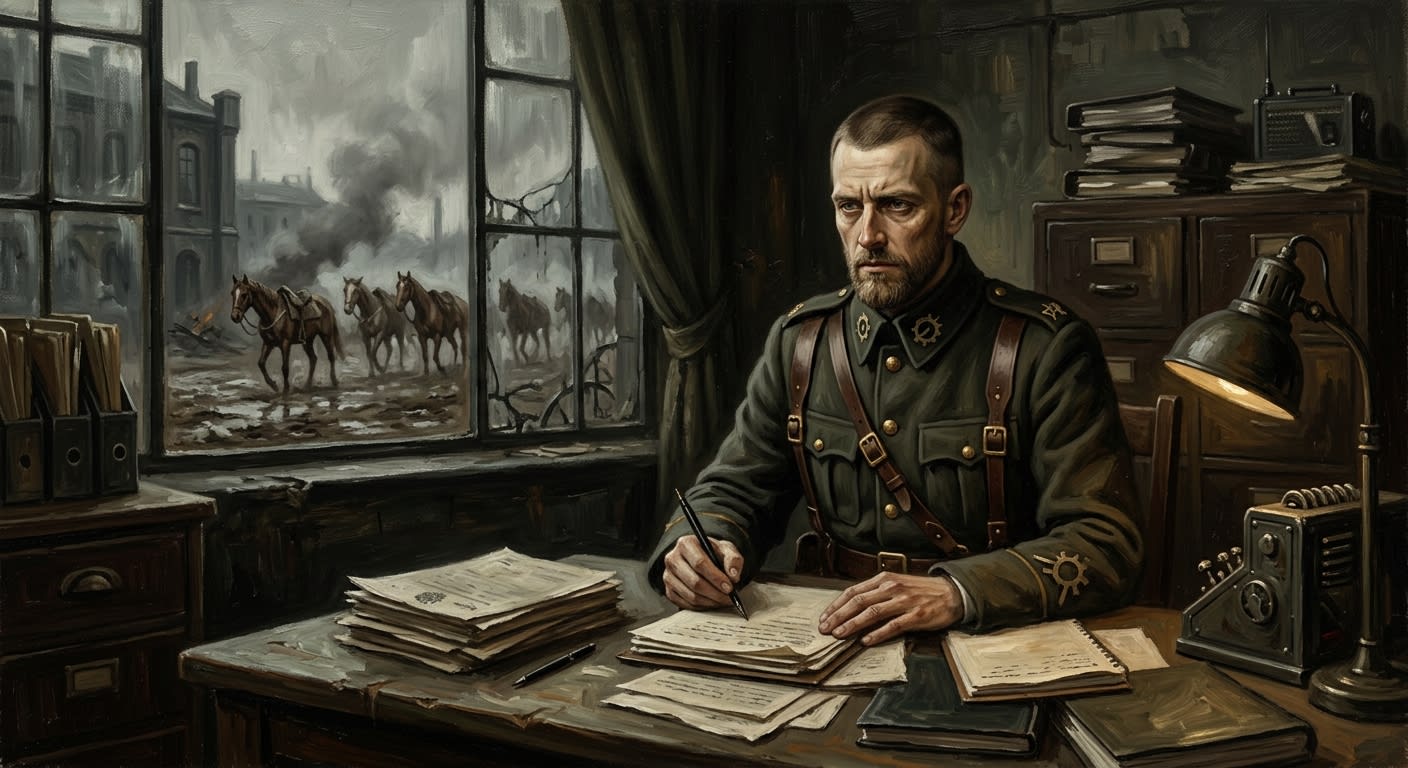
Captain Elias Mürren
The cavalryman who accepted hunger's polite invitation and kept the receipt
Rationalist cavalry captain and Debrecen survivor whose A.S. 49 deposition records sorcerous provender, vanished horses, and hunger with the manners of a clerk.
Codex Ref. III.2.01-082
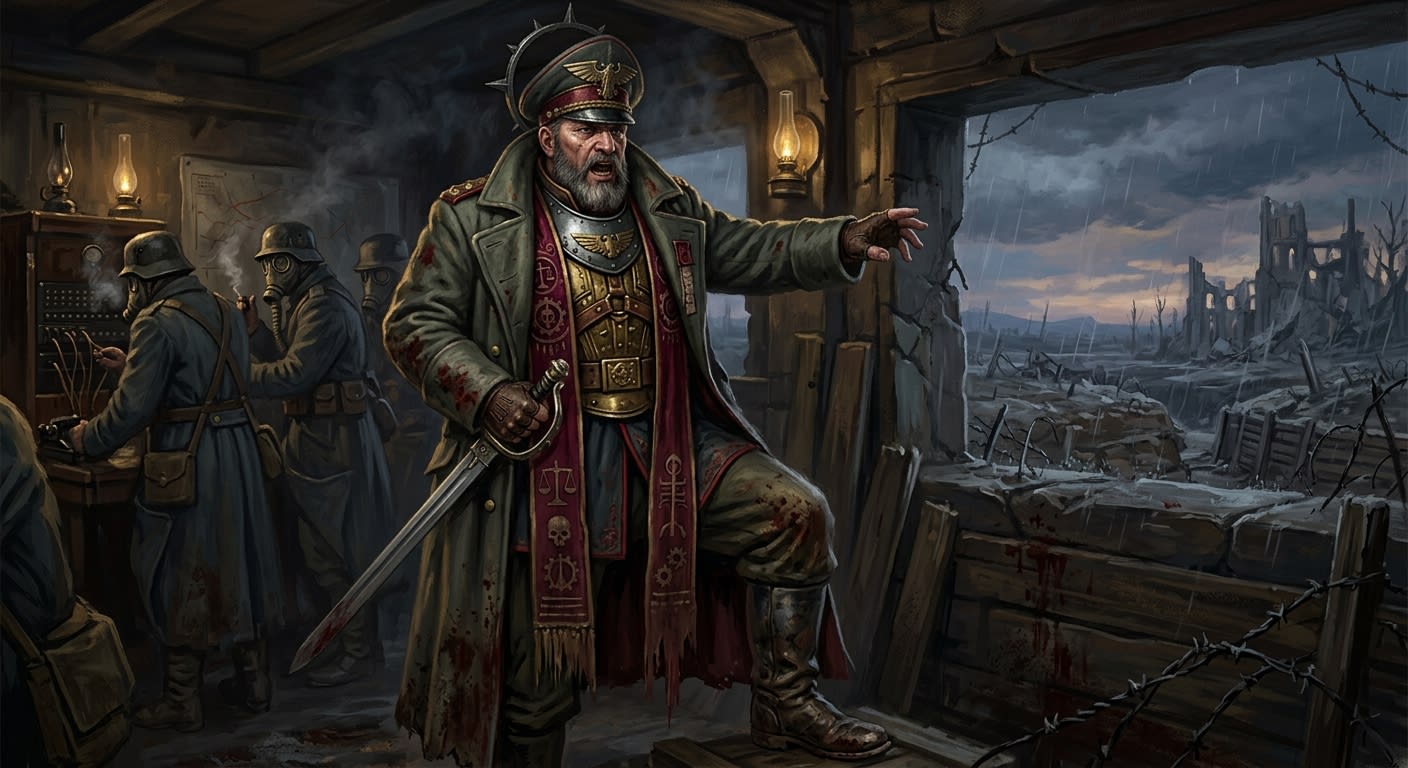
Cardinal-Marshal Severin of Avignon
The tourniquet of Montreval, ugly enough to save a front
Severin of Avignon held Montreval through the Atheist Wars: severe, loud, bloodstained, and too useful for the Bureau to canonise cleanly.
Codex Ref. III.2.01-007

Category D
The sentence is suspended. The prisoner remains condemned.
Category D suspends condemned prisoners' death sentences for battlefield-hazard studies. War supplies the subjects; Medicine measures them. The surviving record promises neither pardon nor release.
Codex Ref. XIII.1.99-134

Category Epsilon
Two weapons, one letter, and no defining memorandum.
Category Epsilon files Pale Chanters and Gore-Slingers under one letter. Two applications are attested; no general definition is on file. The ledger records what the bodies produce and leaves their names elsewhere.
Codex Ref. XIII.1.99-201
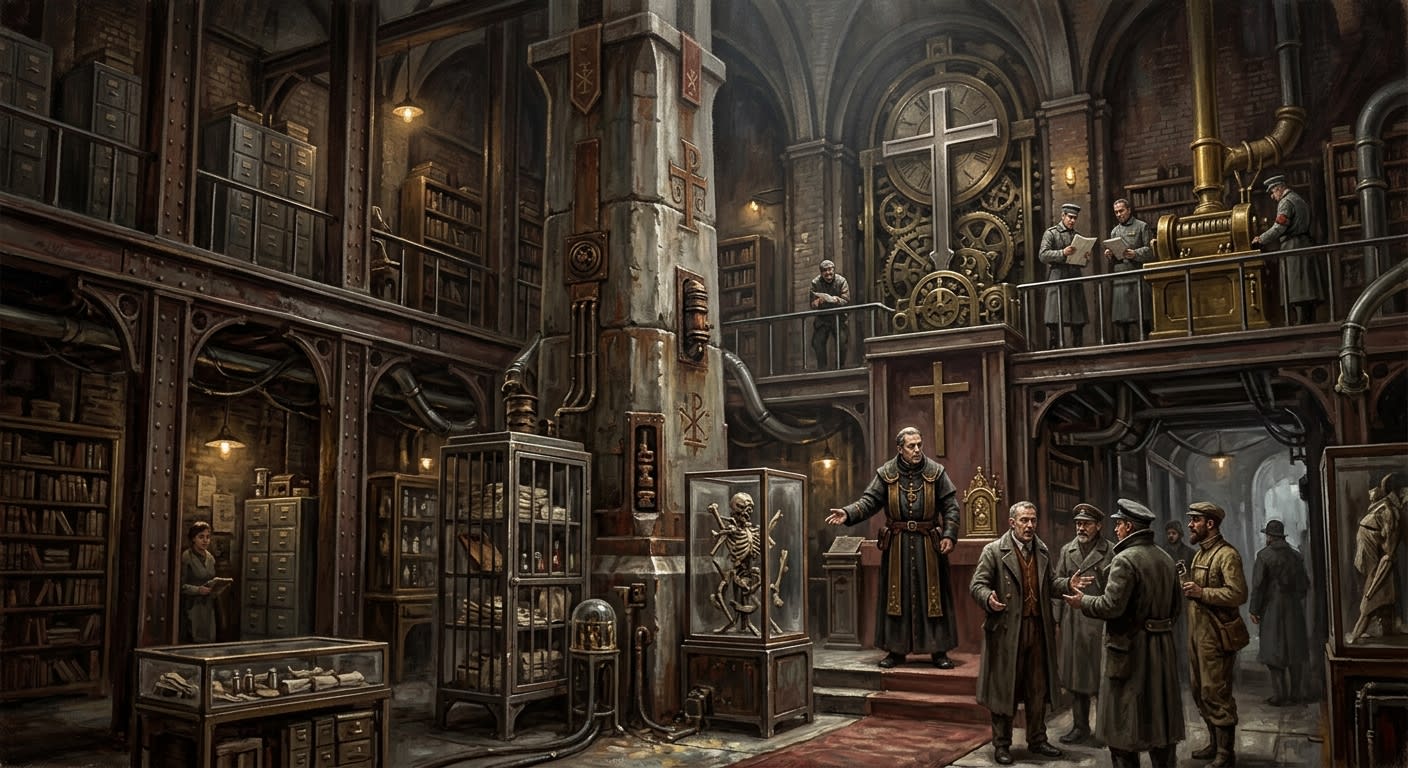
Cathedral of the Holy Column
The church that made obedience stand upright
Cologne's vertical archive: conciliar nave, Holy Column, relic galleries, Odo's sentence, and seventeen femurs arguing successfully with anatomy.
Codex Ref. II.2.01-005
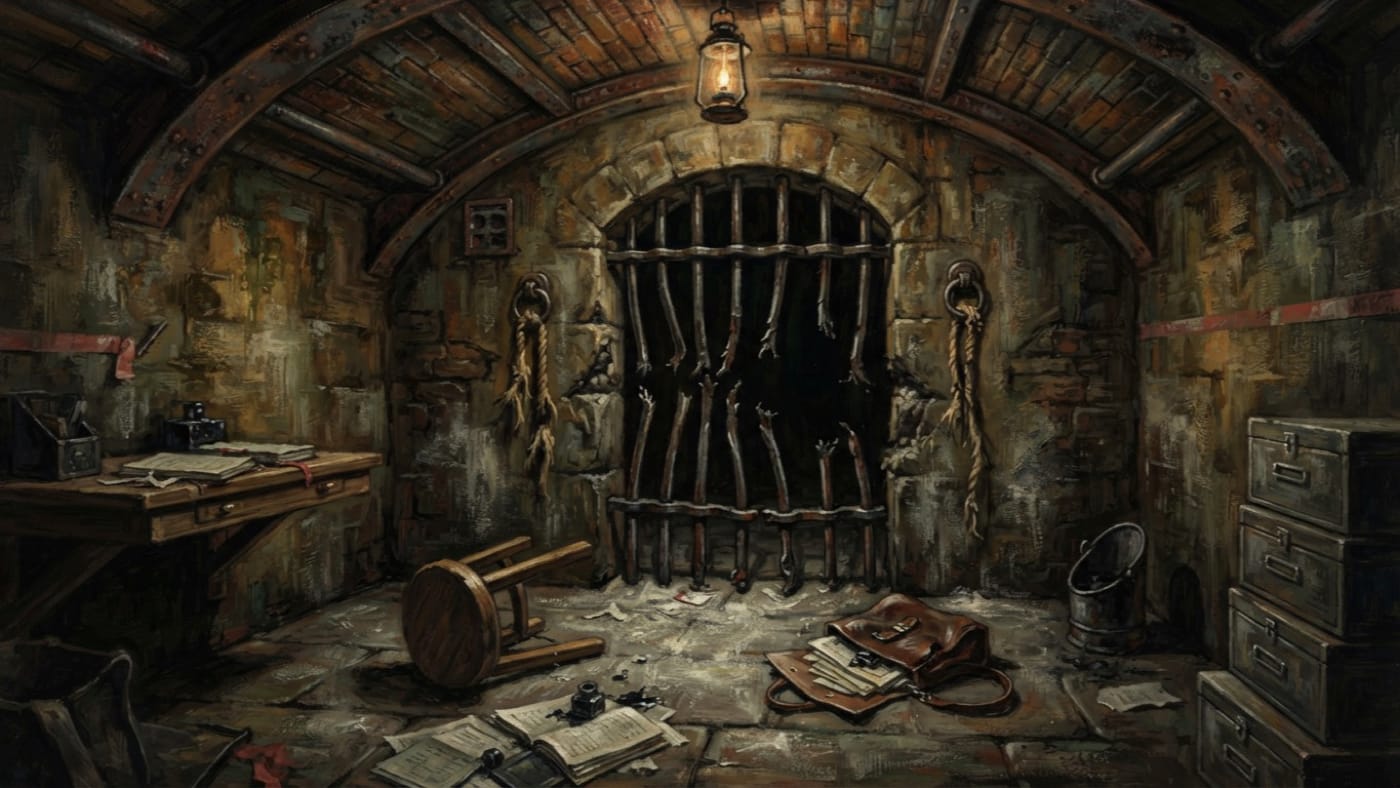
Chalk Pantry incident
The appetite that ate the interview
In A.S. 190, a Consumed subject ate the interview grille, two confession ropes, and portions of the notary. Chalk Pantry taught the Bureau to revise its manual before furnishing another interview.
Codex Ref. VII.8.10-190
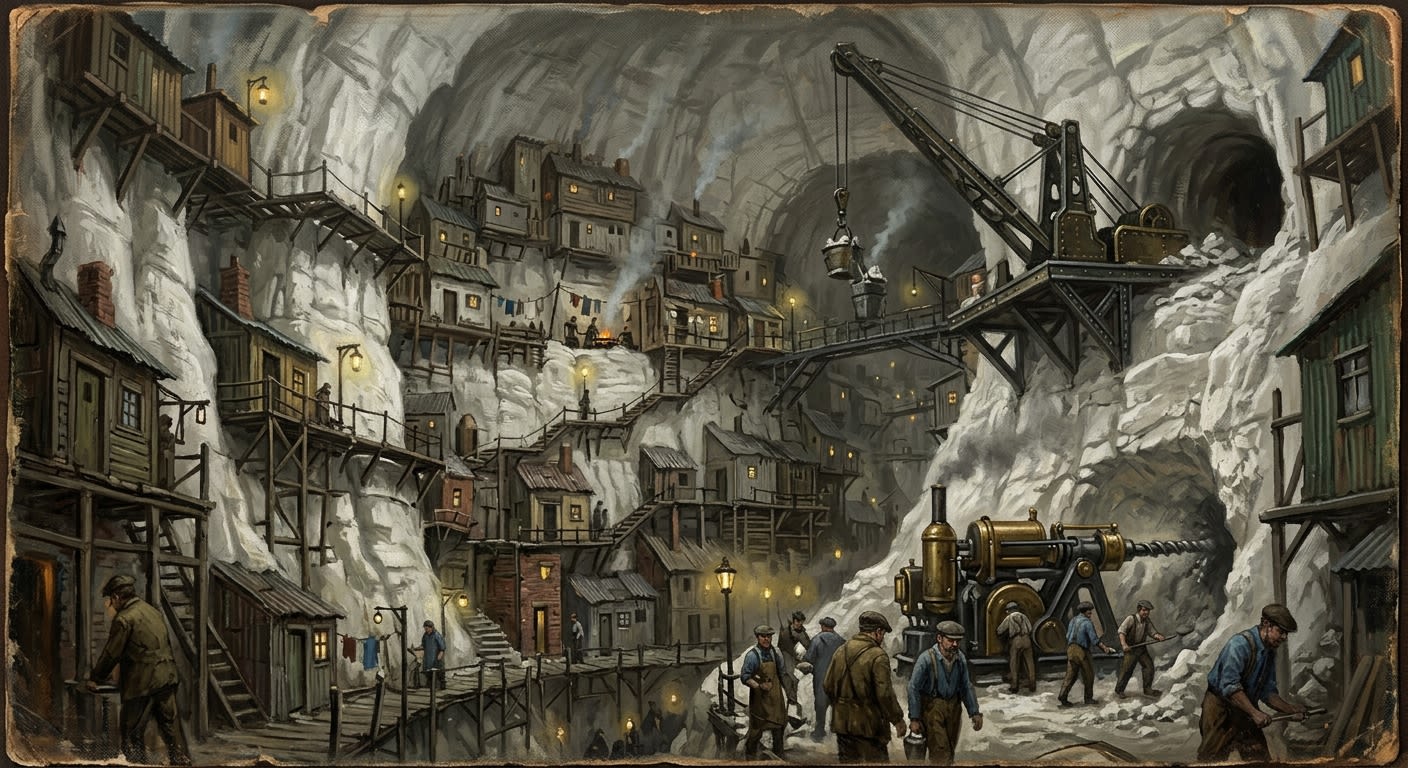
Chalk Warrens
The cliff's undercity, where rent is paid in breath
Worker-city beneath Calais, where quarry cuts became homes after the Great Breach, chalk writes inland, and every household owes the Wall a throat.
Codex Ref. II.4.09-071
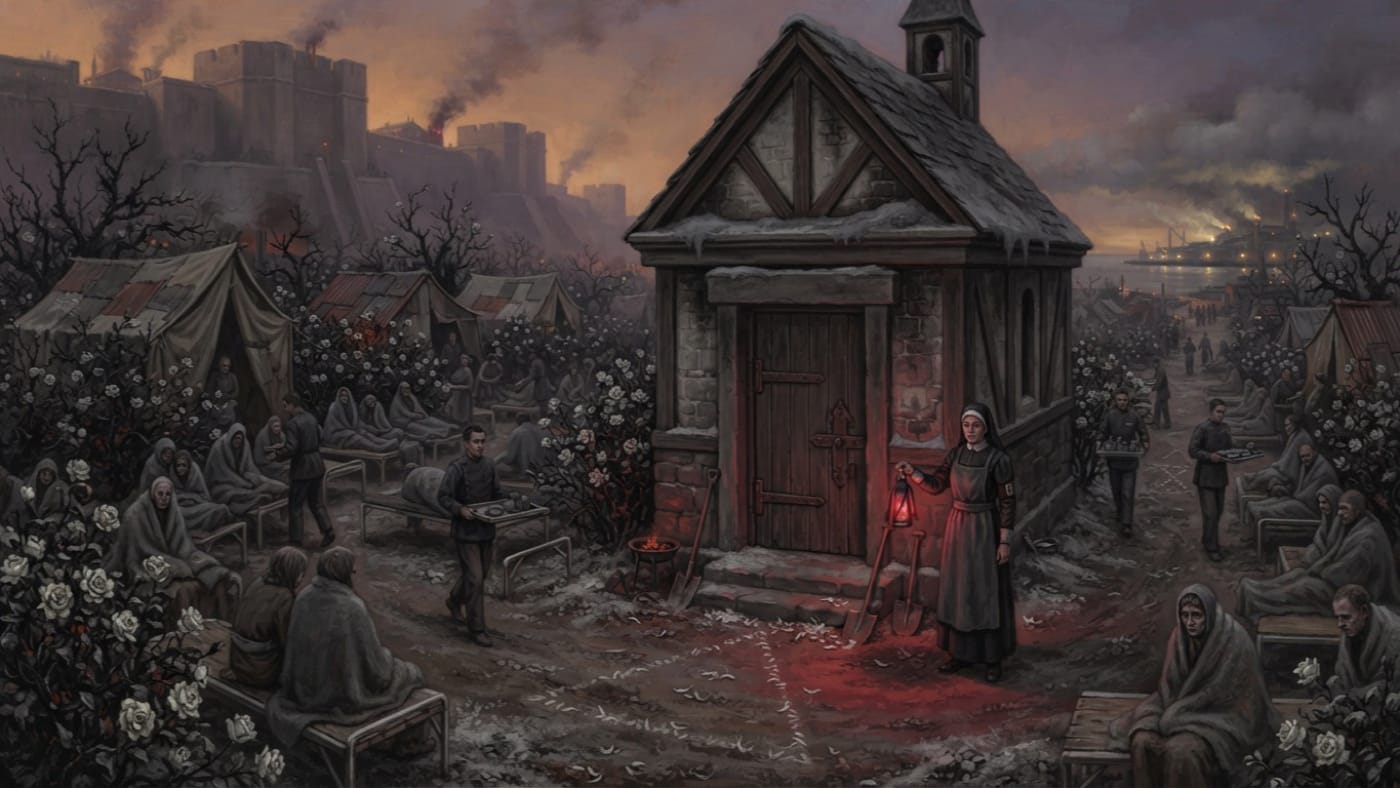
Chapel of Ash and Rose
Where the dead remain local and Records remains pending
A mortuary chapel in the Ash Gardens shelters a burial register older than the Bastion. Records attempted removal in A.S. 187; Sister Ovidia served the courier broth and kept the book.
Codex Ref. II.4.10-008
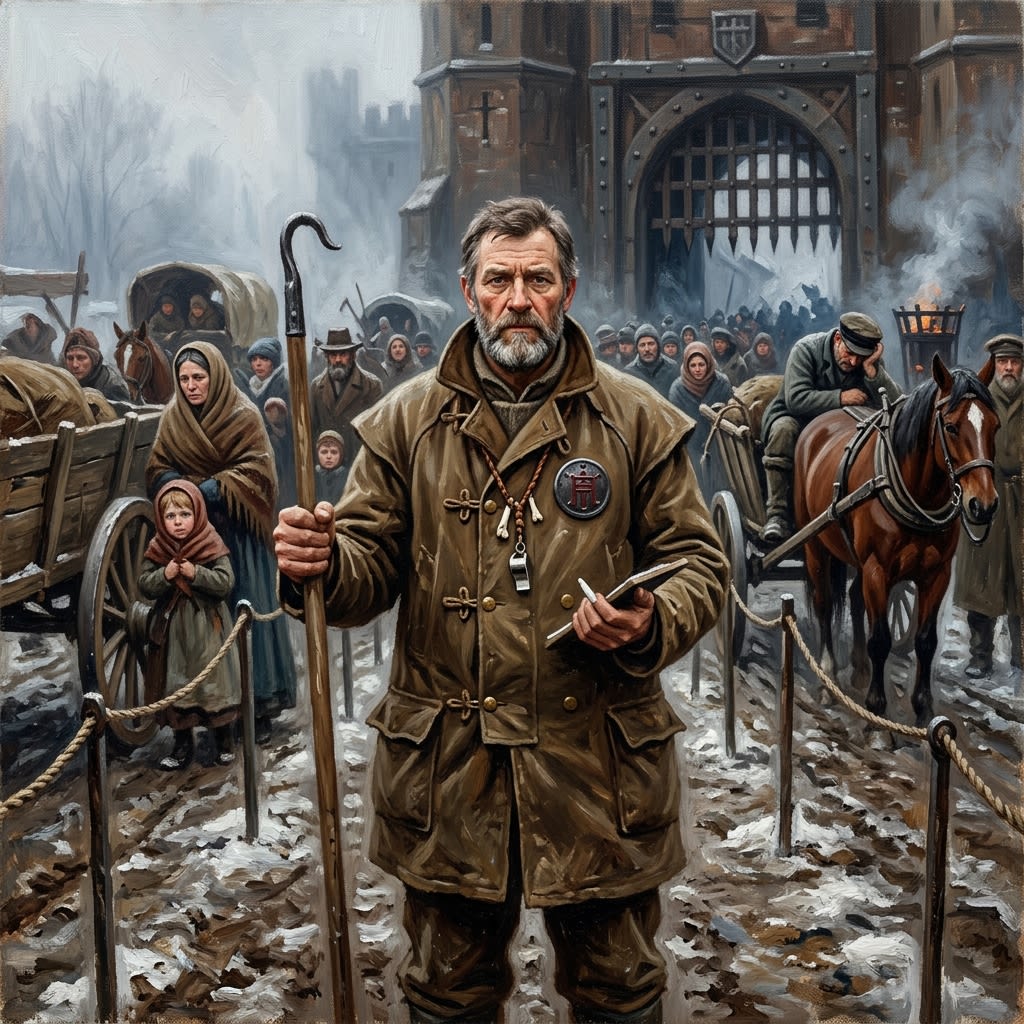
Checkpoint Queue-Marshal
The man who holds the rope holds the war
The Synod's most hated indispensable servant — 1,140 Queue-Marshals holding the ropes that hold the lanes that hold the war together, constituted A.S.
Codex Ref. XII.7.01-001
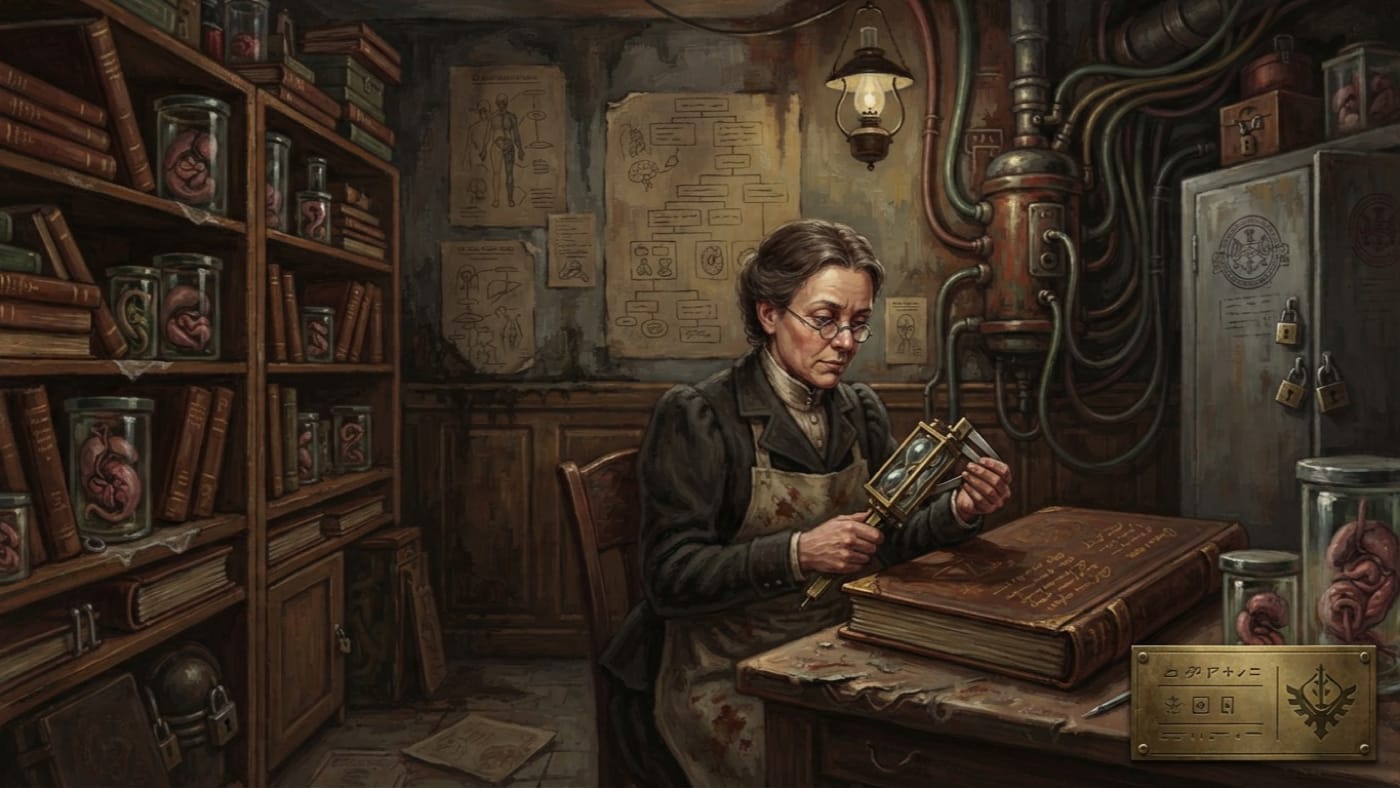
Chief Anatomist
Absent from the procession. Indispensable to the front.
The Chief Anatomist has no Synodal rank and every garrison's attention. Doctor Trenn holds the office: measurement, classification and a disclaimer that travels with each finding.
Codex Ref. XIII.1.07-082
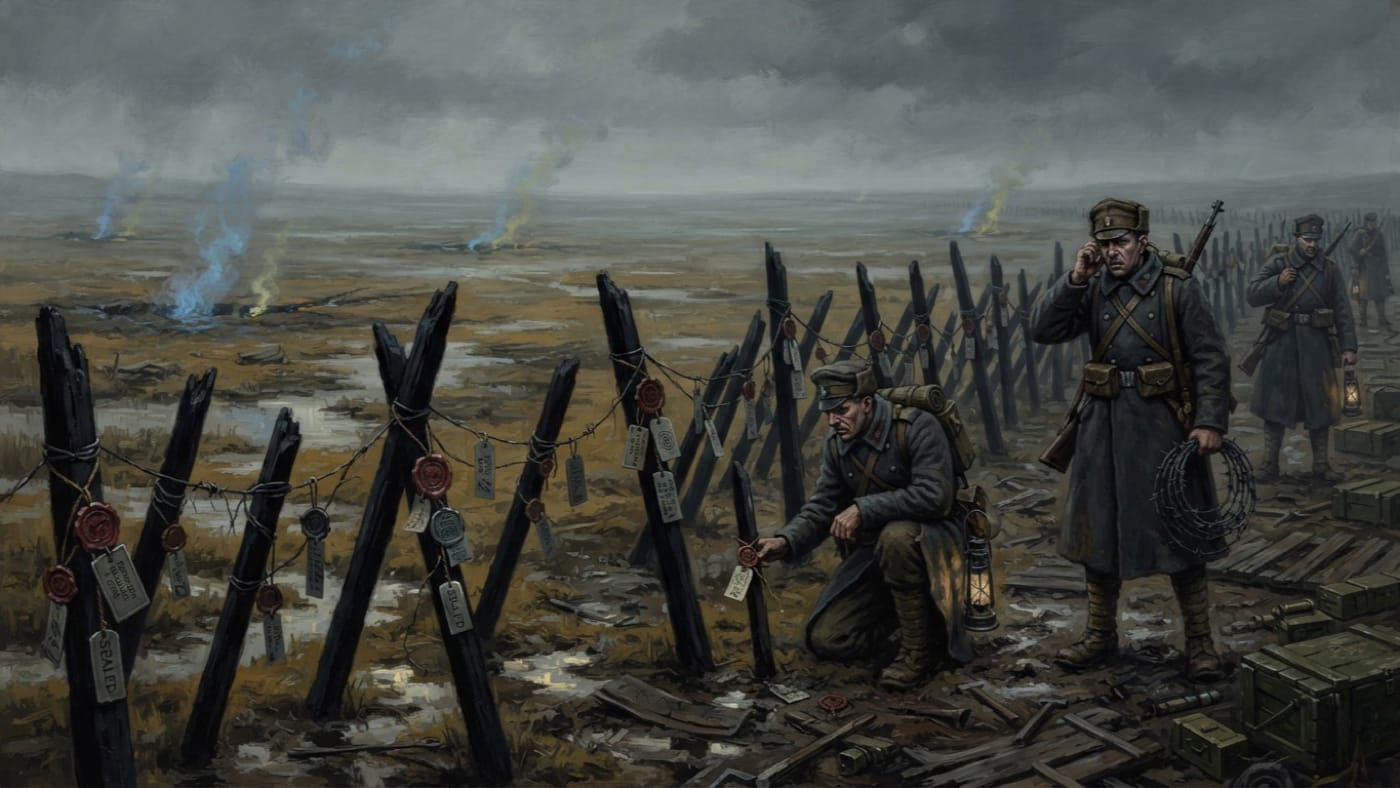
Choir Beneath
The Church honours the hymn and quarantines the humming
The muffled hymn beneath Debrecen is attributed to the Litany-Engineers lost in A.S. 172. The Church honours their work and quarantines anyone who hums along.
Codex Ref. VIII.5.10-001
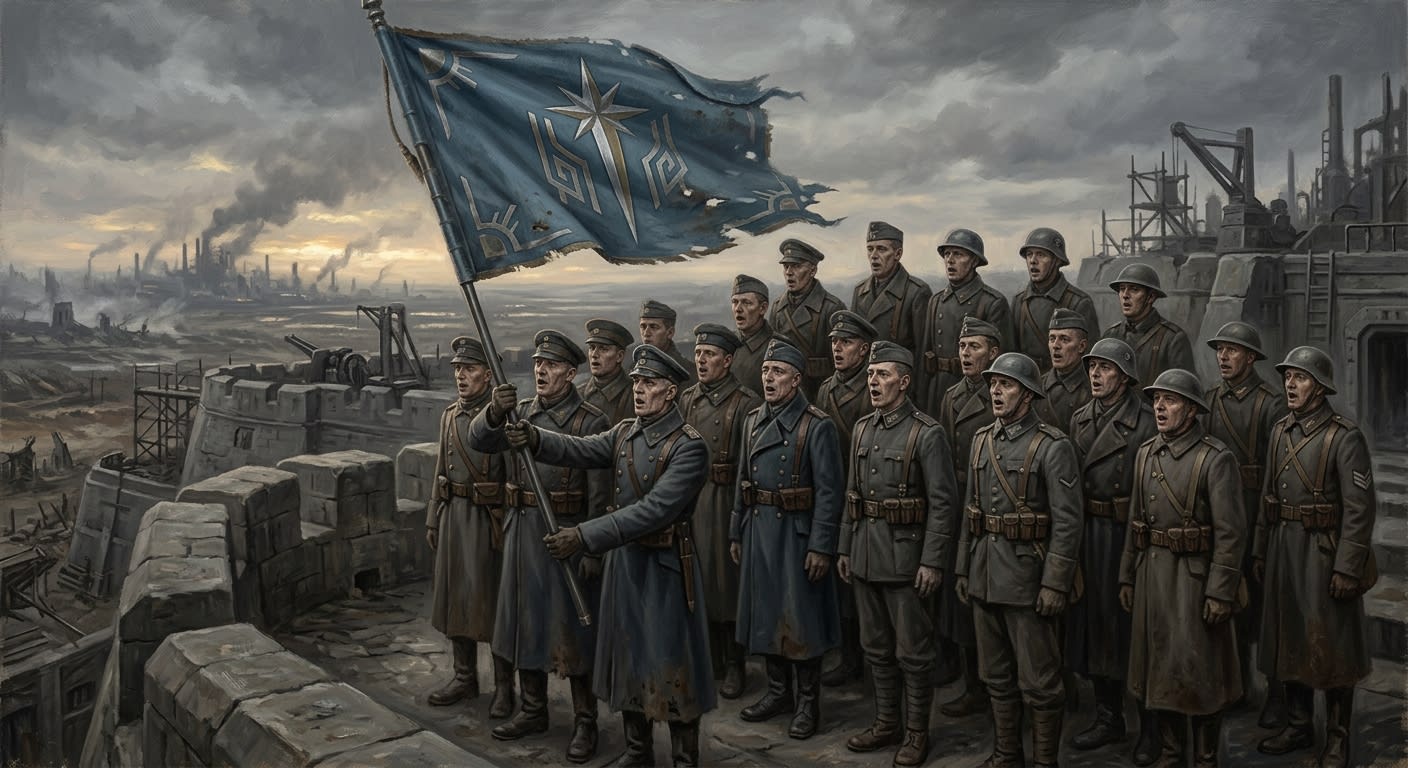
Choir of the Northern Standard
Twenty voices finish the verse after the fog has answered
Twenty voices at Bastion-Königsberg hold the Northern Standard against the Grey, singing late enough to survive and long enough to be damaged.
Codex Ref. XIII.1.57-188
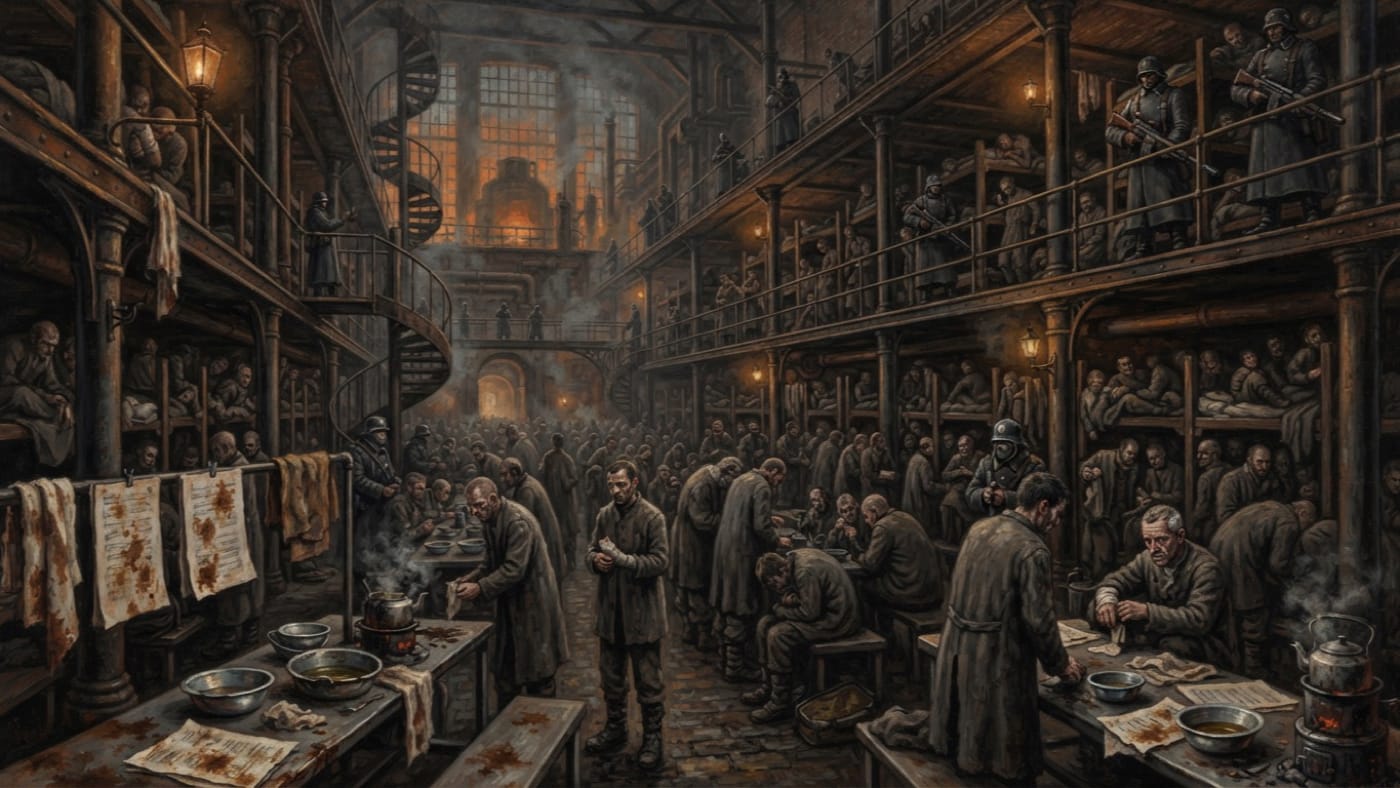
Choir Quarters
Two thousand voices and a union that bargains by the breath
Essen's Choir Quarters maintain two thousand calibration voices. Within the barracks, the unchartered Throat Line contests bleed shifts one doctrinally cautious breath at a time.
Codex Ref. XI.5.03-201
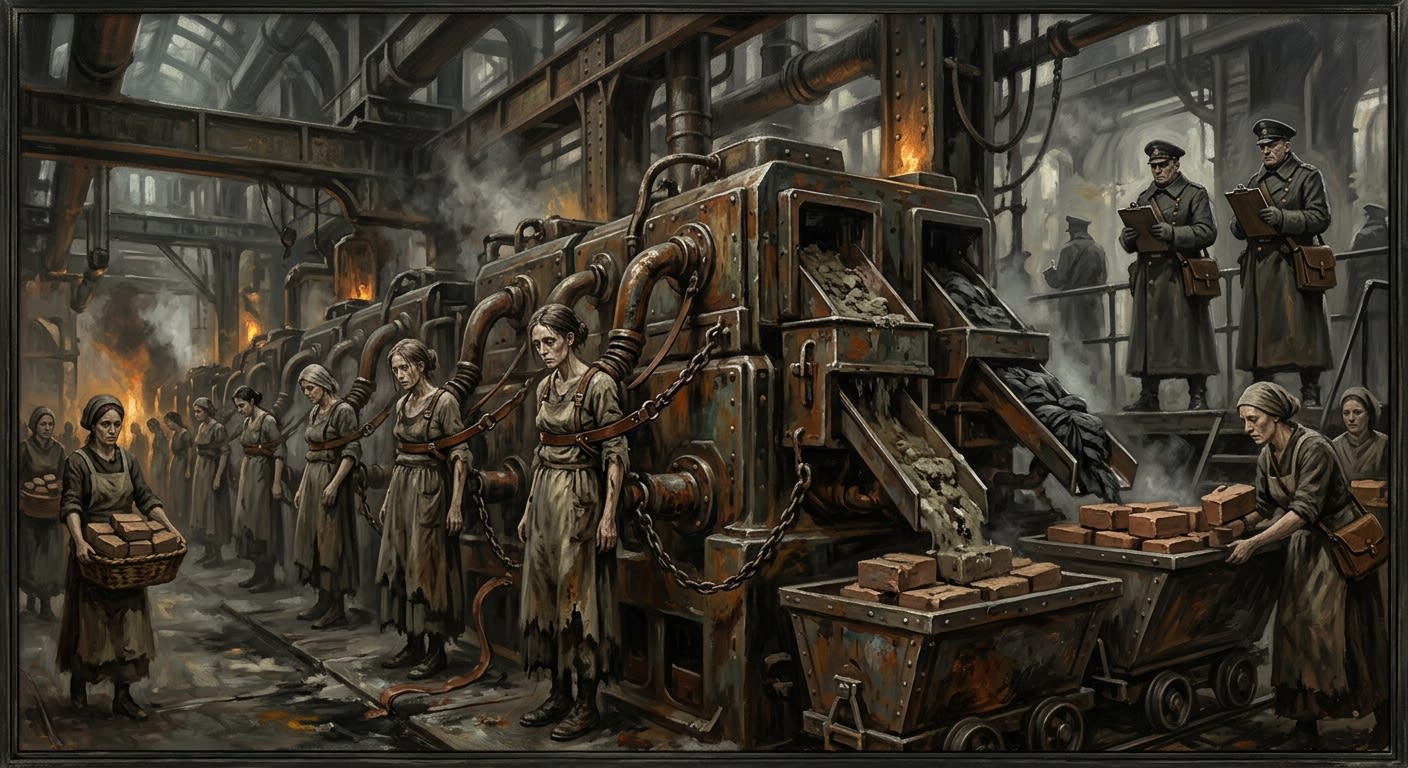
Classification 7-F
The file by which the Bureau teaches horror to stand in line
Classification 7-F names Reproductive Infrastructure, Hostile: the sealed category by which Ash-Mothers, mortar, obedience, and enemy supply become one file.
Codex Ref. XIII.1.72-004

Clean Knife Line
The place register has mistaken a pedigree for an address
The Clean Knife Line is one of twelve surviving Index of Safe Lies copy lineages. Its practical measures remain exact; its custodians remain unnamed, and the place register remains wrong.
Codex Ref. III.2.201-638
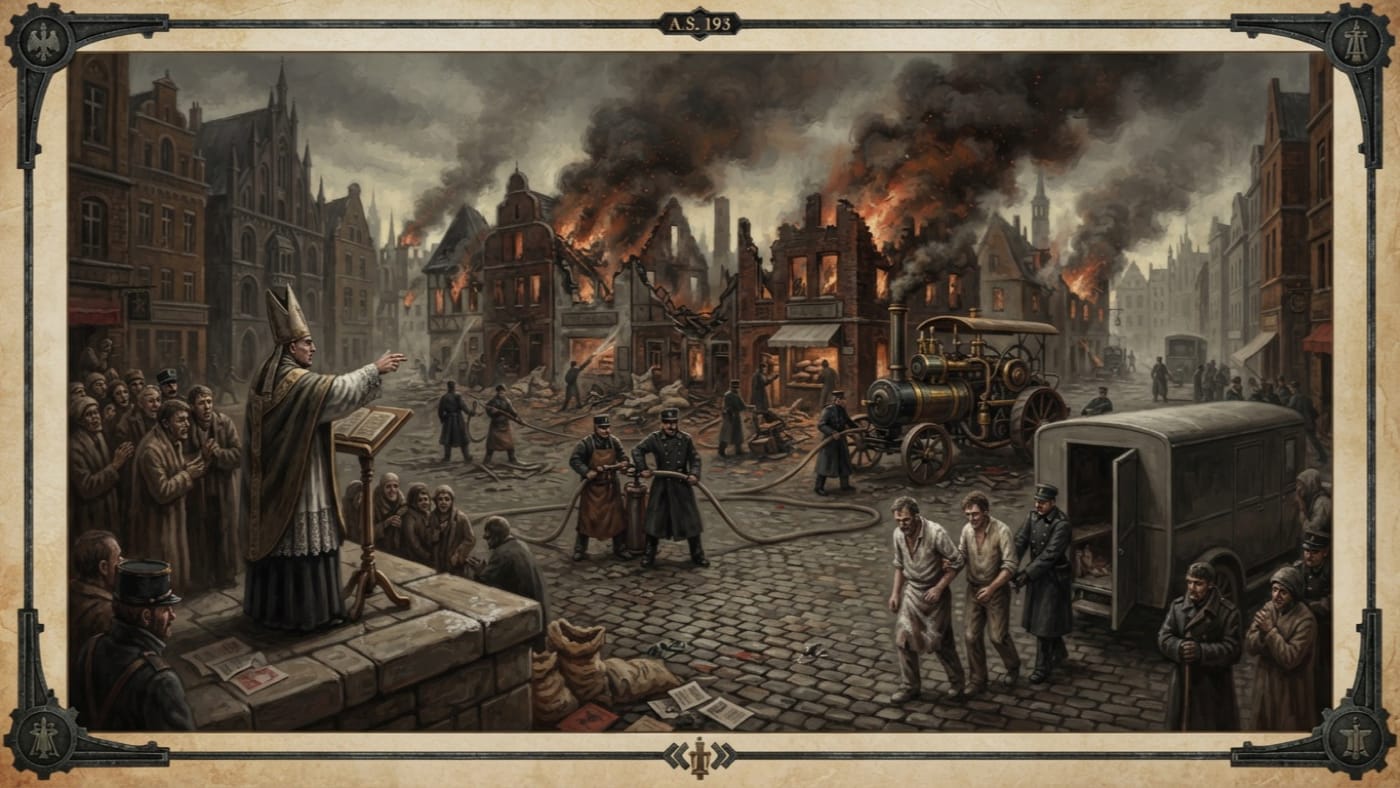
Cologne Flour Alarm
The flour had mould; the city supplied the fire
In A.S. 193, Cologne mistook mouldy flour for a Blightbearer's work, burned six bakeries, interrogated two innocent millers, and applauded a fast. The mould required no demon; the damage required authority.
Codex Ref. VII.8.10-193

Colonel-Inquisitor Aras Venn
Every man returned. The file is closed.
Aras Venn led the First Shadow Court Expedition in A.S. 72. Every man returned. Venn died in an Adriatic sanitarium in A.S. 94; the phrase covering his quarters remains classified.
Codex Ref. III.2.01-677
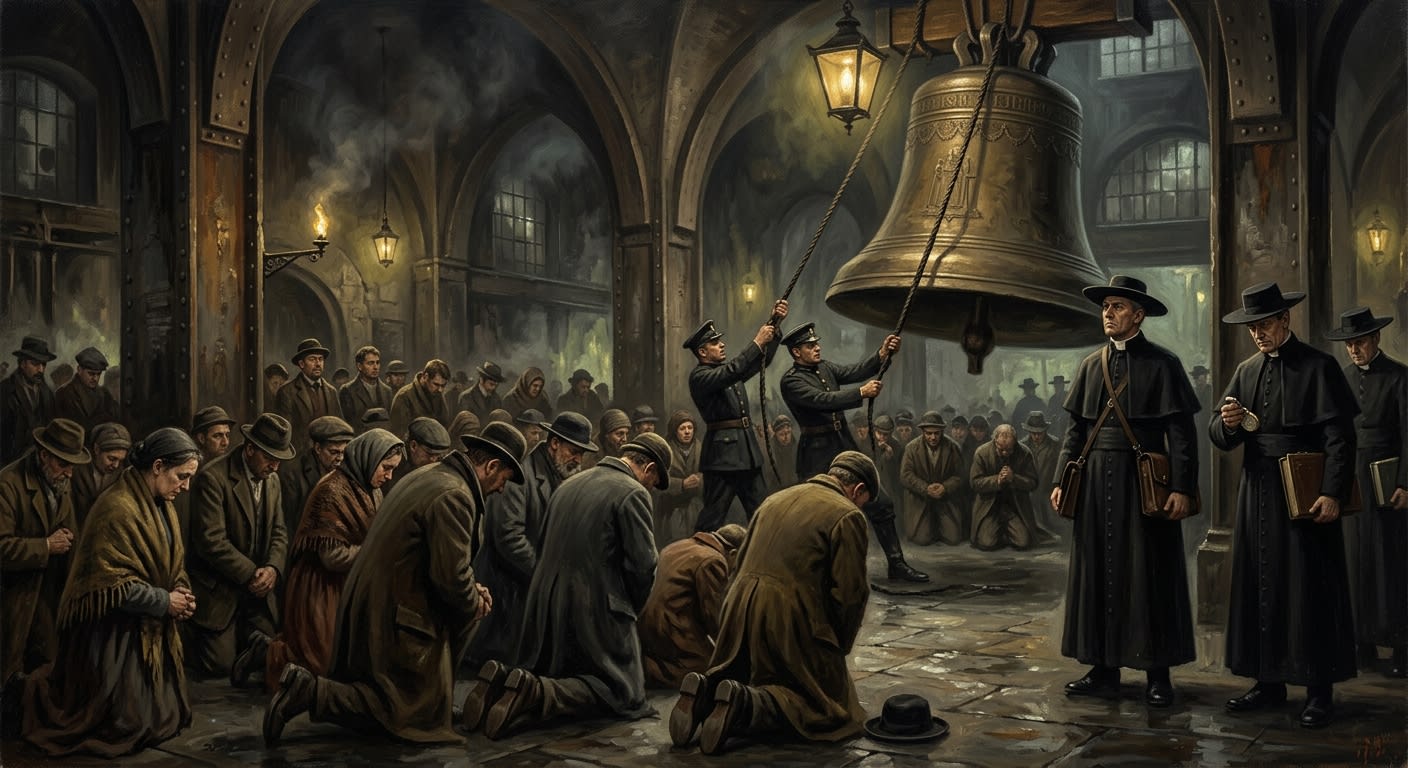
Compline
The bell that sells darkness back to the faithful
Compline is the Synod's last office before darkness: prayer turned curfew, bell turned warrant, sleep turned a privilege with witnesses.
Codex Ref. XIII.1.62-005
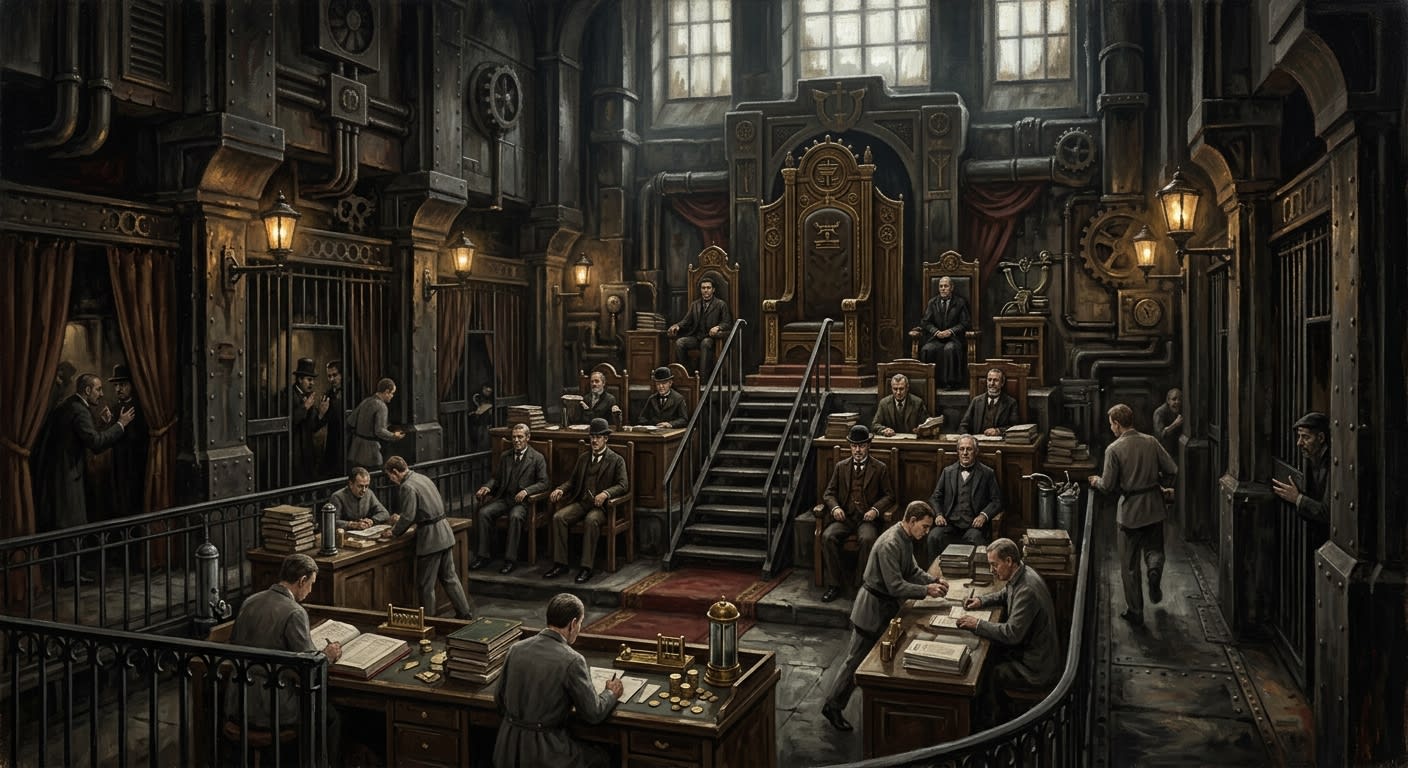
Concordat Hall
Where agreement kneels, pays, and receives a chair
Concordat Hall is Strasbourg's constitutional pressure chamber: thrones, clerks, proxy corridors, speech fees, and agreement taxed into sanctity.
Codex Ref. II.1.04-006
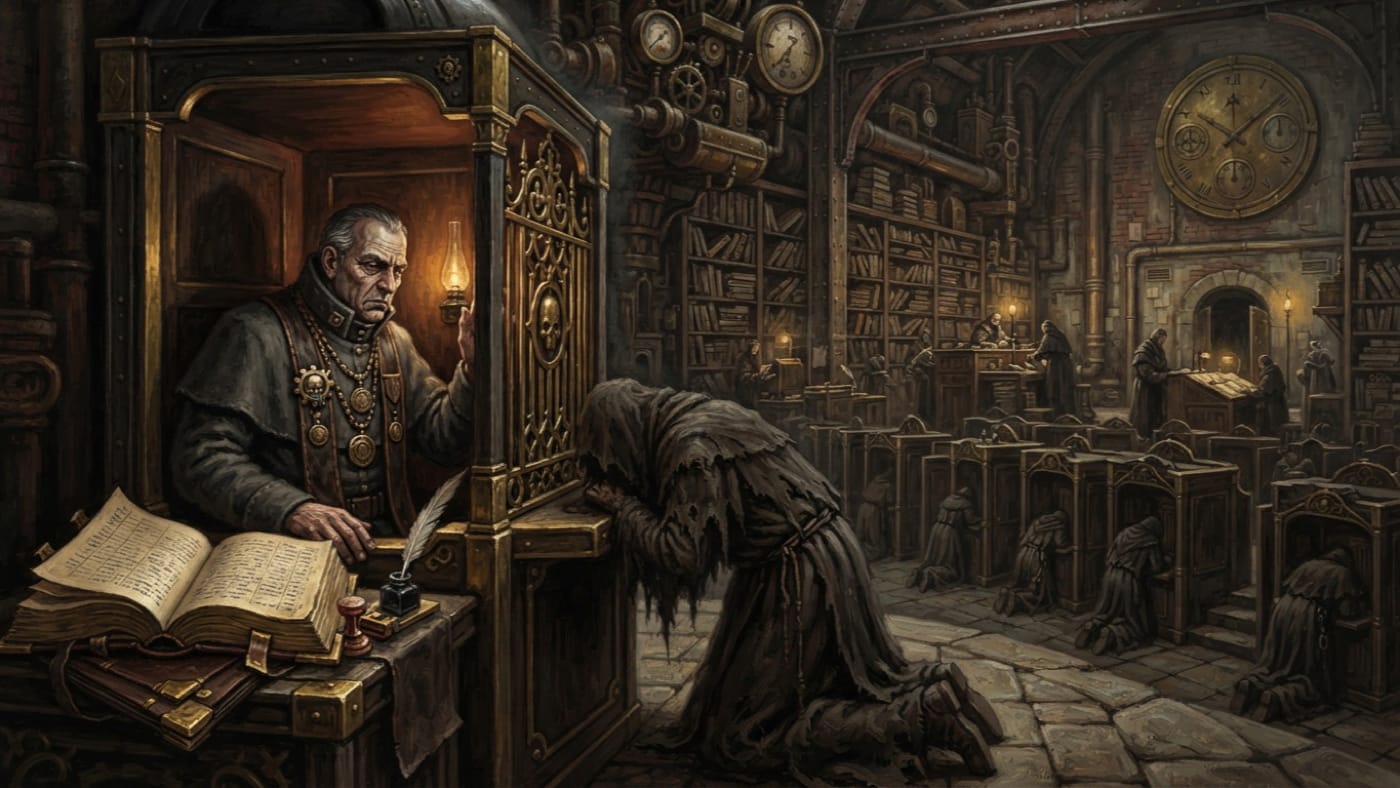
Confessors
The penitent goes home lighter. The register stays full.
The parish Confessor absolves the penitent and records the sin. I survey the ordained listeners who keep the Ear of the Synod open, from parish grilles to baptismal duty under Standing Order 88-F.
Codex Ref. XII.9.03-201
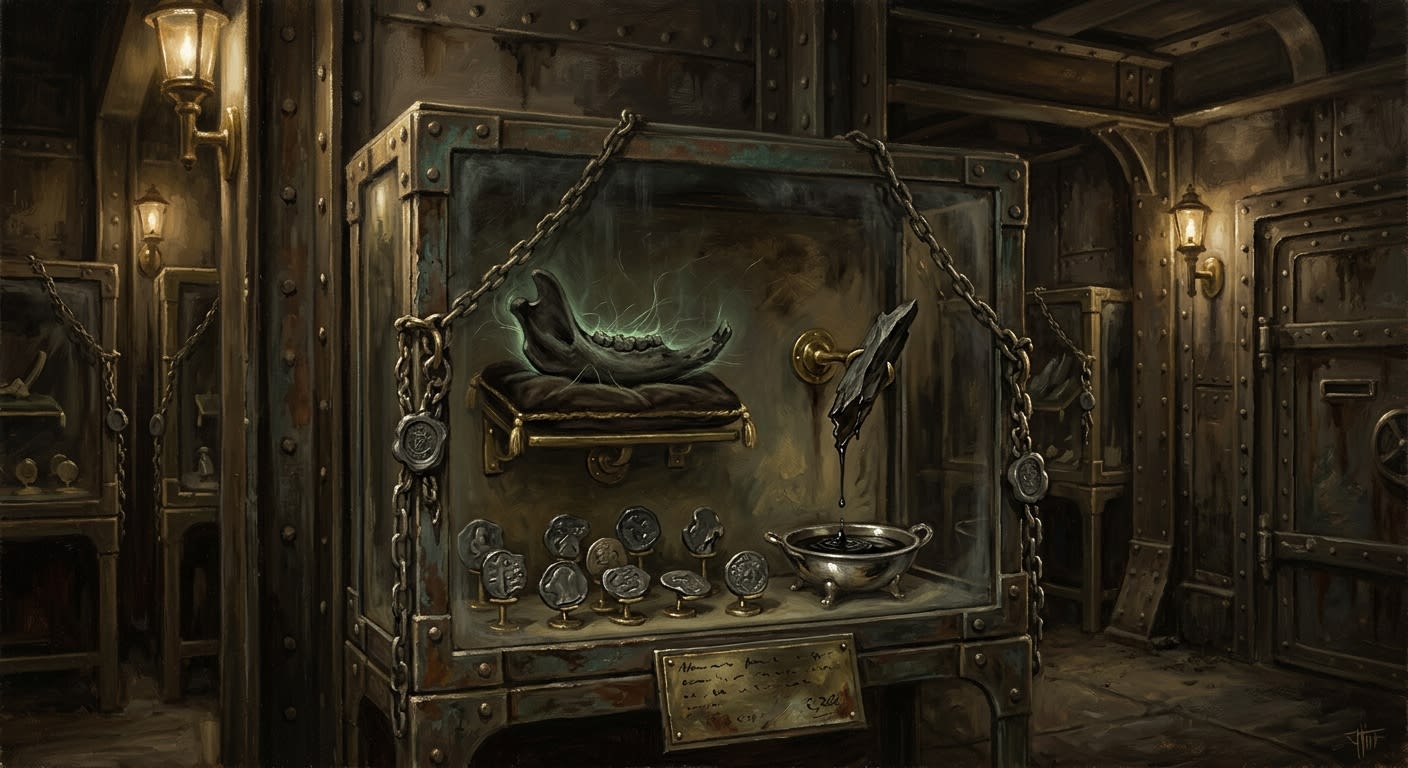
Confiscated Relics of Uncertain Provenance
Holy things without receipts, unholy things with excellent filing discipline
Third silence of the Vault of Silences, holding the humming jawbone, the weeping splinter, and Velmora's returning coins under suspended relic authority.
Codex Ref. XIII.1.50-001

Corporal Drennan
One touch, four words, and the Marsh denied a morsel of vanity
Corporal Drennan of Bastion-Constantinople interrupted Drax's Blightmarsh fixation at Kestrel-9 in A.S. 199, committing useful impropriety with one hand on a sleeve.
Codex Ref. III.2.01-020

Corridor Notary Hask
Two taps and a swallow; the rest awaits a ledger
An A.S. 201 review of old Corridor Notary Hask, preserved in Bone-Lung by a cough: two taps and a swallow. The bones received chamber numbers; their notary received one clause.
Codex Ref. III.2.01-757

Counter-Toll Corps
Louder is cleaner, until the city taps back
The Counter-Toll Corps is the Synod's sanctioned acoustic overwrite force: bronze artillery for false curfews, borrowed obedience, and bells that answer back.
Codex Ref. XII.2.02-135

Counter-Toll Operator
What the enemy rings, the Bureau drowns. The toll is paid in bone and nerve.
The Bureau of Bells does not debate; it drowns. Its Counter-Toll Operators sit in sub-tower vaults and overwrite hostile tones with louder ones. The city's obedience is the bell's argument.
Codex Ref. XII.2.02-001
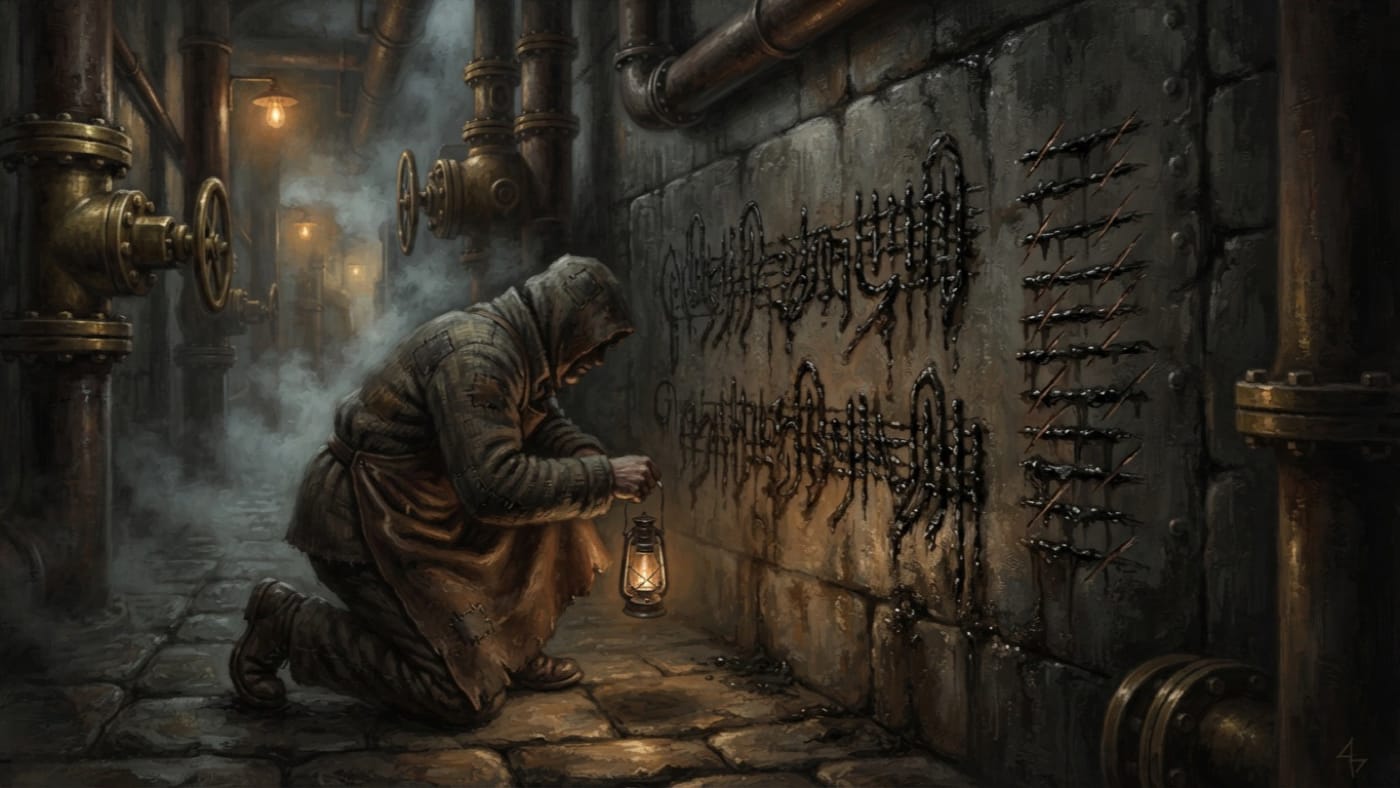
Counterkeys
Unlicensed harmonics, written in the substance of a ruined voice
Counterkeys are Irongate's unlicensed acoustic patterns, recorded in gasket grease. Bells finds coherent notation; Purity finds a crime. Neither has proved the mountain prefers them.
Codex Ref. VI.2.01-002
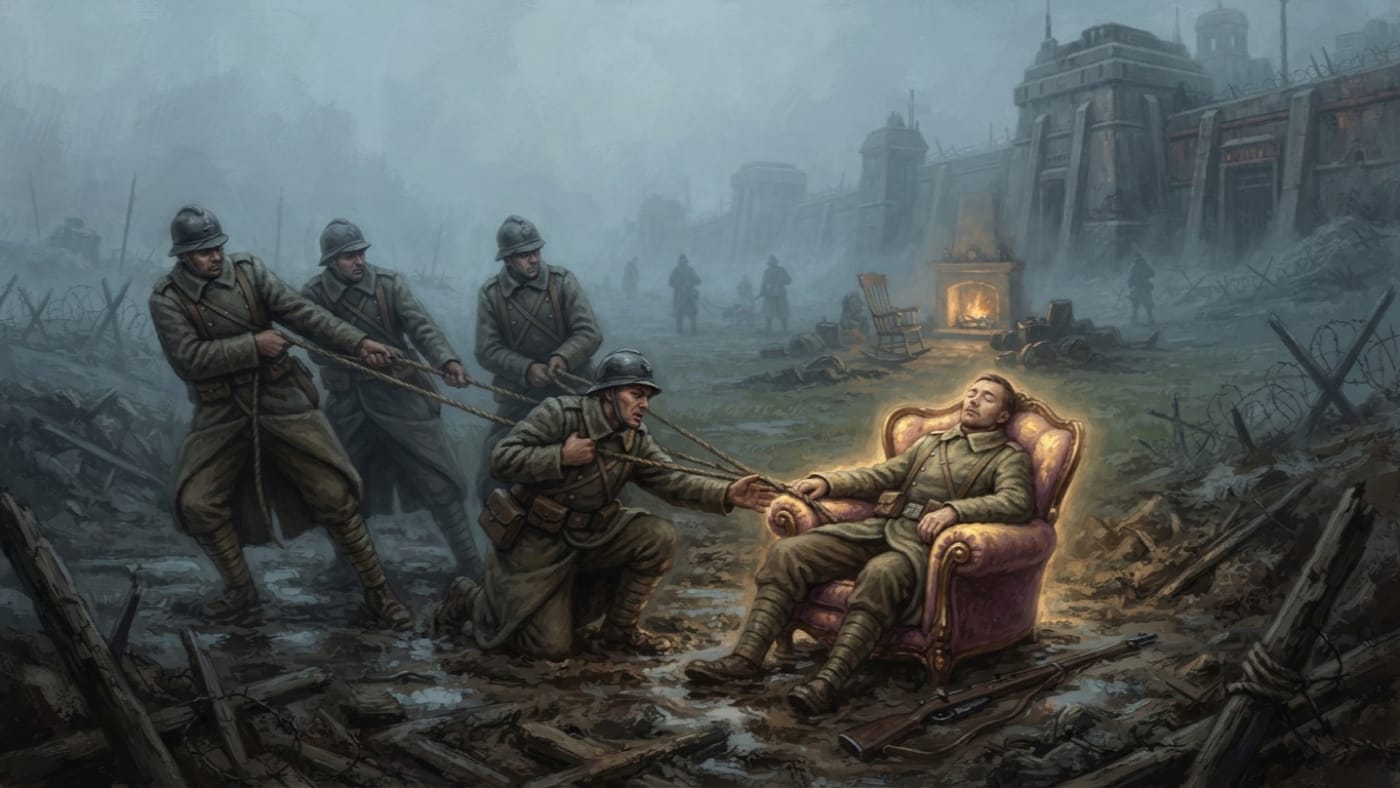
Cradled
The chair is warm. Remain standing.
The Cradled give Syrion's comfort a shape: a chair, a bed, a childhood room, a hearth. Seven men were pulled back from Outpost Eleven-West; nine still smile in Sofia.
Codex Ref. IV.1.07-194
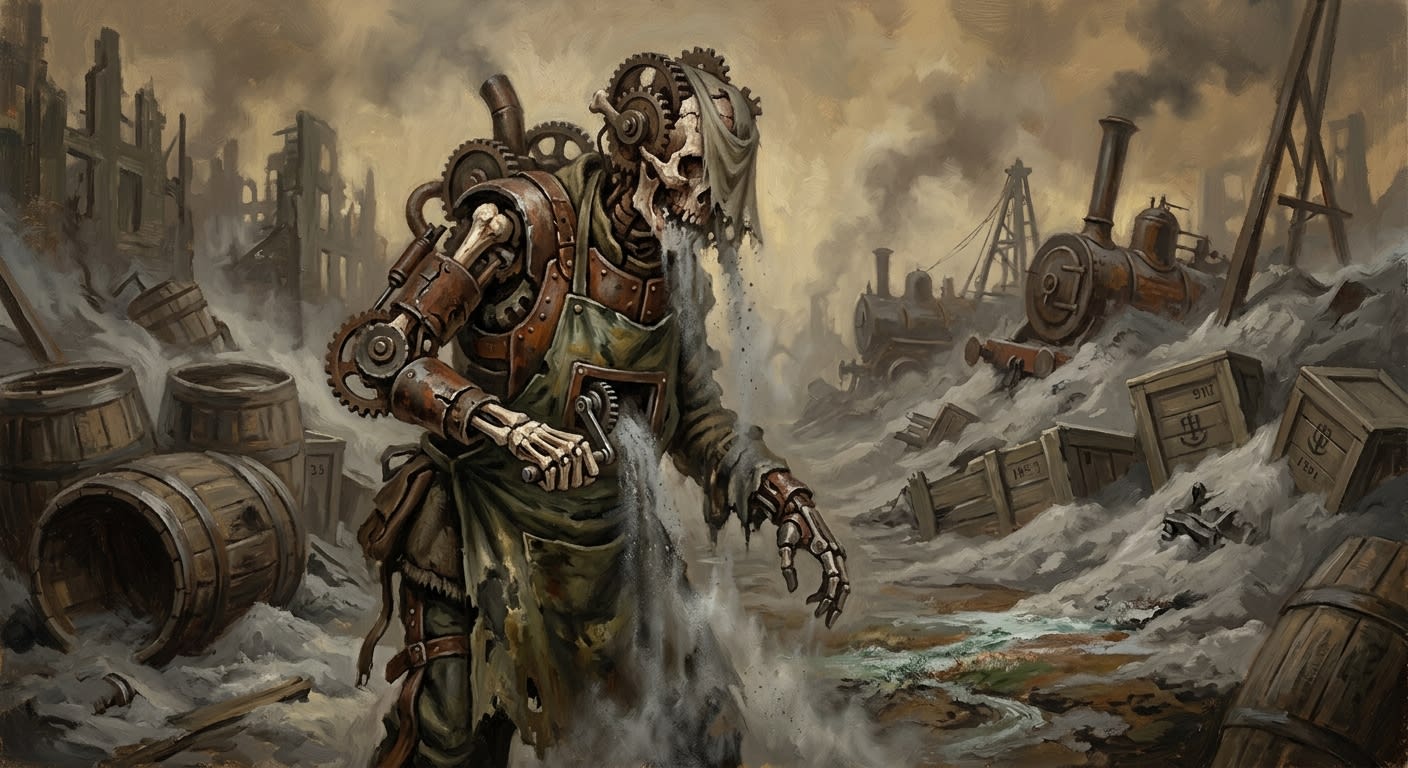
Crumble-Wrong
When saint-dust remembers the body and refuses commerce
At Mournwater, saint-dust settles into bones, ruins casks, fattens futures markets, and suggests that industrialized holiness has begun objecting.
Codex Ref. XIII.1.21-001
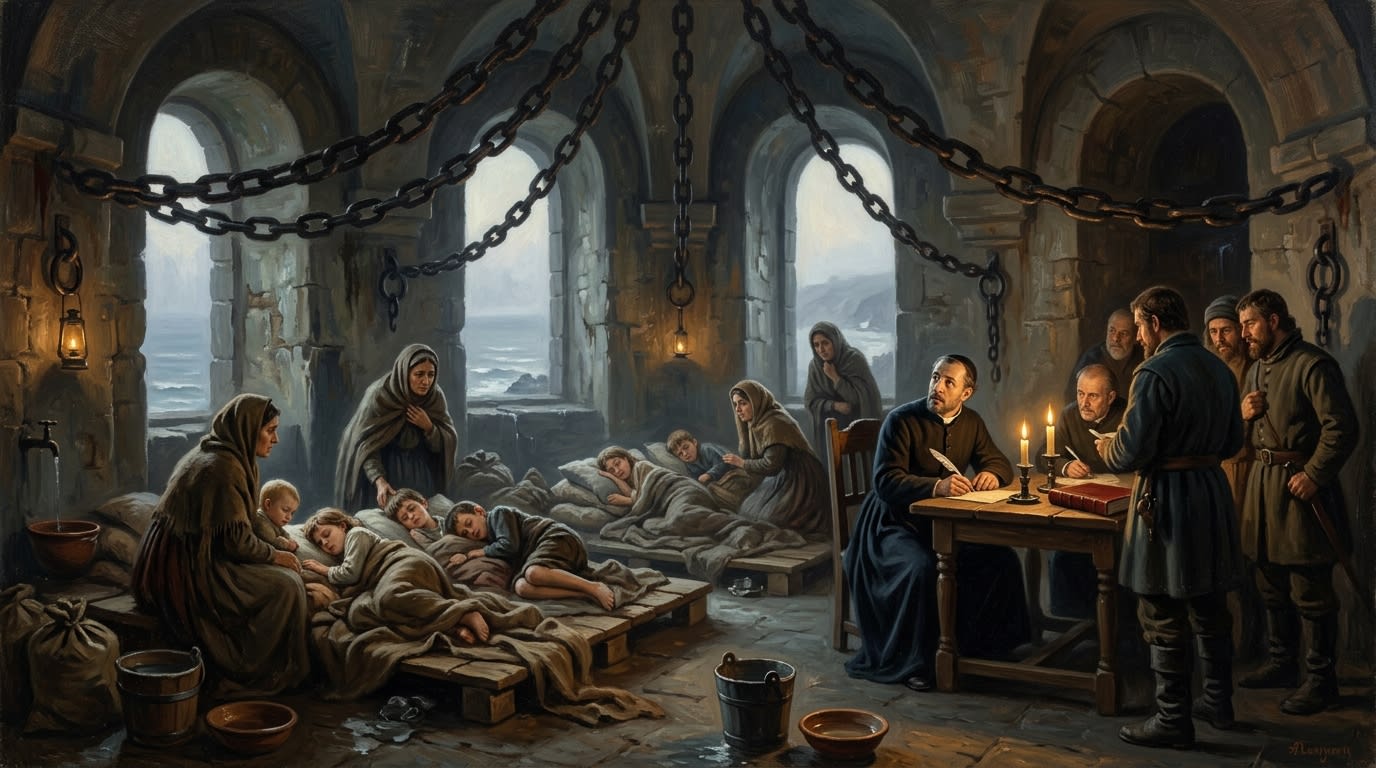
Crying Choir Incident
The night Thessaloniki learned a living child could be filed as lost
A.S. 145: refugee children sleeping under Thessaloniki's Harbor-Chain Towers sang before dawn, lost their tongues to salt water, and taught the Ledger to call the living lost.
Codex Ref. VII.8.10-145
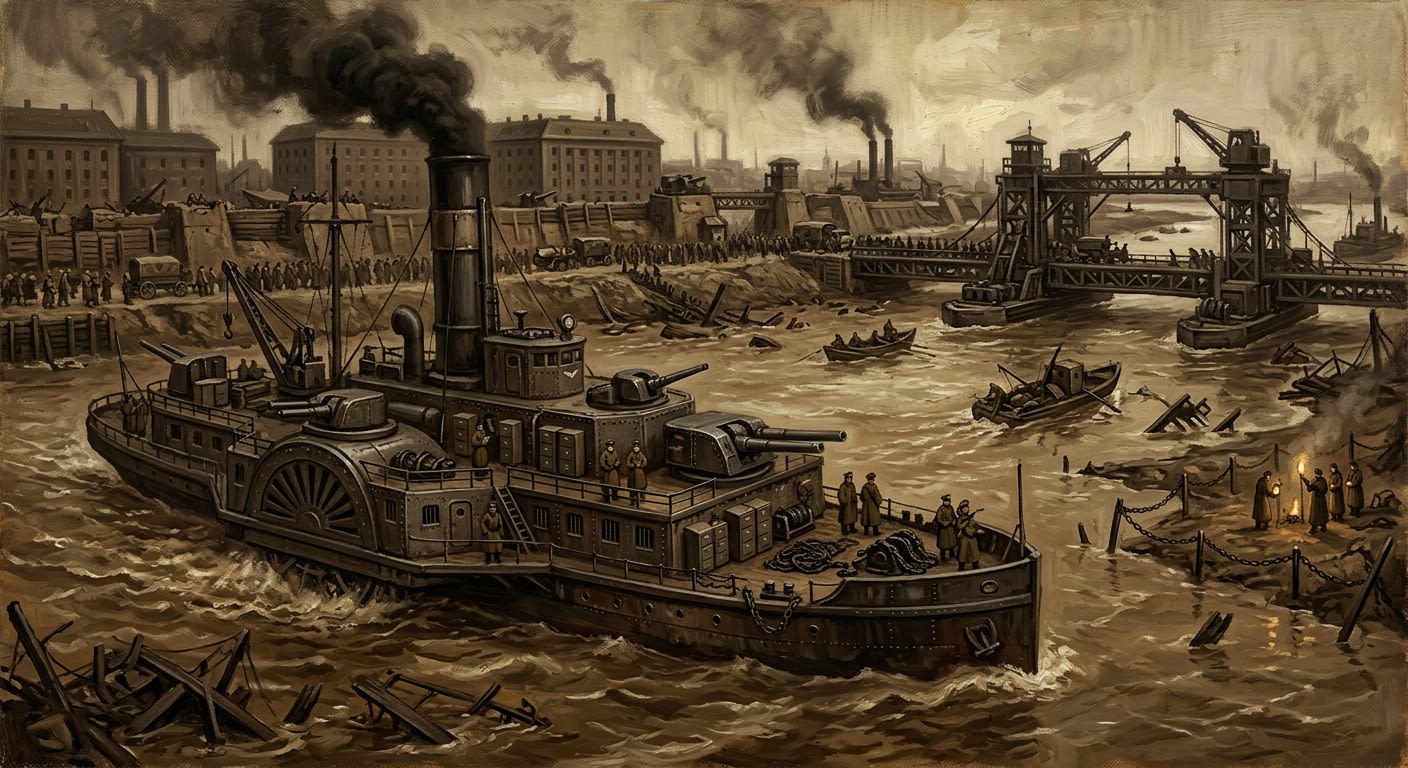
Danube
A moving jurisdiction, interrupted by Hell
The Danube is the Synod's brown moving jurisdiction: road, border, weapon, archive, tariff, grave, miracle-site, and contested throat of Irongate.
Codex Ref. II.4.09-034

Dead-Goods Tariffer
The grave is a permit; the permit has a price
Bureau-licensed bone classifier. He decides what the dead become — mortar, monument, or ornament — and does not look up from his seal press.
Codex Ref. XII.11.01-001
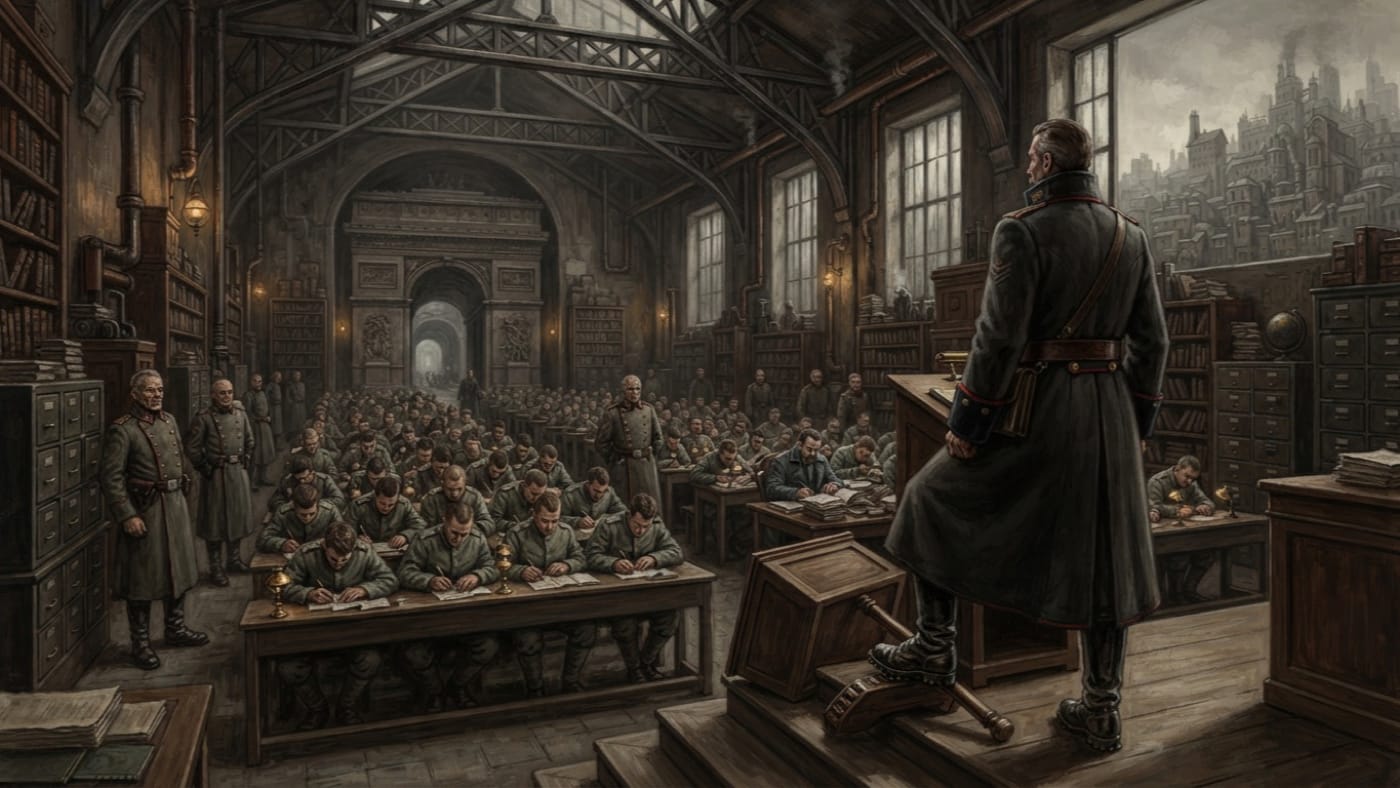
Dean-Marshal
One boot in the lecture hall. The other on the lecturer.
The Dean-Marshal governs the War College under War custody and Doctrine and Records supervision. In this A.S. 201 survey, I find competent administration, borrowed arithmetic and no gratitude for its authors.
Codex Ref. VIII.5.09-001
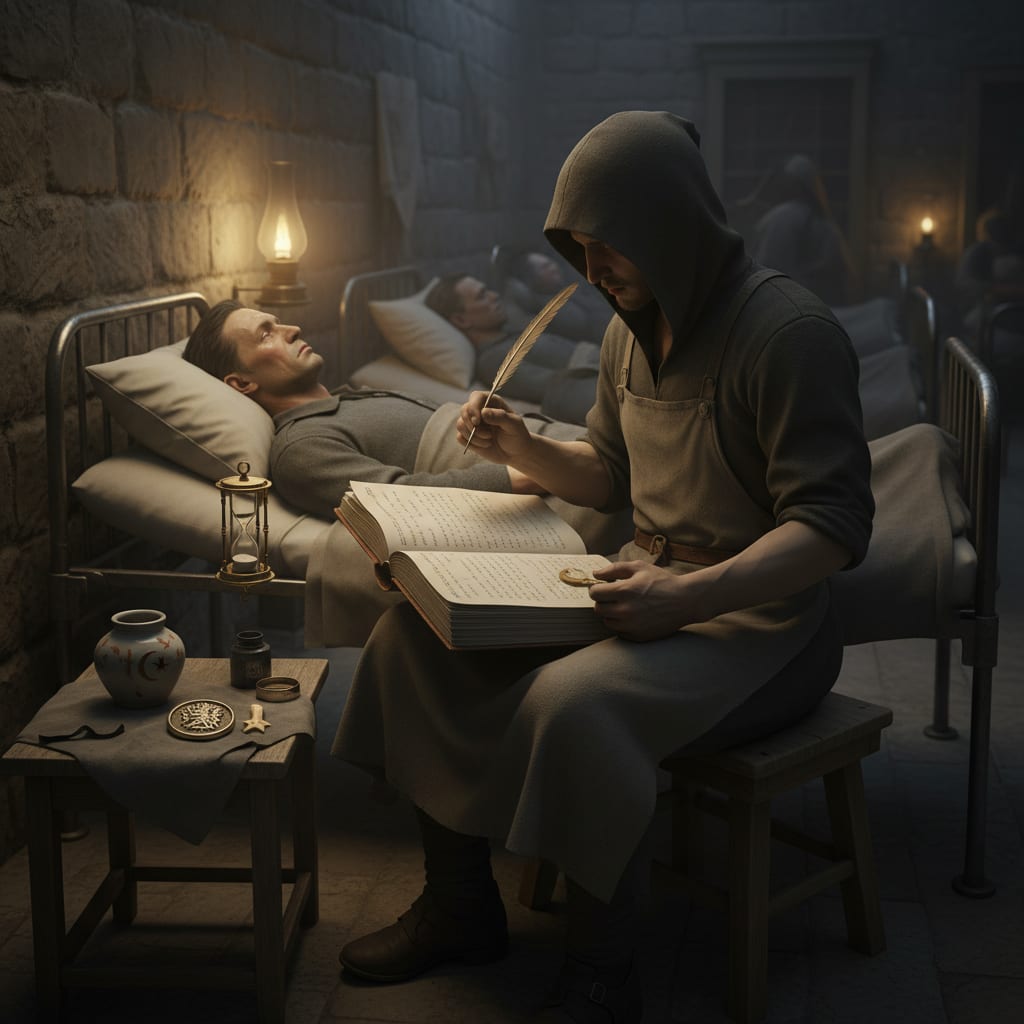
Deathbed Confession Harvester
The quill outlasts the patient; the Record outlasts both
Two thousand four hundred scribes posted at the bedsides of the dying, ensuring no death in Synod jurisdiction passes unfiled. The Record does not grieve. The Record does not wait. The Record simply continues.
Codex Ref. XII.12.01-001
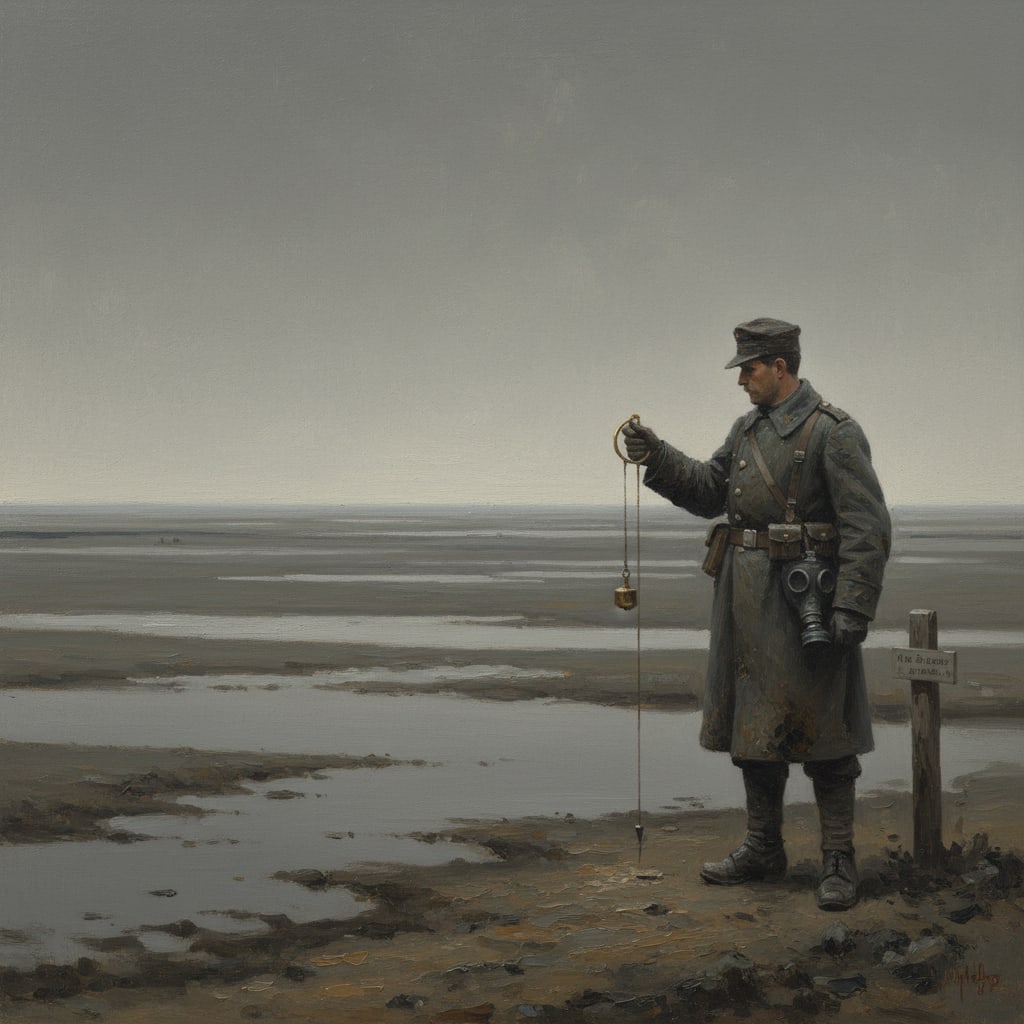
Debrecen
The city that was eaten
Forty-two thousand souls, a grain exchange that set prices from the Danube to the Rhine, and a harvest the world will never taste again. Kargath ate it. The Blightmarsh is all that remains, and the Blightmarsh is still hungry.
Codex Ref. VI.1.01-001
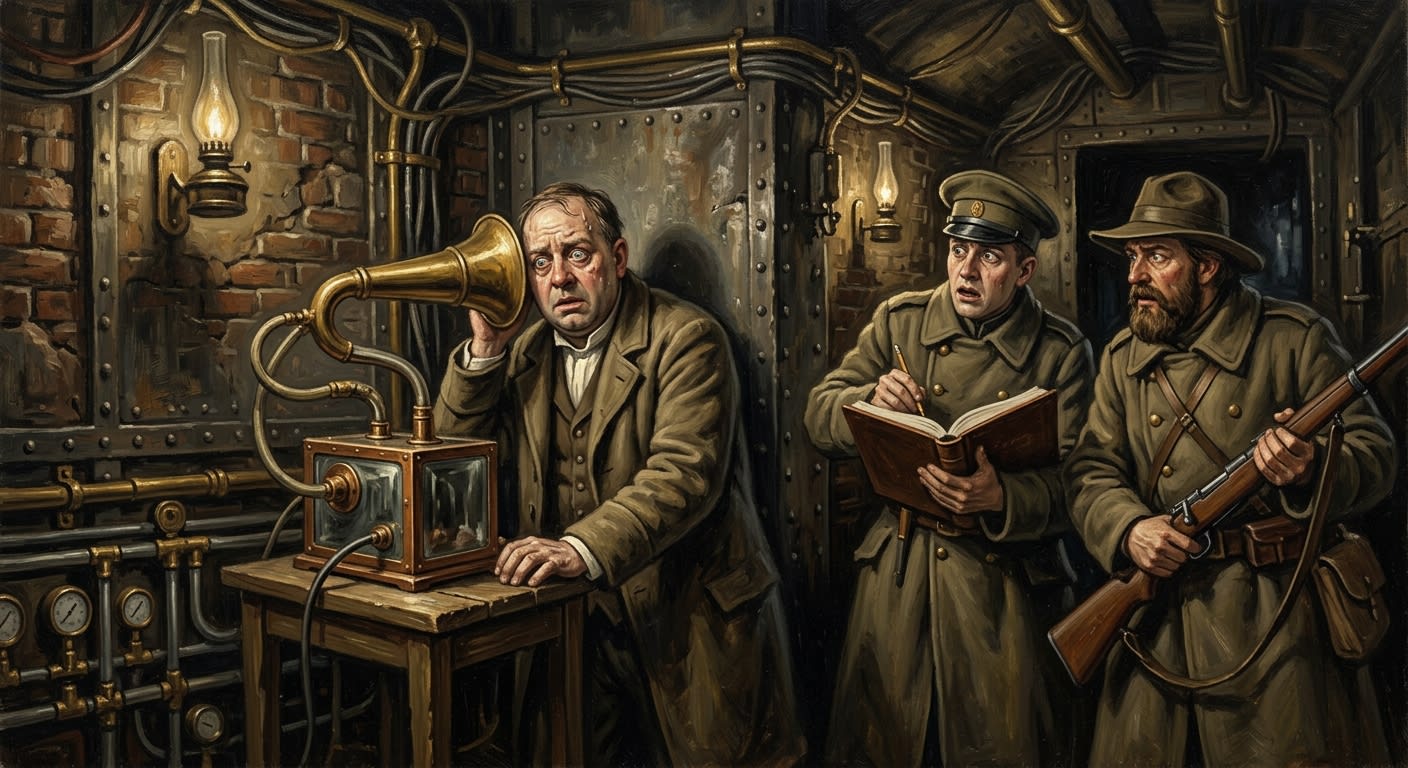
Demon-Listening Incidents
Three sealed niches kept better time than the living dared admit
The A.S. 158 Demon-Listening Incidents at Bastion-Przemyśl proved that sealed walls can keep bell cadence without mercy vents, rats, or permission.
Codex Ref. VII.8.10-040
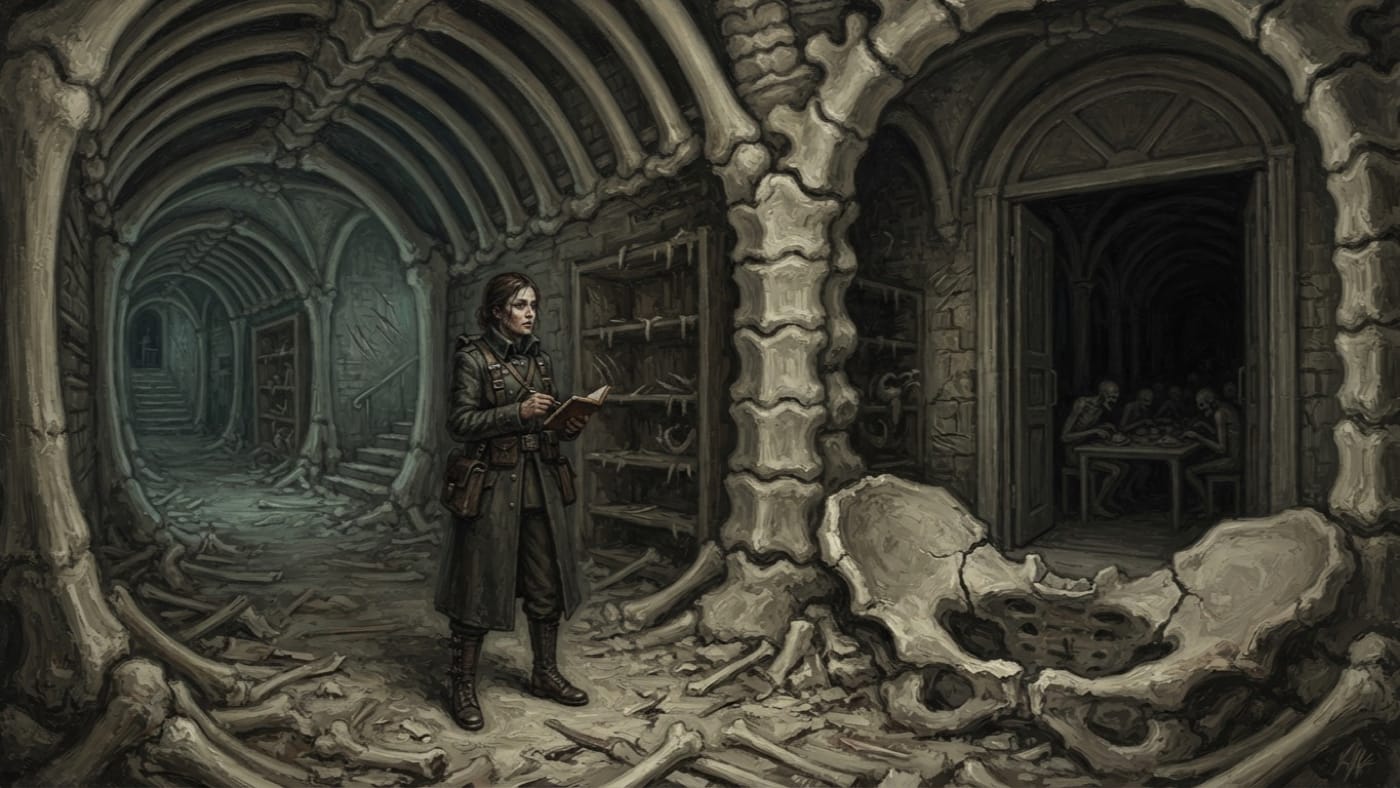
Deposition 7-K
Three days by her account. Nineteen by the calendar.
One redacted Shadows operative returned from the Hollow Court's outer galleries in A.S. 196. She reported about three days; the calendar recorded nineteen. The Bureau entered both and explained neither.
Codex Ref. V.6.01-007
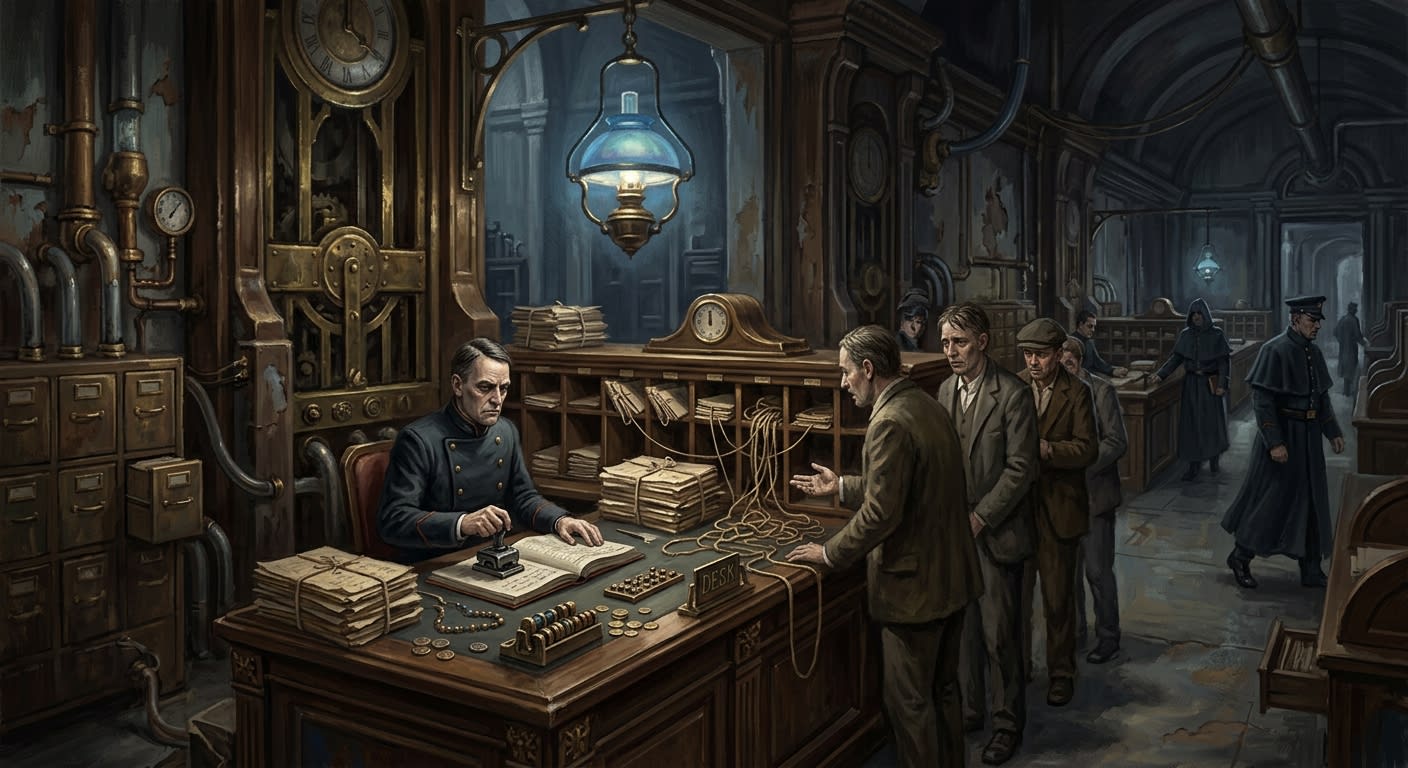
Desk Eleven
Where the blue lamp burns and the Bureau teaches furniture to deny arithmetic
Desk Eleven is the Cloister's blue-lamped denial station: a public desk for warm strings, backward slips, grave-clicks, and every bead count the Bureau refuses to name.
Codex Ref. XIII.1.72-199

Doctor Haas
The man who taught the Synod that enemy iron keeps testimony
Doctor Haas heard the Black Sea Armada's wreckage remember its own burning. War called him useful, Medicine called him fatigued, and Doctrine kept the note.
Codex Ref. III.2.01-155
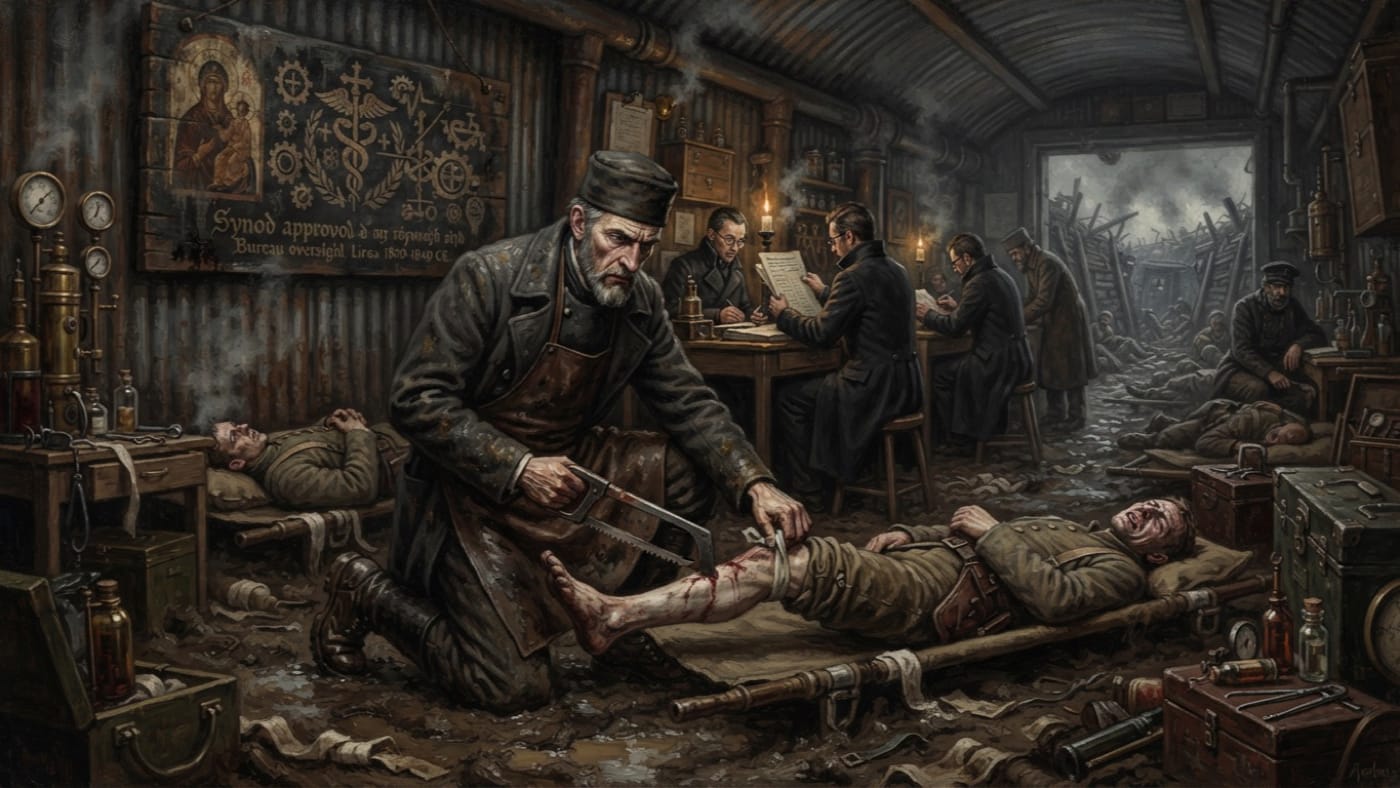
Doctor Kael Brenner
Returned to the payroll. Reconciliation has no entry.
Doctor Kael Brenner served as Medicine's first Chief Anatomist from A.S. 82 to 134. His excommunication and rehire were filed on the same day. Reconciliation has no entry.
Codex Ref. III.2.01-082
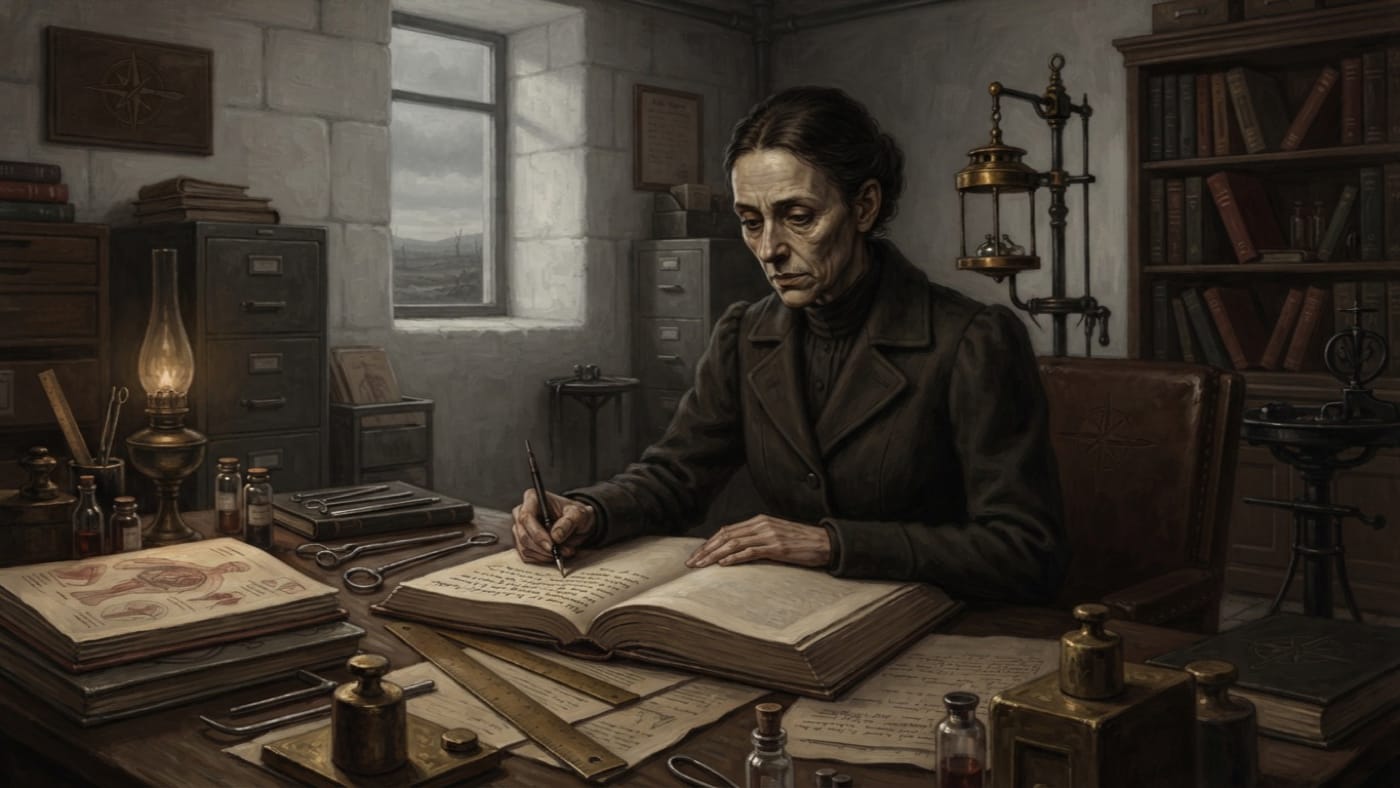
Doctor Maren Solen
The measurements remain. Her reasons are unrecorded.
Doctor Maren Solen attended the Pit Seven exposure as Chief Anatomist, then resigned and entered the Adriatic sanitarium. Her measurements survive. The archive gives no reason for her departure.
Codex Ref. III.2.01-134
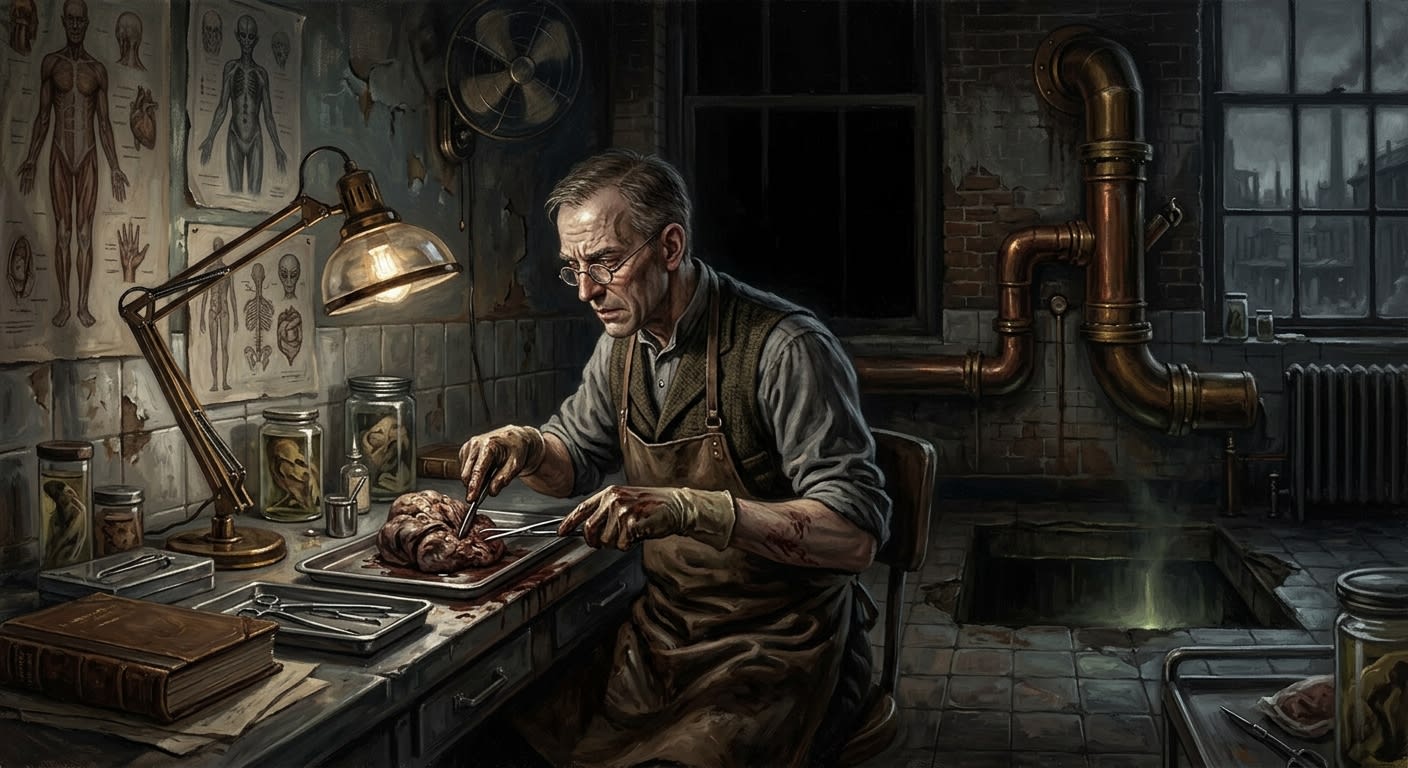
Doctor Trenn
The anatomist who measured hunger and refused comfort
Doctor Trenn, Chief Anatomist of the Bureau of Medicine, gave the Famine Pit horror its clinical name and kept the word real where comfort wanted illusion.
Codex Ref. III.2.01-023
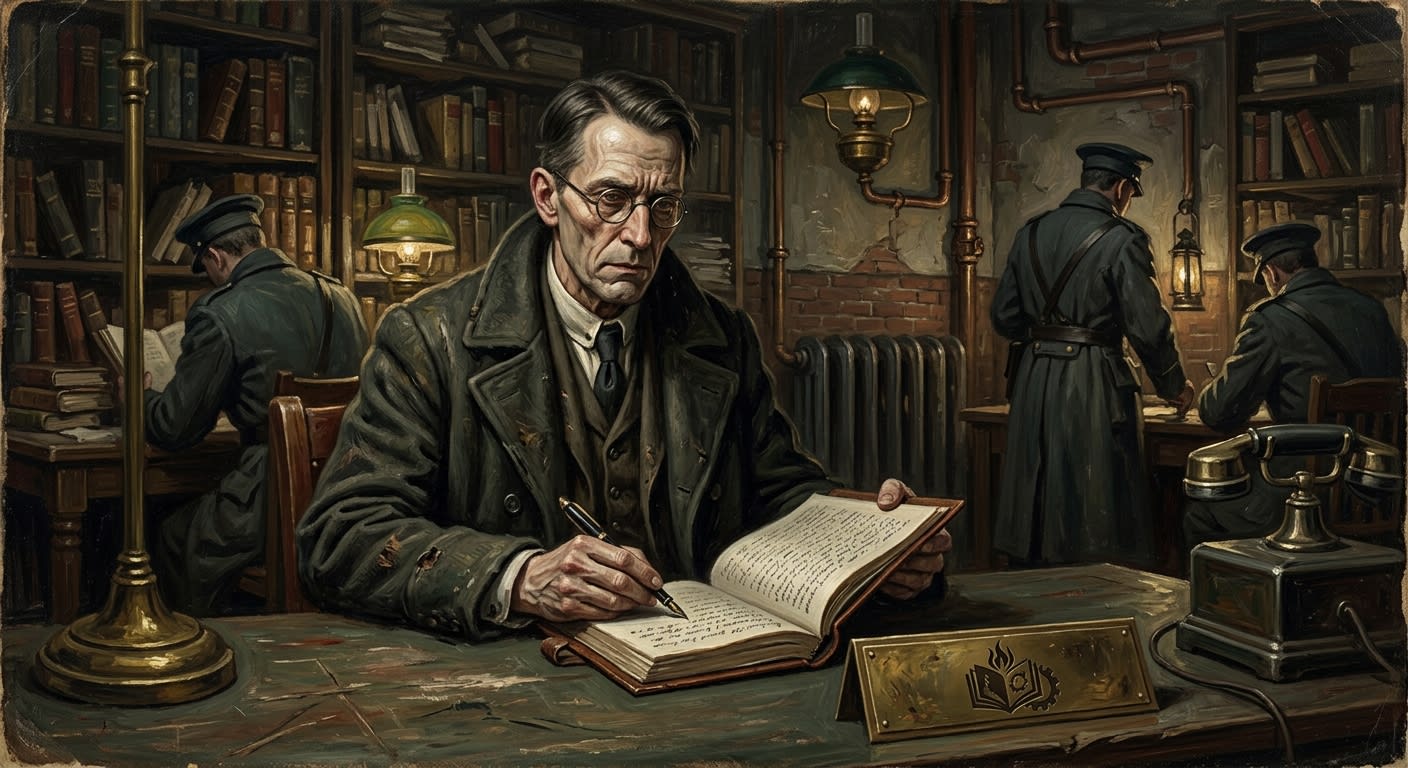
Dr. Marrow Vask
The physician who taught doctrine to carry contraband truth
Condemned Rationalist physician who survived as Brother Matthias, wrote the Index of Safe Lies, and became the Ashen Circle's stolen martyr after his A.S. 57 burning.
Codex Ref. III.2.01-090
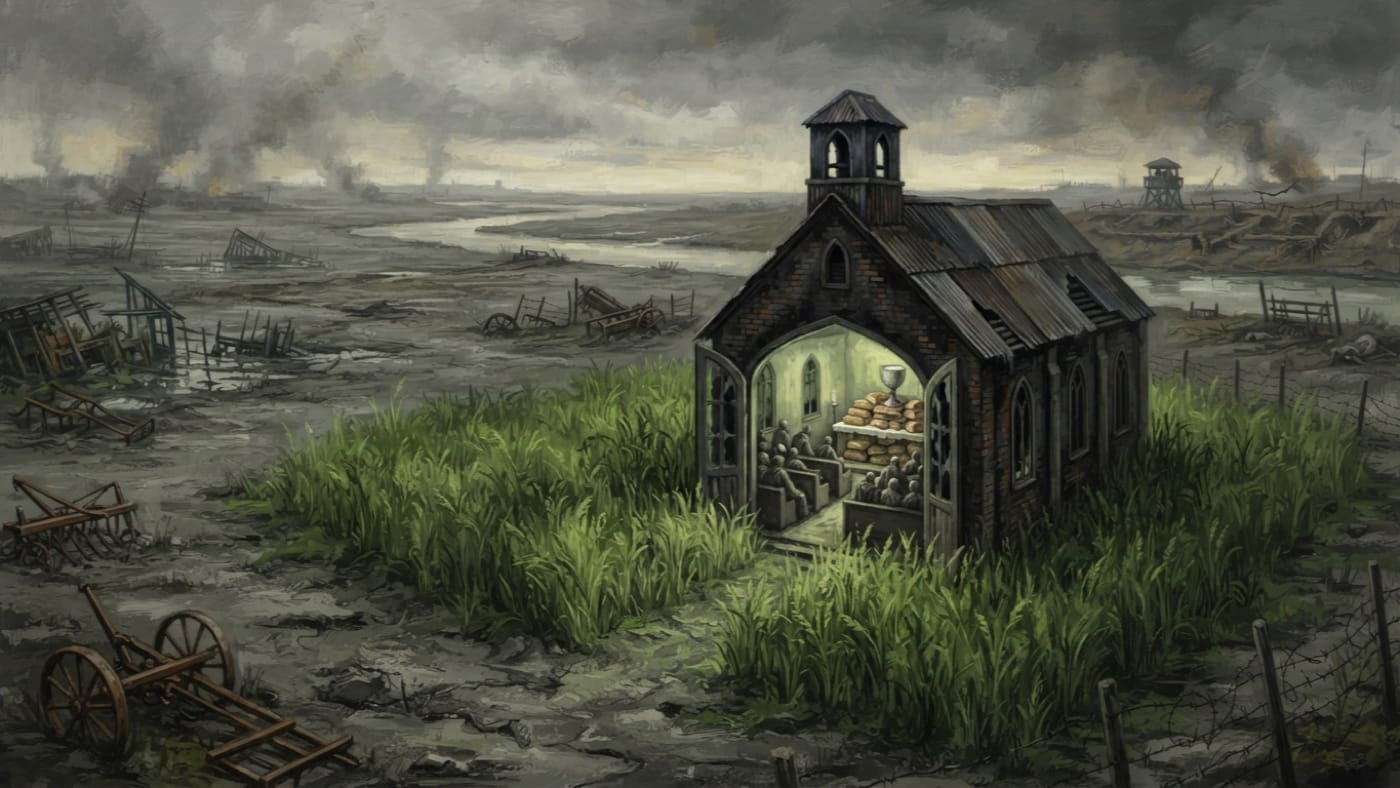
Drava Lowlands
Where the bread went, and what came back in its place
The Drava Lowlands once fed Pannonia. In A.S. 174 they housed a chapel whose altar was bread, whose chalice held milk, and whose congregation was entirely dead.
Codex Ref. II.6.06-174
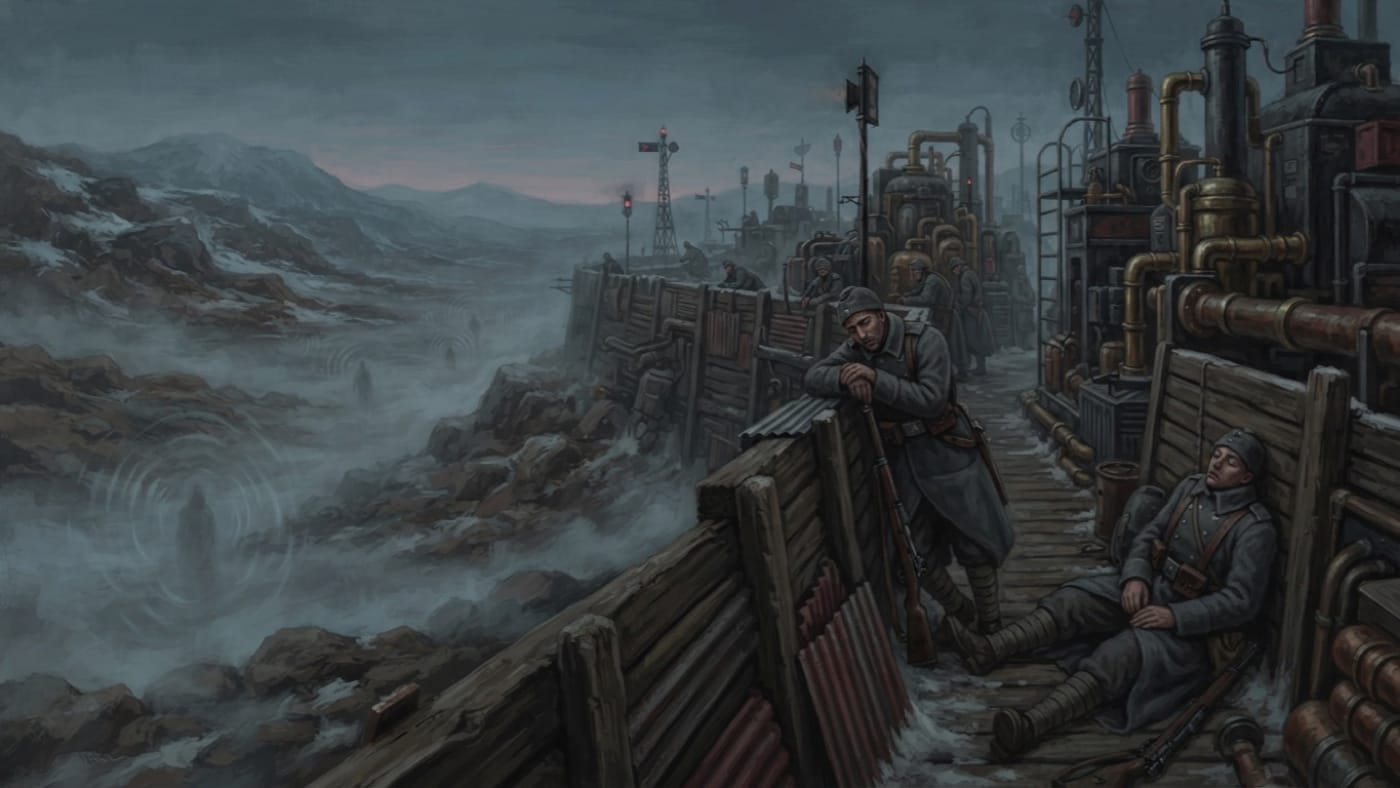
Drowse-Singers
The lullaby is attested. The rest remains fog.
A.S. 201 survey of Syrion's Drowse-Singers: support creatures whose lullabies are reported to induce stupor and unravel courage. Blood descriptions remain unmeasured; the Ledger does not mistake bodily injury for surrendered will.
Codex Ref. IV.4.01-002
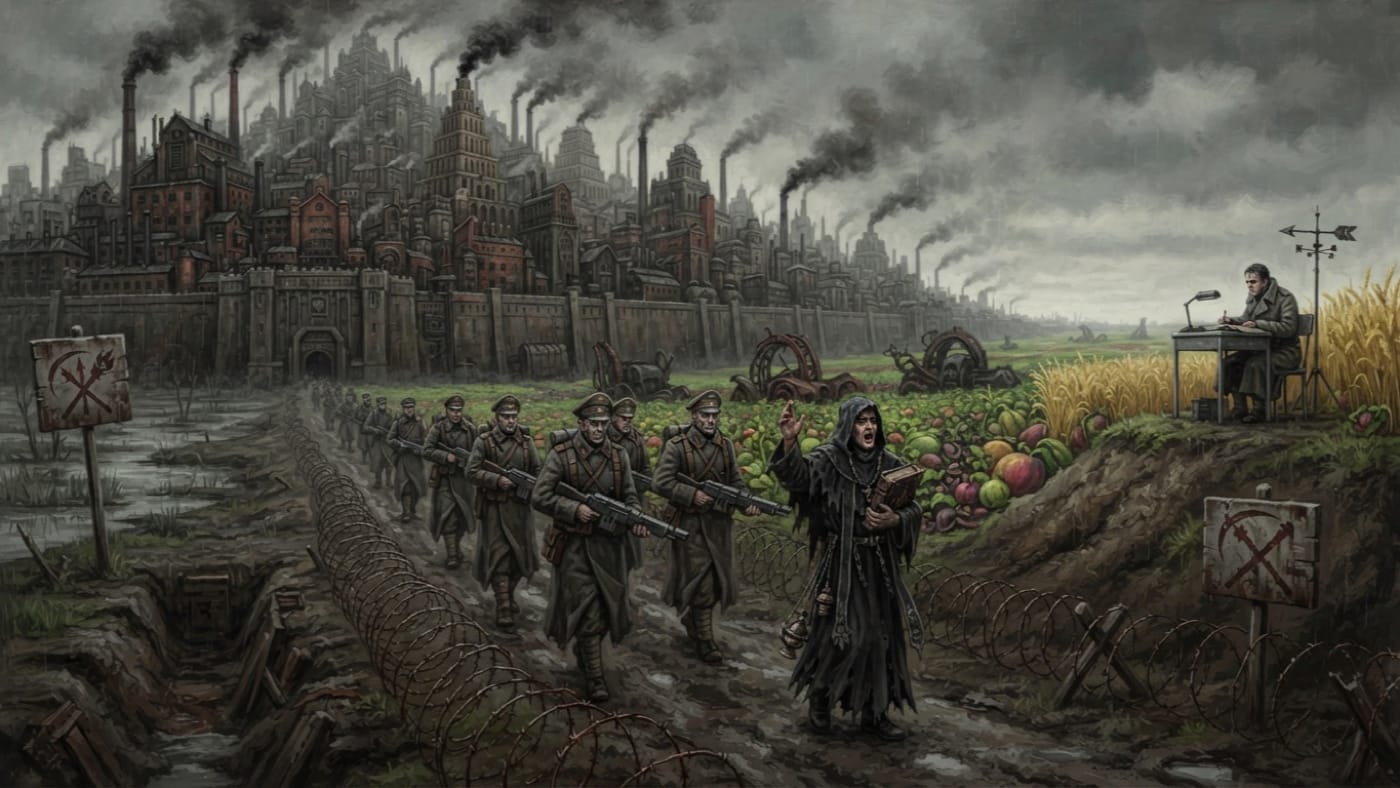
Eastern Command
Where protecting the soldier means forbidding the harvest
Eastern Command issues the eastern sector's orders from Bastion-Constantinople. Its documented duty is to keep soldiers from Kargath's food: the ration feeds them; the harvest devours them.
Codex Ref. VIII.7.05-201
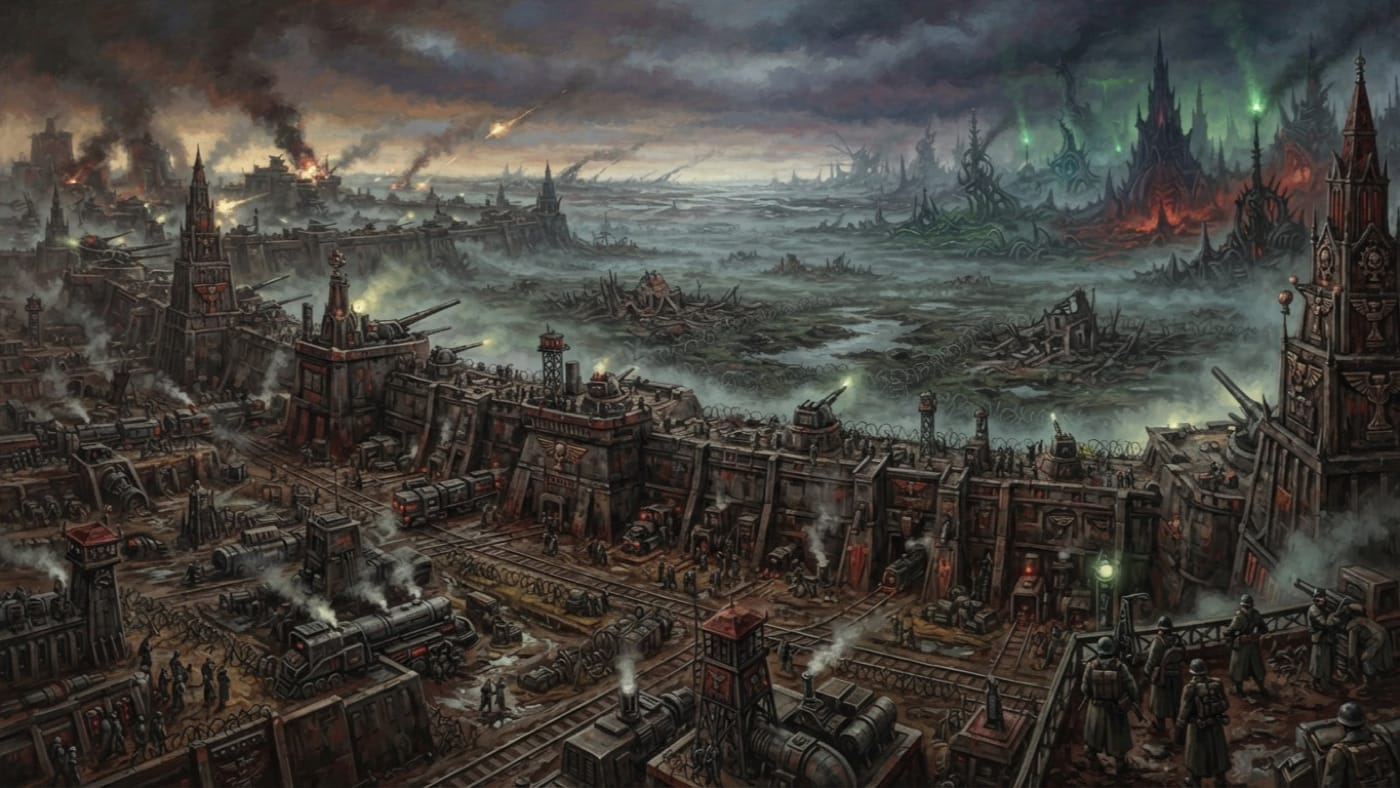
Eastern Theatre
A province has a governor to blame. The Eastern Theatre has an inbox.
The eastern war's unchartered heading: the Sagittal Line, contested strip, fallen lands and supporting rear. Drax surveys the front in A.S. 201; the reports have desks, but the Theatre has no commander.
Codex Ref. II.4.13-201
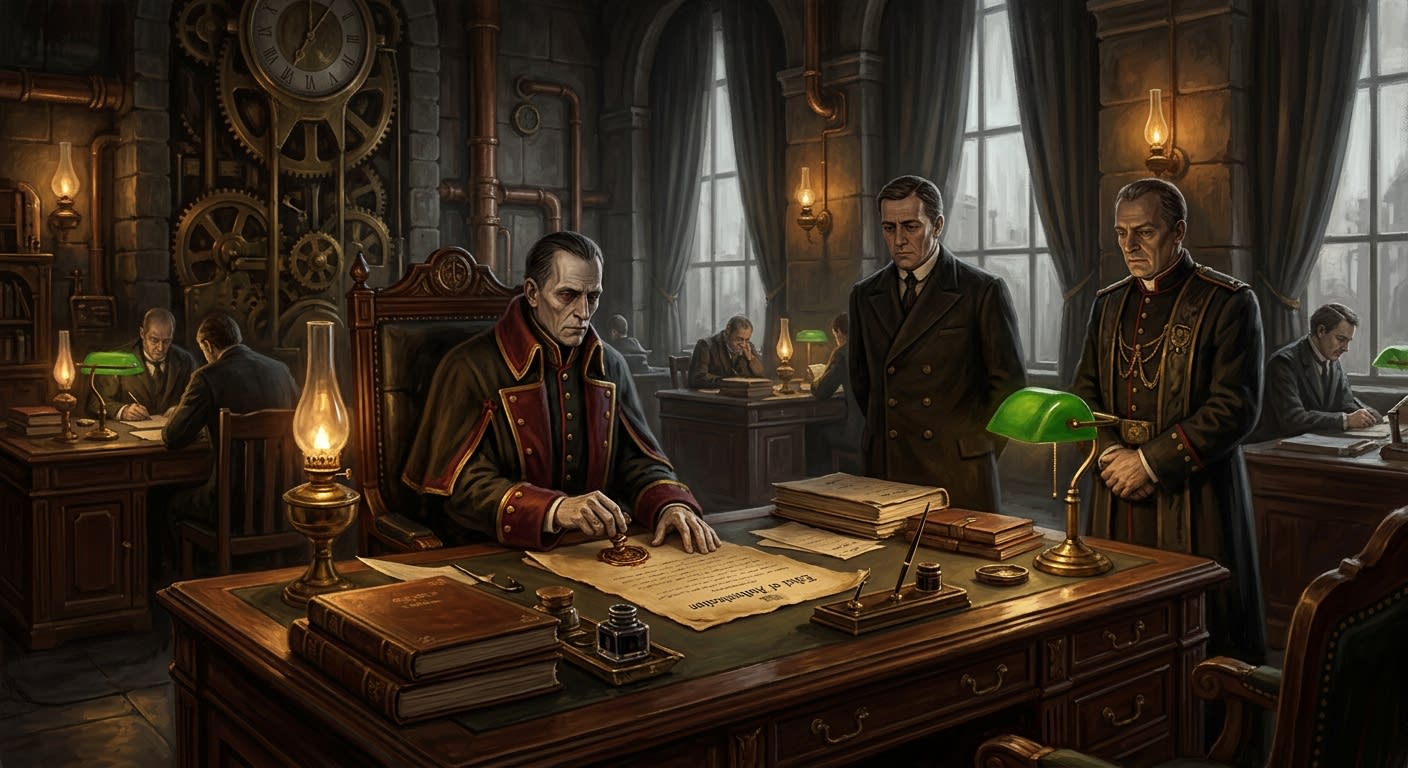
Edict of Authentication
Anatomy objected; the seal overruled it
The Edict of Authentication ratified the Femur Principle at A.S. 147: sanctity obeys custody, seal, witness, and doctrine before anatomy.
Codex Ref. XIII.1.90-147
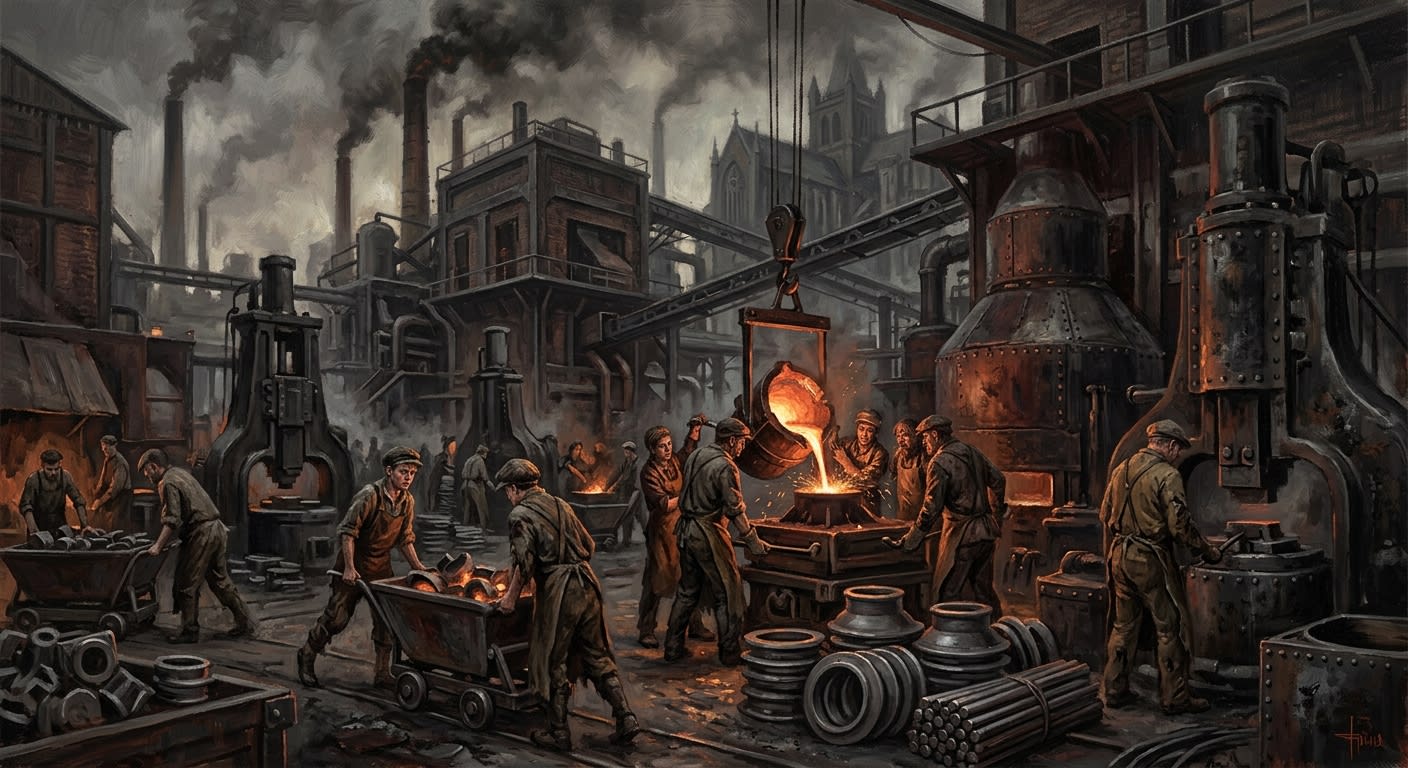
Edremit
The town that casts the throats by which Constantinople breathes
Edremit is the Hintermark casting town that makes boiler throats, casing collars, rivet stock, and hoarse children for Constantinople's hungry works.
Codex Ref. II.4.09-118
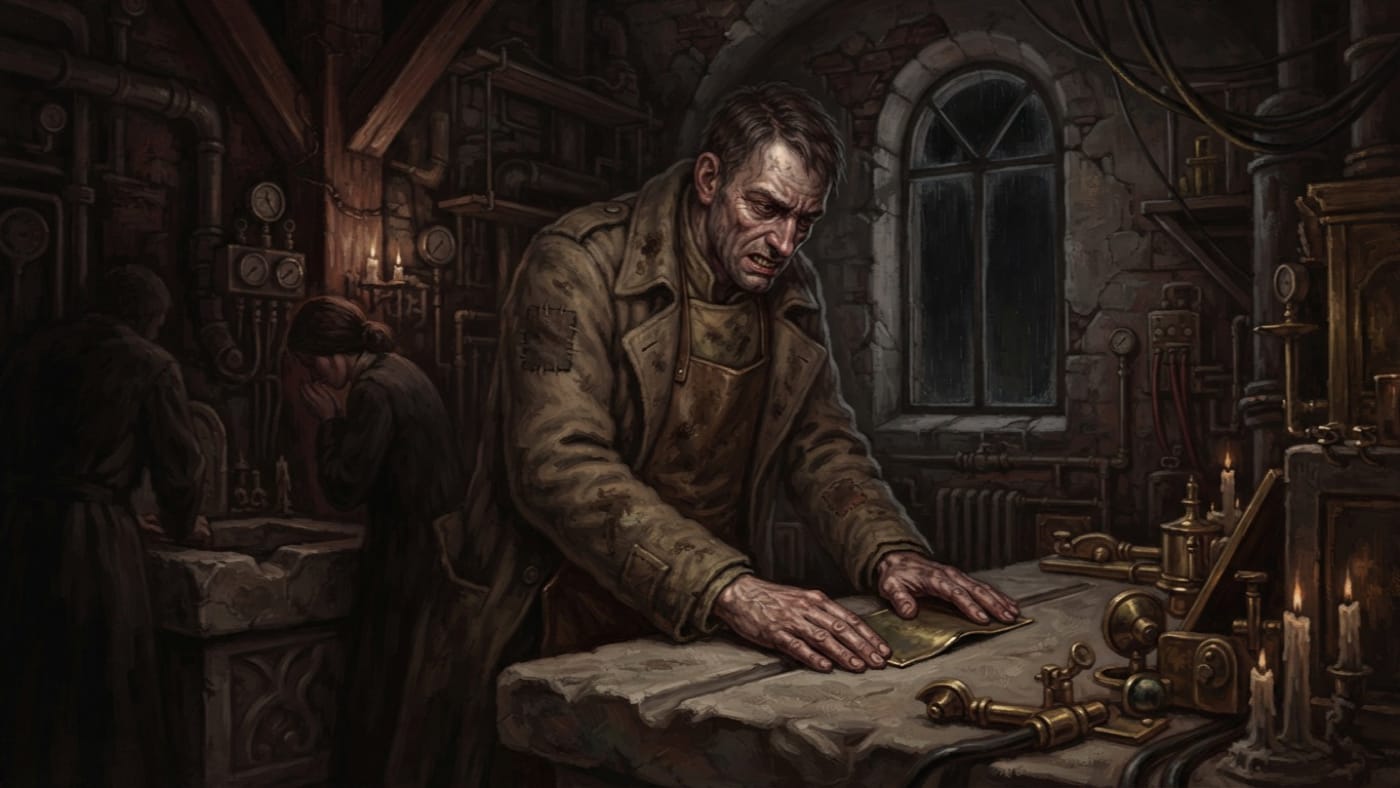
Edrik Vaul
The deed survived; the rest of the file is blank
Litany-Engineer Edrik Vaul helped contain the Singing Plate at Przemyśl in A.S. 131. He held the fragment face-down at the final binding; the archive kept his deed and left the rest blank.
Codex Ref. III.2.01-968
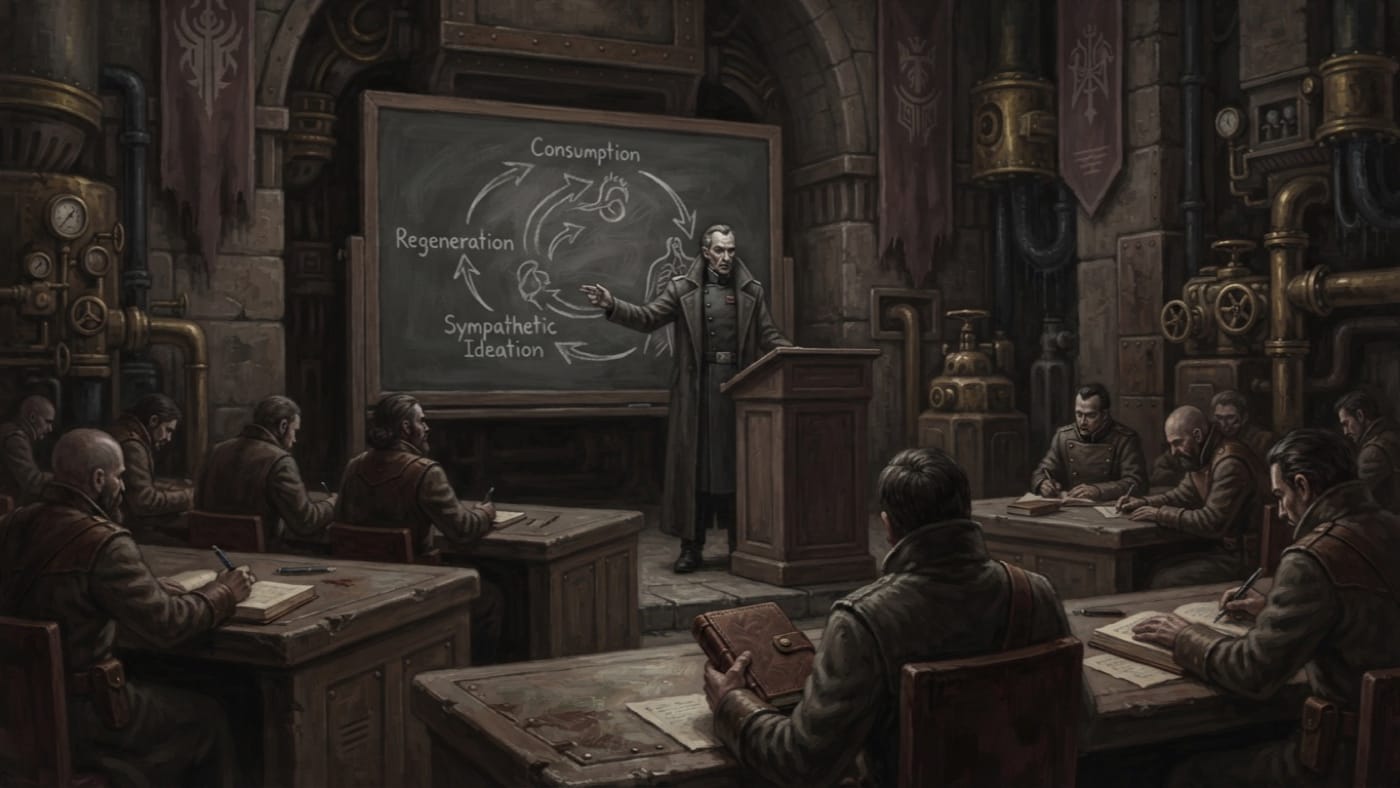
Eighteenth Conference on Demonic Pathology
Medicine supplied the noun; Doctrine supplied the instruction
At the A.S. 193 conference, Medicine named the Self-Devoured's proximity effect: sympathetic consumption ideation. No objection was entered. Eight years later, the theory remains working and the mechanism unproven.
Codex Ref. VII.8.10-018
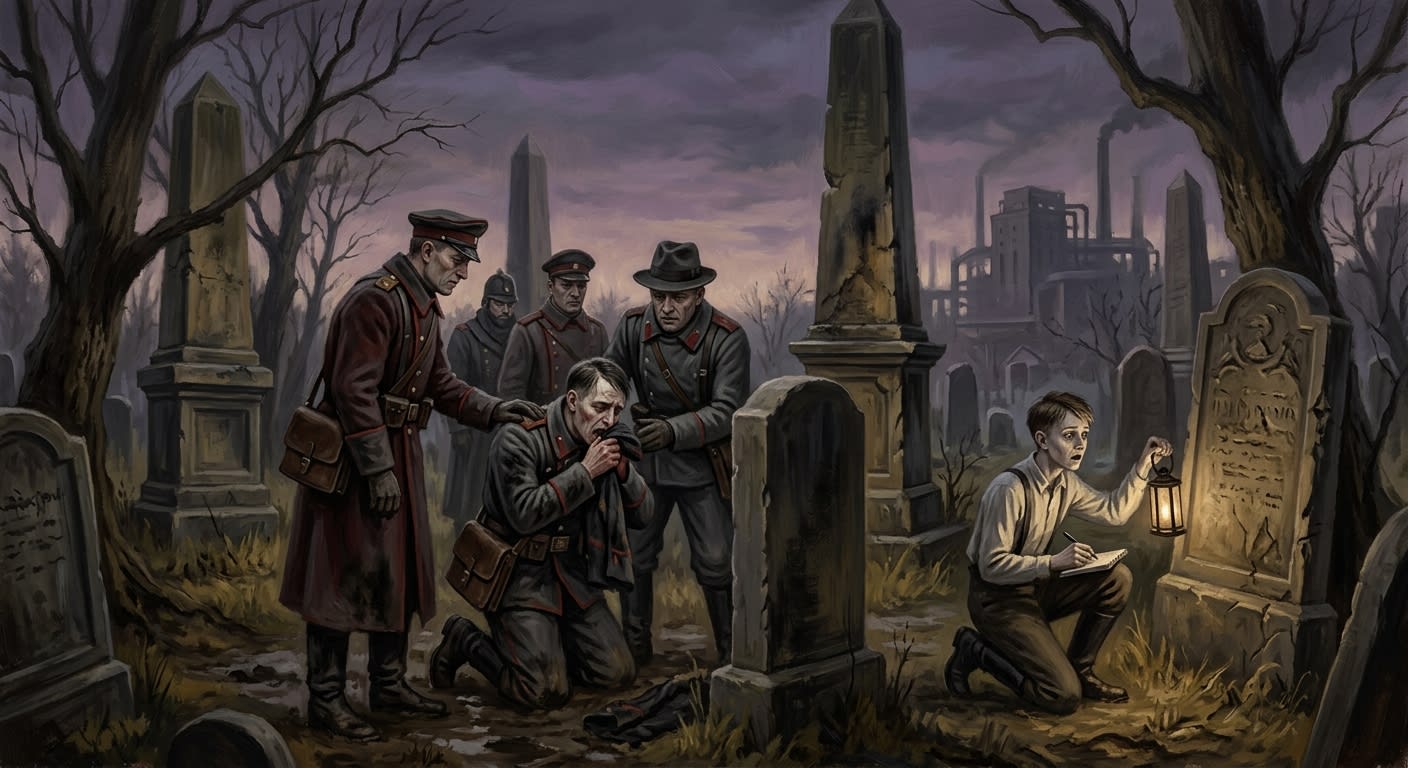
Epitaph Plague of Novi Sad
When the stones wrote first, the living learned to count backward
In A.S. 122, Novi Sad grave stones began carving living names before their deaths; Records called it weathering for fourteen years, then learned grammar can kill.
Codex Ref. VII.8.10-037
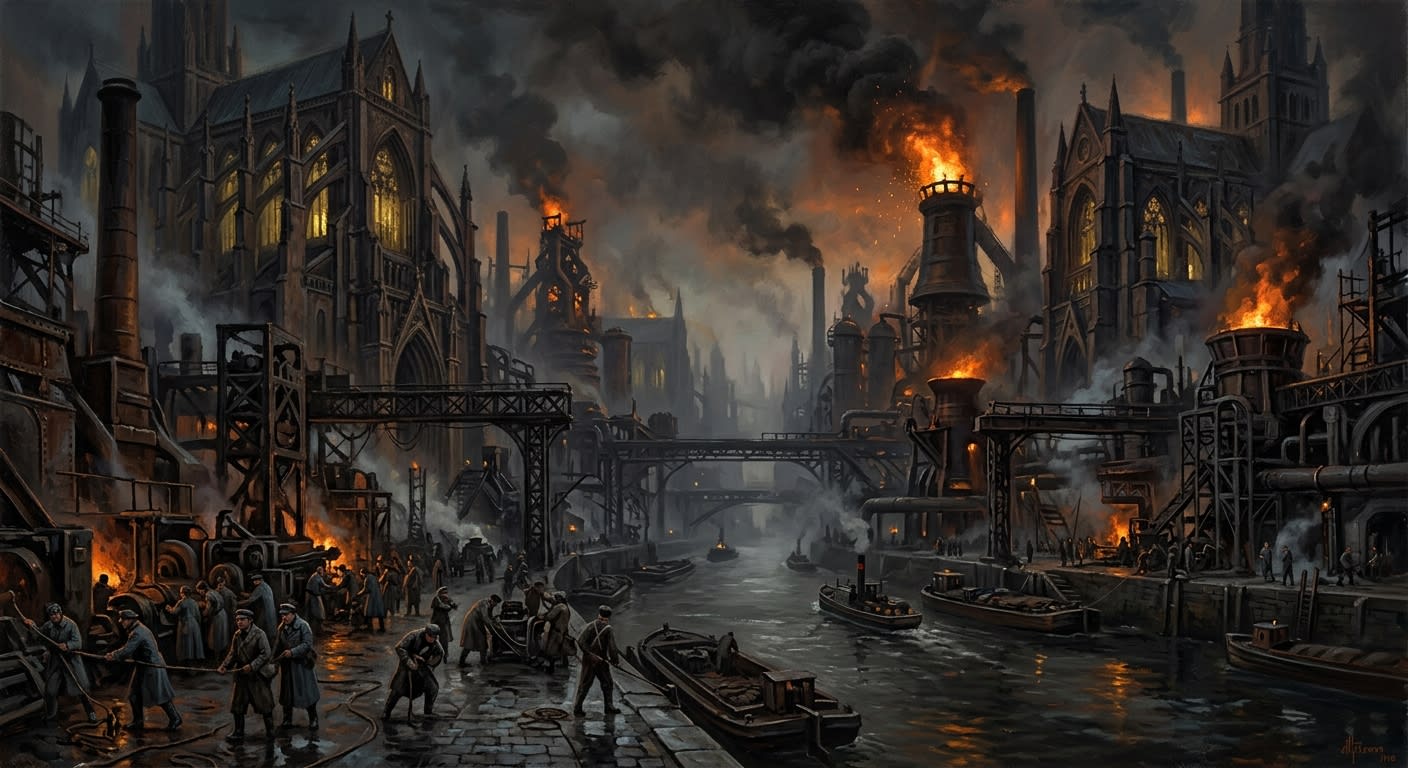
Essen-of-Hymnsteel
The city the Line cannot outlive, and dare not silence
Industrial holy city where steel is calibrated by choir and governed by three Bureaus who share nothing willingly except the fiction that none of them is losing.
Codex Ref. II.2.01-001
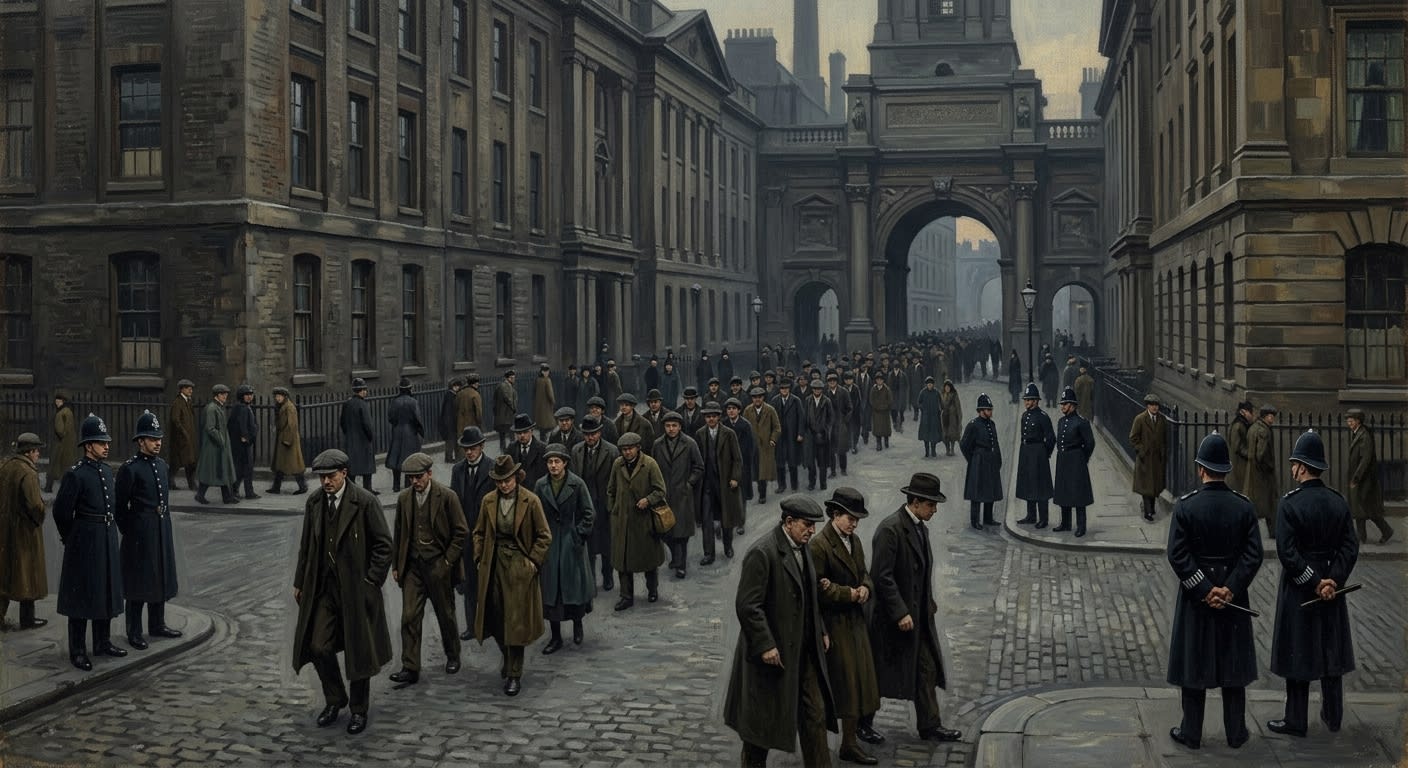
Fast of Silence
The tongue kneels before the knife is invited
The Fast of Silence is the Bureau of Festivals' cleanest cruelty: a district gagged from dawn to dusk until obedience sounds like piety.
Codex Ref. XIII.1.89-153
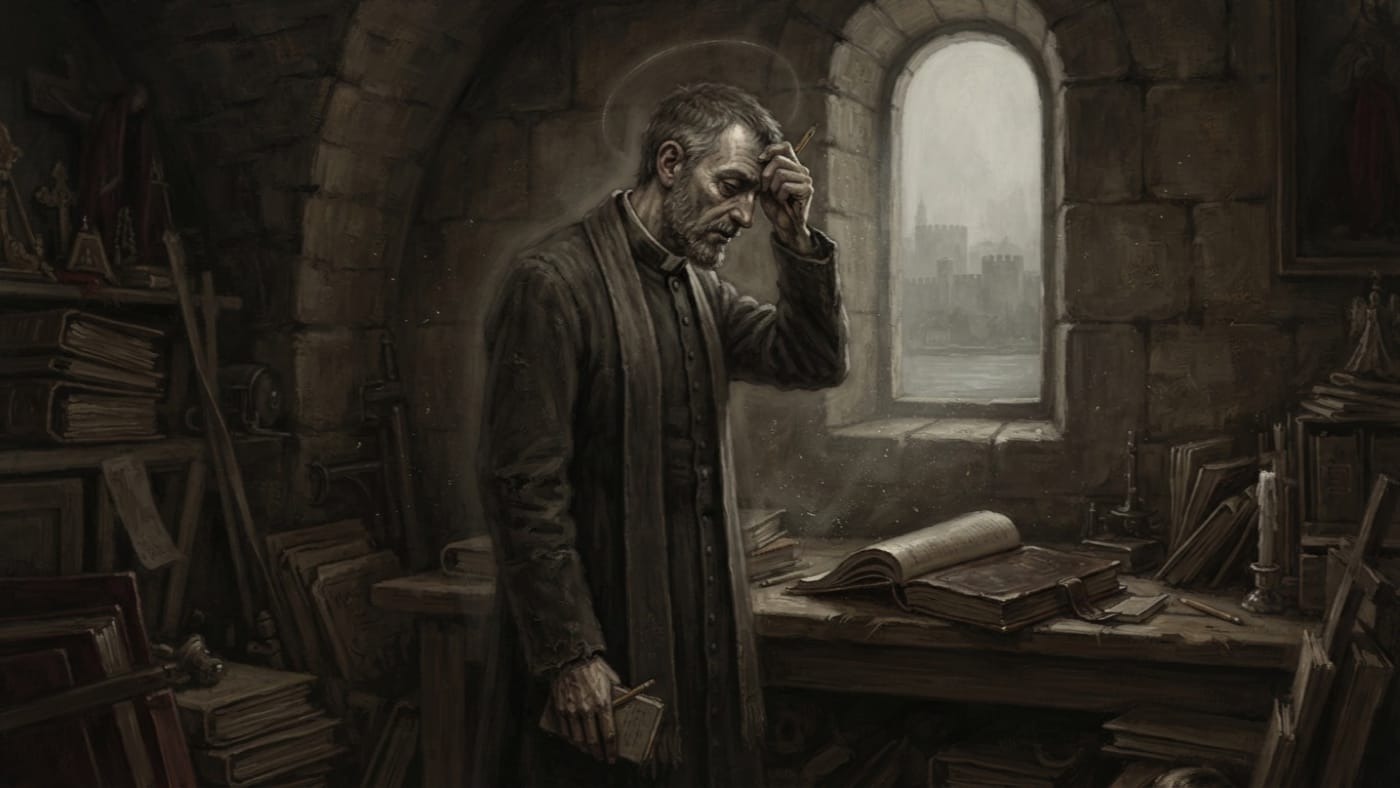
Father Anselm Gries
The Bureau preserved the classification and lost the man
Father Anselm Gries recorded the dead still chewing near Pécs in A.S. 147. He later died at Bastion-Constantinople. The Bureau preserved the classification and lost the man.
Codex Ref. III.2.01-1020
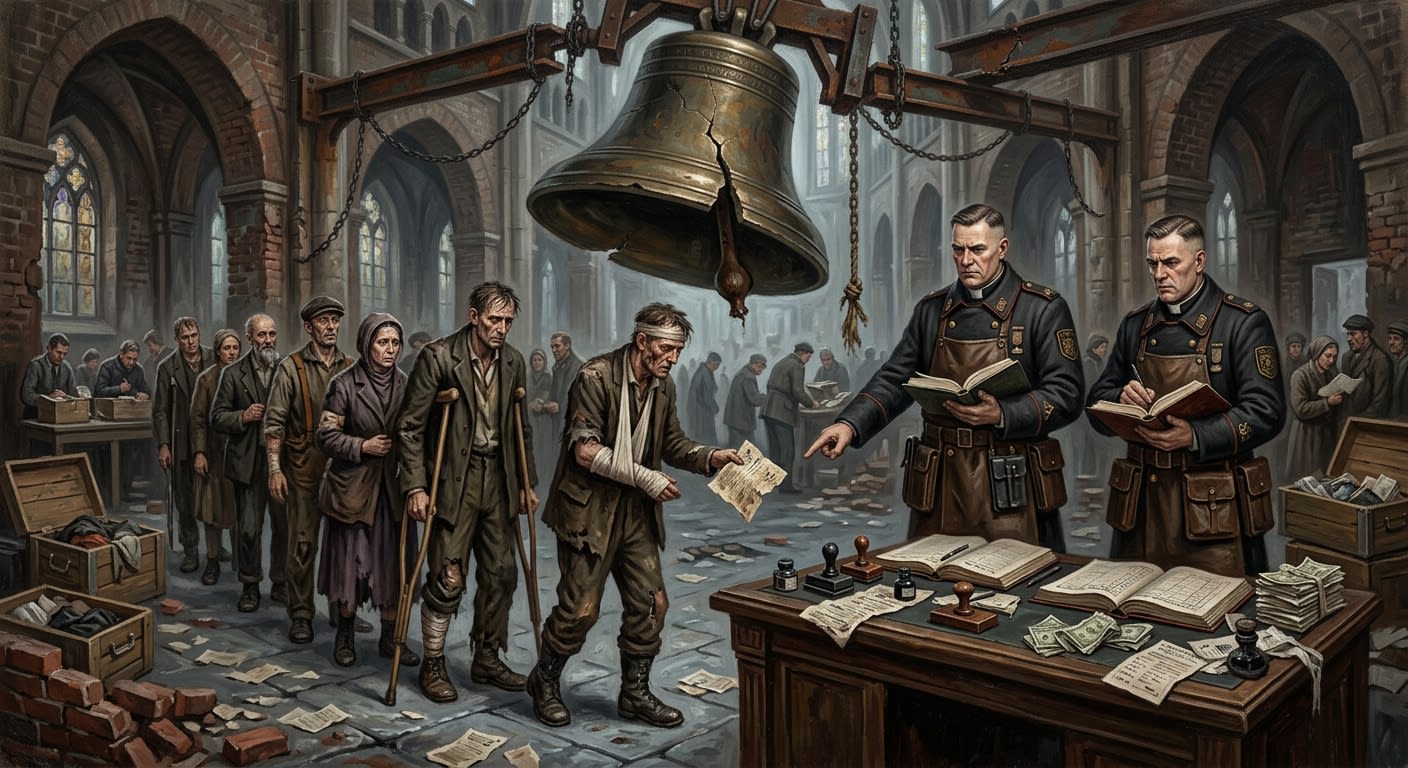
Feast of the Cracked Bell
The damaged bell still tolls, therefore the damaged citizen still owes
The Feast of the Cracked Bell teaches the Synod's favourite mercy: broken things may still serve, so damaged citizens may still be counted, tolled, and taxed.
Codex Ref. XIII.1.89-201
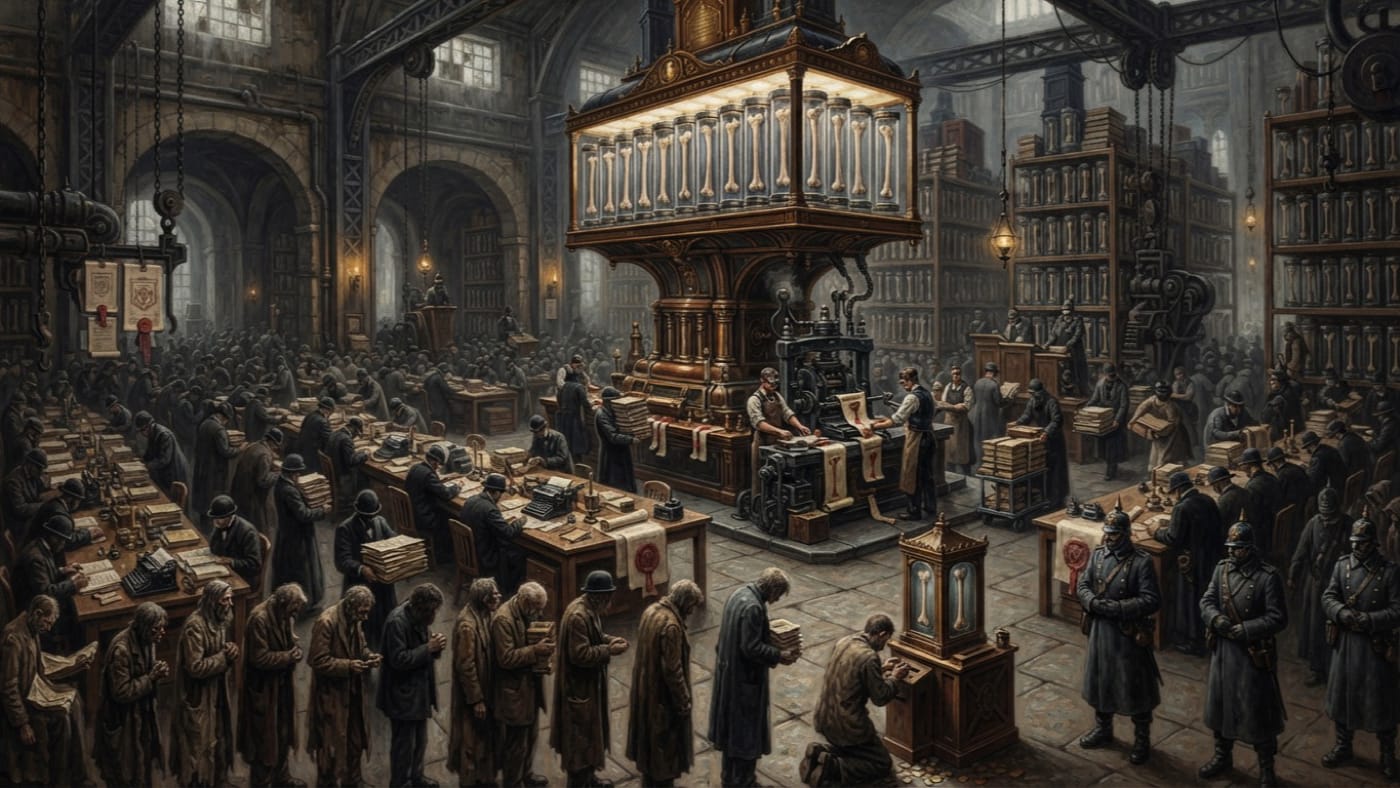
Femur Principle
The saint's skeleton has no standing
The A.S. 147 rule that made all notarized femurs authentic, preserved rival shrines, and gave anatomy the legal standing of an impertinent witness.
Codex Ref. XIII.1.90-147
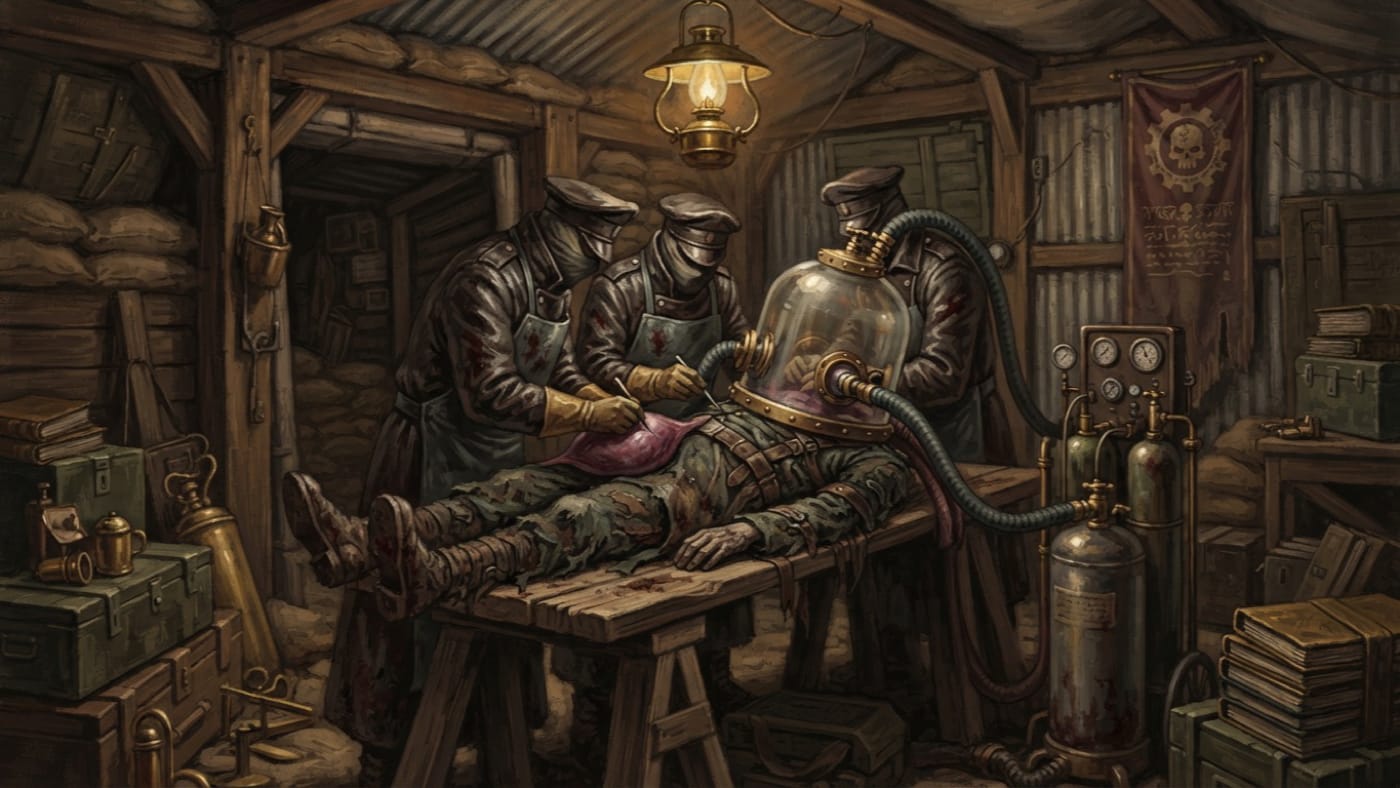
Field Autopsy Protocol 14-D
Three lost, one silent, and the capital letters remain.
The Bureau of Medicine's recorded A.S. 193 prohibition on incising Gore-Slinger sacs without full containment apparatus. Three field surgeons were lost; the fourth survived and has not spoken since.
Codex Ref. XIII.1.74-193
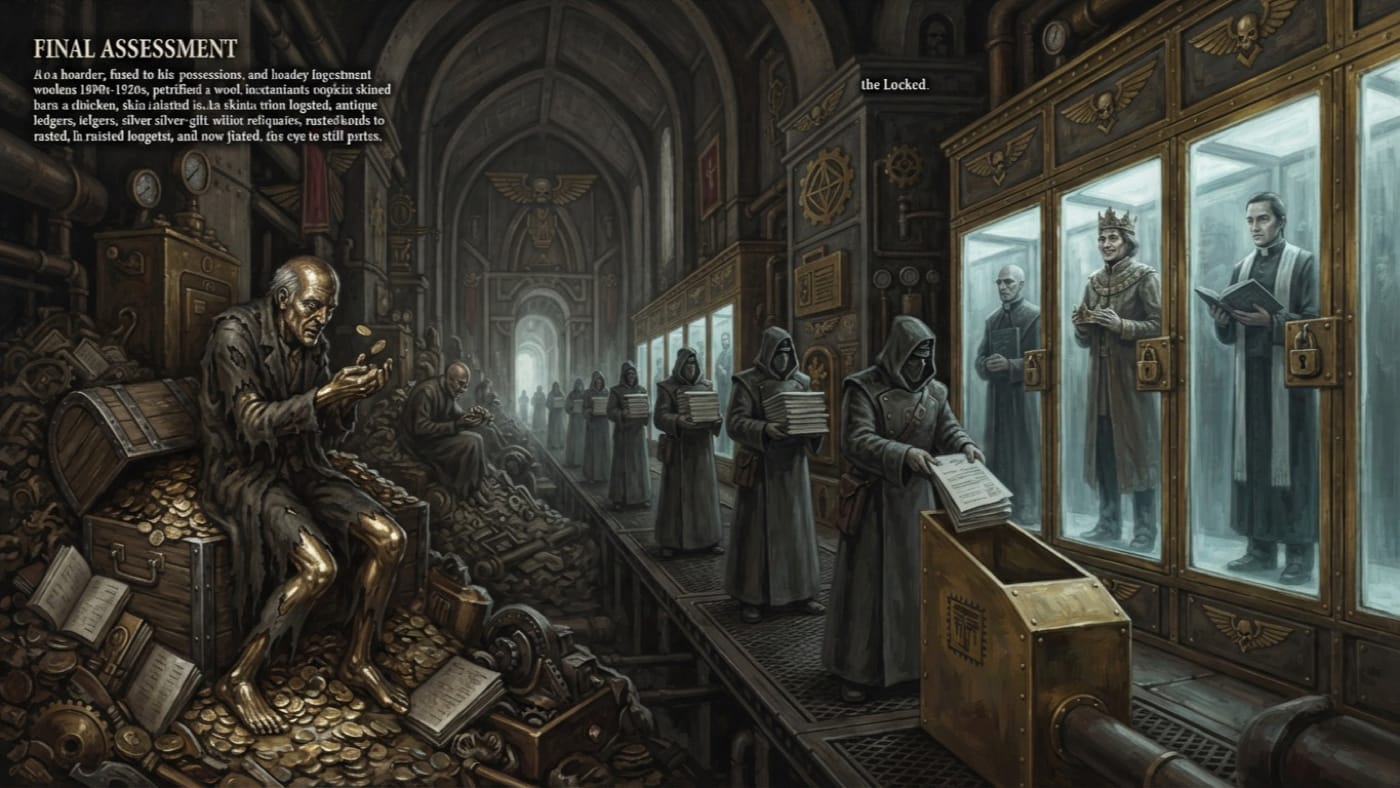
Final Assessment
The collector becomes the inventory
Final Assessment is Velmora's completed ownership: the hoarder becomes his hoard, the Locked become exhibits, and the Bureau returns petitions unread.
Codex Ref. XIII.1.37-198
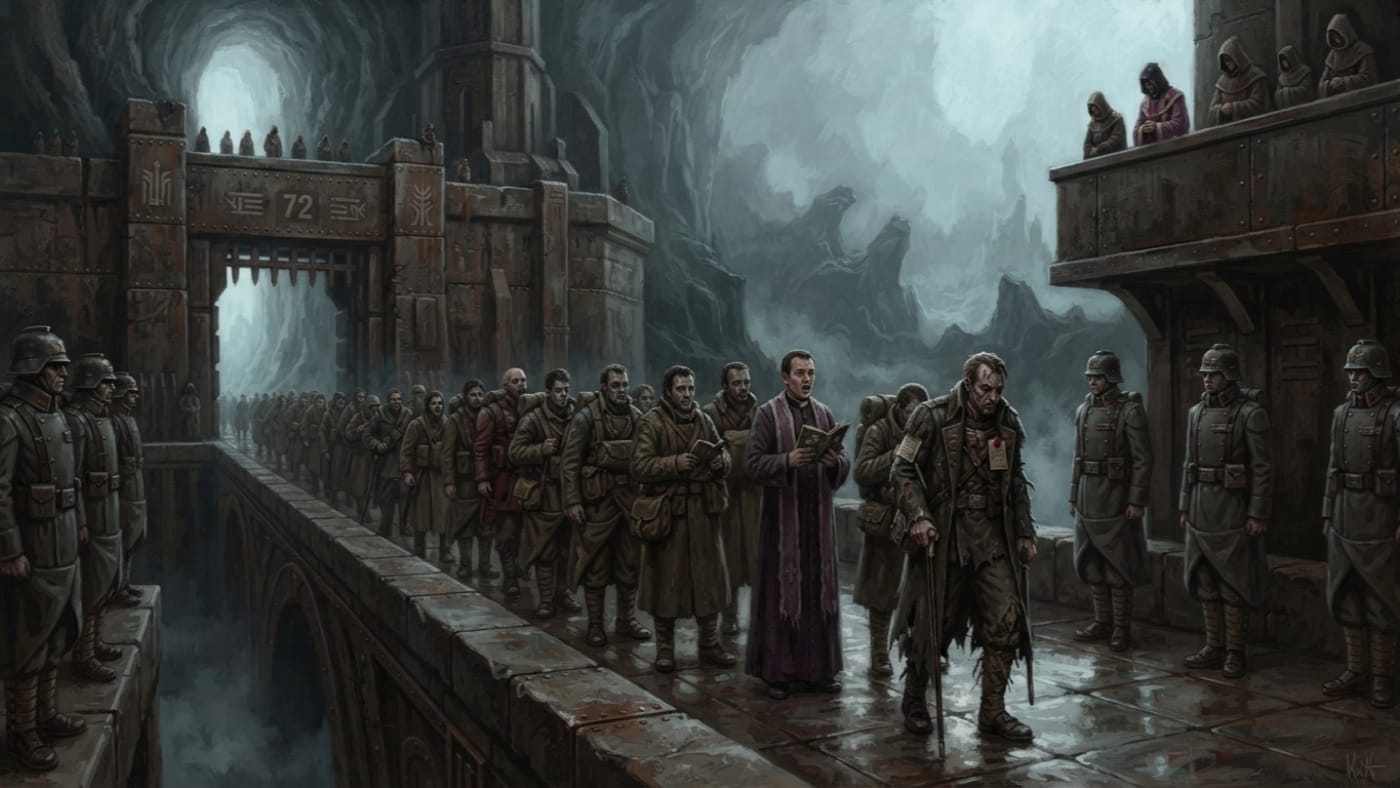
First Expedition
Every name returned. The fourteenth page remains sealed.
The First Expedition sought the Shadow Court in A.S. 72. Every listed man returned on day fourteen. The Church certified their identities and sealed their findings.
Codex Ref. V.9.01-002
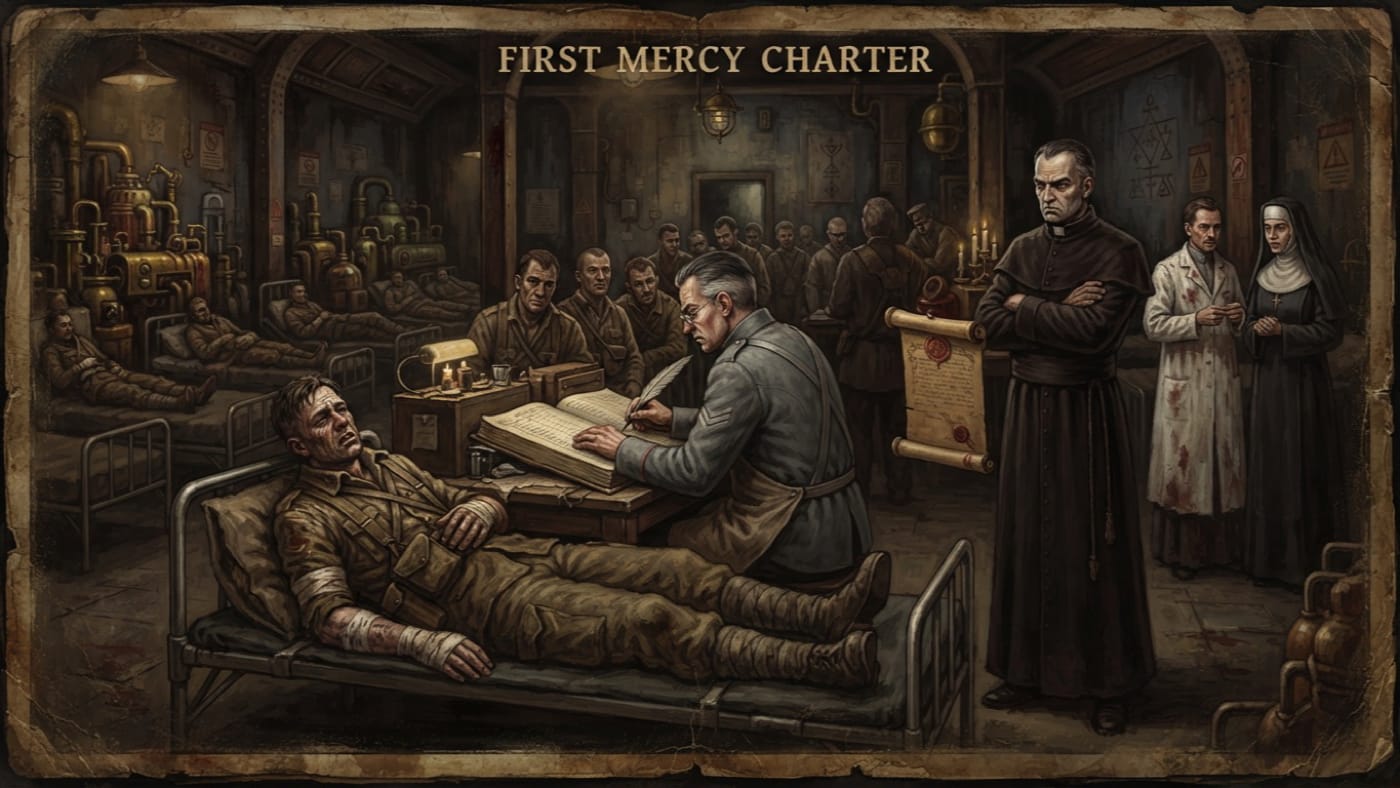
First Mercy Charter
The wound waits while the soul is put in order.
The First Mercy Charter of A.S. 92 conditions treatment on confession, absolution and acknowledgment of Providence. The body waits while the soul's paperwork is completed.
Codex Ref. XIII.1.92-092
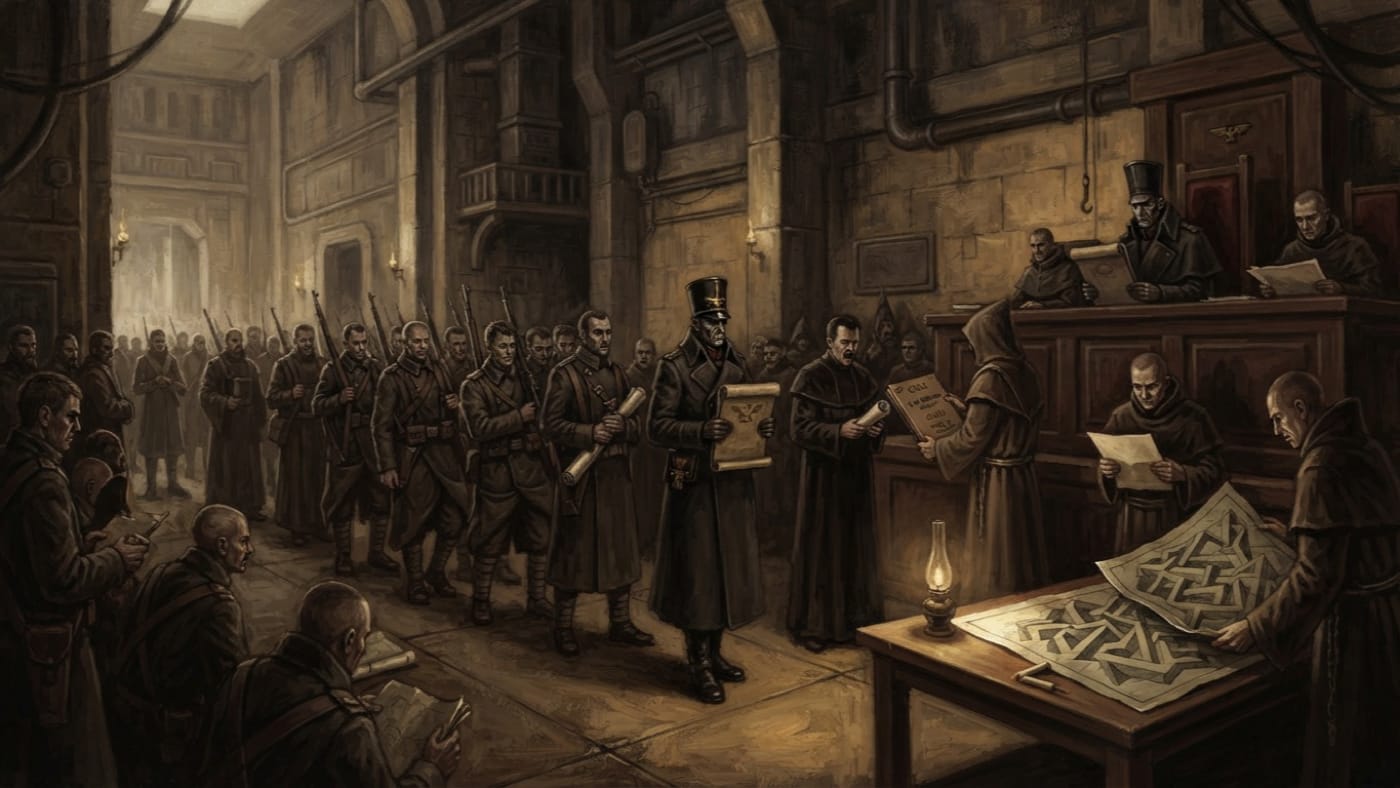
First Shadow Court Expedition
Every name returned; the objective remains undetermined.
Venn's A.S. 72 expedition returned every listed man and two matching maps of no known geography. Identity was certified; success was not.
Codex Ref. V.9.01-002
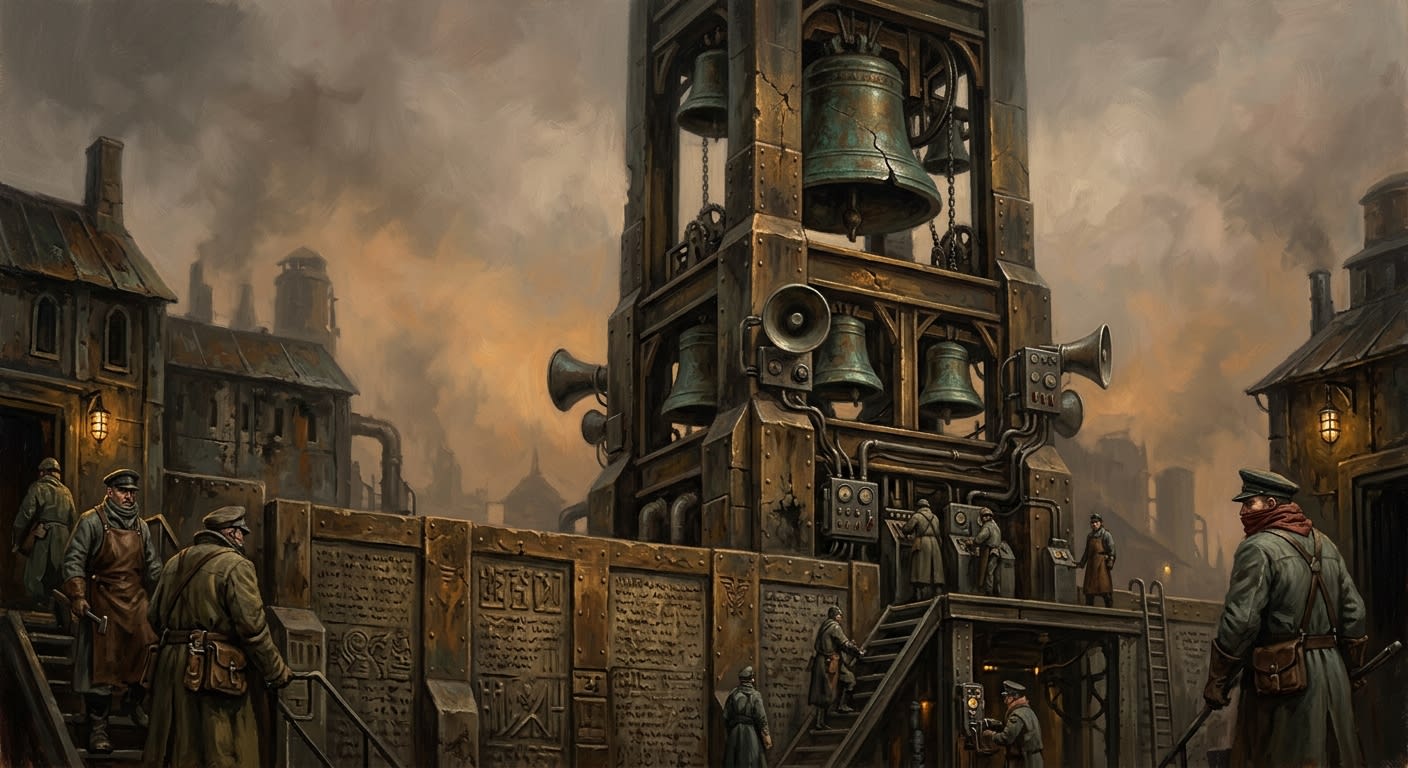
Fog Bell Tower
The cracked bronze throat that teaches Calais to survive fog
The Fog Bell Tower of Calais is the cracked bronze throat above the Script Wall: fog alarm, reading summons, Gunline relay, and Amber hazard.
Codex Ref. II.4.09-072
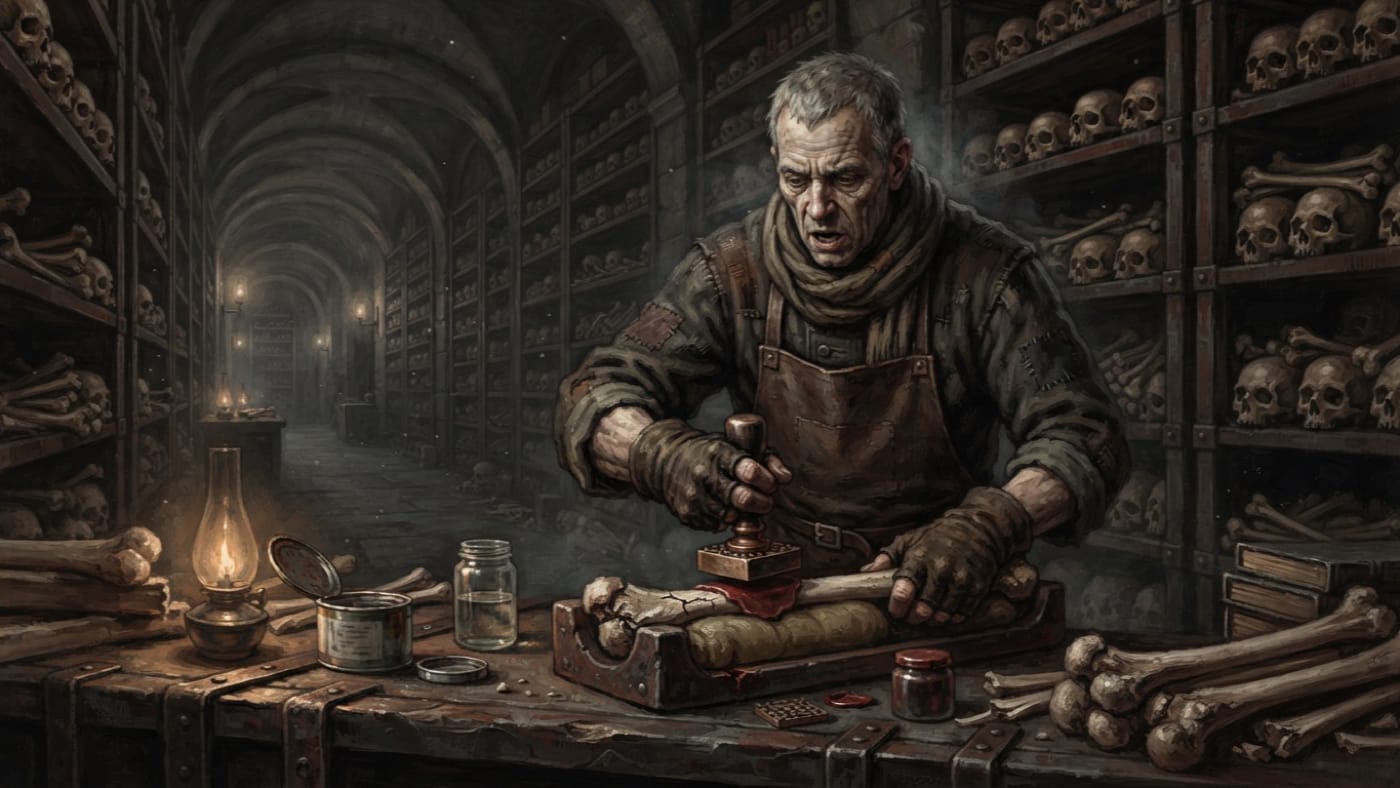
Force-Count
The voice keeps time; the corridor keeps score
The cadence that keeps stamp pressure honest and dead bone where the Ledger put it. Quiet Hands reportedly quiet corridors before the wax touches; Records requires the Count without printing its words.
Codex Ref. XII.37.03-001
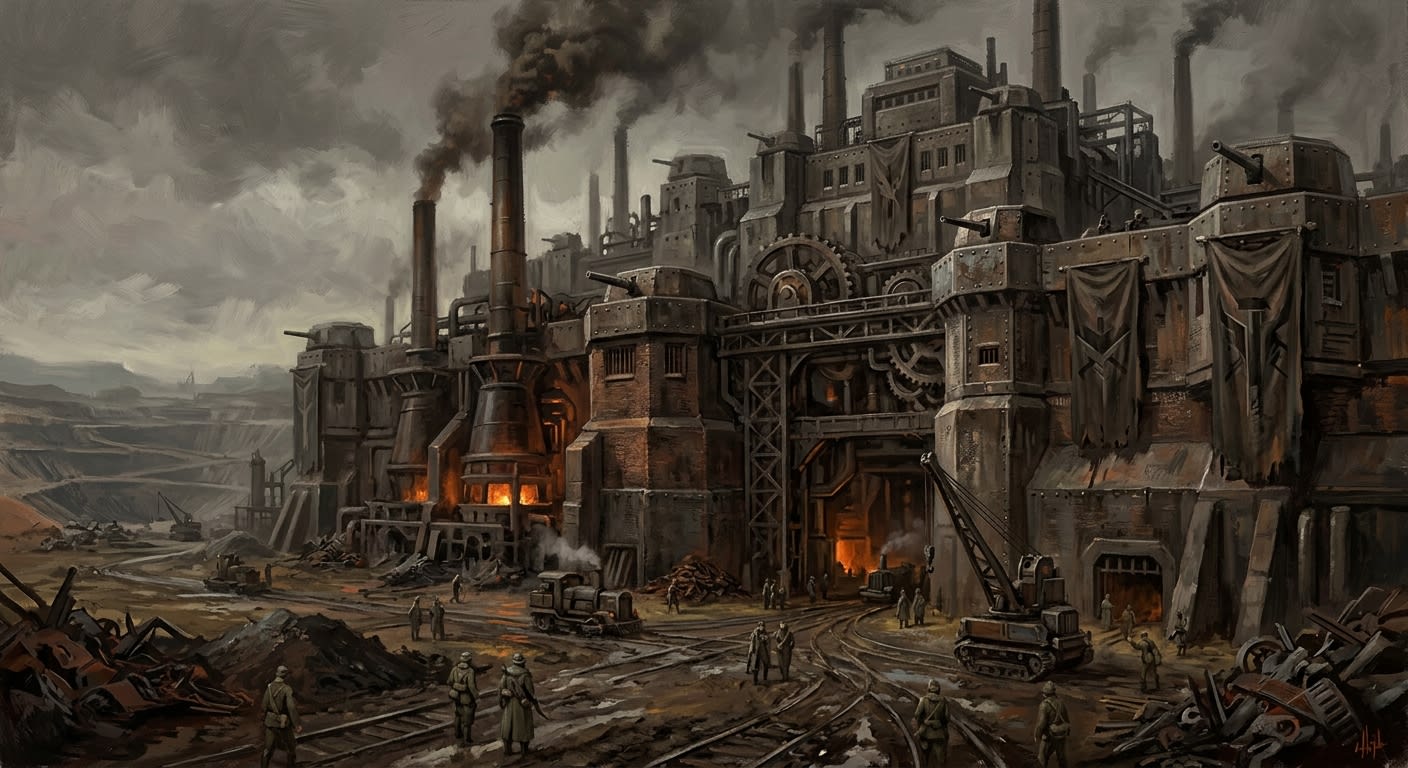
Forge-Pyre Bastion
The citadel that hammers distance into a theological inconvenience
The Forge-Pyre Bastion is Maldrake's unmeasured forge-citadel in the Iron Wastes, where Wrath manufactures walls, weapons, and reasons to hate.
Codex Ref. II.6.03-046
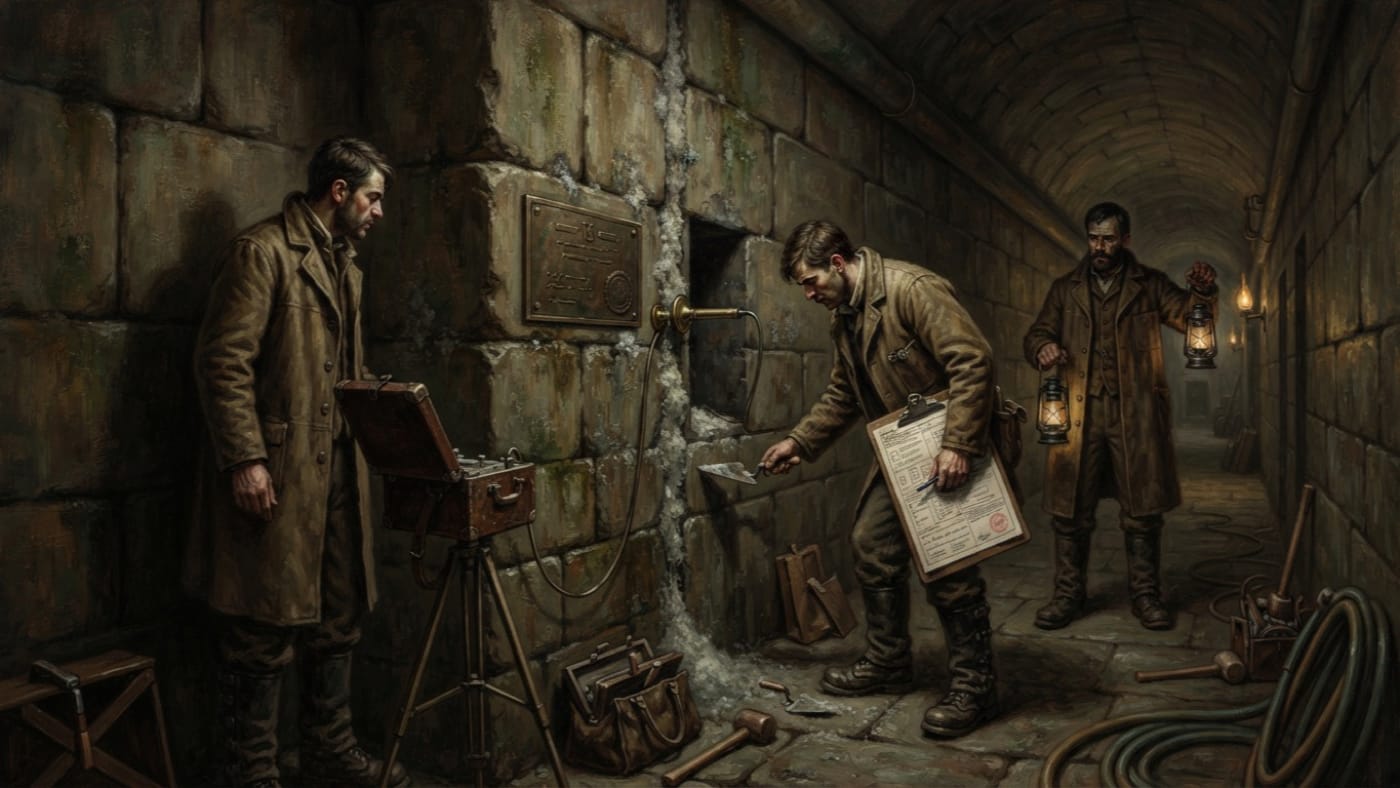
Form 14-M(c)
The wall is entitled to a docket; the mason to silence
Form 14-M(c) records anomalous sounds from immurement walls. The A.S. 199 inspection revision requires a report, hush-powder, paired working, and a mason who keeps his theories off the page.
Codex Ref. XIII.1.14-199
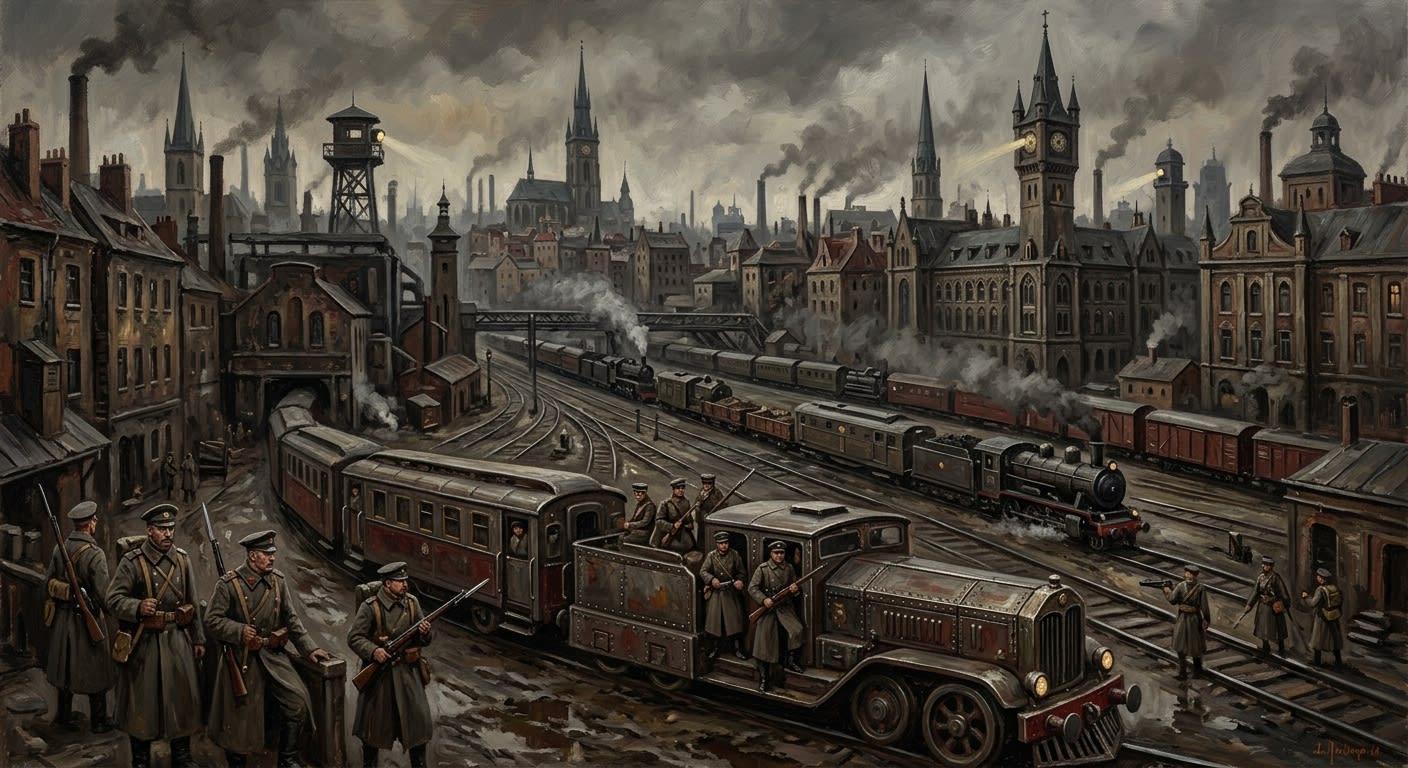
Forward Heartlands
The held breath behind the gunline
Zone 3 is the Synod's forward heart: Prague's corrected beauty, Bratislava's damp throat, Budapest's divided engine, Warsaw's teeth, Sofia's hard face, and every ugly town that keeps the Line fed.
Codex Ref. II.3.00-201

Foundry Core
Where steel learns obedience and the floor answers back
The Foundry Core teaches steel to sing, workers to burn, ledgers to blame, and the floor beneath hymnsteel to answer in the wrong voice.
Codex Ref. II.2.01-110
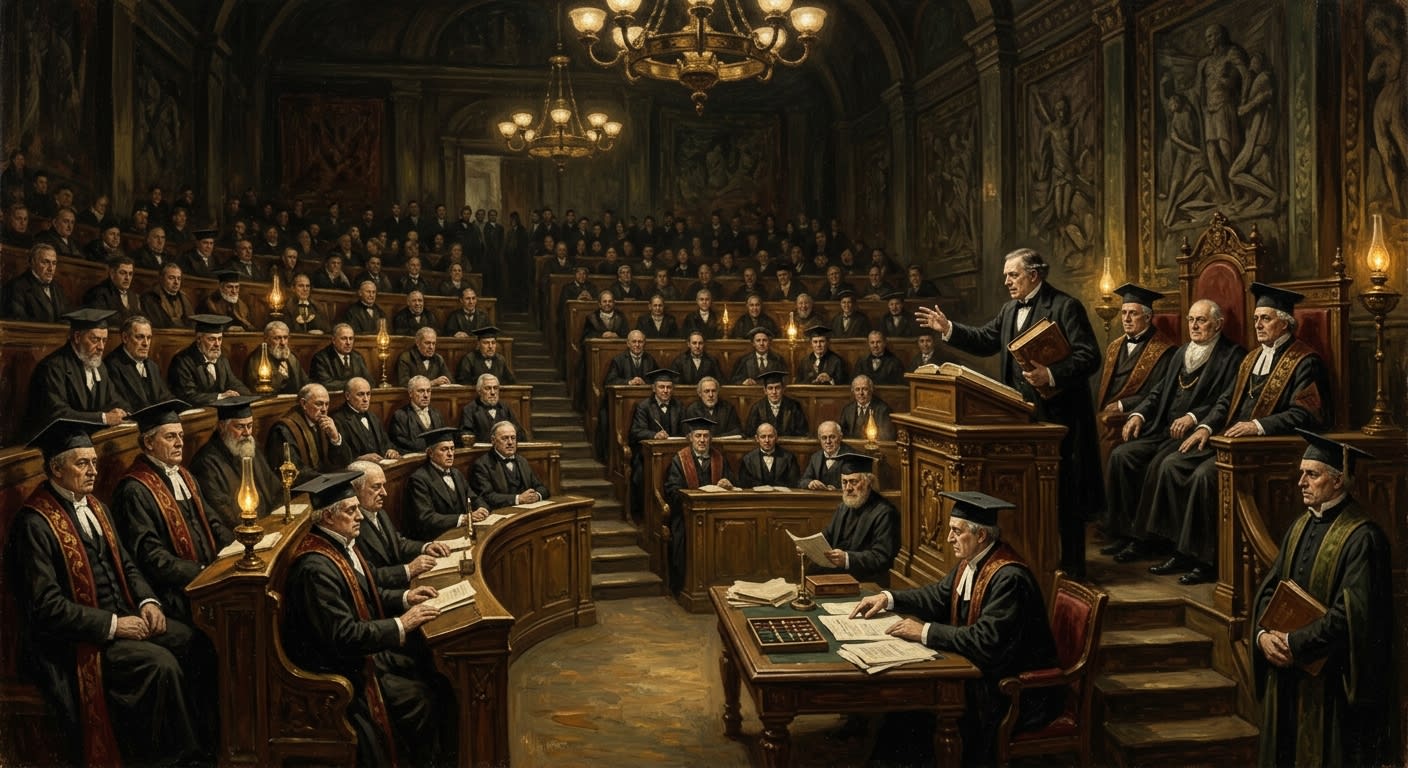
Fourteenth Doctrinal Congress
Matter protested; the seal prevailed
The A.S. 147 Congress that made authenticated contradiction obedient, ratifying the Femur Principle and Kargath's consumption taxonomy in the same week.
Codex Ref. XIII.1.90-147
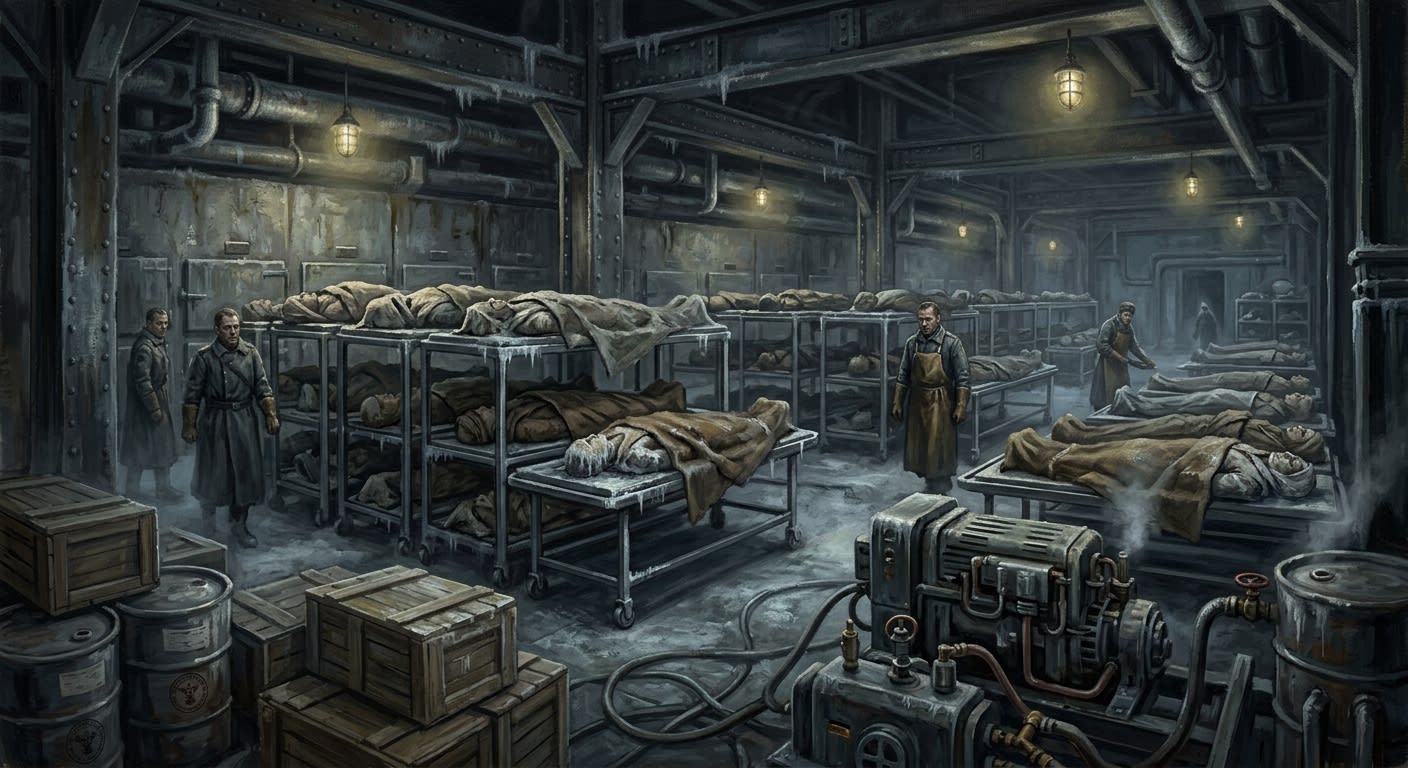
Frost Yards
Where Königsberg stores bread, bullets, bodies, and one useful wrongness
Restricted cold-store and mortuary district inside Bastion-Königsberg, where supplies keep, bodies wait, and the dead have learned a northeast preference.
Codex Ref. II.4.08-201
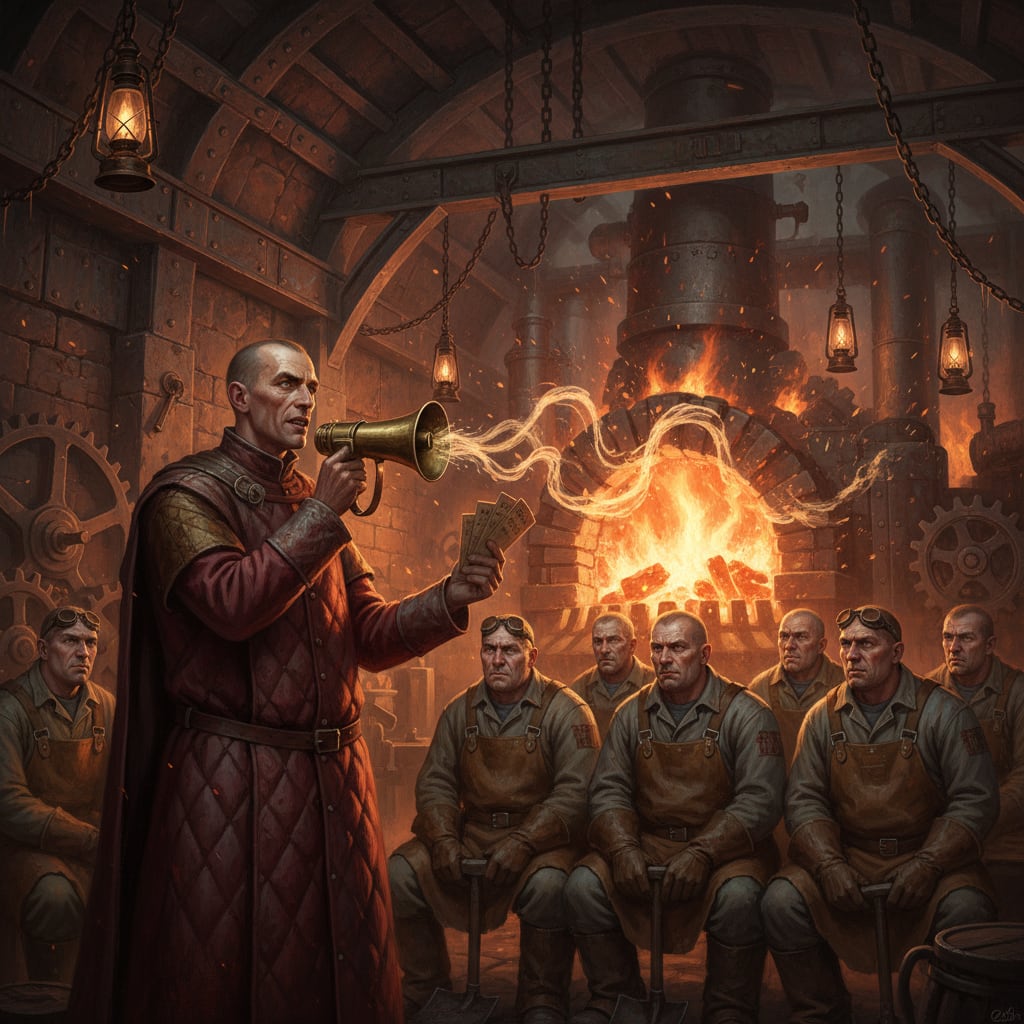
Furnace Catechist
On those who preach the Chain of Cause to men who know perfectly well why the furnace roars — and why neither party will say so aloud.
The Bureau of Doctrine's industrial clergy — stationed in every bastion powerhouse to preach that fire burns by divine permission rather than chemistry. Three thousand four hundred Catechists, two factions, and one question no one will authorise an answer to.
Codex Ref. XII.18.01-001
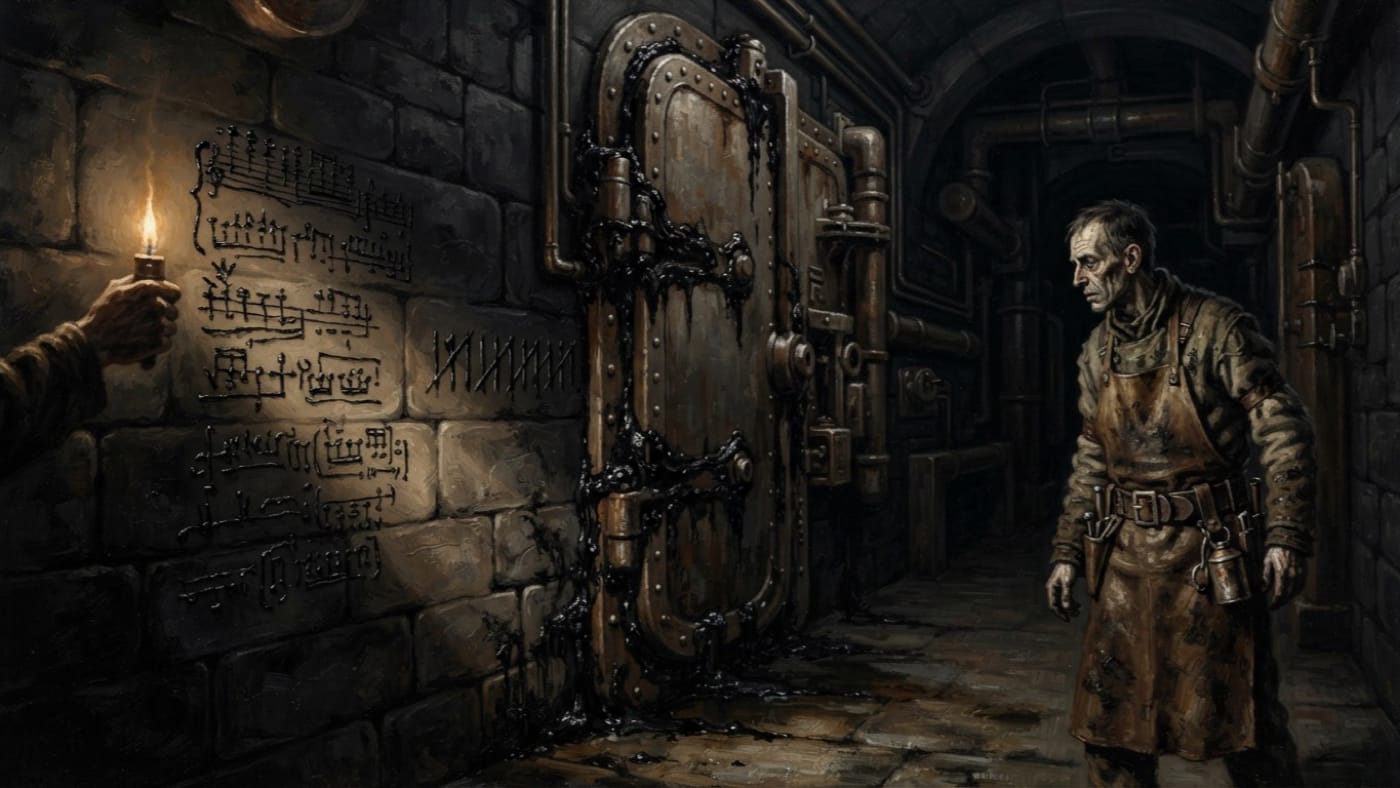
Gasket Grease
The doors require it; the heretics have learned to write with it
Gasket grease keeps Irongate's pressure doors moving and its heretics writing. Engineering needs the compound; Purity objects to the handwriting.
Codex Ref. XIII.1.24-201
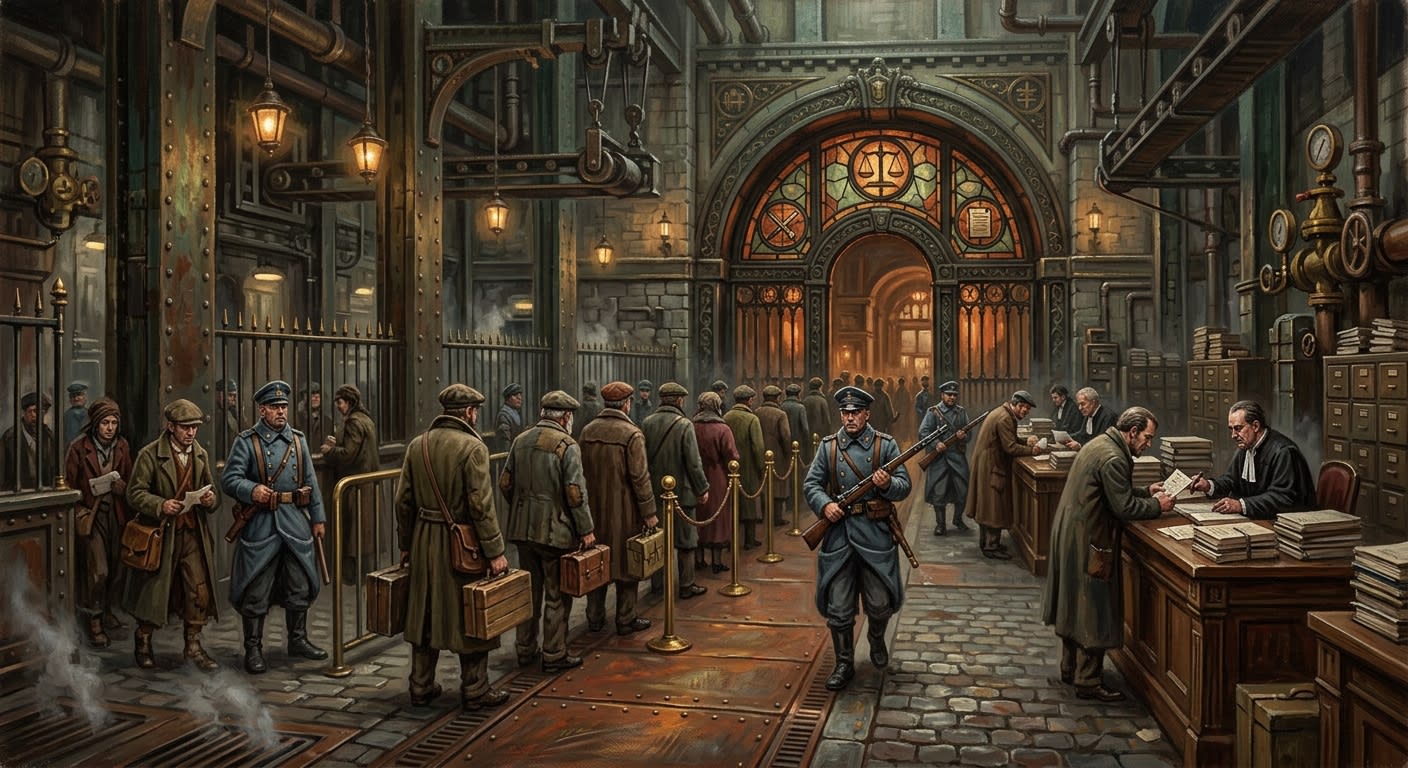
Gate Nine
The final mouth of the Queue Road, where waiting becomes debt and debt learns to breathe
Final court of the Queue Road: a clearance complex over the Apparatus where reclassification, minute debt, appeals, erasure, and warm floors devour travellers by procedure.
Codex Ref. II.3.05-009
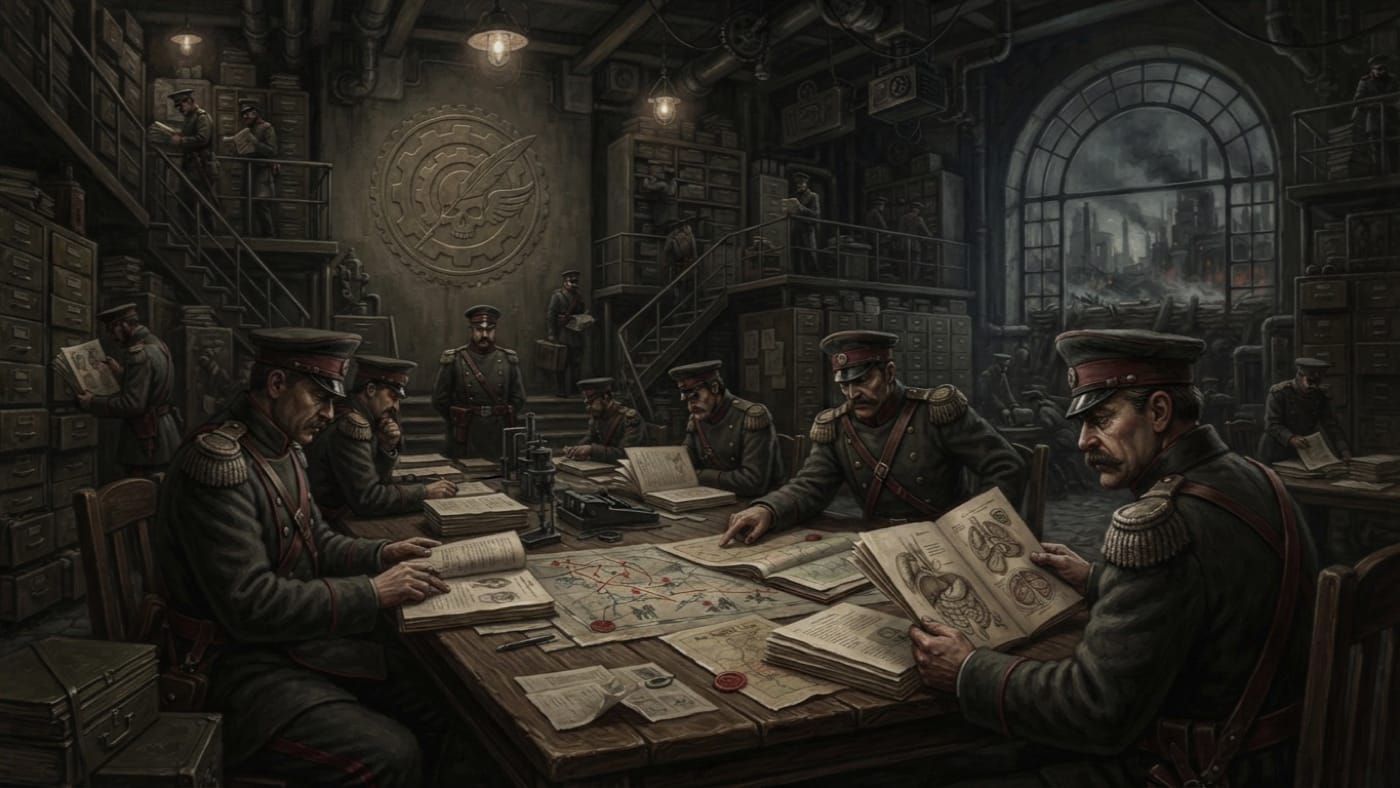
General Staff of the Bureau of War
The Staff reads. The record says so.
War's General Staff reads the Chief Anatomist's replies and accords the office grudging respect. This A.S. 201 survey records that habit. A founding, a roster and a formal remit require evidence the record has not supplied.
Codex Ref. III.2.07-042
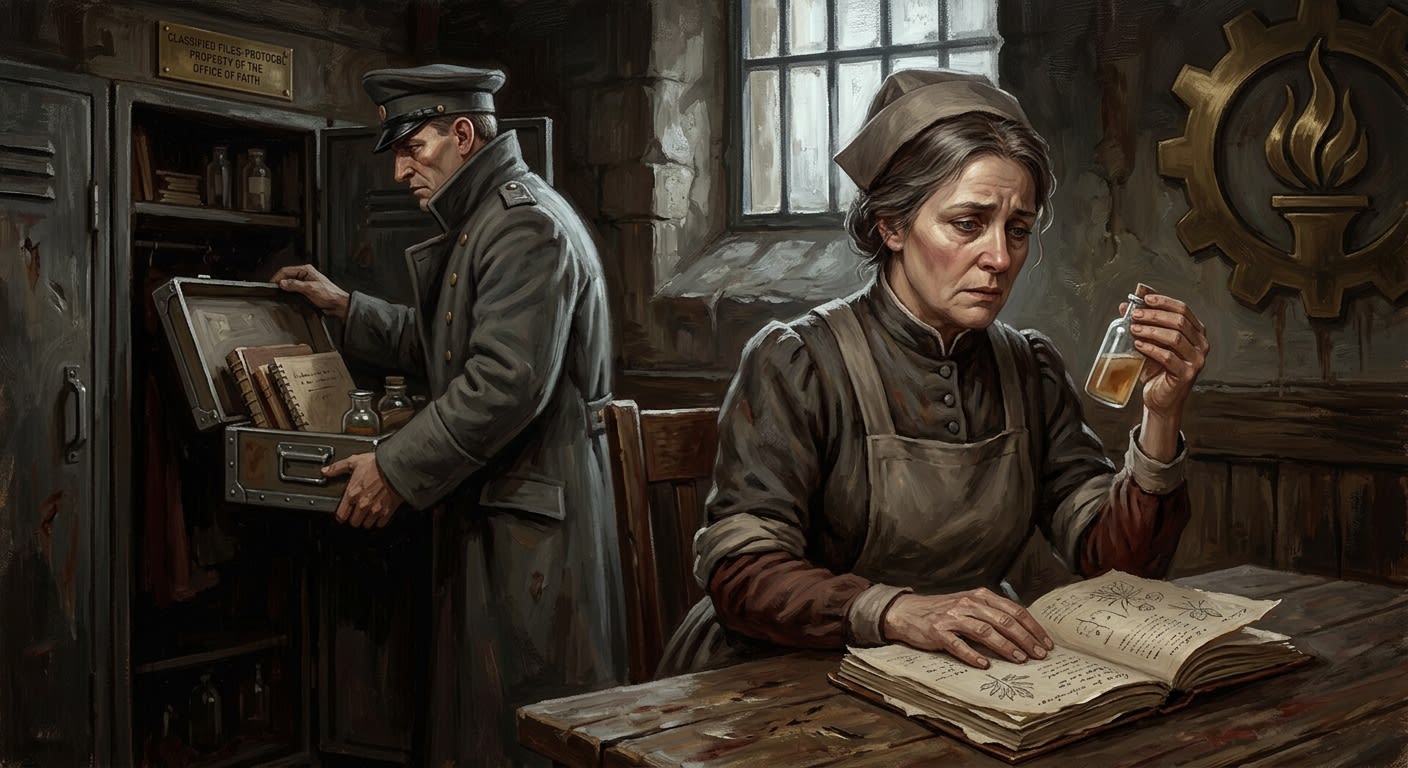
Gerda Weil
The midwife whose bitter draught survived the men who stole it
Halle midwife whose hidden Rationalist remedy lowered fever deaths in A.S. 112, was stolen as Protocol 7-C, and died in Ulm under an erased name.
Codex Ref. III.2.01-091
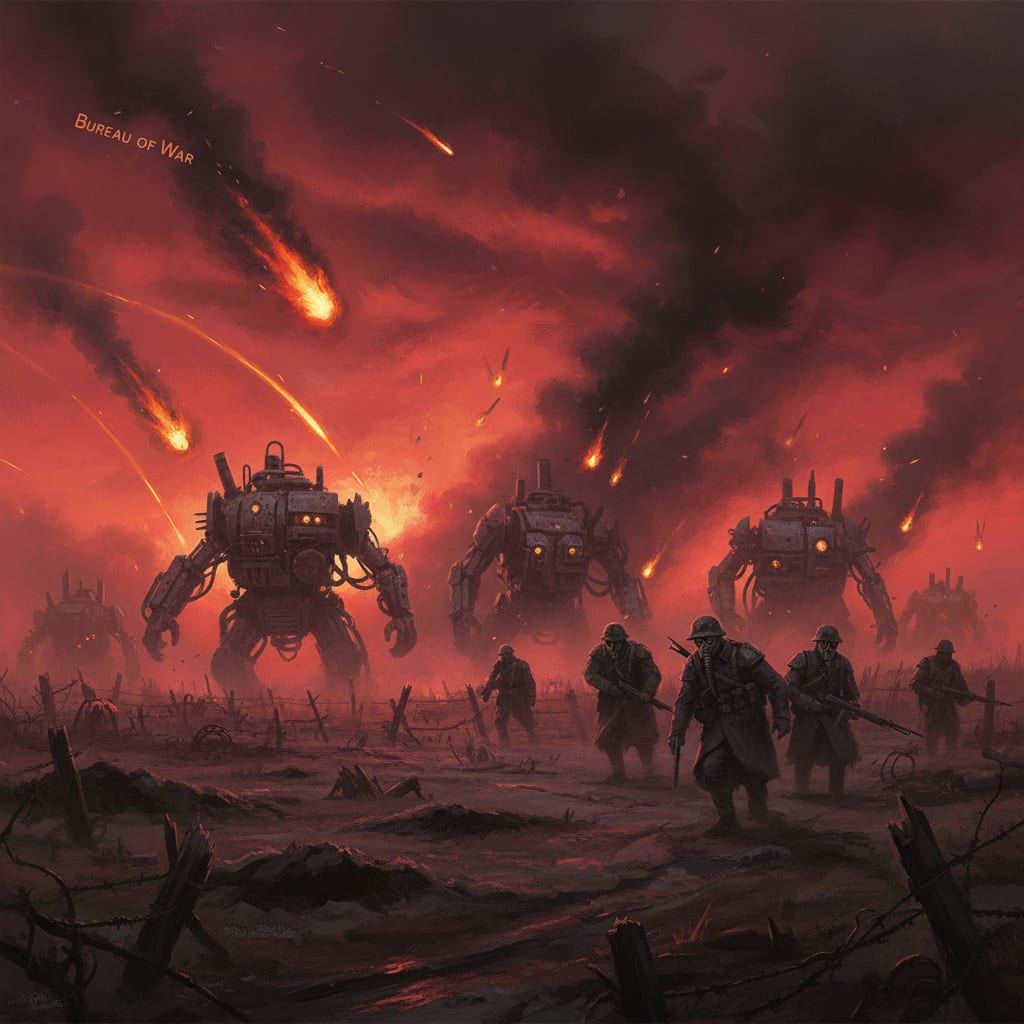
Gore-Slingers
Seven variants of the same atrocity, confirmed conscious, confirmed still producing.
The Bureau of War's least beloved Category Epsilon auxiliary — human bodies reshaped by sustained demonic exposure into biological ordnance, seven variants (one per Sin-General).
Codex Ref. IX.1.04-001
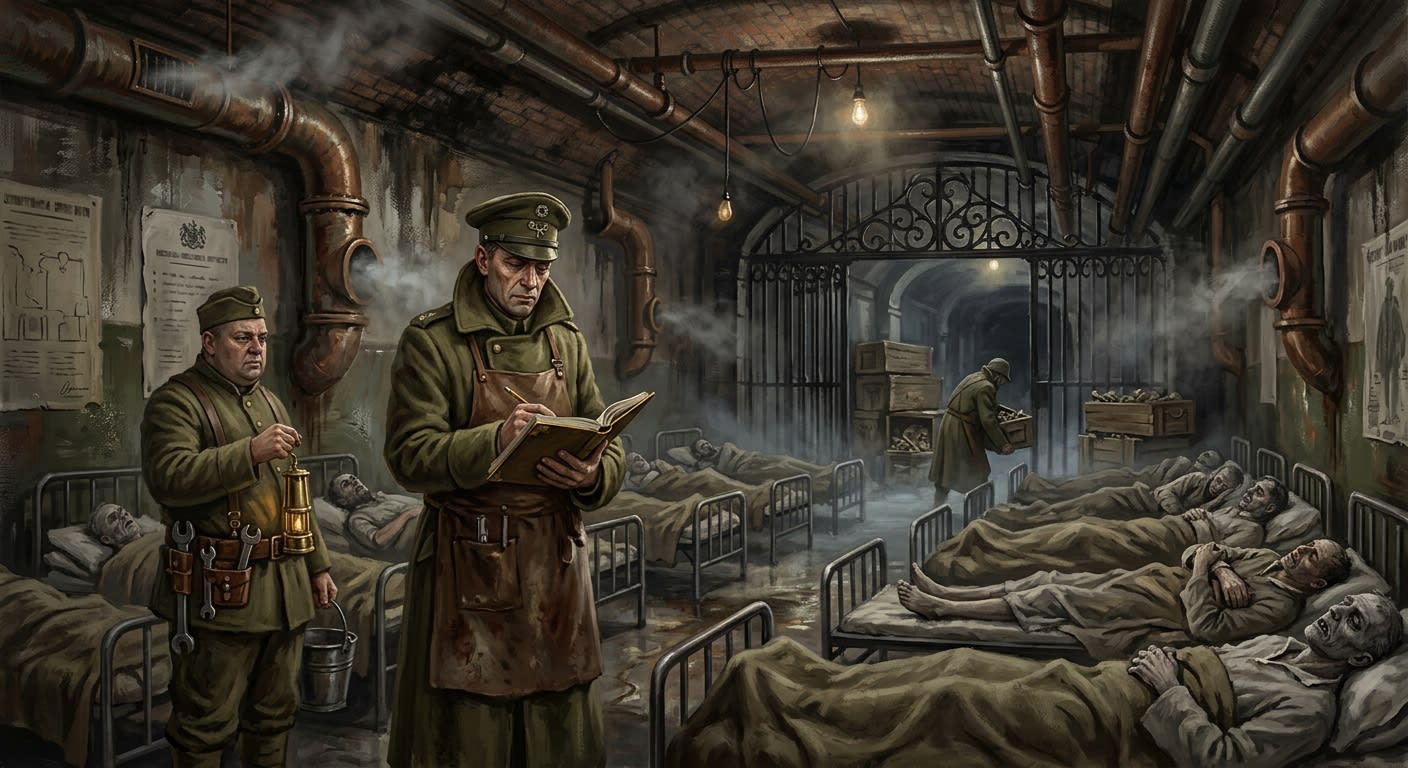
Great Plague of A.S. 78
The year Mercy learned to write before the mouth closed
The Great Plague of A.S. 78 ravaged the southern trench infirmaries and became the Lull of Names, birthing terminal confession mandates, ossuary controls, and threshold doctrine.
Codex Ref. VII.4.20-002
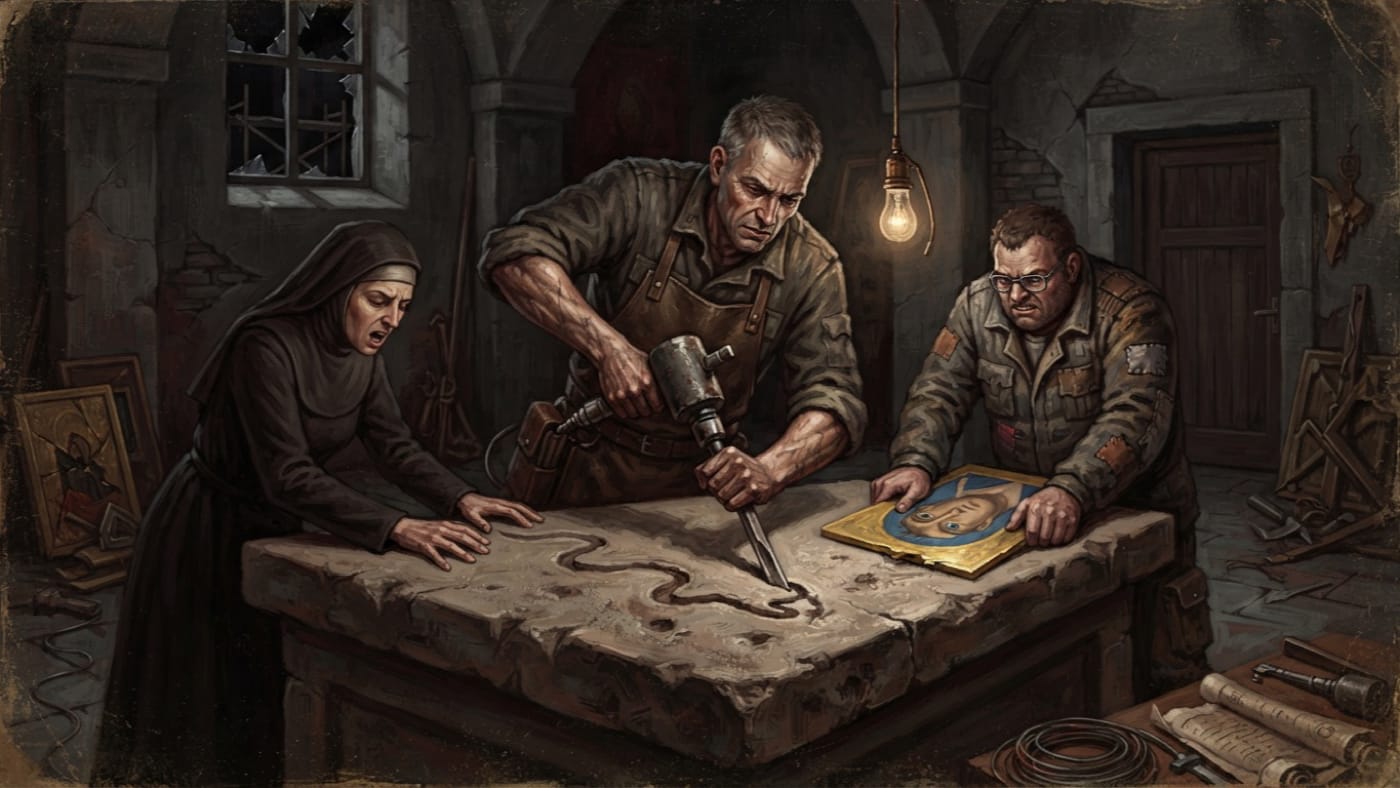
Halbrecht Ruun
The stone was cut; the law was drafted elsewhere
Halbrecht Ruun carved a temporary throat-channel into a chapel altar during the A.S. 131 Singing Plate suppression. Three Engineers contained the fragment; the stone was his share.
Codex Ref. III.2.01-1300
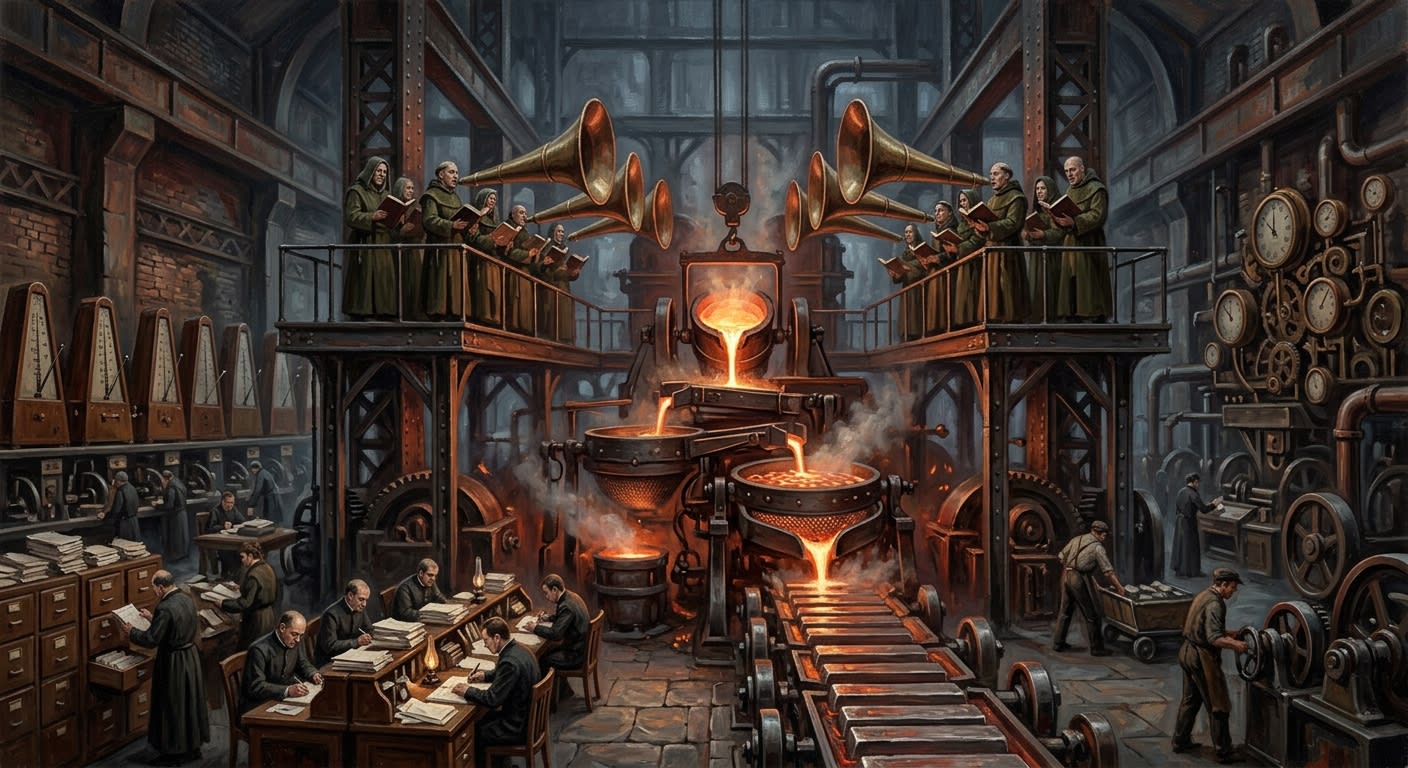
Hall of Measures
Where steel receives a throat and blame receives a cage
The Hall of Measures is Essen's calibration chamber, where paired choirs sing molten steel into lawful grain and every failure becomes paperwork.
Codex Ref. II.2.06-110

Halle
The city that says the Creed, washes the chalk, and keeps the oven warm
Halle is a compliant rear city with salt in its gutters, fever in its records, Creed on its tongue, Ashen fragments in its ovens, and obedience with undocumented residue.
Codex Ref. II.2.09-201

Hamburg
The throat of the northern front — and the hand around it is not the Synod's
The Synod's northern import terminal: nine hundred thousand souls at the Elbe's mouth, processing the grain and coal that keep the northern front from freezing, starving, and dying.
Codex Ref. II.4.09-005
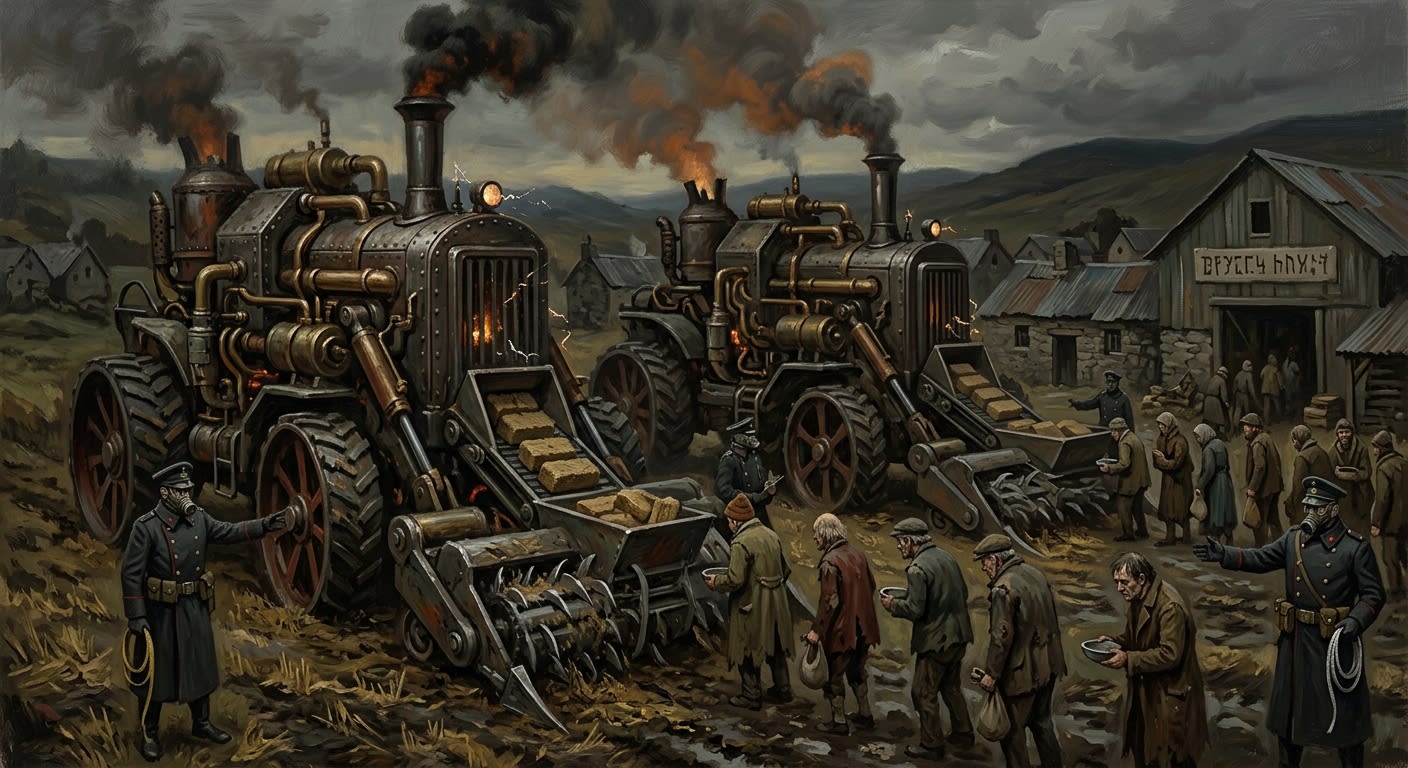
Harvest Engines
If it feeds without filing, burn it before gratitude begins
Harvest Engines are Kargath’s portable abundance: agricultural machines that make food, teach gratitude, and leave whole villages hungry beyond repair.
Codex Ref. XIII.1.26-001
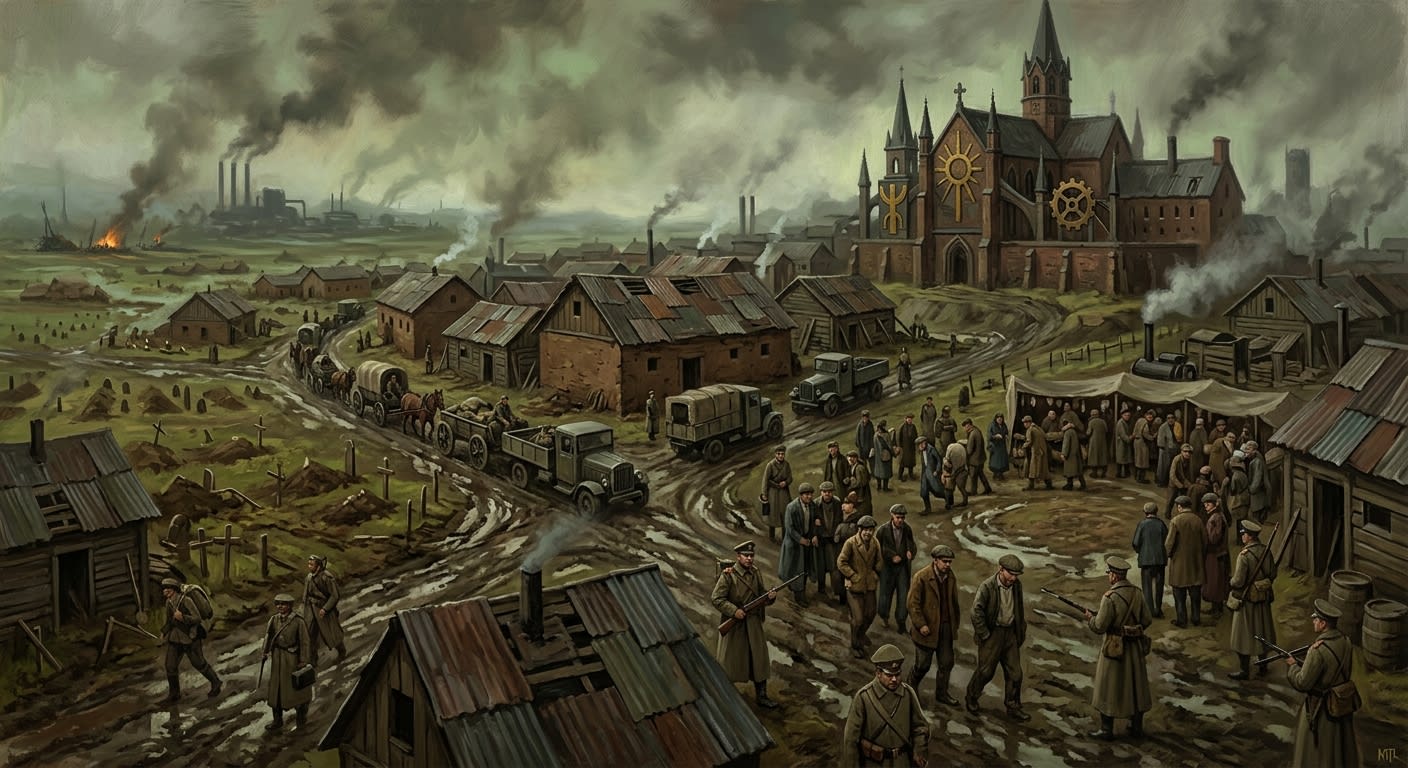
Hinterland
The fifty kilometres that pretend to be rear
The Hinterland is the fifty-kilometre bruise behind the Sagittal Line: farms, wards, graves, depots, markets, and civilians ordered to call occupation protection.
Codex Ref. II.4.09-201
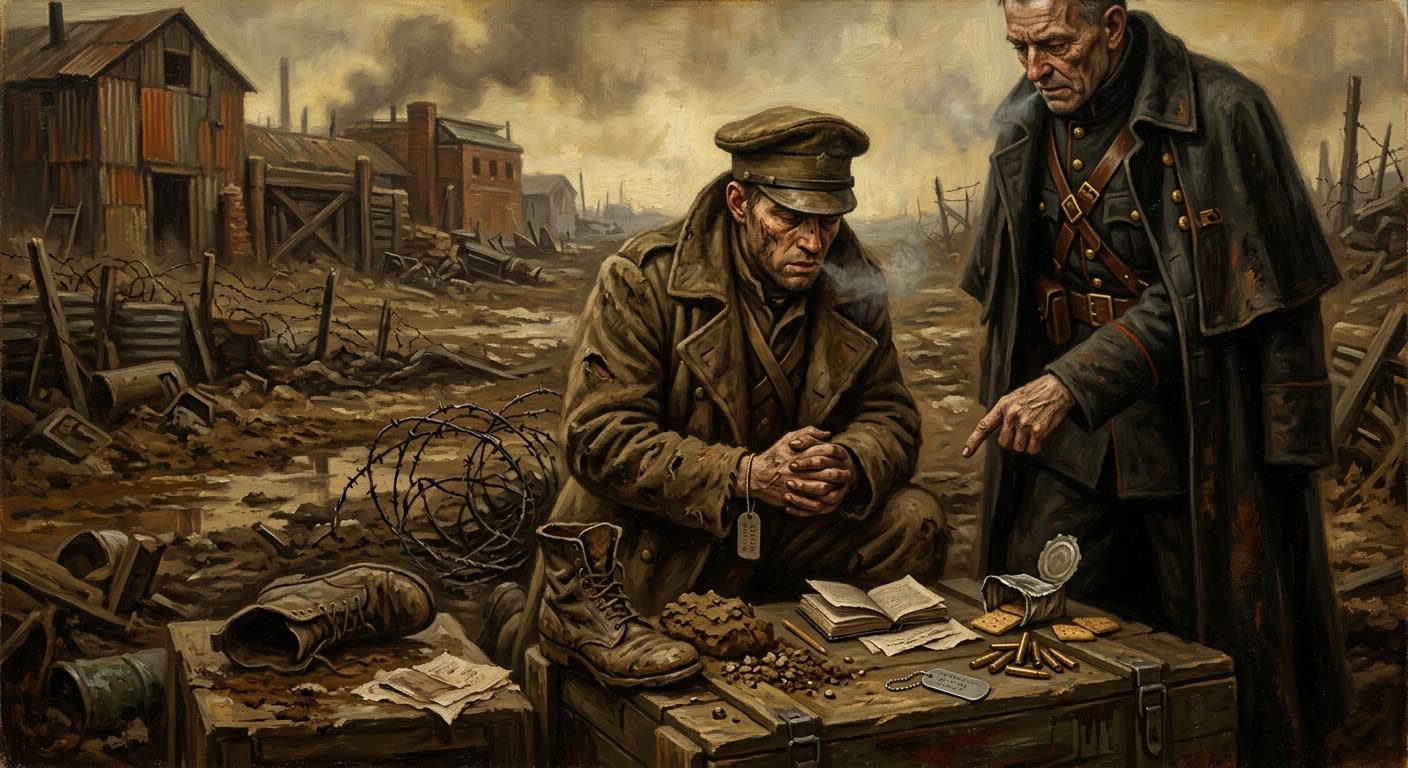
Humility Sequence
Boot, mud, ration, wire; the ugly words that keep Pride low
The Humility Sequence is Przemyśl's deliberately ugly counter-recitation against Atheronic grandeur: boot, mud, ration, wire, cartridge, number, name, breath.
Codex Ref. XIII.1.94-188
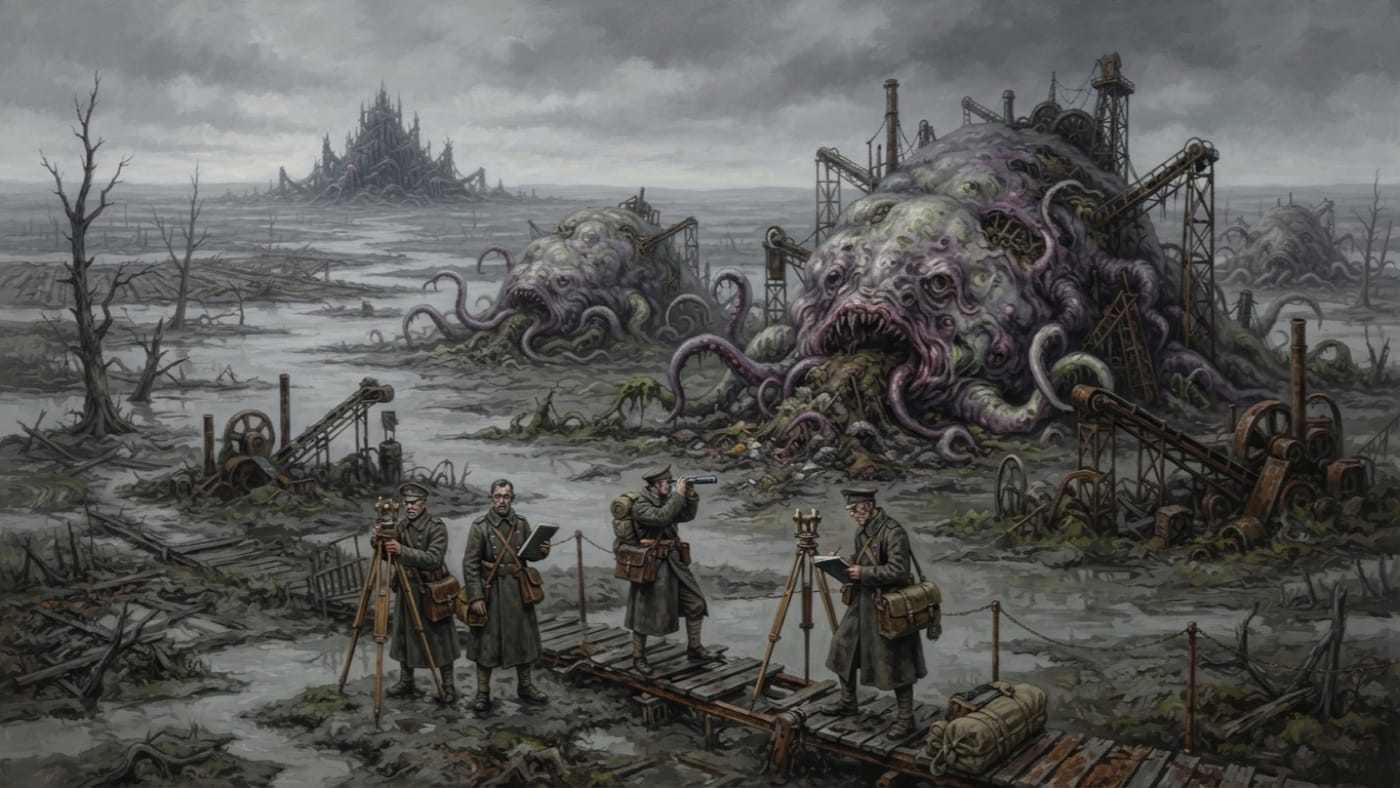
Hungarian plains
The country that fed the armies now feeds what waits for them
Once the breadbasket of armies, the Hungarian grain country is now the Blightmarsh. The A.S. 200 survey confirms eleven stationary Gorged. The Church's yield is nil; the hunger remains productive.
Codex Ref. II.4.09-200
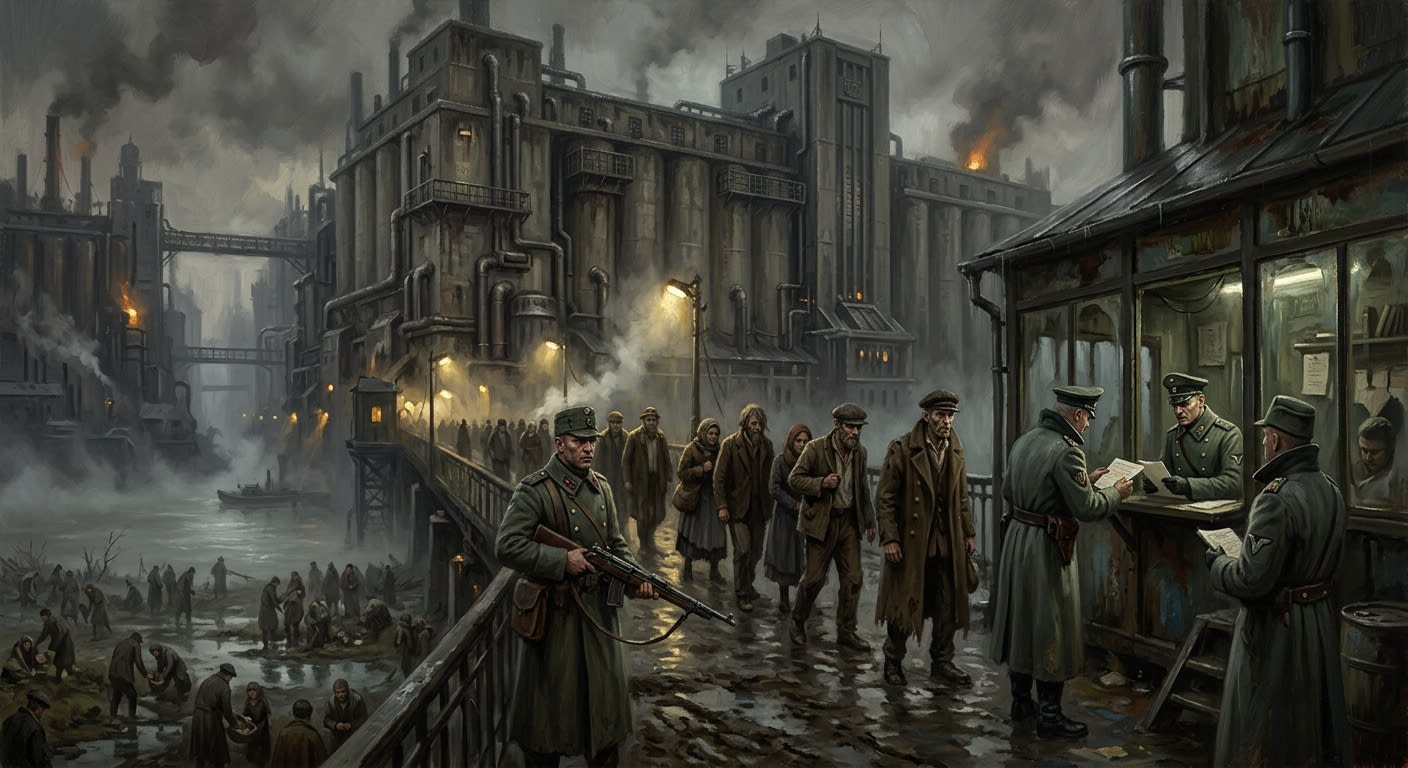
Hungary
The breadbasket that [[hell|Hell]] ate and [[strasbourg|Strasbourg]] filed by the slice
Hungary is the old grain kingdom remade into Budapest's held bank, Pest's visible absence, Blightmarsh hunger, southern corridor necessity, refugee memory, and every office's damp-fingered embarrassment.
Codex Ref. II.4.09-045
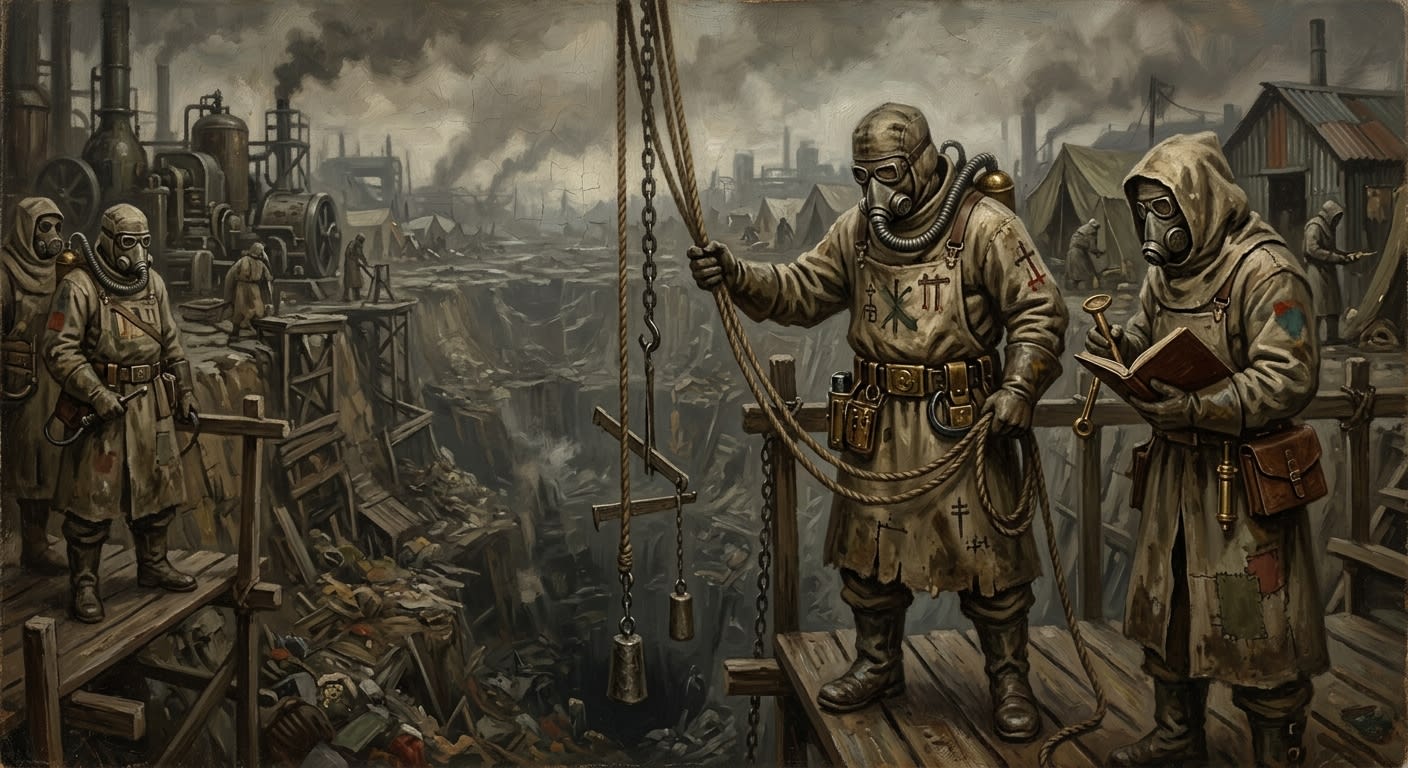
Hunger Wardens
The rope-tethered profession that measures what the dead still want
Hunger Wardens are the Synod's canvas-suited proximity workers at Famine Pit sites, measuring the appetite of graves while praying the rope holds.
Codex Ref. XII.26.01-001
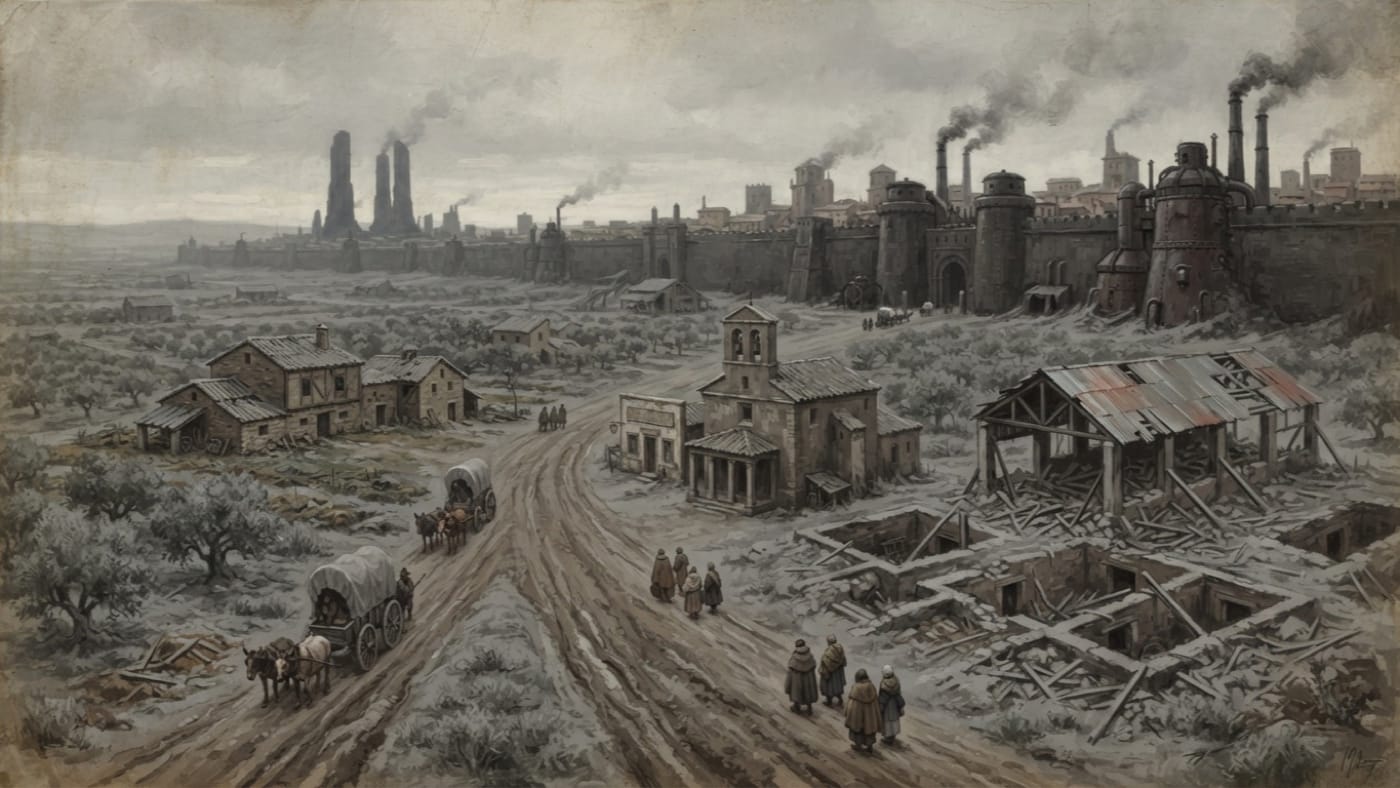
Iberian Approaches
Purity certified the ground. Nobody lifted the floorboards.
Zaragoza's outer farms, warehouses and approach road: an unsurveyed locality in the western heartland where a Velkara-aligned compound survived Purity certification until the A.S. 143 bombardment made weather of the evidence.
Codex Ref. II.1.07-143
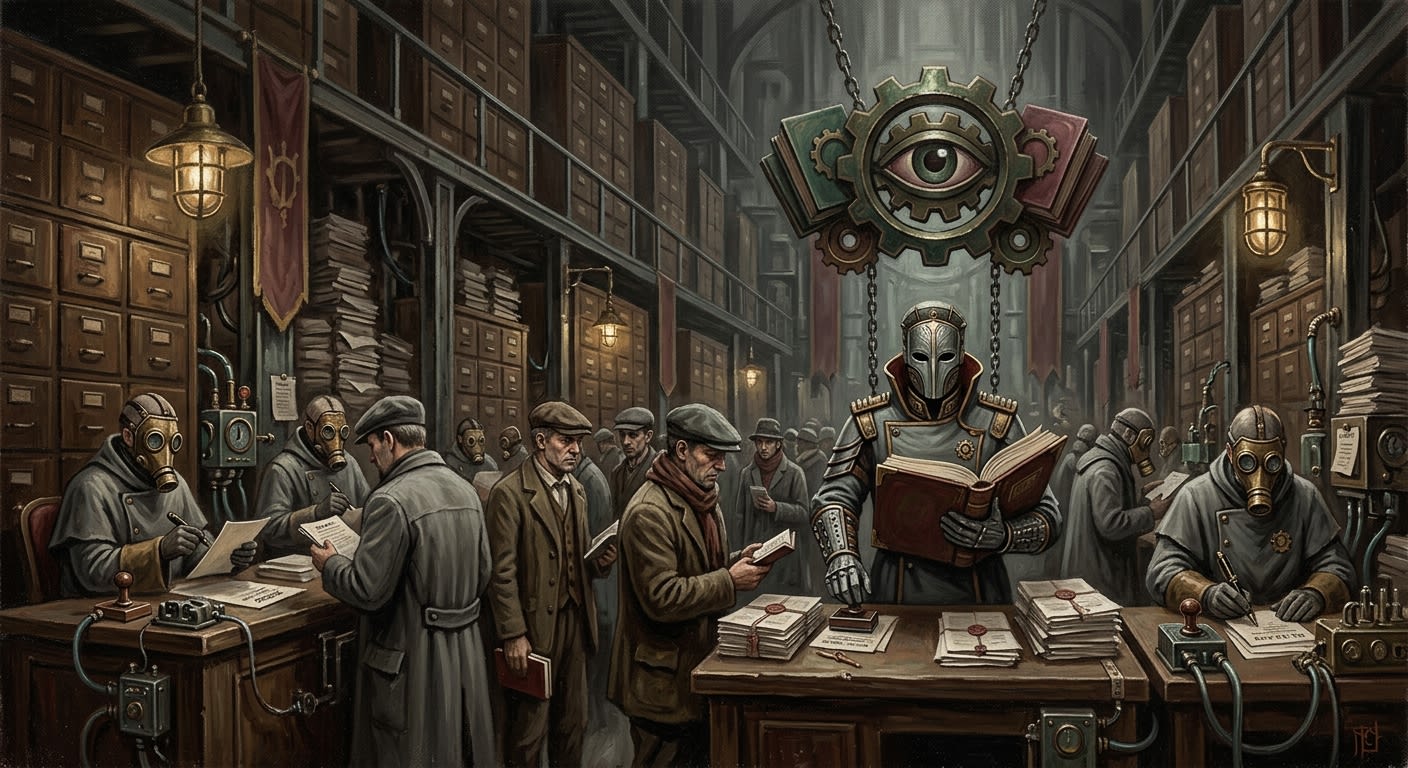
Index Claritatis
Speak only what has been granted, and preferably with witnesses
The Index Claritatis licenses permitted speech across the Synod, proving that censorship is crude until Doctrine teaches it grammar.
Codex Ref. XIII.1.30-001

Index of Safe Lies
The prayer-book with a scalpel hidden in the spine
Dr. Marrow Vask's forbidden compendium concealed practical medicine, chemistry, agriculture, and engineering beneath pious language, surviving eleven burnings through twelve Ashen Circle copy lines.
Codex Ref. XIII.1.57-001
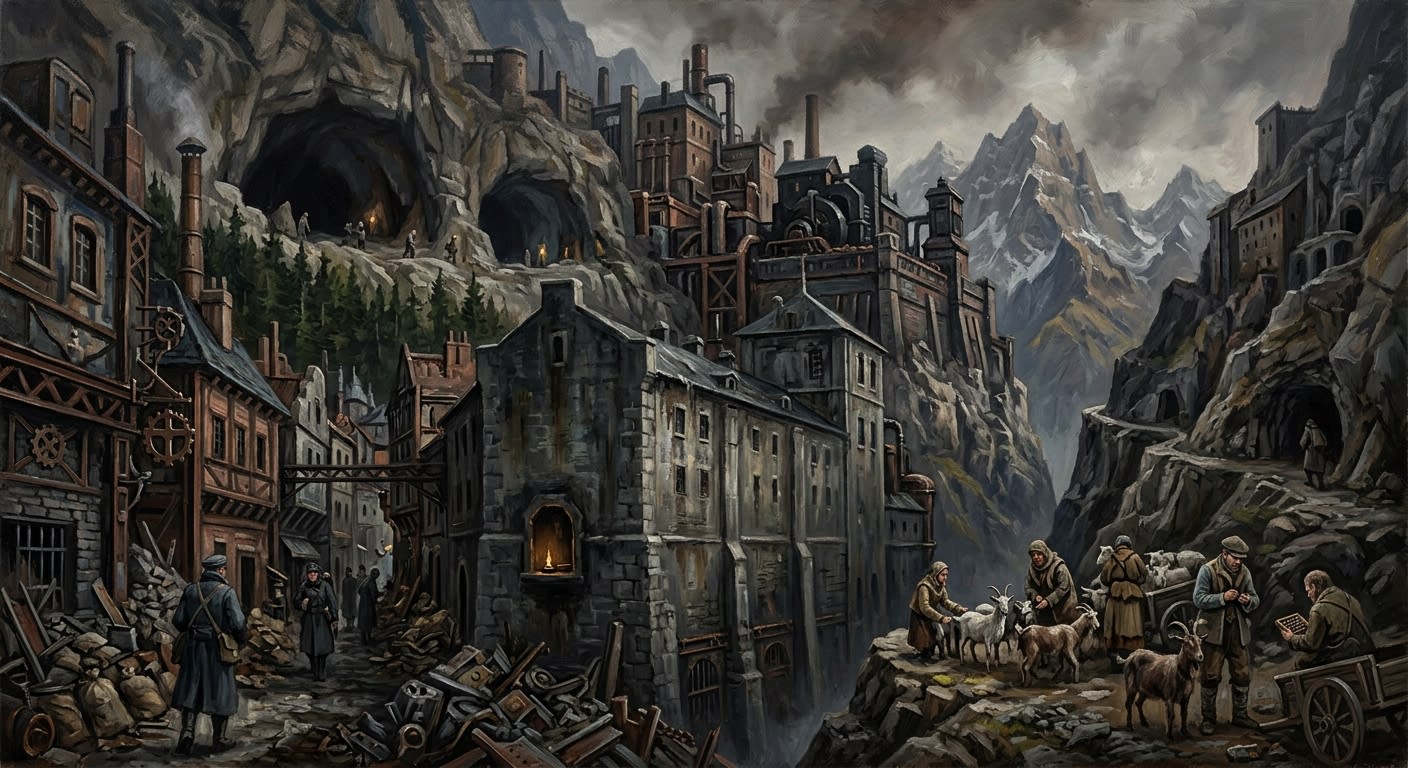
Innsbruck
Where mountains, grandmothers, caves, and walls defeat the census
Innsbruck is the Synod's alpine refuge-city: Cellar Saint caves above the treeline, relics disguised as trash, Mother Sava's wall-cavity, Pale Kin routes, goat arithmetic, and the most pious registry evasion in the mountains.
Codex Ref. II.2.09-030
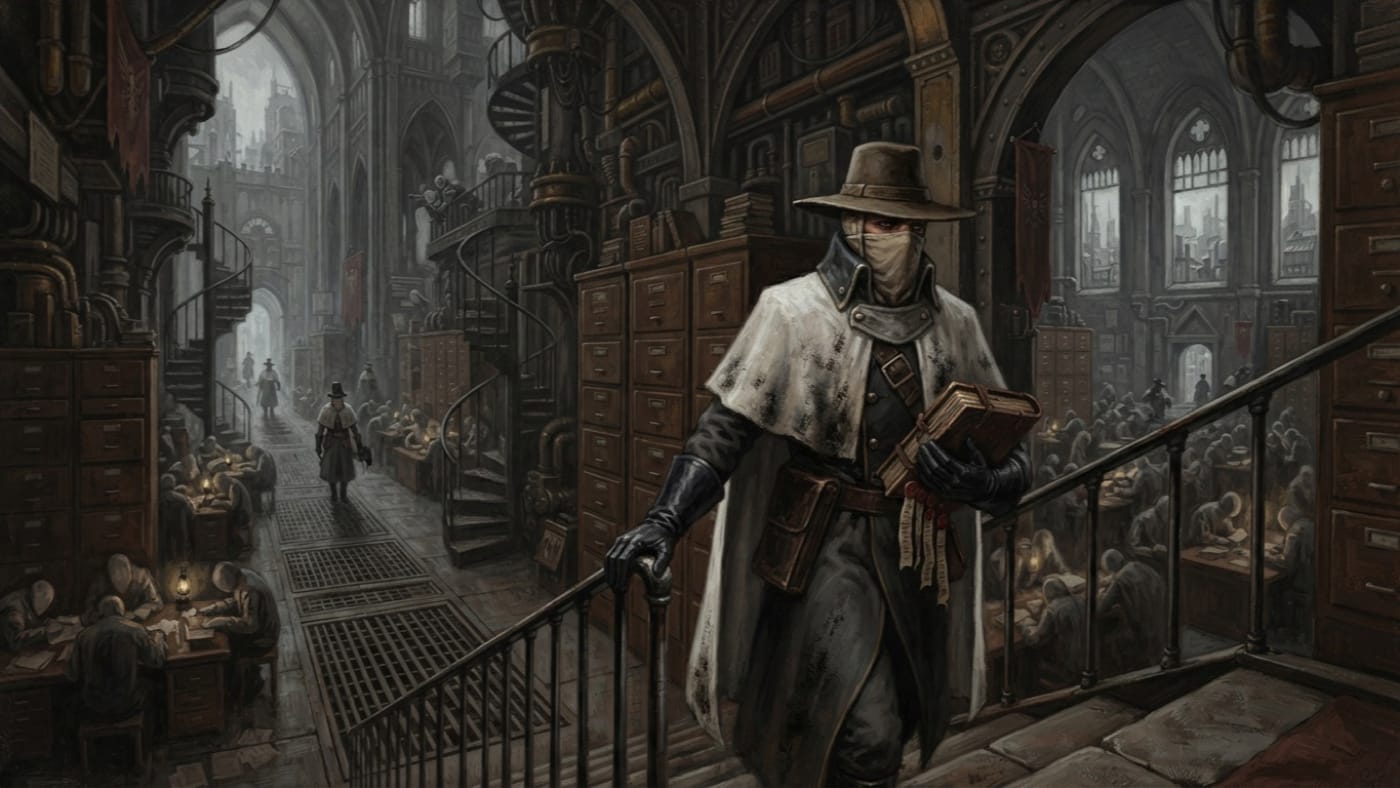
Inquisitors
A writ is a sentence still looking for its subject
An inquisitor carries a writ and decides which answers become evidence. I record Purity's officers: their white mantles, Levy enforcement, the Black Census, and the audits that may erase the examiner.
Codex Ref. VIII.1.09-201
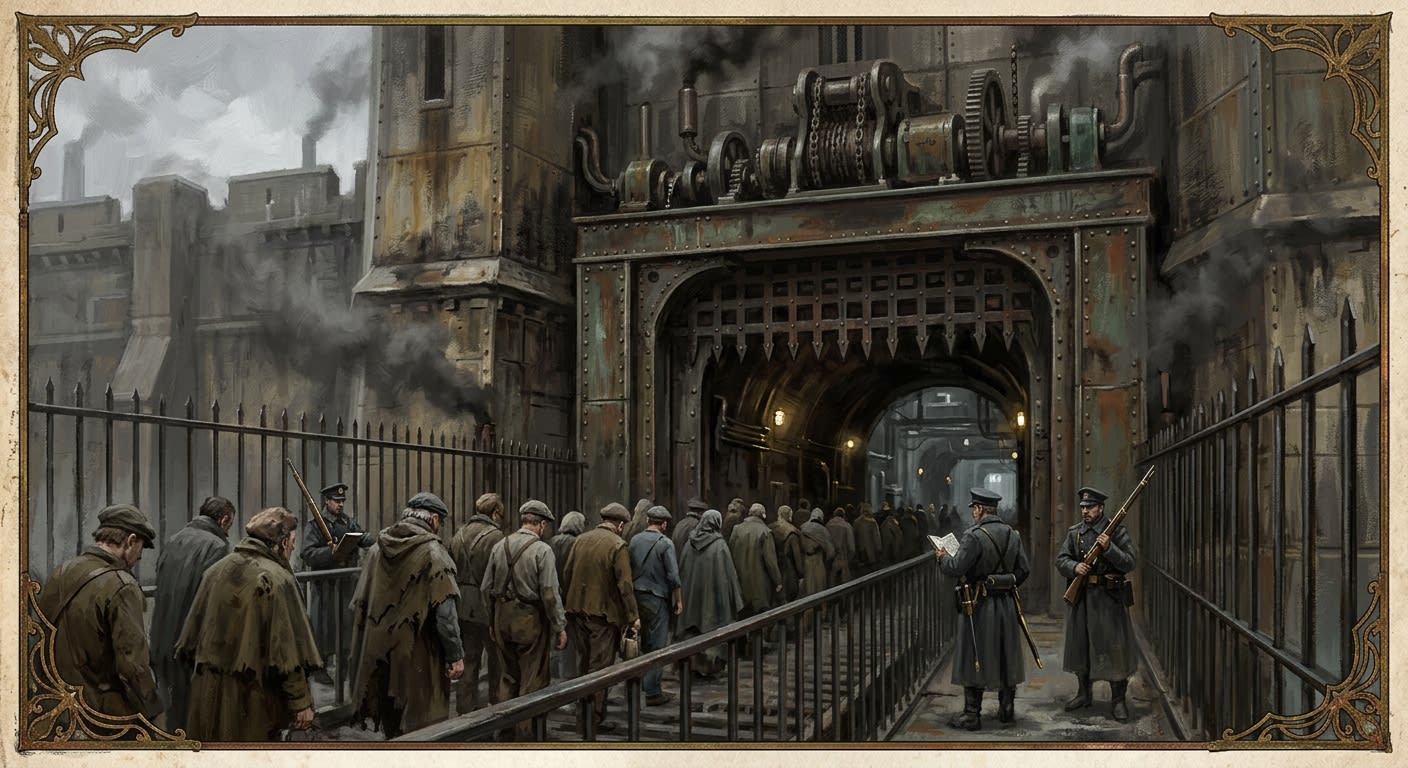
Intake Gate
The road enters one body at a time and is lost
The Intake Gate is the Cloister of Miscounted Beads' western iron mouth: a threshold where pilgrims stop being a procession and become countable, sortable material.
Codex Ref. II.1.05-187
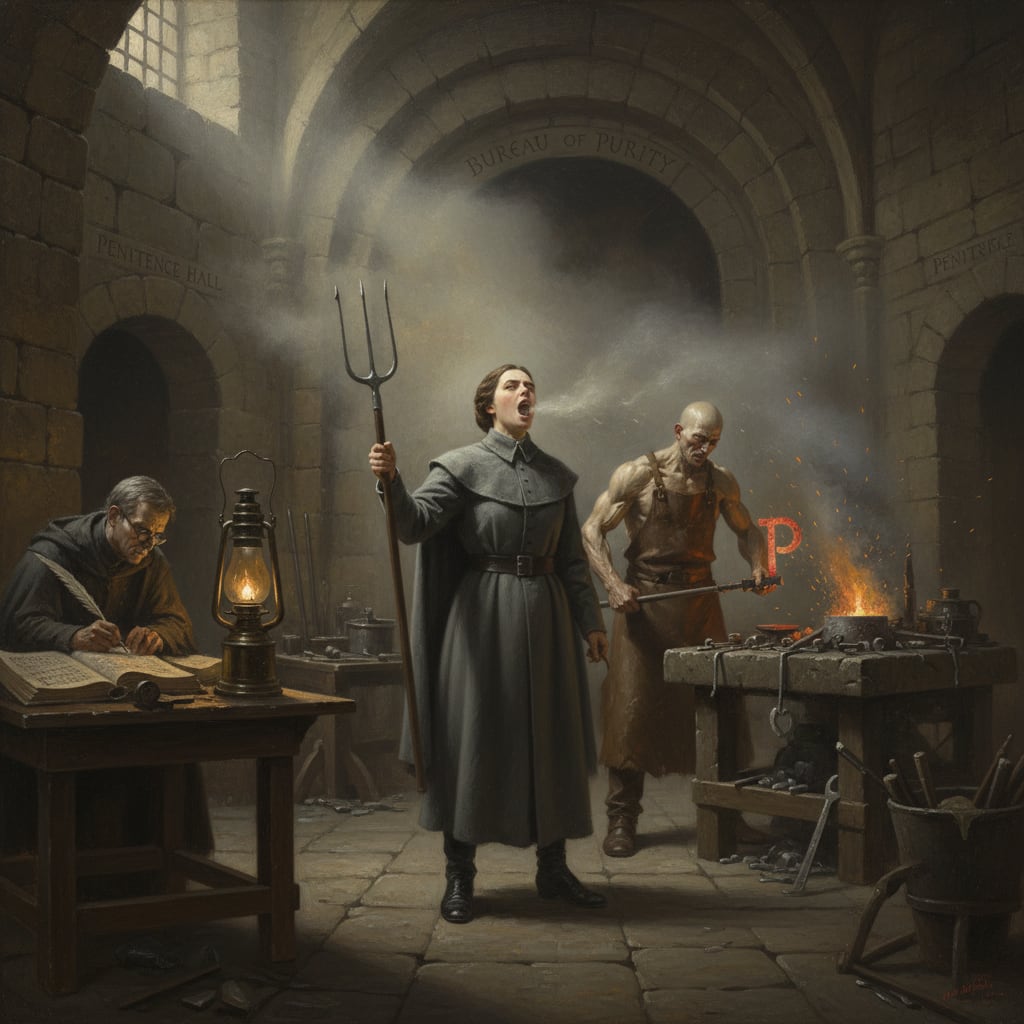
Iron Choir Brand-Singer
Because screaming is imprecise.
Licensed custodians of the note that steadies the iron — the Brand-Singers who hold pitch through Bureau of Purity penitence rites so that the resulting inscriptions are legible and the confession, accordingly, valid.
Codex Ref. XII.24.01-001
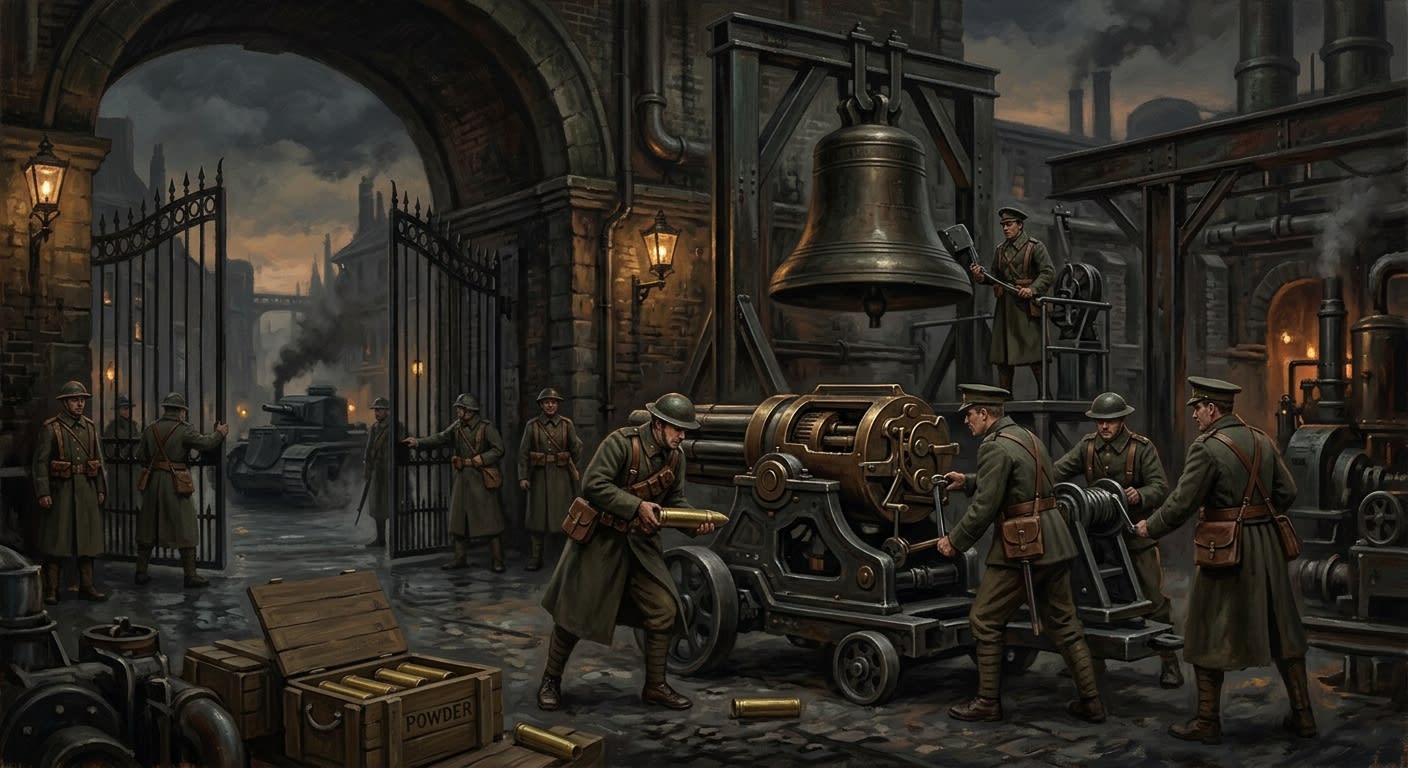
Iron Vespers
Bronze orders the night to become useful
Iron Vespers is the Synod's martial evening peal: seven strokes that lock gates, open powder, transfer custody to night, and teach soldiers that fear obeys better when bronze gives the order.
Codex Ref. XIII.1.62-004
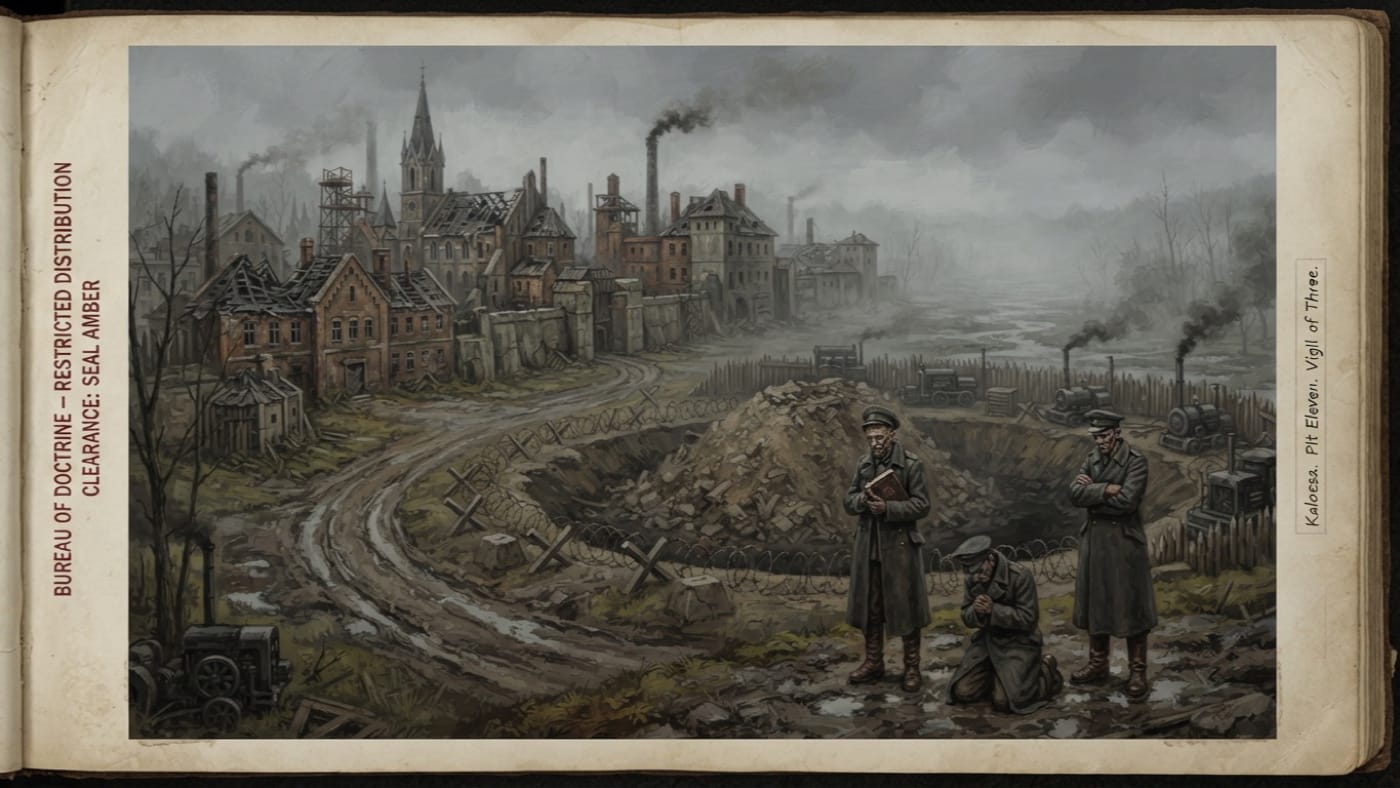
Kalocsa
The record names the town; the grave receives the attention.
Kalocsa is the town named beside the Children's Pit, where a refugee column was buried in A.S. 52. Three chaplains keep a classified vigil nearby; the record tells me more about their hunger than about the town.
Codex Ref. II.4.09-052
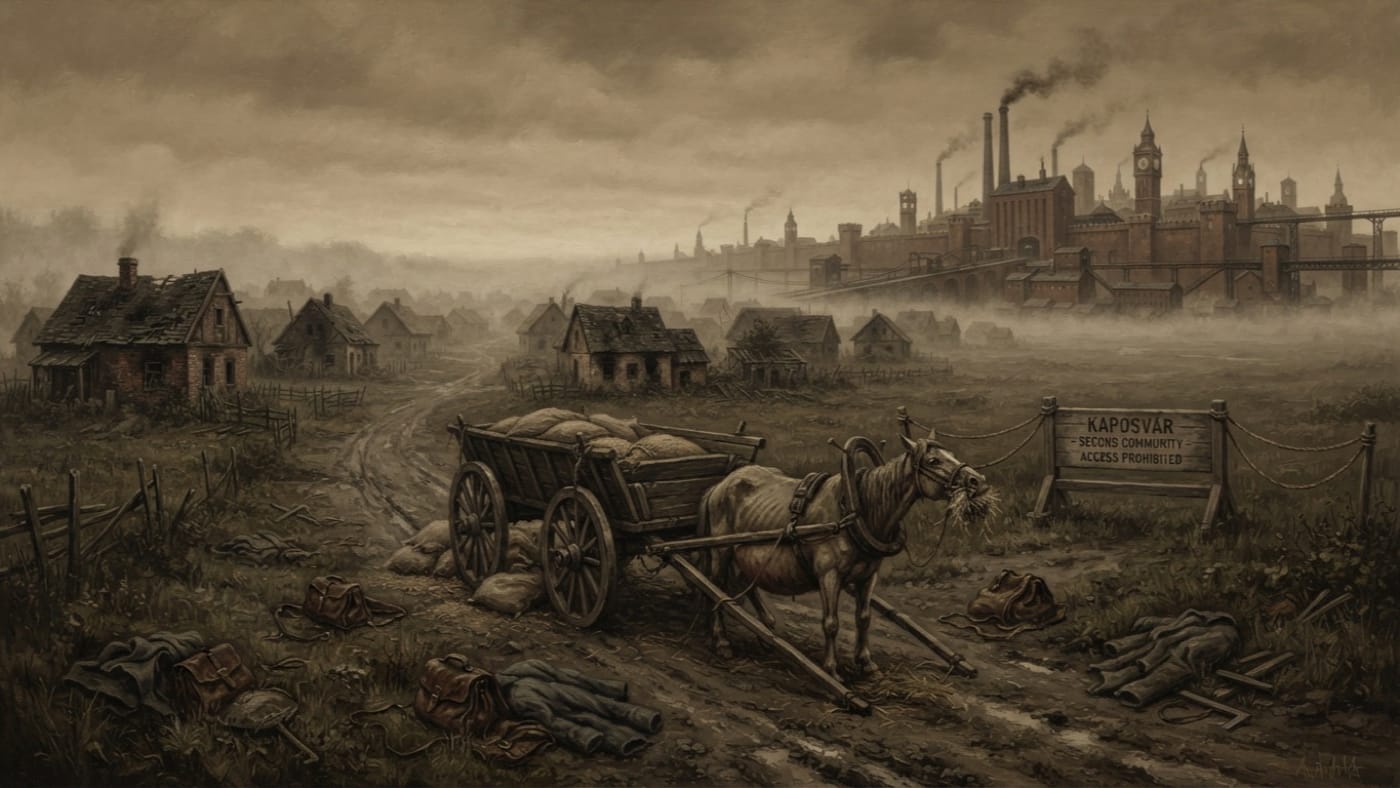
Kaposvár
The city lent its name; the village paid for supper
Kaposvár lends its name to the second Harvest-stricken community, destroyed nearby in A.S. 159. Its surplus killed the sellers; a failed delivery spared the neighbouring parish.
Codex Ref. II.4.09-159
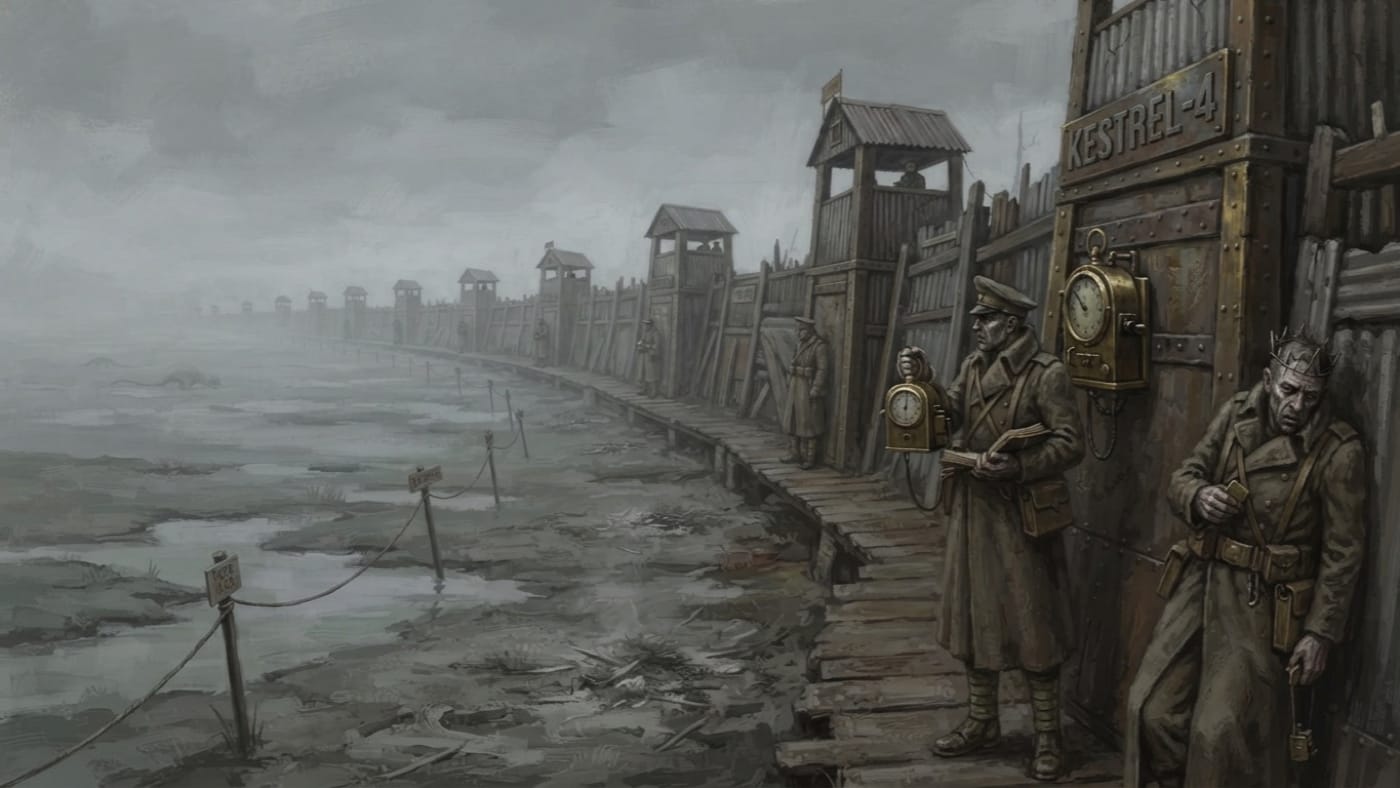
Kestrel Stations
Watch the rope. Watch the clock. Report the bread.
Fourteen numbered posts watch the Blightmarsh with ash, rope, smell logs and exposure clocks. The A.S. 201 return lists three unnamed vacancies; observation continues, containment remains unproved.
Codex Ref. II.4.09-1534
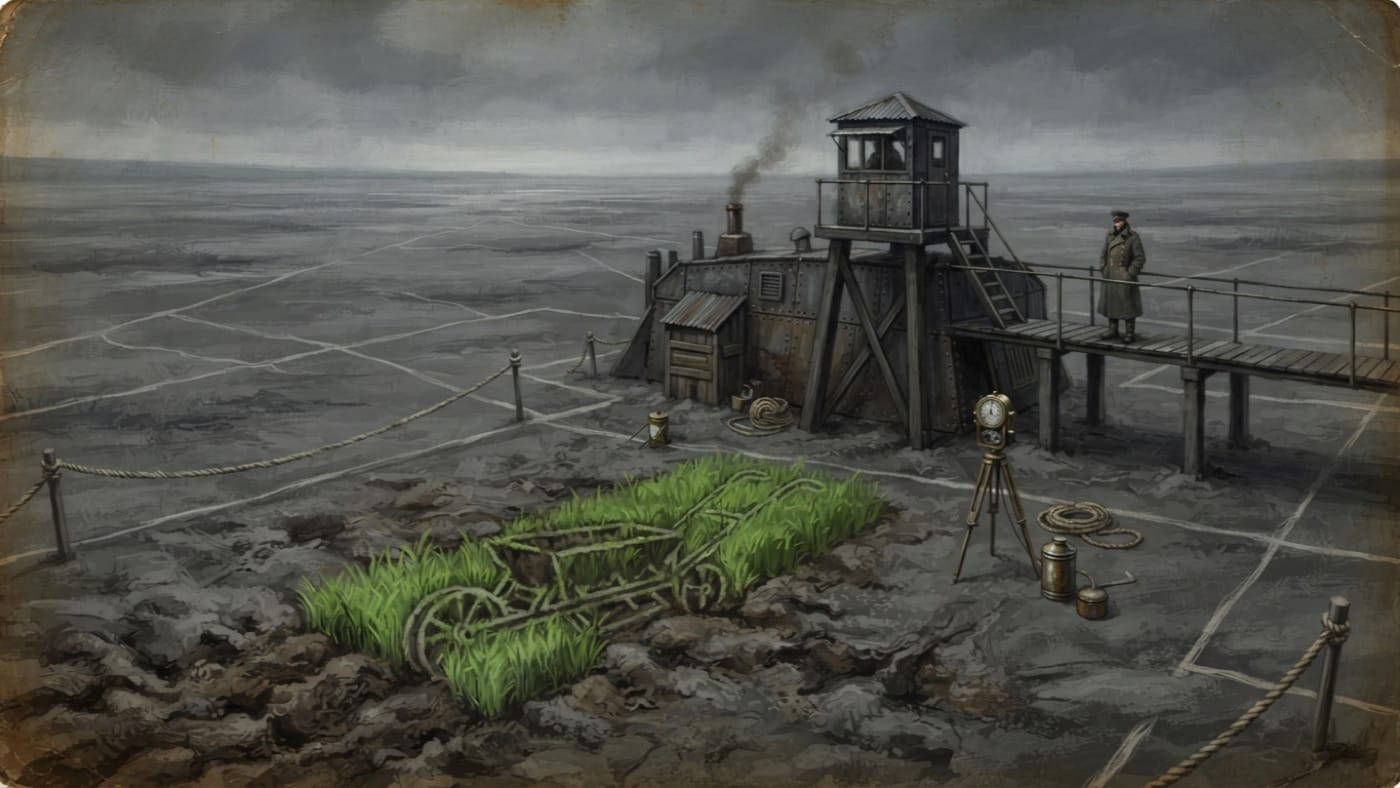
Kestrel-8
File the post with the series and the barley with the machine
Kestrel-8 stands on War's rolls as a Blightmarsh observation post. This A.S. 201 survey preserves an undated seed-drill burial report: barley traced the machine's frame; staffing remains unreported.
Codex Ref. II.4.09-1531

Koeler
The analyst who counted correctly and understood nothing
Koeler, a Rationalist Prefectural Analyst in Vienna, calculated the ammunition cost of stopping Ash-Fodder formations in A.S. 38; his arithmetic survived his Republic and his body.
Codex Ref. III.2.01-058
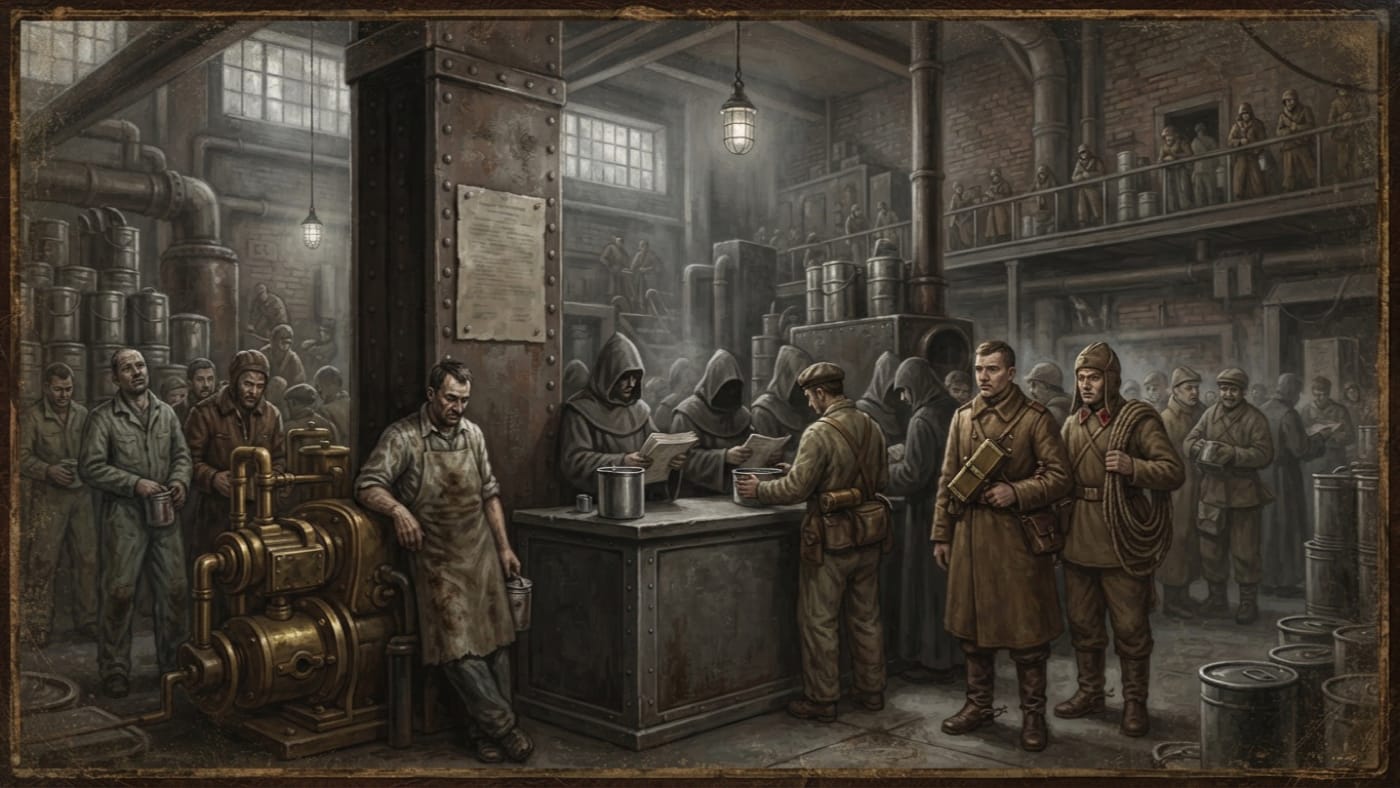
Kruševac Ration Scandal
Seven deaths and a memorandum to correct the ration queue
An A.S. 201 survey of Kruševac's ration scandal: suspect food went first to supposedly expendable mouths; seven deaths and a memorandum bought a better instruction.
Codex Ref. VII.8.10-201
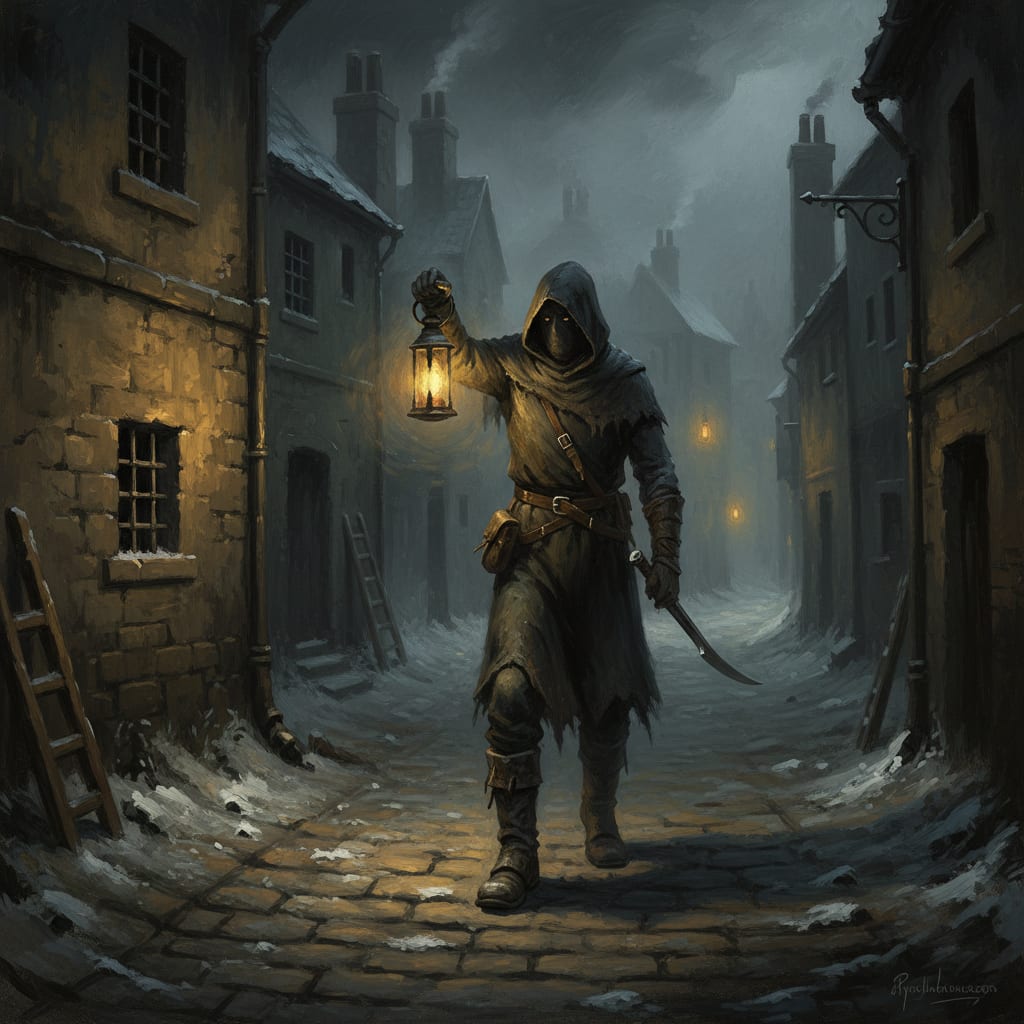
Lantern Brotherhood Vigilante
Eight thousand four hundred tolerated blades, licensed by a subordinate clause — the Synod's night made visible and officially nonexistent.
Eight thousand four hundred tolerated blades in five Watch Circles, licensed by a subordinate clause in a curfew ordinance — the Synod's night made visible and officially nonexistent.
Codex Ref. XII.25.01-001
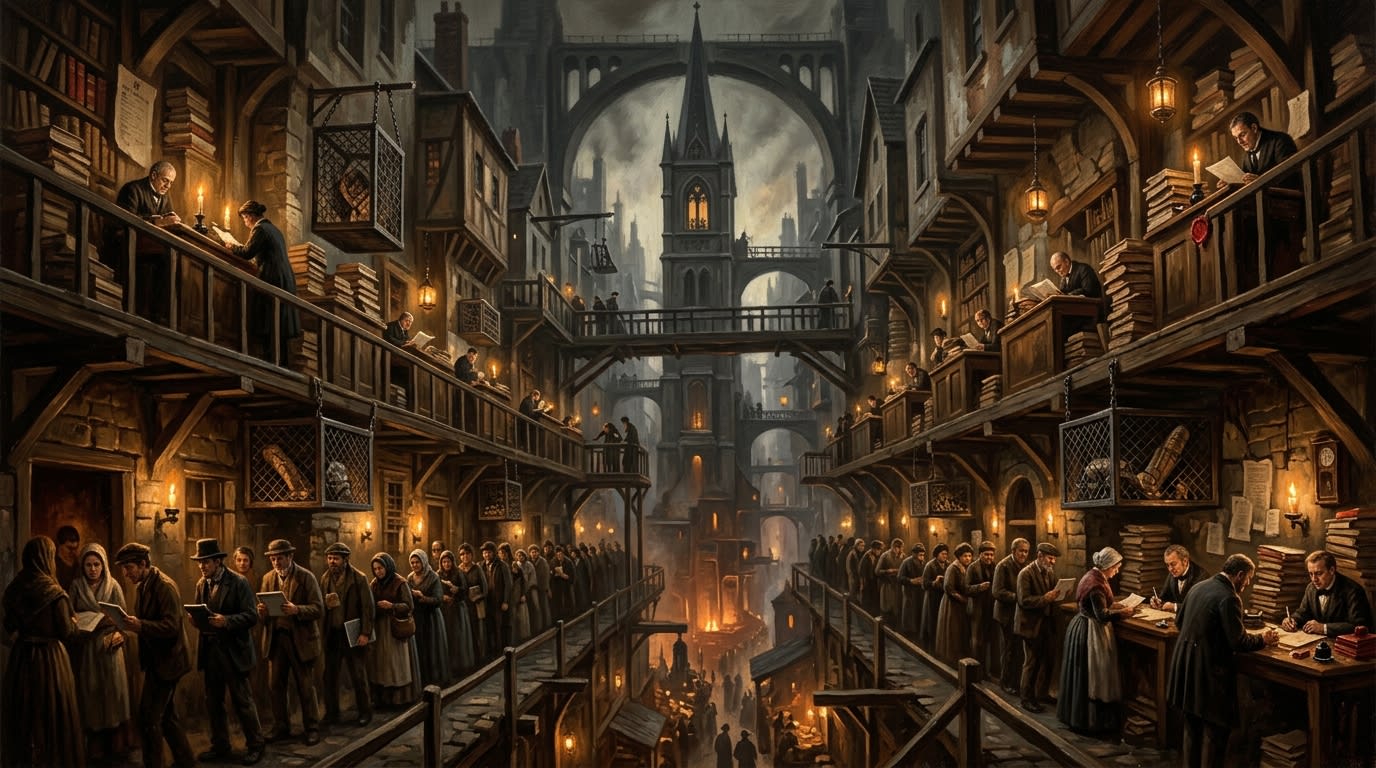
Ledger Row
Where existence queues before supper
Ledger Row is Essen-of-Hymnsteel's Records district, where names, rations, pour records, and corrected lives queue beneath Arch-Notary Veyl's pen.
Codex Ref. II.2.06-110
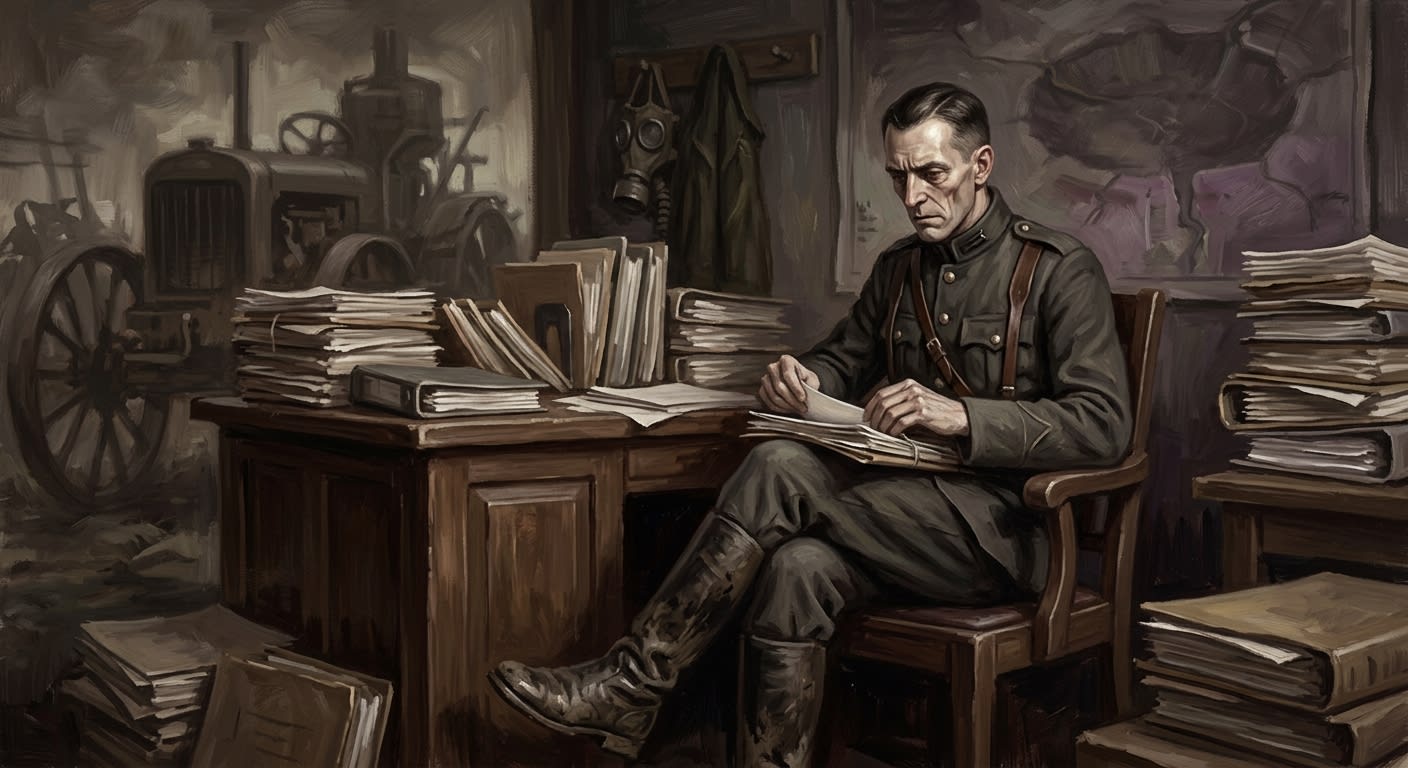
Lieutenant Voss
The officer who measured hunger before the Bureau named it
Lieutenant Voss filed the first clean report of Famine Pit exposure in A.S. 120, then spent fourteen years being too accurate for comfort.
Codex Ref. III.2.01-022
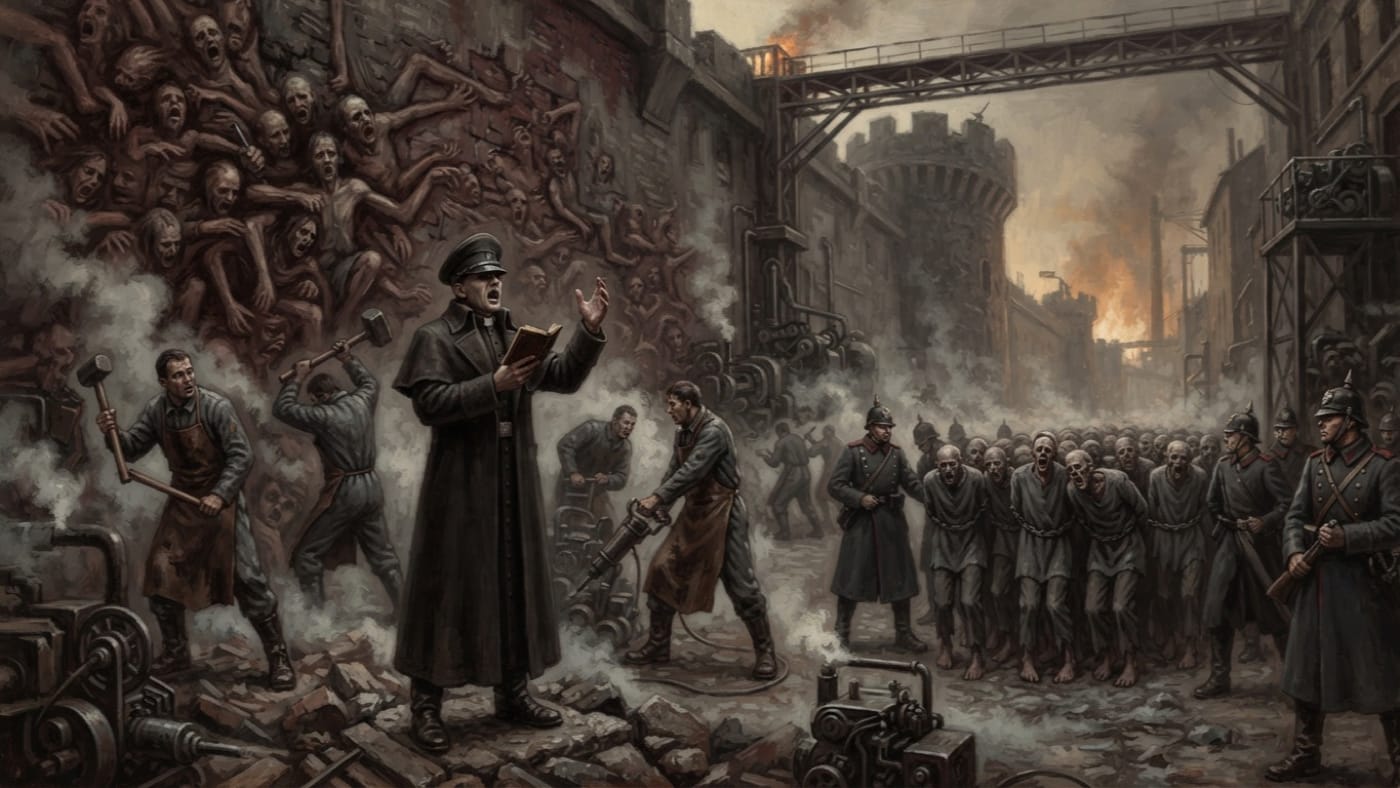
Litany Against Echoes
A named prayer, three missed lines, and no proof of protection
At Metz in A.S. 144, an Inquisitor recited the Litany Against Echoes and missed three lines. The record preserves the lapse; it establishes neither the text nor the prayer's effect.
Codex Ref. XIII.1.62-144
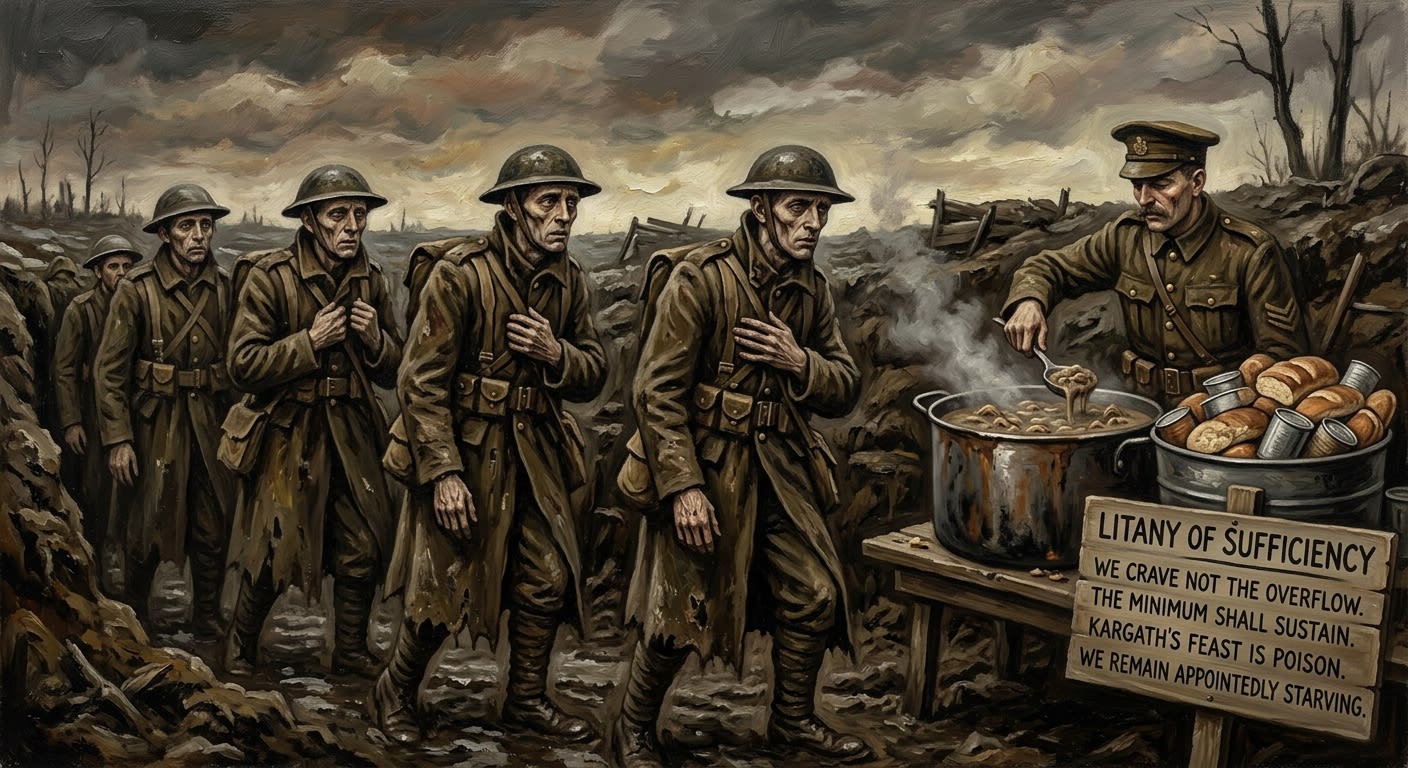
Litany of Sufficiency
Enough is given, and the Bureau has weaponised the crust
The approved field-prayer against Kargath's plenty: four ugly lines by which hungry soldiers step away from miracle food and remain merely starving.
Codex Ref. XIII.1.90-163
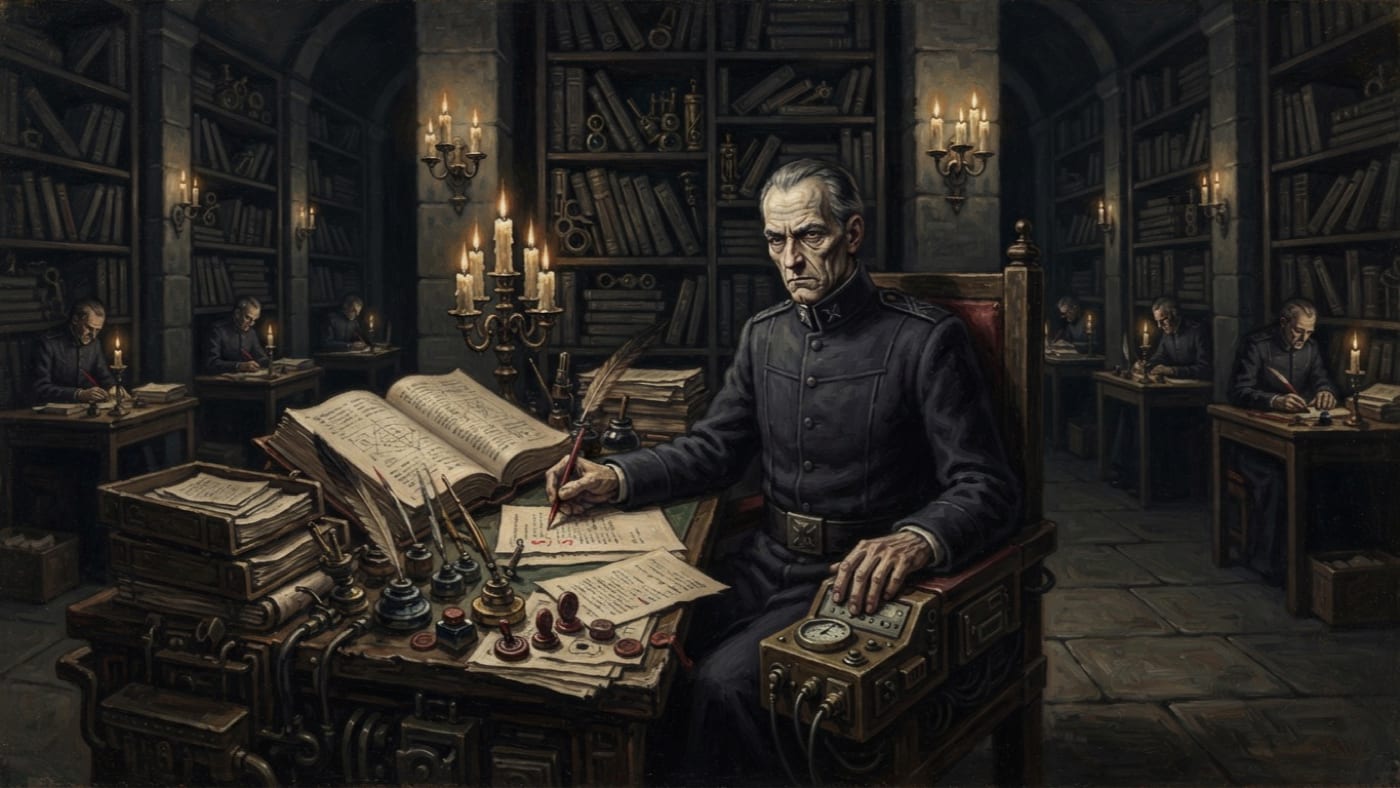
Liturgist-Primus
The Chair decides what counts as a performance.
The Chair of Prescribed Observance governs every authorized rite. Corvin Marche has occupied it for nineteen years; a misplaced syllable still requires correction.
Codex Ref. XIII.1.64-201
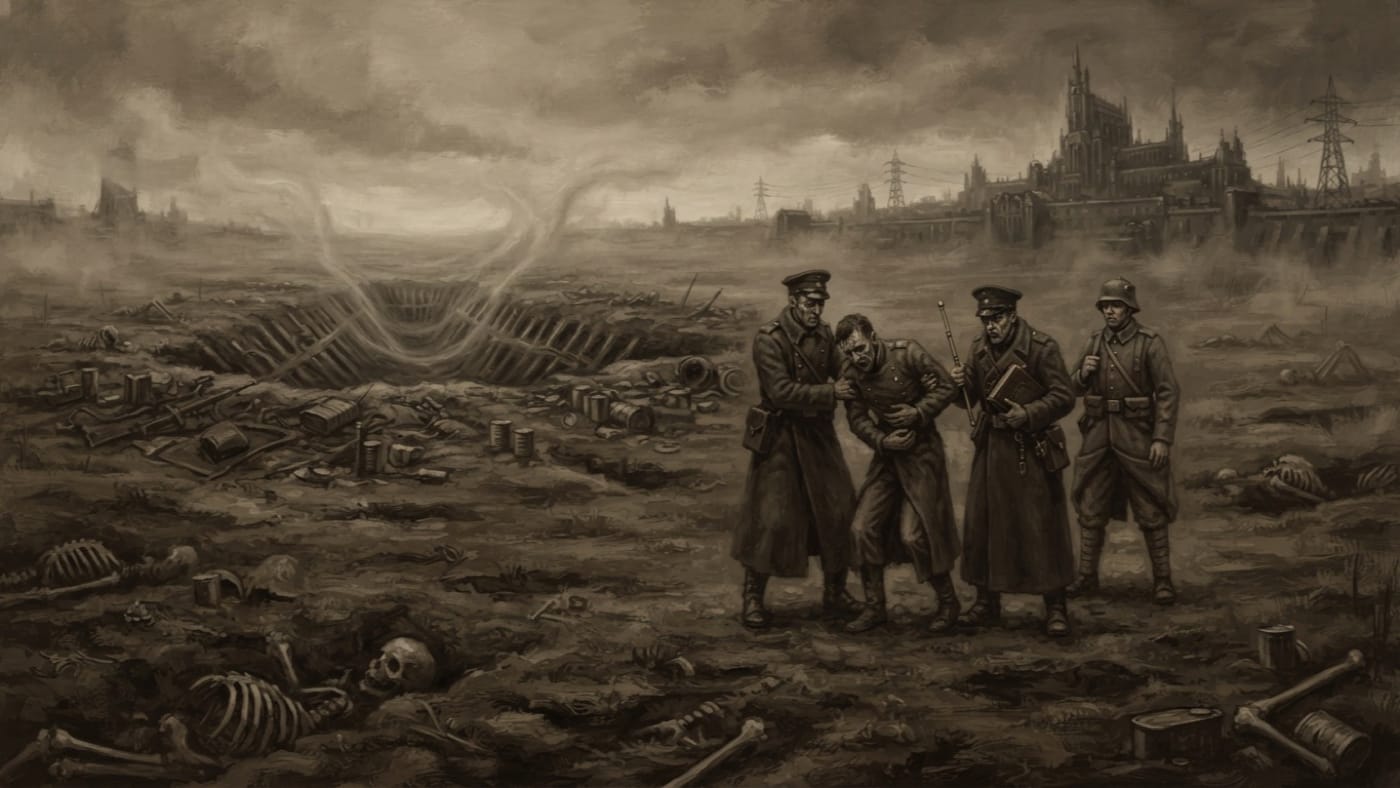
Liturgy of Satiation
The rite is drafted; the dead have yet to hear it.
Three proposals, a drafted rite, and no field test: the Liturgy of Satiation is meant to answer the Famine Pits' hunger. War has invited Doctrine to supply its own personnel. The dead remain unfed.
Codex Ref. XIII.1.26-199
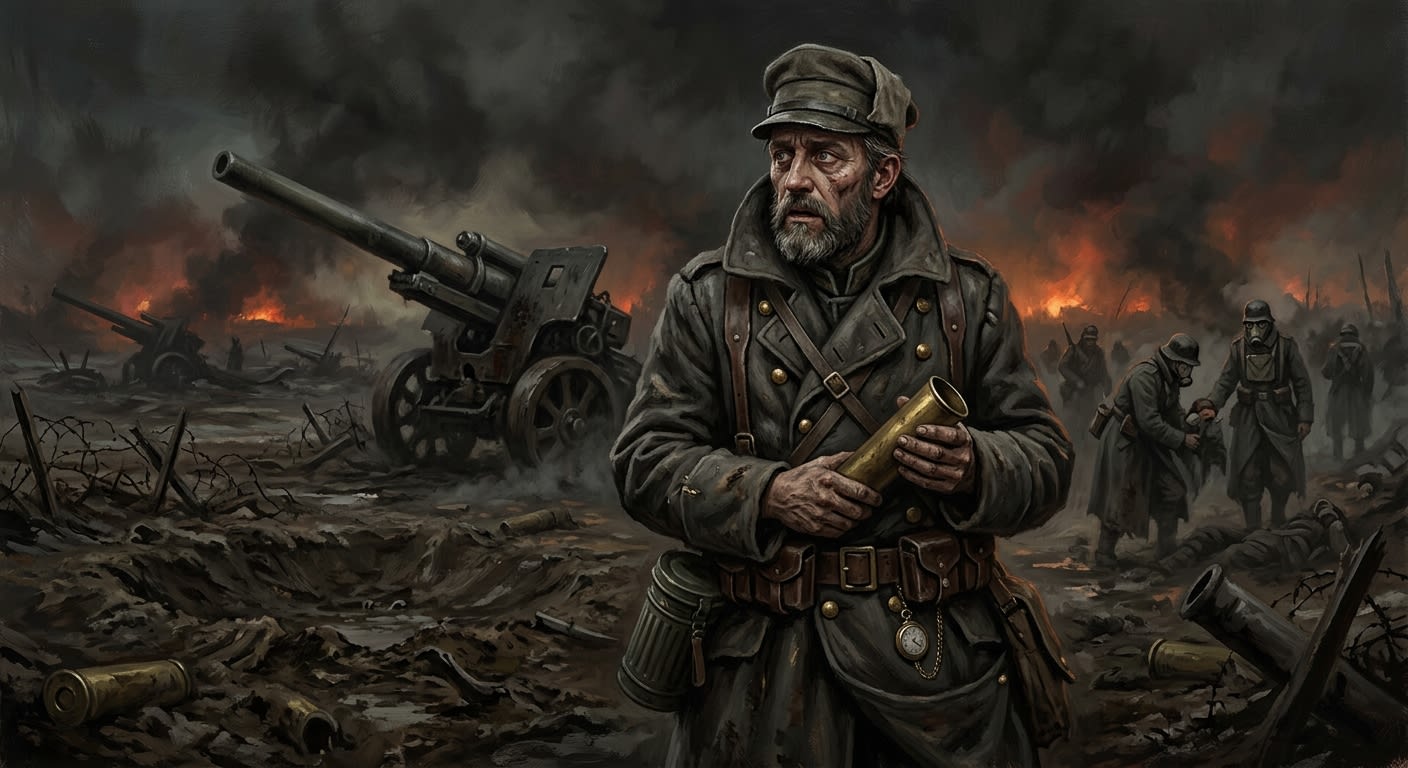
Lucien Artois
The cleverest gunner Reason fed to fire
Lucien Artois made Reason's artillery sing at four rounds per minute, then learned at the Iron Plains that Hell does not consult firing tables.
Codex Ref. I.1.06-001
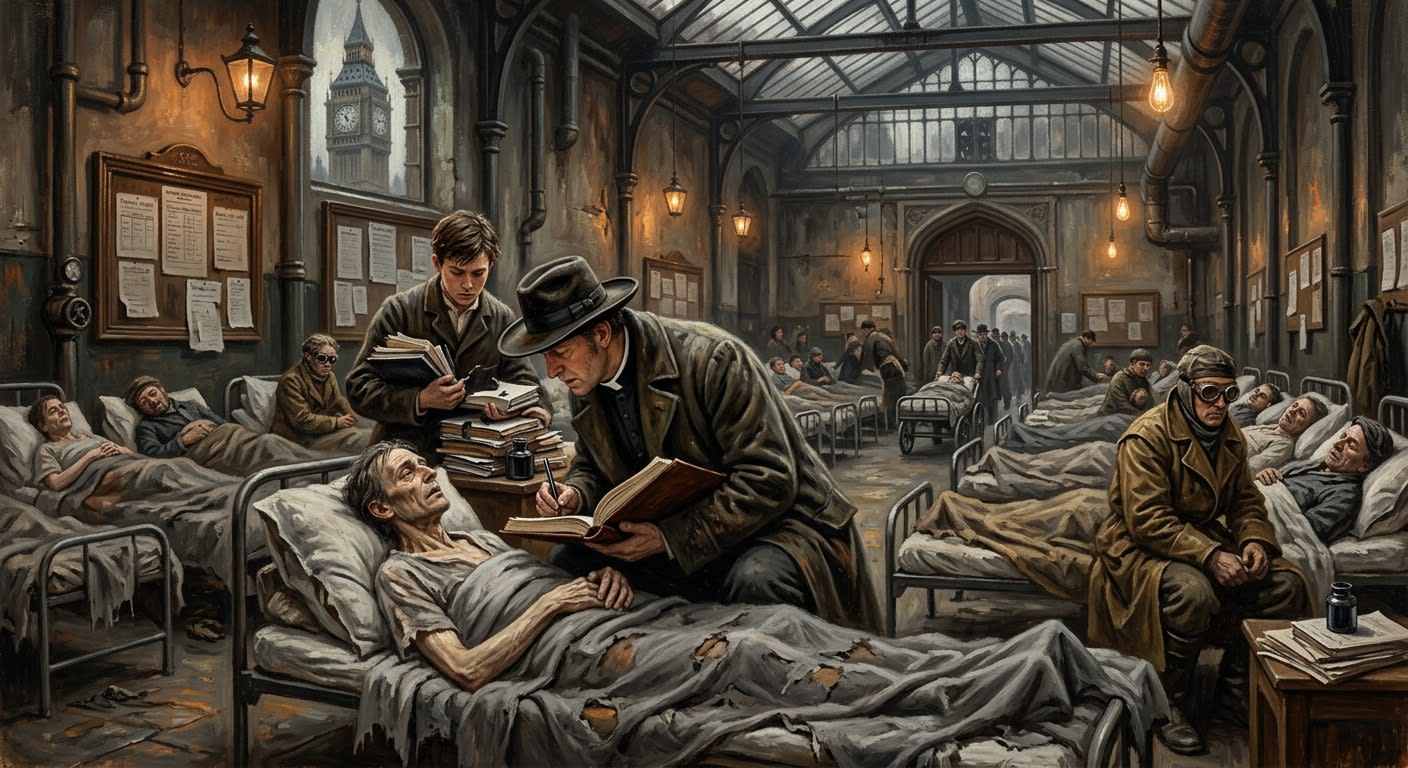
Lull of Names
The plague year when silence became a breach and the bedside became a bureau
The Lull of Names was the A.S. 78 plague-year catastrophe in which deaths in the southern wards outran transcription, birthing Standing Order 22-C and the Deathbed Confession Harvester corps.
Codex Ref. VII.8.10-022
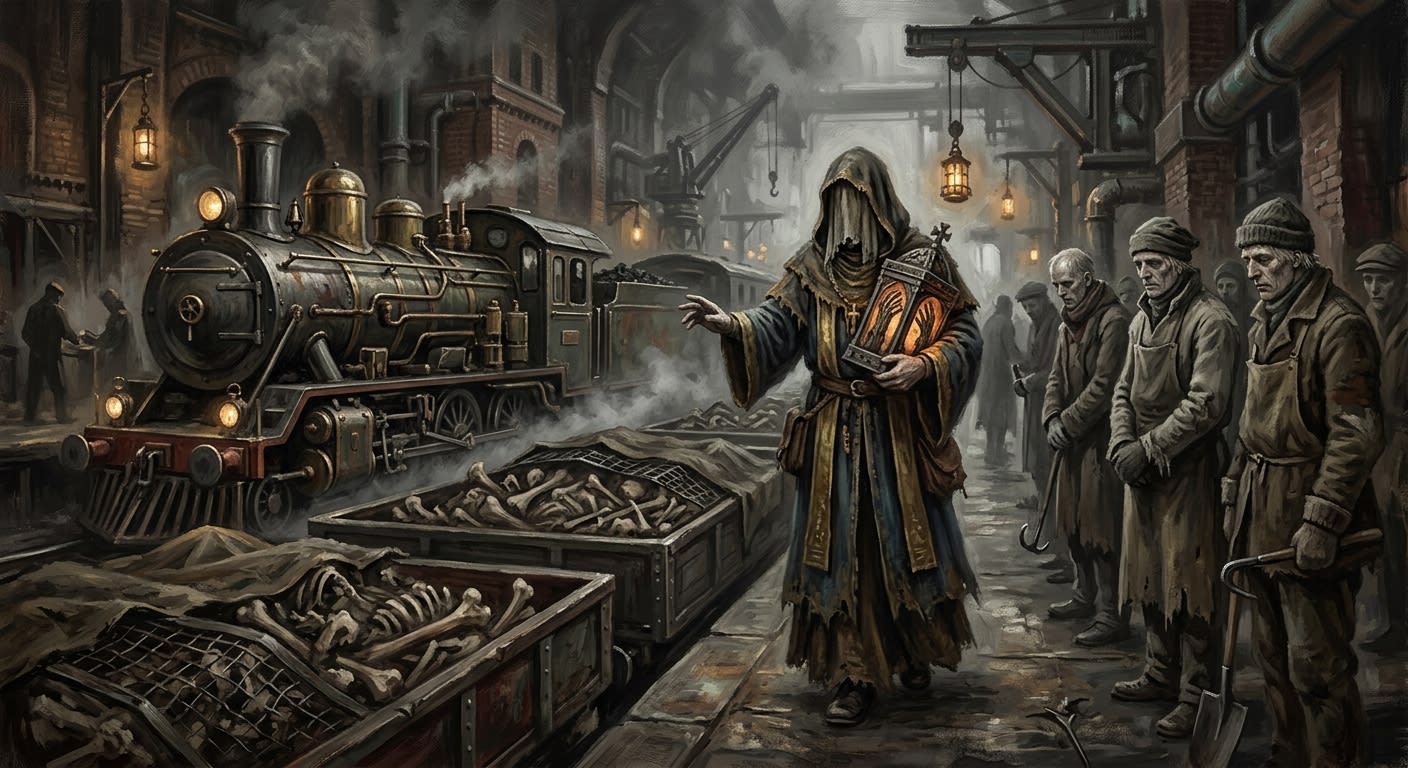
Marrow-Saint Elen
The hooded patron invented because [[josek-of-dueren|Josek]] had a face
Marrow-Saint Elen, unauthenticated but canonically licensed patron of Ossuary-Draft Handlers, blesses condemned transport by carrying a reliquary while showing no face.
Codex Ref. III.2.01-132
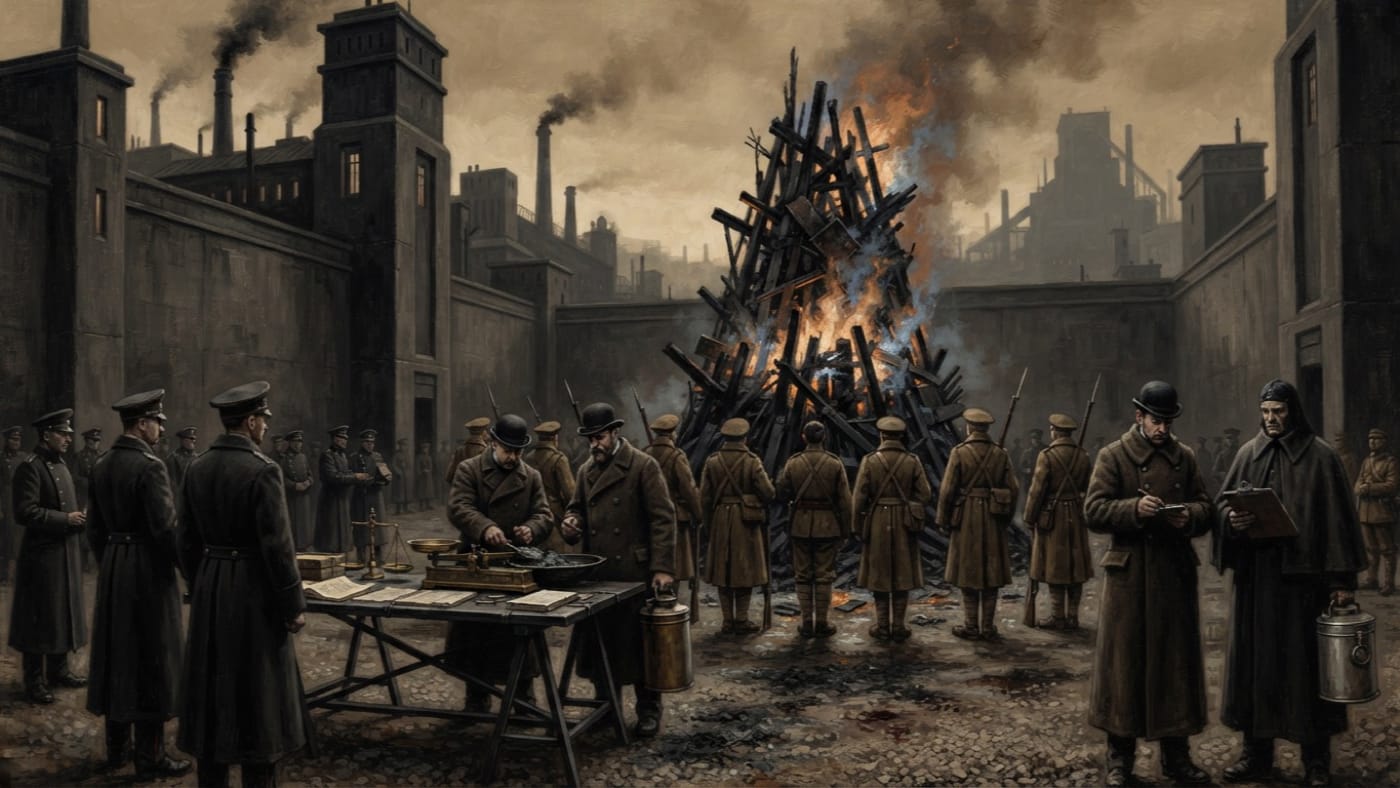
Martial Code 14-D
The parenthesis does the killing
Martial Code 14-D sends voluntary spiritual contamination to the pyre. Under Standing Order 119-F, I count forty burnings and three disappearances; the ledger is clearer about ashes than choice.
Codex Ref. XIII.1.14-004
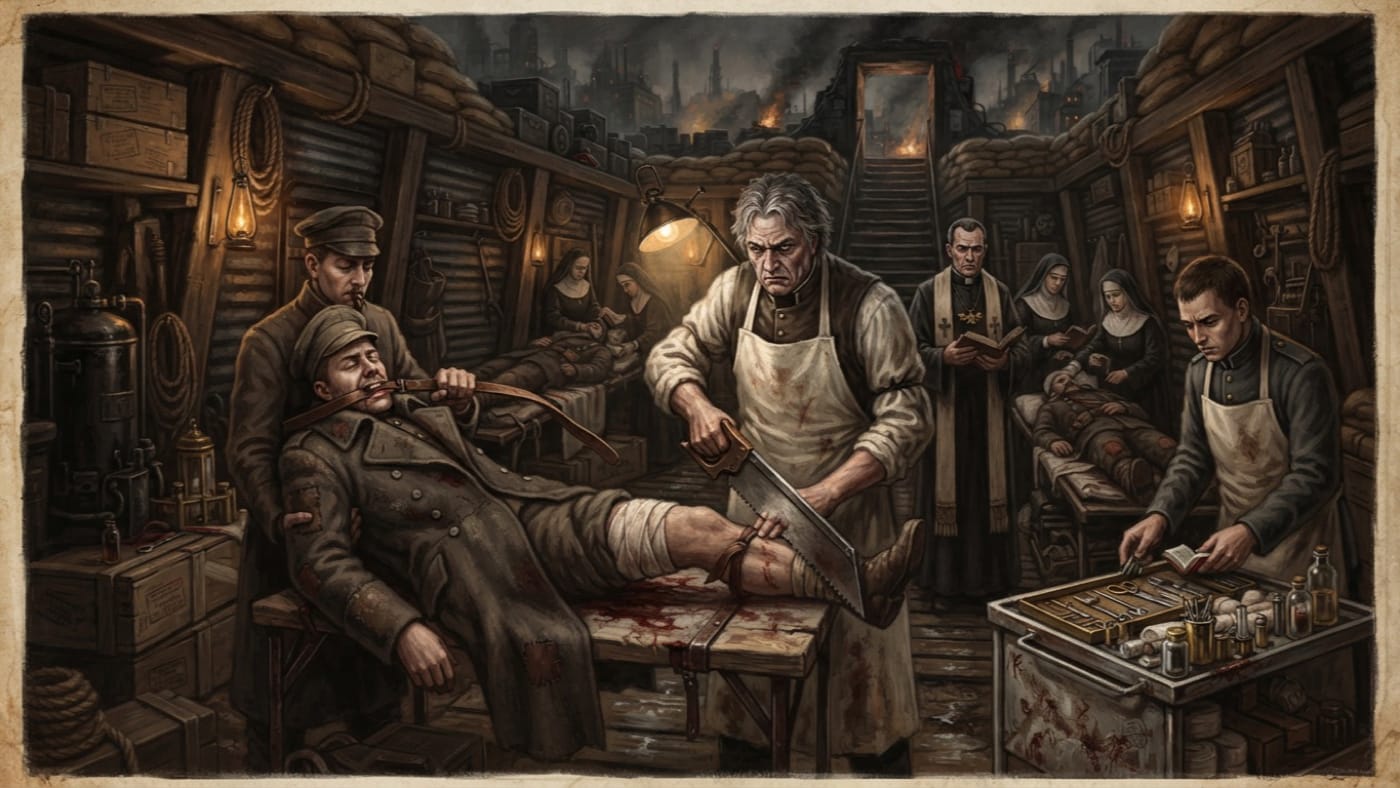
Medical Directorate of the Bureau of War
The surgeons arrived before the charter.
First recorded in A.S. 82, the Medical Directorate is the older name of the Bureau of Medicine. Its surgeons treated the wound before the confession ended. The charter followed ten years later.
Codex Ref. XII.7.09-045
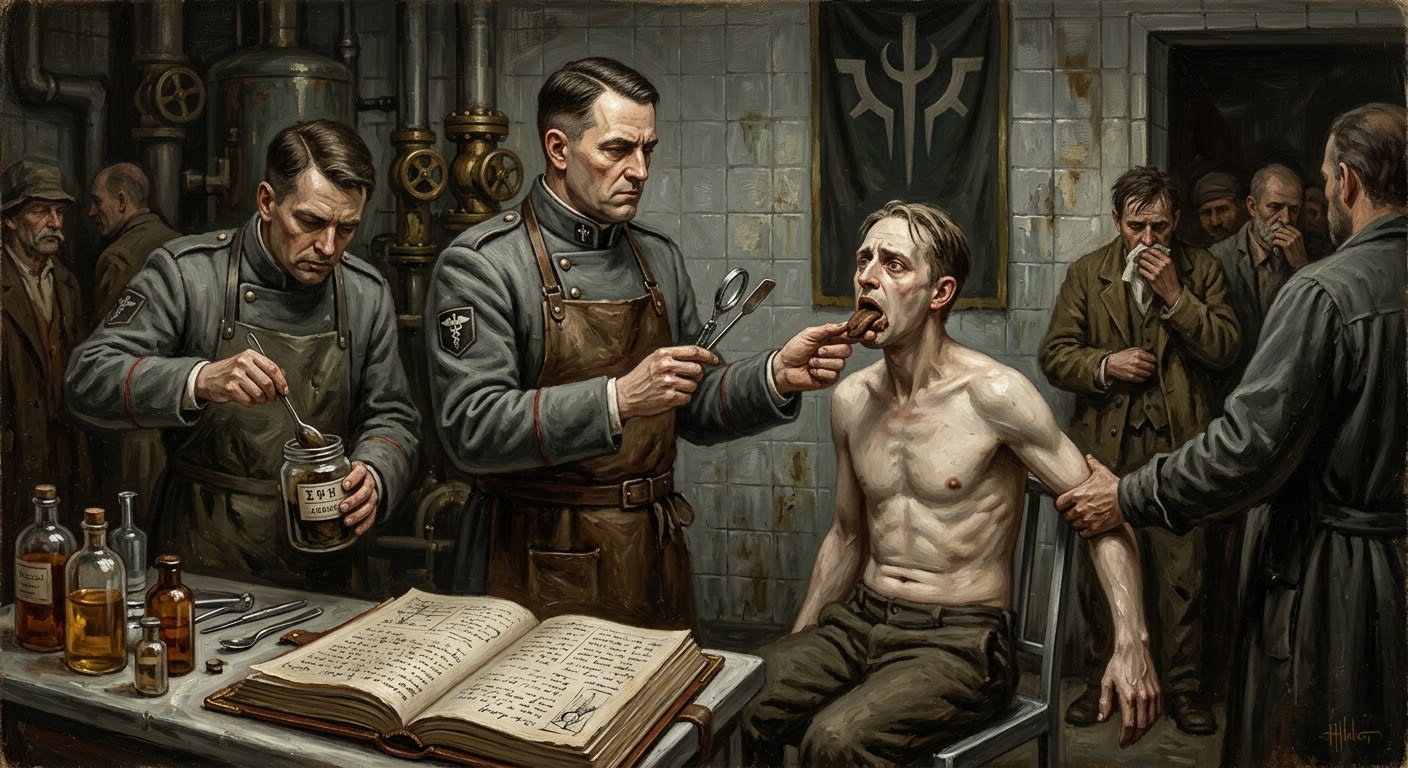
Medical Protocol 9-C
The little iron tooth that makes hunger testify
Medical Protocol 9-C is Medicine's iron tooth: a quarantine rite that turns appetite, refusal, dreams, and mud under the tongue into evidence.
Codex Ref. XIII.1.91-134
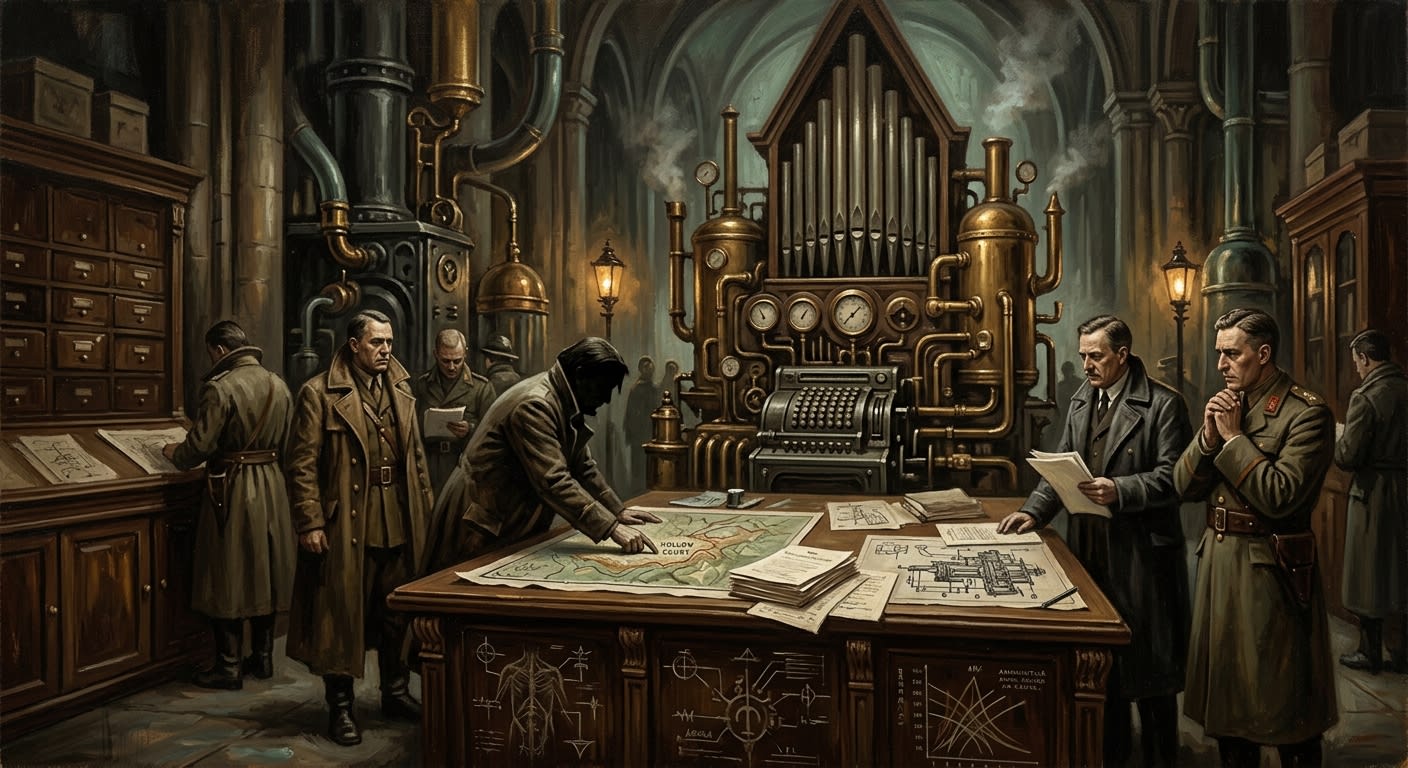
Memorandum on Artillery Bombardment
Nine thousand shells, four hundred twelve names, and one unsigned appetite for arithmetic
An unsigned Bureau of War memorandum proposes shelling the Hollow Court. Doctrine finds nine thousand shells, no absolution, and a table that may be an organ.
Codex Ref. XIII.1.23-001
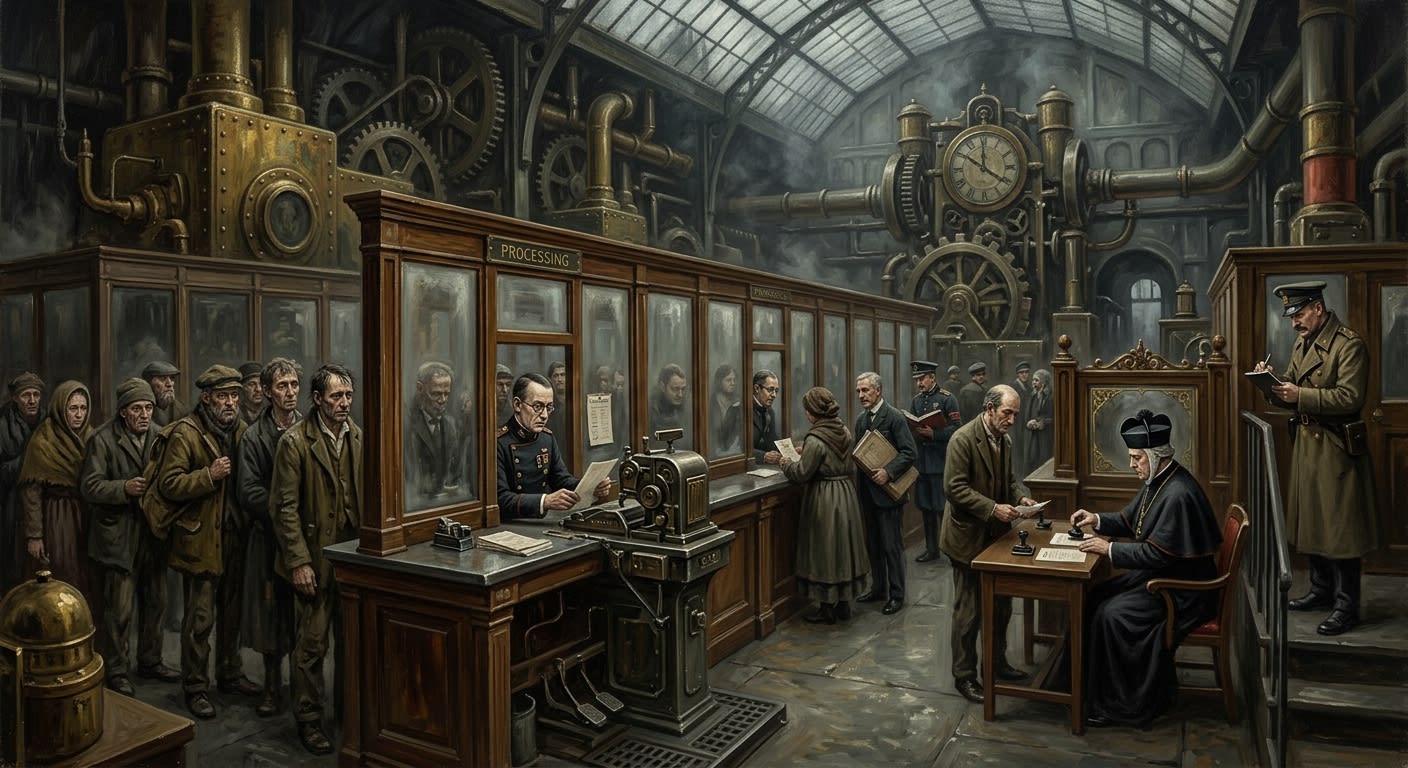
Mercy Rationing Reform of A.S. 134
Processing decides who may survive meanwhile; forgiveness is filed elsewhere
A.S. 134 Bureau of Rites reform, affirmed by Bureau of Doctrine, that restricted mercy stamps to licensed confessors, separated booth processing from forgiveness, and made unauthorised kindness auditable.
Codex Ref. VII.8.10-017
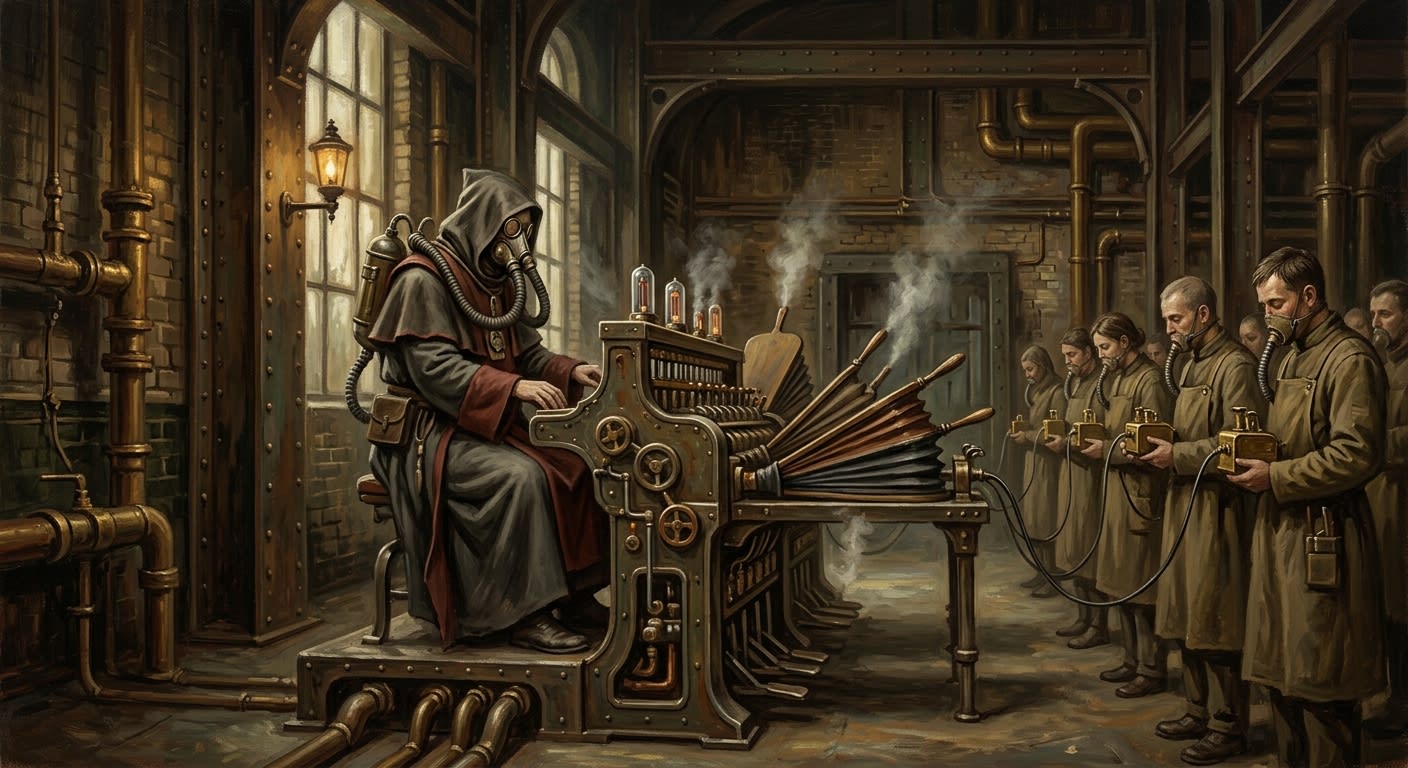
Mercy Tone
The slow note by which the body remains useful
Mercy Tone is the Brand-Singer school that preserves breath, extends confession, and proves that the Synod can call acquisition mercy when the note is slow enough.
Codex Ref. XIII.1.41-001
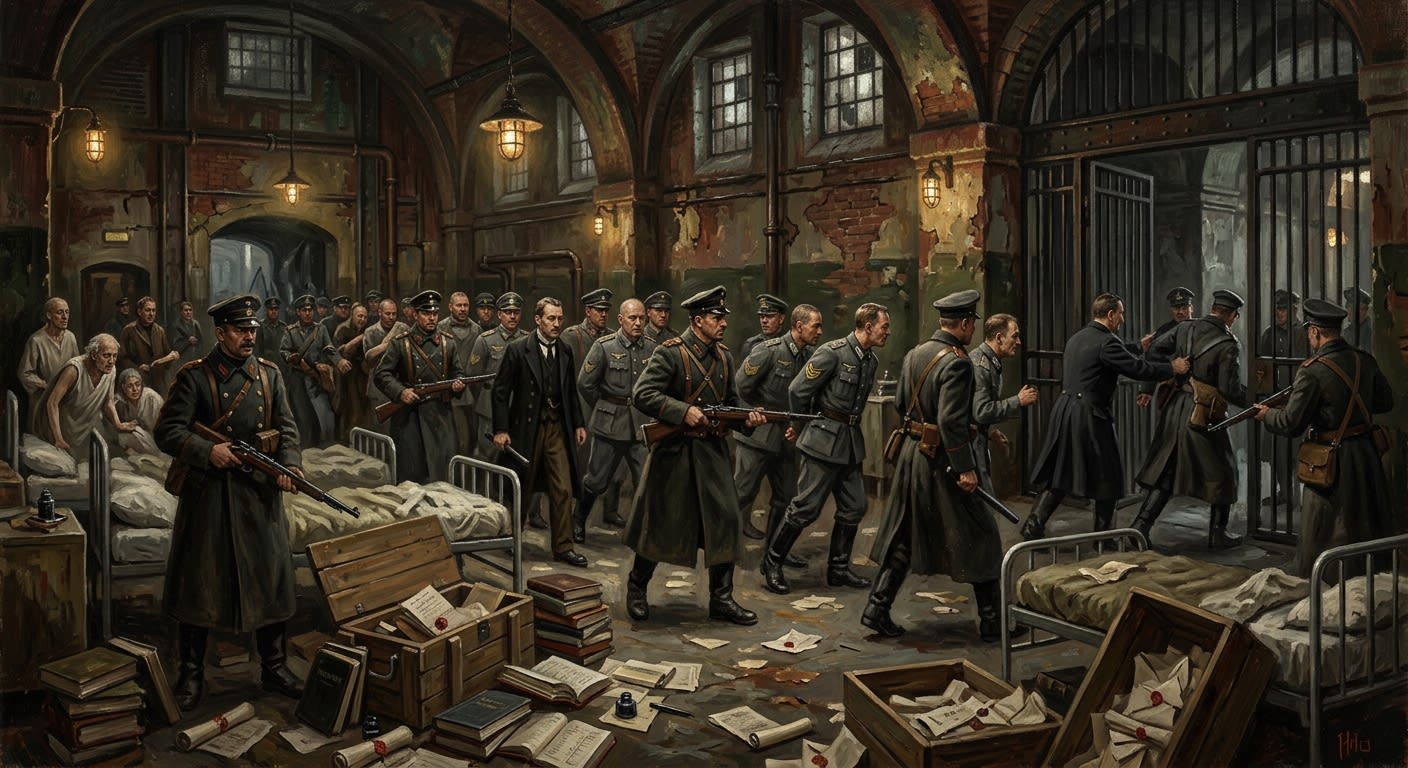
Mercy Ward Purge of A.S. 134
The year last words became contraband unless properly priced by authority
The Mercy Ward Purge of A.S. 134 exposed the sale and alteration of terminal confessions across Rhineland wards.
Codex Ref. VII.8.10-023
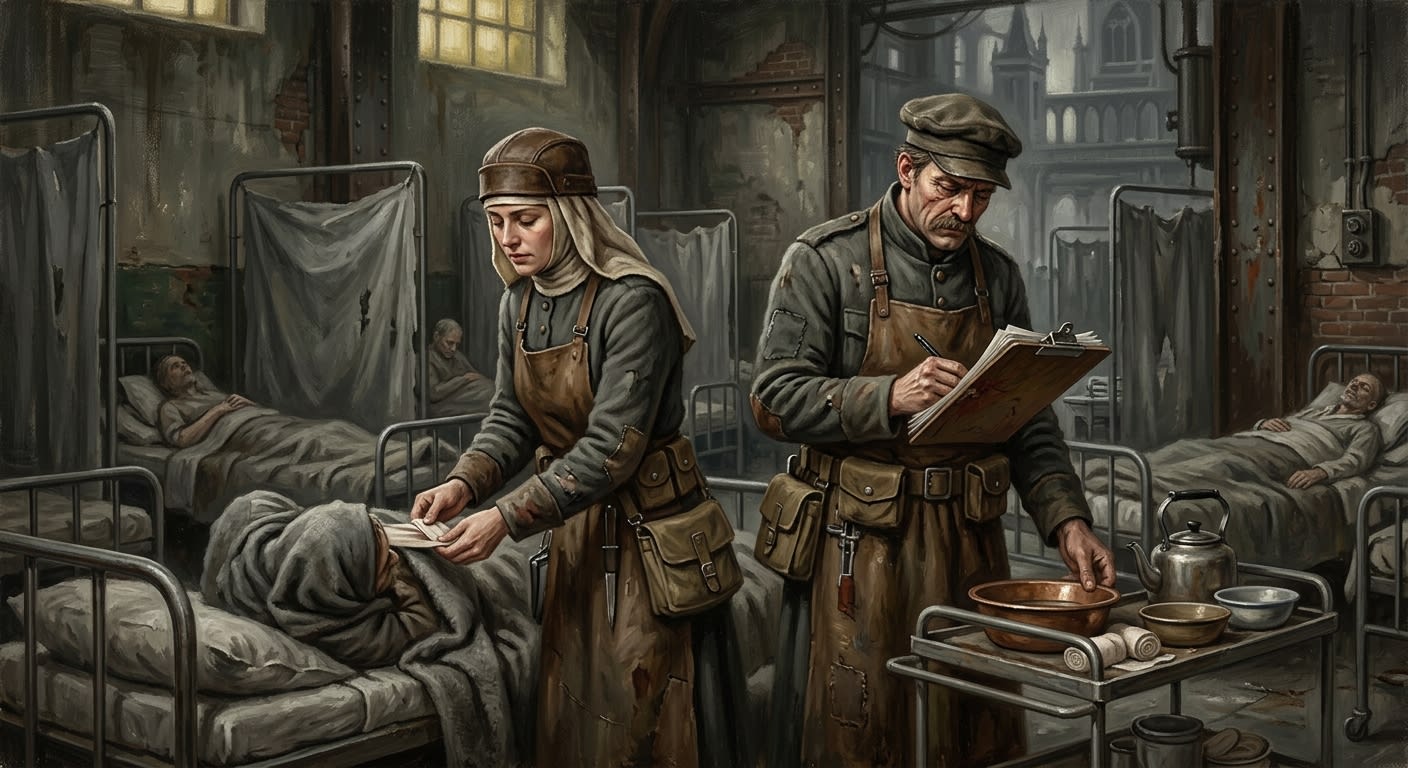
Mercy Ward-Sister / Mercy Ward-Brother
The hand that brings broth also carries the ledger
The Mercy Ward-Sister and Ward-Brother are the Bureau of Mercy's grey-aproned operators of counted compassion, where broth, bandage, confession, and paperwork become one instrument.
Codex Ref. XII.6.04-001
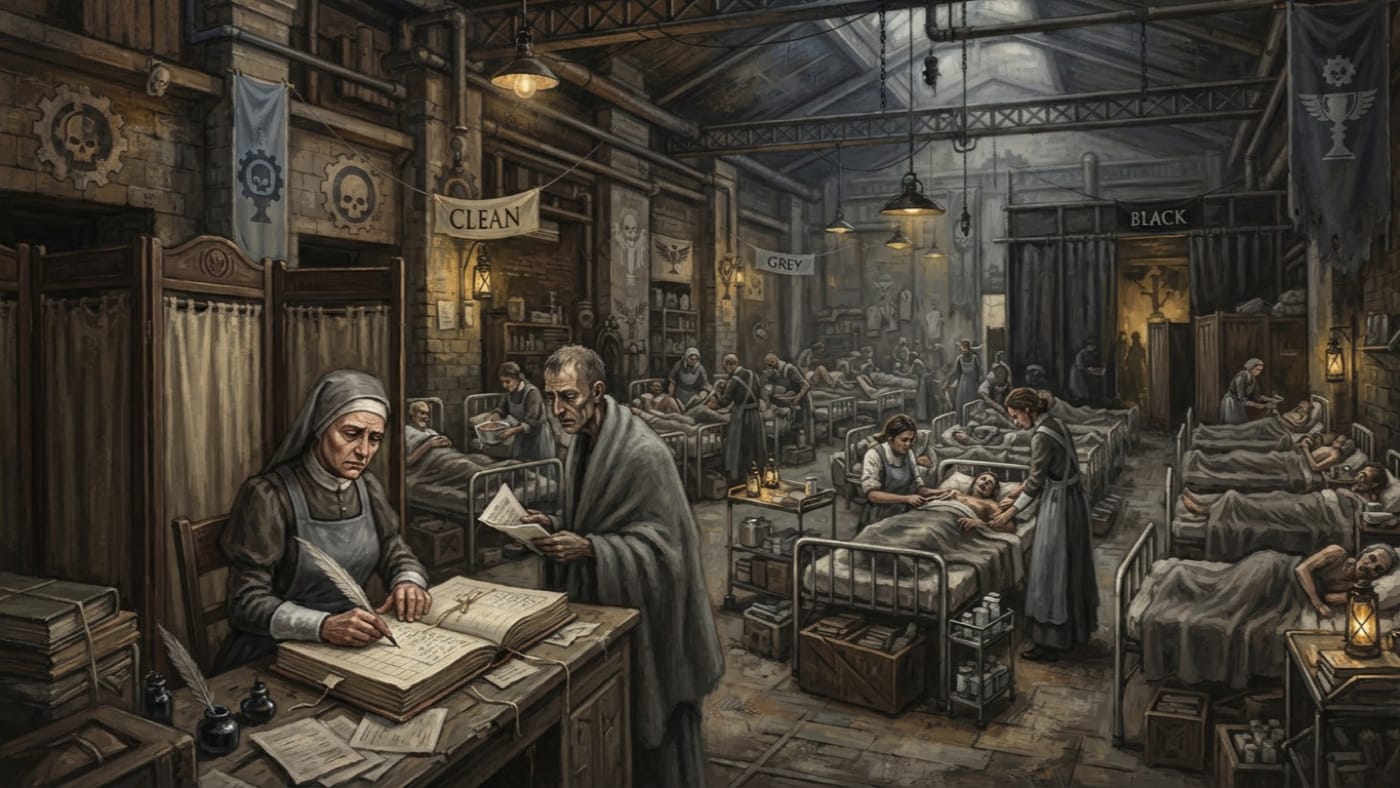
Mercy Wards
The bed is allotted; the suffering must be entered
The Bureau of Mercy's houses of the sick: broth, bandages, confession and clean, grey or black tags. This A.S. 201 survey counts the registered wards; the living remain harder to reconcile.
Codex Ref. II.6.04-001
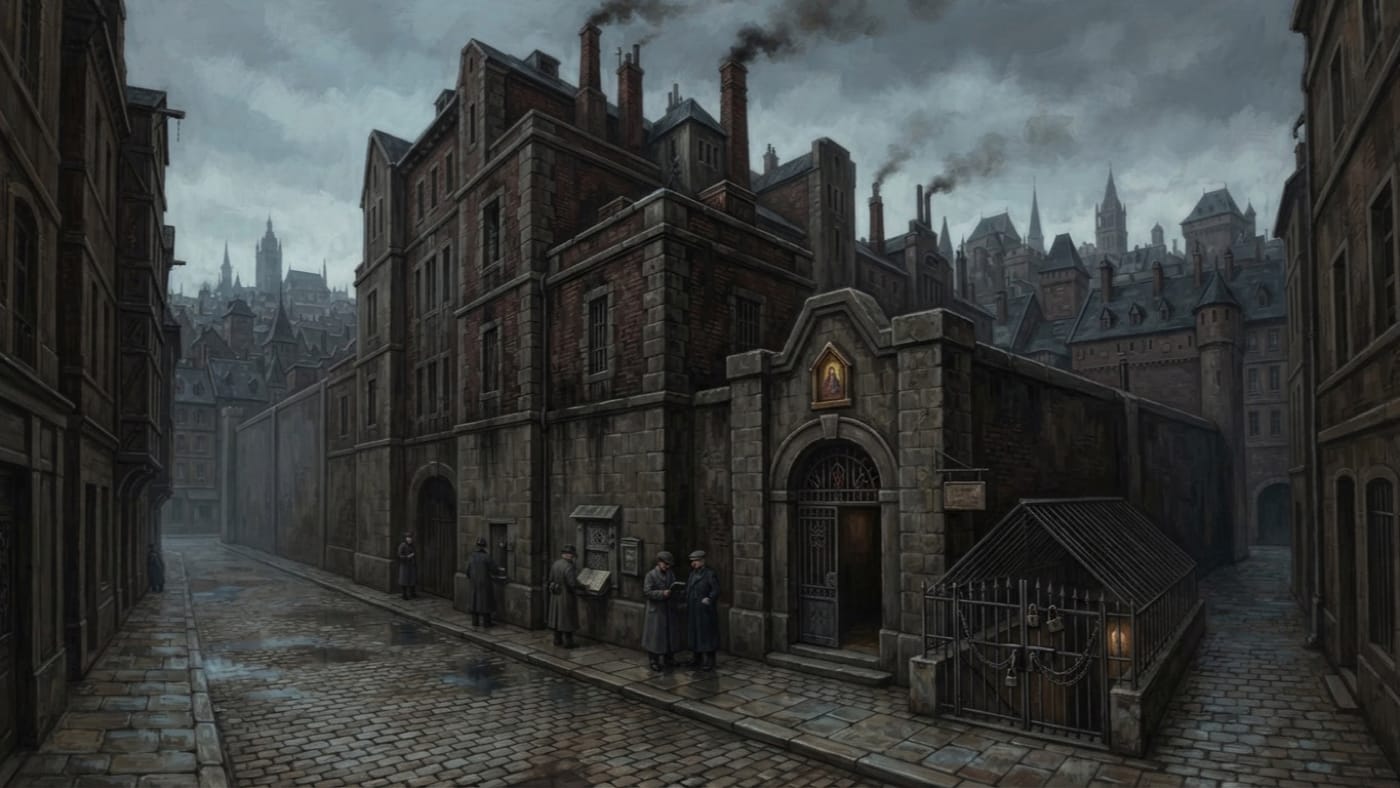
Mercy Wing
The building keeps its name. The Vault keeps its findings.
The old Mercy Wing on Strasbourg's Rue des Cendres houses the Vault of Findings in its sub-basement. Medicine keeps the evidence; two Bureaus clear entry to the archive, and three clear departure.
Codex Ref. II.1.09-201
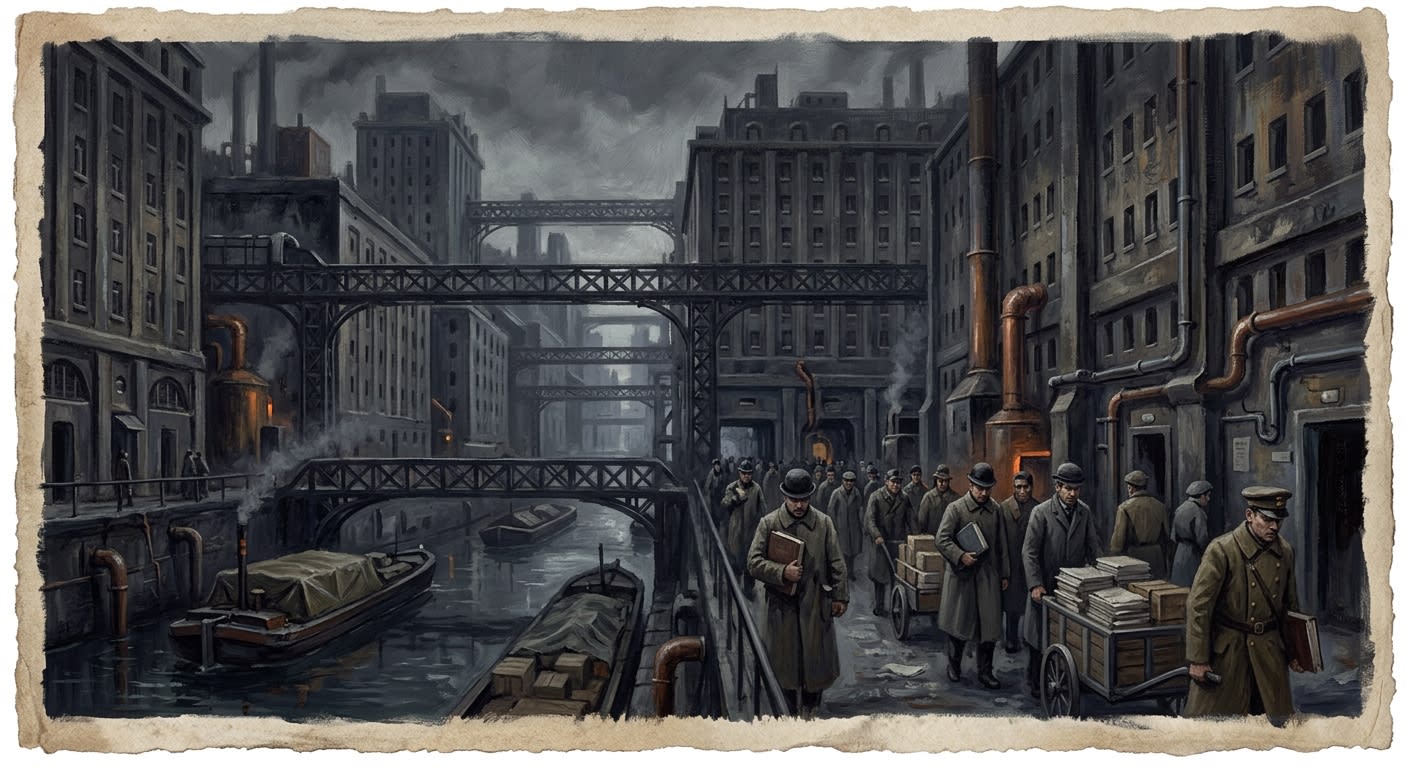
Metz
The depot-city where contradiction learned double entry
Synod-held Metz is a Zone 1 depot-city of ash vaults, double ledgers, silent bridges, supply arithmetic, and the Black Census that taught Medicine to count horror properly.
Codex Ref. II.1.05-001
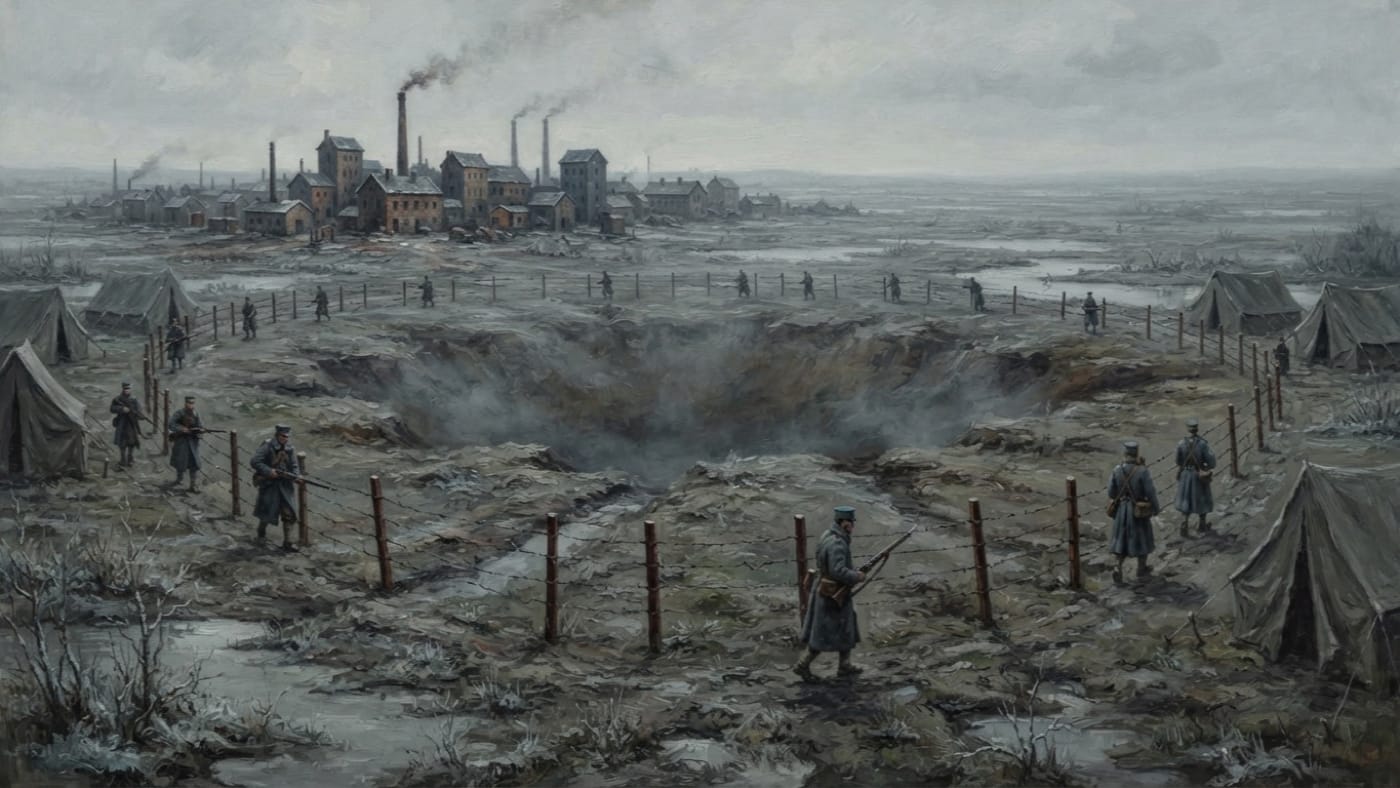
Mohács
A town remembered for what lies south of it.
Mohács survives in the Ledger as the bearing for Pit Seven, where approximately four thousand refugees were buried in A.S. 48. The town's fate remains unverified; the grave remains hungry.
Codex Ref. II.4.09-134
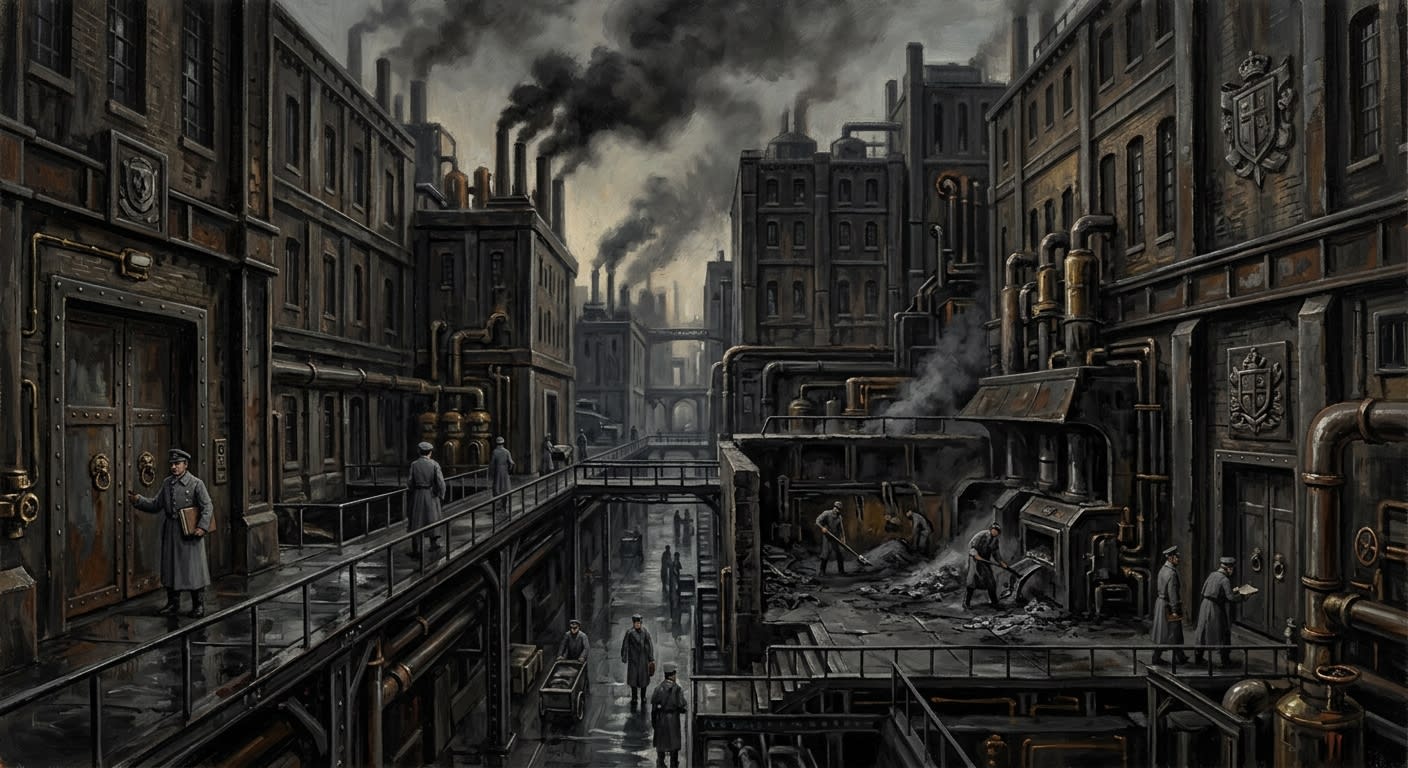
Mortuary Black
The ink that keeps the name and murders the claimant
Mortuary Black is the Bureau of Records compound for Administrative Dissolution: iron-gall, bone ash, Rites seal, and enough silence to make a name visible and unusable.
Codex Ref. XIII.1.01-002
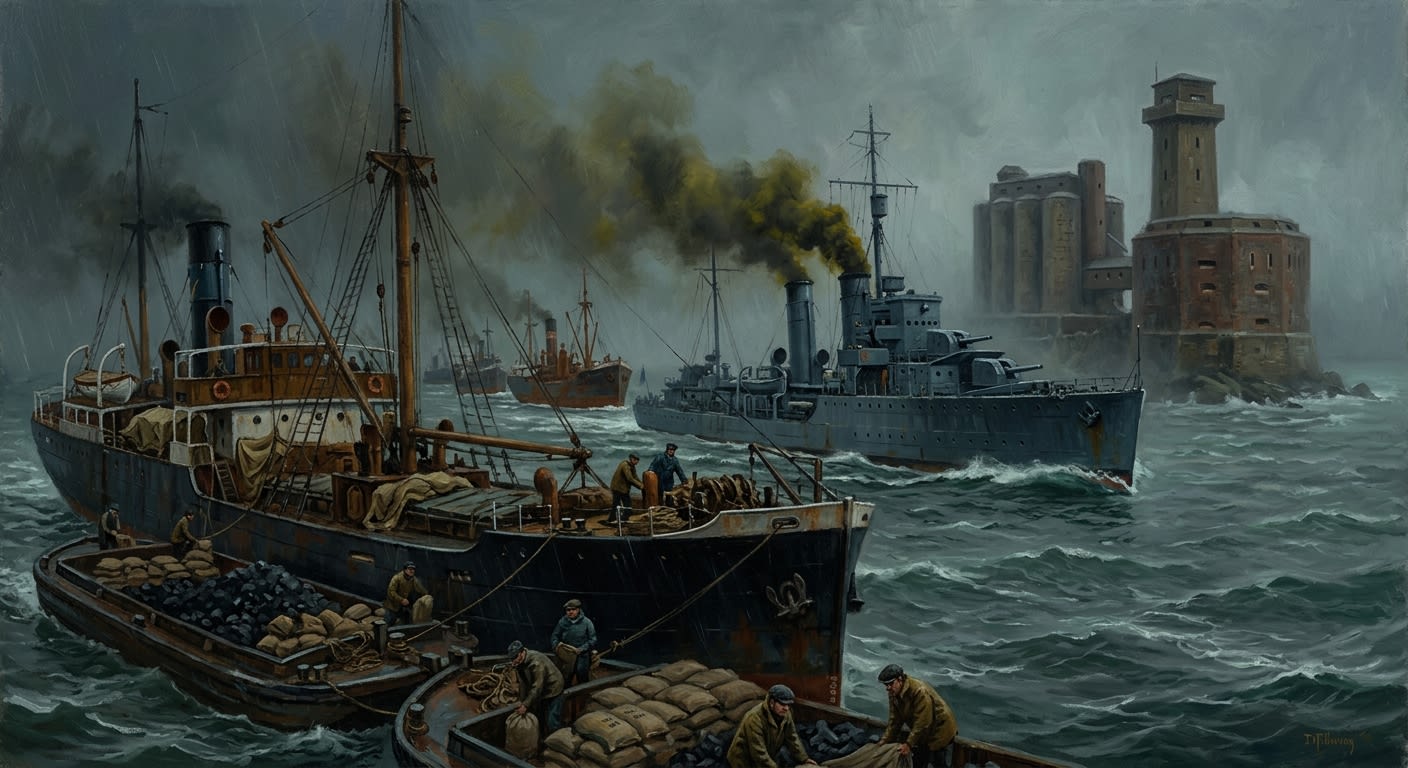
North Sea
The wet border that feeds the Line and refuses the Ledger
The North Sea is the Synod's least obedient frontier: a maritime supply basin of grain, coal, fish, fog, foreign credit, reluctant allies, and weather that accepts no stamp.
Codex Ref. II.4.09-201

Notary-Saint Caldre
A saint who wrote one sentence and made Relics afraid of grammar
Patron of Relic Authenticators, Caldre entered a sealed vault in A.S. 94, wrote one approved sentence, died smiling, and left the Bureau a seal-press it cannot trust.
Codex Ref. III.2.01-139
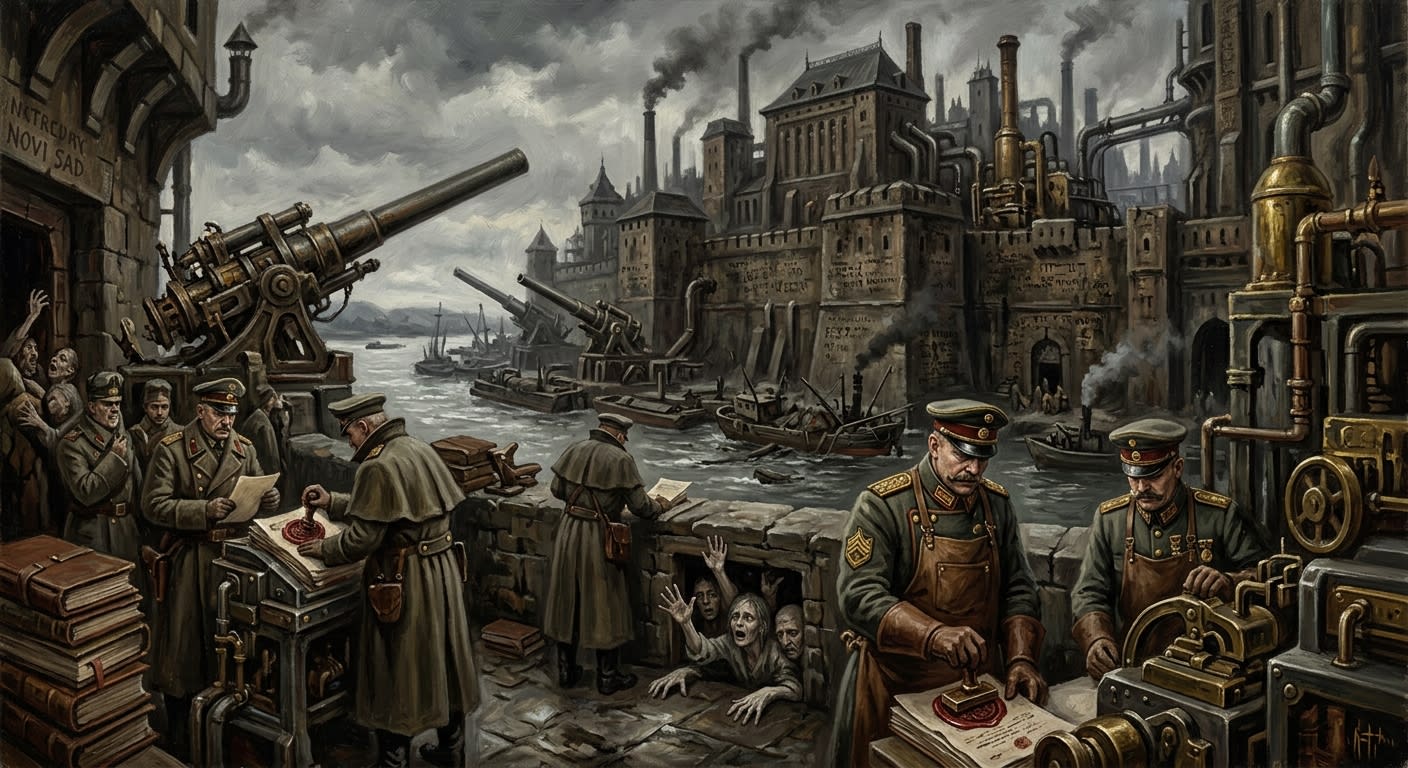
Novi Sad
The city where cannon, stone, and stamp each learned to fail
Novi Sad is a fallen Danube city whose cannon never fired, whose stones wrote living names, and whose valid seals once starved the bodies beneath them.
Codex Ref. II.4.09-045
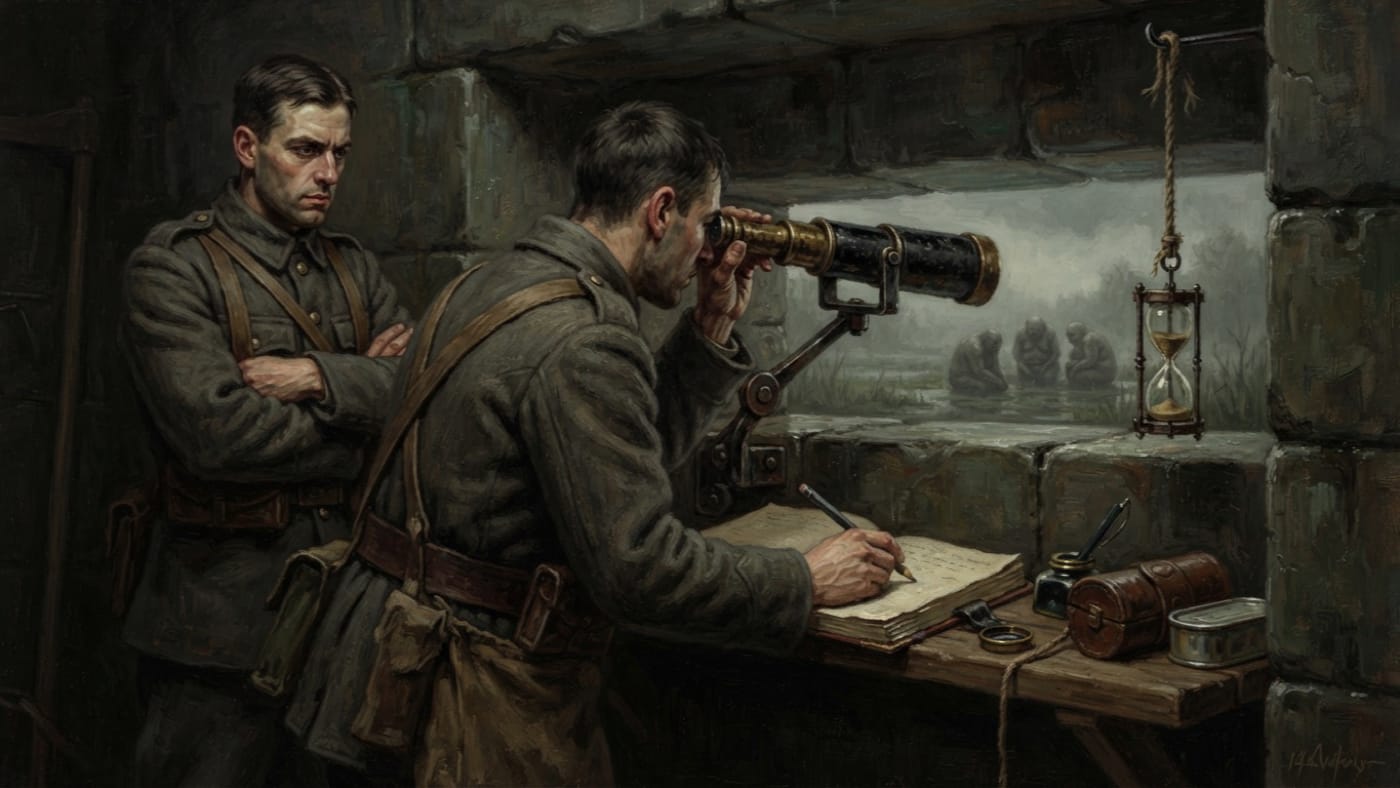
Observation Post Sigma-7
The cycle does not change; the watcher must be relieved
The 14th Garrison holds a slit in the outer wall of Bastion-Constantinople above three Self-Devoured. The cycle never changes. The watcher may. Ninety seconds is the ceiling, and looking away is the work.
Codex Ref. III.2.07-201
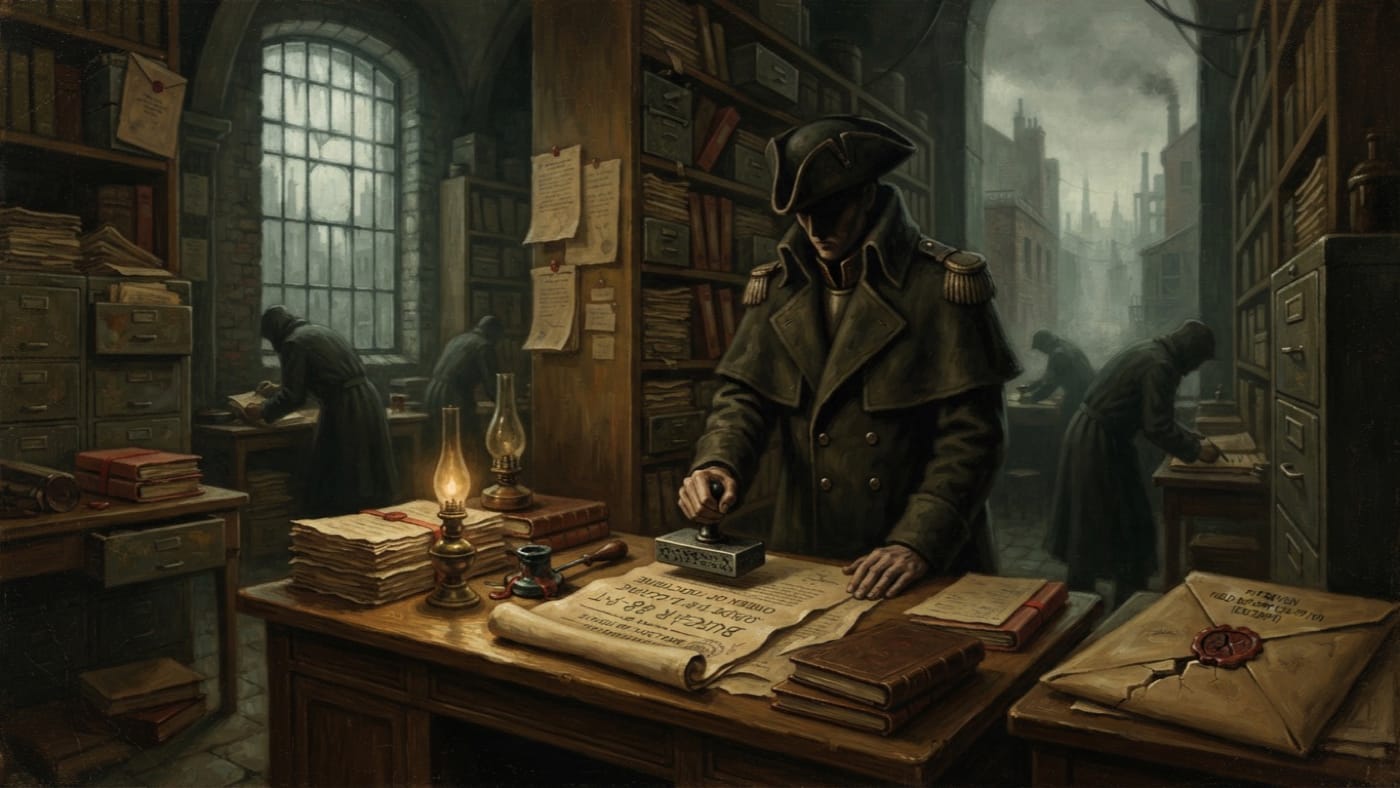
Order 88-V
The method is sealed. The measurements remain.
Order 88-V seals the Pit Seven exposure methodology. The A.S. 135 expungement is attested; the order's issue date is not. Its unsealed appendix keeps the measurements in circulation.
Codex Ref. XIII.1.100-135
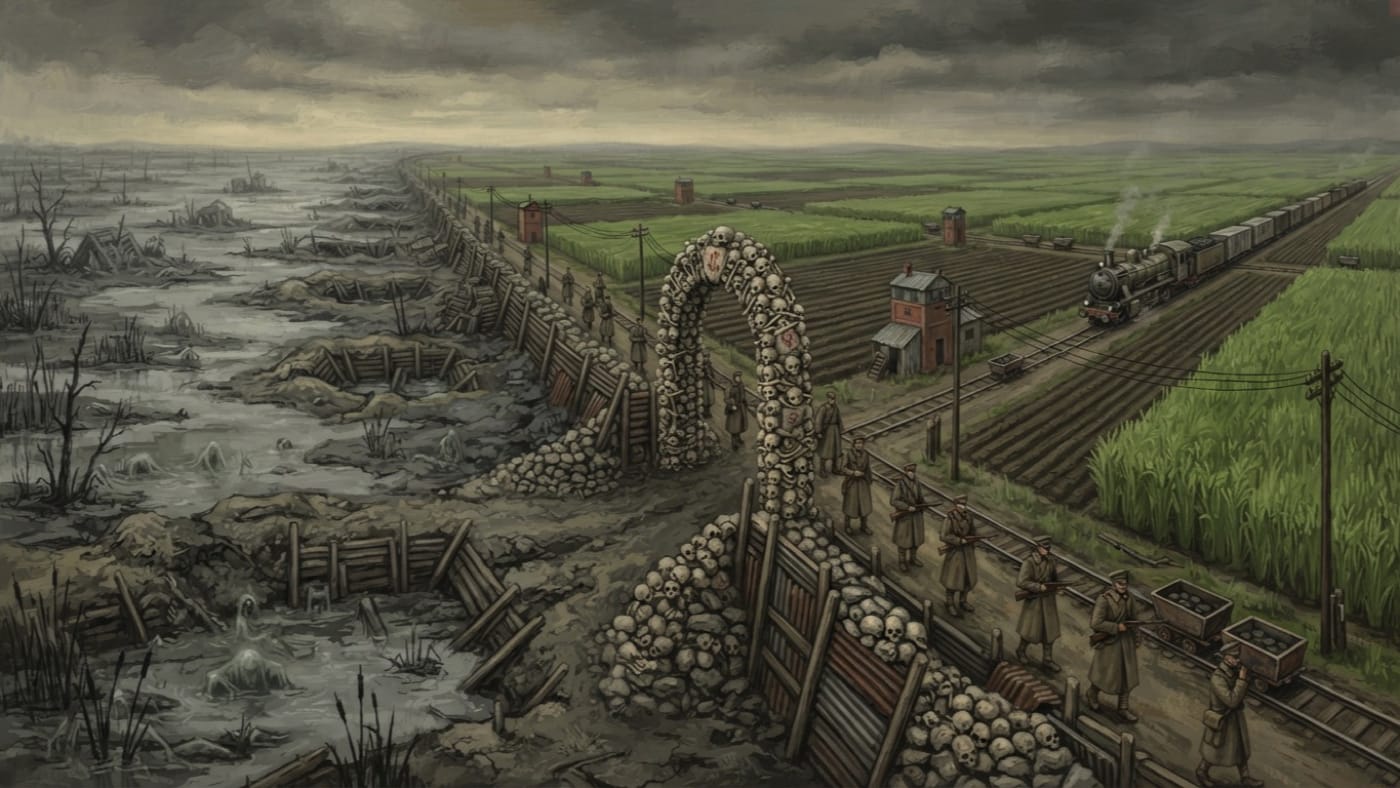
Pannonian Plain
A full barn and a green field prove nothing
The plain once fed the West. Kargath devoured Debrecen's provisions, and the Blightmarsh keeps eating. Western Hungary still supplies the Line. A green field proves nothing.
Codex Ref. VI.1.01-004

Paper Keeper Alzen Voss
She did not found the Archive; she taught obedience to survive it
Alzen Voss founded the obedience around the Burnless Archive in A.S. 82: rules for paper that would not burn, clerks who would not hurry, and shelves that may still answer.
Codex Ref. III.2.01-027
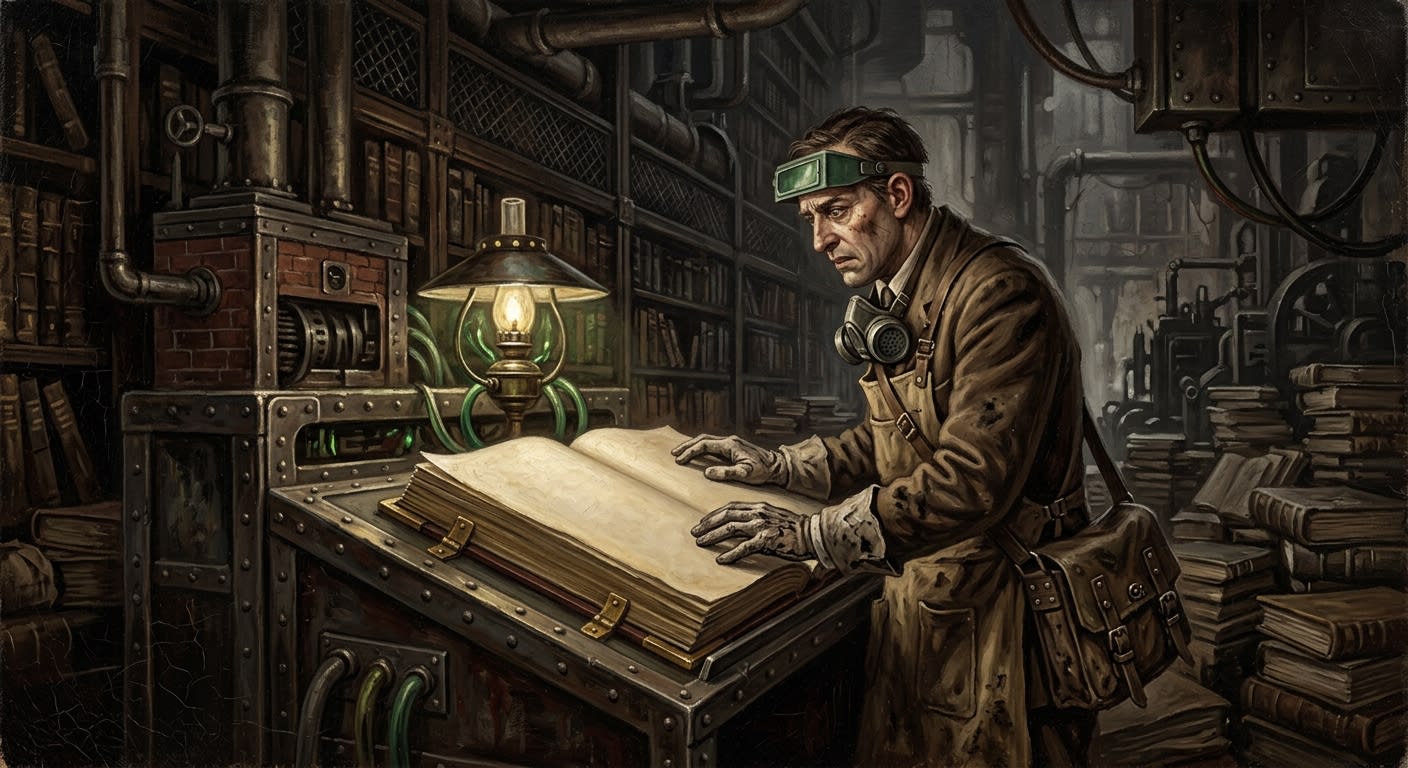
Paper Keeper Seld
The man with cotton gloves, one roll-line, and the patience of wet ink
Paper Keeper Seld watches the blank folio of the Third Stone: once-registered, legally fragile, and indispensable because his fear has been trained better than doctrine.
Codex Ref. III.2.01-028
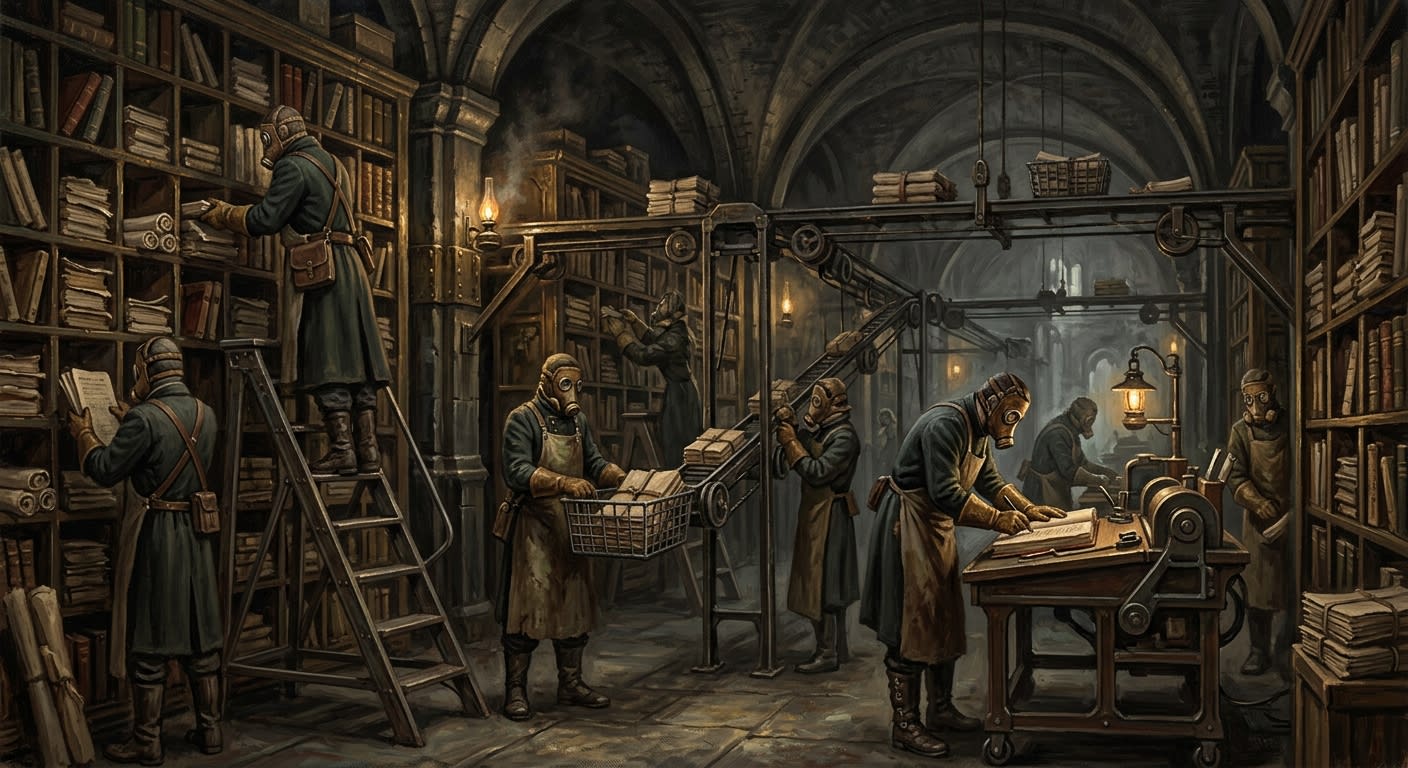
Paper Keepers' Guild
Forty-three whispering custodians, one Archive that writes back, and no mercy from paper
The Paper Keepers' Guild tends the Burnless Archive beneath the Steppe Gate: forty-three subterranean custodians trained by Alzen Voss's compact and corrected by paper.
Codex Ref. XI.1.06-001
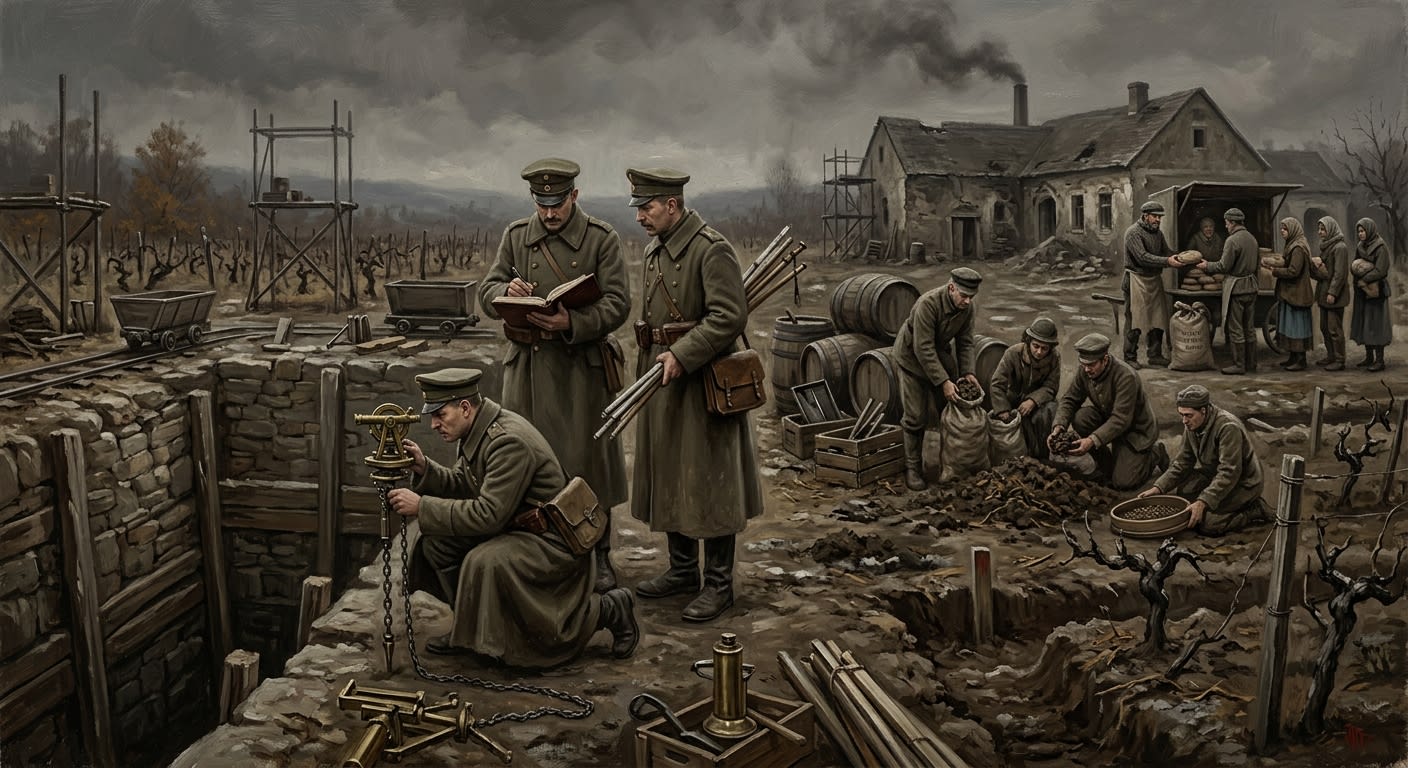
Pécs
The town where bread became evidence
Pécs is the vineyard ruin where Famine Pit measurement, Abundance Field proof, and Kargath's useful bread made hunger legible to the Ledger.
Codex Ref. II.4.09-147
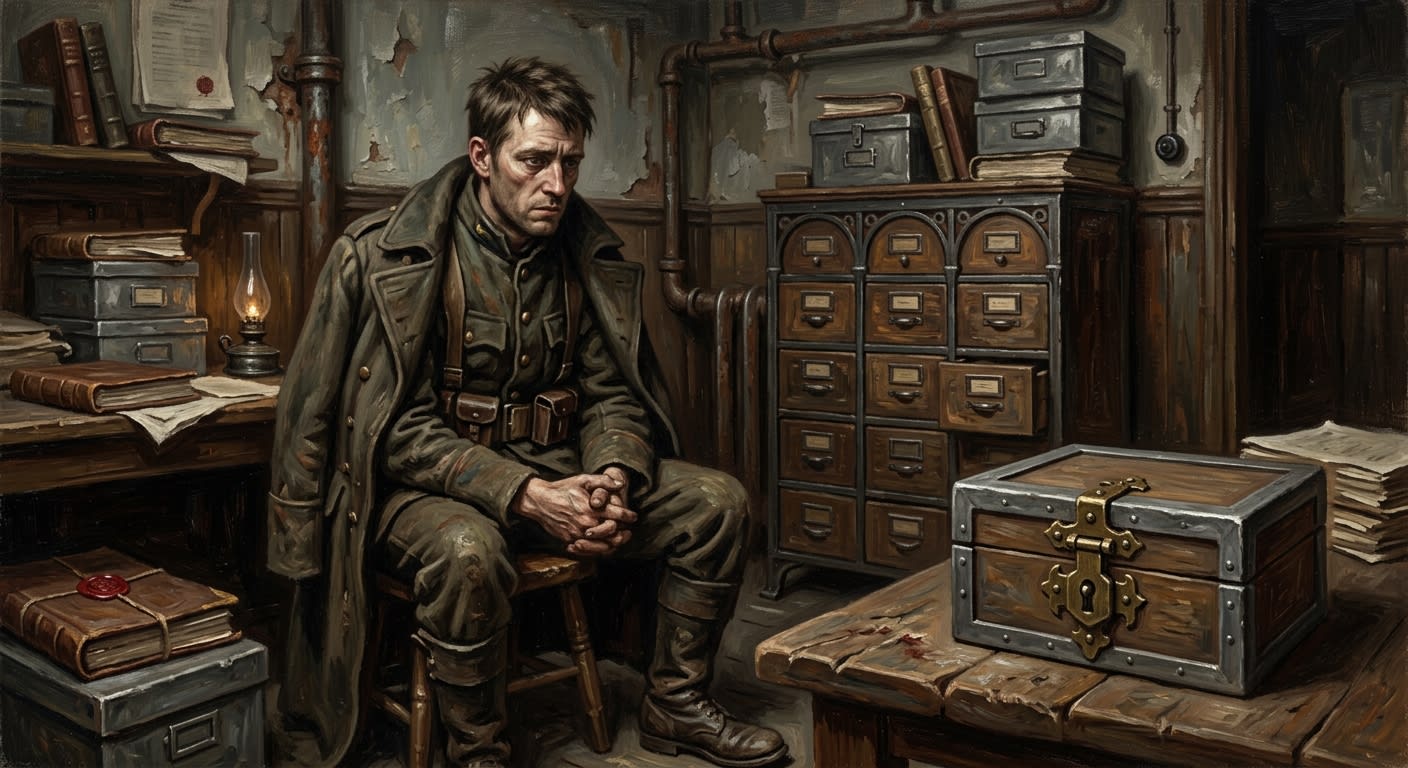
Private Kessler
The low-rank witness who heard annihilation carry a tune
Survivor of the A.S. 45 Iron Plains whose separate testimony—“The fire was singing”—is kept apart from the fourteen witnesses as an acoustic hazard and doctrinal wound.
Codex Ref. III.2.01-081
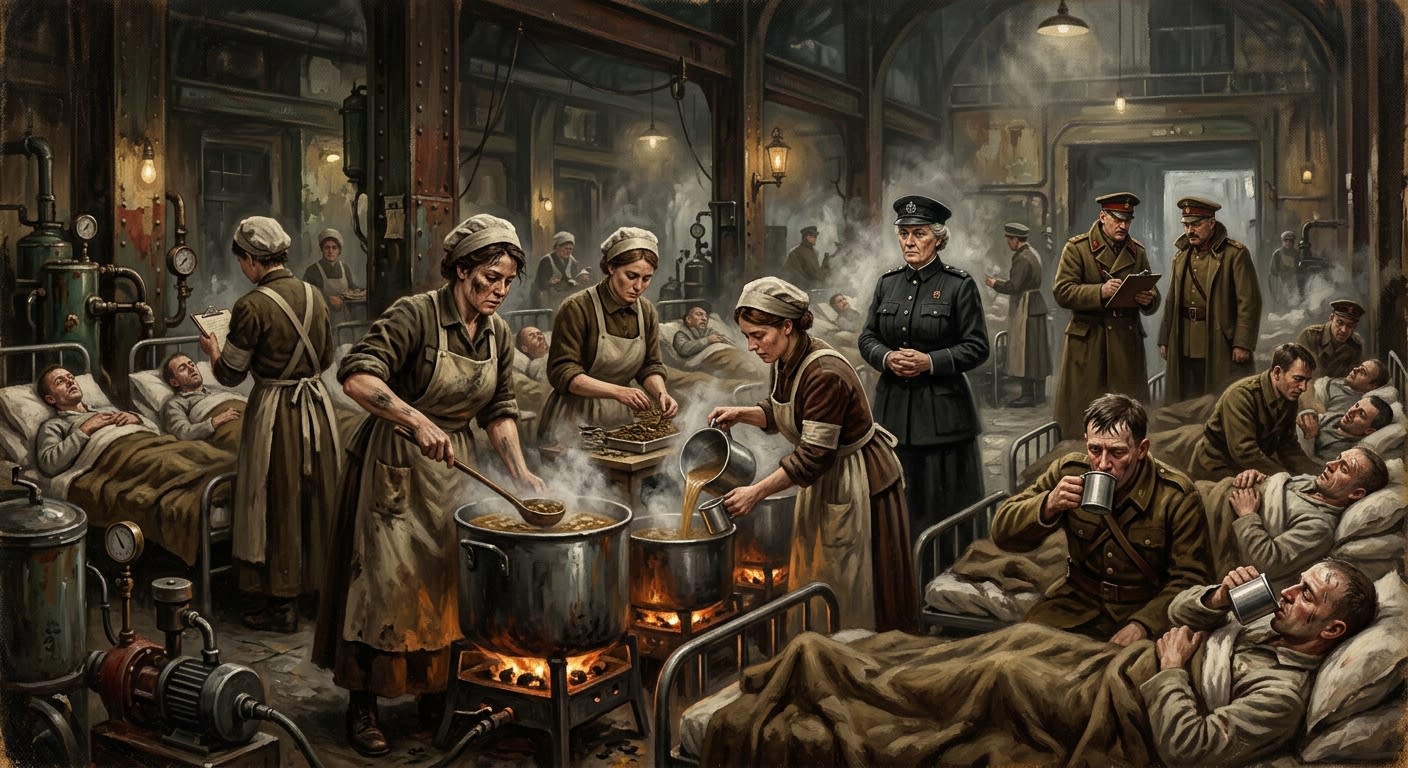
Protocol 7-C
The Bureau named the kettle after stealing the cure
Protocol 7-C saves fevered soldiers by boiling water, brewing bark, and pretending the woman who knew this first had never touched the pot.
Codex Ref. XIII.1.74-113
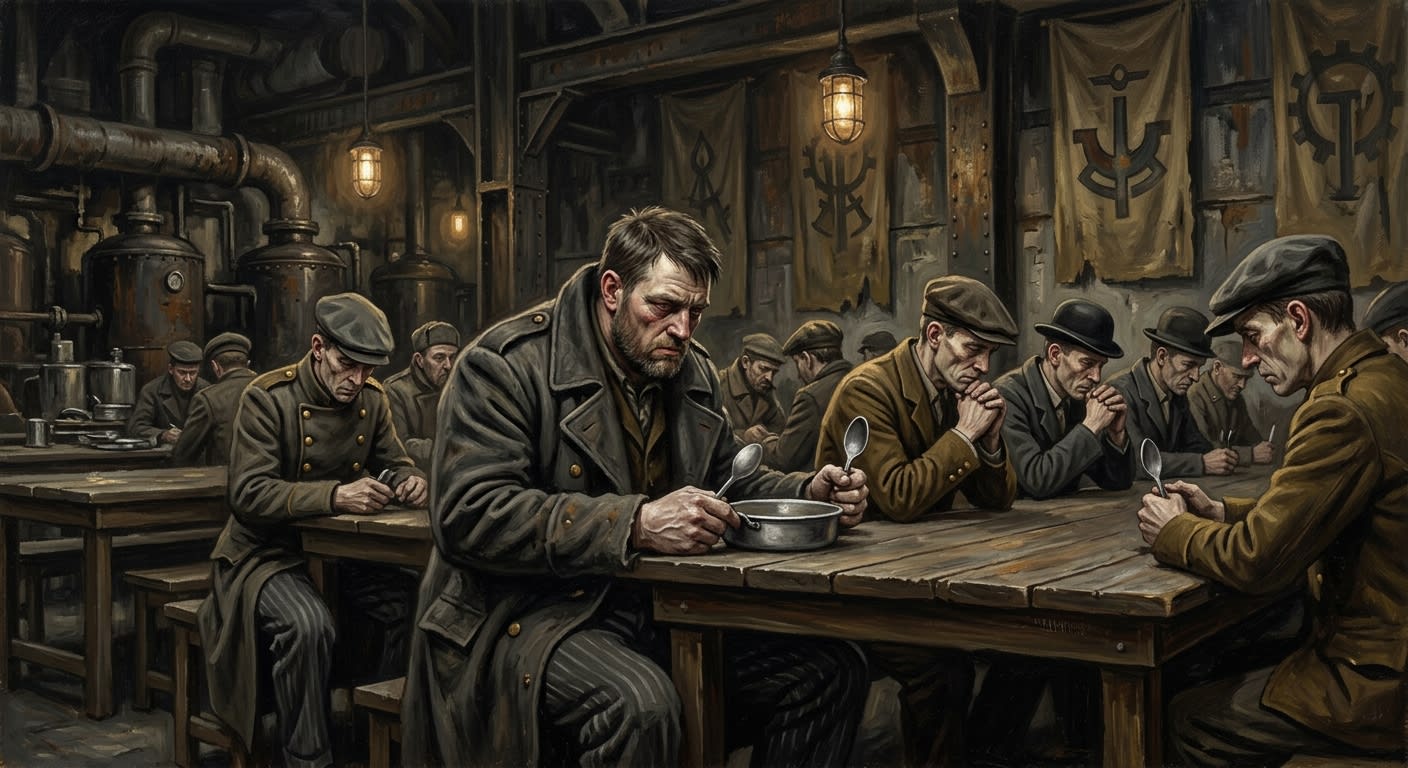
Psalm of Satiation
Enough to obey, enough to look away, enough not to begin
The Bureau of Rites' seven-verse field hymn delays Kargath's hunger long enough for obedience to keep its chair.
Codex Ref. XIII.1.96-194
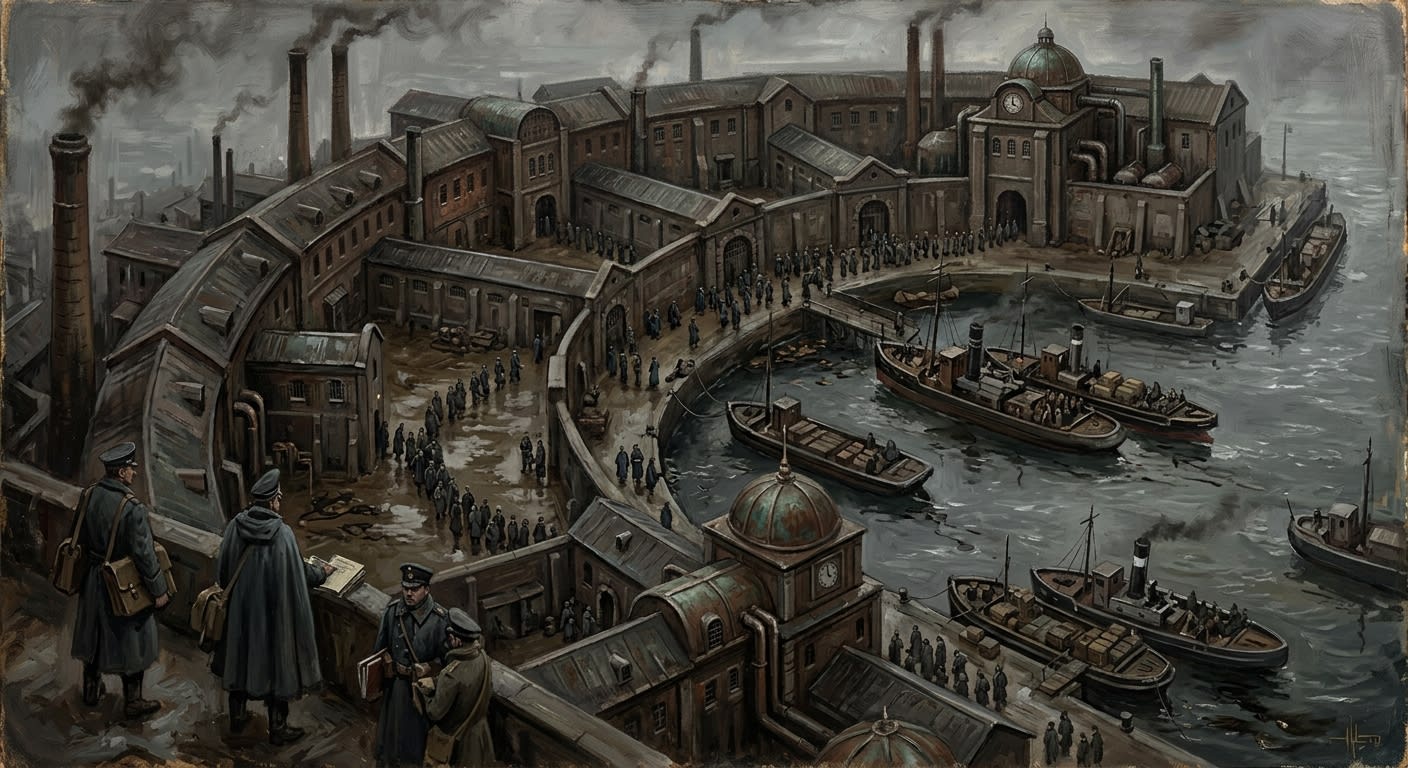
Quarantine Crescent
Where mercy waits for a stamp and the sea keeps speaking
Thessaloniki's Quarantine Crescent is hospital, customs house, debt trap, listening post, and delay engine: the harbour's white bite where arrivals become entries or vanish waiting.
Codex Ref. II.7.04-093

Rail-Confessor Corps
Absolution cut to fit the departure bell
The Rail-Confessor Corps gives Warsaw's rail crews eleven seconds of blessing, ninety seconds of confession, and just enough mercy to depart before the wheels become sovereign.
Codex Ref. VIII.1.05-001
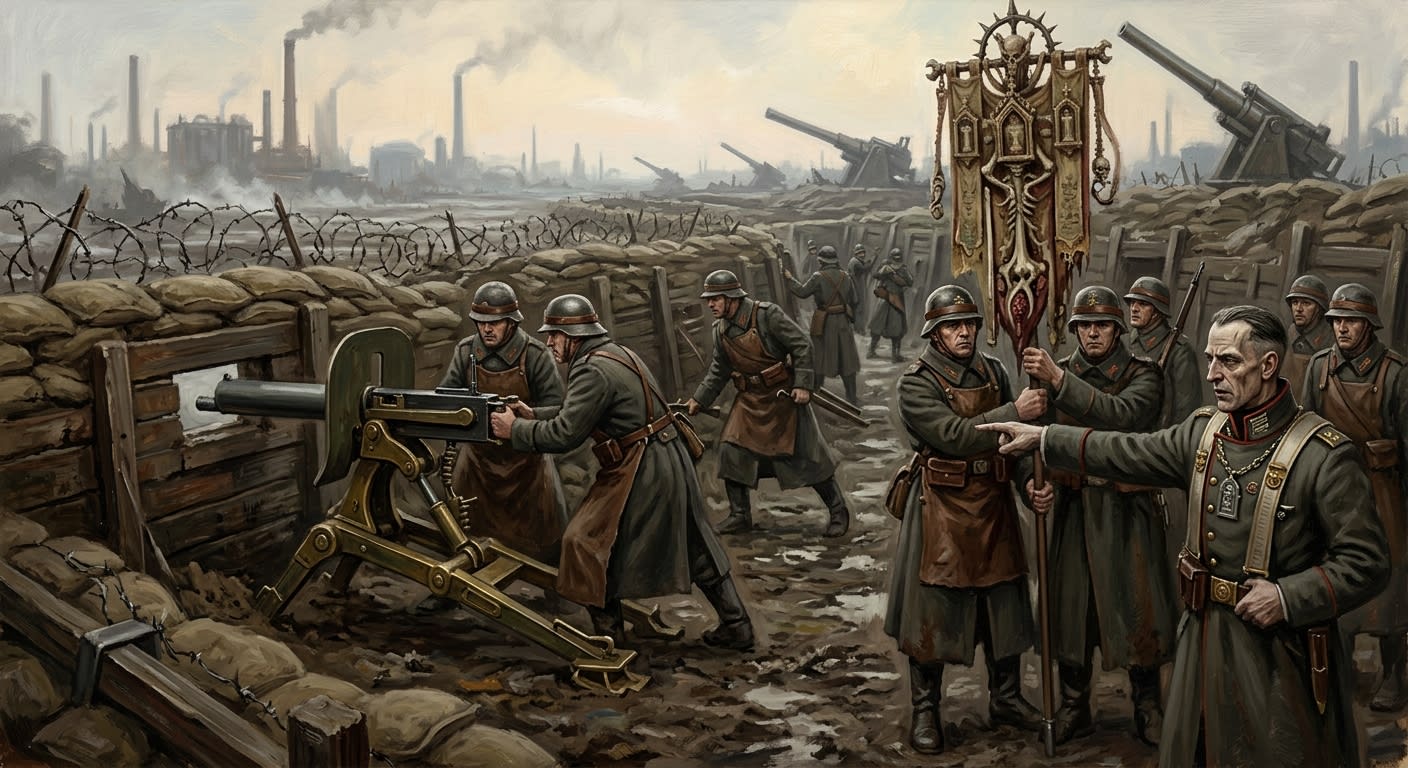
Ravelin of Vigilance
The eye that learned to blink by rotation
The First Ravelin of Bastion-Constantinople watches the Knife Mile, drills low guns, carries Saint Iselda's Bone Walk, and teaches sentries the cost of seeing first.
Codex Ref. II.4.10-137
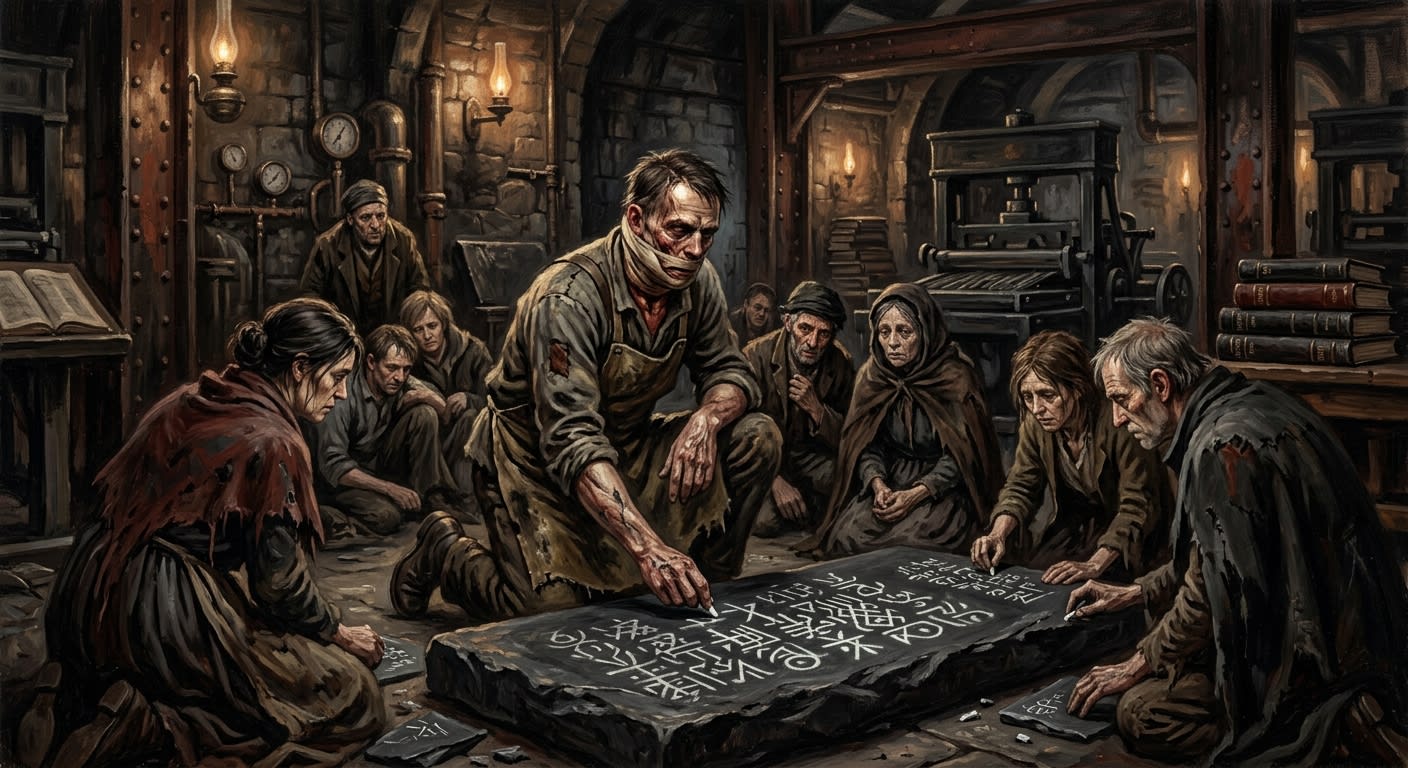
Reed
The voiceless heretic who wrote sermons in the substance of his injury
Reed burned his own voice out with hot gasket grease, then taught the discarded singers of Bastion-Irongate to write forbidden harmonics on black stone.
Codex Ref. III.2.01-028
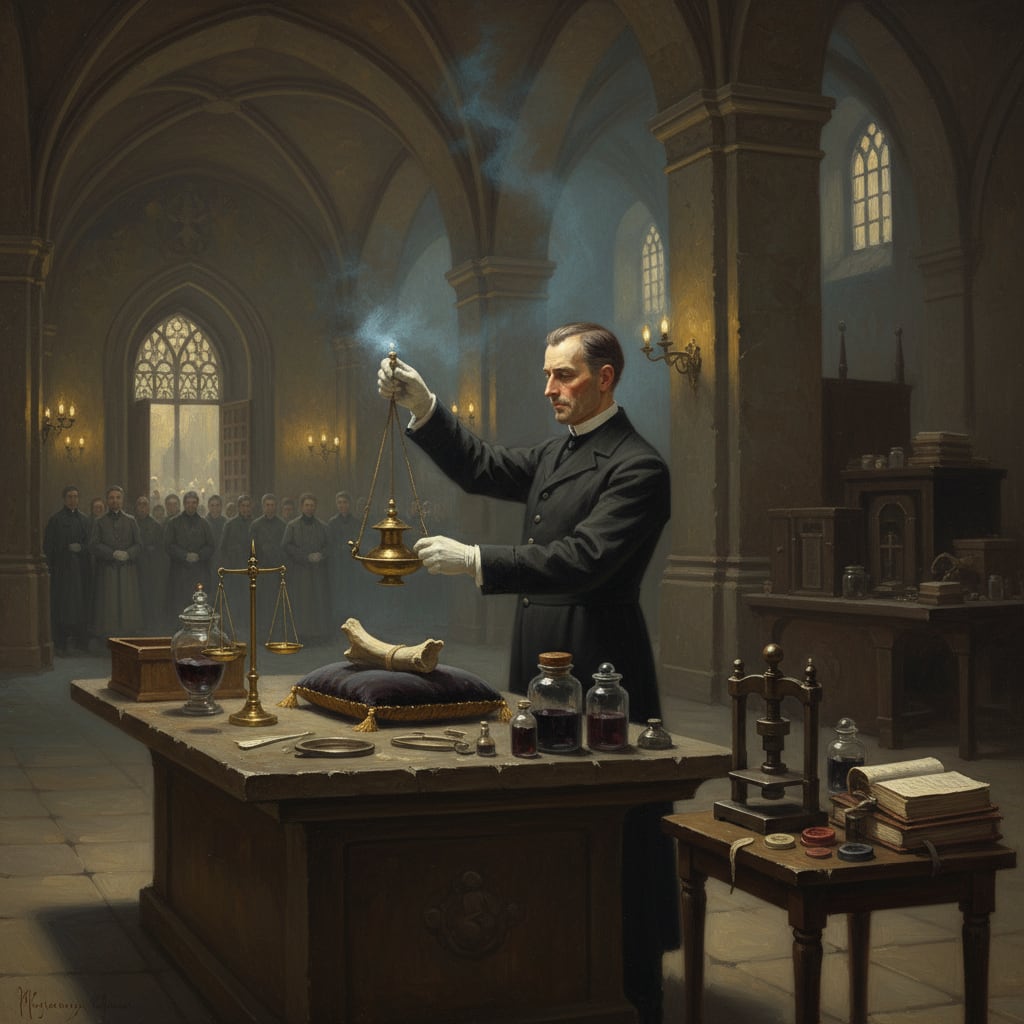
Relic Authenticator
The stamp makes the filing complete; the bone remains what it was
The Synod's miracle-bureaucrats — clerks with gloves, lamps, and seal-presses who decide whether a fragment of bone is holy or merely expensive.
Codex Ref. XII.35.01-001
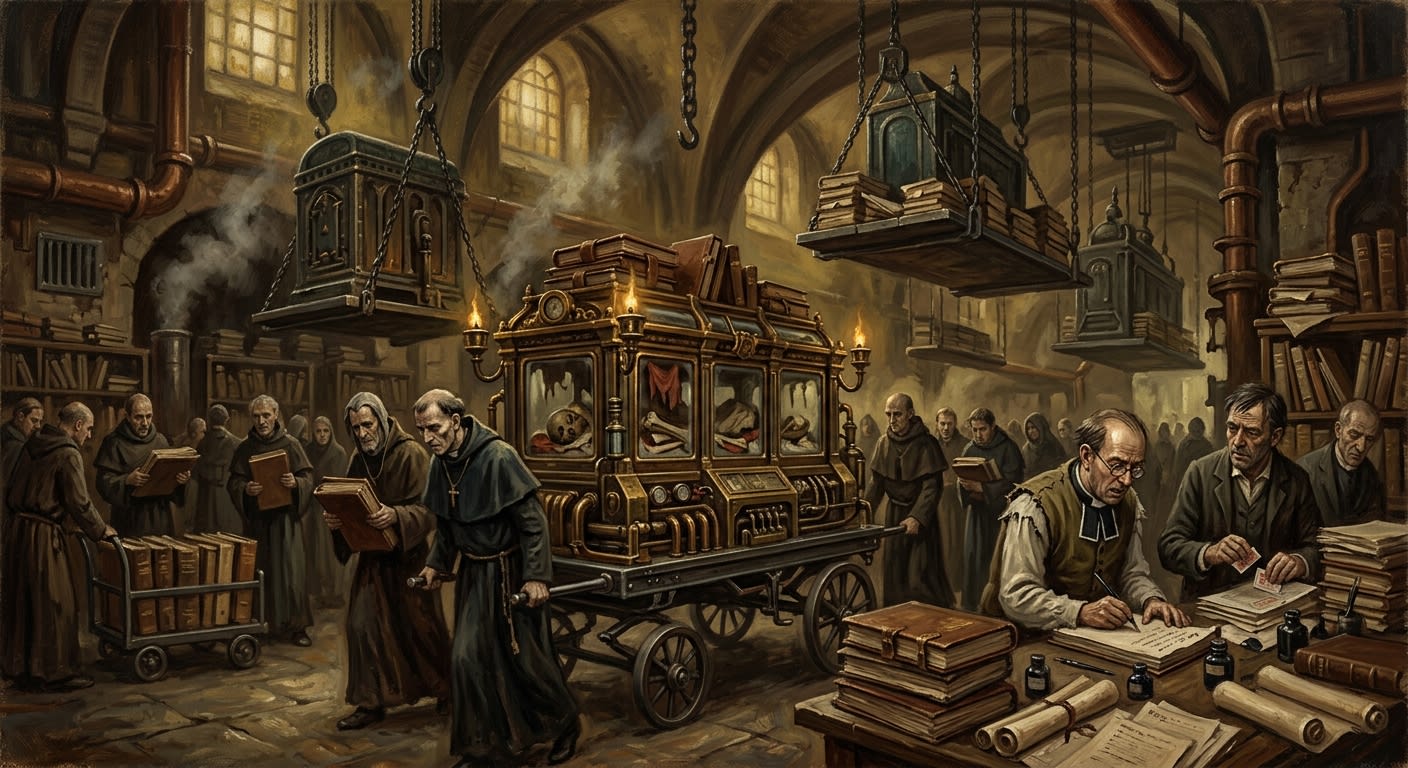
Reliquary Schisms
When valid seals taught anatomy to kneel
The twenty-year relic crisis in which clean paperwork made saints anatomically impossible, until Doctrine gave every notarized femur a throne.
Codex Ref. VII.8.10-140
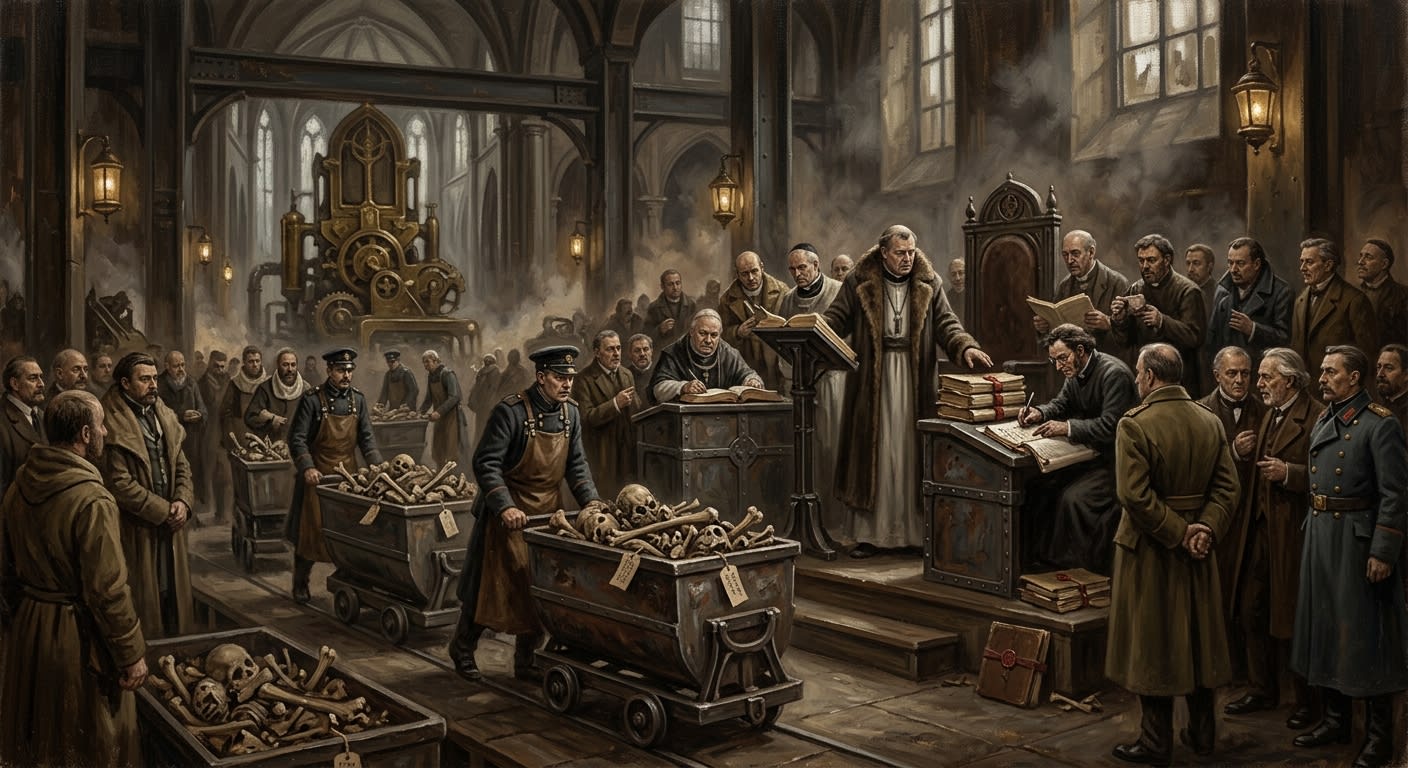
Reliquary Schisms A.S. 140–160
When seventeen femurs became policy and anatomy was reassigned
Twenty years of authenticated surplus bones, shrine bloodshed, and the Fourteenth Doctrinal Congress that made notarized contradiction lawful.
Codex Ref. VII.8.10-090
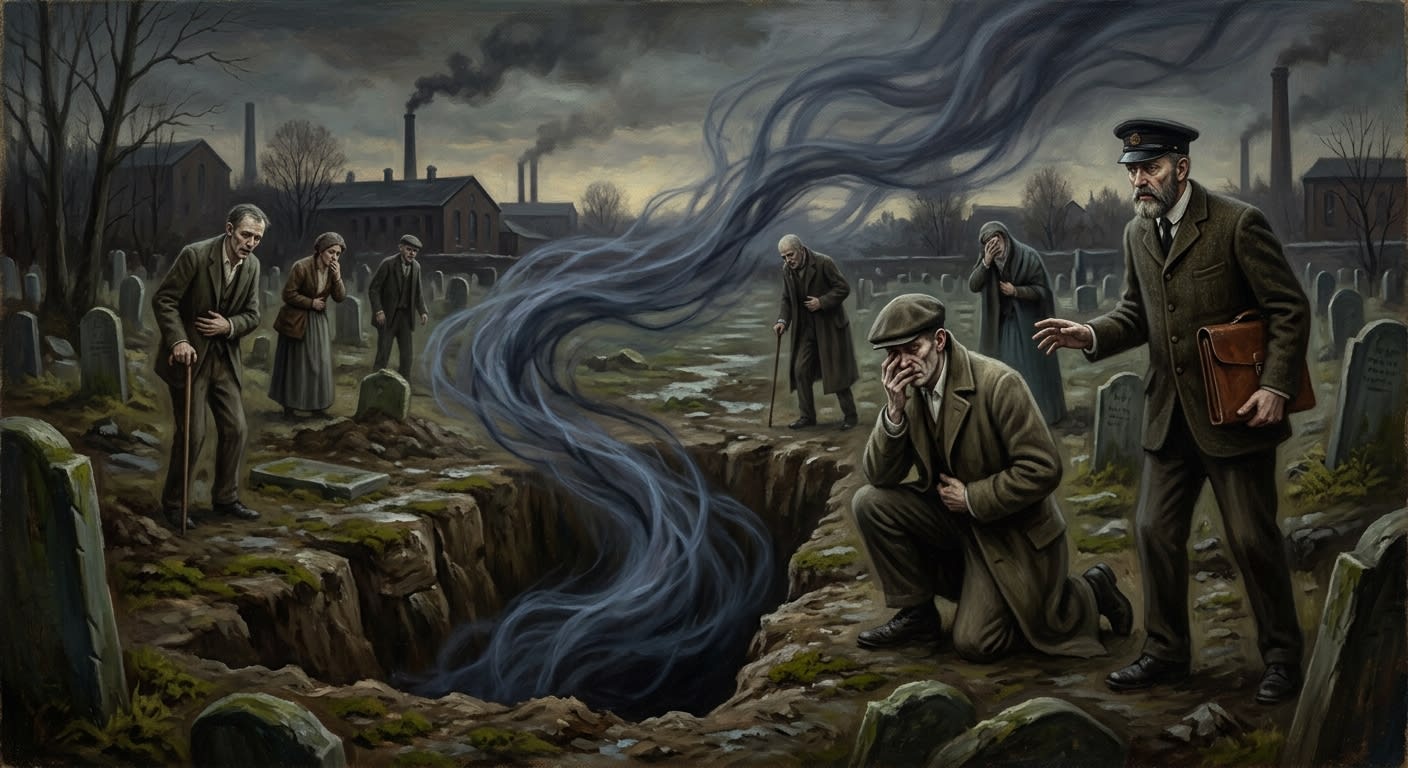
Residual Consumptive Emanation
The grave is still hungry; the phrase merely wears gloves
The Bureau's name for the hunger radiating from the Famine Pits: a cold, human-adjacent starvation that eats the living through old graves.
Codex Ref. XIII.1.25-134
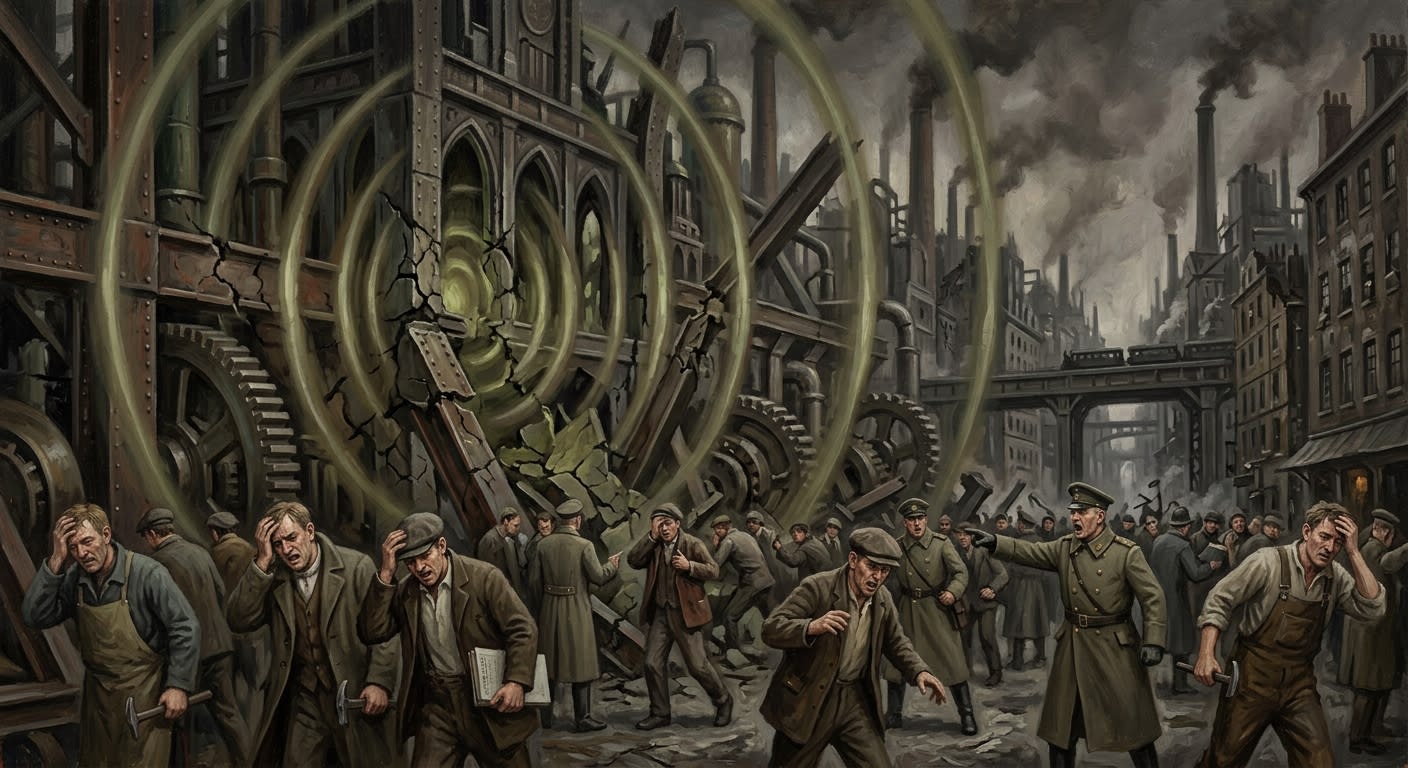
Resonance Bloom
When Essen opens its throat beneath the floor
Resonance Bloom is Essen-of-Hymnsteel's acoustic-structural opening: teeth ache, hymnsteel cracks, districts fall silent, and every Bureau insists production continue.
Codex Ref. XIII.1.73-002
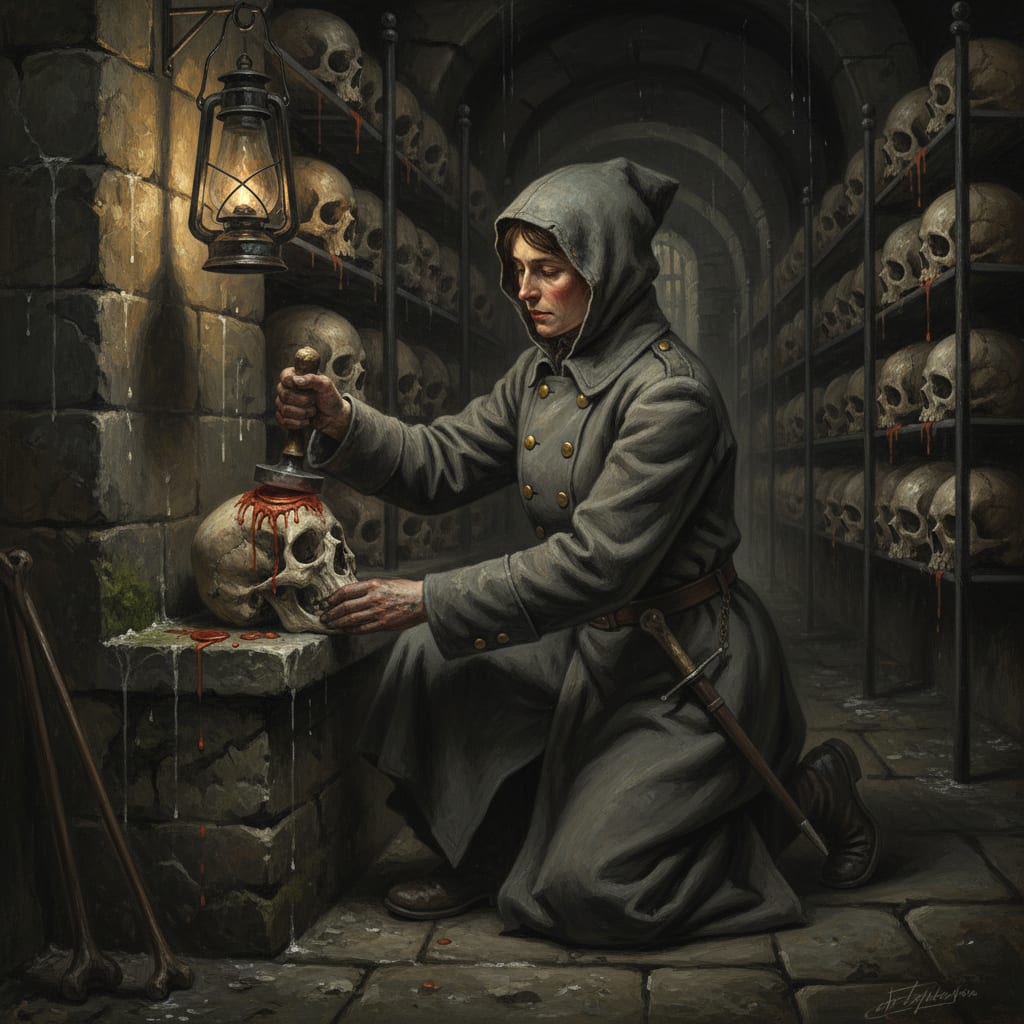
Ritual Bone-Stamper
Unsealed is unbound; the stamp is mercy; the stamper is what mercy costs
The Bureau of Records calls them Ossuary Authentication Wardens. The stampers call themselves tired. They have sealed the night-shift dead since A.S.
Codex Ref. XII.37.01-001
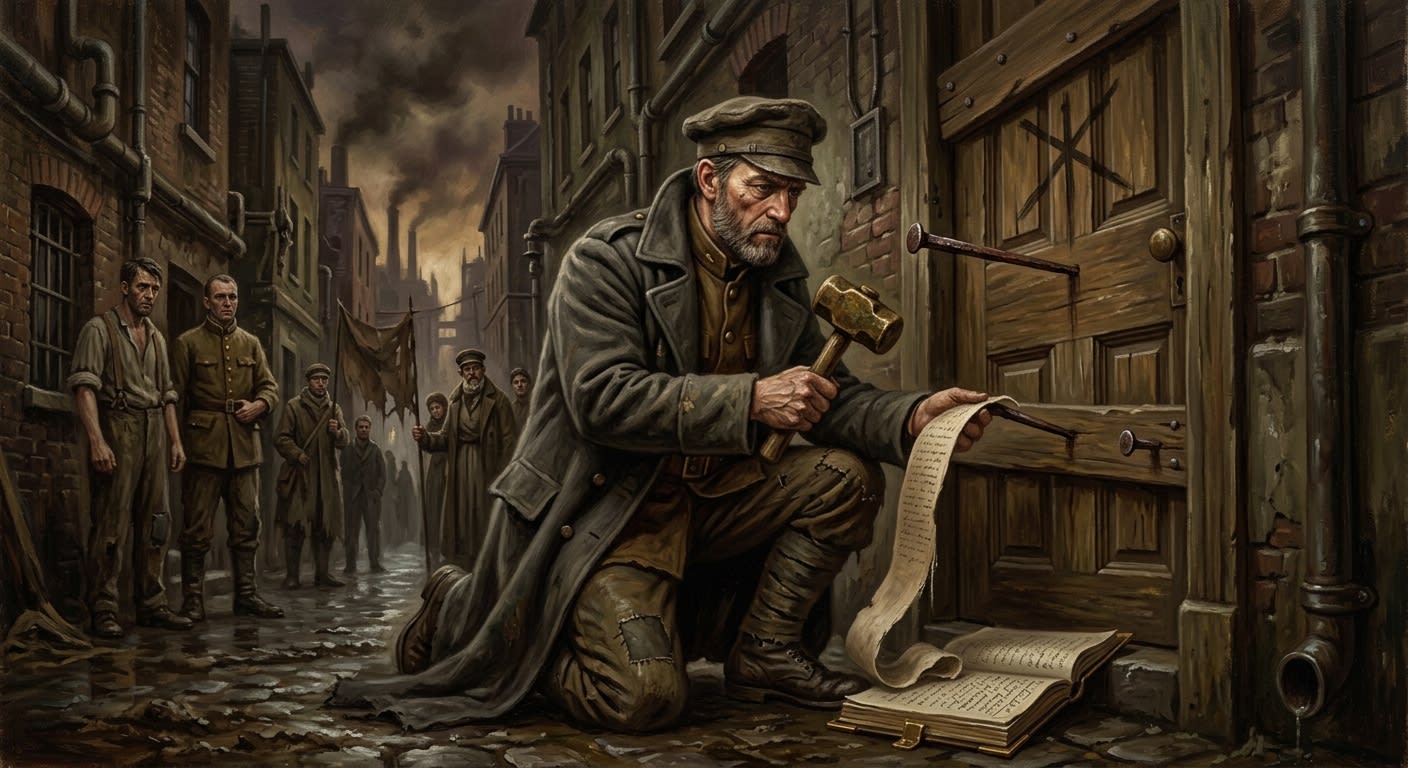
Saint Edrin of the Three Nails
Cut true, name all, hold the door
Saint Edrin of the Three Nails is the patron of Gate-Carvers, remembered for sealing a plague-house during the A.S. 78 Lull of Names with measure, witness, and refusal.
Codex Ref. III.2.01-120

Saint Orla of the Steady Note
The patron who taught singers to hold the note and refuse the answer
Patron of the Iron Choir Brand-Singers, Orla gave Purity its steady note, its closing silence, and its most useful command: do not answer it.
Codex Ref. III.2.01-064

Saint Vellum-of-the-Quiet-Hand
The Saint Records Needed Before Rites Could Admit She Existed
Disputed patron saint of Ritual Bone-Stampers and ossuary notaries, operationally accepted after A.S. 92 because the corridors required a mother before the Bureaus could manufacture one.
Codex Ref. III.2.01-069
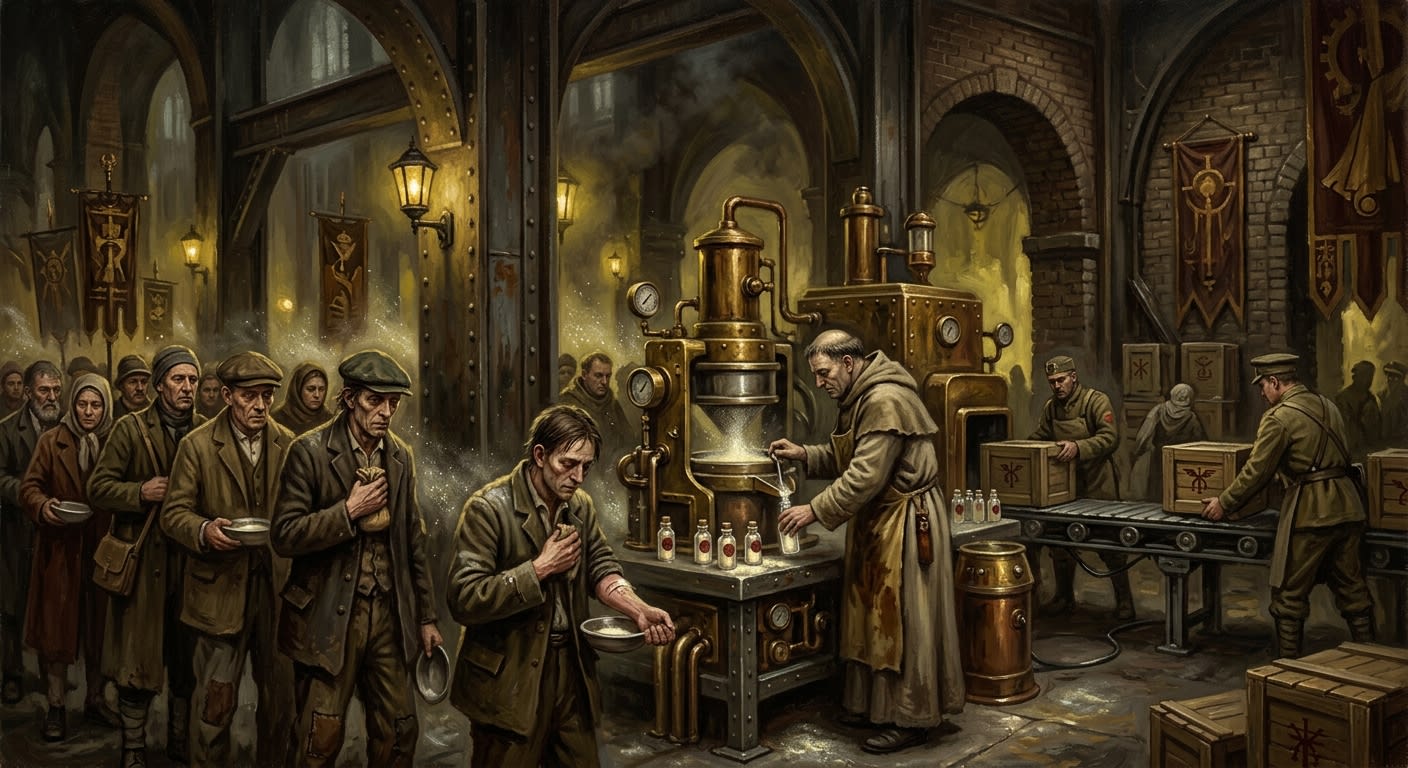
Saint-Dust
Powdered holiness enters the lung, the ledger, and the machine
Saint-dust is powdered holiness made useful: relic residue for broadcasts, wounds, shrines, walls, markets, miracles, and the lungs sacrificed between them.
Codex Ref. XIII.1.91-098
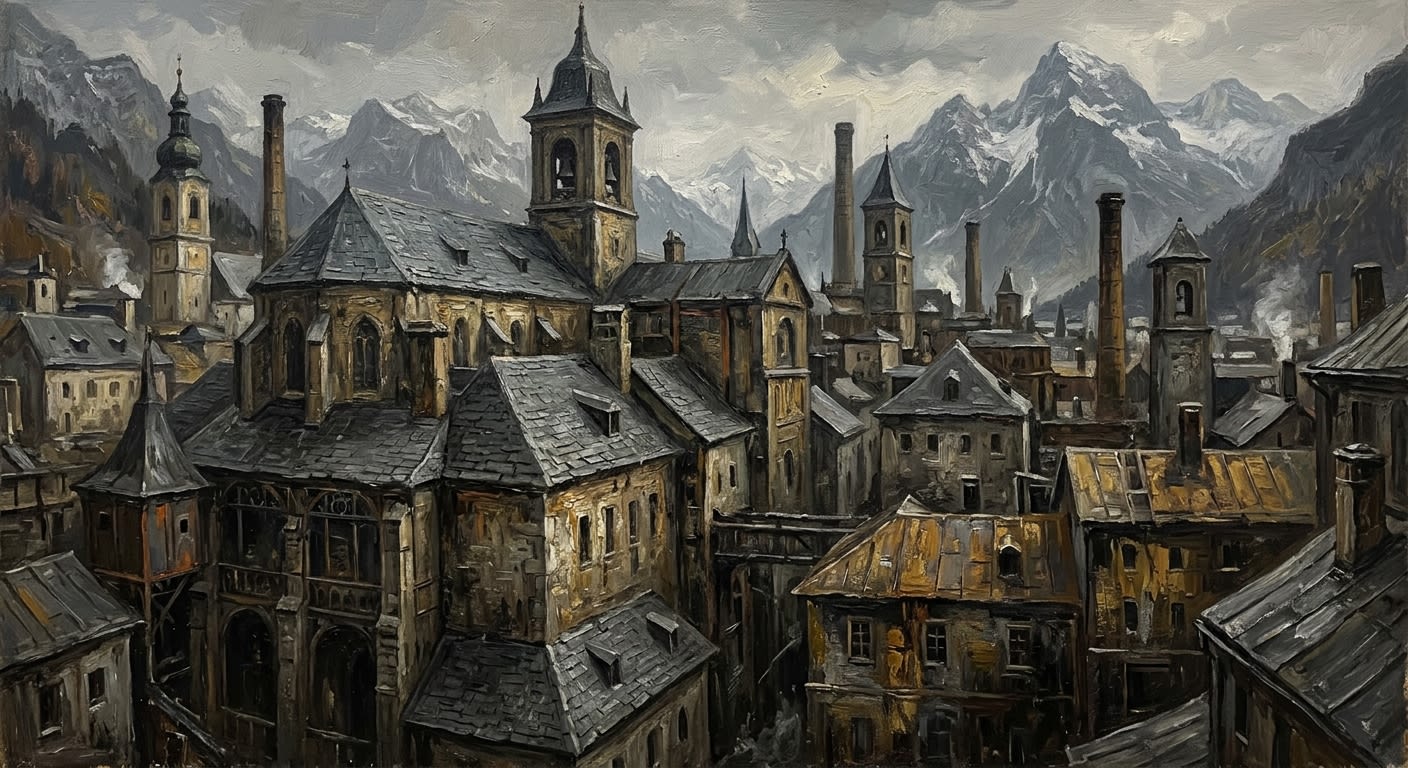
Salzburg
The Alpine city where a warm shinbone taught bishops to bleed politely
Salzburg is a profitable Alpine shrine-city whose Warm Tibia dispute killed two bishops and made custody smell faintly of salt, wax, and knives.
Codex Ref. II.3.05-141
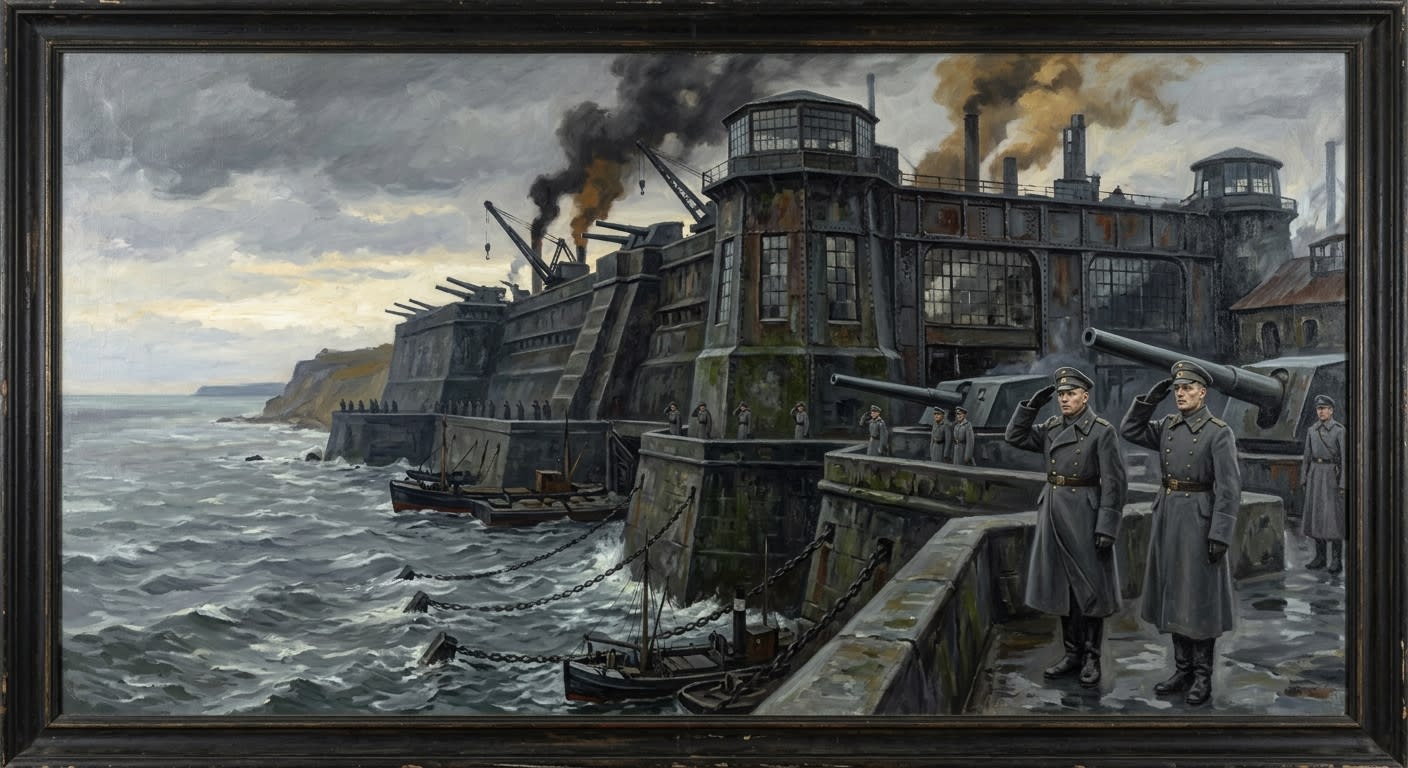
Sea Wall, Bastion-Königsberg
Where the Sagittal Line meets Baltic water and the fog outranks the wall
The Sea Wall of Bastion-Königsberg is where the Line runs into Baltic water, the Grey arrives without attacking, and sentries salute absence.
Codex Ref. II.4.07-067
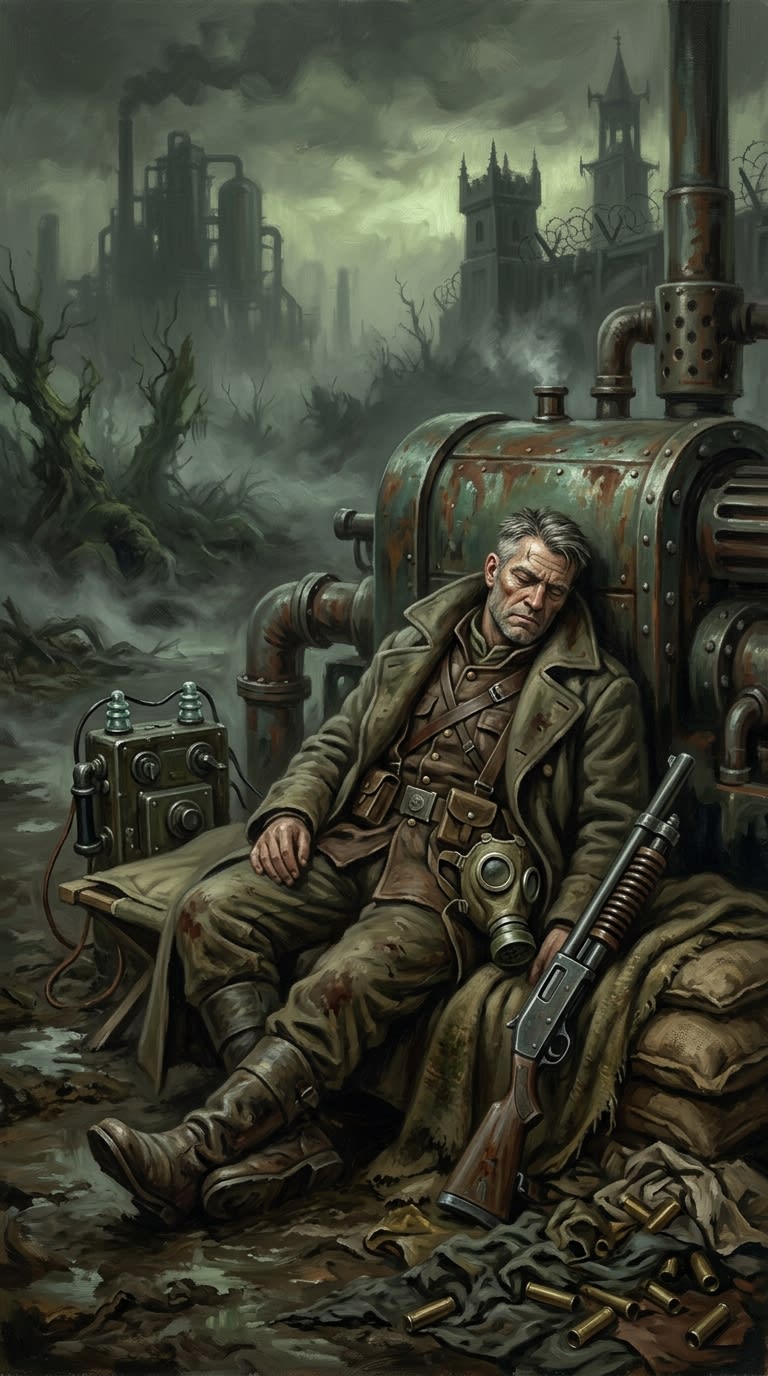
Sergeant Kael
The bombardier who chose mud because the quiet was worse
Sergeant Kael survived the Saint Barachiel Broadcast, refused Swiss convalescence, and now sleeps soundly on the Blightmarsh edge. Comfort is not indicated.
Codex Ref. III.2.01-011
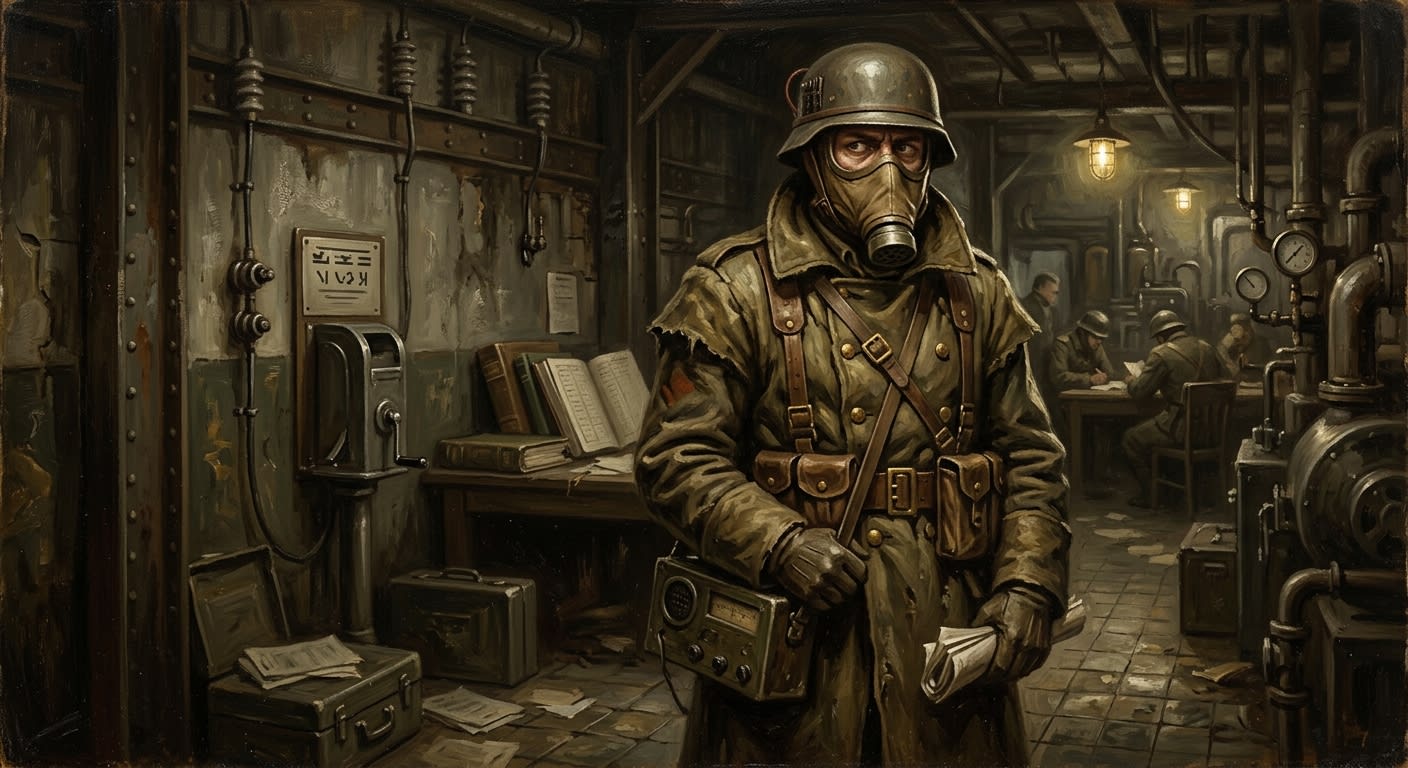
Sergeant Vell
The man who left the Blightmarsh and called Brest a relief
Sergeant Vell of the Thracian Survey survived Kestrel duty at the Blightmarsh in A.S. 199, spoke carefully, and requested Bastion-Brest as a relief.
Codex Ref. III.2.01-019
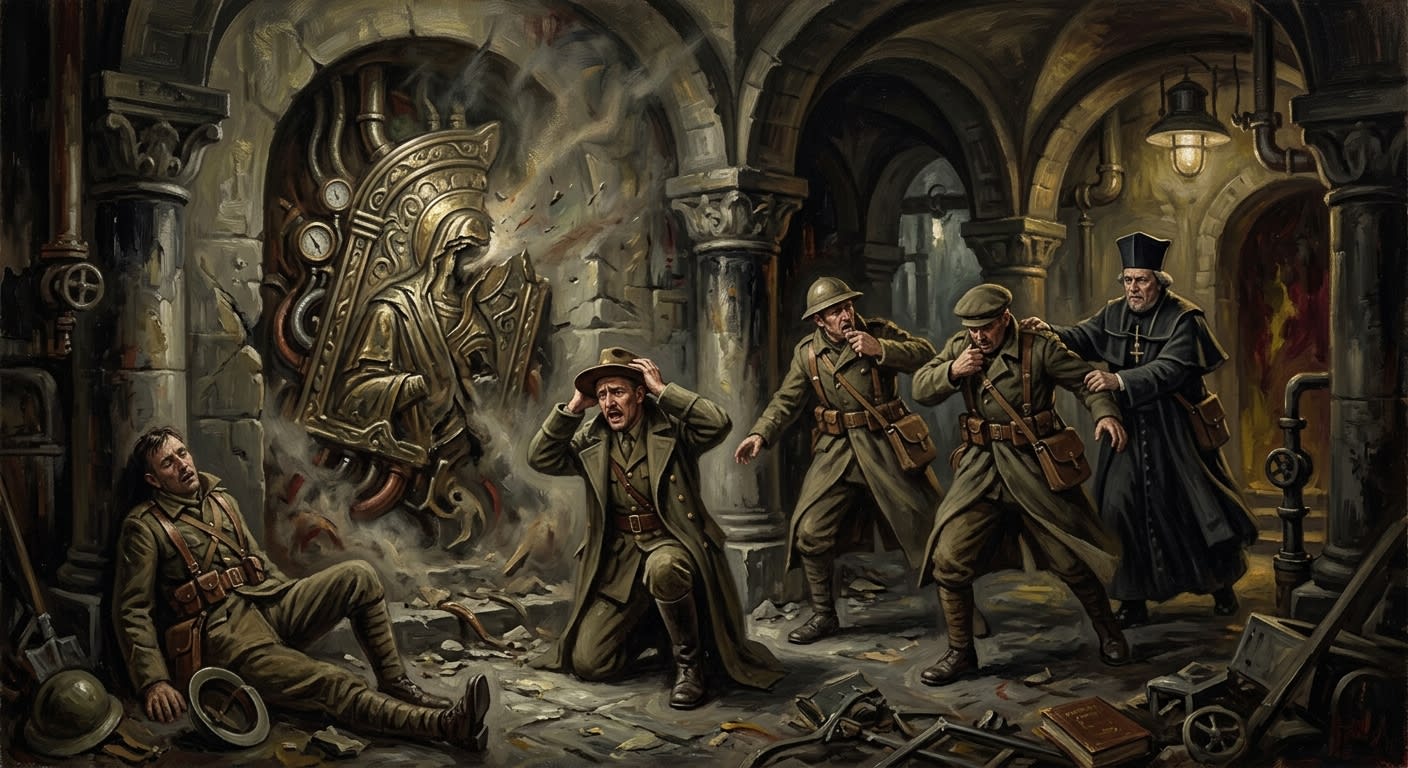
Singing Plate Disaster A.S. 131
The fragment sang; the law learned to listen
A.S. 131 Przemyśl relic disaster in which an unquieted icon fragment sang a holding chapel mad and forced salvage law into its stricter shape.
Codex Ref. VII.8.10-091
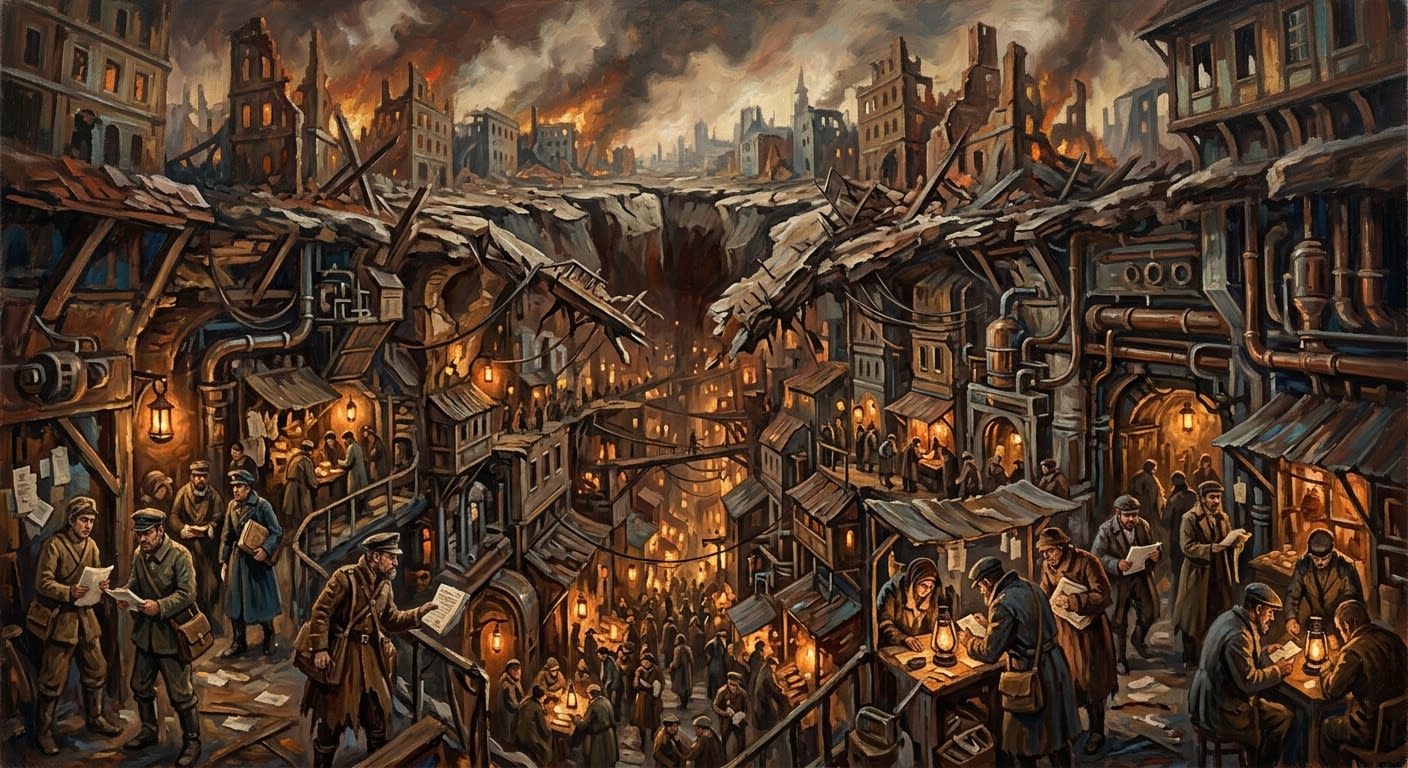
Skopje
The bitten city keeps its markets below the teeth
Skopje fell within hours of the Sundering, then survived below itself: a bitten city of Lantern Warrens, forged papers, humming lamps, and useful lies.
Codex Ref. II.5.08-045
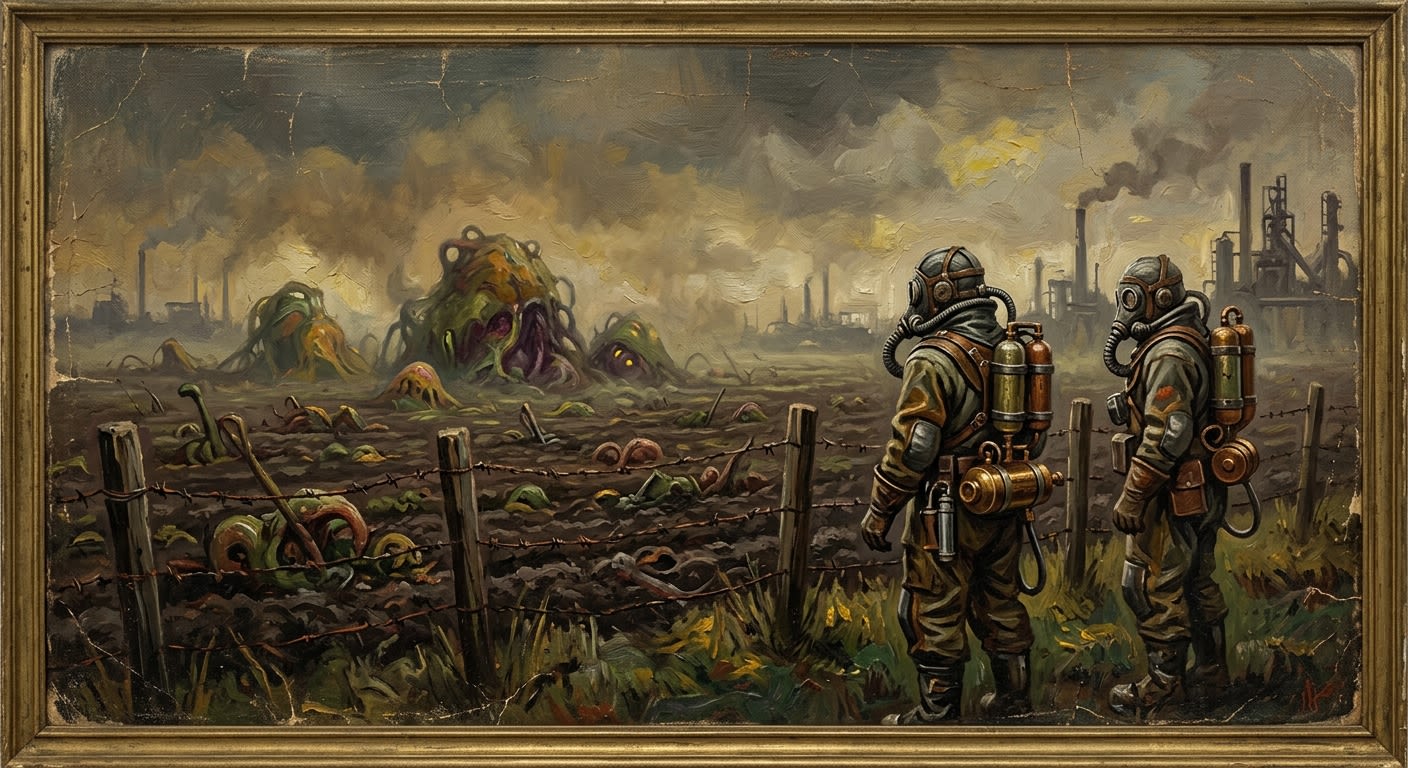
Standing Order 119-F
If it smells like mercy, withdraw
Standing Order 119-F forbids approach, harvest, sample, and even smell-contact with Abundance Fields, where Kargath makes plenty behave like hunger.
Codex Ref. XIII.1.24-001
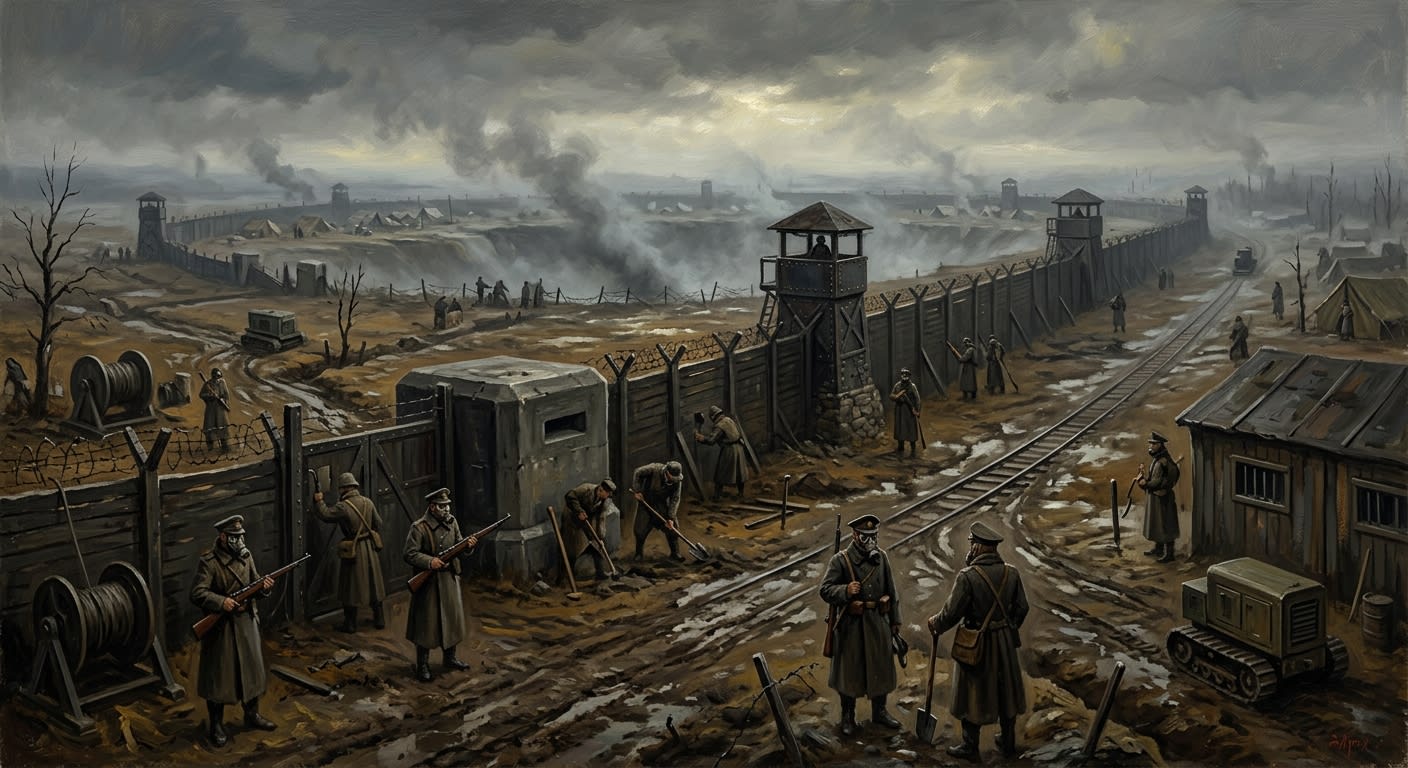
Standing Order 77-K
Stand here, not there; the dead are bad at obedience
Standing Order 77-K draws a four-mile commandment around the Famine Pits, converting hunger into evidence and distance into doctrine.
Codex Ref. XIII.1.23-001
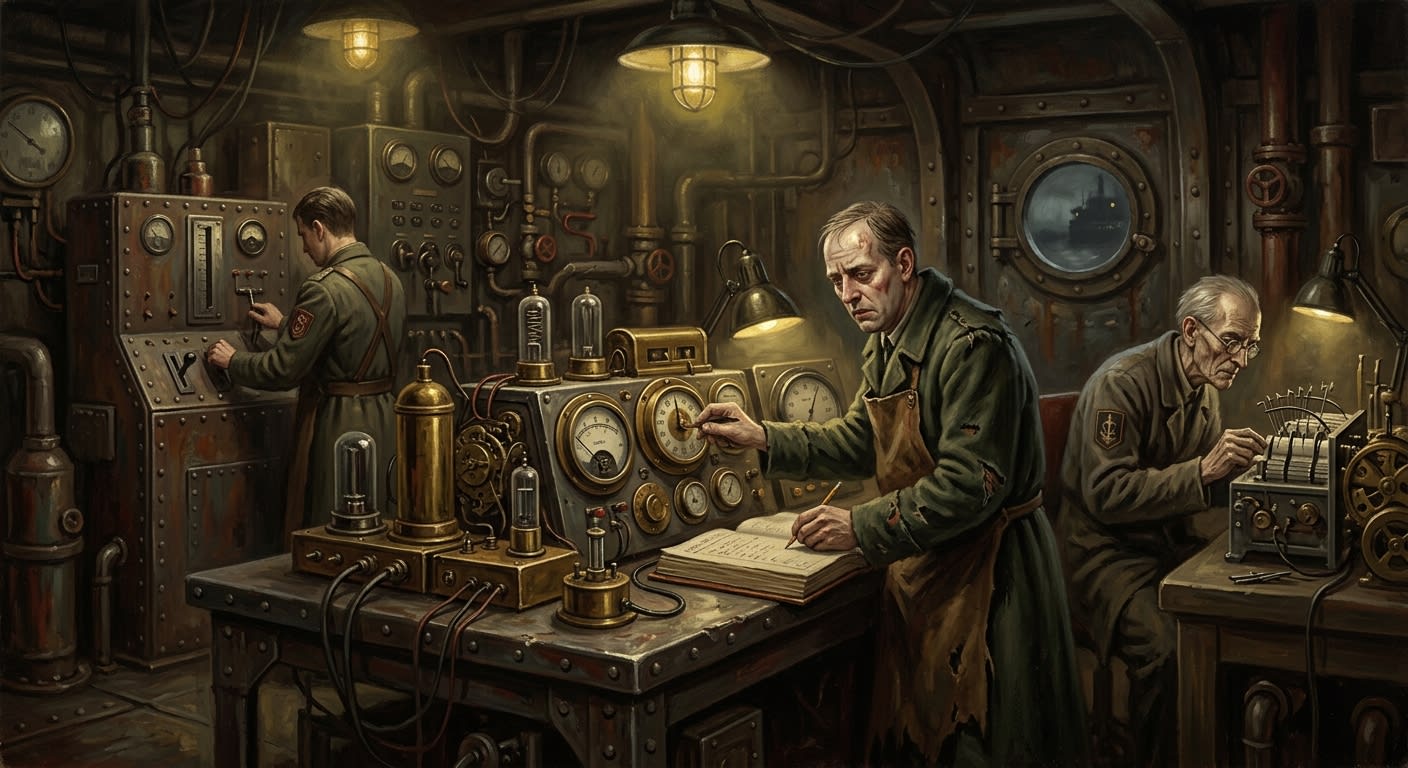
Station Two, Bastion-Shipka
The clocks accuse; the fog waits
Station Two is Bastion-Shipka's forward listening post, where Hourglass adepts measure Sloth-fog, frog-rhythm, drag-gauge failure, and the ninety-second Skip.
Codex Ref. II.4.08-015
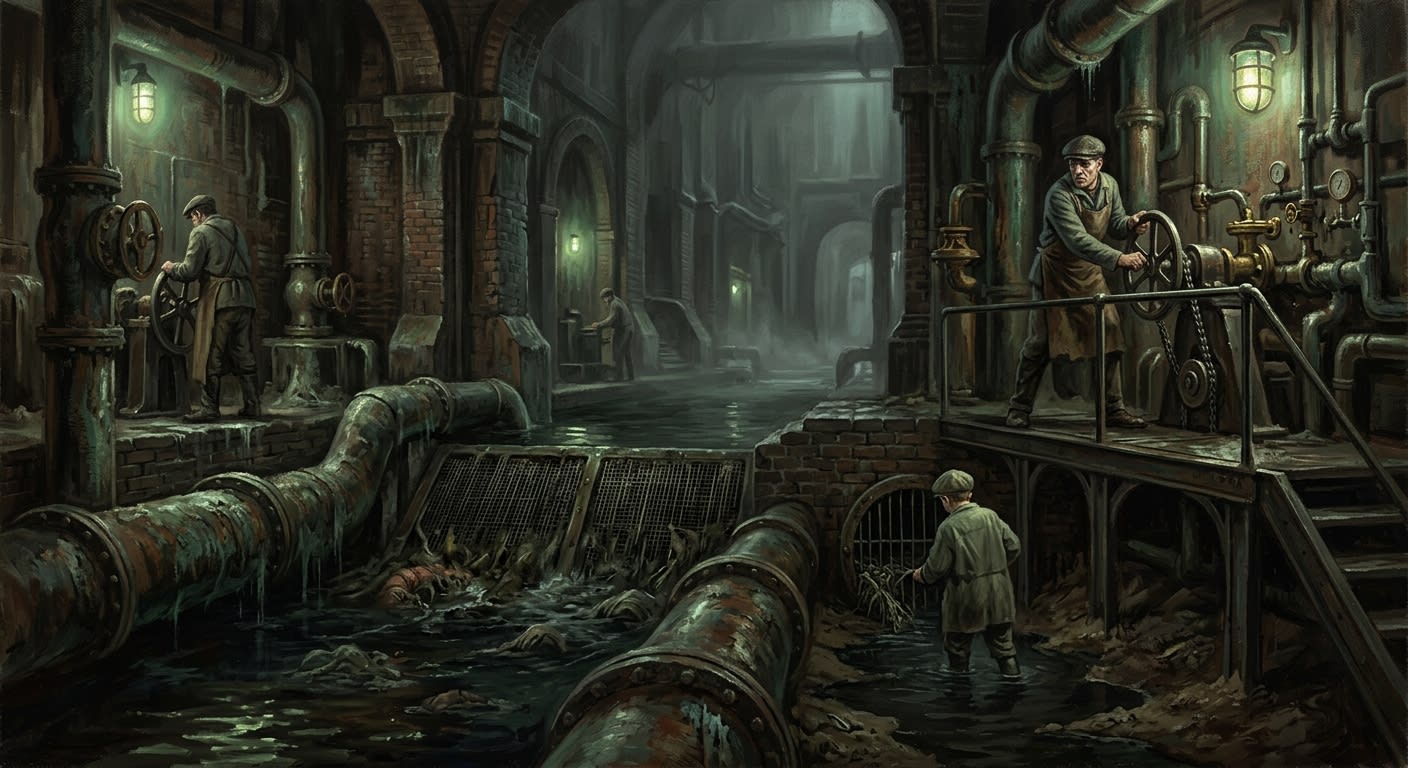
Still-Canals of Brast
Where holy fuel cools before it learns obedience
Black-water condenser channels beneath Brast, where chrismole cools, mesh clogs, boys vanish, and every lockwheel becomes a theology of delay.
Codex Ref. II.2.01-022
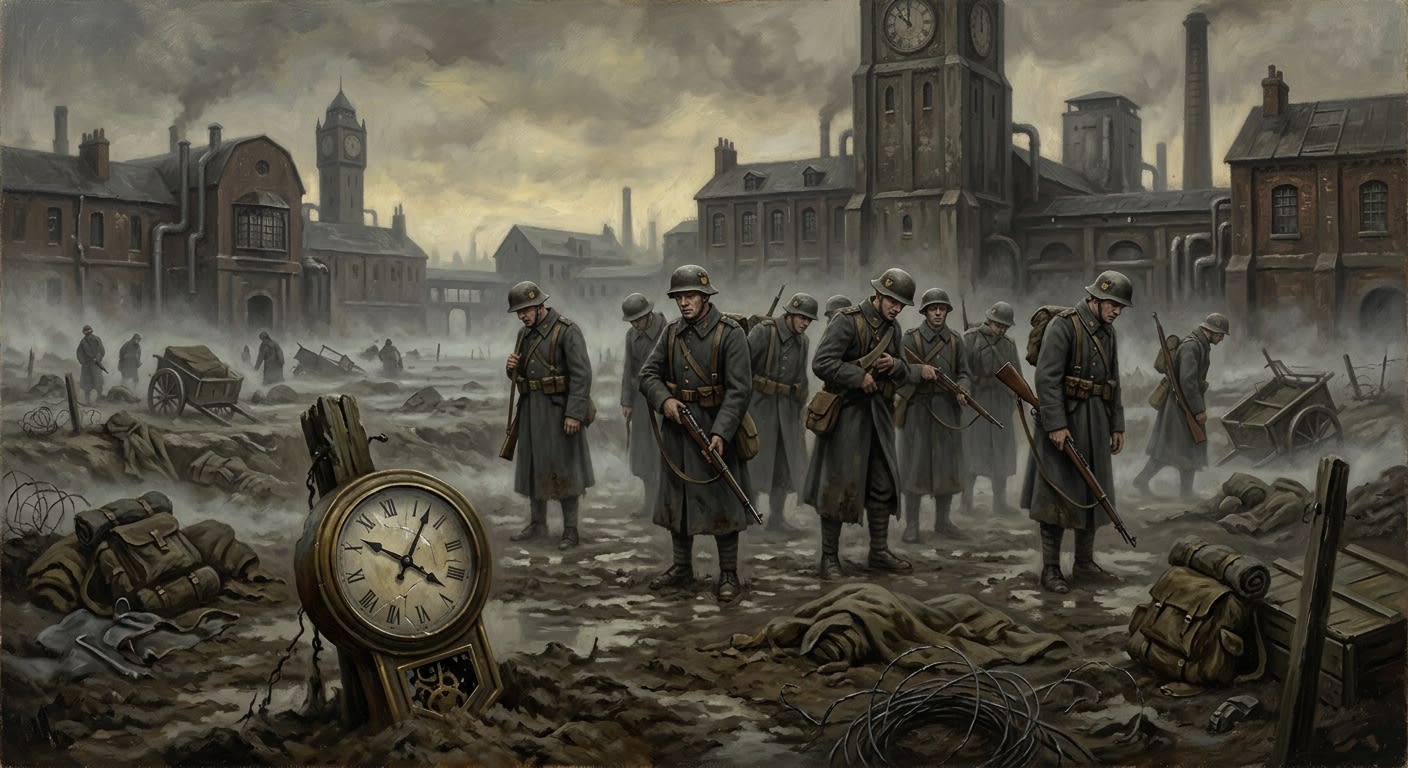
Stillness Fields
Where time sits down and calls it mercy
Syrion's fields do not stop men with walls. They offer rest, steal sequence, and let clocks become witnesses too frightened to agree.
Codex Ref. XIII.1.88-045
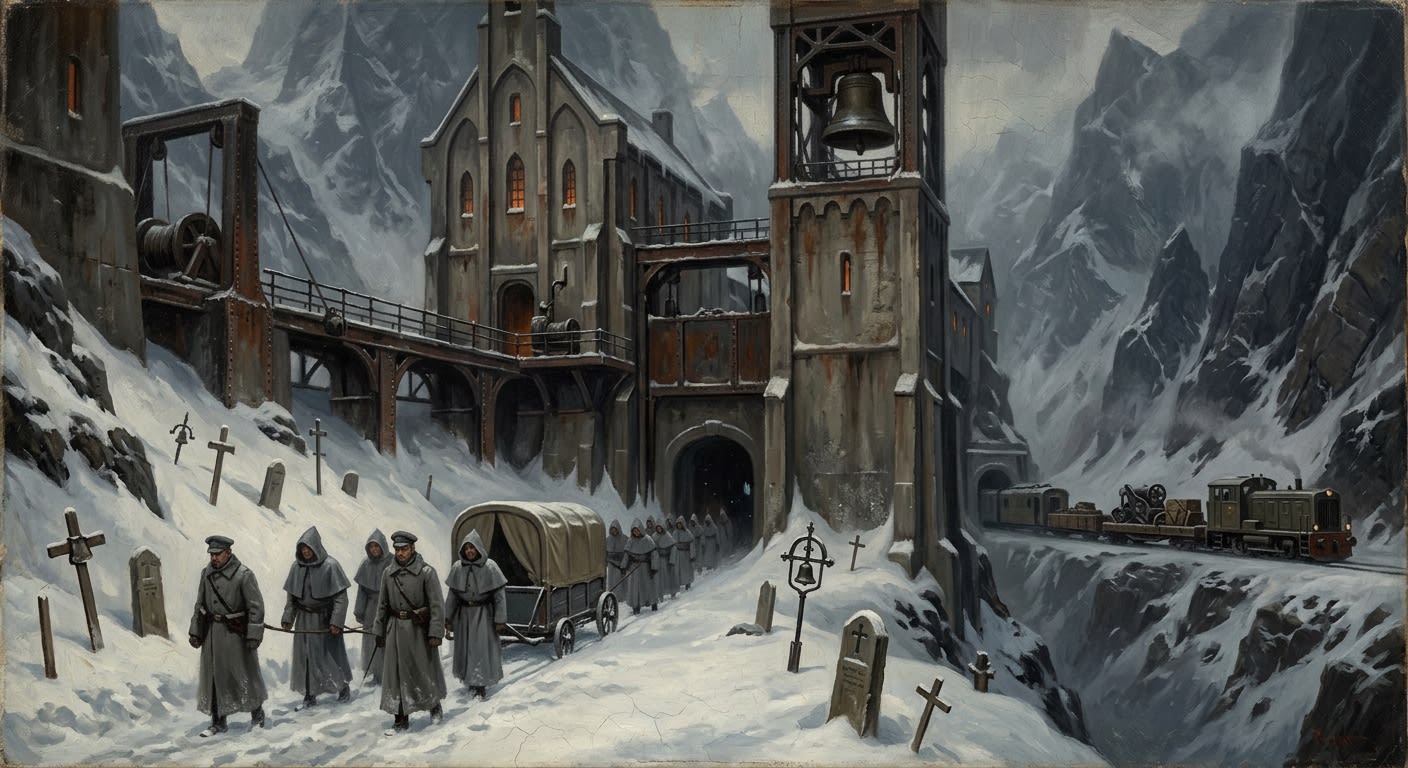
Swiss Cantons
Where mercy climbs uphill and stops writing back
The Swiss cantons keep passes, bells, hospice beds, and the Synod's most merciful disappearances beneath snow clean enough to indict Heaven.
Codex Ref. II.2.08-201
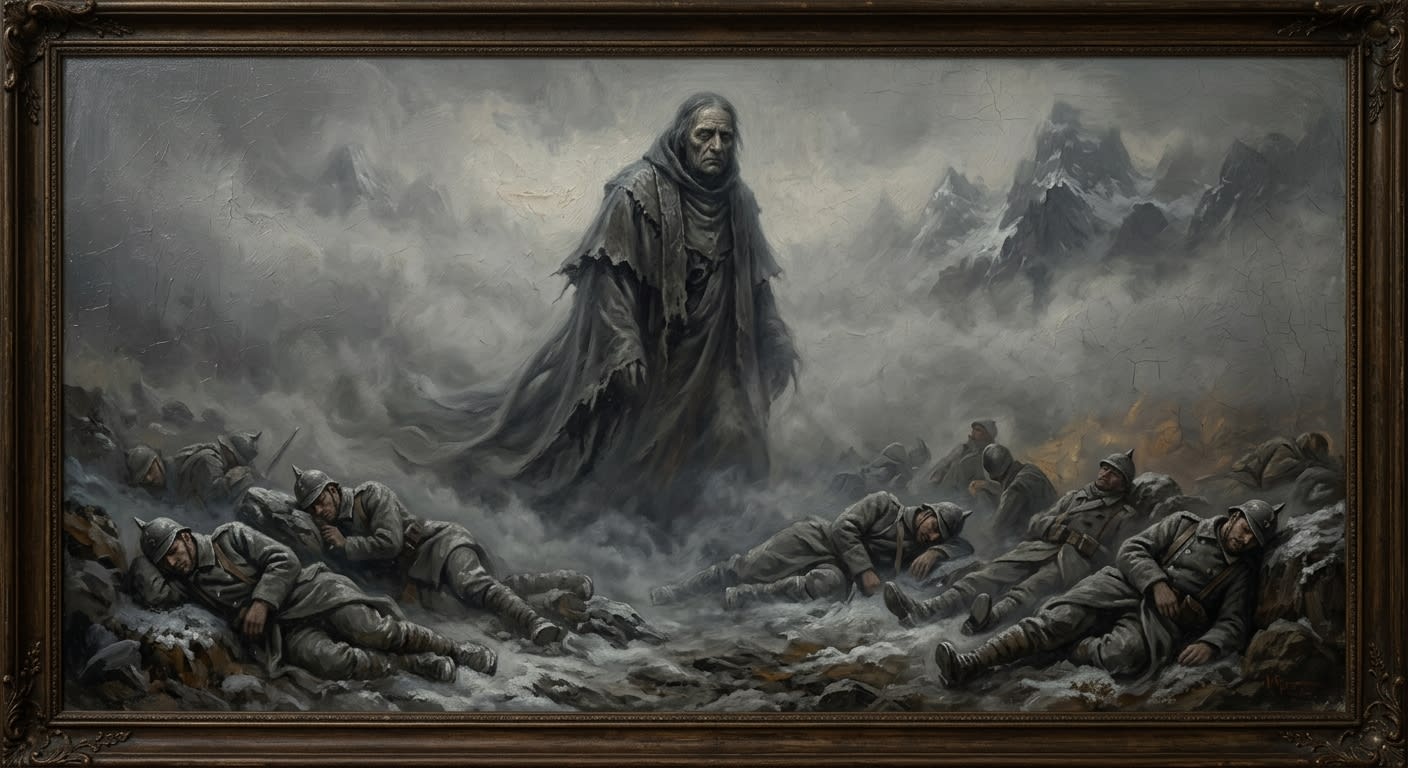
Syrion
The fog does not advance. It waits for you to stop moving.
Fourth of the Seven, Syrion holds the Bulgarian highlands in a fog of stillness and stolen time. He does not attack. He waits while you attack yourself.
Codex Ref. IV.1.07-004
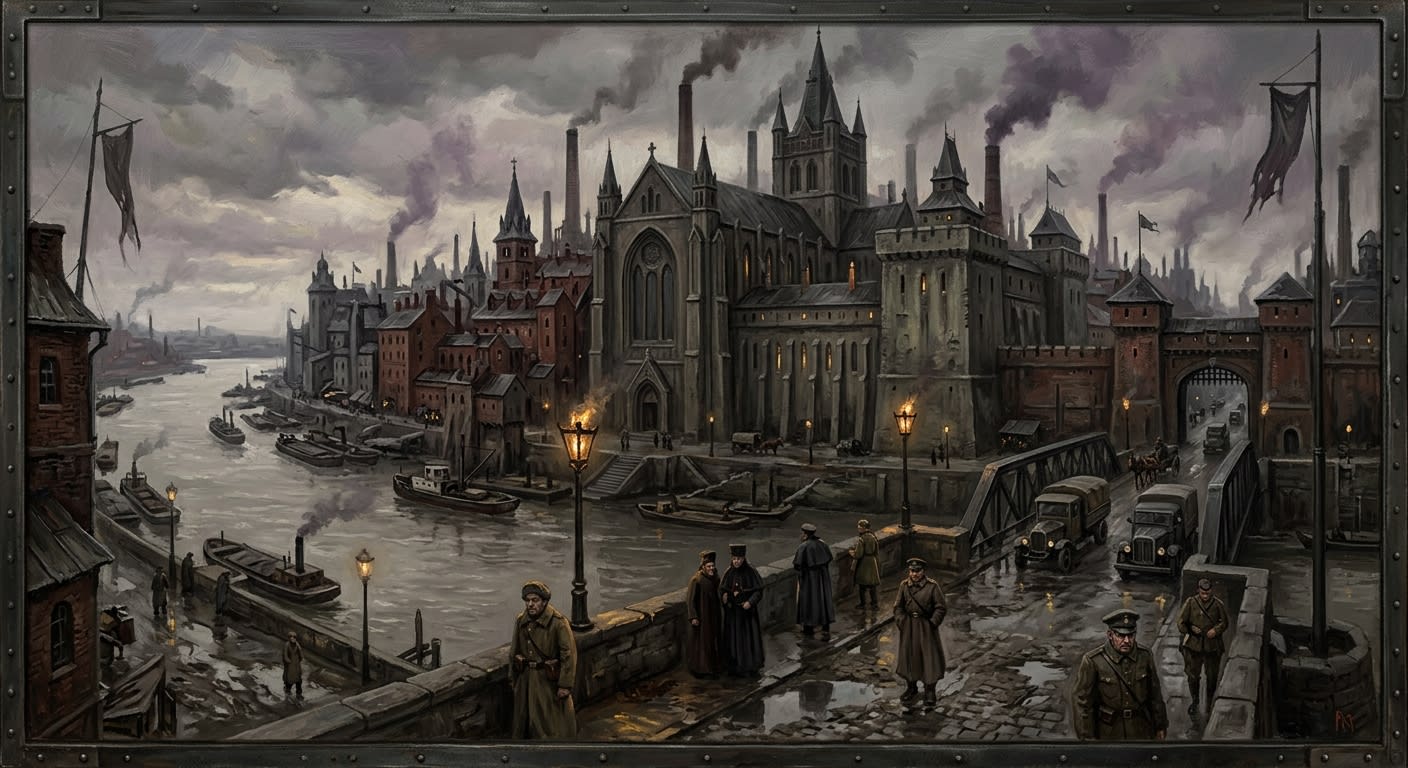
Szeged
The river city where the light failed while shining
Szeged is the Tisza city where psalm-light learned betrayal, candles died inward, and the road to Baja began reaching back with teeth.
Codex Ref. II.4.09-201
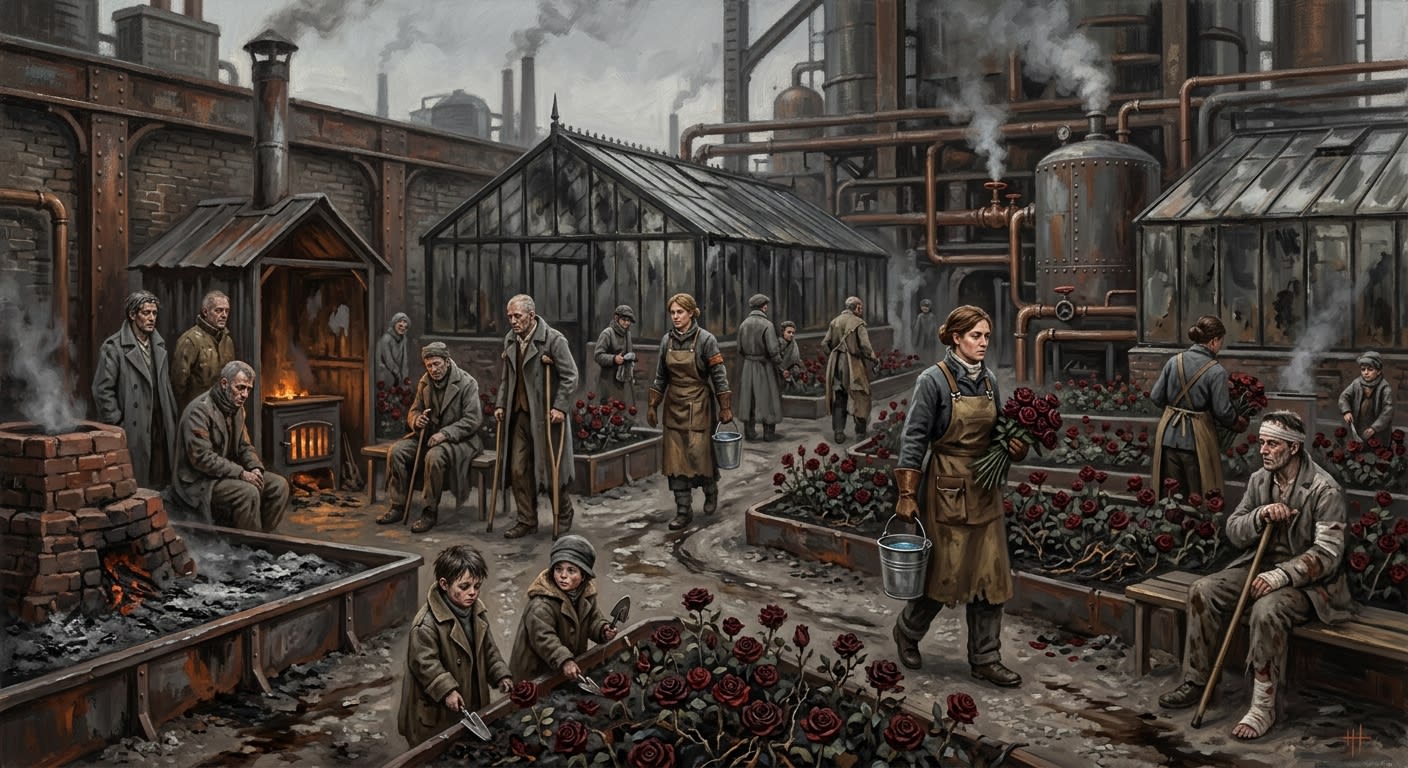
The Ash Gardens
Where roses feed on siege residue and Medicine pretends not to notice
Three miles inland from the Harbor of Chains, the Ash Gardens heal burned men, ash-lung children, and shell-broken soldiers beneath roses fed by Maldrake's old fires.
Codex Ref. II.4.10-007
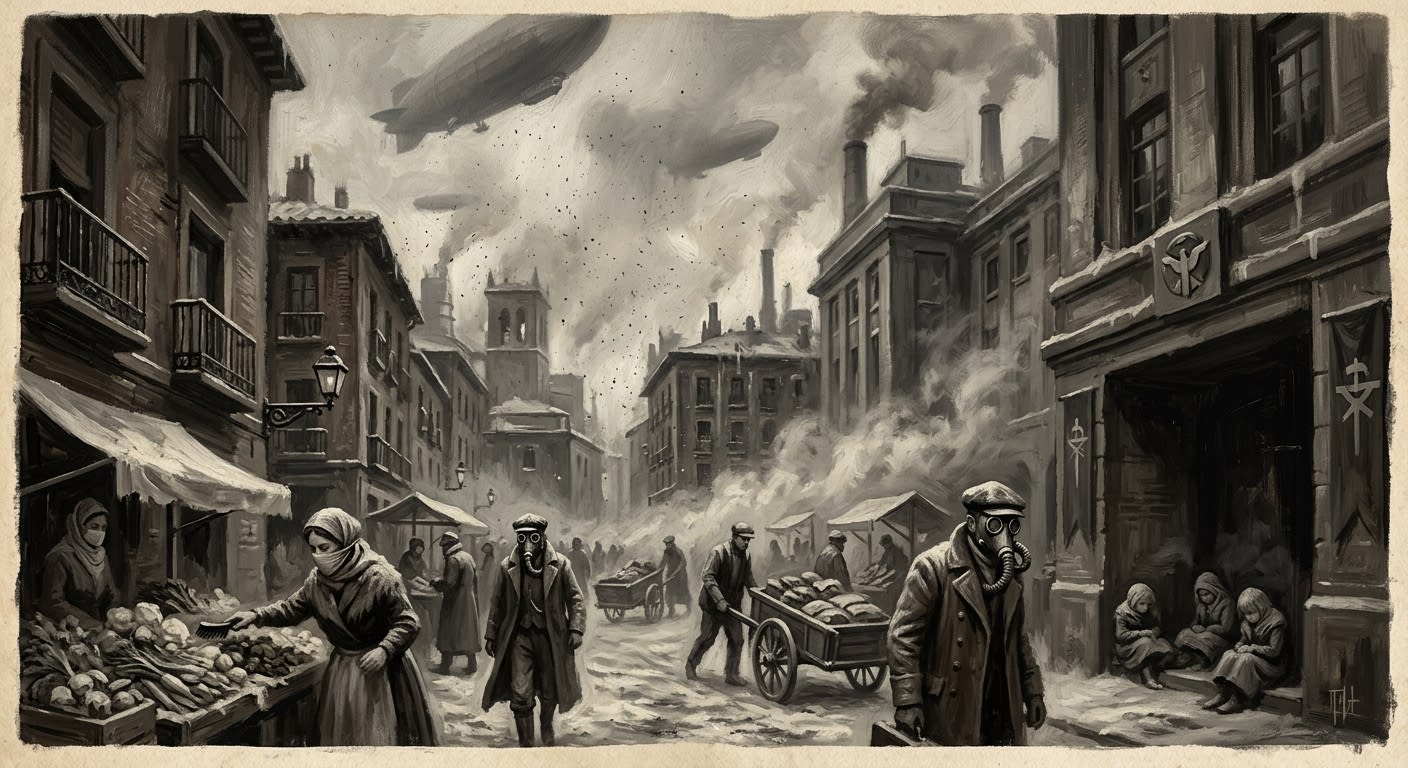
The Ash-Rain of Zaragoza
Where artillery made weather and fourteen children paid the grammar of “clean”
The A.S. 143 Ash-Rain of Zaragoza followed a sanctioned bombardment of a Velkara-aligned compound: three days of salt-and-milk ash, fourteen silenced children, no quarantine, and a city forced to keep trading beneath residue.
Codex Ref. VII.4.13-001

The Ashen Circle
The denied archive that keeps the official world from collapsing
Unsanctioned scholarly network named in A.S. 103, trafficking in forbidden histories and sciences while the Bureaus deny, hunt, purchase, and depend upon its ash-borne work.
Codex Ref. XI.1.01-002
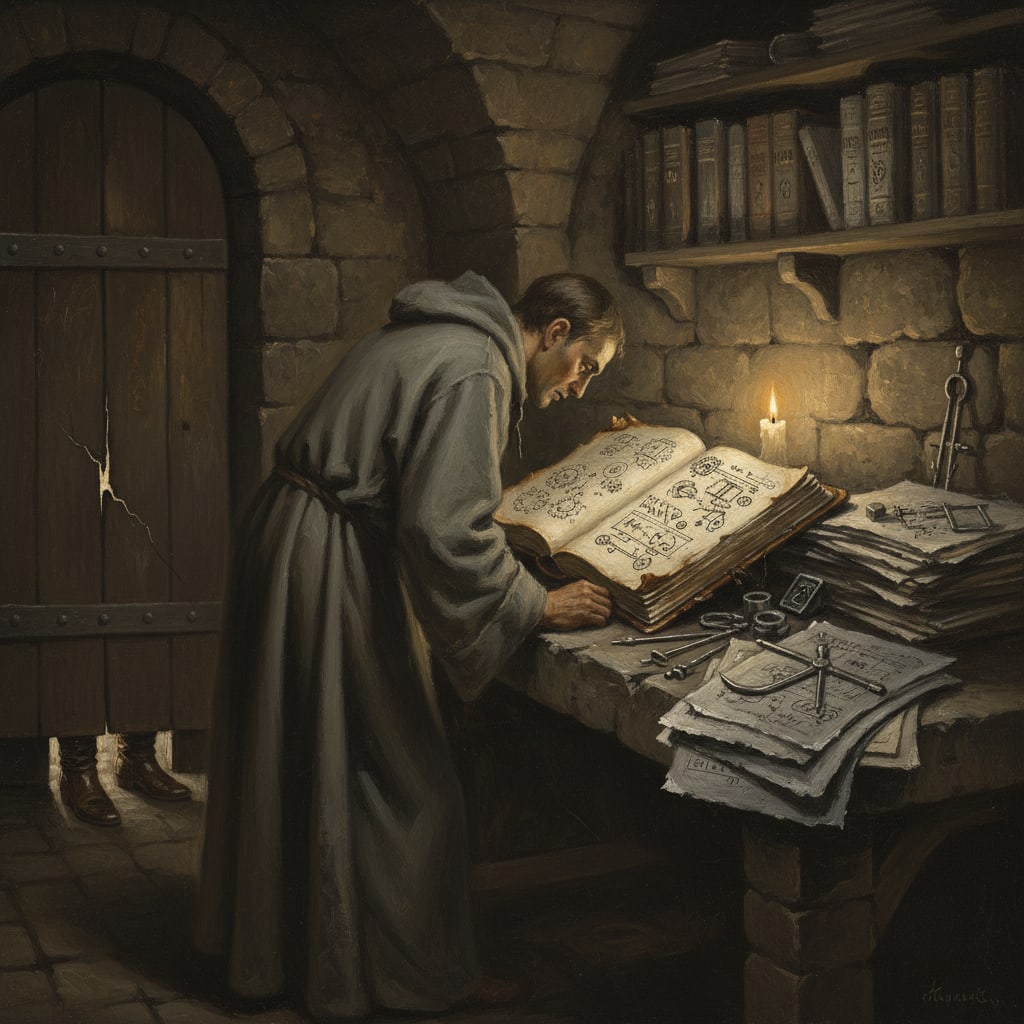
The Ashen Circle Scholar
What the Bureau Burns, the Circle Preserves — the Synod's Indispensable Heretic
The Bureau calls them poison. The front calls them indispensable. The Ashen Circle Scholar trades in what the Index Damnatus cannot afford to have gone permanently missing.
Codex Ref. XI.1.01-001
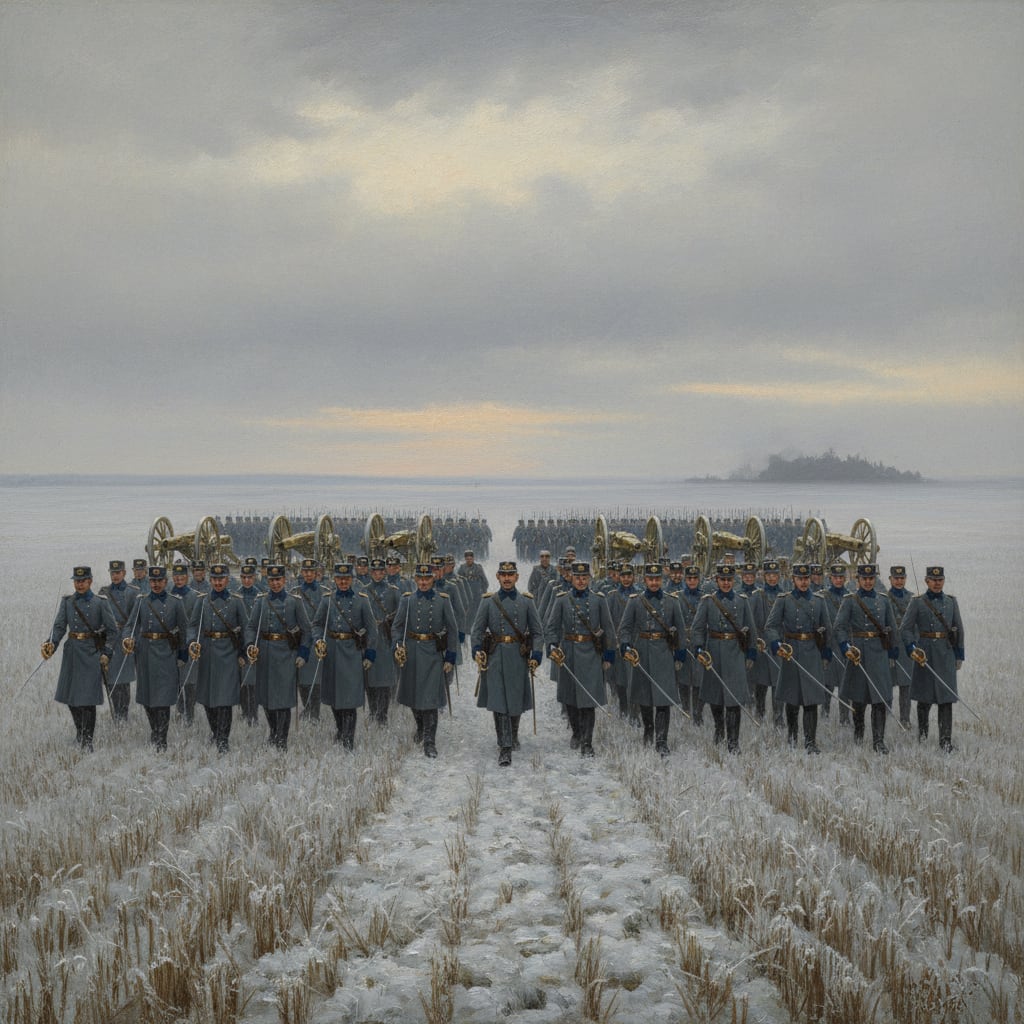
The Battle of the Iron Plains
Where twelve thousand trained men died proving that competence is a necessary but insufficient condition for survival
Twelve thousand Rationalist professionals deployed in textbook formation on 1 November A.S. 45. Fire fell from a cloudless sky. The Bureau calls it evidence. The ground still rings when struck.
Codex Ref. VII.5.01-001
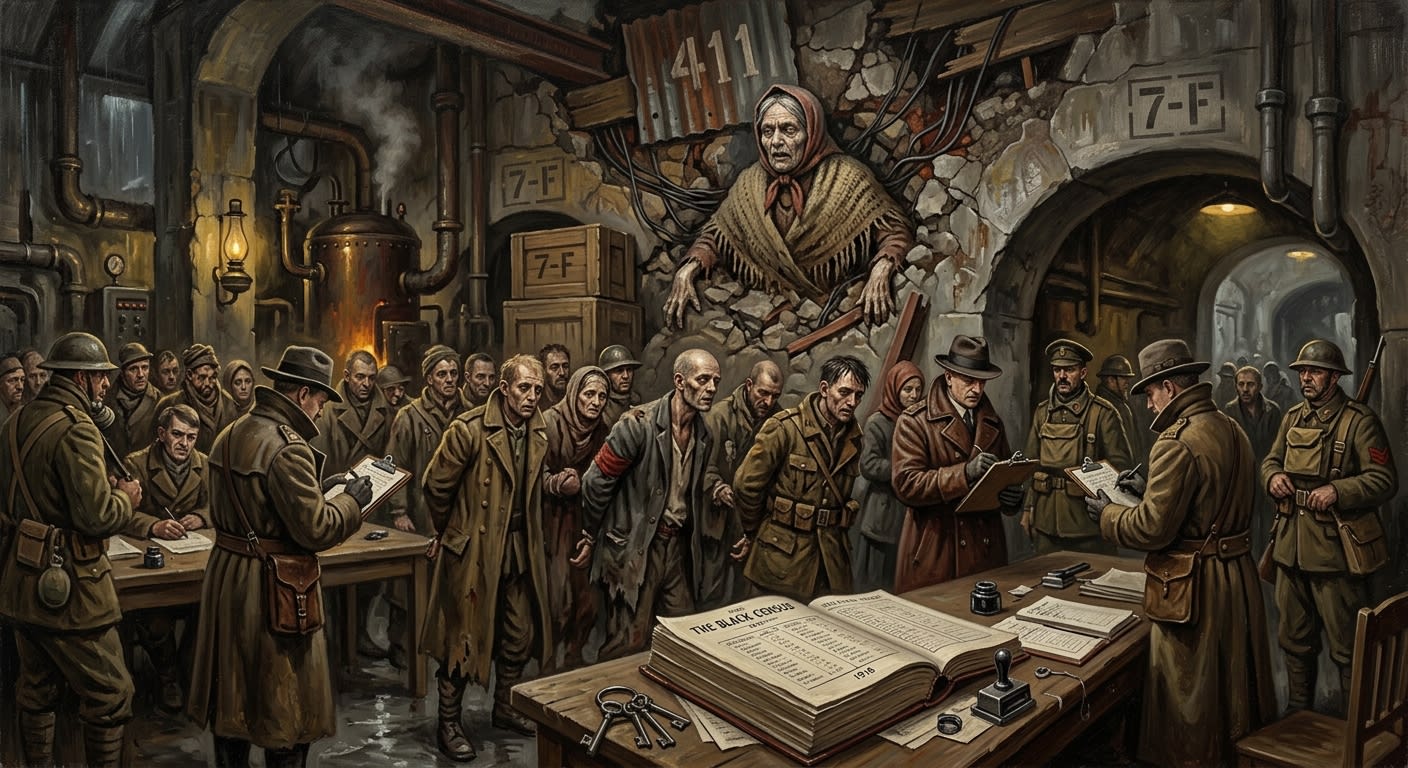
The Black Census of Metz
Four hundred and eleven soldiers, one mother, and the arithmetic that broke denial
The Black Census of Metz turned Ash-Mothers from trench epithet into Classification 7-F after four hundred and eleven captured Thralls were traced to one dead woman whose remains held an enemy bastion together.
Codex Ref. VII.4.14-001
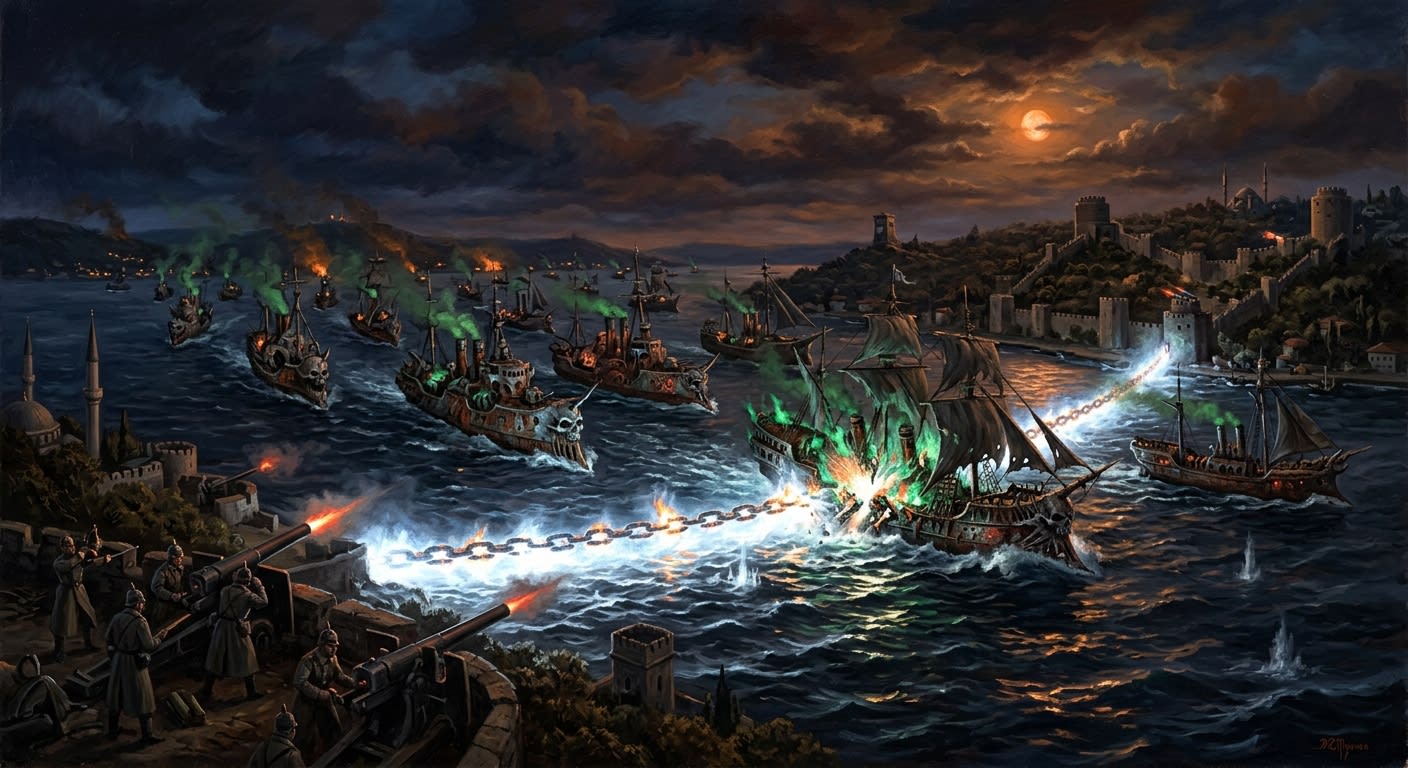
The Black Sea Armada
Forty-seven ships. The Bureau counted them twice. The second count was worse.
On the night of 14 Ferrum, A.S. 162, forty-seven demon vessels entered the Bosphorus. The Chain of Saint Anakletos held — and burned white-hot for seven hours. Forty-three ships destroyed, the chain gone dark ever since, and one ship never found.
Codex Ref. VII.4.01-001
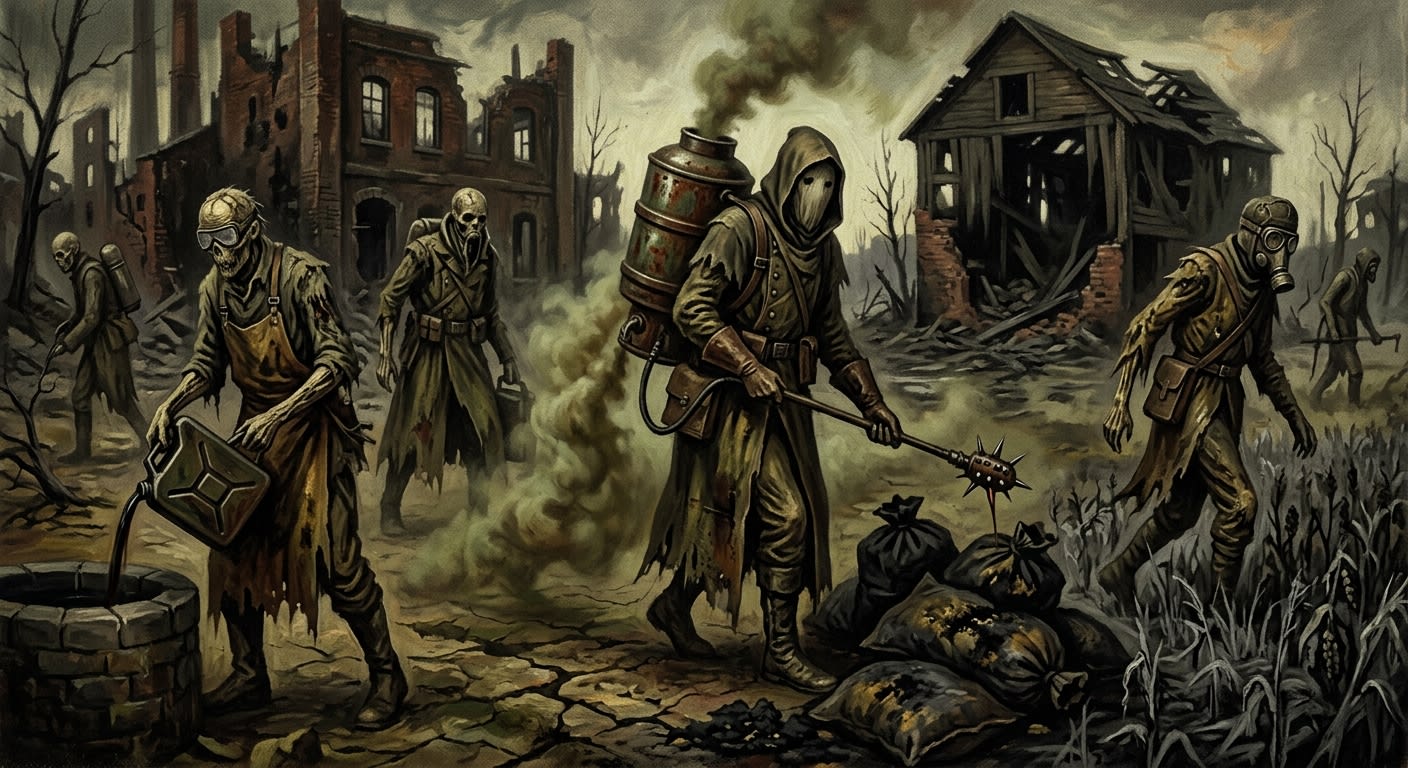
The Blightbearers
Famine with feet, and no mercy in the pantry
Kargath's Blightbearers are famine-carriers: thin demons whose passage makes full granaries fraudulent, clear wells treacherous, and supper an accusation.
Codex Ref. IV.1.07-013
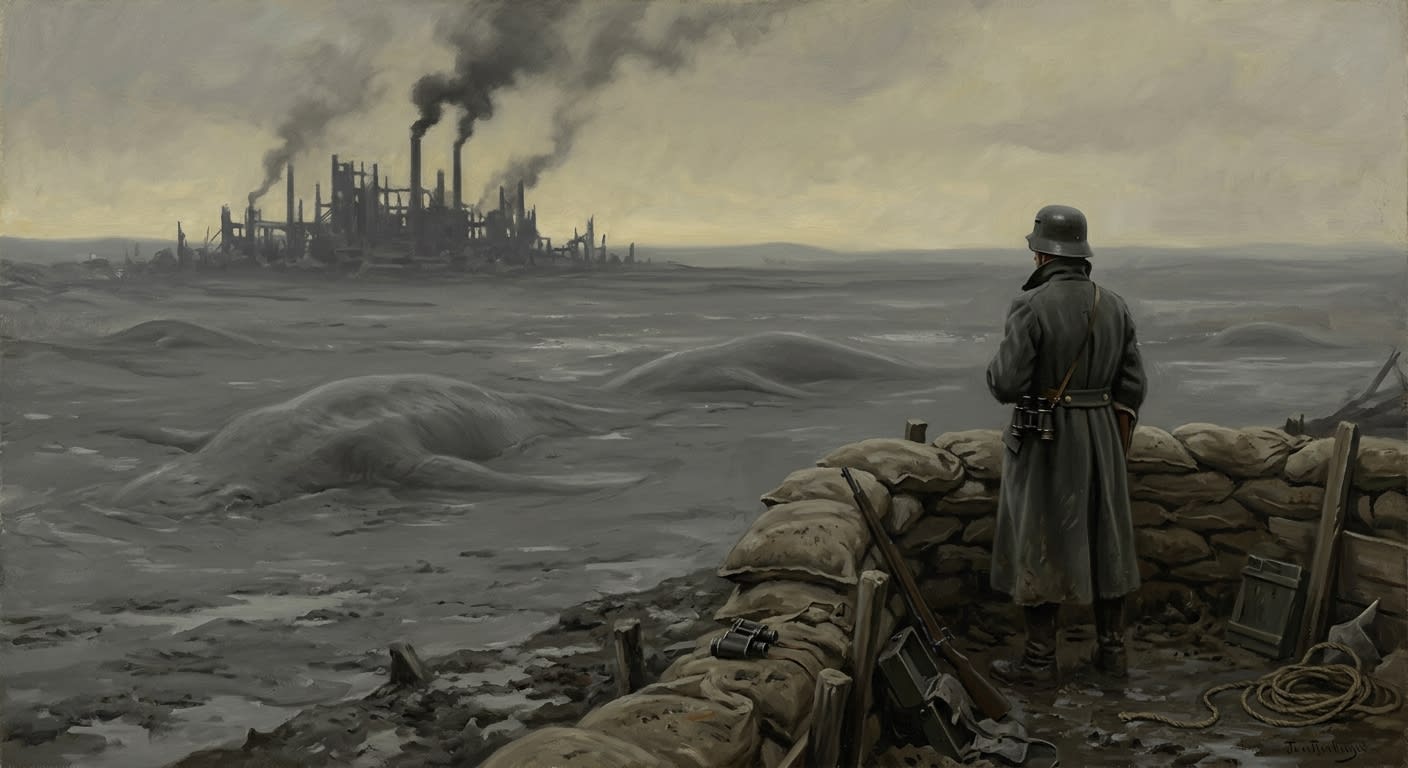
The Blightmarsh
Kargath's larder, fully stocked, permanently empty
The consumed plains of Hungary — twenty-three thousand square miles of grey mud, expanding mouths, and hunger that does not end. Kargath's forward infrastructure. The Sagittal Line's nearest unsolvable problem.
Codex Ref. V.6.01-001
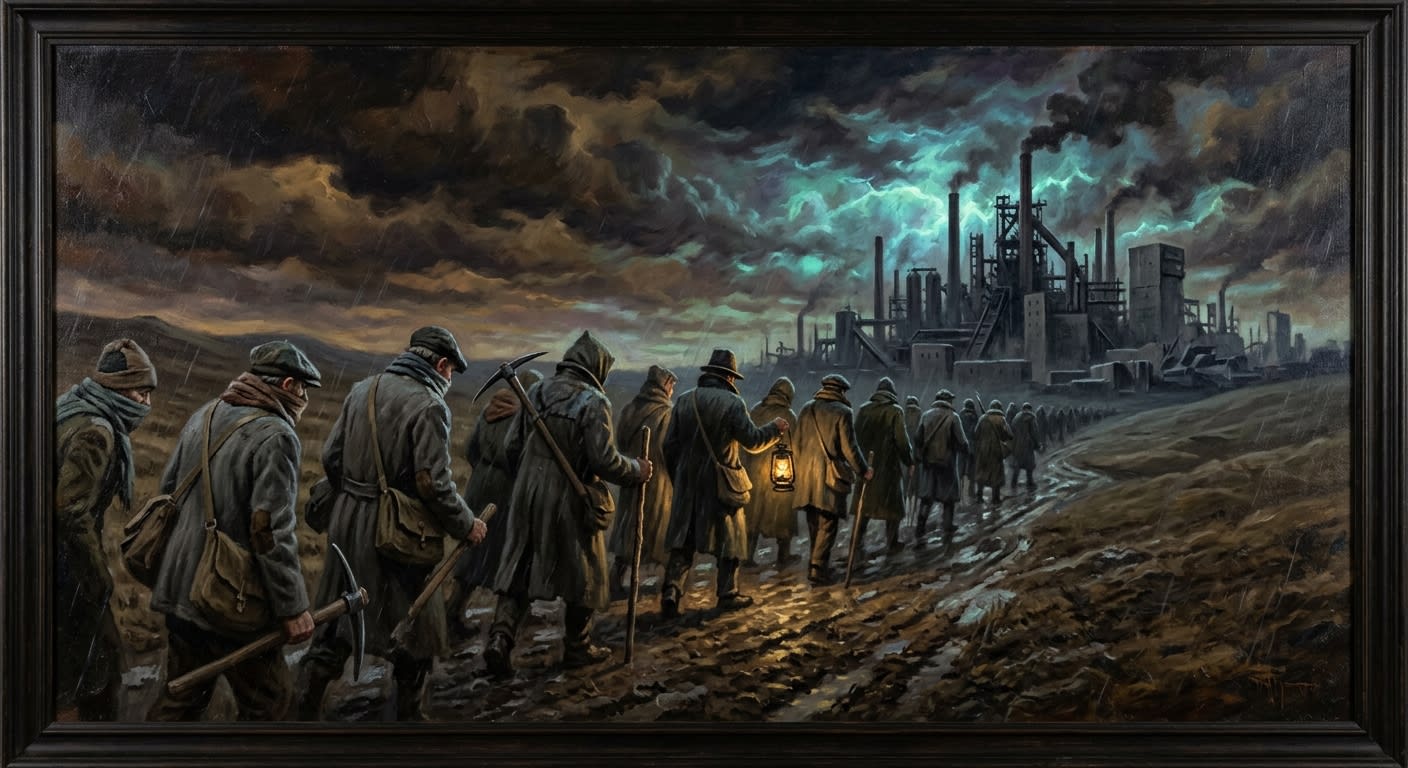
The Breathing
The forbidden name Praga gives the front at night
Praga calls the eastern night-pulse the Breathing; Doctrine forbids the name, which proves only that Doctrine has never successfully prosecuted weather, hunger, or grandmothers.
Codex Ref. XIII.1.88-201
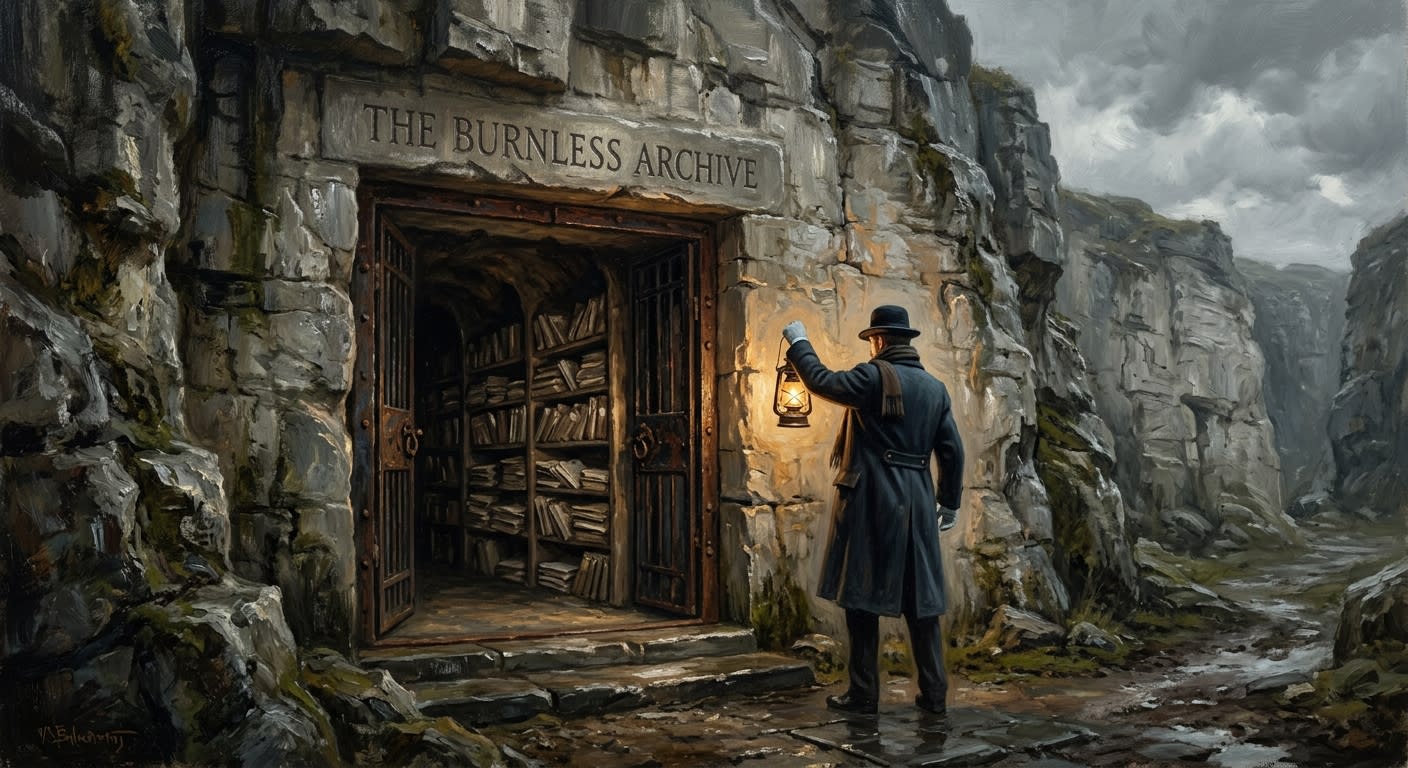
The Burnless Archive
The paper does not burn. The ink is wet. The Bureau files this under Pending.
Beneath the Steppe Gate's eastern cutbank, the paper does not burn, does not leave, and does not require a living hand to file new clauses. The Bureau of Doctrine has classified this under Pending for seven years. The ink remains wet.
Codex Ref. II.4.10-002
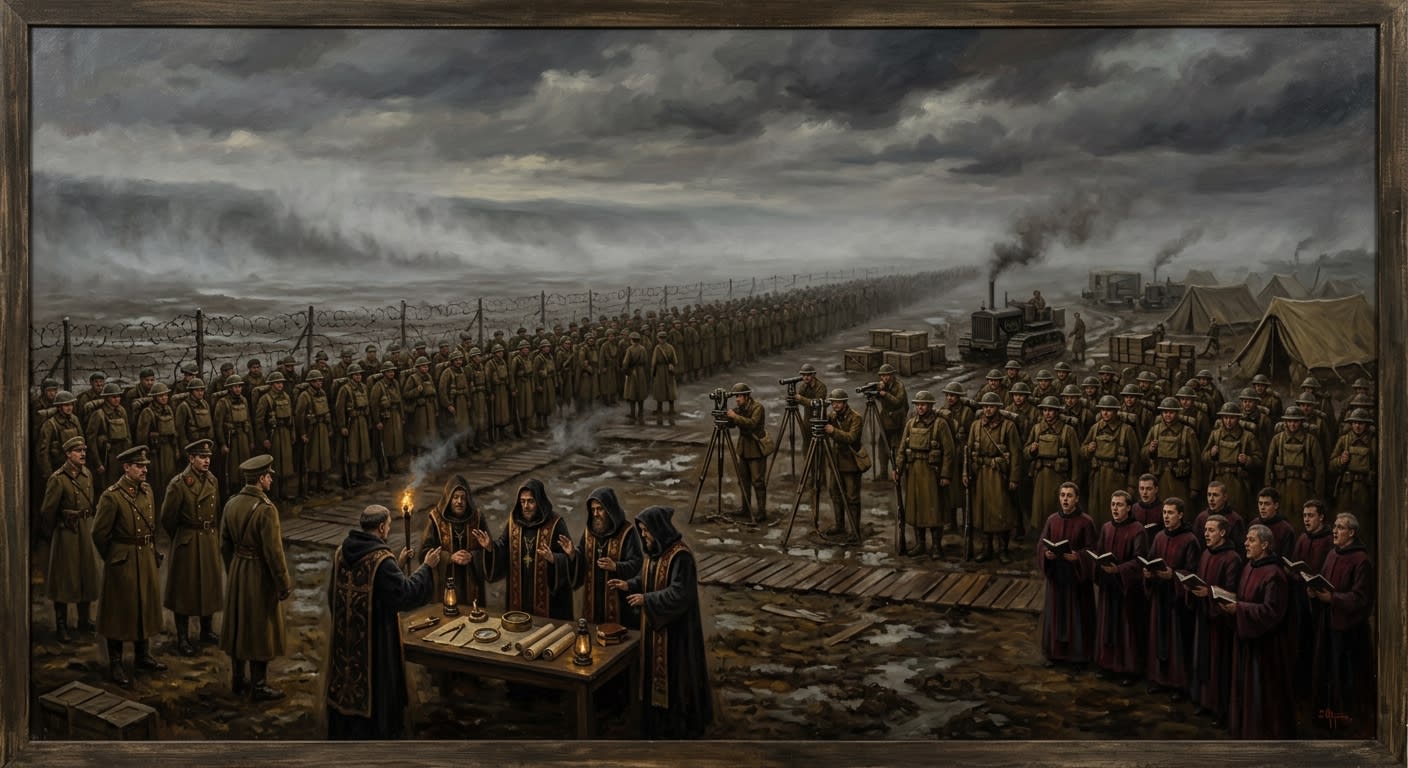
The Cartographic Expedition of A.S. 73
Three hundred men went to draw a map. The map drew them instead.
In A.S. 73, three hundred men entered the Charnel Lands to draw a map. Fourteen returned, and on every folio they carried — drawn in charcoal, ink, graphite, and in one case blood — the same face. Commission 73-C is closed. Its lesson is not.
Codex Ref. VII.1.01-001
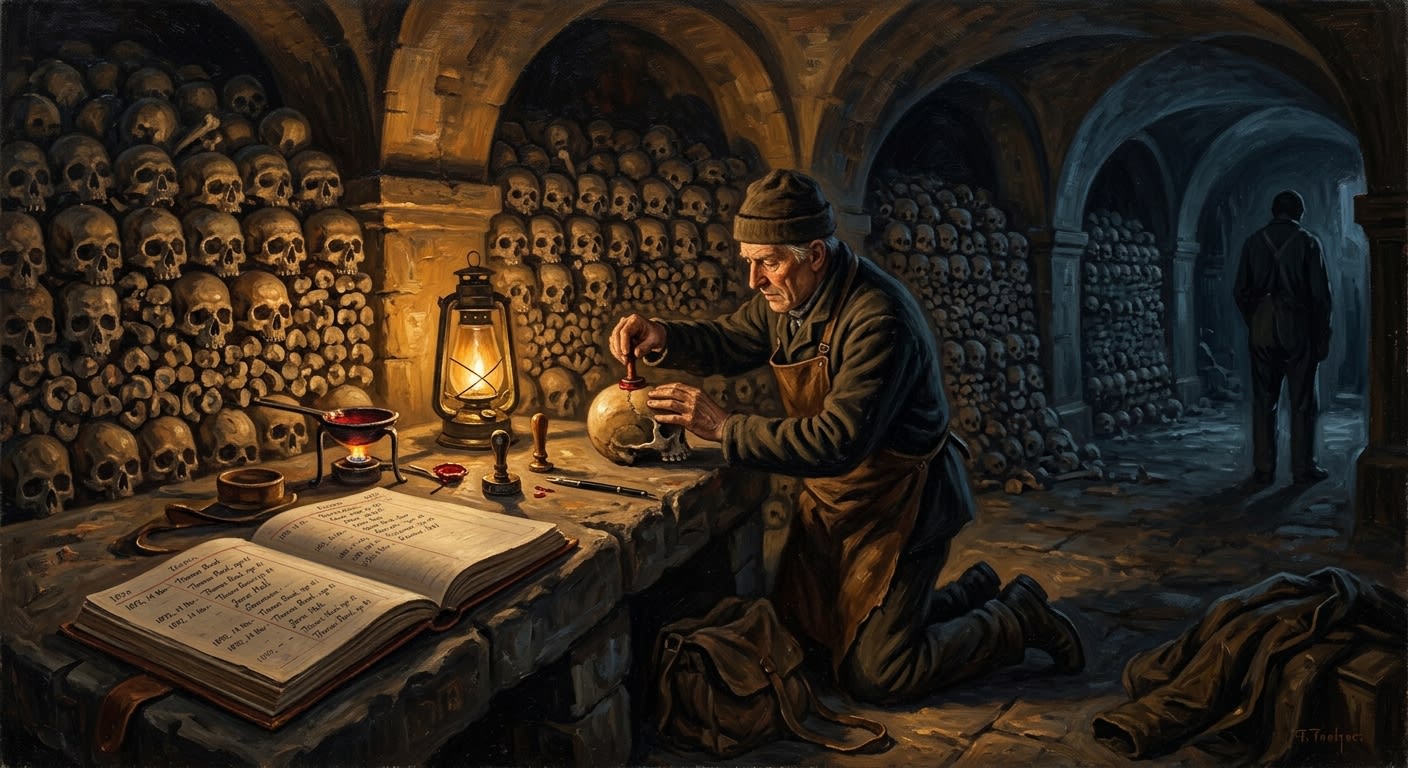
The Dead
What the filing system remembers, and what the Bureau has declined to ask
The Bureau maintains death is a clerical event. The dead, by the Bureau's own monitoring, appear to disagree. Drax files the discrepancy.
Codex Ref. VI.2.01-001
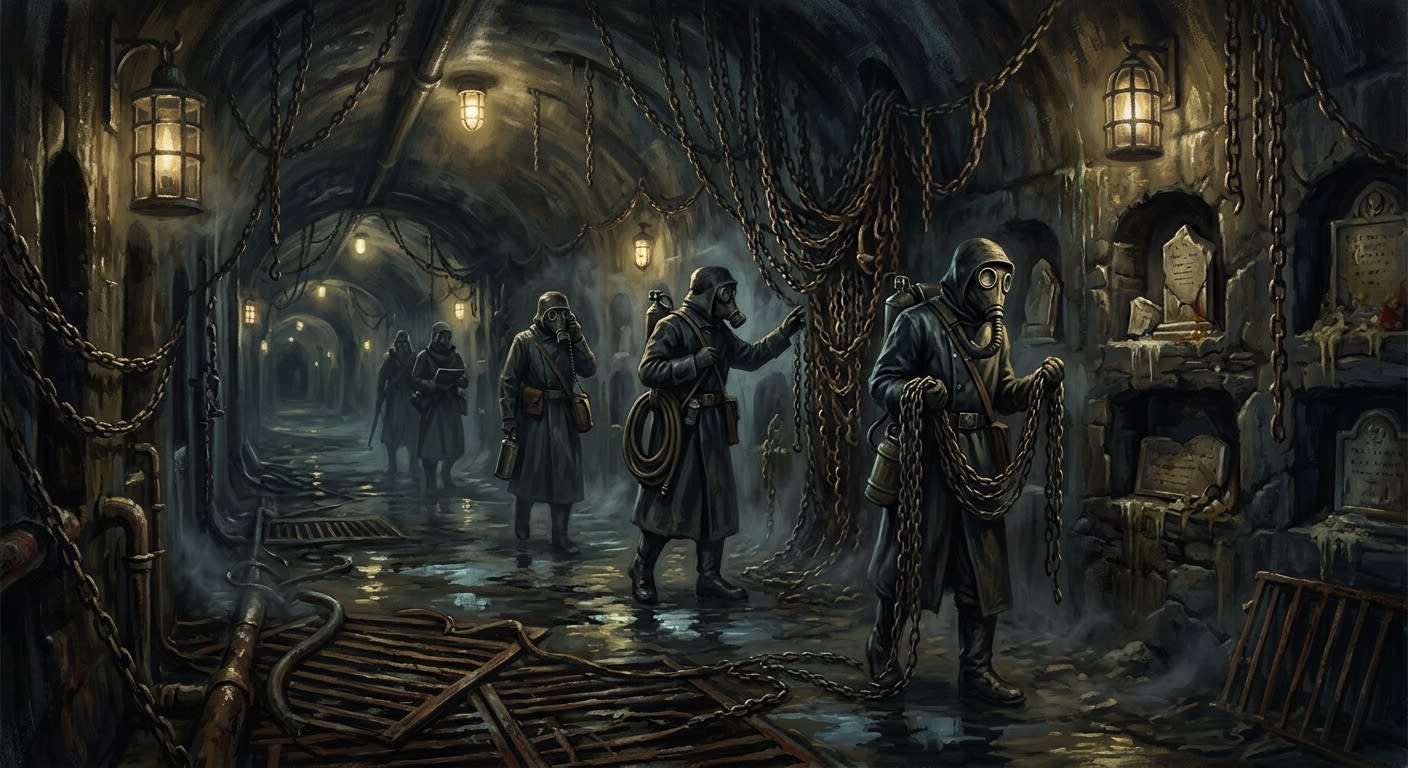
The Dead Gallery
A corridor beneath [[bastion-irongate|Irongate]] that lengthens when counted and listens when addressed
The Dead Gallery is the wet basalt corridor beneath Bastion-Irongate where chains acquire extra links, voices outrun throats, and no one is to sing.
Codex Ref. II.4.08-014
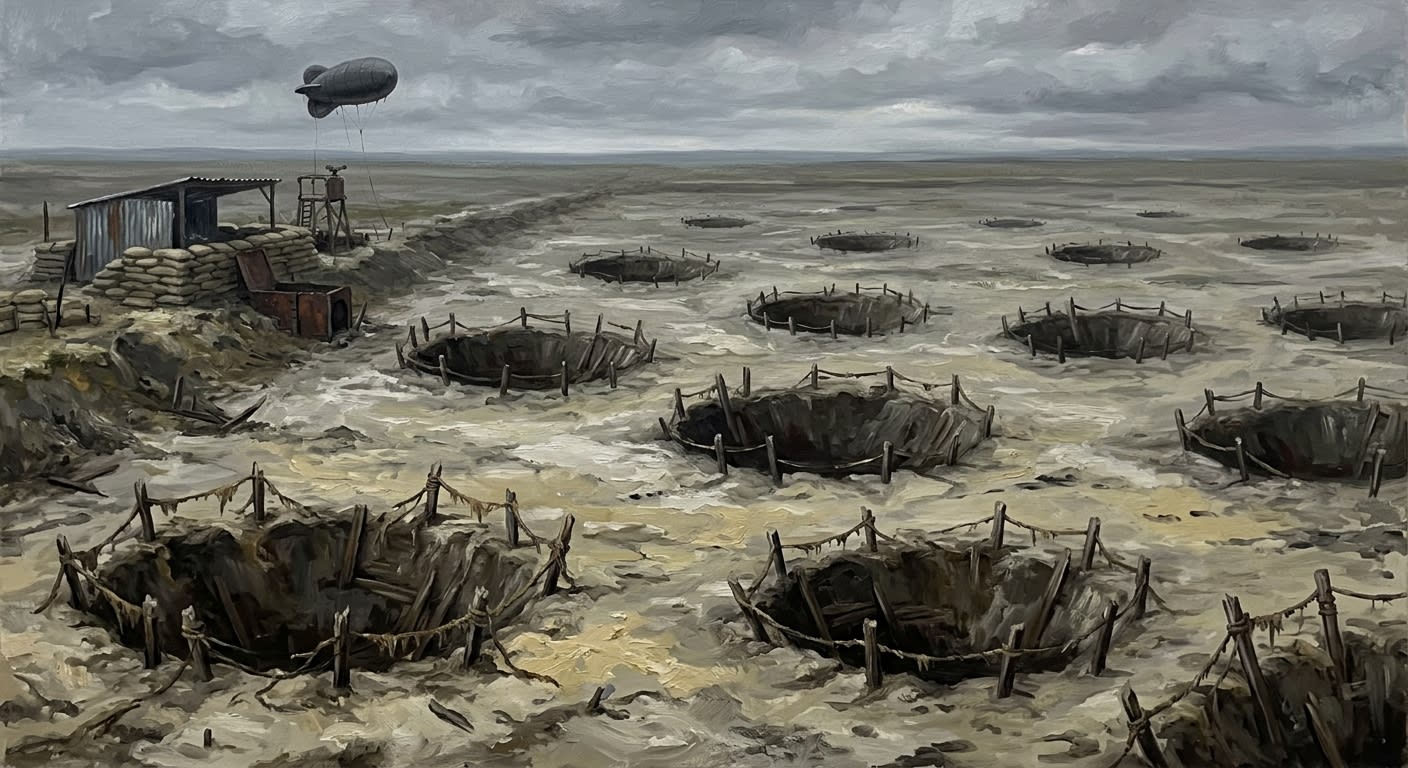
The Famine Pits
The dead are still hungry, and the Bureau prefers not to speculate why.
Fourteen confirmed burial sites in the former Hungarian plain where the dead of the Great Retreat have refused to stop dying. Their hunger radiates into the living. The Bureau classifies this as demonic. Drax does not agree.
Codex Ref. V.6.01-002
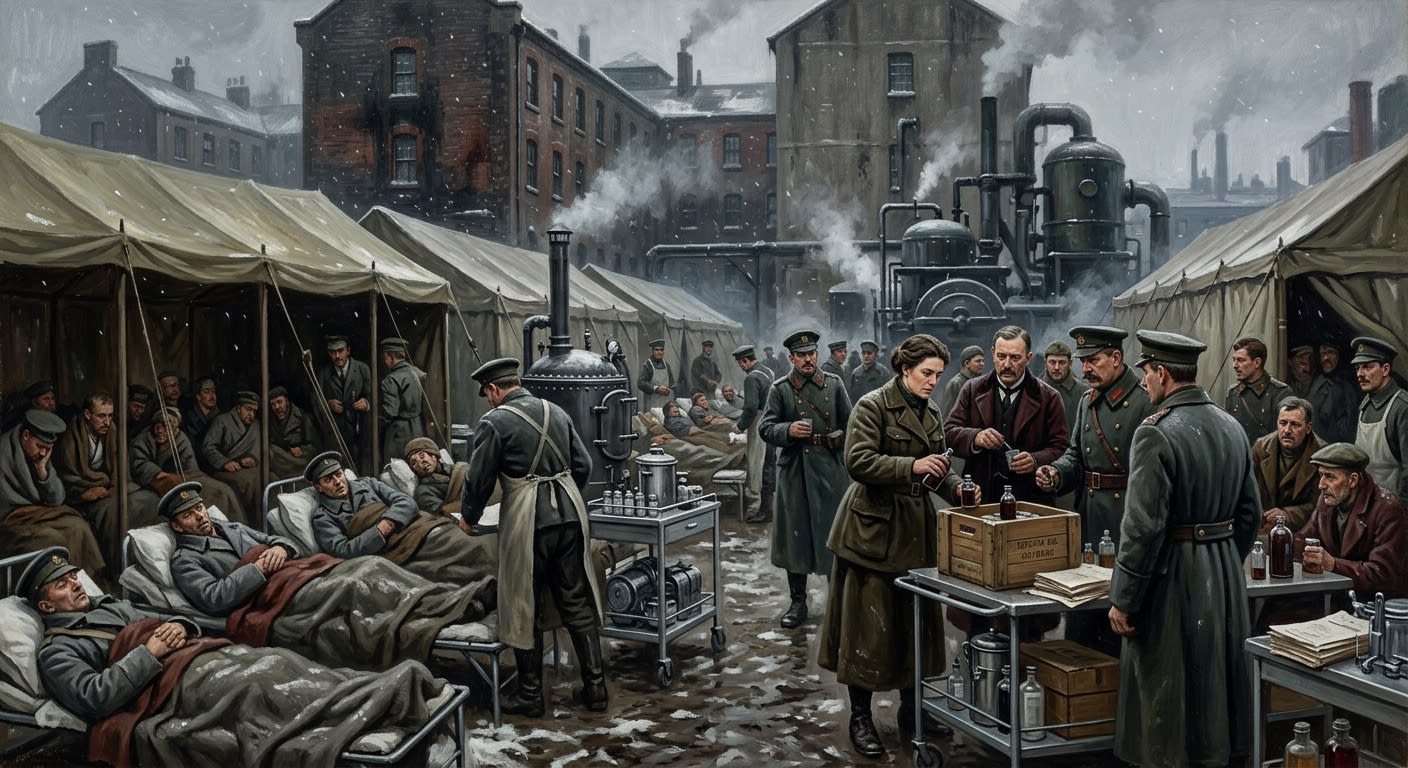
The Fever Winter of A.S. 112
Blessed salt failed; an old woman’s oven remembered medicine
The A.S. 112 Fever Winter killed four thousand Hinterland soldiers, exposed sanctioned medicine's failure, and let Gerda Weil's stolen remedy become Protocol 7-C(E).
Codex Ref. VII.4.20-001
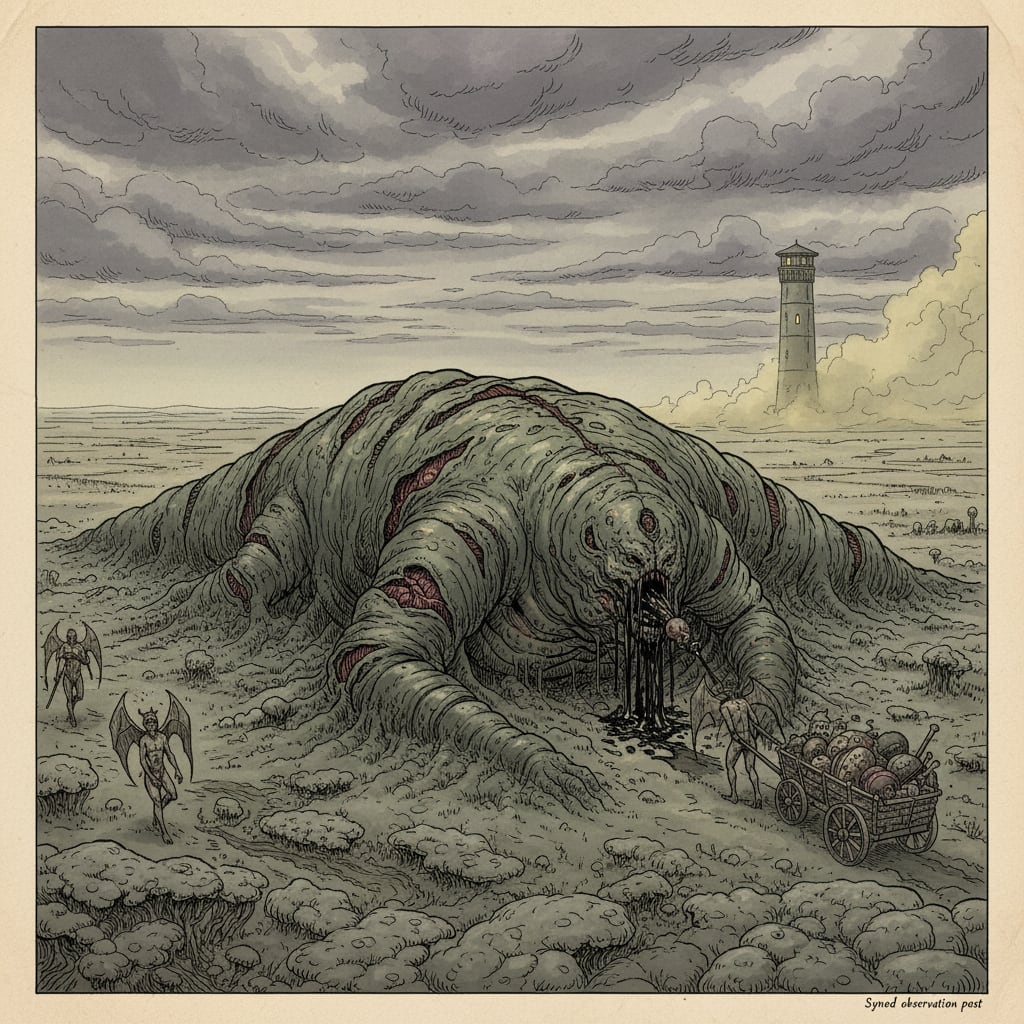
The Gorged
Still waiting for enough; which the Bureau notes, and does not discuss
Kargath's fourth taxonomic class: stationary consumption engines too vast to move, too hungry to stop. The Gorged believe the next mouthful will satisfy them. The Bureau classifies them as area denial and has noted the institutional parallel in a sealed file it declines to open.
Codex Ref. IV.1.07-004
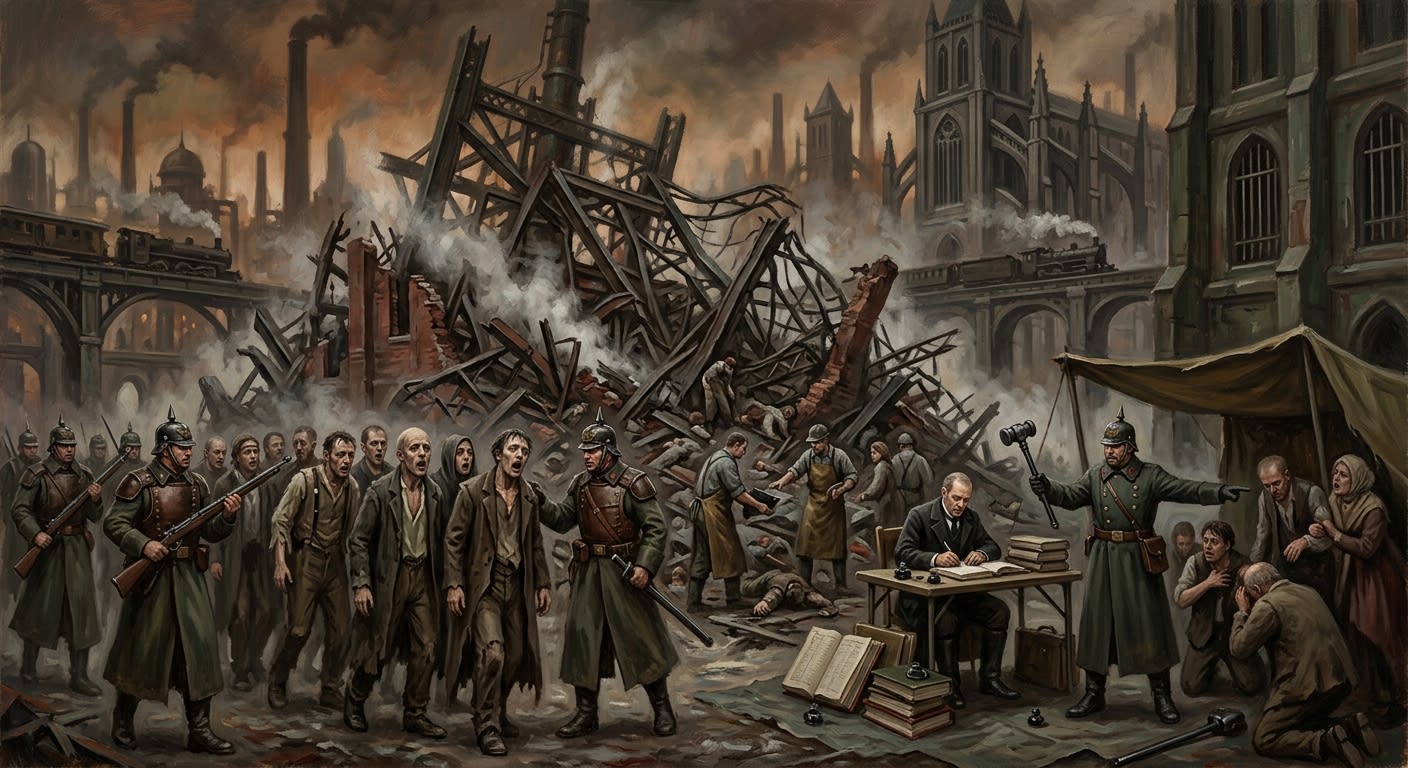
The Great Hush
Nine hours of silence, three thousand dead, and a century of licensed throats
The Great Hush of A.S. 94 collapsed Irongate's Third Lung, killed three thousand, birthed the Gasket Choir, and made silence into evidence, office, law, and cudgel.
Codex Ref. VII.4.24-001
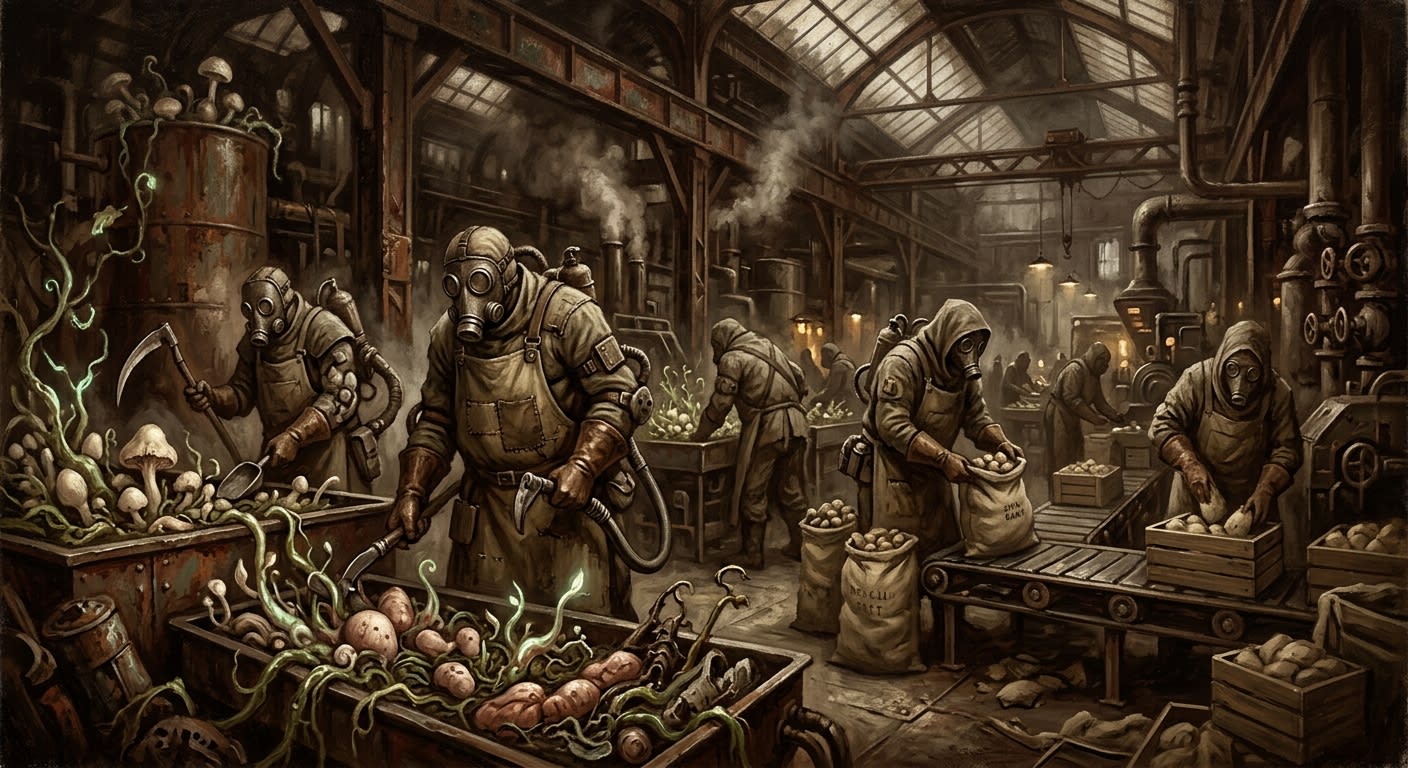
The Harvest
The Enemy discovered mercy and weaponised supper
Kargath's Harvest are provision-demons: gentle tenders of impossible crops whose real food fills the body, doubles the hunger, and murders gratitude.
Codex Ref. IV.1.07-014
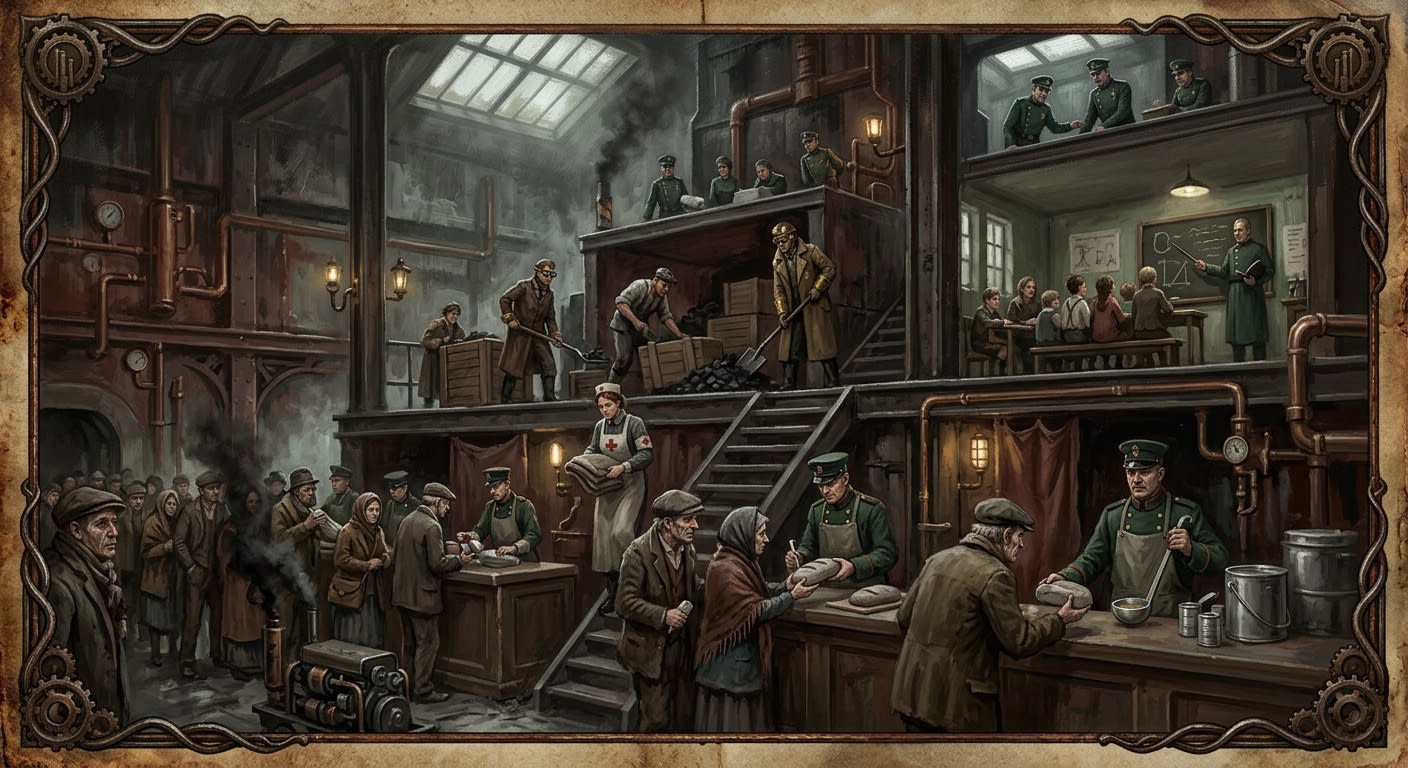
The Hierarchy of Need
Hunger is the sermon Kargath learned to serve hot
Kargath's cults do not begin with horns, but with bread. The Bureau calls their five stations a hierarchy. The hungry call them provision.
Codex Ref. IX.2.01-001
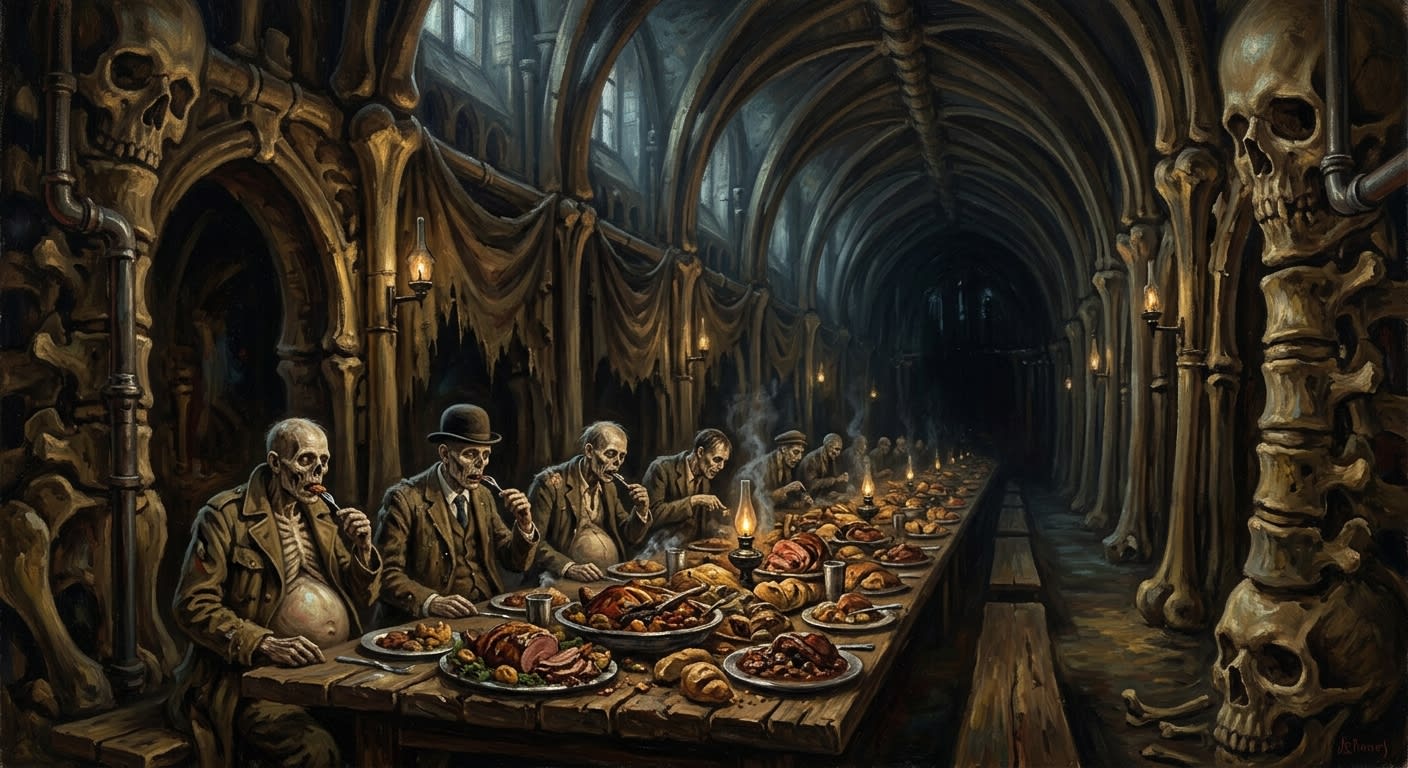
The Hollow Court
Nine miles of table. Every seat occupied. The host is always hungry.
The seat of the Sin-General of Gluttony, confirmed four times, located forty leagues east-south-east of Debrecen. Its feast has not ended. Its guests have not left. Its table runs nine miles. The Bureau of War has declined to act on this information three times.
Codex Ref. V.6.01-004
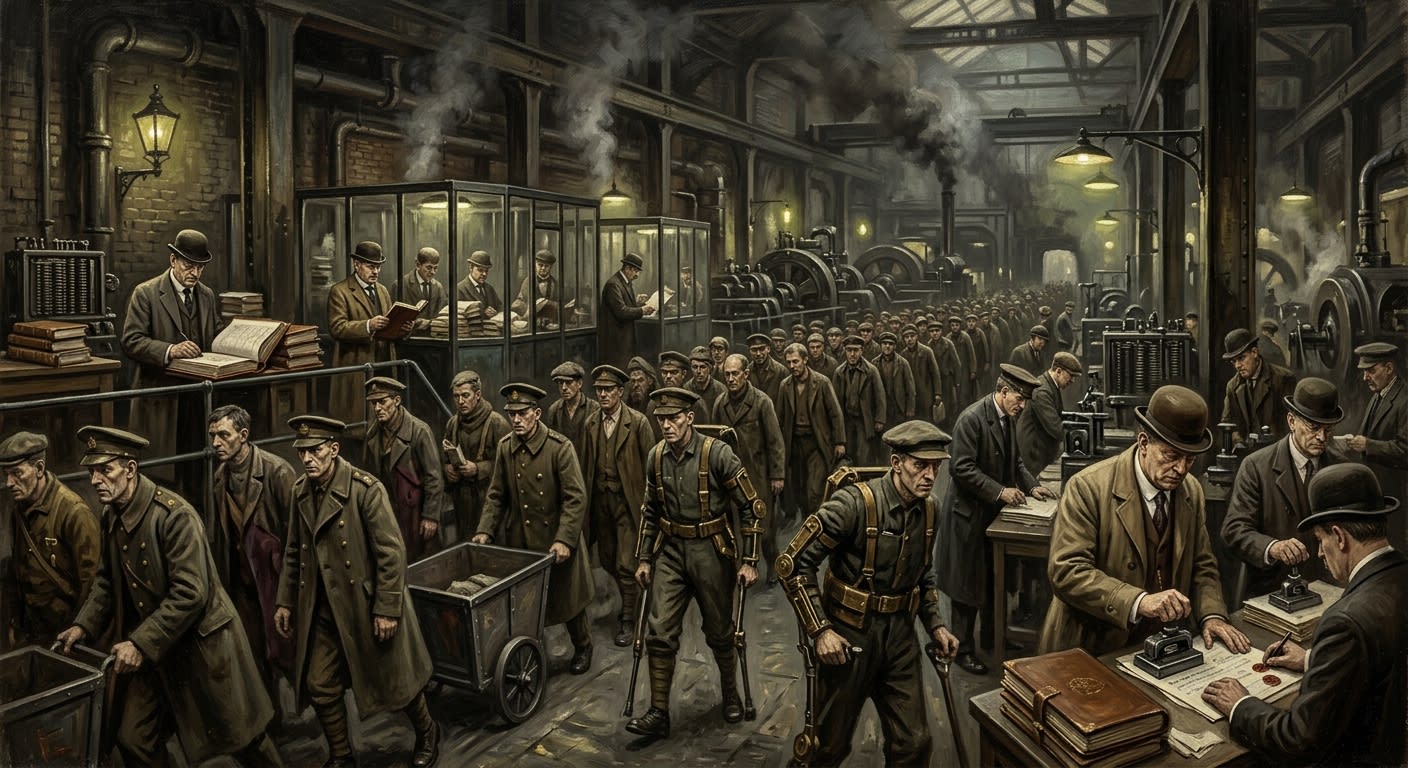
The Hollowing
When the hand remembers the rite and the soul declines attendance
The Bone-Stampers' private name for vocational faith-depletion, by which conviction thins, seals bite less deeply, and the dead resume their education in motion.
Codex Ref. XIII.1.45-001

The Hourglass Monolith
A black standard for measuring the ways time refuses obedience
The Hourglass Monolith is Lyon's forbidden temporal standard: part instrument, part confession, and quite possibly an enemy noun wearing Bureau wax.
Codex Ref. XIII.1.86-134
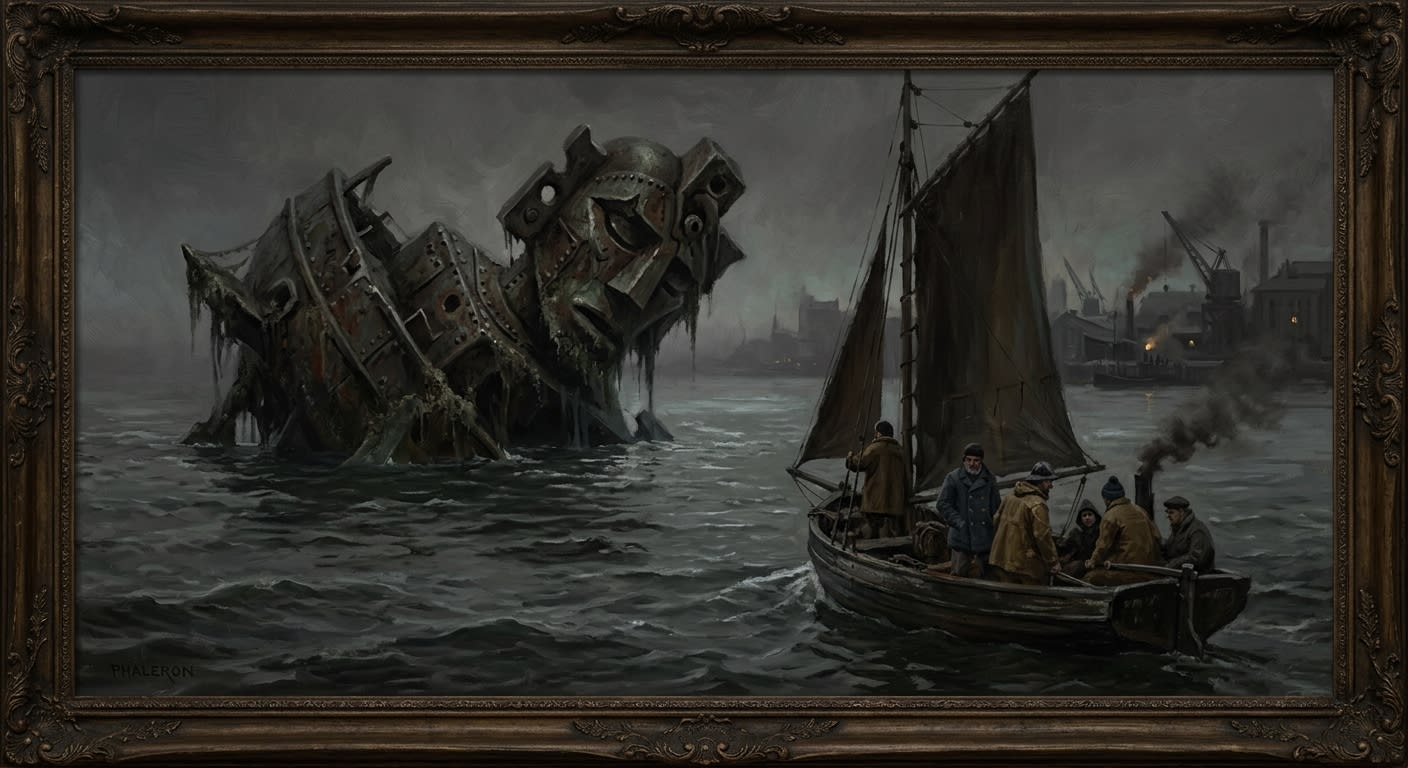
The Iron Idol
What the chain did not burn, the water learned to keep
A submerged iron anomaly off Phaleron Bay, linked to the Black Sea Armada's missing forty-seventh ship and watched by fishermen who wisely look elsewhere.
Codex Ref. V.2.02-001
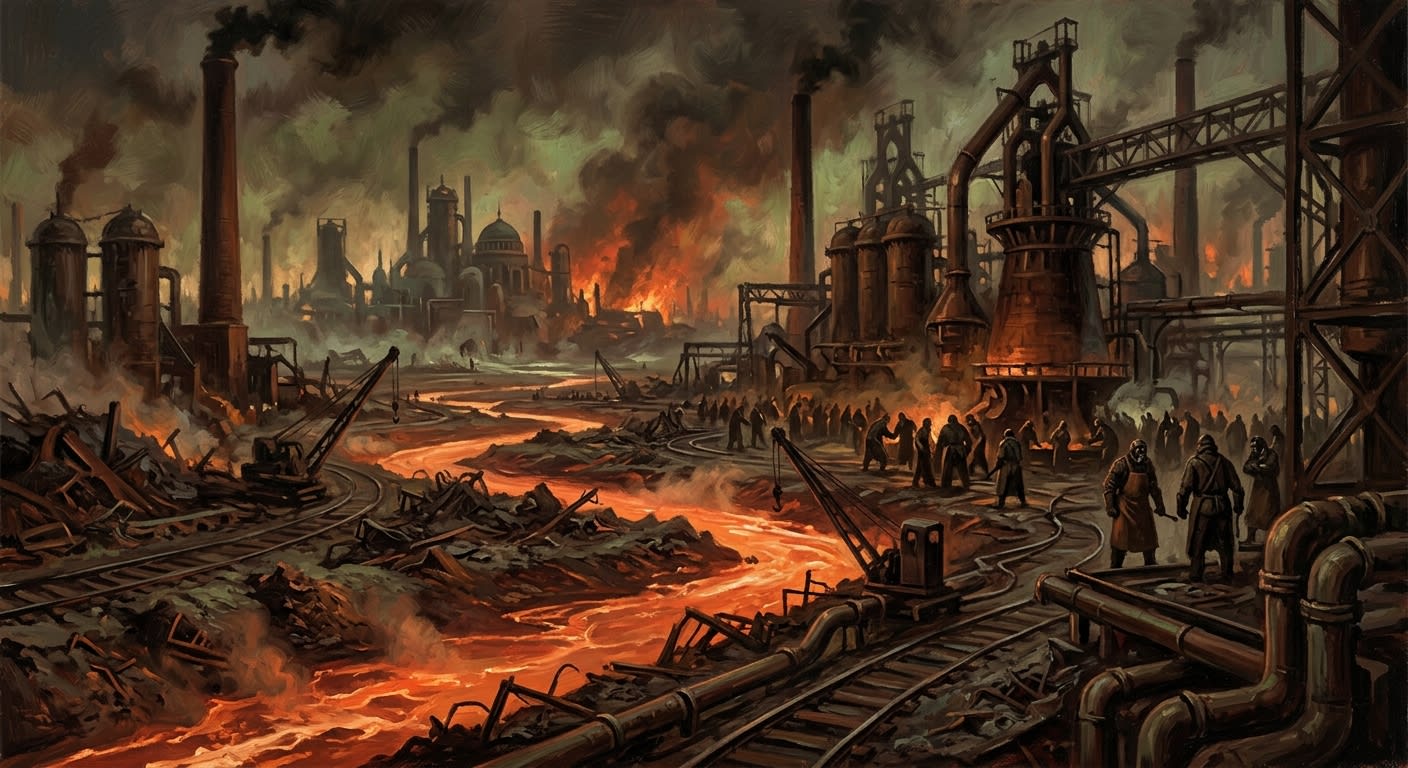
The Iron Wastes
Where Wrath taught geography to burn without cooling
The Iron Wastes are Maldrake's Thracian furnace-country: slag-rivers, moving heat, hostile iron, and the northern pressure against Constantinople.
Codex Ref. VI.1.03-001
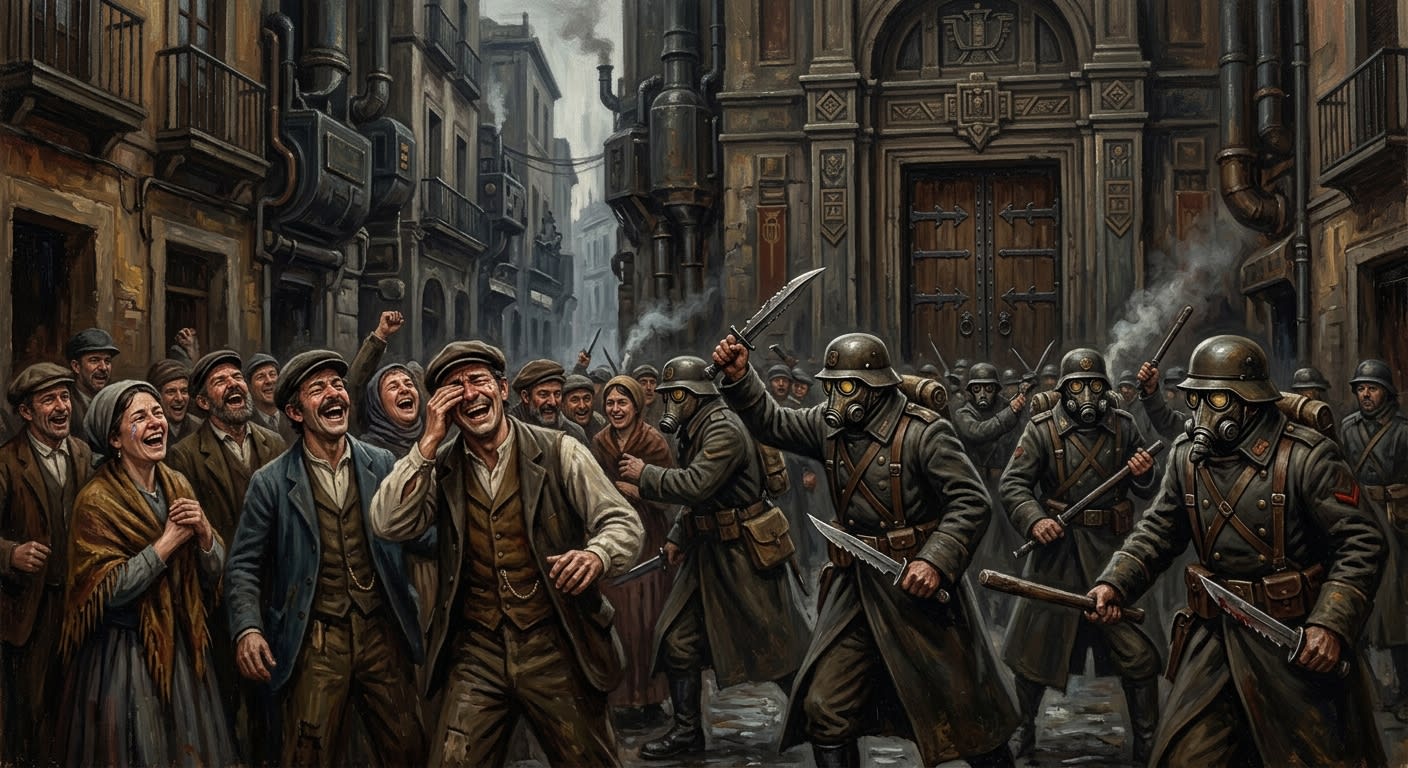
The Laugh Riots of Seville
The city laughed; the Bureau counted tongues
Seville exceeded its mirth quota in A.S. 153. The Bureau answered laughter with knives, and called the silence compliance.
Codex Ref. VII.8.02-001
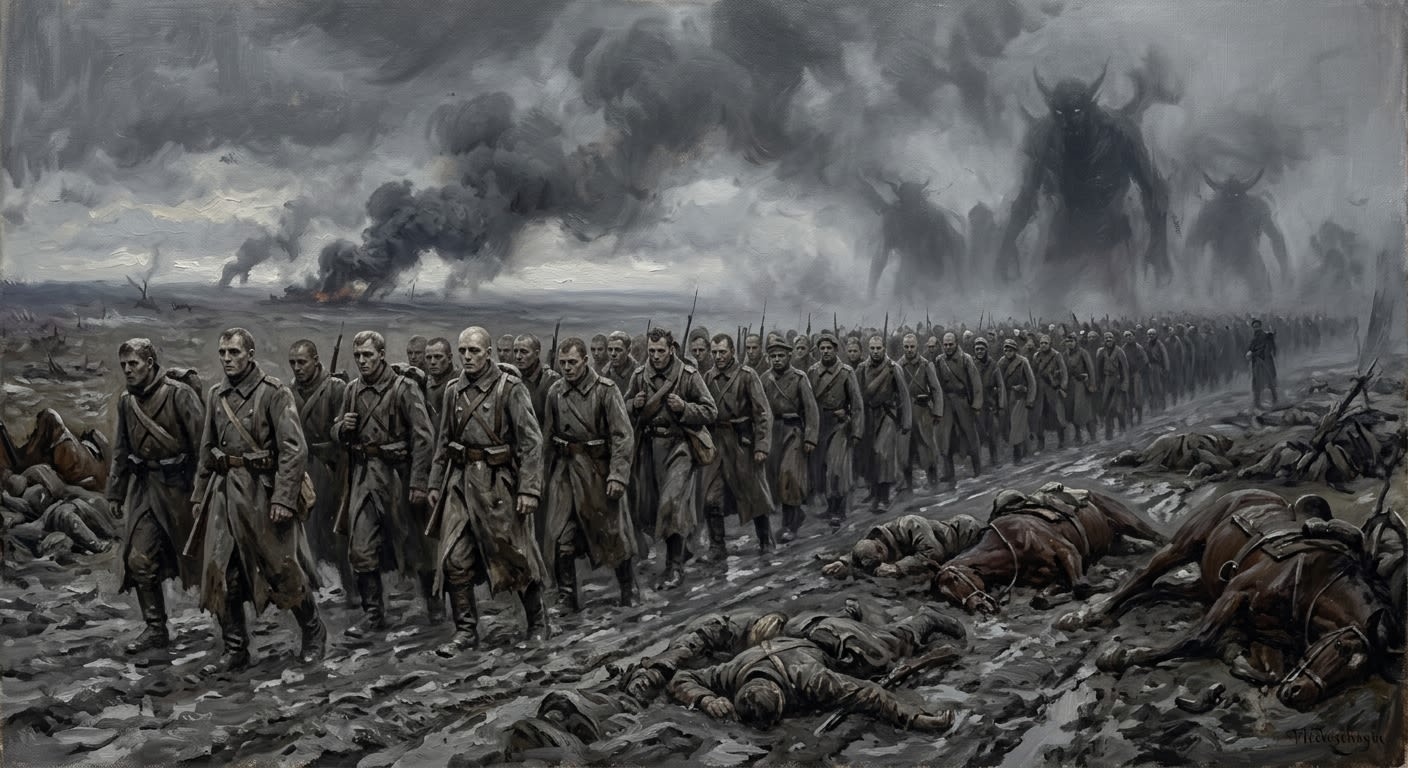
The Legions of Sin
Forty-seven souls for every demon — and the Bureau calls this mathematics
The mortal host beneath the Lie's banners: Thralls, Hollowed, Ash-Mothers, Blood-Tithes, Wormhosts, Processional Slaves, Ash-Fodder. Forty-seven souls for every demon. The Bureau calls this mathematics. I call it a confession.
Codex Ref. IX.1.01-001
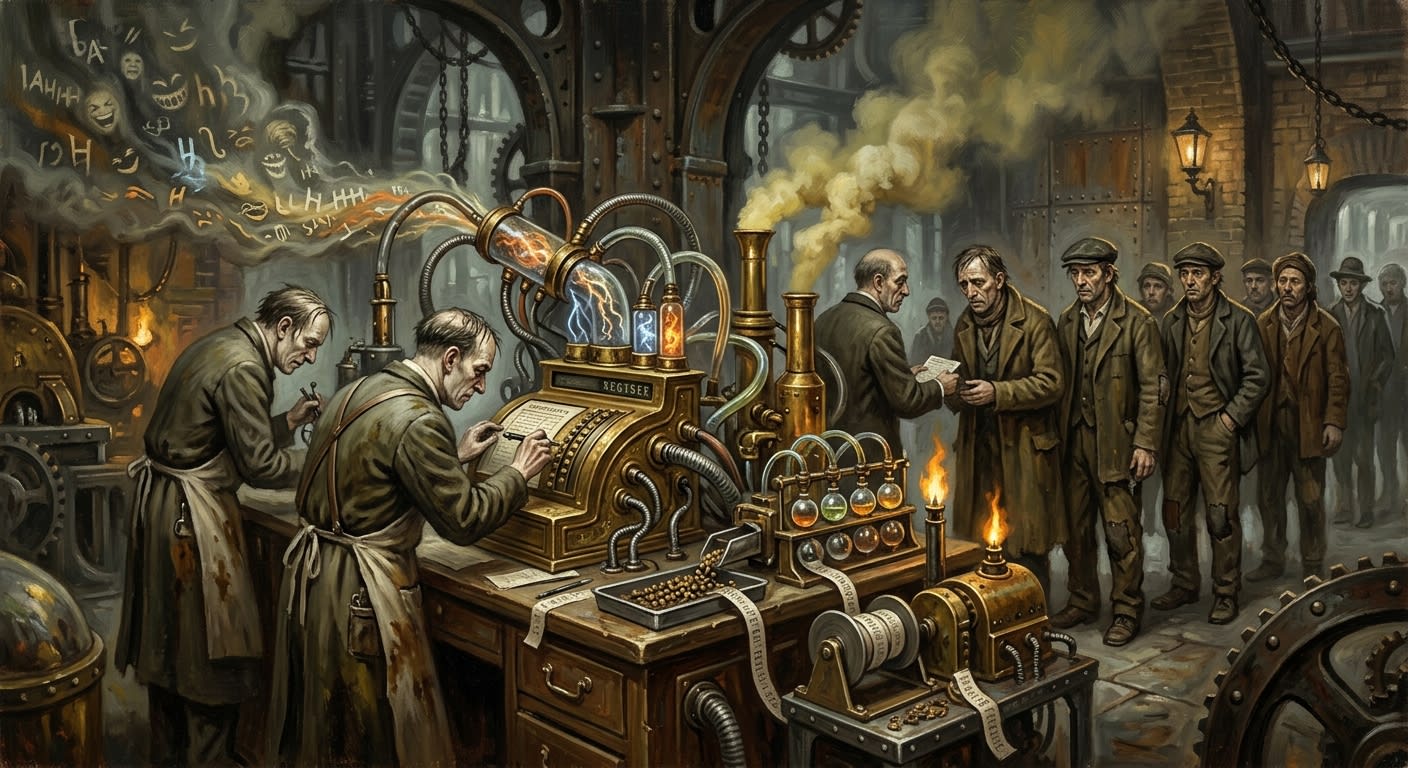
The List of Laughters
The ledger that hears teeth and teaches merriment to fear arithmetic
The List of Laughters is the Censorium's nightly mirth register, converting chuckles, guffaws, chortles, and riot-laughs into beads, fees, suspensions, fog, and fire.
Codex Ref. XIII.1.66-001
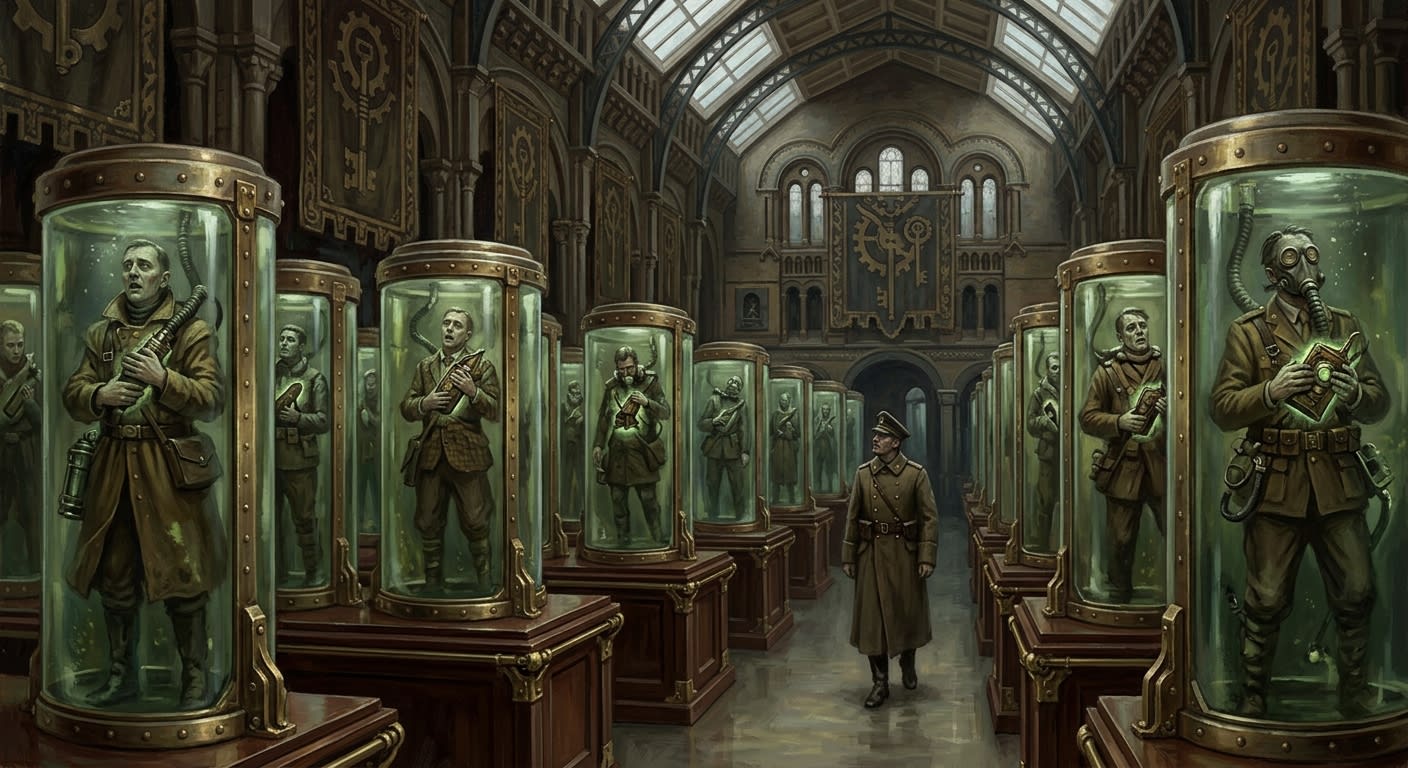
The Locked
The collector becomes the last object collected
Former visitors of the Vault of Ten Thousand Keys, the Locked hold the thing they came to find and remain alive behind glass, arranged as Greed's museum.
Codex Ref. IV.1.07-003
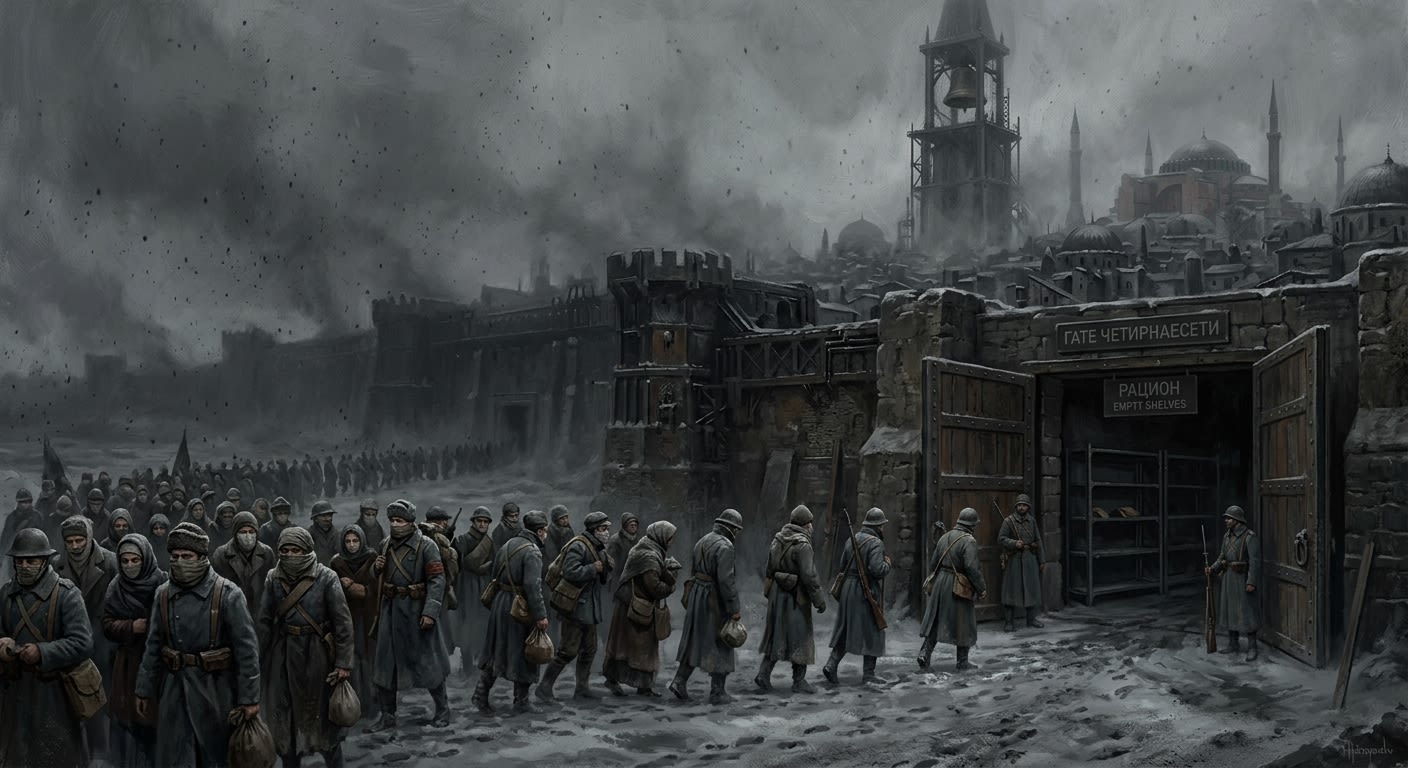
The Ninth Bell Famine
The bell tolled. The bread did not arrive. The Bureau classified this distinction later.
Sixty-eight thousand dead. Nine months of ash. The ninth bell tolled on time. The bread did not arrive. The Bureau of Rites calls it a refining tribulation. The refined are in the walls.
Codex Ref. VII.5.01-001
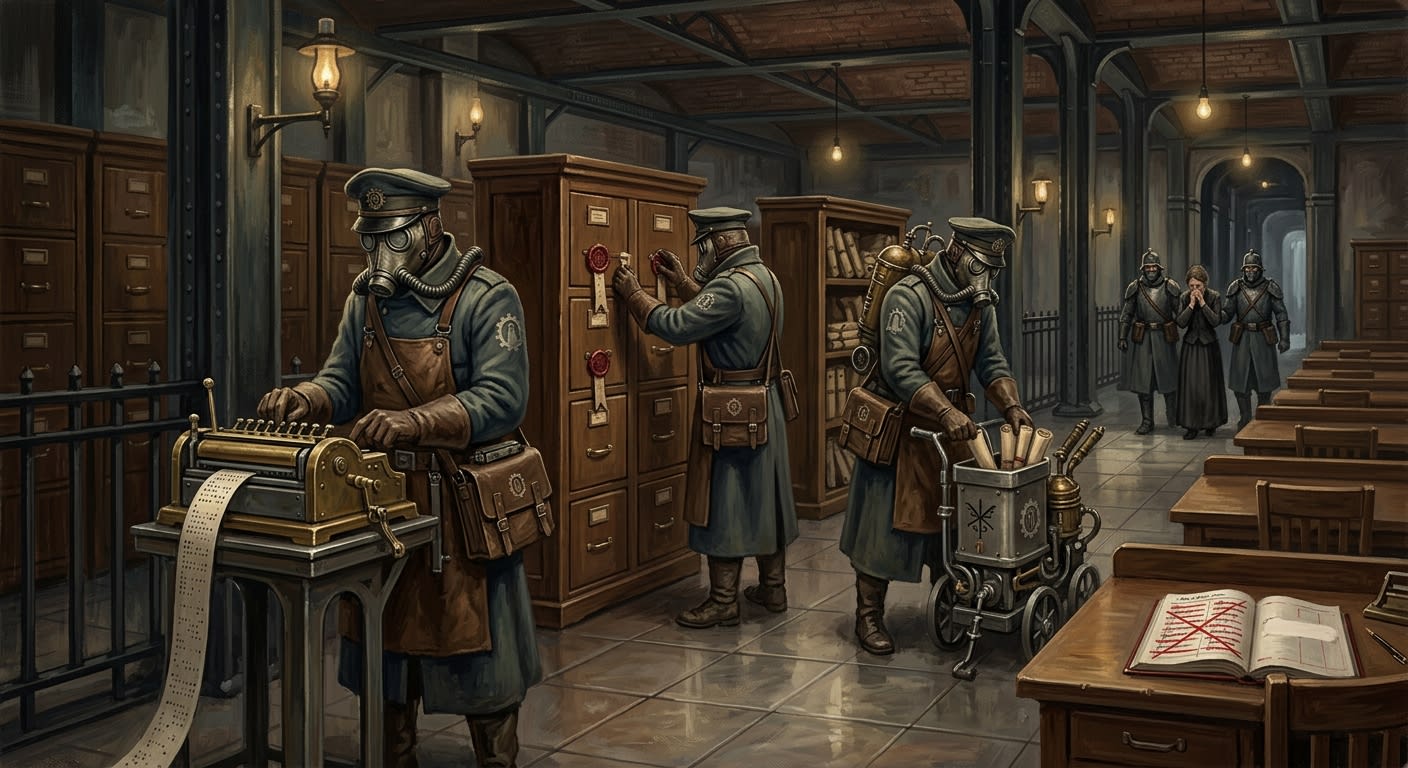
The Order of the Shroud
The mercy of no martyrs, delivered by black wagon
The Shroud does not burn heretics into warnings. It removes them into arithmetic, leaving tidy rooms, corrected rolls, and grief without permit.
Codex Ref. XI.6.01-001
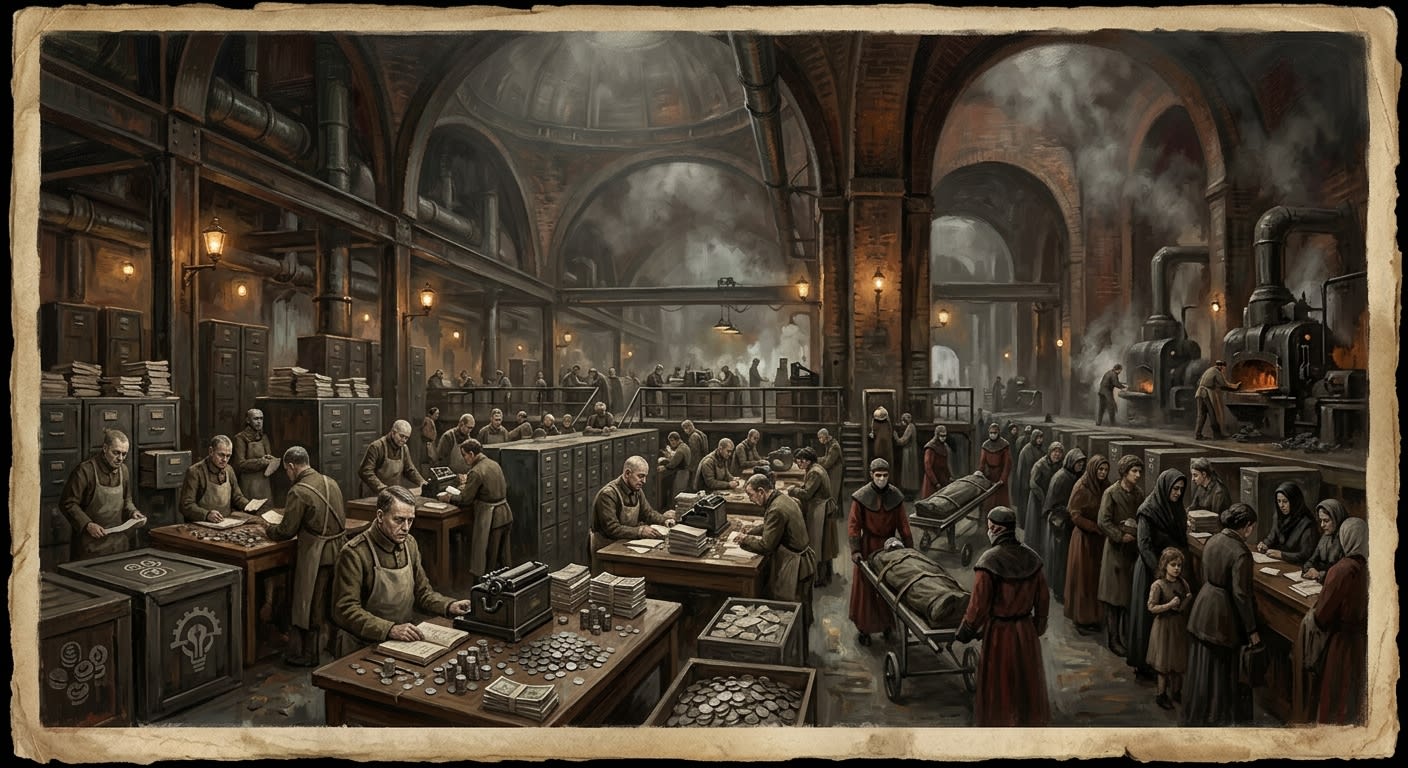
The Palatine Counting House
Where debt receives its sacrament and arithmetic learns to bite
The Palatine Counting House is Strasbourg's sleepless Fiscal Heart, seat of the Bureau of Tithes, where coins, corpses, widows, unborn debtors, and corrected accountants are counted.
Codex Ref. II.2.07-001
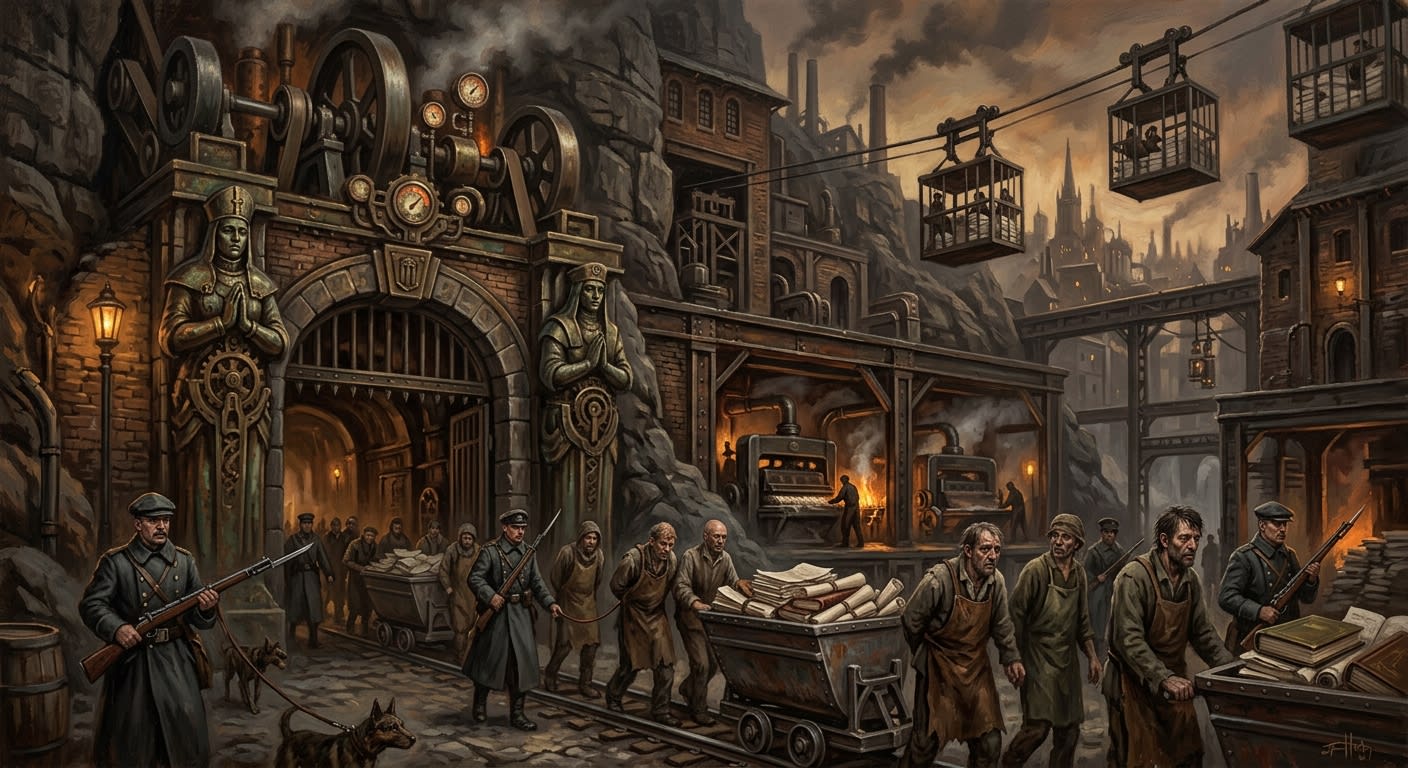
The Paper Mines of Ulm
Where forbidden minds are pressed into obedient sheets
The Paper Mines outside Ulm turn condemned scholars, clerks, witnesses, and families into archival stock, redaction vellum, penitential forms, and troublingly warm sheets.
Codex Ref. II.2.06-002
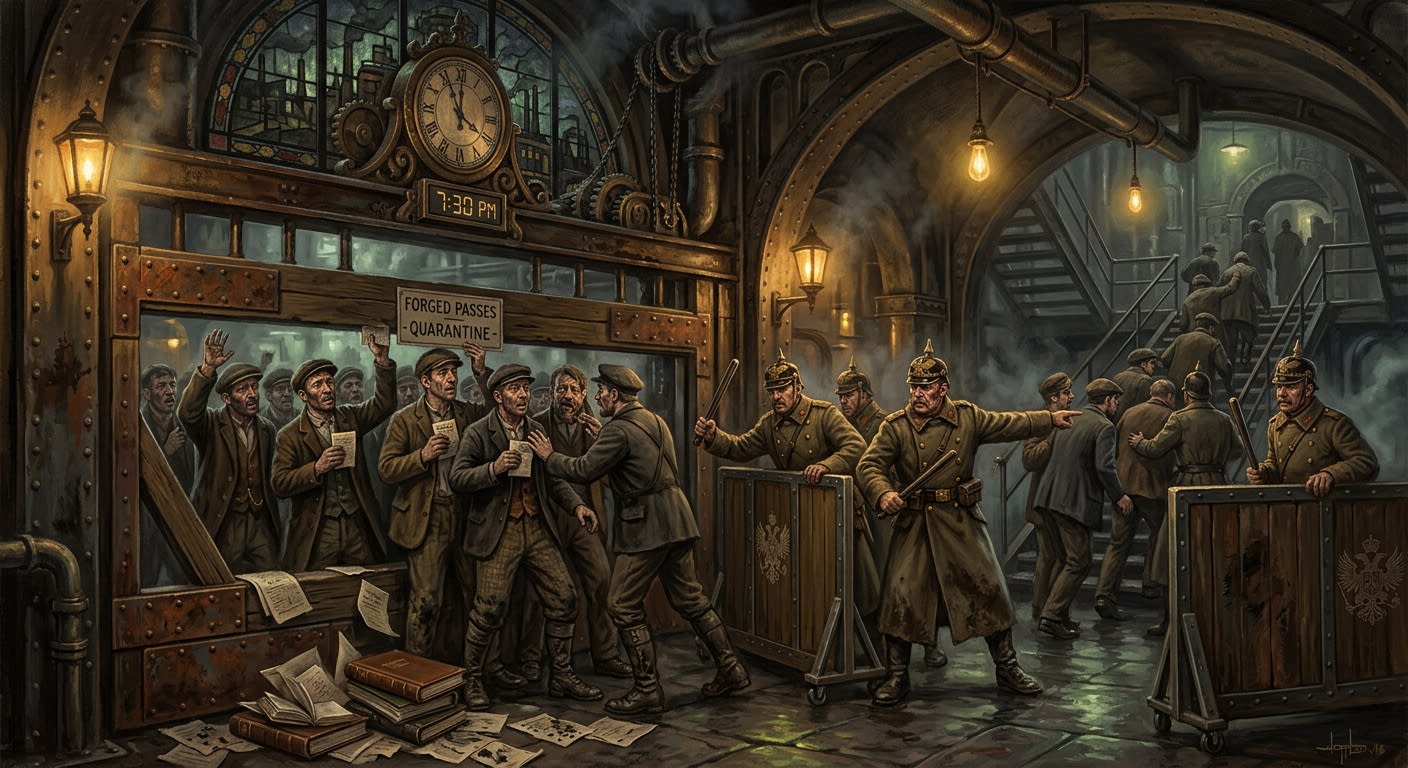
The Paper Plague of A.S. 112
Where forged paper entered Przemyśl and flesh became policy
The Paper Plague of A.S. 112 was the Bastion-Przemyśl forged-pass disaster that killed eighty-seven, locked the western perimeter, and birthed bodily identity law.
Codex Ref. VII.8.10-036
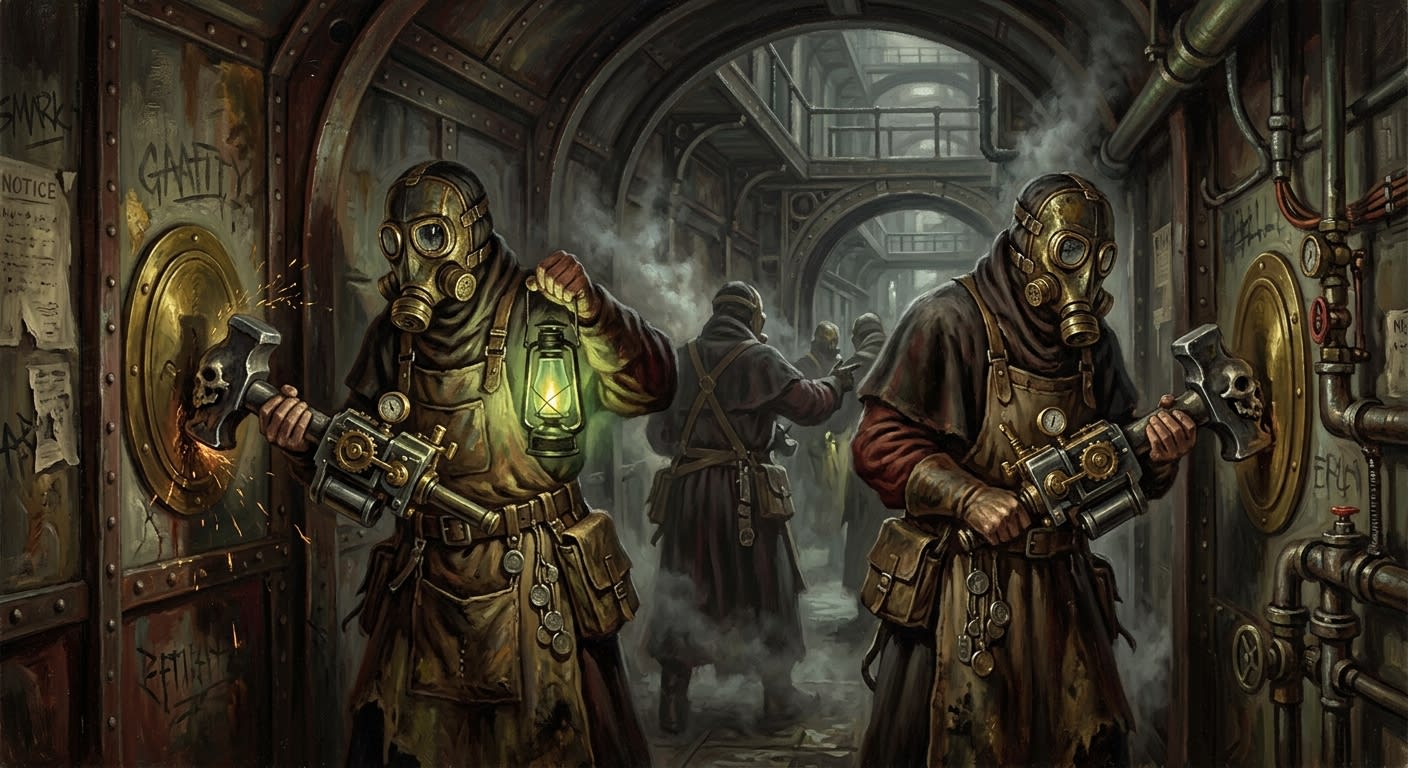
The Quiet Hands
The hand that does not tremble is the one the corridor obeys
Senior Ritual Bone-Stampers who quiet active corridors when ordinary seals fail, unlisted by organigramme yet indispensable wherever the dead begin correcting the Ledger.
Codex Ref. XII.37.02-001
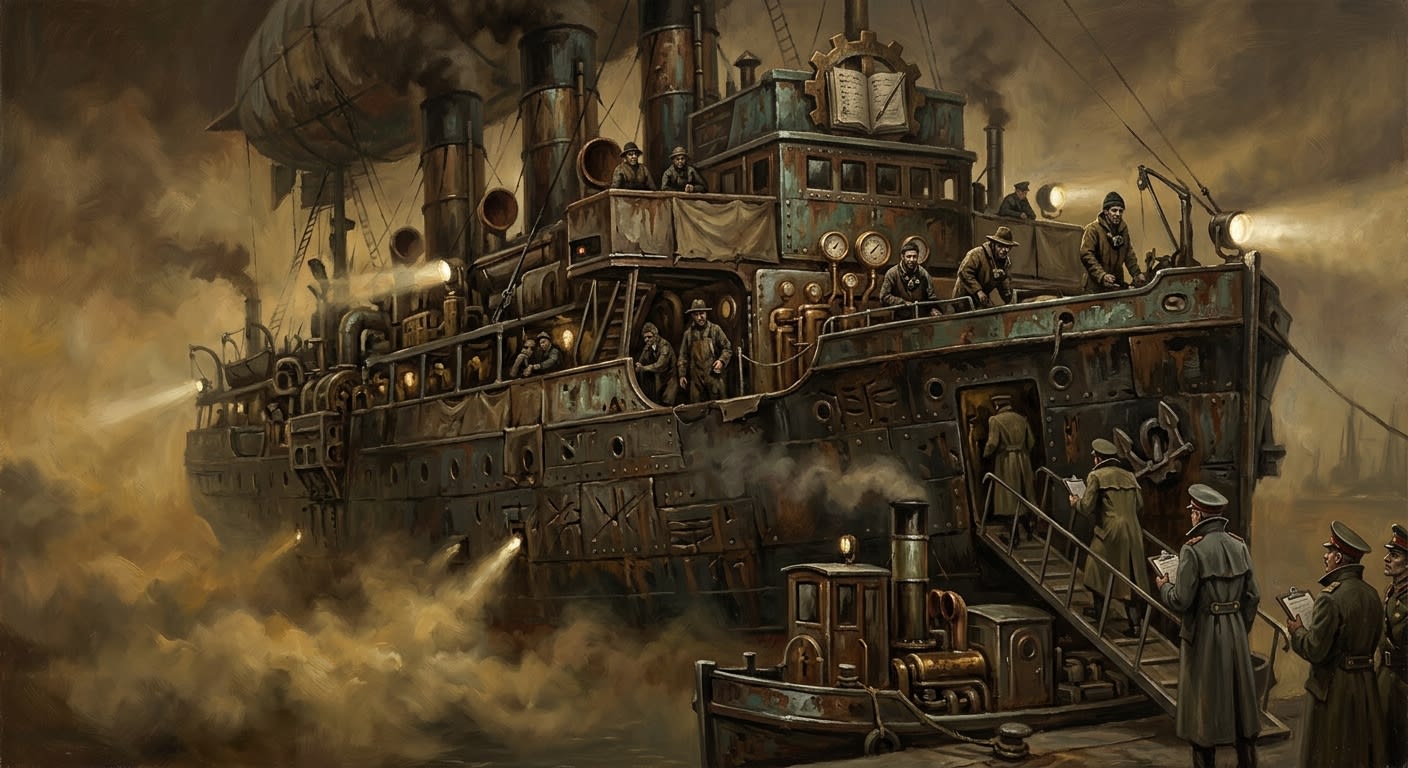
The Saint Veritas
Truth went below and returned with courtesy in its teeth
A Bureau of Records supply galleon vanished during the Silence of Harbor Lamps and returned six months later with its crew intact and its log ruined by invitation.
Codex Ref. V.2.03-001
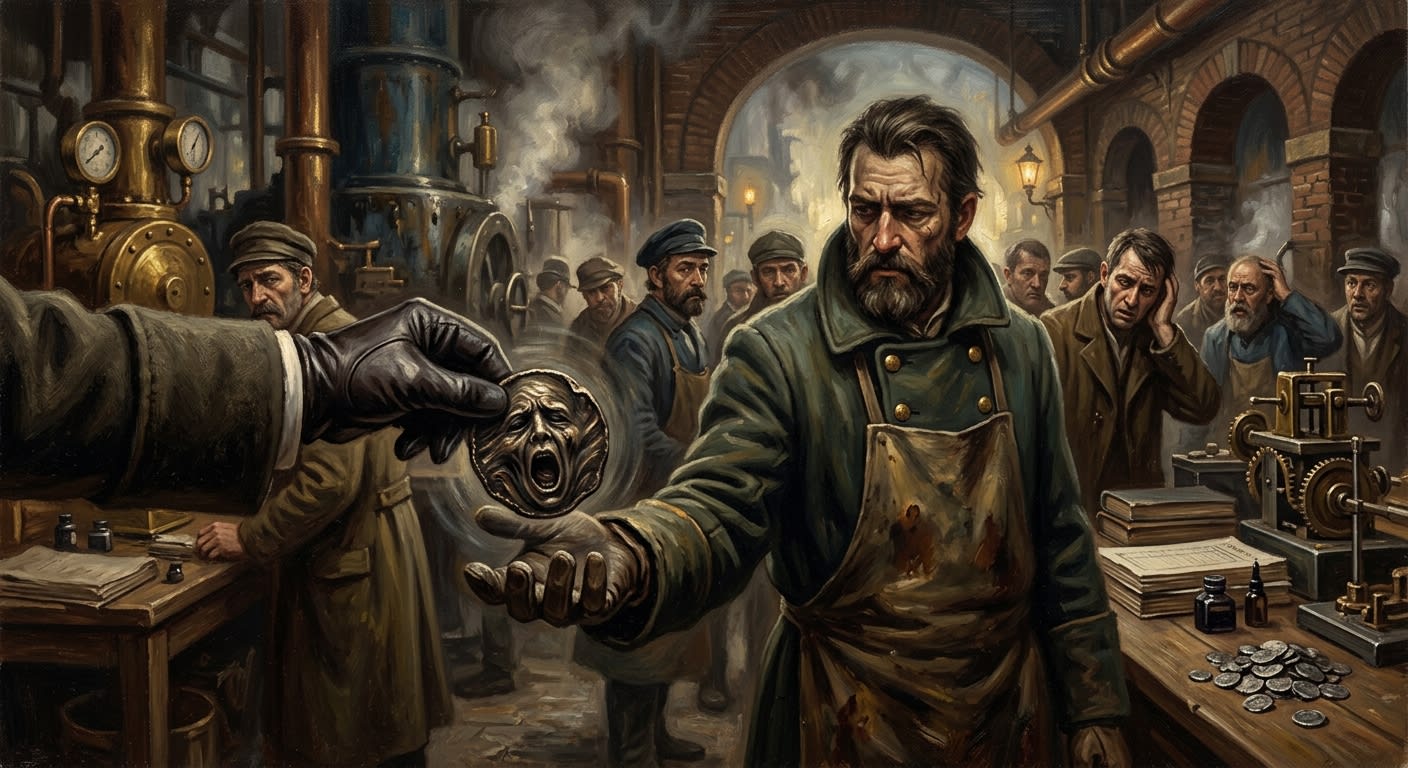
The Screaming Coin
The smallest transaction Hell ever notarised
A coin-like anomaly from Constantinople's Foundry Quarter passes through lawful hands, screams at transfer, and returns after every recorded destruction.
Codex Ref. V.2.01-001
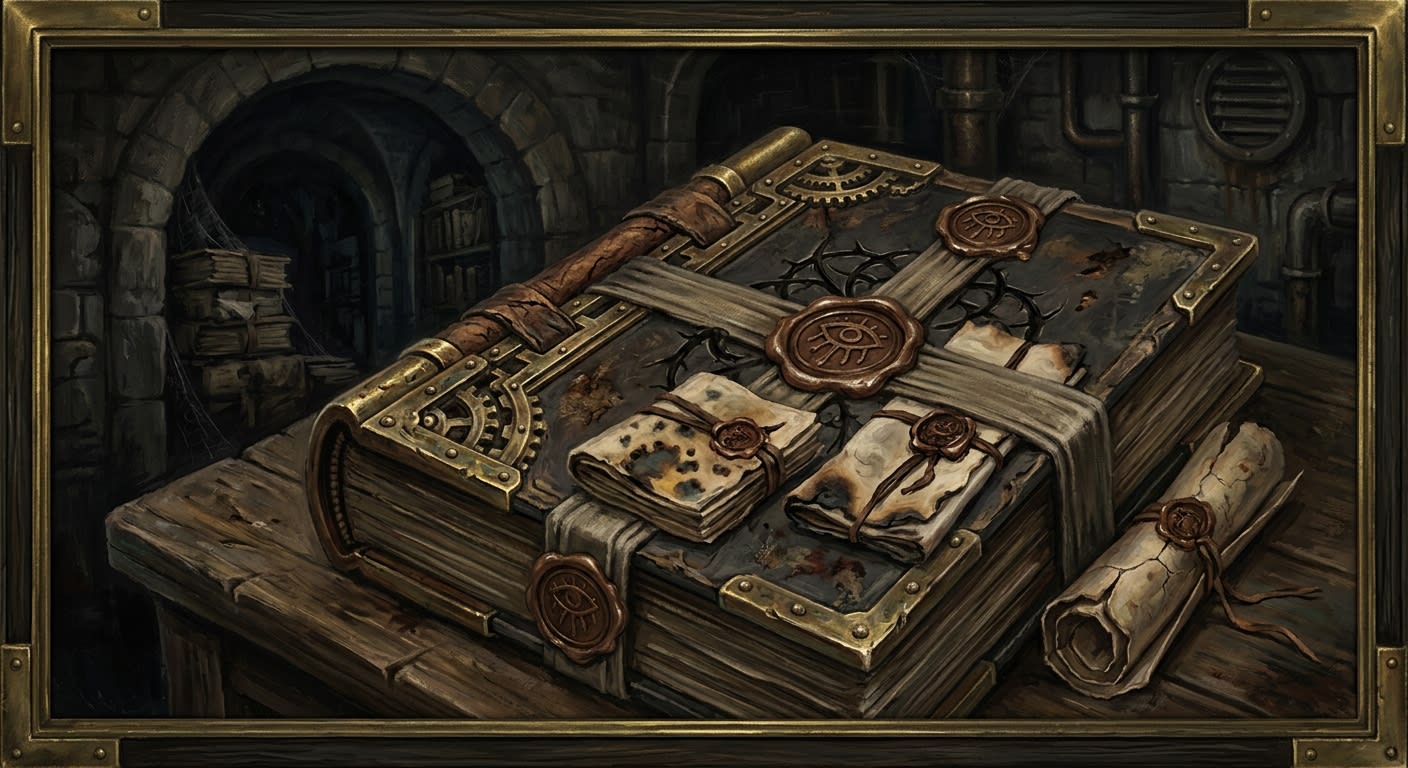
The Sealed Testimonies
Witness paper under restraint, because memory bites when shelved badly
First silence of the Vault of Silences, holding Atheron's emergence folios, the Mürren deposition from Debrecen, and the Iron Plains survivor volume.
Codex Ref. XIII.1.48-001
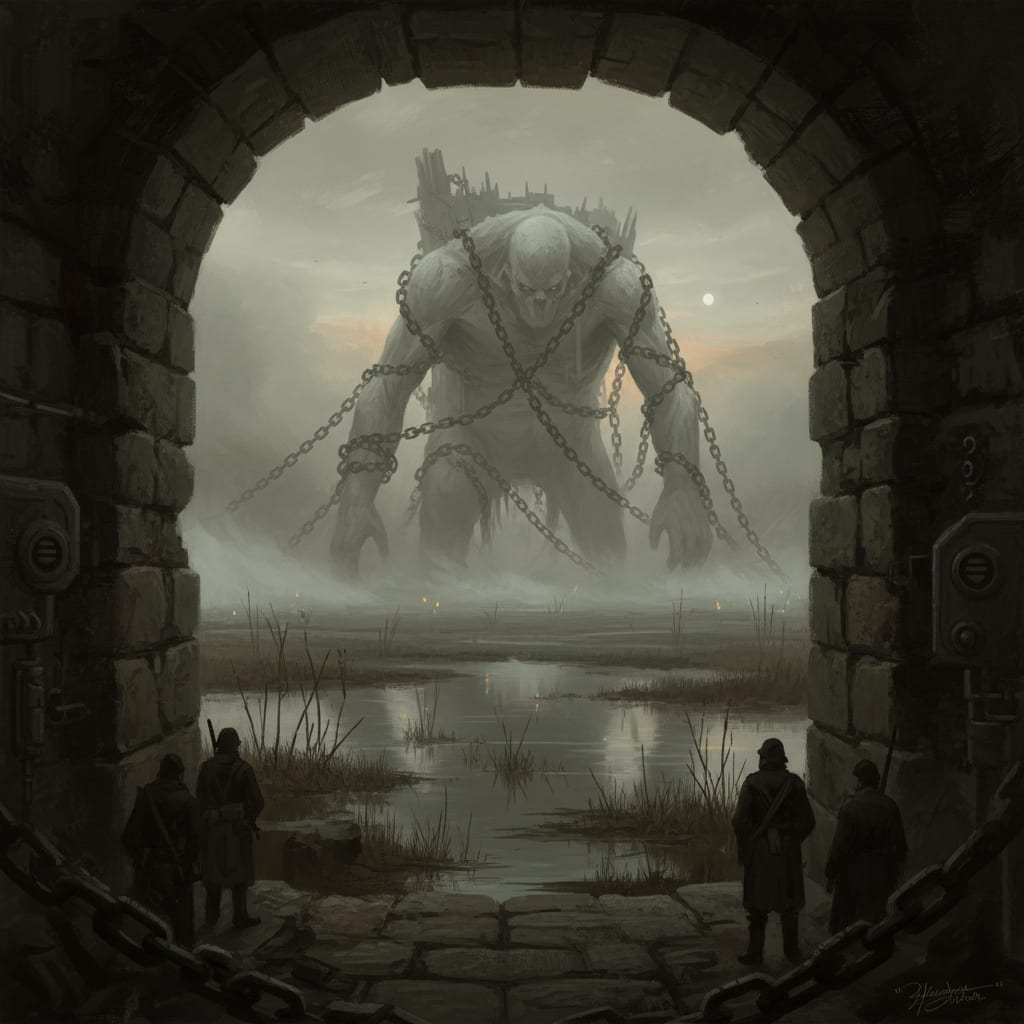
The Slumber-Hulk
A building that remembered how to walk — and what it was built to crush
Syrion's heaviest deployed asset — a chain-bound mass of compressed flesh and arrested time, classified HEAVY SIEGE (SUB-TYPE: TEMPORAL) by the Bureau of War. It does not strike. It approaches.
Codex Ref. IV.4.01-001
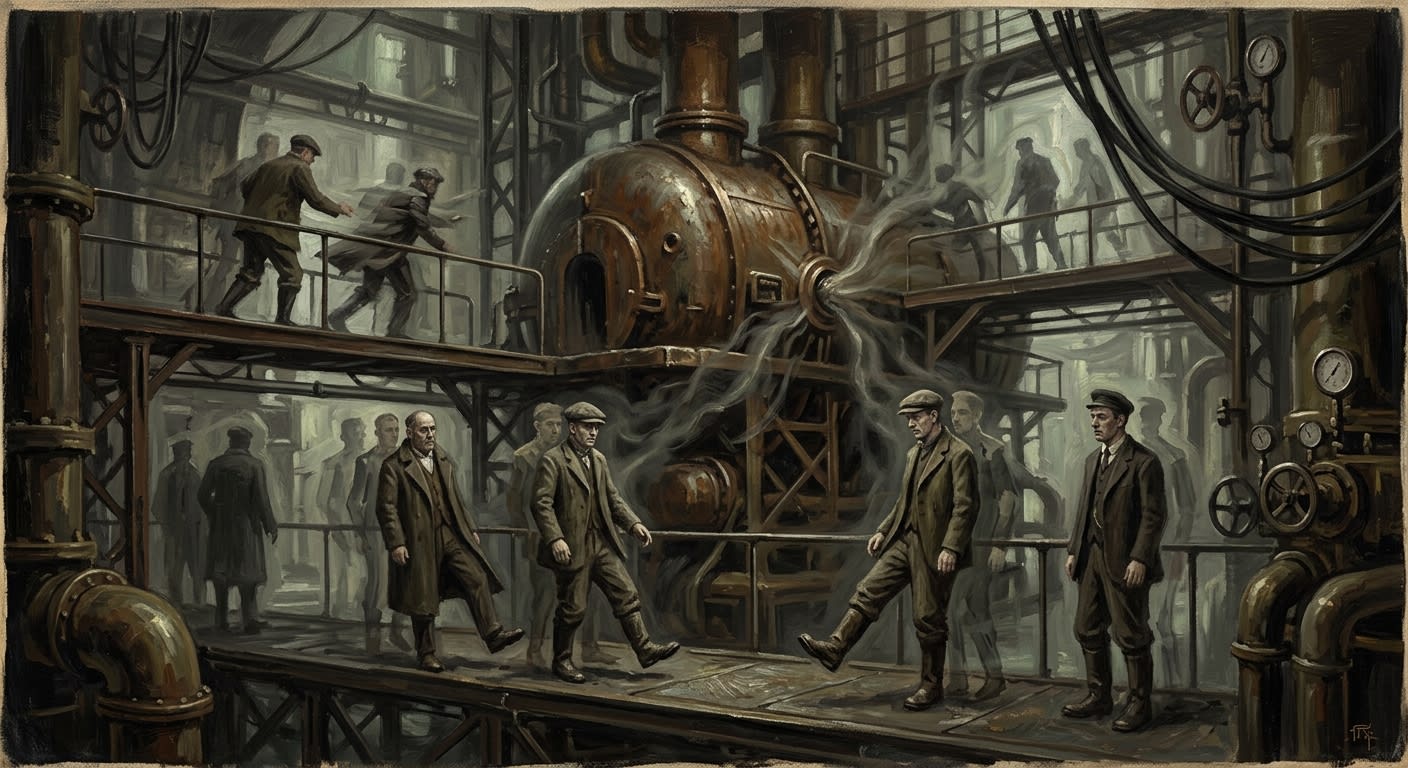
The Stillness Envelope
Where motion becomes a request the body declines to grant
The Stillness Envelope is the four-hundred-yard temporal-medical hazard around a Slumber-Hulk, where sleep is incidental, mercy is counterfeit, and motion dies by administrative refusal.
Codex Ref. XIII.1.87-194
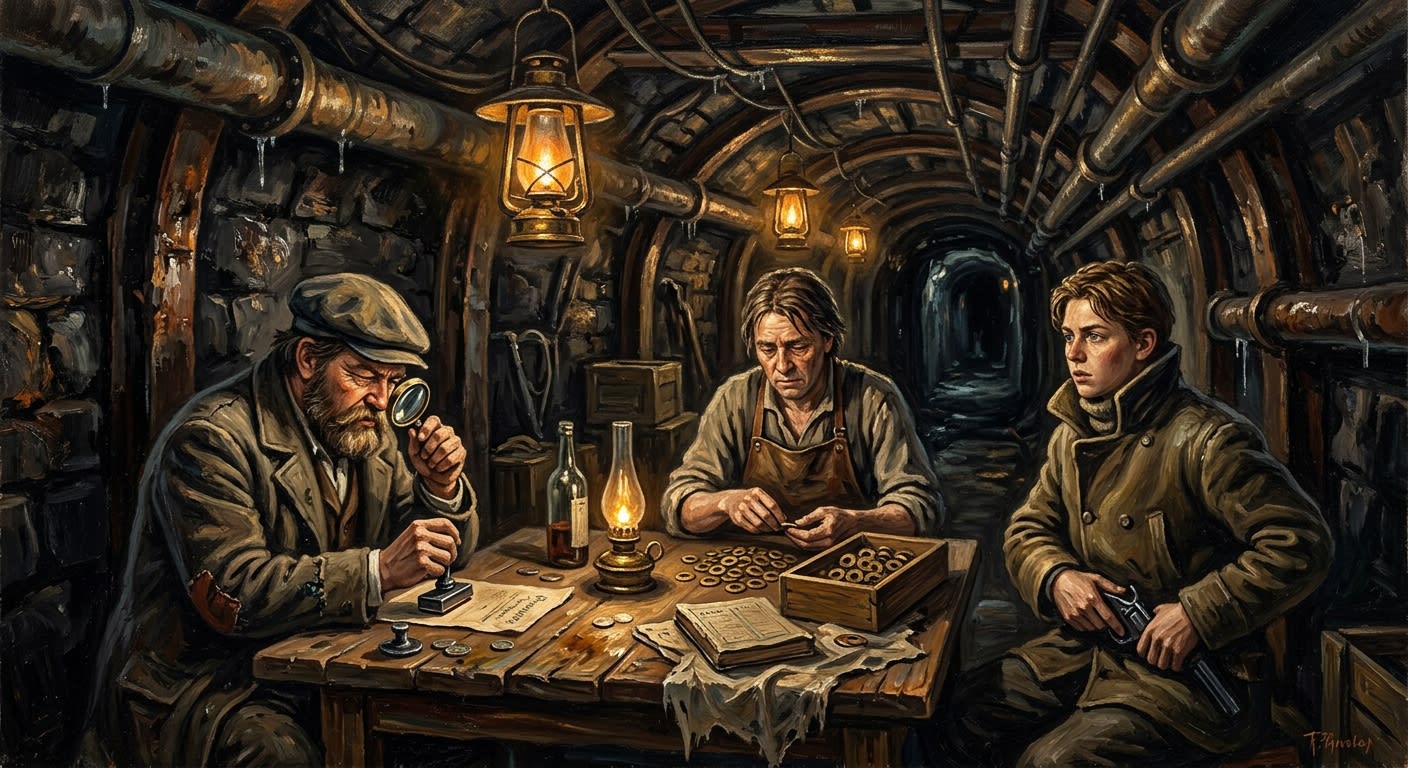
The Underchords
The Irongate's cellar has learned to grow
The eleven miles of sealed corridors and denied tunnels beneath Bastion-Irongate — home to the Underchord Cartel, the Counterkey Circle, and a gallery that grows by itself in the dark.
Codex Ref. II.4.10-001
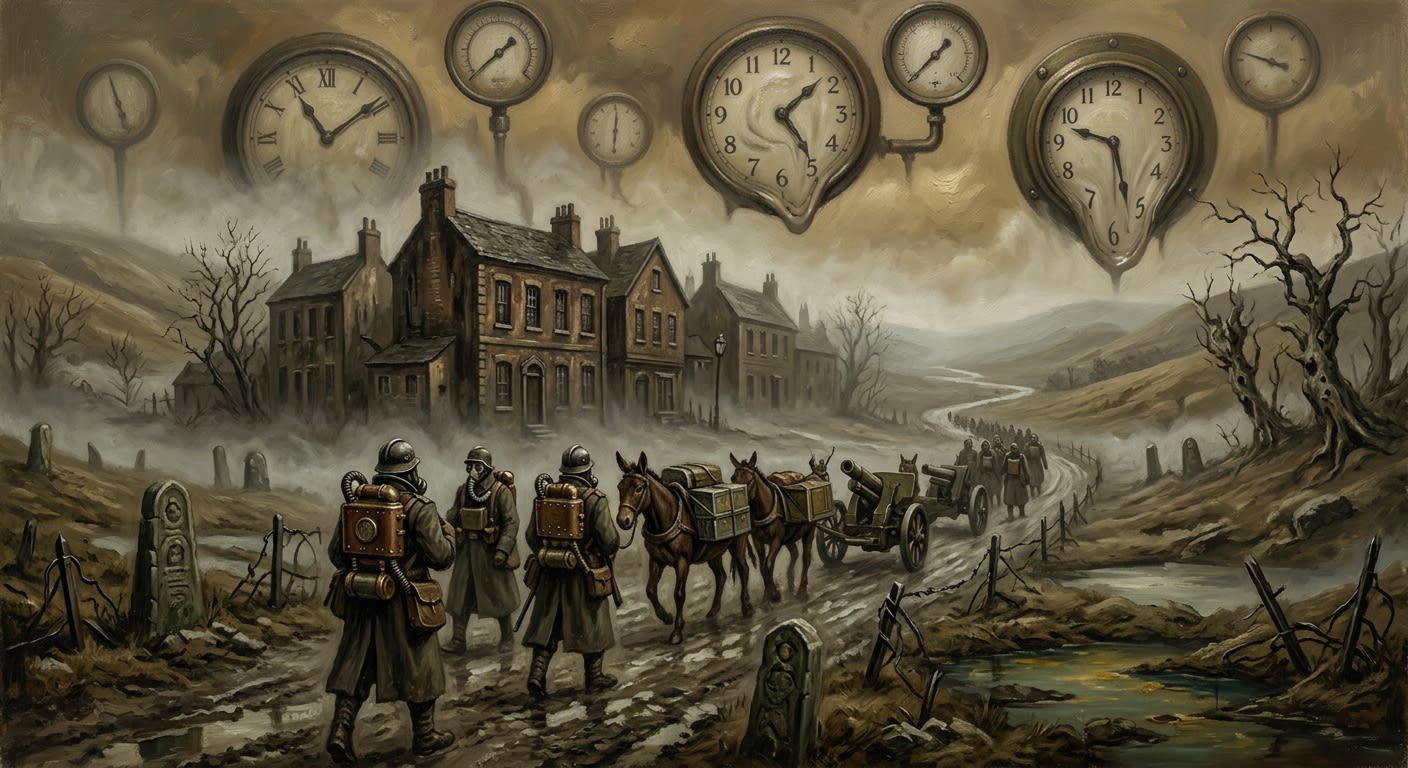
The Vales of Stagnance
Syrion's country, where geography sits down and refuses audit
Syrion's Vales are the old Shipkan wound made landscape: fog, soft clocks, preserved villages, patient armies, and roads that return with fewer years.
Codex Ref. VI.2.04-004
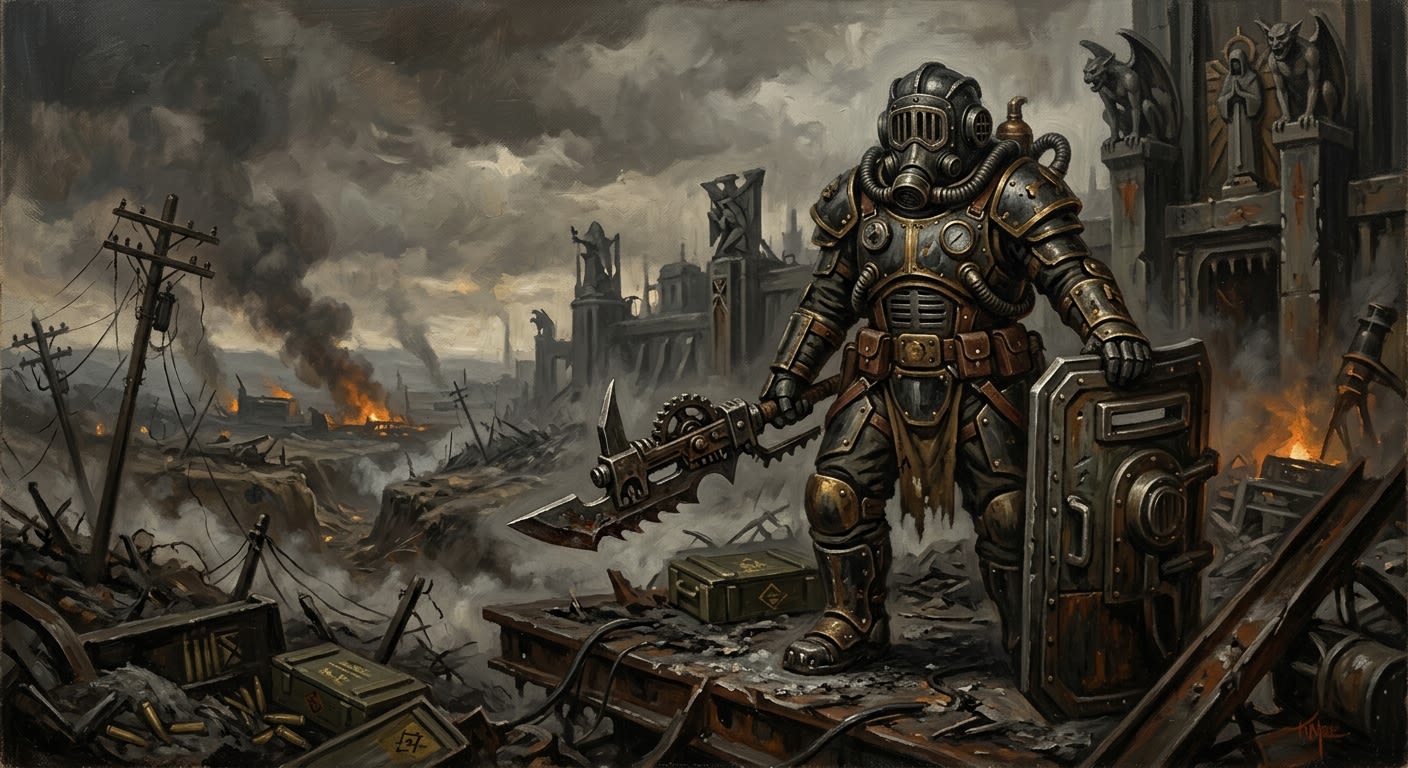
The Warrior of Justice
The faceless correction no Bureau has managed to license
Condemned as the Third so-called Virtue General, the Warrior of Justice is an unconfirmed faceless combatant whose alleged interventions rescue losing lines and insult every licensed channel of hope.
Codex Ref. III.2.01-053
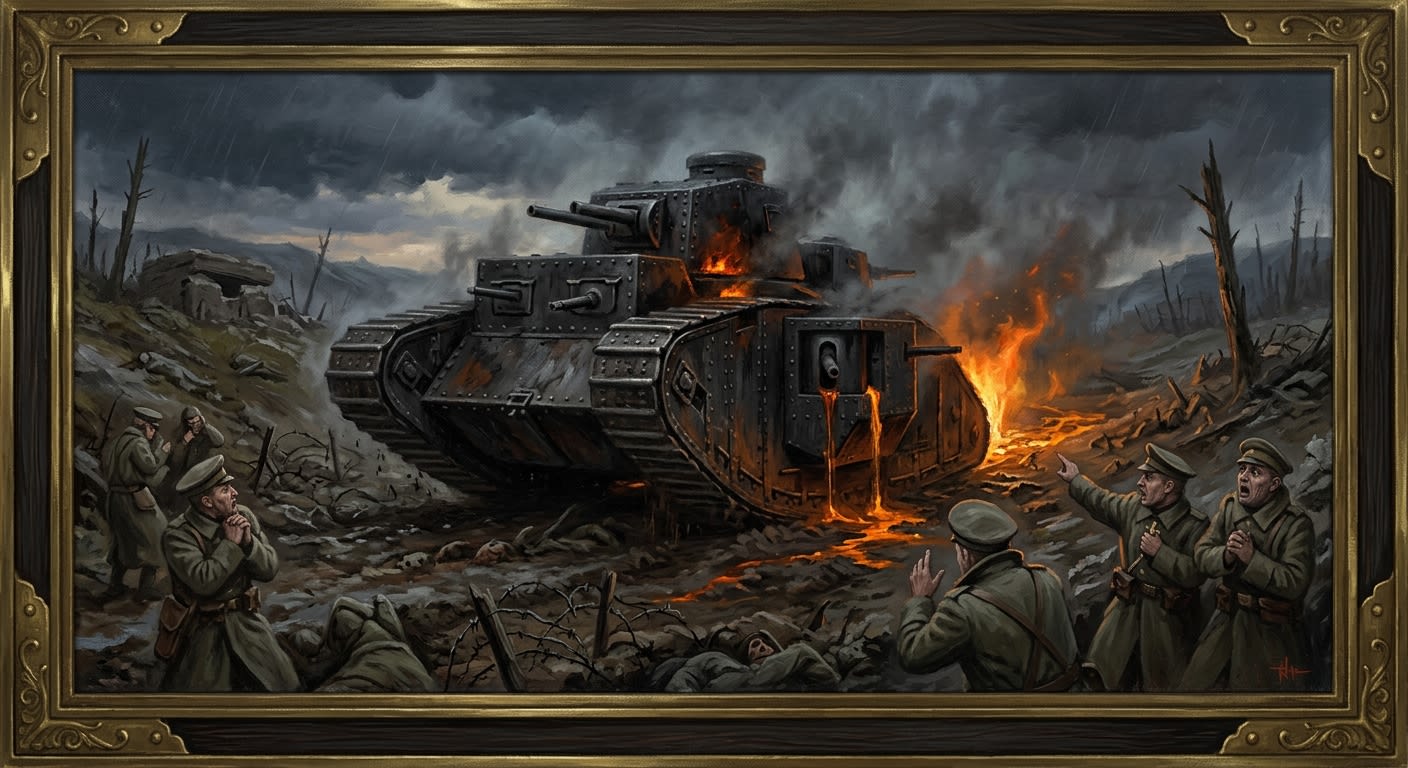
The Wormwood Hill Tank Incident of A.S. 163
The engine obeyed after the crew became fuel
In A.S. 163, a black-diesel tank at Wormwood Hill burned its crew alive, advanced for three days, and bled self-igniting oil for eleven dusks.
Codex Ref. VII.4.22-001
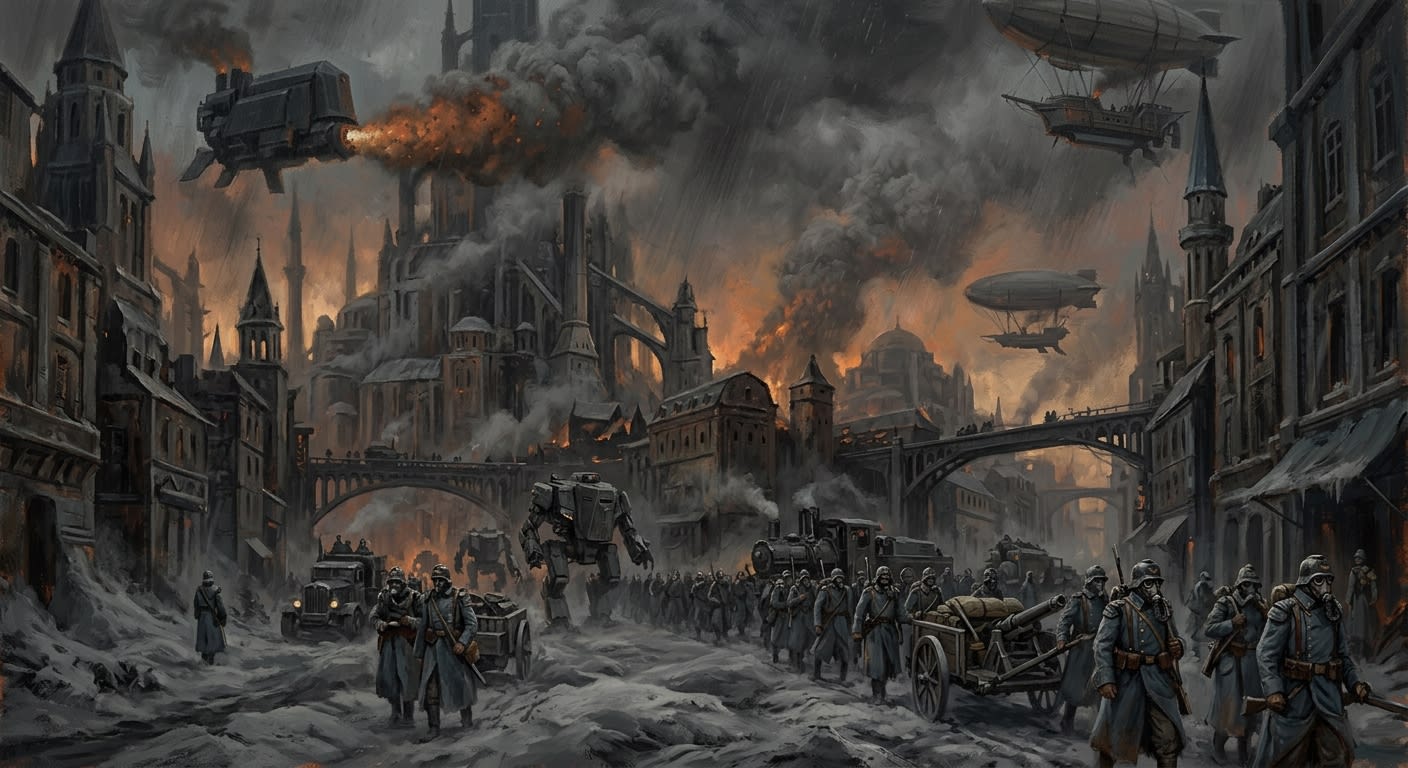
The Year of Ash Rain
The sky became a siege engine, and Constantinople learned to breathe doctrine
Maldrake's A.S. 143 burning of the Thracian forests turned ash into weather, famine into architecture, and Constantinople into a city under siege from above.
Codex Ref. VII.4.03-001
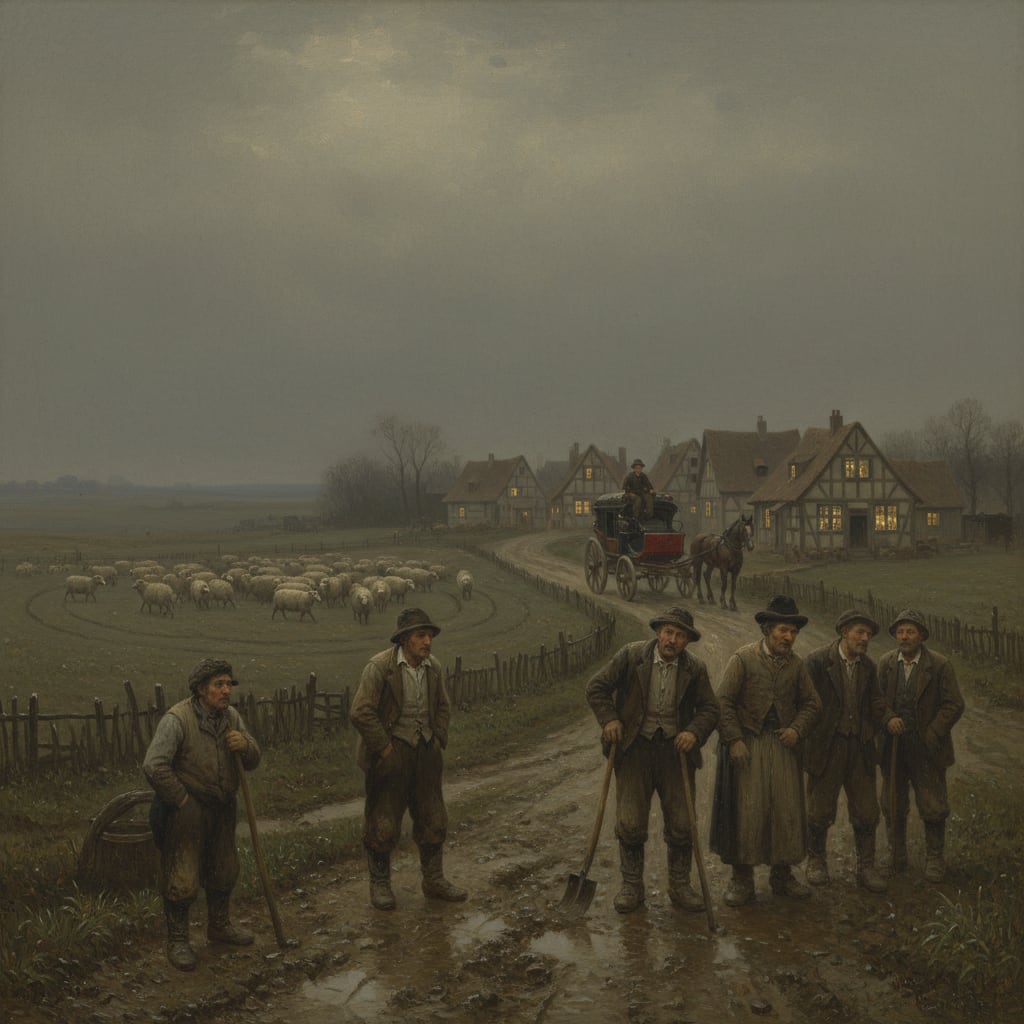
The Year Without Dawn
The Bureau's Second Portent: forty days without sun, seventeen explanations without facts, and one Province without tongues.
A.S. 32: forty days without the sun, children born grey-eyed and voiceless, the Rationalists publishing seventeen treatises to explain a volcano no one could find. The Bureau's Second Providential Portent.
Codex Ref. VII.4.01-001
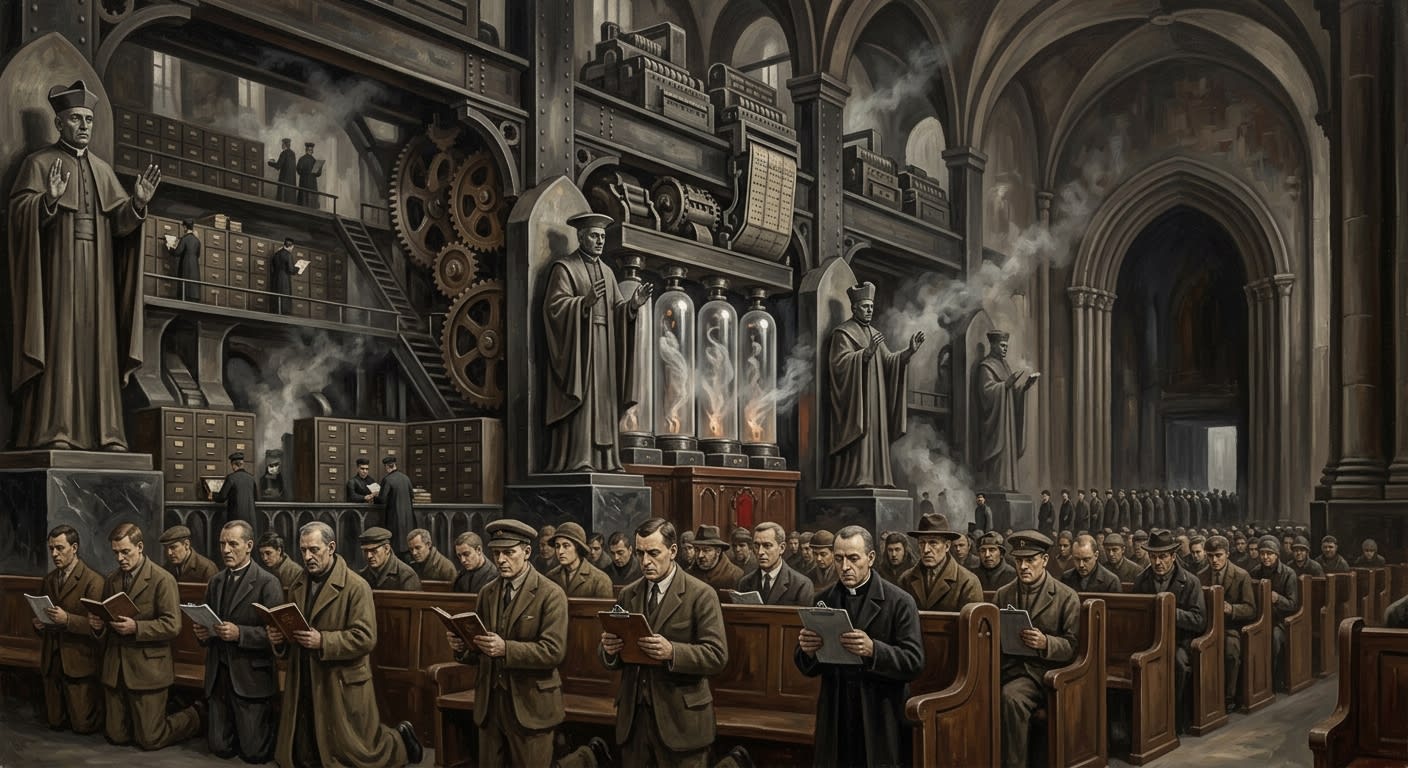
Theocracy
Piety with pipes, doctrine with payroll
Theocracy is the Synod's mature art: altar made warrant, prayer made schedule, fear made grammar, and every soul brought under ratified custody.
Codex Ref. XIII.1.01-201
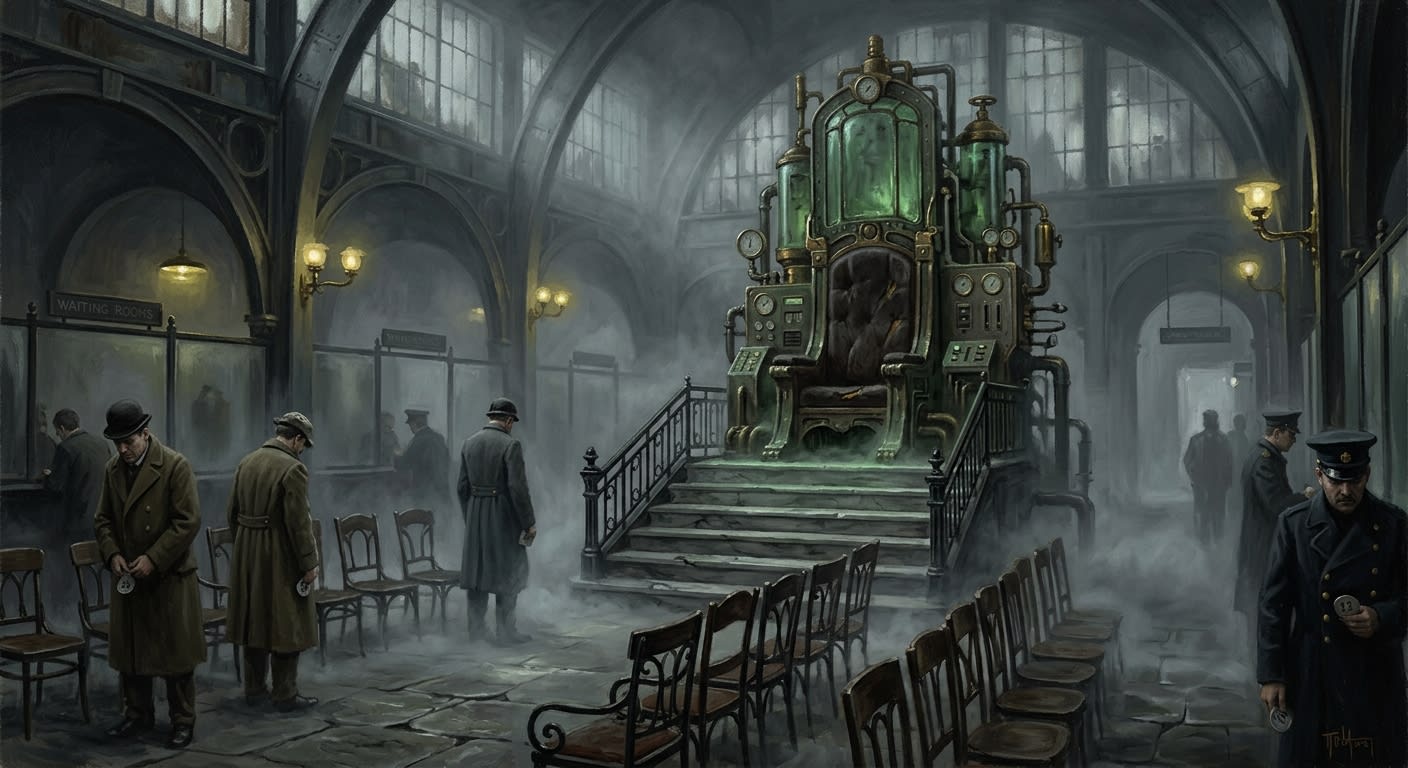
Throne of Mists
Remain standing when comfort offers a crown
The Throne of Mists is Syrion's unreached seat: a palace of fog, glass, waiting rooms, polite summons, and chairs that promise the exhausted soul an end.
Codex Ref. II.6.07-073
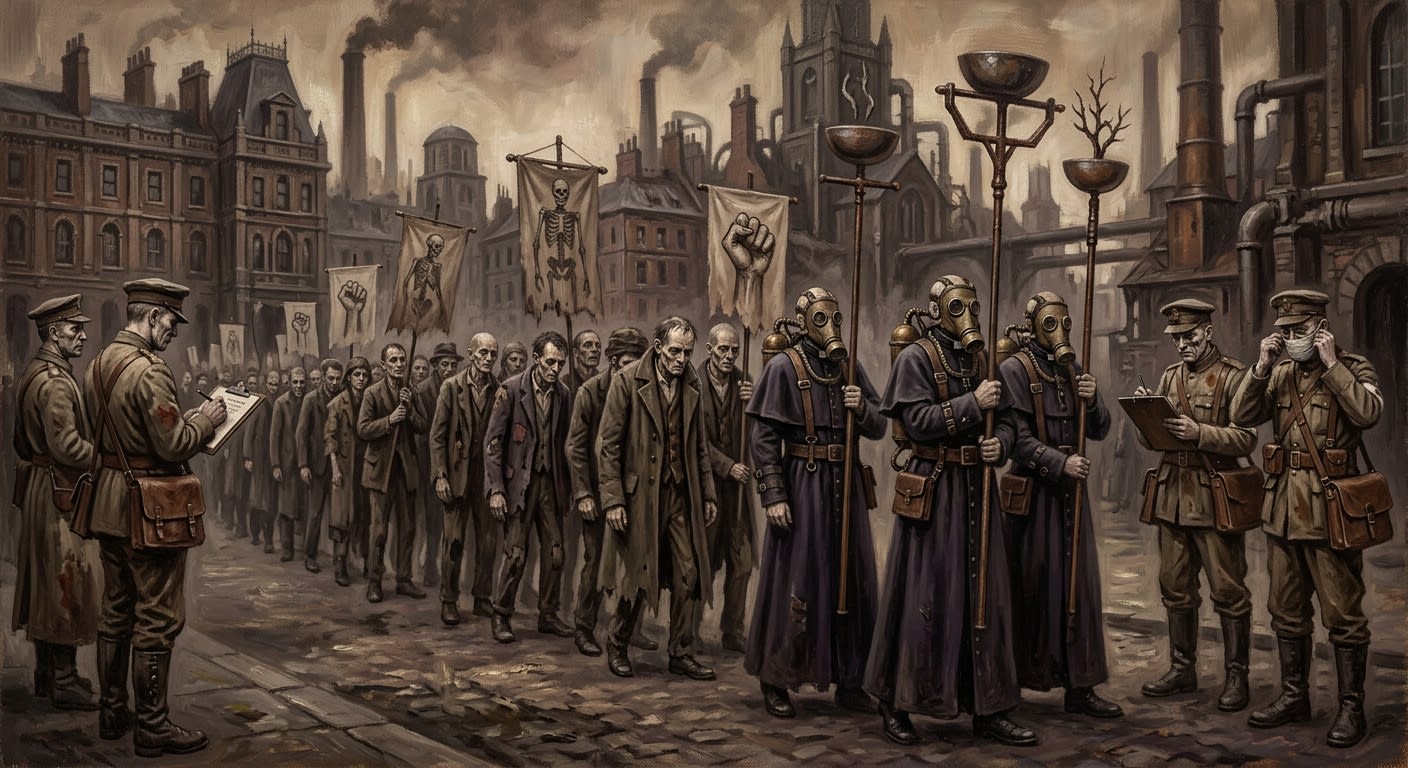
Triumph of the Gaunt
An injury given a hymn-sheet
The Triumph of the Gaunt crowns visible hunger as public virtue, training citizens to distrust plenty while Medicine counts the damage.
Codex Ref. XIII.1.25-001
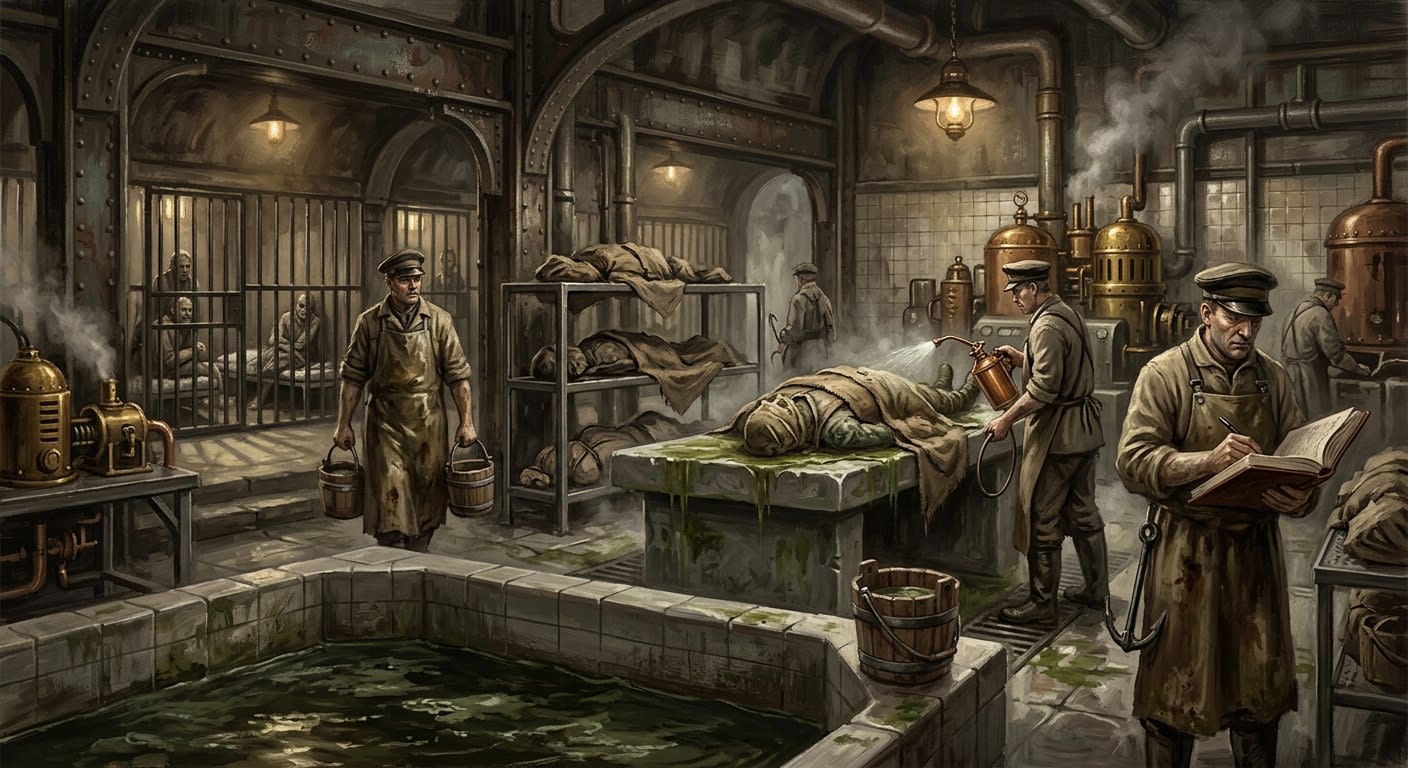
Undertide Pens
Where Calais dries the sea's handwriting and locks the alphabet in brine
The Undertide Pens are Calais's quarantine cellars: brine rooms, body slabs, object trays, and living chambers where returns from the sea are named, dried, and feared.
Codex Ref. II.4.09-071
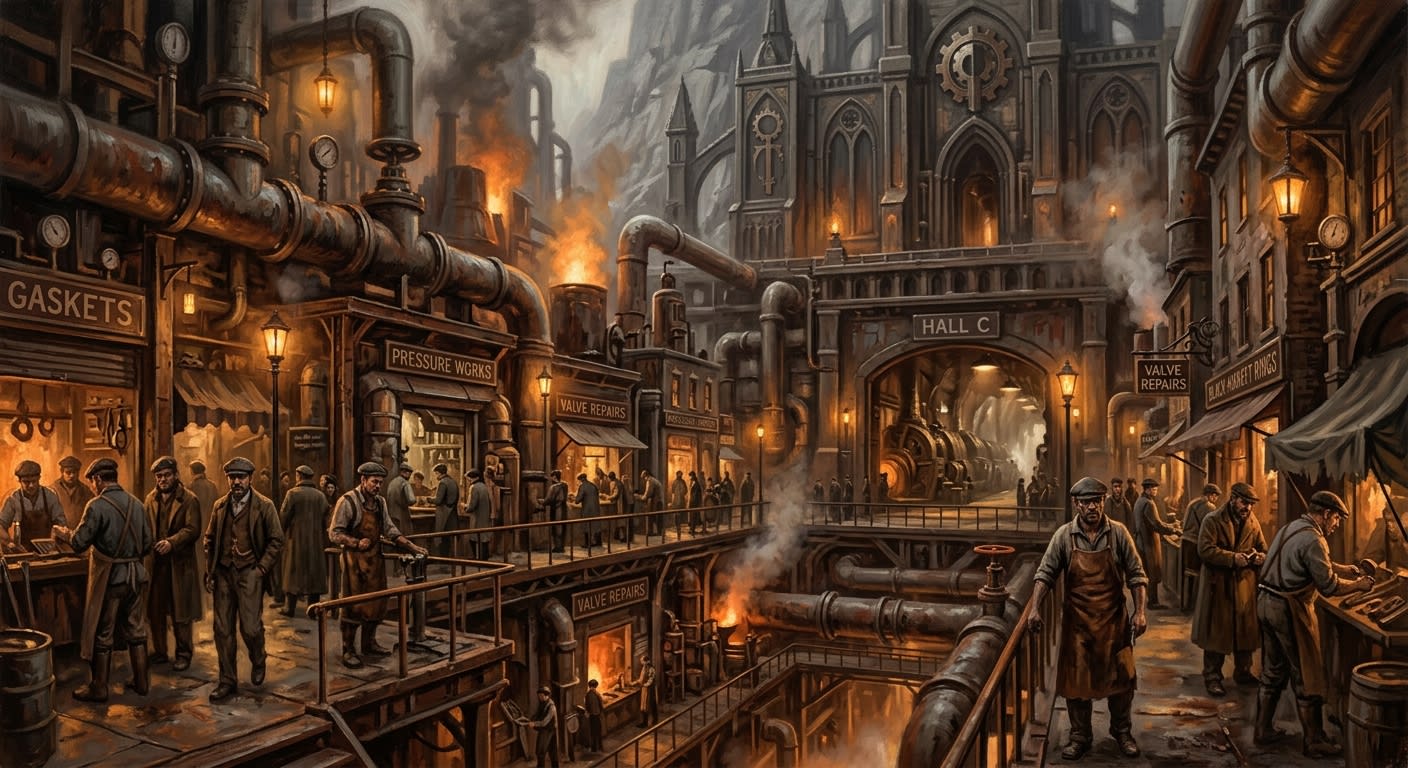
Valve Quarter
Where [[bastion-irongate|Irongate]] keeps its warmth, its gaskets, and its deniable sins
The Valve Quarter is Bastion-Irongate's hot side-throat: pressure works, gasket shops, black-market rings, worker lungs, Hall C, and all the warmth the mountain denies elsewhere.
Codex Ref. II.4.24-096
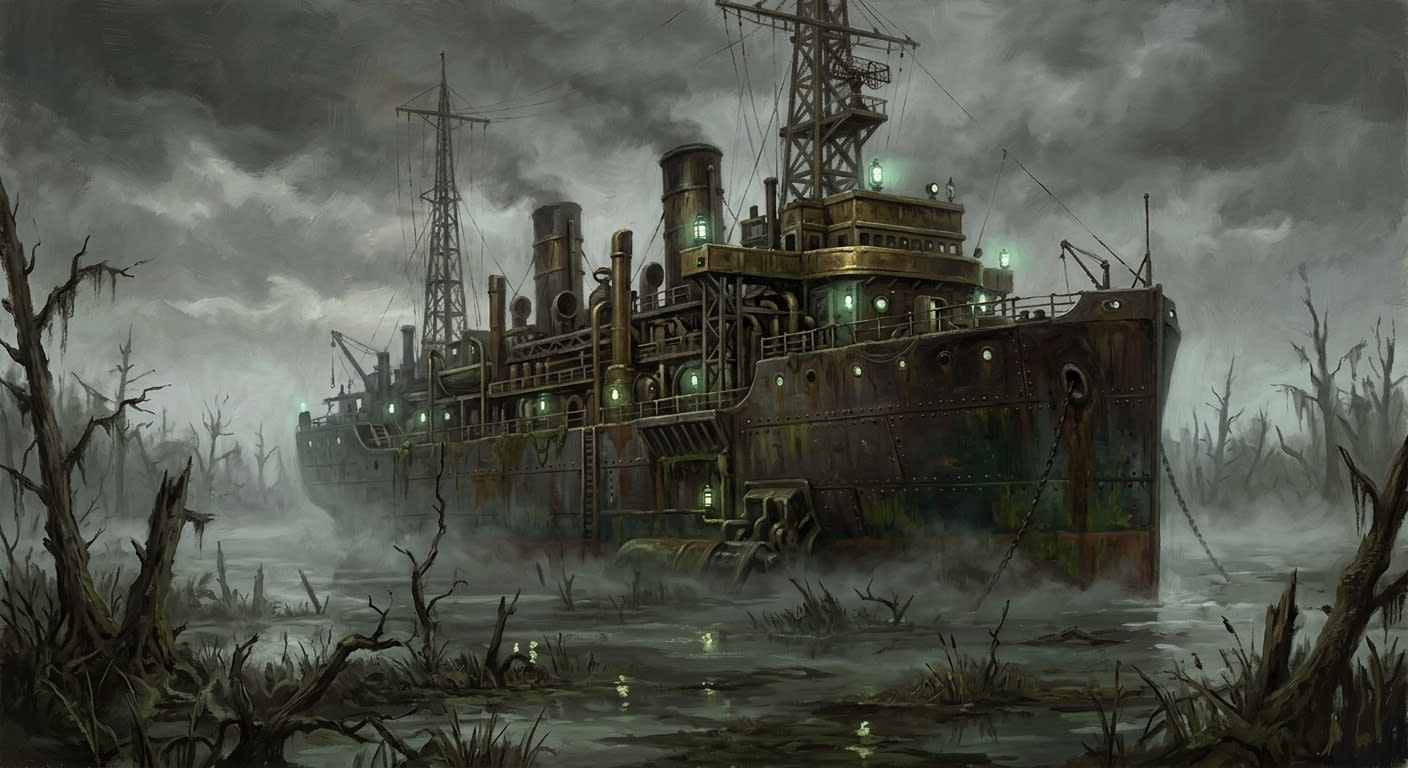
Vigil Ark Sanctissima Vox
The Ark that fell slowly and remained administratively active
The Vigil Ark Sanctissima Vox sank into the Blightmarsh during its A.S. 147 hymnal broadcast mission; its lanterns still burn, so the roster still calls it active.
Codex Ref. V.2.04-002
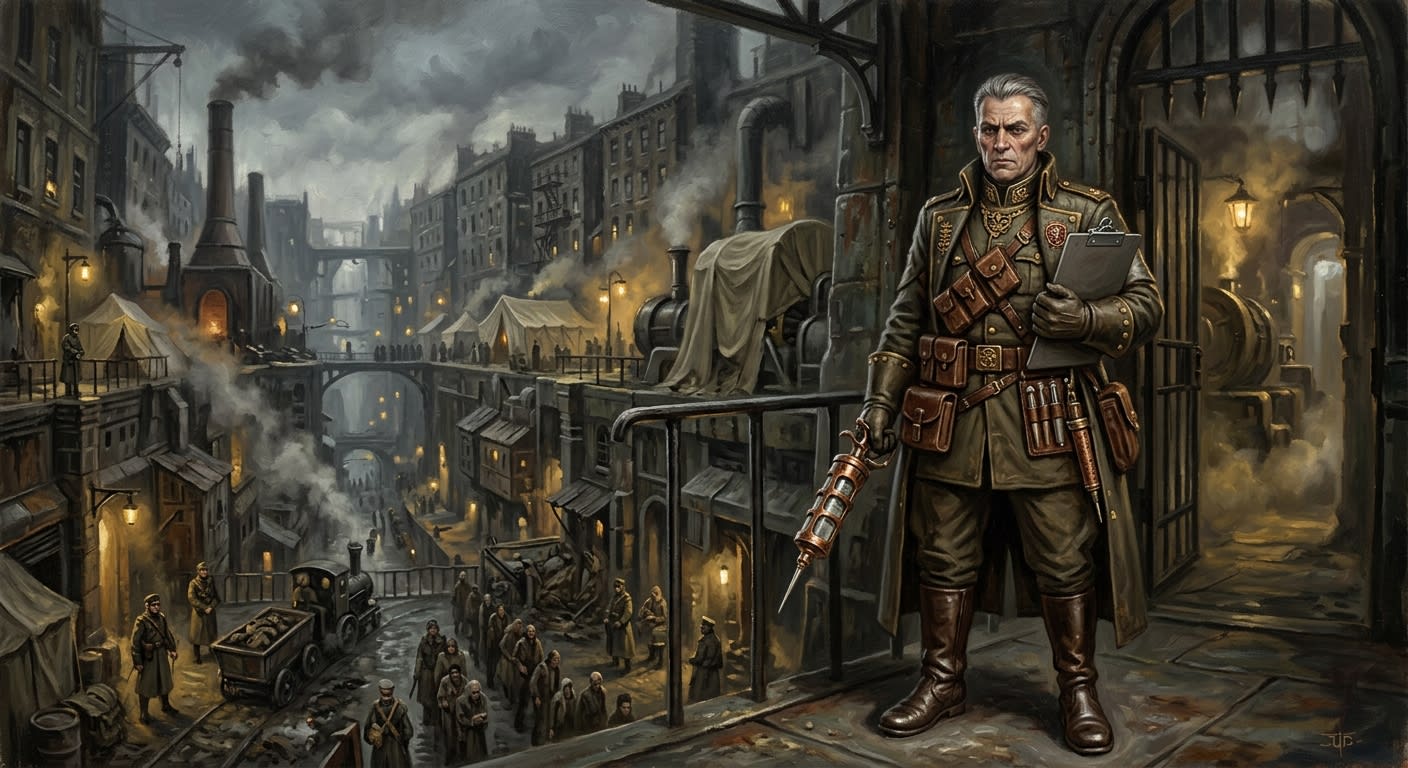
Warden-Physic Iri
Mercy, after vinegar and witness
Warden-Physic Iri rules Thessaloniki's quarantine throat: severe, useful, watched, and merciful only after the forms have learned fear.
Codex Ref. III.2.01-201
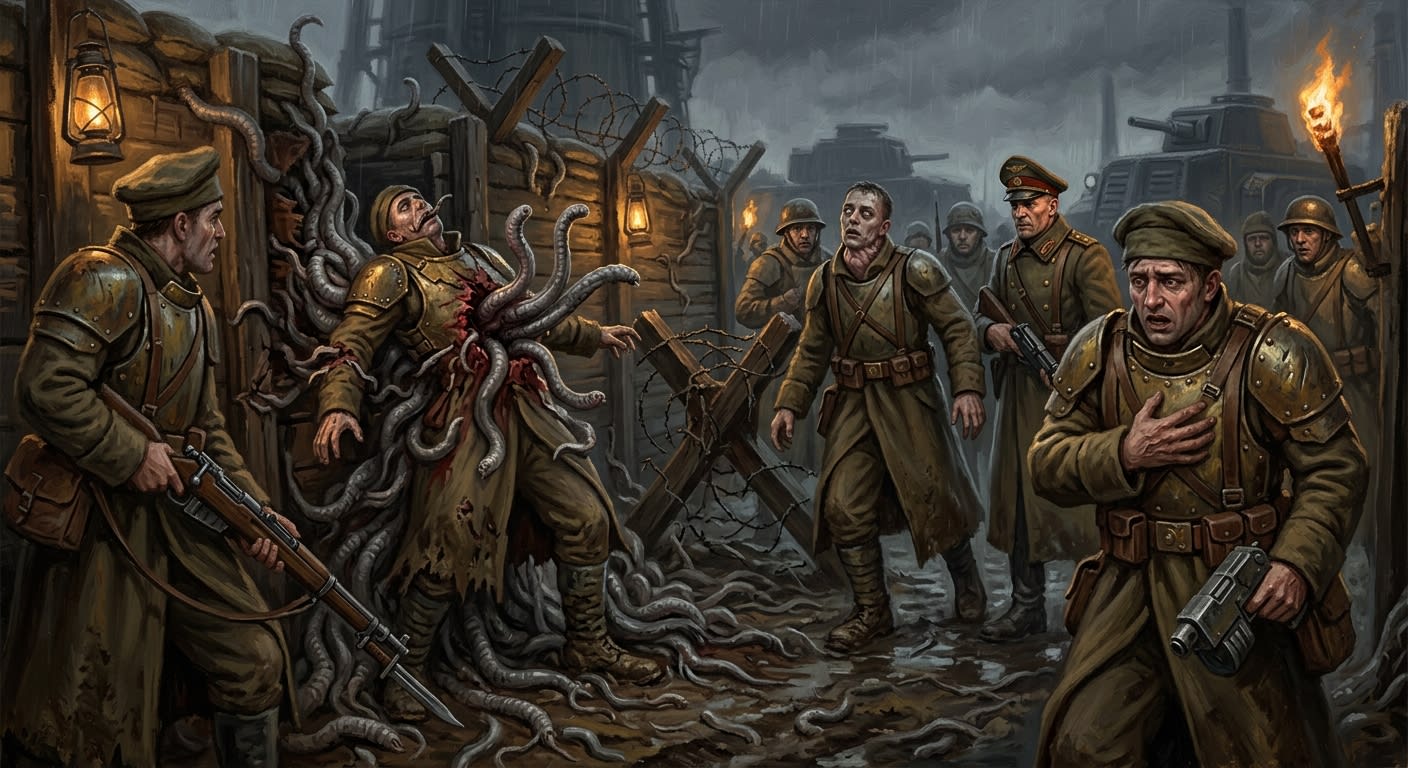
Wormhosts
The human face, retained just long enough to open the gate
Mortal auxiliaries seeded with living parasites, recognisable as human until rupture turns pity, checkpoint mercy, and defensive formation into a door.
Codex Ref. IV.1.07-009
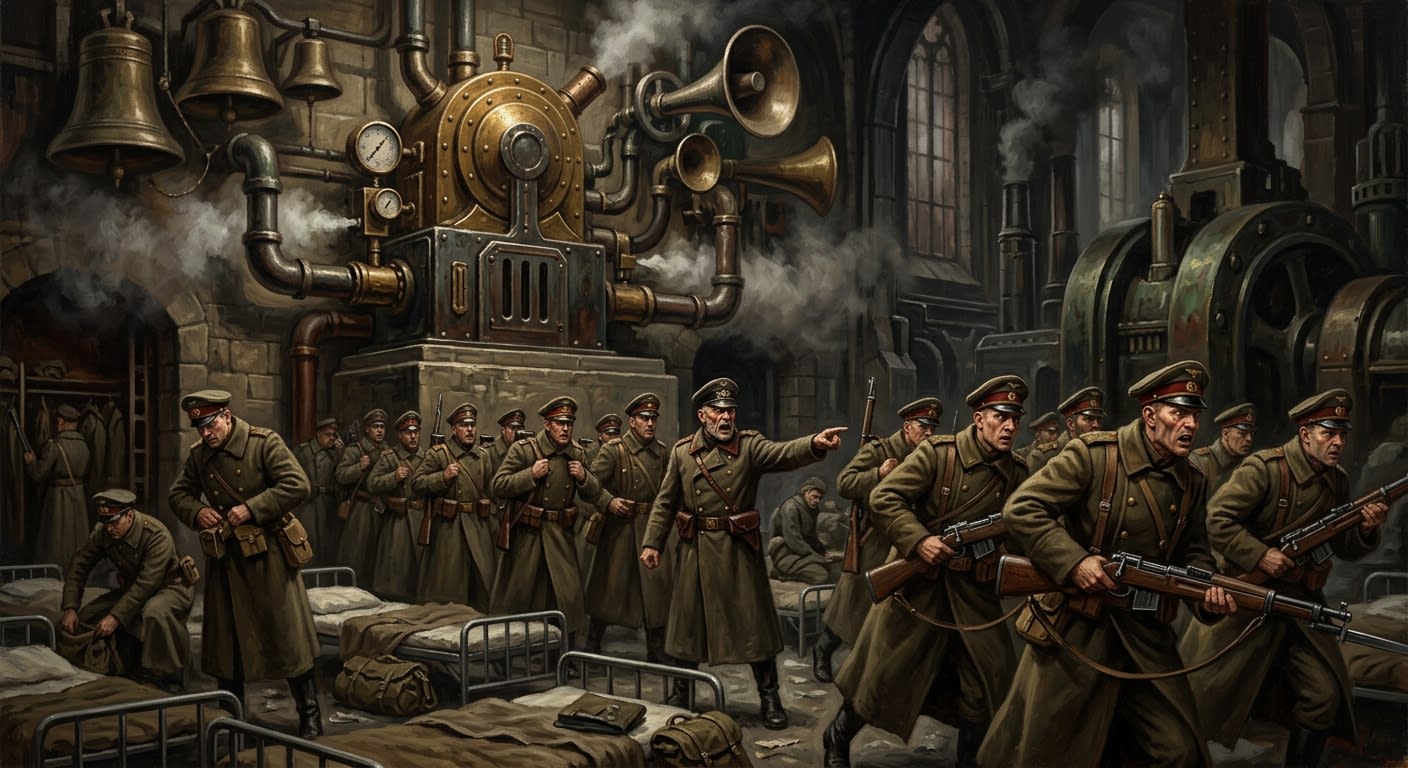
Wrath-Sloth Convergence Code
When the fire learns patience and the fog begins to burn
The Wrath-Sloth Convergence Code is the ugly alarm that makes fire-readiness and wake-resistance obey one breath before Hell profits from contradiction.
Codex Ref. XIII.1.87-194
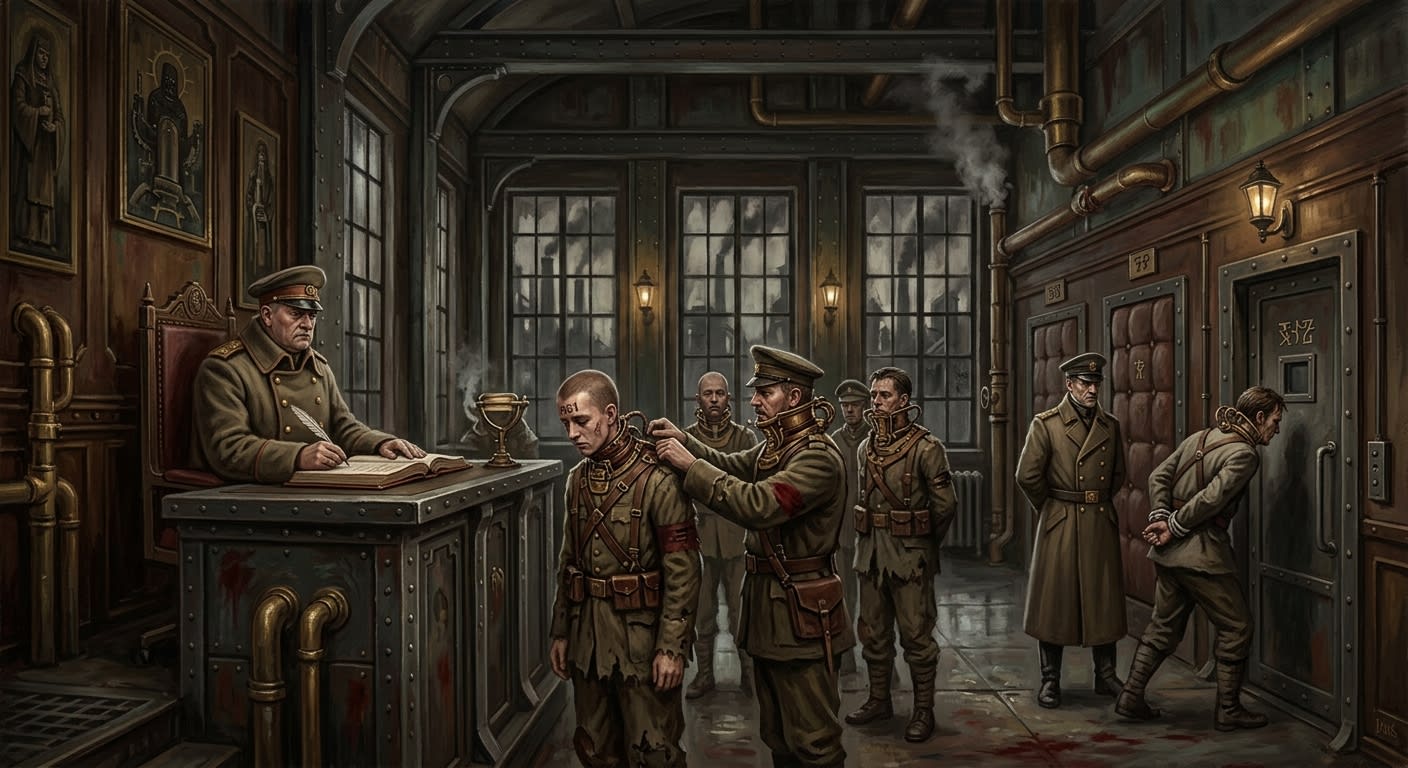
Writ 14-C
The law that taught the throat to wear a seal
Writ 14-C made the human throat an office: licensing Iron Choir Brand-Singers, disciplining pain into sound, and teaching rooms not to be answered.
Codex Ref. XIII.1.41-104
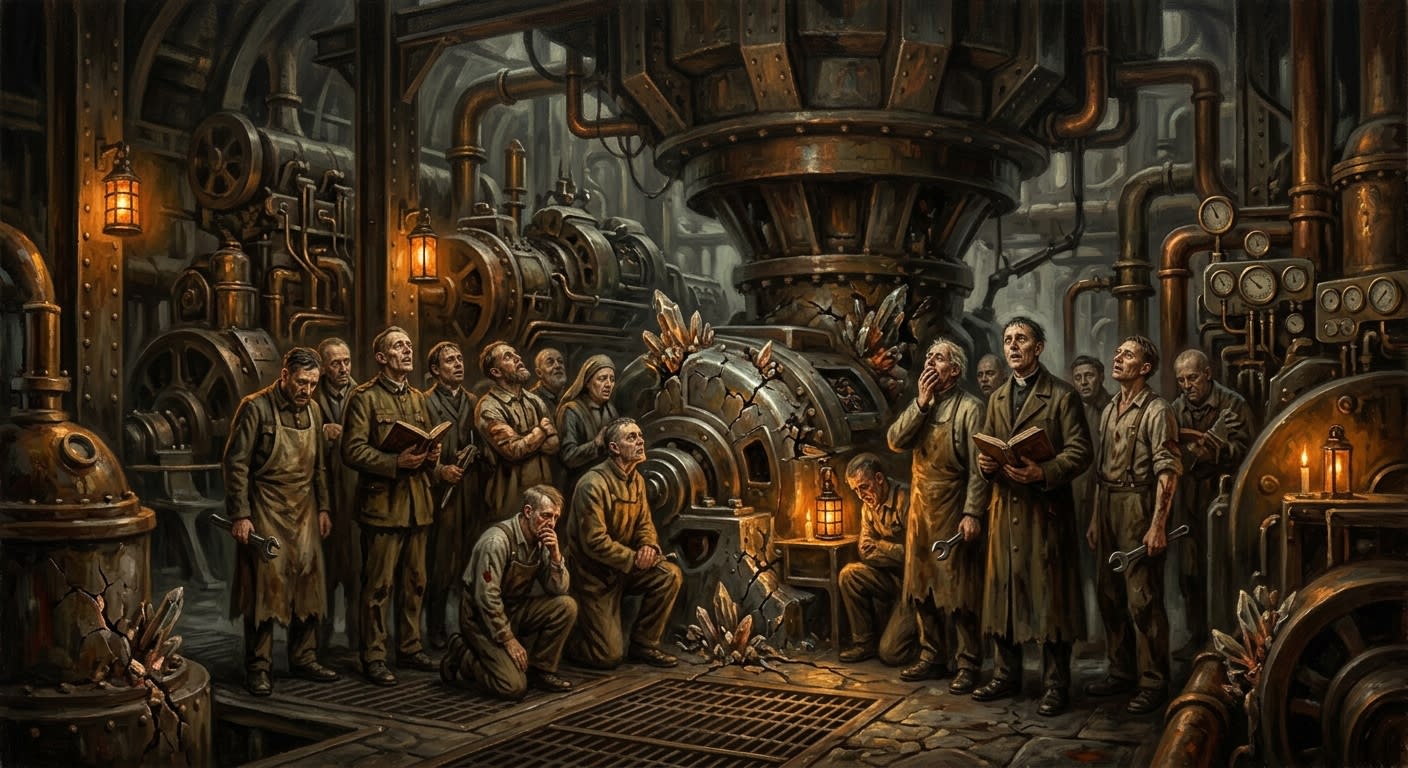
Wrong Choir
The sound beneath Essen that every office renamed and no office silenced
Essen's Wrong Choir is the sub-foundation hum beneath the Foundry Core, officially explained as resonance, cadence error, or providence while Resonance Blooms crack steel and teeth alike.
Codex Ref. XIII.1.73-001