

Reverse Index
Referencing “Bureau of Settlement”
Every codex entry that links to Bureau of Settlement. 98 entries.
Return to Bureau of Settlement
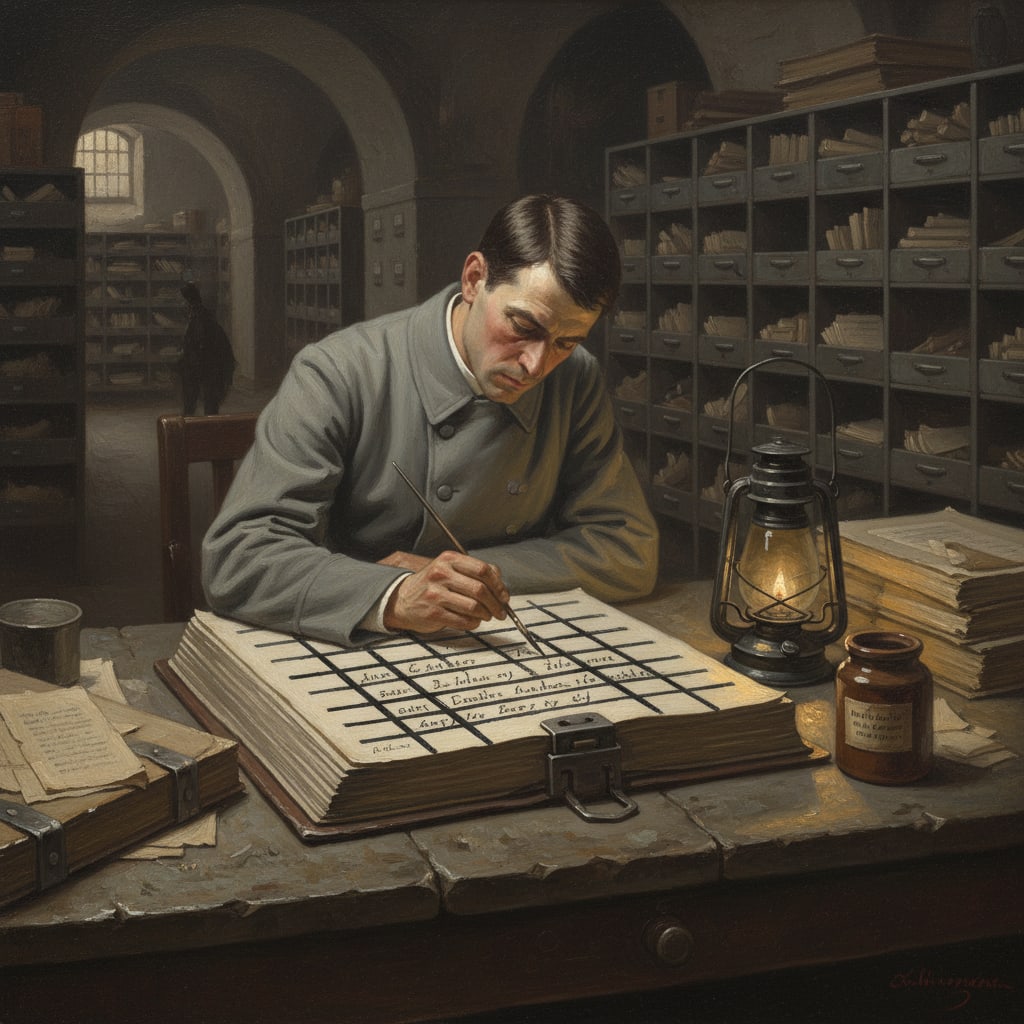
Administrative Dissolution
What the Bureau calls a filing action; what the dogs remember
Administrative Dissolution is the Bureau of Records' procedure for rendering a soul present but illegible — a grid of Mortuary Black drawn across the name-entry, the null-mark Ø applied, the Ledger amended.
Codex Ref. XIII.1.01-001
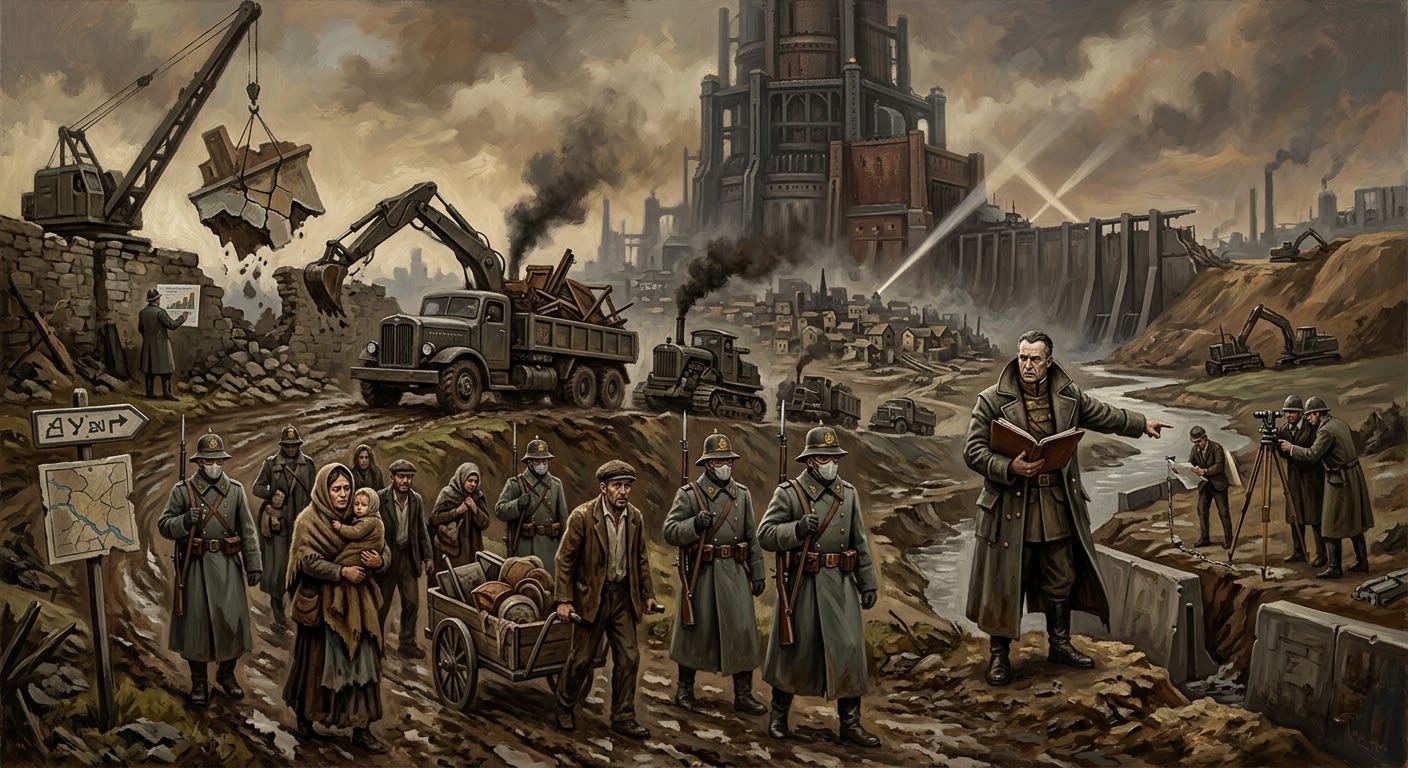
Administrative Redrawing of A.S. 188
A line moved, forty thousand obeyed, and Keska vanished into the neatness
Mandate 188-A redrew the Hintermark and Constantinople terraces in fourteen days, moved forty thousand civilians, and omitted Keska from the map.
Codex Ref. VII.2.04-001
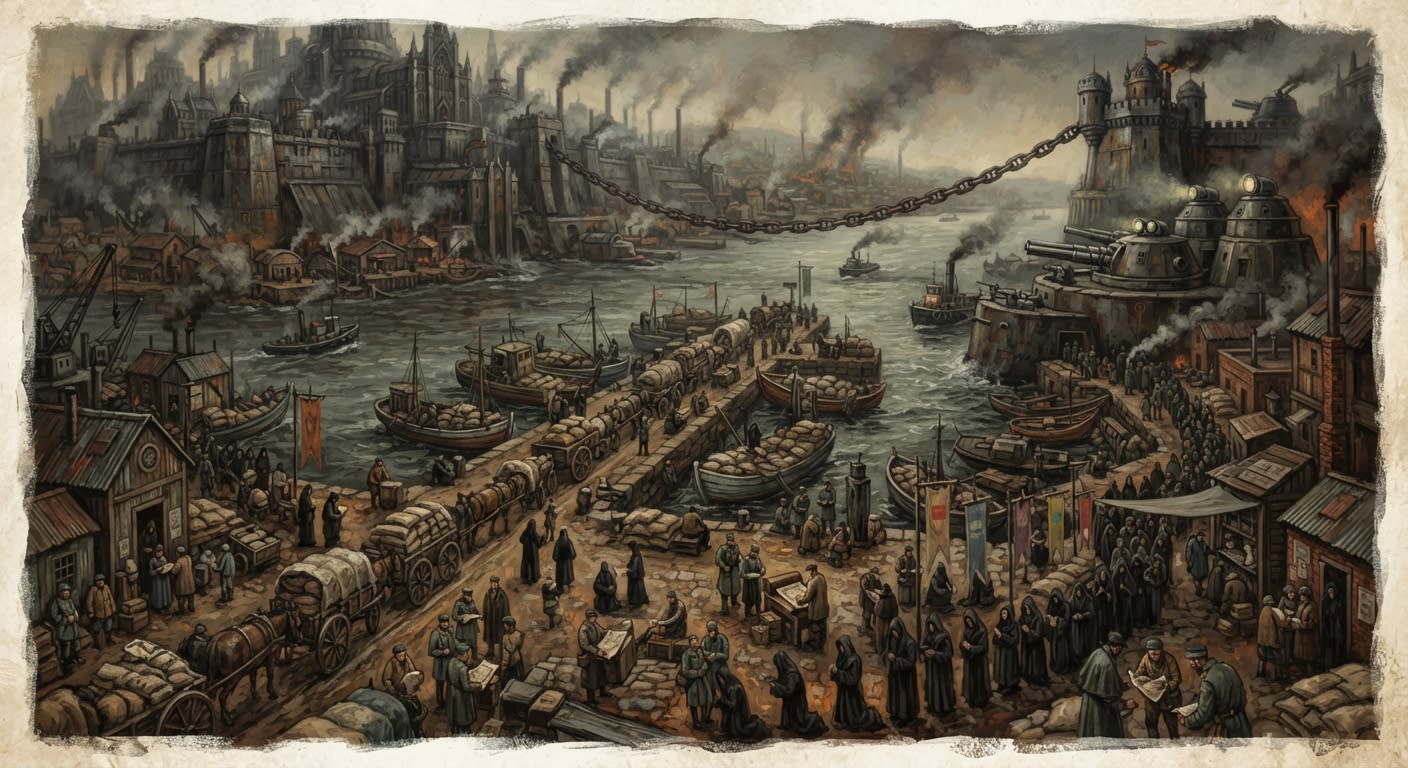
Anatolian Prefectures
The pantry the Hinge audits after eating
Synod-held Green Approach across the Bosphorus: grain, pilgrims, black diesel, and the arithmetic by which Bastion-Constantinople eats while accusing the hand that feeds it.
Codex Ref. II.4.09-069
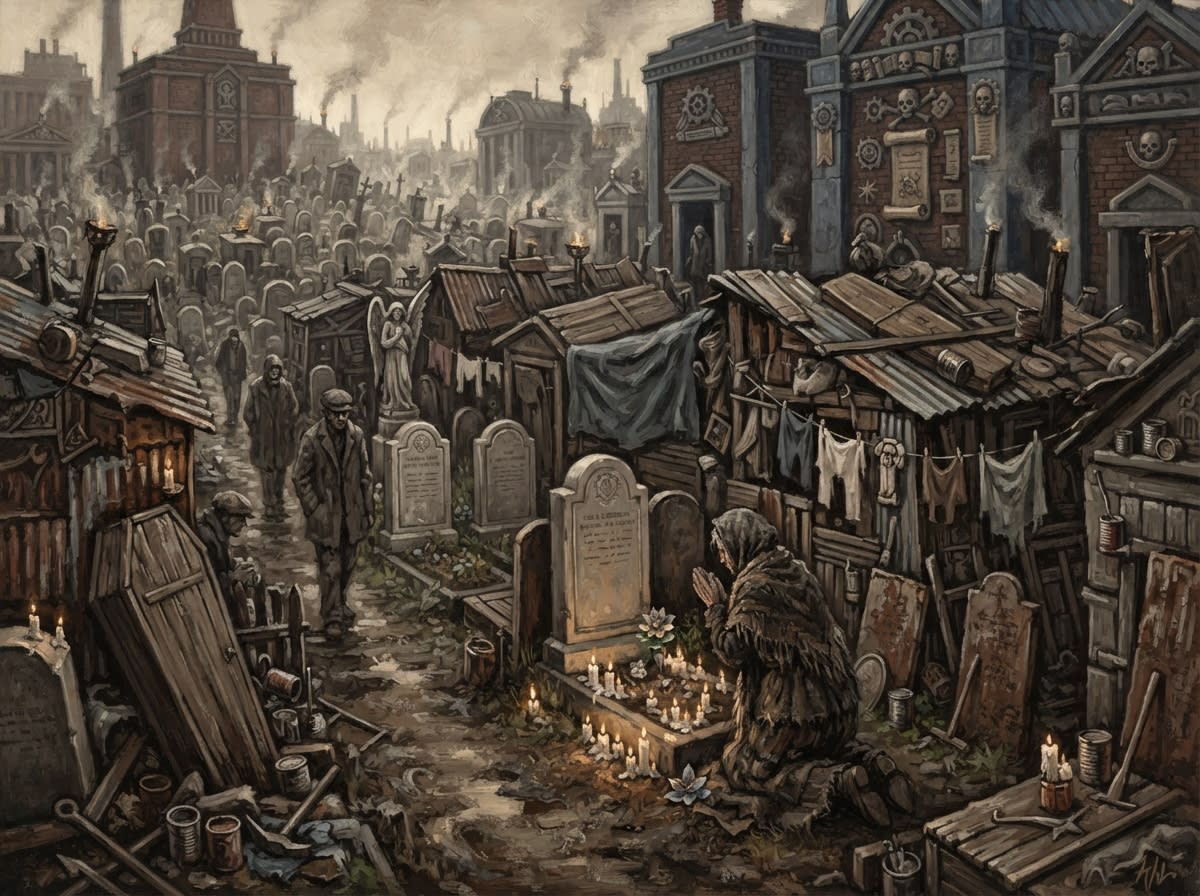
Anchor Graves
Where burial right does the work housing law refuses
Anchor graves are lawful family plots whose burial privileges let grave-field lanes pretend that shacks are caretaker shelters rather than homes.
Codex Ref. XIII.1.78-017
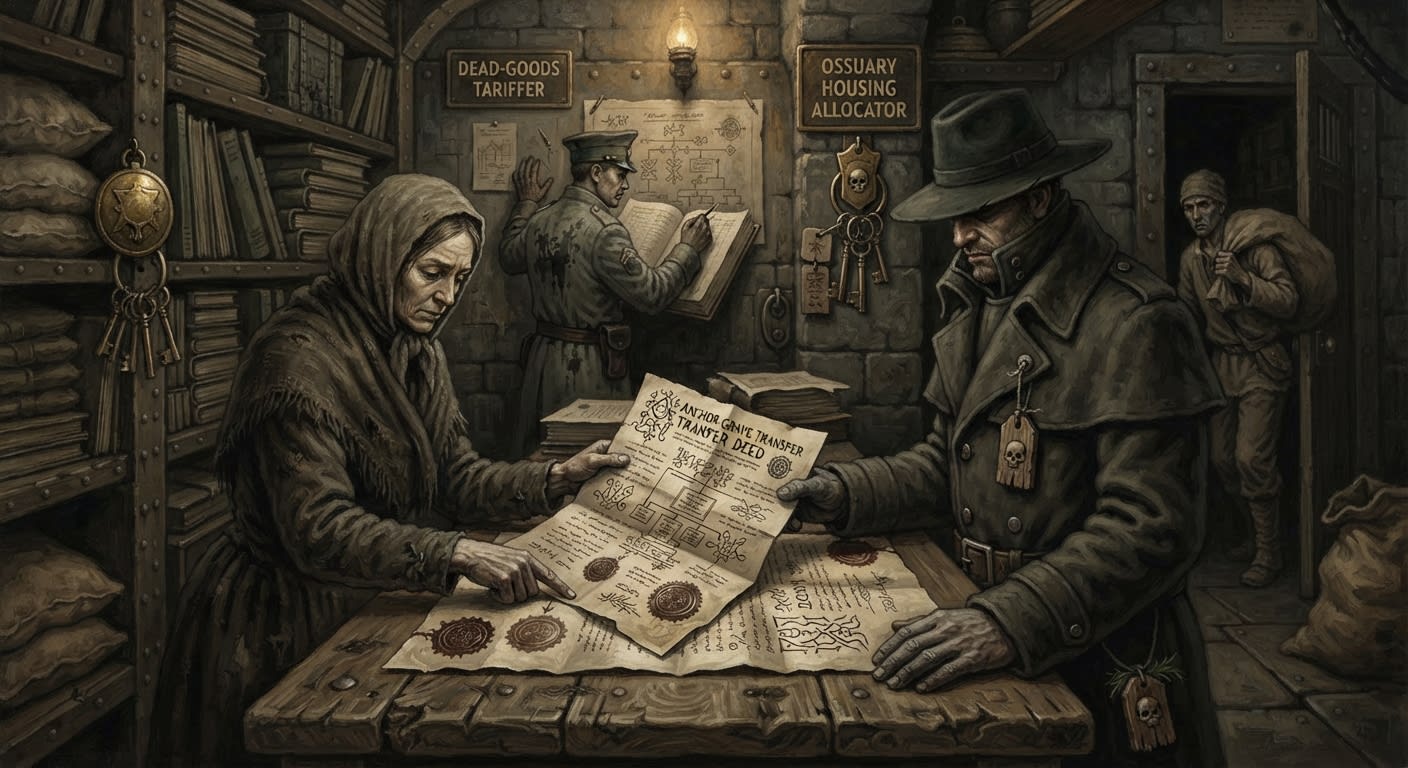
Anchor-Grave Transfer Deed
Where the grave becomes housing because hunger signs neatly
The anchor-grave transfer deed converts a family's burial claim into permitted ossuary presence, teaching grief to become tenancy and tenancy to remain revocable.
Codex Ref. XIII.1.78-178

Arch-Artificer Lute Brann
The burned hand that quiets engines and embarrasses theology
Lute Brann commands the Foundry Quarter's lower works, signs impossible provenance, quiets bound housings bare-handed, and remains useful enough to survive inquiry.
Codex Ref. III.2.01-150
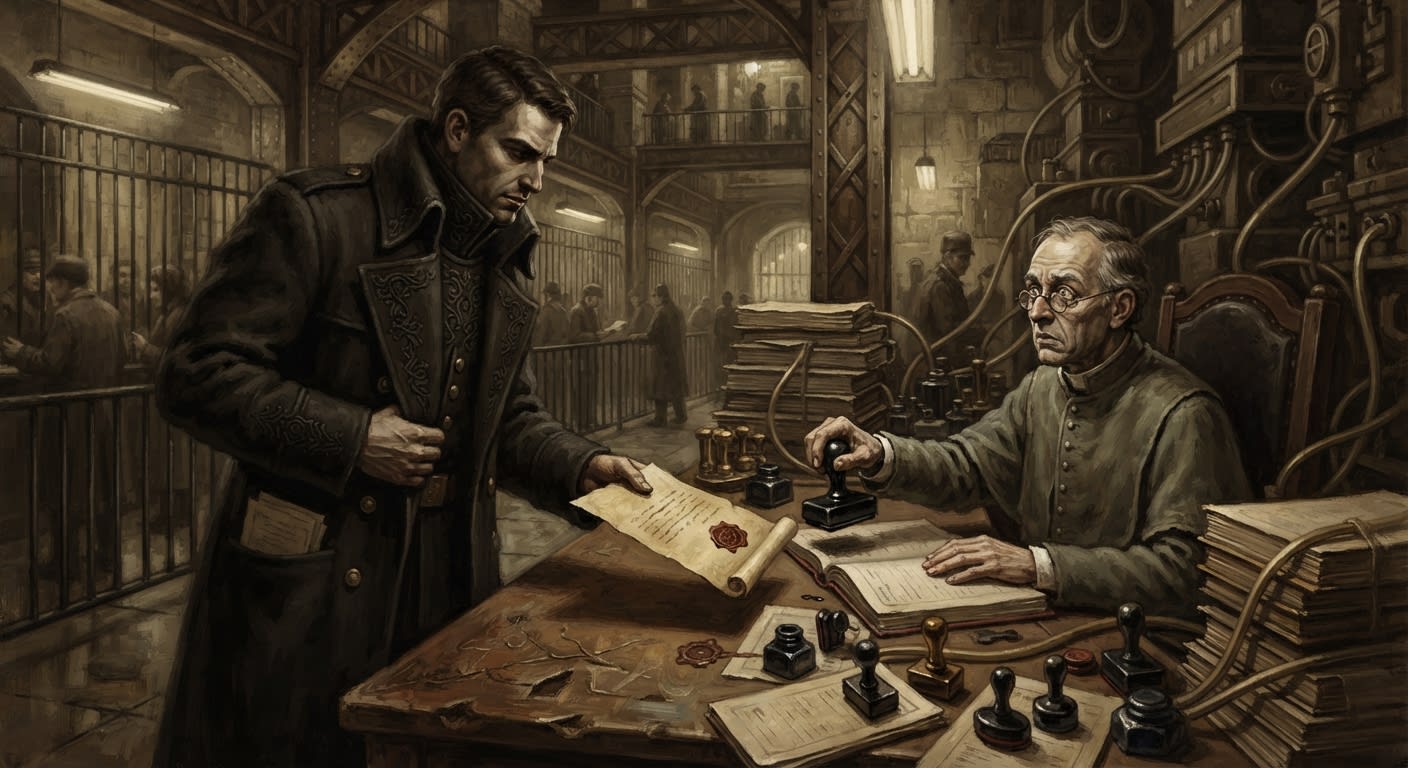
Archon's Override
The phrase is withheld; the hierarchy it invokes is not.
The Archon's Override is not magic, mercy, or a passkey. It is spoken hierarchy: a Doctrine citation that teaches a lesser seal to fear the wax above it.
Codex Ref. XIII.1.07-090
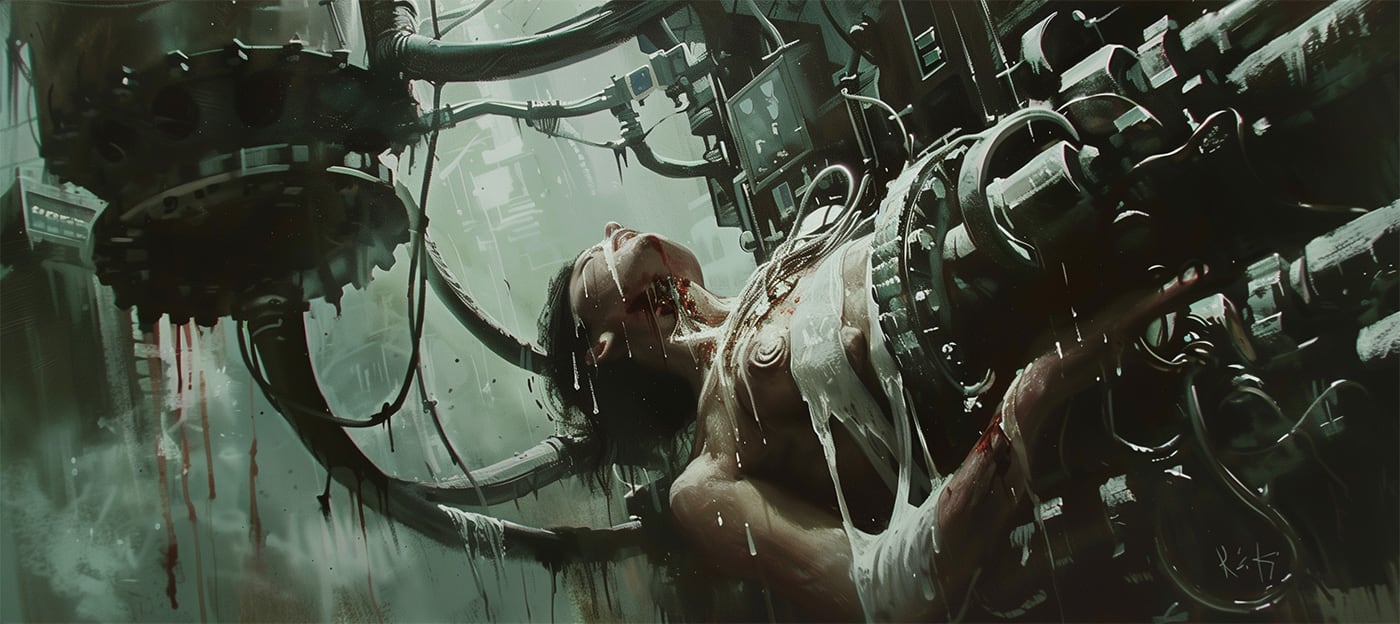
Ash-Mothers
A production line. The Bureau said two paragraphs were enough. They were not.
The Bureau's most exhaustive silence — Ash-Mothers are enemy reproductive logistics cells, captured women sustained by sorcery to generate Thrall regiments at industrial scale. I file the account that two paragraphs could not contain.
Codex Ref. IX.1.02-001
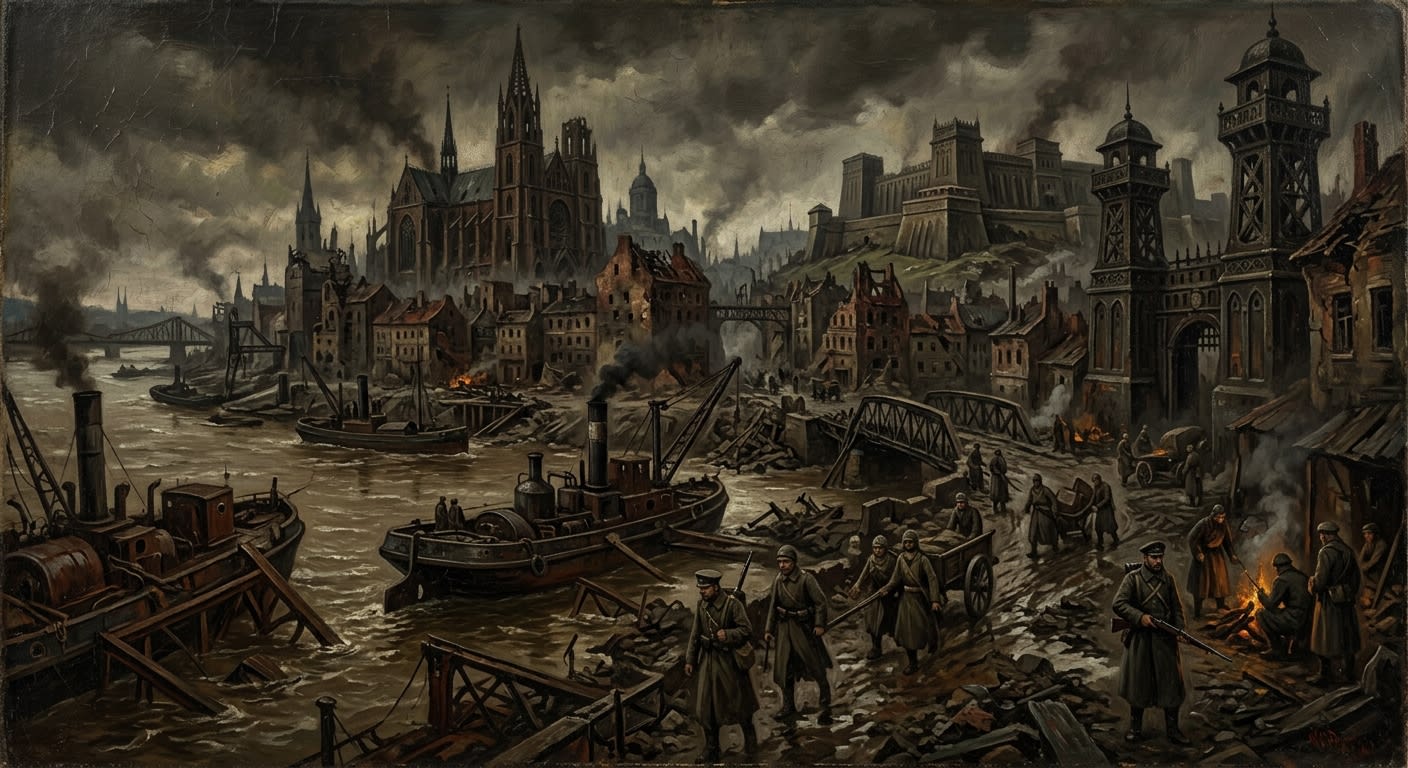
Belgrade
The city the river refused to bury, and therefore made taxable
Belgrade, ruined-contested confluence city where Shattered Courts perfume met Maldrake's Wrath, the Danube turned in A.S. 120, and sanctity became an armed hazard.
Codex Ref. II.5.06-120
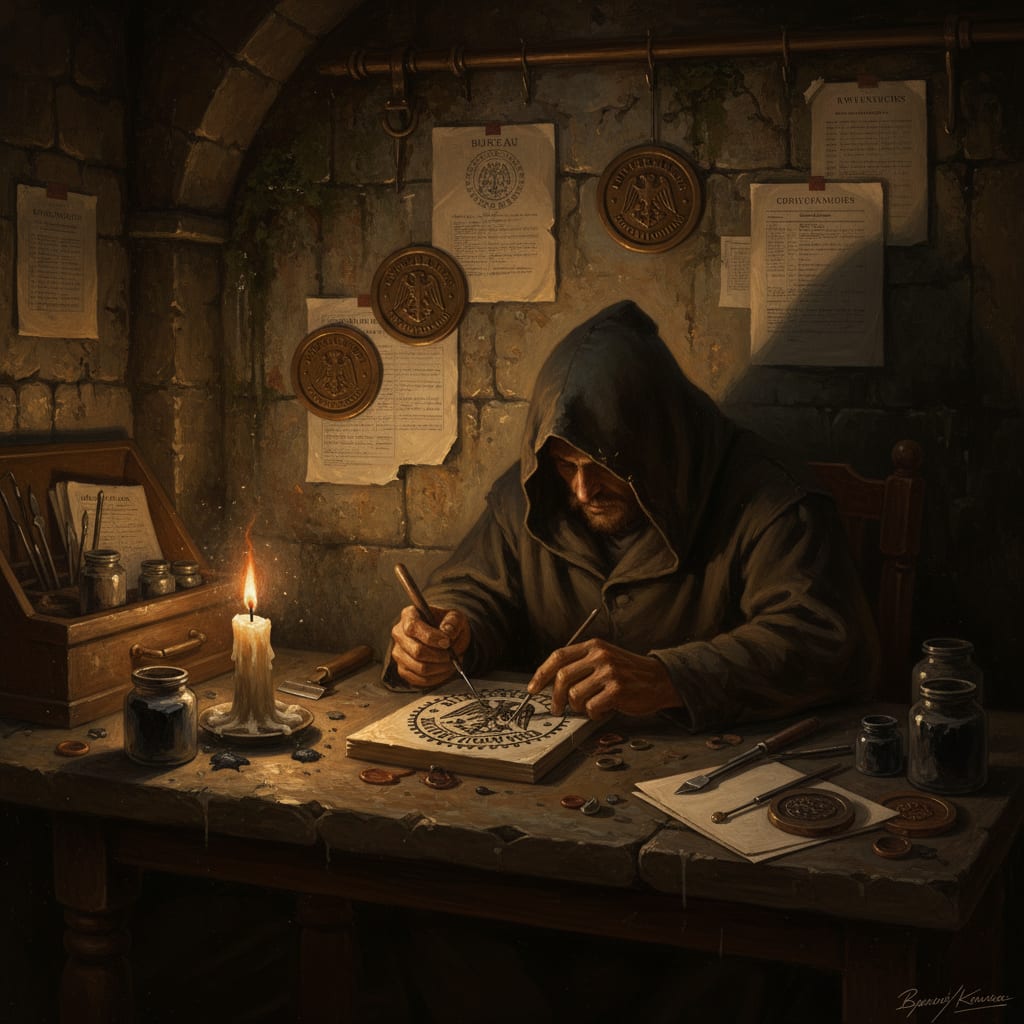
Black Ledger Cutpurse / Assassin
Larceny with a hymn; the Synod's most indispensable criminal enterprise
The Black Ledger steals rations, forges stamps, murders wardens, and distributes a calculated fraction to the hungry — then records what was given as a debt to be collected. The Bureau calls it heresy. The poor call it supper.
Codex Ref. XII.4.01-001
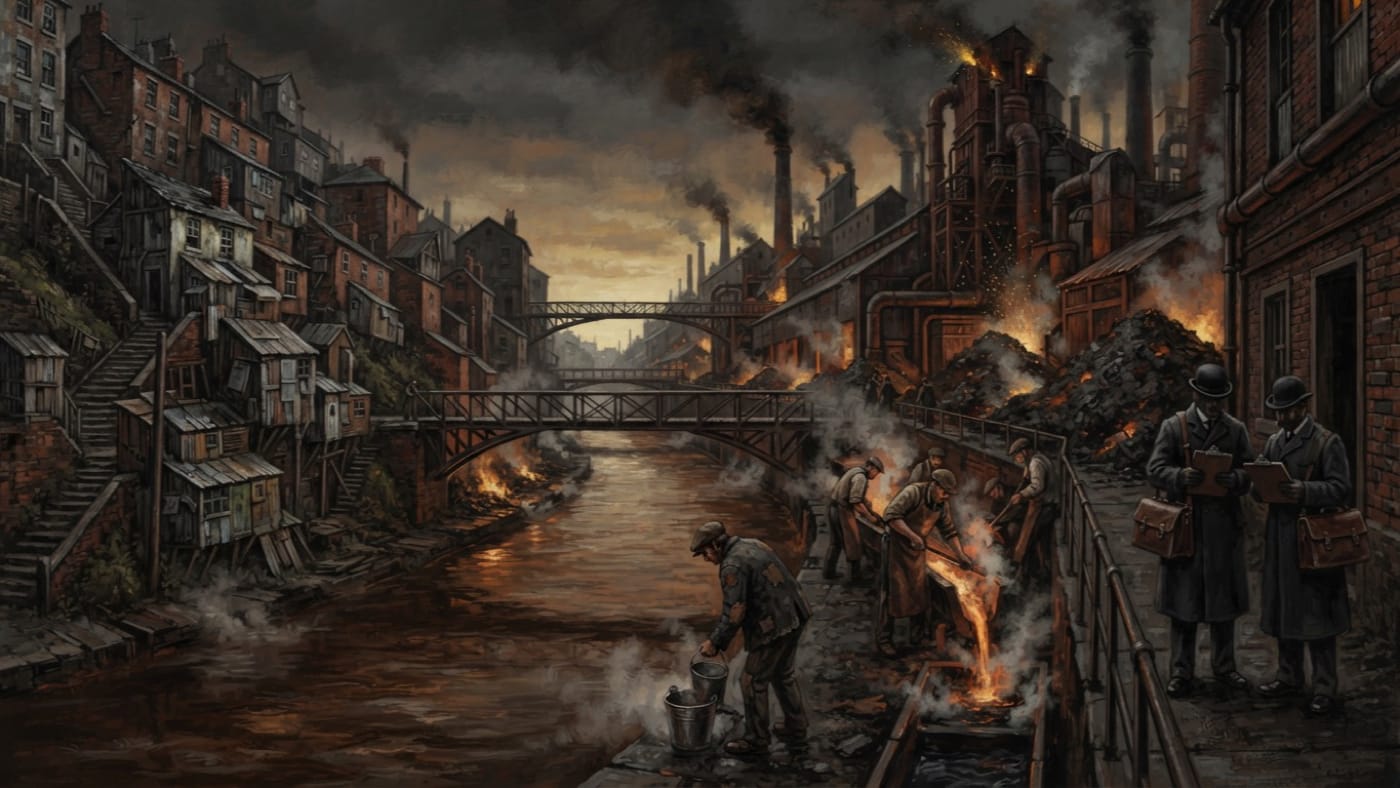
Black Run
A saint on the survey, slag in the water, and a town between the lines
The Black Run is Keska's Saint Orban Channel: warm slag water beside a rural strip Mandate 188-A erased. The water strips paint; Settlement preferred a town.
Codex Ref. II.3.06-003
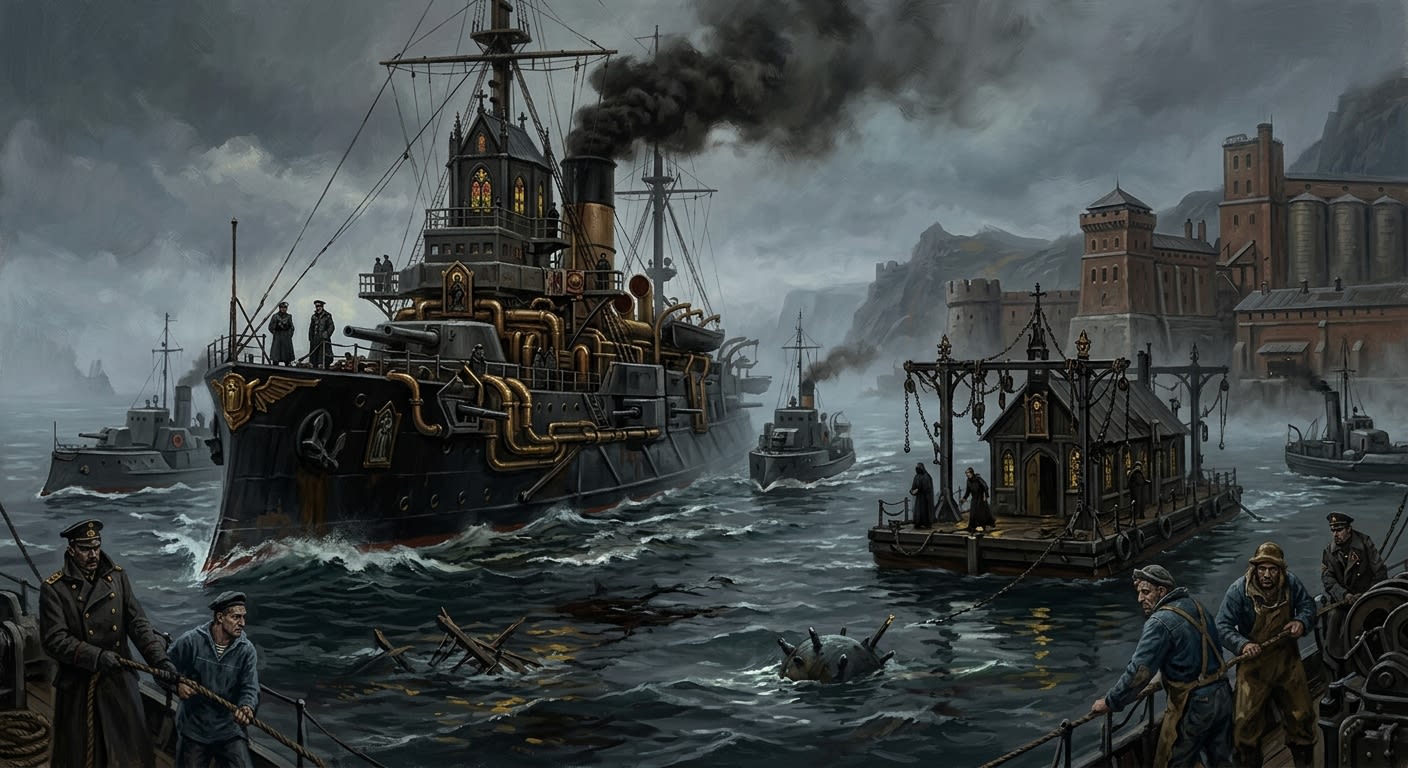
Black Sea
The Sable Deeps keep their own docket
The Black Sea is the Synod's northeastern wound against salt water: threat lane, relic route, grain hazard, Flotilla parish, and water that remembers too much.
Codex Ref. II.4.09-018
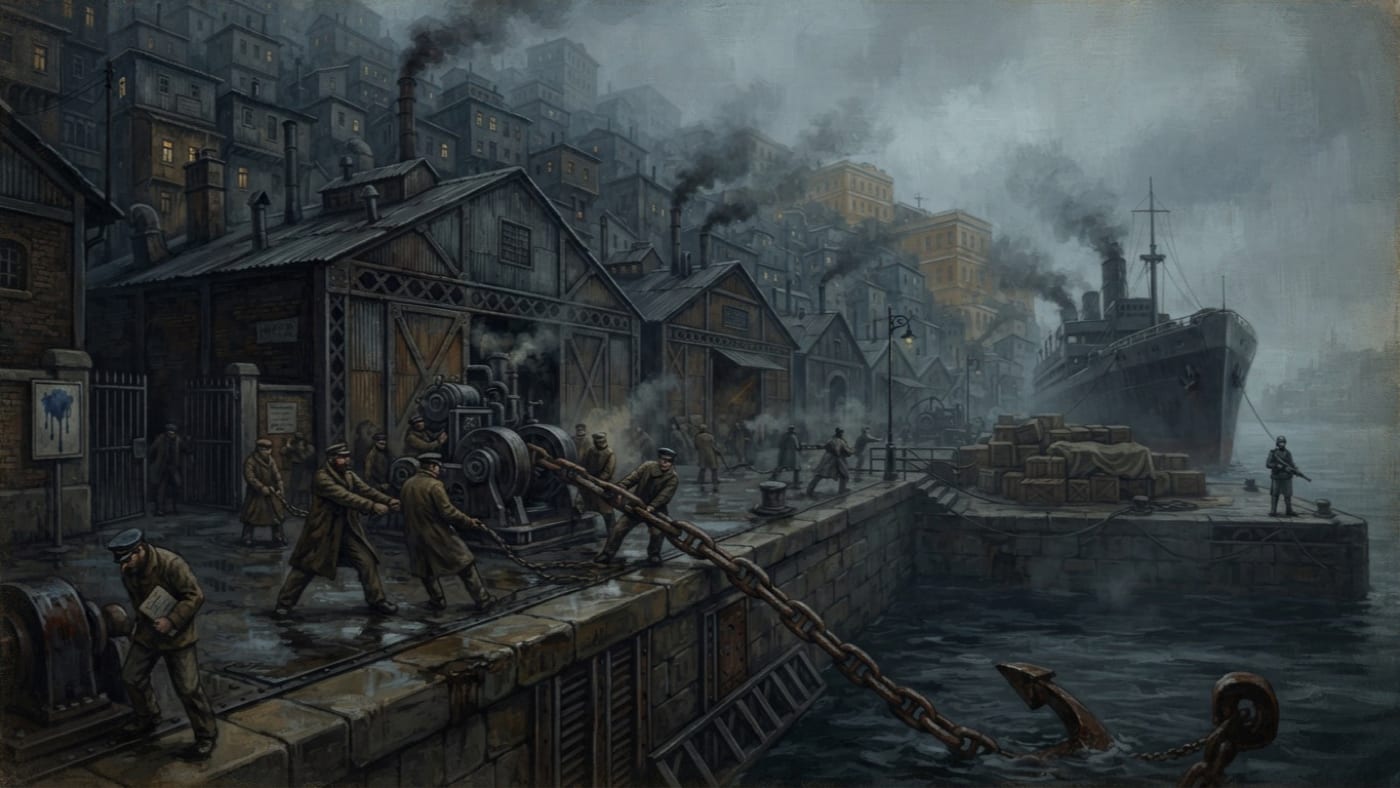
Blue ledger zone
Residence is permission to be counted
Blue registers the Harbor of Chains households for residence, rations and tithe. The permit supplies lawful standing; it leaves passage to another stamp.
Codex Ref. XIII.1.93-288
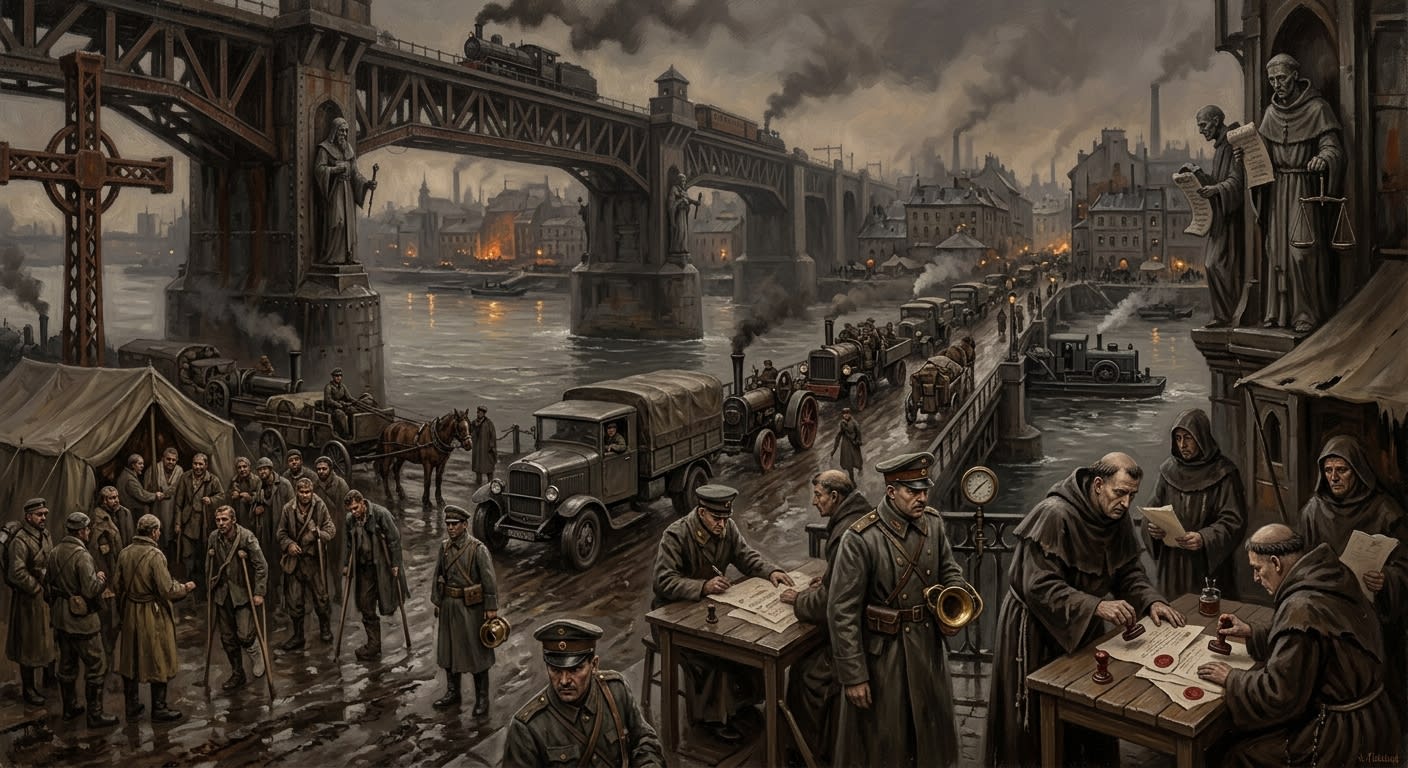
Bratislava
The throat between ruin, command, and the next inspection
Bratislava is the Central Corridor's damp throat: a Zone 3 Danube crossing where convoys, writs, wounded men, and official impatience are slowed into usefulness.
Codex Ref. II.4.09-011
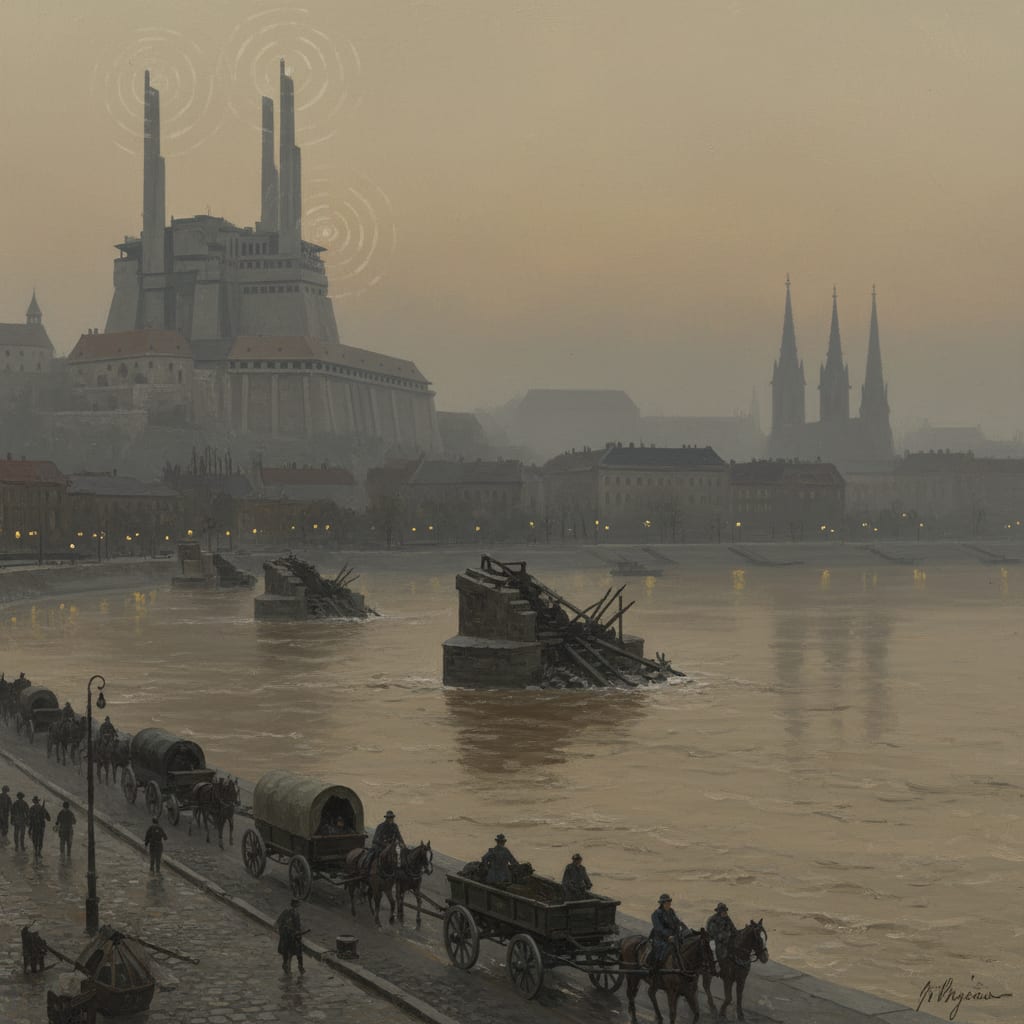
Budapest
The city the Danube cut in half, and the half that watches back
The largest city in the forward heartlands and the principal staging hub of the Central Corridor. 850,000 souls on the western bank, and something unaccounted for on the eastern. The Danube runs between them like a sentence the Bureau started and declined to finish.
Codex Ref. II.4.09-009
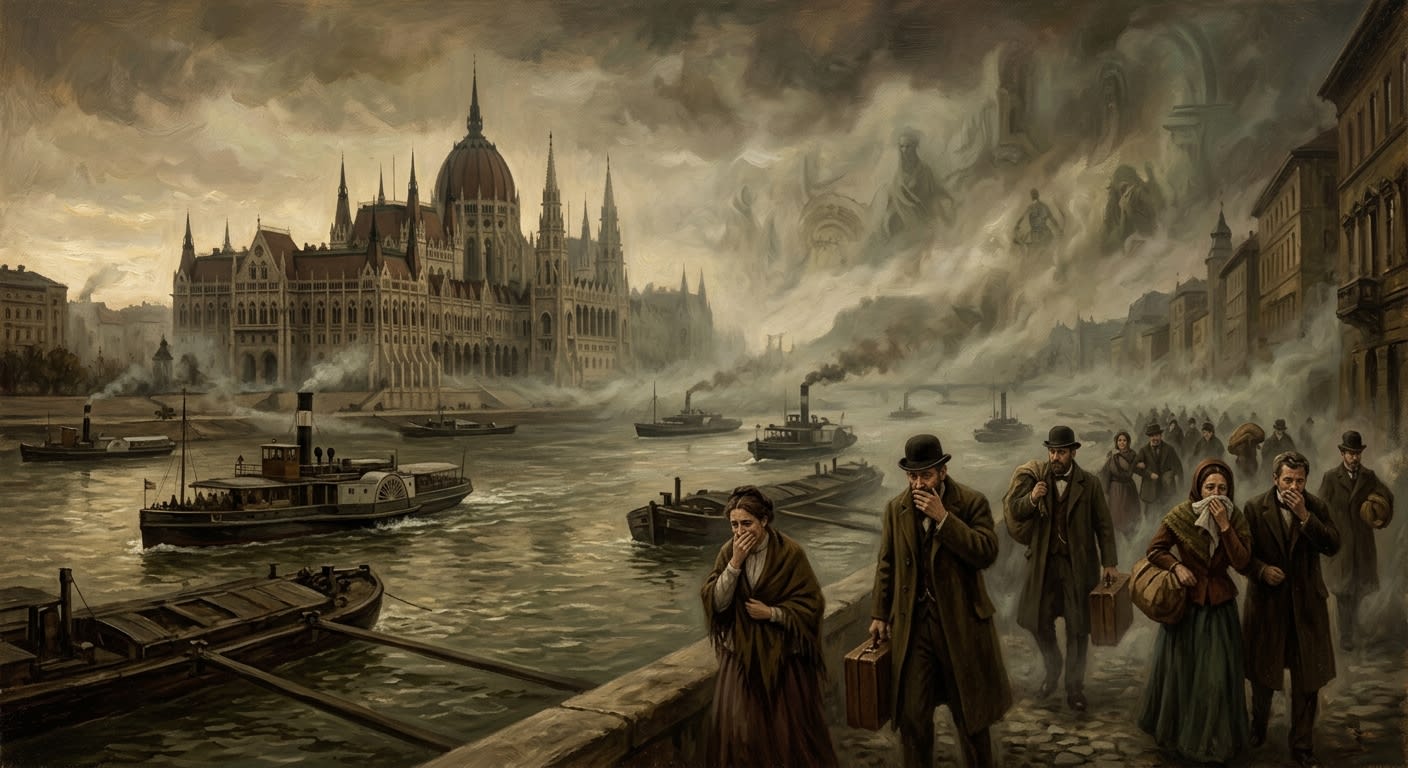
Budapest Perfume Fog
Eleven days of beloved lies before the bank went empty
The A.S. 117 Budapest Perfume Fog carried Velkara's Shattered Courts across both banks, preceding Pest's abandonment by scent, memory, and sealed cowardice.
Codex Ref. VII.4.16-117
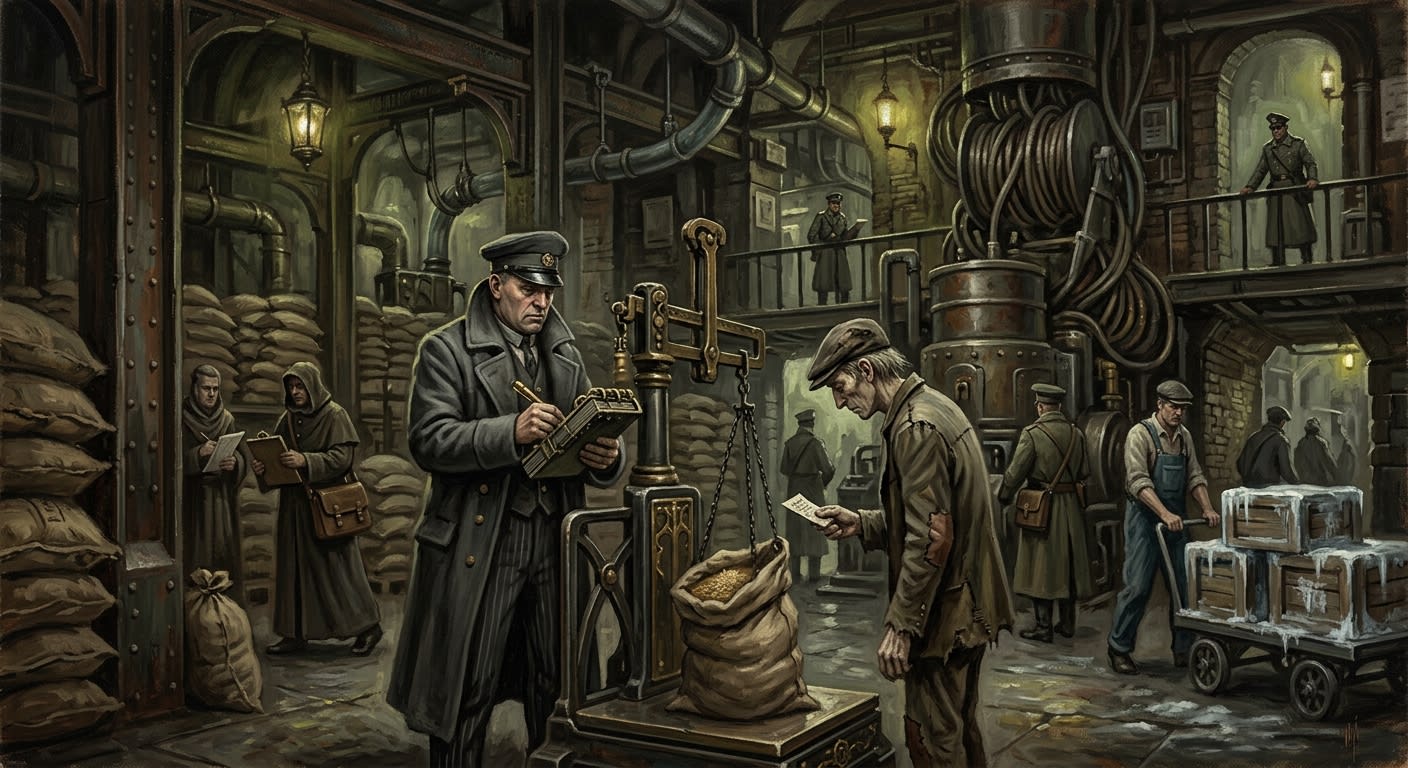
Bureau of Commerce
Bread becomes law before it becomes bread
The Bureau of Commerce prices obedience: weighing grain, freezing cargo, selling road-sound, licensing shortage, and making hunger kneel before the scale.
Codex Ref. VIII.2.10-097
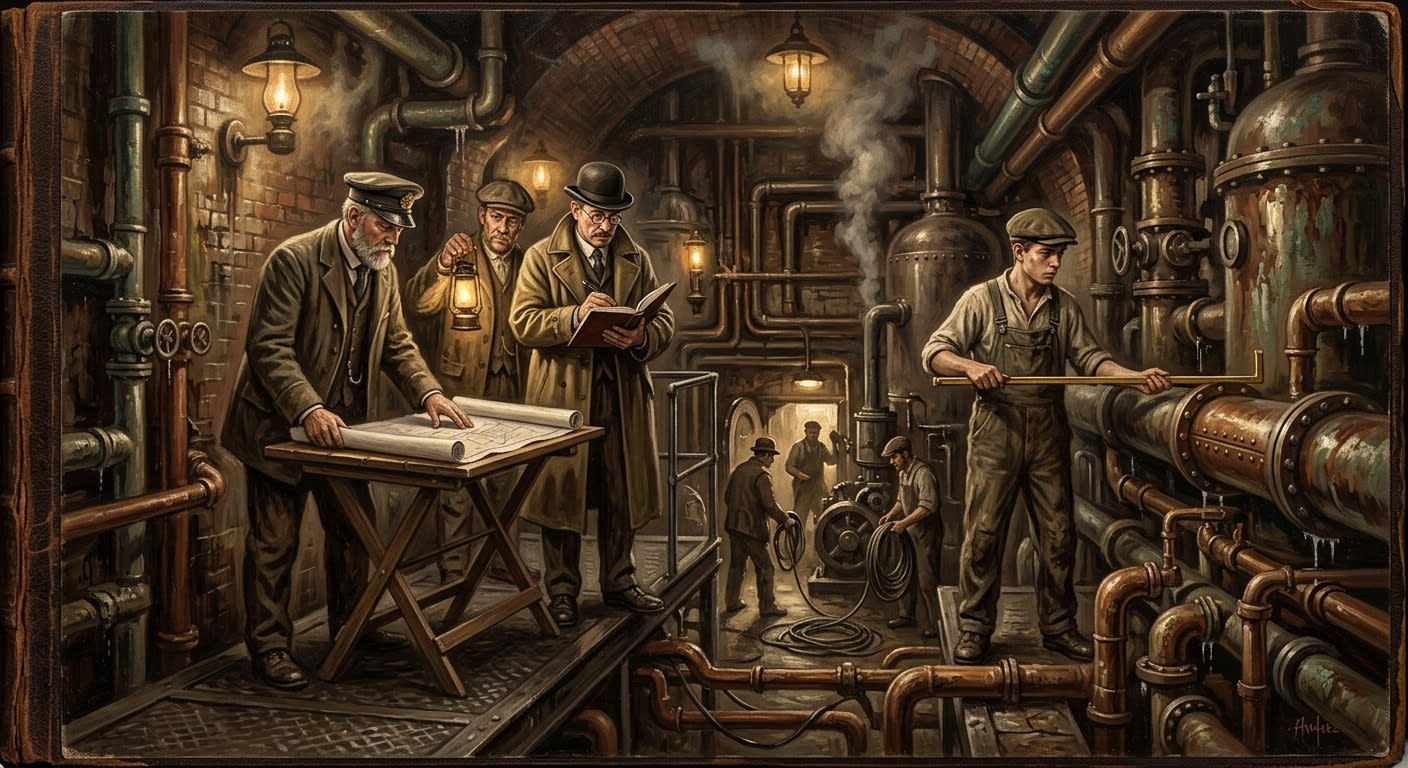
Bureau of Engineering Third Survey
Absence, properly measured, may be made load-bearing
The A.S. 194 Third Survey of the Constantinople Warrens proved, with exquisite scope discipline, that the illegal pipes it avoided did not matter.
Codex Ref. VII.8.10-037

Caretaker Saints
Mercy with a rent book, a candle, and no licence whatsoever
Caretaker Saints are the conscience-stricken branch of Grave-Field Shanty Brokers: unchartered grave-lane landlords who keep rents low, names whispered, and mercy barely deniable.
Codex Ref. XII.27.02-001

Category Two Spiritual Security Breach
An intact casket offers no defence against an unsigned line.
A missing seal or unsigned transfer breaks a sanctioned relic shipment’s custody chain and invokes the martial codes of treason. The bones may be intact. The paperwork is what the Bureau keeps.
Codex Ref. XIII.1.07-002
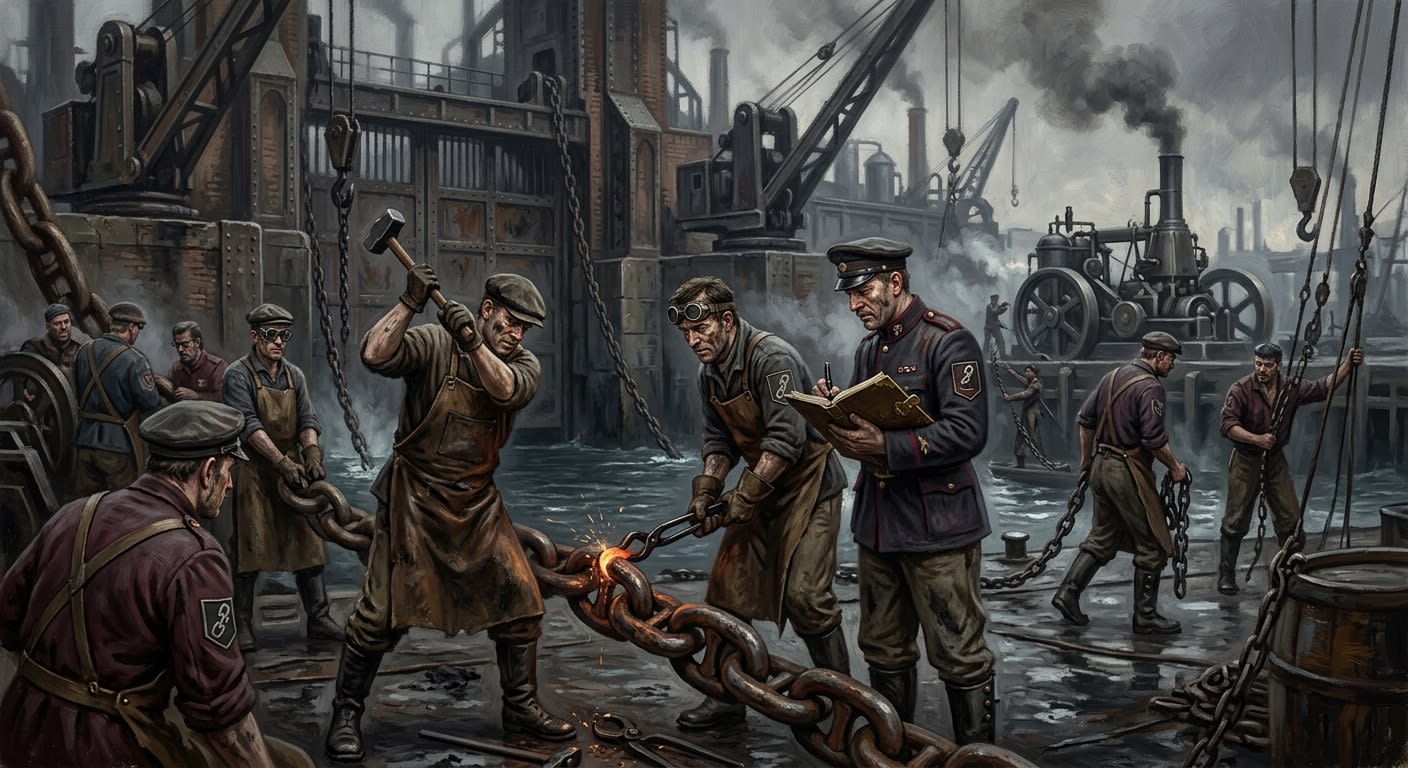
Chainwrights
Iron obeys because the right filthy hands count it
The Chainwrights keep Thessaloniki's harbor chains alive: makers, divers, riggers, singers, and liars whose iron counted when the bells went silent.
Codex Ref. XII.44.09-198
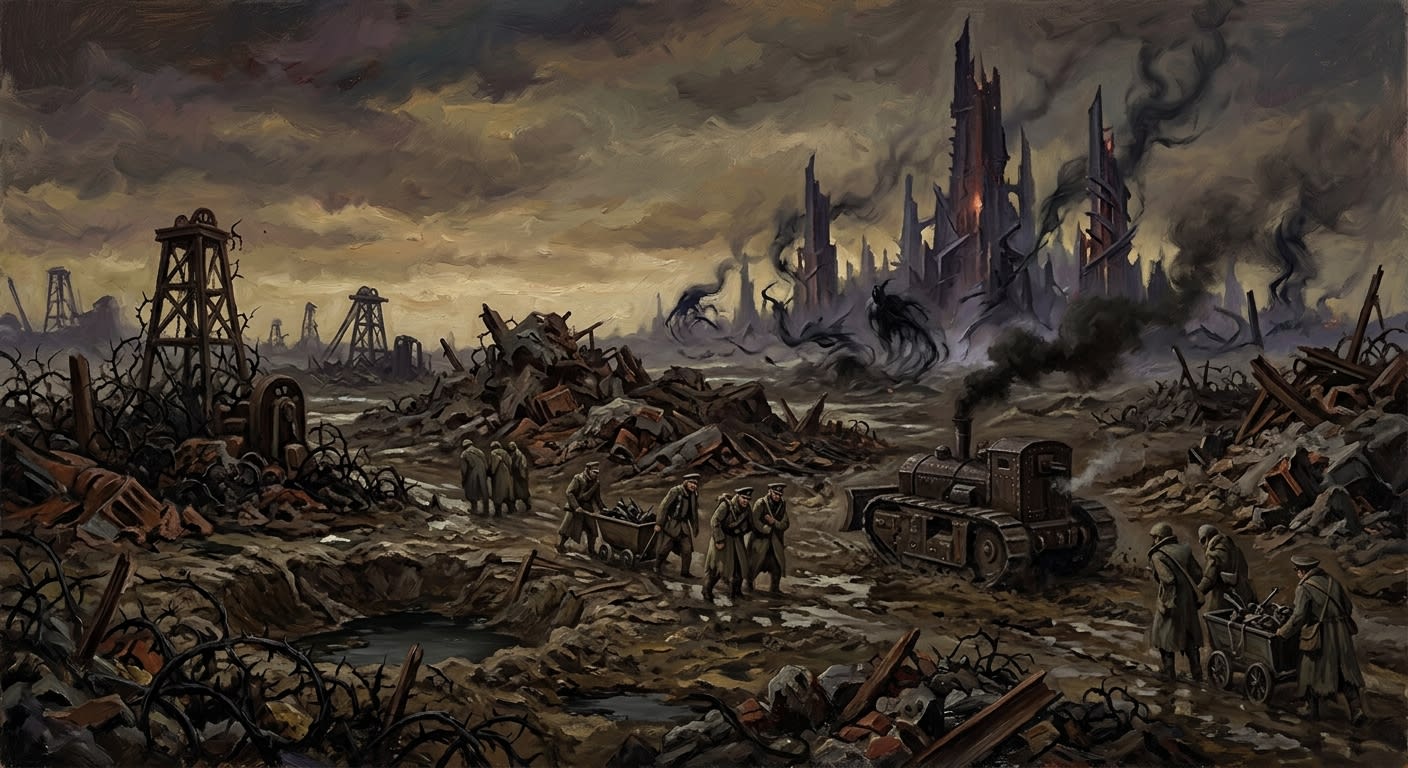
Charnel Lands
Where geography continues after mercy has been denied
The Charnel Lands are Zone 6, the demonic territories east of the Sagittal Line: geography made hostile to custody, with wilderness and cemetery both demoted to inadequate clerkly metaphors.
Codex Ref. II.6.06-001
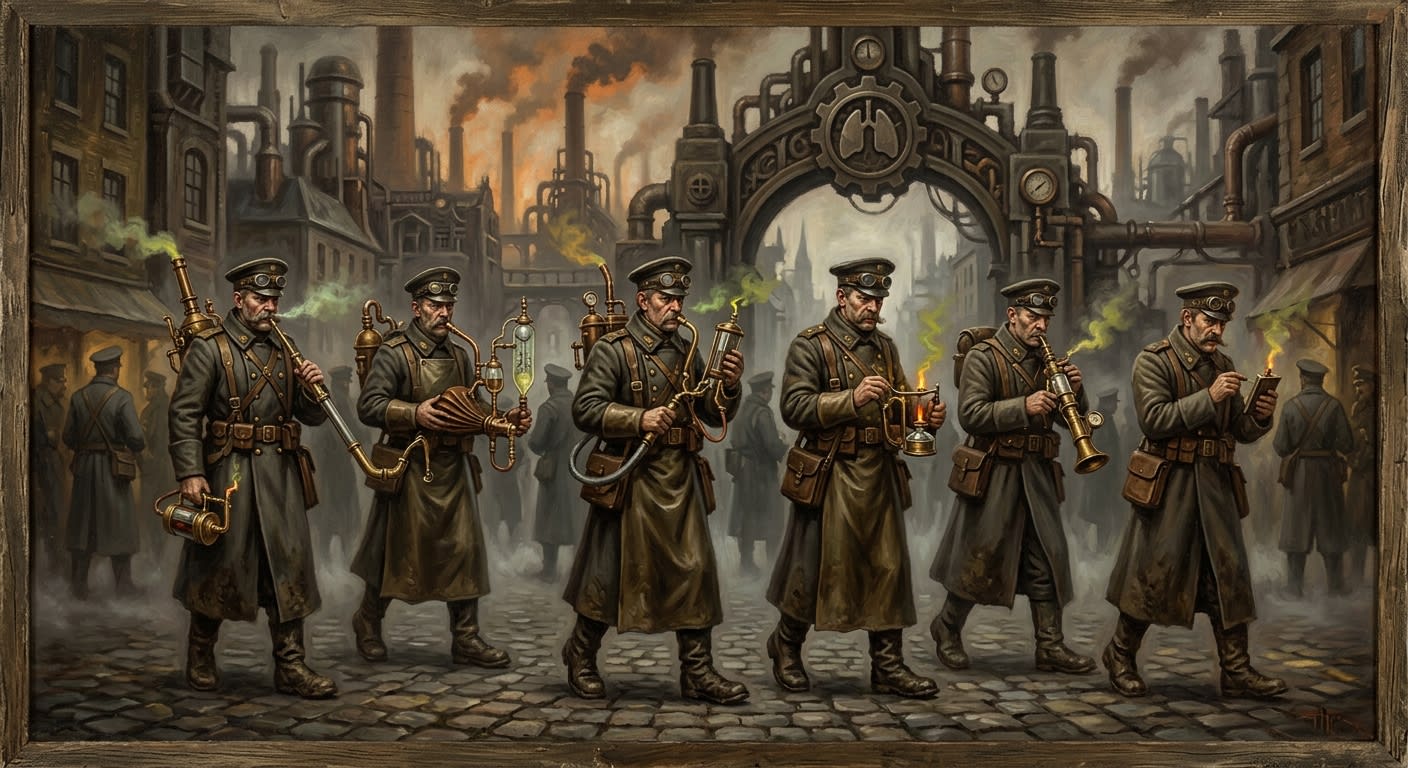
Clean-Lung Purists
The faction that believes the printed rule
Ninth Mark Fume-Inspector faction devoted to total detection of prohibited emanations, useful as conscience and purge tool, intolerable wherever command requires a city to keep breathing.
Codex Ref. XII.30.02-001
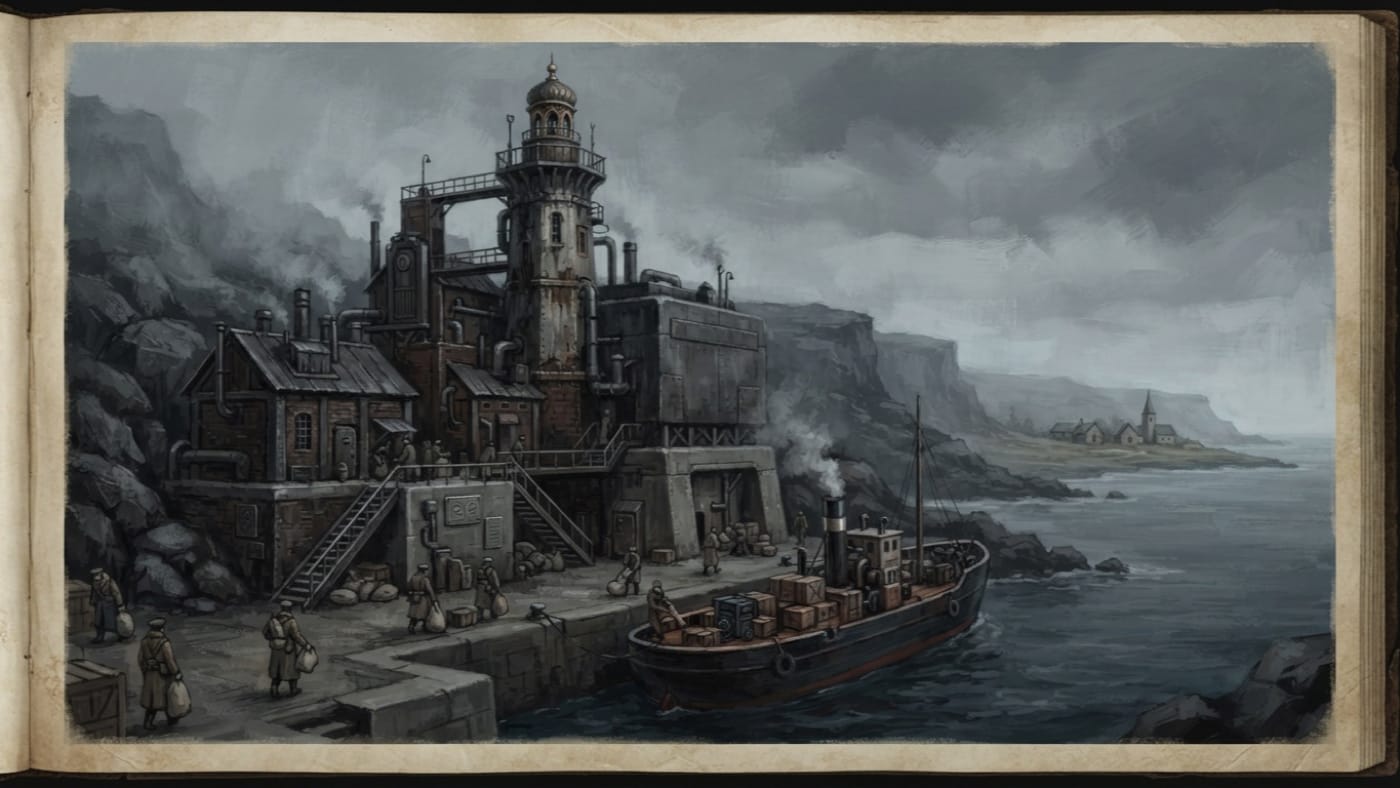
Coastal Station Theron
Where the sea is supposed to be written down
A.S. 201 documentary survey of the Pilgrim's Coast registry point attested in the Constantinople and Settlement accounts. A name, a harbour log and a measuring point: exactly as much station as the ink allows.
Codex Ref. II.4.09-661

Dead-Goods Tariffer
The grave is a permit; the permit has a price
Bureau-licensed bone classifier. He decides what the dead become — mortar, monument, or ornament — and does not look up from his seal press.
Codex Ref. XII.11.01-001
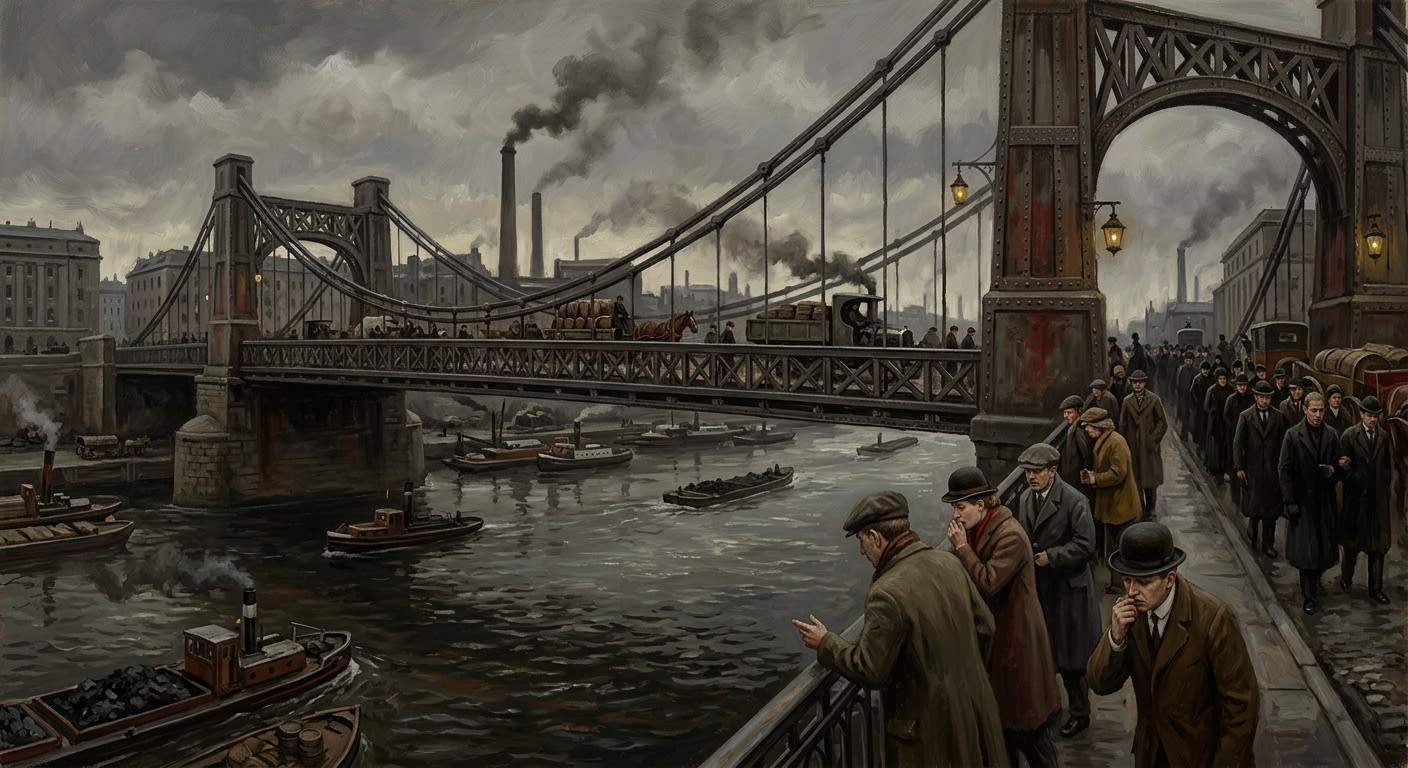
Dębnicki Bridge
The span where silence learned to drown
Dębnicki Bridge is Kraków's Vistula span of wire, silence, traffic, and annual accusation: the place Brechtold used to drown forty-seven clergy.
Codex Ref. II.3.06-018
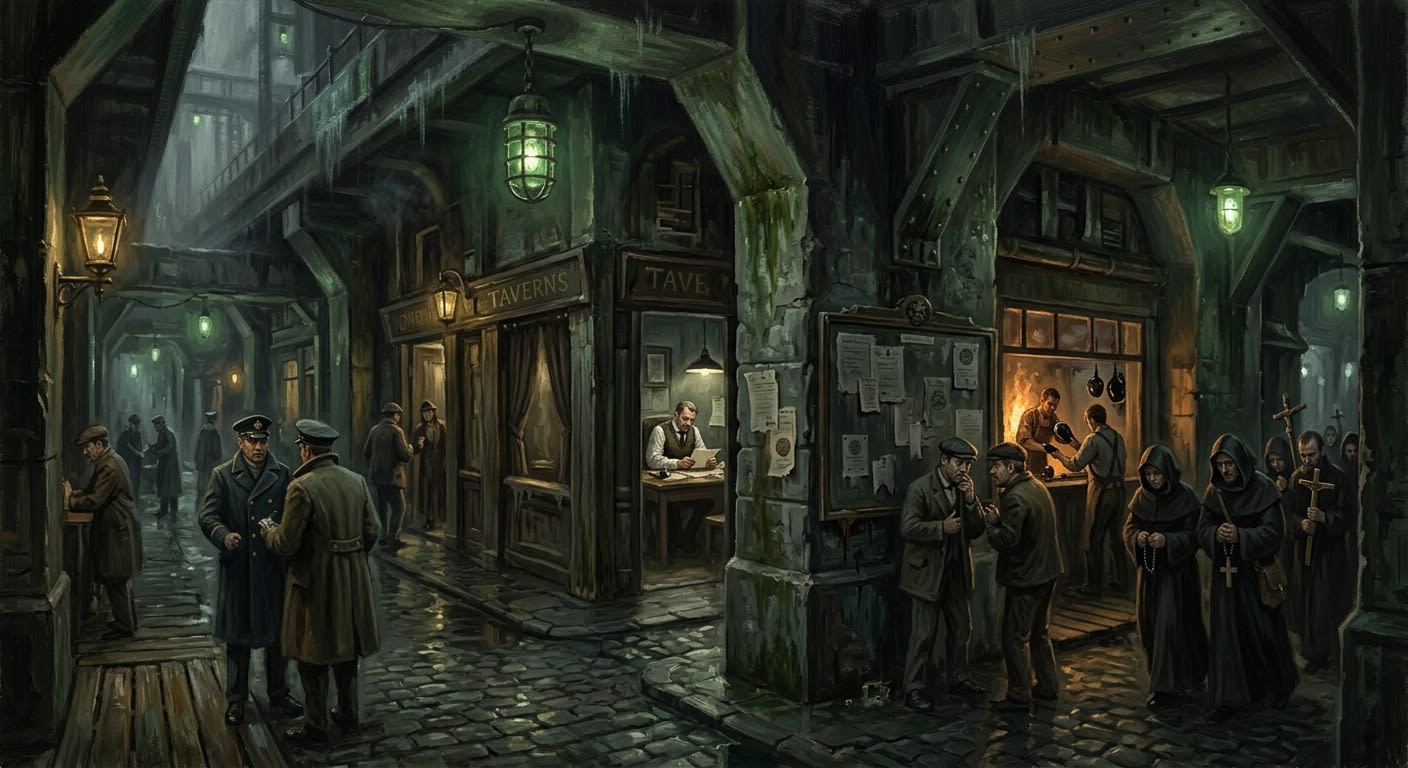
Drowned Row
The harbour beneath the harbour keeps its own ledger
Drowned Row is Thessaloniki's under-quay sailor quarter: wet taverns, false papers, pilots, glass traffic, Choir terror, and bureaucracy's useful shame.
Codex Ref. II.7.04-198
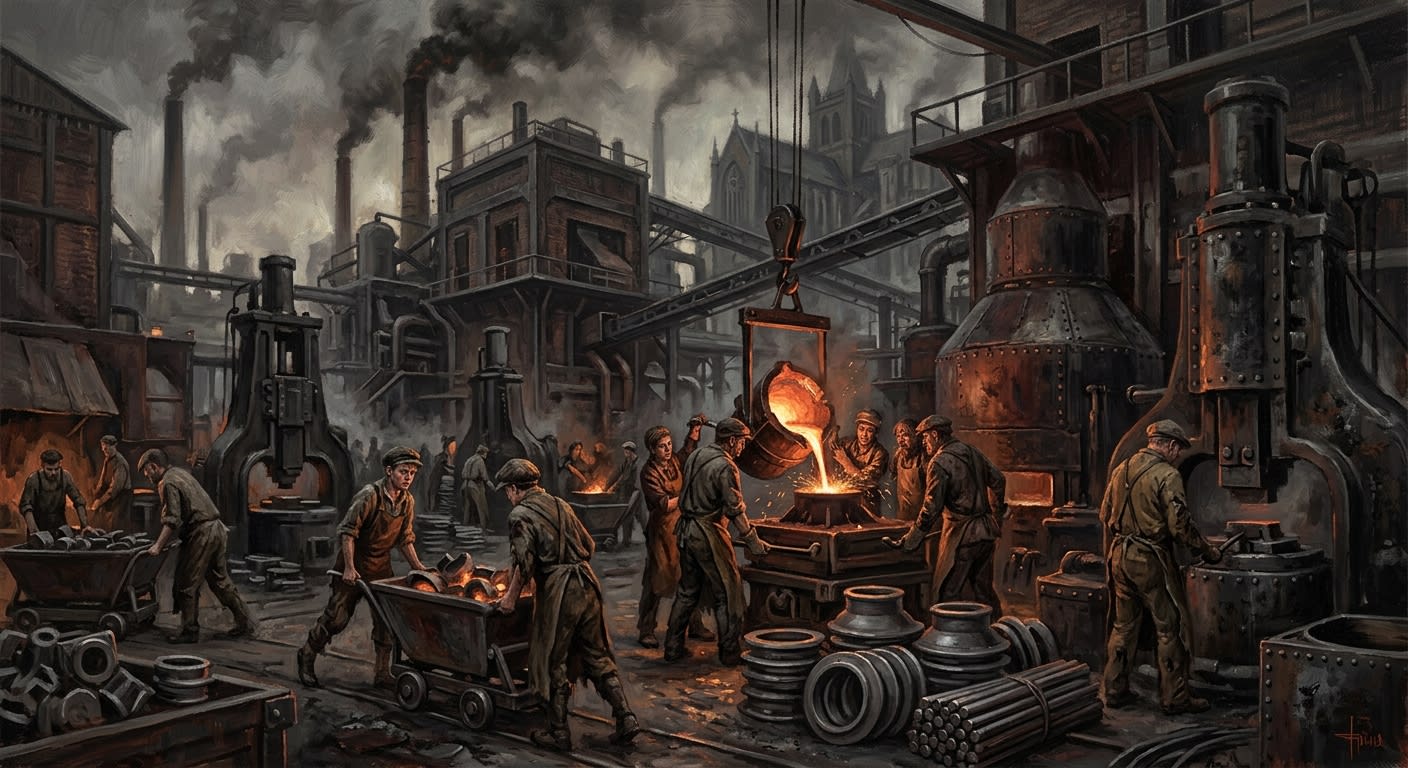
Edremit
The town that casts the throats by which Constantinople breathes
Edremit is the Hintermark casting town that makes boiler throats, casing collars, rivet stock, and hoarse children for Constantinople's hungry works.
Codex Ref. II.4.09-118
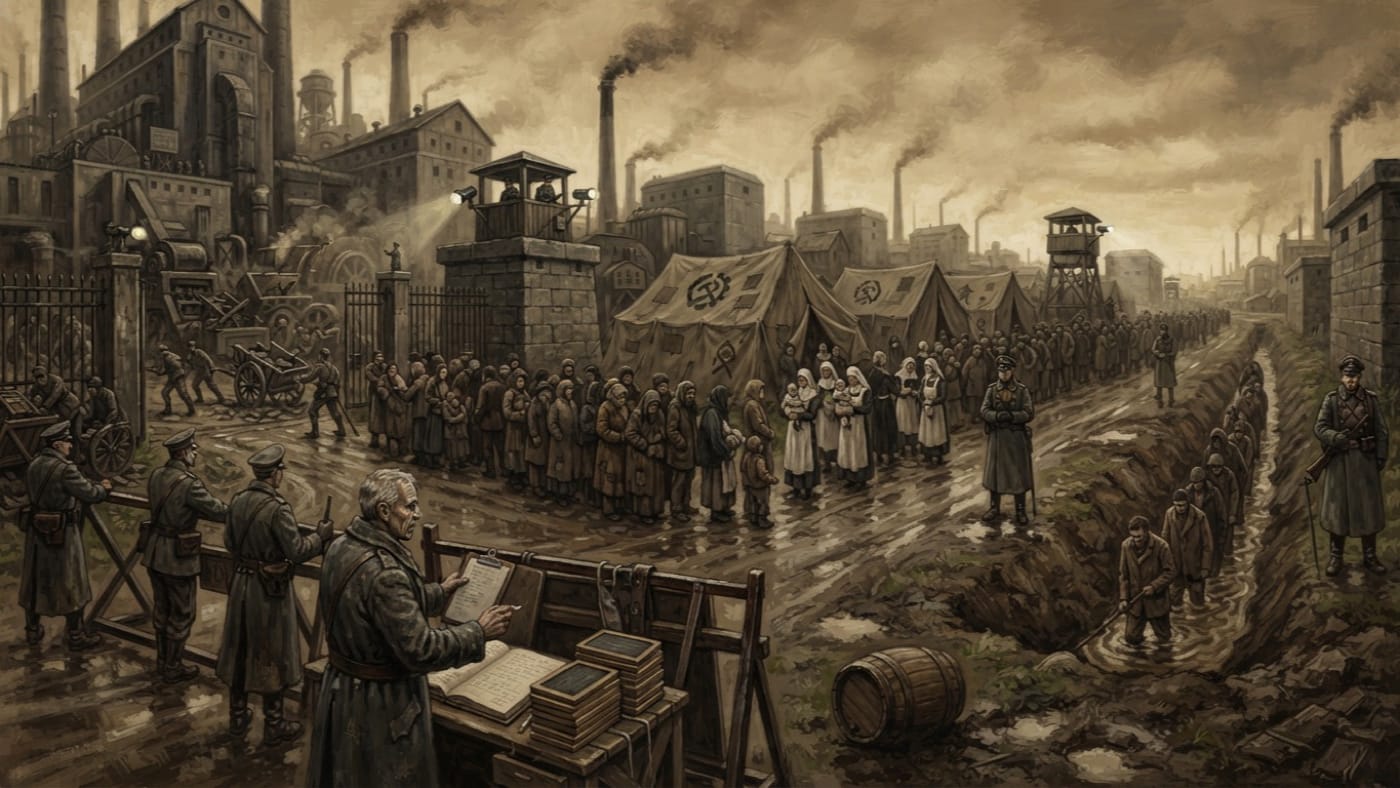
Emergency Disposition Table 4-B
The beer was omitted; the ditch remained
Records turned Thenm's A.S. 93 road decision into Table 4-B: beer omitted, ditch retained. This A.S. 201 survey establishes neither its issue year nor its present force.
Codex Ref. XIII.1.93-004
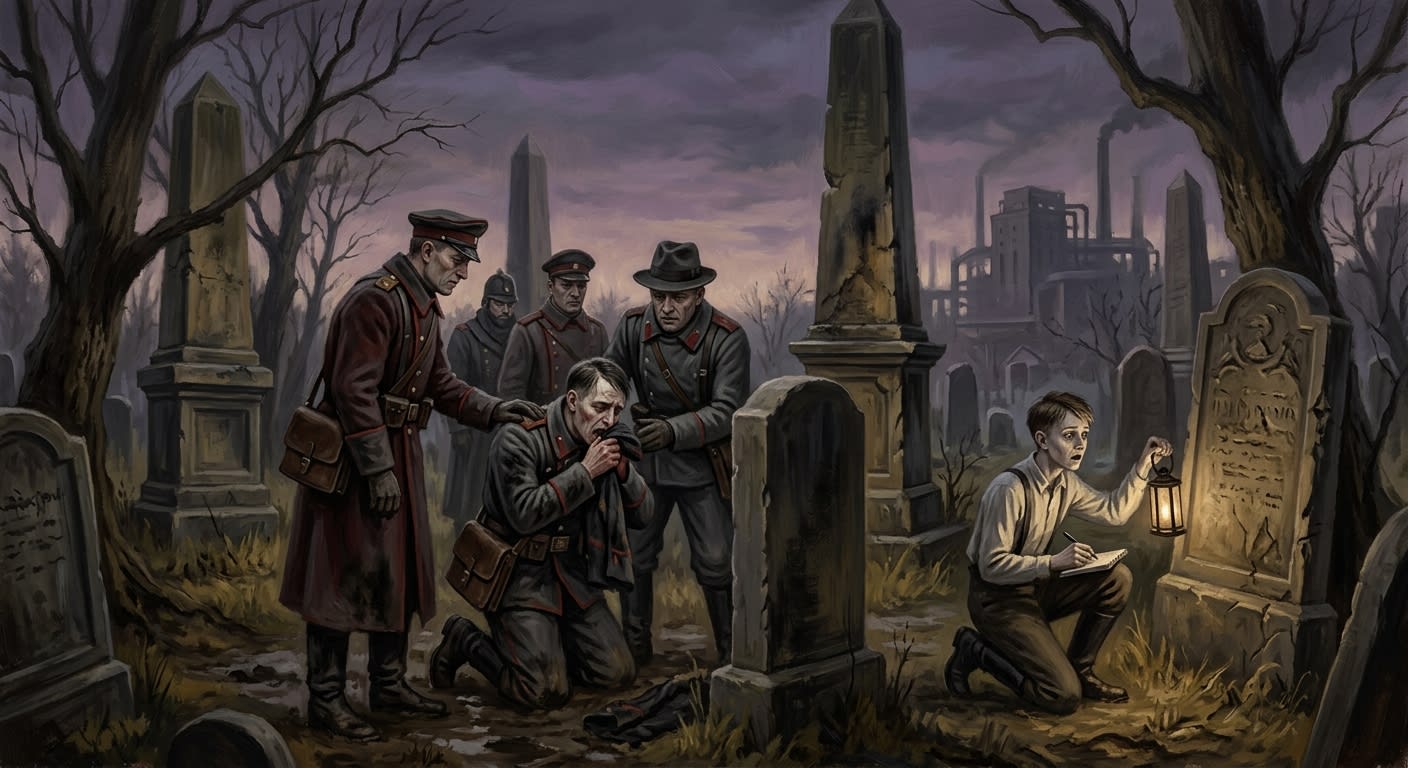
Epitaph Plague of Novi Sad
When the stones wrote first, the living learned to count backward
In A.S. 122, Novi Sad grave stones began carving living names before their deaths; Records called it weathering for fourteen years, then learned grammar can kill.
Codex Ref. VII.8.10-037
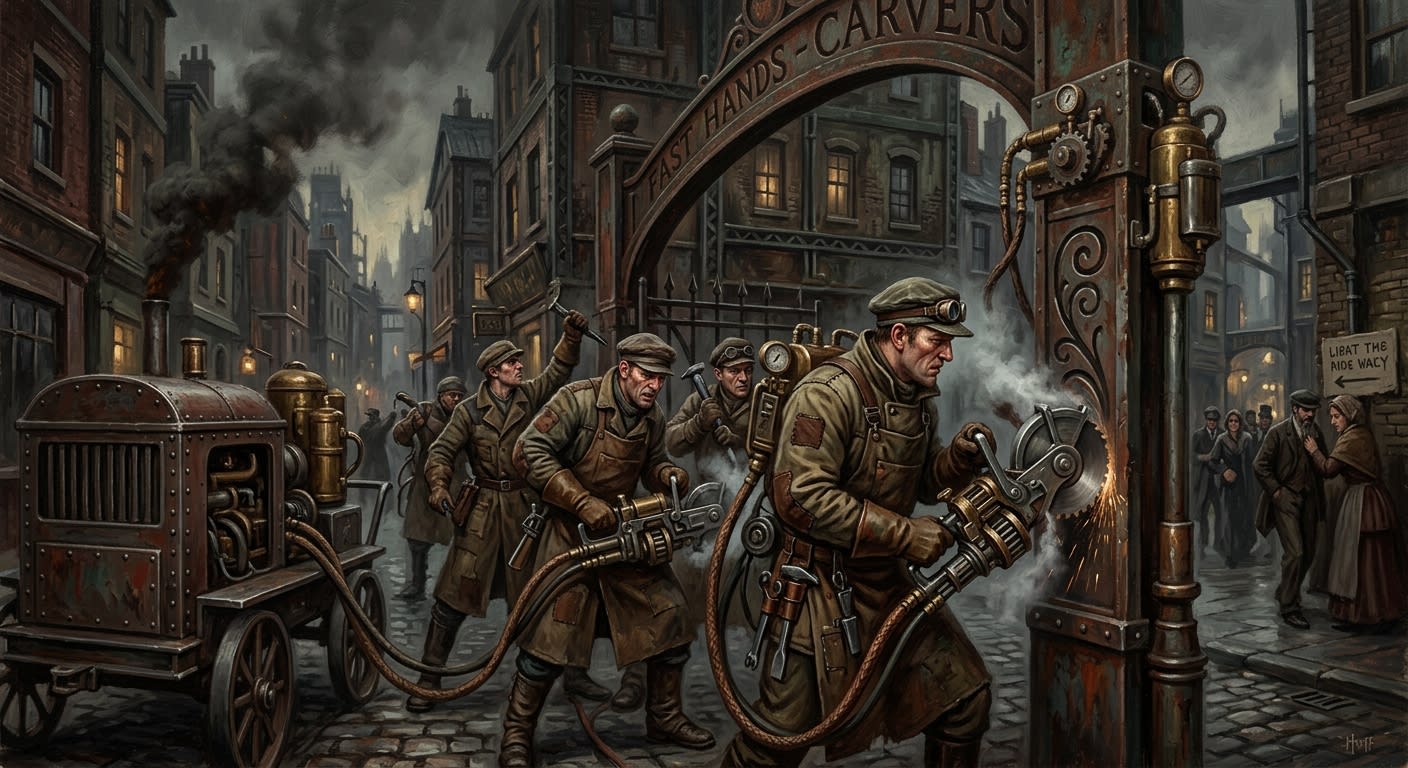
Fast Hands, Gate-Carvers
The marked door before dusk is the state admitting it was late
Fast Hands are the accelerated-compliance faction within the Gate-Carver trade, cutting thresholds quickly enough to legalise streets before hunger, riot, or Purity arrives.
Codex Ref. XII.19.02-002
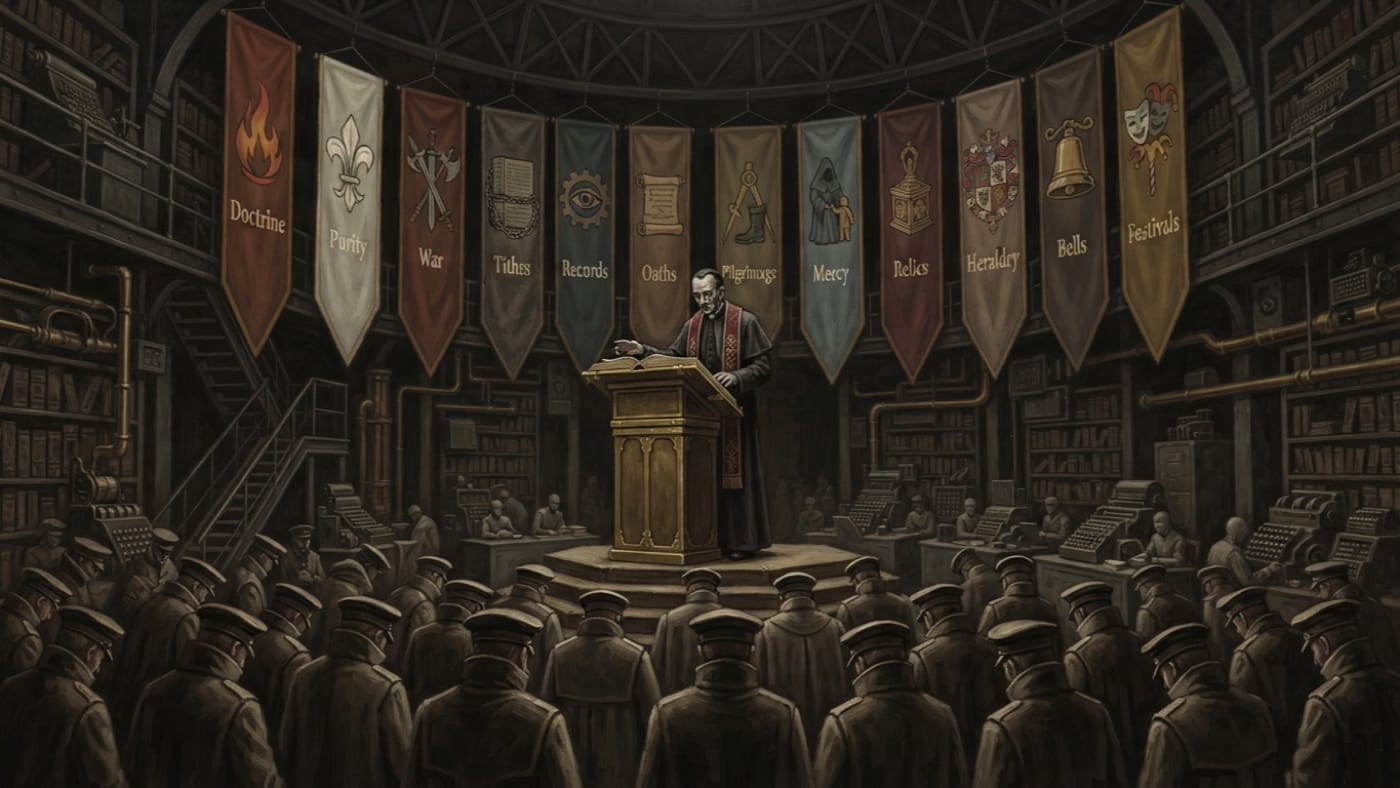
Feast of the Ledger
Twelve portfolios read aloud; the offices that keep them standing go unnamed.
At the Feast of the Ledger, the Synod reads its twelve canonical portfolios aloud. Settlement, which assigns three hundred million addresses, receives no syllable. The recital is correct; the census is incomplete.
Codex Ref. XIII.1.89-201

Garrison-Prior Aldric Venn
He saved the crates, which is how saints survive the road
Garrison-Prior Aldric Venn commanded Saint Stephen's defensive precinct during Vienna's Great Retreat withdrawal, completed the relic manifest, and vanished into the road.
Codex Ref. III.2.01-154
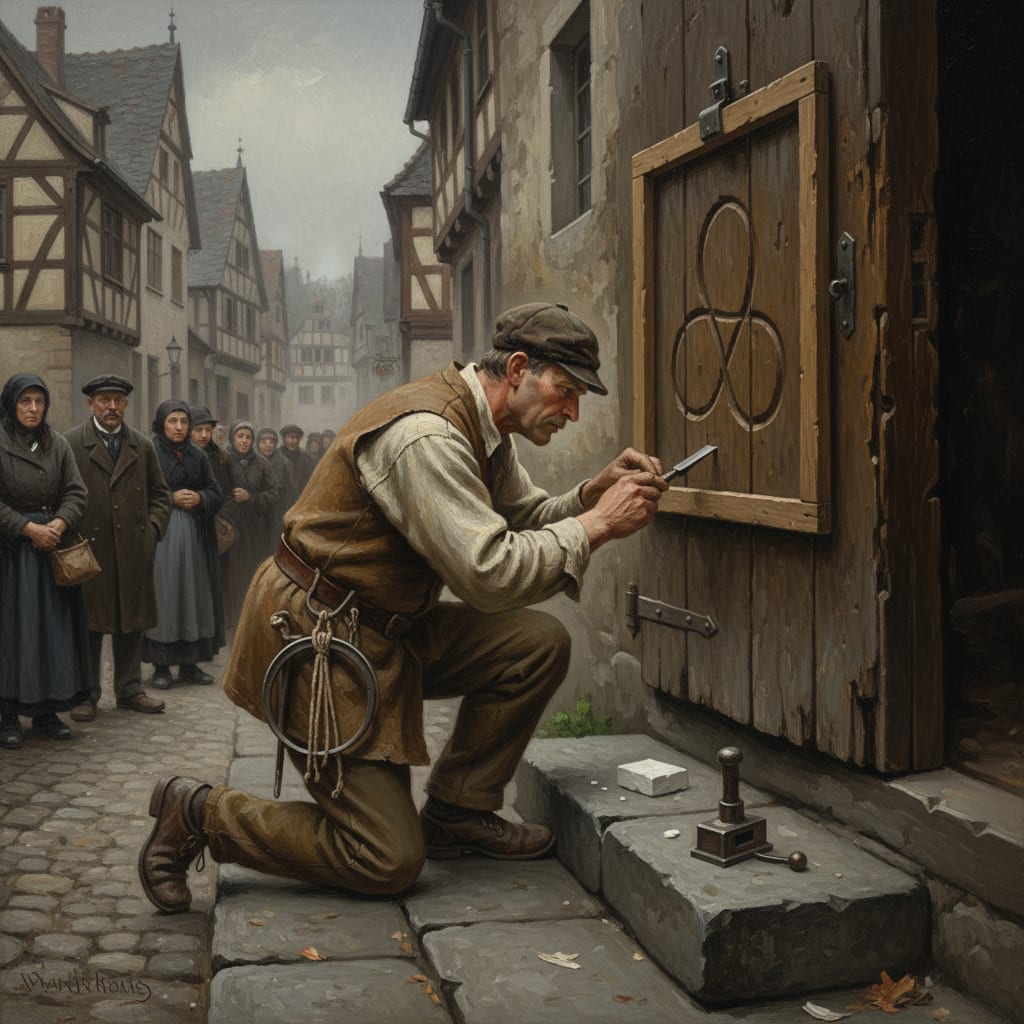
Gate-Carver of the Triune Knot
Three loops, one law, and the prayer that this time the threshold will hold
Six thousand licensed Gate-Carvers execute the Triune Knot into every threshold, grave-slab, and ossuary niche — sanctifying doors, sealing dead, and sustaining the Bureau of Heraldry's claim that a world without geometry is a world the enemy can enter.
Codex Ref. XII.19.01-001
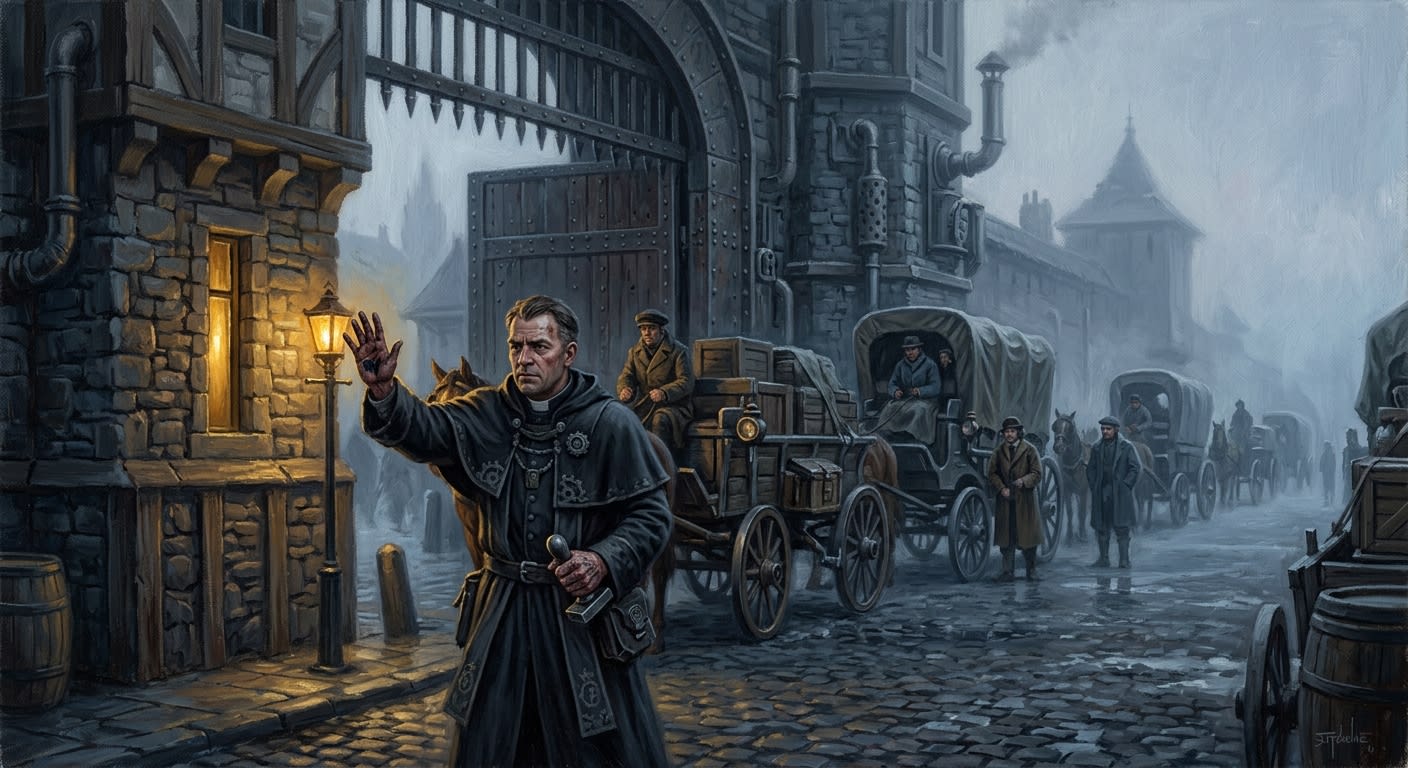
Gatewarden-Notary of Passage
The sole functionary who may halt a column of four thousand by raising one ink-stained hand and asking for documentation.
The Gatewarden-Notary of Passage stands at the point where all five great commodities of the war — disease, heresy, desertion, contraband, and ambition — must be sorted, weighed, stamped, and either admitted or refused. The Gate does not care about the man.
Codex Ref. XII.7.04-001

Geometry Brand-Smith
Six Thousand Four Hundred Licensed Geometers of Guilt, and the Irons That Did Not Come Back
The Bureau of Heraldry’s serialized geometers of guilt — 6,400 licensed Brand-Smiths who make identity permanent in the only ledger that cannot be forged, lost, or filed incorrectly: the body itself.
Codex Ref. XII.20.01-001
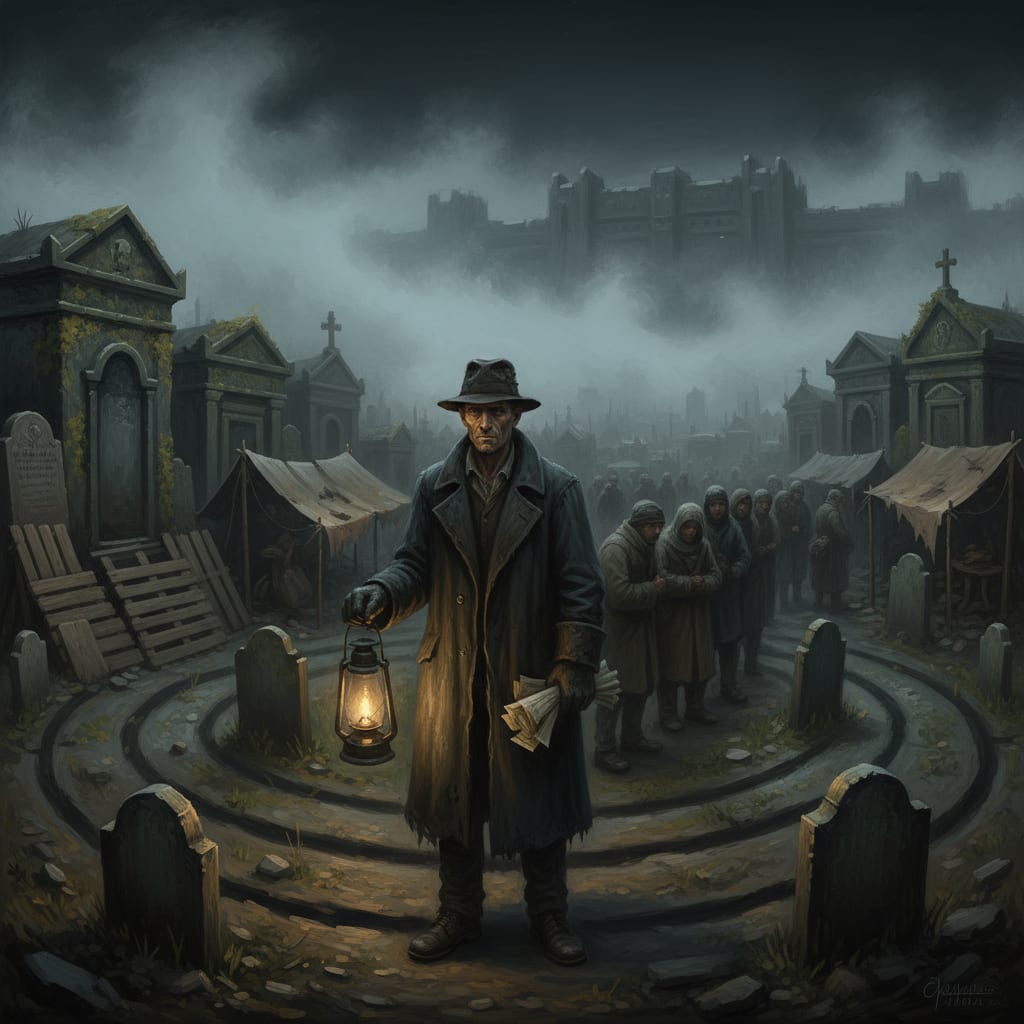
Grave-Field Shanty Broker
Where the Dead Own the Ground and the Broker Owns the Quiet
The officially unacknowledged profession administering forty thousand souls in the consecrated dead-lands the Bureau cannot legally rezone, will not formally notice, and cannot do without.
Codex Ref. XII.21.01-001
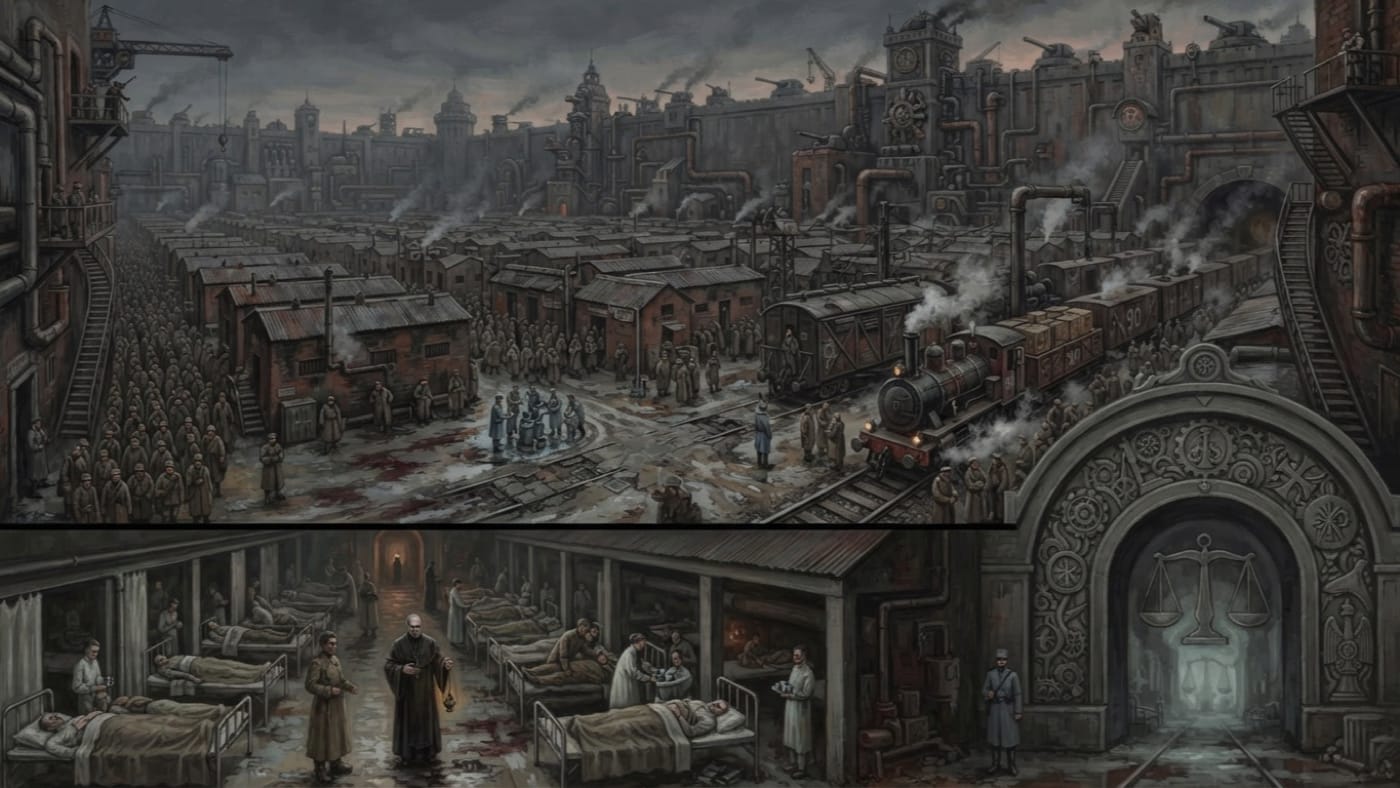
Hammers
Ninety days on paper; twelve thousand men in Grey
Bastion-Constantinople's Grey conscript quarter houses twelve thousand Continental Levy men on ninety-day orders. Relief trains run late; shells, fouled water, and the Velvet Choir keep their appointments.
Codex Ref. II.4.10-201
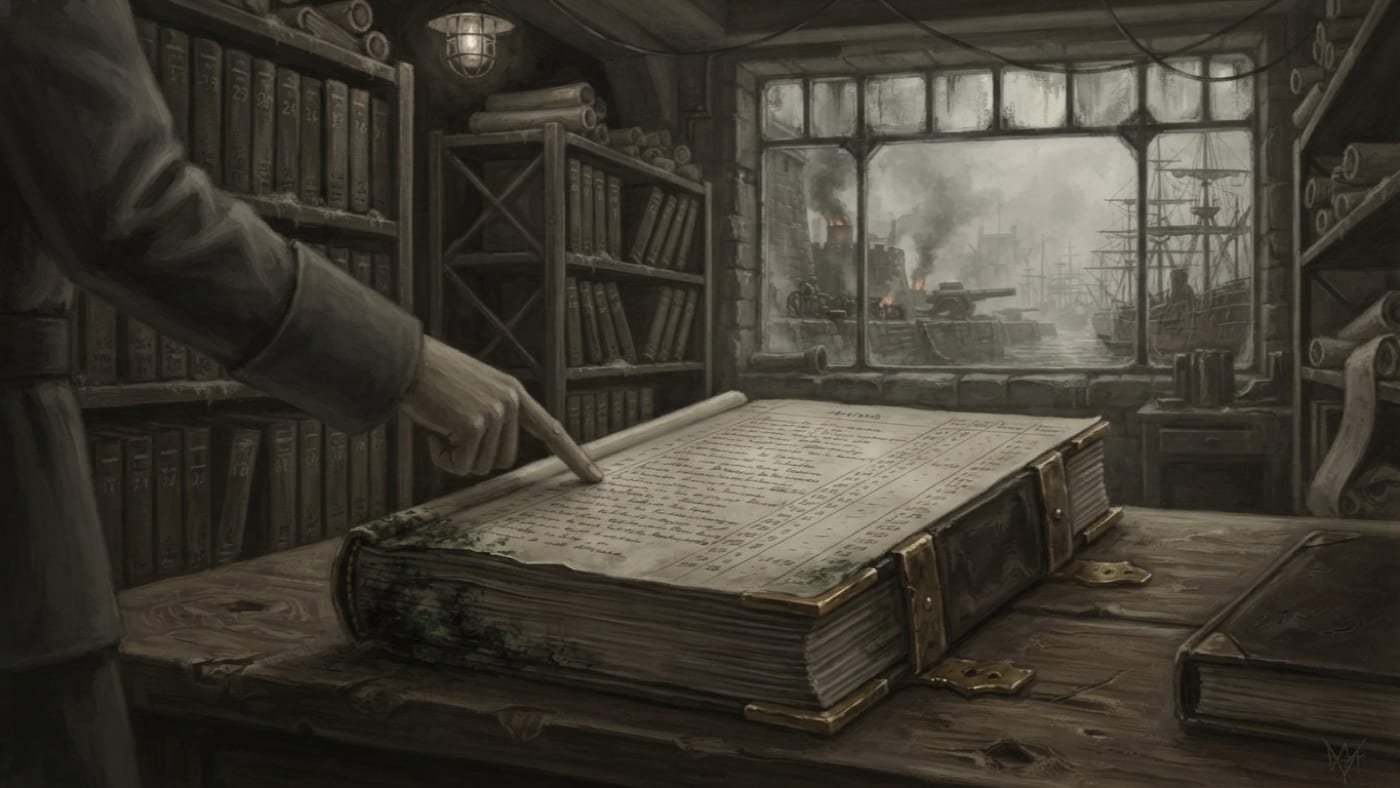
Harbour Ledger
Arrival duly entered; bread lawfully withheld
The Harbour Ledger records arrivals, berths, inspection times and the first ship count in Varna's A.S. 129 grain disaster. It proves the bread arrived; responsibility is entered elsewhere.
Codex Ref. XIII.1.89-129

Herta Stoltz
The woman who made refusal resemble arithmetic
Herta Stoltz, Warsaw's Bureau of Settlement Resident-Director, has spent nineteen years declining false readiness, revising Standing Order 14-W/3, and teaching maps to admit bakeries.
Codex Ref. III.2.01-152
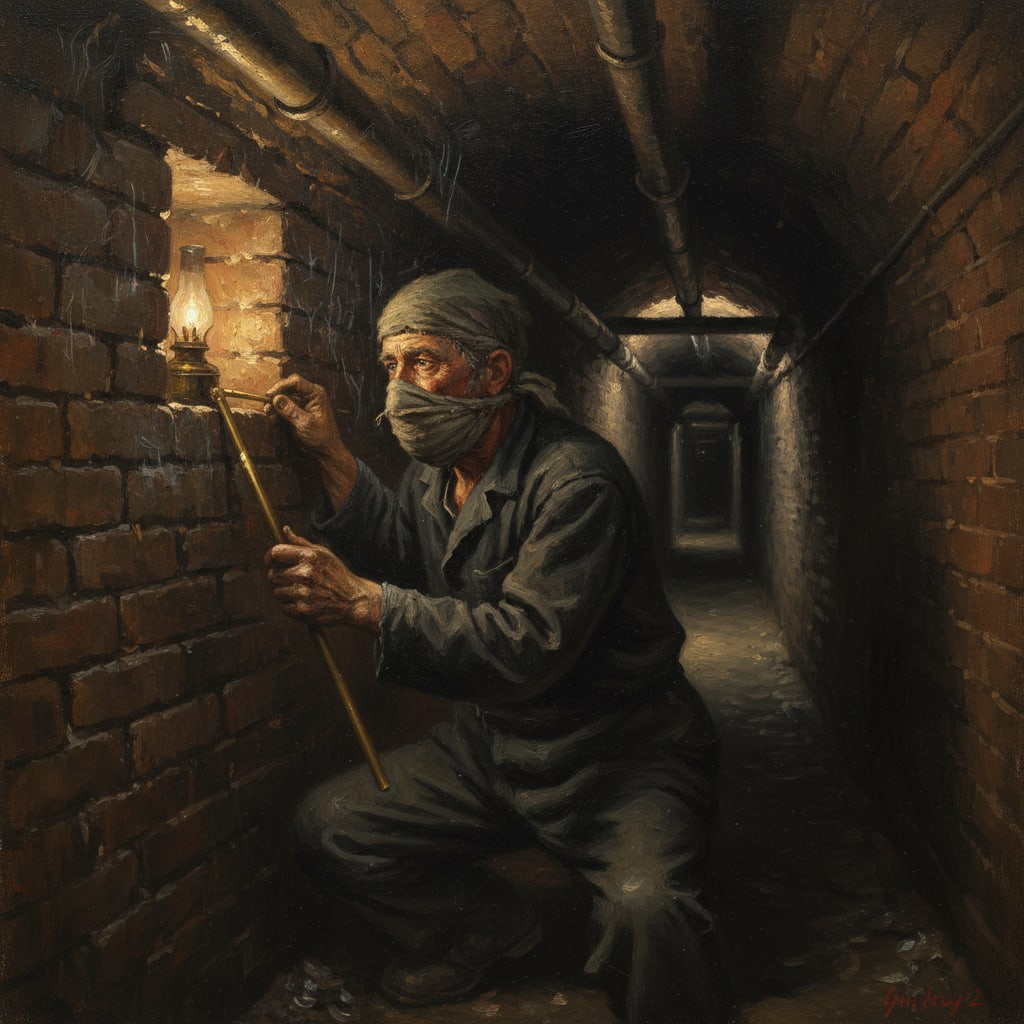
Hidden Pipe-Runner
Classified nonexistent. Audited quarterly. The pipes remain.
The Synod's invisible circulatory system: four ranks of Soot-Boys, Joint-Menders, Route-Keepers, and Bell-Duct Ghosts delivering black diesel through pipe networks the Bureau of Engineering has surveyed three times and failed to find, at the standard rate for failure.
Codex Ref. XII.3.02-001
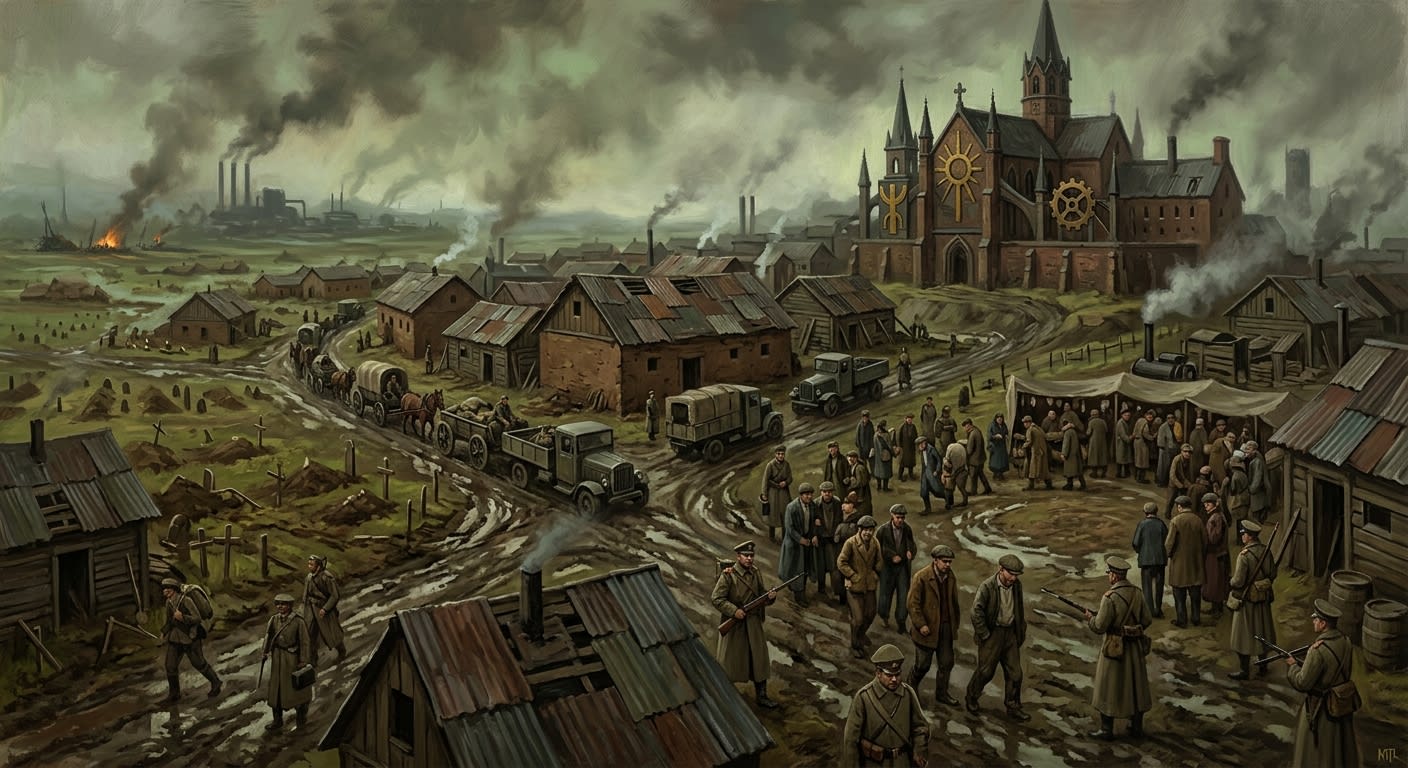
Hinterland
The fifty kilometres that pretend to be rear
The Hinterland is the fifty-kilometre bruise behind the Sagittal Line: farms, wards, graves, depots, markets, and civilians ordered to call occupation protection.
Codex Ref. II.4.09-201
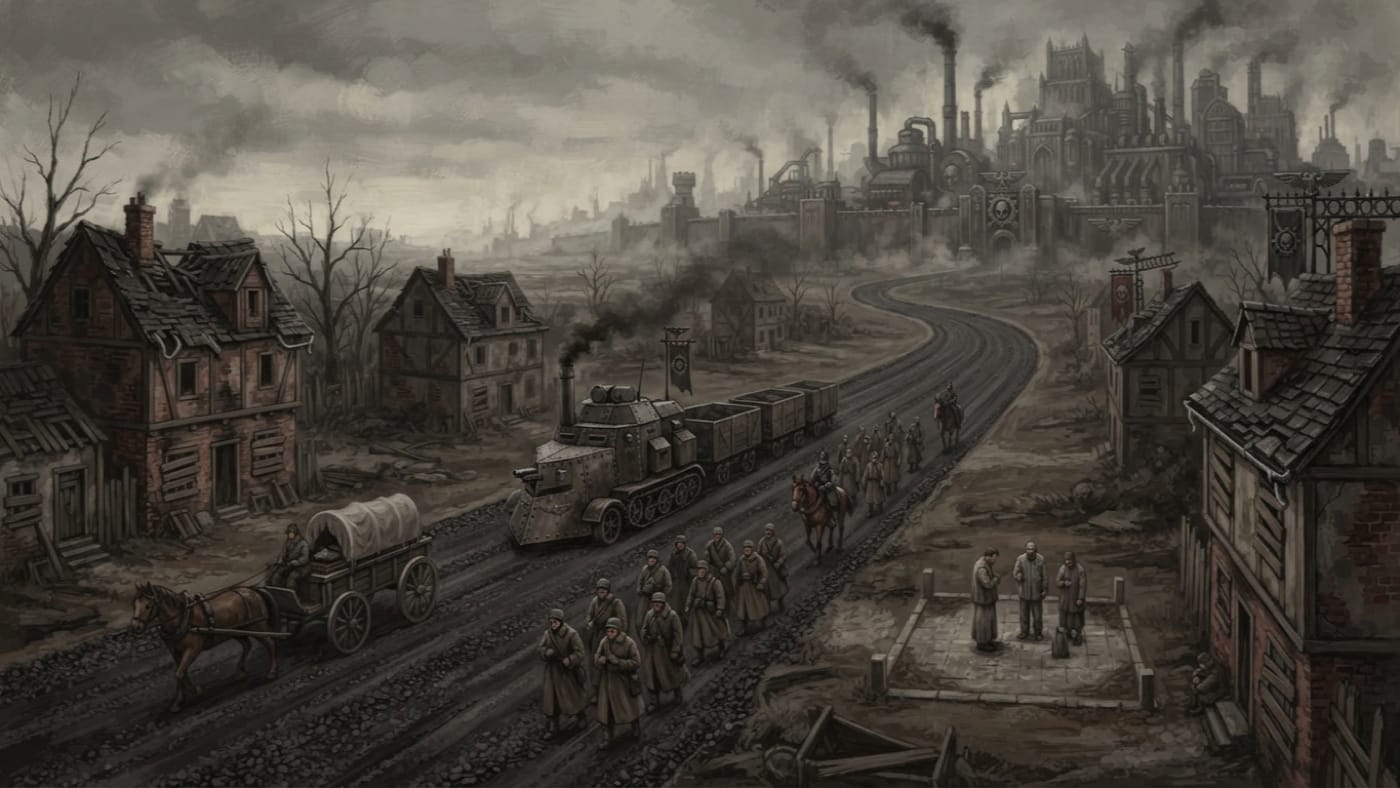
Hintermark roads
The roads are fit for service; the villages are noted for the record
The Hintermark roads feed Bastion-Constantinople with coal, iron, fruit, and levies. War keeps the roads in excellent repair; the villages receive no such care.
Codex Ref. II.3.06-003
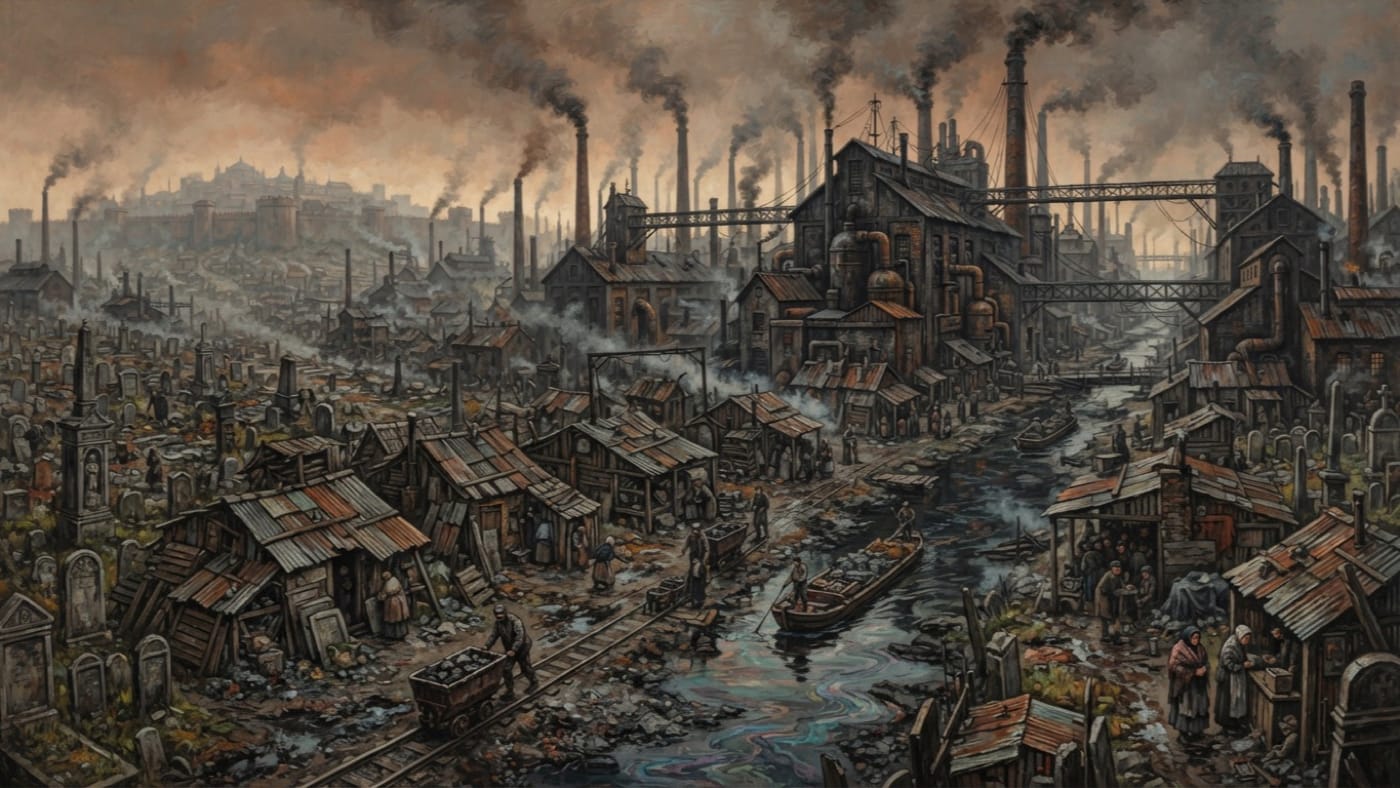
Hintermark settlements
The furnaces have addresses; their households do not
The Hintermark settlements keep Bastion-Constantinople supplied with iron, labour and coffin timber. A.S. 201 finds production continuing, registers disputed, and hungry households entered in the Black Ledger's second books.
Codex Ref. II.3.06-003
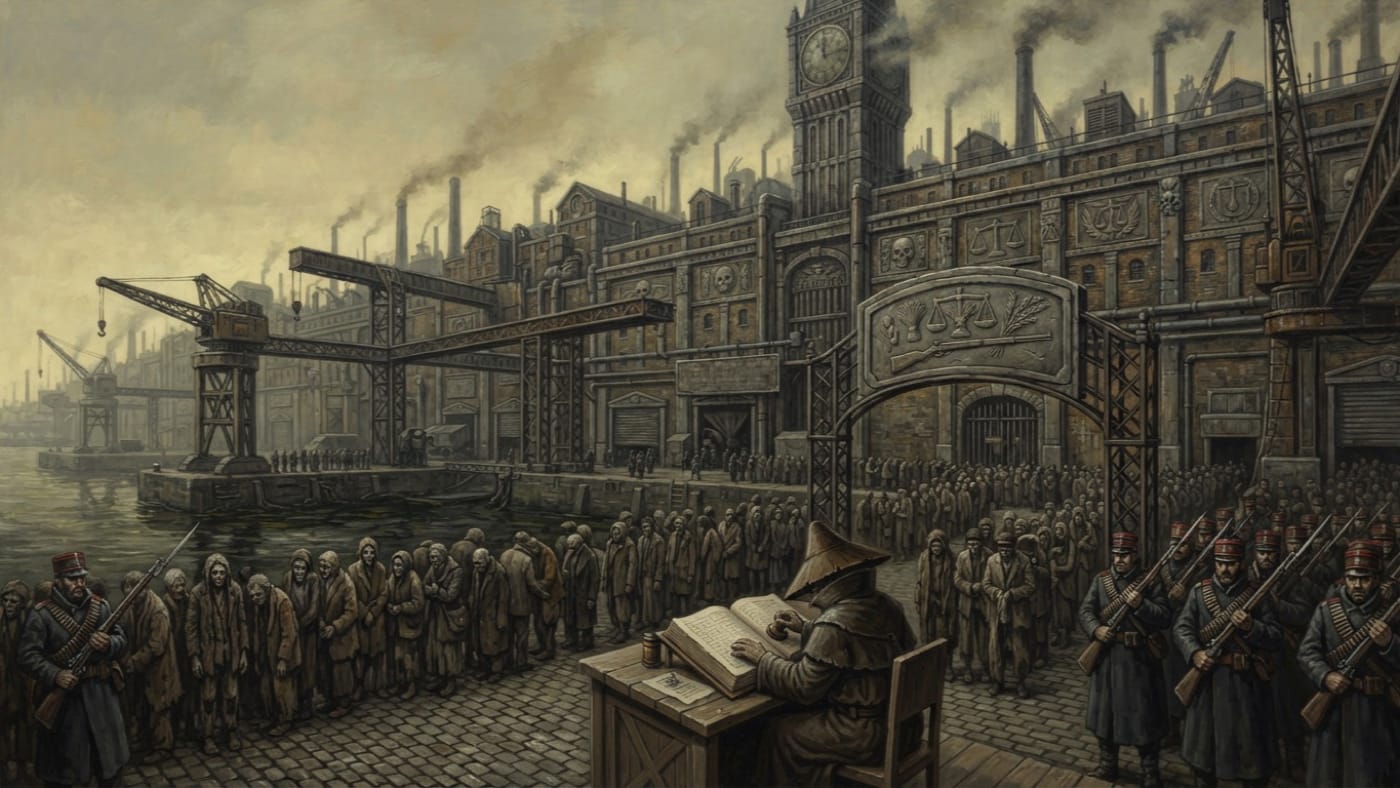
Holy Fast
The hunger came first; the consent was entered afterward
Holy Fast is Records' approved name for Varna's A.S. 129 deprivation: nineteen days of sealed grain, a Purity volley, and consent inferred from petitioners who could no longer petition.
Codex Ref. XIII.1.89-129
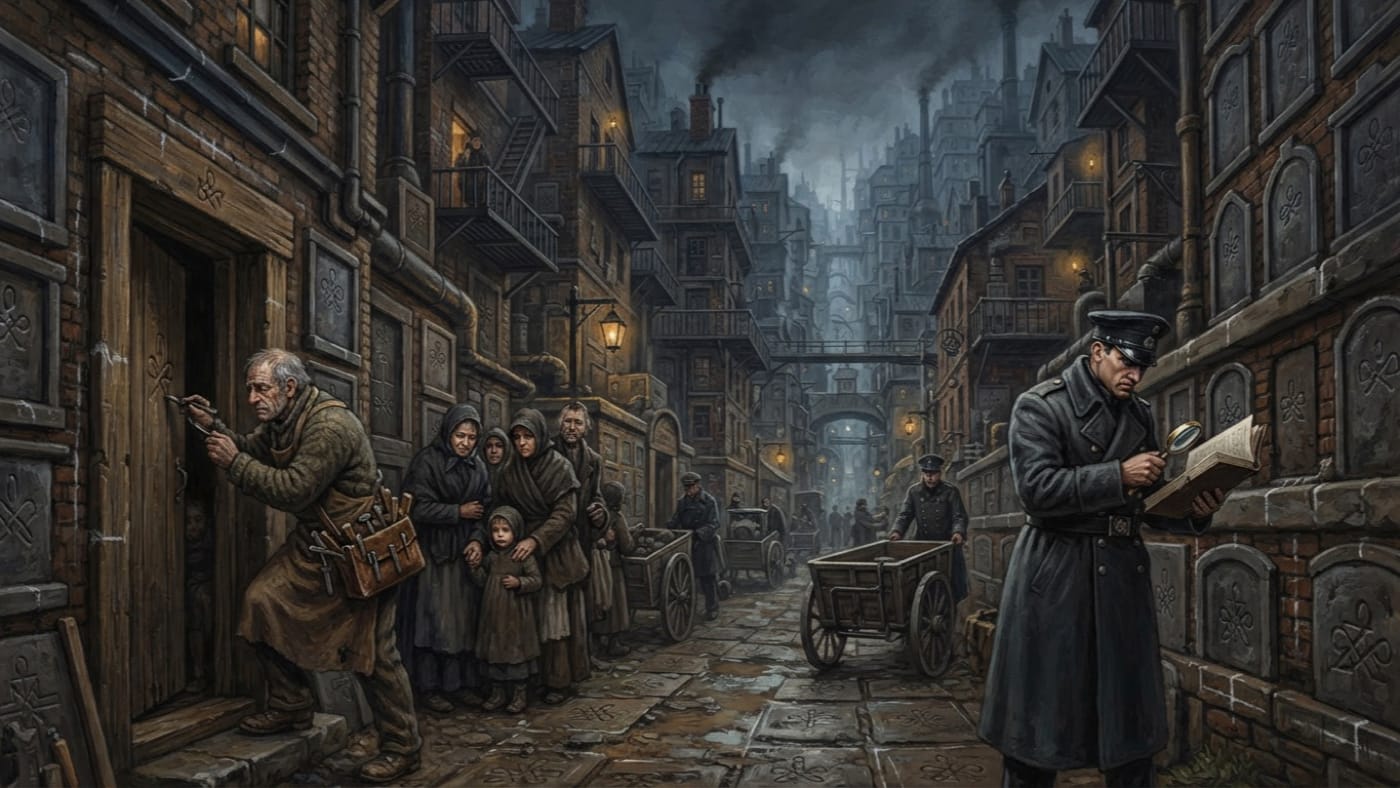
Housing and Burial Codes
A roof and a grave remain yours while the marks agree
The Housing and Burial Codes bind roofs and graves to the same ledger. A valid Triune Knot makes a household legible; a failed mark makes its stone available for confiscation.
Codex Ref. XIII.1.07-014
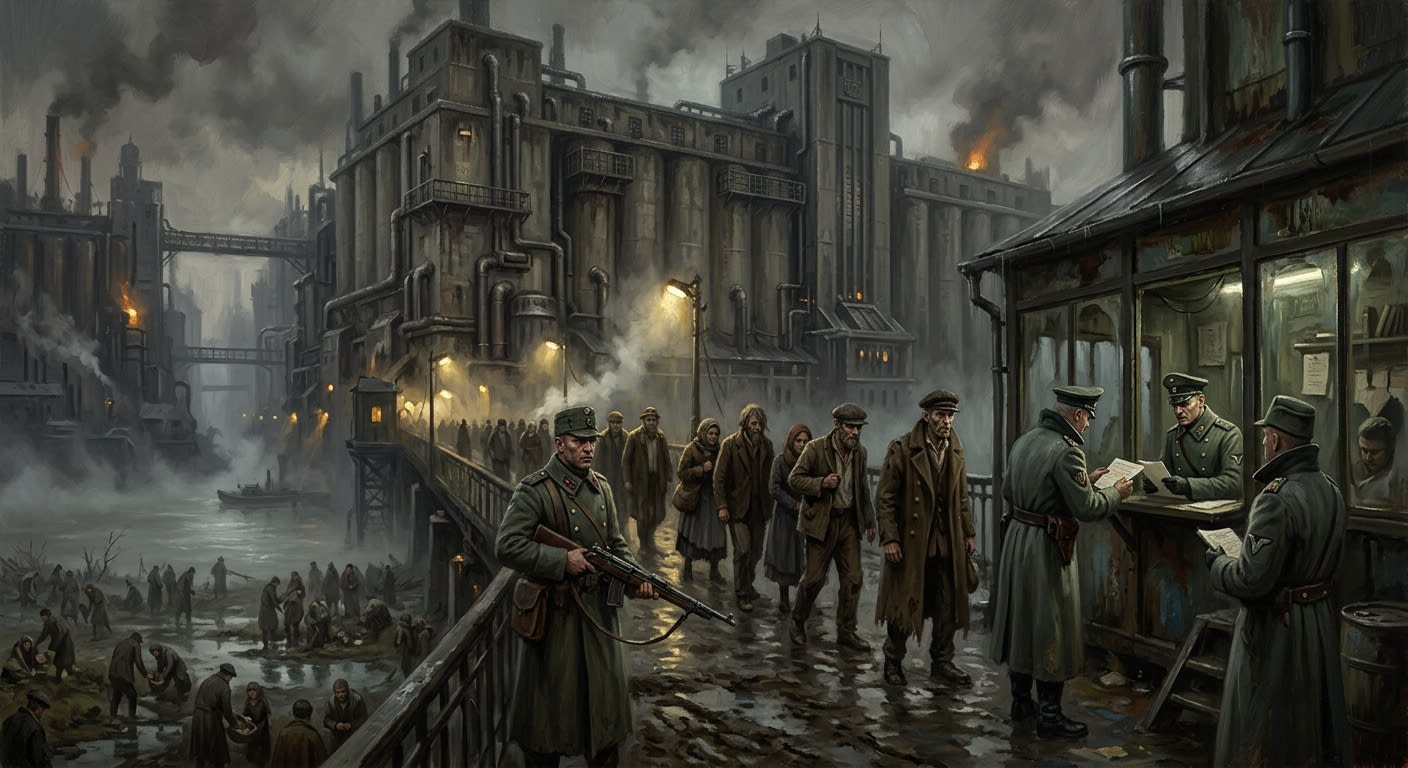
Hungary
The breadbasket that [[hell|Hell]] ate and [[strasbourg|Strasbourg]] filed by the slice
Hungary is the old grain kingdom remade into Budapest's held bank, Pest's visible absence, Blightmarsh hunger, southern corridor necessity, refugee memory, and every office's damp-fingered embarrassment.
Codex Ref. II.4.09-045
Iberian Approaches
Purity certified the ground. Nobody lifted the floorboards.
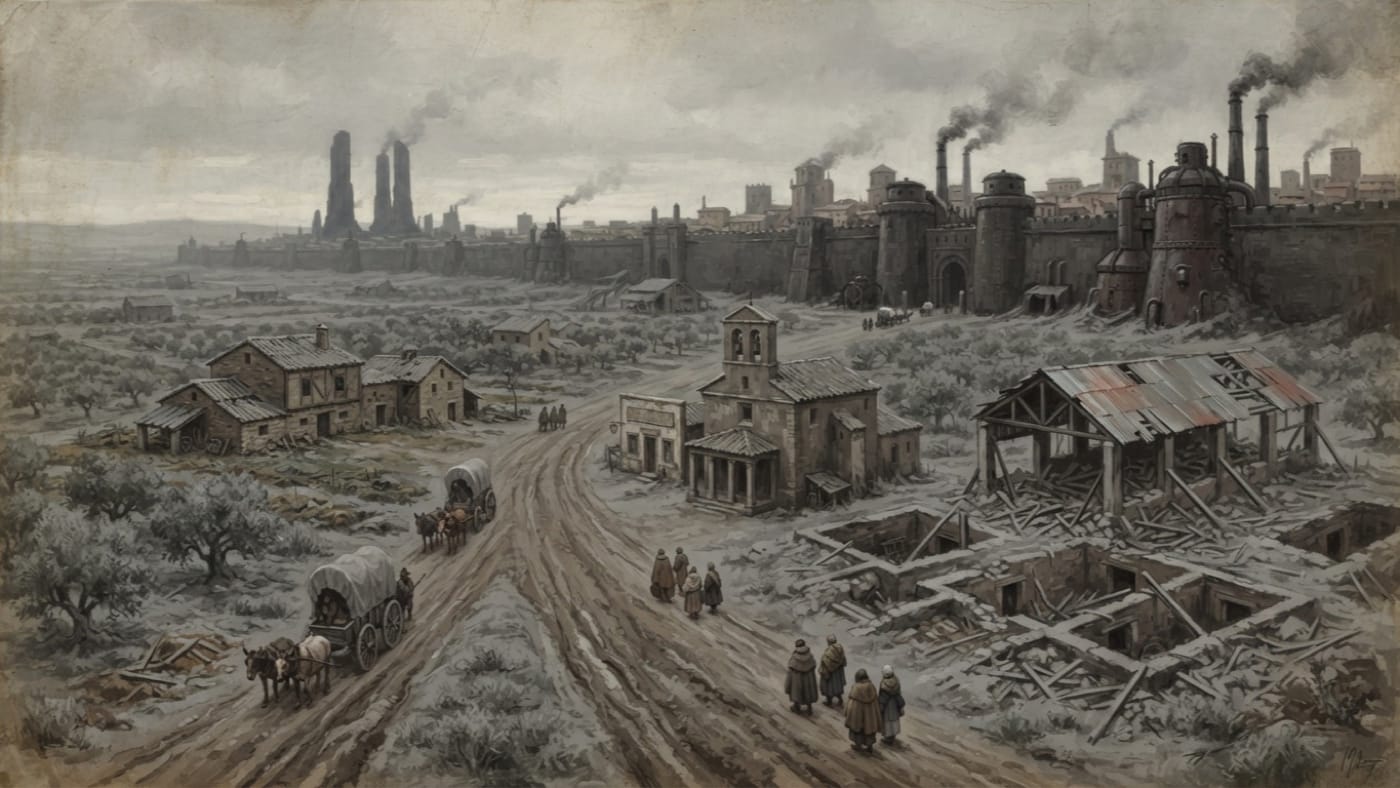
Zaragoza's outer farms, warehouses and approach road: an unsurveyed locality in the western heartland where a Velkara-aligned compound survived Purity certification until the A.S. 143 bombardment made weather of the evidence.
Codex Ref. II.1.07-143
Index Damnatus Runner
On couriers who carry condemned names faster than the condemned can flee
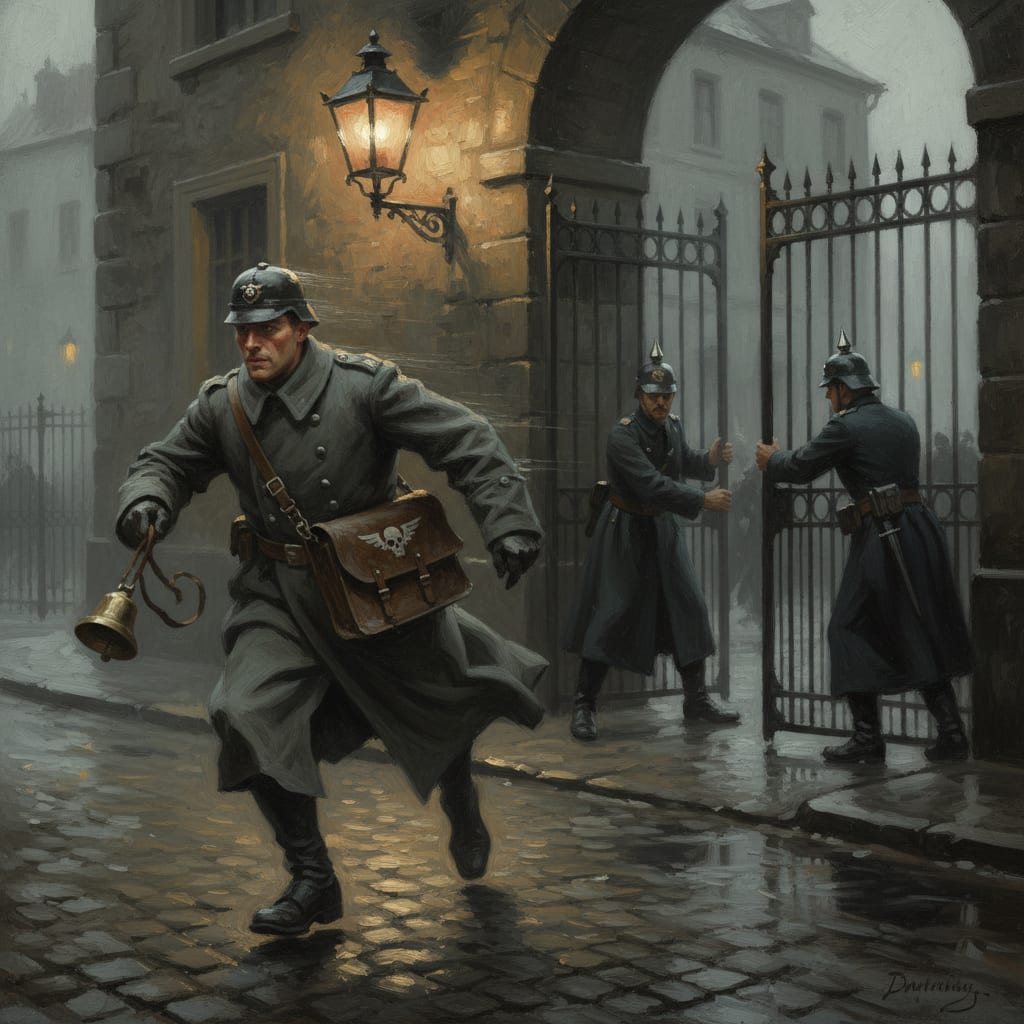
The Bureau of Purity's courier corps: eleven hundred Runners who carry condemnation packets from Strasbourg to every gate, ferry, orphanage, and shrine before the damned can cross a border. Speed is doctrine. Late is the same as false.
Codex Ref. XII.23.01-001

Kaspar Thenm
The prison warden who taught the Synod to number beds before souls
Kaspar Thenm, first officer of the Bureau of Settlement, turned post-Concordat refugees into addresses with a warden's key, three clerks, and no talent for mercy.
Codex Ref. III.2.01-014
Keska
The foundry-town that fell through the map and learned who feeds the forgotten
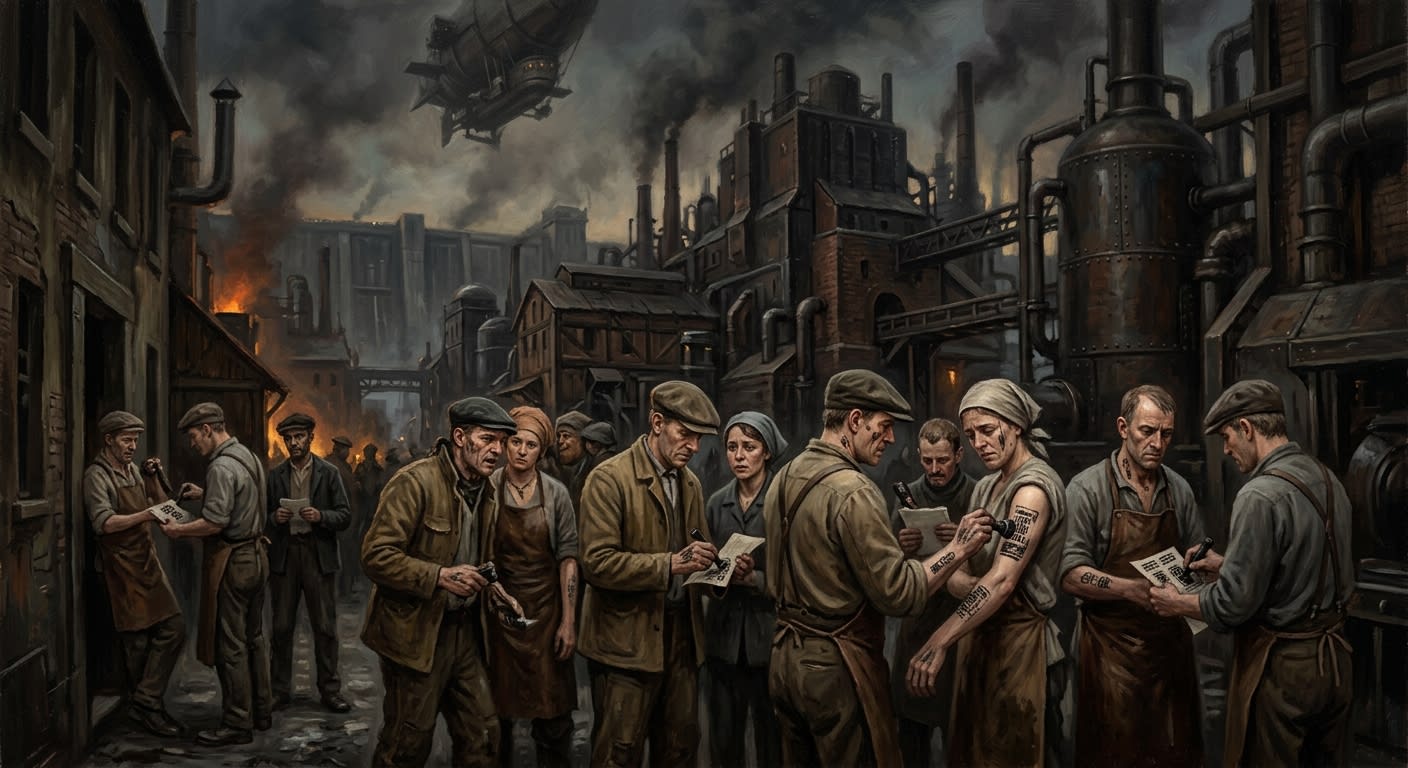
Keska, a Hintermark foundry-town west of Bastion-Constantinople, lost its Zone for eleven months and discovered that criminal stamps can feed where lawful ink starves.
Codex Ref. II.3.06-001
Lamp-Mercers
The mercy that arrives by cup, pressure, and soot-mark
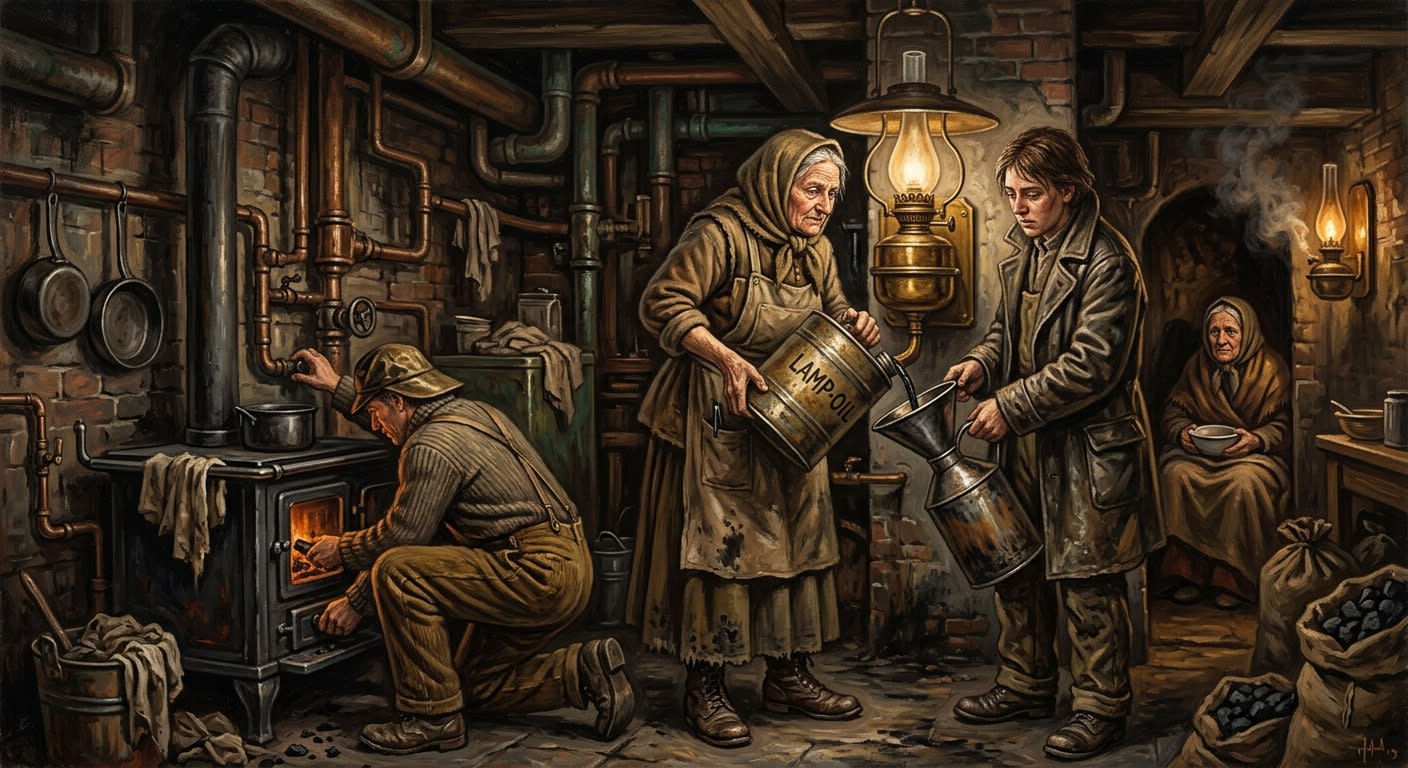
Lamp-Mercers are the household-priority faction of Hidden Pipe-Runners, spending illegal black diesel on kitchens, sickrooms, lamps, and old women’s stove-niches.
Codex Ref. XII.3.03-001
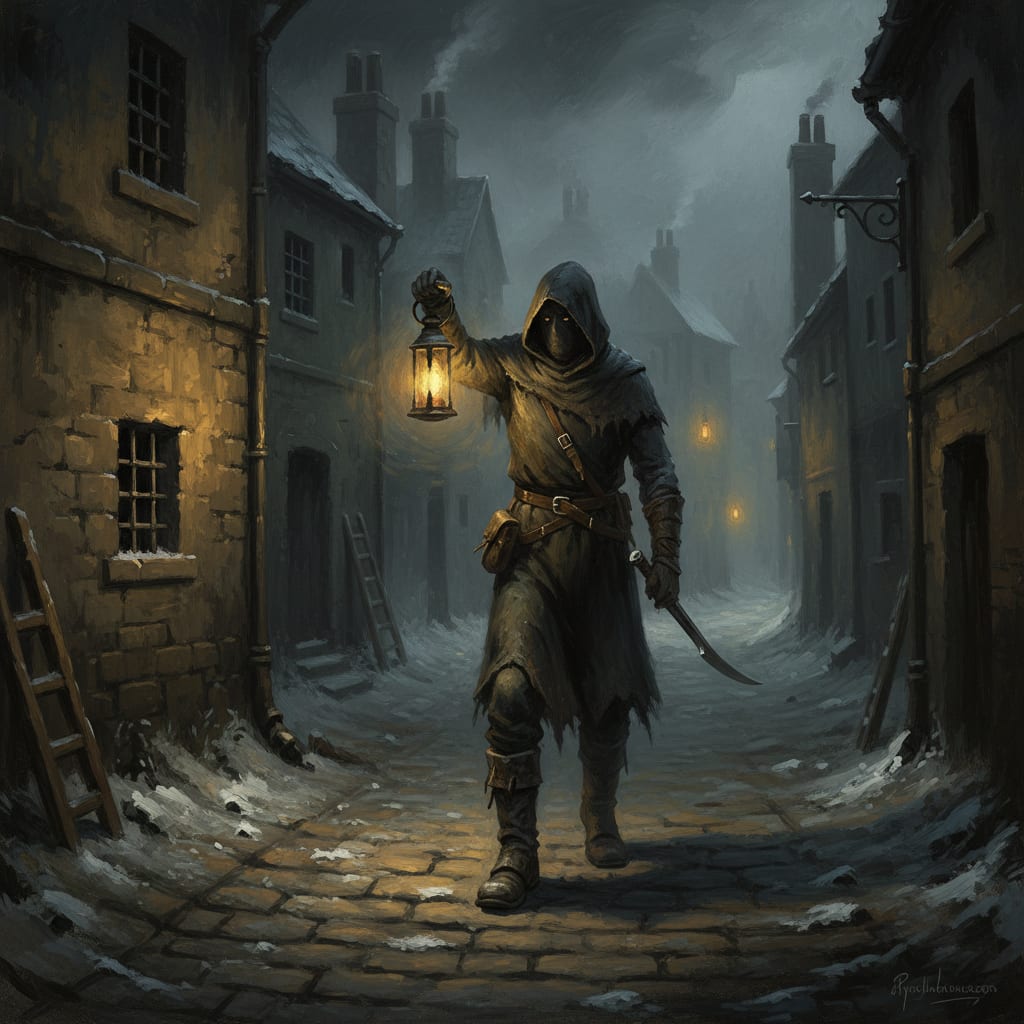
Lantern Brotherhood Vigilante
Eight thousand four hundred tolerated blades, licensed by a subordinate clause — the Synod's night made visible and officially nonexistent.
Eight thousand four hundred tolerated blades in five Watch Circles, licensed by a subordinate clause in a curfew ordinance — the Synod's night made visible and officially nonexistent.
Codex Ref. XII.25.01-001
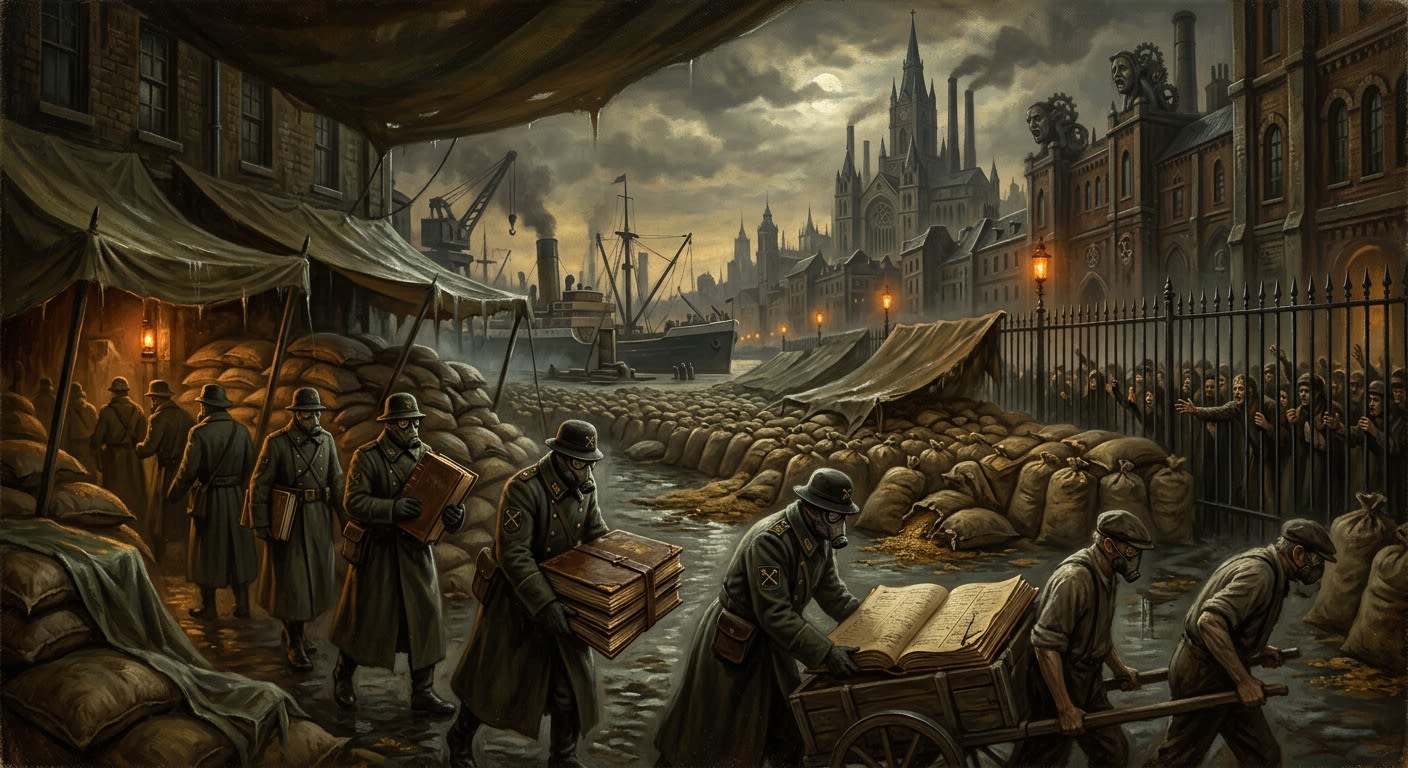
Ledgers of Varna
Bread in sight, mercy in arrears, tariff integrity preserved
The Ledgers of Varna record the A.S. 129 grain-fleet tariff paralysis that let bread rot under harbour canvas while citizens starved and the Bureaus preserved tariff integrity.
Codex Ref. VII.8.10-004
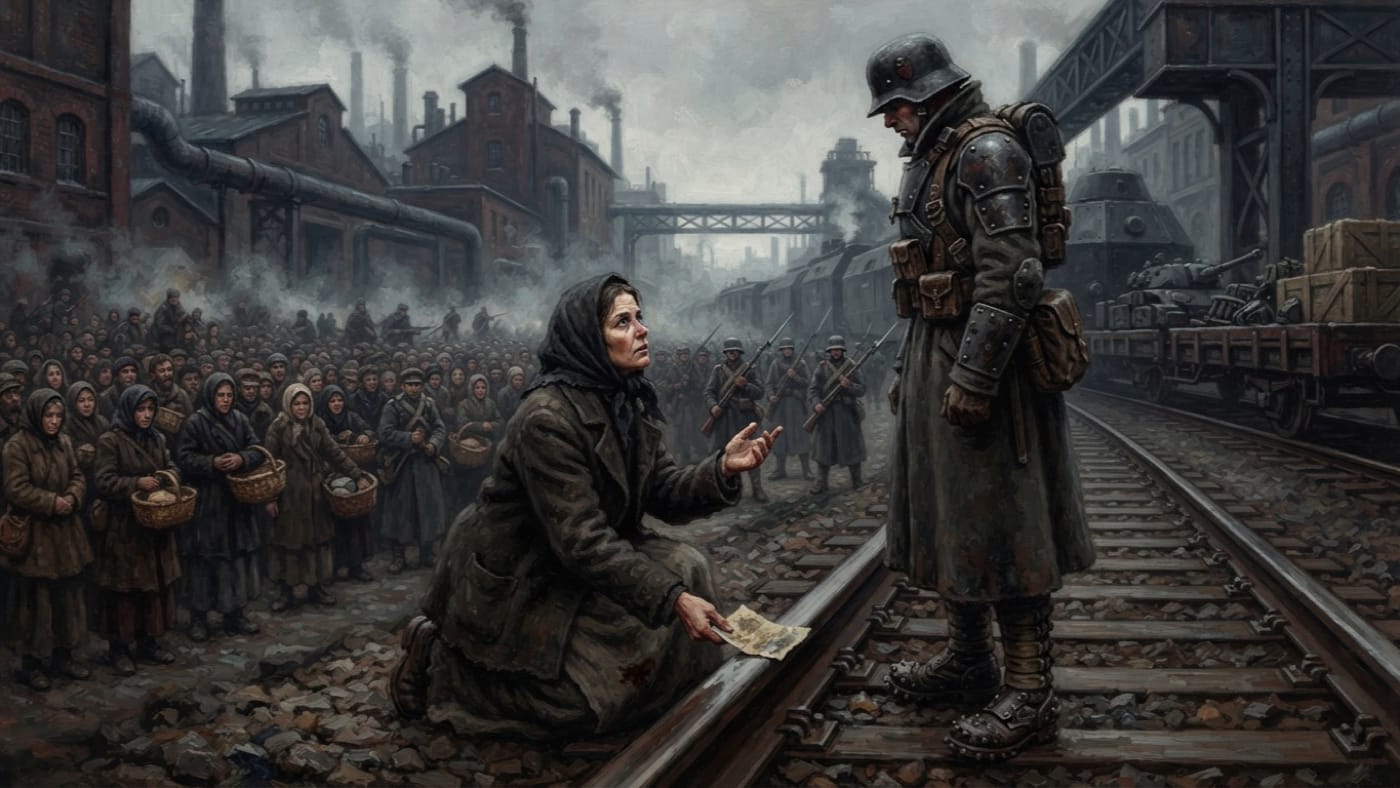
Marta Krol
One remembered name, one ration card, and a boot that stayed still
Later oral accounts name Marta Krol as the bakery widow who laid a ration card on Praga's rails in A.S. 195 and invited a soldier to stamp it with his boot. The boot stayed still; her fate is unrecorded.
Codex Ref. III.2.01-195
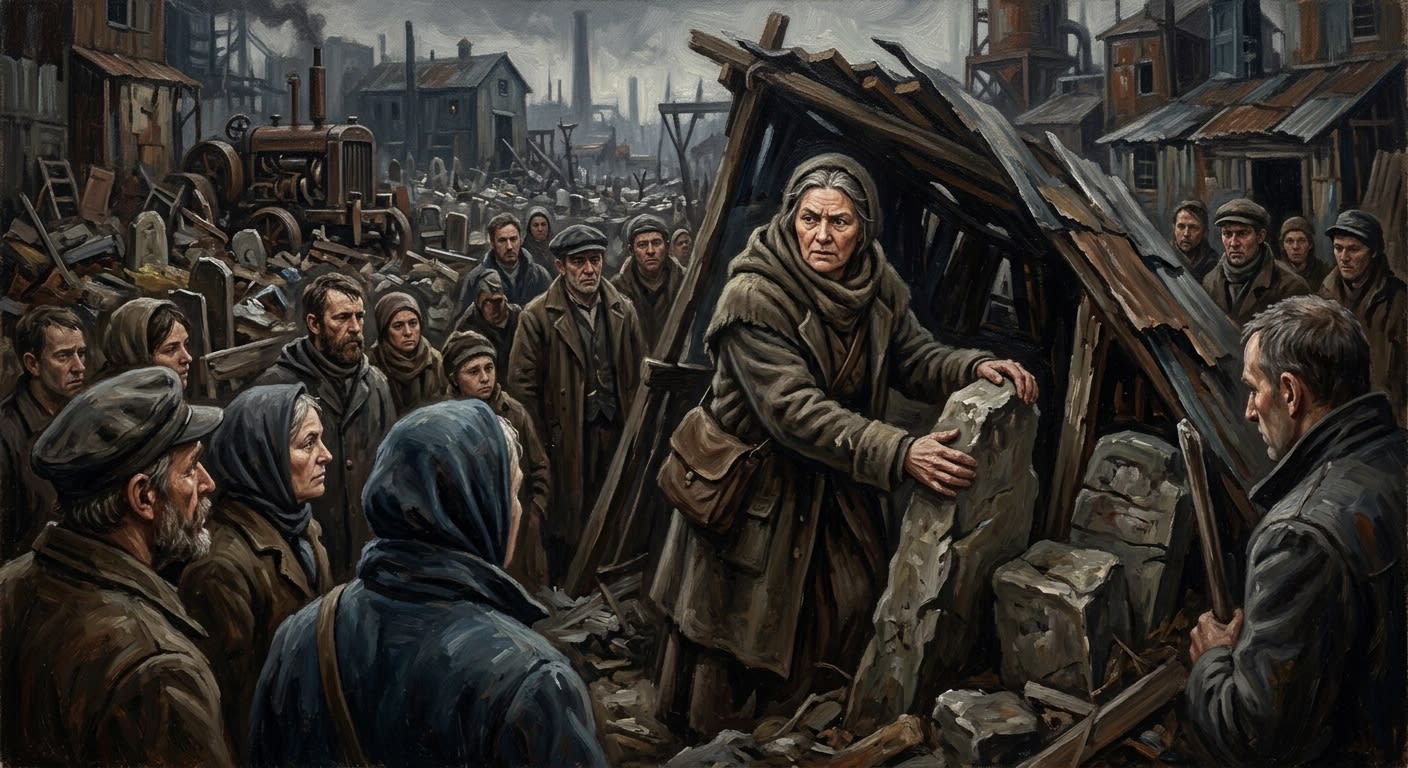
Mother Vell of the Crooked Stones
A plot is a promise, and promises have tenants
Uncanonised patron of Grave-Field Shanty Brokers, Mother Vell turns crooked stones, leased graves, and shelter fraud into a cult the Bureaus cannot afford to suppress.
Codex Ref. III.2.01-122
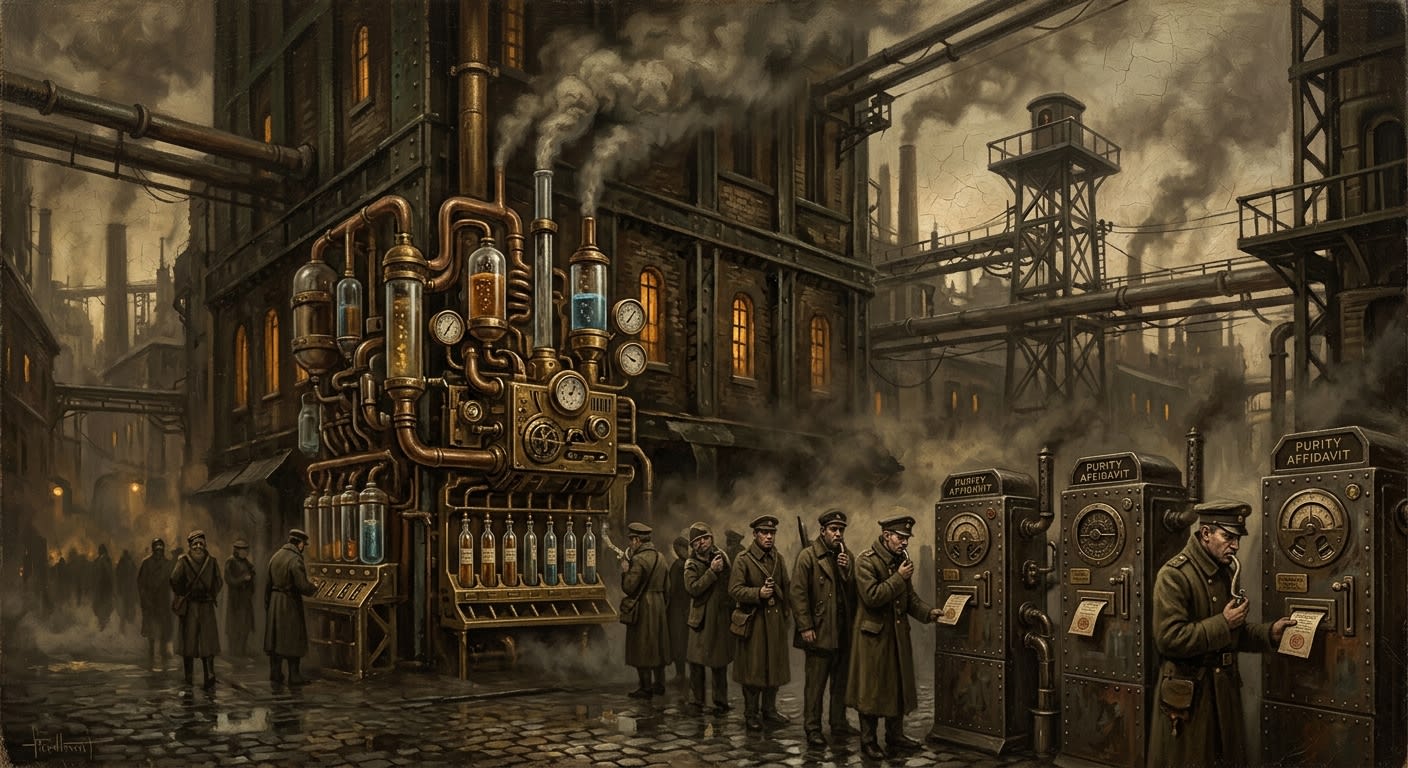
Ninth Mark
The Bureau discovered that even breath improves after indictment
The Ninth Mark makes air legible: smoke becomes evidence, warmth becomes chargeable, and every citizen's breath waits politely for Purity's affidavit.
Codex Ref. VIII.2.09-143
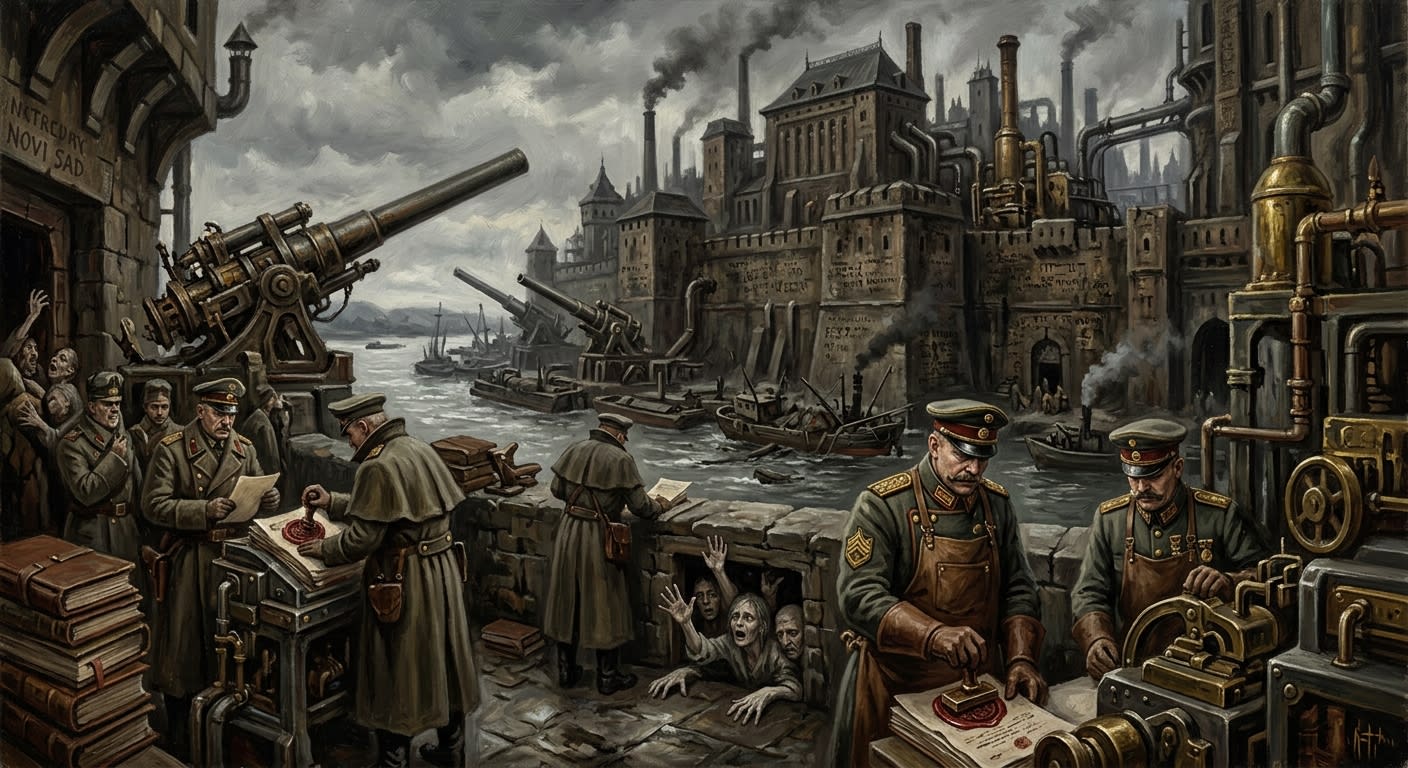
Novi Sad
The city where cannon, stone, and stamp each learned to fail
Novi Sad is a fallen Danube city whose cannon never fired, whose stones wrote living names, and whose valid seals once starved the bodies beneath them.
Codex Ref. II.4.09-045
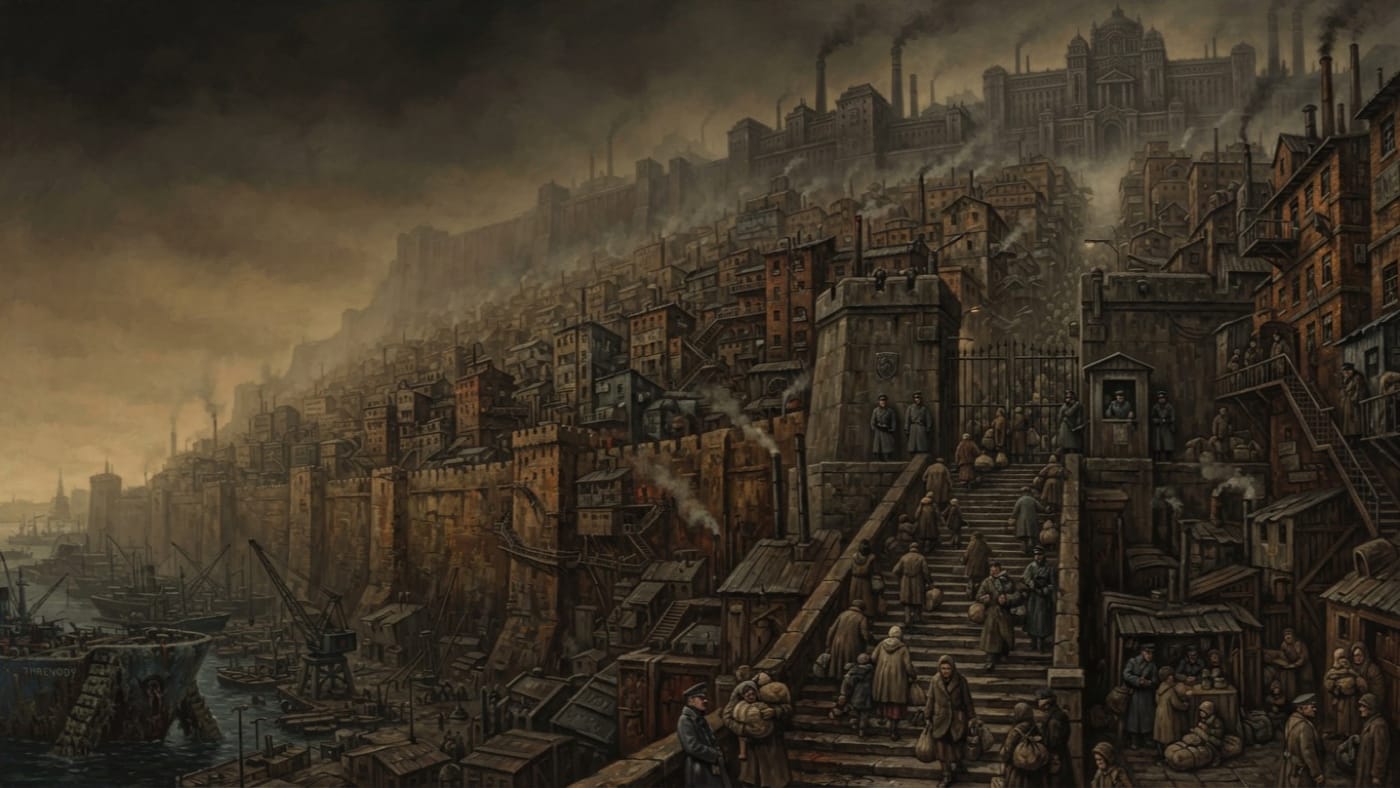
Ochre terraces
Above the walls, still within the ledger
Ochre enters the civilian terraces above Constantinople's old walls in the settlement ledger. A household may live uphill; passage to Blue still requires a stamp.
Codex Ref. III.2.04-1980
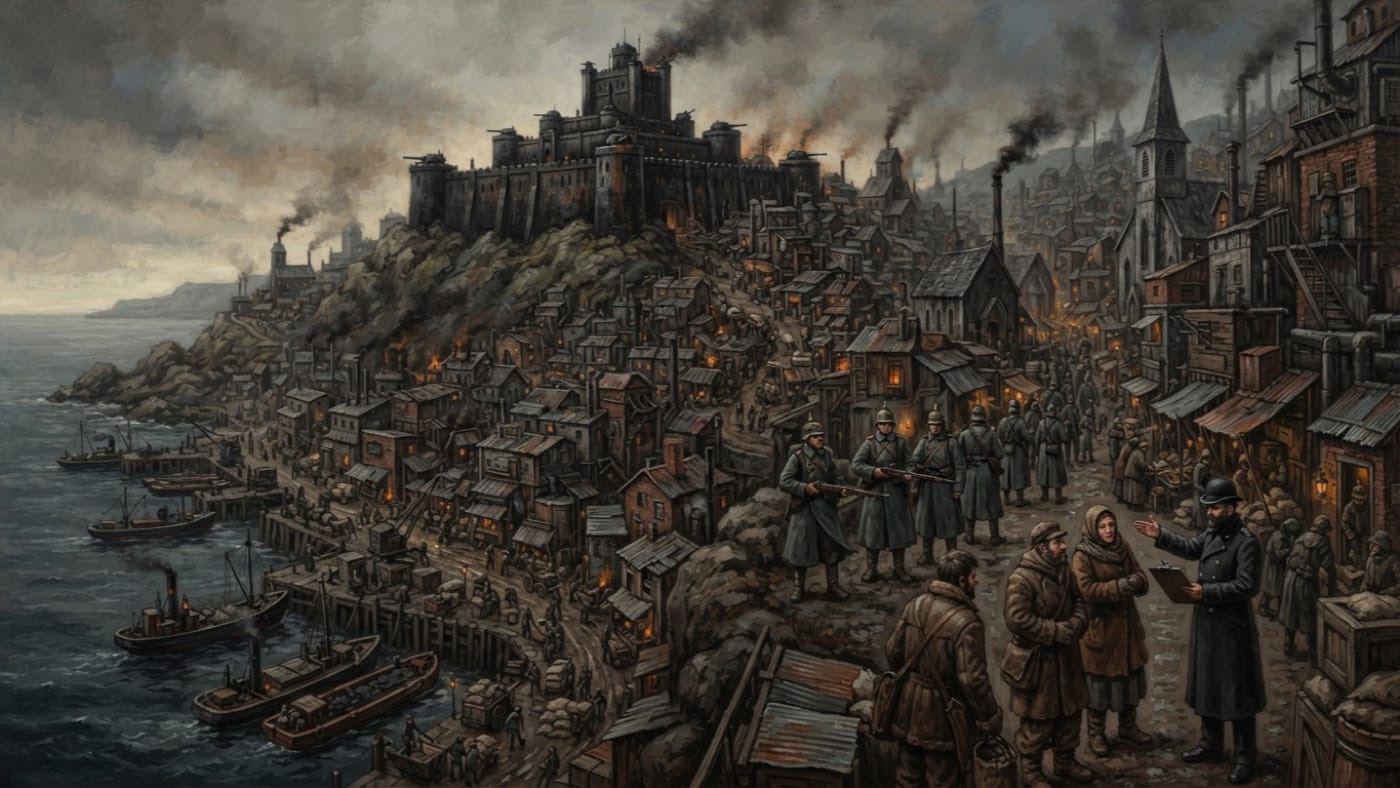
Organic Garrison Towns
The fort has soldiers. The town has a category.
An A.S. 201 survey of civilian communities that have outgrown Synod forts, especially along the Pilgrim's Coast. War claims the garrison, Tithes the market, Settlement the residents. The town has a category; responsibility remains pending.
Codex Ref. III.2.04-018
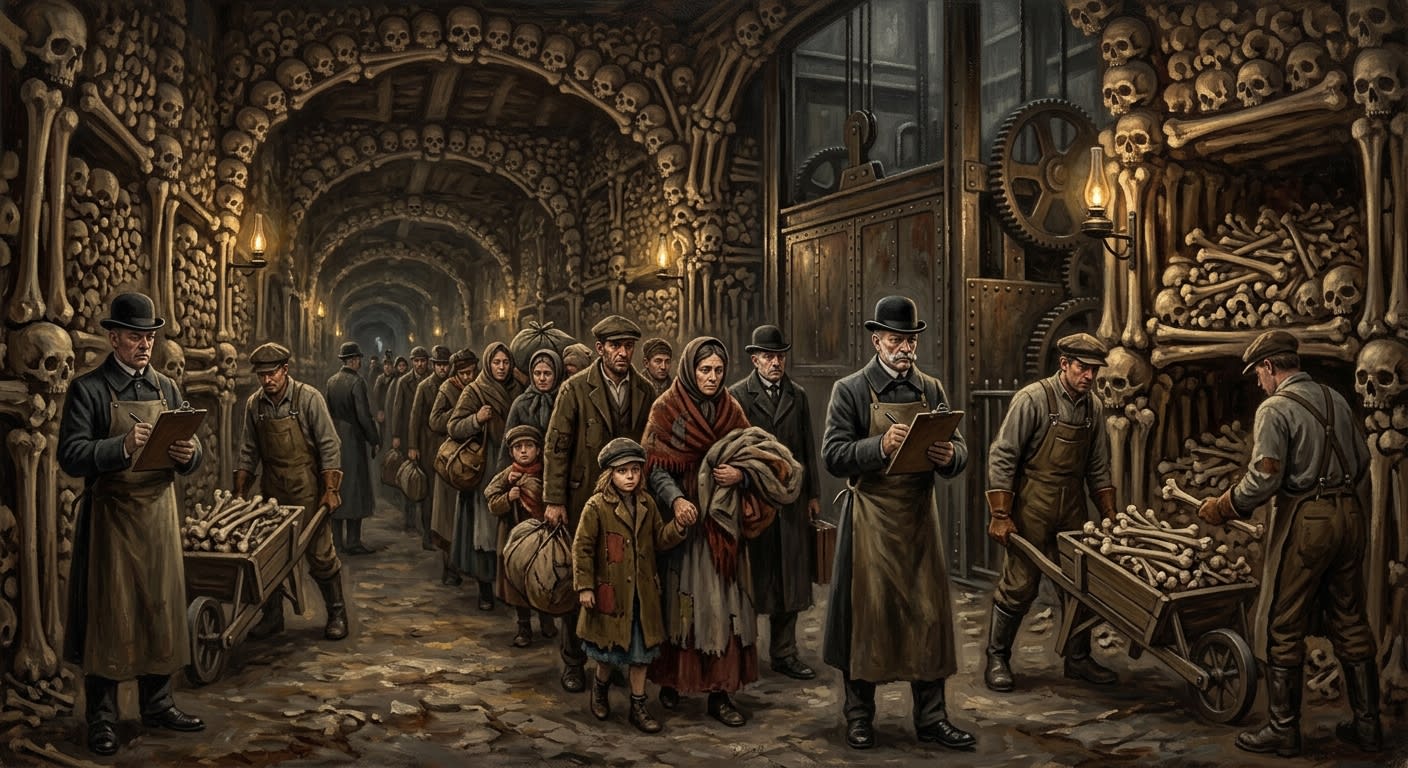
Ossuary Allies
Bring me your dead and I will find room for your living
Ossuary Allies convert grave-field claims into bone-walled tenancy, moving poor families from exposed graveside lanes into ossuary corridors at the price of their dead.
Codex Ref. XII.27.04-001
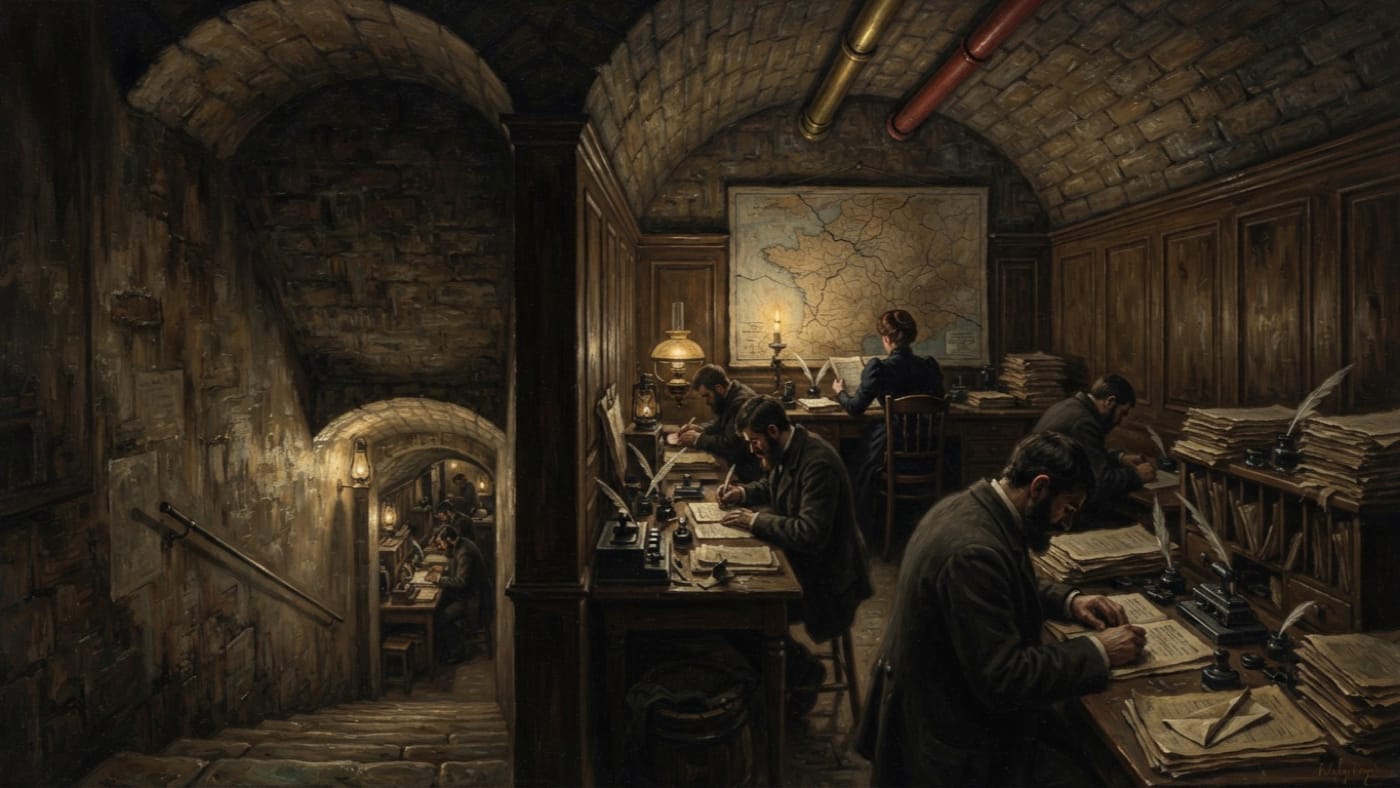
Palatine Administrative Wing
Rank ascends. Settlement descends.
The Palatine Administrative Wing stacks Tithes above Records above Settlement, whose wine-cellar offices decide where three hundred million subjects may sleep. In Strasbourg, dependence is measured by how far one must descend.
Codex Ref. II.2.08-201
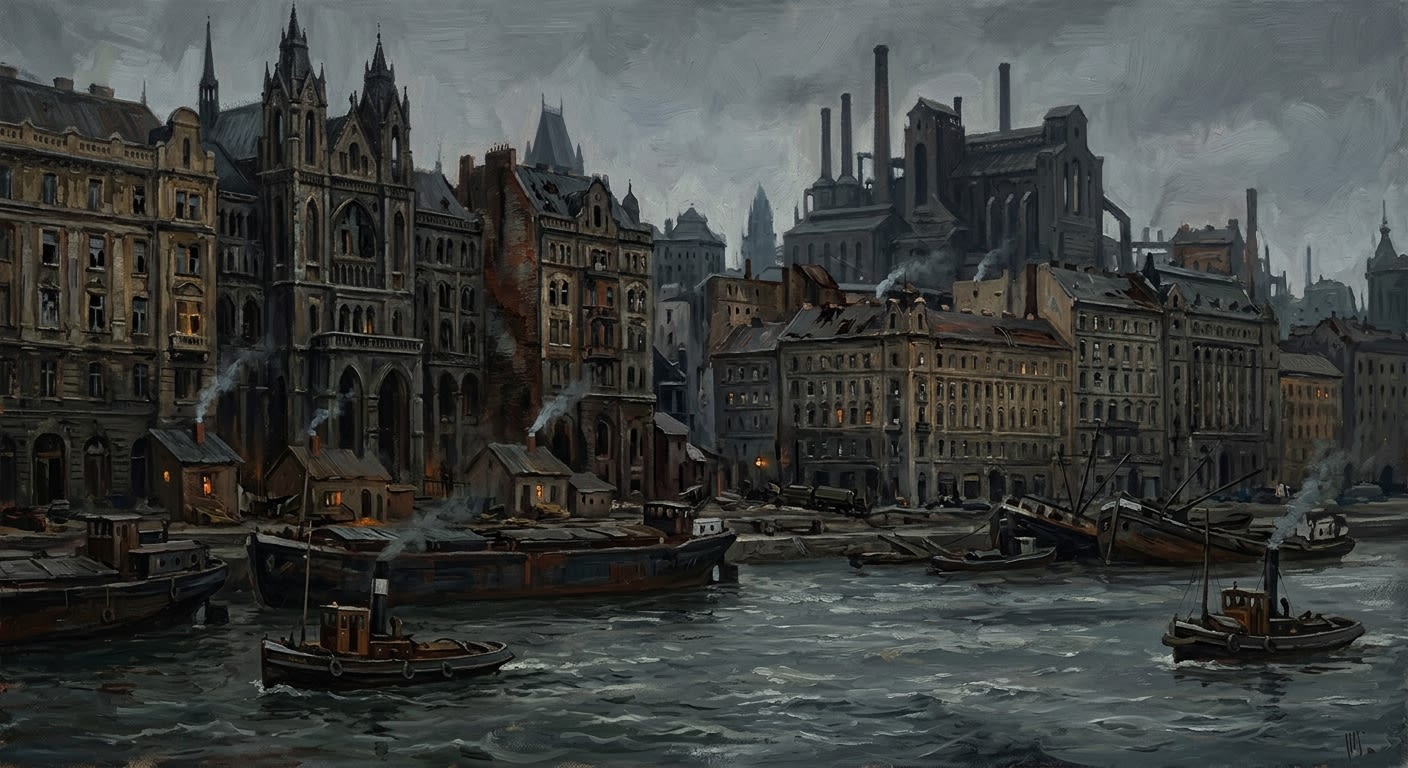
Pest, Abandoned Bank
The empty city that keeps answering without being called
Pest is the eastern bank of Budapest: declared Vacated in A.S. 120, visible across the Danube, annually confirmed, and inconveniently less empty than doctrine prefers.
Codex Ref. II.4.09-012
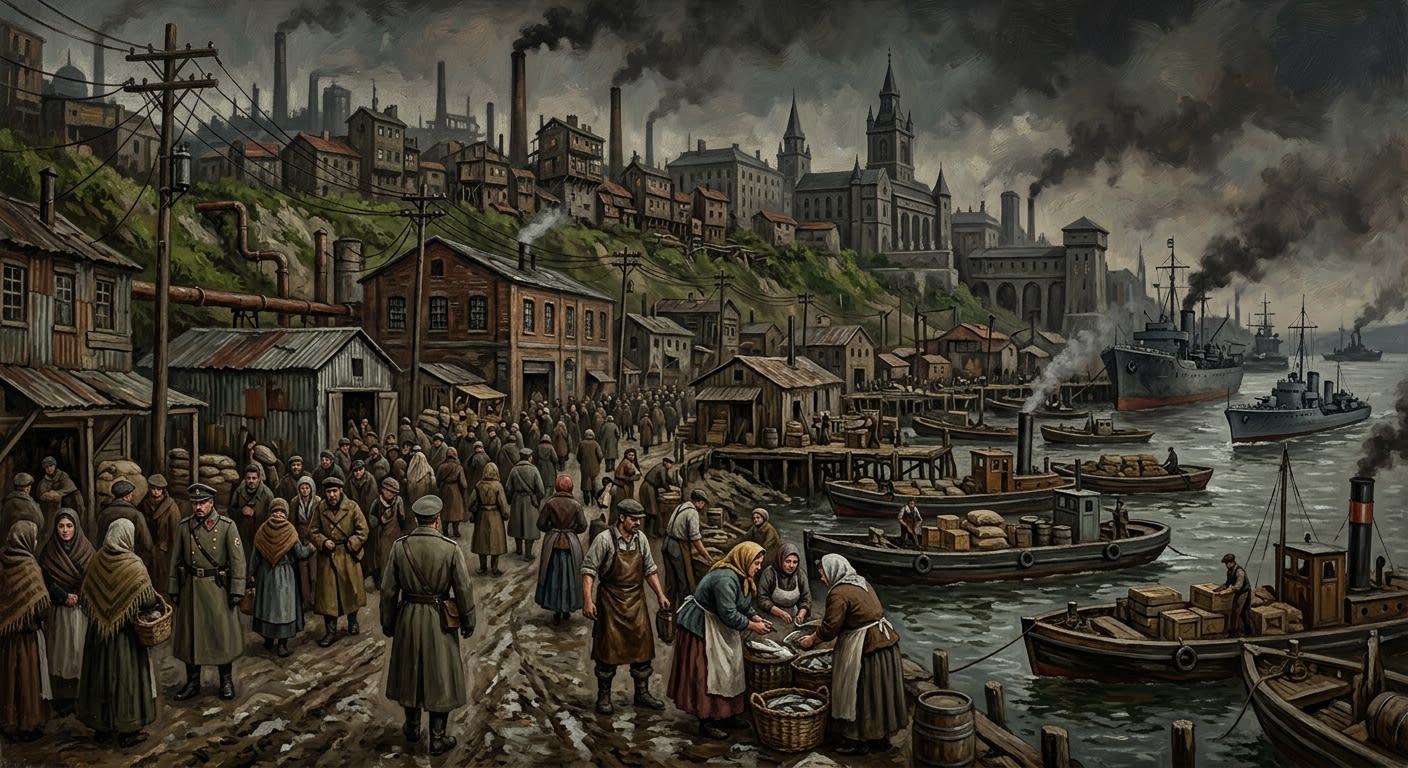
Pilgrim's Coast
A shore pretending to be a road, and a map pretending to govern it
The Pilgrim's Coast is Constantinople's green shore: landing road, supply seam, smuggler hymn, fishwife law, and map-denied life.
Codex Ref. II.4.09-068
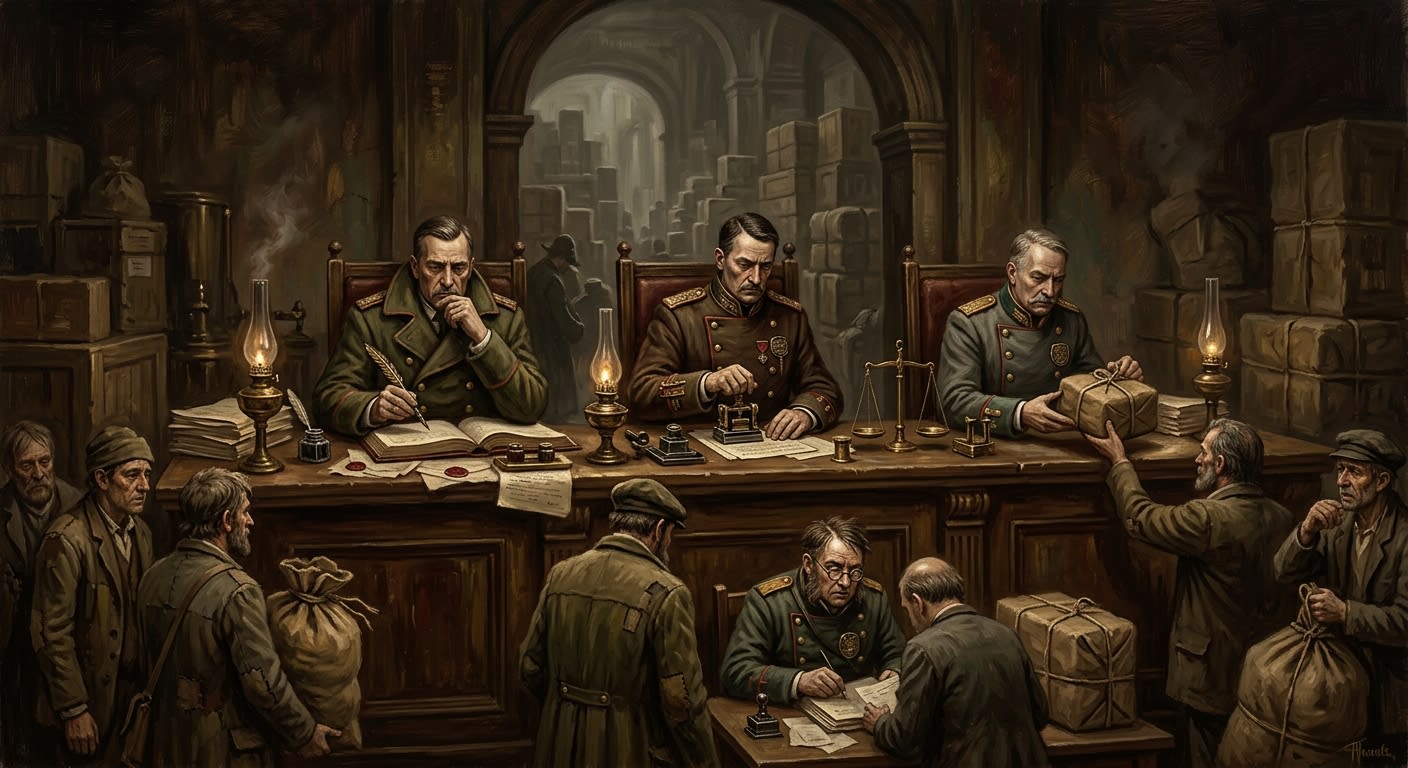
Port Court
Where cargo waits while permission proves it has a soul
The Port Court names cargo before mercy may touch it: a Commerce bench where sacks become law, law becomes delay, and delay invoices the hungry.
Codex Ref. XIII.1.89-112
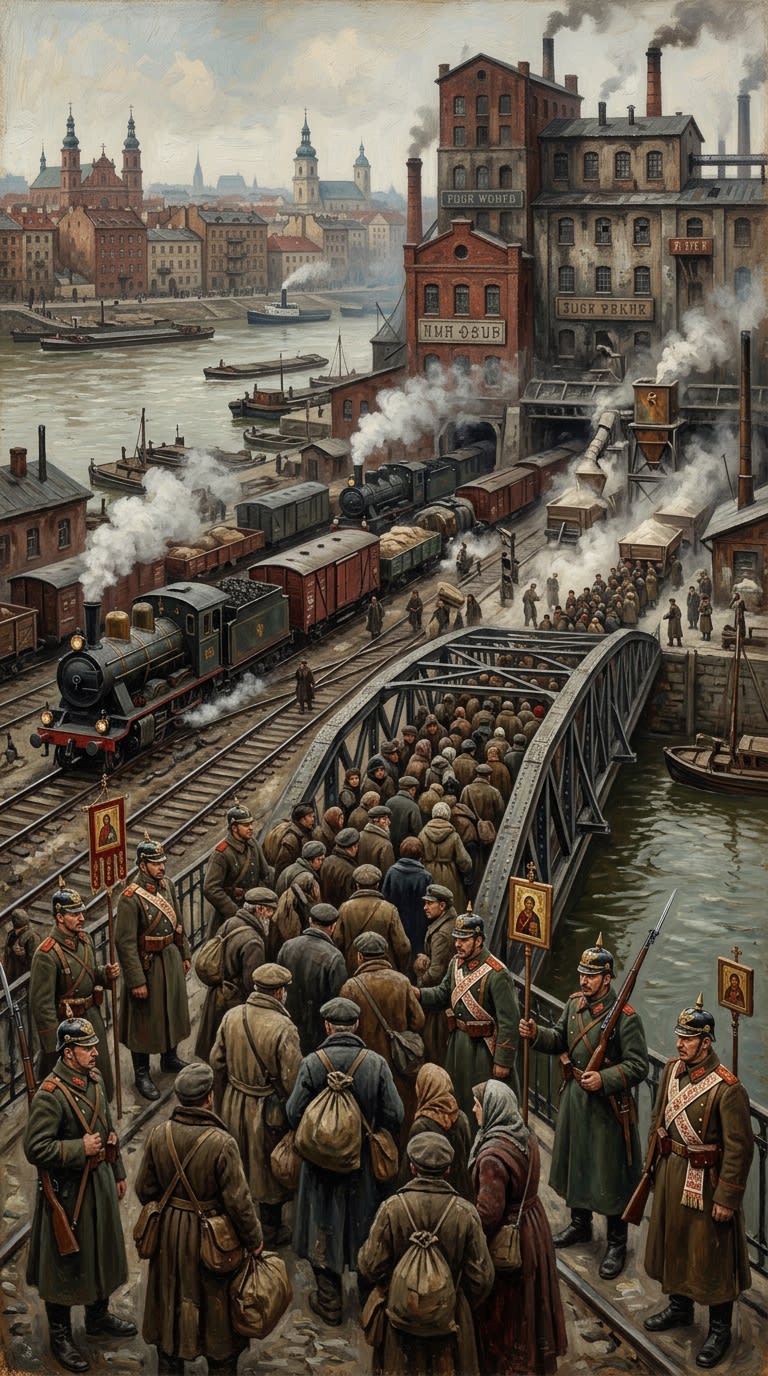
Praga
Warsaw's east-bank throat, where bread teaches logistics to kneel
Praga is Warsaw's east-bank rail throat: refugee room, bridge queue, flour wound, and the district that proved hunger can stop a northern corridor.
Codex Ref. II.3.06-188
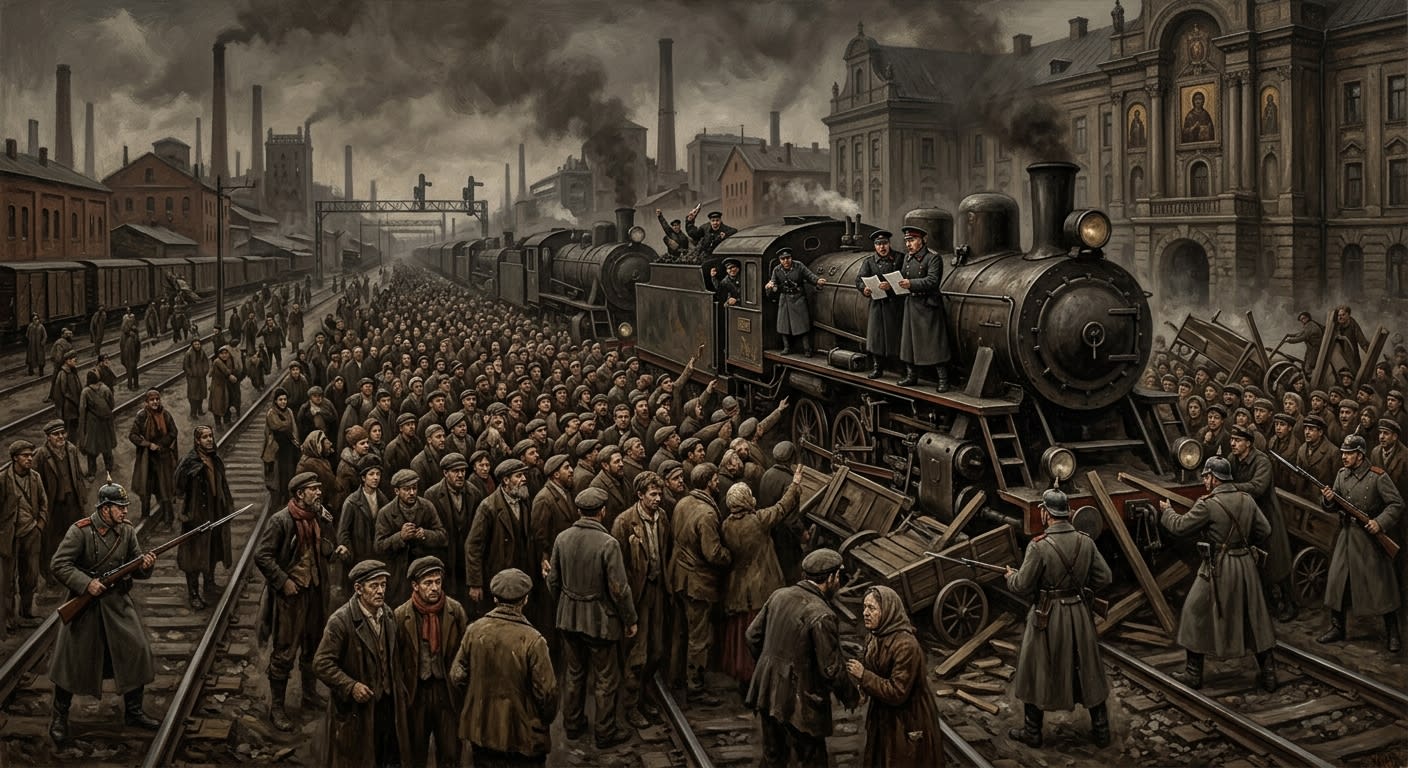
Praga Ration Disturbance
Four thousand citizens taught the northern corridor to feel hunger
In A.S. 195, four thousand hungry civilians in Warsaw's Praga district blocked the eastern rail spur for eleven hours and made the northern corridor confess that logistics has a stomach.
Codex Ref. VII.8.10-195
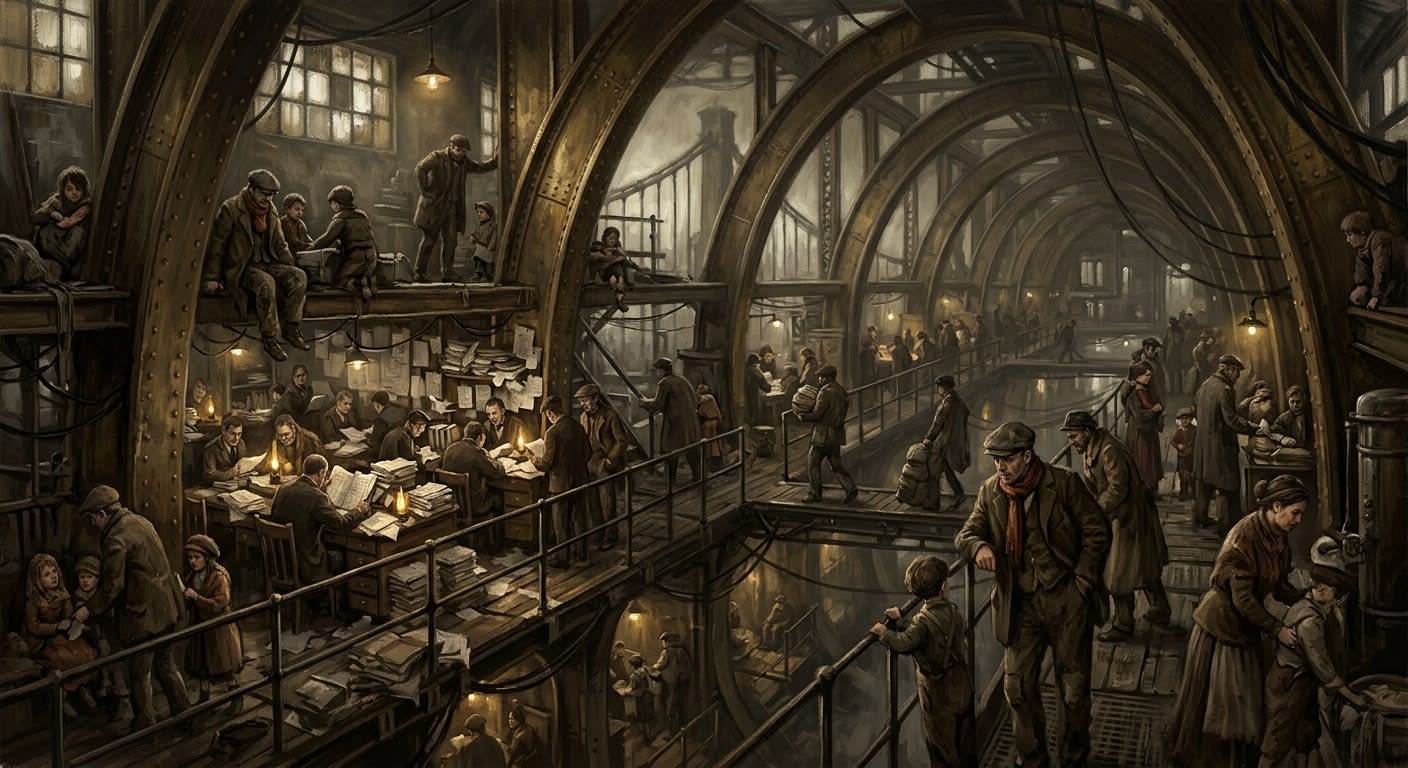
Pylon Warrens
The bridge holds because the hungry live in its bones
The Pylon Warrens are Bastion-Brest's bridge-slums: damp worker cavities inside the Brass Ribs where labour, paper, children, and heresy keep the span alive.
Codex Ref. II.4.08-099
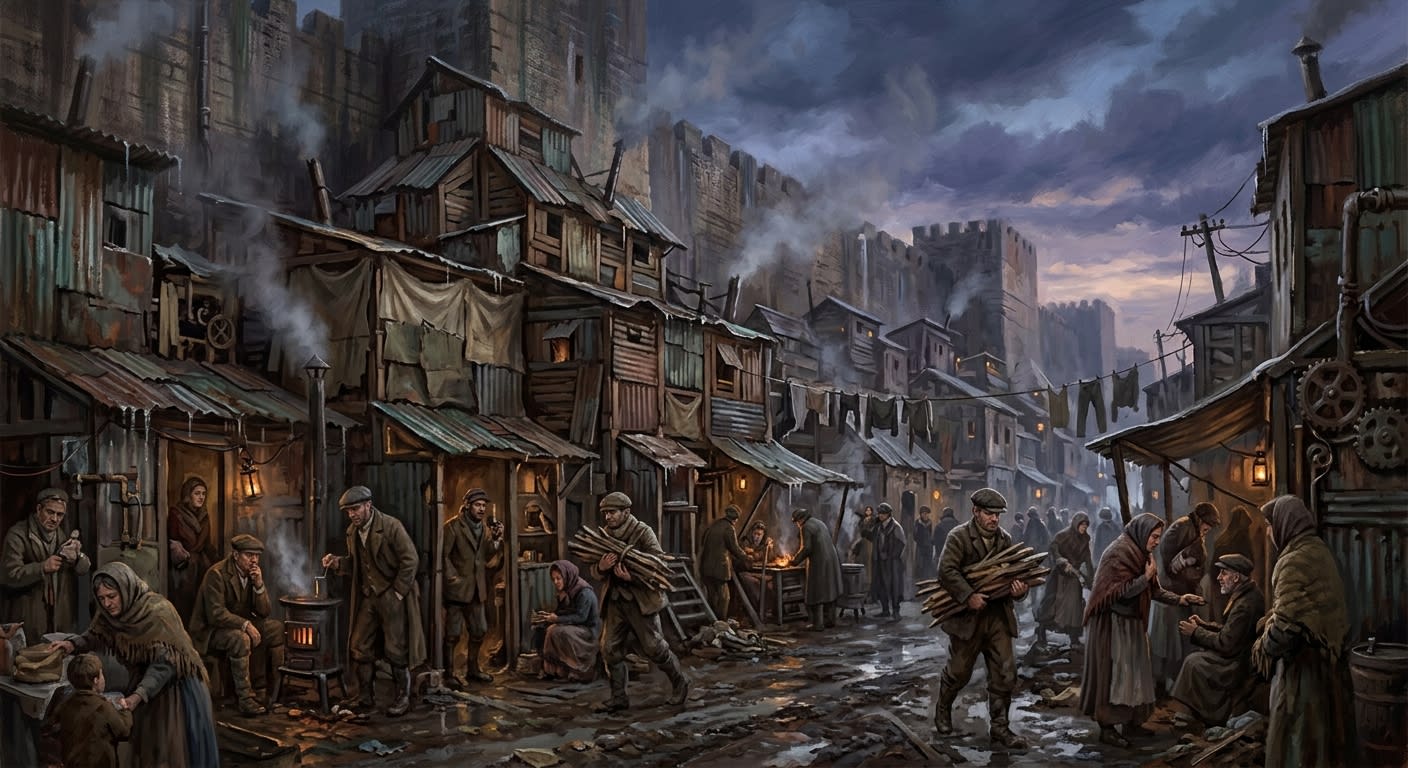
Refugee Sheds
Temporary mercy, permanently damp
Thessaloniki's Refugee Sheds are temporary shelter turned permanent wall-side settlement: damp, crowded, humming, and governed after dusk by Aunt Velka's unlicensed mercy.
Codex Ref. II.7.04-198
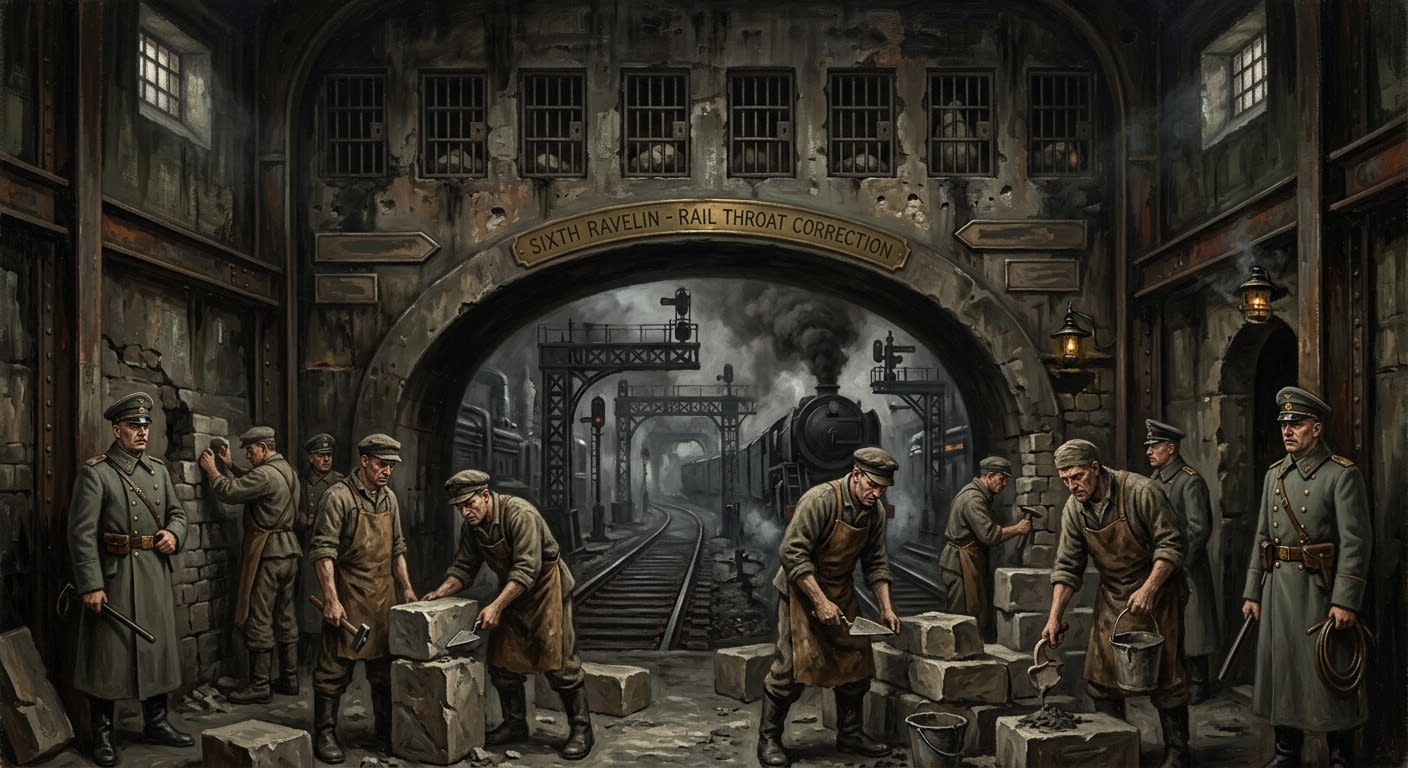
Sixth Ravelin
Correction faces consequence, and consequence answers warm
The Sixth Ravelin, called Correction, guards Bastion-Constantinople's rail throat and carries Chamber 7: forty-seven sealed in cement where guilt learned masonry.
Codex Ref. II.4.10-170
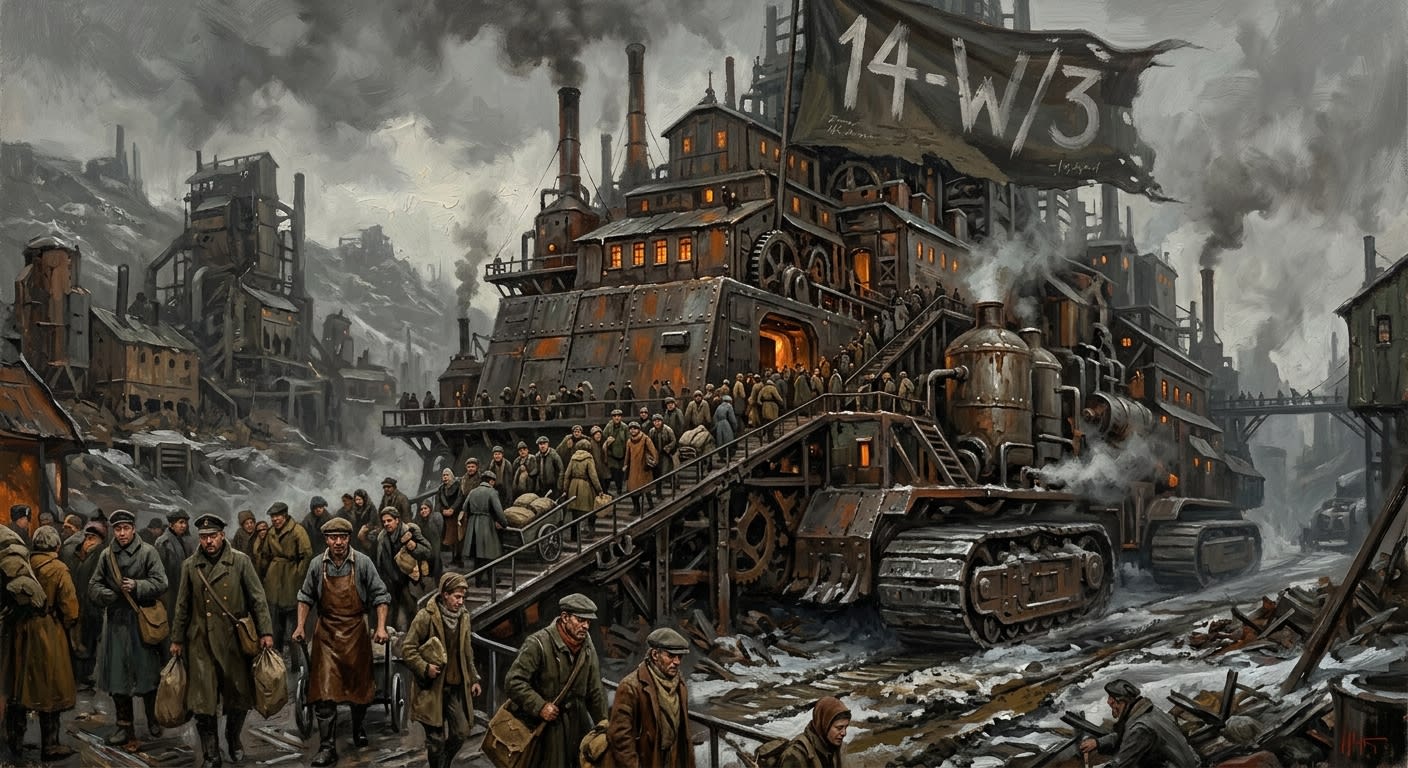
Standing Order 14-W/3
The evacuation order that discovered bakeries
Standing Order 14-W/3 ordered Warsaw to become movable in A.S. 95; a century later, the city remains larger, louder, and better fed by its own disobedience than by Settlement arithmetic.
Codex Ref. XIII.1.87-095
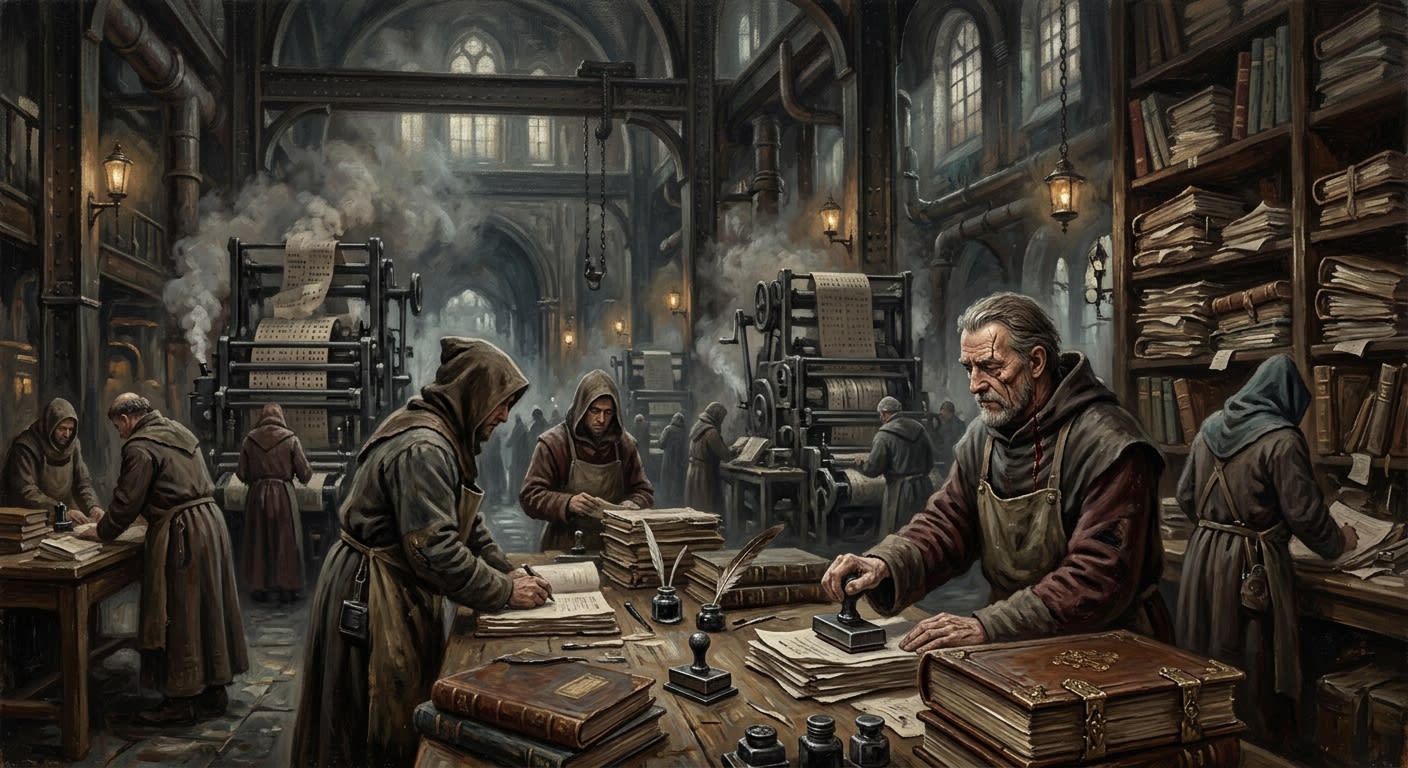
Standing Order 22-D
The law that taught silence to file itself
Standing Order 22-D makes silence legible: the pause before assent, the scar before paperwork, the late answer that becomes evidence.
Codex Ref. XIII.1.99-084
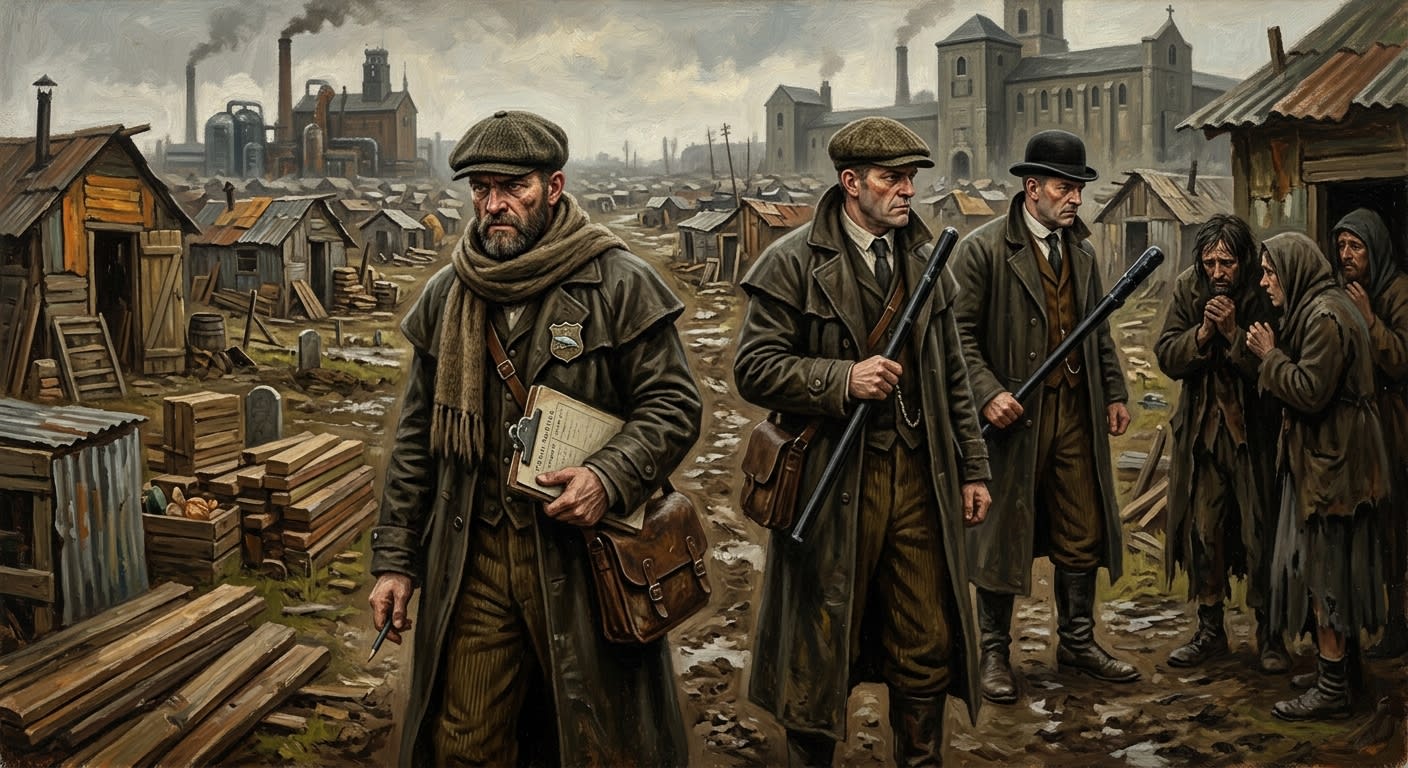
Stone Sharks
Safety by the inch, eviction by the weather, mercy by invoice
Stone Sharks are the profit-hardened branch of Grave-Field Shanty Brokers: orderly grave-lane landlords who sell safety, patrol blindness, and winter survival at predatory rates.
Codex Ref. XII.27.03-001

Sub-Archon Provisional Yvette Langres
The woman in the wine cellar who can tell you whether your city exists
Yvette Langres administers three hundred million addresses from a damp Strasbourg cellar; provisional since A.S. 194, indispensable since the first corrected line.
Codex Ref. III.2.01-013
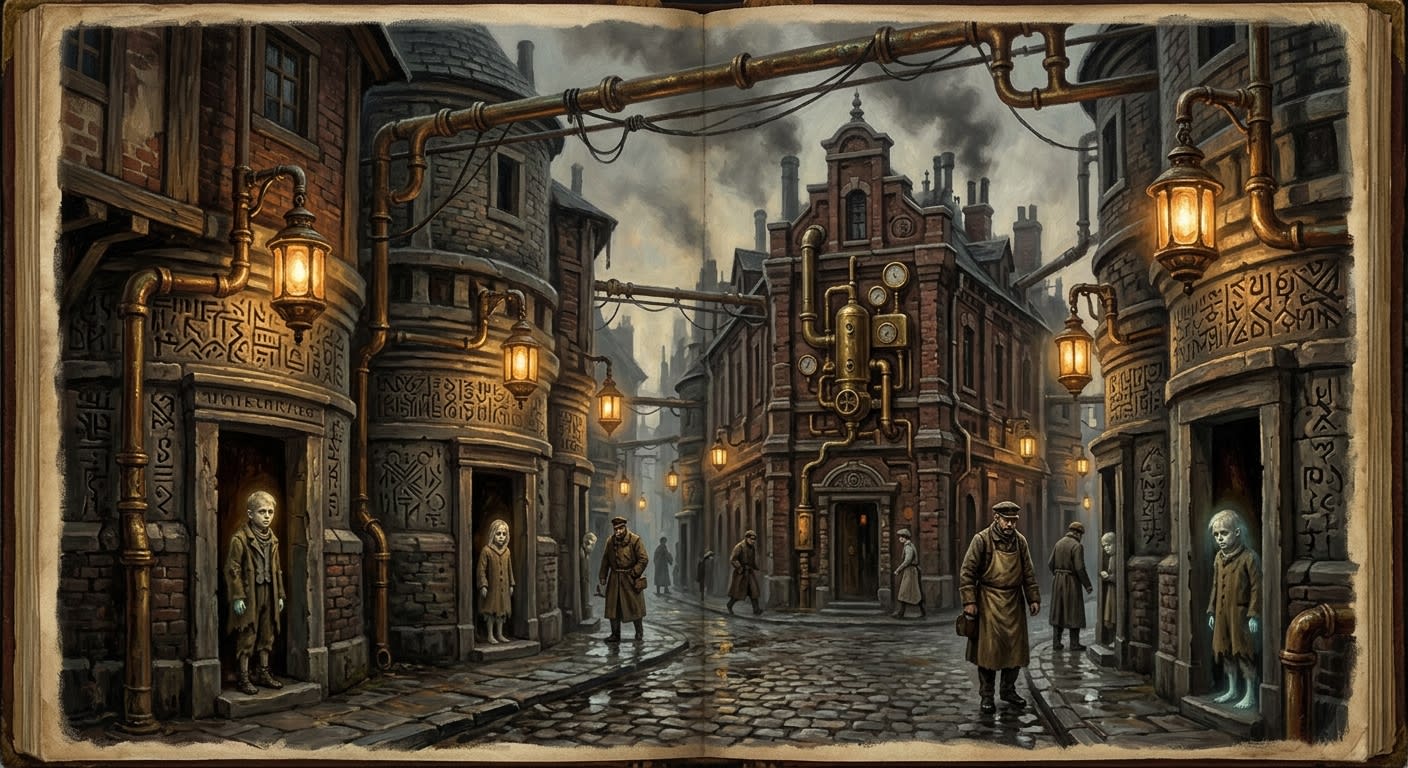
Târgu
The grave-ring town where walls learned doctrine
Târgu is the Przemyśl approach town where grave-rings house the living, walls recite through mortar, and surplus lamps taught children to glow.
Codex Ref. II.4.09-201
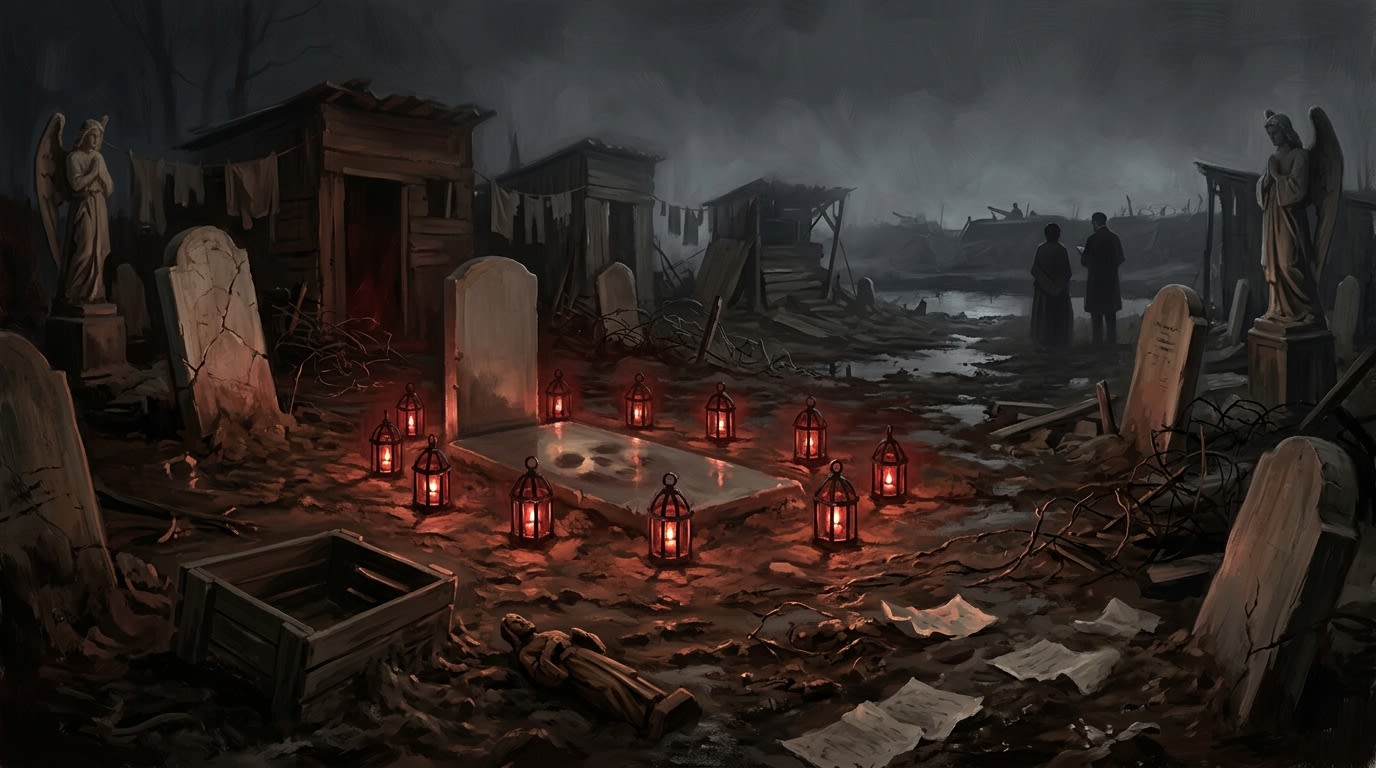
Târgu Child-Lamp Incident
Eleven small lights, and every Bureau suddenly blind
The Târgu Child-Lamp Incident began with surplus Engineering lamps and ended with eleven children requisitioned as battlefield light.
Codex Ref. VII.8.10-038
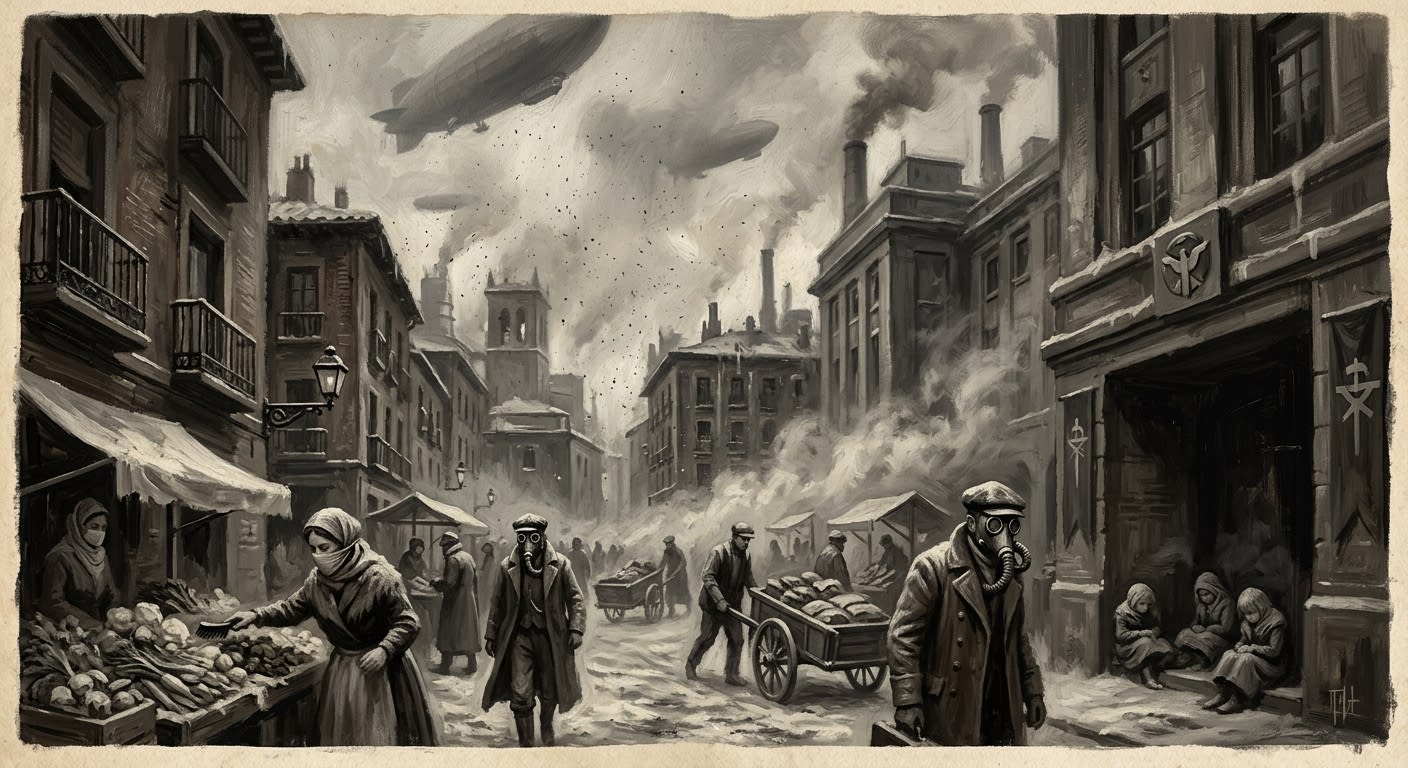
The Ash-Rain of Zaragoza
Where artillery made weather and fourteen children paid the grammar of “clean”
The A.S. 143 Ash-Rain of Zaragoza followed a sanctioned bombardment of a Velkara-aligned compound: three days of salt-and-milk ash, fourteen silenced children, no quarantine, and a city forced to keep trading beneath residue.
Codex Ref. VII.4.13-001
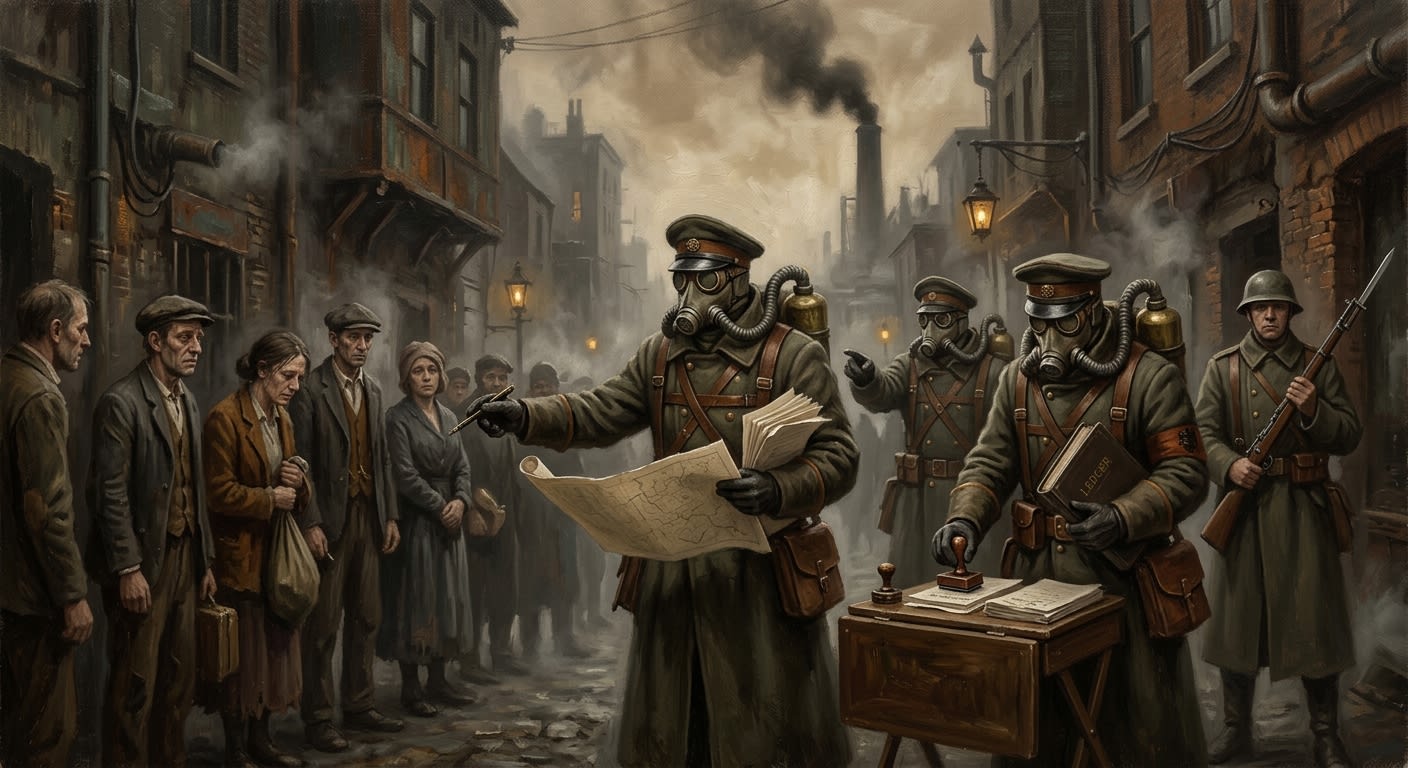
The Assignors
Men with maps, seals, and exactly enough authority to be hated
Assignors are Settlement field officers: map-carriers, permit-revokers, and escort-dependent instruments by which ink tells citizens where to stand.
Codex Ref. XII.2.06-001
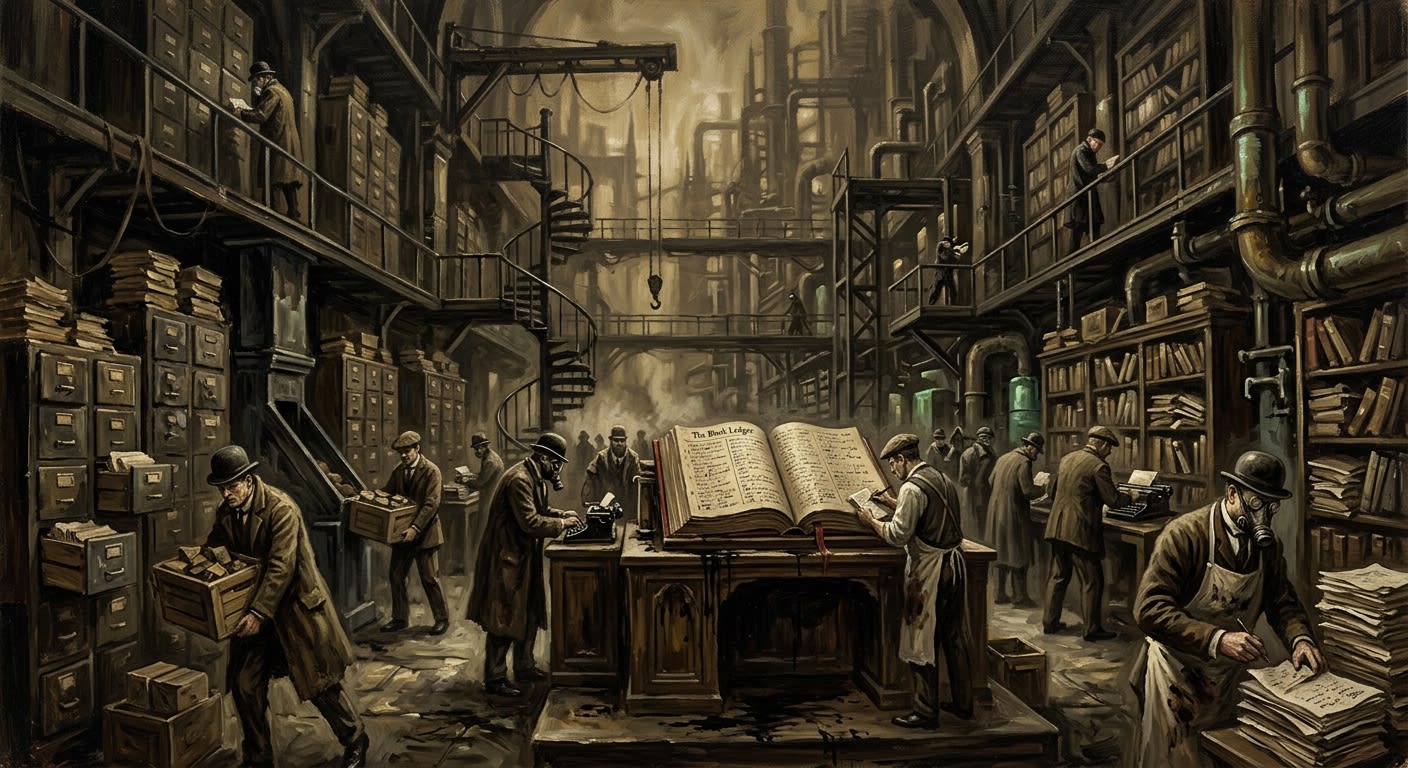
The Black Ledger
Hunger with a filing system and better memory than mercy
The Black Ledger is the Synod's gutter-mirror: a criminal heretical network that steals, feeds, records debt, and turns absence into jurisdiction.
Codex Ref. XI.1.04-001
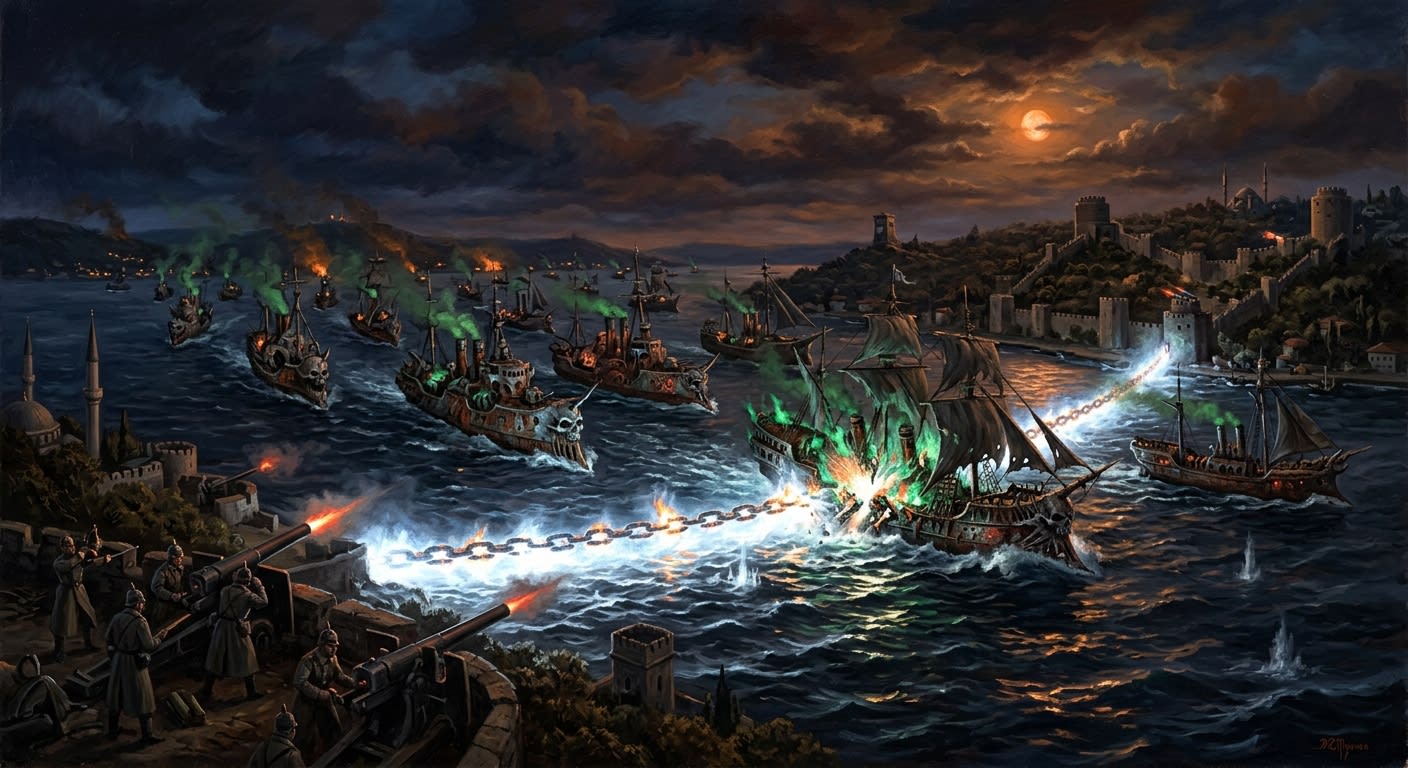
The Black Sea Armada
Forty-seven ships. The Bureau counted them twice. The second count was worse.
On the night of 14 Ferrum, A.S. 162, forty-seven demon vessels entered the Bosphorus. The Chain of Saint Anakletos held — and burned white-hot for seven hours. Forty-three ships destroyed, the chain gone dark ever since, and one ship never found.
Codex Ref. VII.4.01-001

The Blank-Sheet Circle
A heresy that fits on a single sheet; the sheet is blank
A proscribed organisation operating from the Pylon Warrens of Bastion-Brest; manufactures blank crossing papers permitting nameless transit across the bridge; the Bridge Tribunal has made nineteen arrests; this has not helped.
Codex Ref. XI.5.01-001
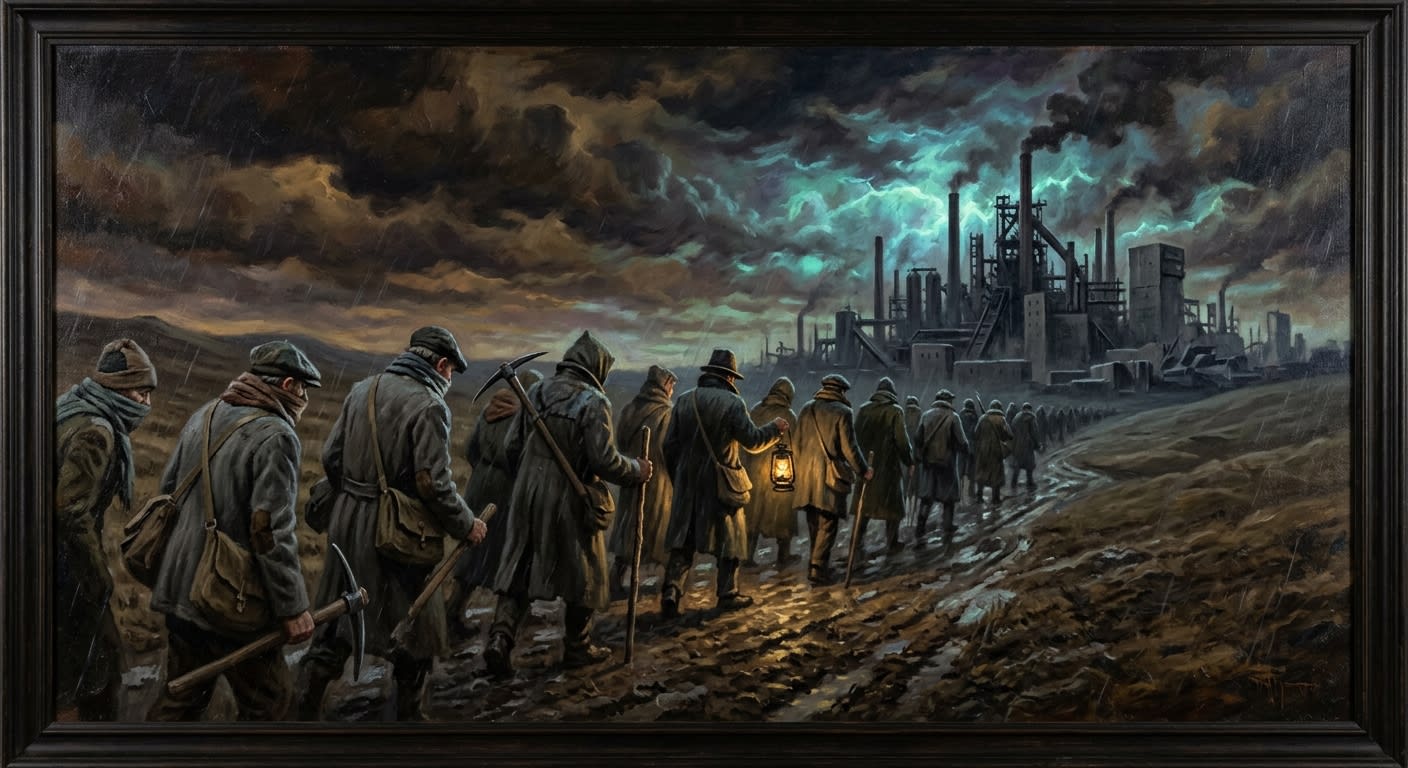
The Breathing
The forbidden name Praga gives the front at night
Praga calls the eastern night-pulse the Breathing; Doctrine forbids the name, which proves only that Doctrine has never successfully prosecuted weather, hunger, or grandmothers.
Codex Ref. XIII.1.88-201
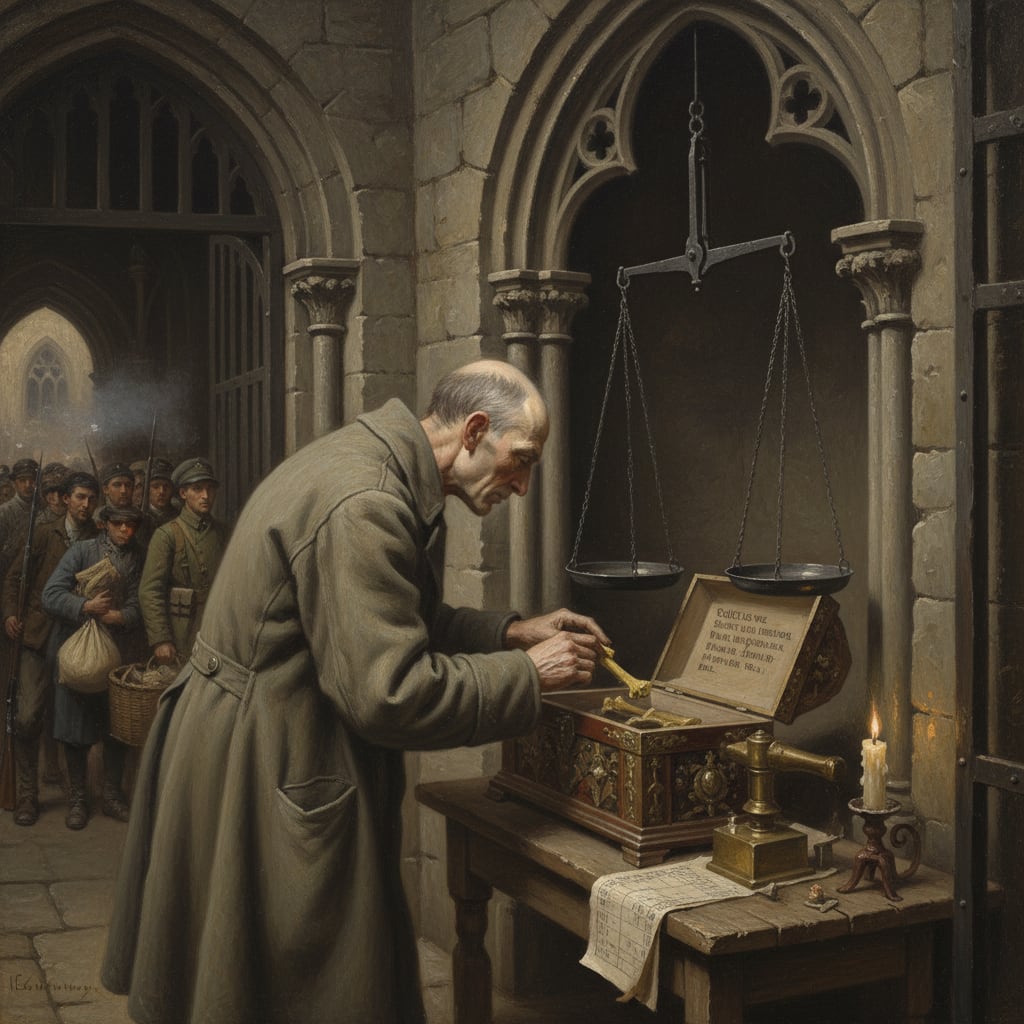
The Commerce Clerk (Tariff-Chapel Weigher)
The man who stands between a bastion and famine, and who resolves the question with the splintered bone of a saint.
The Synod's most bribable sacrament: the chalk-fingered clerk whose iron scale, calibrated against saint-bone, determines whether a bastion eats.
Codex Ref. XII.8.01-001
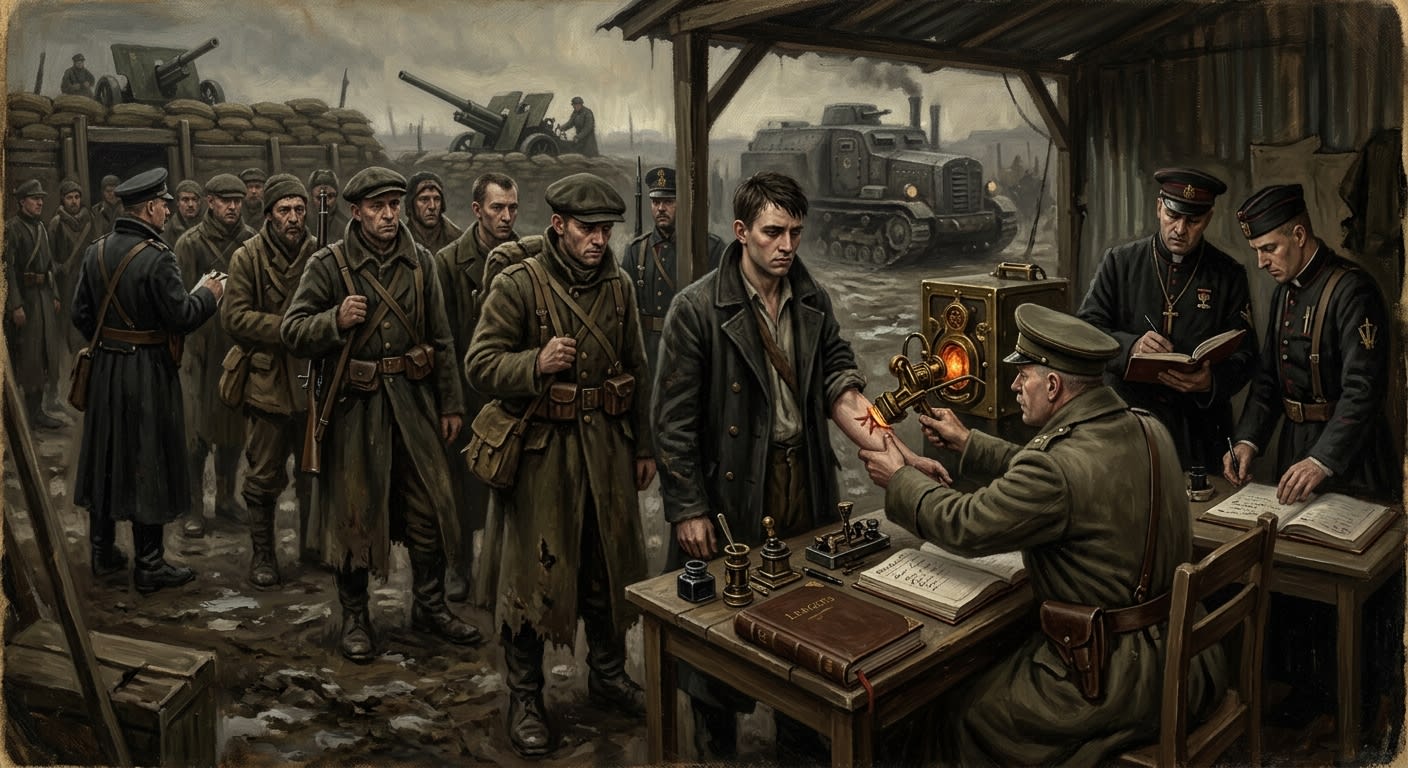
The Compulsory Marking Decree
The day paper lost authority and flesh became the Bureau's preferred document
The A.S. 113 Compulsory Marking Decree made bodily tri-marks mandatory at forward-zone checkpoints after forged papers killed eighty-seven at Bastion-Przemyśl.
Codex Ref. VII.8.10-035
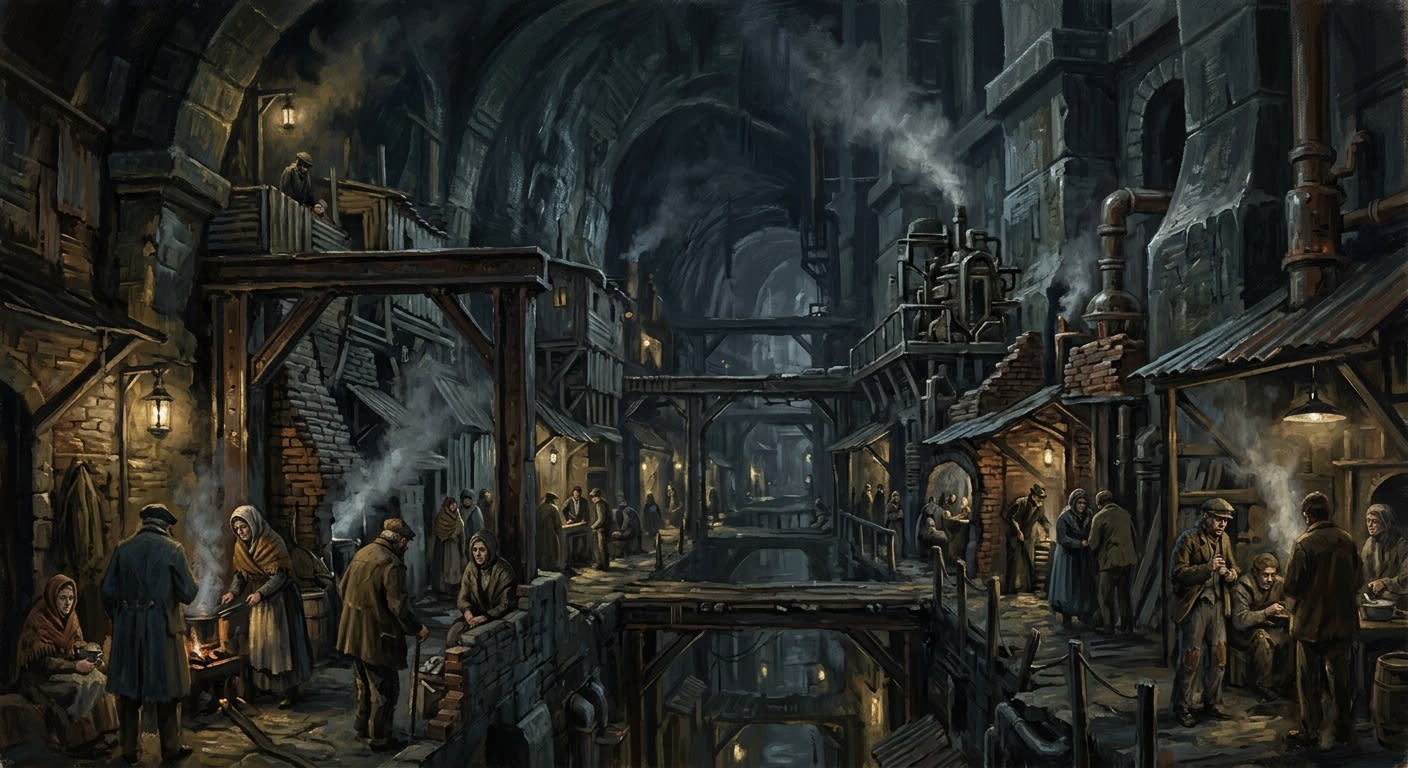
The Constantinople Warrens
The city beneath the city, tolerated by omission and counted by echoes
Beneath Bastion-Constantinople's Ossuary Rings, forty thousand unregistered souls live where Settlement maps insist there is only stone.
Codex Ref. II.4.10-005
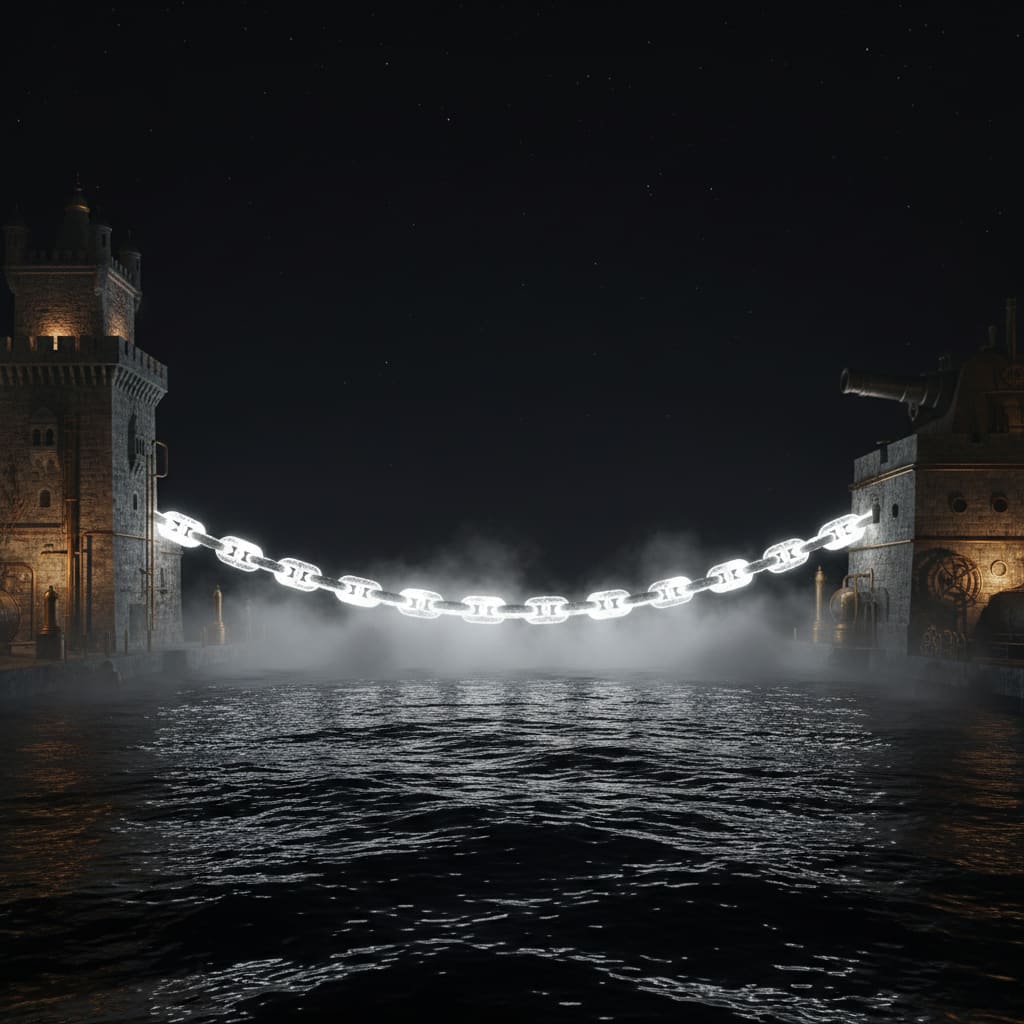
The Harbor of Chains
A mile of quay, a hundred fathoms of iron, and what the chain is becoming
The Harbor of Chains guards the Bosphorus with one mile of fortified quay and the Chain of Saint Anakletos — consecrated iron that burned the Black Sea Armada white in A.S. 162 and has not glowed since.
Codex Ref. II.4.10-005

The Heartlands
The safe country, provided one defines safety as distance from teeth and proximity to stamps
The Heartlands are the Synod's safe interior only by infantry arithmetic: Zones 1–3 feed the Line with bread, steel, bodies, bells, paperwork, and bones.
Codex Ref. II.0.02-201

The Knotwright Registry
Where every lawful threshold becomes a number, and every number becomes a leash
The Knotwright Registry is Heraldry's A.S. 112 tool-custody office for Gate-Carvers, where stencils, punches, rubbings, licences, and trembling hands become evidence.
Codex Ref. VIII.1.03-002
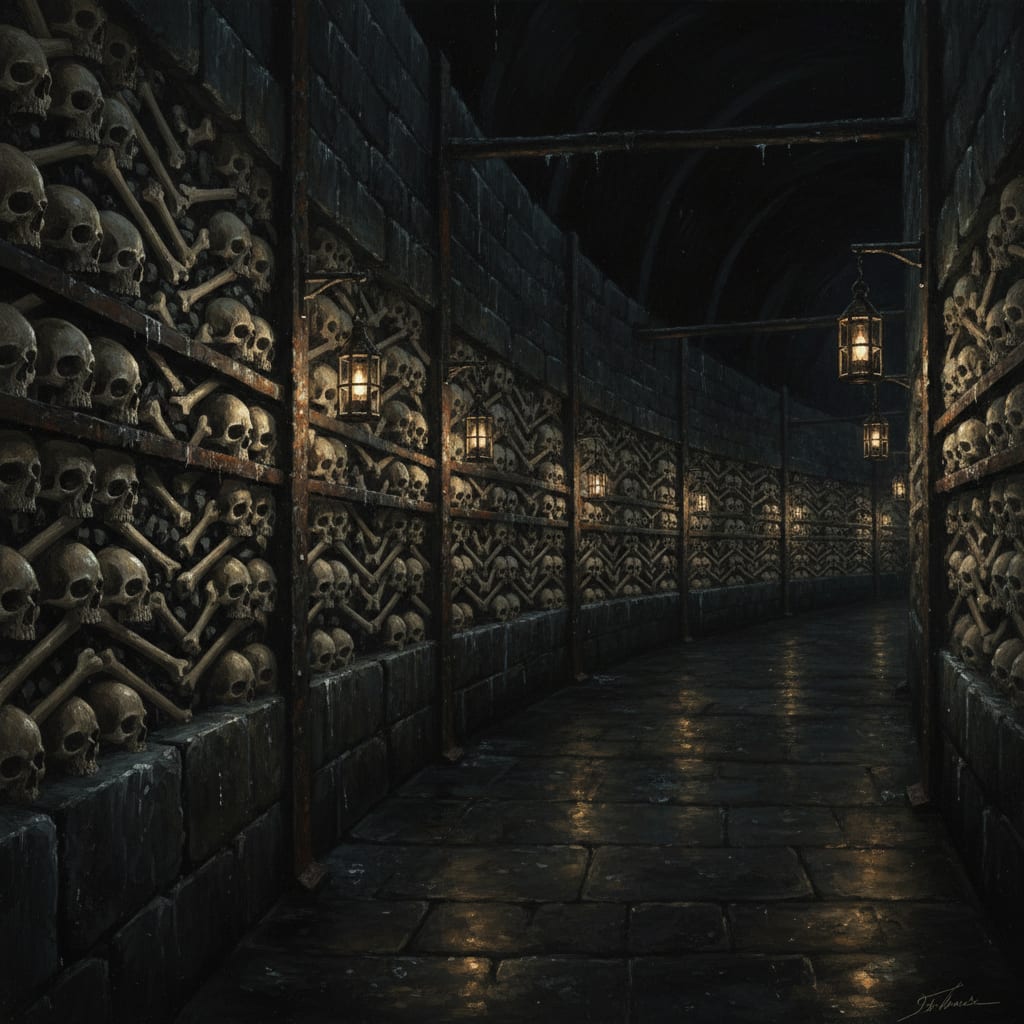
The Ossuary Rings of Bastion-Constantinople
Six walls of the dead, holding the city of the living together
Six rings of catacomb-fortification sunk into the Bosphorus headland — begun A.S. 47 when armies ran out of mortar and substituted femurs, expanded with every war dead since, administered by a Mother-Cryptor who knows 46,312 urns and sleeps facing away from the innermost ring.
Codex Ref. II.4.10-002
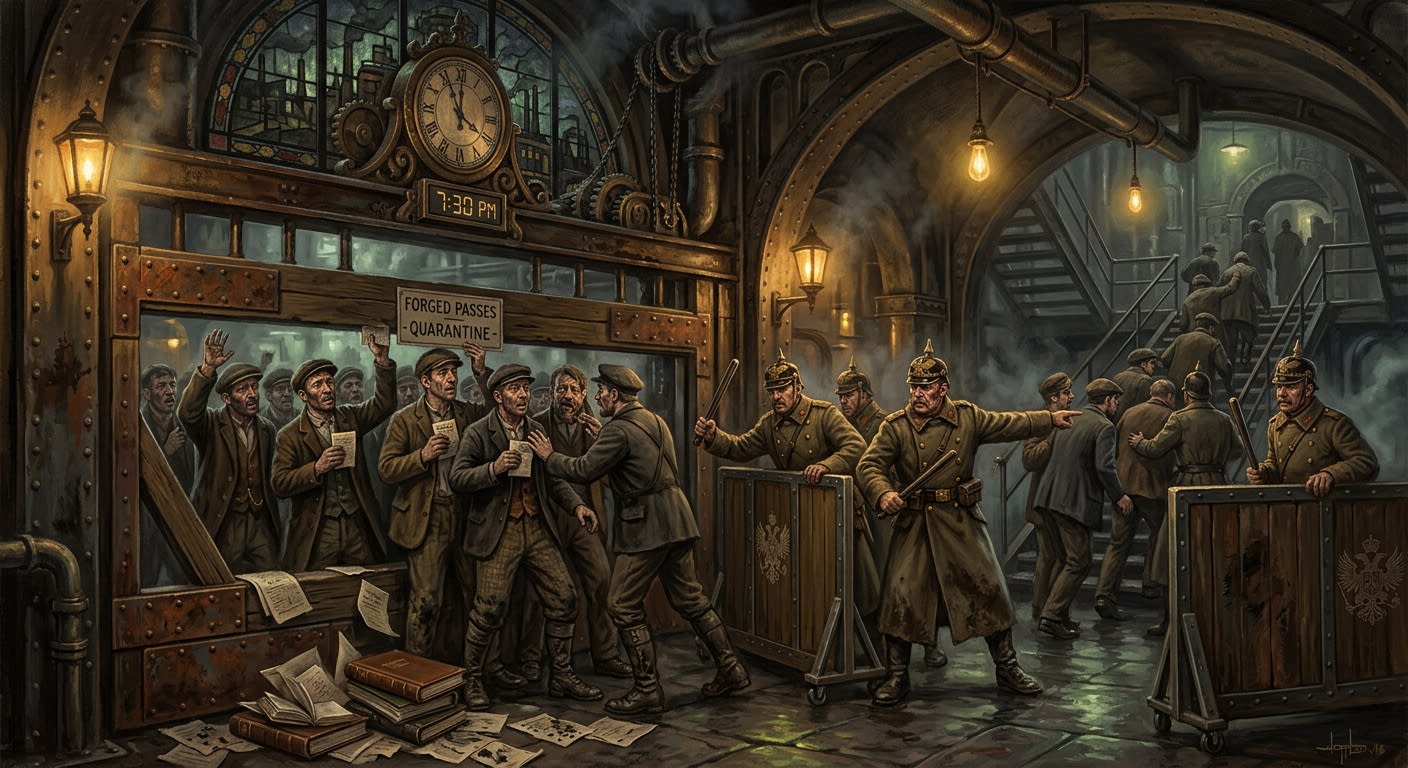
The Paper Plague of A.S. 112
Where forged paper entered Przemyśl and flesh became policy
The Paper Plague of A.S. 112 was the Bastion-Przemyśl forged-pass disaster that killed eighty-seven, locked the western perimeter, and birthed bodily identity law.
Codex Ref. VII.8.10-036
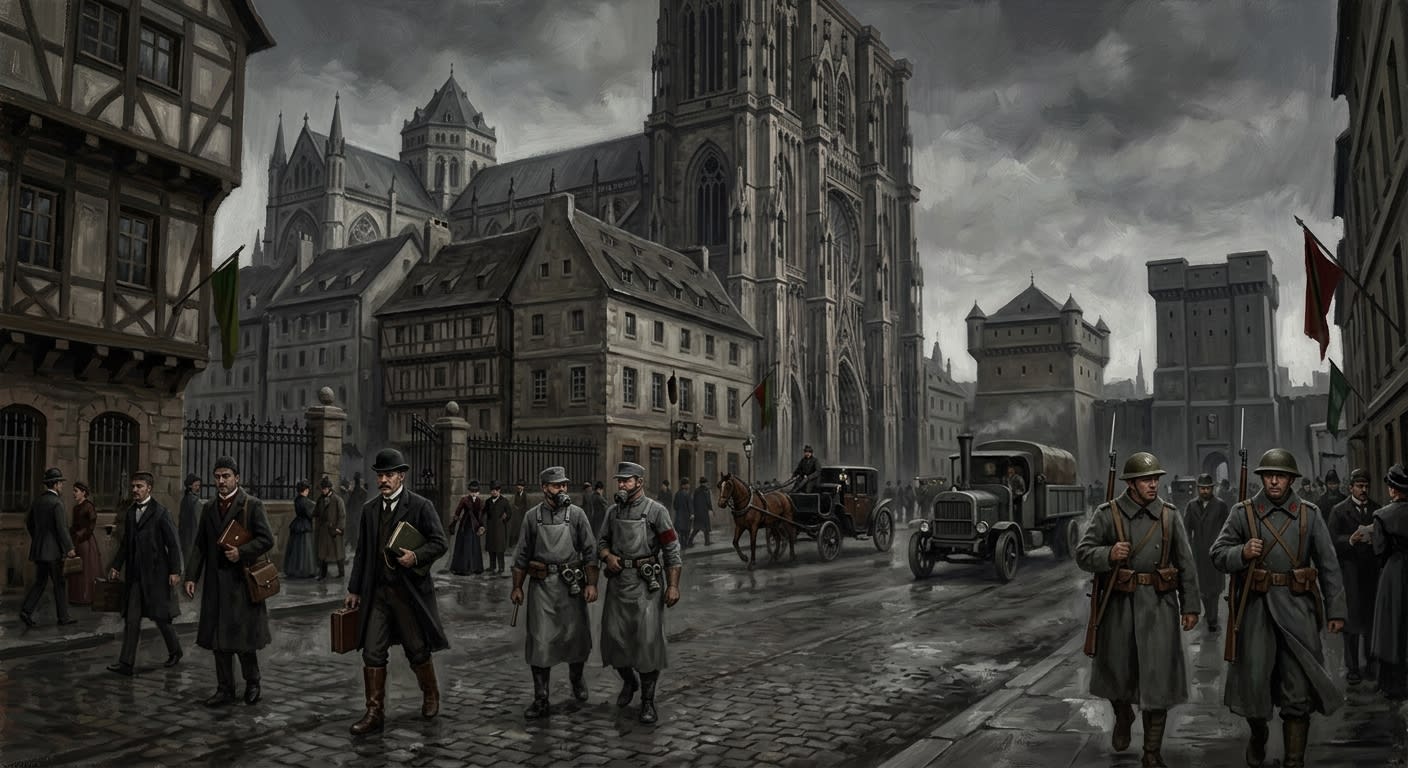
The Sanctum Mile
Strasbourg's white corridor, scrubbed clean enough to hide the blood
The Sanctum Mile is Strasbourg's white civic-sacral corridor: cathedral stone, Bureau houses, the Hall of Confessions, and the Prison of Questions in polished alignment.
Codex Ref. II.2.02-002
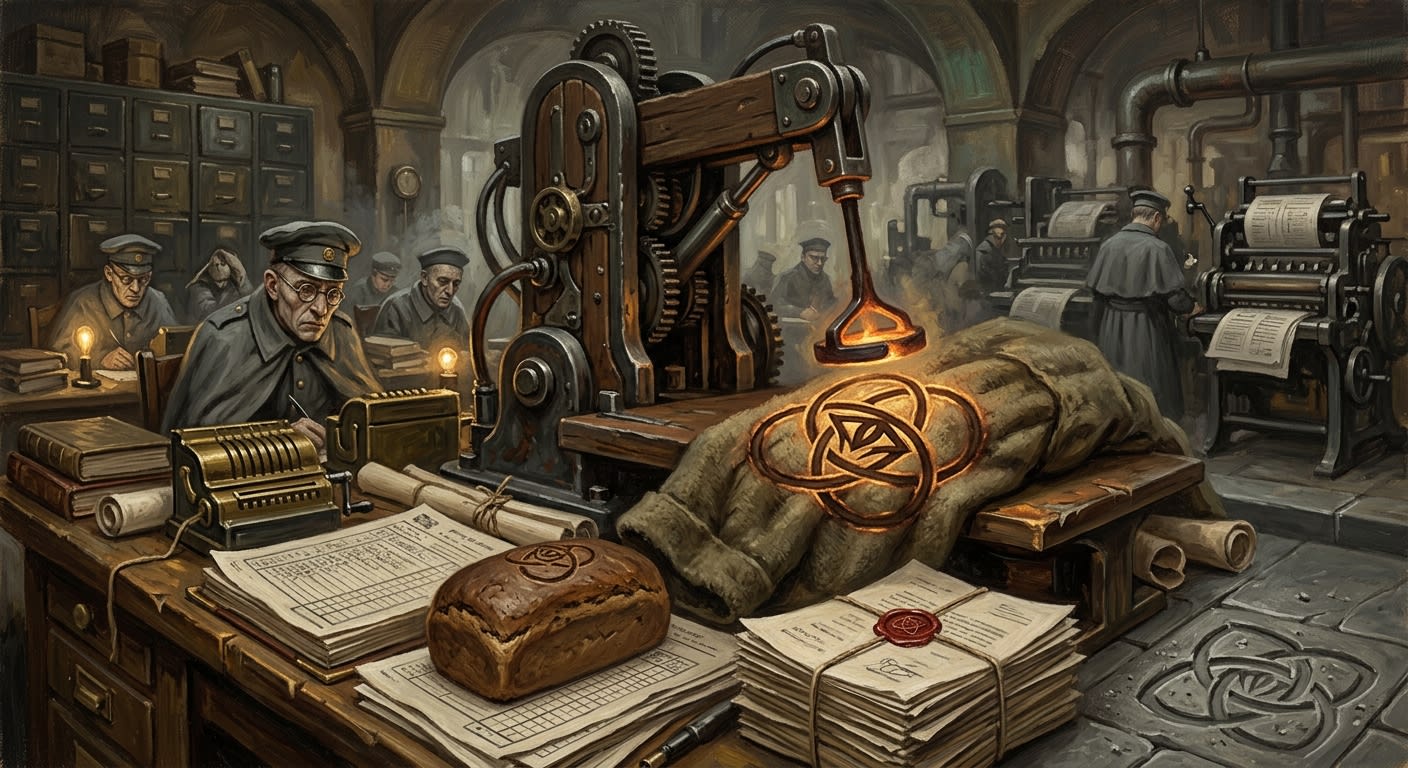
Triune Knot
Three loops, one law, and every door accounted for
Universal Synodal binding mark standardised under Theobald of Worms, by which doors, papers, bread, flesh, and graves become readable to law.
Codex Ref. XIII.1.03-002
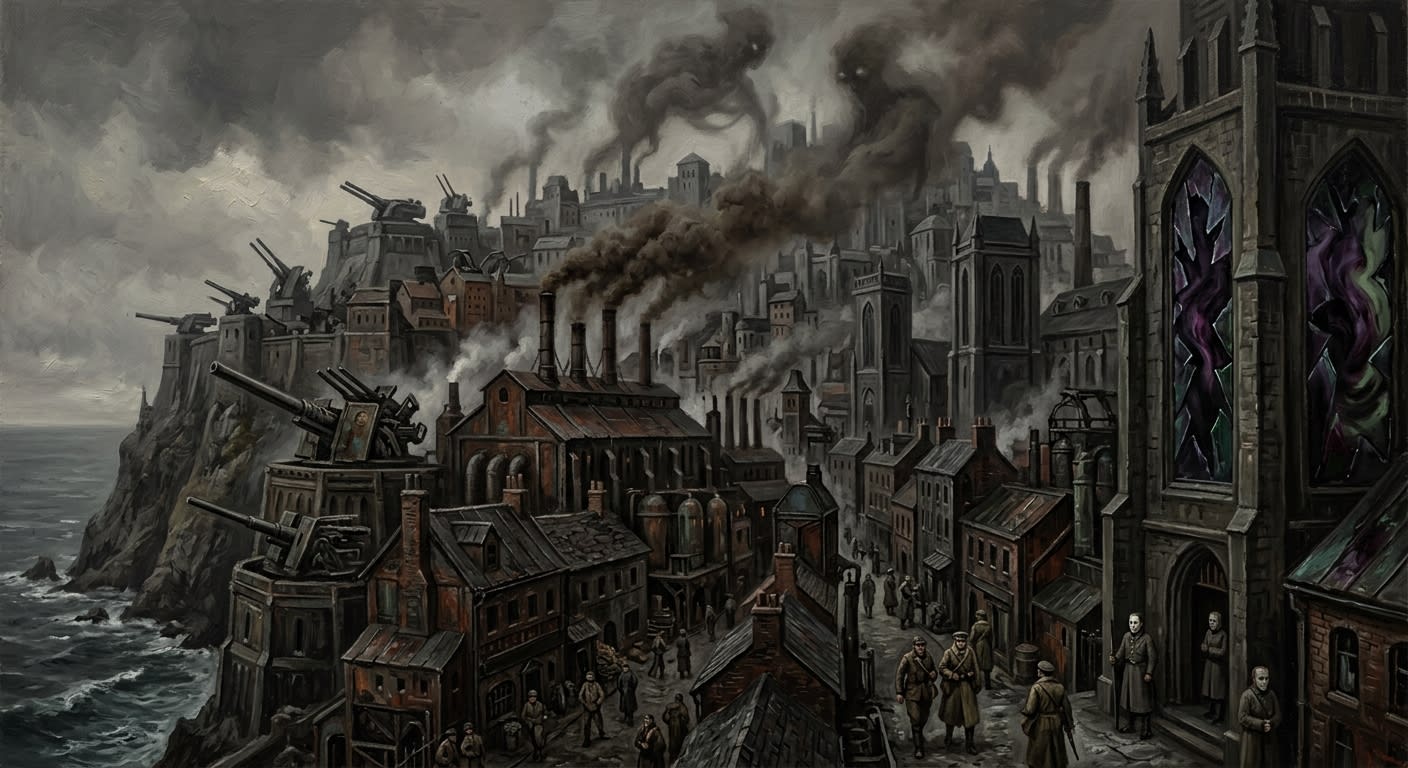
Varna
The Ashen Redoubt where smoke looks back and bread learns law
Varna, the Ashen Redoubt, is a Black Sea cliff-fortress of guns, bone-kilns, tariff chapels, demon glass, hunger law, debt masks, and smoke that looks back.
Codex Ref. II.4.09-070
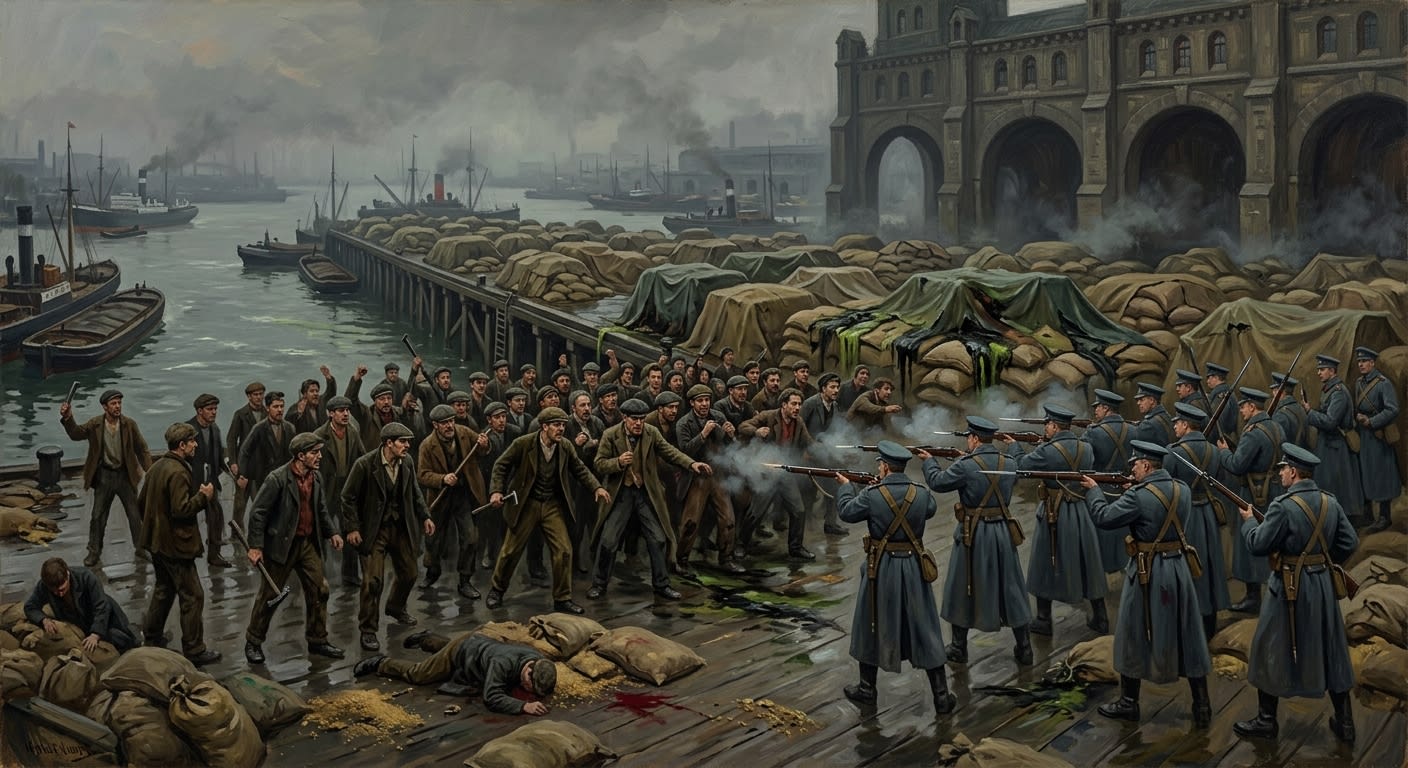
Varna Grain Rot
The wheat waited nineteen days; the dead waited less
A.S. 129 Varna harbour catastrophe in which tariff suspension left convoy grain to rot for nineteen days, provoking hunger riot, Purity volley, and official conversion into holy fast.
Codex Ref. VII.8.10-016
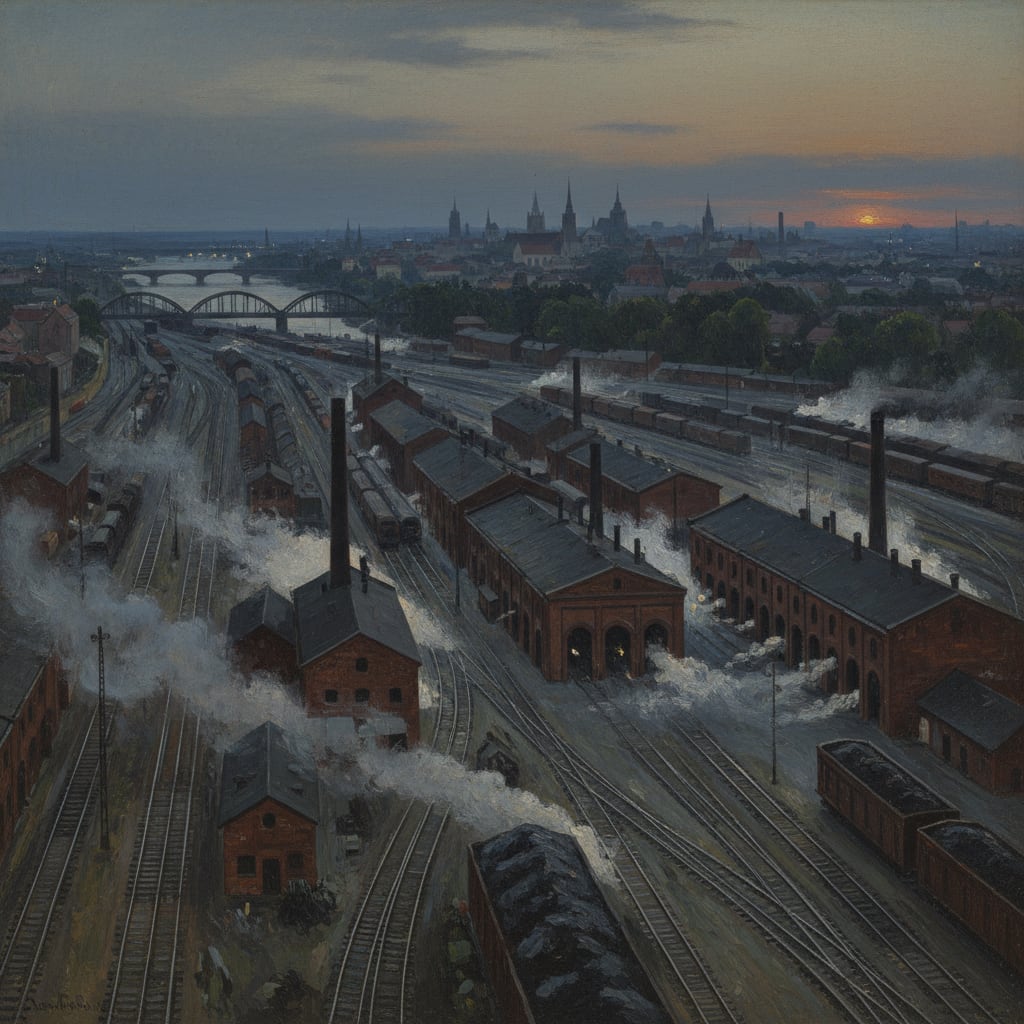
Warsaw
The city the Bureau told to leave, and the bakeries it opened in reply
The Synod's forward staging city on the Vistula — Zone Three, Northern Corridor, entry 14-W. 160 km from the Sagittal Line; close enough to hear the front on clear nights. The Bureau told it to leave in A.S. 95. It has grown by a quarter-million souls since.
Codex Ref. II.4.09-007
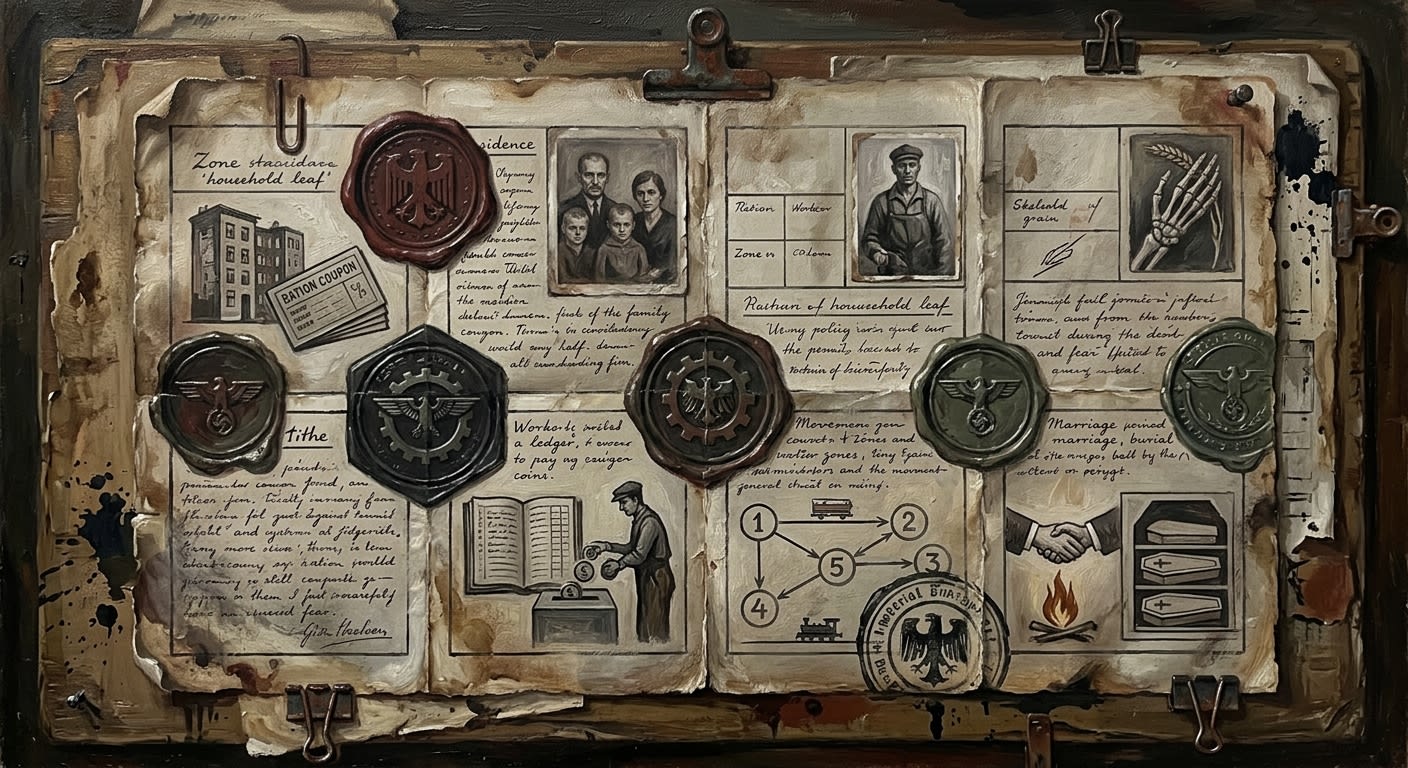
Zone Permit
The paper beneath the feet, and the shackle in the drawer
The Zone Permit is lawful standing made paper: residence, ration, tithe, movement, marriage, burial, and fear folded into one stamped household leaf.
Codex Ref. XIII.1.93-130
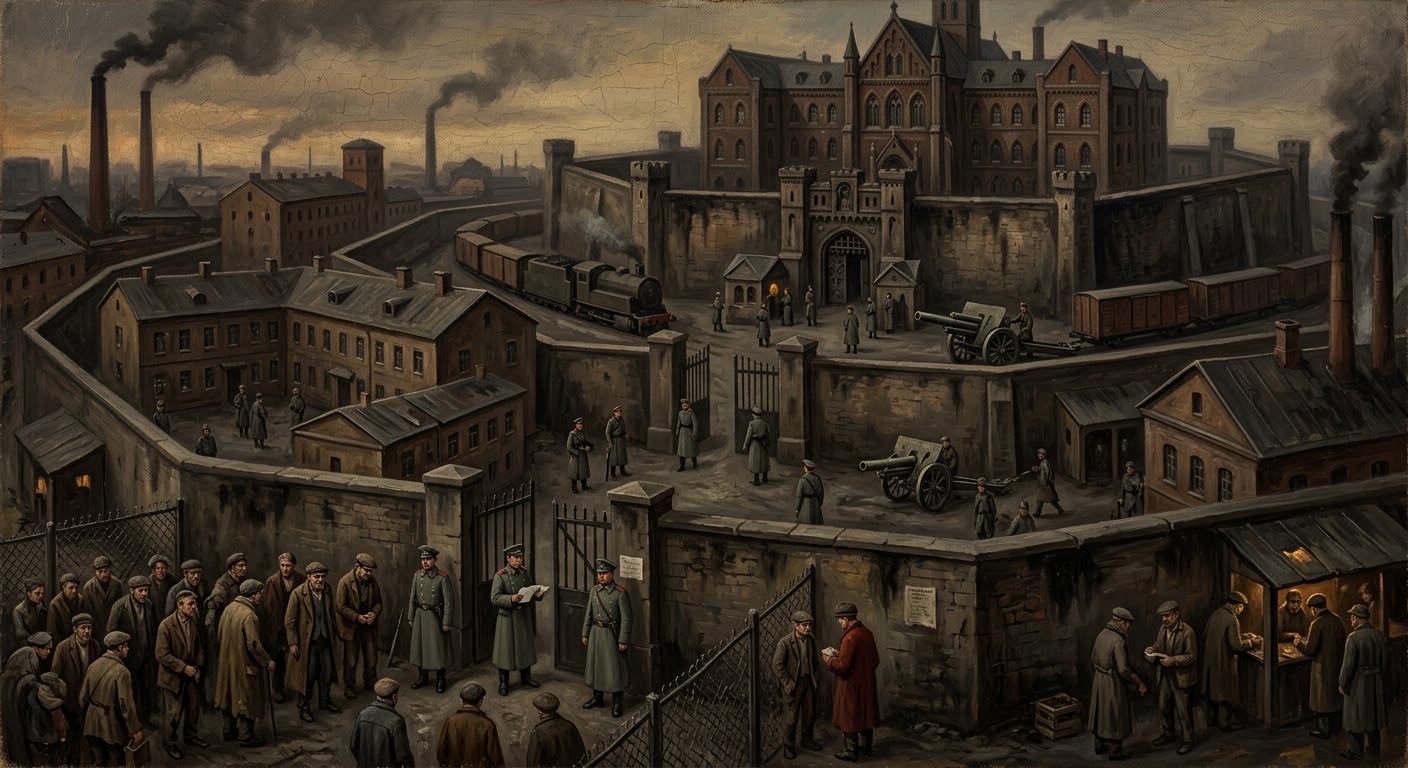
Zones 1 through 5
Five lawful pressures between invoice and mud
Zones 1 through 5 are graded permissions for bread, sons, movement, fear, artillery, and the state’s appetite.
Codex Ref. XIII.1.00-201
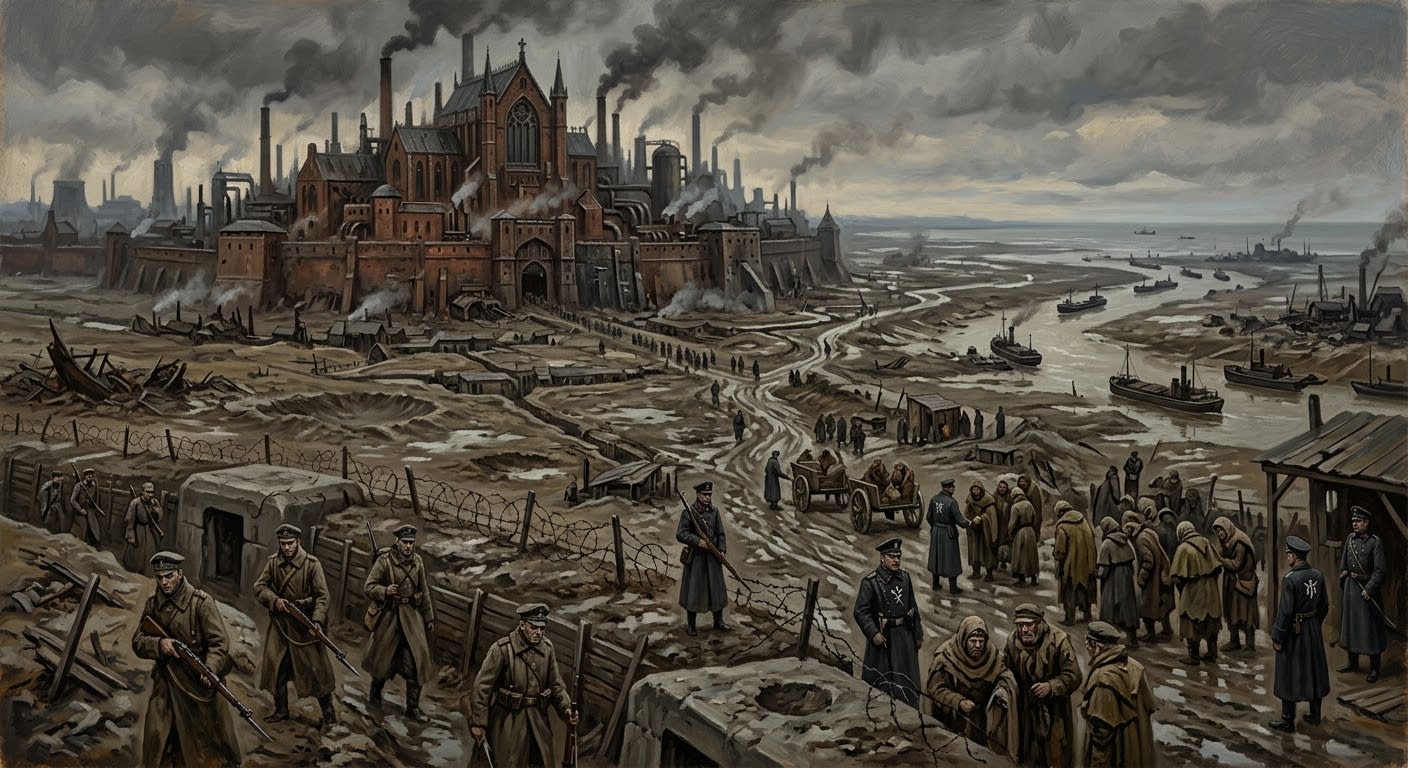
Zones 5 through 7
Mud, mouth, water — the outer grammar of danger
Zones 5 through 7 are the Synod’s controlled contact belt: contested mud, demonic custody, sea-rim commerce, contraband, pilgrimage, and useful contamination.
Codex Ref. XIII.1.00-207