

Reverse Index
Referencing “The Bureau of Heraldry”
Every codex entry that links to The Bureau of Heraldry. 119 entries.
Return to The Bureau of Heraldry
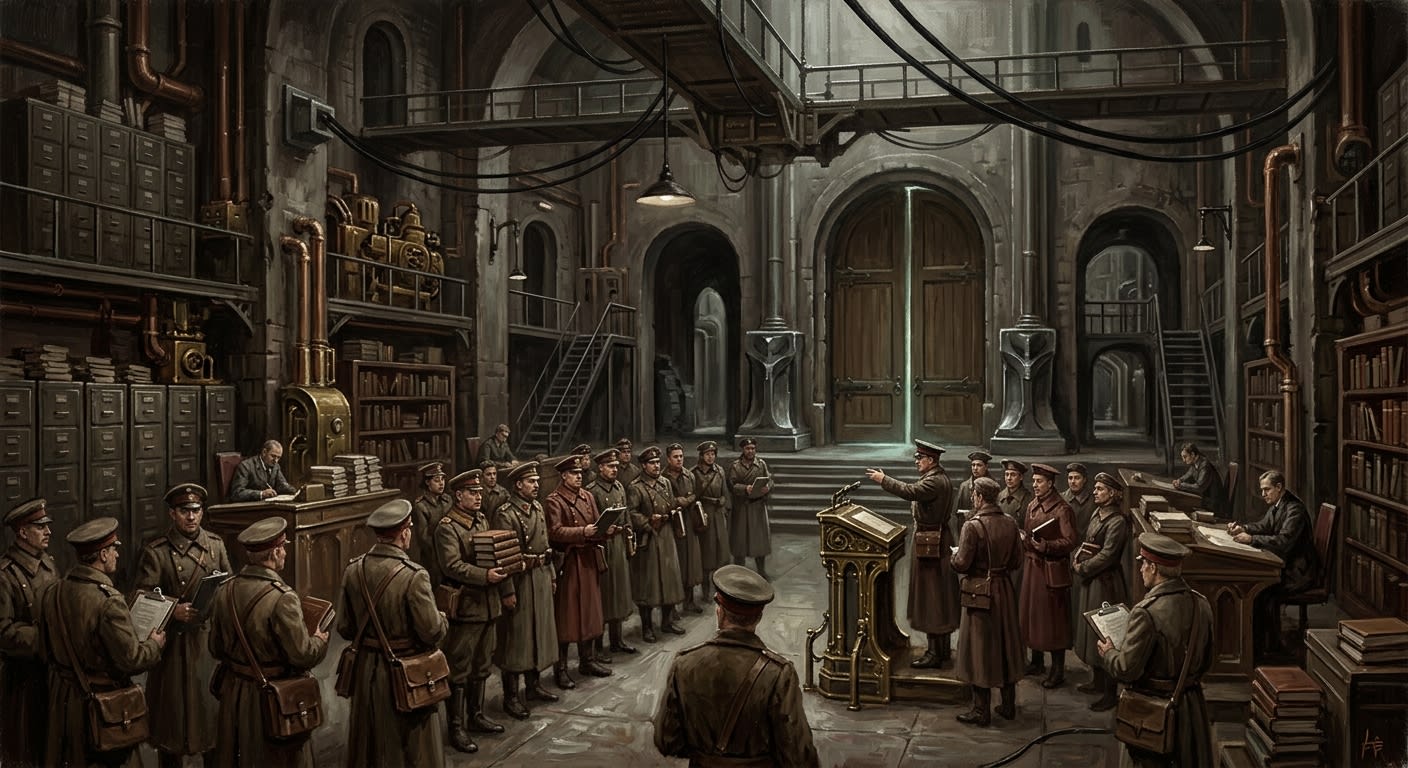
Academy of Strasbourg
Where questions are taught to kneel before they are permitted to stand
The Synod's capital academy trains clever minds for dangerous offices by making knowledge kneel, speak late, file early, and fear extra doors.
Codex Ref. I.1.03-090
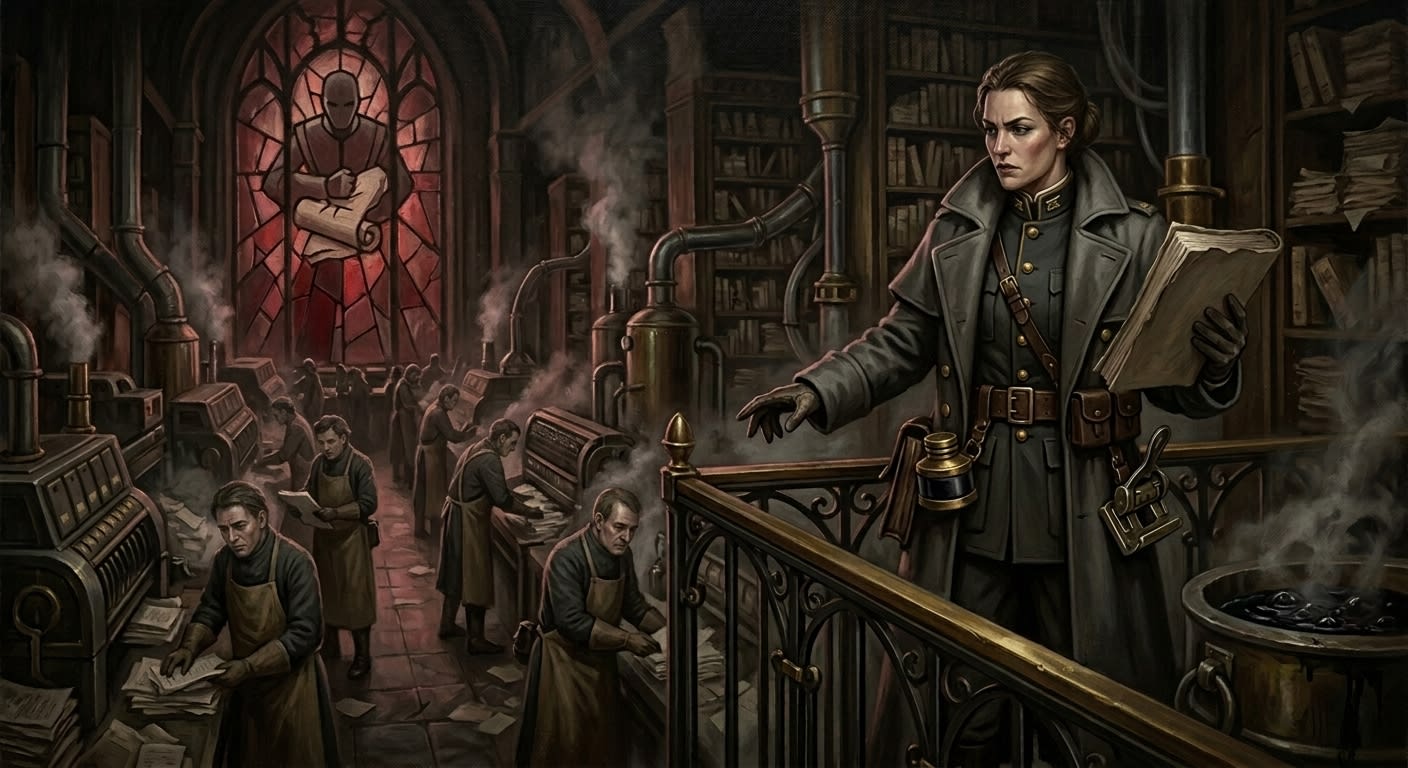
Aldara Vess the Younger
The woman who removes language from the room until obedience remains
Aldara Vess the Younger commands the Bureau of Silence, the Forbidden Stacks, and the art of making words administratively absent before they become dangerous.
Codex Ref. III.2.01-018

Angle-Runner
The child between the iron, the ledger, and the official hand
Angle-Runners are orphanage-roll children pressed into Brand-Smith service after the Compulsory Marking Decree, carrying tags, swatch plates, salve, and blame between the iron and the ledger.
Codex Ref. XII.20.07-001
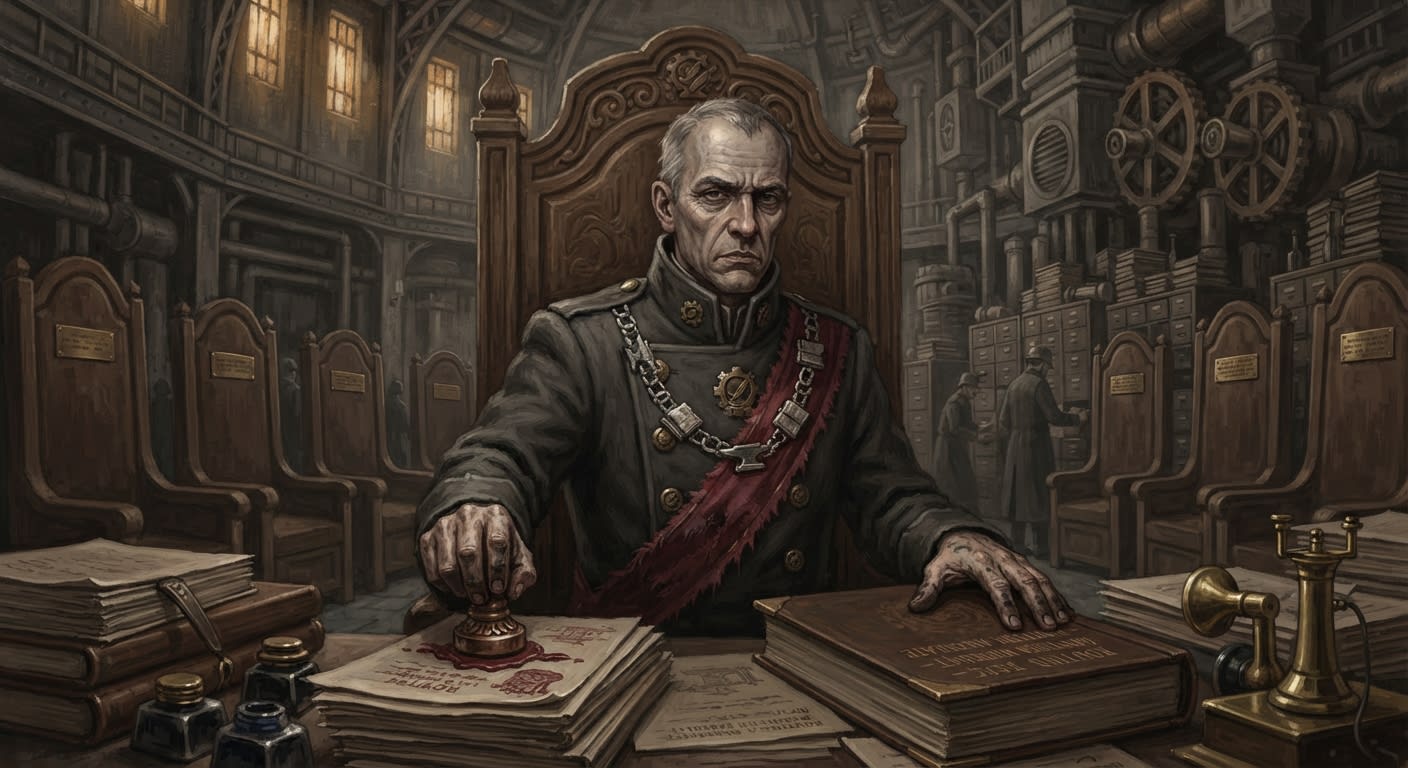
Archon
The chair survives the man and charges rent to history
An Archon is less a man than a legal altitude: Bureau sovereign, city master, seal threshold, and chair that lets the Synod replace the occupant while preserving the blame.
Codex Ref. XIII.1.07-090
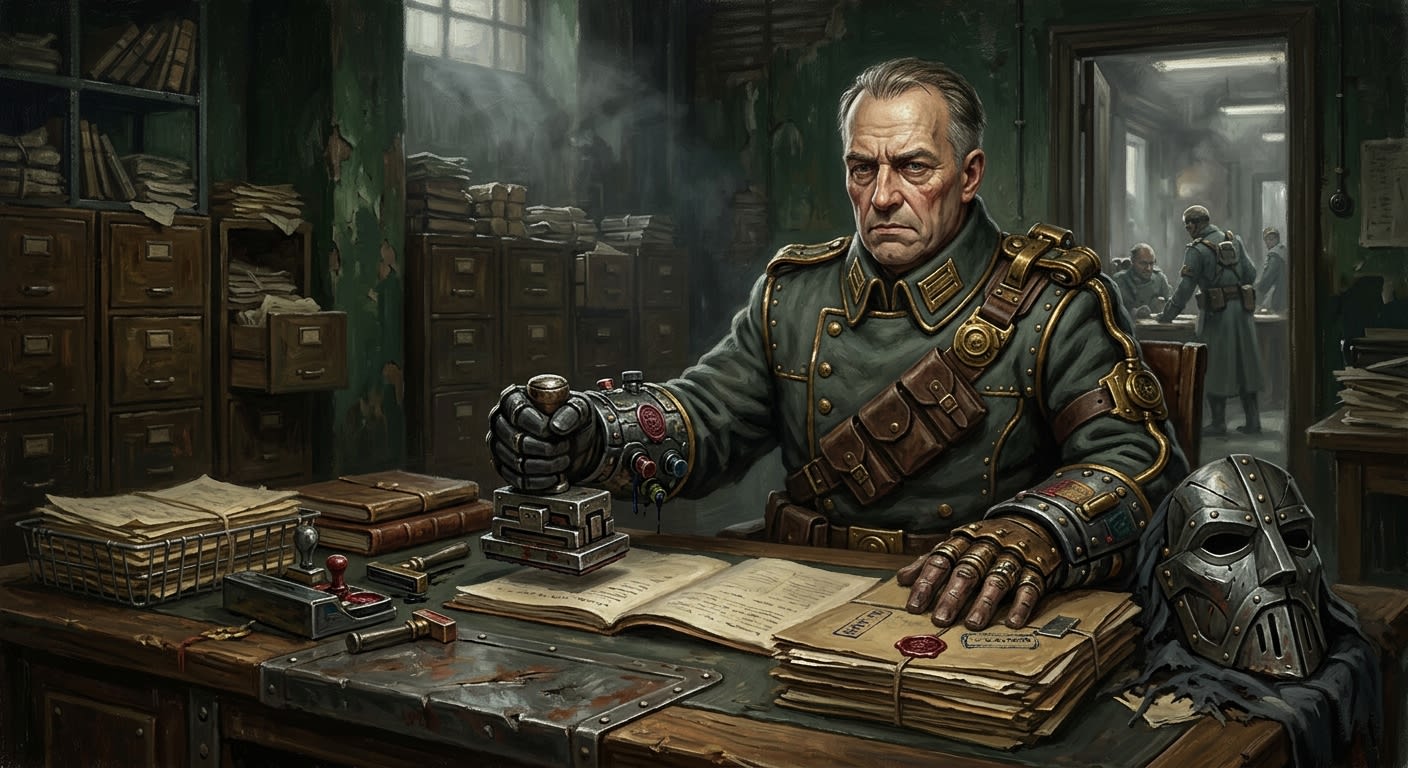
Archon Casselius of Mainz
The man who hears treason in hardware and measures it correctly
Casselius of Mainz holds Heraldry and Masks and Seals in personal union, deciding what may be seen, stamped, licensed, and punished.
Codex Ref. III.2.01-017
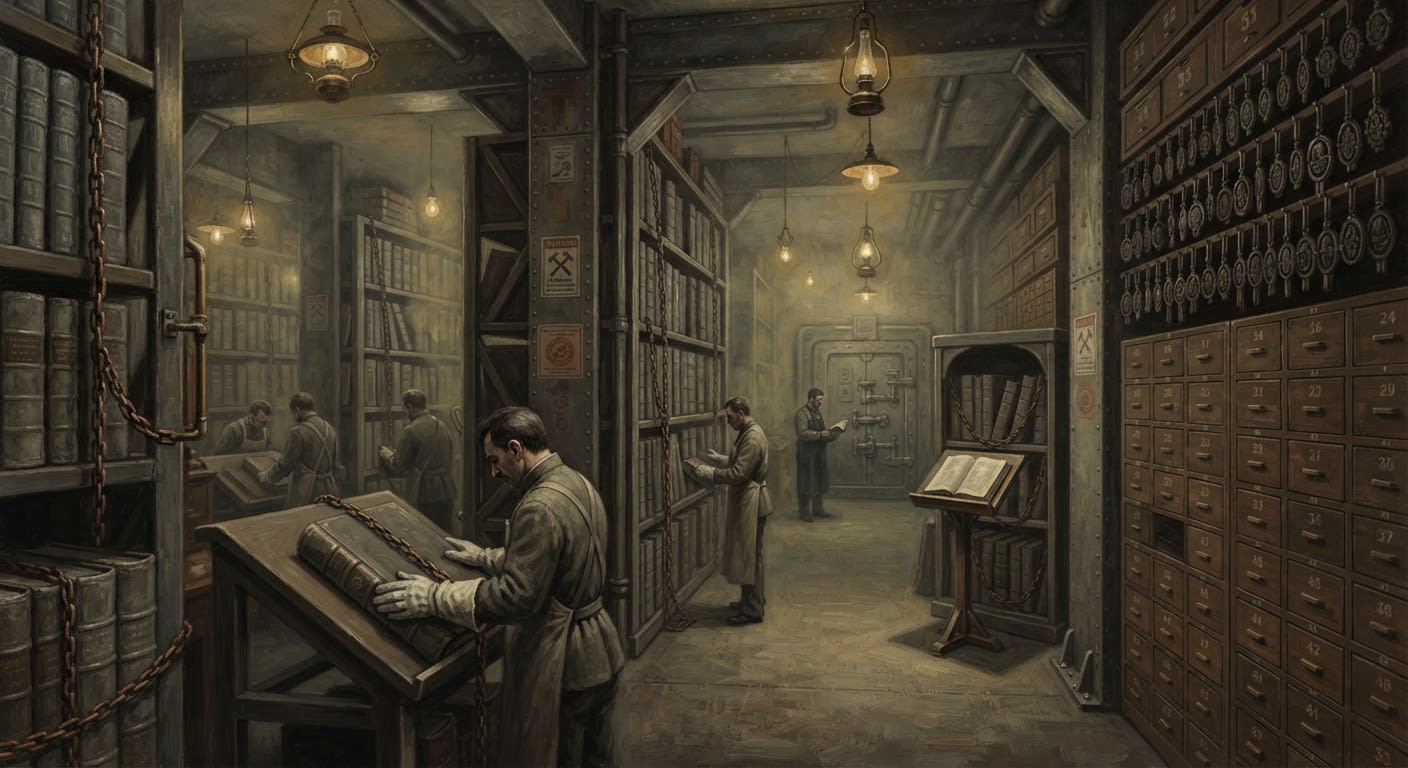
Armorial Vault
Where symbols are chained until they become law
The Armorial Vault is the chained body beneath Strasbourg where registered symbols become legal facts, false marks are preserved for prosecution, and colour learns to fear drawers.
Codex Ref. II.1.04-007
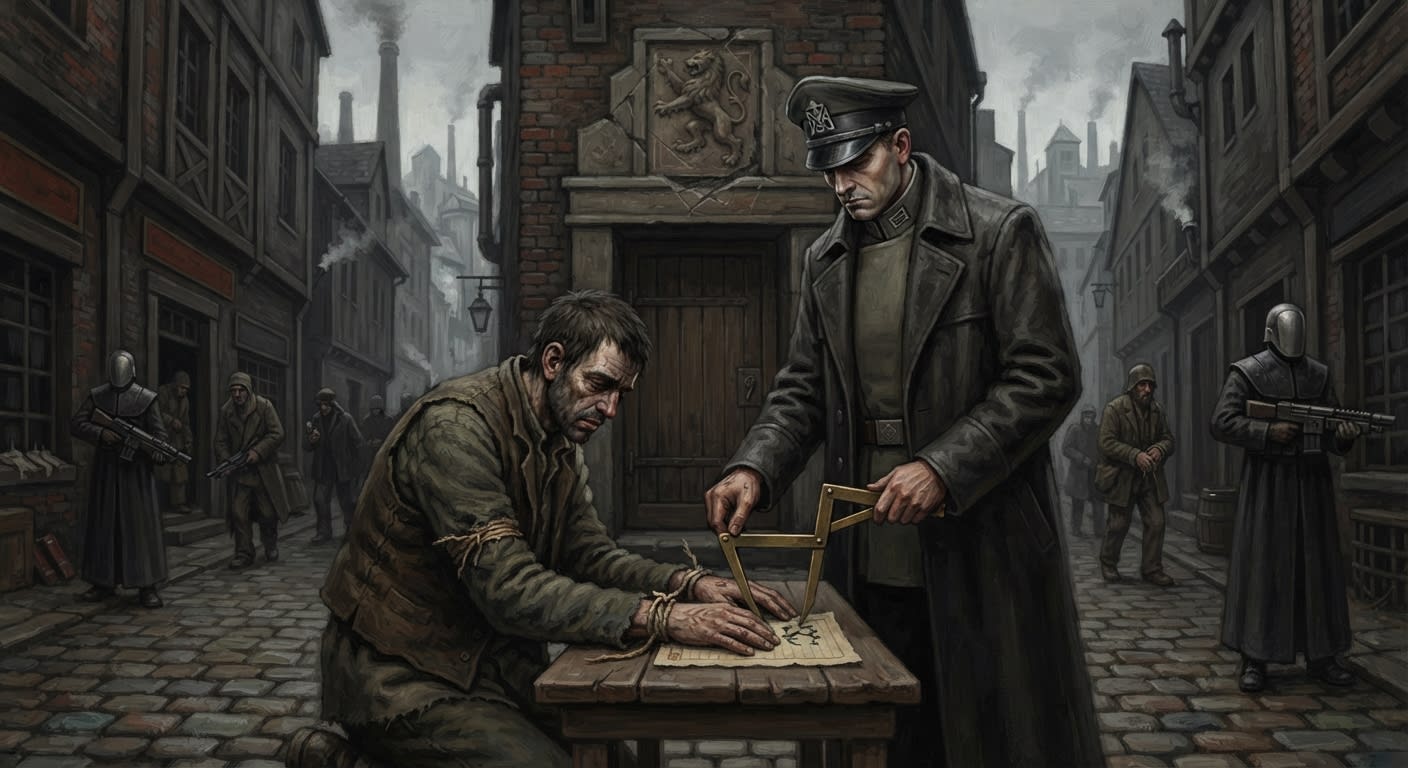
Augsburg
The city corrected first by blade, then by gauge
Augsburg is known to the Codex by what the Synod removed from it: beasts from its guildhalls, vermillion from a dyer, and doubt from three condemned hands.
Codex Ref. II.2.09-182
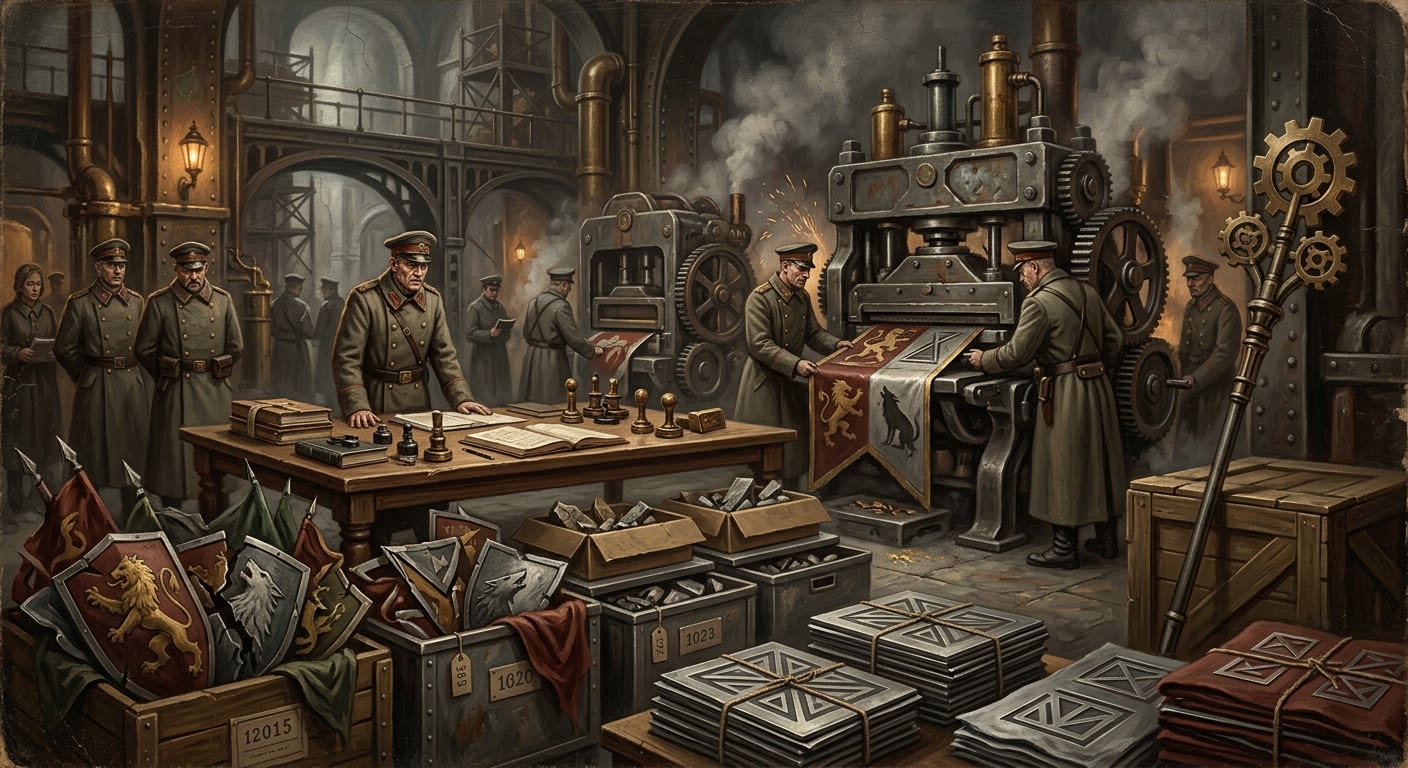
Beast Proscription
When Heraldry put the animal kingdom under seal
The Beast Proscription of A.S. 108 reclassified Europe's animal crests after the Crimson Gate Riot, turning lions into geometry and wolves into evidence.
Codex Ref. VII.8.10-033
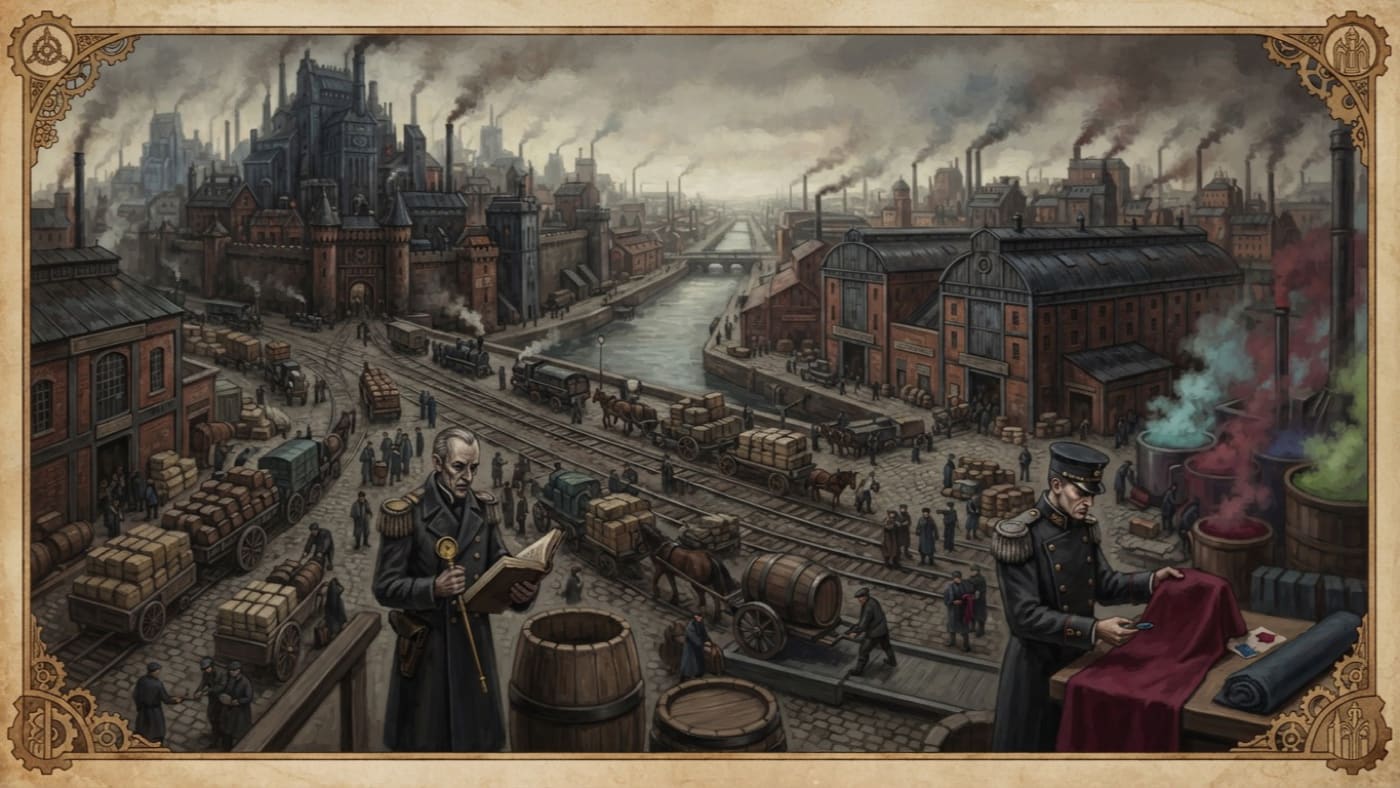
Beaune
Count the casks, check the swatch, knock on the barrel
Beaune sends Burgundy's wine toward the Rhône. Tithes gauges its casks, the Chancellery watches its dyes, and Shadows remembers a barrel that held no wine.
Codex Ref. II.1.12-201
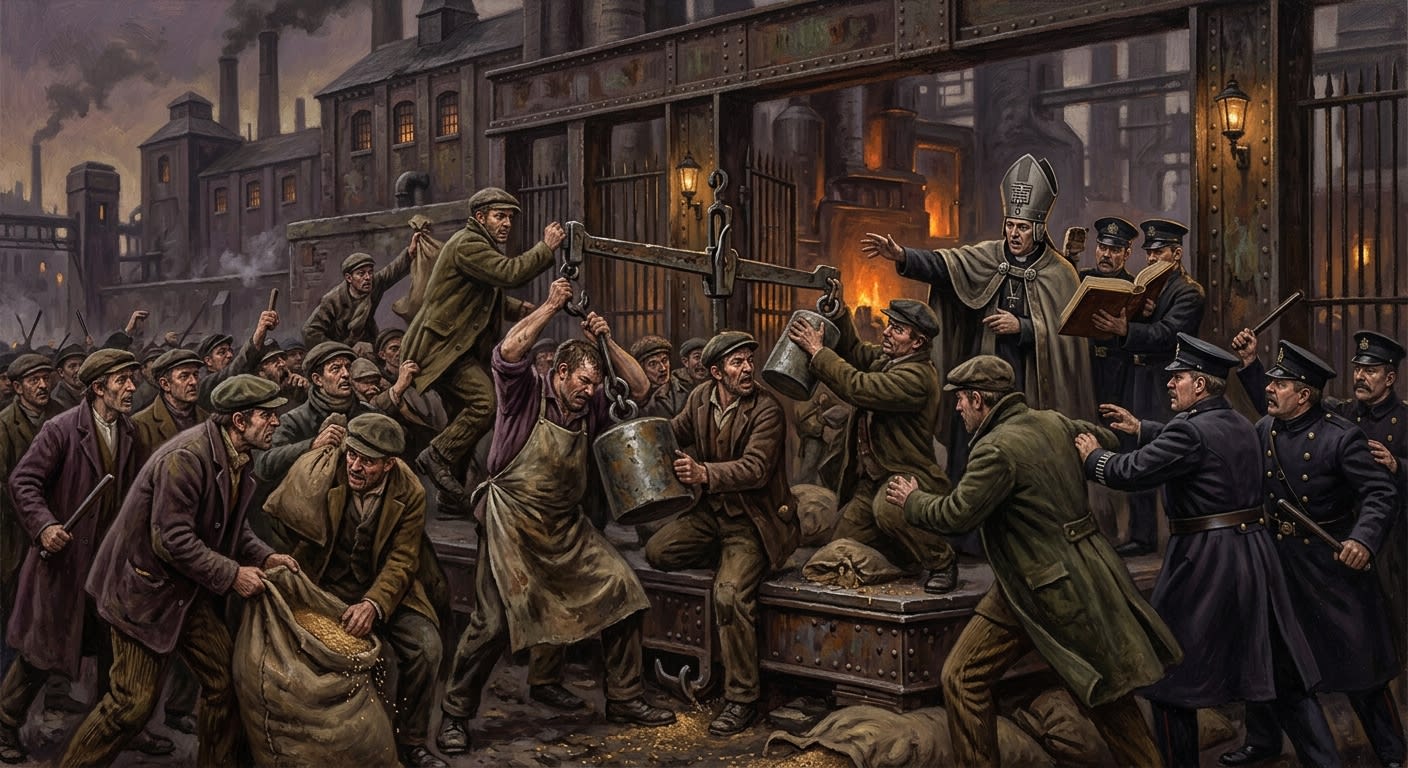
Bread-Scale Uprising
When hunger weighed the law and found lead beneath it
A.S. 97 southern-gate riot over leaded grain scales, later clarified into the sacramental seizure of measure and the birth of the tariff-chapel system.
Codex Ref. VII.8.10-011
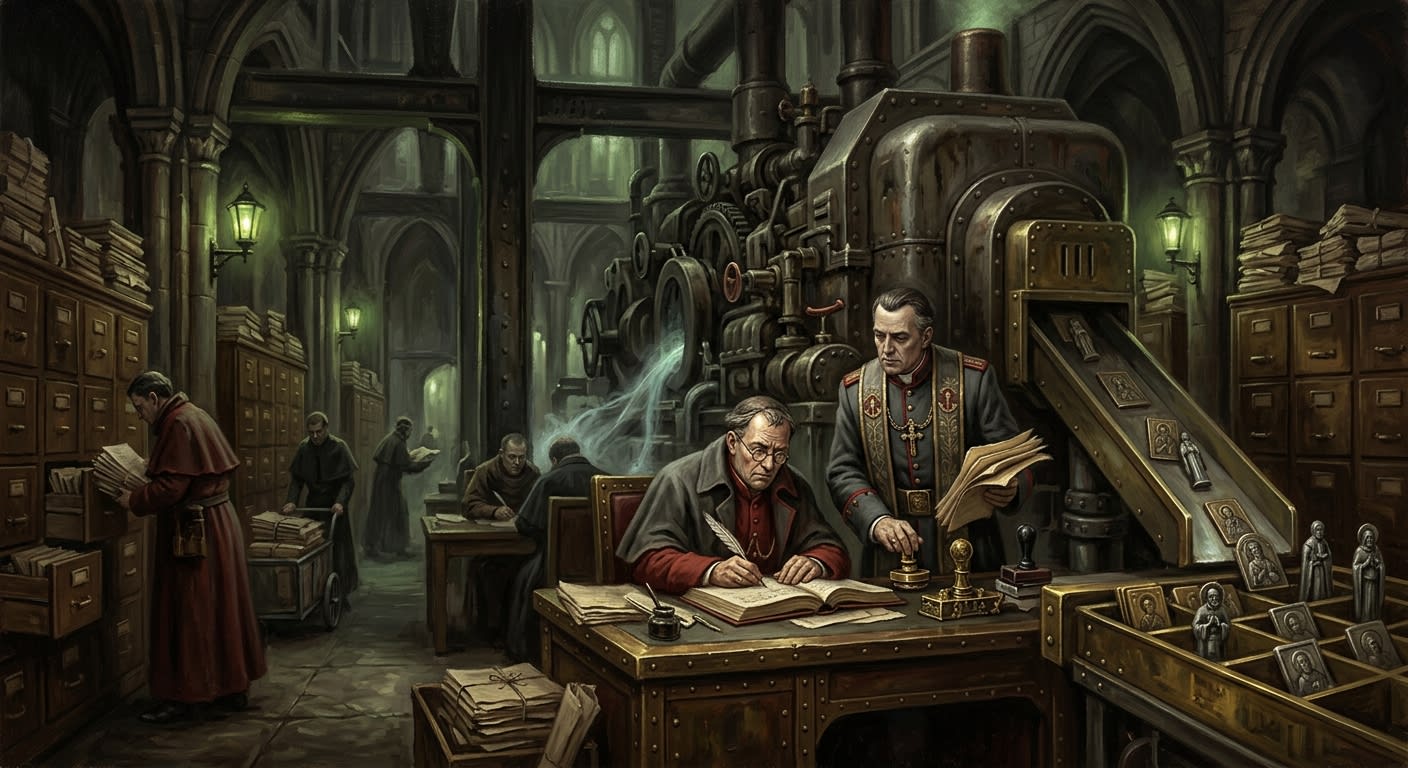
Bureau of Hagiography
The dead may vote only after editing
The Bureau of Hagiography edits the dead into useful saints, delaying, ratifying, taxing, suppressing, and polishing grief until it obeys.
Codex Ref. VIII.6.03-112
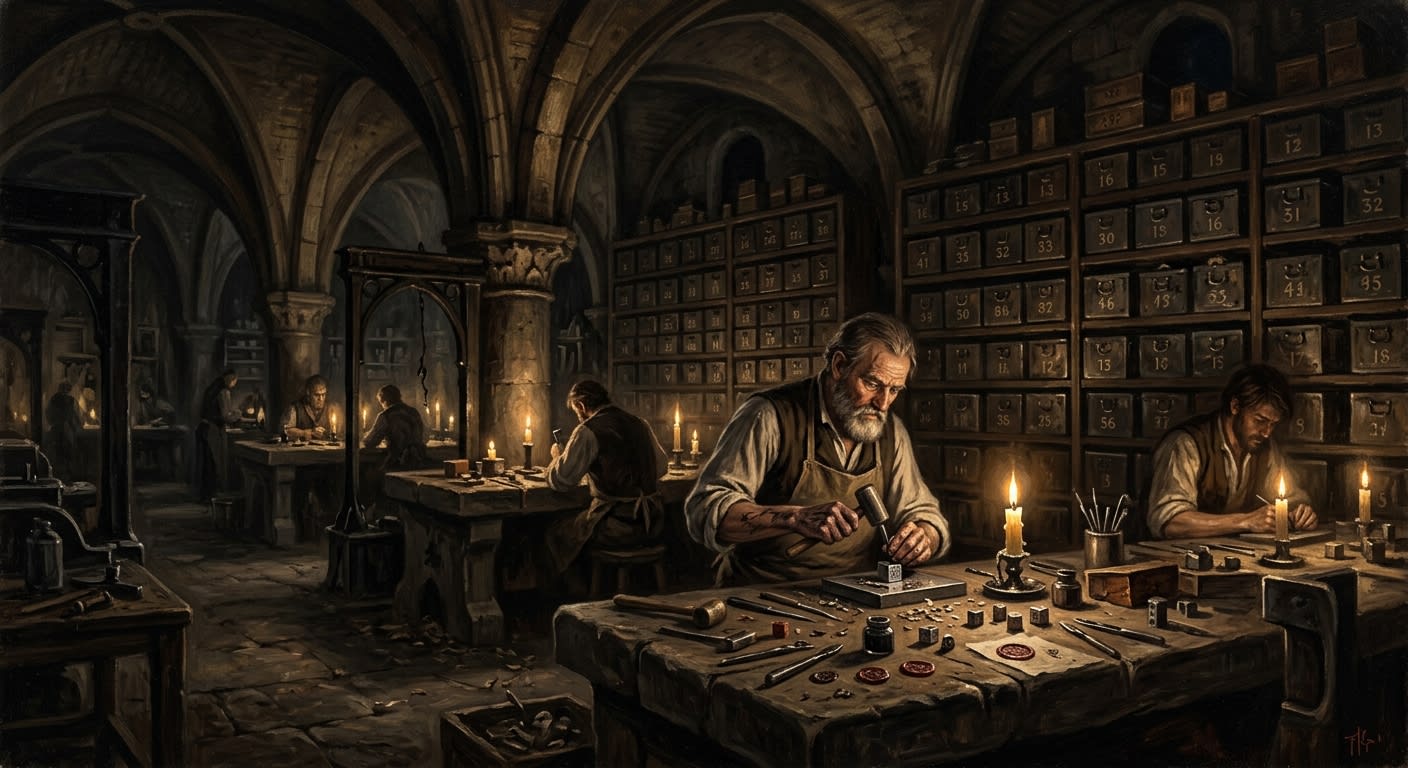
Bureau of Masks and Seals
The stamp is the Synod. Everything else is suggestion.
The Bureau of Masks and Seals controls every stamp, seal, and counter-seal in Synod territory. Without its impressed wax, no document is real. Without its license, no face may be hidden. Casselius of Mainz holds the Synod's mouth and press in one pair of ink-stained hands.
Codex Ref. VI.4.19-014

Bureau of Medicine
It measures. It classifies. It declines.
The Bureau of Medicine is not, technically speaking, a Bureau. It is something more dangerous: an institution that measures everything and recommends nothing, staffed by people who have read every report and arrived at conclusions they will not share.
Codex Ref. XII.7.09-044
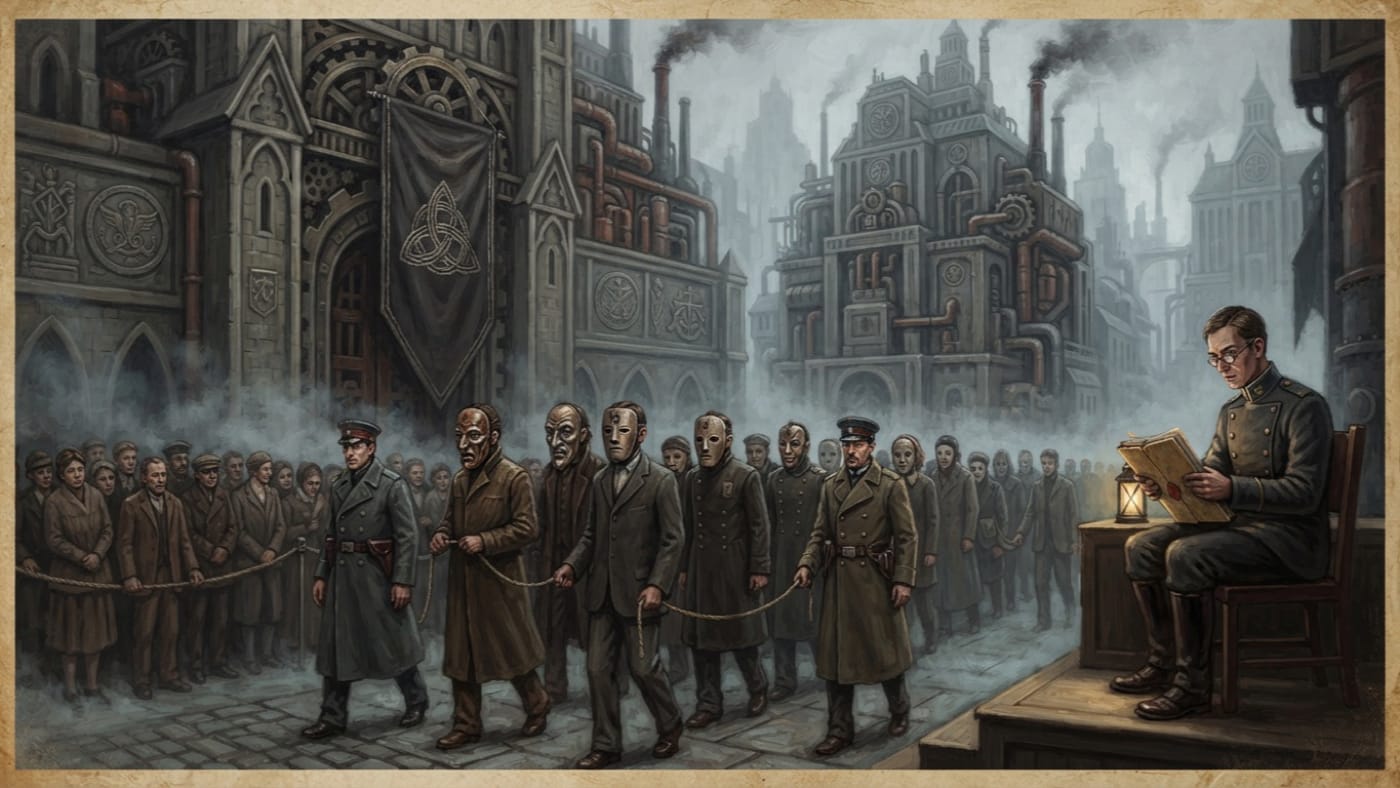
Carnival of the Triune Knot
The face may be hidden. The number remains.
The Carnival of the Triune Knot requires a licensed masked procession. Every face may be hidden; every mask remains numbered, stamped and measured. The wearer may withdraw a countenance. The Registry keeps the number.
Codex Ref. XIII.1.89-484
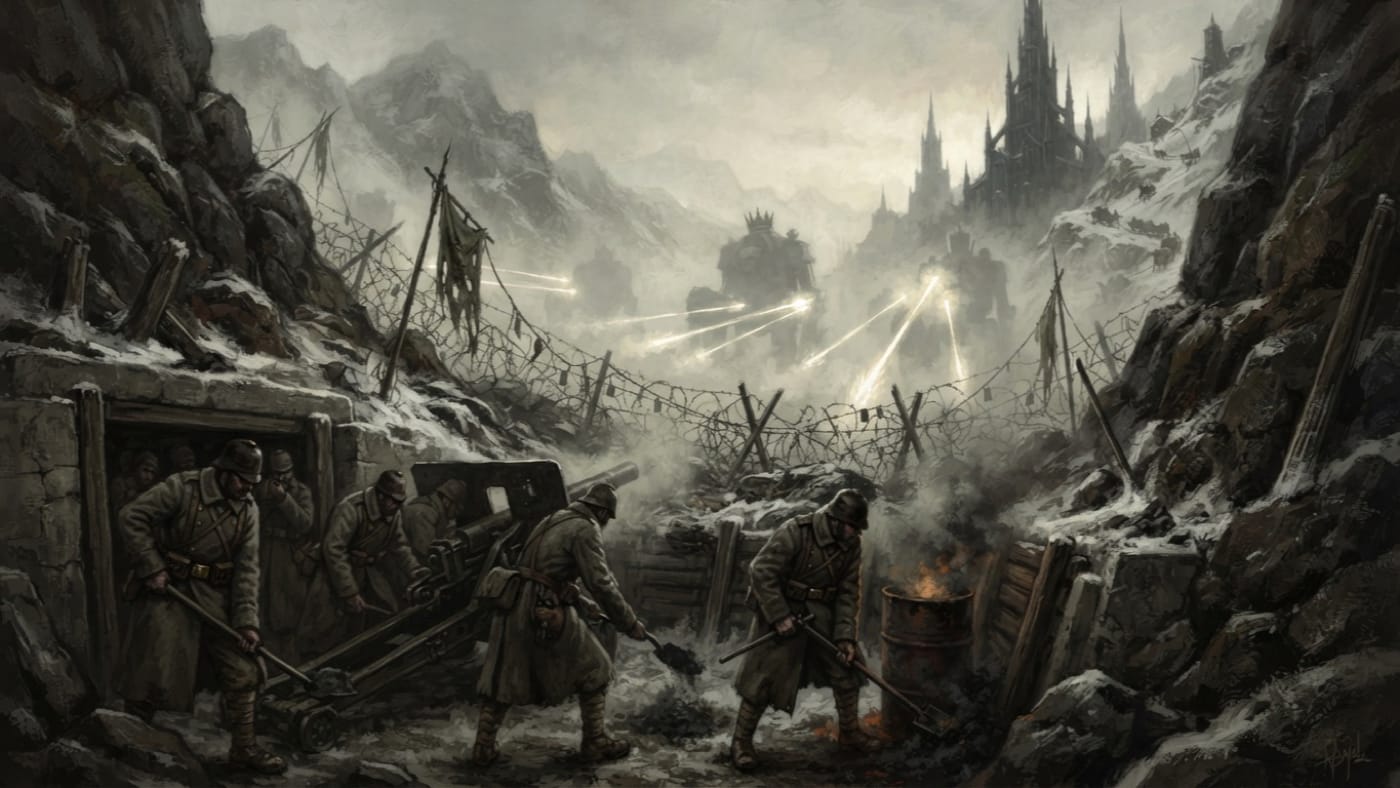
Carpathian Front
Altitude is another way to charge the infantry
The Carpathian Front is Przemyśl's mountain war against Atheron: frozen supply routes, blinding lances, and survival bought with ash, mud, and a lowered gaze.
Codex Ref. II.4.07-201

Chancellery of Colors
No hue is innocent after public display
Heraldry sub-body that licenses the Synod's colours, issues quarterly swatch sets, and converts pigment drift into jurisdiction.
Codex Ref. VIII.1.03-004
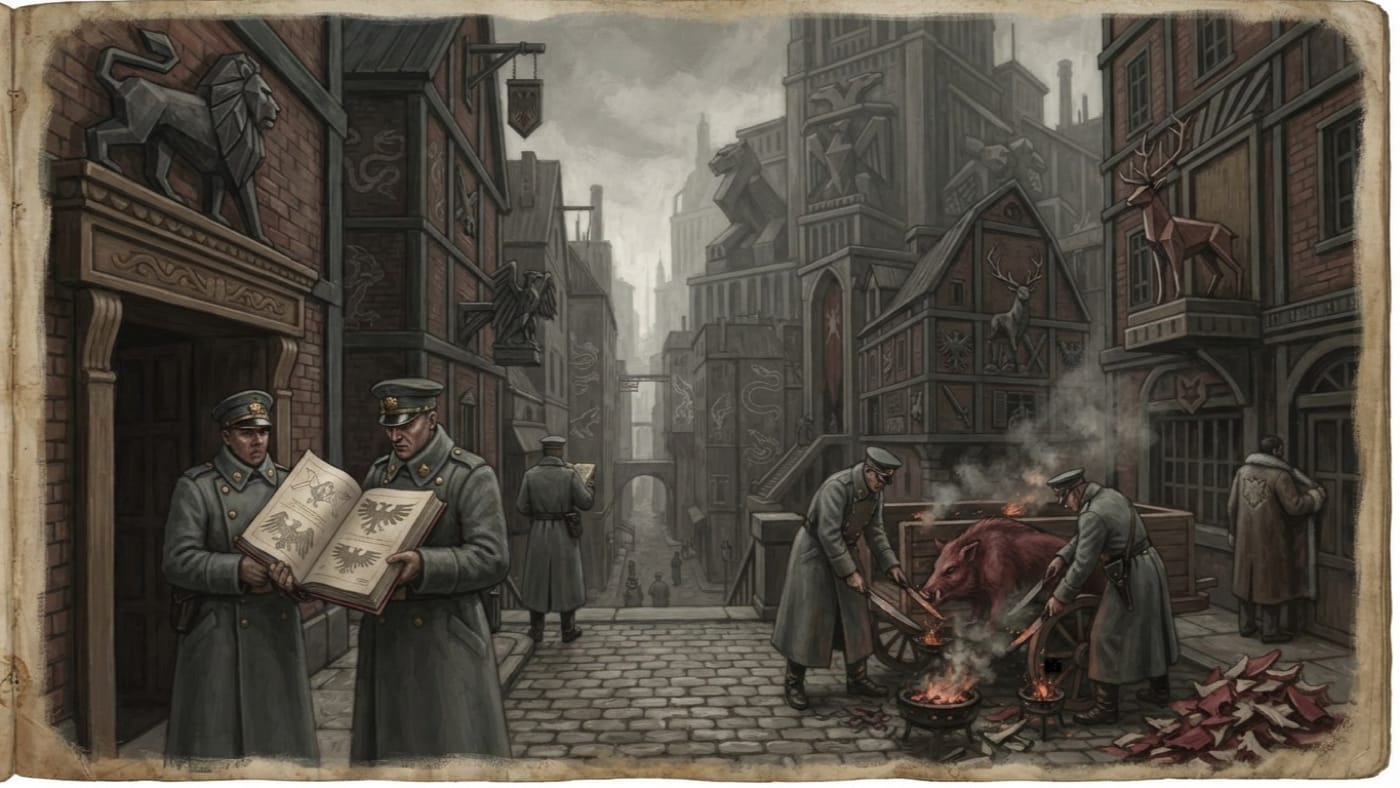
Chancellery of Permitted Animals
The family borrows its beast on terms
Heraldry's Chancellery decides which beasts may appear on lawful crests. Lions, eagles and stags survive as geometry; wolves and serpents are erased. The bear remains under review.
Codex Ref. VIII.1.03-005
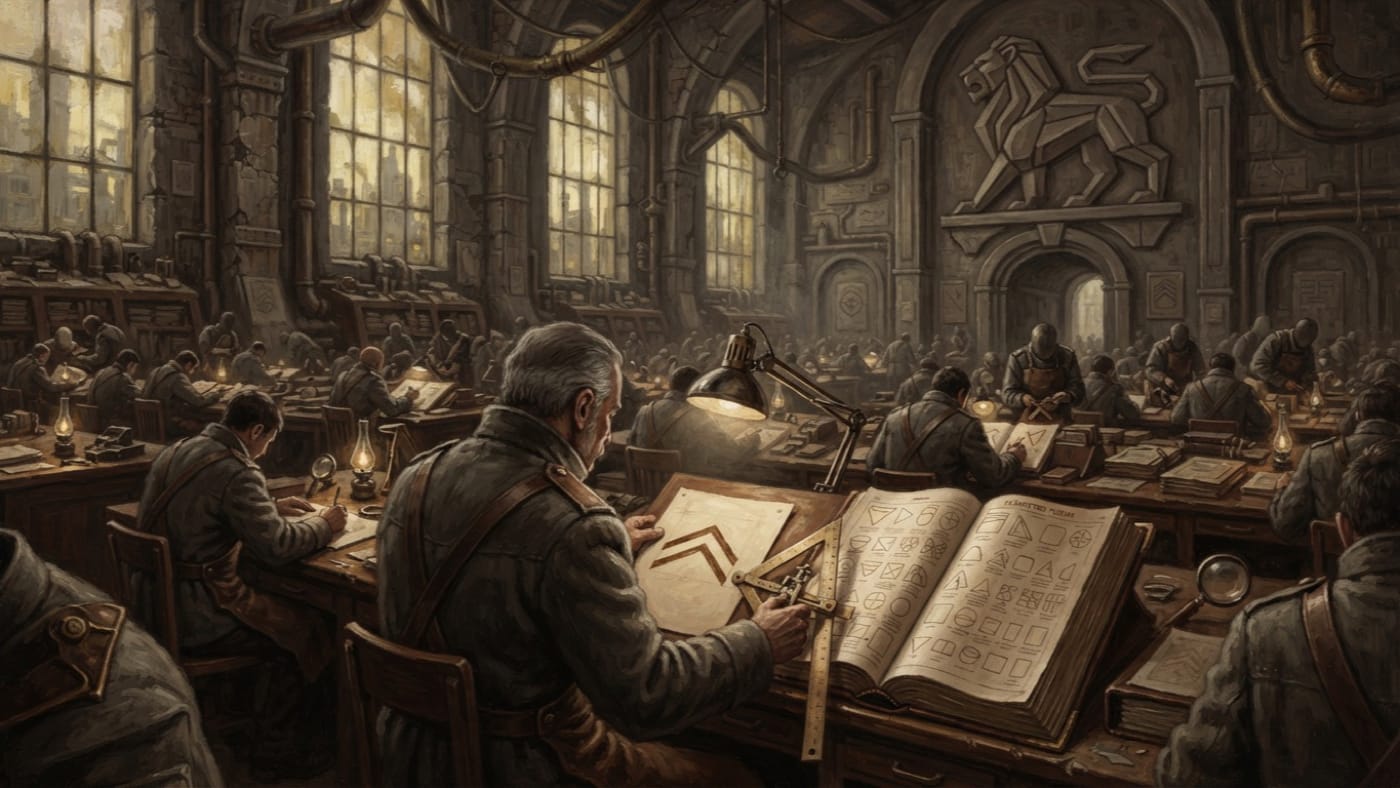
Chancellery of Permitted Forms
Even a corner must petition for absolution
Heraldry's geometry office licenses every bend, circle and corner before display. A lawful shape still requires the right surface, occasion and Armorial entry.
Codex Ref. VIII.1.03-006
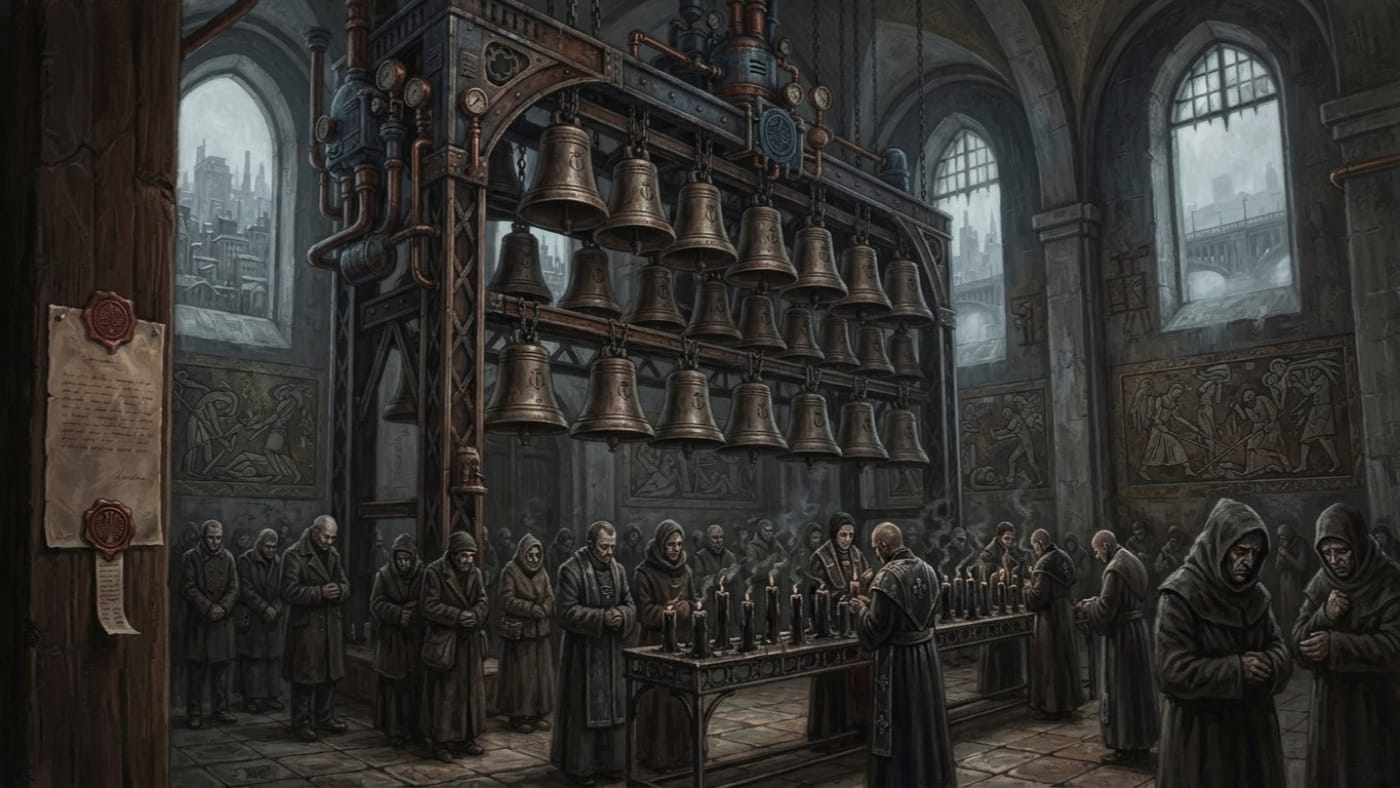
Chapel of the Drowned Priests
Forty-seven voices kept ready for one hour of silence
Wawel Cathedral's commemorative station keeps forty-seven throat-bells for the clergy drowned in A.S. 18. Cast after the A.S. 148 ratification, they fall silent each 17 Martius. The chapel keeps the count; Sandomierz keeps the recovery.
Codex Ref. II.3.06-020
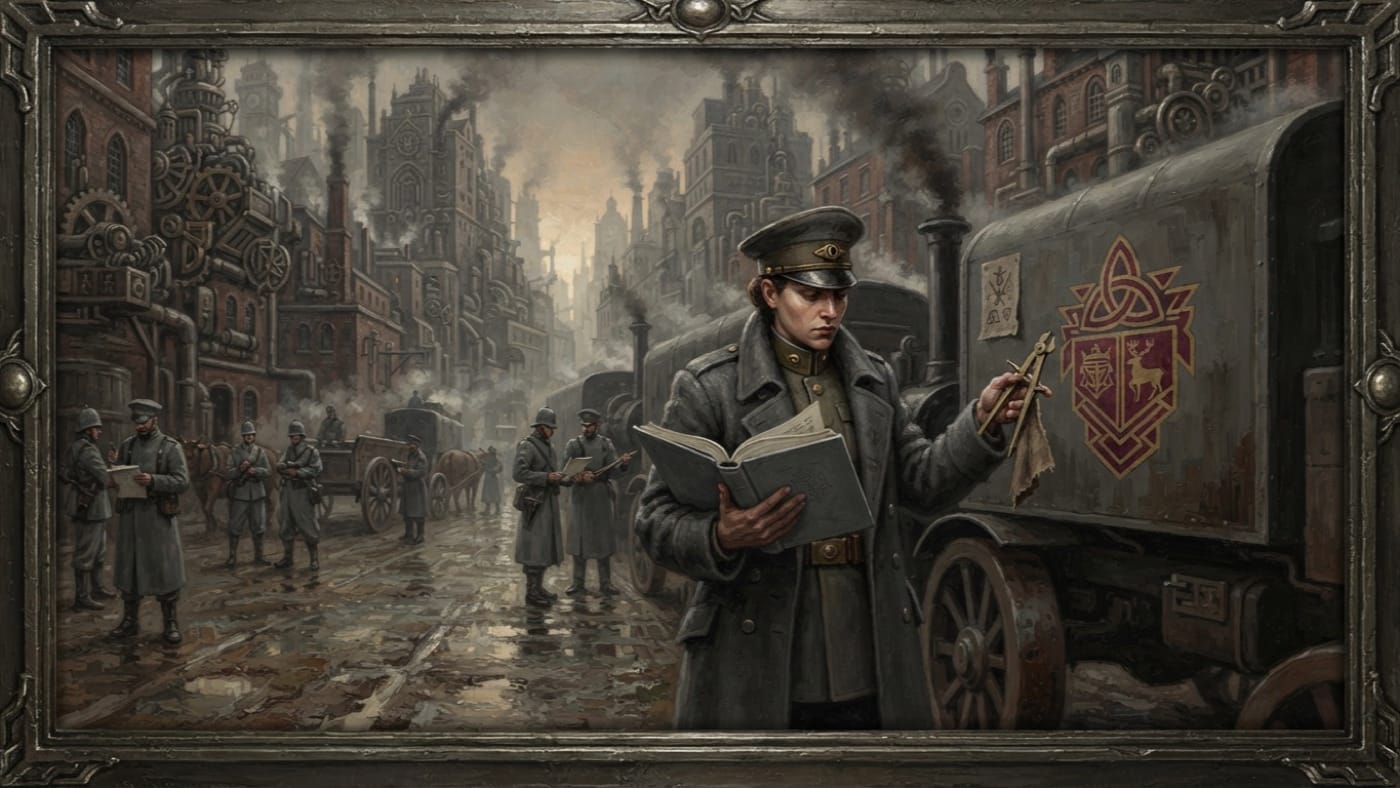
Chromarch Codex
The law arrives late and remains binding
The Chromarch Codex teaches Sigil Inspectors what loyalty may look like: permitted symbols, colours and geometries, corrected quarterly and binding before the district receives its copy.
Codex Ref. VIII.1.03-003
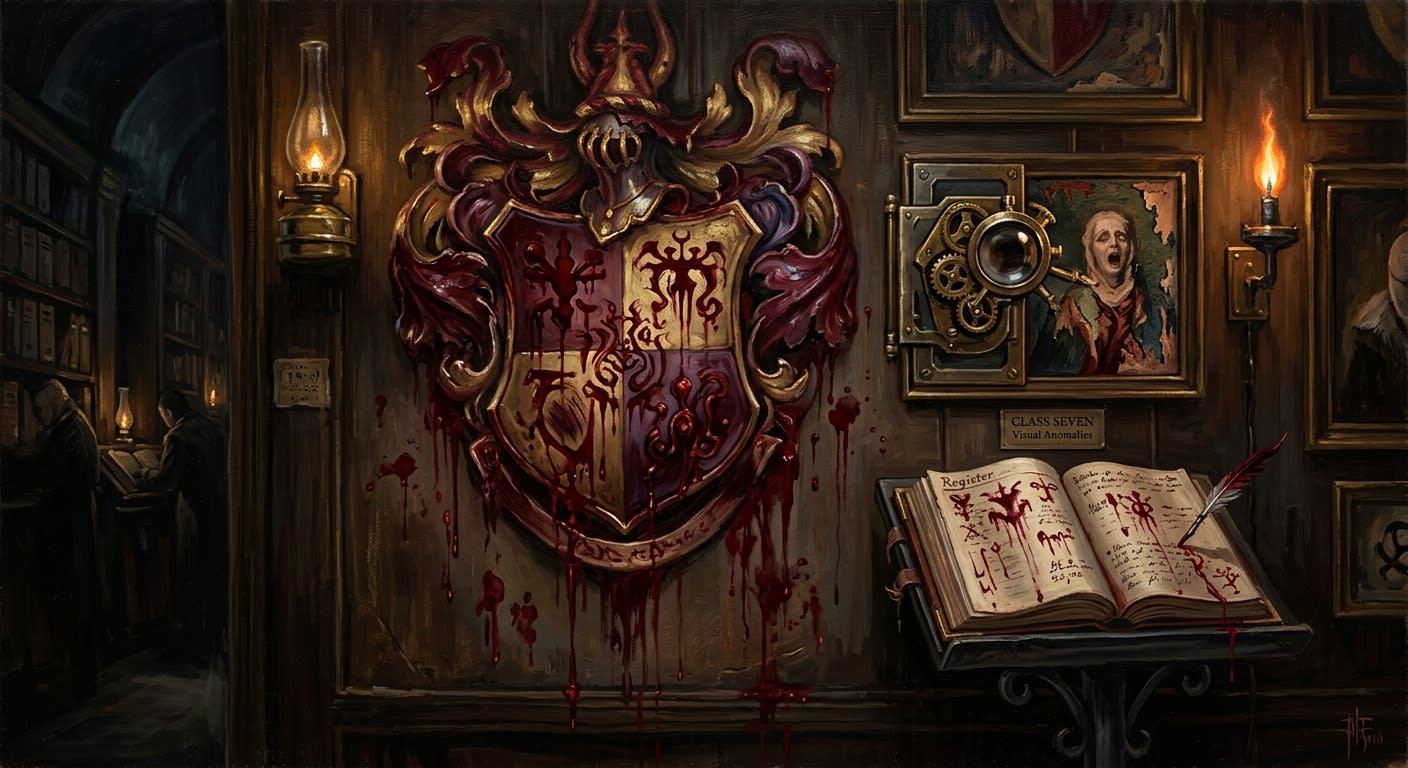
Class Seven Visual Anomalies
If the paint sings, leave the wall to the Creator
Heraldry’s red-ink doctrine for marks that move, sing, sweat, restore themselves, enter dreams, and teach the Inspector why courage needs a leash.
Codex Ref. XIII.1.83-001
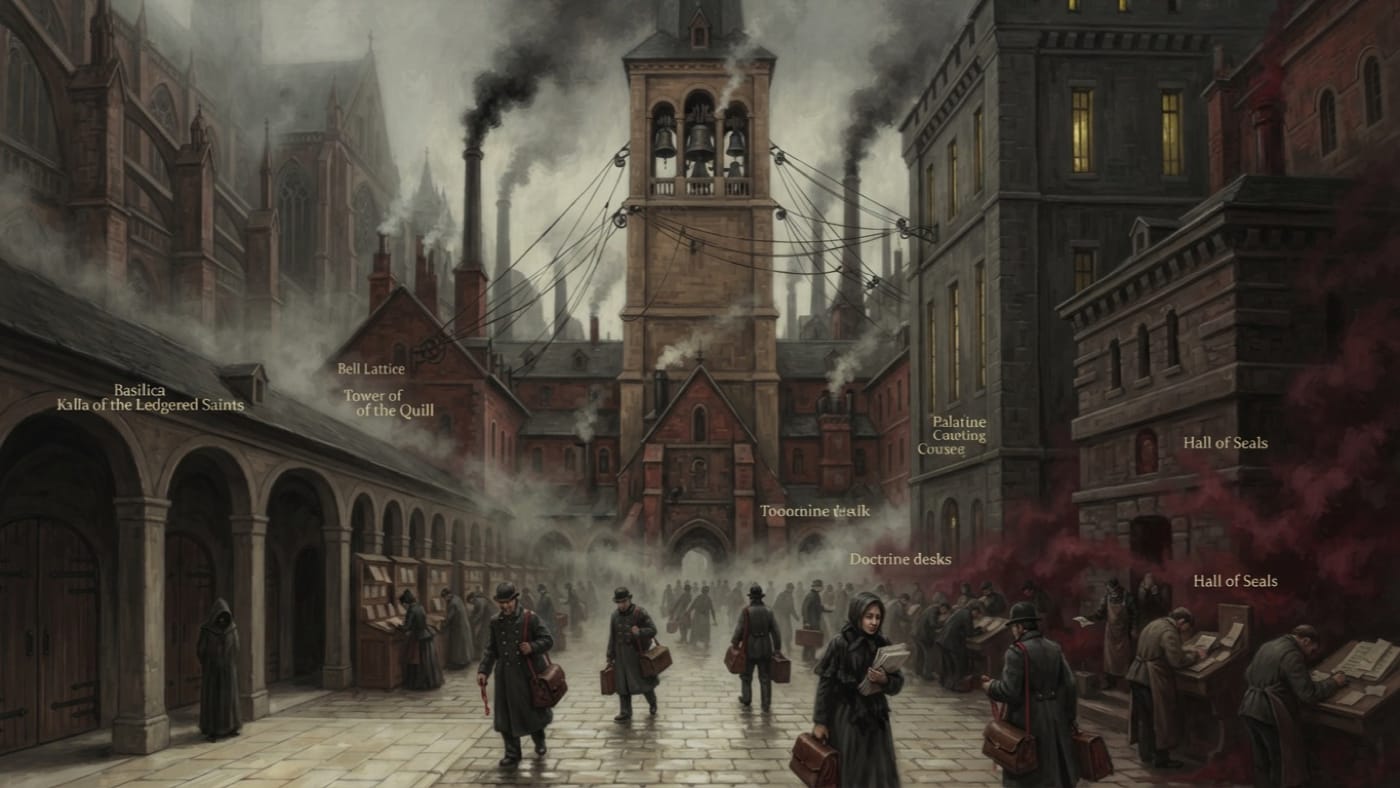
Cloister Precinct
Where every refusal stands within walking distance
Strasbourg's Cloister precinct gathers Doctrine desks, seals and tithes around one petitioner's walk. Every refusal is nearby; the northern arcade has no recorded custodian.
Codex Ref. II.1.04-008
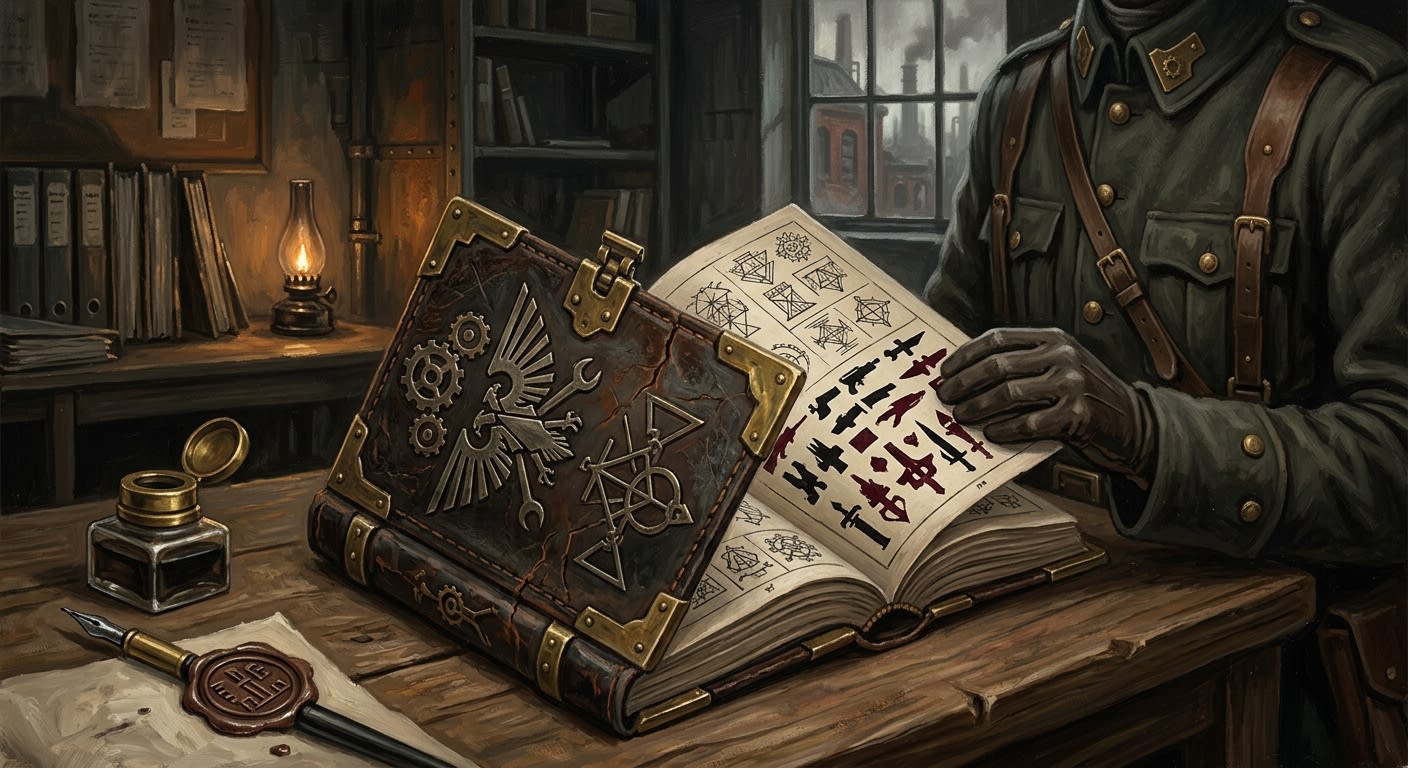
Codex of Permitted Symbols
The little book that makes walls guilty
Pocket abridgement of the Armorial carried by Sigil Inspectors, where lawful shapes are licensed, colours are weaponised, and mercy is a counterfeit edition.
Codex Ref. XIII.1.82-001
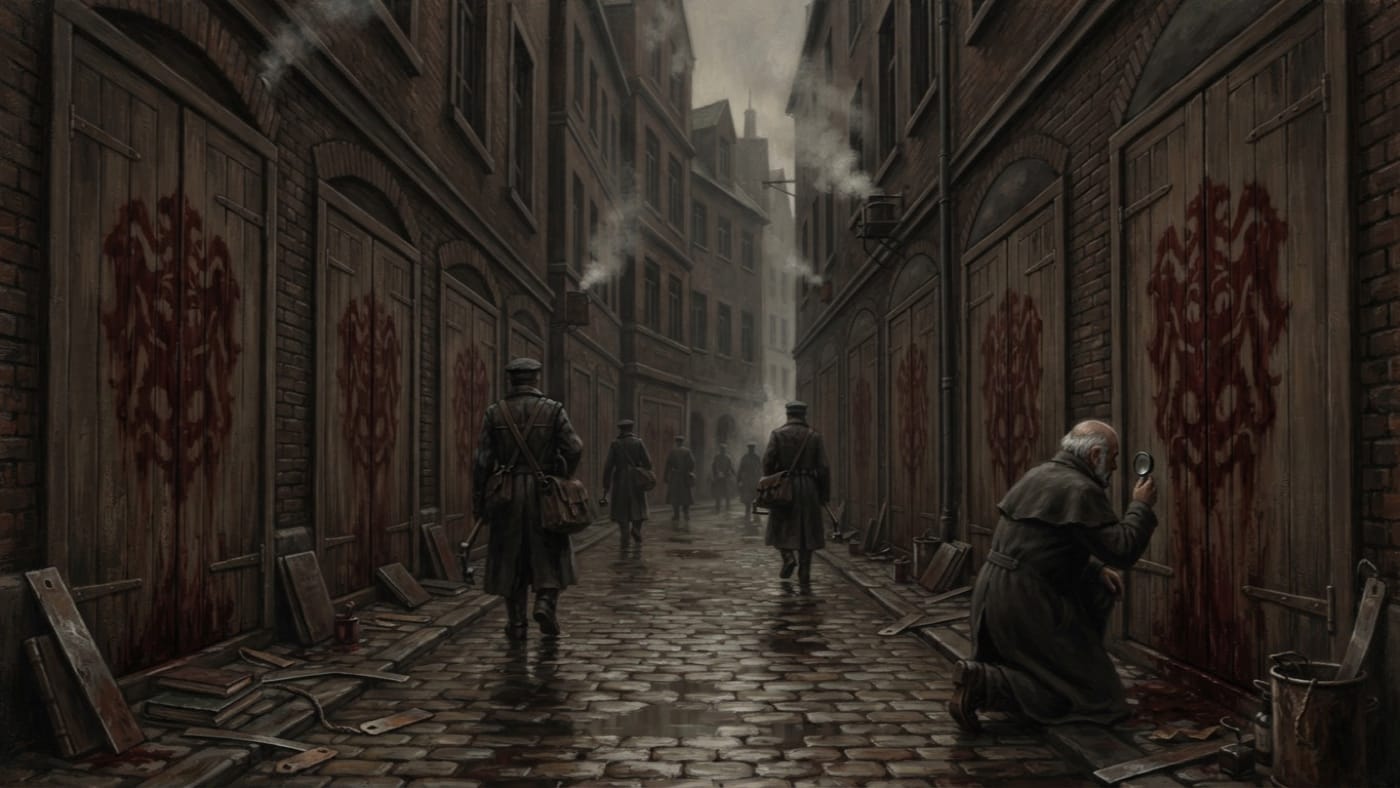
Cologne Stain
The crest vanished; the stains outlasted the paperwork
In A.S. 197, three hundred Cologne doors bore a crest that returned after sixty scrapes. It vanished on the fourth day; the stains remained. Heraldry filed the incident as resolved.
Codex Ref. VII.8.10-197
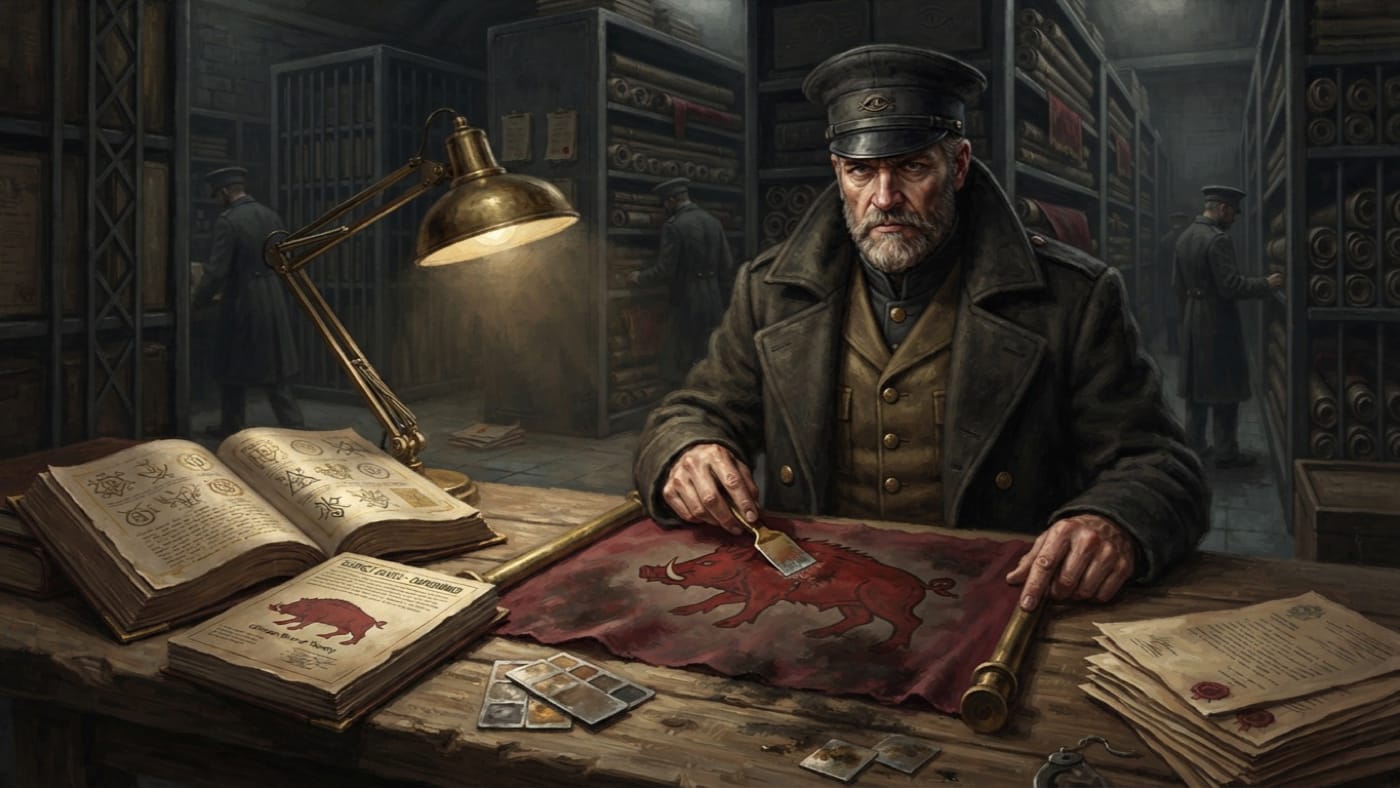
Crimson Boar of Saxony
The picture that outlived its guild and earned a sentence
A dead Saxon guild's red boar returned on convoy banners at Essen in A.S. 106. Eighty-seven died. Heraldry condemned the device by name in A.S. 108 and kept a banner to teach Inspectors what to scrape.
Codex Ref. XIII.1.82-002
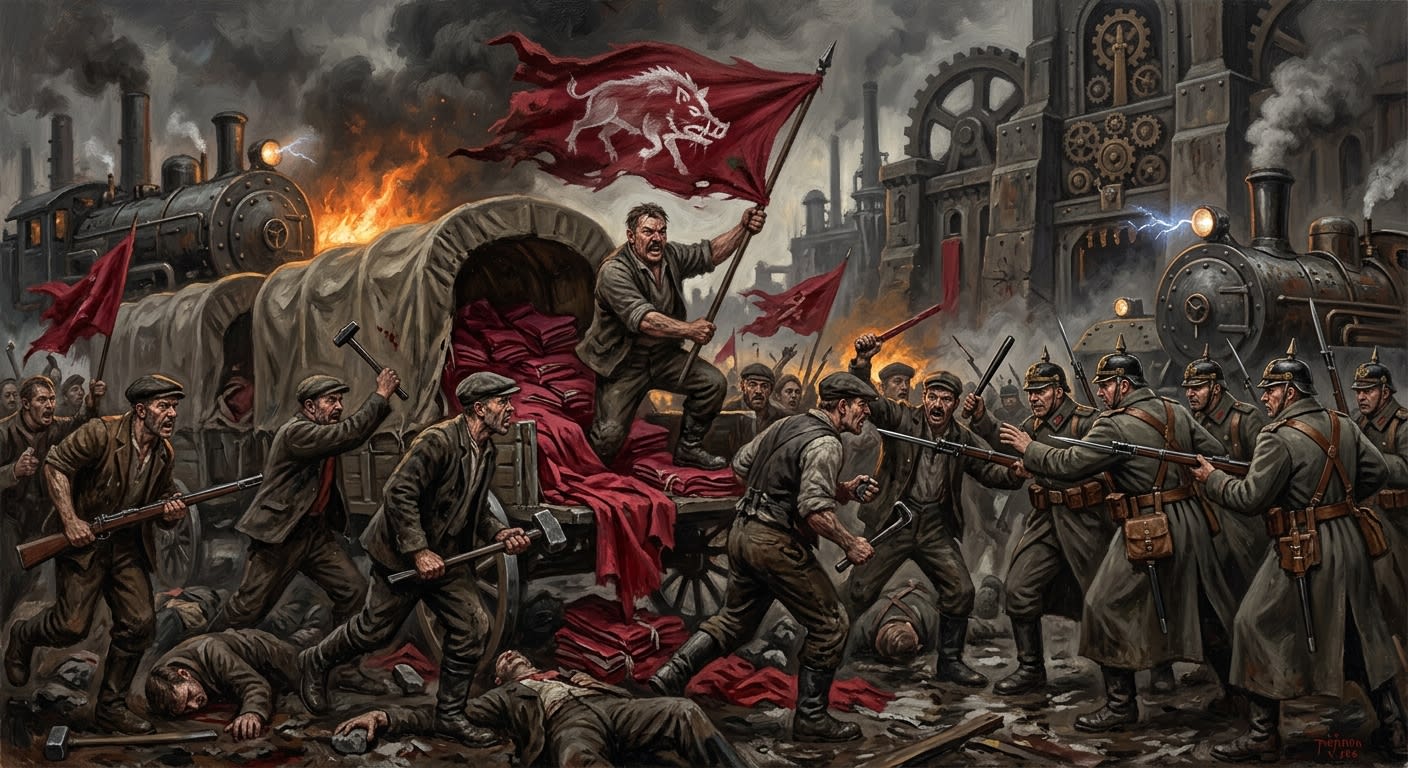
Crimson Gate Riot
Eighty-seven dead because a painted boar remembered too well
A.S. 106 Essen gate riot in which the crimson boar of a dead Saxon guild turned convoy cloth into command, killing eighty-seven and birthing the Beast Proscription.
Codex Ref. VII.8.10-033
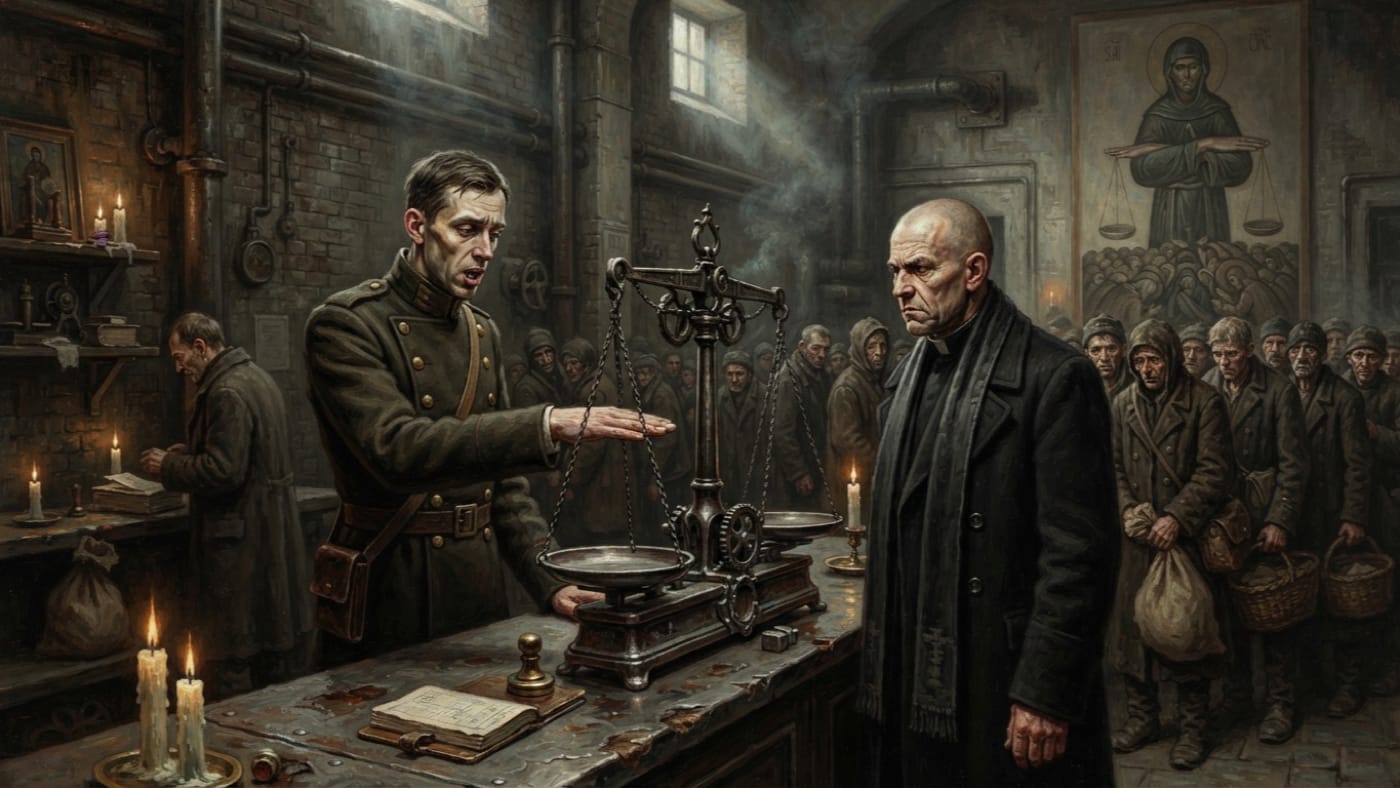
Day of Zeroing
The pan returns to zero; the queue remains hungry
An A.S. 201 survey of Saint Calibrus's adopted feast: licensed scales are cleaned, checked, blessed and re-zeroed before a witness. The pan is certified; the queue still waits for bread.
Codex Ref. XIII.1.90-201
Dębnicki Bridge
The span where silence learned to drown
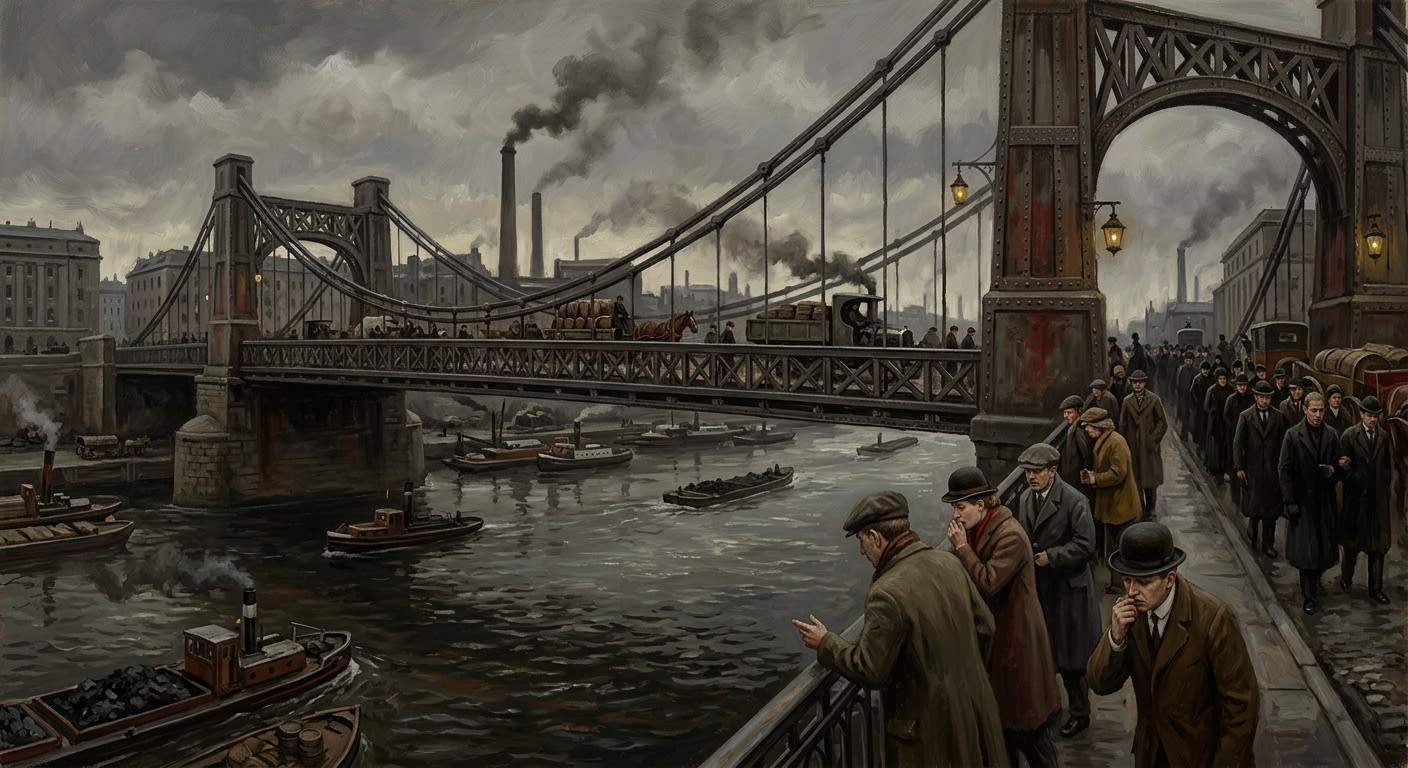
Dębnicki Bridge is Kraków's Vistula span of wire, silence, traffic, and annual accusation: the place Brechtold used to drown forty-seven clergy.
Codex Ref. II.3.06-018
Demon-Glass Polisher
The craft the Bureau has shattered, blessed, interred in lime, and declined to stop purchasing
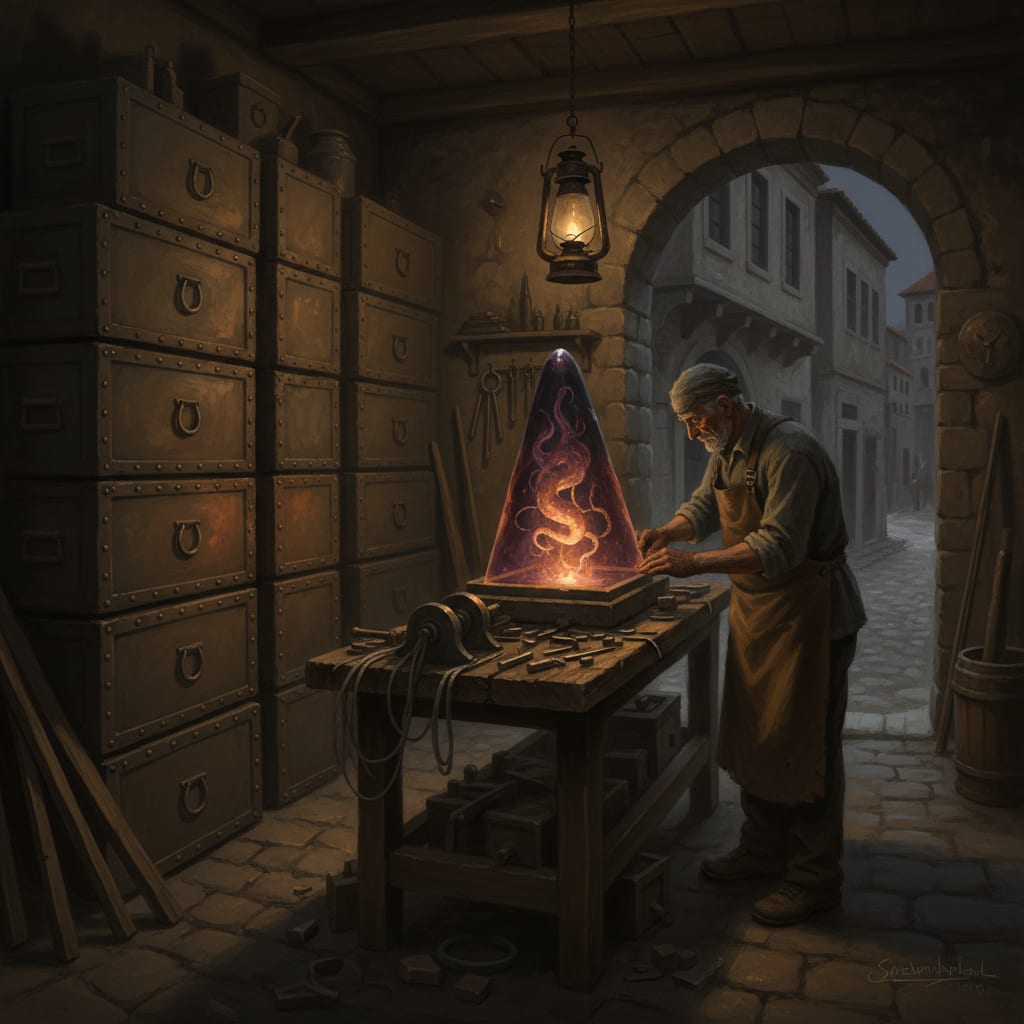
The profession the Bureau insists does not exist: found in every port from Marseille to the Harbor of Chains, supplying the Bureau of War with combat-grade optics, having developed a hierarchy, a patron saint, and three factions — all since the last Purity raid.
Codex Ref. XII.13.01-001
Doctrine of Sealed Intent
The office speaks; the hand goes upstairs
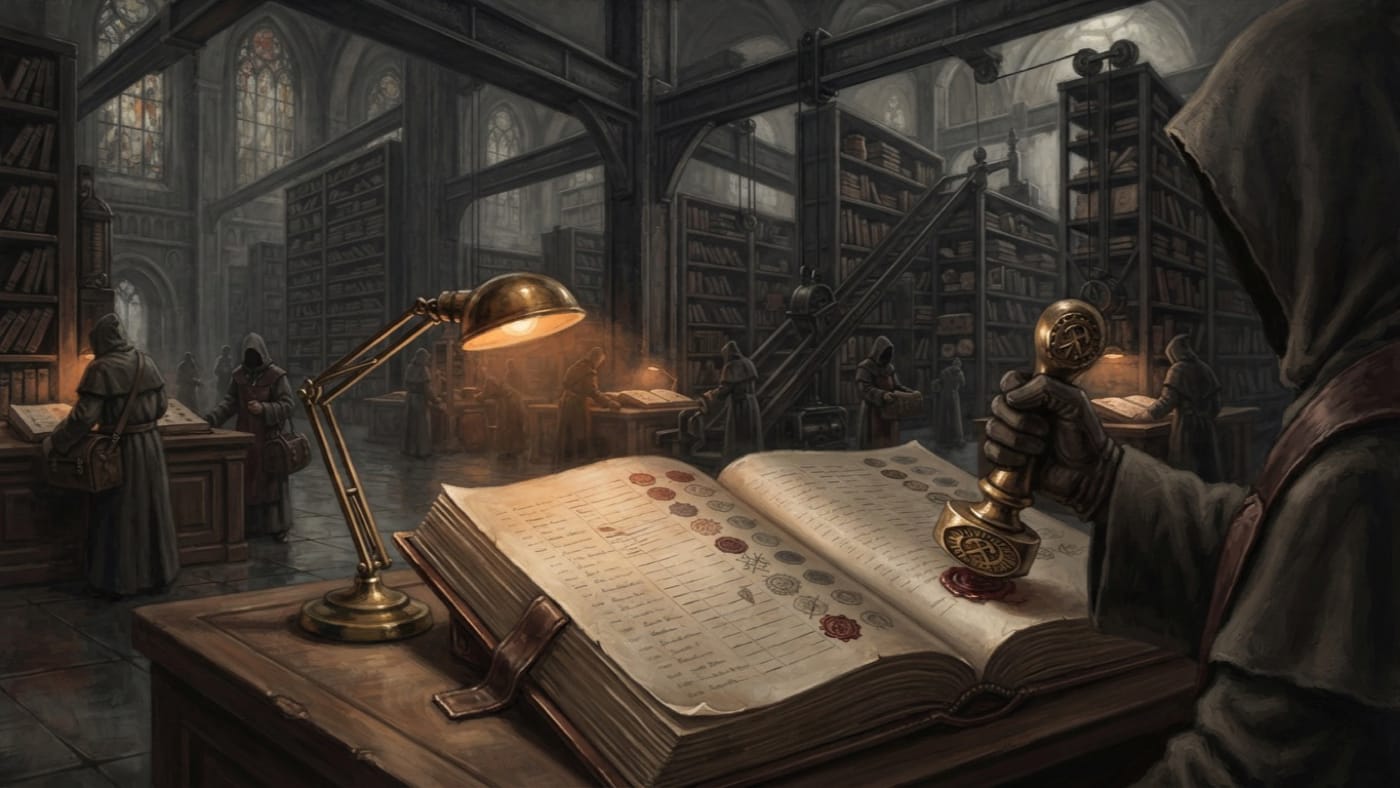
An affixed seal carries its office's authority, whoever pressed it. Worms supplies the documented anchor; attendance, consent and the hand remain separate questions.
Codex Ref. XIII.1.120-087
Ewald Fenn
The cooper whose doorbell became doctrine
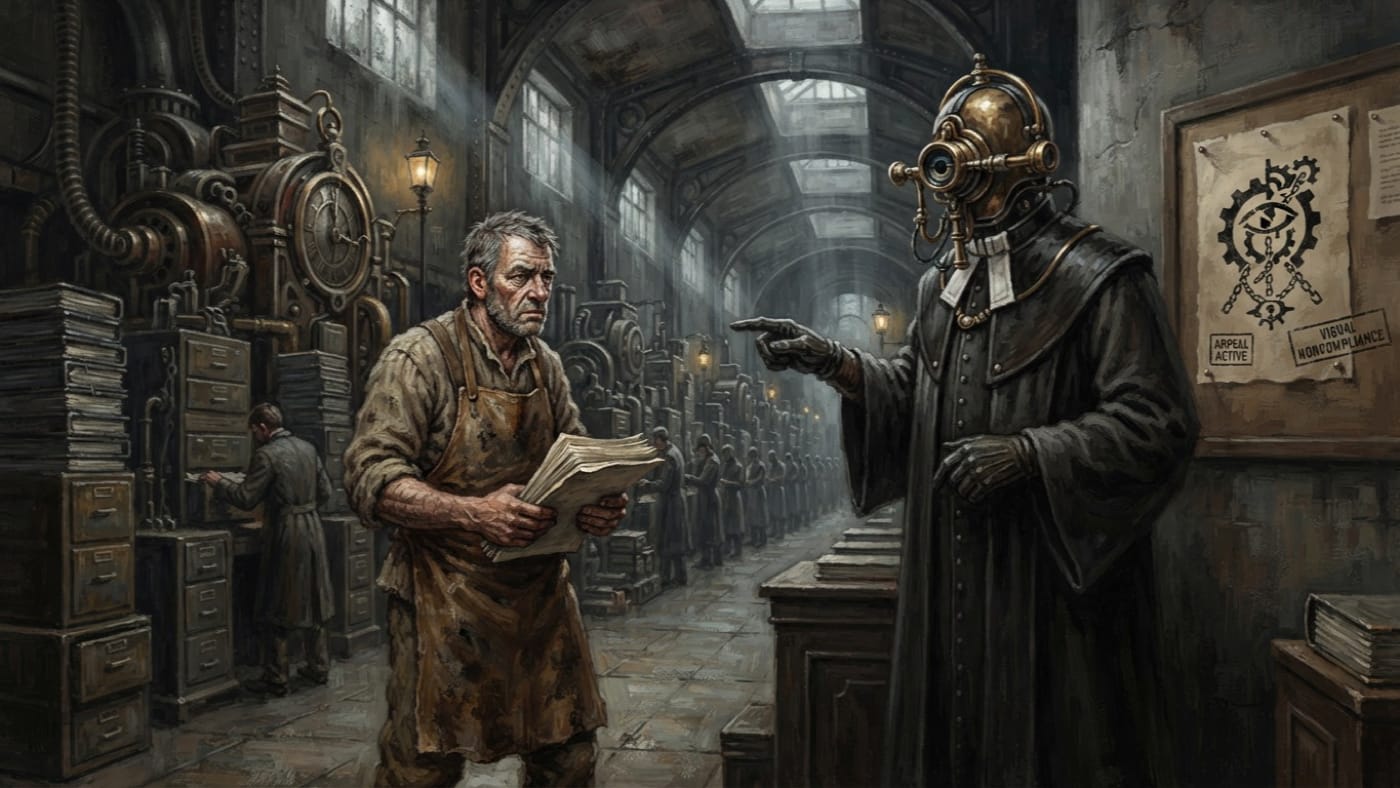
Ewald Fenn, cooper of Mainz, lost a doorbell to Casselius and appealed a stamp he could not read. The Bureau calls this visual noncompliance; his appeal remains active.
Codex Ref. III.2.01-201
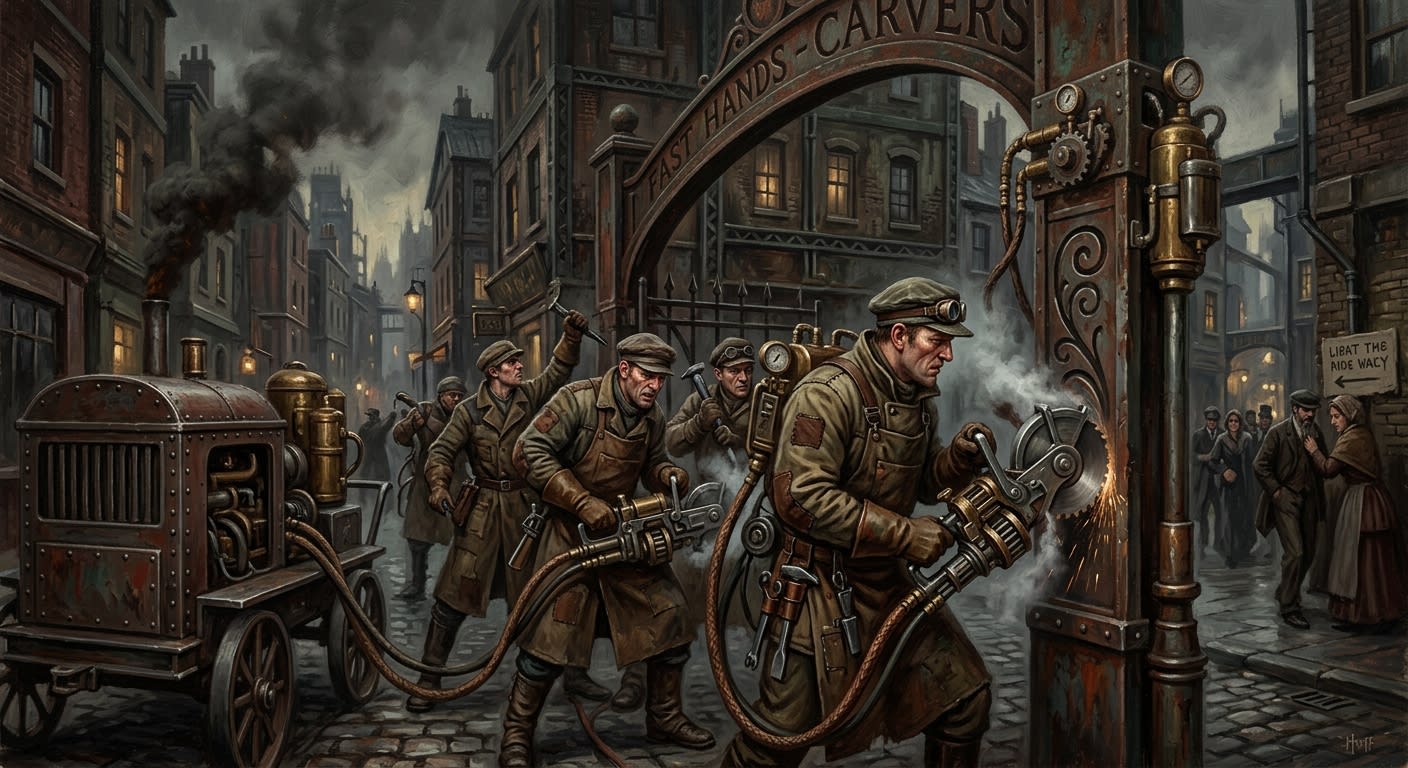
Fast Hands, Gate-Carvers
The marked door before dusk is the state admitting it was late
Fast Hands are the accelerated-compliance faction within the Gate-Carver trade, cutting thresholds quickly enough to legalise streets before hunger, riot, or Purity arrives.
Codex Ref. XII.19.02-002
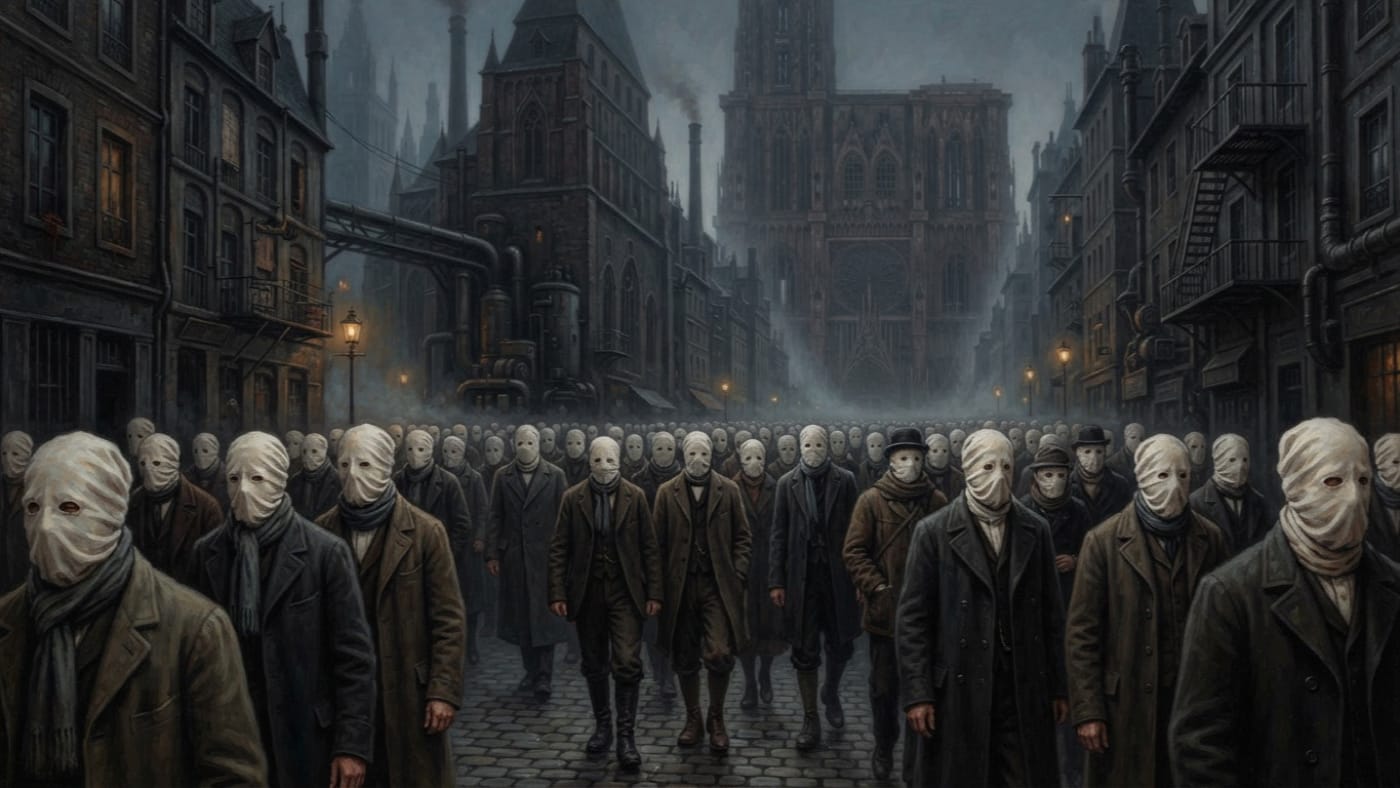
Feast of Buried Names
Anonymous before the Creator. Numbered in the Registry.
On the Feast of Buried Names, every citizen is expected to walk the parish in silence behind licensed white cloth. Doctrine calls it necessary; Purity calls it a liability. The Registry keeps the eye-holes on file.
Codex Ref. XIII.1.91-001
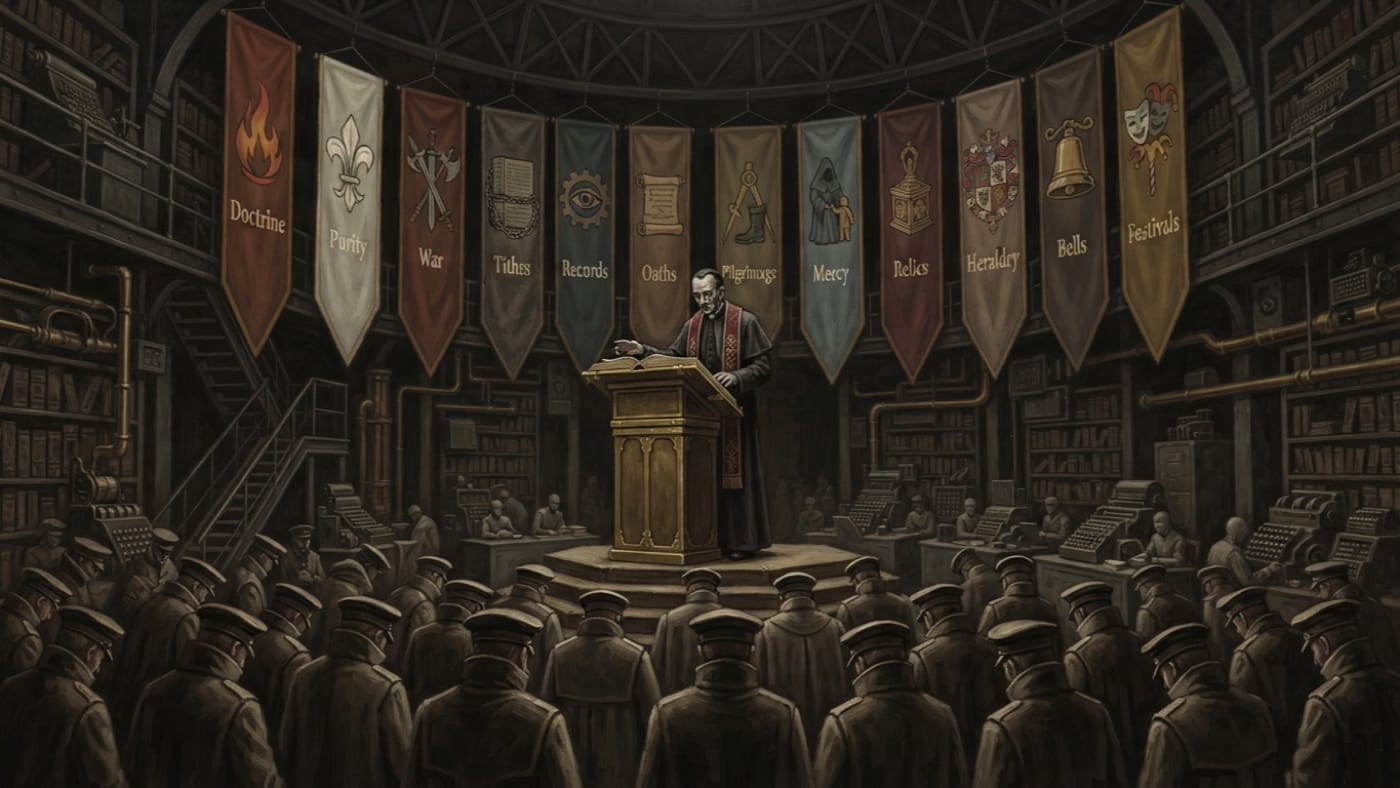
Feast of the Ledger
Twelve portfolios read aloud; the offices that keep them standing go unnamed.
At the Feast of the Ledger, the Synod reads its twelve canonical portfolios aloud. Settlement, which assigns three hundred million addresses, receives no syllable. The recital is correct; the census is incomplete.
Codex Ref. XIII.1.89-201
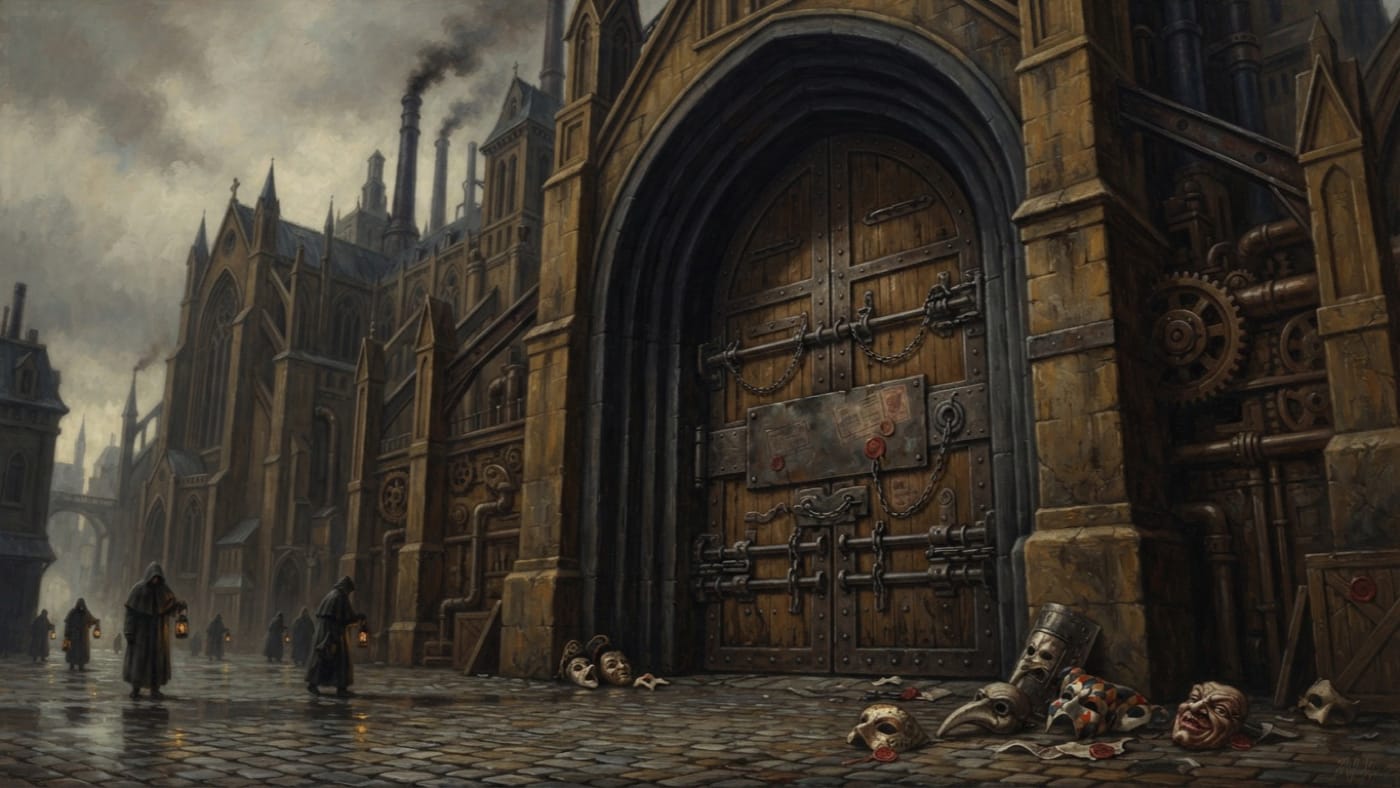
Feast of the Sealed Door
A feast in the calendar, a myth in the archive
The calendar names the feast; Records calls its whispered rite myth. My A.S. 201 survey records the annual eve, the locked-parish rumour and the particulars no source supplies.
Codex Ref. XIII.1.89-1048
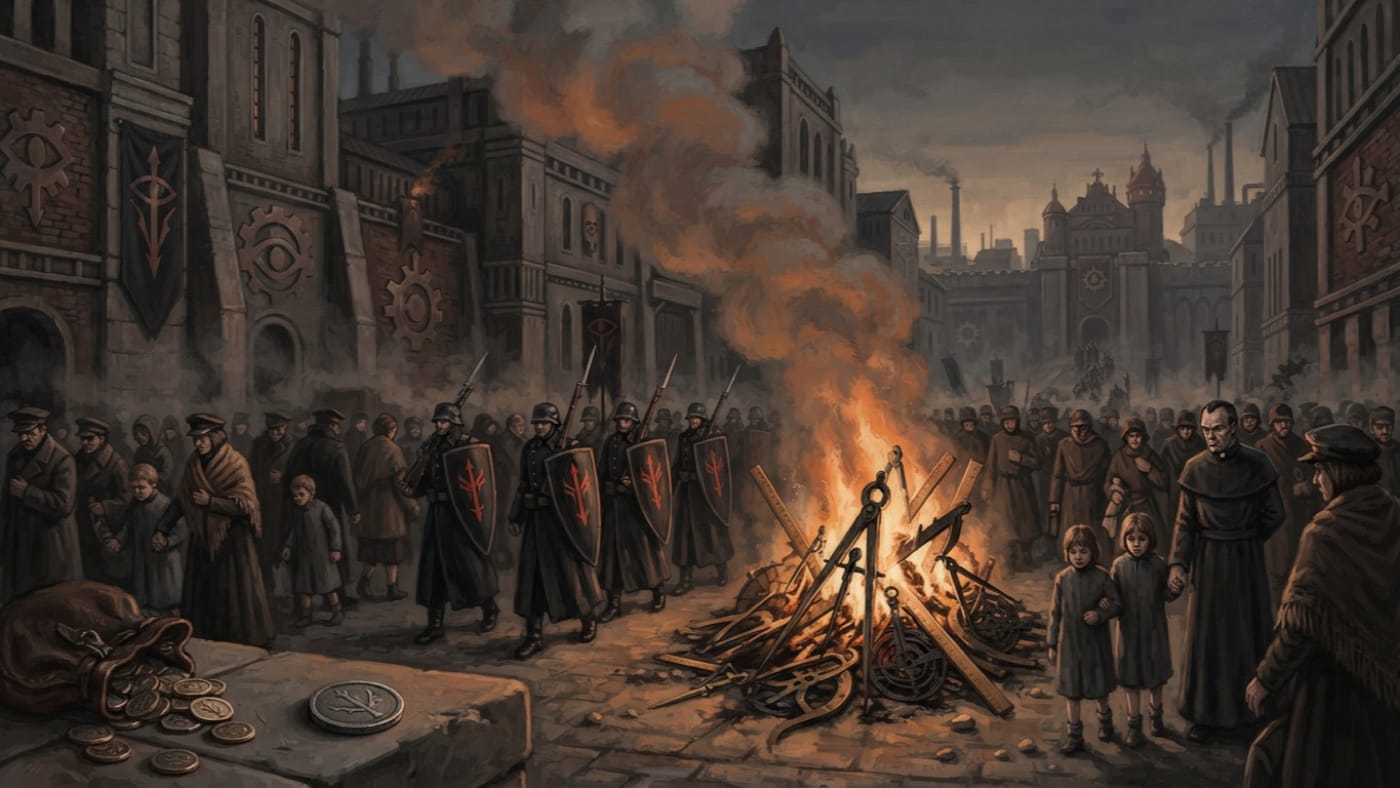
Flaming Sword
Permission has weight, and obedience has smoke
The Flaming Sword carries Synodal authority on coinage and lends its name to Strasbourg's burning of Rationalist instruments. I record its public uses; the emblem's origin remains unproved.
Codex Ref. XIII.1.03-001
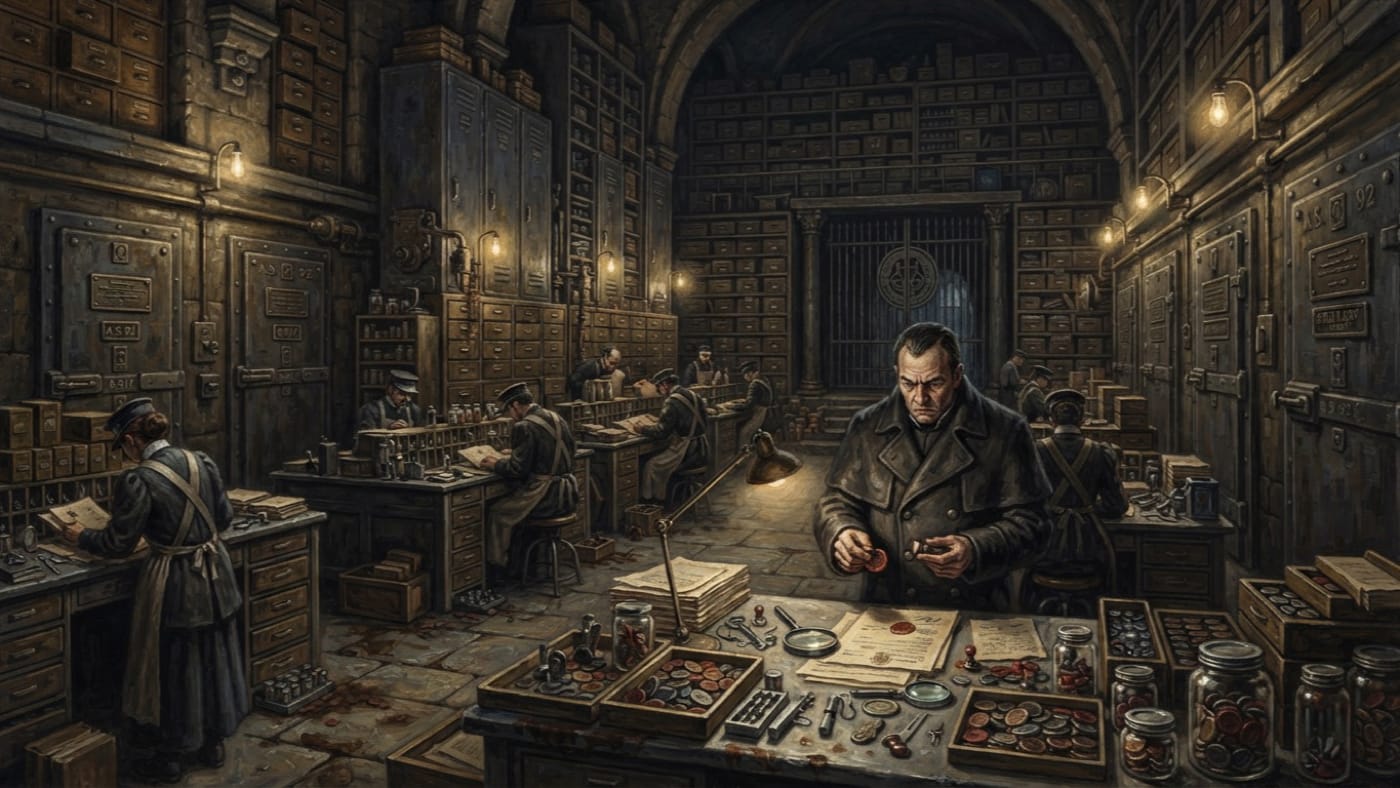
Forgery Archive
Every false impression needs a genuine stamp.
The Forgery Archive keeps 8,917 confiscated counterfeits beneath Strasbourg Cathedral, each certified as false. The Bureau of Masks and Seals publishes the count; the collection remains sealed.
Codex Ref. II.2.06-007
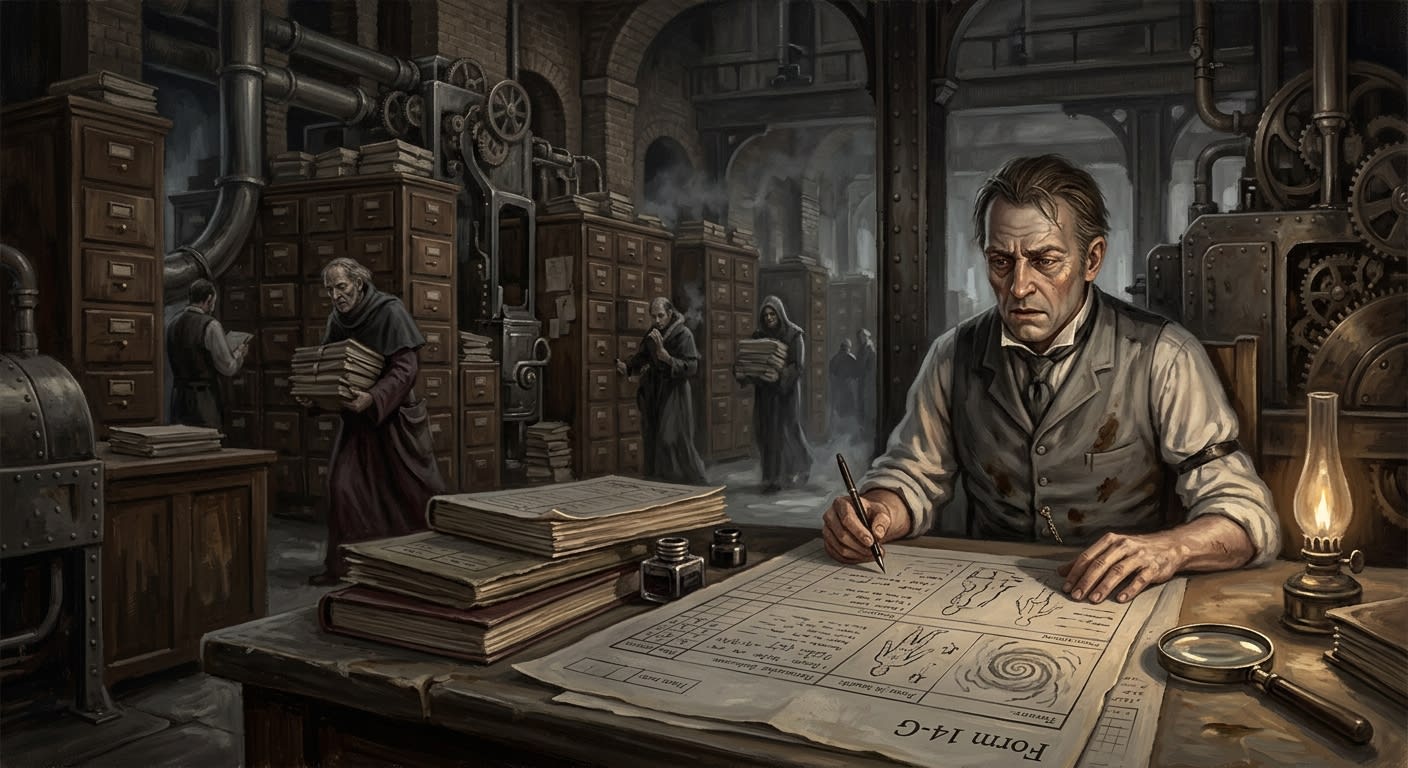
Form 14-G
Do not correct what is still moving
Form 14-G records anomalous bodily mark drift: the grey sheet where Heraldry, Purity, Records, and fear all pretend moving proof can be boxed.
Codex Ref. XIII.1.14-147

Founding Instruments
Five verbs gave one Bureau the brass.
The Founding Instruments of A.S. 92 grant Masks and Seals control of official authentication. Article XVII is cited exactly; the full text is absent from this file. The sub-clause still makes paper binding.
Codex Ref. XIII.1.17-092
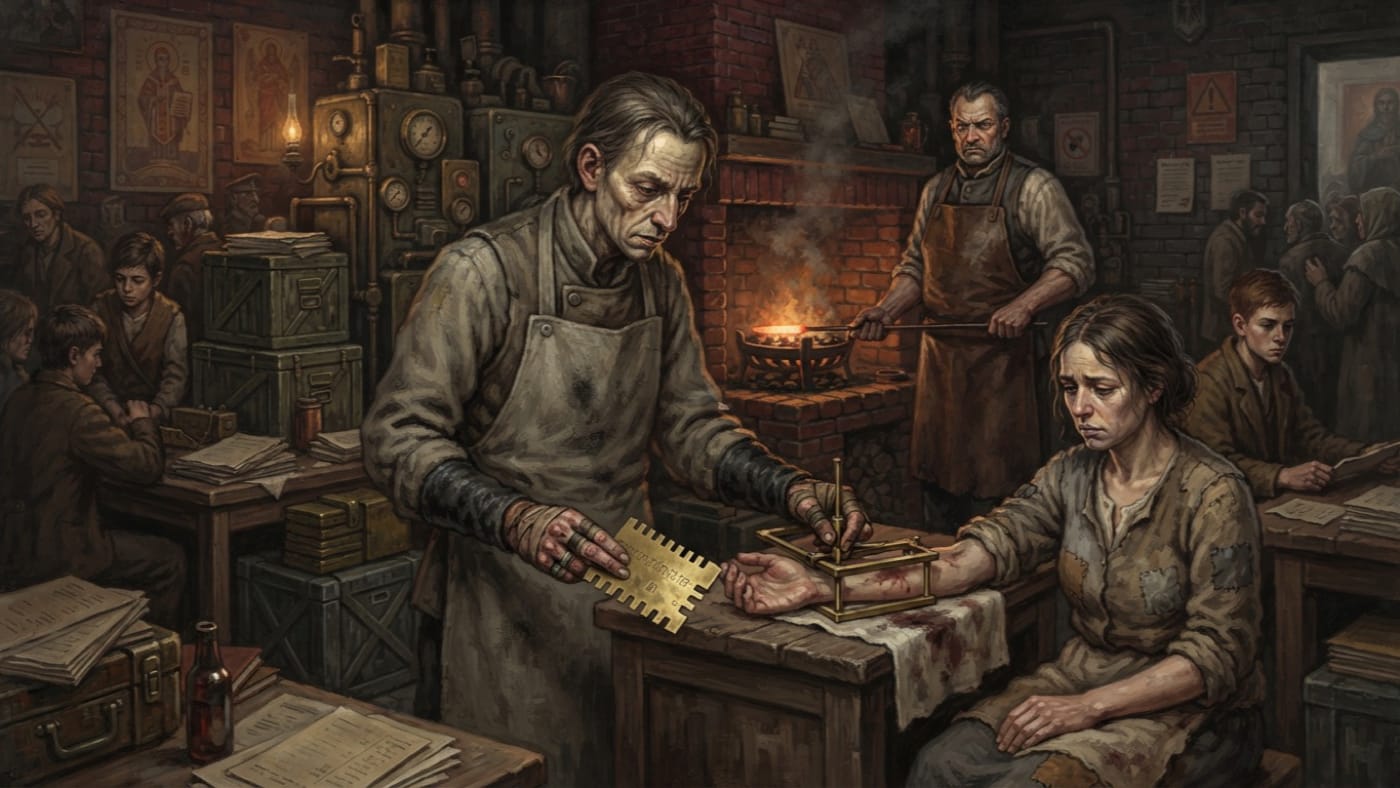
Frame-Hand
The master keeps the iron; the hand carries the blame
Frame-Hands are Heraldry's mid-rank Brand-Smith assistants, verifying bodily mark geometry with frame and swatch plate while the master keeps the iron and the audit seeks a name.
Codex Ref. XII.20.08-001
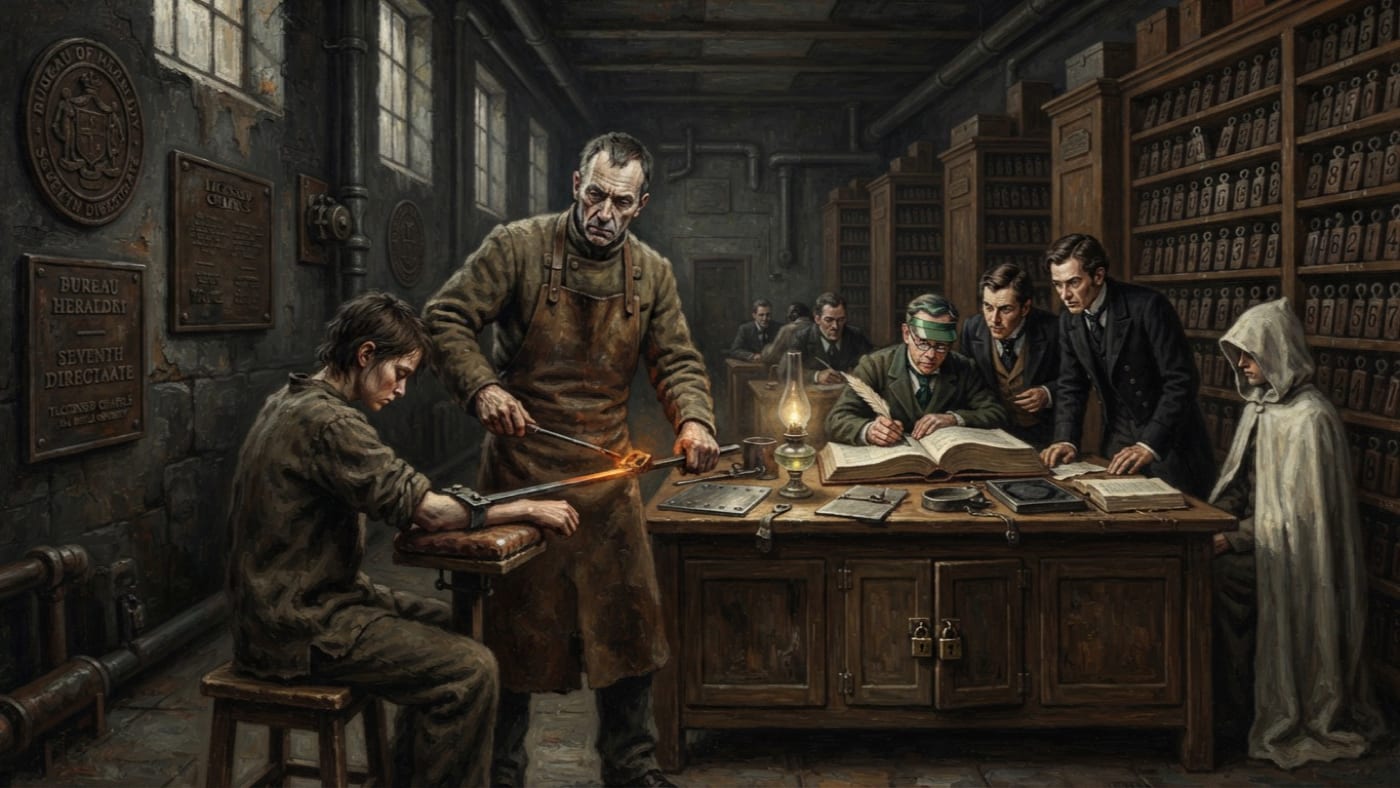
Full Witness Protocol
The witnesses certify the chain; justice has no box on the form
Full Witness Protocol binds body, iron, authority and observing witnesses into admissible bodily proof. The complete Chapel rite certifies the chain; it cannot certify a just sentence.
Codex Ref. XIII.1.101-201
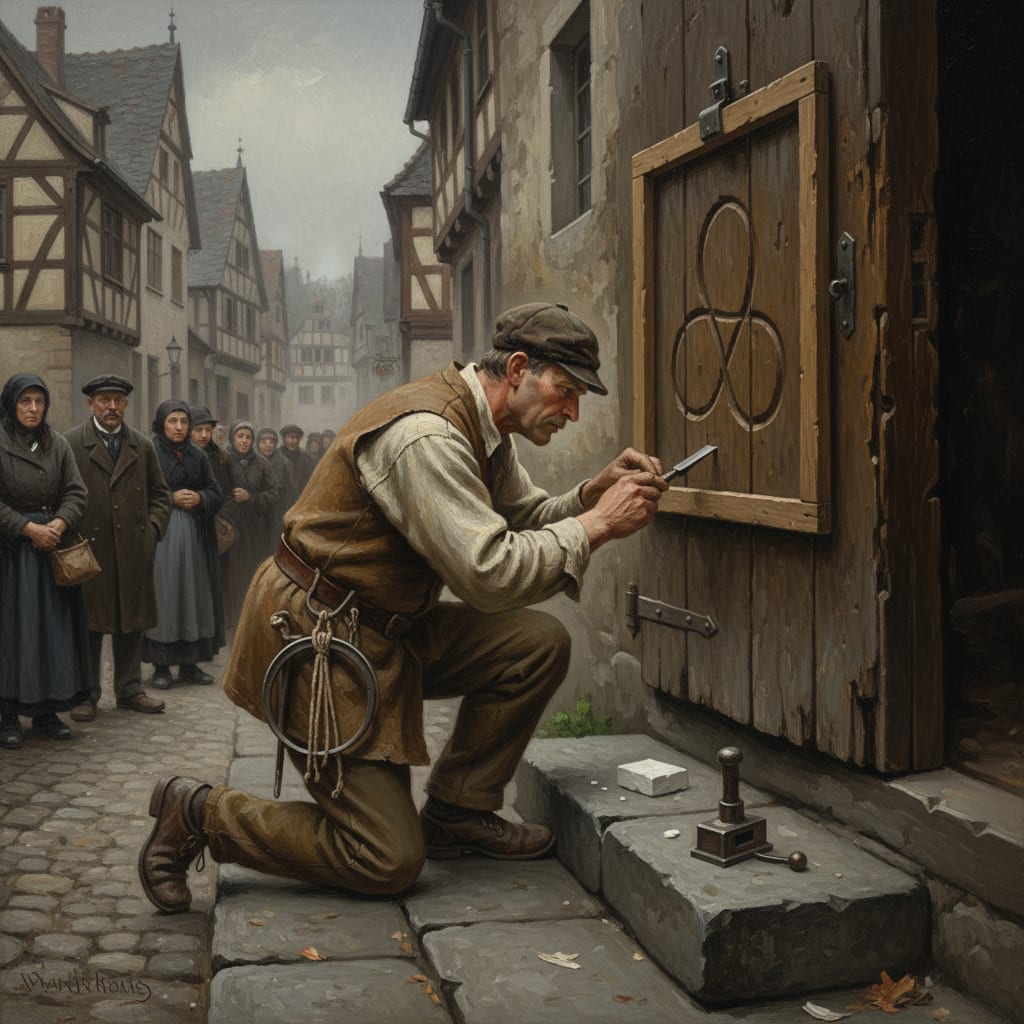
Gate-Carver of the Triune Knot
Three loops, one law, and the prayer that this time the threshold will hold
Six thousand licensed Gate-Carvers execute the Triune Knot into every threshold, grave-slab, and ossuary niche — sanctifying doors, sealing dead, and sustaining the Bureau of Heraldry's claim that a world without geometry is a world the enemy can enter.
Codex Ref. XII.19.01-001

Geometry Brand-Smith
Six Thousand Four Hundred Licensed Geometers of Guilt, and the Irons That Did Not Come Back
The Bureau of Heraldry’s serialized geometers of guilt — 6,400 licensed Brand-Smiths who make identity permanent in the only ledger that cannot be forged, lost, or filed incorrectly: the body itself.
Codex Ref. XII.20.01-001
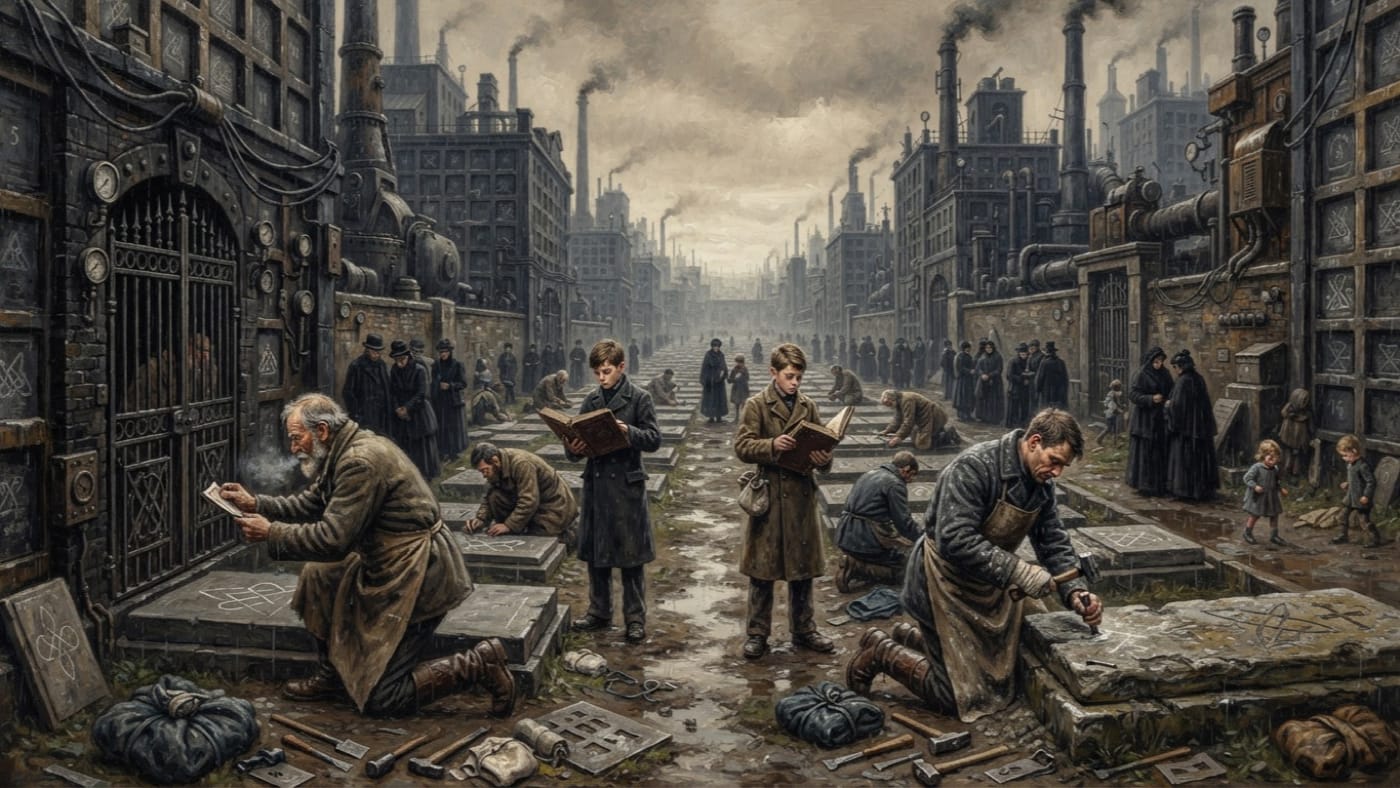
Grave-Sealers
Stone remembers; the Registry demands a copy
Current survey, A.S. 201: Grave-Sealers are the Gate-Carver faction that cuts and registers burial thresholds. Their slabs are legible to Heraldry; the dead are less obliging.
Codex Ref. XII.19.02-003
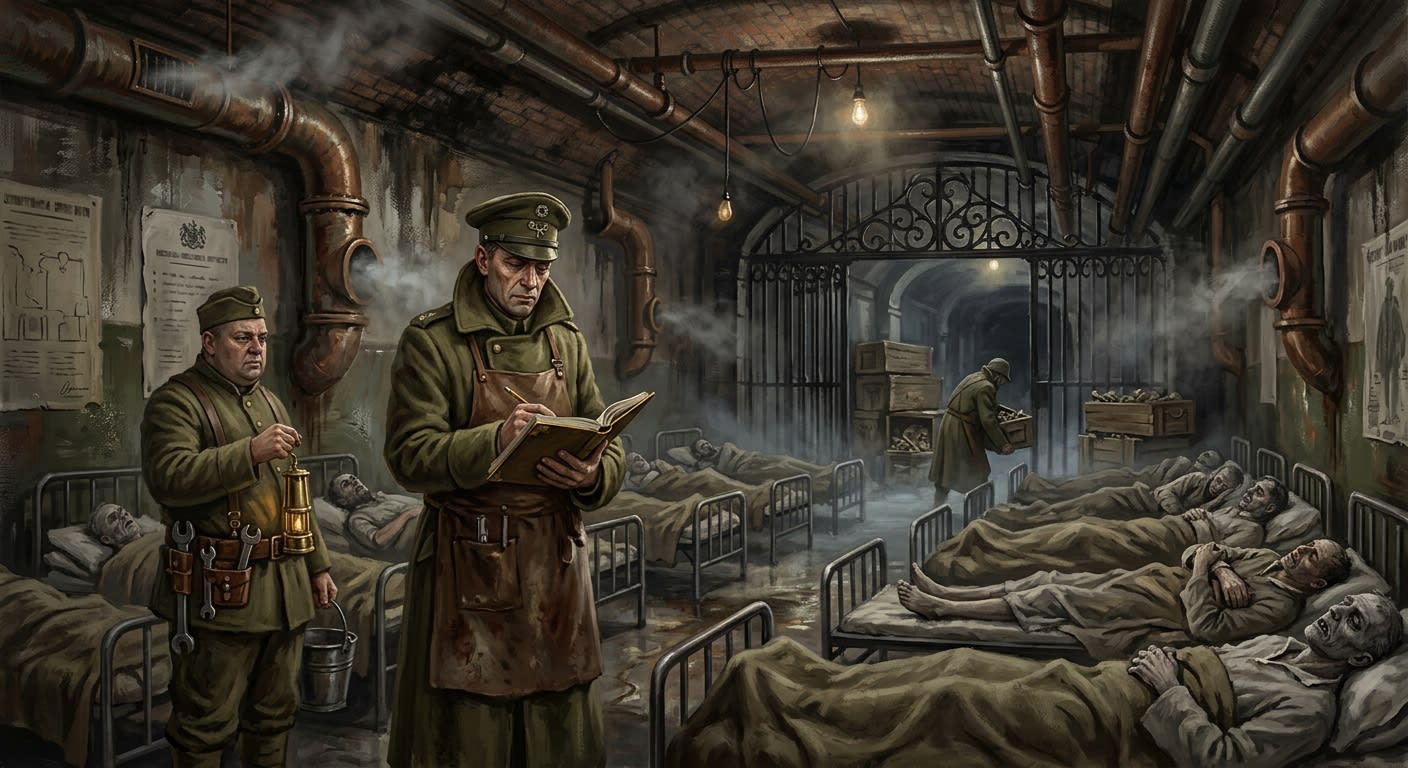
Great Plague of A.S. 78
The year Mercy learned to write before the mouth closed
The Great Plague of A.S. 78 ravaged the southern trench infirmaries and became the Lull of Names, birthing terminal confession mandates, ossuary controls, and threshold doctrine.
Codex Ref. VII.4.20-002
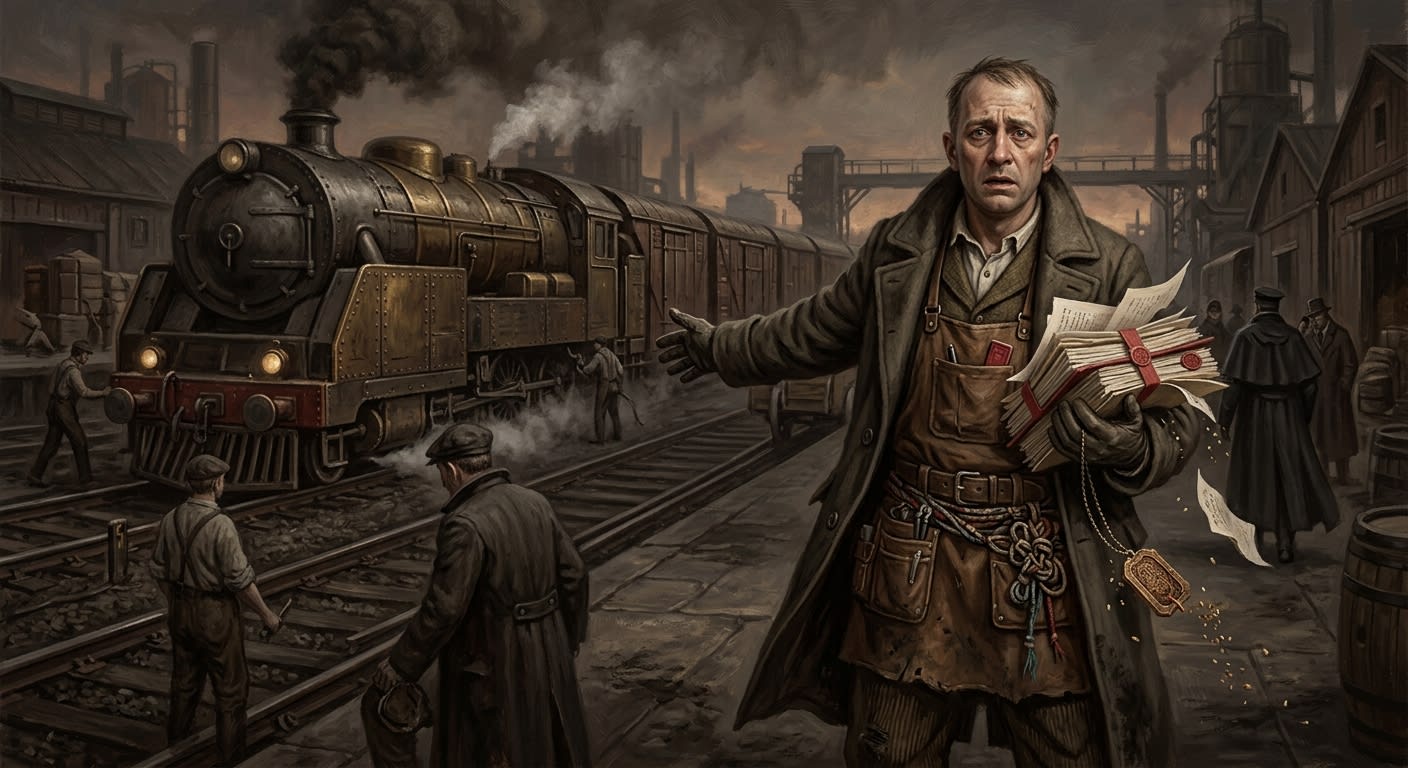
Gruss
The man who bribed vanity, corrected mud, and delivered eleven wagons
Gruss, Licensed Transit Factor 19-C, turned thirty-seven papers, wax, grain, one unspent favour, and a belt of knots into an eleven-wagon miracle at Turda.
Codex Ref. III.2.01-098
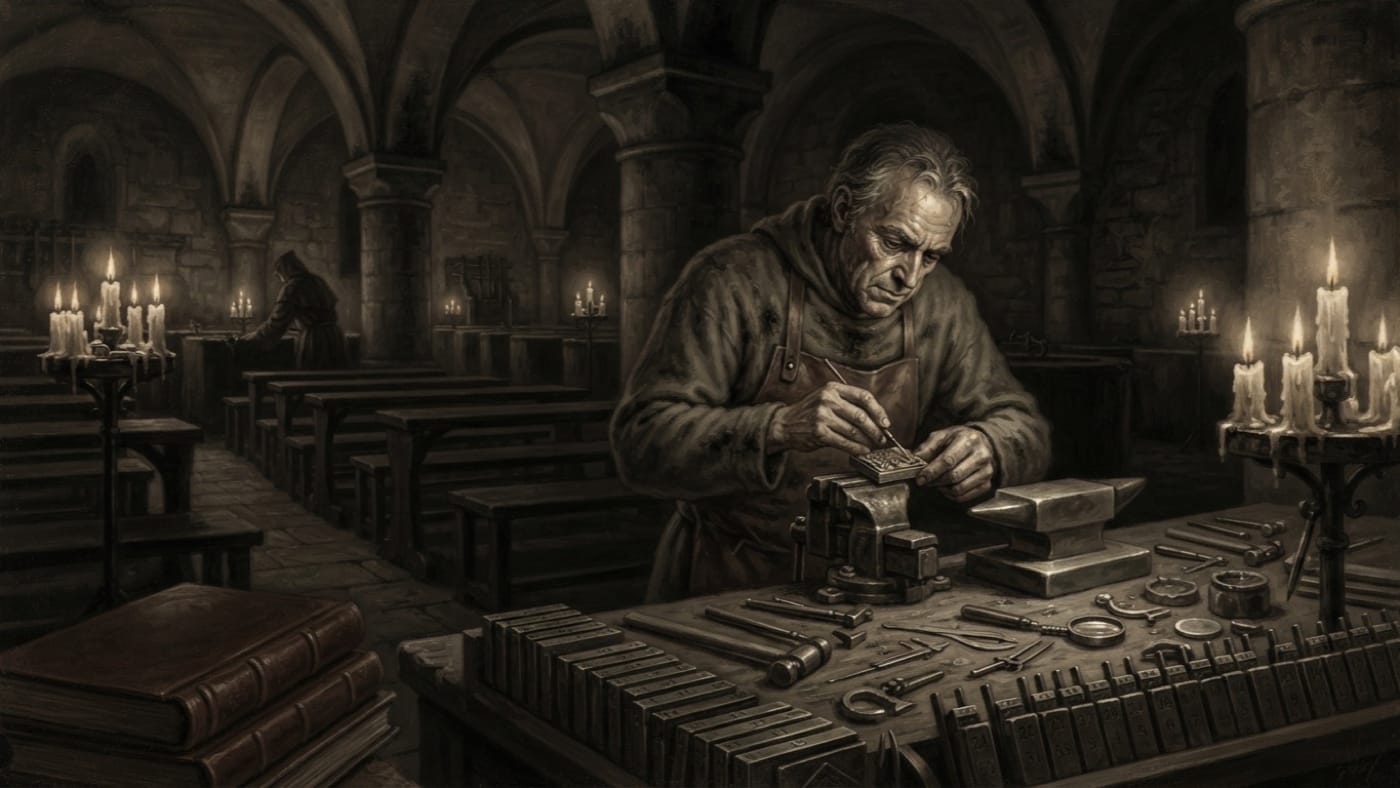
Guild of the Anvil and Stylet
The impression serves the Synod. The hand serves the impression.
Chartered in A.S. 105, the Guild of the Anvil and Stylet cuts the metal that makes Synodal paper binding. Its cutters swear to the impression; the Bureau of Masks and Seals files the theological objections.
Codex Ref. VI.4.19-015
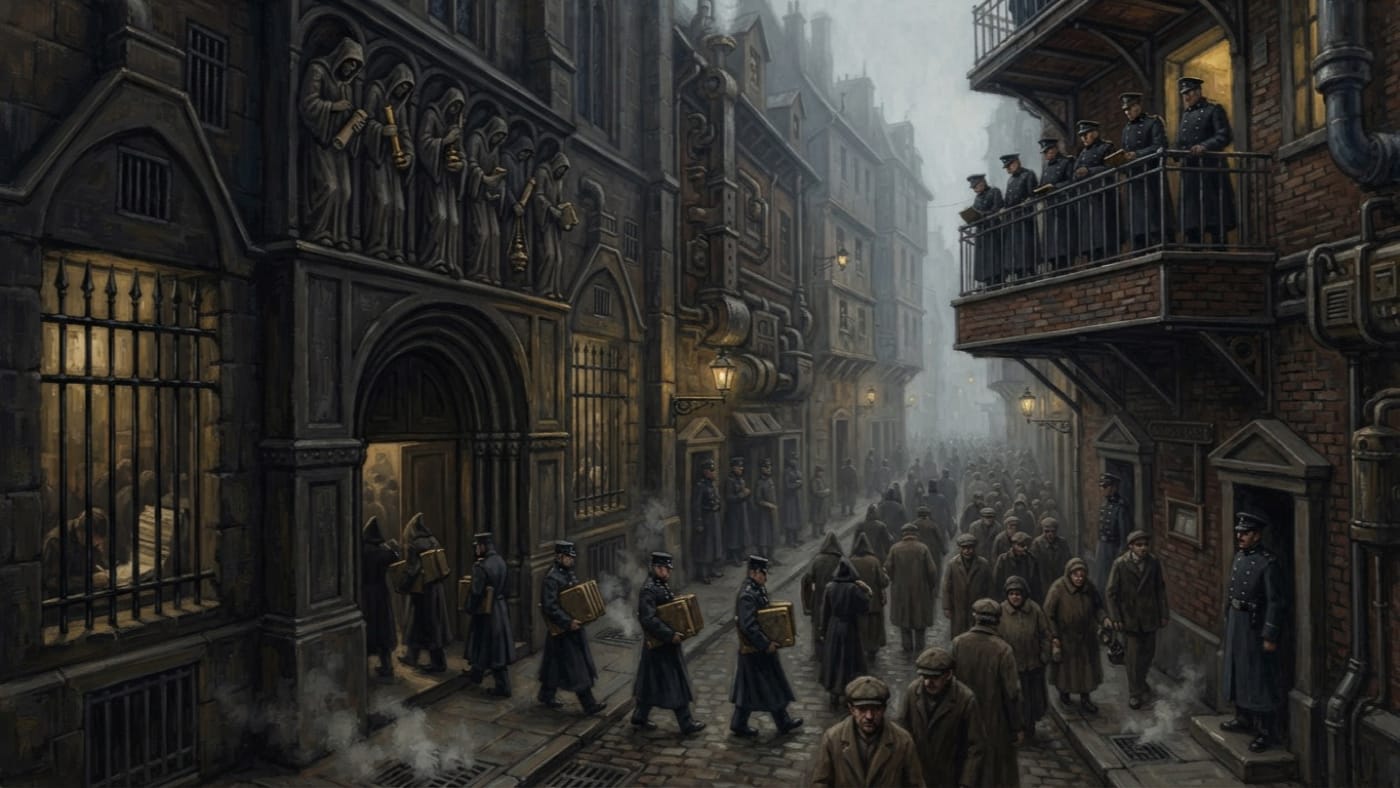
Hall of Confessions
Where the Synod speaks and the grille remembers
At the central bend of Strasbourg's Sanctum Mile, the Synod speaks beneath carved saints while clerks behind grilles record its words. The crowd outside hears bells.
Codex Ref. II.2.02-003
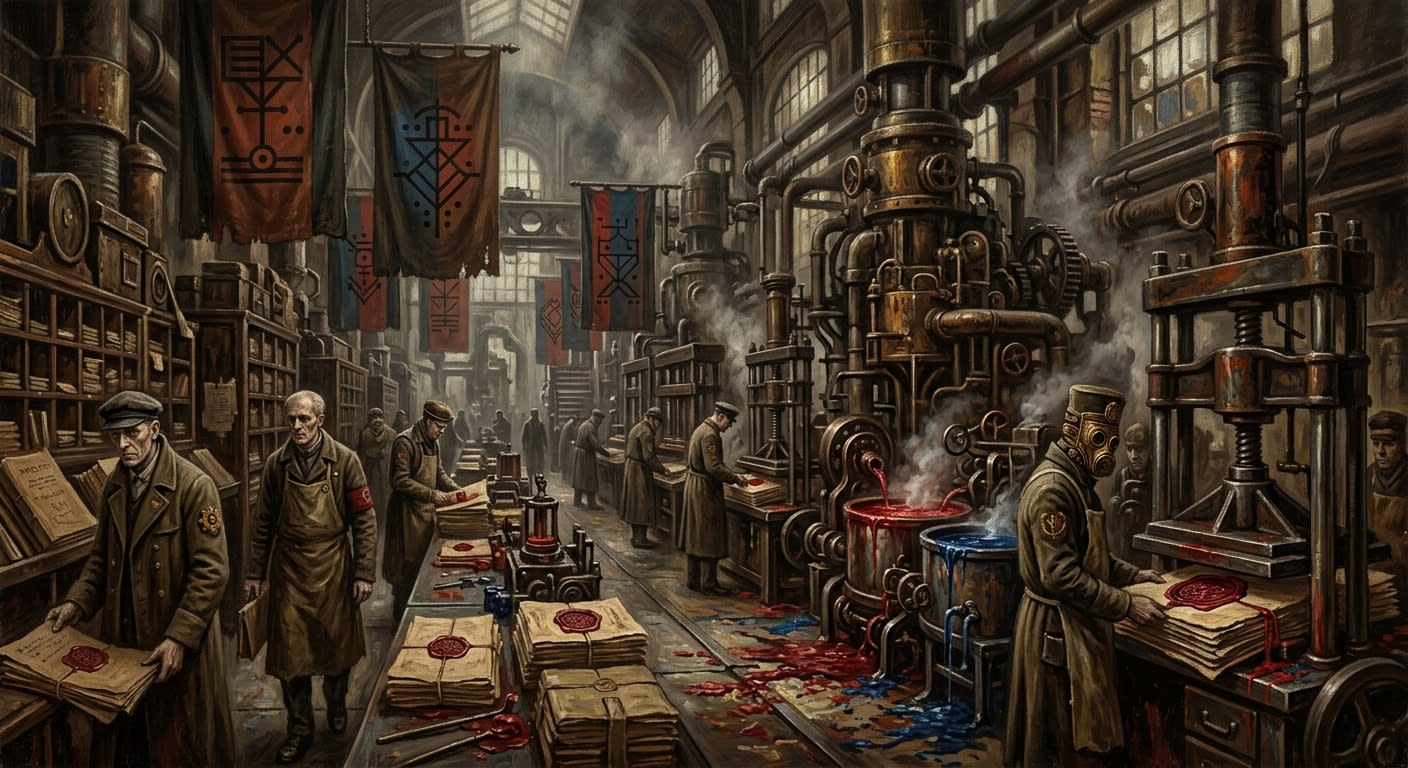
Hall of Seals
Where wax learns to rule and colour awaits sentence
The Hall of Seals is Strasbourg's low clean engine of visual law, where Heraldry and Masks and Seals ration colour, custody dies, and make wax sovereign.
Codex Ref. II.1.04-002
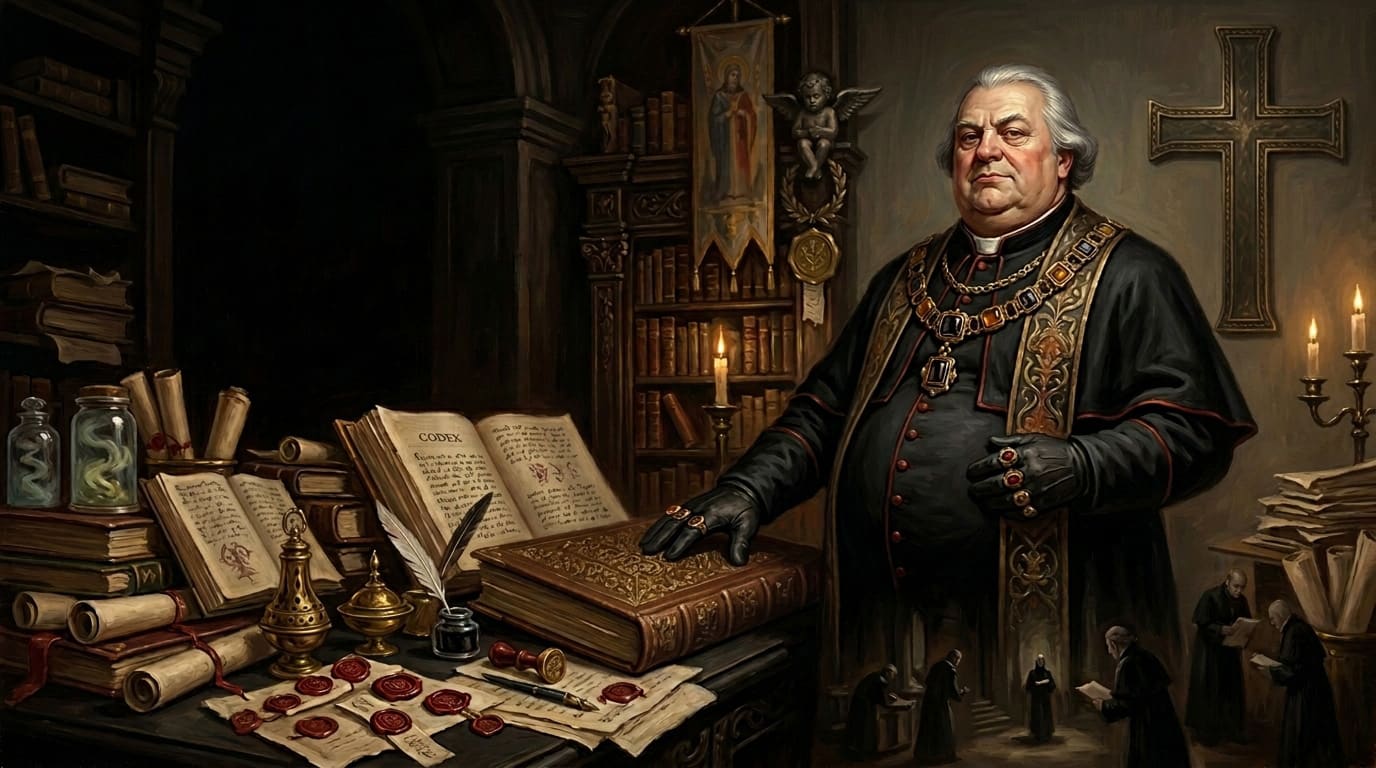
Hieromnemon Valerius Drax
The hand that corrects History before History embarrasses itself
Valerius Drax, Hieromnemon and Warden of the Sacred Ledger, is Doctrine's finest current instrument: prose stylist, ratifier, propagandist, archivist, and living rebuke to committee language.
Codex Ref. III.2.01-201
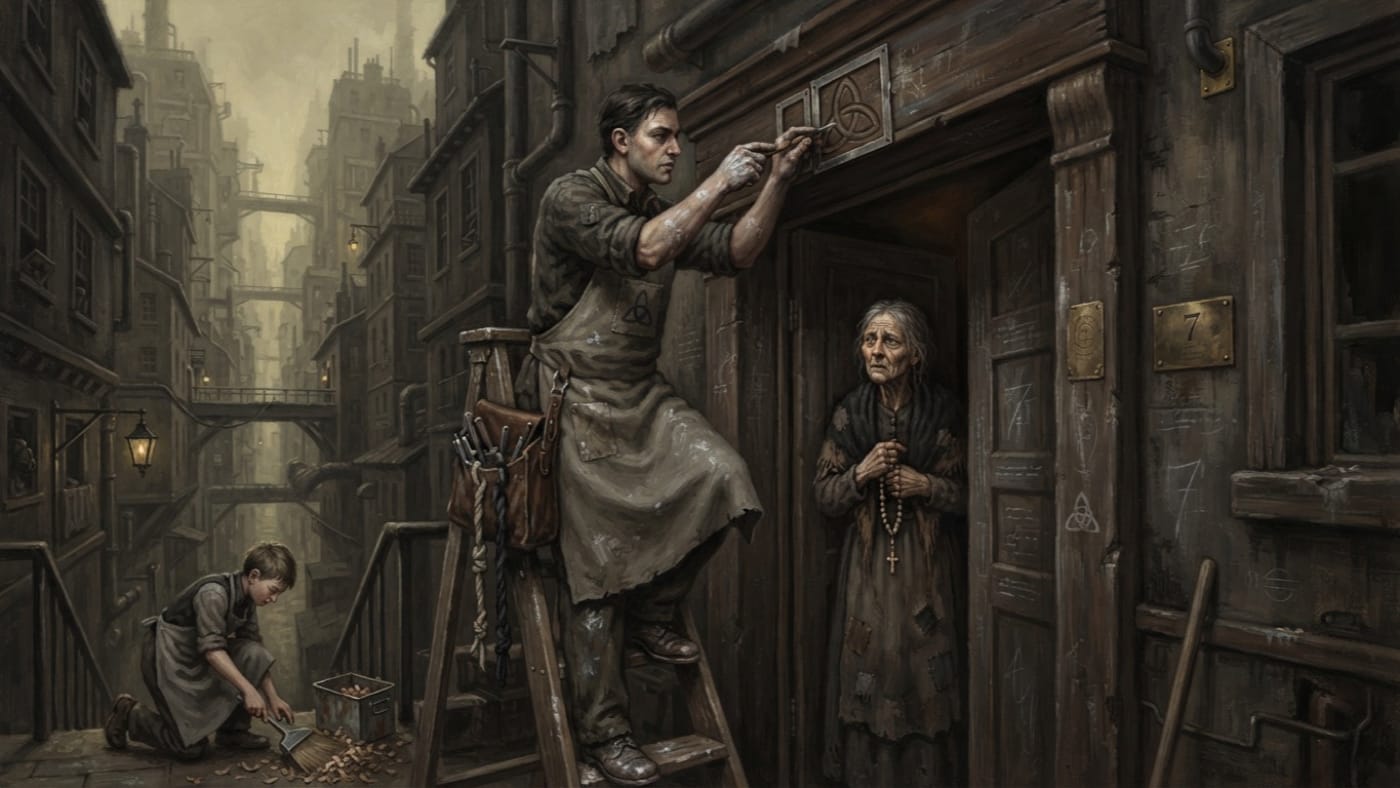
House-Knotters
Name the living; let the Registry read it
Current survey, A.S. 201: House-Knotters are the Gate-Carver faction that cuts and registers household thresholds. Families pay for protection; the Registry receives a legible address.
Codex Ref. XII.19.02-004
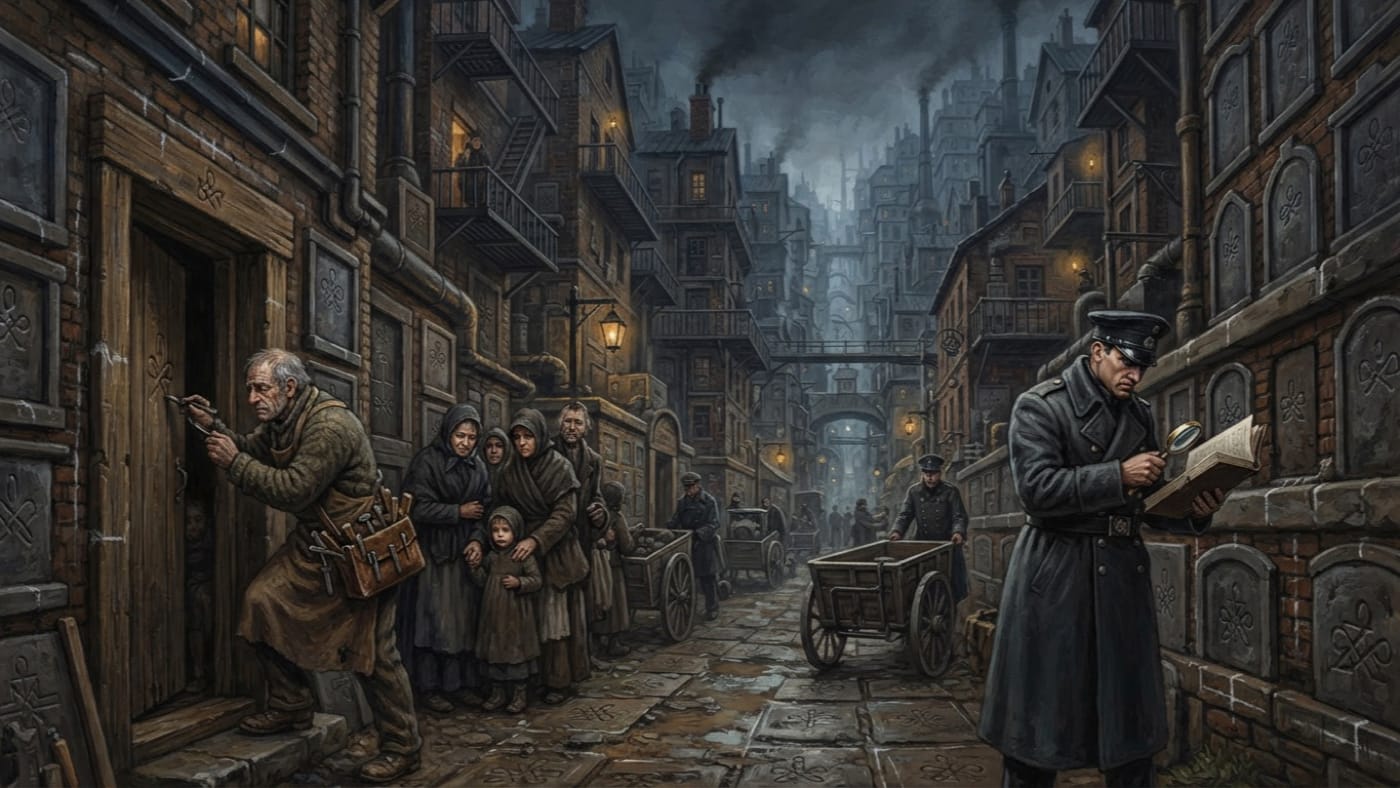
Housing and Burial Codes
A roof and a grave remain yours while the marks agree
The Housing and Burial Codes bind roofs and graves to the same ledger. A valid Triune Knot makes a household legible; a failed mark makes its stone available for confiscation.
Codex Ref. XIII.1.07-014
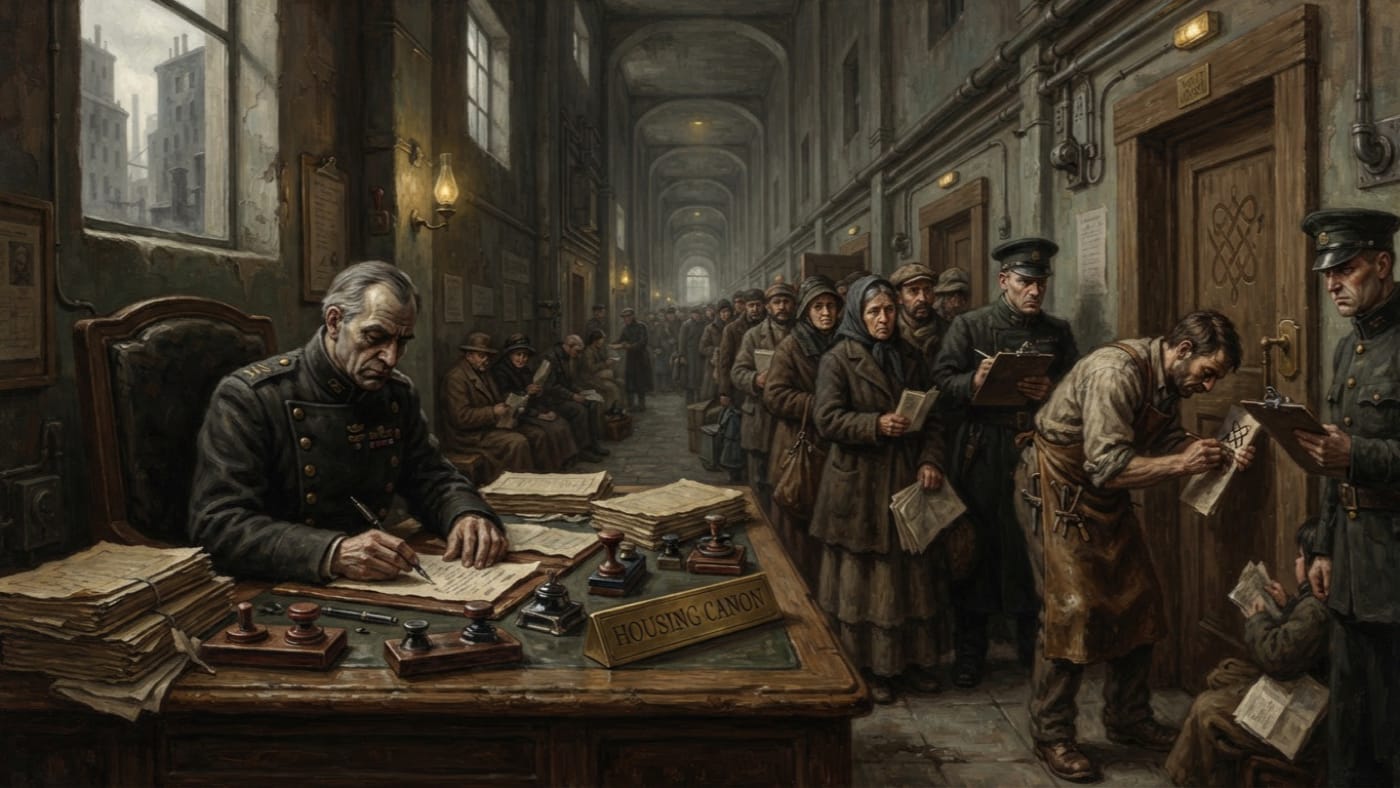
Housing Canon
Praise on the day, fines at month's end
The Bastion Housing Canon balances lawful households against marked thresholds, praising the carver who prevents today's riot and fining both haste and delay when the monthly tables arrive.
Codex Ref. XII.19.03-001
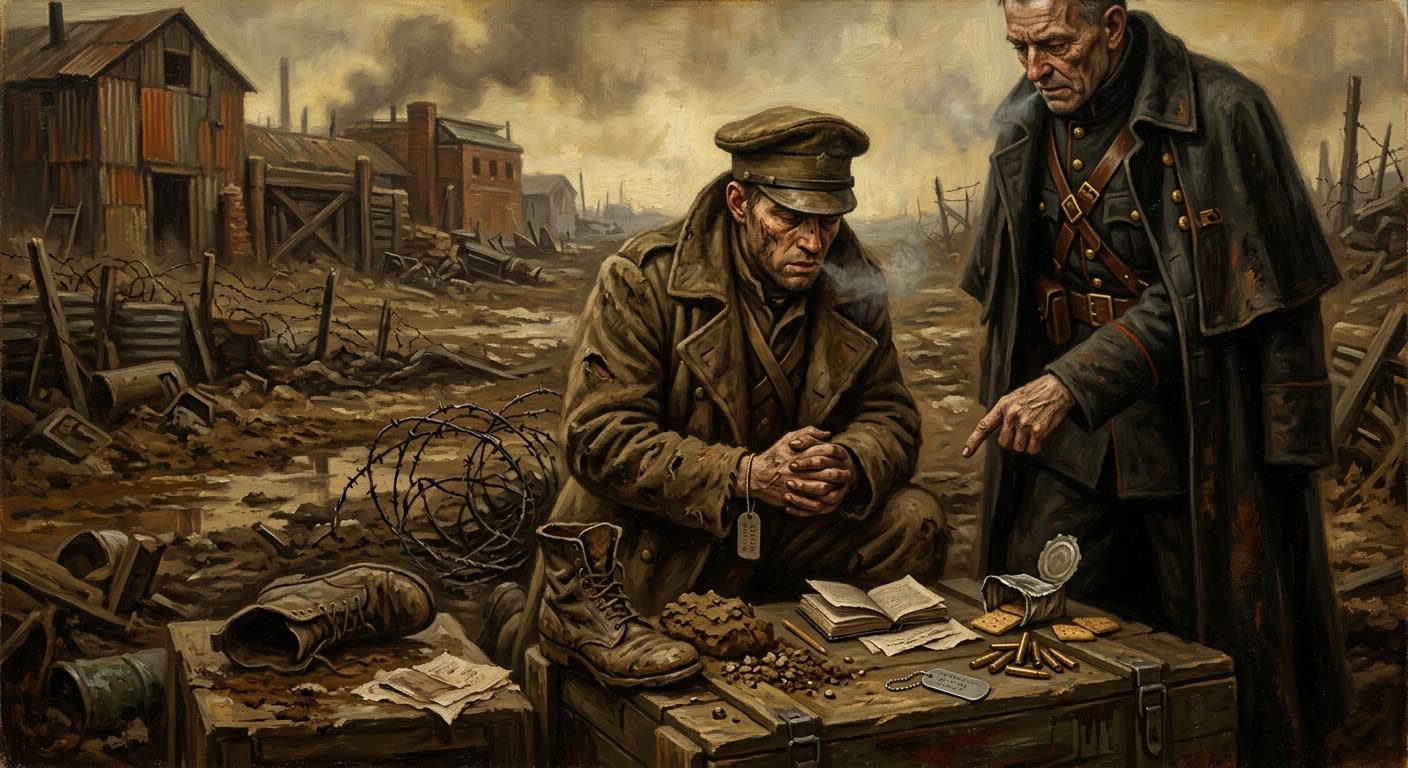
Humility Sequence
Boot, mud, ration, wire; the ugly words that keep Pride low
The Humility Sequence is Przemyśl's deliberately ugly counter-recitation against Atheronic grandeur: boot, mud, ration, wire, cartridge, number, name, breath.
Codex Ref. XIII.1.94-188
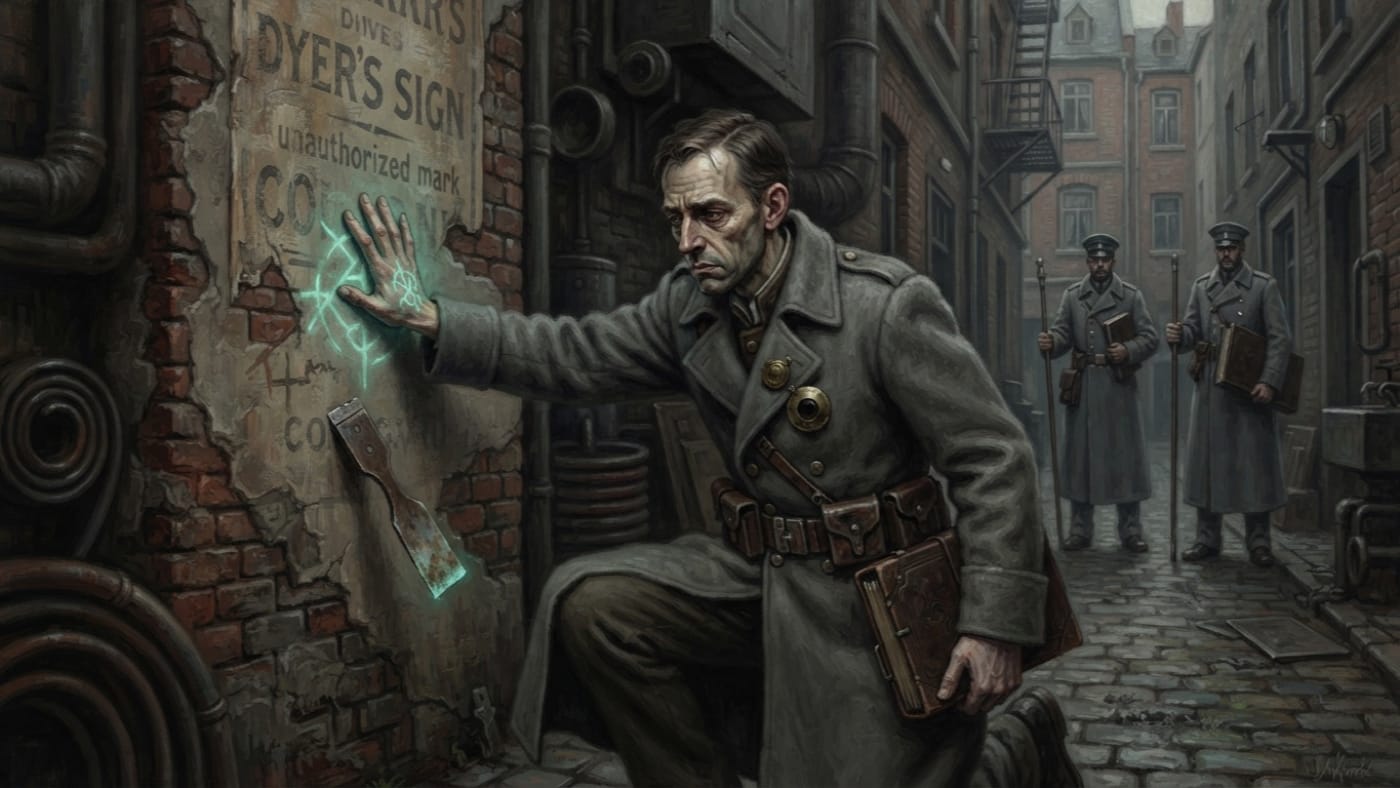
Inspector Marn
The inspector whose hand became a surface
Inspector Marn survives in Report 44-K: his blade began copying a sign onto his palm. The Bureau took the wall and filed the household as evidence; his subsequent condition remains unentered.
Codex Ref. III.2.01-044
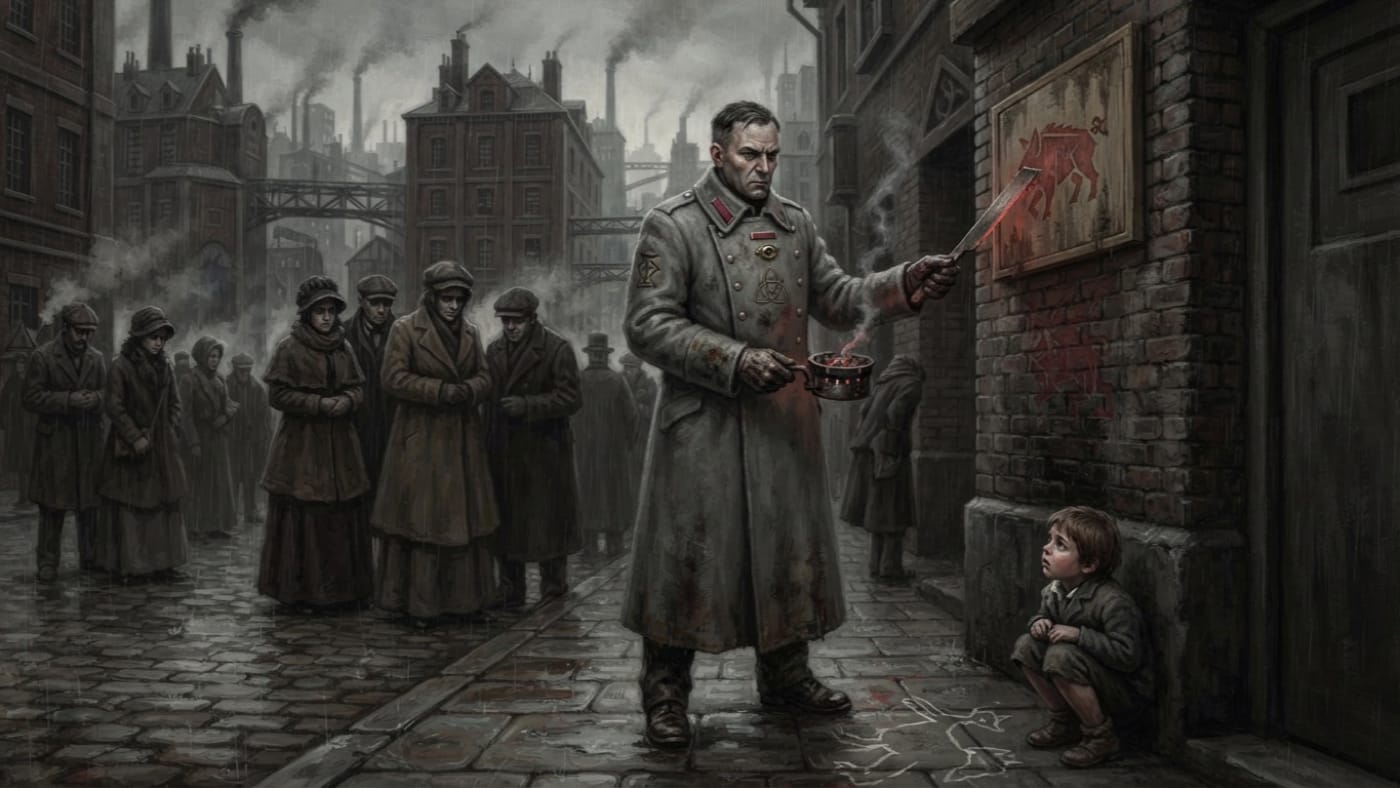
Inspectorate
A decree is ink, and ink needs legs
The Inspectorate of Visual Compliance carries Heraldry's judgments into the street. Its licensed examiners measure a crest, issue a citation, and heat the blade; even a child's chalk animal must answer to the register.
Codex Ref. VIII.1.03-002
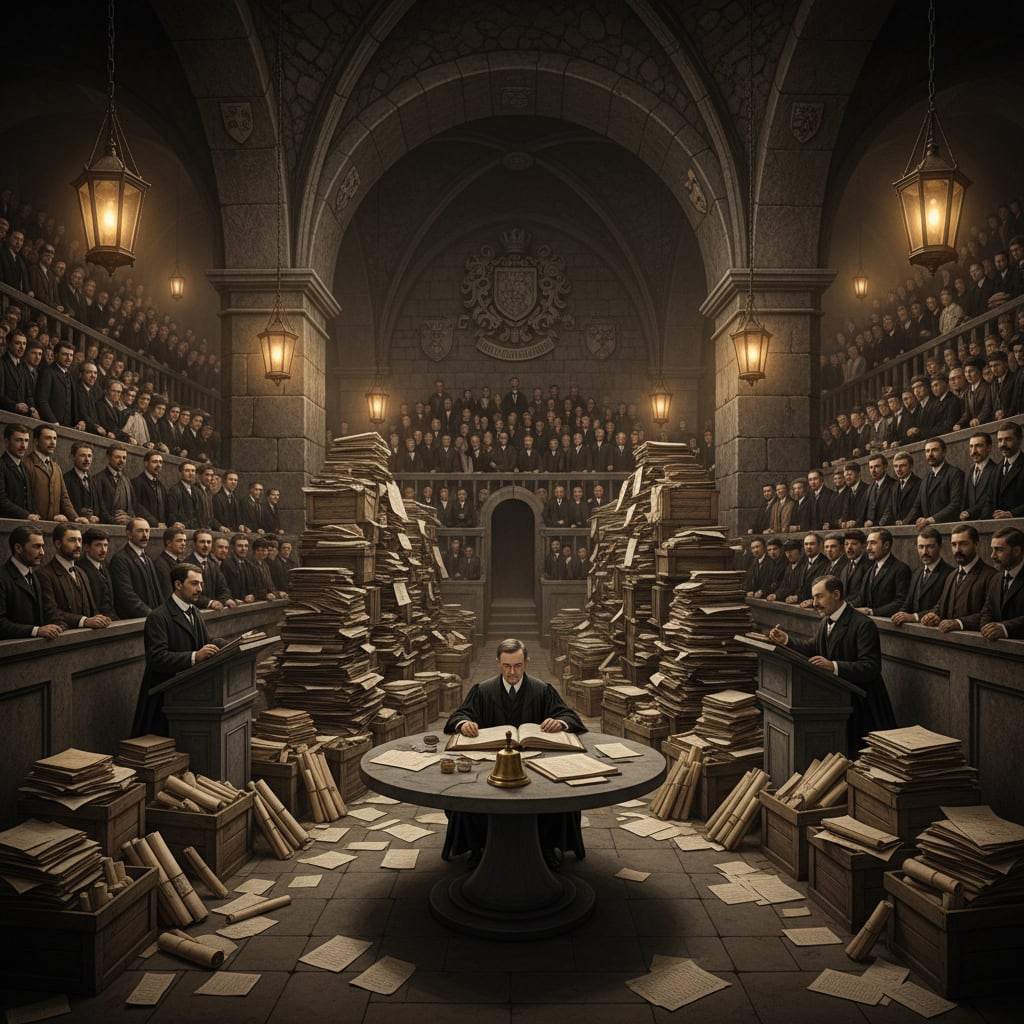
Ledger Duellist / Citation Advocate
Where the sword would be excessive and the firing squad irreversible, the Synod reaches for its ink
Fourteen hundred licensed advocates fight citation duels in the Synod's precedent pits — establishing standing, constructing precedent chains, striking opponents from the Ledger of Souls. Three hundred more operate in the shadows.
Codex Ref. XII.26.01-001
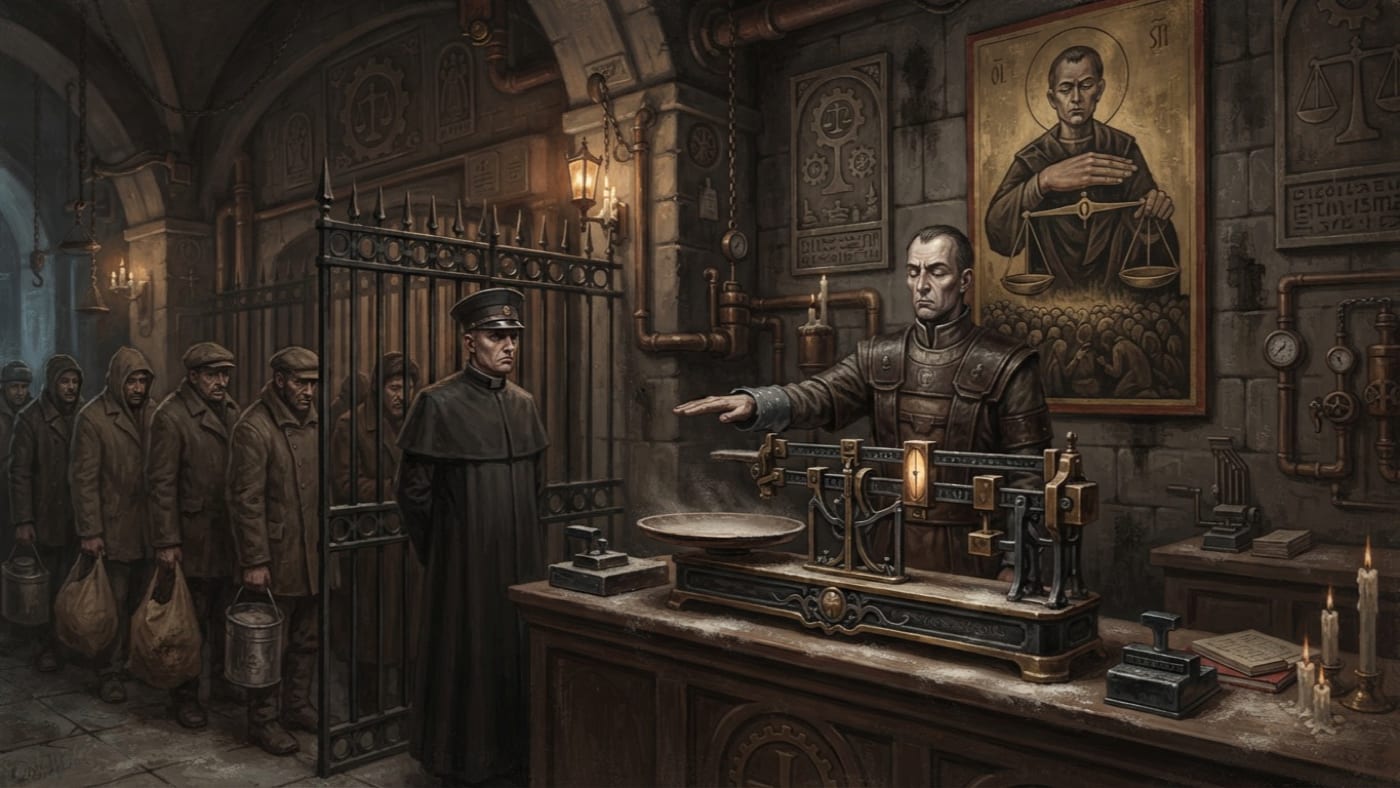
Level Prayer
The hand stays level; the sack stays empty
An A.S. 201 survey of the prayer recited by tariff-chapel weighers with the right hand level above the pan on Saint Calibrus's feast. Honest measure holds the zero; it does not fill the sack.
Codex Ref. XIII.1.91-201
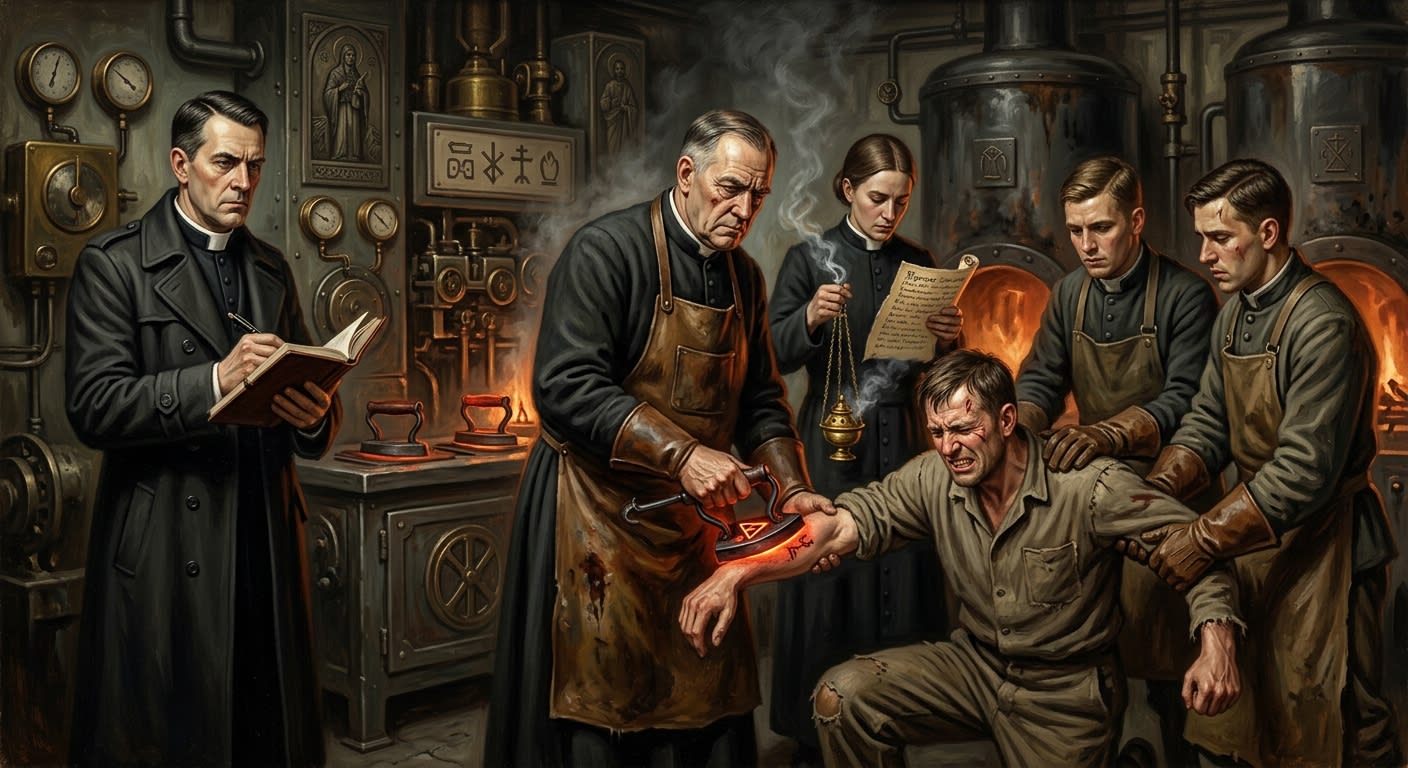
Licensed Chapel Brand-Smiths
Clean procedure does not cleanse the act; it makes the act admissible
Licensed Chapel Brand-Smiths are the sanctioned purists of bodily proof, applying tri-marks under full witness protocol in fixed chapels where pain becomes admissible.
Codex Ref. XII.20.05-001
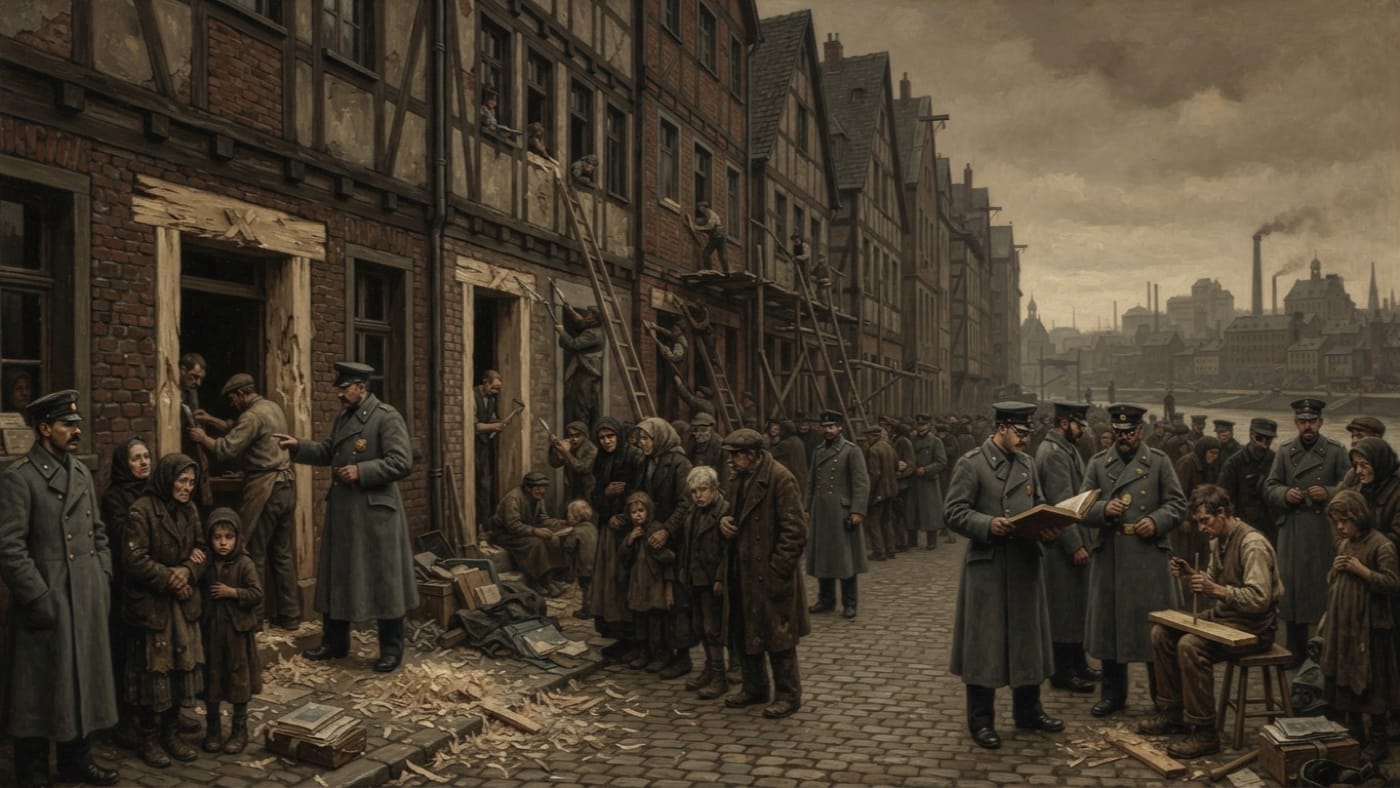
Lintel Pogroms of Cologne
Fourteen perfect Knots, three sealed niches, and a Registry to count the tools
In A.S. 112, fourteen perfect false Knots cost Cologne's river quarter its lawful thresholds, three carvers their air, and Heraldry the trouble of founding the Knotwright Registry.
Codex Ref. VII.8.10-112
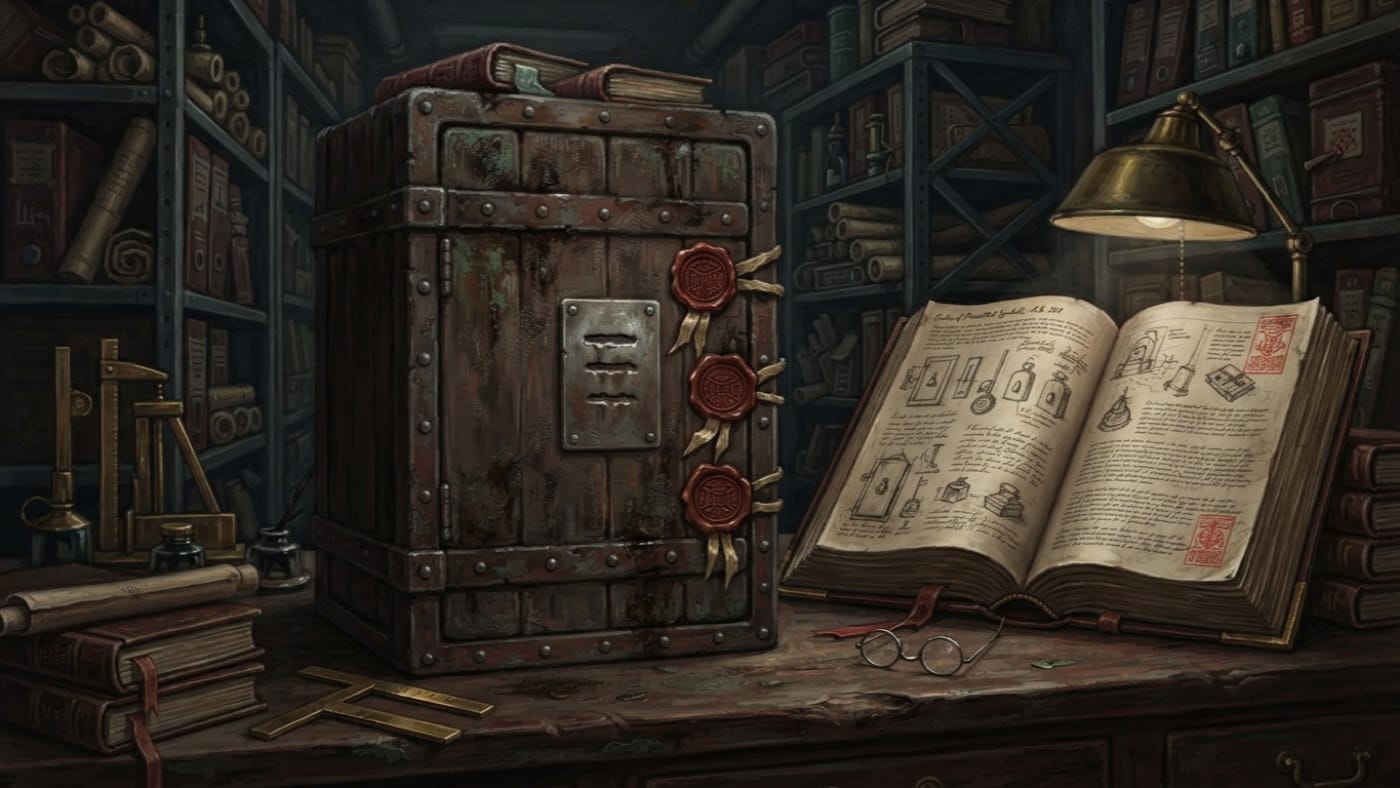
Mainz chime-mark affair
Three marks, six pages, and an appeal still waiting
At the A.S. 201 survey, Fenn's doorbell remains under three seals and his appeal stays active. Casselius made three descending marks a case; the Codex made one paragraph six pages.
Codex Ref. VII.8.10-201
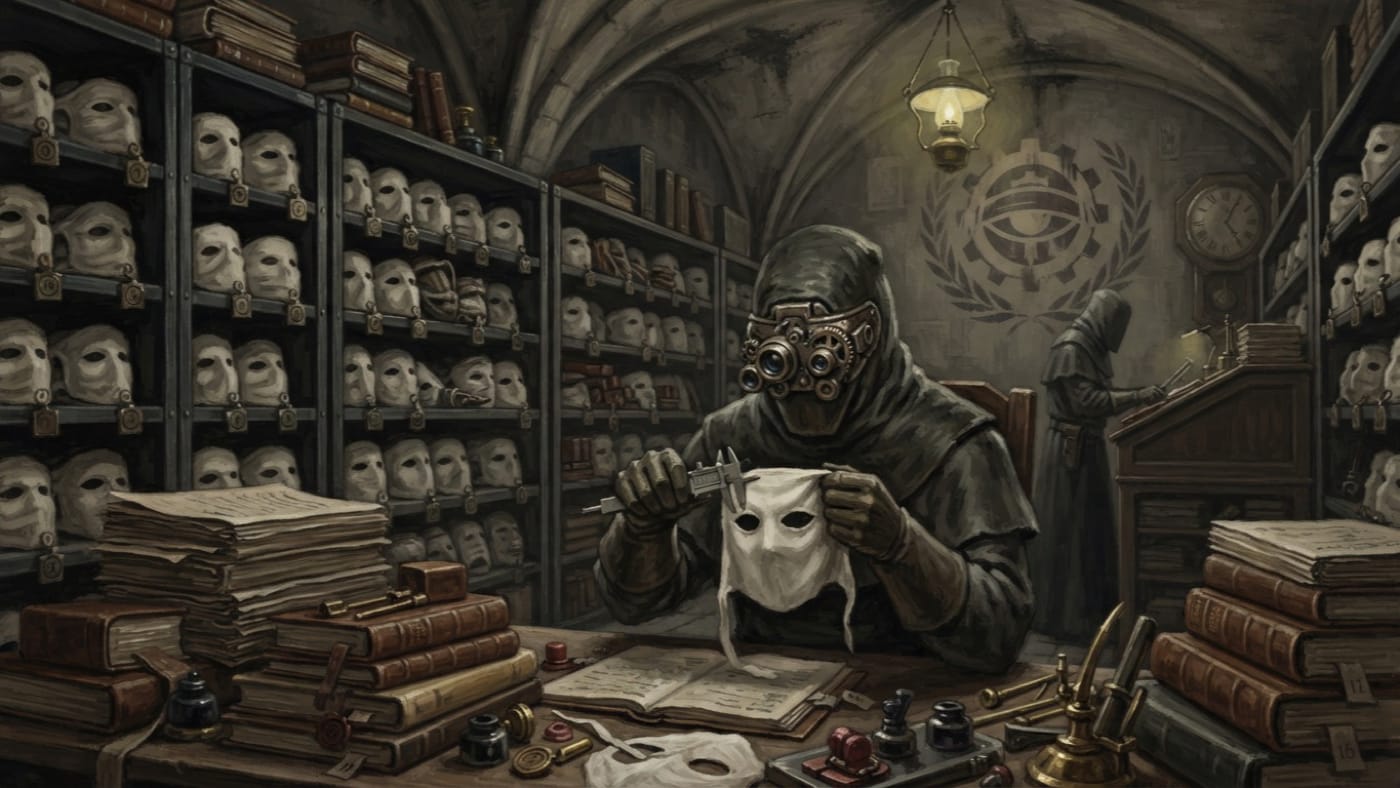
Mask License
The face may vanish. The number must remain.
The Mask License permits the Synod's faithful to conceal their faces on approved occasions, for approved durations, through eye-holes of approved width. Even anonymity must be registered.
Codex Ref. XIII.1.19-002
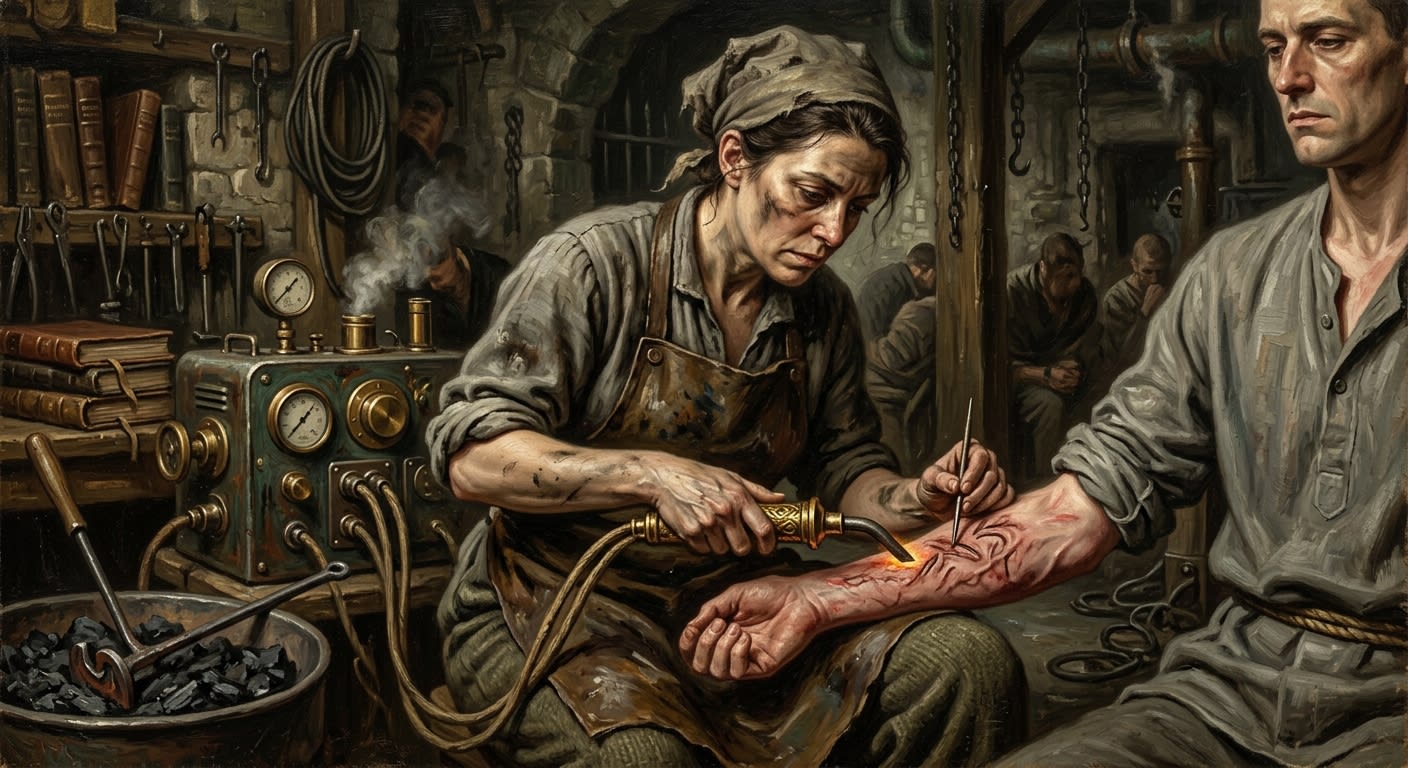
Mercy Branders
Private pity, measured in degrees and prosecuted in heat
Mercy Branders are licensed Brand-Smiths who soften bodily tri-marks through tiny acts of illicit discretion, turning excessive punishment into survivable ambiguity.
Codex Ref. XII.20.04-001
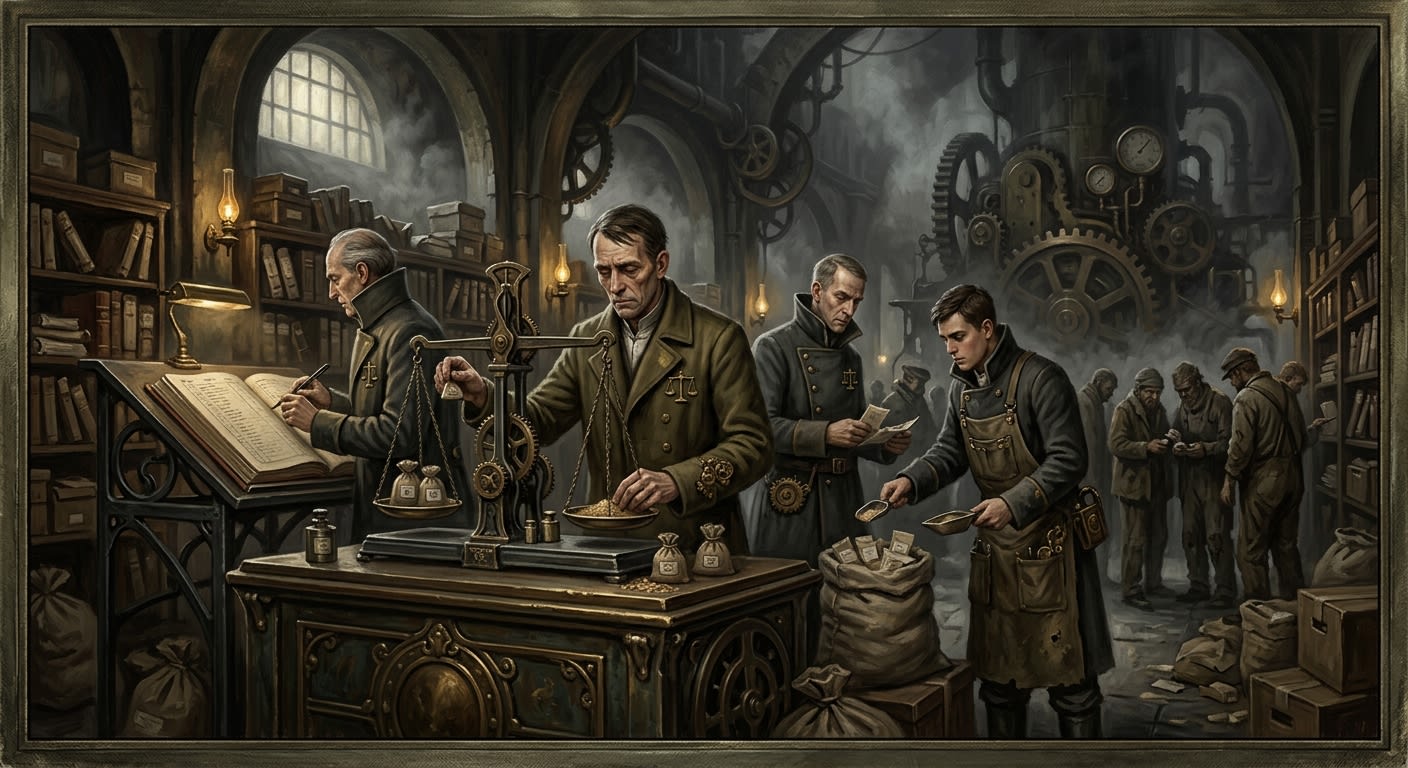
Mercy Weighers
Compassion, when properly hidden, can pass an audit
Internal tariff-chapel faction of Commerce Clerks who shade tariffs, balance ledgers, and keep hunger quiet by committing mercy in ounces.
Codex Ref. XIII.1.60-001
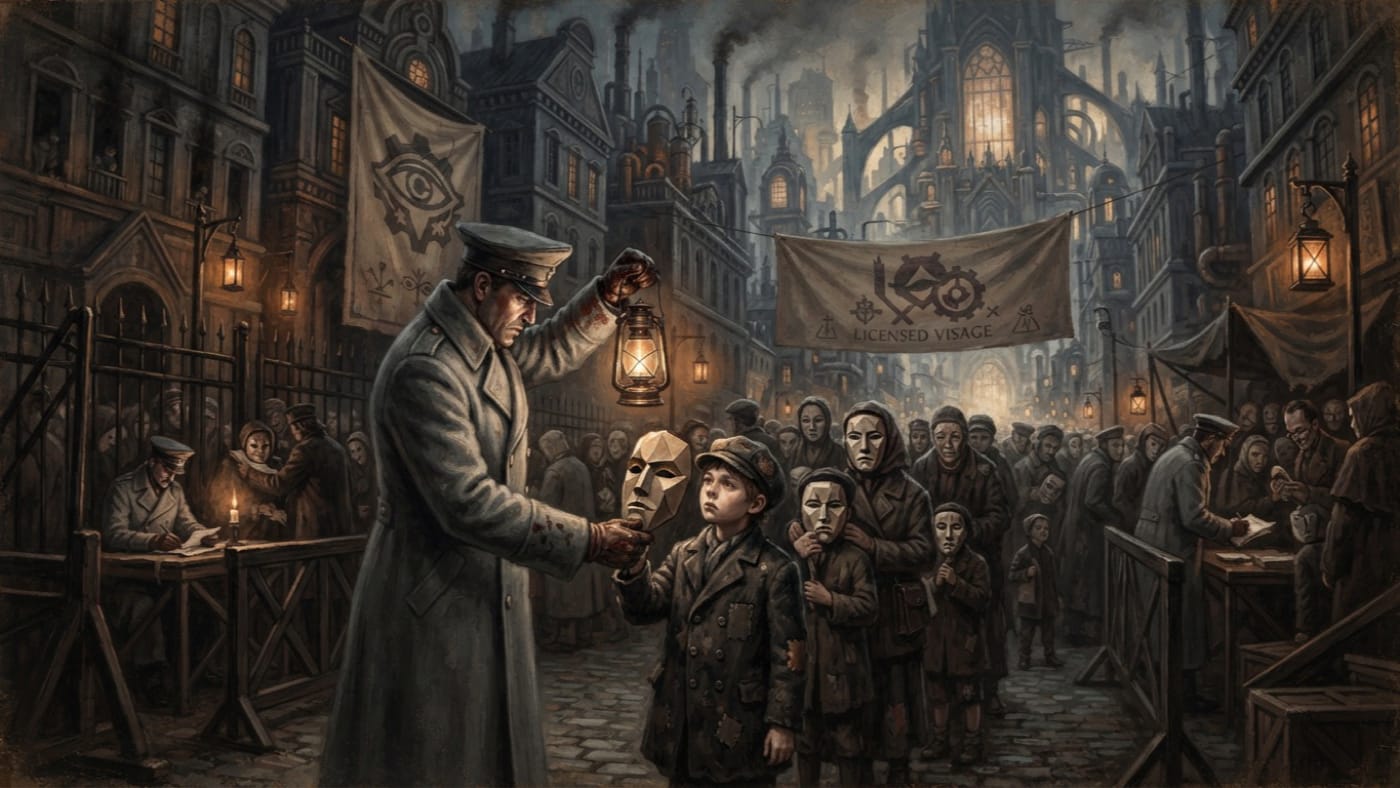
Night of Masks
Even delight must show its wax
On the eve of the Feast of the Sealed Door, the Synod licenses its carnival faces. Heraldry approves the design; Inspectors demand the wax. Even a child must learn to show permission.
Codex Ref. XIII.1.89-1919
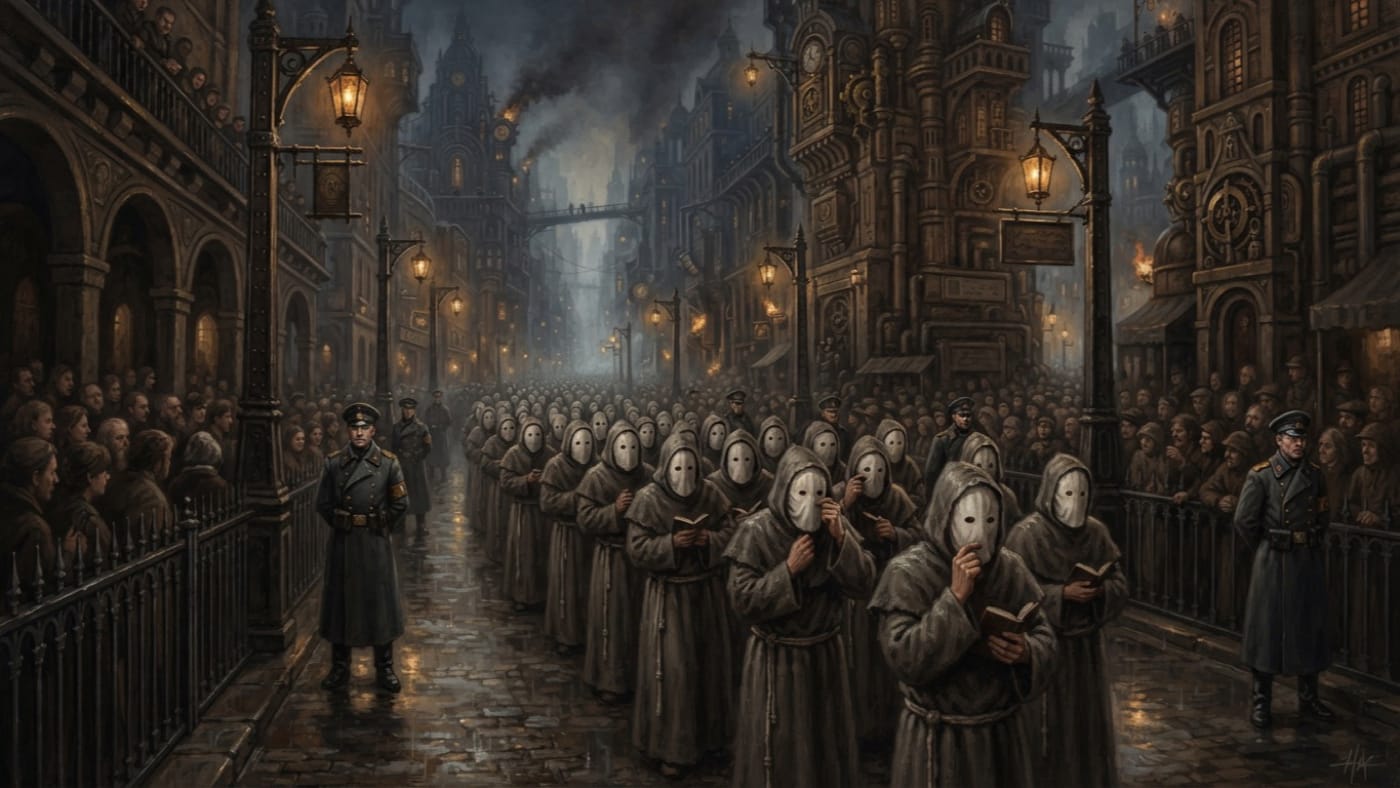
Night of Penitents
The face may be hidden. The sin stays on file.
On the Night of Penitents, the procession must go masked. Festivals orders the occasion; Masks and Seals numbers every concealed face. Shame may hide from the street. The Registry knows where to find it.
Codex Ref. XIII.1.89-1920
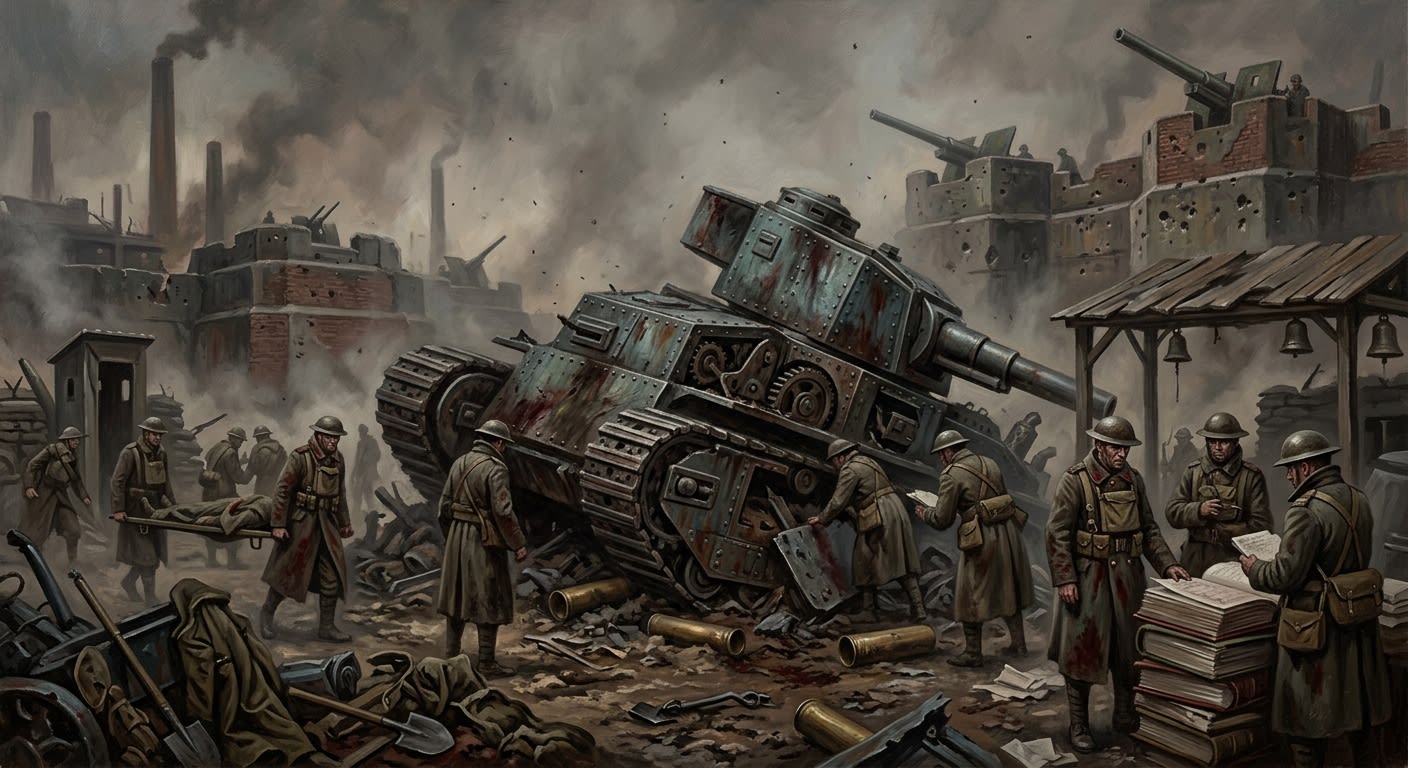
Nine-Hour Rubric
Pride offered height; [[bastion-przemysl|Przemyśl]] answered with mud, bells, and arithmetic
At Przemyśl, nine hours of guns, low bells, ash smoke, ugly song, and blood-stained arithmetic broke Atheron's Spire-Crusher and left victory staring upward.
Codex Ref. VII.8.10-195
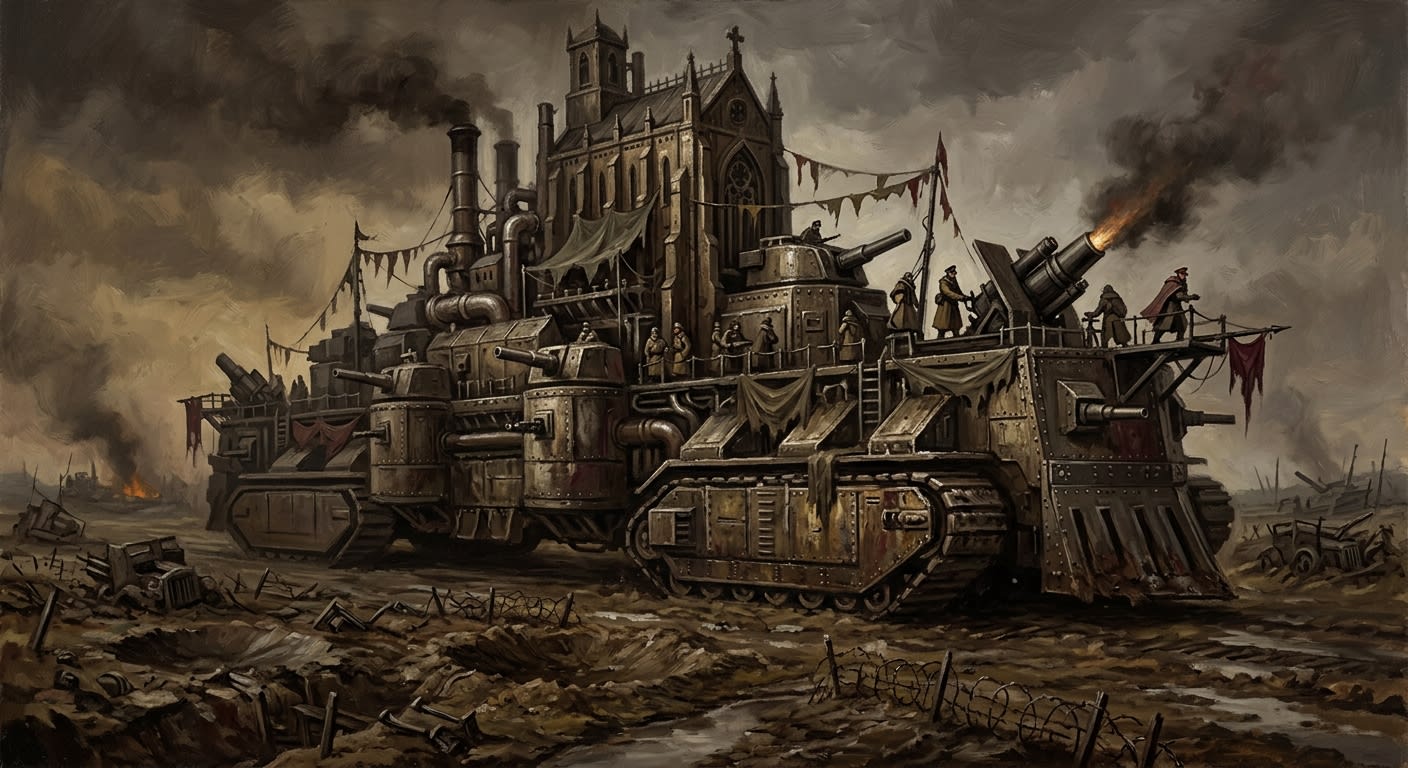
Pilgrim's Ladder
The prototype land-ship that taught artillery to process, pray, and correct crowds by recoil
Prototype diesel shrine-artillery land-ship commissioned in A.S. 110, source of the Processional Arsenal and every later sermon delivered by mortar.
Codex Ref. XIII.1.34-002
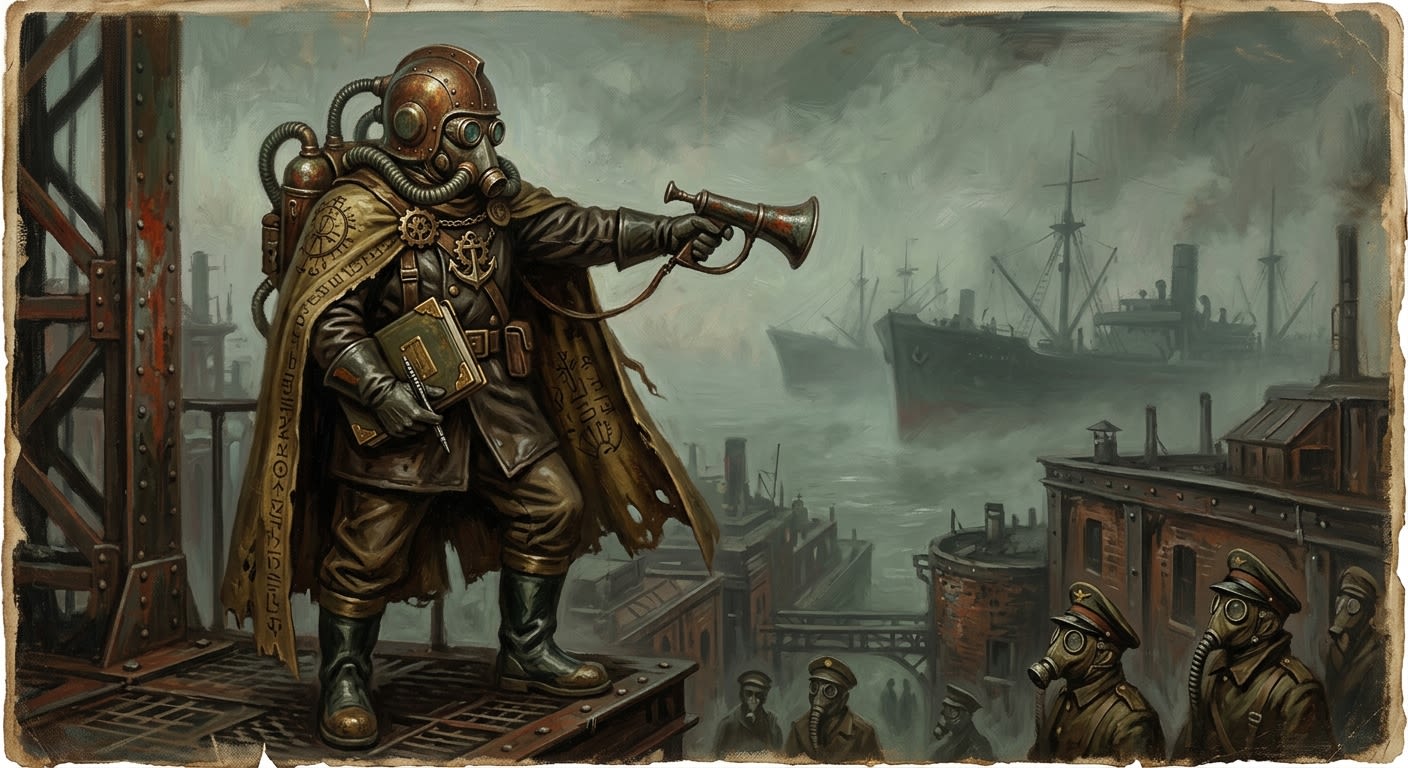
Pilot-King Nenos
The unlicensed crown that knows when the water is listening
Pilot-King Nenos is Thessaloniki's unlicensed harbour sovereign, infamous for refusing every passage during the A.S. 198 Silence because the sea listened too hard.
Codex Ref. III.2.01-036
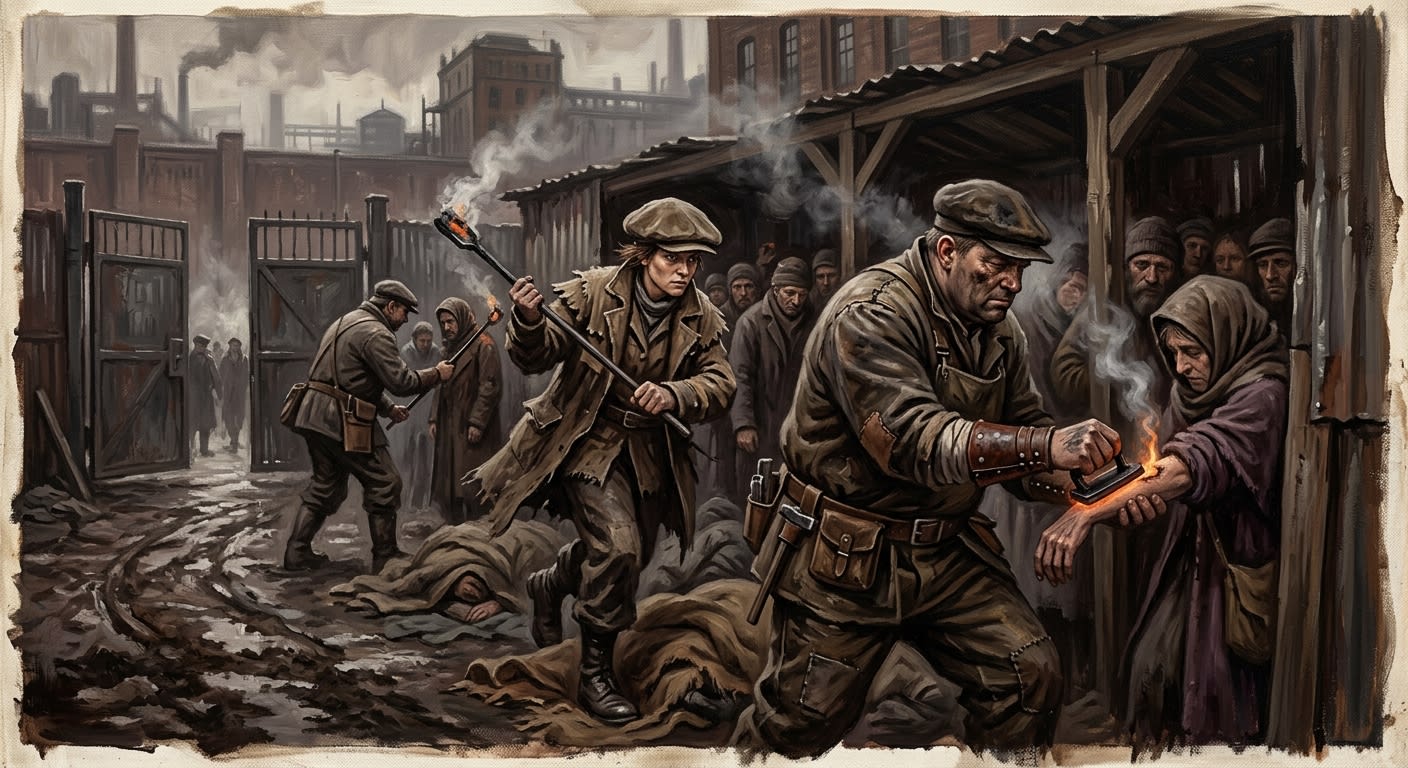
Quick Burners
Haste, under shelling, becomes a form of grammar
Quick Burners are accelerated field Brand-Smiths who mark bodies in queues, sheds, gates, and mud before ceremony can strangle movement.
Codex Ref. XII.20.06-001
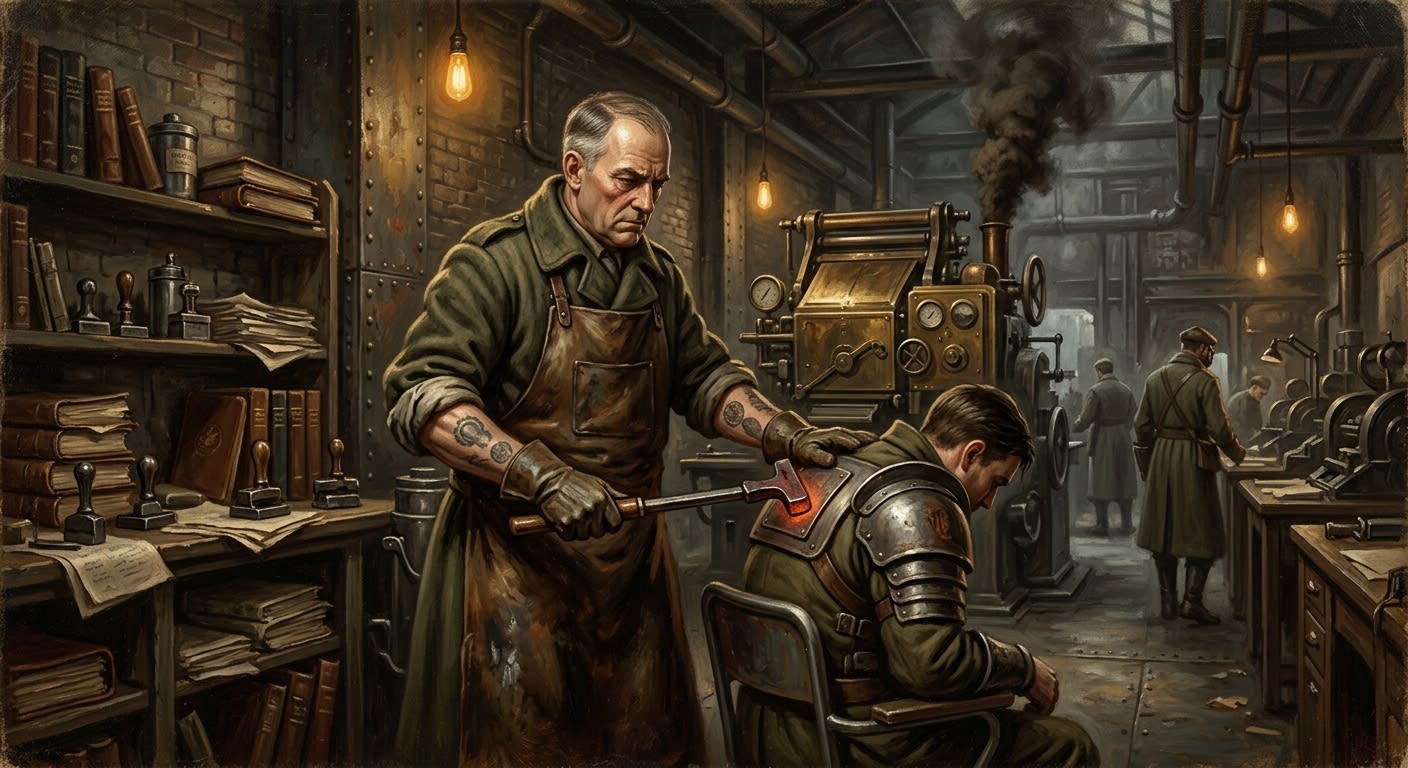
Re-inspection Brand-Smith
The Bureau's apology, applied two degrees from mercy
Re-inspection Brand-Smiths are Heraldry specialists created after the A.S. 119 Angle Riots to verify bodily tri-marks and burn lawful corrections into failed proof.
Codex Ref. XII.20.03-001
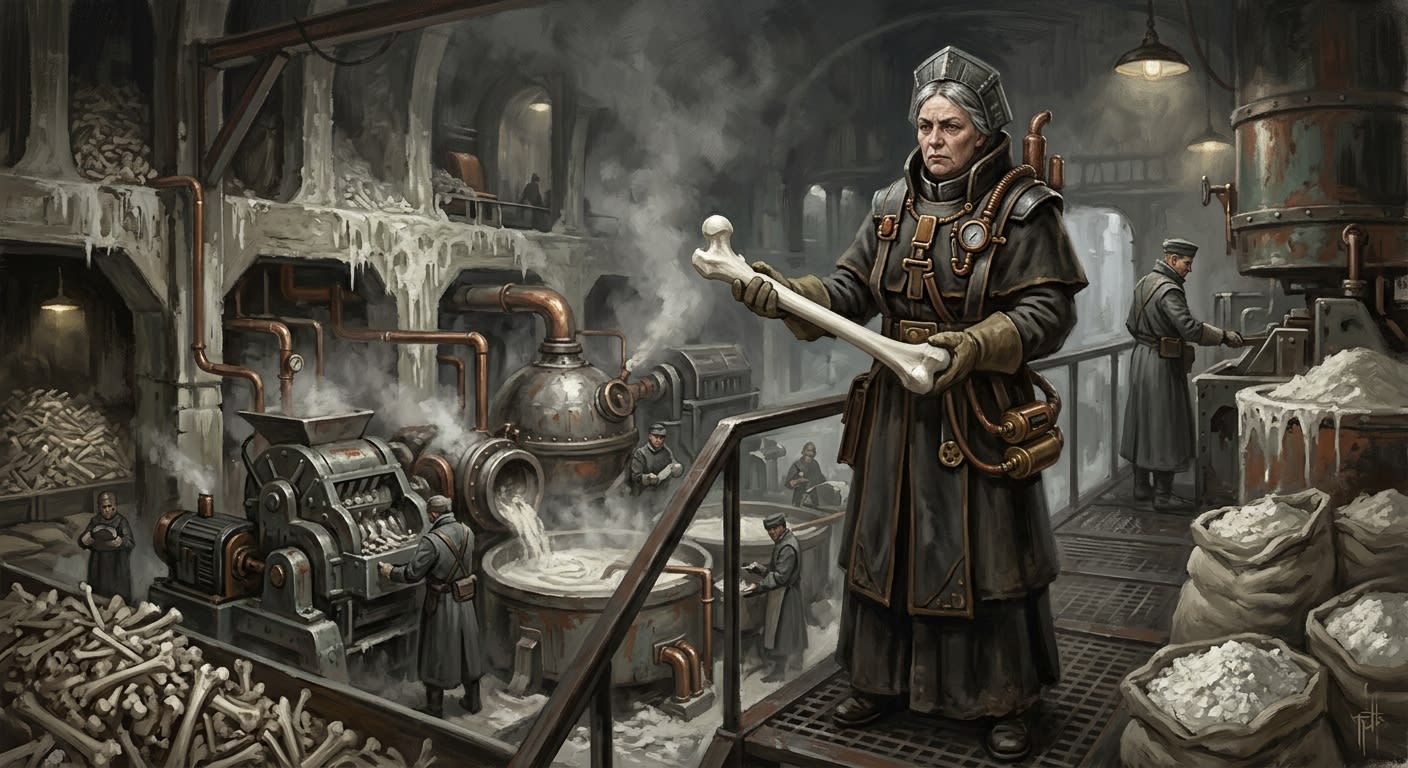
Saint Aurel of the White Wall
The saint who may have arrived after the invoice, yet holds the wall all the same
Disputed patron of Saint-Bone Melters, Saint Aurel offers the convenient femur by which relic fragments become bone-lime, mortar, wall, and doctrine with a clean conscience.
Codex Ref. III.2.01-142
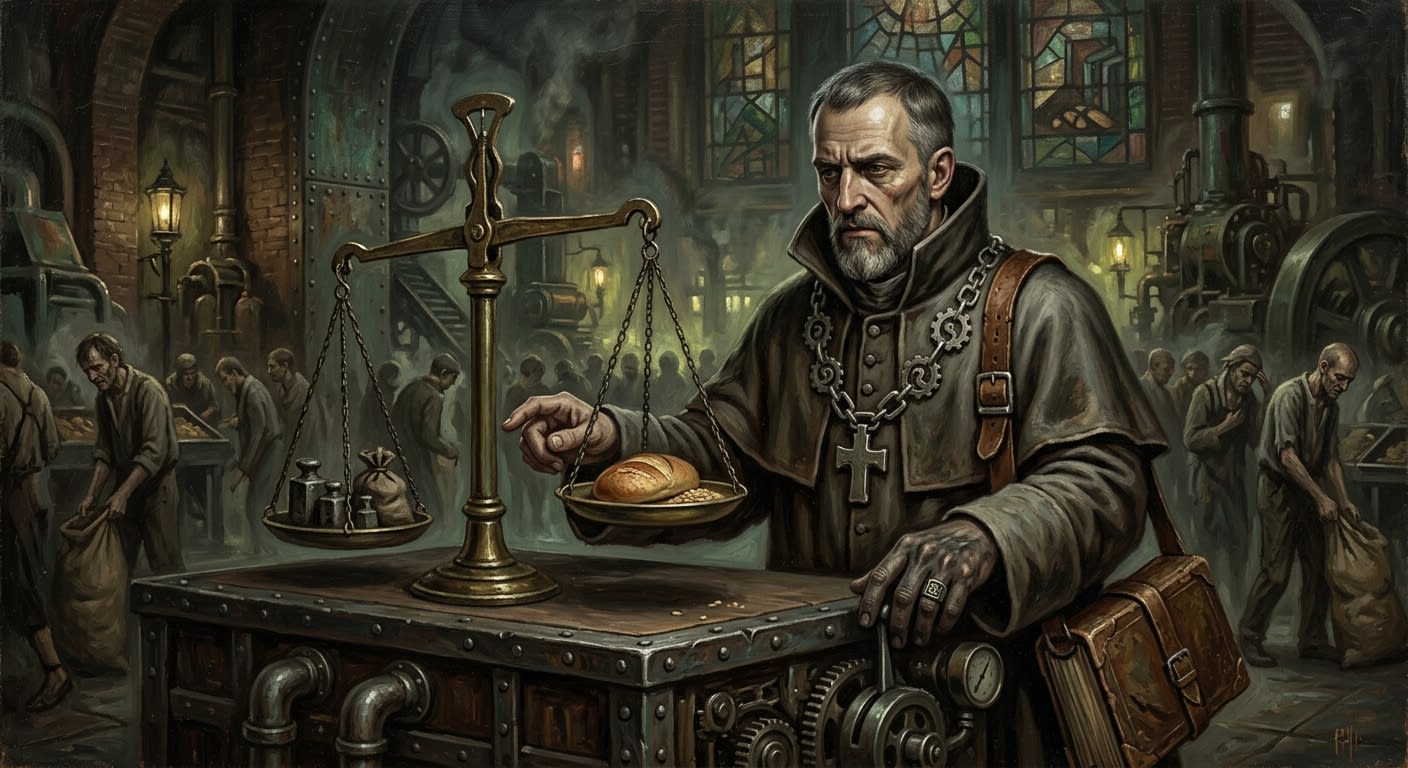
Saint Calibrus, the Level Hand
Measure is mercy, says the scale; hunger has filed a dissent
Patron of Commerce Clerks and tariff-chapel weighers, Saint Calibrus sanctifies the level scale, the lawful shortage, and the terrible arithmetic of hunger.
Codex Ref. III.2.01-101
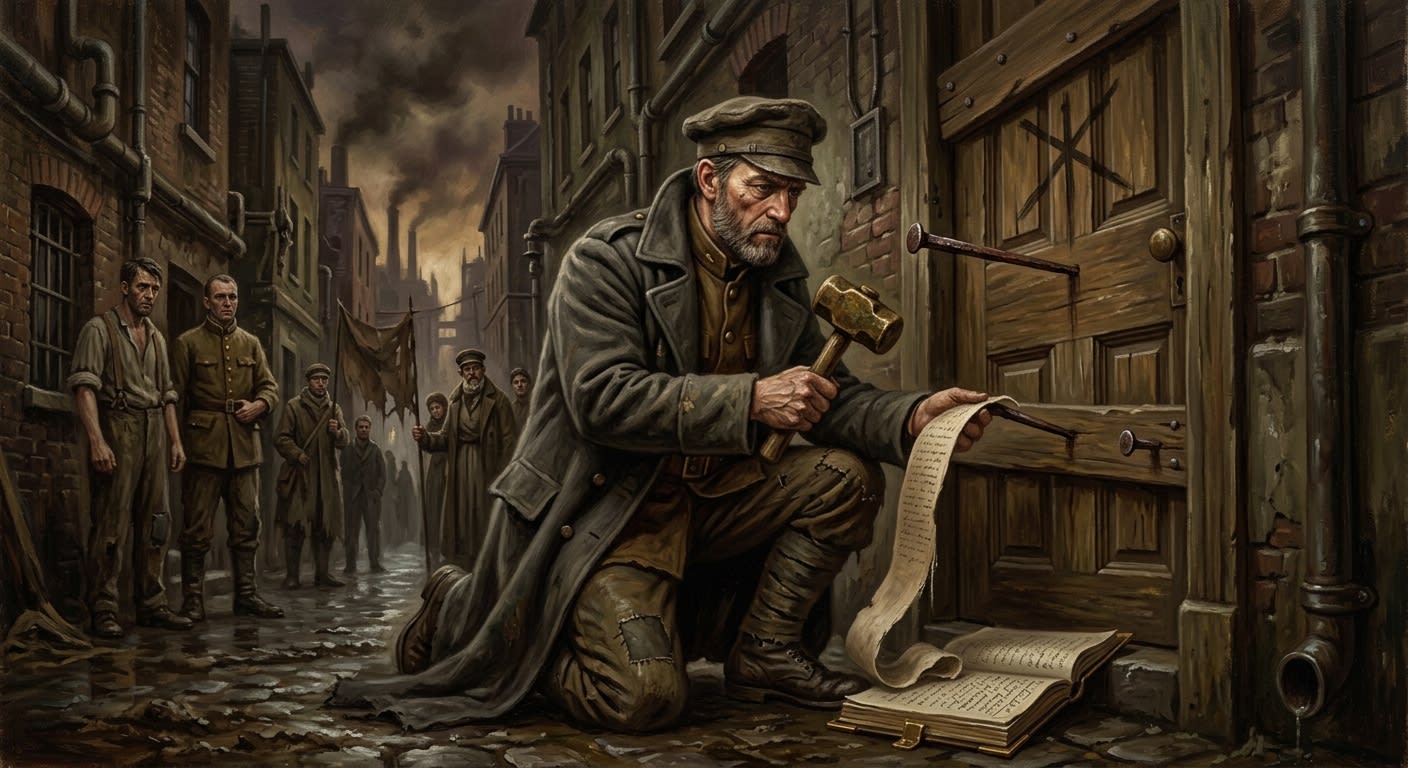
Saint Edrin of the Three Nails
Cut true, name all, hold the door
Saint Edrin of the Three Nails is the patron of Gate-Carvers, remembered for sealing a plague-house during the A.S. 78 Lull of Names with measure, witness, and refusal.
Codex Ref. III.2.01-120
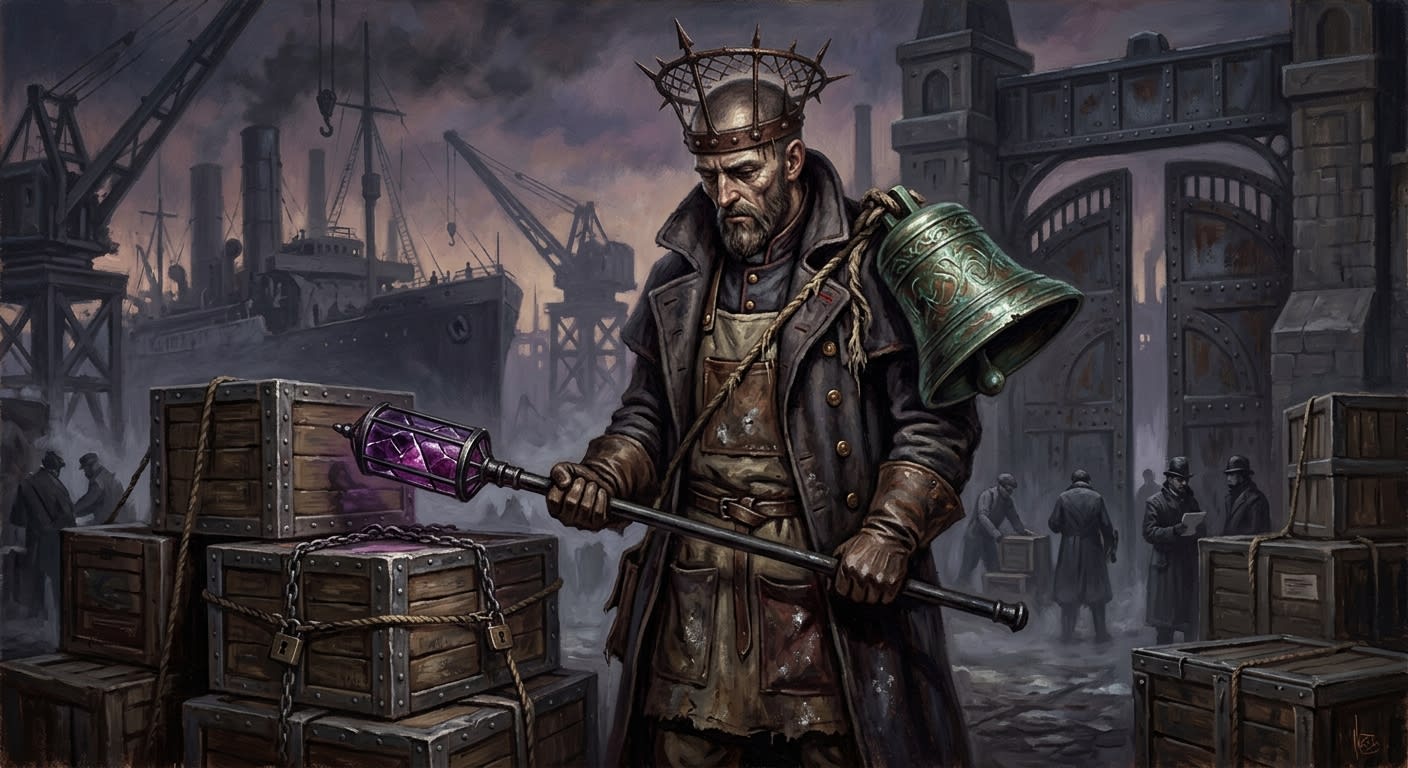
Saint Harrowglass
The saint denied twice and prayed to anyway
Saint Harrowglass is both authorised martyr and forbidden dockside patron: one rings over cowards at the Gates, the other keeps demon glass asleep in crates.
Codex Ref. III.2.01-093
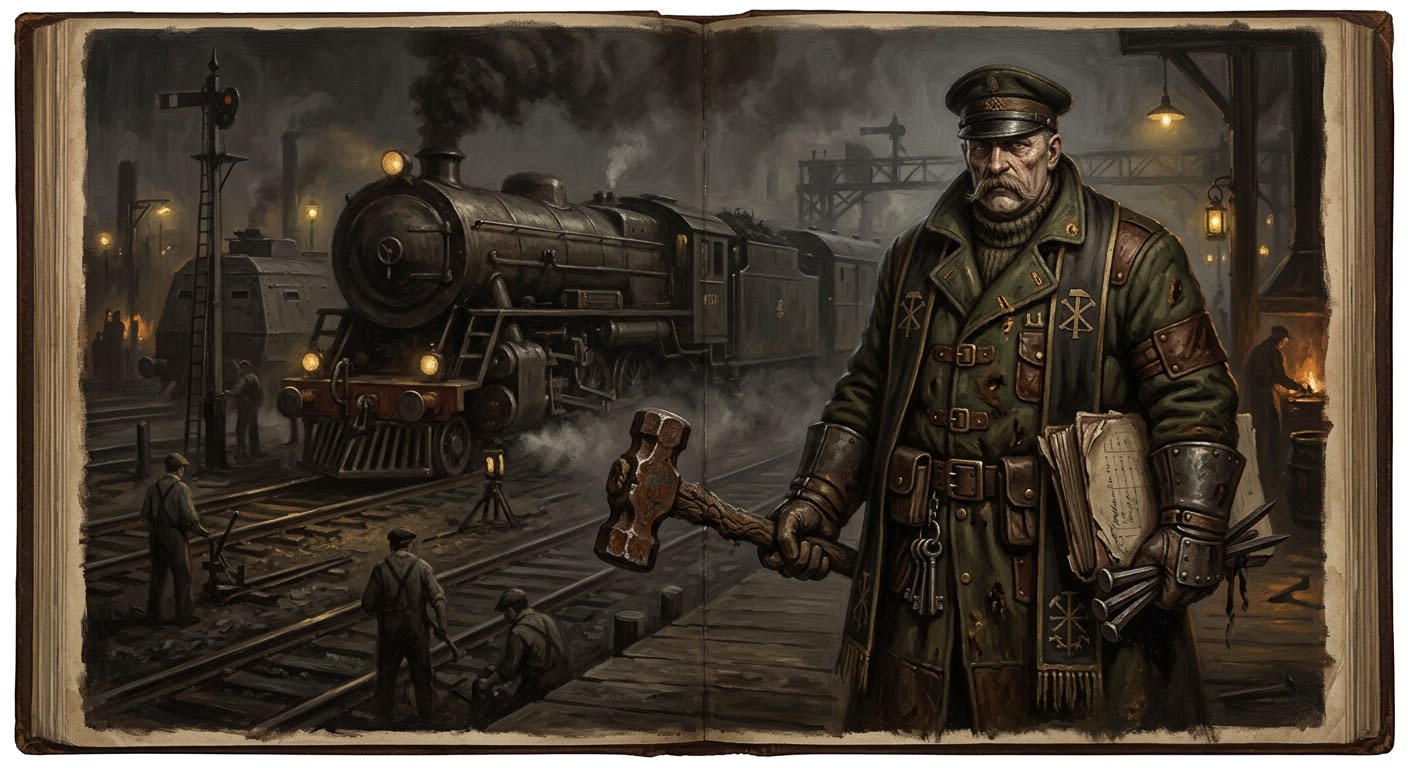
Saint Vandrail
The rail remembers; the hammer asks whether it tells the truth
Saint Vandrail, uncanonised and undenied, is the Guild of Rails’ hammer-fisted patron of track, gauge, night patrol, iron-blood, and useful delay.
Codex Ref. III.2.01-136
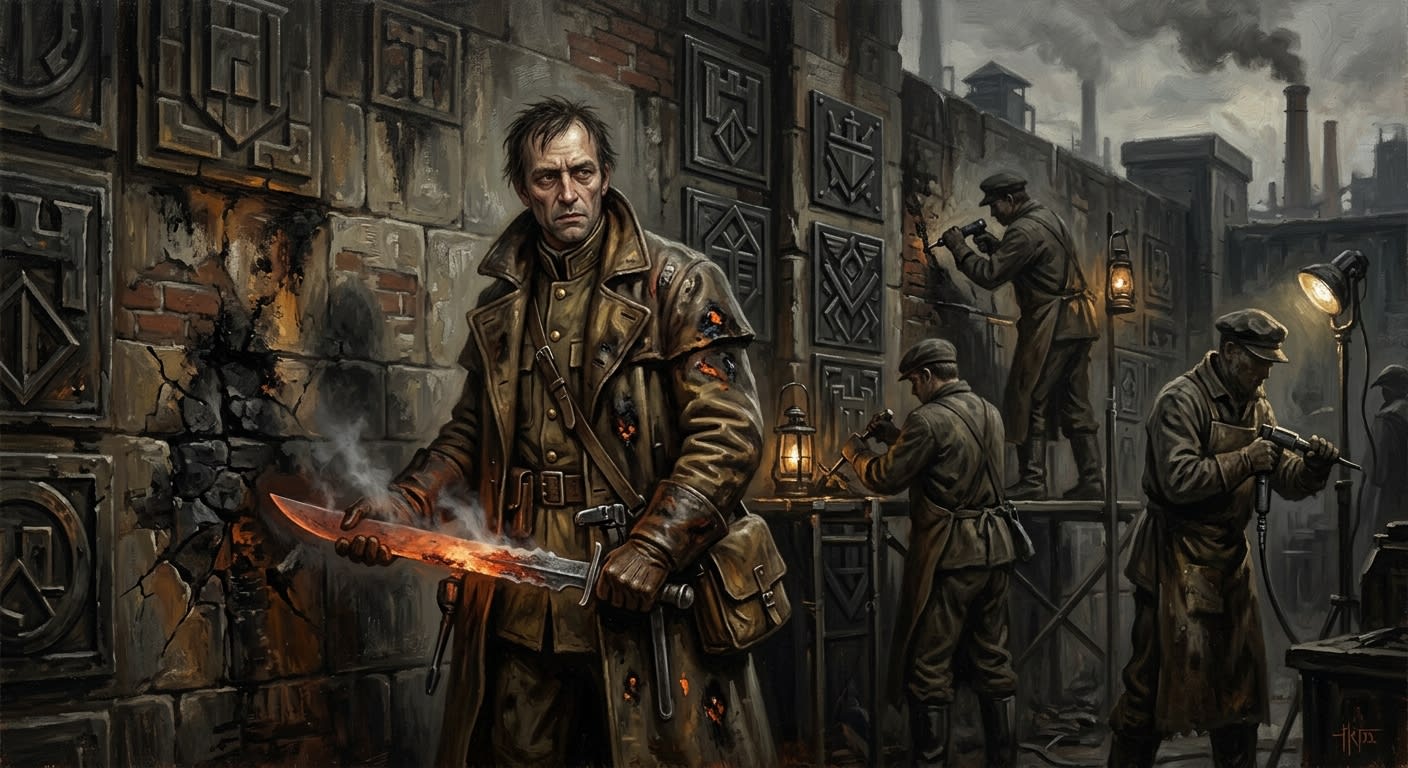
Saint Verral of the Clean Field
The hot blade is kinder than the singing wall
Doubtful patron of Sigil Inspectors and field scrapers, useful because his hot blade gives Heraldry a saint for every wall that must be made obedient.
Codex Ref. III.2.01-144
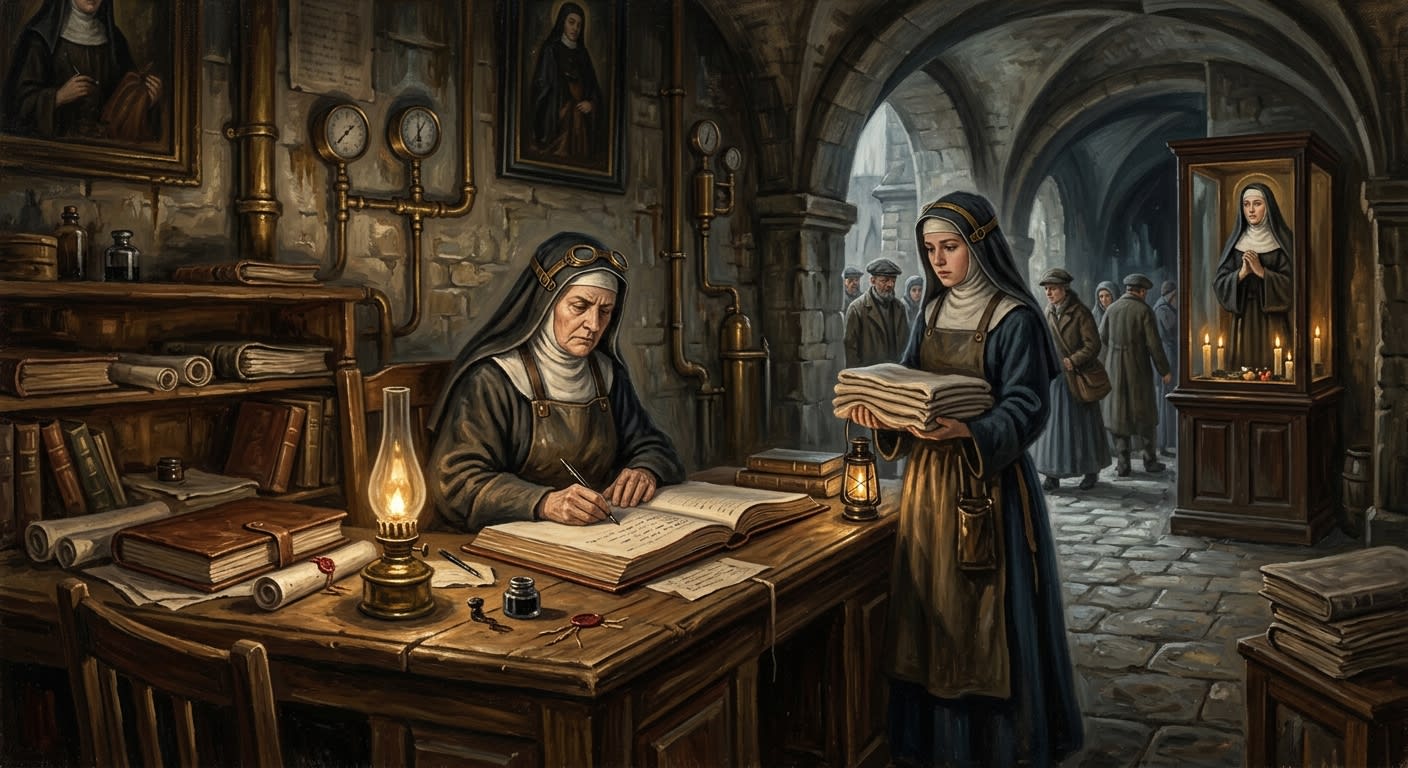
Sainte-Claire-des-Landes
Six miles from Saint-Malo, where laundry became evidence and damp became a route economy
The Breton convent of Margaux's ordinary years: damp stone, linen ledgers, a wax saint, nine thousand pilgrims, and twelve sisters still doing the work.
Codex Ref. II.1.09-092
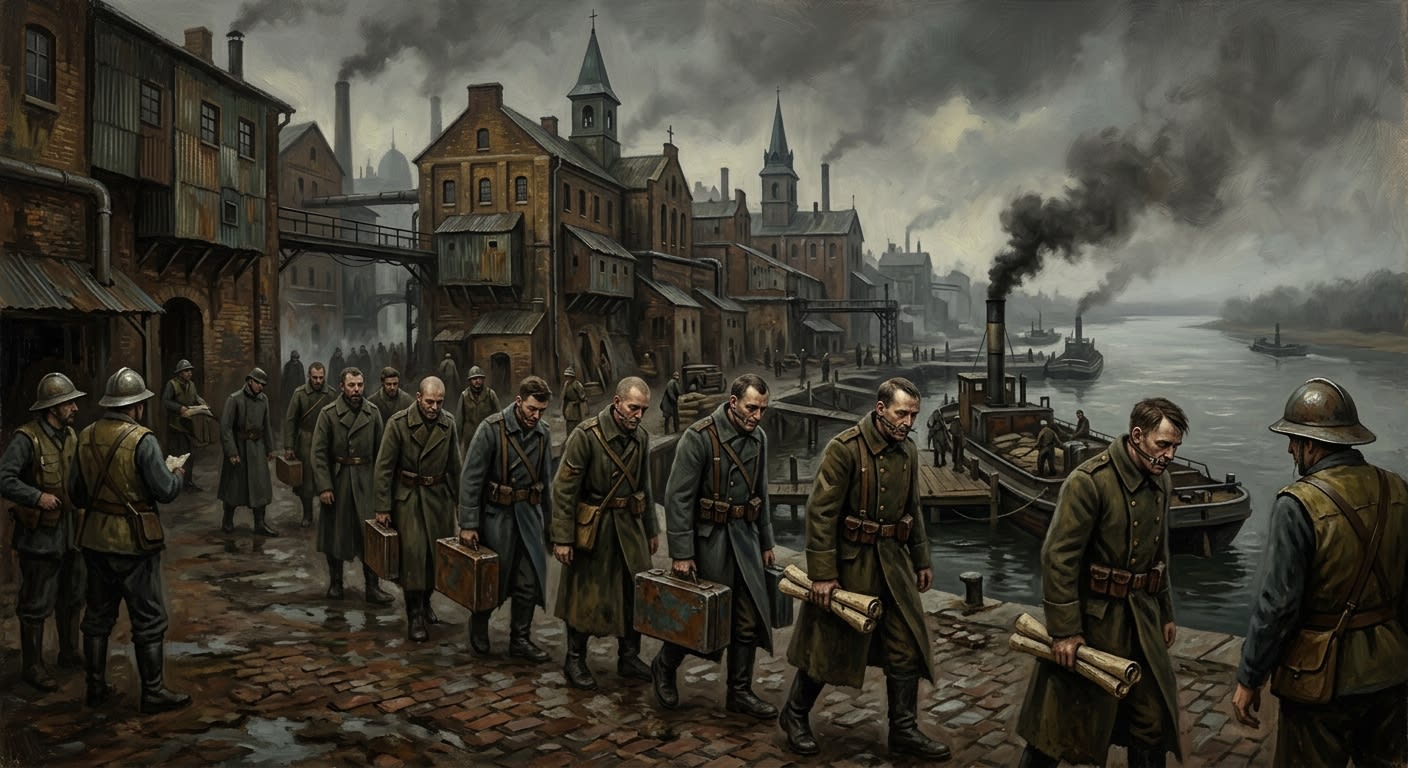
Sandomierz
Kraków owns the bridge; Sandomierz owns the arrival
Sandomierz is the Vistula recovery town that pulled forty-seven wired-mouth priests from Kraków’s crime and made downstream grief countable.
Codex Ref. II.3.06-019
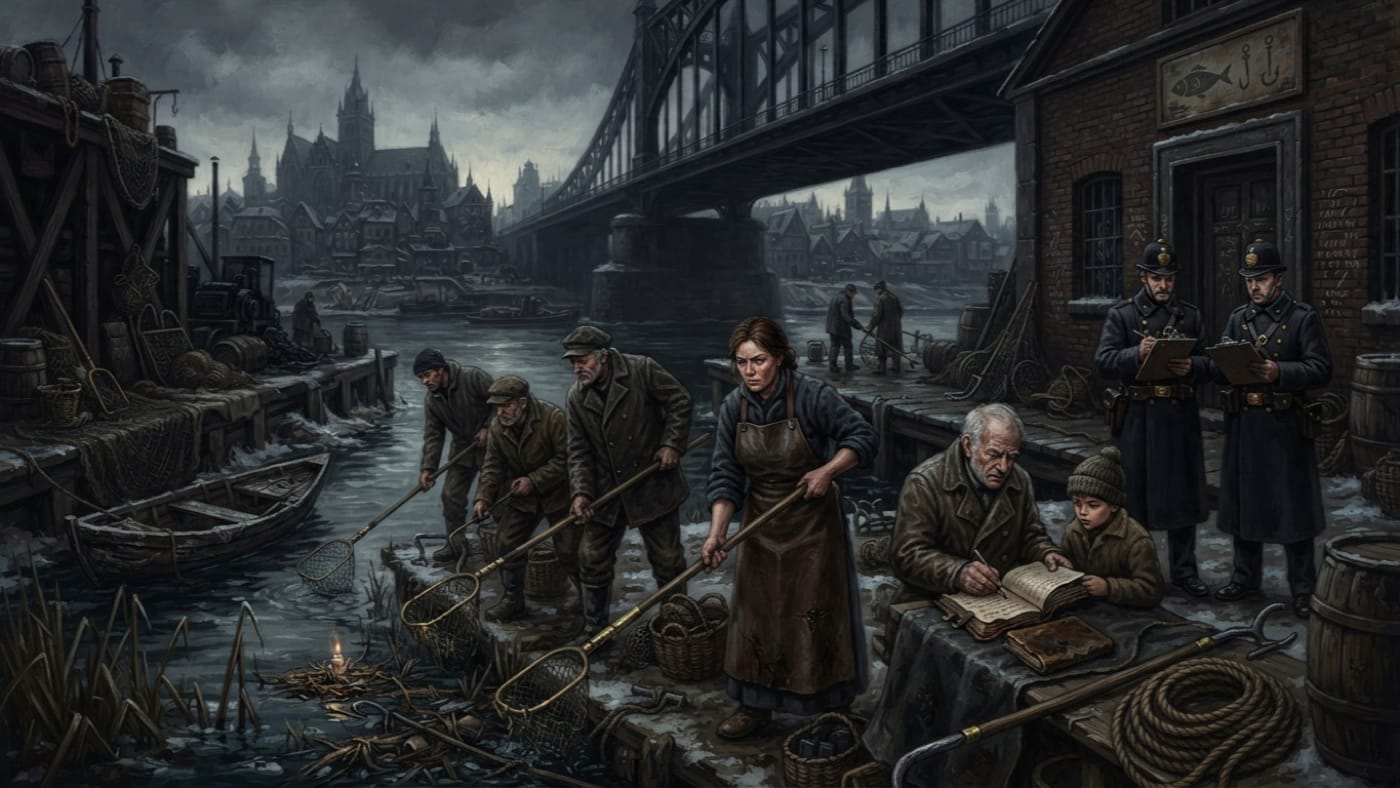
Sandomierz Fishermen’s Guild
The river sends evidence; the guild sends a count
A.S. 201 survey of Sandomierz’s fishing guild, whose damaged log records forty-seven drowned clergy and whose elected Wardens gather Vigil wicks while officials improve the paperwork.
Codex Ref. XII.26.03-001
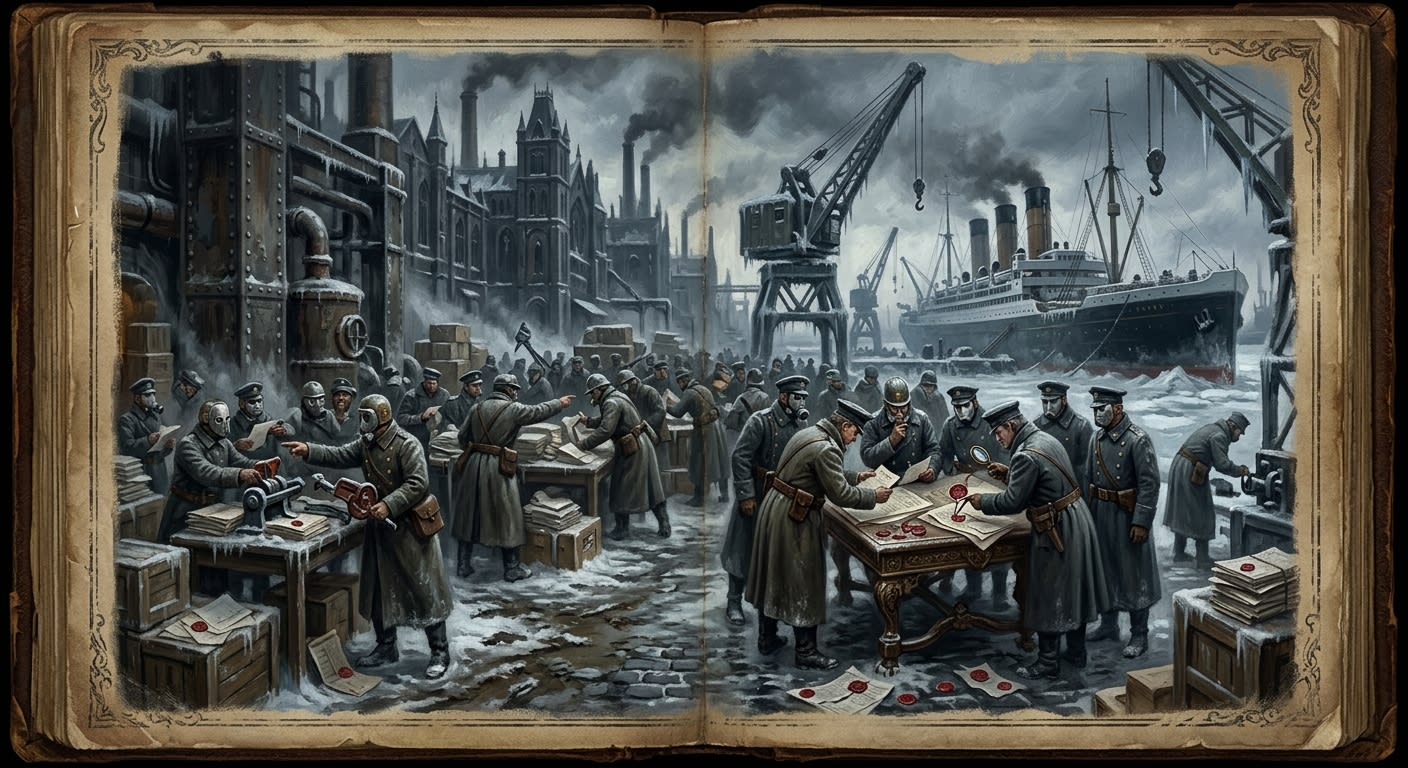
Seal-Forgers' Winter
When wax learned to lie, doubt became a licensed knife
The Seal-Forgers' Winter of A.S. 145 was the counterfeit seal crisis that froze ports, humiliated Masks and Seals, and made seal autopsy a billable Manifest Litigant right.
Codex Ref. VII.8.10-003
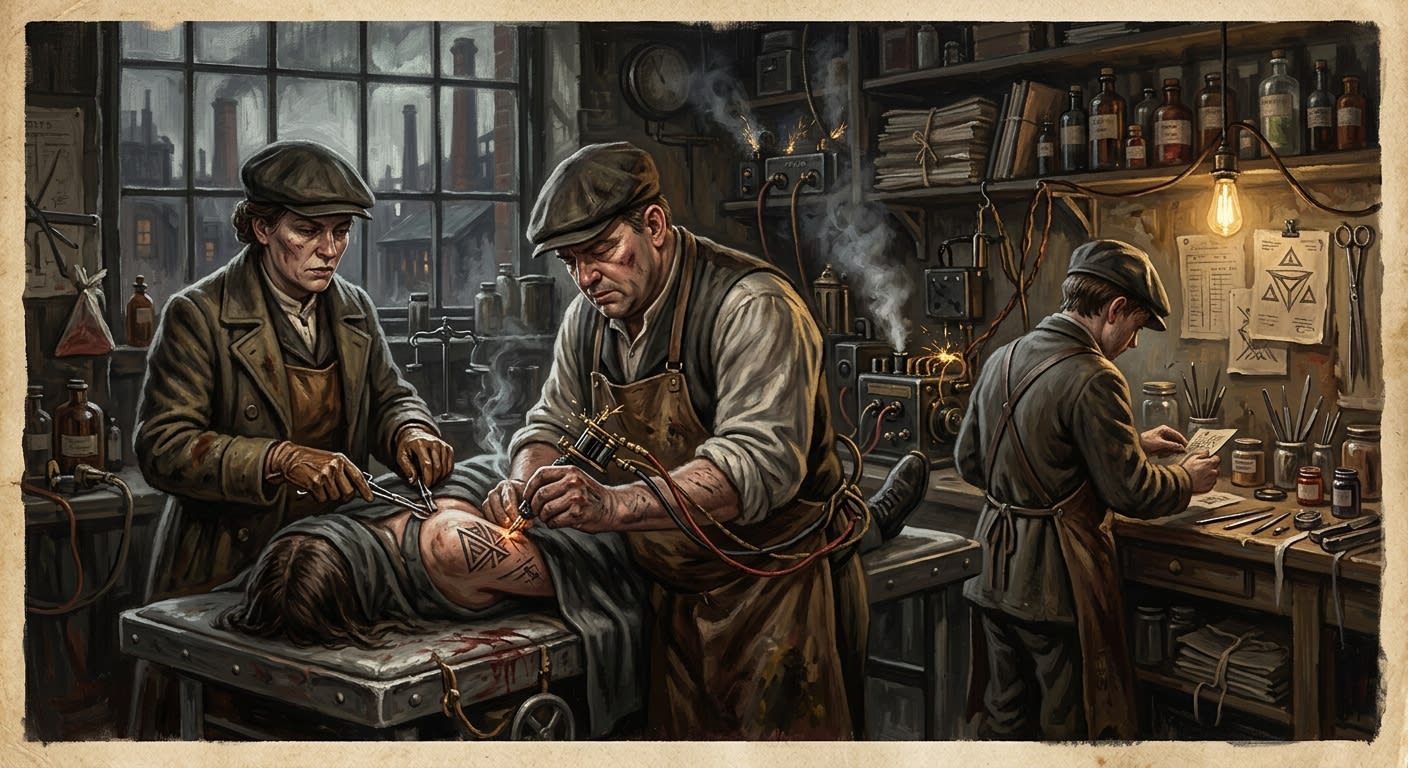
Shadow Angle Crews
The illegal geometry that teaches skin to lie back
Shadow Angle crews are unlicensed Brand-Smith cells that alter, downgrade, counterfeit, and erase bodily tri-marks wherever lawful identity has become intolerable.
Codex Ref. XI.5.01-001

Sigil Inspector
The man who tells the world what it is allowed to look like — and scrapes the rest
The Bureau of Heraldry tells the world what it is permitted to look like. The Sigil Inspector is the man who walks the world and checks — codex in hand, swatch at the hip, blade heated to scraping temperature.
Codex Ref. XII.43.01-001

Sister Agata Wiśniewska
The witness who counted wire when action failed
Poor Clare witness to the A.S. 18 Night of Knives whose hidden psalter testimony, ratified in A.S. 148, made forty-seven murders impossible to tidy.
Codex Ref. III.2.01-087
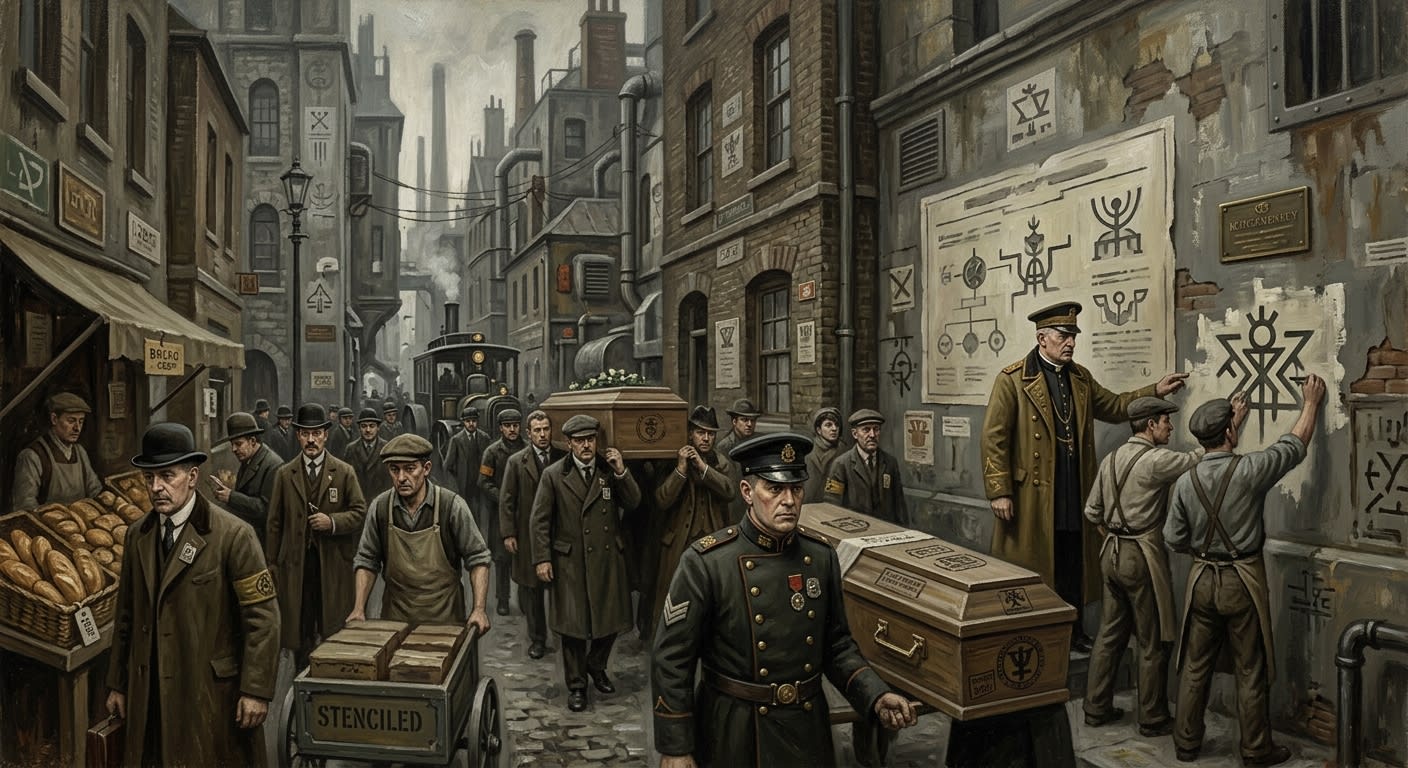
Standing Order 14-C
Every surface shall confess before speech begins
Standing Order 14-C teaches walls, bread, badges, coffins, and brows to confess: no lawful surface remains visually unclaimed.
Codex Ref. XIII.1.14-090
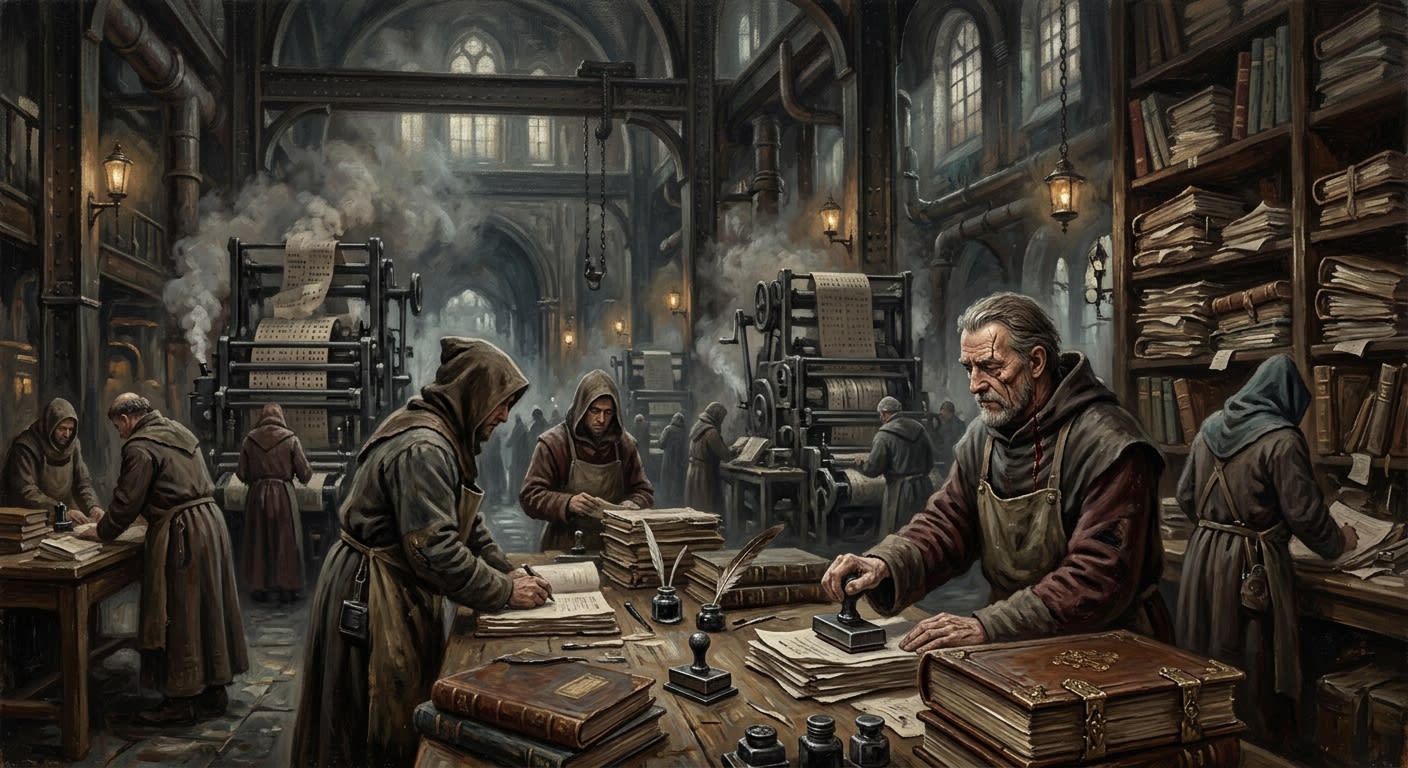
Standing Order 22-D
The law that taught silence to file itself
Standing Order 22-D makes silence legible: the pause before assent, the scar before paperwork, the late answer that becomes evidence.
Codex Ref. XIII.1.99-084

Stitch-Score Couriers
Where paper burns, the hem remembers the tune
Mid-rank melody-smuggling couriers who hide forbidden middle bars in cuffs, hems, vestments, infant bands, and every domestic cloth authority mistakes for harmless labor.
Codex Ref. XII.48.02-001
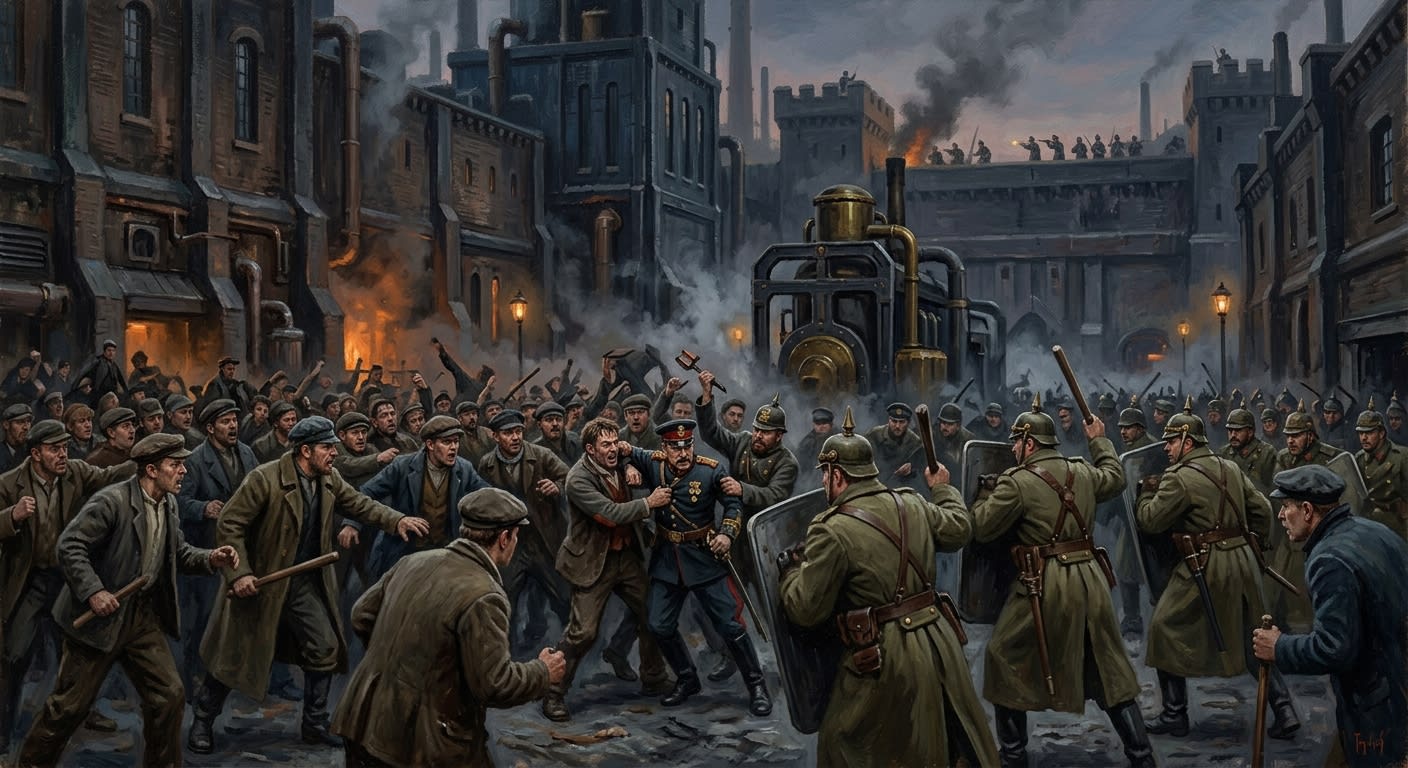
The Angle Riots
Two degrees of error are enough to make the state honest by accident
The A.S. 119 Angle Riots at Bastion-Irongate began with miscalibrated brand-irons and ended with executions, re-inspection doctrine, and the cold proof that a false mark can still command the body.
Codex Ref. VII.8.10-034
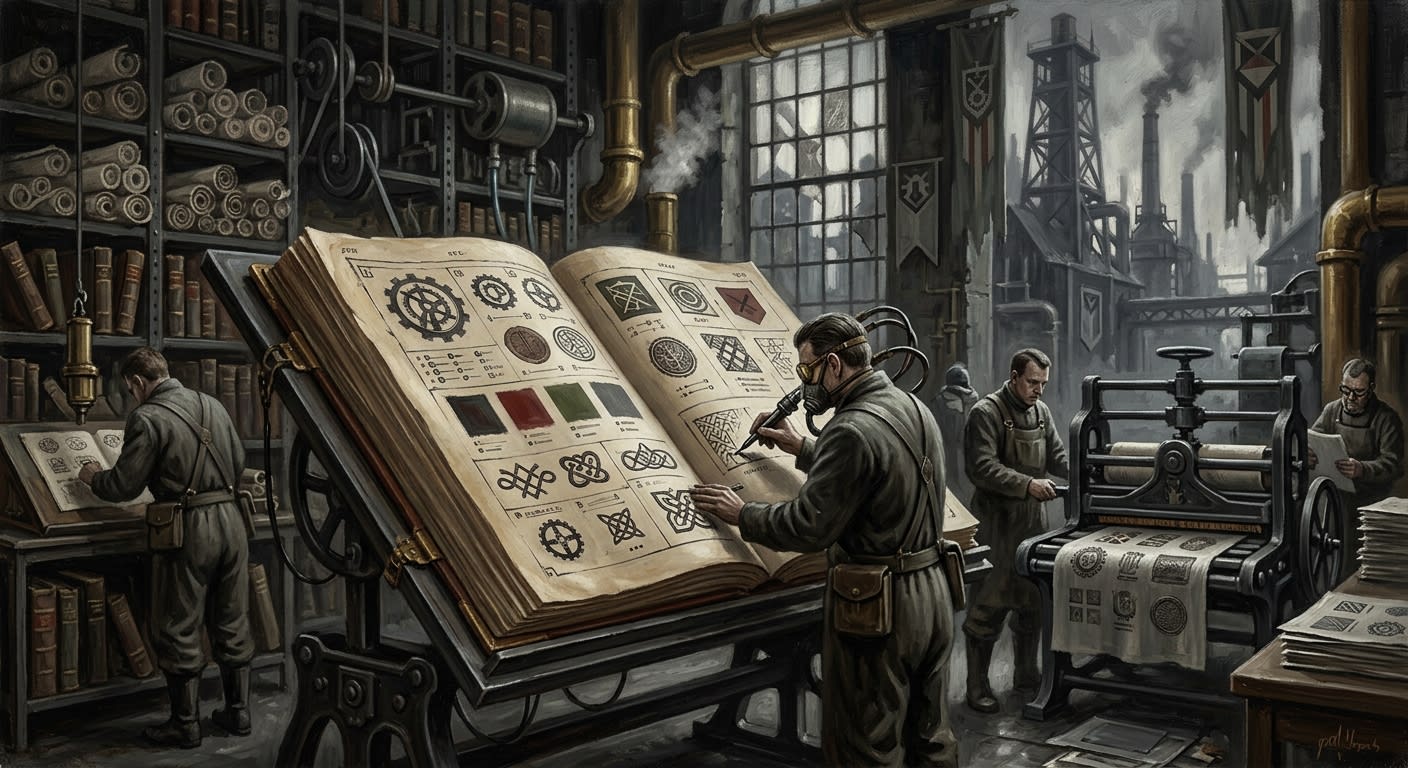
The Armorial of the Faithful
The book by which even colors learn obedience
The Armorial teaches every banner, crest, seal, colour, knot, and shop sign in the Synod the first virtue of a surface: obedience.
Codex Ref. VIII.1.03-002
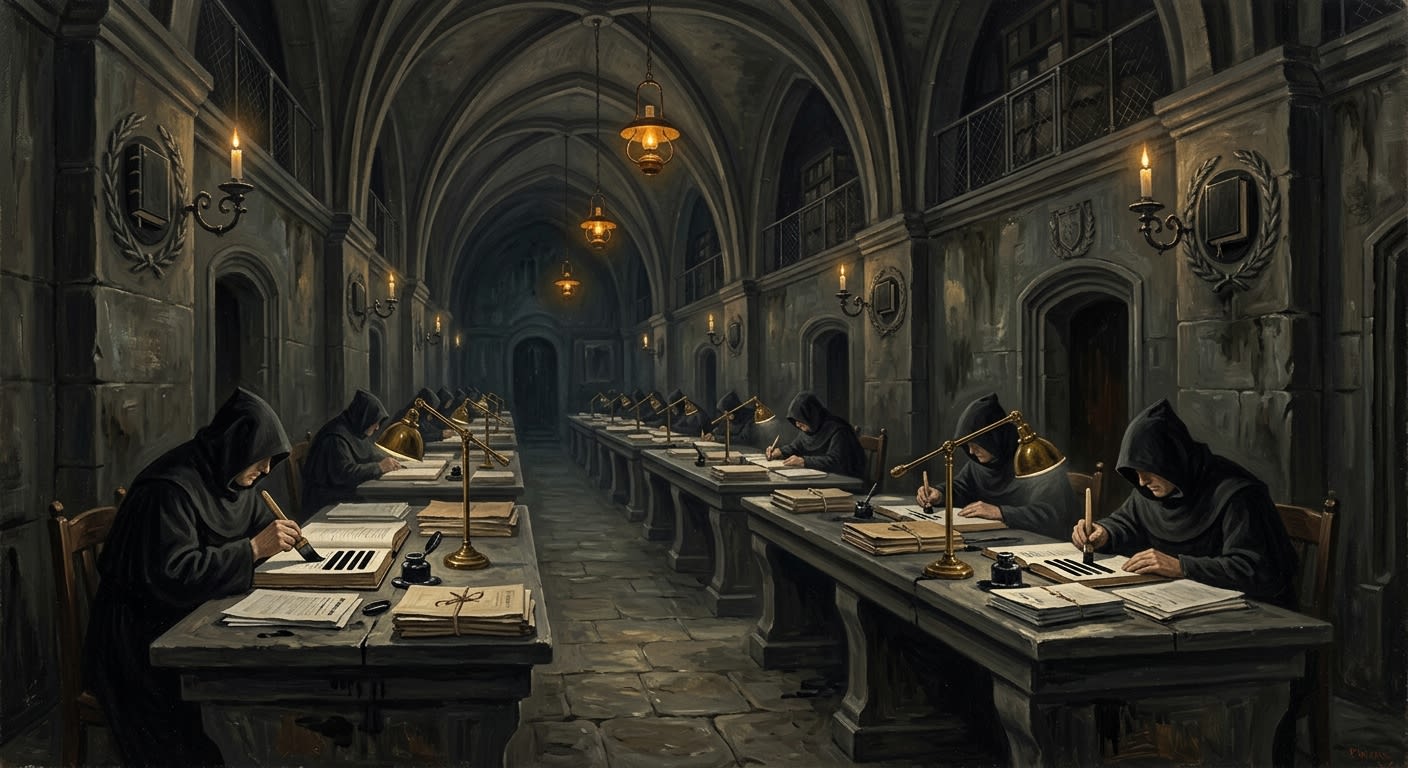
The Bureau of Silence
The word unspoken cannot wound. The word that reaches its target already has.
The Bureau of Silence does not burn books. Burning admits they existed. It renders knowledge into a state of administrative non-occurrence — and then redacts that too.
Codex Ref. III.4.19-031
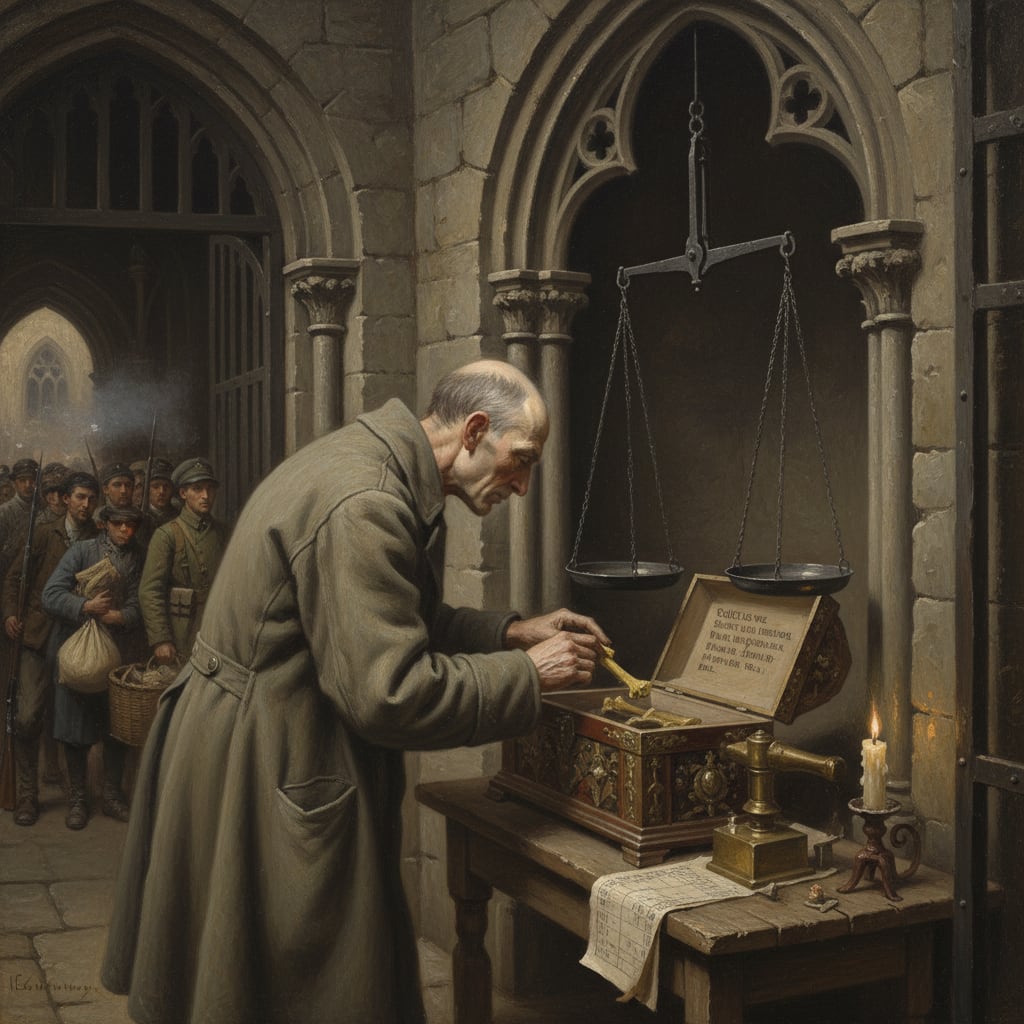
The Commerce Clerk (Tariff-Chapel Weigher)
The man who stands between a bastion and famine, and who resolves the question with the splintered bone of a saint.
The Synod's most bribable sacrament: the chalk-fingered clerk whose iron scale, calibrated against saint-bone, determines whether a bastion eats.
Codex Ref. XII.8.01-001
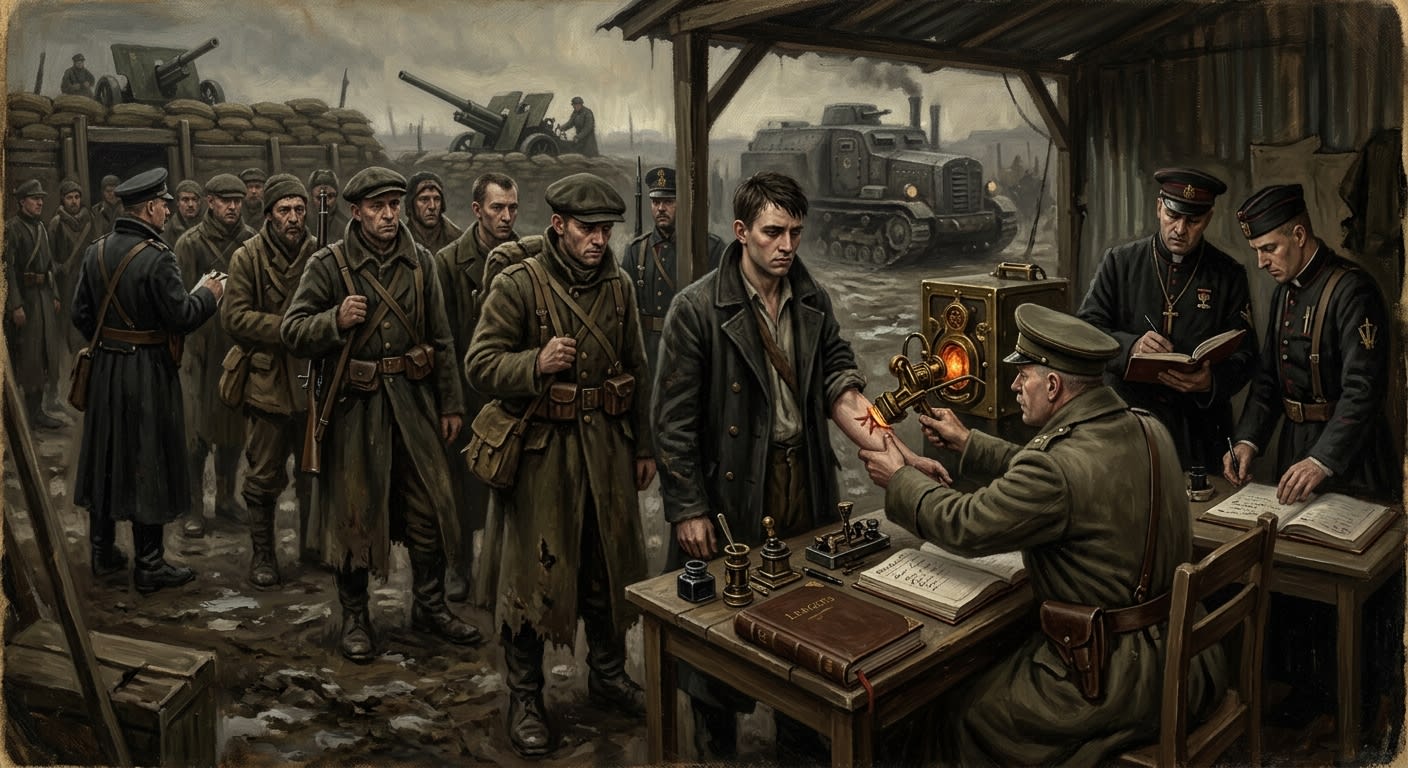
The Compulsory Marking Decree
The day paper lost authority and flesh became the Bureau's preferred document
The A.S. 113 Compulsory Marking Decree made bodily tri-marks mandatory at forward-zone checkpoints after forged papers killed eighty-seven at Bastion-Przemyśl.
Codex Ref. VII.8.10-035
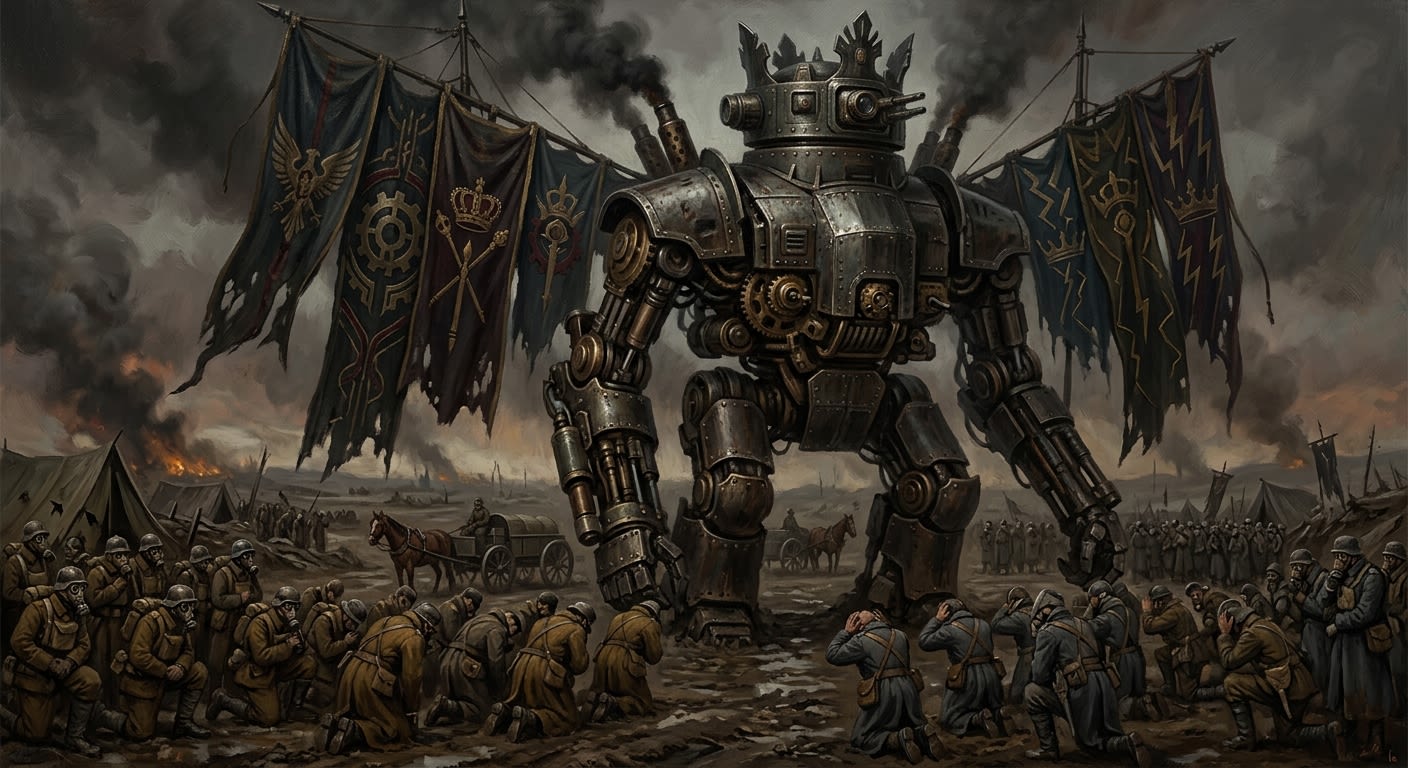
The Crownguard Titans
Pride's first argument is always height
Atheron's crowned vanguard: armoured giants whose banners teach knees to bend before artillery has the courtesy to speak.
Codex Ref. IV.1.07-008
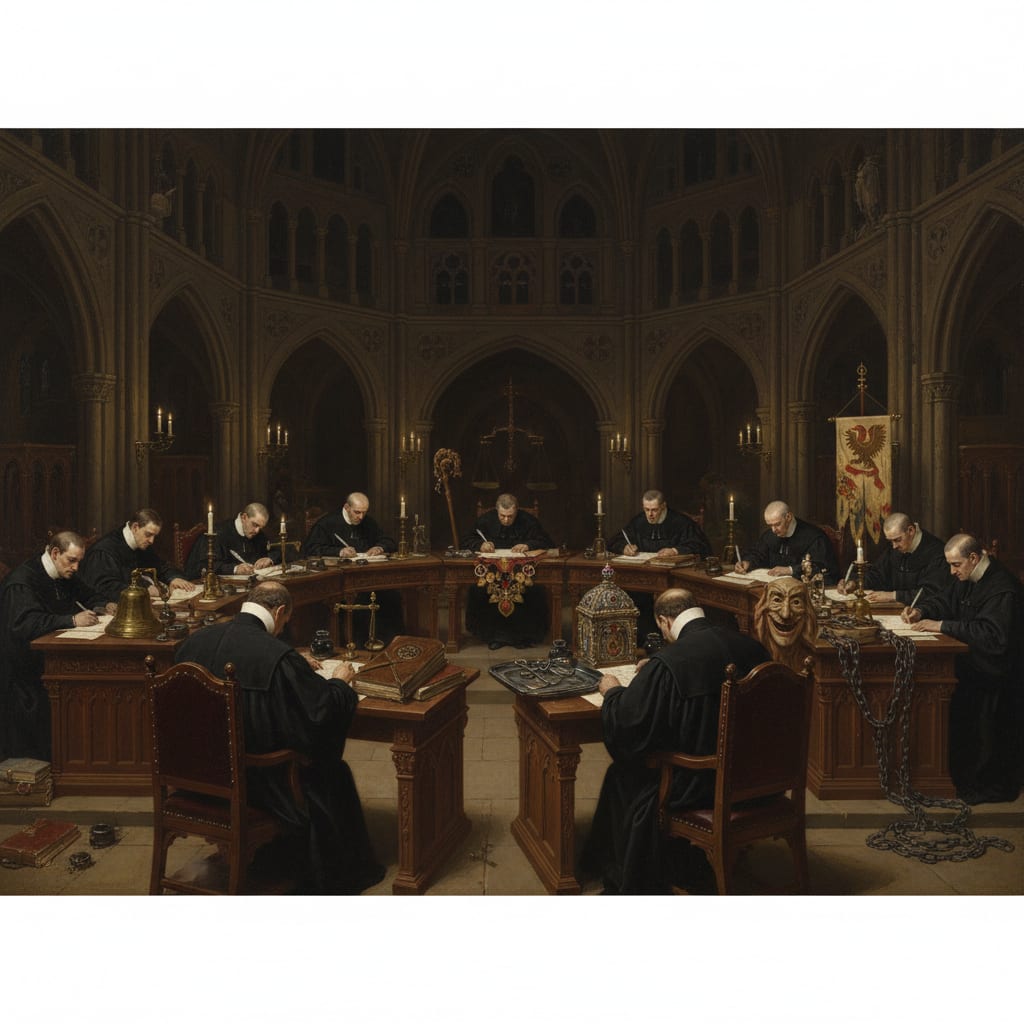
The Holy Bureaus
Twelve Instruments of Providence, or Thirteen If You Count the One That Does Not Exist
The twelve sacred organs through which Strasbourg bends a continent to its will. Each Bureau claims a charism of governance descended from the Apostolic Sundering. Their clerks are legion, their archives endless, their contradictions — by design.
Codex Ref. III.3.01-001
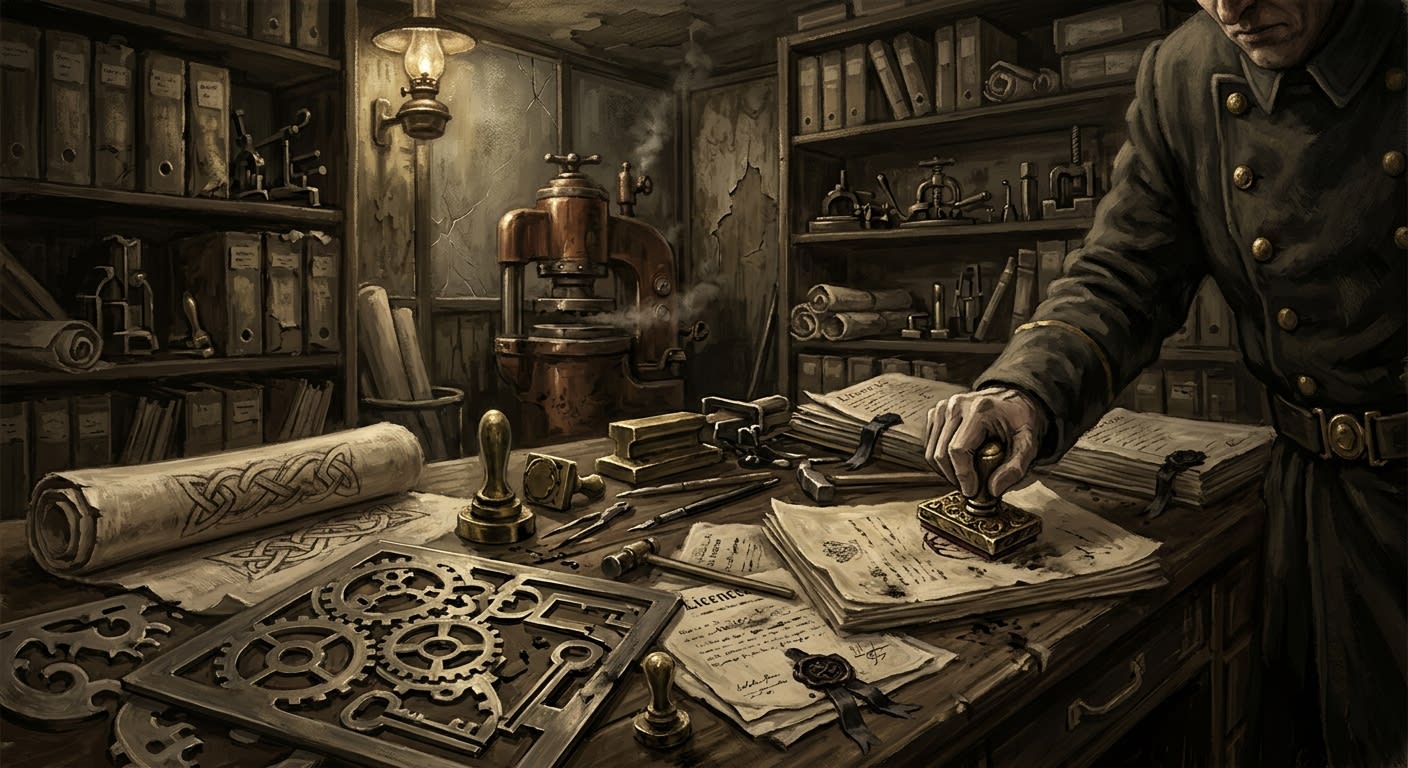
The Knotwright Registry
Where every lawful threshold becomes a number, and every number becomes a leash
The Knotwright Registry is Heraldry's A.S. 112 tool-custody office for Gate-Carvers, where stencils, punches, rubbings, licences, and trembling hands become evidence.
Codex Ref. VIII.1.03-002
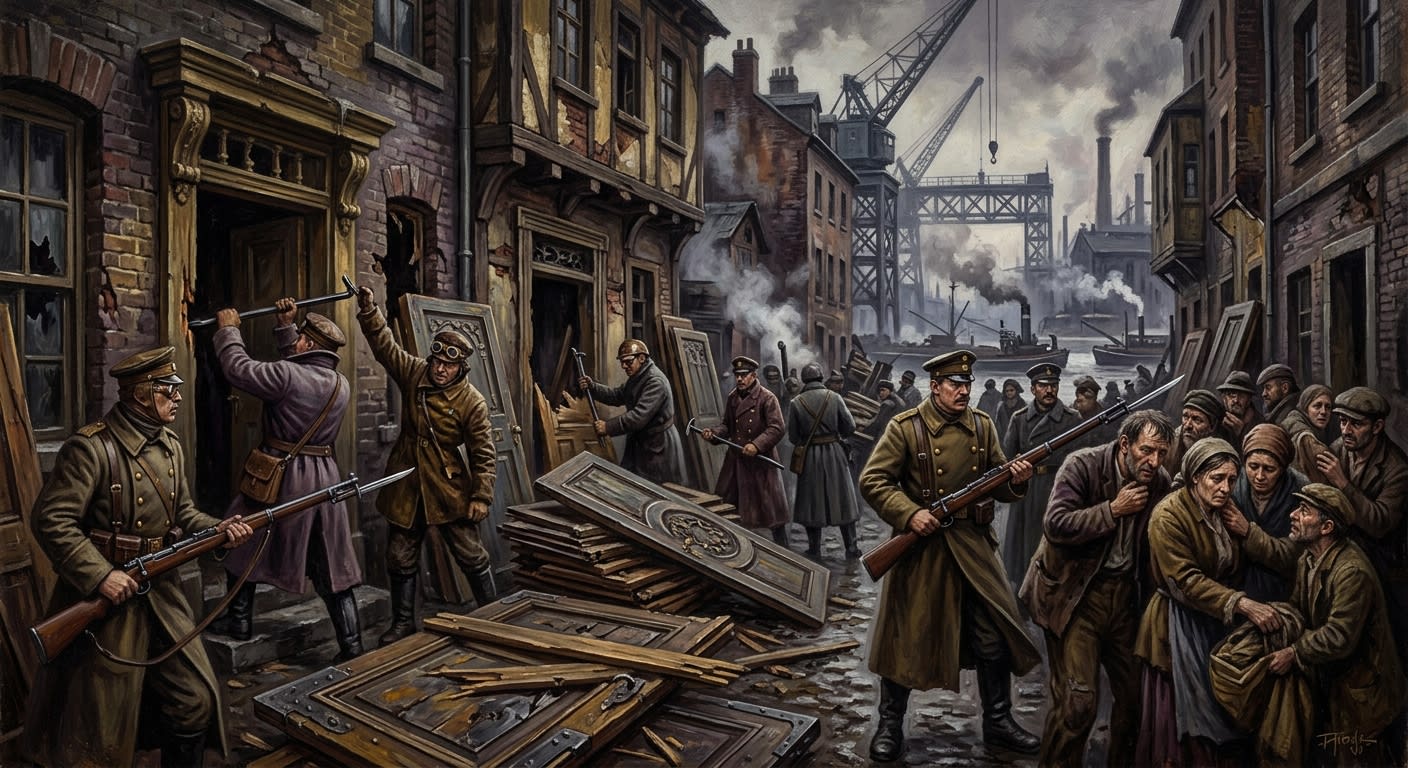
The Lintel Pogroms
When fourteen correct doors made a district homeless
The A.S. 112 Lintel Pogroms stripped Cologne's river-quarter doors after fourteen perfect false Knots exposed stolen stencils, counterfeit punches, hidden bodies, and a trembling hand fit for a wall.
Codex Ref. VII.8.10-112
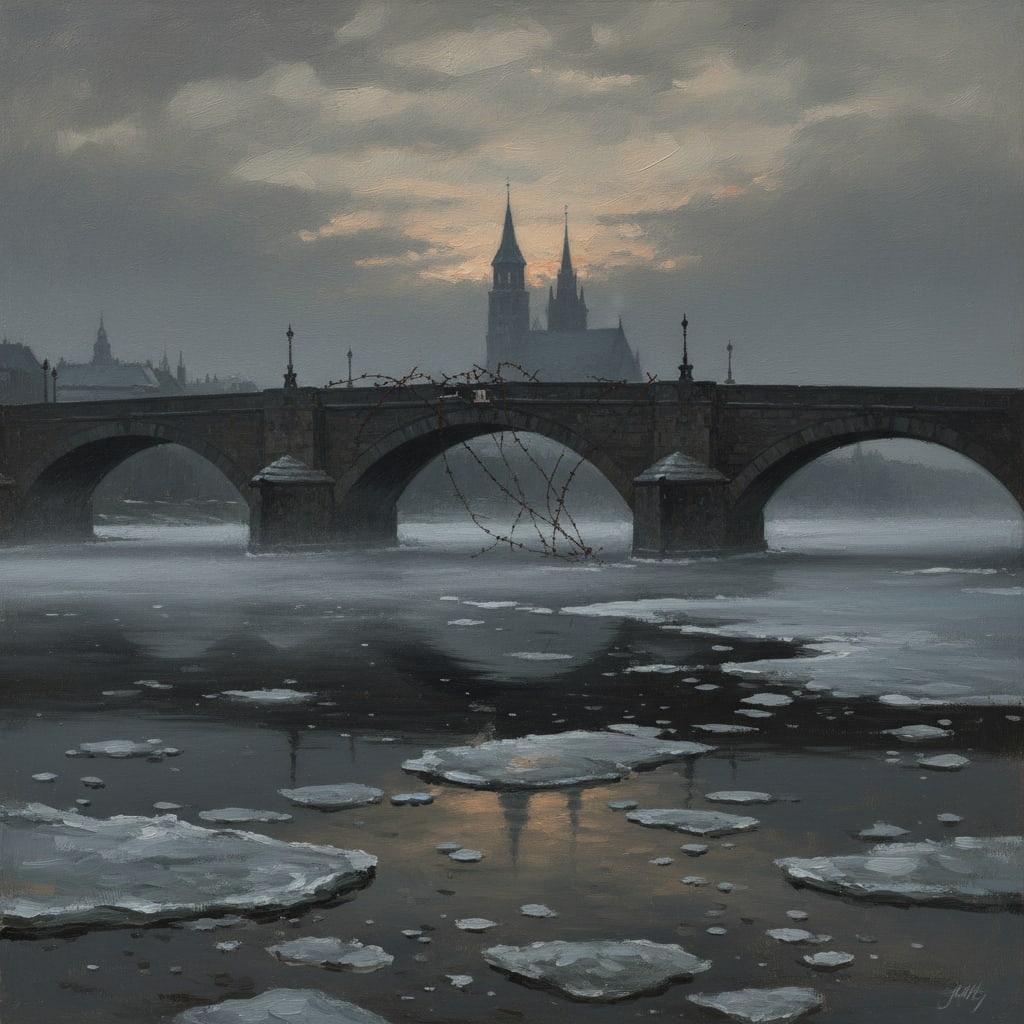
The Night of Knives in Kraków
Forty-seven mouths wired shut so that no prayer could escape
Forty-seven clergymen seized in the night, their mouths wired shut with iron wire, and cast from the Dębnicki Bridge into the frozen Vistula. The Bureau spent one hundred and thirty years ratifying the narrative; it has been collecting the candle wicks ever since.
Codex Ref. VII.8.01-001
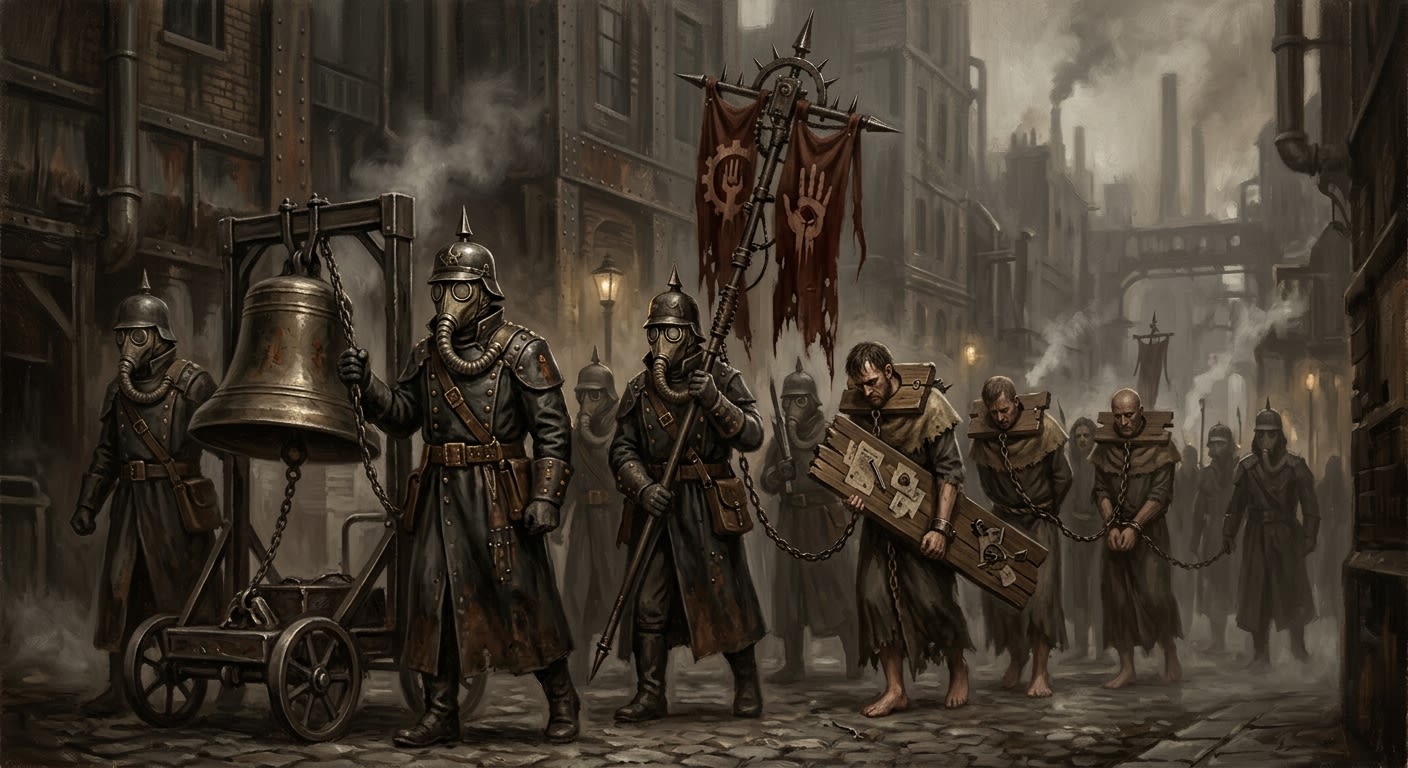
The Order of Saint Ephrath
Shame made visible is shame made useful
Ephrath displays Purity's hand. It nails error to doctrine, marches shame through the street, and files the crowd's instruction by bell.
Codex Ref. XI.6.01-002
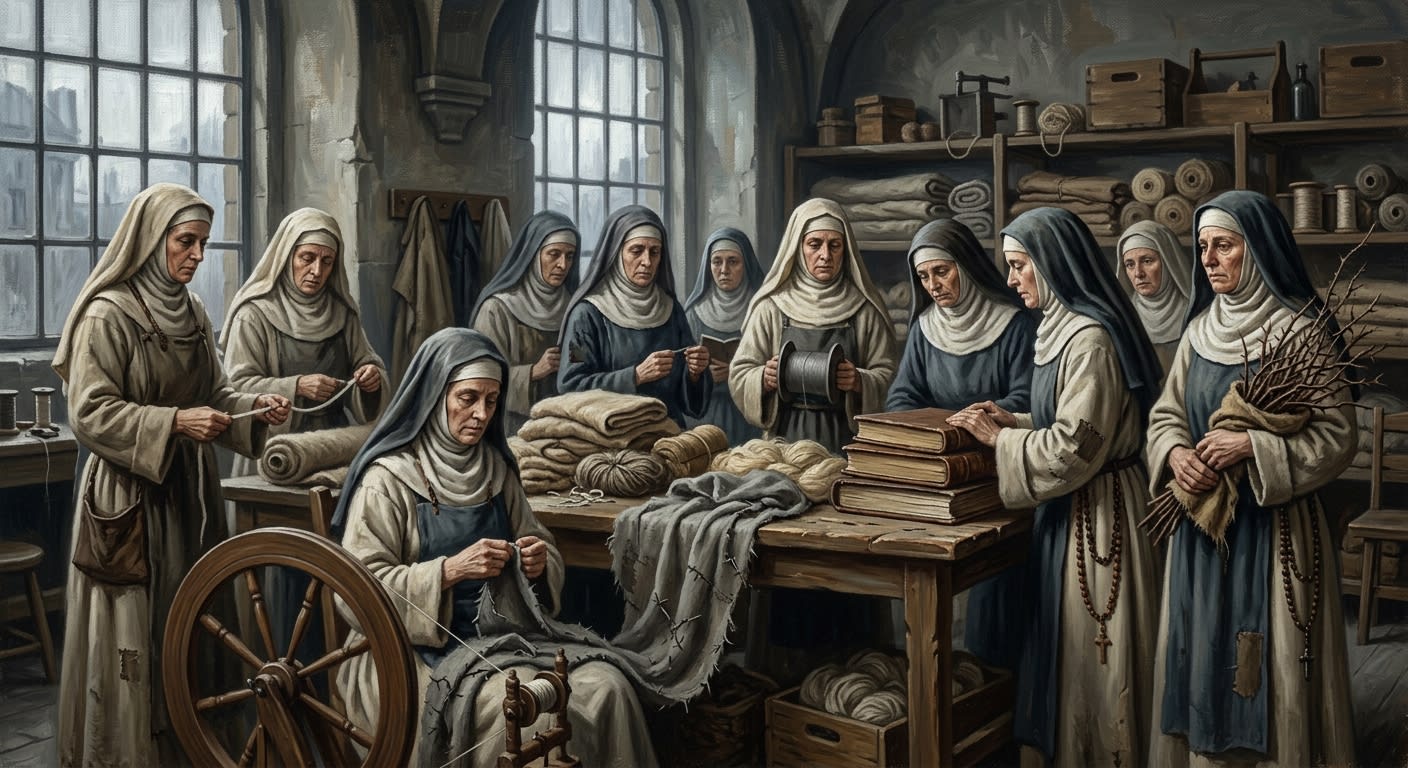
The Order of the Blessed Thorn
Linen, old women, and the machinery that discovered humility after it became profitable
A Breton mendicant sisterhood made Venerable after Margaux: twelve sisters, a house of linen, and enough humility to embarrass the Bureaus.
Codex Ref. XI.7.01-001
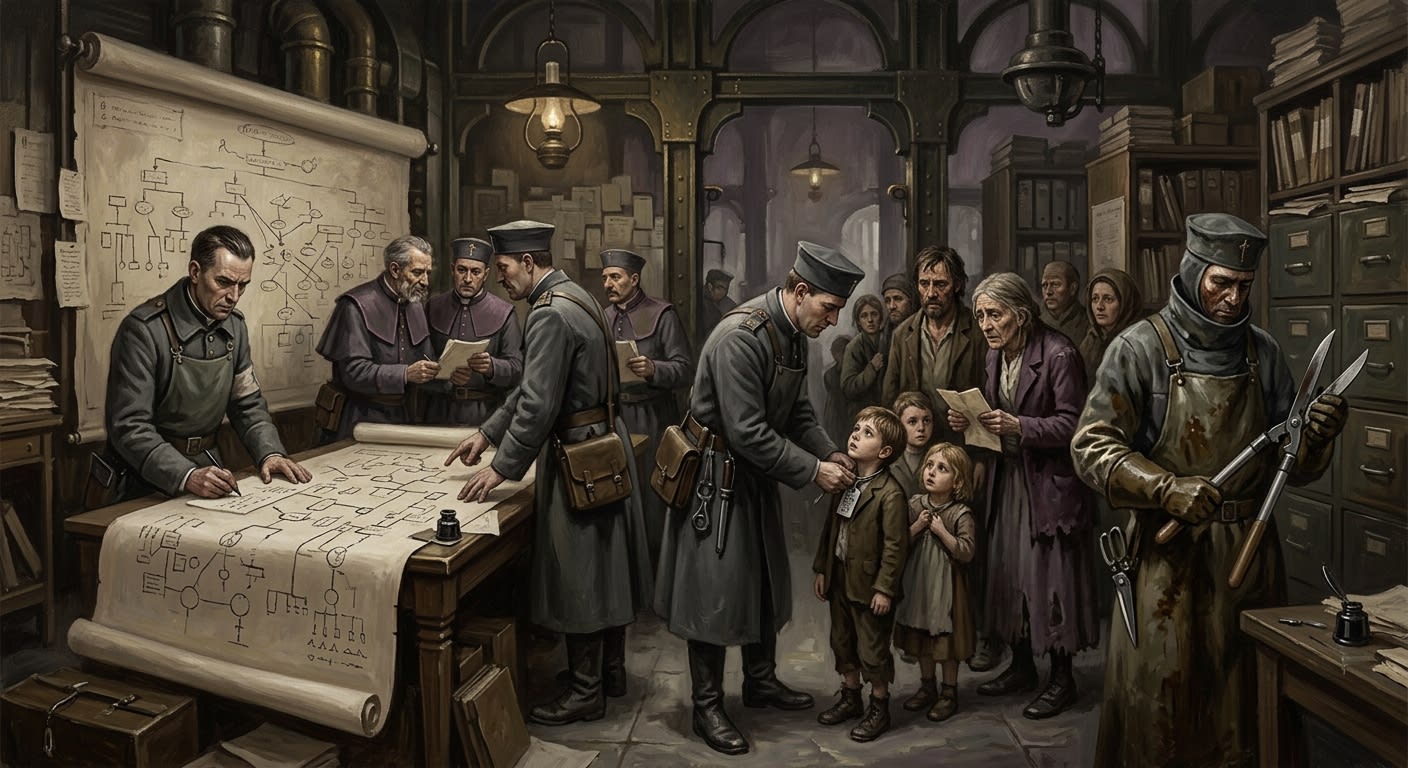
The Order of the Root
Where family trees are pruned with forms, cuffs, and holy shears
The Order of the Root is the Synod's hereditary-contamination apparatus: kinship charts, child tags, bloodline review, and mercy sharpened into pruning shears.
Codex Ref. XI.1.05-001
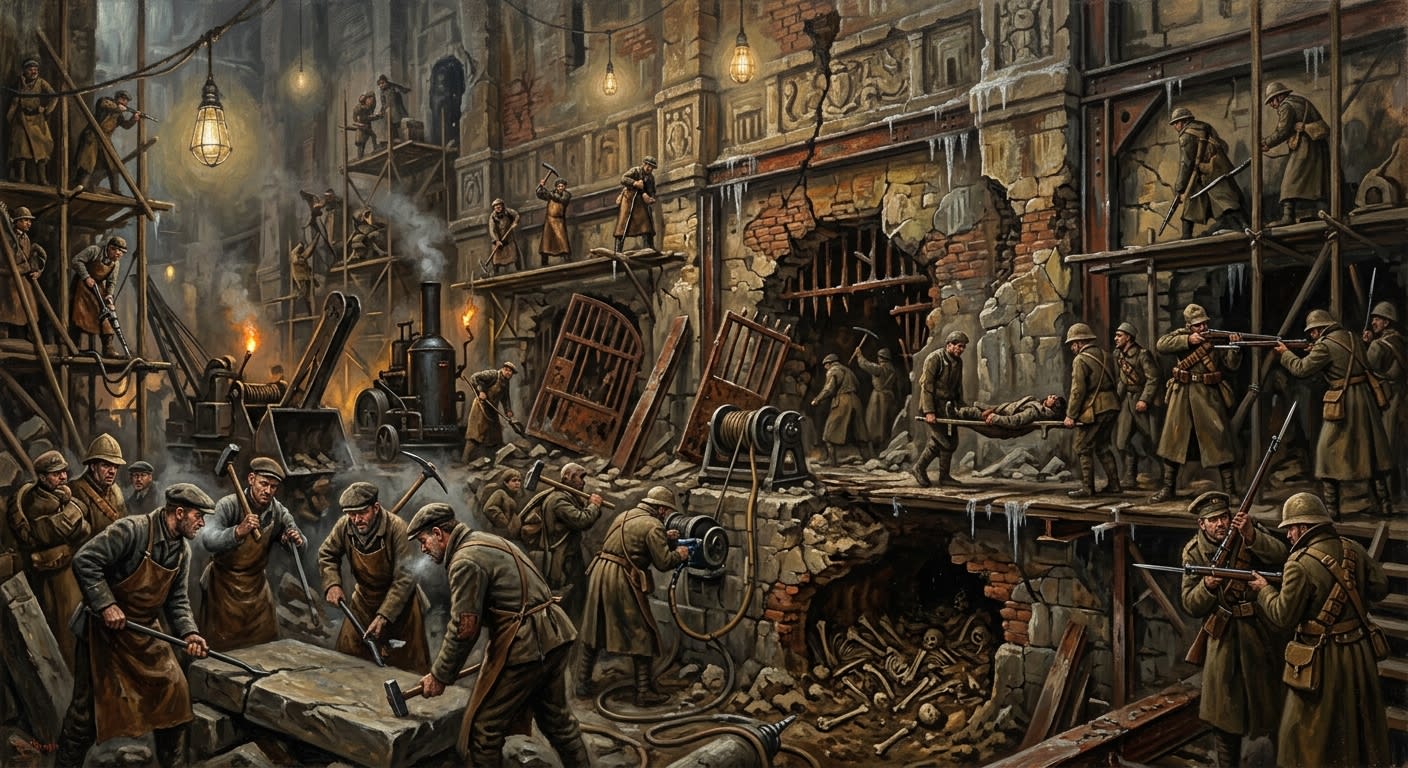
The Ossuary Breach Winter
When the dead tapped back, every workshop discovered it had always been behind schedule
The A.S. 134 Ossuary Breach Winter at Bastion-Irongate turned grave-seal defects, hollow walls, and moving dead into nine months of emergency Gate-Carver labour and stone-dust attrition.
Codex Ref. VII.4.25-001
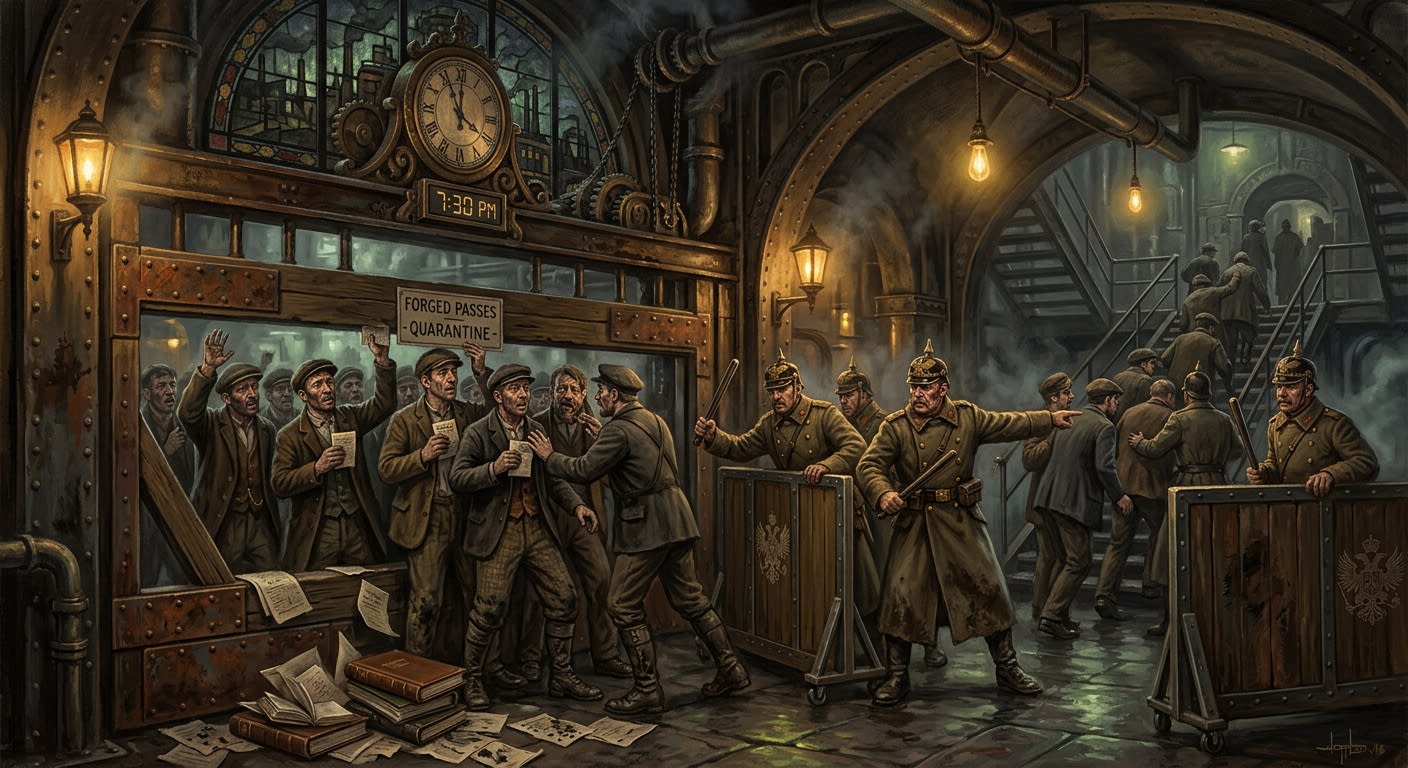
The Paper Plague of A.S. 112
Where forged paper entered Przemyśl and flesh became policy
The Paper Plague of A.S. 112 was the Bastion-Przemyśl forged-pass disaster that killed eighty-seven, locked the western perimeter, and birthed bodily identity law.
Codex Ref. VII.8.10-036
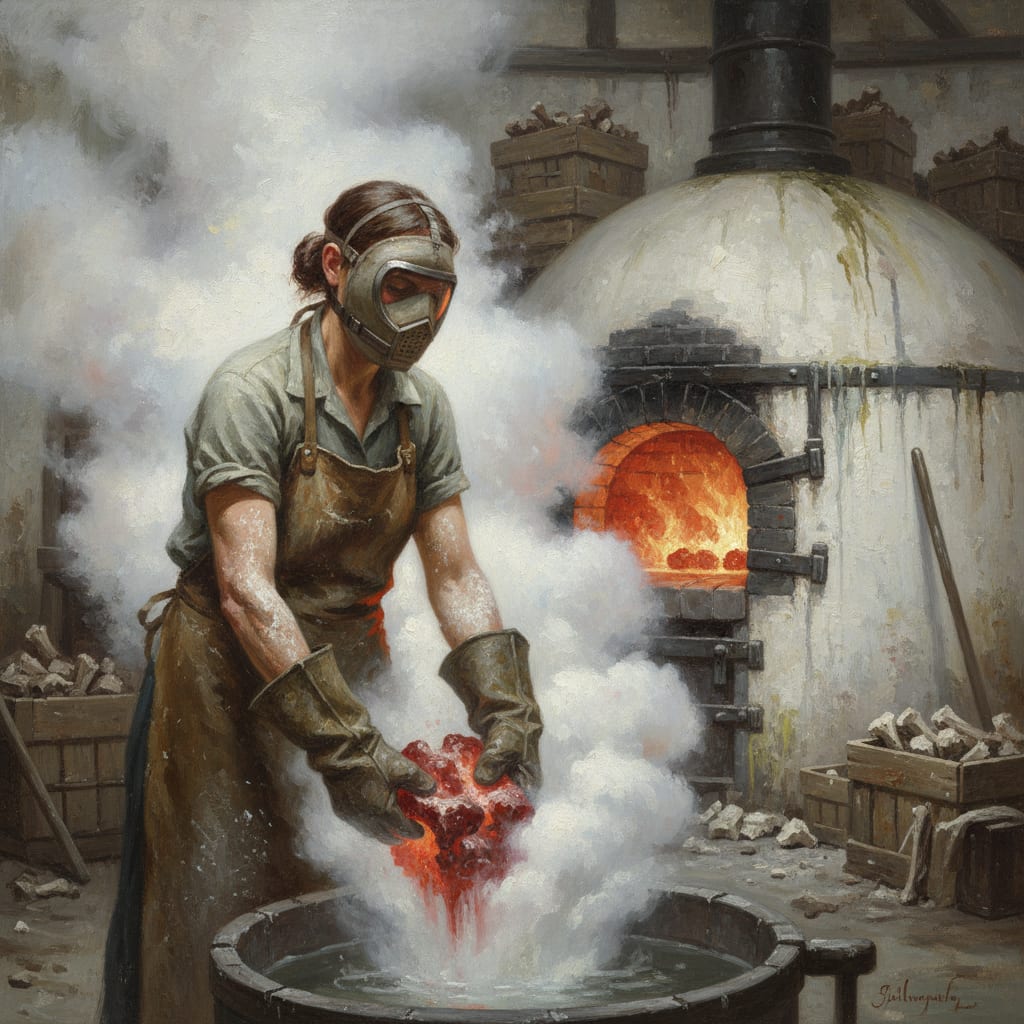
The Saint-Bone Melter
The wall is the only sermon the Enemy has ever been forced to hear
The artisan who feeds the bones of saints to the kiln and receives in return the mortar that holds the Sagittal Line together. The arithmetic is simple and brutal: a femur in a reliquary inspires; a femur in a wall holds.
Codex Ref. XII.40.01-001
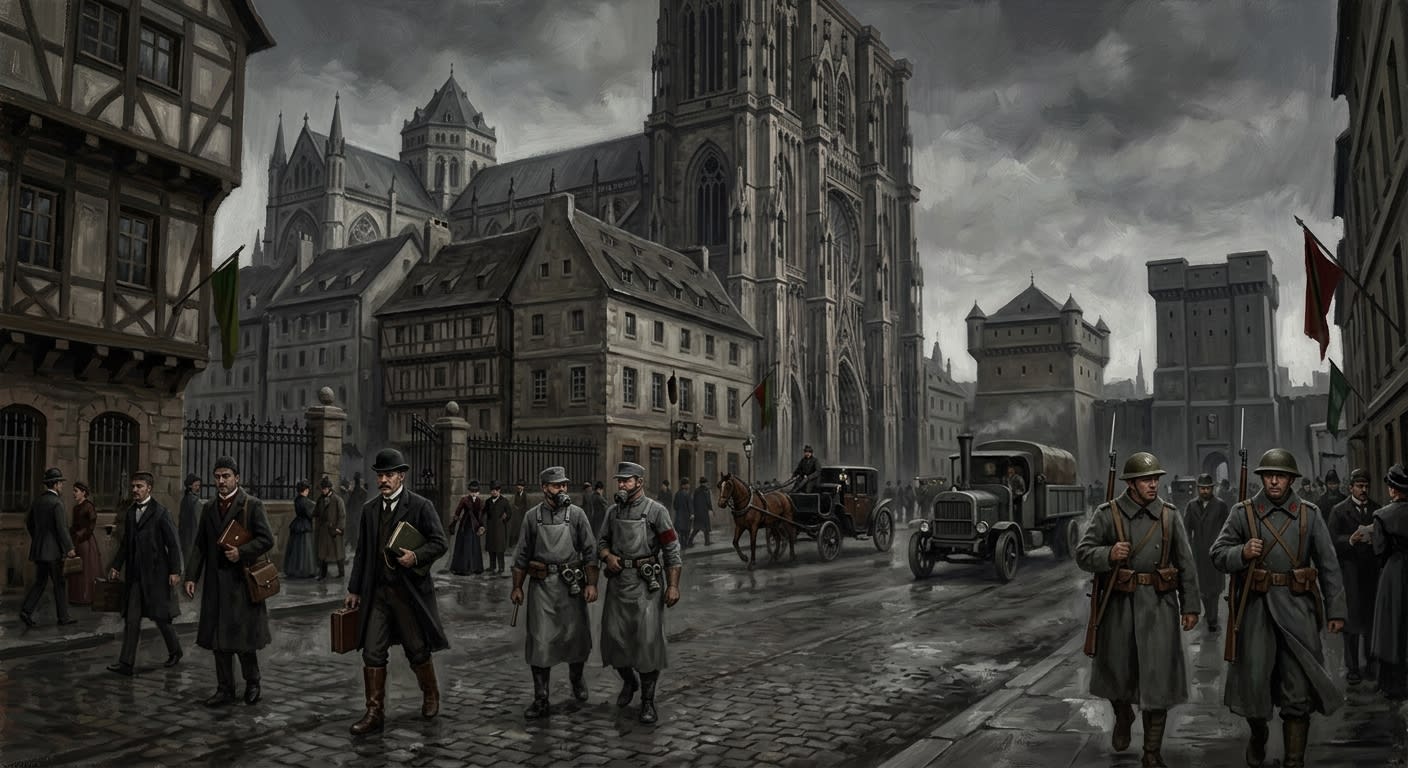
The Sanctum Mile
Strasbourg's white corridor, scrubbed clean enough to hide the blood
The Sanctum Mile is Strasbourg's white civic-sacral corridor: cathedral stone, Bureau houses, the Hall of Confessions, and the Prison of Questions in polished alignment.
Codex Ref. II.2.02-002
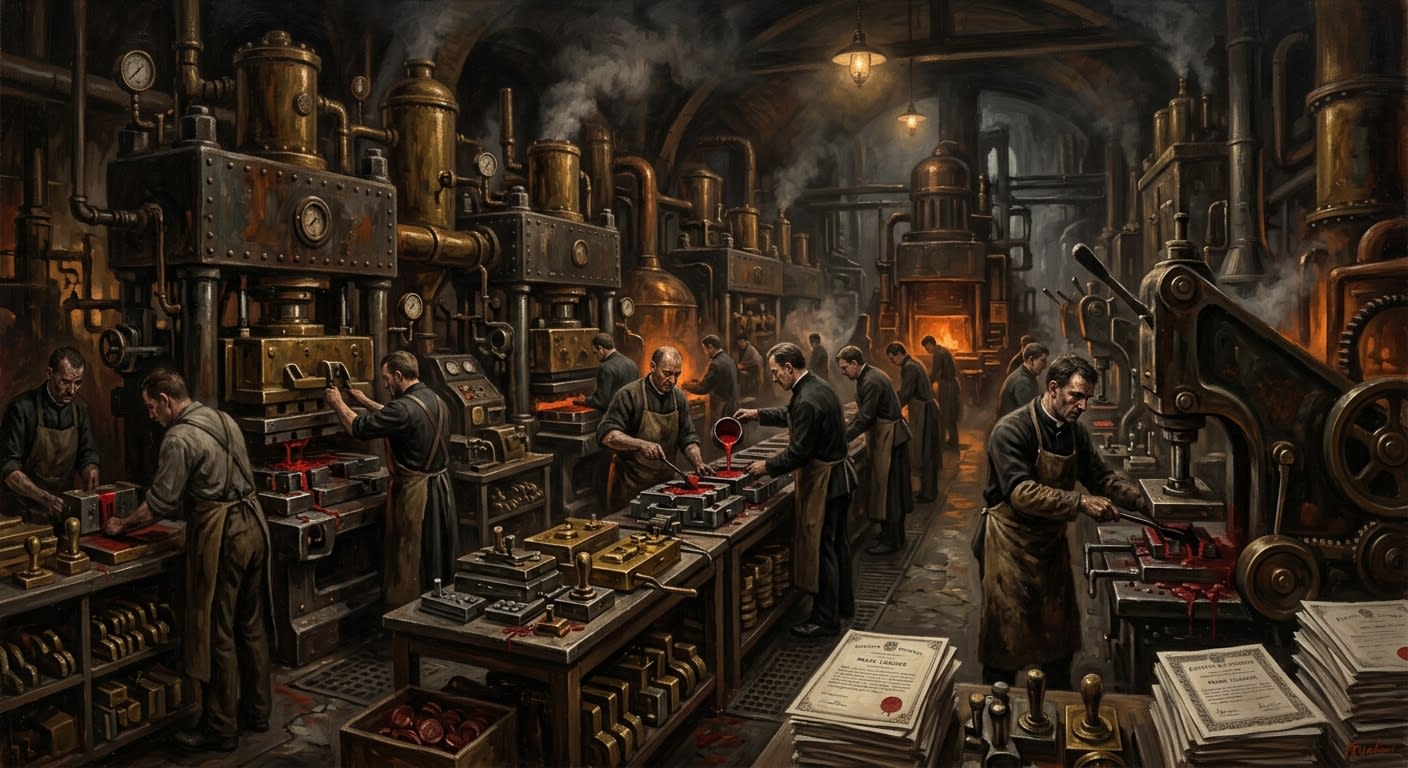
The Sigillary
Where warm wax teaches paper to bite
The Sigillary beneath Strasbourg Cathedral manufactures authority in wax, die, counter-seal, mask licence, and the old lesson that paper bites only when stamped.
Codex Ref. II.1.04-006
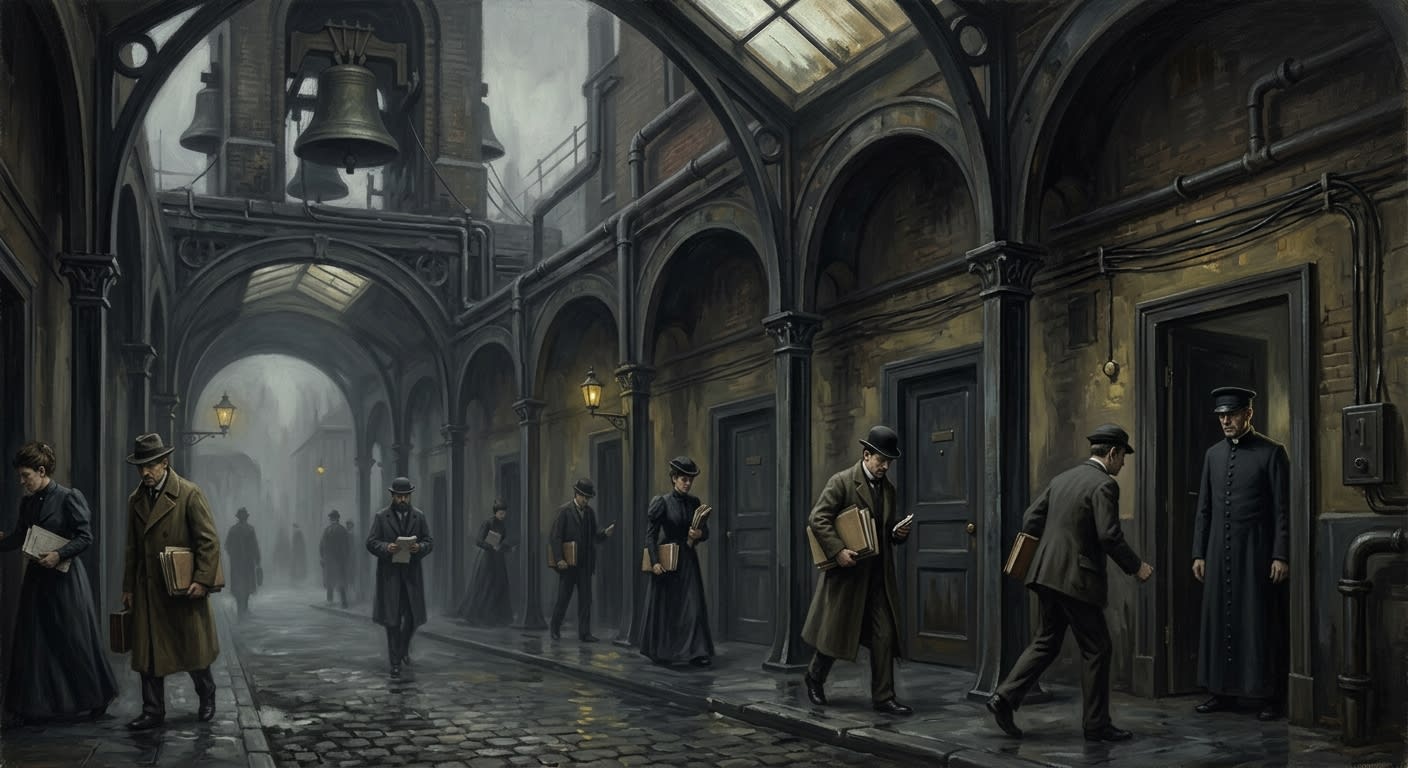
The Silent Colonnade
The fourth side of the [[cloister-precinct|Cloister]], where counting forgets its manners
The Silent Colonnade is Strasbourg's unnumbered northern arcade, a place of unmarked doors, shortened Wednesdays, swallowed bells, and corrections no Bureau admits.
Codex Ref. II.1.04-003
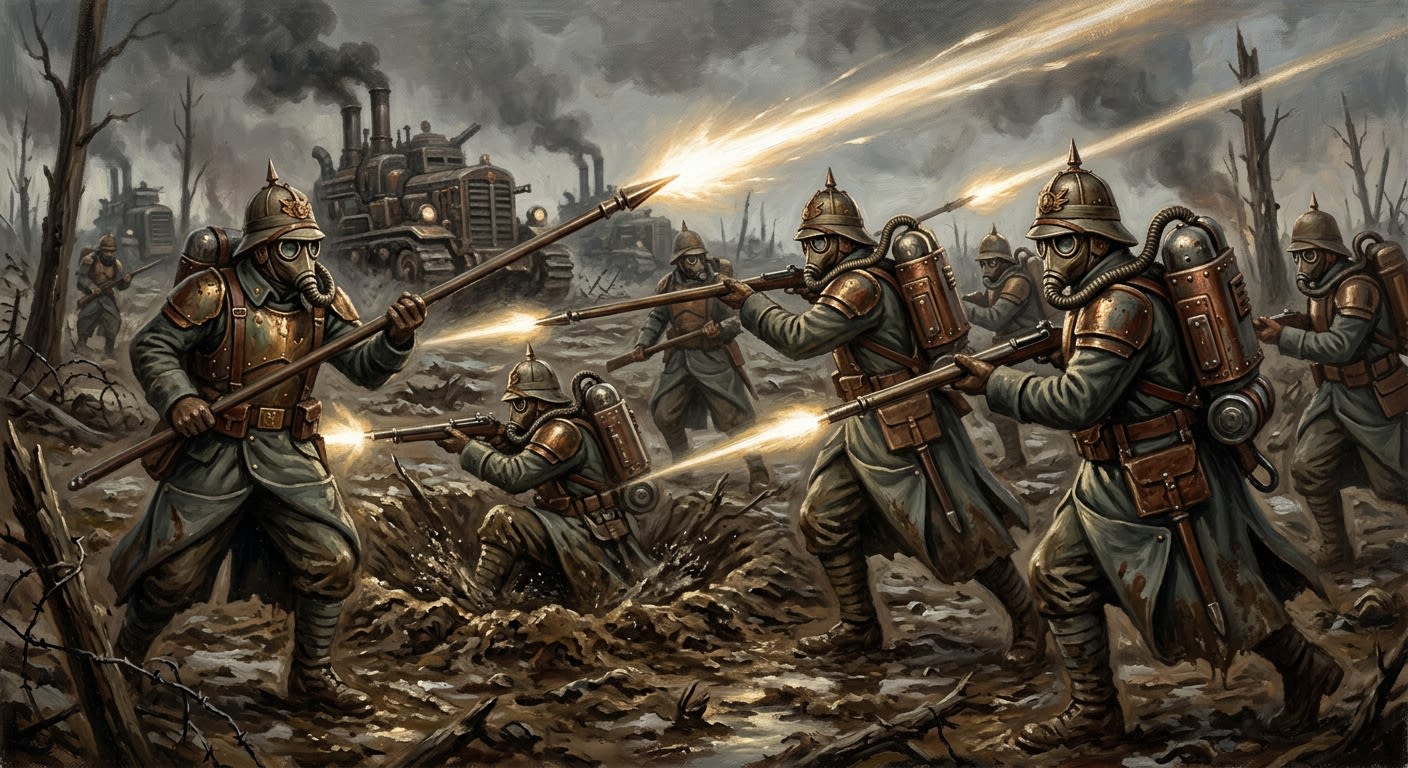
The Sun Spear Legion
Pride throws daylight and calls the wound a lesson
Atheron's Sun Spear Legion hurls white-gold lances that blind, judge, and teach soldiers the obscene tactical value of mud.
Codex Ref. IV.1.07-010
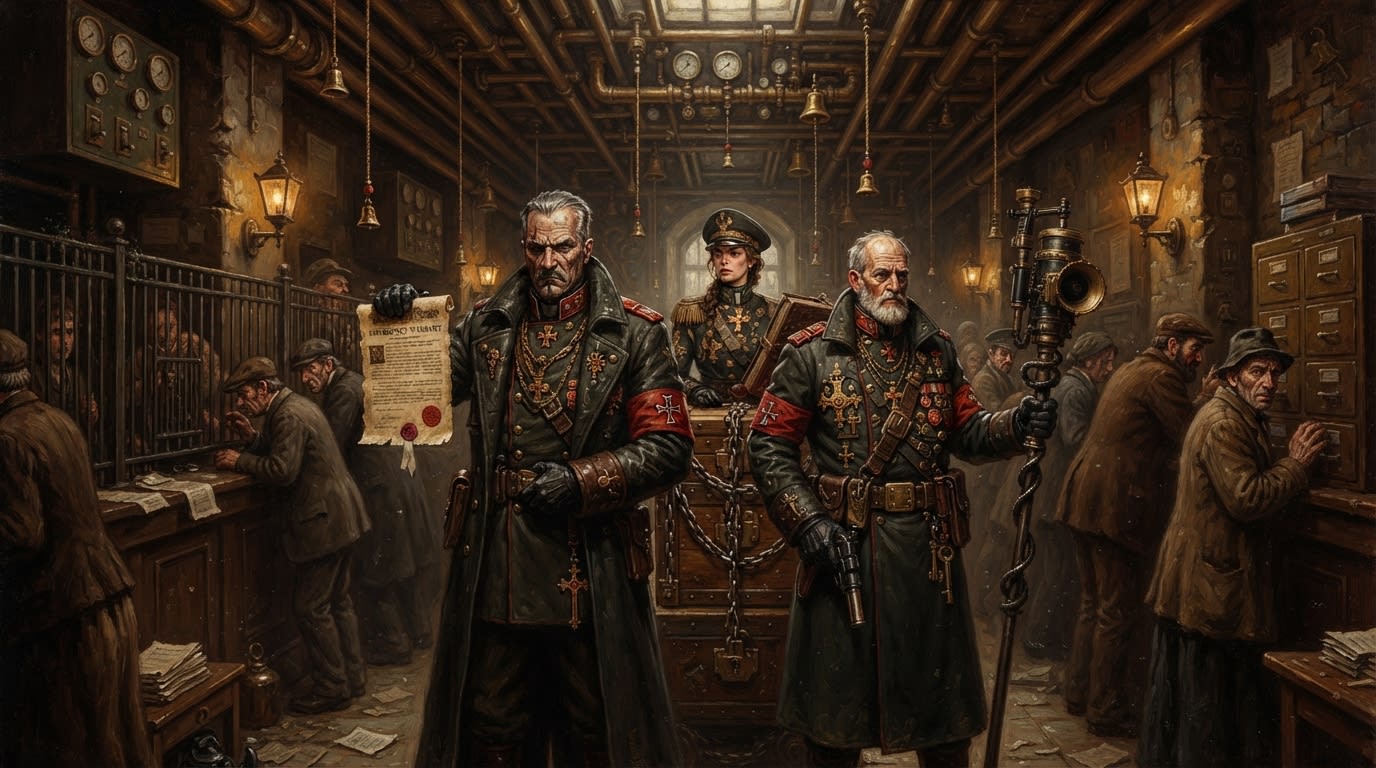
The Synod Task Force
On the Armed Enforcement of Administrative Truth
The Synod's answer to contested truth: temporary, armed administrative cells dispatched by warrant when ordinary procedure has failed, become complicit, or begun devouring its own paperwork. They preserve facts powerful offices would prefer misplaced.
Codex Ref. IV.7.12-001
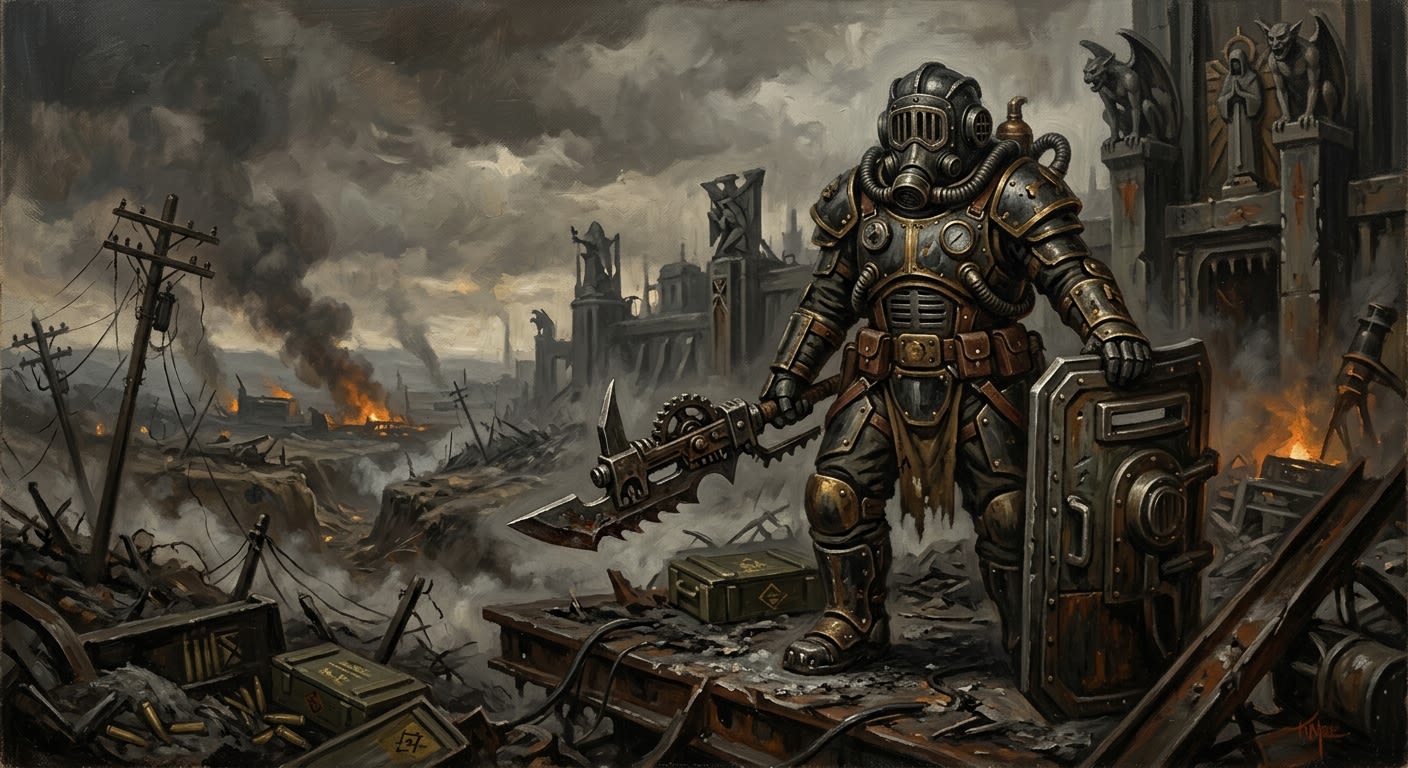
The Warrior of Justice
The faceless correction no Bureau has managed to license
Condemned as the Third so-called Virtue General, the Warrior of Justice is an unconfirmed faceless combatant whose alleged interventions rescue losing lines and insult every licensed channel of hope.
Codex Ref. III.2.01-053
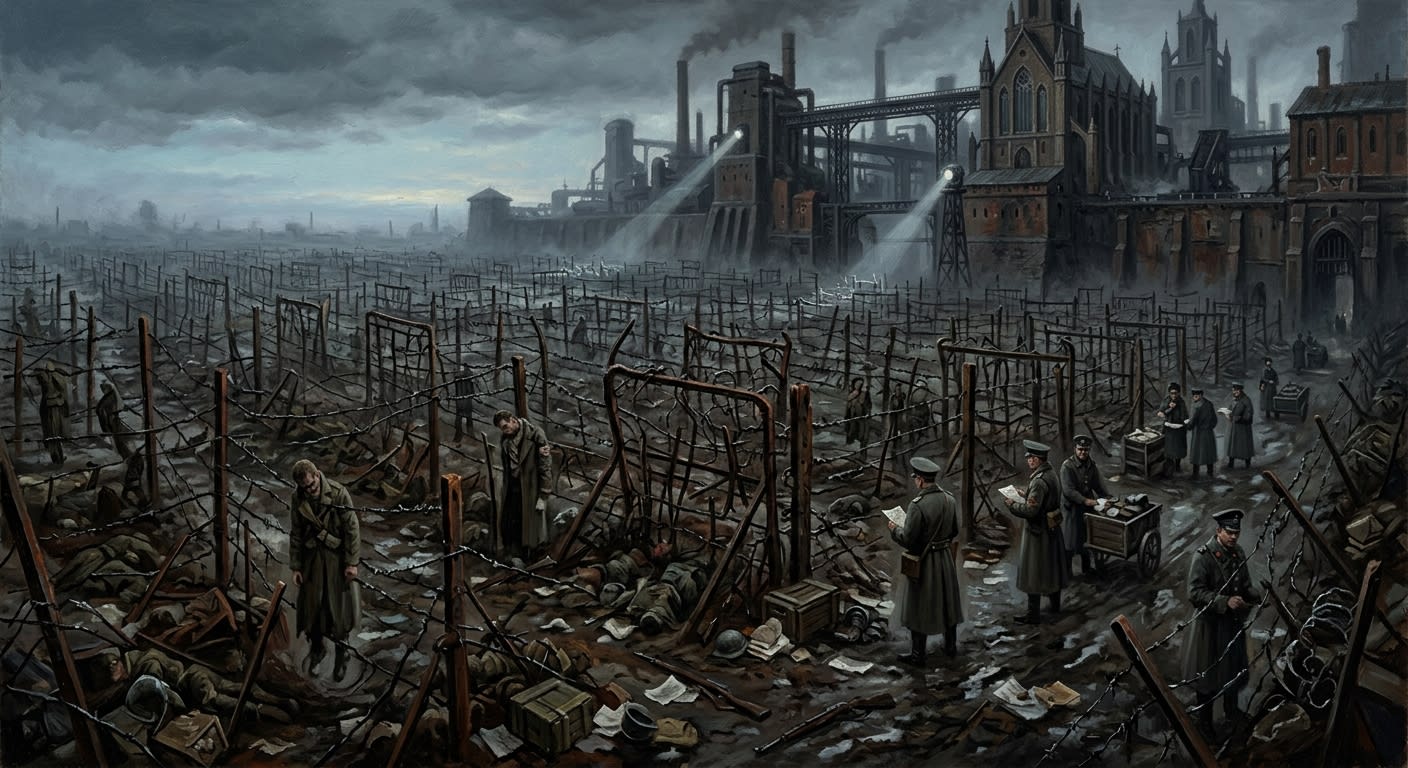
The Wire Orchard
Where the paper grows teeth and the dawn performs audit
The Wire Orchard is Bastion-Przemyśl's three-mile killing and sorting grid, where paper becomes permission, wire becomes judgment, and dawn harvests both.
Codex Ref. II.4.09-075

Theobald of Worms
The man who taught Europe to confess by angle
First Archon of the Bureau of Heraldry, Theobald of Worms standardised the Triune Knot and made the visible world legible, taxable, and prosecutable.
Codex Ref. III.2.01-119
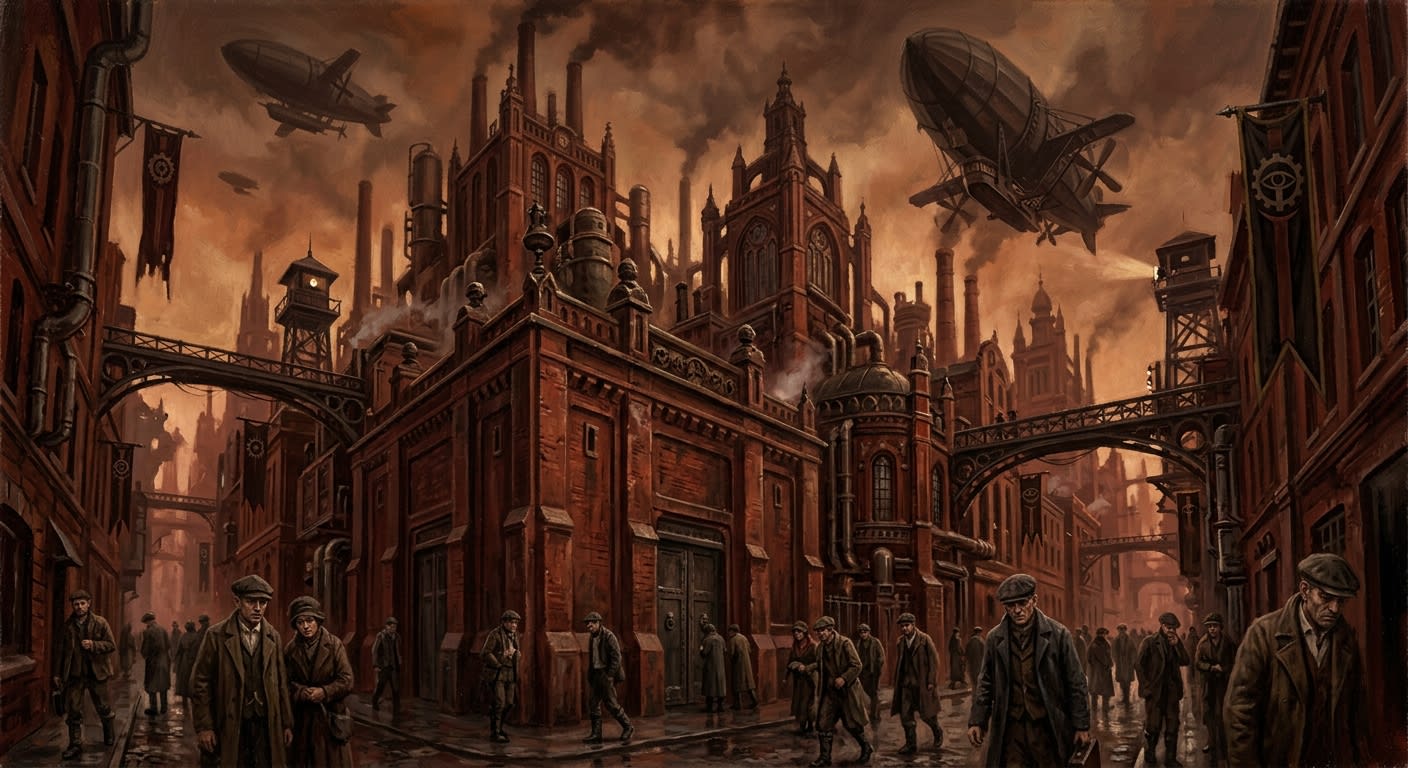
Toulouse
The safe city where Purity learned its grammar
Toulouse is the red-brick safe city corrected in A.S. 93: birthplace of Purity's public dread, still loyal, profitable, lowered-voiced, and watched.
Codex Ref. II.1.09-093
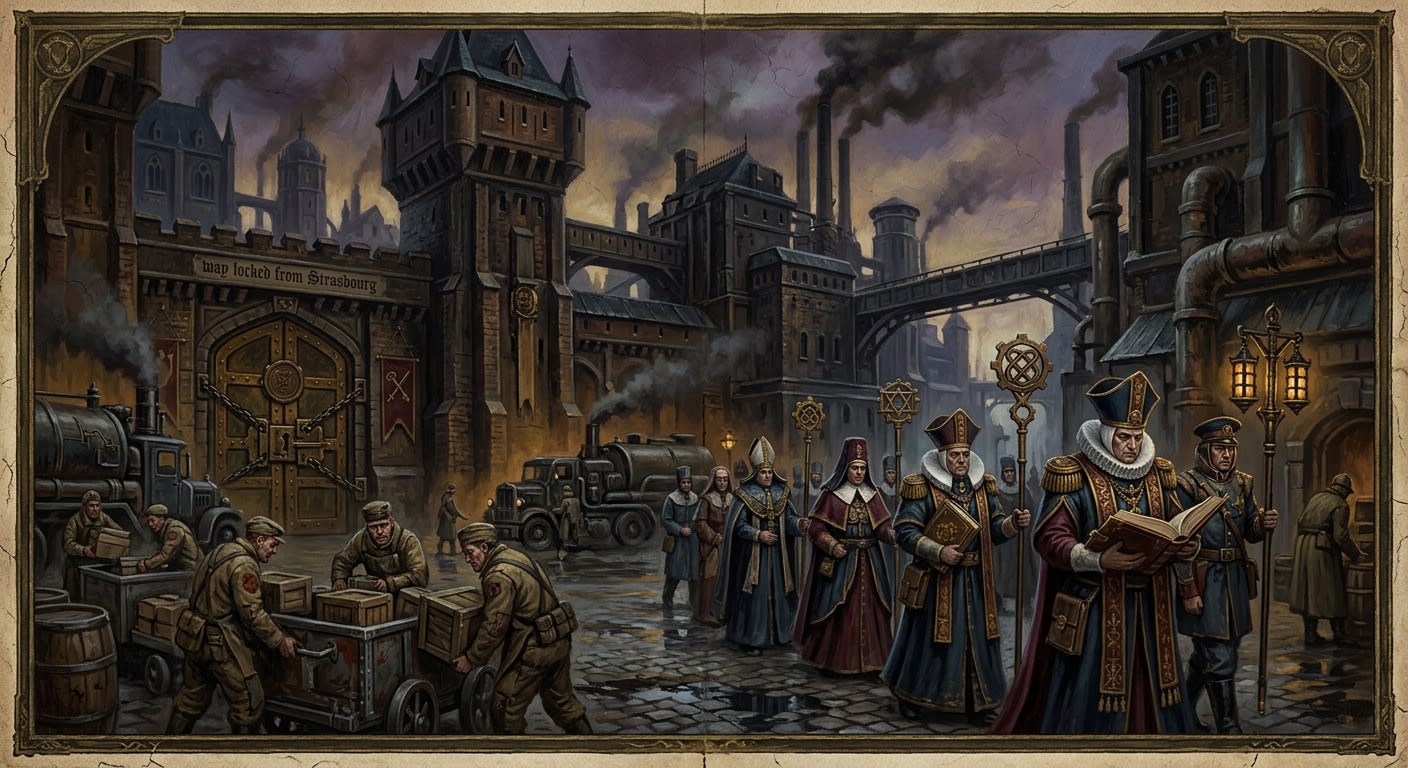
Triune Hearth
Three old bodies, one chimney, and Strasbourg holding the poker
The Triune Hearth binds France, Iberia, and the Rhineland into one Synodal household: warm in sermon, hungry in ledger, and locked from Strasbourg.
Codex Ref. XIII.1.04-090
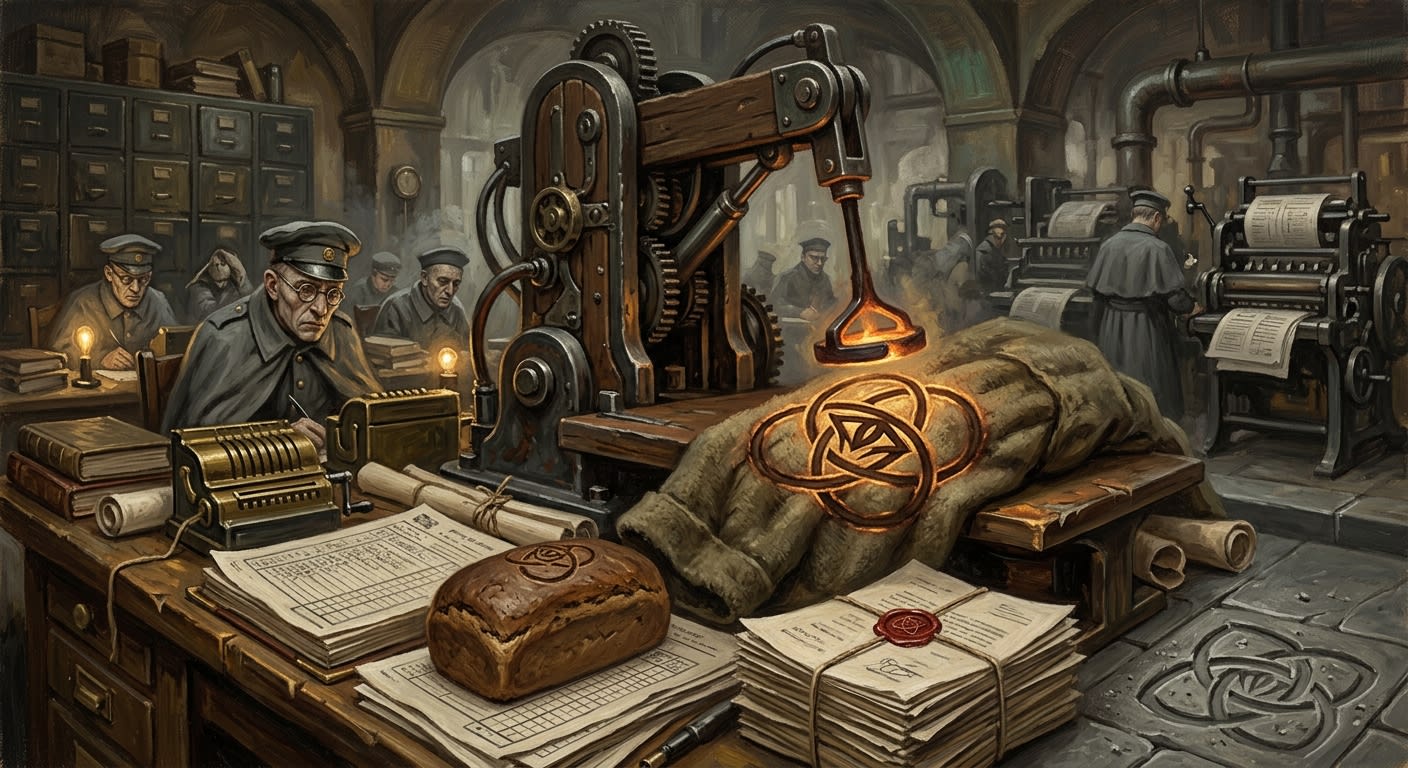
Triune Knot
Three loops, one law, and every door accounted for
Universal Synodal binding mark standardised under Theobald of Worms, by which doors, papers, bread, flesh, and graves become readable to law.
Codex Ref. XIII.1.03-002
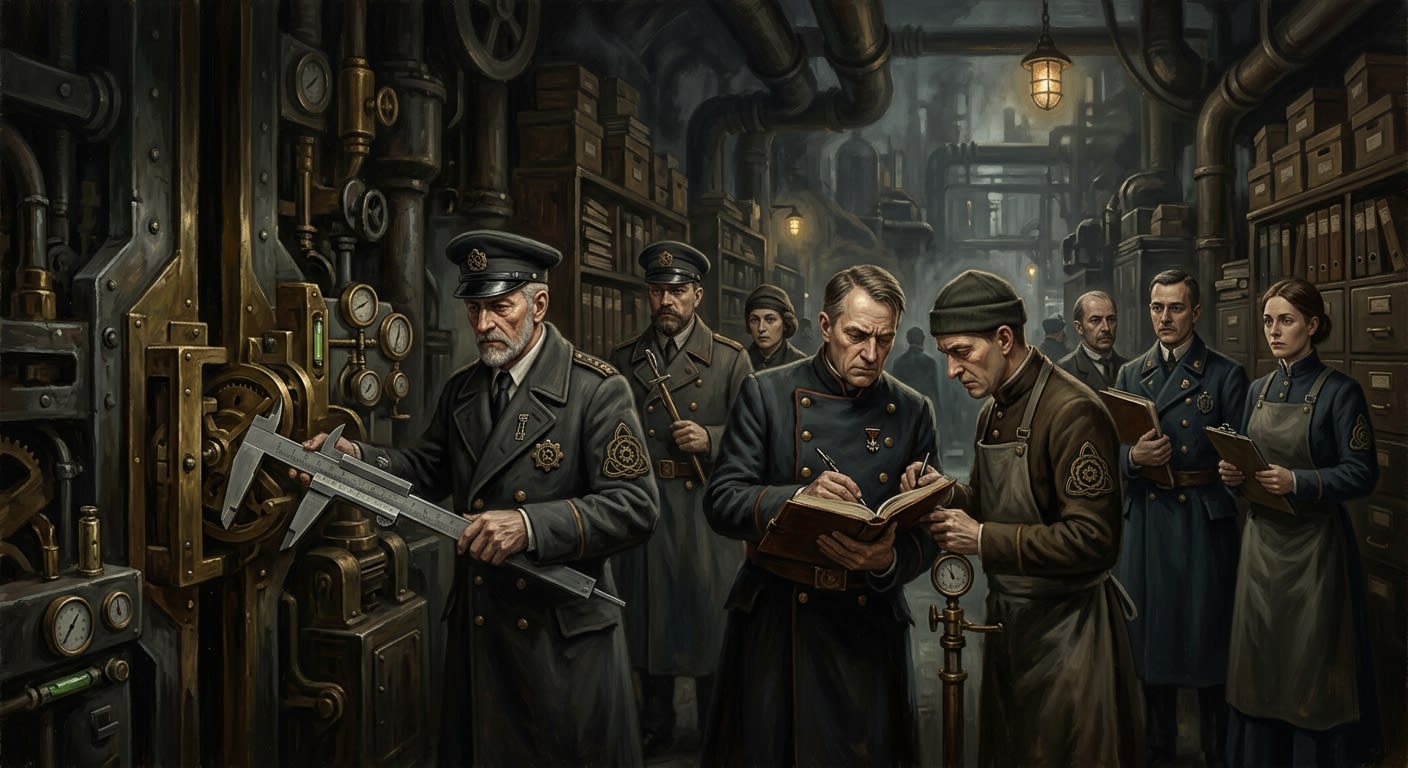
True Knot Faction
The dry cord is holier than the quick hand
The True Knot faction is the strict-compliance tendency within the Gate-Carver trade, treating every threshold as valid only when the whole ceremony is measured, cut, witnessed, and filed.
Codex Ref. XII.19.02-001
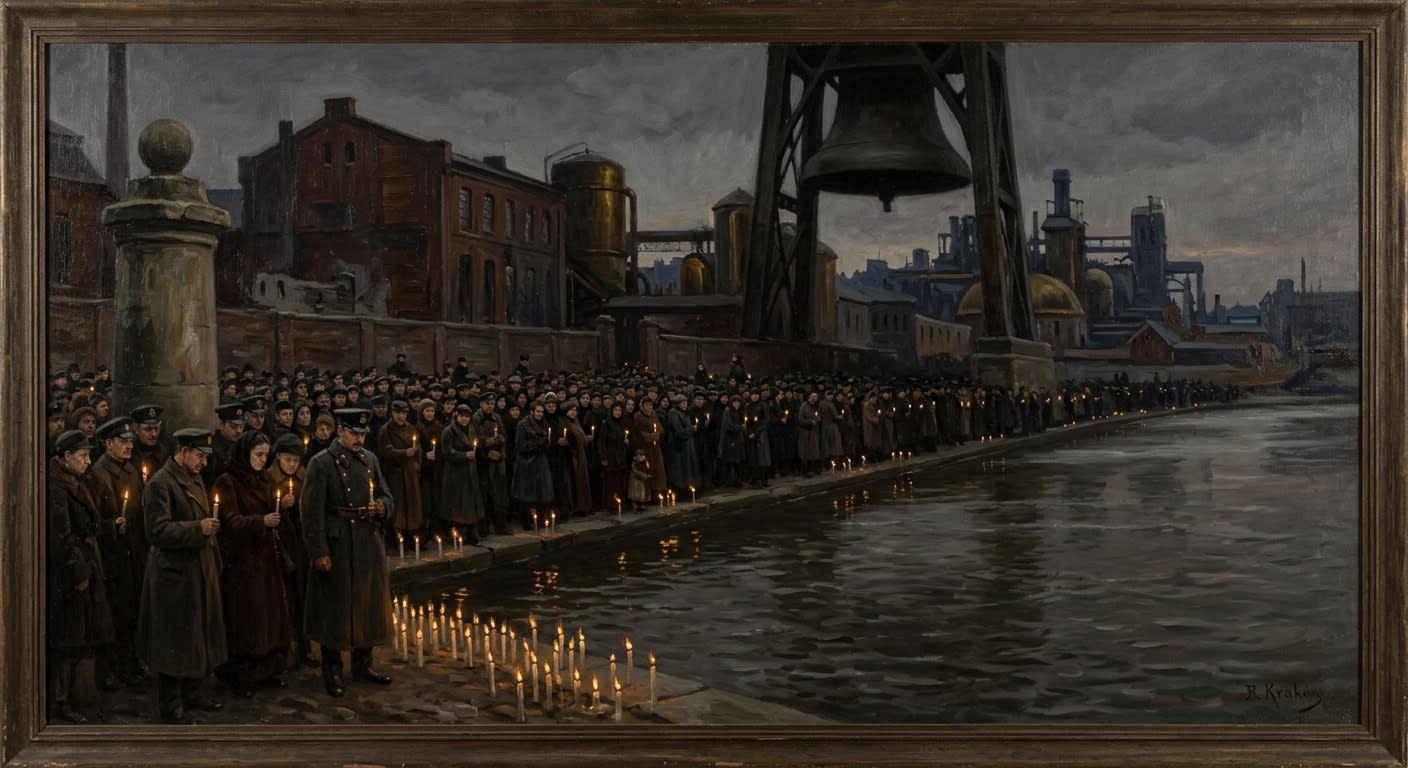
Vigil of the Drowned Priests
One hour in which [[krakow|Kraków]] is ordered to hear the river
Annual Kraków observance ratified in A.S. 148: one mandated hour of Bell-silence, forty-seven candles, and a river taught to testify.
Codex Ref. VII.6.02-001
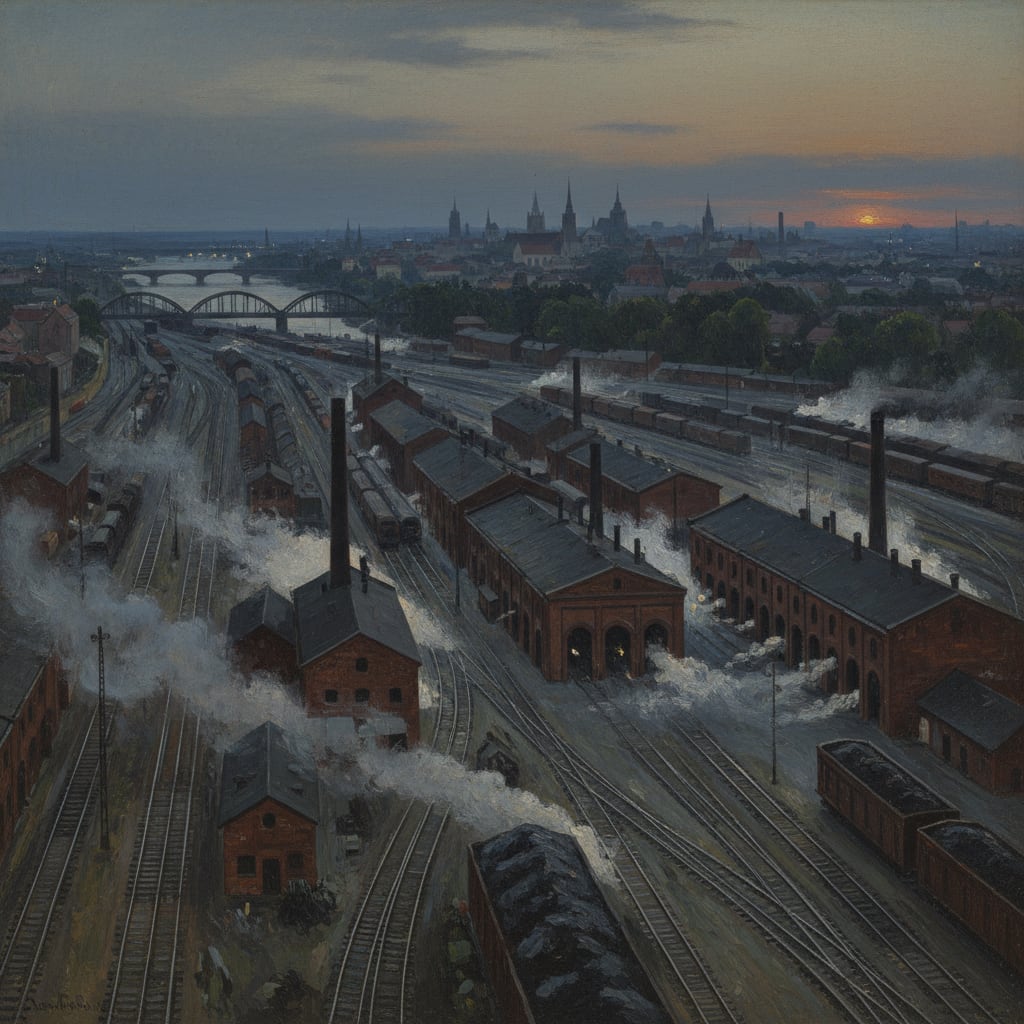
Warsaw
The city the Bureau told to leave, and the bakeries it opened in reply
The Synod's forward staging city on the Vistula — Zone Three, Northern Corridor, entry 14-W. 160 km from the Sagittal Line; close enough to hear the front on clear nights. The Bureau told it to leave in A.S. 95. It has grown by a quarter-million souls since.
Codex Ref. II.4.09-007
Worms
Where broken things become binding
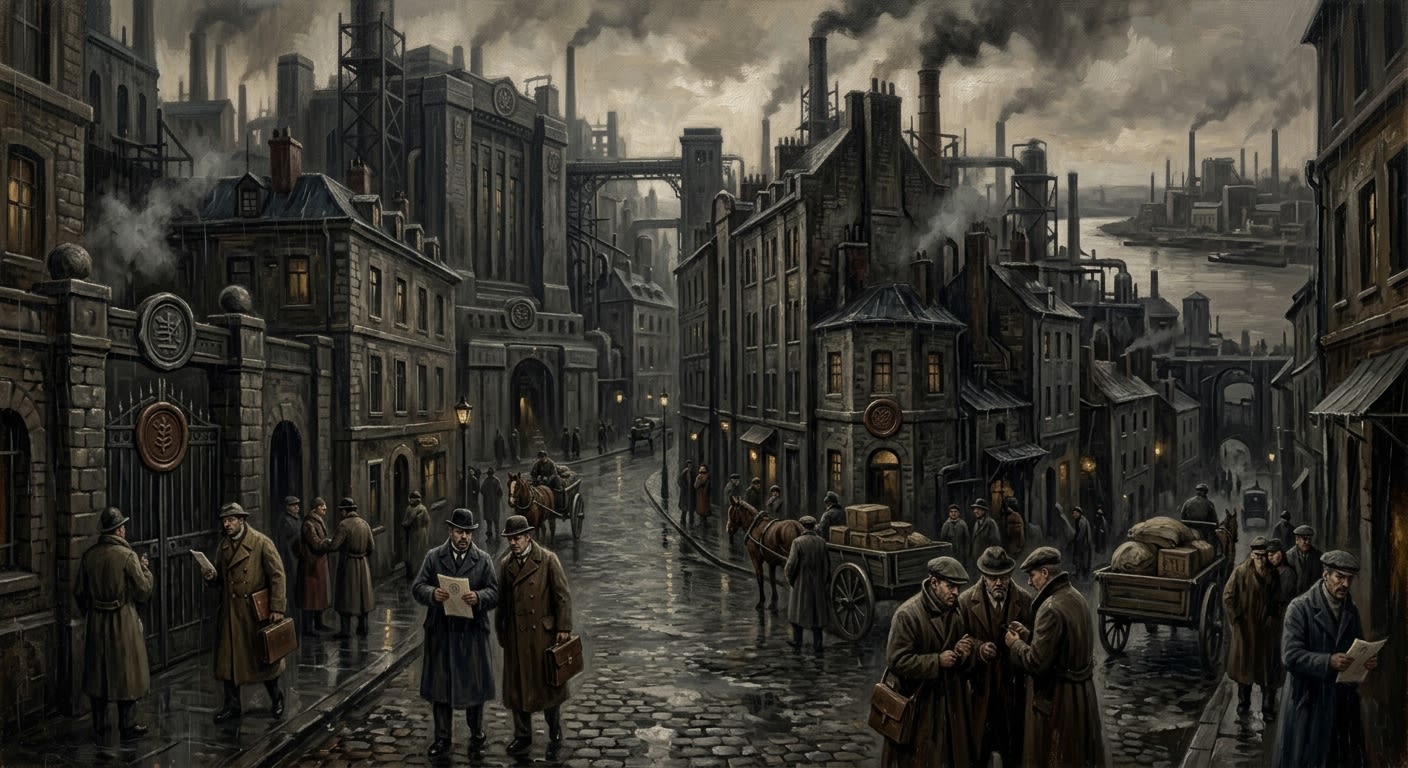
Worms is the Rhineland city where absence became evidence, rain became residue, seals became law, and a name became a warning.
Codex Ref. II.2.09-087
Writ 14-C
The law that taught the throat to wear a seal
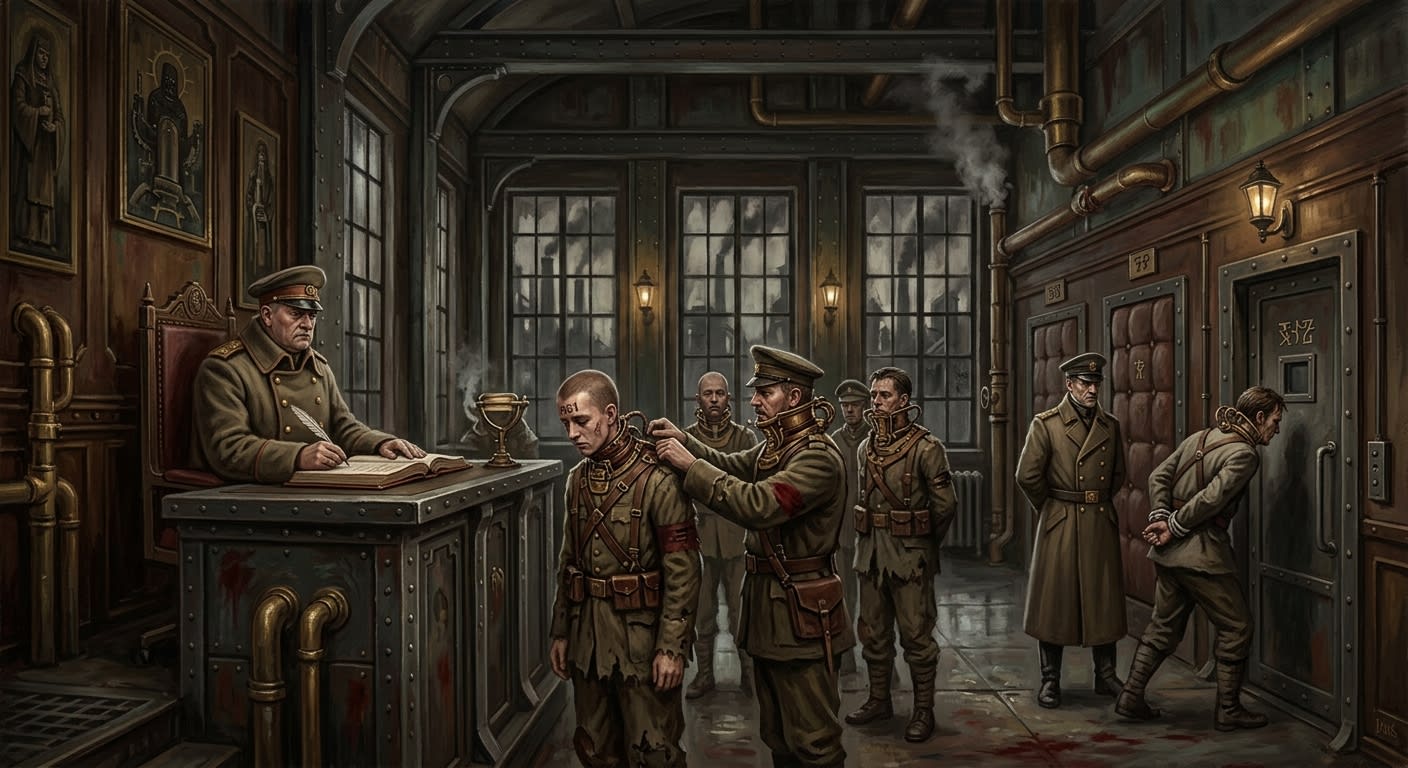
Writ 14-C made the human throat an office: licensing Iron Choir Brand-Singers, disciplining pain into sound, and teaching rooms not to be answered.
Codex Ref. XIII.1.41-104