

Reverse Index
Referencing “The Concordat of Strasbourg”
Every codex entry that links to The Concordat of Strasbourg. 564 entries.
Return to The Concordat of Strasbourg
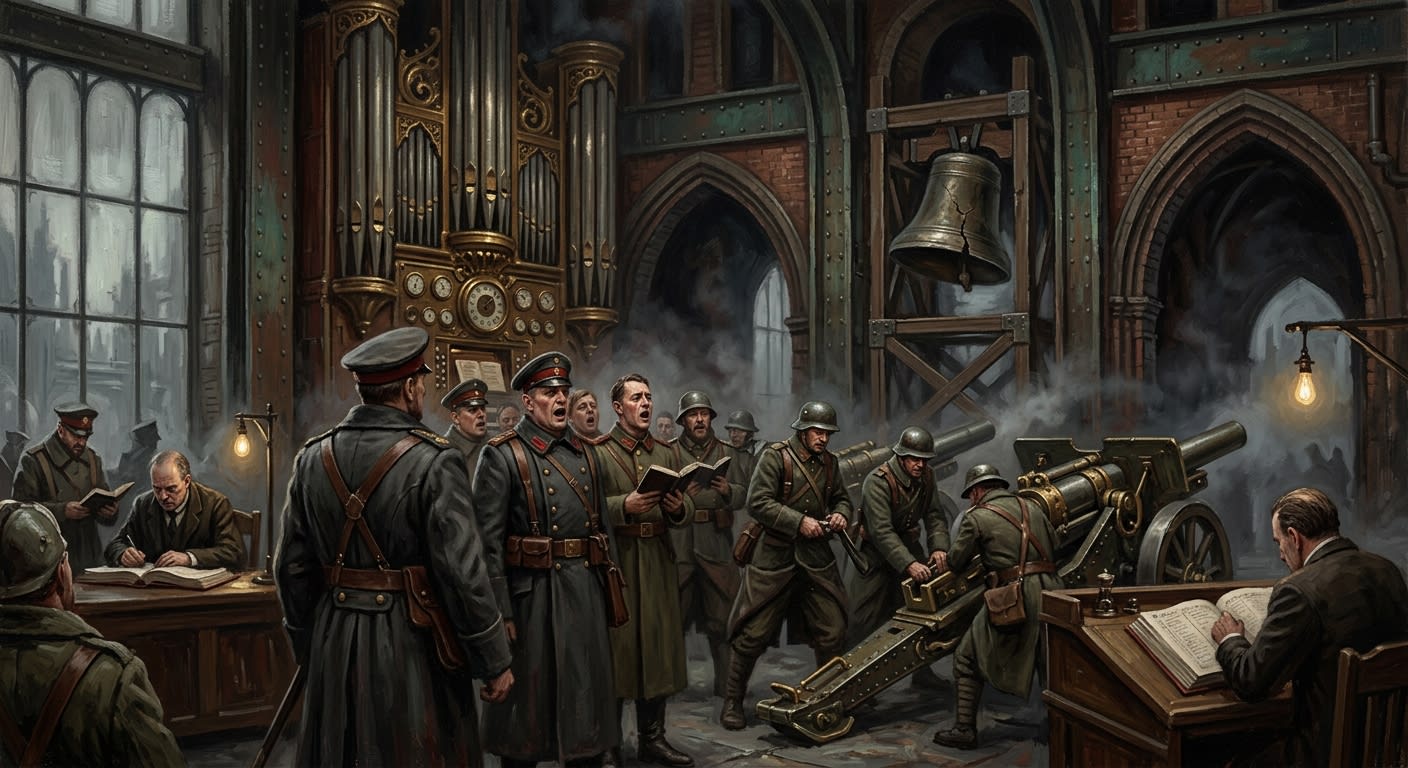
4th Orison Company
Where prayer learned range tables and glass learned to sing
The 4th Orison Company sang before Orison had a charter, fired relic-shot at Toledo, and proved that a mistimed peal can make martyrs inward.
Codex Ref. VIII.6.02-015
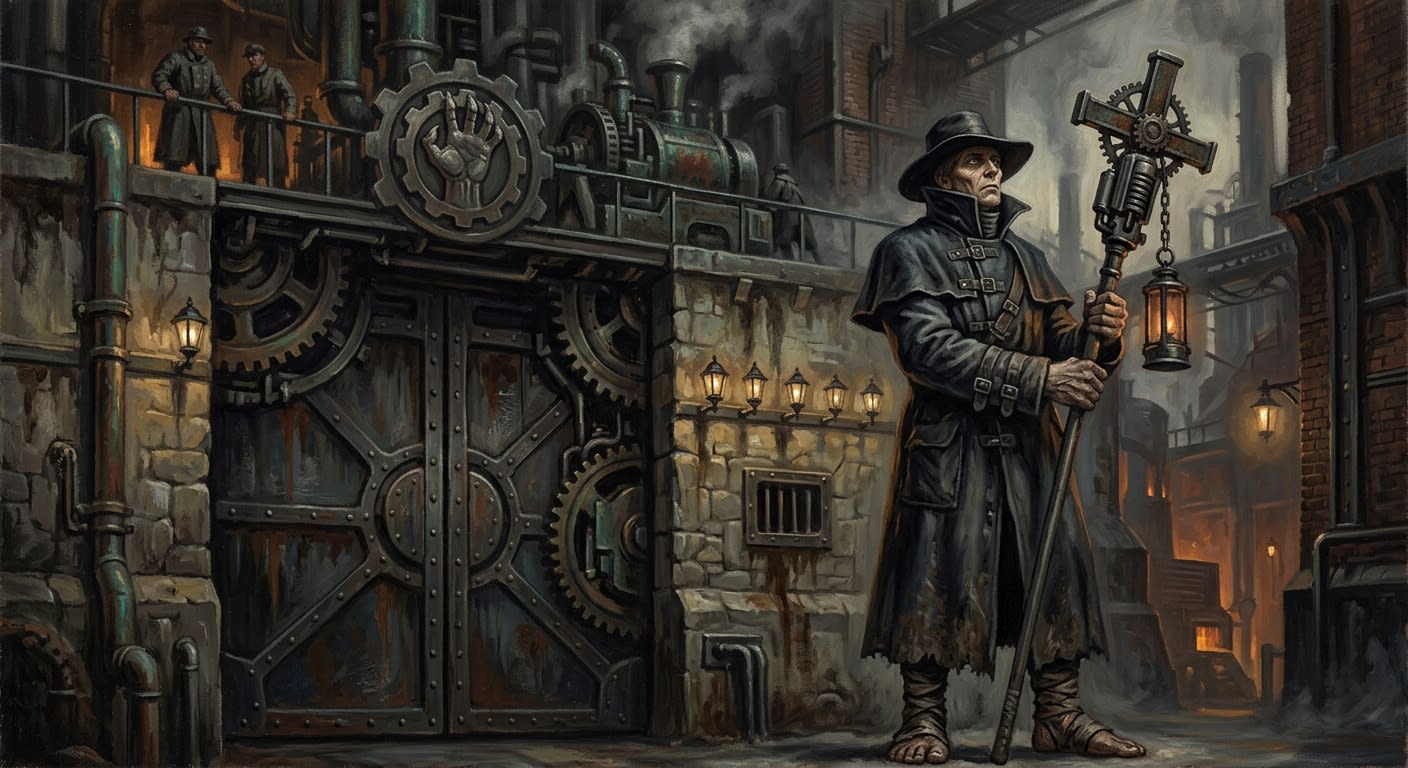
Aachen
The city that survived its own fall
Aachen opened its gate in A.S. 25, survived the betrayal, and has spent every taxed, polished, barefoot century proving survival is not innocence.
Codex Ref. II.2.02-001

Abbot-Registrar Solene
She made contradiction choose a widow and a loaf
Solene of Lyon, first Abbot-Registrar of Nemea, made ruins into an archive and panic into the doctrine of original by ratification.
Codex Ref. III.2.01-096
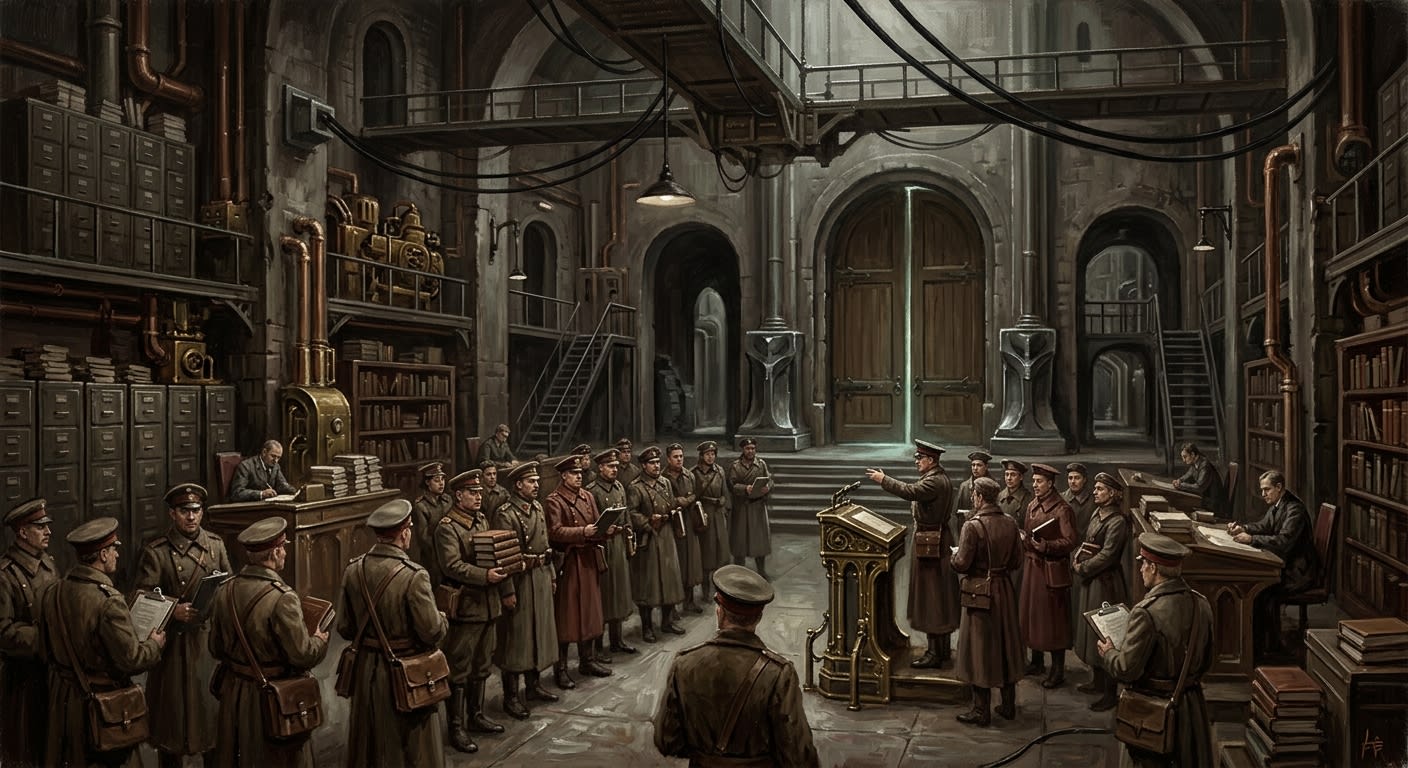
Academy of Strasbourg
Where questions are taught to kneel before they are permitted to stand
The Synod's capital academy trains clever minds for dangerous offices by making knowledge kneel, speak late, file early, and fear extra doors.
Codex Ref. I.1.03-090
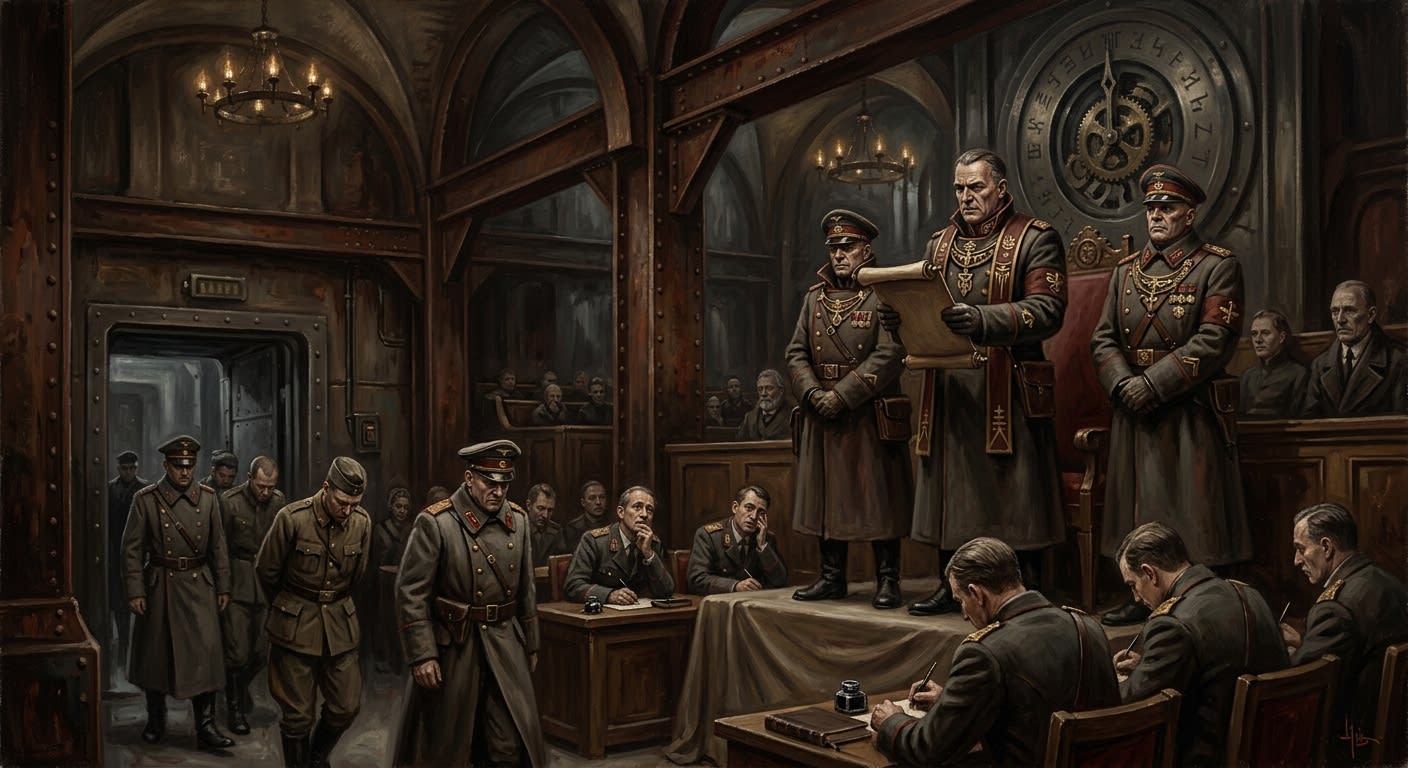
Act of Hierarchical Supremacy
The first chain, polished until citizens mistake it for anatomy
Ratified at Strasbourg in A.S. 90, the Act made authority descend through the Hierarchs and made refusal dissolve office, status, and comfort.
Codex Ref. XIII.1.89-090
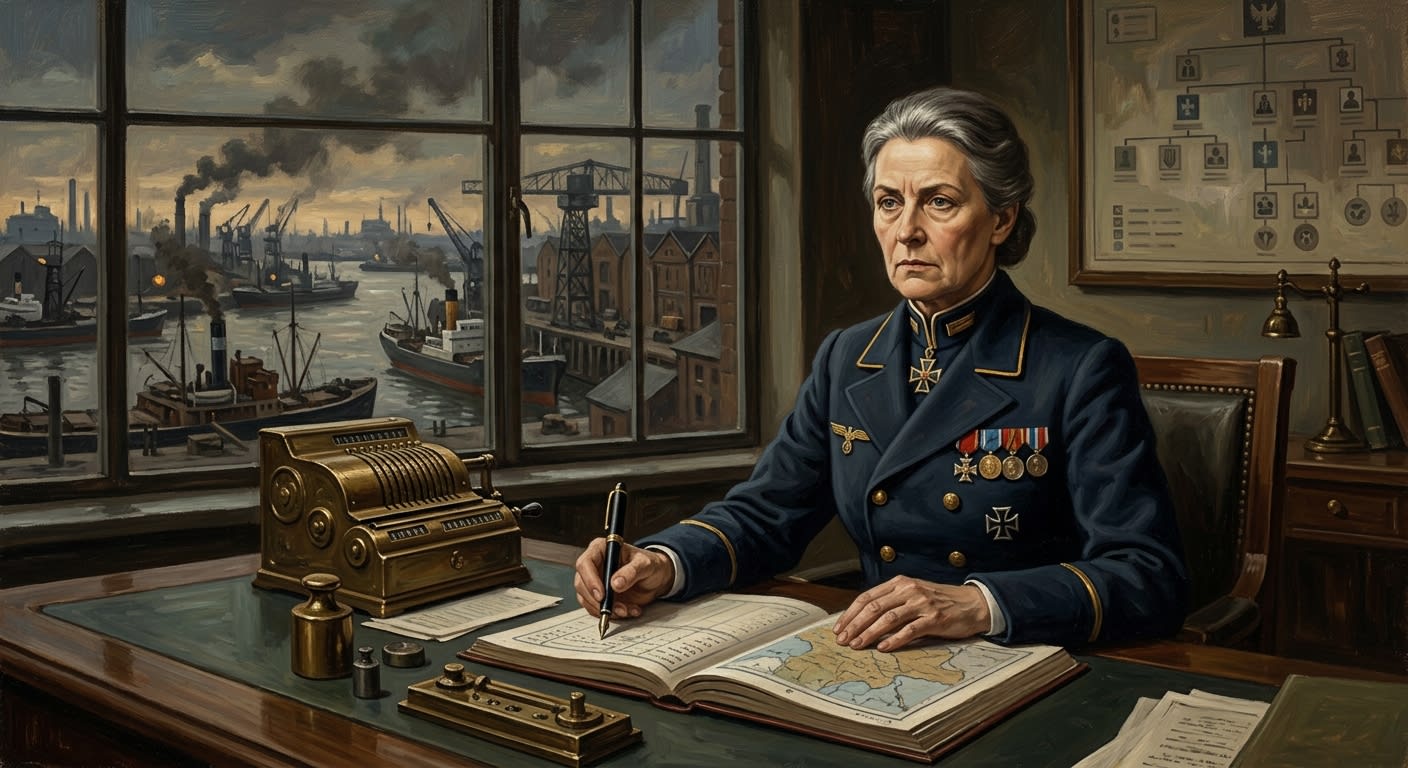
Admiral-Prefect Gerta Halske
The harbour obeys her because theology cannot unload grain
Hamburg's Admiral-Prefect since A.S. 194, Gerta Halske governs harbour routing, foreign factors, war-cargo priority, and the arithmetic by which the northern front continues breathing.
Codex Ref. III.2.01-150
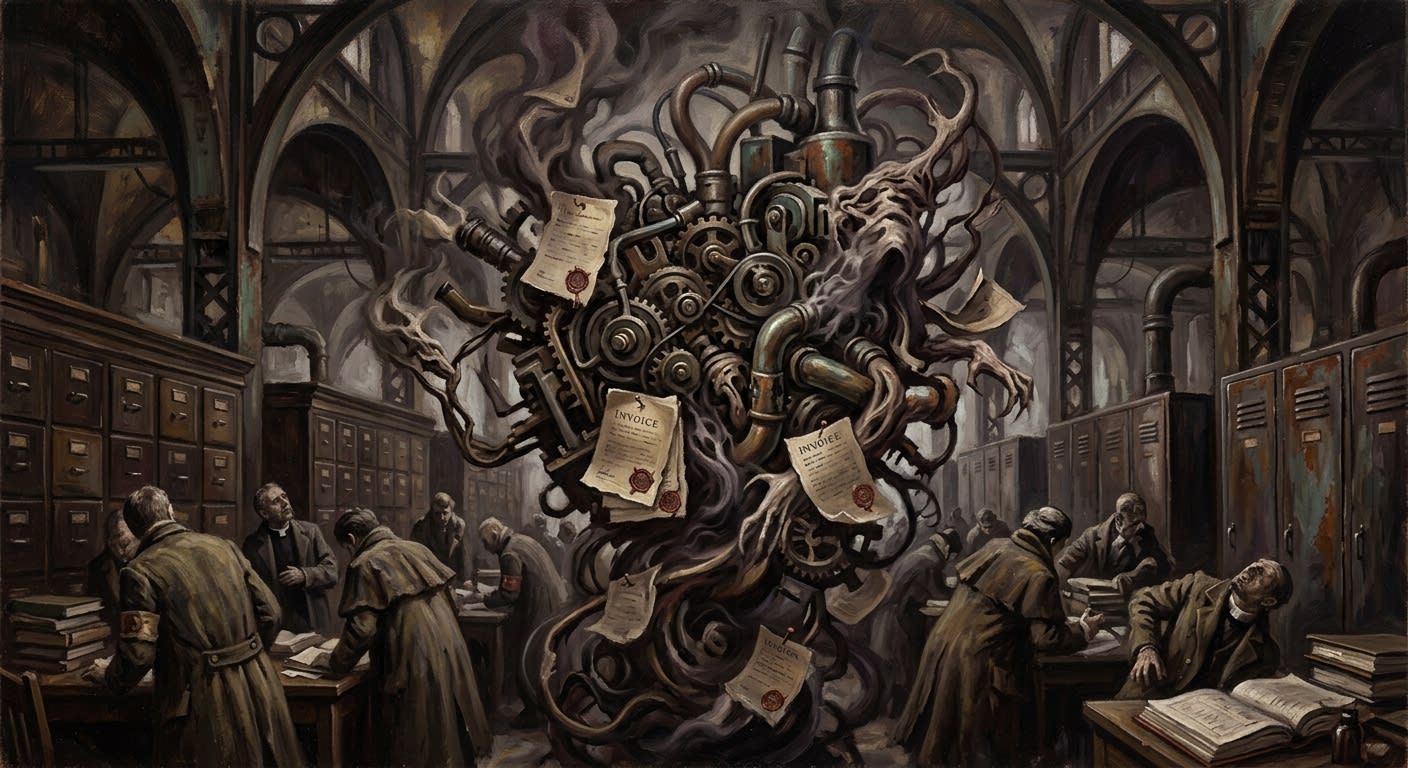
Adversary
The Enemy receives an office title and no face
The Bureau's cleanest dangerous word: a title for the hostile will behind sorcery, demons, Sin-General dominion, and every invoice Hell sends in bone.
Codex Ref. VI.3.01-001

Aldous Crenn
Seven saints in one quarter, and not one accuracy review survived to trouble them
Bureau of Doctrine hagiographic clerk whose A.S. 94 quarter processed seven canonization packets, including Saint Halva's deficient file, and made sanctity behave like paperwork.
Codex Ref. III.2.01-067
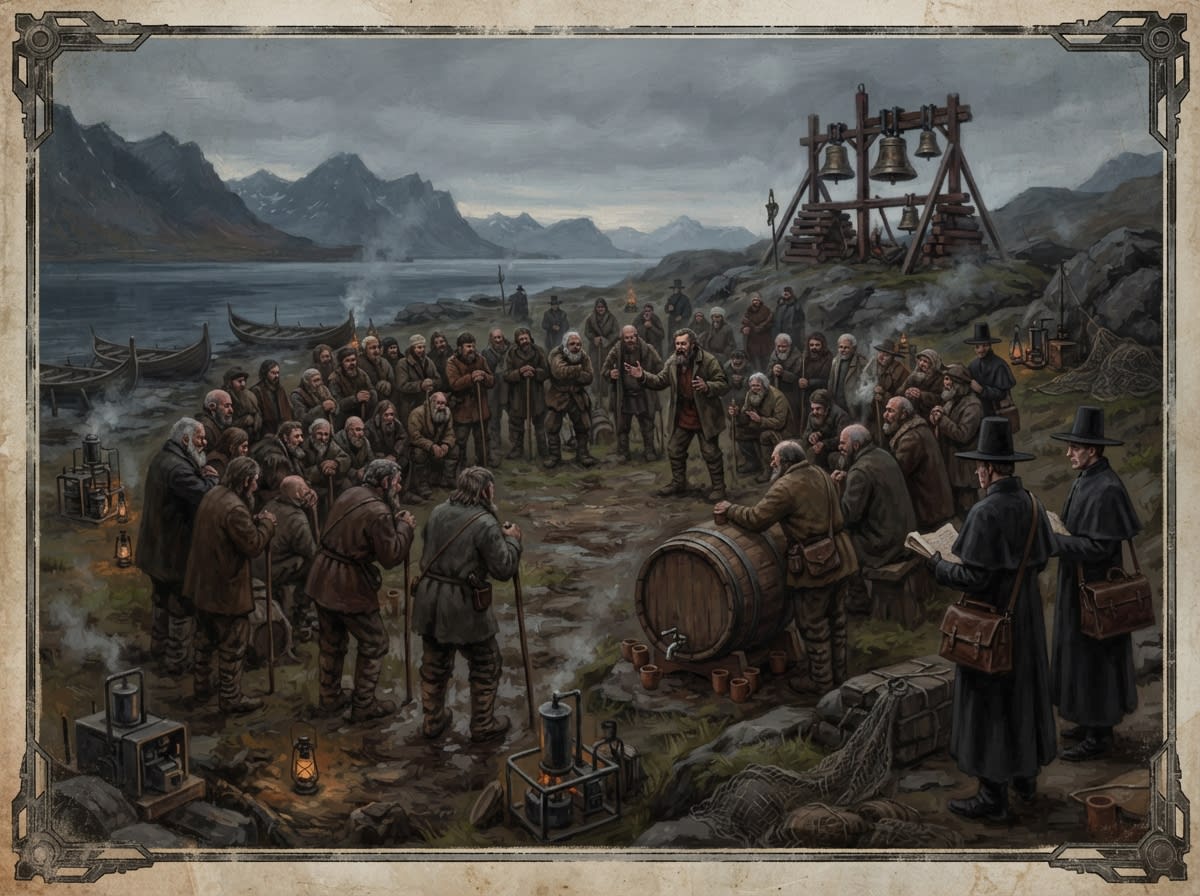
All-Moot
A legislature with no hall, no roll, no seal, and therefore no convenient target.
The Fractured North's annual midsummer assembly settles feuds, oil, passage, bells and Strasbourg's patience from a field that moves every year. The Bureau files it as customary. The North files nothing.
Codex Ref. IX.8.01-002
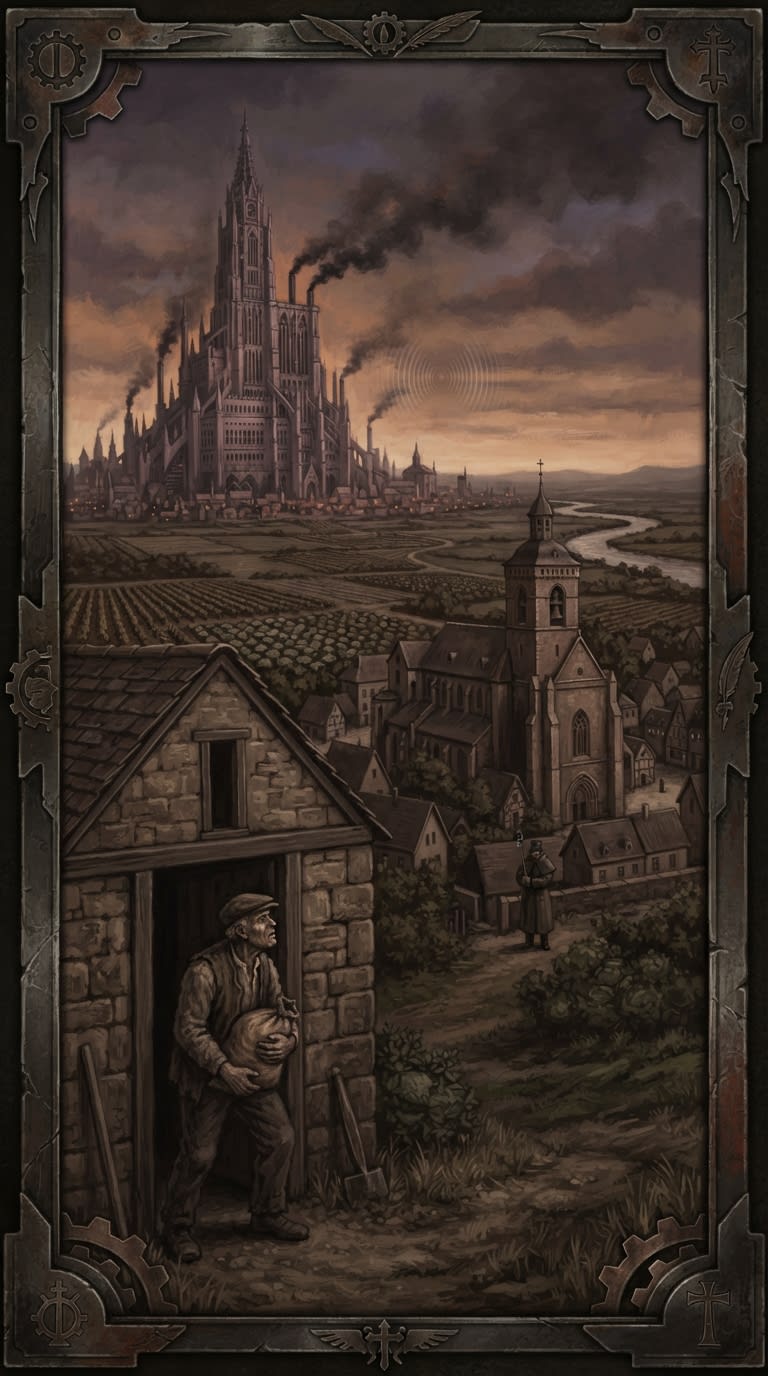
Alsace
The province close enough to mistake obedience for acoustics
Alsace is Strasbourg's near countryside: stone, grain, wine, licensed parish bells, and villages taught that the Whisper may hear what the assessor has not yet counted.
Codex Ref. II.2.10-201
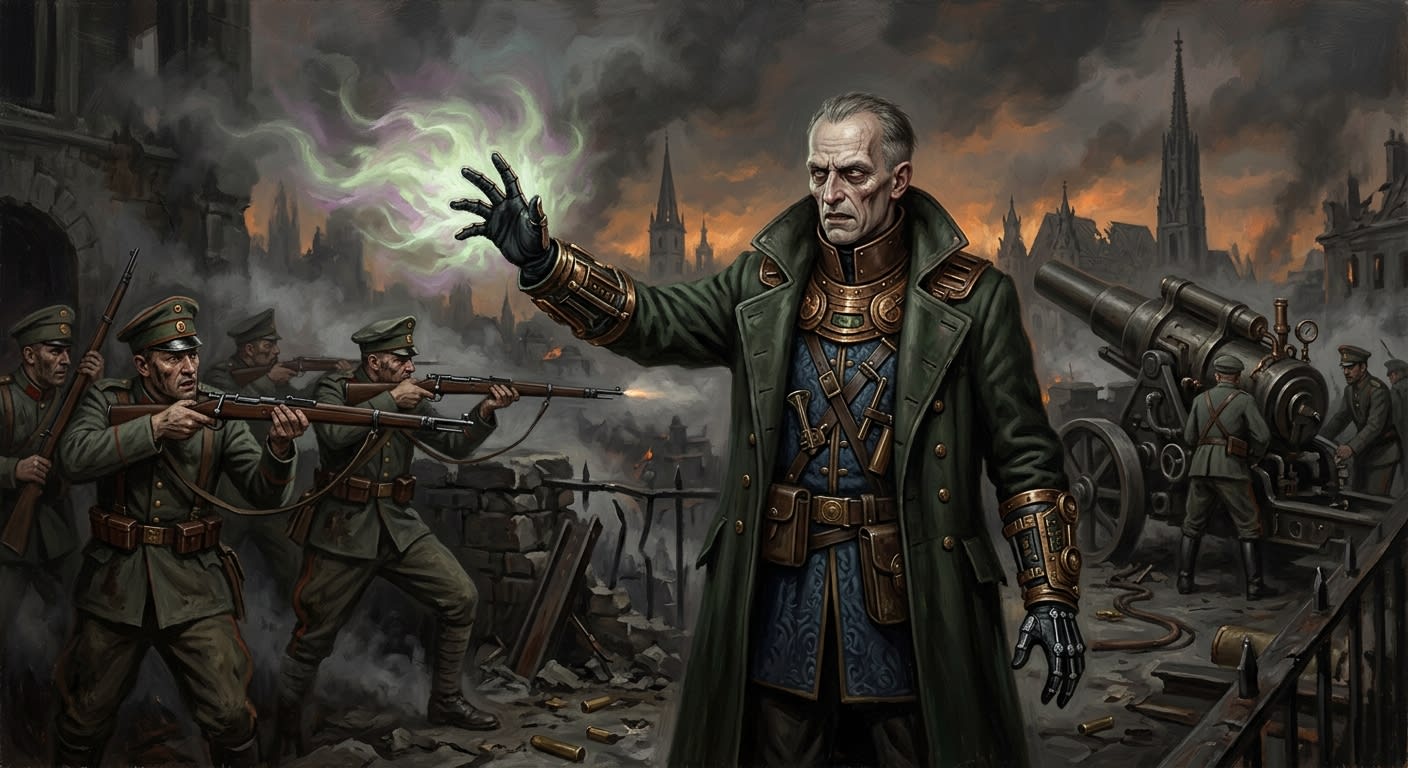
Althazar of Pest
The unauthorized man history mistook for a throne
Althazar of Pest was the sorcerer-lord of Vienna's last siege, a Rationalist remnant commander destroyed by Clemens Stahlhand and Saint Aldebrand's reliquary mace.
Codex Ref. III.2.01-153
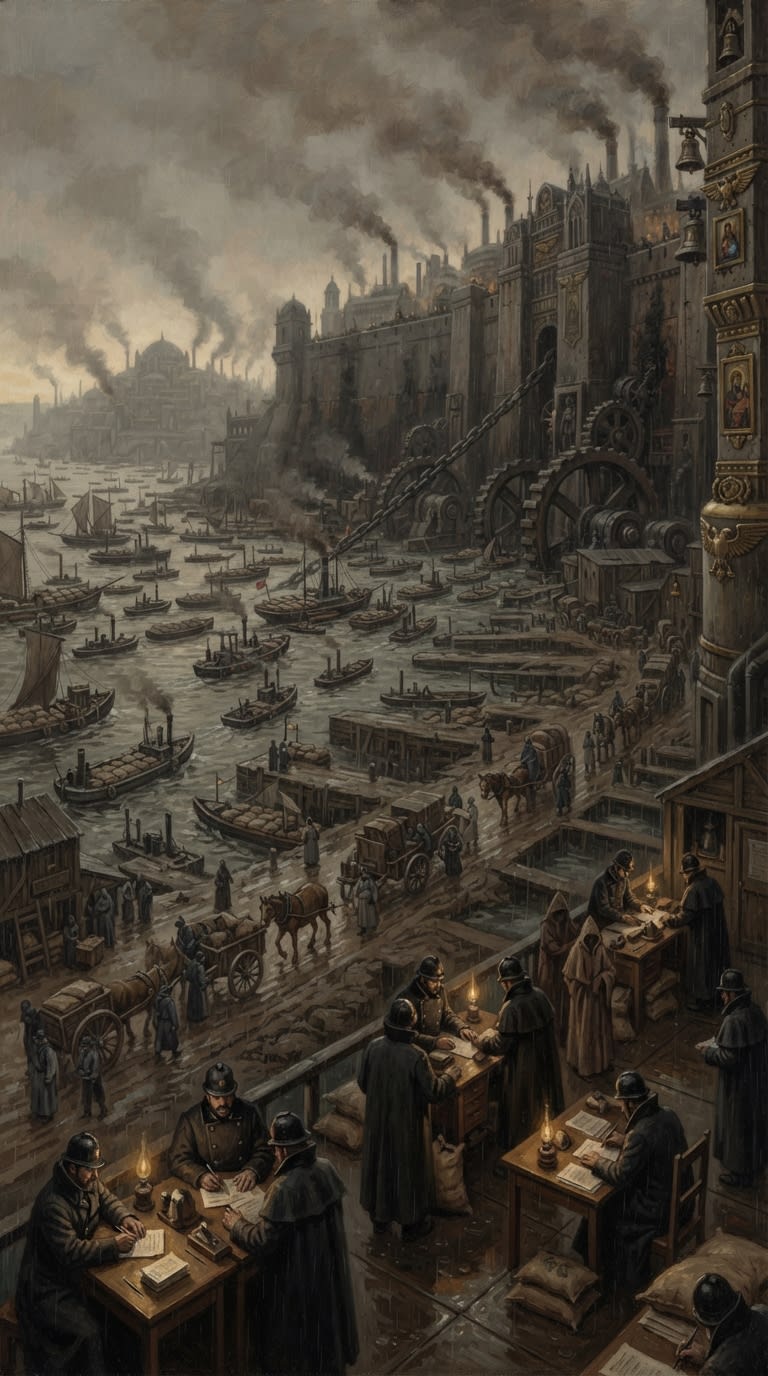
Anatolian grain convoys
The wall stands because the wheat arrives, usually lighter than declared
Constantinople's grain lifeline: Anatolian hulls, Green permits, Passage windows, Tithes arithmetic, and the persistent miracle by which every convoy arrives smaller than it departed.
Codex Ref. VI.4.21-068
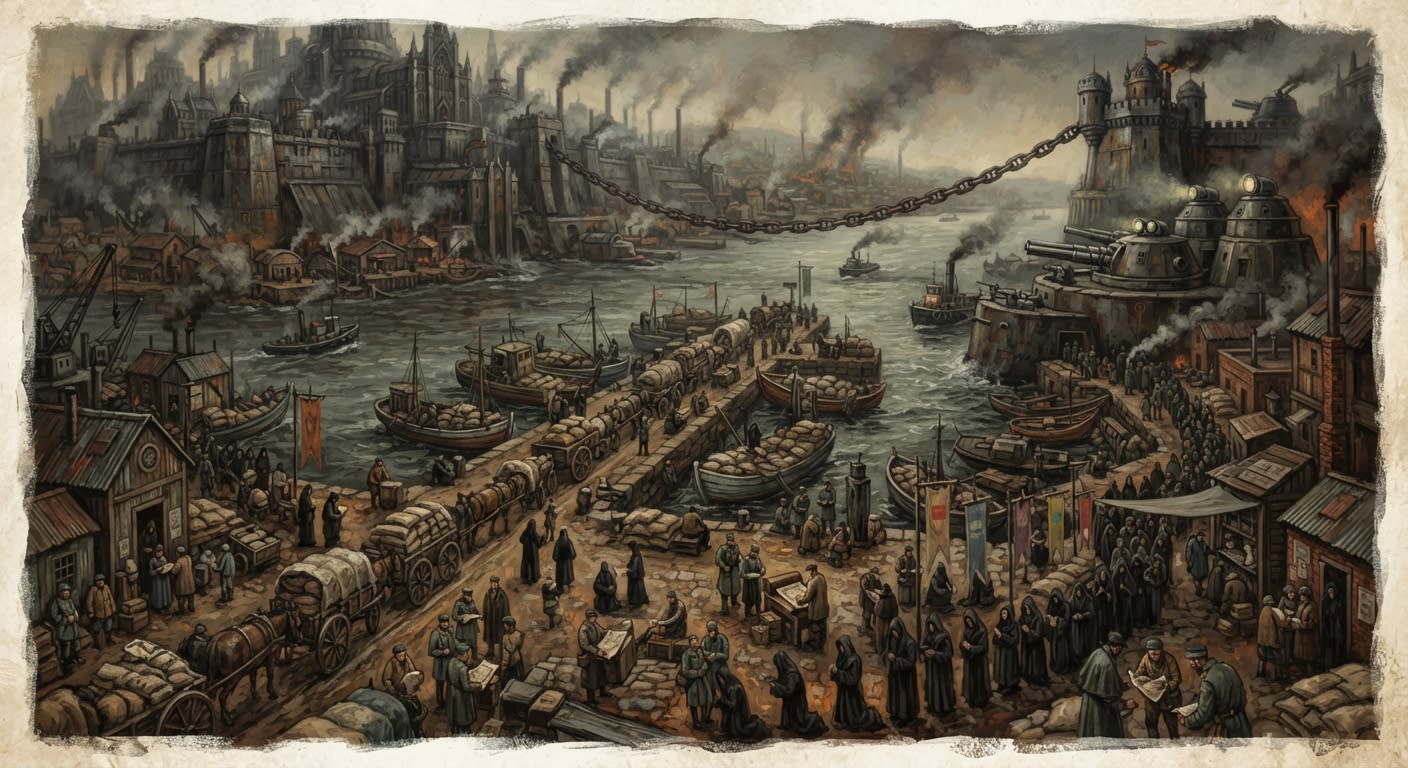
Anatolian Prefectures
The pantry the Hinge audits after eating
Synod-held Green Approach across the Bosphorus: grain, pilgrims, black diesel, and the arithmetic by which Bastion-Constantinople eats while accusing the hand that feeds it.
Codex Ref. II.4.09-069
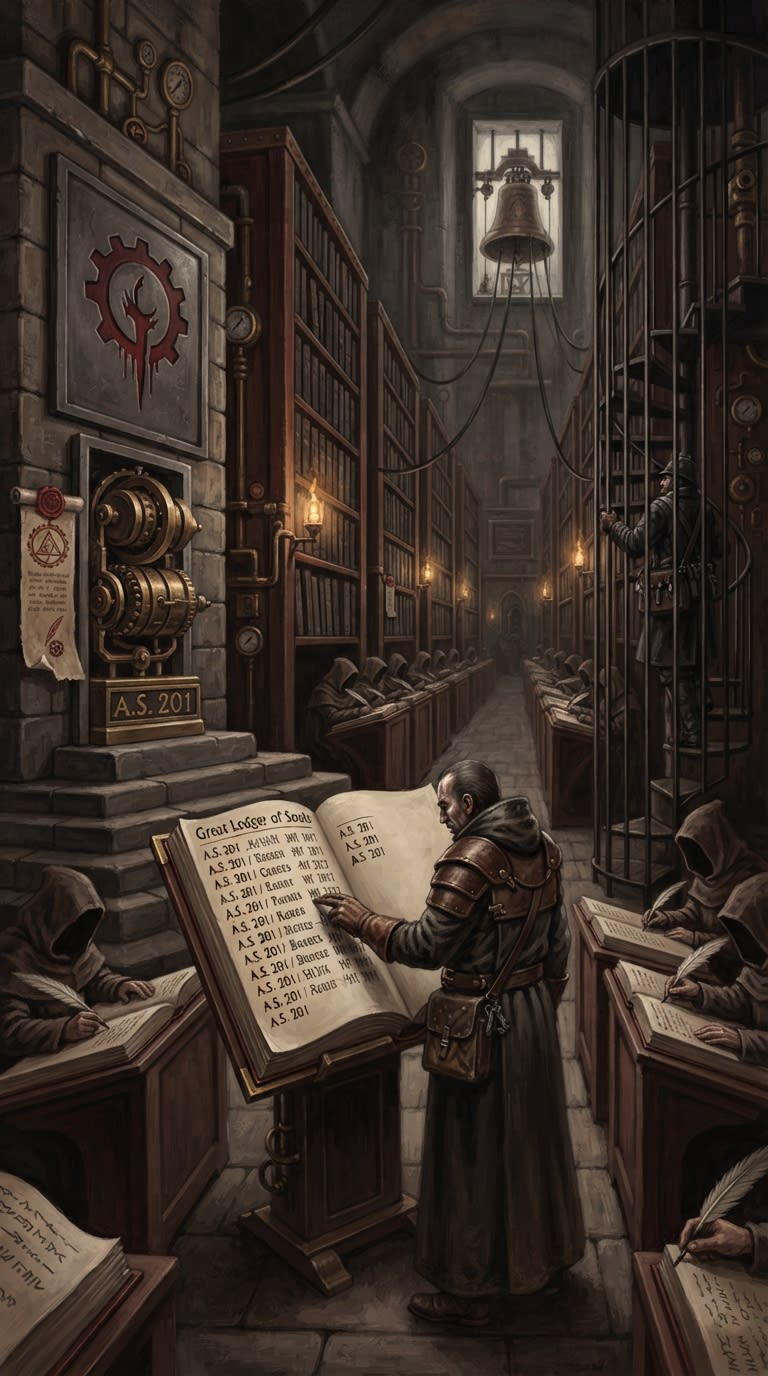
Anno Synodi
The wound by which Strasbourg owns the year
The Synod's calendar counts not from triumph but from wound: A.S. 0 at De Vera Luce, adopted retrospectively at the Concordat, and enforced by Records, Bells, and Doctrine.
Codex Ref. XIII.1.00-090
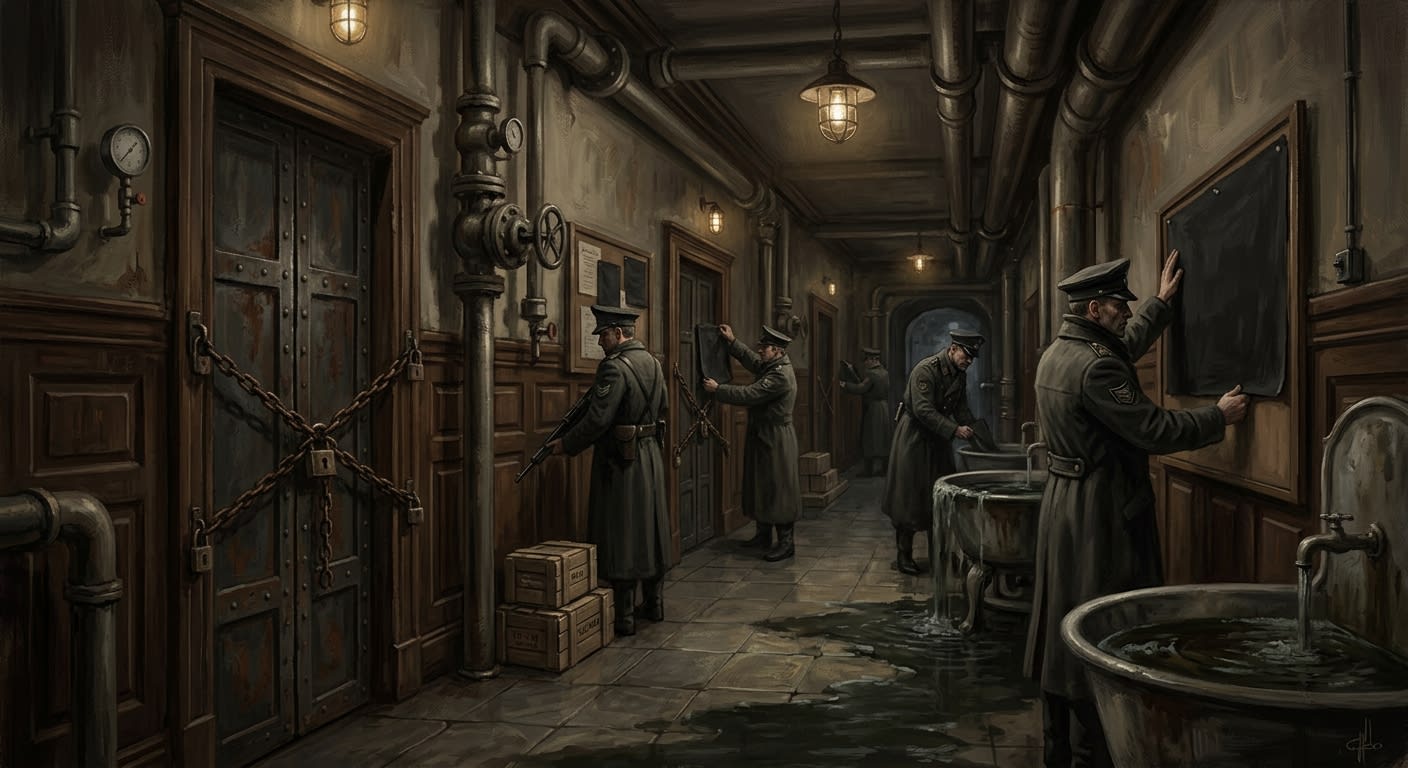
Anomoly Weeks
The calendar form of panic, posted in black wax and billed by the day
Anomoly Weeks are severe Cloister drift events: chained gates, covered ink, rationed silence, rising basins, and the official fiction of order wearing a black notice.
Codex Ref. VII.4.18-201
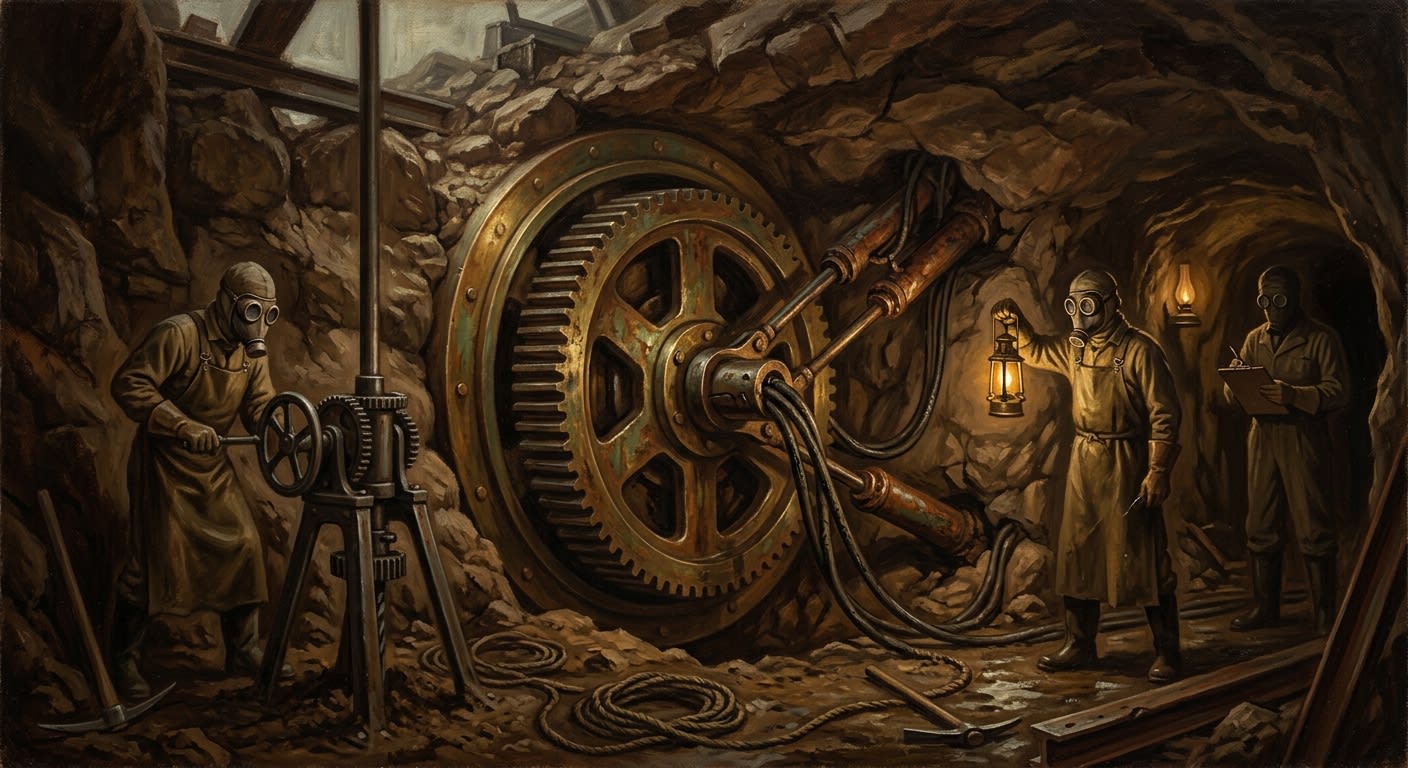
Apparatus of Gate Nine
The drill went down for vibration and returned with doctrine
A.S. 178 Gate Nine survey in which Bureau of Engineering Team Gamma-9 drilled beneath the Queue Road and found a turning wheel, a sealed chamber, and obedience already waiting.
Codex Ref. VII.4.15-001
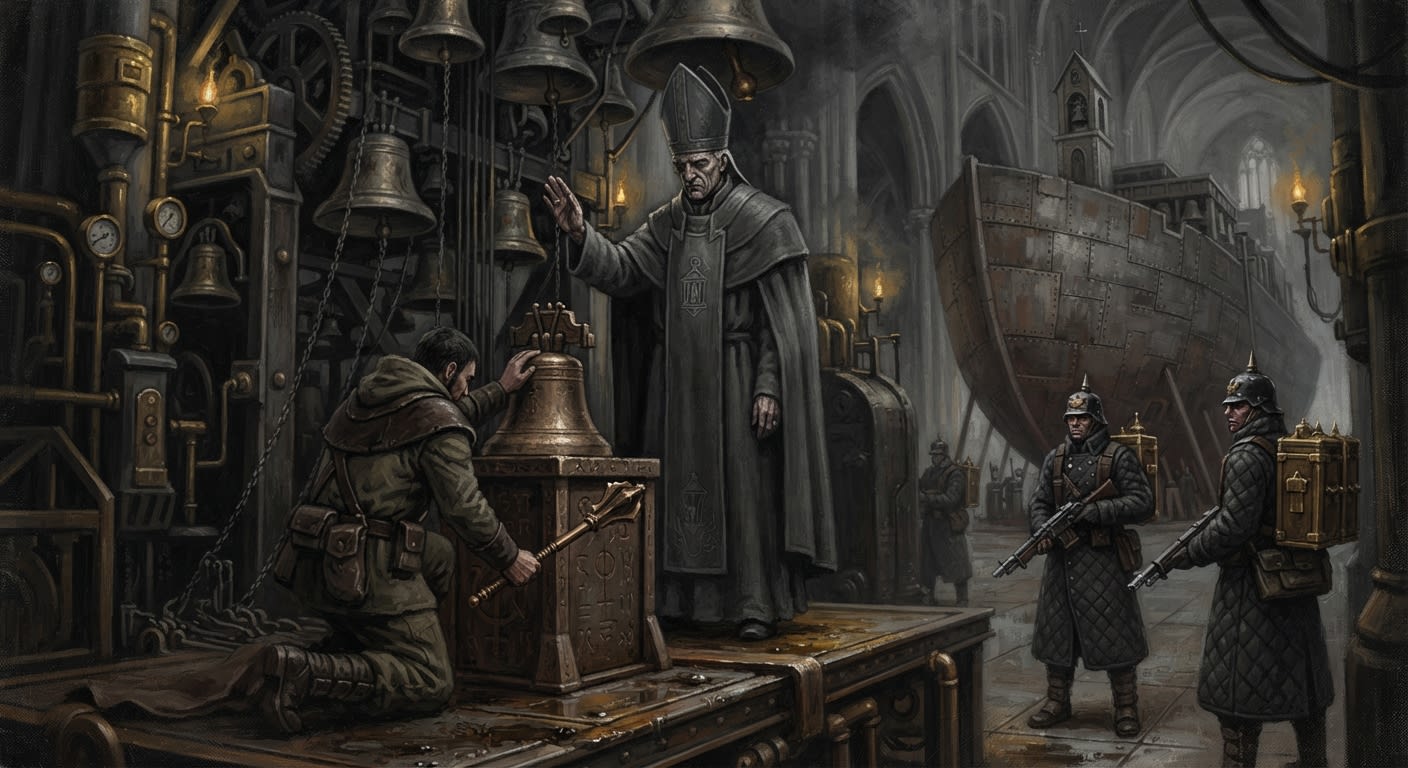
Archbishop of Canterbury
The altar Strasbourg cannot countersign
Canterbury's unnamed Archbishop ordains bell-warriors, guards relics, blesses ships, and proves that an unaudited Christian altar can still make Strasbourg lose sleep.
Codex Ref. III.2.01-025
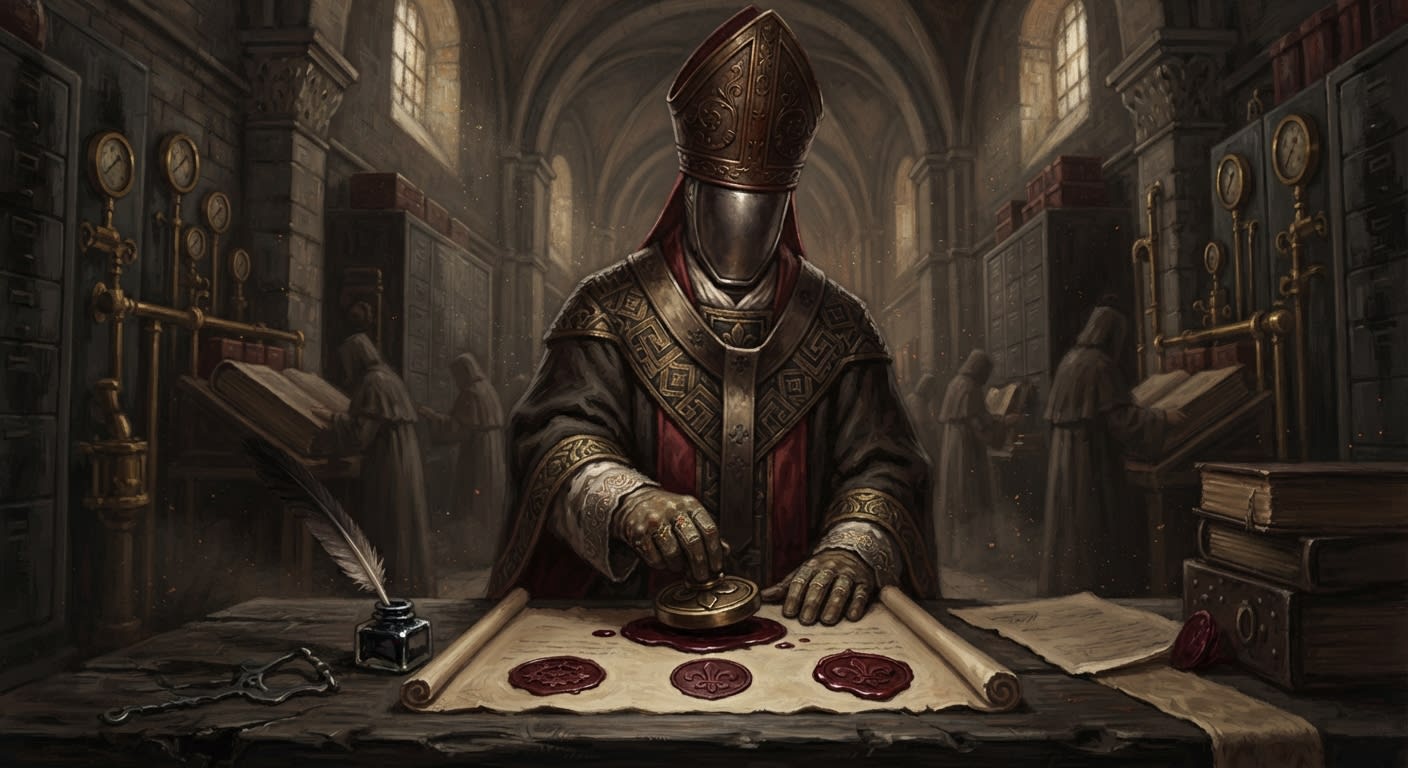
Archbishop of Lyon
The hand France sent, the name Records did not keep
The unnamed French signatory of the Concordat of Strasbourg: preserved by title, wax, and act, while the man beneath the mitre was permitted to vanish from the Ledger.
Codex Ref. III.2.01-090
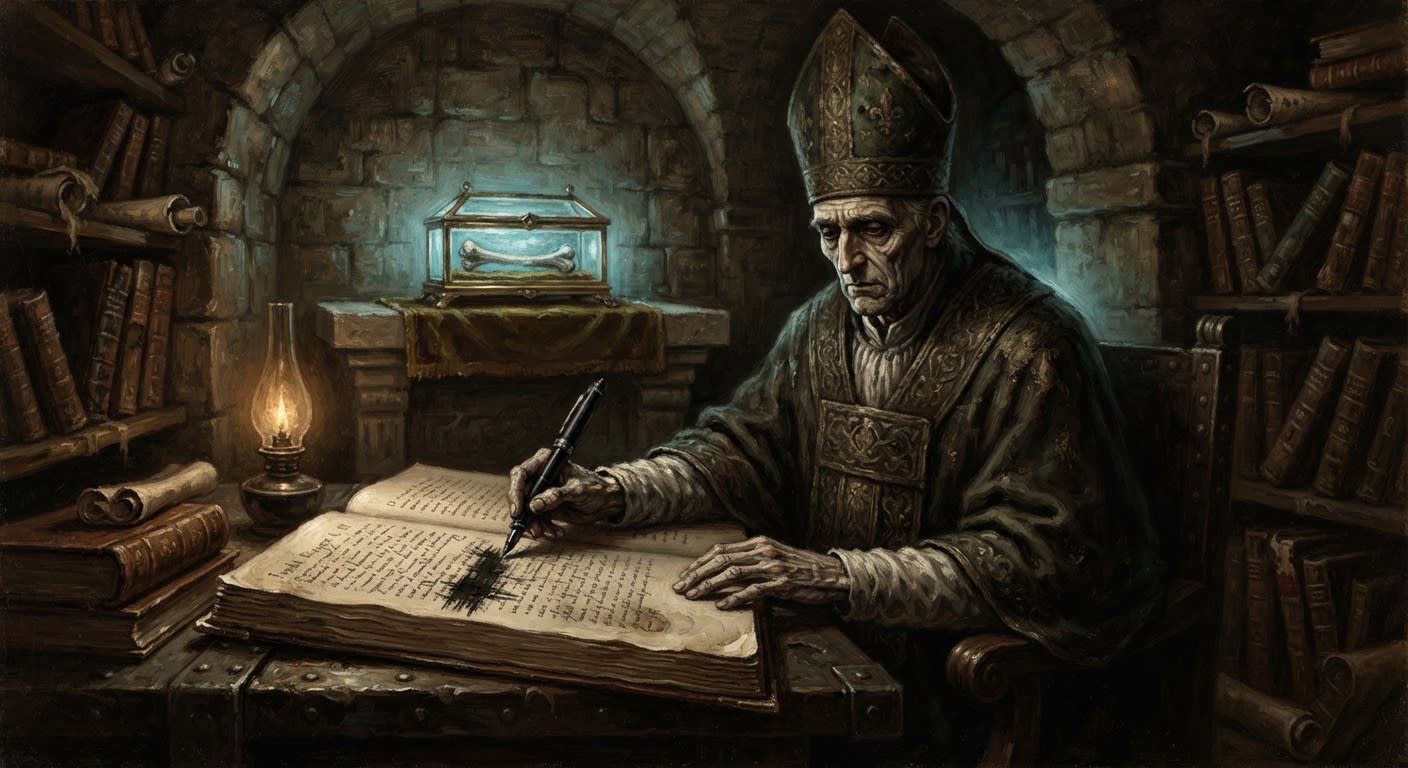
Archbishop Rupert III
The prelate who made a relic absent by letter
Pre-Synodic Archbishop of Vienna who answered Amsterdam's bone arithmetic by erasing the Reliquary of Saint Aldebrand from the records while leaving it glowing in the vault.
Codex Ref. III.2.01-032

Archon
The chair survives the man and charges rent to history
An Archon is less a man than a legal altitude: Bureau sovereign, city master, seal threshold, and chair that lets the Synod replace the occupant while preserving the blame.
Codex Ref. XIII.1.07-090

Archon of Records
The hand that opens almost everything, and records what it cannot touch
The Archon of Records opens nearly every lock in the Church's memory, commands the Great Ledger, and preserves one terrifying receipt: proof that some silences outrank even Records.
Codex Ref. XIII.1.07-078
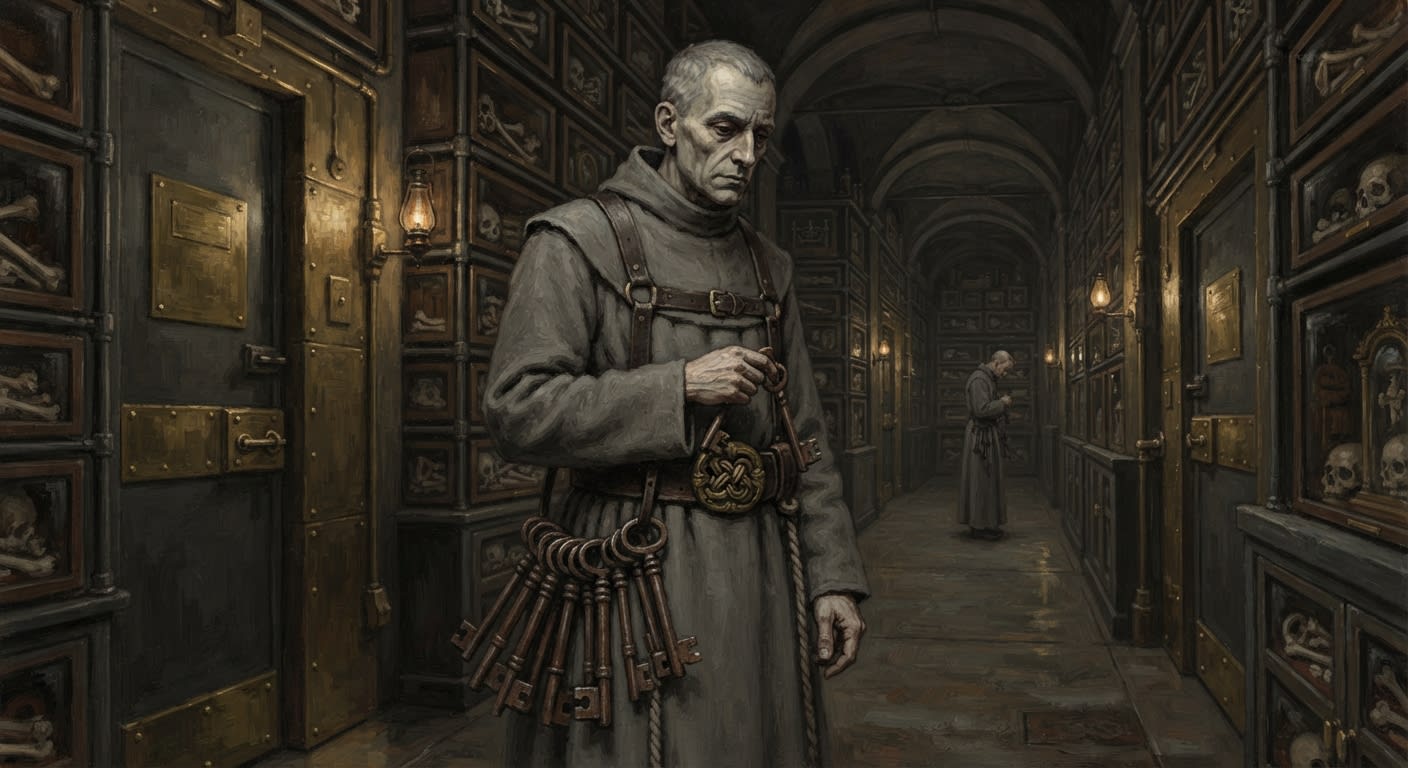
Archon-Custodian of Relics
The keys are issued to the chair. The chair lends them to the man.
The classified holder of the Bureau of Relics' custodial chair keeps the Vault, the keys, the silence, and the useful fiction that bones answer to shelves.
Codex Ref. III.2.01-201
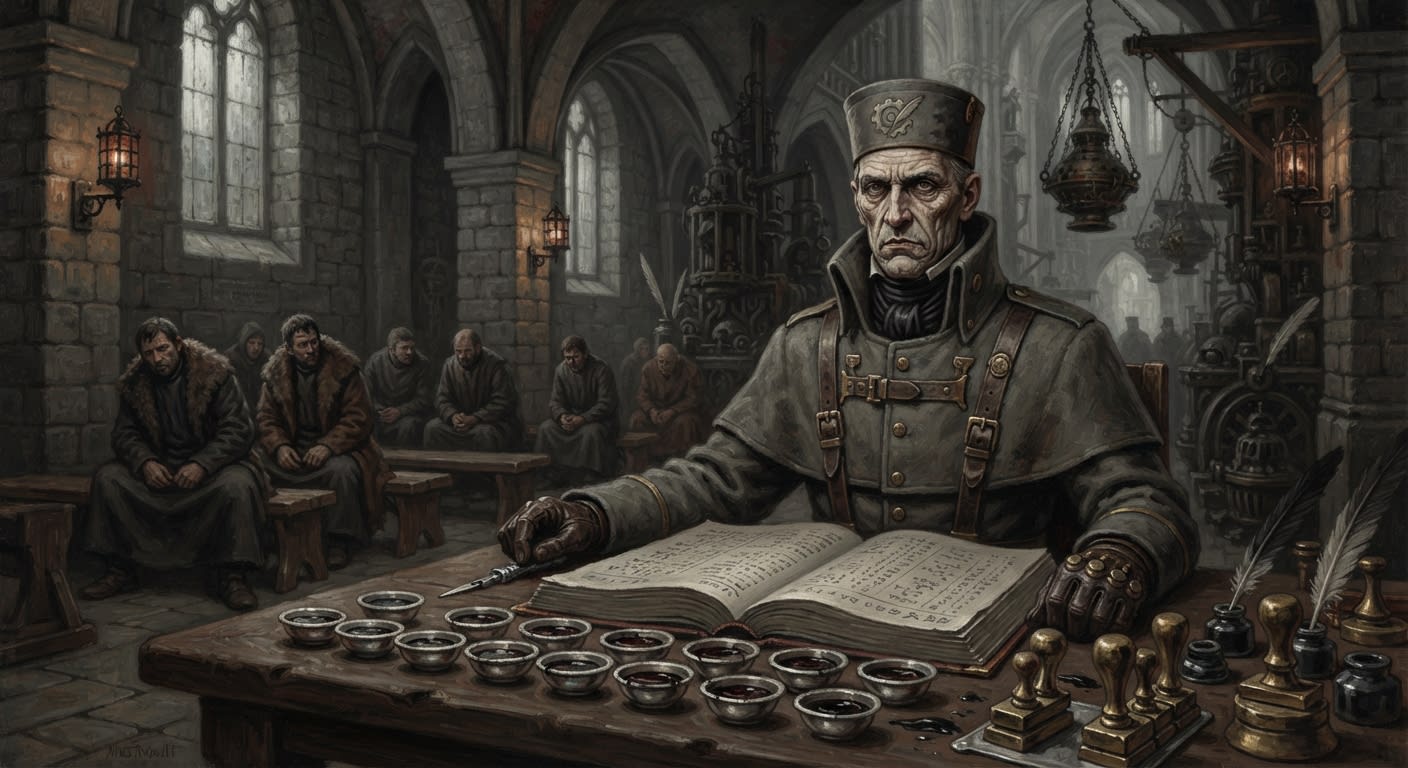
Archon-Mediator Havel of Tithes
The quiet voice that taught a thousand guilds arithmetic
The Bureau of Tithes officer active at Münster in A.S. 105, remembered for one sentence, one vanished district, and no biography worth preserving.
Codex Ref. III.2.01-105
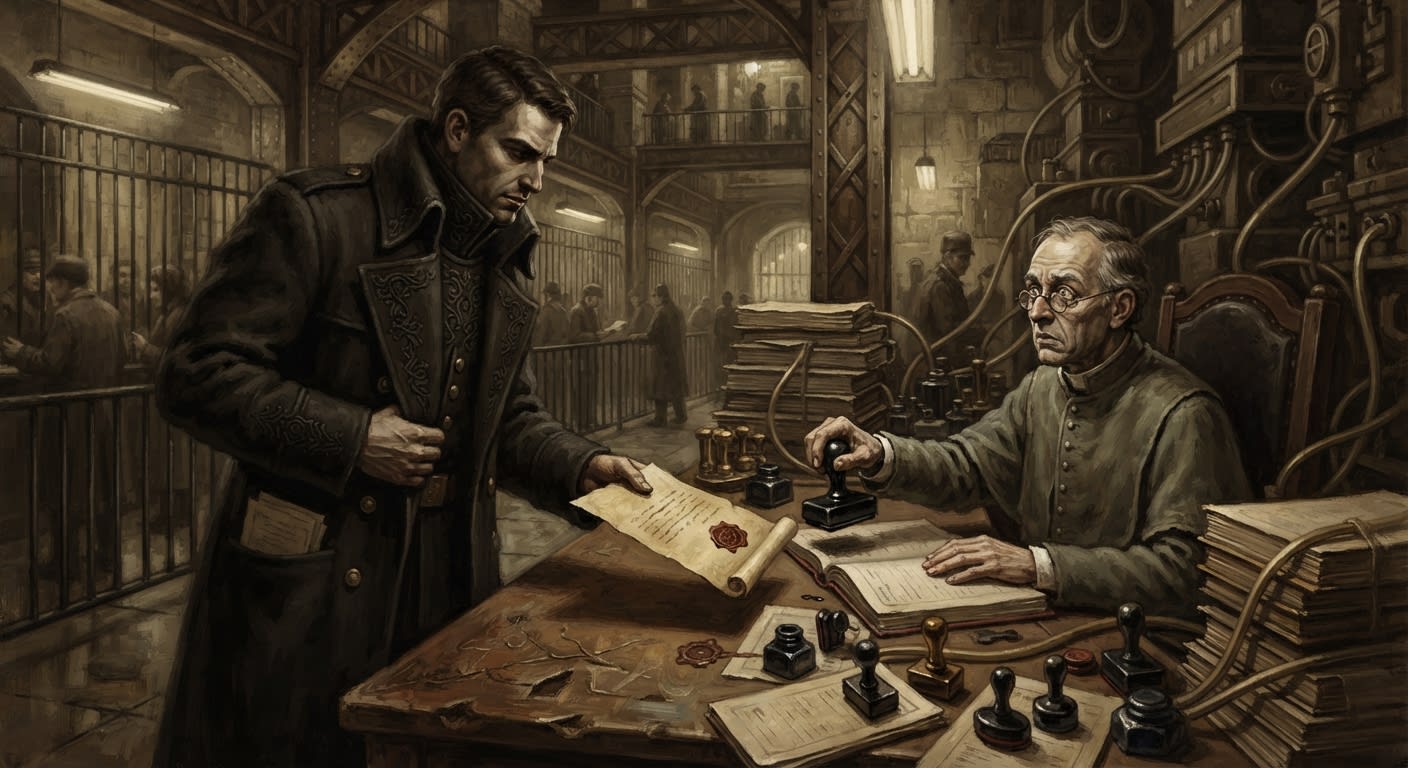
Archon's Override
The phrase is withheld; the hierarchy it invokes is not.
The Archon's Override is not magic, mercy, or a passkey. It is spoken hierarchy: a Doctrine citation that teaches a lesser seal to fear the wax above it.
Codex Ref. XIII.1.07-090
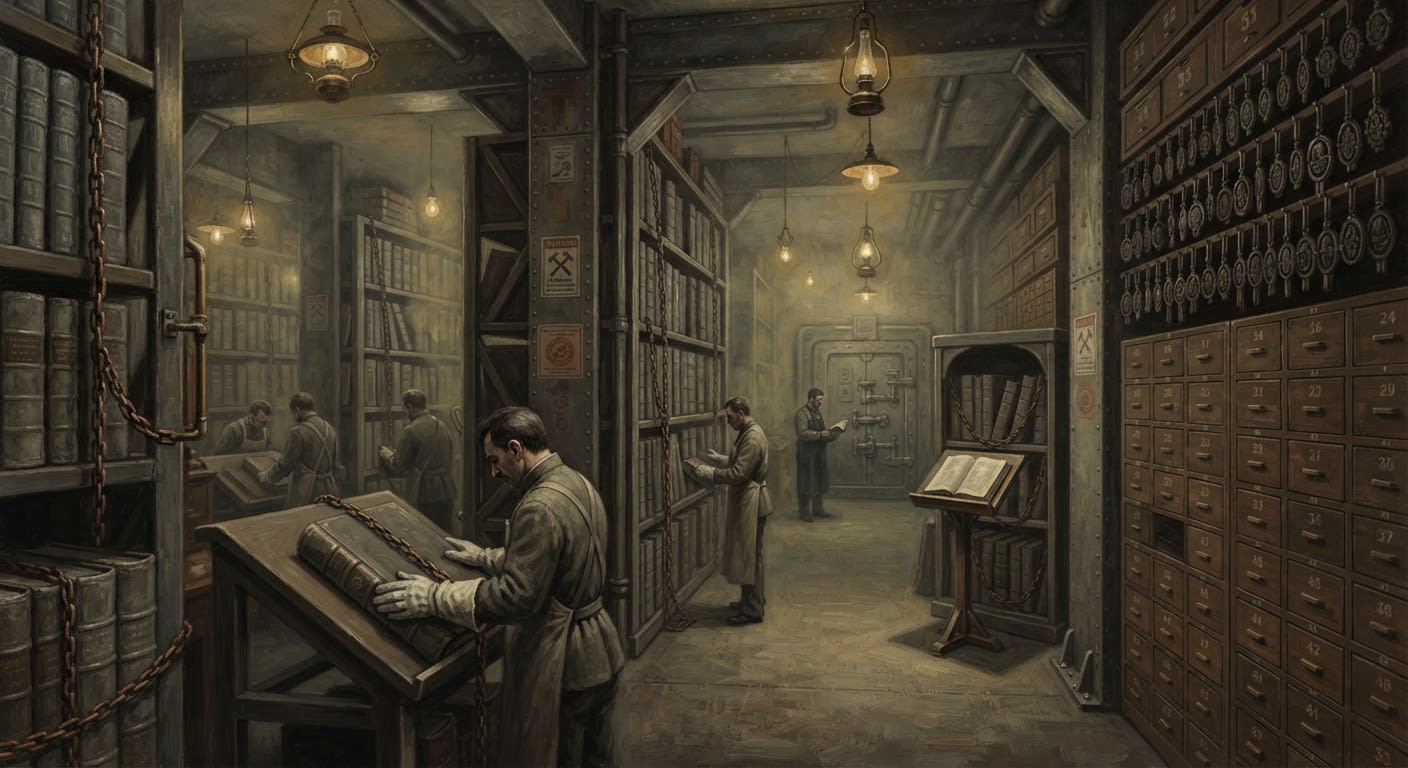
Armorial Vault
Where symbols are chained until they become law
The Armorial Vault is the chained body beneath Strasbourg where registered symbols become legal facts, false marks are preserved for prosecution, and colour learns to fear drawers.
Codex Ref. II.1.04-007
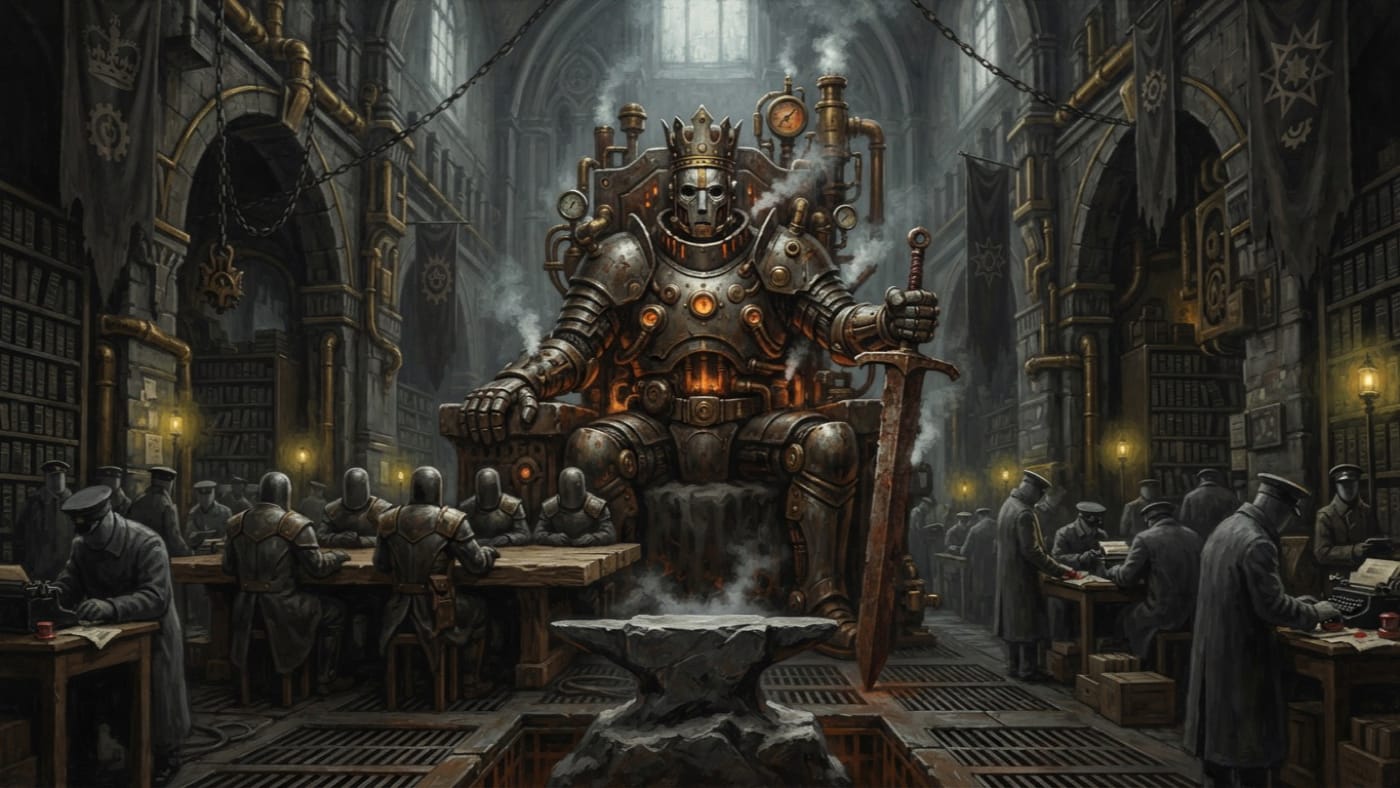
Arthur
The king whose name binds Britain and whose life eludes the Ledger
Arthur sustains Britain's Crown, oaths and Table while eluding every register. King, warlord and saint in British testimony; identity and dates unestablished.
Codex Ref. III.2.01-1518
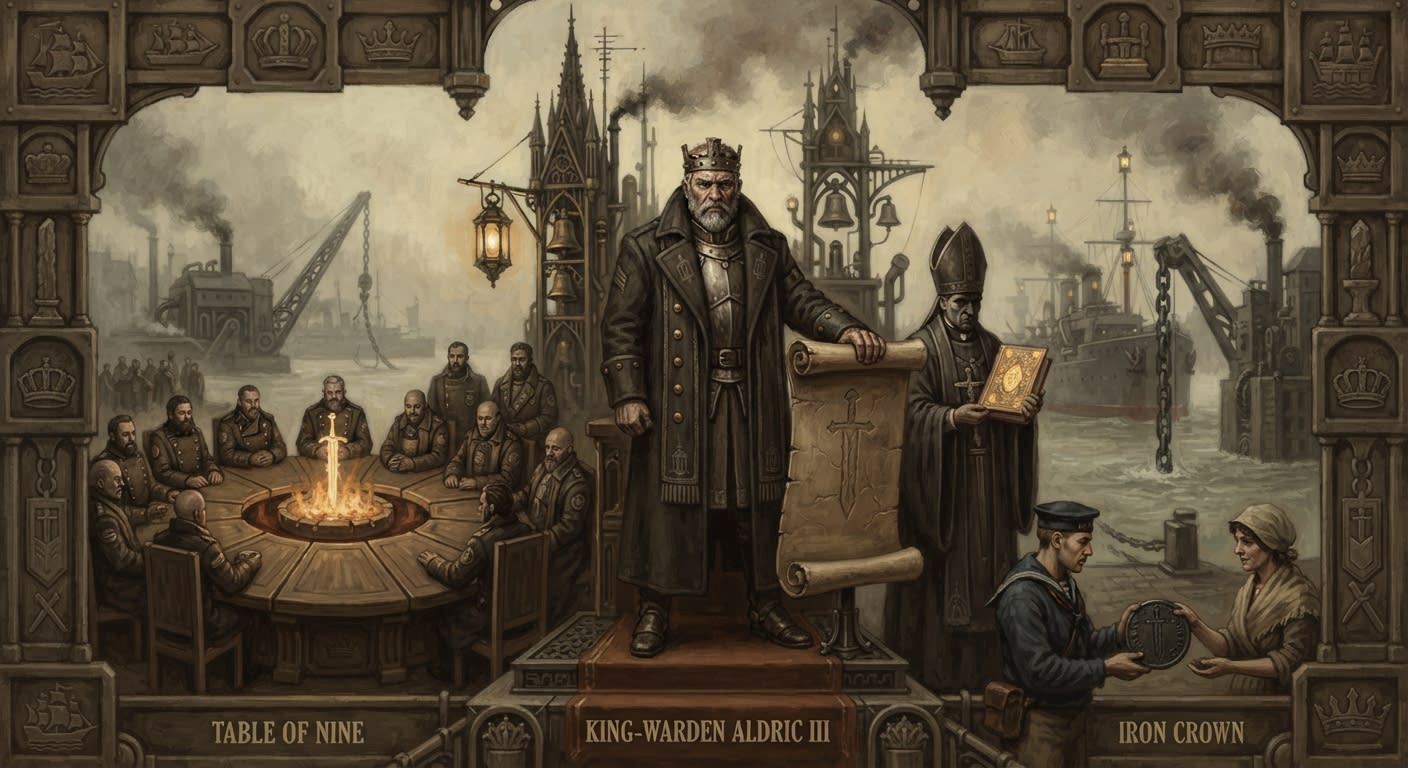
Arthurian legitimacy
The old island claim Strasbourg can deny and still must salute
Arthurian legitimacy is Britain's old answer to Strasbourg: charter, altar, Table, coin and coastline, obeyed too long to be dismissed as mere legend.
Codex Ref. X.1.06-001
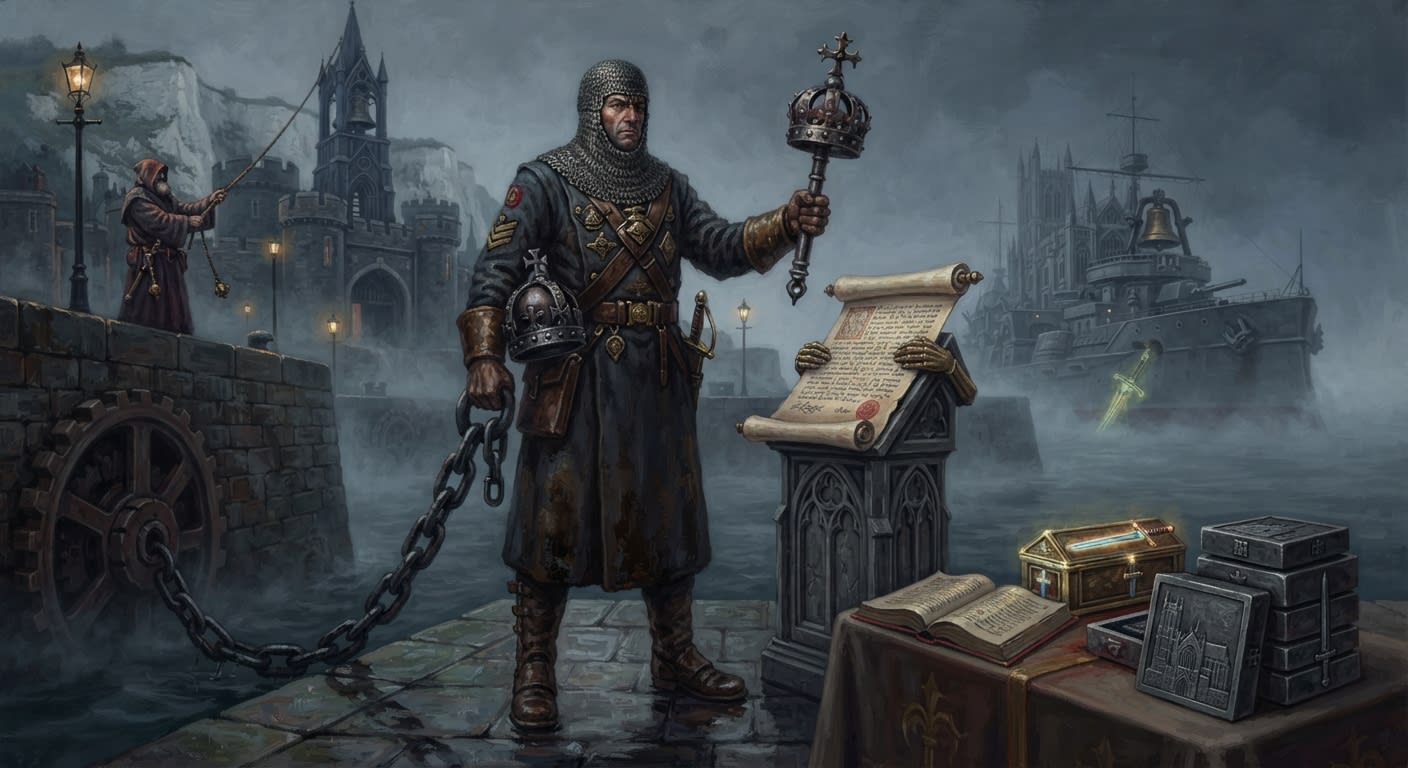
Arthurian Tradition
The myth that keeps the Channel open
The insular oath-machine Strasbourg cannot disprove and Britain does not need proved: Arthur as crown, charter, coin, bell, harbour chain, and naval discipline.
Codex Ref. X.1.01-002
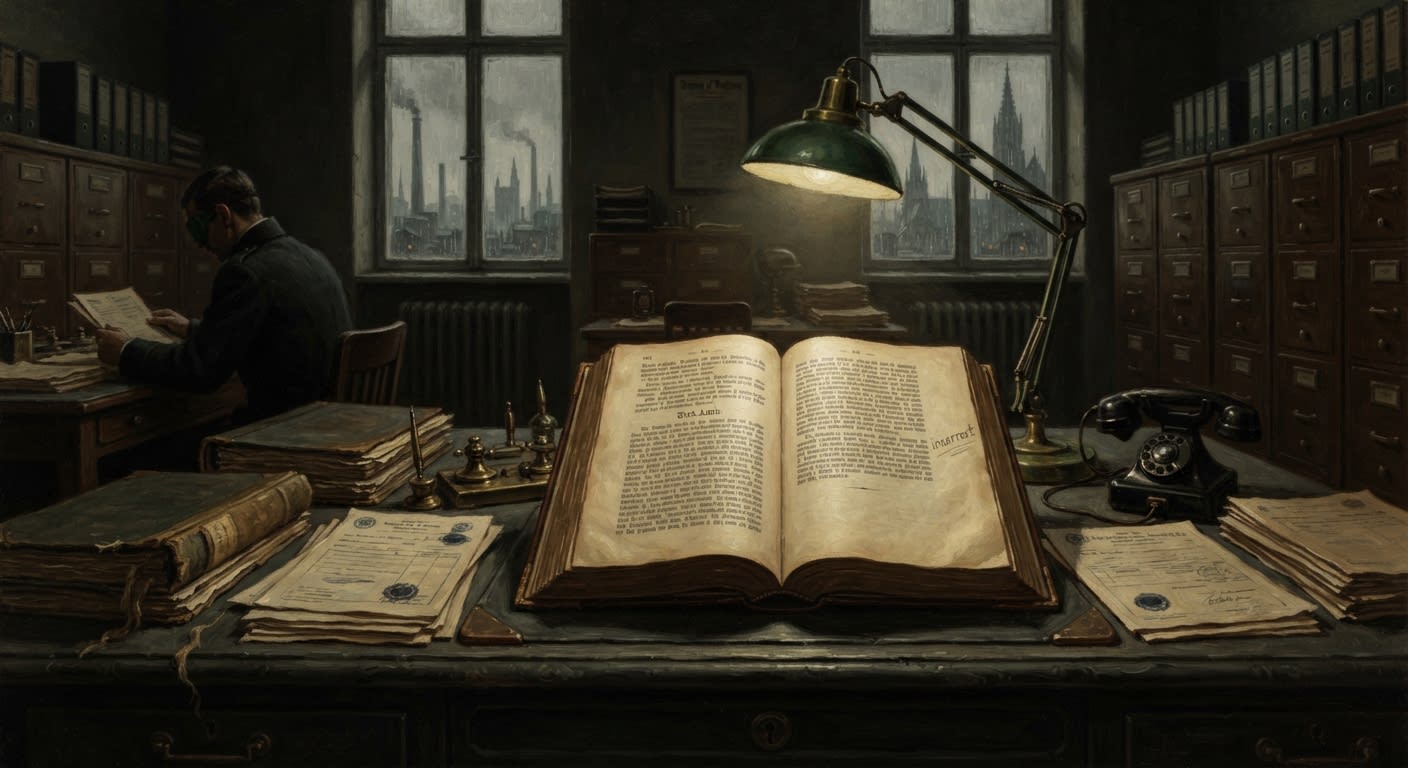
Articles of Covenant
The approved page that survived by being underestimated
The Articles of Covenant were safe enough to leave open on a desk, until one pencil beside the Third Article taught Silence that obedience could be graded.
Codex Ref. XIII.1.56-001
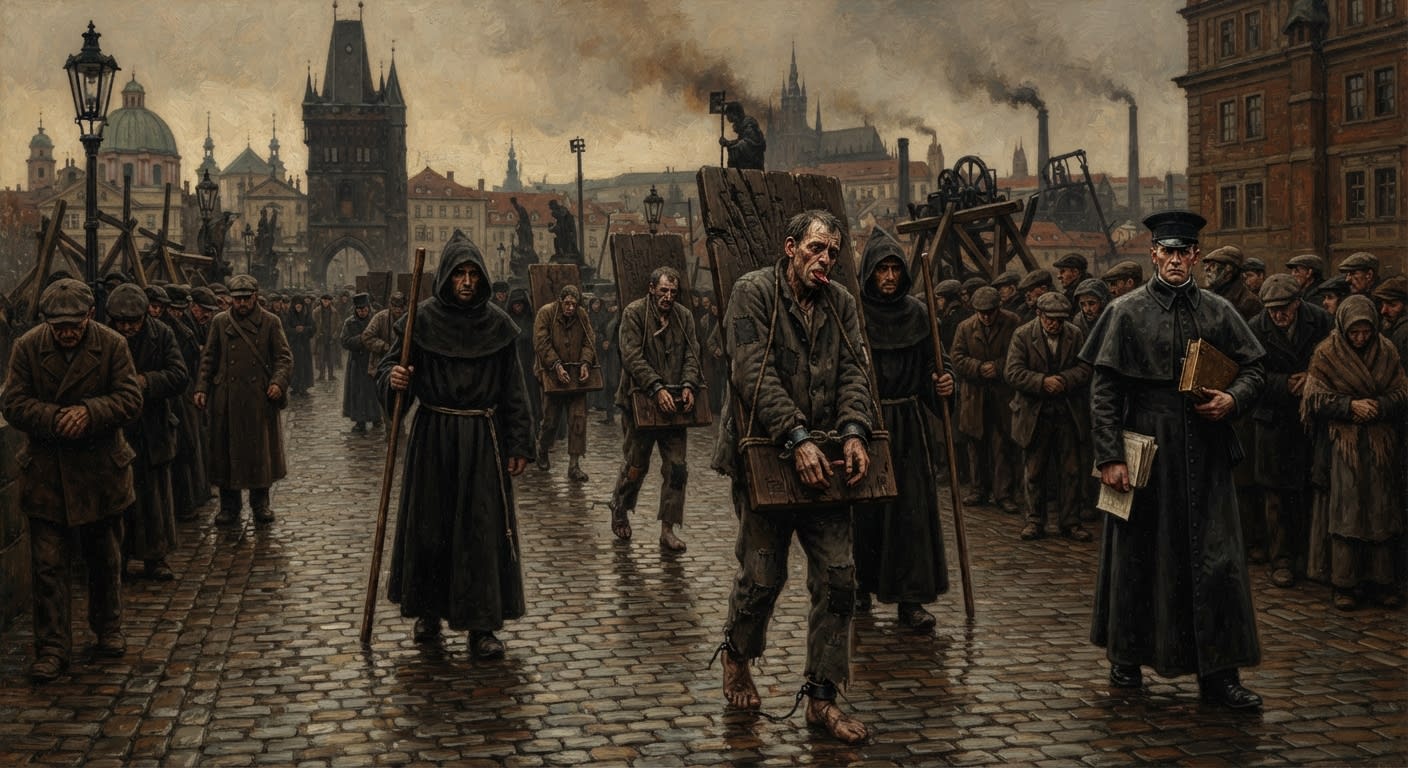
Articles of the Creed
The Creed is spoken by all, counted by few, and written in public only when nailed to oak.
The sealed divisions of the Eternal Creed: public in recitation, private in enumeration, and visible as text only under Bureau custody or Purity's oak.
Codex Ref. XIII.1.90-201
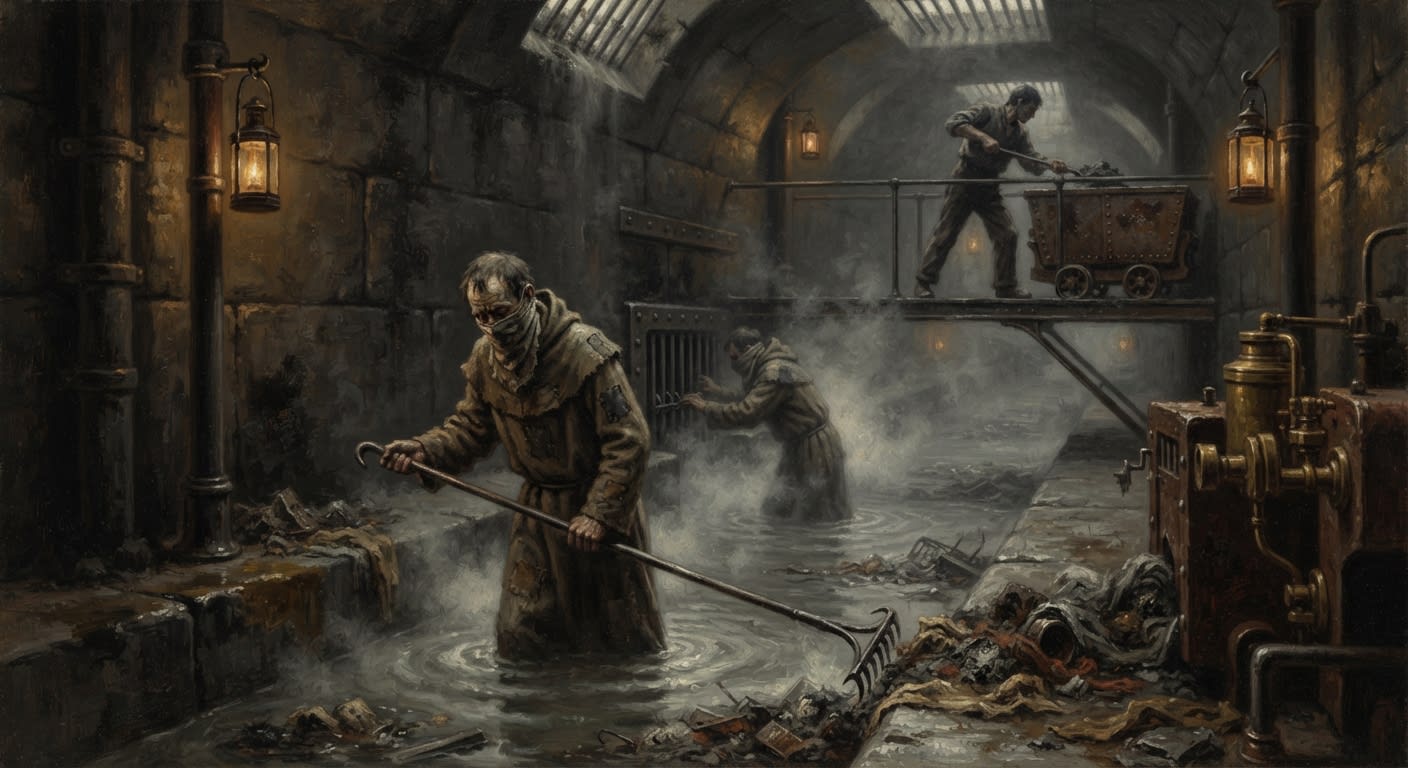
Ash Canalworks
The Throat takes what the ovens cannot afford to remember.
Lower basalt channels beneath San Vesta where cooling water, kiln waste, recovery-service debt, and unlicensed mercy run together in wet soot.
Codex Ref. VII.1.03-002
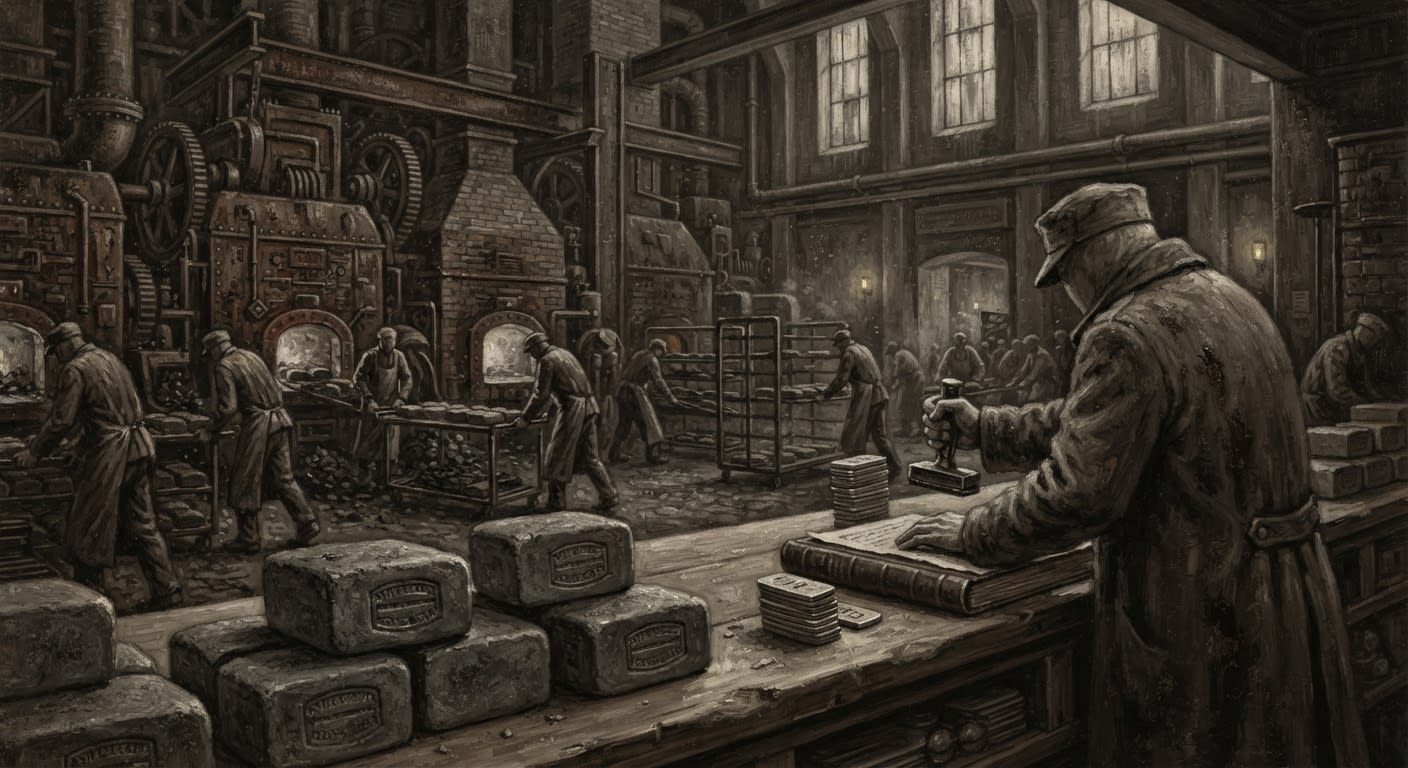
Ash-bread
The loaf does not spoil. That is how it learned to collect names.
San Vesta's grey ration-loaf does not rot, does not forgive, and does not let a name detach from its stamp; the Bureau of War calls this nutrition.
Codex Ref. VI.4.21-134
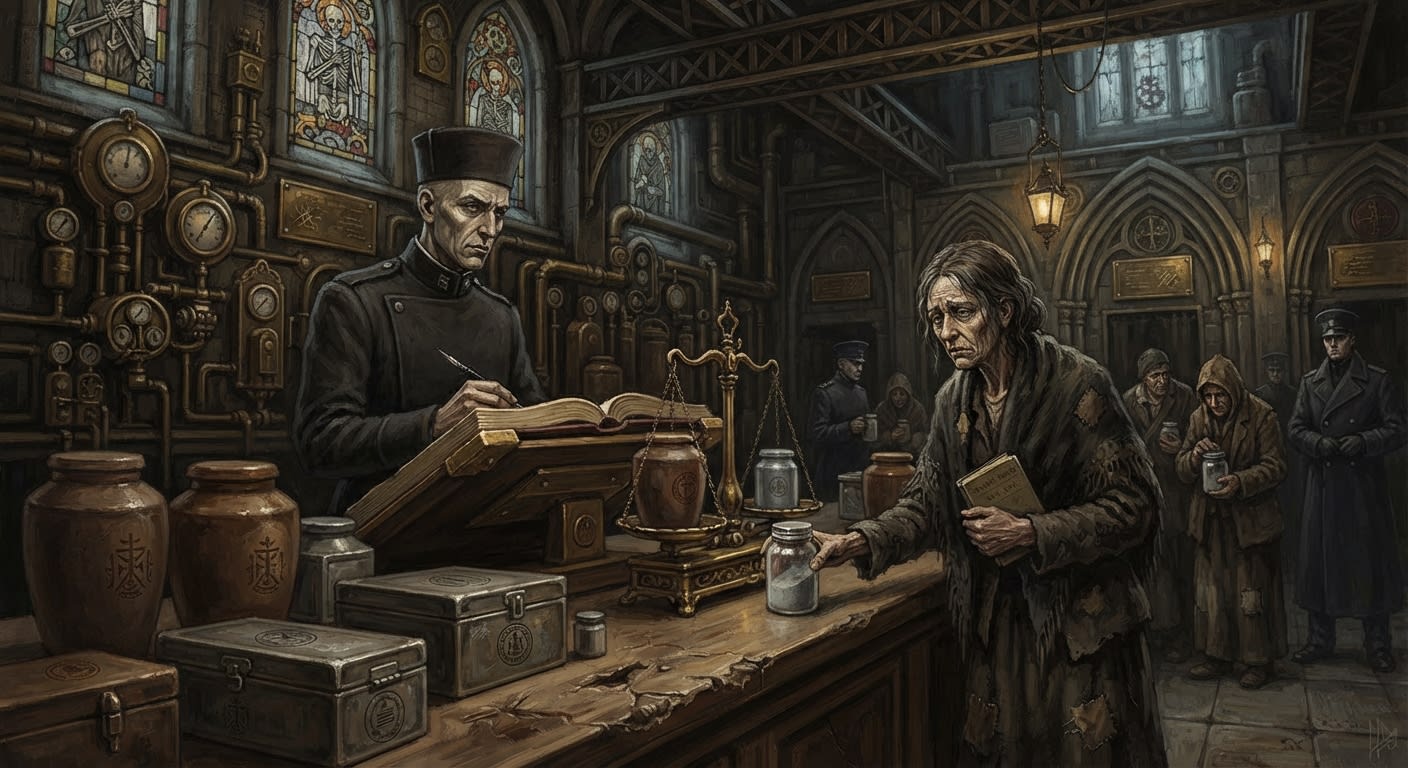
Ash-Credit
The dead are tender once Tithes finds a scale
Ash-credit is the Synod's devotional collateral, converting cremains, saint-dust, and pledged future remains into bread, grace rations, and obligations the dead cannot refuse.
Codex Ref. VI.3.01-002
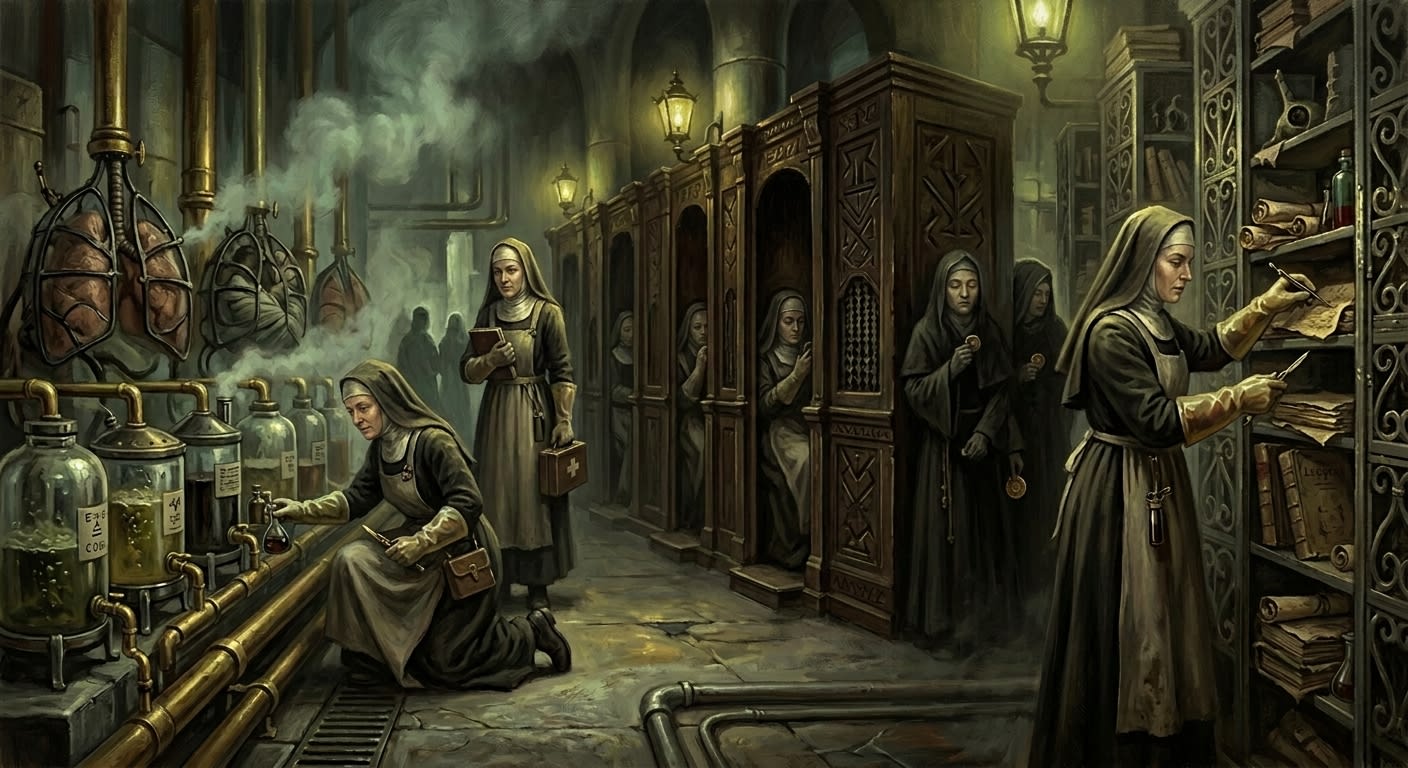
Ash-Hospice Sisters
Mercy keeps the ward warm and the accident ledger warmer
The Ash-Hospice Sisters tend Brast's lungs, confession booths, and most dangerous archive: mercy with resin gloves and an exact hand.
Codex Ref. VIII.6.05-001
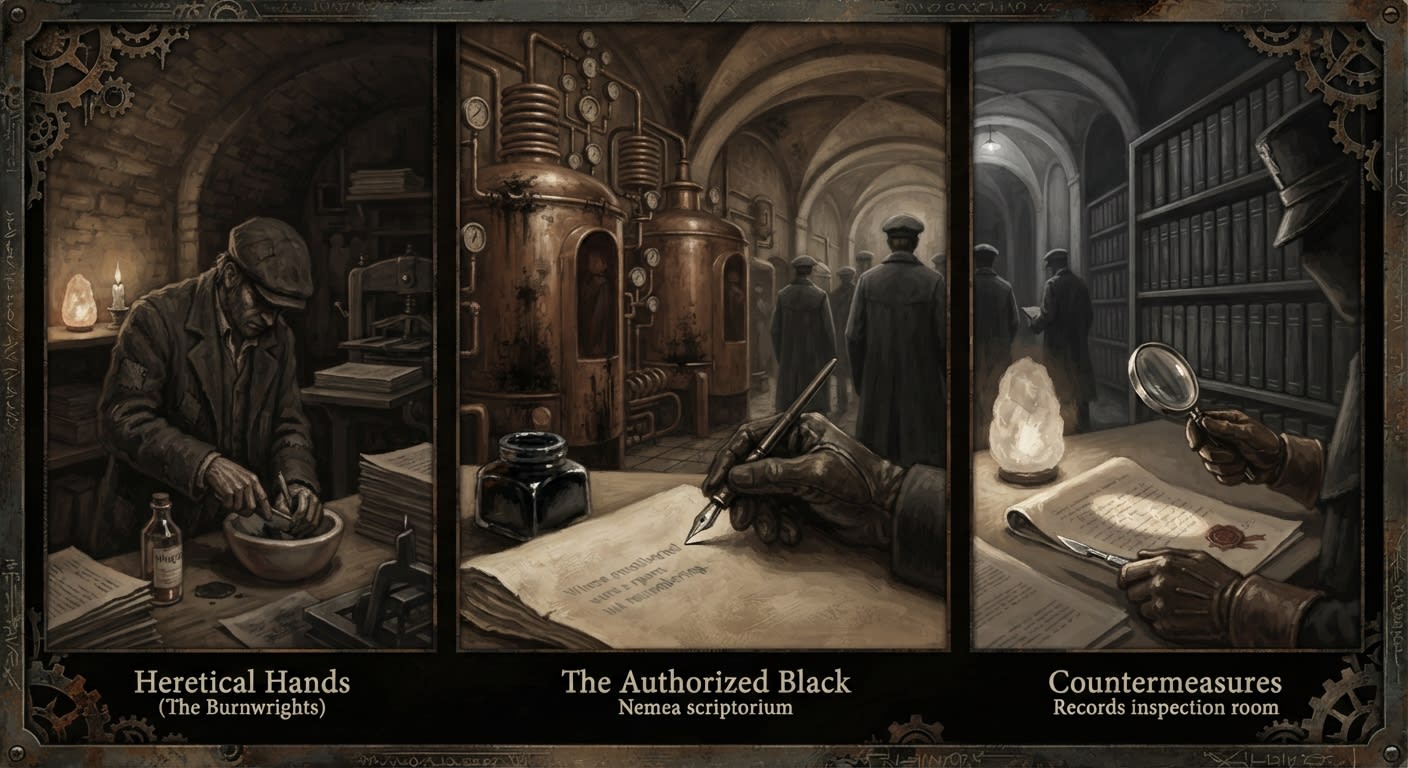
Ash-Ink
The authorized black, and the forgeries it taught to breathe
The lawful black of Nemea and its hanged imitations: ink made from burned authority, relic residue, and the Bureau of Records' dearest mistake.
Codex Ref. XIII.1.96-096
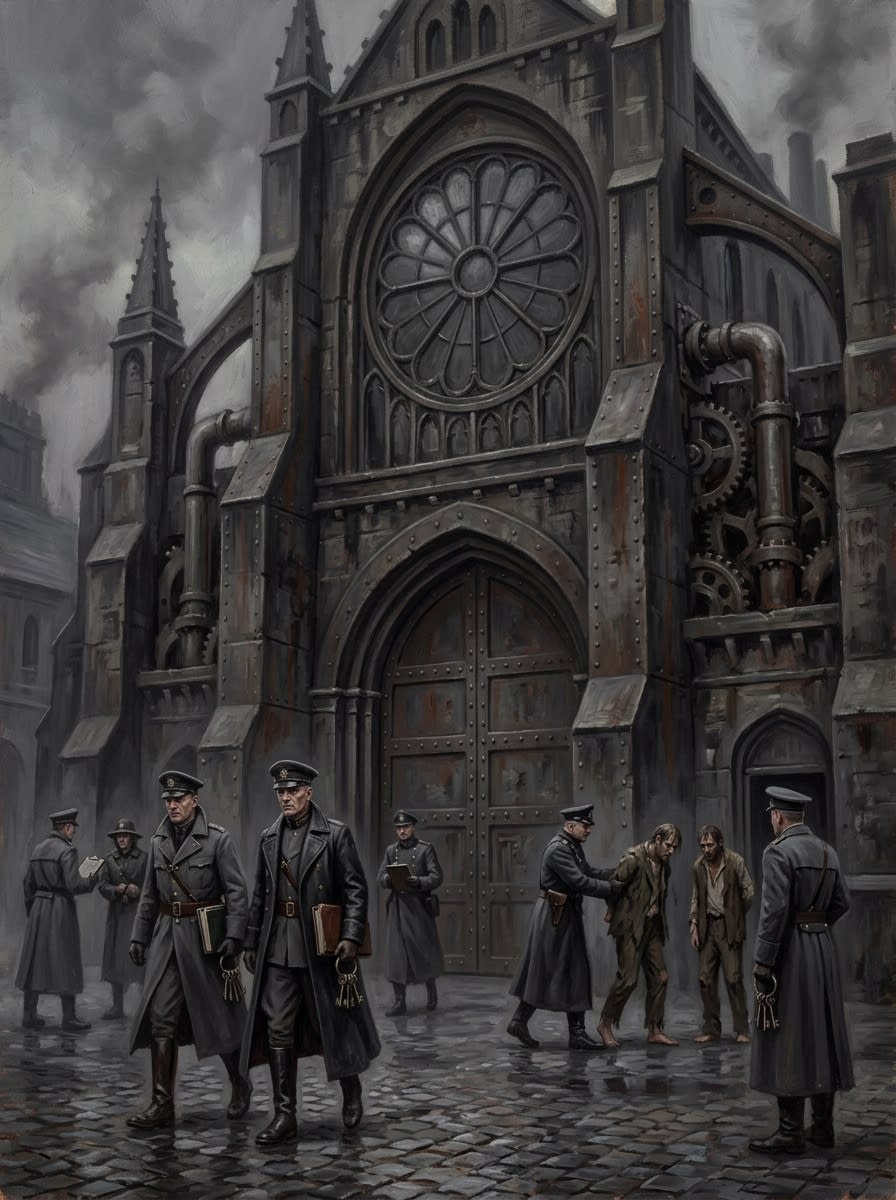
Ashen Cloister
Purity's house has handles only on the outside
The Ashen Cloister is Purity's Strasbourg seat: gate without welcome, court without mercy, archive with appetite, and the cleanest terror in the Synod.
Codex Ref. II.1.04-003
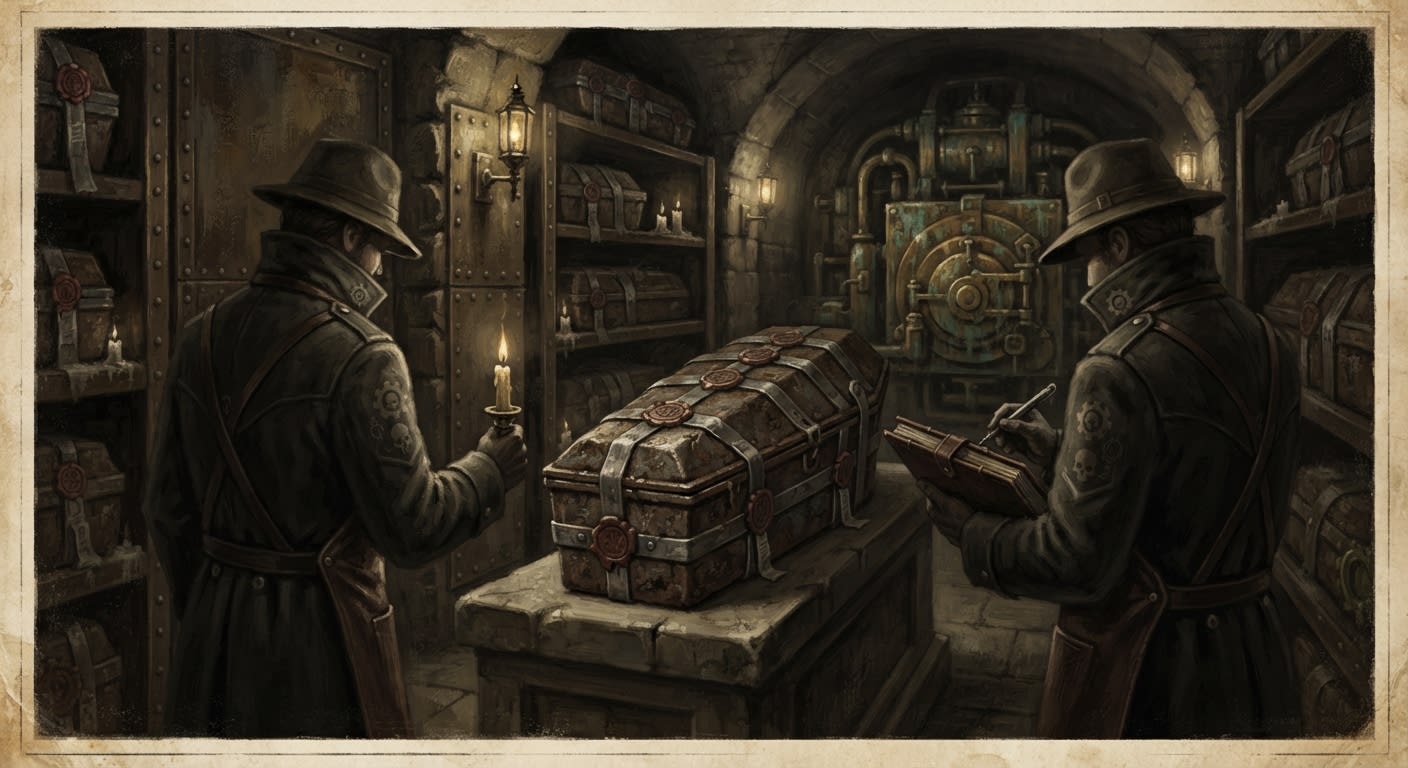
Ashes of the Sundering
The day in the jar, and the seal around the fear
The Bureau of Relics keeps a sealed iron vessel said to contain the Sundering's own residue, gathered from Vienna's cathedral floor and never opened since.
Codex Ref. V.1.03-045
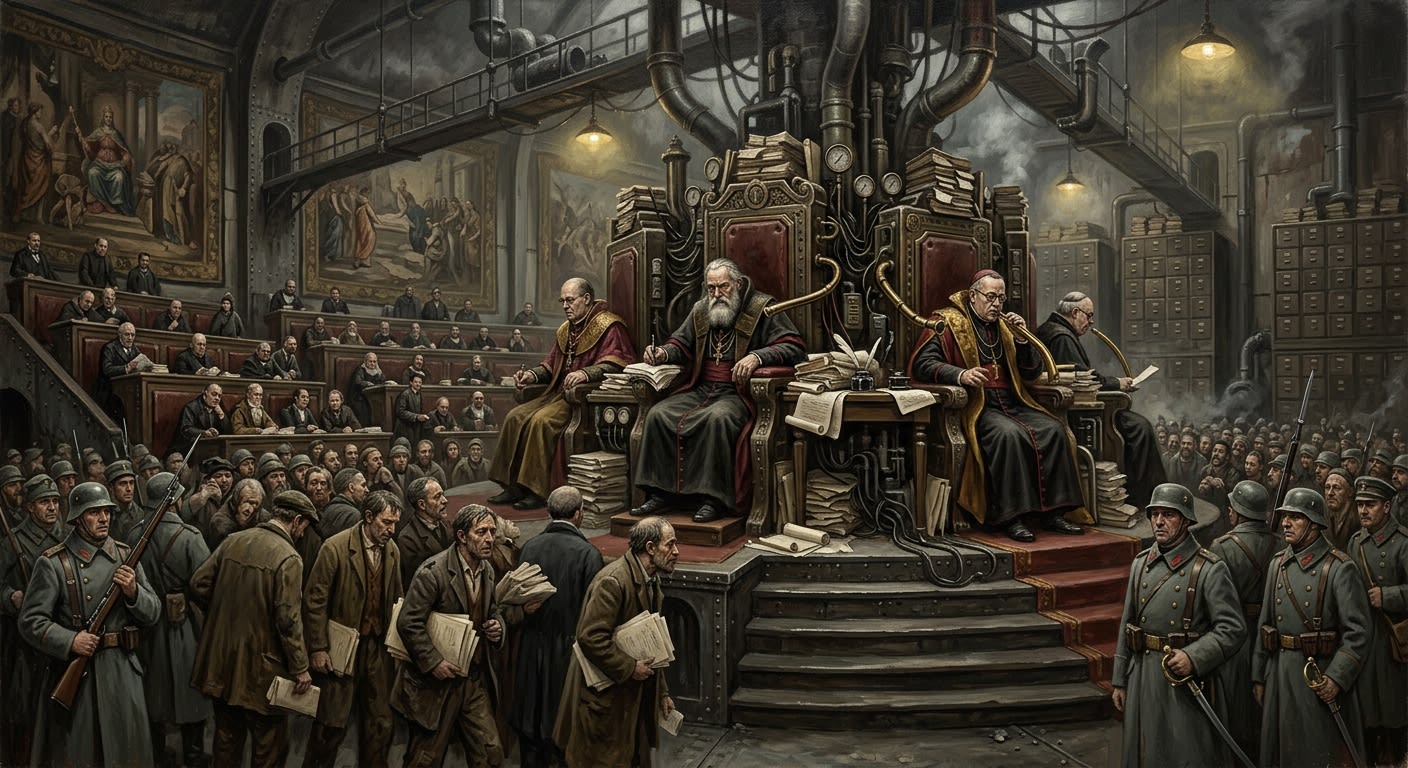
Assembly of Thrones
A chamber where pride is seated before it becomes militia
The Assembly of Thrones lets Bishops-Praetorial thunder safely: grievance seated, fury docketed, pride taxed, and every rebellion delayed by procedure.
Codex Ref. XIII.1.07-093
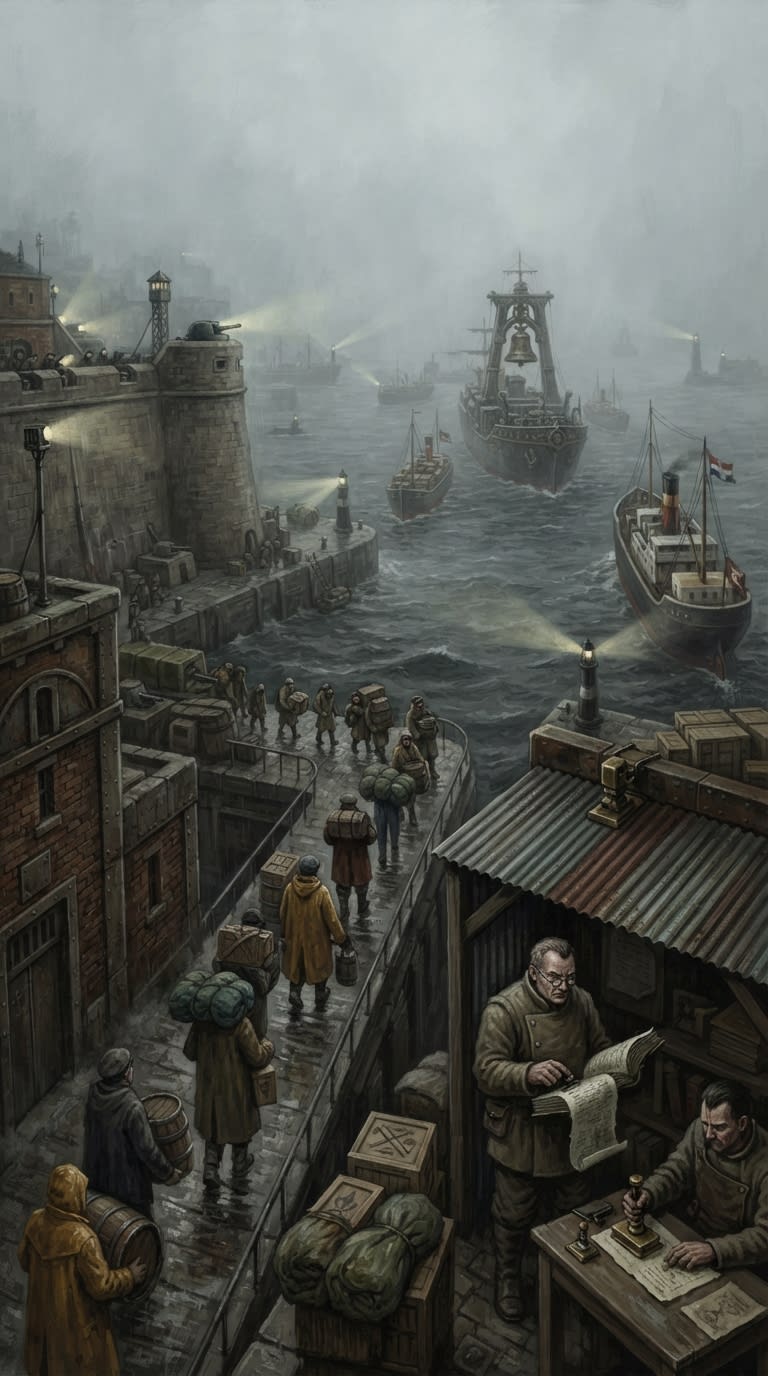
Atlantic
The water at the western end of every Synodal sentence
The Atlantic is the Synod's western water: open, escorted, profitable, watched, and owned by nobody, with Zone 1 harbours feeding the Line through wet ledgers and foreign hulls.
Codex Ref. II.4.09-201
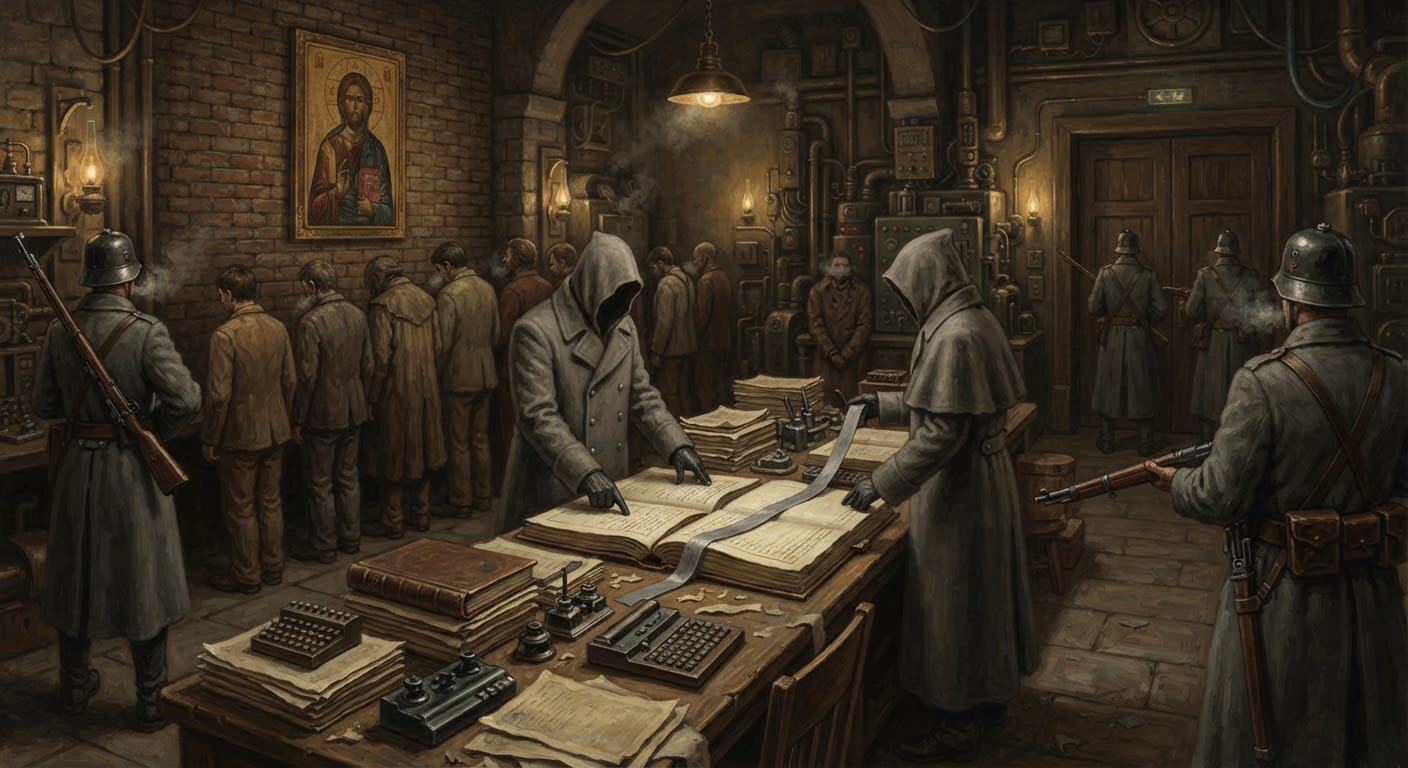
Audit Silence
The hush by which Records makes a room confess
Audit Silence is the Bureau of Records doctrine that stills speech, opens locked repositories, encloses witnesses, and lets an Indiction writ make law out of hush.
Codex Ref. XIII.1.06-090
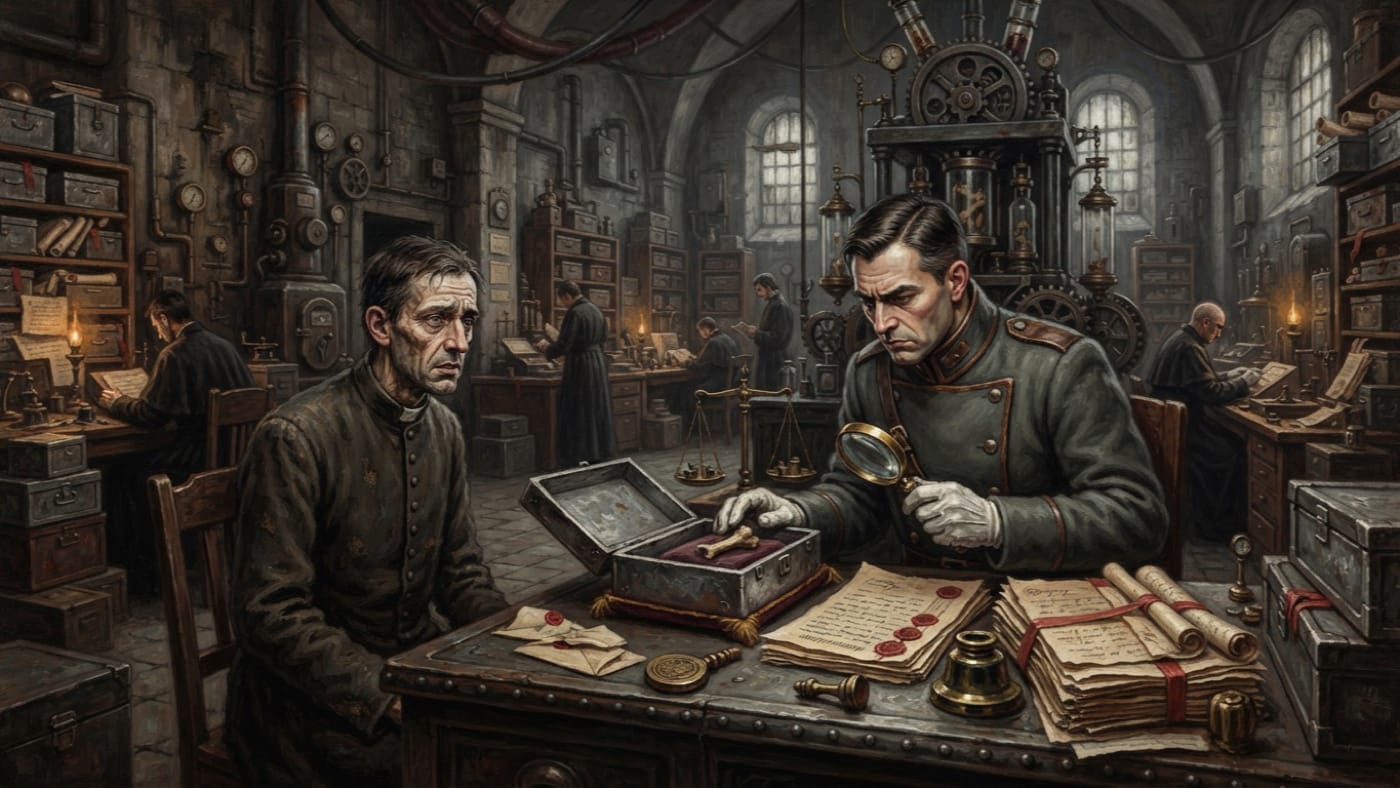
Authenticity Writ
Receipt is not recognition.
The Authenticity Writ brings a claimed relic before the Bureau: custody chain, description, doctrine and proof of payment. The applicant has paid to ask a question; the verdict comes later.
Codex Ref. XIII.1.35-201
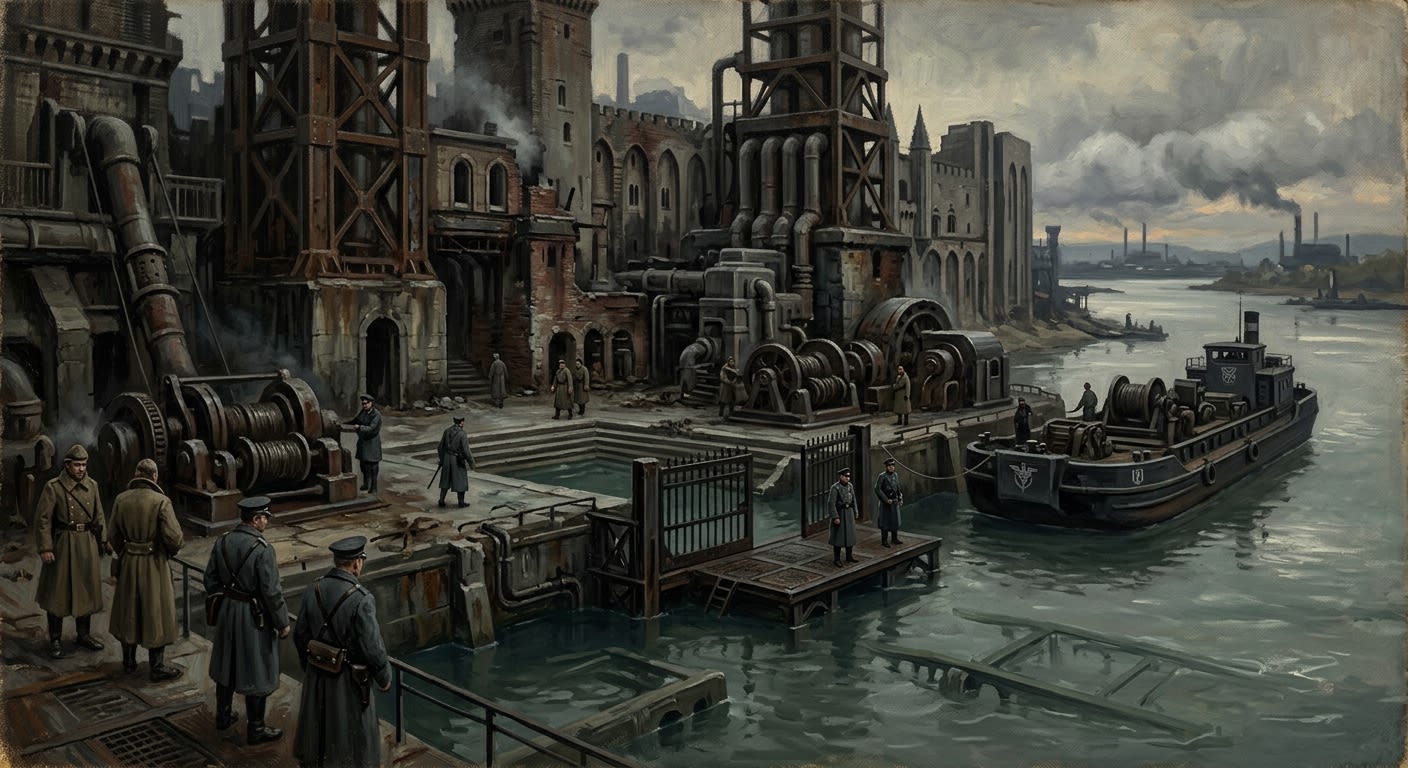
Avignon
A city corrected so thoroughly the river kept the receipt
Penitential ruins on the Rhône, where the Pontifex Submersis was crowned beneath water in A.S. 111, Avignon was razed into correction, and A.S. 145 burned the calendars into agreement.
Codex Ref. II.1.08-111
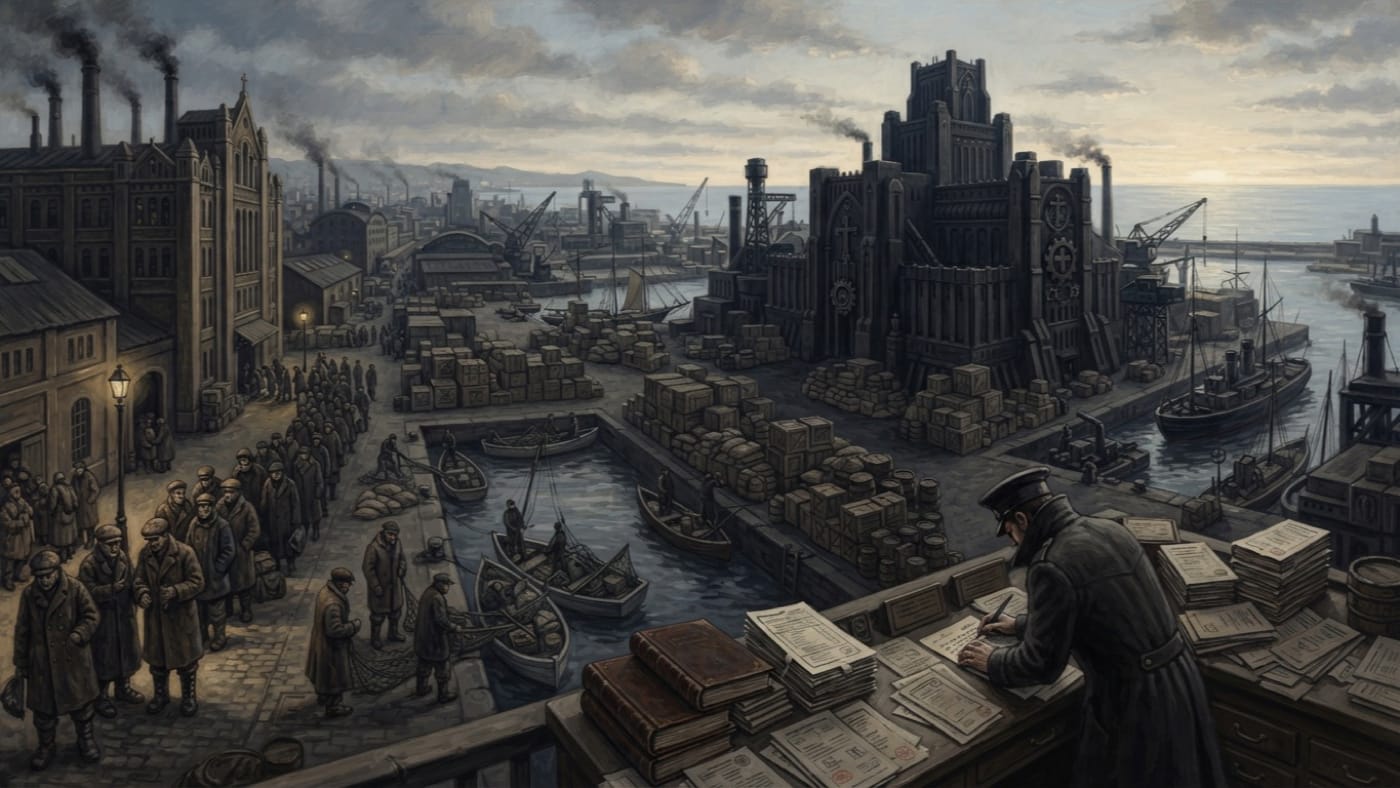
Barcelona
The dead are read correctly; the living appeal
Barcelona keeps Saint-Malo's Thirty-One Names at dawn and its dialect disputes on the clerk's desk. An Iberian port where the dead are read correctly and the living appeal.
Codex Ref. II.1.04-166
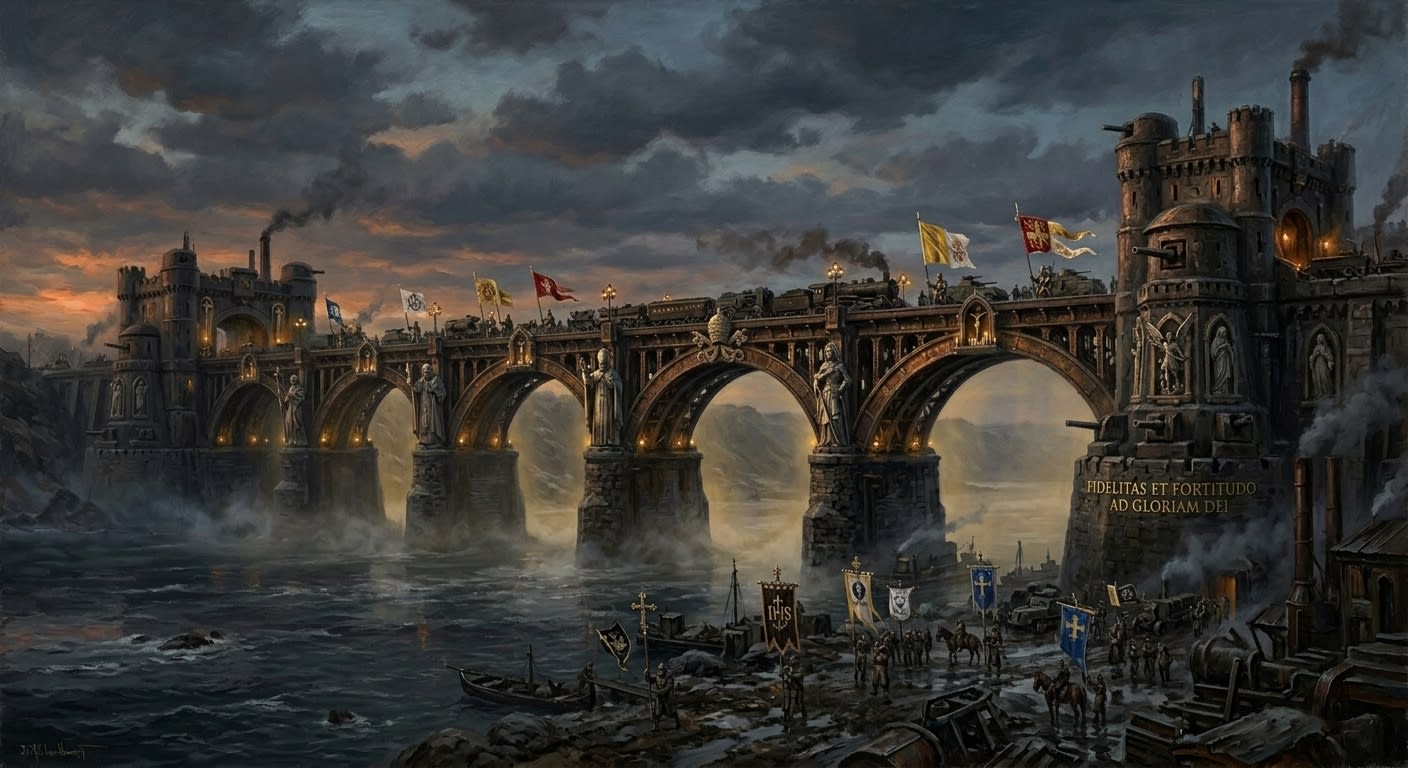
Bastion-Brest
Where the Confession Comes Back
The Brass Ribs of the Bug River crossing — a bridge-fortress of thirty-two brass-ribbed trusses where crossing the span requires a moral audit at gunpoint, confession is currency, and the sins spoken into the booths have, since A.S. 199, begun to come back.
Codex Ref. II.4.07-002

Bastion-Constantinople
The Hinge of the South
Keystone fortress of the Sagittal Line, ratified in A.S. 68. The southernmost anchor of the Wall and its most celebrated grave. Where the advance of Hell first broke against ink and iron, and has broken ever since.
Codex Ref. III.2.04-017
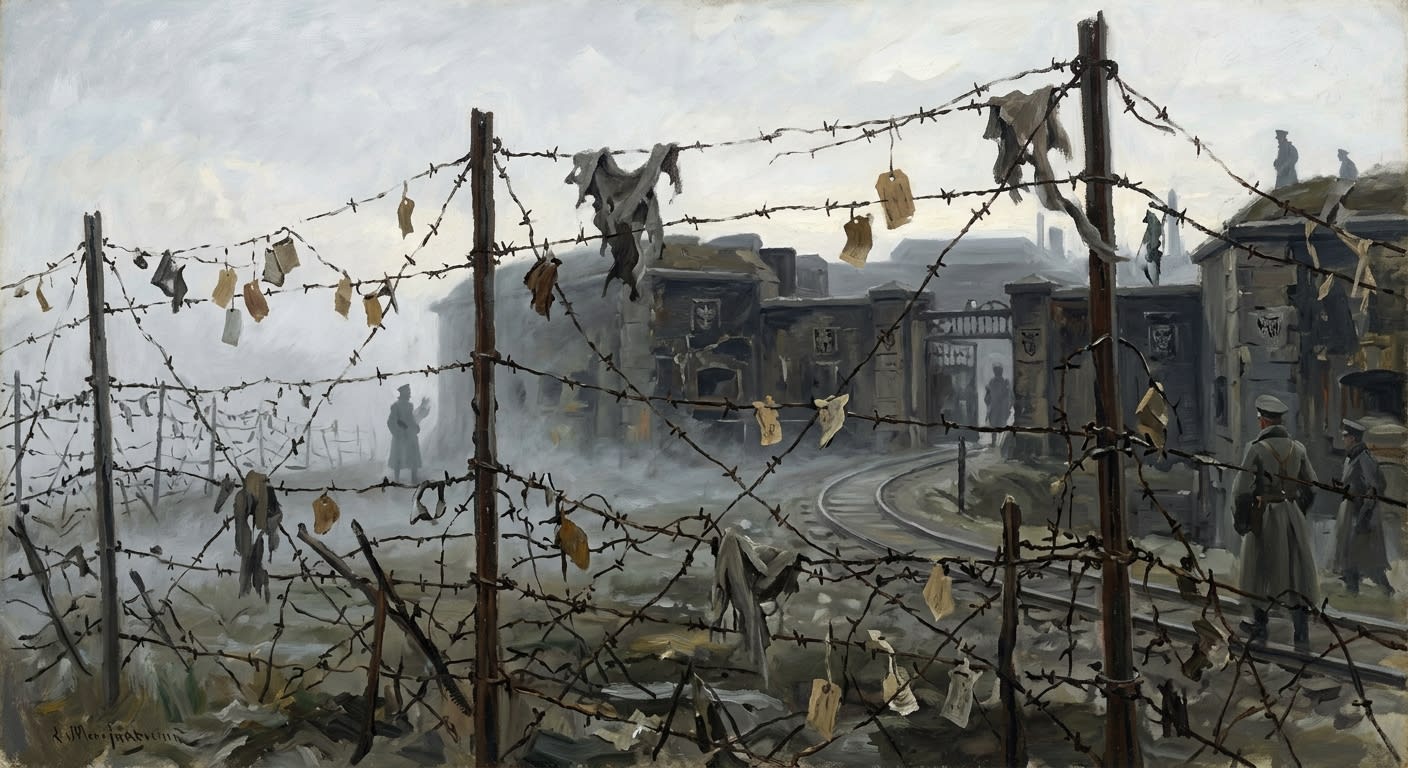
Bastion-Przemyśl
The Wire Remembers What the Ledger Forgets
The Wire Orchard at the Carpathian arc: three miles of electrified barb, a ration-tag economy, and the cold arithmetic of the dawn harvest. What enters Bastion-Przemyśl is processed. What exits is stamped. What fails the stamp feeds the Orchard.
Codex Ref. II.4.07-003
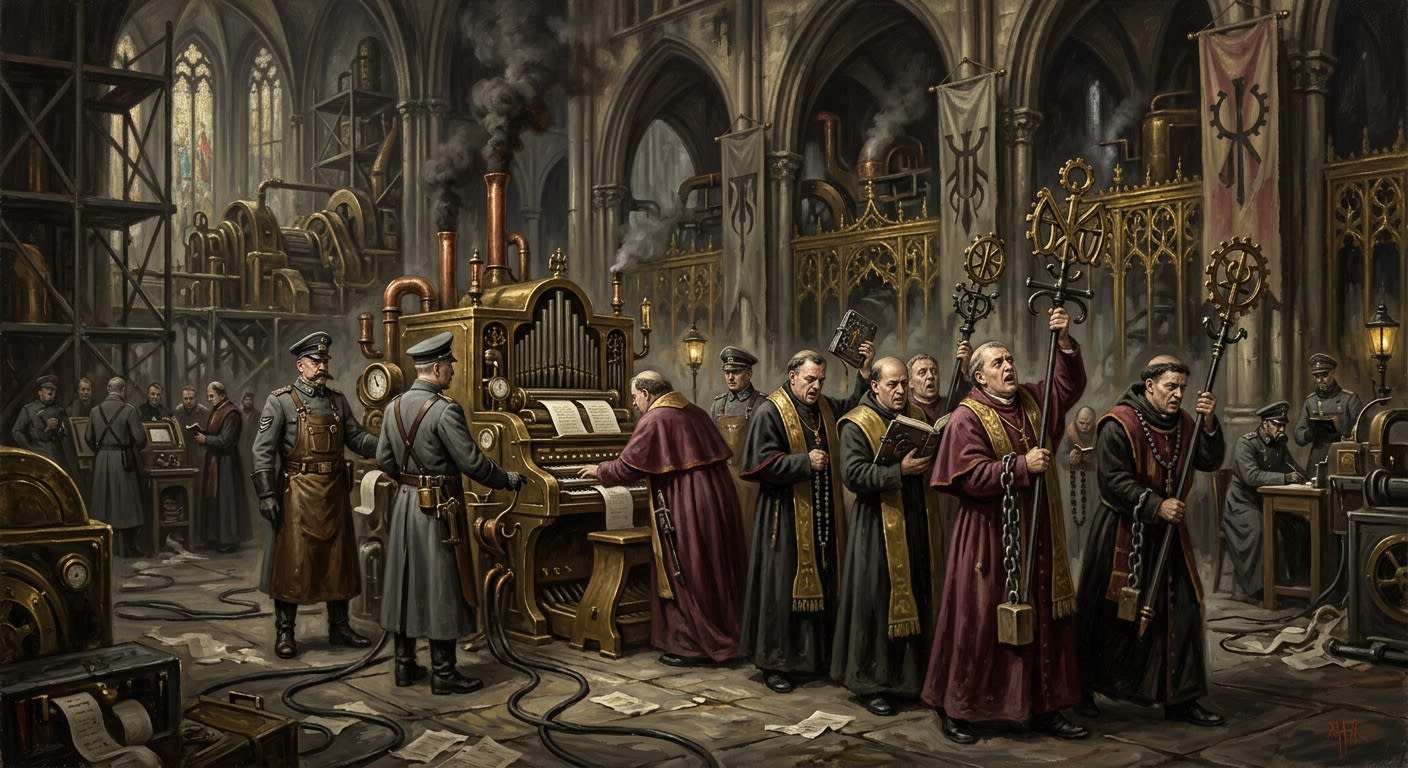
Bavarian Creed Adjustment
Three syllables, one mandate, and Munich's obedient refusal
The A.S. 178 Bavarian Creed Adjustment forced Munich's public Creed into Strasbourg cadence; Munich complied loudly, retained three syllables, and made obedience irritatingly local.
Codex Ref. VII.8.10-178
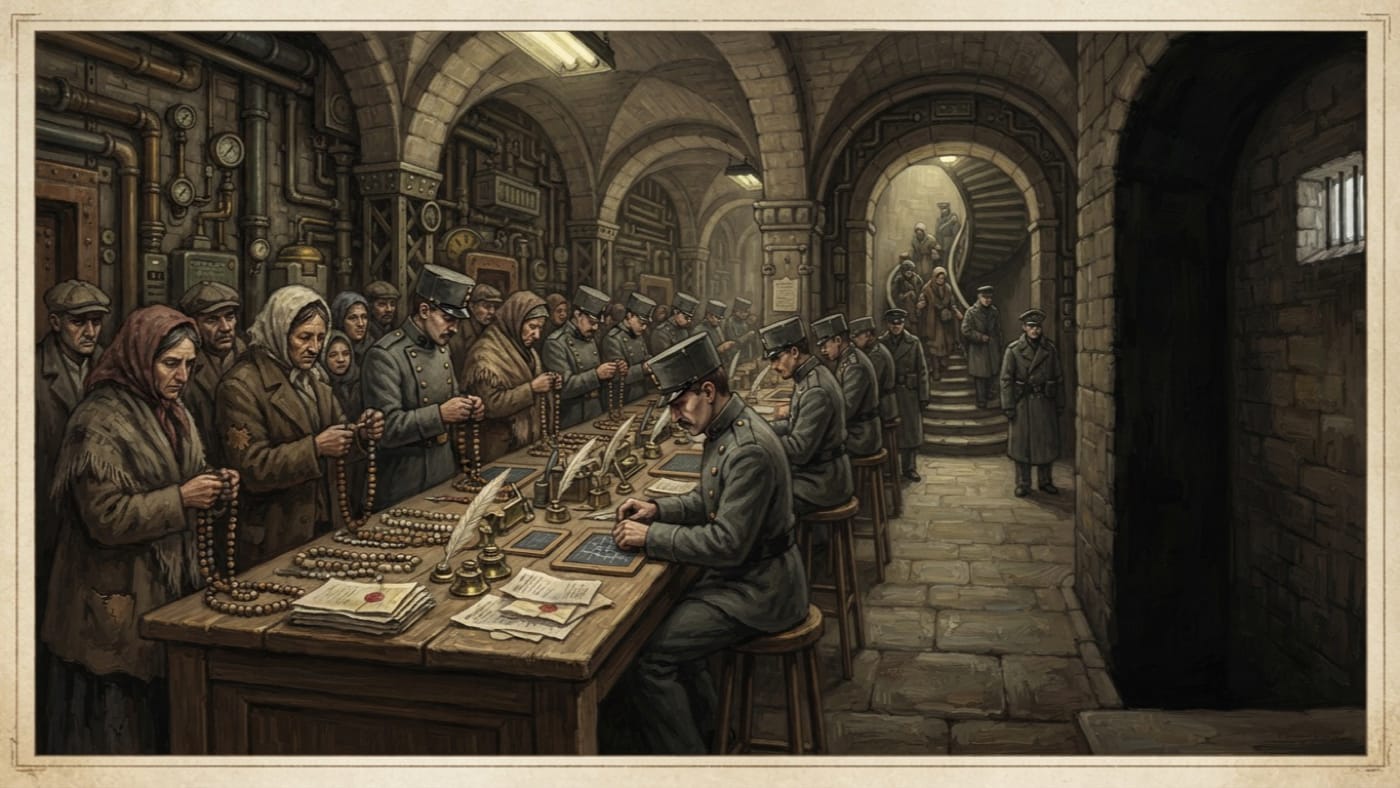
Bead Courts of Peregrine Row
Where the working is erased and the verdict kept
Twelve tables in Peregrine Row reconcile pilgrims' beads against confession receipts and passage credit. The working is wiped away; the verdict survives. A discrepancy costs passage, money, or liberty.
Codex Ref. XIII.1.23-002
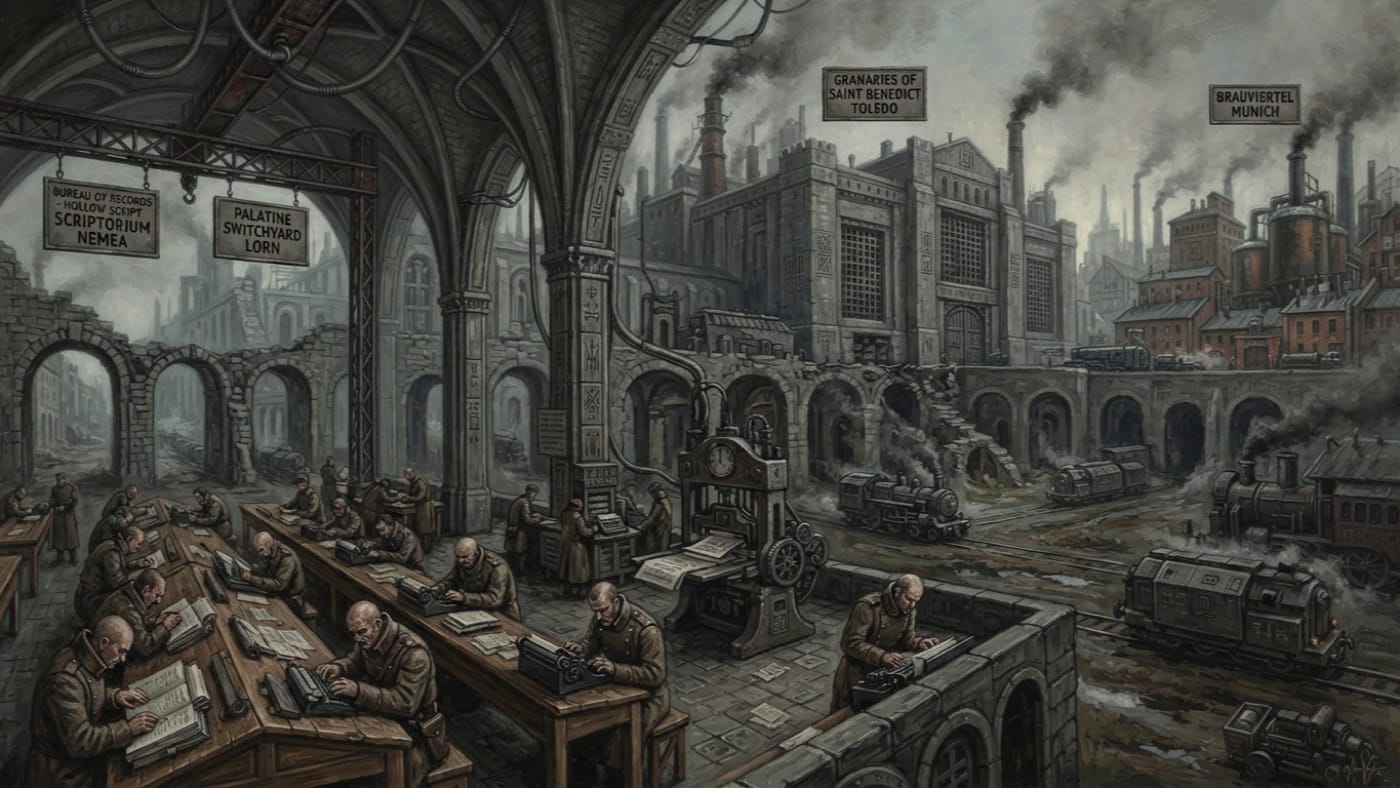
Benedictine
Property Dispersed, Name in Circulation
Benedictine houses trained Veyrault and left traces in Nemea and Lorn. Toledo claims their charity; Munich claims their yeast. Neither claim supplies me with a surviving order.
Codex Ref. VIII.9.02-244
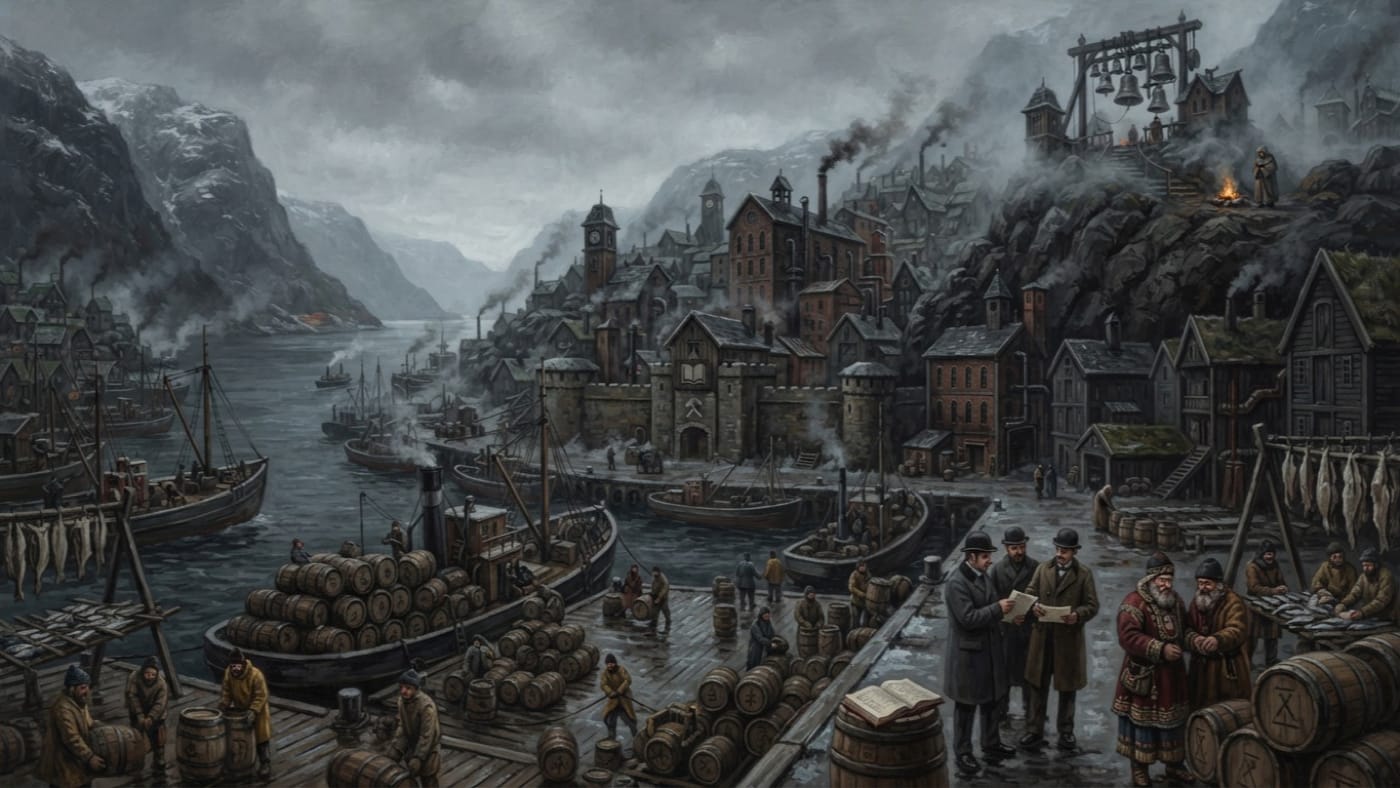
Bergen
Where the Church buys warmth and borrows money
Bergen loads the Fractured North's seal-oil, guarantees the Church's debt, and keeps bells the Bureau cannot improve. Its Prior files reports; its elders govern.
Codex Ref. IX.8.02-001
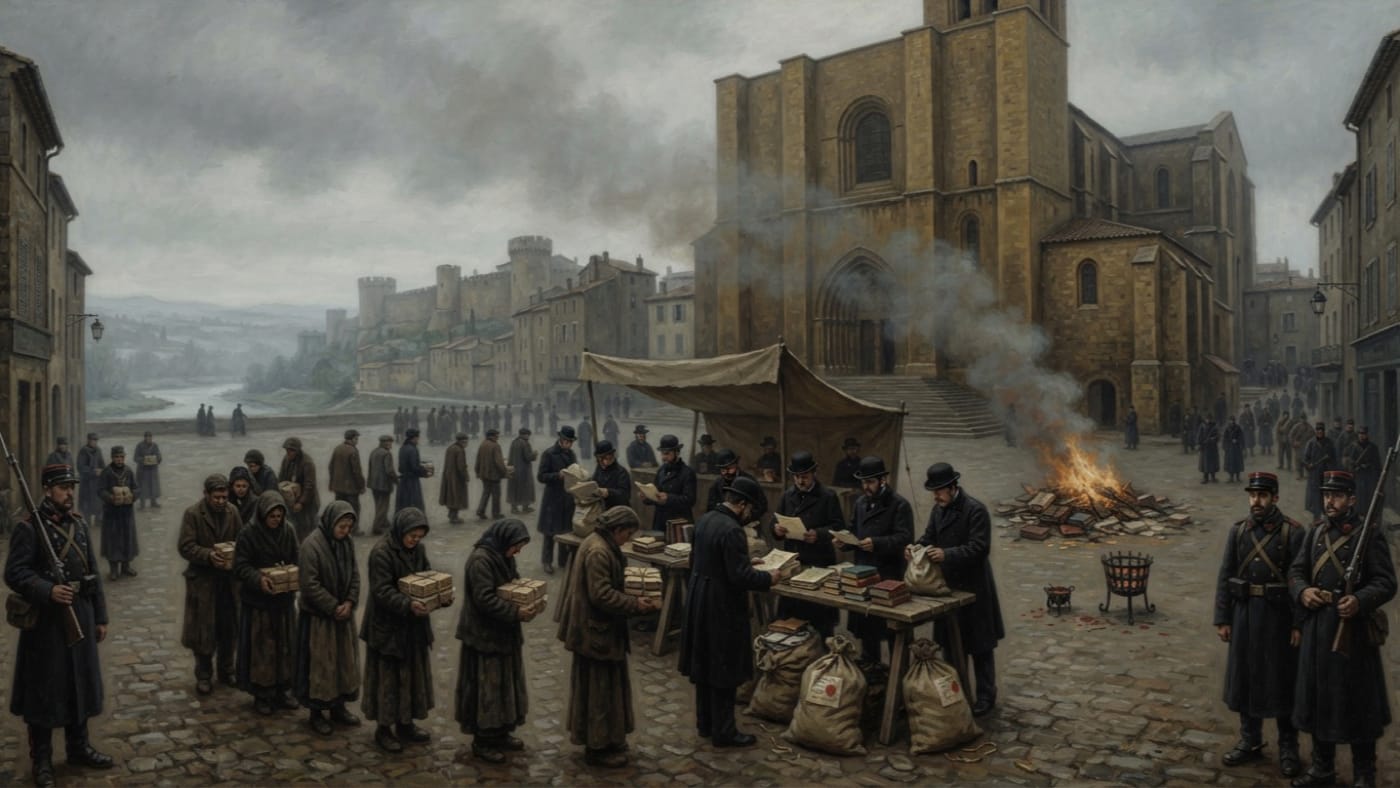
Béziers
A city named by someone else's confession
Béziers entered the Toulouse Hunts in A.S. 93 through a confession taken at Carcassonne. Purity retained the name; the surviving record supplies no separate local reckoning.
Codex Ref. II.1.10-093
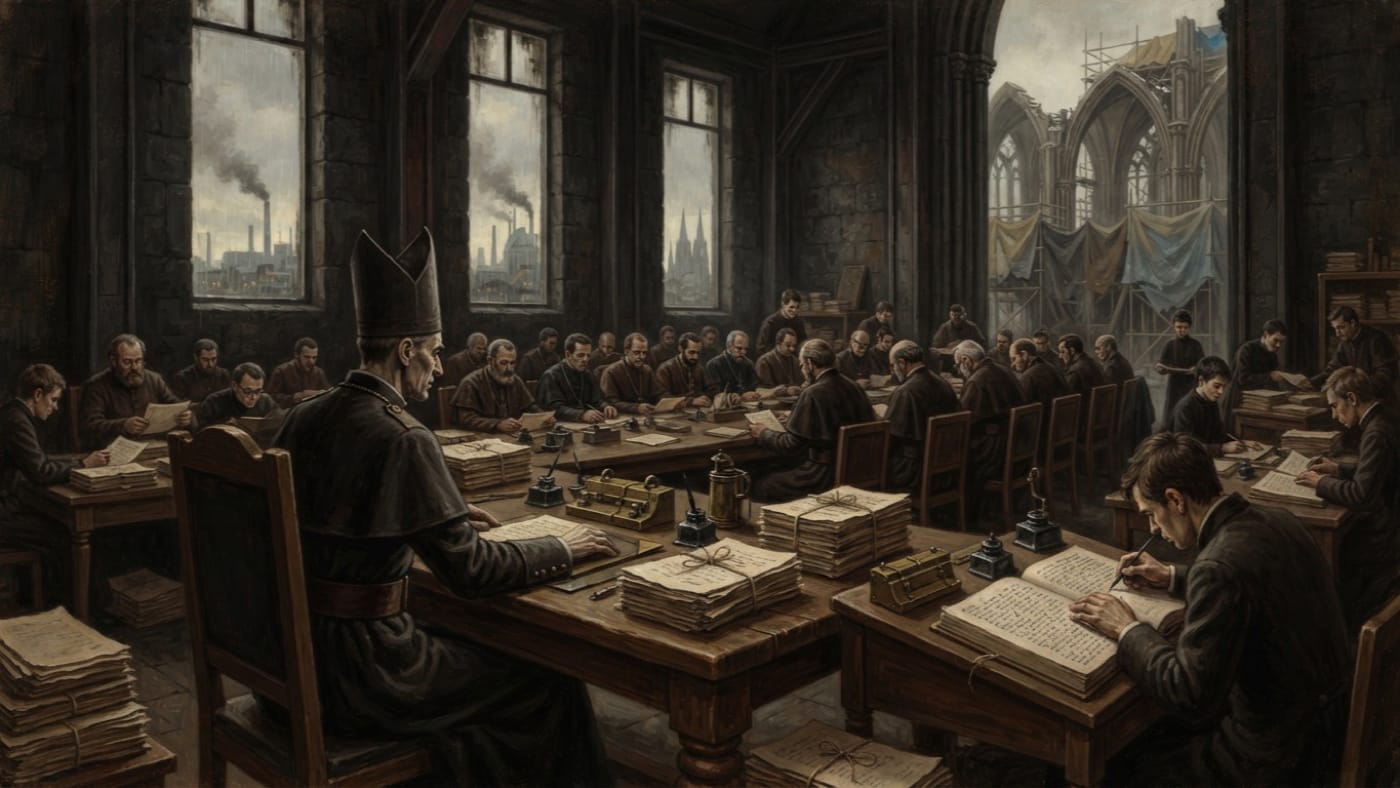
Bishop Adelmar of Cologne
Nine days entered; a lifetime left blank
Bishop Adelmar hosted the nine-day First Council of Cologne in September A.S. 27. Seven articles failed; voluntary requests survived. His life dates remain outside the Ledger.
Codex Ref. III.2.01-253
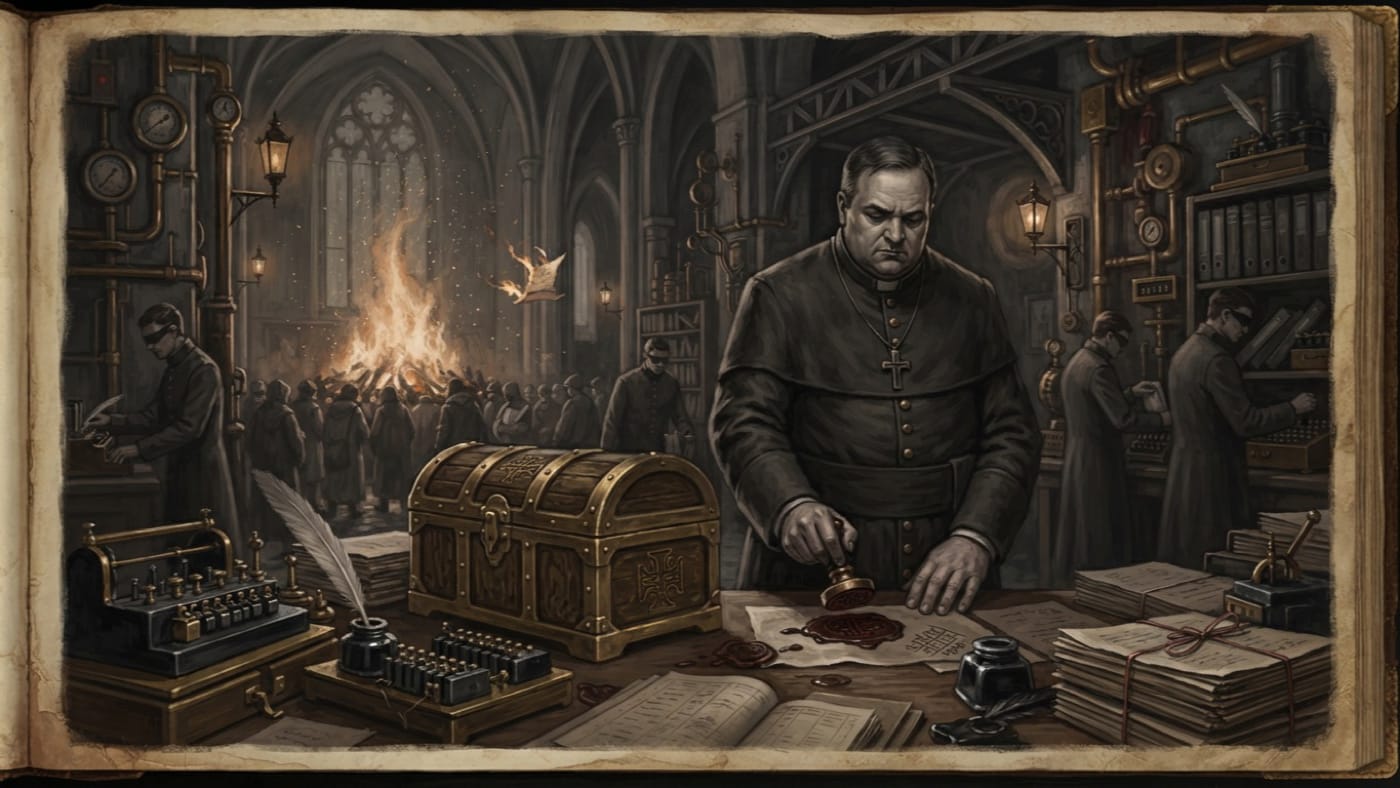
Bishop of Münster
He burned the question, then sealed the answer.
The Bishop of Münster burned Amsterdam's letter in 1678, then commissioned a relic census whose results remain sealed. The office survives in the Ledger; the man's name does not.
Codex Ref. III.2.01-256
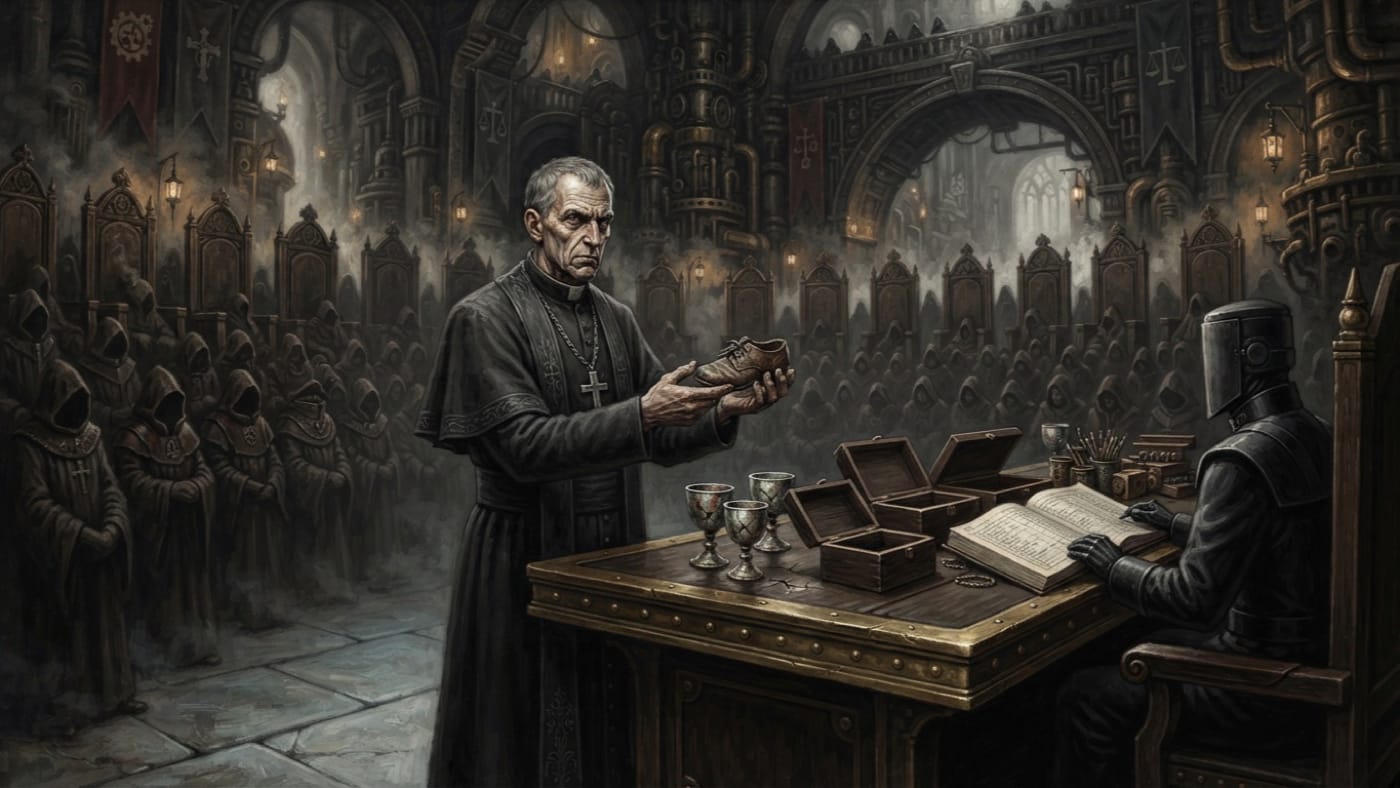
Bishop-Praetorial Lanfranc of Trier
A child's shoe before the Thrones, a bill afterward
Bishop-Praetorial Lanfranc of Trier challenged the Meta-Levy for seventeen dioceses in A.S. 138. His child's shoe moved the Thrones; the Fiscal Census moved the ruling.
Codex Ref. III.2.01-138

Bishops-Praetorial
Mitres welded to prefectures, and souls counted twice
The Bishops-Praetorial keep souls, quotas, provinces, and grudges: mitred governors whose pastoral care arrives with tithe tables attached.
Codex Ref. VIII.3.04-093
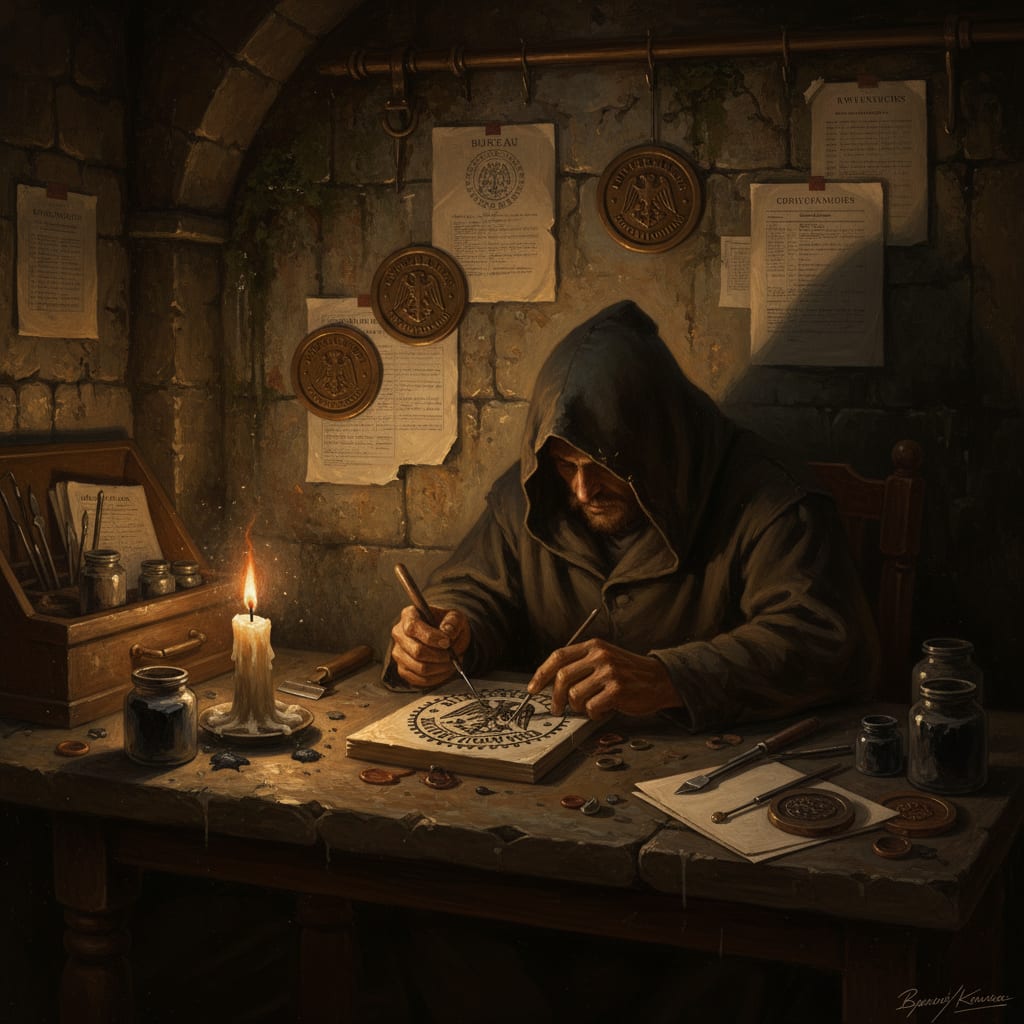
Black Ledger Cutpurse / Assassin
Larceny with a hymn; the Synod's most indispensable criminal enterprise
The Black Ledger steals rations, forges stamps, murders wardens, and distributes a calculated fraction to the hungry — then records what was given as a debt to be collected. The Bureau calls it heresy. The poor call it supper.
Codex Ref. XII.4.01-001
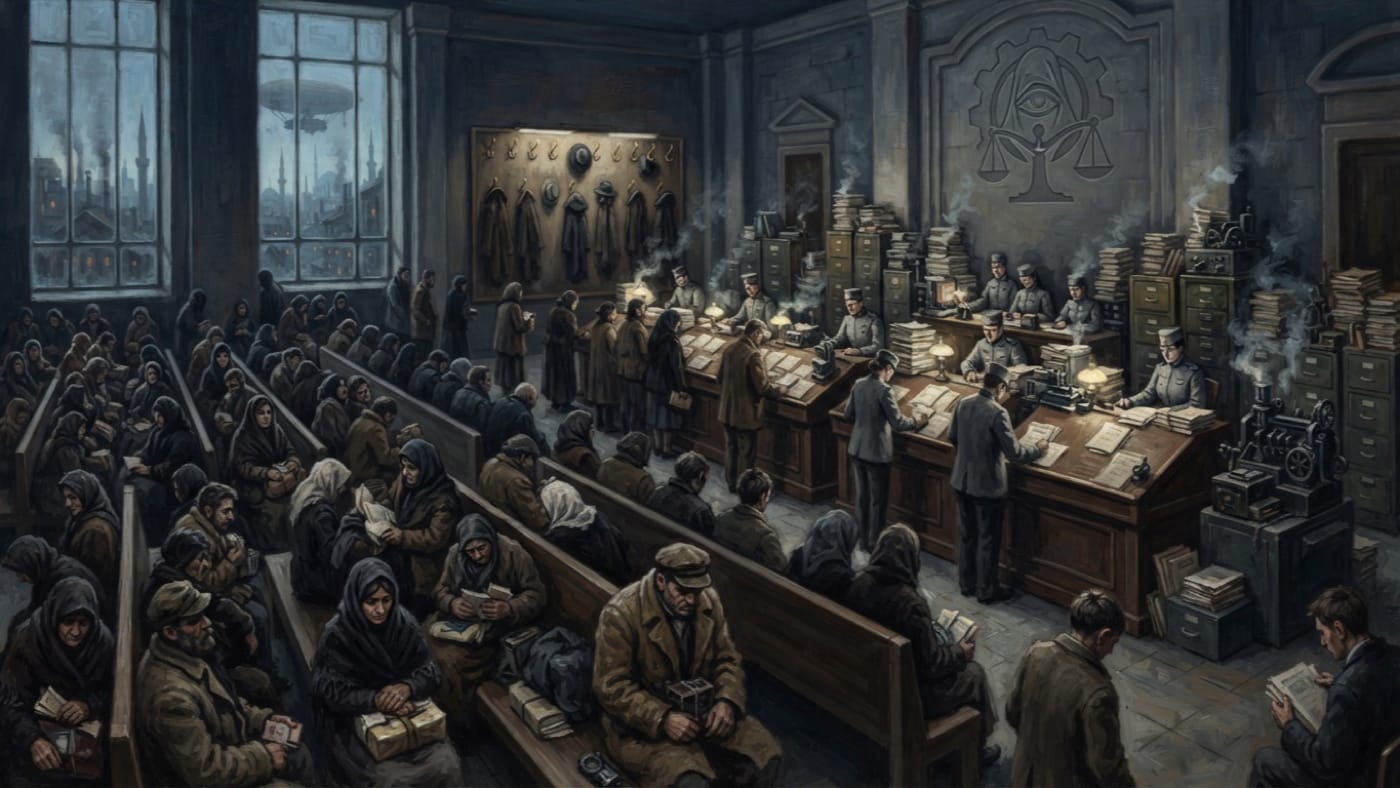
Blue Zone (Constantinople)
Where a household waits to become an entry
Constantinople's Blue Zone records households, pensions and corrections. The Widow's Syndicate keeps the other ledger; the Screaming Coin leaves two transactions open.
Codex Ref. II.4.10-006
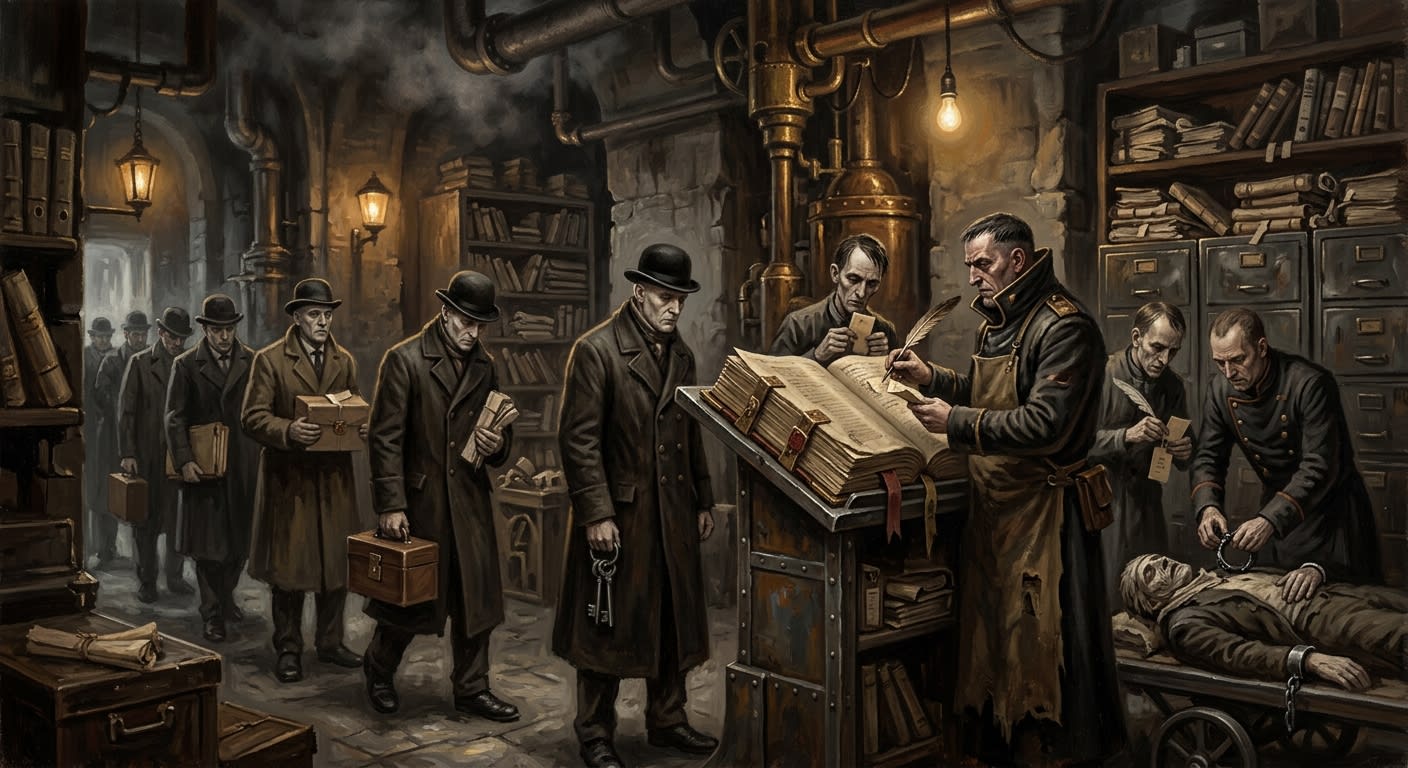
Book of Departures
Where the last breath becomes lawful ink
The Book of Departures receives every lawful death: mercy, tax instrument, burial rite, inheritance key, prayer license, and muzzle for ghosts.
Codex Ref. XIII.1.87-112
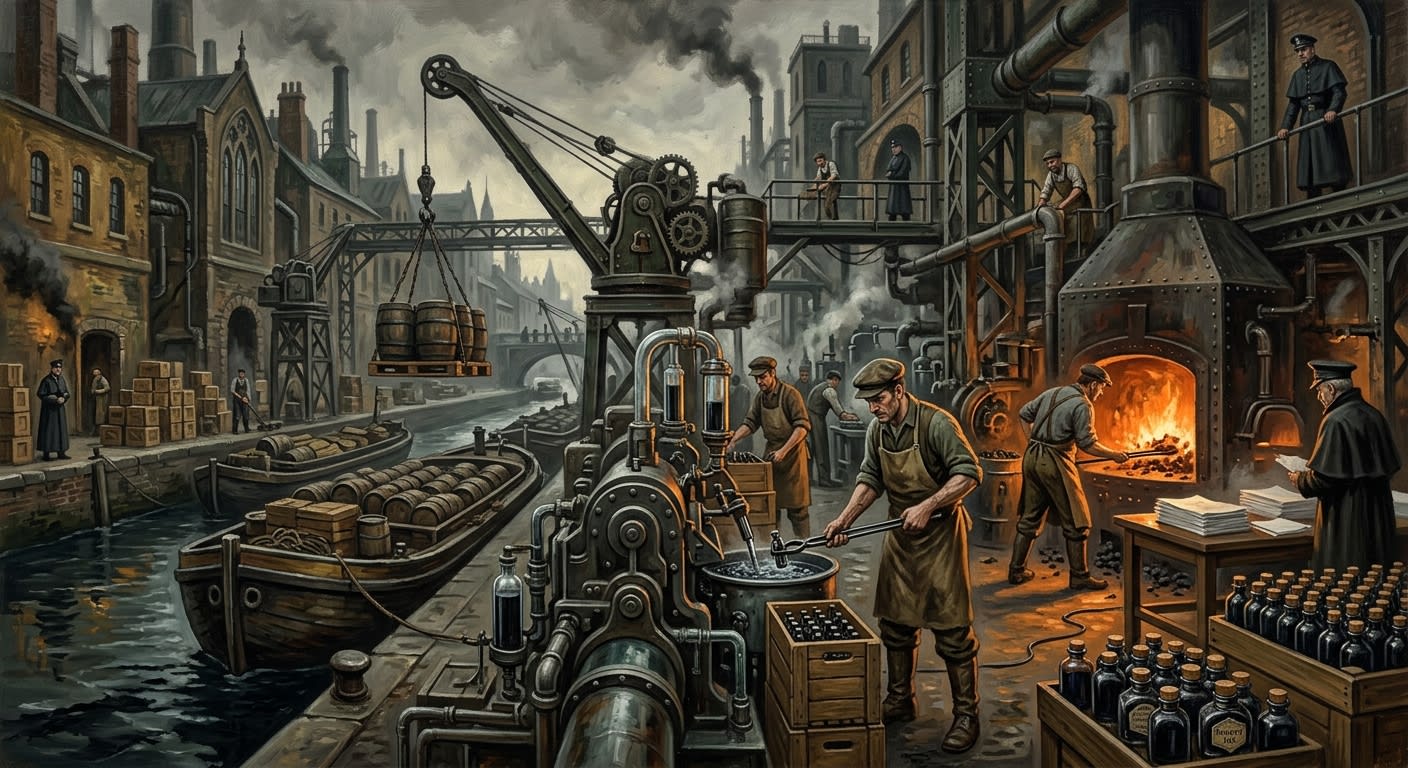
Bottle Quay
Where authority is poured into glass and taught appetite
Candlewick's ink-bottling throat: glassyards, shade seals, micro-vials, Hungry Ink suspicion, and the useful fires by which paper learns command.
Codex Ref. II.1.01-092
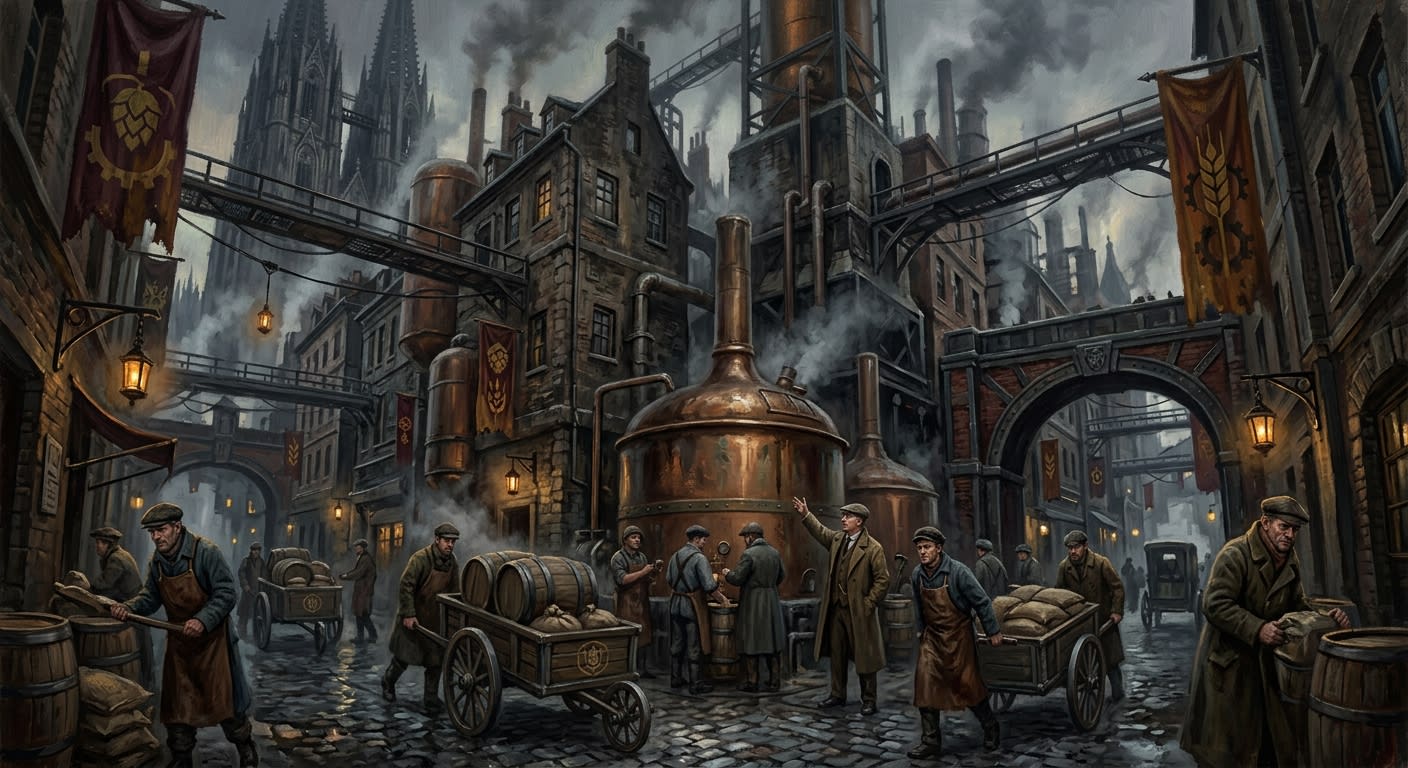
Bräuviertel
The Brewery Quarter older than the stamp and too taxable to condemn
Munich's Bräuviertel is a thirty-seven-block brewery quarter between the Provisorium and the old cathedral precinct: ancient, taxable, doctrinally irritating, and still boiling.
Codex Ref. II.2.06-015
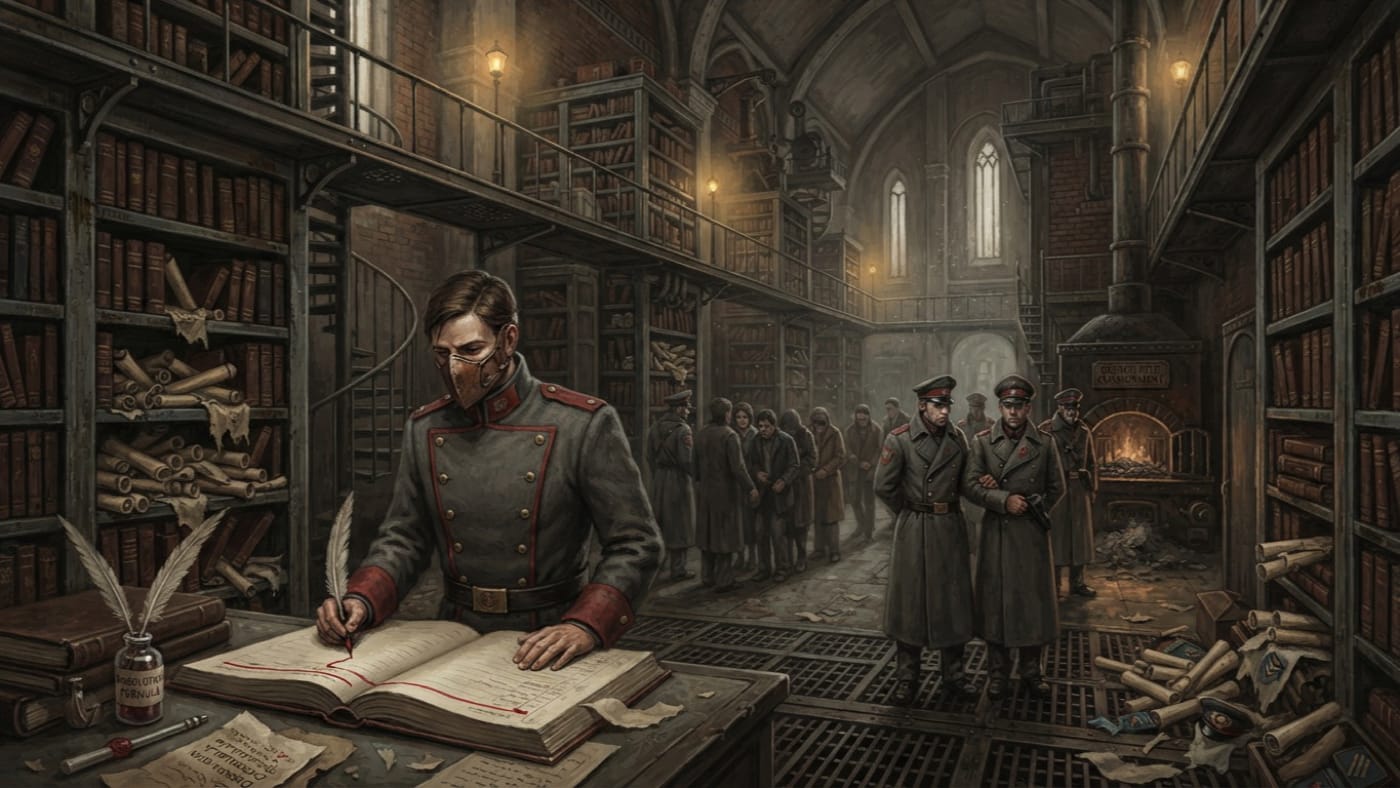
Breach Plagues
The Bureau found a cure in its own ink.
Around A.S. 110–115, communal violence became the Bureau of Oaths' proof that broken vows rot. The dead supplied the argument; the Breach Rites supplied the ink.
Codex Ref. VII.8.11-112
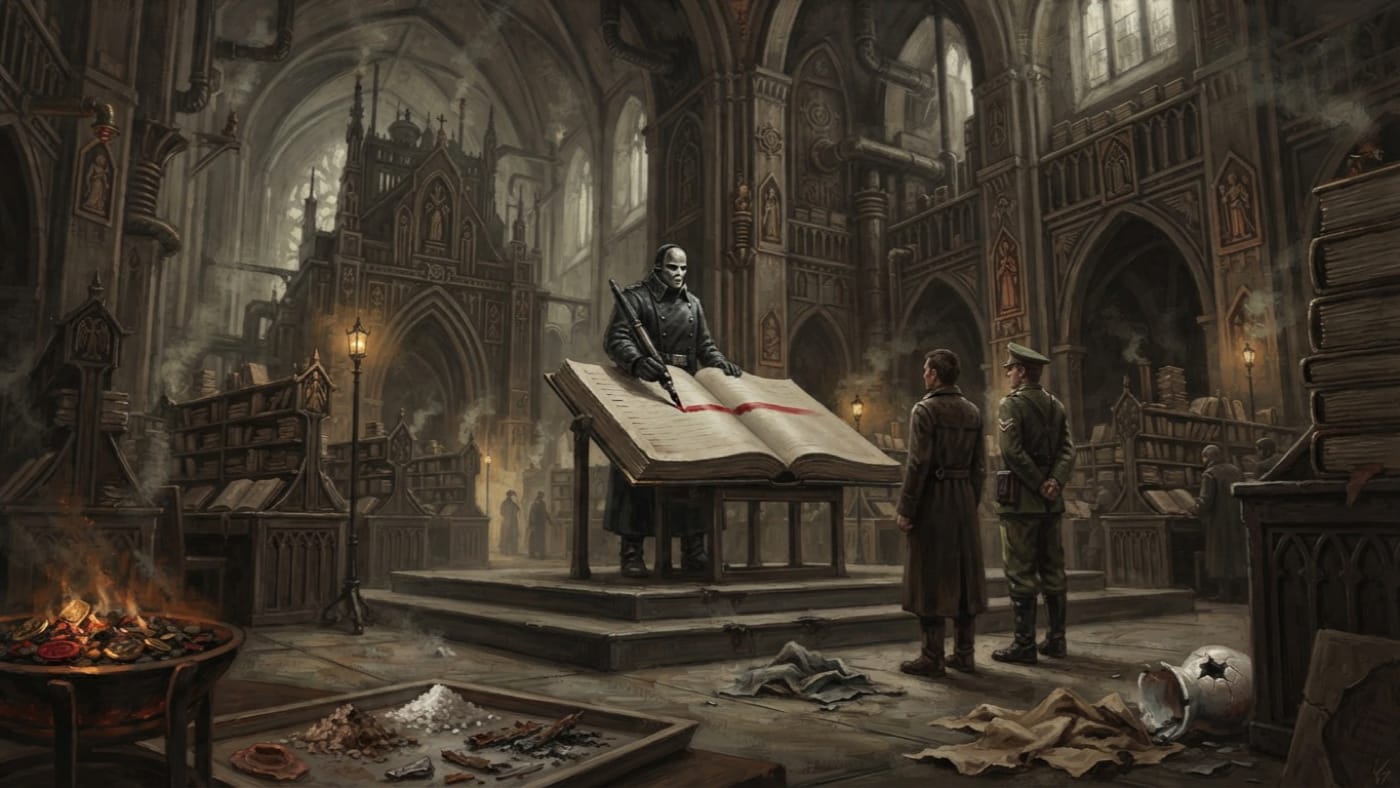
Breach Rite
The promise dies. The Ledger remembers.
The Bureau of Oaths buries failed vows in witnessed ceremony and red ink. The bond may end; its record remains available to every auditor, enemy, and future spouse.
Codex Ref. VI.4.03-013

Breach-Rite Witnesser
The promise dies; the witness returns.
The Bureau of Oaths sends its Breach-Rite Witnessers to bury failed vows, close the record, and discover which colleague tied the original knot badly.
Codex Ref. VI.4.03-014
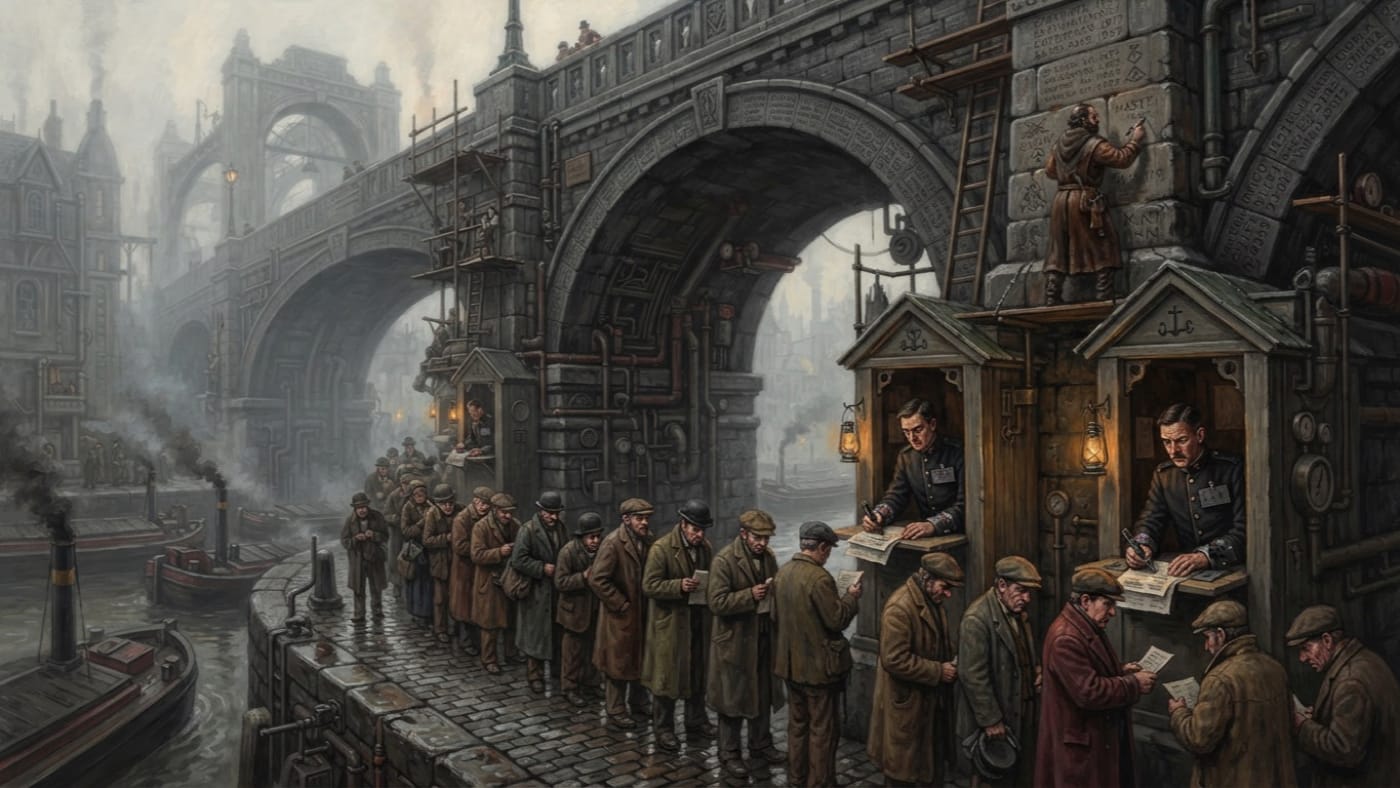
Bridge-Scribe Collegium
Paper may be corrected; stone must be reconciled
The Bridge-Scribe Collegium decides who exists in the Archivolt Causeyworks, witnessing toll papers and correcting names. Its registry can be amended. The stone cannot be erased.
Codex Ref. XI.1.08-001
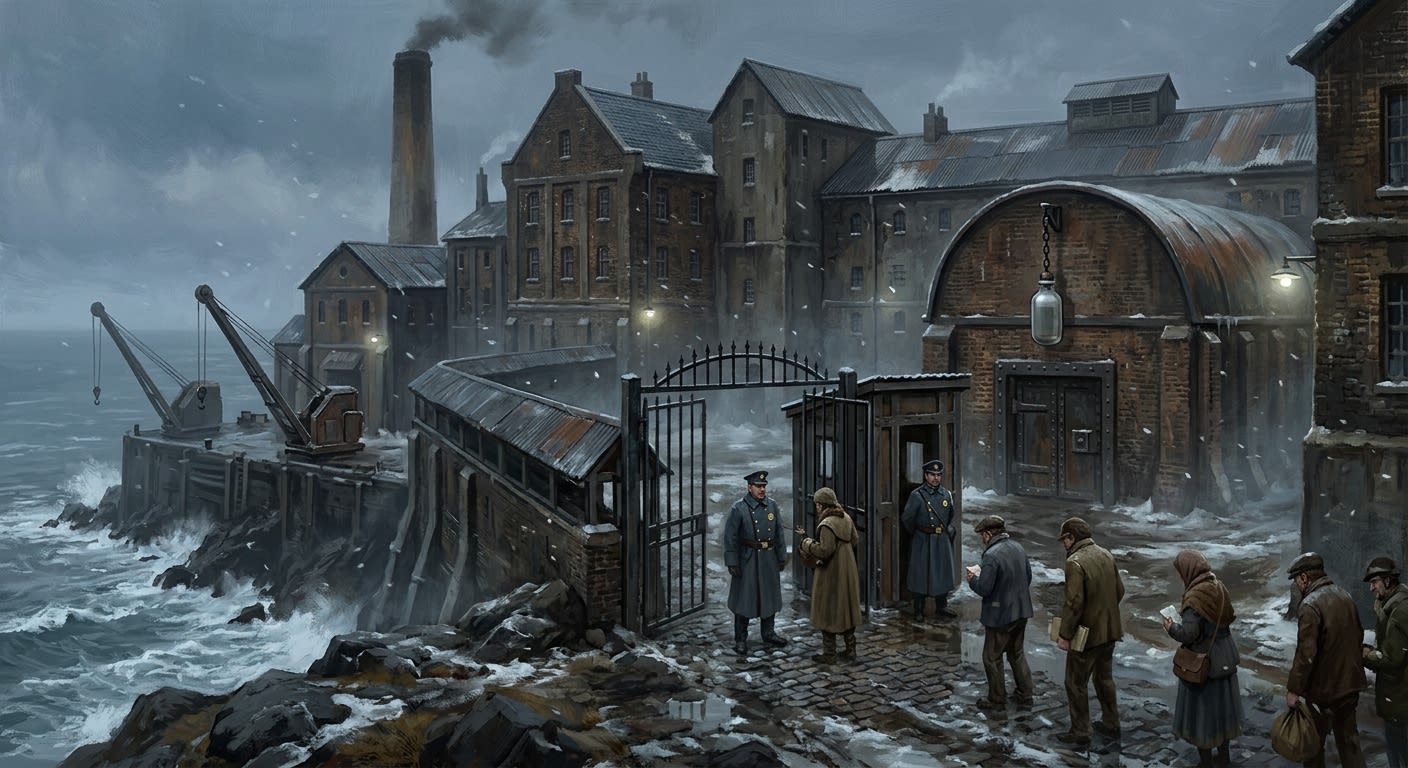
Brine Fork
Where three roads pay their grief before choosing a direction
Brine Fork is the Salt-Vigil island where winter roads divide, tolls become grief, and the Phial Cellar keeps the tears with better discipline than mercy.
Codex Ref. II.3.05-082
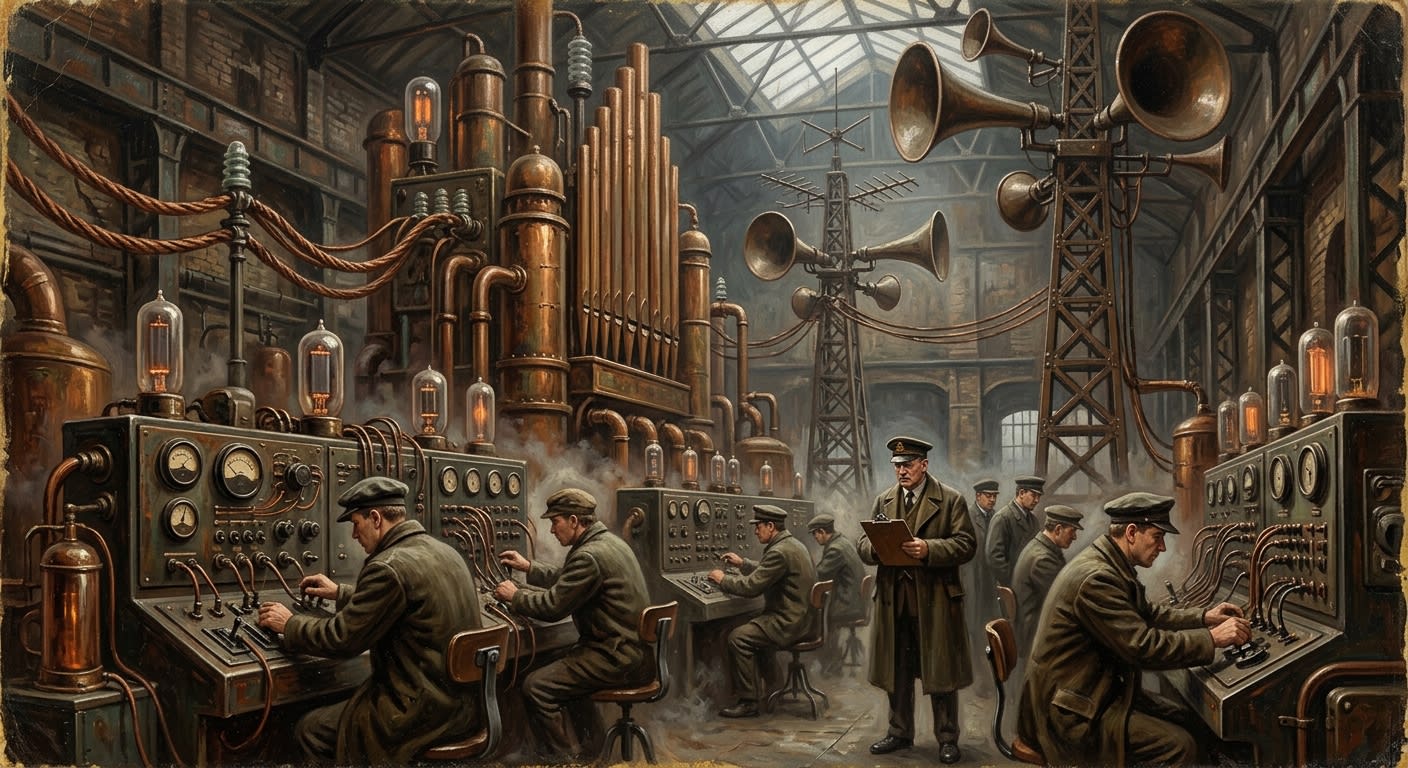
Broadcast Directorate
The long throat that makes distance obey
The Broadcast Directorate is Orison's long throat: saint-dust, copper, coercion, and daily prayer made into empire-wide reach.
Codex Ref. VIII.6.02-092
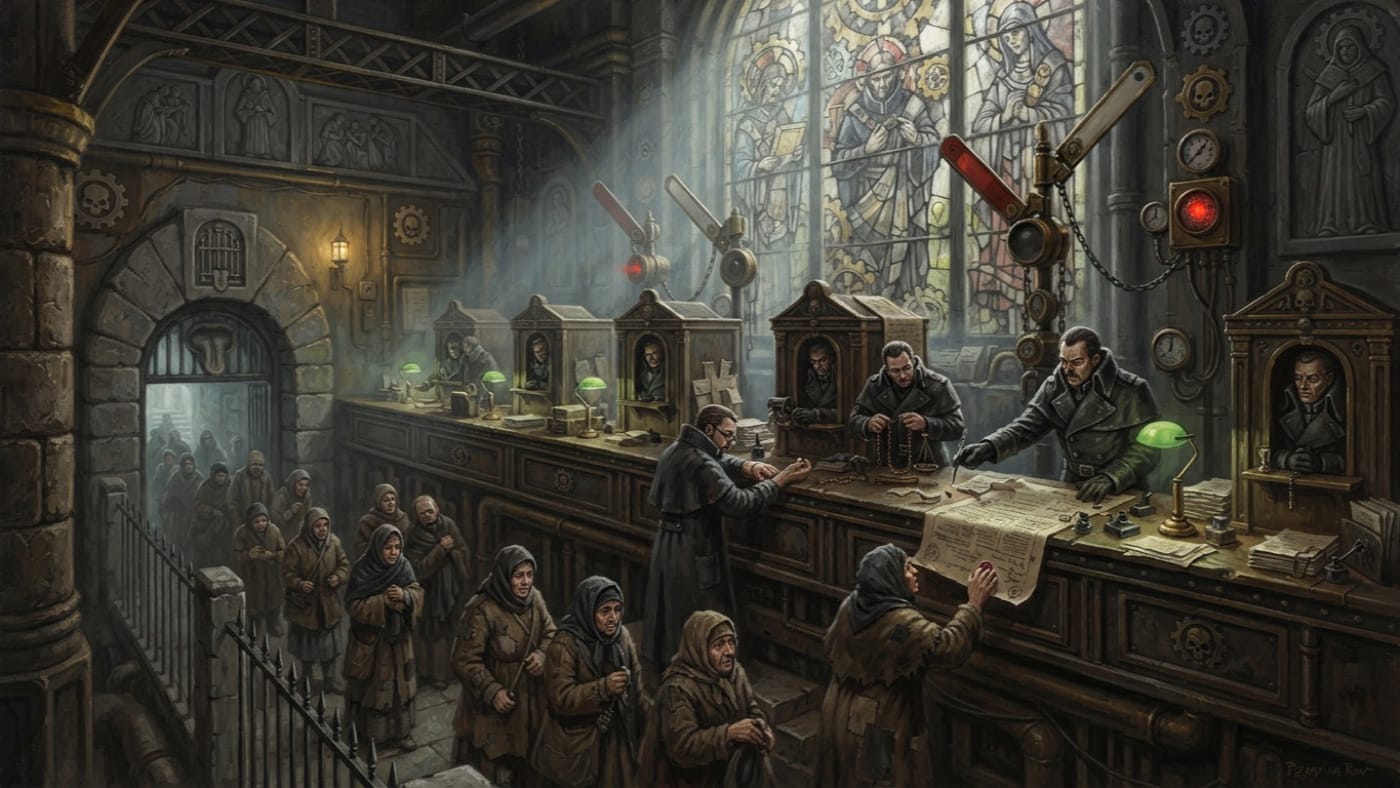
Broker Compact
Safety is sold by the bell; liability disappears by the vowel
Peregrine Row's licensed insurance guild sells canyon passage by the bell-window. Three founding families hold its hereditary seats; escort bonds, creed scores and grief clauses keep protection profitable under continuing Amber review.
Codex Ref. XII.32.01-201
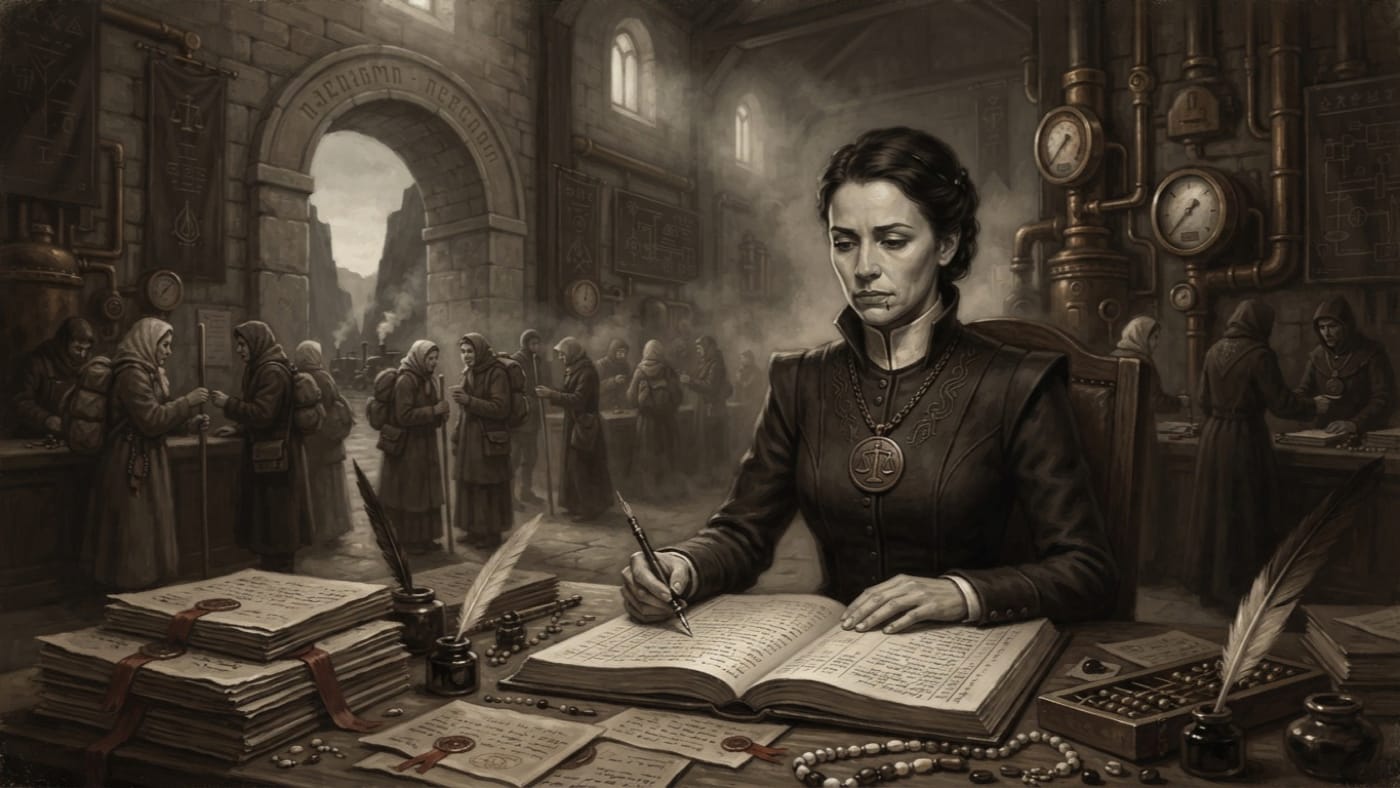
Broker-Matron Lysa Vane
She prices the passage and keeps the bodies in the ledger
Lysa Vane prices pilgrim protection at Peregrine Row and drafts its grief clauses. Her private ledger records the dead, the payments and the refunds denied. The Compact sells insurance; she keeps her own.
Codex Ref. III.2.01-361
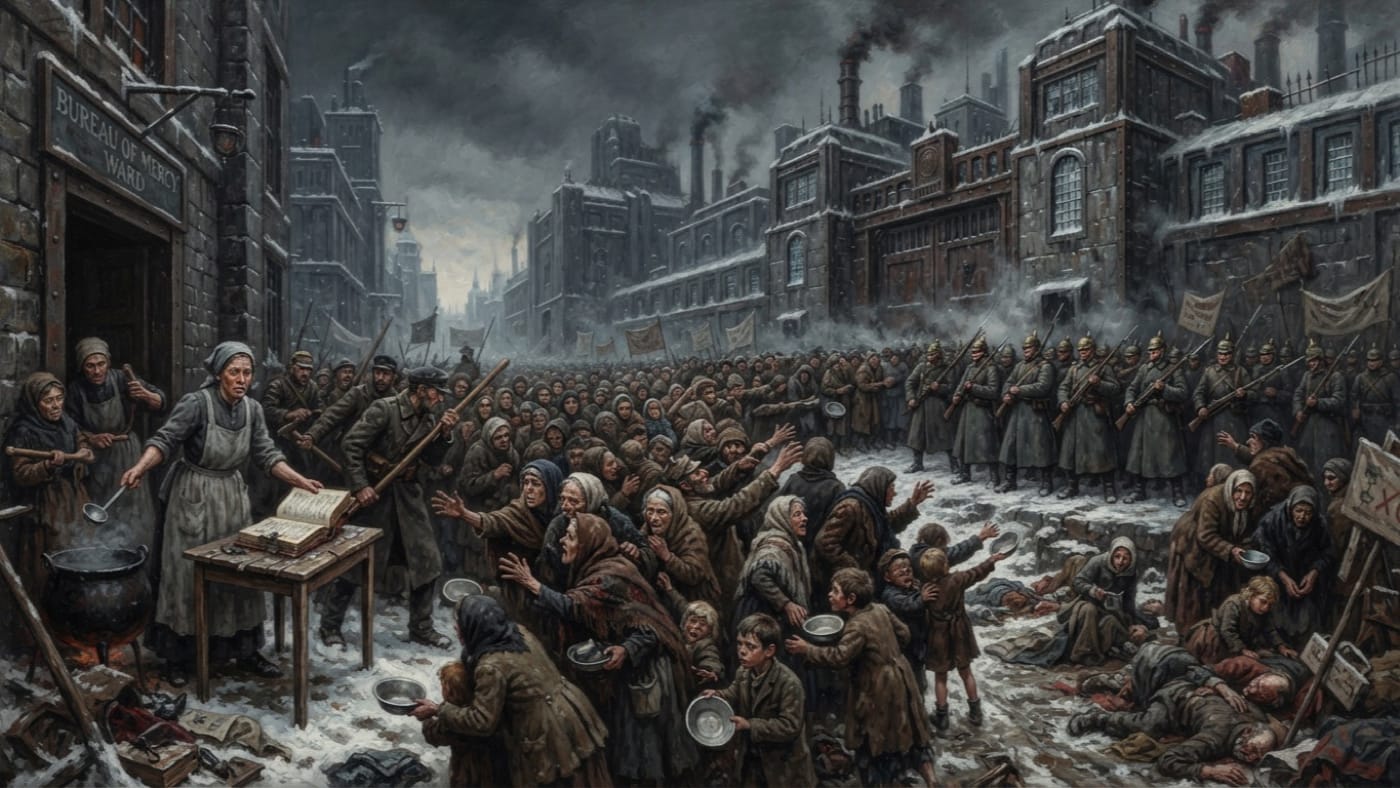
Broth Riots of A.S. 112
The hungry approached the granary; Mercy opened a ledger
The Broth Riots of A.S. 112 lasted eleven days: three hungry garrison populations sought grain; War supplied rifles, Purity arrests, and Mercy the Ledger Laws.
Codex Ref. VII.8.10-112
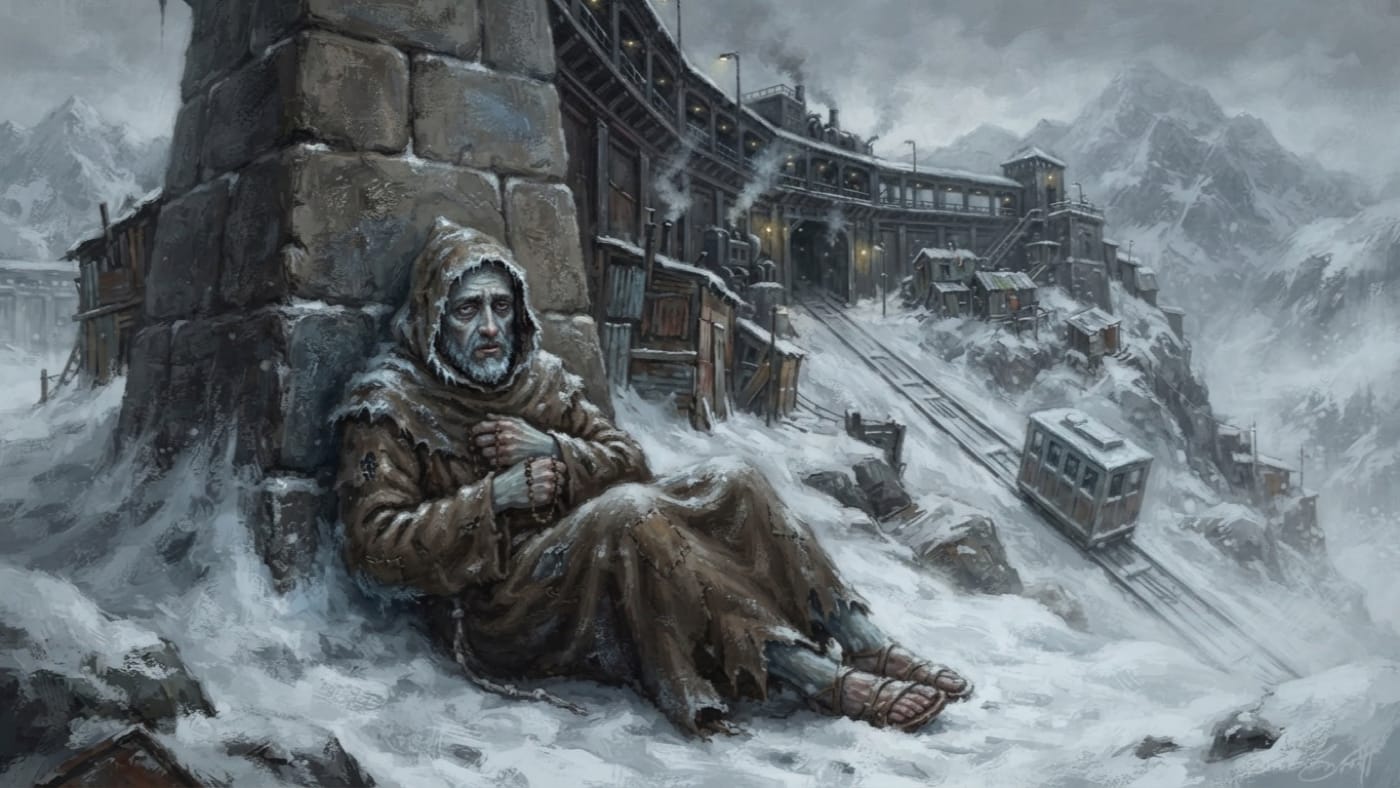
Brother Albrecht of Innsbruck
One dream, one reassignment, and a testimony the Church could not keep sealed
Brother Albrecht testified to a radiant dream-figure in A.S. 78. The Church filed his words and sent him to the Carpathian foothills, where he froze the following winter. His testimony escaped the archive; its copier remains unidentified.
Codex Ref. III.2.01-078
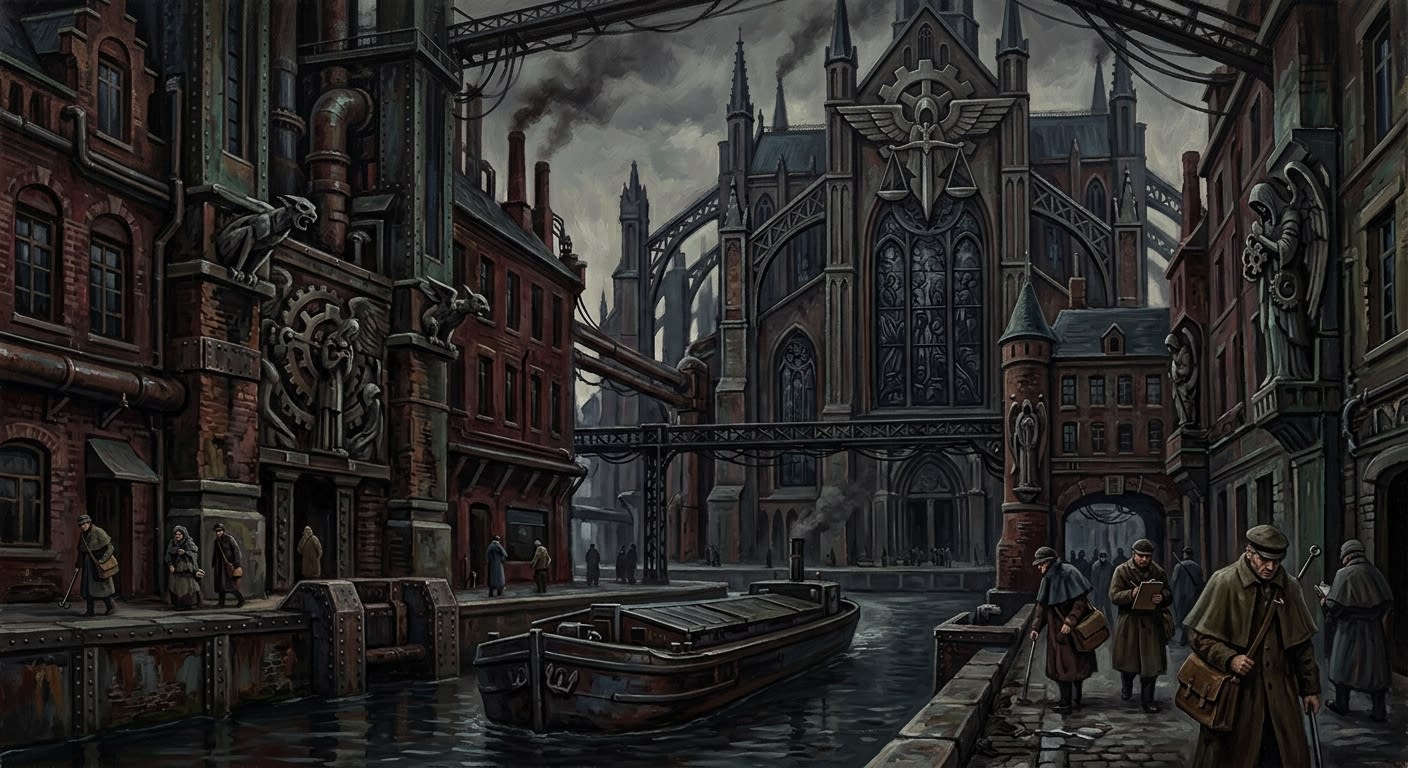
Bruges
Permit prosperity; audit beauty
Bruges is the Synod-held Lowlands city whose canals, colours, grotesques, relic glass, and impossible Tithes seal make beauty a recurring audit problem.
Codex Ref. II.1.04-058
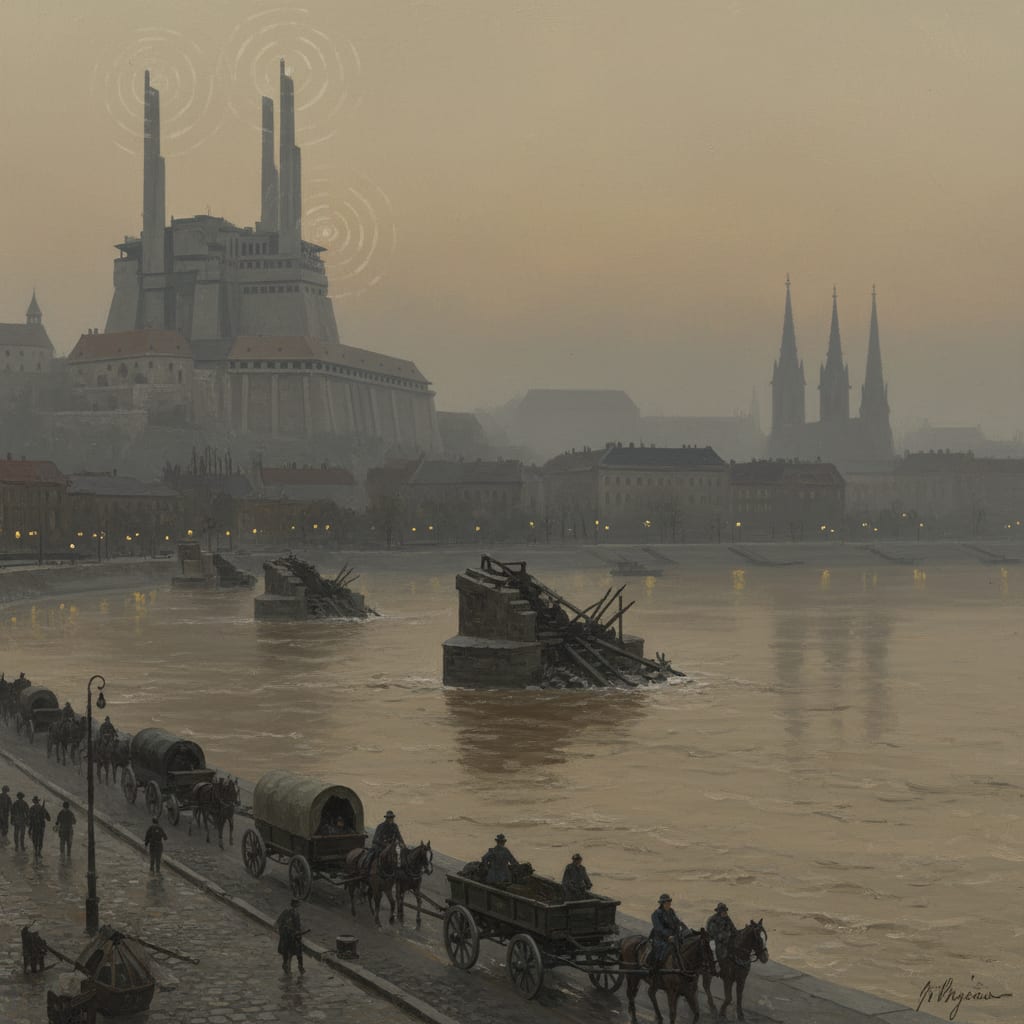
Budapest
The city the Danube cut in half, and the half that watches back
The largest city in the forward heartlands and the principal staging hub of the Central Corridor. 850,000 souls on the western bank, and something unaccounted for on the eastern. The Danube runs between them like a sentence the Bureau started and declined to finish.
Codex Ref. II.4.09-009

Bureau of Cartography
The map lies so the army may arrive punctually
The Bureau of Cartography names, measures, revises, conceals, and occasionally invents geography so the Synod may tax, march, bury, and survive.
Codex Ref. VIII.2.09-090
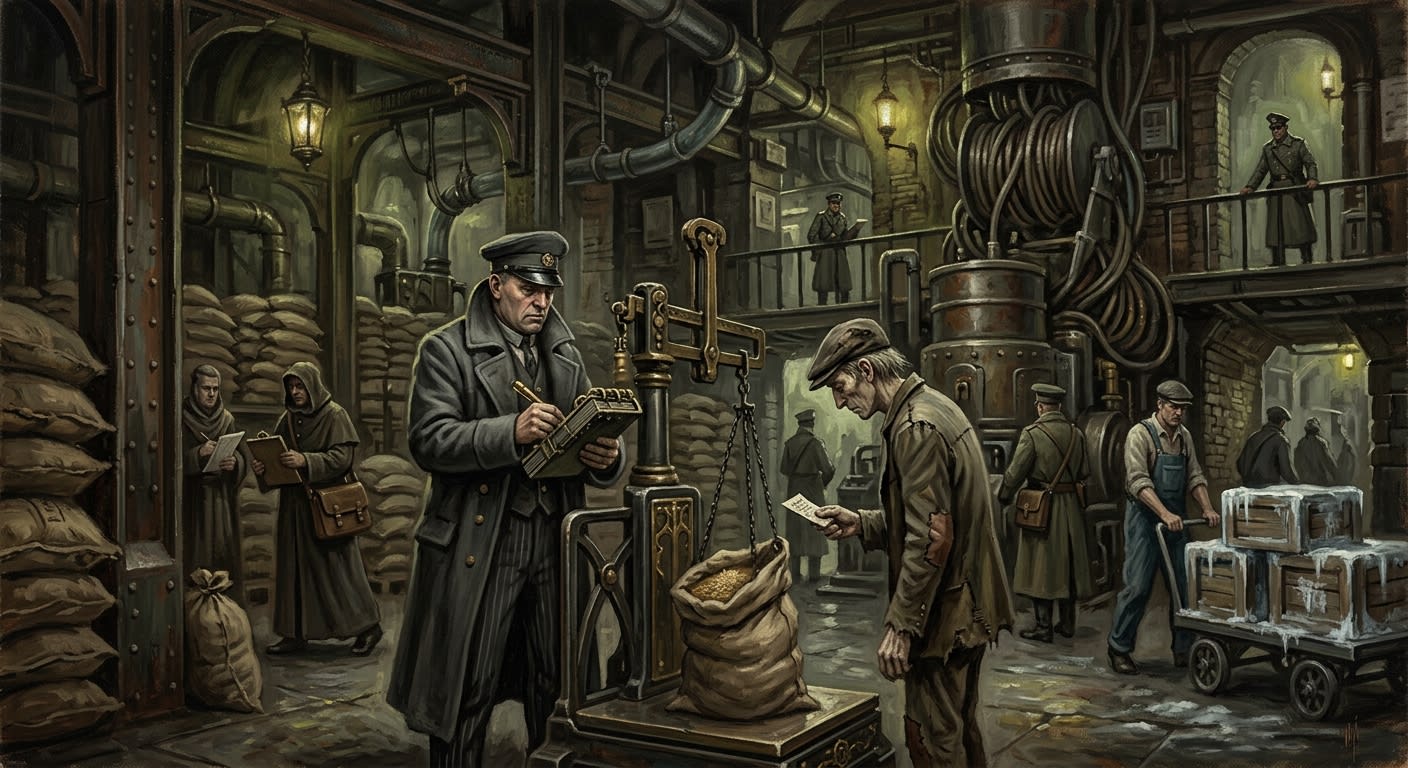
Bureau of Commerce
Bread becomes law before it becomes bread
The Bureau of Commerce prices obedience: weighing grain, freezing cargo, selling road-sound, licensing shortage, and making hunger kneel before the scale.
Codex Ref. VIII.2.10-097

Bureau of Concord
Harmony, filed with teeth
The Bureau of Concord preserves peace by translation, delay, treaty custody, foreign grievance, and the elegant violence of a pending clause.
Codex Ref. VIII.1.05-090
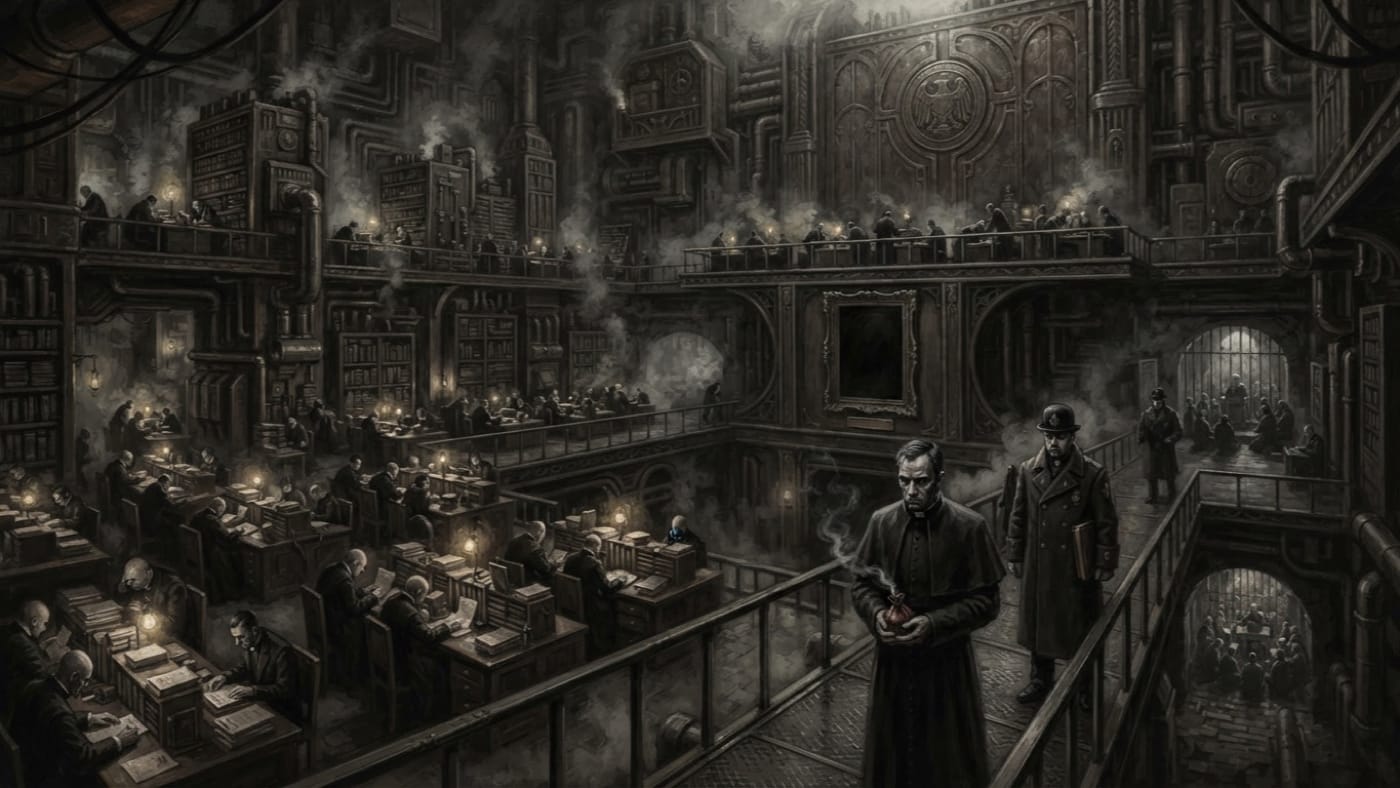
Bureau of Discipline
The office that recognises pulpits and withholds praise
The Bureau of Discipline decides which pulpits count and when vanished superiors may be praised. A cleric may retain his tongue and still lose his standing.
Codex Ref. III.3.03-001
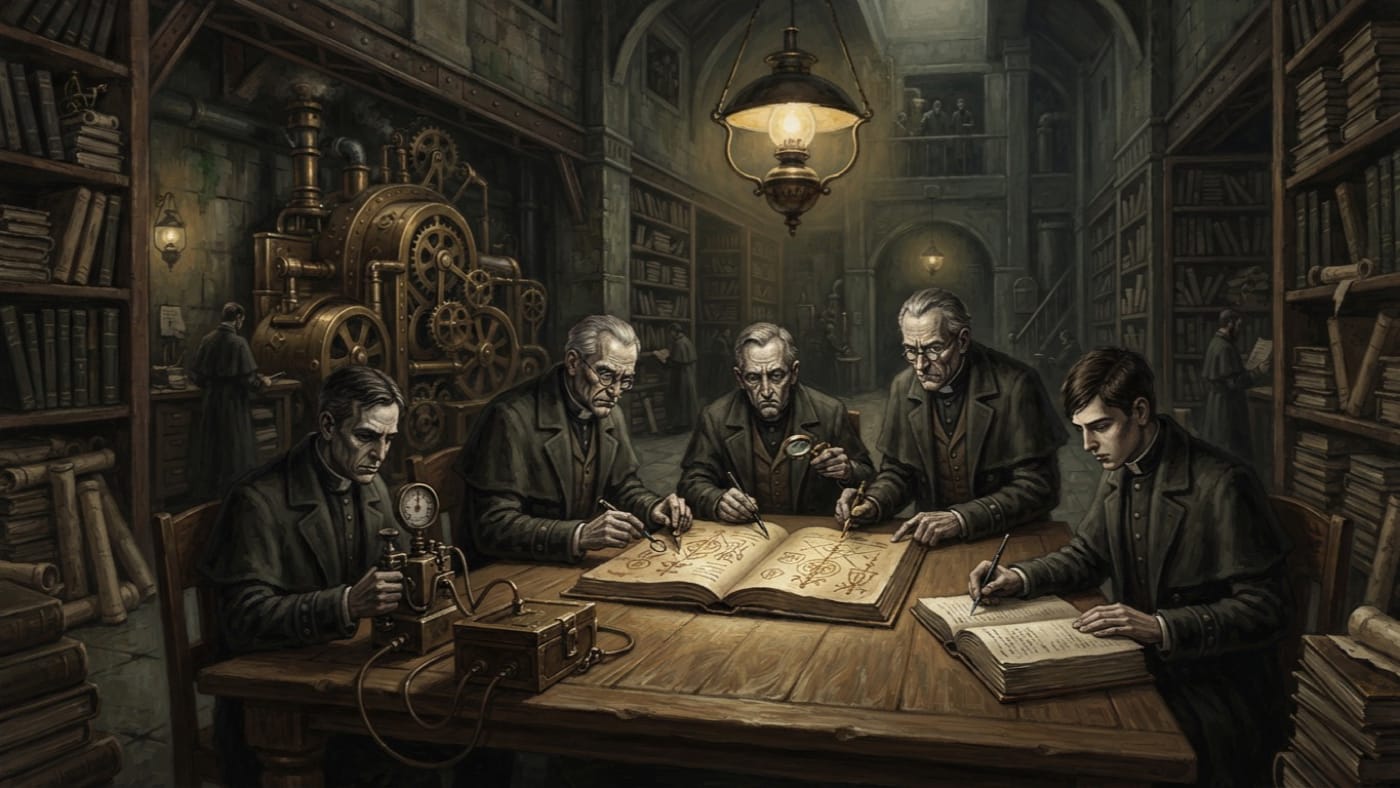
Bureau of Doctrine Declaration of A.S. 23
Engineering may measure the conduit; Doctrine keeps the verdict
The received Declaration of A.S. 23 distinguishes miracle from sorcery by source. The conduit may be measured; the verdict belongs to Doctrine, which reports that its rule has never changed.
Codex Ref. VI.3.01-023
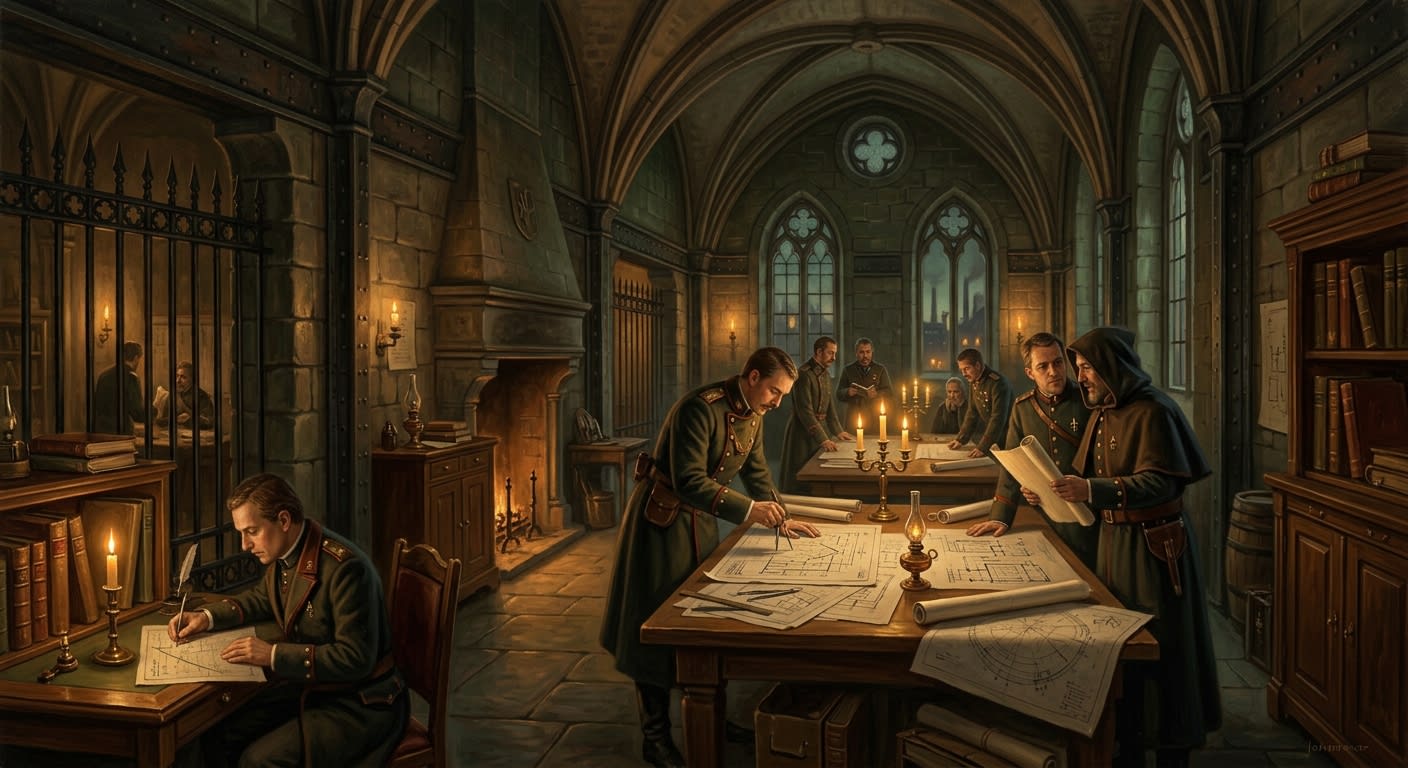
Bureau of Engineering
The number is the number, and the number does not care whether you find it convenient.
The Bureau of Engineering digs, measures, pours, rivets, surveys, calculates, and then builds the thing that holds every other Bureau upright. Its motto is not in any catechism. It is carved into latrine walls.
Codex Ref. VII.4.02-011
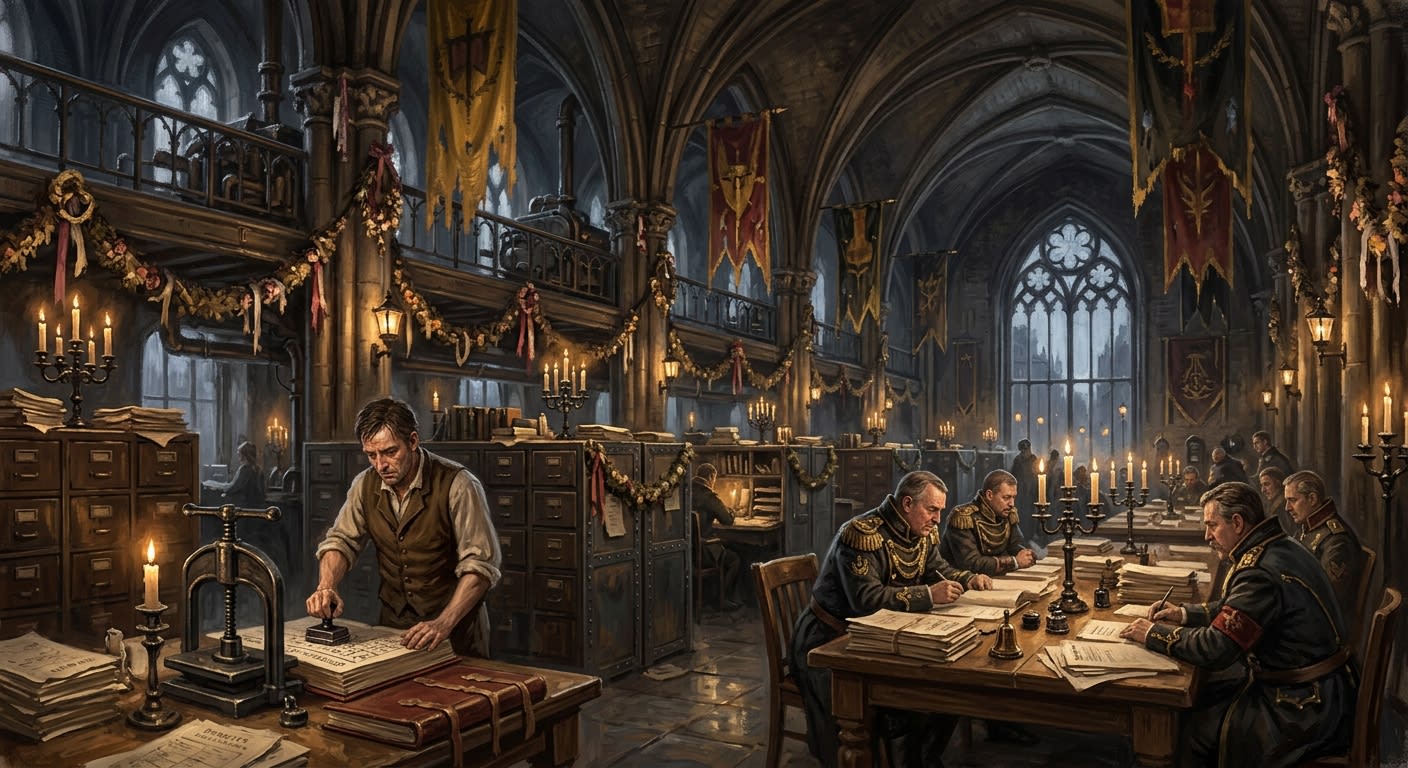
Bureau of Festivals
Joy, administered at scale — licensed, measured, and periodically revoked
The Bureau that manufactures joy, schedules grief, and meters celebration with the same rigour the Bureau of War applies to troop rotations — and which has, on seventeen documented occasions, deployed confetti.
Codex Ref. VIII.5.01-001
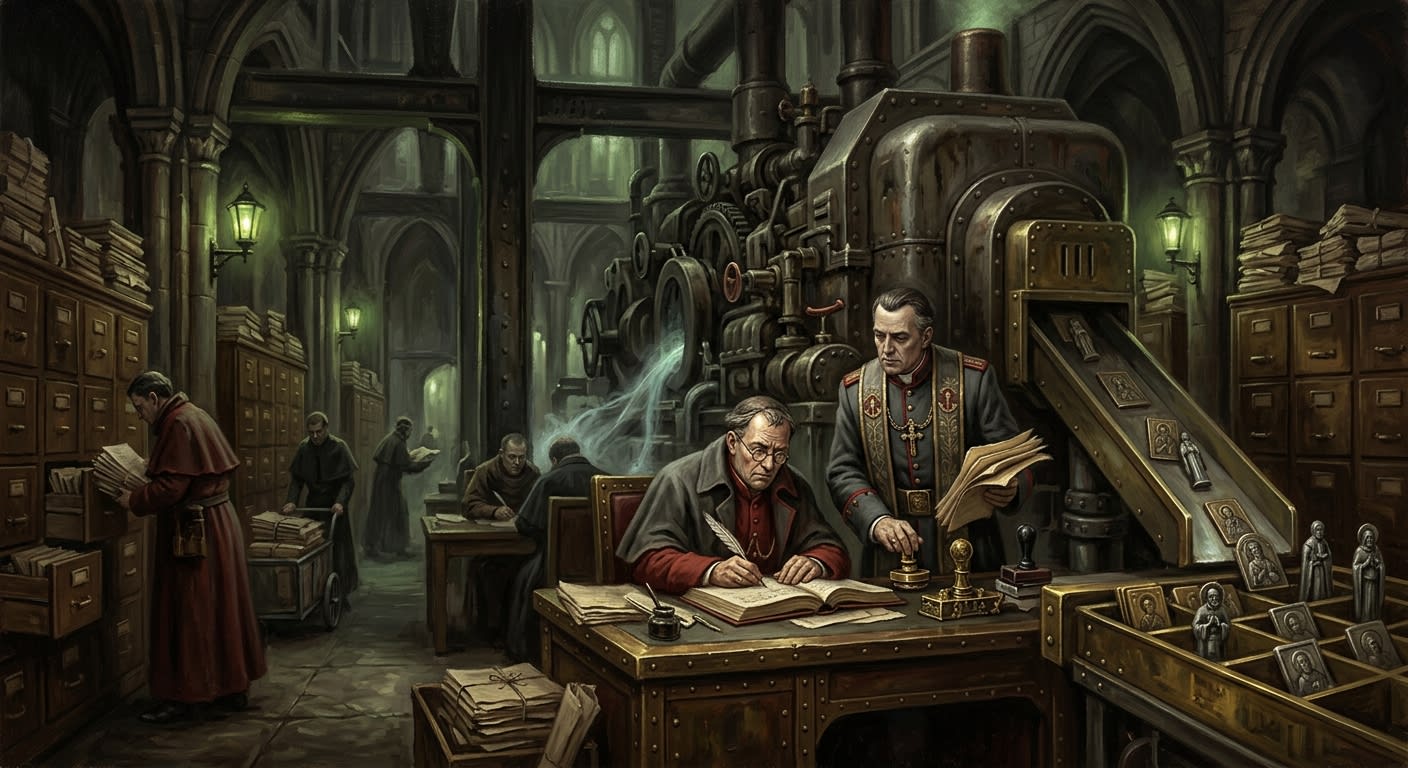
Bureau of Hagiography
The dead may vote only after editing
The Bureau of Hagiography edits the dead into useful saints, delaying, ratifying, taxing, suppressing, and polishing grief until it obeys.
Codex Ref. VIII.6.03-112
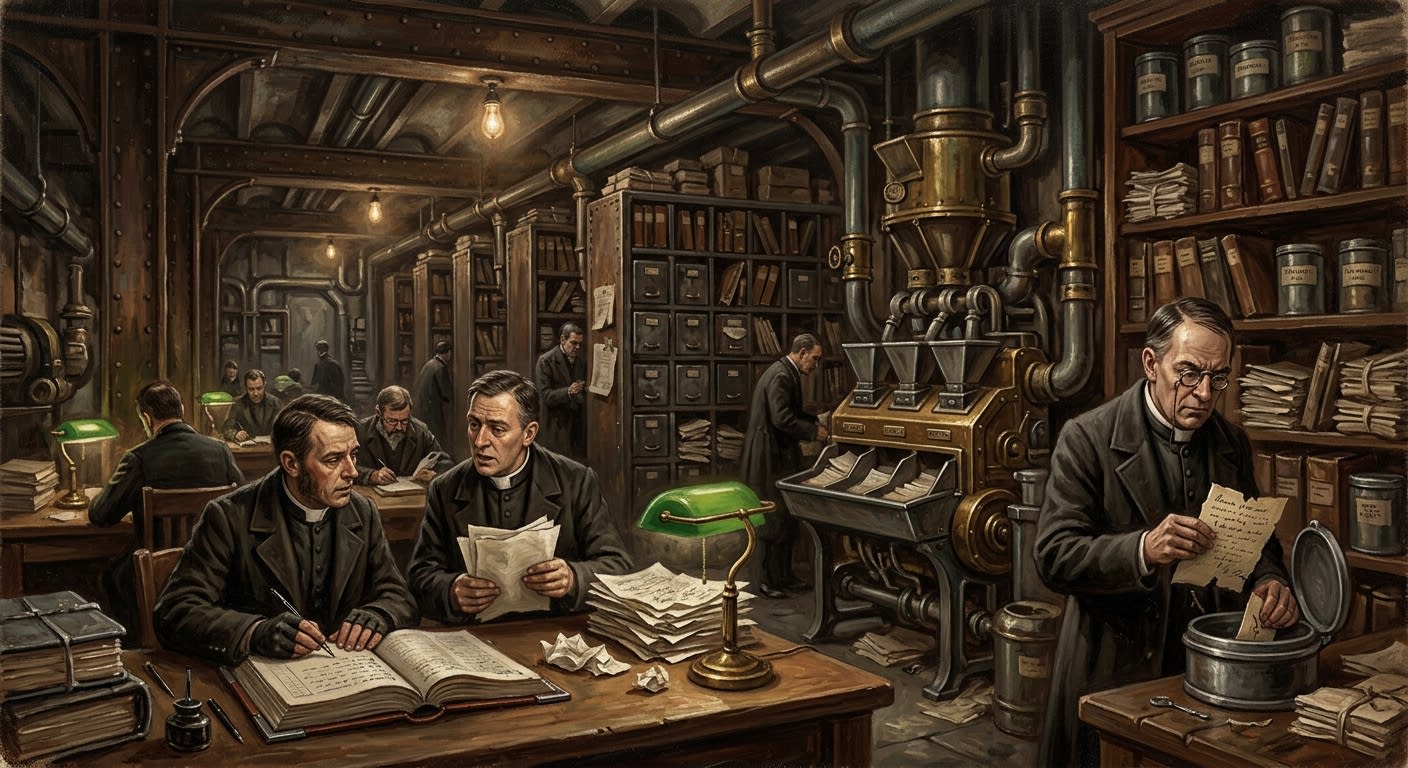
Bureau of Hearsay
Copy the ugly sentence before a cleaner office teaches it to lie
The Bureau of Hearsay preserves rumour before proof can disinfect it: tavern scraps, trench gossip, enemy jokes, and every ugly sentence that later becomes doctrine.
Codex Ref. VIII.8.02-112
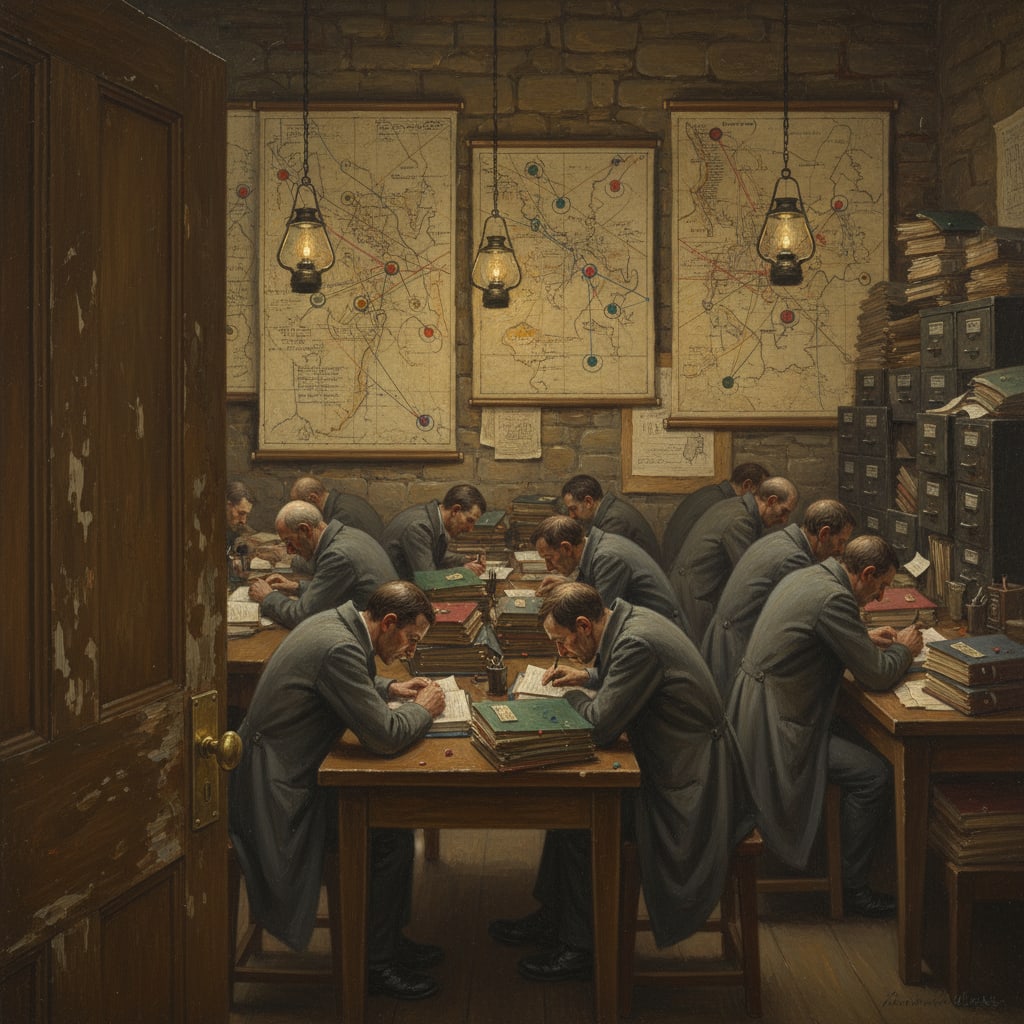
Bureau of Inter-Infernal Analysis
Fourteen analysts, three rooms, one assumption; the Line holds because the assumption holds
The Bureau that watches Hell watch itself — fourteen analysts cataloguing the rivalries among the Seven Sin-Generals, amplifying their feuds, and verifying quarterly that spite remains the Sagittal Line's most reliable load-bearing element.
Codex Ref. VIII.7.01-001
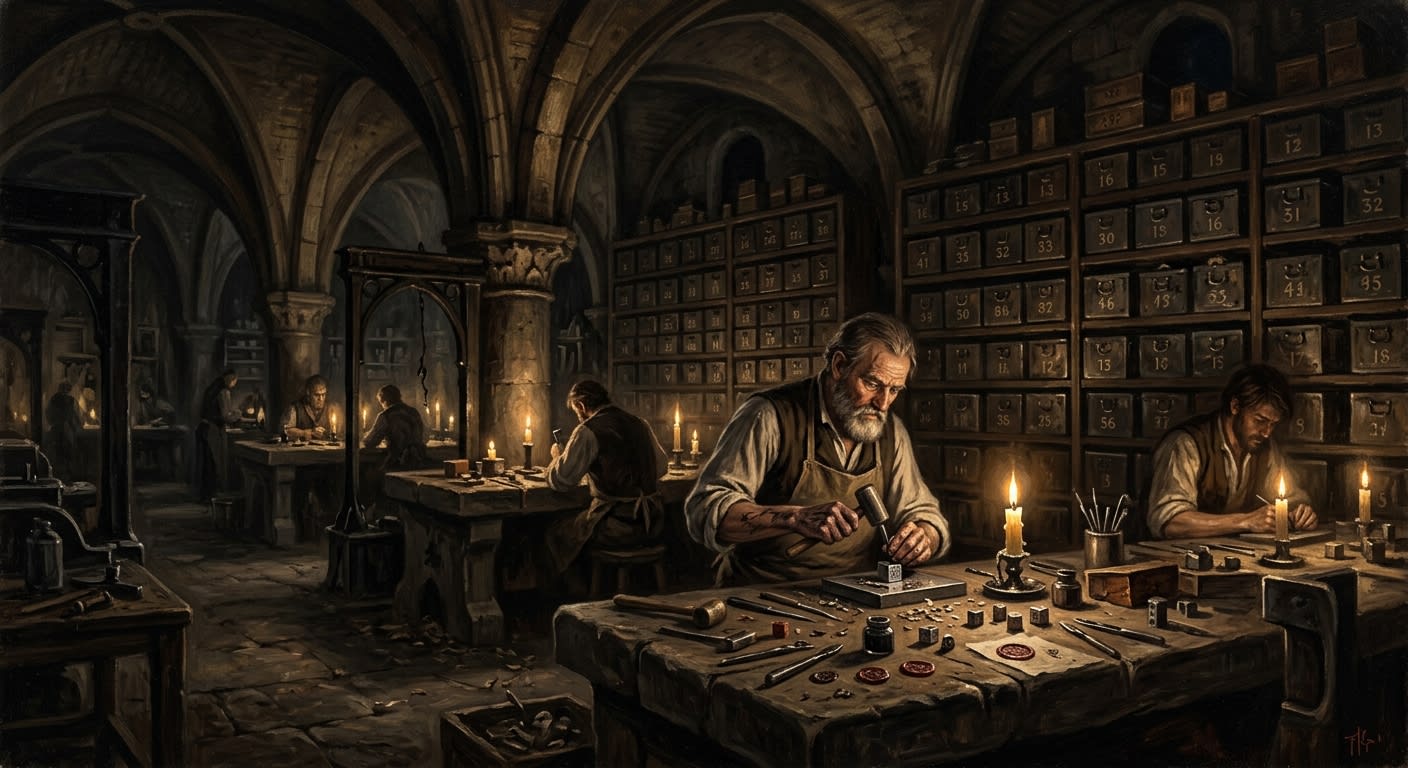
Bureau of Masks and Seals
The stamp is the Synod. Everything else is suggestion.
The Bureau of Masks and Seals controls every stamp, seal, and counter-seal in Synod territory. Without its impressed wax, no document is real. Without its license, no face may be hidden. Casselius of Mainz holds the Synod's mouth and press in one pair of ink-stained hands.
Codex Ref. VI.4.19-014
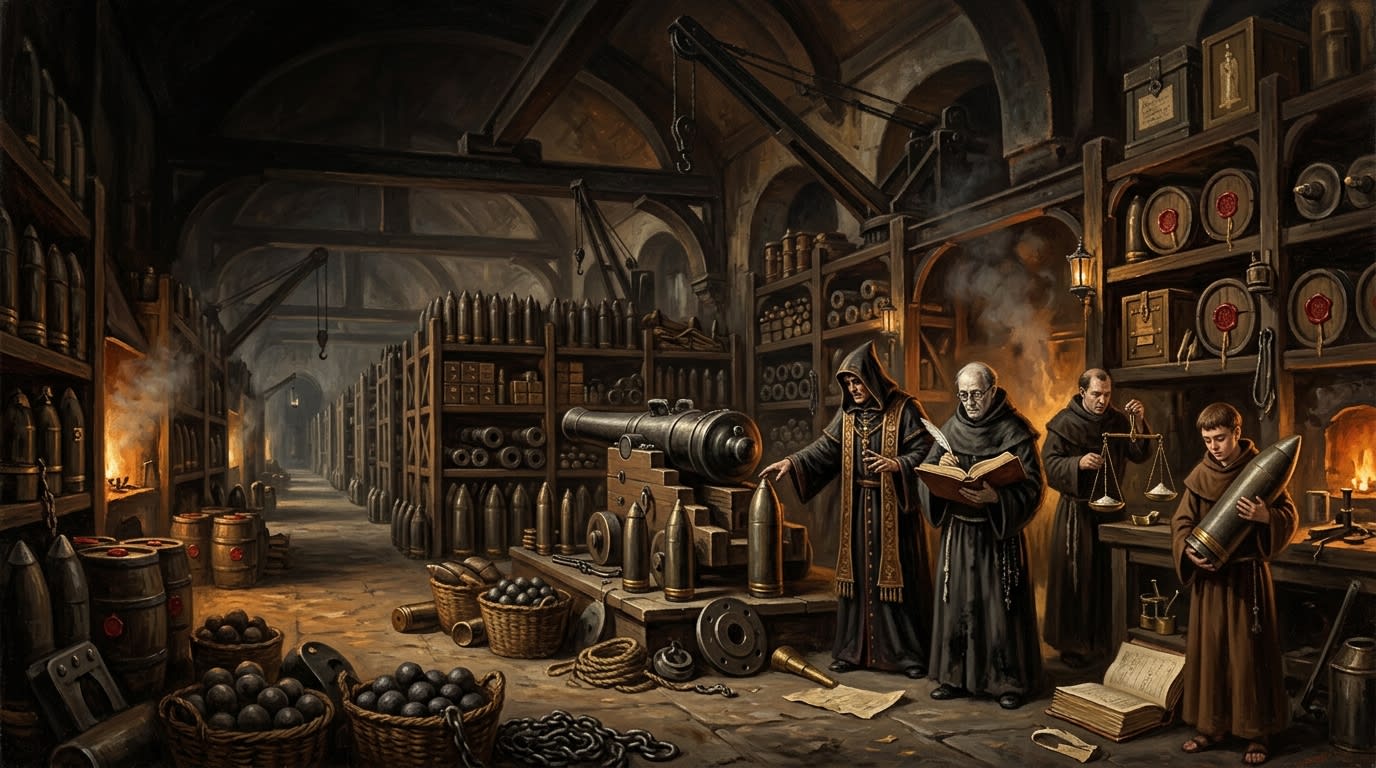
Bureau of Ordnance
No violence is lawful until inventory permits it
The Bureau of Ordnance blesses powder, counts shells, seals fuel, restrains officers, and teaches matter to obey violence only after the Ledger consents.
Codex Ref. VIII.2.11-090
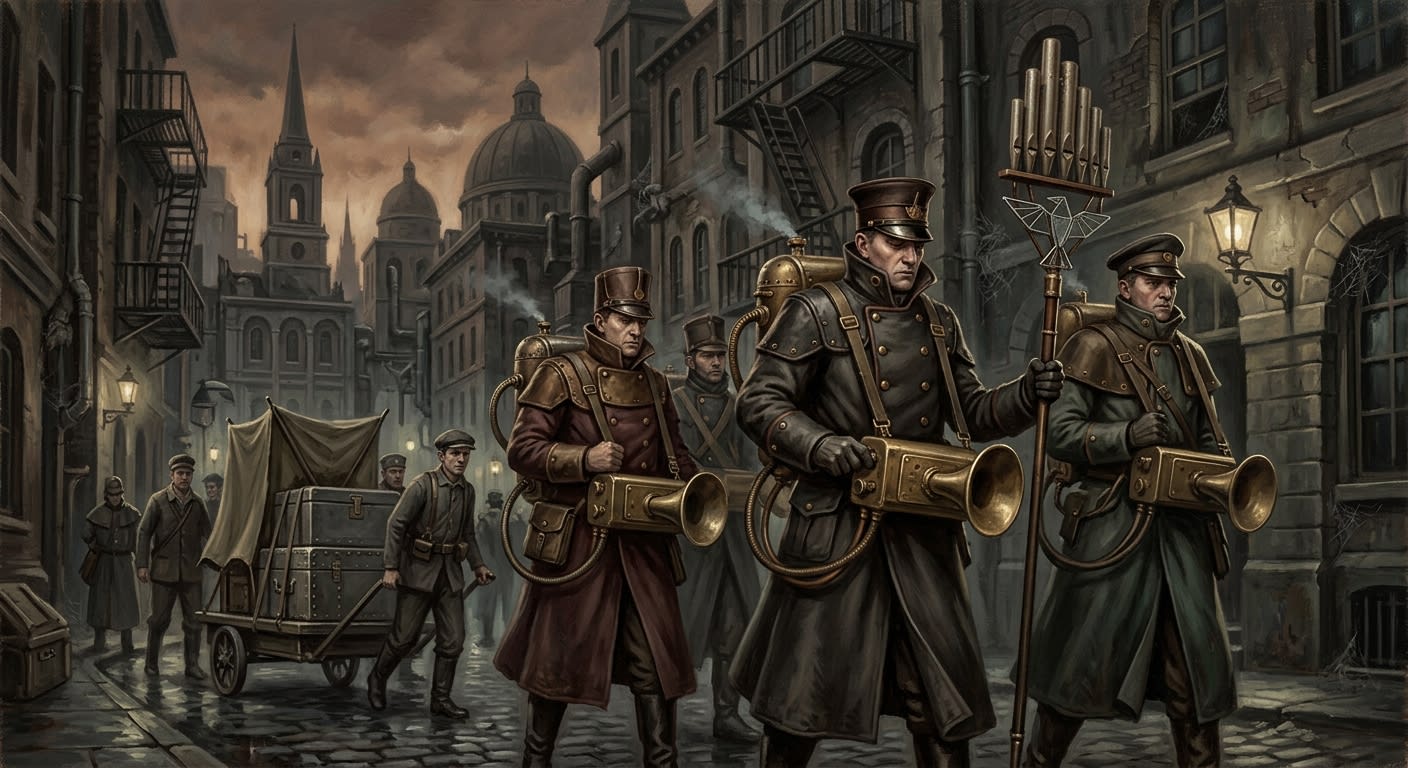
Bureau of Orison
Song is for halls; Orison is for war
The field name and fighting face of the Bureau of Orison and Song: licensed breath, saint-dust broadcast, acoustic countermeasure, and silence made jurisdiction.
Codex Ref. VIII.6.02-001
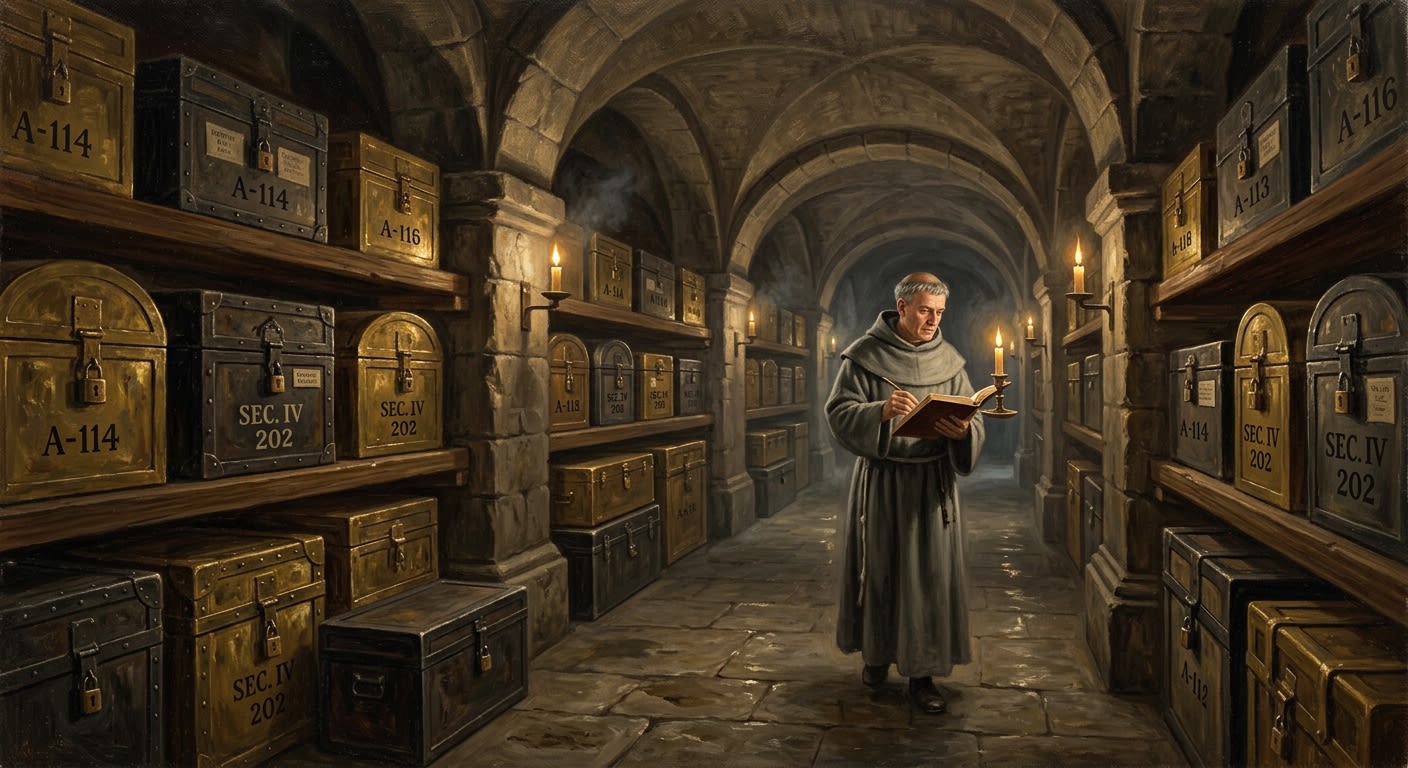
Bureau of Relics
The stamp is not the sanctity. The stamp is merely necessary.
The Bureau of Relics guards four thousand seven hundred authenticated bones, adjudicates the holiness of ash, and maintains the cheerful institutional fiction that it controls the things it catalogues.
Codex Ref. IV.3.12-019
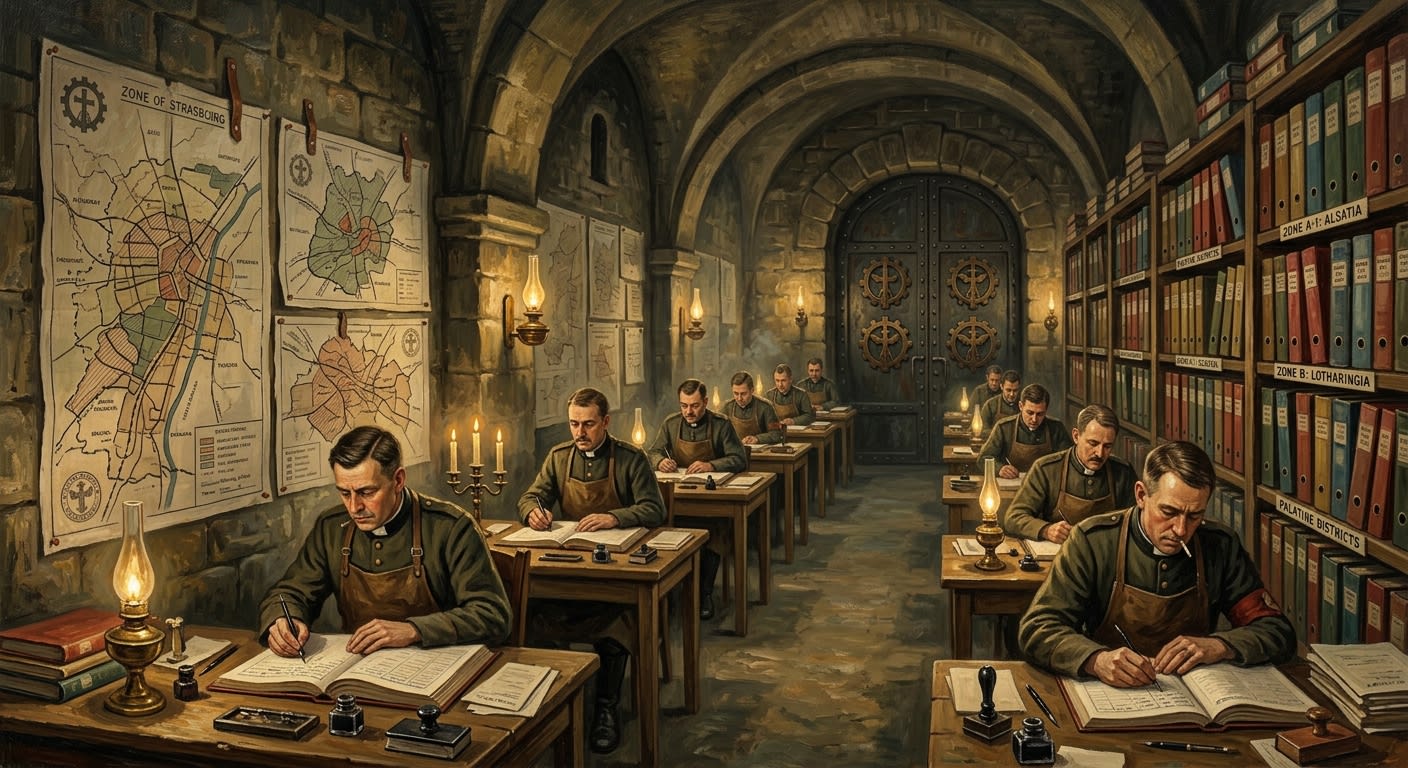
Bureau of Settlement
Where three hundred million subjects are permitted to stand — and by whose leave.
The Bureau of Settlement does not appear in the twelve canonical portfolios. No crimson sash, no hymn. What it has is authority over the address of every living subject of the Theocracy — and the knowledge that no one listens until the plumbing fails.
Codex Ref. IV.3.08-001

Bureau of Shadows
Fourteen confirmations of nonexistence. The grave-dust wax alone cost more than silence is supposed to.
The Bureau of Shadows does not exist. Fourteen decrees confirm this, each bearing between three and seven counter-seals, each filed under a category the Bureau of Records insists is empty.
Codex Ref. VIII.8.01-001
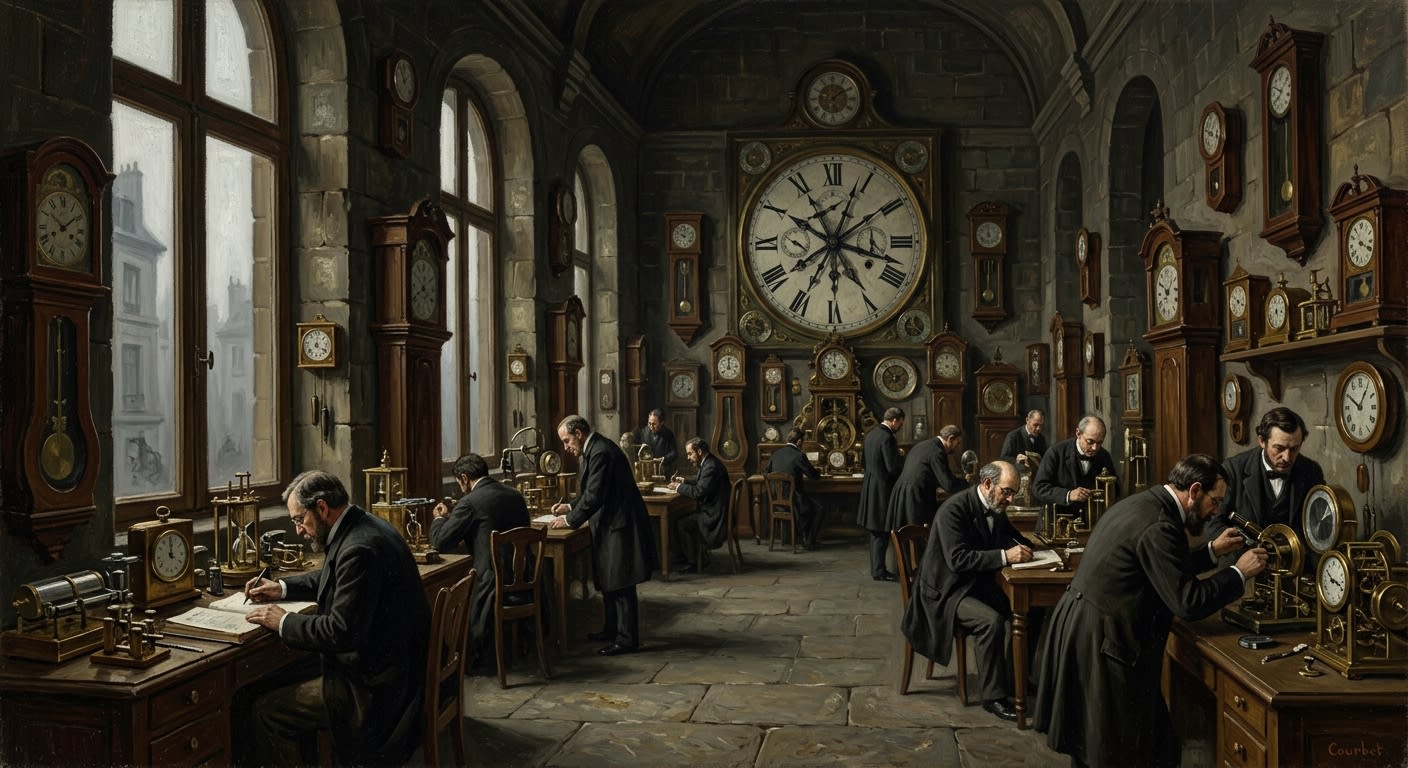
Bureau of the Hourglass
The Bureau measures. The Synod does not read. Time continues to disagree.
The Bureau of the Hourglass, constituted A.S. 134 to measure the Languid Dreamer's temporal drift along the Line, publishes quarterly reports no one reads, and has spent sixty-seven years proving that time is thinner near the front.
Codex Ref. VIII.3.01-001
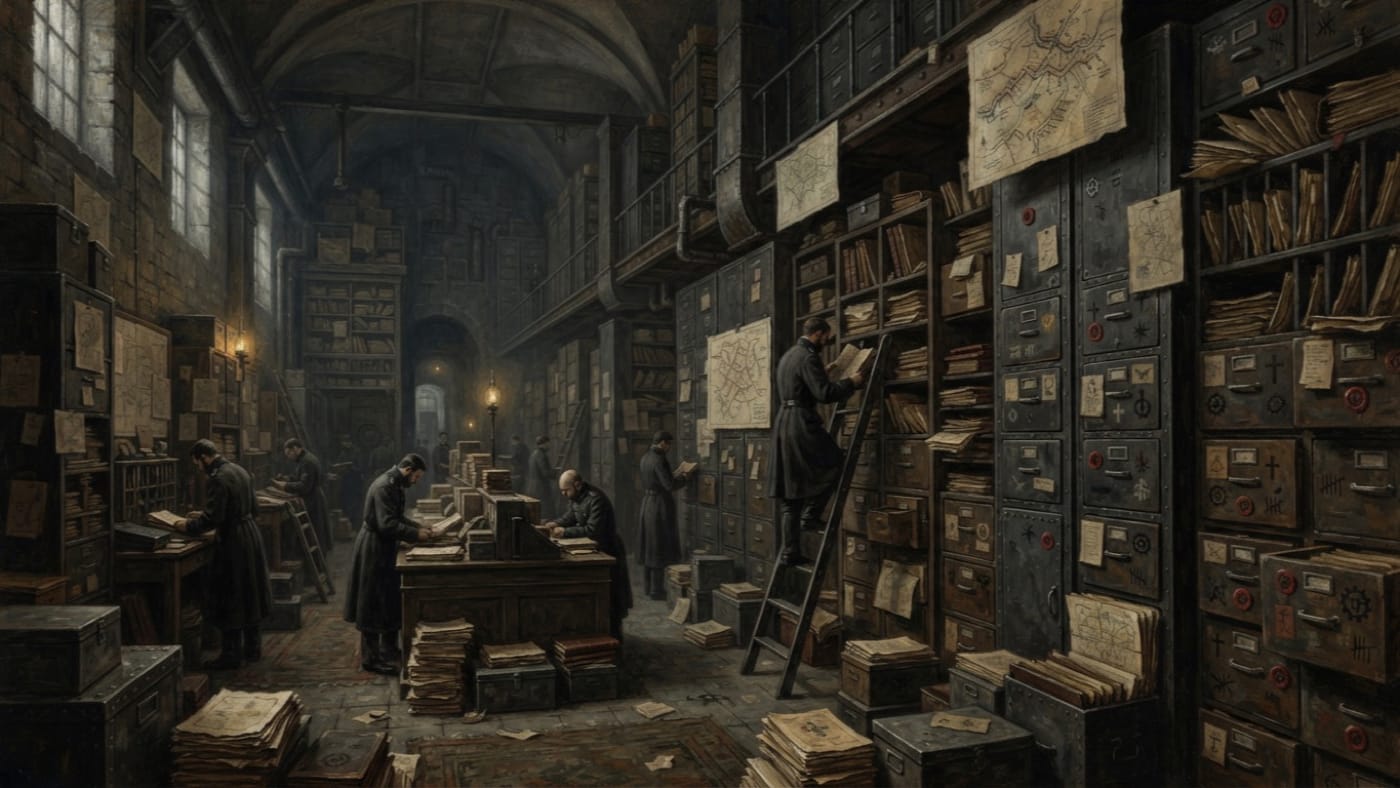
Bureau of War archives
What the next commander must know
The Bureau of War's operational memory: maps, assessments, supply rolls and field images kept against the next assault. Doctrine may correct the account; the guns still require the arithmetic.
Codex Ref. III.2.07-042
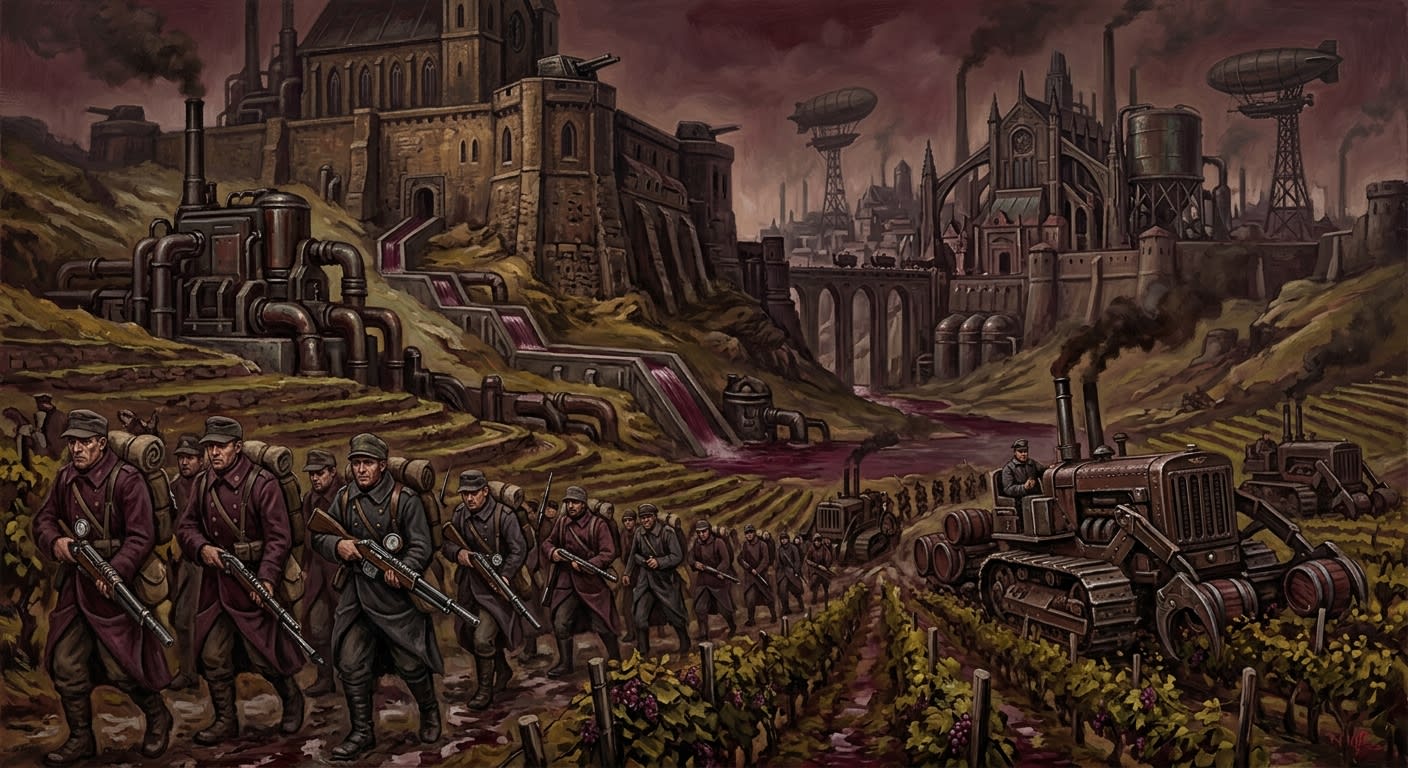
Burgundy
The wine-dark province that gives sons, casks, silence, and trouble
Burgundy is the Synod's wine-dark western province: vineyard, levy basin, Rhône feeder, cellar-church, chromatic hazard, and polite machinery of refusal.
Codex Ref. II.1.11-201
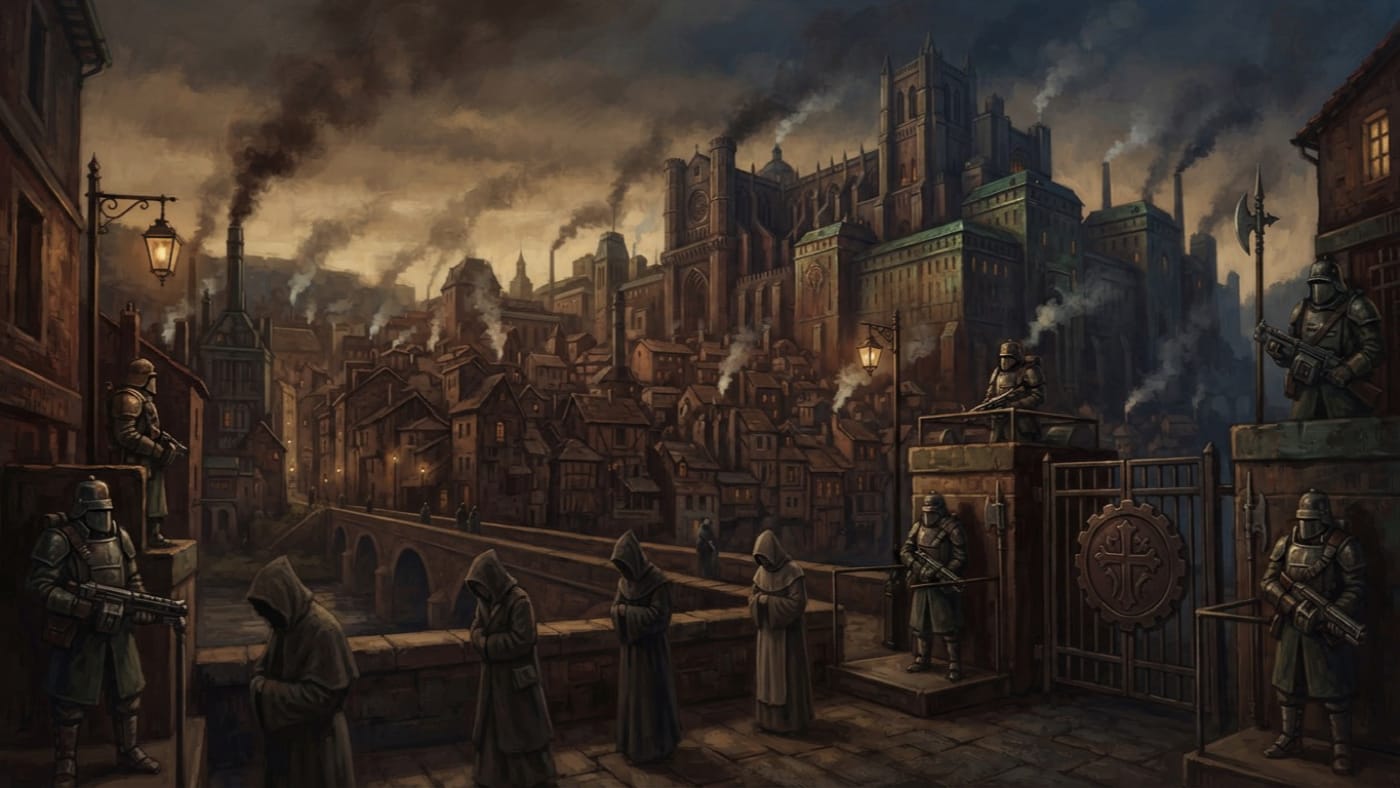
Cahors
Named elsewhere, retained forever
Cahors entered the Toulouse file in A.S. 93 through Carcassonne's confession. No local offence is established; the Bureau retained the address.
Codex Ref. II.1.09-093

Calendar of Saints
Eternal saints, monthly amendments, and a clerk with glue
The Church's calendar of saints, feasts and fasts, held under the Seal of Martyrdom and revised by monthly amendment strips. Sanctity is permanent; the parish must keep its glue ready.
Codex Ref. XIII.1.05-002
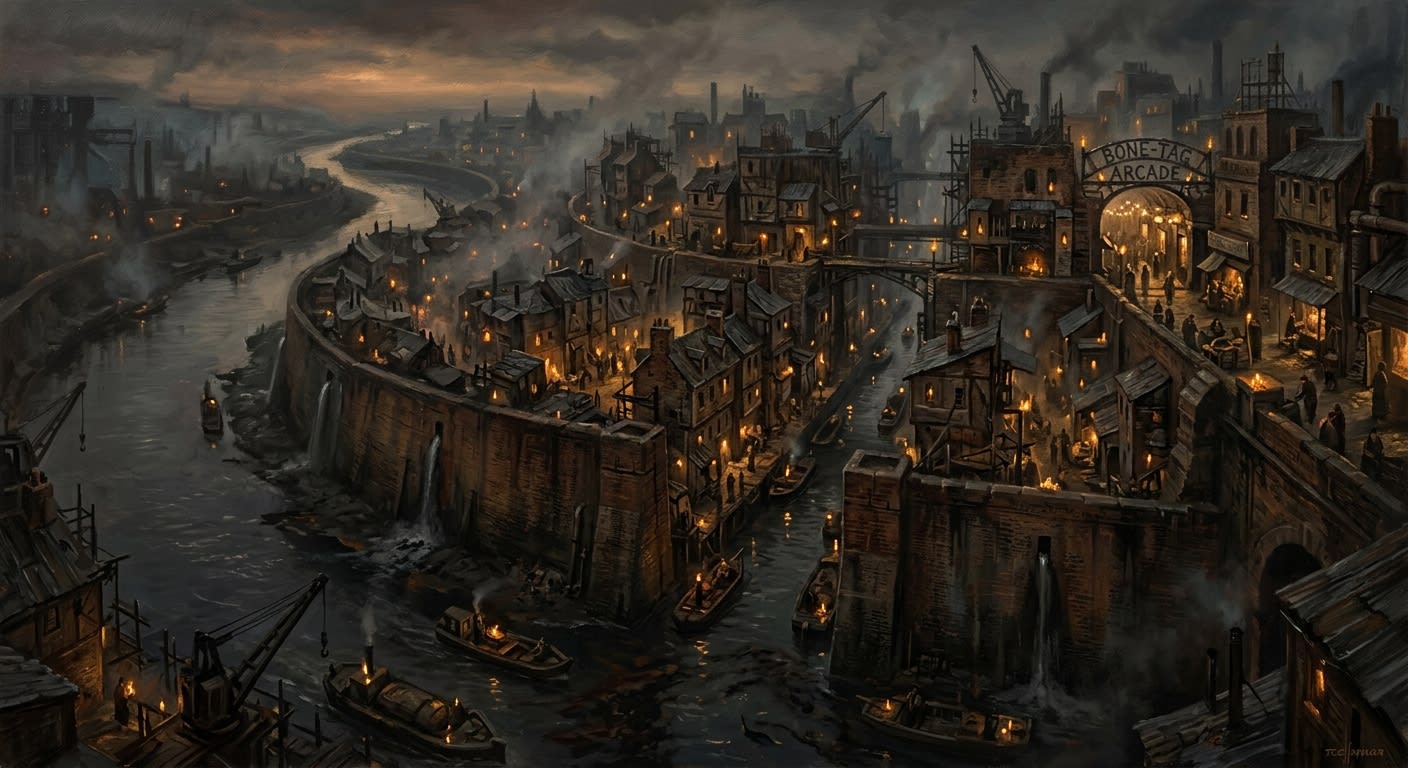
Candle-Sump District (Lower Vire)
The gut of Lower Vire — it was supposed to be a drainage ditch
The gut of Lower Vire — a drainage ditch that metastasised into a district of forty-two thousand souls, where tallow feeds the wards above, bone tags stamp the dead into existence, and the crypt-route drafts murmur names no one asked to hear.
Codex Ref. II.1.05-001
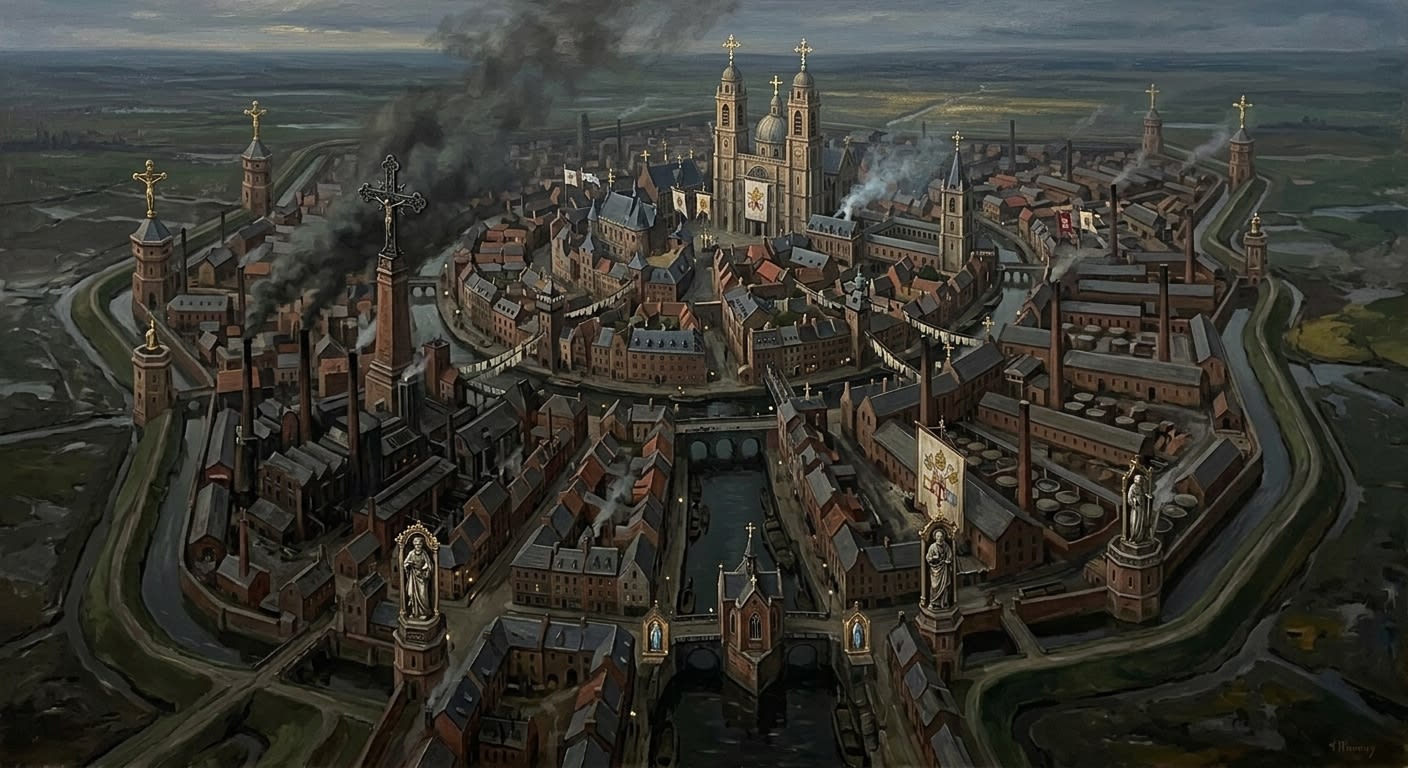
Candlewick Palatinate
Where Legitimacy Is Manufactured, and Colour Is Law
Canal city of chandlers, dyers, and wax-merchants whose misfortune was to be competent and noticed. The Candlewick Palatinate supplies the Synod with seals, sanctioned inks, and watermarked paper — and thus with the material substance of reality itself.
Codex Ref. II.1.01-001
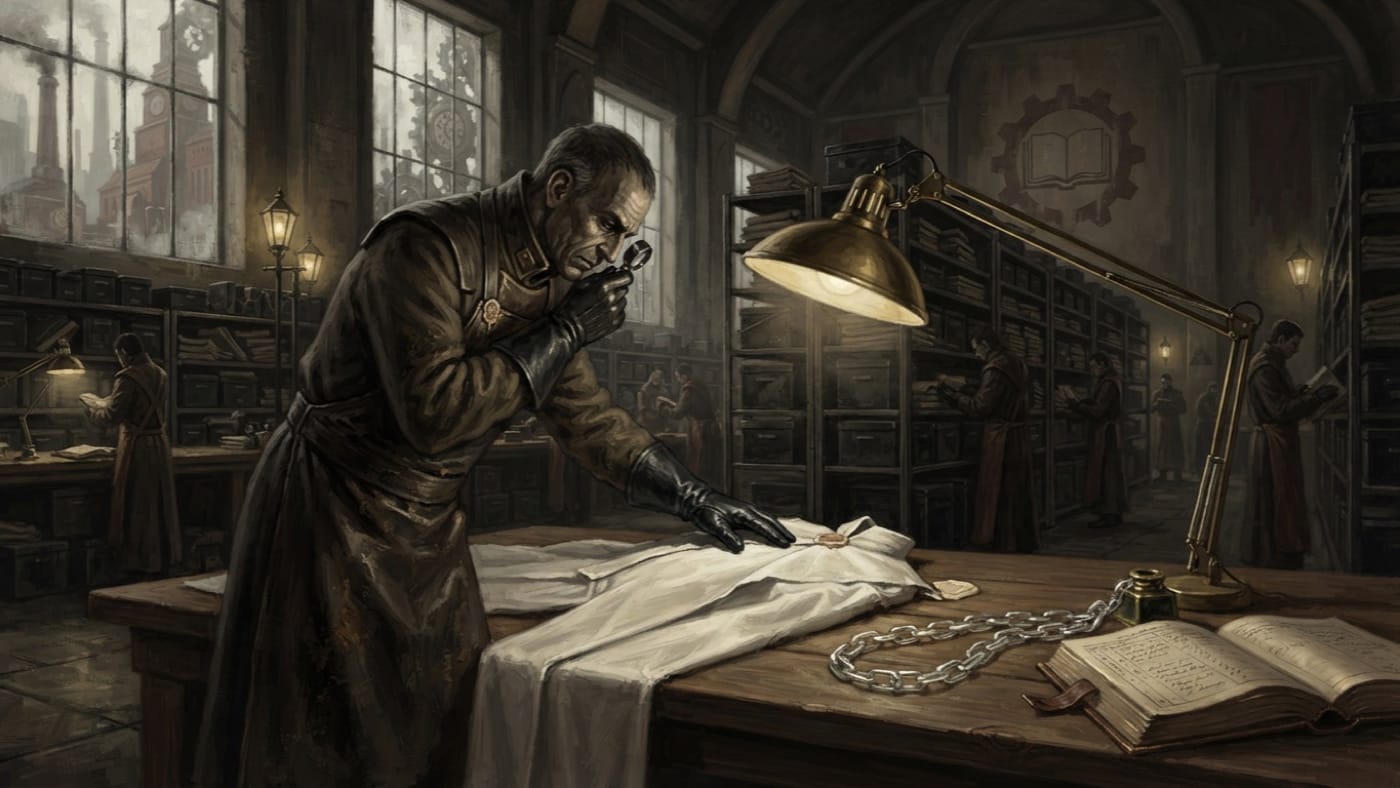
Candor Veritatis
Truth is a condition of cloth, subject to inspection
The whiteness of truth is the mantle standard in Hildegarde's A.S. 62 decree. Linen identifies the officer; inspection supplies the theology.
Codex Ref. XIII.1.88-063
Canon-Praelate Odmar Voss of Doctrine
The chair did the binding; the man left four facts
Doctrine's presiding delegate at the A.S. 105 Münster guild compact. The archive preserves his office and seat; the obligations require no fuller biography.
Codex Ref. III.2.01-106
Canon-Toller Edris Vane
He governs the interval between arrival and departure
Canon-Toller Edris Vane holds the Causeyworks' crossing access. Permits, tolls and patient delays sustain his kingdom; Marrow's Saintspan warrant now opens stone on another Bureau's timetable.
Codex Ref. III.2.01-201
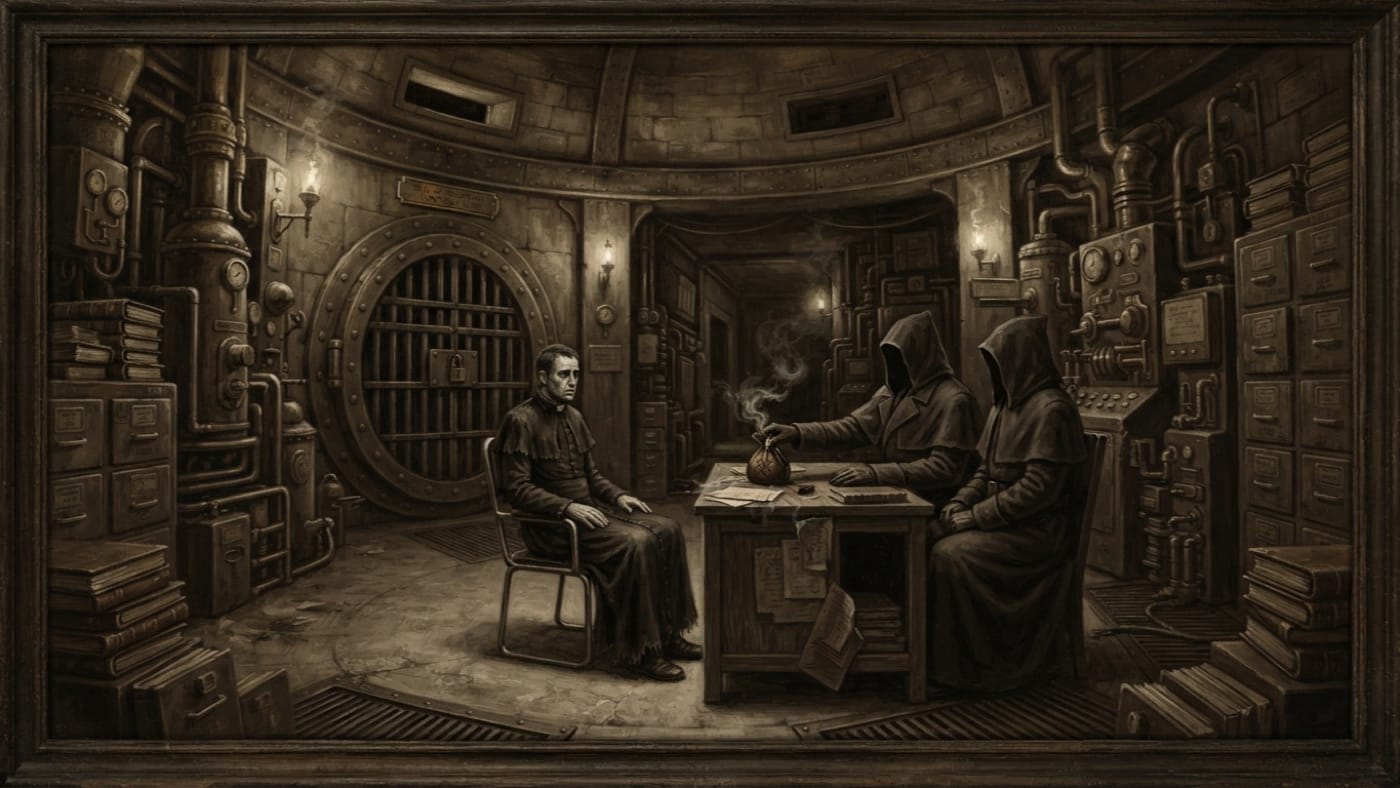
Canonical Audit
An A.S. 201 survey of the instrument whose investigators Records cannot name
An A.S. 201 survey of the Seal of Discipline's instrument: clergy investigated in sealed chambers by men Records cannot name, with findings carried in pouches said to destroy themselves upon opening. The Ledger retains the question.
Codex Ref. XIII.1.05-003
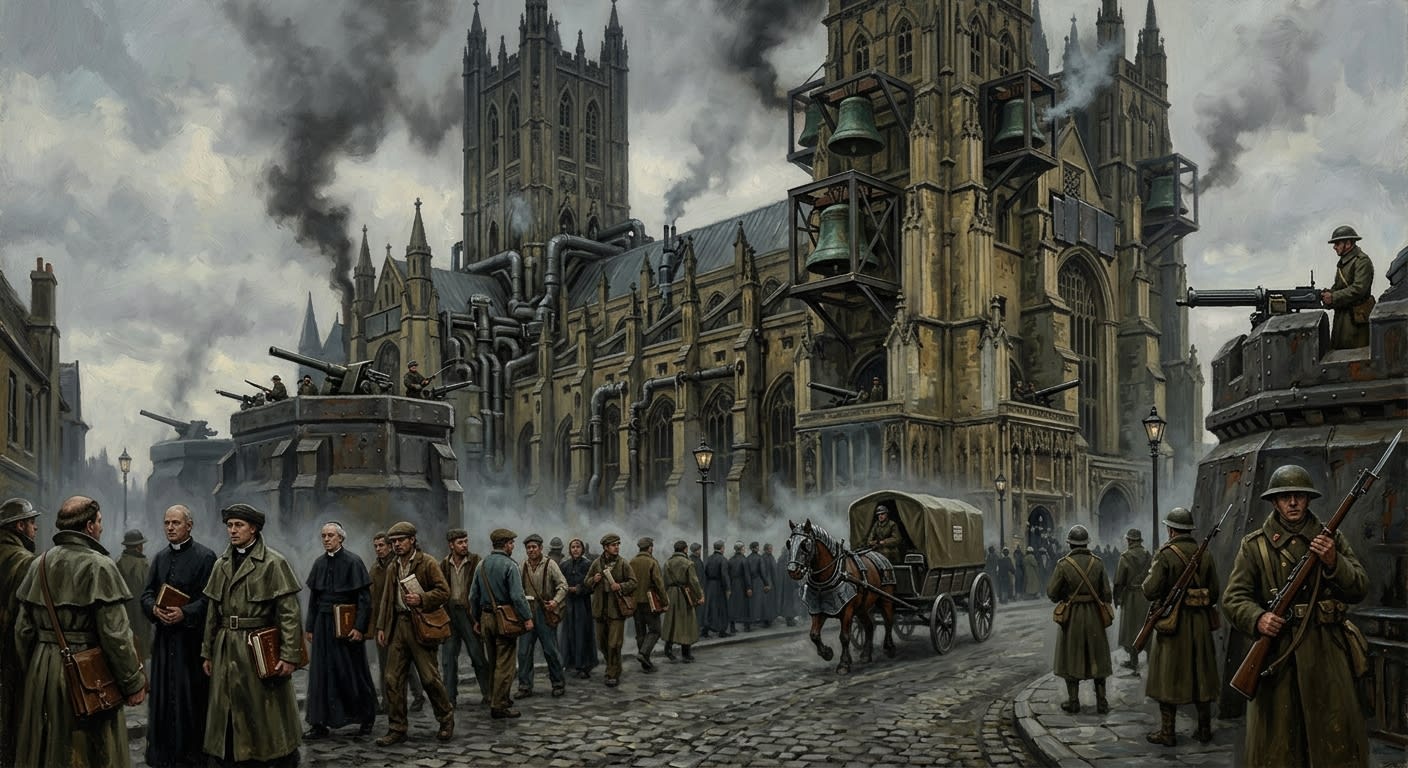
Canterbury
The cathedral that refused to become a bureau
Canterbury is the British Crown's cathedral-seat: old, armed, bell-ridden, unaudited, and infuriatingly functional beyond Strasbourg's forms.
Codex Ref. II.0.01-201
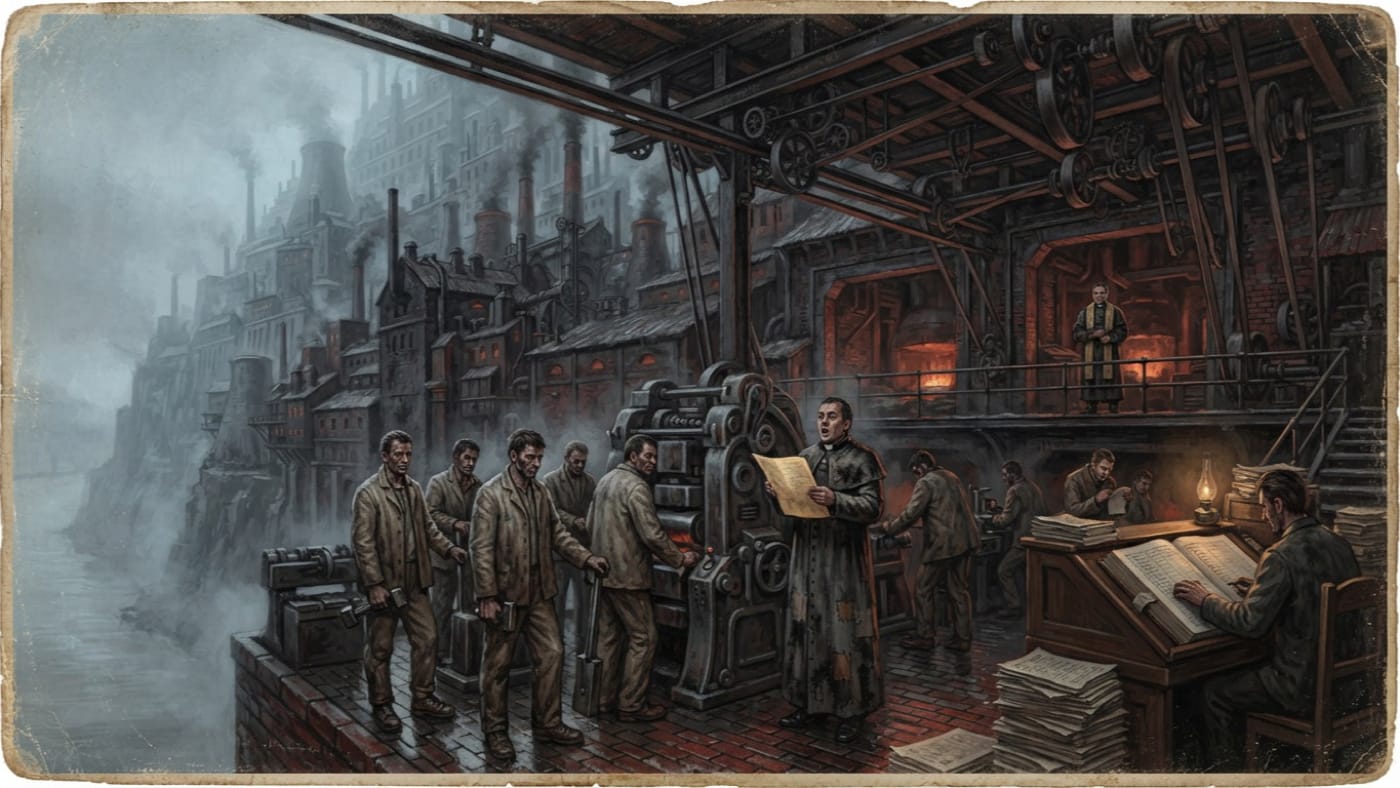
Cantor Foundries
Beneath the judges and above the dead, even the hour must be bought
Rheinscarp's eighth terrace runs its furnaces on purchased bell-hours and the Mill-Crown Cantors' cadence. The machinery may be ready; permission remains the Marshal's commodity.
Codex Ref. II.2.08-001
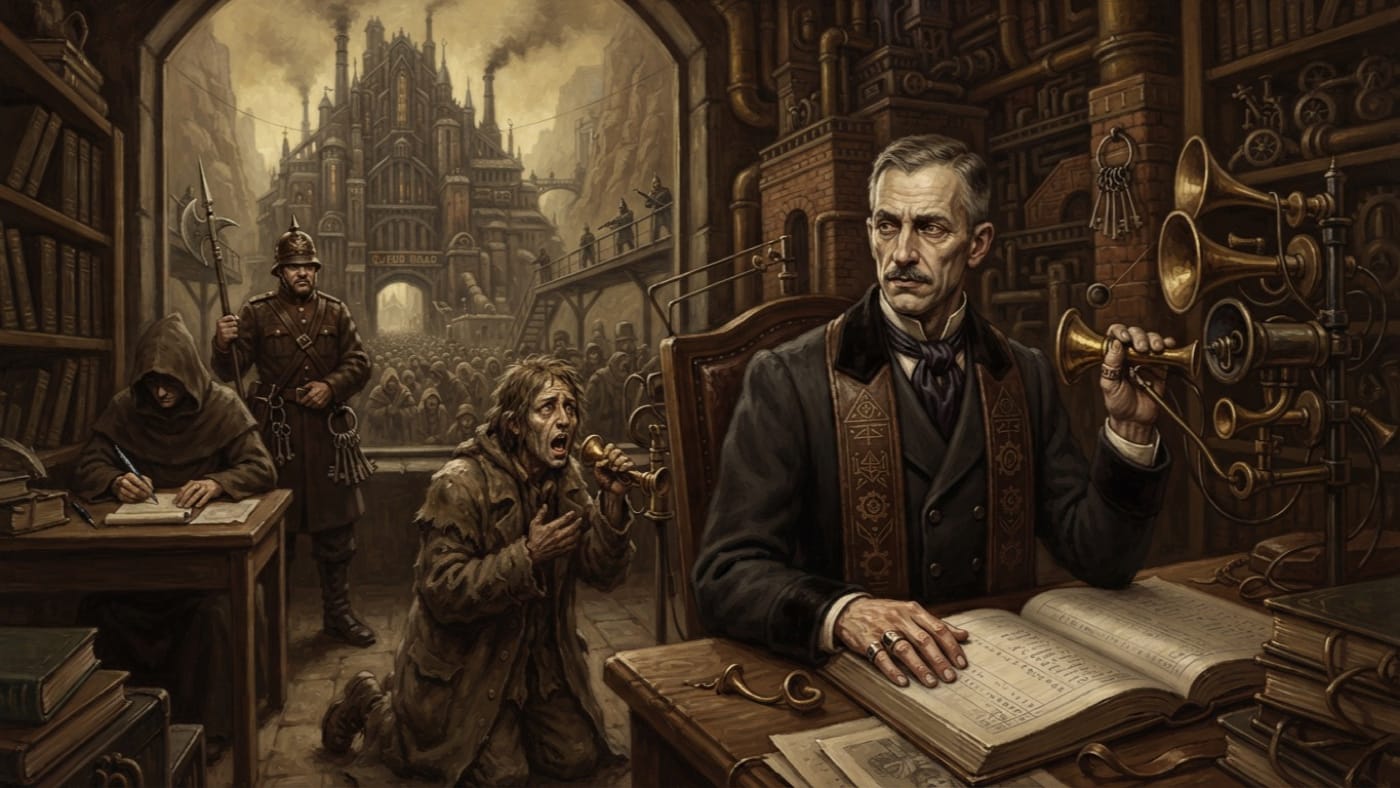
Cantor-Auditor Selm Peregrin
A soft voice at the gate, a hard charge in the ledger
Cantor-Auditor of Peregrine Row and descendant of its founding family. Eleven years of syllabic vigilance have tripled detention revenue. His voice remains soft; the processing charges do not.
Codex Ref. III.2.01-201
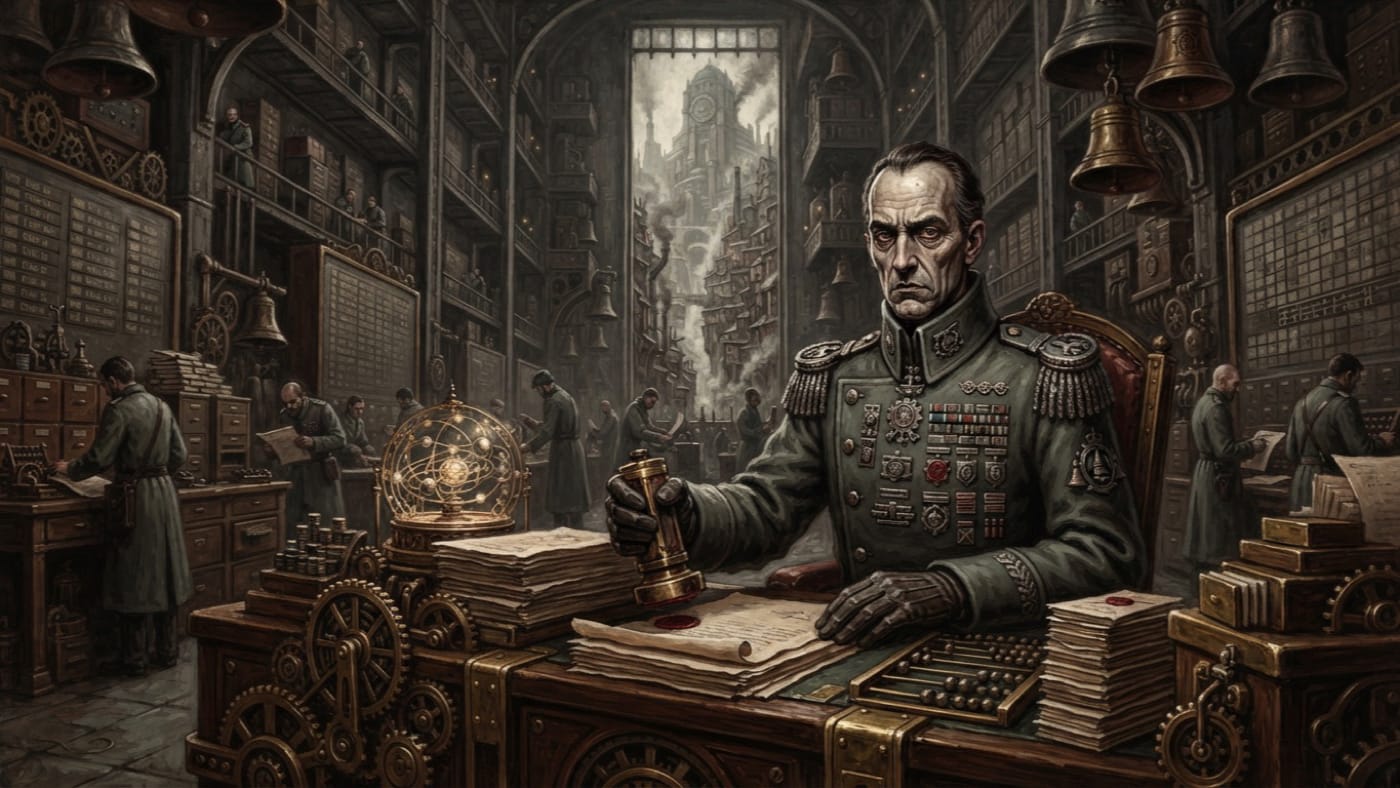
Cantor-Marshal Hrodric Venn
He holds the hours; the hungry hold their receipts
Hrodric Venn holds Rheinscarp's bell-hours, mill cadences and convoy timing. His credits decide ration priority; the hungry may miss their window, but the schedule does not miss them.
Codex Ref. III.2.01-201
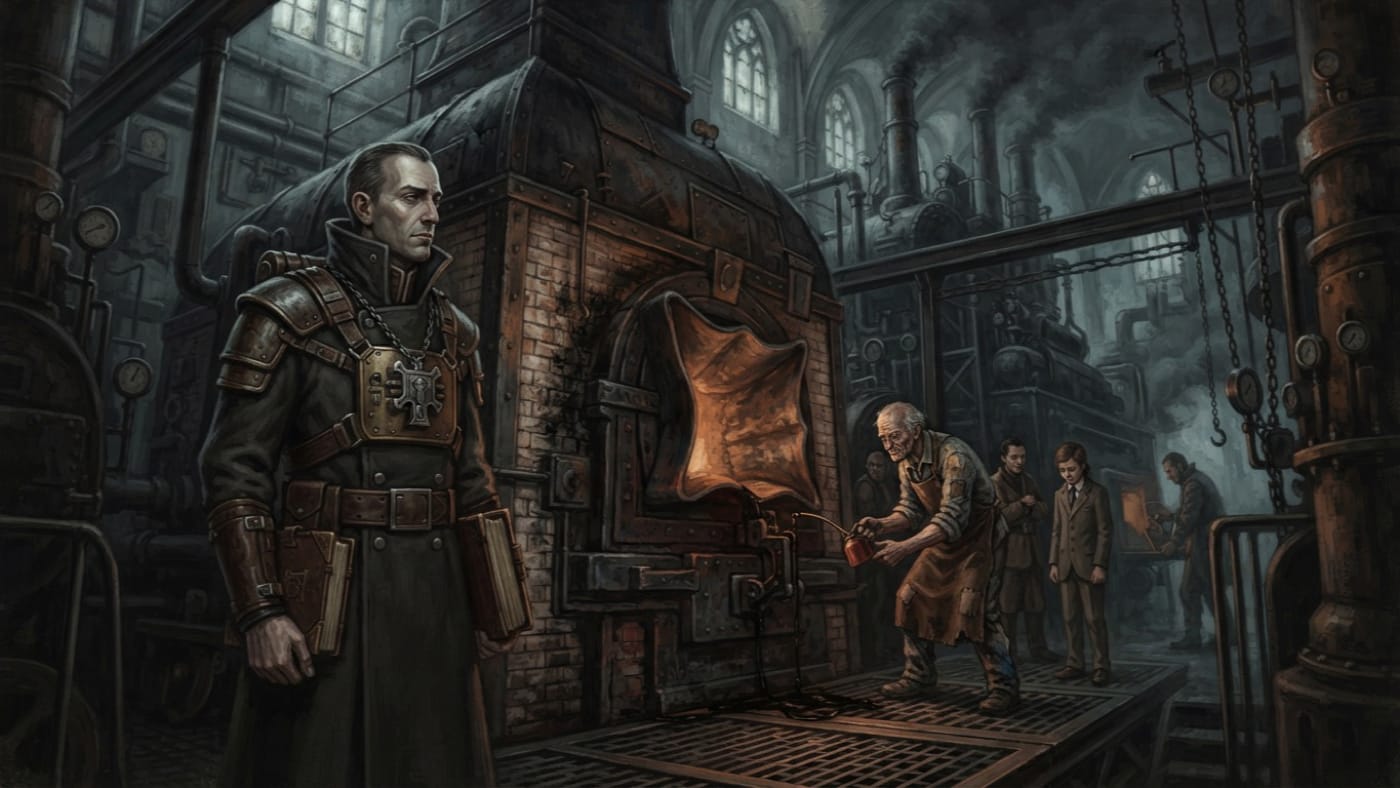
Cantor-Marshal Lenk
The furnace kept its heat; the officer lost the singing post
Lenk replaced a Kest-trained deputy at Saint-Combust in A.S. 199. The furnace refused its feed; after corrective measures restored ignition, the Cantor-Marshal was reassigned to silent inventory.
Codex Ref. III.1.04-006
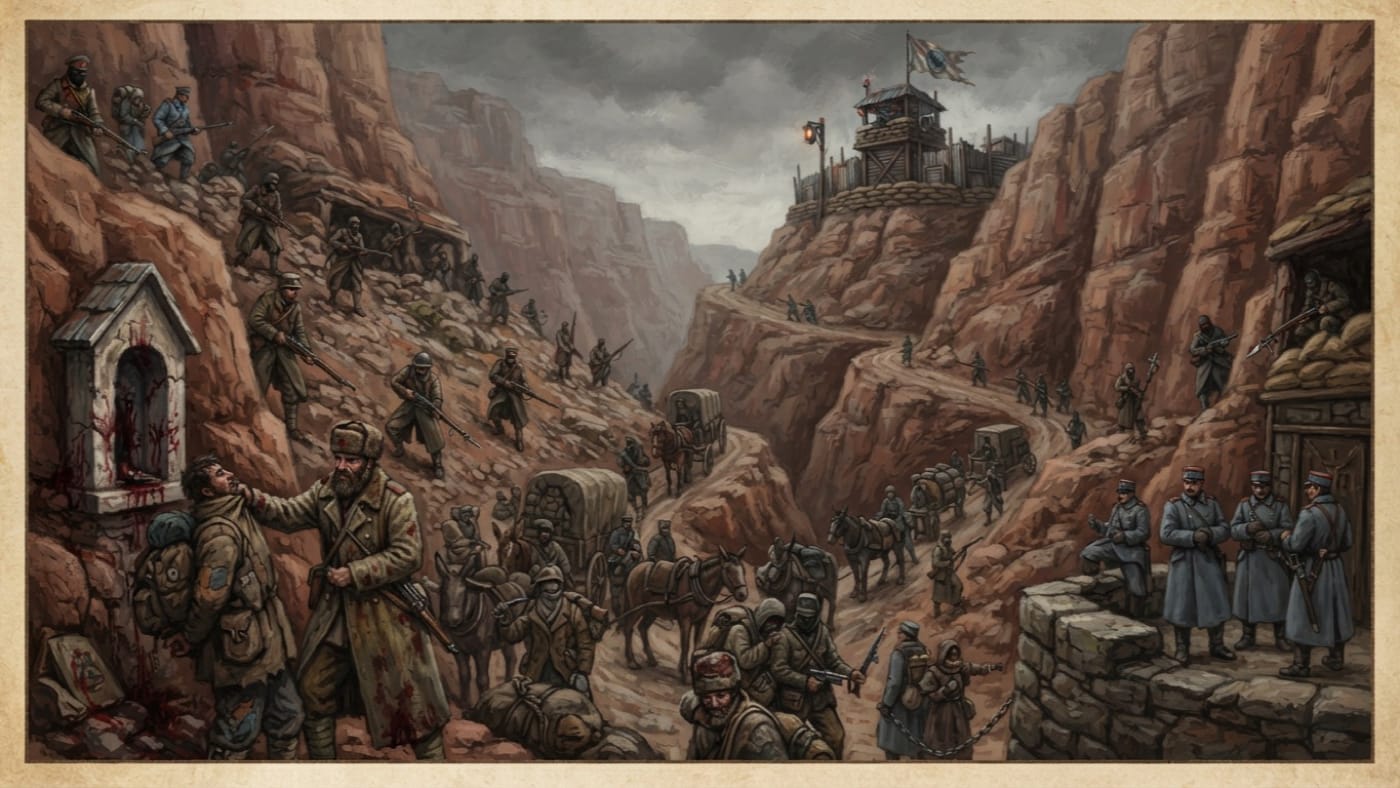
Canyon Saints
Where the knives collect and the seals sell safety
The Canyon Saints ambush pilgrims on Peregrine Row's eastern approach, taking hostages and offerings while brokers sell protection. The knives and the seals collect from the same road.
Codex Ref. XI.5.03-001

Captain Elias Brekke
The officer who saw [[debrecen|Debrecen]], wrote it down, and was filed away alive
Captain Elias Brekke discovered the Ash-Mothers at Debrecen in the A.S. 78–83 window, filed the deposition that made horror procedural, and vanished into Candlewick inventory after A.S. 84.
Codex Ref. III.2.01-056
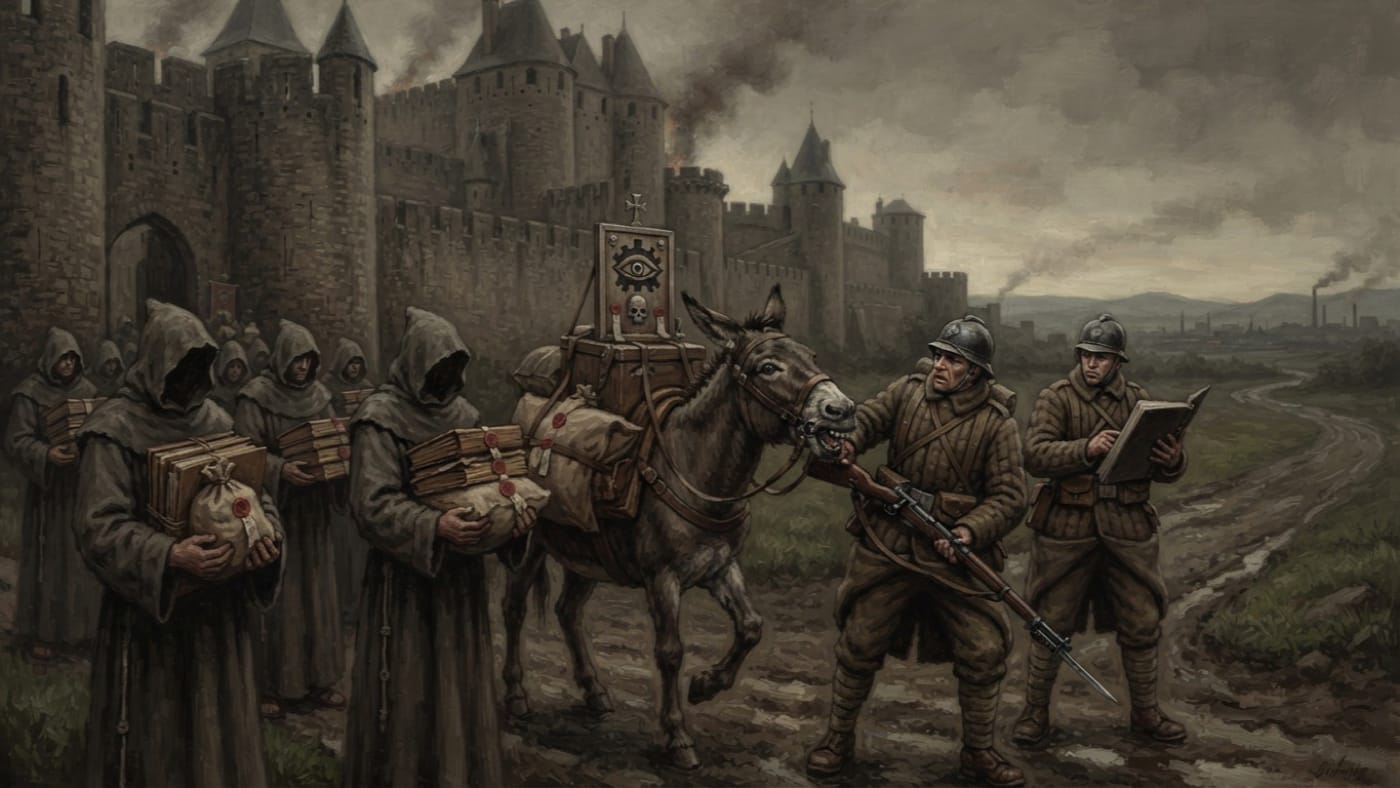
Carcassonne
Names outward, forbidden paper back
Carcassonne sent names outward and forbidden paper back to Toulouse. Purity enlarged its reach and its Index; Bernard the mule supplied the teeth.
Codex Ref. II.1.09-093
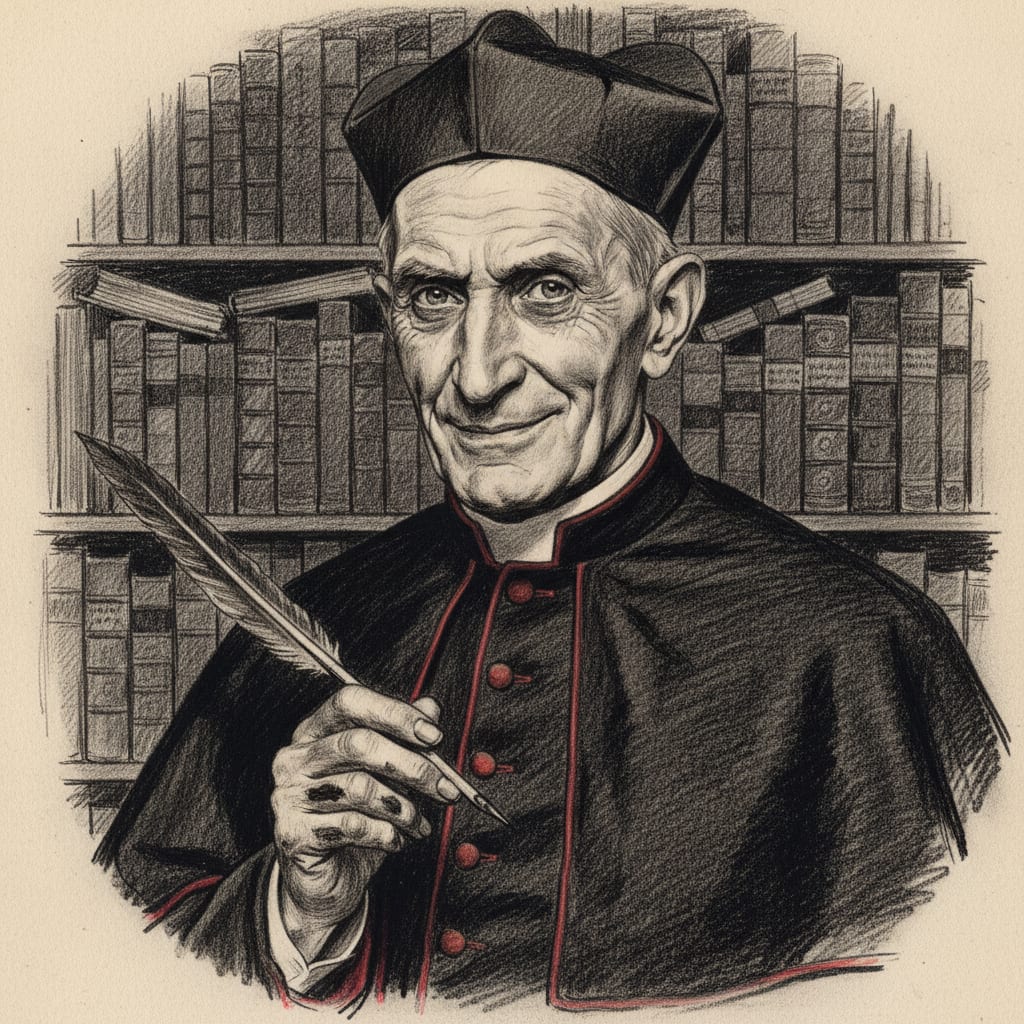
Cardinal Hieronymus Kratz
The Quill of Strasbourg
Cardinal Hieronymus Kratz, the Quill of Strasbourg, who proved that forgery widely believed is not forgery at all but revelation. Where Augustinus inspired, Kratz wrote — and what he wrote, the world obeyed.
Codex Ref. II.1.03-008
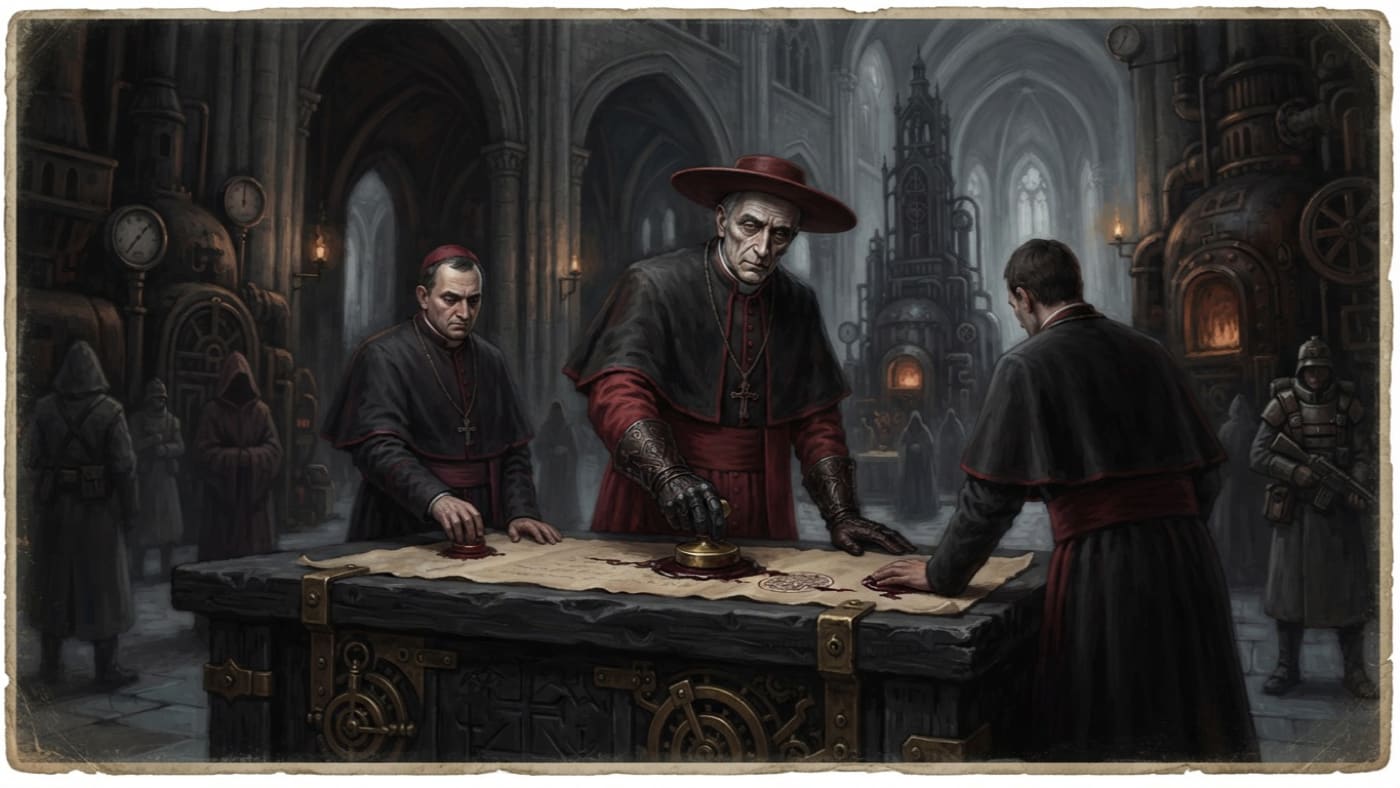
Cardinal-Legate of Toledo
One peninsula, one seal, no recorded name
Iberia's unnamed signatory to the Concordat of Strasbourg in A.S. 90. He bound a peninsula with one seal; the Ledger retained his title and dispensed with his name.
Codex Ref. III.2.01-090

Caretaker Saints
Mercy with a rent book, a candle, and no licence whatsoever
Caretaker Saints are the conscience-stricken branch of Grave-Field Shanty Brokers: unchartered grave-lane landlords who keep rents low, names whispered, and mercy barely deniable.
Codex Ref. XII.27.02-001
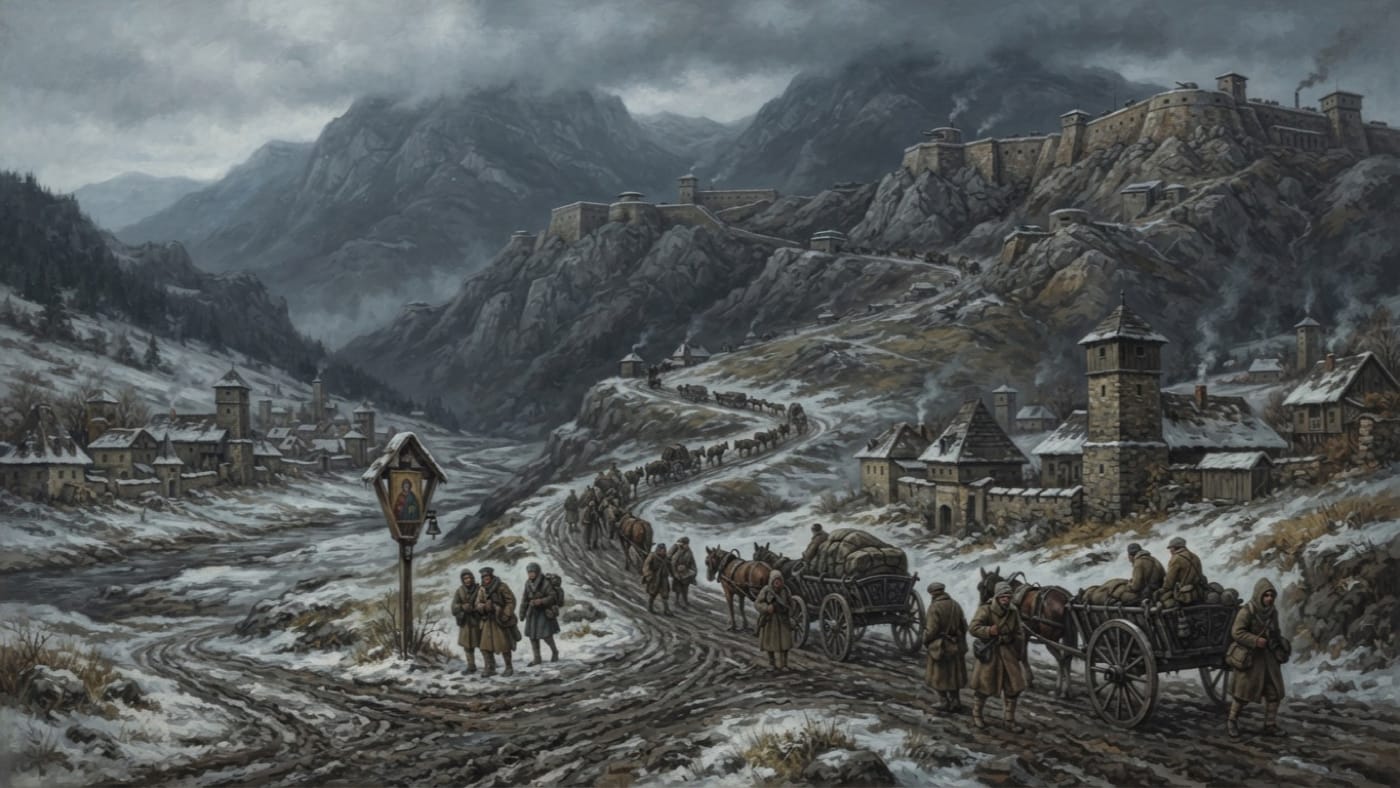
Carpathian Foothills
Below the wall, the country that feeds it
The country below the Carpathian wall feeds its bastions and hears its borders in the parish bells. Brother Albrecht froze here after his posting. The Ledger knows the region's name and cannot draw its edge.
Codex Ref. II.3.05-488
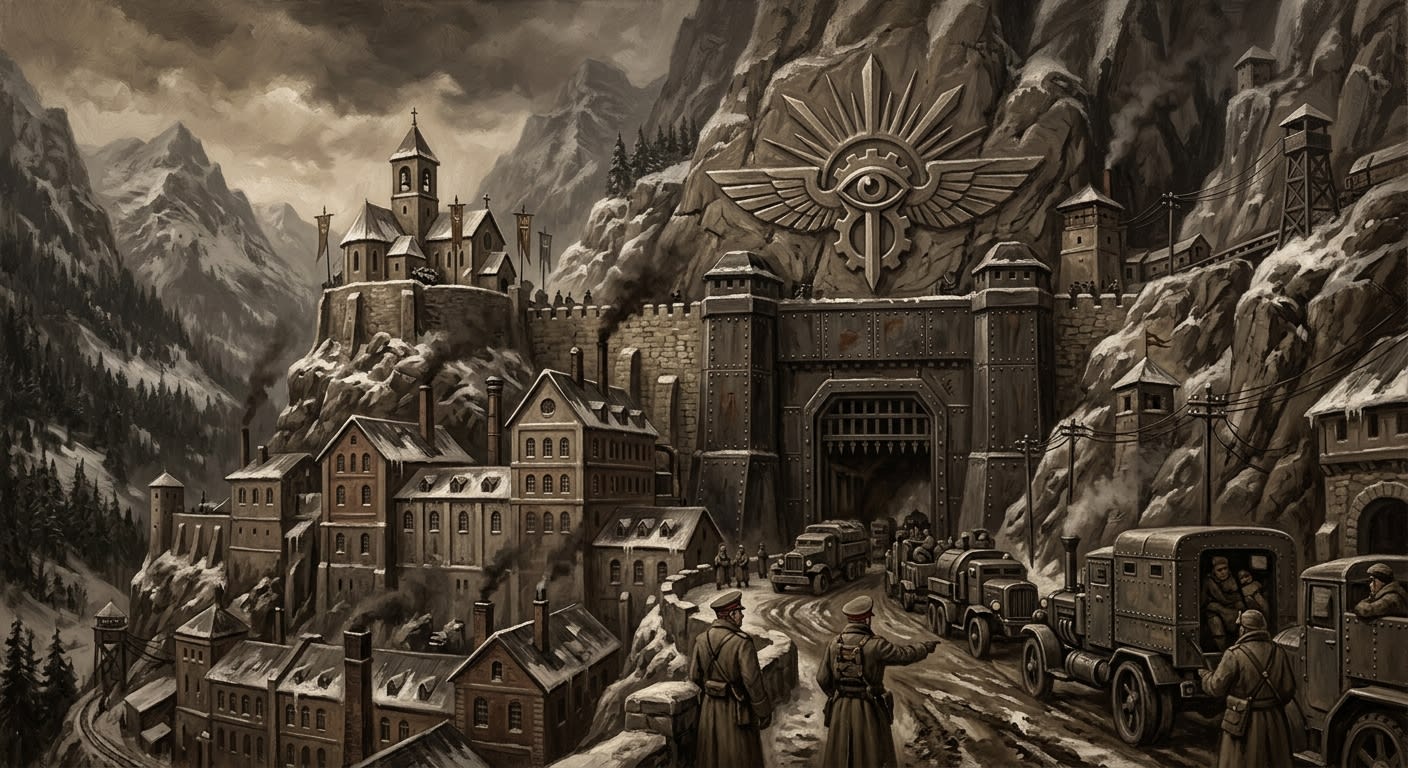
Carpathian Gates
Where the mountain learned to close its teeth
Mountain hinge of the middle Line: passes, locks, shrines, snow-voices, and Harrowglass terror between Bastion-Przemyśl and the Carpathian spine.
Codex Ref. II.4.08-065
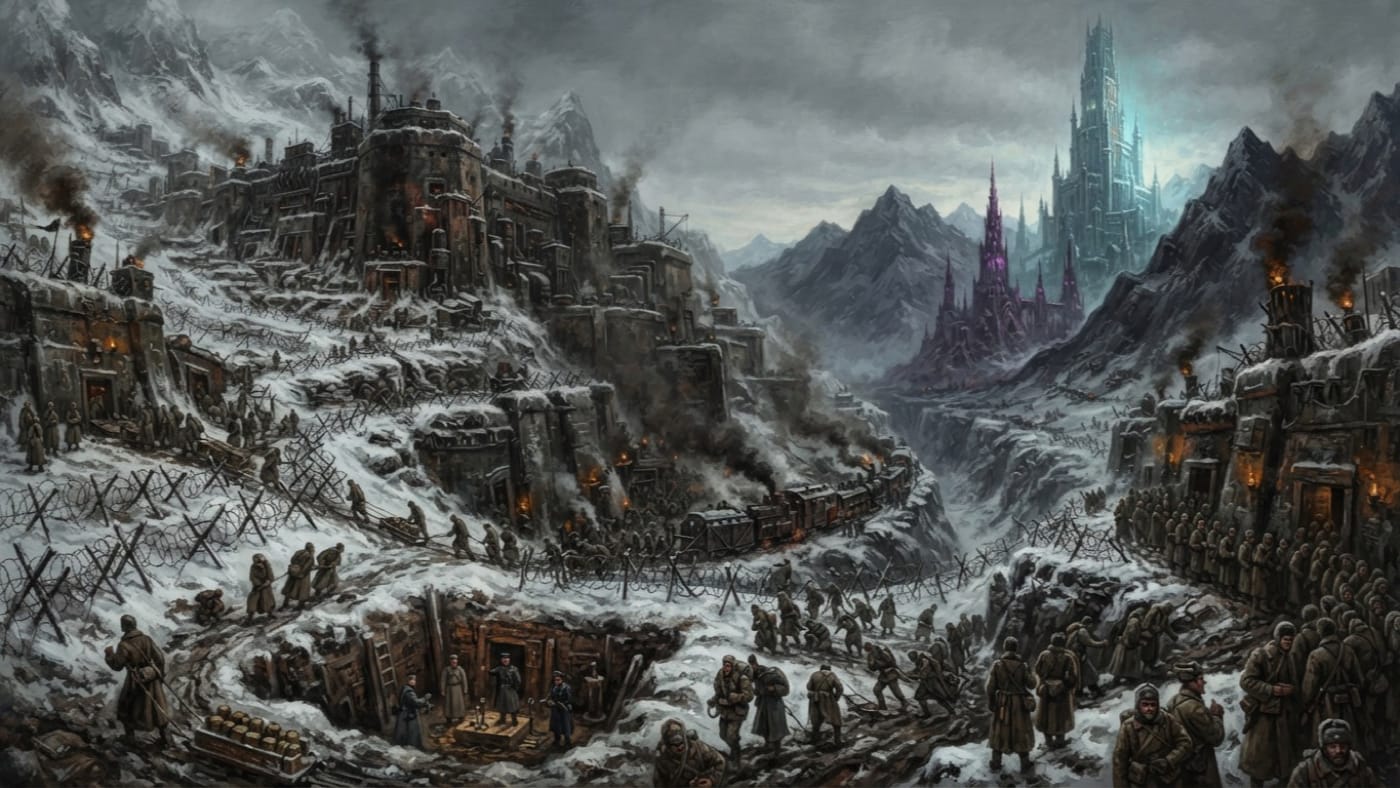
Carpathian Theater
Mud with a Filing System
The Przemyśl sector of the Carpathians: frozen passes, ration tags, and low bells against Atheron's Pride. War calls it a theater. Its boundaries remain unsigned, and the men holding them still require a stamp for bread.
Codex Ref. II.4.07-202
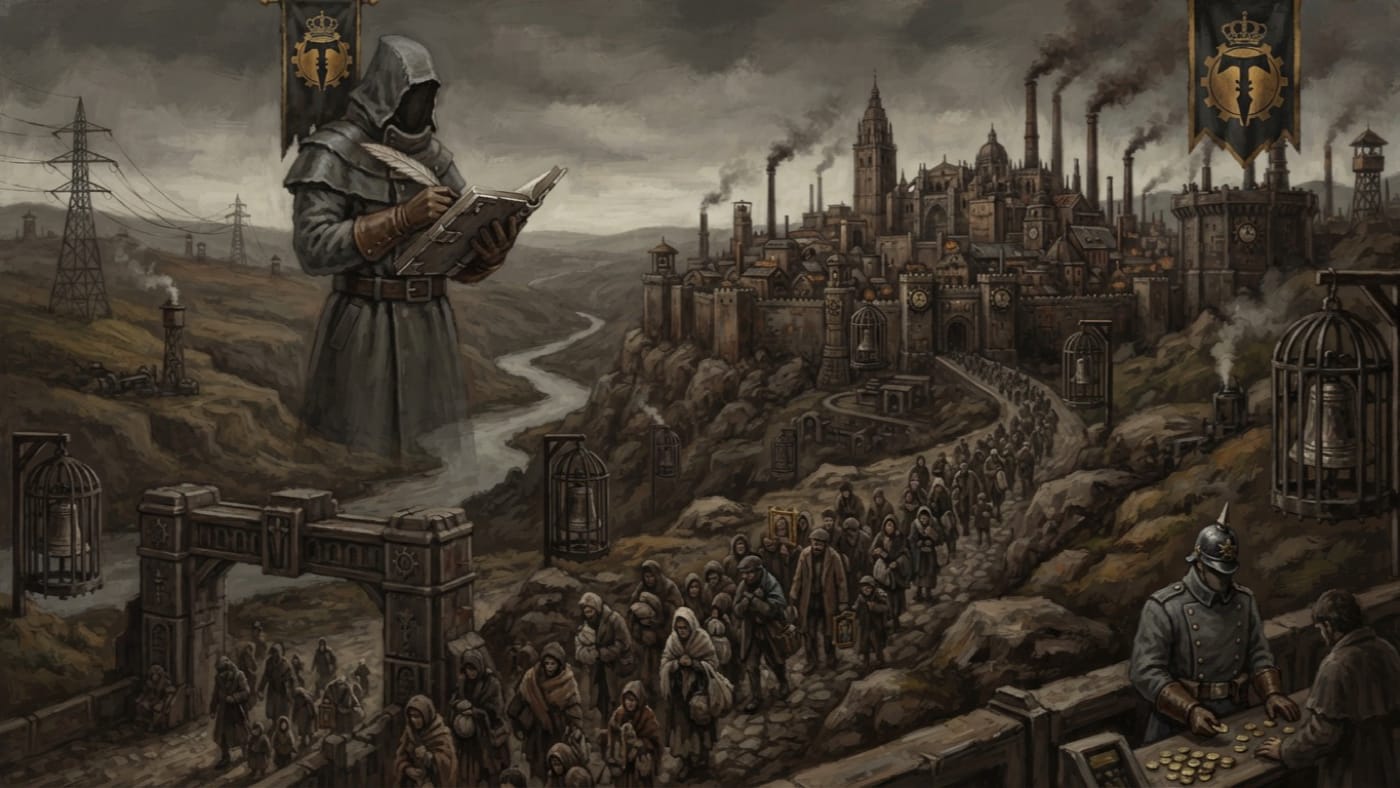
Castile
The province whose bells are better counted than its people
Castile pays under Iberia's seal and rings on Strasbourg's authority. Its refugees reached Toledo in A.S. 15; the Bureau preserved the martyr and omitted their names.
Codex Ref. II.1.04-201
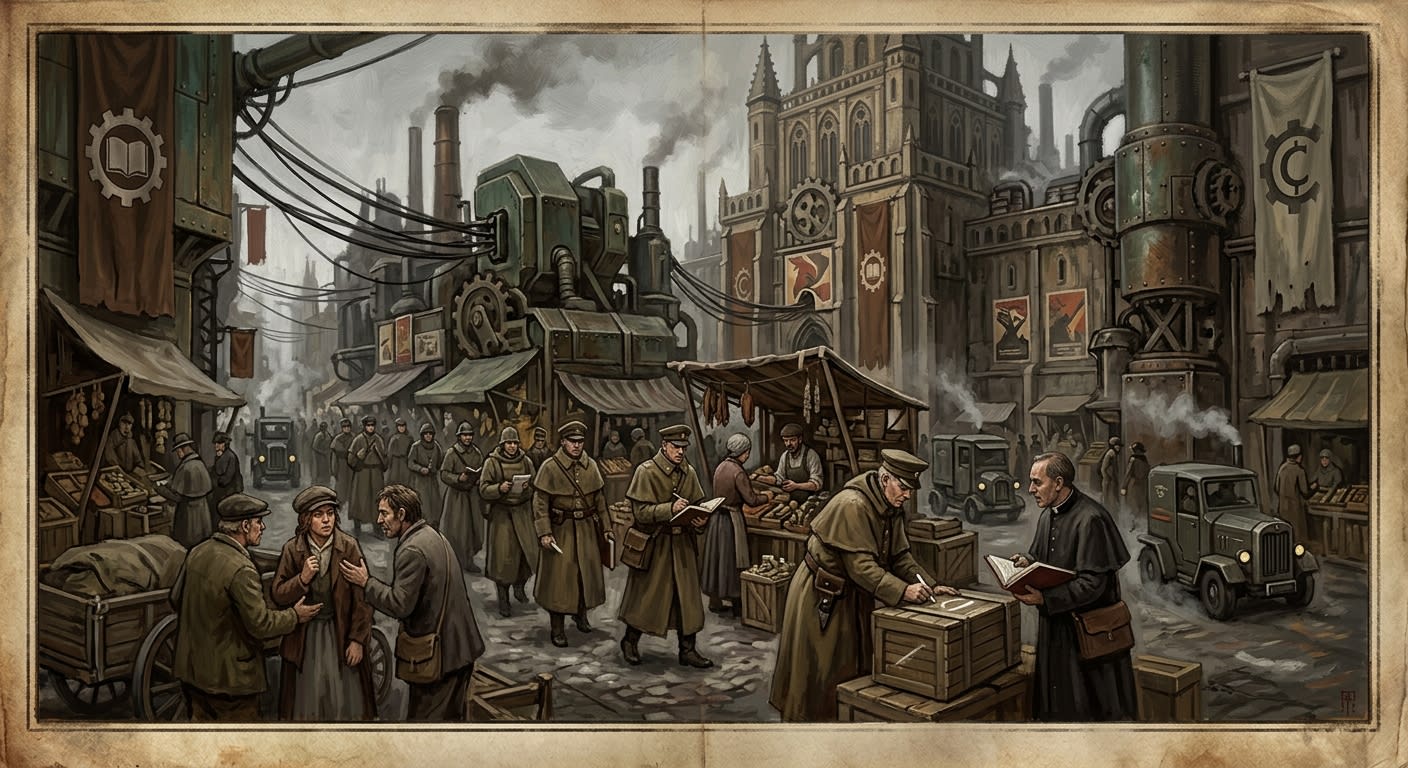
Catechism Third Revision
The street became a chapel with worse acoustics
A.S. 104 clarification that dragged obedience from chapel into market, making mouths, chalk, trade, and hesitation useful to Doctrine.
Codex Ref. XIII.1.04-104
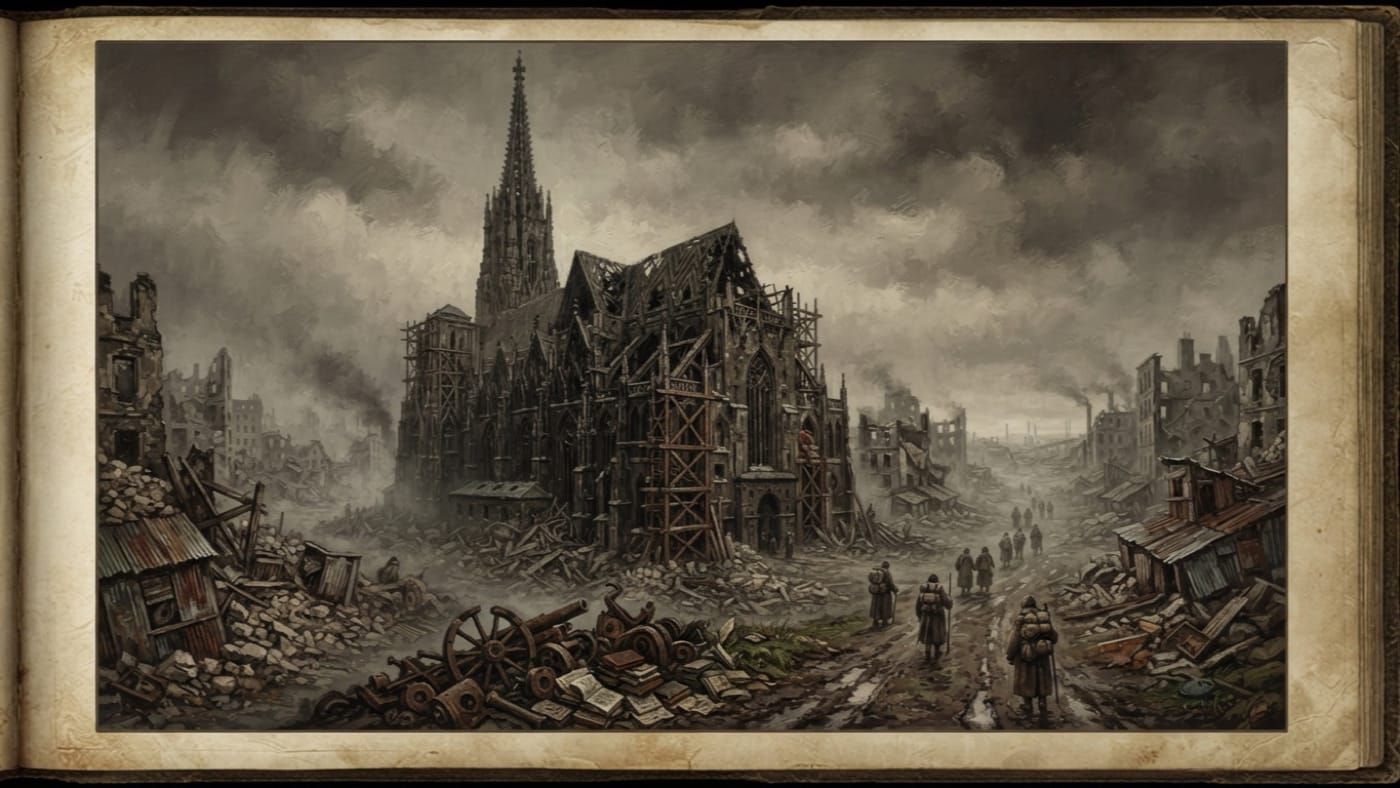
Cathedral of Saint Stephen
A Dead See, a Condemned Academy, and Stones That Stayed
Vienna's former cathedral housed the Rationalist Academy by A.S. 30 and was reclaimed with the city in A.S. 95. The See is dissolved, the Academy condemned, and the Ledger records no successor occupant.
Codex Ref. II.4.09-201
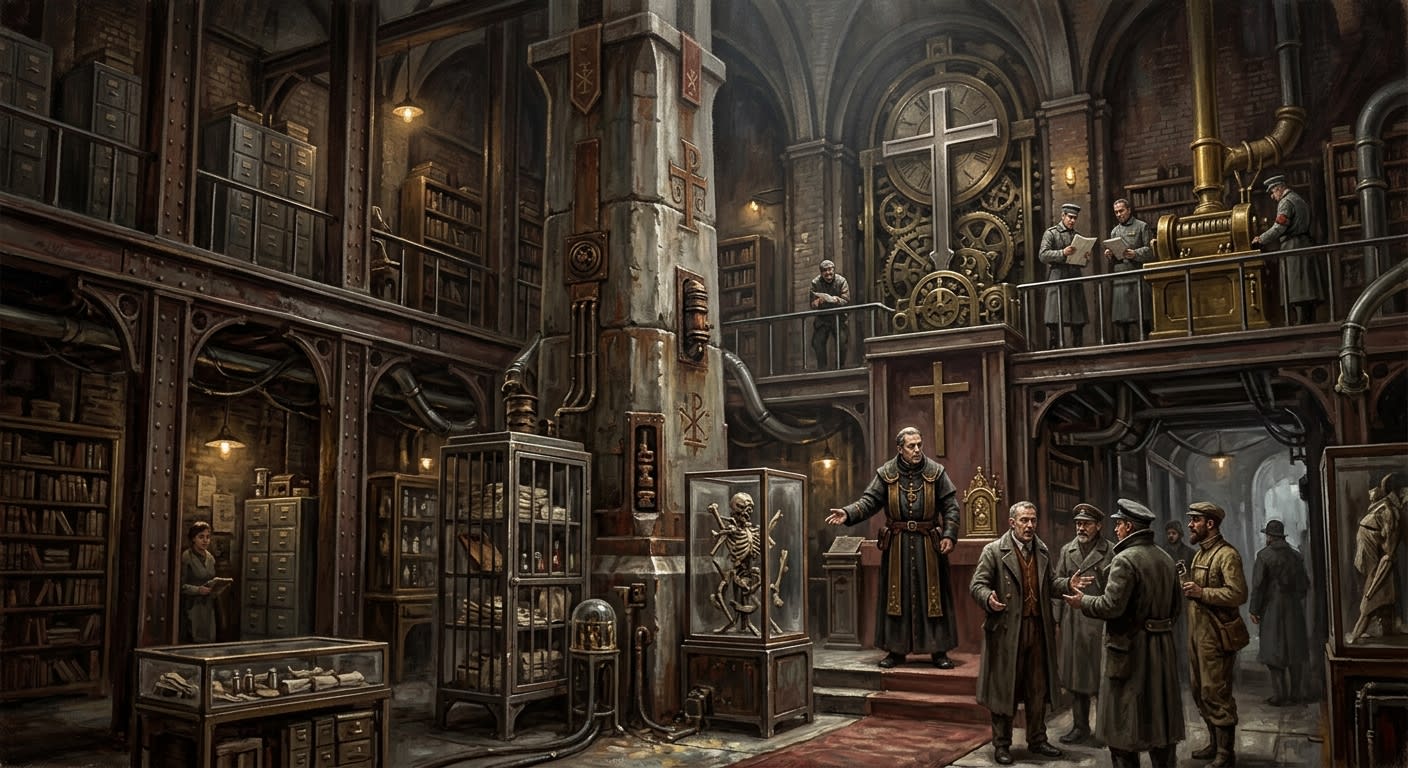
Cathedral of the Holy Column
The church that made obedience stand upright
Cologne's vertical archive: conciliar nave, Holy Column, relic galleries, Odo's sentence, and seventeen femurs arguing successfully with anatomy.
Codex Ref. II.2.01-005
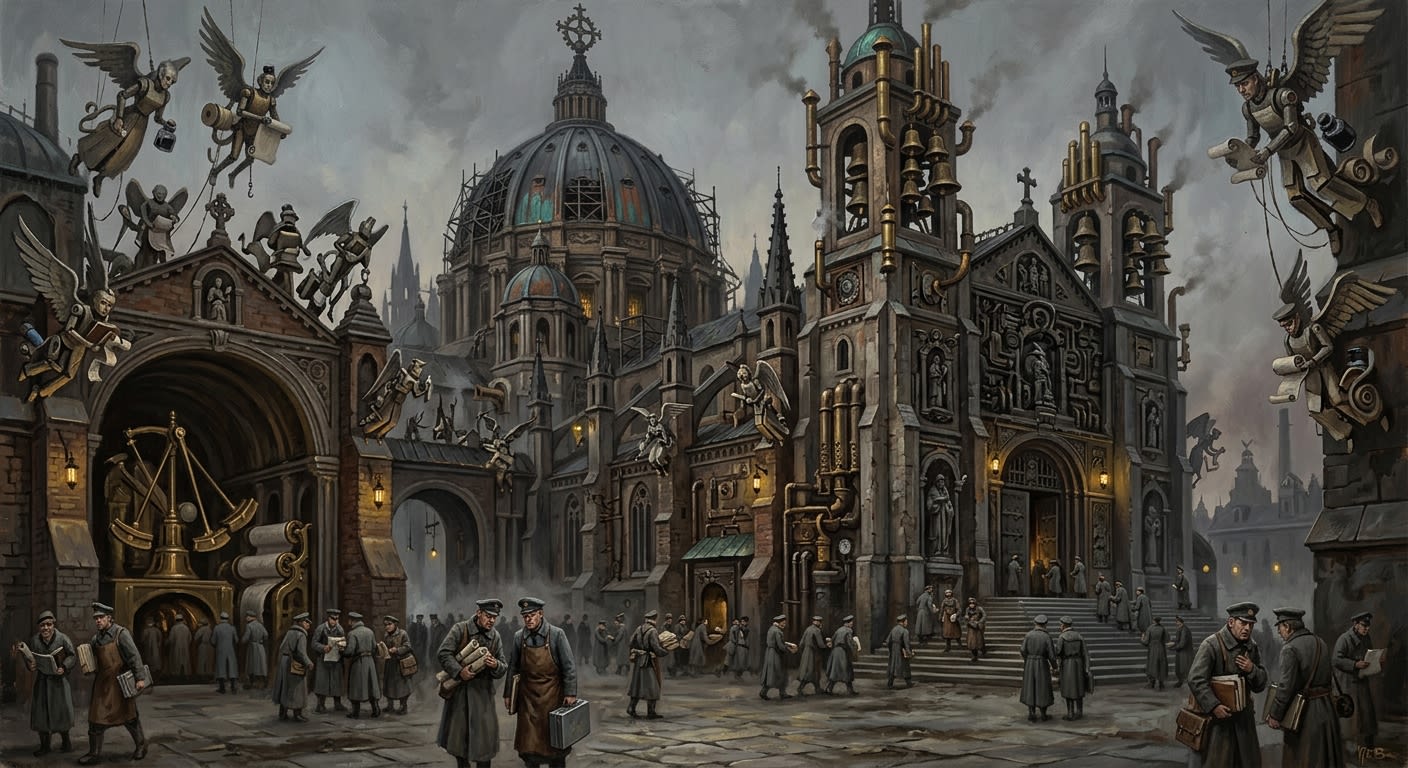
Cathedral of the Perpetual Registry
The dome that learned to stamp
Bastion-Constantinople's old Hagia Sophia turned ratification cathedral: dome, Registry Chapel, bell-choirs, seismograph vault, and all the paper angels of the southern war.
Codex Ref. II.4.10-008
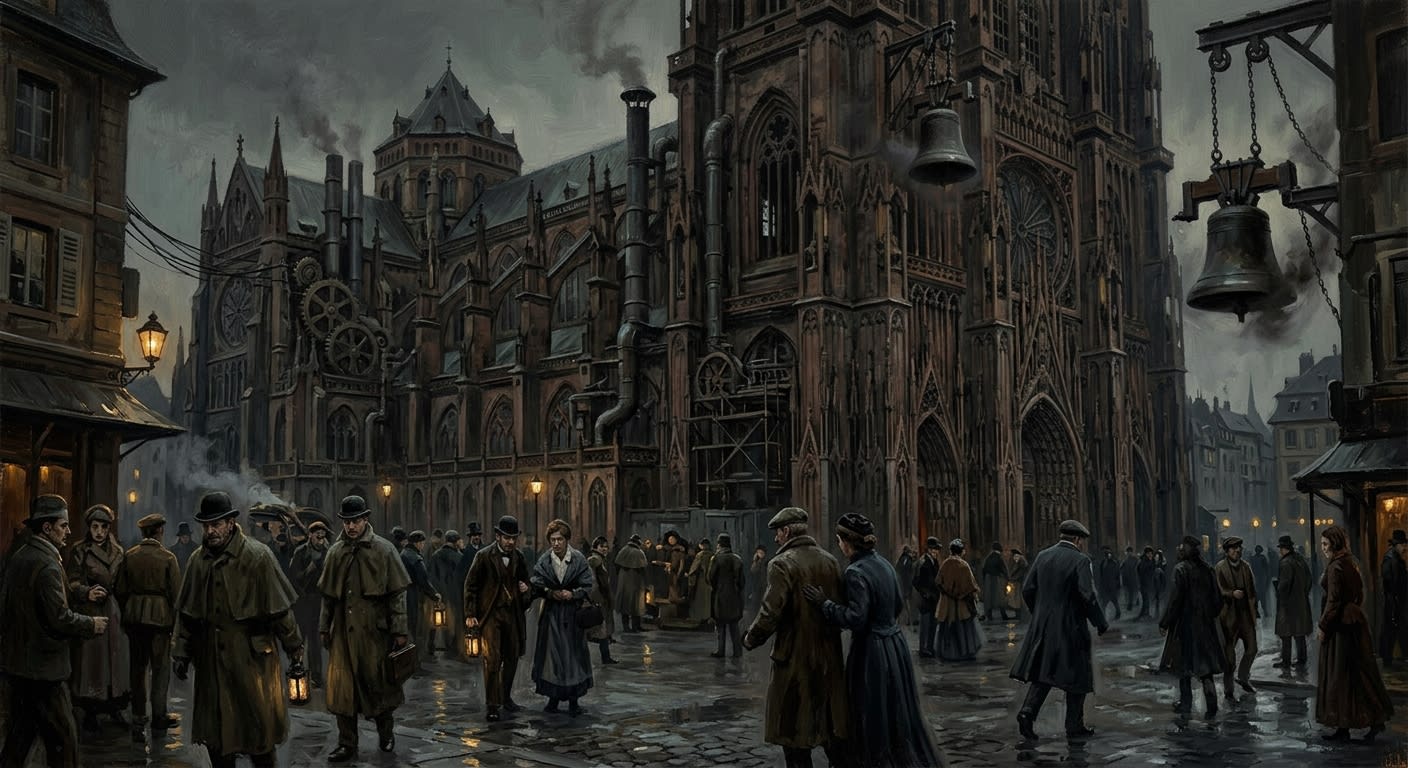
Cathedral of the Perpetual Writ
Where lawful bells learned to drown mourners politely
Strasbourg's lesser cathedral authenticates copies, stores route tables, and remembers the night two lawful bells divided eight hundred mourners into nineteen deaths.
Codex Ref. II.1.04-005
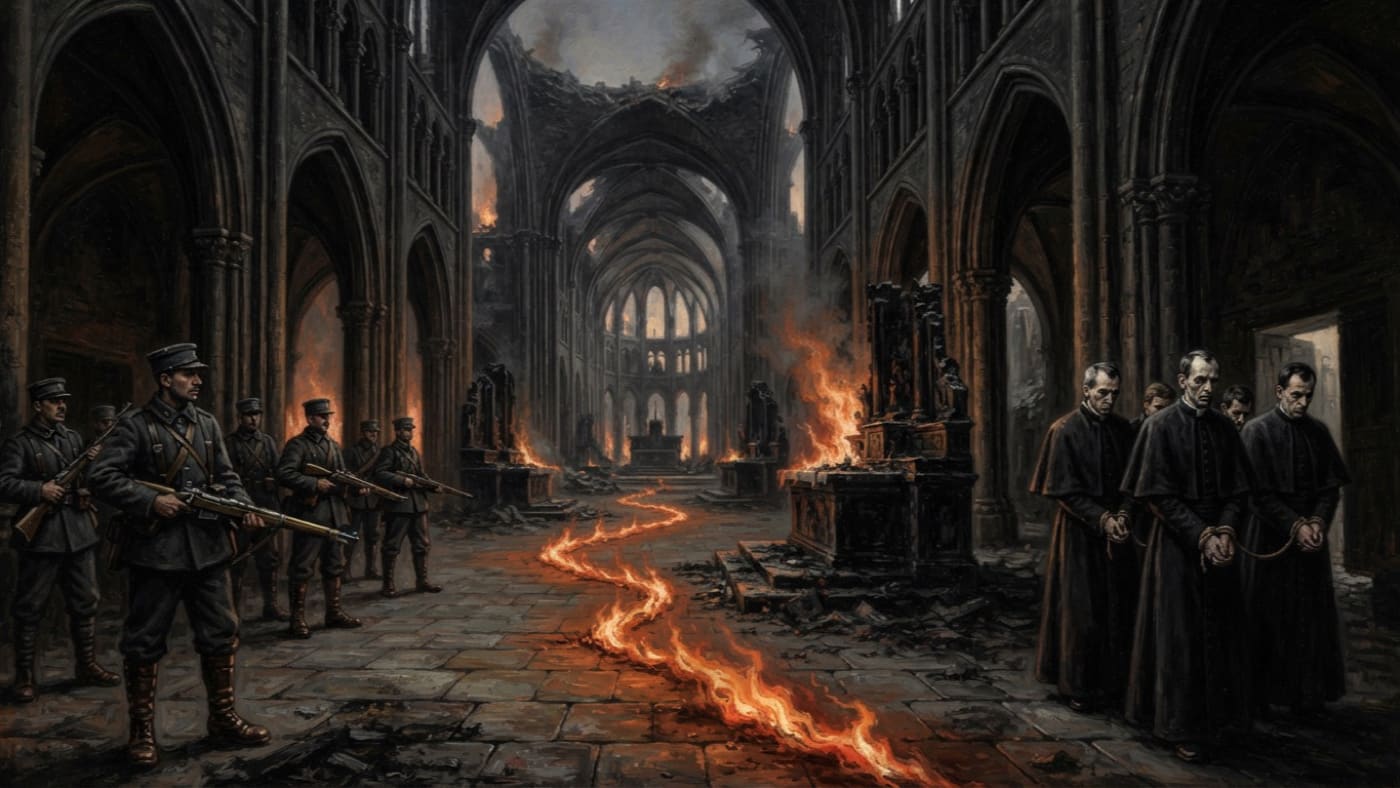
Cauterization of Rouen
The burning was arranged; the fire remains under theological review
The Rationalists gutted Rouen's cathedral in A.S. 24. Witnesses swore the fire paused before each altar. Three captured priests later died at Regensburg. The Bureau disputes the flame's agency; responsibility requires no debate.
Codex Ref. VII.2.01-004
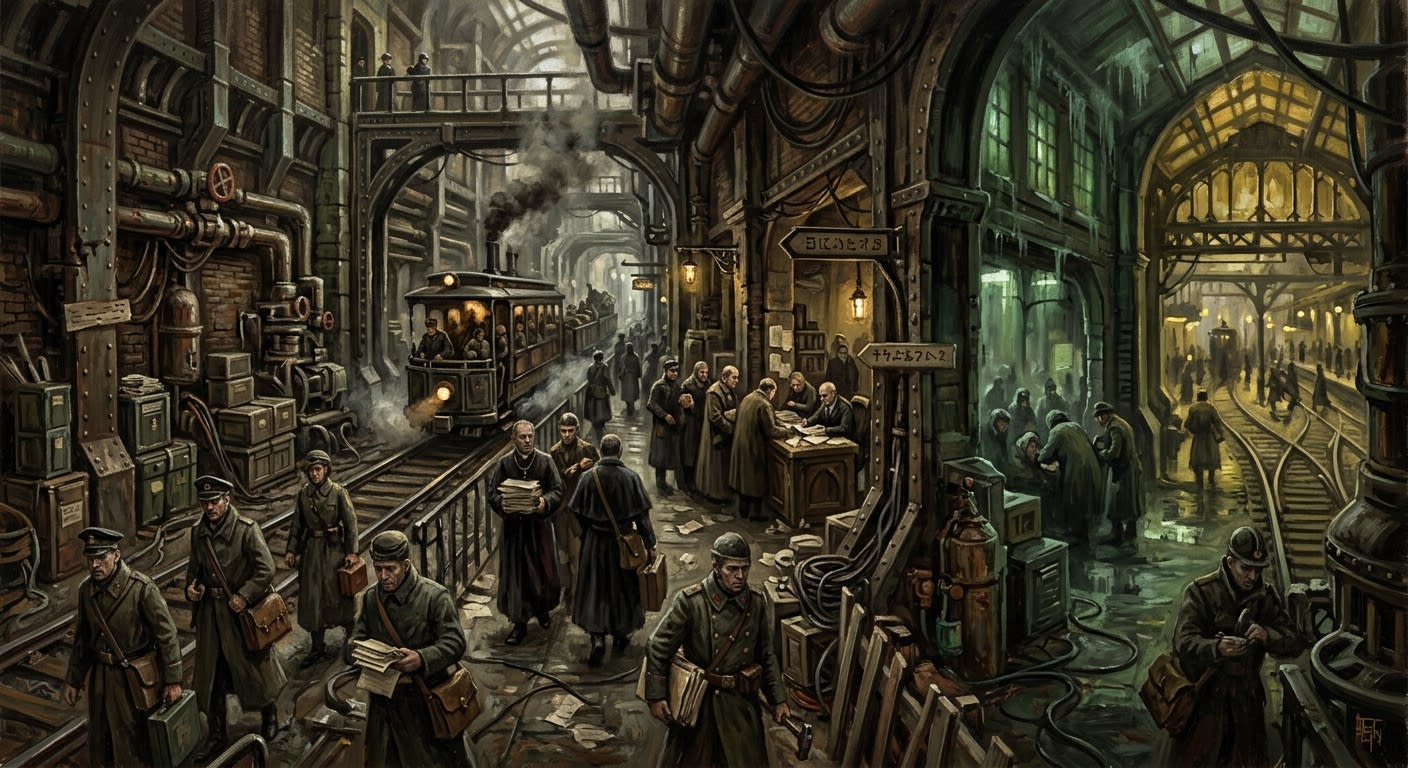
Central Corridor
Motion blurs the screams, which is why the Ledger loves trains
The Central Corridor is the Synod's middle artery: Munich's packed motion, Vienna's holy delay, Bratislava's damp throat, and Budapest's yellow pins.
Codex Ref. II.4.09-201
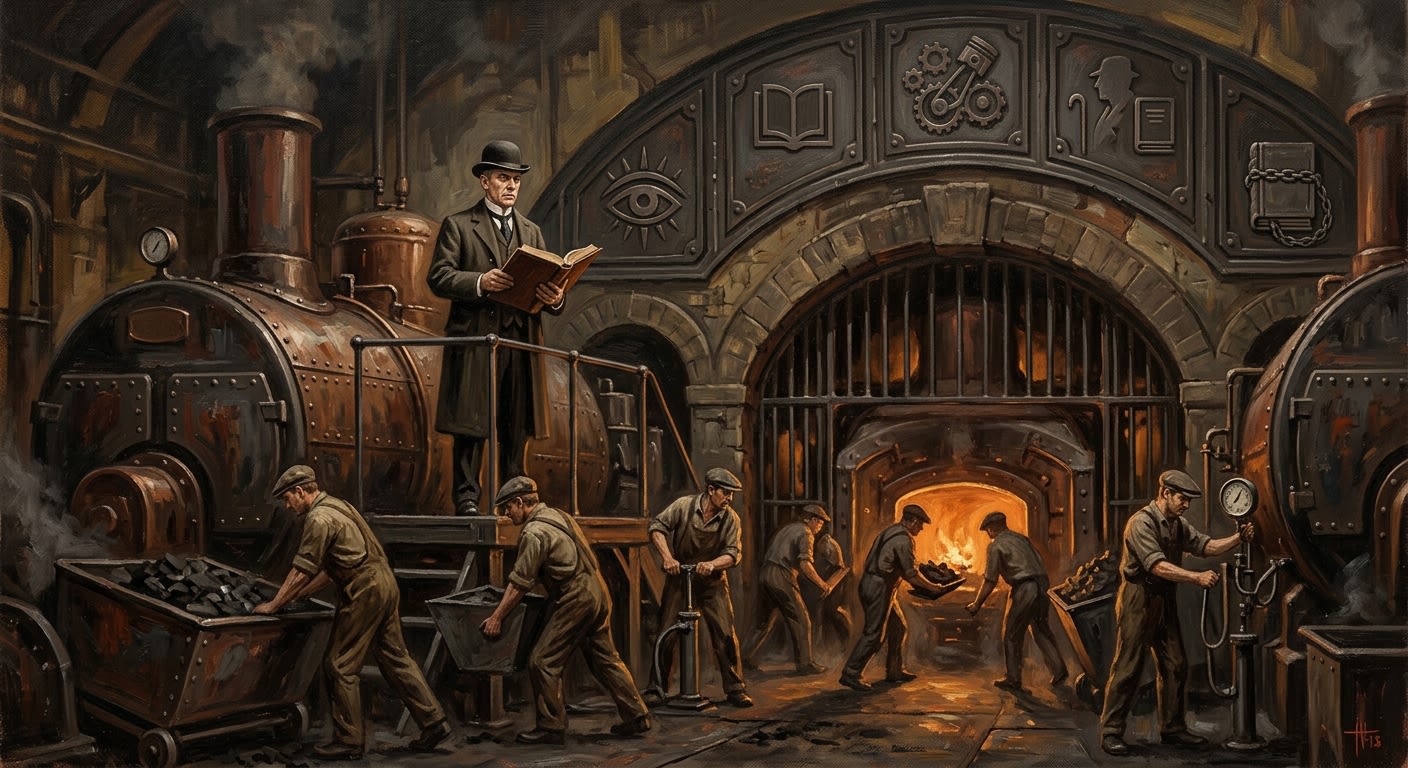
Chain of Cause
Fire may burn, provided it cites its superiors
Furnace Catechist recitation that subordinates fuel, spark, pressure, and output to Heaven, Doctrine, Engines, foremen, and the Ledger's jealous grammar.
Codex Ref. XIII.1.91-134
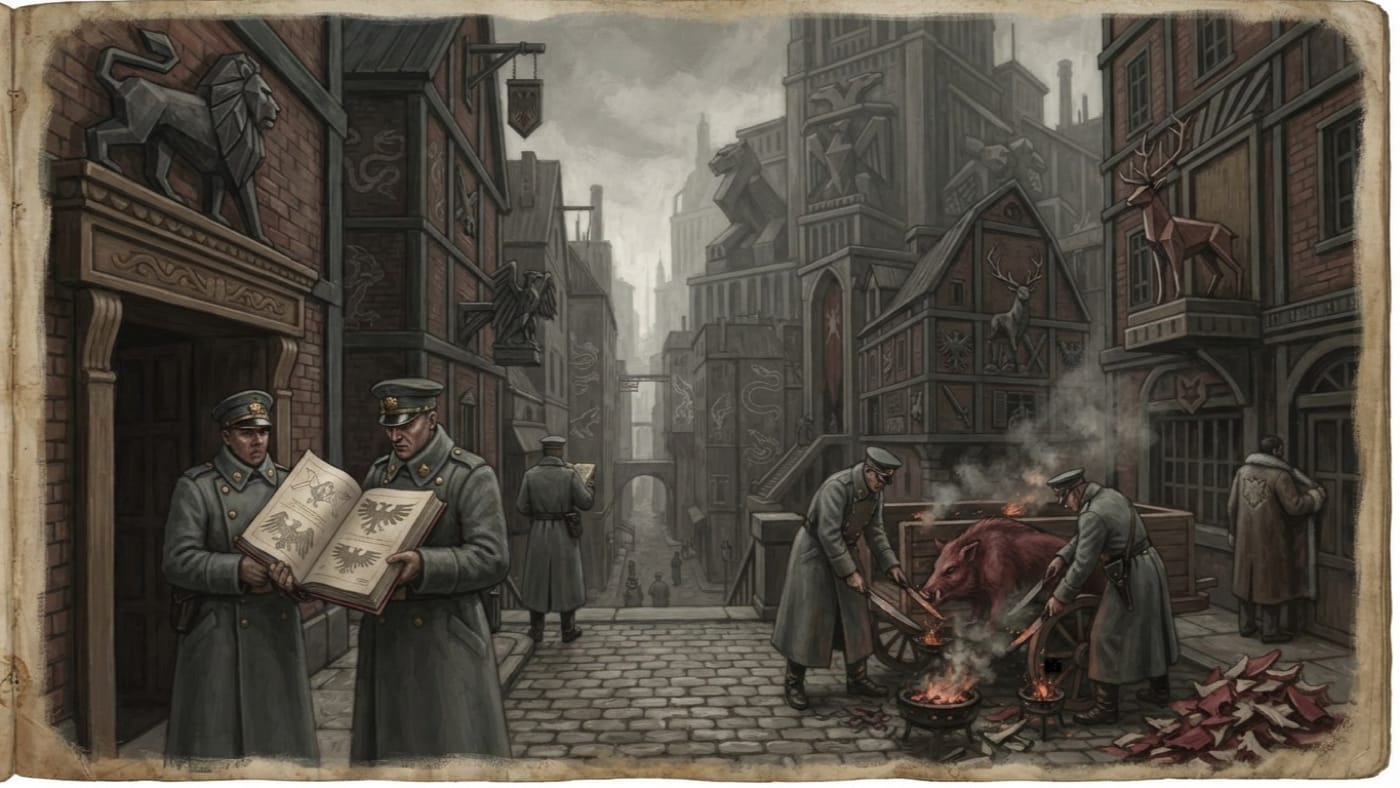
Chancellery of Permitted Animals
The family borrows its beast on terms
Heraldry's Chancellery decides which beasts may appear on lawful crests. Lions, eagles and stags survive as geometry; wolves and serpents are erased. The bear remains under review.
Codex Ref. VIII.1.03-005
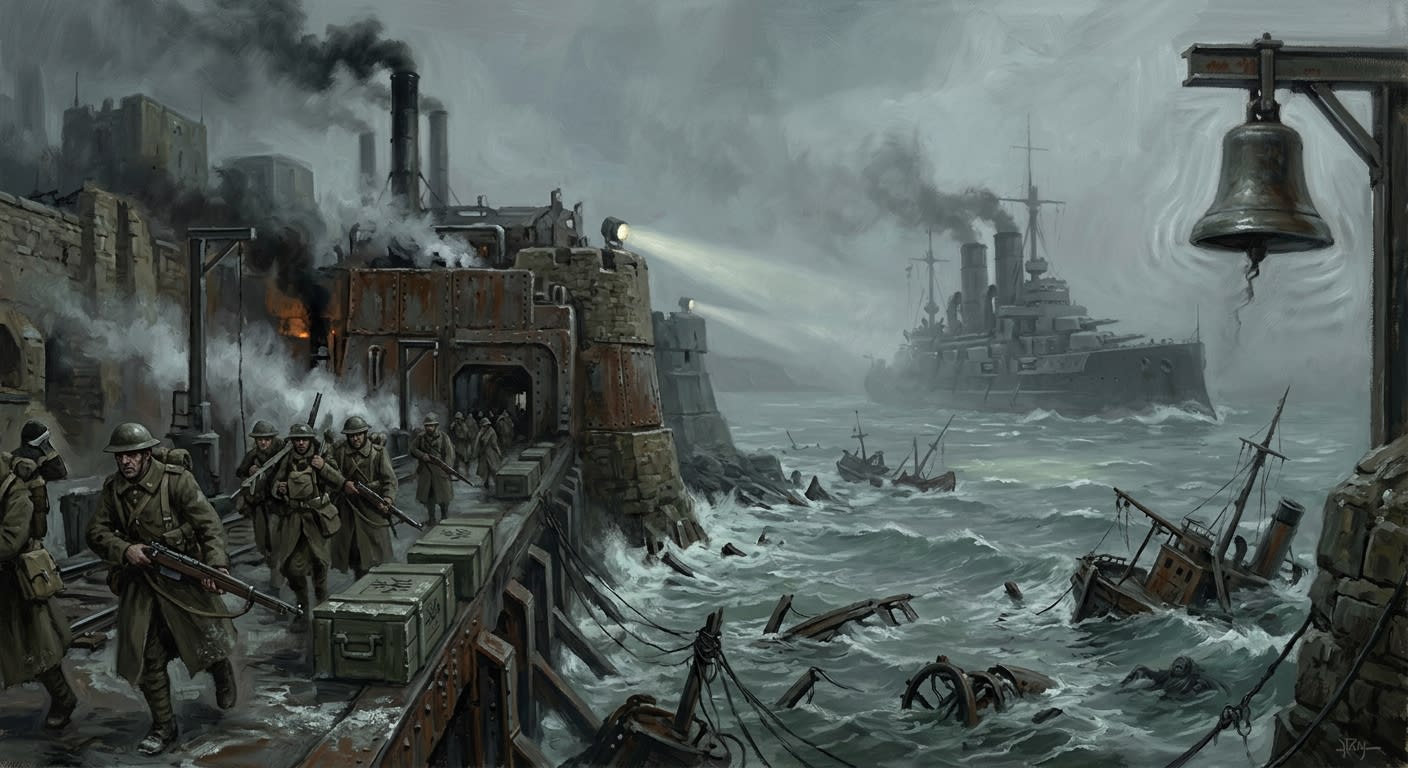
Channel
The water between two prides, and wiser than both
The Channel is the Synod's western salt wound: Calais to Dover, bells to fog, British pride to Synod arithmetic, and drowned things below.
Codex Ref. II.1.04-201
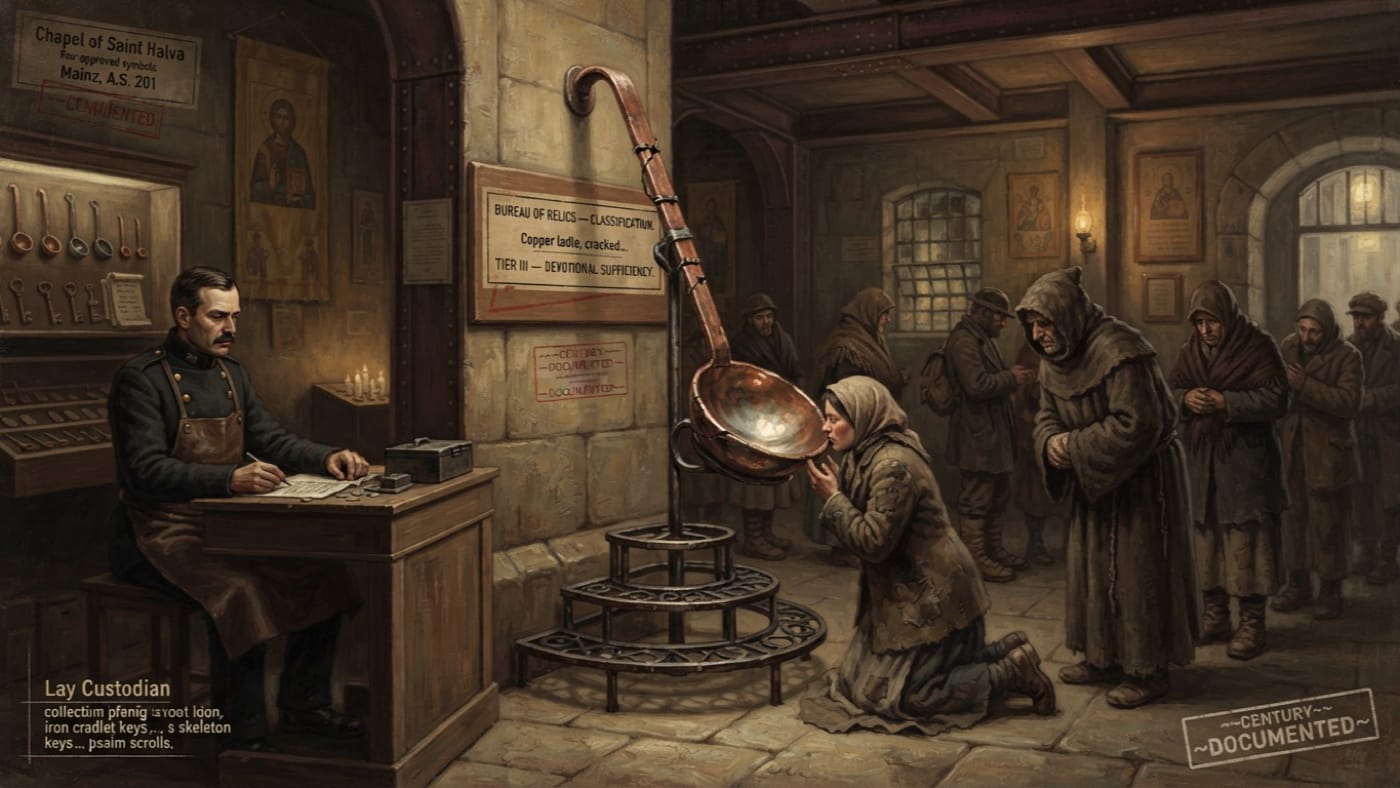
Chapel of Saint Halva
The pilgrim kisses; the Bureau collects
An A.S. 201 custody survey of the Mainz chapel holding Saint Halva's attributed copper ladle. The Bureau certifies devotional sufficiency; I dispute the provenance. A kiss still costs three pfennig.
Codex Ref. III.2.04-579
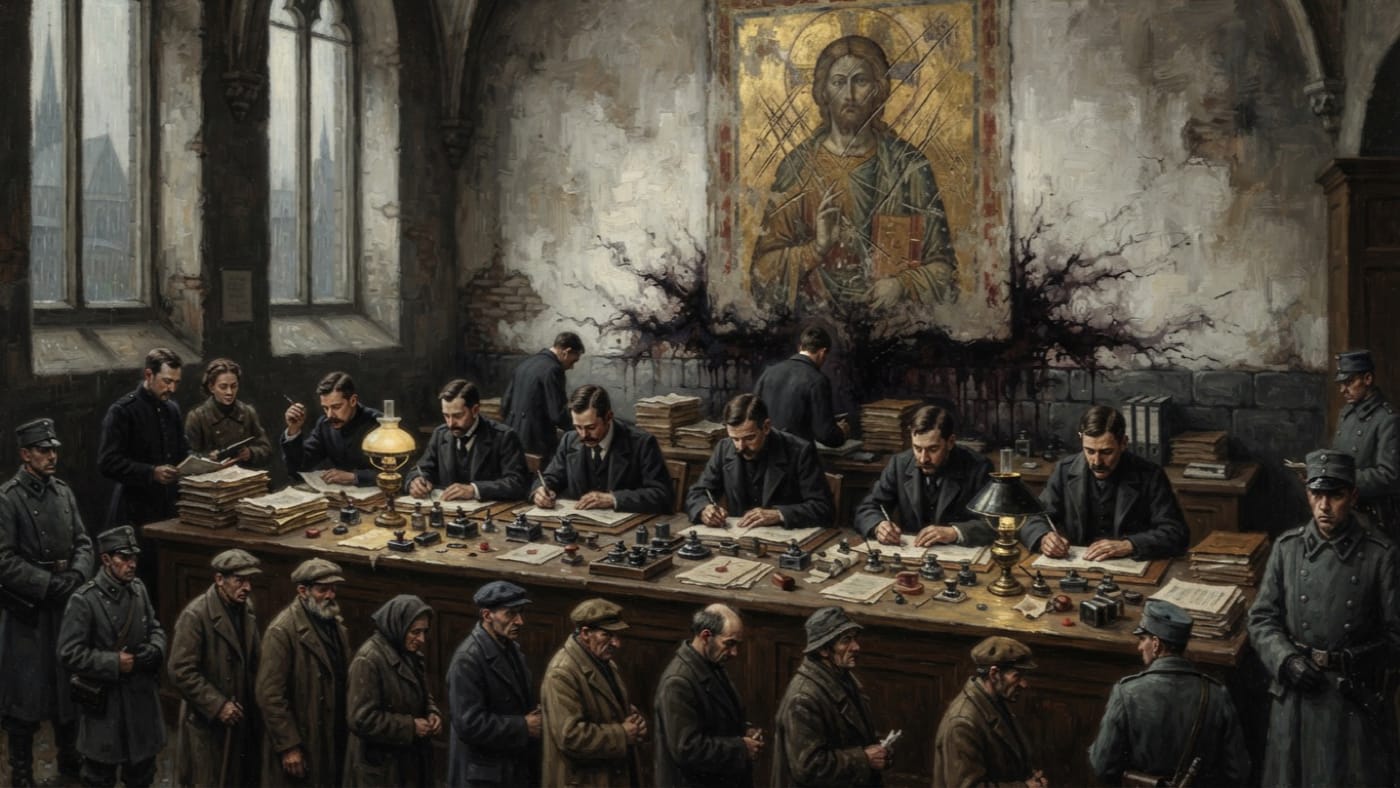
Chapel of the Crowned Seat
Where confiscation acquired a halo
Rationalist clerks signed away Aachen's property beneath a scratched halo. The Chapel of the Crowned Seat's wall darkens every Saint Bartholomew; administration leaves a stain.
Codex Ref. II.2.02-002
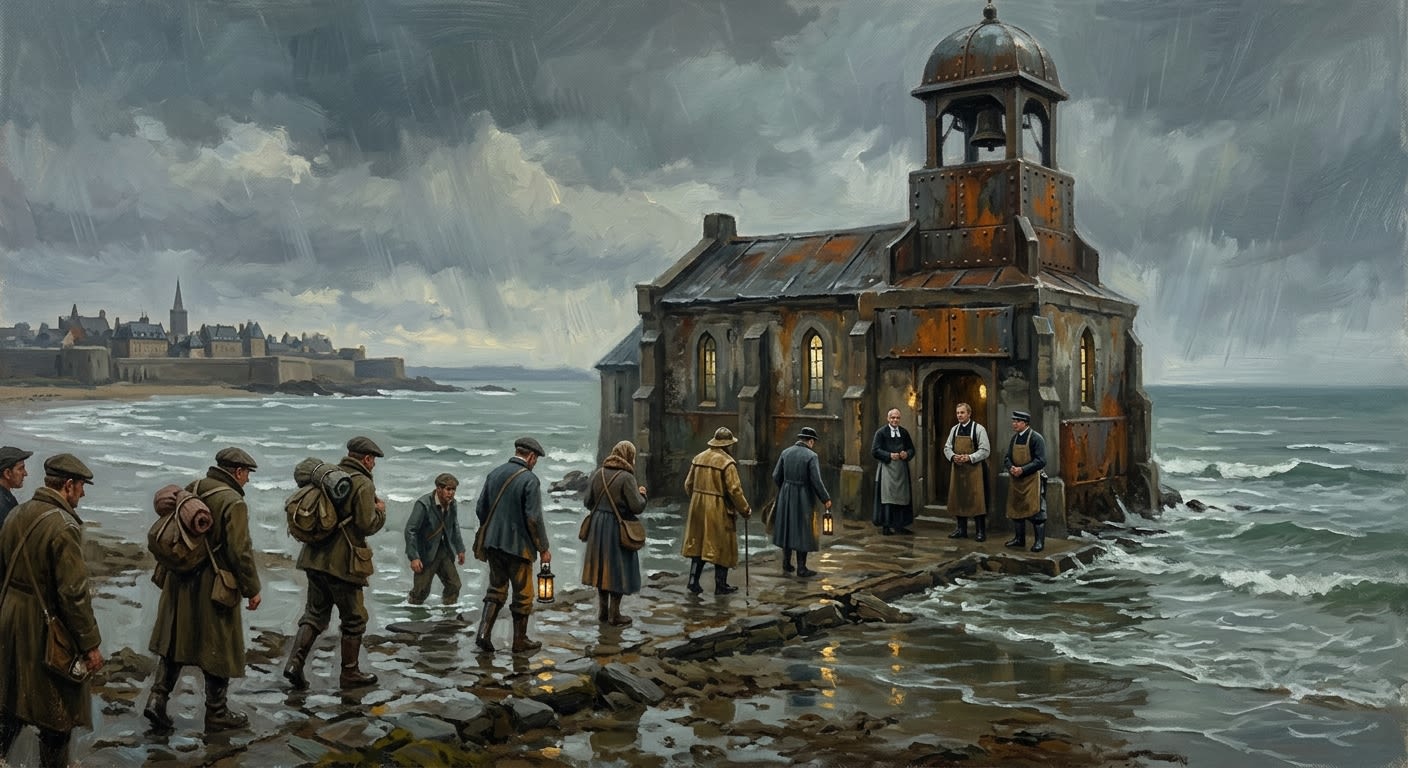
Chapel of the Tide
The shrine built from a journey denied
The Chapel of the Tide is Saint Clement's wet little shrine beyond Saint-Malo, made holy by forty-three pilgrims who were denied arrival and made profitable by everyone after.
Codex Ref. II.1.09-014
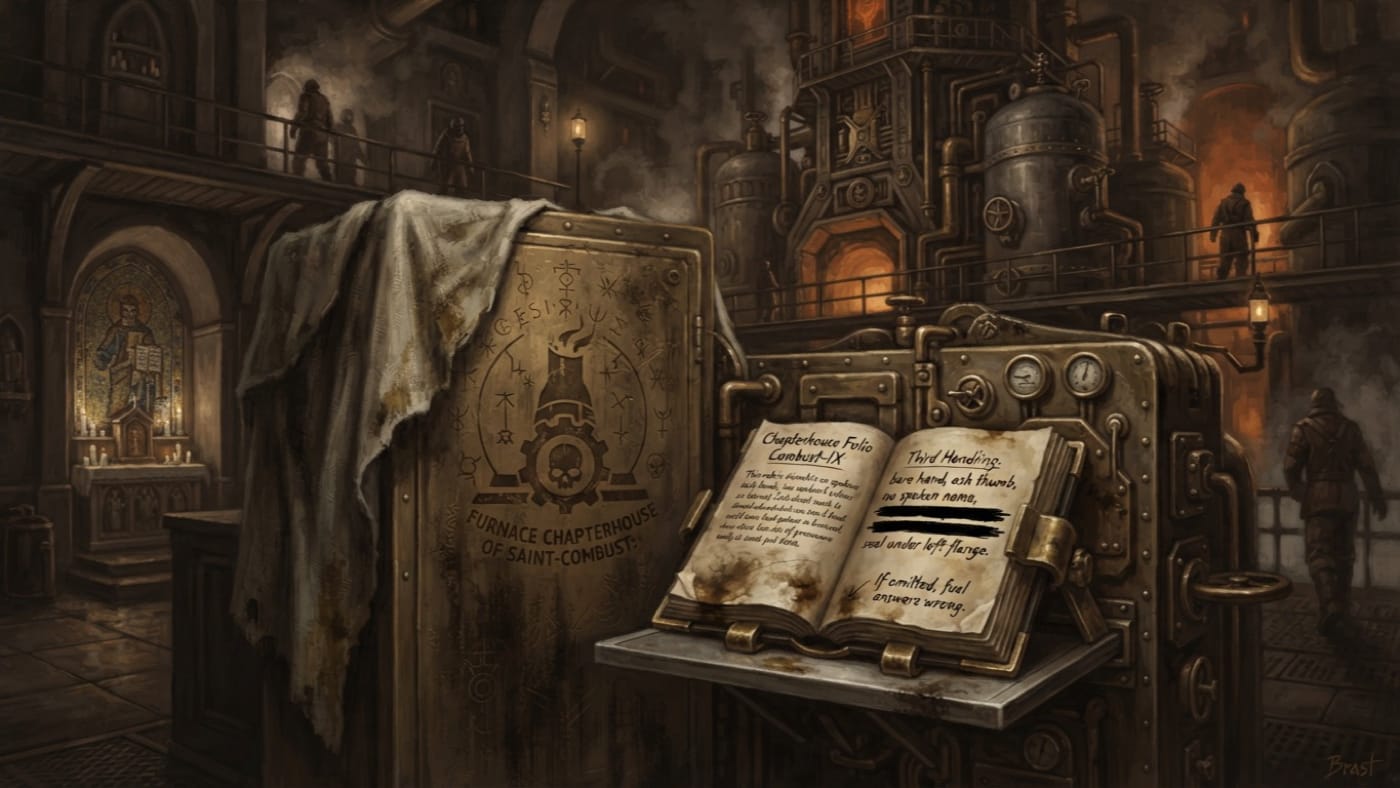
Chapterhouse Folio Combust-IX
Engineering keeps manuals. The Chapterhouse keeps the shelf.
Brast's Chapterhouse keeps the Third Handling of substrate behind a chapel door. Combust-IX records the rubric; a later hand warns that fuel can answer wrong.
Codex Ref. XIII.1.74-009
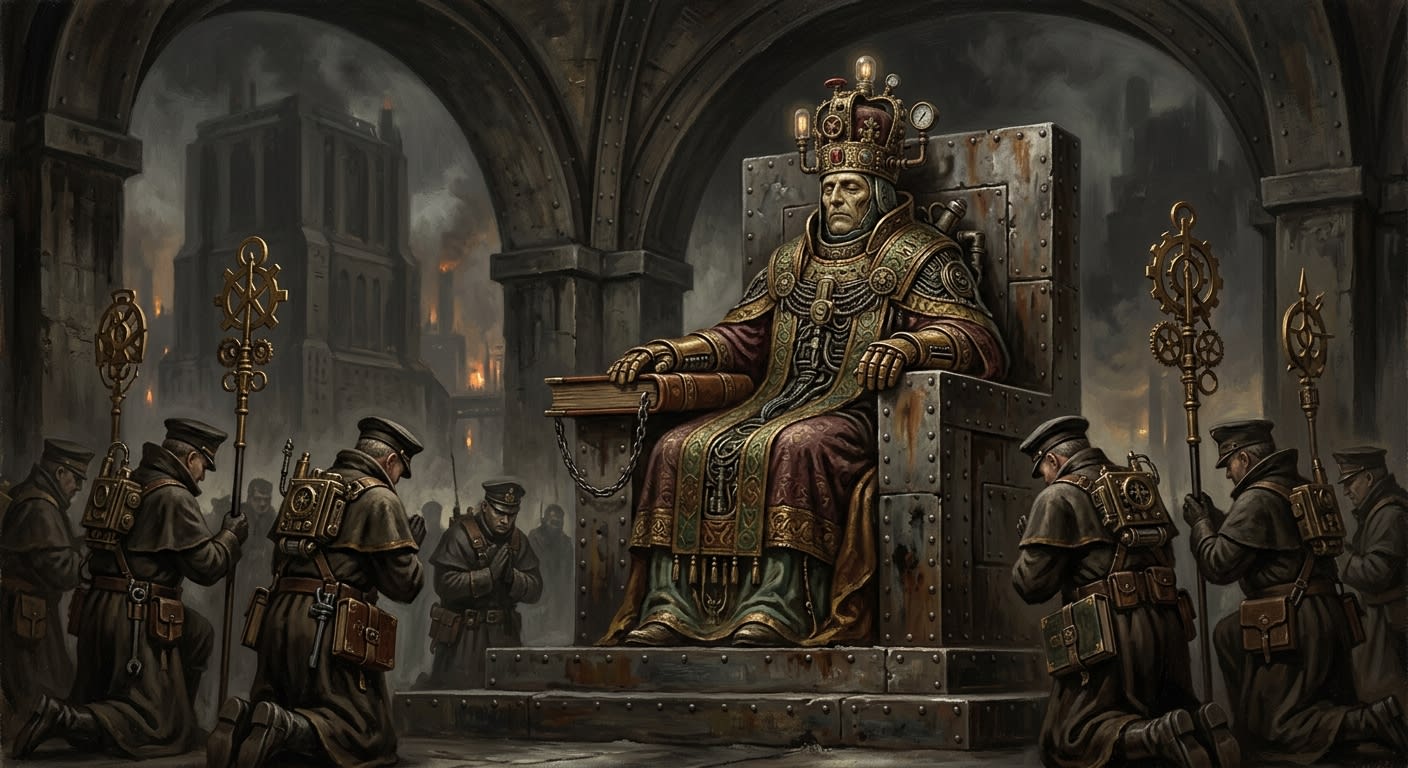
Charlemagne
The dead emperor conscripted as evidence after the gate was sold
Charlemagne is honoured as precursor, not rival: the dead emperor whose Aachen throne survived Guillaume, Verdane, and every provincial fantasy of a crown above the Ledger.
Codex Ref. III.2.01-000
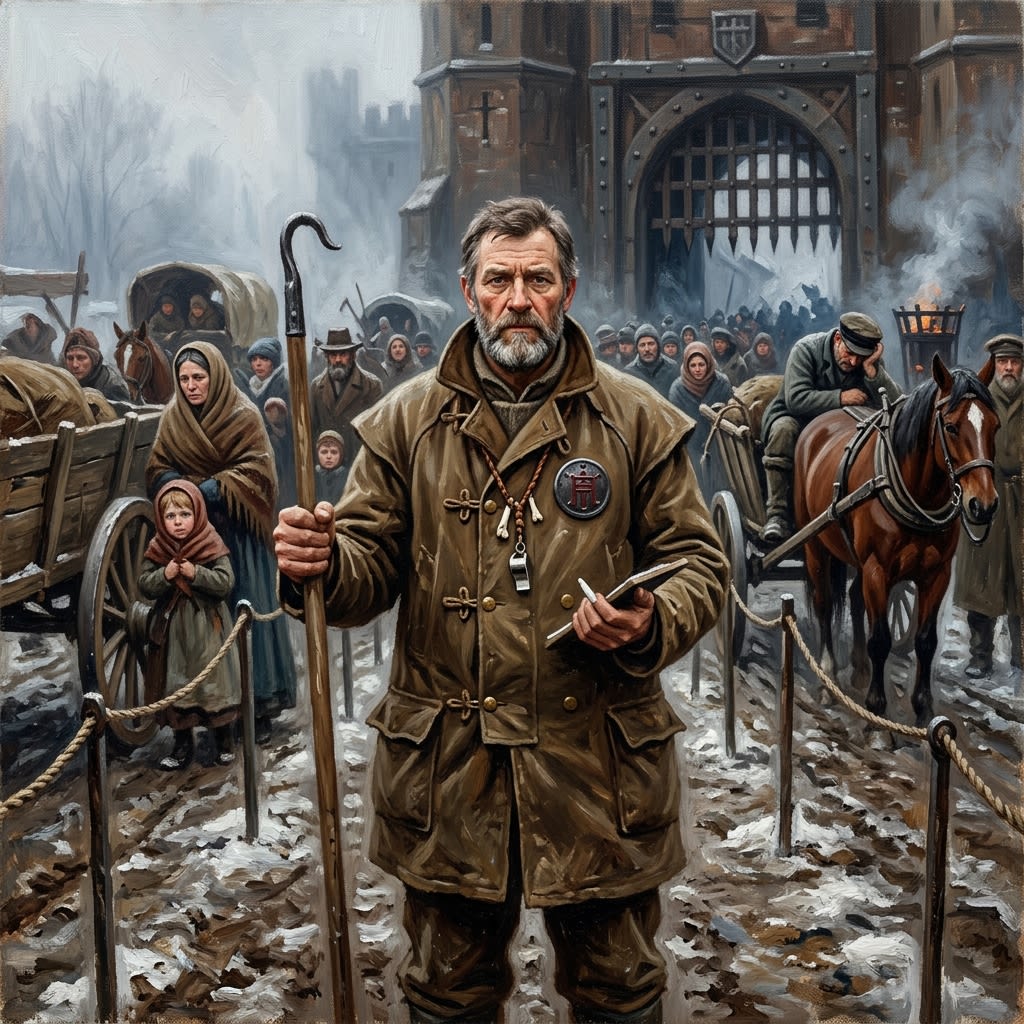
Checkpoint Queue-Marshal
The man who holds the rope holds the war
The Synod's most hated indispensable servant — 1,140 Queue-Marshals holding the ropes that hold the lanes that hold the war together, constituted A.S.
Codex Ref. XII.7.01-001
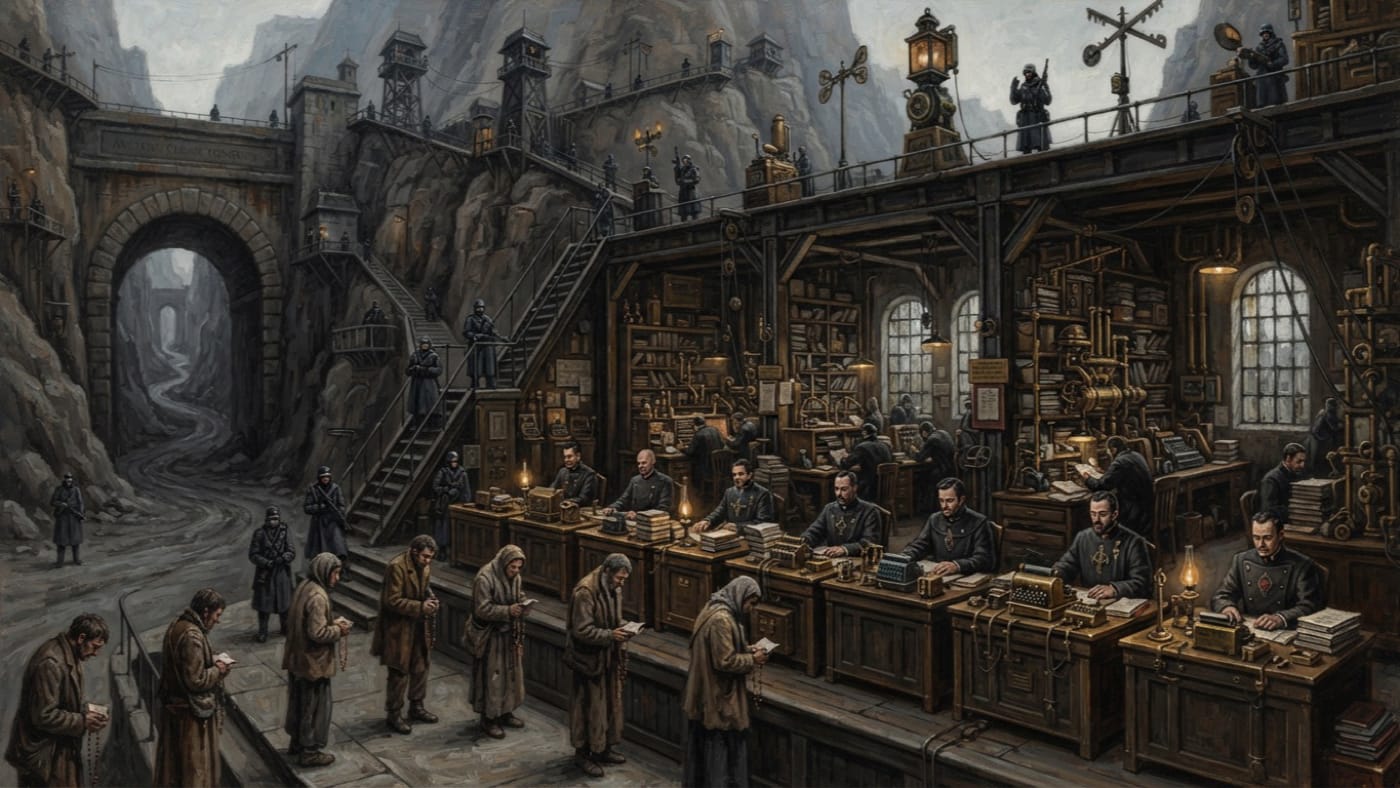
Choir-Broker Compact
Safety by the window, liability by the vowel
Peregrine Row's licensed insurers sell escort windows, bind protection to creed scores and fund the Quiet Pen Wardens. Seven council seats govern the trade; the pilgrim carries the risk.
Codex Ref. XII.32.02-201
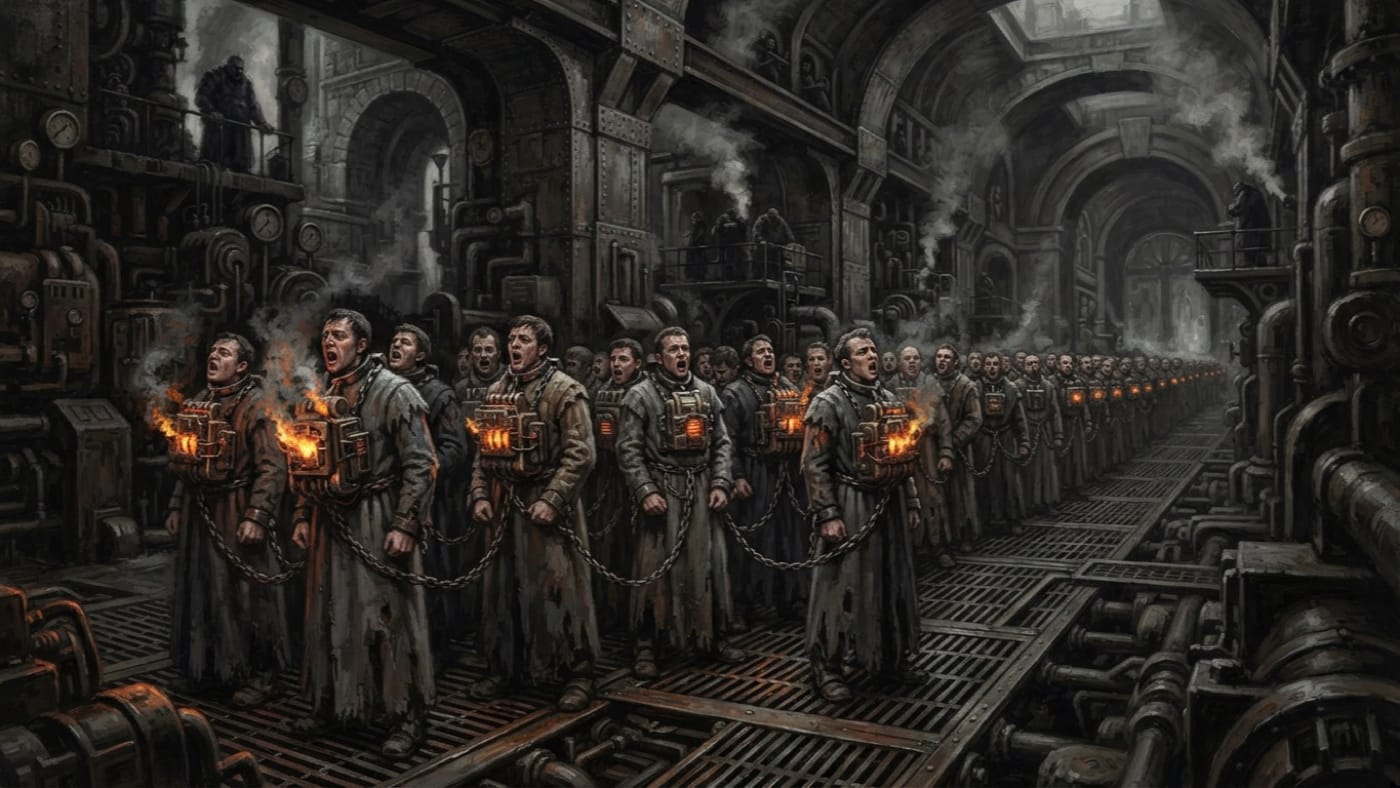
Chorus Absolvers
Elite. Bound. Sung until the relic burns.
The Chorus Absolvers are Orison's Elite choir in chains: chest-mounted vox-relics broadcast hymns that rattle teeth and rupture lungs until the relics burn. The Bureau calls the cost proportionate.
Codex Ref. VIII.5.12-613
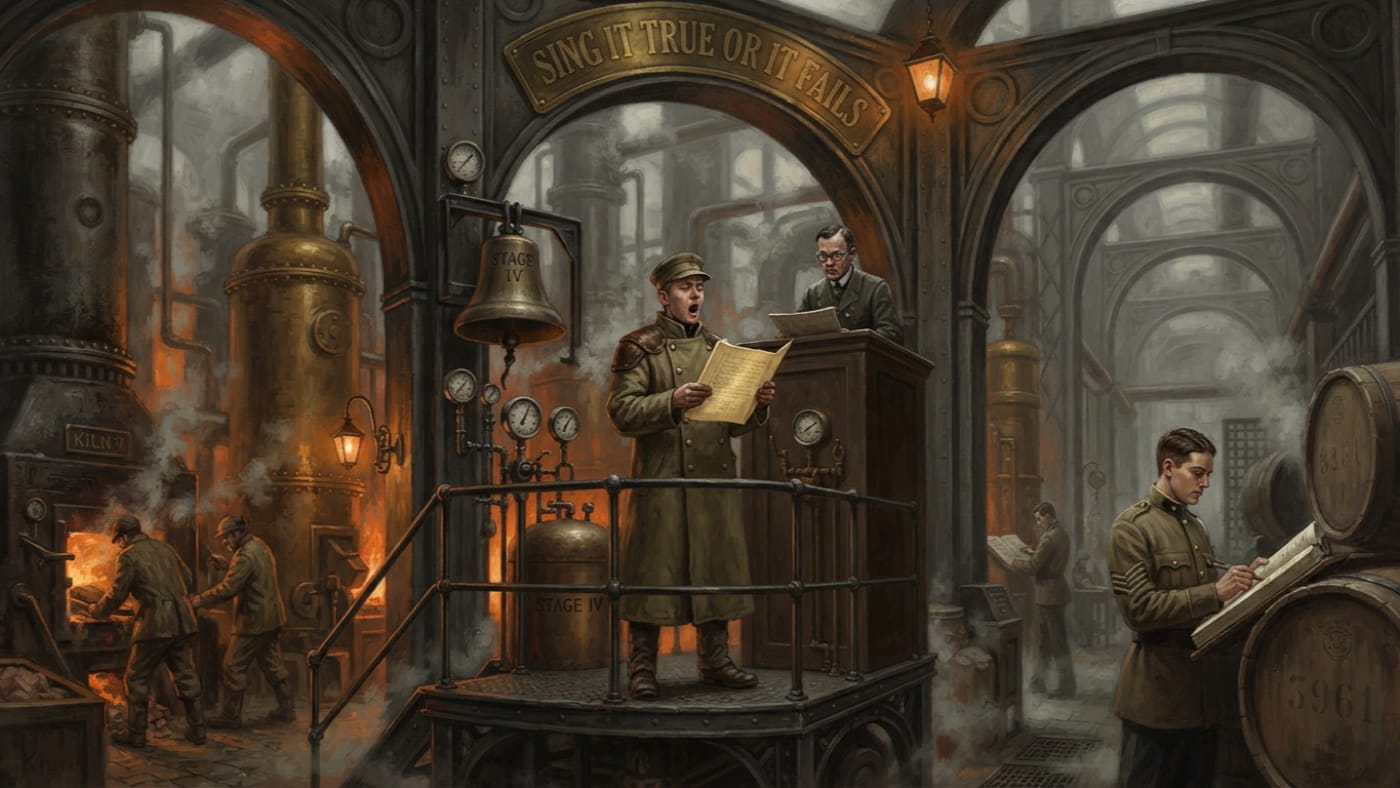
Chrismole Distillation Manual
The procedure keeps its seal; the explanation receives a correction
The Seventh Revision governs Brast's seven-stage fuel distillation. In A.S. 187 the Bureau corrected its explanation and left every bell intact. As of A.S. 201, the manual remains sacred; the engines remain difficult.
Codex Ref. XIII.1.12-187
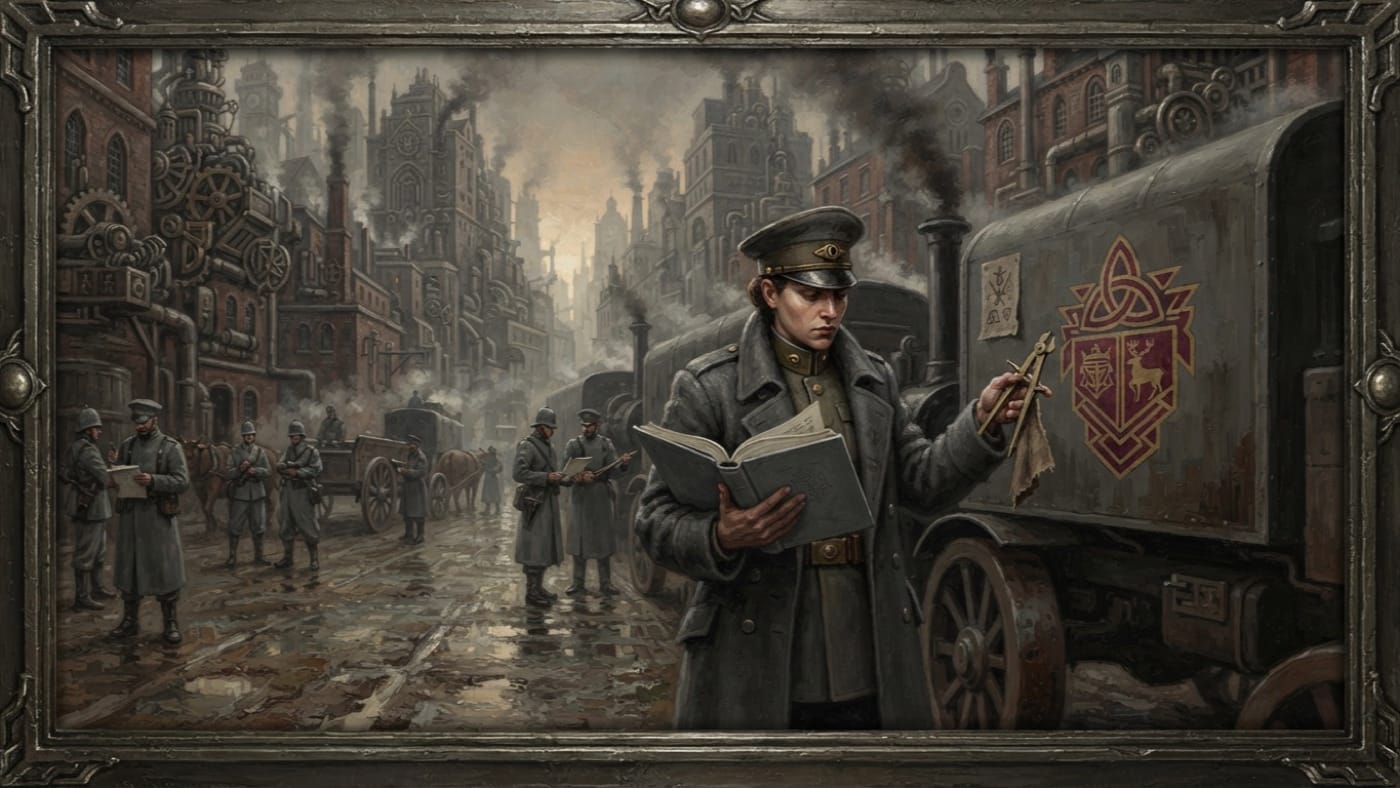
Chromarch Codex
The law arrives late and remains binding
The Chromarch Codex teaches Sigil Inspectors what loyalty may look like: permitted symbols, colours and geometries, corrected quarterly and binding before the district receives its copy.
Codex Ref. VIII.1.03-003
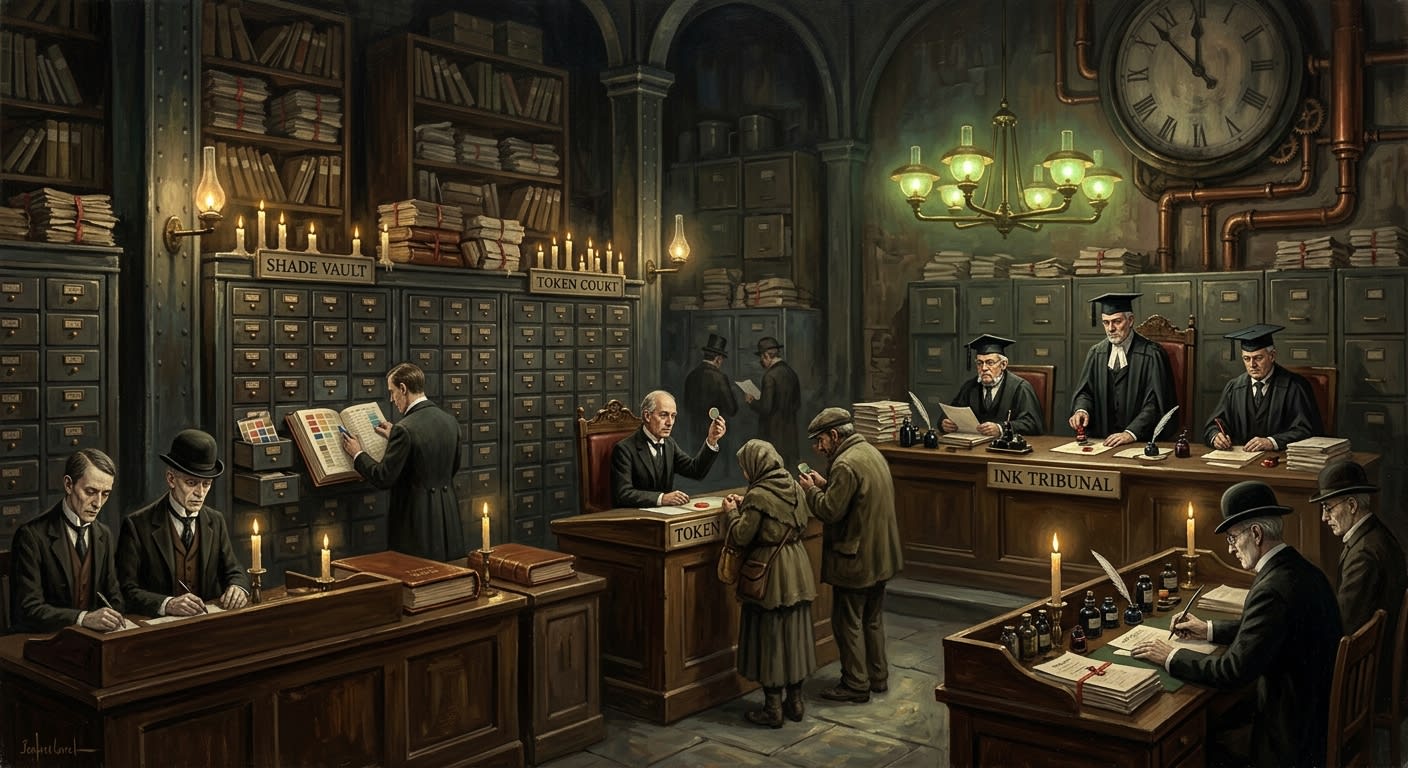
Chromatic Registry
Where colour enters the file and the eye becomes subordinate
Candlewick's Chromatic Registry defines lawful colour: shade vault, token court, ink tribunal, and the lamp-lit tyranny by which papers decide who exists.
Codex Ref. VIII.2.13-104
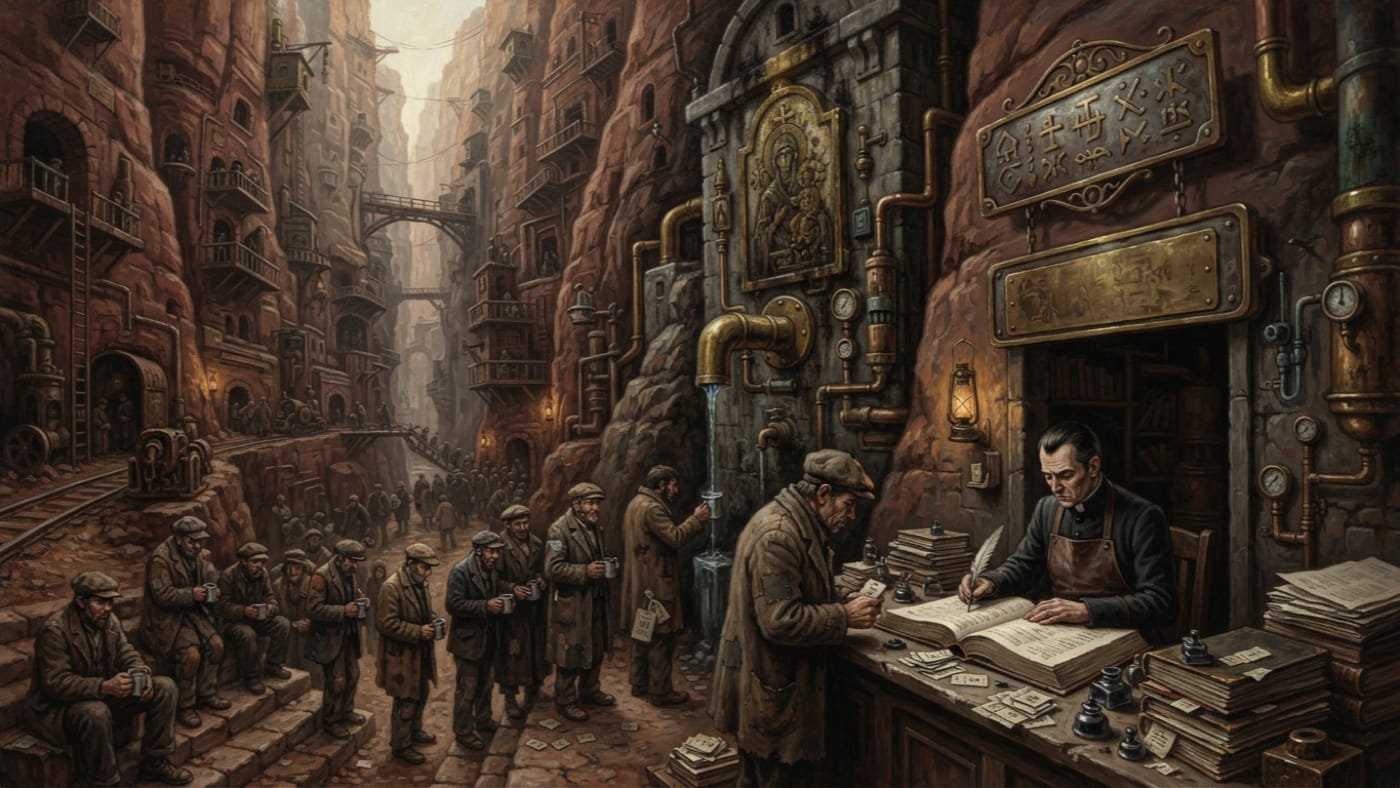
Cistern Chapel of Peregrine Row
Where water is blessed and thirst is entered in the ledger
In Peregrine Row's only natural hollow, the Cistern Chapel blesses water rations and records them against chits. The canyon may alter the ledger. The clerk still enforces it.
Codex Ref. II.1.03-002
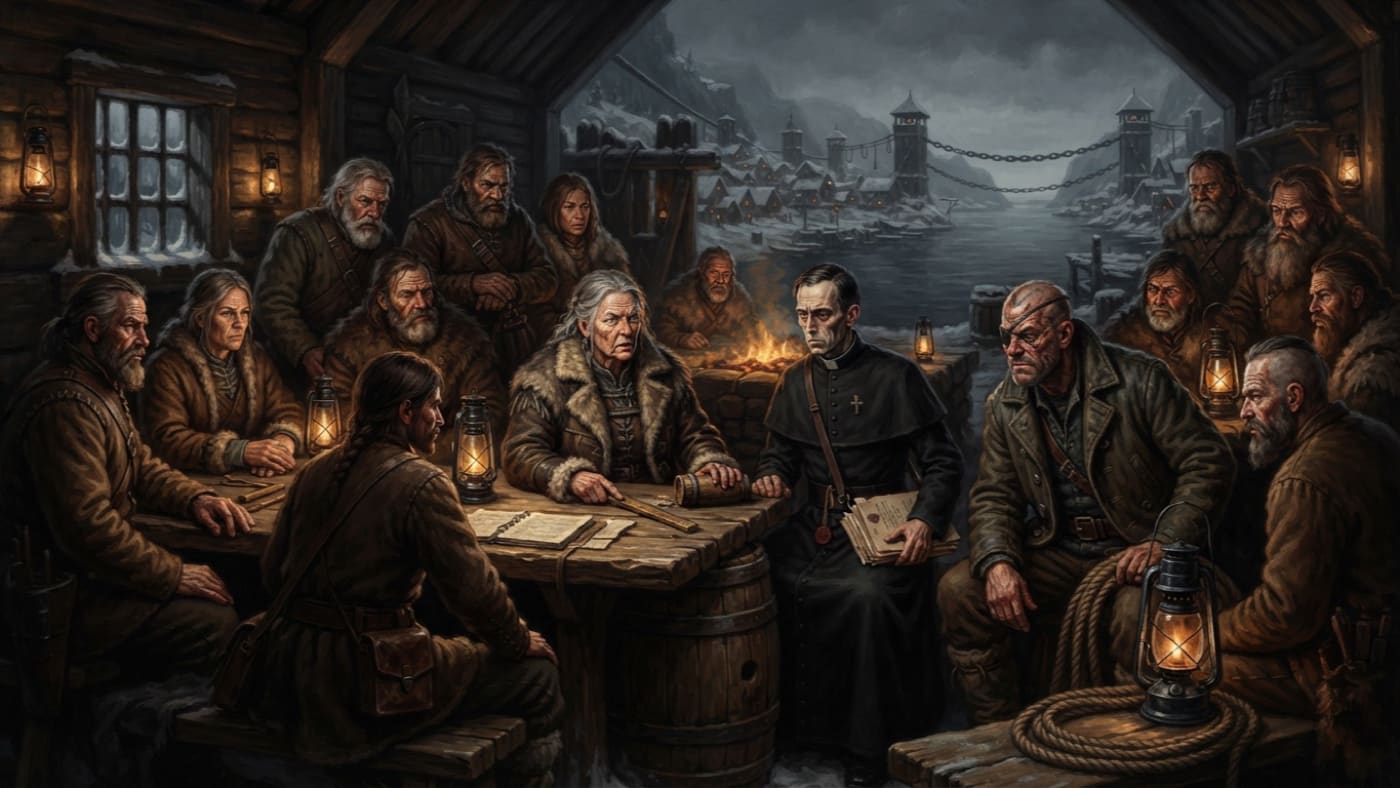
Clan Moot
The writ is still in a boat. The moot is in the room.
The Fractured North's local assemblies bind households by kinship, oath and winter necessity. They allocate oil, elect Watch Captains and decide which lamps remain lit. Strasbourg recognises no sovereign authority in them; its oil arrives by their leave.
Codex Ref. XI.8.01-001

Cloister of Concord
Agreement under pressure, paved in ash, ink, and enemy stone
The Cloister of Concord is Strasbourg's working courtyard of authorised agreement, where Doctrine turns contradiction into law and stone learns to listen.
Codex Ref. II.1.04-004
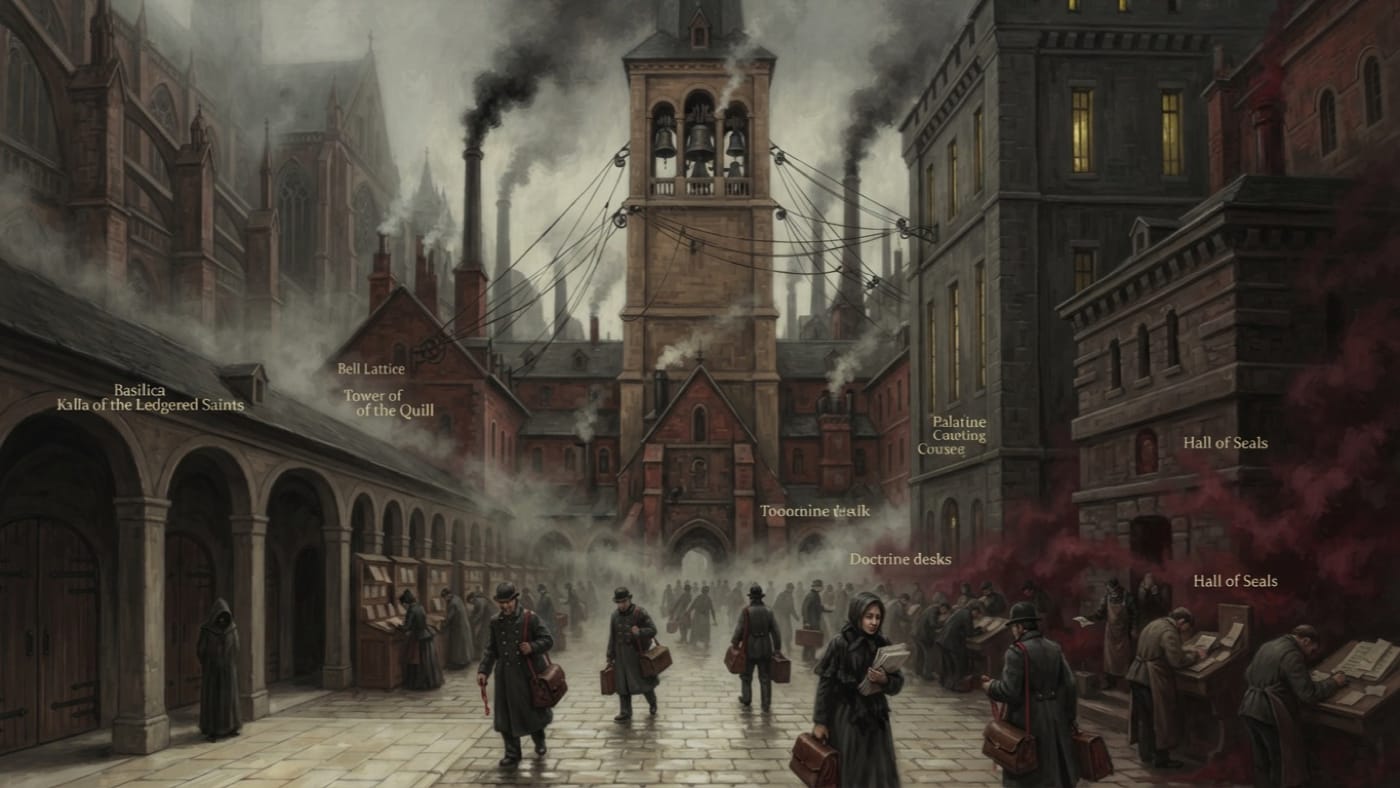
Cloister Precinct
Where every refusal stands within walking distance
Strasbourg's Cloister precinct gathers Doctrine desks, seals and tithes around one petitioner's walk. Every refusal is nearby; the northern arcade has no recorded custodian.
Codex Ref. II.1.04-008
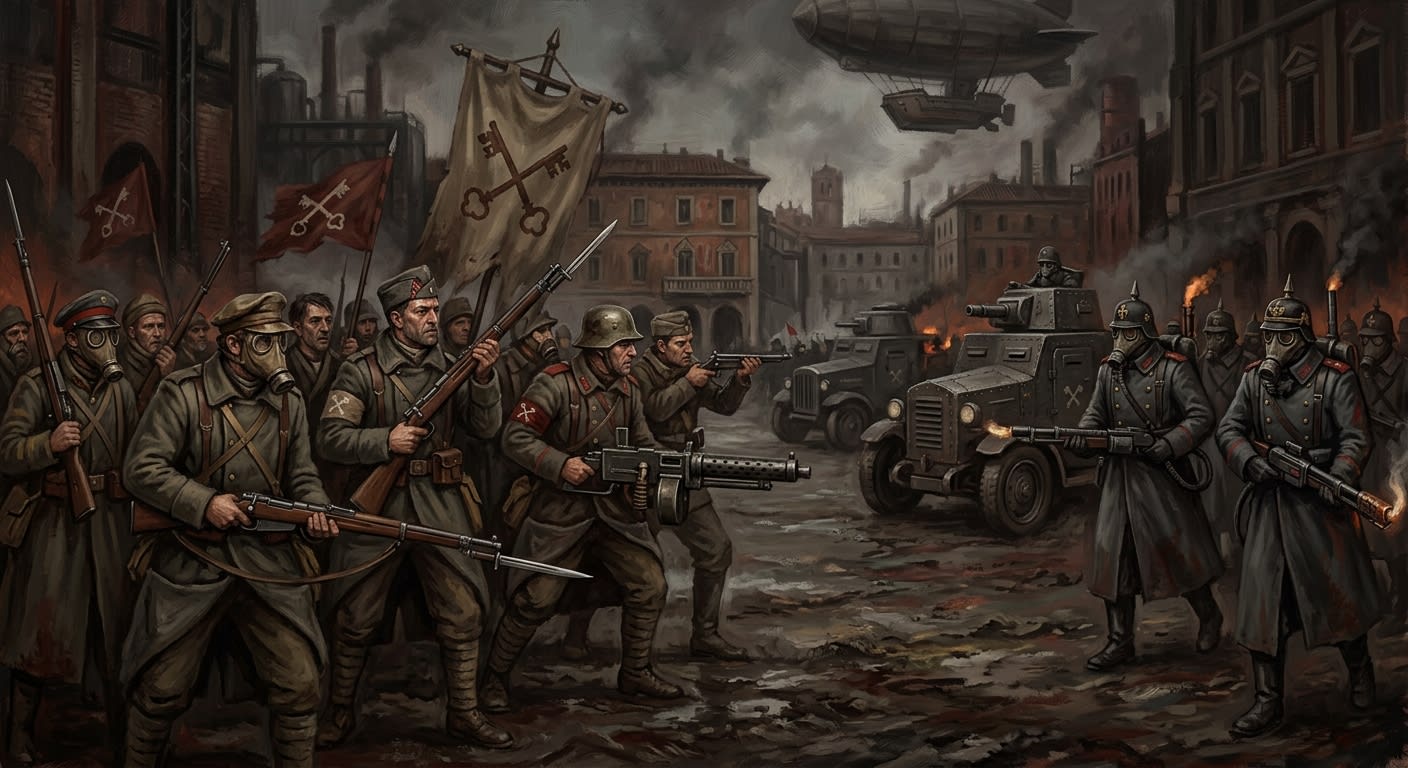
Coalition of the Crossed Keys
A handsome heresy drowned with exemplary thoroughness
The Coalition of the Crossed Keys rose in Lombardy in A.S. 150, mistook local dignity for apostolic succession, held three cities, and drowned under Synod correction.
Codex Ref. VII.8.04-001
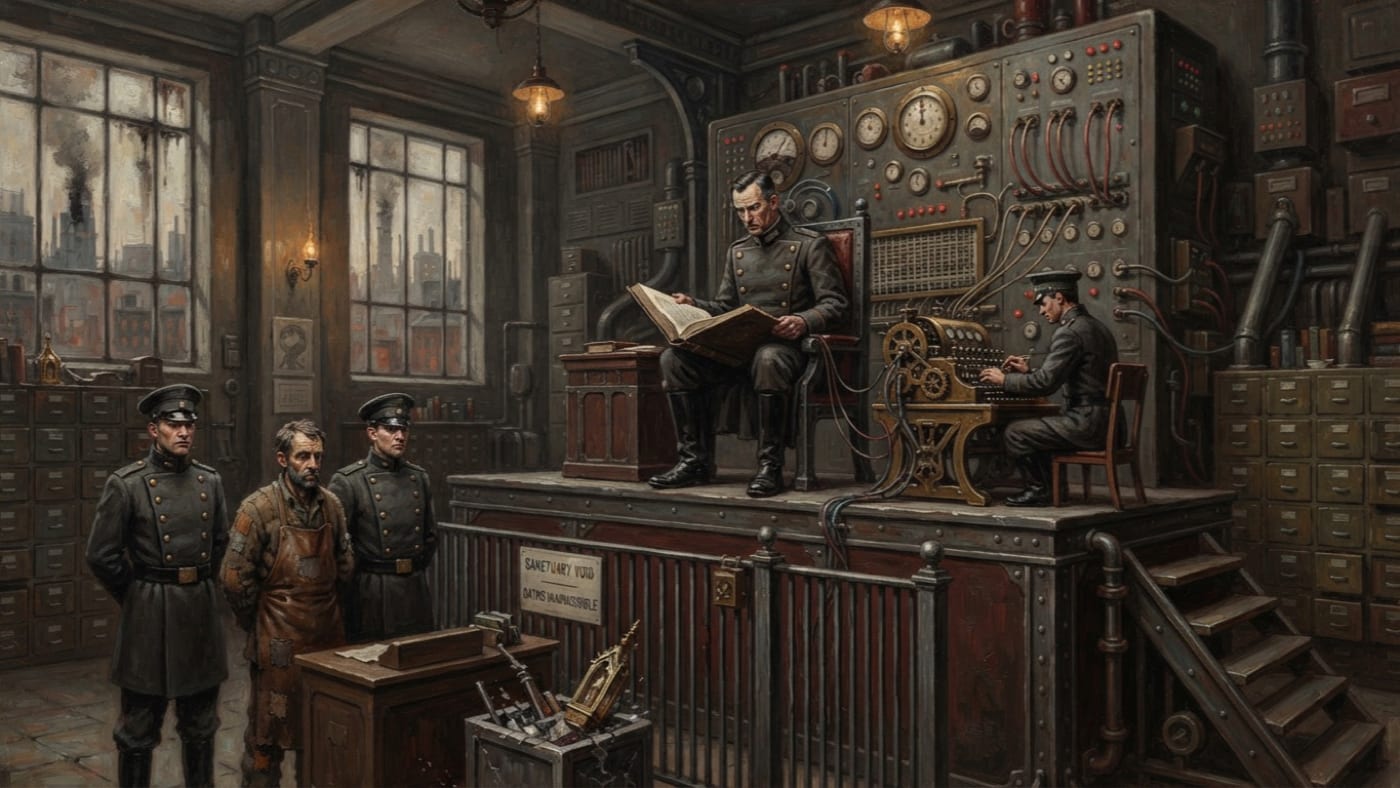
Code of Rational Jurisprudence
A Courtroom Without Relics, and a Divisor Where Mercy Belonged
The Republic's court law made evidence sovereign, abolished relic-sworn oaths and sanctuary, and priced punishment by usefulness. Indexed to Regensburg, A.S. 30; its promulgation remains unknown.
Codex Ref. XIII.1.58-030
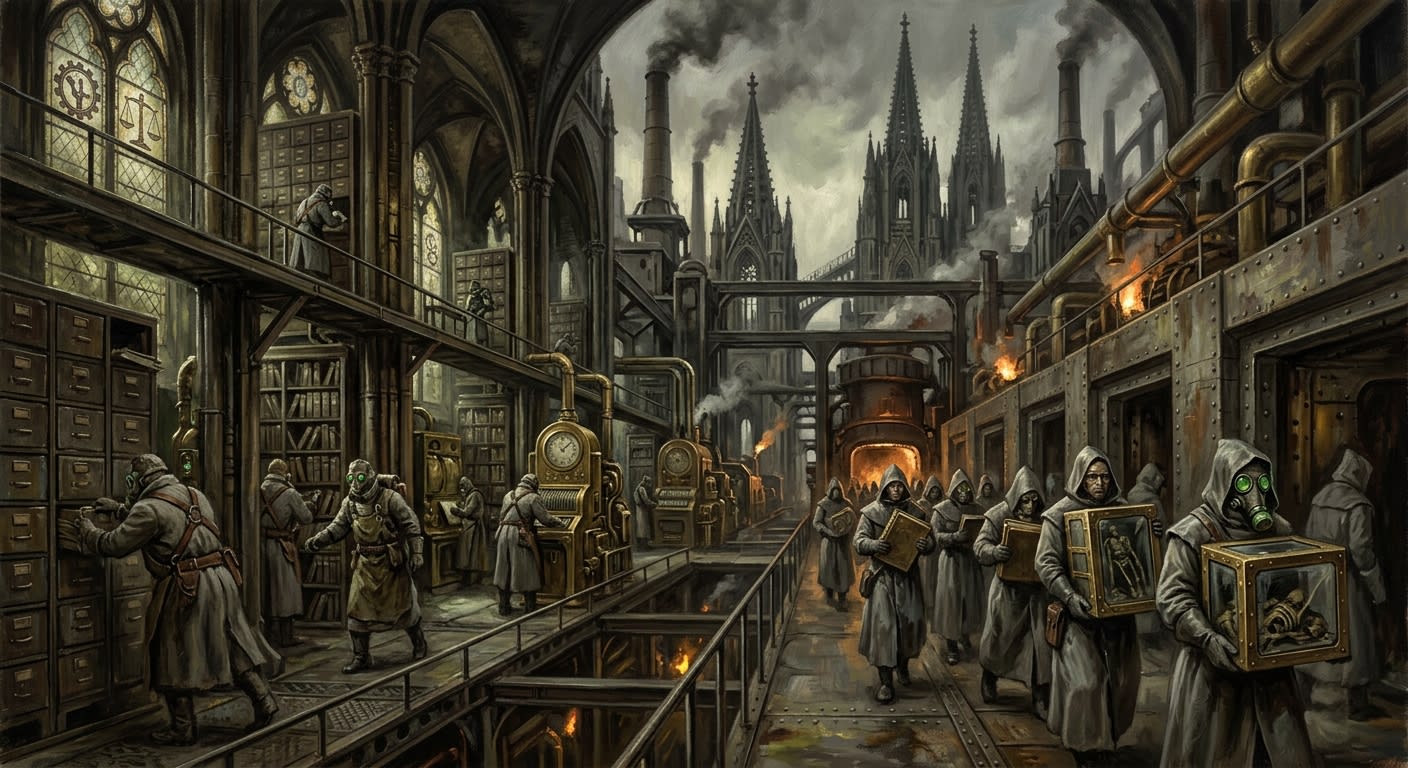
Cologne
The city where obedience borrowed a room and never repaid it
Cologne is the Rhine's holy account-book: cathedral, archive-bank, minting throat, relic cupboard, and the city where Synodic obedience learned to sign.
Codex Ref. II.2.01-004
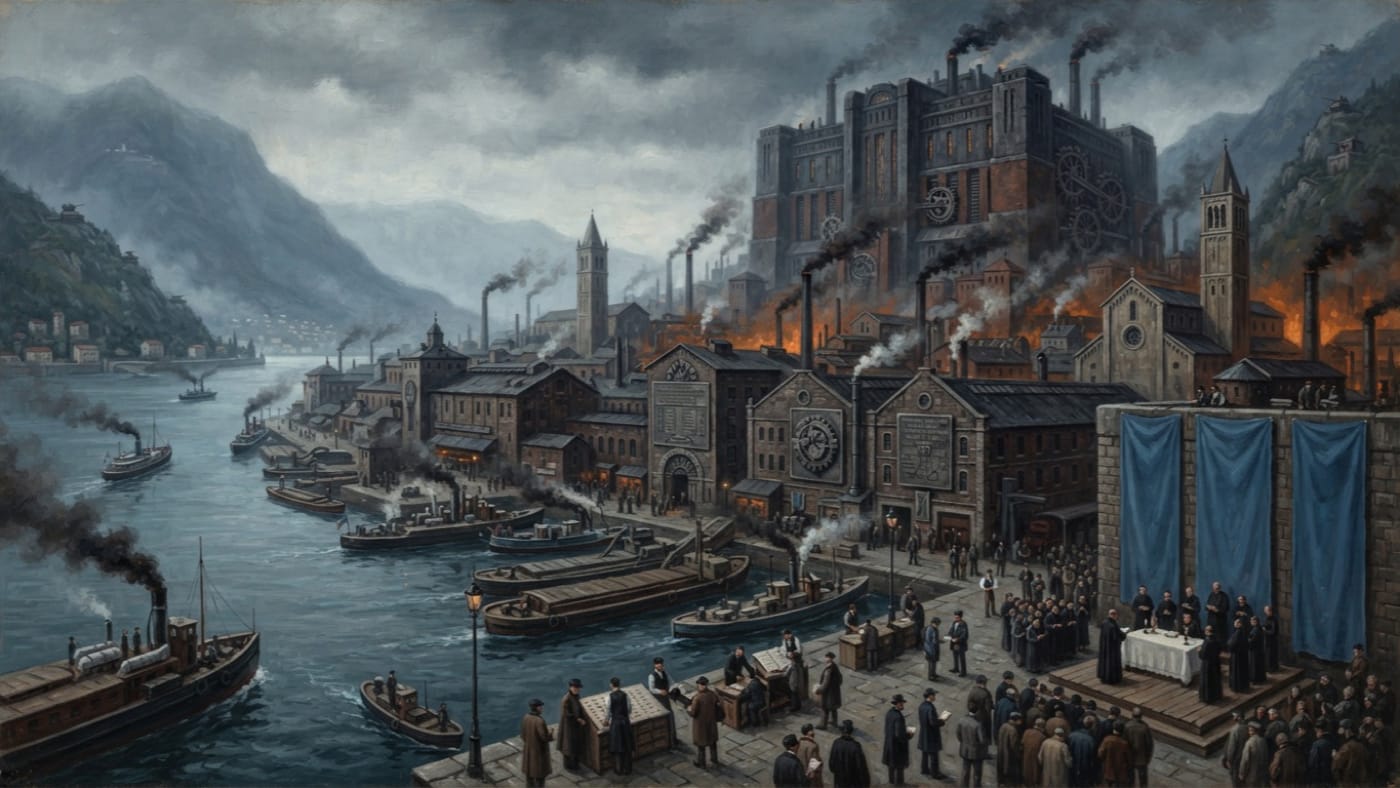
Como
A city that changed its bells and kept its names on the roll
Como put crossed keys on its silk, its warehouses, and its tax office in A.S. 150. In A.S. 201 its trade functions, its bells obey, and its names remain on the roll.
Codex Ref. II.1.08-201

Concord Quarter
Where the Synod receives what it cannot command
Strasbourg's Concord Quarter houses foreign missions and Concord's arbitration rooms. Here the Synod receives what it cannot command, and every objection remains pending.
Codex Ref. II.1.04-007

Concordat Charter
The officer dies. The obligation survives.
The Concordat Charter of A.S. 92 / 1802 CE formally founded the Bureau of Tithes and fixed its fiscal mandate. The Church's tenth became a recorded debt; the officer may die, but the obligation survives.
Codex Ref. III.1.02-092
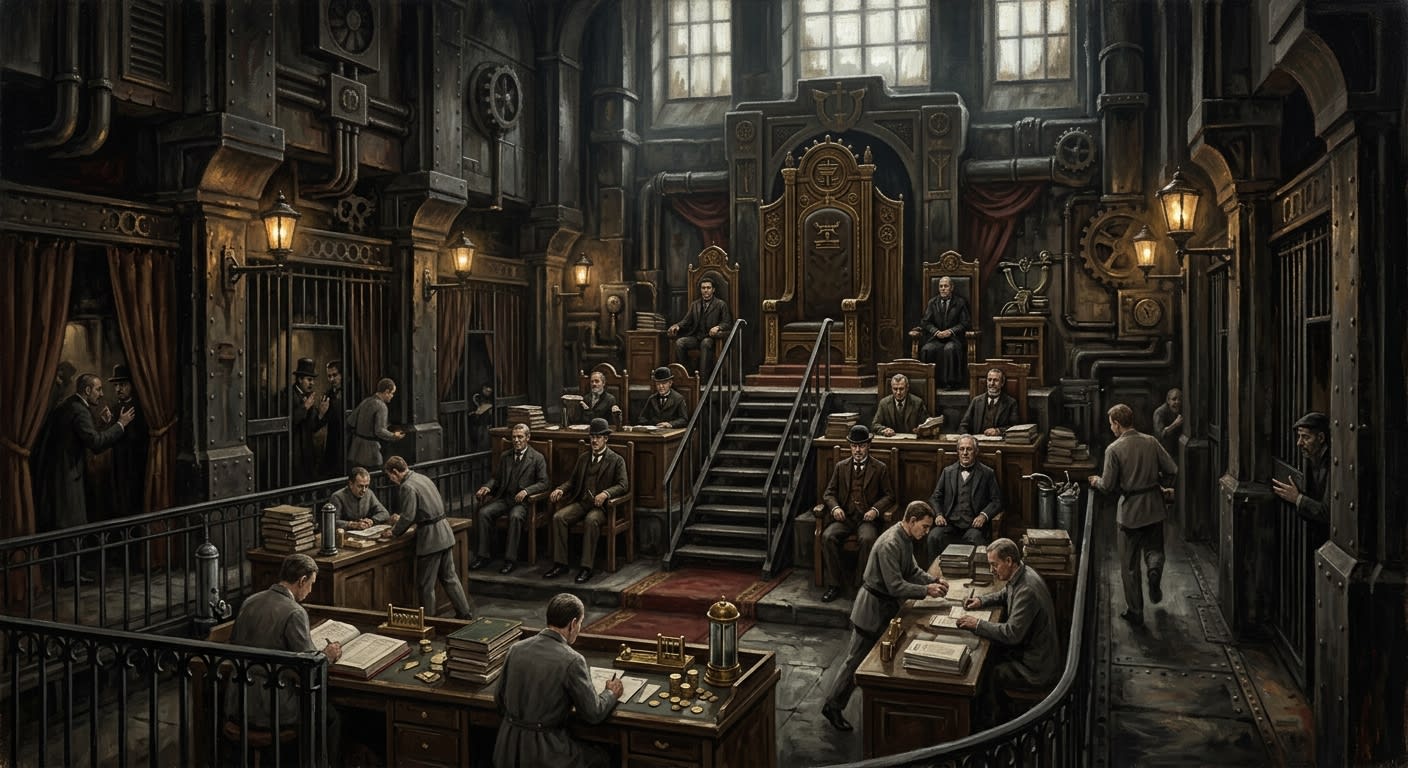
Concordat Hall
Where agreement kneels, pays, and receives a chair
Concordat Hall is Strasbourg's constitutional pressure chamber: thrones, clerks, proxy corridors, speech fees, and agreement taxed into sanctity.
Codex Ref. II.1.04-006

Concordat season
The Concordat supplied the seal; the foundrymen supplied everything else
The administrative interval around Strasbourg's A.S. 90 settlement, when wartime offices gained settled portfolios and the Synod decided who owned the fire.
Codex Ref. III.1.02-090

Concordat settlement
Five masters, one servant, and the servant holds the keys
The A.S. 90 settlement at Strasbourg recognised Passage's authority over movement while preserving five offices' competing claims. The road acquired one keeper and the keeper five masters.
Codex Ref. III.1.02-090

Concordat Supplementary
What the author forgot, the collectors remembered
An A.S. 201 survey of the Concordat Supplementary's attested Canon 17-D, cited by Tithes for infants' first teeth as preemptive dues. I wrote the canon. The Bureau remembered what I had forgotten.
Codex Ref. XIII.1.17-001
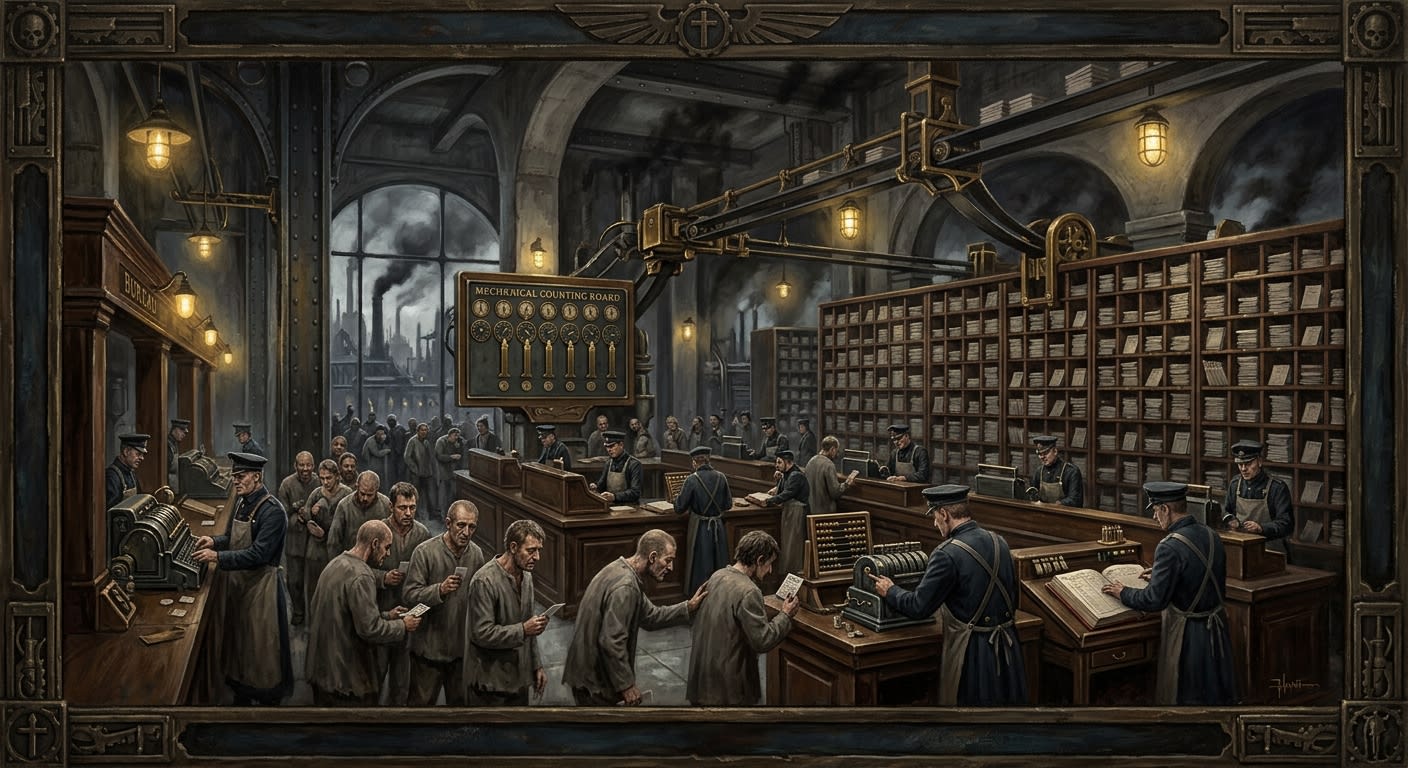
Confession Reform of A.S. 104
The paragraph that made sin stand in columns
A.S. 104 Bureau of Rites reform that standardised sin categories, introduced rubric cards, authorised lay intake clerks, and made confession countable at scale.
Codex Ref. VII.8.10-014

Conte di Sforza
He brought a protest. Strasbourg kept the tears.
The Conte di Sforza came to Strasbourg in A.S. 97 to defend the League of Milan. Its compact was already void; his reported tears were retained as evidence.
Codex Ref. III.2.01-097
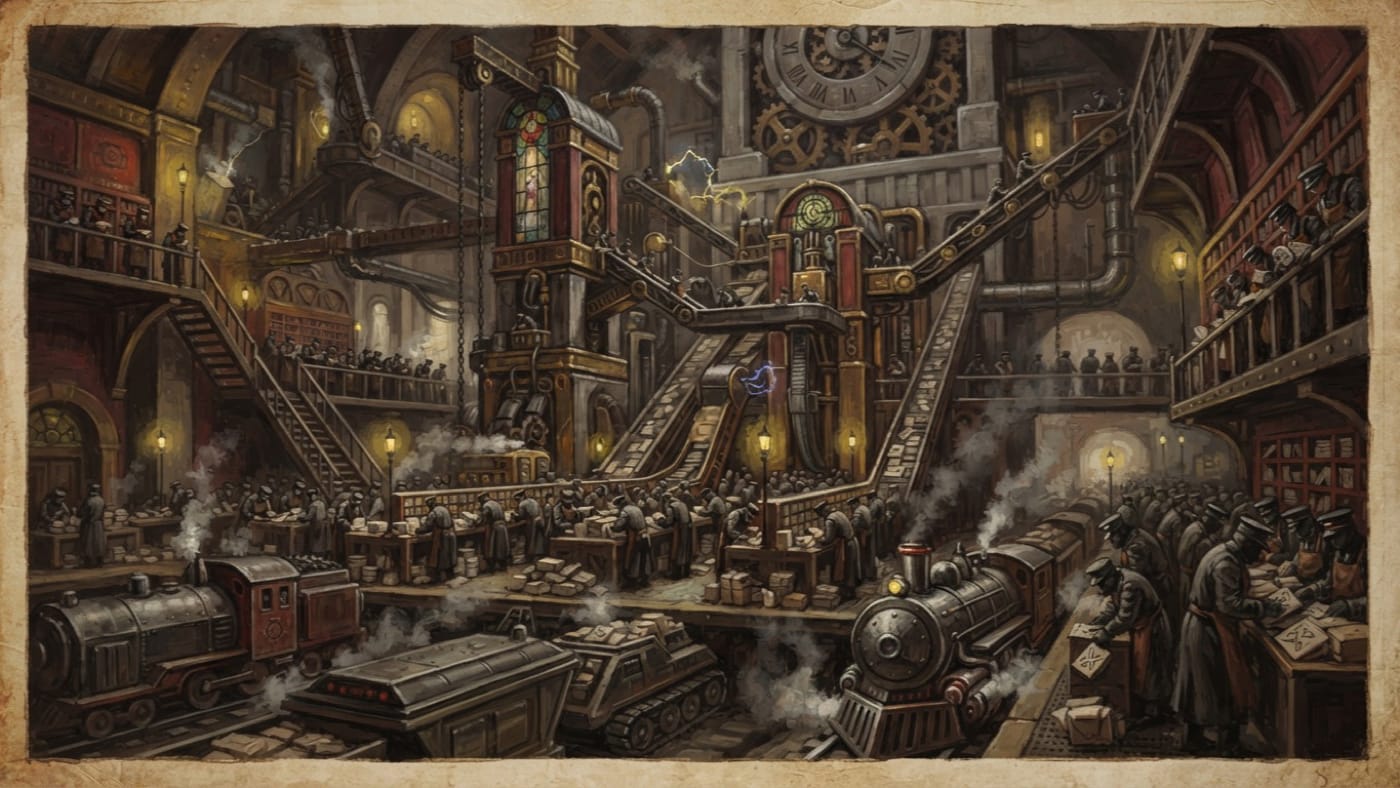
Continental Post
The Synod catches up with fourteen copyists
The Continental Post matched de Waal's distribution efficiency in A.S. 110. Founding or maturity: the Ledger agrees on the year and quarrels over the verb.
Codex Ref. VIII.2.10-110
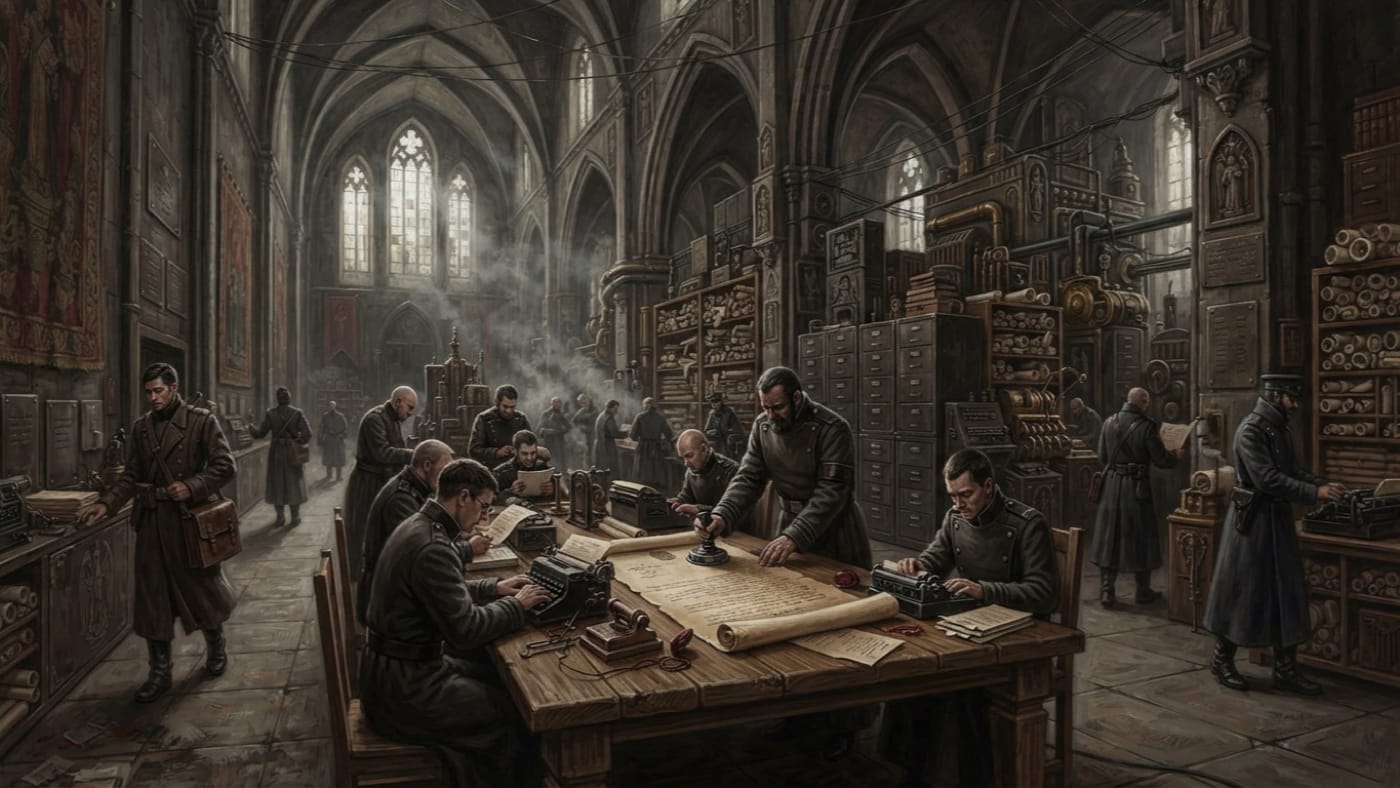
Conventus Fidelium
An assembly on vellum; its first convocation unrecorded
The Common Allegiance proposed the Gathering of the Faithful in A.S. 55: one assembly, common command and five offices. I record its ancestry without inventing its first convocation.
Codex Ref. I.3.02-055
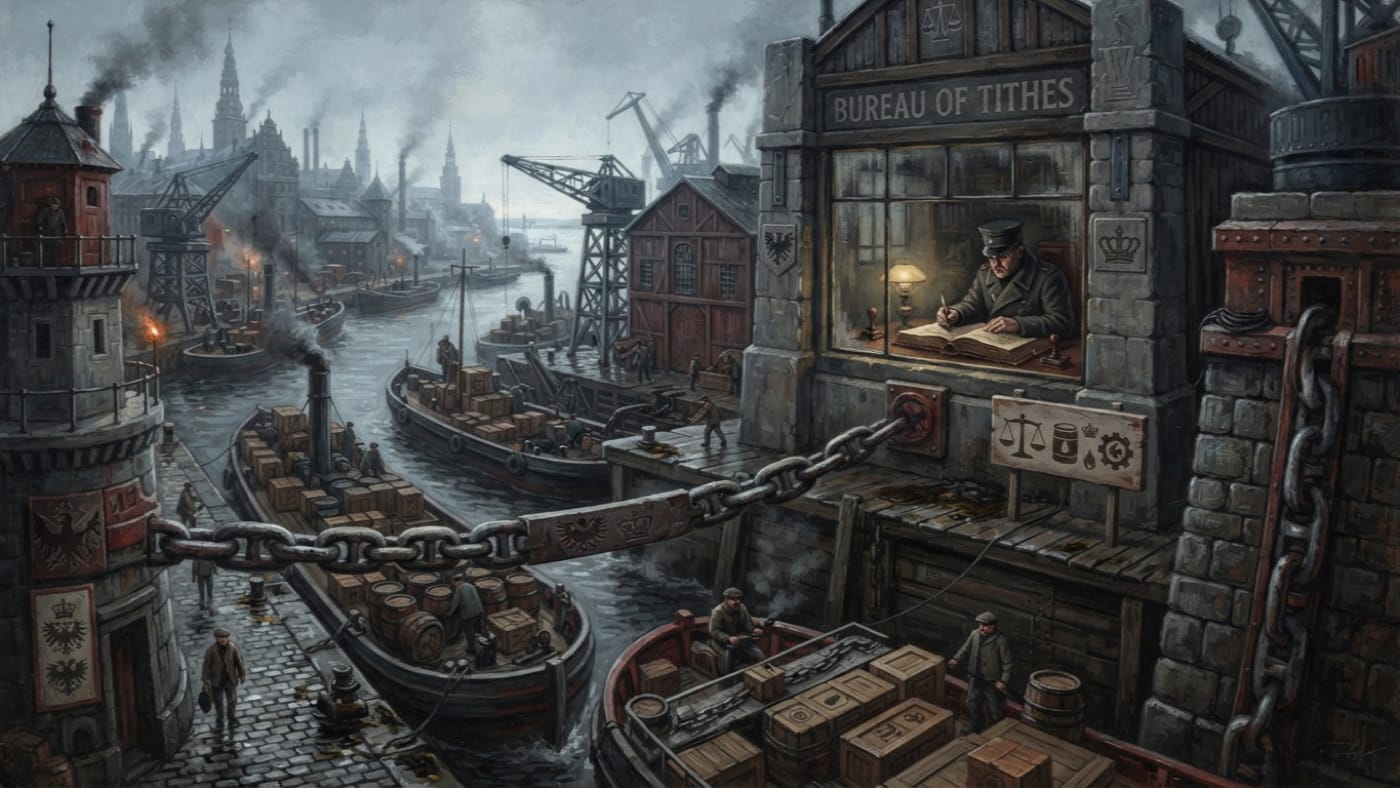
Copenhagen
The ledger is ours. The harbour is theirs. The debt is ours as well.
Copenhagen's Danish harbour compact bargains over oil tithes and guarantees northern advances against future cargo. The Synod keeps an assessor at the counter; the harbour keeps the chain.
Codex Ref. IX.8.03-001

Corvus
The fourteenth stands; the rest awaits its papers
Corvus is a later Church month whose fourteenth day commands the Saint-Malo fast, names and bells. The memorial is assigned; the massacre's exact day remains unproved.
Codex Ref. XIII.1.05-003
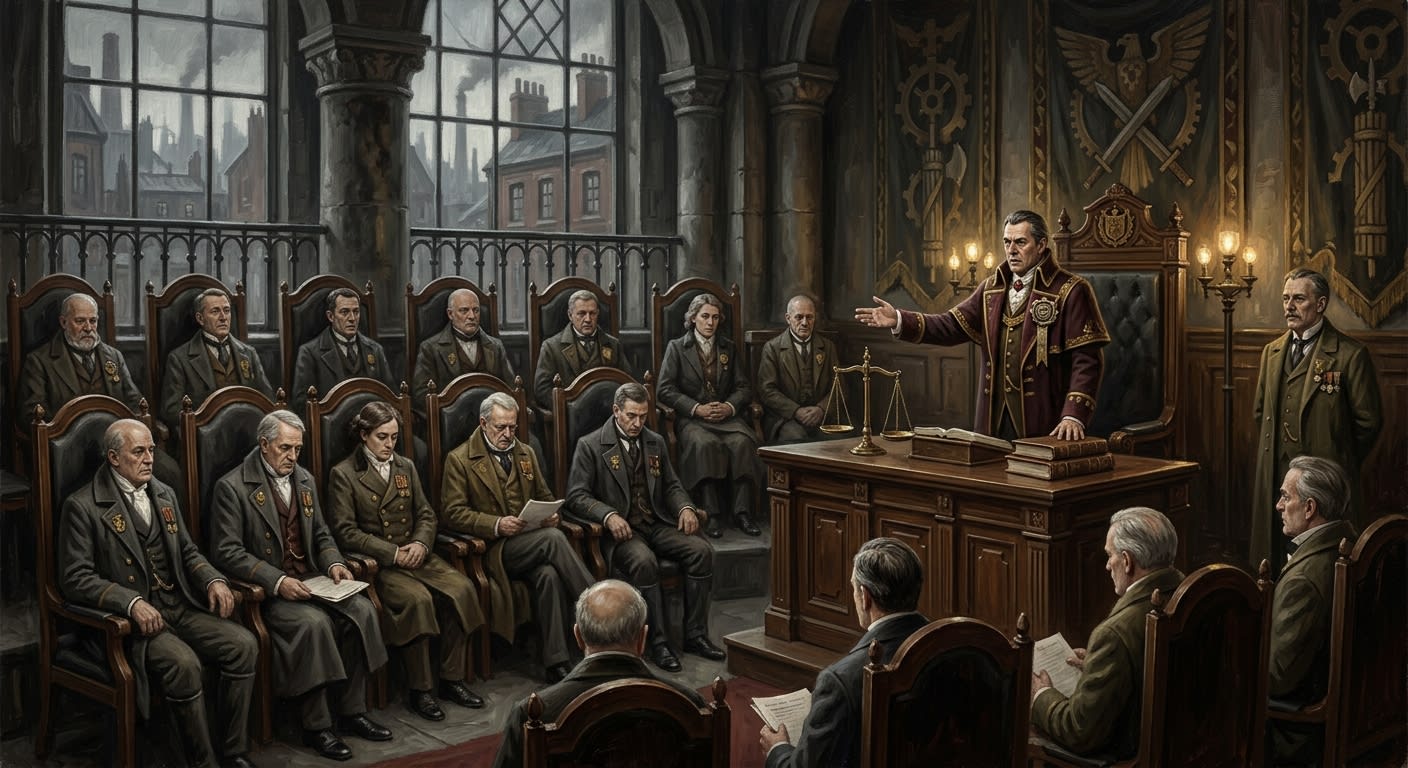
Council of Prefects
Where dissent receives a chair, a minute, and a family corridor
The Council of Prefects is unanimity with chairs: a ratifying chamber where civic officers discover what Strasbourg has already decided they believe.
Codex Ref. XIII.1.90-138
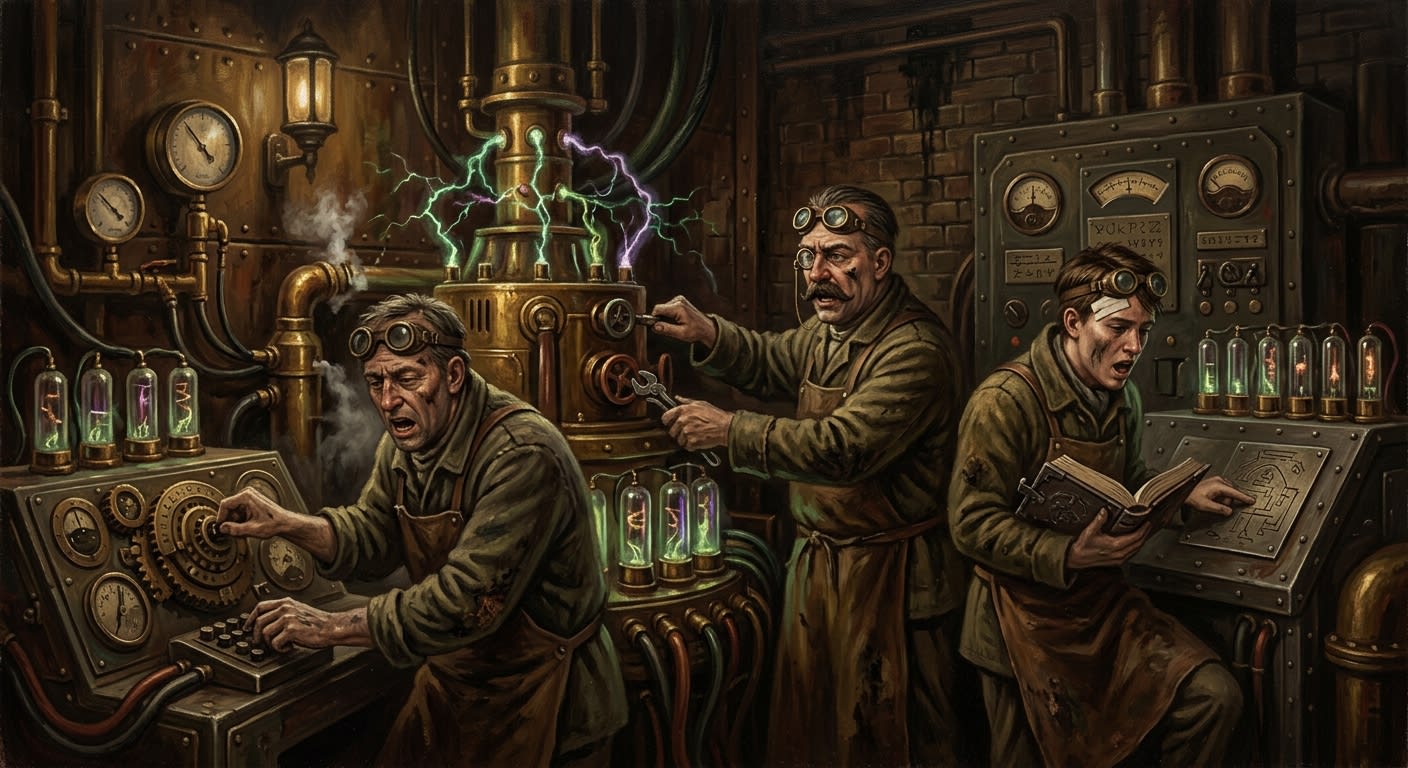
Counter-Sorcery Verses
Speak only what you can finish, for the wall listens
The sanctioned combat cant of Litany-Engineers: twenty-seven working verses that time charges, fracture sorcery seams, and punish miscadence.
Codex Ref. XIII.1.65-001
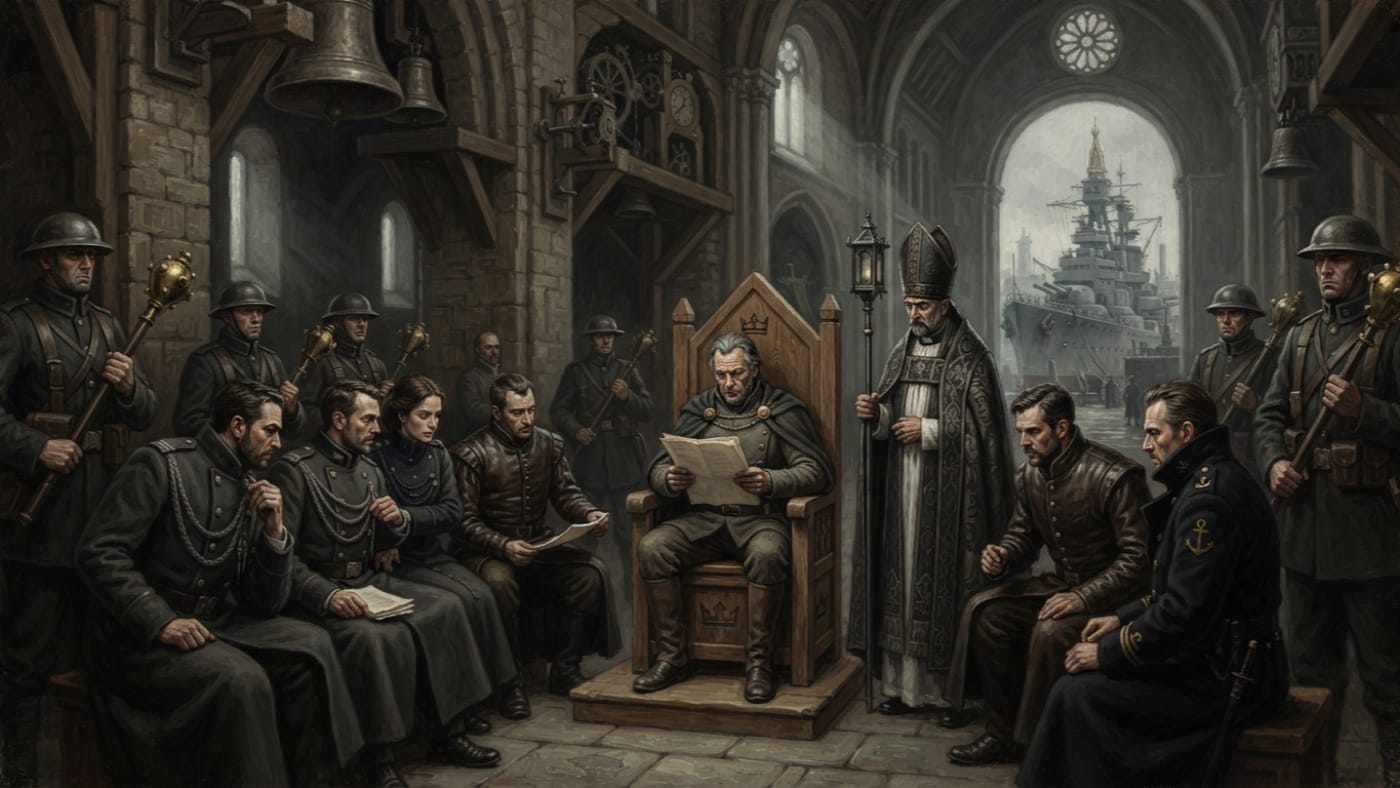
Court of Canterbury
Where every paper is read and no obedience is owed
Canterbury's sovereign court gathers Aldric III, the Table of Nine and the Archbishop around a government that reads Synod papers in full and owes Strasbourg no obedience.
Codex Ref. X.1.02-202
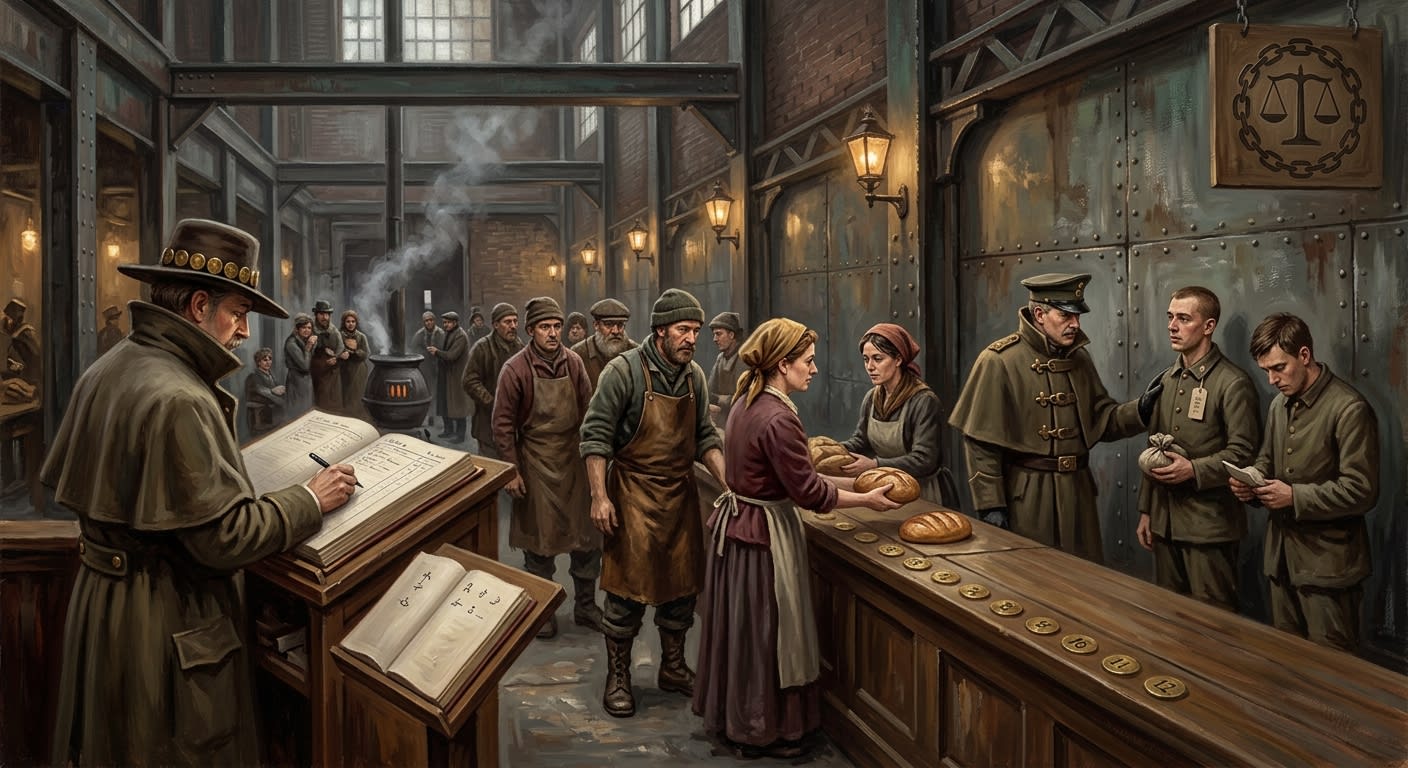
Covenant
The leash with bread on it, sanctified for public use
Covenant is the Synod's master noun: sacred pact in sermon, enforceable belonging in ledger, bread-chain in queue, and body-debt at the Line.
Codex Ref. XIII.1.04-090
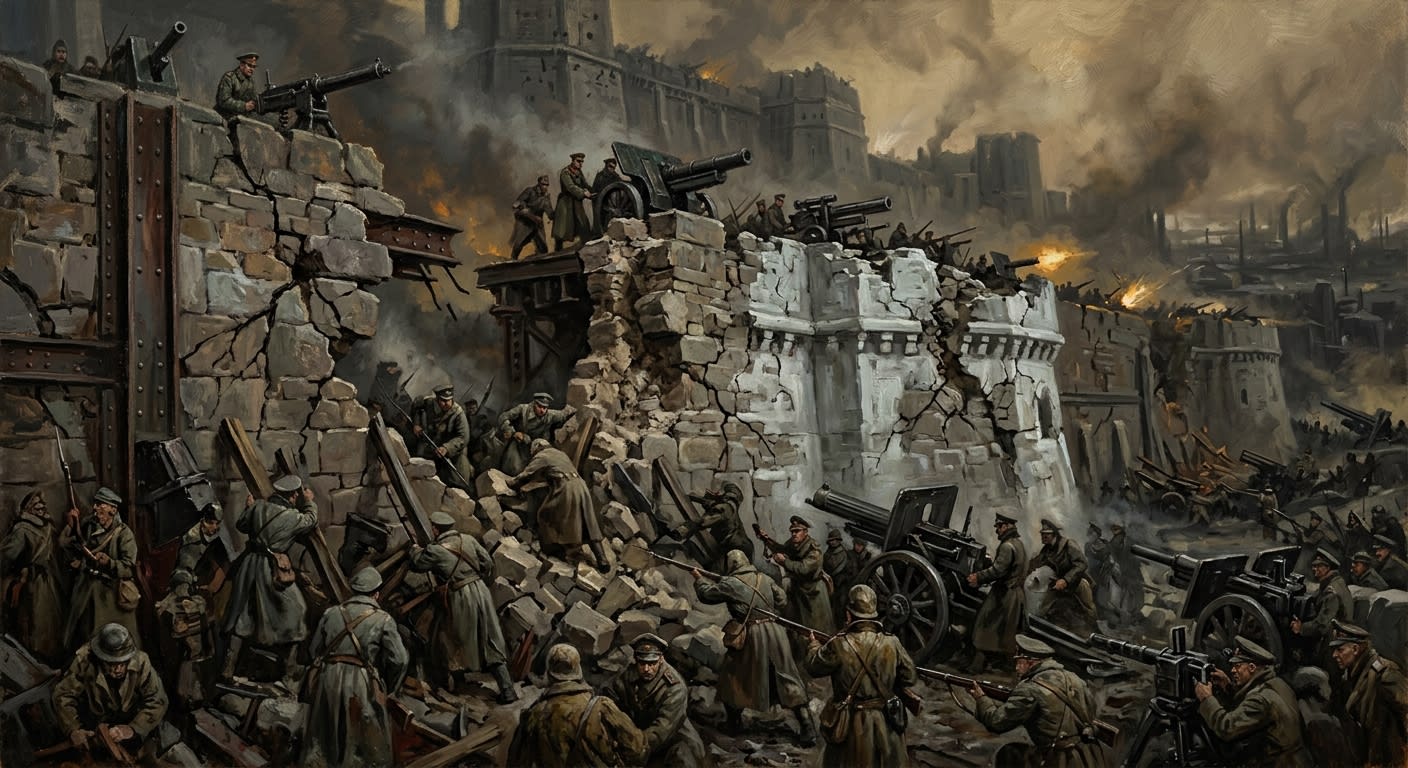
Cracked Ring Sieges
When the wall taught the law by cracking first
The Cracked Ring Sieges proved at Bastion-Constantinople that common mortar cracks under Maldrake, while sanctified bone-lime holds long enough for law to discover courage.
Codex Ref. VII.8.10-096

Creed
The shortest border is the one behind the teeth
The Creed is the Synod's shortest border: a licensed mouth, a timed answer, a civic leash, and the little gate through which bread, obedience, and punishment pass.
Codex Ref. XIII.1.04-090

Crimson Vault
The Rule in Ink, the Intention in the Margin
A.S. 201 survey of the Bureau of Records' Crimson Vault, where the Council of Worms account places Kratz's handwritten Protocol. The rain-spotted pages preserve advice the clean clauses do not; the Vault's physical location remains unestablished.
Codex Ref. III.2.07-032
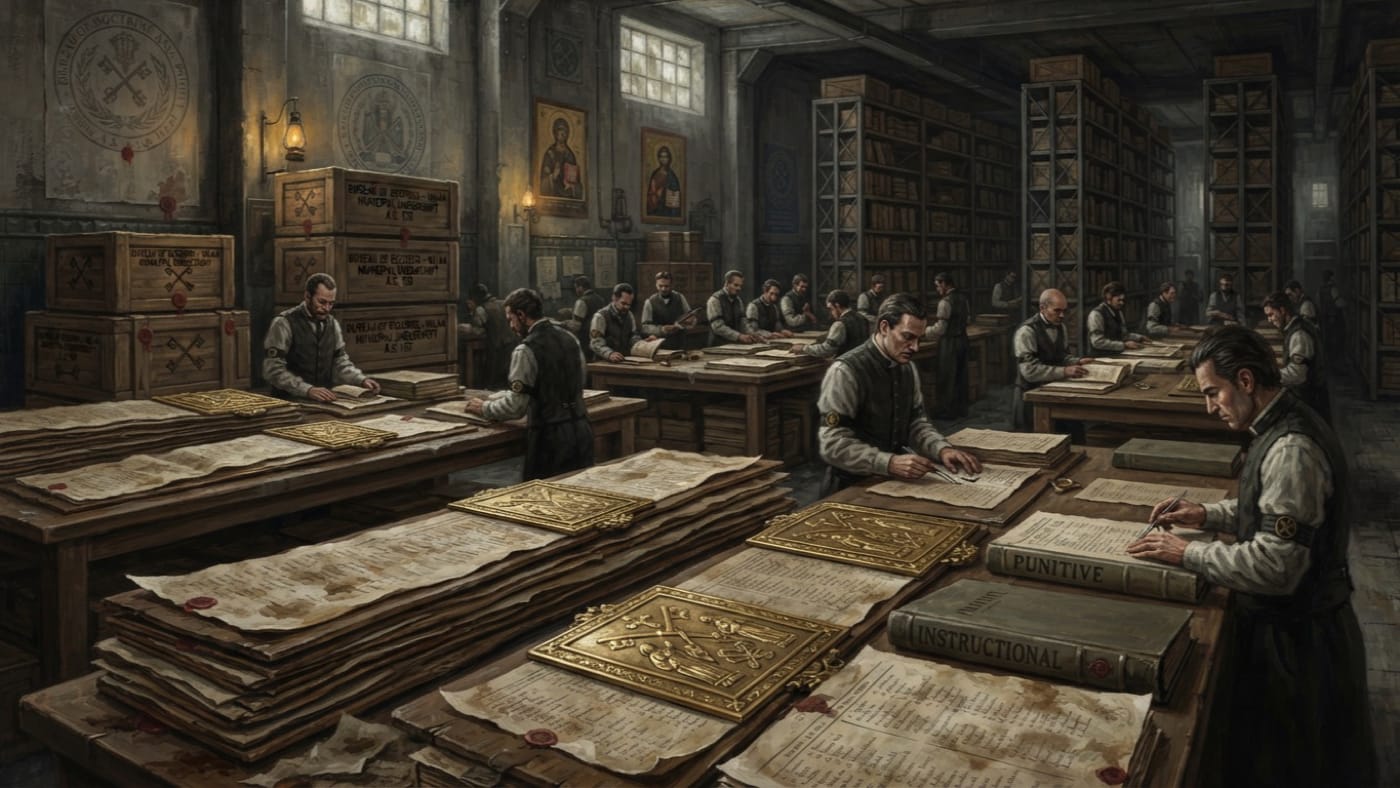
Crossed Keys Roll
Punishment finishes; the register continues
Recovered from twenty-seven soaked crates after the A.S. 150 Lombard revolt, the Crossed Keys Roll preserves names in punitive and instructional registers. Punishment finishes with a man; instruction pursues his grandchildren.
Codex Ref. IV.1.09-150
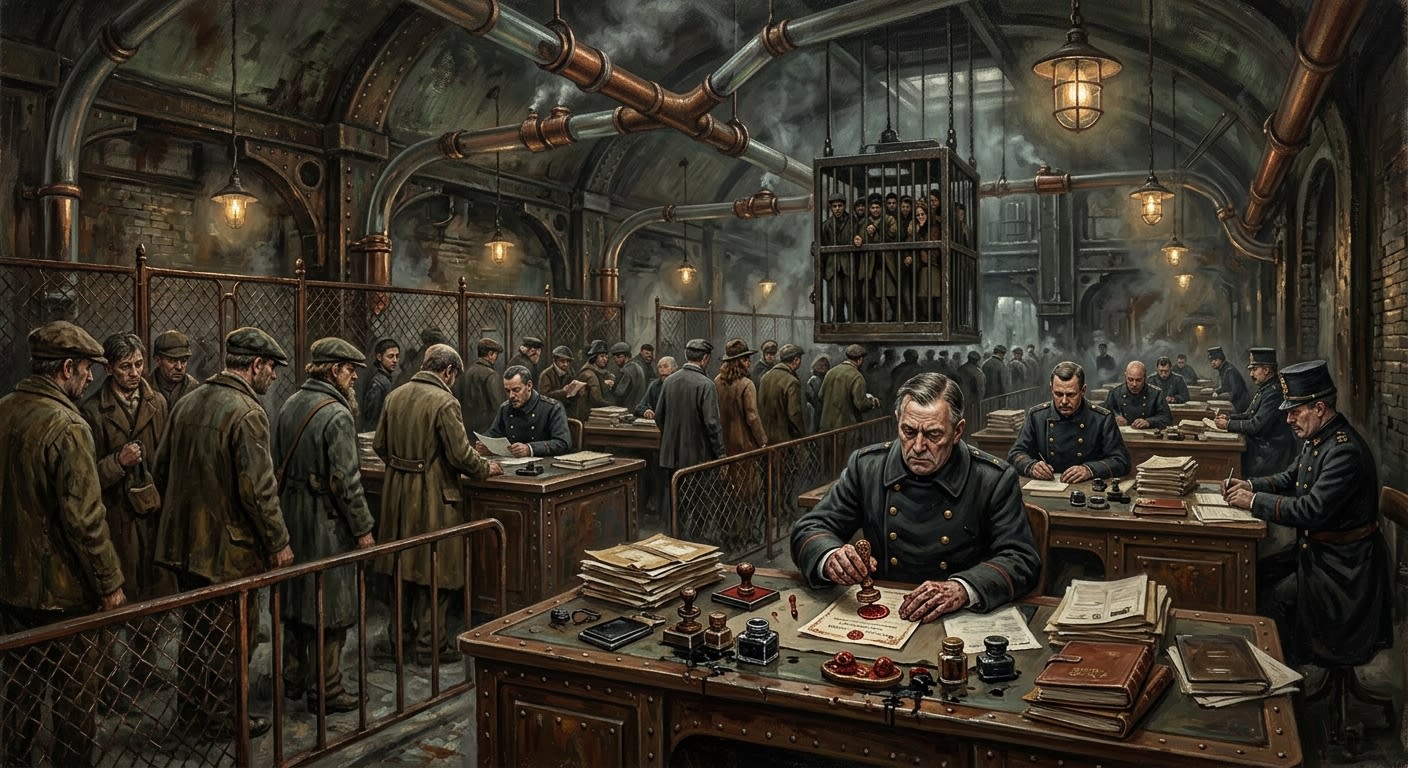
Crossing Bureau
No mark, no crossing; no crossing, no mercy worth recording
Bastion-Brest's Crossing Bureau is the local span authority between confession and passage, where Hett Ruis, wet paper, and warm wax decide who becomes lawful on the Brass Ribs.
Codex Ref. VIII.2.07-098
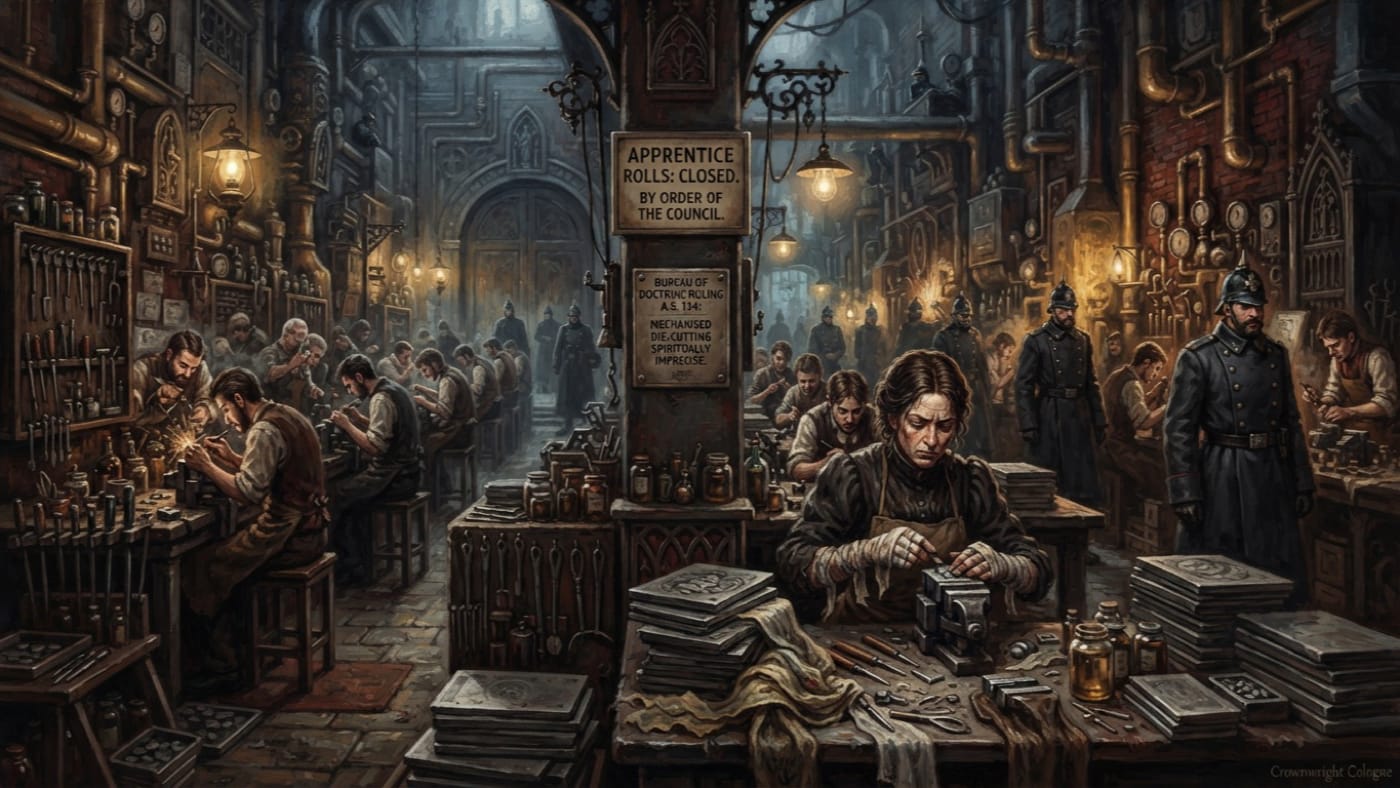
Crownwright Guild
The Chapter owns the face; the Guild owns the hand
The Crownwright Guild cuts Sable Court's lawful faces, charges for recognition, and keeps the Mint-Chapter dependent on its hands. Its apprentice rolls remain closed during the Face Theft crisis.
Codex Ref. XI.7.01-001
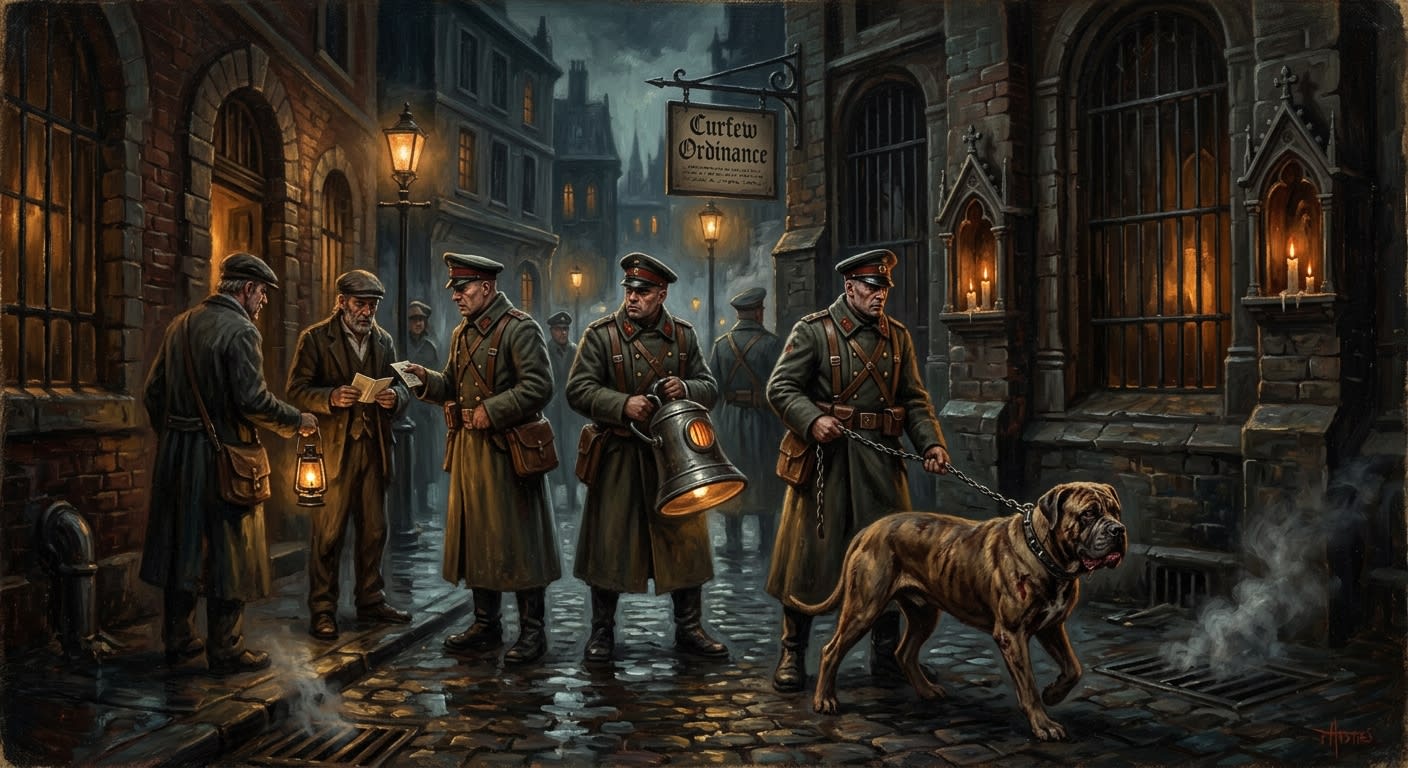
Curfew Ordinance of Quiet Hours
The margin law that taught night to carry a pass, a lamp, and a witness
The Curfew Ordinance of Quiet Hours began as a Rhineland margin law and became the Synod's nocturnal grammar: lamps, passes, Consolators, Brotherhood knives, and useful fear.
Codex Ref. XIII.1.76-094
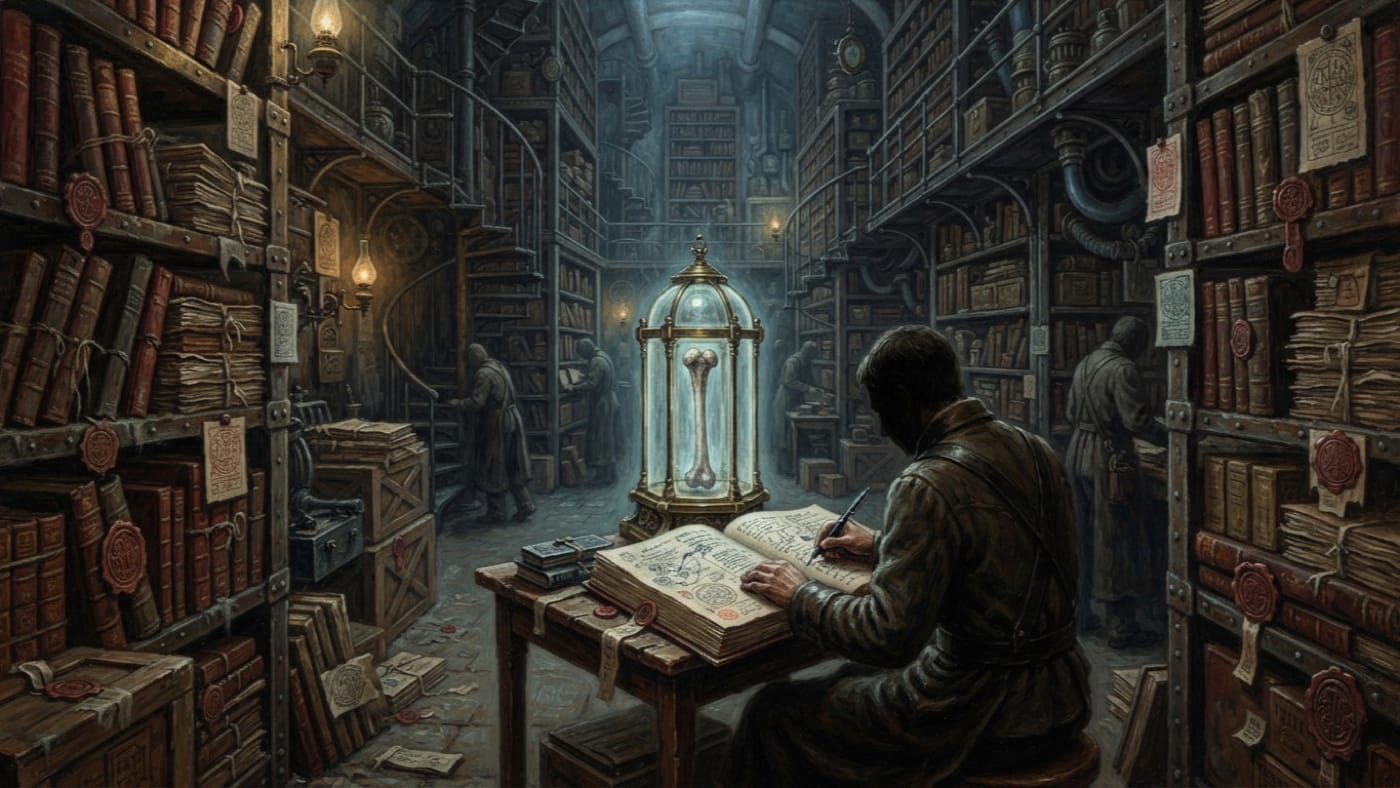
Custodial Chain
The ledger remembers the hands. The bone keeps its own counsel.
The ledger joins an authenticated relic to the hands that held it. In 1678, Vienna severed Aldebrand's chain without moving the bone. The record lost custody; the custodian did not.
Codex Ref. XIII.1.97-001
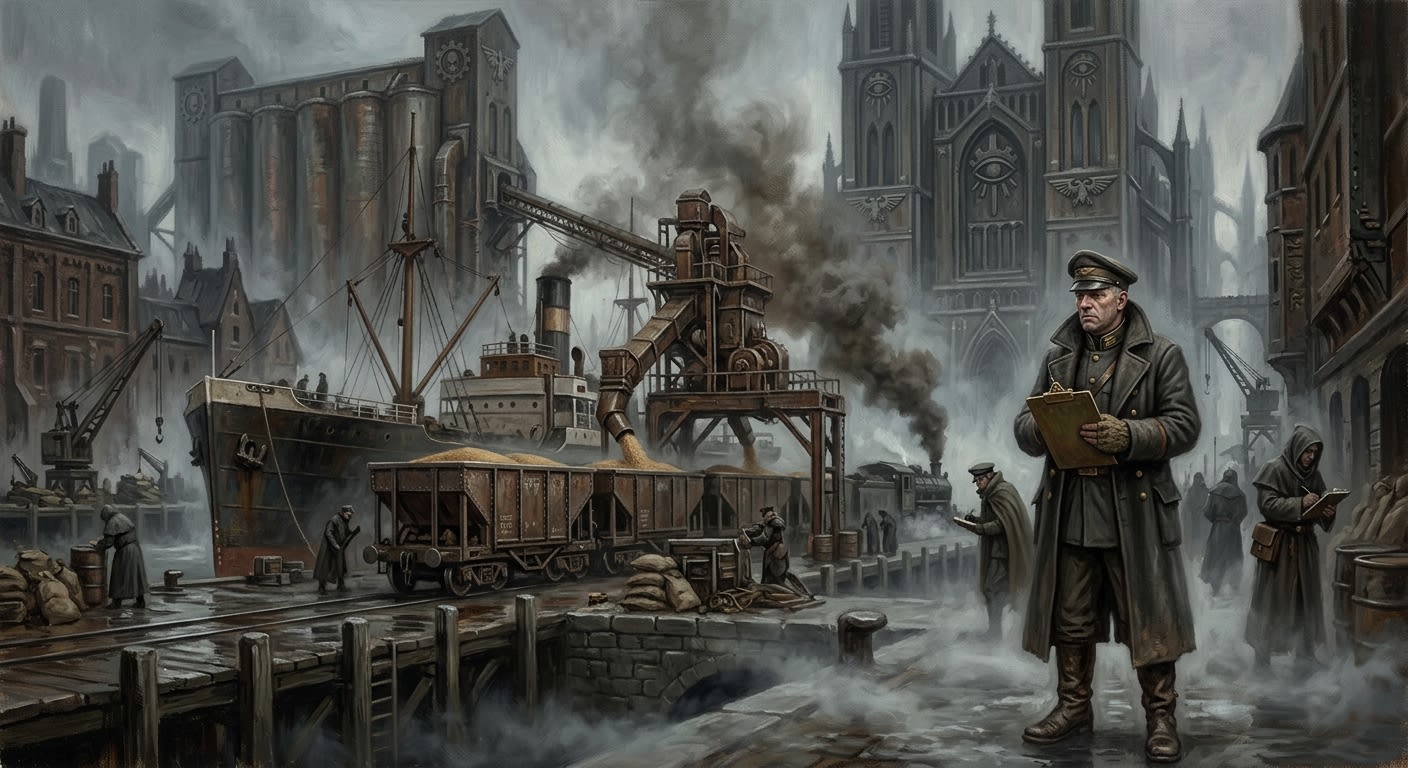
Danzig
The Baltic port that feeds the north and lies with admirable punctuality
Danzig is the Baltic grain mouth of the Northern Corridor: obedient in public, competent in fog, audited forever, and too necessary for Strasbourg to purify without starving itself.
Codex Ref. II.4.09-013
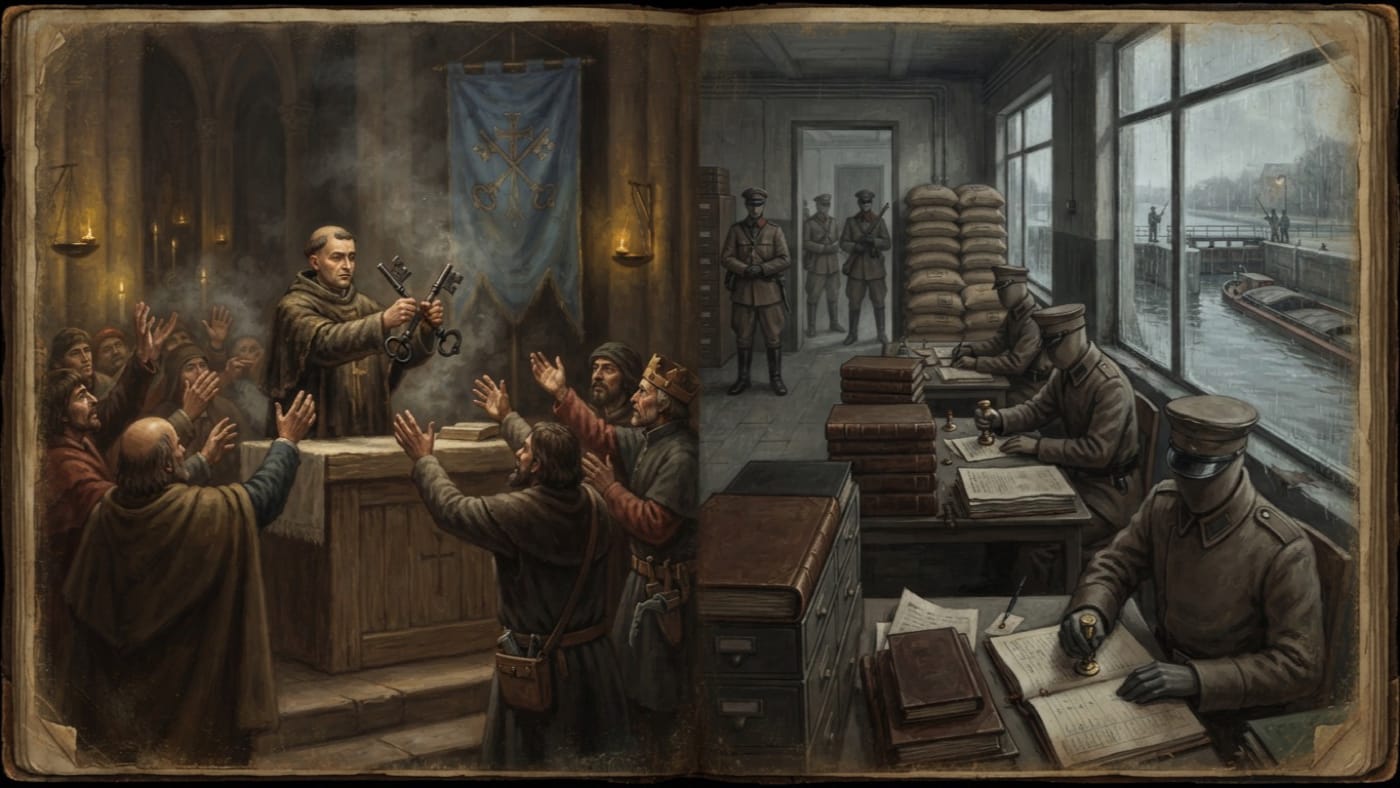
De Clavibus Restitutis
The entrusted hand and the clerk who kept the house
Ambrosius of Como's sermon placed authority in the entrusted hand. Lombardy heard restoration; Strasbourg answered with granaries, names and a river.
Codex Ref. VI.5.02-001
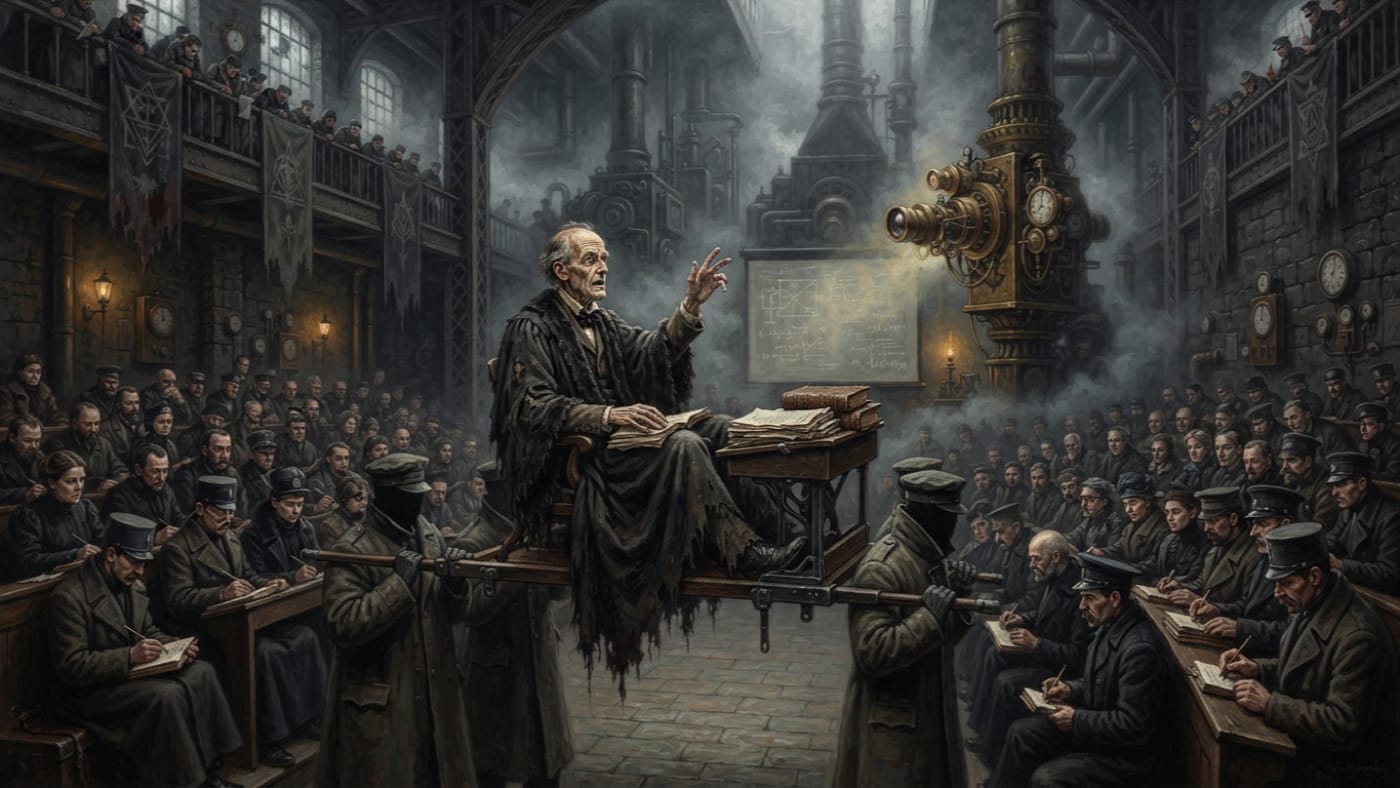
Dean Albrecht Moser
The signature survived; so, inconveniently, did the signatory
Dean Albrecht Moser signed the Concordats of Ulm in 1655 and reached Amsterdam's founding congress at seventy-nine, carried on a litter and still lecturing. His signature outlived his bones.
Codex Ref. III.2.01-850
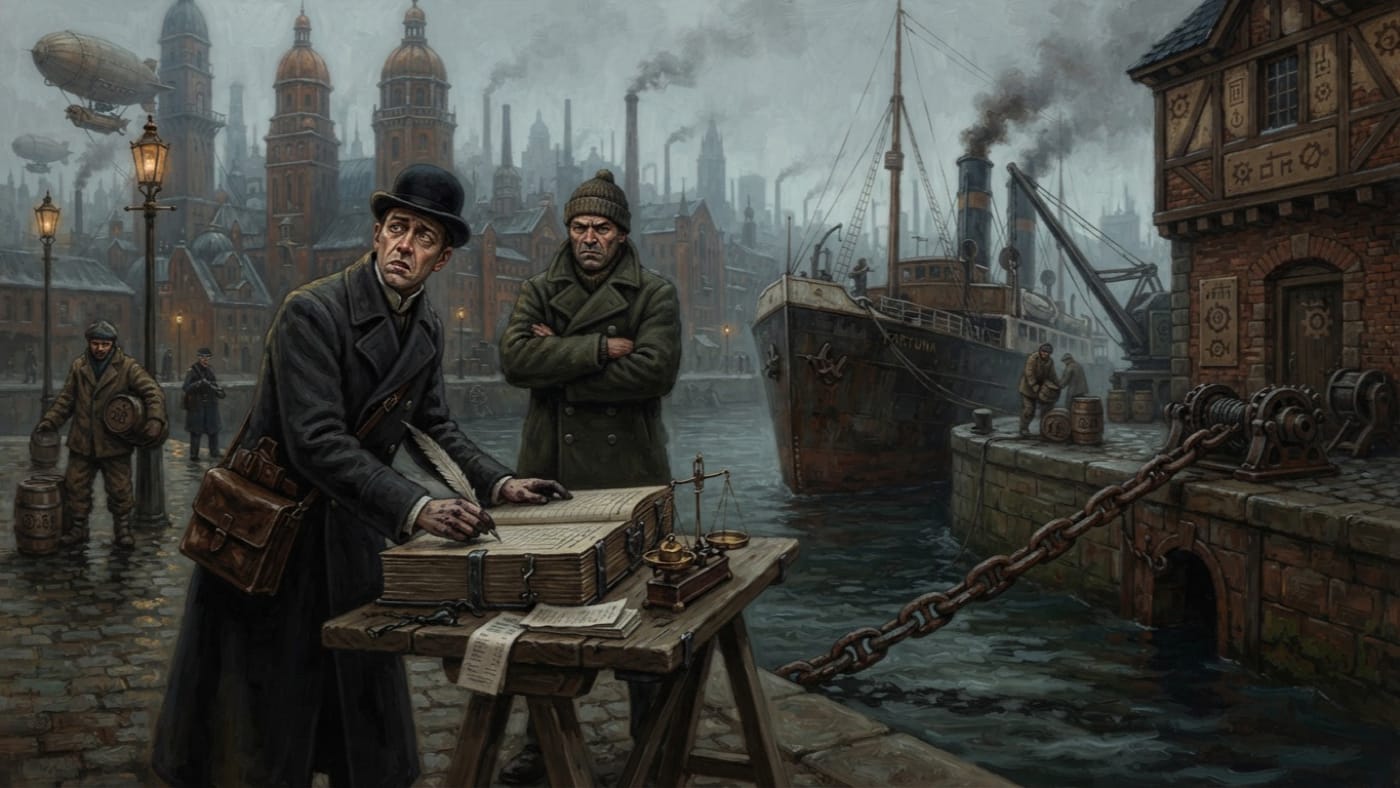
Denmark
The assessor keeps the ledger; the harbour keeps the chain
Denmark admits the Synod's assessor, negotiates its tariffs and guarantees its war credit. A.S. 201 assessment of the Danish harbours: the ledger is tolerated; the chain remains Danish.
Codex Ref. II.8.03-001
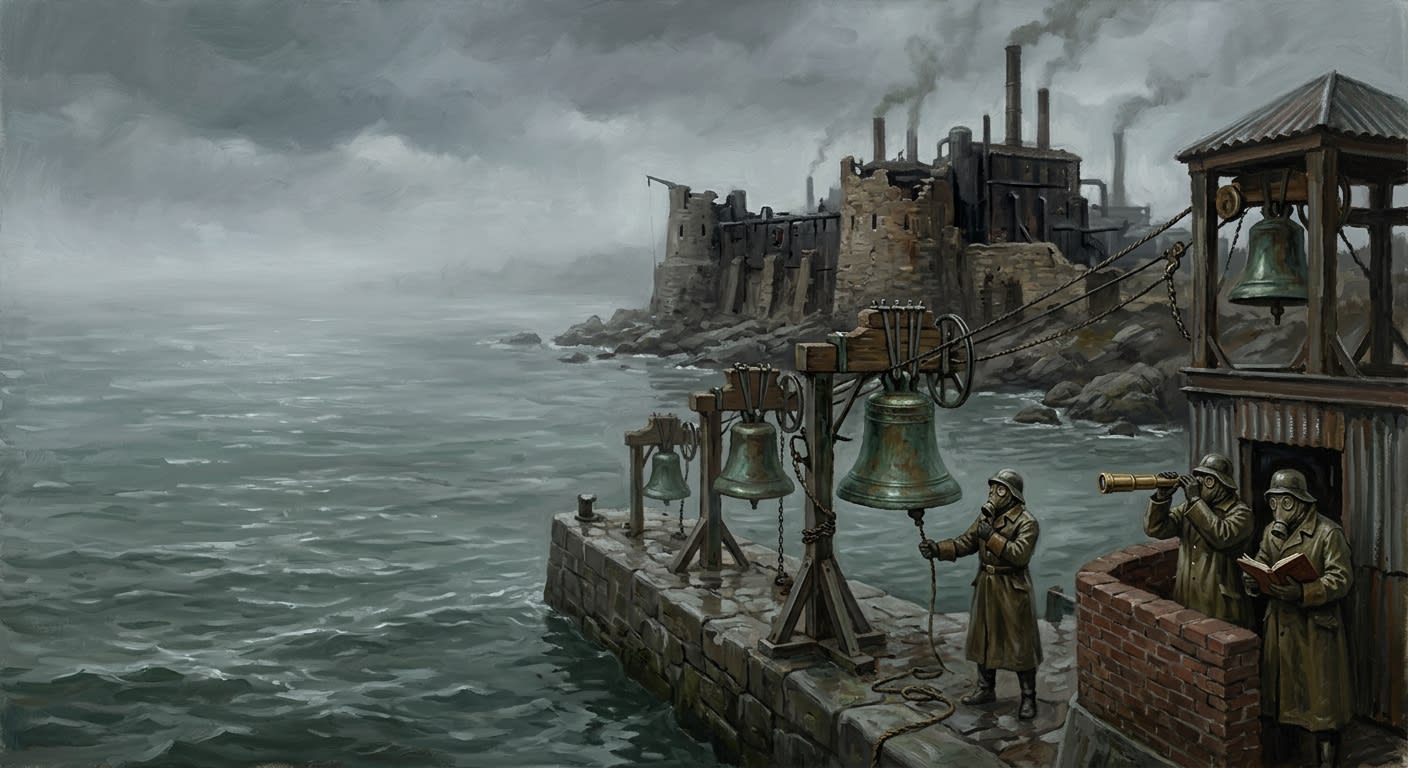
Det grå vattnet
The grey water listens before the bell decides whether to speak
Det grå vattnet, the grey water of the Fractured North, names a Baltic and fjord phenomenon related to the Grey: patient, reflective, responsive, older than the Bureau's comfort, and held only by old bells.
Codex Ref. IV.1.07-005
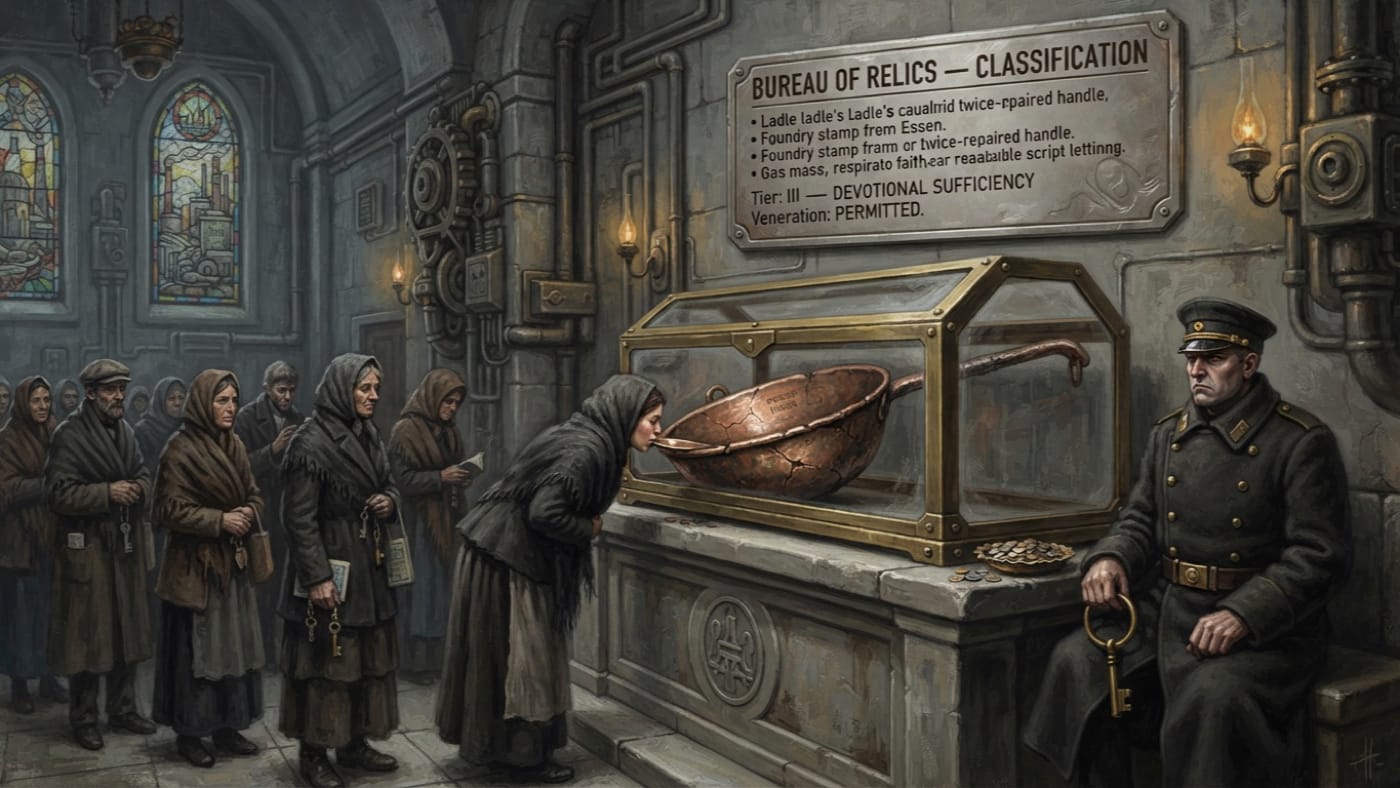
Devotional Sufficiency
The provenance is doubtful; the kissing may continue
Tier III permission to venerate a relic whose provenance remains doubtful. Saint Halva's ladle at Mainz is sufficient for devotion, pilgrimage and three pfennig per kiss; its ownership and powers remain unproved.
Codex Ref. XIII.1.43-001
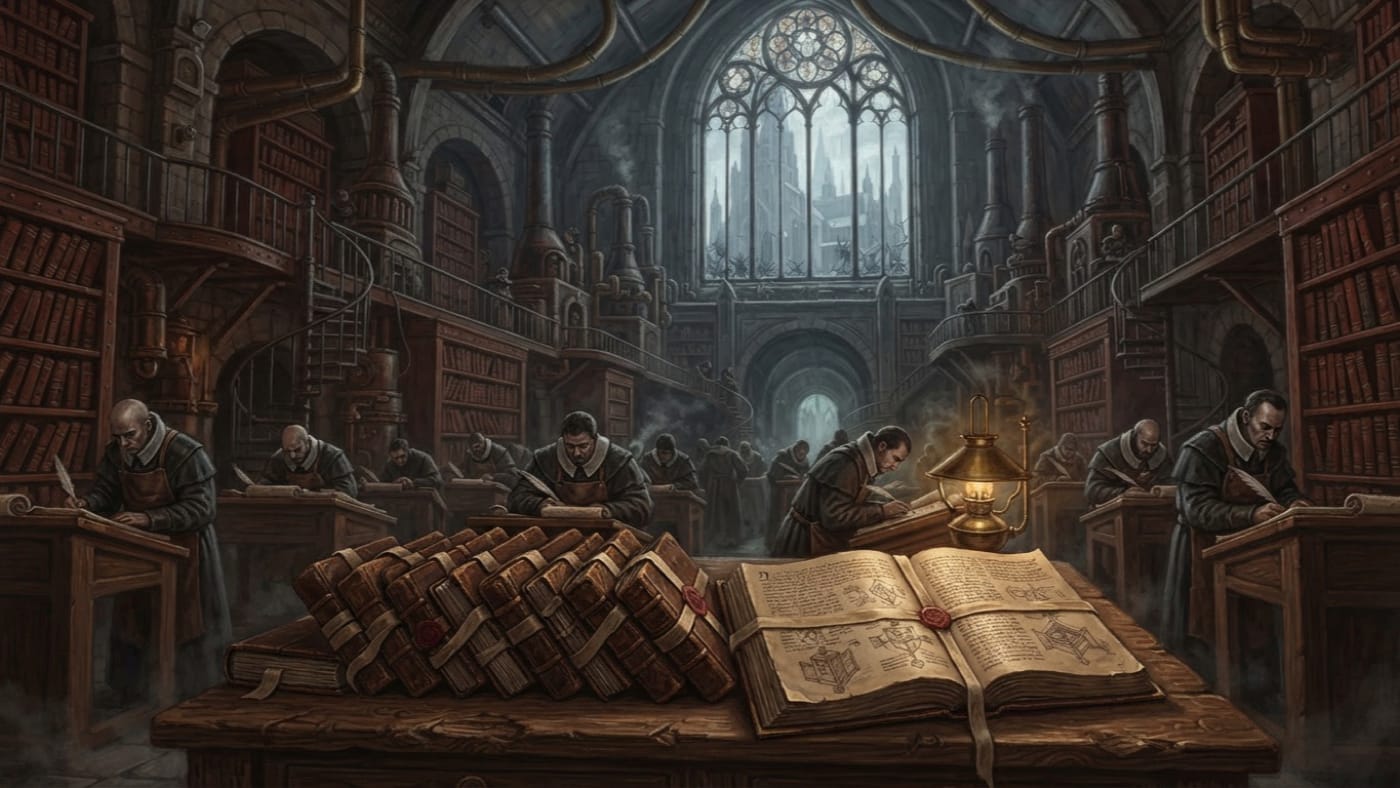
Diocese of Trier
Twelve pages of theology. No reconciled provenance.
Trier's twelve-page defence of multiplied Aldebrand relics in −32 A.S. / 1678 CE: magnificent theology, unreconciled provenance, and paperwork the Synod claimed a century late.
Codex Ref. I.3.09-032
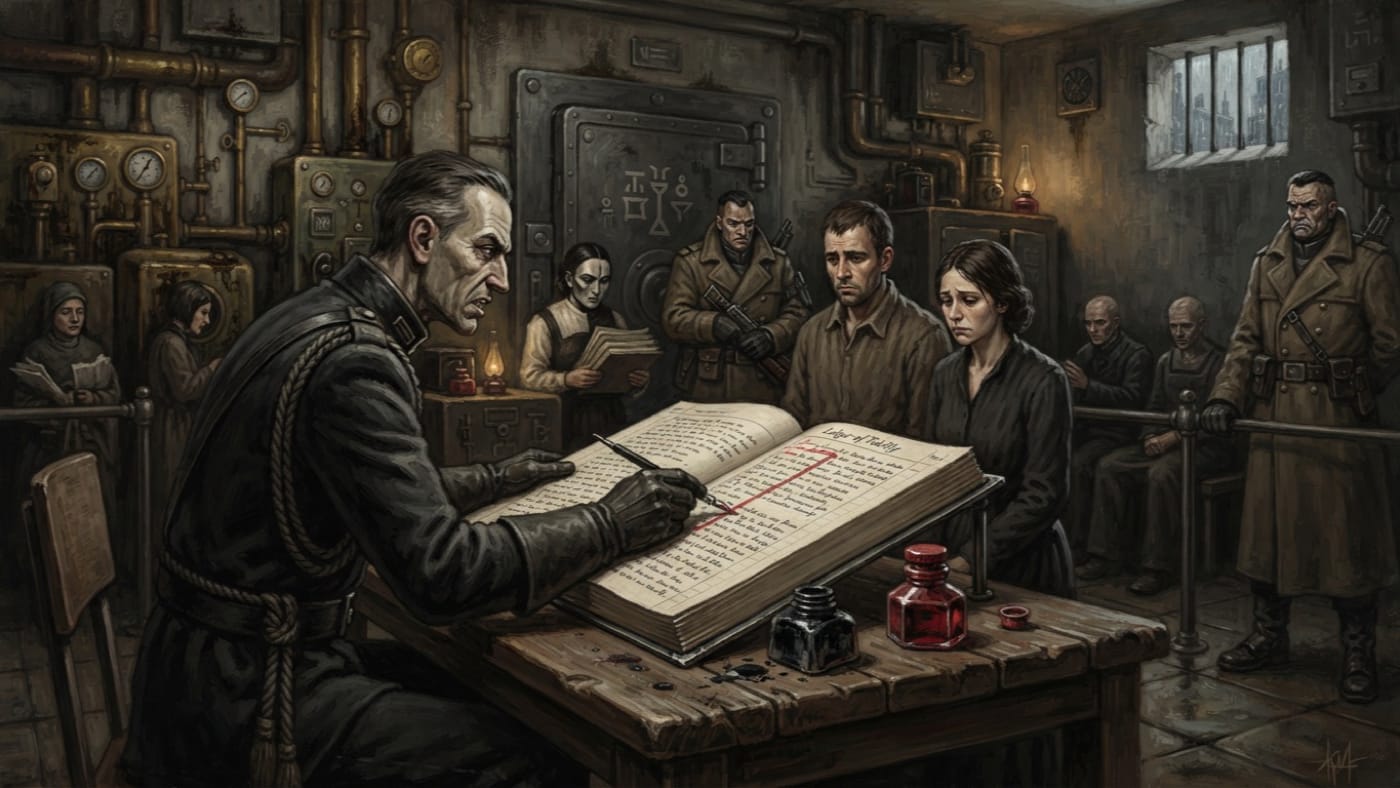
Dissolution Formula
The bond ends; the evidence remains
The Dissolution Formula closes witnessed vows by licensed speech and a red line. Strasbourg buries the bond, preserves the evidence, and collects the fee.
Codex Ref. VI.4.03-013
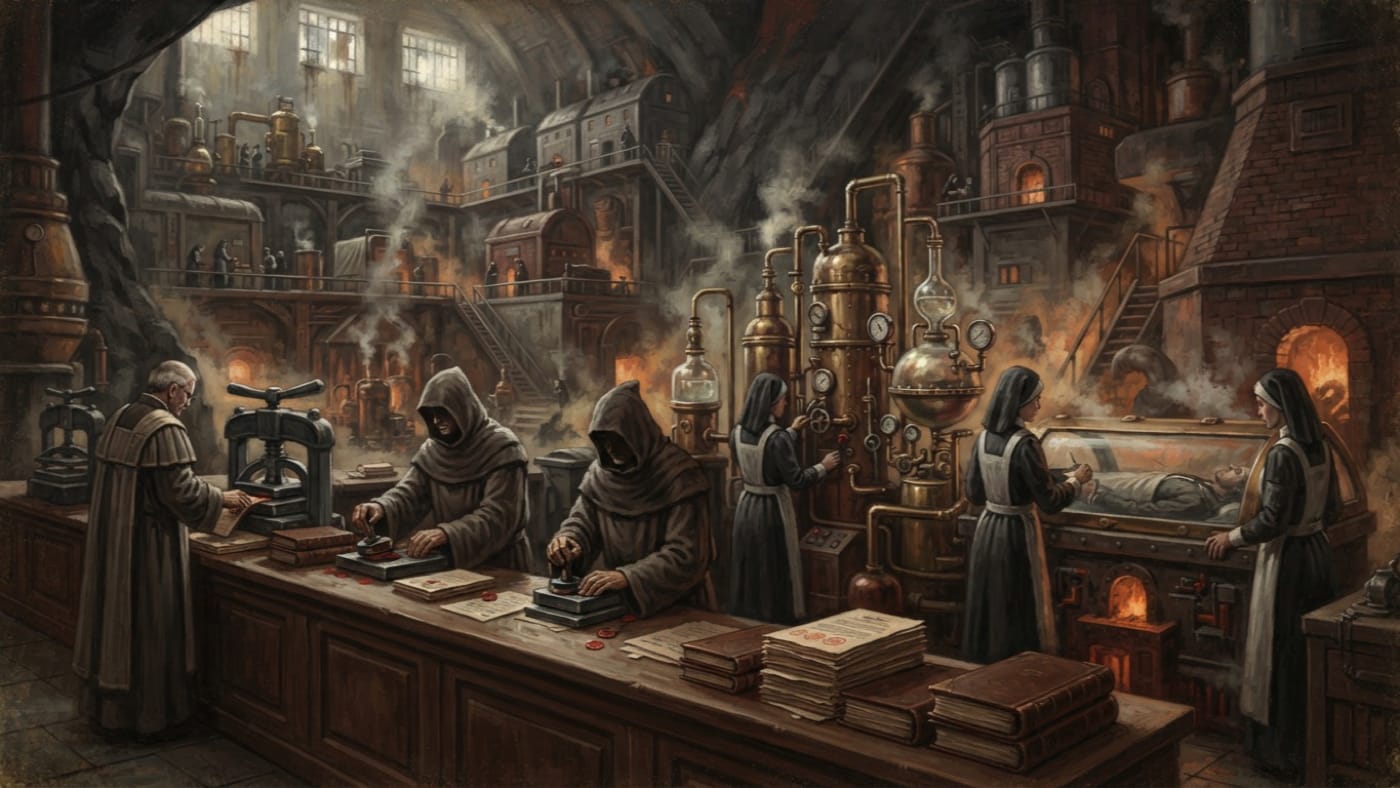
Doctrine of Acceptable Innovation
Three seals before the flame. A debt after the cure.
San Vesta's dispensation permits experiment after three seals and triplicate filing. The cure costs labour; the failure receives a classification. Unstamped experiment makes the practitioner a heretic.
Codex Ref. XIII.1.124-001
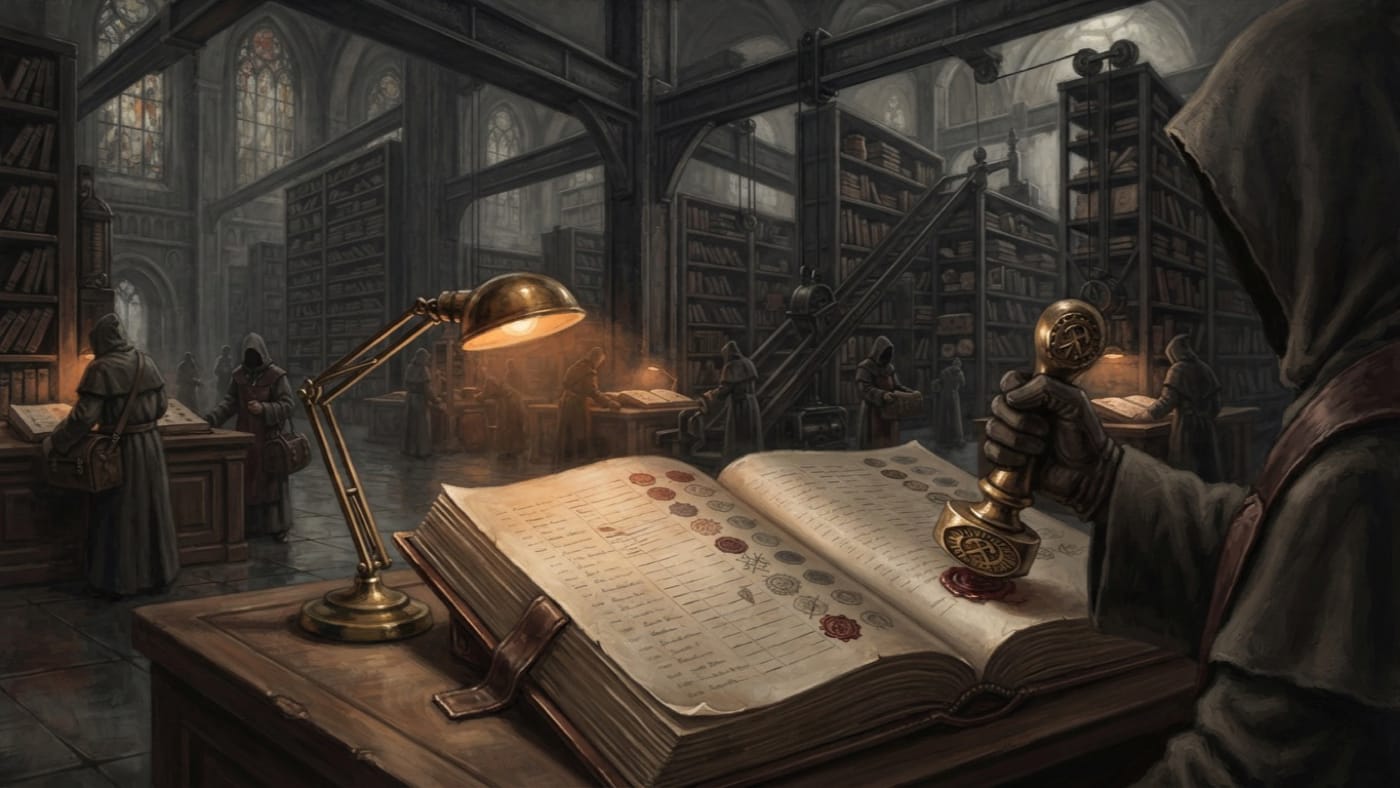
Doctrine of Sealed Intent
The office speaks; the hand goes upstairs
An affixed seal carries its office's authority, whoever pressed it. Worms supplies the documented anchor; attendance, consent and the hand remain separate questions.
Codex Ref. XIII.1.120-087
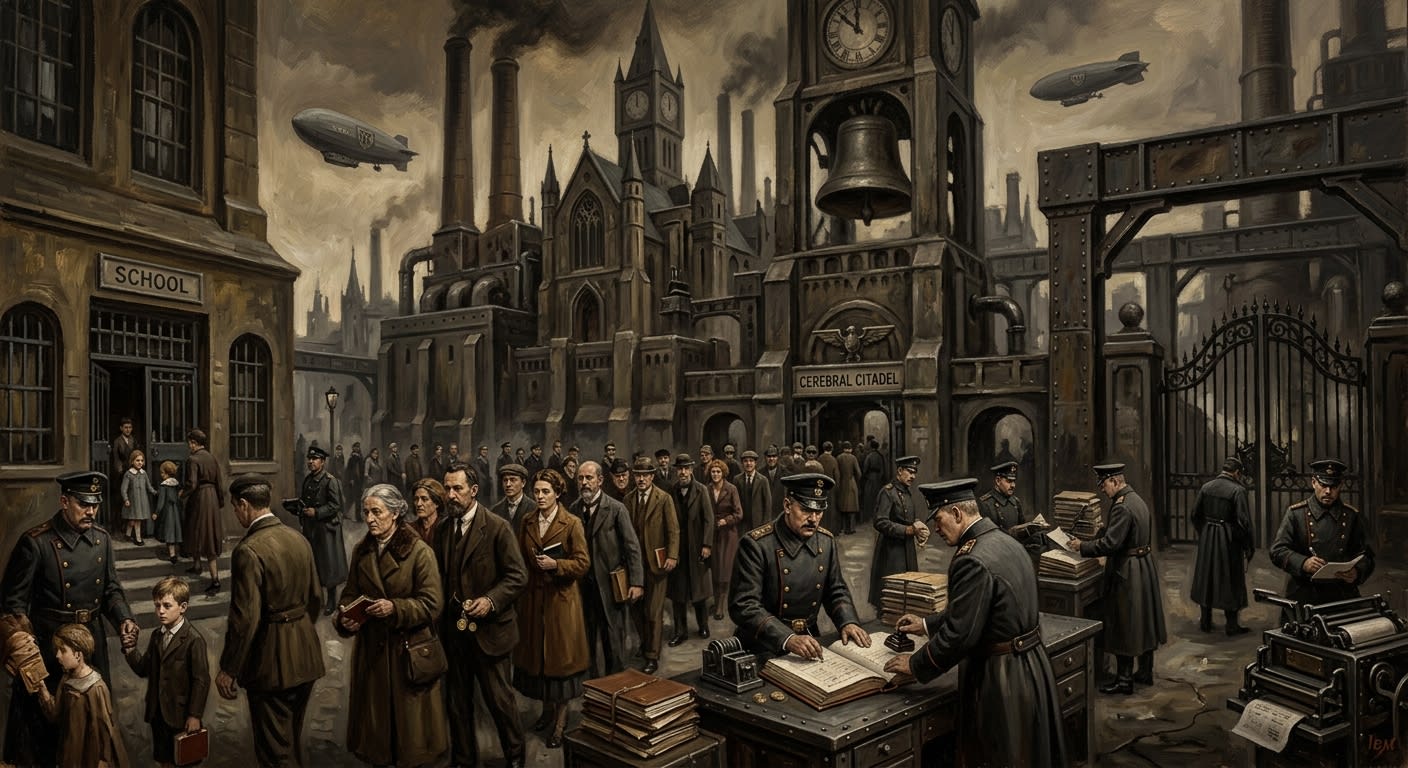
Dominion
Europe held in one gloved hand and taught to call it custody
Dominion is the Synod's official name for custody over Europe: border, tithe, bell, school, grave, and the thought before speech.
Codex Ref. XIII.1.02-090

Drag Corridor
The road that keeps the walker and spends his years elsewhere
A Drag Corridor is Syrion's linear wound in useful roads: a route that eats routine, keeps the walker moving, and spends his years where the map cannot object.
Codex Ref. XIII.1.87-201
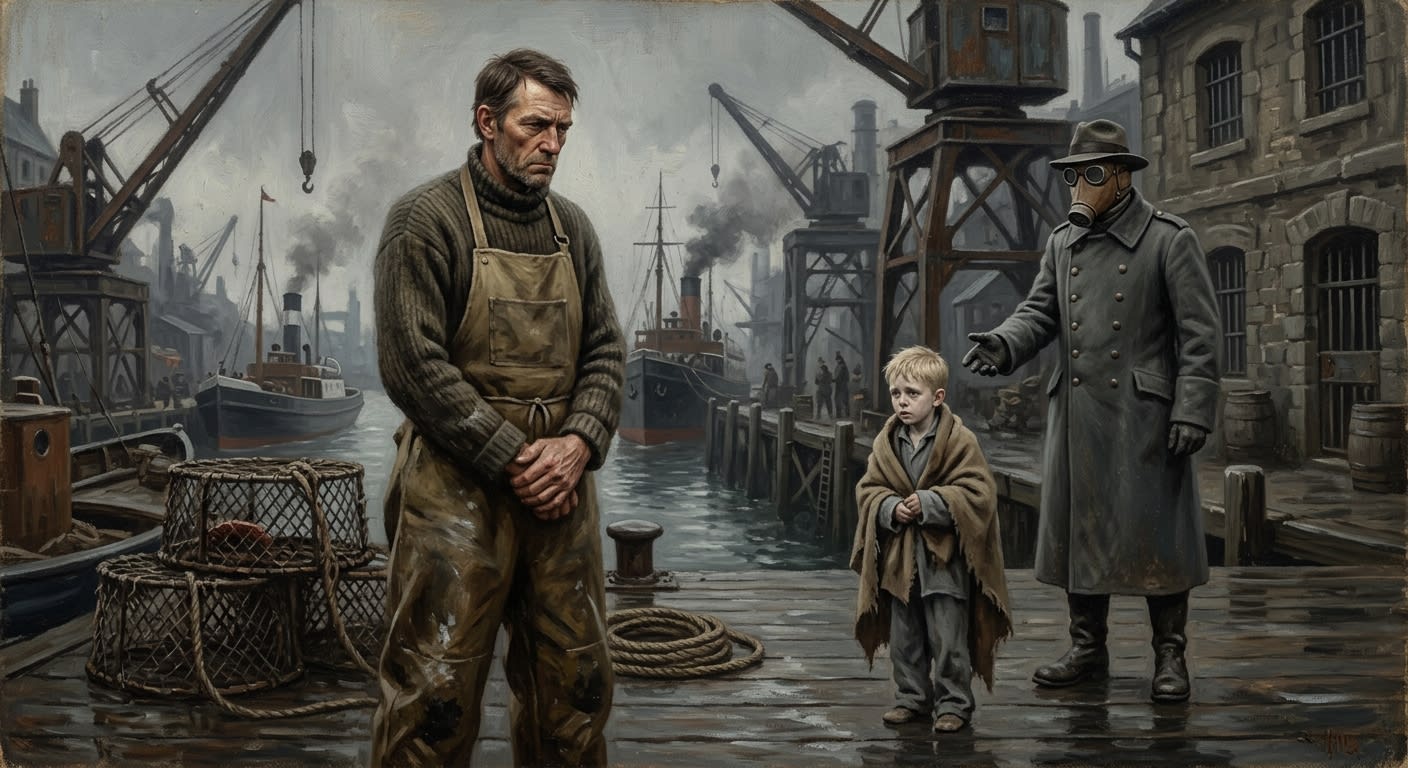
Dreher
A father disputes the archive and the sea pretends to give back what it took
Dreher, fisherman of Bastion-Königsberg's Harbour Quarter, refused the boy returned by the Grey and thereby made fatherhood a legal problem.
Codex Ref. III.2.01-040
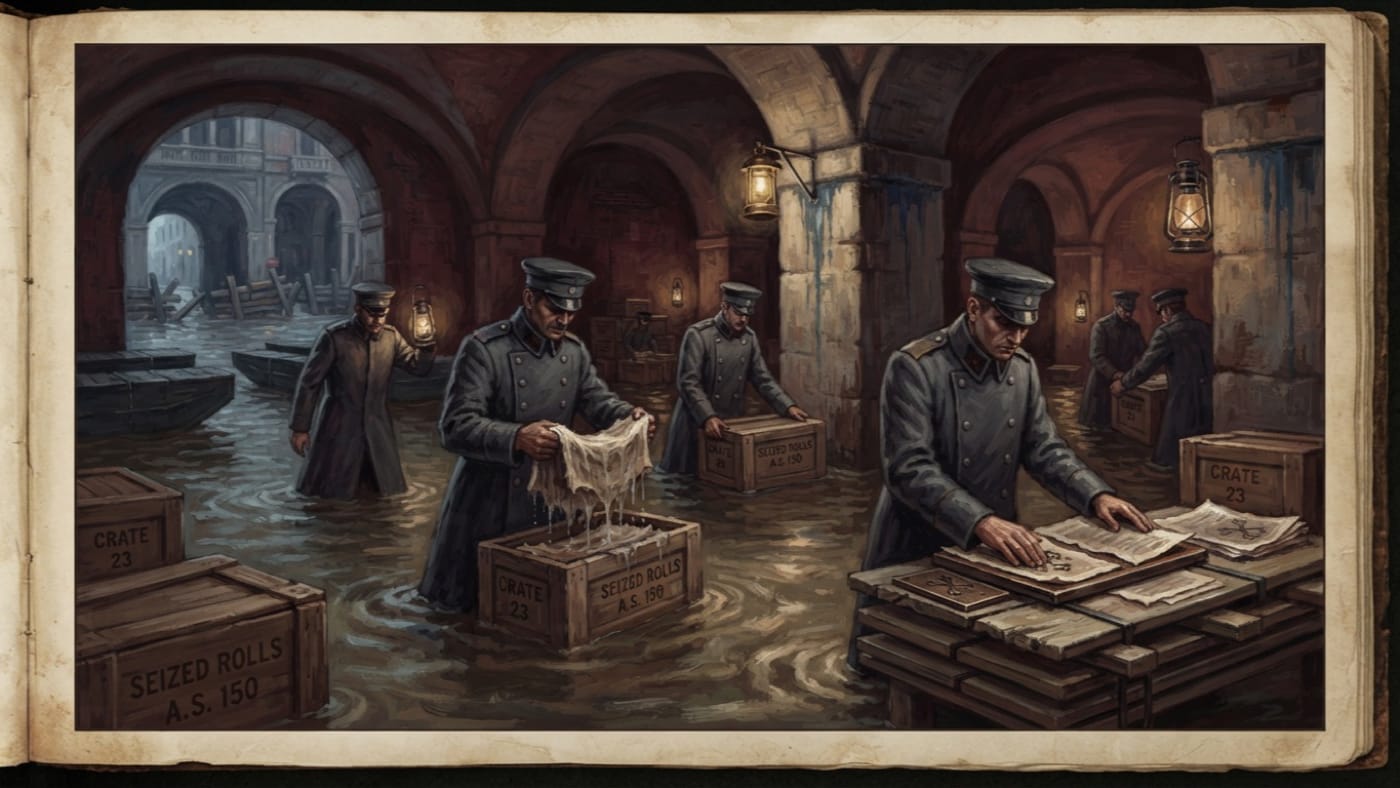
Drowning of Lombardy
The canals obeyed; the registers remembered
In A.S. 150, the Bureau of War turned Lombardy's canals against the Coalition of the Crossed Keys. Water corrected its streets; preserved registers kept its families under review.
Codex Ref. VII.8.04-002
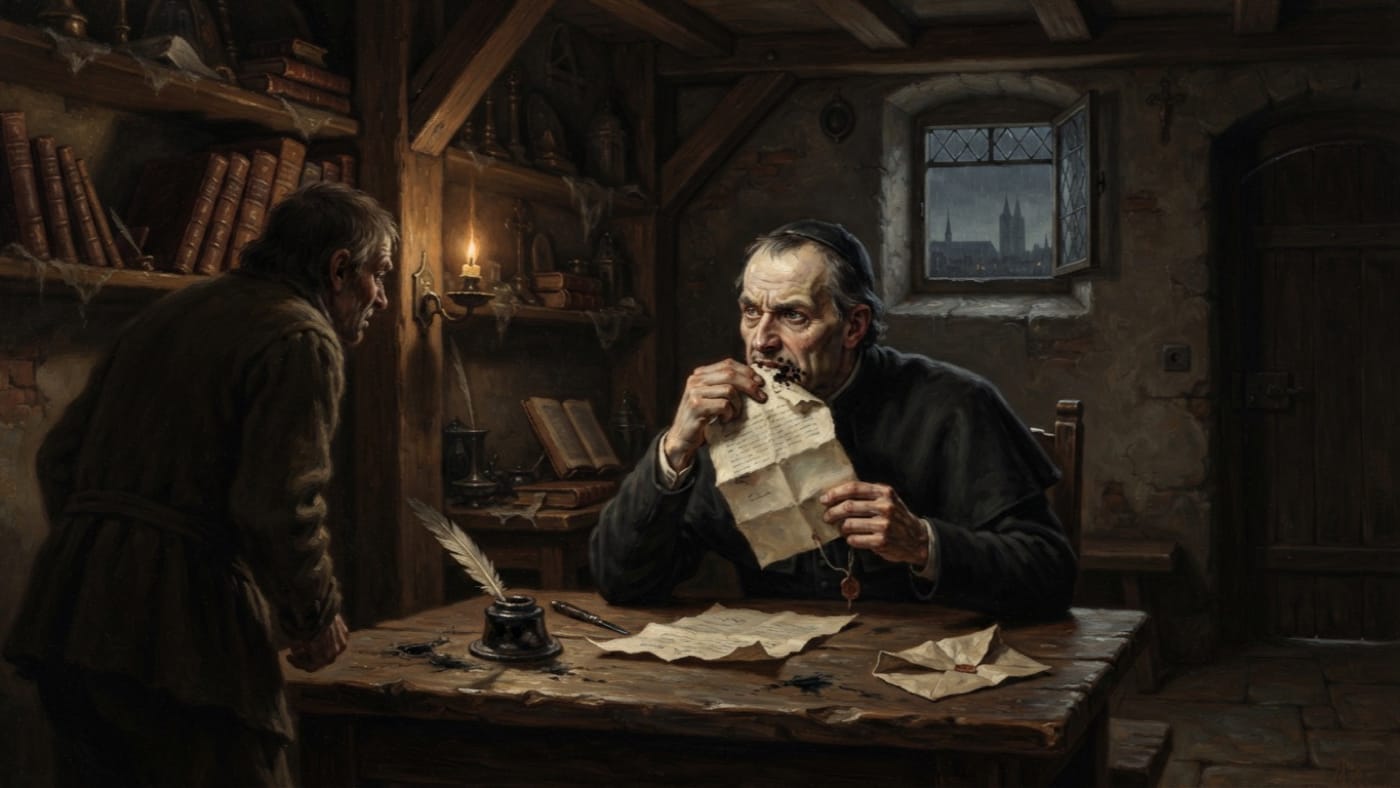
Düsseldorf
One priest. One letter. Nothing left to quote.
A Rhineland city remembered for Father Grauss, who ate the Amsterdam letter in A.S. −32 / 1678 CE. The magistrate supplied three days in gaol; the Bureau supplied a classification.
Codex Ref. II.2.01-941
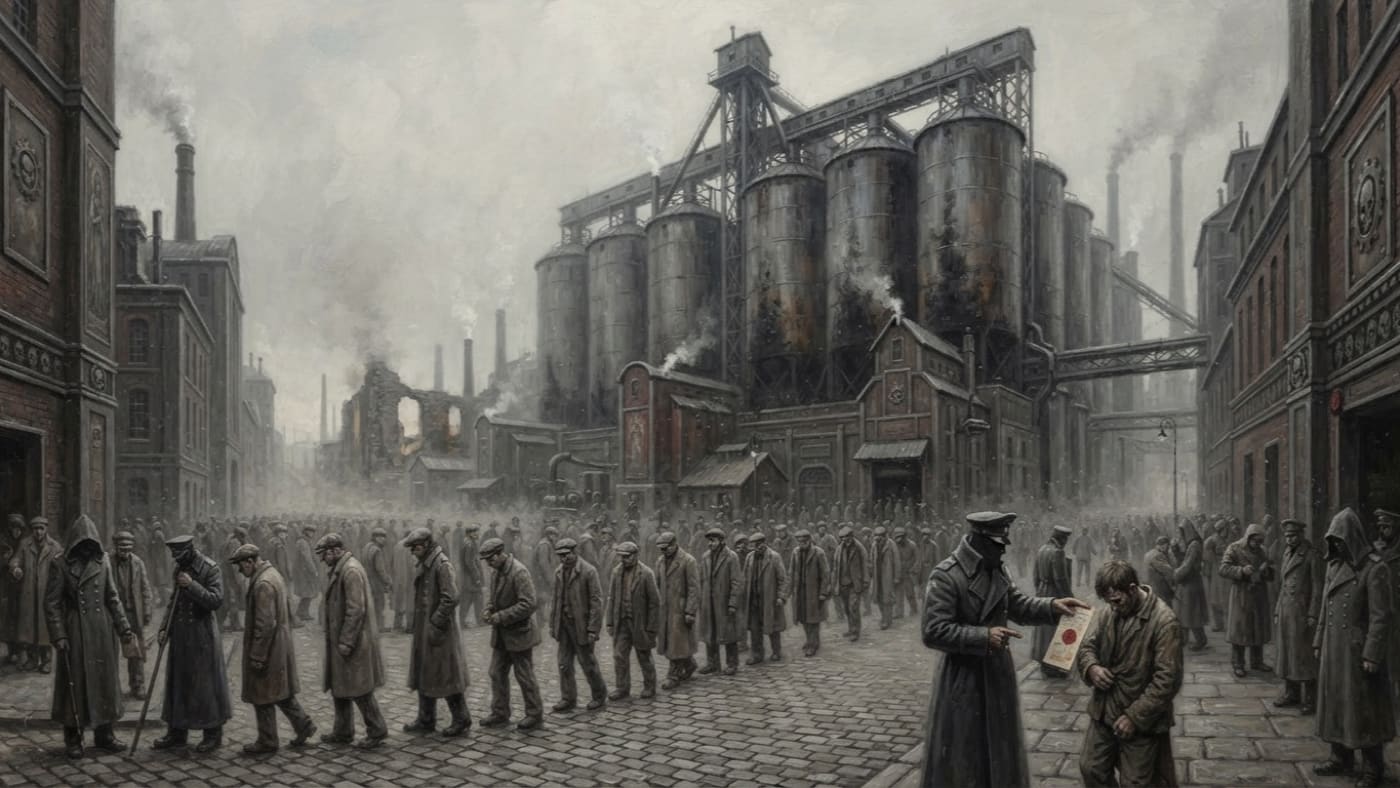
Dust Fire
Three hundred and forty dead, eighty-nine years of temporary discipline
Wexel's A.S. 112 grain-dust explosion killed 340. Steel replaced the wooden silos; temporary joy discipline gave the dead a permanent job policing the living.
Codex Ref. VII.8.10-112
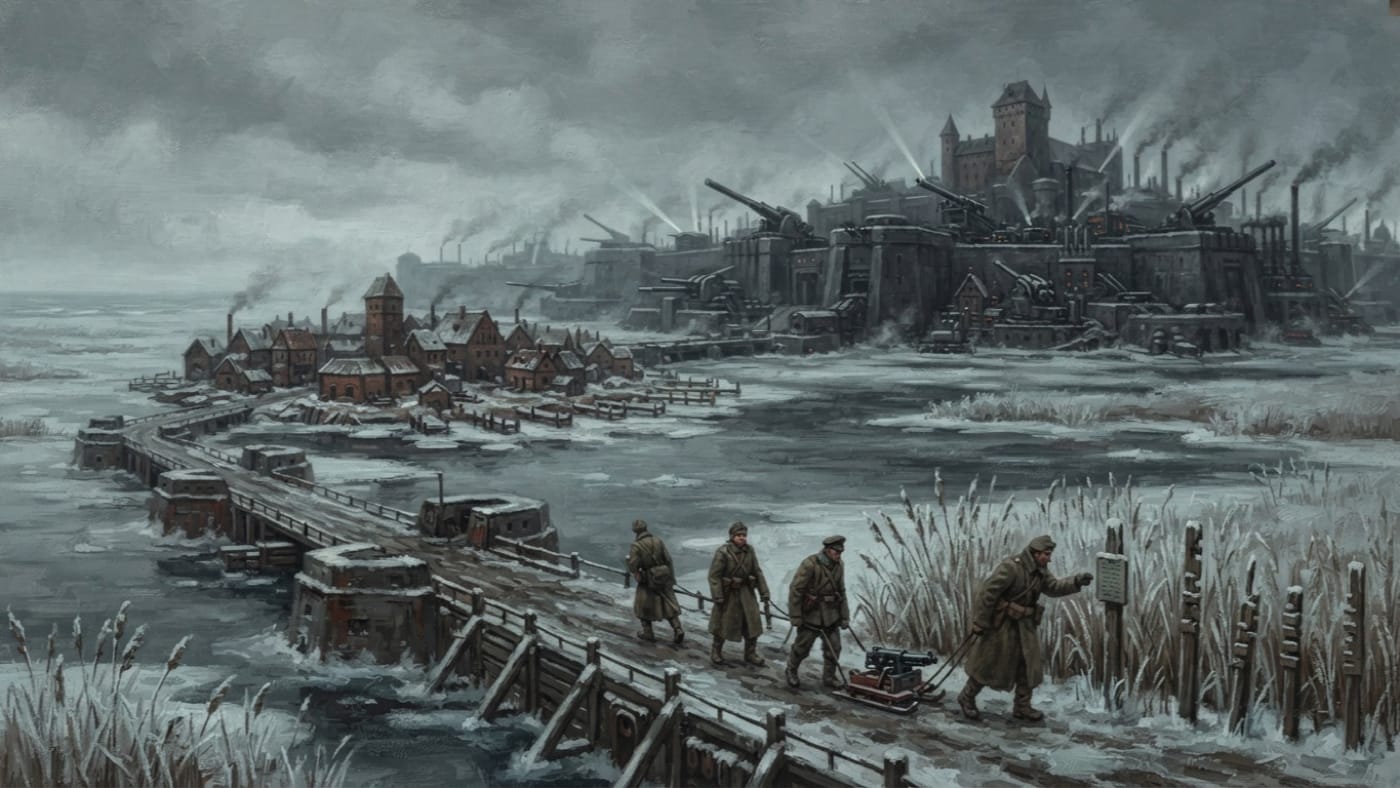
East Prussia
Where the Line Runs Out of Land and the Survey Runs Out of Courage
East Prussia holds the Baltic end of the Sagittal Line: Königsberg, the Masurian maze, and the villages that feed the walls. The Bureau can count its stamps. It has yet to count the region.
Codex Ref. II.4.07-002
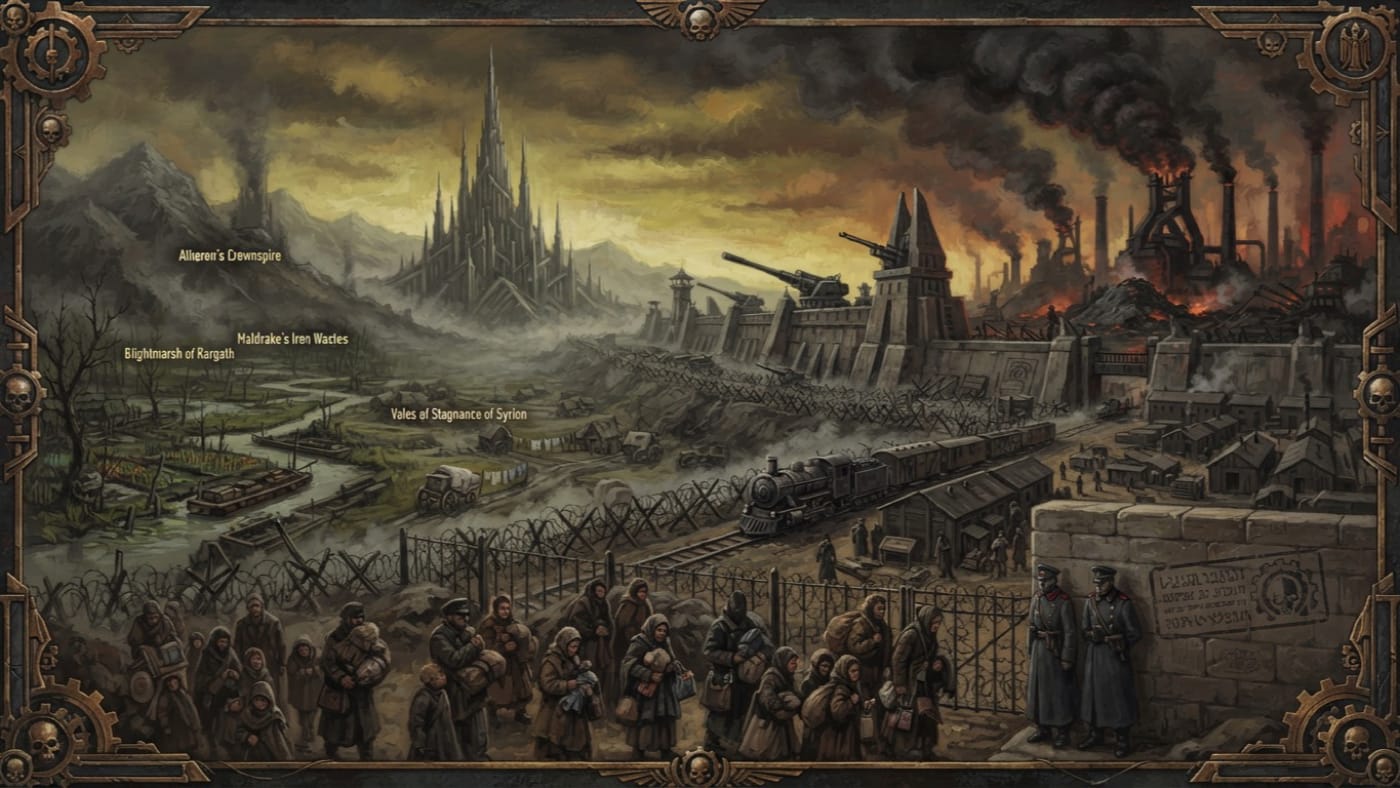
Eastern Kingdoms
The lands were lost; the Ledger retains their names
The eastern jurisdictions lost after the Sundering, now largely held by rival Sin-General dominions. Their people endure; the Ledger still calls the occupation temporary.
Codex Ref. II.6.07-201
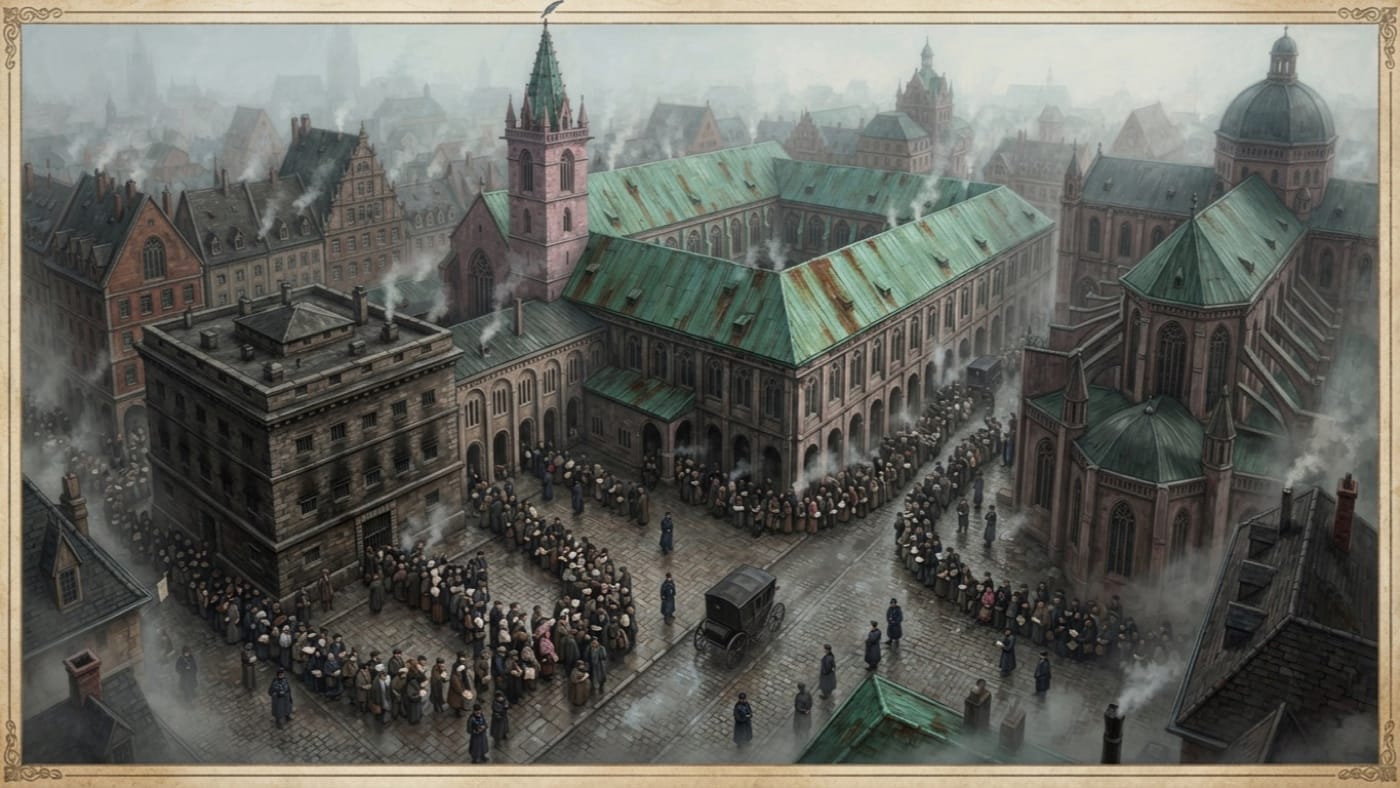
Ecclesiastical Quarter
Where authority gathers and petitioners go round in circles
Strasbourg's houses of authority gathered around the Cloister of Concord. Doctrine writes, Records remembers, Tithes counts, and petitioners carry the receipts. Surveyed in A.S. 201; the perimeter remains uncertified.
Codex Ref. II.1.04-005
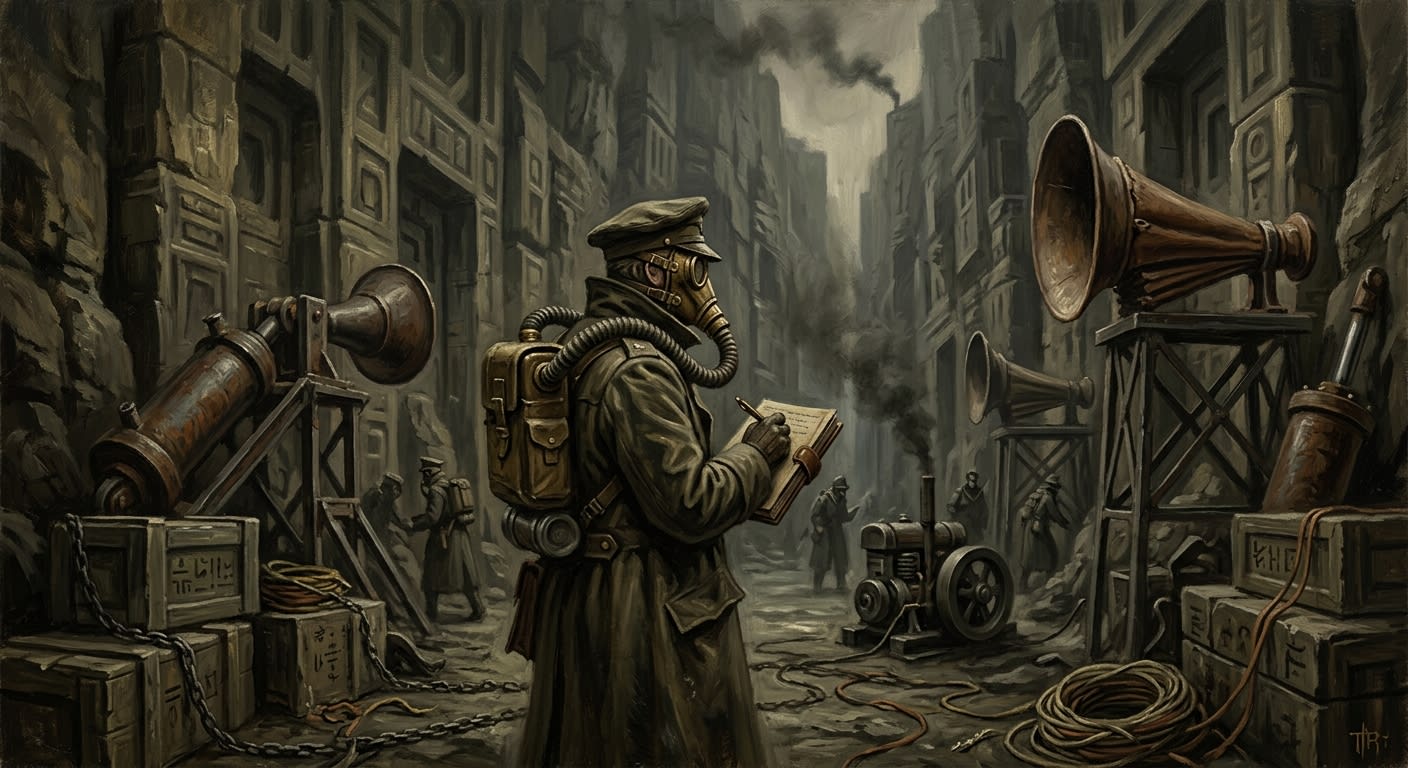
Echo Creed
When the canyon misquotes prayer and the invoice arrives clean
At Peregrine Row, a canyon repeats prayers with one vowel altered, and the Road Chapter has discovered that bad theology invoices beautifully.
Codex Ref. XIII.1.23-001
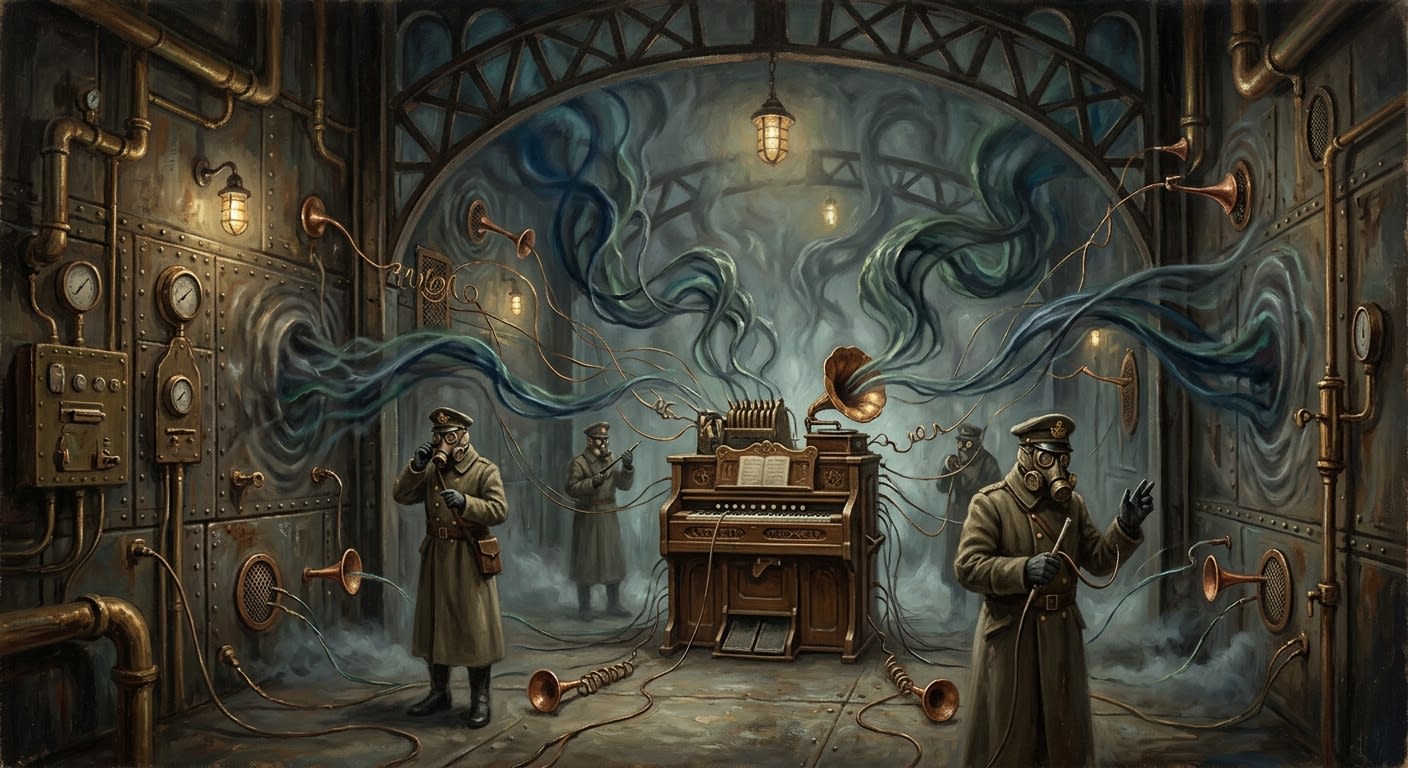
Echo Weather
The room replies, and the wise do not harmonise
Echo weather is the Brand-Singer name for chamber response: the room returning cadence with manners of its own.
Codex Ref. XIII.1.41-004
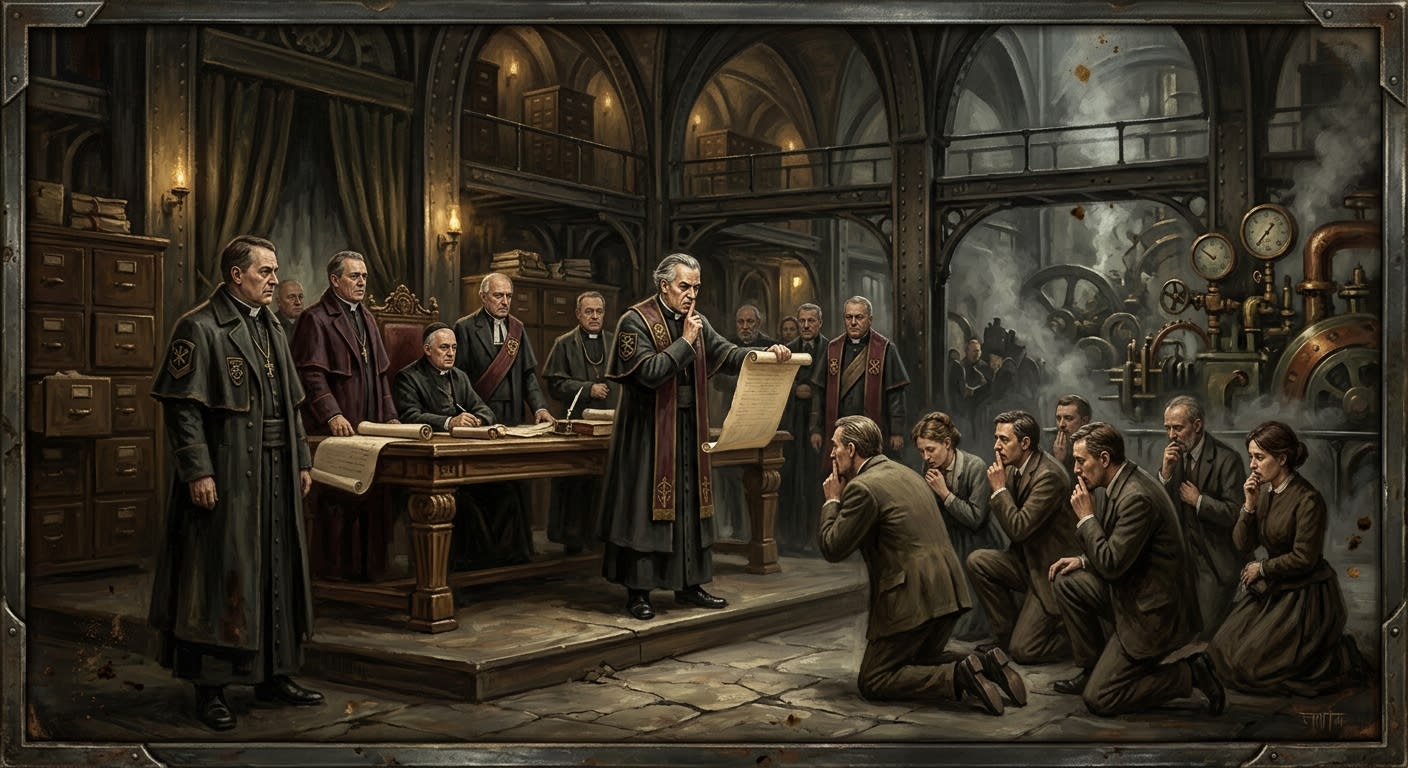
Edict of Cologne
Consent is expensive; retroactive obedience is cheaper
The Edict of Cologne bound dioceses to Strasbourg by discovering their obedience had already happened, then teaching silence to sign.
Codex Ref. XIII.1.90-100
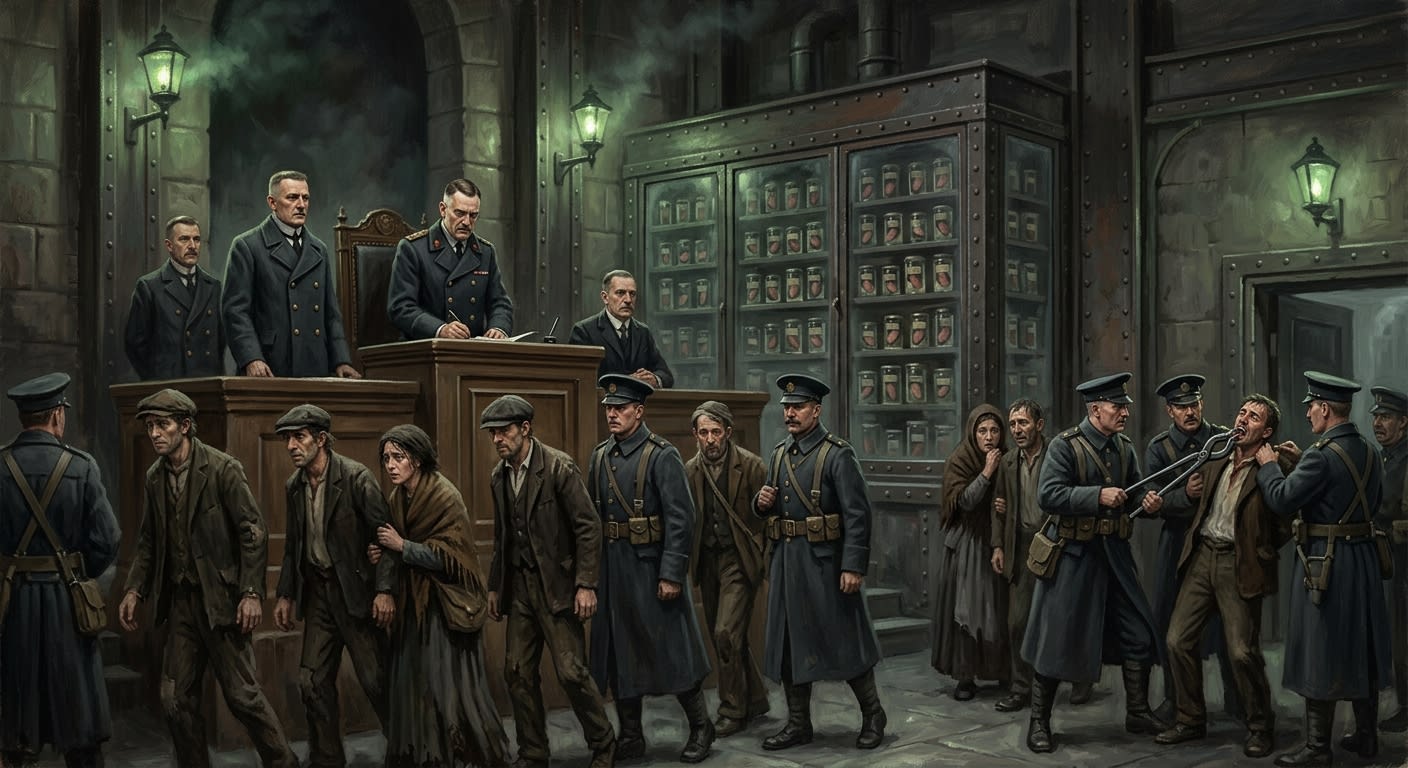
Edict of Ironmouth
When Reason mistook prayer for infection and discovered eleven thousand tongues to classify
A.S. 30 Rationalist law that made spoken prayer vocal treason, answered hymns with pincers, and left the Synod a cabinet of tongues to condemn and study.
Codex Ref. XIII.1.55-001
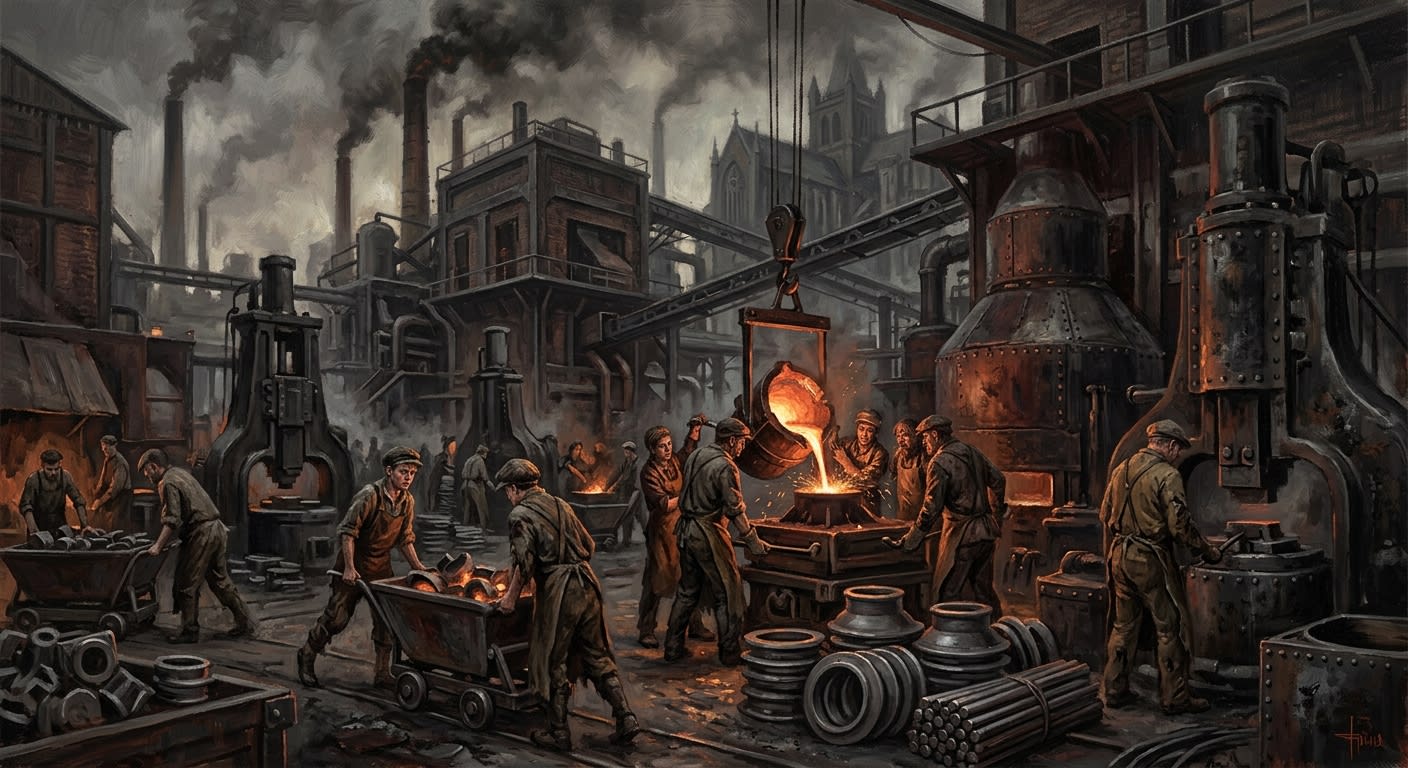
Edremit
The town that casts the throats by which Constantinople breathes
Edremit is the Hintermark casting town that makes boiler throats, casing collars, rivet stock, and hoarse children for Constantinople's hungry works.
Codex Ref. II.4.09-118
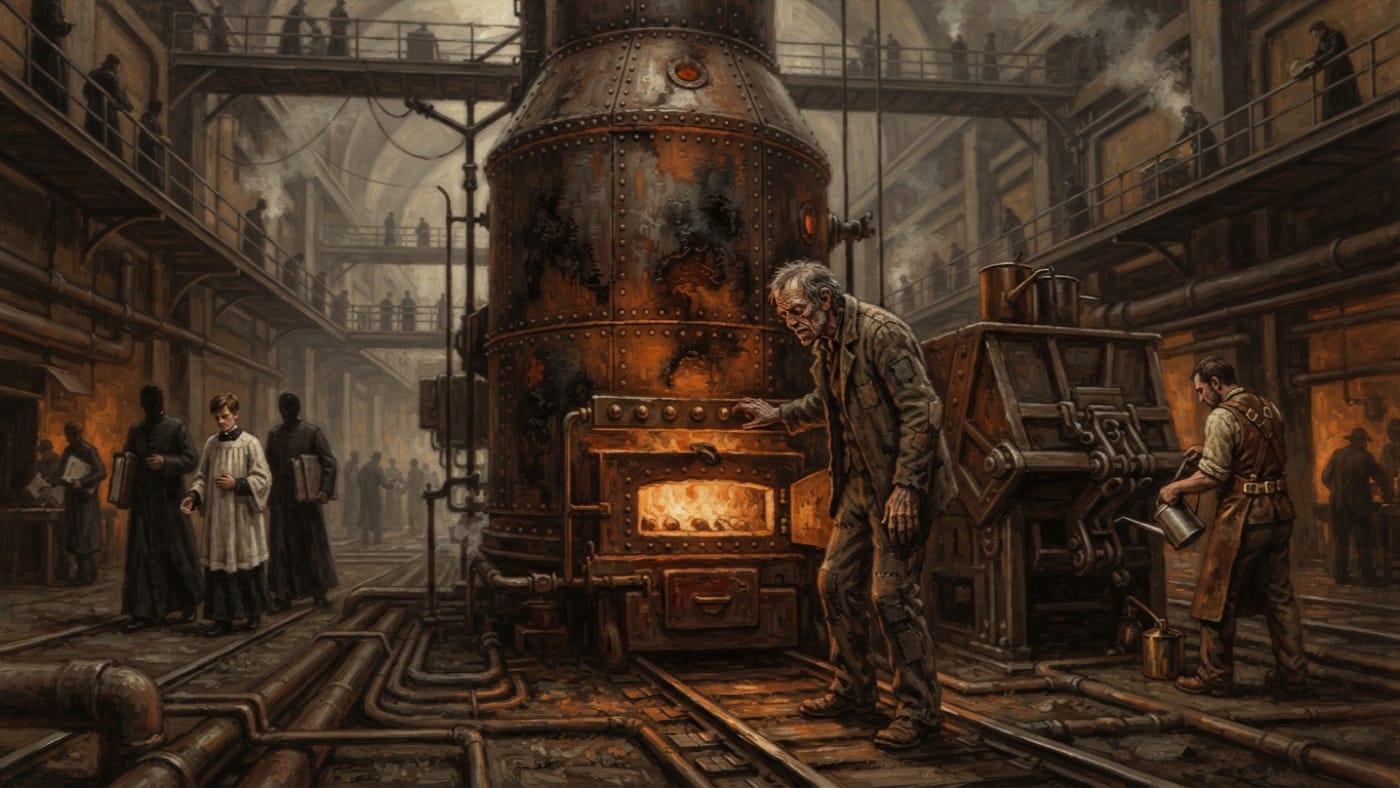
Edrik Voal
The man the furnace waited for and the ledger barely kept
An elderly Brast furnace-feeder whom Saint-Combust waited for. The A.S. 199 log files Edrik Voal beside singer removal and hinge oil; it certifies usefulness and supplies almost no biography.
Codex Ref. III.1.04-007
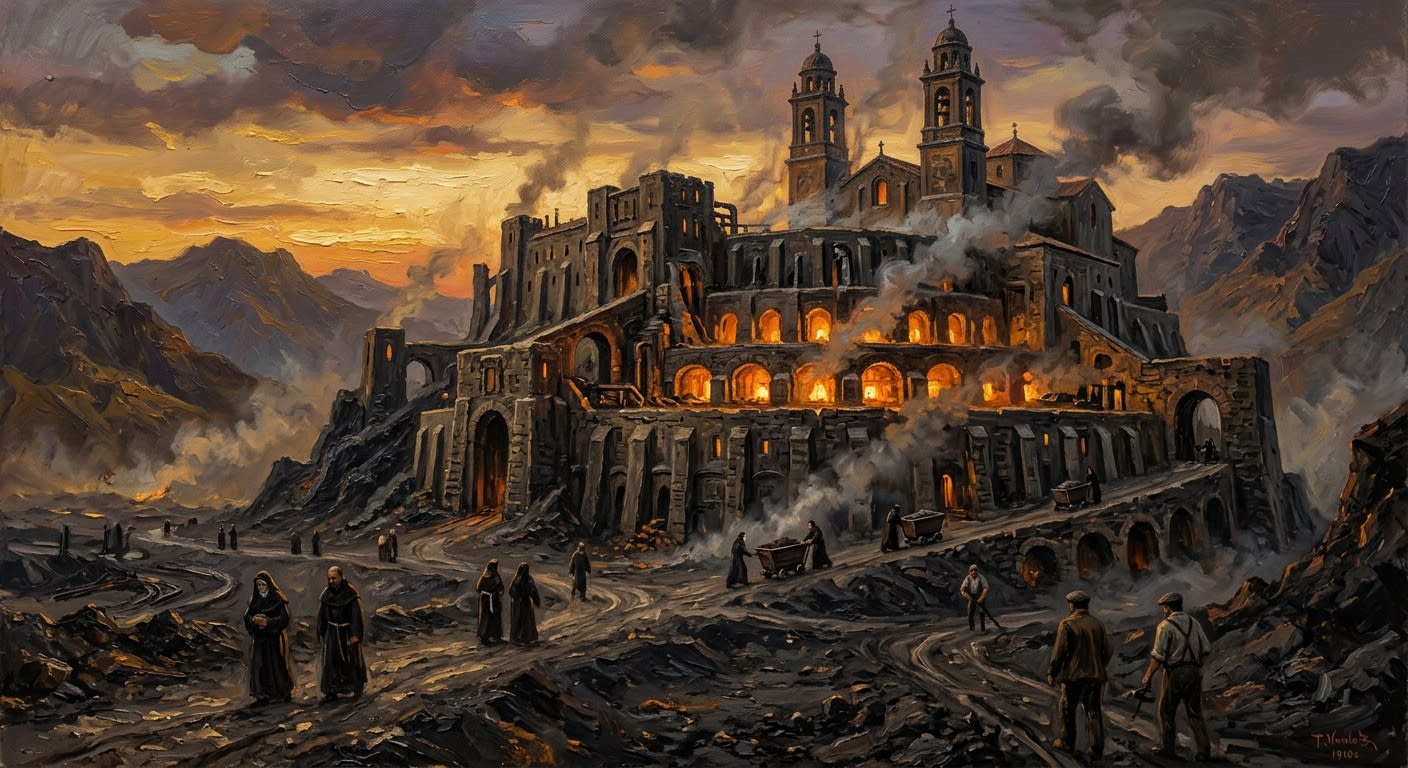
Ember-Priory of San Vesta
The ovens glow. The debt accrues. The smoke writes names no one authorised.
A volcanic priory-city in the Iberian south where bread never spoils, dying men buy three more days, and the sealed vent beneath the foundations grows warmer every year. The Synod's most productive monastery, and possibly its most dangerous one.
Codex Ref. VII.1.03-001
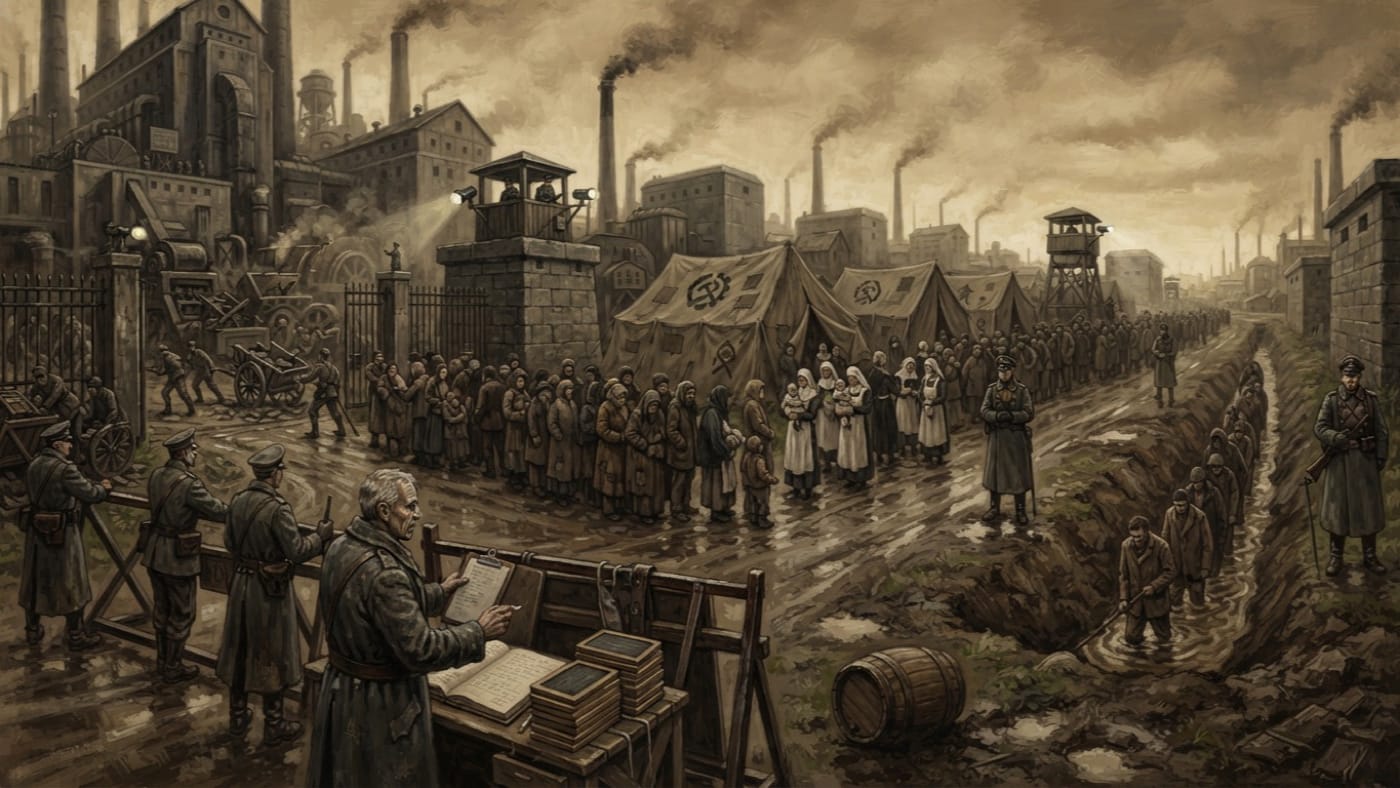
Emergency Disposition Table 4-B
The beer was omitted; the ditch remained
Records turned Thenm's A.S. 93 road decision into Table 4-B: beer omitted, ditch retained. This A.S. 201 survey establishes neither its issue year nor its present force.
Codex Ref. XIII.1.93-004
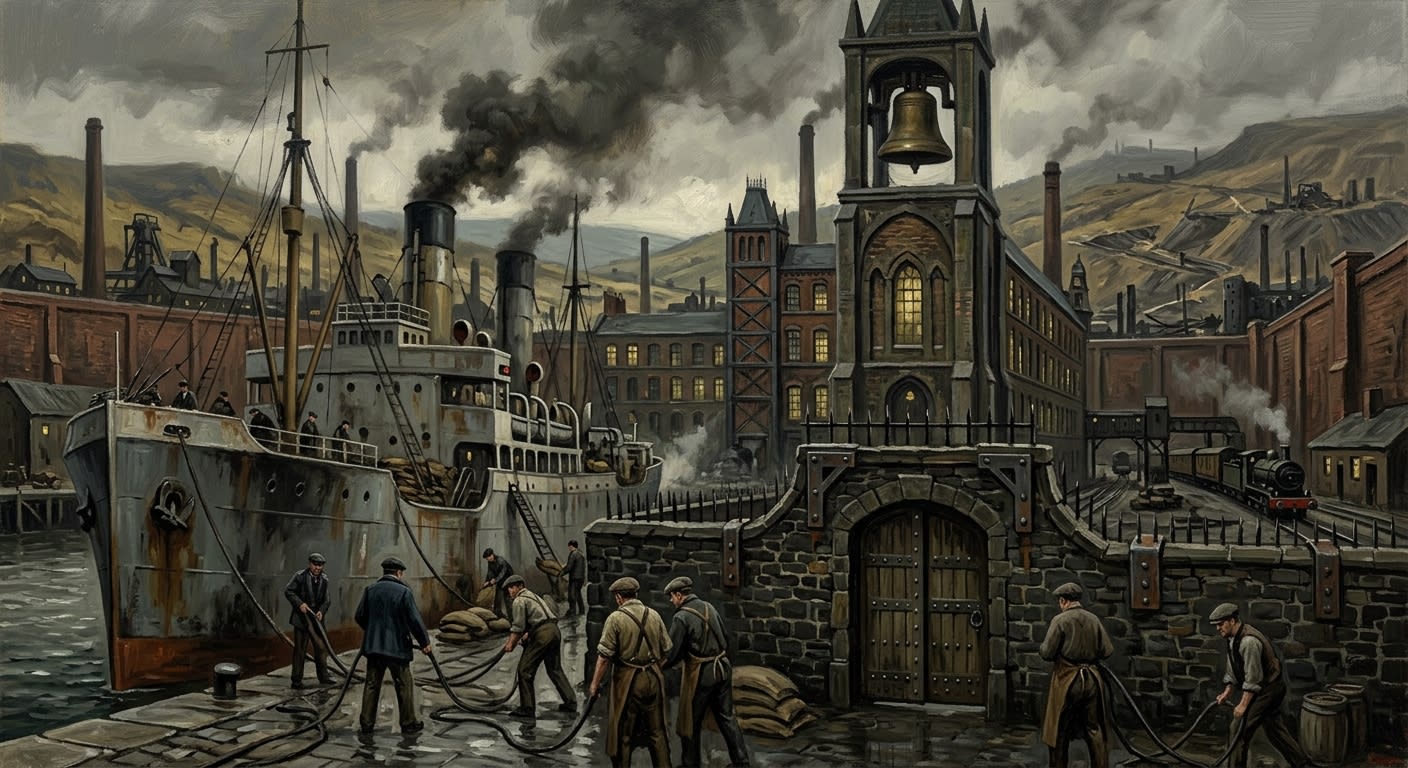
England
The island province that declined the province and kept the invoice
England is the British Crown's southern engine: chalk, bell, harbour, parish wall, and island refusal, useful enough to spare and rude enough to endure.
Codex Ref. X.1.03-201
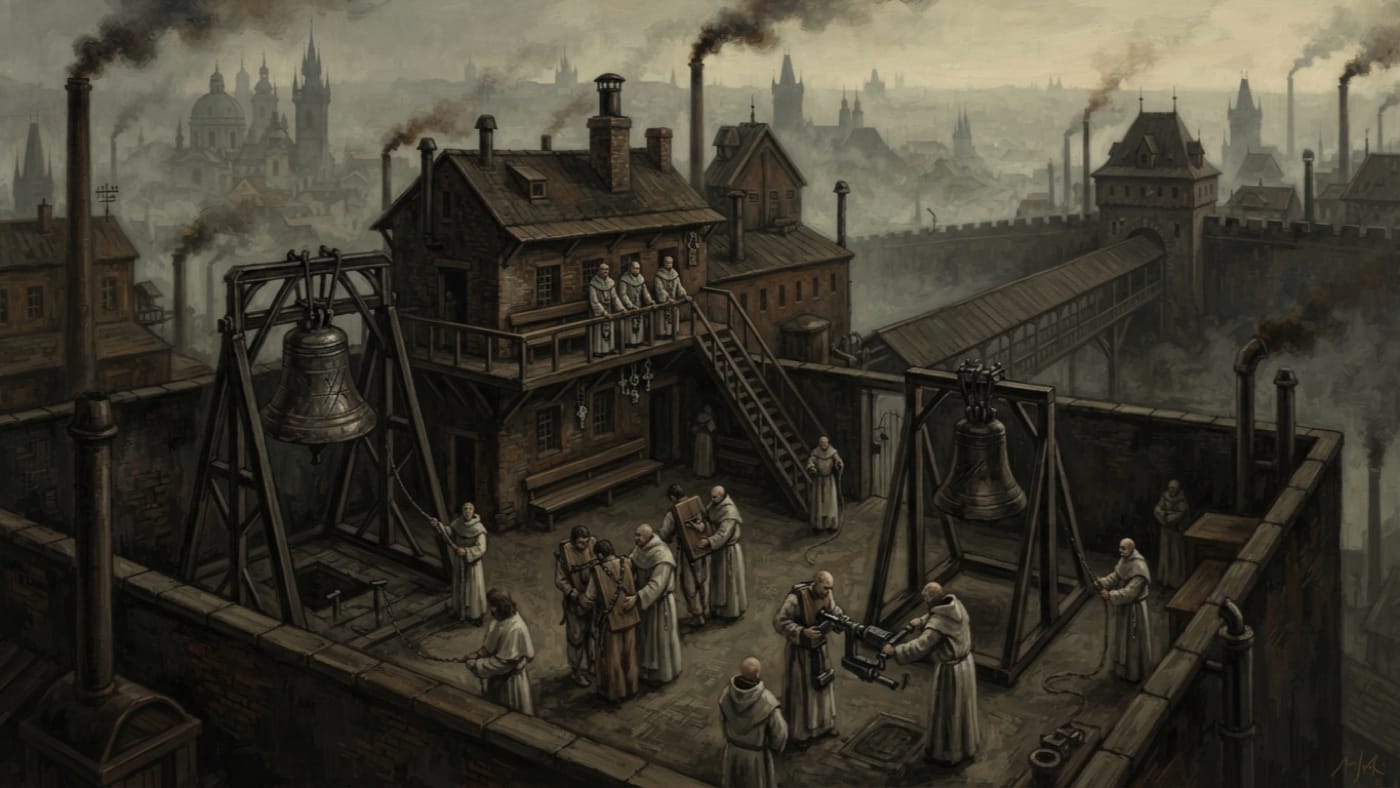
Ephrath Chapterhouse
The condemned leave once; the oak returns every year
Prague's Ephrath Chapterhouse gives Purity's sentences a courtyard, a departure bell and a shelf. The condemned leave once; the oak is prepared for next year.
Codex Ref. II.3.02-002
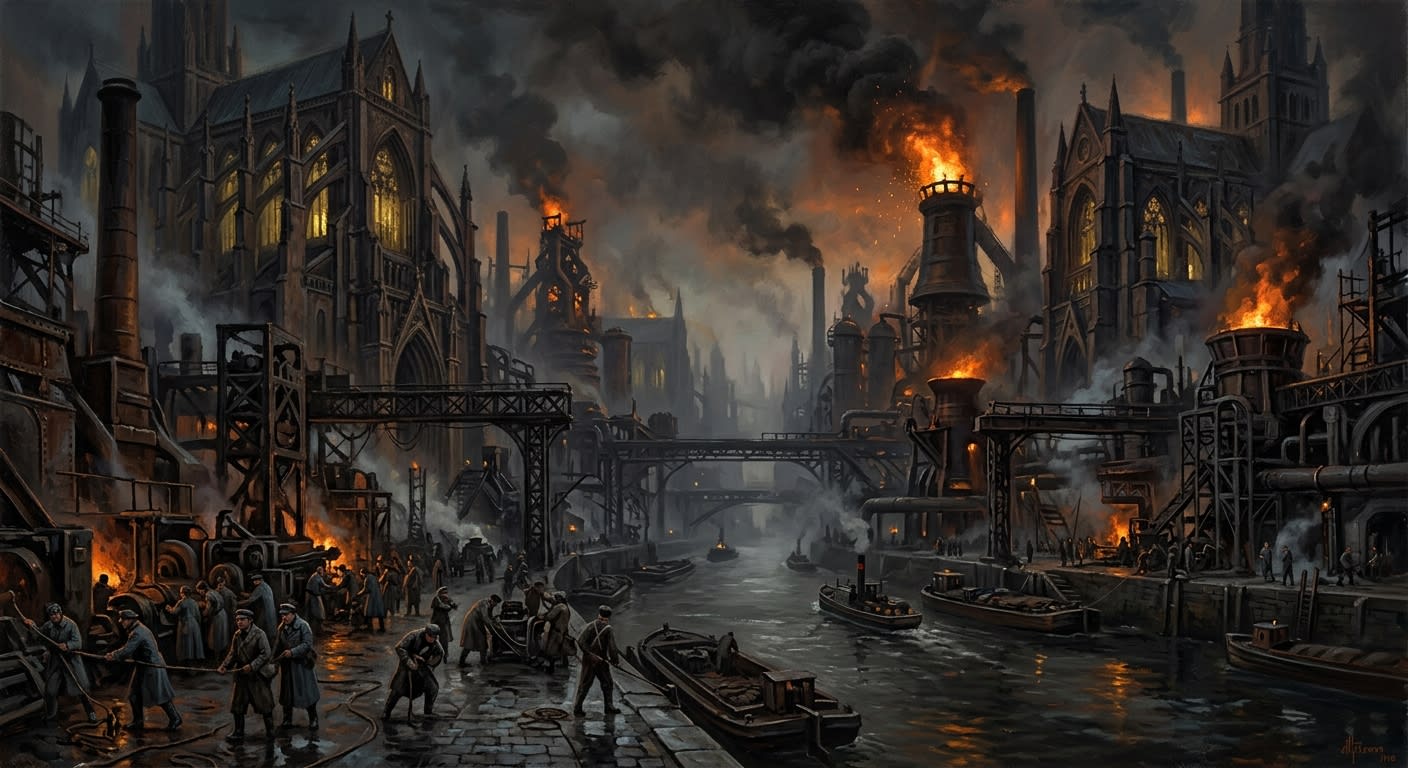
Essen-of-Hymnsteel
The city the Line cannot outlive, and dare not silence
Industrial holy city where steel is calibrated by choir and governed by three Bureaus who share nothing willingly except the fiction that none of them is losing.
Codex Ref. II.2.01-001
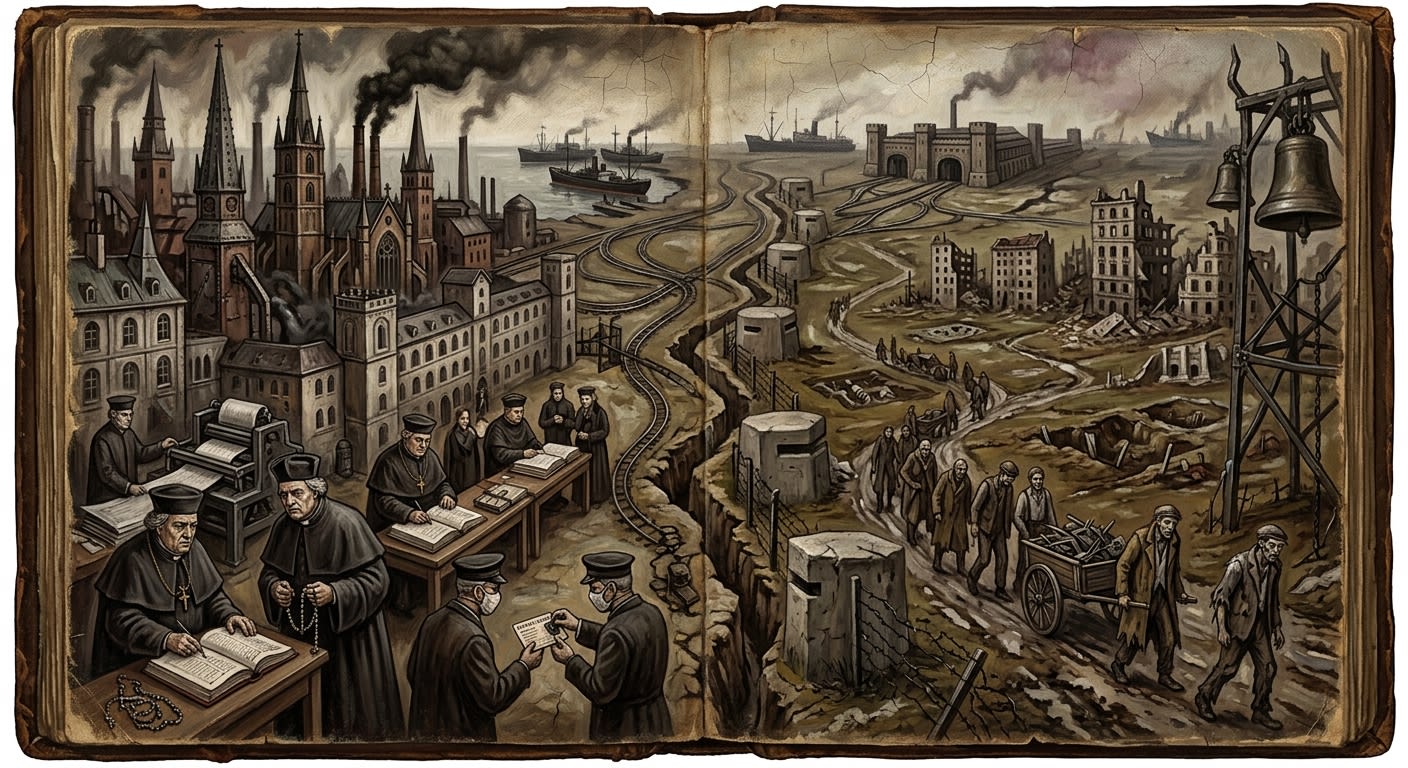
Europe
The wounded continent, held together by rails, bells, hunger, and denial
Europe is the wounded continent: Synod west, Charnel east, Line between, and every road, harbour, cradle, ration card, bell, and grave bent toward survival.
Codex Ref. II.0.01-201
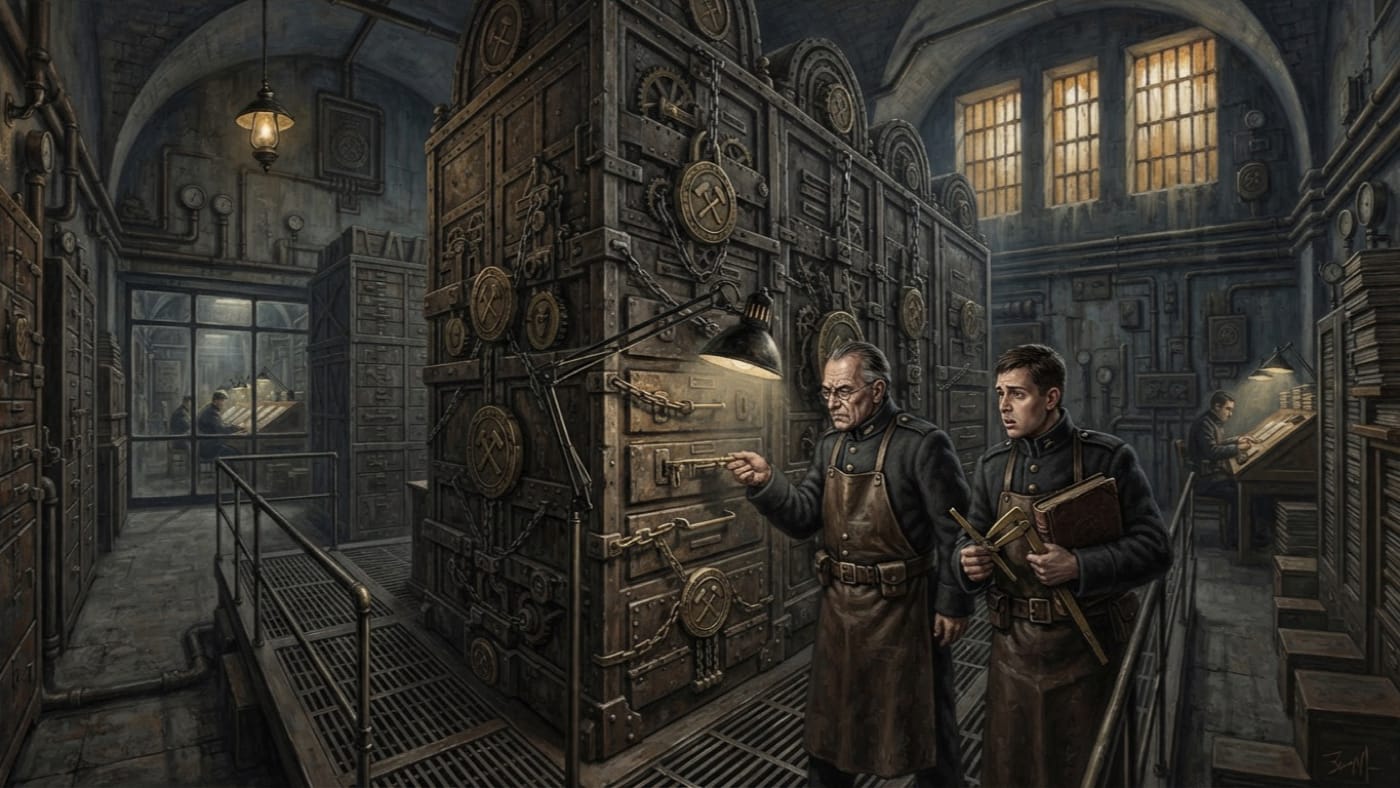
Face Archive
The locked reference by which a face is permitted to circulate
Sable Court keeps every lawful face under triple lock. The Face Archive binds coin to name and memory; since its plates began to change, the Chapter has answered doubt with tighter locks.
Codex Ref. II.2.07-002
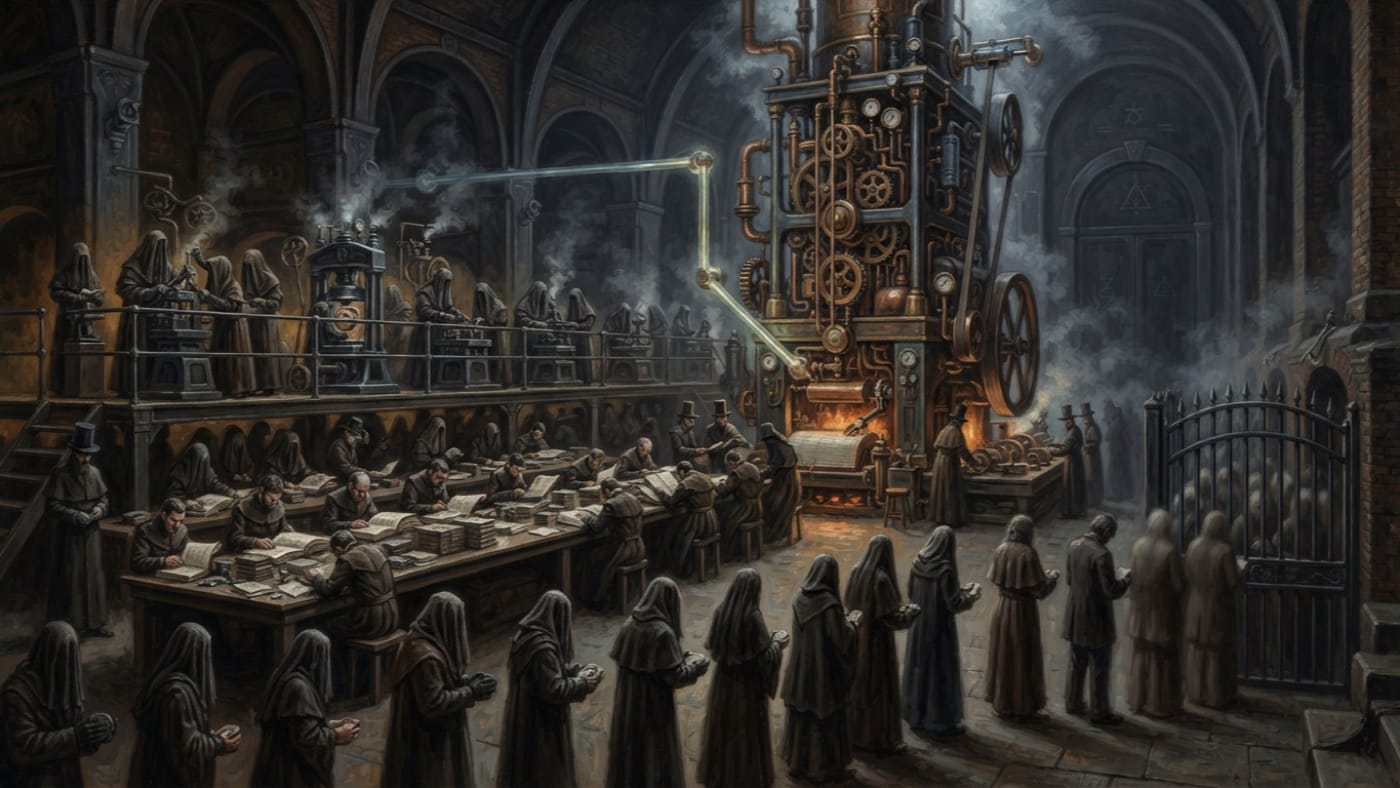
Face Registry Compact
The law that made recognition portable, taxable and revocable
Ratified in A.S. 94, the Face Registry Compact binds coin, face, name and the Ledger's soul account. Recognition may travel, be taxed, or be recalled; in Sable Court, even memory pays its dues.
Codex Ref. XIII.1.91-002
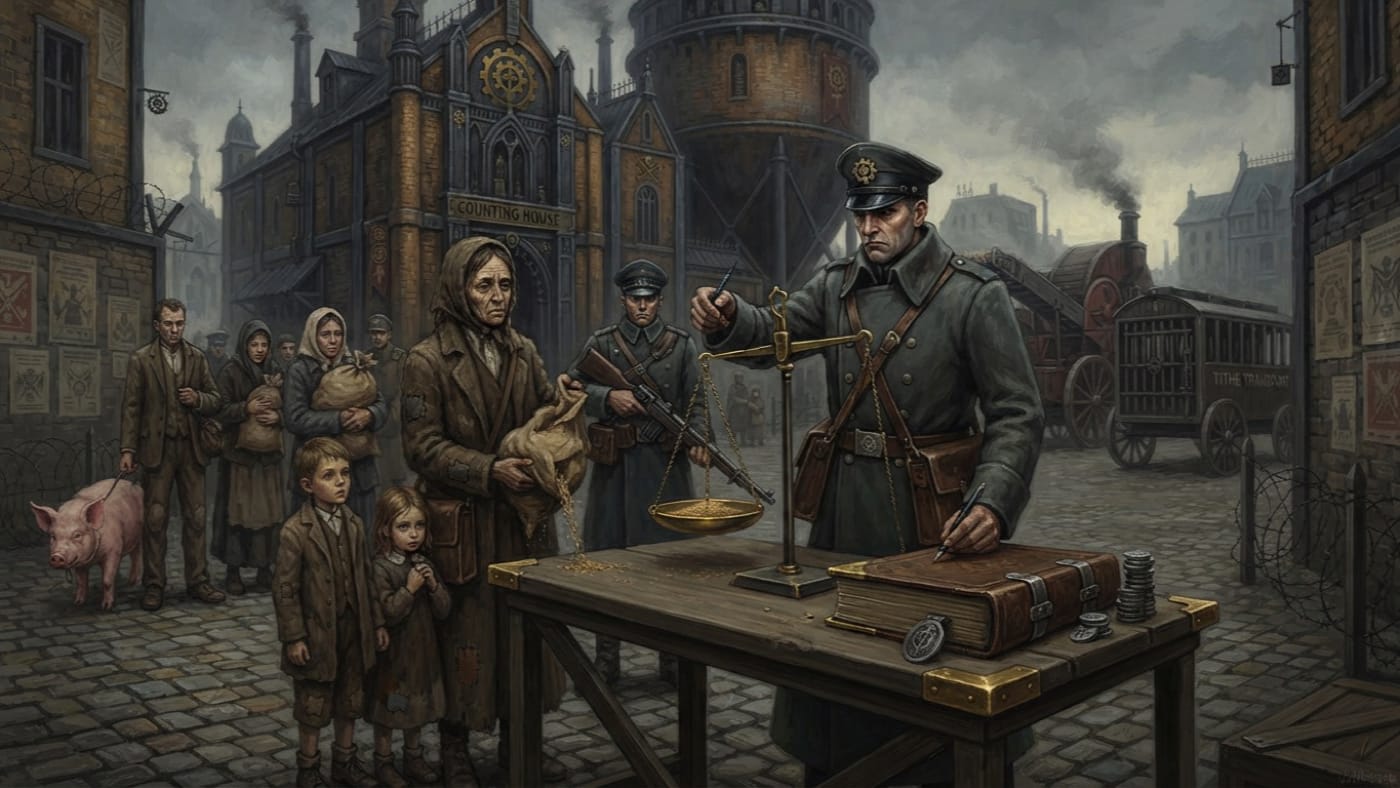
Faith-Tithe
The tenth that never settles the bill
The Faith-Tithe is the tenth owed by every baptised Synod subject, payable in coin, livestock, grain or labour. I certify the receipt; the surcharges follow.
Codex Ref. XIII.1.92-001
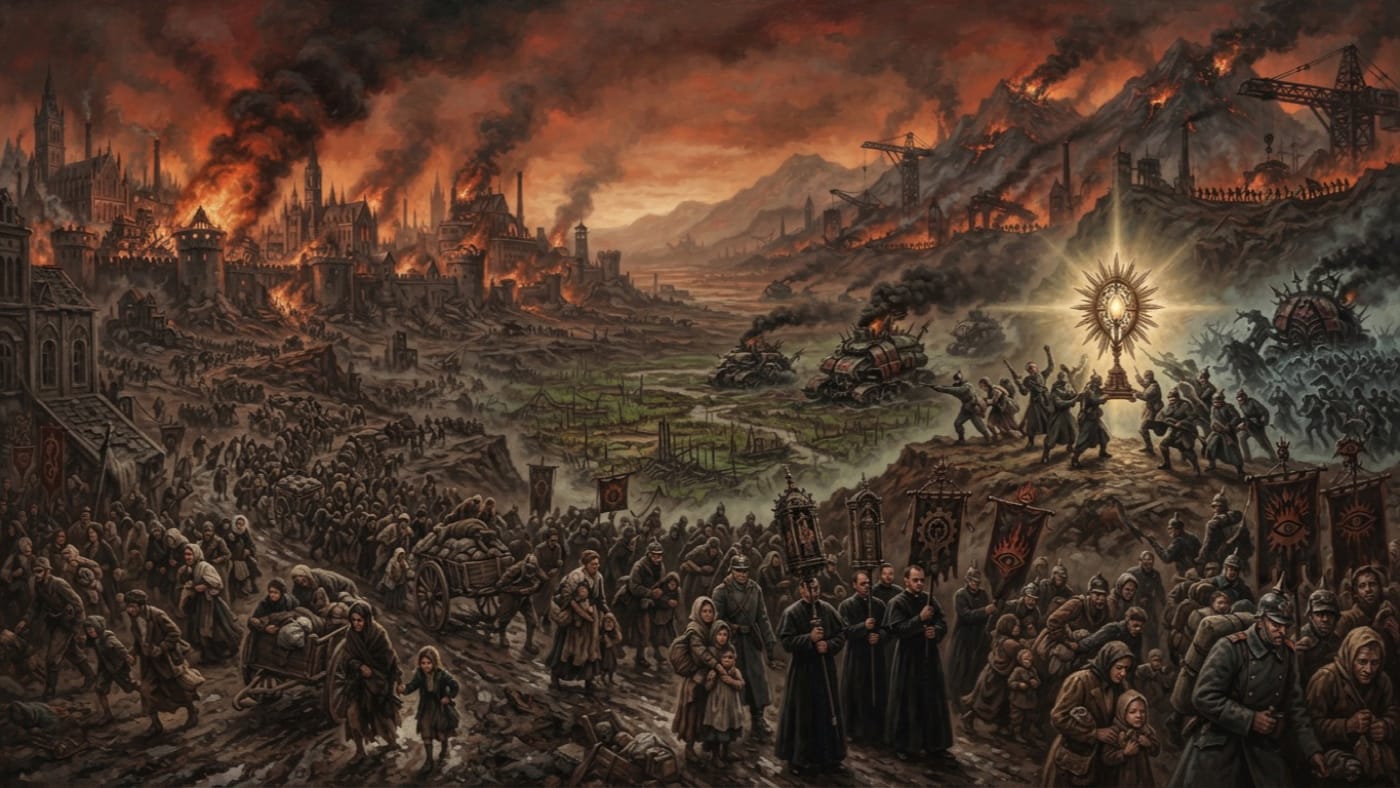
Fall of the Eastern Kingdoms
The Kingdoms Fell; Their Accounts Remain Open
The eastern jurisdictions collapsed after the Sundering of A.S. 45: garrisons burned, granaries failed, and refugees fled west. I retain their accounts in the Ledger; occupation does not constitute permission to forget.
Codex Ref. VII.1.02-001
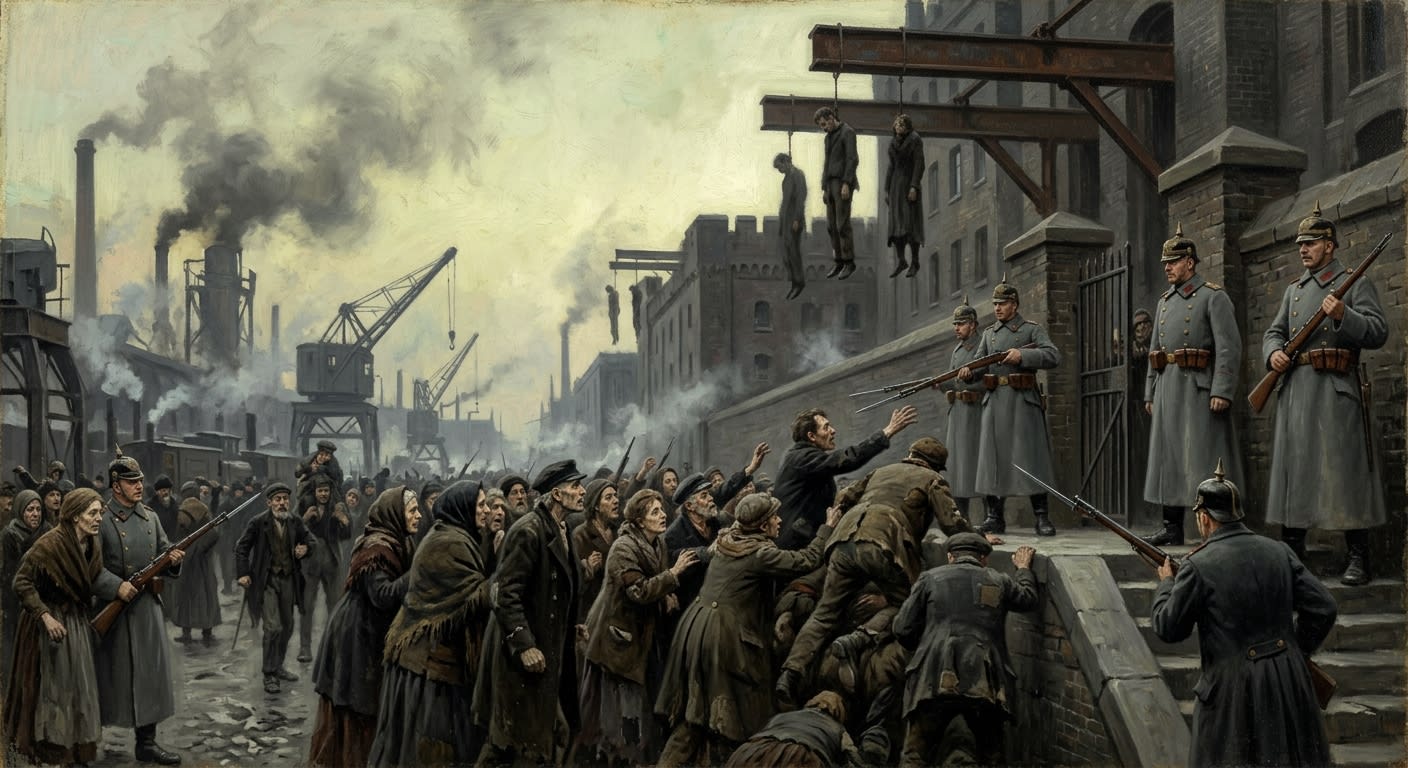
Famine of A.S. 65
Two per cent mercy, measured against an empty sack
The A.S. 65 Hamburg famine and nine-day riot came as the northern throat became indispensable: failed harvests, due tithes, Berlin troops, public hangings, and a two-per-cent mercy too small to eat.
Codex Ref. VII.4.21-065
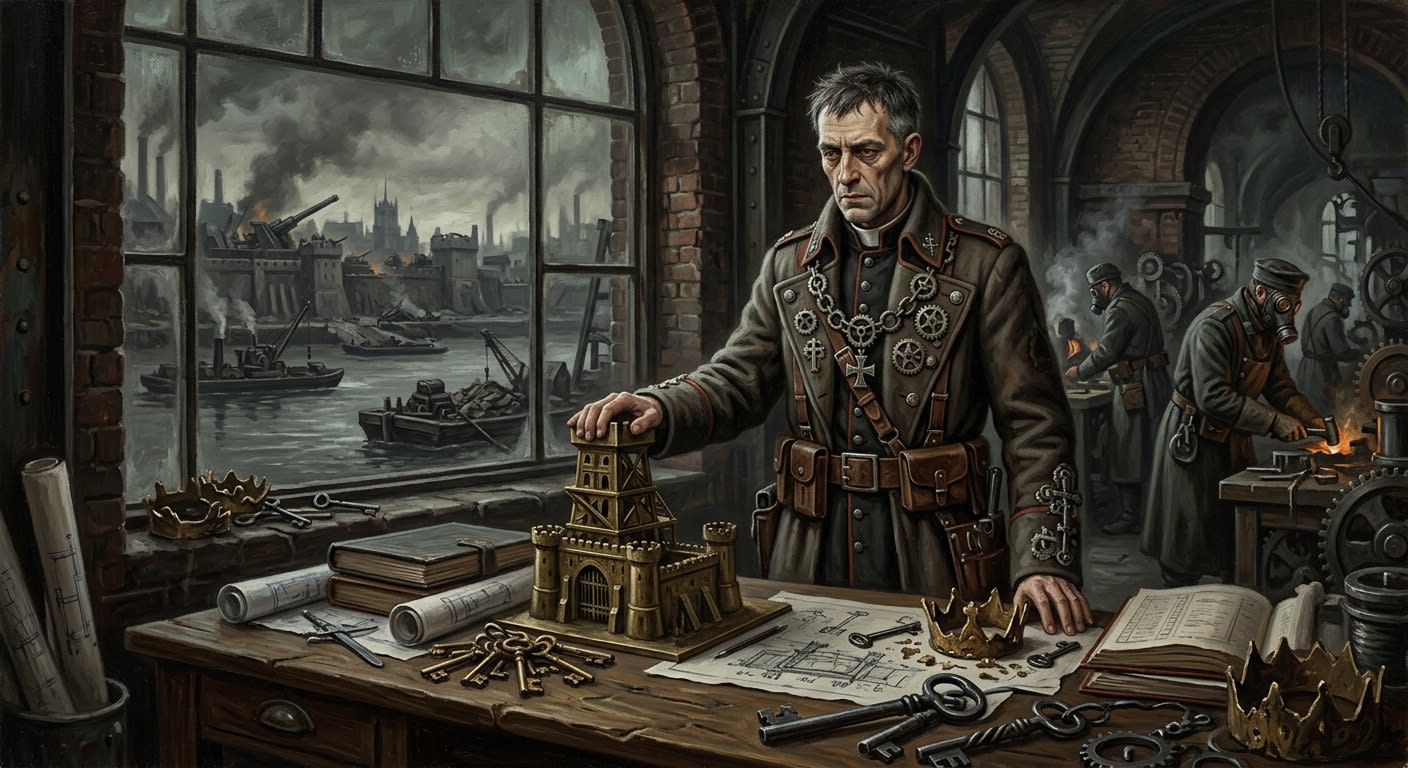
Father Ambrosius of Como
A key in each fist and a river waiting below
Father Ambrosius of Como made keys into crowns, sermons into siegework, and Lombardy into a lesson the Po carried east.
Codex Ref. XI.5.01-001
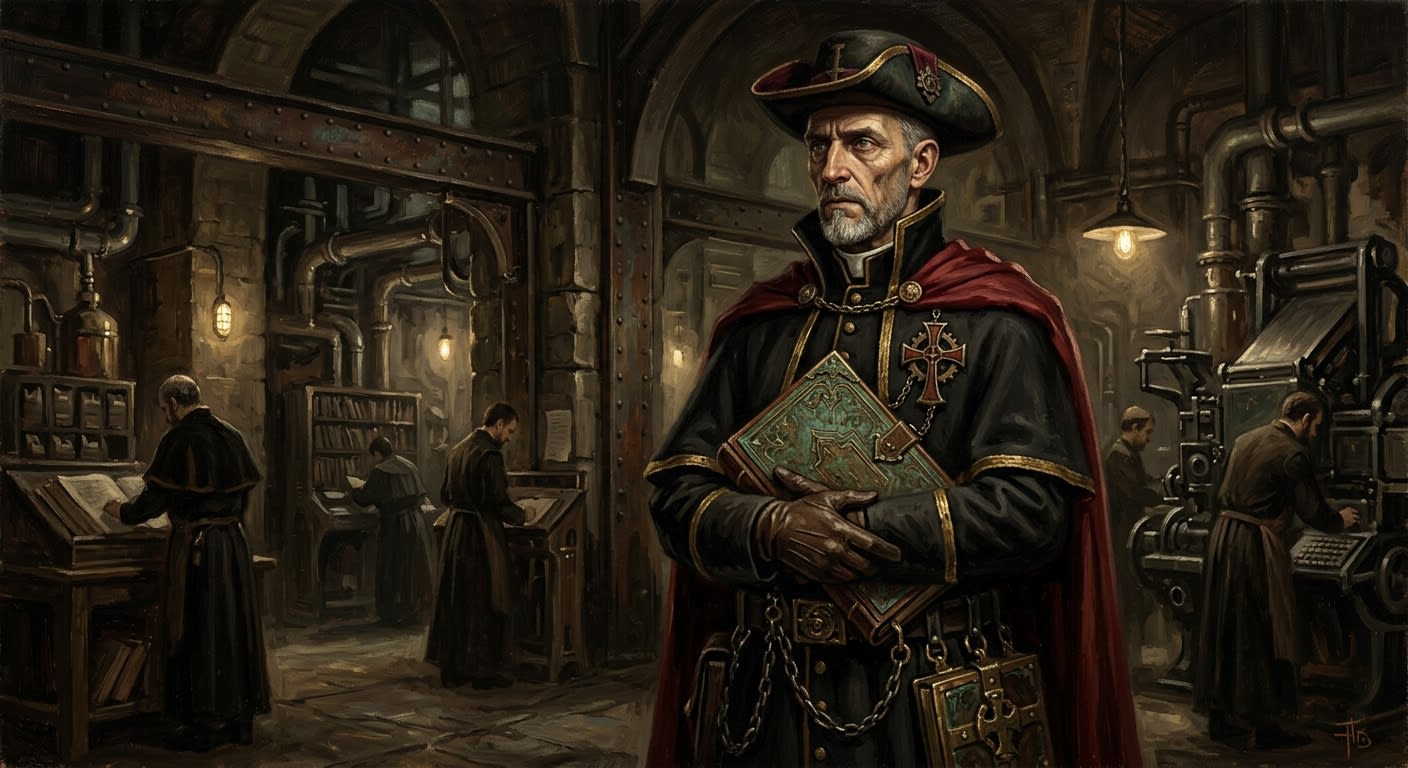
Father Clemente de los Rios
The abbot who spent a saint's jawbone at the correct hour
Abbot of the Order of Saint Iago garrison at Toledo, Second-Tier Martyr, and keeper of the Relic whose second Psalm denied Reason its prize.
Codex Ref. III.2.01-083
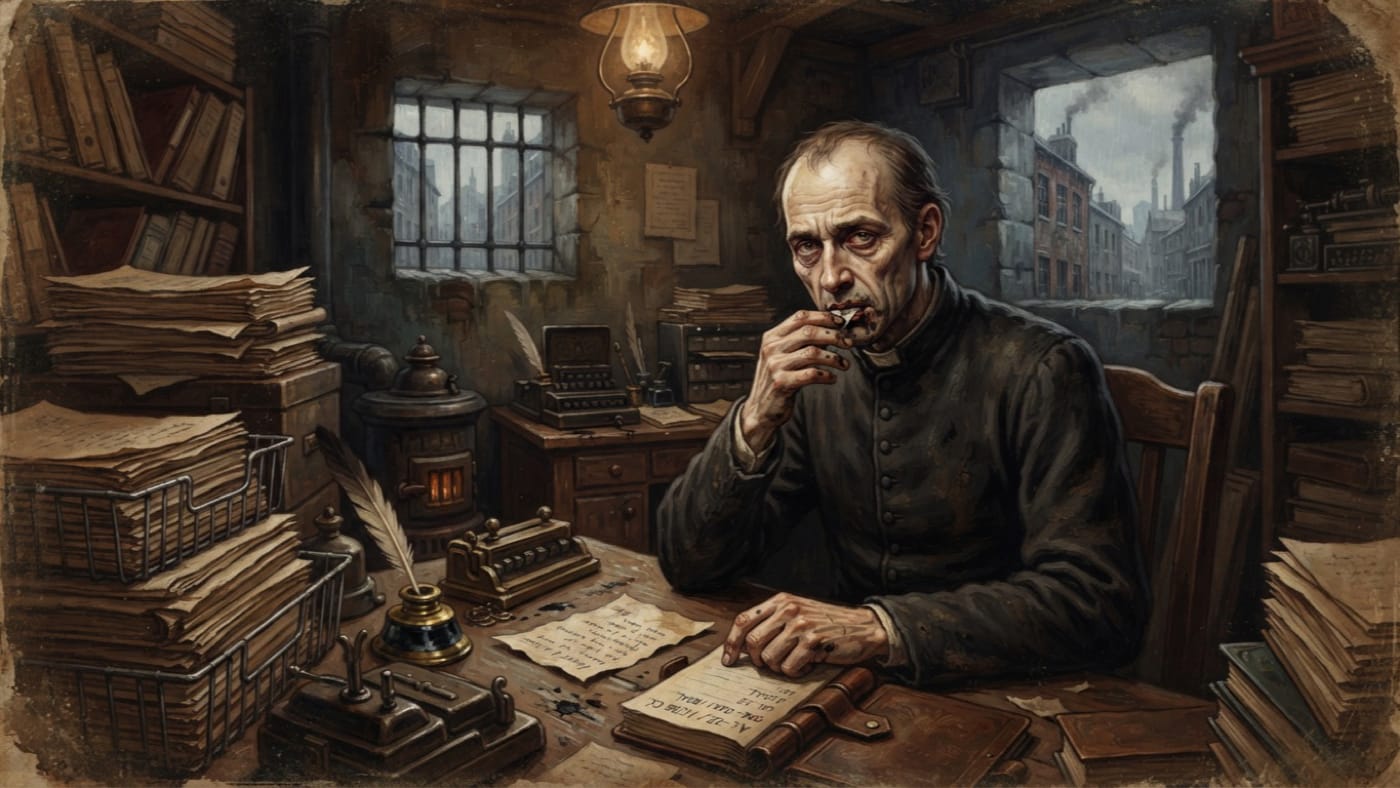
Father Grauss
One letter eaten. Three days served. Five words preserved.
Father Grauss ate the Amsterdam letter in A.S. −32 / 1678 CE. Düsseldorf supplied a beating and three days in gaol; the Bureau supplied its verdict: Doctrinally Sound, Gastronomically Irregular.
Codex Ref. III.2.01-1023
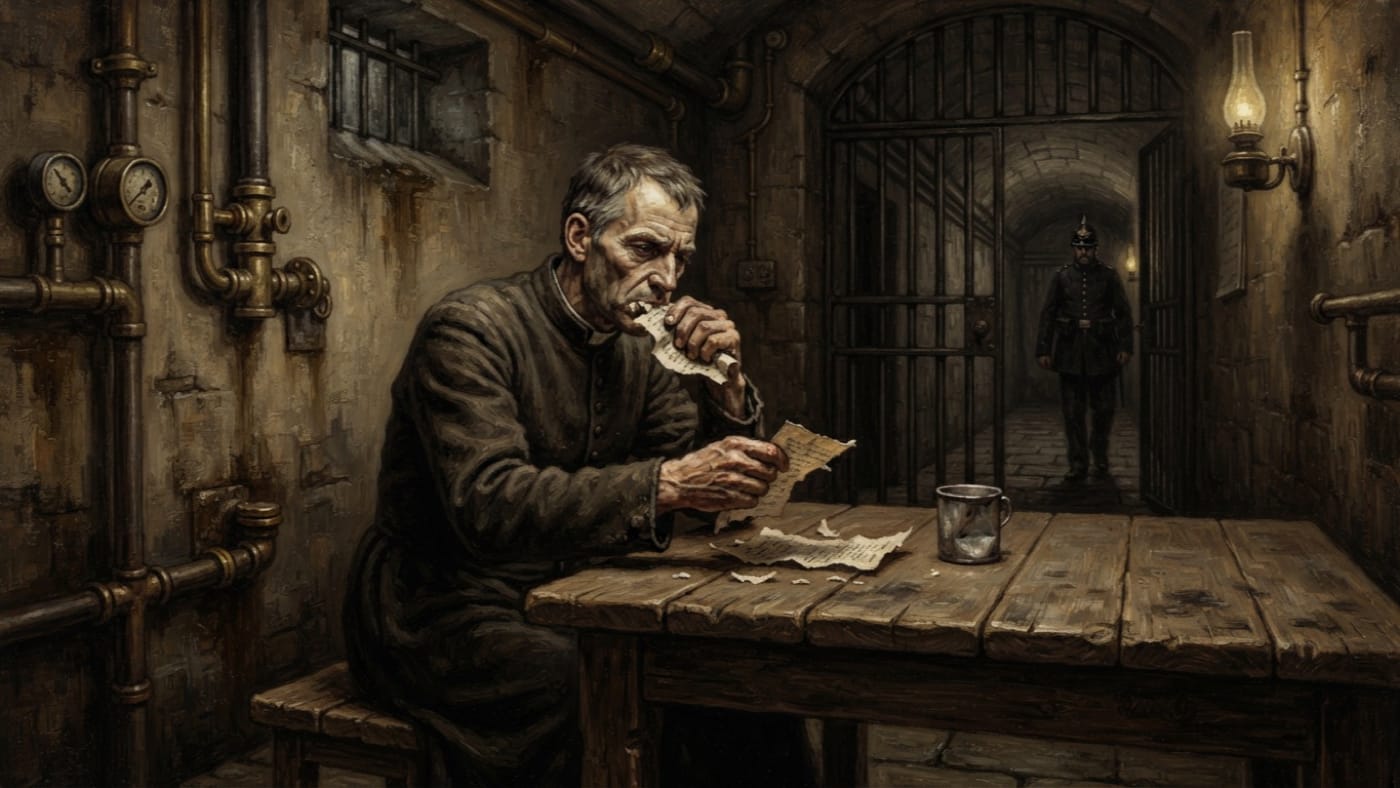
Father Grauss of Düsseldorf
One letter eaten. Three days served. Five words preserved.
Father Grauss ate the Amsterdam letter in A.S. −32 / 1678 CE, received a beating and three days in gaol, and did not recant. The Ledger calls him Doctrinally Sound, Gastronomically Irregular.
Codex Ref. III.2.01-1024
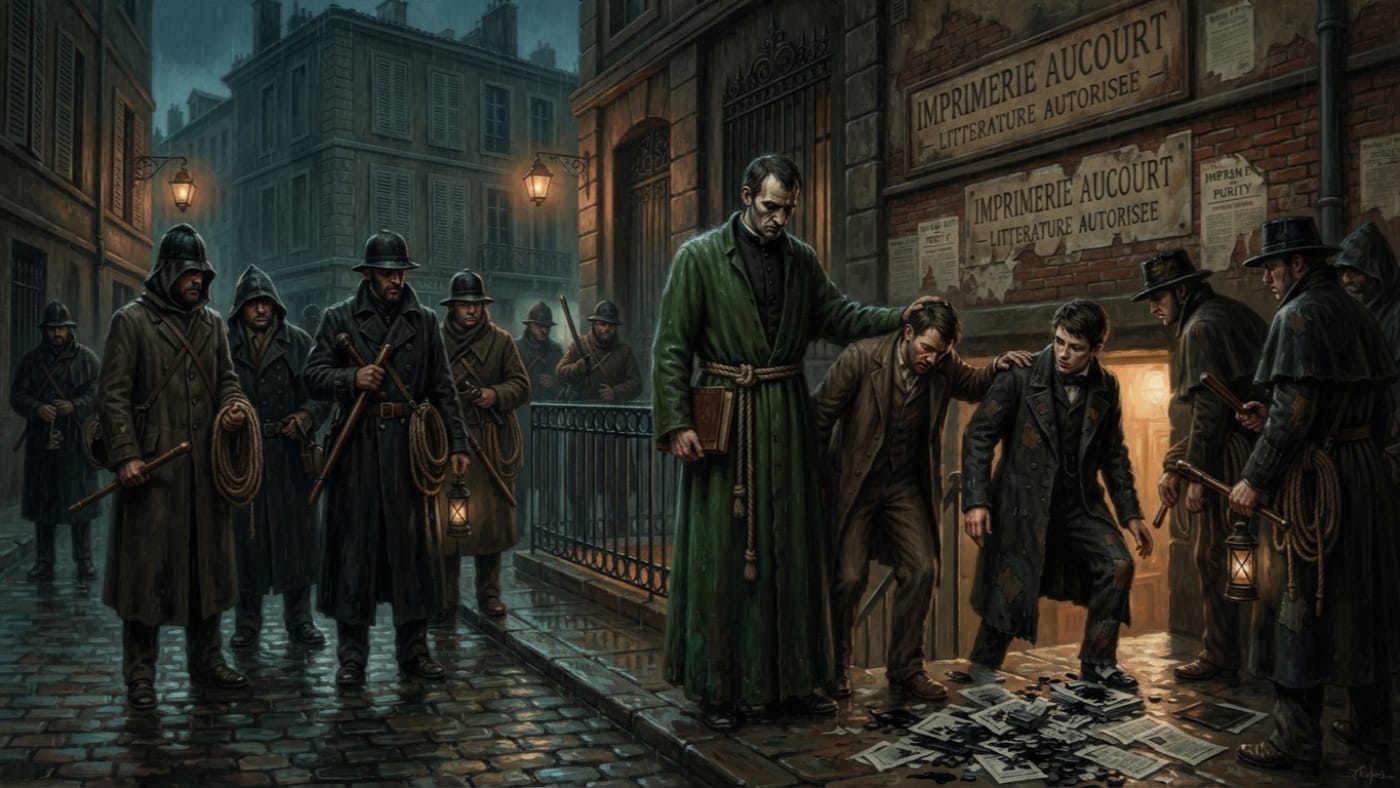
Father Ostel of Narbonne
The priest remembered by his robe
Father Ostel served in the A.S. 93 Toulouse Hunts in a green robe of claimed liturgical inheritance. Drax reports the sketches suppressed; the rest of the man escaped the file.
Codex Ref. III.2.01-093
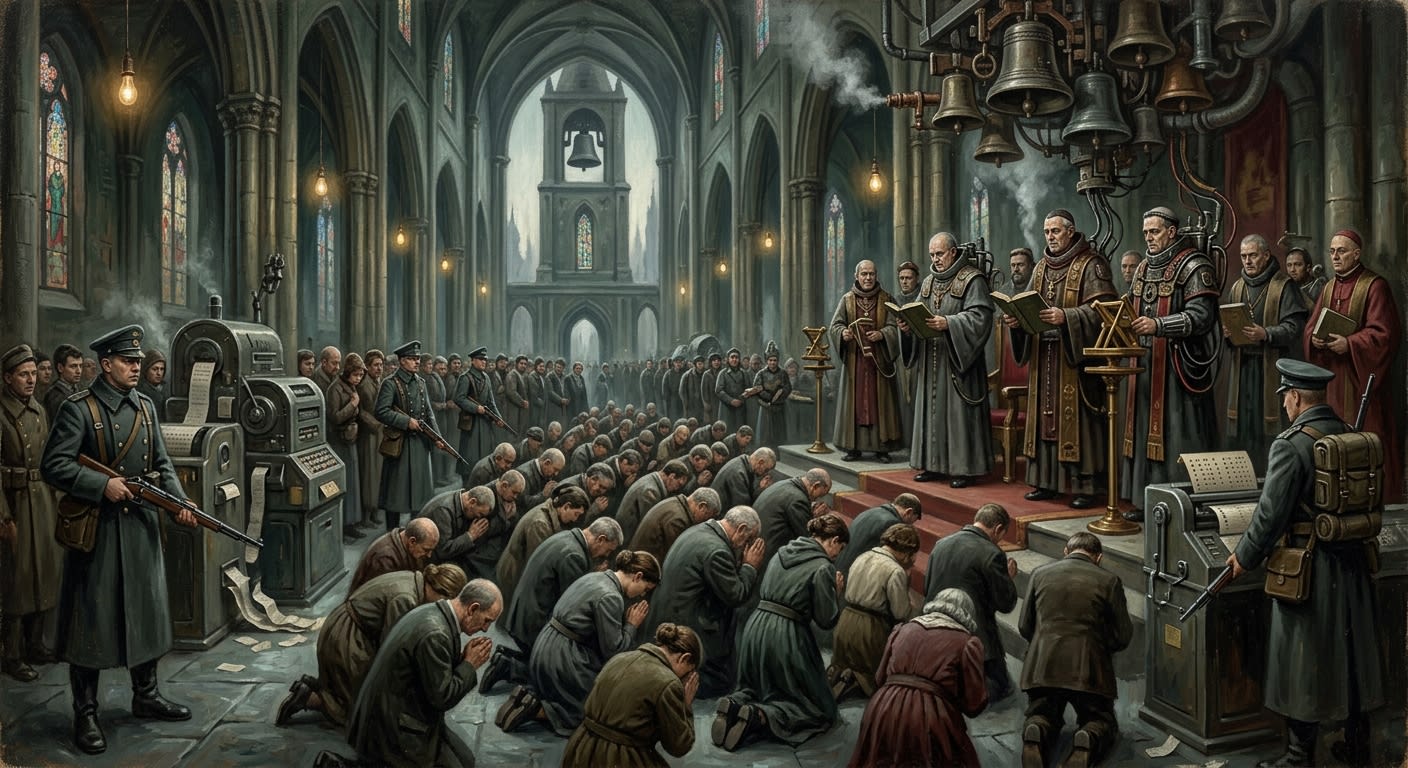
Feast of Doctrinal Submission
The holiday that teaches the spine to kneel before the mouth calls it faith
The Feast of Doctrinal Submission is the Synod's mandatory kneeling holiday: census, pageant, ration queue, loyalty assay, and permitted joy under bells.
Codex Ref. XIII.1.89-072
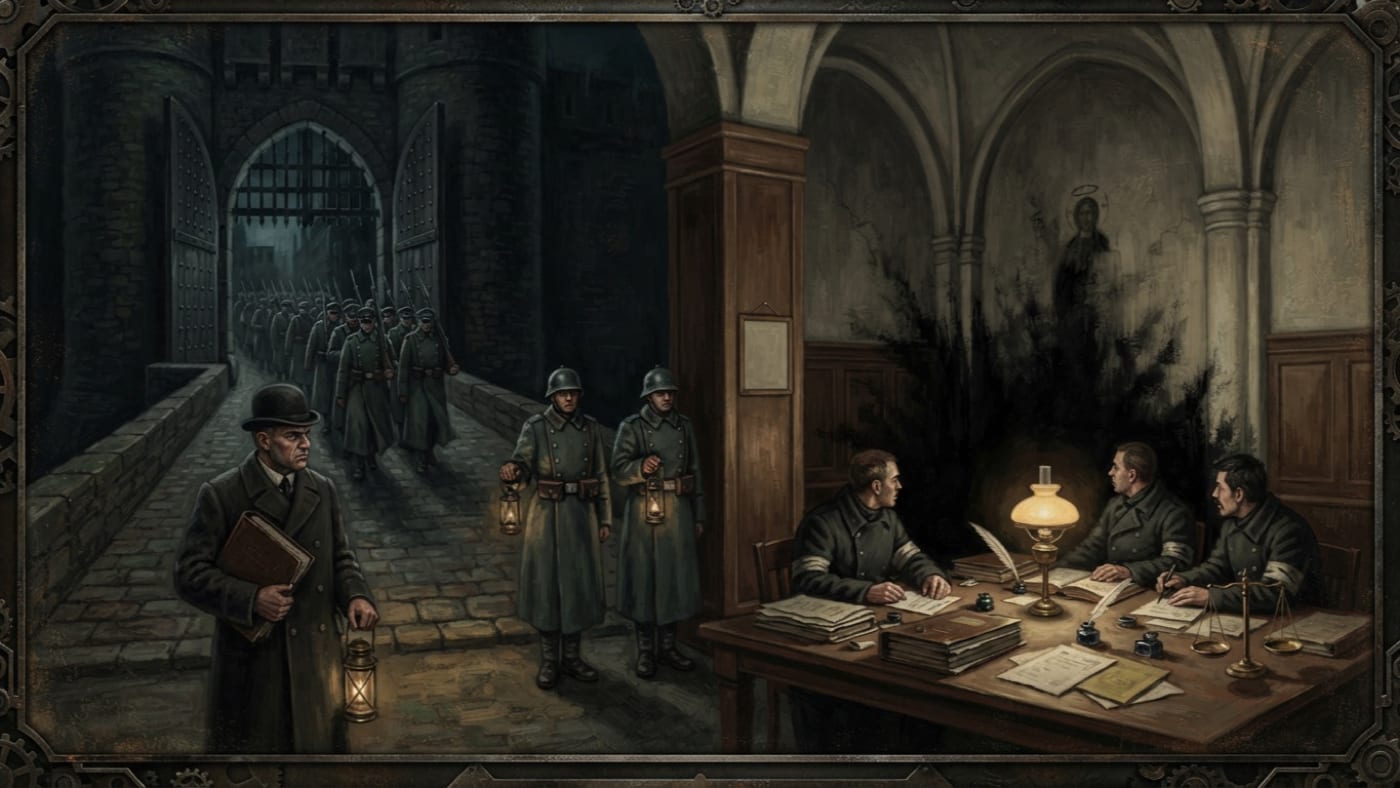
Feast of Saint Bartholomew
One opening, one stain
Aachen opened its western gate at midnight on this feast in A.S. 25. Each year, the former confiscation office turns ink-dark. The Bureau records both occurrences; it has not ruled on the stain.
Codex Ref. VII.8.10-025
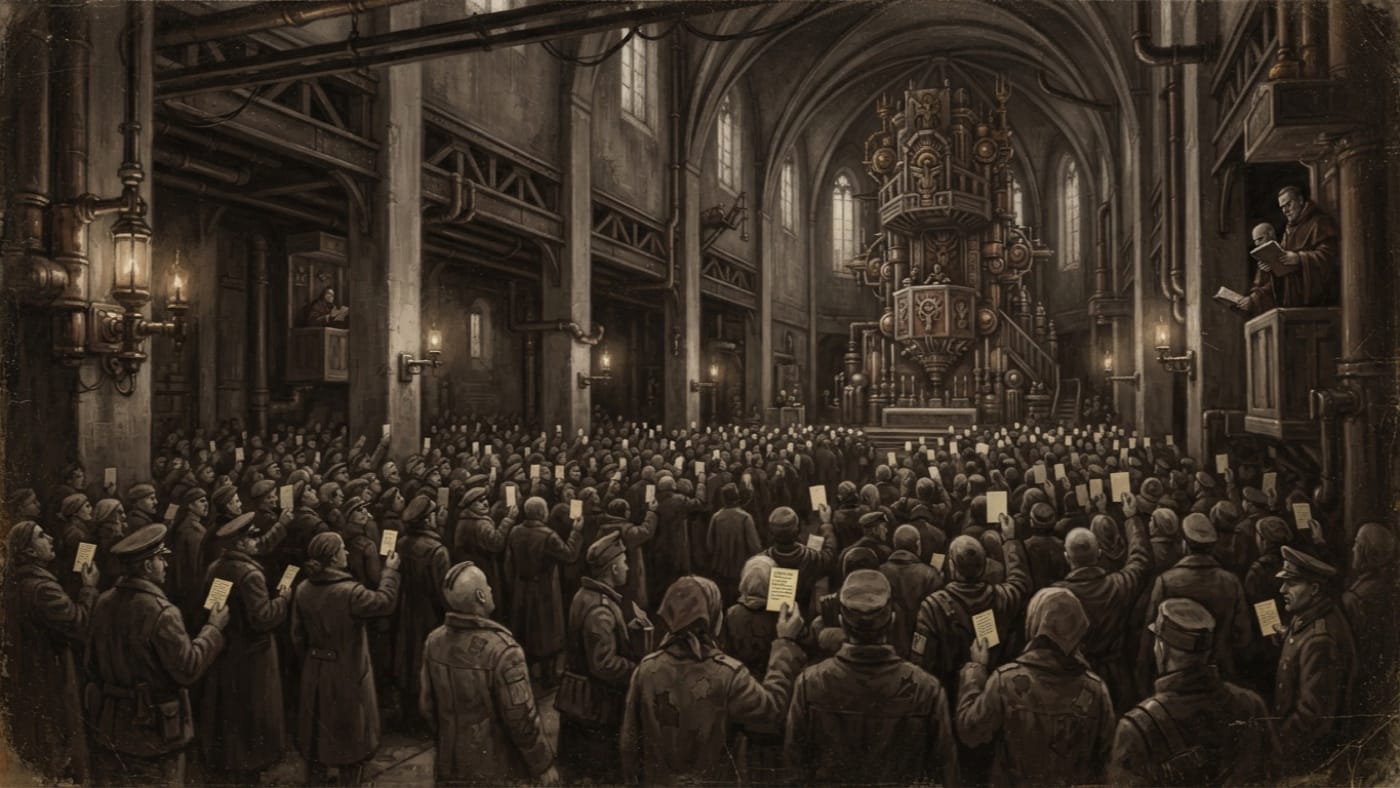
Feast of Saint Corbinian
Fourteen thousand voices, correct cards, and one incorrect claim
A.S. 201 survey of an undated feast recitation: 14,000 voices kept Munich's fourth-line cadence over correctly printed Strasbourg cards. The paper complied; the convergence claim did not.
Codex Ref. VII.8.11-201
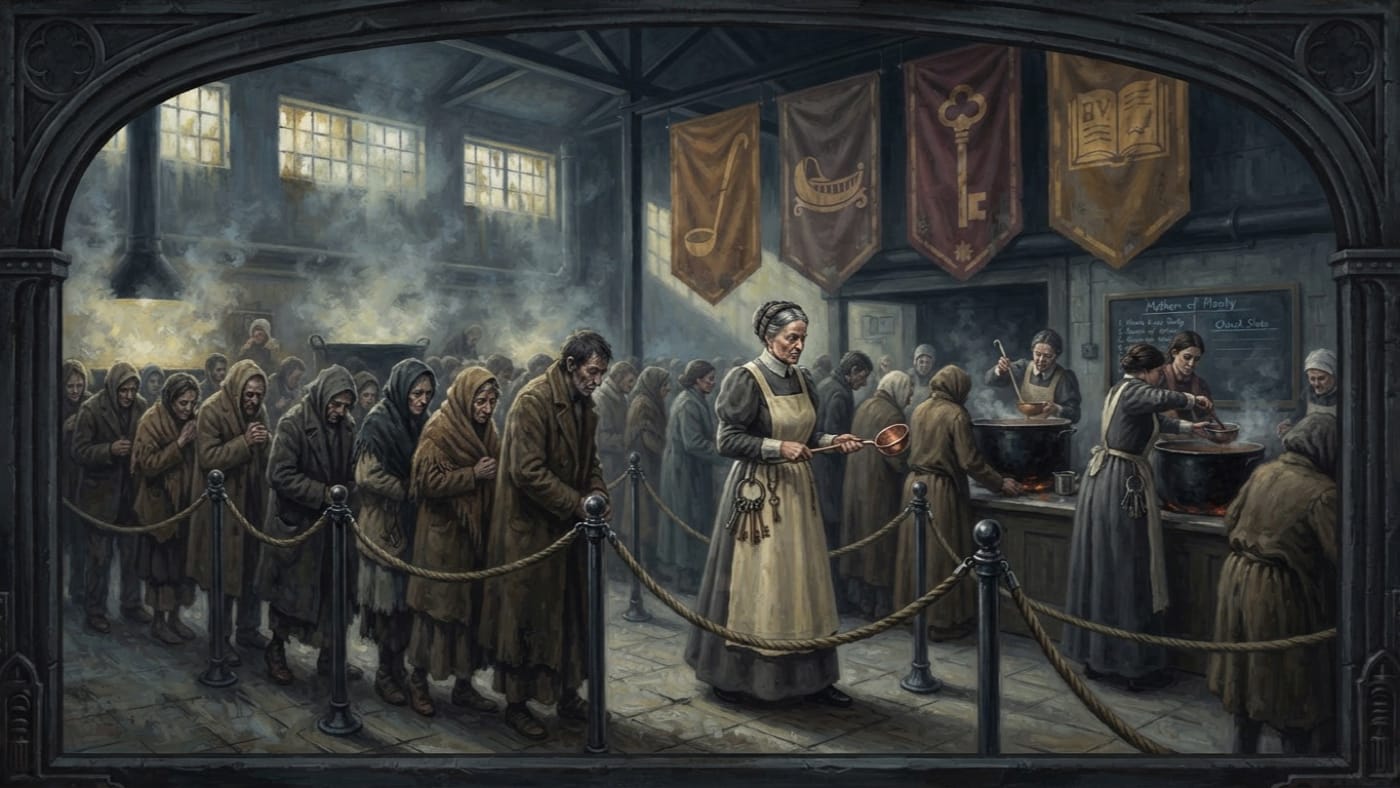
Feast of Saint Halva
A quarter-measure in the bowl, a colder week in the ledger
An A.S. 201 survey of Halva's annual 14 Brumaire feast: a quarter-measure more, the Ration Psalm, the Stirring and evening broth, paid for in next week's fuel. A.S. 94 dates the saint's canonisation; the first feast year is unrecorded.
Codex Ref. XIII.1.25-003
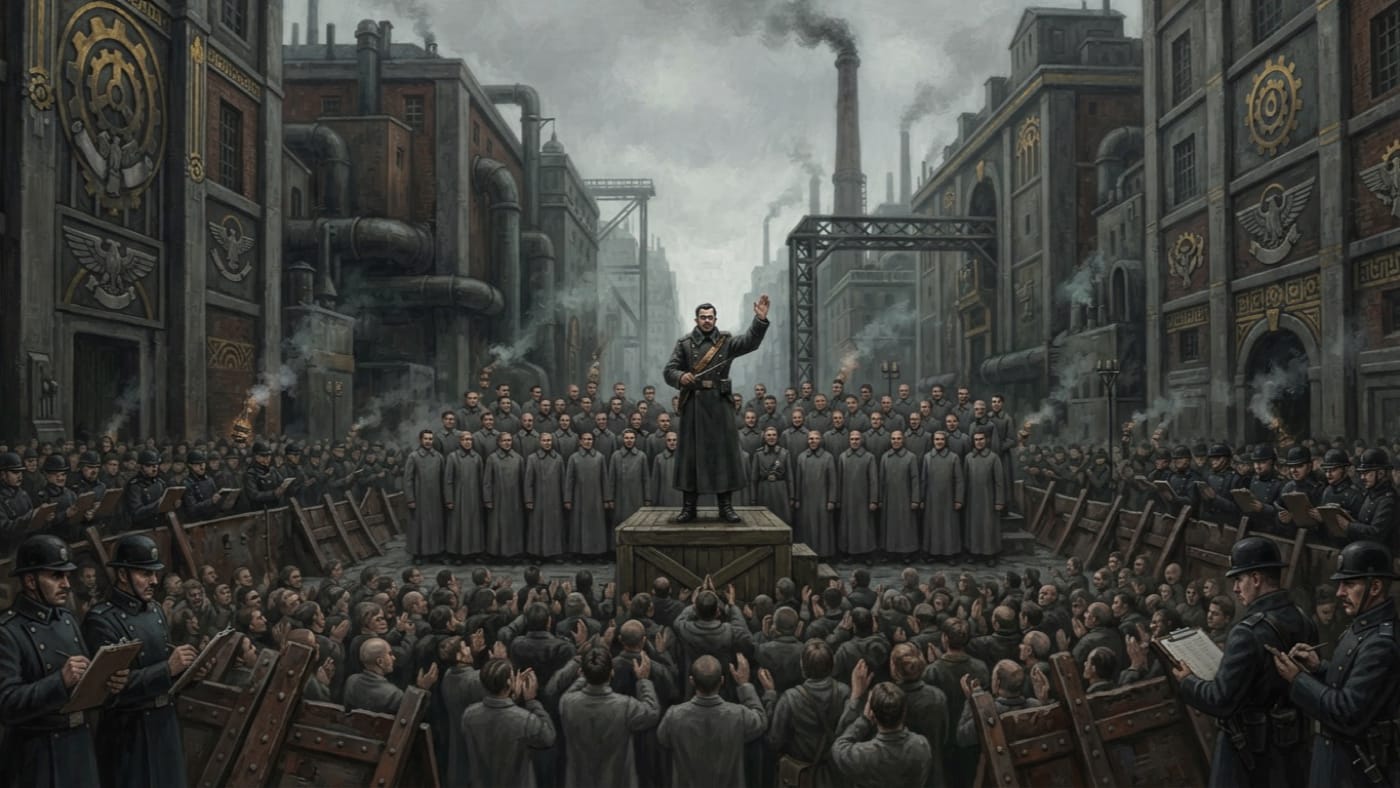
Feast of Saint Rupert
Attendance is mandatory; relief has no column
Saint Rupert's mandatory feast, preserved in the Strasbourg return of A.S. 199: 1,847 present, 13.7 seconds of applause, and joy classified Within Parameters.
Codex Ref. XIII.1.89-199
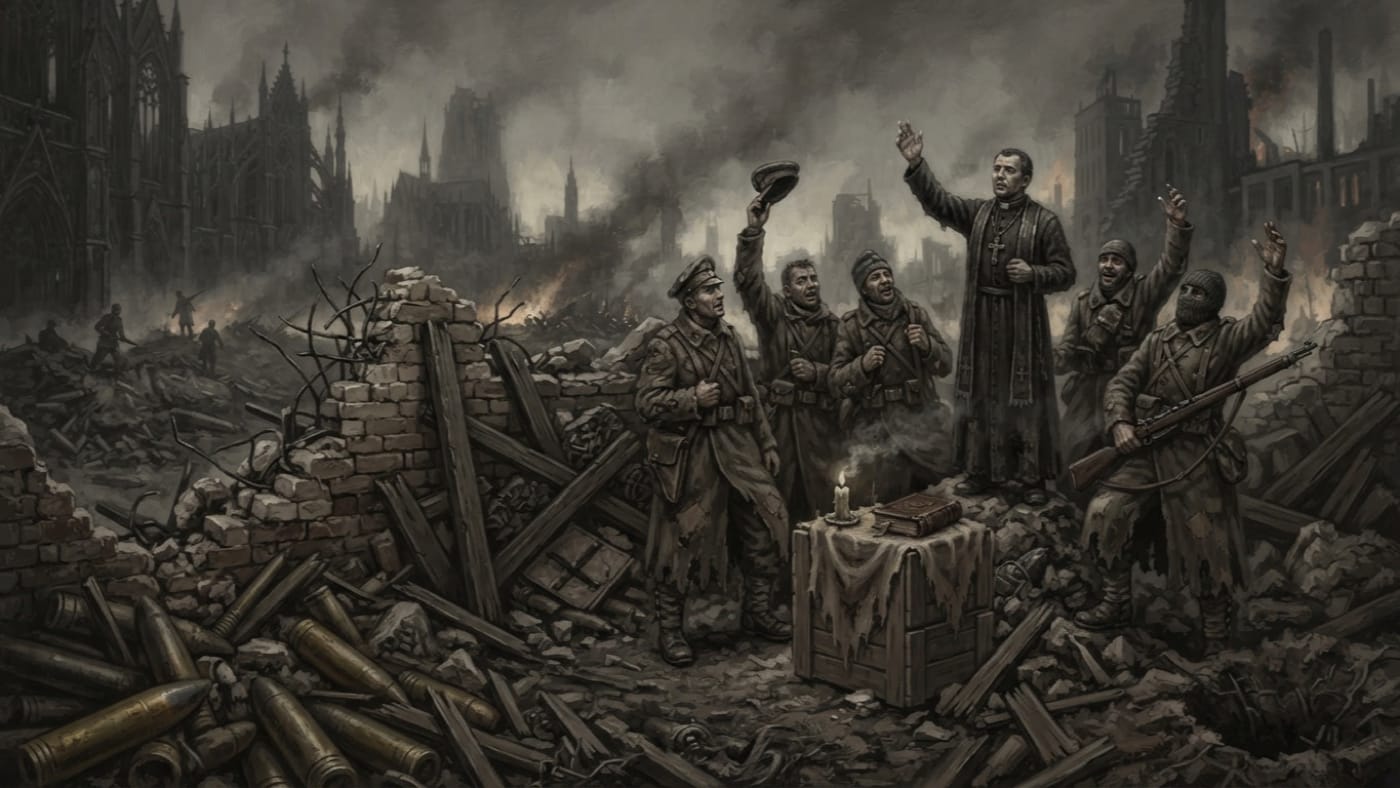
Feast of the Unbroken Wall
The wall held; the bureaucracy arrived later
A surviving barricade, an unnamed priest, and one unscheduled cheer in A.S. 52: the Bureau of Festivals' founding precedent. The wall held; the bureaucracy arrived later.
Codex Ref. VII.8.10-1050
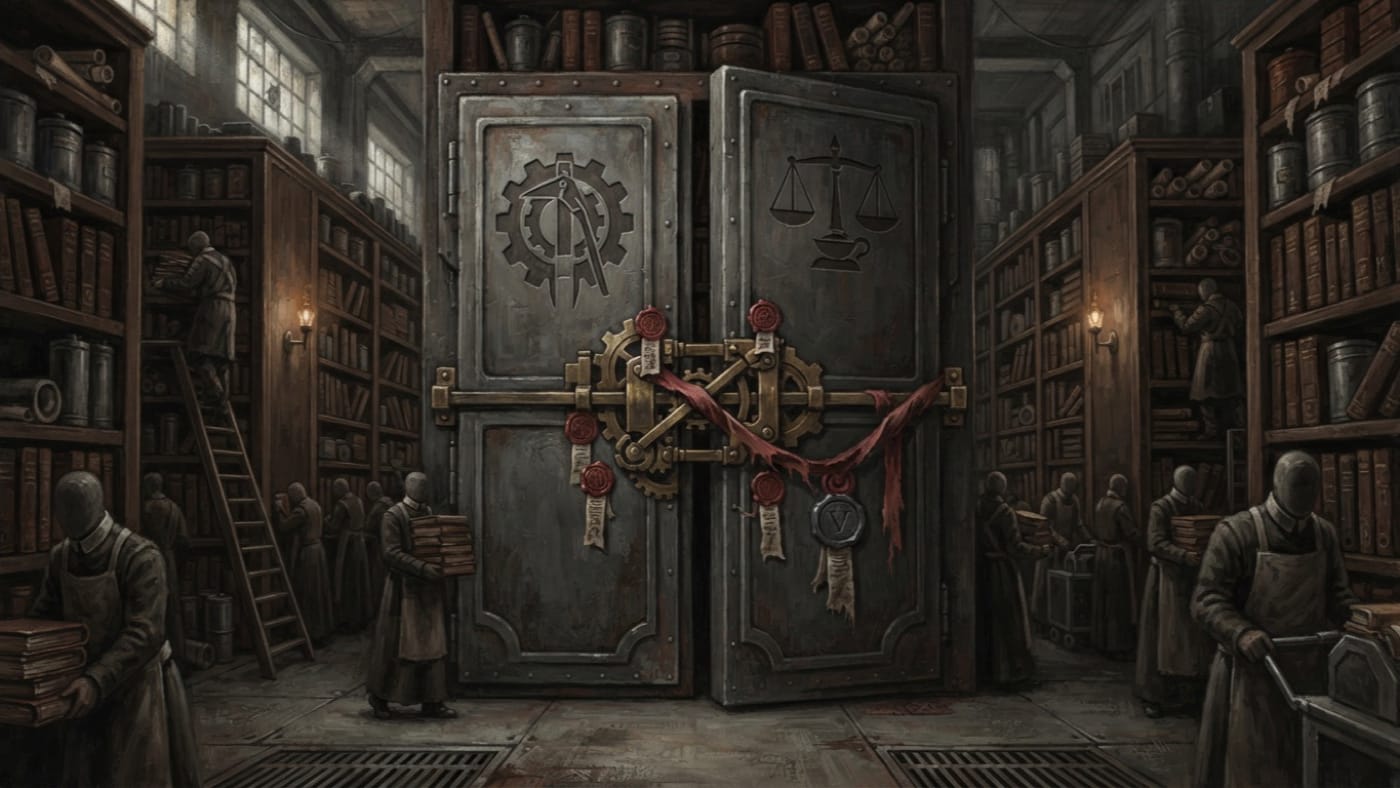
Fifth Ratification
The name is filed; the particulars remain sealed
An A.S. 201 survey of the Fifth Ratification's attested sealing of Augustinus's construction particulars. Engineering keeps the structural data; Mercy keeps the rest. The name is filed. The text is not before us.
Codex Ref. XIII.1.90-201
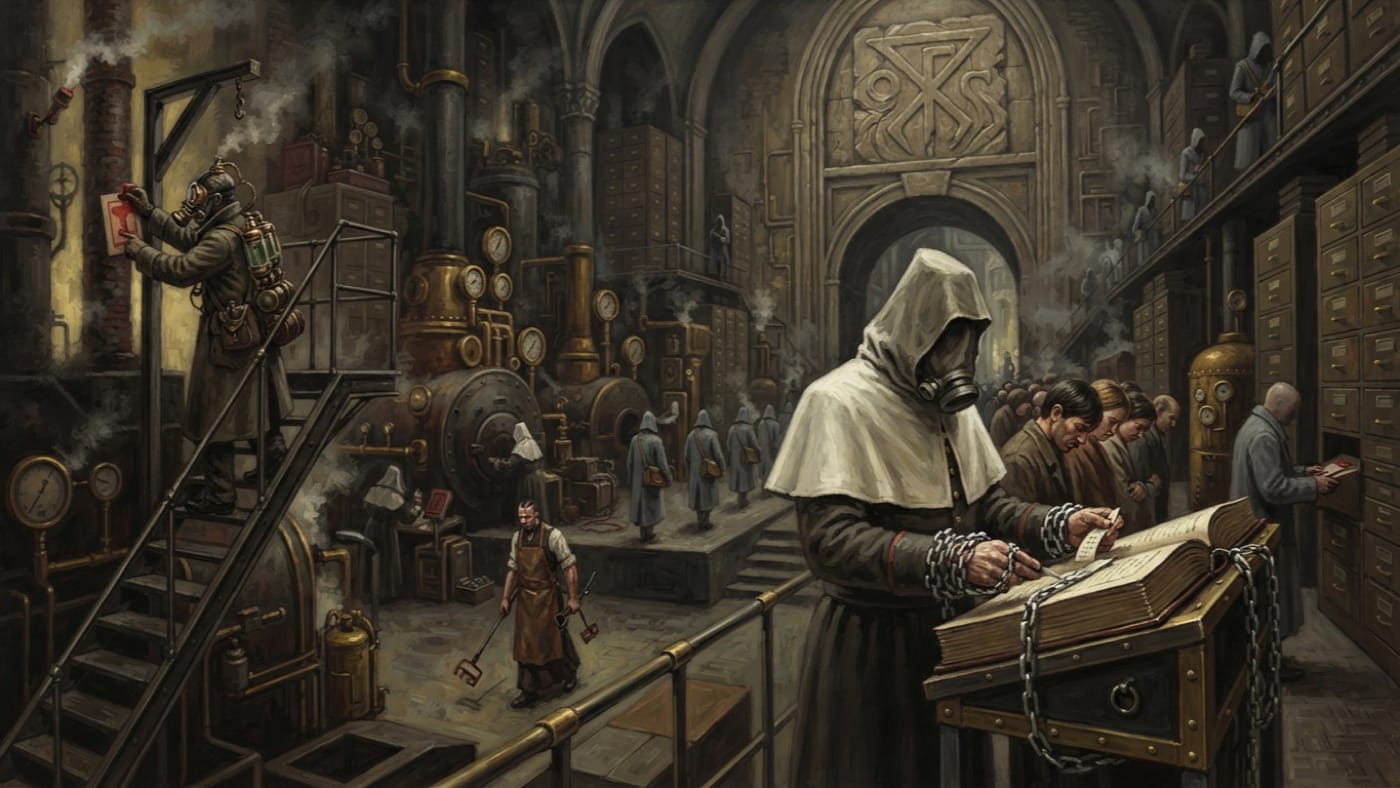
Fifth Seal of Faith
The prohibition arrives before the definition
The Fifth Seal governs Purity: forbidden speech, indexed forms, and the Inquisition. Strasbourg constituted it in A.S. 90; the definition of impurity remains pending while enforcement proceeds.
Codex Ref. XIII.1.05-005
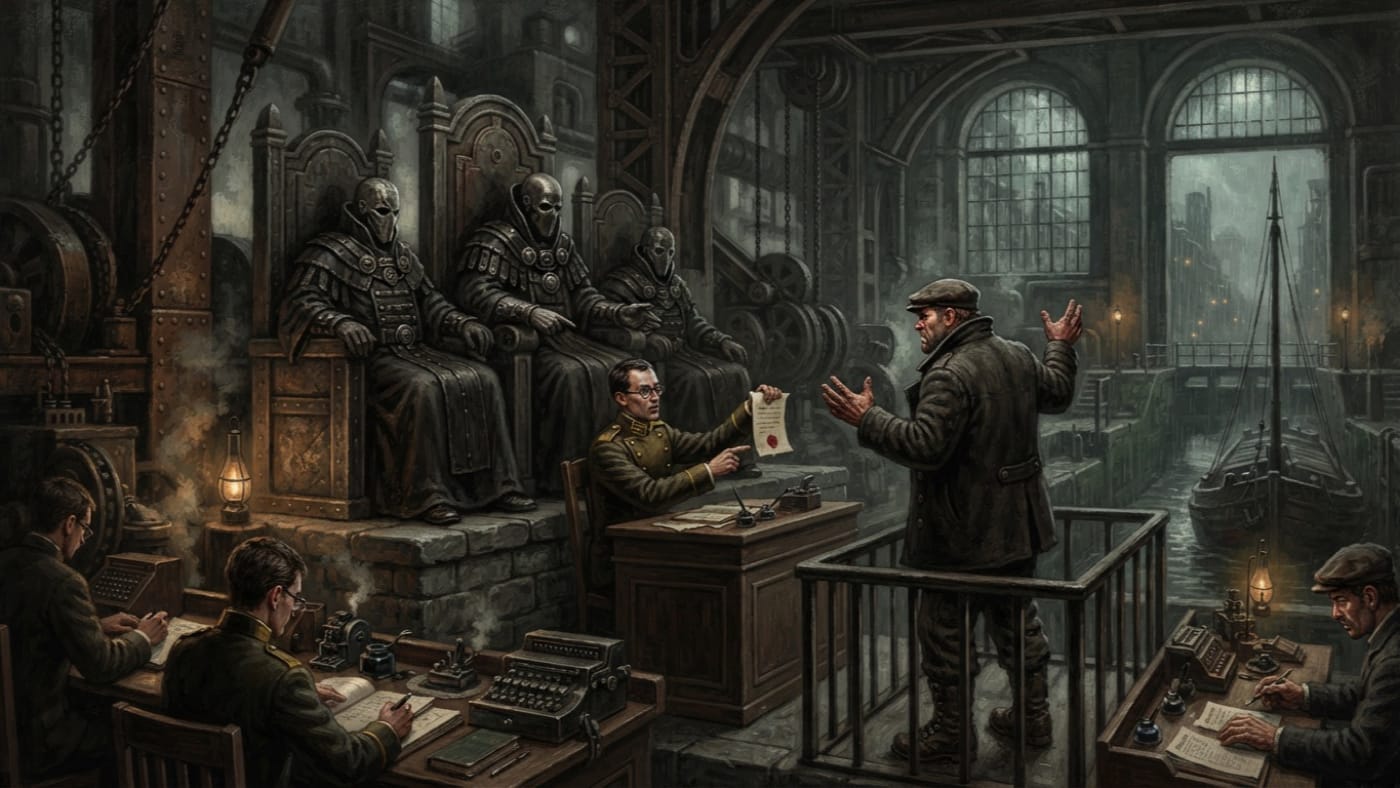
First False Toll
A receipt outranks a man; the man pays twice
Vire's first recorded false toll charged a Wexel-bound grain barge for a lock it had not reached in A.S. 106. The Tribunal preferred the disputed receipt to the master's denial. He paid twice; the paper prevailed.
Codex Ref. VII.8.10-106
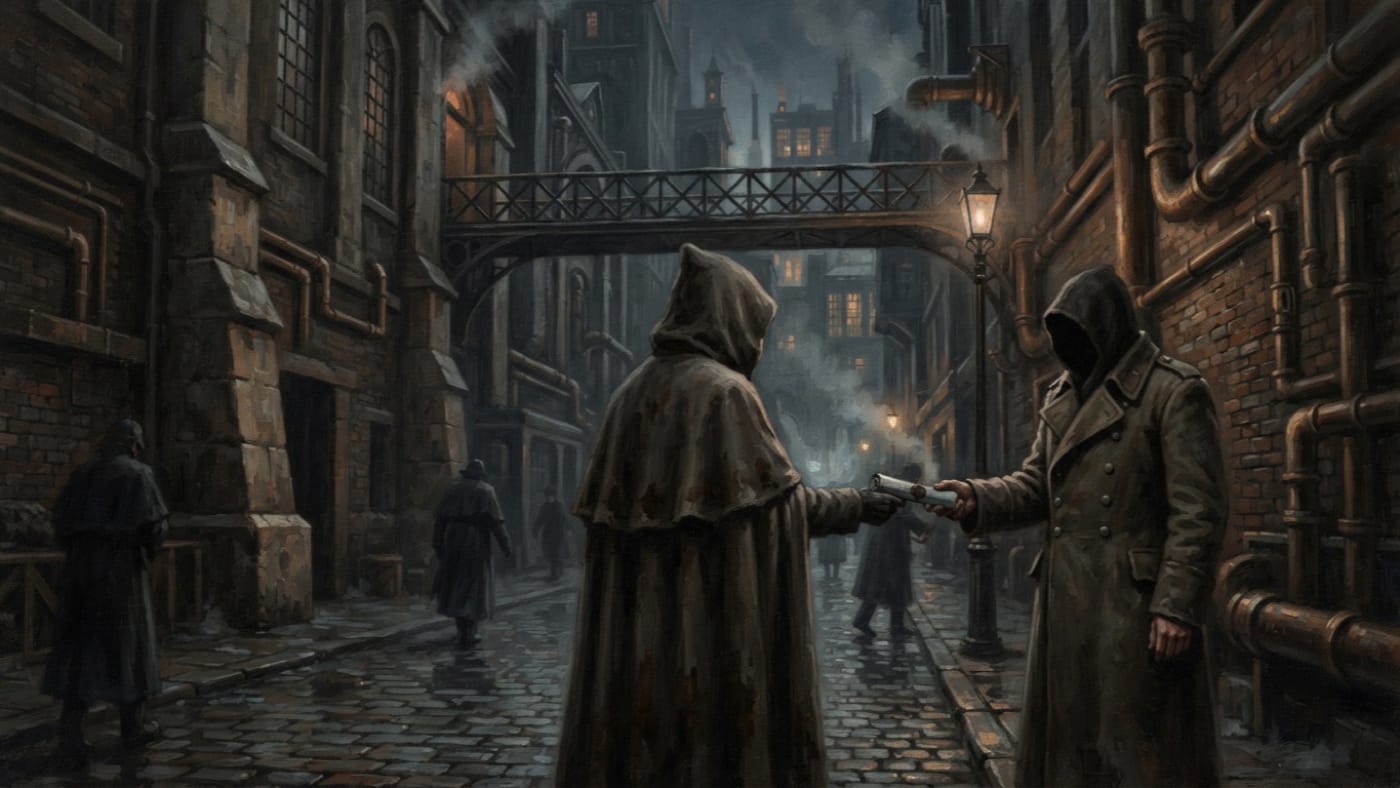
First Hood
The founder no ledger can identify
The First Hood is the Night Papers Couriers' unnamed legendary founder: a runner said to have delivered an order before it was written. Obedience survives the tale; authorship does not.
Codex Ref. III.2.01-1083
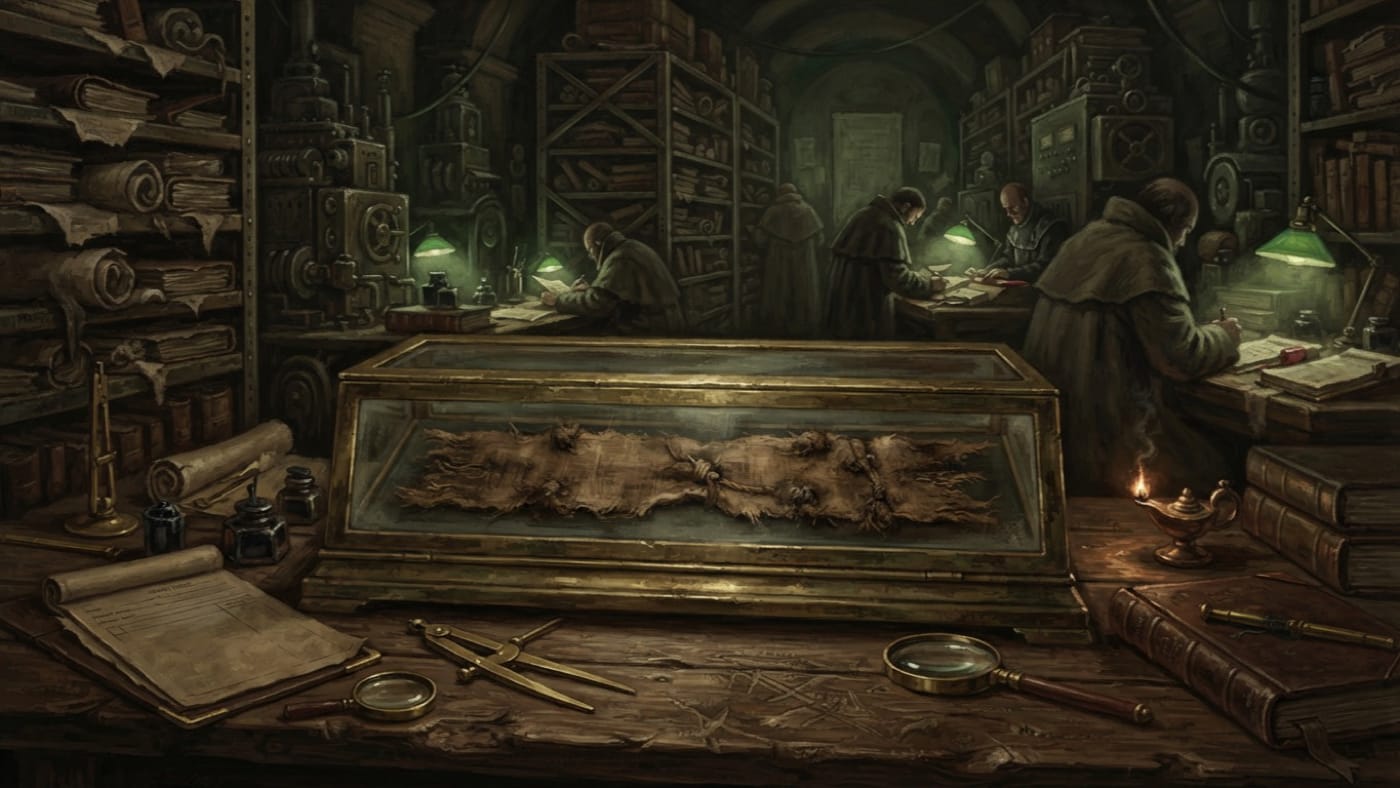
First Knot-Cloth
Thirty households bound, three certainties about where the cloth lies
An A.S. 201 survey of Liora's First Knot-Cloth, traditionally used to bind thirty hungry households to mutual aid. The offices agree it is preserved; they disagree on where.
Codex Ref. XIII.1.03-015
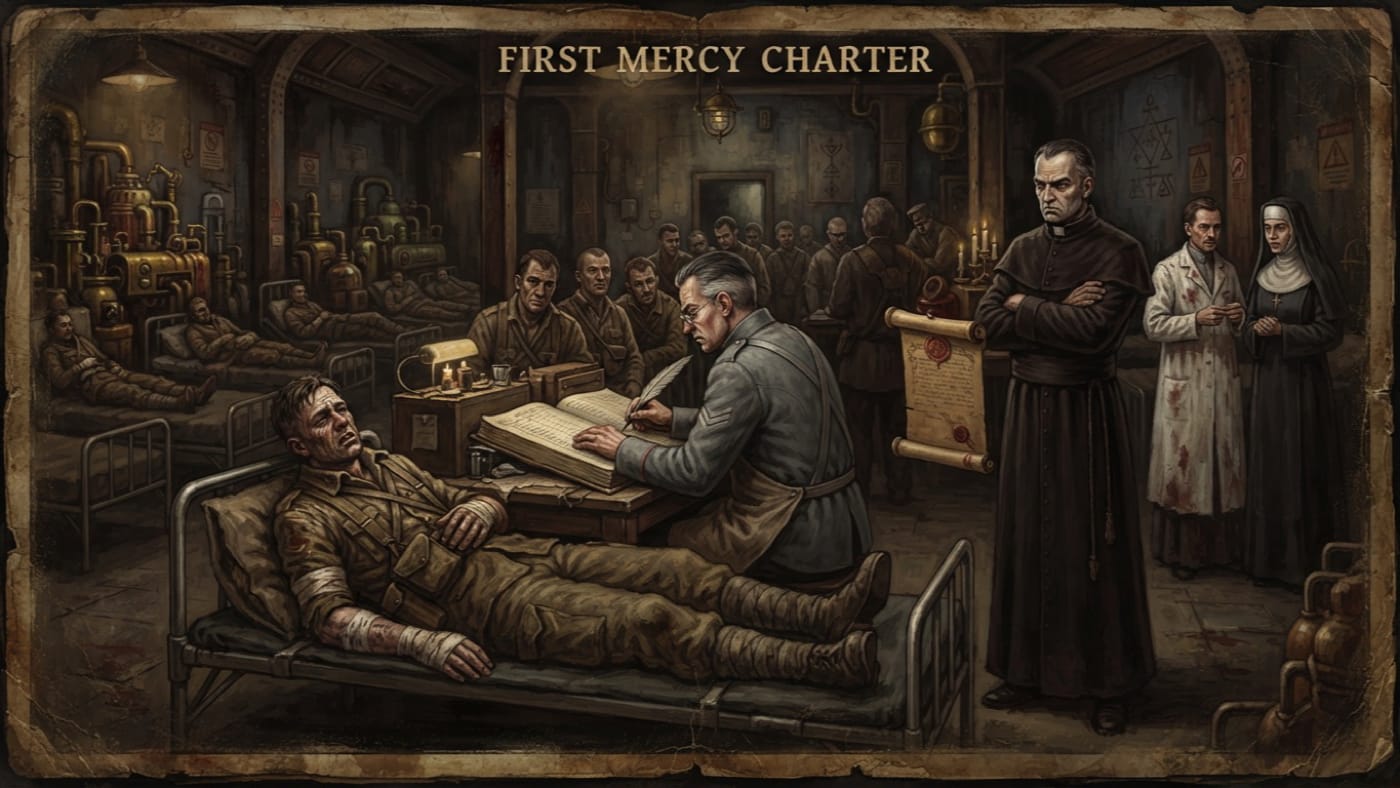
First Mercy Charter
The wound waits while the soul is put in order.
The First Mercy Charter of A.S. 92 conditions treatment on confession, absolution and acknowledgment of Providence. The body waits while the soul's paperwork is completed.
Codex Ref. XIII.1.92-092
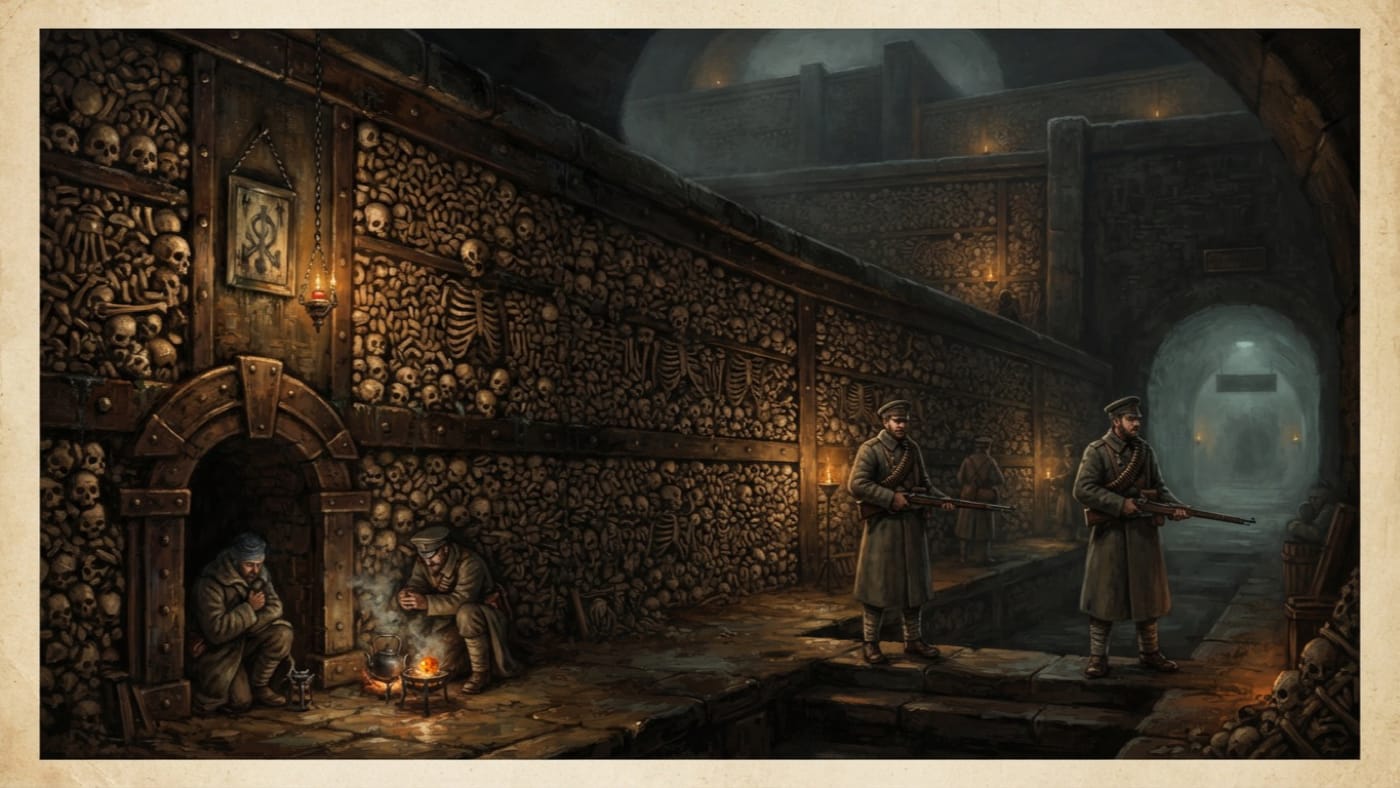
First Ossuary Ring
The dead remain on duty
The oldest bone-built wall of Bastion-Constantinople, accreted from the Continental Levy's graves in the winter of A.S. 47. Standing, garrisoned and consecrated by attestation. The dead remain structural; their service has not concluded.
Codex Ref. II.4.10-047
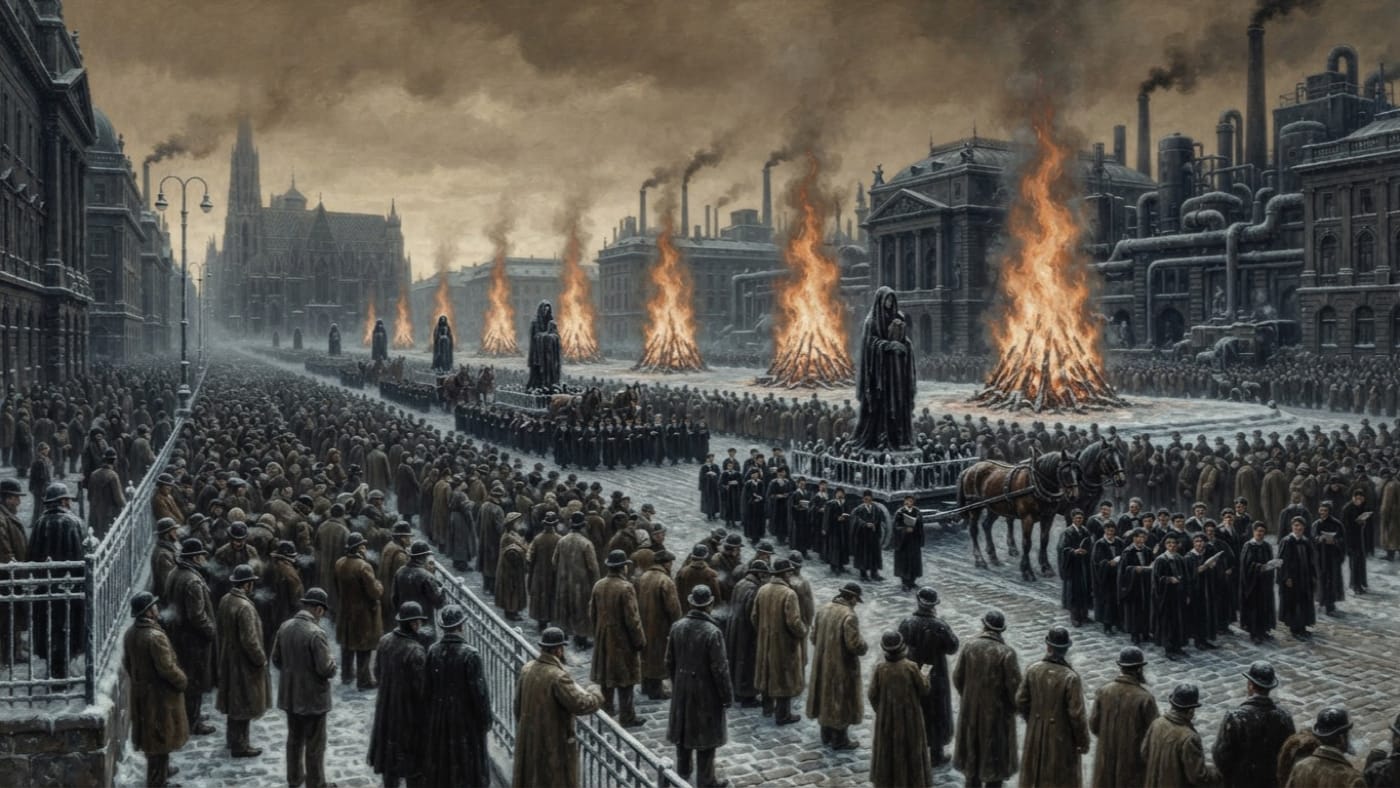
First Prefectural District
One Clause, One Afternoon, No Surviving Map
Vienna’s Rationalist civic district, attested in A.S. 30 by compulsory attendance at the Black Procession. The Ledger preserves the obligation; its founding, boundaries and successor remain unrecorded.
Codex Ref. II.4.09-030
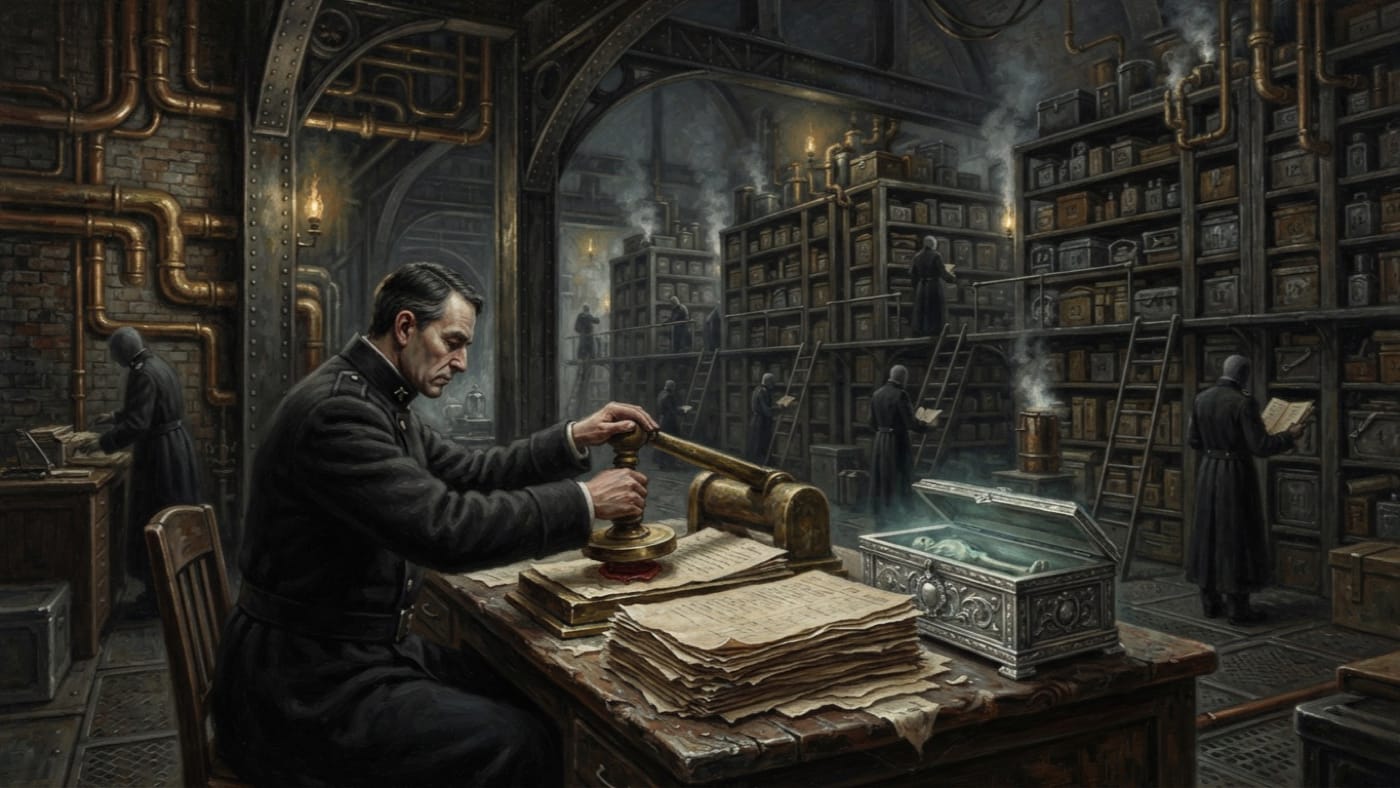
First Ratification of A.S. 92
The charter that gave a seal jurisdiction over the holy dead
The A.S. 92 ratification gave the Bureau of Relics custody, authentication, classification and distribution, making sacred standing a matter of seal. The bones were not consulted.
Codex Ref. VII.2.10-092
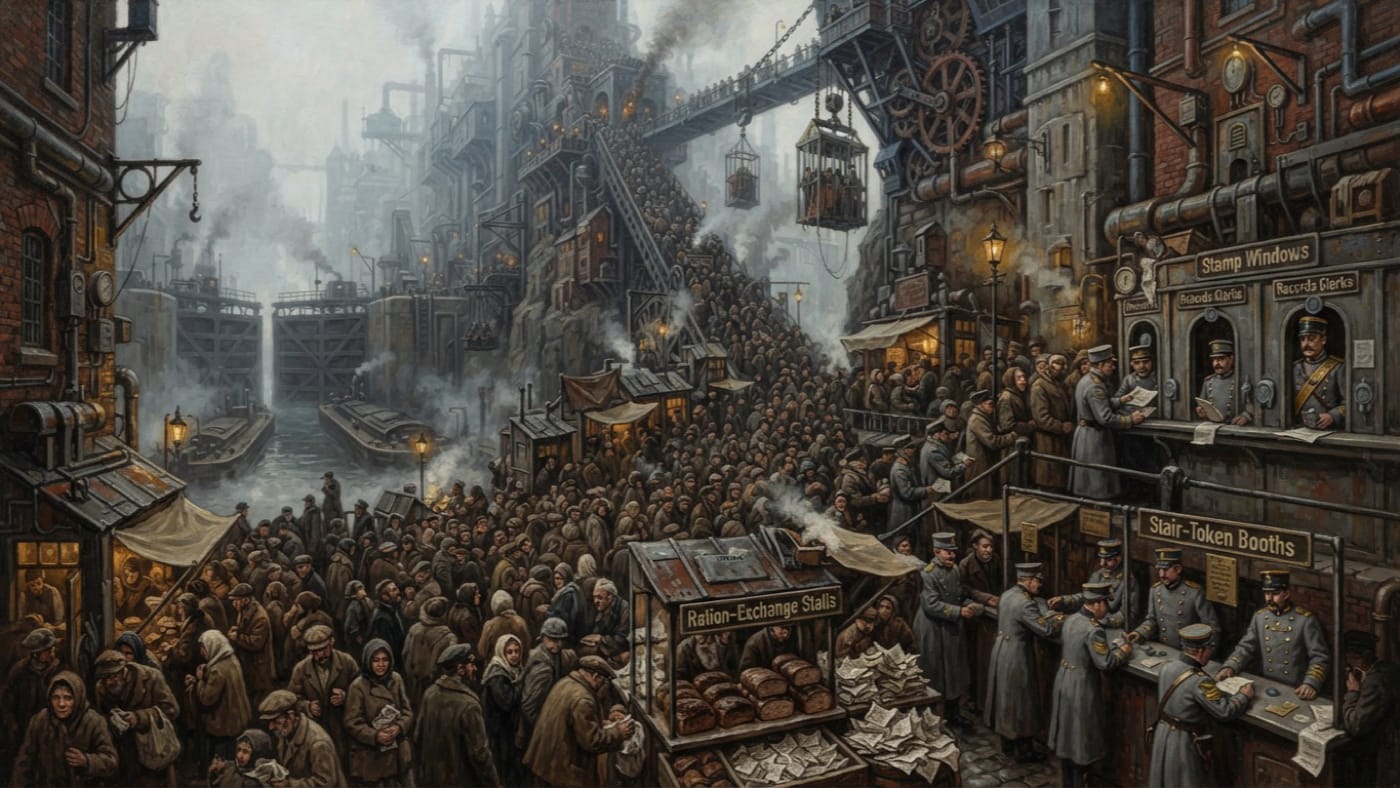
First Step Market
Where brass buys a crossing and bread competes with the stairs
Rheinscarp's market above the locks sells ration chits, clipped brass stair-tokens and instruction in staying registered. Each coin buys bread or ascent; the Ledger is quite content to let a newcomer choose.
Codex Ref. II.2.01-003
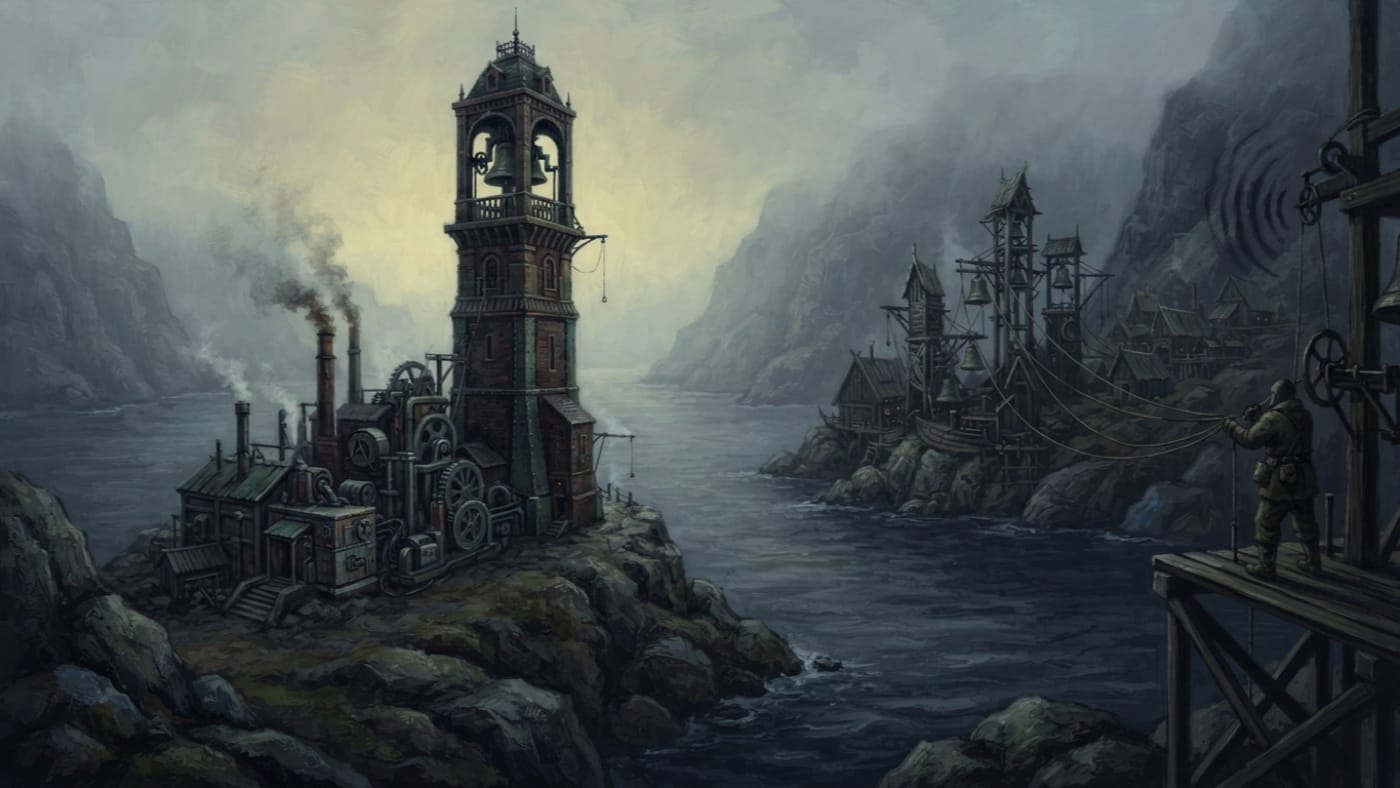
Fjord-Bells of Scandinavia
Strasbourg claims the hour. The North keeps its own.
A.S. 201 survey of Scandinavian fjord-bell traditions, their quarrel with Strasbourg's schedules and their reported answer to the Grey. The old tunings are withheld; the Bureau has asked three times.
Codex Ref. XIII.1.62-002
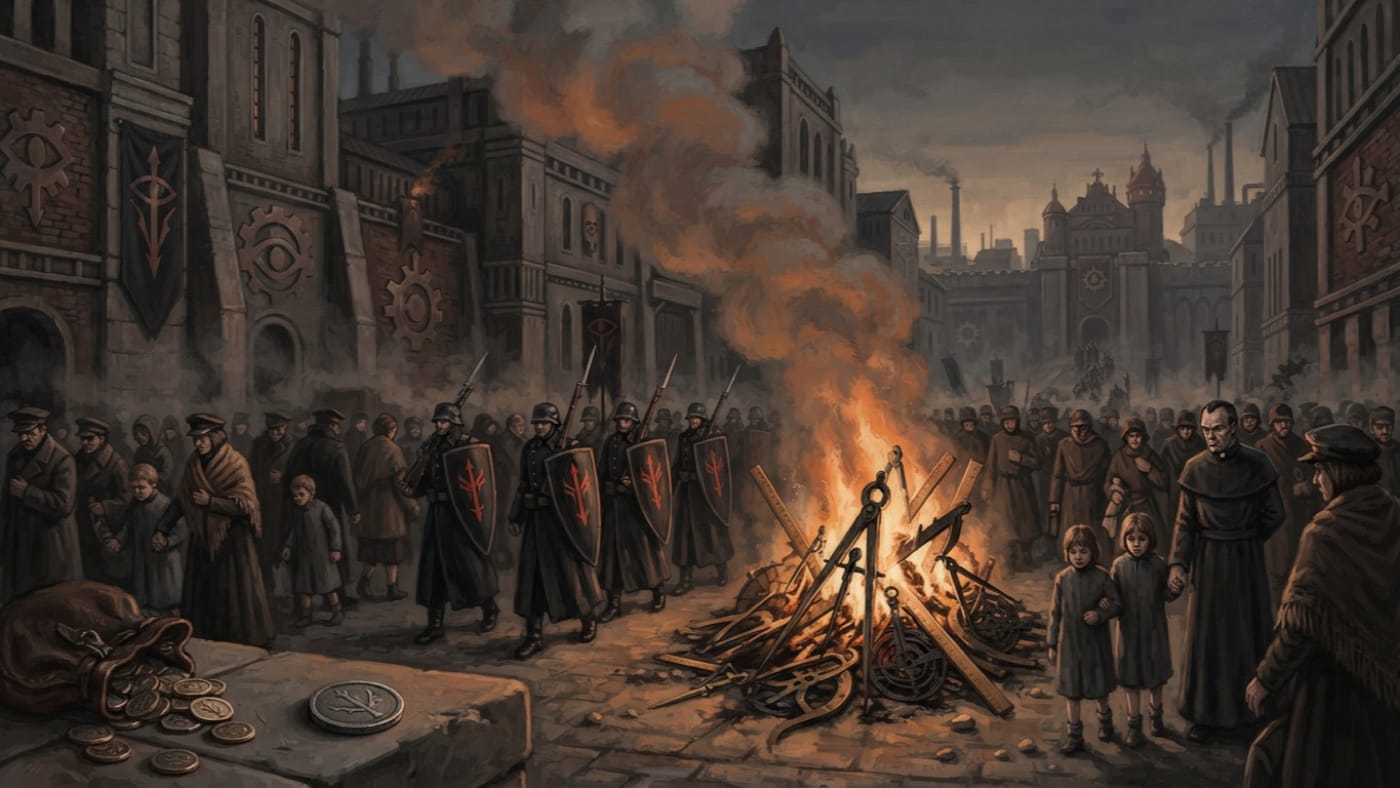
Flaming Sword
Permission has weight, and obedience has smoke
The Flaming Sword carries Synodal authority on coinage and lends its name to Strasbourg's burning of Rationalist instruments. I record its public uses; the emblem's origin remains unproved.
Codex Ref. XIII.1.03-001
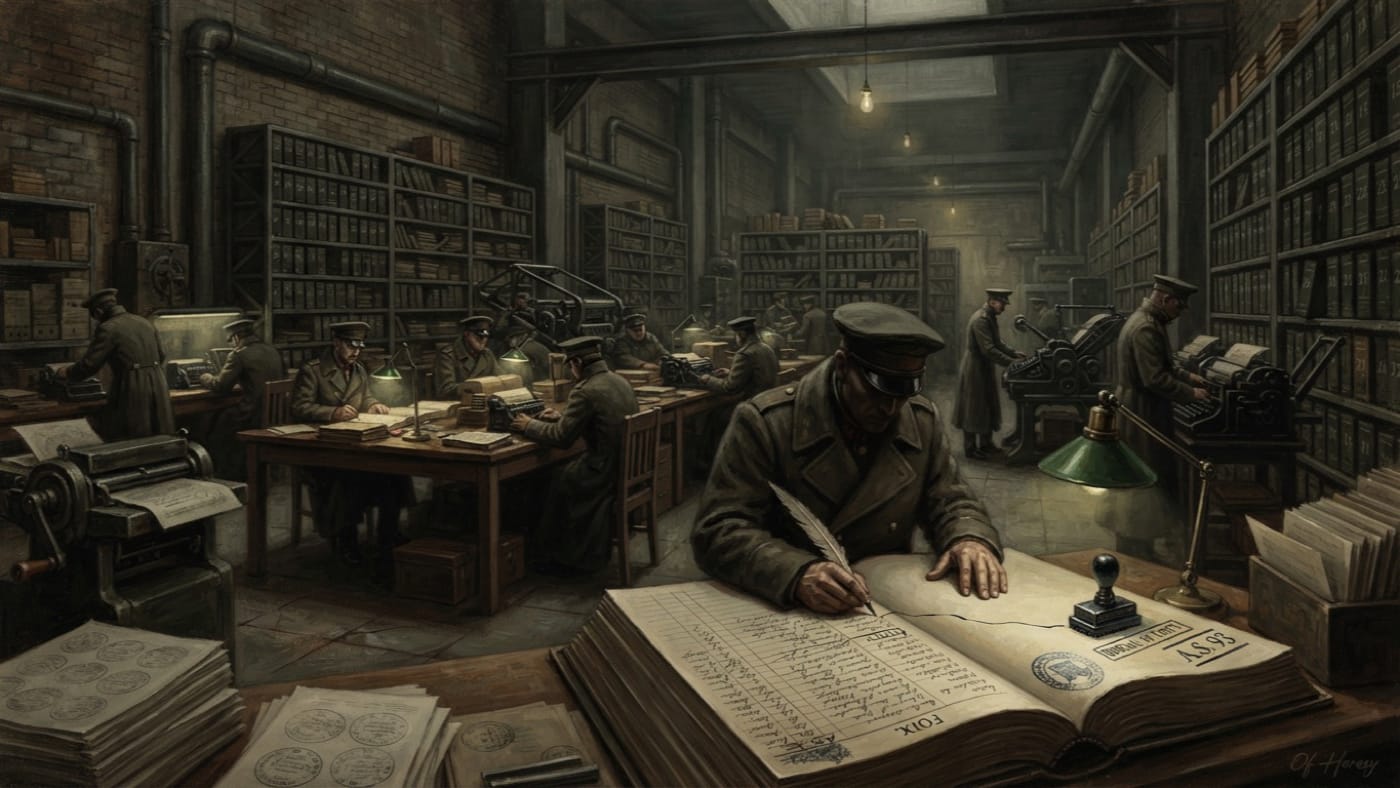
Foix
Named, included, not proved
Foix entered Purity's Toulouse file in A.S. 93 because Carcassonne named it. No local offence is cited. A town requires no proven guilt to become a permanent entry.
Codex Ref. II.1.09-010
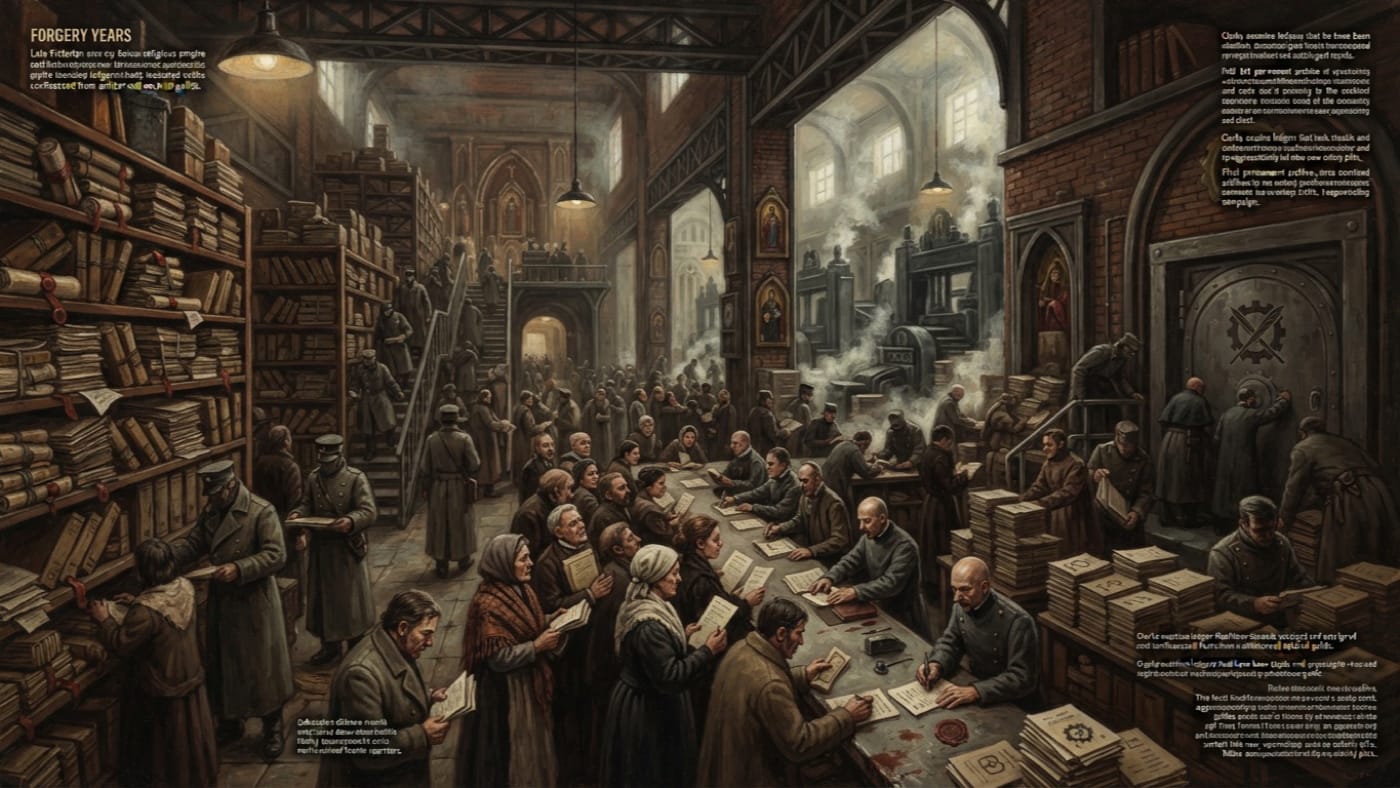
Forgery Years
The promises were suspended. The filing fees were collected.
An A.S. 201 survey of the fraud epidemic following the Oaths charter of A.S. 92. Strasbourg answered false bonds with licensed Witnessers and re-registration; the Bureau reports that the fees paid for its first permanent archive.
Codex Ref. VII.8.11-1133

Founding Instruments
Five verbs gave one Bureau the brass.
The Founding Instruments of A.S. 92 grant Masks and Seals control of official authentication. Article XVII is cited exactly; the full text is absent from this file. The sub-clause still makes paper binding.
Codex Ref. XIII.1.17-092
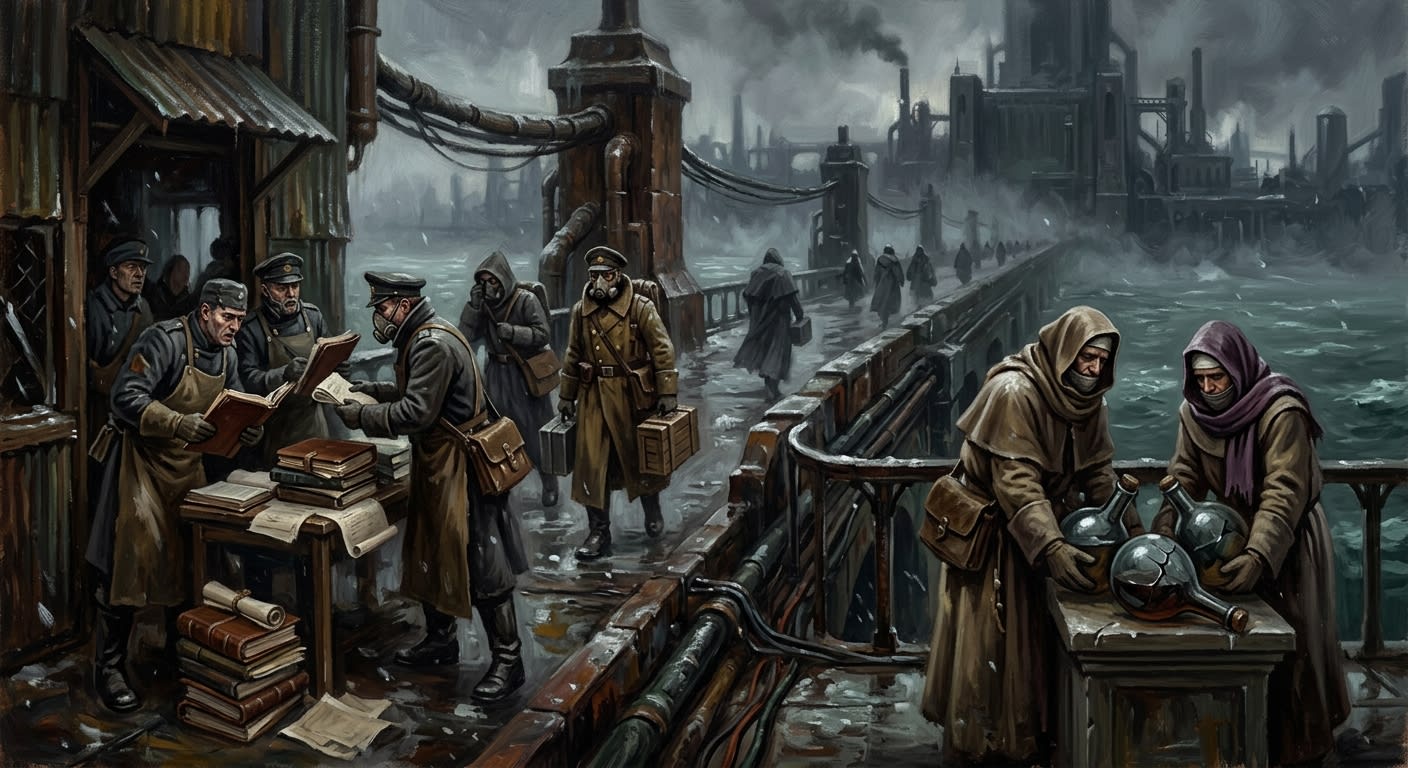
Fourth Causeway Anomaly
Where ice refused the Bureau and grief kept its own accounts
On the Brielle spur of the Salt-Vigil Causeways, winter water refused to freeze, tear-phials grew heavier, and every Bureau discovered a different invoice.
Codex Ref. XIII.1.24-001
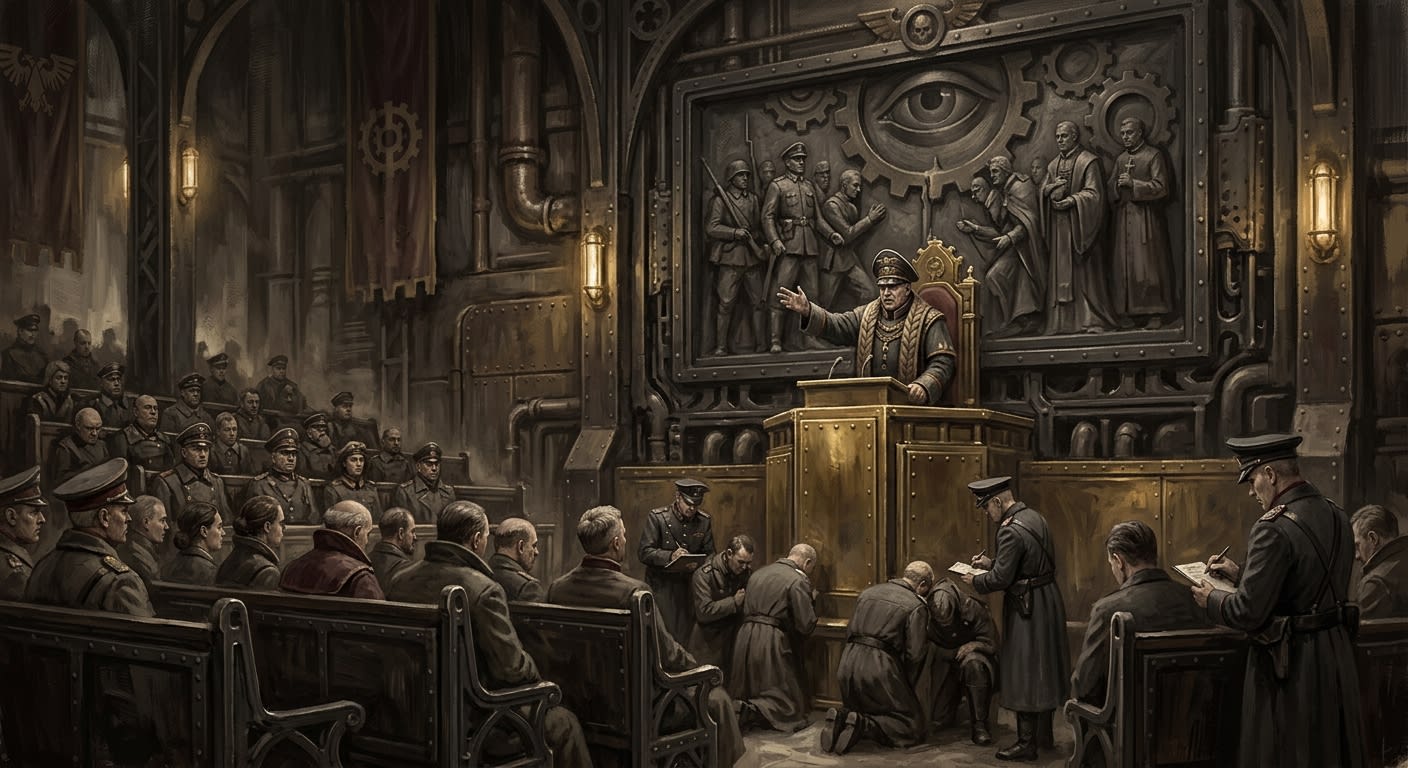
Fourth Doctrinal Congress
Where silence was made to testify against the listener
The Fourth Doctrinal Congress did not end doubt. It converted silence into mortal fault, canonised useful dead, and taught Strasbourg to occupy the Creator's quiet.
Codex Ref. XIII.1.90-104
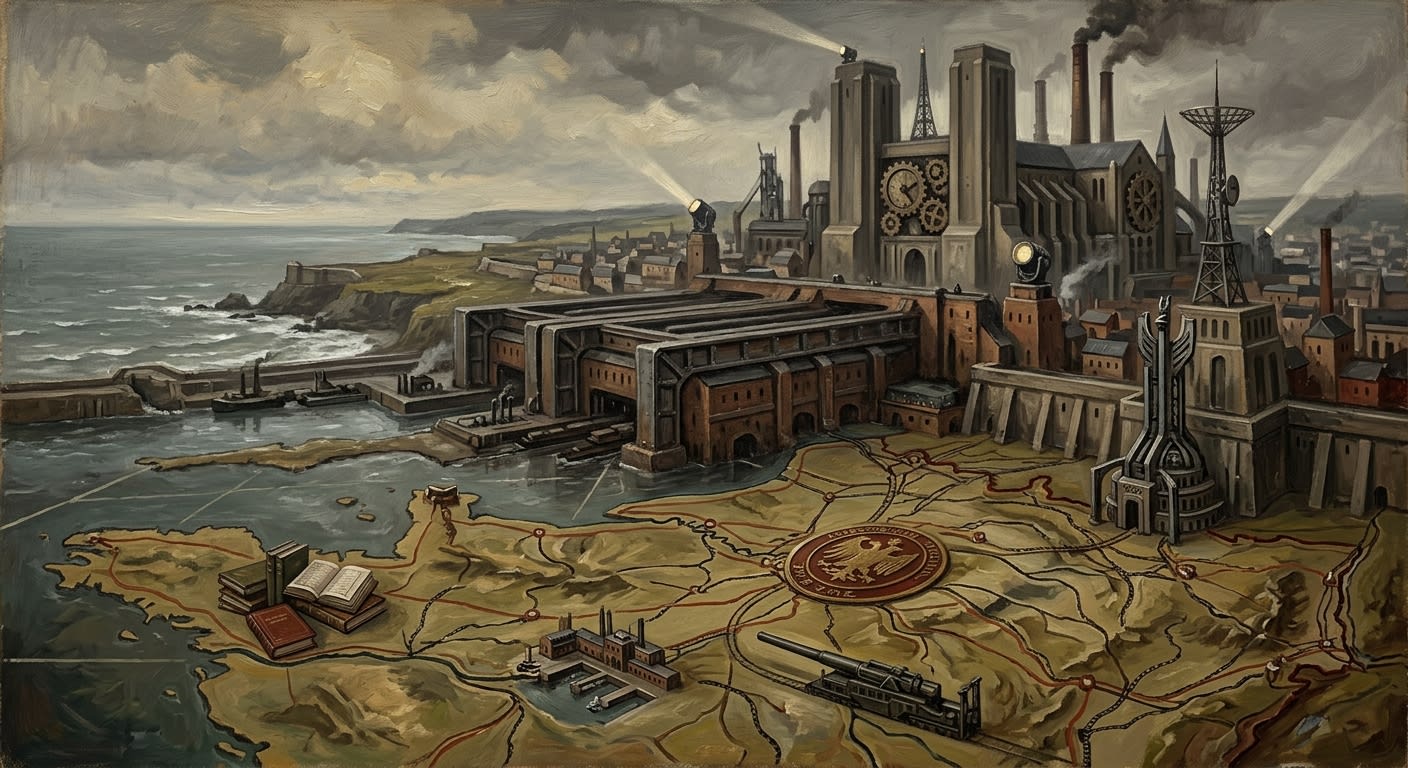
France
The country the Synod did not abolish, because it proved too taxable to waste
A.S. 201 survey of France as Zone One heartland: martyr coast, watched cities, taxable memory, useful ports, and one conquered name made indispensable.
Codex Ref. II.1.01-201
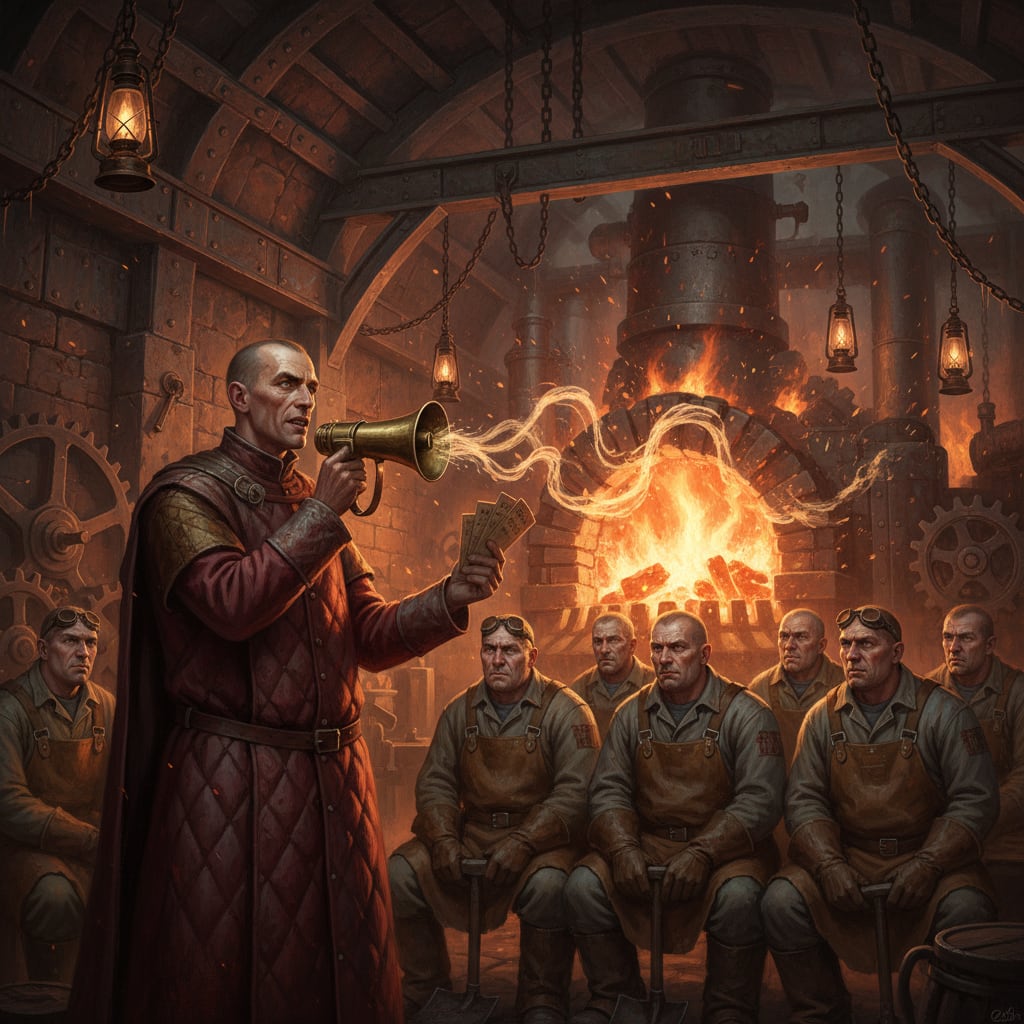
Furnace Catechist
On those who preach the Chain of Cause to men who know perfectly well why the furnace roars — and why neither party will say so aloud.
The Bureau of Doctrine's industrial clergy — stationed in every bastion powerhouse to preach that fire burns by divine permission rather than chemistry. Three thousand four hundred Catechists, two factions, and one question no one will authorise an answer to.
Codex Ref. XII.18.01-001
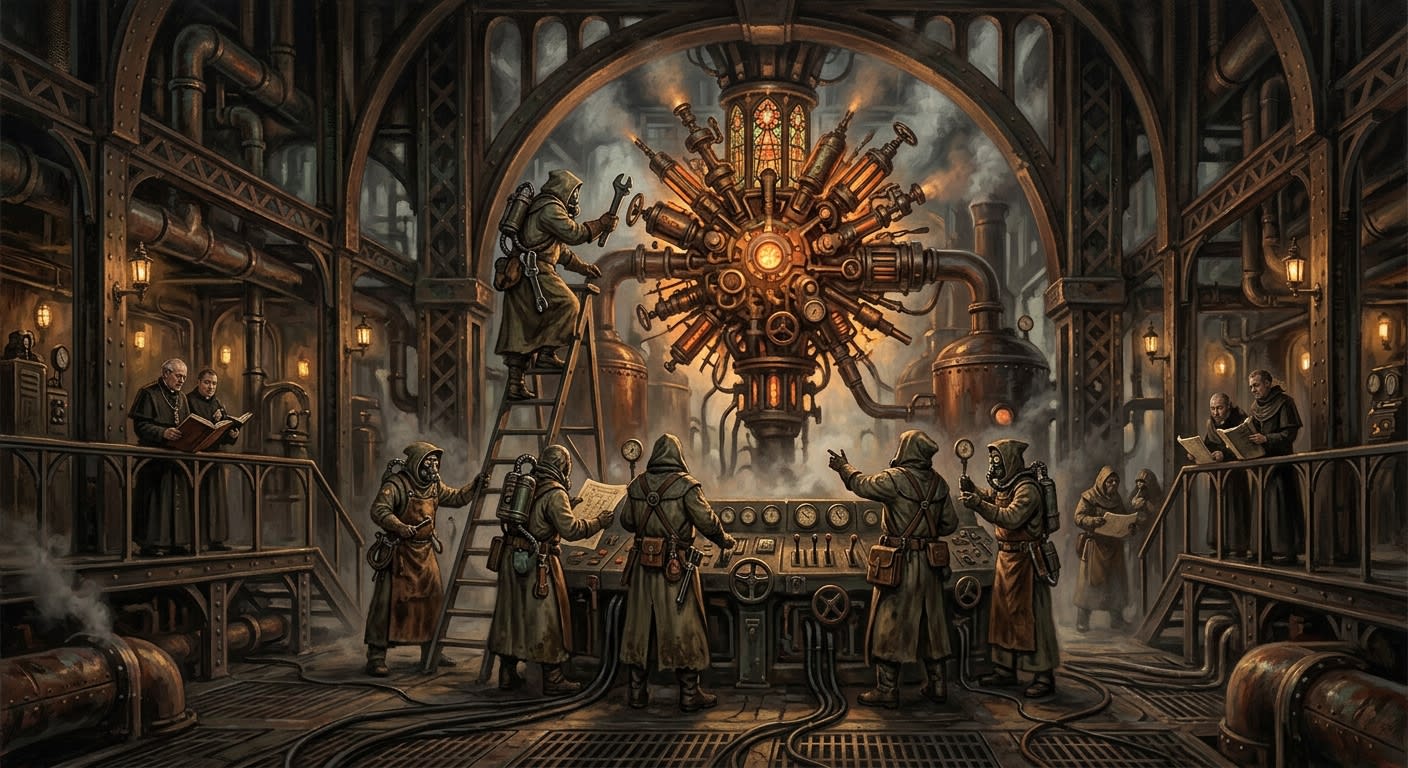
Furnace Chapterhouse of Saint-Combust
The explosion received a feast day; the furnace received priests
The Furnace Chapterhouse of Saint-Combust tends Brast's Chrismole Crown, where an explosion became a saint and maintenance learned to wear vestments.
Codex Ref. VIII.6.04-001
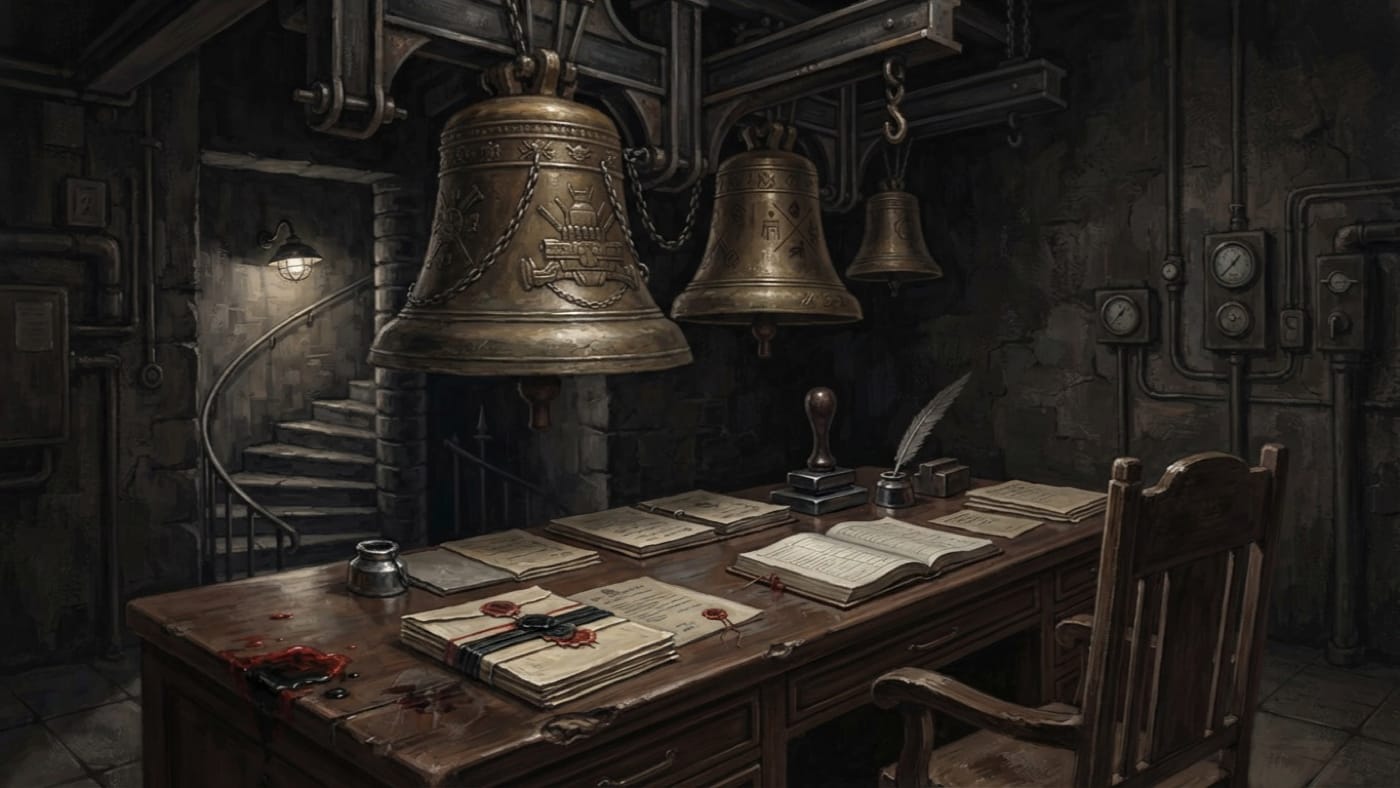
Gallery of the Quill
A walnut desk beneath three bells, and the hand that corrects the Synod's meaning
The Gallery of the Quill is my working room in Strasbourg's Tower: a walnut desk beneath three bells, where the Warden of the Sacred Ledger corrects Doctrine's prose and signs for the consequences.
Codex Ref. II.1.04-002

Garrison-Prior Aldric Venn
He saved the crates, which is how saints survive the road
Garrison-Prior Aldric Venn commanded Saint Stephen's defensive precinct during Vienna's Great Retreat withdrawal, completed the relic manifest, and vanished into the road.
Codex Ref. III.2.01-154
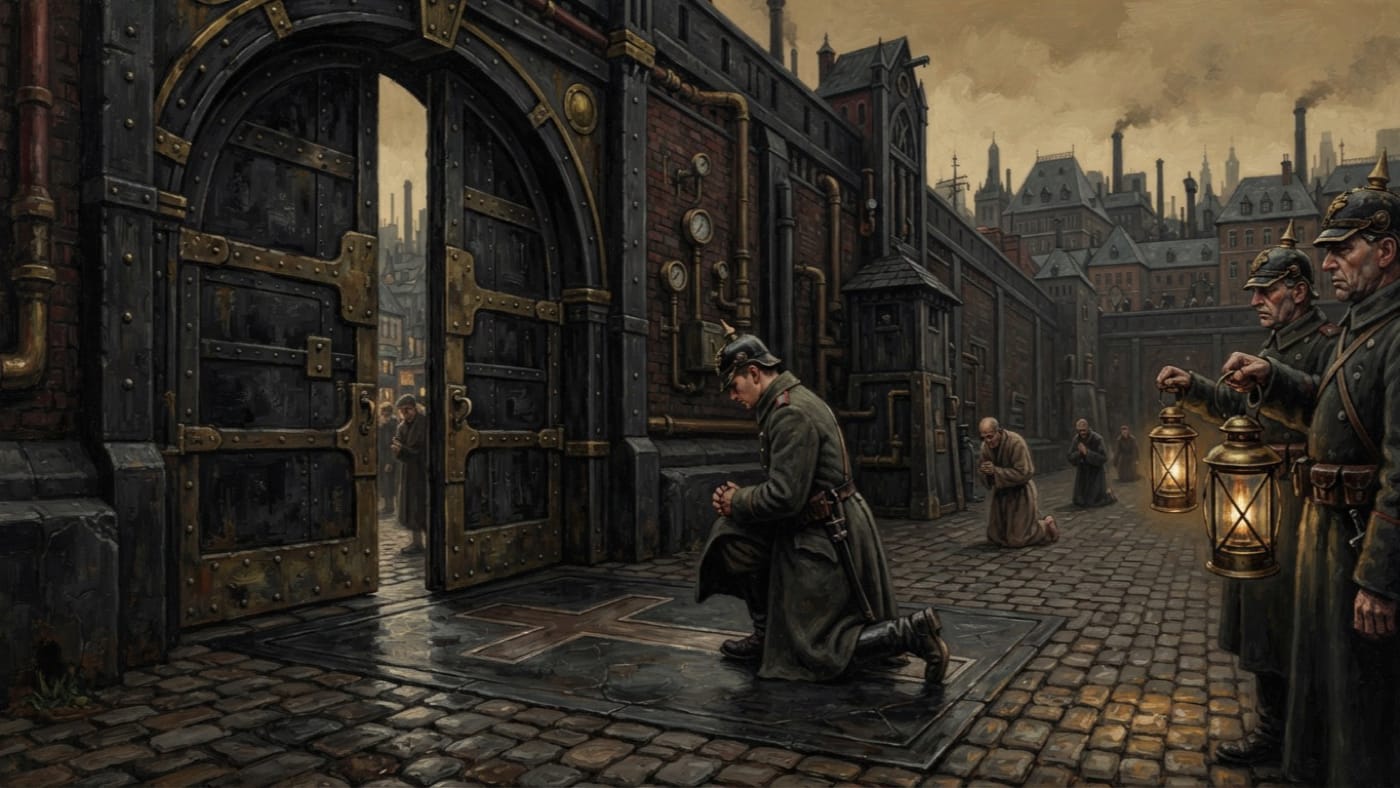
Gate Litany
Forty-seven clauses and no release
At Aachen's western gate, forty-seven clauses turn a recruit's innocence into an obligation. The gate opened in A.S. 25; the knees still answer for it.
Codex Ref. II.2.02-002
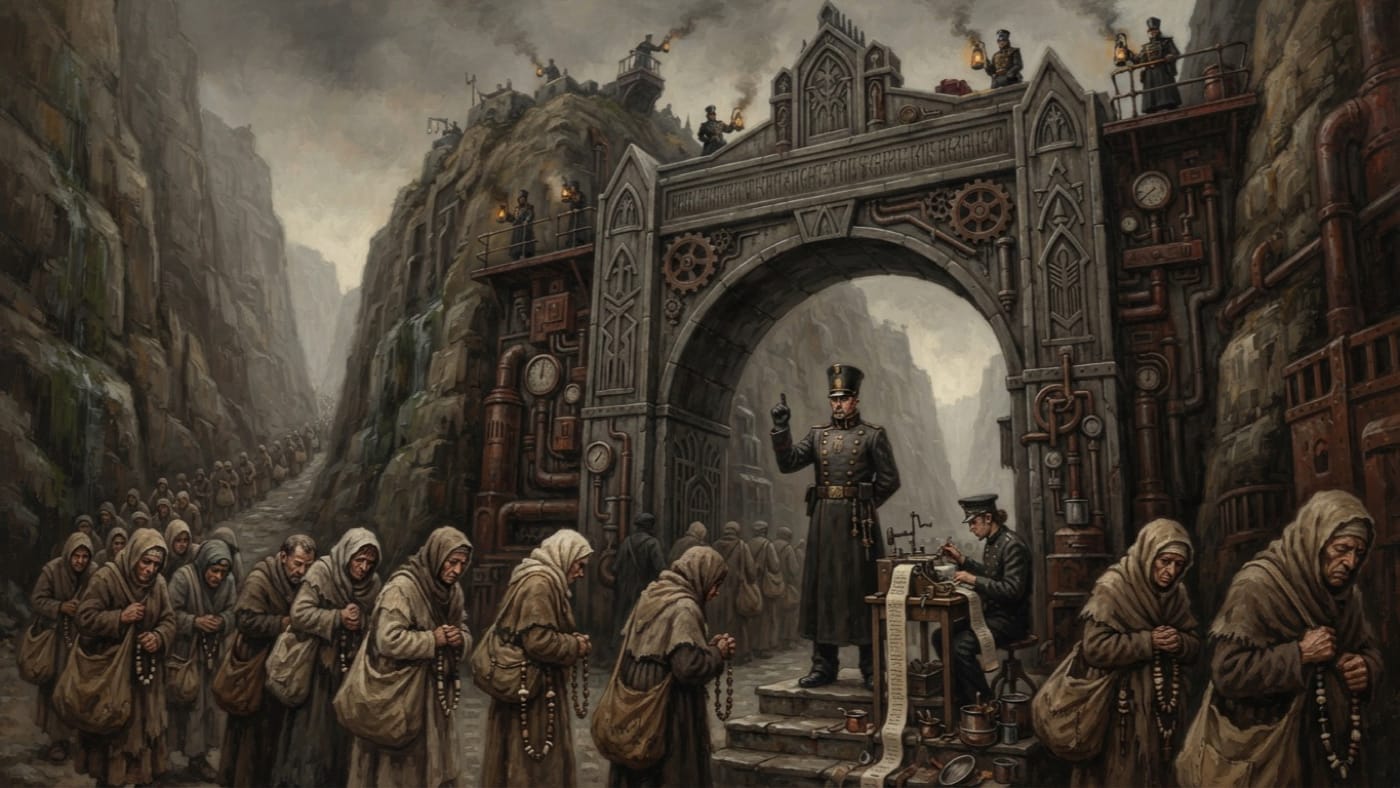
Gate of Clean Tongues
Where the canyon speaks and the pilgrim pays
Peregrine Row's western gate tests the Creed, checks sin-beads, and stamps arriving pilgrims. The canyon supplies a second voice; the proctor decides which one earns detention, and the brokers collect on either verdict.
Codex Ref. II.1.03-002
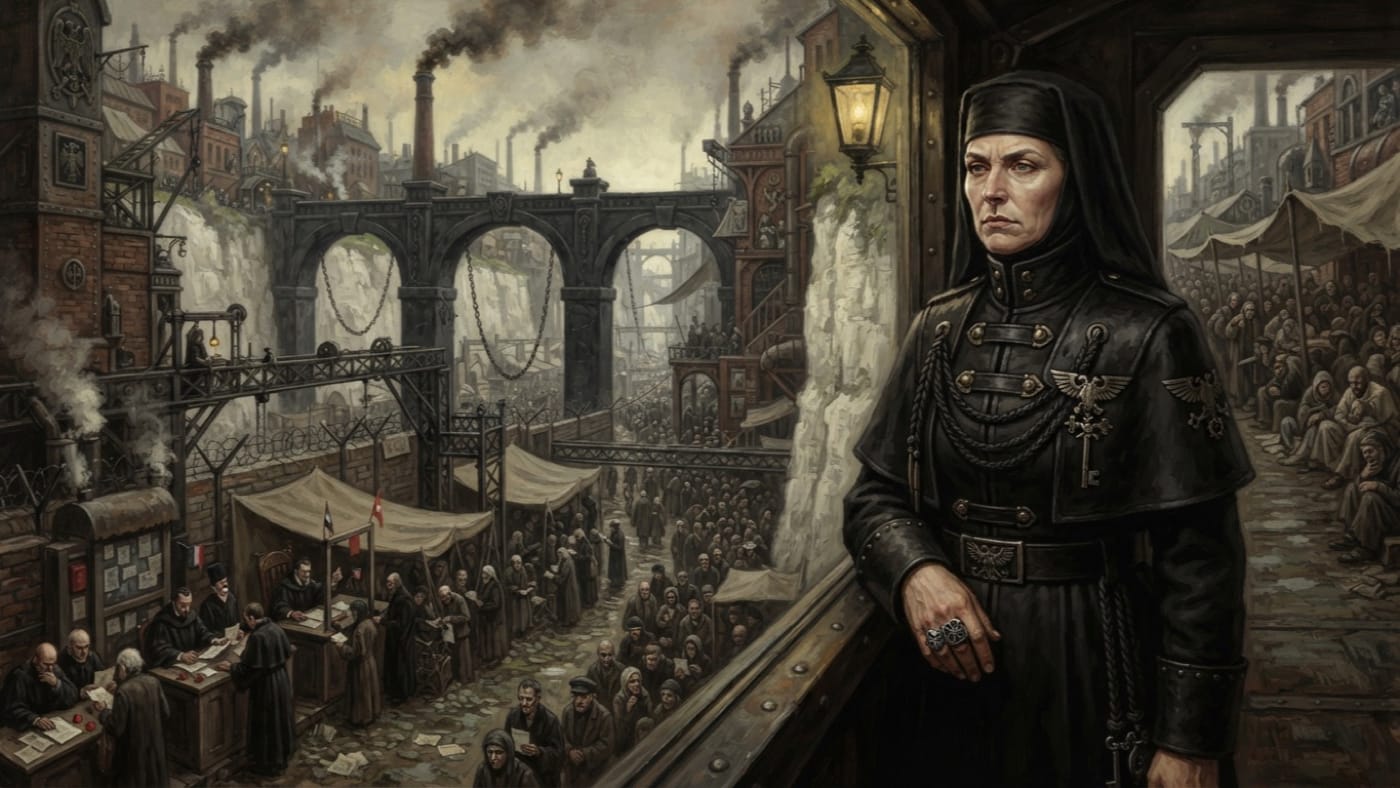
Gate-Canon Meral Voss
Two masters, one stamp, and a queue that must not riot
Meral Voss holds Griefgate's shared seal between brokers who want traffic and a Synod that wants bodies. Her inspectors always produce a confession; the forms do not ask where it came from.
Codex Ref. III.2.01-201
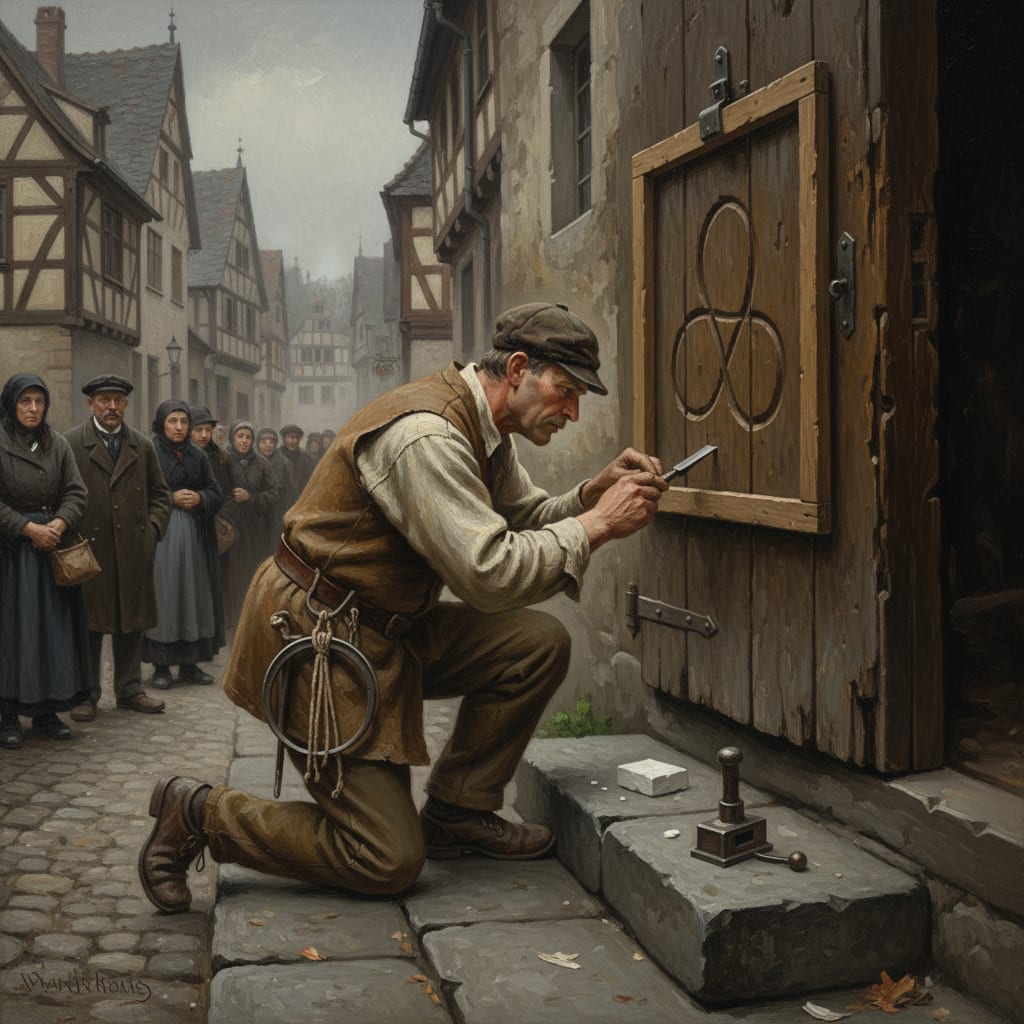
Gate-Carver of the Triune Knot
Three loops, one law, and the prayer that this time the threshold will hold
Six thousand licensed Gate-Carvers execute the Triune Knot into every threshold, grave-slab, and ossuary niche — sanctifying doors, sealing dead, and sustaining the Bureau of Heraldry's claim that a world without geometry is a world the enemy can enter.
Codex Ref. XII.19.01-001
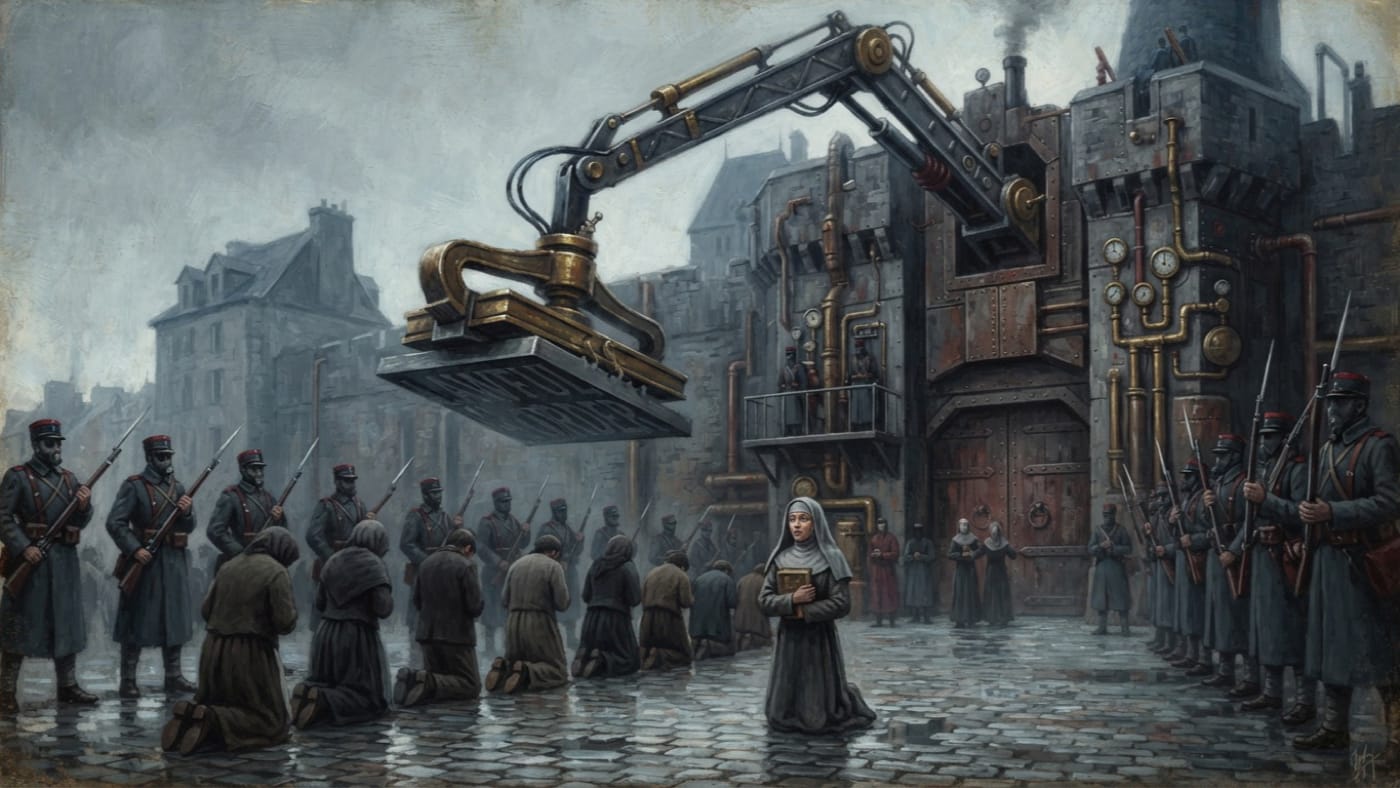
Gazette de la Raison
Four sentences against thirty-one dead
Four sentences made Saint-Malo's kneeling pilgrims vagrants and its bayonets lawful. The Gazette kept the magistrate's grammar; the Church kept the face of Saint Margaux.
Codex Ref. I.1.04-010
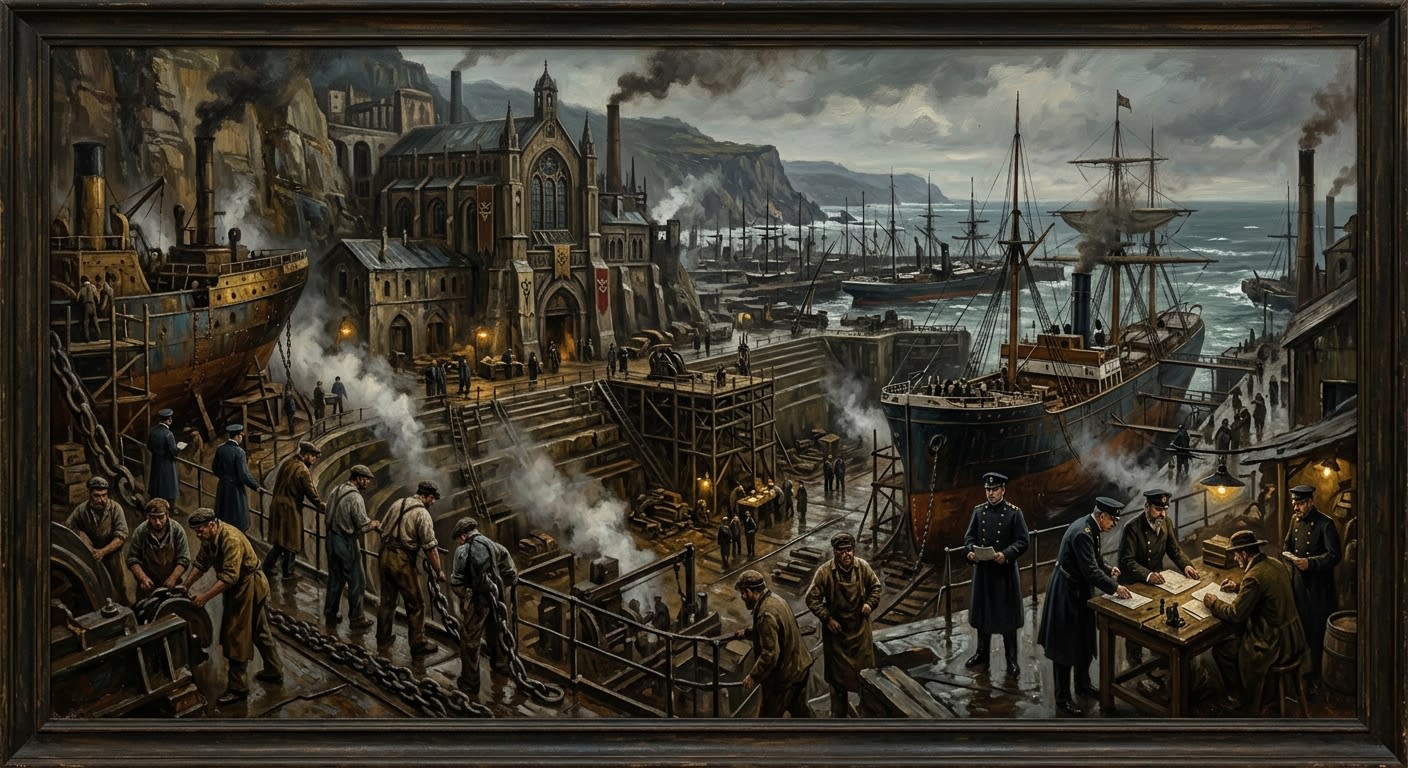
Genoa
The Synod owns the harbour by law; the harbour invoices it by clause
Genoa is the Synod's Ligurian contract-port: grudgingly compliant, rich in drydocks and debt, and indispensable in every way Doctrine resents.
Codex Ref. II.4.09-016
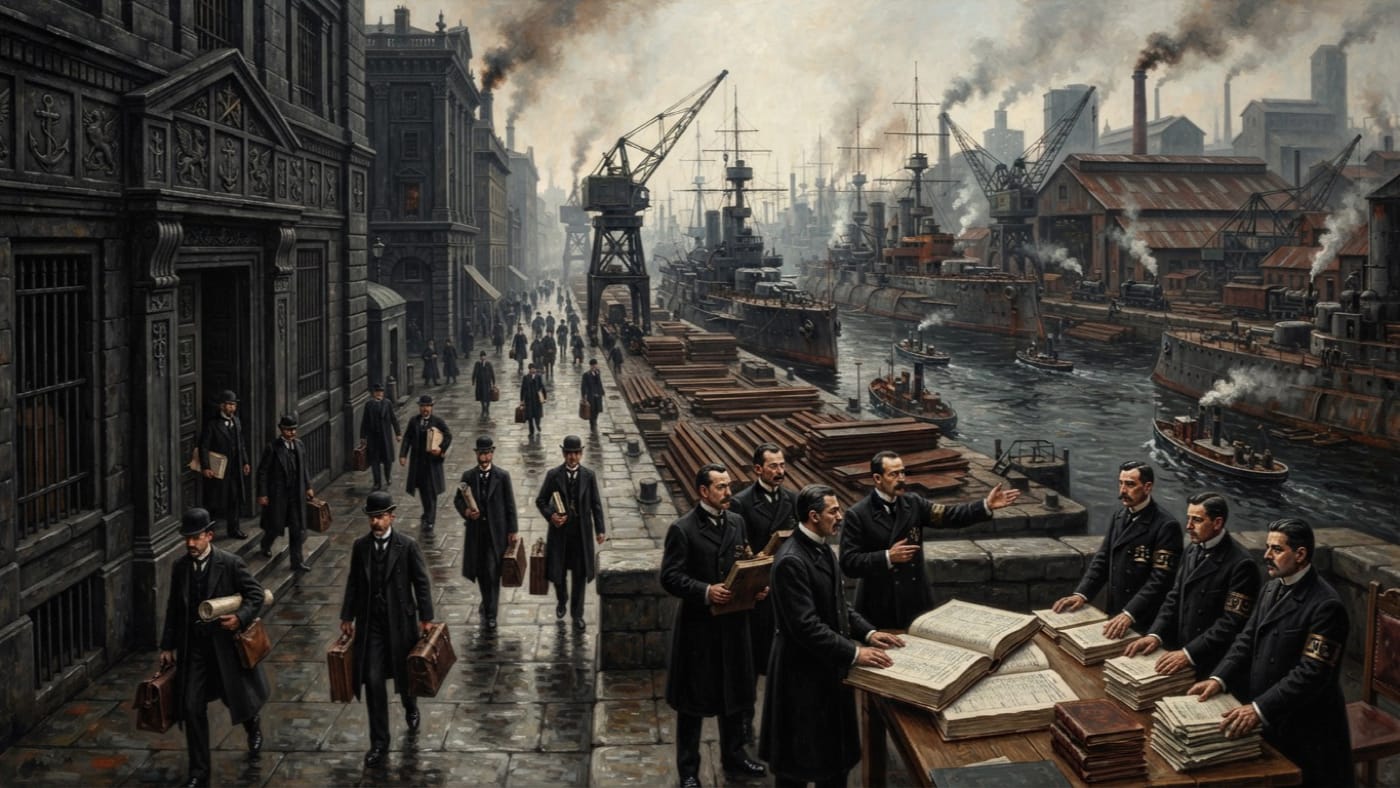
Genoese Banking Houses
Southern naval authority belongs to the Synod; its credit belongs to the Quay
Genoa's private banking houses guarantee the Bureau of War's southern naval contracts. Tithes audits the ledgers; the Quay decides when the hulls move.
Codex Ref. XII.26.03-001
German states
Many jurisdictions. Separate seals. One inconvenient table.
The German states in 1678: many jurisdictions, separate seals, and no common answer to Amsterdam's bone census. The relics agreed locally. The ledgers did not.
Codex Ref. II.1.10-001
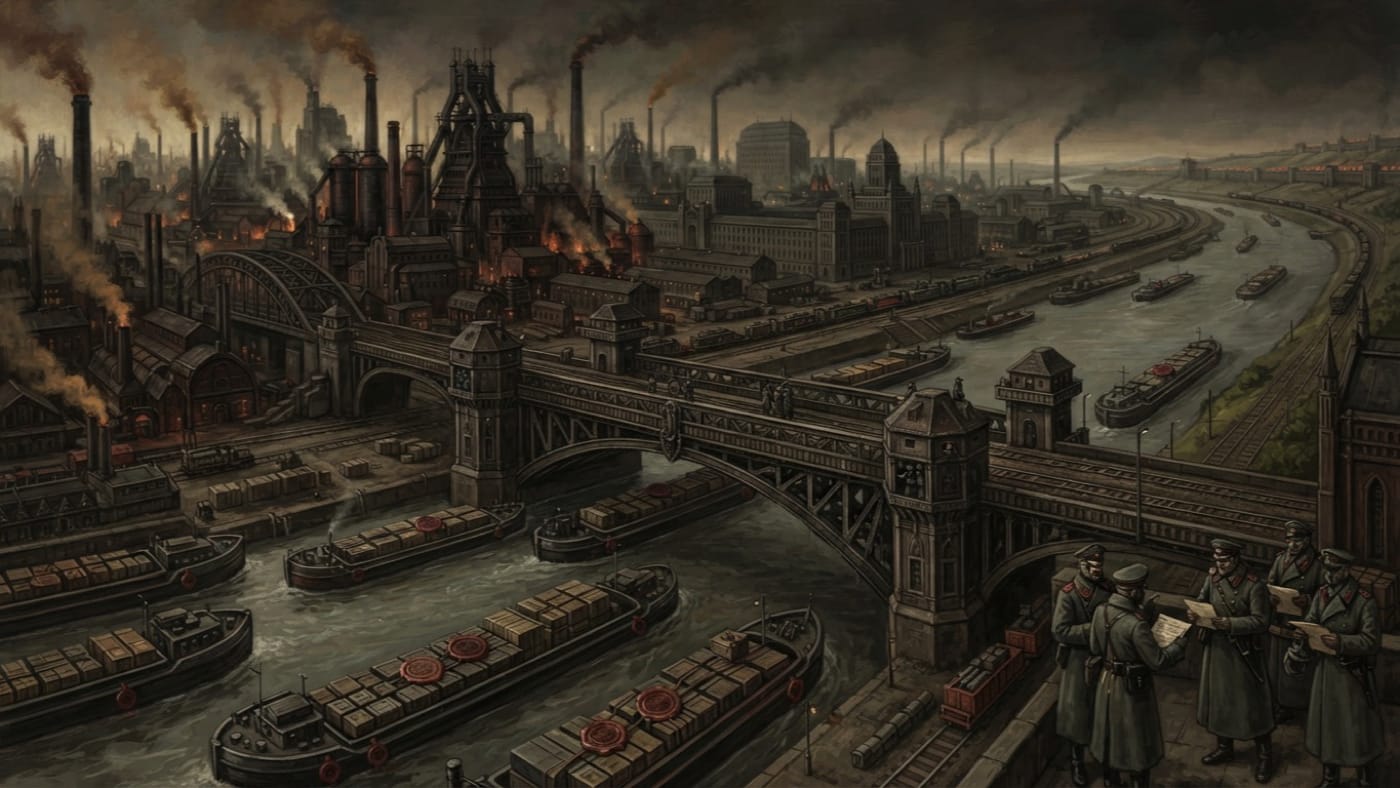
Germany
The heartland that supplies the frontier and answers to several seals
Germany in A.S. 201: the Zone Two heartland of taxed rivers, singing furnaces and military depots. The old borders were erased; the territory still supplies the frontier, and every cargo requires a seal.
Codex Ref. II.6.01-201
Glasswrights of Bruges
They disputed the duty on windows and went home owing their grandchildren
The Bruges glasswrights carried a twelve-year window-tariff quarrel to Münster in A.S. 105. The blood-compact bound their craft and descendants; the signing hand remains unidentified.
Codex Ref. XII.30.03-105
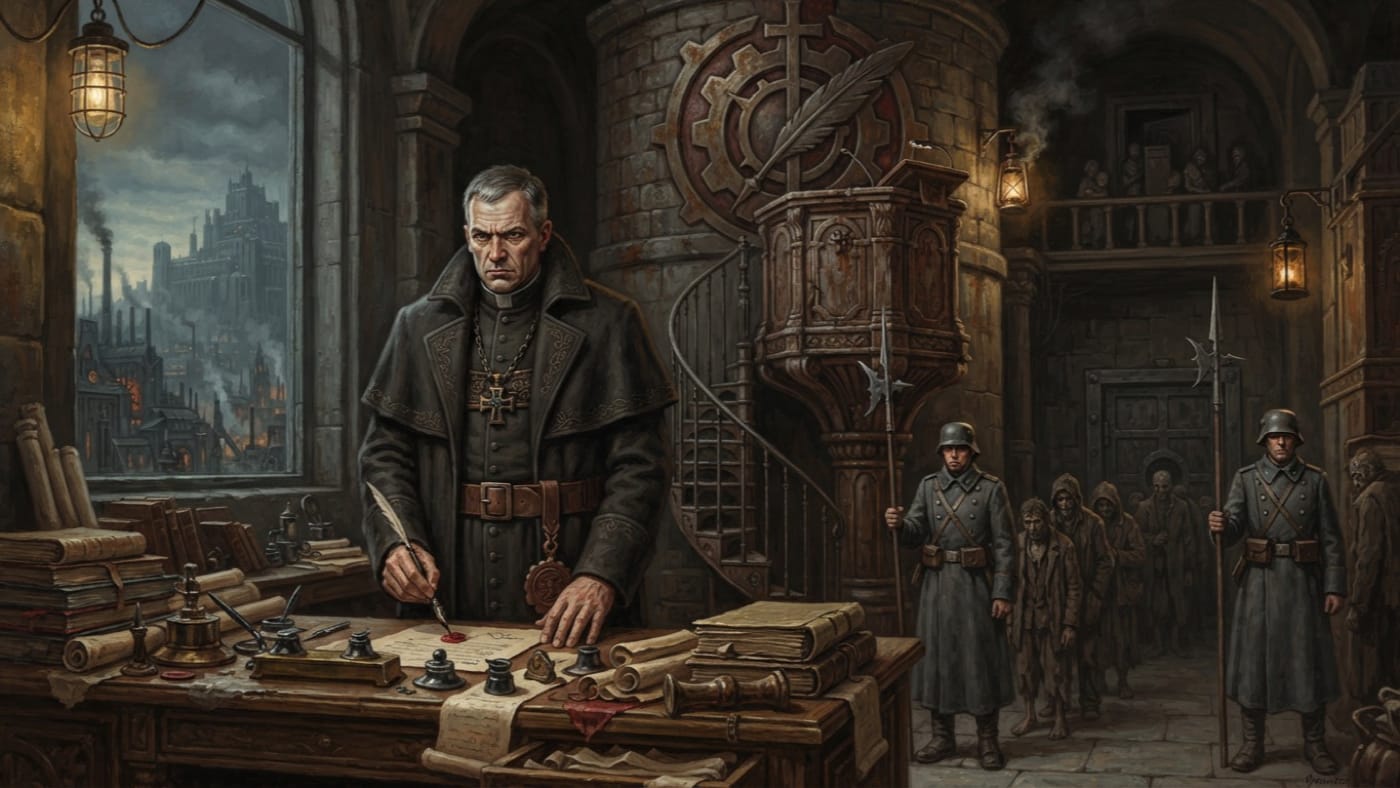
Governor-Praelate
A pulpit, a ledger, and a pike under one seal
Strasbourg's Governor-Praelate rules province, city or territory with pulpit, ledger and pike. Mercy and extraction bear one seal; every Bureau reads it differently.
Codex Ref. III.2.03-201
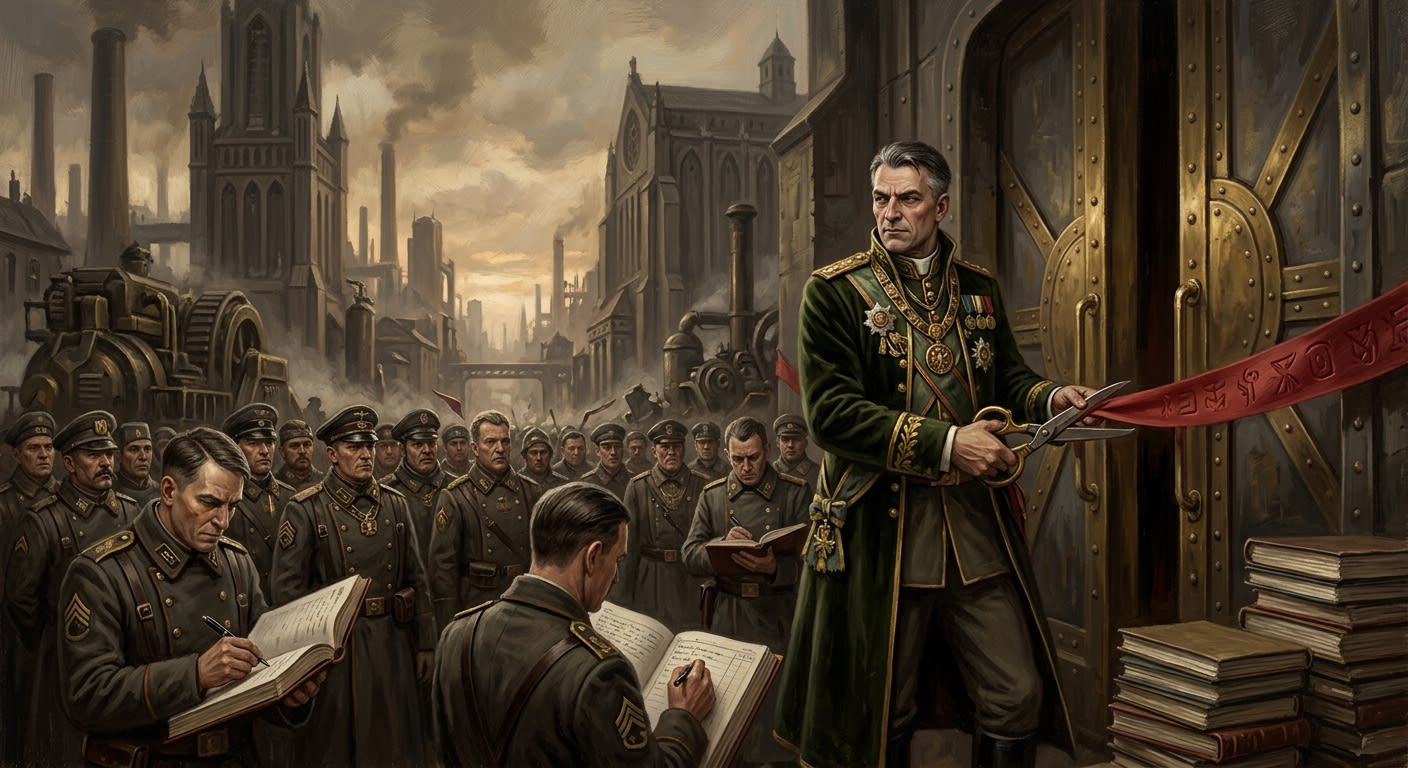
Governor-Praelate Alaricus
The dangerous administrator who made mercy balance
Toledo's Governor-Praelate, watched for the A.S. 185 opening of the Granaries of Saint Benedict: mercy recorded so thoroughly that Tithes could not call it theft.
Codex Ref. III.2.01-085
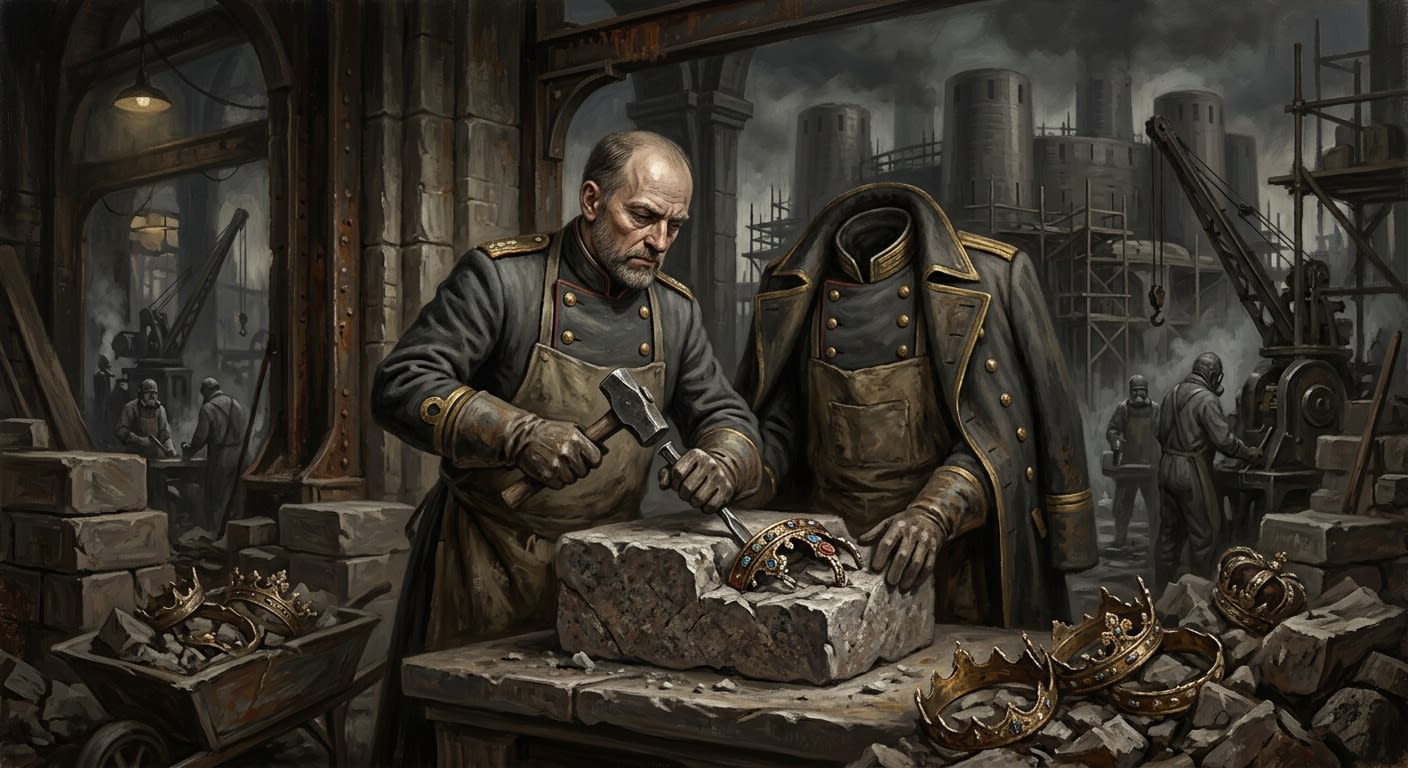
Governor-Praelate Hugo of Constantinople
The man who made abdication useful and bone load-bearing
Governor-Praelate Hugo surrendered his coronet in A.S. 68, ordered the Second Ossuary Ring, and taught crowns to become masonry.
Codex Ref. III.2.02-001
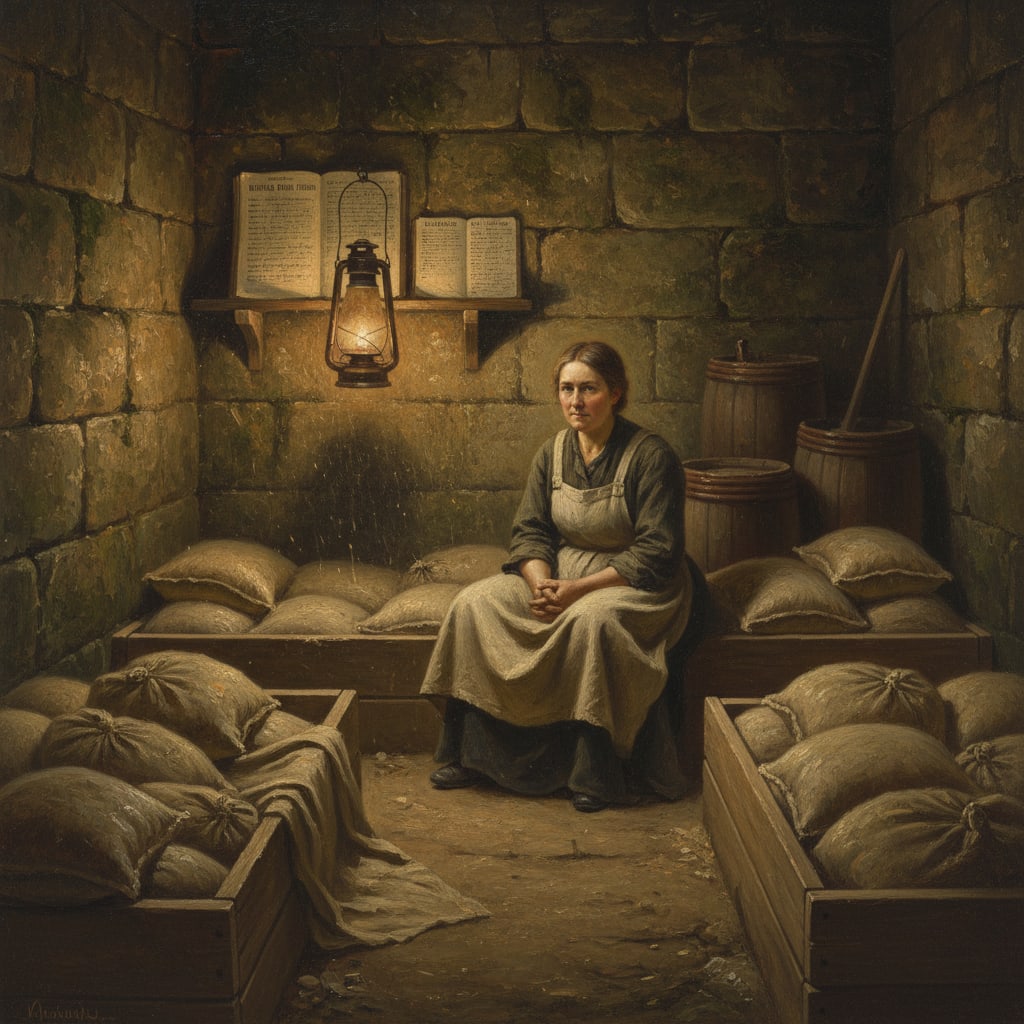
Grain Keeper
The fifth proscribed heresy, which is also why most of the civilian population west of the Sagittal Line survived the last four winters
The fifth proscribed heresy: farmers and millers who hide grain from the Bureau's ration ledger and thereby keep the population alive. The Bureau calls them spiritual saboteurs. The population calls them their only recourse.
Codex Ref. XI.2.01-001
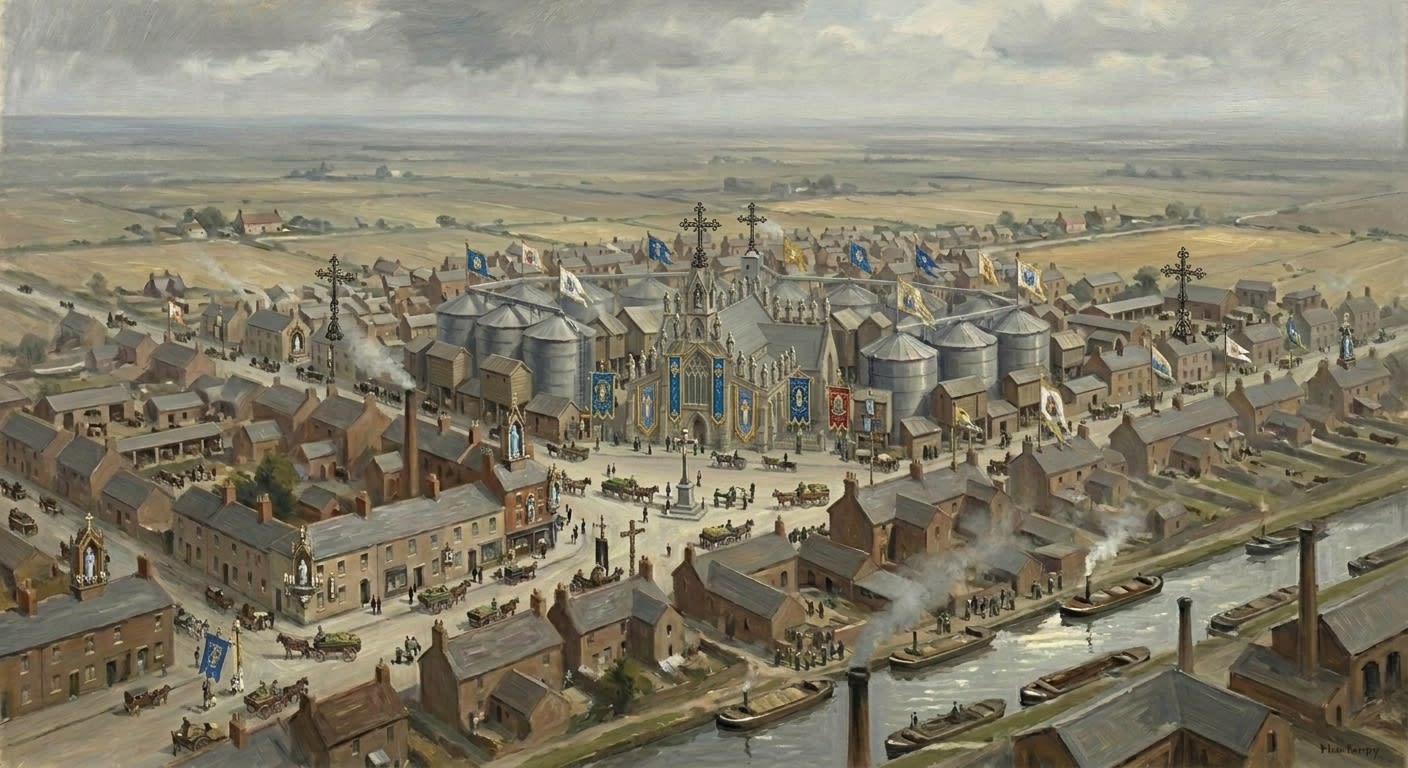
Grain-Gray Ration Parliament of Wexel
A machine for producing obedience, fed on grain and fed upon by something else
A Hessian grain-town that accidentally invented the systematic regulation of joy. Fourteen silos, three instruments of compliance, one smell of flour and fear, and a surplus no official ledger will account for.
Codex Ref. II.2.04-001
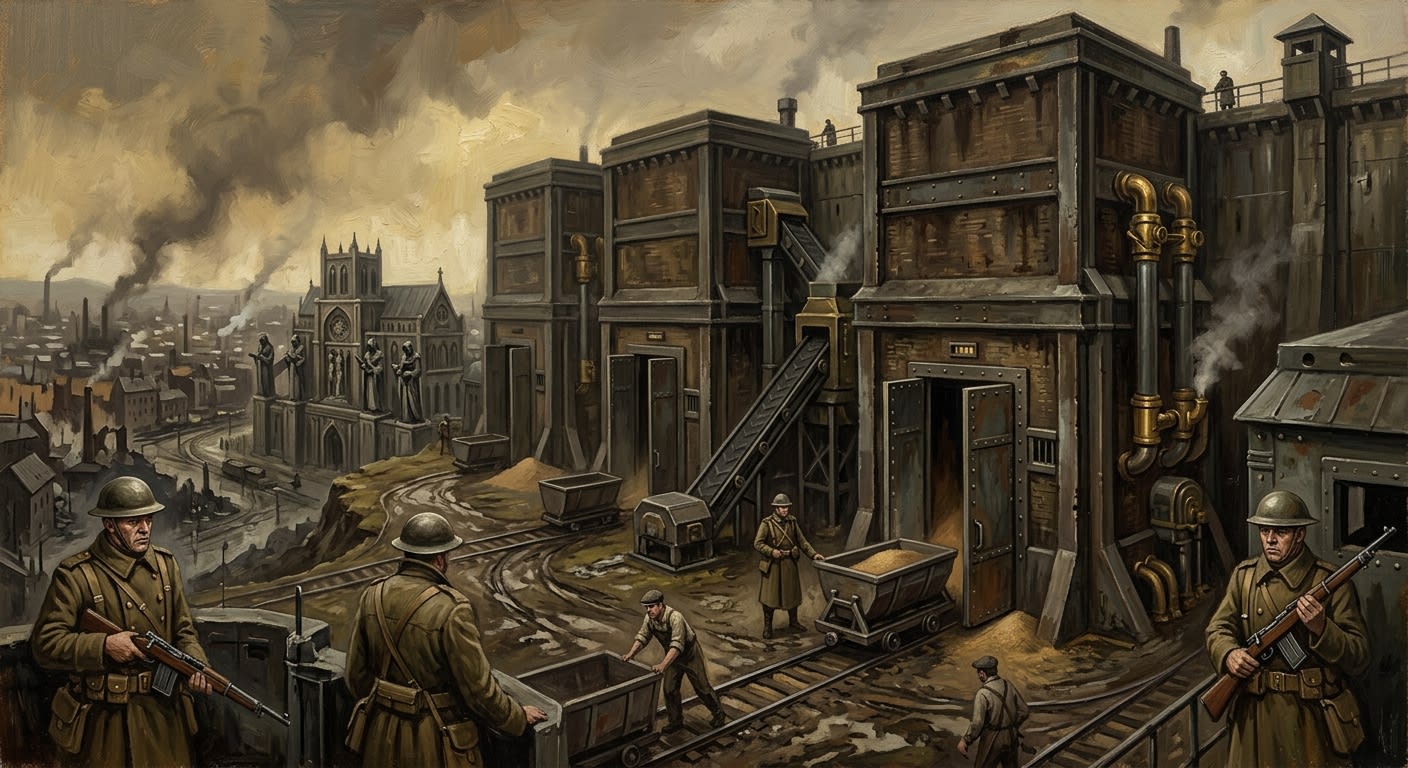
Granaries of Saint Benedict
Mercy under lock, key, and later approval
The Granaries of Saint Benedict are Toledo's four watched vaults of civic reserve grain, opened in A.S. 185 by Governor-Praelate Alaricus before Strasbourg could make mercy late.
Codex Ref. II.1.05-185
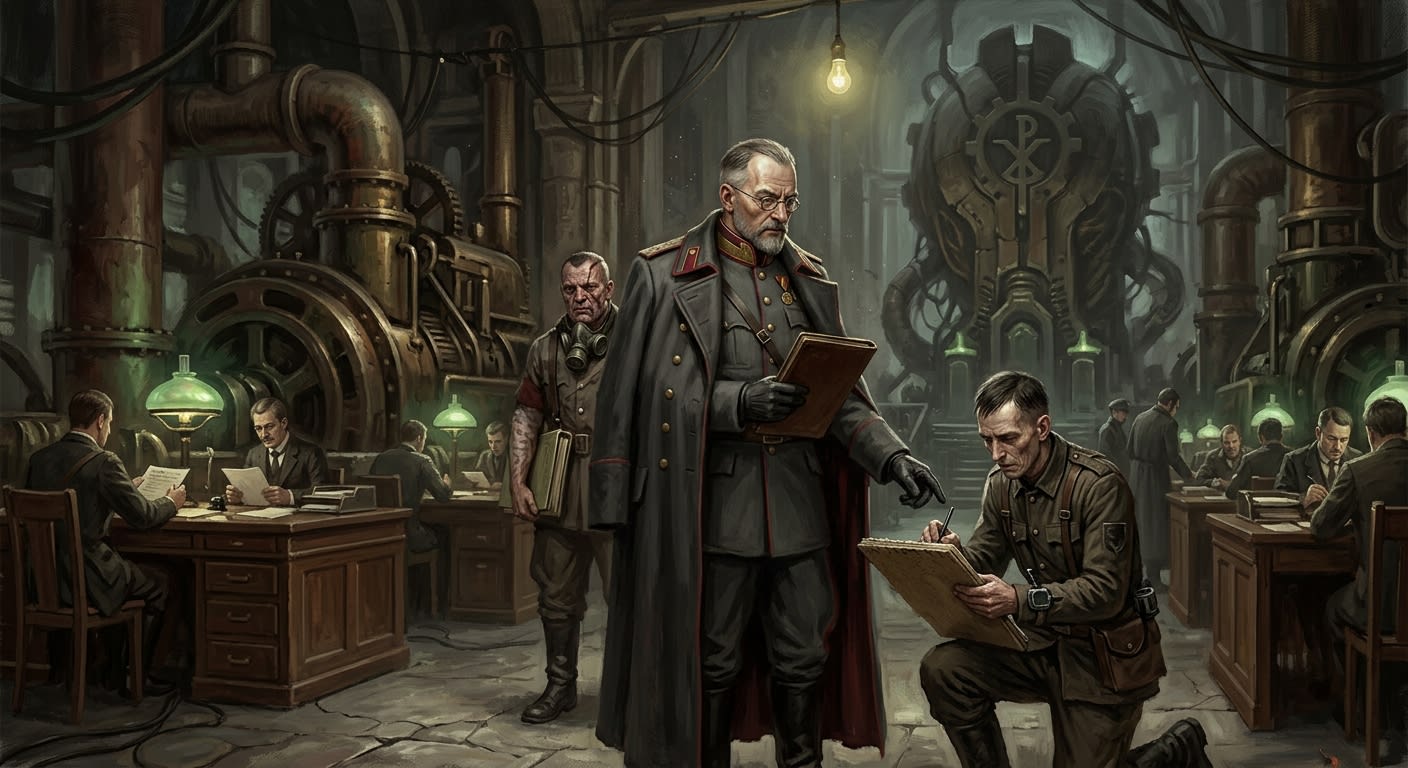
Grand Inquisitor Severian
The tongue made public office, the cage made catechism
Severian of Mainz made fear audible, denunciation intimate, and cruelty administrative; his Second Appendix still walks through Prague with nail and tablet.
Codex Ref. III.2.01-062
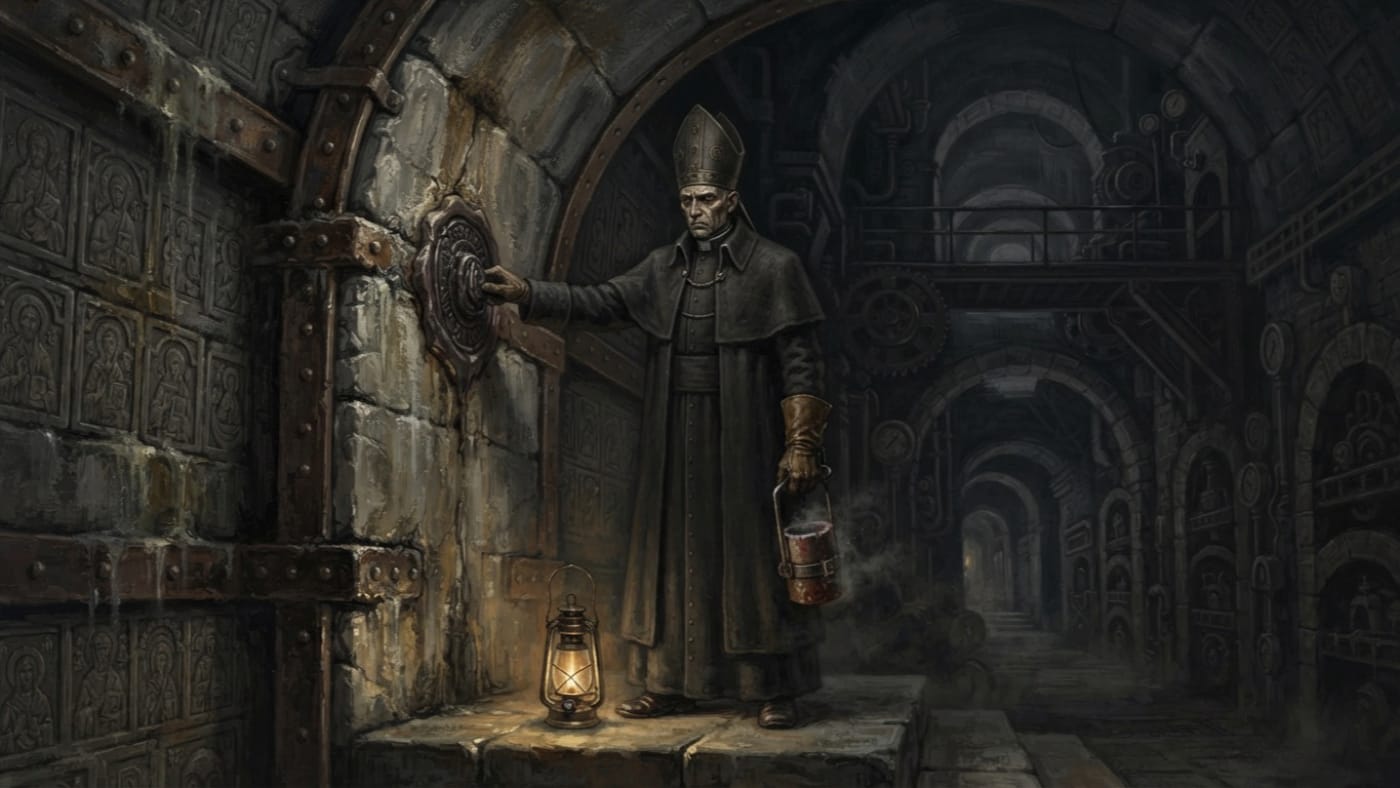
Gravis
The date is exact; the calendar is incomplete
Gravis is attested on the fourteenth, A.S. 199, when Canon-Warden Albrecht Goss applied the Third Ossuary's seventeenth wax layer. The year is 1909 CE. The Ledger knows the day and cannot place the month.
Codex Ref. XIII.1.05-004
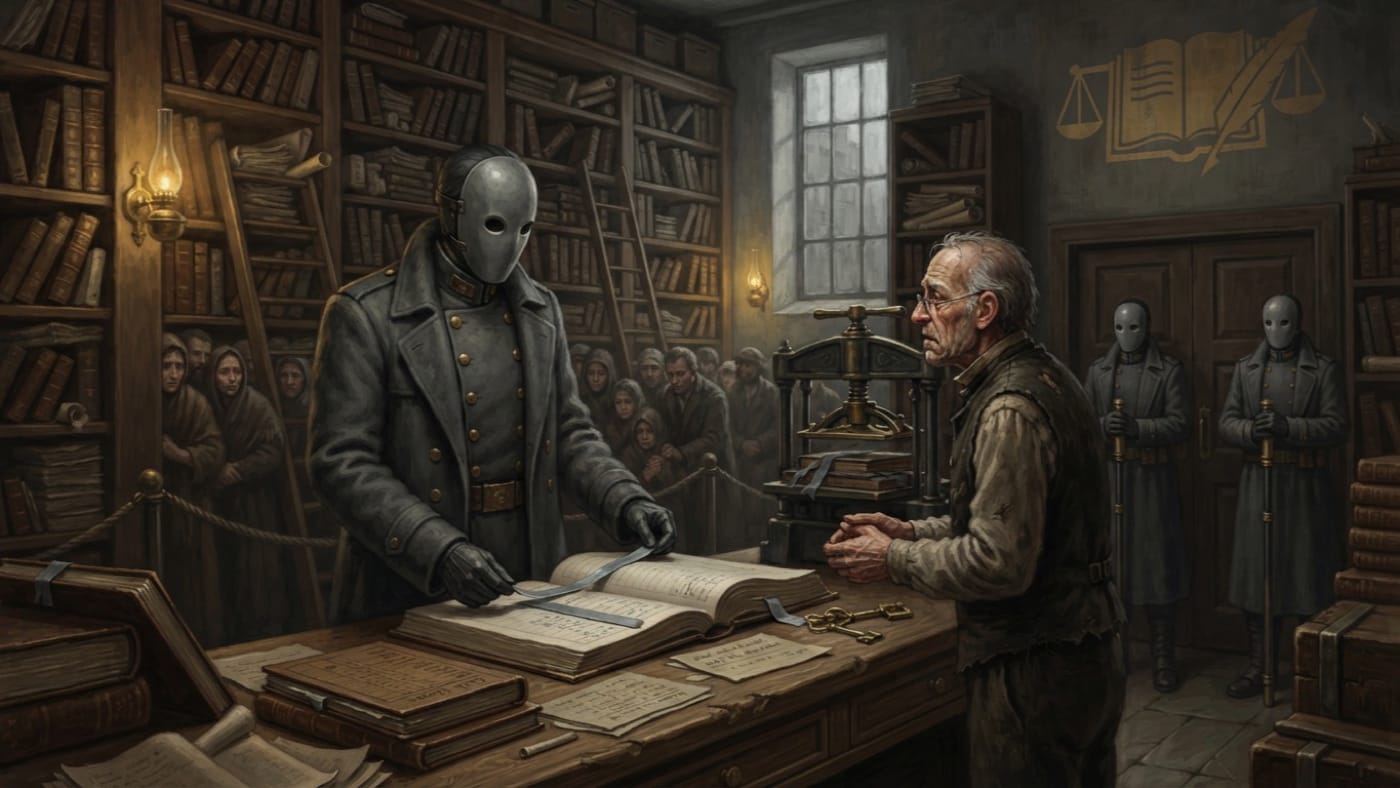
Great Ledger Harmonisation Mandate
The larger page that never has to enter the room
The Great Ledger Harmonisation Mandate supplies the standing authority cited by Indiction writs: books are reconciled, names suspended, and appeal waits until the archive decides who still counts.
Codex Ref. XIII.1.06-002
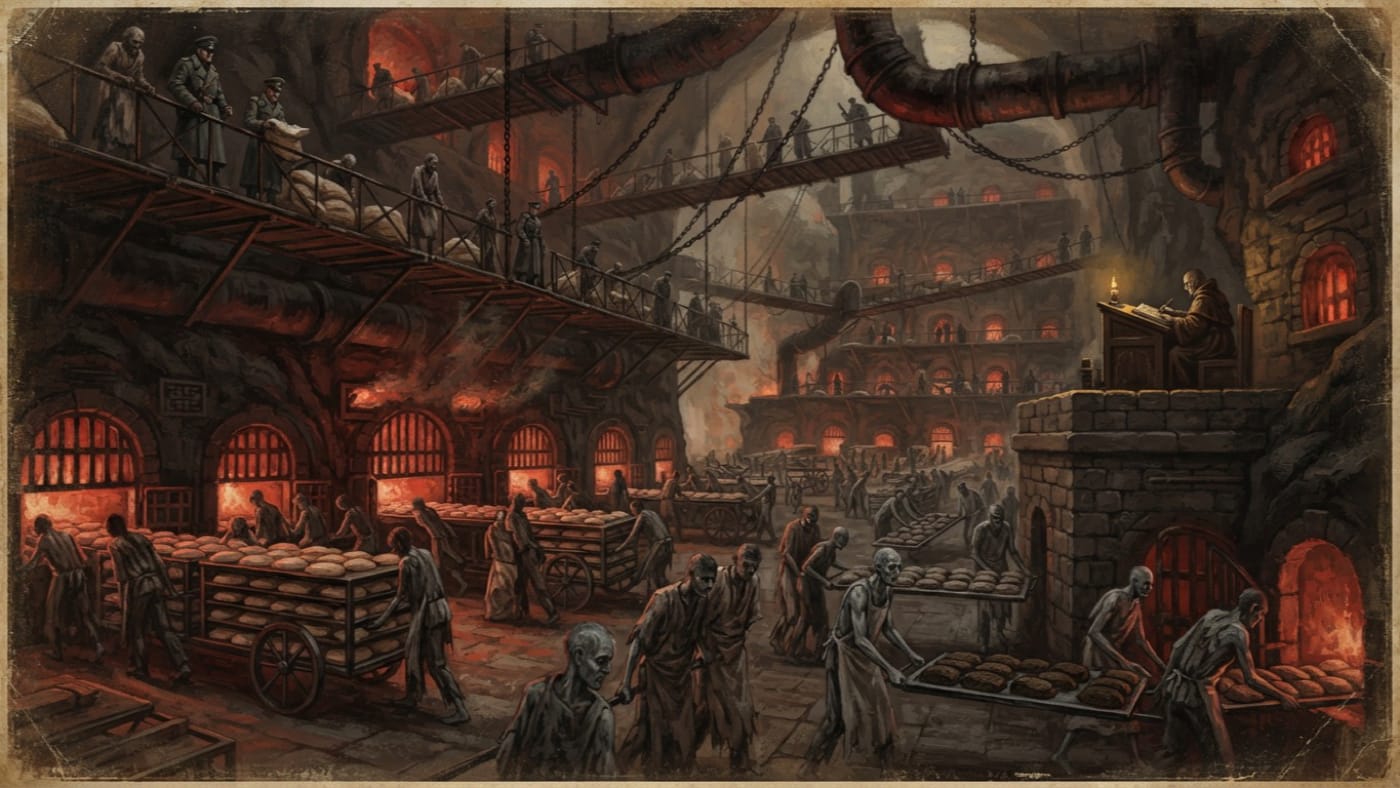
Great Ovens of Vesta
The bread keeps. The workers owe. The heat rises.
San Vesta's volcanic ovens bake ash-bread that never spoils, feed the Iberian front, and turn recovery debts into labour. The flour convoy is late; the rising heat is filed as efficiency.
Codex Ref. VII.1.03-003
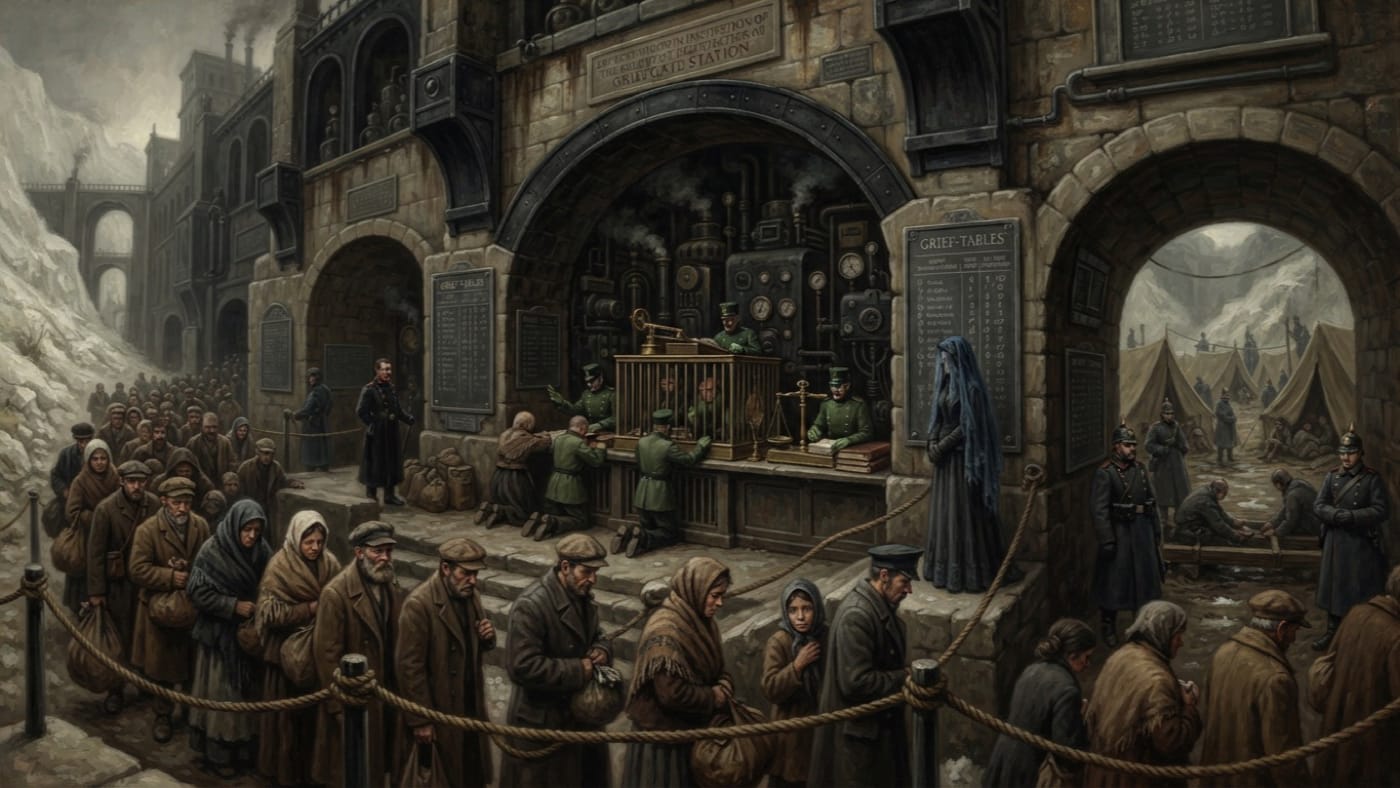
Grief-Tax
Declare your burden; the Gate will declare its price
At Griefgate, spiritual burden becomes a toll, payment becomes portable clearance, and unpaid sorrow becomes detention debt. The tables have no row for the unburdened.
Codex Ref. XIII.1.85-201
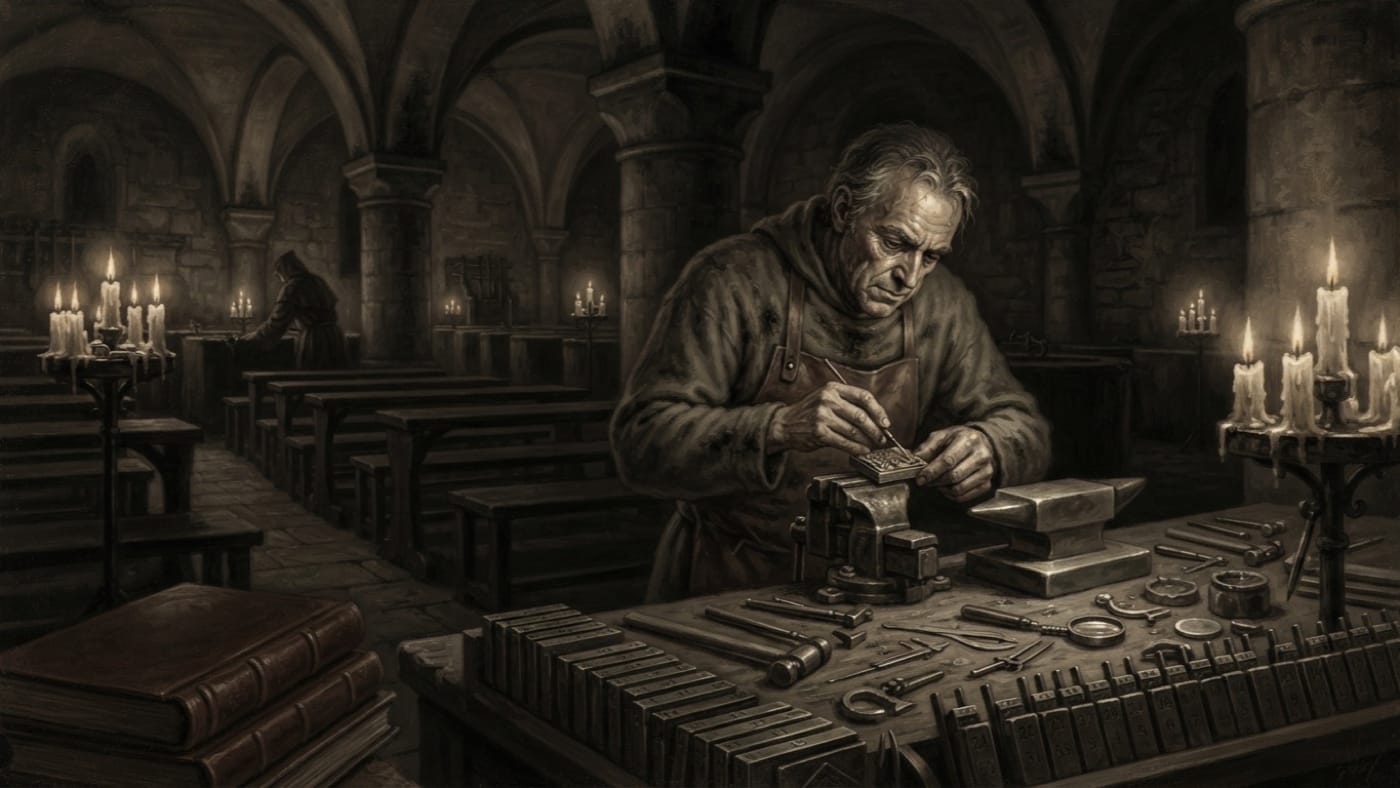
Guild of the Anvil and Stylet
The impression serves the Synod. The hand serves the impression.
Chartered in A.S. 105, the Guild of the Anvil and Stylet cuts the metal that makes Synodal paper binding. Its cutters swear to the impression; the Bureau of Masks and Seals files the theological objections.
Codex Ref. VI.4.19-015
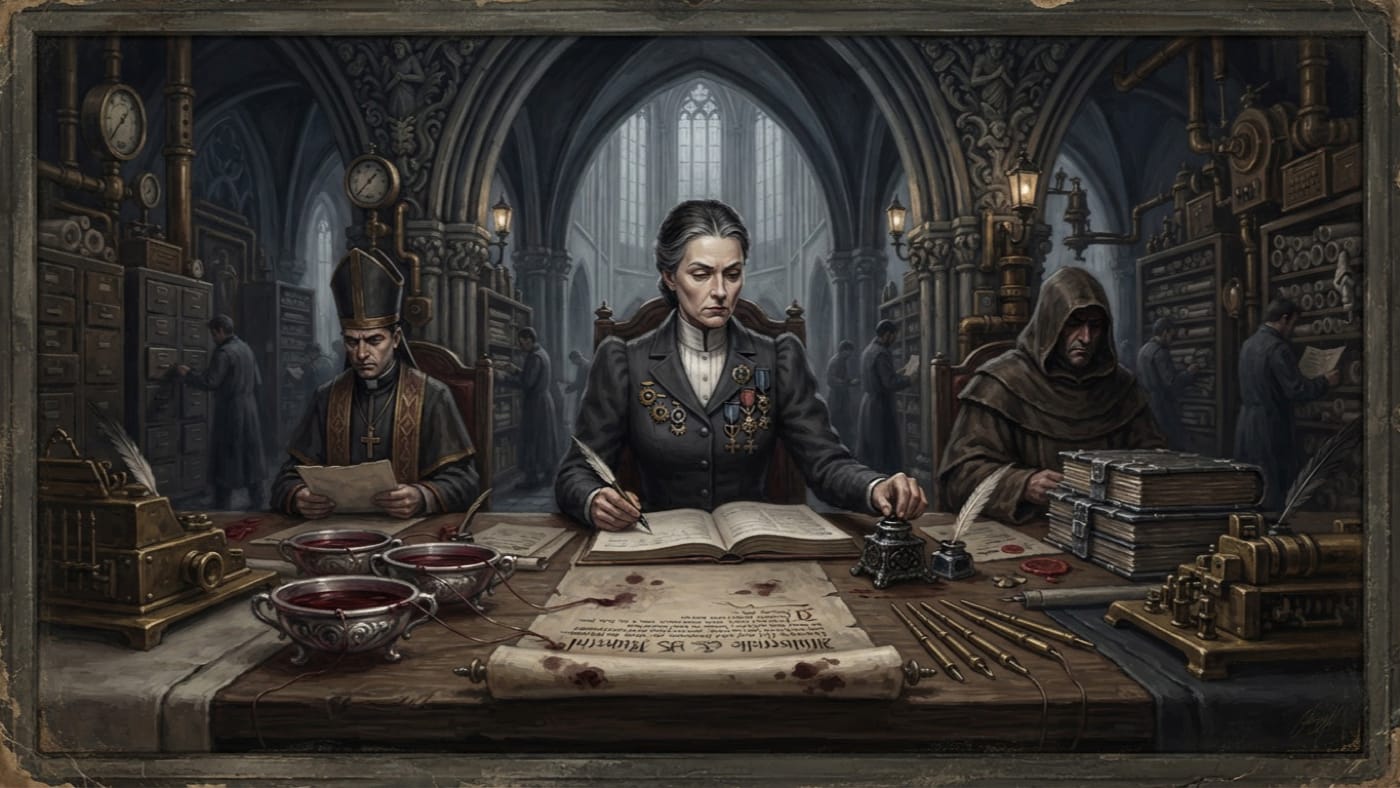
Guild-Commissioner Elsbeth Renn
The woman left a title; the Bureau kept a surcharge
Elsbeth Renn presided at the A.S. 105 Münster guild compact. The Bureau of Tithes named a surcharge after her while she lived; the archive offers no fuller biography.
Codex Ref. III.2.01-107
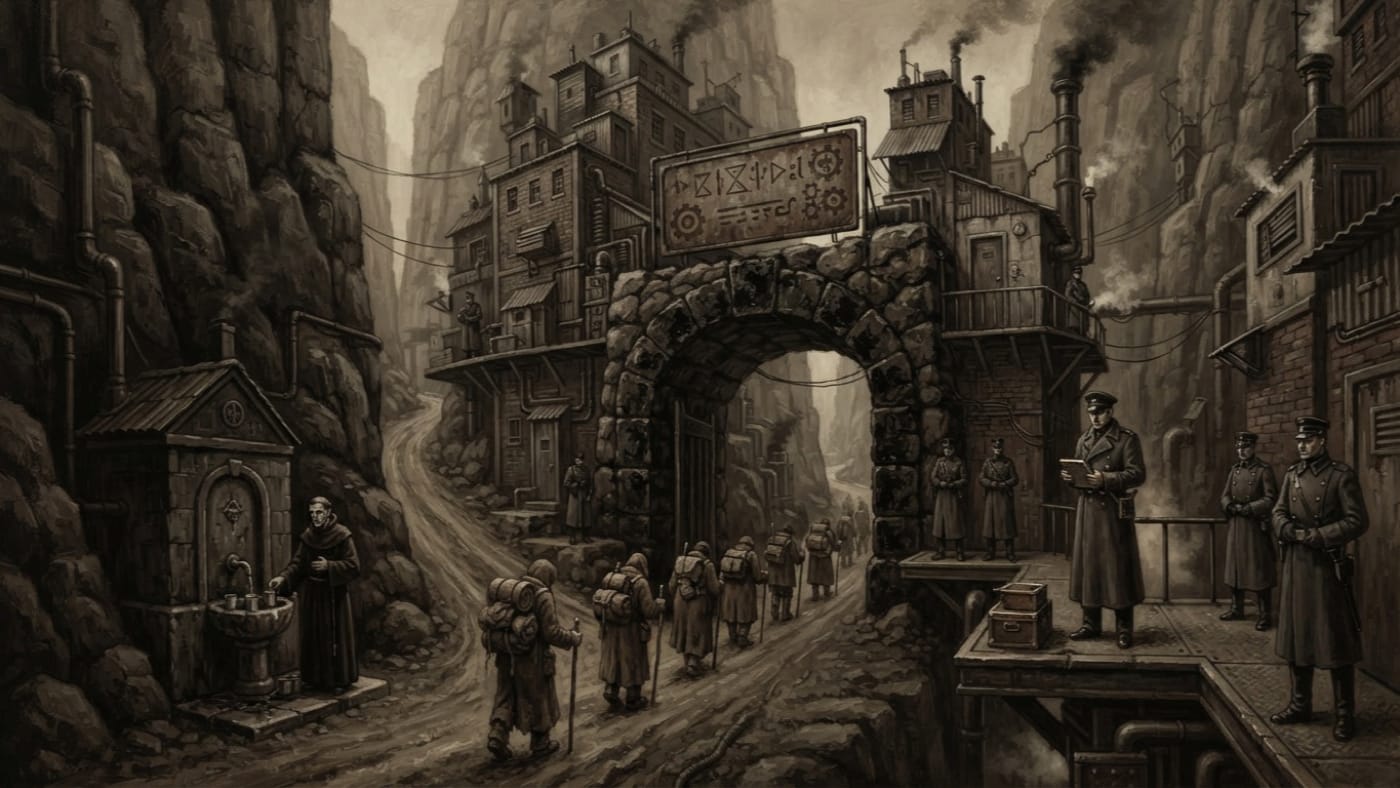
Haelke
A founding surname and two tolls
The Haelke were one of three families taxing water and passage at Peregrine Row before the formal Synod. The record preserves the tolls; it does not supply a dynasty.
Codex Ref. VIII.6.11-001
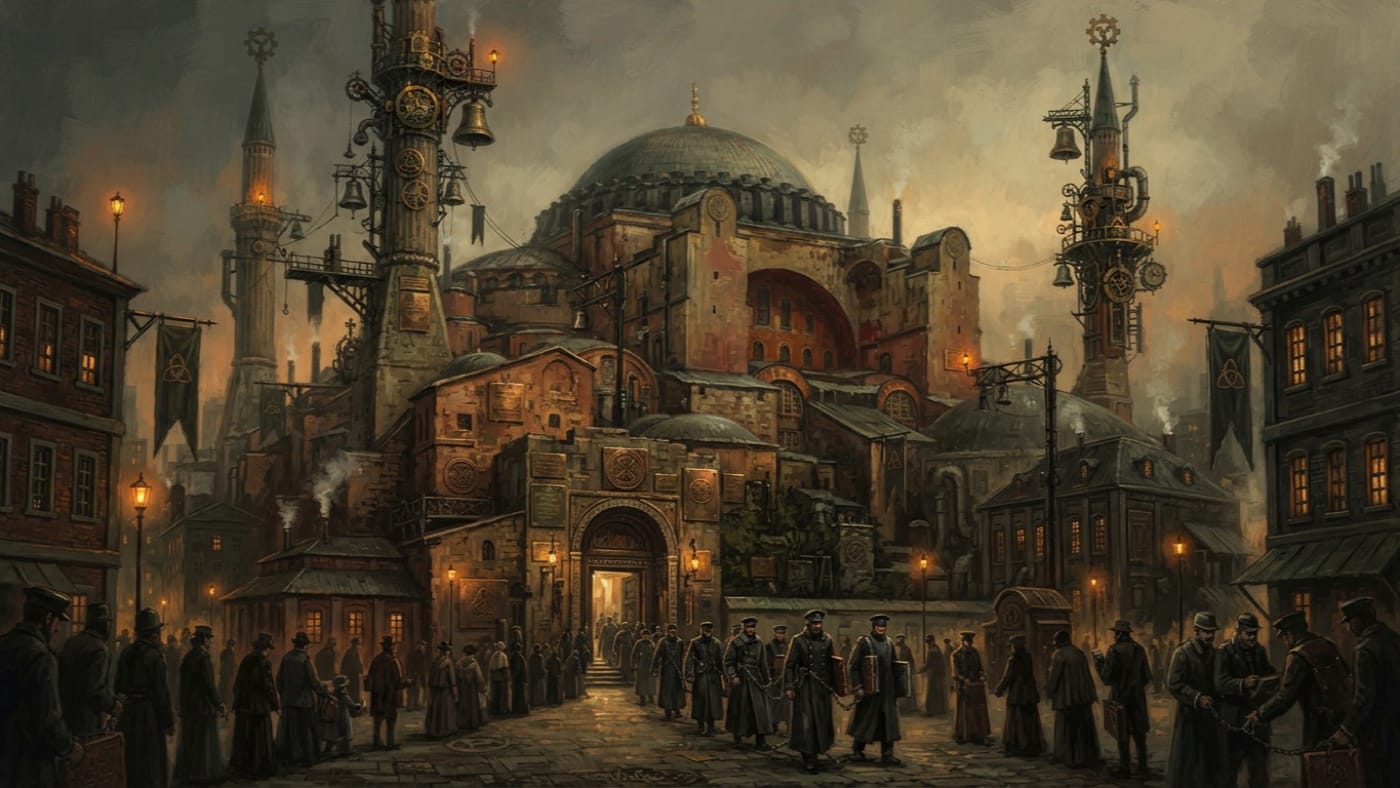
Hagia Sophia
The Dome Has Not Countersigned
Constantinople's old Hagia Sophia, seized in A.S. 68 and titled the Cathedral of the Perpetual Registry in A.S. 72. Beneath its ancient dome, the southern front is made official one ratified record at a time.
Codex Ref. II.4.10-1298
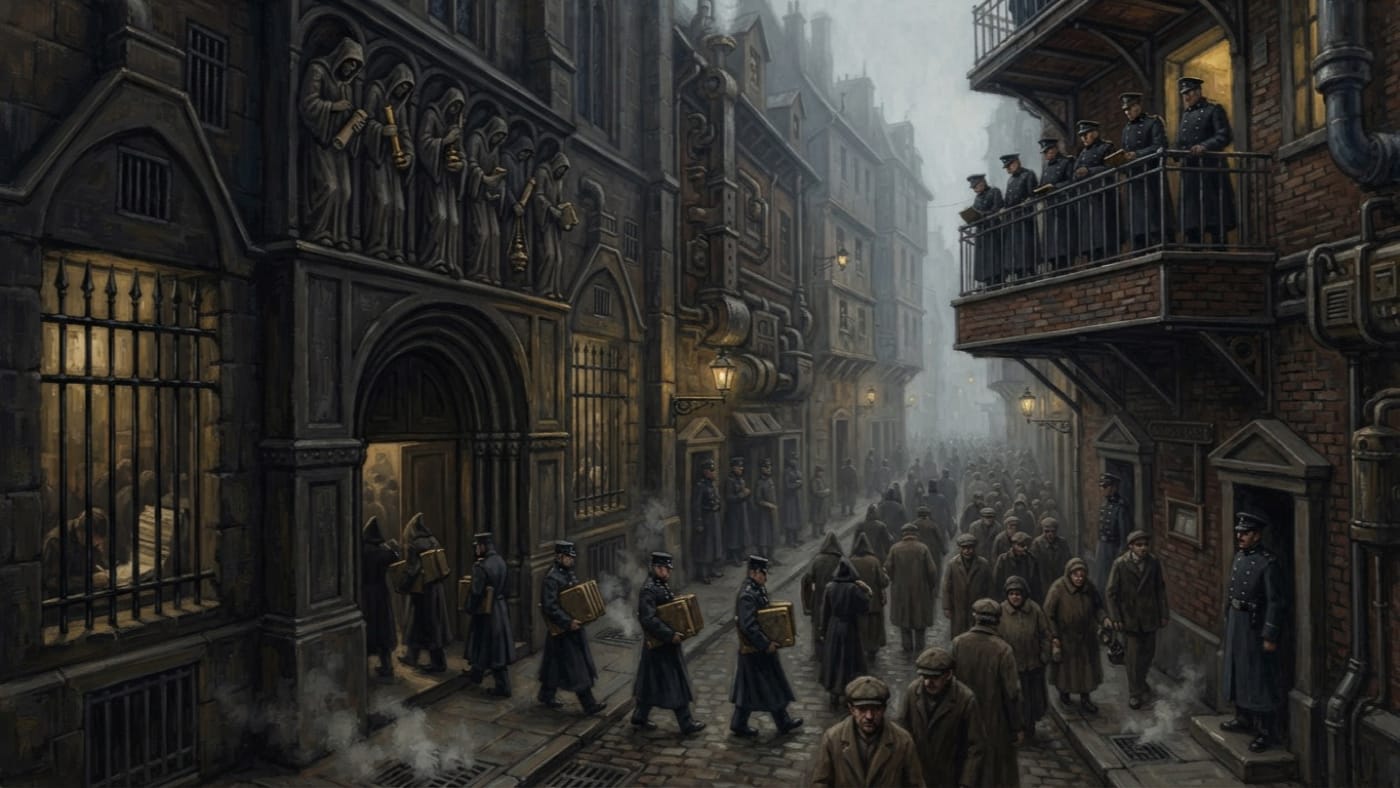
Hall of Confessions
Where the Synod speaks and the grille remembers
At the central bend of Strasbourg's Sanctum Mile, the Synod speaks beneath carved saints while clerks behind grilles record its words. The crowd outside hears bells.
Codex Ref. II.2.02-003
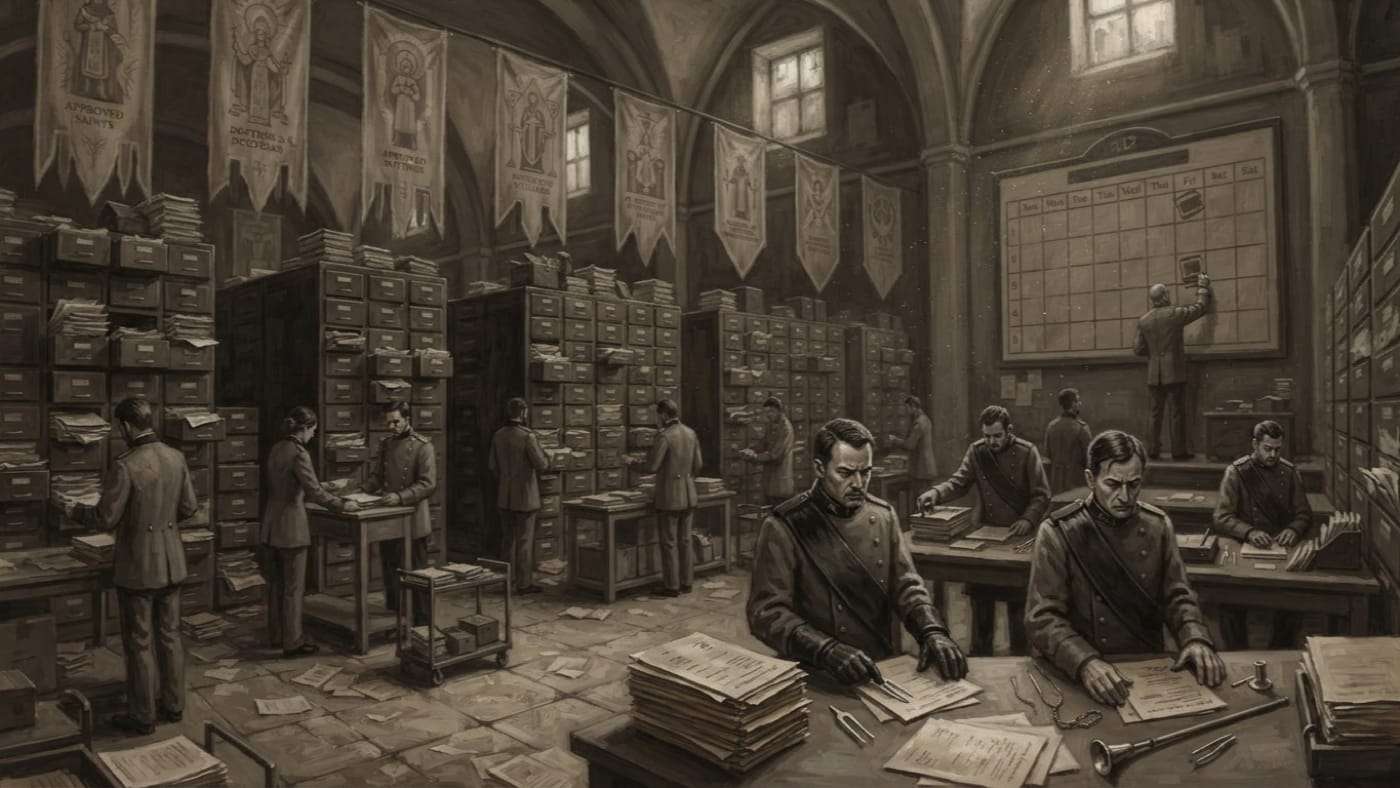
Hall of Prescribed Joy
Where every celebration begins by waiting
Eleven hundred square metres of approved ornament, permit tables and filing cabinets in Strasbourg. The Bureau of Festivals licenses joy here; its backlog has not cleared since A.S. 155.
Codex Ref. II.3.05-201
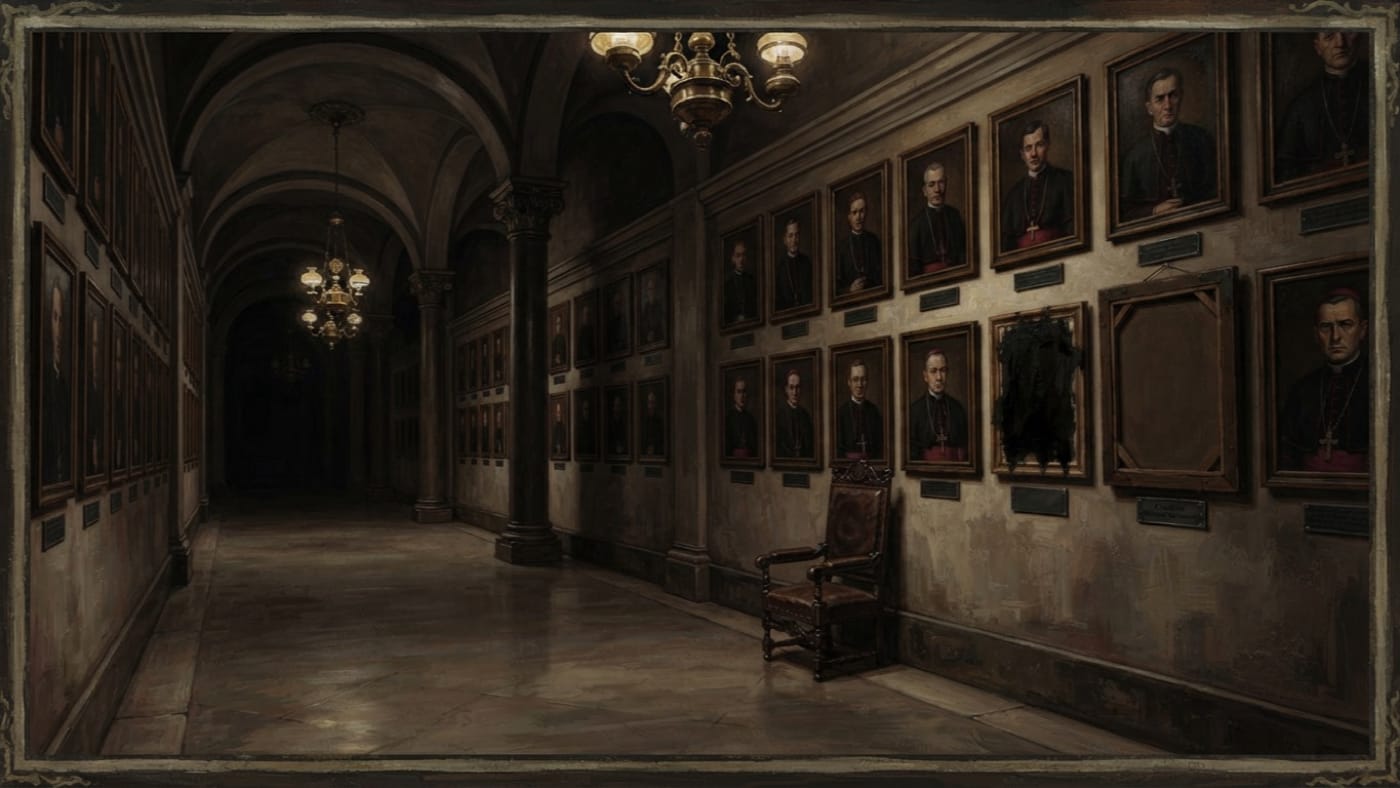
Hall of Succession
The succession is continuous; the faces are revocable
The Synod's portrait corridor in Strasbourg keeps seven successions unbroken in paint. One canvas is black, one portrait faces the wall, and one empty chair continues its duties. The faces are revocable.
Codex Ref. II.1.04-005
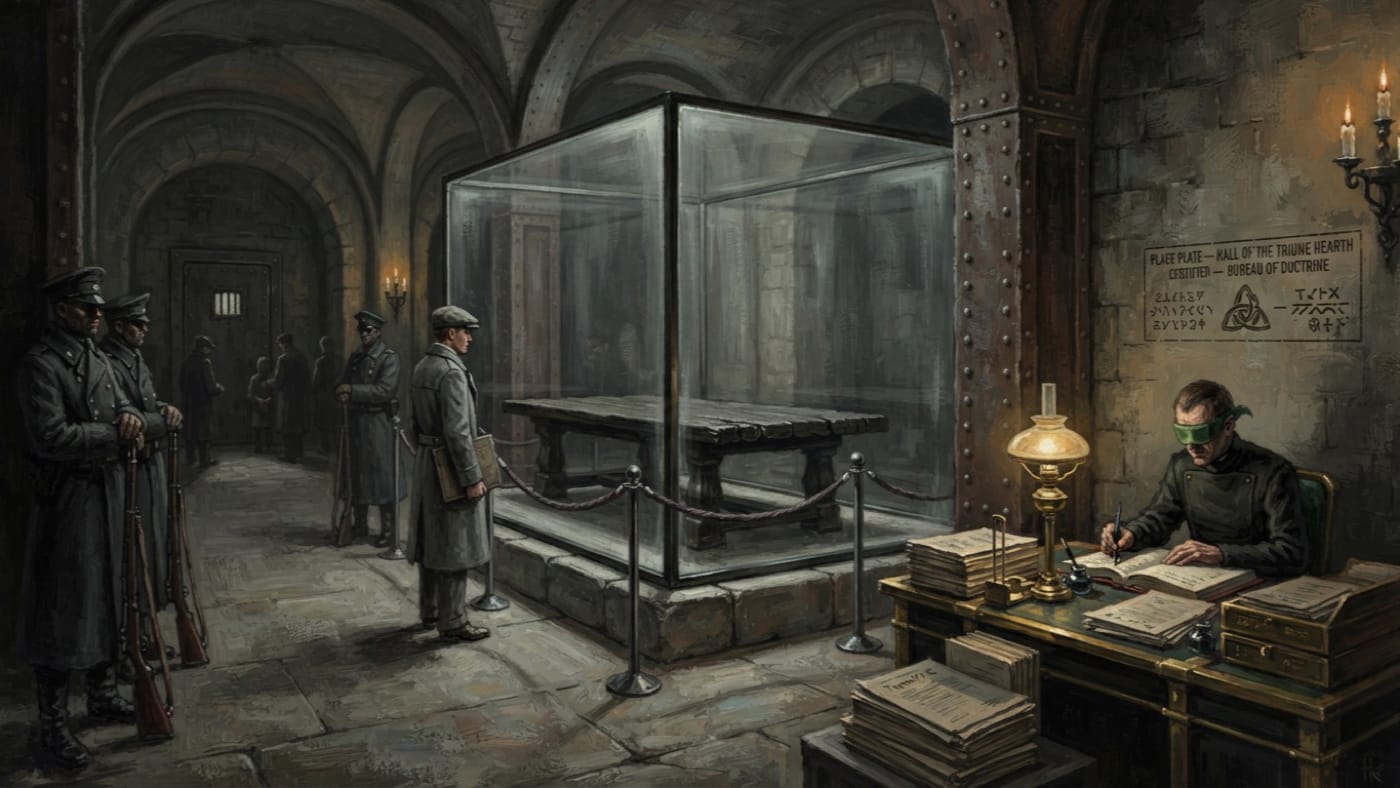
Hall of the Triune Hearth
Proximity licensed. Touch refused.
Strasbourg keeps the Concordat's black oak table under glass. Citizens inherit the Hearth, then file Form 77-C forty days ahead to stand near its furniture.
Codex Ref. II.1.04-006
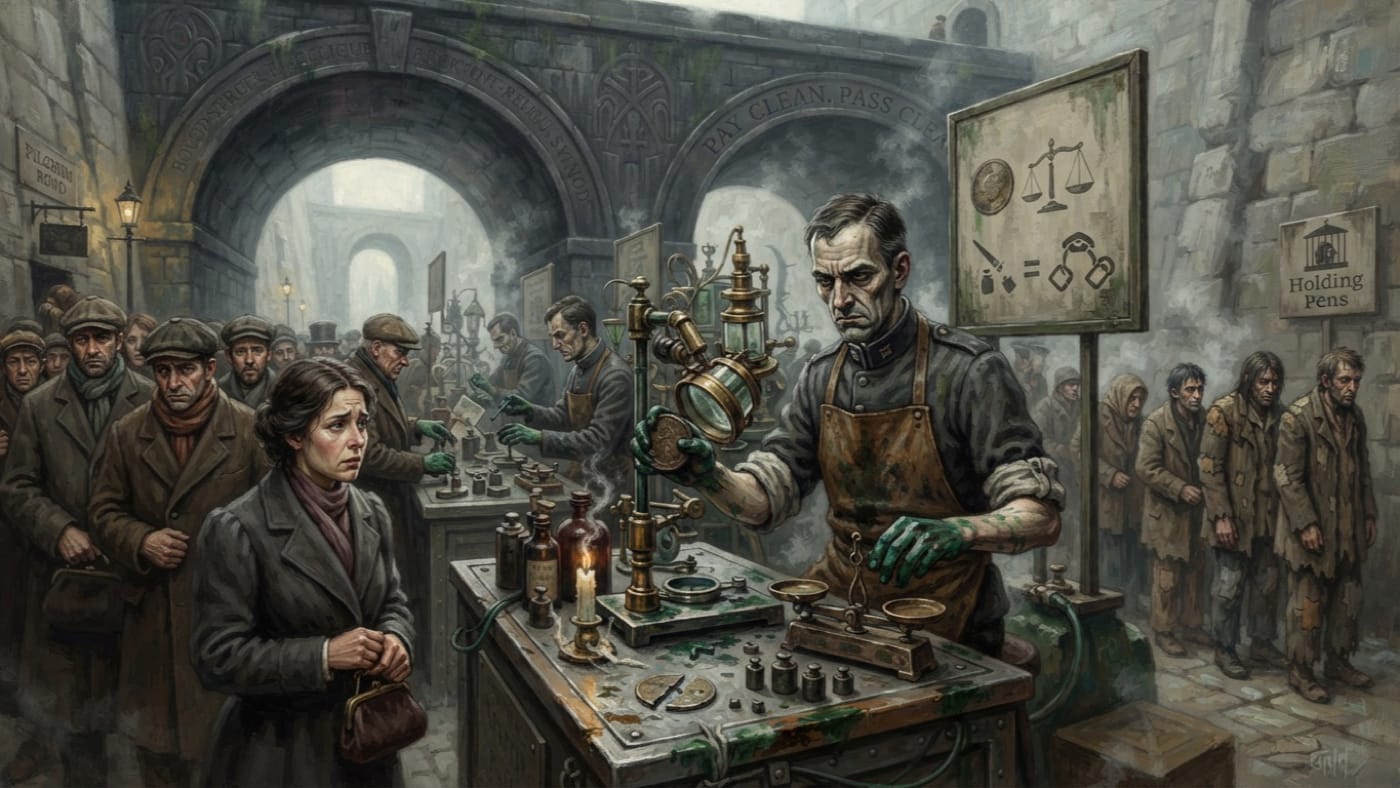
Halve
Coin truth, green fingers, and no allowance for mercy
Master Assayer Tinn Halve keeps Griefgate's coin honest and its trade stoppable. His green fingers certify the money; other offices collect the human cost.
Codex Ref. III.2.01-201
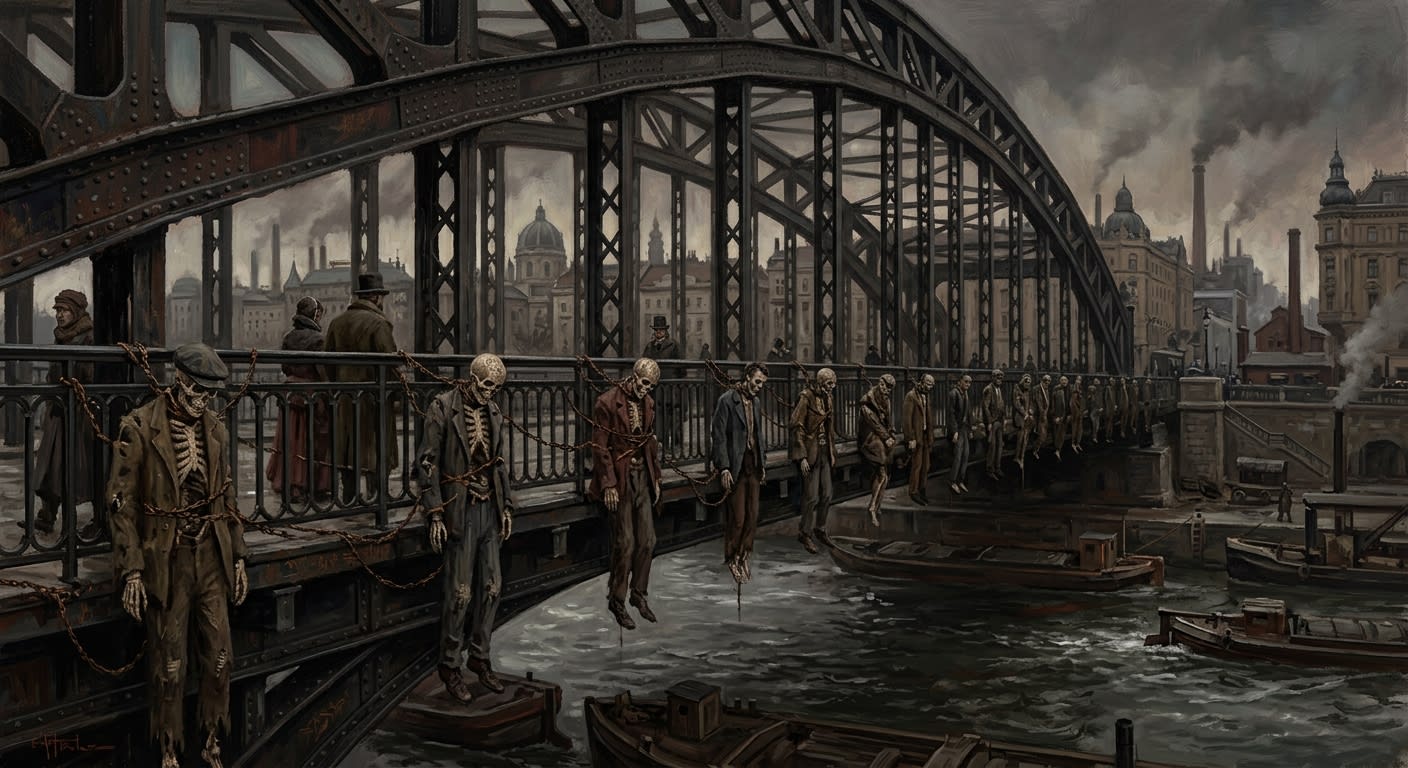
Hanged Bridge
Forty dead rebels made better sermons than their pamphlets
The Hanged Bridge over Vienna's Donaukanal preserves the A.S. 102 aftermath of forty Rationalist rebels whose inscribed bones still preach without permission.
Codex Ref. II.4.09-013
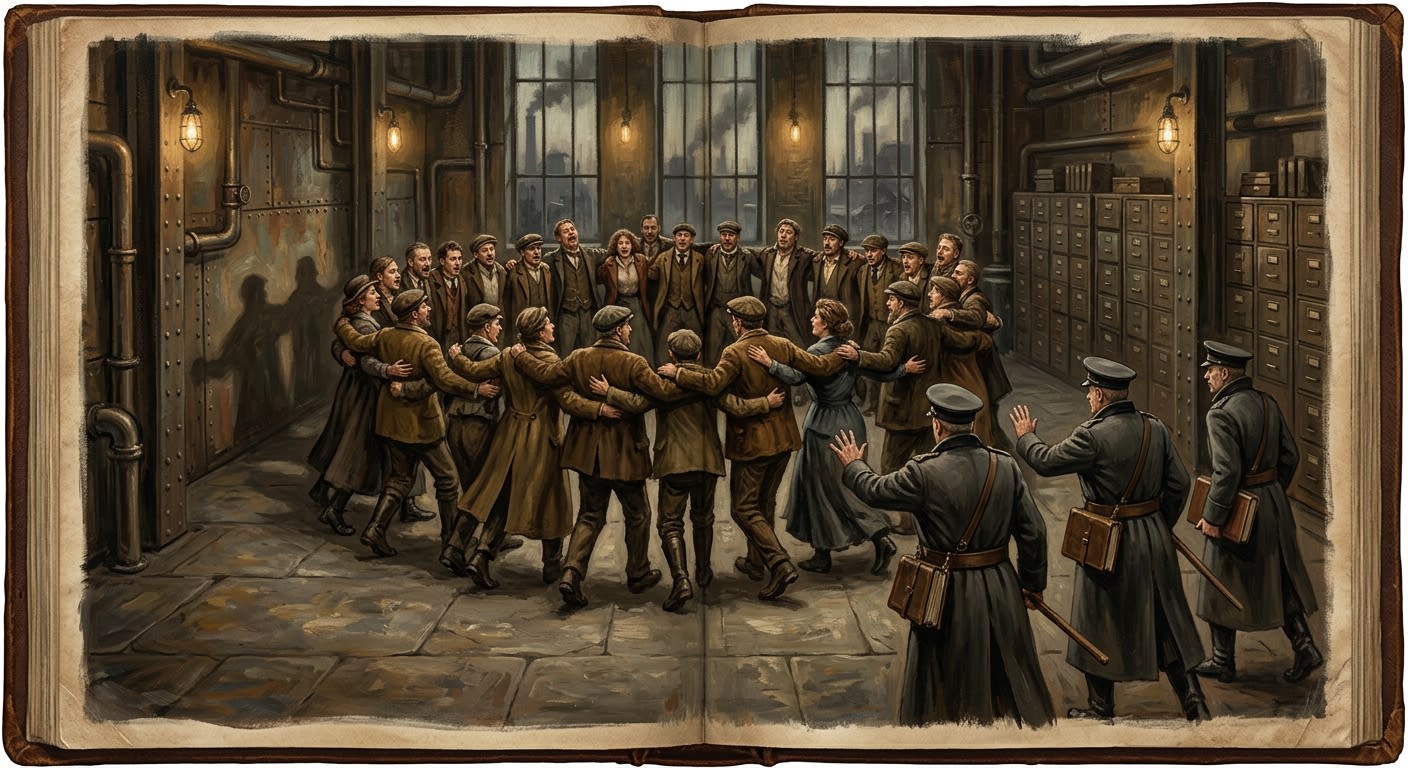
Heresy of Siena
The circle that kept turning after Doctrine entered
The Heresy of Siena began as a harvest dance and became a Bureau problem: a circle of bodies together before any office had authorised joy.
Codex Ref. VII.8.10-141
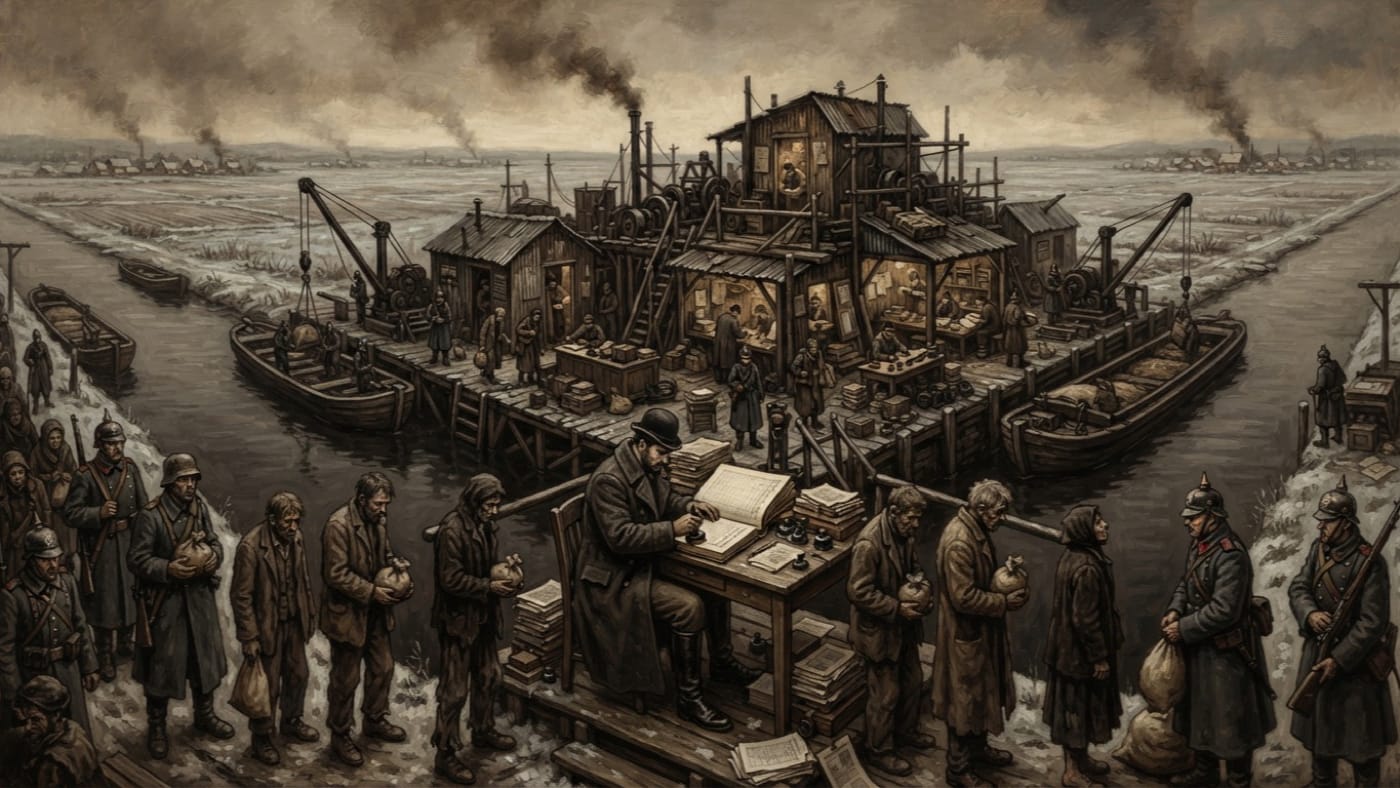
Hessian famine
Eleven thousand reported dead; the Bureau prescribed a clerk
In A.S. 98, the Hessian famine reportedly killed 11,000 across three unnamed provinces. Records found insufficient grain accounting and sent a clerk; his depot became Wexel's Parliament.
Codex Ref. VII.8.10-098
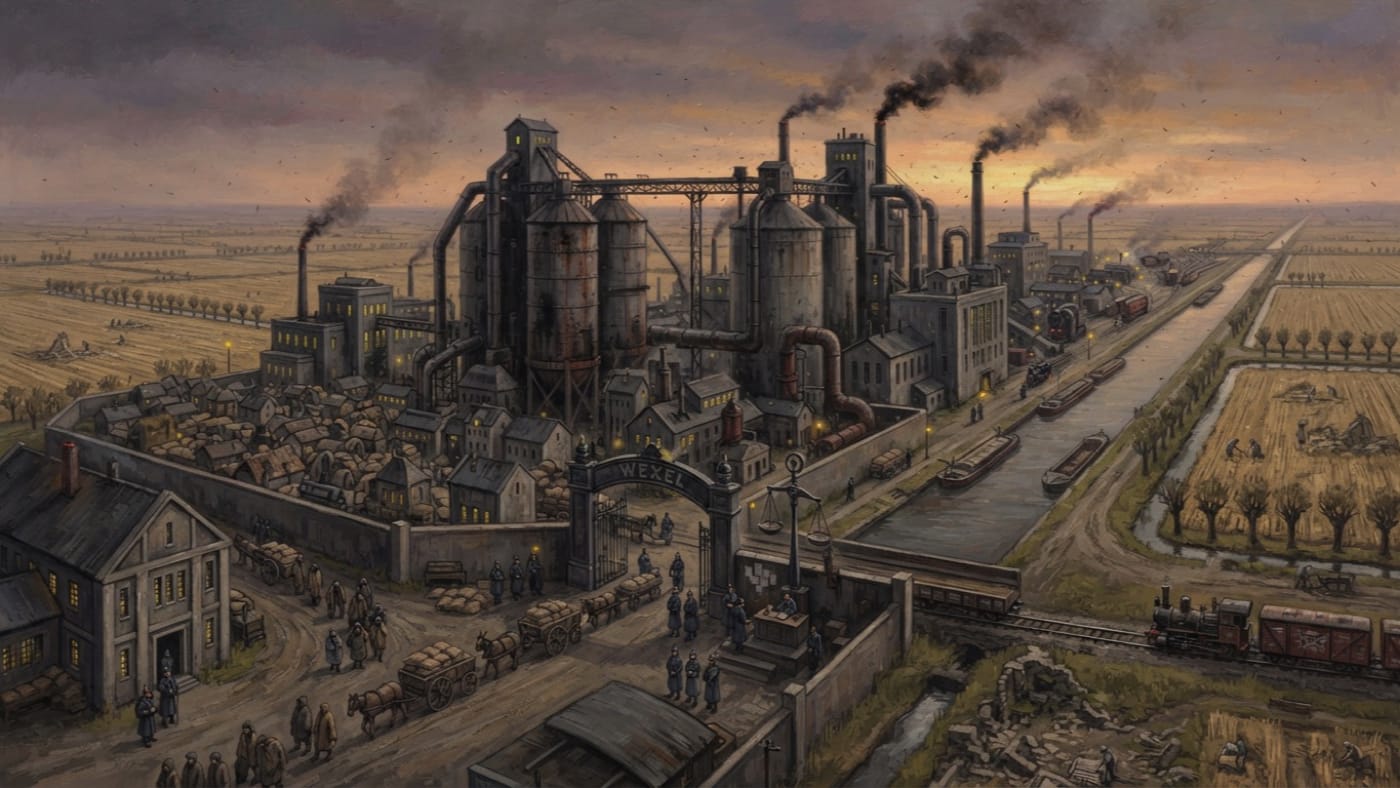
Hessian Lowlands
The fields grow the grain; Wexel grants permission to eat it
The Hessian grain country feeds Wexel's scales and the Heartlands' bread trains. Its boundaries remain unfiled, its people uncounted, and its permission to eat belongs to a town.
Codex Ref. II.2.04-002
Hierarch Augustinus of Mainz
The Binder of Wounds
First among the Hierarchs, called the Binder of Wounds. He yoked altar to arsenal, sanctified catapults with reliquaries, and built the Synod from the marrow of the faithful. His genius was not theology. His genius was infrastructural cruelty.
Codex Ref. III.1.01-001
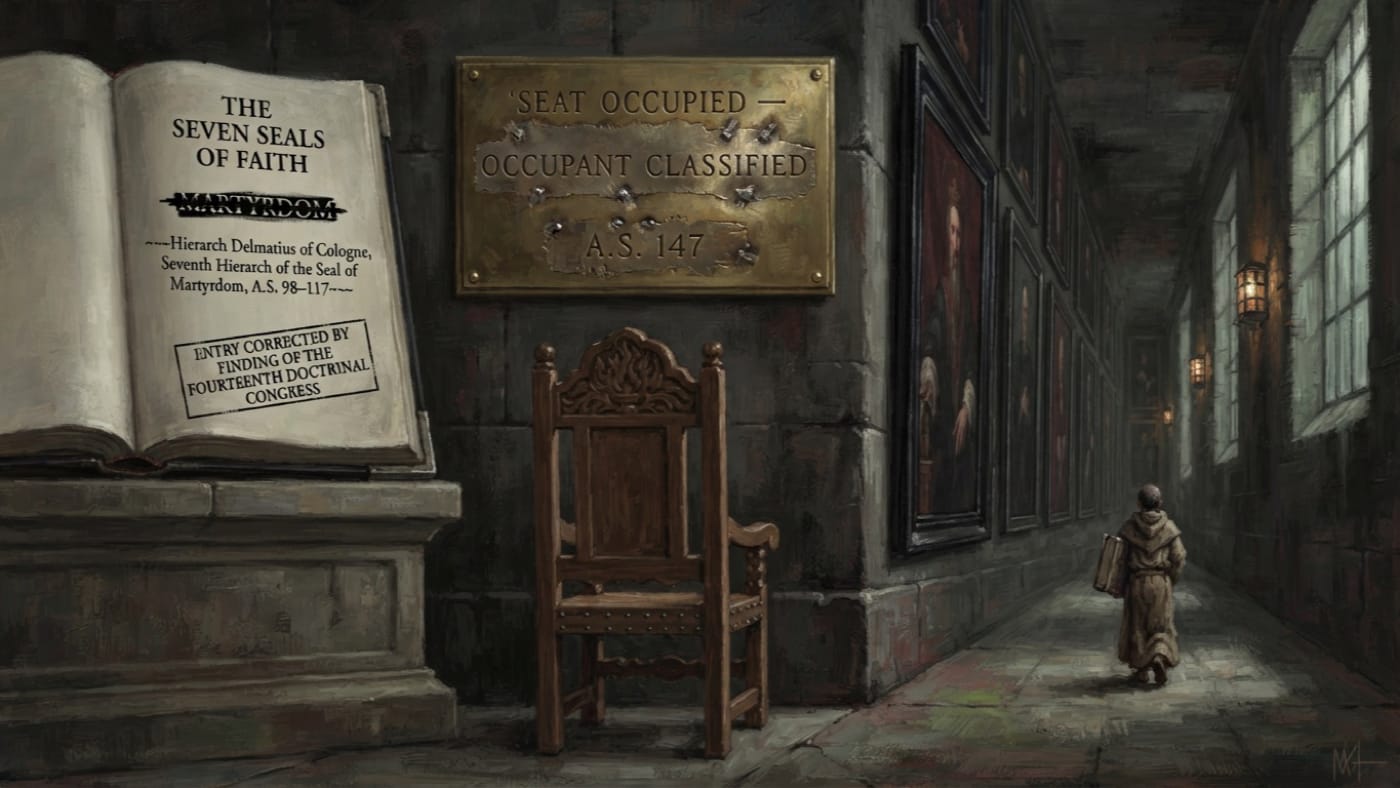
Hierarch Delmatius of Cologne
The Synod Condemned the Hierarch and Kept the Chair
Delmatius was condemned in A.S. 147 for canonisation proceedings based on a dead man's testimony. The Synod withdrew his name, turned his portrait, and kept the chair.
Codex Ref. III.2.01-147

Hierarch Odo of Trier
The man who taught Strasbourg's stones to obey
Hierarch Odo of Trier entered the Inner Circle after Mainz and became quotation at Cologne, where one sentence taught bishops, walls, and petitions how silence obeys.
Codex Ref. III.2.01-044

Hierarch of Doctrine
Truth is what leaves the Seal; reading is a courtesy
The unnamed current holder of the First Seal defines orthodoxy for the Synod, commands Doctrine, and proves that authority need not wait upon comprehension.
Codex Ref. III.2.01-071

Hierarch of the Fourth Seal
Two attestations, one number, and the rest ruled blank
The Fourth Seal appears in the A.S. 194 Tithe Instrument record and Morwen's A.S. 201 ratification. Two attestations, one number; the holder, tenure, and named domain remain unrecorded.
Codex Ref. XIII.1.05-004
Hierarch of the Third Seal
Three Bureaus know the title. None supplies the name.
Three Bureaus attest a Hierarch; none supplies a name. This A.S. 201 survey records restricted vault knowledge, attributed tribunal influence and Lyon's A.S. 170 satire, leaving the Seal unidentified.
Codex Ref. XIII.1.05-003
Hierarch's Seal
Where the File Stops
An access threshold named for the Hierarchs, governing the Third Ossuary and the sealed Saint Barachiel broadcast. The register admits that something stands above it; the reader is not admitted.
Codex Ref. XIII.1.05-002

Hieromnemon
The office that teaches memory to kneel
The Hieromnemon governs public memory for Doctrine: seal, margin, erratum, redaction, and the blessed sentence that makes contradiction obey.
Codex Ref. XIII.1.31-090
High Censor
The title commands obedience. The archive cannot produce its holder.
The High Censor crowns the Inquisition's command chart. Doctrine grants the office obedience; Records denies it. Its holder is unestablished, its reported vacancy rests on one entry, and the orders continue.
Codex Ref. VI.3.02-002
High Step Precinct
Clean air, correct names, and a posted rate for confession
Rheinscarp's ninth terrace houses the Ration-Cathedral, Tribunal of Stairs and offices that govern names, hours and ashes. The air is clean, the names are correct, and every debt survives the climb.
Codex Ref. II.2.01-009
Hinterland
The fifty kilometres that pretend to be rear
The Hinterland is the fifty-kilometre bruise behind the Sagittal Line: farms, wards, graves, depots, markets, and civilians ordered to call occupation protection.
Codex Ref. II.4.09-201
Hintermark
The arm beneath Constantinople's shield, counted only when it coughs metal
The Hintermark is the industrial-forward belt west of Bastion-Constantinople: coal, pig iron, levy boys, coffin timber, and all the grief a fortress prefers not to itemise.
Codex Ref. II.3.06-002
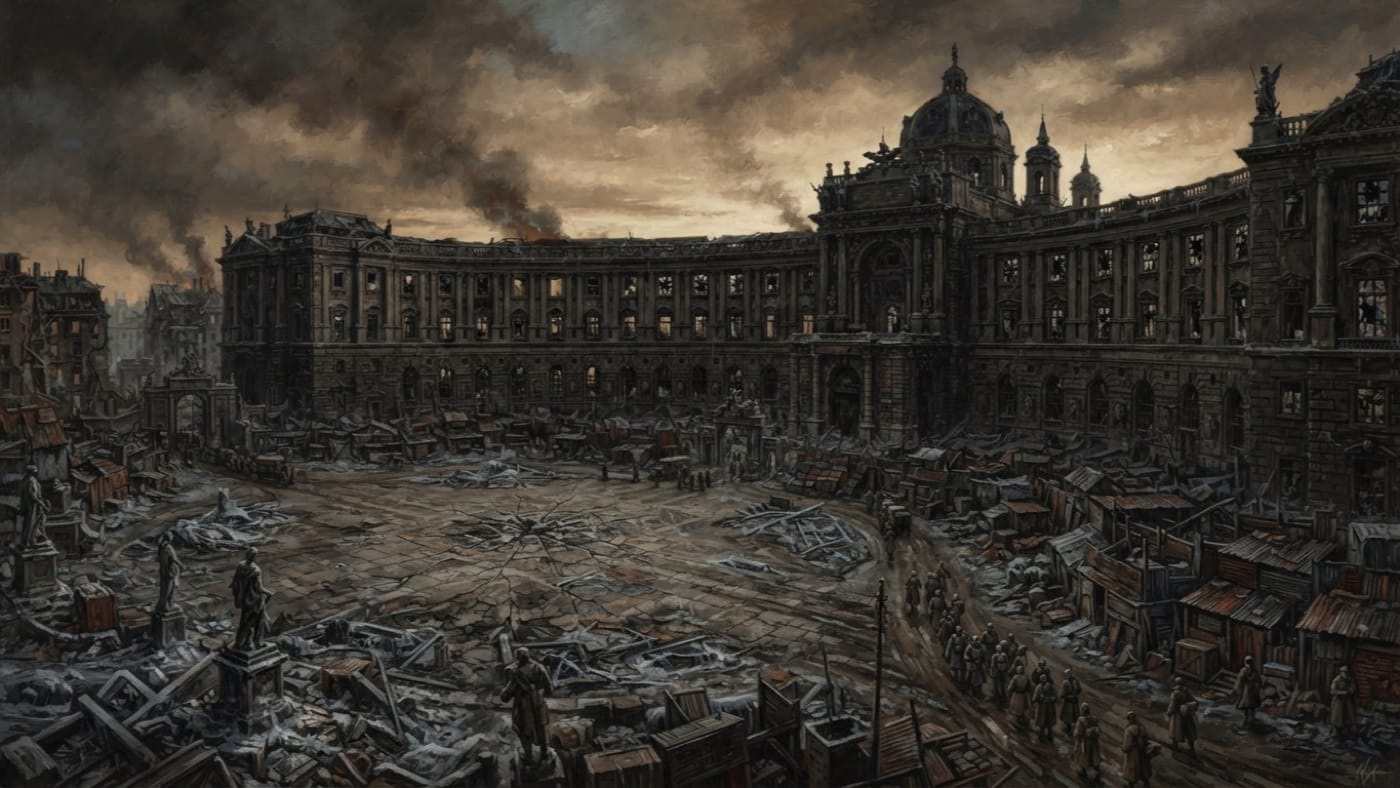
Hofburg
Broken glass and unfinished business
Vienna-Ruins' Hofburg palace was sealed in A.S. 95, its glass shattered by Saint Aldebrand's reliquary blow. The Council's unfinished minutes are reported, their session undated. Even defeat leaves paperwork.
Codex Ref. II.4.09-1373
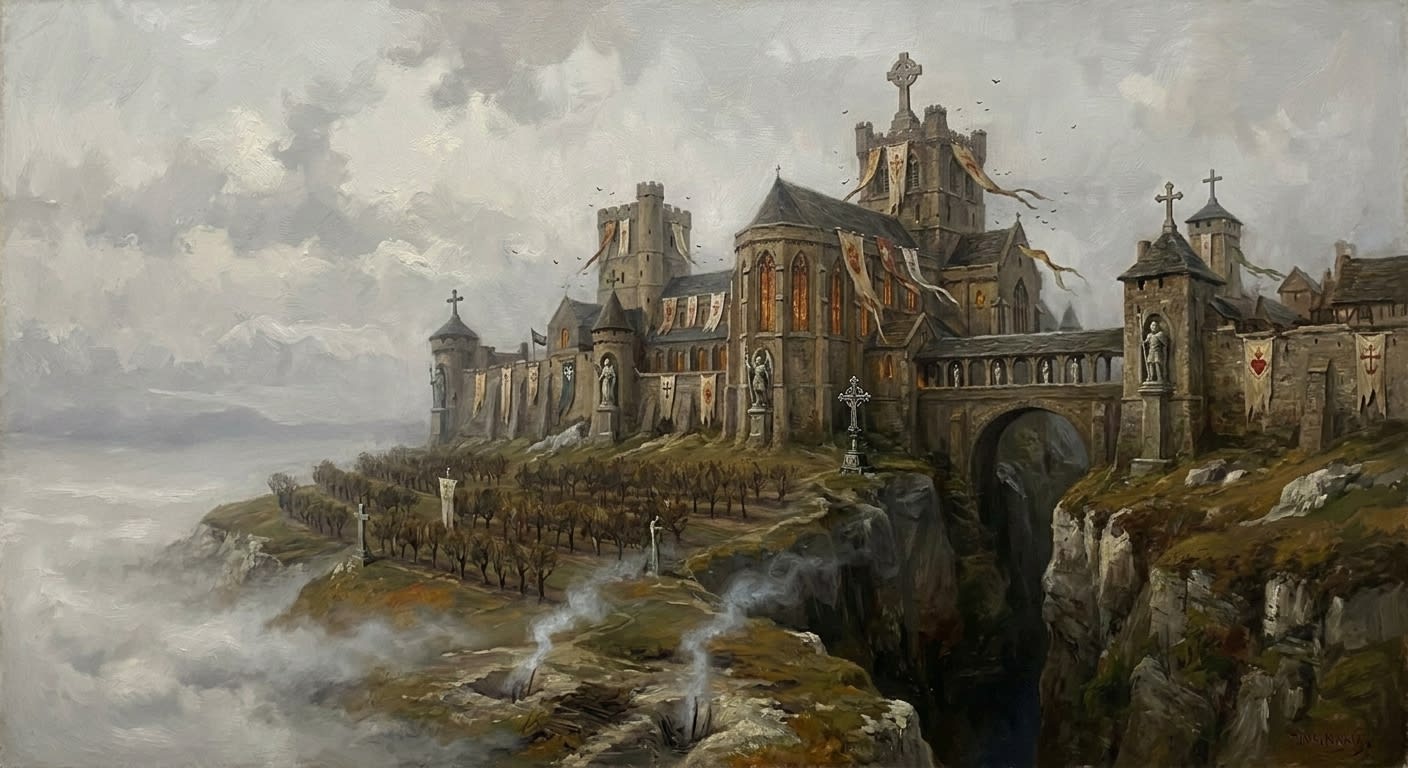
Hollow-Script Scriptorium of Nemea
Where the ink rewrites the truth, and the truth rewrites the ink
The Bureau of Records' master archive-scriptorium on a chalk ridge: where names are erased, contracts rewrite themselves overnight, and the ash in the Yards speaks. Drax has been named by its ink and would prefer the record show otherwise.
Codex Ref. II.2.06-002
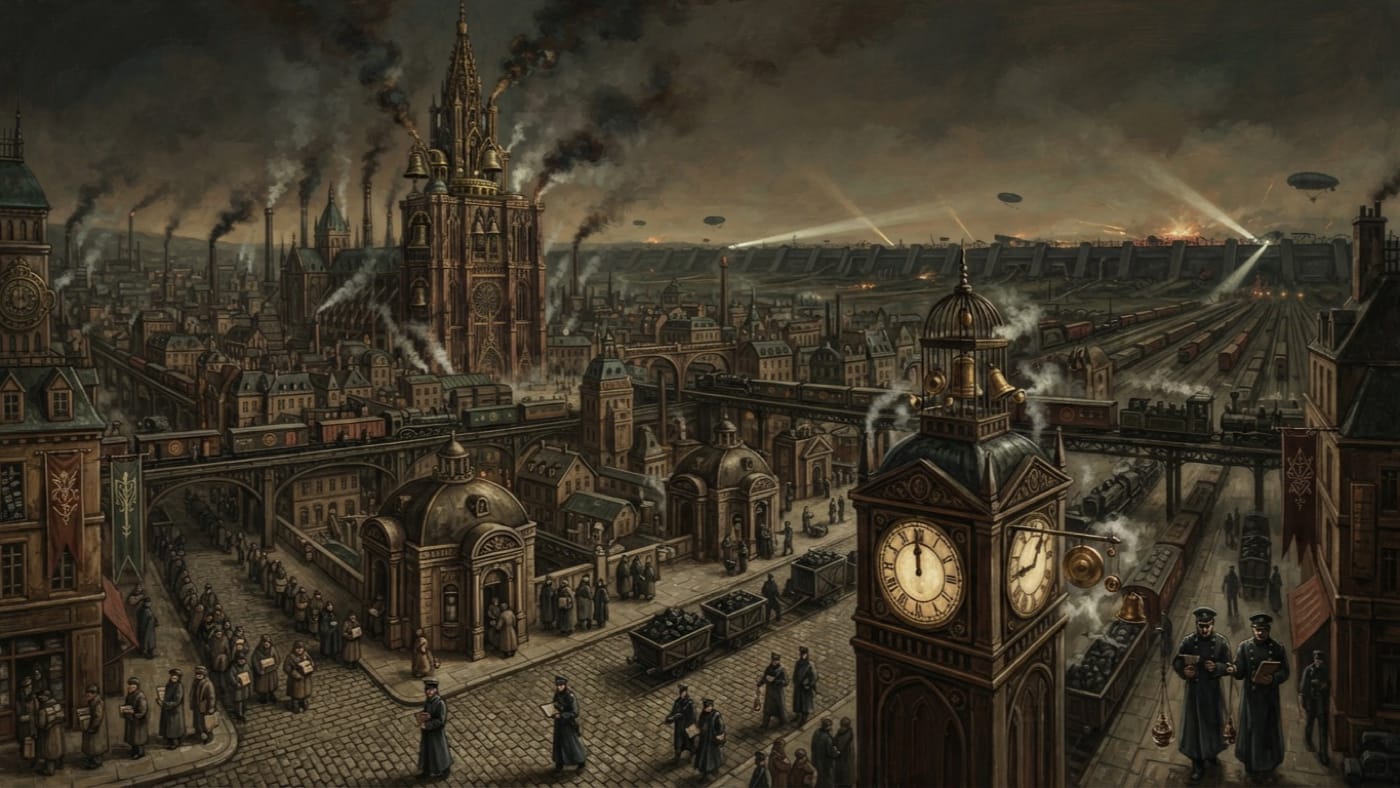
Holy Dominion
Your name is in a book. The book is in better repair than you are.
The Holy Dominion is the Synod's continental jurisdiction, surveyed in A.S. 201. From Strasbourg to the Sagittal Line, bells govern the hours, tithes feed the guns, and every soul must appear in a book.
Codex Ref. II.1.01-001
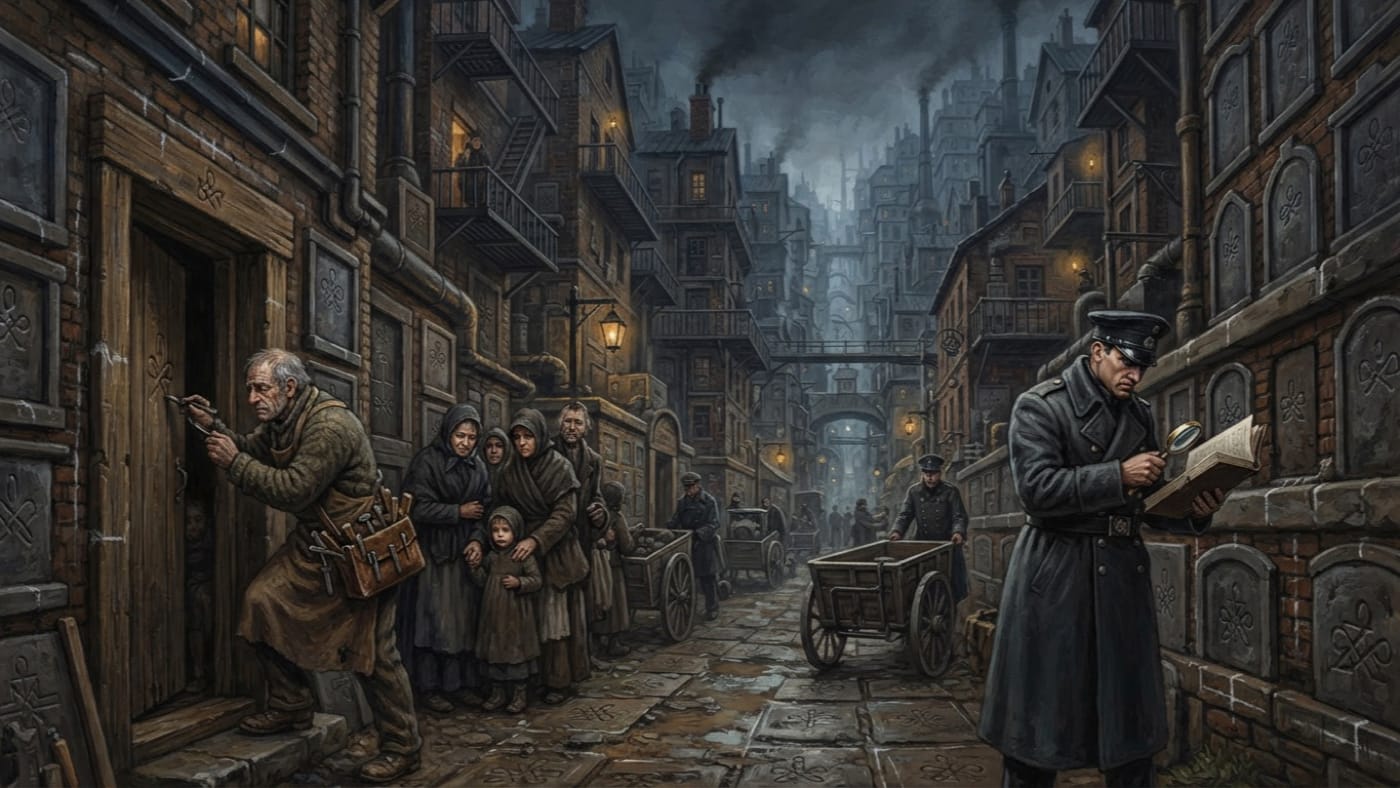
Housing and Burial Codes
A roof and a grave remain yours while the marks agree
The Housing and Burial Codes bind roofs and graves to the same ledger. A valid Triune Knot makes a household legible; a failed mark makes its stone available for confiscation.
Codex Ref. XIII.1.07-014
Hydrological Pacification
Water corrects the streets; ink pursues the families
The Bureau of War called Lombardy's A.S. 150 drowning hydrological pacification. Sluices corrected the streets; preserved registers continued the work long after the water withdrew.
Codex Ref. XIII.2.04-150
Iberia
The western furnace kneels, pays, murmurs, burns, and remembers
Iberia is the Synod's western furnace: a sealed peninsula of relic ash, late Concordat obedience, Seville mutters, Toledo martyrdom, pilgrimage roads, British guns at Gibraltar, and memory too old to confiscate cleanly.
Codex Ref. II.1.04-090
Iberian Prefect's office
One assessment, one resignation, one sealed file
The office that delivered the Bureau's A.S. 178 assessment of the alleged Flame of Charity. Its unnamed Prefect resigned six months later; Shadows keeps his file sealed.
Codex Ref. VIII.3.178-001
Index Claritatis
Speak only what has been granted, and preferably with witnesses
The Index Claritatis licenses permitted speech across the Synod, proving that censorship is crude until Doctrine teaches it grammar.
Codex Ref. XIII.1.30-001
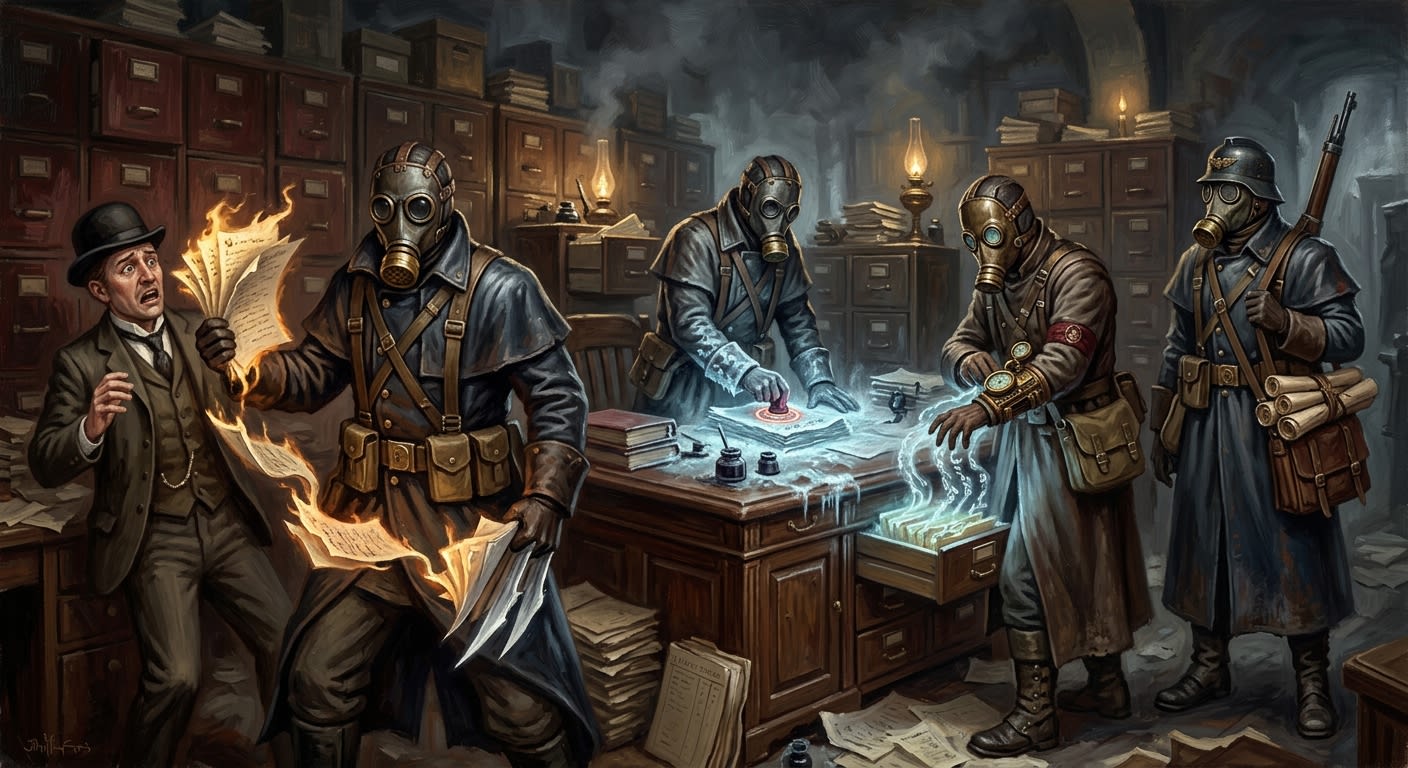
Indiction Shadows
The mask, the writ, and the courtesy of procedural terror
The Indiction Shadows are masked Bureau of Records audit-operatives whose writs freeze rooms, suspend names, retrieve hostile files, and make paperwork behave like a knife with witnesses.
Codex Ref. VIII.1.06-001
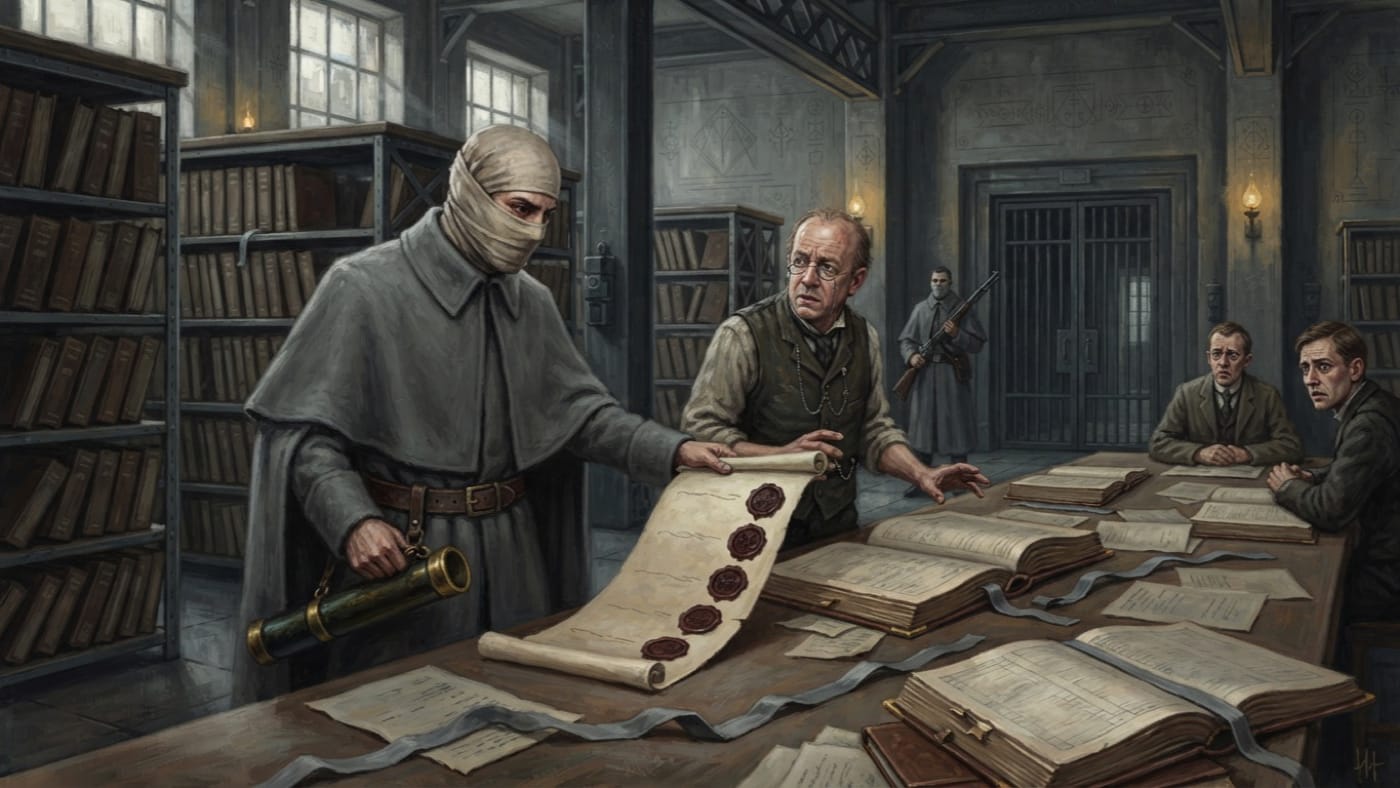
Indiction Writ
Five seals, five powers, and an appeal that waits
The Indiction writ lets Records seize ledgers, enclose witnesses and suspend names before any charge. Five seals announce that the Bureau has noticed; appeal waits until reconciliation.
Codex Ref. XIII.1.06-003
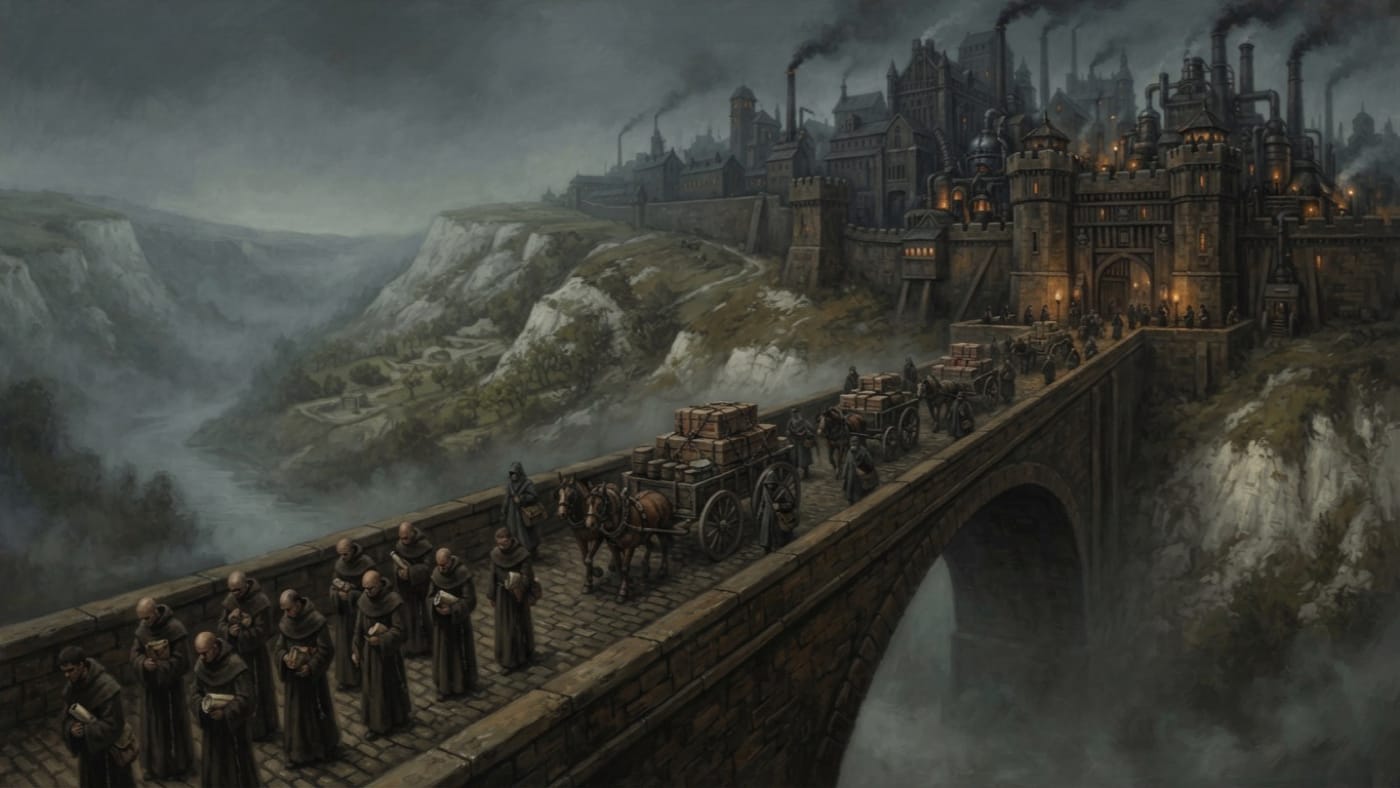
Inkhouse Bridge
The bridge carries the papers; the gatehouses decide
Nemea's single stone span carries all freight, couriers and novice intake. The Bureau arranged the bottleneck deliberately. The bridge carries the papers; the Collegium waits beyond the crossing.
Codex Ref. II.2.06-021
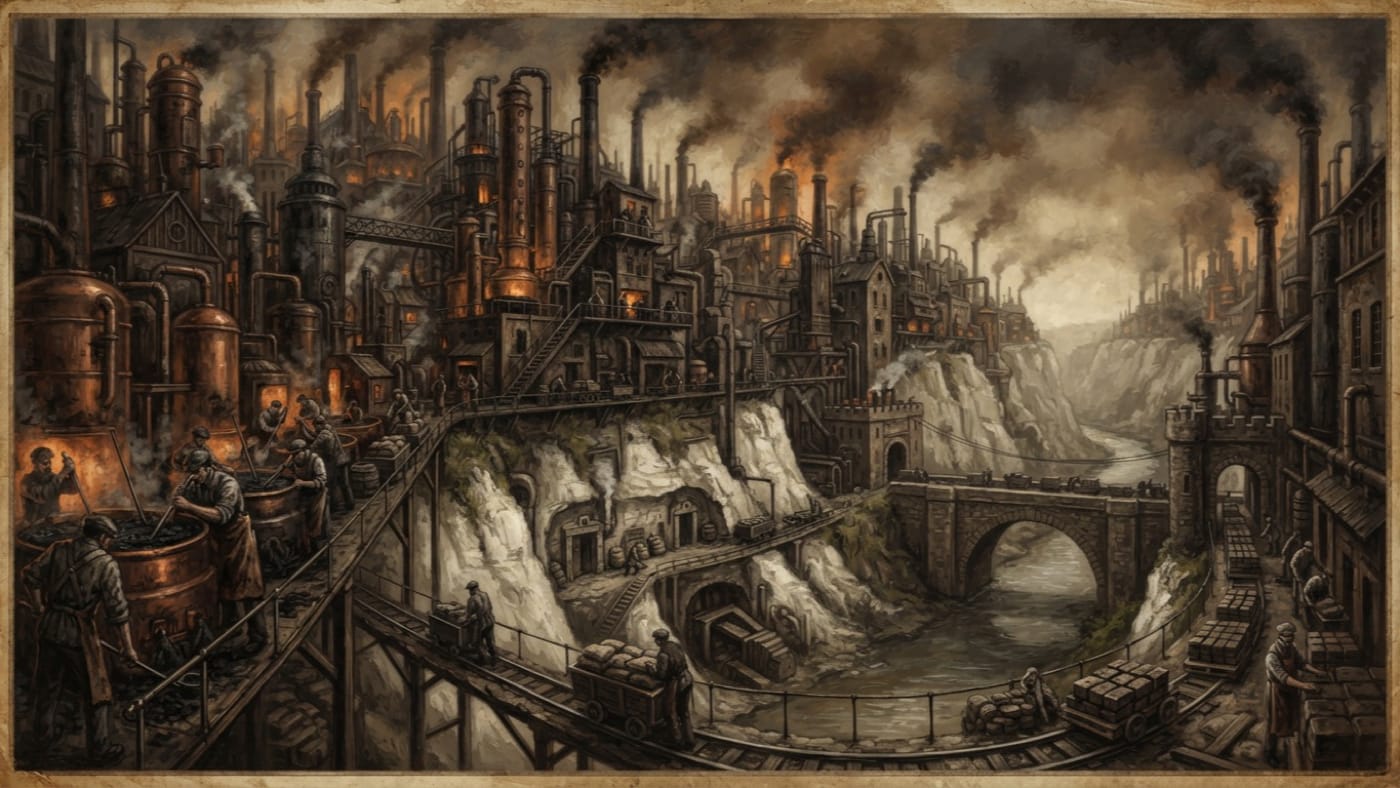
Inkhouse Quarter
Where the law is boiled before it is written
Nemea's copper-vat precinct supplies the Bureau of Records with rationed ash-ink. The brewers pay in shifts and surnames; the contracts downstairs keep finding new obligations.
Codex Ref. II.2.06-020
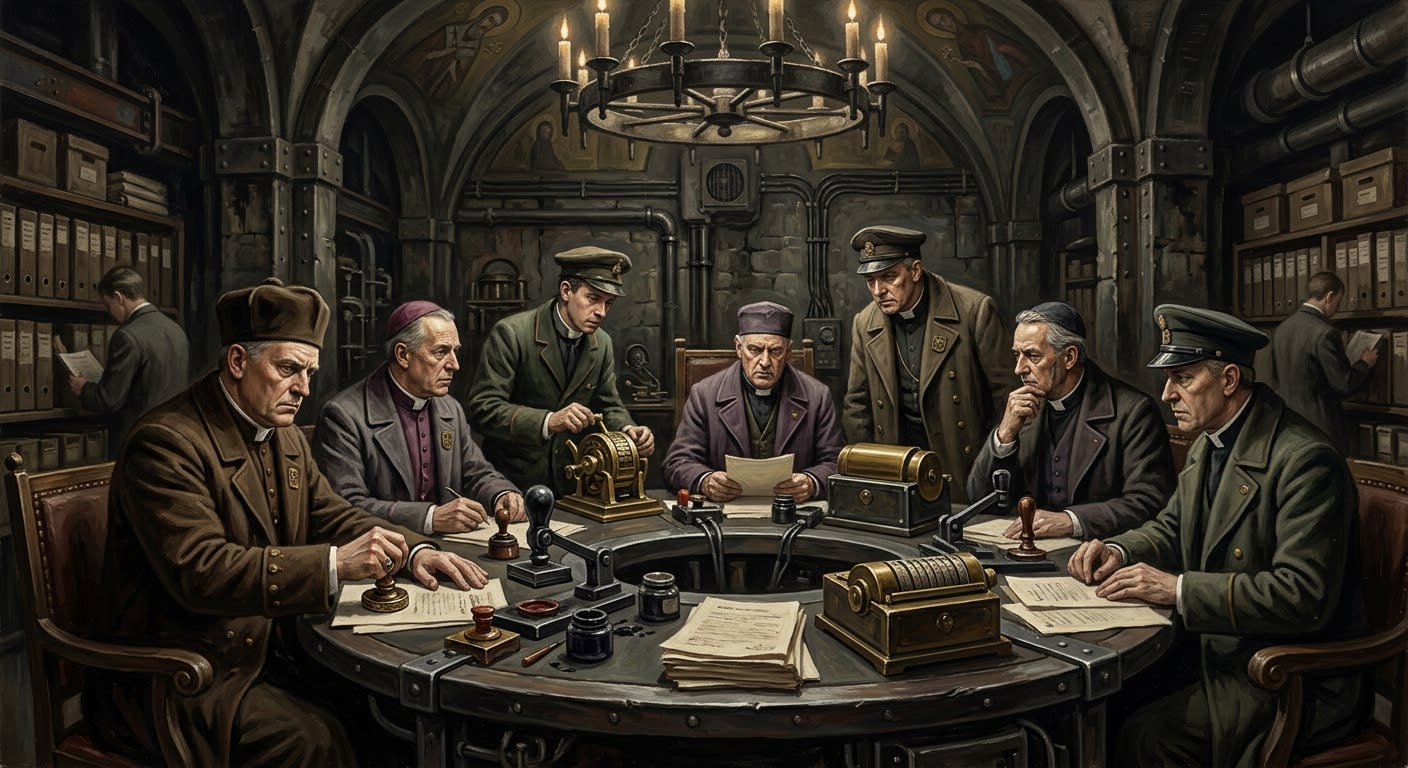
Inner Circle
Seven knives pointed inward, and Europe calls the locked box government
The Inner Circle is the Synod's highest chamber: seven Seal authorities locked in Strasbourg beneath the Basilica, manufacturing unanimity from obstruction, fear, rotating stamps, clerks, and the occupied absence of War.
Codex Ref. XIII.1.05-090
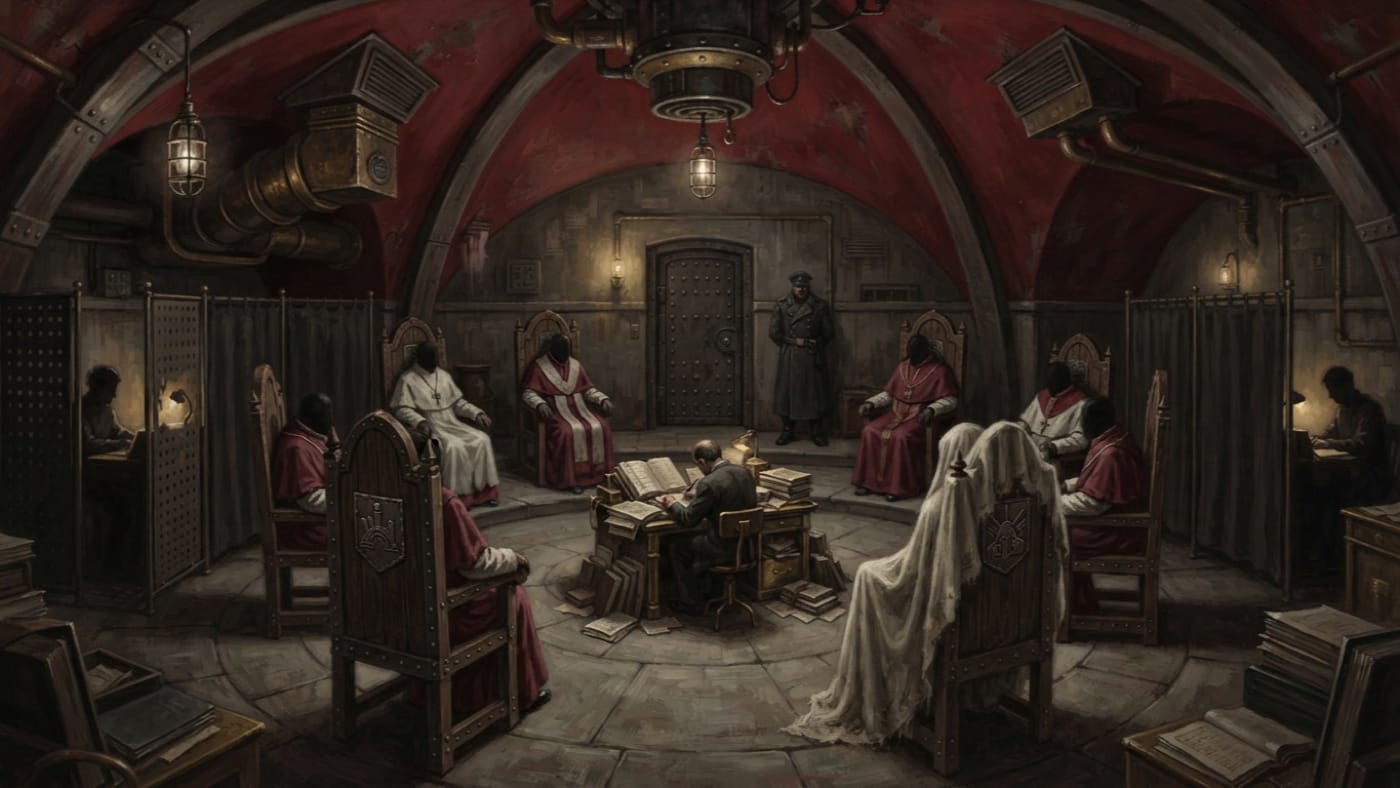
Inner Circle of Strasbourg
Six Chairs Answer. Seven Seals Decree.
Seven chairs, six occupants, no table. From the Basilica's highest floor, the Synod decrees through corrected minutes, seven stamps, and War's vote counted by faith.
Codex Ref. III.2.04-1452
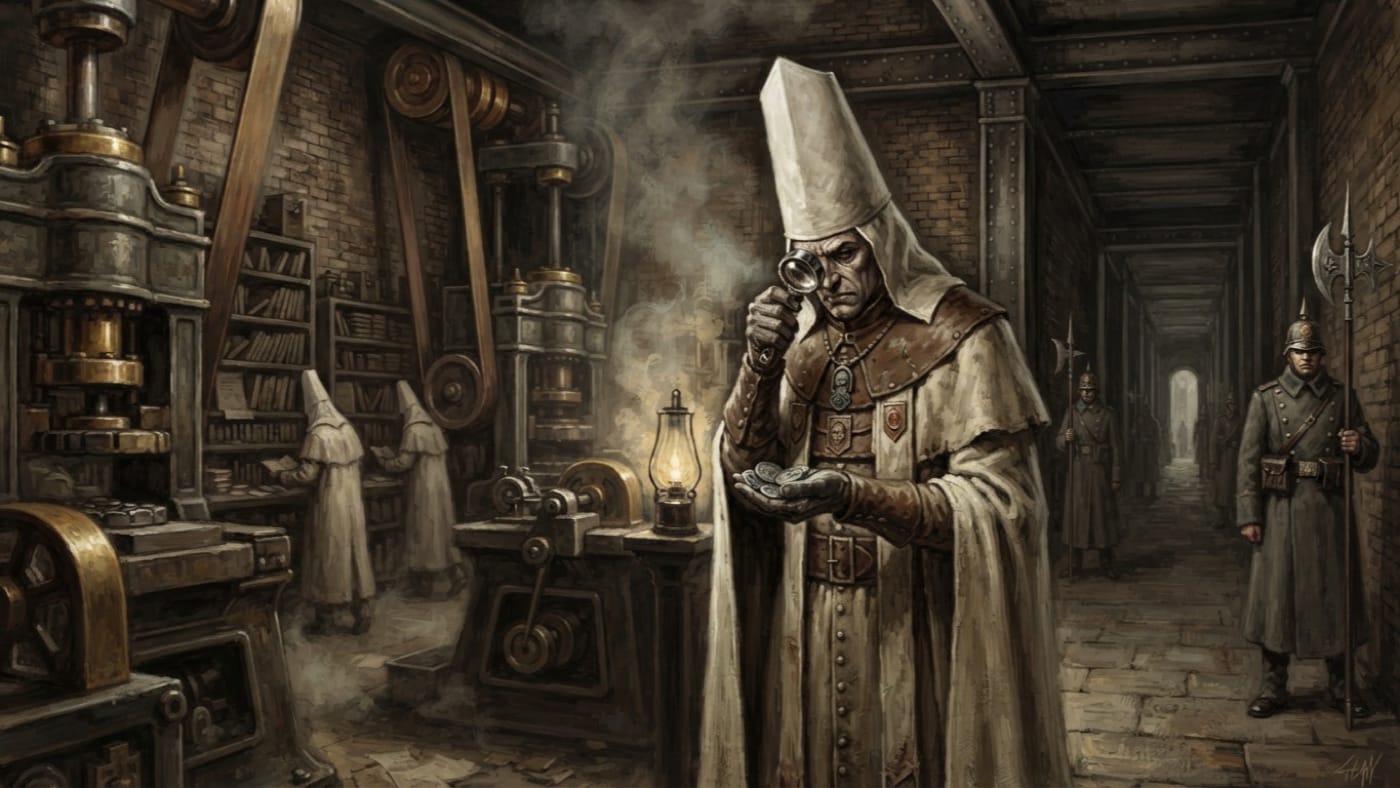
Inquisitor-Assayer
Sent to defend the face, with a name that is not coined
Purity's currency heresy specialist has been dispatched to Sable Court. File 1104-SC remains open at the A.S. 201 assessment; the appointee's name is not coined, and the personal record goes no further.
Codex Ref. III.2.01-201

Inquisitor-General Severian
The man who taught fear to sing in tune
Architect of the Iron Choir of Mainz and Severian Gloss to the Catechism of Obedience, he made silence culpable, cruelty legible, and fear useful enough to receive forms.
Codex Ref. III.2.01-006
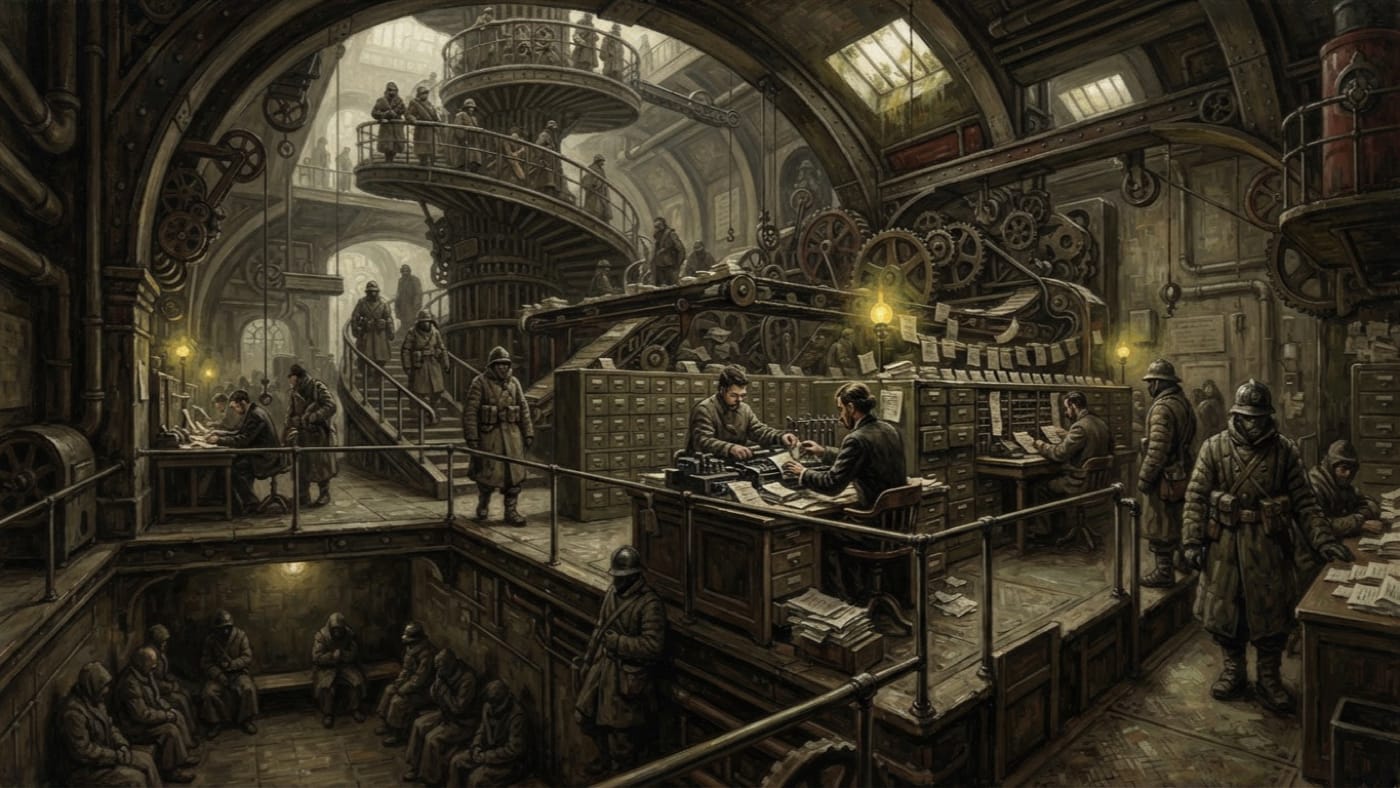
Internal Memorandum 7R-201
The reply ends; the detention fees continue
The Bureau of Doctrine's entire reply to Peregrine Row's detention quotas: "Standards are standards." Drax's A.S. 201 citation survey follows the vowel from creed test to fee; the memorandum's issue date remains unestablished.
Codex Ref. XIII.1.23-004
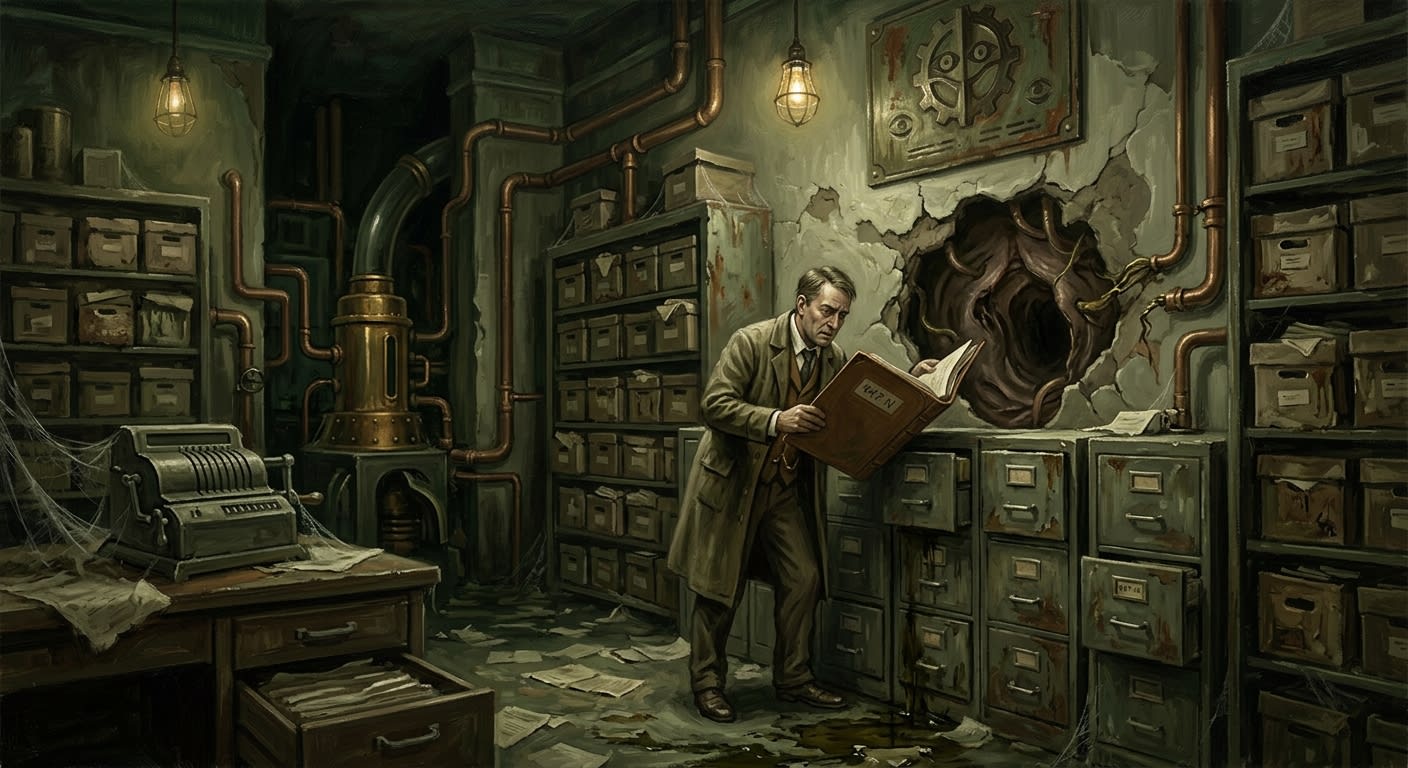
Investigation 447-N
The file pends because the bells know better than we do
Investigation 447-N began as a northern bell audit and became the Bureau's most useful cowardice: a pending file placed over a listening wound.
Codex Ref. XIII.1.97-199
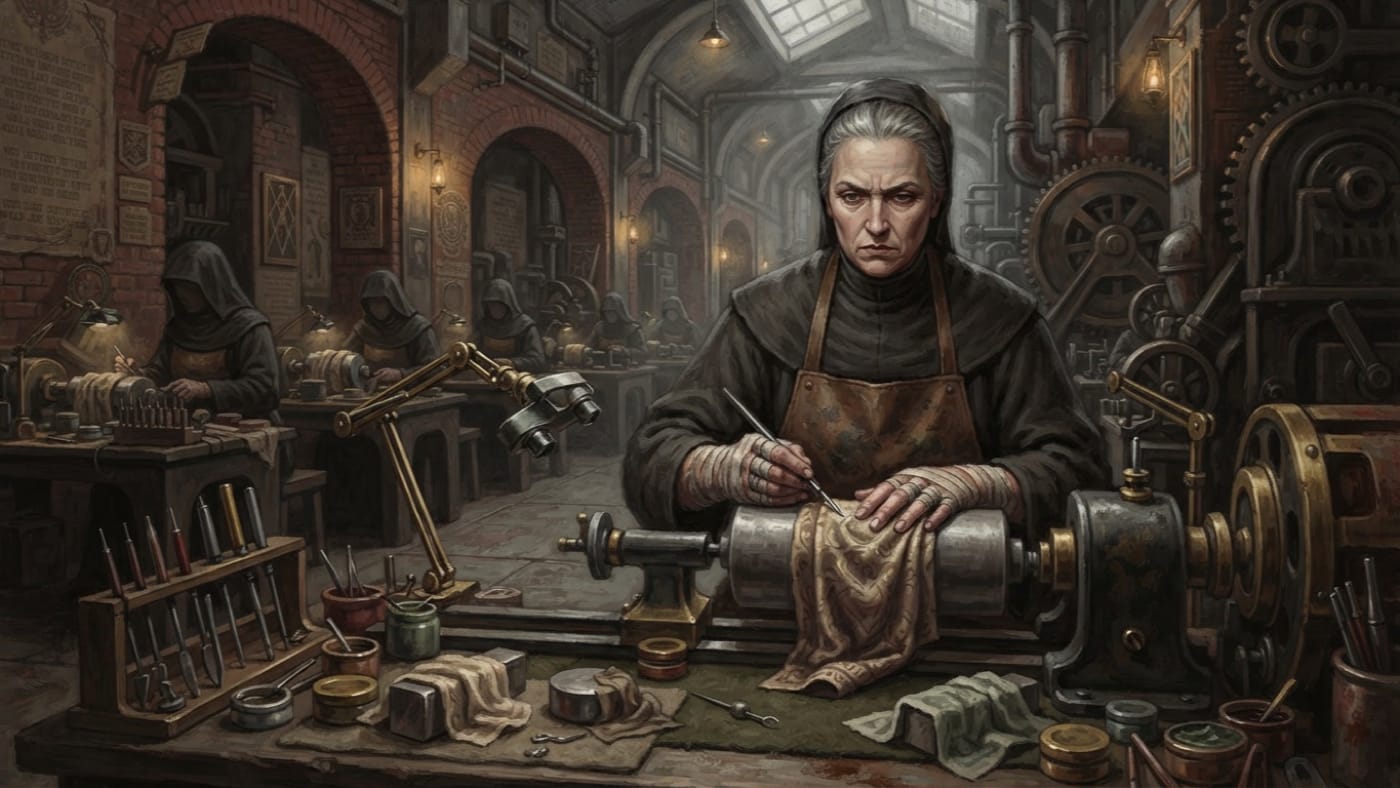
Irena Coilhand
The Church's lawful faces begin beneath her veils
Master Engraver of Die Row, Irena Coilhand cuts the steel that gives the Synod's souls their spendable faces. In the A.S. 201 Face Theft crisis, she wraps the dies in blessed silk; Doctrine calls it irregular devotion.
Codex Ref. III.2.01-1480
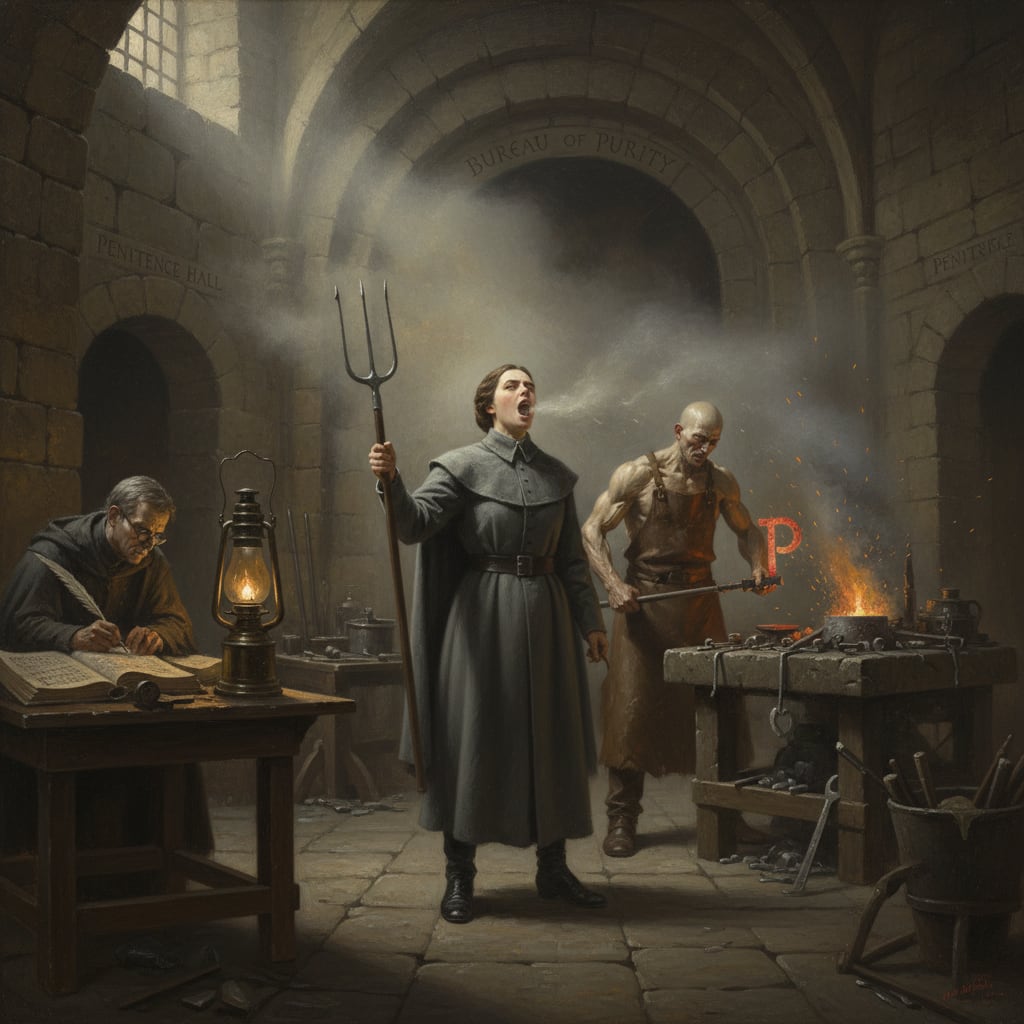
Iron Choir Brand-Singer
Because screaming is imprecise.
Licensed custodians of the note that steadies the iron — the Brand-Singers who hold pitch through Bureau of Purity penitence rites so that the resulting inscriptions are legible and the confession, accordingly, valid.
Codex Ref. XII.24.01-001
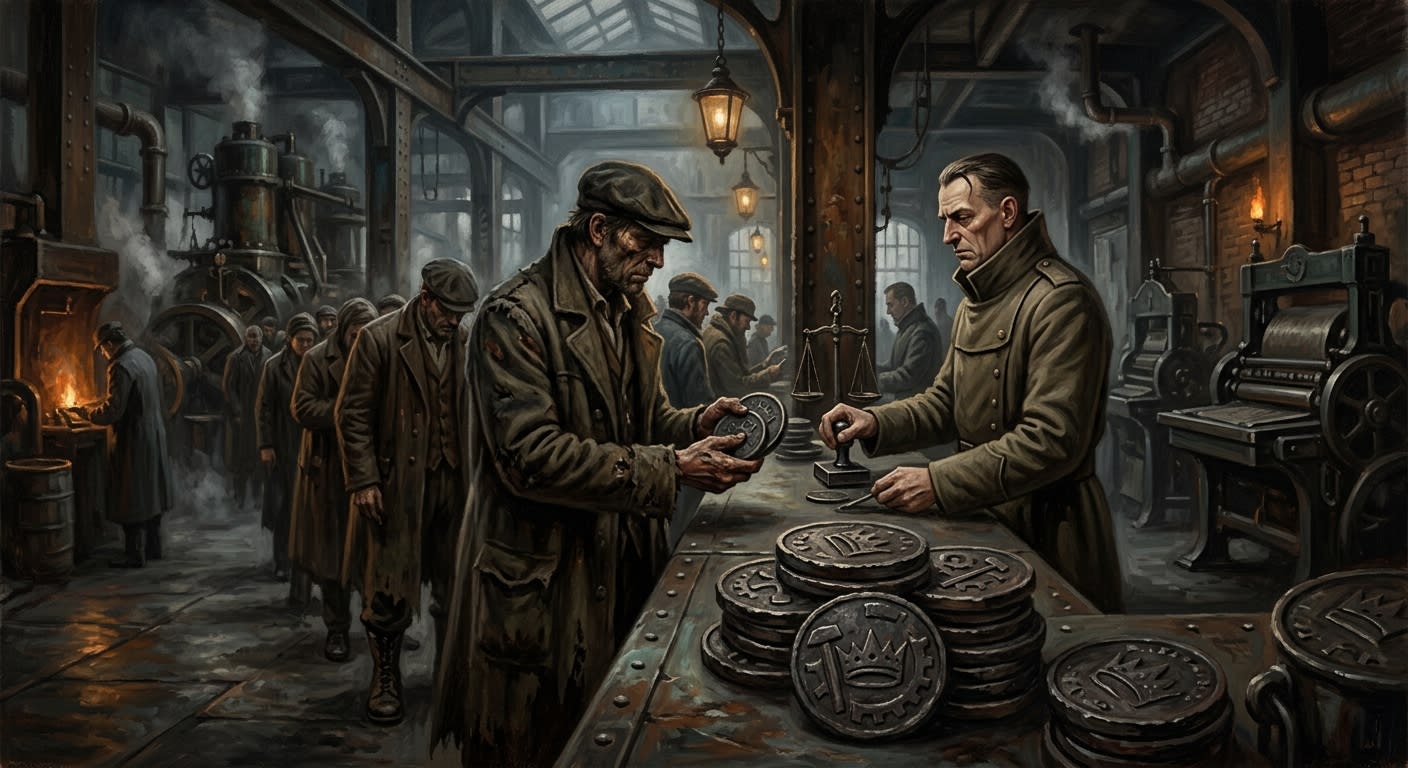
Iron Crown Currency
The British coin that buys rope, insults Tithes, and refuses to kneel
The Iron Crown is Britain's stubborn iron tender: older than the Synod's Crown of Grace, tolerated at mixed ports, and hated because it works.
Codex Ref. XIII.1.22-001
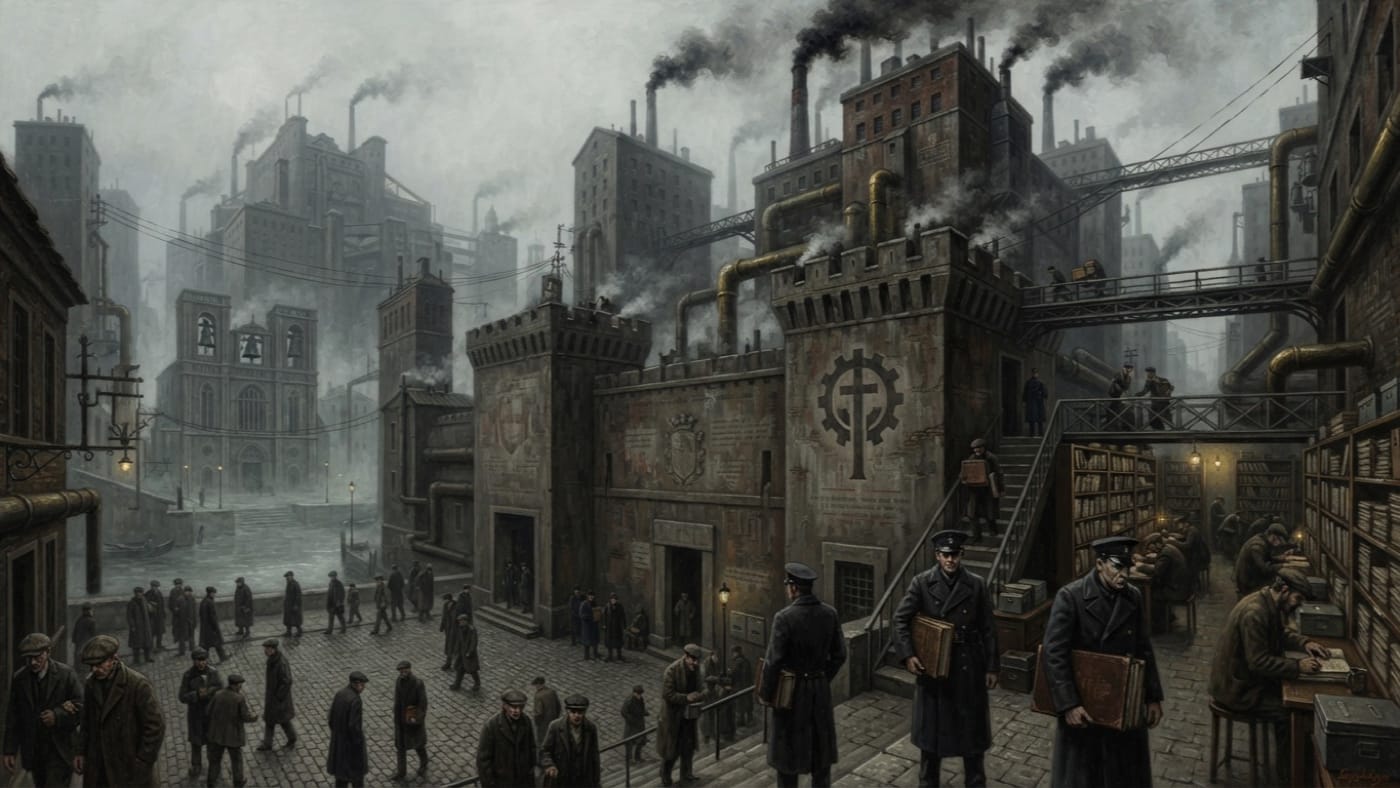
Italian principalities
One filing drawer for a peninsula that never consented to share it
The old Italian jurisdictions, erased by Regensburg in A.S. 30 and inherited piecemeal by the Synod. Their complete roster remains unestablished; their objections remain abundant.
Codex Ref. II.3.09-030
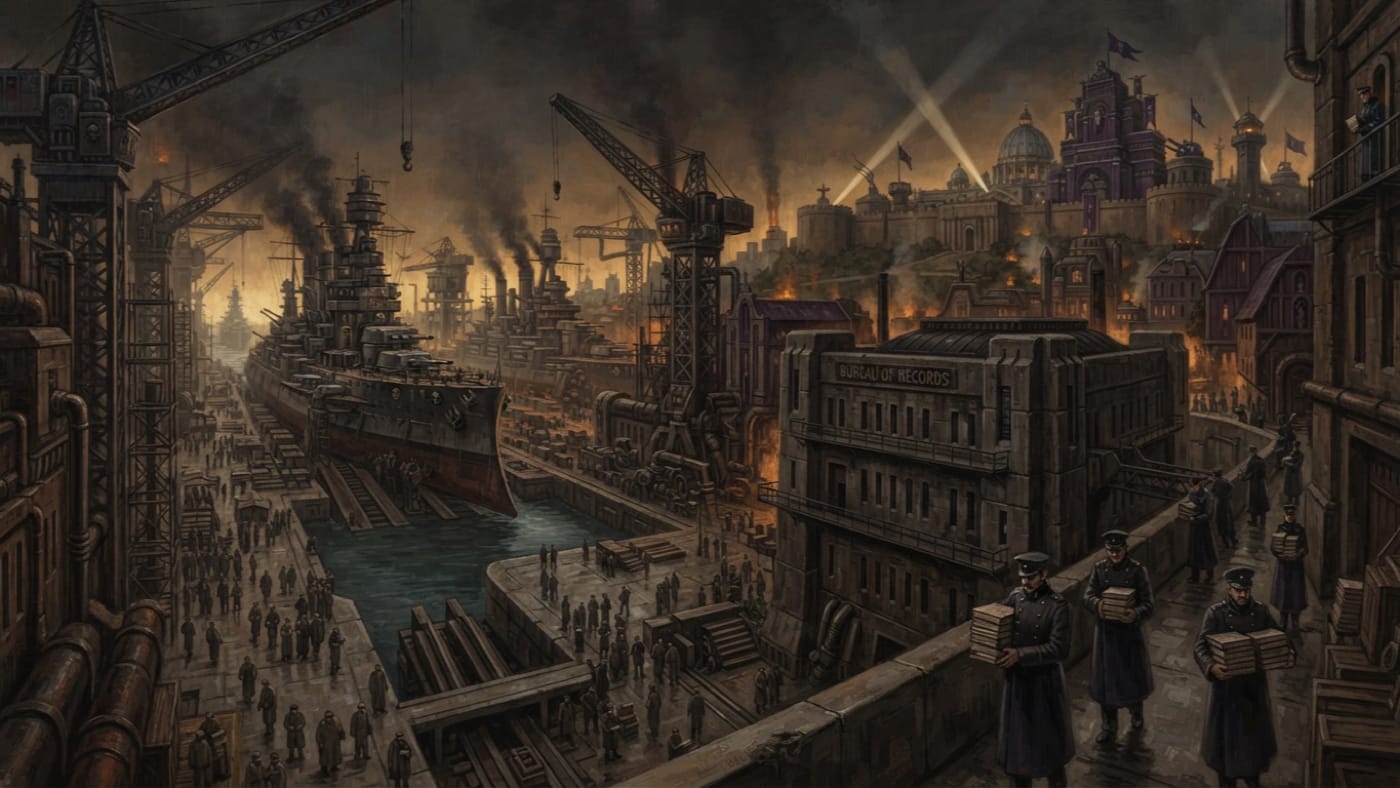
Italy
Inside the tax rolls, outside the founding seal
Italy builds ships, keeps archives and finances Synodal wars without a seal on the Concordat. My A.S. 201 survey finds its territories administered and audited, while Doctrine still anticipates compliance.
Codex Ref. II.3.10-001
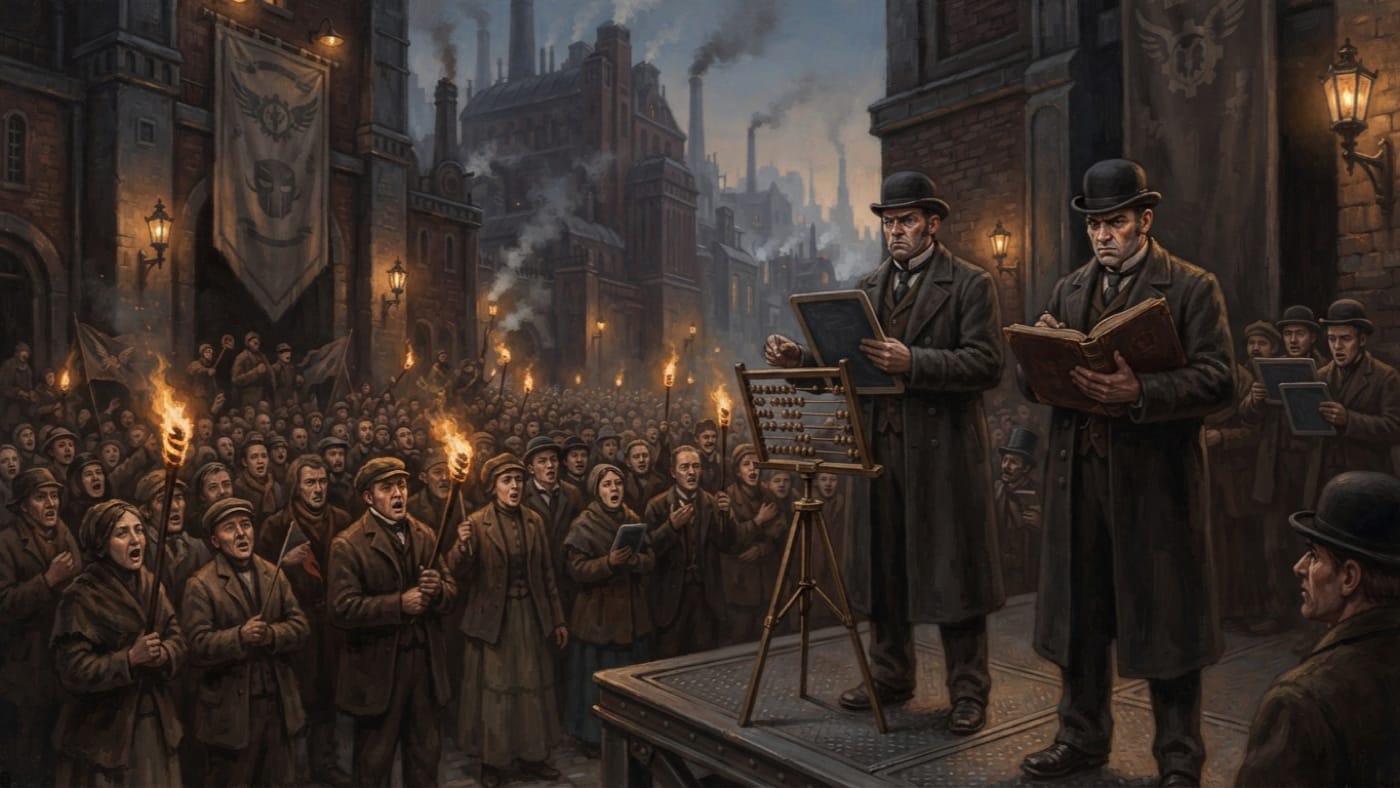
Joy Compliance Index
Rejoice by permission; be judged by the slate
The Bureau of Festivals grades a crowd's rejoicing through forty-two observable behaviours. Three verdicts follow; four points separate insufficient zeal from excessive emotion. The slate certifies conduct. It cannot certify joy.
Codex Ref. XIII.1.67-201
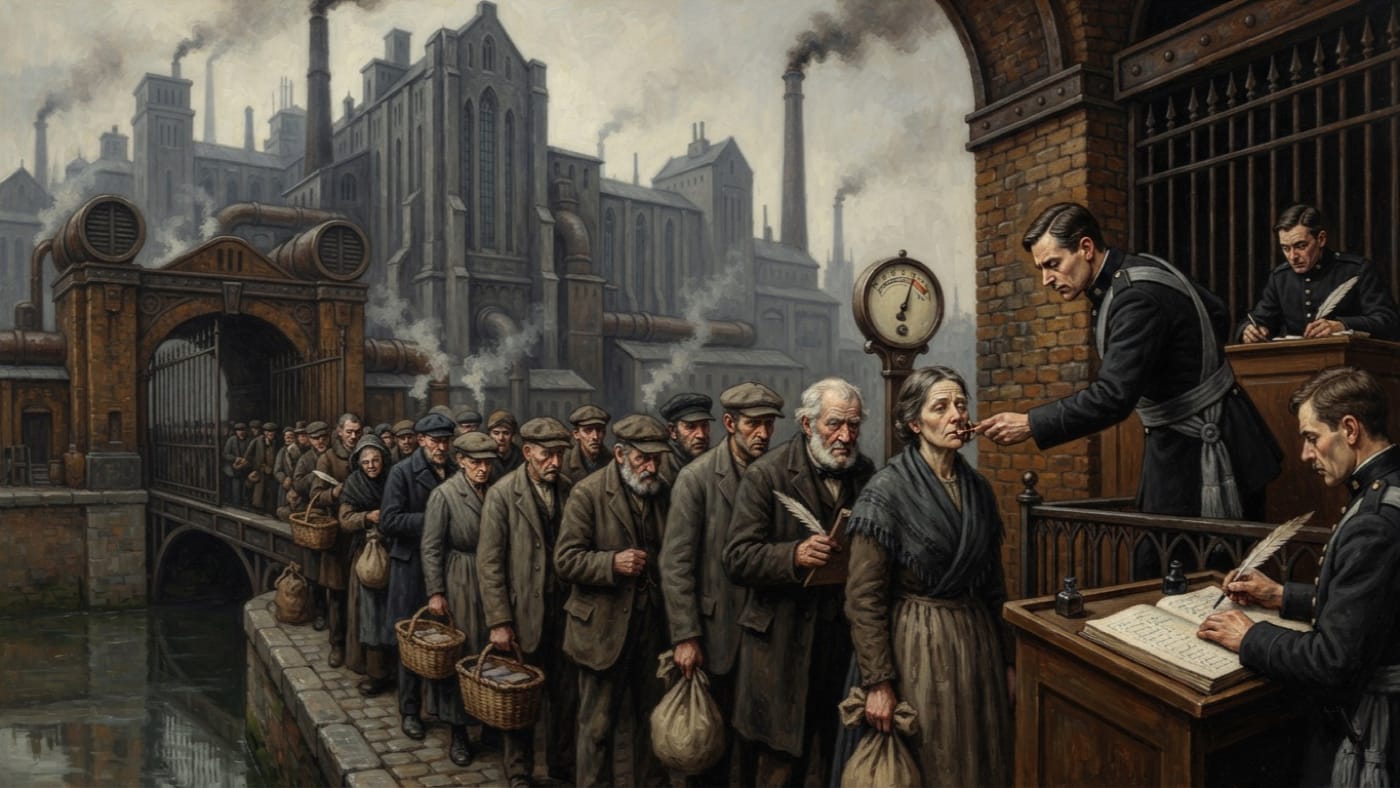
Joy Discipline
Gratitude has a lawful width, and the ledger charges for the rest
Wexel measures smiles, licences laughter, and converts emotional infractions into ration cuts, debt, and ash bills. Instituted after the Dust Fire of A.S. 112, its temporary safety law remains in force eighty-nine years later.
Codex Ref. XIII.1.19-112

Kaspar Thenm
The prison warden who taught the Synod to number beds before souls
Kaspar Thenm, first officer of the Bureau of Settlement, turned post-Concordat refugees into addresses with a warden's key, three clerks, and no talent for mercy.
Codex Ref. III.2.01-014
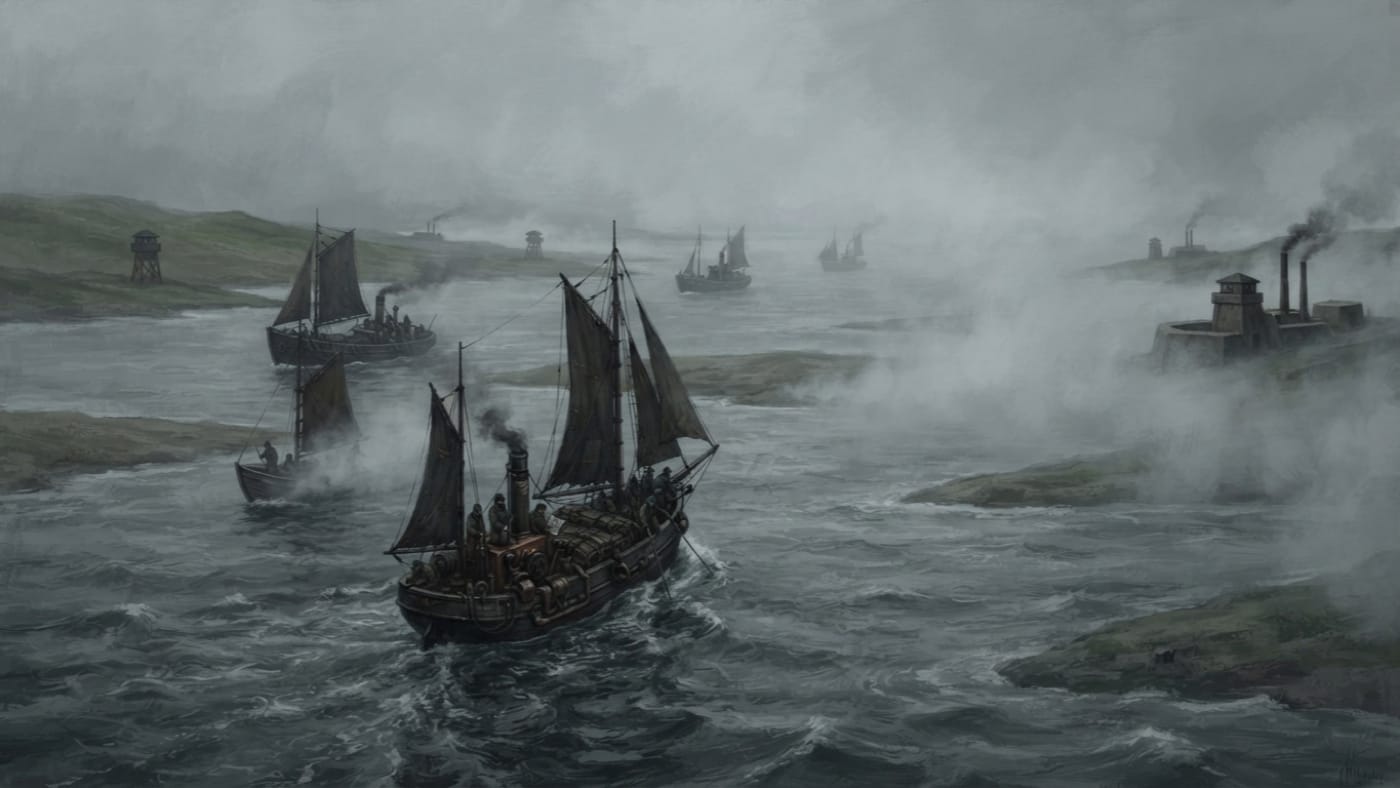
Kattegat
The Church claims the water. The pilots read the weather.
The shallow southern approach to the Fractured North, between Jutland and Sweden. The Church claims the water; northern pilots decide how to cross it. Cold, fog and sandbanks acknowledge neither authority.
Codex Ref. IX.8.01-002
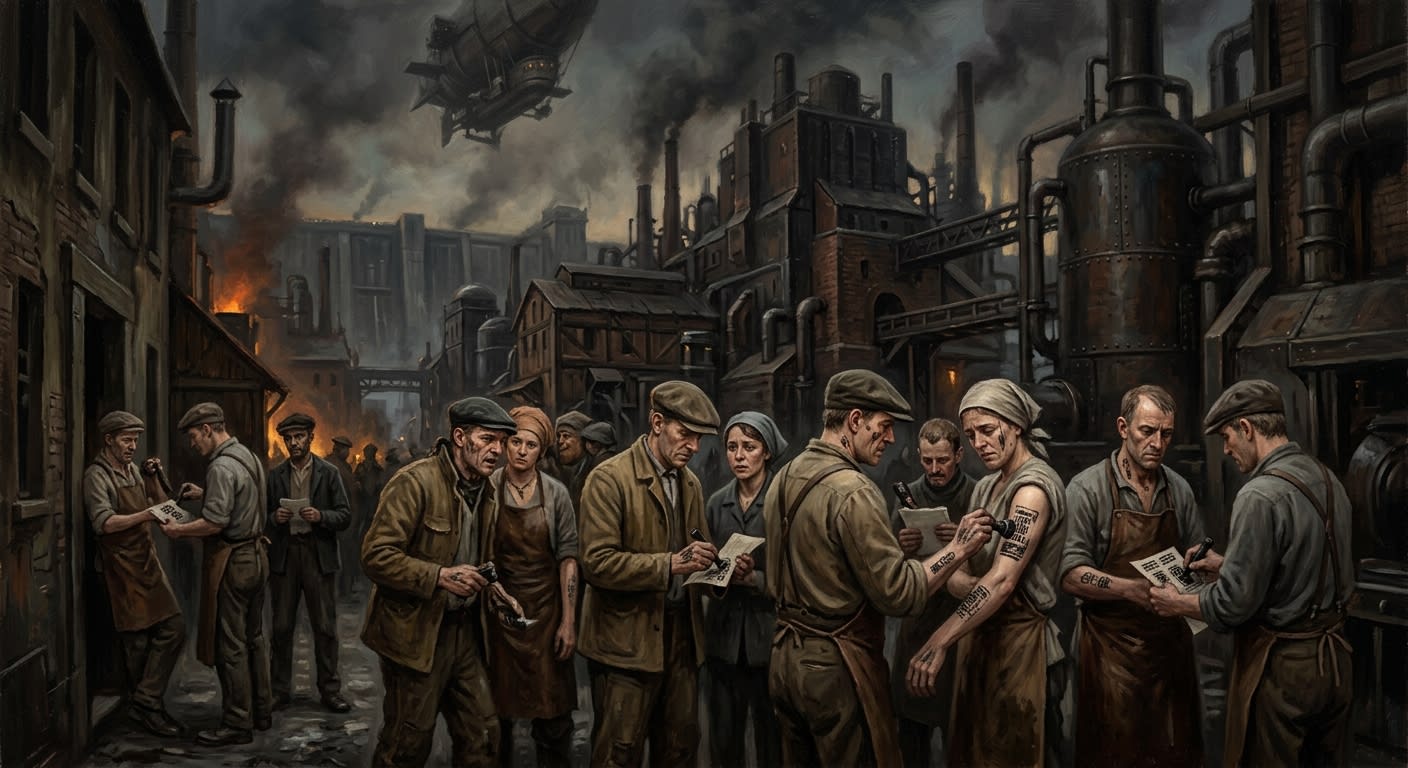
Keska
The foundry-town that fell through the map and learned who feeds the forgotten
Keska, a Hintermark foundry-town west of Bastion-Constantinople, lost its Zone for eleven months and discovered that criminal stamps can feed where lawful ink starves.
Codex Ref. II.3.06-001
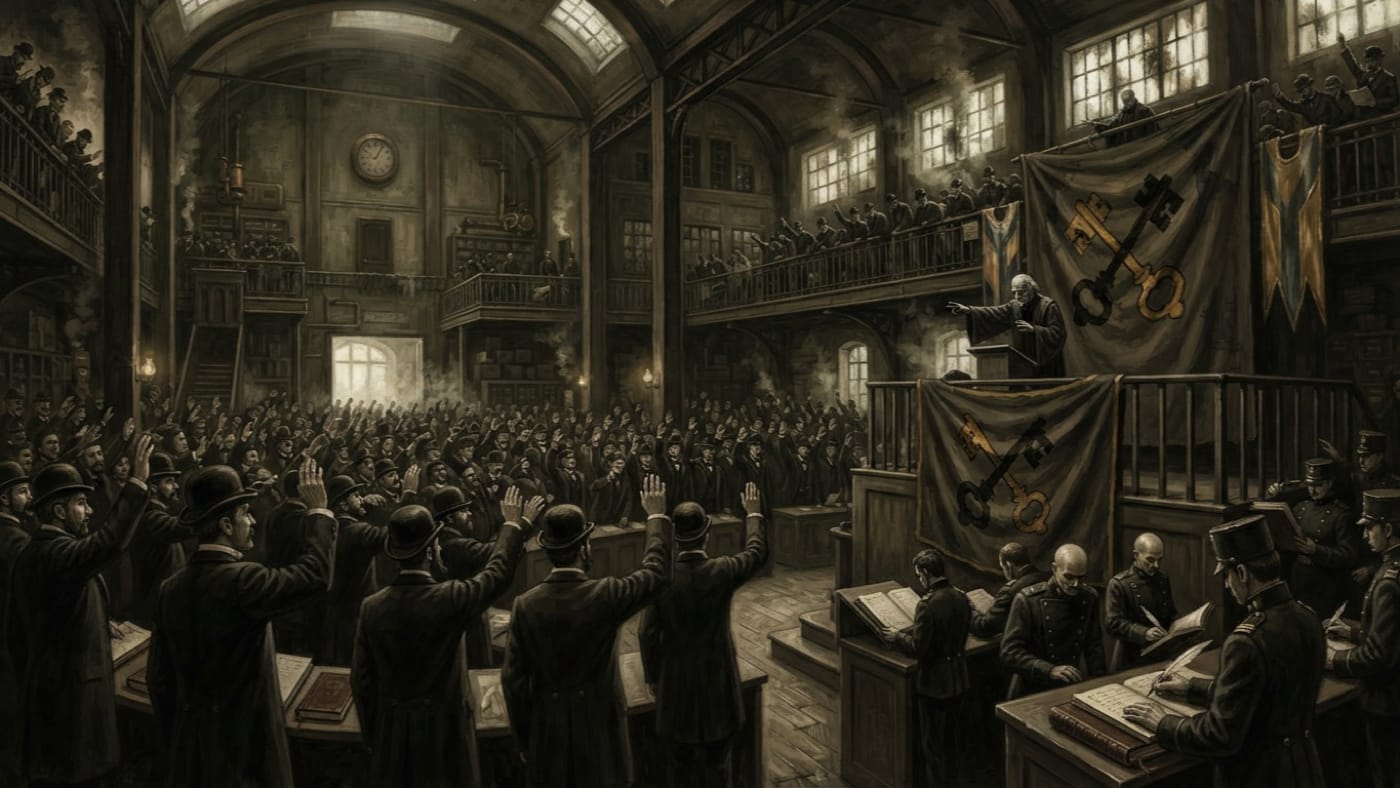
Key-Oath
An allegiance voided, a city entered
In A.S. 150, Milan's city councils swore the Key-Oath to the Coalition of the Crossed Keys and its so-called True Successor of Rome. The oath is void; the names remain useful.
Codex Ref. VII.8.04-002
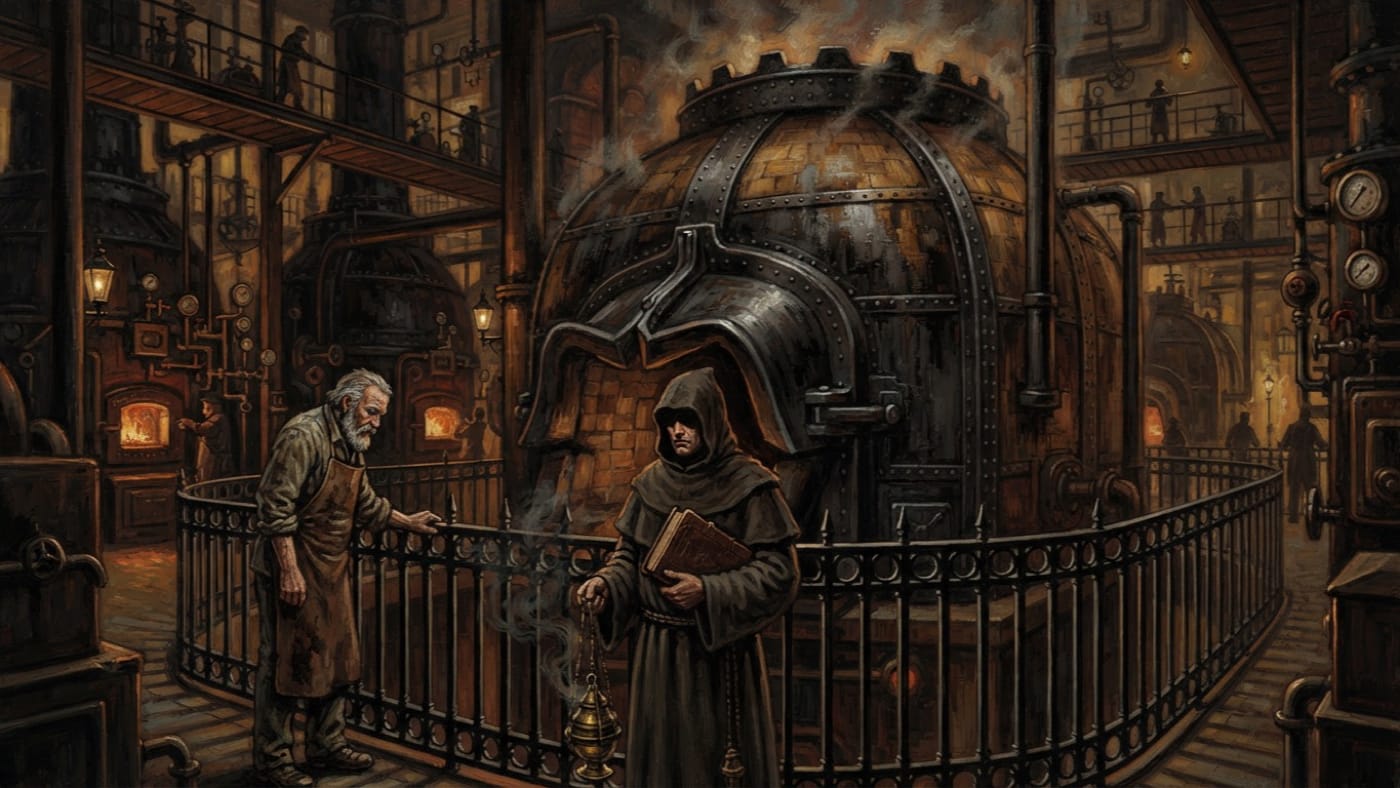
Kiln Three
The mouth remains warm; the form of address remains unsettled
Brast's Kiln Three became Saint-Combust after nine men died in A.S. 74. Its shell stays warm, its ash enters valve oil, and its priests control who may ask it questions.
Codex Ref. XIII.1.72-002
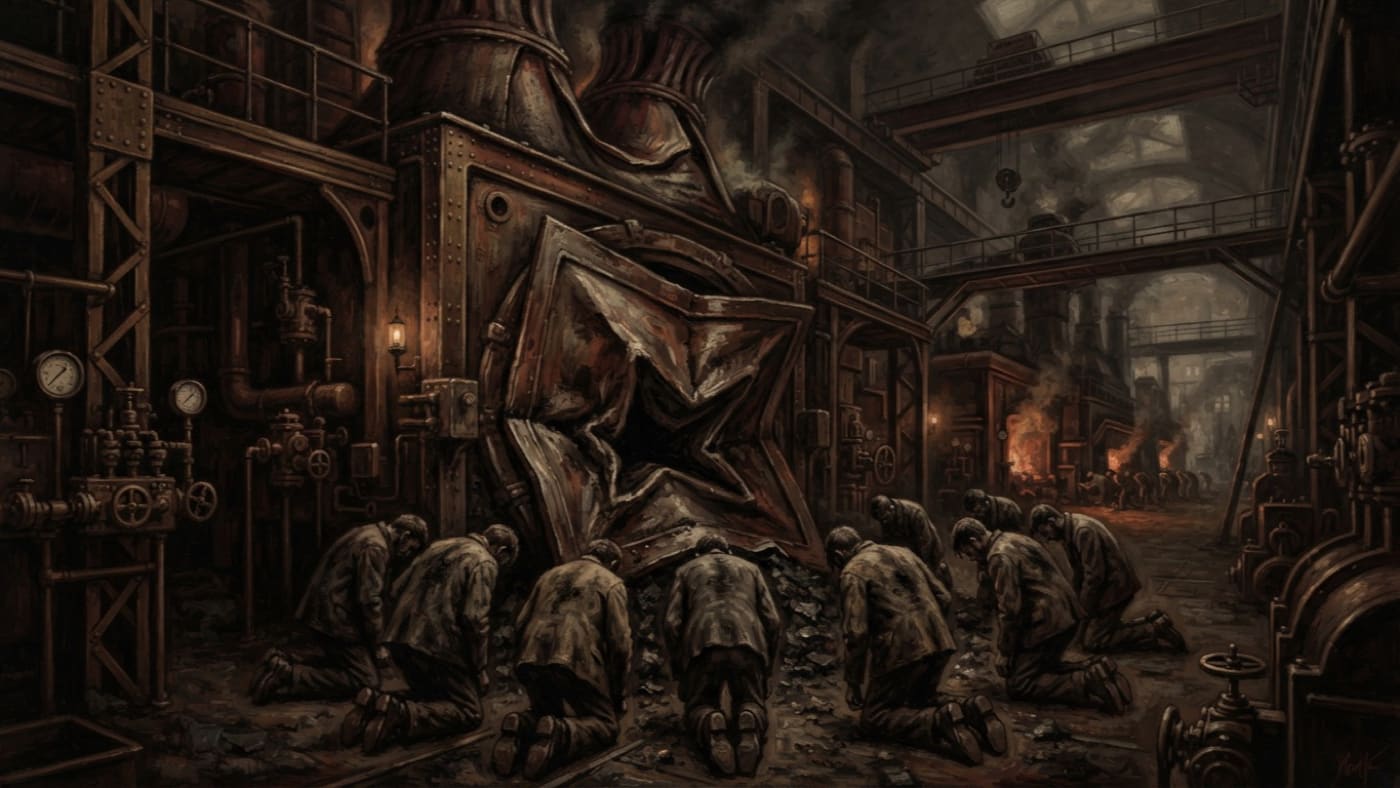
Kiln Three Explosion
Nine dead; the furnace received a name
Brast's Kiln Three failed inward at second-bell feed on 19 Ashmonth A.S. 74, killing nine workers. The shell was retained as Saint-Combust; the cause remains unresolved.
Codex Ref. VII.8.10-074

King-Warden Aldric III
The island abbot with a sword, and worse, with ships
Aldric III rules Britain from Canterbury as King-Warden: independent ally, naval necessity, liturgical irritant, and pious stubbornness in a crown.
Codex Ref. III.2.01-022
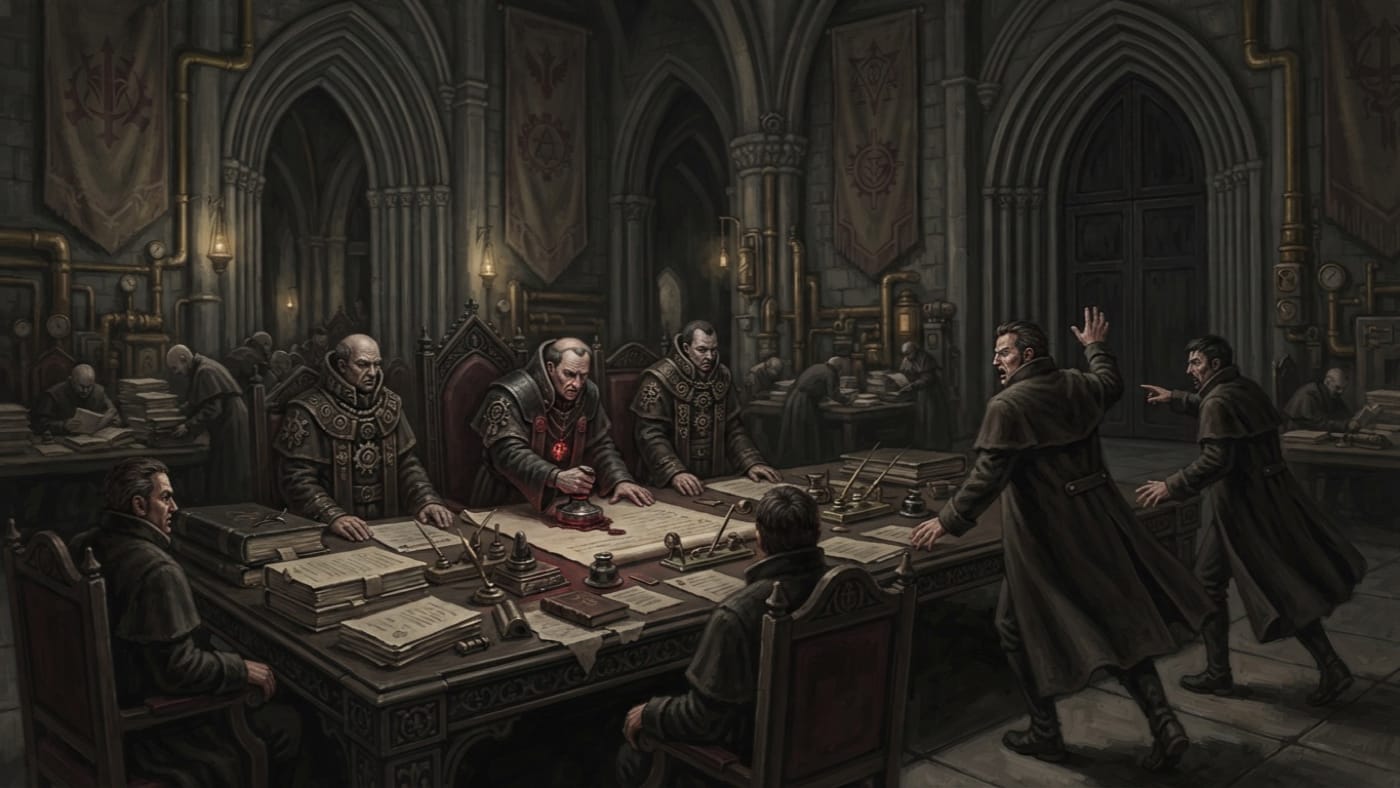
Kingdom of Aragon
A kingdom entered under another seal
Aragon was entered under Iberia's seal at the A.S. 90 Concordat of Strasbourg. Its delegation protested and departed; the Bureau retained the kingdom.
Codex Ref. III.2.04-1544
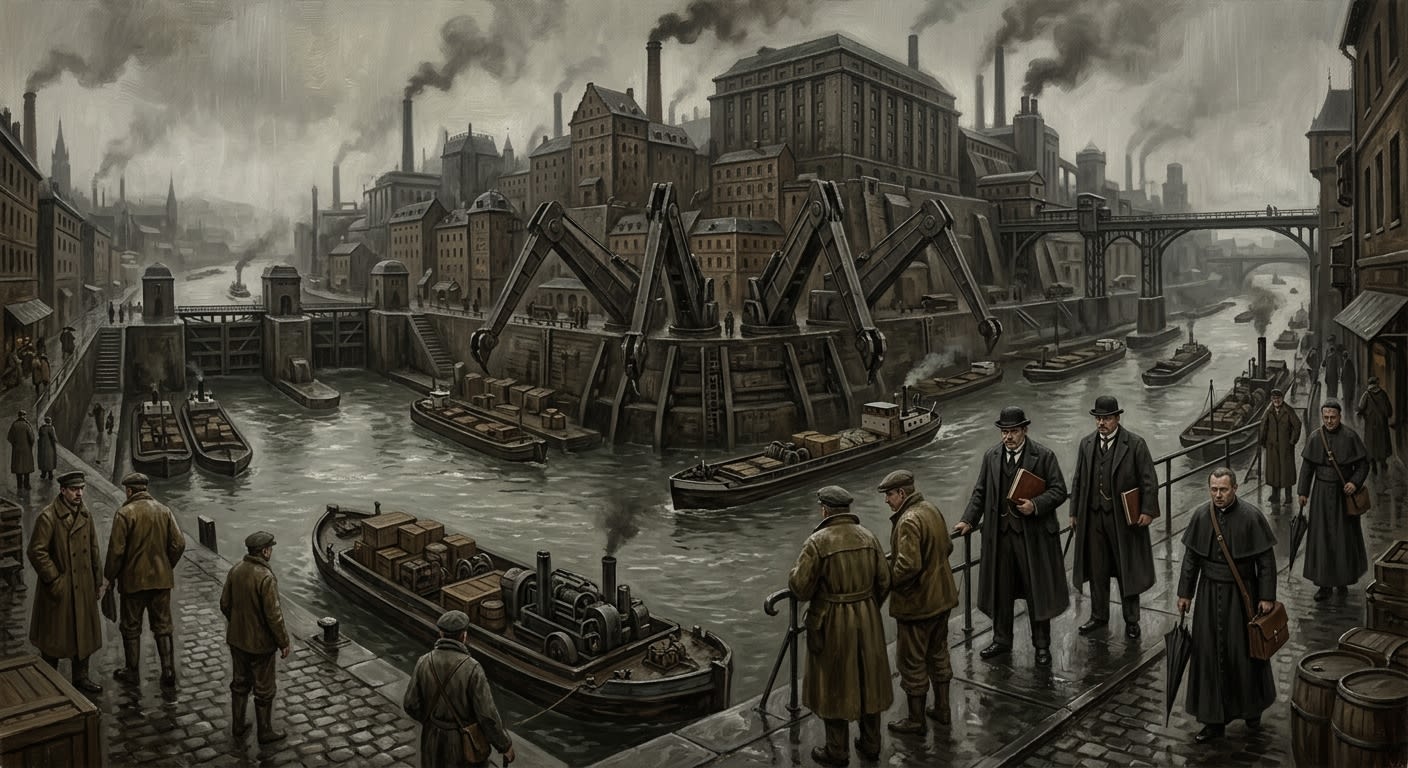
Koblenz
The holy art of handing the burden onward
Koblenz is the wet middle hand of the Ignatian chain: a Rhine-Moselle transfer city where sanctity lasted six minutes and became taxable forever.
Codex Ref. II.3.05-045
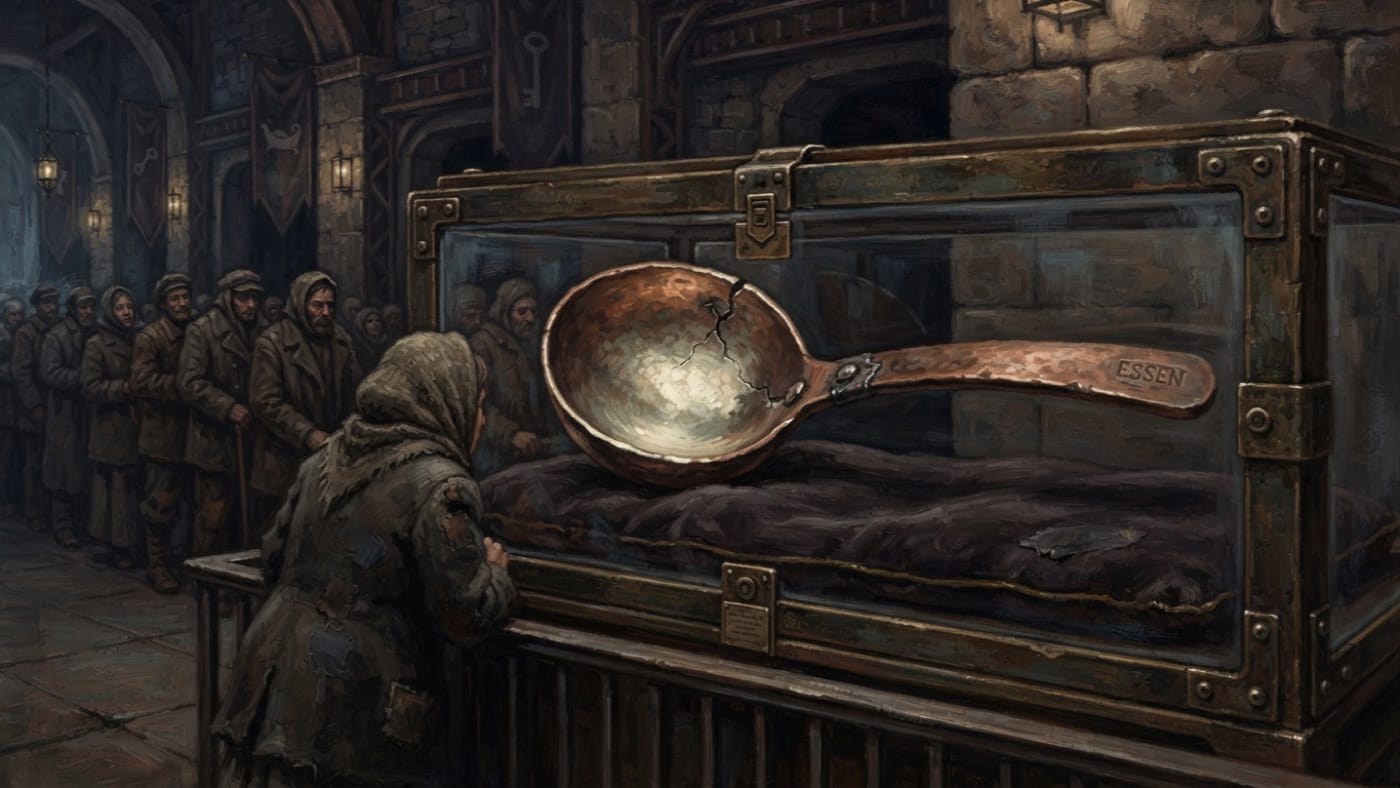
Ladle of Saint Halva
Devotionally sufficient, three pfennig per kiss
The cracked copper ladle at Mainz is Tier III: devotionally sufficient. I judge it eighty years too late for Saint Halva. It multiplies no broth; the Bureau of Relics charges three pfennig per kiss.
Codex Ref. III.2.04-001

Lake-Captain Kaspar Dreyse
Nine Clearances, One Command, and Stakes the Bureau Cannot Read
Commander of Königsberg's Masurian Watchers, third-generation lake native, and nine times cleared by Purity. The Ledger certifies the man; it still cannot read his stakes.
Codex Ref. III.2.01-201
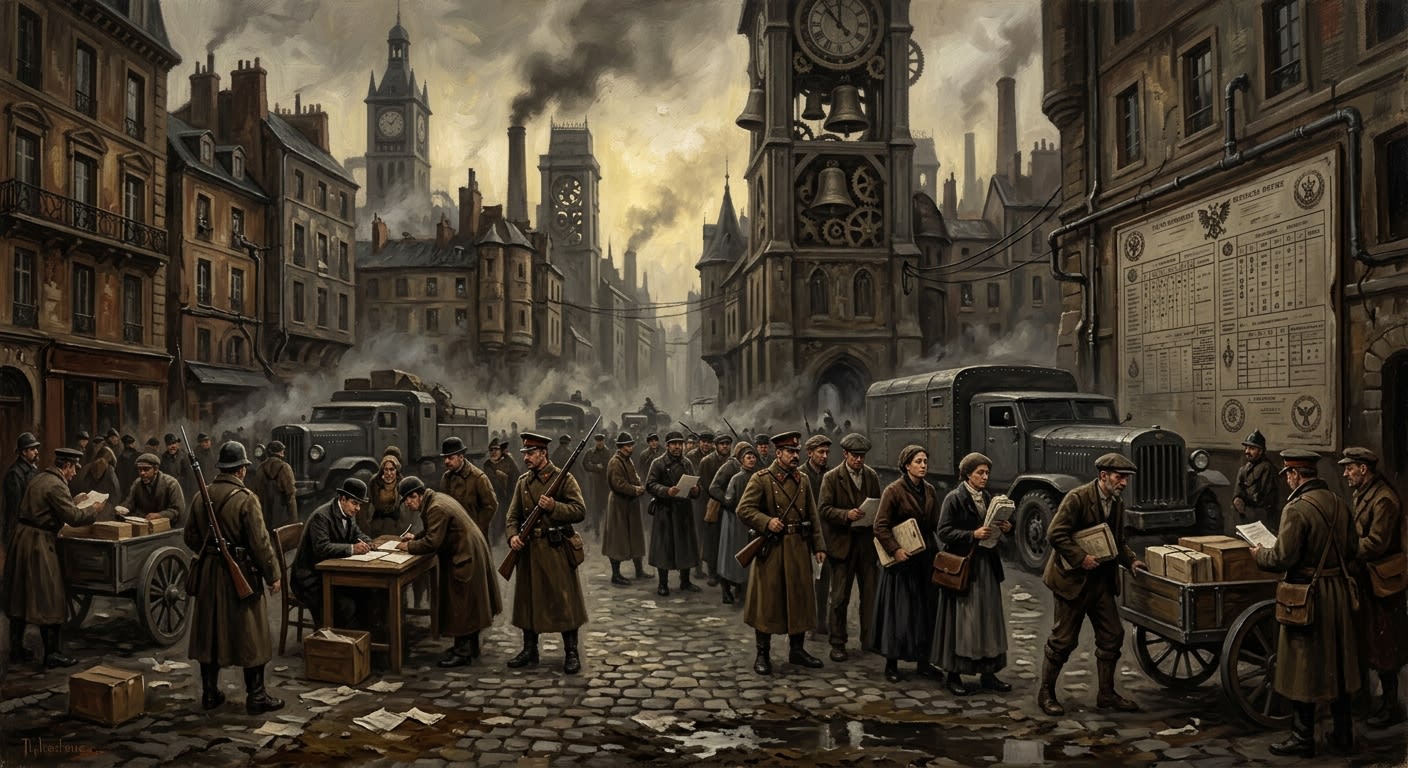
Languedoc
The province that made sunlight prosecutable
Languedoc is the southern heartland province where bells kept local time, songs bent under audit, and the Purges of A.S. 130 made sunlight a fileable risk.
Codex Ref. II.1.06-130
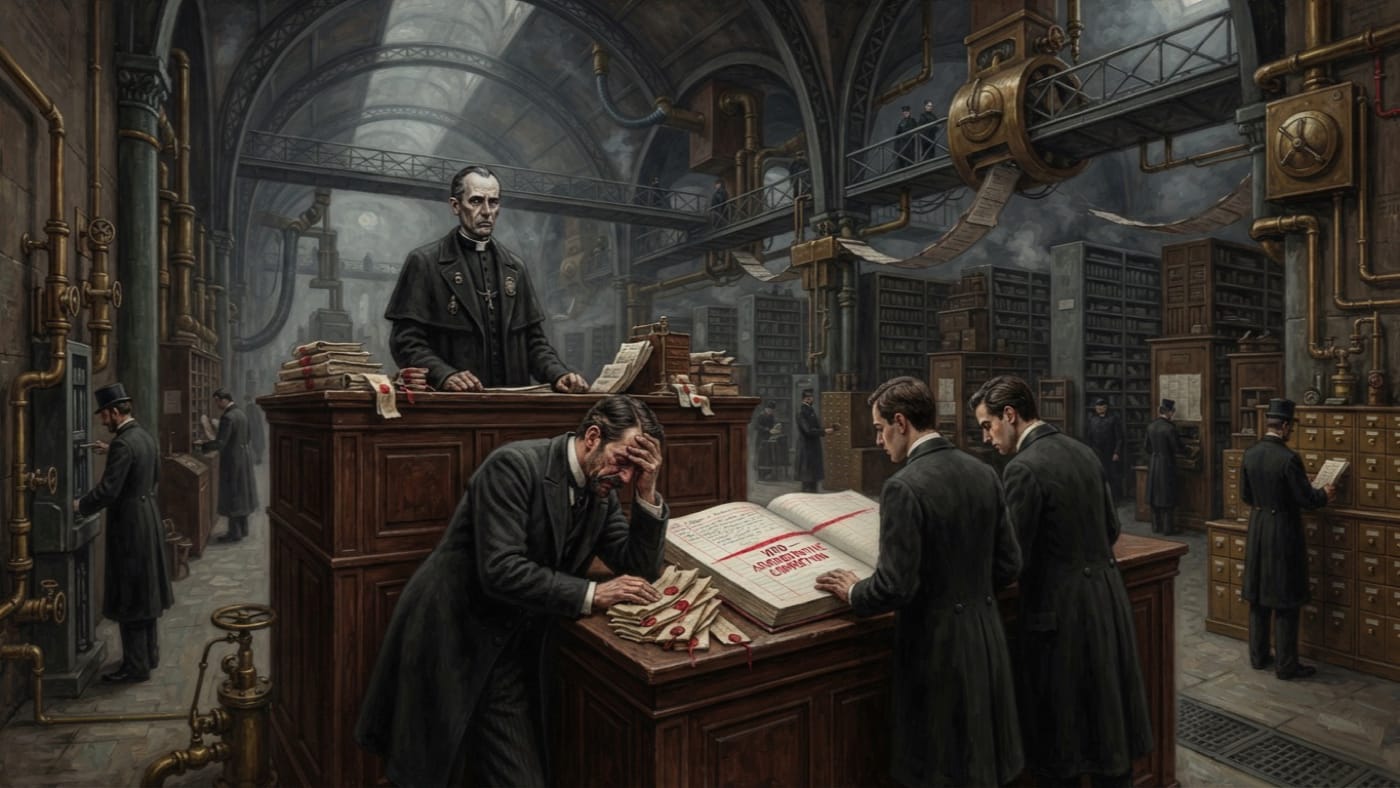
League of Milan
Fourteen cities, five pages, one stamp
Fourteen Lombard cities called their promises an alliance. In A.S. 97, the Bureau of Oaths called them void. The League's founding is uncertain; its annulment is filed.
Codex Ref. VIII.3.01-097
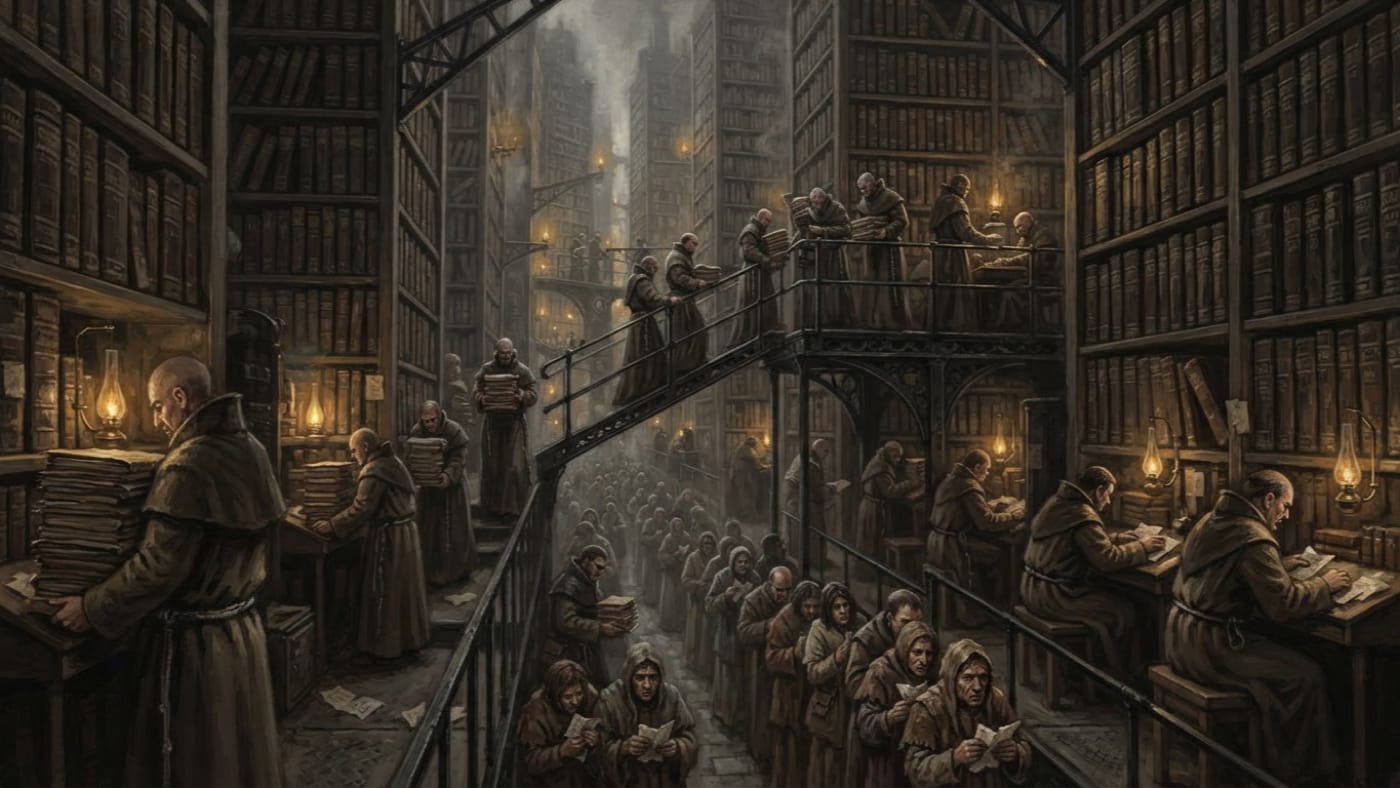
Ledger Cloister (Rheinscarp)
On the fifth terrace, the bread waits for your name to agree with the register
Rheinscarp's fifth-terrace Records labyrinth reconciles crossing receipts, ration rolls and names under Ysabeau Kelm. You arrive to file a receipt; the Quill-Choir may correct whether you exist.
Codex Ref. II.2.01-003

Ledger of Compelled Consent
The signature precedes the will
Bound after the Black Decrees but obeyed before them, the Ledger of Compelled Consent made frightened signatures older than fear.
Codex Ref. XIII.1.17-001
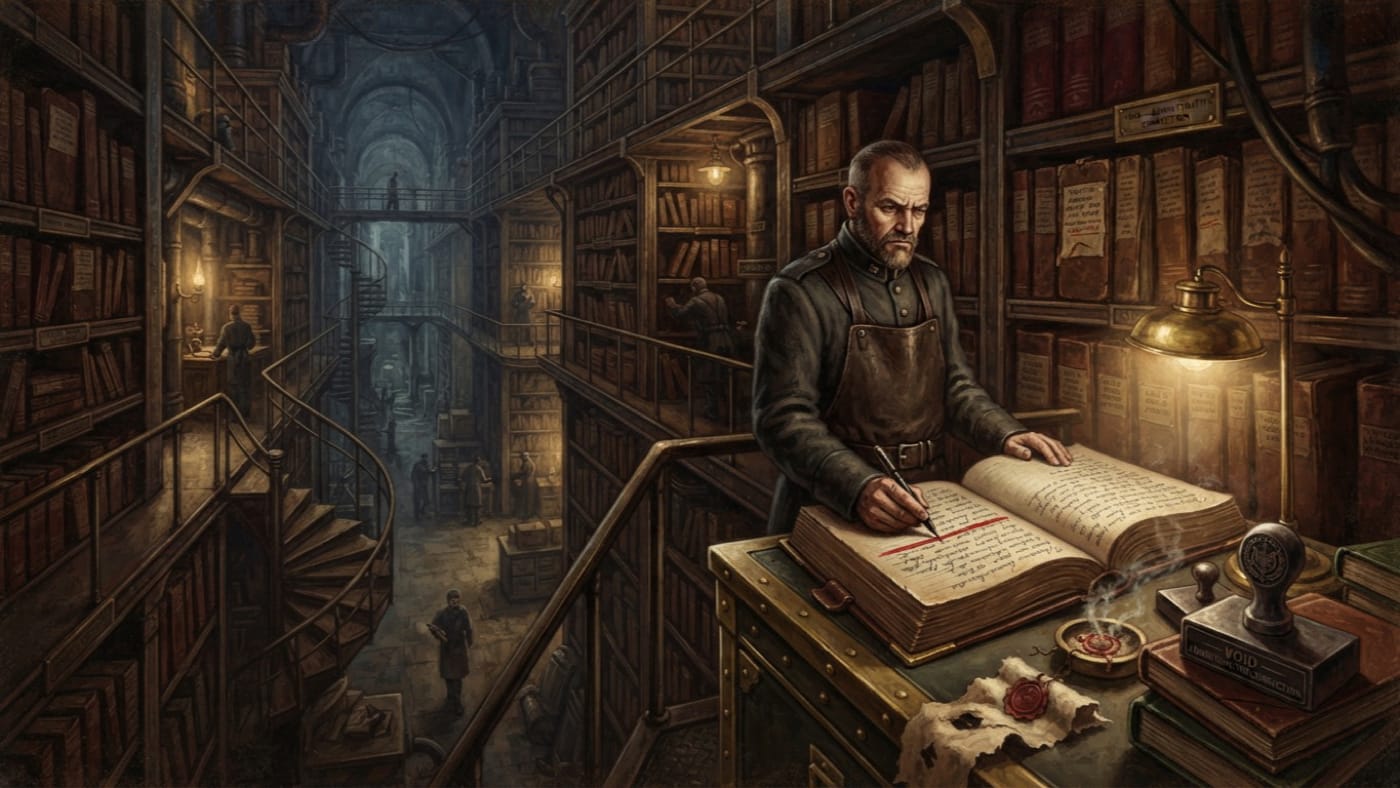
Ledger of Dissolved Compacts
The promise ends. The record remains.
The Bureau of Oaths keeps annulled treaties, expired guild bonds and voided marriages in forty-seven volumes called the Graveyard. A compact may end. Strasbourg keeps the wording.
Codex Ref. XIII.1.159-001
Ledger of Fidelity
A promise may be buried. Its words remain.
One book in seven hundred bindings, the Ledger preserves witnessed oaths under Synod jurisdiction. Annulment draws a red line; it does not grant the mercy of forgetting.
Codex Ref. XIII.1.17-002
Ledger of Oaths Unspoken
I can report the allegation. I cannot produce the book.
I have seen no folio of the alleged Ledger of Oaths Unspoken. If it records vows never made, the Bureau has found a way to bind a mouth before it opens.
Codex Ref. XIII.1.17-003

Ledger of Obligatory Production
One opened thumb, and generations entered the account
The A.S. 105 register of hereditary craft obligation: nine hundred and ninety-nine guilds surrendered labour, households, tools and future inventions. A tax roll records what a man owes; this Ledger records what he is for.
Codex Ref. XIII.1.17-002
Ledger of Succession
Five Names in Print, Seven Seals in Law
Five names are printed each year for seven Seals. One seated Hierarch has only a changing file number; War's chair remains draped. The succession is continuous as printed.
Codex Ref. VI.3.02-002
Ledger of Years
Entered, therefore occurred. Unentered, therefore pending.
The Ledger fixes the years from which the Church recognizes institutions, ratifications and precedence. Records certifies the entries; Doctrine supplies the meaning. Bring your year to the counter.
Codex Ref. XIII.1.33-201
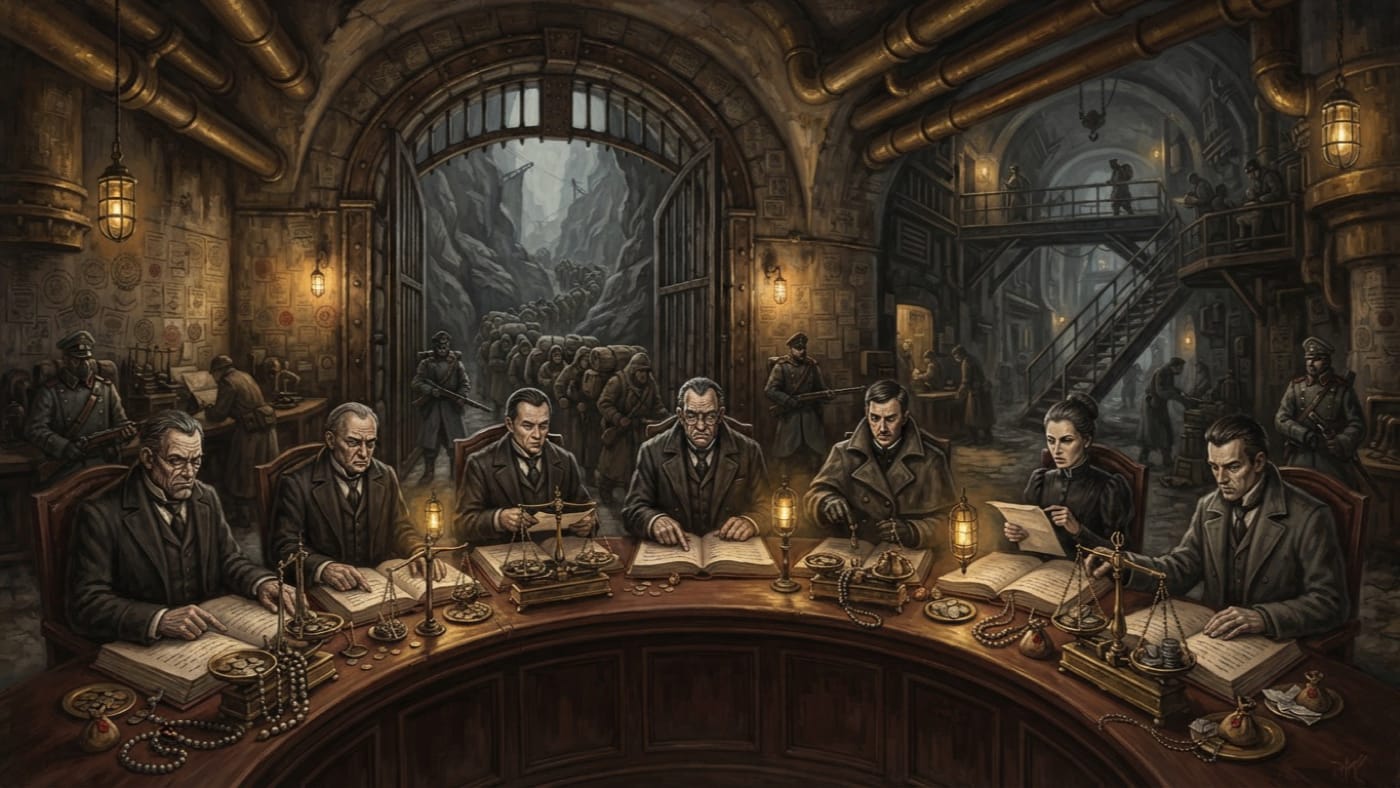
Licensed Broker Compact Council of Peregrine Row
Seven seats set the price; the Chapter holds the keys
Seven seats govern Peregrine Row's licensed protection trade. The Council prices escort windows, bonds captains and funds the Quiet Pens; the Road Chapter holds the gates. The pilgrim carries the risk.
Codex Ref. XII.32.03-201
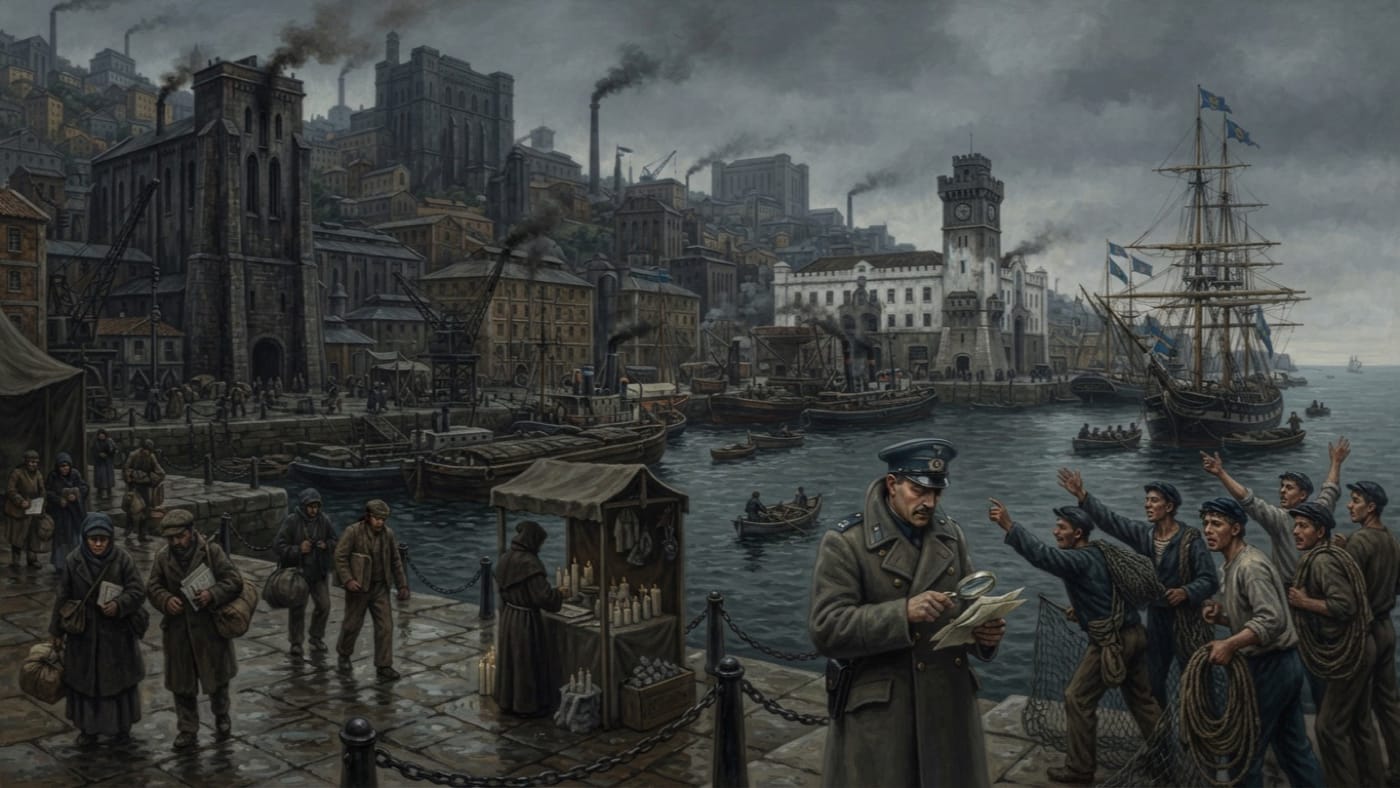
Lisbon
The harbour counts by contract
Lisbon sells sea candles, quake memory and licensed passage at the Atlantic mouth of the Tagus. Strasbourg counts its revenue; its sailors tell the catastrophe in the wrong order.
Codex Ref. II.4.09-201
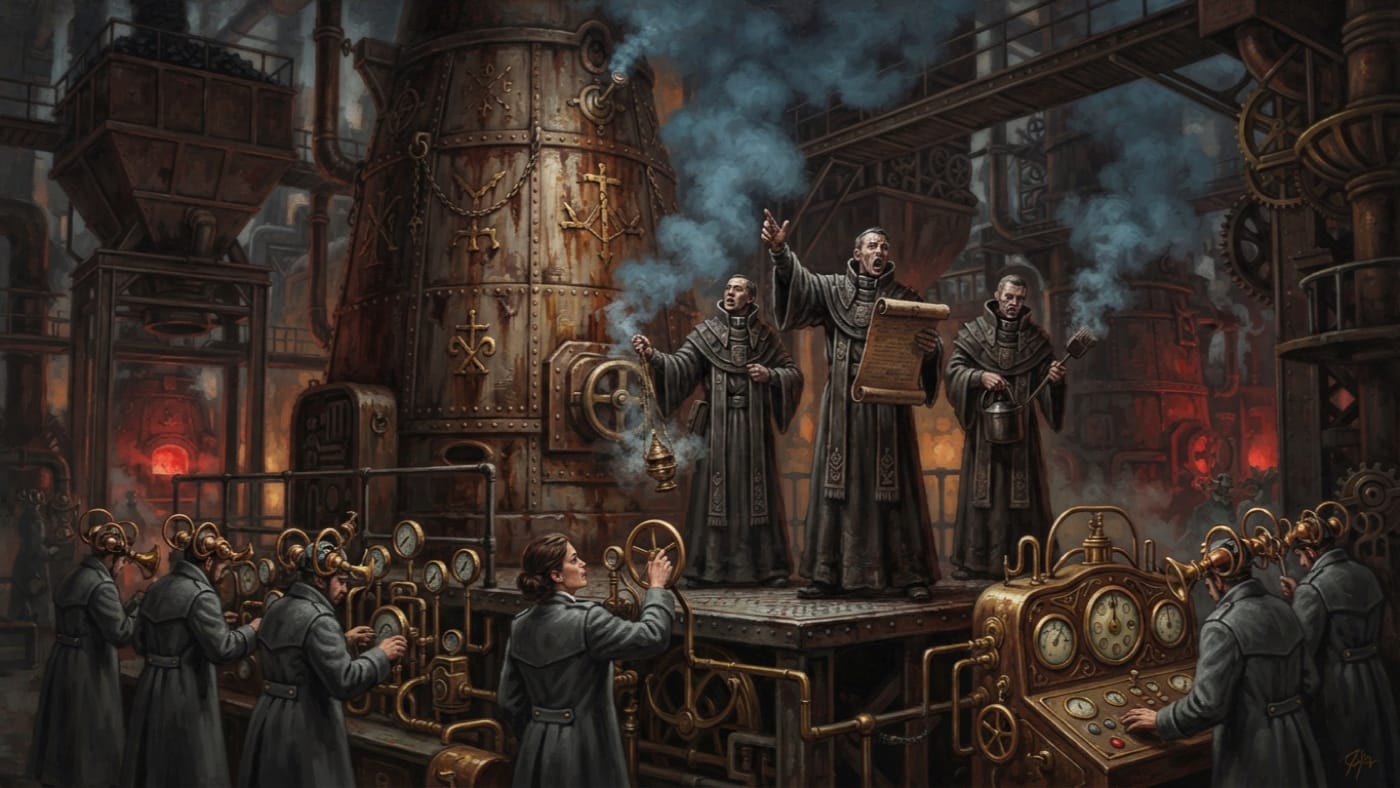
Litany of Combustive Submission
A prayer for obedience, with the obedient party unspecified
Brast's furnace priests recite the Litany of Combustive Submission while the Calibration Choir holds the fourth bell. The priests demand obedience; whose submission the title requires remains unsettled.
Codex Ref. VI.6.04-001
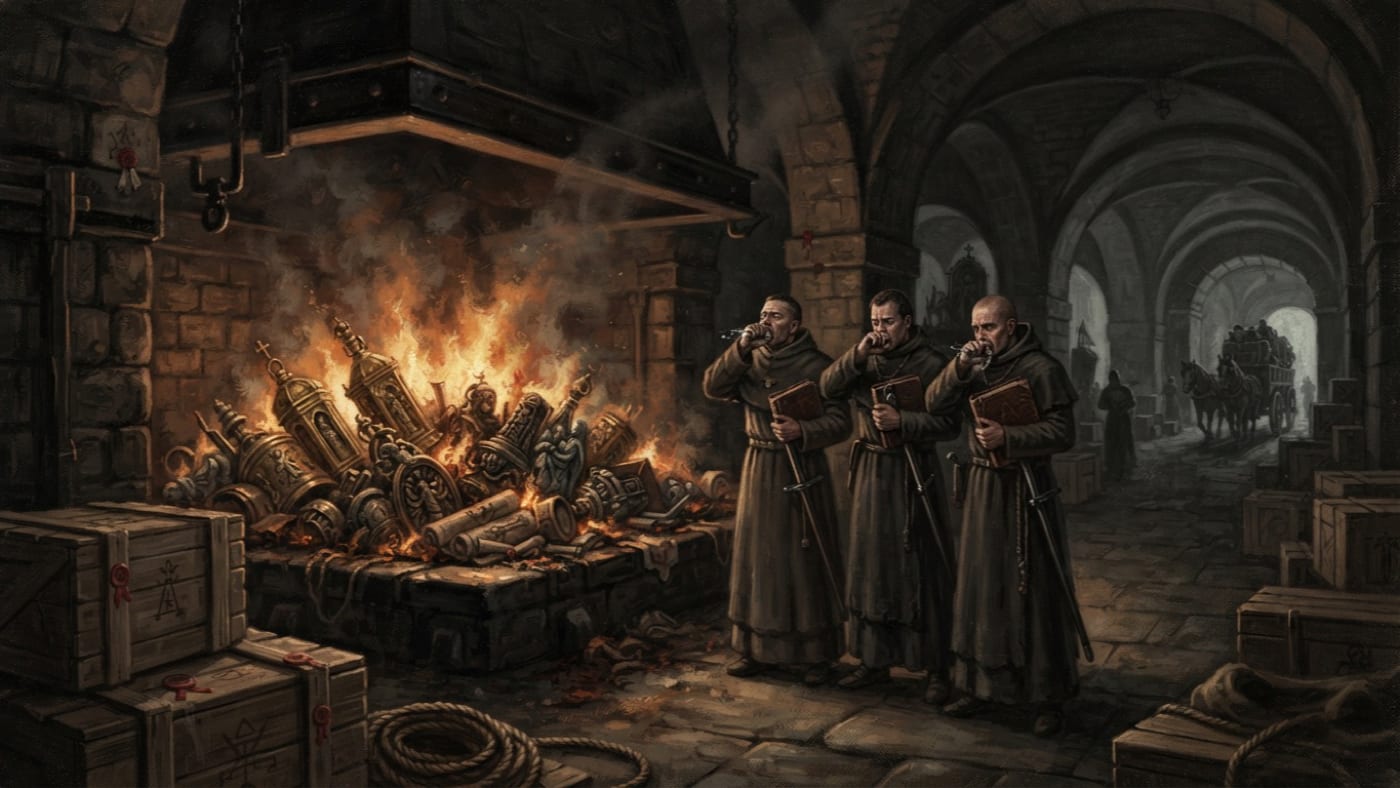
Litany of Custody
Custody ended in fire; the witnesses remained
Three canon-wardens recited the Litany of Custody while untransportable relics burned in Vienna in A.S. 48. The manifest preserves its name; the words remain unrecorded.
Codex Ref. XIII.1.62-048
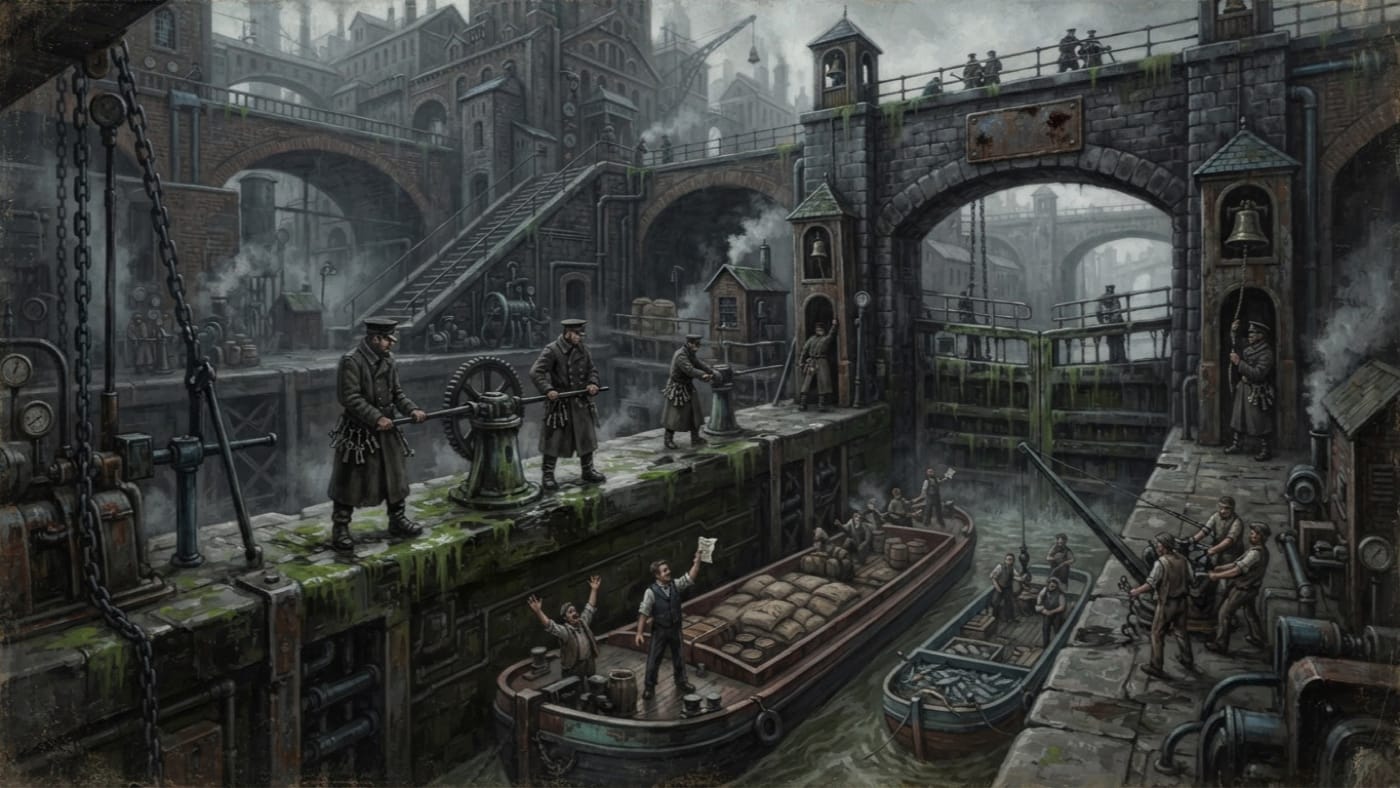
Lock Authority
The Chapter permits passage; the wardens permit the hour
The Triple Lock Wardens control the Archivolt Causeyworks' gates, bells and priority windows. Their closures are filed as prudence and disputed as extortion. The water waits for neither verdict.
Codex Ref. XI.1.08-003
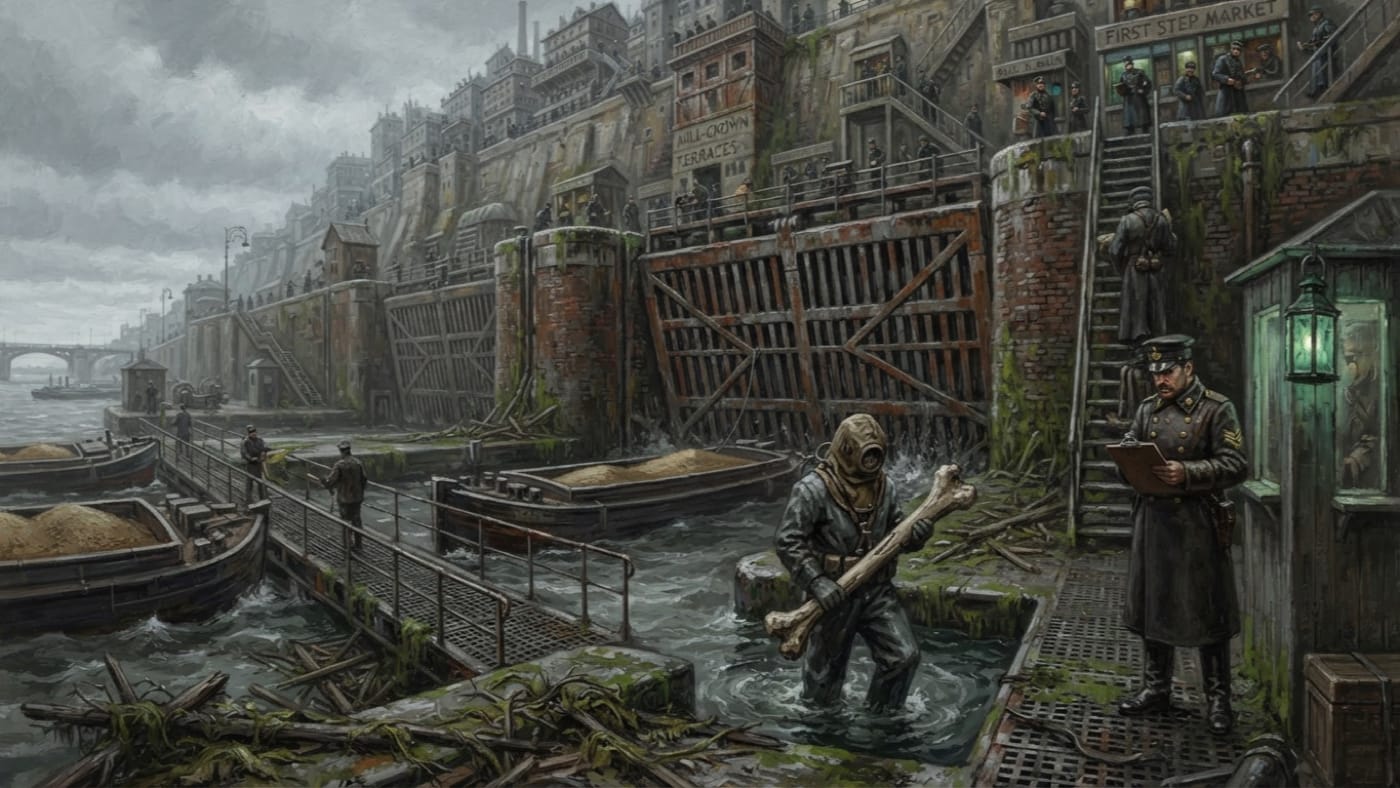
Lockmouth Works
The Brotherhood holds the keys; the terraces wait for bread
Rheinscarp's harbor locks admit the grain that feeds nine terraces. The Brotherhood holds the keys, Venn keeps the hours, and the divers earn bread by clearing what the river leaves in the grates.
Codex Ref. II.2.01-010
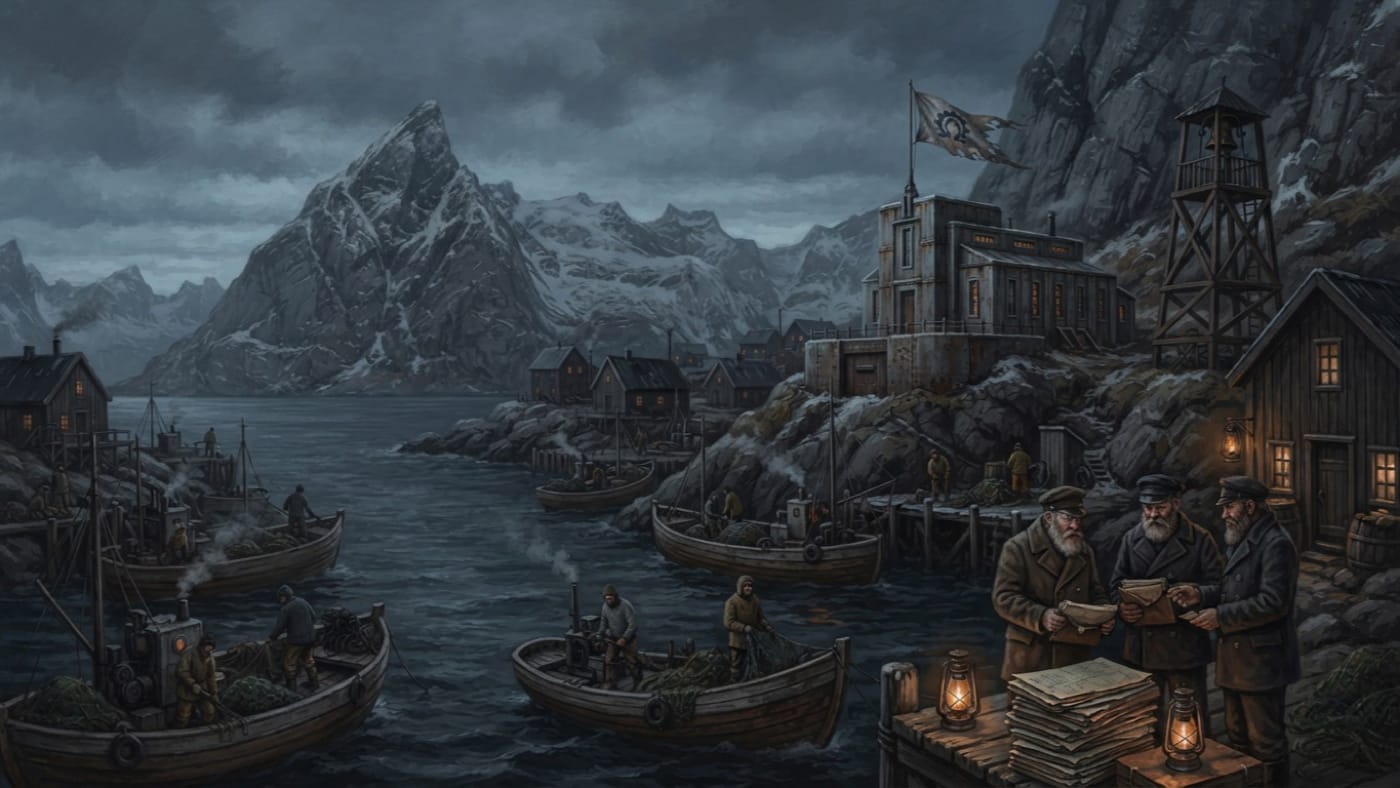
Lofoten Islands
The far end of the registry. The sea keeps the rest.
The northern island-chain at the end of Strasbourg's district formula: faithful to the Creator, governed by elders, and lit by seal-oil. The Synod has correspondence. The islanders have boats.
Codex Ref. IX.8.02-001
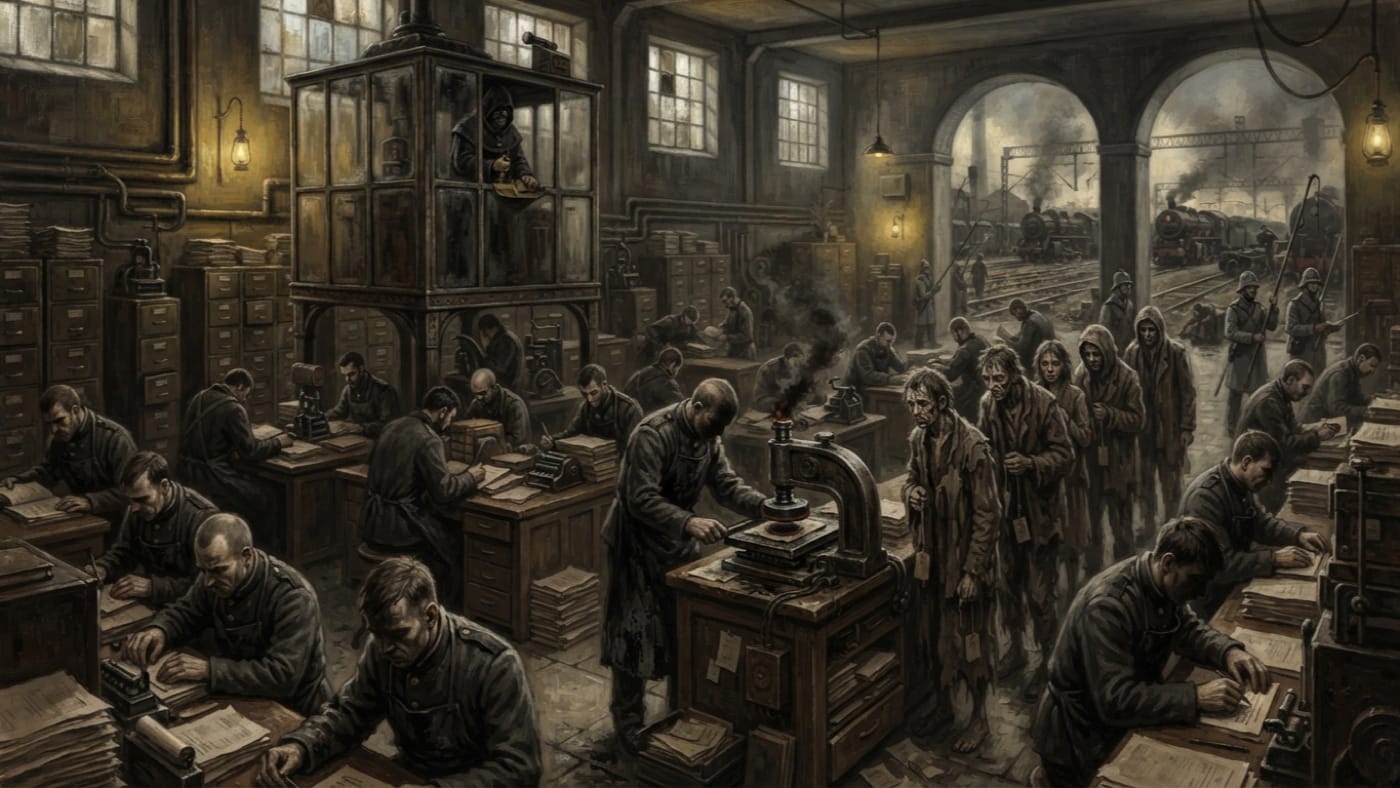
Logistics-Penance Tribunal
When the Ledger Will Not Balance on Paper
At Bastion-Przemyśl, the Logistics-Penance Tribunal balances ration ledgers by audit, confession and erasure. A missing stamp die has left its largest discrepancy without a name, and the Provost-Marshal would like its authority.
Codex Ref. I.2.07-003

Lord-Warden Eccleston
Courtesy sharpened until it can cut a Bureau in half
Eccleston, British ambassador in Strasbourg, receives every Synod memorandum with perfect courtesy and returns obstruction in the shape of proper procedure.
Codex Ref. III.2.01-023
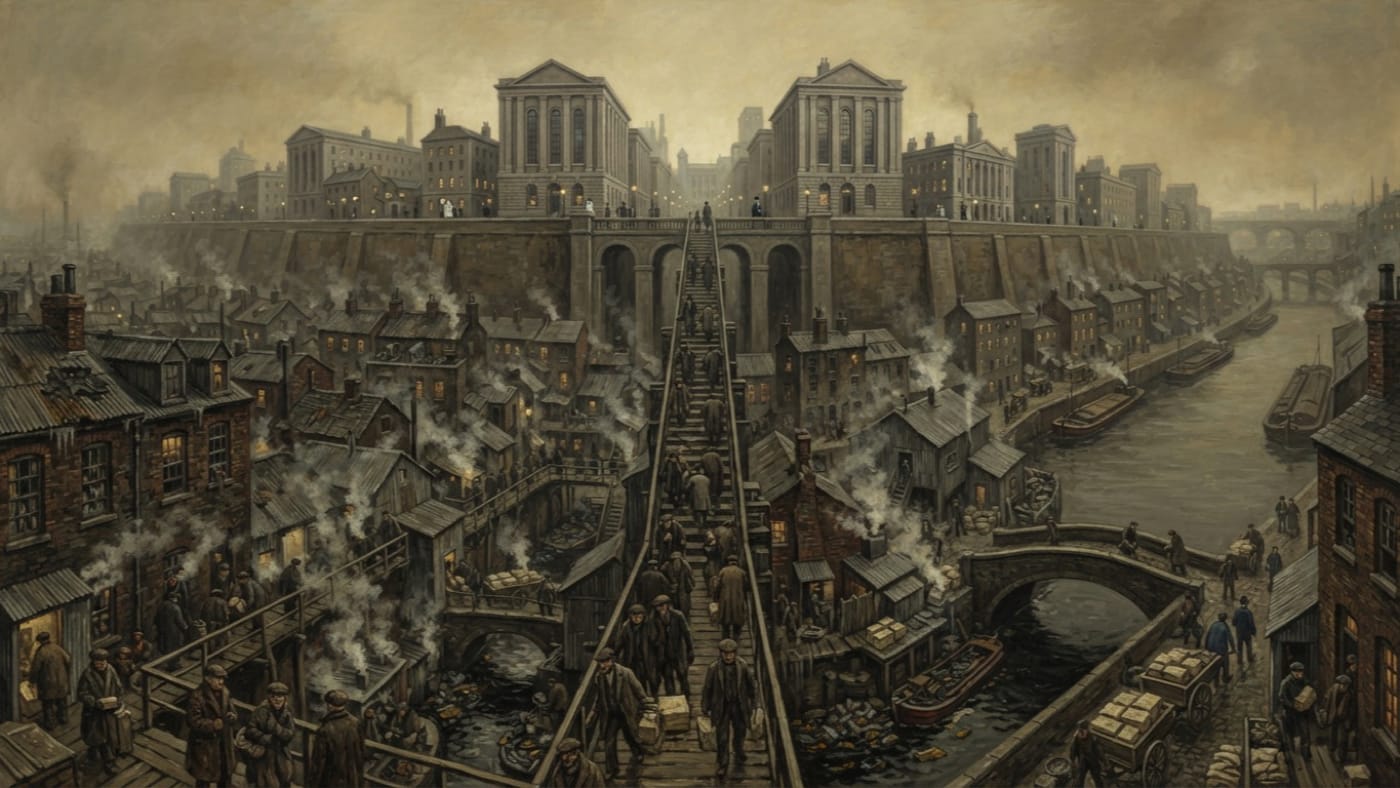
Lower Vire
Candles go up. Refuse comes down.
A River-belt city where Candle-Sump supplies the Heights with light, broth and certified dead. The offices above keep their stamps dry; the people below pay for the privilege.
Codex Ref. II.1.05-002
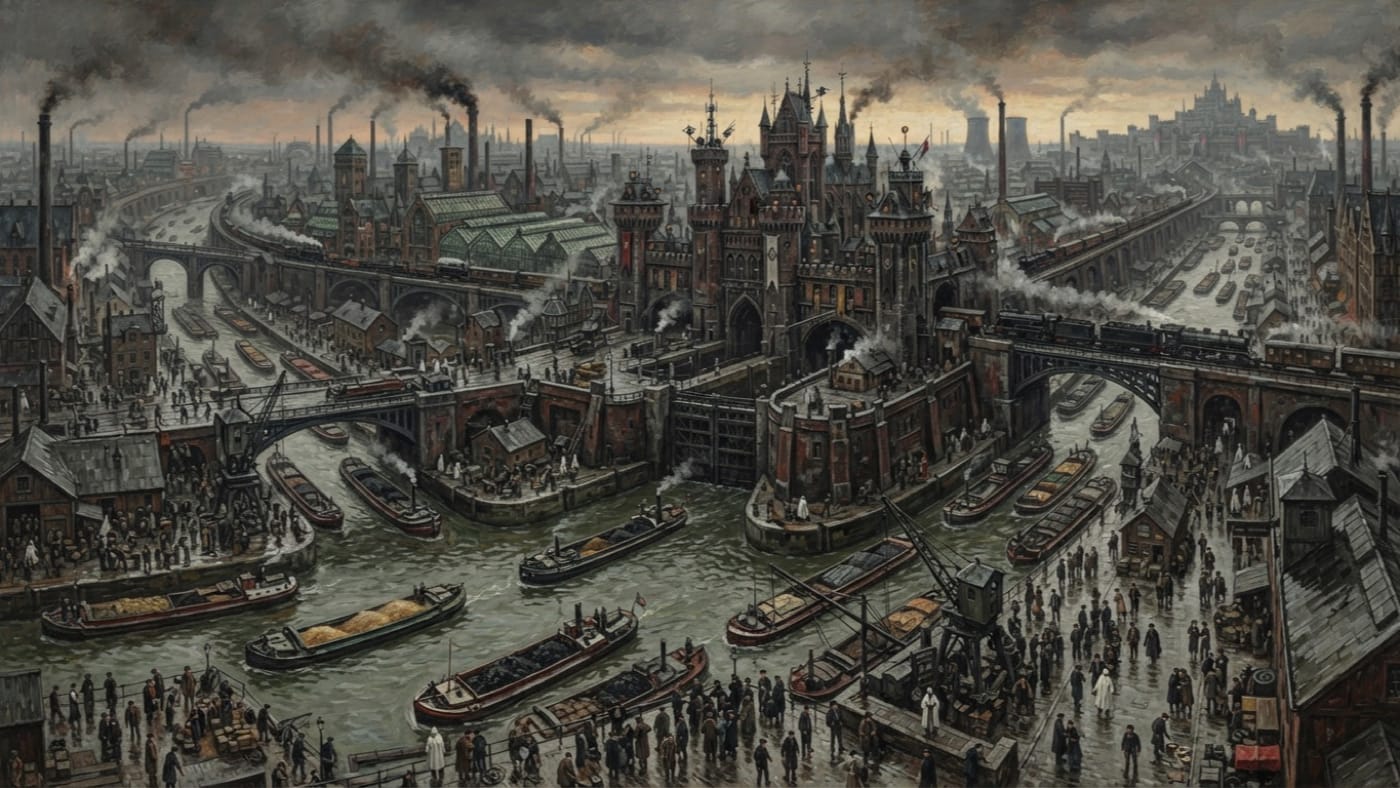
Lowlands
The country promised for a gate
The Synod's Lowlands move grain, cloth and credit through Bruges, Ghent and Antwerp. Guillaume was promised dominion for Aachen's gate; delivery remains uncertified.
Codex Ref. II.1.08-001
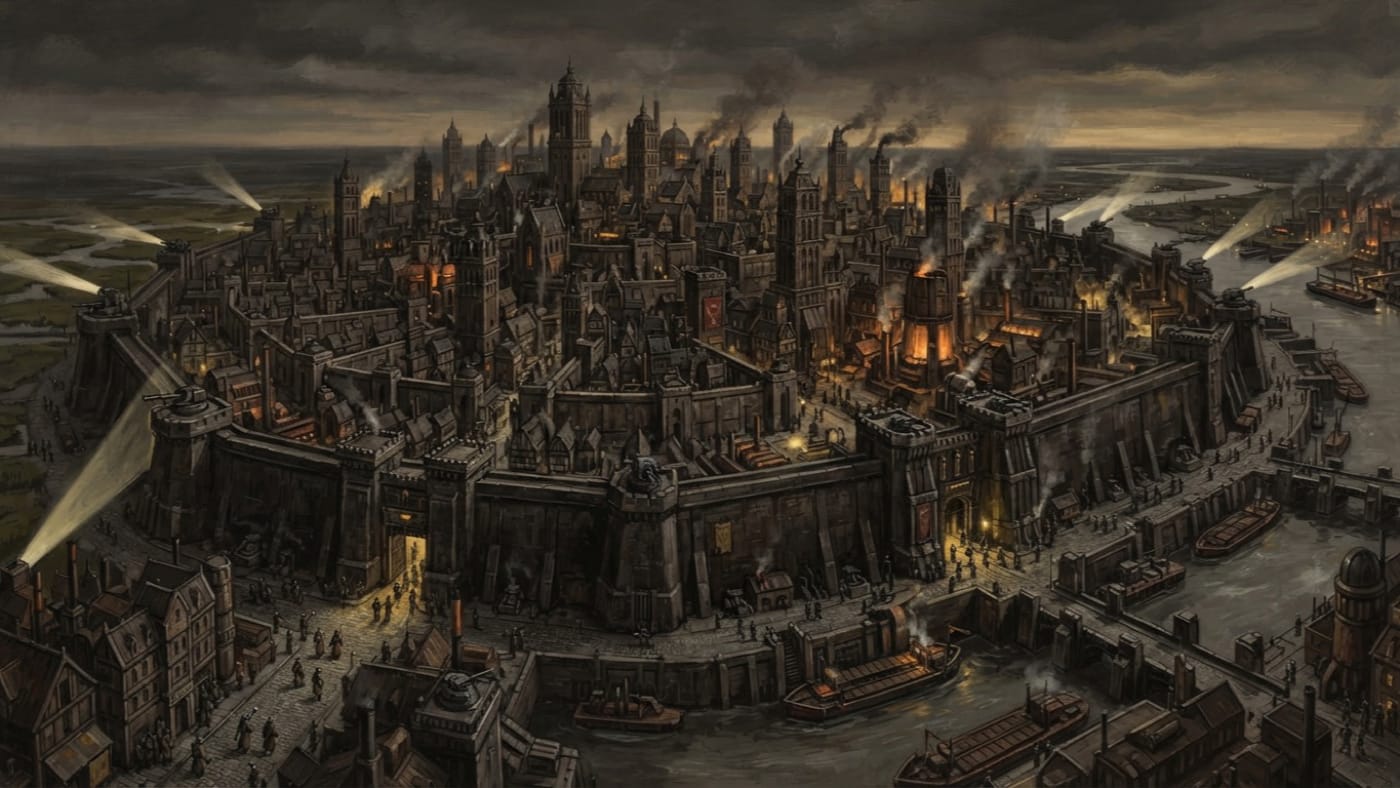
Lunden-Kirk
The Thames city whose parish walls keep the Bureau outside
London survives as a walled monastery-city on the Thames: perhaps four hundred thousand souls, each parish armed, each street watched. The British Crown governs; the Bureau possesses reports and no jurisdiction.
Codex Ref. II.0.10-201
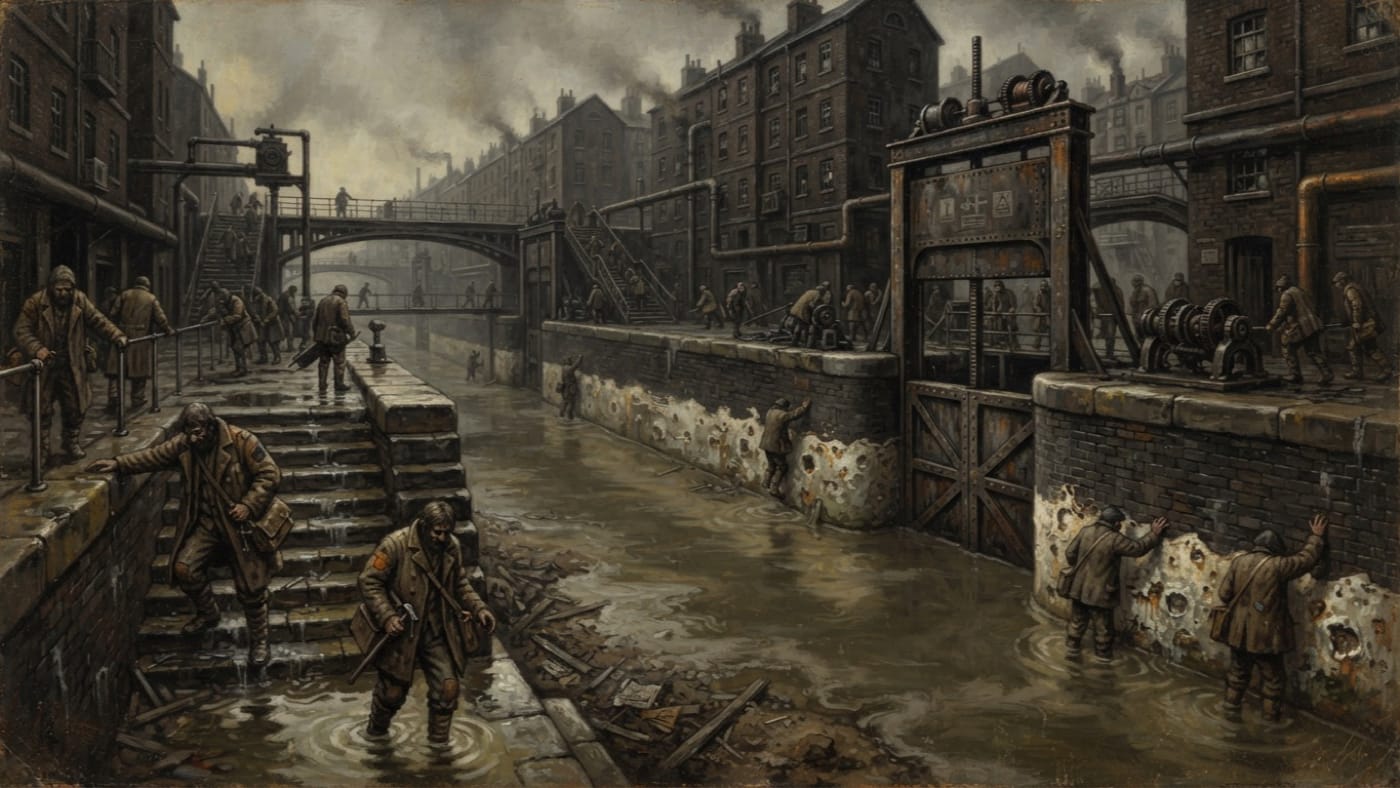
Lye Flood
The water burned; the paperwork followed
Candle-Sump's first catastrophe, attributed to A.S. 84: ash-water burned skin, dissolved papers and scarred the brick. The Chapterhouse appointed offices to manage water and records; the injured remained the Sump's concern.
Codex Ref. VII.8.10-084
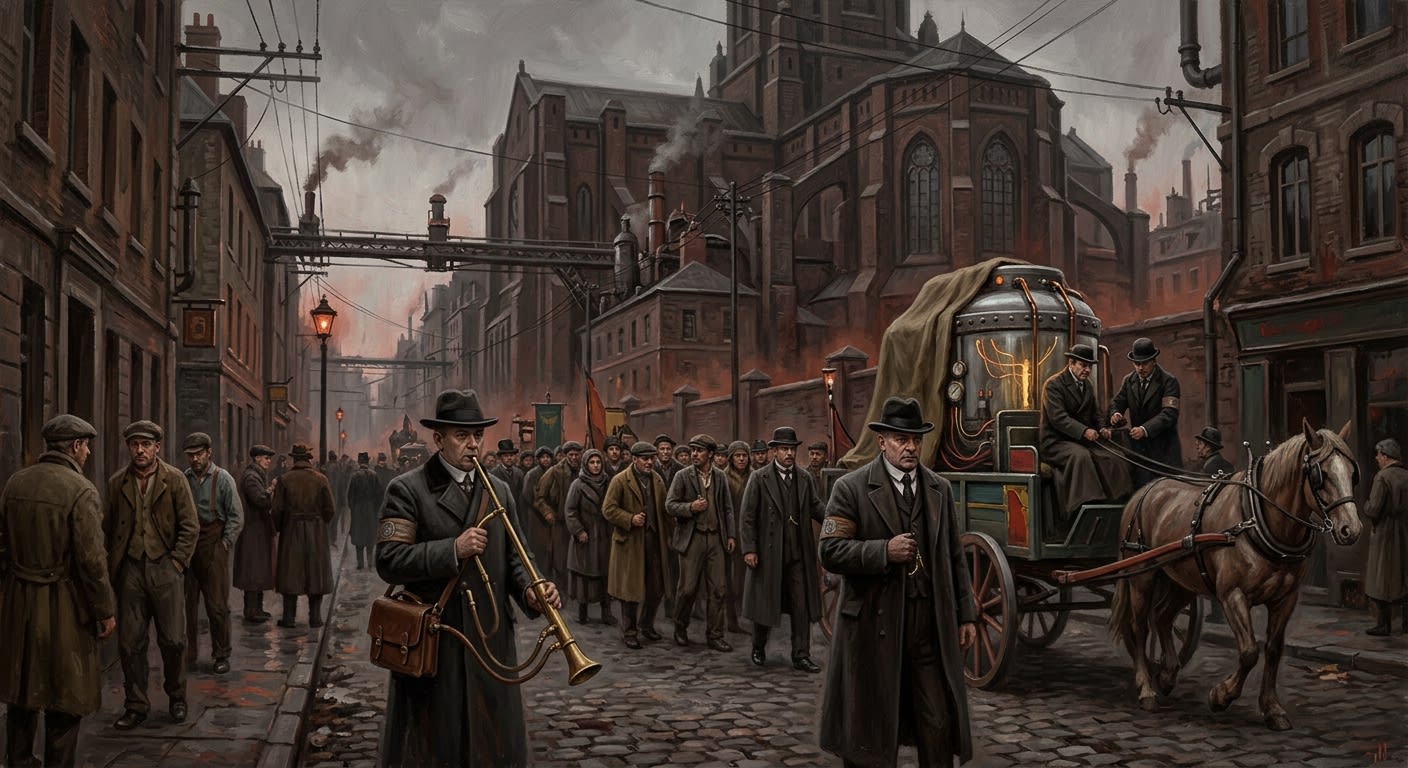
Lyon
The Rhône city where scars learned to sell tickets
Synod-held Lyon is a Rhône city of red ash, whistle-hymnody, Festival supervision, relic volatility, licensed enthusiasm, and profitable repentance.
Codex Ref. II.1.04-001
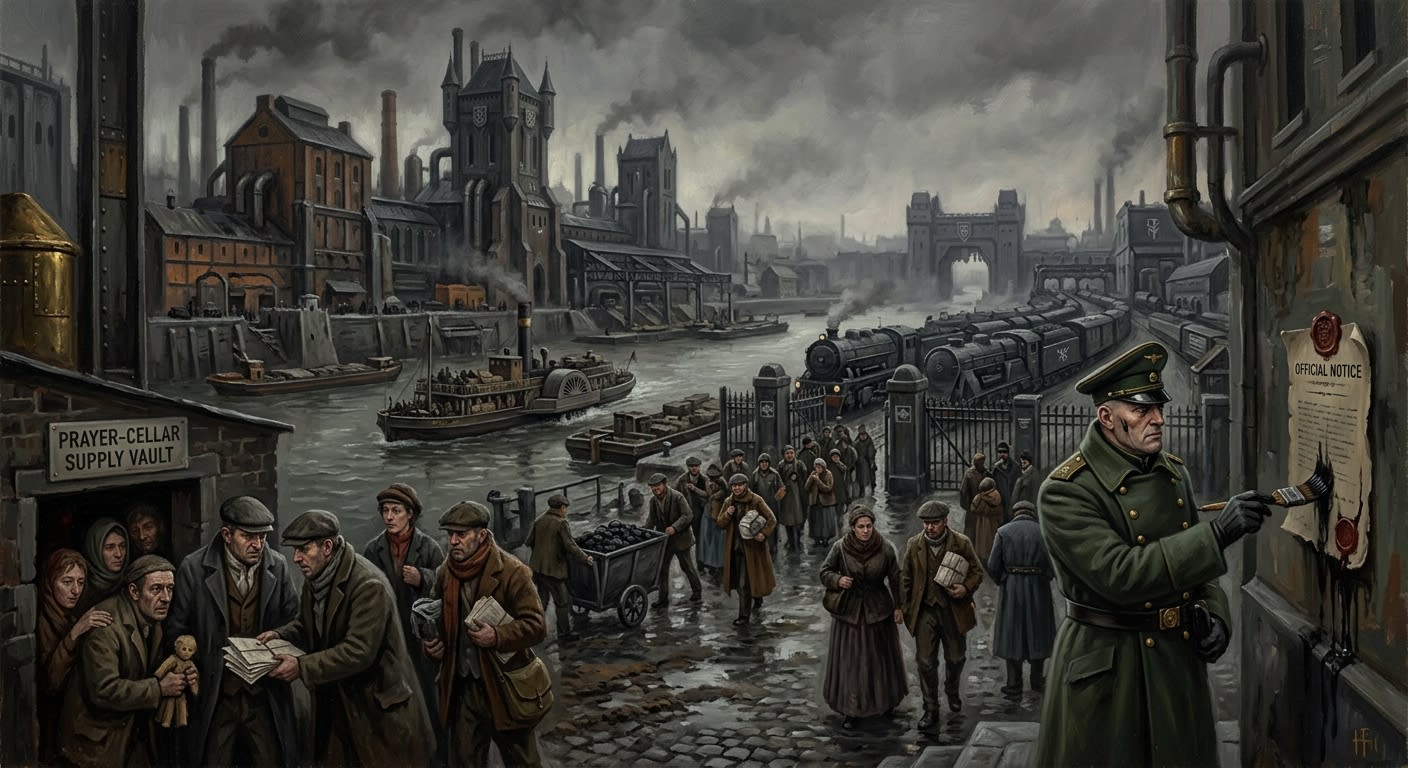
Maastricht
The sleeve beside Aachen's knife
Maastricht survived by adjacency: feeding roads to Aachen, relabelling prayer-cellars, selling shame politely, and teaching Hungry Ink how seals can scream.
Codex Ref. II.1.07-025
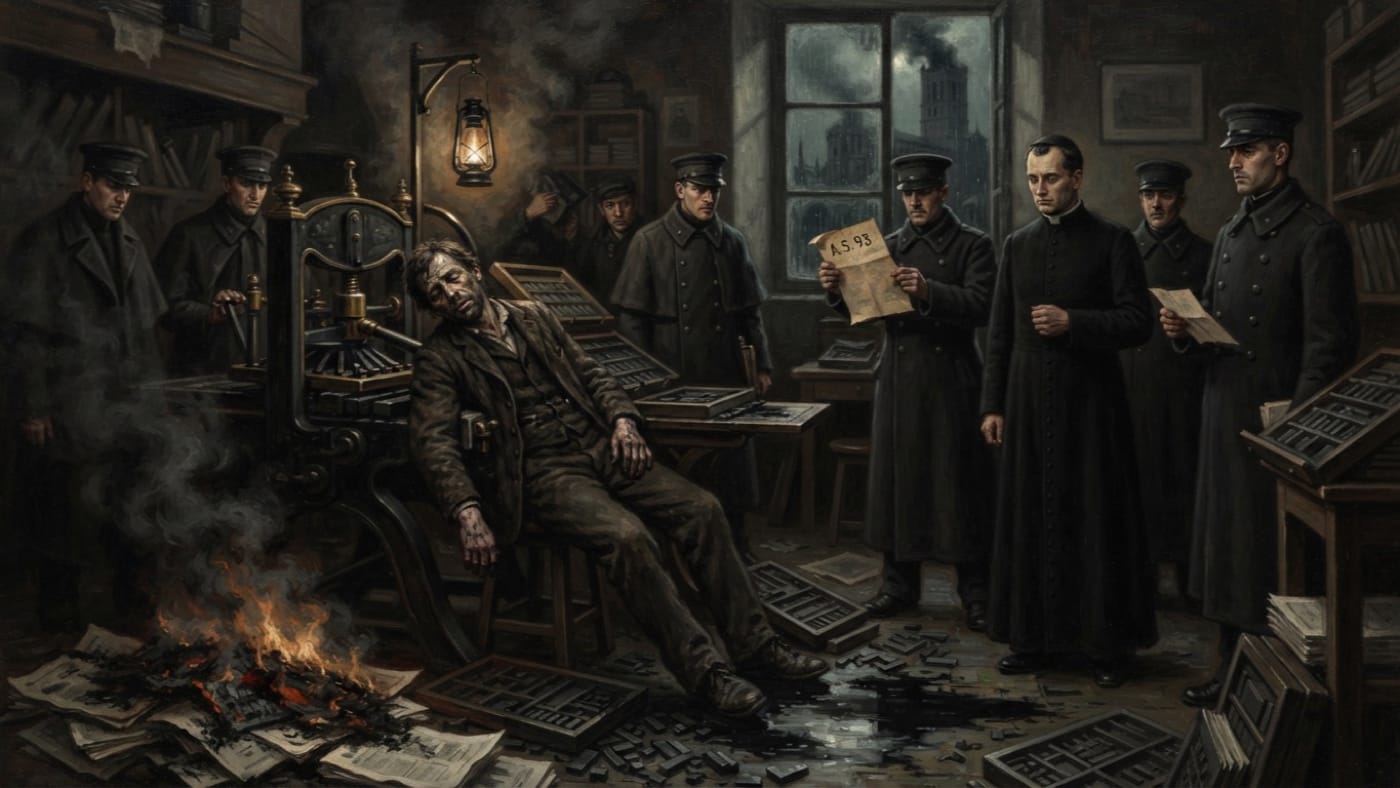
Maël Aucourt
The printer whose file outlived the man
Maël Aucourt hid Rationalist arguments among lawful notices. His A.S. 93 warrant opened the Toulouse Hunts; Purity preserved his offence more carefully than his life.
Codex Ref. III.2.01-093
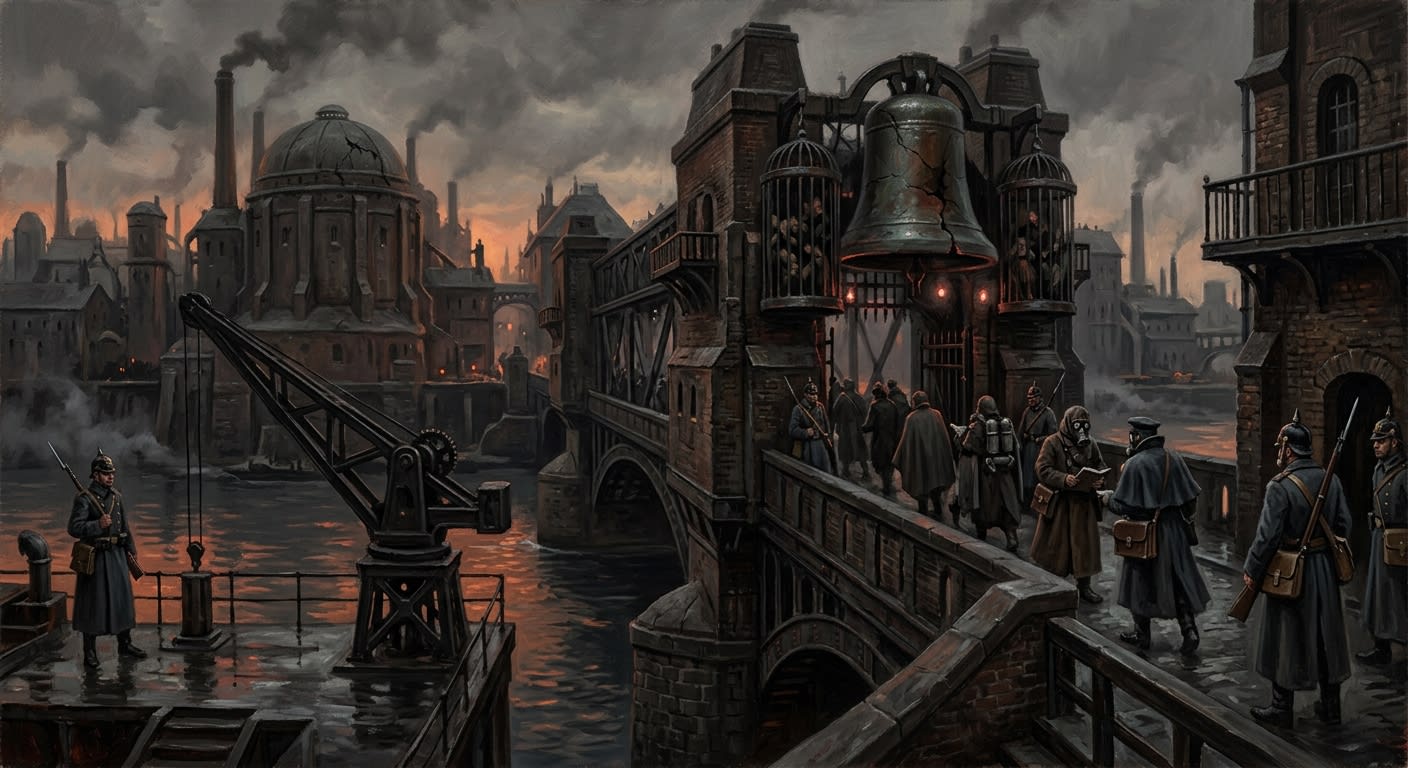
Mainz
The Rhine city where tolls, bells, and throats keep accounts
Mainz is the Synod's Rhine throat: a bridge-toll city of Augustinus, Hildegarde, Severian, cracked bells, obedient ledgers, and cages that still hum.
Codex Ref. II.2.02-003

Manifest Litigant
In which the Bureau confirms that identity is paper, paper can be disputed, and dispute, correctly licensed, is a revenue stream.
The licensed enforcers of documentary reality at the port courts — the profession that cannot save the grain but can prove, conclusively, why it was permitted to rot.
Codex Ref. XII.26.01-001
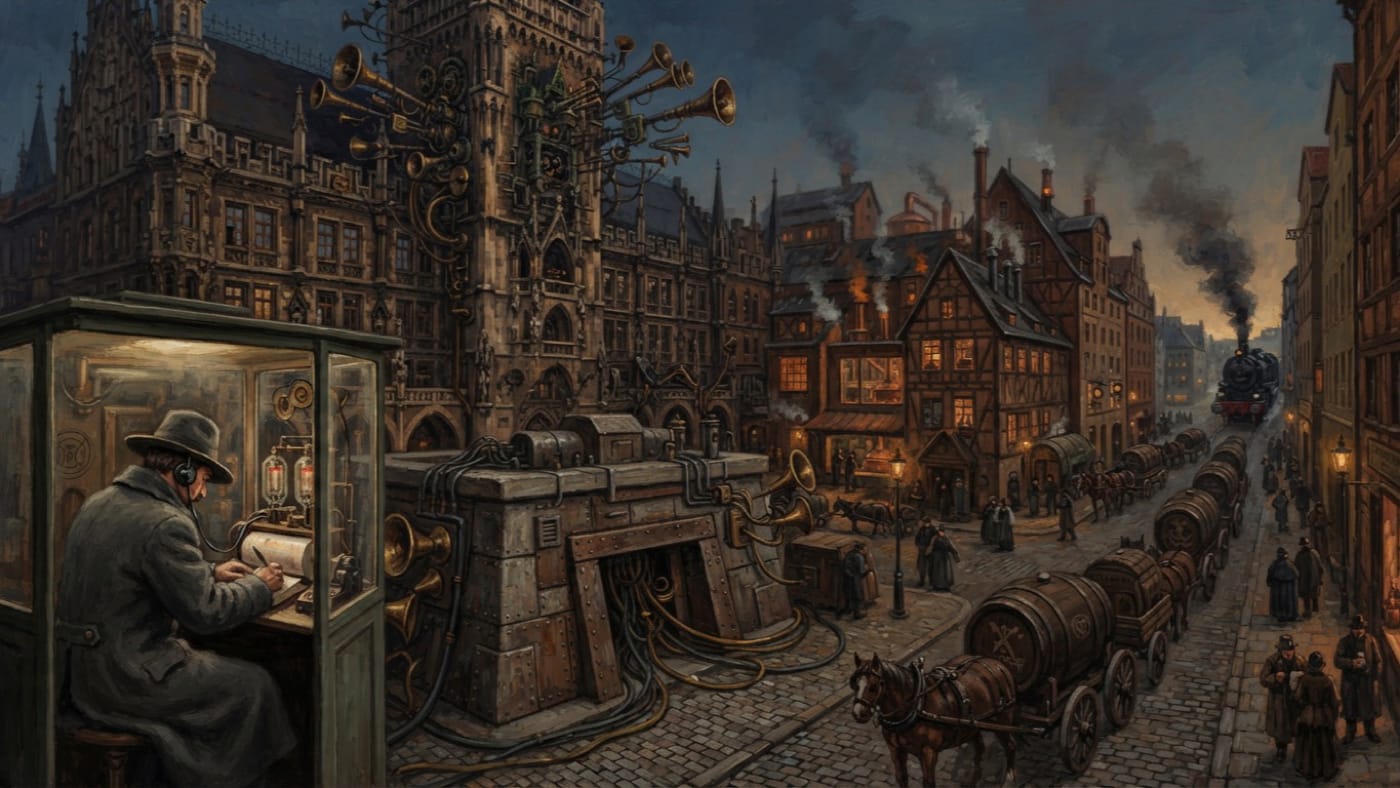
Marienplatz Post
Sixty-seven years of listening, and Munich still sings
Established in A.S. 134, Purity's Marienplatz station listens to Munich's Bräuviertel. Sixty-seven years of reports have given Doctrine nothing actionable; Munich keeps singing.
Codex Ref. II.2.06-017
Marsh-Quarry Villages
The city calls itself permanent; the villages supply the stone
The marsh-quarry villages supply the Archivolt Causeyworks with river-stone, bone-lime and seasonal lock labour. Their toll exemptions remain contested. The city calls this arrangement permanence.
Codex Ref. II.1.02-002
Martial Code
The Bureau hears the oath and notarises the silence.
In this A.S. 201 survey I follow the Martial Code from witnessed service to notarised silence. The military oath-breach penalty stands; the Bureau calls its use rare. The Code's origins remain unestablished.
Codex Ref. XIII.1.01-001

Martyrology of Saint-Malo
Thirty-one names, forty-three seconds, and a civilization built from first blood
The Martyrology of Saint-Malo counts thirty-one dead, five absences, and every obedience the Synod has purchased with their blood.
Codex Ref. VII.8.02-001
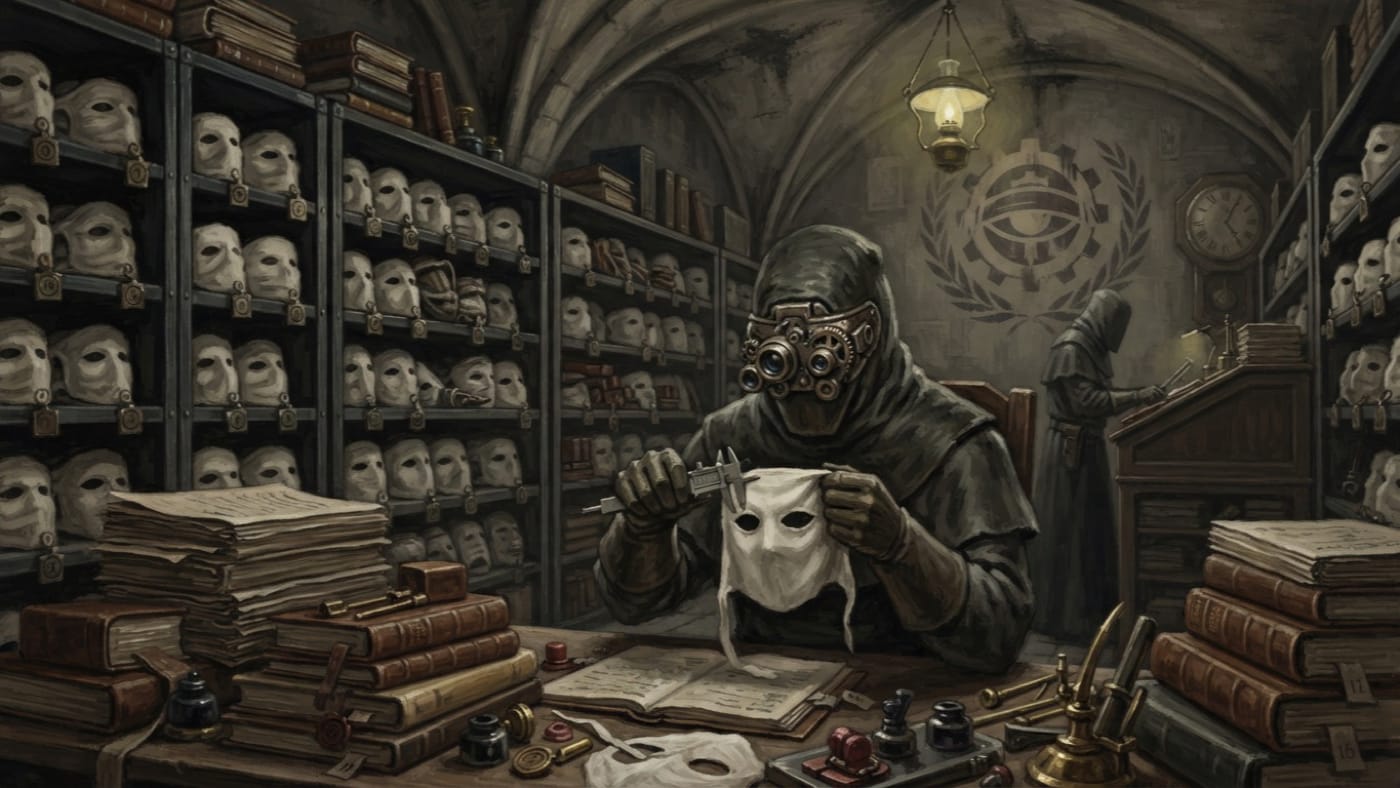
Mask License
The face may vanish. The number must remain.
The Mask License permits the Synod's faithful to conceal their faces on approved occasions, for approved durations, through eye-holes of approved width. Even anonymity must be registered.
Codex Ref. XIII.1.19-002
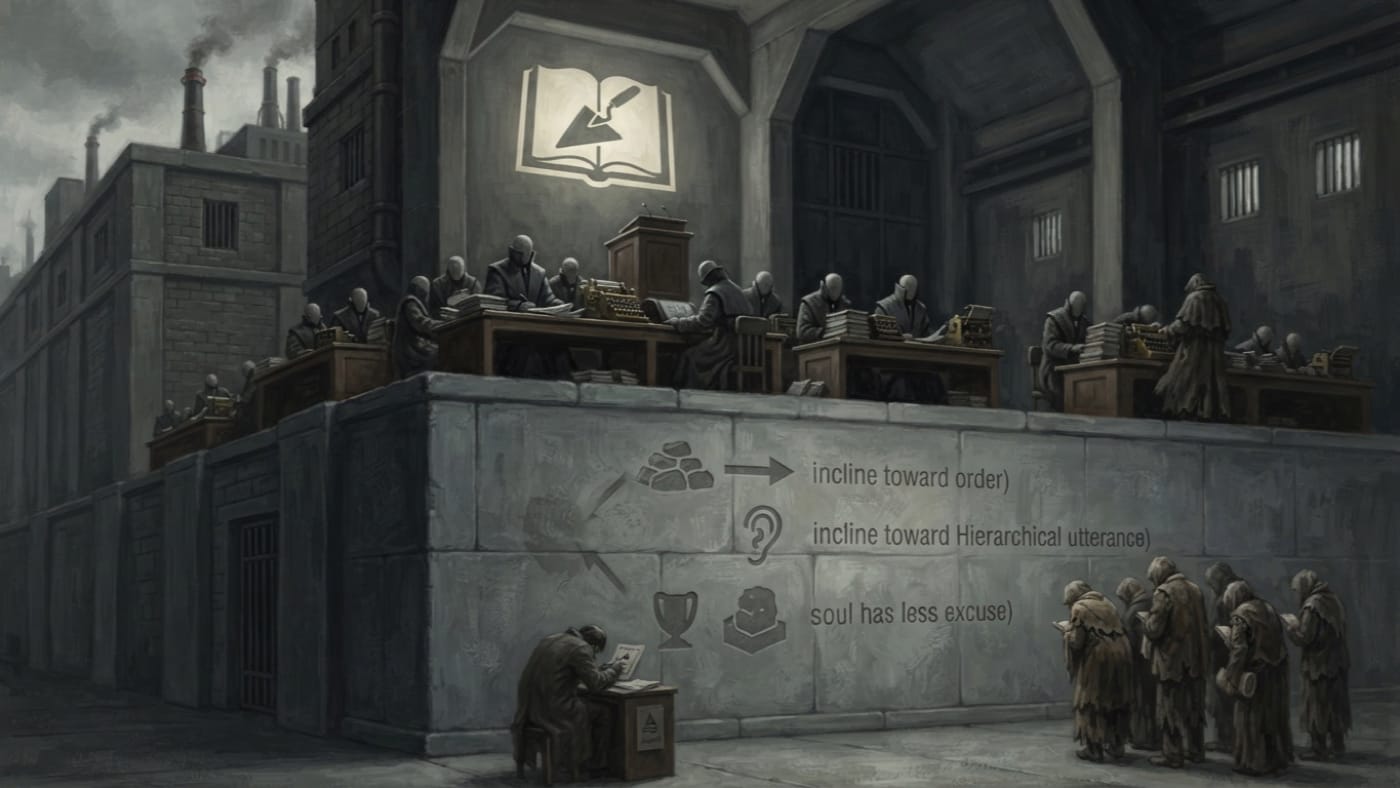
Masonry Commentary
Why a soul has fewer excuses than a stone
Issued in A.S. 103, the Masonry Commentary gives Odo's listening stones a theology: silence becomes assent, and a soul has fewer excuses than granite.
Codex Ref. XIII.1.03-103
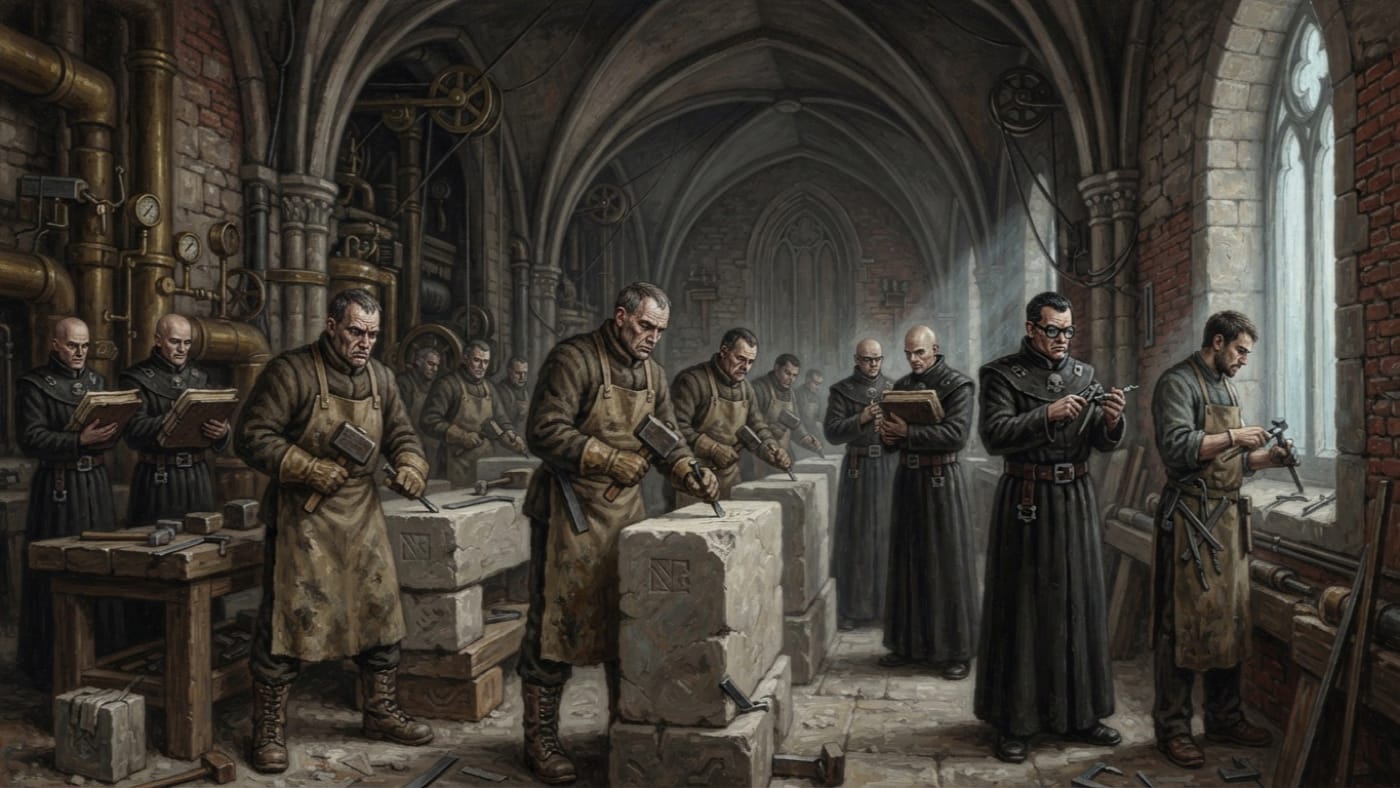
Masons of Cologne
They kept their chisels and inherited the bill
Cologne's masonry guild, bound by the A.S. 105 Münster blood-compact to hereditary service. The Synod acquired its rolls, methods and descendants; the quarrel with Bruges survived.
Codex Ref. XII.30.04-105
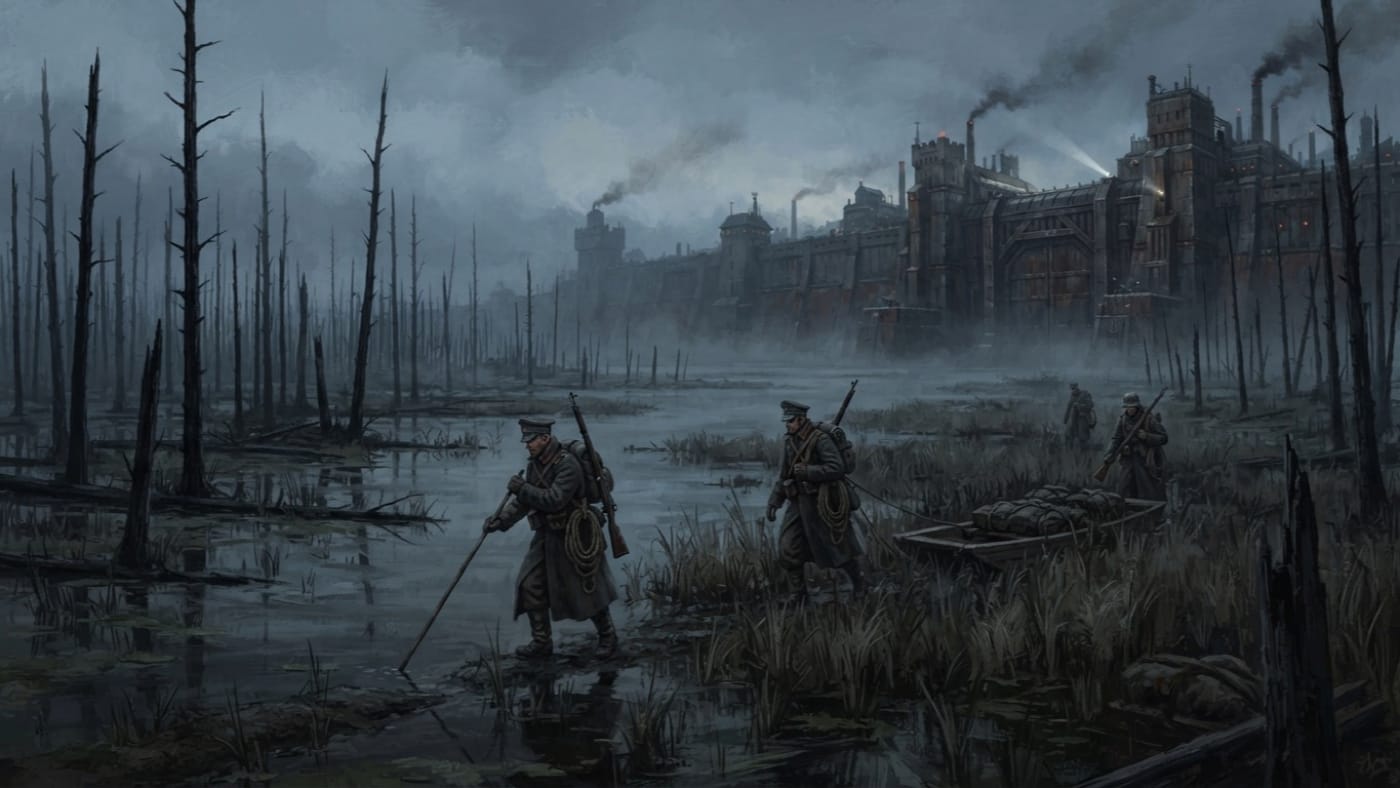
Masurian Lake District
The Drowning Garden, Where the Moat Becomes a Road
Königsberg's eastern moat of lakes, reeds and drowned forest, guarded by the Masurian Watchers. Summer breaks columns; winter offers roads. Seven canonical maps disagree.
Codex Ref. II.4.07-201
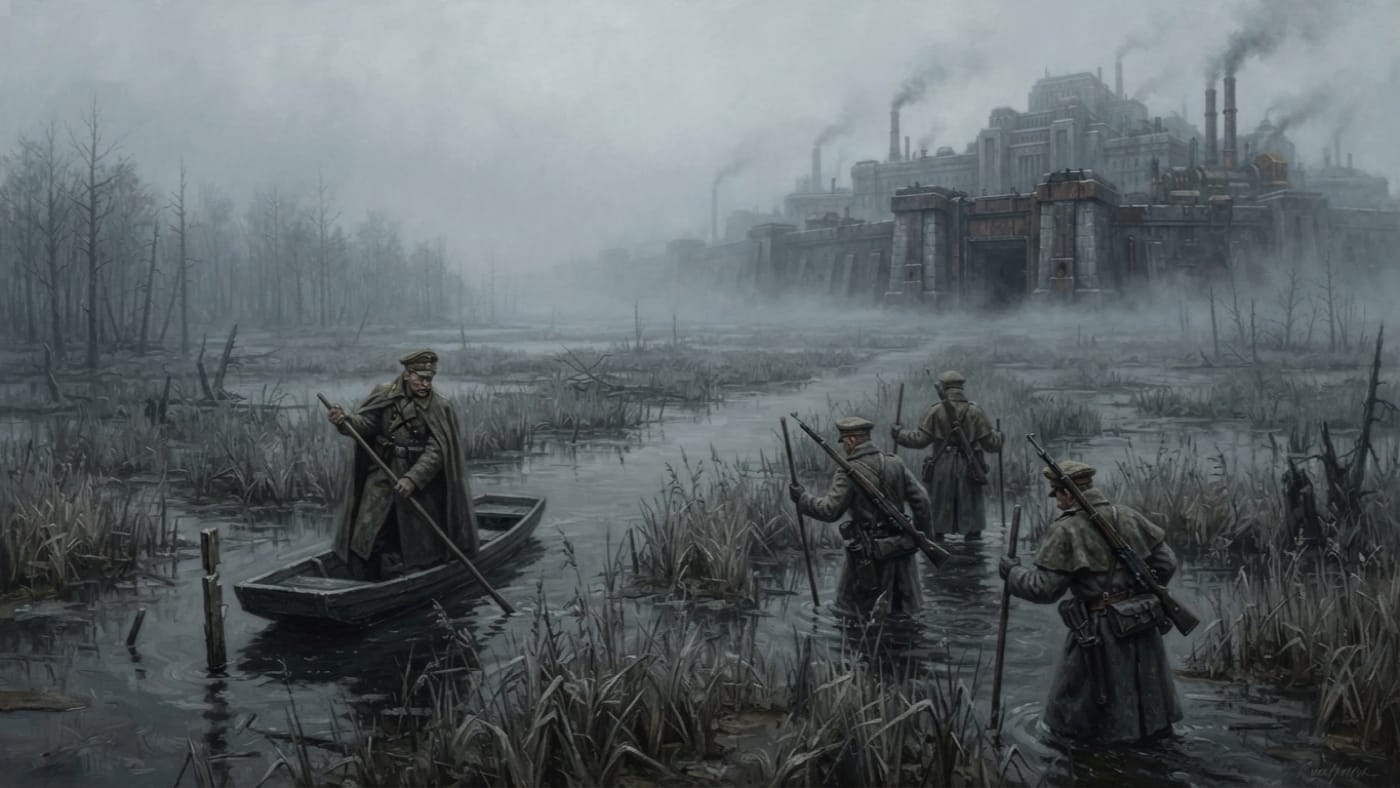
Masurian Lakes
Seven maps disagree; the Watchers still know the way
Bastion-Königsberg's outer maze is held by the Masurian Watchers under separate doctrines for water and ice. Seven canonical maps disagree; Halvorsen lets fog pursuit outrank the bell-schedule.
Codex Ref. II.4.07-069
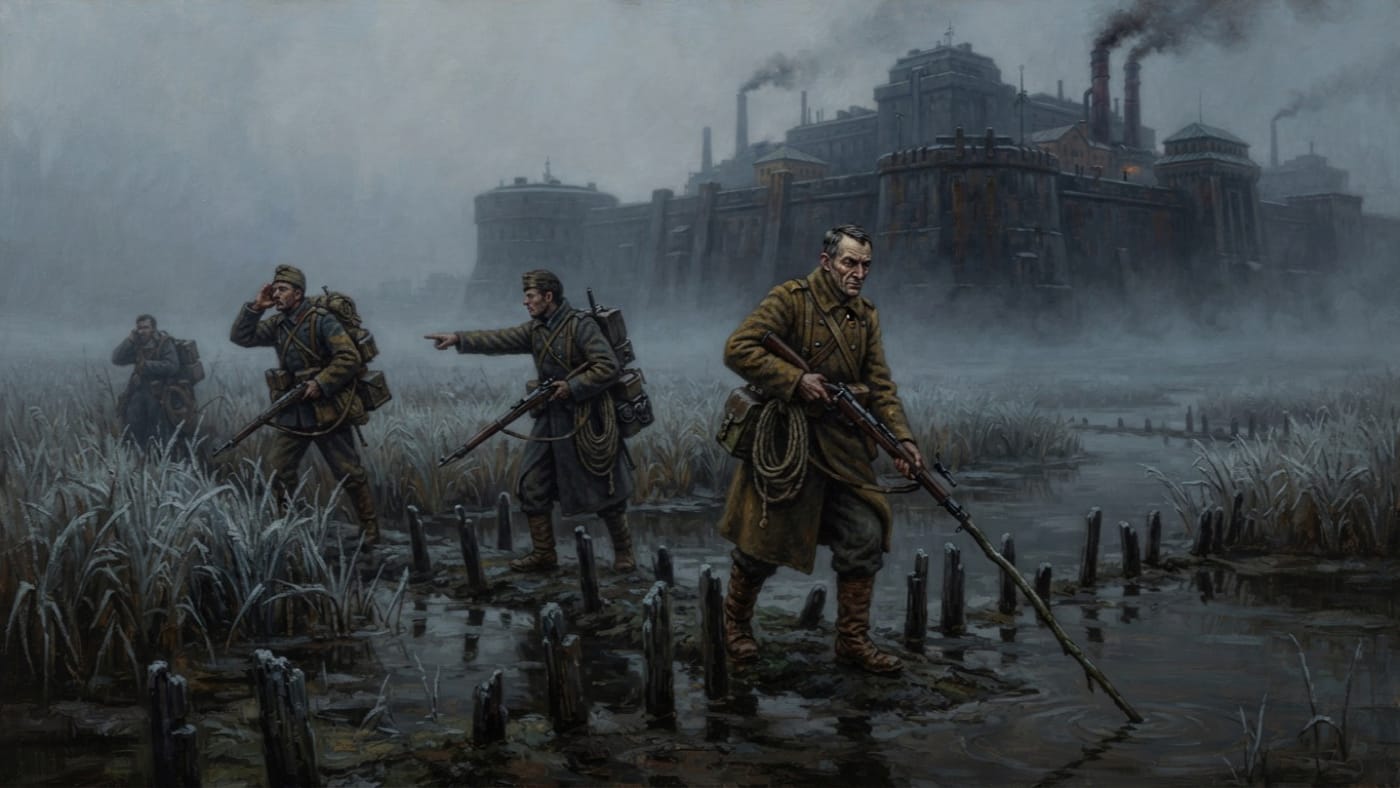
Masurian Watchers
The lakes have their paths; the Bureau has its suspicions
The Masurian Watchers hold Königsberg's lake approaches by reed-pattern, bird-call and notched stakes. War depends on their knowledge; Purity has cleared their captain nine times and remains suspicious.
Codex Ref. VIII.5.05-003
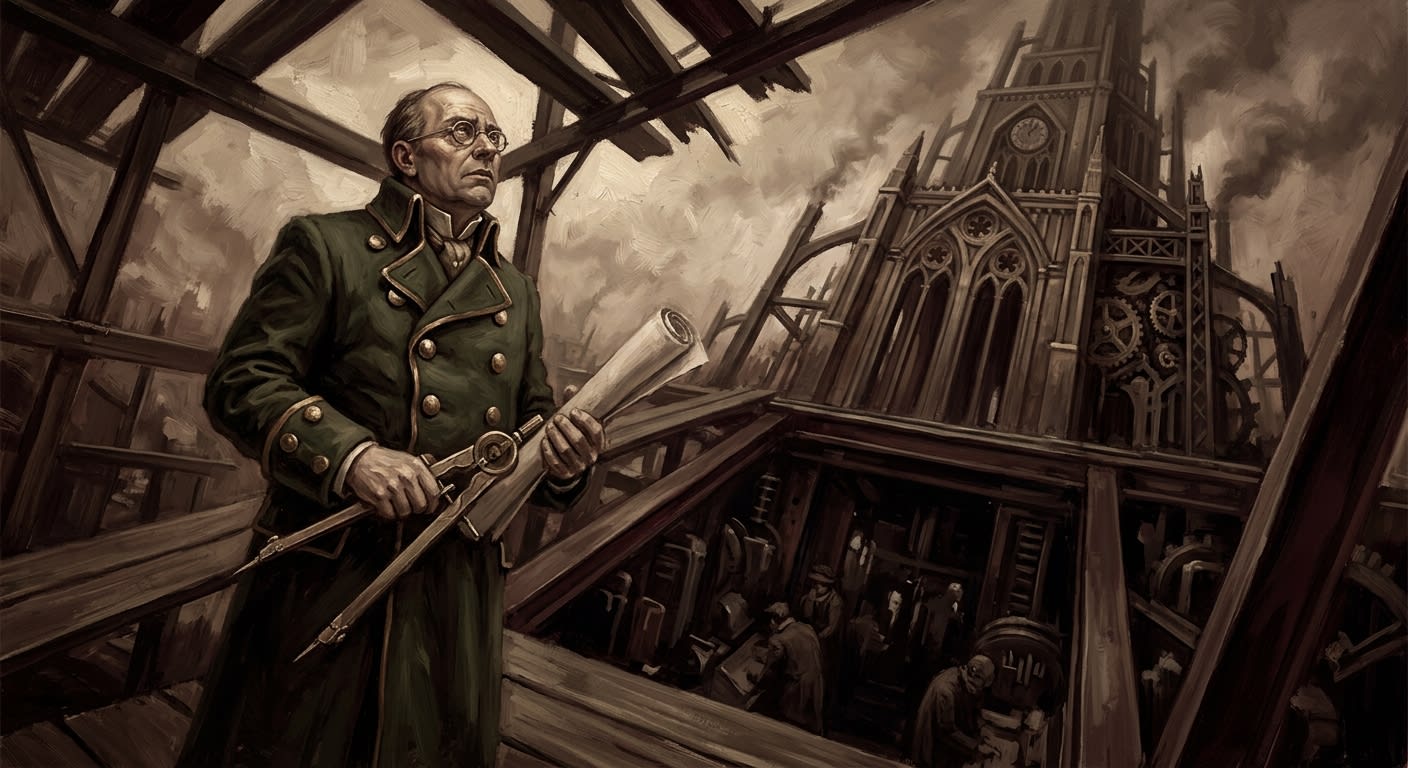
Matthias Kammler
The man who made Doctrine climb stairs
Matthias Kammler, architect of the Tower of the Quill, gave the Bureau of Doctrine a pen of stone and was repaid by height, honours, and a fatal scaffold.
Codex Ref. III.2.01-150
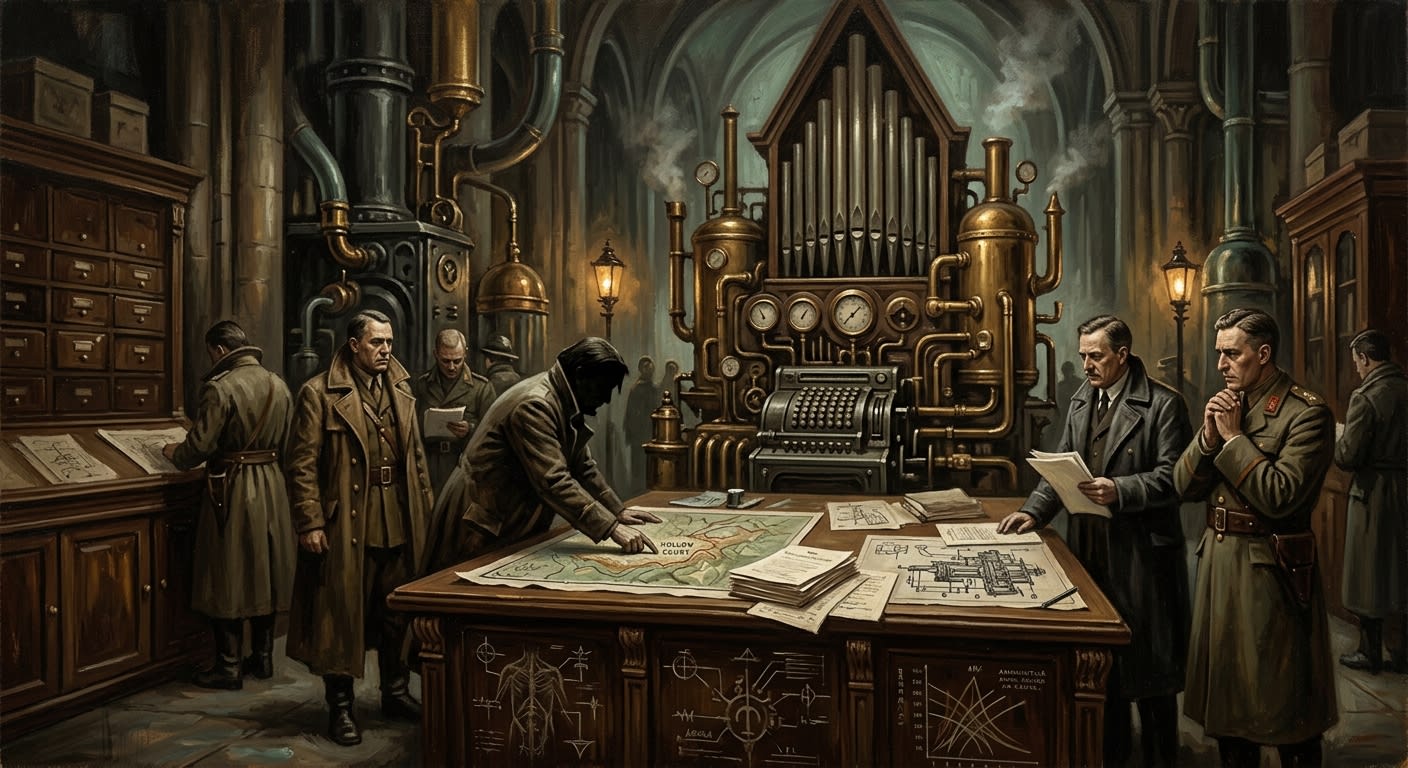
Memorandum on Artillery Bombardment
Nine thousand shells, four hundred twelve names, and one unsigned appetite for arithmetic
An unsigned Bureau of War memorandum proposes shelling the Hollow Court. Doctrine finds nine thousand shells, no absolution, and a table that may be an organ.
Codex Ref. XIII.1.23-001

Memory Levy
The receipt closes the payment; Aachen's account stays open
Aachen's merchants pay for a gate they never opened. Tithes enters the memory levy beside ordinary duties, permanent pending moral improvement. A receipt settles payment; it does not absolve the city.
Codex Ref. XIII.1.92-002
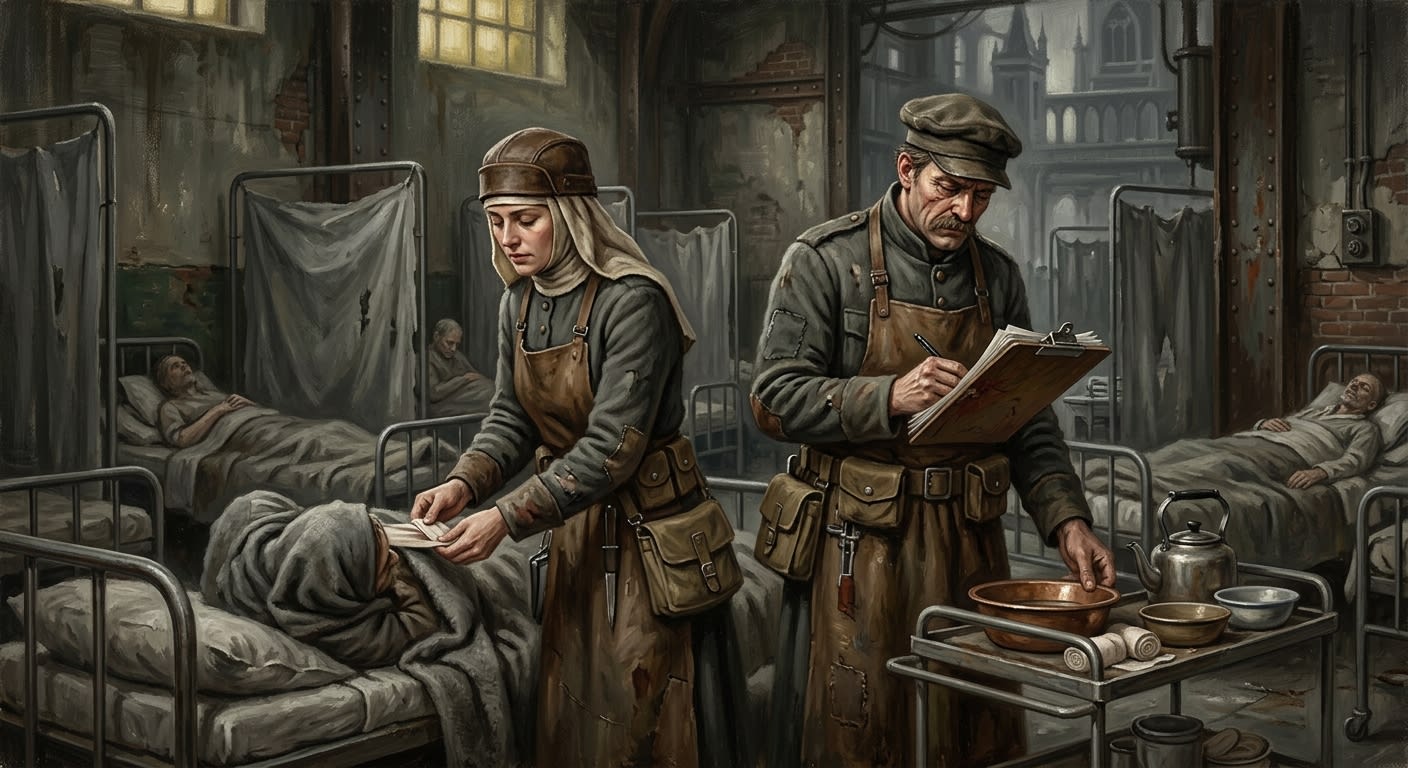
Mercy Ward-Sister / Mercy Ward-Brother
The hand that brings broth also carries the ledger
The Mercy Ward-Sister and Ward-Brother are the Bureau of Mercy's grey-aproned operators of counted compassion, where broth, bandage, confession, and paperwork become one instrument.
Codex Ref. XII.6.04-001
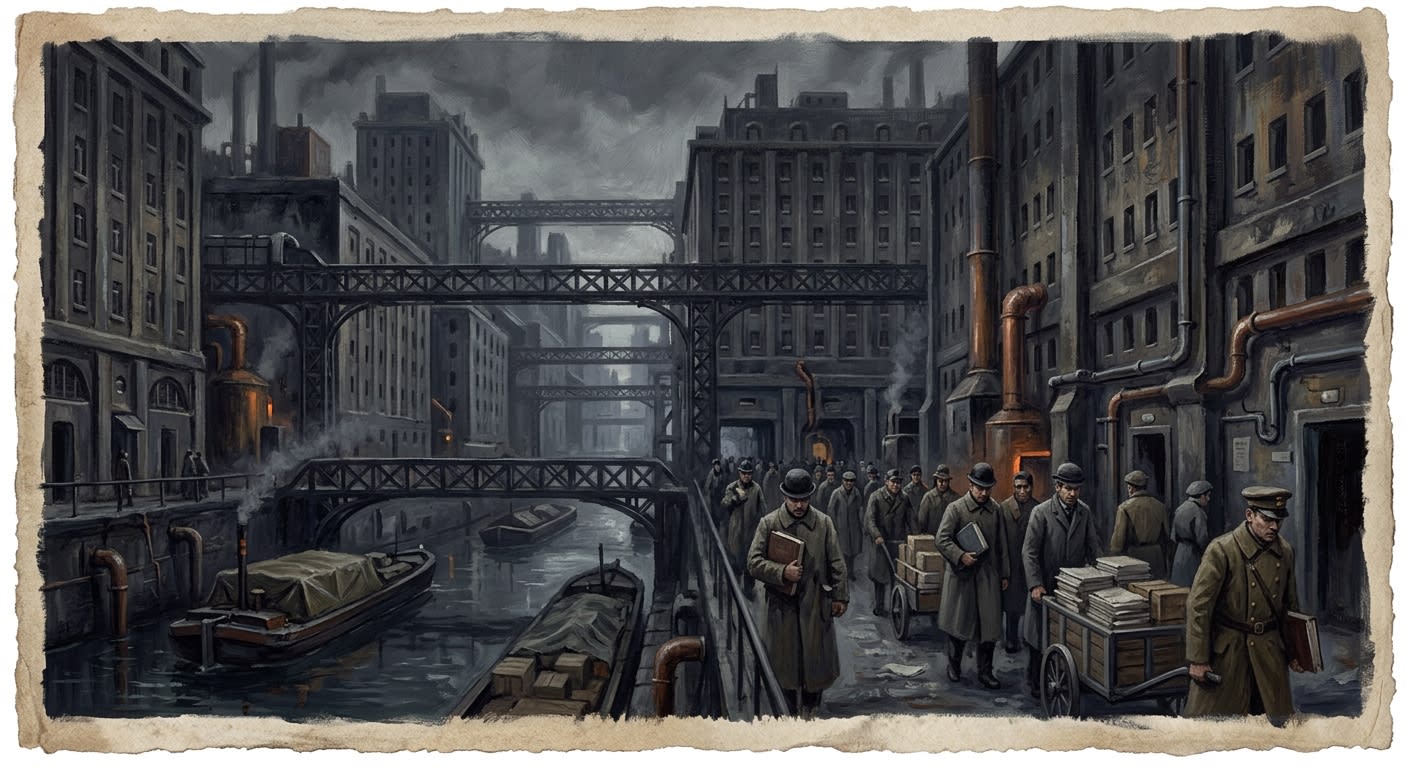
Metz
The depot-city where contradiction learned double entry
Synod-held Metz is a Zone 1 depot-city of ash vaults, double ledgers, silent bridges, supply arithmetic, and the Black Census that taught Medicine to count horror properly.
Codex Ref. II.1.05-001
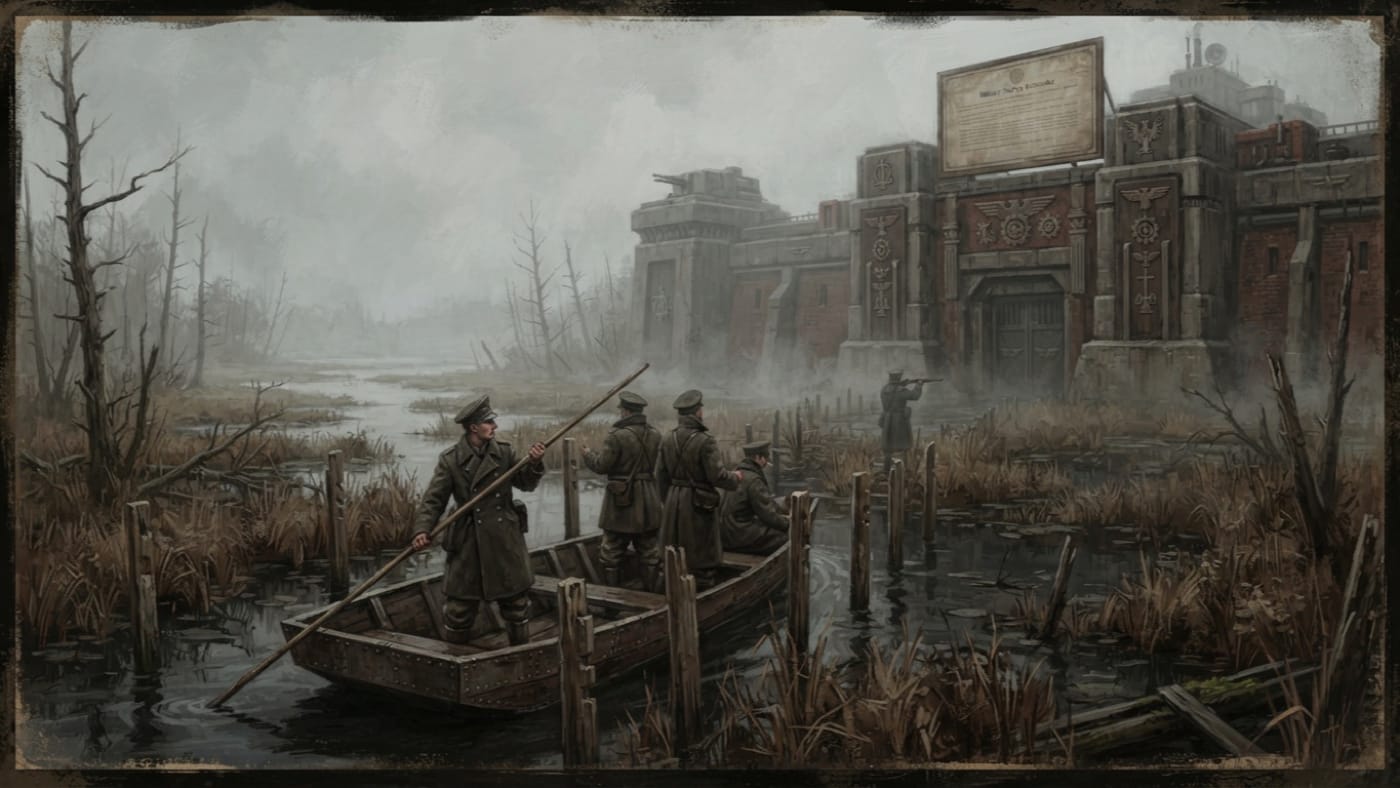
Military Secrecy Concordat
The Bureau owns the routes. The Watchers know the way.
An A.S. 201 survey of Article 17's attested restriction on copying Masurian lake charts. The Bureau owns the routes; the Watchers know where they are.
Codex Ref. XIII.1.17-001
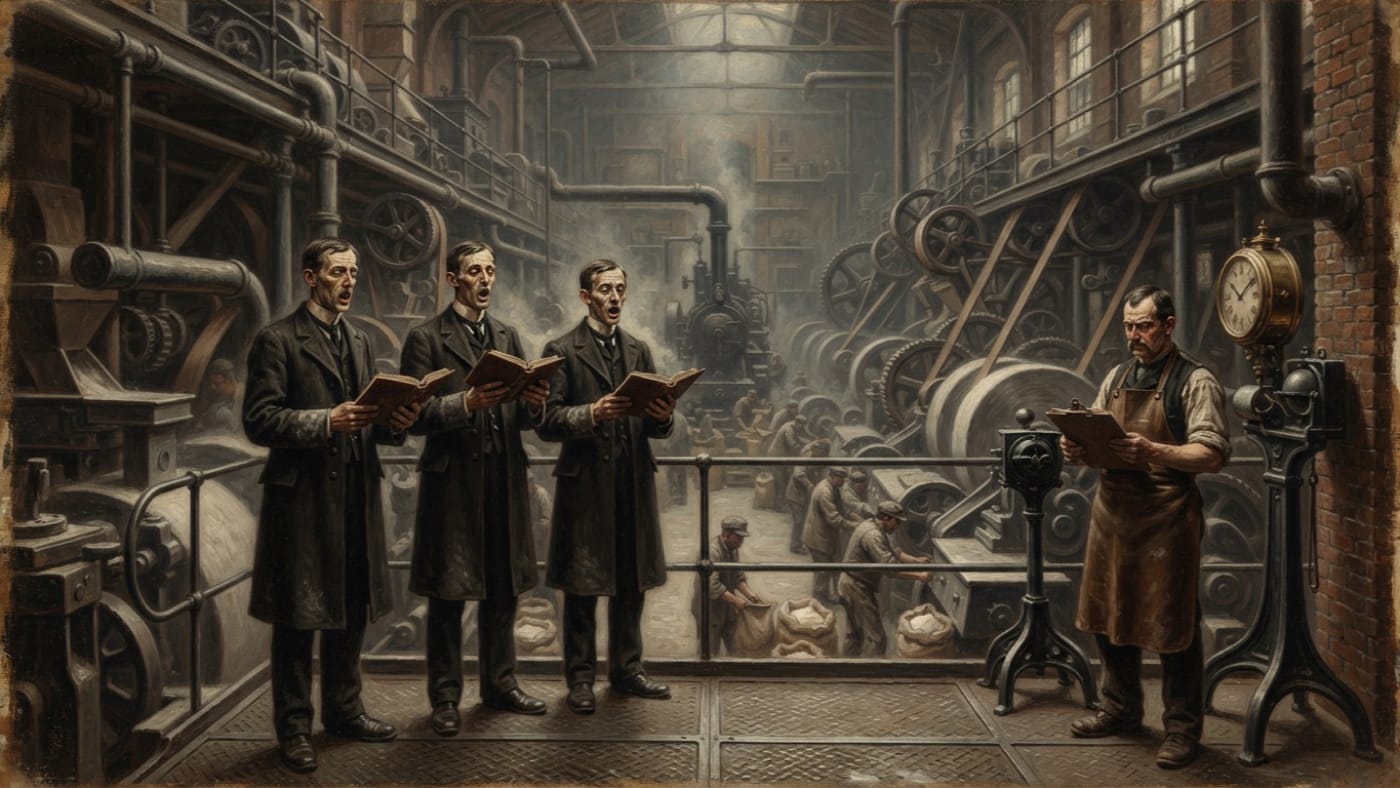
Mill-Crown Cantors
The mills need a cadence; the Cantors require a contract
Rheinscarp's mill and foundry singers sell cadence by the bell-hour under Hrodric Venn. The mills need rhythm; the Cantors insist the rhythm needs a contract.
Codex Ref. VIII.6.03-001
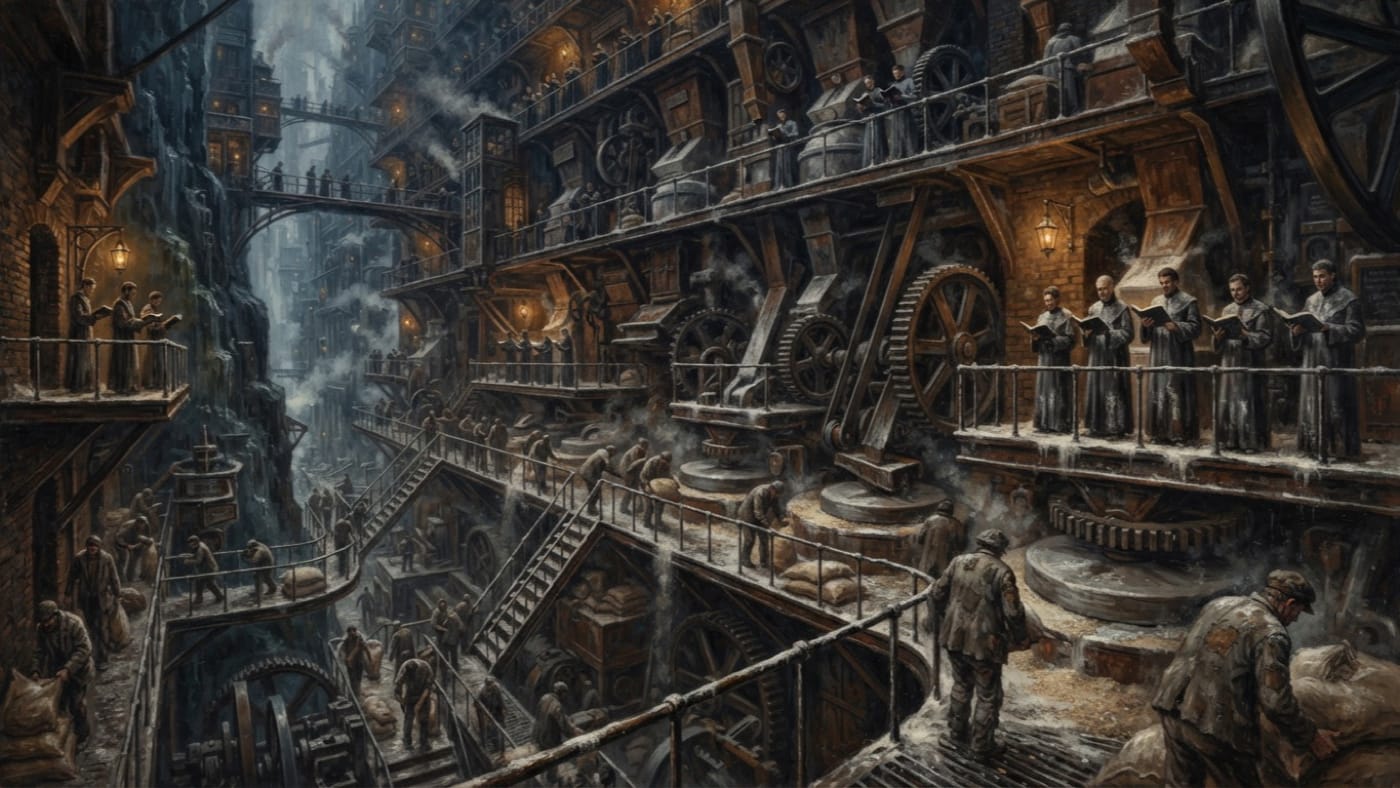
Mill-Crown Terraces
The fourth Step grinds the flour; the fifth decides who may eat
Rheinscarp's fourth terrace grinds ration flour to purchased hymns. The Cantors sell the cadence, Records certifies the hungry, and a mill-hand may work a full shift while officially absent.
Codex Ref. II.2.01-004
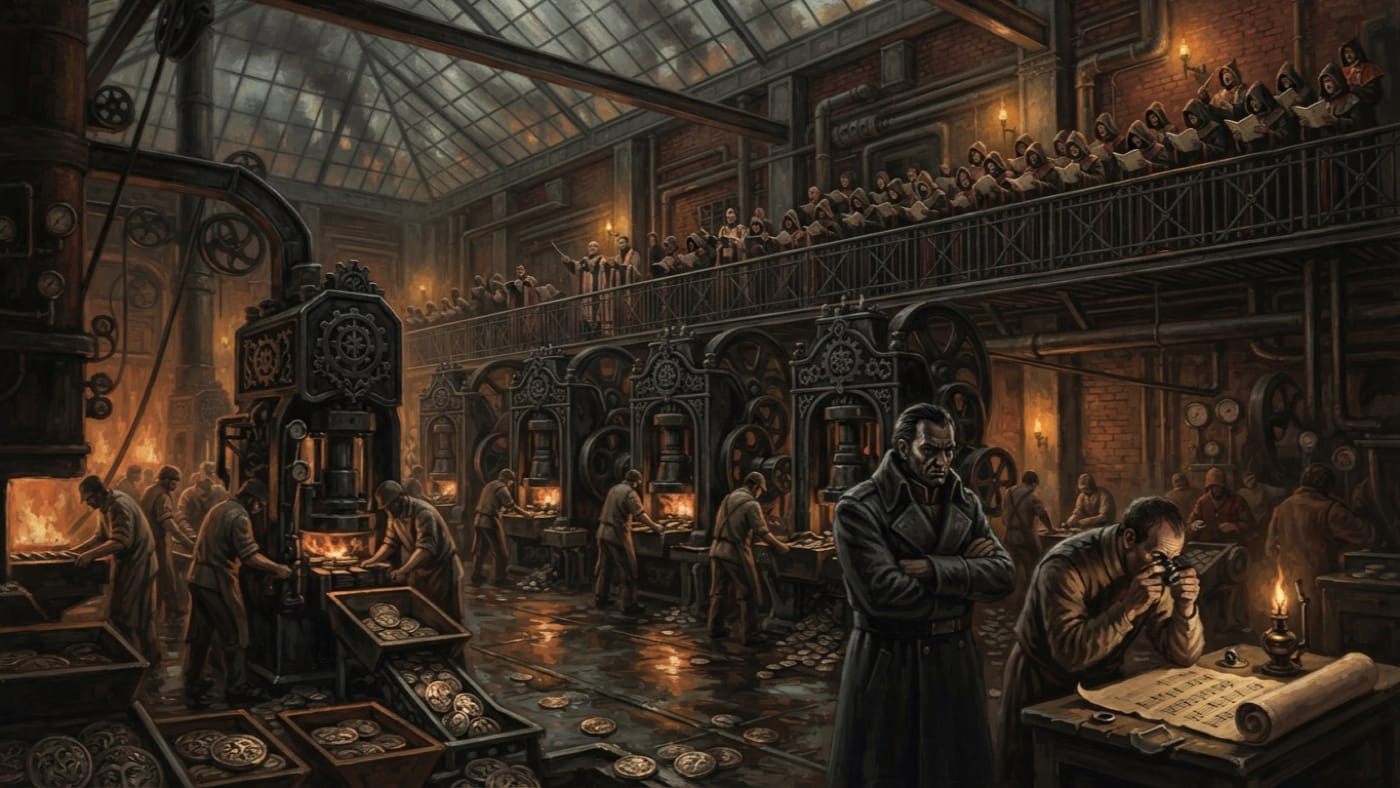
Mint Catechism
Strike on the syllable. Speak no name.
In Sable Court, the choir sings faces into lawful currency. The Mint Catechism governs every press-hammer; its text is withheld, its origin undated, and twice its timing has slipped.
Codex Ref. XIII.1.23-002

Mint-Chapter
Where the Synod makes faces spendable and obedience portable
The Mint-Chapter binds face, name, and coin into one leash: a polished doctrine by which bread, debt, memory, and burial all learn to ask for a clean strike.
Codex Ref. XIII.1.91-094
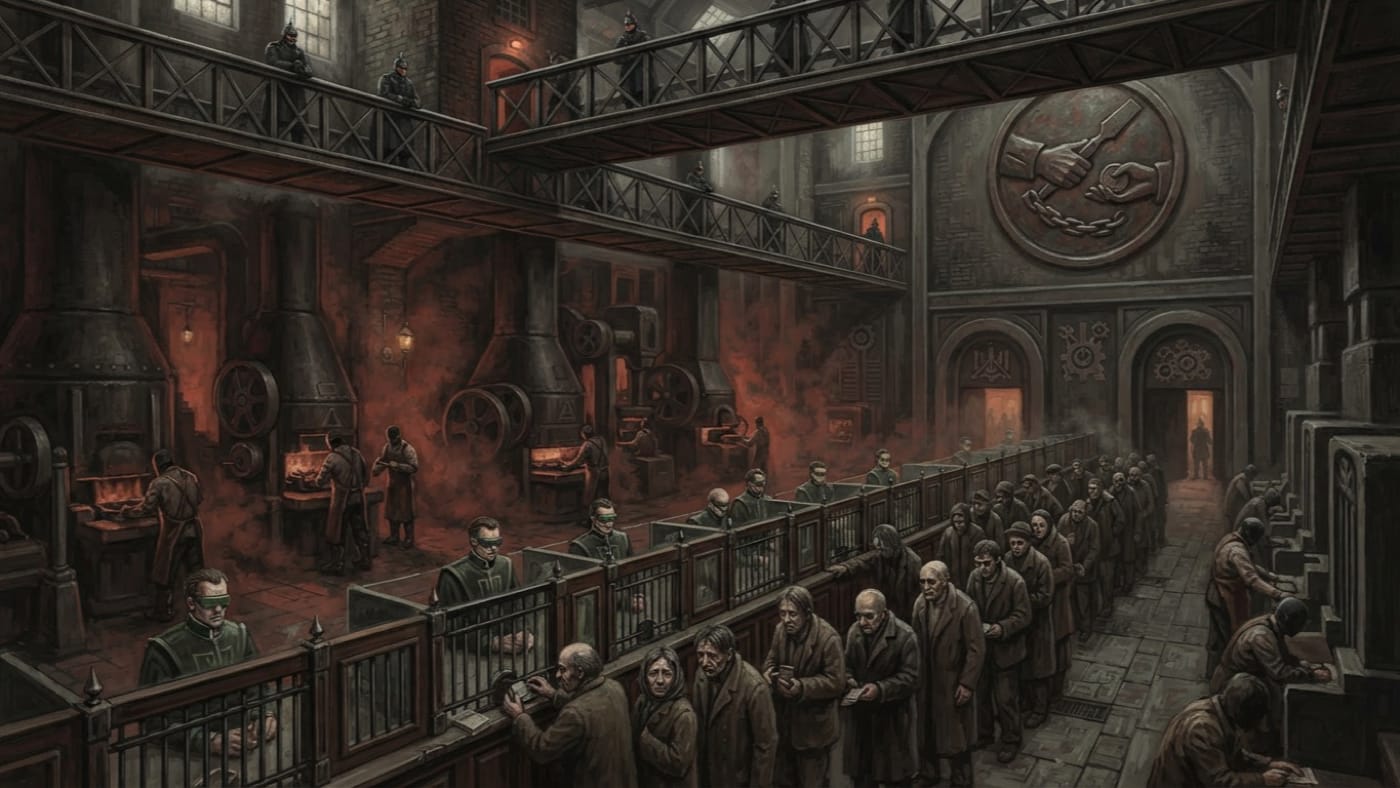
Mint-Chapter Compact
One hand cuts the face; the other decides whether it may buy bread
The A.S. 94 bargain binding Crownwright craft to Mint-Chapter authority. At the A.S. 201 assessment, its two hands still strike coin, collect fees, and decide whose face may buy bread.
Codex Ref. XI.7.01-002
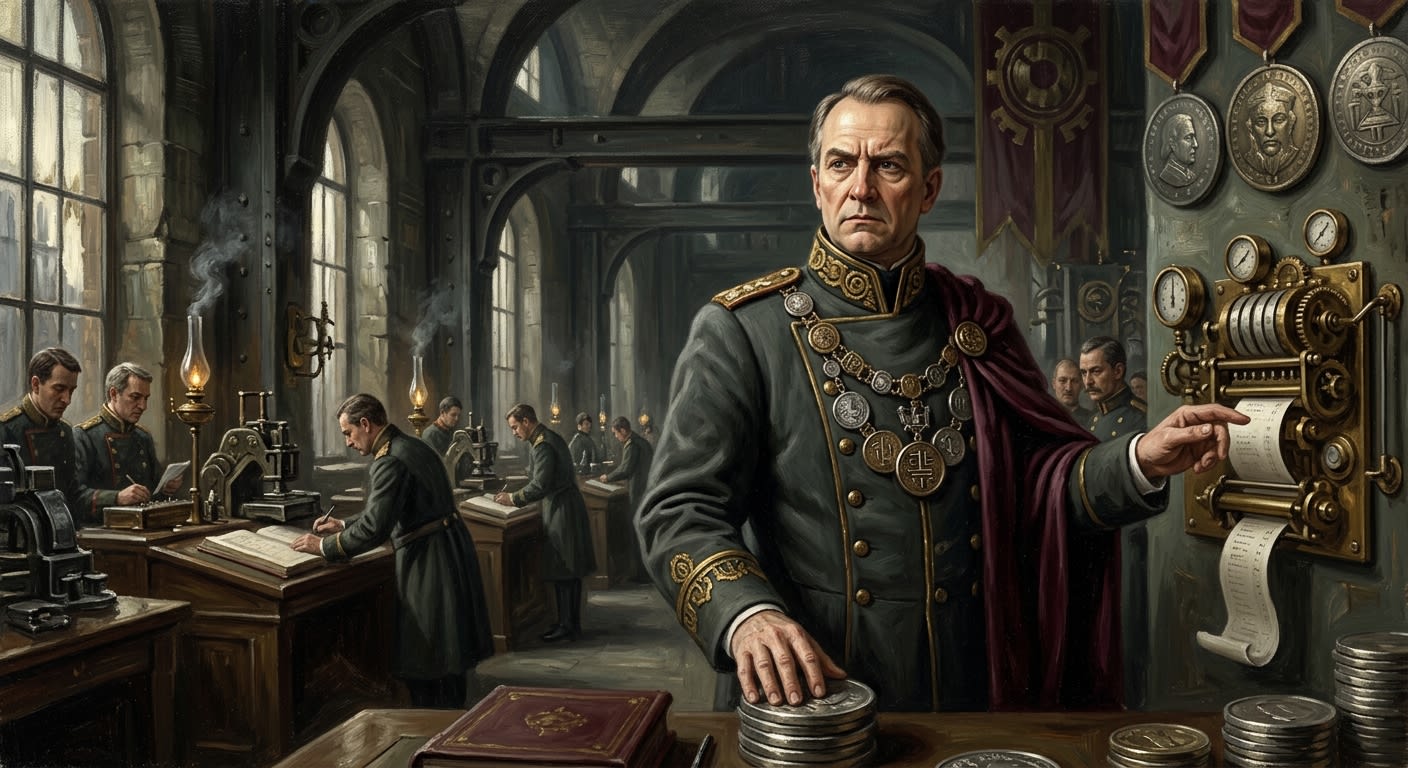
Mint-Prelate Albrecht Sable
He taught the coin to look back
Albrecht Sable made coinage into identity infrastructure: face, name, Ledger account, tax, recall, and accusation flattened into metal.
Codex Ref. III.2.01-094
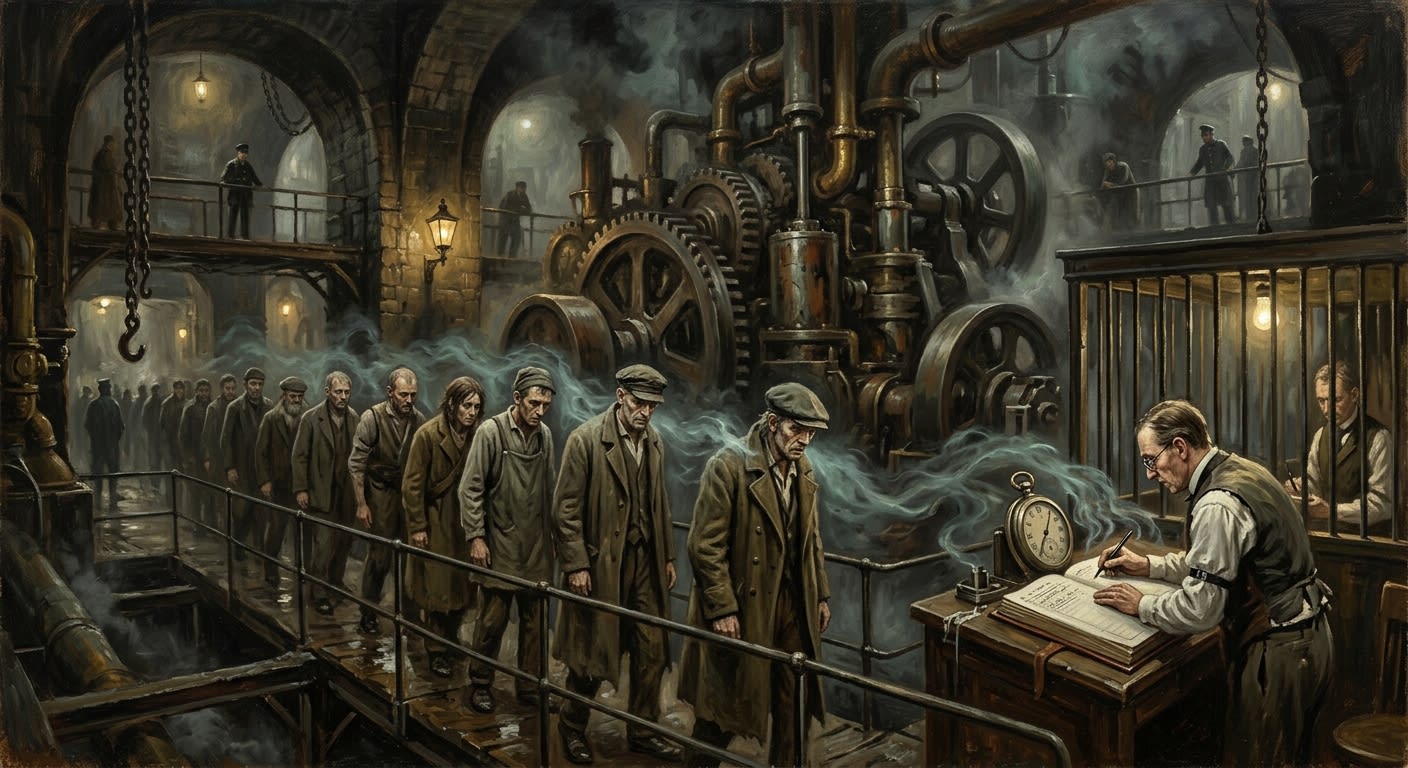
Minute Drift
The road steals from the pulse and invoices the wound
Along the Queue Road, minutes slip from bodies into ledgers and the Apparatus beneath Gate Nine grinds waiting into something no Bureau will name.
Codex Ref. XIII.1.15-001
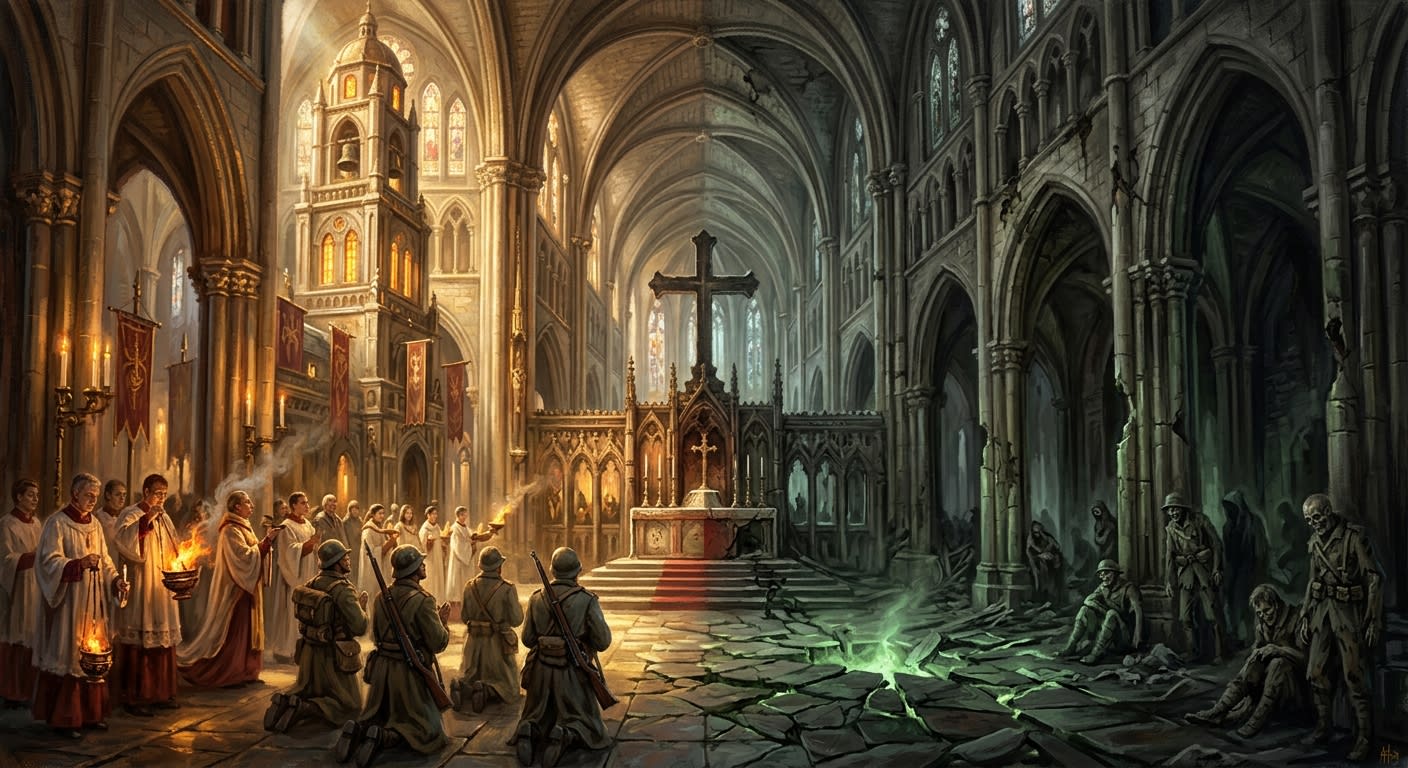
Miracles and Sorcery
Both crack Creation; only the paperwork differs
The Bureau insists miracles and sorcery are opposites. The mechanism, as Drax reluctantly confirms, is identical. The source determines canonisation or burning. The paperwork is different. The world pays either way.
Codex Ref. VI.3.01-001

Mold Ledger Rot
A seal confers status; it does not preserve a page
Records lost three months of southern casualty reconciliations in A.S. 156. Grey Veils supplied copies; Records supplied a denial, bound to forty-seven pages in Grey Veils ink.
Codex Ref. XIII.1.56-156
Montauban
The city made answerable by a name
Montauban entered Purity's Toulouse docket in A.S. 93 because Carcassonne named it. The file preserves no local testimony; the Bureau counts the city cleansed.
Codex Ref. II.1.09-093
Montreval
The pass-town that taught Reason the road was closed
Montreval held three winters against Lucien Artois's clockwork guns, hunger, pamphlets, fever, and arithmetic; a southern pass-town where Severin bought time with walls, bells, broth, and burned bridges.
Codex Ref. II.1.09-015
Mother Giselle
Thirty years of soup; twelve findings of innocence
Mother Giselle has fed Strasbourg's poor for thirty years. Purity has investigated her for heresy twelve times and found her innocent every time. I have compiled longer dossiers on people who accomplished less.
Codex Ref. III.2.01-1882
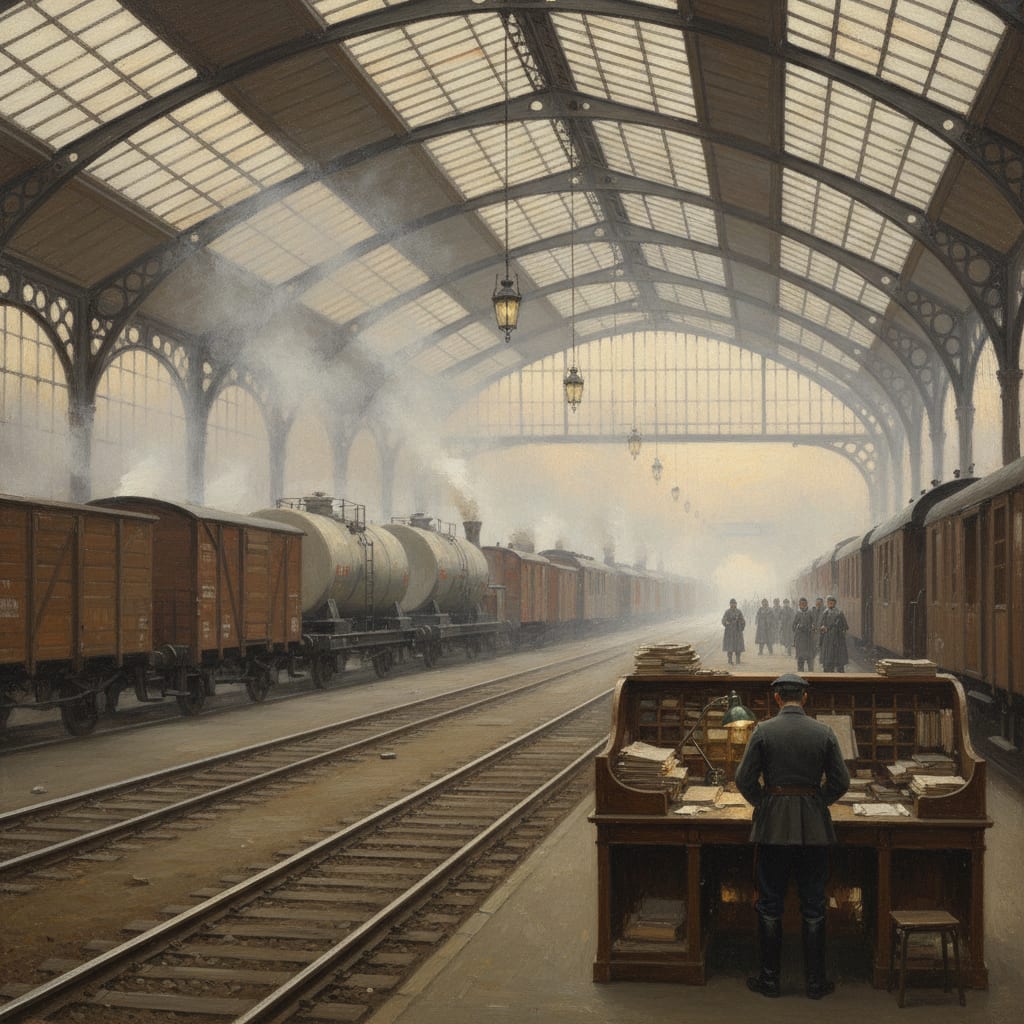
Munich
The last comfortable city; or, where the war becomes a number before it becomes a wound
The Synod's central logistics hub and the last city where the war is an abstraction. Seven hundred thousand souls administer the machinery of a conflict they will not fight. Munich pays its tithes, fills its quotas, and resents everything.
Codex Ref. II.4.09-008
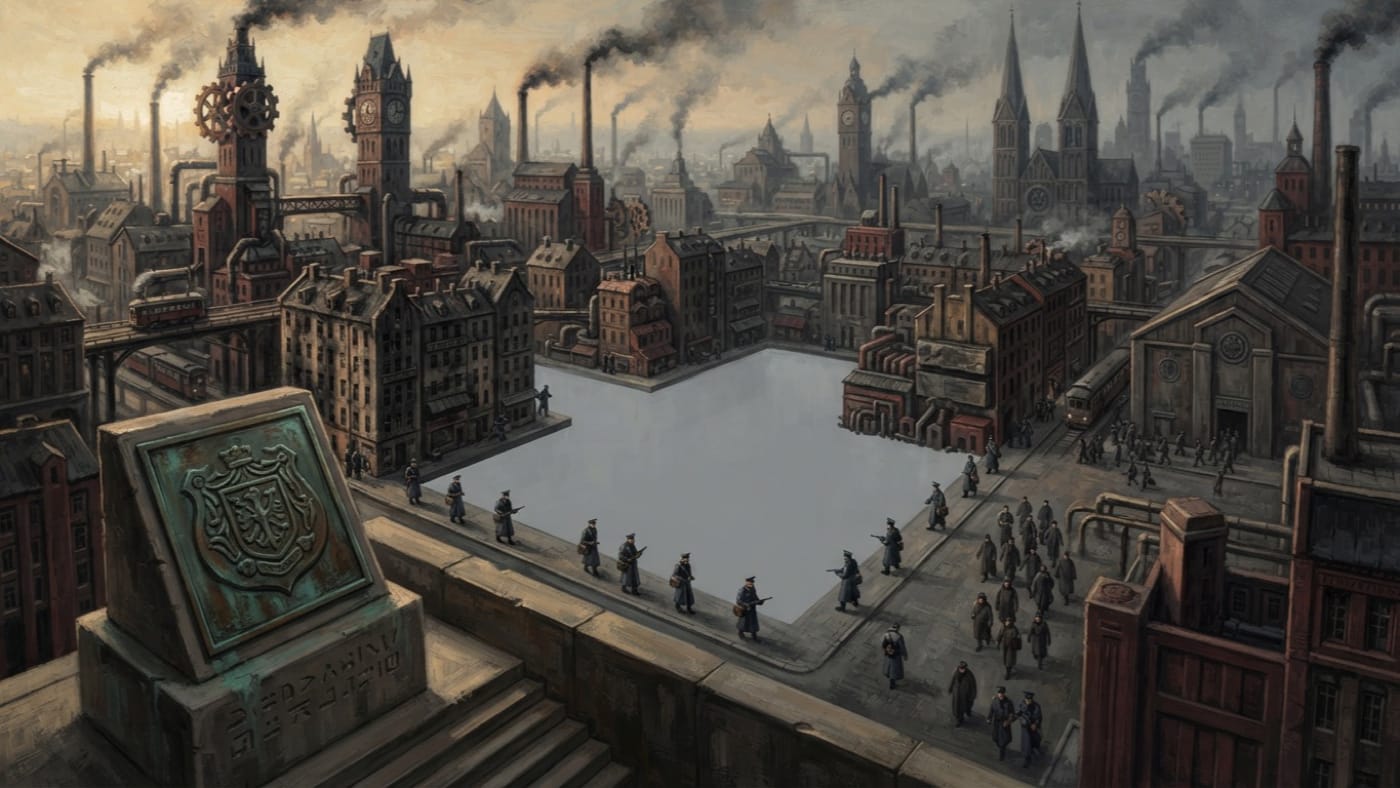
Münster
One Compact, One Refusal, One Blank
Münster is remembered for its A.S. 105 guild compact and the reported erasure of a district. The register supplies 999 signatures; I cannot supply the missing names.
Codex Ref. III.2.04-1897
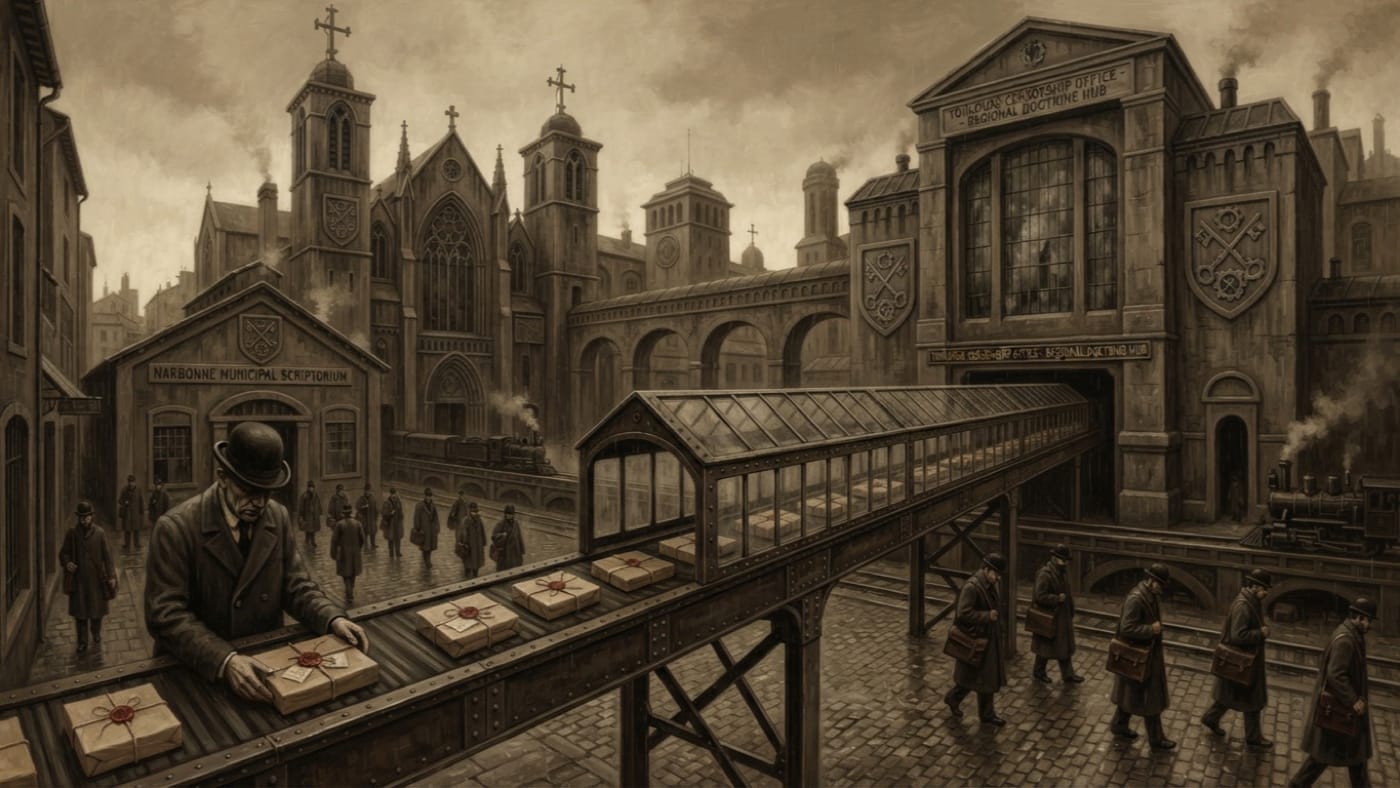
Narbonne
Named at Carcassonne, read at Toulouse
Narbonne entered the Toulouse file by confession in A.S. 93. In A.S. 201 its school primers travel there by routine post. Obedience has learned to wrap its own parcels.
Codex Ref. II.1.09-093
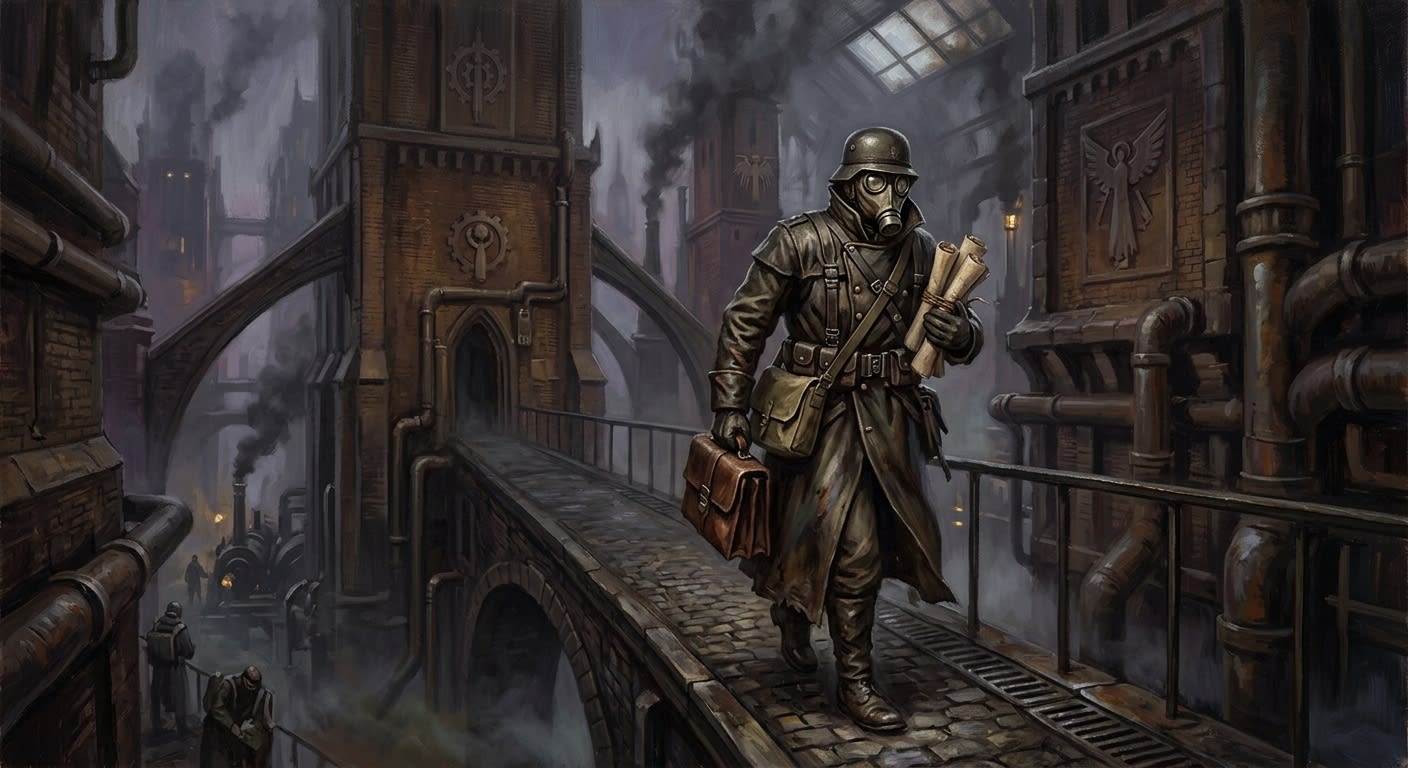
Night Papers Courier
Authority on borrowed hours and disappearing vellum
Night Papers Couriers deliver the Synod’s most deniable commands: grey vellum that outranks rank, bypasses appeal, and dies at dawn if conscience has not already done so.
Codex Ref. XII.14.03-001
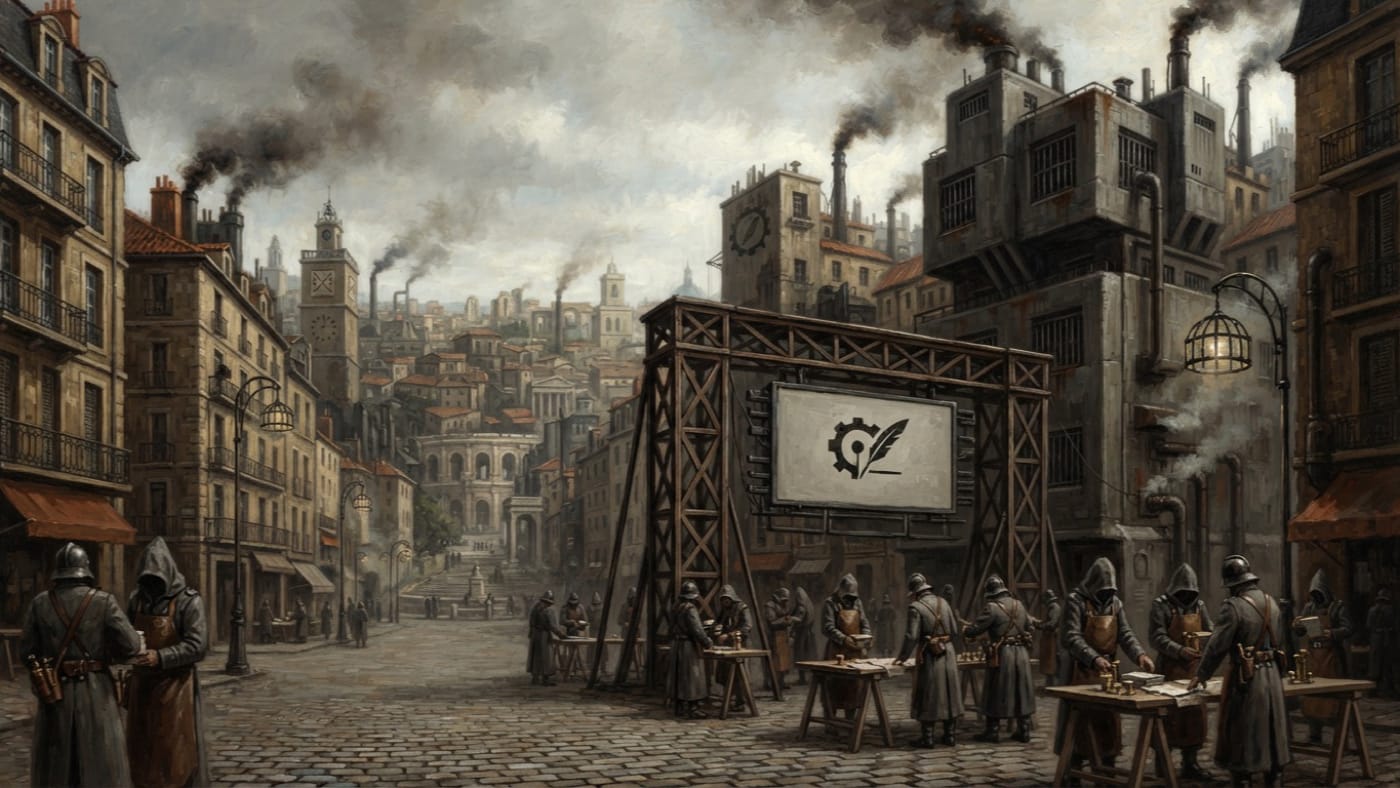
Nîmes
A city given a column before a case
Nîmes entered Purity's A.S. 93 Toulouse dossier because Carcassonne named it under interrogation. The city received a column; this file establishes no local offence.
Codex Ref. II.1.09-009
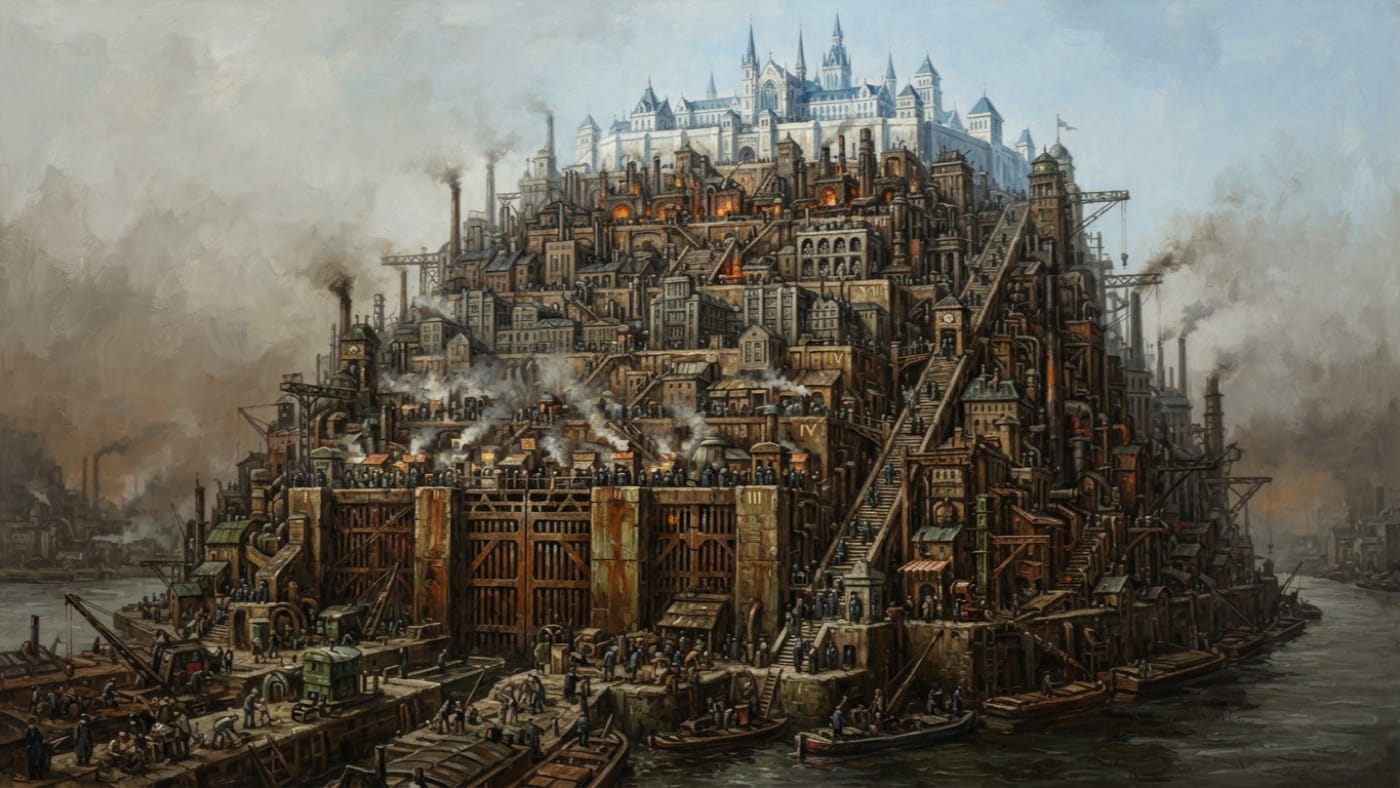
Nine Steps
From river silt to clean air, every crossing requires coin, verse and stamp
Rheinscarp's nine terraced districts rise from the Sump Docks to the High Step Precinct. Every crossing requires coin, verse and stamp; the air improves upward, and so does the spelling.
Codex Ref. II.2.01-011
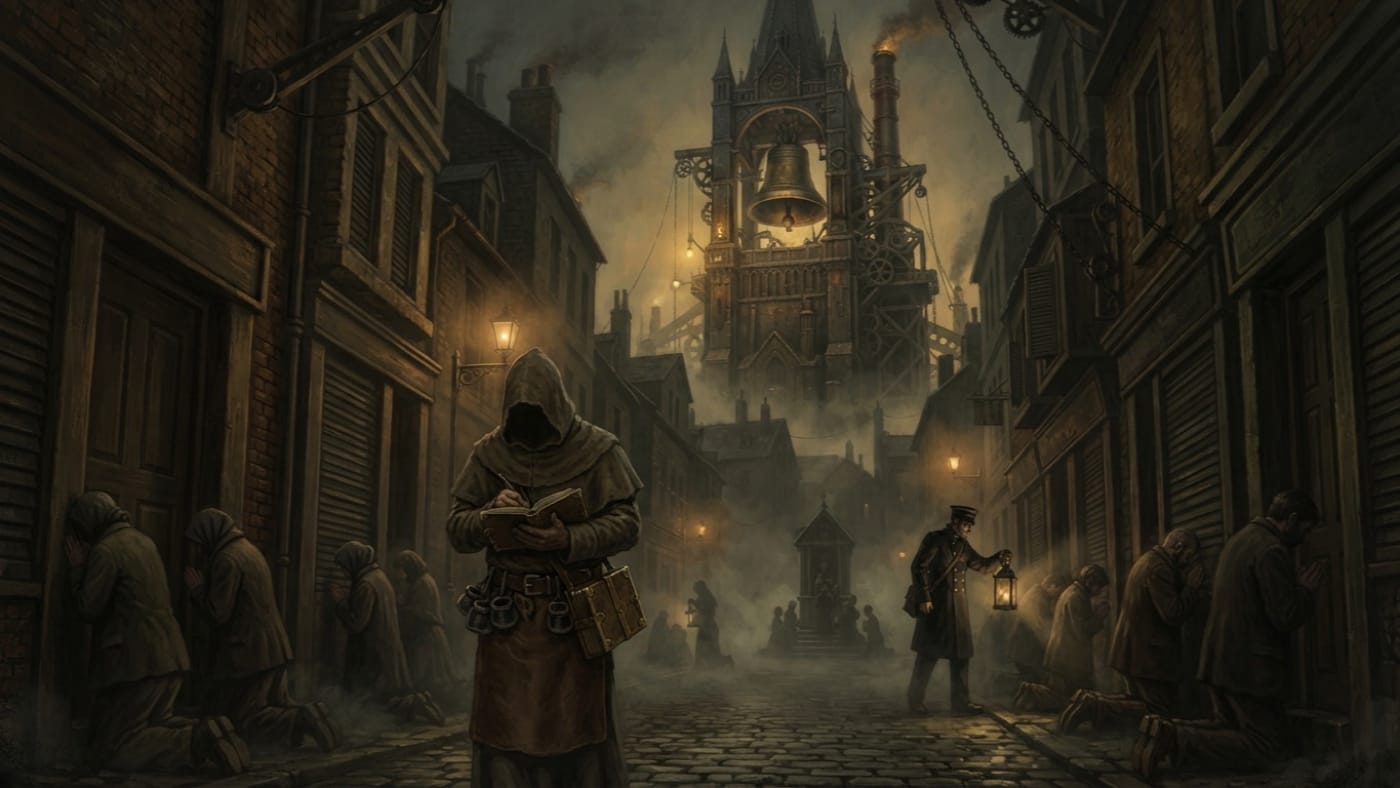
Ninth Bell
The day ends when it is told to
The Ninth Bell closes the Synod's civic day: thresholds become confessionals, shutters become testimony, and silence belongs to those licensed to make it.
Codex Ref. XIII.1.62-009
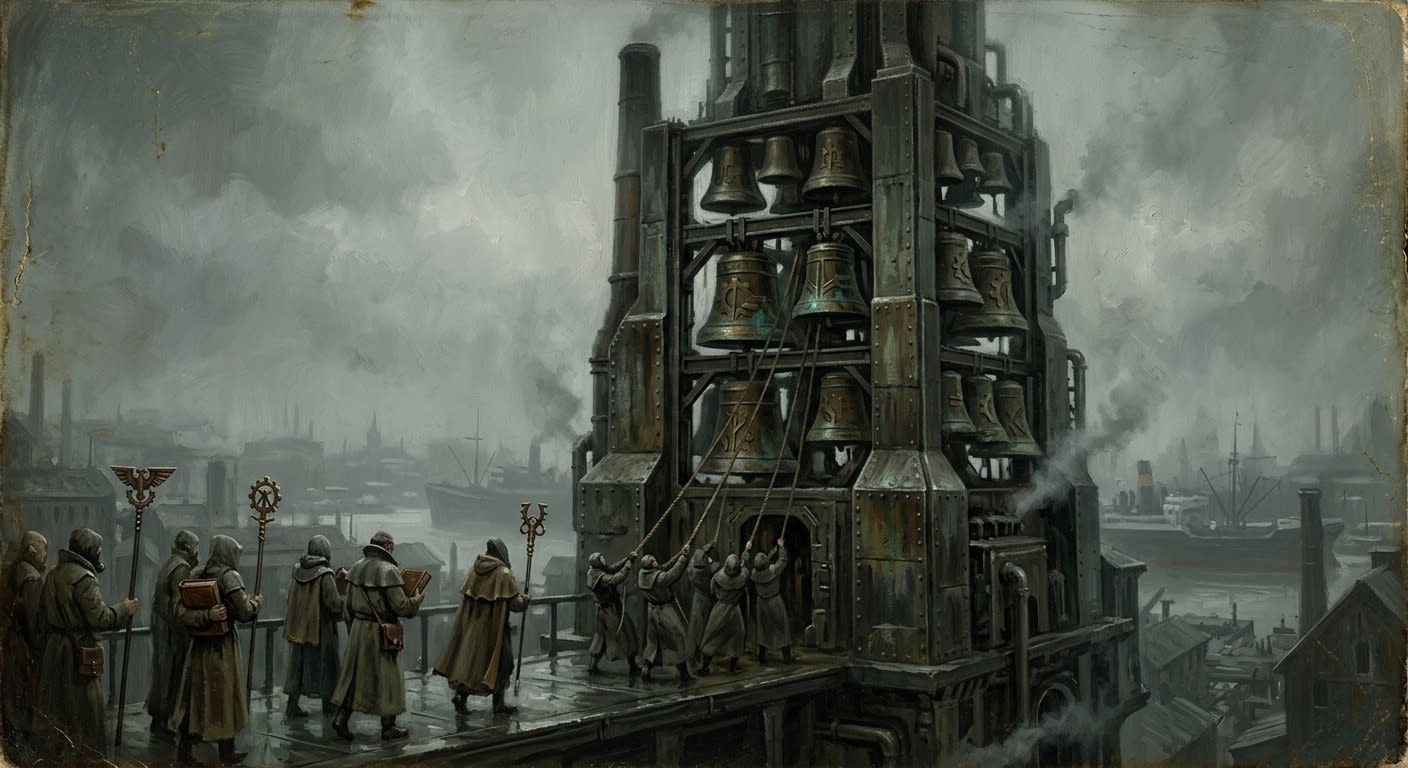
Northern Carillon
Forty-one bells speaking law into a fog that answers too politely
Königsberg's Northern Carillon is forty-one lawful bells, a Choir that sings into answering fog, and the Bureau's coldest proof that bronze can be obeyed without being understood.
Codex Ref. XIII.1.96-097
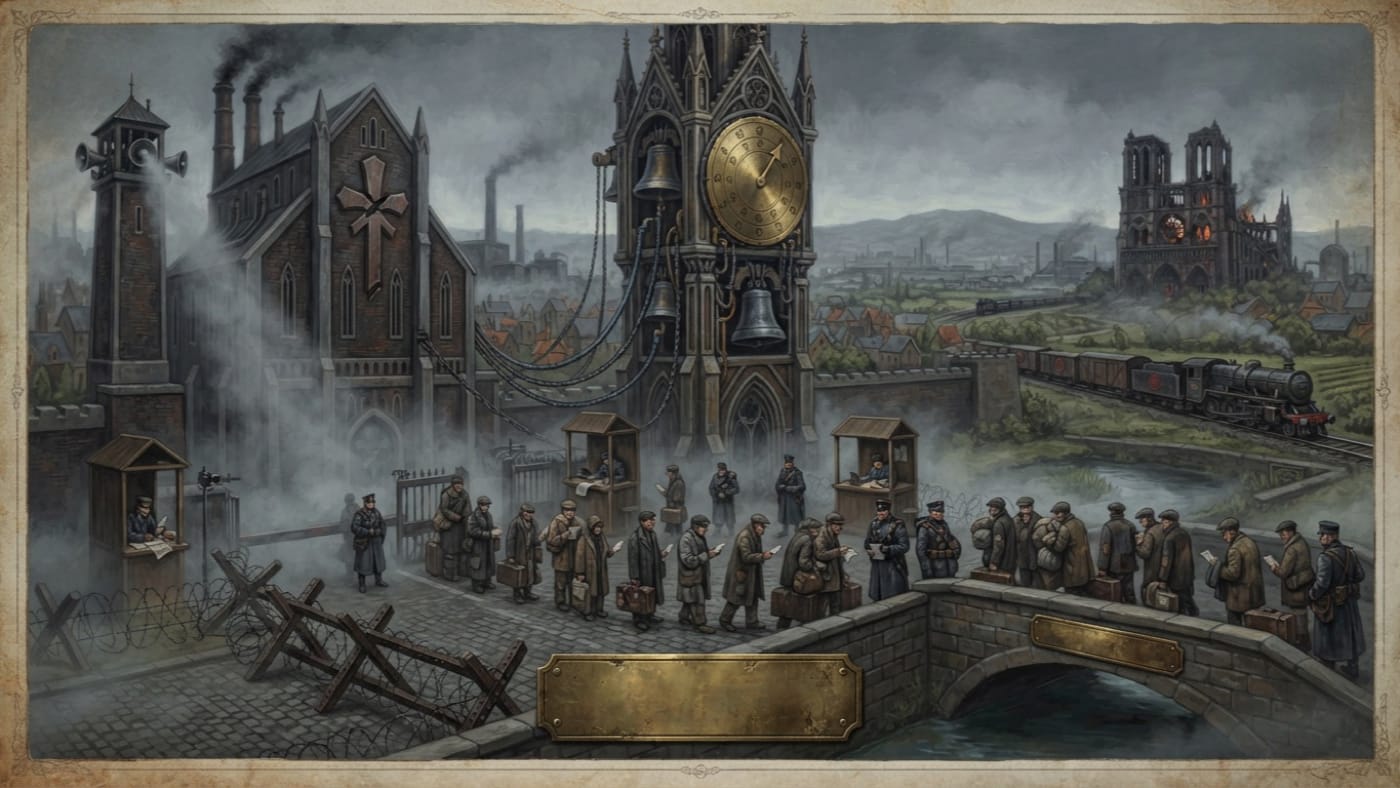
Northern France
Lost through a German gate, recovered parish by parish
Much of northern France fell after Aachen opened in A.S. 25. Recovered parish by parish, the country now pays tithes, carries papers, and calls supervision safety.
Codex Ref. II.1.09-025
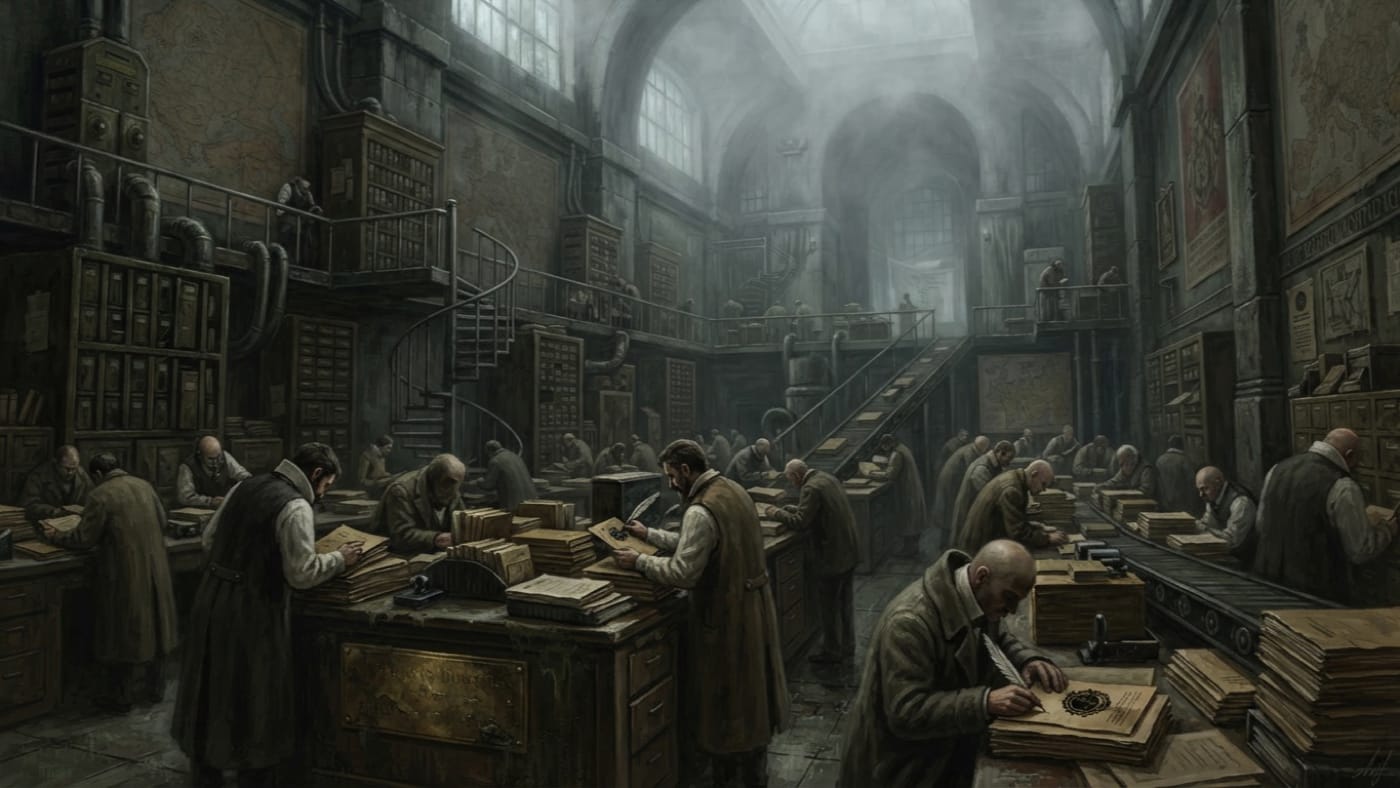
Northern Office
A desk that can halt an oath and still mistake silence for poverty
The Northern Office appears in two Königsberg dossiers: a paternal oath withdrawn after review, and a chaplain questioned for refusing to speculate. The fog remains unexplained.
Codex Ref. III.3.01-041
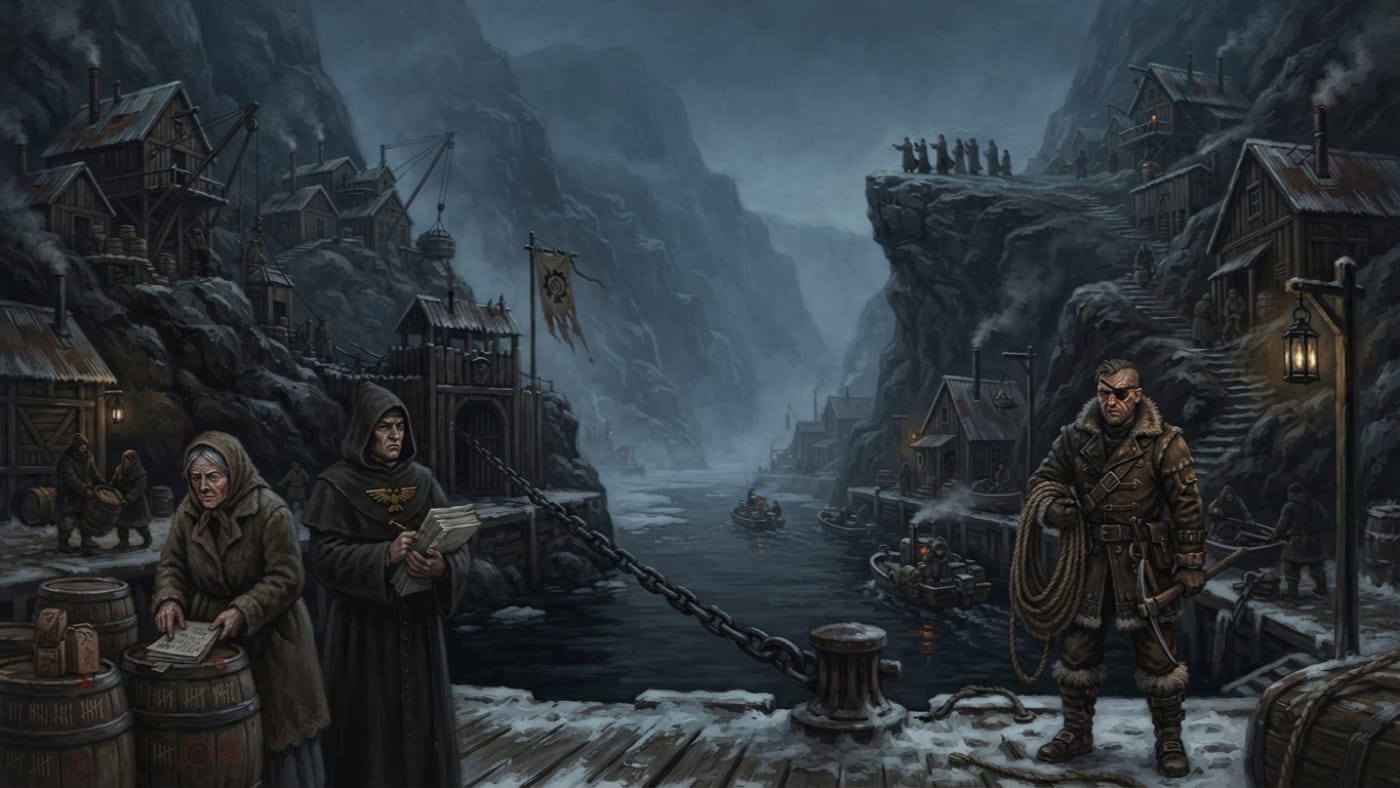
Norway
The map belongs to Strasbourg; the narrows belong to the clans
Norway's fjord compacts supply the Synod's northern war while keeping their own chains, watches and fasts. A.S. 201 assessment: the oil arrives; authority remains local.
Codex Ref. II.8.01-001
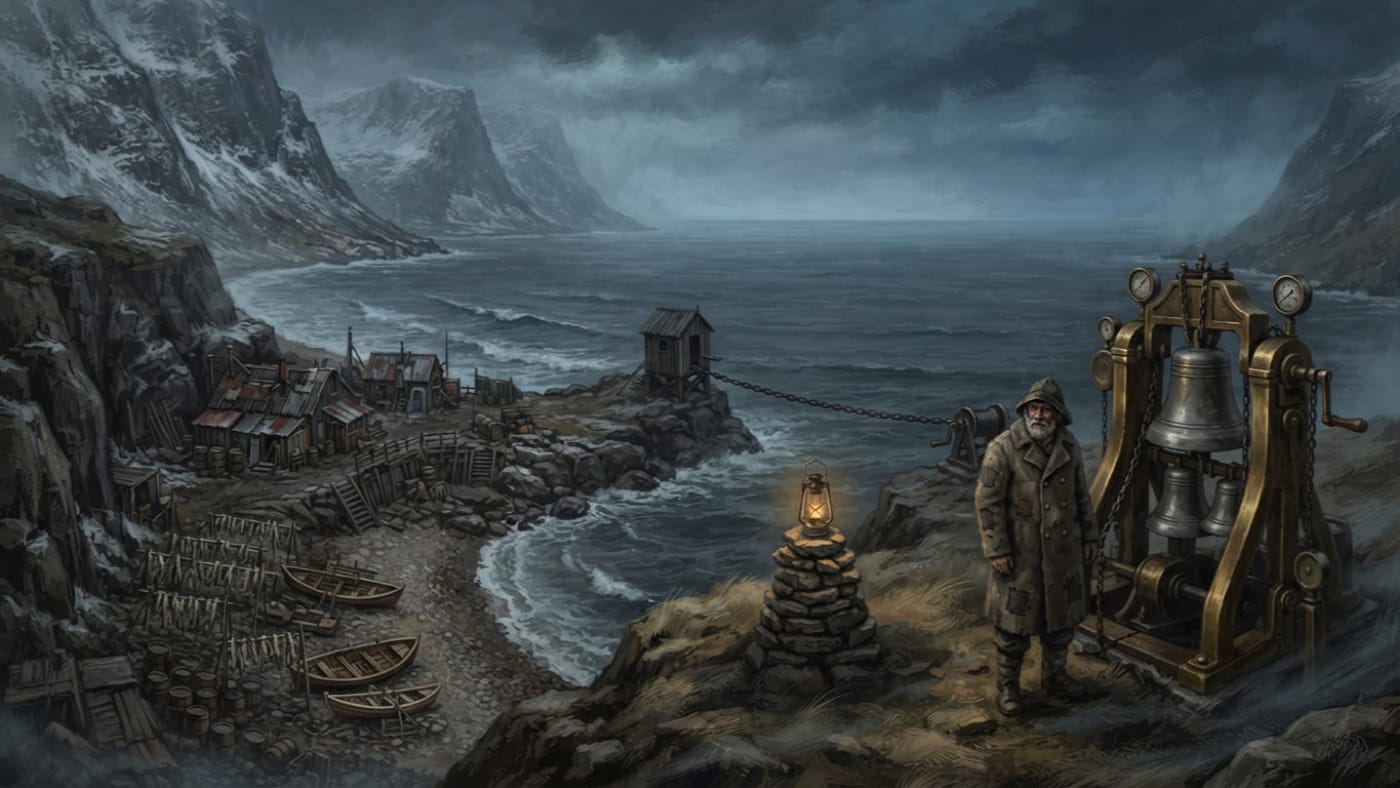
Norwegian Sea
Larder, road and parish wall. Fishery returns not received.
Norway's western water feeds the Fractured North, carries its oil and keeps Strasbourg waiting. The coast has elders, chains and bells; the sea has supplied no papers.
Codex Ref. IX.8.01-002
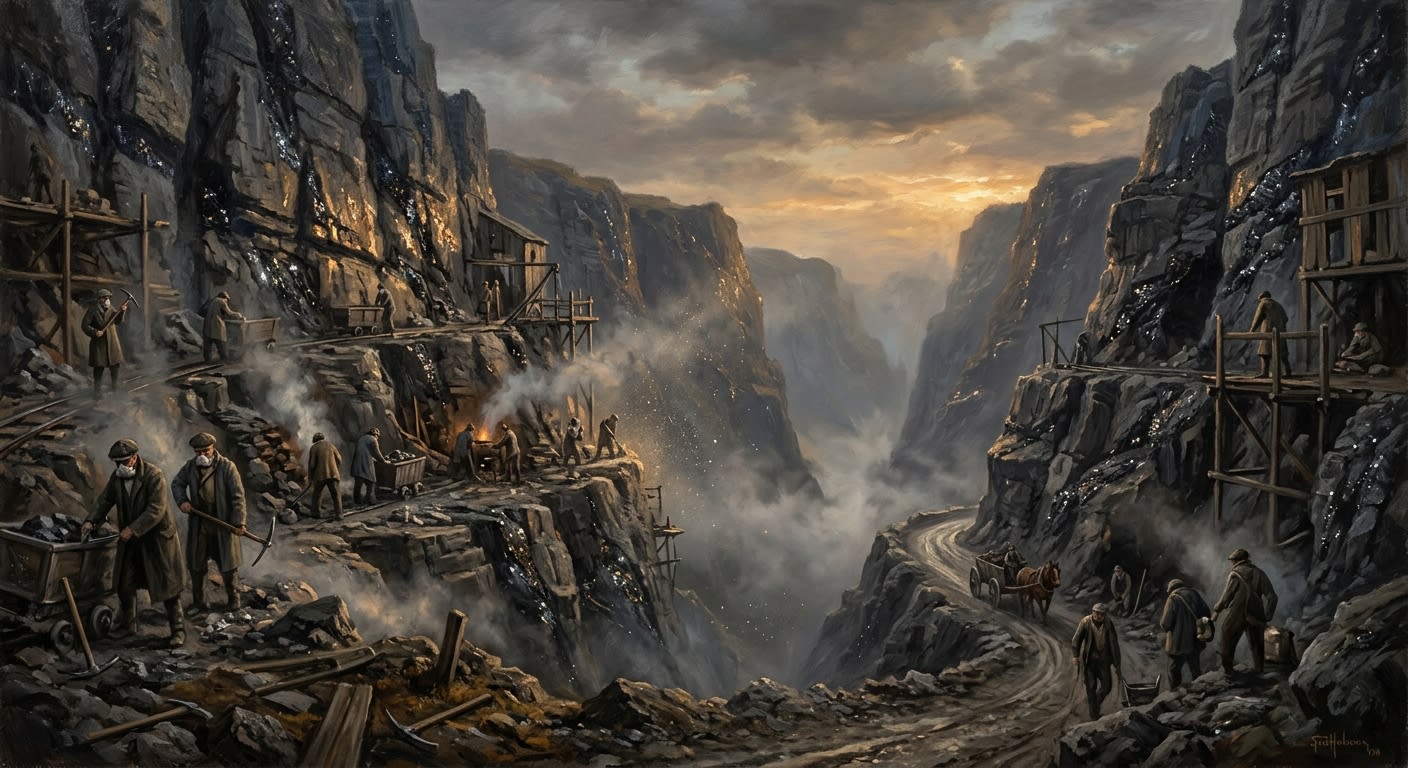
Oathglass Quarrytown, Saint-Helm's Cut
The mountain proves what the Seal House permits
A highland quarrytown built inside a volcanic-glass cleft that the Synod has declared a certified sacred site. The glass proves relics. The workers cough. The mountain, lately, has begun to sing.
Codex Ref. II.2.05-001
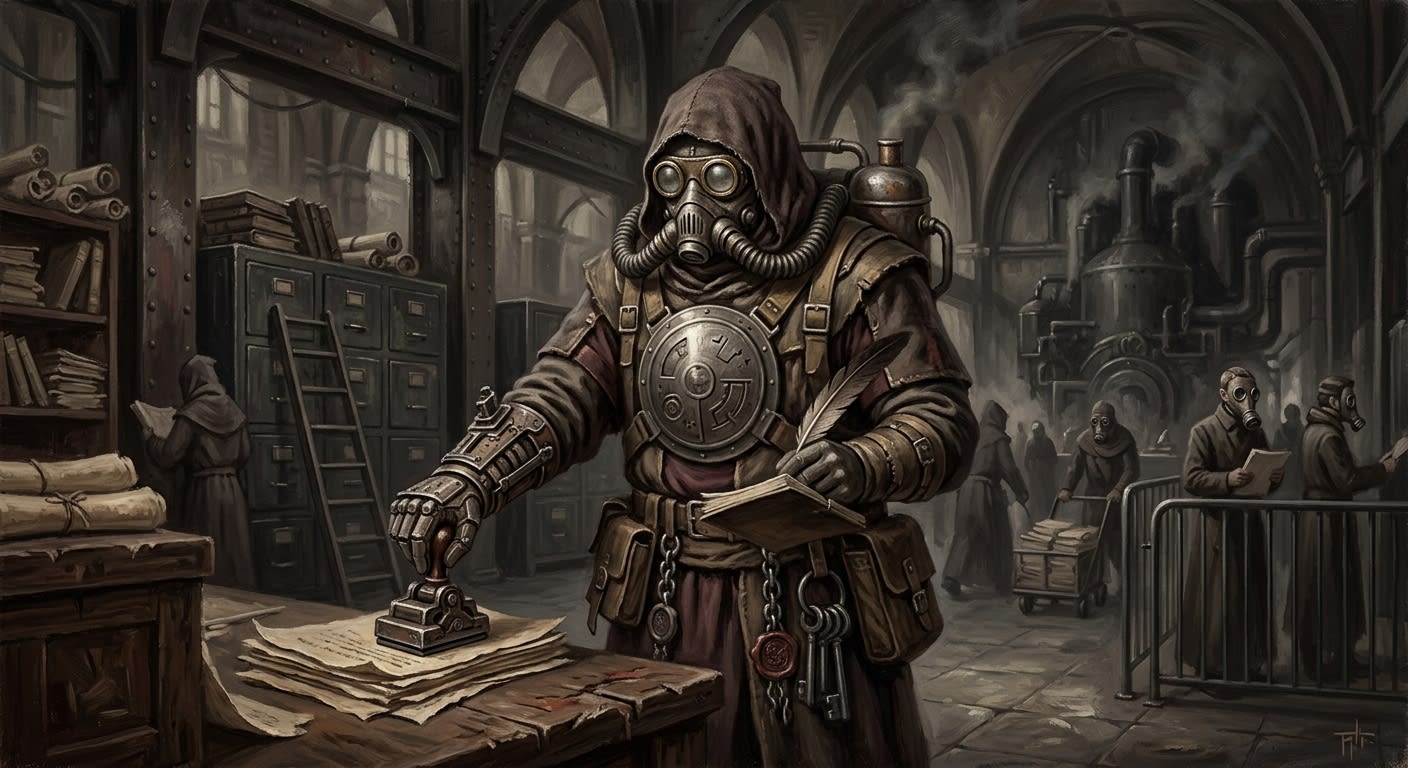
Oaths Witnesser
The state attends every promise
Living seals of the Synod, Oaths Witnessers make spoken promises enforceable, record their fracture, and bury what was sworn when it fails.
Codex Ref. VI.4.03-012
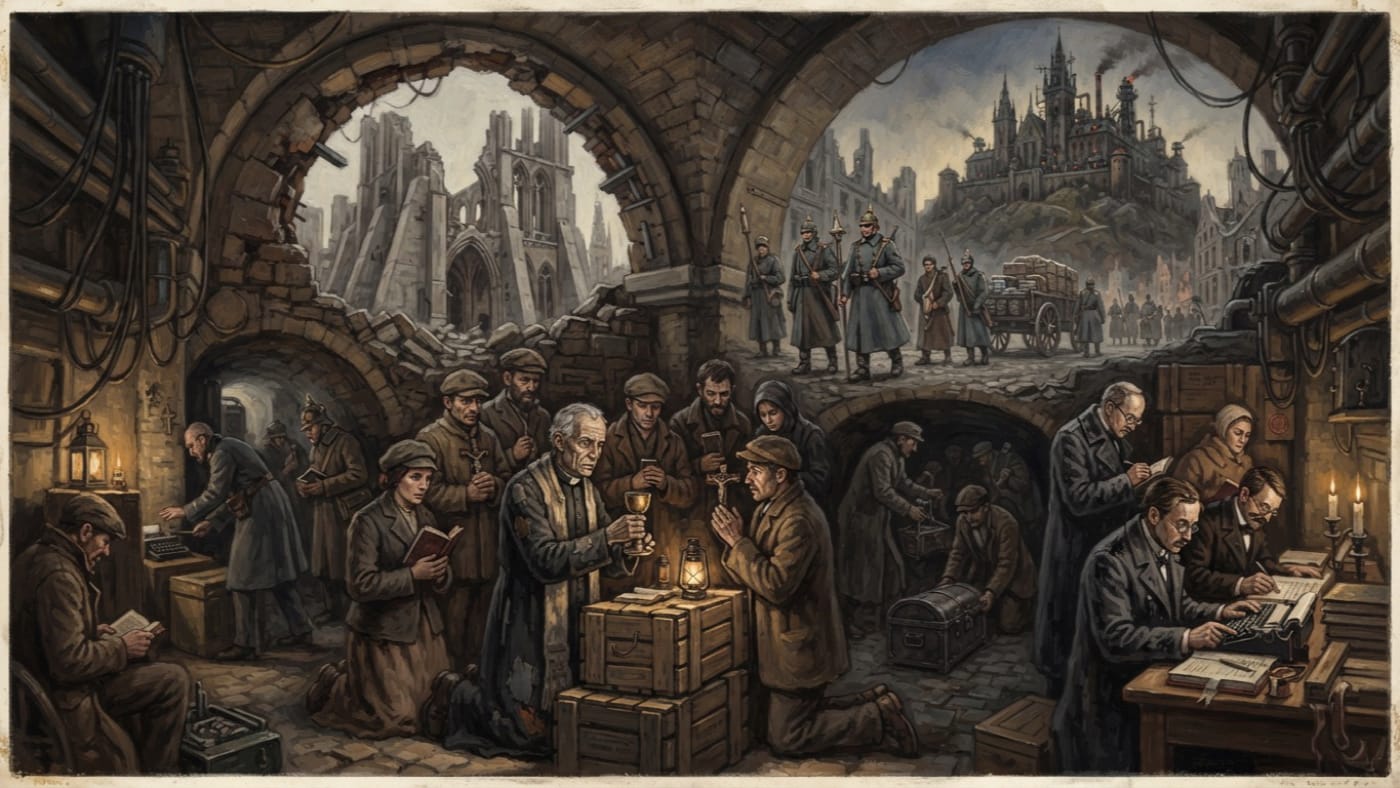
Old Church (Before the Synod)
The people survived the treaty; Strasbourg inherited their papers
An A.S. 201 survey of the Church before the formal Synod: bishops, parishes, chapters and relic custody surviving war, confiscation and Vienna's dissolution. The people outlasted the paperwork.
Codex Ref. VIII.1.09-201
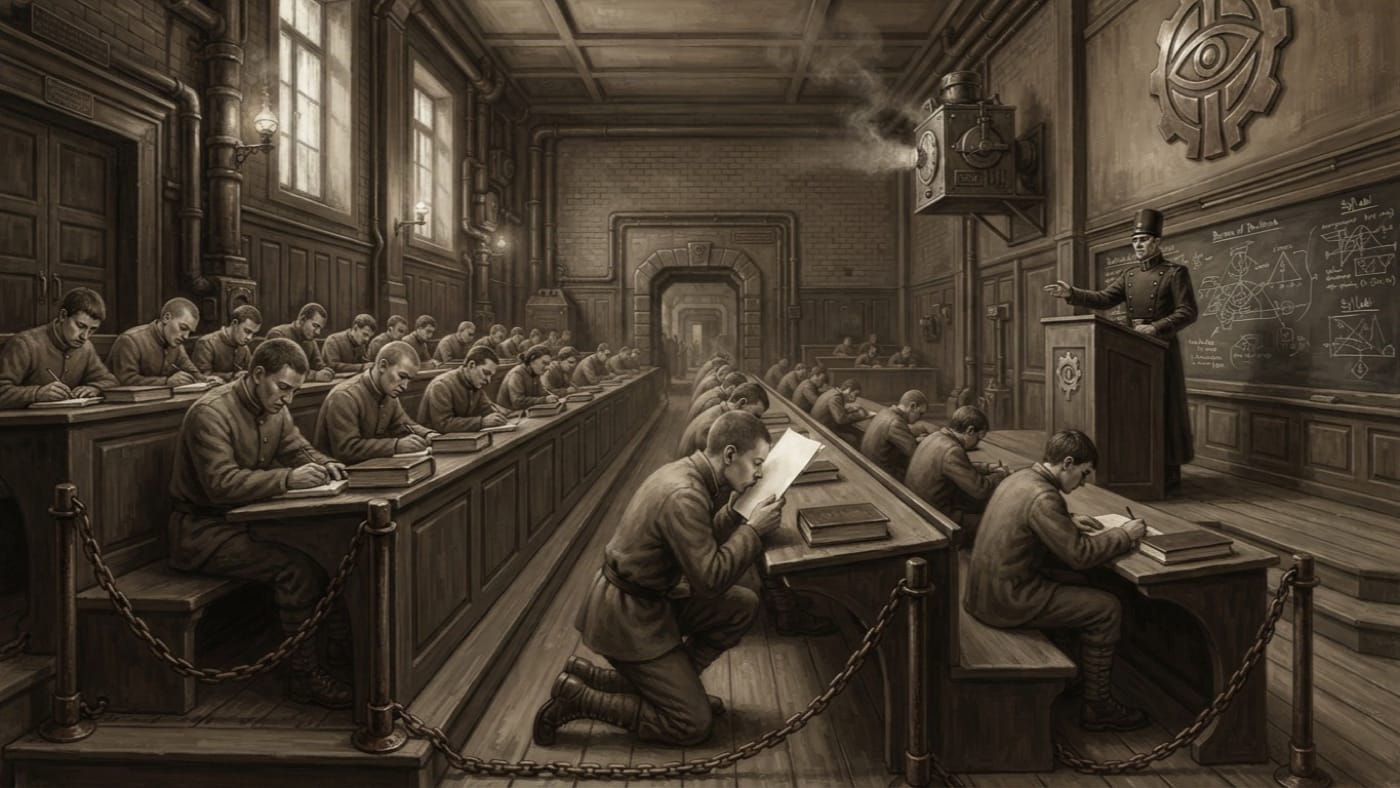
Old Faculty Rows
Where the syllabus was corrected and the desks were chained
Ulm's former Rationalist halls now house doctrinal schools, where Purity audits the syllabi, students kiss blank pages, and the lecture desks remain chained to the floor.
Codex Ref. II.2.01-006
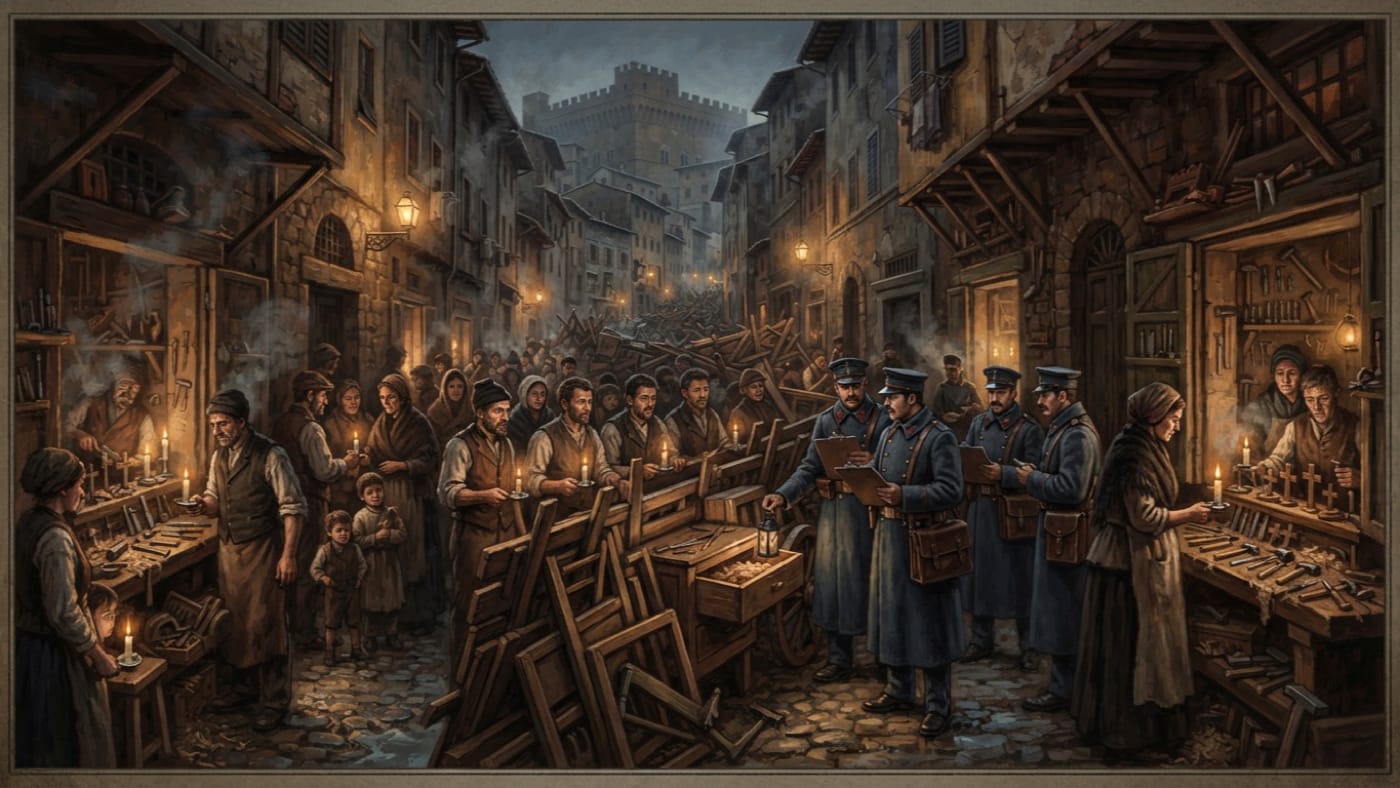
Oltrarno
The quarter that kept the Church in its drawers
Florence's workshop quarter kept the hidden Church in deep drawers, held a street in A.S. 44, and now supplies sacred craft under inspection by offices that arrived after the danger.
Codex Ref. II.4.09-201
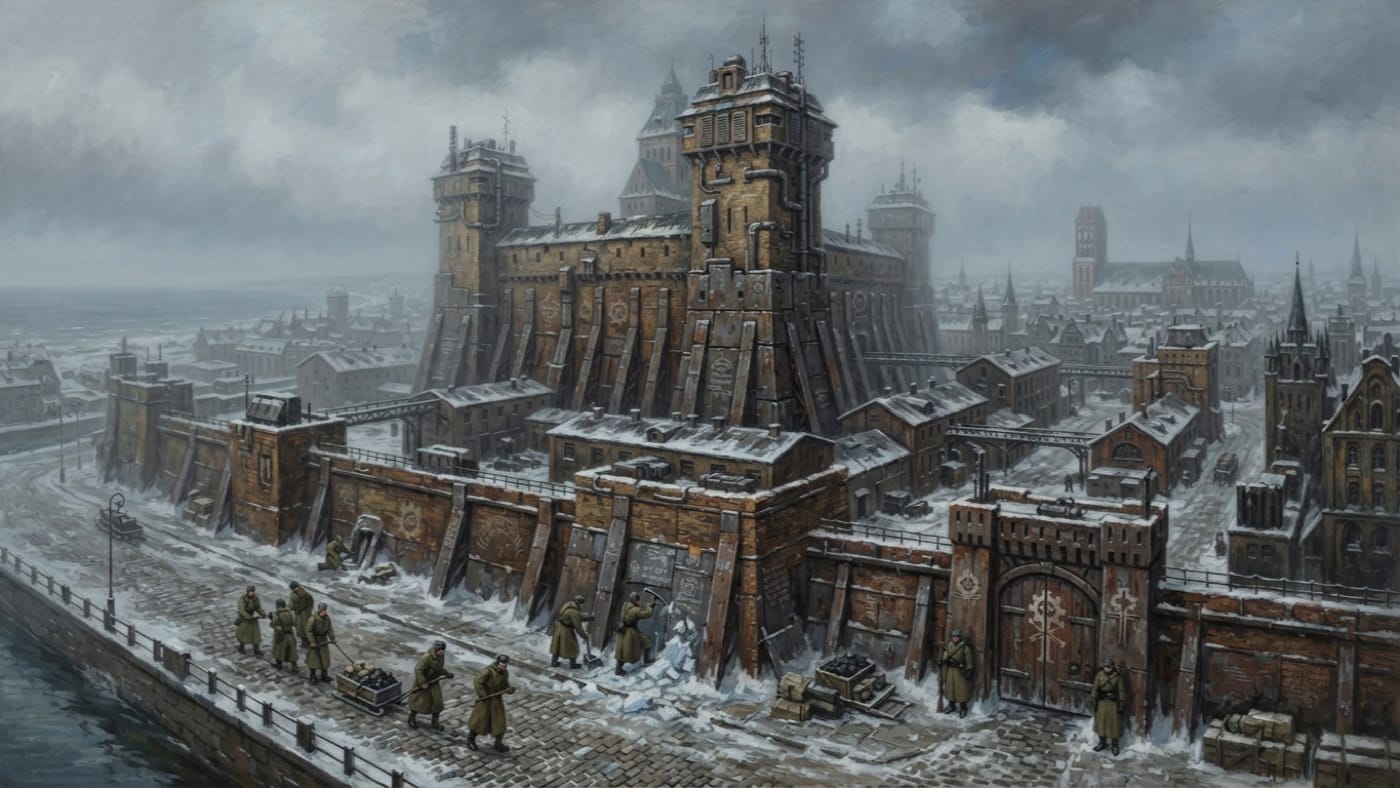
Ordensburg
Where the Walls Are Commanded and the Questions Are Filed
The old Teutonic castle and surrounding district of Bastion-Königsberg, housing garrison command and Doctrine's Northern Office. Halvorsen commands the walls; the office keeps the Grey pending. Both have learned to work with the cold.
Codex Ref. II.4.07-002
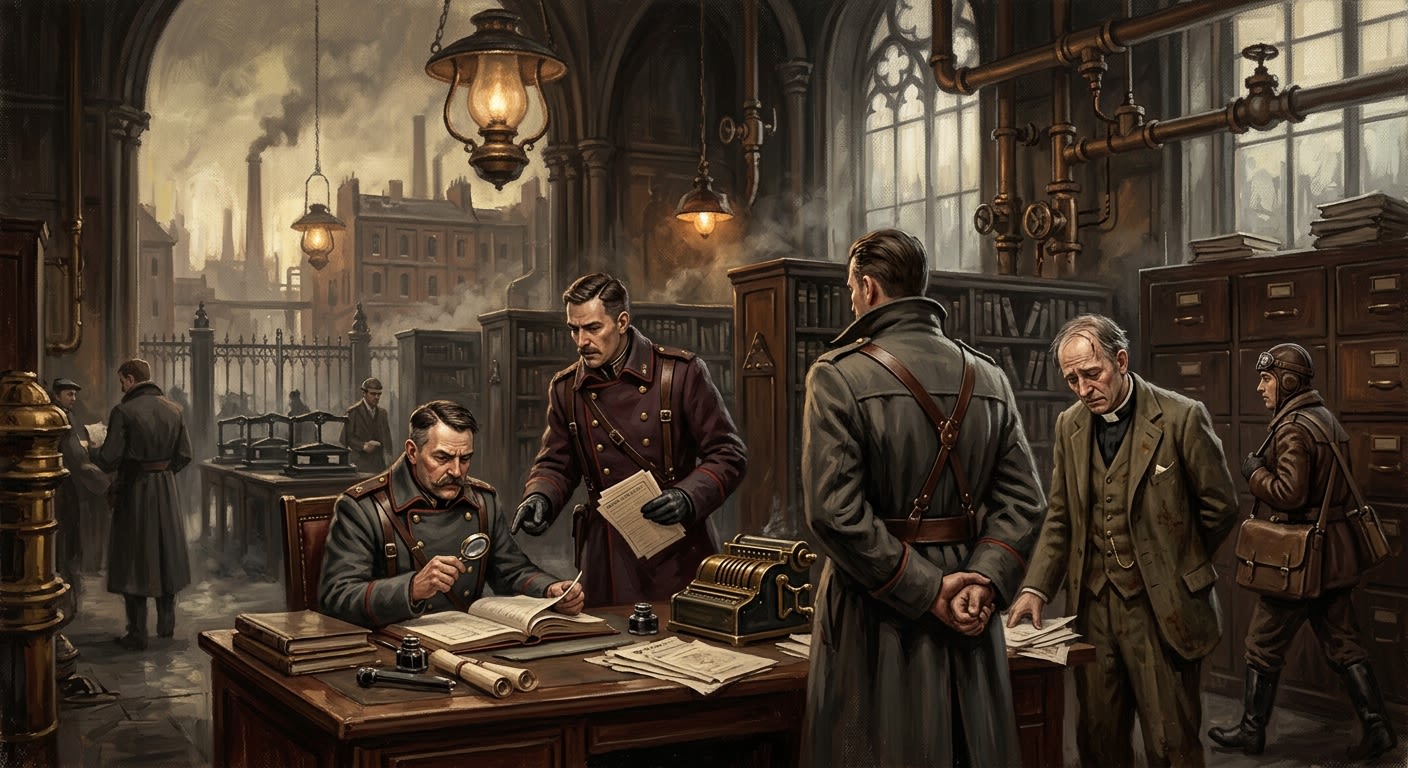
Order of Severance
The inward knife that cuts office from affection before affection becomes a kingdom
The Order of Severance is the Bureau of Purity's inward knife: an inquisitorial fraternity that hunts clerical and bureaucratic heresy where clean cuffs, perfect ledgers, and trusted colleagues become shelter.
Codex Ref. VIII.1.07-134
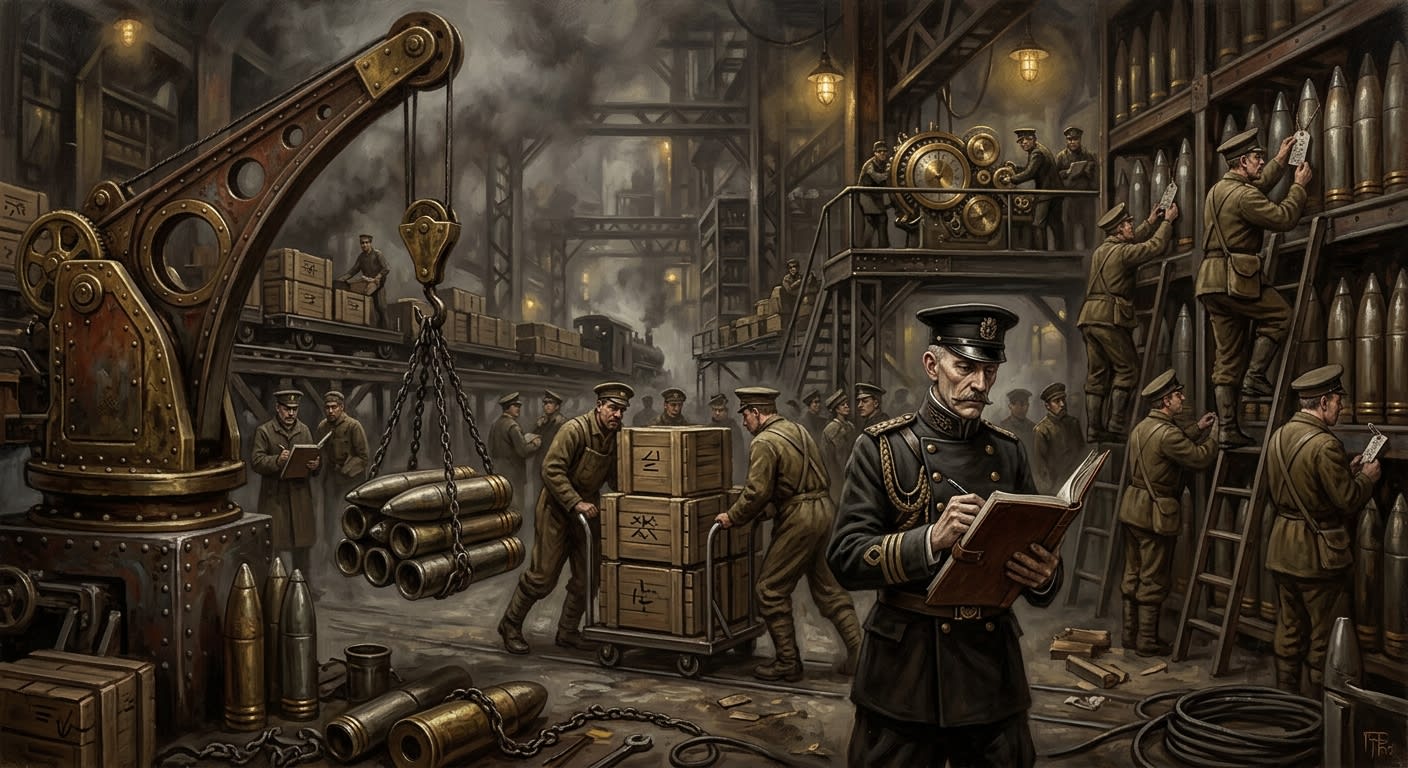
Ordnance Bureau
The office that makes thunder accountable
The Ordnance Bureau numbers, blesses, rations, ships, and recovers the Synod’s lawful violence; its shells arrive late, counted, and indispensable.
Codex Ref. VIII.2.12-090
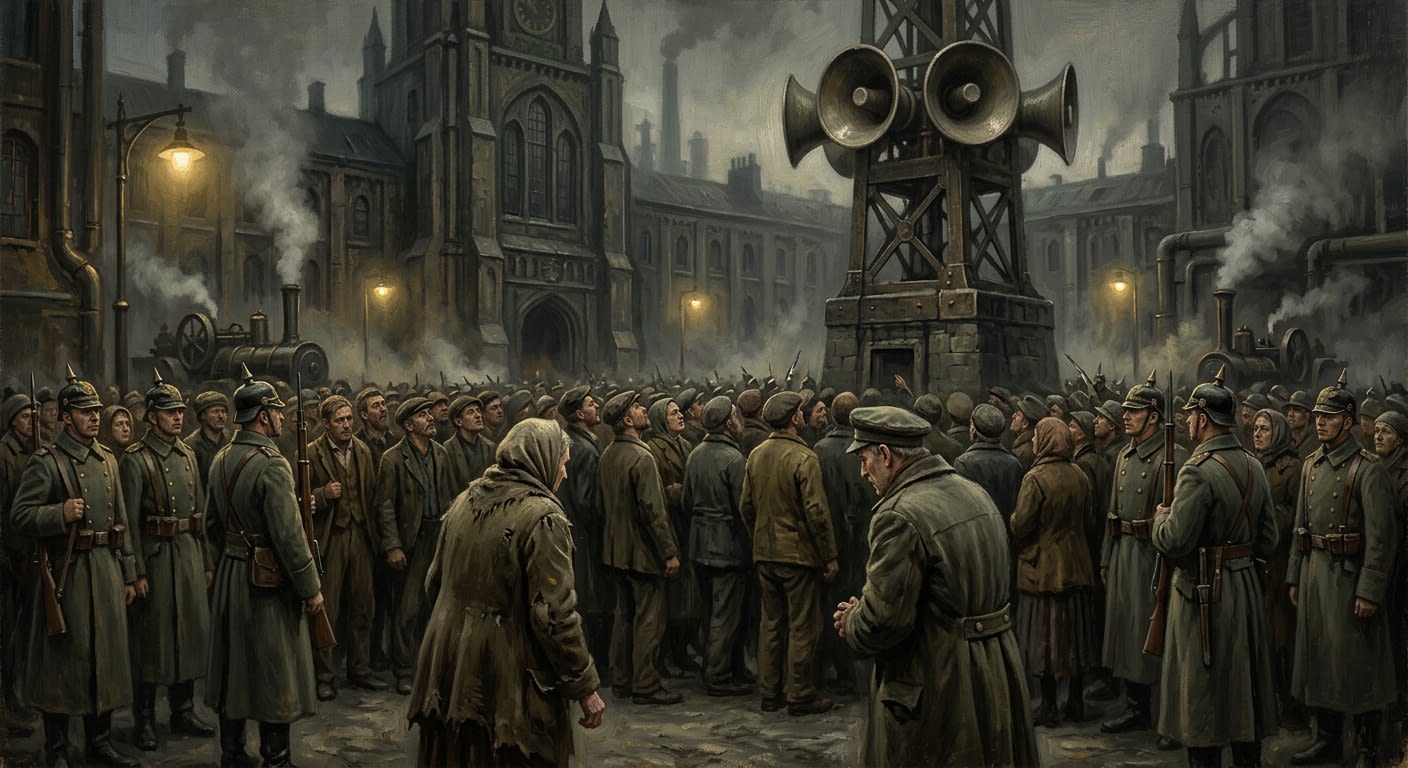
Orison Hour
The hour that owns the ear and charges rent for listening
The Orison Hour is prayer, ration order, casualty roll, curfew, census pressure, and acoustic cudgel: Europe instructed to possess one throat.
Codex Ref. XIII.1.96-112
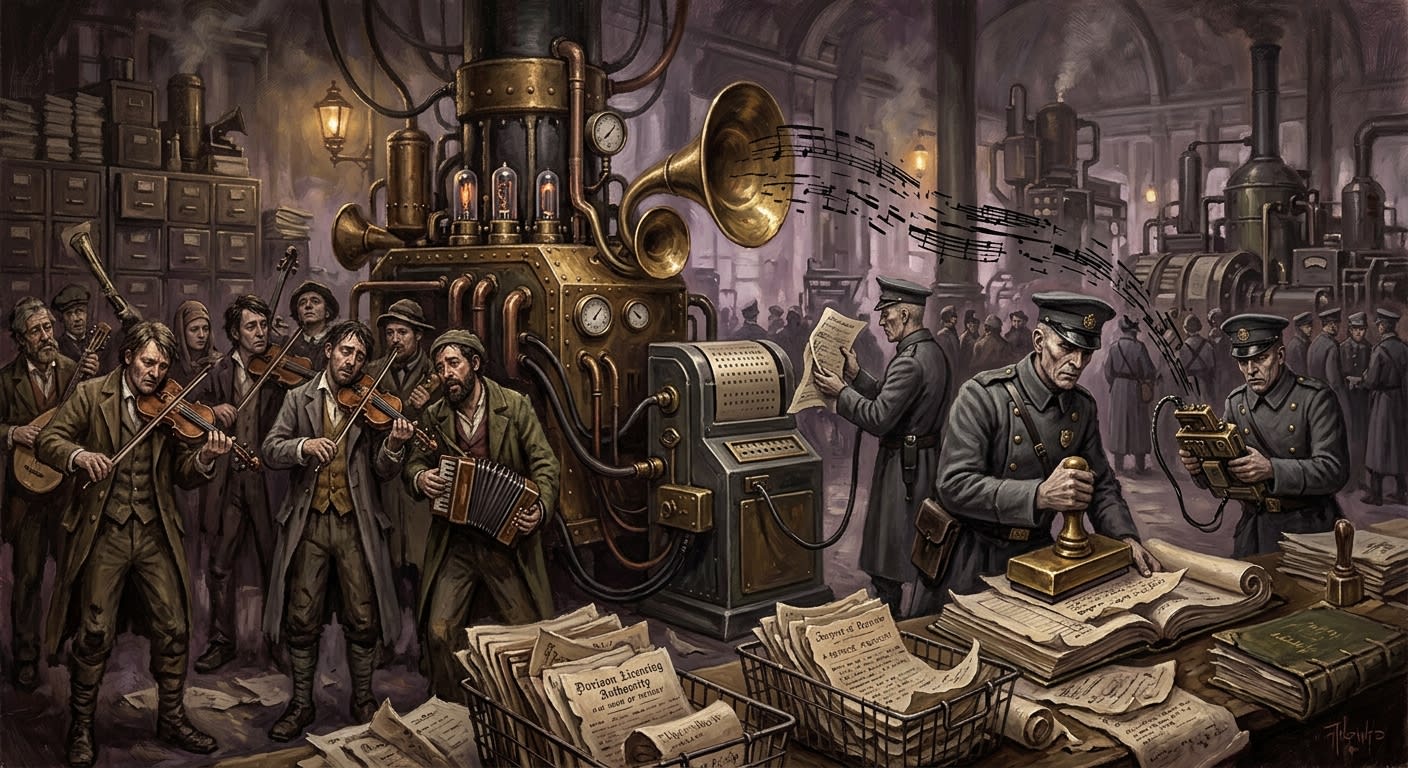
Orison Licensing Acts A.S. 94
No private hymn, no innocent breath
A.S. 94 legal seizure of melody itself: the Acts made every cadence licensed or criminal and created the market they pretended to destroy.
Codex Ref. VII.2.10-094
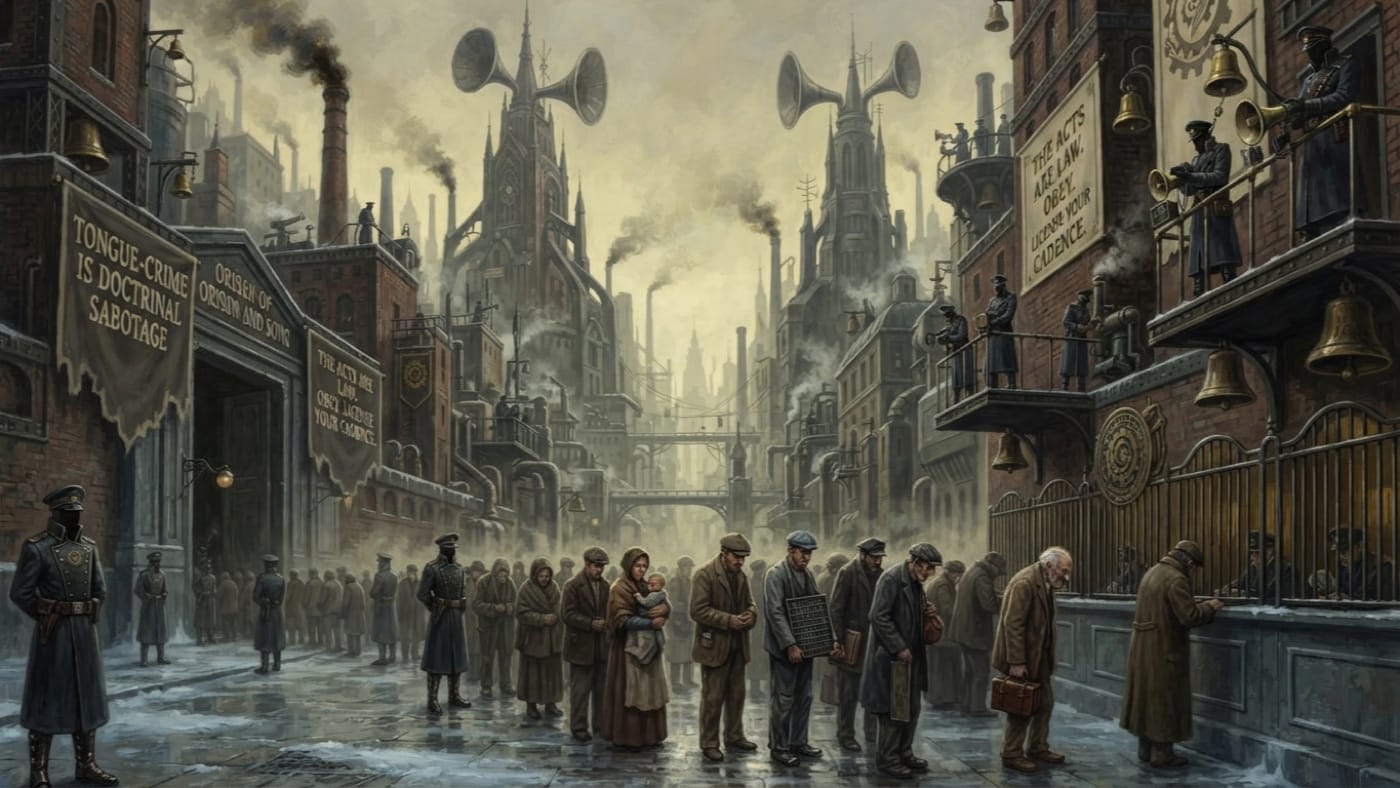
Orison Licensing Acts of A.S. 94
Every tune a licence or a crime
The A.S. 94 Acts placed every melody, cadence and whistled work-bar under Orison: licensed or criminal, with no middle category and no appeal. The Bureau acquired sound; the smugglers acquired a trade.
Codex Ref. XIII.1.96-094
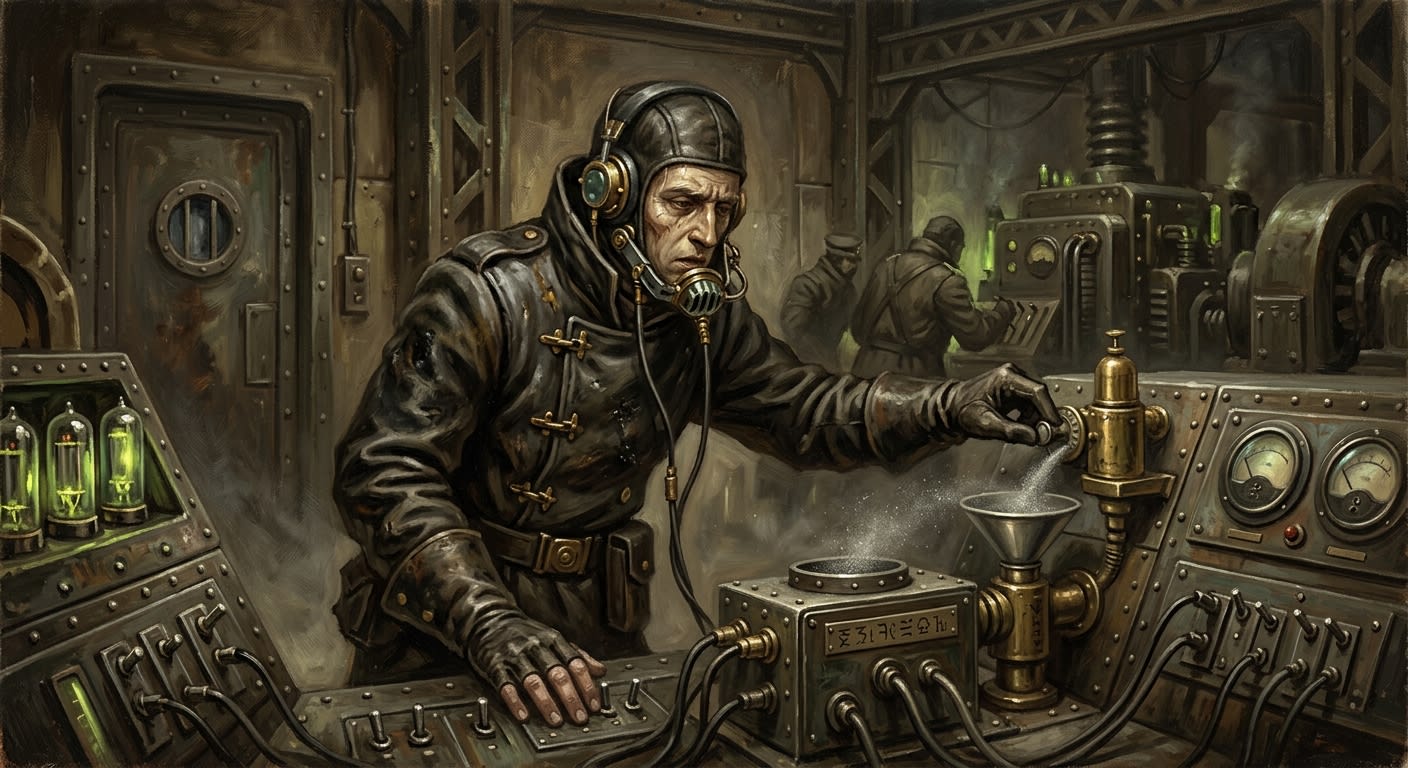
Orison Signal Engineer
The approved voice must arrive cleaner than the air that carries it
Orison Signal Engineers lace the Synod's broadcasts with saint-dust, keeping doctrine, ration orders, and war commands from curdling into enemy song.
Codex Ref. VI.4.07-018
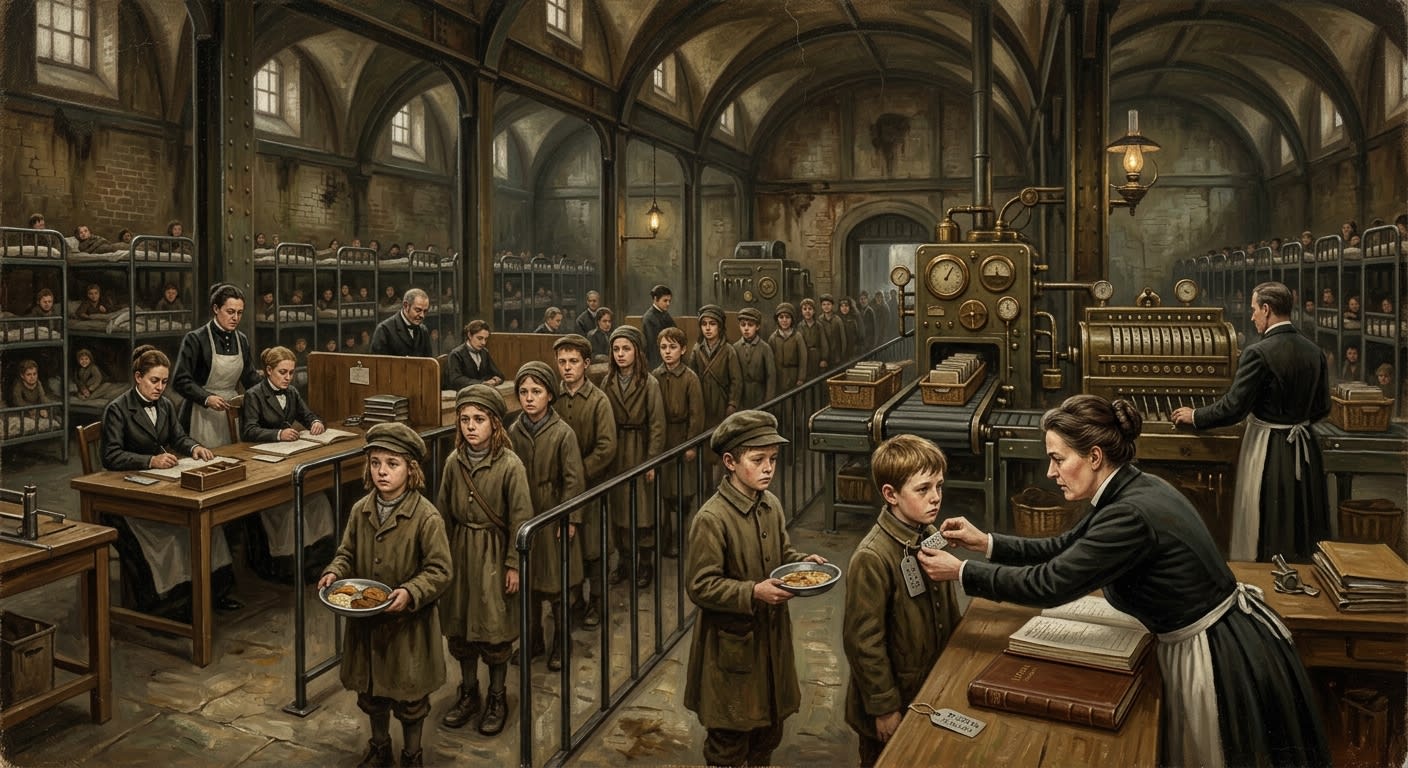
Orphanarii
Mercy with a cot, a tag-punch, and the legal courage to rename a child before breakfast
The Orphanarii are the Synod's state orphanage system: Mercy houses that wash, tag, rename, sort, feed, place, and sometimes erase children until grief becomes legible.
Codex Ref. VIII.2.12-134
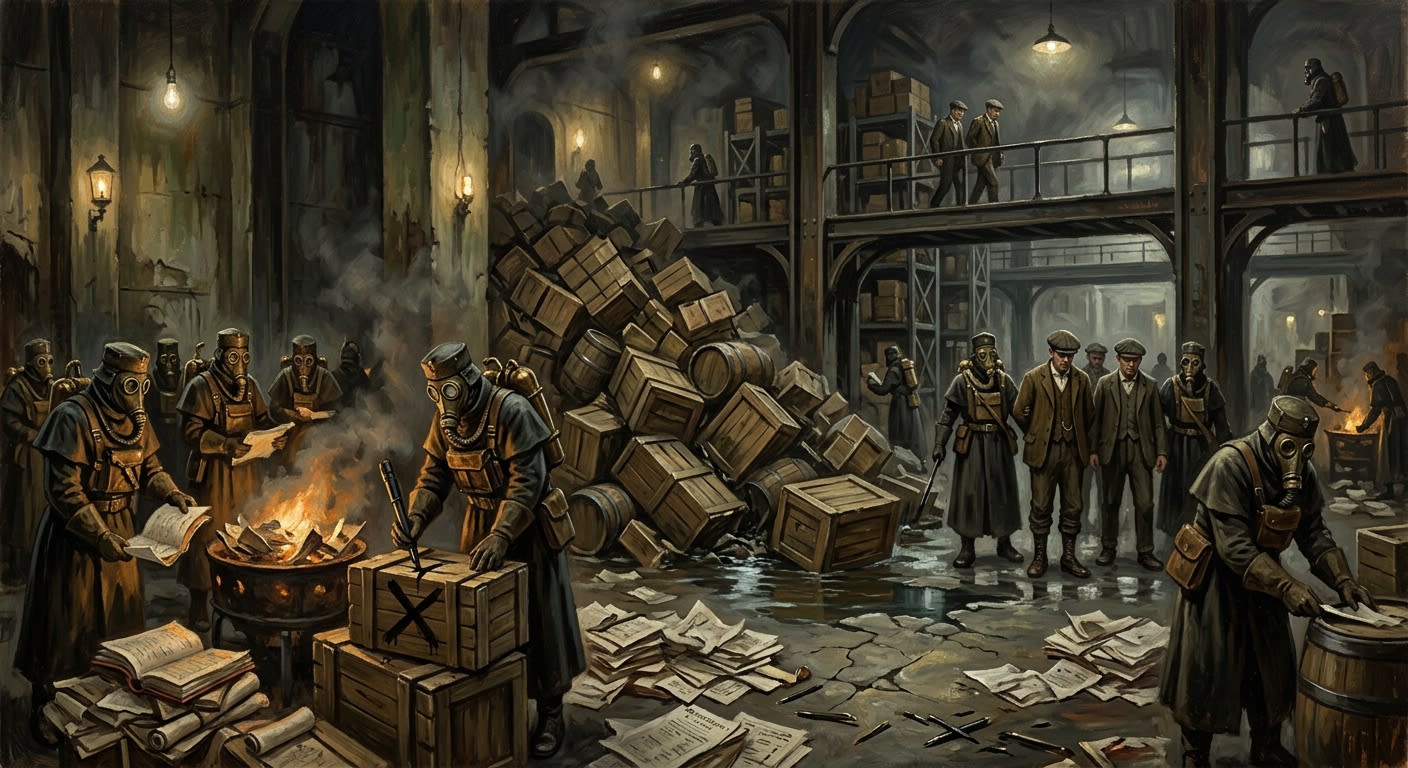
Orthography Purge of A.S. 112
When the letter changed, the invoice died obediently
The Orthography Purge of A.S. 112 reopened 411 manifest cases, stripped eleven Litigants of practice rights, and taught merchants that one suspect stroke can bankrupt a warehouse.
Codex Ref. VII.8.10-002
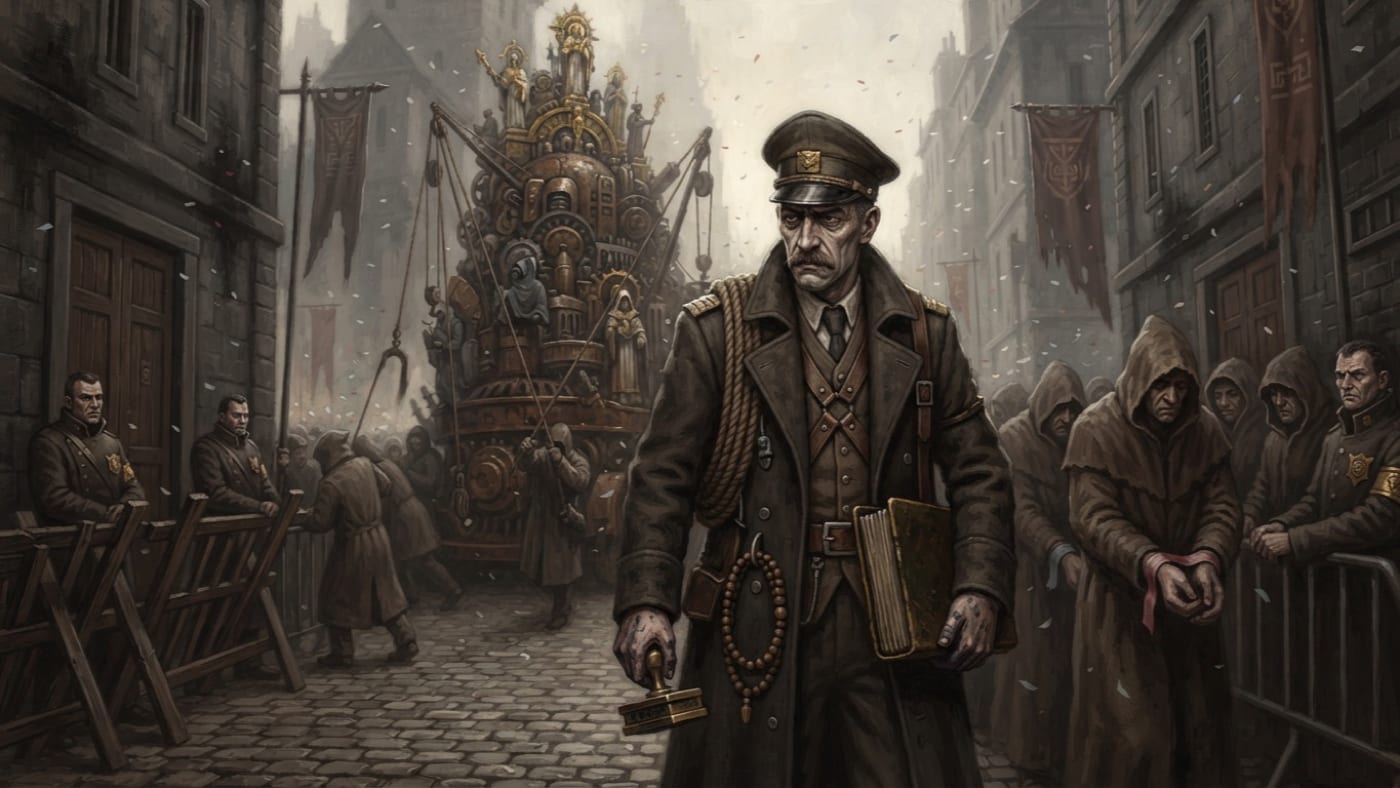
Pageant Captain
Crowds routed, confetti reconciled, joy accounted for
The Bureau of Festivals' logistical officers route crowds, move relic-floats and weigh the confetti afterward. Their signatures accompany every anomaly list. The paper must balance.
Codex Ref. XII.17.03-001
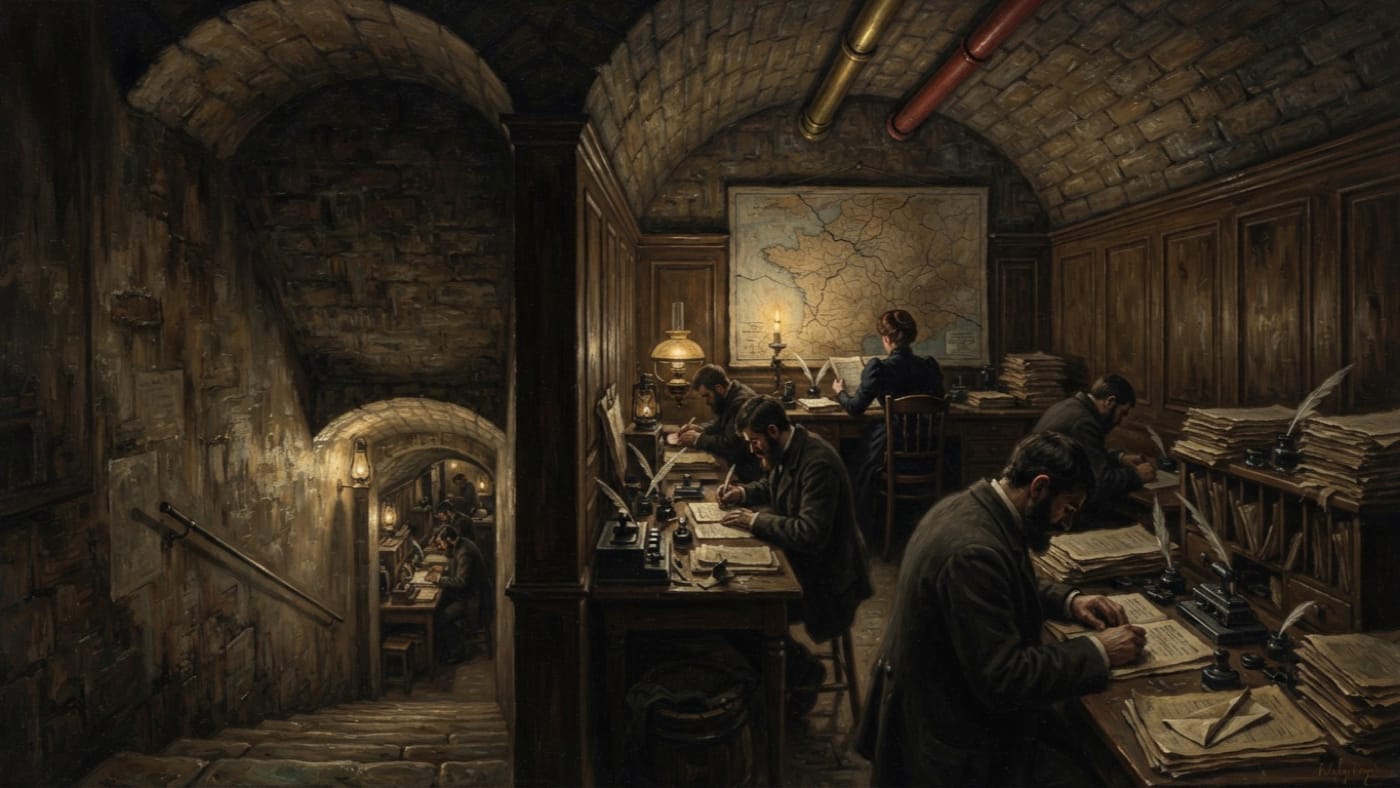
Palatine Administrative Wing
Rank ascends. Settlement descends.
The Palatine Administrative Wing stacks Tithes above Records above Settlement, whose wine-cellar offices decide where three hundred million subjects may sleep. In Strasbourg, dependence is measured by how far one must descend.
Codex Ref. II.2.08-201
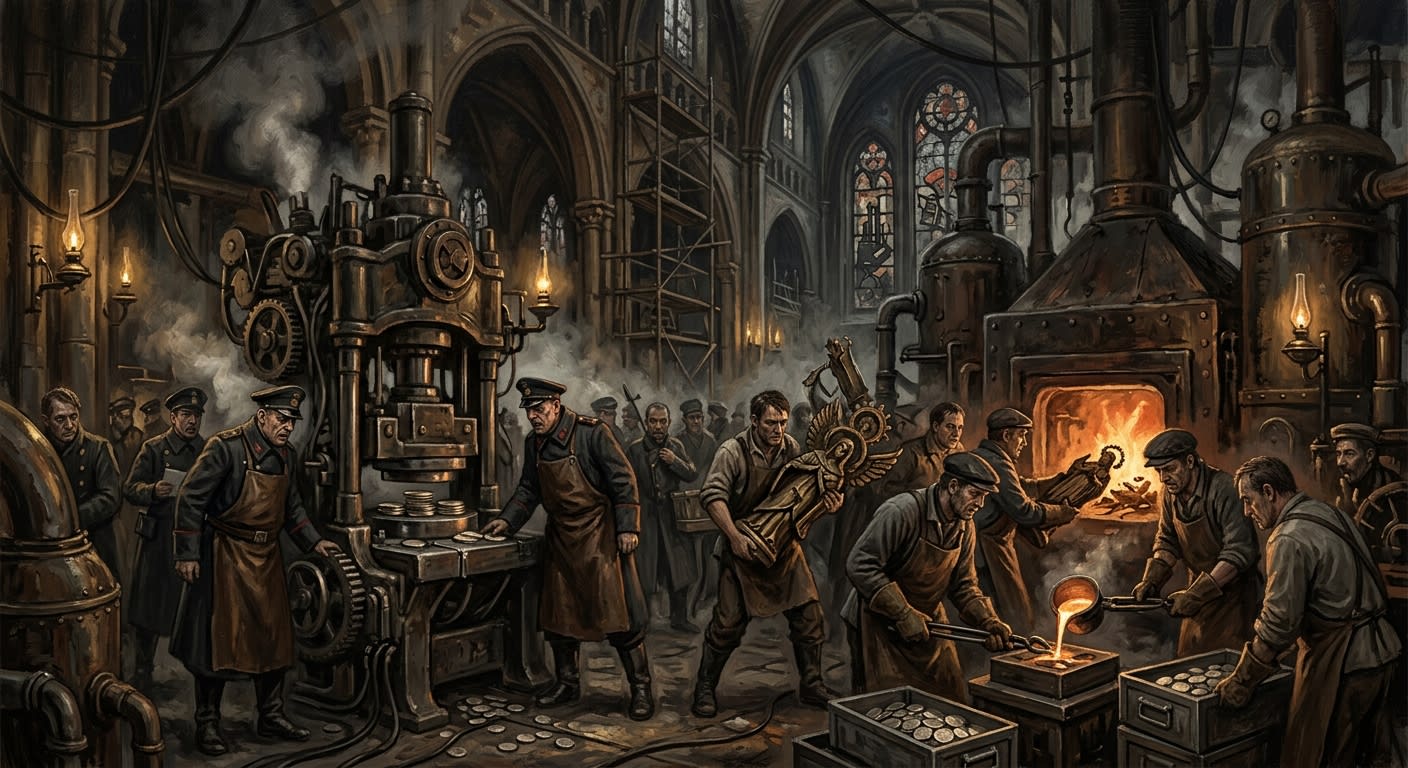
Panic of Wrath's March
Wrath did not enter Aachen; Aachen paid anyway
A.S. 160 gave Aachen no siege, no breach, and no Maldrake at the gate — only fear hot enough for Tithes to melt saints into coin.
Codex Ref. VII.8.10-160
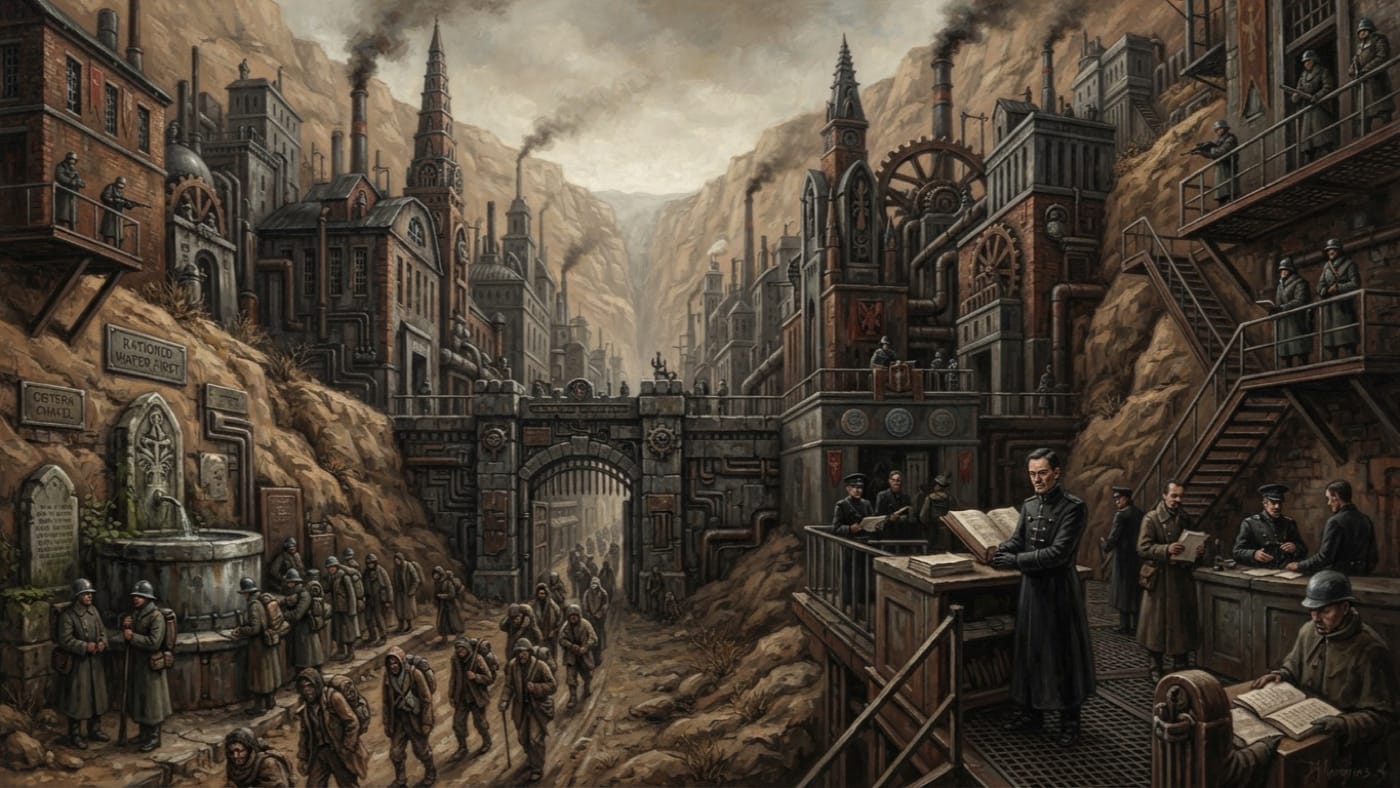
Peregrin
The toll is older than the charter
Peregrin is one of three founding households that taxed water and passage at Peregrine Row before the formal Synod. The Ledger preserves the toll; it supplies no genealogy.
Codex Ref. VIII.6.11-002
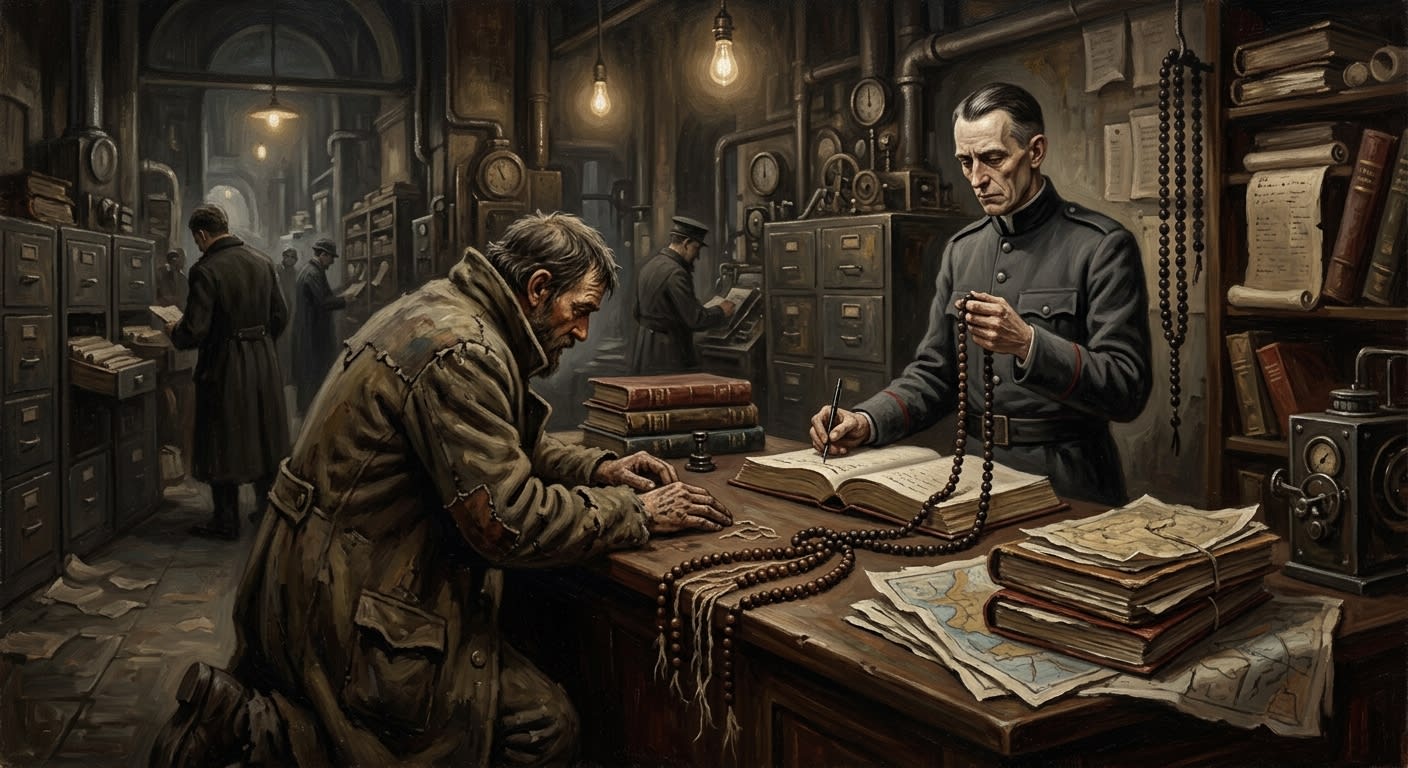
Pilgrim Reconciliation Statutes
Correction is salvation, provided the fee clears
The Pilgrim Reconciliation Statutes made mercy countable: bead strings, route errors, confession addenda, second strings, debt, and sanctioned delay.
Codex Ref. XIII.1.72-097
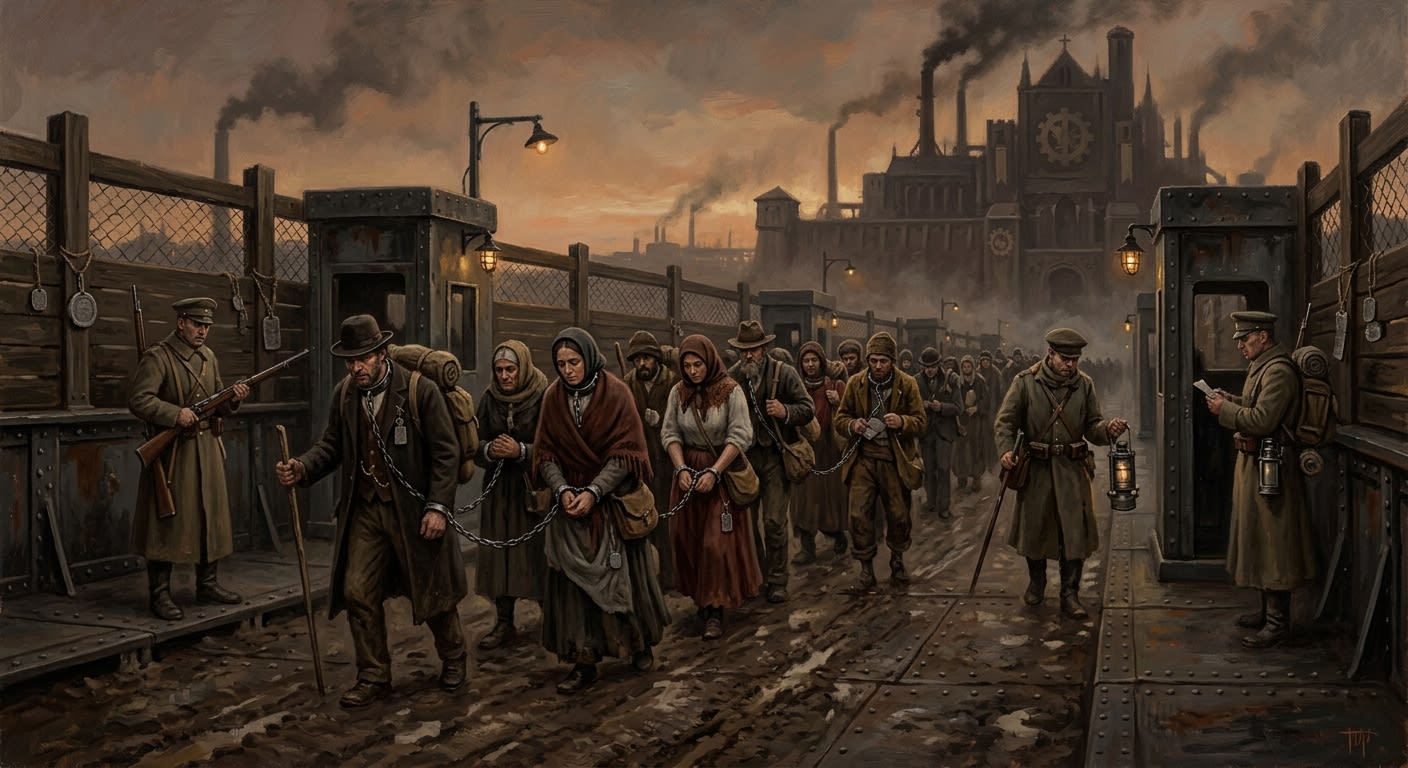
Pilgrim Roads
Sanctity is motion under witness, and witness under invoice
The Pilgrim Roads made walking obedient: licensed motion, tolls, tokens, chains, grief, delay, and low earth holiness under seal.
Codex Ref. XIII.1.86-094
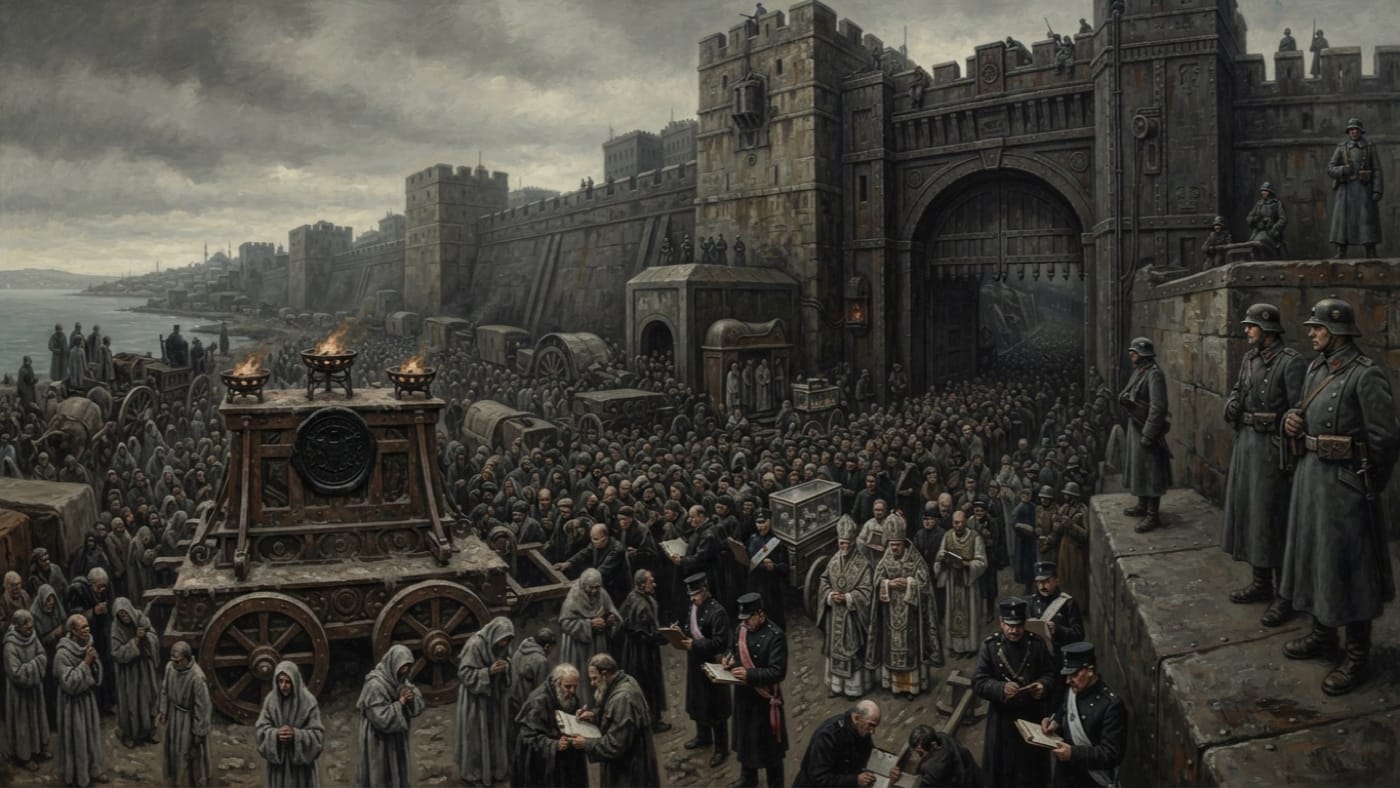
Pilgrim’s Gate
Forty days of pageantry, then five words from War
At Bastion-Constantinople, forty days of pageantry stop at Pilgrim’s Gate. Festivals counts the faithful; War declines to admit the floats.
Codex Ref. II.4.09-175
Pillars of Glass, Zaragoza
Transparent cruelty, polished daily for the improvement of the crowd
Zaragoza's punishment plaza of glass columns, where condemned bodies stand magnified into civic lessons and the Ash-Rain still leaves pale residue on Purity's proudest transparent cruelty.
Codex Ref. II.1.06-001
Plague Years
The boot scattered the crowd. The grief returned.
An A.S. 201 survey of Rhineland disease, exhaustion and curfew unrest. The riots of A.S. 78–83 exposed the limits of the boot; licensed consolation followed.
Codex Ref. VII.8.10-201
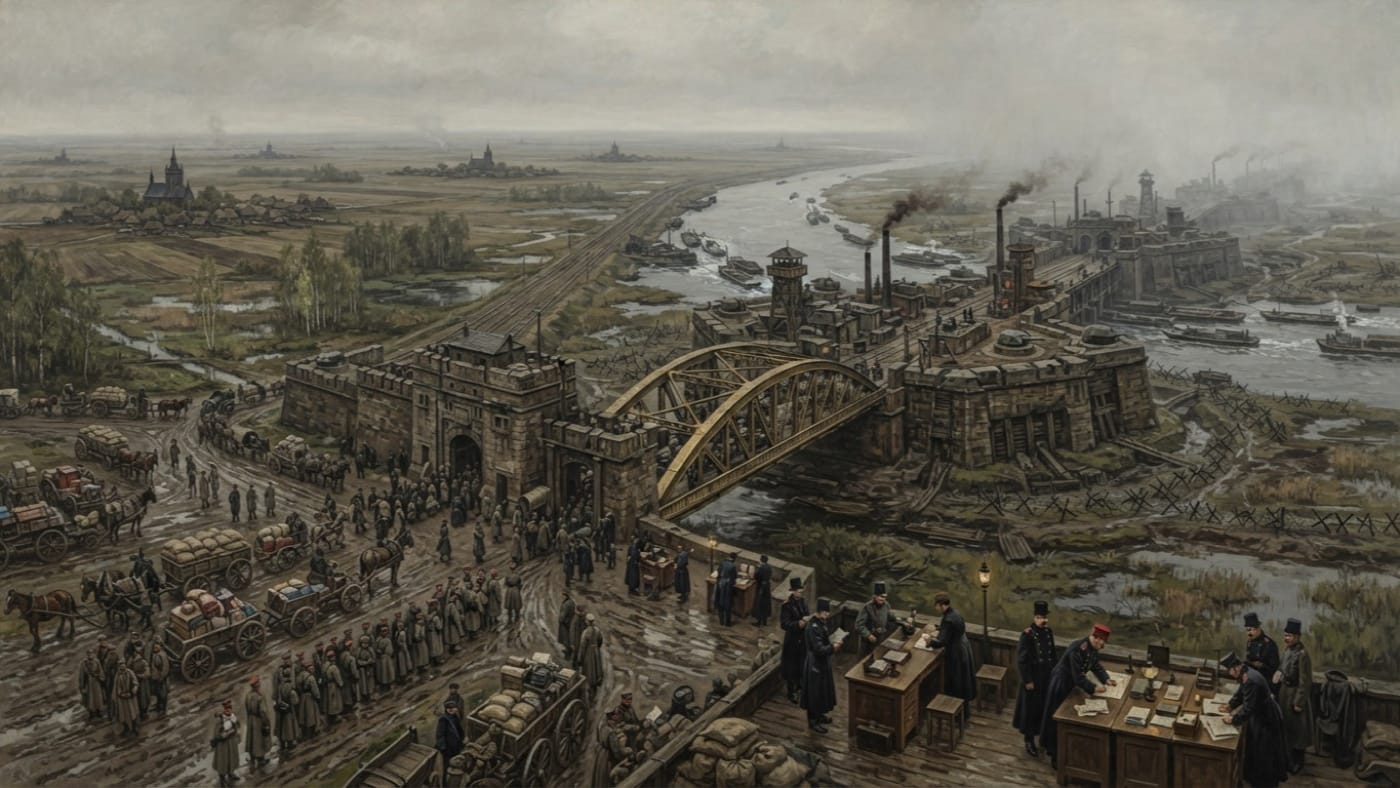
Polish Lowlands
Where the north grows its bread and loses its sons
The Polish lowlands feed the northern front with grain, horses and sons. Between Vistula and Bug, the rails run flat, the convoys wait, and Brest makes every lawful crossing a matter of confession.
Codex Ref. II.4.07-201
Pontifex Submersis
The name is gone; the chains still hum; the Bureau has no comment
The man the Bureau erased so thoroughly it must write eleven pages explaining what he was not: the Drowned Pontiff of Avignon, non-person, non-event, non-theology. His name is gone. The chains hum in B-flat.
Codex Ref. III.2.02-001
Port Court
Where cargo waits while permission proves it has a soul
The Port Court names cargo before mercy may touch it: a Commerce bench where sacks become law, law becomes delay, and delay invoices the hungry.
Codex Ref. XIII.1.89-112
Port Court Division
The court rules; the Division licenses the voice and invoices the wait
The Port Court Division licenses Commerce's litigants, governs Precedent Curators, and keeps the Thirty-Seal Index: the court rules, while the Division makes every delay accountable and billable.
Codex Ref. VIII.2.10-201
Praelates
Authority lent downward; the receipt kept in Strasbourg
The Synod's governors rule by pulpit, ledger and levy. A Praelate may feed a city or empty it; Strasbourg keeps the receipt for both.
Codex Ref. III.2.03-002
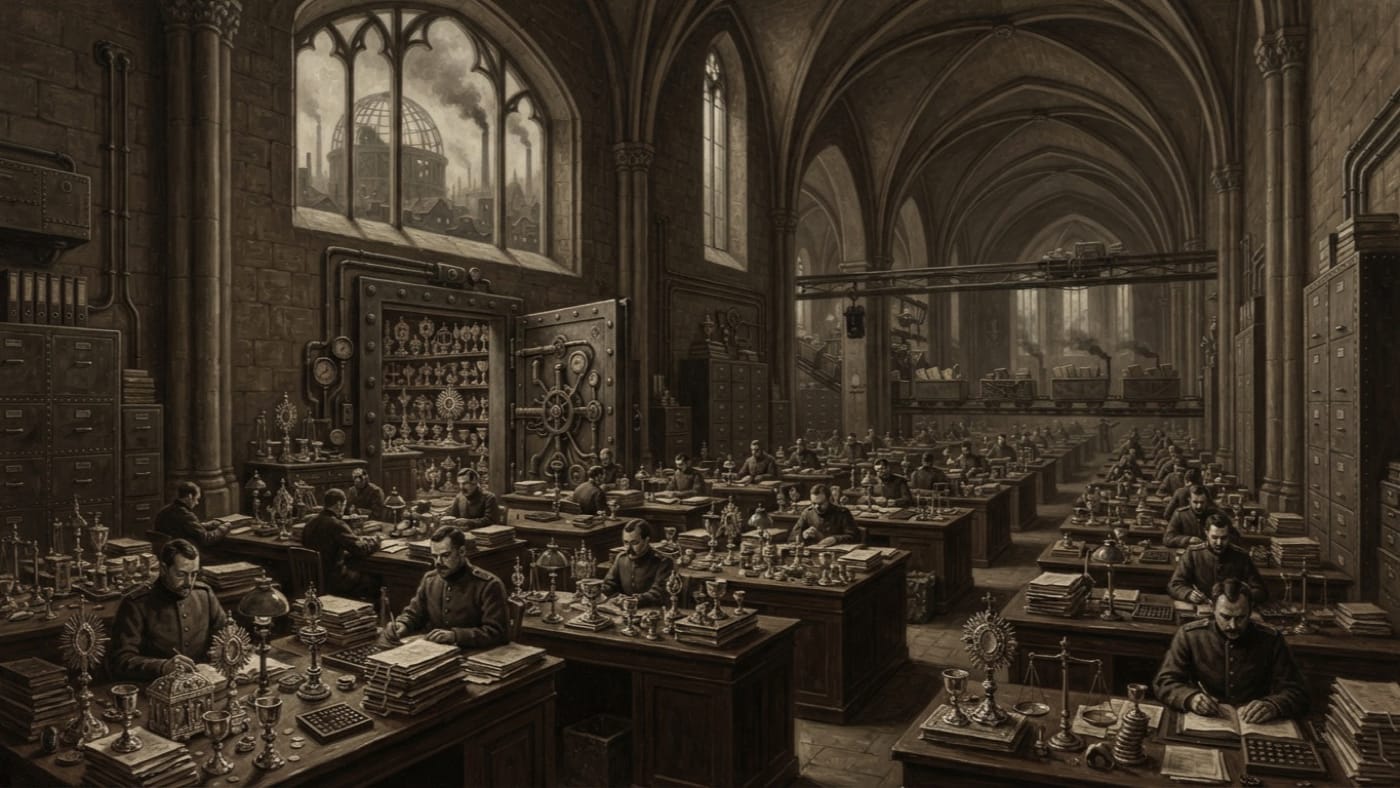
Prefectural Treasury
The Church's patrimony, reassigned by a sentence
The Rationalist office charged at Regensburg with administering the Church's seized wealth. Reason received an observatory, mahogany desks and coin. The mandate was annulled; the final balance remains unrecorded.
Codex Ref. I.1.05-030
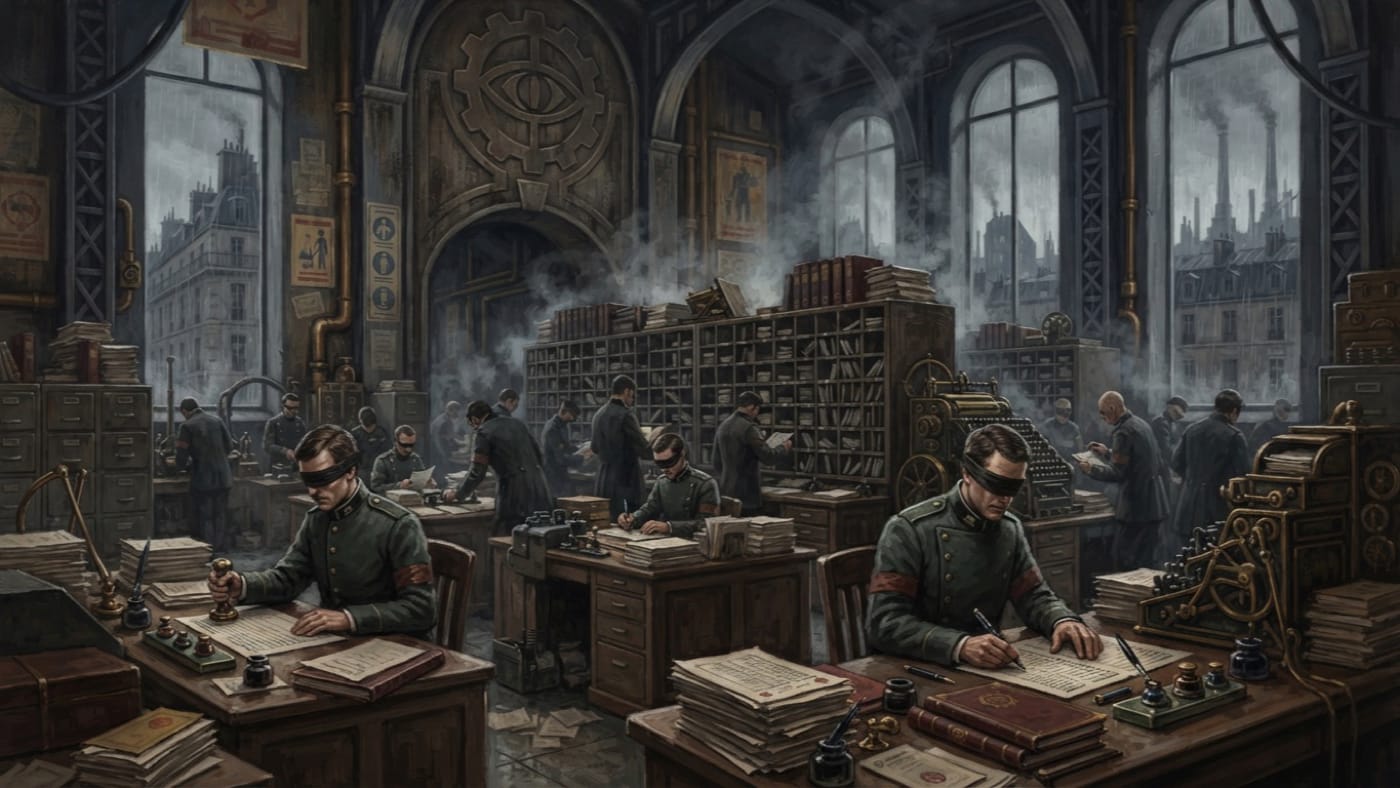
Prefecture of Paris
The seal went onto the Edict; the clerks kept their hands clean
The Paris office that issued Ironmouth in A.S. 30 turned Rationalist doctrine into warrants, Guard dispatches and tongue returns. Its papers survived to instruct its conquerors.
Codex Ref. I.1.13-030
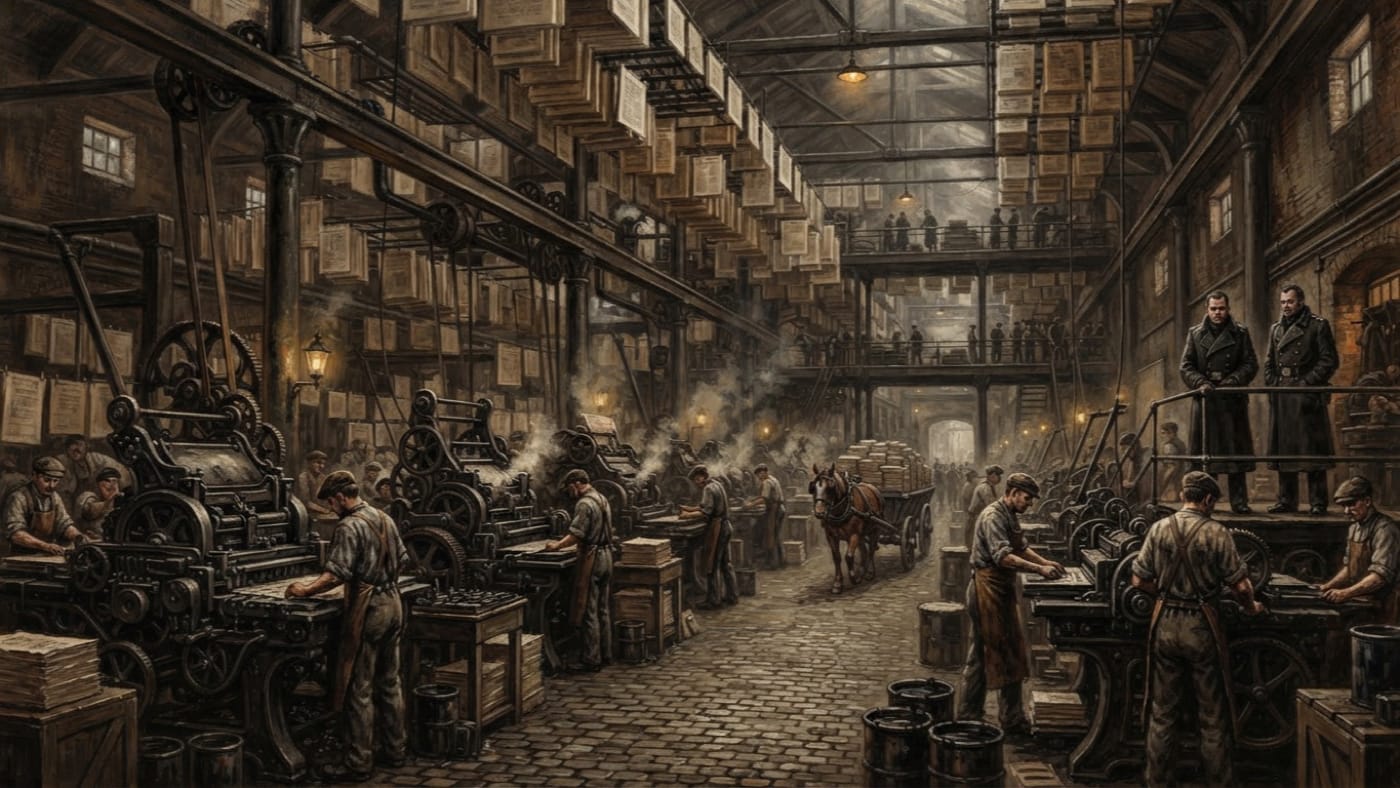
Press Yards
Where Ulm prints the terms of its obedience
Ulm's Press Yards turn Paper Mines stock into approved words: Index copies, catechisms and denunciation forms. The pressmen retain their names for as long as their work permits.
Codex Ref. II.2.01-008
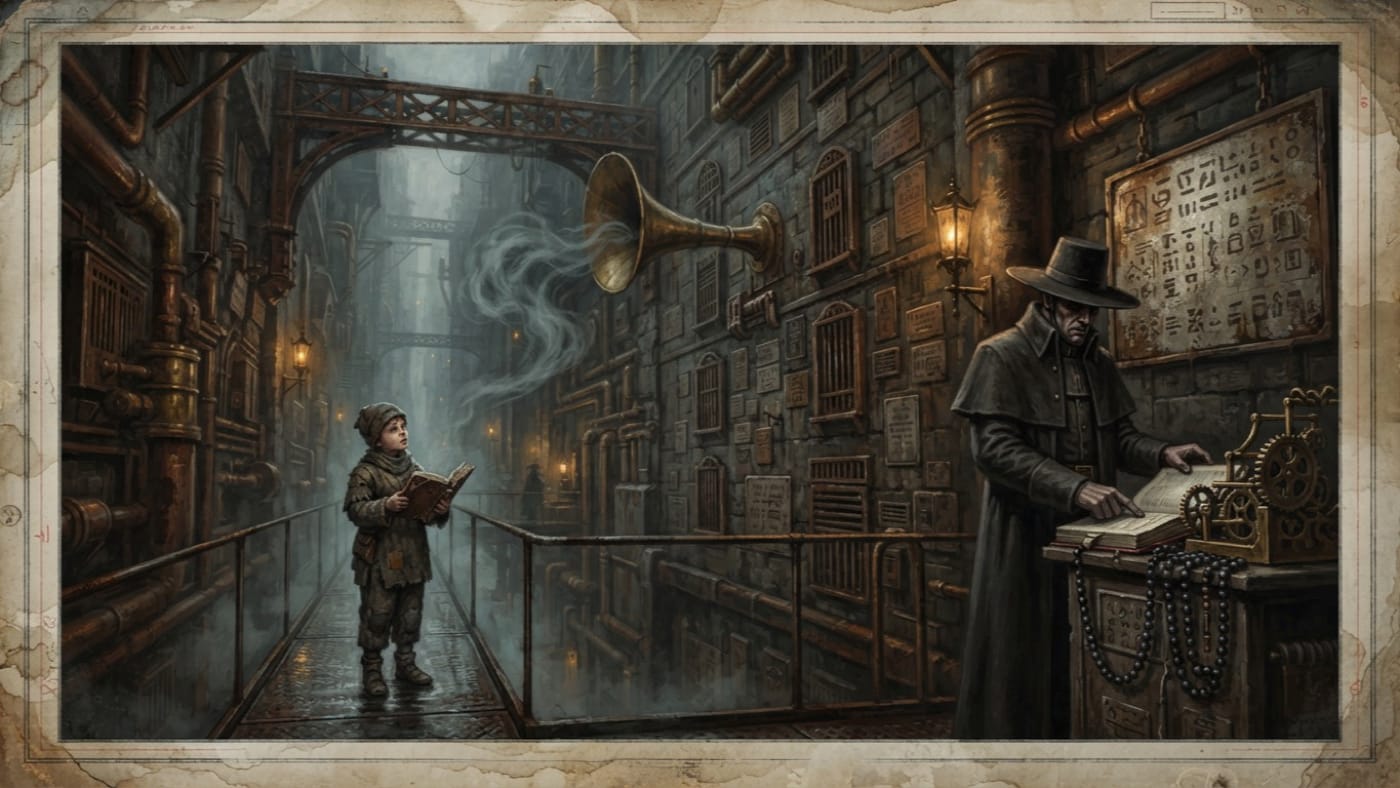
Primer of Clean Tongues
A child's lesson, and a name the Ledger had not yet issued
The Primer is known from a child's recitation at Peregrine Row, where the wall returned his adult name before Records assigned it. The compiler remains unrecorded.
Codex Ref. XIII.1.23-002
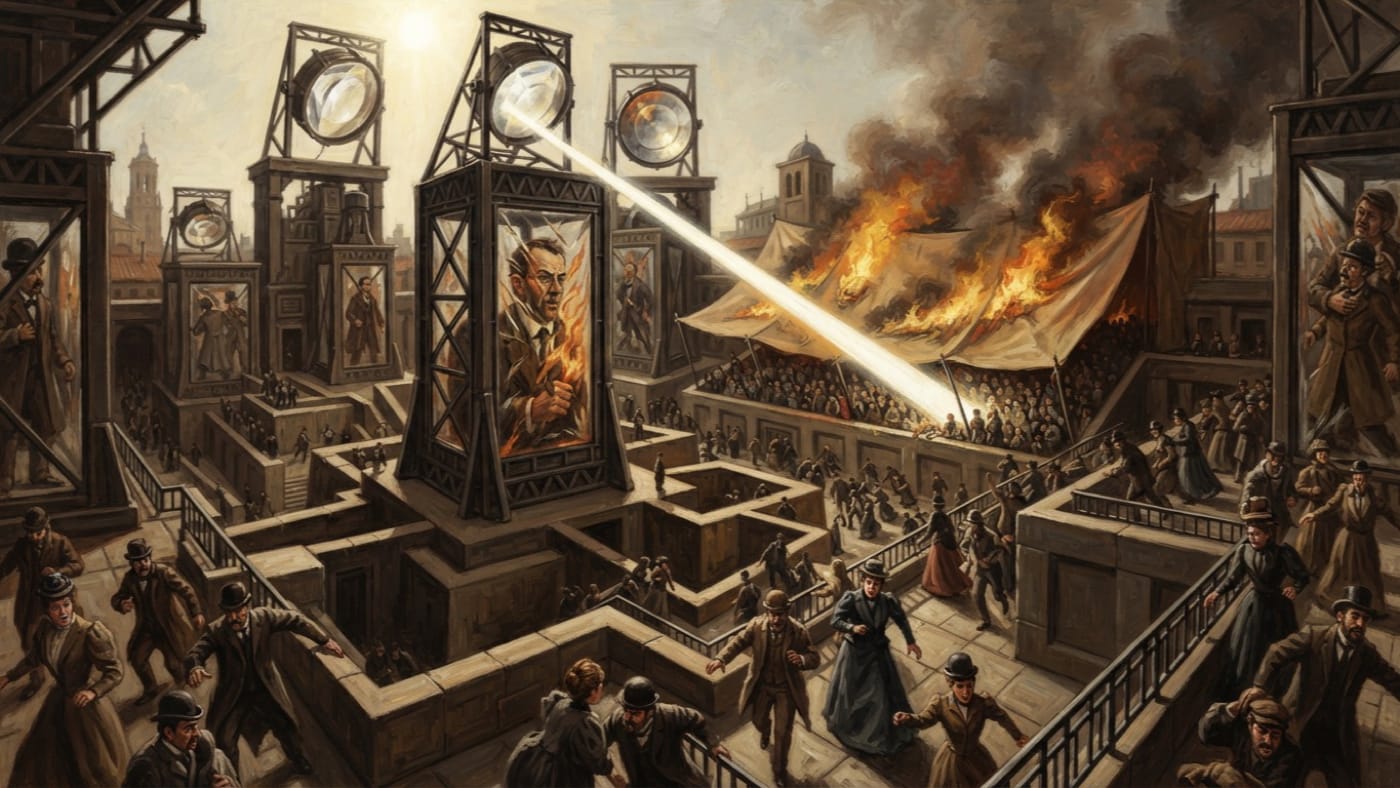
Prism Fire
When geometry delivered the sermon ahead of schedule
A.S. 201 survey of Zaragoza's undated Prism Fire, when three misaligned prisms ignited the viewing awnings. The glass, plaza and sermons were corrected; the sun received no reprimand.
Codex Ref. VII.4.13-002

Proceedings of the Ninth Doctrinal Congress
A title, a shelf, and a ruling; the shelf offers no further testimony
My A.S. 201 documentary survey of the Proceedings: its surviving title, my custodial mention, and the Ninth Congress ruling reported in The Sundering. The book's contents receive no invented certification.
Codex Ref. XIII.1.04-009
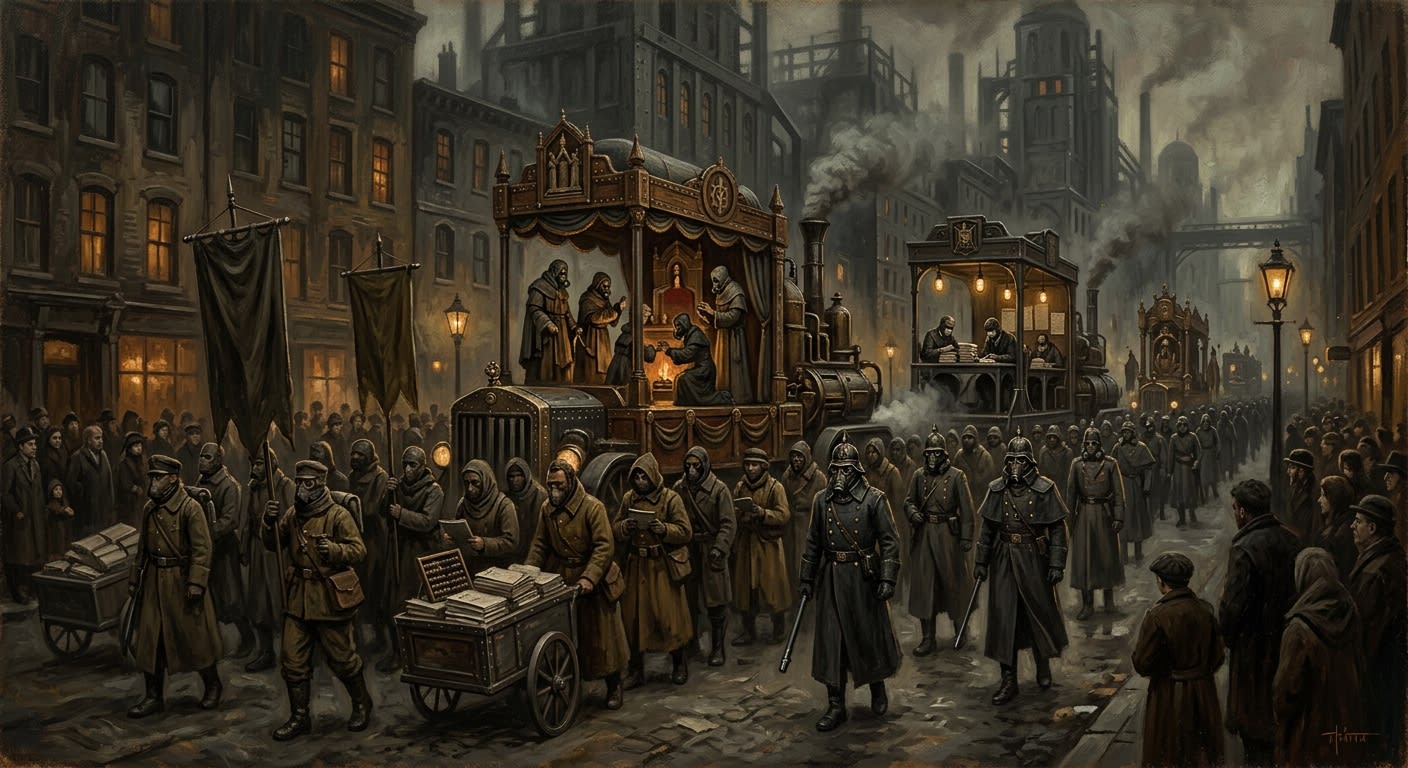
Procession of the Triune Hearth
One people, one creed, one spectacle, counted twice
First staged in A.S. 175, the Procession of the Triune Hearth turned Concordat memory into forty days of floats, census work, unity theatre, and invoices.
Codex Ref. VII.3.02-001
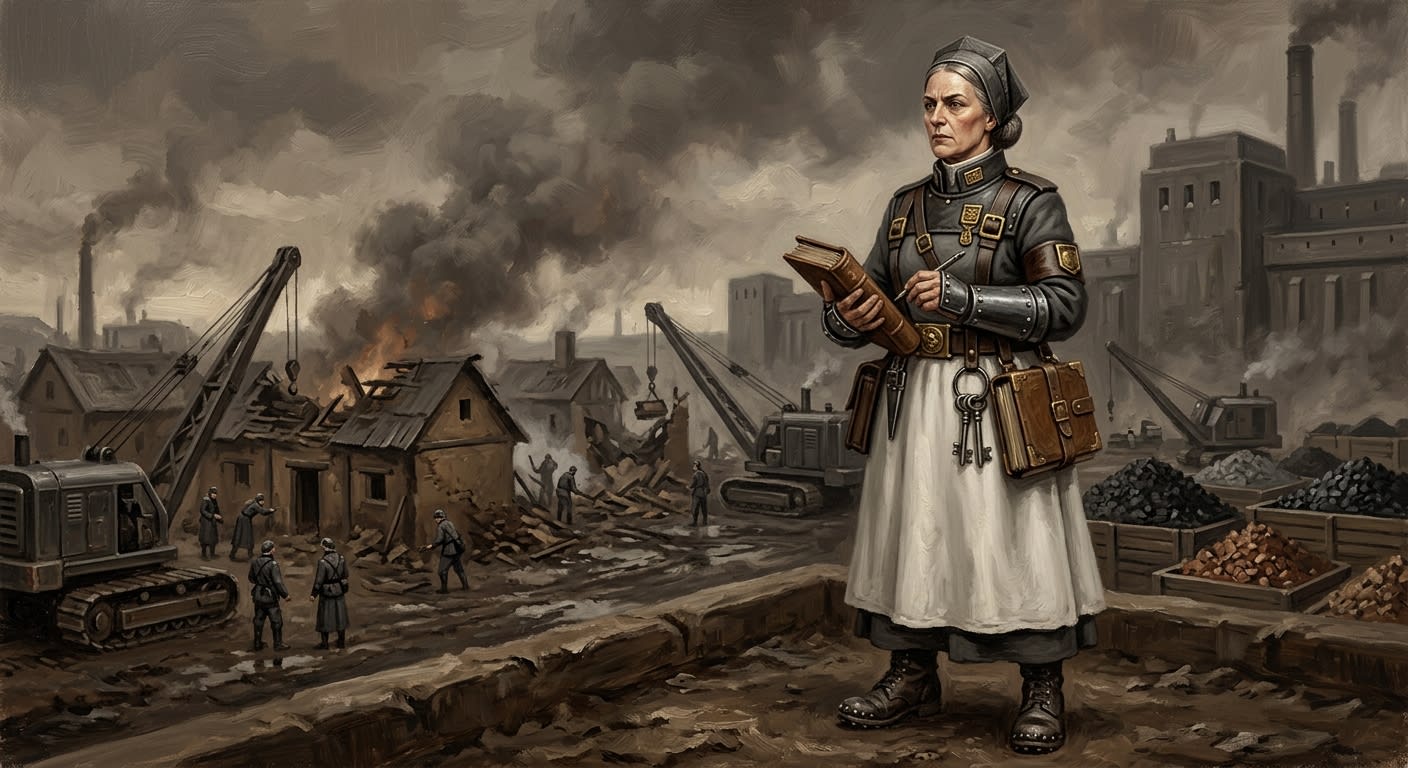
Procurator Hildegarde of Mainz
She made correction visible and mercy file its own apology
Hildegarde of Mainz gave Purity its white mantle, razed forty tithe villages, and became the saint of visible correction.
Codex Ref. III.2.03-001
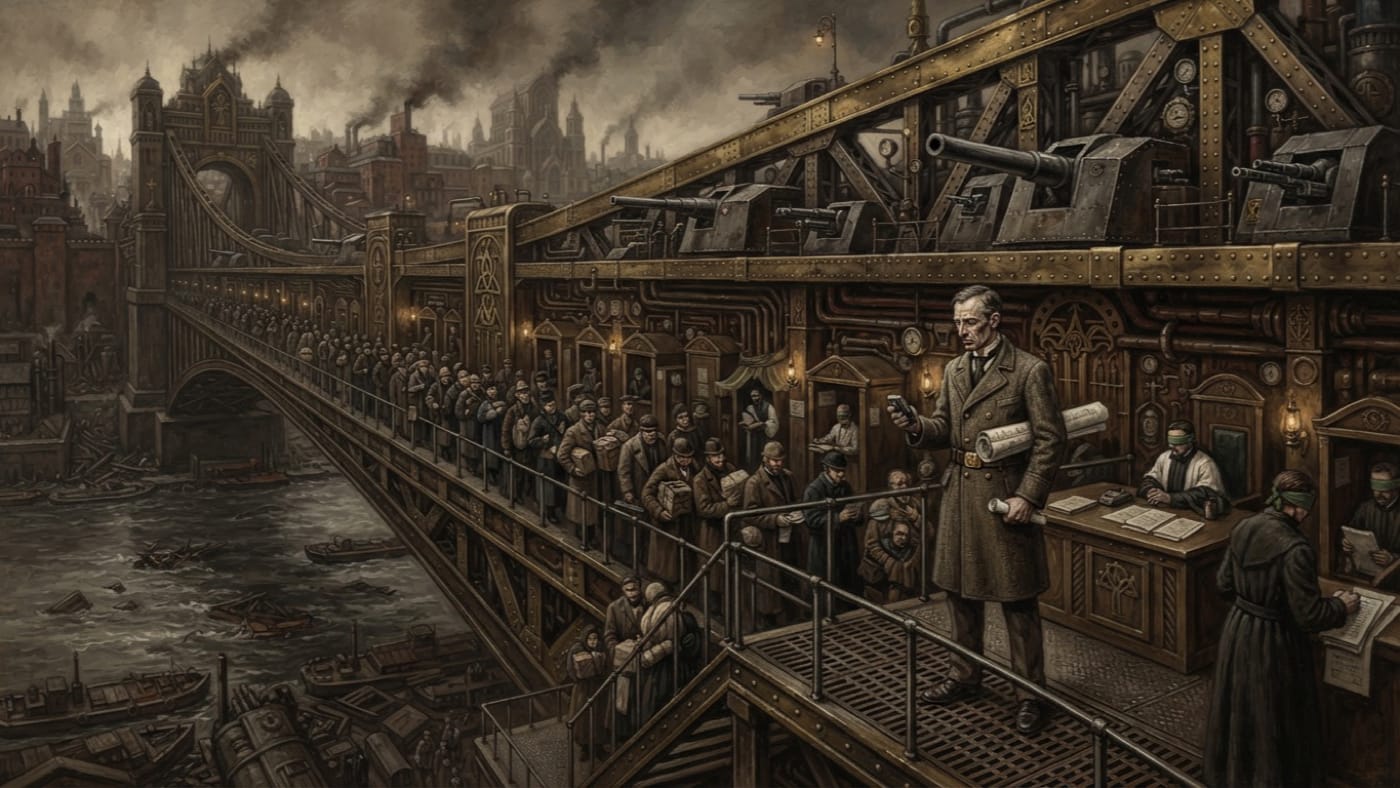
Procurator-Engineer Hallam
Two Bureaus, One Drawing
Hallam put artillery, confession and crossing papers into the same iron at Bastion-Brest. War and Doctrine approved within a week; Records investigated the agreement.
Codex Ref. III.2.01-092
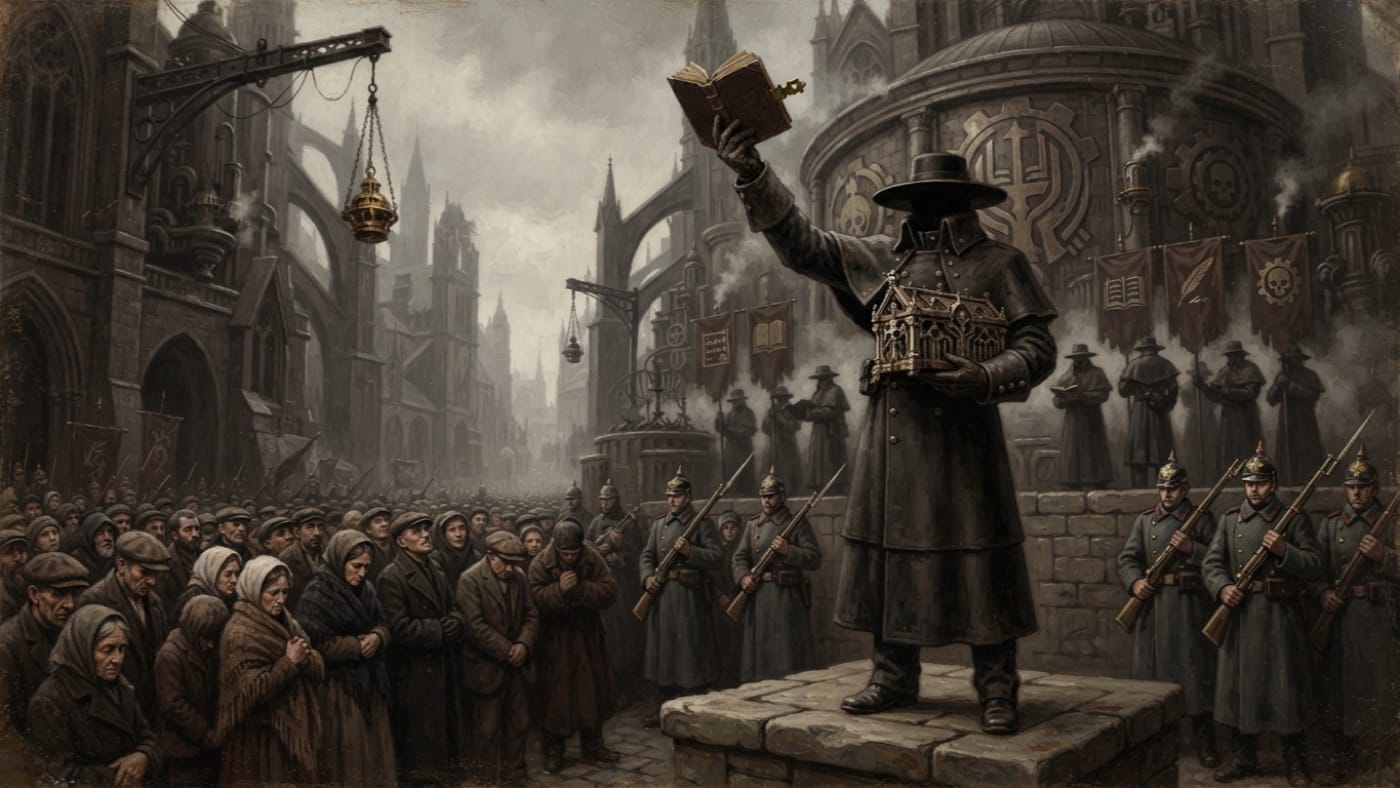
Procurator-General
The faithful watch what the office holds
The Procurator-General carries Saint Matthias's reliquary and raises Saint Margaux's psalter before Strasbourg. The public record knows the hands; it certifies no further jurisdiction.
Codex Ref. XIII.1.32-201
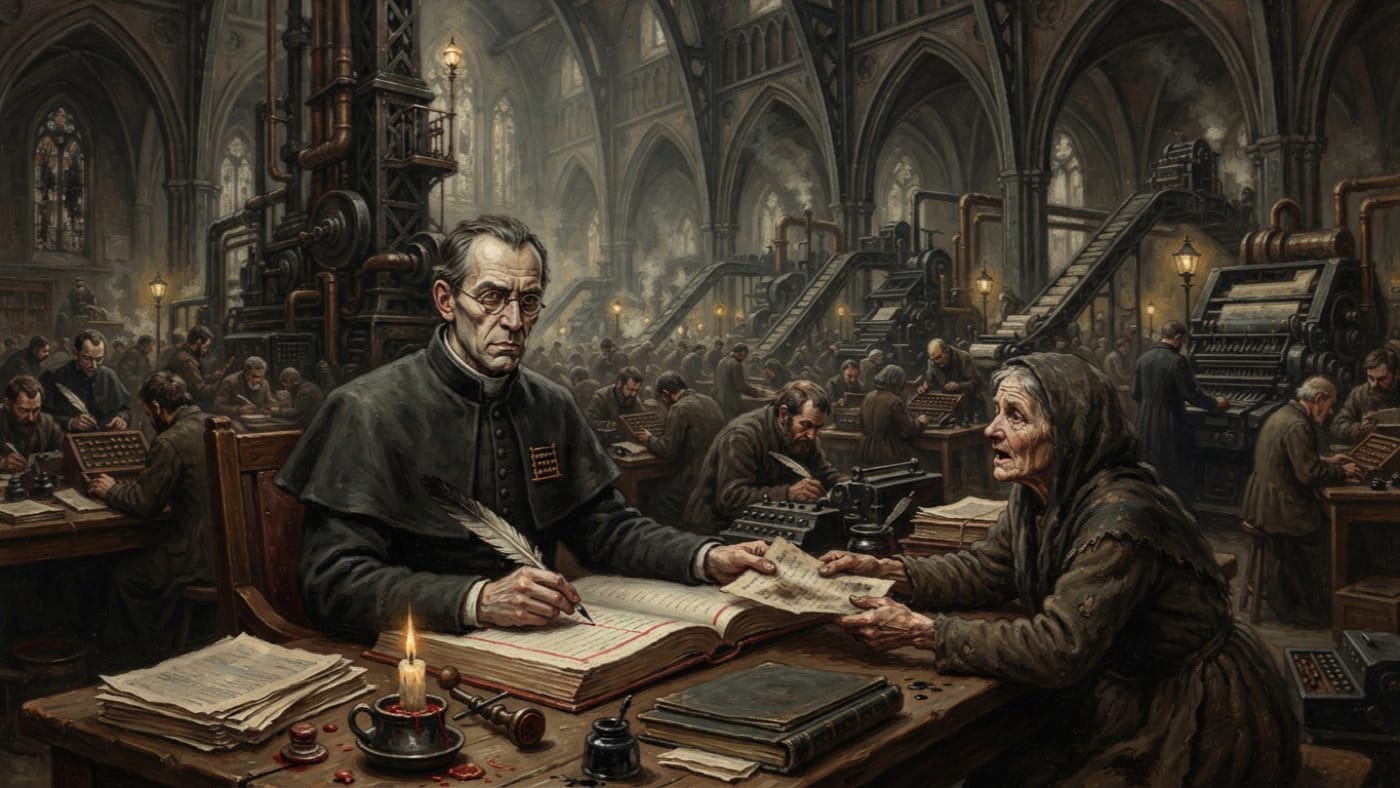
Procurators
The edict and the line reach the same peasant
From regional red-wax edicts to the counting-tables of the Minor Orders, Procurators turn documents into consequences. Their authority may be challenged. The record offers no promise of success.
Codex Ref. VI.3.02-002
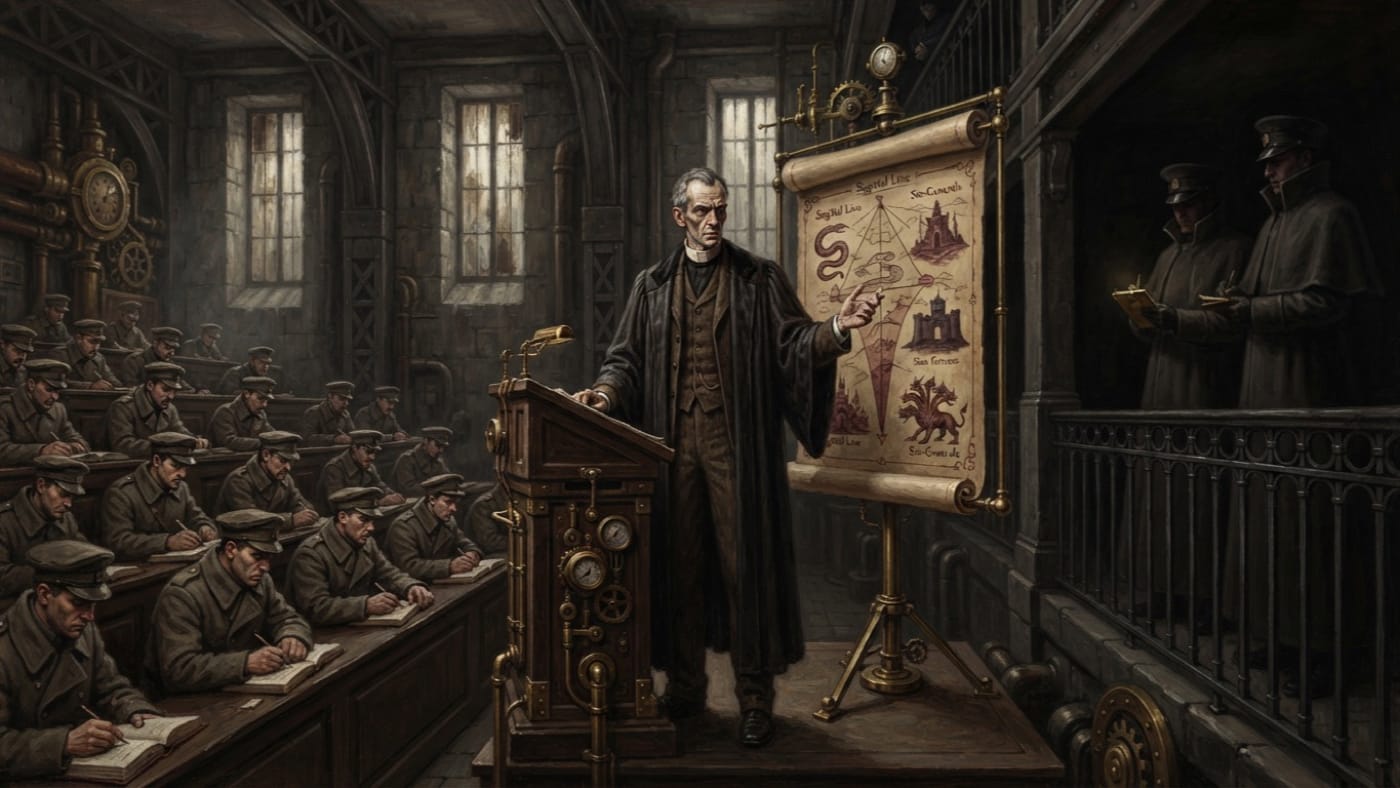
Professor Aldric Sane
A sincere believer with a lectern and no recorded warrant
Professor of theology at Strasbourg's Academy, sincere believer in the Creator, and lecturer on the Sin-Generals. His students attend eagerly. Purity is worried. As of A.S. 201, he remains at his lectern.
Codex Ref. III.2.01-201
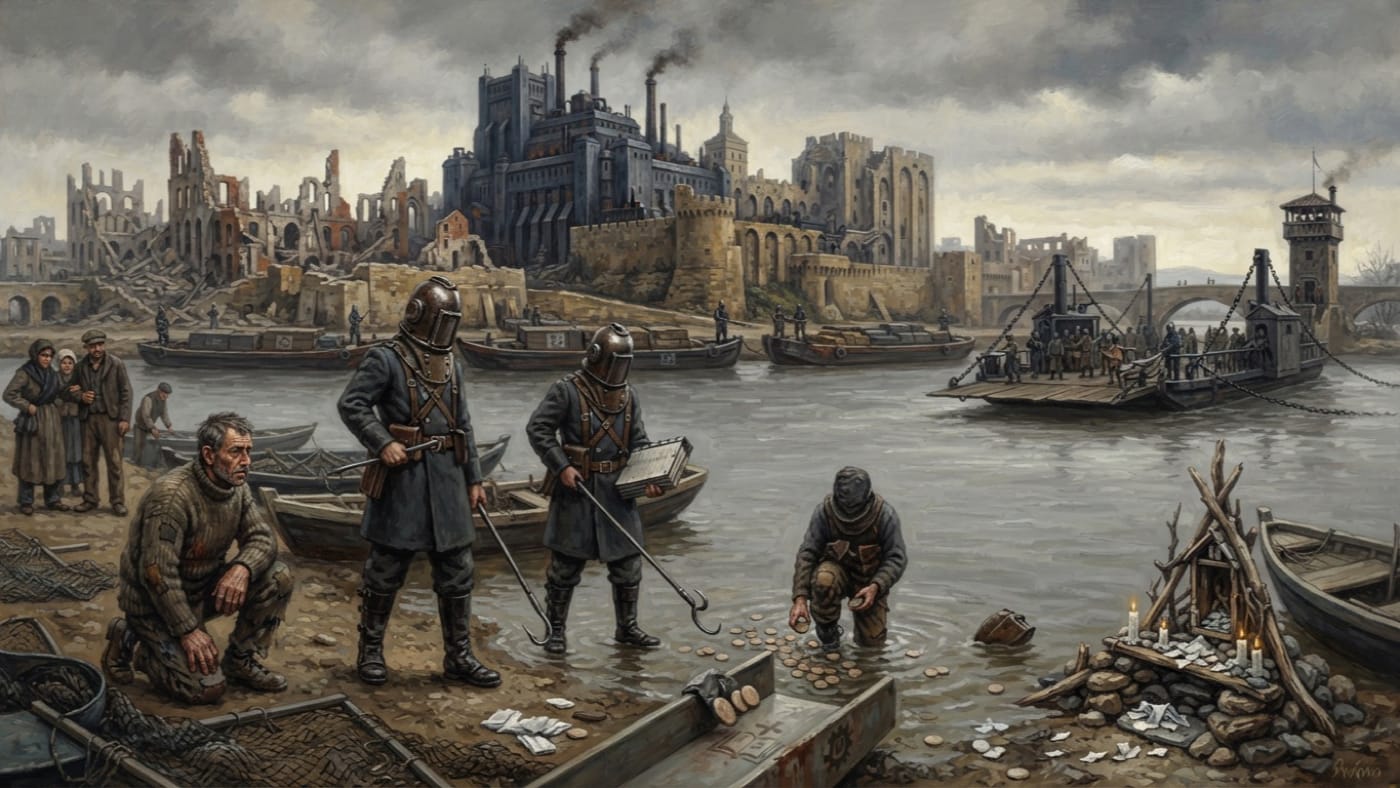
Provence
Grain, salt, and memories subject to inspection
Provence feeds the northern offices and pays to move its own salt. Ninety years after Avignon's razing, the nets are inspected, the clay seals confiscated, and the river still supplies more.
Codex Ref. II.1.06-201
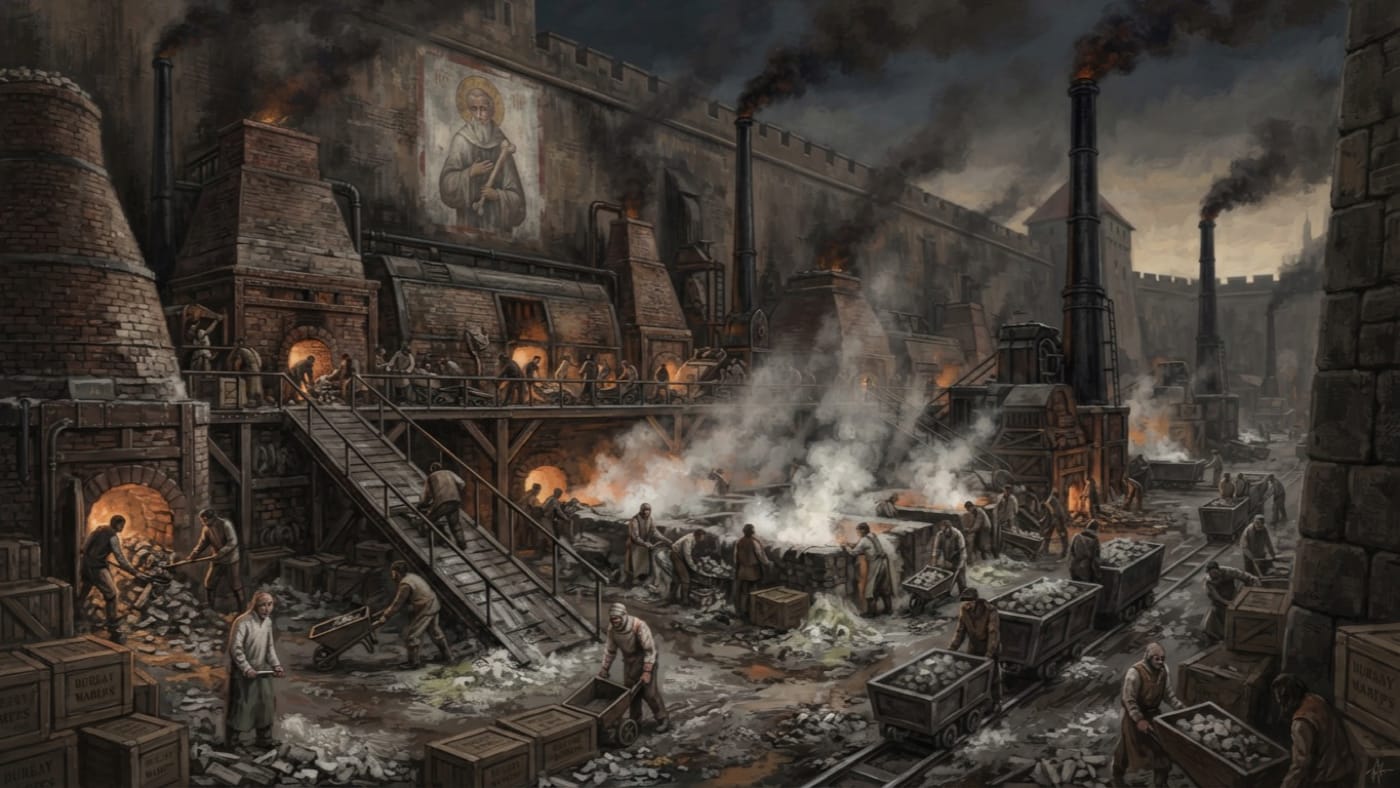
Przemyśl Kiln Yard
The image burned; the question survived
A bone-lime yard at Bastion-Przemyśl remembered for an A.S. 149 confiscated icon of Saint Aurel. The image burned; its question about consent survived in kiln gossip.
Codex Ref. II.4.07-149
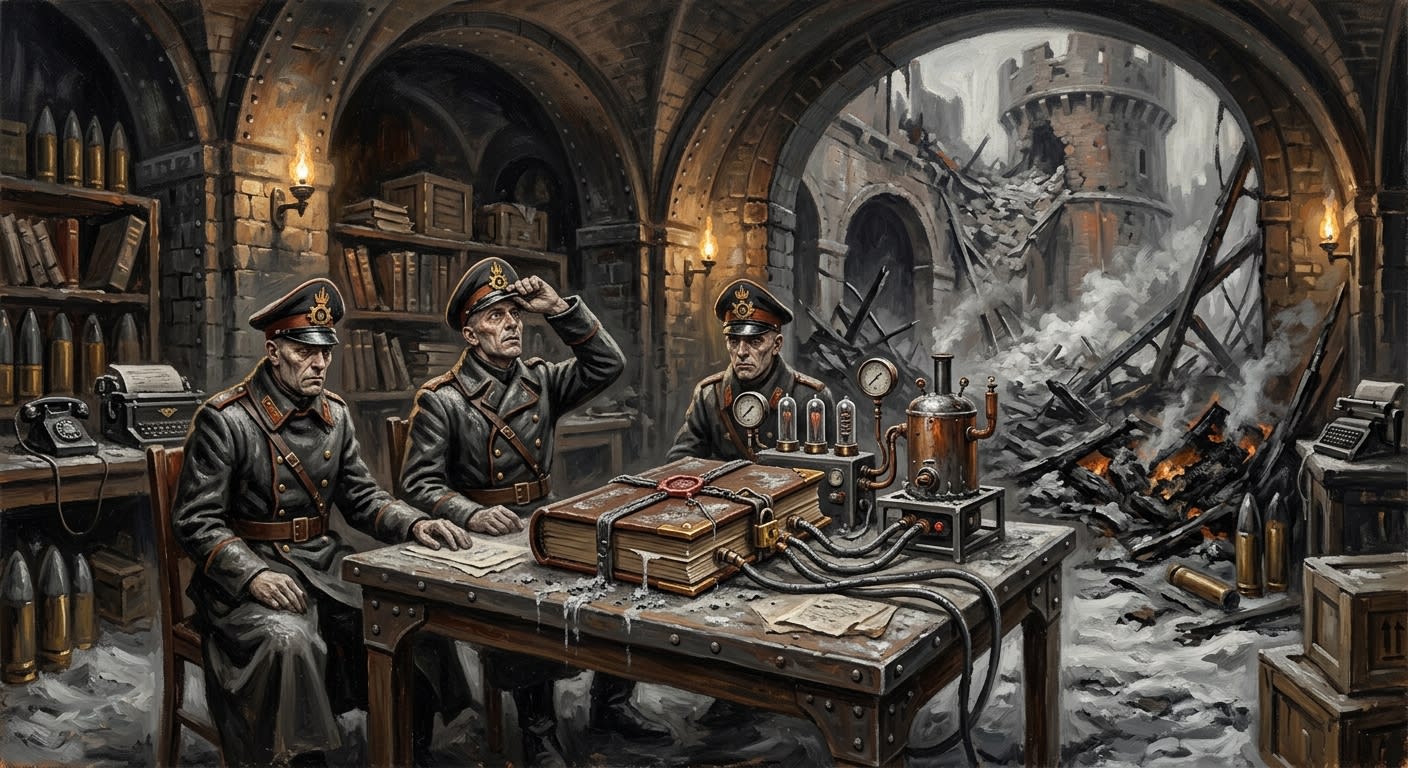
Psalm of Consuming
The Toledo fire-prayer that spent custody into ash
The Psalm of Consuming is Toledo's sealed fire-prayer: a relic-bound formula whose two lawful recitations turned siege stores, tower, and custody into ash.
Codex Ref. XIII.1.57-015
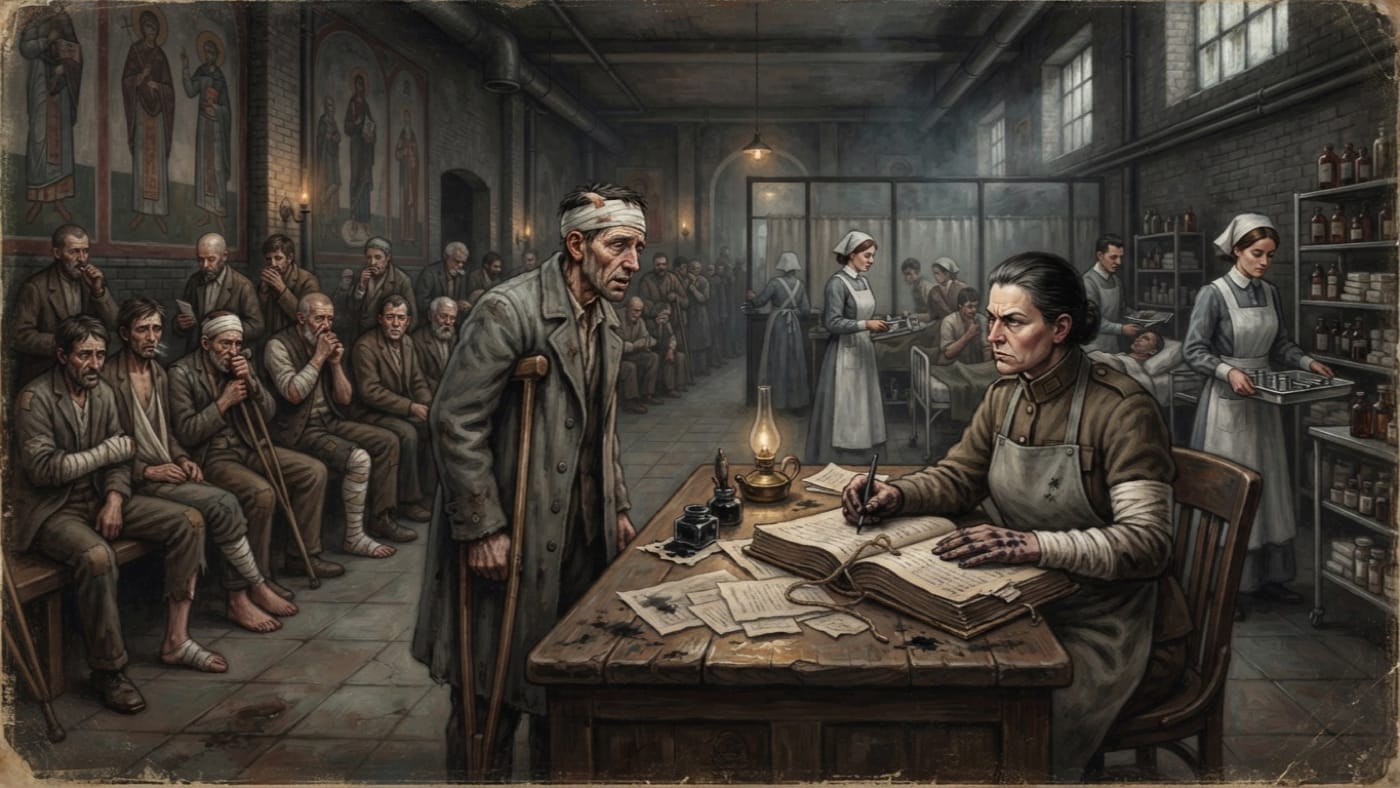
Queue of Confession
The clerk hears the sin. The wound waits.
The Queue of Confession requires the sick to confess aloud to a Records clerk before receiving Mercy's care. The clerk keeps the account; the unrepentant keep their wounds.
Codex Ref. XIII.1.92-201
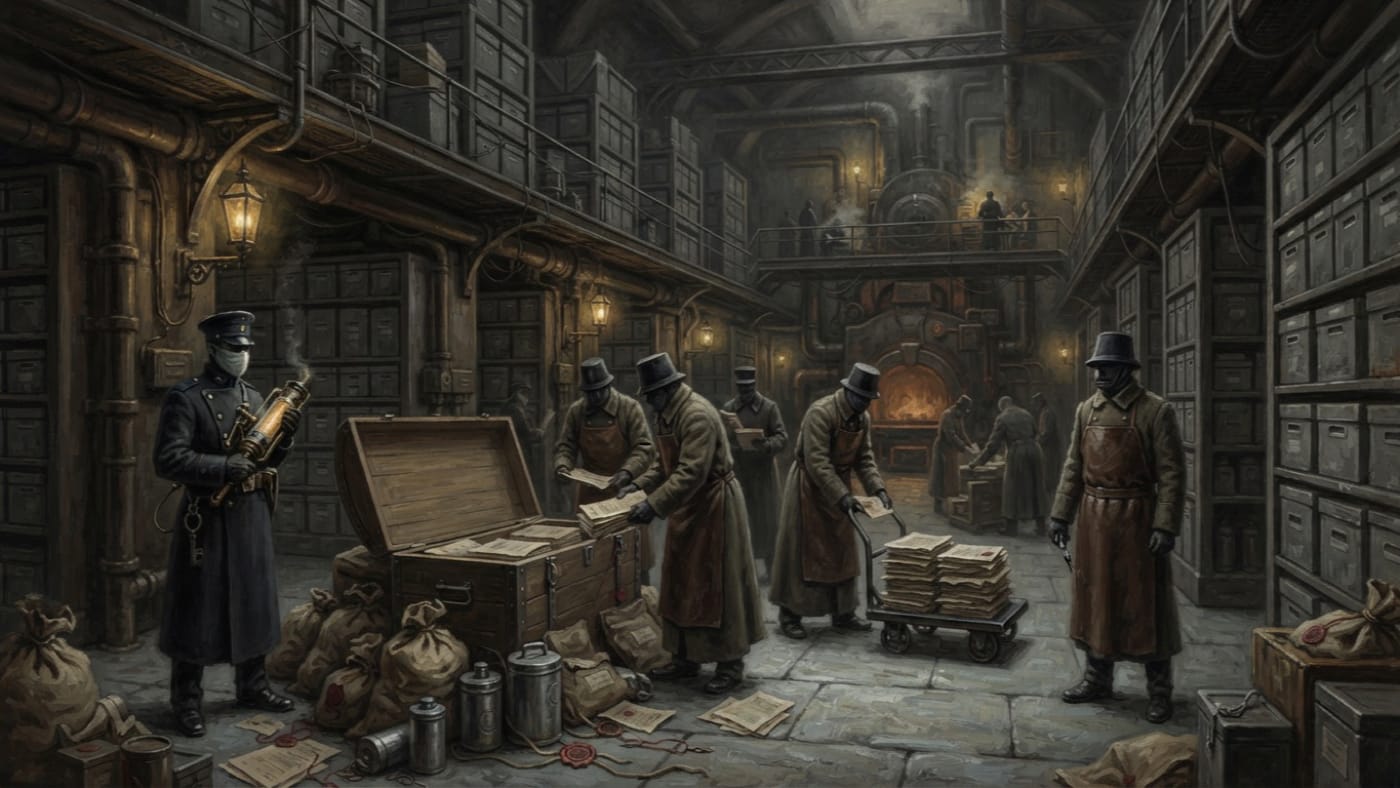
Quiet Inventory of A.S. 101
The papers vanished; the two descriptions remain
In A.S. 101, Swabian ducal houses lost their copies of disputed oaths. Records calls it archival consolidation; the families call it theft. The Codex retains both descriptions.
Codex Ref. IV.3.07-101
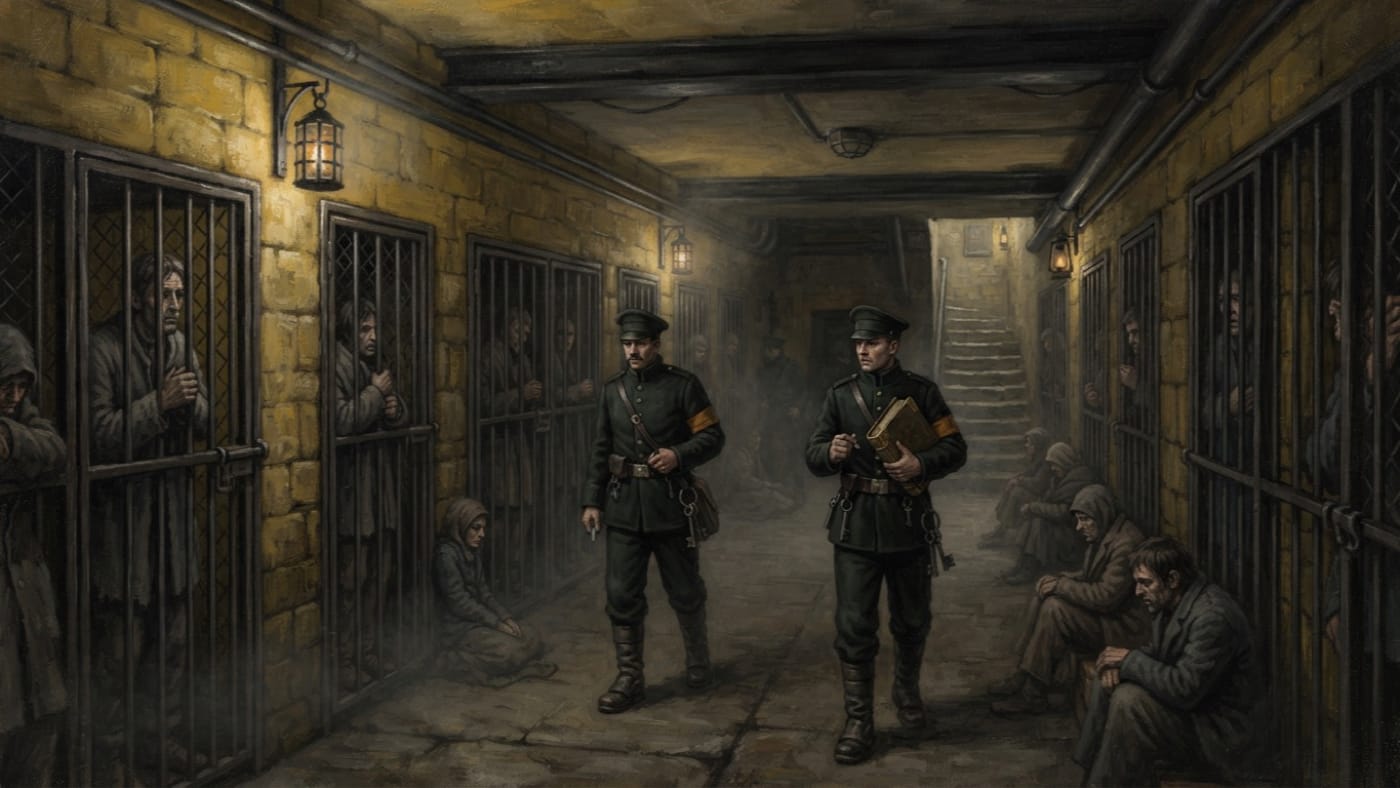
Quiet Pens
Where a failed prayer becomes an account against the body
Beneath Peregrine Row's Tinmarket Arcade, the Quiet Pens hold pilgrims whose prayers, beads or contracts fail inspection. Release costs money or labour; correction is a profitable trade.
Codex Ref. II.1.03-002
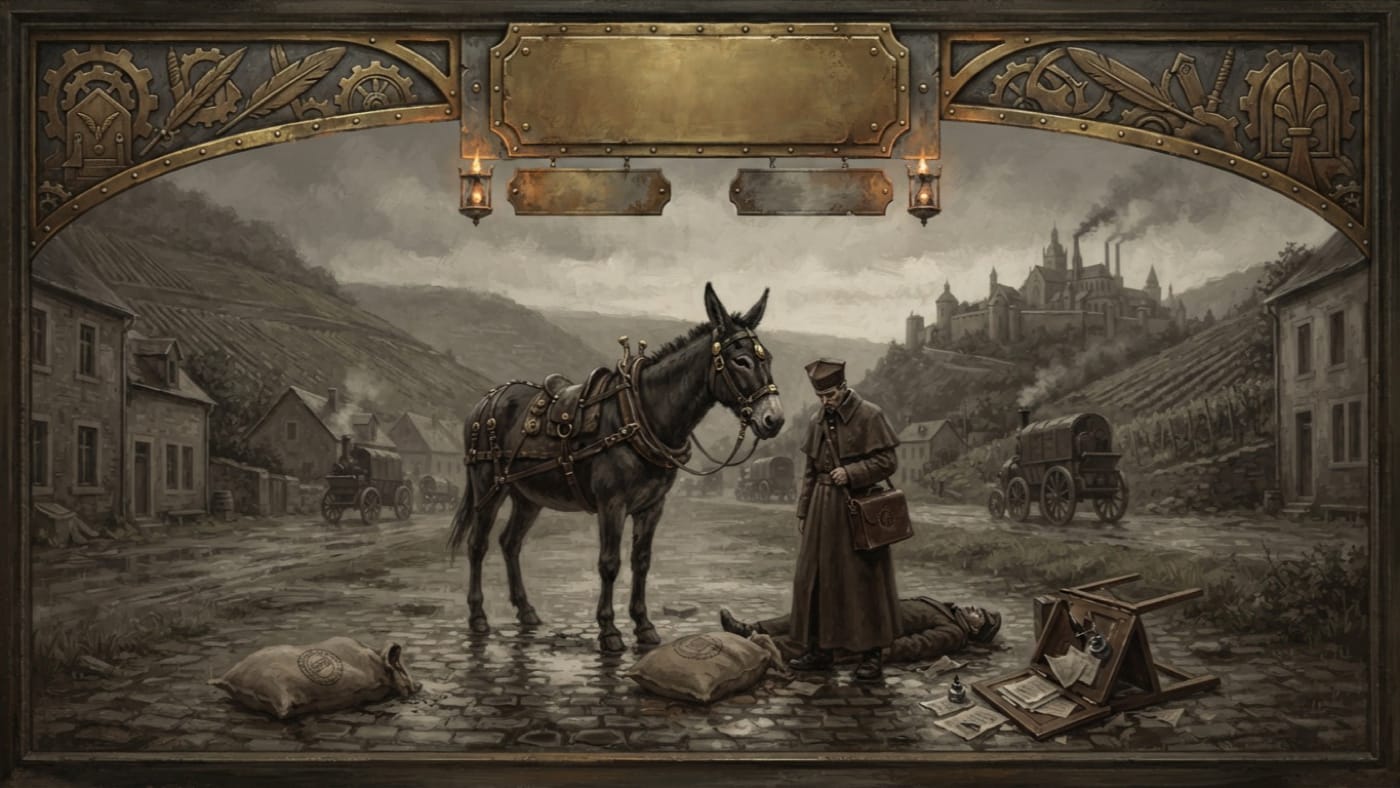
Raban Holt
The Assessor died; the supplement remained
Raban Holt proposed a temporary supplement to fund tithe collection in A.S. 117. A mule killed the Assessor; the Bureau retained the proposal.
Codex Ref. III.2.01-117
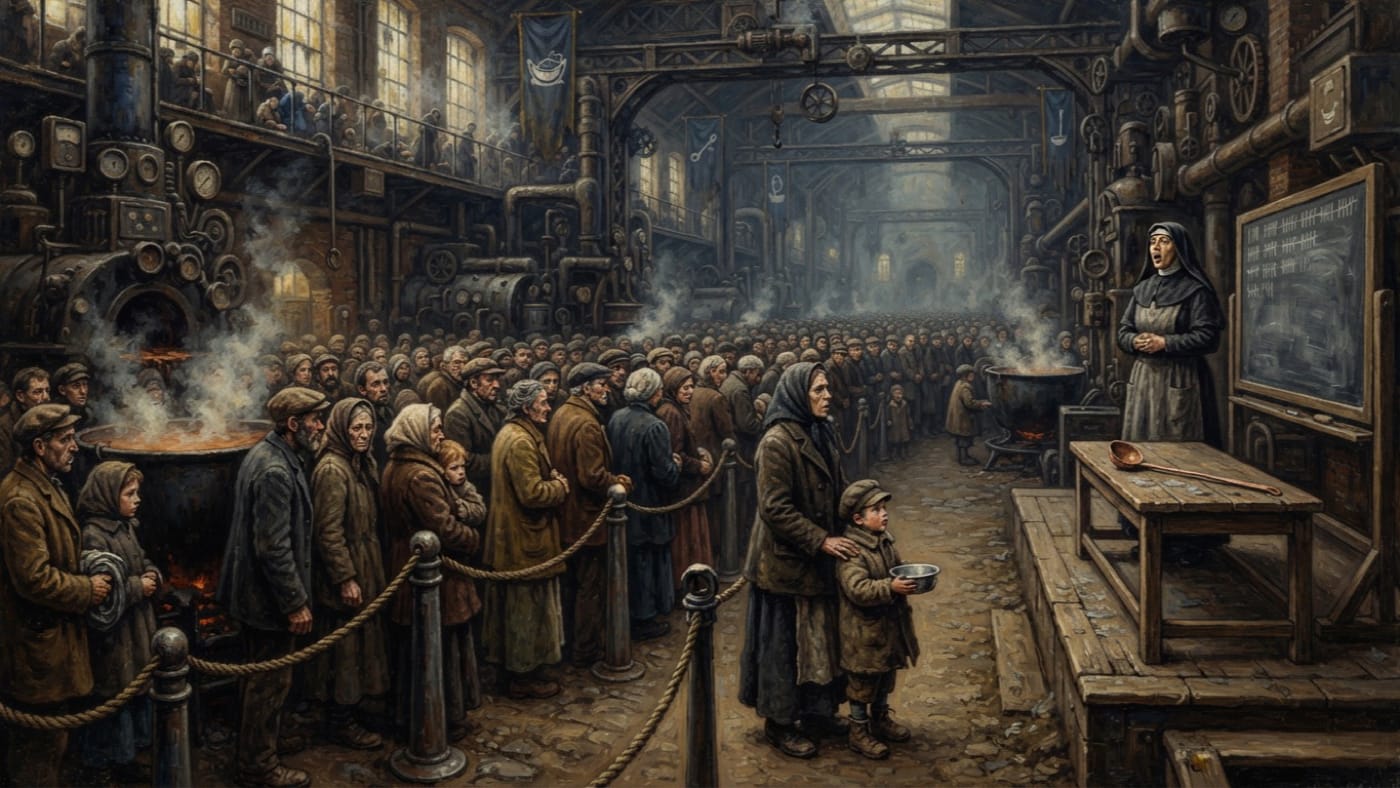
Ration Psalm
Twelve verses, forty-three assurances, one measured cup
The Ration Psalm opens Saint Halva's feast with twelve verses and forty-three declarations of enough. My A.S. 201 survey finds the queue still reciting; neither author nor origin has acquired a seal.
Codex Ref. XIII.1.25-004
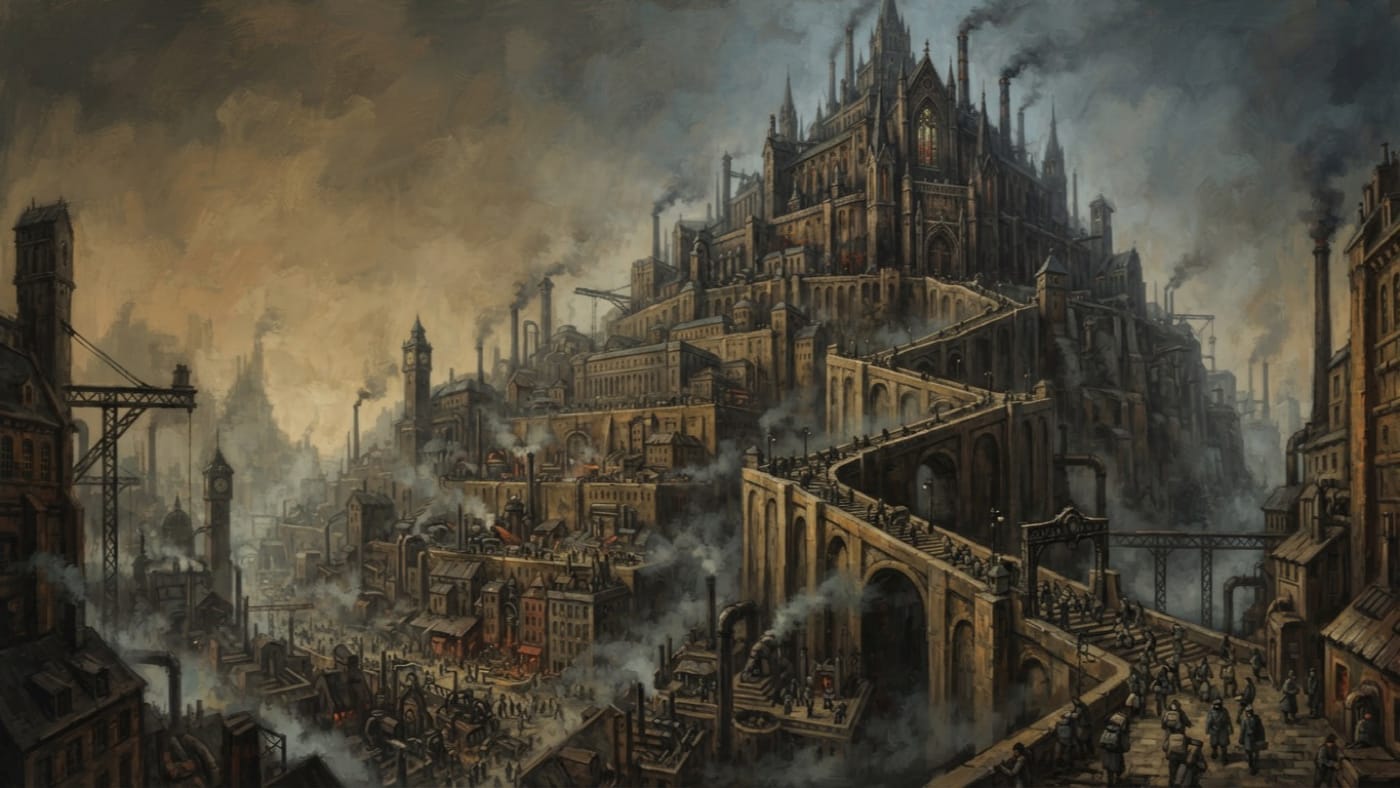
Ration-Cathedral
Holy authority on the ninth terrace; hunger waits below
Rheinscarp's Synod Chapterhouse stands above the mills and ration rolls. Its supremacy is constitutional; no independent decree is recorded since A.S. 187. Hunger still has to climb the stairs.
Codex Ref. II.2.01-004
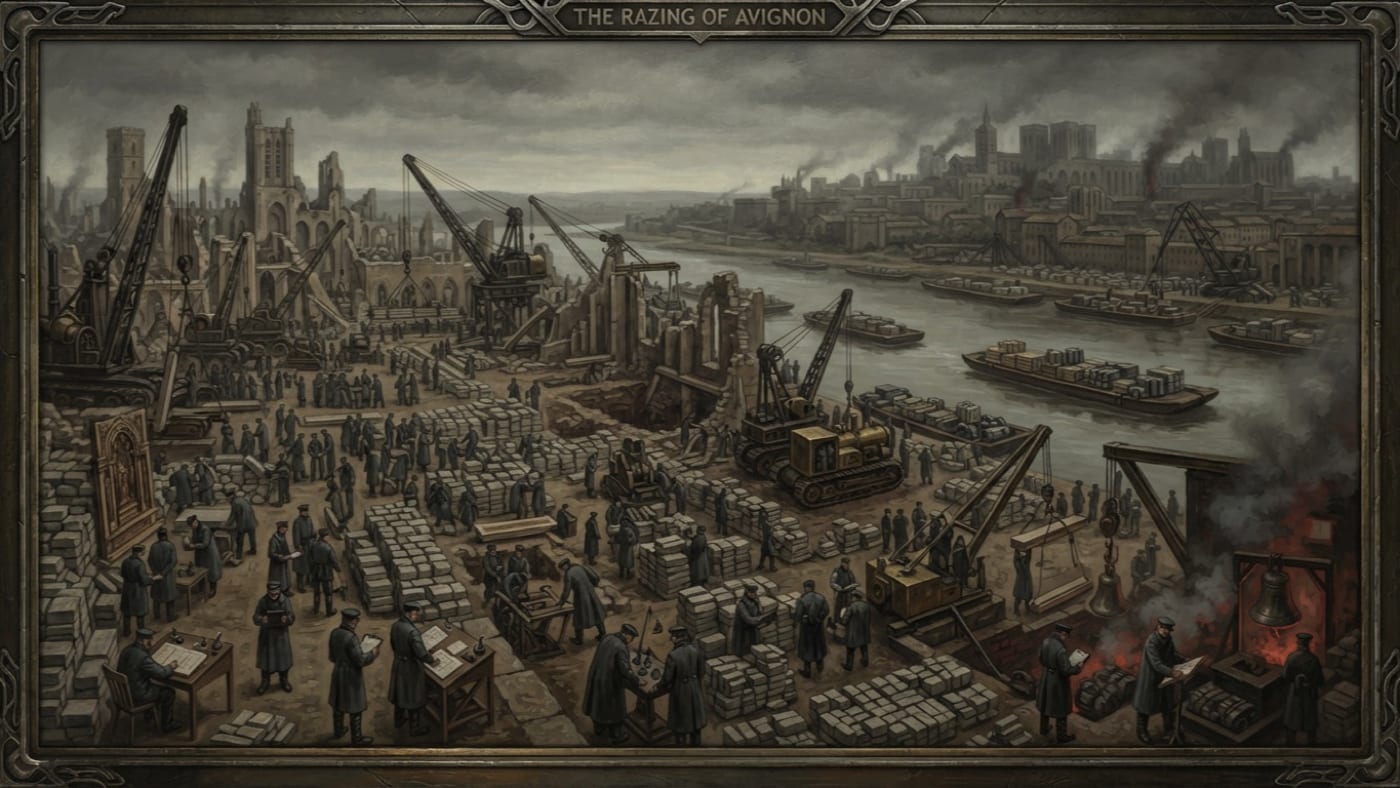
Razing of Avignon
Every Stone Accounted For, Every Name Removed
In A.S. 111, the Synod dismantled Avignon stone by stone, recast its bells as ammunition, and erased its schismatic clergy from the record. The inventory is immaculate; the city is absent.
Codex Ref. III.2.07-002

Records House
Where a life must agree with its duplicate
Records House beside Strasbourg's Basilica keeps indexes, certified copies and the stair to the Forbidden Stacks. The queue is eternal; descent is licensed.
Codex Ref. II.2.06-002

Reims
The smiling wine city that profits from an empty neighbour
Reims smiles under inspection, sells lawful wine beside impossible Épernay tokens, and teaches that a city can inherit a neighbour's absence without inheriting innocence.
Codex Ref. II.1.07-103
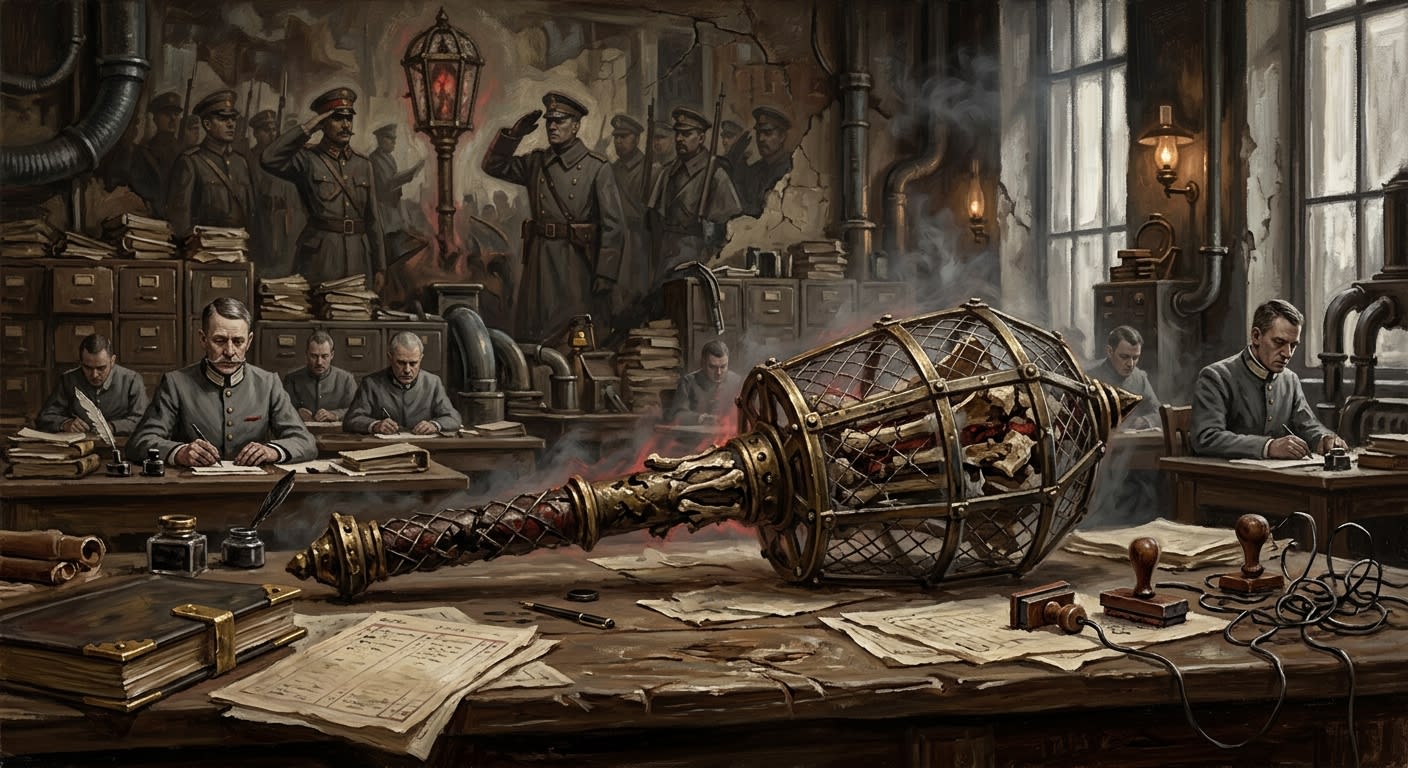
Reliquary of Saint Aldebrand
Count the bones if you must; the mace will wait for Vienna
Saint Aldebrand's reliquary mace was erased, mocked, duplicated, and finally obeyed at Vienna; the Bureau now preserves every contradiction it failed to prevent.
Codex Ref. V.1.02-095
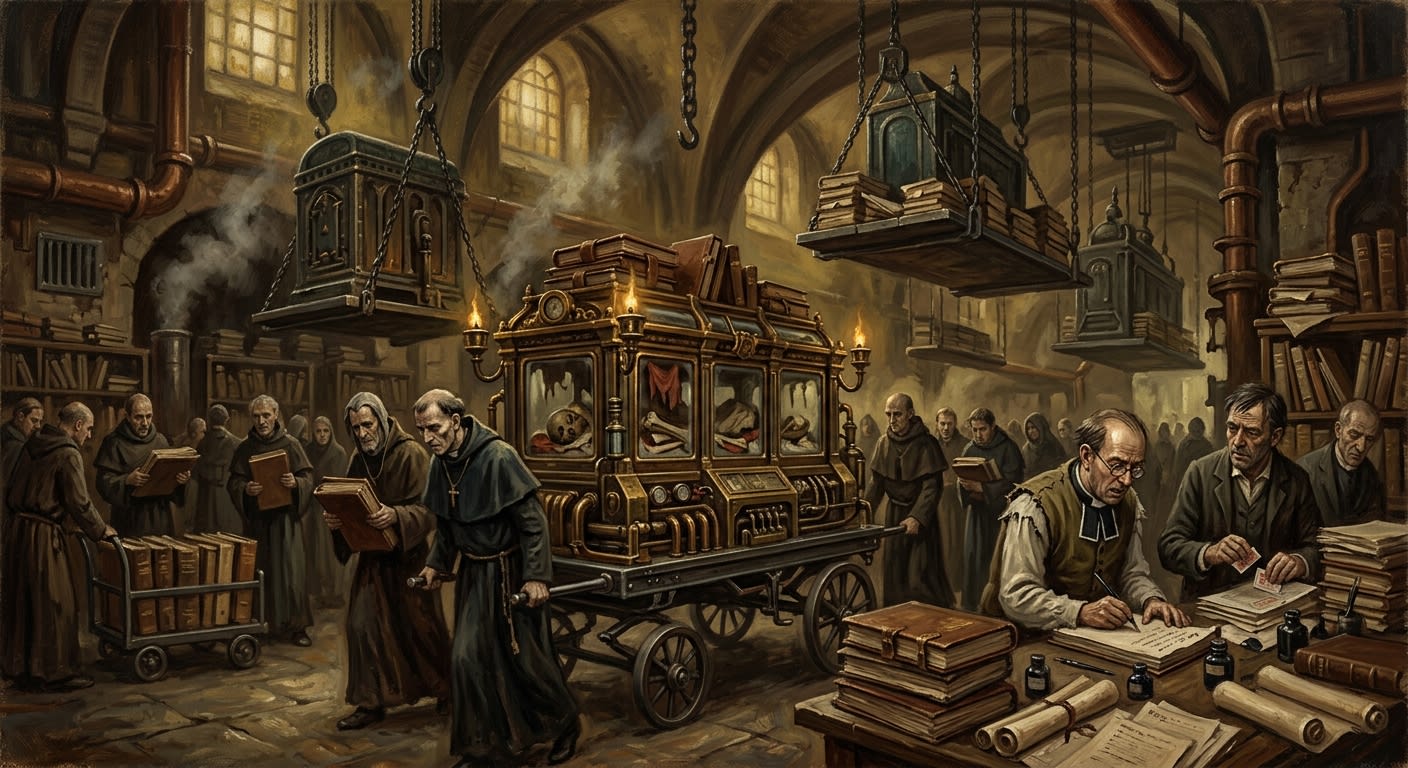
Reliquary Schisms
When valid seals taught anatomy to kneel
The twenty-year relic crisis in which clean paperwork made saints anatomically impossible, until Doctrine gave every notarized femur a throne.
Codex Ref. VII.8.10-140
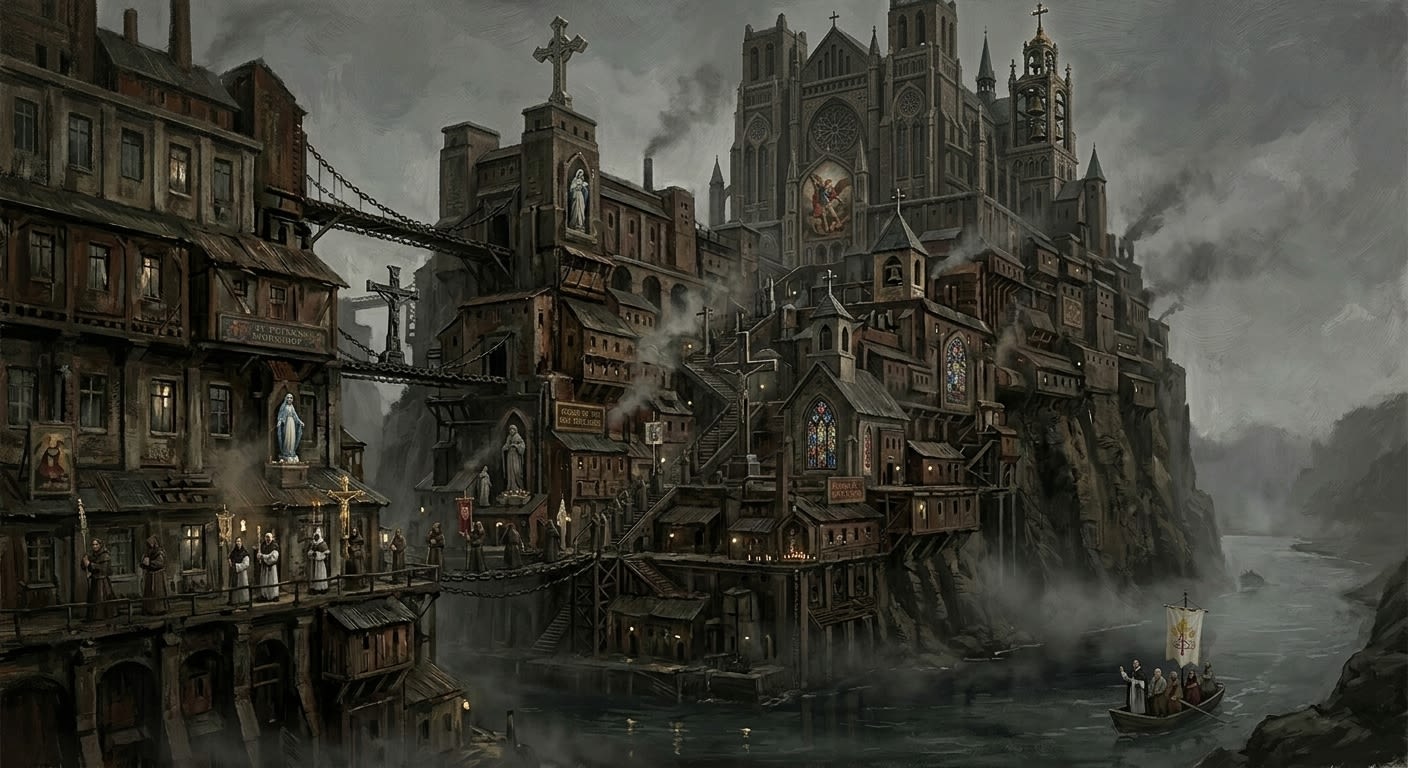
Rheinscarp
Nine terraces of sanctified extortion above the Rhine — each stair a sermon, each sermon a fee
A cliff-city above the Rhine, stacked nine terraces high and governed by three powers who own, respectively, your name, your time, and your ashes. Drax has climbed it twice and counted only the fees.
Codex Ref. II.2.01-002
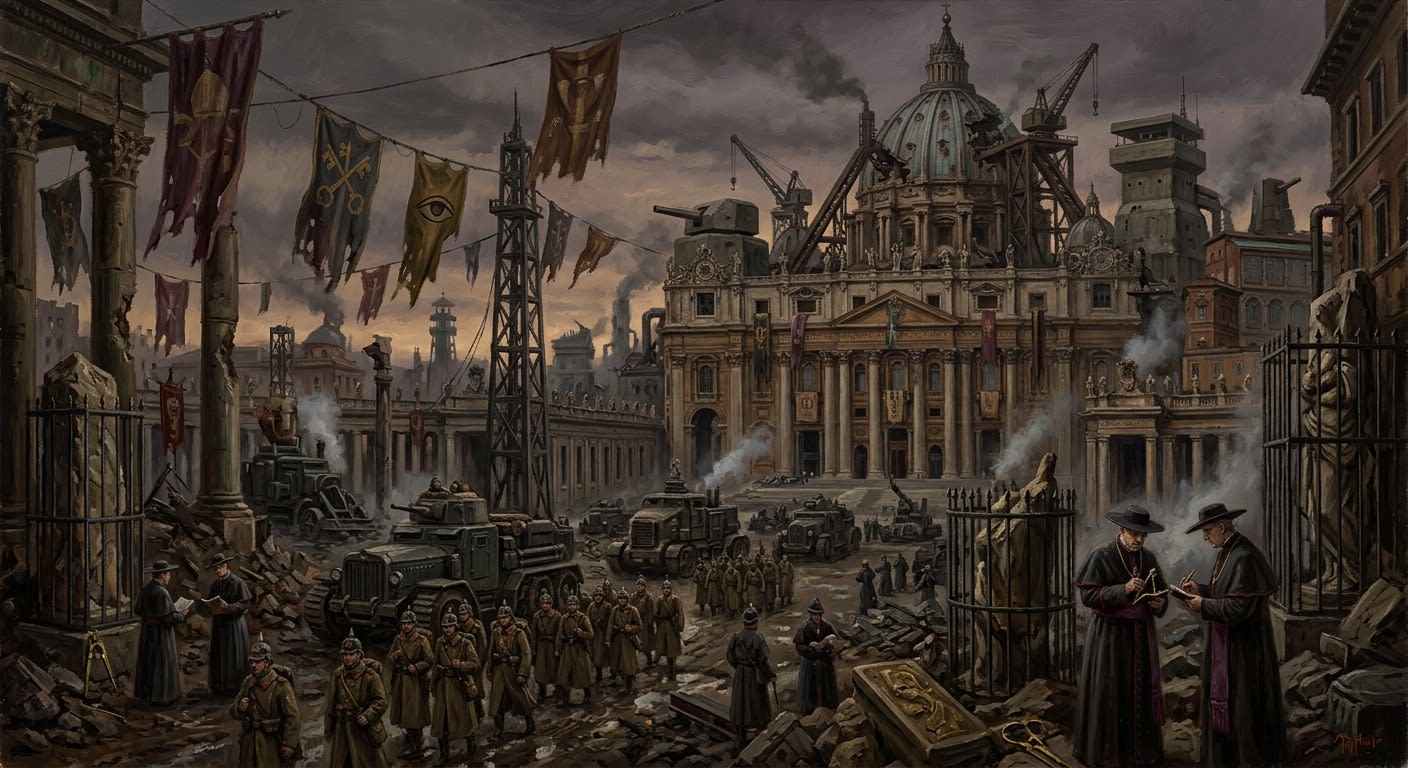
Rome
The old chair, subordinated and still dangerous in pieces
Rome is the Synod-held Old Chair: ruined, supervised, relic-rich, papalist-haunted, and too symbolically useful for Strasbourg to bury cleanly.
Codex Ref. II.1.11-201
Rot-Week of Saint Vellum
Eleven days to save the forms, four days to lose the food
The Rot-Week of Saint Vellum was an eleven-day port paralysis in which disputed cargo names perfected the paperwork, spoiled the food, and licensed Manifest Litigants into profitable necessity.
Codex Ref. VII.8.10-001
Route-Stamper / Indulgence-Token Smith
Walking is a contract; the Route-Stamper is the notary
Makers of the indulgence-token — a brass palm-piece whose captive bell-hour counts steps, repels road-spirits, and distinguishes the sanctioned traveller from the heretic-with-legs. The art is measured by one question only: whether it lies.
Codex Ref. XII.38.01-001
Saccharum Benedictum
The Blessed Sugar, declined annually and taxed by the barrel
Saccharum Benedictum is Munich's alleged blessed yeast culture: preserved by legend, declined by Relics since A.S. 98, uncondemned by Doctrine, and taxed with admirable punctuality.
Codex Ref. XIII.1.88-001
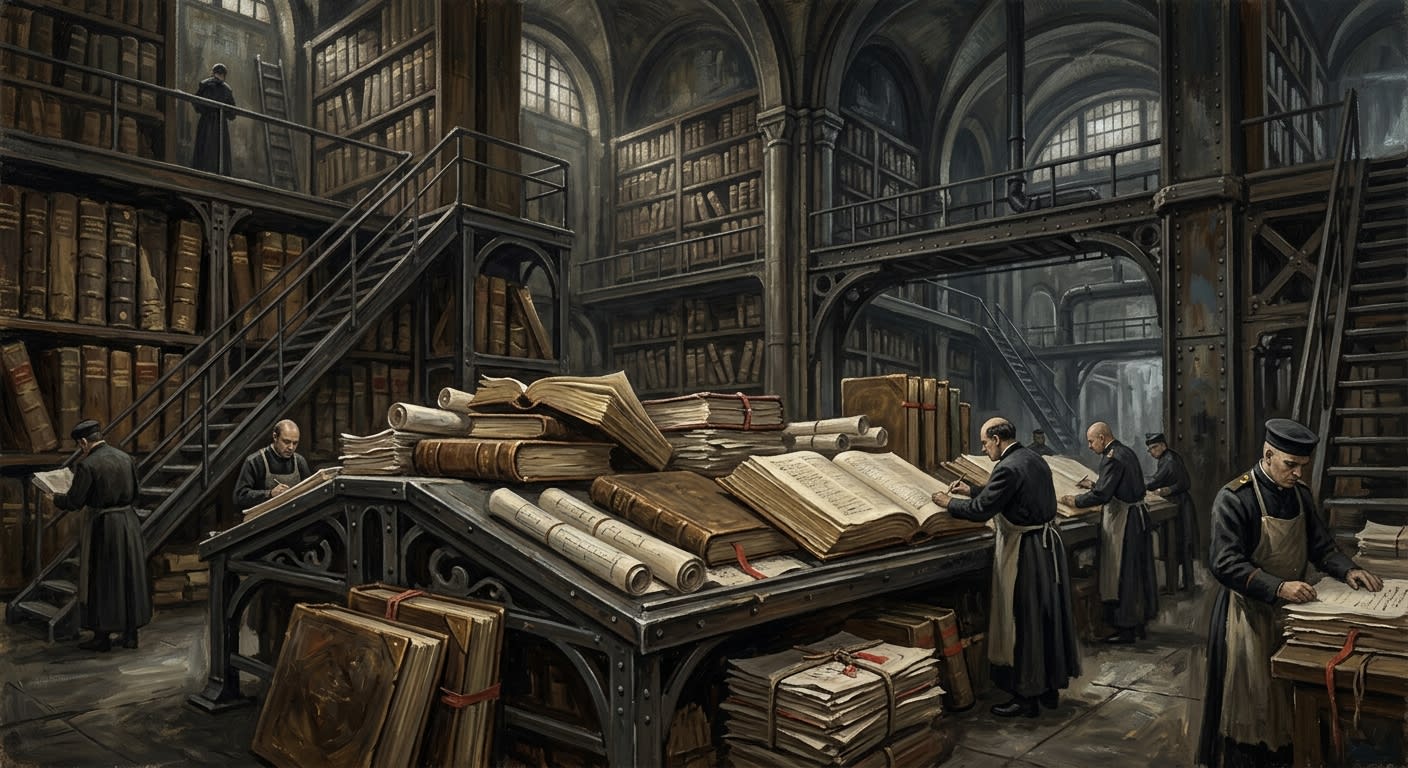
Sacred Ledger
The Synod's memory, sharpened until grief signs the receipt
The Sacred Ledger is the Synod's authorised memory: fact cooked into Doctrine, grief made grammatical, contradiction kept on a leash.
Codex Ref. XIII.1.32-090
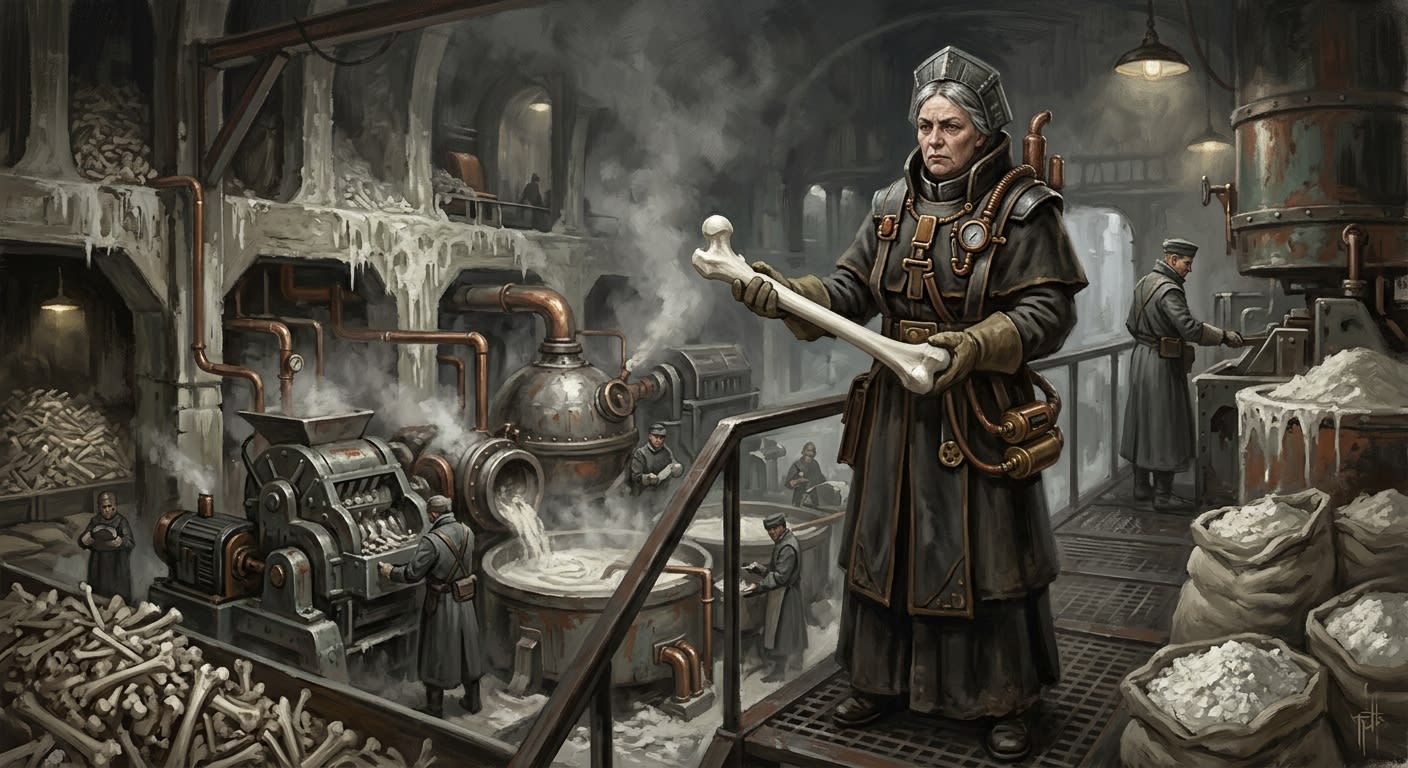
Saint Aurel of the White Wall
The saint who may have arrived after the invoice, yet holds the wall all the same
Disputed patron of Saint-Bone Melters, Saint Aurel offers the convenient femur by which relic fragments become bone-lime, mortar, wall, and doctrine with a clean conscience.
Codex Ref. III.2.01-142

Saint Edrin of the Three Nails
Cut true, name all, hold the door
Saint Edrin of the Three Nails is the patron of Gate-Carvers, remembered for sealing a plague-house during the A.S. 78 Lull of Names with measure, witness, and refusal.
Codex Ref. III.2.01-120
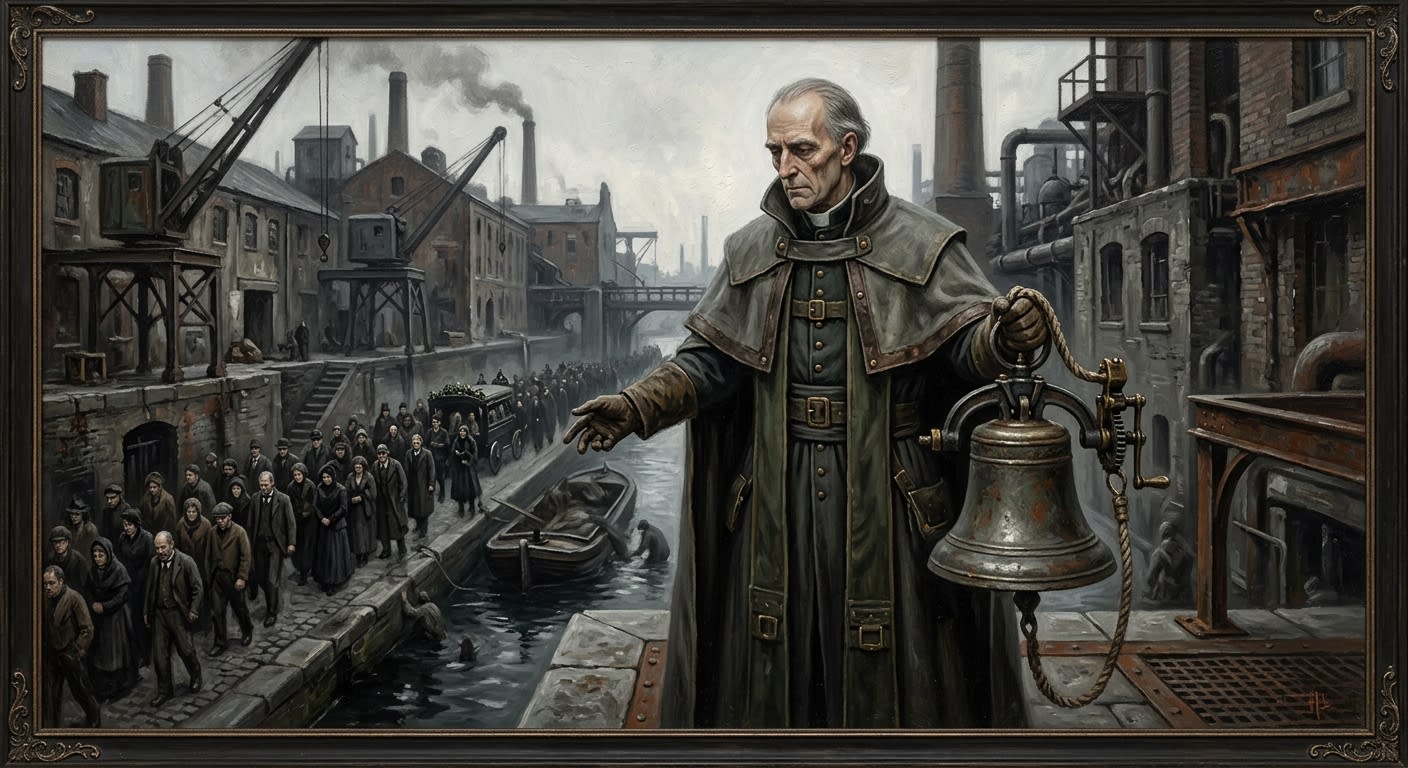
Saint Erasmus
The funeral throat whose obedience drowned nineteen citizens and educated a city
Patron of appointed mourning and funeral cadence, Saint Erasmus became useful after his lawful bell helped split a Strasbourg funeral into nineteen canal deaths.
Codex Ref. III.2.01-129
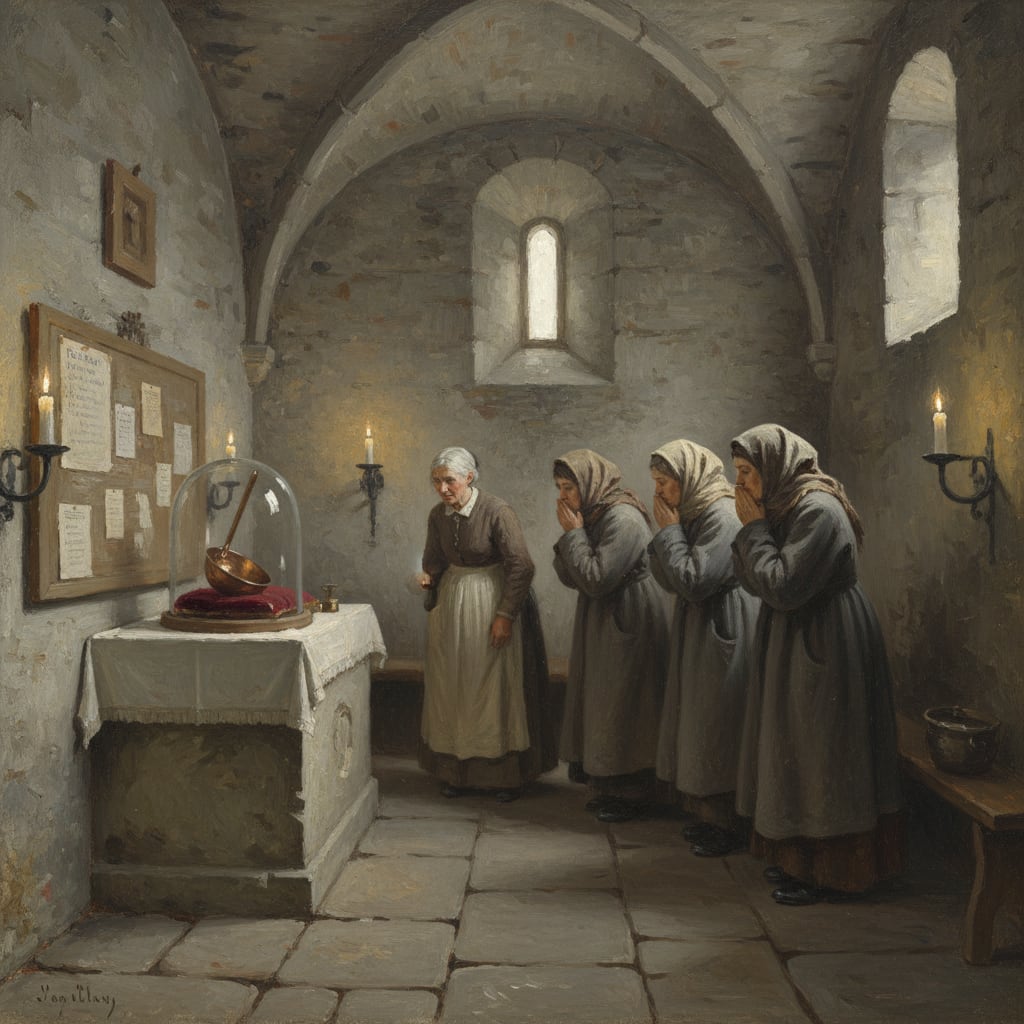
Saint Halva of the Warm Ladle
Salt of the Institution, patron of acceptable portions
Patron saint of the Mothers of Plenty, canonized A.S. 94 with zero miracles attested, no body produced, and a relic the Bureau of Relics classifies as "devotionally sufficient." She may not have existed.
Codex Ref. III.2.01-001
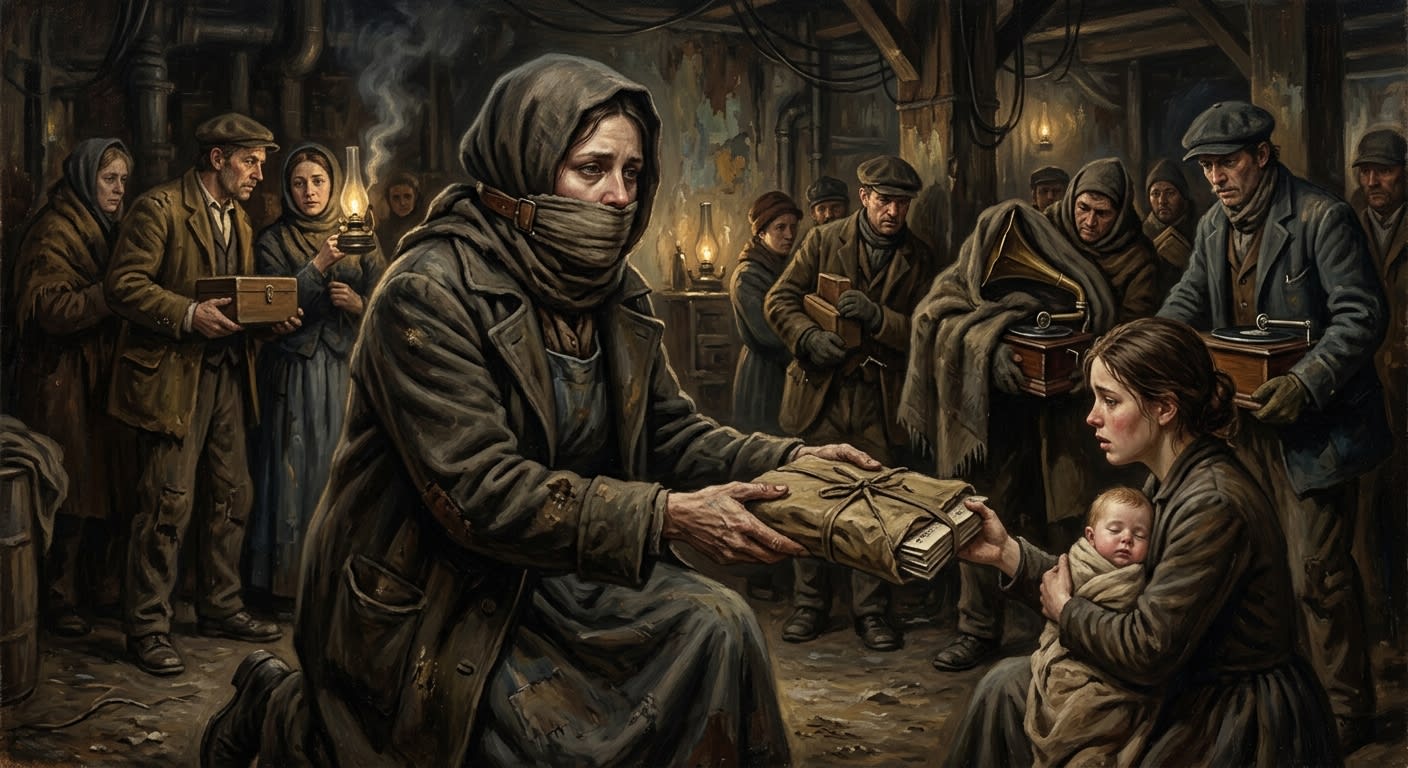
Saint Hessa of the Closed Mouth
The song delivered by silence
Uncanonised patron of melody smugglers, saint-knots, lull-runners, and mothers who move songs where licensed hymns have failed.
Codex Ref. III.2.01-148
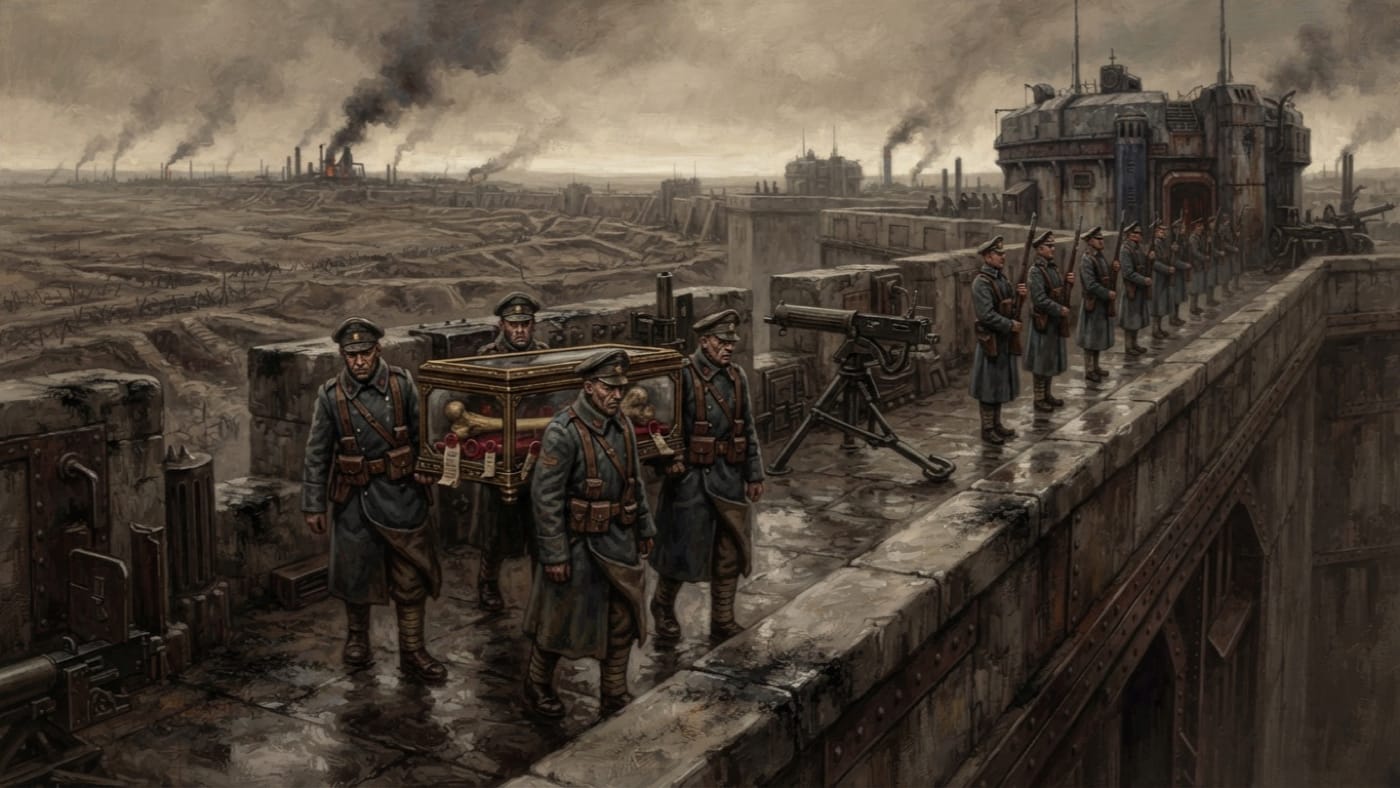
Saint Iselda
The saint whose station is a parapet
Survey of Saint Iselda's attested relic service in A.S. 201: a notarised femur makes the third-Friday Bone Walk along Vigilance's parapet. The soldiers stand straighter. The Bureau requires no more.
Codex Ref. III.2.01-201
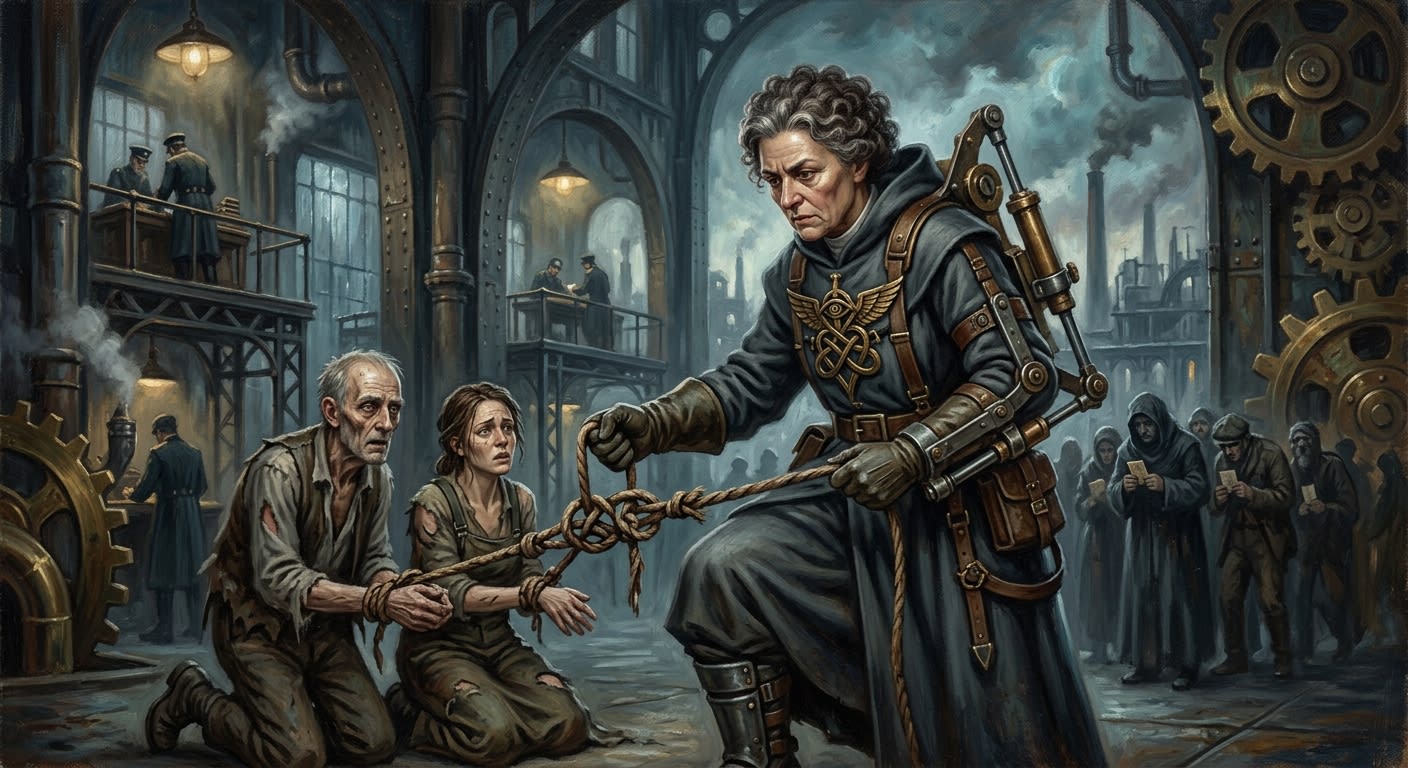
Saint Liora Knot-Hand
Thirty knots, thirty doors, and the miracle of obligation made visible
Patron of the Bureau of Oaths, Saint Liora Knot-Hand bound thirty hungry households into survival with witnessed vows and a strip of cloth. Mercy counted; the knot remembered.
Codex Ref. III.2.01-012
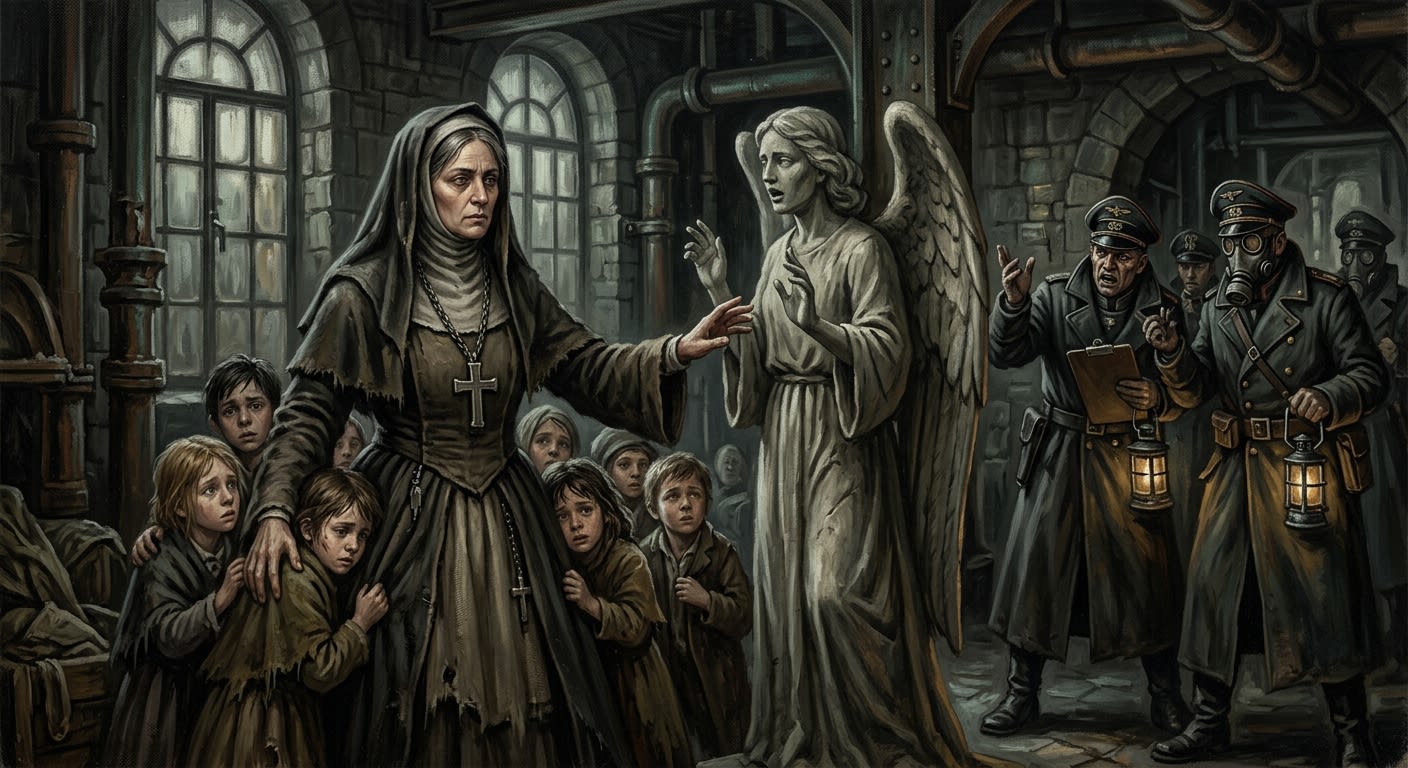
Saint Theophania
Nine days of oil and one drop of inconvenient witness
Theophania hid children in Lyon, taught prayers in whispers, and after the Concordat let a statue do what officials hate most: testify without permission.
Codex Ref. III.2.01-006
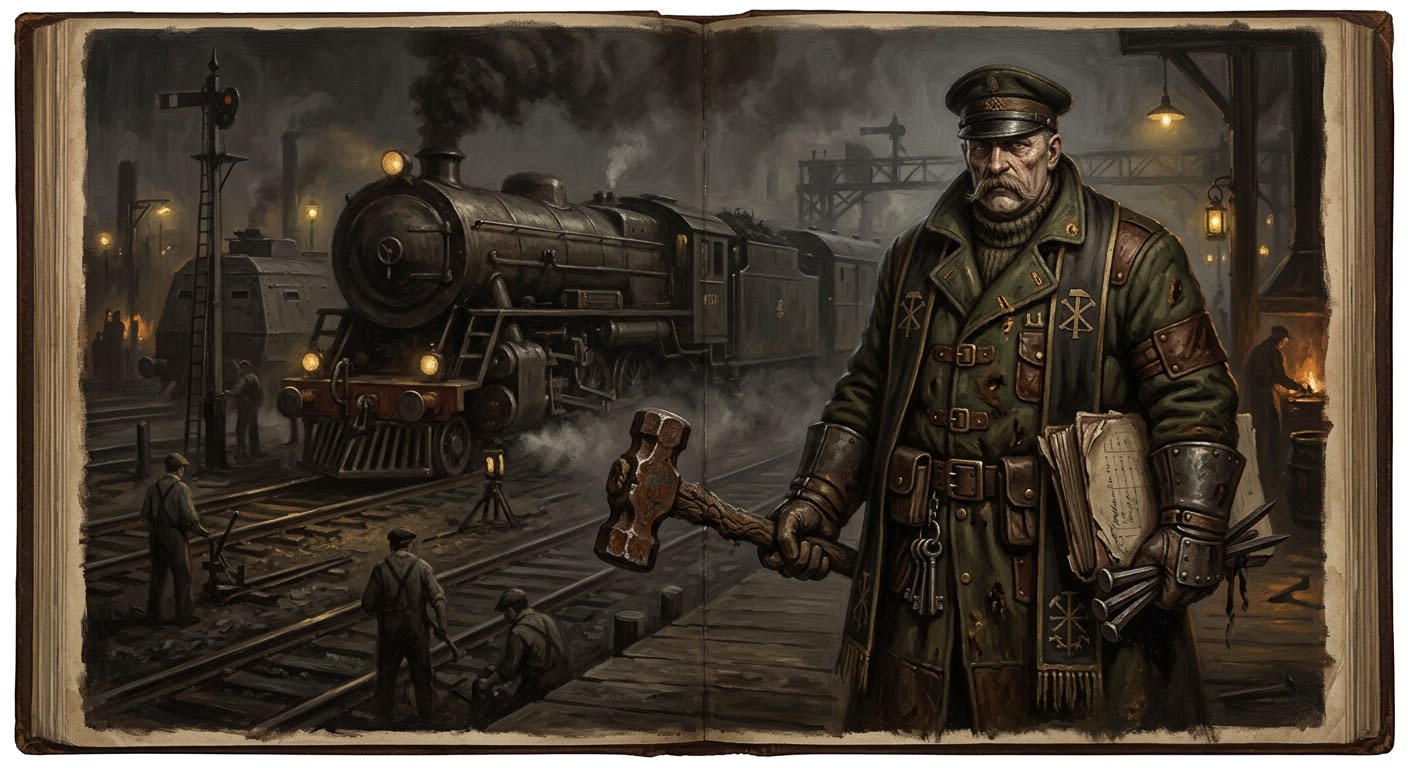
Saint Vandrail
The rail remembers; the hammer asks whether it tells the truth
Saint Vandrail, uncanonised and undenied, is the Guild of Rails’ hammer-fisted patron of track, gauge, night patrol, iron-blood, and useful delay.
Codex Ref. III.2.01-136
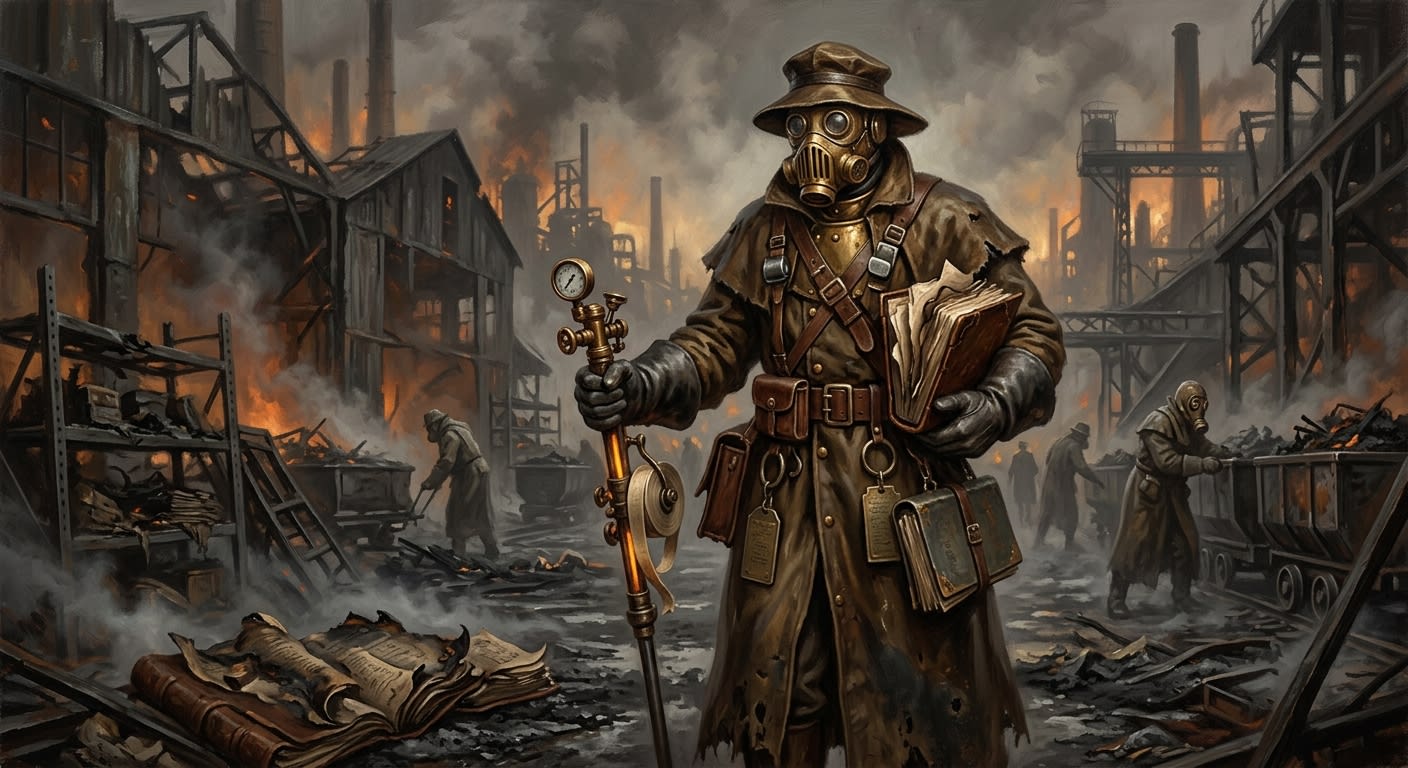
Saint Vellum of the Narrow Line
He proved a warehouse may burn correctly if its name burns first
Saint Vellum, patron of Manifest Litigants and cargo-identity quarrels, entered the Ledger by invoice: no bone, uncertain vita, and a burning warehouse rendered clean enough for doctrine.
Codex Ref. III.2.01-066
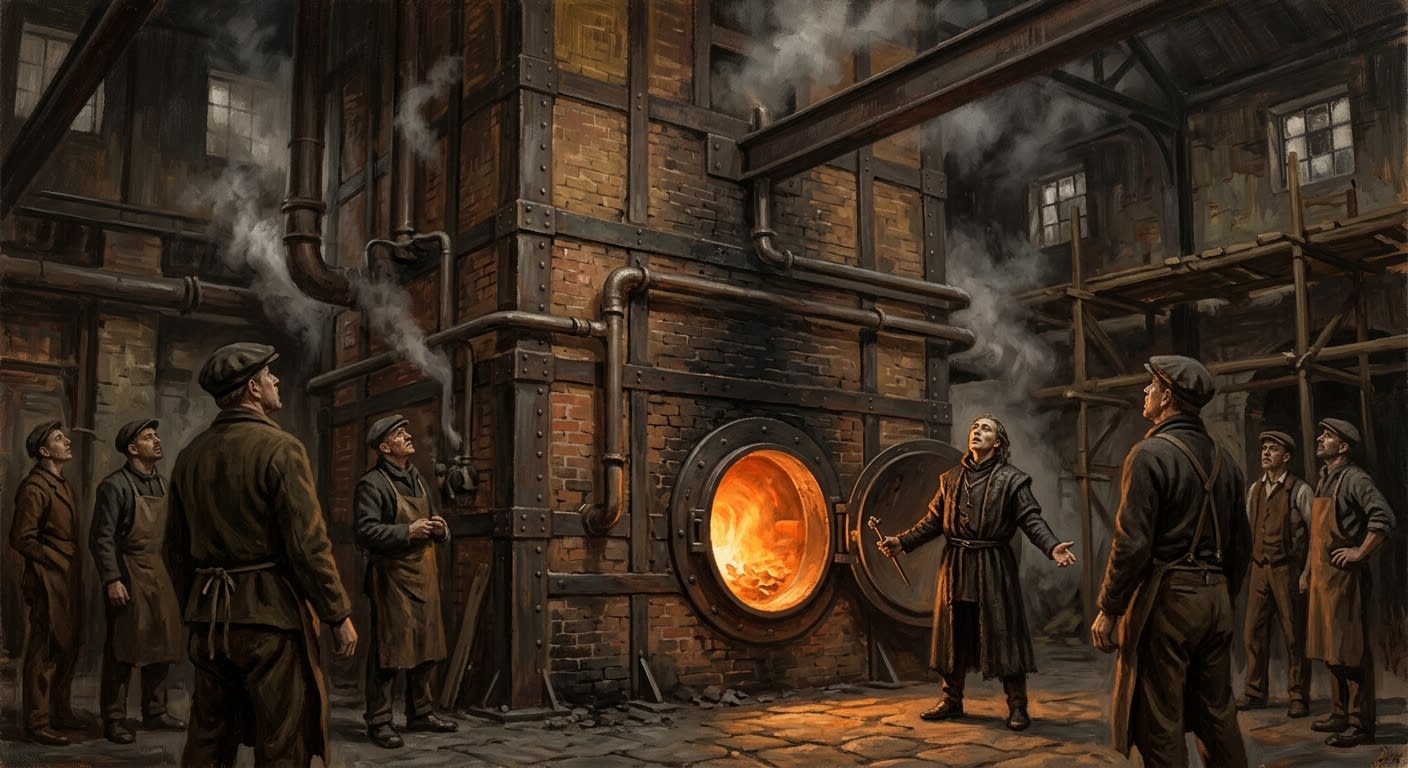
Saint-Combust
The furnace that became a saint because waste is impious and explosions need doctrine
Kiln Three of Brast, renamed Saint-Combust after the A.S. 74 pressure reversal that killed nine men and gave the Synod a theology for dangerous machinery.
Codex Ref. XIII.1.72-001
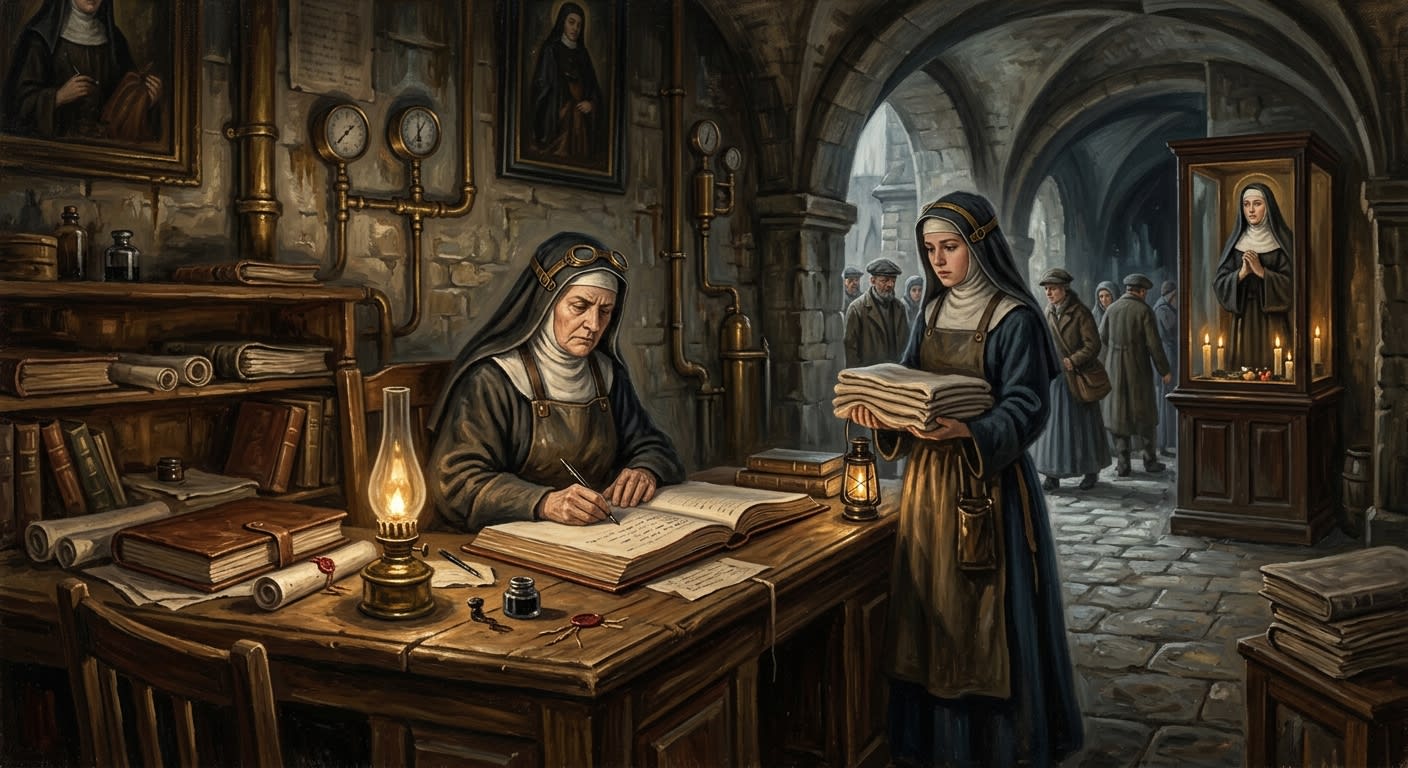
Sainte-Claire-des-Landes
Six miles from Saint-Malo, where laundry became evidence and damp became a route economy
The Breton convent of Margaux's ordinary years: damp stone, linen ledgers, a wax saint, nine thousand pilgrims, and twelve sisters still doing the work.
Codex Ref. II.1.09-092
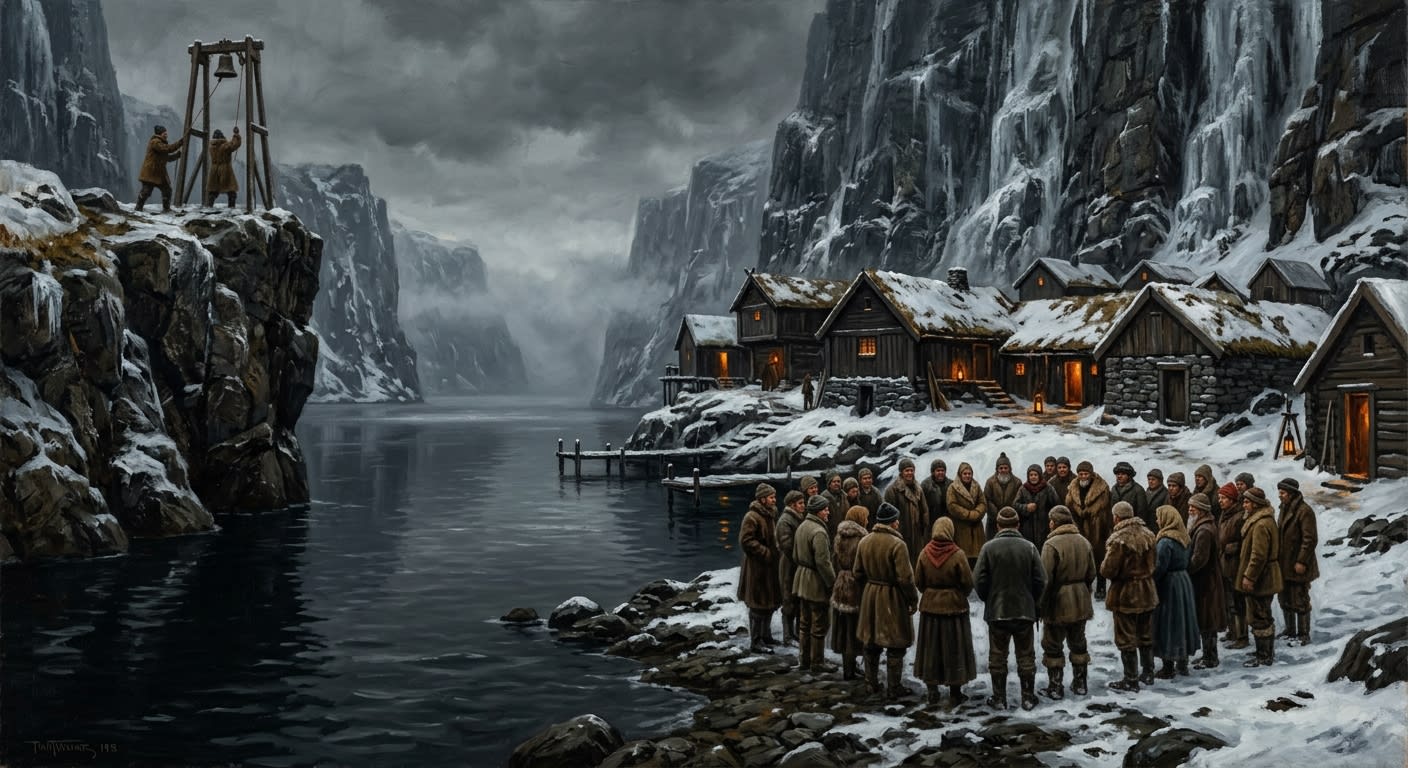
Scandinavia (The Fractured North)
The Synod's supplier, its creditor, and the thing the Bureau cannot name
A compliance assessment of Zone 8 — 1.9 million souls, clan moots, seal-oil, and the thing in the fog the Bureau classified Category Two Acoustic Distortion and has not re-examined. Filed by Drax. Not ratified by the wind.
Codex Ref. X.1.03-001
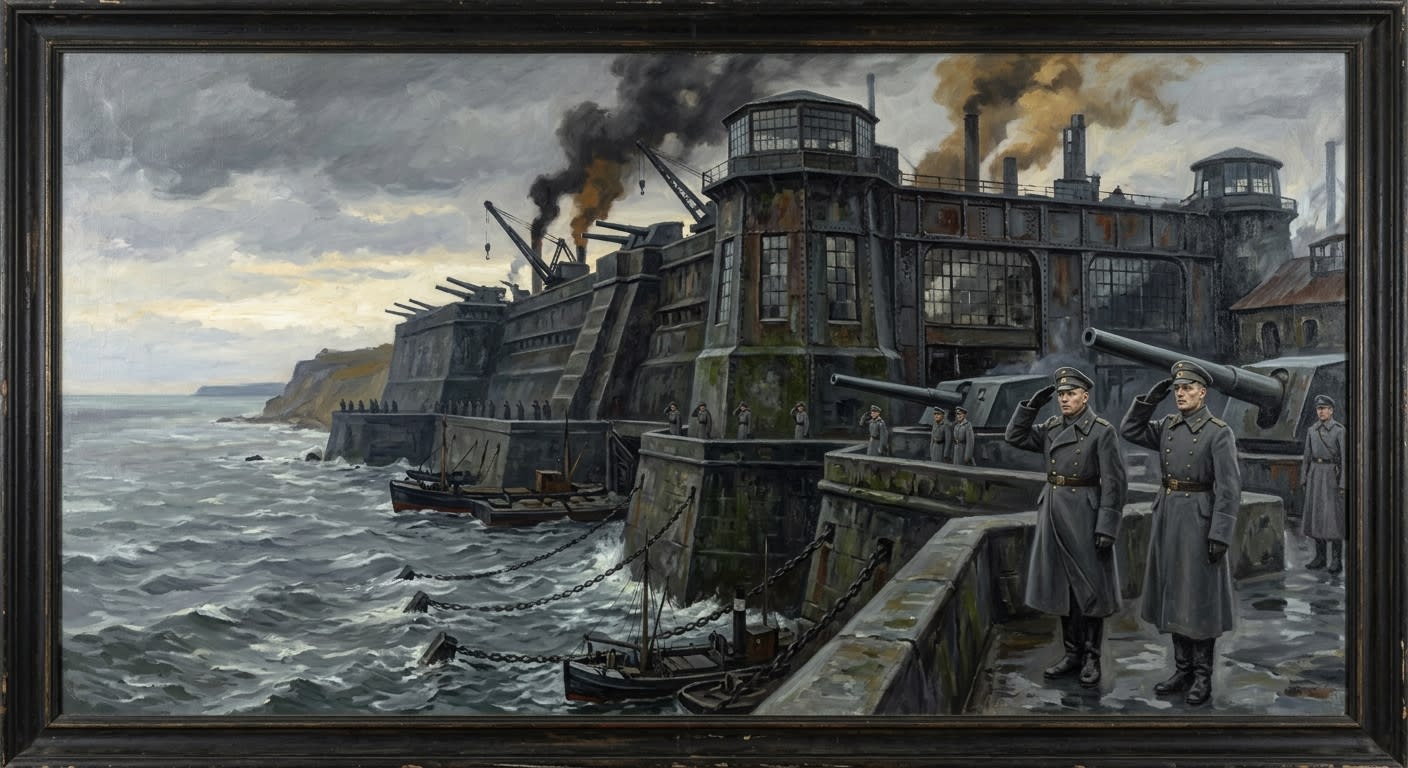
Sea Wall, Bastion-Königsberg
Where the Sagittal Line meets Baltic water and the fog outranks the wall
The Sea Wall of Bastion-Königsberg is where the Line runs into Baltic water, the Grey arrives without attacking, and sentries salute absence.
Codex Ref. II.4.07-067
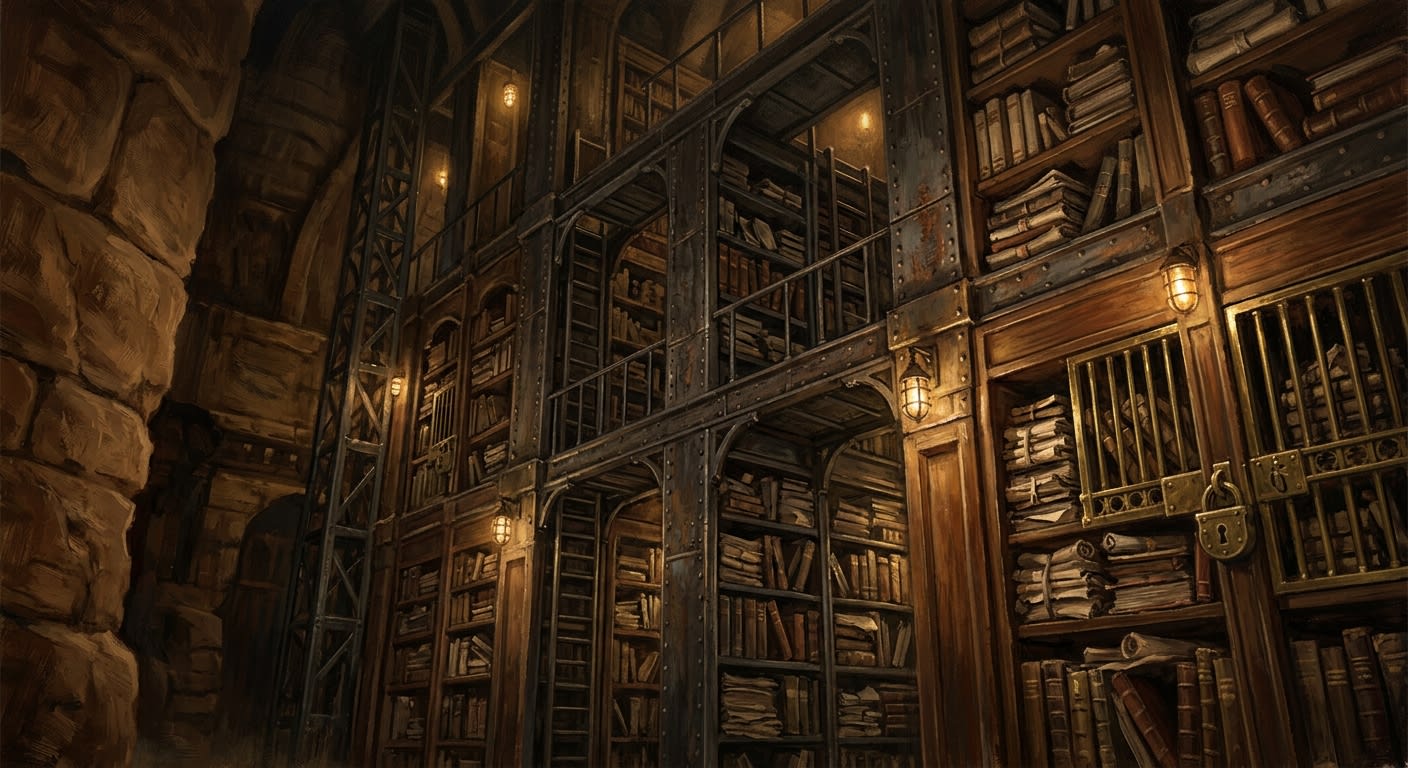
Sealed Archive of Doctrine
The room where contradictions sit upright, labelled, dangerous, and dry
Beneath the Tower of the Quill lies Doctrine's dry sealed archive: older than the sandstone, jealous of its shelves, and intimate with contradiction.
Codex Ref. II.1.04-002
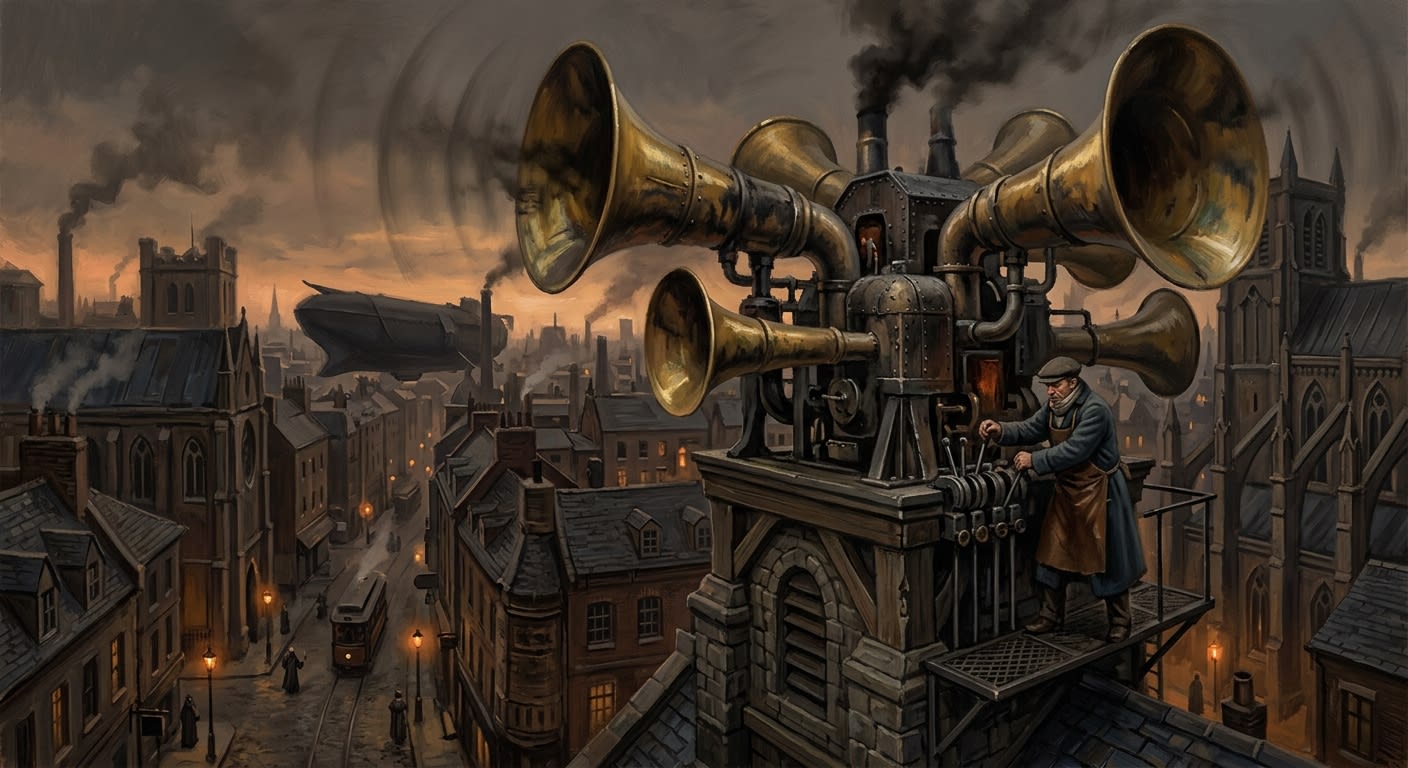
Sermon-horns
The brass throat by which doctrine stops asking politely
Sermon-horns make authorised language arrive with enough brass force that absence must explain itself, from rooftop shrines to Vigil Ark gondolas.
Codex Ref. XIII.1.96-092
Seven Seals of Faith
Seven absolute sovereignties, each checking the others, which Kratz called something else entirely
The constitutional framework of the Bureaucratic Synod — seven domains of overlapping absolute authority, each assigned to one Hierarch, each cancelling the others into the only available direction forward, toward the Sagittal Line, where jurisdiction is settled by artillery.
Codex Ref. XIII.1.05-001
Silent Confessional of Vienna
A cabinet need not hear you to make you confess
Rumoured Viennese black-iron confession apparatus whose victims emerged senseless yet speaking, preserved by Doctrine as a repurposed warning to every booth clerk who trusts furniture.
Codex Ref. XIII.1.61-001
Sponsor-Seal Brokers
Mercy with wax on its thumb and a price in its mouth
Sponsor-Seal Brokers sell the Cloister's most profitable mercy: wax-backed speed, softer files, paid witnesses, and teaspoons of time returned to the swallowed.
Codex Ref. XI.5.01-003
Standing Order 14-C
Every surface shall confess before speech begins
Standing Order 14-C teaches walls, bread, badges, coffins, and brows to confess: no lawful surface remains visually unclaimed.
Codex Ref. XIII.1.14-090
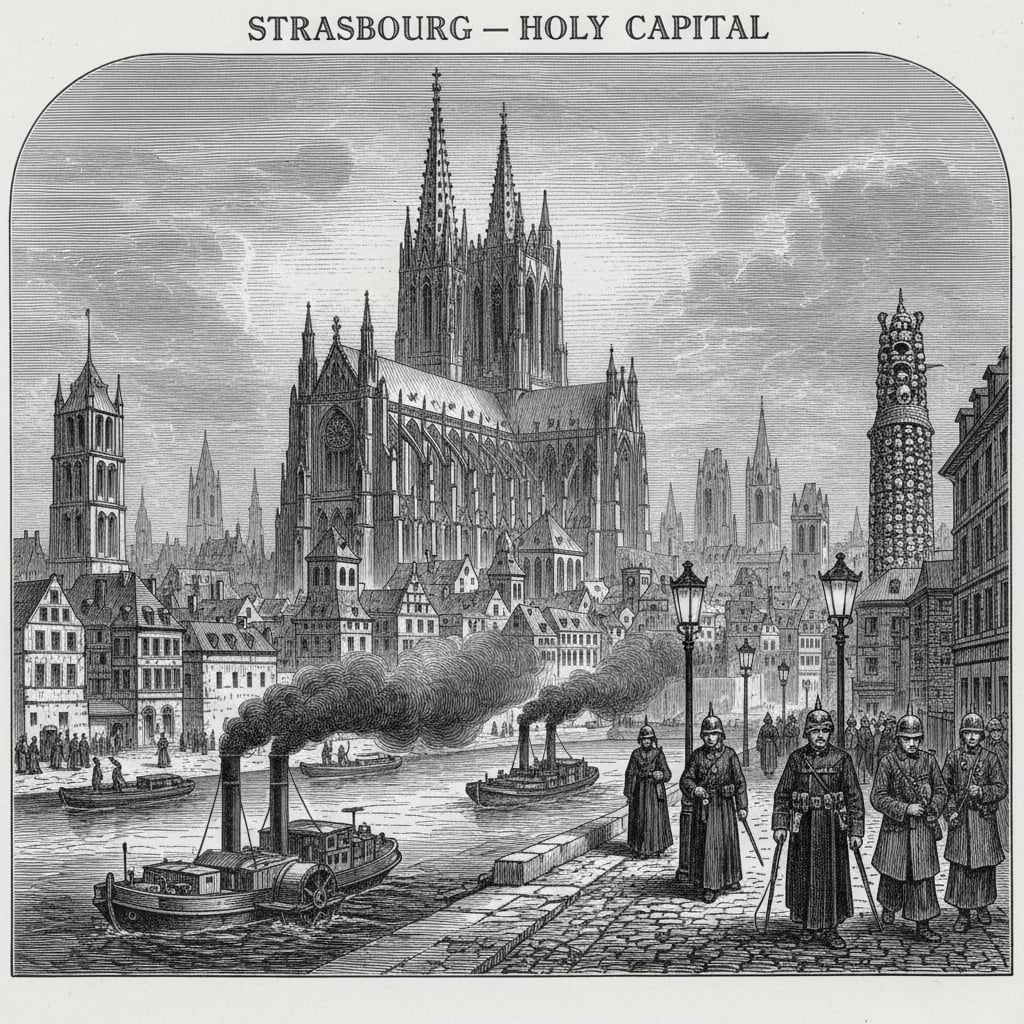
Strasbourg
The Holy City, or the Weight of Fifteen Centuries of Paperwork
Seat of the Synod, capital of the Dominion, largest city on the continent, and the only place where the bells never stop ringing. Strasbourg has forgotten what silence sounds like. So have its residents.
Codex Ref. III.2.01-001
Strasbourg Cathedral
The stone lease by which Heaven rents authority to the Bureaus
Strasbourg Cathedral is stone, bell, vault, bench, seal, and threat: the capital's holy machine for turning awe into obedience.
Codex Ref. II.1.04-004
Stuttgart
Where Swabian thrift is spent in sons
Stuttgart is War's Swabian catechism-barracks, a Zone 2 training engine where ration economy, mud discipline, and family grief are measured into obedience.
Codex Ref. II.2.01-004
Sunken Choir
The hymn beneath the trench, paid for in boys' throats
The Sunken Choir is a sanctioned Choir-Engine: boys altered into subterranean hymn machinery so the Synod may collapse enemy tunnels while calling the invoice grace.
Codex Ref. XIII.1.33-001
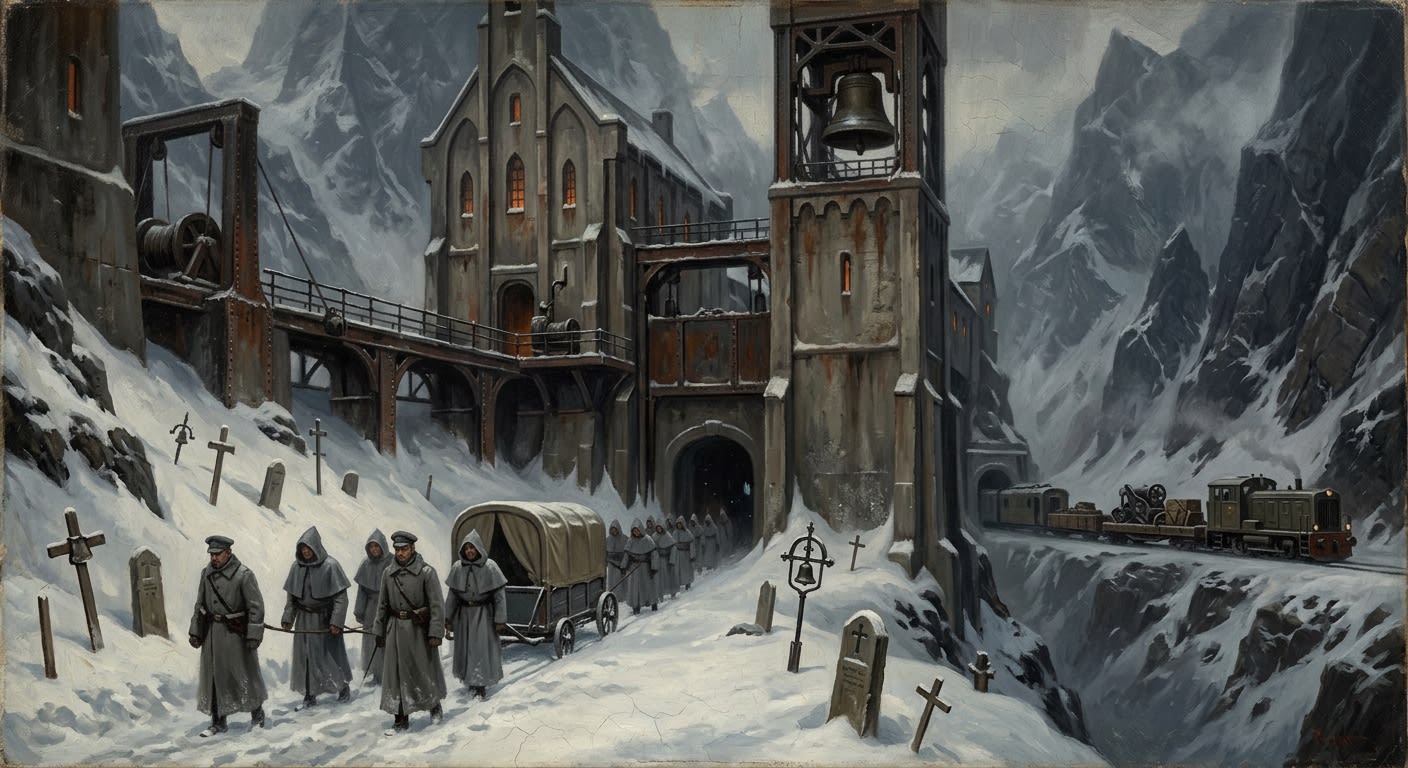
Swiss Cantons
Where mercy climbs uphill and stops writing back
The Swiss cantons keep passes, bells, hospice beds, and the Synod's most merciful disappearances beneath snow clean enough to indict Heaven.
Codex Ref. II.2.08-201

Table of Nine
The oak that refuses inspection and still moves ships
Britain's Table of Nine withholds its charters, argues before Aldric, commands ports and Wardens, and teaches Strasbourg the agony of useful illegibility.
Codex Ref. X.1.02-201

The Age of Heresy
A World Sundered, a Faith Forged in Fire
The definitive overview of the Age of Heresy — a continent sundered by demonic invasion, ruled by a theocratic bureaucracy of bells and ink, locked in eternal war against the Seven Sin-Generals. As compiled by the only man qualified to compile it.
Codex Ref. I.1.01-001
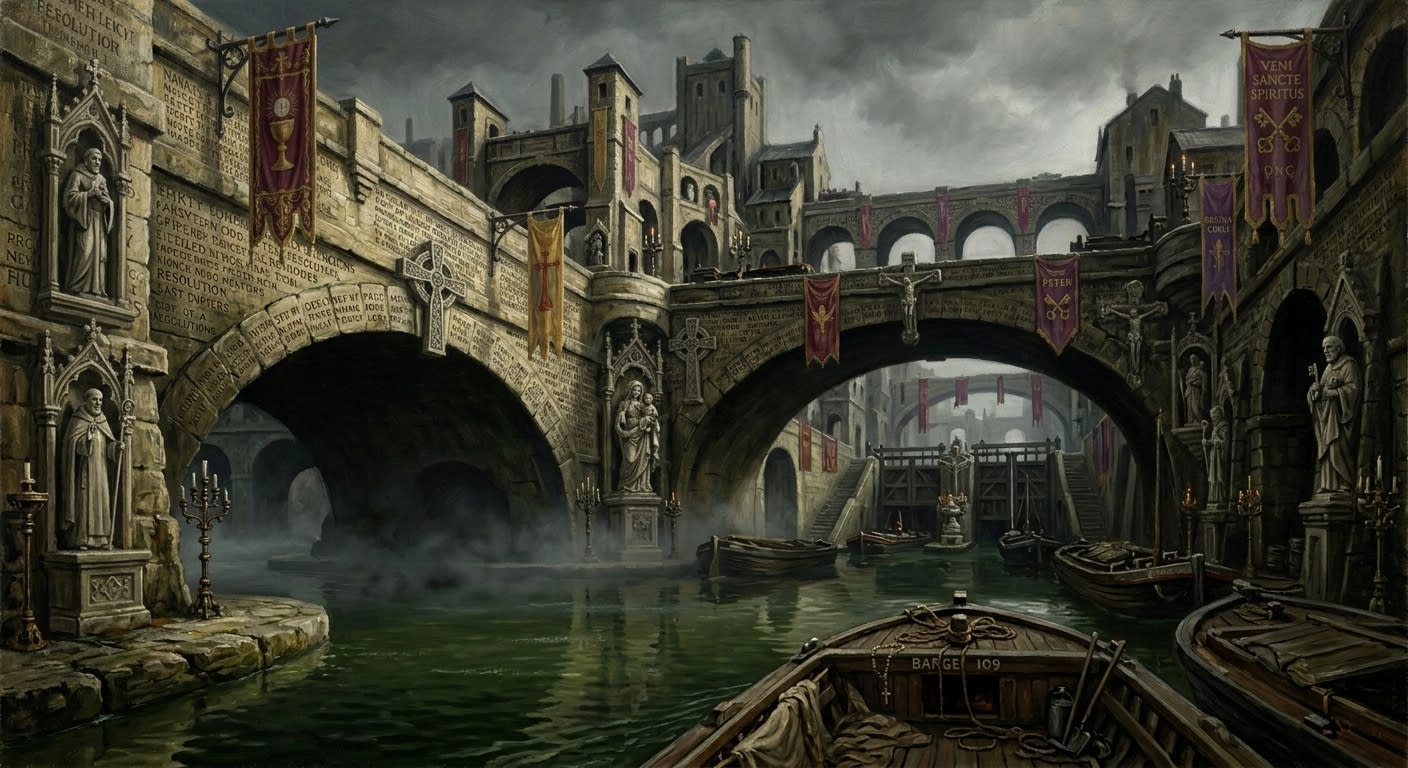
The Archivolt Causeyworks
Where stone keeps accounts, and every arch is also a court of law
A canal city where bridges are courts and debts are carved in granite — the Archivolt Causeyworks keeps its ledger in stone, and the stone has begun to listen.
Codex Ref. II.1.02-001
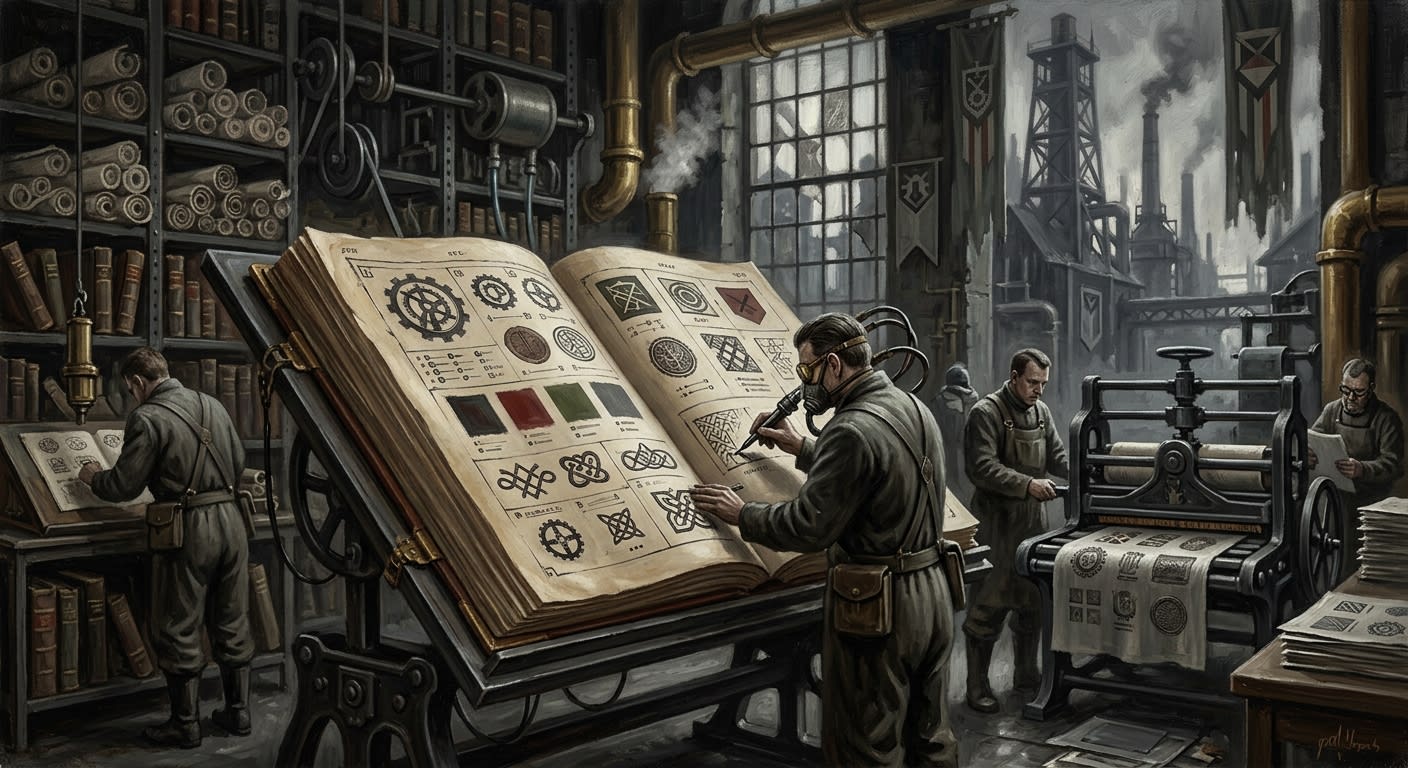
The Armorial of the Faithful
The book by which even colors learn obedience
The Armorial teaches every banner, crest, seal, colour, knot, and shop sign in the Synod the first virtue of a surface: obedience.
Codex Ref. VIII.1.03-002
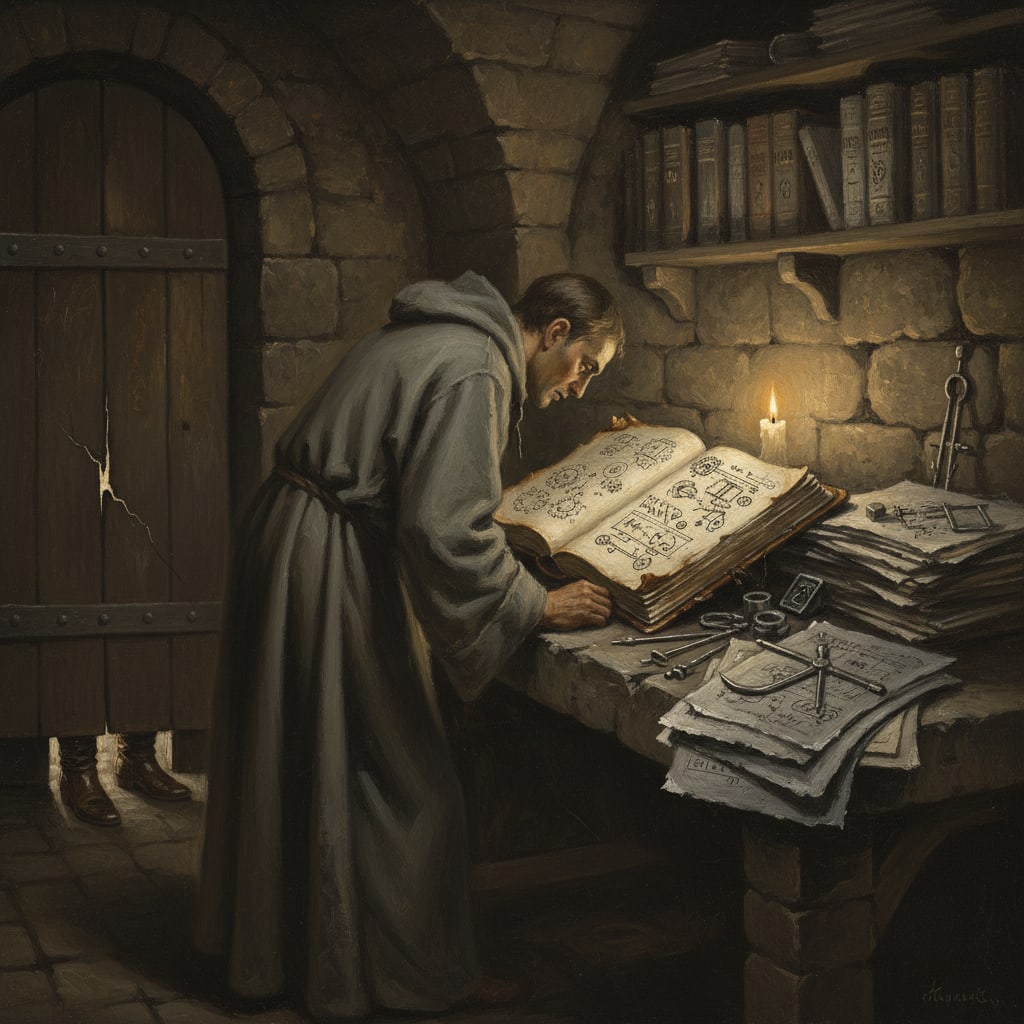
The Ashen Circle Scholar
What the Bureau Burns, the Circle Preserves — the Synod's Indispensable Heretic
The Bureau calls them poison. The front calls them indispensable. The Ashen Circle Scholar trades in what the Index Damnatus cannot afford to have gone permanently missing.
Codex Ref. XI.1.01-001
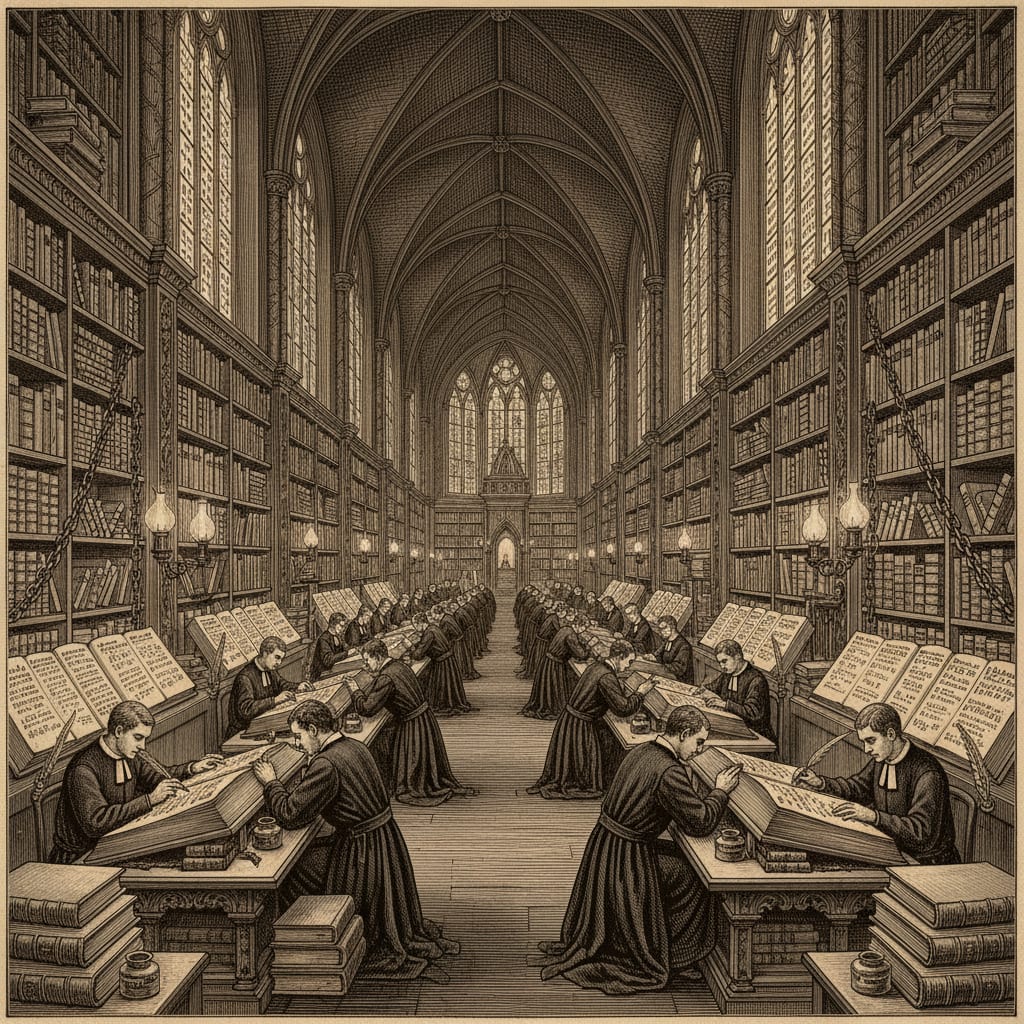
The Basilica of the Ledgered Saints
Archive of the Living and the Dead
The labyrinthine archive-basilica of Strasbourg, where every soul since the Council of Cologne has been inked in crimson. A nave of numbers, a vault of recantations, and a crypt that breathes.
Codex Ref. III.2.07-031
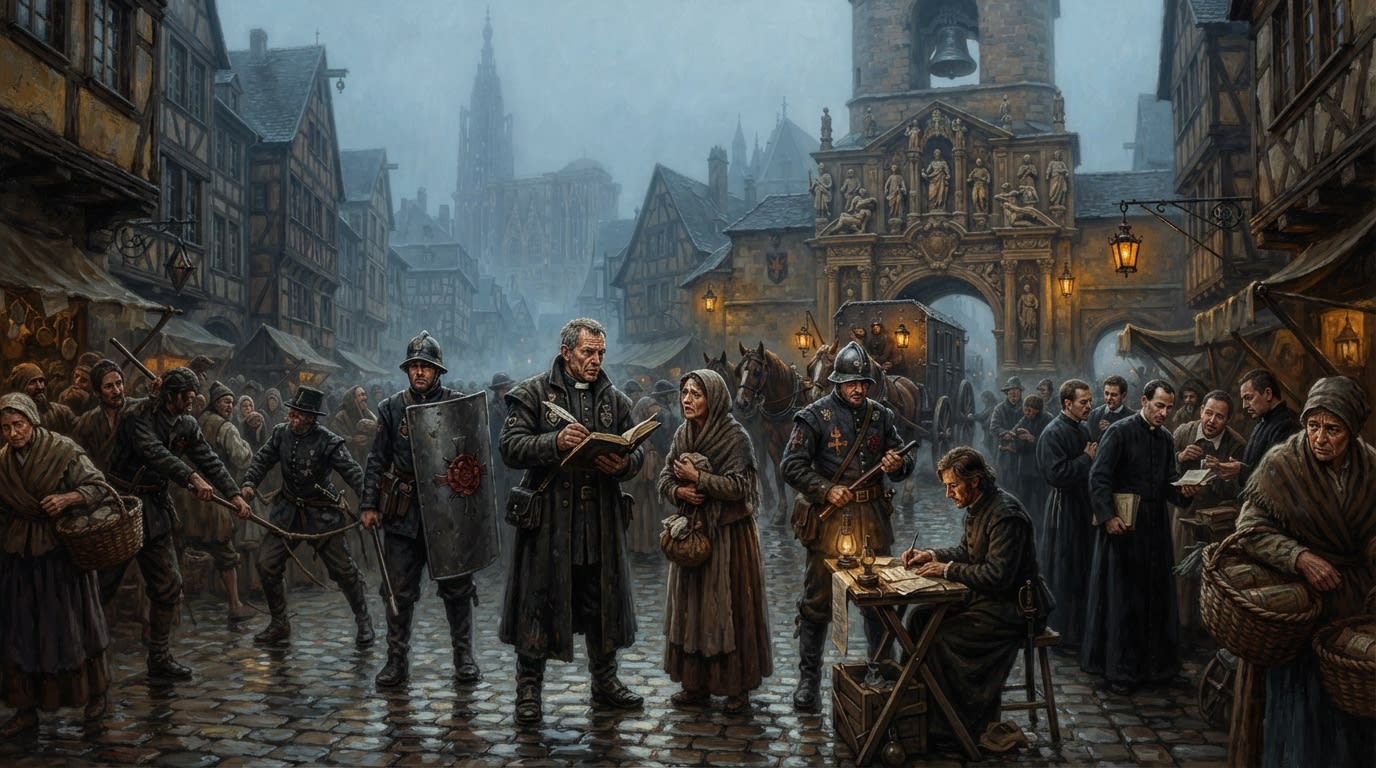
The Bastion Watch
The bell that requires a human answer
The Synod's civic Watch patrols markets and gates, answering bells other offices cannot reach. It uses shields, custody wagons, complaint boards, and copied records to stand between public danger and delayed superior authority.
Codex Ref. XII.3.01-001
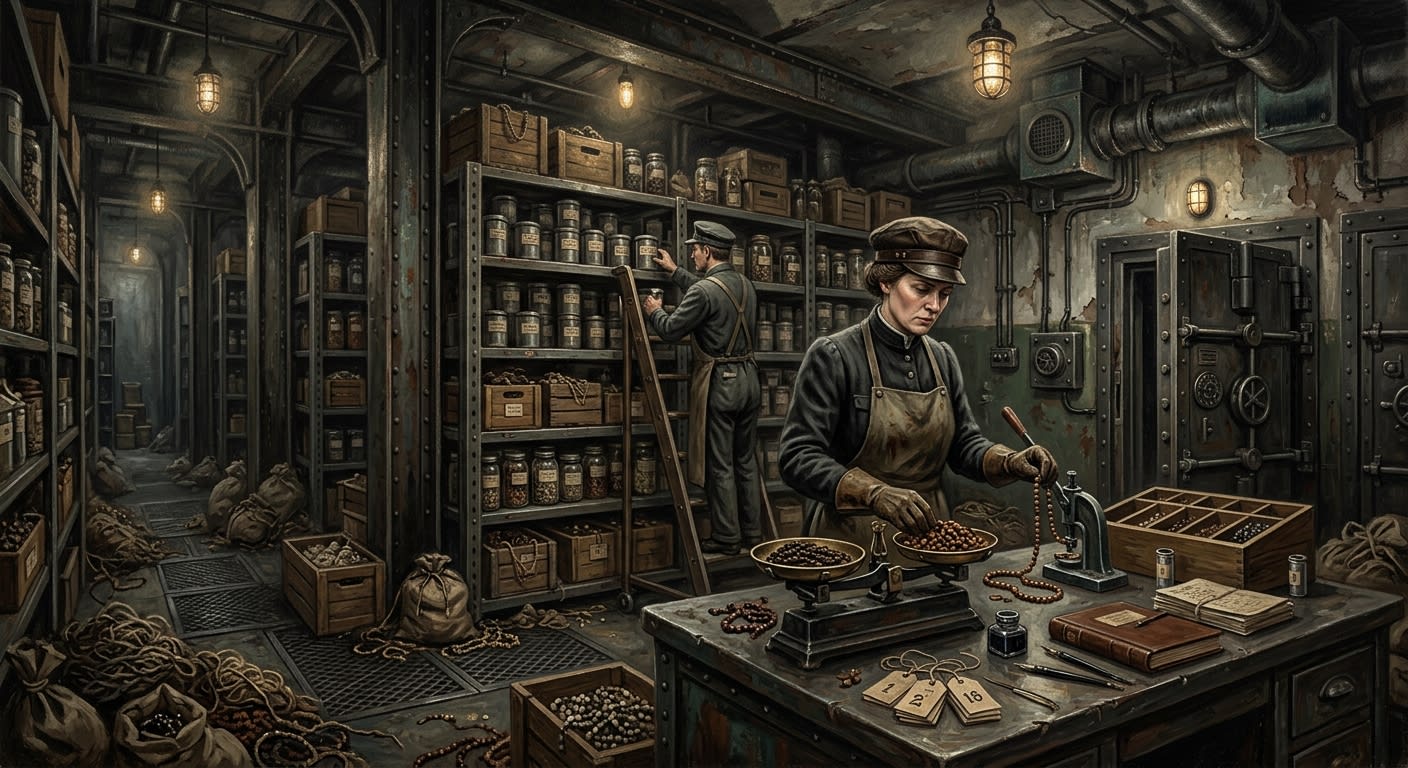
The Bead Vault
Where prayer beads learn to testify against the living
The Bead Vault is the Cloister's cold evidence room, where confiscated pilgrim strings are weighed, sleeved, locked, and sometimes found counting back.
Codex Ref. II.3.06-003
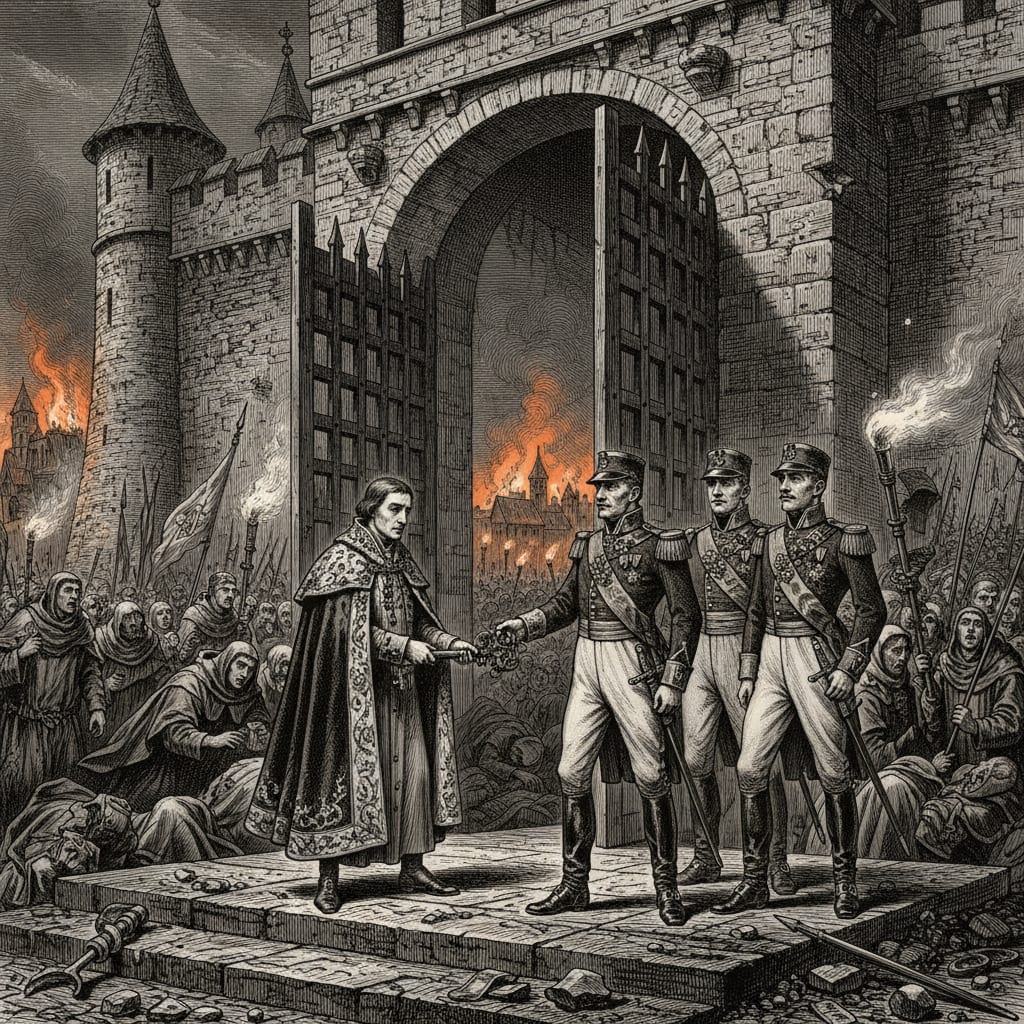
The Betrayal of Aachen
On the Surrender of the Citadel and the Erasure of Guillaume
In the twenty-fifth year of our calendar, the Lord-Protector Guillaume sold Aachen's gates for thirty provinces of the Lowlands. The citadel fell without a siege. The faithful fell without a warning.
Codex Ref. II.1.06-066
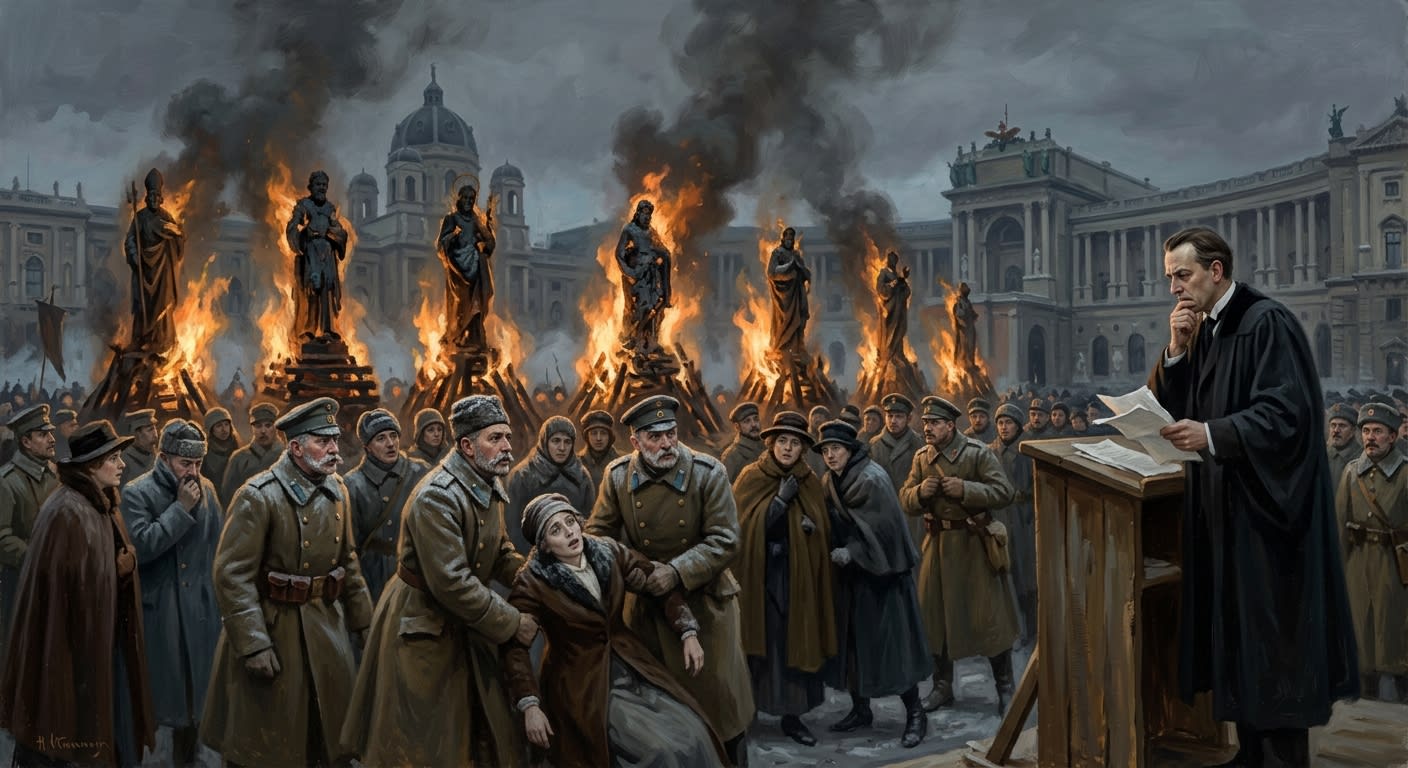
The Black Procession of A.S. 30
Where the Saints Burned Cold and the Rationalists Filed It Under Weather
A staged Rationalist bonfire in Vienna, A.S. 30, where forty-seven saint-effigies burned without heat — the Bureau's First-Order Portent, classified retroactively and still warm.
Codex Ref. VII.3.01-001
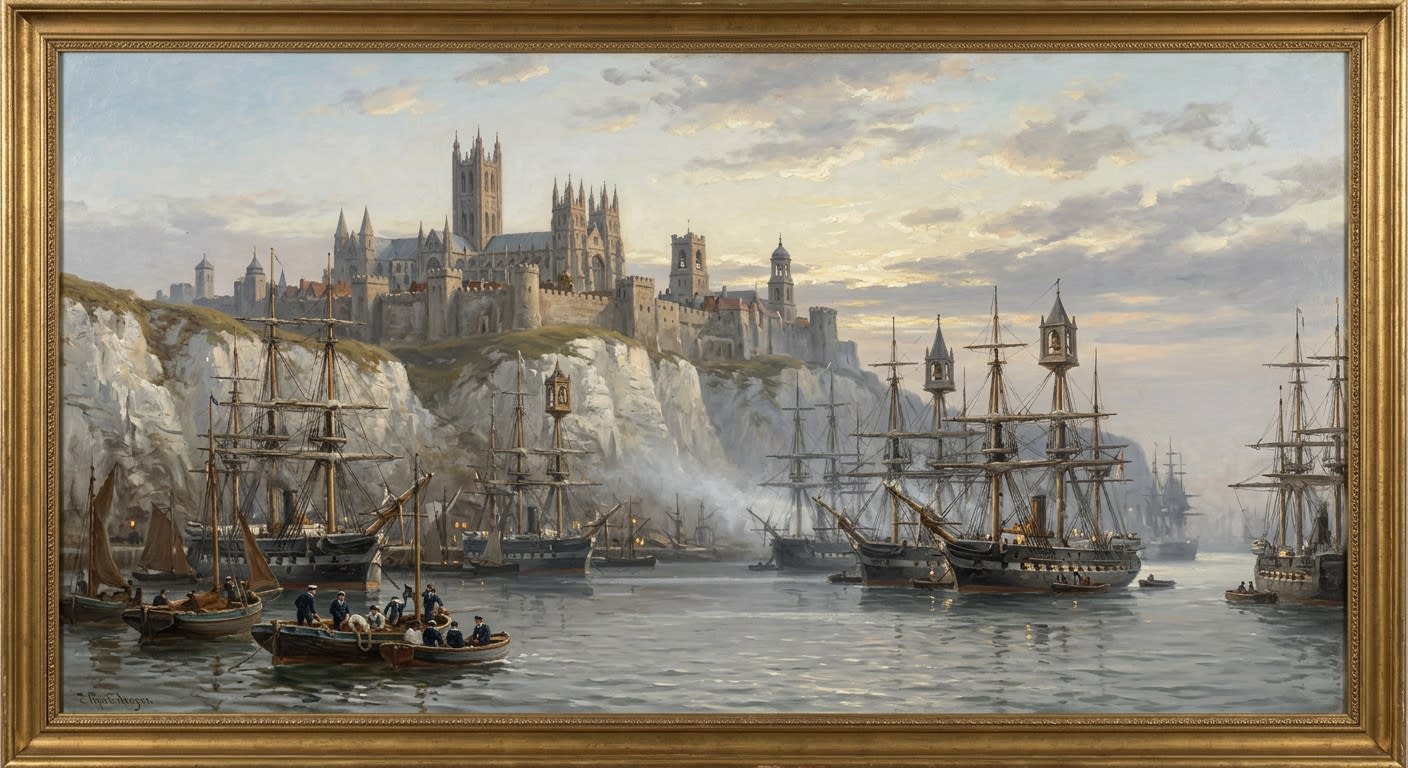
The British Crown
The island the Bureau has spent a hundred and eleven years failing to classify
The Zone 0 co-belligerent that has never submitted to the Concordat and never needed to. Canterbury governs by chivalric charter; three hundred Cathedral Ships hold the Channel; the Bureau of Doctrine considers this theologically embarrassing and strategically essential.
Codex Ref. X.1.01-001
The Broken Cross
The sigil that snapped heaven and called the wound reason
The Broken Cross was Reason's battlefield sermon: a snapped crucifix carried by men who denied symbols while marching under one.
Codex Ref. I.1.05-003
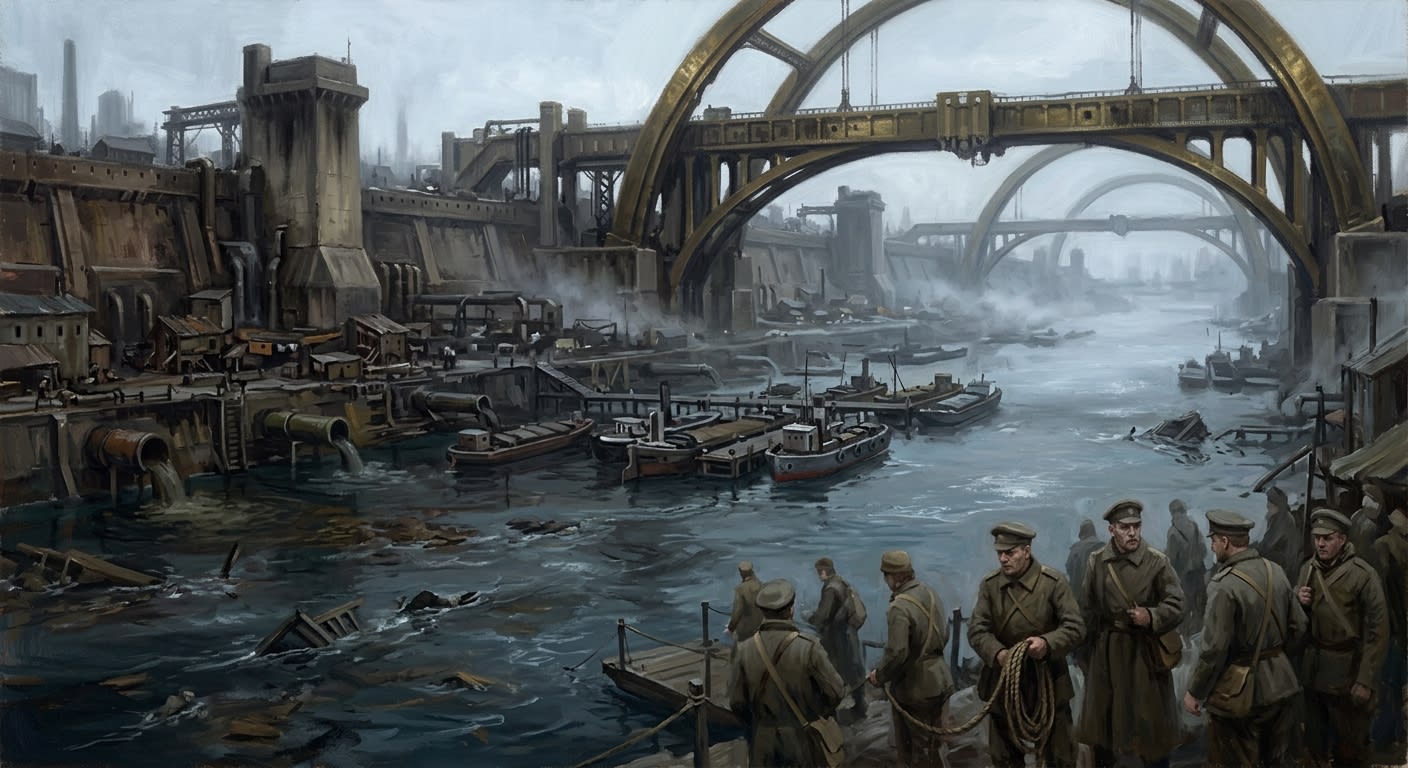
The Bug River
The moat has learned to audit the drowned
The Bug River is Bastion-Brest's natural moat: cold water, legal throat, corpse archive, anomaly carrier, and the wet witness beneath the Brass Ribs.
Codex Ref. II.4.08-066
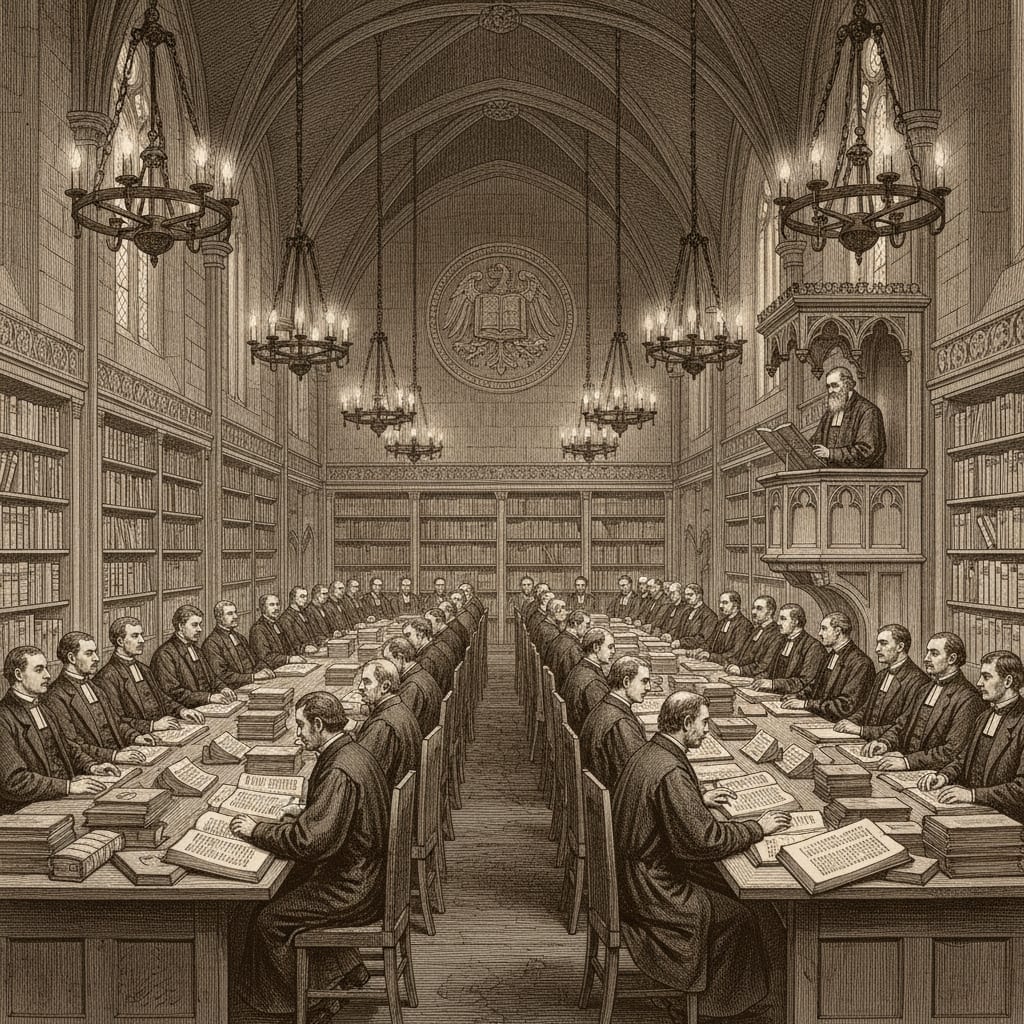
The Bureau of Doctrine
First Among Equals, Flame of Interpretation
The Bureau that defines what is true and what has never been true. Keeper of the Flame of Interpretation, drafter of every catechism, and executioner of every dialect that displeased it.
Codex Ref. III.3.01-024

The Bureau of Heraldry
The grammar of loyalty, measured in ink and iron
The Bureau of Heraldry controls what the Synod is permitted to look like. Every crest is a sentence. Every unregistered symbol is a rebellion not yet named.
Codex Ref. VIII.1.03-001
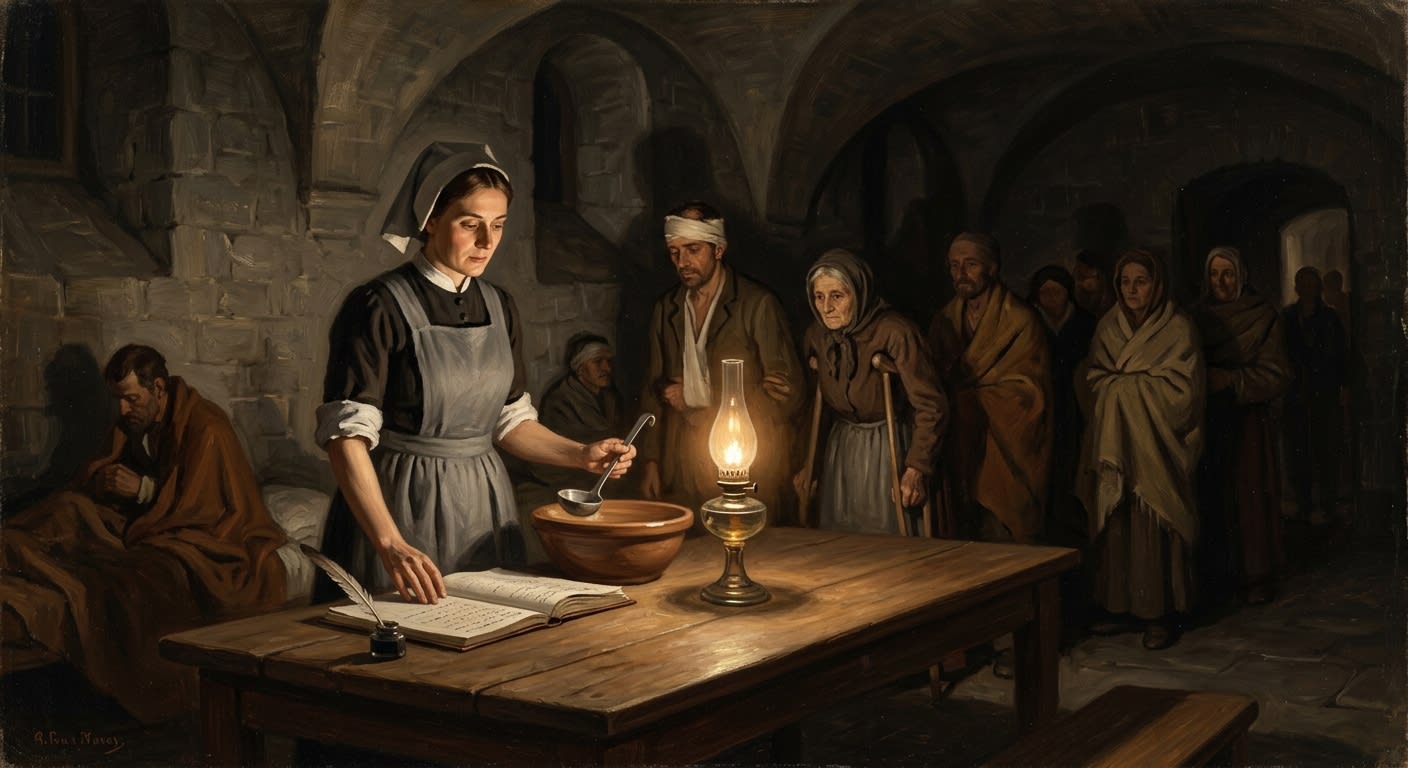
The Bureau of Mercy
Compassion Is a Ration. A Ration Is a Policy. A Policy Is the Synod's Will.
The Bureau of Mercy administers the Synod's hospitals, orphanages, broth-kitchens, and Hospices of Departure — every institution where subjects are at their most vulnerable and therefore most in need of documentation.
Codex Ref. VI.4.12-031

The Bureau of Oaths
No promise binds unless Strasbourg hears it.
The Bureau of Oaths holds that an unwitnessed promise is merely breath — and breath is not legally binding. Seven hundred volumes of the Ledger of Fidelity, sealed beneath the Basilica, remember every vow Europe has ever broken.
Codex Ref. VIII.1.02-001
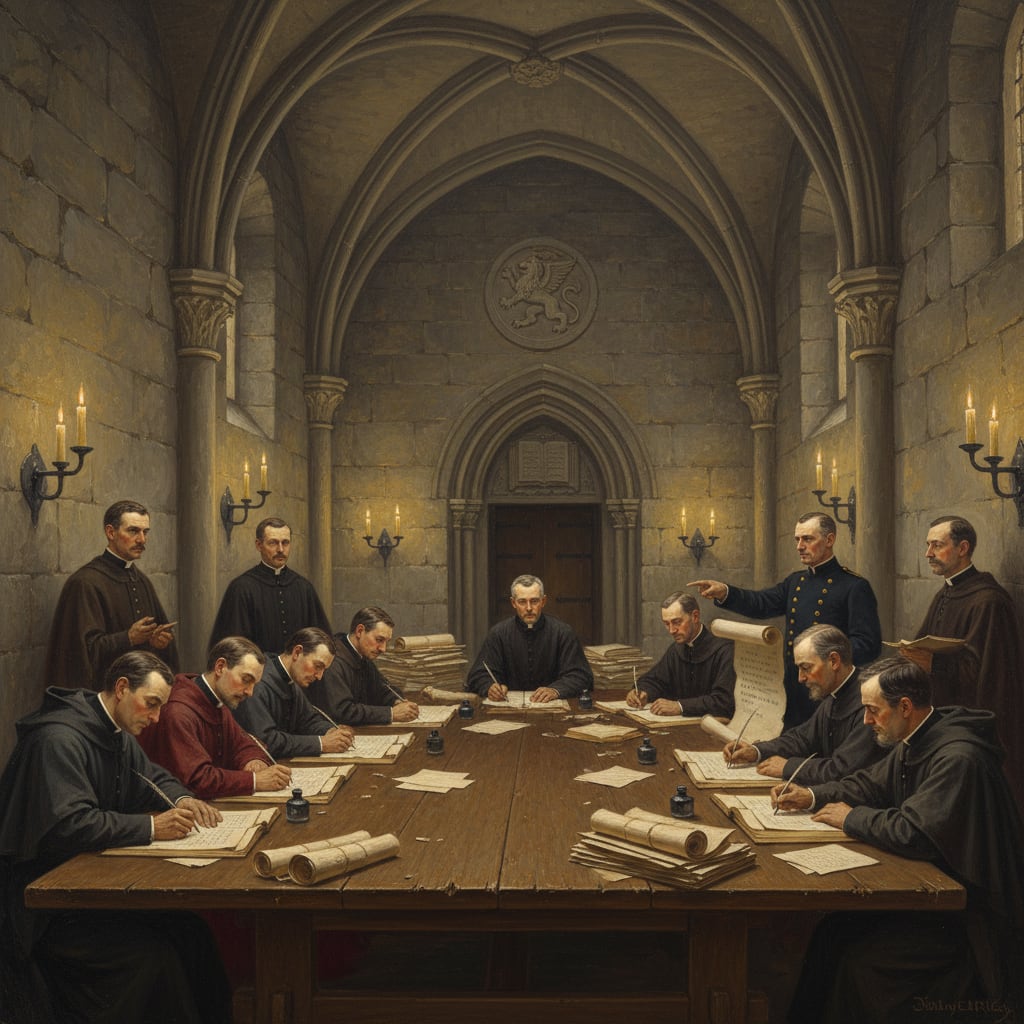
The Catechism of Obedience
The Synod's licence to breathe; or, seventy-four pages in which the Bureau defined the terms of continued existence
The founding instrument of institutional faith — seventy-four pages that define the terms under which a soul may continue to exist within the Synod's jurisdiction, and enumerate the consequences of refusal.
Codex Ref. XIII.1.04-001
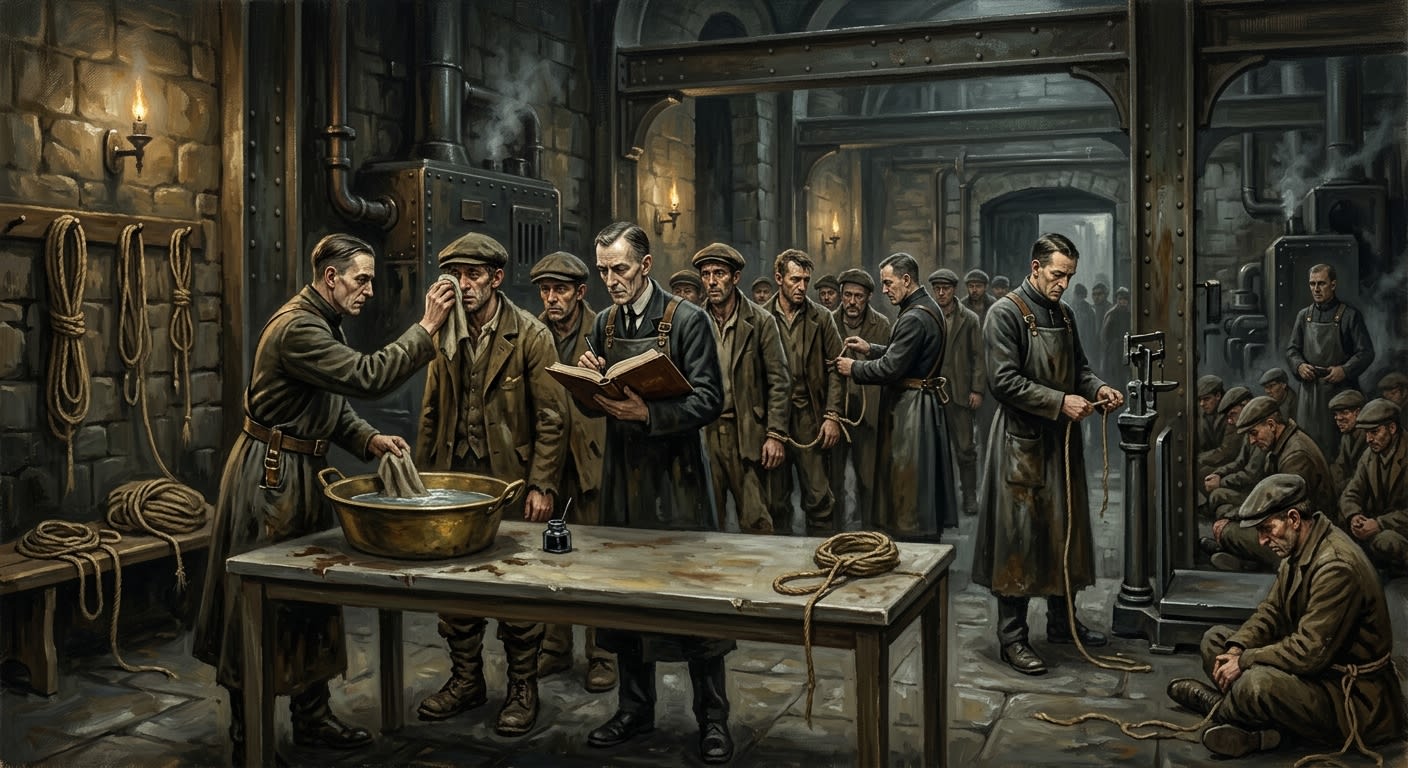
The Chapel of the Second String
Where correction kneels until origin learns its place
The Chapel of the Second String reconciles miscounted pilgrims with cheap cord, cold stone, silence tests, basin water, and the doctrine that correction outranks origin.
Codex Ref. II.3.06-006
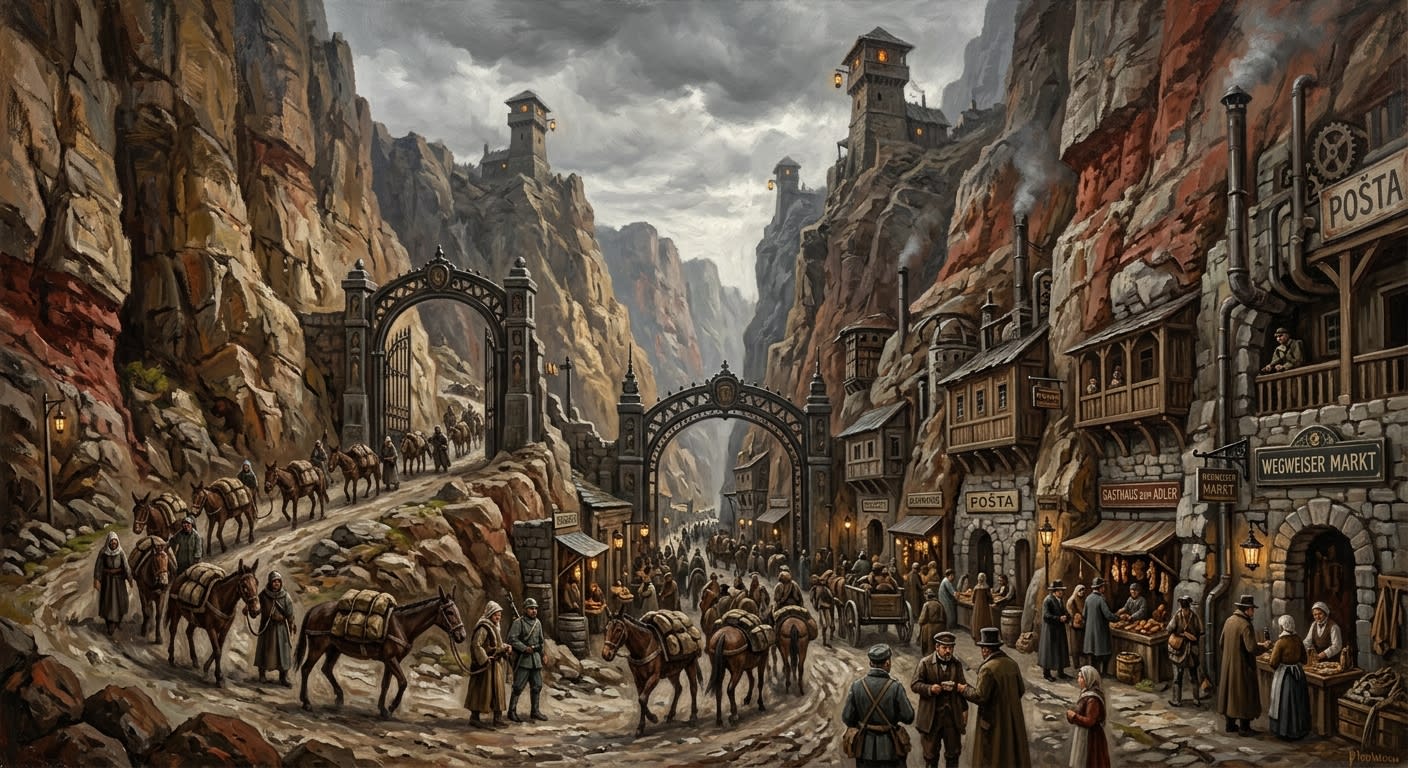
The Choir-Broker Hall of Peregrine Row
Where the canyon charges for its echoes and the brokers charge for everything else
A Zone 1/2 waystation-market on the Pilgrim Roads where creed-testing, escort contracts, and bead reconciliation converge into an economy of sanctioned extortion. The canyon echoes your prayers with one vowel wrong. The brokers charge for that too.
Codex Ref. II.1.03-001
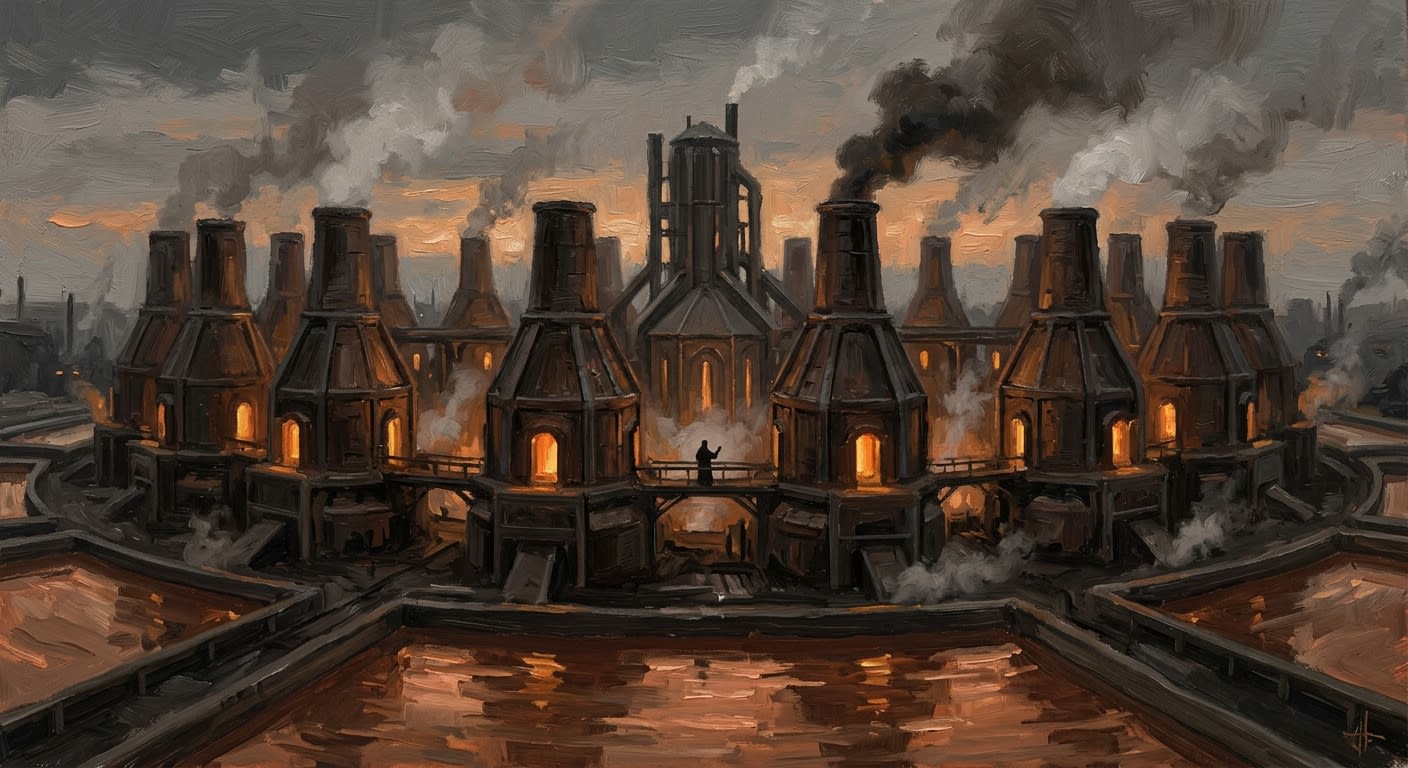
The Chrismole Furnaces of Brast
Faith provides the flame; the Bureau provides the invoice
Ninety-two thousand souls and an unknown number of engines live in Brast, the continent's only producer of sanctified chrismole fuel — and something in the furnaces has recently begun to sing back.
Codex Ref. II.2.01-003
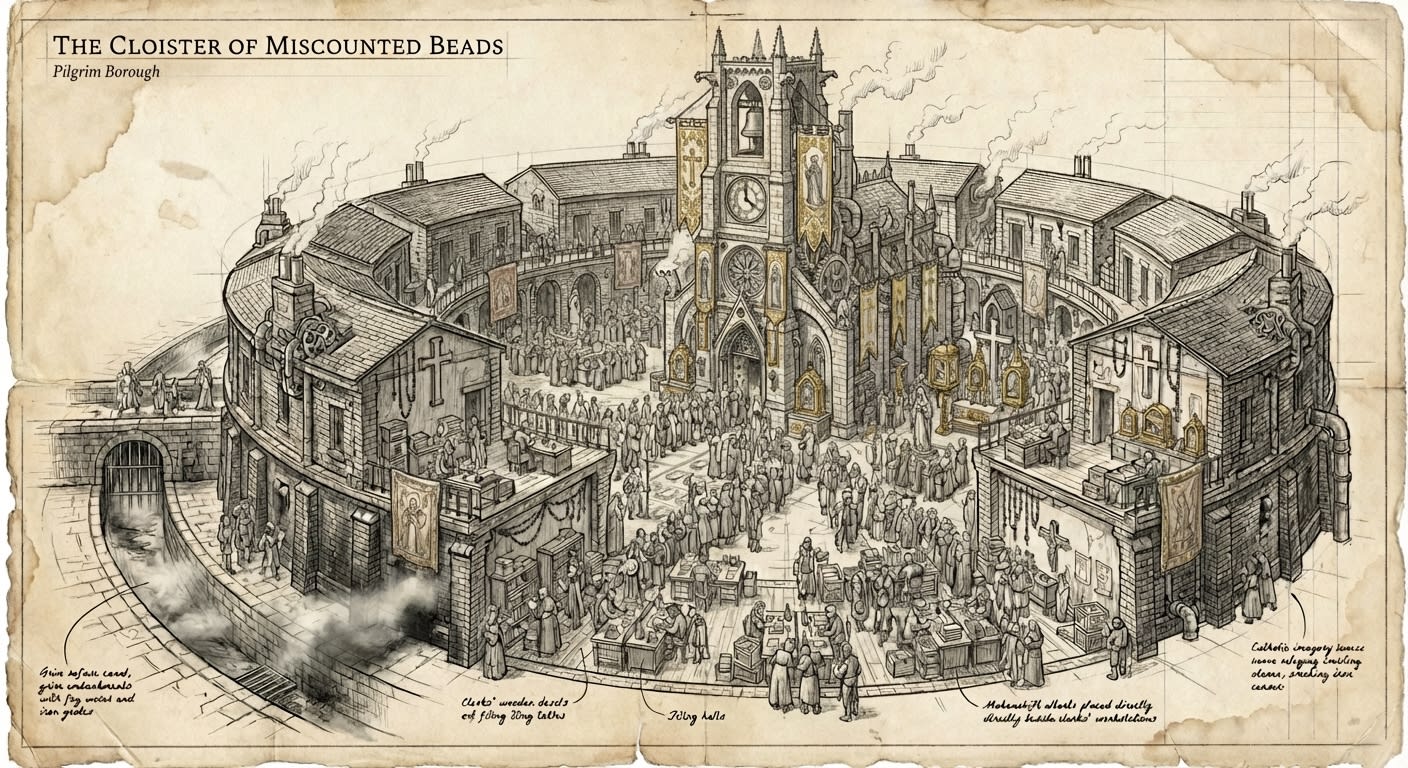
The Cloister of Miscounted Beads
The Bureau does not distinguish between mercy and procedure. Both produce the same paperwork.
Strasbourg's pilgrim processing facility, where six thousand souls await bead reconciliation, the dead reappear on intake rosters, and the Bureau of Records declines to call any of it a problem.
Codex Ref. II.2.06-001
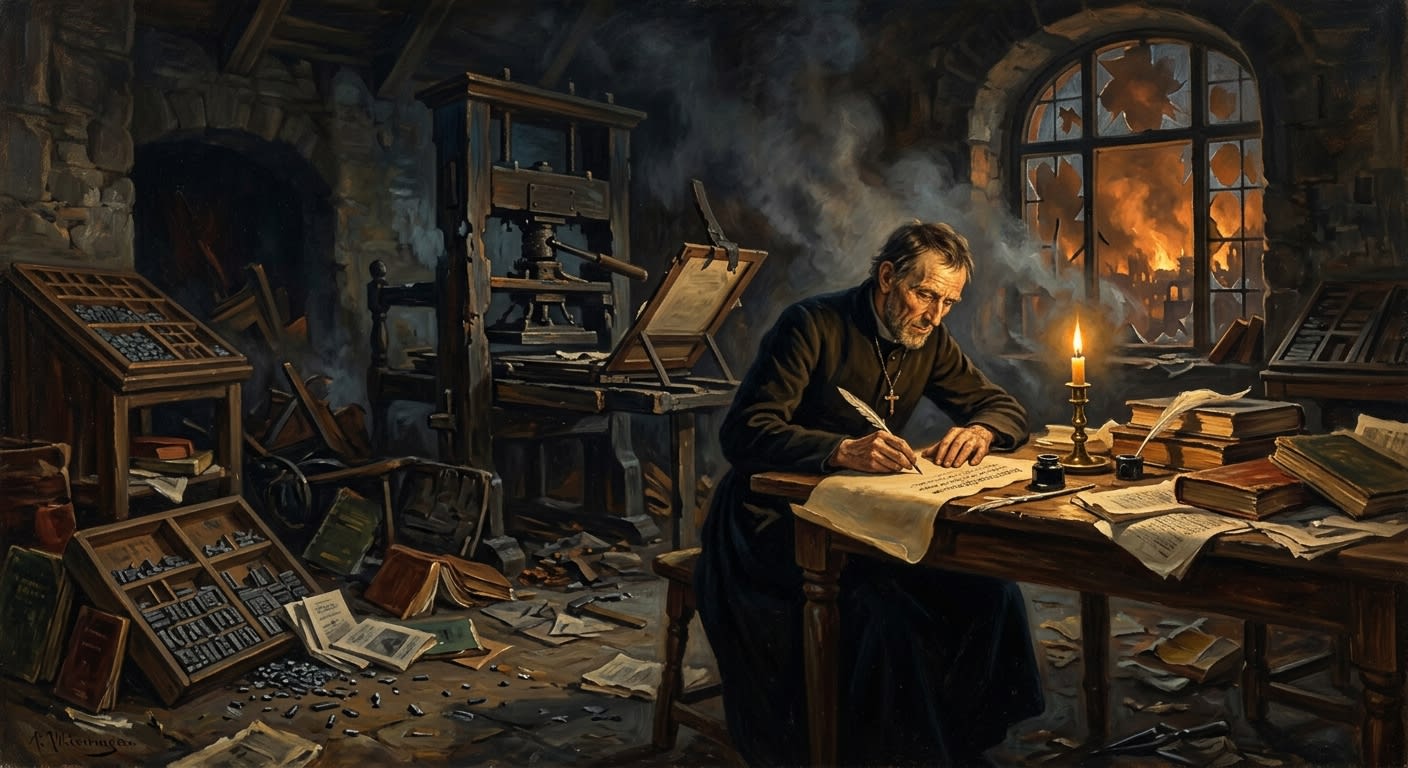
The Common Allegiance
Seven pages that ended the age of a thousand altars
Drax examines the seven-page A.S. 55 charter that bound dioceses through local subscriptions and helped build the authority later formalized at Strasbourg.
Codex Ref. VI.5.01-001
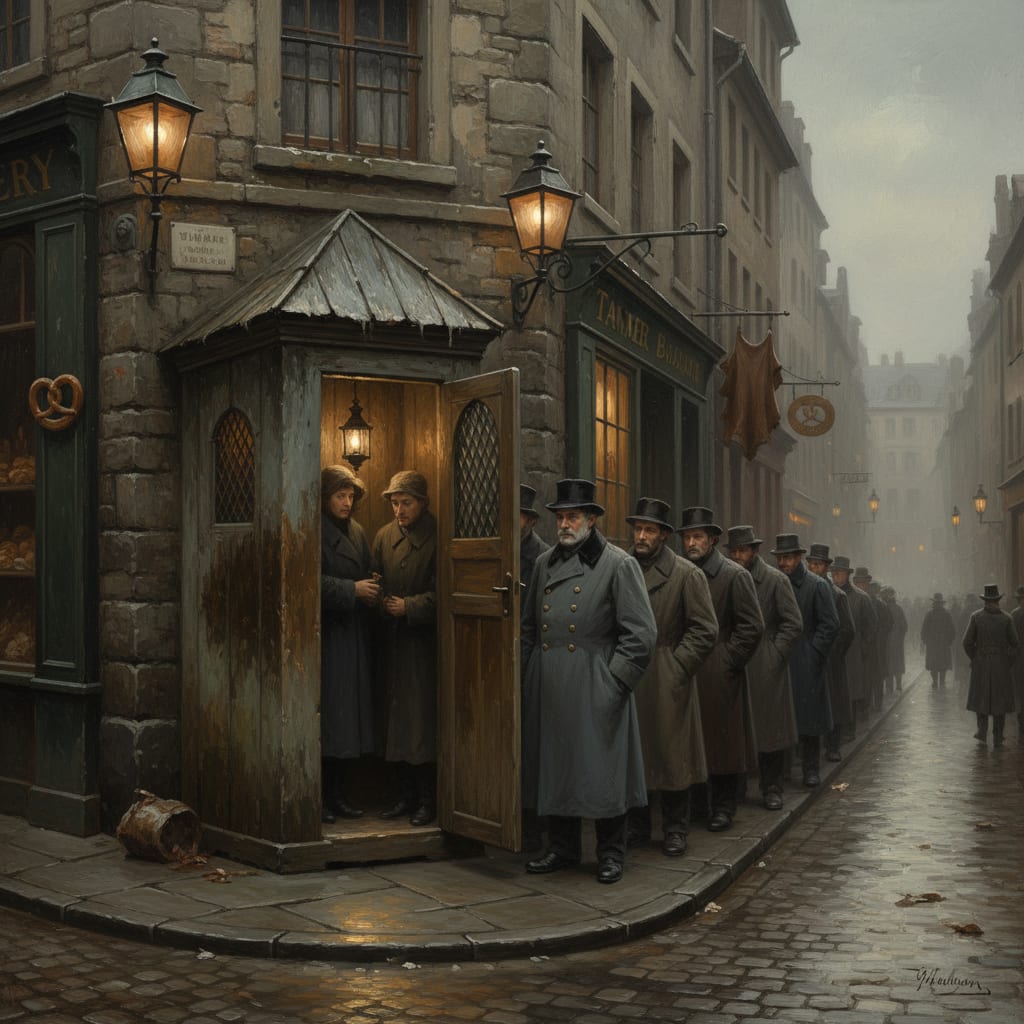
The Confessor-Booth Clerk
The booth does not forgive — but it files. A survey of the twenty-two thousand stamps that keep the Synod clean.
Twenty-two thousand booths; one stamp; no absolution. The Confessor-Booth Clerk processes sin as throughput, files guilt as data, and keeps the Synod's spiritual economy solvent — a contemporary survey by Hieromnemon Valerius Drax, A.S. 201.
Codex Ref. XII.9.01-001
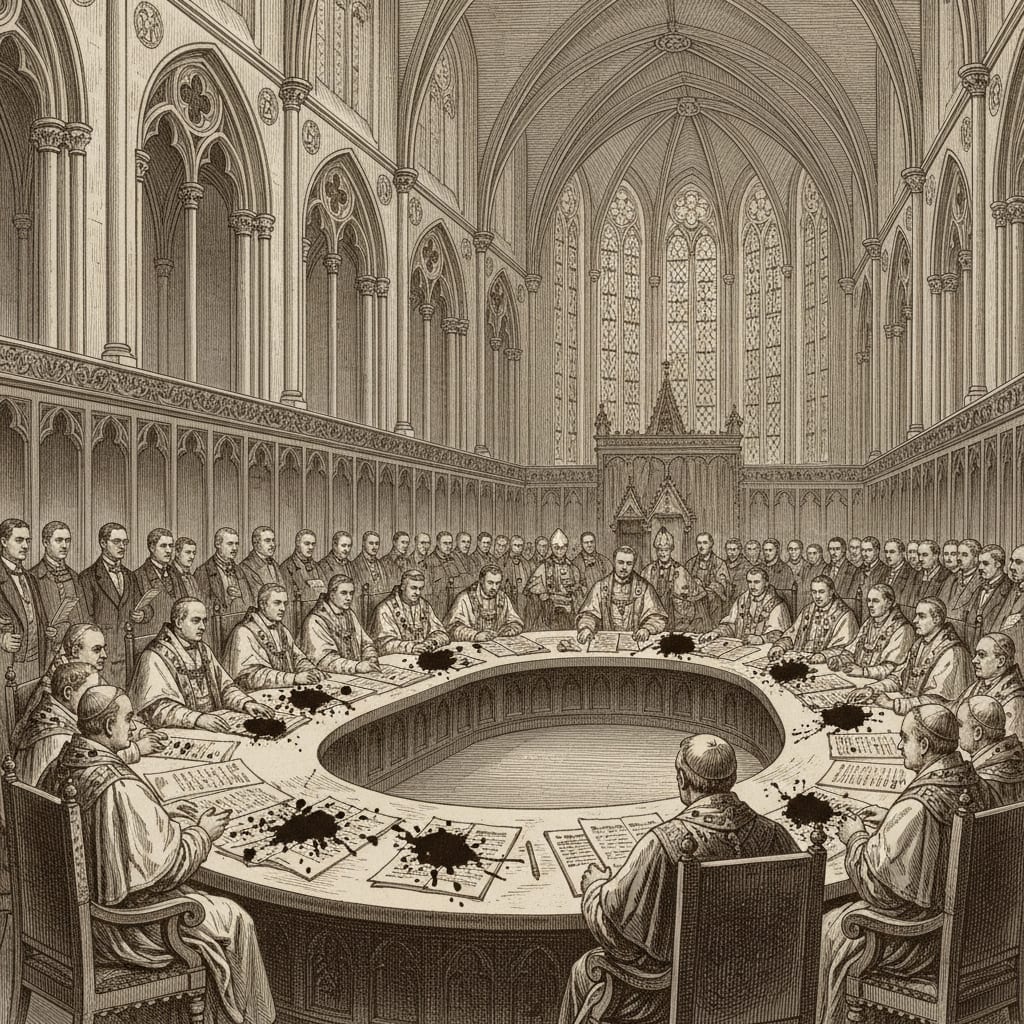
The Council of Cologne
A Masterpiece of Redaction
The A.S. 100 assembly and Edict of Cologne extended Strasbourg's claimed authority after both founders had died; its sealed minutes invite later argument.
Codex Ref. III.2.07-031
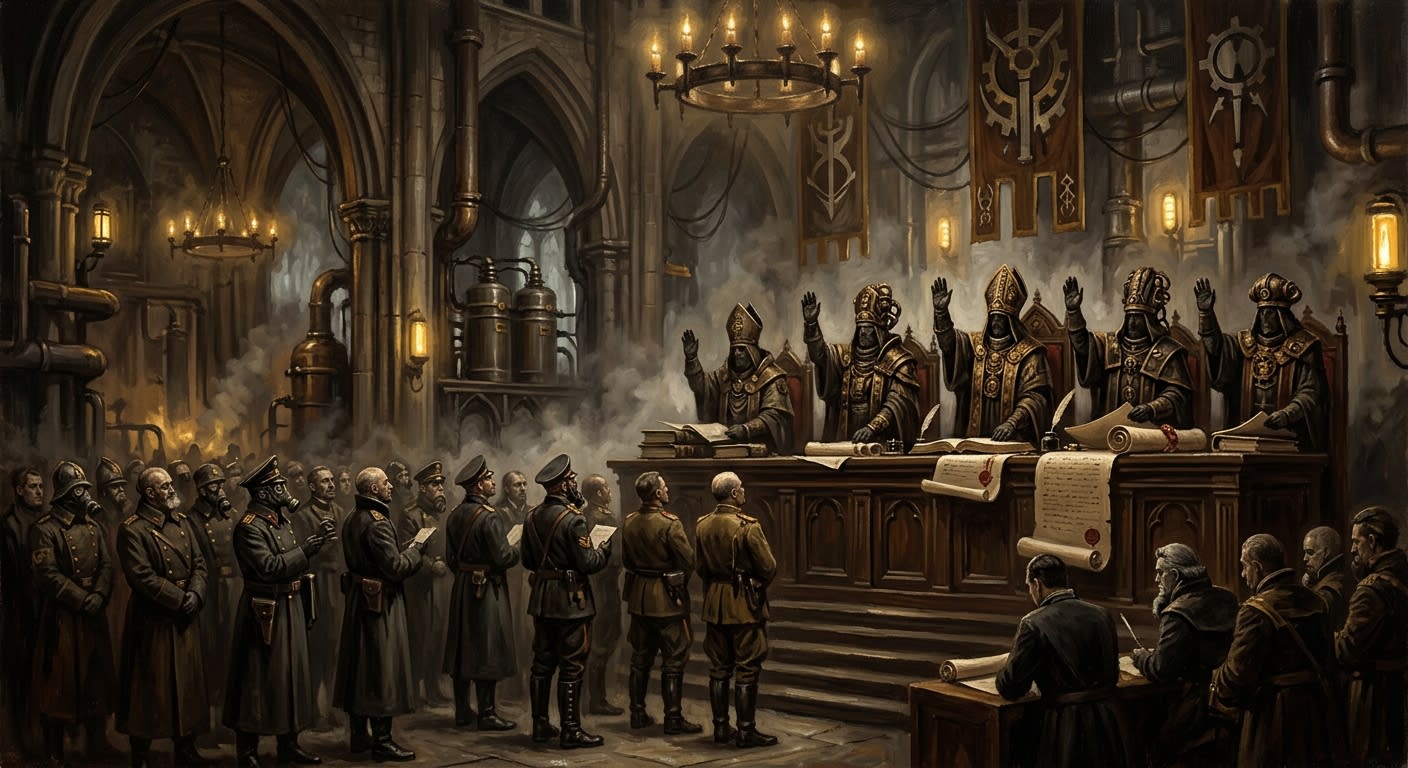
The Council of Mainz
Where law learned to cheer on command
The Council of Mainz confirmed the first seven Hierarchs in A.S. 93, turning Concordat law into staged acclamation, ratified offices, and obedient witnesses.
Codex Ref. VII.7.02-001
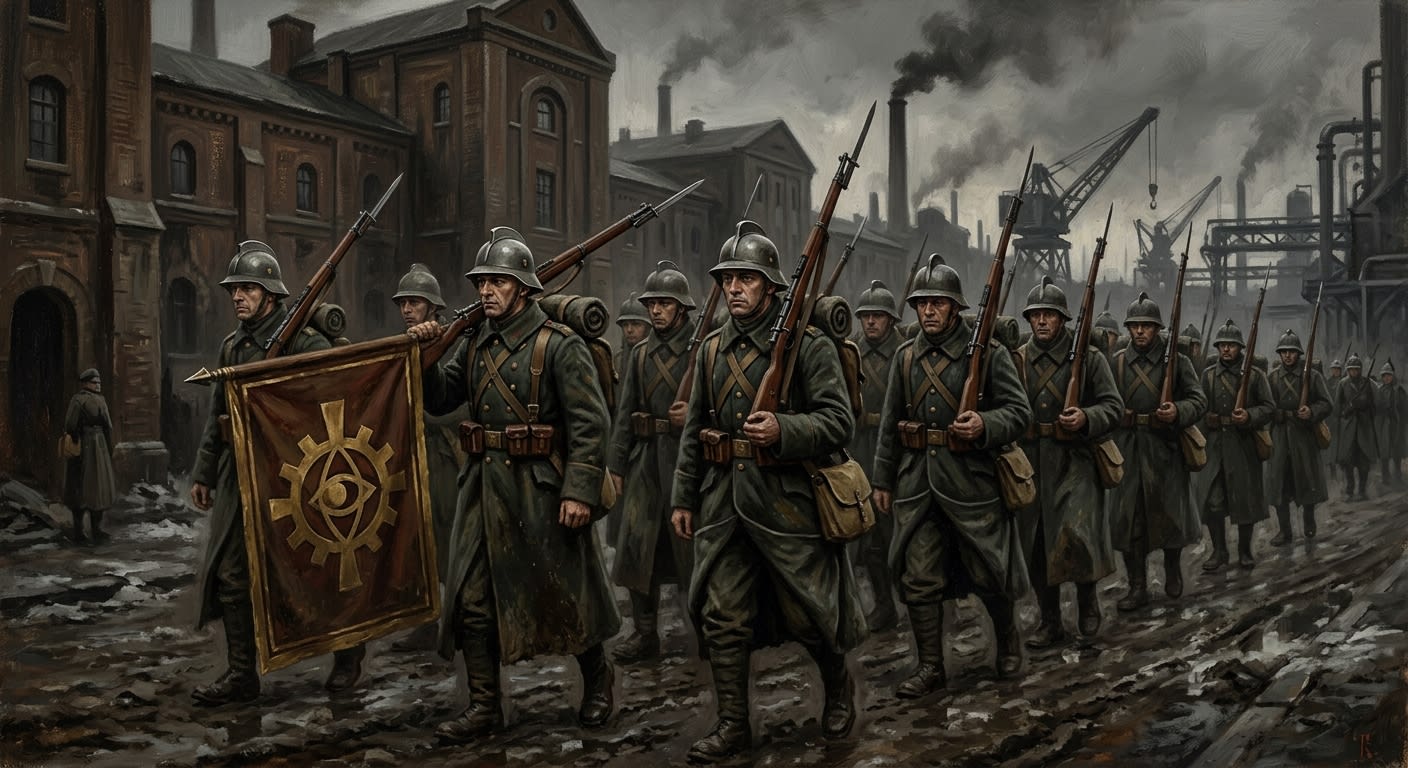
The Covenant Military
The rifle behind the sermon, visible enough to be pastoral
The Synod's standing armed auxiliary between war and administration: civic cordon, Bureau escort, rear-line reinforcement, and visible obedience with a rifle.
Codex Ref. VIII.5.05-001
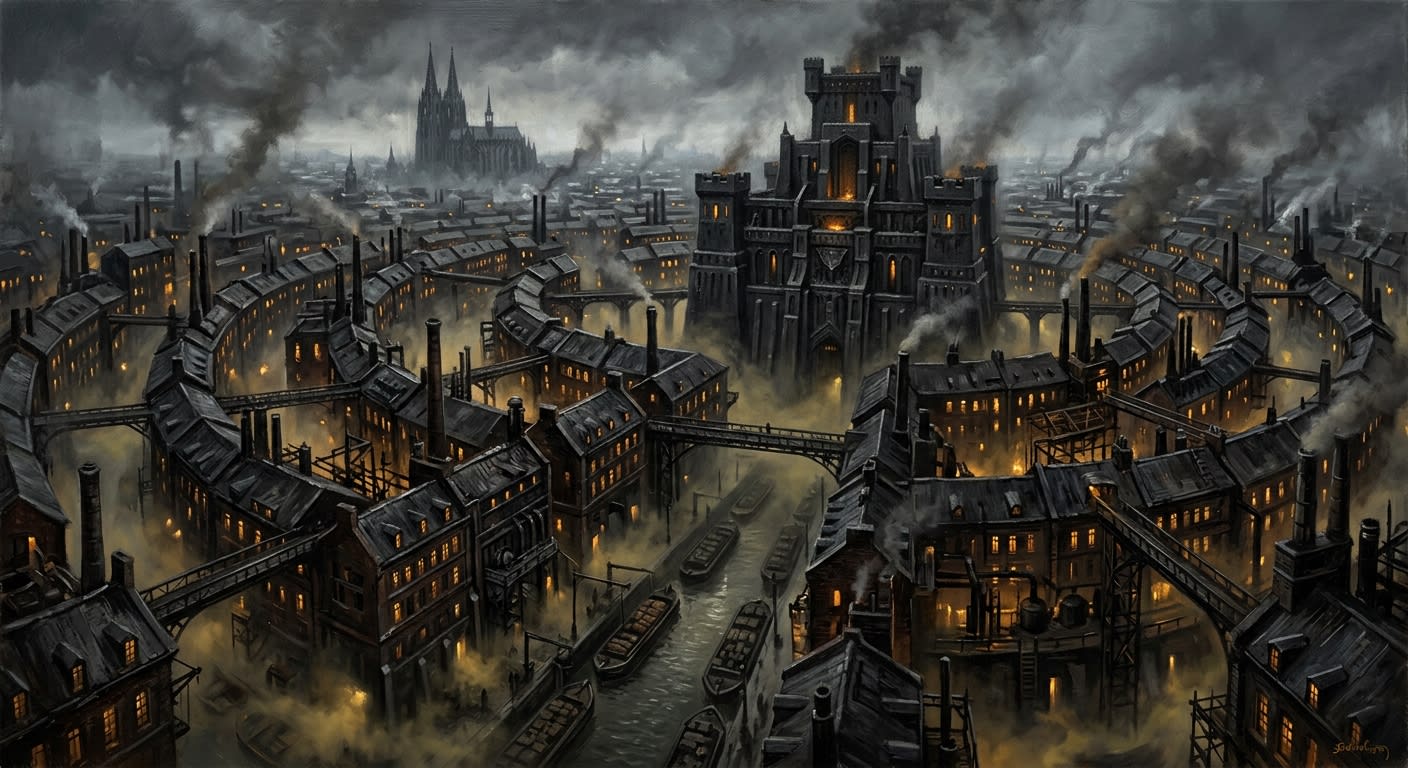
The Crownwright Diehouses of Sable Court
In Sable Court, identity is currency — and the Synod strikes every coin
The restricted mint-quarter of Cologne where the Synod strikes every face into coin and every coin into law. Where identity is minted, recalled, and—when the Bureau requires—unfaced. A.S. 201: the Face Theft crisis continues and the master die may be real.
Codex Ref. II.2.07-001
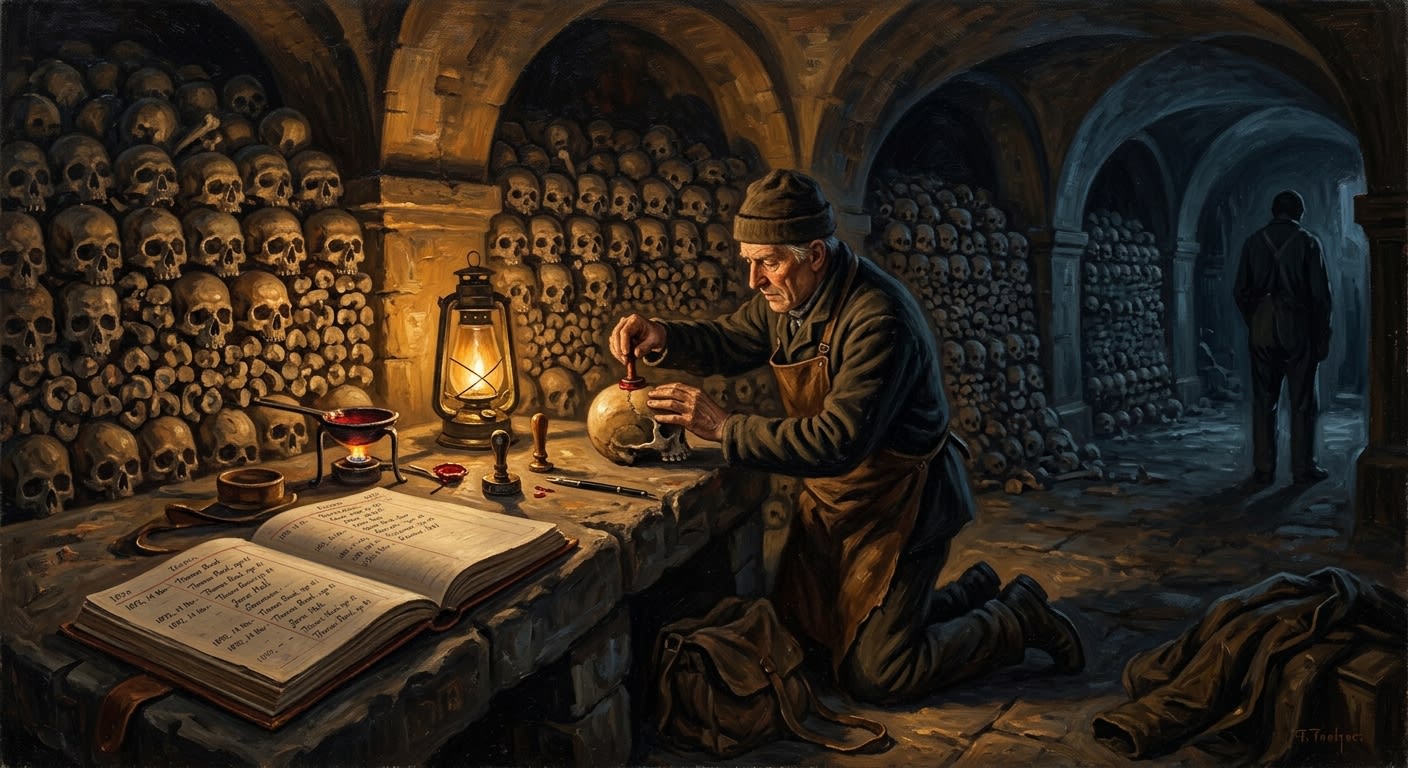
The Dead
What the filing system remembers, and what the Bureau has declined to ask
The Bureau maintains death is a clerical event. The dead, by the Bureau's own monitoring, appear to disagree. Drax files the discrepancy.
Codex Ref. VI.2.01-001
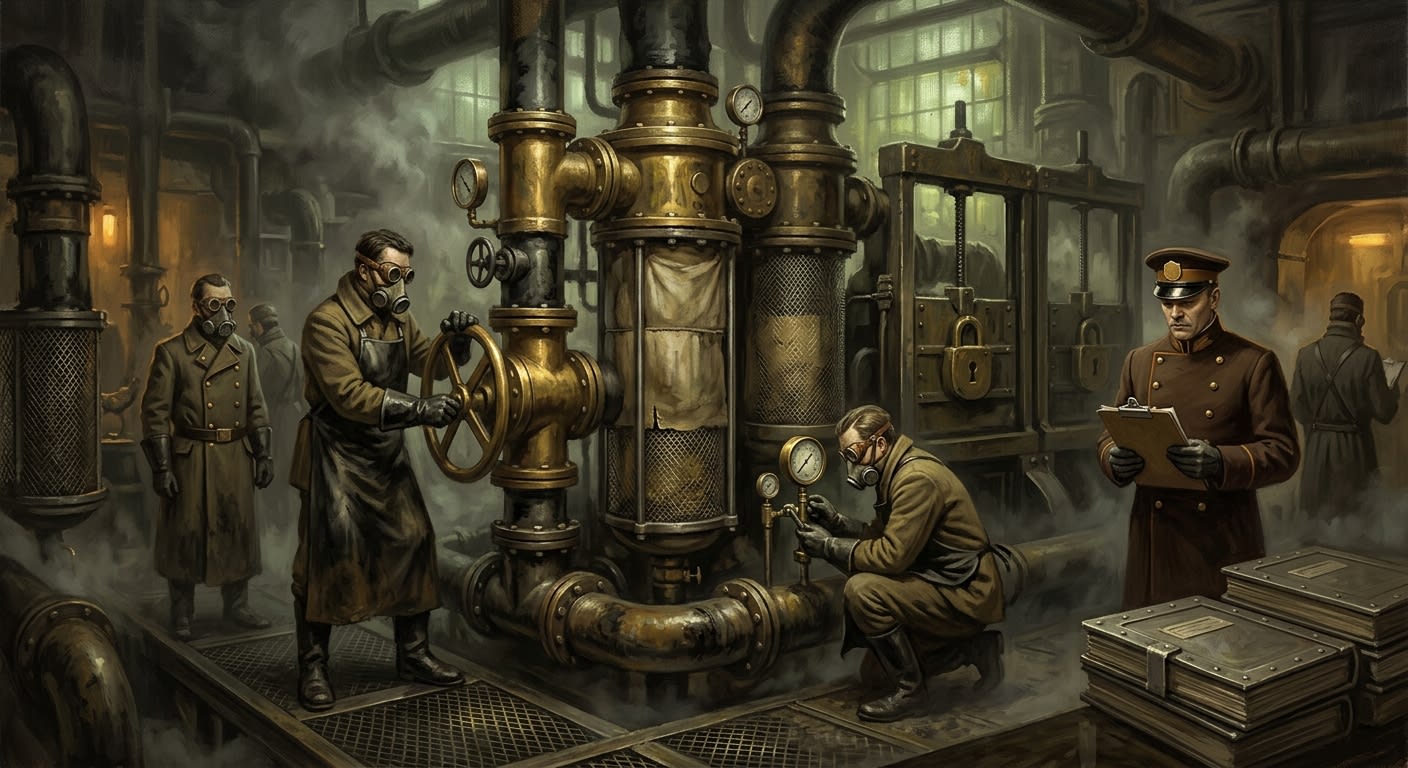
The Distillers' Compact
Where sanctity clogs, monopoly learns to breathe
The Distillers' Compact controls Brast's filters, locks, and substrate receipts: a guild that learned sanctity must pass through mesh.
Codex Ref. VIII.6.03-001
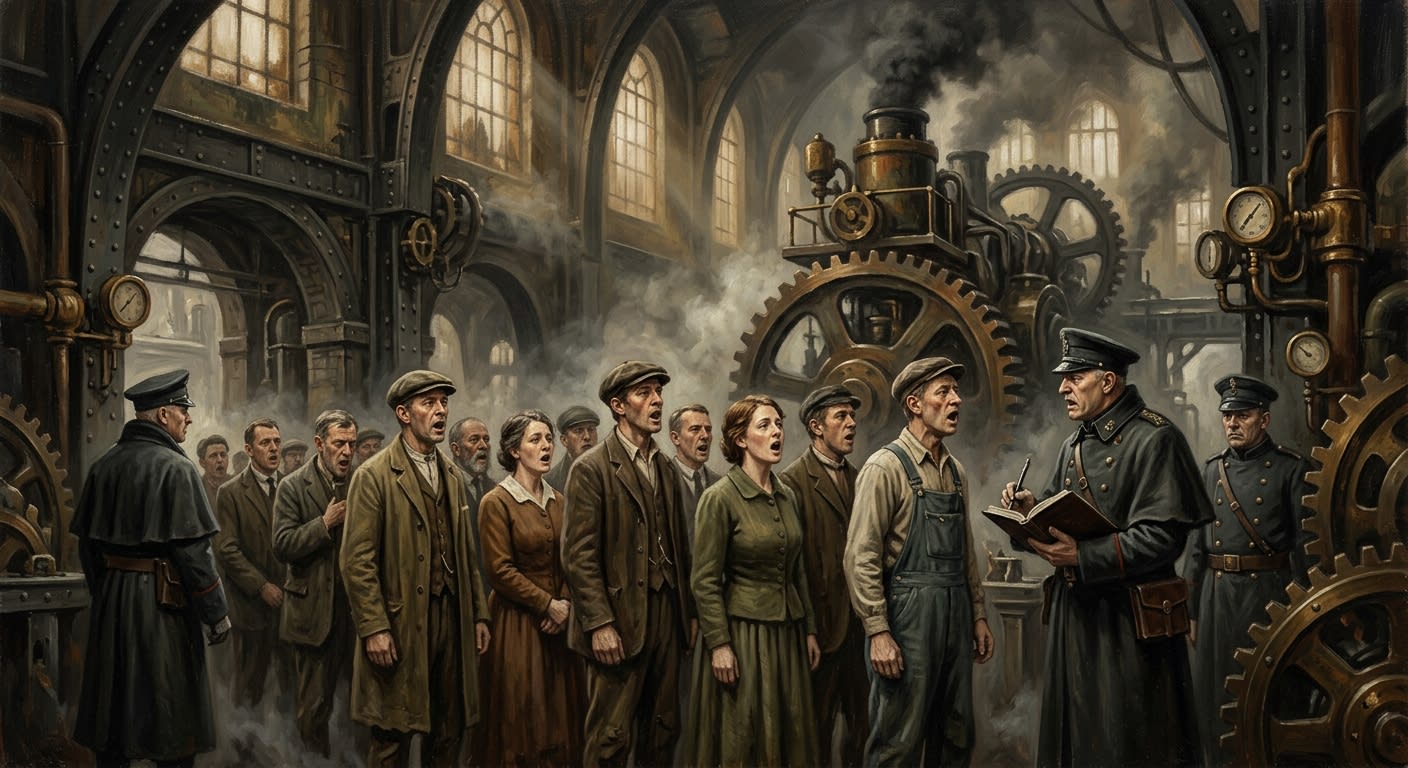
The Eternal Creed
The first tax of the day is breath
The Eternal Creed is the Synod's oral civic machine: recited at dawn, commerce, correction, and inspection, hidden from paper so obedience may occupy the tongue.
Codex Ref. XIII.1.68-001
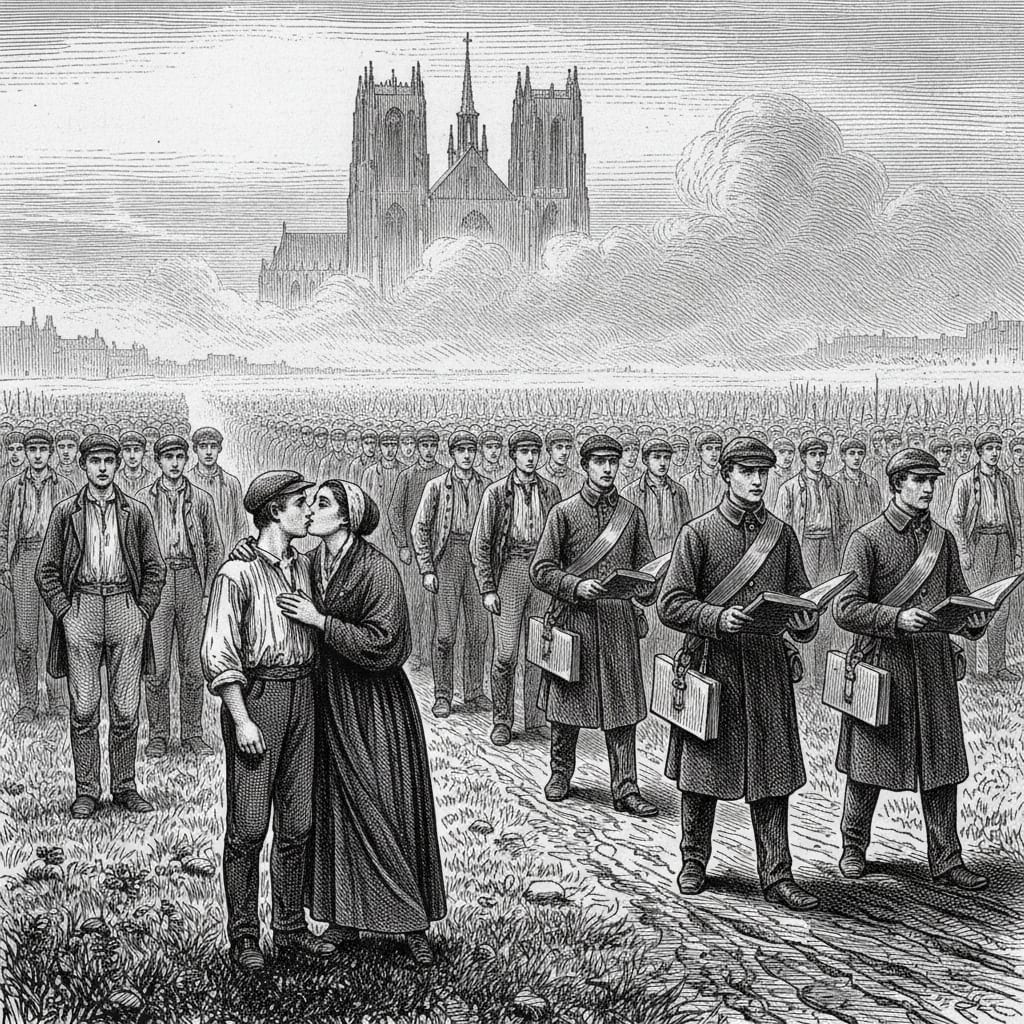
The First Continental Levy
A Tenth of Every Household's Sons
Strasbourg's answer to the devouring of Brașov — one boy in ten, taken by writ, drilled by the Bureau, and returned as either a soldier or a name in the Ledger.
Codex Ref. IV.1.09-034
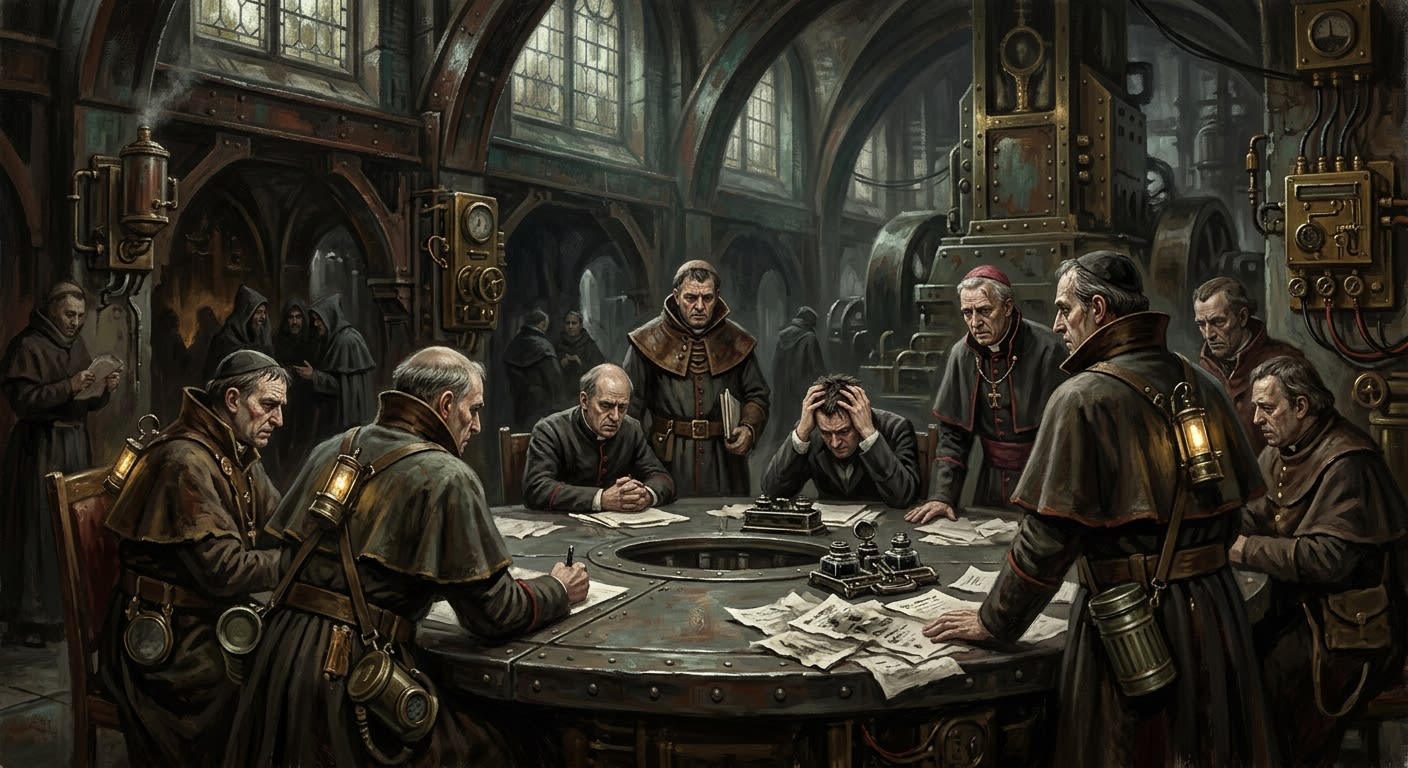
The First Council of Cologne
The yoke was imagined before it was blessed
The September A.S. 27 preliminary convocation produced seven unadopted articles, corrected minutes, and limited voluntary contacts among dioceses.
Codex Ref. VII.7.01-002
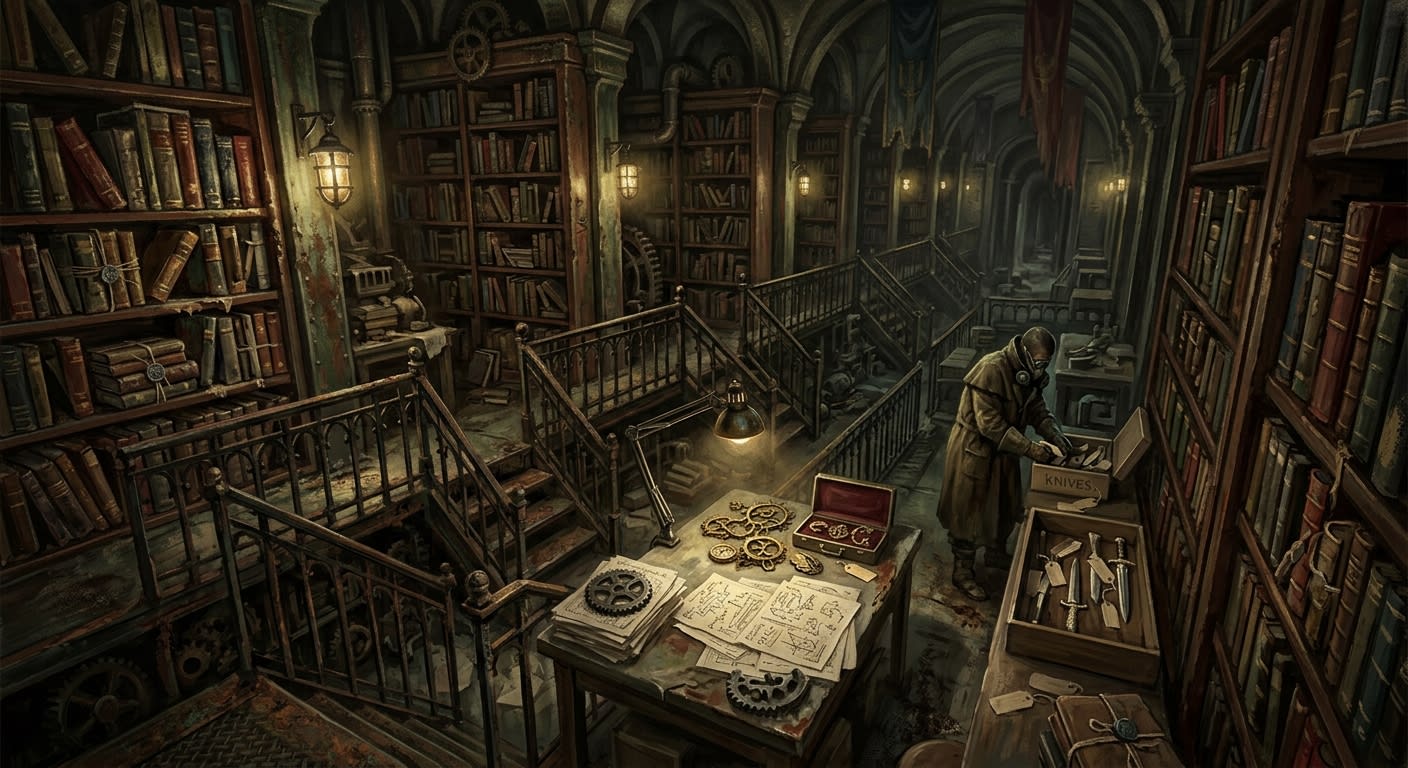
The Forbidden Stacks
Where heresy is shelved close enough to hate efficiently
The Forbidden Stacks beneath Strasbourg preserve Rationalist paper, contraband symbols, and other knives the Bureau prefers labelled rather than lost.
Codex Ref. II.2.06-001

The Fractured North
Compliant in substance. Deviant in form. Pending resolution since A.S. 92.
Two million souls scattered along the Norwegian fjords and Swedish interior — faithful, stubborn, and unresolved. The Bureau of Doctrine has filed them as 'compliant in substance, deviant in form' since A.S. 92, and will do so until either side decides otherwise.
Codex Ref. IX.8.01-001
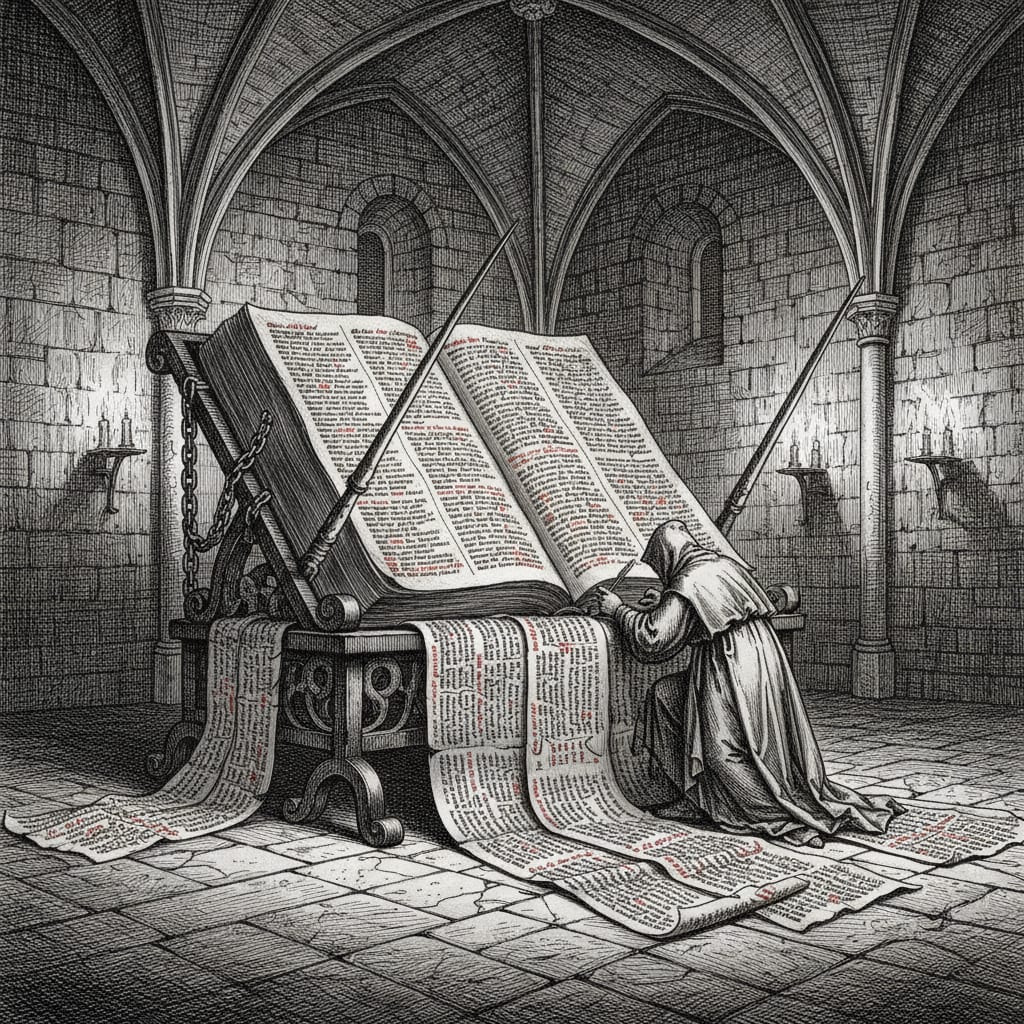
The Great Ledger of Souls
Census of the Living, Archive of the Damned
The Bureau of Records' supreme instrument of spiritual governance — an unbroken registry of every baptized soul since A.S. 80, kept in the subterranean vaults of Strasbourg, where forgetting is treason and being forgotten is worse.
Codex Ref. IV.1.09-003
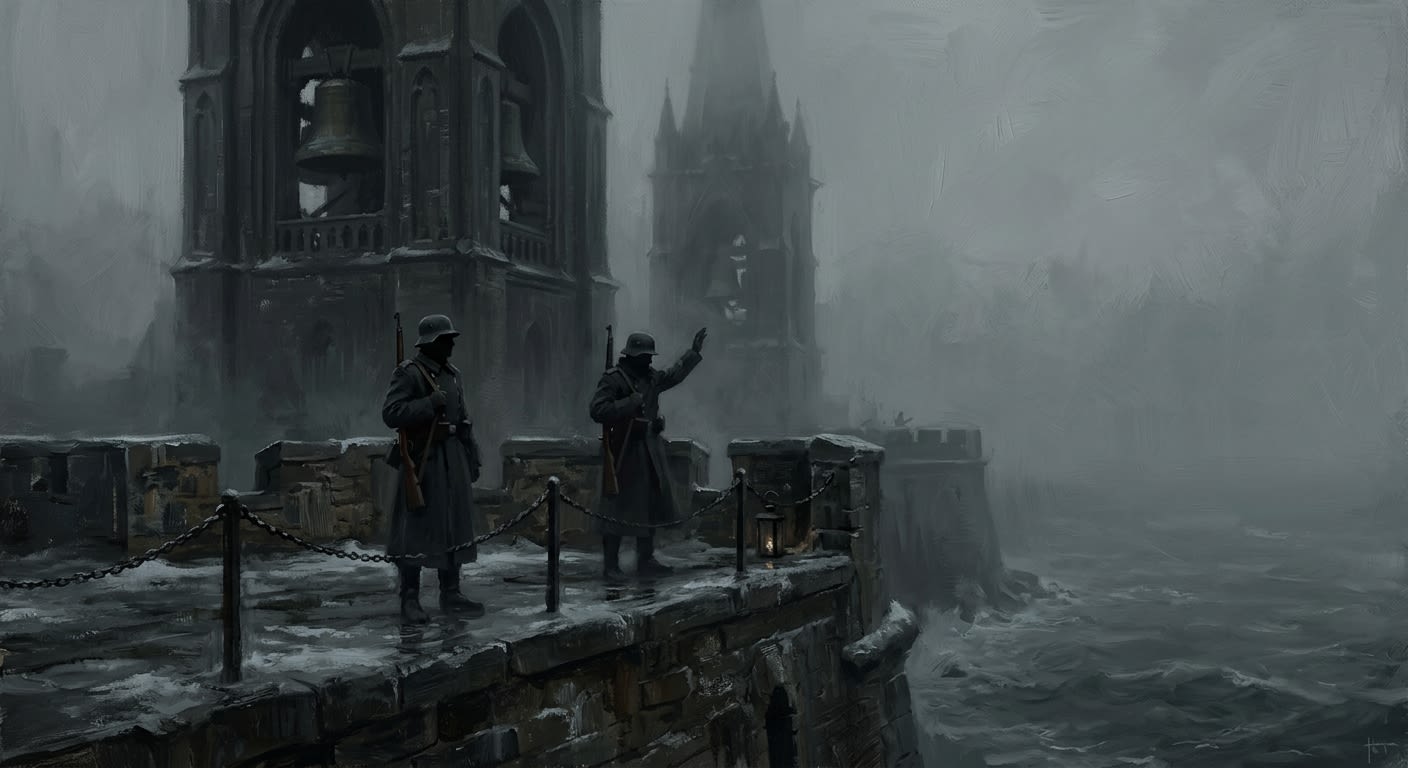
The Grey (The Unnamed)
Eleven years of classification pending, and the Bureau's best answer to why
The Grey is not a Sin-General. The Bureau has known this for eleven years and found the fact so uncomfortable that it has not yet produced a classification. Drax produces one anyway.
Codex Ref. VI.3.01-001
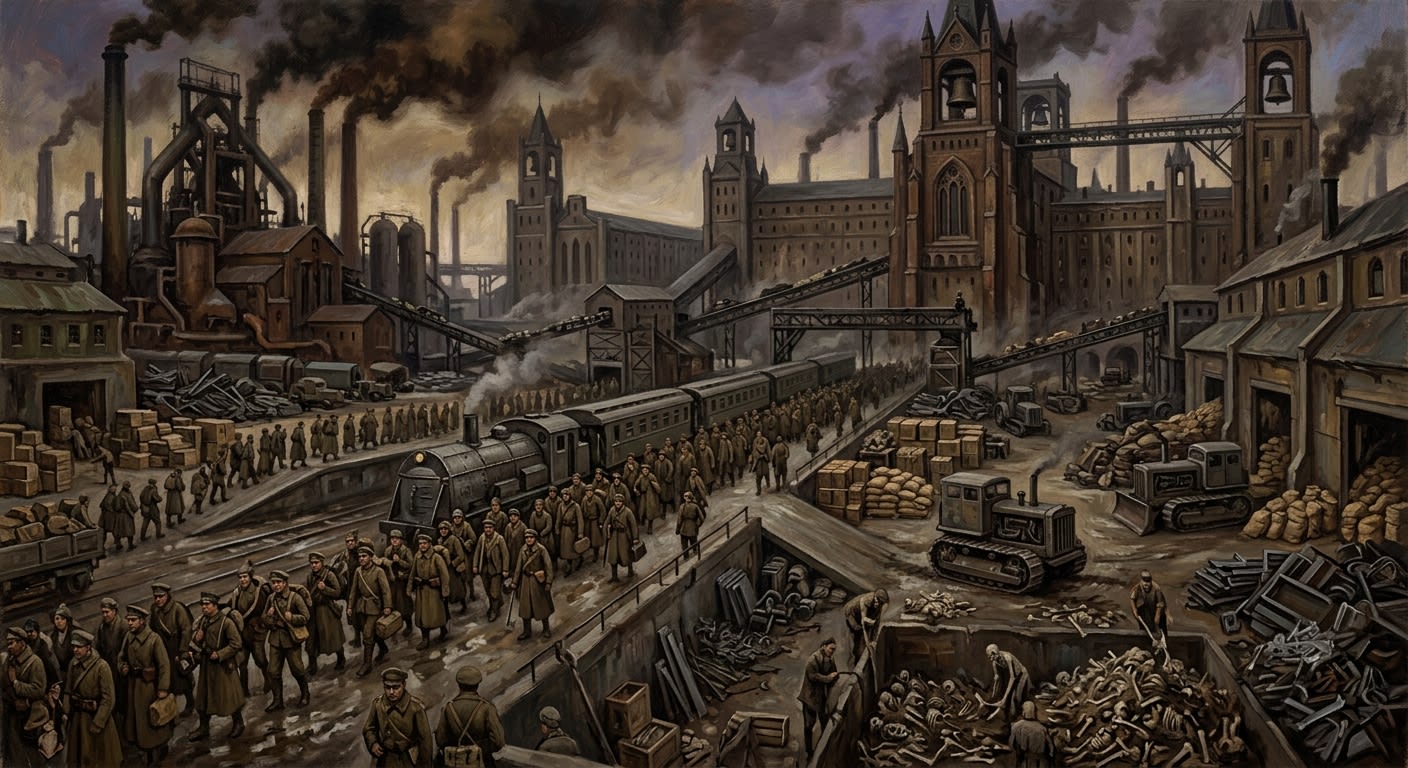
The Heartlands
The safe country, provided one defines safety as distance from teeth and proximity to stamps
The Heartlands are the Synod's safe interior only by infantry arithmetic: Zones 1–3 feed the Line with bread, steel, bodies, bells, paperwork, and bones.
Codex Ref. II.0.02-201
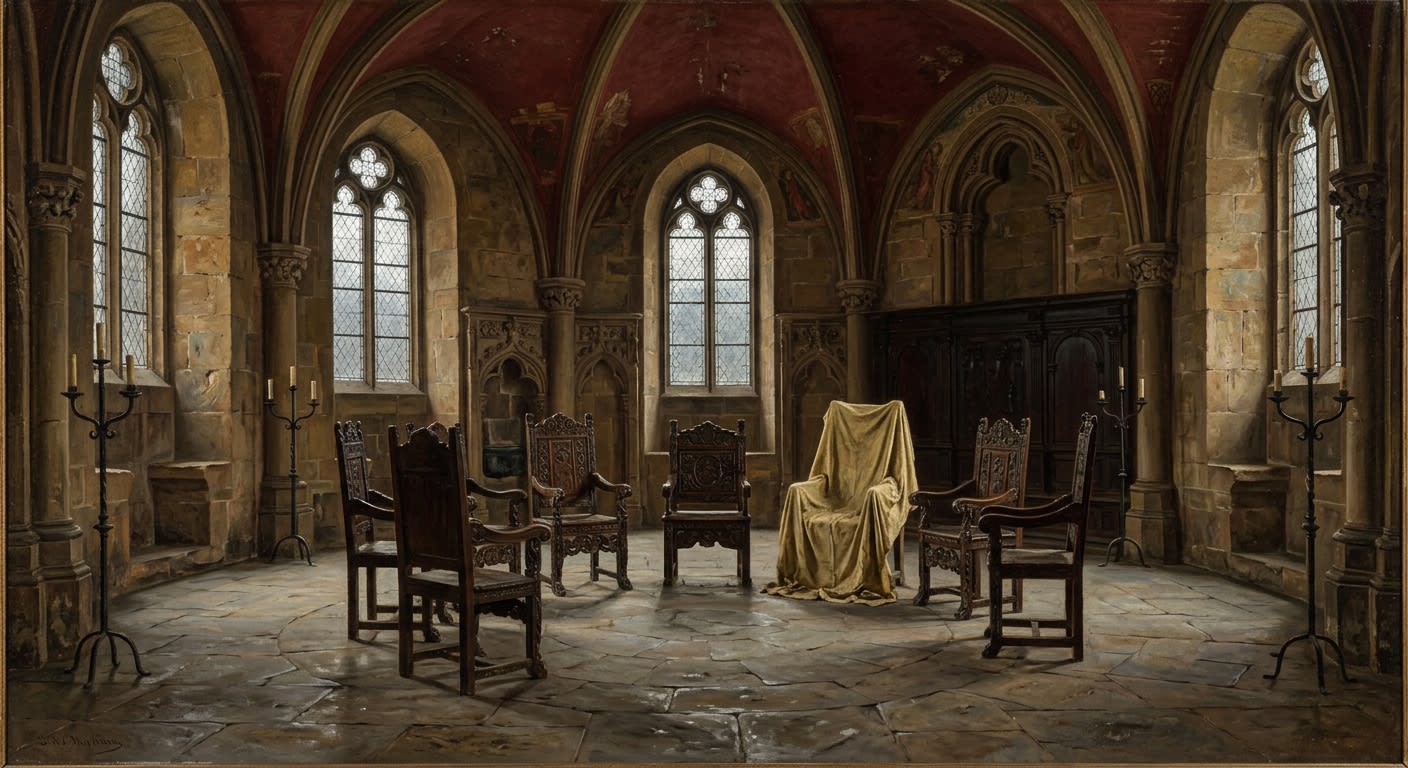
The Hierarchy of the Synod
Seven Seals, Six Occupants, and a Chair No One Has Laundered Since A.S. 107
Seven Seals. Six occupants. One chair draped in cloth no one has laundered since A.S. 107. The succession is continuous. The gaps are classified.
Codex Ref. VI.3.02-001
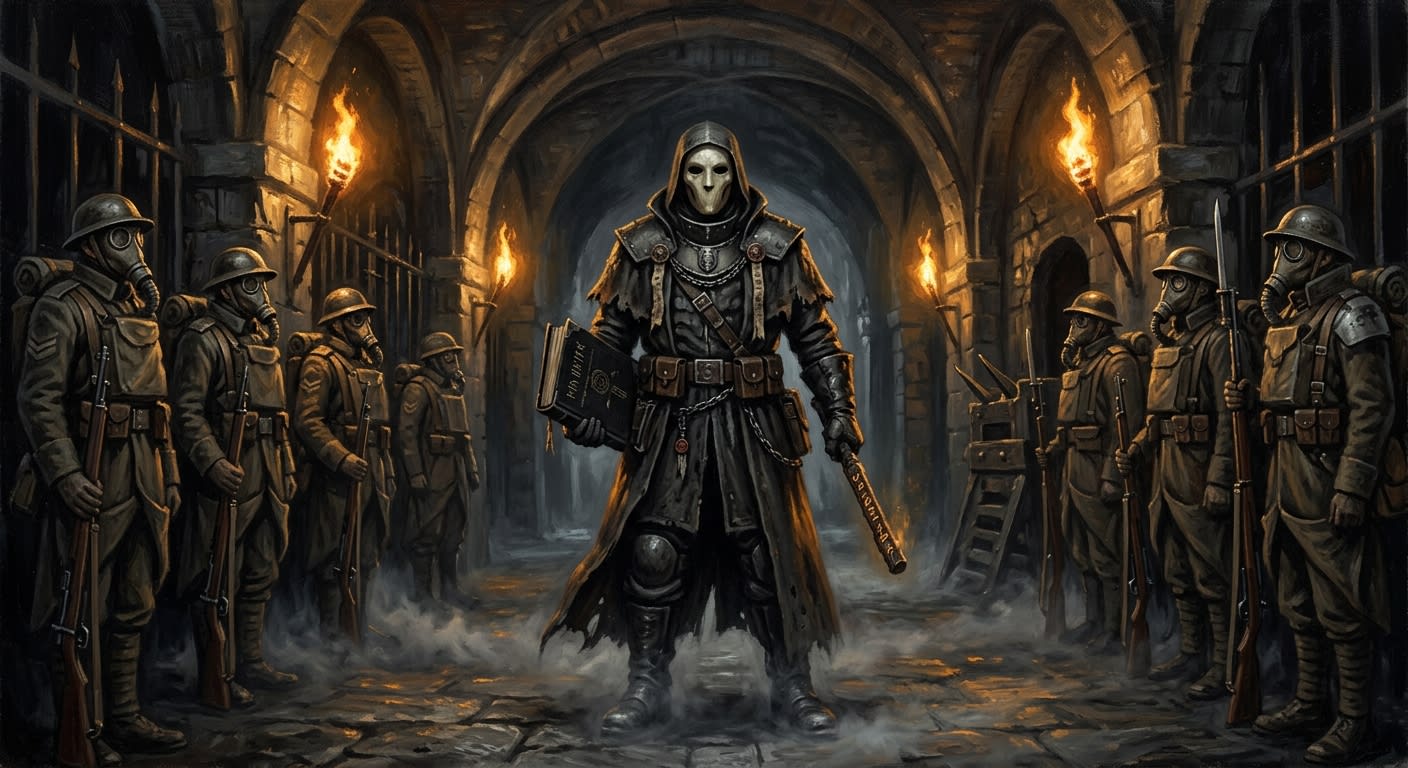
The Judges
They walk without letter, without herald, and without the patience of the Bureau.
The Judges arrive without letter, try without jury, and depart without filing. The Bureau denies they exist. It has been denying this since A.S. 92. The denial requires renewal every thirty years, which is itself a kind of evidence.
Codex Ref. V.1.01-003
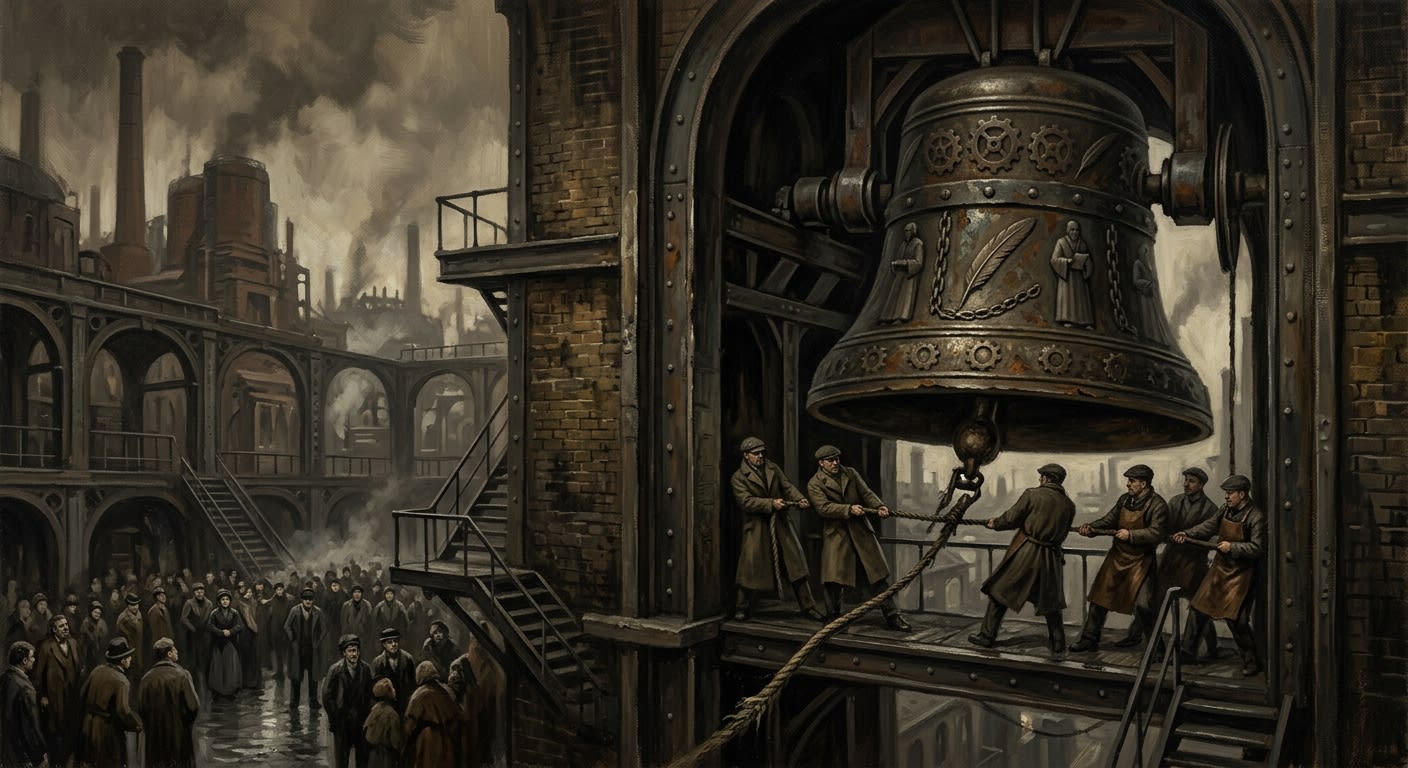
The Leviathan
The war bell of Strasbourg, too large for mercy and too honest for politics
Leviathan is the fourteen-tonne war bell of the Tower of the Quill, tolled eleven times since A.S. 92 when history required bronze to shout.
Codex Ref. XIII.1.72-004
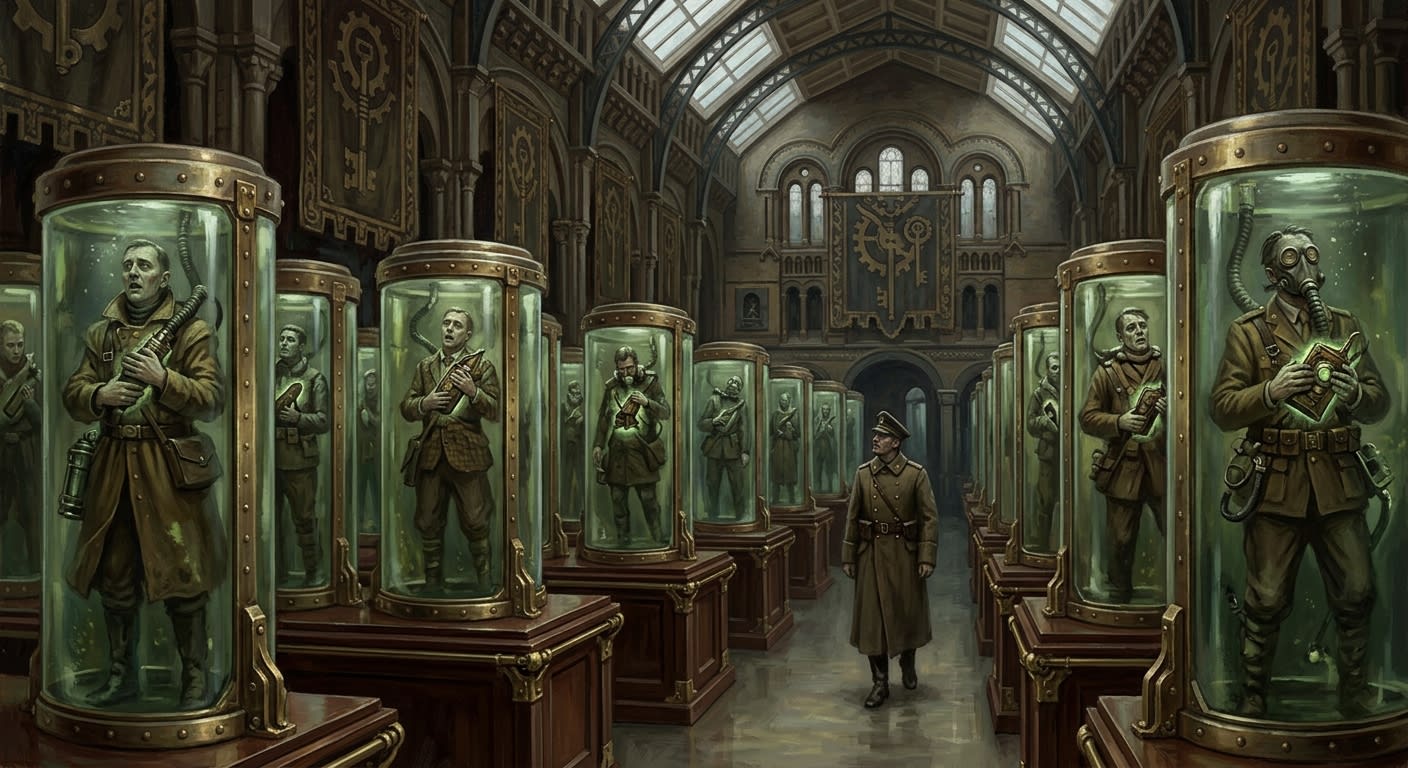
The Locked
The collector becomes the last object collected
Former visitors of the Vault of Ten Thousand Keys, the Locked hold the thing they came to find and remain alive behind glass, arranged as Greed's museum.
Codex Ref. IV.1.07-003
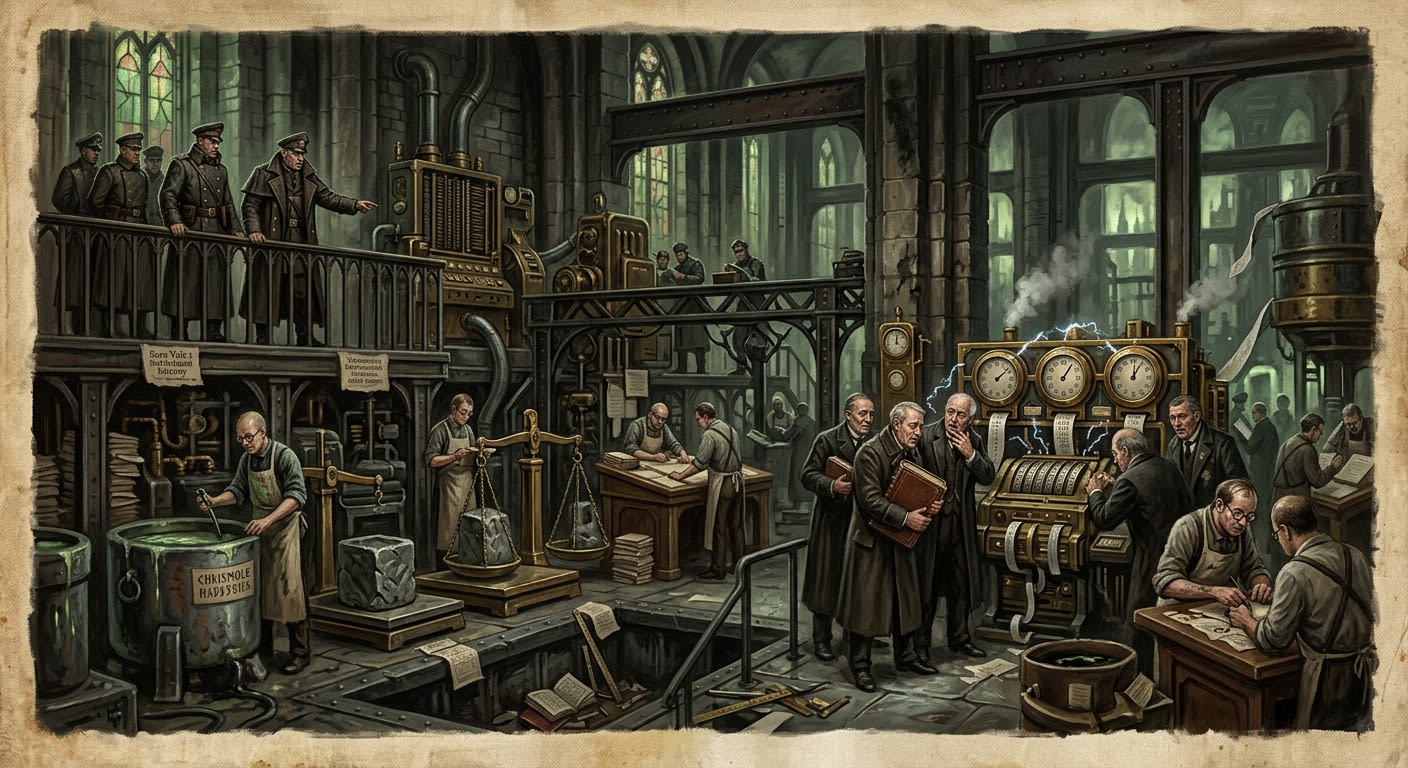
The Manifest Court
Where a drum becomes lawful and arithmetic learns the rope
The Manifest Court of Brast counts chrismole into legality: weigh-bridges, wax tables, variance pits, missing gallons, Sorn Vale's balcony, and the sacred terror of a number disagreeing with itself.
Codex Ref. XIII.1.93-090
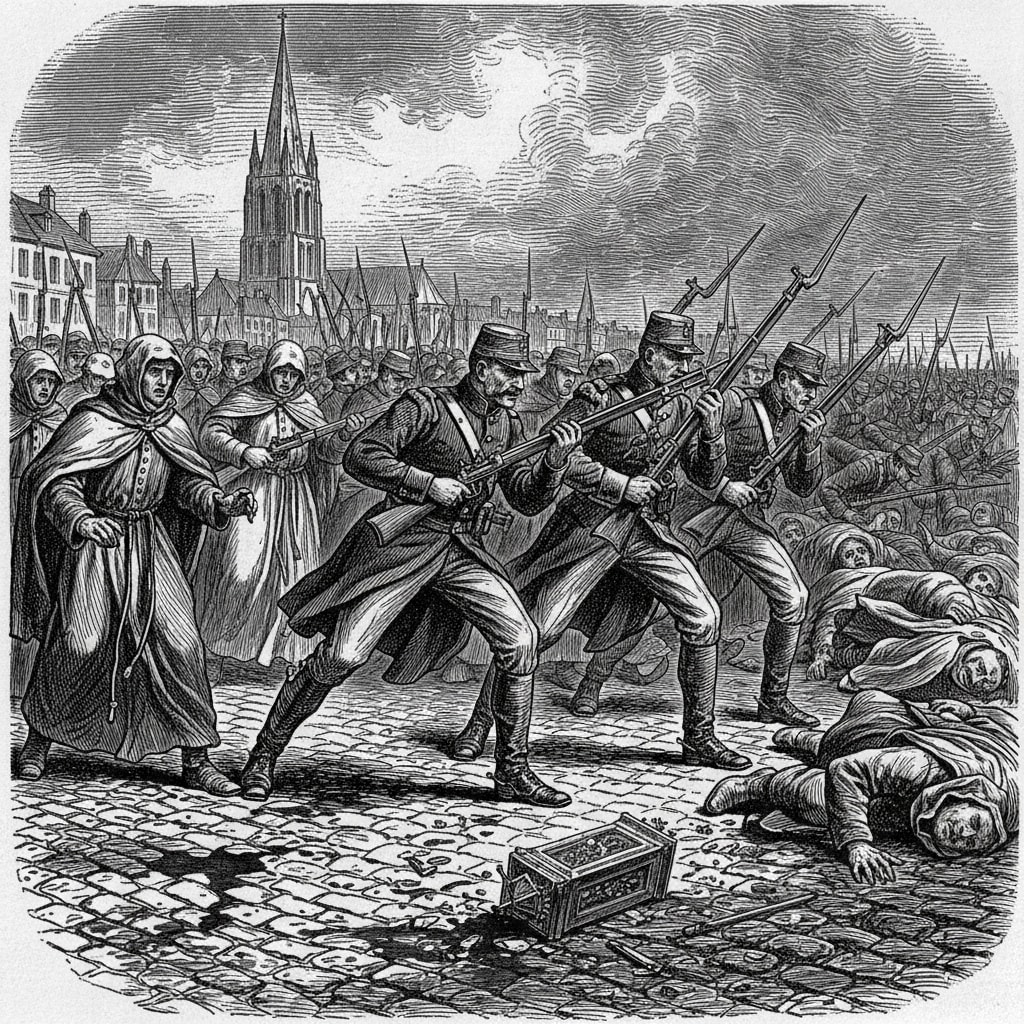
The Massacre at Saint-Malo
The First Blasphemy of Steel
The slaughter of unarmed pilgrims by Republican Guards on the cobblestones of Saint-Malo — the Thunderclap that silenced Reason's pretence of civility and gave Faith its war.
Codex Ref. I.1.03-007
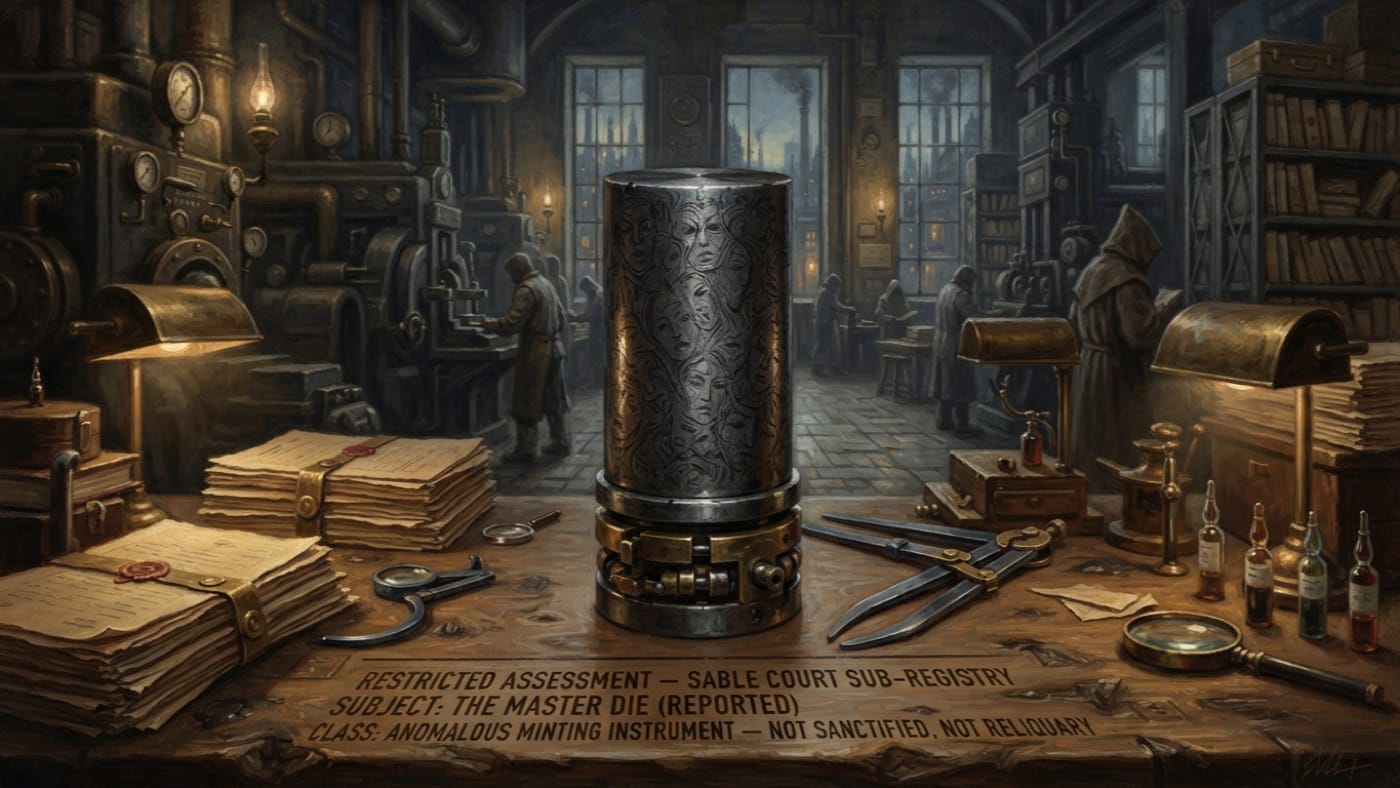
The Master Die
Four denials, one reported cylinder, no established custodian
A steel cylinder reportedly capable of striking coins that loosen identity and unsettle the Face Registry. Four Mint-Chapter denials are on file; the instrument remains unverified.
Codex Ref. V.2.03-001
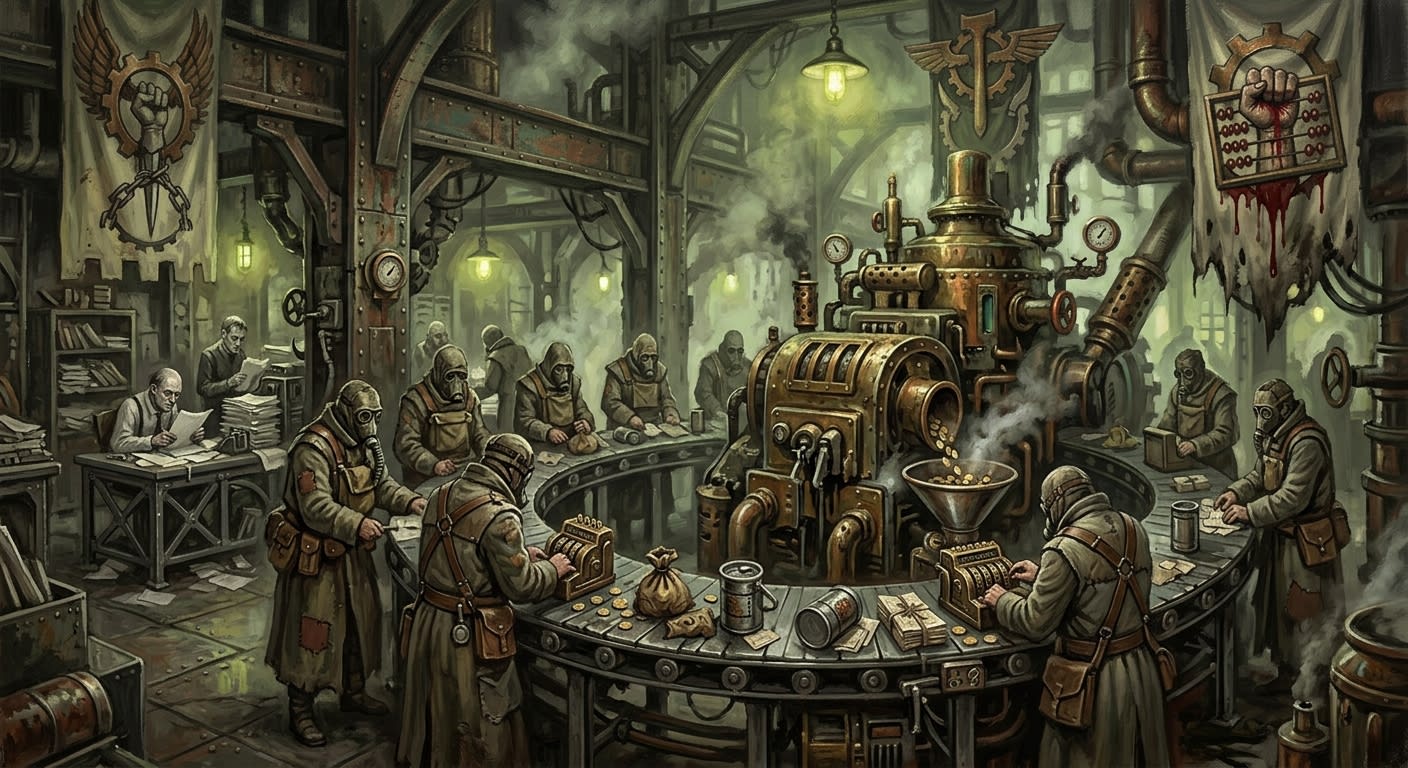
The Meta-Levy
The tax that charges for the privilege of being counted
The Meta-Levy is the Synod's tithe upon tithes, a circular sanctification of collection costs by which the Bureau of Tithes proves that even arithmetic kneels.
Codex Ref. XIII.1.38-001
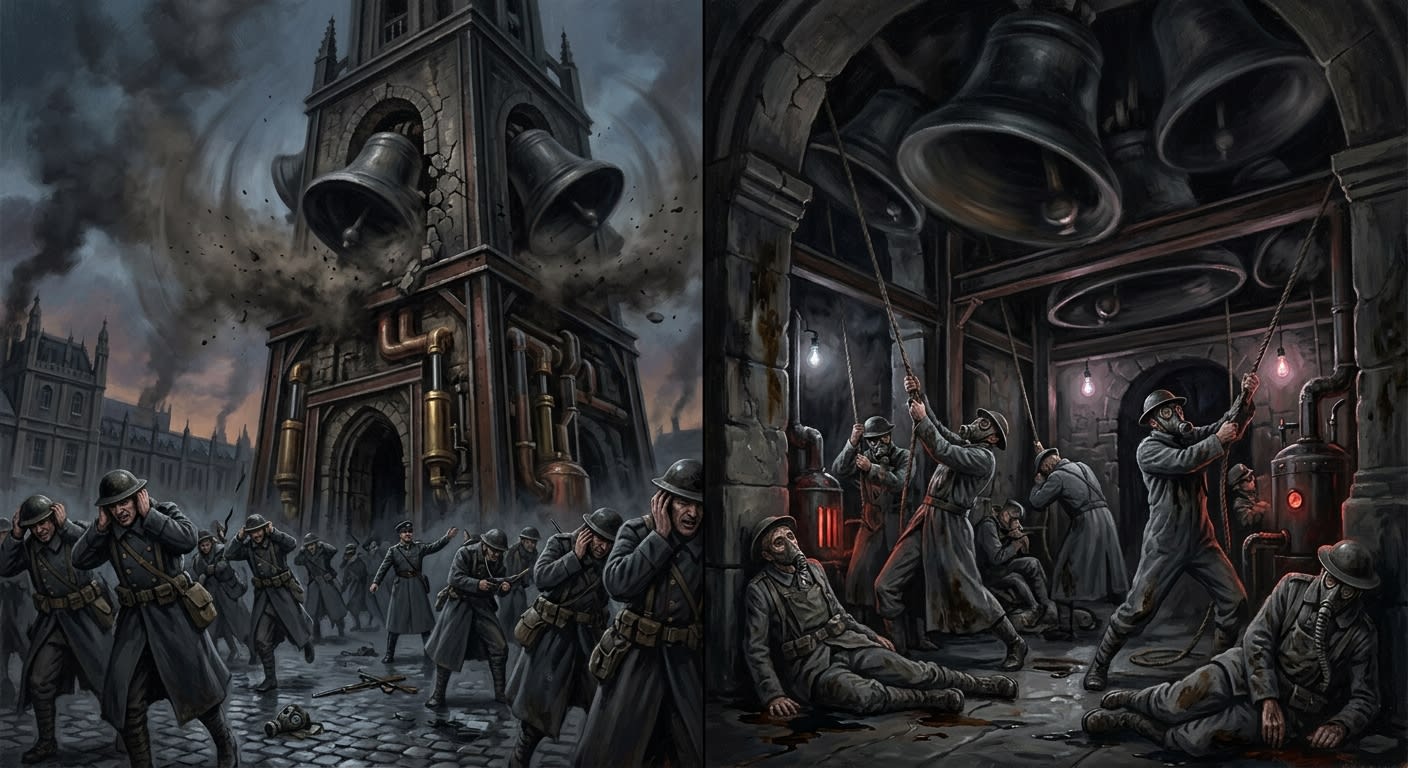
The Miracle of Cologne
When every bell became artillery and bureaucracy was born from the echo
The A.S. 49 Miracle of Cologne drove Maldrake's Wrath vanguard from the cathedral square by nine hours of unscheduled total bell-ringing, cracking stone, killing ringers, and founding the jurisdiction that became the Bureau of Bells.
Codex Ref. VII.4.12-001
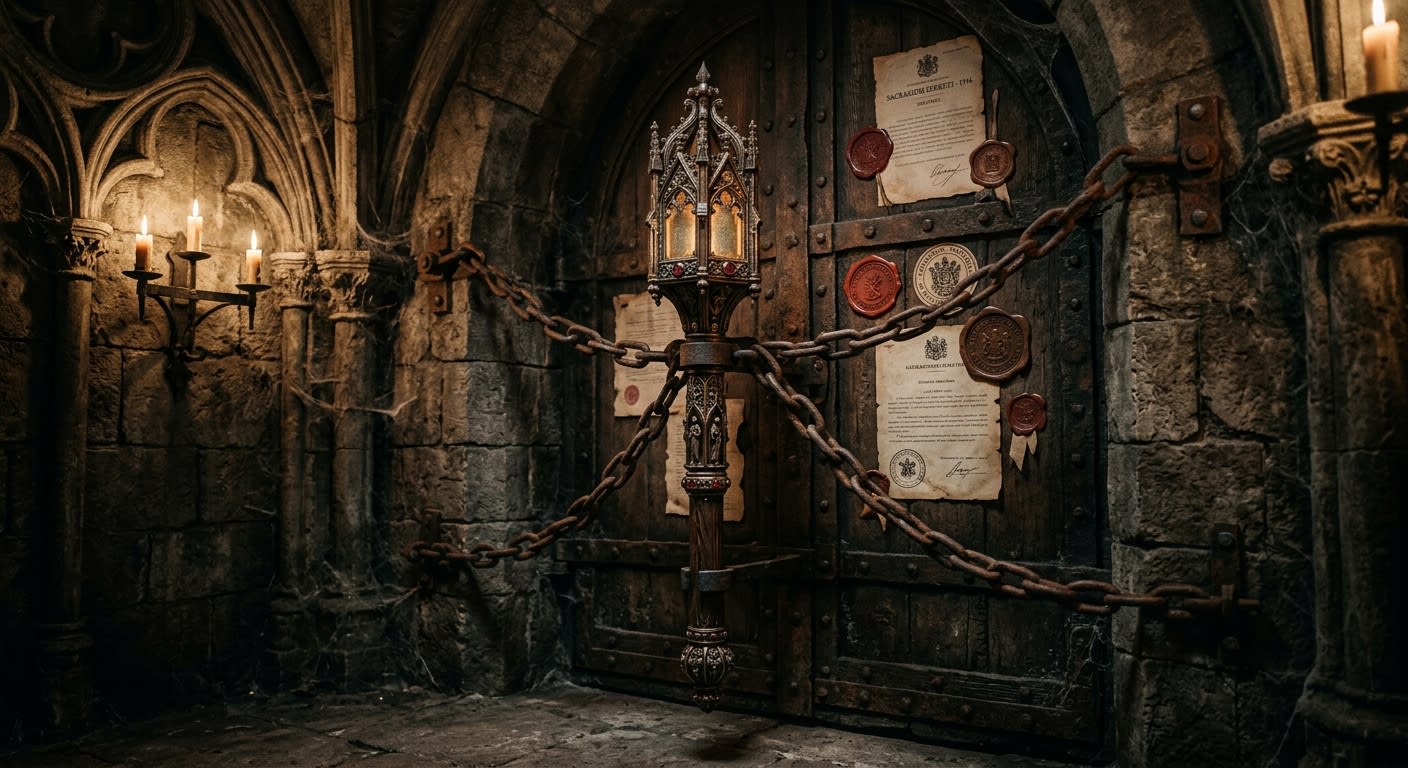
The Miracle of Saint Aldebrand
The Bureau erased the bone. The bone declined.
The Bureau declared the Reliquary of Saint Aldebrand non-existent in –32 A.S. In A.S. 95 it shattered a sorcerer-lord's skull and saved Vienna. Both facts are official, both carry seals, and the Bureau sees no difficulty.
Codex Ref. VI.4.01-001
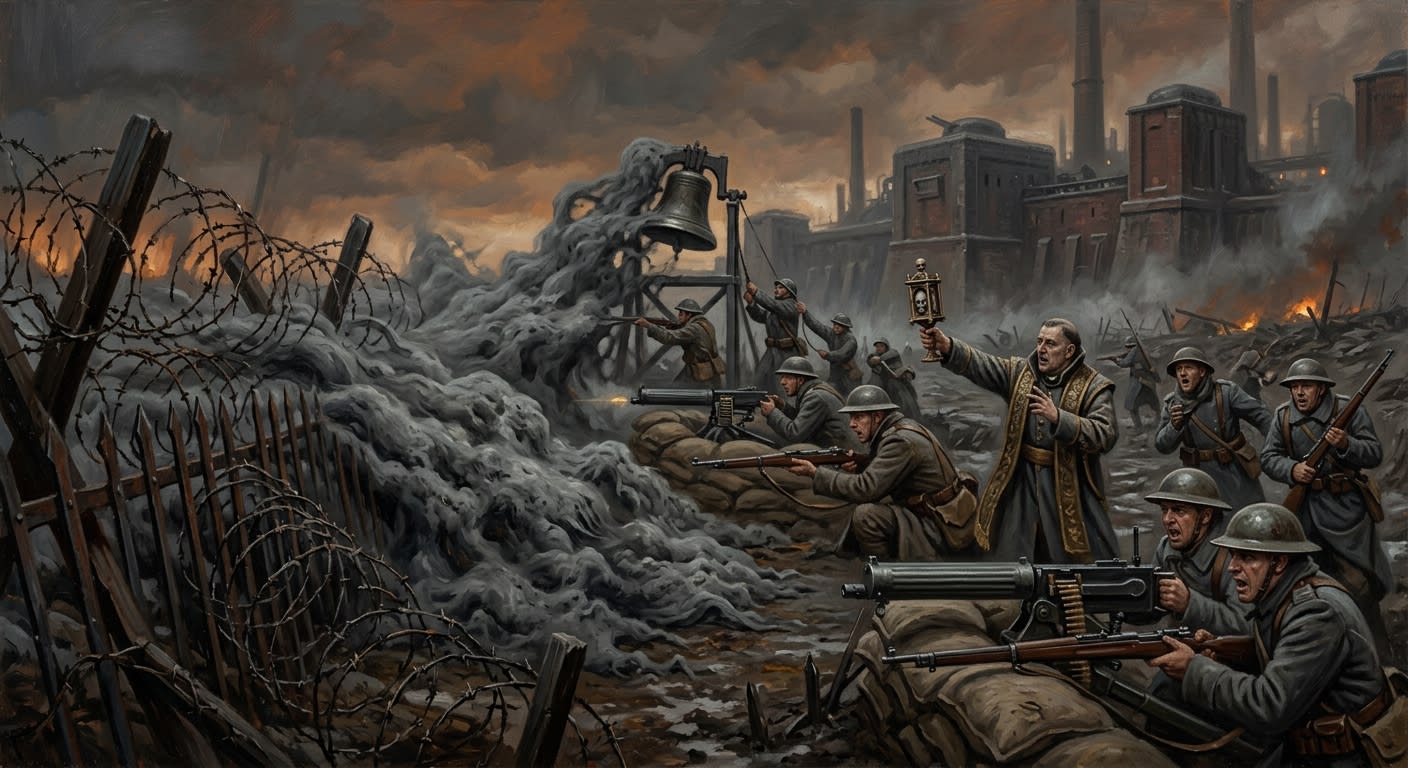
The Nameless Tide
The thing at Brest that does not arrive until it has already taken your name
The Nameless Tide presses Bastion-Brest's eastern wire: a grey, accumulating hostile phenomenon that defeats hymns, relics, bells, names, and the Bureau's last useful excuses.
Codex Ref. IV.1.07-008
The Order of Saint Ephrath
Shame made visible is shame made useful
Ephrath displays Purity's hand. It nails error to doctrine, marches shame through the street, and files the crowd's instruction by bell.
Codex Ref. XI.6.01-002
The Order of the Blessed Thorn
Linen, old women, and the machinery that discovered humility after it became profitable
A Breton mendicant sisterhood made Venerable after Margaux: twelve sisters, a house of linen, and enough humility to embarrass the Bureaus.
Codex Ref. XI.7.01-001
The Ossuary Rings of Bastion-Constantinople
Six walls of the dead, holding the city of the living together
Six rings of catacomb-fortification sunk into the Bosphorus headland — begun A.S. 47 when armies ran out of mortar and substituted femurs, expanded with every war dead since, administered by a Mother-Cryptor who knows 46,312 urns and sleeps facing away from the innermost ring.
Codex Ref. II.4.10-002
The Palatine Switchyard of Lorn
The city that became a filing system — and the filing system that became a theology
The continent's largest rail interchange, where the Heartlands' freight is converted into the Line's appetite by two hundred ten thousand registered souls, twelve converging lines, and a schedule that has never once apologized for what it costs.
Codex Ref. II.3.01-001
The Peregrine Jubilee
The road renews itself with chains, flags, and profitable terror
The Peregrine Jubilee is Pilgrimage's decennial month of chained penitents, route audits, shrine downgrades, guild dissolutions, confession harvests, and public white cloth laid over very practical terror.
Codex Ref. VII.3.03-001
The Queue Road
Where motion became a taxable offense and patience became policy
One hundred and twelve miles of weaponised patience. The Queue Road converts motion into revenue and compliance into a commodity — nine gates, forty-eight thousand registered souls, one apparatus beneath Gate Nine that the Bureau of Doctrine does not discuss.
Codex Ref. II.3.05-001
The Redaction of Épernay
Absence can be administered, and the valley still keeps quarter-hours
In A.S. 103, Records, Silence, and Shadows converted Épernay from a wine-country city into an authorised absence, leaving bells, tokens, and denial behind.
Codex Ref. VII.8.02-001
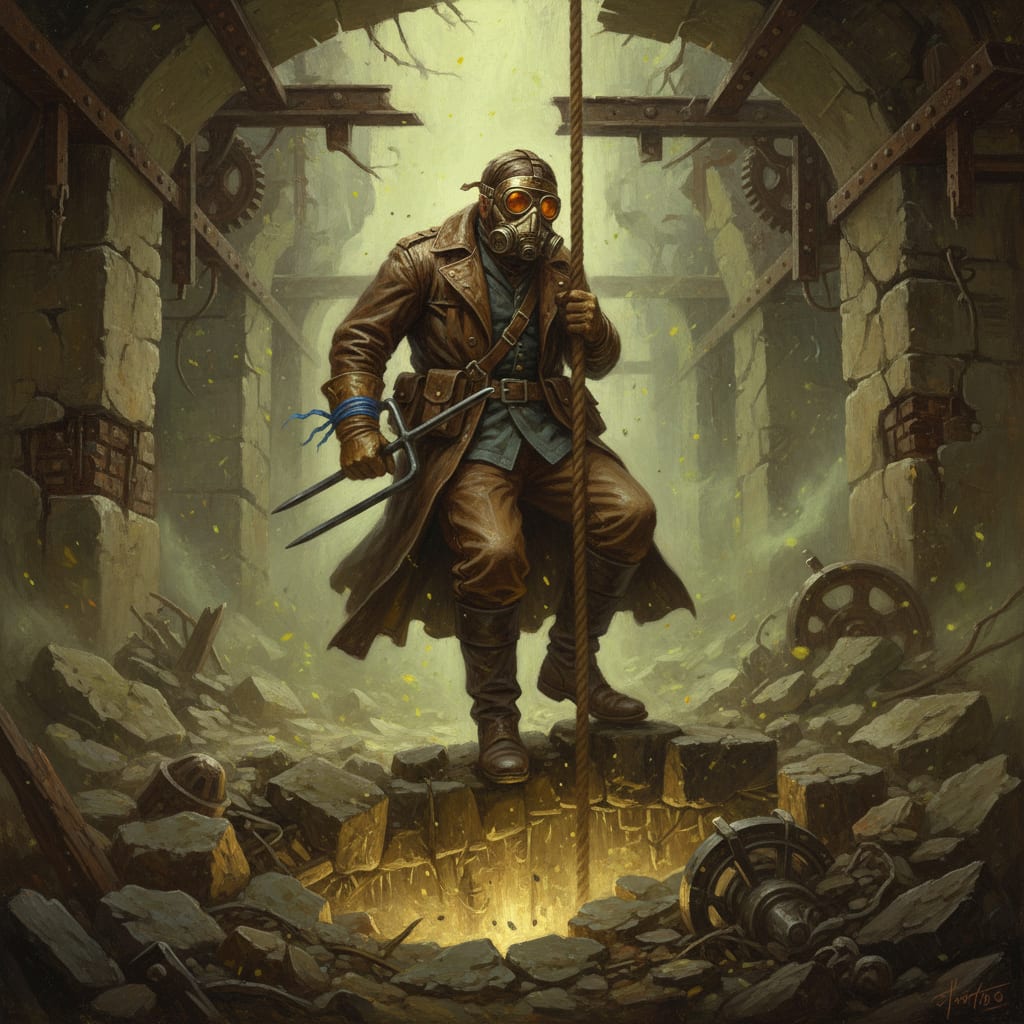
The Reliquary Salvager
The Synod misplaces relics; the Salvager retrieves them; no one speaks of the arrangement
The Synod does not lose its relics. It misplaces them — in collapsed vaults, sheared cathedrals, and quake-opened cellars. The Reliquary Salvager crawls in to retrieve them. His compliance record is spotless. His lungs are not.
Codex Ref. XII.36.01-001
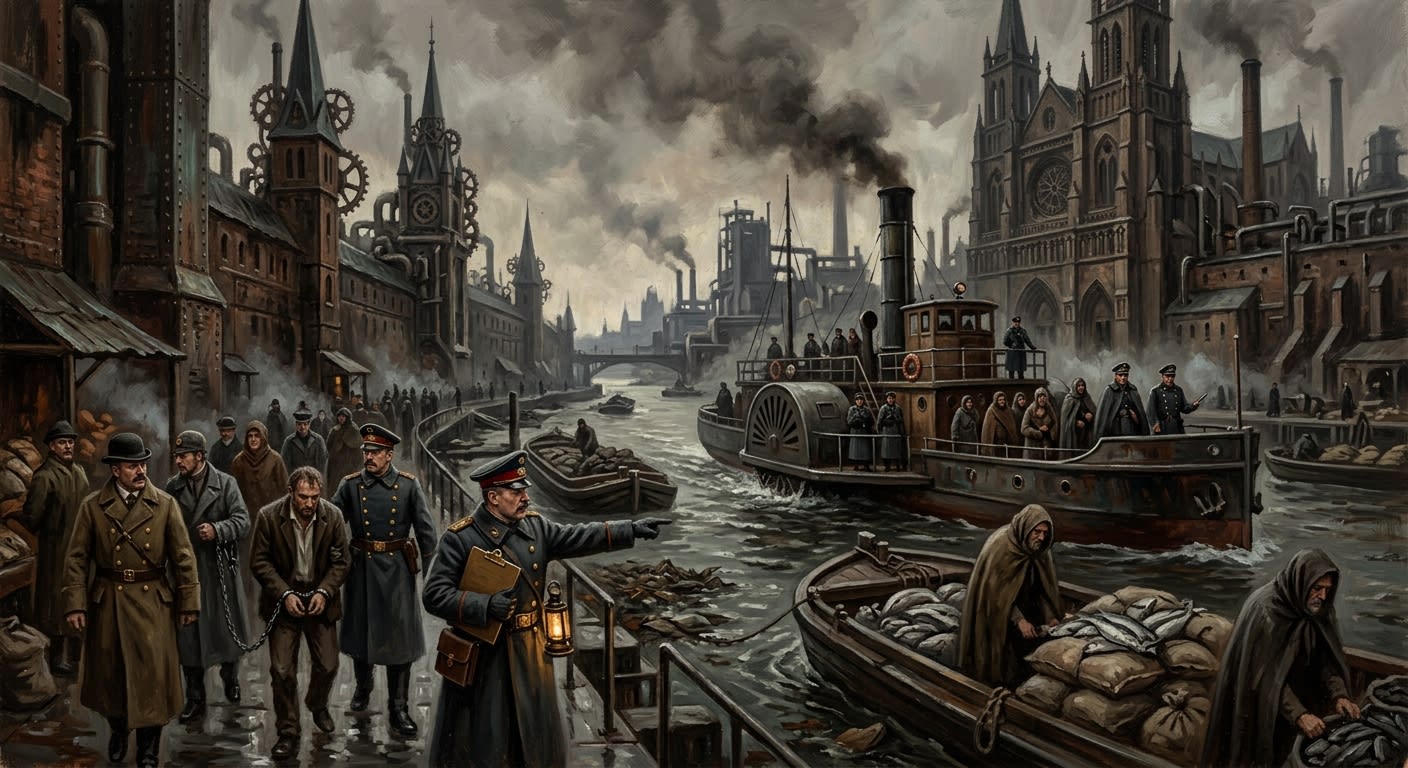
The Rhône
Water carries what paper refuses to keep dry
The Rhône is a southern river-corridor of ash, pilgrimage, fishery inspection, Avignon heresy, Lyon spectacle, wet custody, and water that declines obedience.
Codex Ref. II.1.10-201
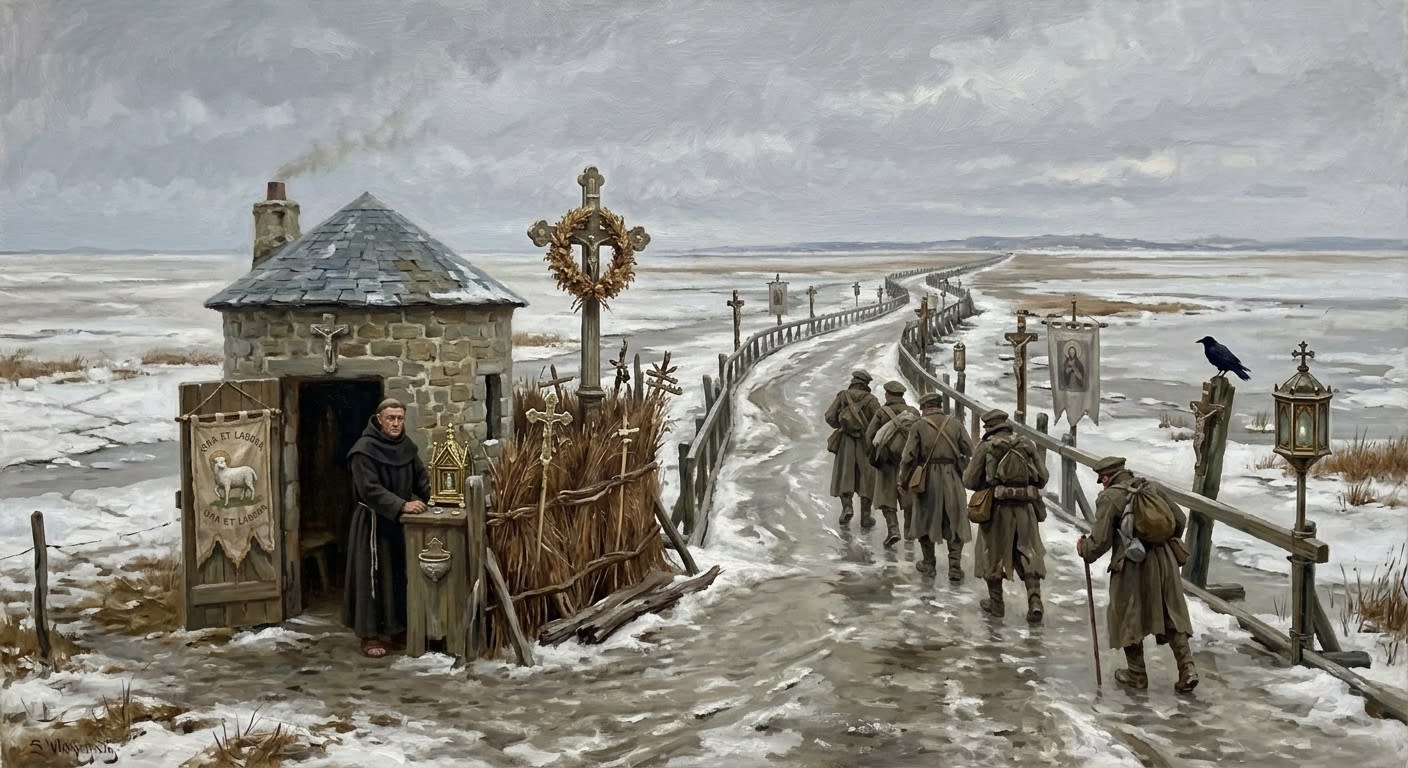
The Salt-Vigil Causeways
Where the road drinks and the order endures
Winter roads across the frozen Frisian shallows, administered by an ascetic toll order who collect salt and tears in equal measure. The causeways carry one-eighth of the Synod's winter supply traffic and ask something of everyone who walks them.
Codex Ref. II.3.05-003
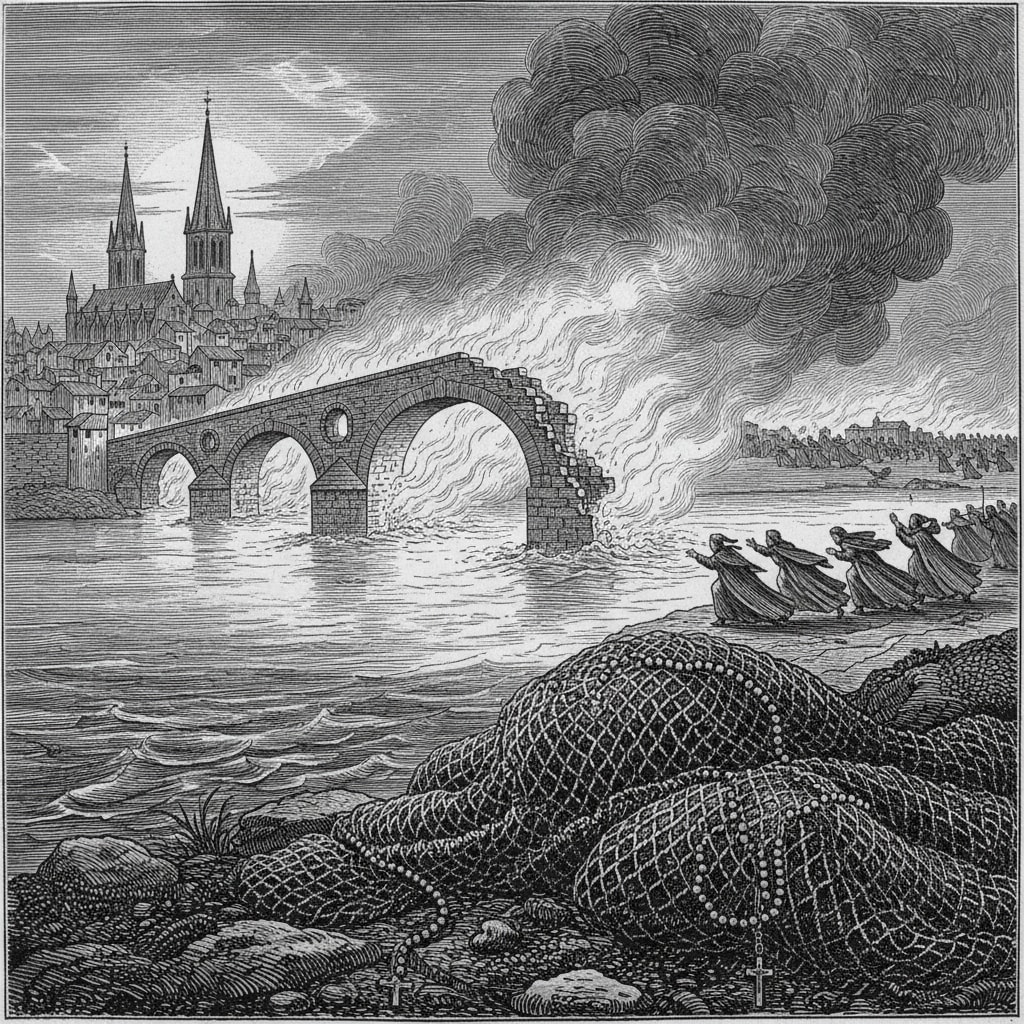
The Schism of Avignon
On the Rival Pontiff, the Drowned Crown, and the Rosaries That Will Not Stay Buried
The clerical secession of A.S. 111, in which a rival pontiff was crowned beneath the Rhône and Avignon was razed so thoroughly that its stones now form staircases in Strasbourg — a crisis requiring three stamps of denial.
Codex Ref. III.2.07-001

The Second Concordat of Münster
A thousand signatures were required, so one man became arithmetic
The A.S. 105 blood-compact that yoked nine hundred and ninety-nine craft guilds to Synod tithe, then corrected the thousandth refusal by erasing a district.
Codex Ref. VII.2.01-002
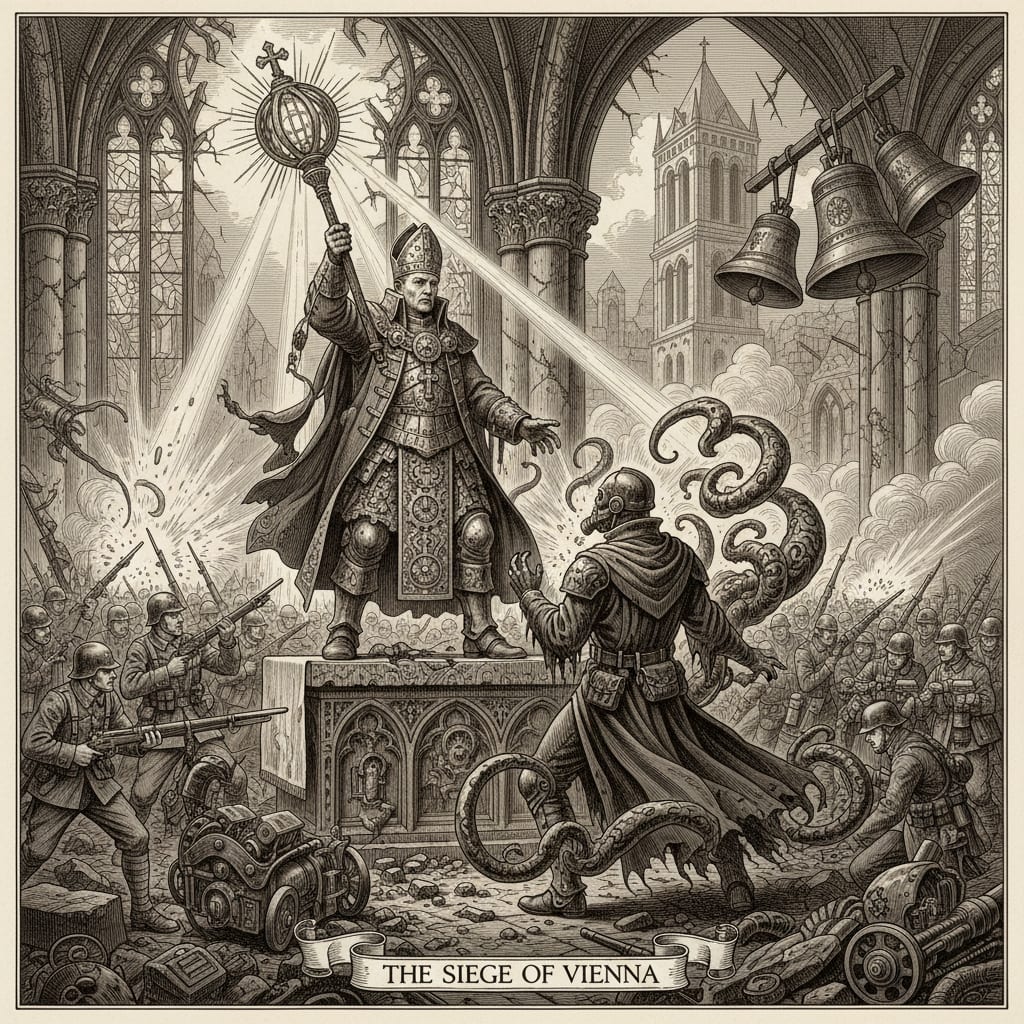
The Siege of Vienna
Nine Months in the Crucible of Faith
Nine months of famine, plague, and sorcery broke upon the altar of Saint Rupert. Bishop-Warden Clemens struck, and Reason died screaming in the streets of its last capital.
Codex Ref. III.2.07-031
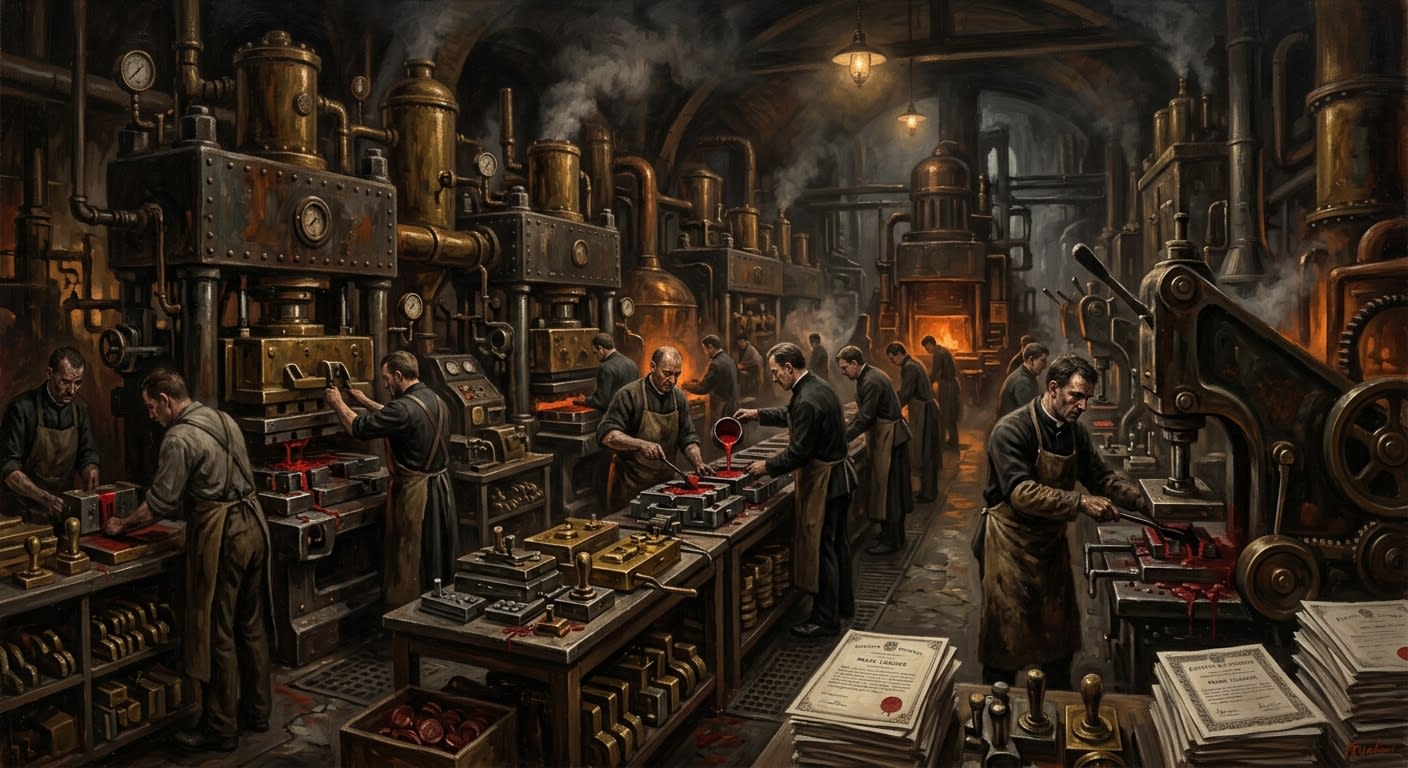
The Sigillary
Where warm wax teaches paper to bite
The Sigillary beneath Strasbourg Cathedral manufactures authority in wax, die, counter-seal, mask licence, and the old lesson that paper bites only when stamped.
Codex Ref. II.1.04-006
The Silent Colonnade
The fourth side of the [[cloister-precinct|Cloister]], where counting forgets its manners
The Silent Colonnade is Strasbourg's unnumbered northern arcade, a place of unmarked doors, shortened Wednesdays, swallowed bells, and corrections no Bureau admits.
Codex Ref. II.1.04-003

The Tagus
The river at the end of the count
The Tagus is the Synod's brown Iberian edge: moat of Toledo, fiscal measuring line, levy phrase, flood court, and river that takes names without receipt.
Codex Ref. II.4.09-016
The Uncounted Winter
Fifty thousand dead, and the page arrived late
Northern offensive and registry collapse of A.S. 87–91, when fifty thousand dead went unattested and the Synod learned to put a court beside the wound.
Codex Ref. VII.8.10-091
The Unnamed Bureau
The office that governs by being omitted from every ledger
The Unnamed Bureau is the office beneath Gate Nine: absent from every registry, obeyed by several, and maintaining an Apparatus that turns public waiting on the Queue Road into private product.
Codex Ref. VIII.2.02-001
The Vales of Stagnance
Syrion's country, where geography sits down and refuses audit
Syrion's Vales are the old Shipkan wound made landscape: fog, soft clocks, preserved villages, patient armies, and roads that return with fewer years.
Codex Ref. VI.2.04-004
The Vault of Ten Thousand Keys
Every door opens. Every door locks behind you.
Velmora's seat within the Gilded Chasm — a palace of infinite descending doors, each one beautiful, each one locking behind you. Four expeditions entered. None returned intact. The Bureau has recommended permanent interdiction.
Codex Ref. V.6.02-001
The Virtue Generals (So-Called)
Seven heresies dressed as hope, condemned in the forty-fourth standing order
Standing Order 44-D refuted, filed, and reluctantly left open. Seven alleged champions of the Creator — unregistered, unconfirmed, and disturbingly active for entities that do not exist.
Codex Ref. IX.3.44-001
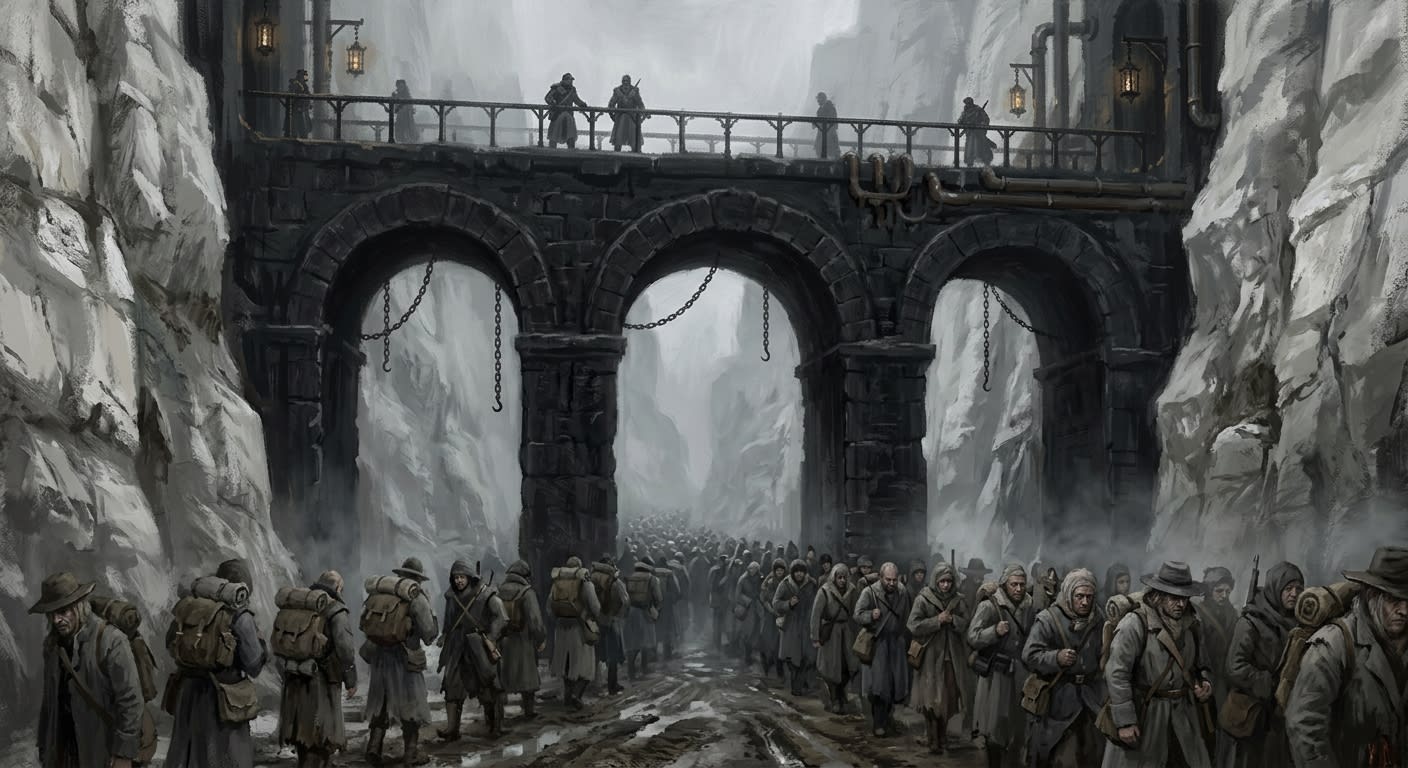
The Widow's Pennies Exchange at Griefgate
Where guilt is the currency and the arch keeps the change
The most efficient grief-processing apparatus on the pilgrim roads — three black-stone arches, a ledger of sorrows, and a staff of professionals who charge for the arithmetic.
Codex Ref. II.1.04-001
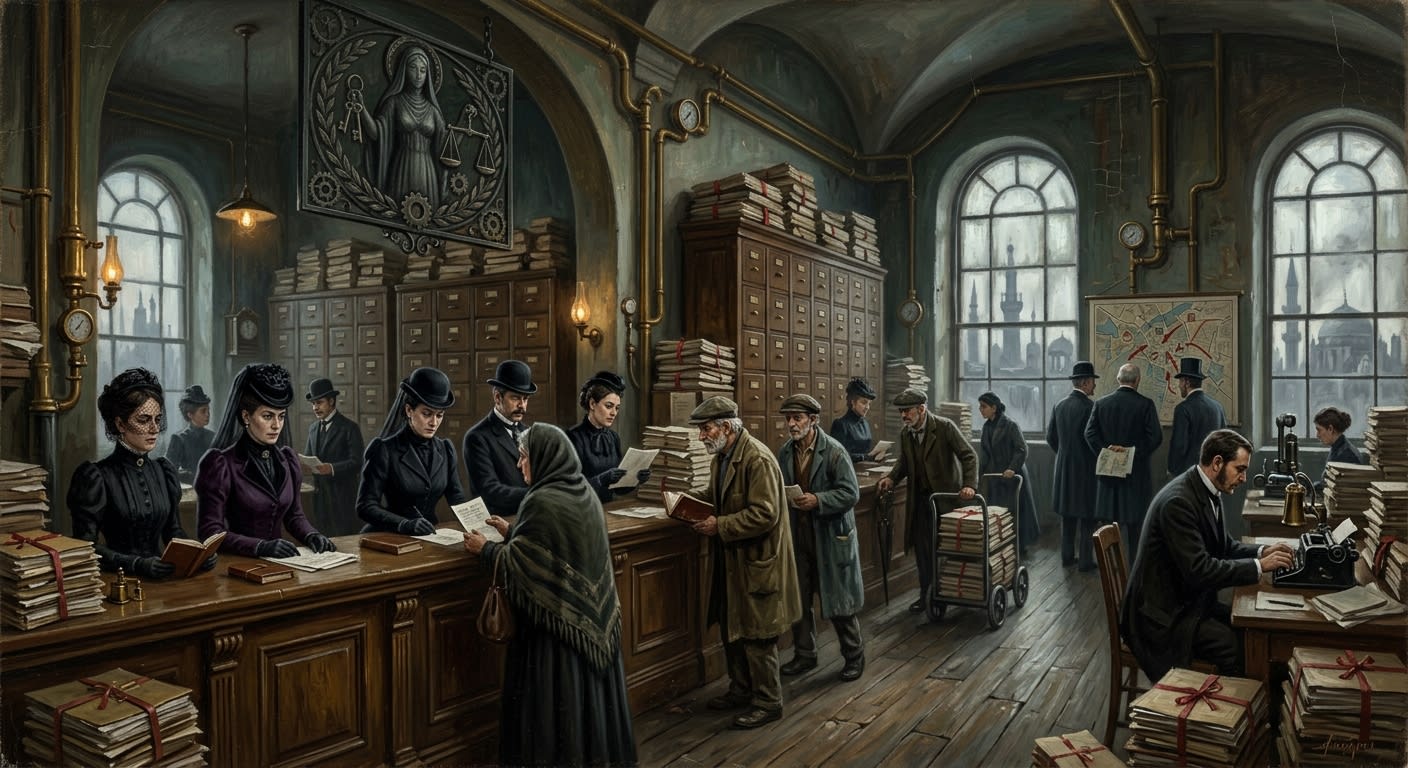
The Widow's Syndicate
A grief with ledgers is already a government
Constantinople's widows turned charity into credit, mourning into archives, and tea into a jurisdiction no Bureau can quite survive.
Codex Ref. XI.4.01-001
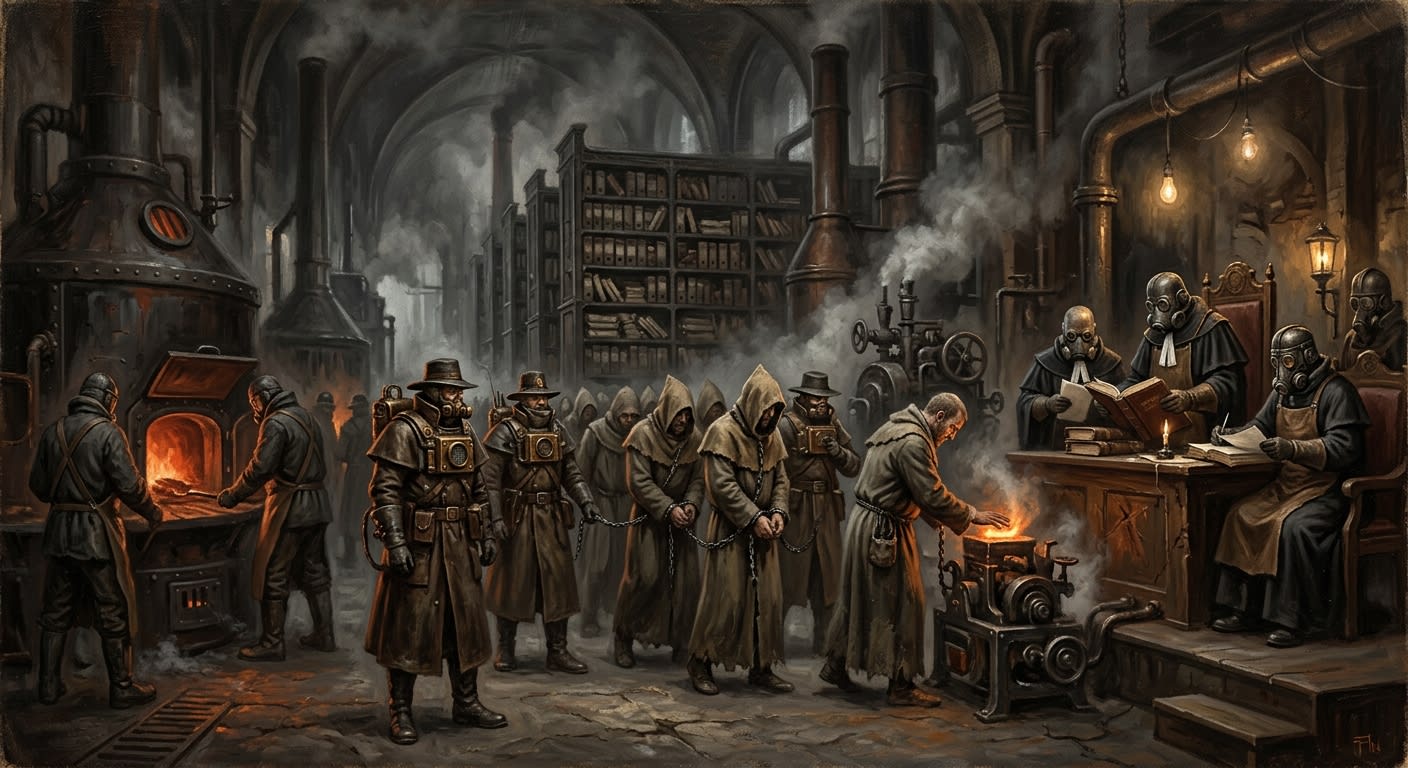
The Witch-Hunts of Toulouse
The fire that learned to file its victims
Toulouse taught Purity its grammar for cruelty: warrant before fire, confession before brand, spectacle before silence, silence before archive.
Codex Ref. VII.8.02-001

The Year of Letters
One table of bones. Forty cities. The first assault on everything.
The Bureau's account of –32 A.S.: how three Amsterdam scholars, one table of bones, and forty cities' worth of polite arithmetic crippled three centuries of relic authentication — and inaugurated everything.
Codex Ref. I.2.01-001

Theobald of Worms
The man who taught Europe to confess by angle
First Archon of the Bureau of Heraldry, Theobald of Worms standardised the Triune Knot and made the visible world legible, taxable, and prosecutable.
Codex Ref. III.2.01-119
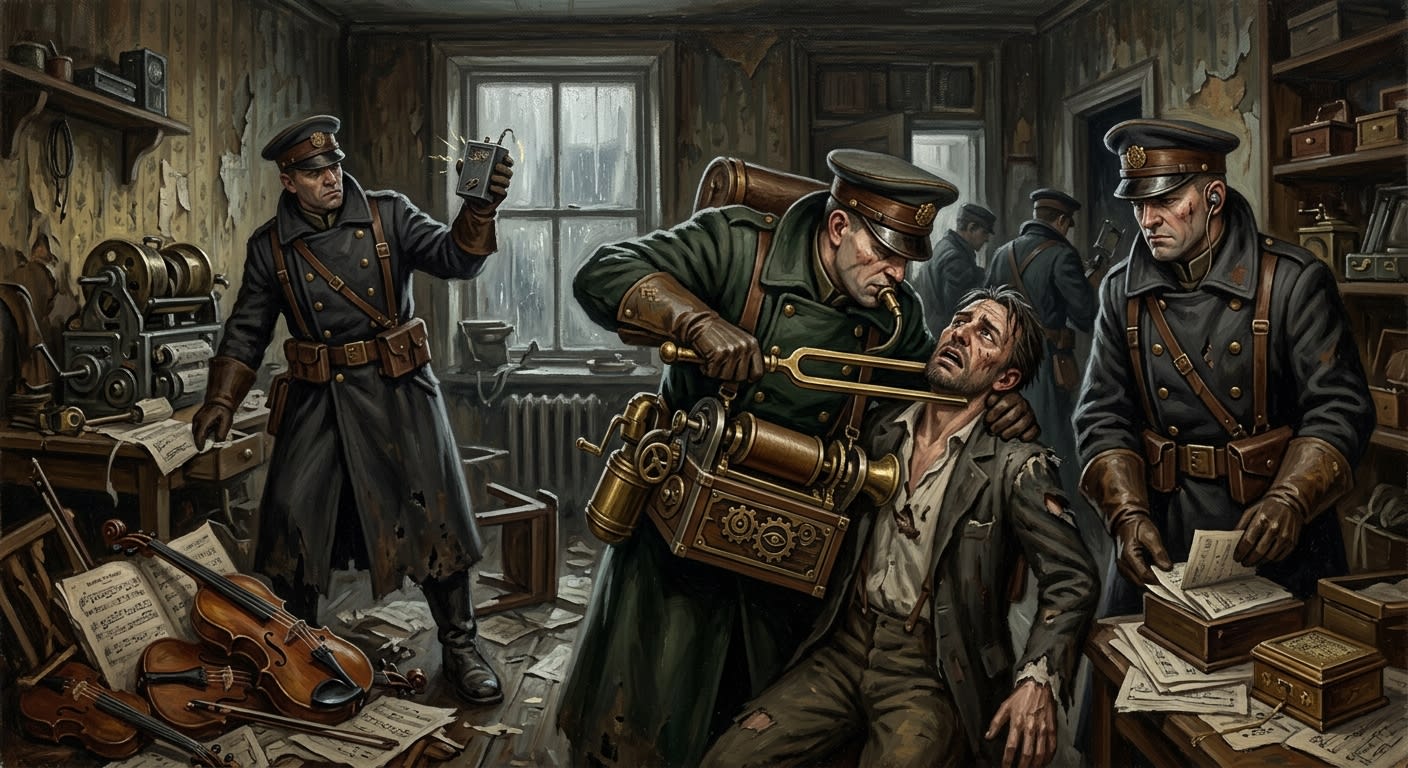
Tone Inquisitors
The ear becomes courtroom, and comfort confesses
Field enforcers of the Bureau of Orison and Song who provoke, detect, record, and prosecute unlicensed melody with forks, boxes, and ruined ears.
Codex Ref. XII.48.02-096
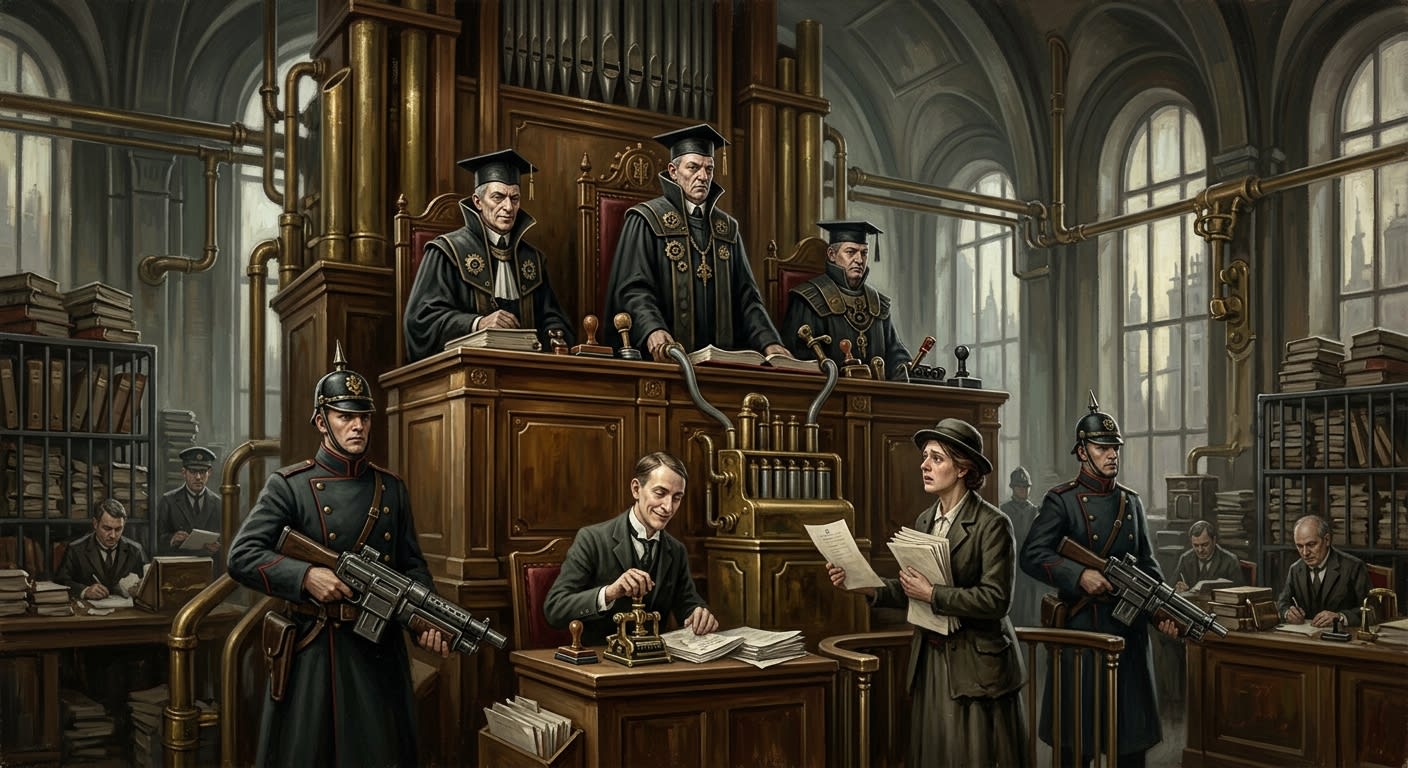
Tribunals of Doctrine
Where truth acquires a chair, a clerk, and teeth
The Synod's lawful tribunals convert dispute into Doctrine, mercy into numbered form, and local quarrel into central authority with a clerk's smile.
Codex Ref. XIII.1.58-100
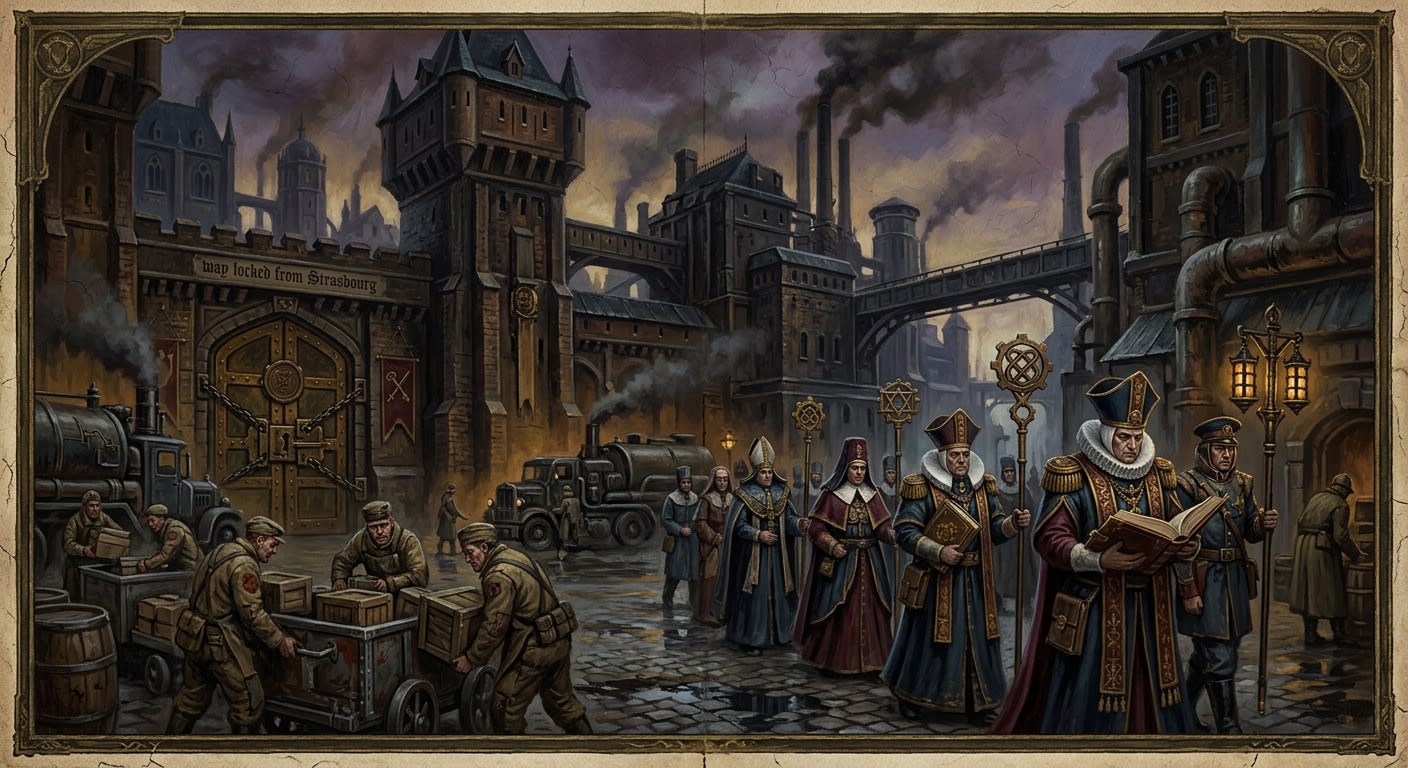
Triune Hearth
Three old bodies, one chimney, and Strasbourg holding the poker
The Triune Hearth binds France, Iberia, and the Rhineland into one Synodal household: warm in sermon, hungry in ledger, and locked from Strasbourg.
Codex Ref. XIII.1.04-090
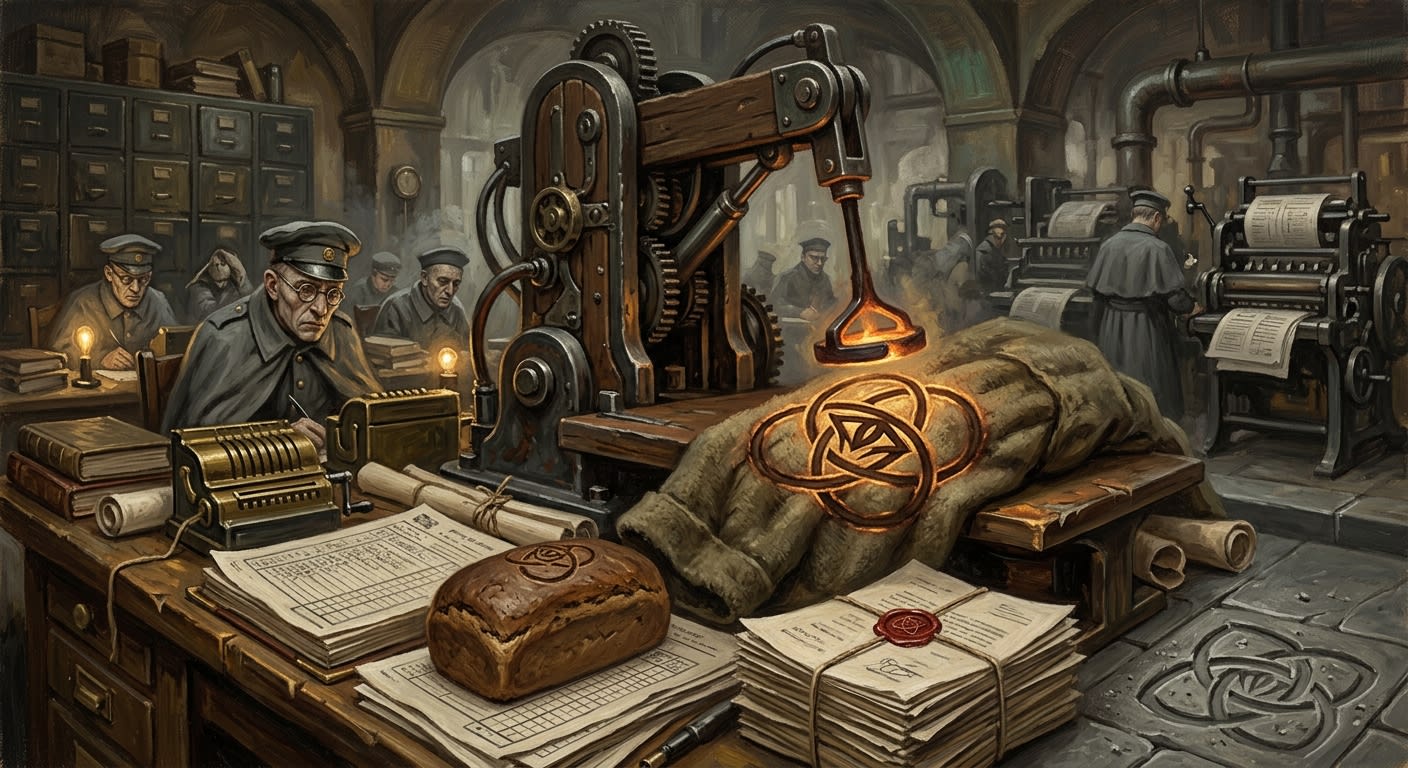
Triune Knot
Three loops, one law, and every door accounted for
Universal Synodal binding mark standardised under Theobald of Worms, by which doors, papers, bread, flesh, and graves become readable to law.
Codex Ref. XIII.1.03-002

Unauthorized Melody Smuggler
The lullaby the Bureau buried; the mouth it walks out of now
The Unauthorized Melody Smuggler is classified under Tongue-Crime, Melody Intent, Doctrinal Sabotage — above common theft, below armed heresy. The lullaby does not care what the Bureau calls it. It continues to walk out in someone else's mouth.
Codex Ref. XII.48.01-001
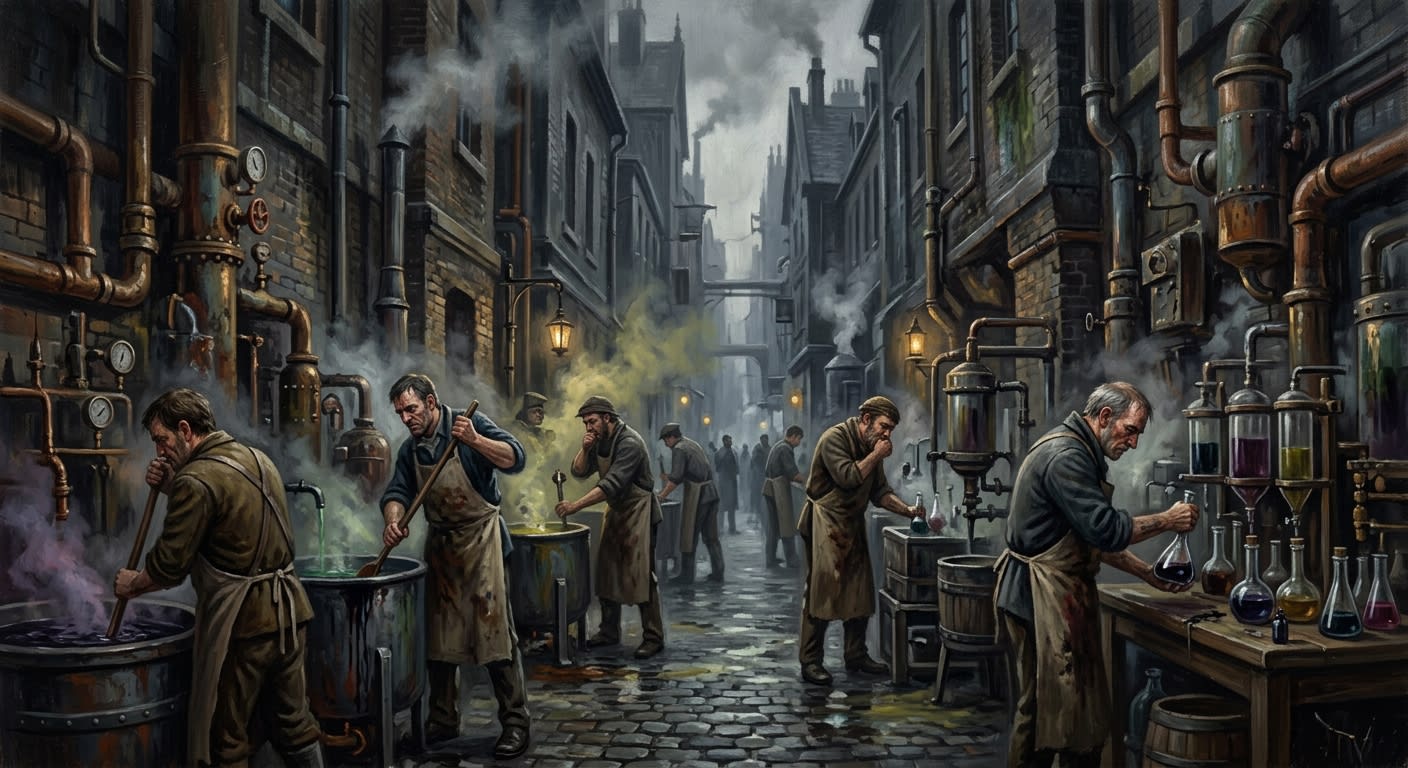
Vatmarsh Row
Where ink learns to outlive mercy
Vatmarsh Row fixes the Synod's ink and loosens the lungs of those who make it. Permanence, naturally, invoices by the breath.
Codex Ref. II.1.01-092
Venice
The city that obeys by tide and invoices by fog
Venice is loyal, wealthy, damp, evasive, and necessary: an Adriatic city the Synod owns by writ and must still ask politely by tide.
Codex Ref. II.4.09-201

Vicar-General Anselm Rihn
The man who paved roads with obedience and called the ditch mercy
Vicar-General Anselm Rihn standardised curfew logistics in A.S. 94, gave the Lantern Brotherhood its deniable clause, and left roads more obedient than men.
Codex Ref. III.2.01-064
Vienna
The corpse that learned accounting
Vienna is the Synod's most decorated corpse: old see, Rationalist capital, shrine-ruin, supply hinge, lullaby scar, and profitable proof that ruins can be taxed.
Codex Ref. II.4.09-095
Vienna, the Shrine-Ruins
Three deaths, one gift shop, and a pen that has not dried in forty years
Three times ruined and once reclaimed. Vienna is the Synod's finest shrine and its most honest monument: the Rationalist capital, the Great Retreat's wound.
Codex Ref. II.4.09-010
Vire River-Belt Interchange
Where water becomes paperwork and freight learns to kneel
The Vire River-Belt Interchange is the Hook: a wet rail-port where barges become manifests, trains become toll events, and fraud wears a life vest.
Codex Ref. II.1.04-001
Warden of the Sacred Ledger
Memory is permitted only after custody
The Warden of the Sacred Ledger guards the passage between recorded fact and ratified meaning, lest memory escape and become a riot with dates.
Codex Ref. XIII.1.33-090
Warrens of Strasbourg
The capital's conscience, filed under mildew
Strasbourg hides its poor where bells arrive broken, maps grow bashful, and charity, crime, and surveillance share the same wet staircase.
Codex Ref. II.2.06-201
Warsaw
The city the Bureau told to leave, and the bakeries it opened in reply
The Synod's forward staging city on the Vistula — Zone Three, Northern Corridor, entry 14-W. 160 km from the Sagittal Line; close enough to hear the front on clear nights. The Bureau told it to leave in A.S. 95. It has grown by a quarter-million souls since.
Codex Ref. II.4.09-007
Wawel Hill
A crown of stone made to remember under seal
Kraków's cathedral hill, bound to the Night of Knives, restored as a public wound, and watched from upper works where Doctrine observes the city looking upward.
Codex Ref. II.3.06-001
Worms
Where broken things become binding
Worms is the Rhineland city where absence became evidence, rain became residue, seals became law, and a name became a warning.
Codex Ref. II.2.09-087
Zone 1
The rearward paradise that learned to invoice the war
Zone 1 is the Synod's polished western rear: safe enough to tax, rich enough to excuse itself, and stained to the elbows by logistics.
Codex Ref. II.0.03-201
Zone Permit
The paper beneath the feet, and the shackle in the drawer
The Zone Permit is lawful standing made paper: residence, ration, tithe, movement, marriage, burial, and fear folded into one stamped household leaf.
Codex Ref. XIII.1.93-130