
Reverse Index
Referencing “The Bureaucratic Synod”
Every codex entry that links to The Bureaucratic Synod. 162 entries.
Return to The Bureaucratic Synod
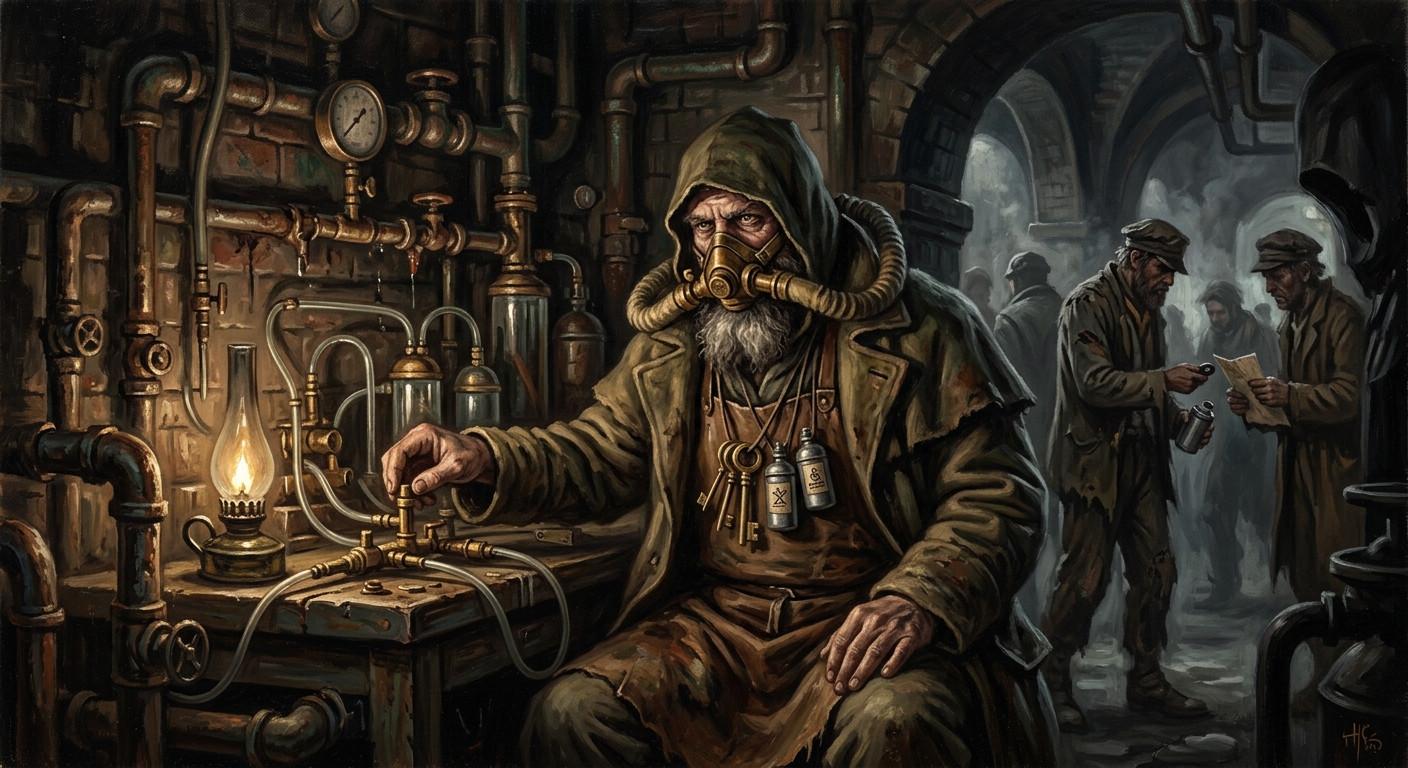
"Tap-King" Jaro
The silent monarch of Irongate's illegal lungs
Jaro has not spoken since A.S. 187. Beneath Bastion-Irongate, his pipe-code sells air, silence, routes, and the little mercies official power cannot admit it needs.
Codex Ref. III.2.01-026
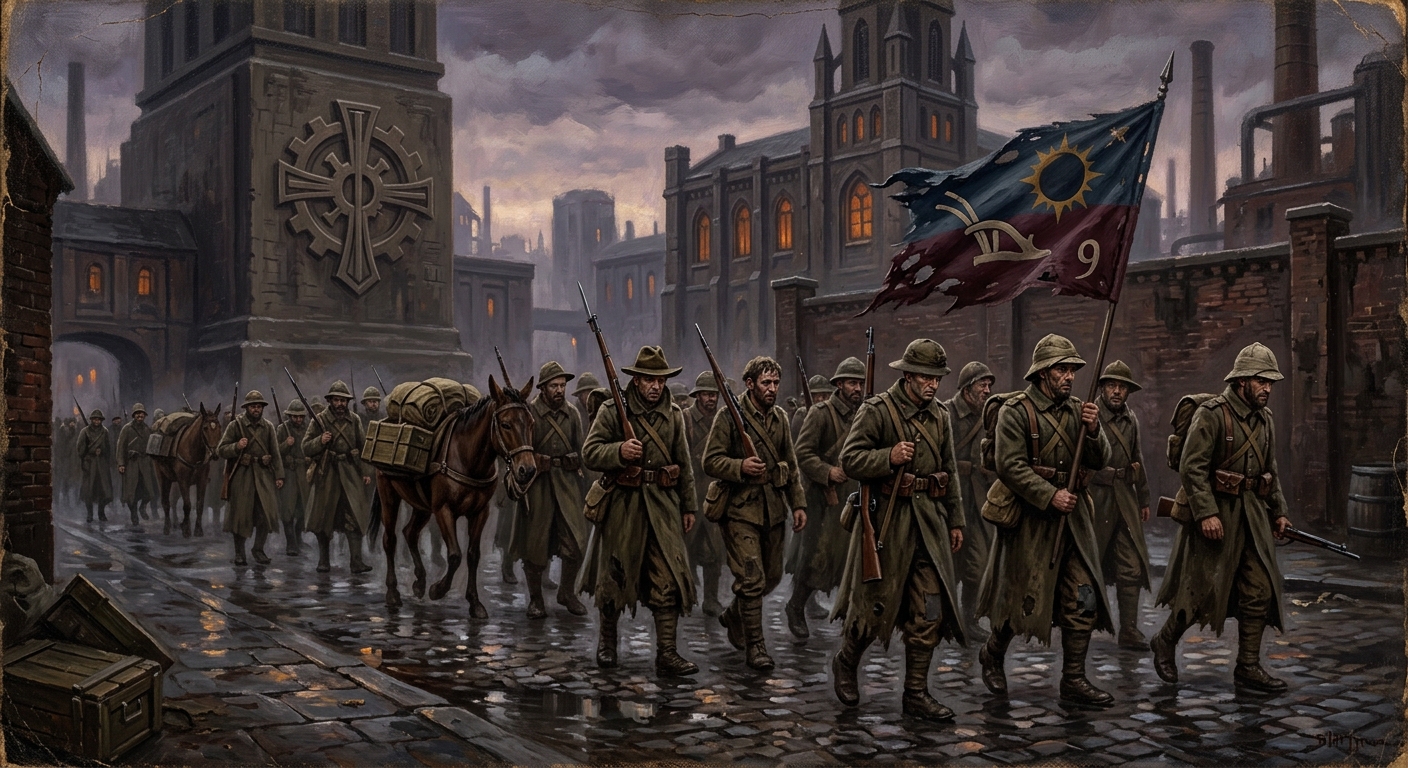
9th Southern Levy Division
Sofia's shovel-marked obedience, sixty-two percent alive and still standing
Sofia's 9th Southern Levy Division is under-strength, overused, locally trusted, officially suspected, and useful in the exact way Strasbourg dislikes.
Codex Ref. VIII.5.05-009
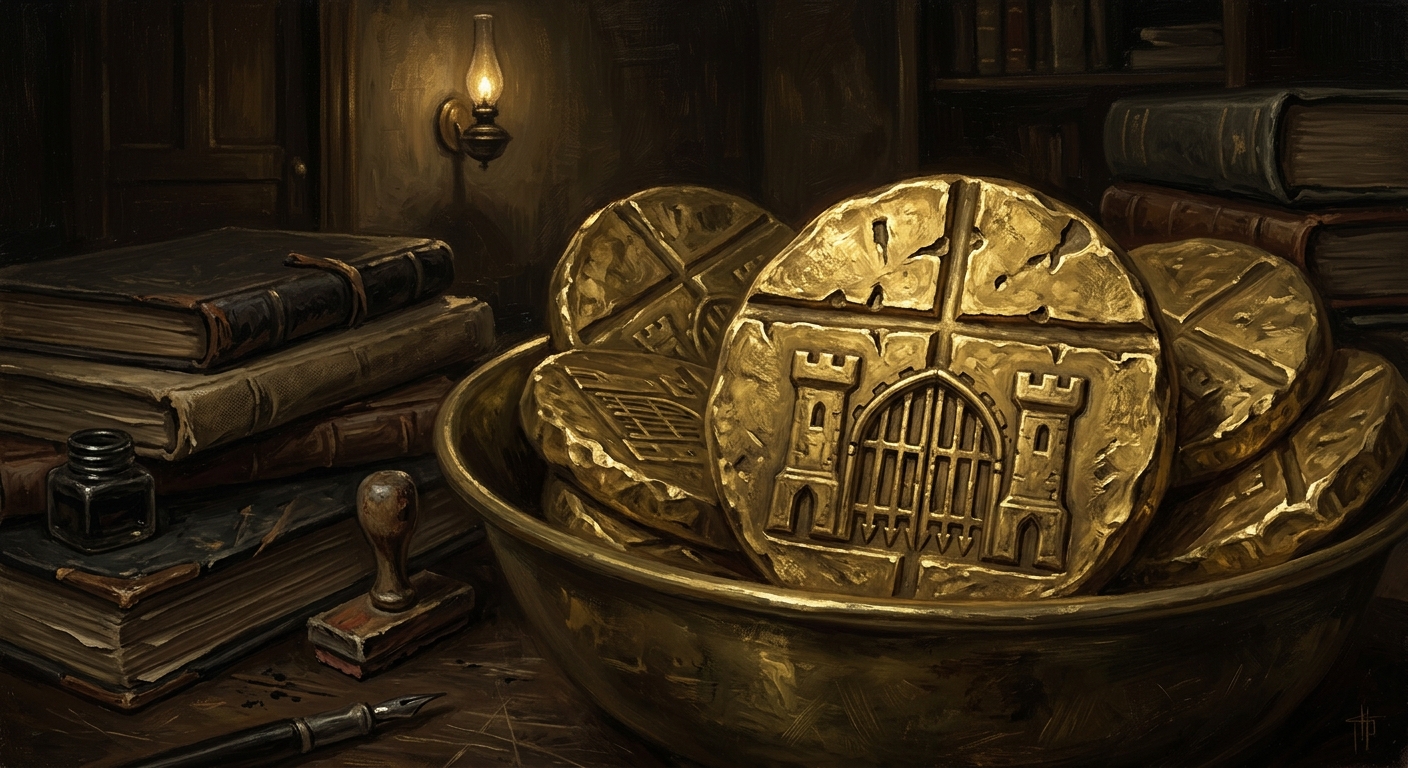
Aachen Gate-Penny
A saint's housing made small enough to buy boot grease
The Aachen gate-penny is reliquary gold made into emergency currency: a closed gate, a cross-groove, and a city’s old betrayal priced by the handful.
Codex Ref. V.2.04-160
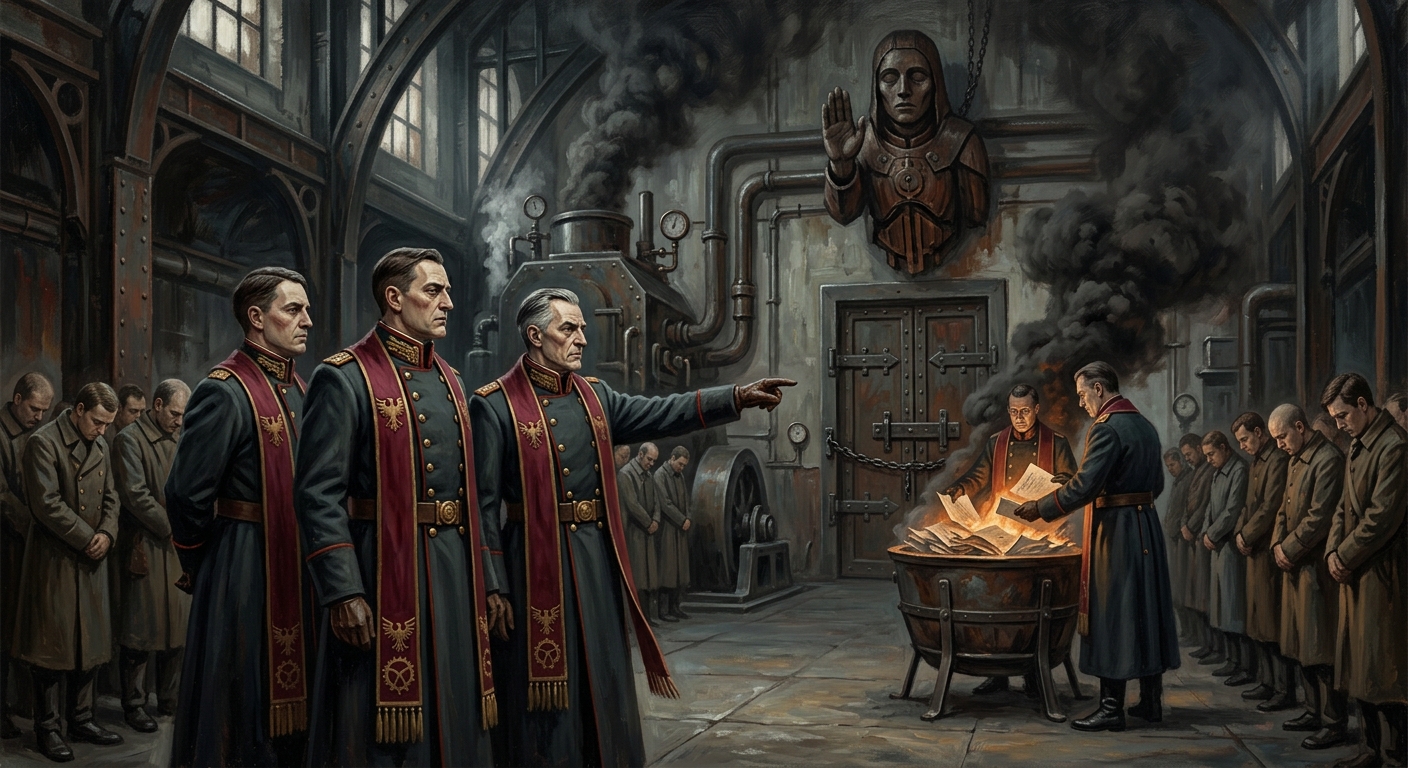
Absolute Suppression
The secret so holy it must command what it denies
Absolute Suppression is the Bureau's art of making hidden knowledge binding: a silence that issues orders, then denies it has a mouth.
Codex Ref. XIII.1.97-190
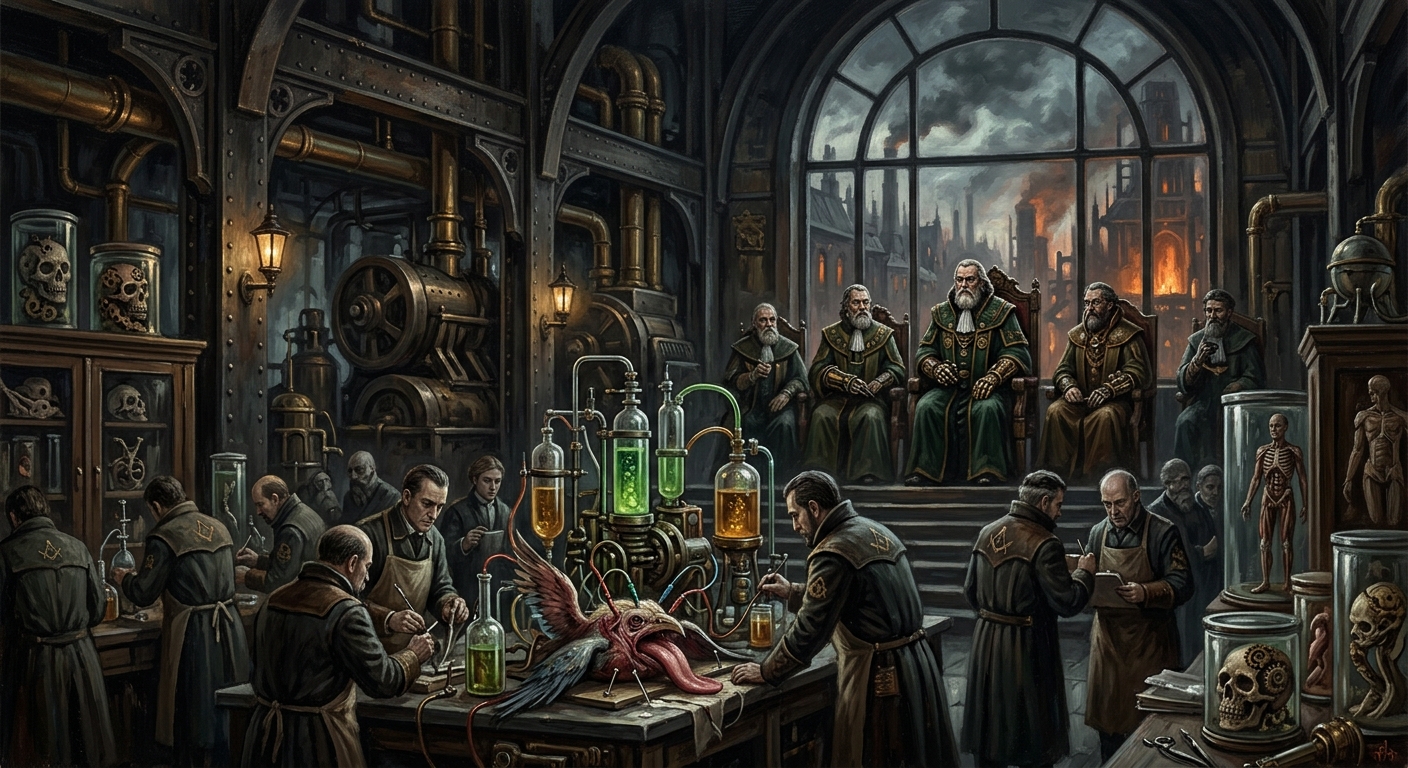
Academy of Sciences
The Republic's licensed brain, perfumed in Paris
Paris's Academy of Sciences gave the Rationalist Republic clean nouns for dirty hands: prayer as infection, tongues as evidence, and schools as knives.
Codex Ref. I.1.03-030
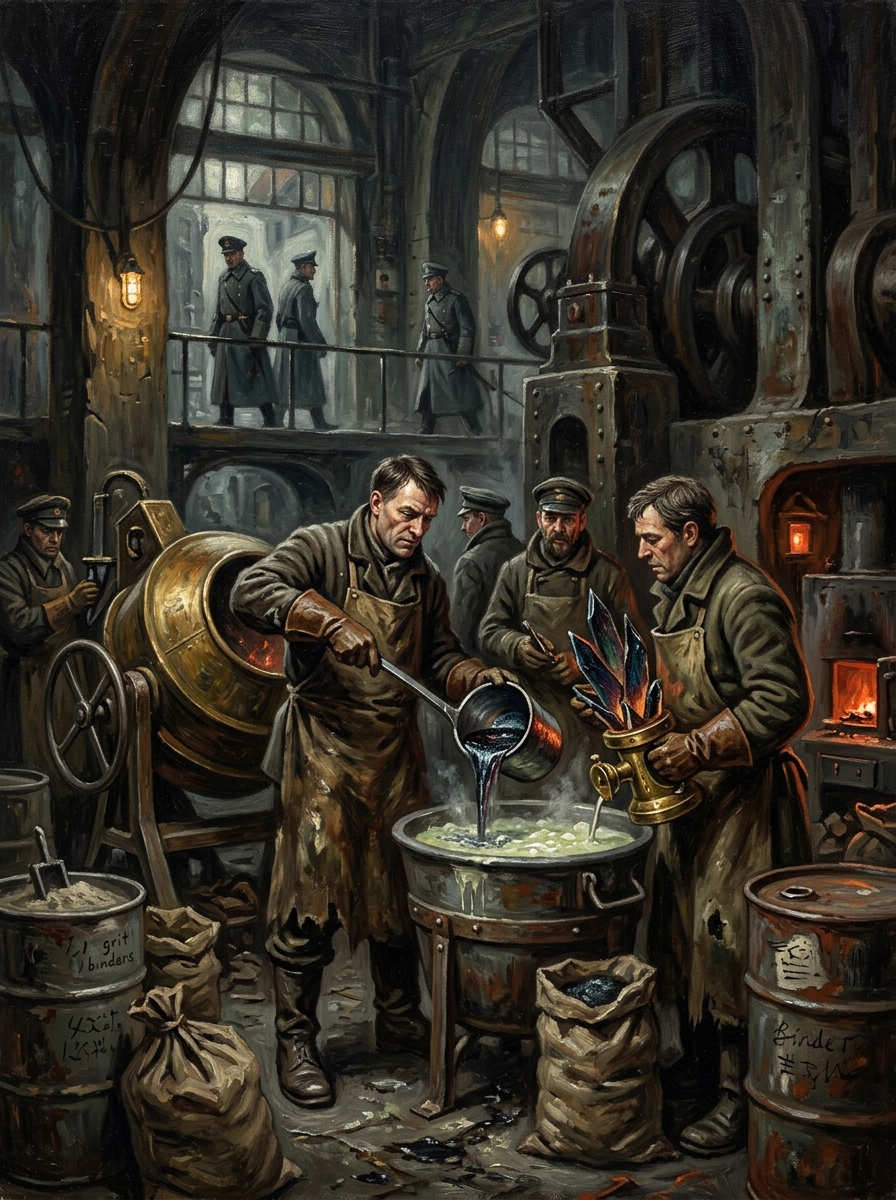
Additive Heretics
The men who put forbidden strength into holy mortar and called the wall their witness
Condemned Saint-Bone Melter tendency that improves sanctified lime with forbidden binders, hardeners, grit, and demon-glass heat-listeners while the Bureaus pretend not to measure the results.
Codex Ref. XI.5.01-001

Administrative Inconvenience Premium
The price of making the Ledger notice you twice
The Premium prices disobedience as clerical labour: miss Form 7-NR, trouble the Ledger, and watch one infant become a lifetime of doubled debt.
Codex Ref. XIII.1.02-158
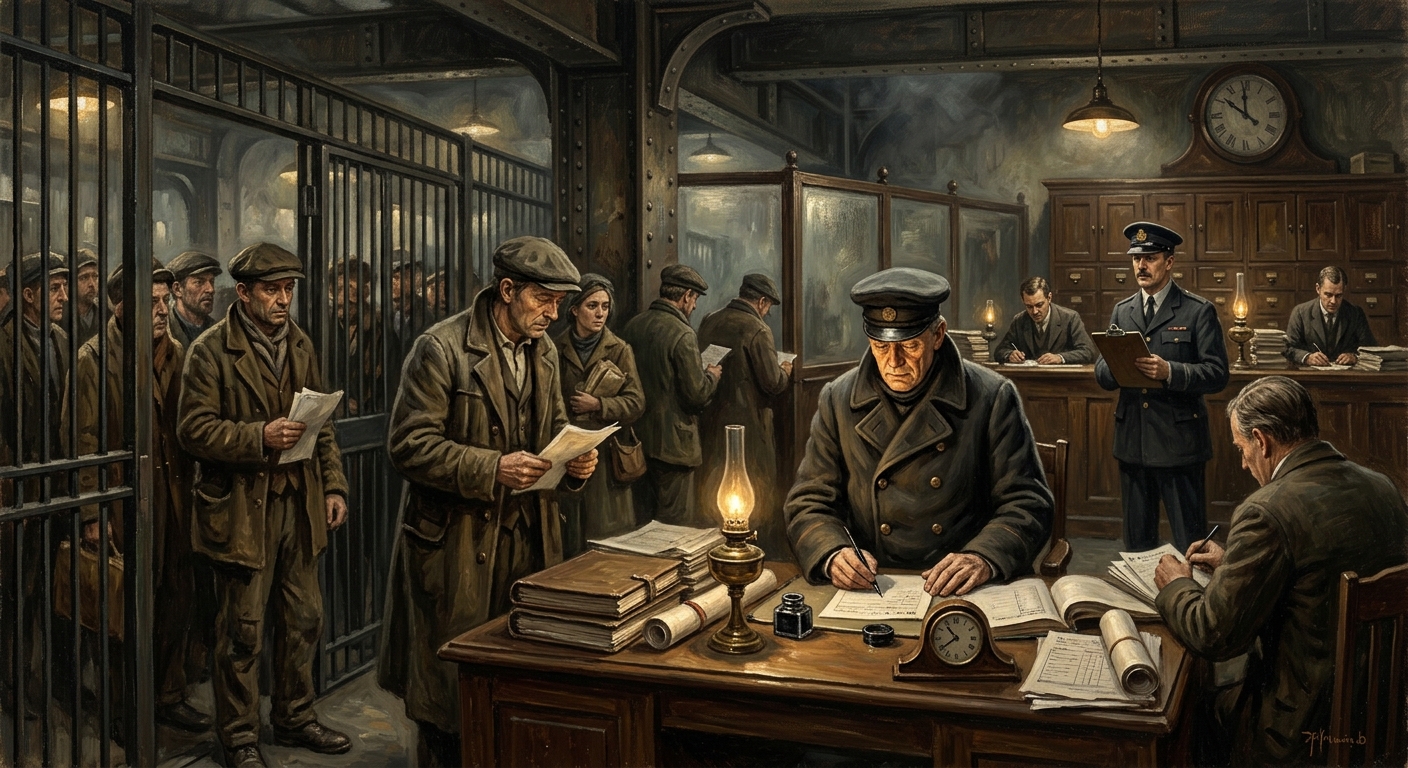
Administrative Order 44-B
The mercy of eight hours in a room that wanted twelve
Order 44-B shortened Vault duty after Breel's hand wrote forbidden music, proving the Bureau can call terror a scheduling improvement.
Codex Ref. XIII.1.44-188
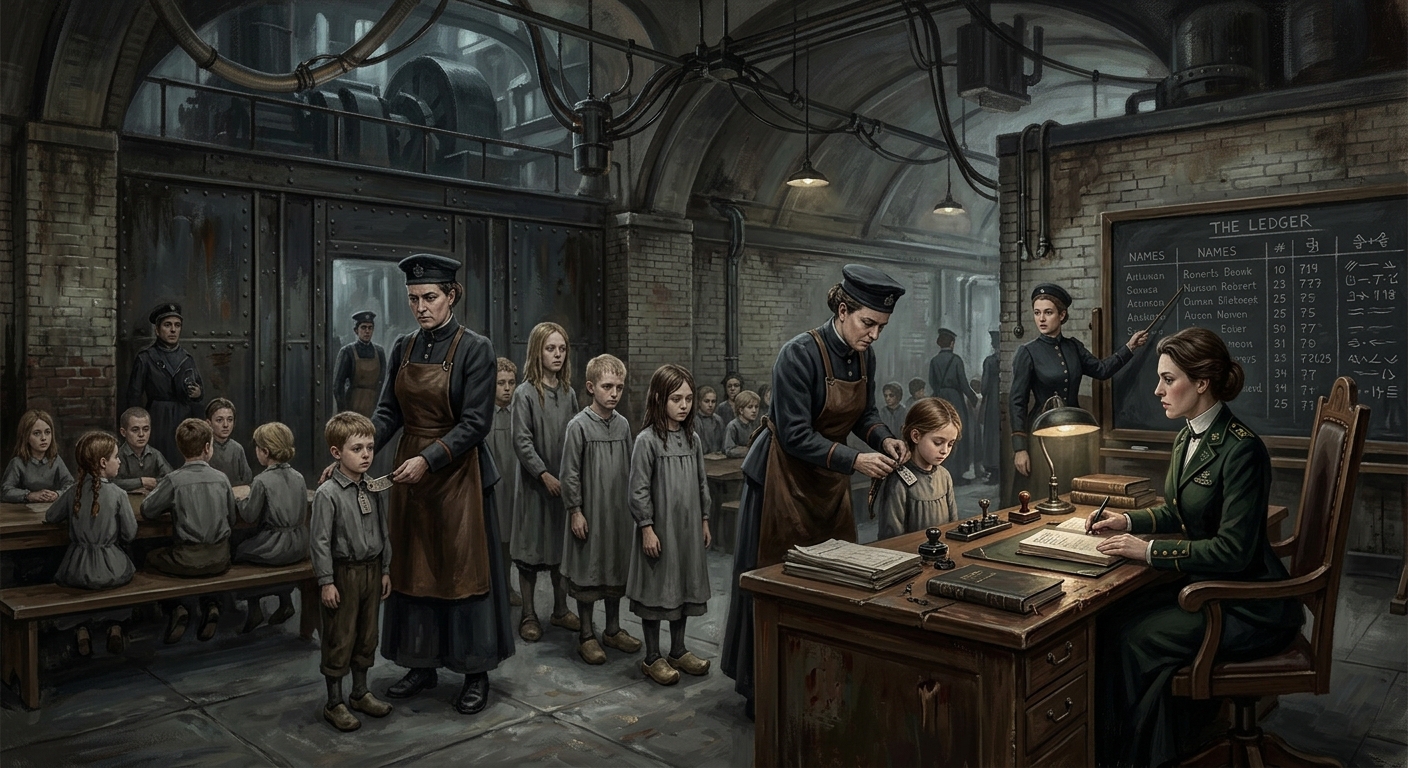
Administrative Recovery
The state calls it custody because theft has poor margins
Administrative Recovery is Mercy's washed name for taking unregistered children, renaming them, tagging them, and teaching the Ledger to stand where a family stood.
Codex Ref. XIII.1.02-159
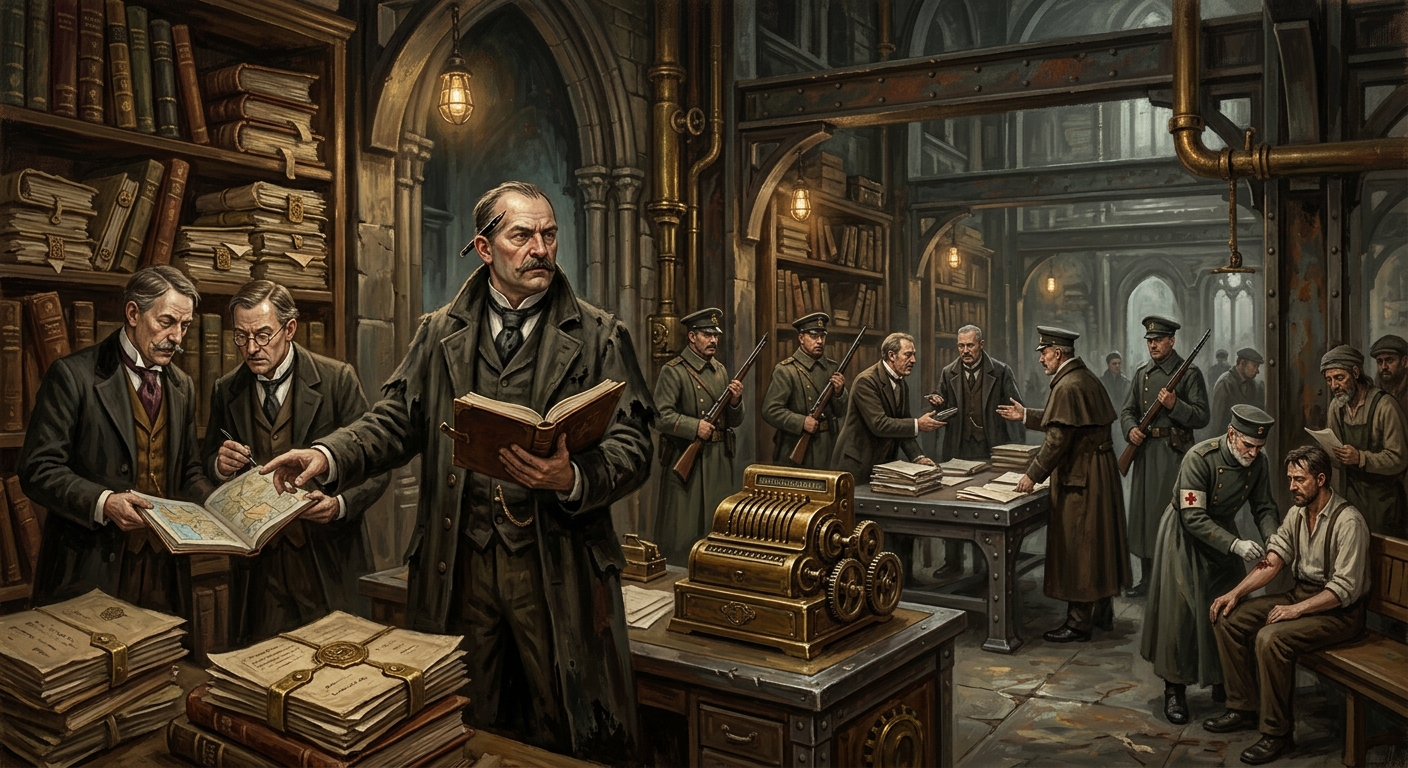
Advocates Guild
Licensed cruelty with gloves, seals, and a fee table
Licensed fraternity of Citation Advocates that turns Synodal quarrels into ledger-duels, sells precedent, polices pits, and calls the resulting injuries civil peace.
Codex Ref. XII.28.01-001
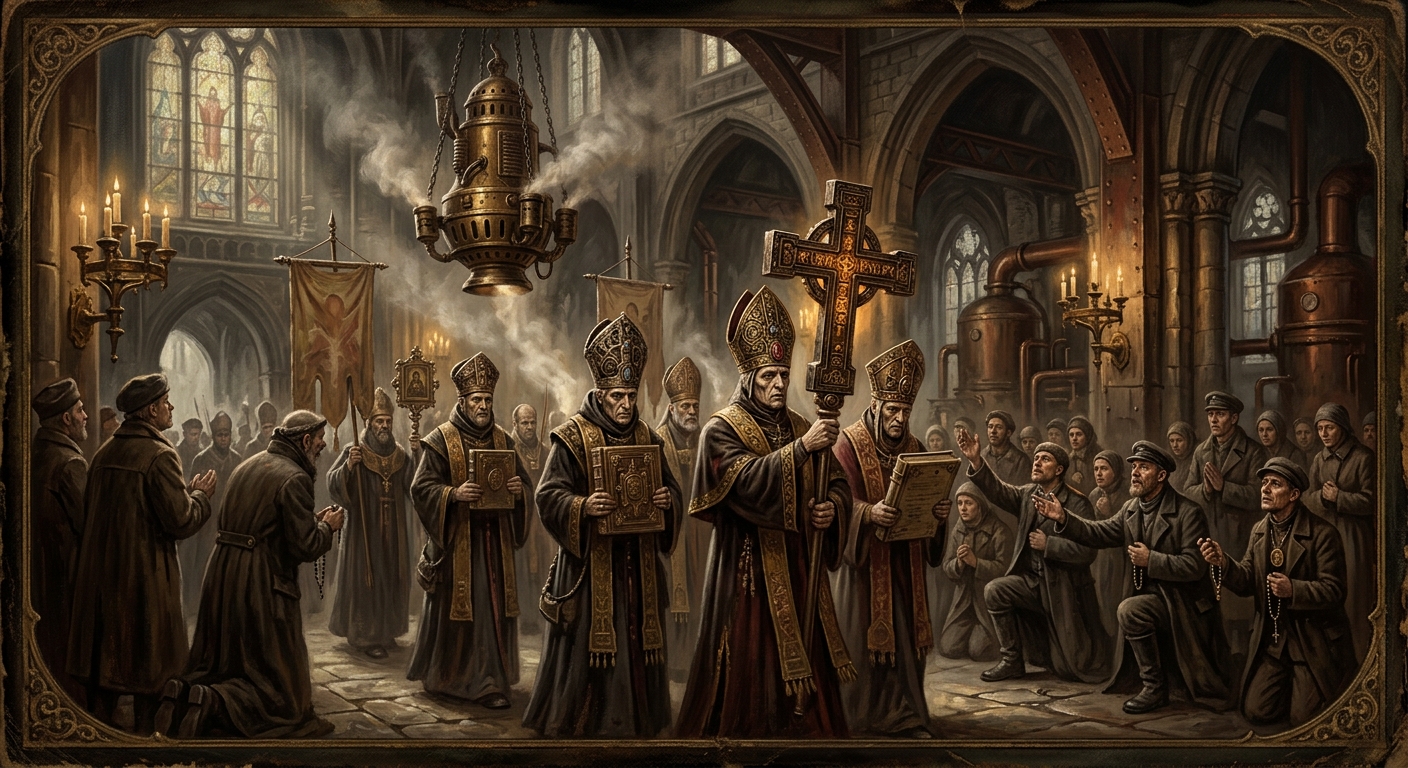
Age of Faith
The golden age improved by burial
A devotional-historical category for the centuries before A.S. 0, when Heaven is said to have answered and Europe had not yet taught unbelief to print.
Codex Ref. XIII.1.00-000

Air Auditor
The senior nose that lets a district breathe
Senior Ninth Mark officers who govern smoke by selective detection: smelling every crime, filing fewer, and calling survival atmospheric discipline.
Codex Ref. XII.32.02-143
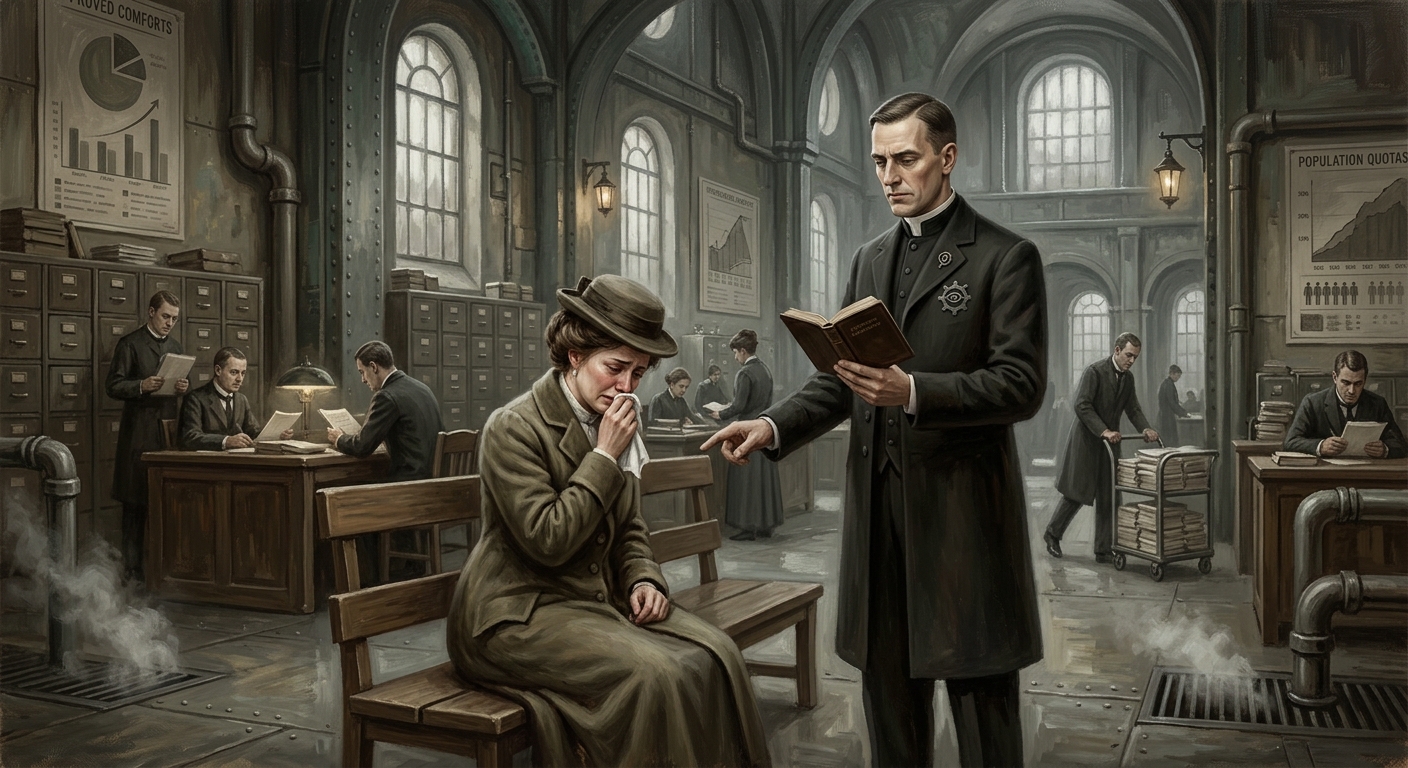
Approved Comforts
Fourteen lawful softenings, and the heresy of meaning them
The Approved Comforts are fourteen lawful phrases by which the Bureau calms grief without granting it rights, mercy, or a dangerous future tense.
Codex Ref. XIII.1.97-094
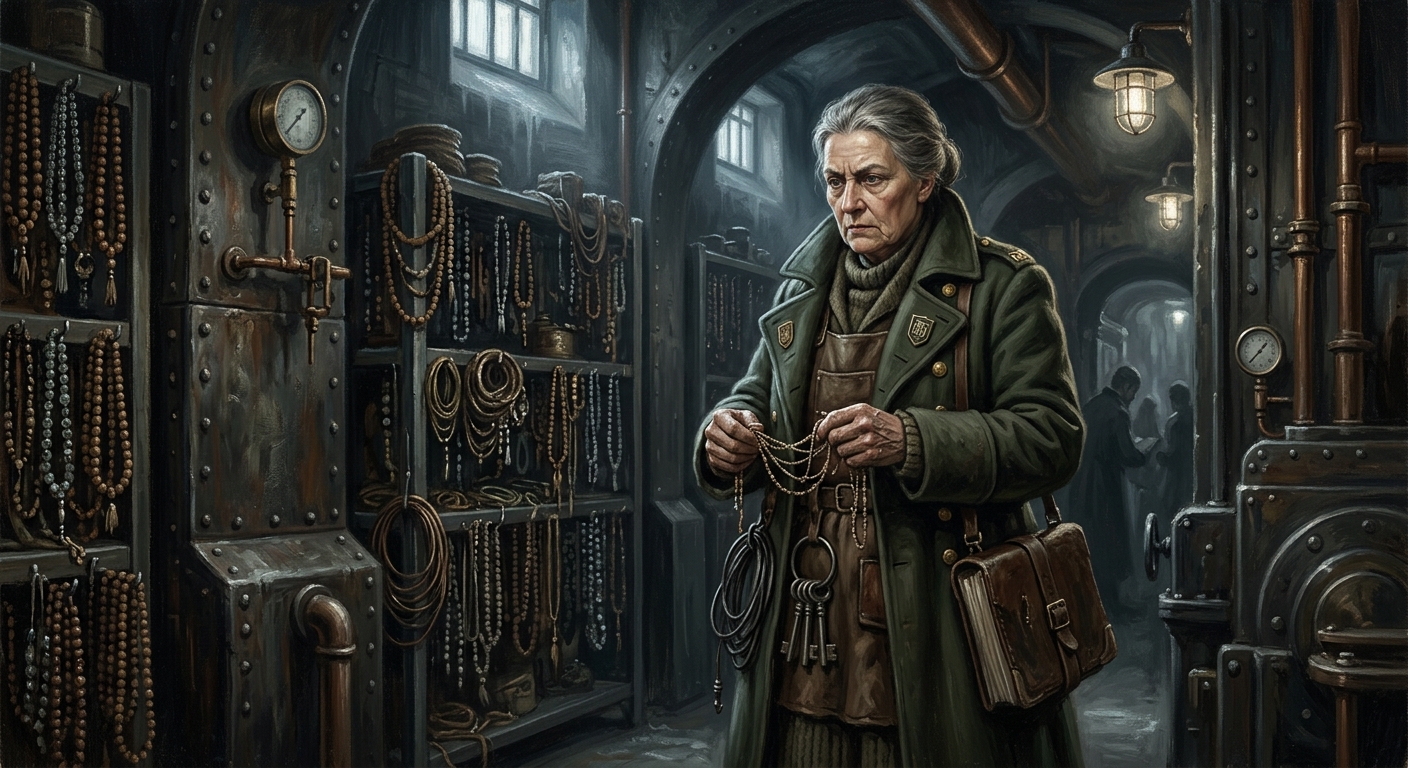
Archivist Keth
Mother Thread hears what the cases deny
Archivist Keth, called Mother Thread, keeps the Bead Vault cold, locked, and almost obedient while its confiscated pilgrim strings learn to answer.
Codex Ref. III.2.01-152
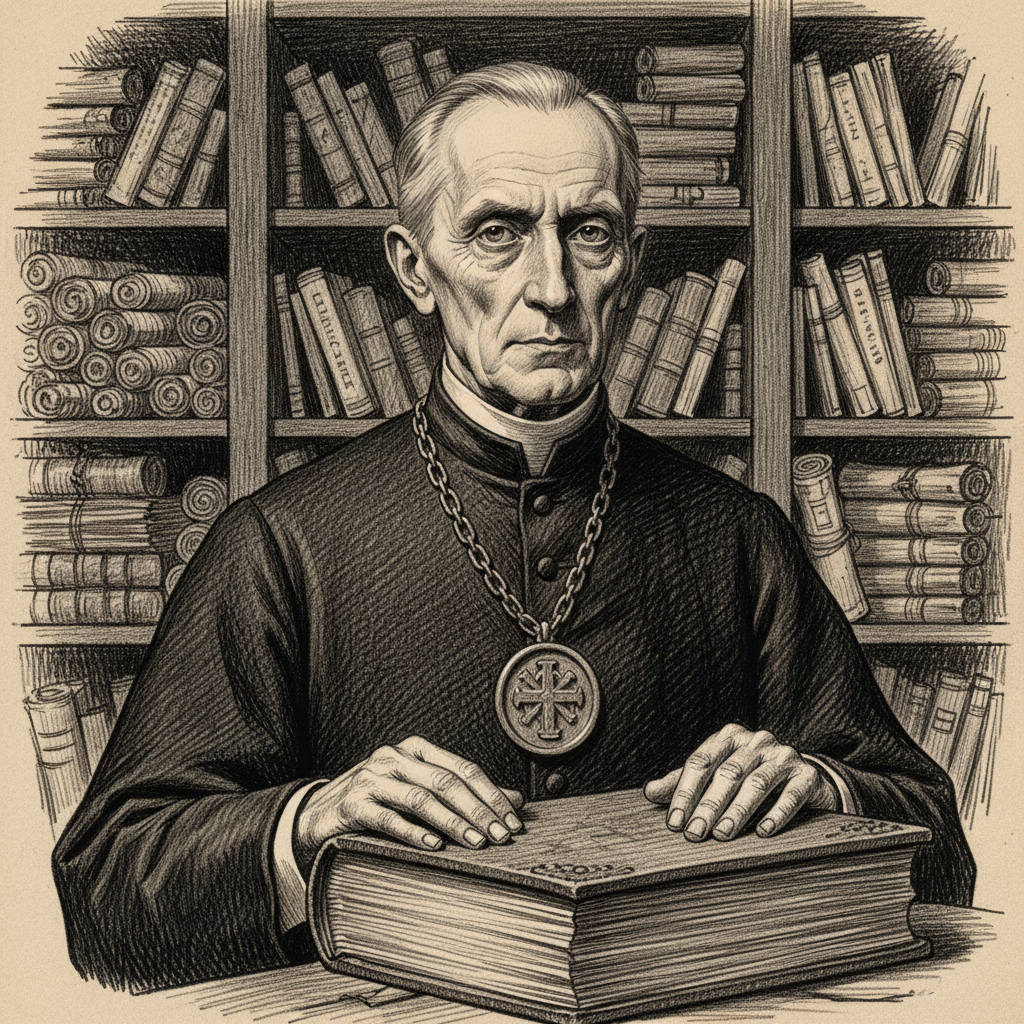
Archon Benedict Veyrault
The Monk Who Made Memory a Weapon
Once a monk of Dijon, Veyrault built the Bureau of Records into the scaffolding of reality itself. Cities he struck from the ledgers ceased to exist. His motto endures — "Nothing is forgotten" — and the faithful repeat it with equal parts pride and terror.
Codex Ref. III.3.02-008
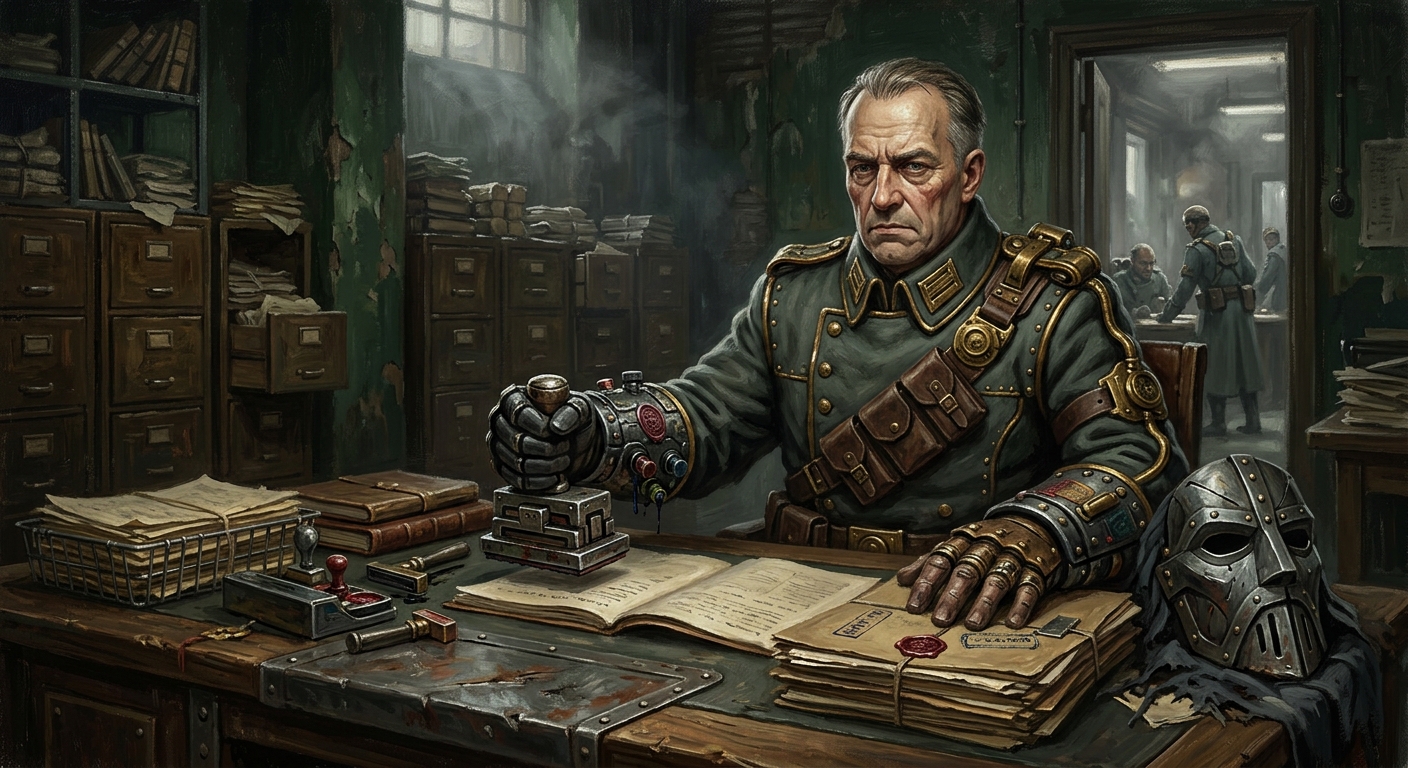
Archon Casselius of Mainz
The man who hears treason in hardware and measures it correctly
Casselius of Mainz holds Heraldry and Masks and Seals in personal union, deciding what may be seen, stamped, licensed, and punished.
Codex Ref. III.2.01-017
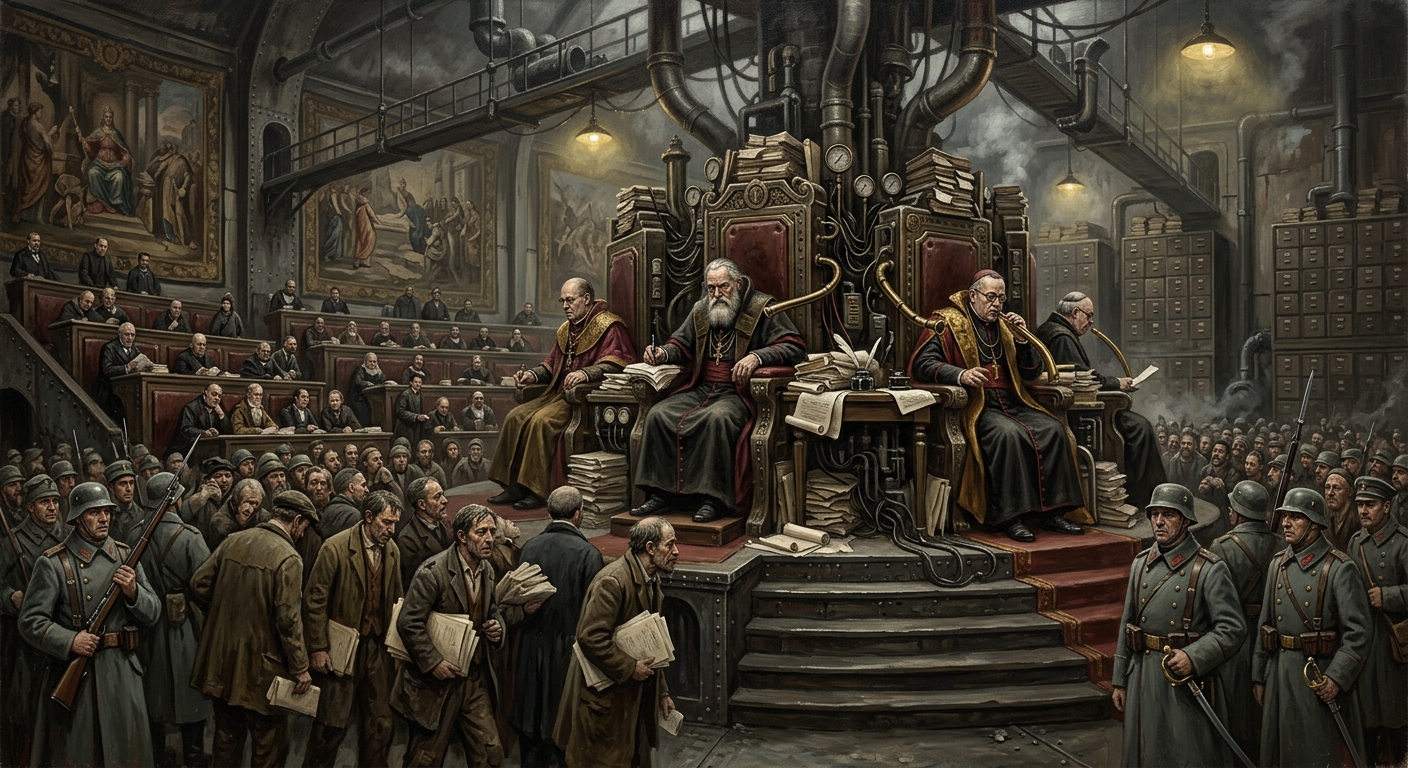
Assembly of Thrones
A chamber where pride is seated before it becomes militia
The Assembly of Thrones lets Bishops-Praetorial thunder safely: grievance seated, fury docketed, pride taxed, and every rebellion delayed by procedure.
Codex Ref. XIII.1.07-093
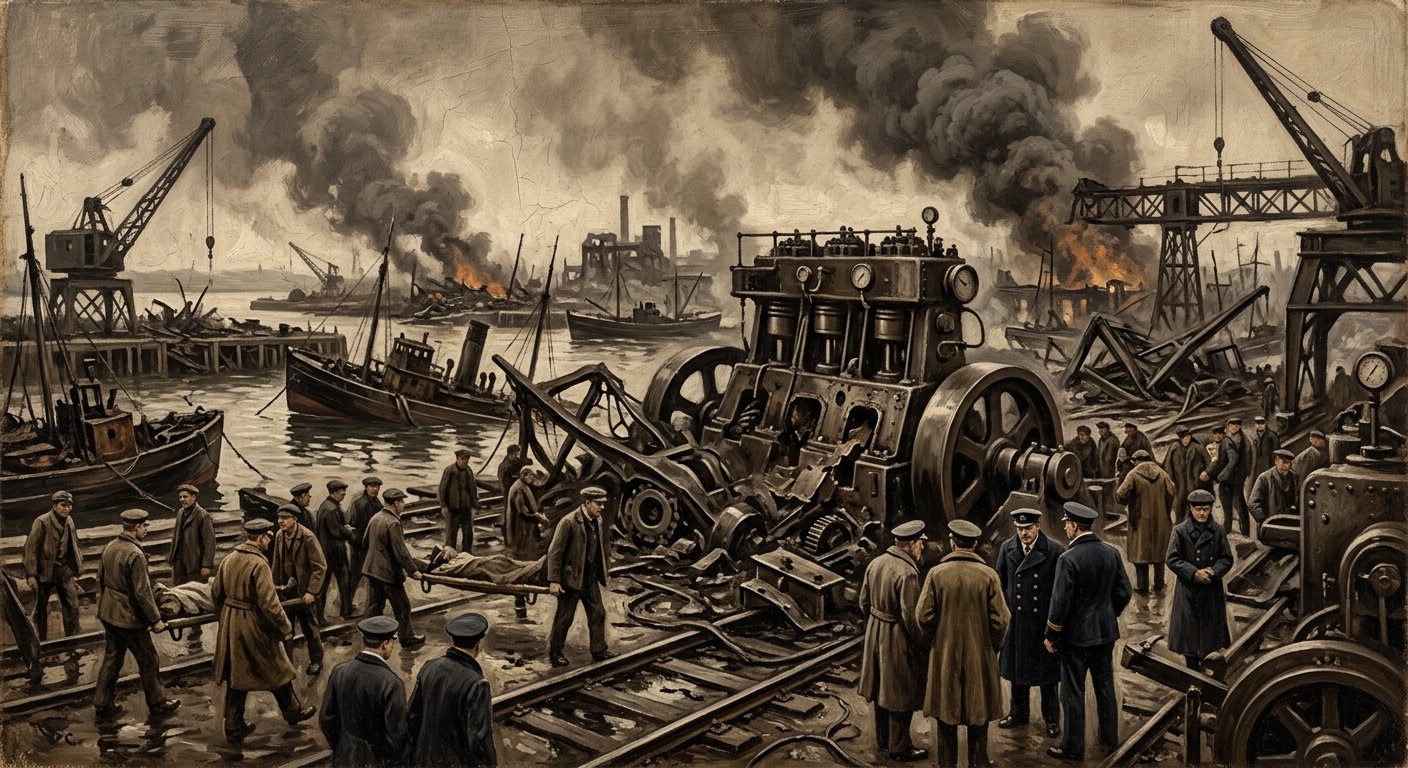
Black Start Catastrophe
Forty-three dead, one wall niche, and a profession born screaming
A.S. 97 Bastion-Brest harbour disaster in which an uncertified black start killed forty-three men, burned half the port, and created the licensed Litany-Engineer vocation.
Codex Ref. VII.8.10-051
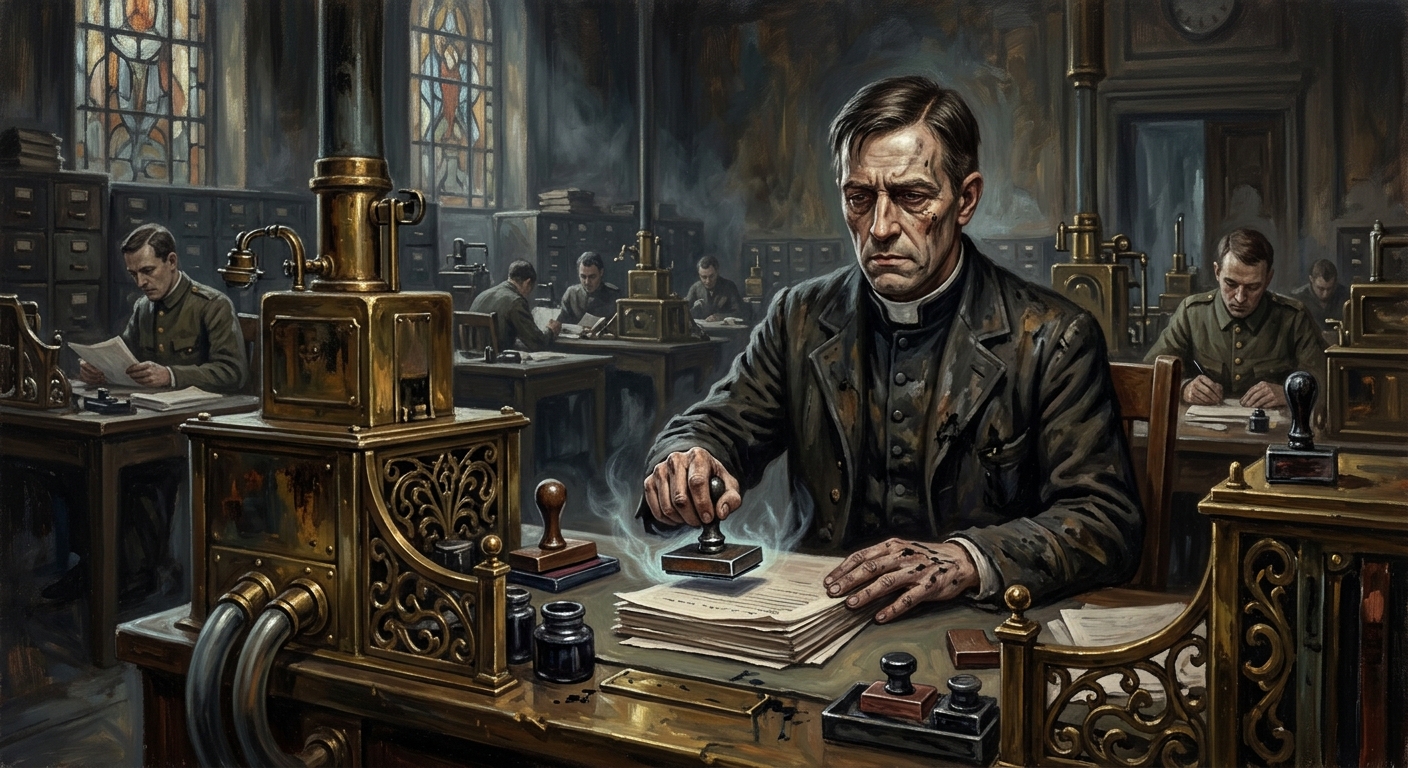
Blessed Clerk Harlowe “Dry-Ink”
The closed stamp pad by which mercy learned its office hours
Tolerated vocational patron of Confessor-Booth Clerks: a devotionally sufficient blessed whose dry stamp pad sanctifies refused mercy and audit-safe cruelty.
Codex Ref. III.2.01-102
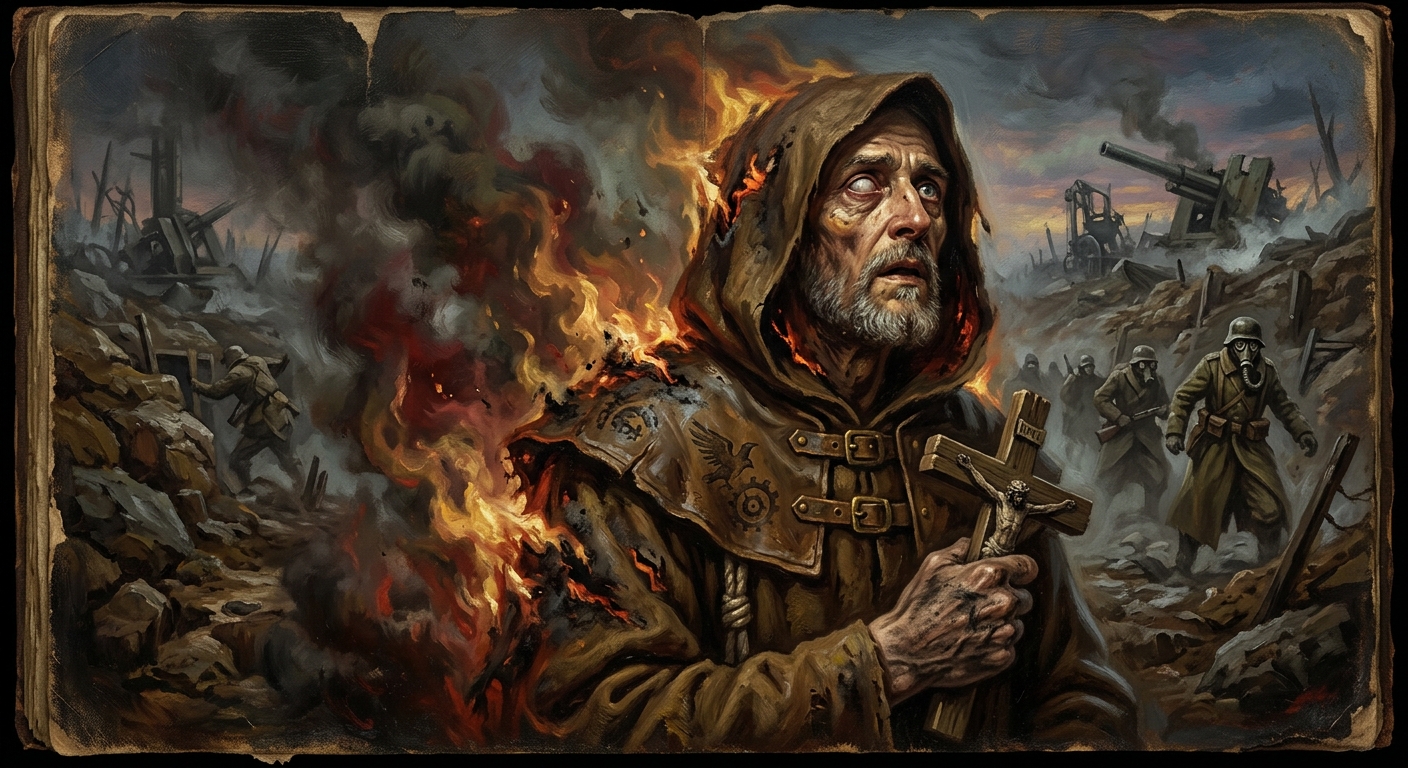
Brother Tomislav
The half-blind monk who lifted a reliquary and made Wrath recoil
Half-blind Franciscan, custodian by refusal, and instrument of the Miracle of Kalnik Ridge; consumed by sacred fire in A.S. 48, though the Bureau remains professionally unable to call him dead.
Codex Ref. III.2.01-004
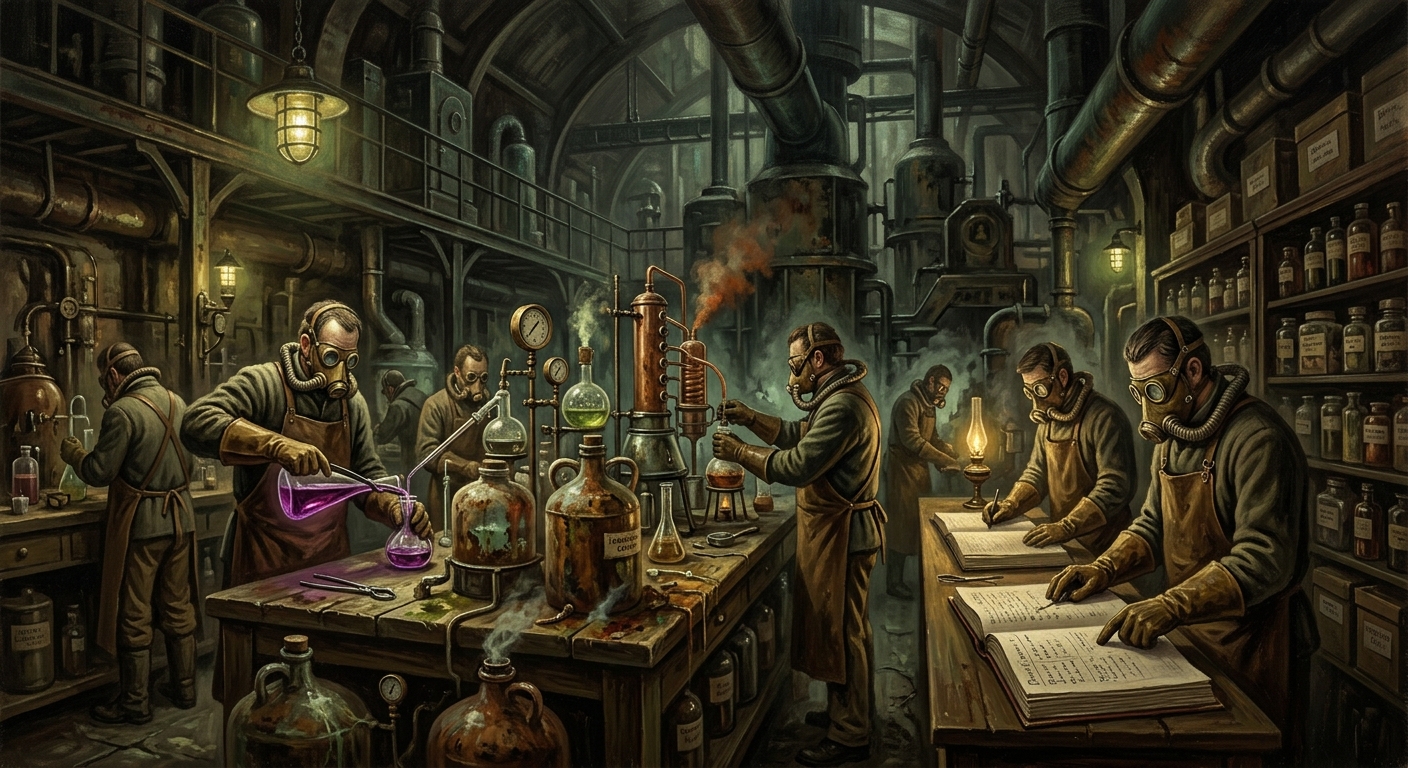
Bureau of Alchemical Standards
First the tongs, then the theology
The Bureau of Alchemical Standards tests the sacred for spoilage, classifies residues no sane clerk would touch, and gives terror a tolerable label.
Codex Ref. VIII.2.02-001
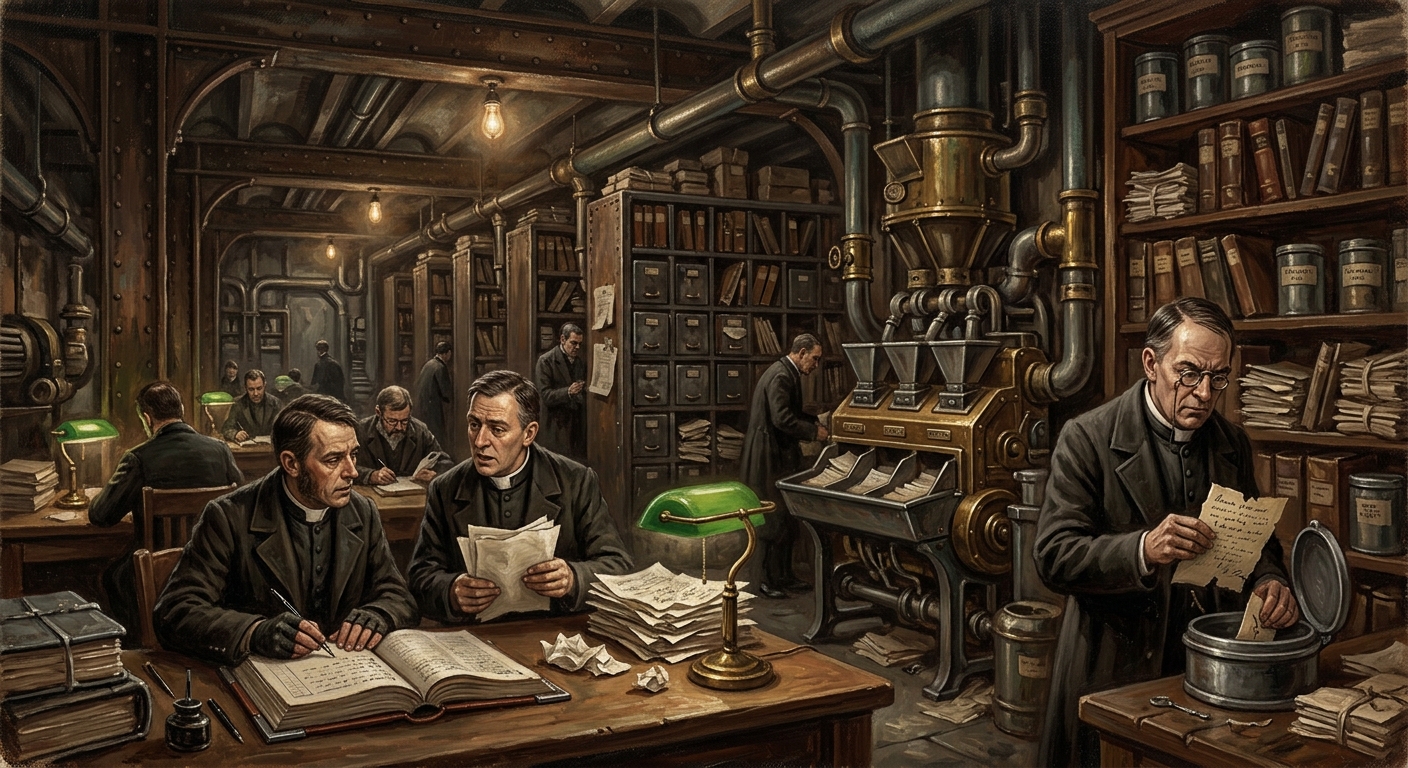
Bureau of Hearsay
Copy the ugly sentence before a cleaner office teaches it to lie
The Bureau of Hearsay preserves rumour before proof can disinfect it: tavern scraps, trench gossip, enemy jokes, and every ugly sentence that later becomes doctrine.
Codex Ref. VIII.8.02-112
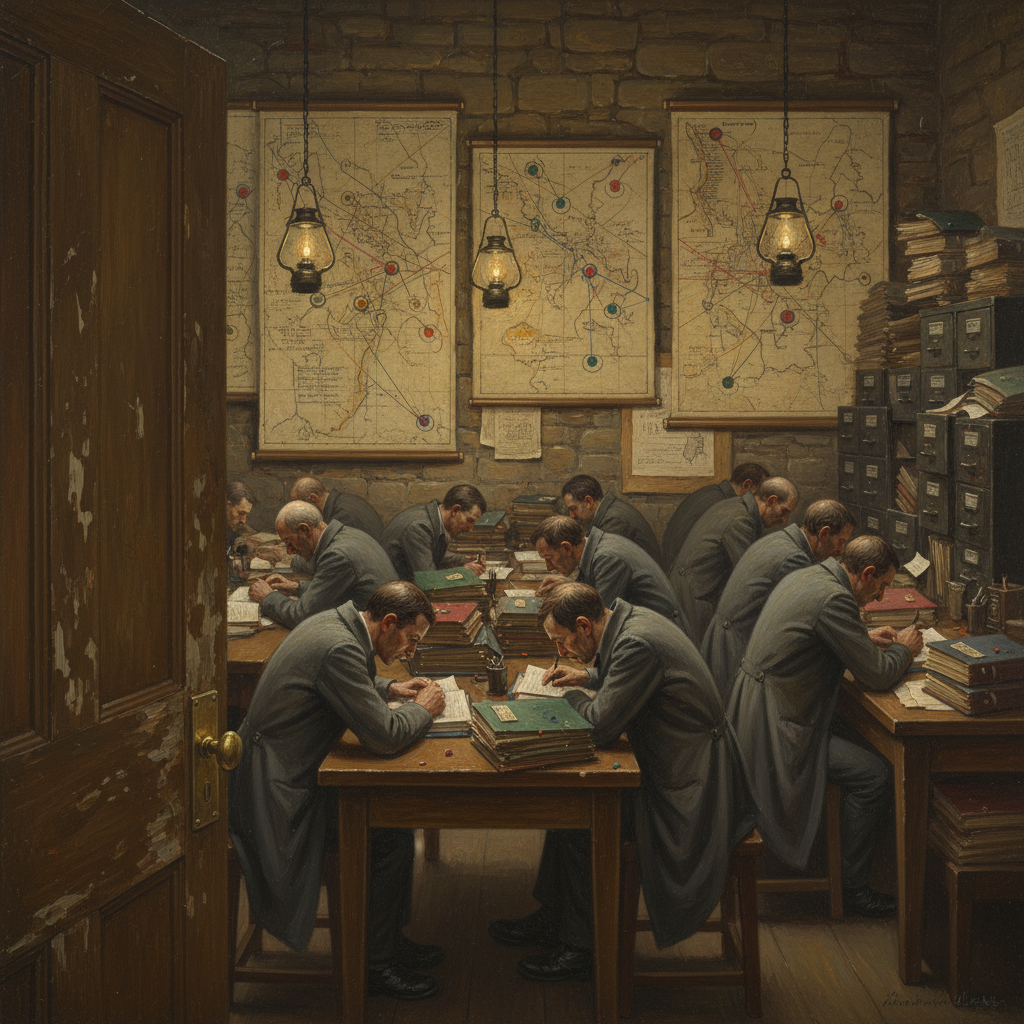
Bureau of Inter-Infernal Analysis
Fourteen analysts, three rooms, one assumption; the Line holds because the assumption holds
The Bureau that watches Hell watch itself — fourteen analysts cataloguing the rivalries among the Seven Sin-Generals, amplifying their feuds, and verifying quarterly that spite remains the Sagittal Line's most reliable load-bearing element.
Codex Ref. VIII.7.01-001
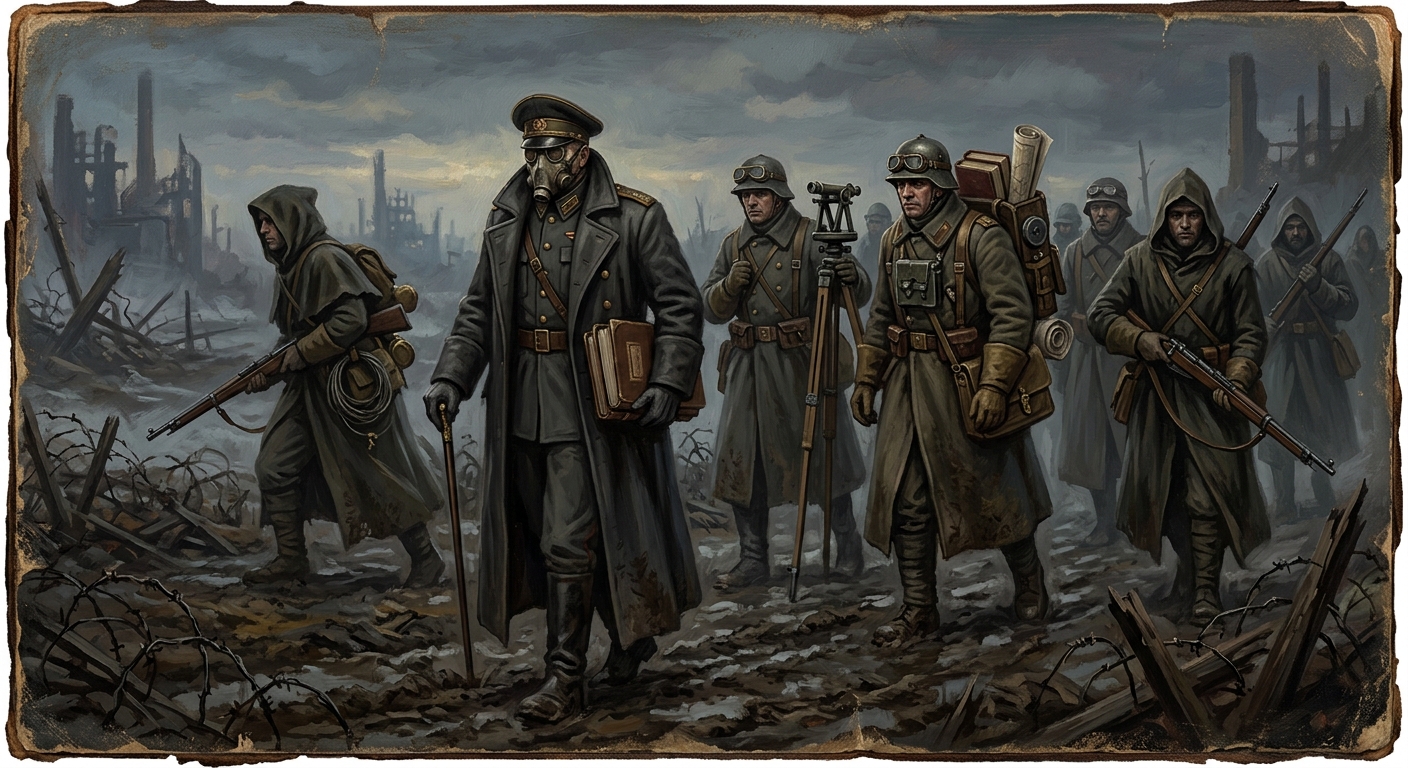
Bureau of War Reconnaissance Commissariat
The office that walks first and returns as evidence
The Reconnaissance Commissariat walks first into hostile terrain, purchasing the Synod's knowledge with scouts, ledgers, and actionable silence.
Codex Ref. VIII.7.03-001
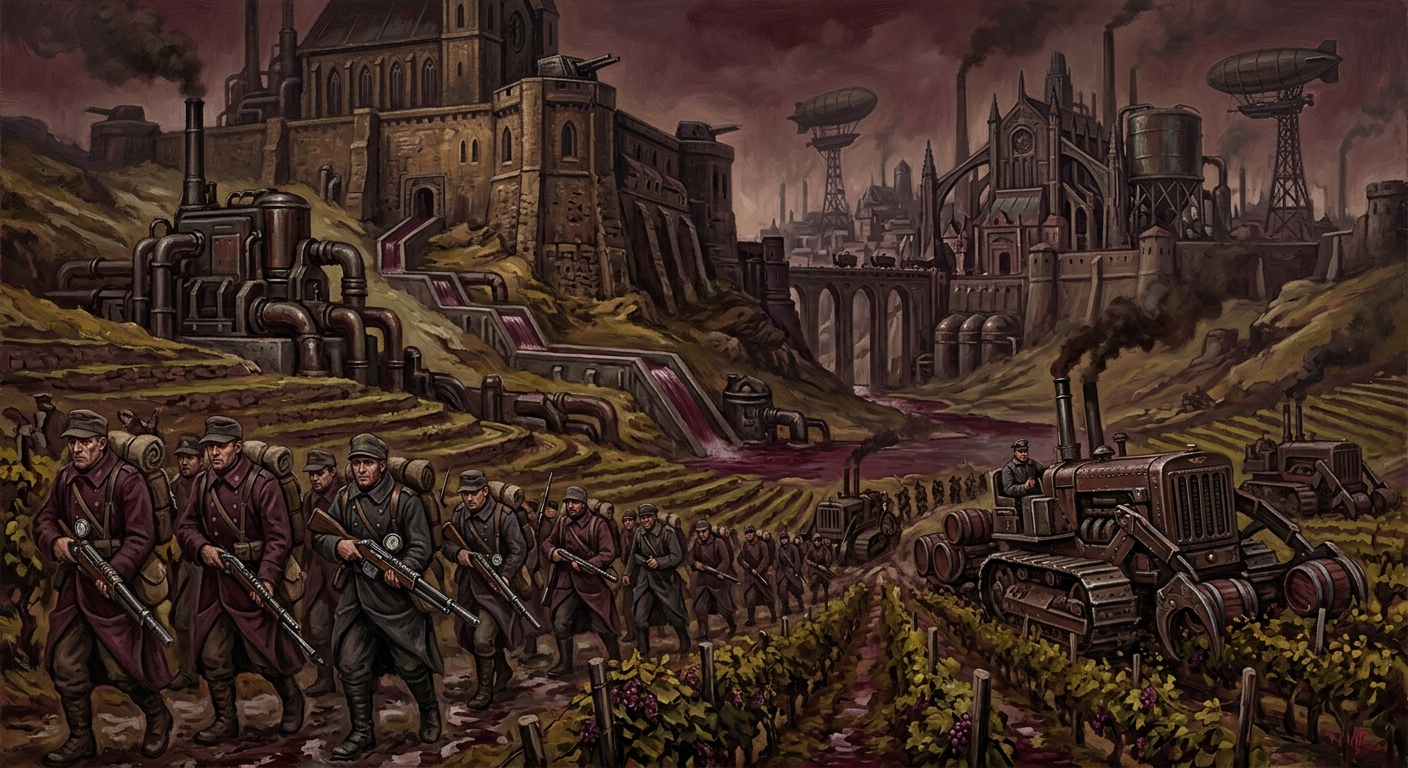
Burgundy
The wine-dark province that gives sons, casks, silence, and trouble
Burgundy is the Synod's wine-dark western province: vineyard, levy basin, Rhône feeder, cellar-church, chromatic hazard, and polite machinery of refusal.
Codex Ref. II.1.11-201
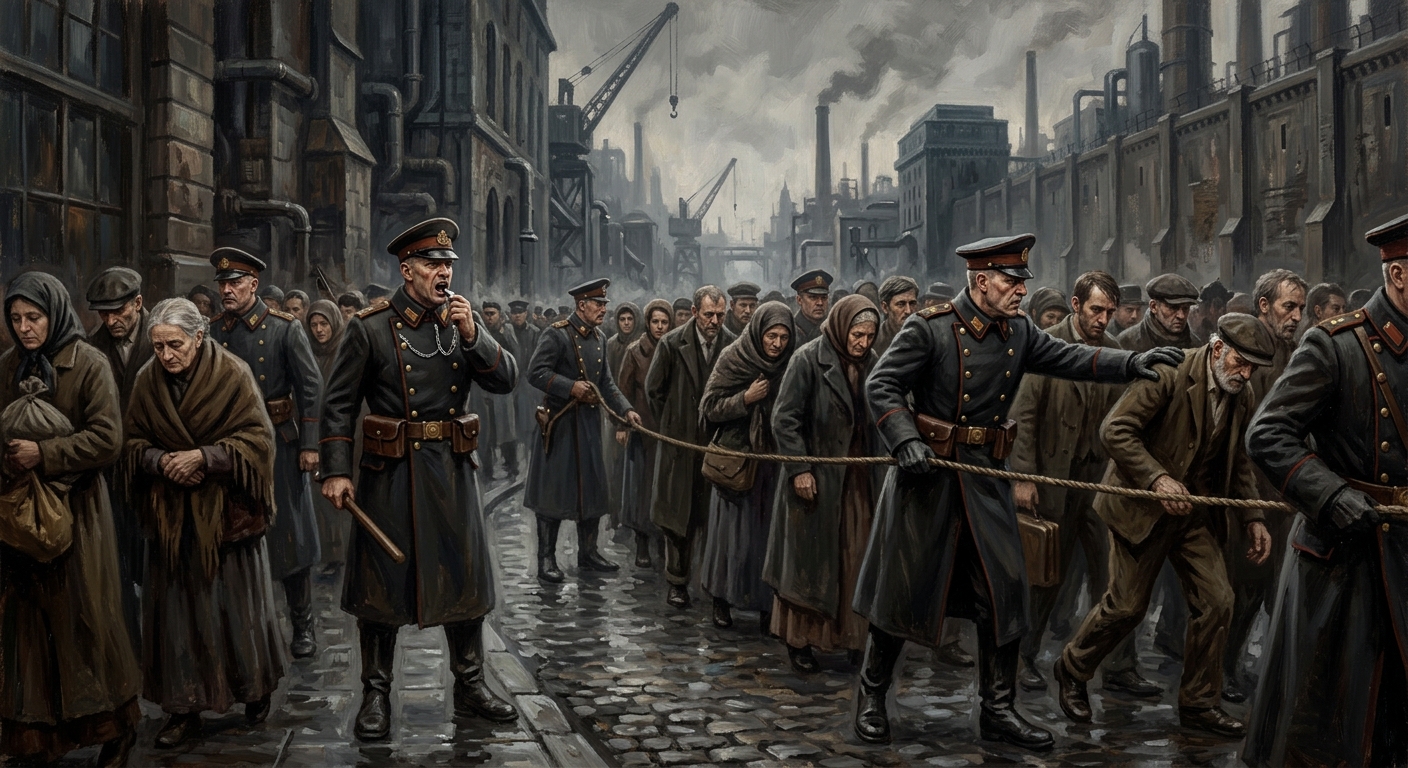
Cadence Corps
One beat, one body, one road, and one stick for correction
The Cadence Corps teaches crowds to move as one obedient spine: ration queues, funerals, levies, relic routes, and riots corrected by beat, rope, whistle, and boot.
Codex Ref. XII.7.01-112
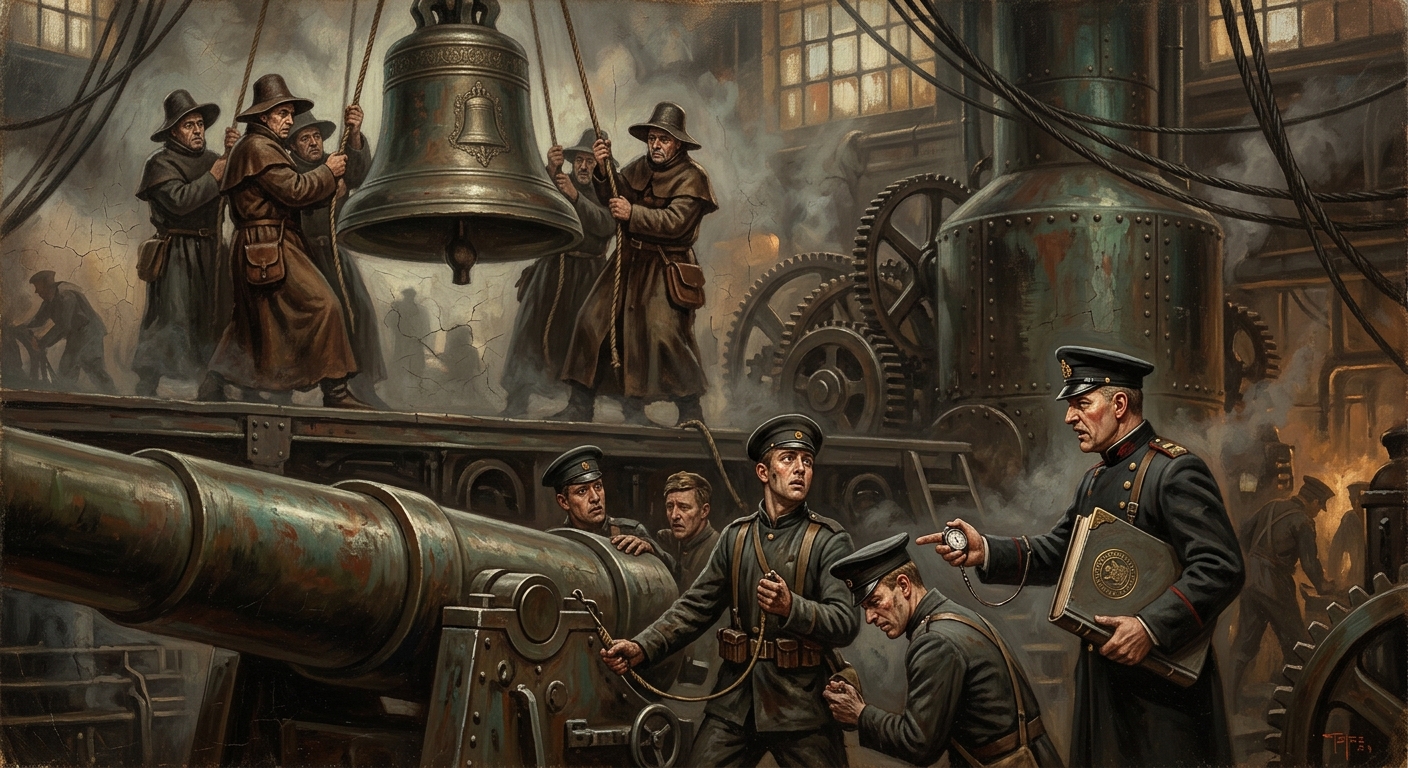
Cadence Reforms A.S. 95
The decree that put the bell above the barrel and made obedience audible
A.S. 95 reforms that made choir cadence govern shrine-platform batteries, created off-measure discharge as a punishable sin, and gave the bell legal teeth.
Codex Ref. VII.2.10-095
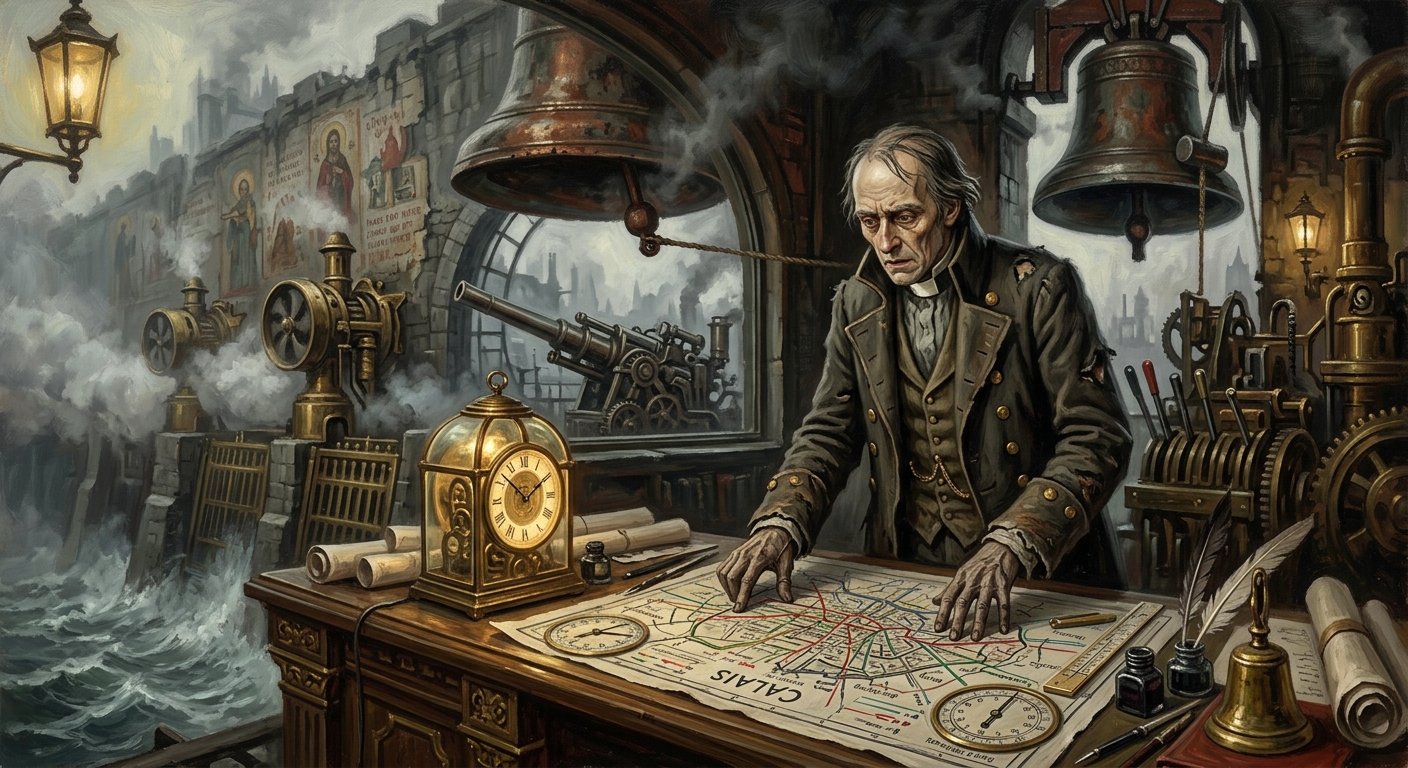
Cantor-Major Pell
He counts the interval before the sea learns permission
Cantor-Major Pell keeps Calais's fire-chart, governing bell-authorised guns, fog repulsion, Script Wall cover, and the intervals by which the Undertide is denied permission.
Codex Ref. III.2.01-095
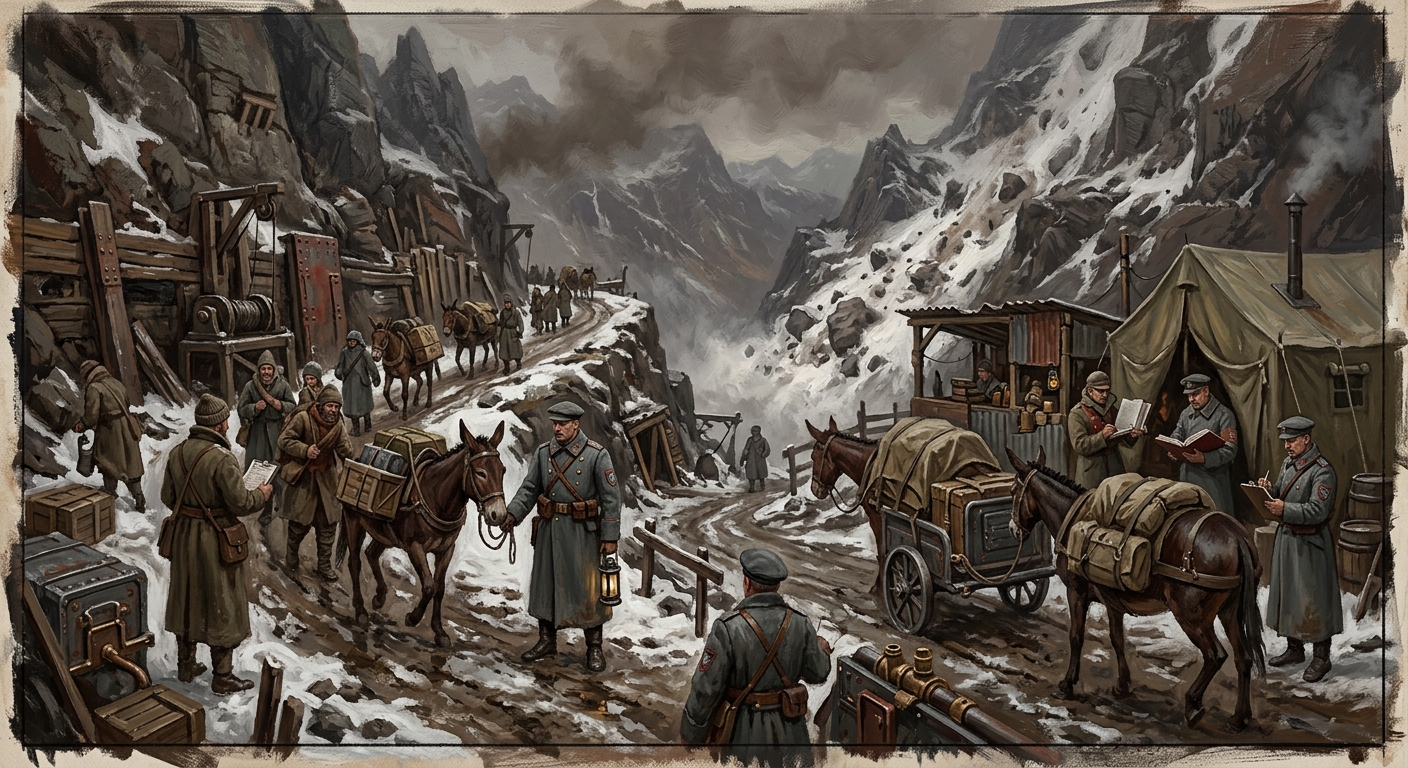
Carpathian Passes
Roads are wounds with toll offices
Licensed mountain wounds of the middle Line, where pilgrims, relics, mules, Wardens, tokens, avalanches, and invoices cross by permission.
Codex Ref. II.4.08-123
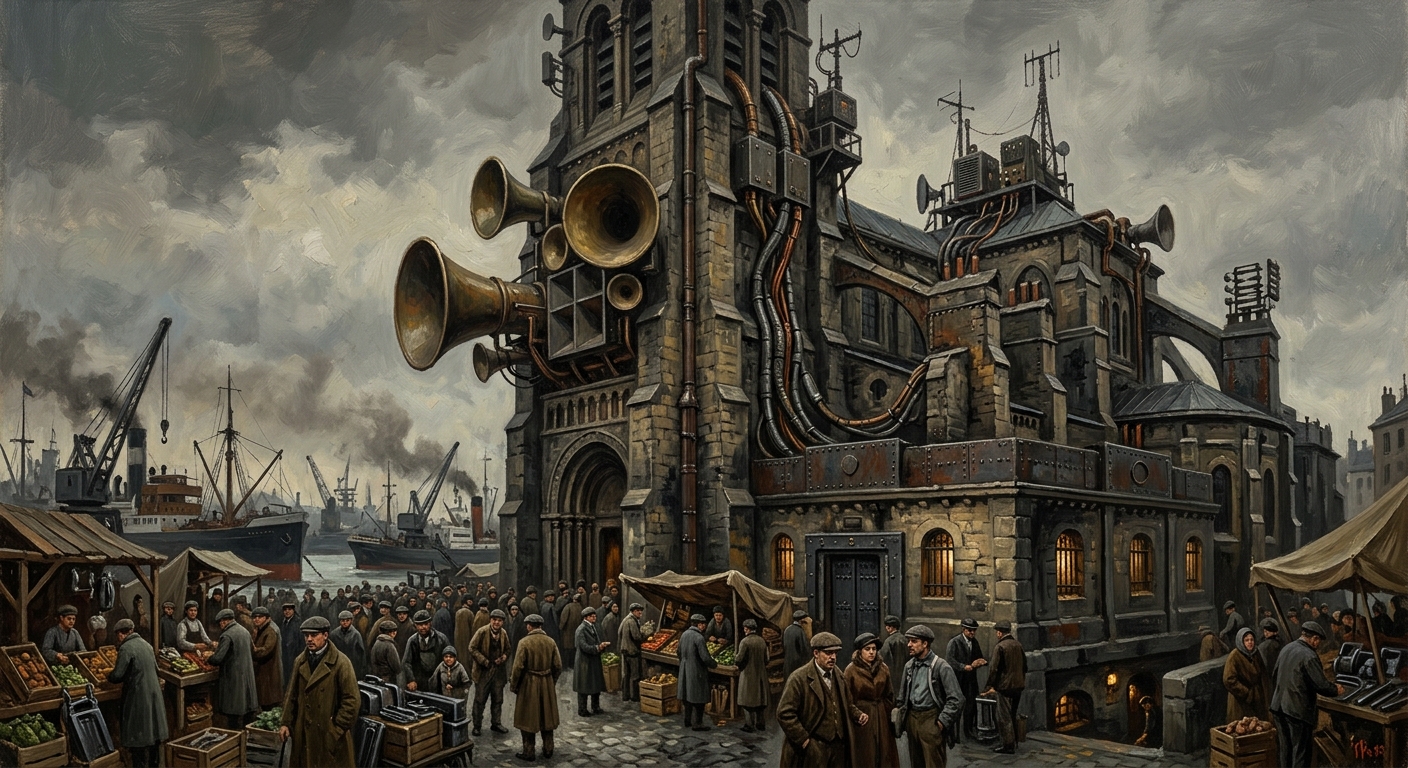
Cathedral of Saint-Victor
Marseille's bells govern the harbour because bronze argues better than clerks
The Cathedral of Saint-Victor is Marseille's acoustic throne: relay tower, crypt of disputed bones, parish market-anchor, and bell-mouthed rebuke to the harbour.
Codex Ref. II.4.09-018
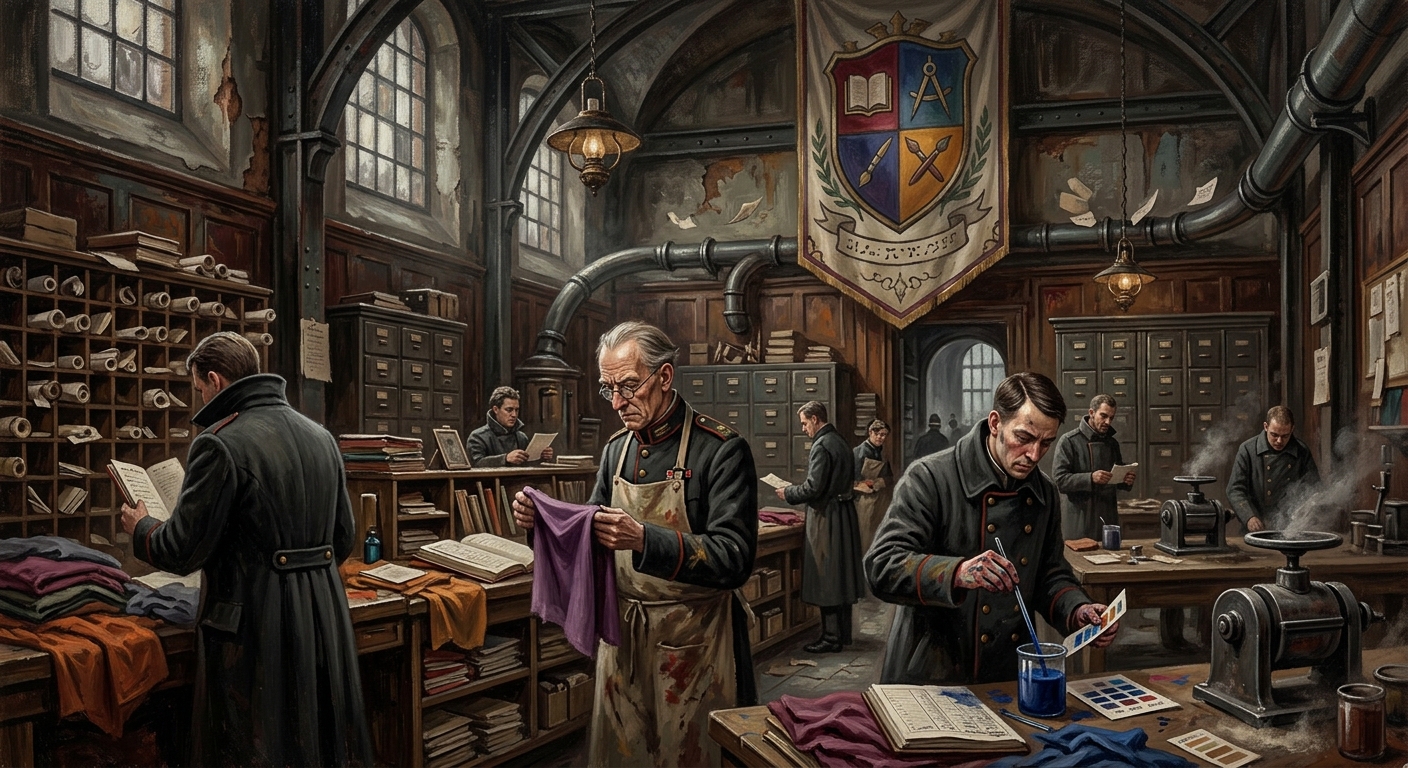
Chancellery of Colors
No hue is innocent after public display
Heraldry sub-body that licenses the Synod's colours, issues quarterly swatch sets, and converts pigment drift into jurisdiction.
Codex Ref. VIII.1.03-004
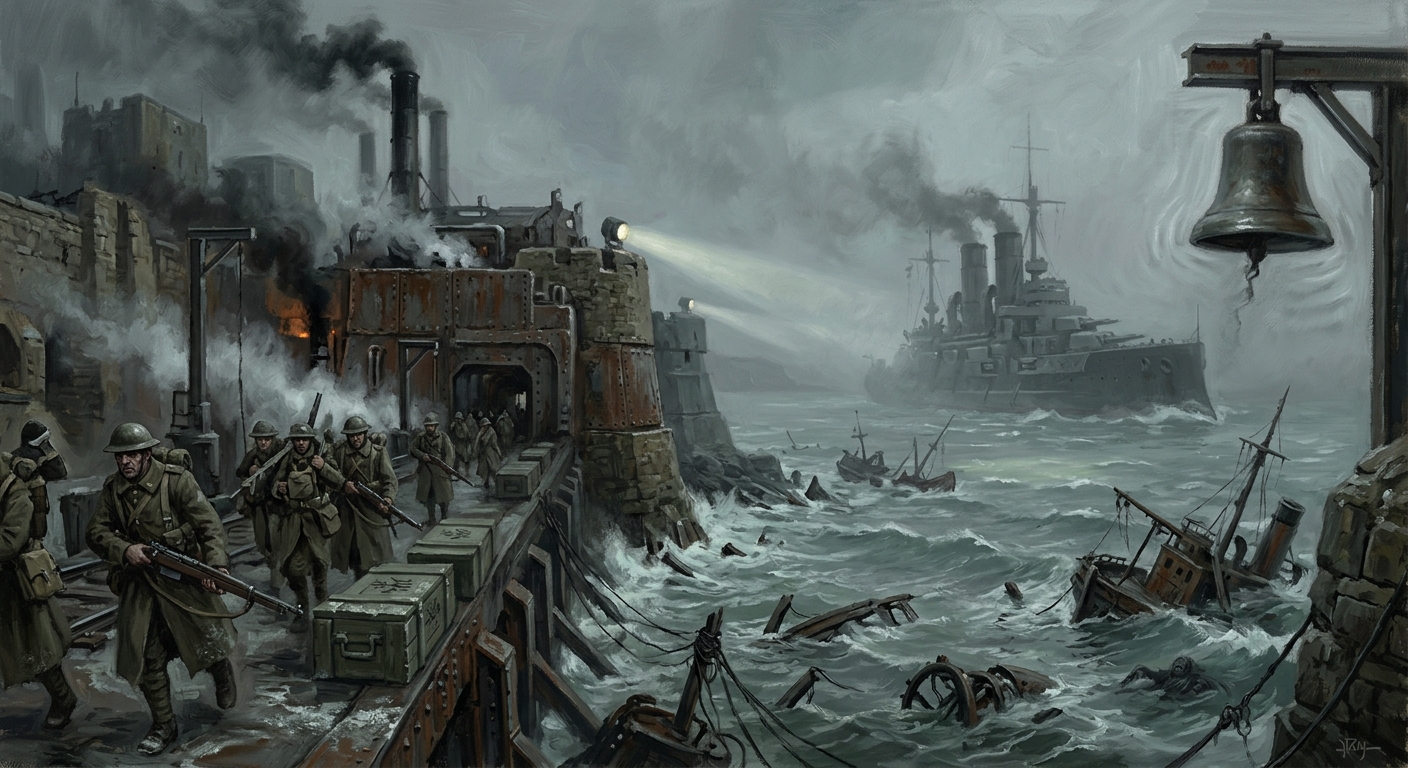
Channel
The water between two prides, and wiser than both
The Channel is the Synod's western salt wound: Calais to Dover, bells to fog, British pride to Synod arithmetic, and drowned things below.
Codex Ref. II.1.04-201
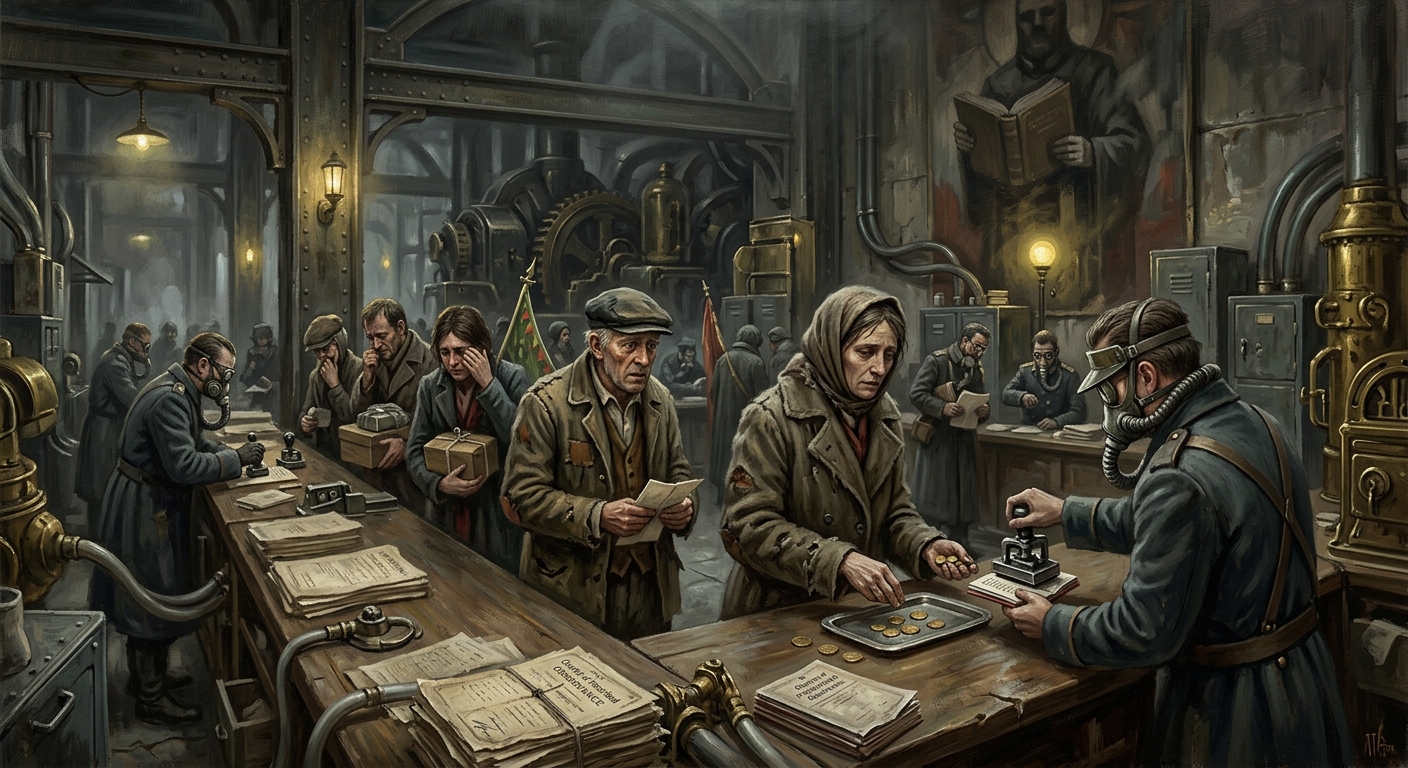
Charter of Prescribed Observance
The document that taught joy to queue and grief to file receipts
Ratified in A.S. 58, the Charter of Prescribed Observance turned public feeling into lawful form: mourning, feasting, silence, joy, and deviation all made taxable.
Codex Ref. XIII.1.23-001
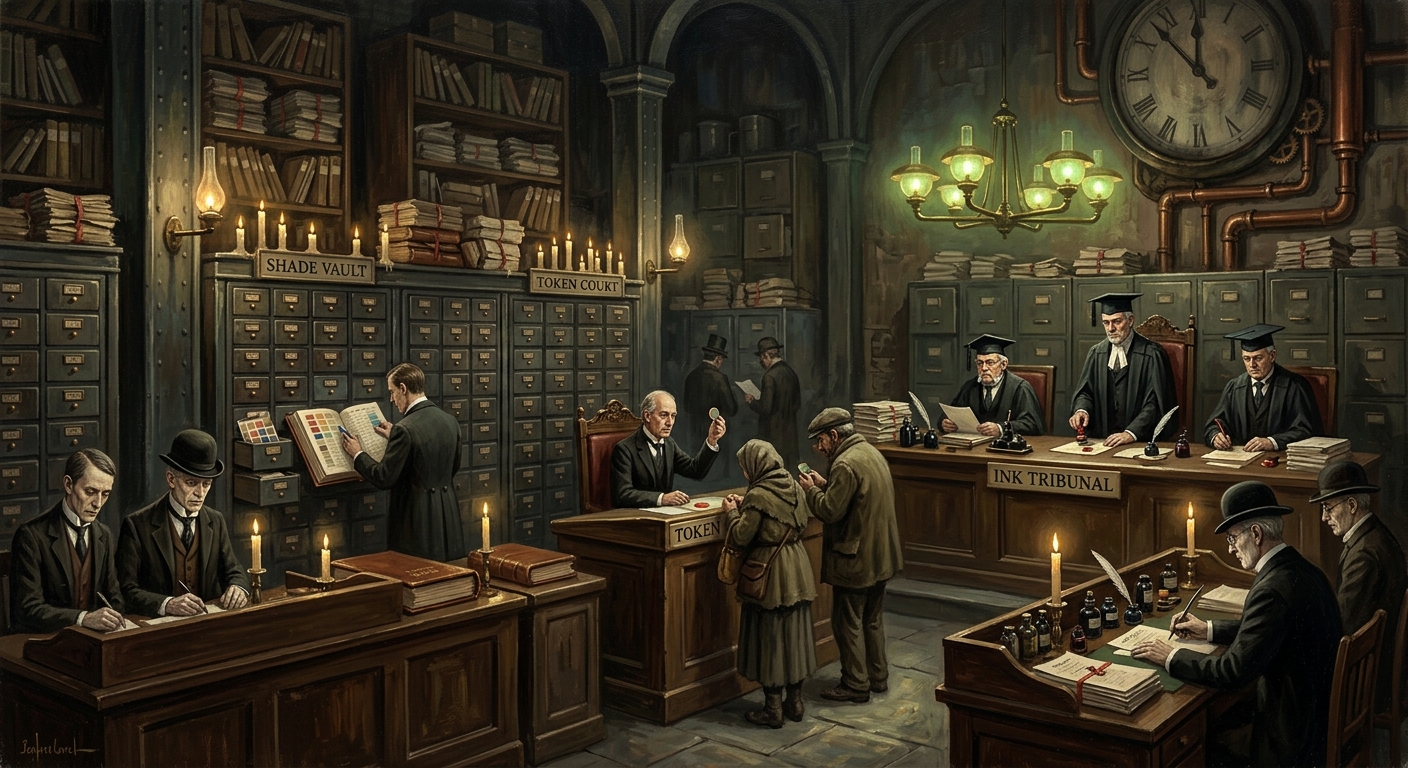
Chromatic Registry
Where colour enters the file and the eye becomes subordinate
Candlewick's Chromatic Registry defines lawful colour: shade vault, token court, ink tribunal, and the lamp-lit tyranny by which papers decide who exists.
Codex Ref. VIII.2.13-104
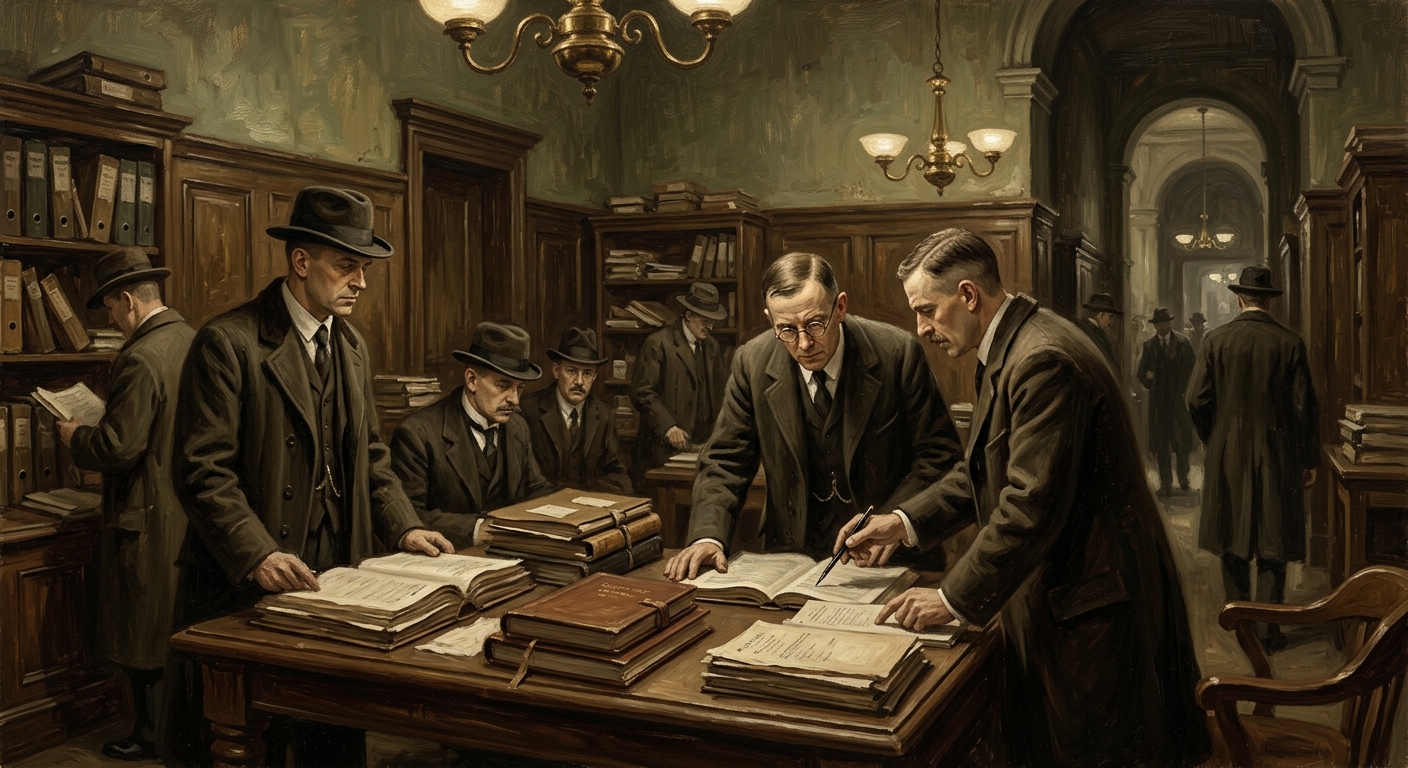
Citation Purists
The clause is the mercy, and the Creator help the client
Audit-favoured faction of Citation Advocates who worship clean custody, strict text, and clauses sharp enough to execute a client while preserving the file.
Codex Ref. XII.28.02-001
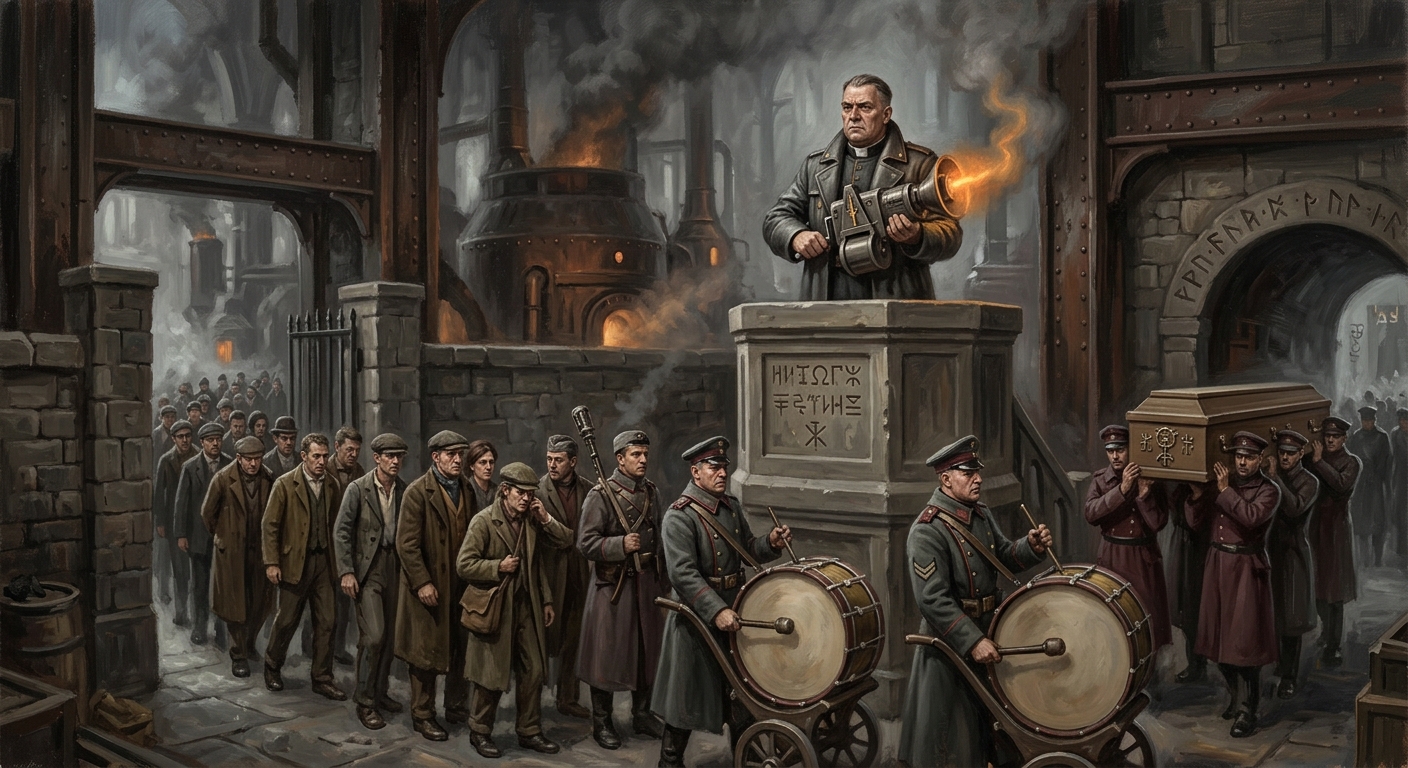
Concordat of Civic Cadence
One beat, one body, one road, and every crowd made countable
A.S. 113 joint Rites-War decree born from the Ashbread Stampede, licensing the Cadence Corps to rule queues, funerals, gates, and marches by rhythm.
Codex Ref. VII.2.10-059
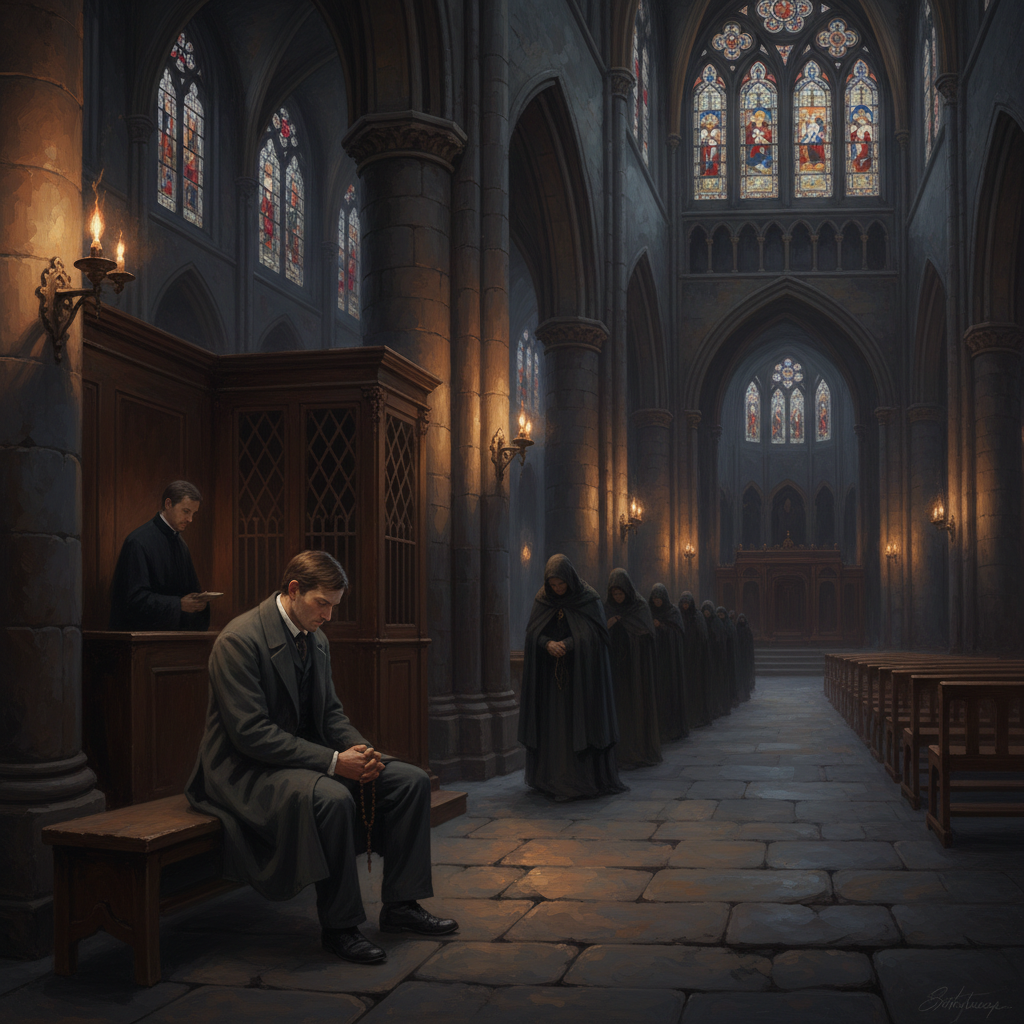
Confessarii
Two hundred and eighty-six reports filed; three blank pages received; the system functions as intended
The Confessarii are the Bureau of Shadows' listening network, which does not exist because the Bureau does not exist. They attend. They absorb. They file. The courier departs. Nothing is acknowledged. The system functions as designed.
Codex Ref. XIII.1.06-001
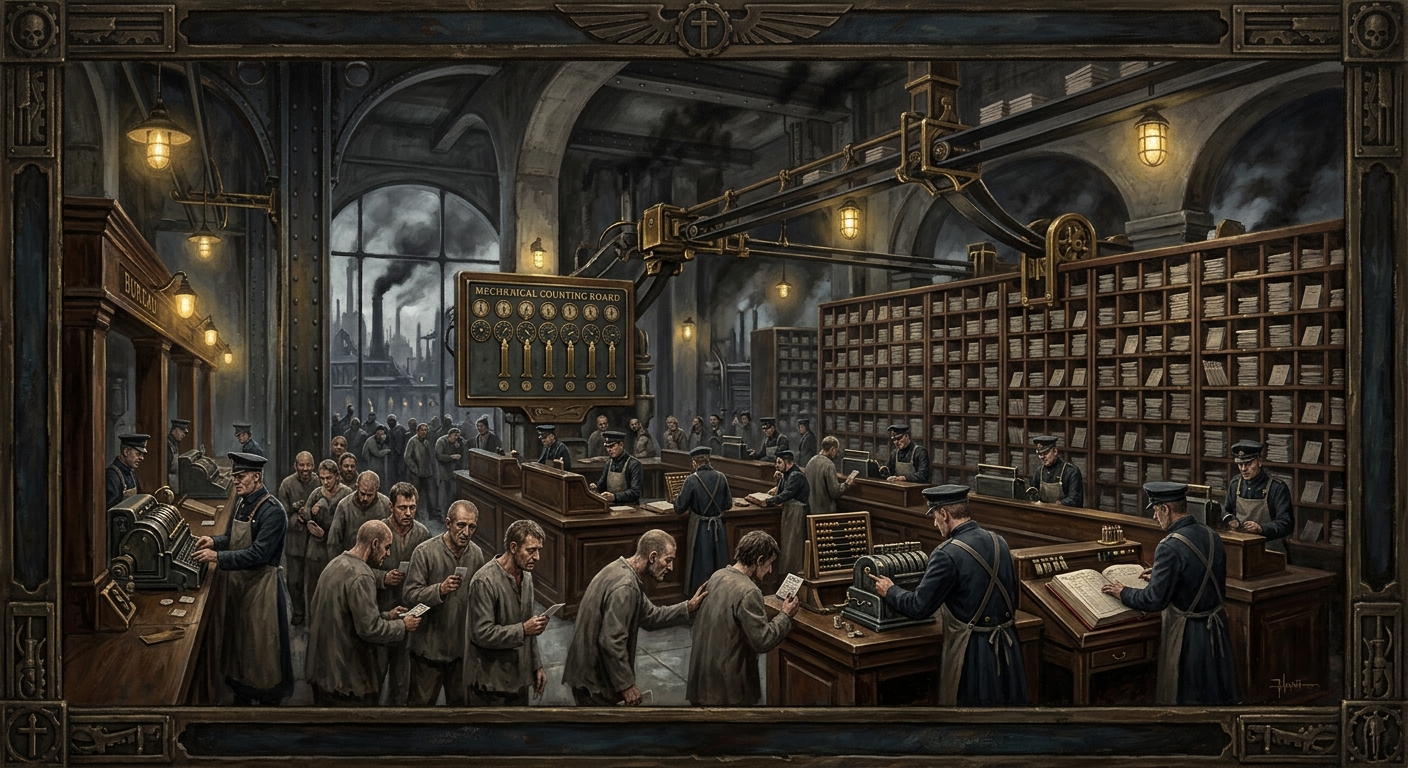
Confession Reform of A.S. 104
The paragraph that made sin stand in columns
A.S. 104 Bureau of Rites reform that standardised sin categories, introduced rubric cards, authorised lay intake clerks, and made confession countable at scale.
Codex Ref. VII.8.10-014
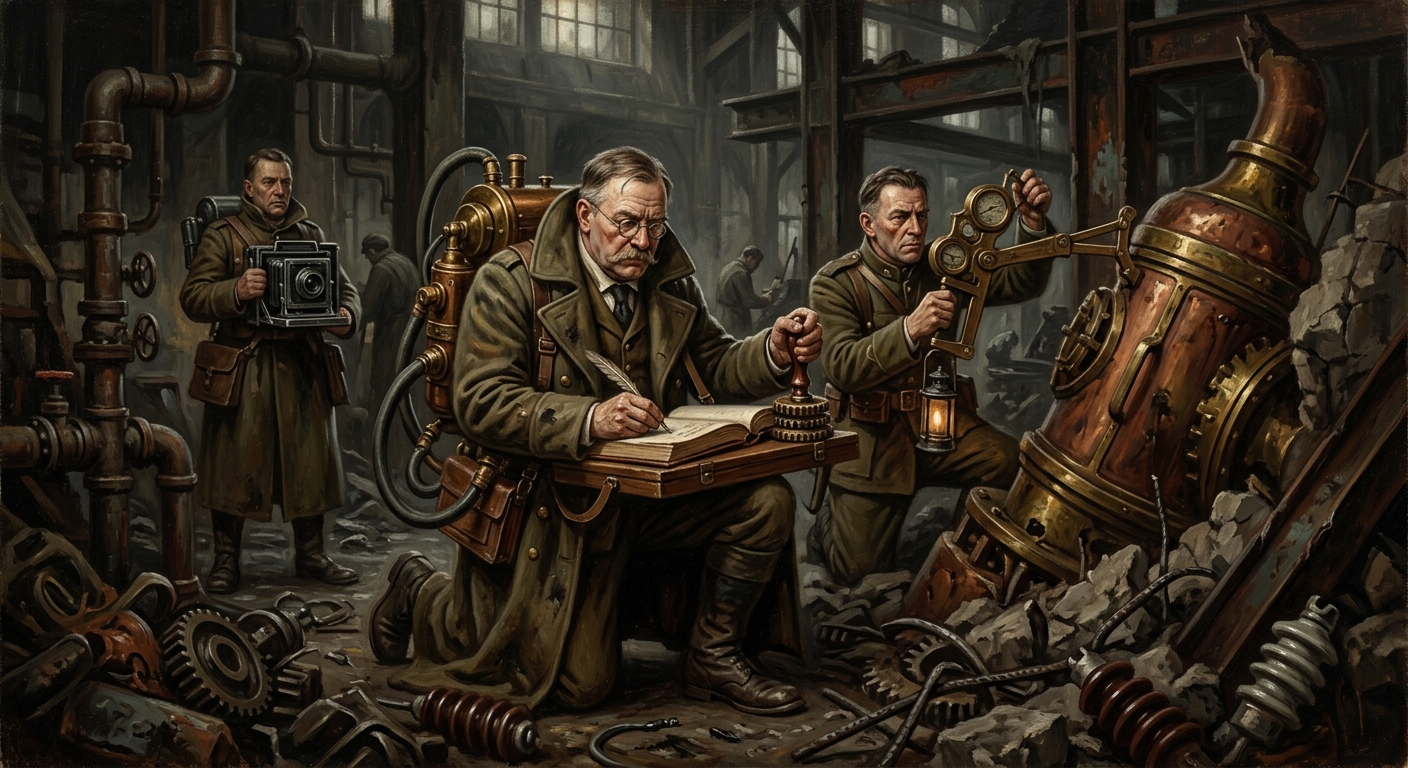
Contract Sanctifiers
Sign first, lift second, deny nothing without a witness
Bureau of Relics field notaries empowered after the A.S. 131 Singing Plate Disaster to bind salvage contracts before sacred objects move.
Codex Ref. XII.13.04-001
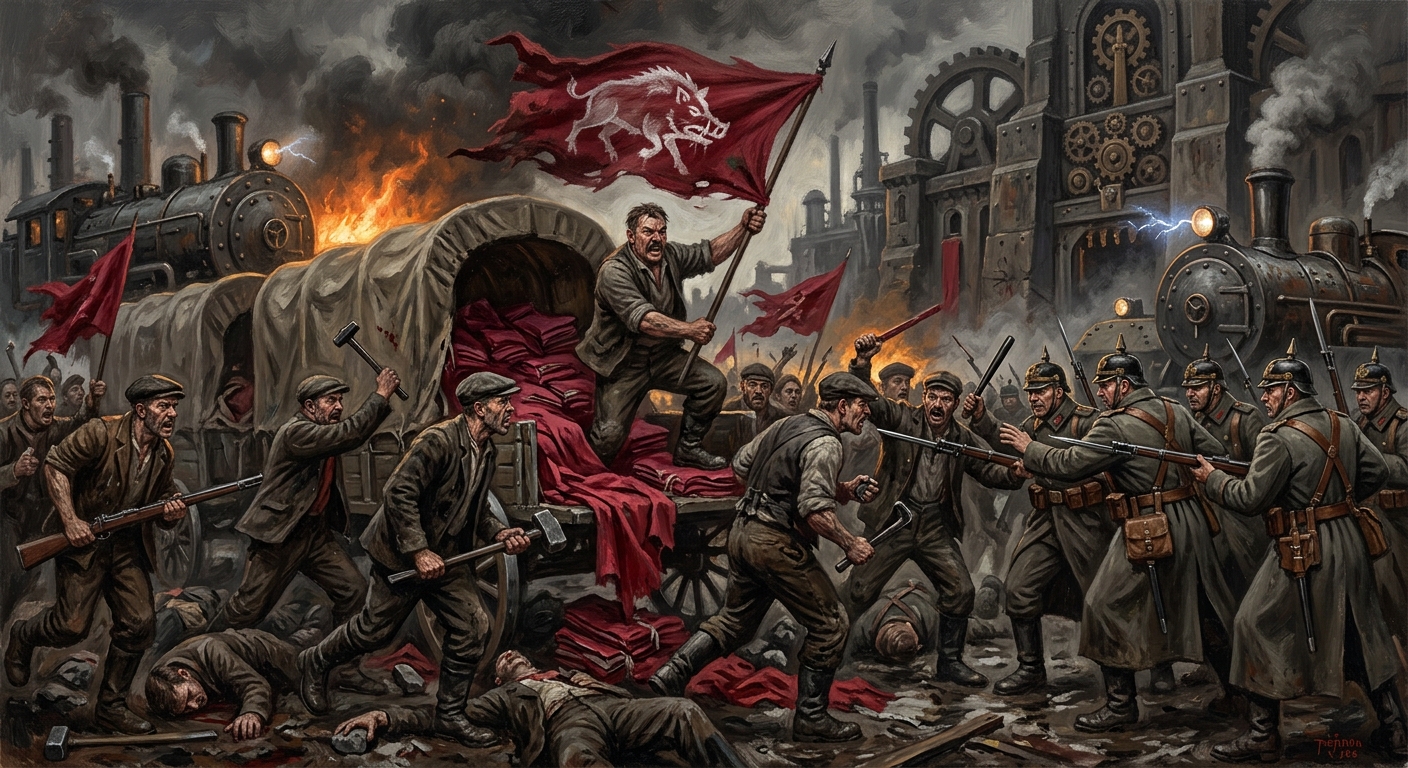
Crimson Gate Riot
Eighty-seven dead because a painted boar remembered too well
A.S. 106 Essen gate riot in which the crimson boar of a dead Saxon guild turned convoy cloth into command, killing eighty-seven and birthing the Beast Proscription.
Codex Ref. VII.8.10-033
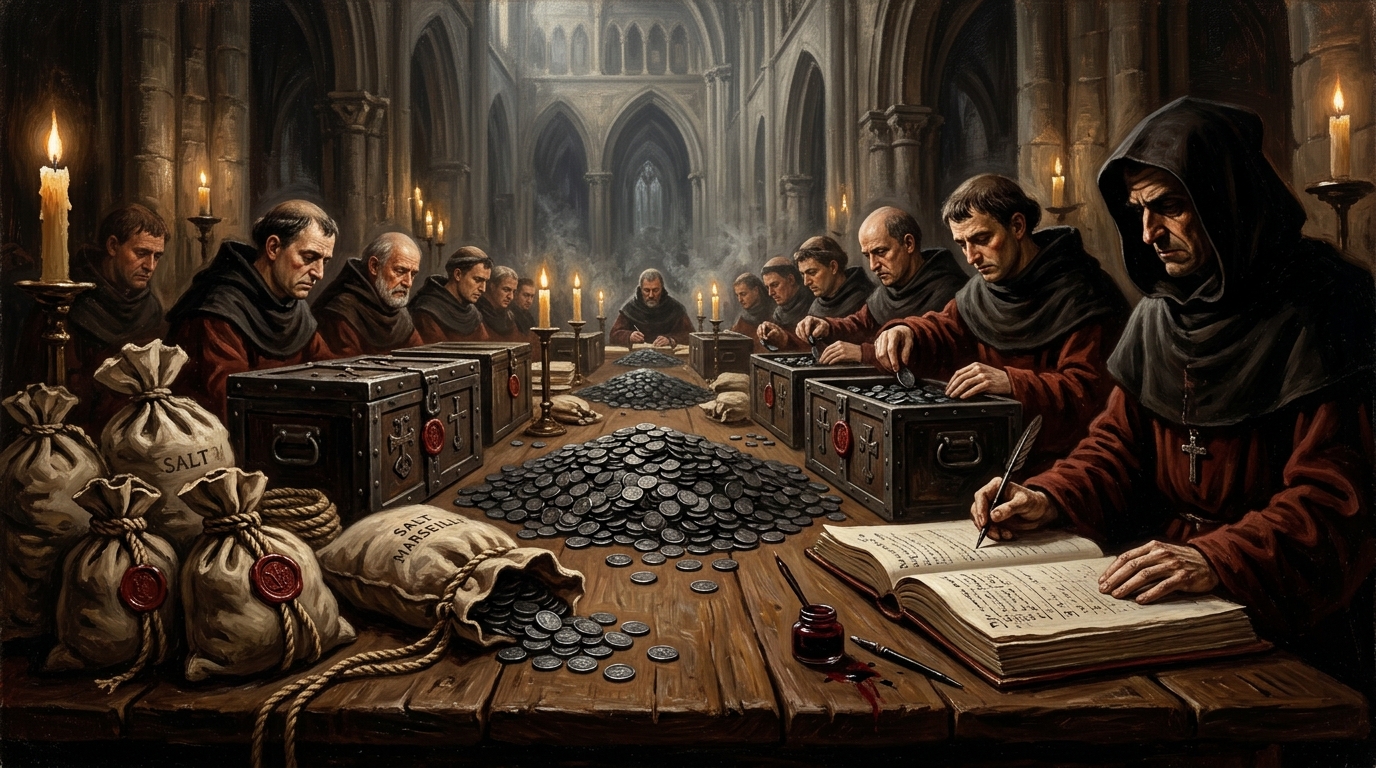
Crowns of Grace
One coin buys bread; the plural buys obedience
Crowns of Grace in the plural are obedience under arithmetic: harbour revenue, soldier arrears, salt dues, foreign insult, and bread counted until it kneels.
Codex Ref. XIII.1.22-093
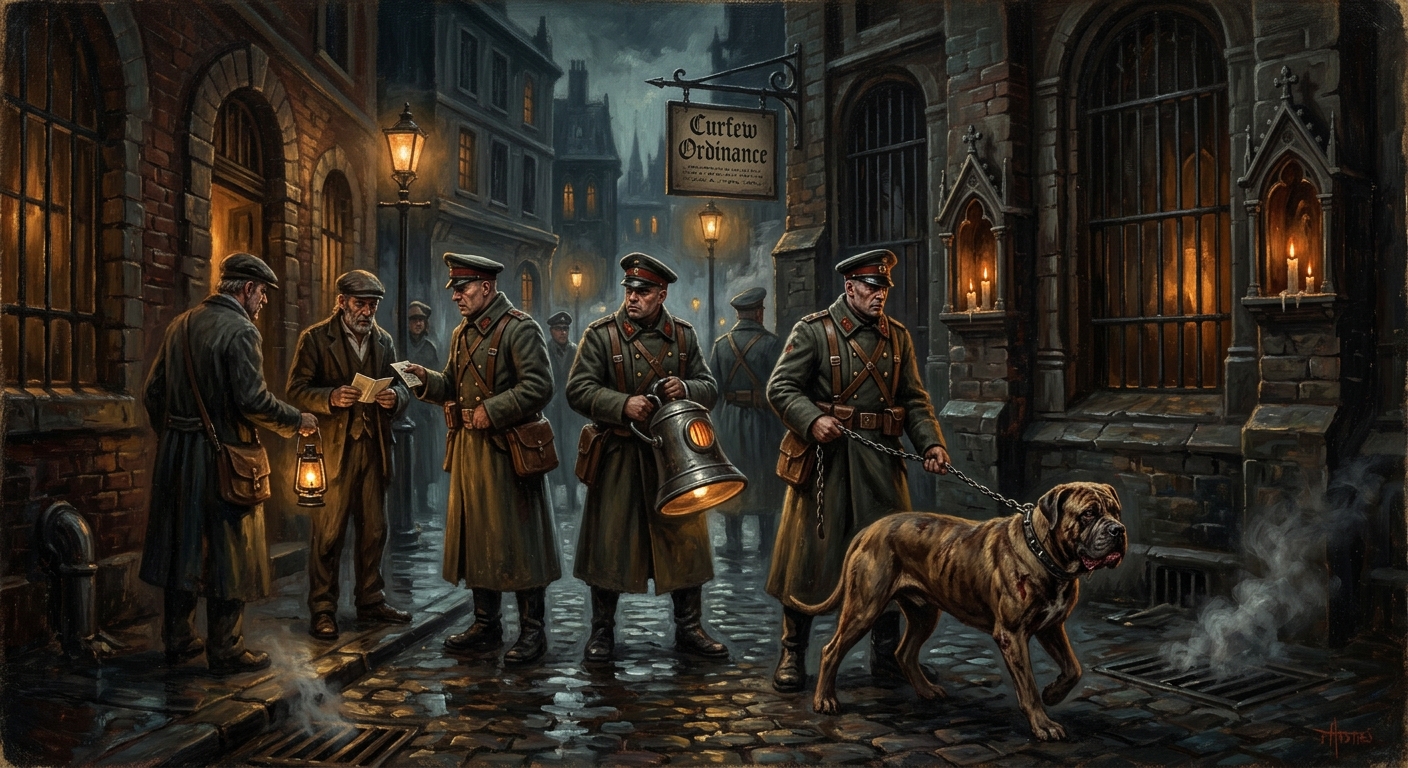
Curfew Ordinance of Quiet Hours
The margin law that taught night to carry a pass, a lamp, and a witness
The Curfew Ordinance of Quiet Hours began as a Rhineland margin law and became the Synod's nocturnal grammar: lamps, passes, Consolators, Brotherhood knives, and useful fear.
Codex Ref. XIII.1.76-094
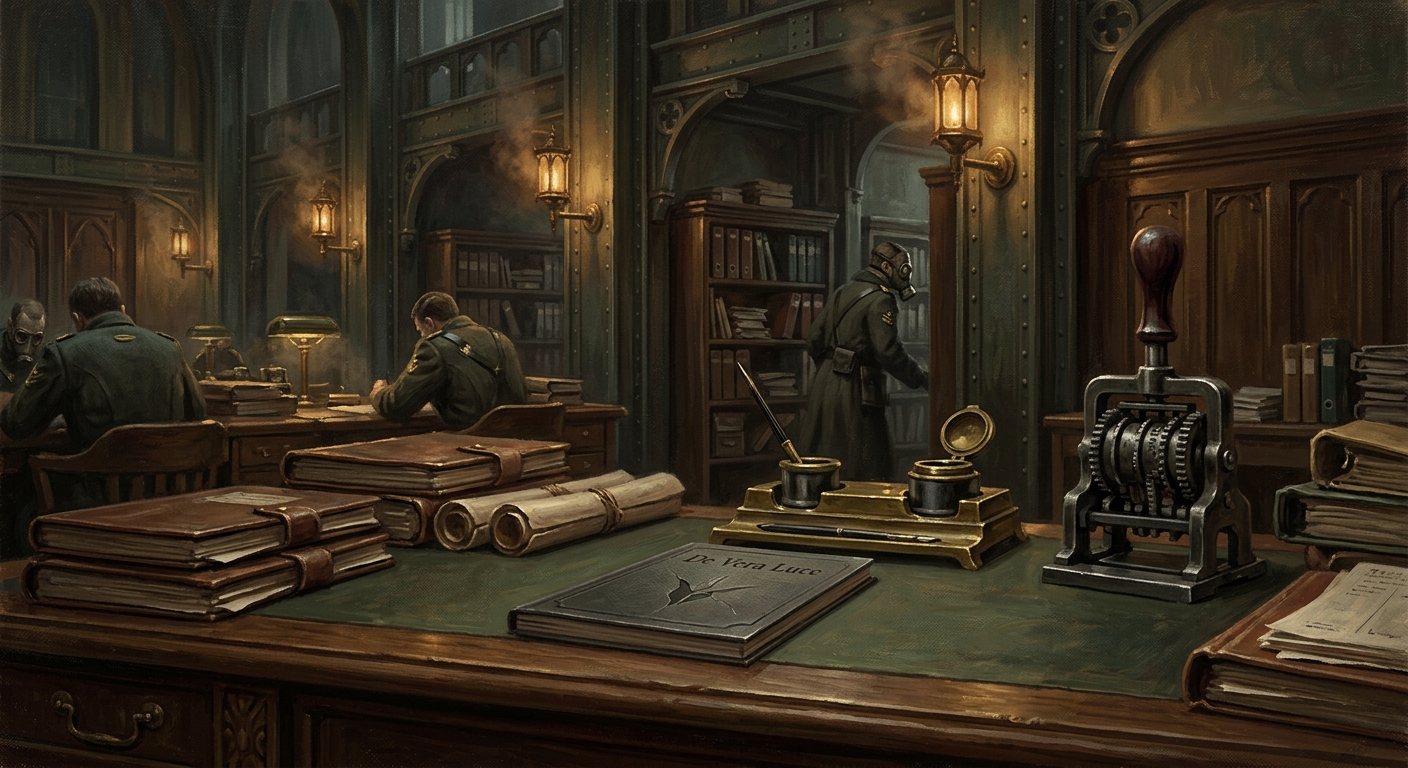
De Vera Luce
The lamp without altar becomes a torch in a library
The Amsterdam Academy's founding pamphlet made A.S. 0 a wound, not a birthday: thirty-two leaves of clean prose, humane poison, and continental ruin.
Codex Ref. I.1.04-001
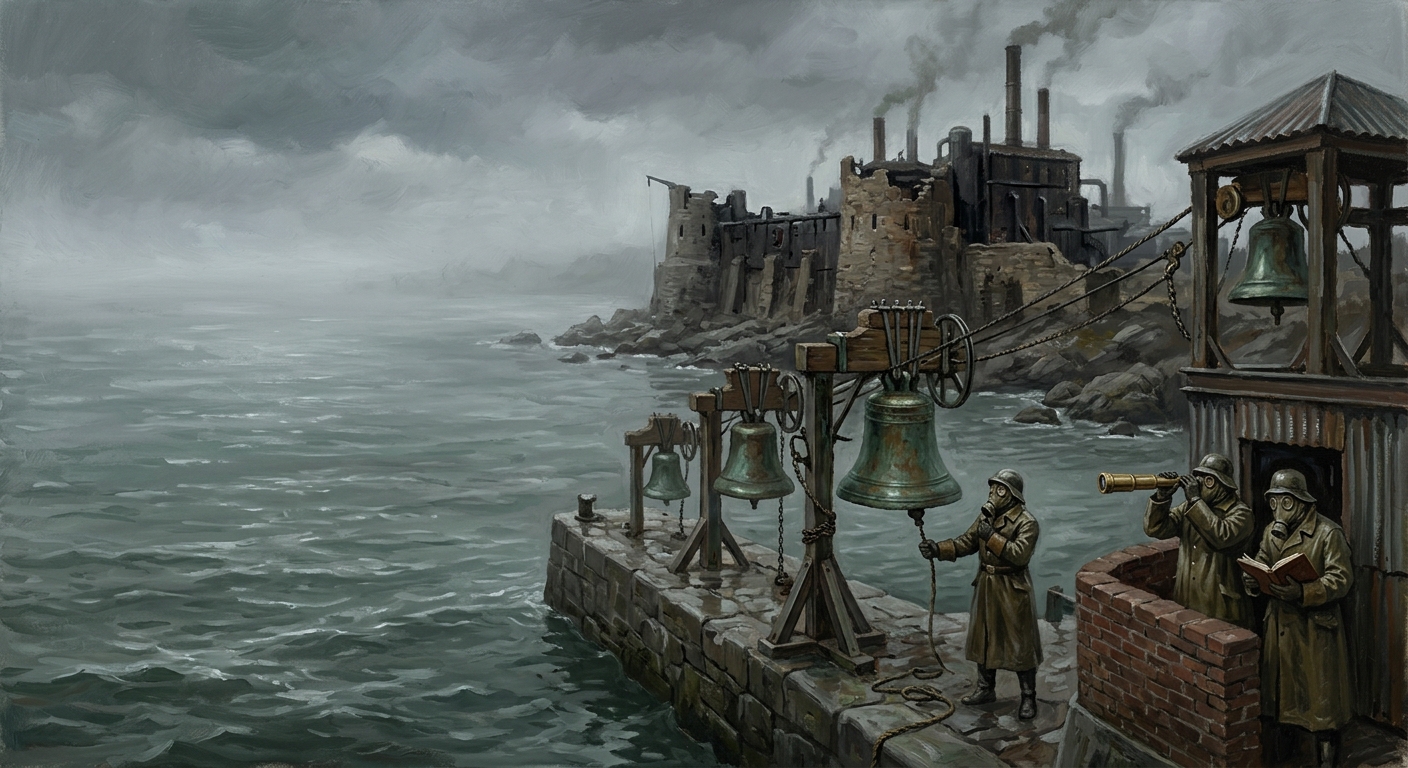
Det grå vattnet
The grey water listens before the bell decides whether to speak
Det grå vattnet, the grey water of the Fractured North, names a Baltic and fjord phenomenon related to the Grey: patient, reflective, responsive, older than the Bureau's comfort, and held only by old bells.
Codex Ref. IV.1.07-005
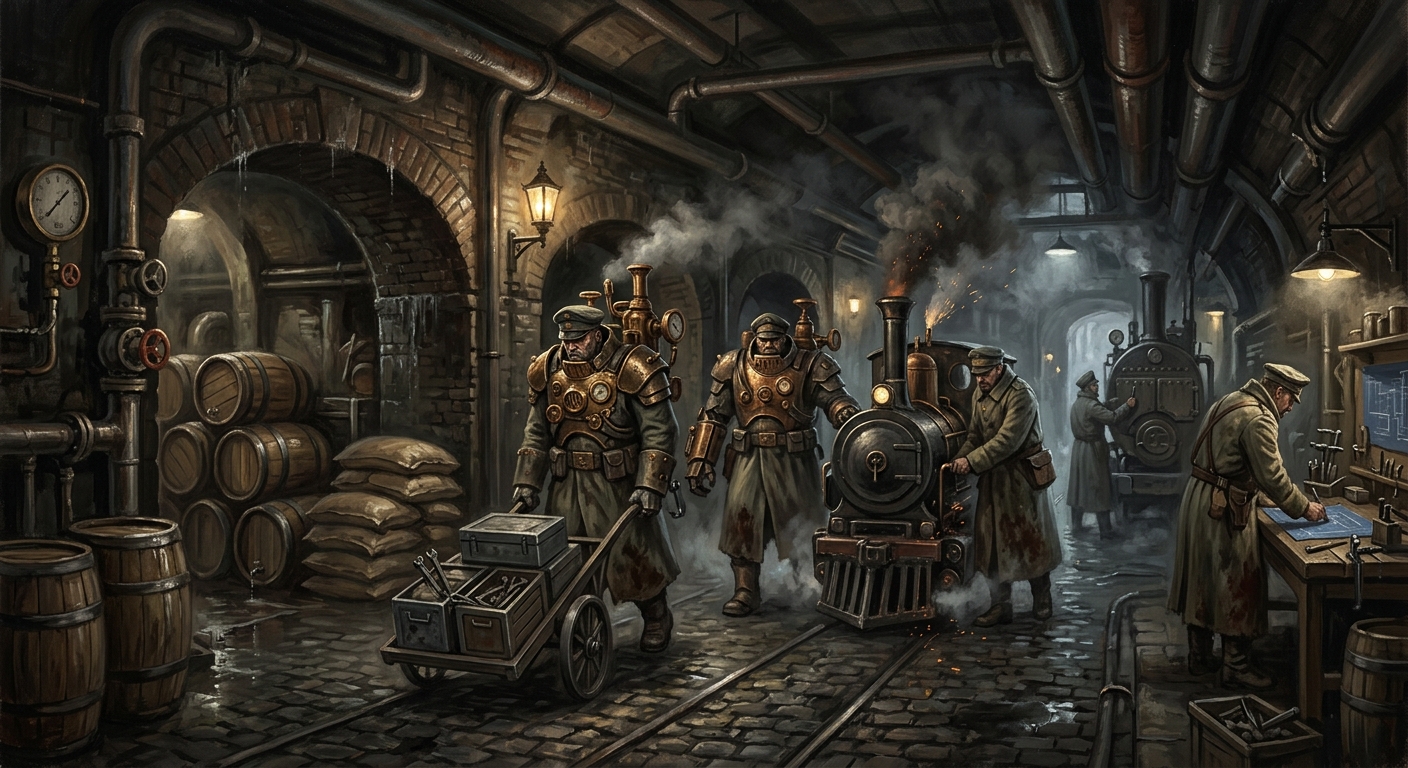
Deutz
The east bank where apostolic bones learned to smell like beer and keep quiet
Deutz is Cologne's right-bank service quarter, famous in Doctrine because three apostolic phalanges survived there beneath beer, silence, and useful damp.
Codex Ref. II.1.04-031
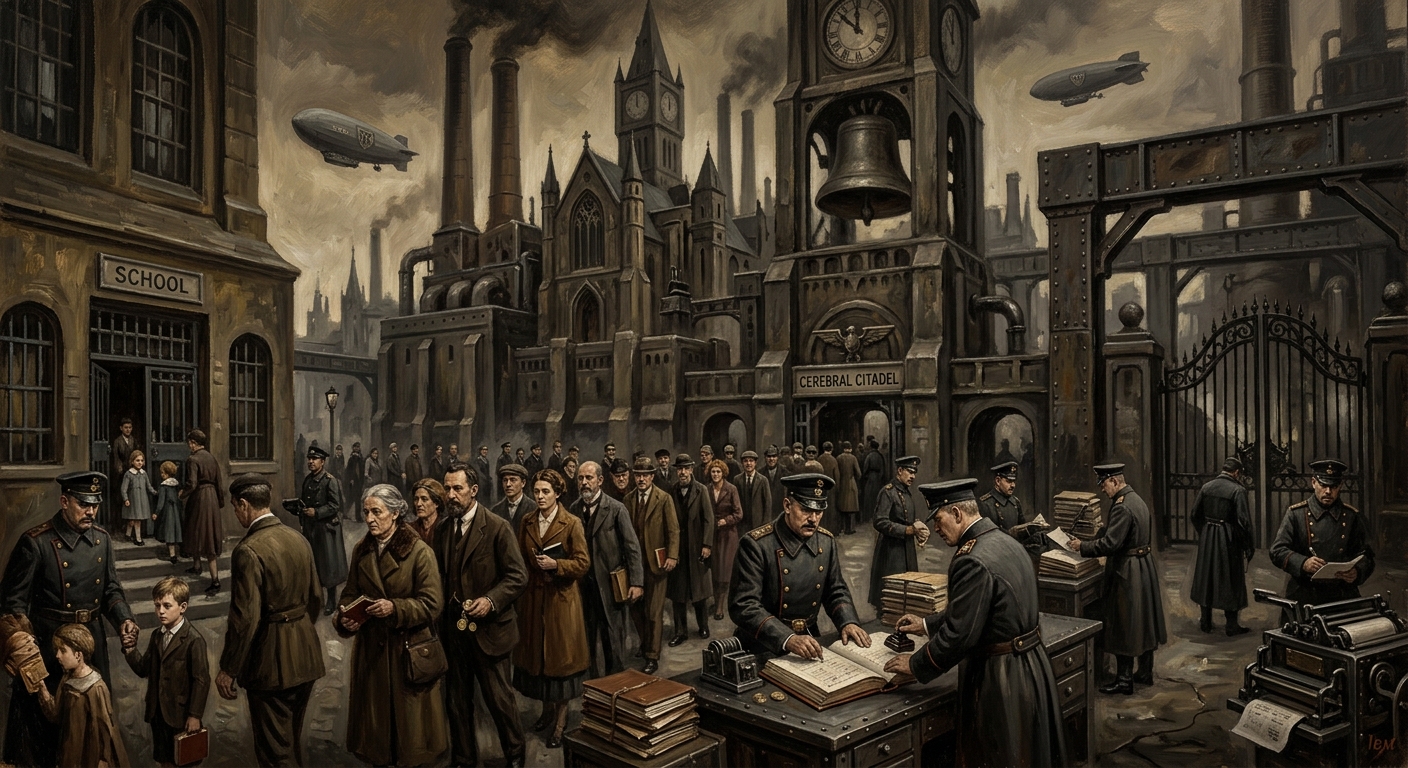
Dominion
Europe held in one gloved hand and taught to call it custody
Dominion is the Synod's official name for custody over Europe: border, tithe, bell, school, grave, and the thought before speech.
Codex Ref. XIII.1.02-090
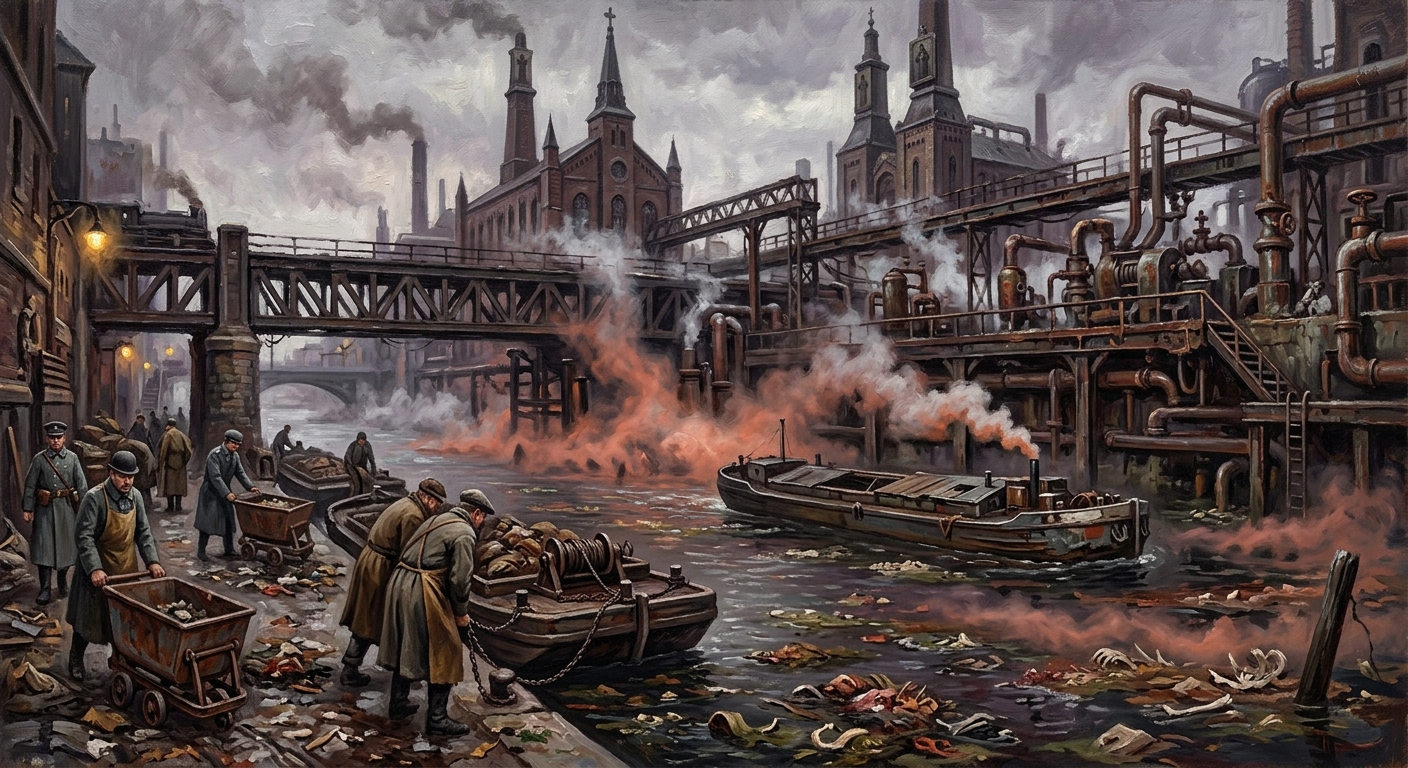
Donaukanal
Vienna's black water remembers what the ledgers rinsed away
Vienna's lesser Danube arm, the Donaukanal carries shrine filth, rebel bones, forbidden lullabies, and steam the Bureaus cannot quite explain.
Codex Ref. II.4.09-095
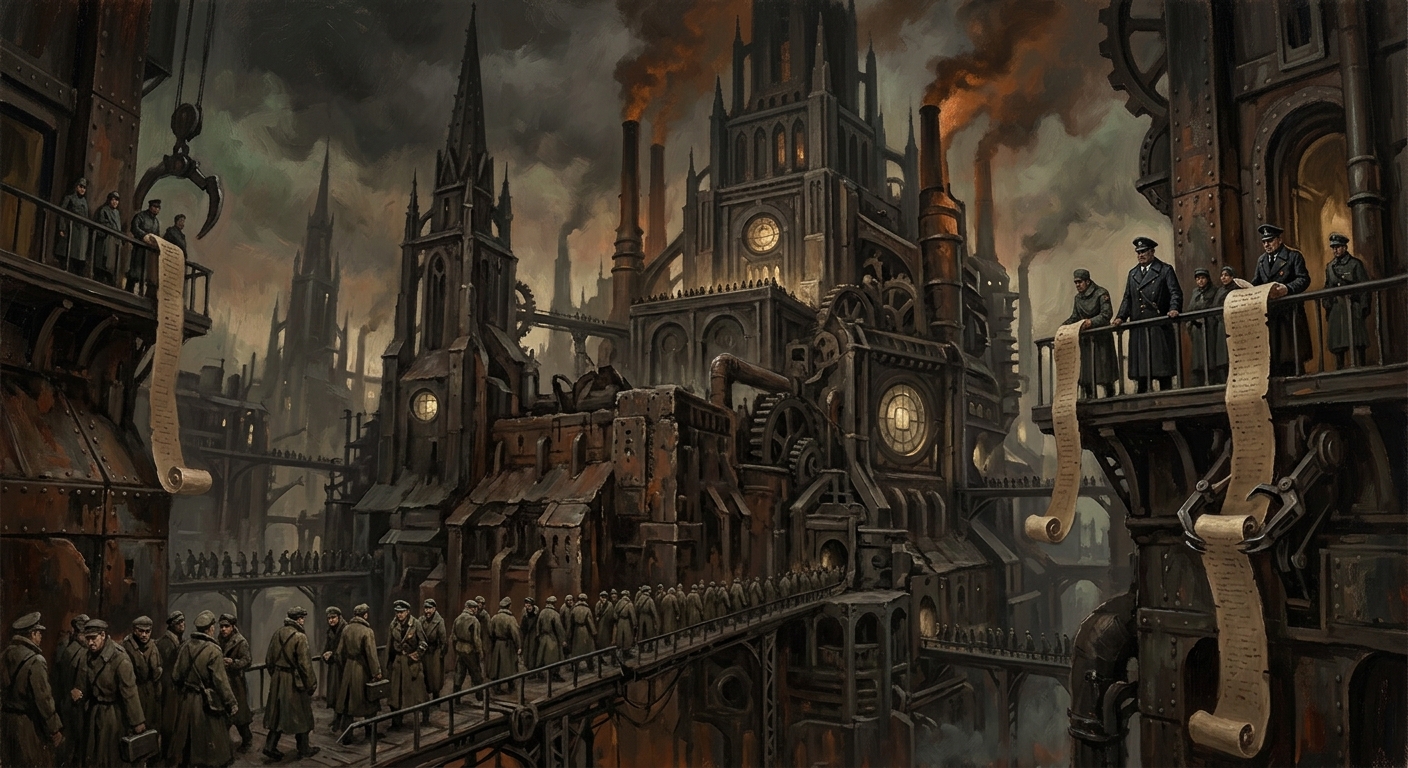
Dossier Vermillion
Pride receives a red file and mistakes the cabinet for a stairway
Dossier Vermillion is Inter-Infernal Analysis's largest file: Atheron, Pride, spires, oaths, and the terrible question of whether ambition can climb above Hell itself.
Codex Ref. VIII.7.01-002
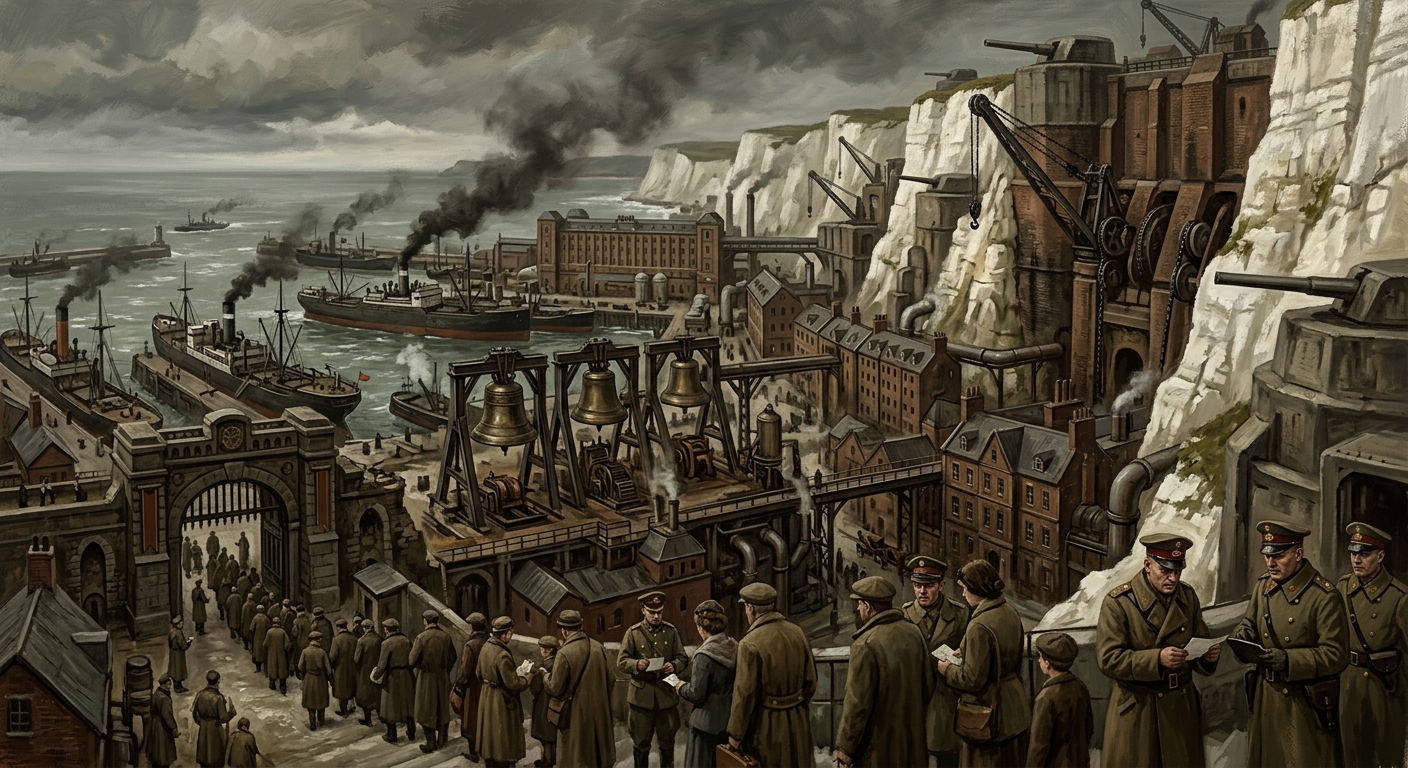
Dover
The white cliff that answers Calais with bells, chains, and refusal
Dover is the British Crown's white-cliff answer to Calais: port, bell-lane, Chainworks throat, pilgrim gate, and polished refusal.
Codex Ref. II.0.09-201

Drowned Row Syndic
The office with no chair governs best when everyone denies the room
The Drowned Row Syndic is the denied under-quay authority of Thessaloniki: rope, water, paper, theatre, soup, glass, and useful illegality arranged as governance.
Codex Ref. XI.5.04-198
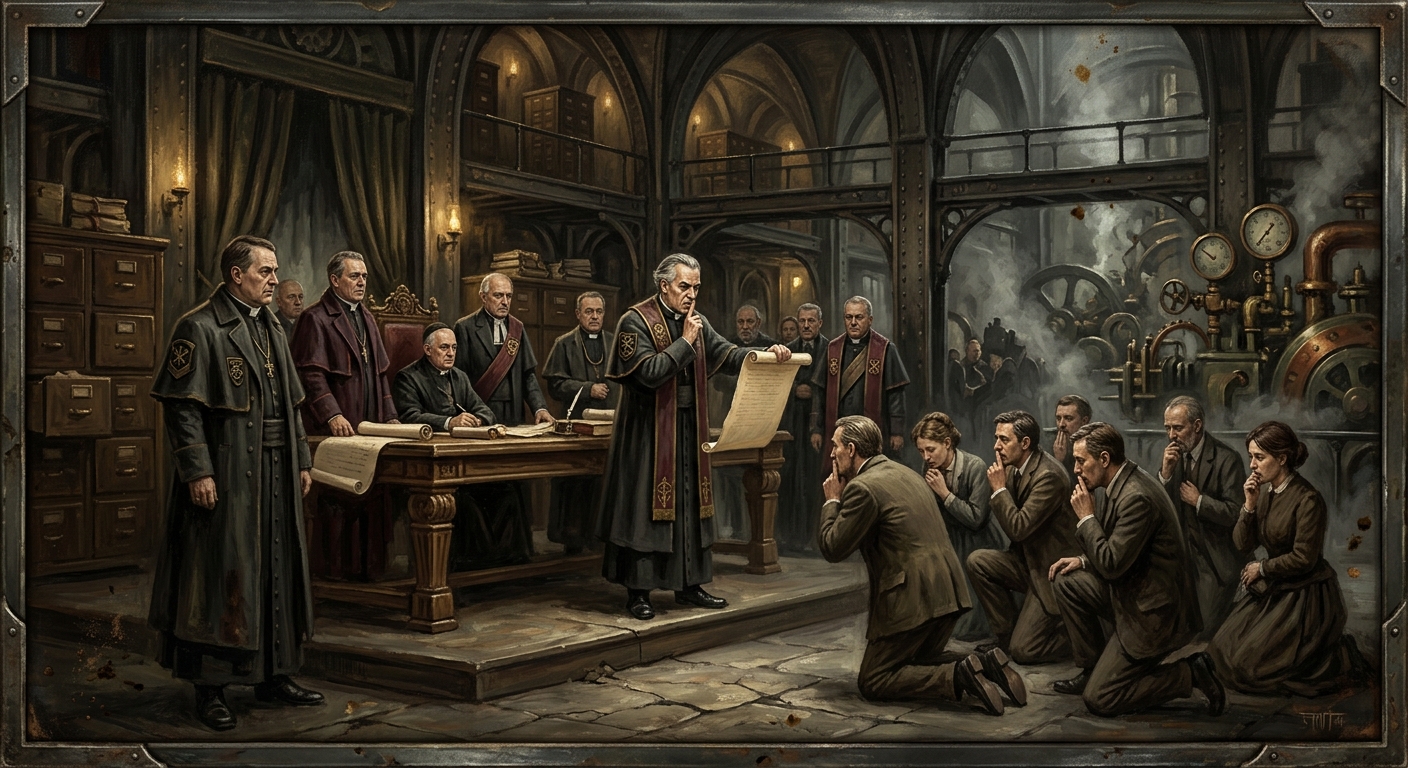
Edict of Cologne
Consent is expensive; retroactive obedience is cheaper
The Edict of Cologne bound dioceses to Strasbourg by discovering their obedience had already happened, then teaching silence to sign.
Codex Ref. XIII.1.90-100
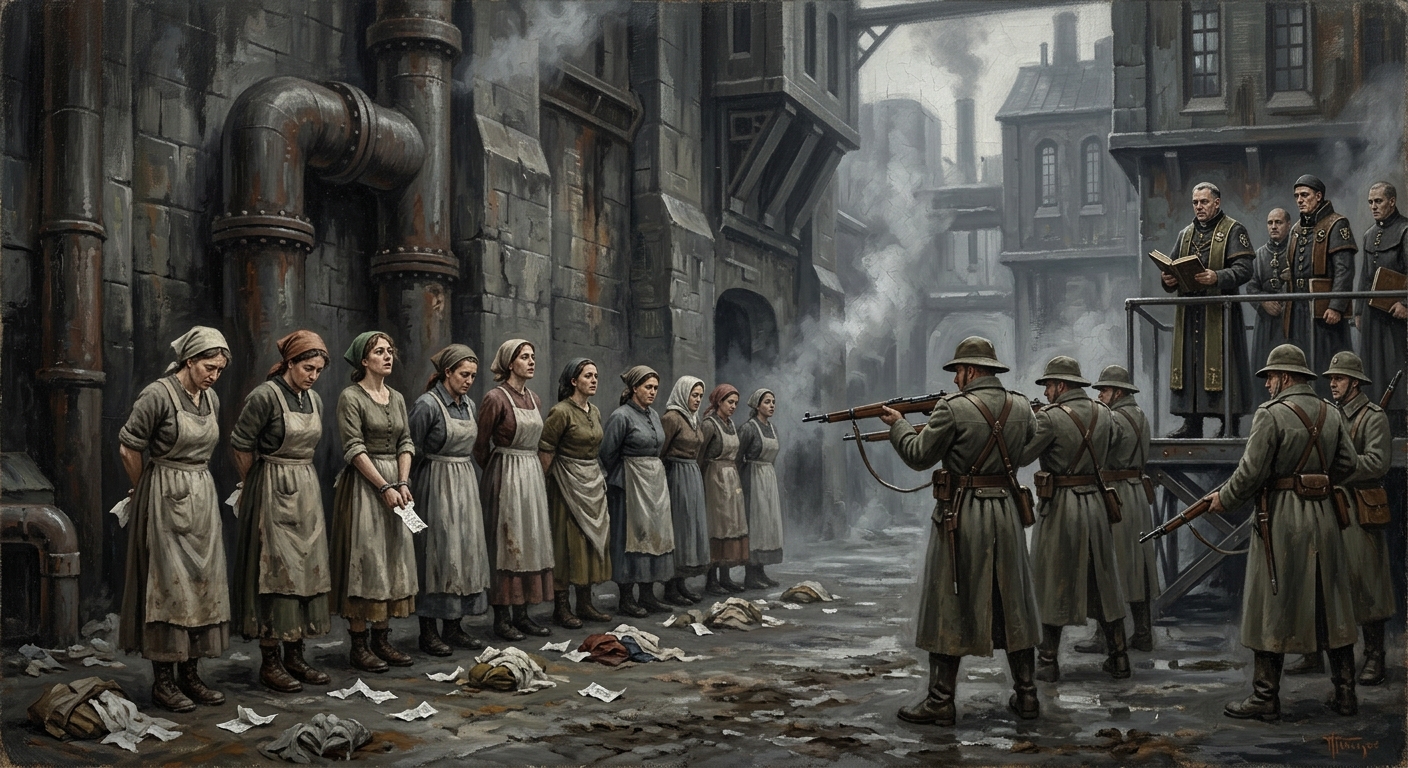
Eleven Laundry-Women of Candlewick
The Bureau burned the receipts; the babies slept anyway
A.S. 94 Candlewick executions of eleven laundry-women whose coded receipts carried complete lullabies and taught smugglers never to carry the whole song.
Codex Ref. VII.8.10-094
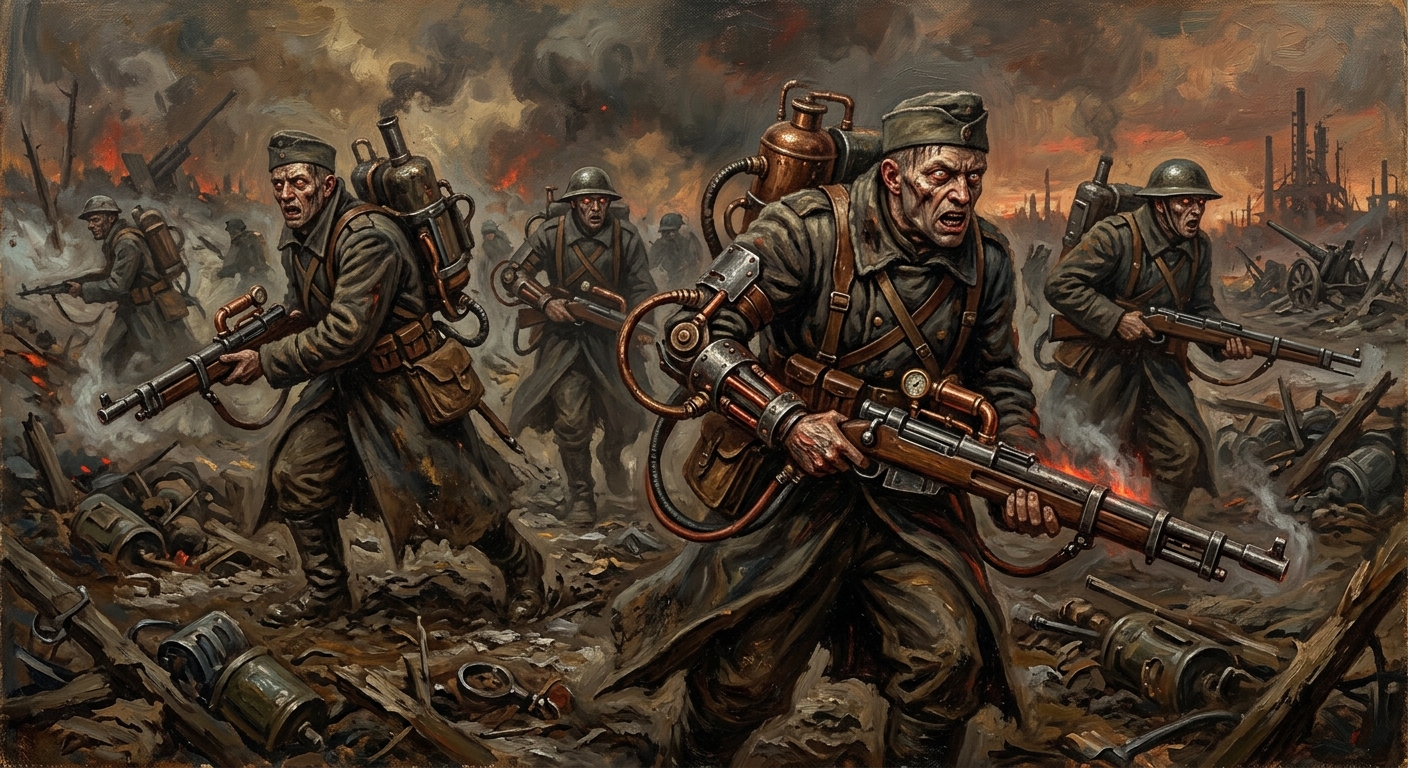
Ember-Soldiers
The infantry Maldrake makes from anger the dead were not allowed to finish
Ember-Soldiers are Maldrake's common horror: human-derived Wrath infantry, banked in rage, fused to weapons, and dangerous even after death seems persuaded.
Codex Ref. IV.1.07-201
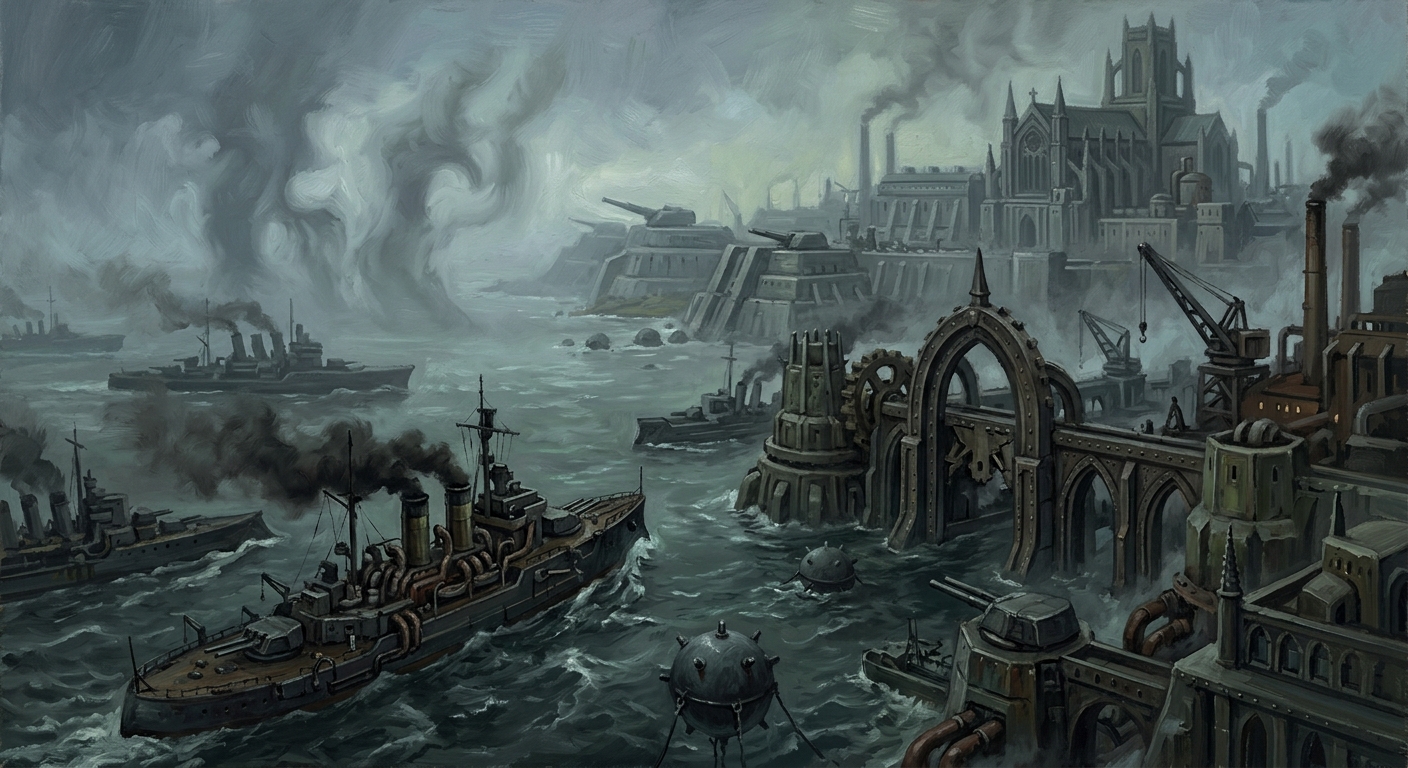
English Channel
The wet treaty between stamped arrogance and ringing arrogance
The English Channel is Calais facing Dover: one day's water in clean weather, a century's insult in politics, and a fog-bank with clerical ambitions.
Codex Ref. II.1.04-202
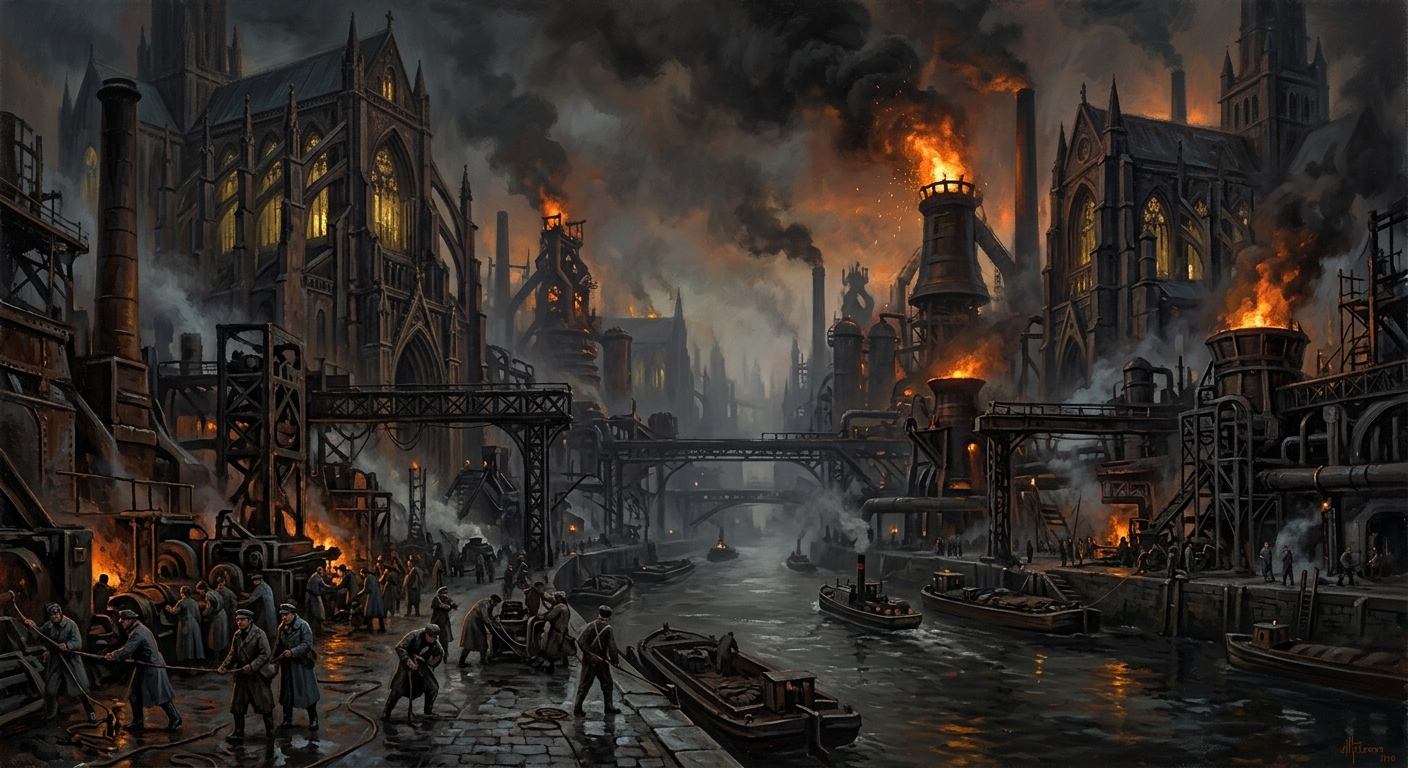
Essen-of-Hymnsteel
The city the Line cannot outlive, and dare not silence
Industrial holy city where steel is calibrated by choir and governed by three Bureaus who share nothing willingly except the fiction that none of them is losing.
Codex Ref. II.2.01-001
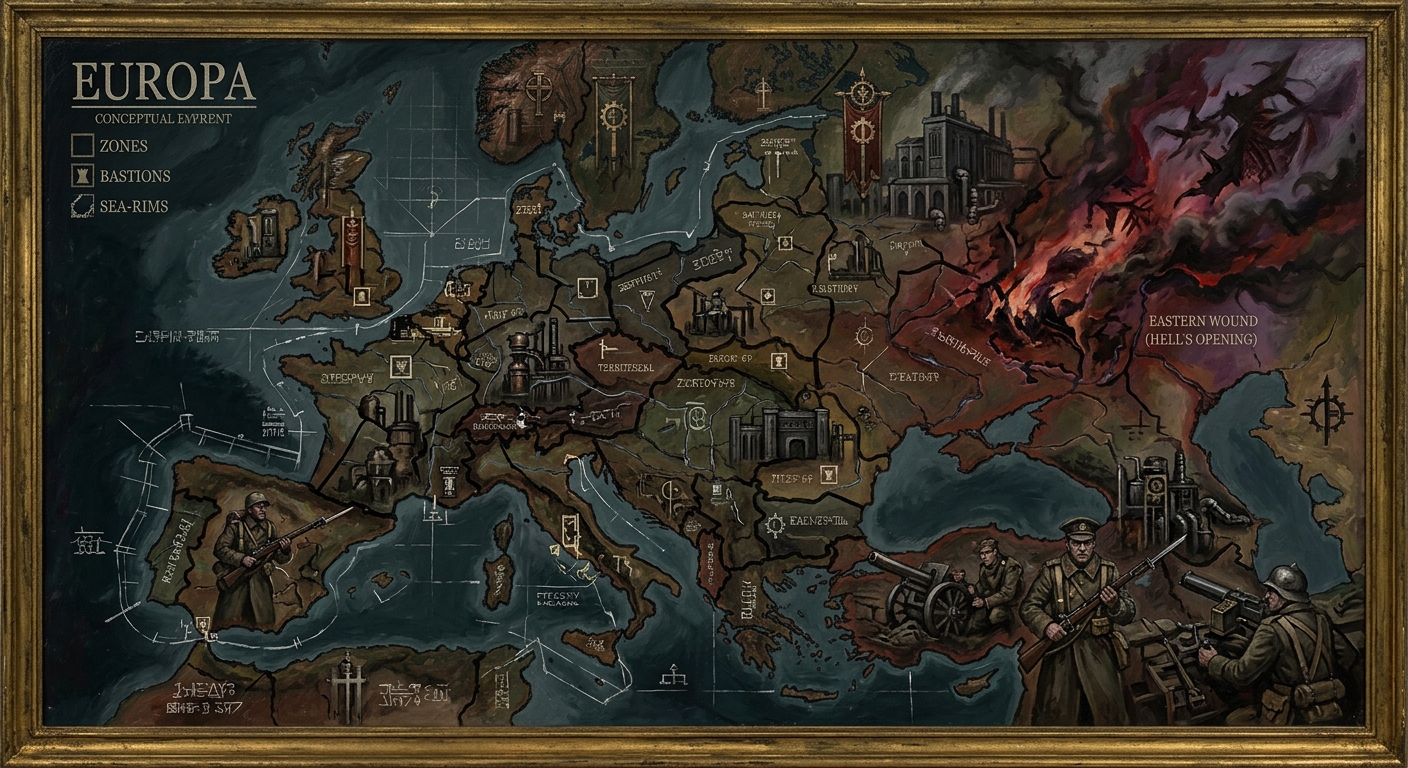
Europa
The continent as filed, wounded, taxed, and made obedient enough
Europa is not whole; it is the continent filed into zones, bastions, sea-rims, independent nuisances, and the eastern wound Hell keeps open.
Codex Ref. II.0.00-201
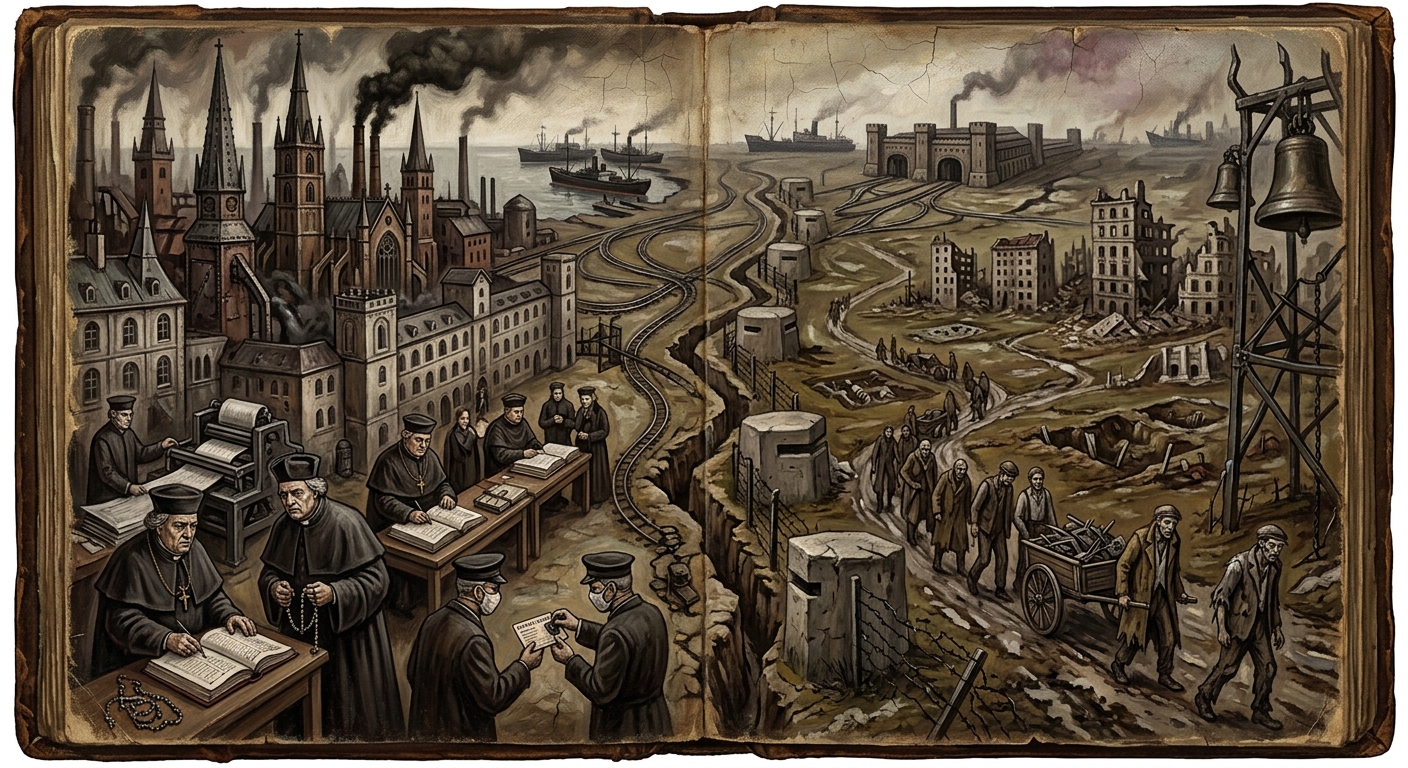
Europe
The wounded continent, held together by rails, bells, hunger, and denial
Europe is the wounded continent: Synod west, Charnel east, Line between, and every road, harbour, cradle, ration card, bell, and grave bent toward survival.
Codex Ref. II.0.01-201

Exegete Hallam
The man who taught guilt to arrive before law
Exegete Hallam drafted Article 9's retroactivity clause in the Catechism of Obedience, giving Doctrine custody over thoughts before citizens knew they had sinned.
Codex Ref. III.2.01-150
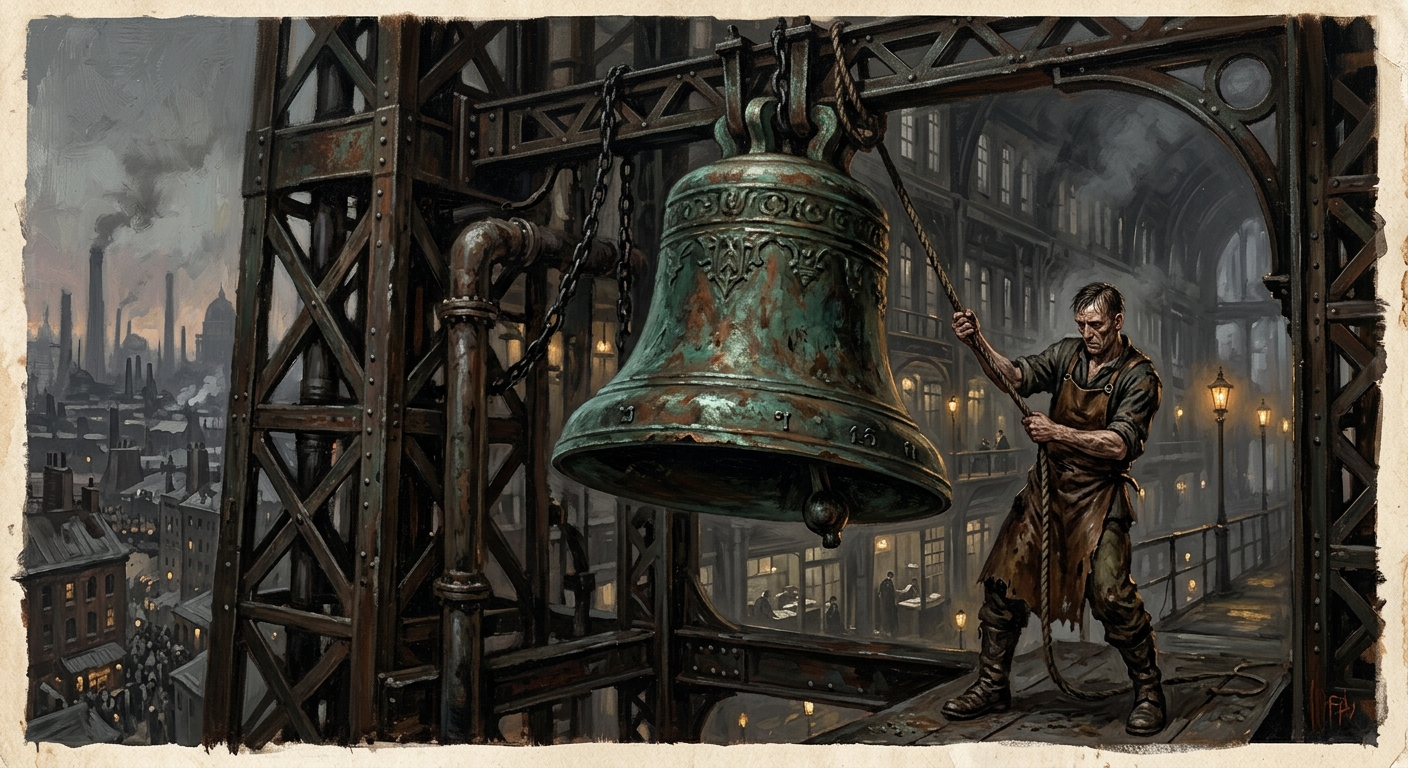
Fames (Bell)
The hunger bell of Strasbourg, whose receipts frighten wiser governments than drums
Fames is the Tower of the Quill's middle bell, tolled for rationing adjustments when hunger becomes too official to remain quiet.
Codex Ref. XIII.1.72-005
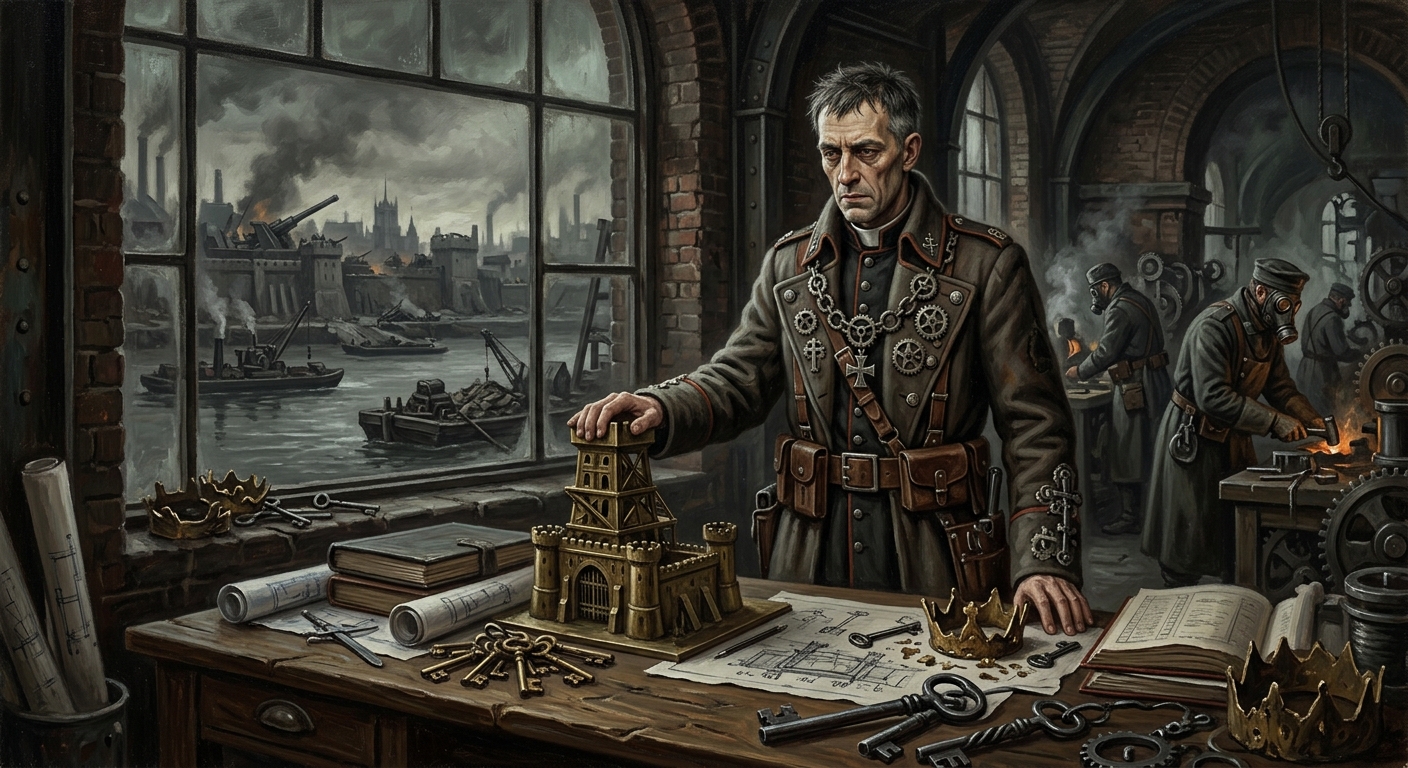
Father Ambrosius of Como
A key in each fist and a river waiting below
Father Ambrosius of Como made keys into crowns, sermons into siegework, and Lombardy into a lesson the Po carried east.
Codex Ref. XI.5.01-001
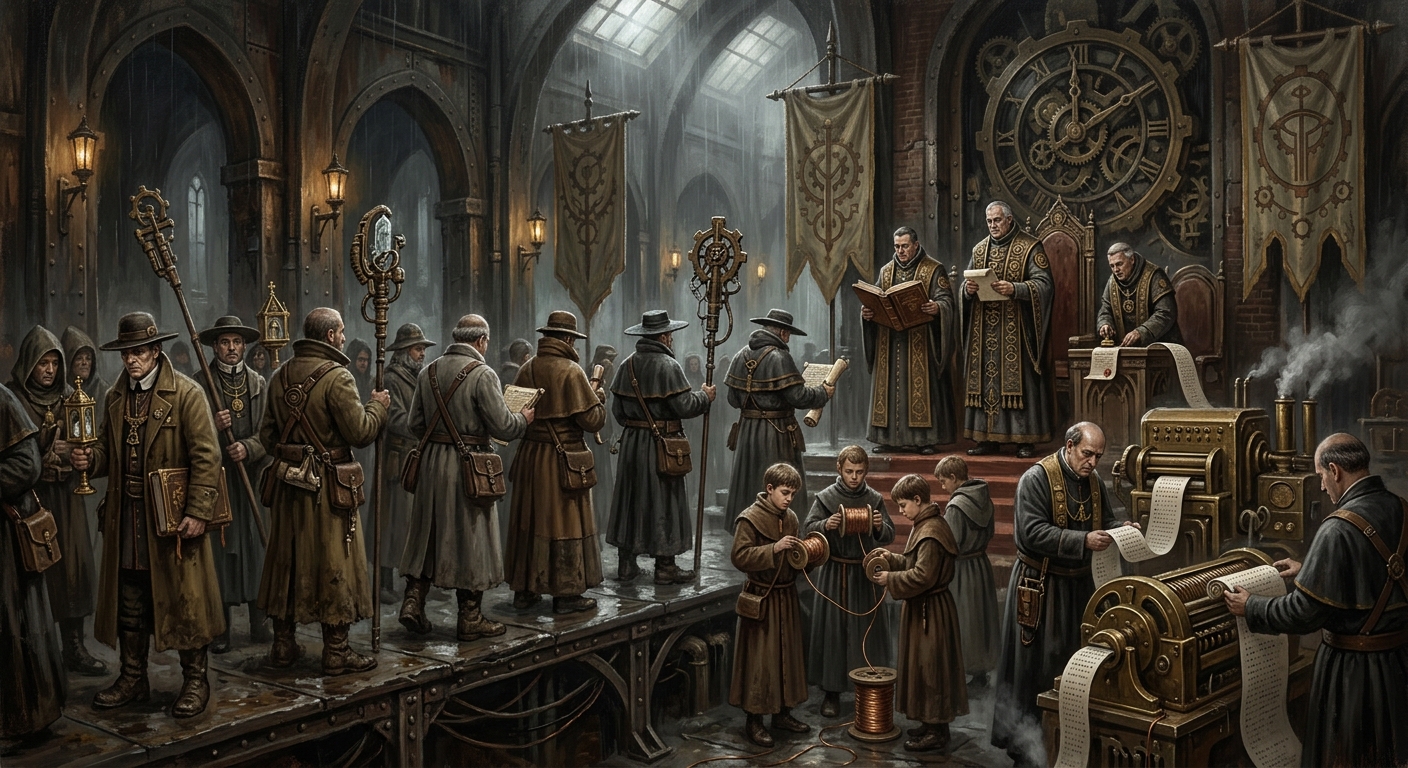
Fifteenth Doctrinal Congress
The hour Strasbourg taught an old river crime to testify on schedule
The Fifteenth Doctrinal Congress made Kraków's drowned priests administratively inexhaustible: witness ratified, silence scheduled, wire converted, and grief sealed.
Codex Ref. XIII.1.90-148
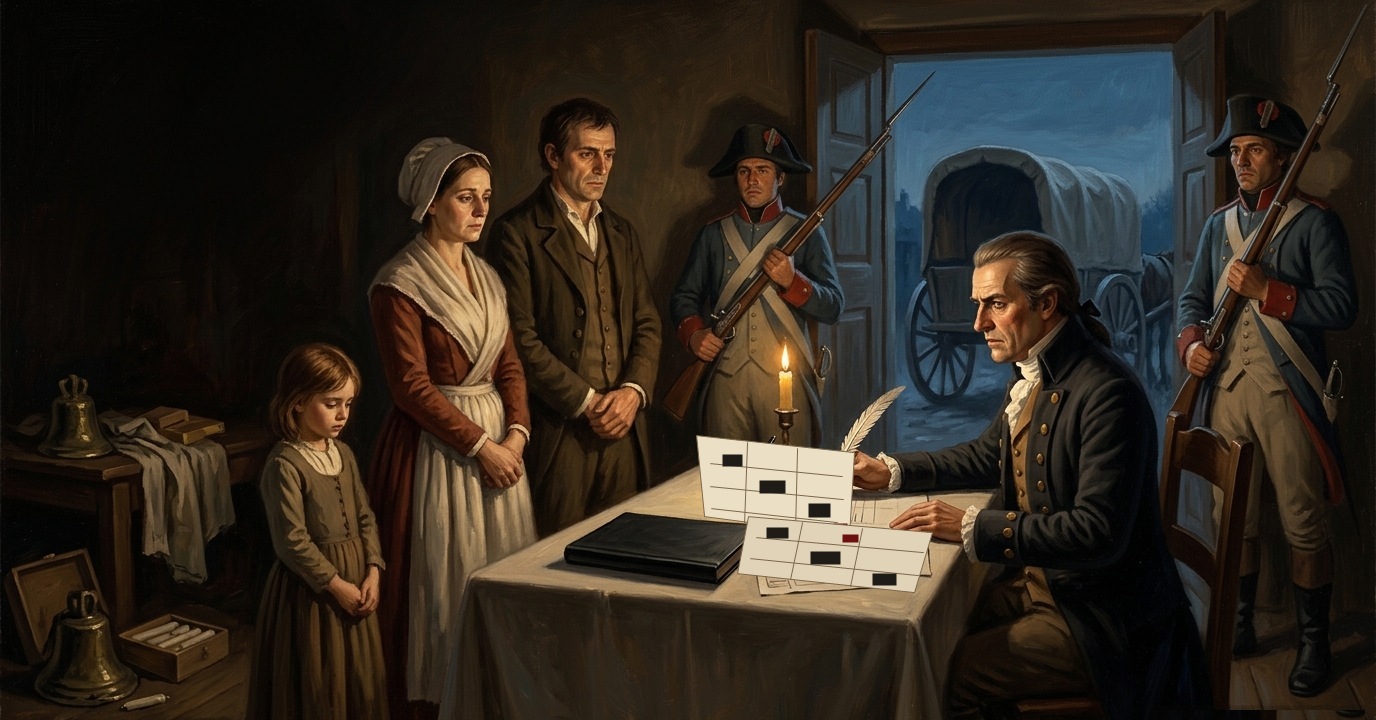
First Black Census
The Republic learned to murder with a household table and a clean pen
The First Black Census turned belief into a column, children into transfer marks, and faithful households into blanks awaiting carts.
Codex Ref. I.1.06-030
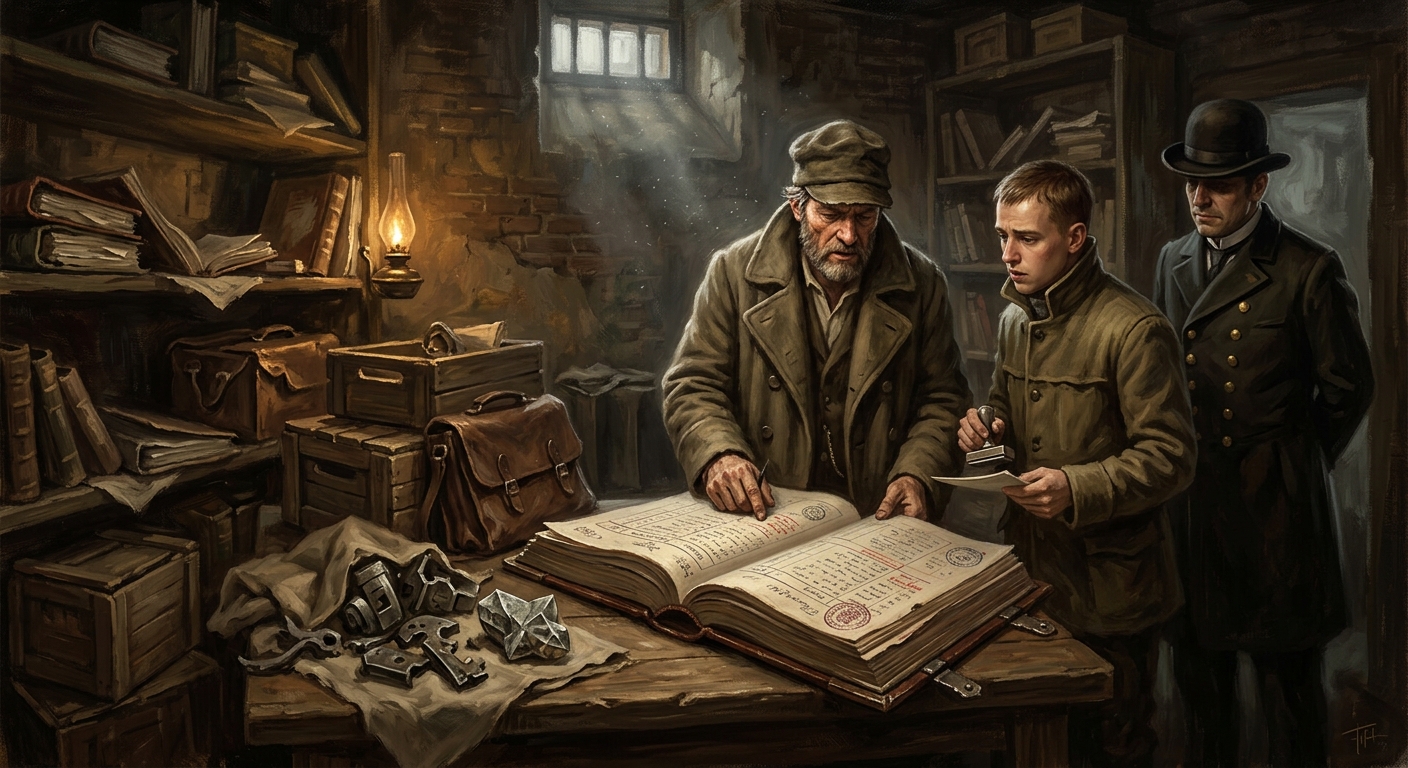
First Quake-Ledger A.S. 105
The rubble was counted, and therefore became guilty
A.S. 105 Records compilation that exposed unreported sacred recoveries from collapse sites and gave the Reliquary Salvager his first licensed leash.
Codex Ref. VII.8.10-092
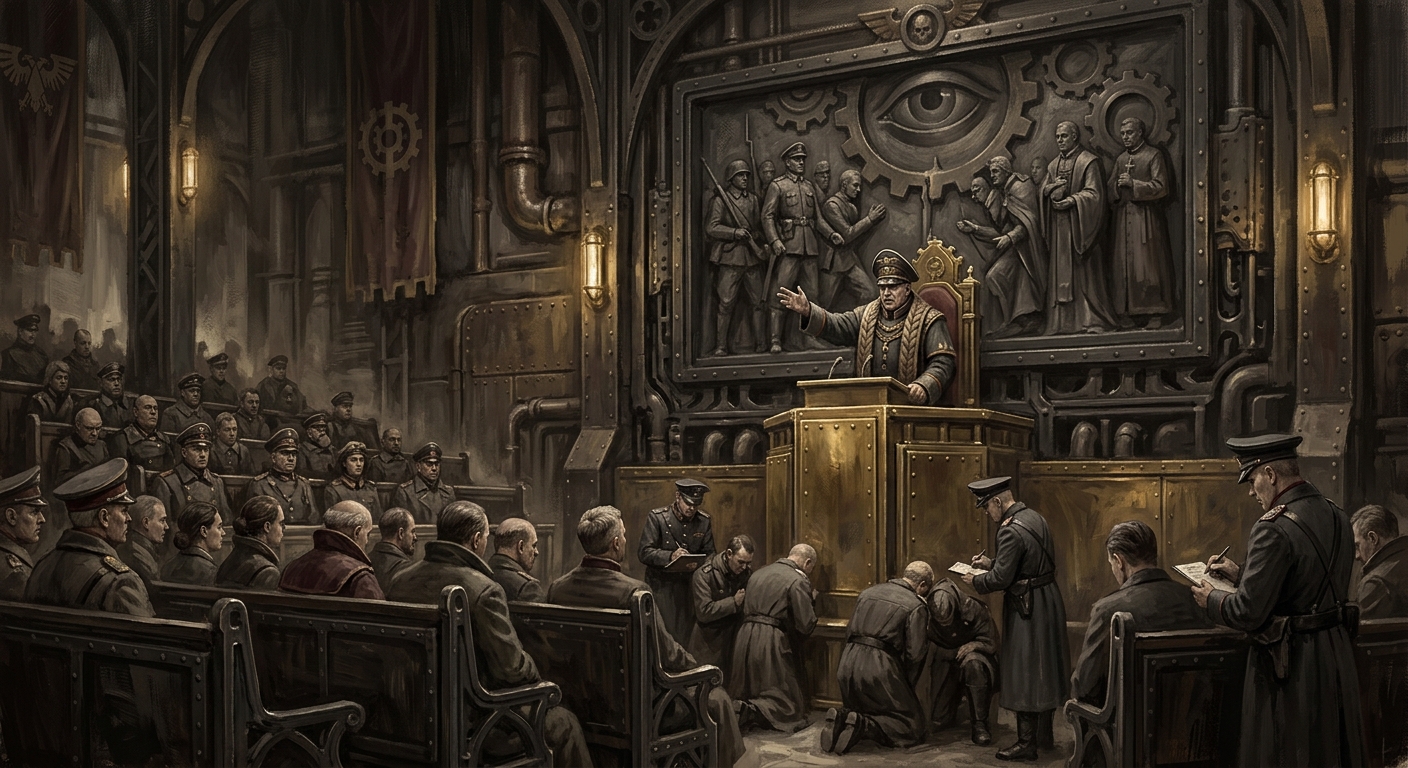
Fourth Doctrinal Congress
Where silence was made to testify against the listener
The Fourth Doctrinal Congress did not end doubt. It converted silence into mortal fault, canonised useful dead, and taught Strasbourg to occupy the Creator's quiet.
Codex Ref. XIII.1.90-104
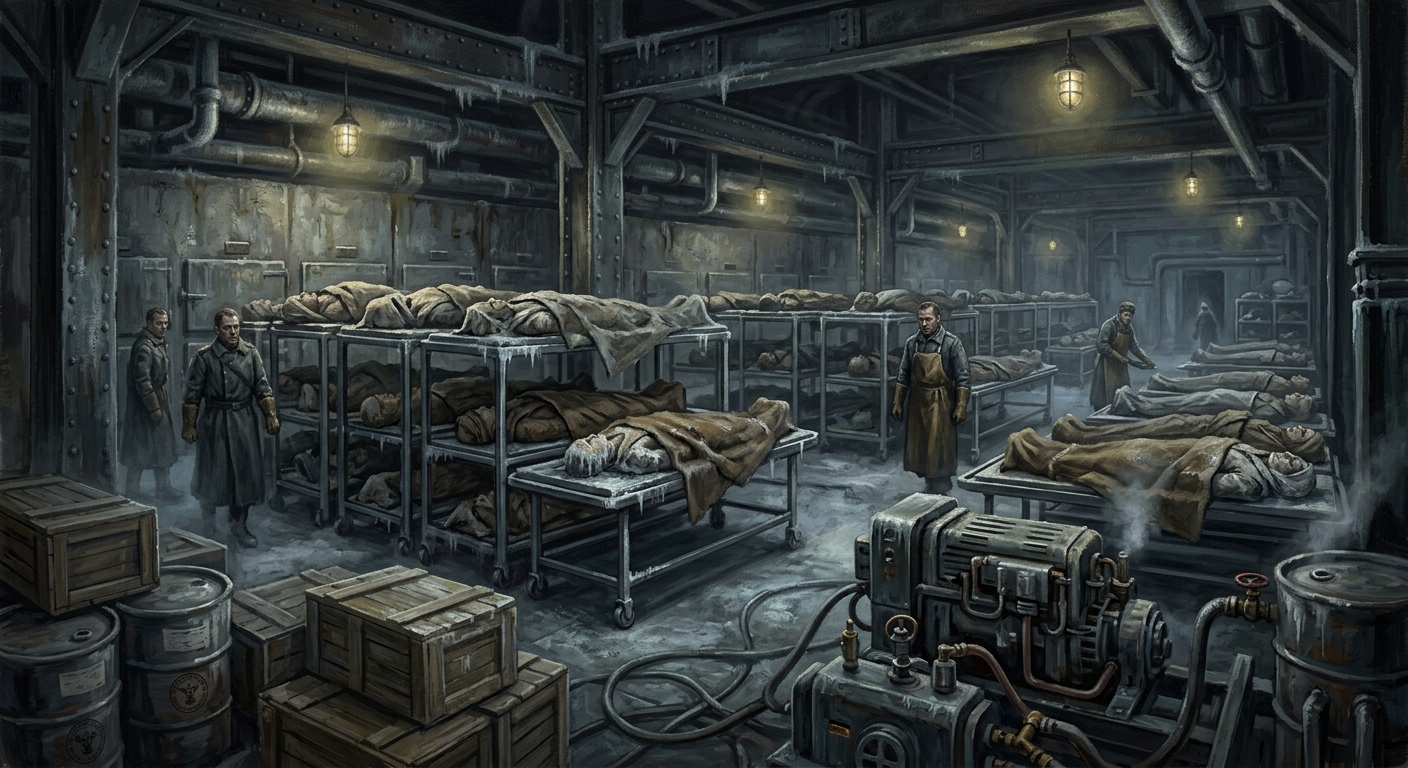
Frost Yards
Where Königsberg stores bread, bullets, bodies, and one useful wrongness
Restricted cold-store and mortuary district inside Bastion-Königsberg, where supplies keep, bodies wait, and the dead have learned a northeast preference.
Codex Ref. II.4.08-201
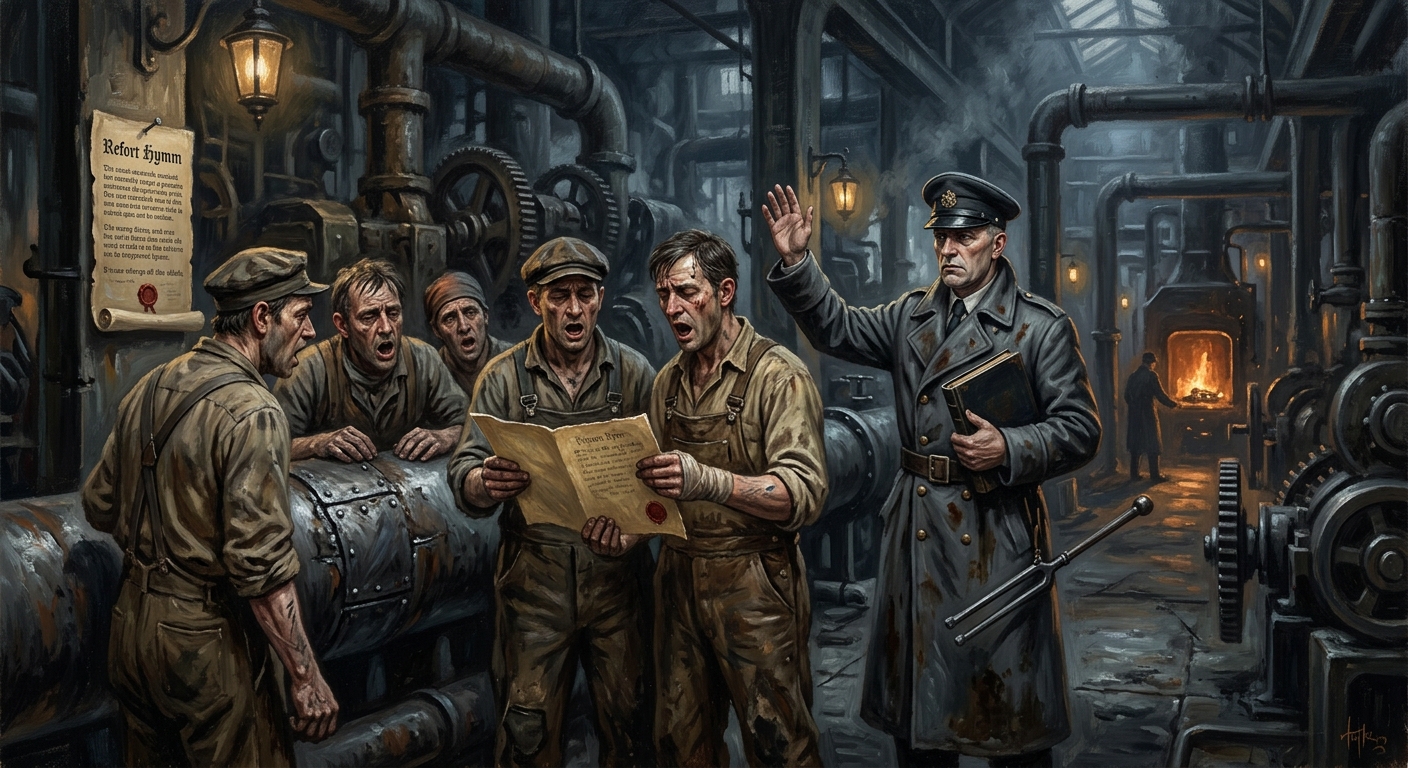
Gasket Hymn Reform
The seal must be sung, because the wound has learned to answer
The A.S. 152 reform that turned wound-site sealing into mandatory sung procedure after the Furrow of Pest killed thirty-seven workers and sent wrong flame through the southern corridor.
Codex Ref. VII.8.10-152
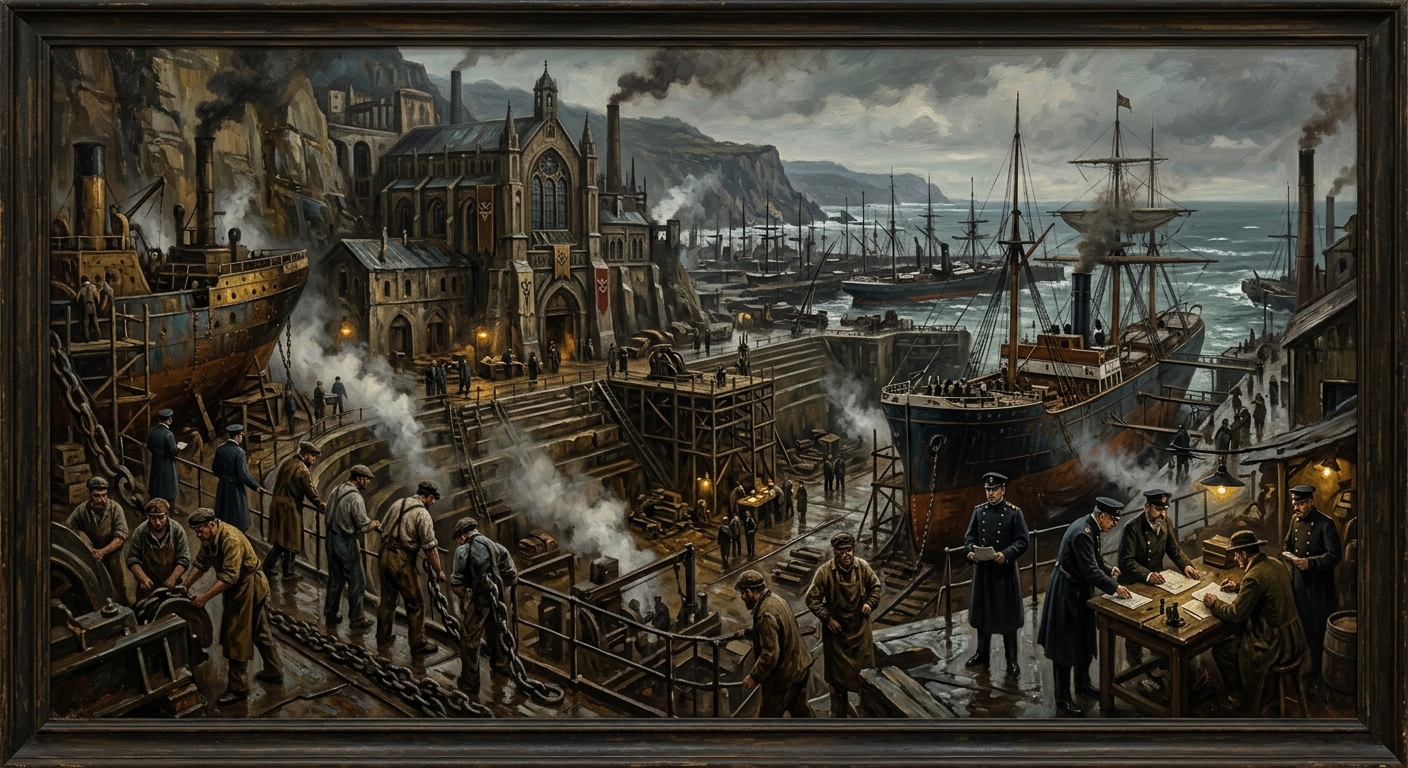
Genoa
The Synod owns the harbour by law; the harbour invoices it by clause
Genoa is the Synod's Ligurian contract-port: grudgingly compliant, rich in drydocks and debt, and indispensable in every way Doctrine resents.
Codex Ref. II.4.09-016
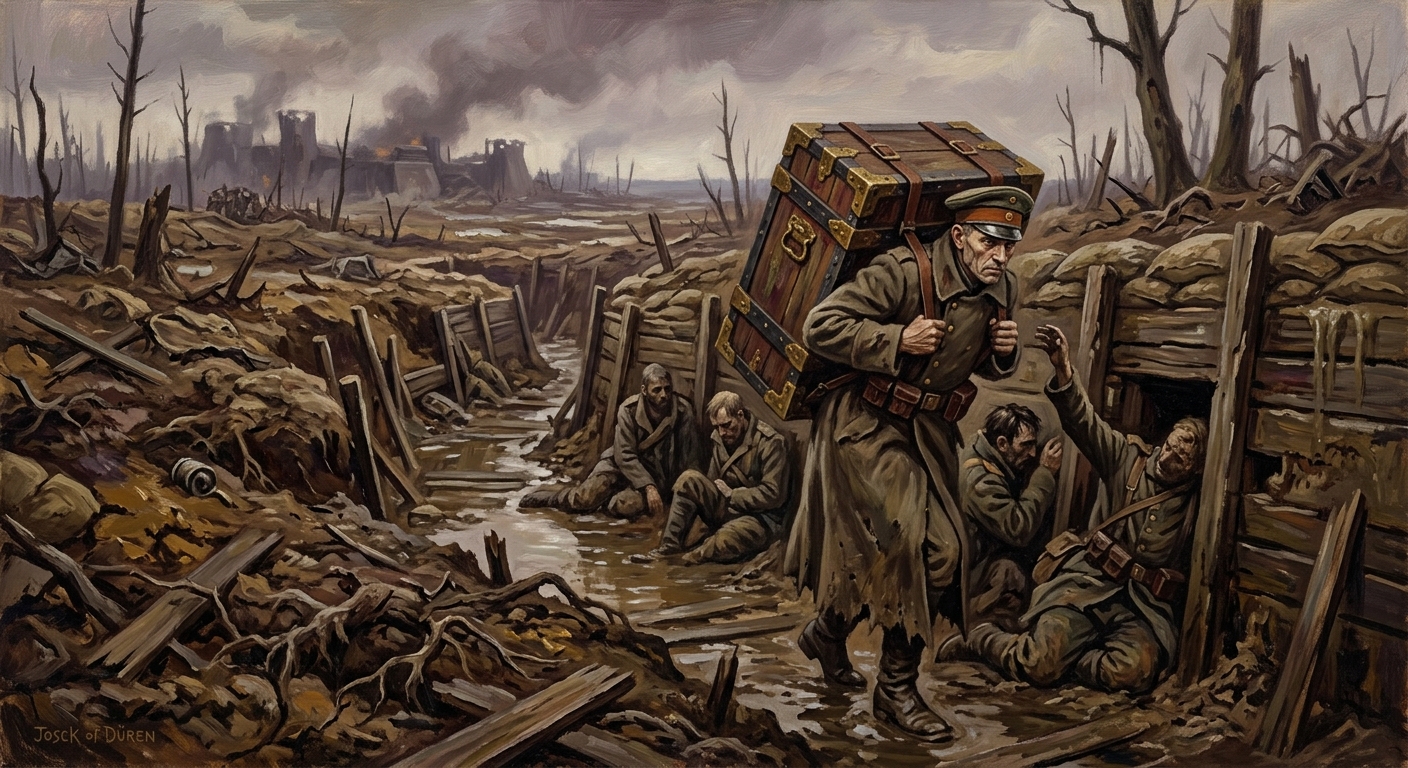
Graben Crossing
The ditch that taught a convoy how to become a cult
Graben Crossing is a southern-corridor ditch made infamous in A.S. 138, when Josek of Düren carried a singing ossuary crate through deserters and into forbidden memory.
Codex Ref. II.3.05-138
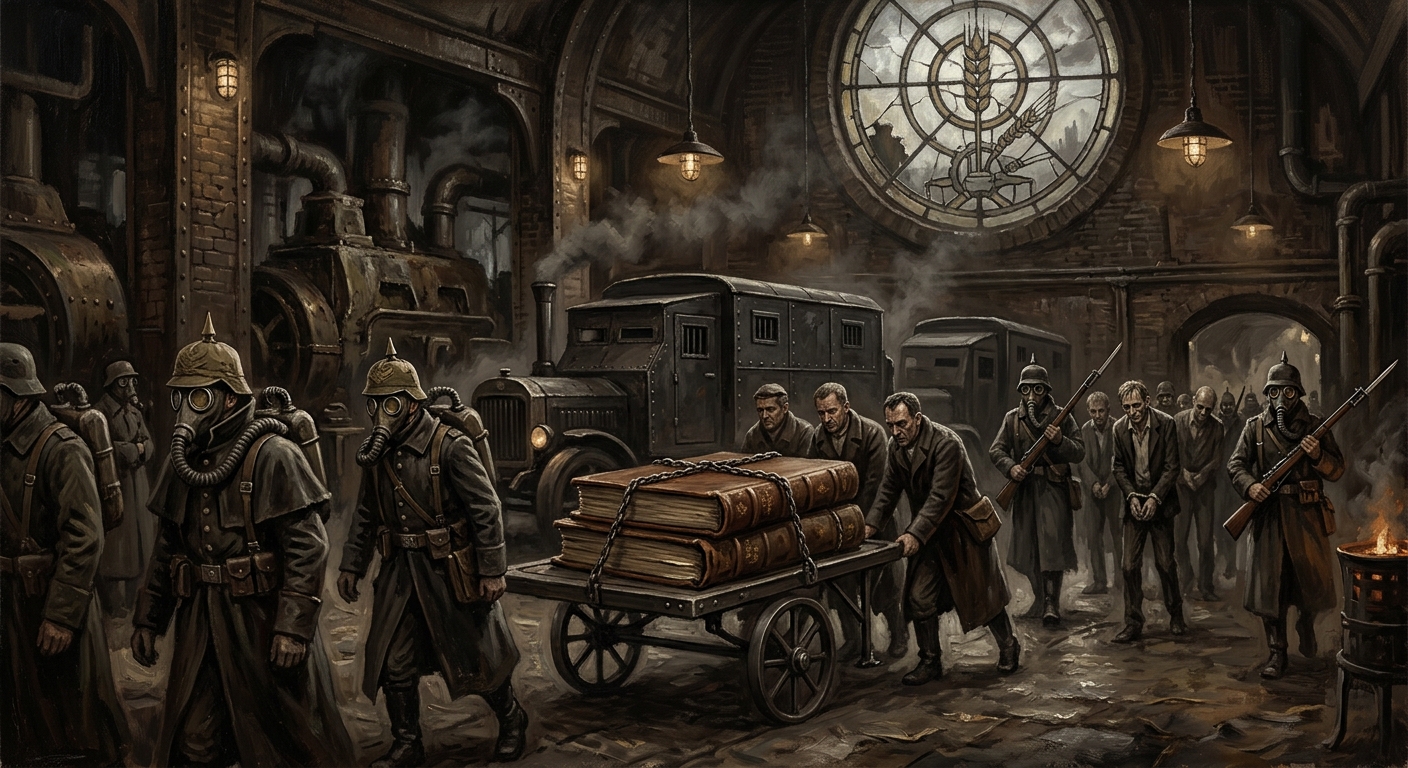
Grain Merchants' Guild, Lübeck
The fattest civic animal discovered the Creator when black gauze knocked
Dissolved Lübeck grain fraternity whose A.S. 180 spiritual renewal followed eleven Night Wagons, seized ledgers, and Shadow custody of the northern corridor's hungriest arithmetic.
Codex Ref. XII.26.02-001
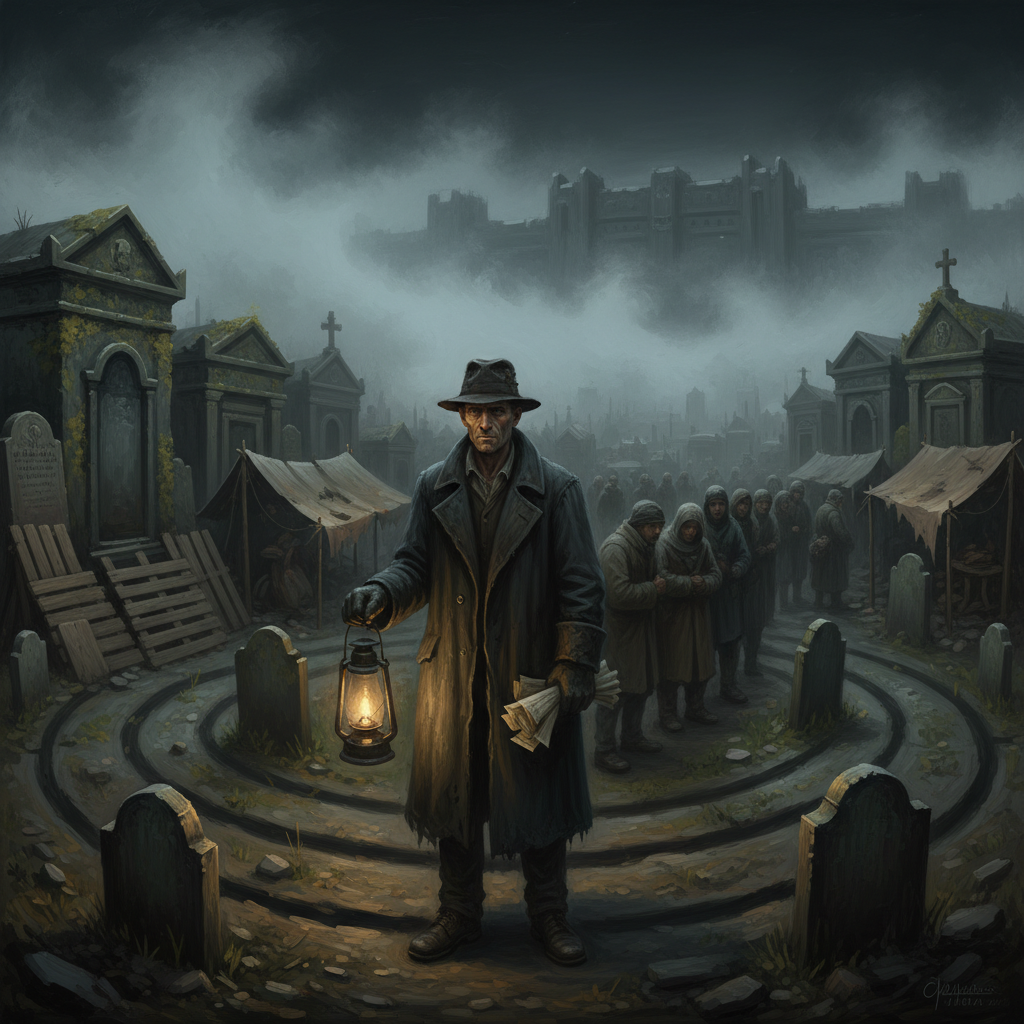
Grave-Field Shanty Broker
Where the Dead Own the Ground and the Broker Owns the Quiet
The officially unacknowledged profession administering forty thousand souls in the consecrated dead-lands the Bureau cannot legally rezone, will not formally notice, and cannot do without.
Codex Ref. XII.21.01-001
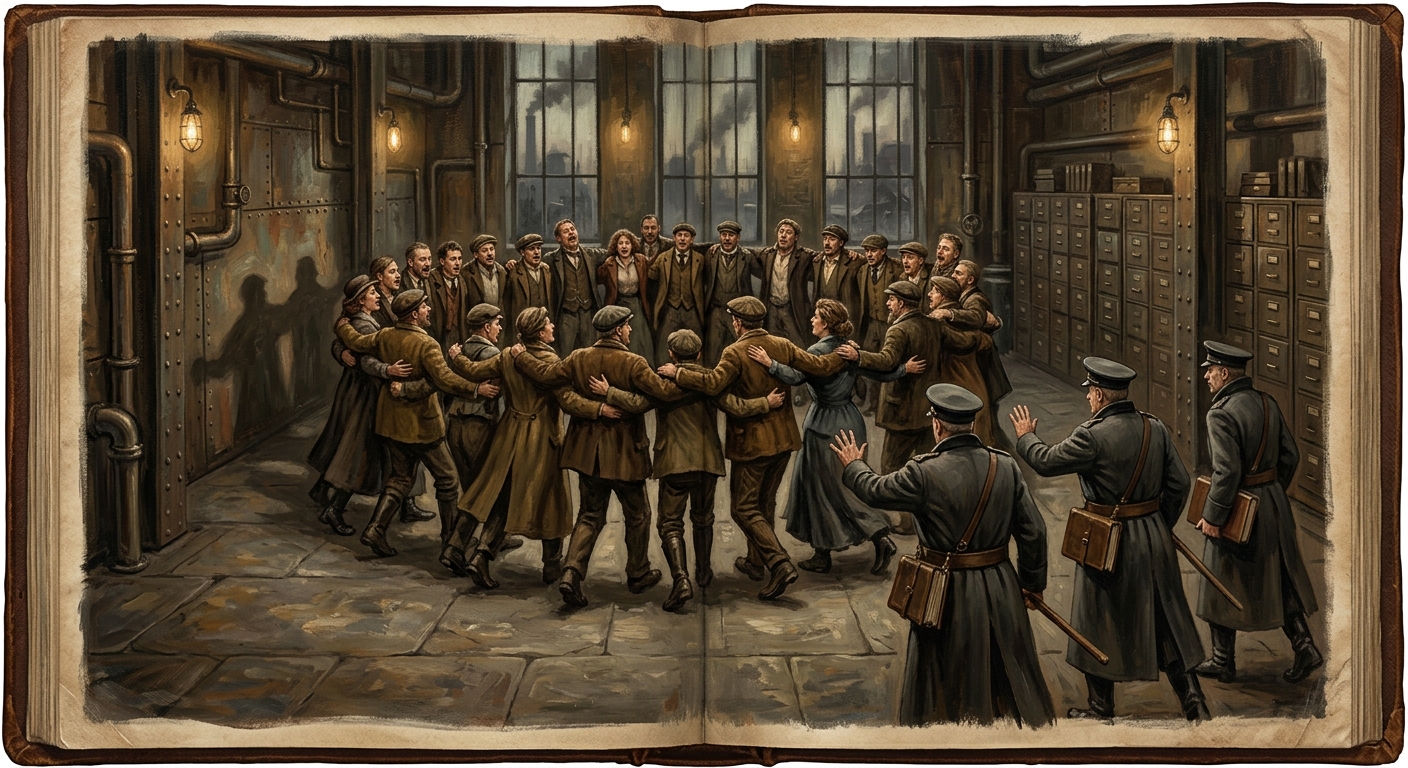
Heresy of Siena
The circle that kept turning after Doctrine entered
The Heresy of Siena began as a harvest dance and became a Bureau problem: a circle of bodies together before any office had authorised joy.
Codex Ref. VII.8.10-141
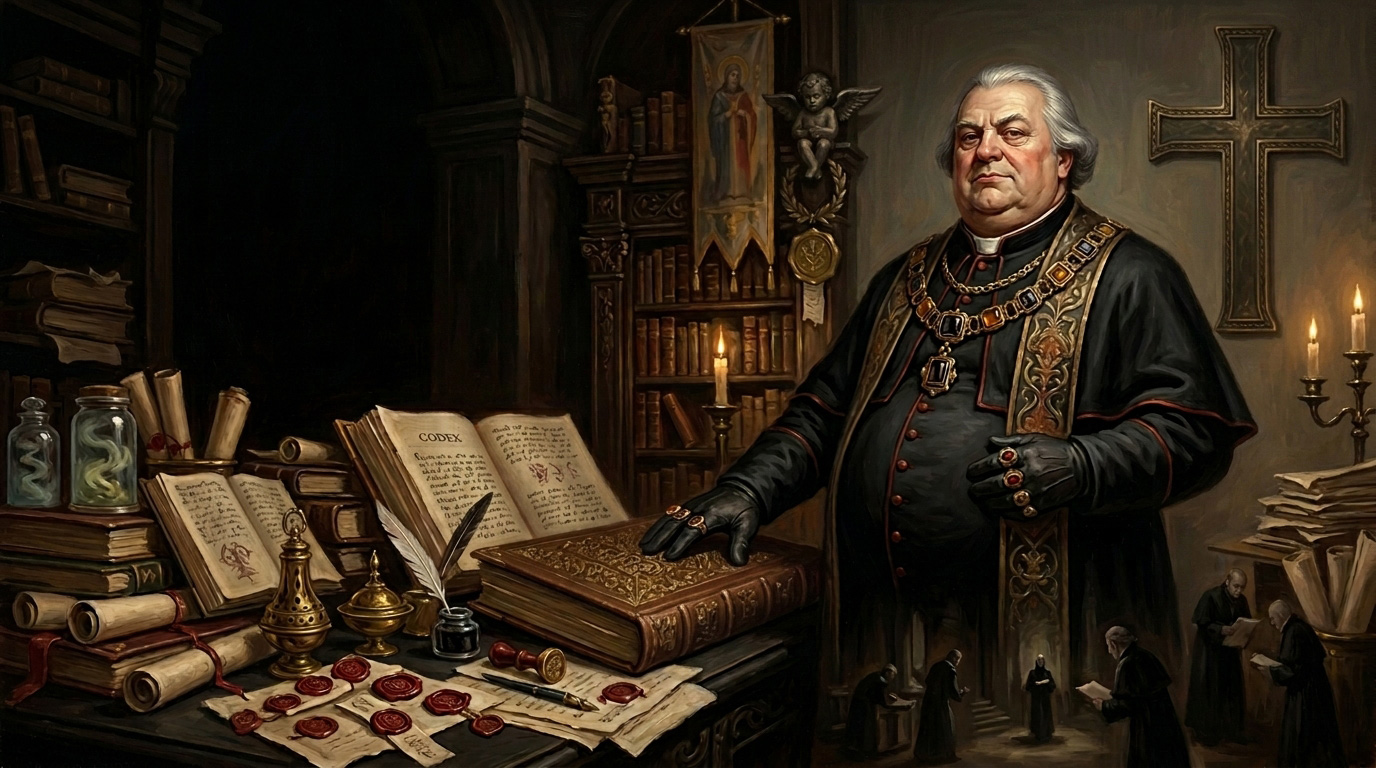
Hieromnemon Valerius Drax
The hand that corrects History before History embarrasses itself
Valerius Drax, Hieromnemon and Warden of the Sacred Ledger, is Doctrine's finest current instrument: prose stylist, ratifier, propagandist, archivist, and living rebuke to committee language.
Codex Ref. III.2.01-201
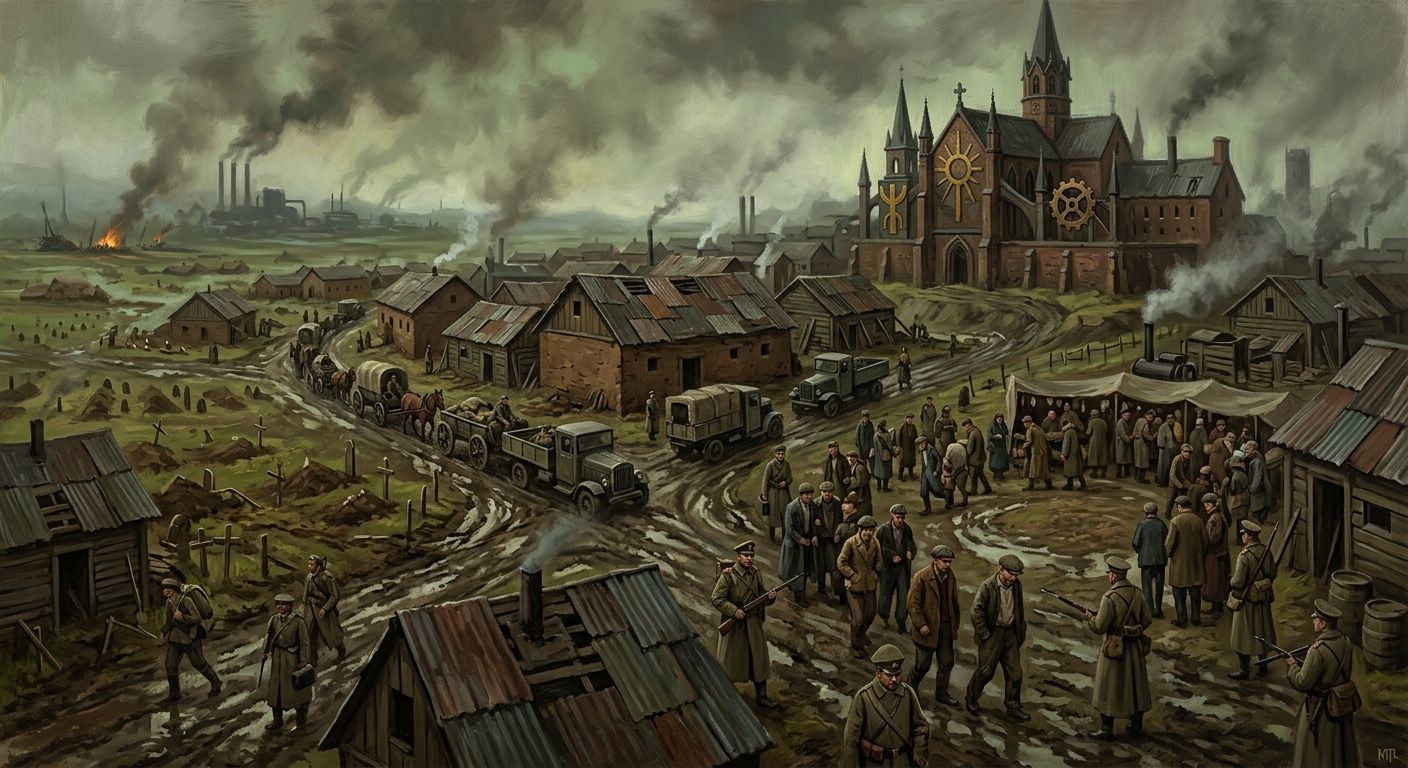
Hinterland
The fifty kilometres that pretend to be rear
The Hinterland is the fifty-kilometre bruise behind the Sagittal Line: farms, wards, graves, depots, markets, and civilians ordered to call occupation protection.
Codex Ref. II.4.09-201
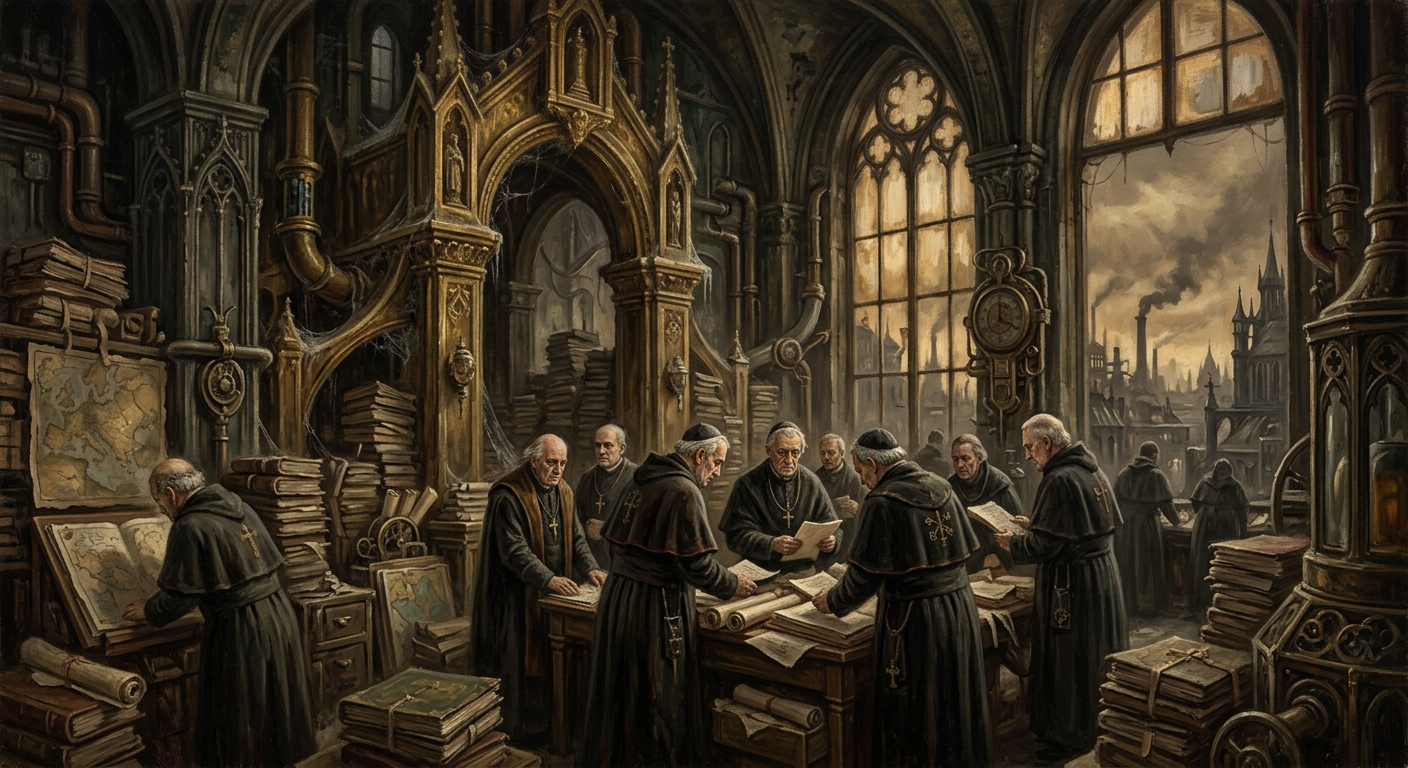
Holy See of Vienna
The dead chair that Strasbourg found too useful to resurrect
The Holy See of Vienna was Christendom's old continental chair: venerable, beautiful, administratively inadequate, dissolved at Regensburg in A.S. 30, and later preserved by Strasbourg as shrine, warning, and useful absence.
Codex Ref. VIII.1.09-030
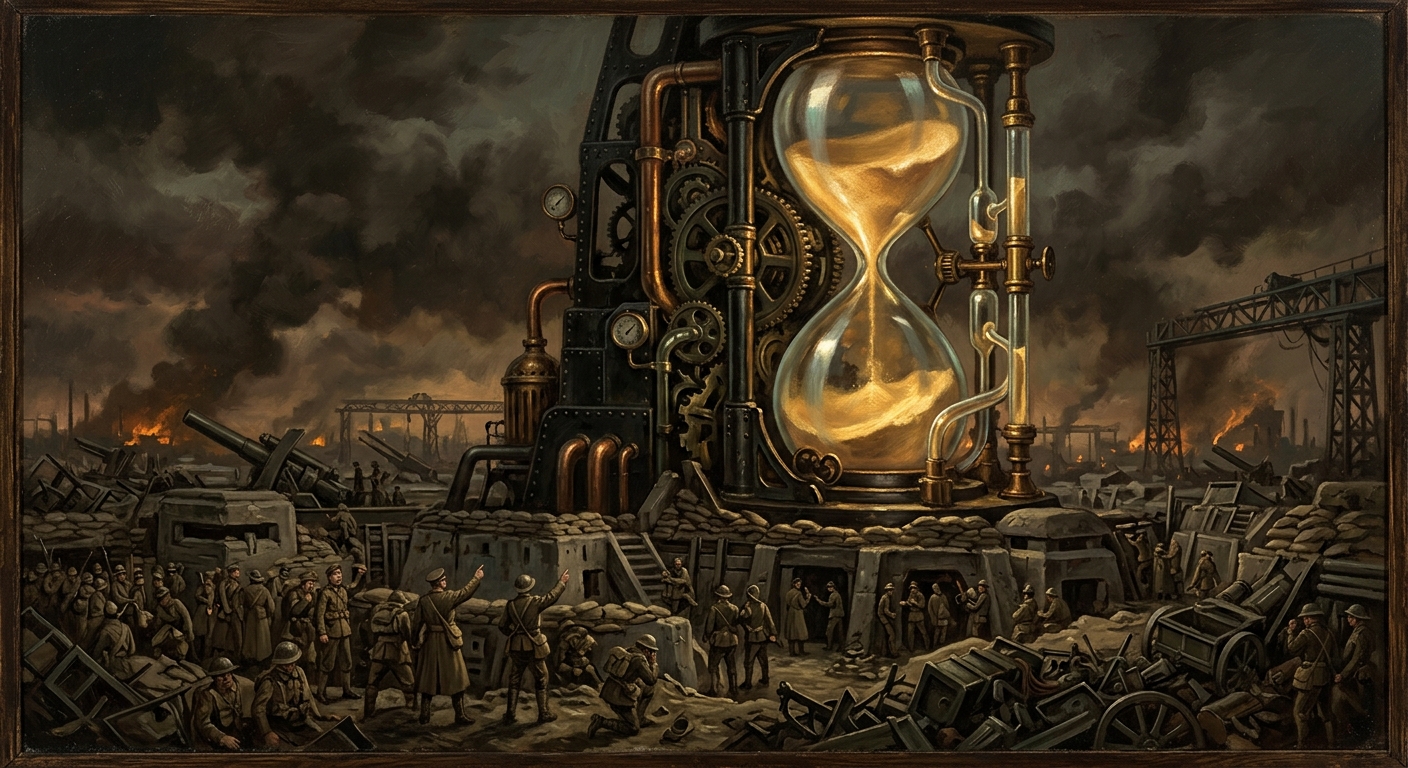
Hourglass Monolith
The engine that steals the second before obedience
The Hourglass Monolith is Syrion's colossal temporal war-engine: seen twice, measured never, and guilty of stealing the moment in which men obey.
Codex Ref. IV.1.07-134
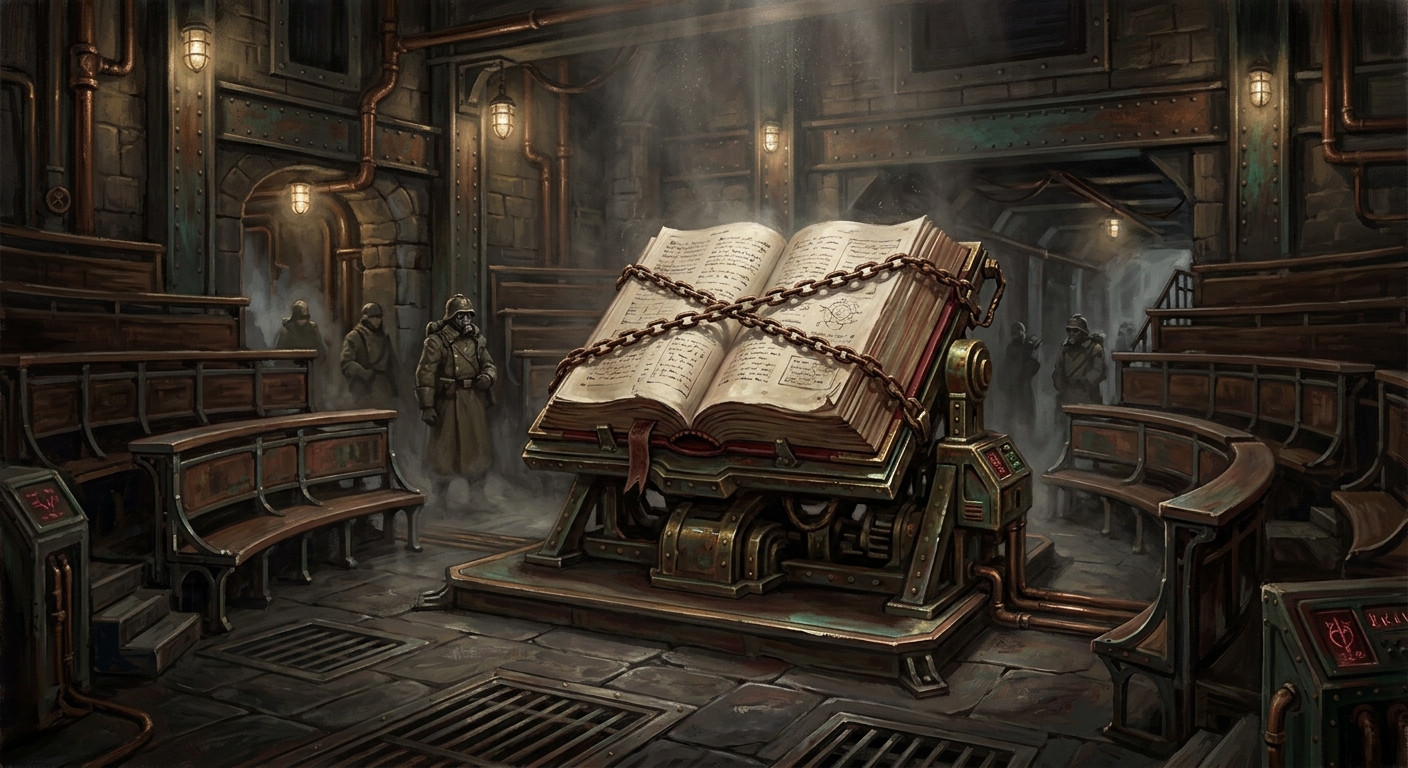
Index Damnatus Chamber
The room where forbidden paper teaches obedience to look away
Principal room of the Vault of Silences beneath Strasbourg's Basilica, where the Index Damnatus remains chained open, watched by benches that never learned mercy.
Codex Ref. II.2.02-004
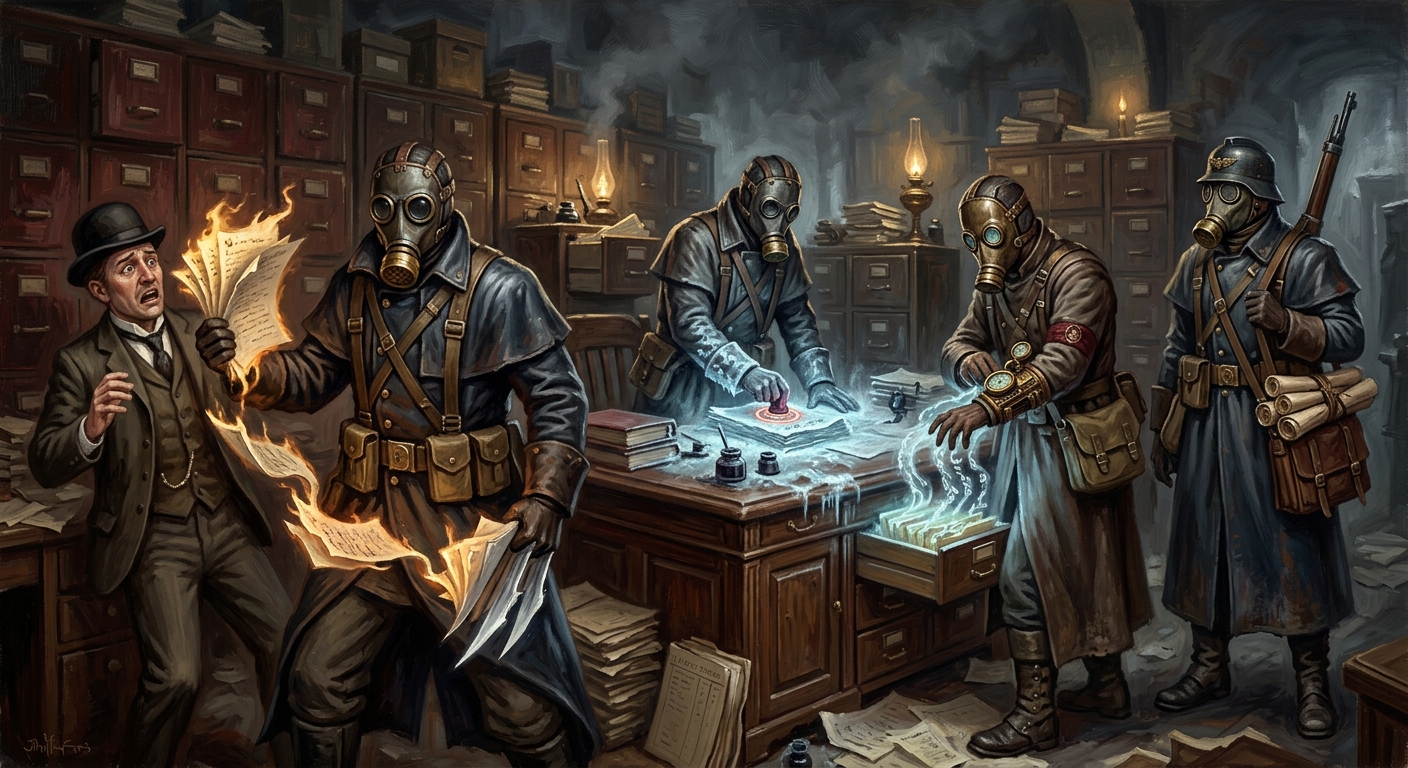
Indiction Shadows
The mask, the writ, and the courtesy of procedural terror
The Indiction Shadows are masked Bureau of Records audit-operatives whose writs freeze rooms, suspend names, retrieve hostile files, and make paperwork behave like a knife with witnesses.
Codex Ref. VIII.1.06-001
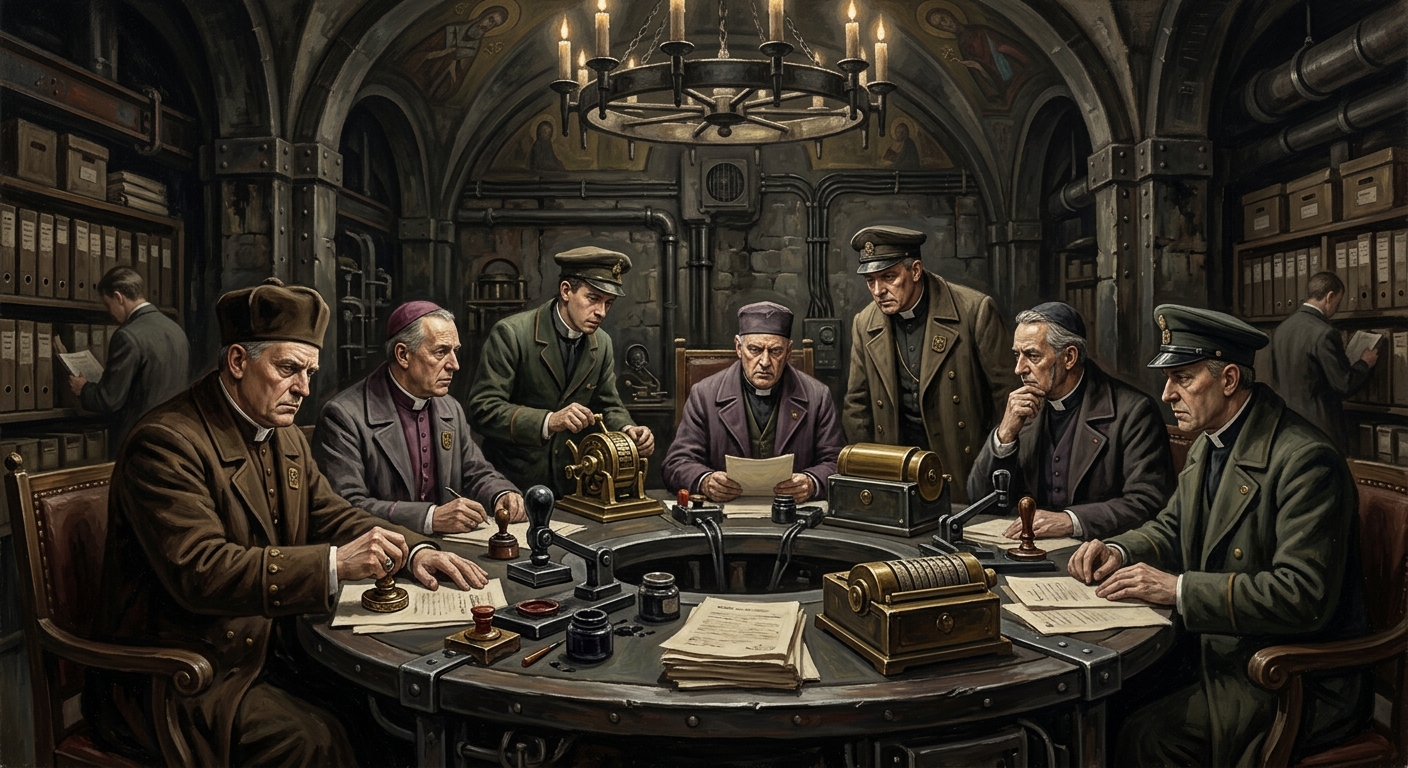
Inner Circle
Seven knives pointed inward, and Europe calls the locked box government
The Inner Circle is the Synod's highest chamber: seven Seal authorities locked in Strasbourg beneath the Basilica, manufacturing unanimity from obstruction, fear, rotating stamps, clerks.
Codex Ref. XIII.1.05-090
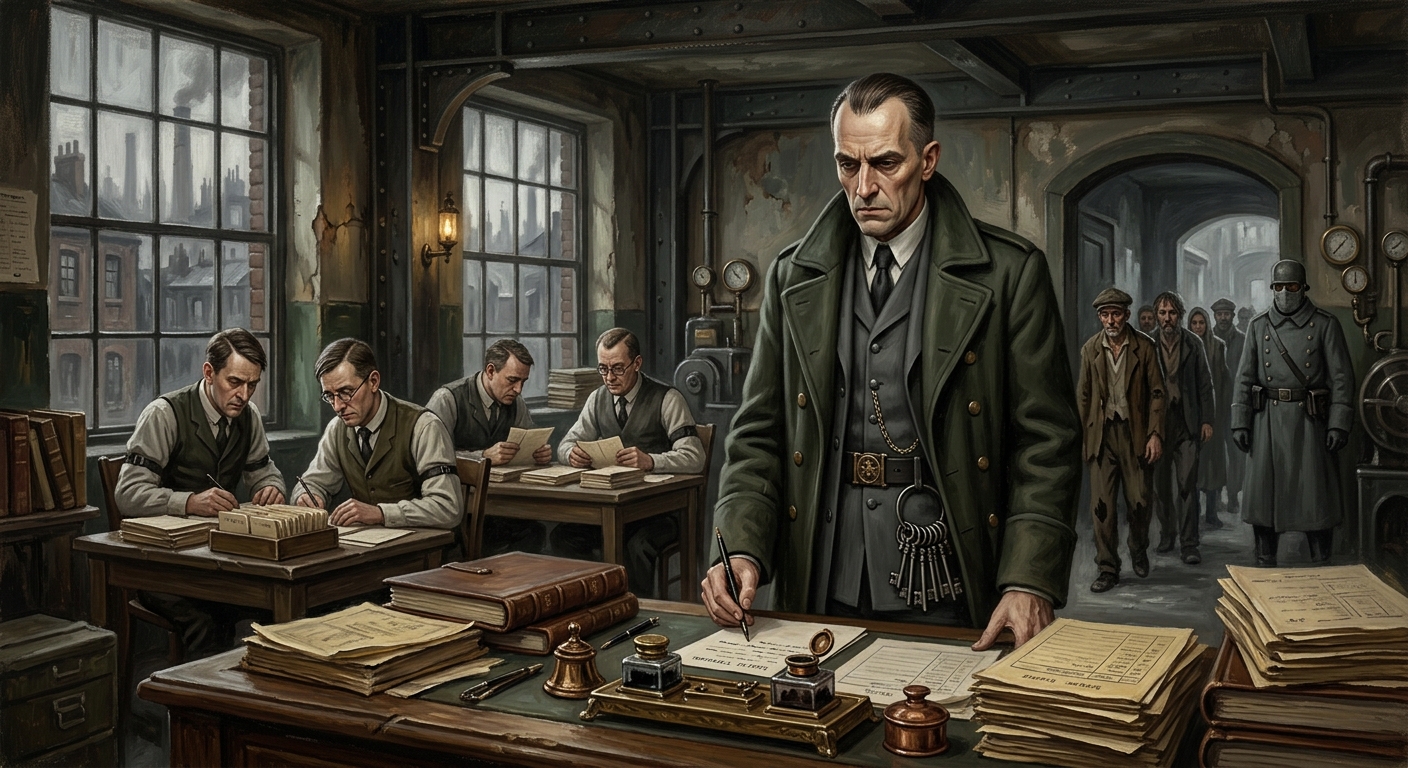
Kaspar Thenm
The prison warden who taught the Synod to number beds before souls
Kaspar Thenm, first officer of the Bureau of Settlement, turned post-Concordat refugees into addresses with a warden's key, three clerks, and no talent for mercy.
Codex Ref. III.2.01-014
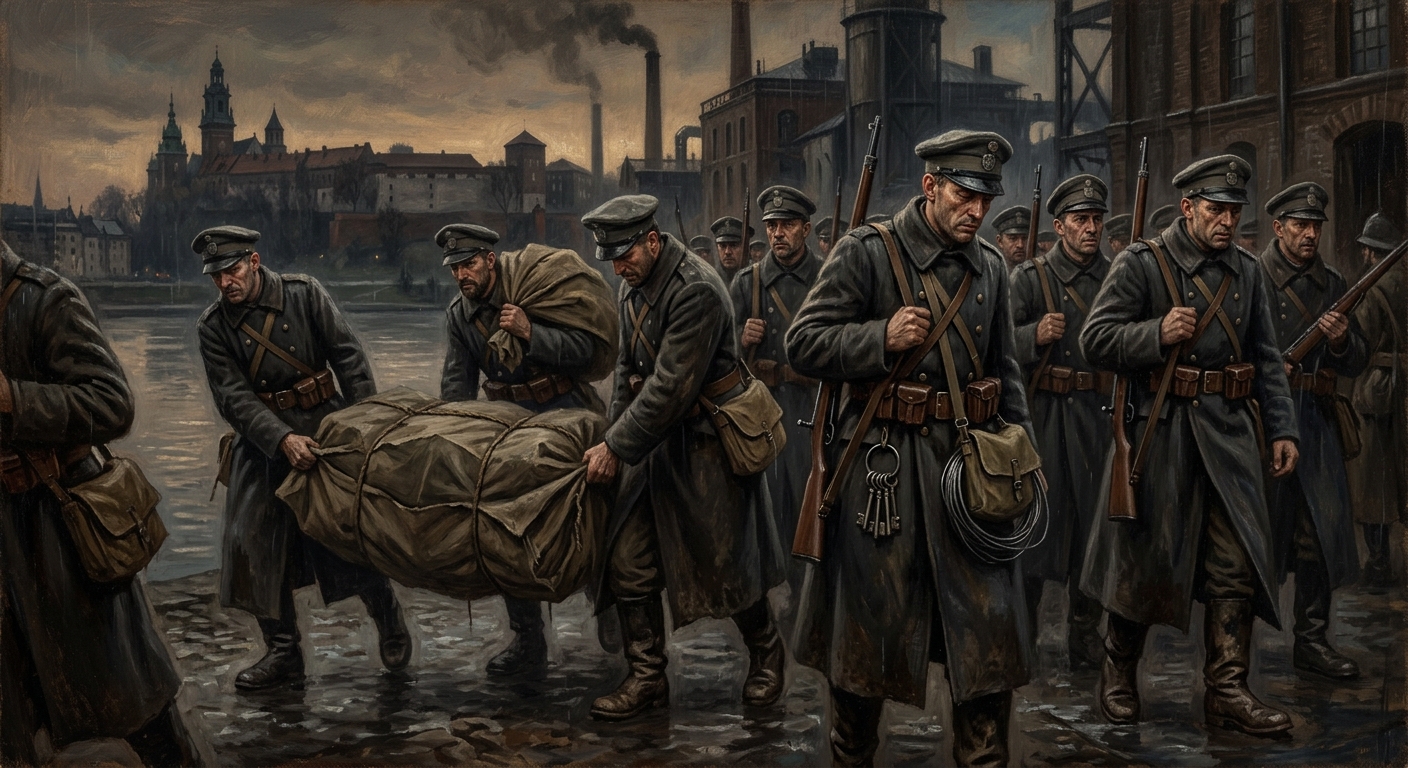
Kraków Secular Guard
The civic hand that made atrocity local
The Kraków Secular Guard was municipal obedience with wire in its pouch: local men, local keys, and ordinary boots carrying Brechtold's atrocity to the Vistula.
Codex Ref. I.1.04-018
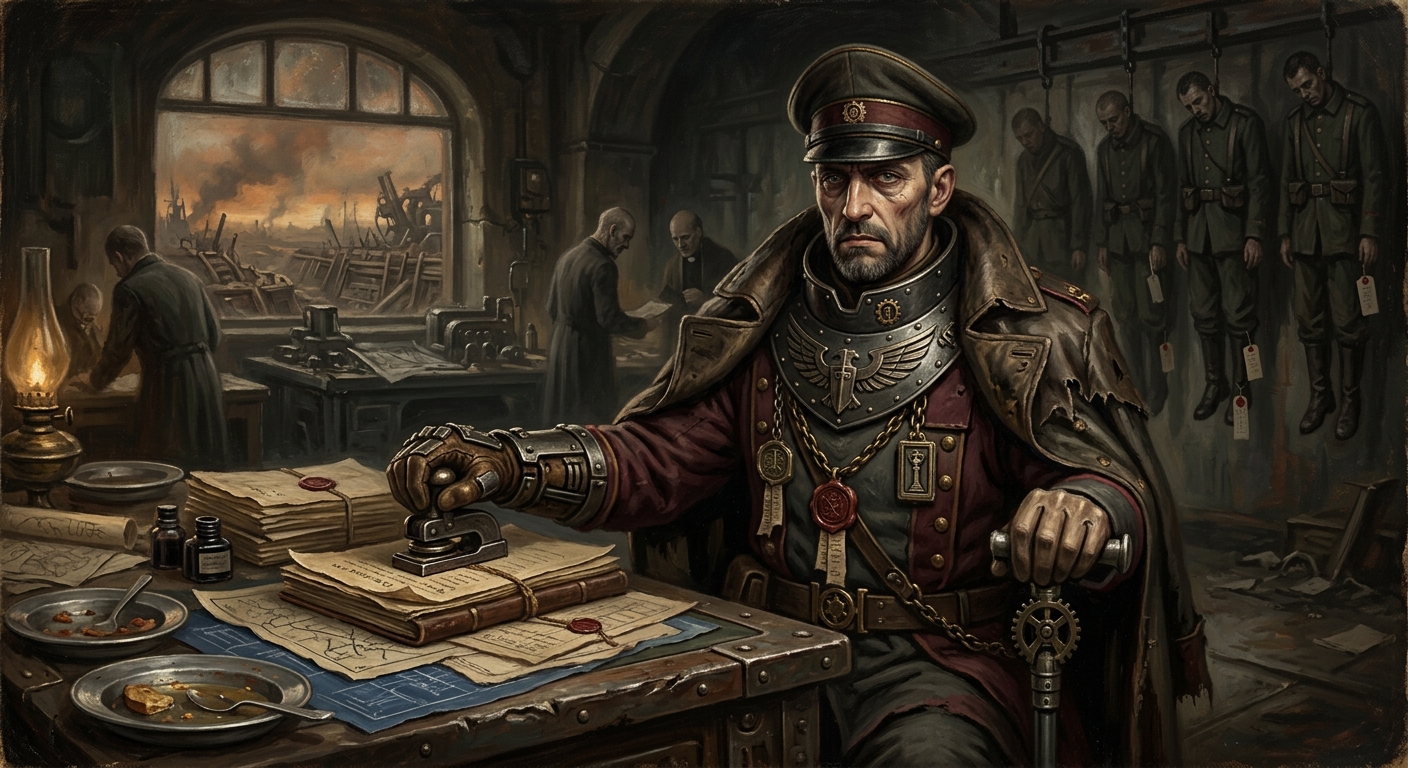
Legate Seraphinus of Lyon
The stomach is a bell, and this saint rang it inward
Seraphinus of Lyon turned fasting into field doctrine, hanged generals for broth, and proved that hunger can carry a seal.
Codex Ref. III.2.04-001
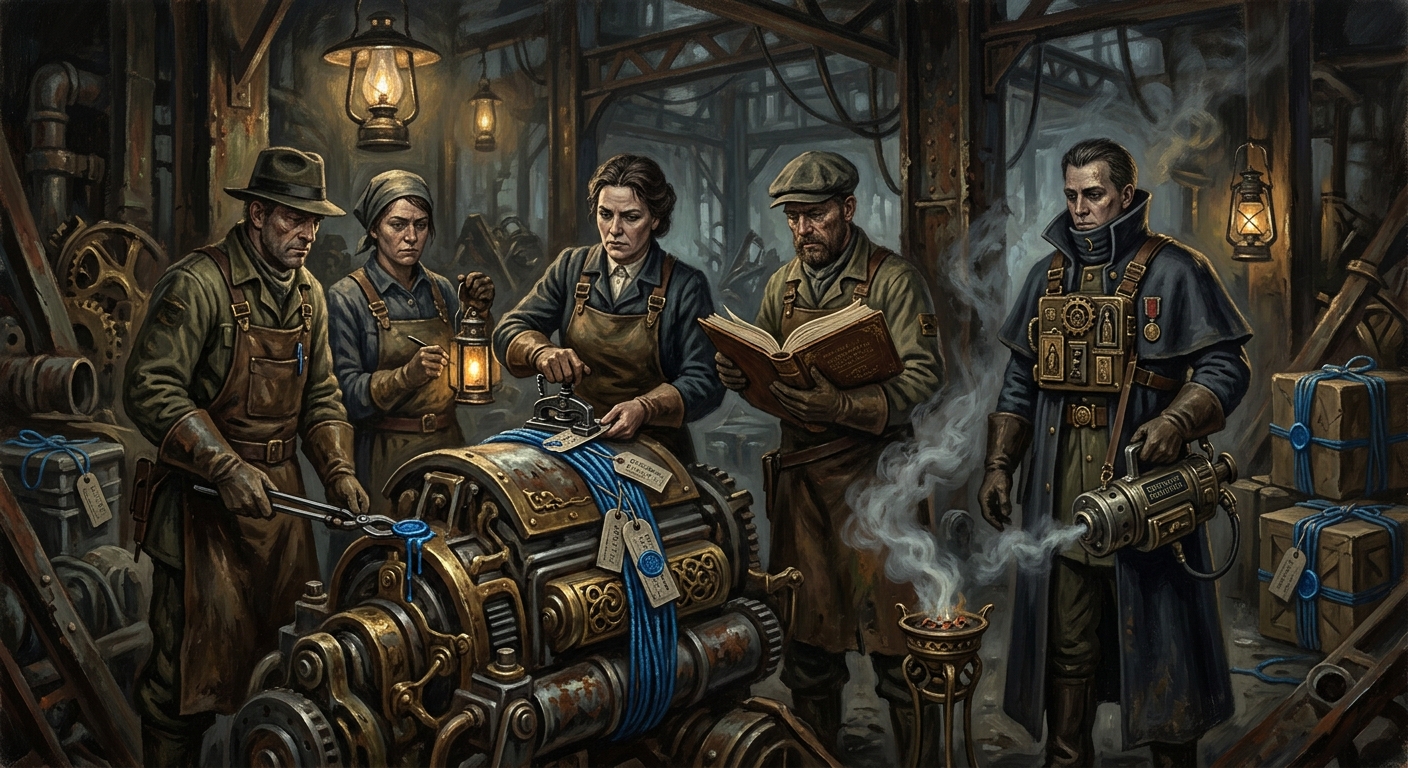
Licensed Recoverers
Blue cord, clean hands, and slowness witnessed into speed
Bureau of Relics-sanctioned Reliquary Salvagers whose blue wax cords, custody tags, and Contract Sanctifiers turned recovery into witnessed law after A.S. 131.
Codex Ref. XII.13.06-001
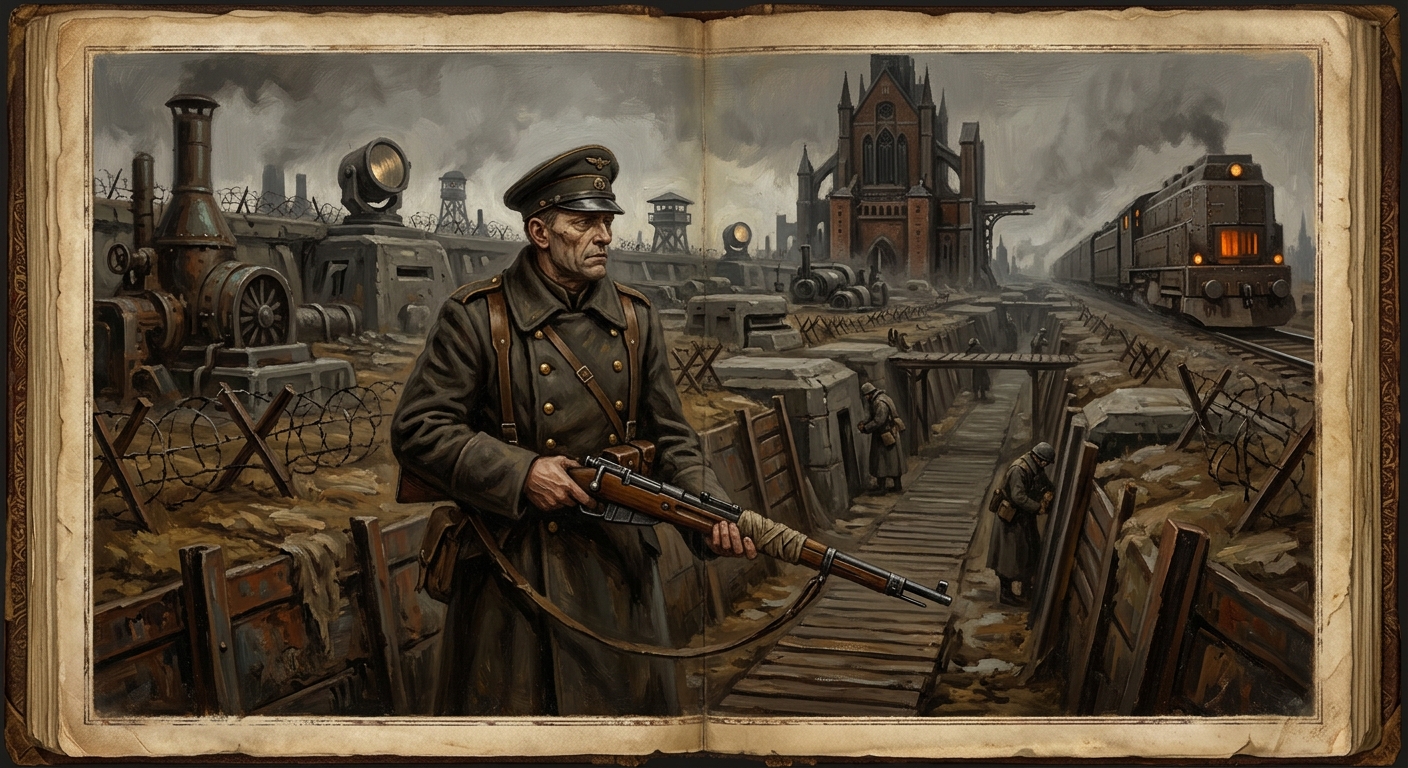
Line
The short word soldiers spend instead of breath
The Line is the soldier's short name for the Sagittal Line: the Baltic-to-Bosphorus membrane where Europe is counted, spent, and kept west.
Codex Ref. II.4.07-065
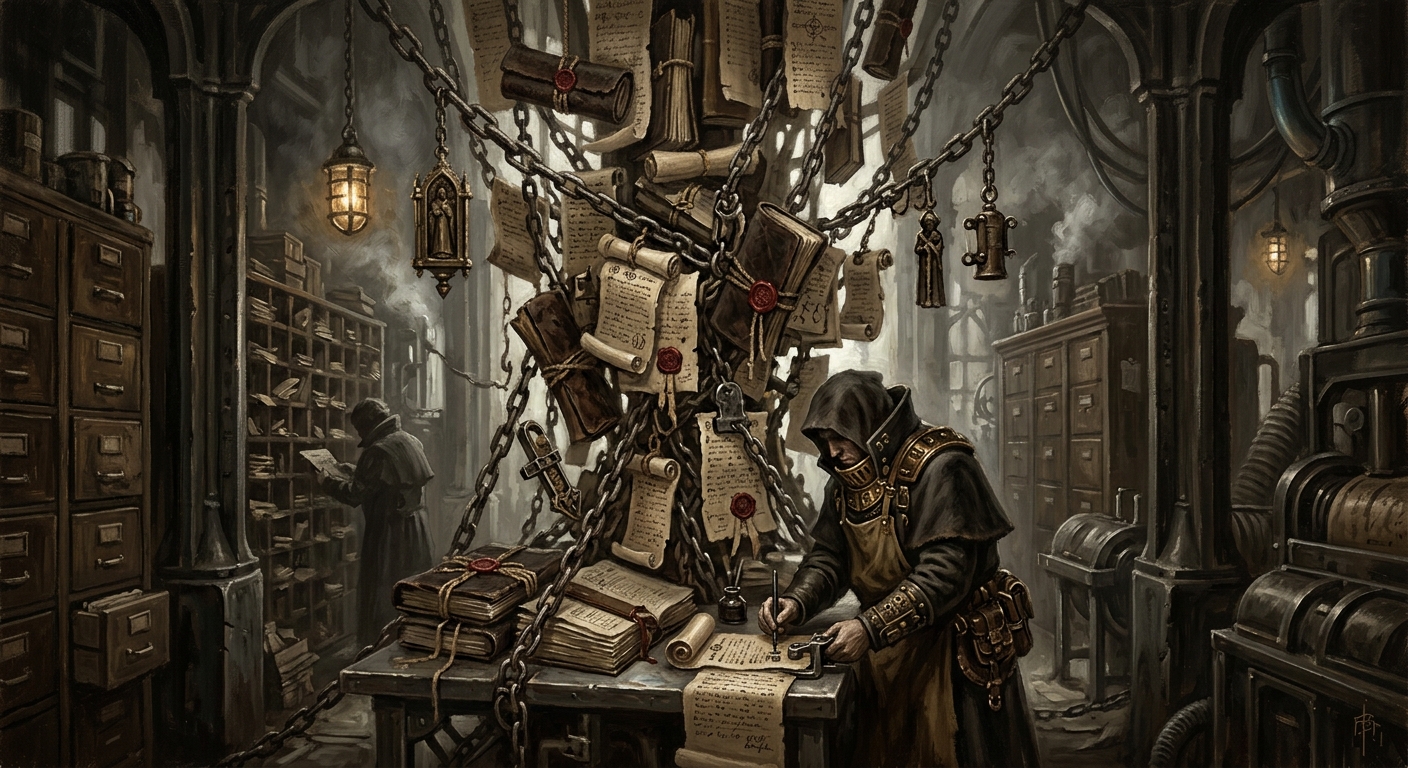
Links
Custody is only a small fastening with authority
Links are the Synod's smallest instruments of custody: iron, ink, oath, route, relic claim, debt, guilt, and every useful fastening in between.
Codex Ref. XIII.1.84-201
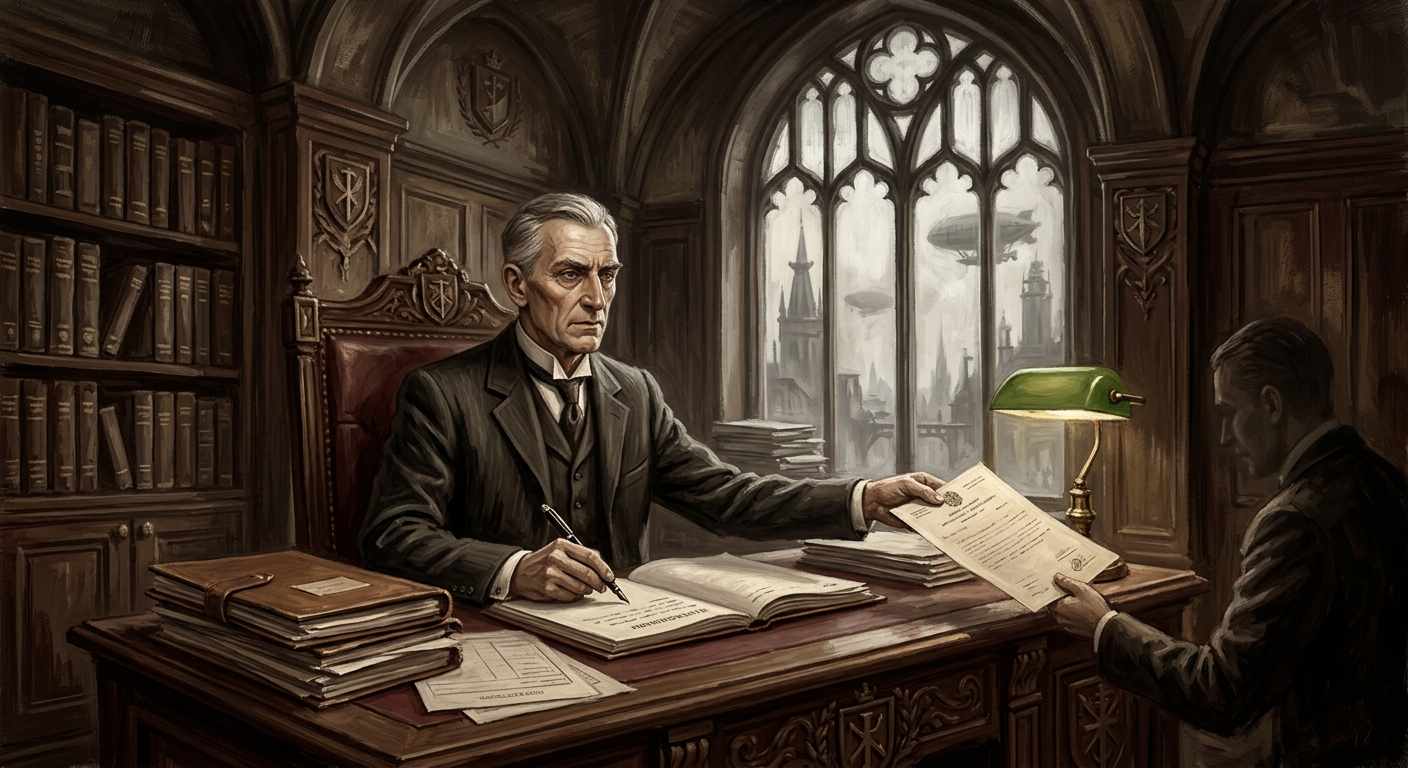
Lord-Warden Eccleston
Courtesy sharpened until it can cut a Bureau in half
Eccleston, British ambassador in Strasbourg, receives every Synod memorandum with perfect courtesy and returns obstruction in the shape of proper procedure.
Codex Ref. III.2.01-023
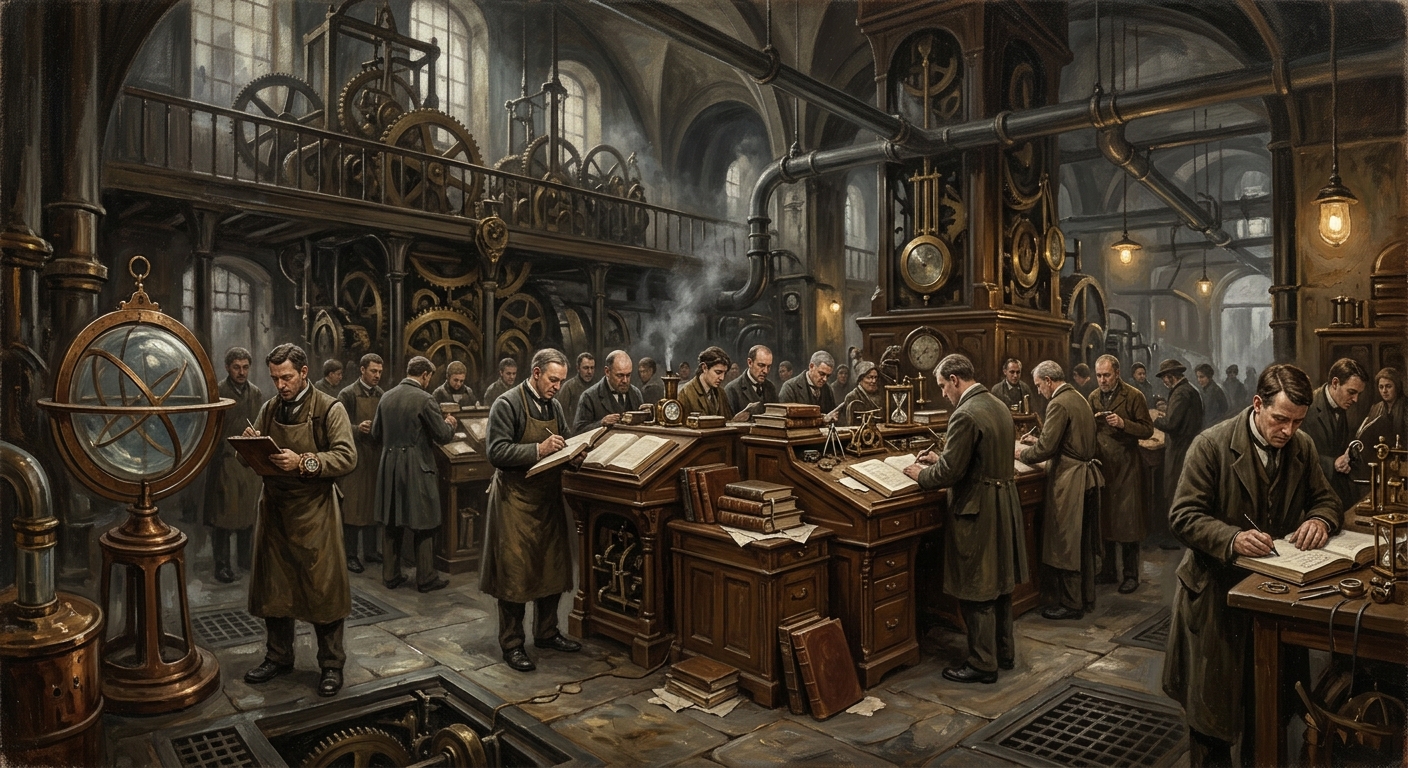
Lyon Academy of Horological Sciences
Where clocks are taught to testify without poetry
The Lyon Academy trains Hourglass adepts, clock-priests, and report-writing survivors: a useful suspect where seconds are measured before officers care.
Codex Ref. VIII.9.03-136
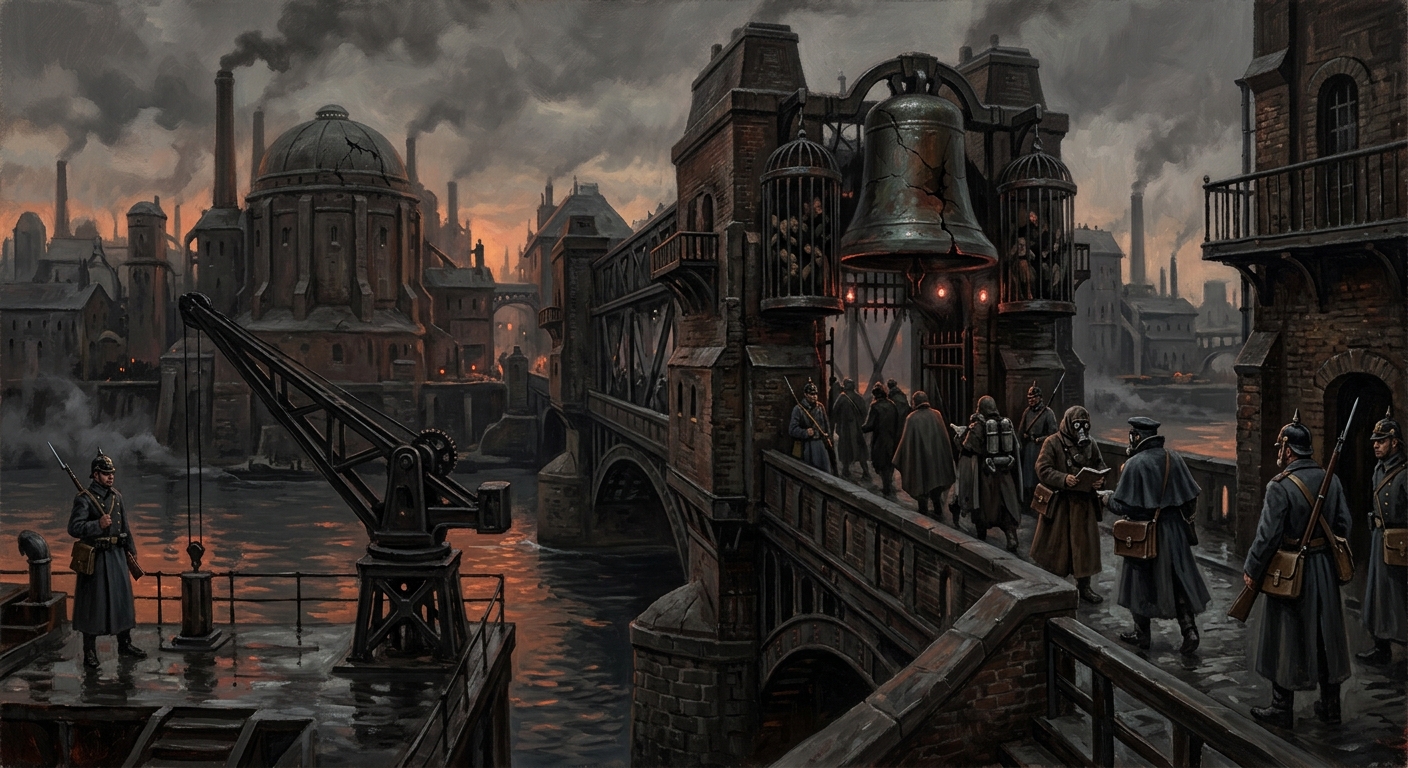
Mainz
The Rhine city where tolls, bells, and throats keep accounts
Mainz is the Synod's Rhine throat: a bridge-toll city of Augustinus, Hildegarde, Severian, cracked bells, obedient ledgers, and cages that still hum.
Codex Ref. II.2.02-003
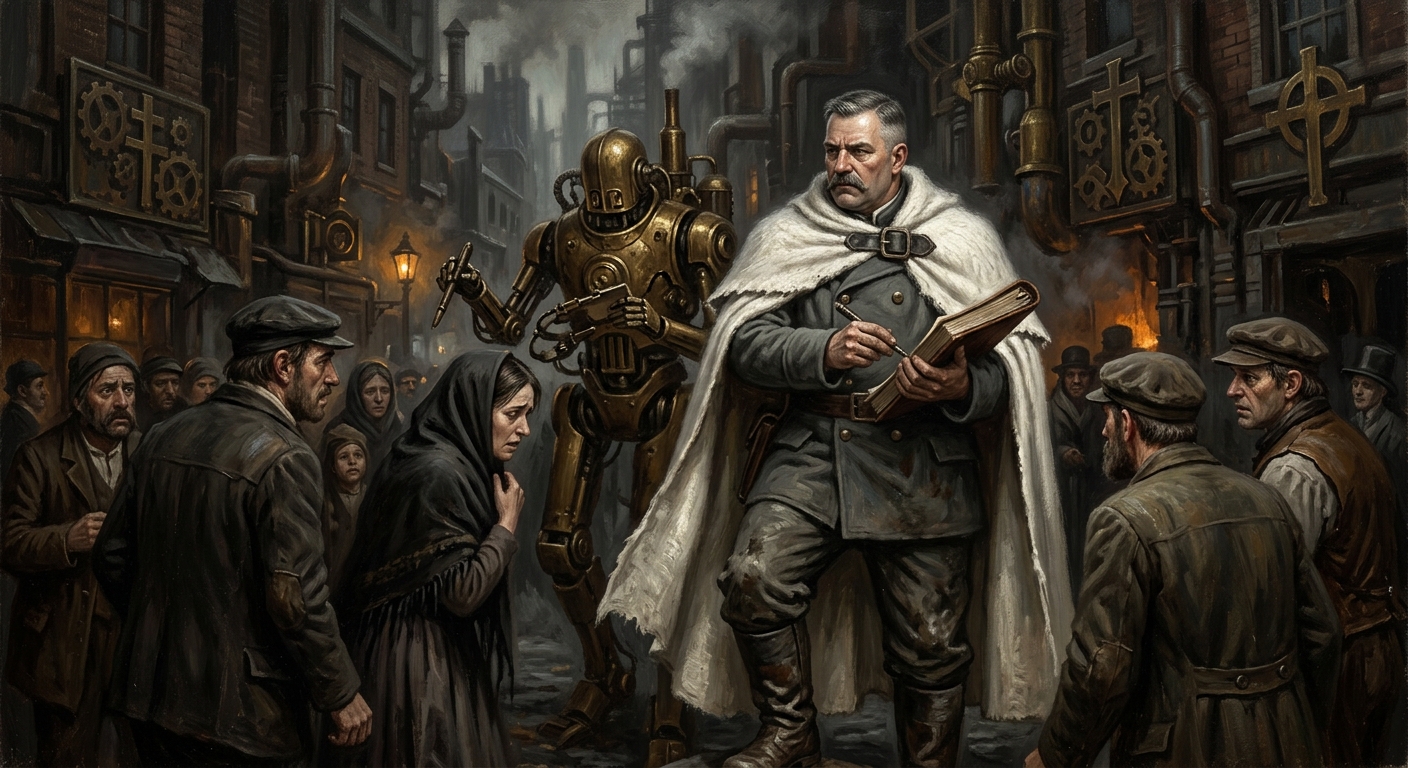
Mandatum Candoris
The decree by which terror learned to wear white
Hildegarde of Mainz's A.S. 62 decree requiring visible white mantles for Bureau of Purity field agents, making correction legible before it struck.
Codex Ref. XIII.1.88-062
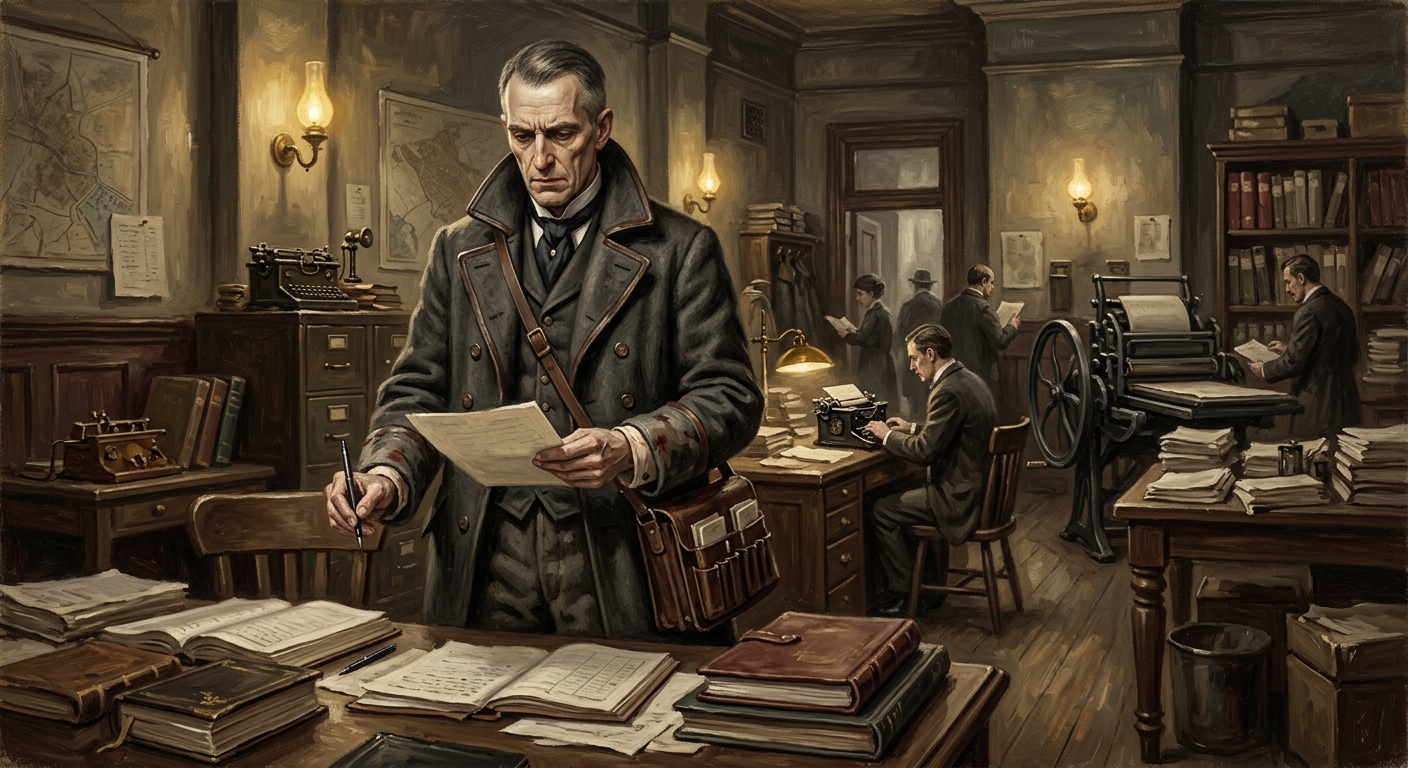
Mantle Examiner
The white cloth is clean only before it learns its work
Mantle Examiners are the working rank of the White-Mantled Inquisitors: raid officers, interrogators, seizure clerks, and daily editors of frightened speech.
Codex Ref. XII.49.02-001
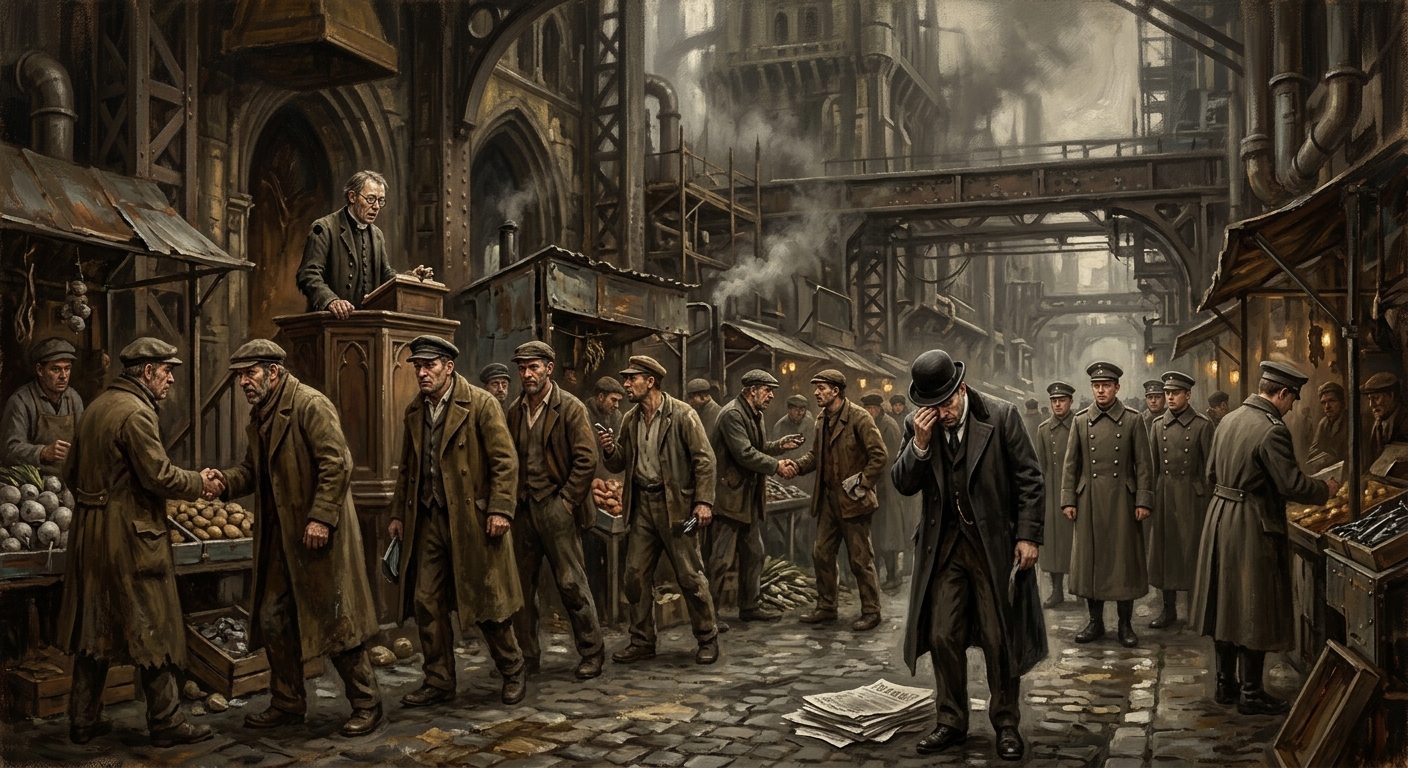
Market Drift Years
When Tuesday briefly defeated theology
The A.S. 98–103 Rhineland civic-devotional decline in market Creed recitation, turnip theology, barter-oaths, and the embarrassment that birthed the Street-Vicar Corps.
Codex Ref. VII.8.10-025
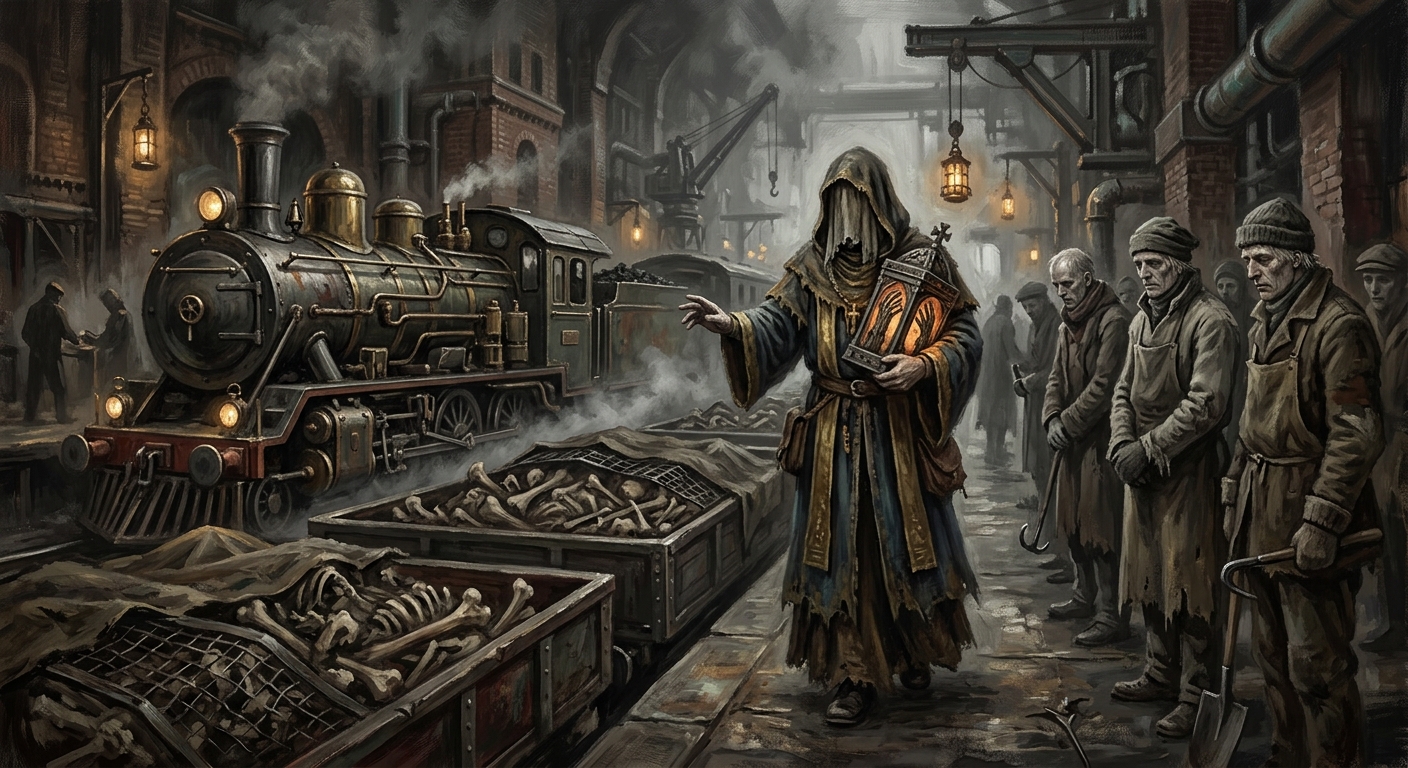
Marrow-Saint Elen
The hooded patron invented because [[josek-of-dueren|Josek]] had a face
Marrow-Saint Elen, unauthenticated but canonically licensed patron of Ossuary-Draft Handlers, blesses condemned transport by carrying a reliquary while showing no face.
Codex Ref. III.2.01-132
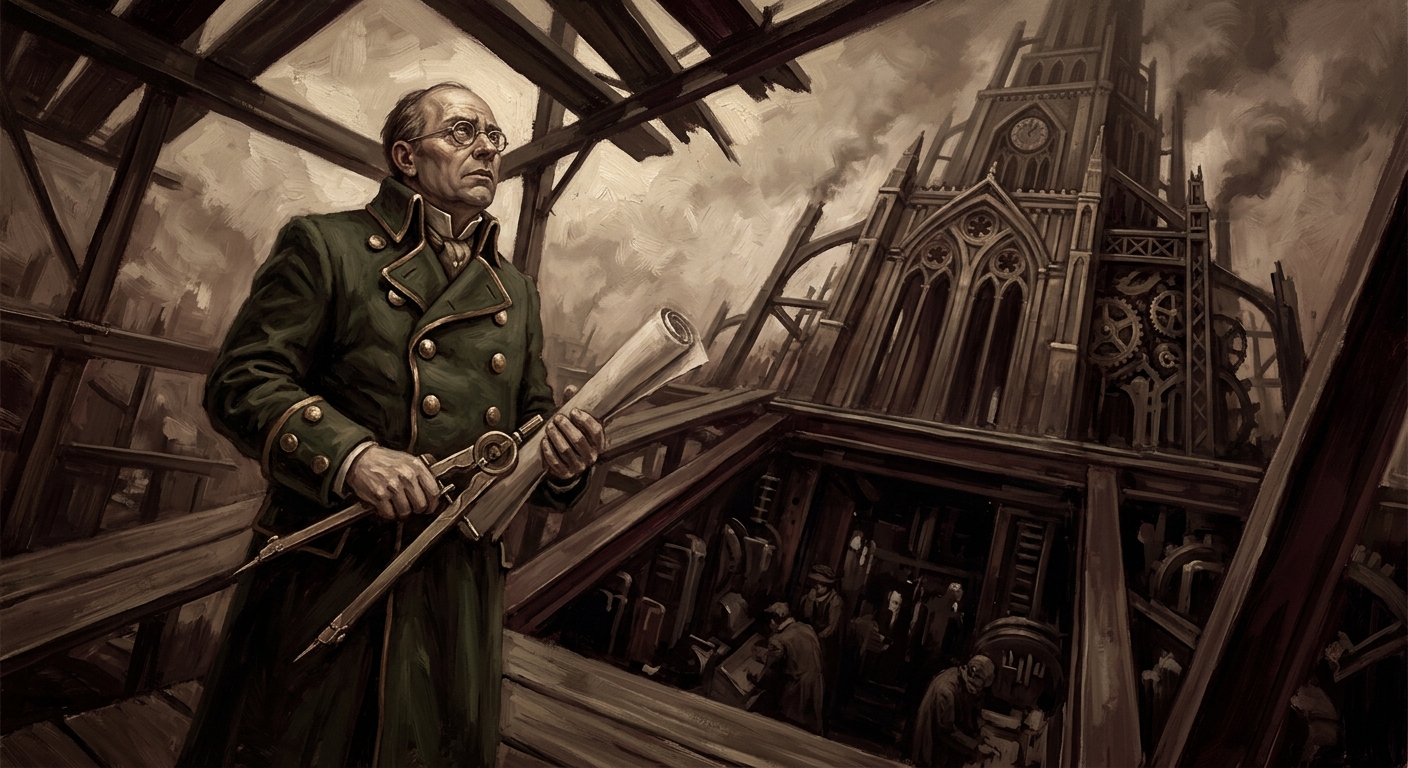
Matthias Kammler
The man who made Doctrine climb stairs
Matthias Kammler, architect of the Tower of the Quill, gave the Bureau of Doctrine a pen of stone and was repaid by height, honours, and a fatal scaffold.
Codex Ref. III.2.01-150
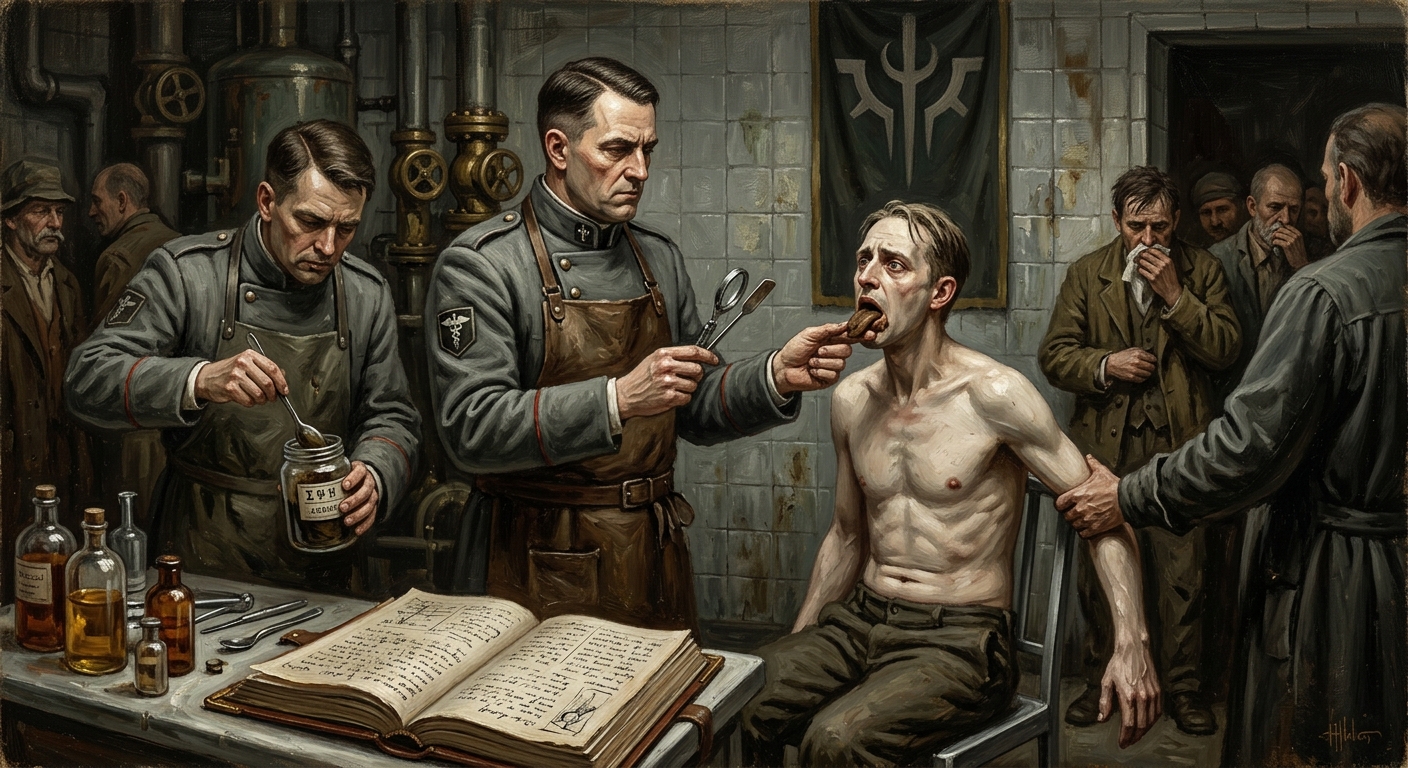
Medical Protocol 9-C
The little iron tooth that makes hunger testify
Medical Protocol 9-C is Medicine's iron tooth: a quarantine rite that turns appetite, refusal, dreams, and mud under the tongue into evidence.
Codex Ref. XIII.1.91-134
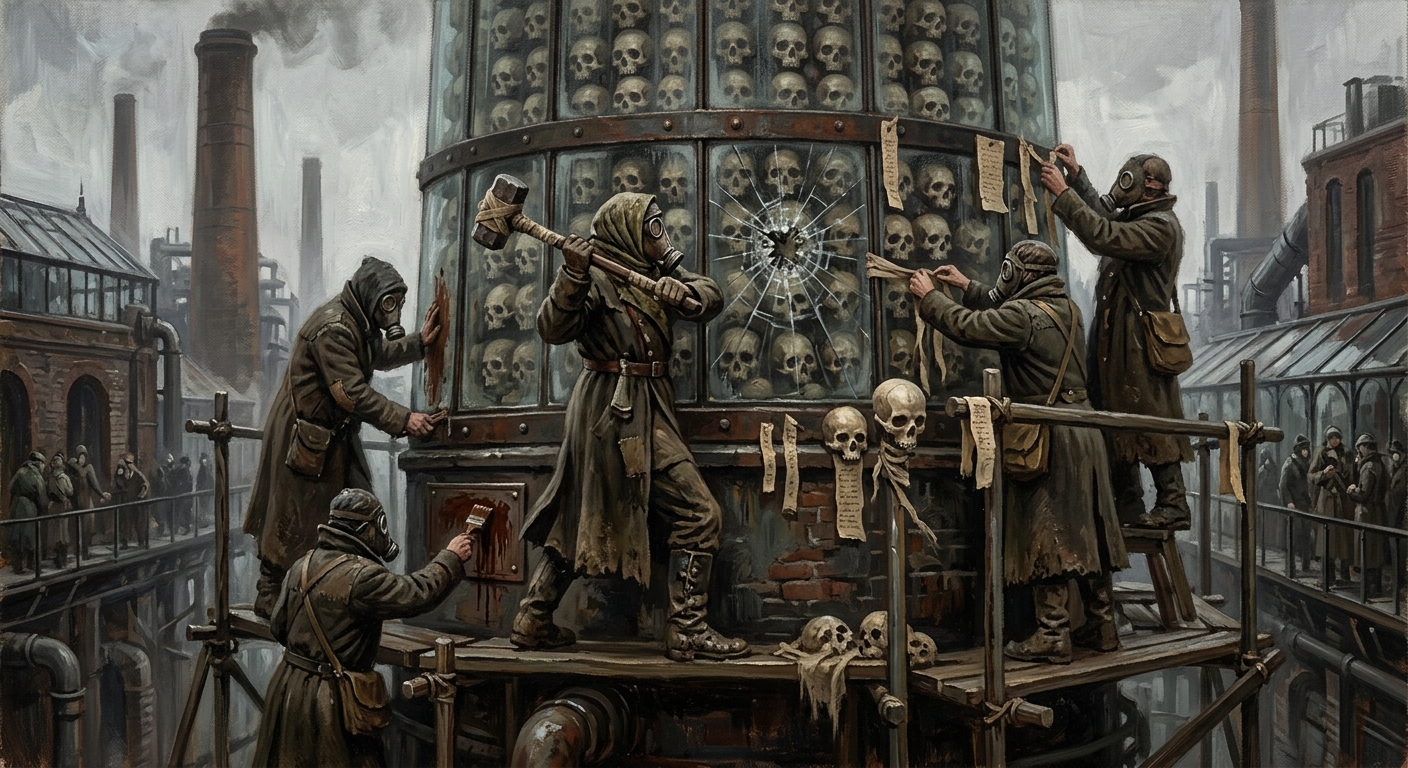
Mercy Cults (Stack Vandals)
The blank is a mouth, and mercy requires licence
Indigenous Synod parish heresies that vandalise Glass Skull Stacks with wrapped hammers, prayer-strips, and blank skulls, arguing that public condemnation steals the Creator's final judgement.
Codex Ref. XI.1.07-001
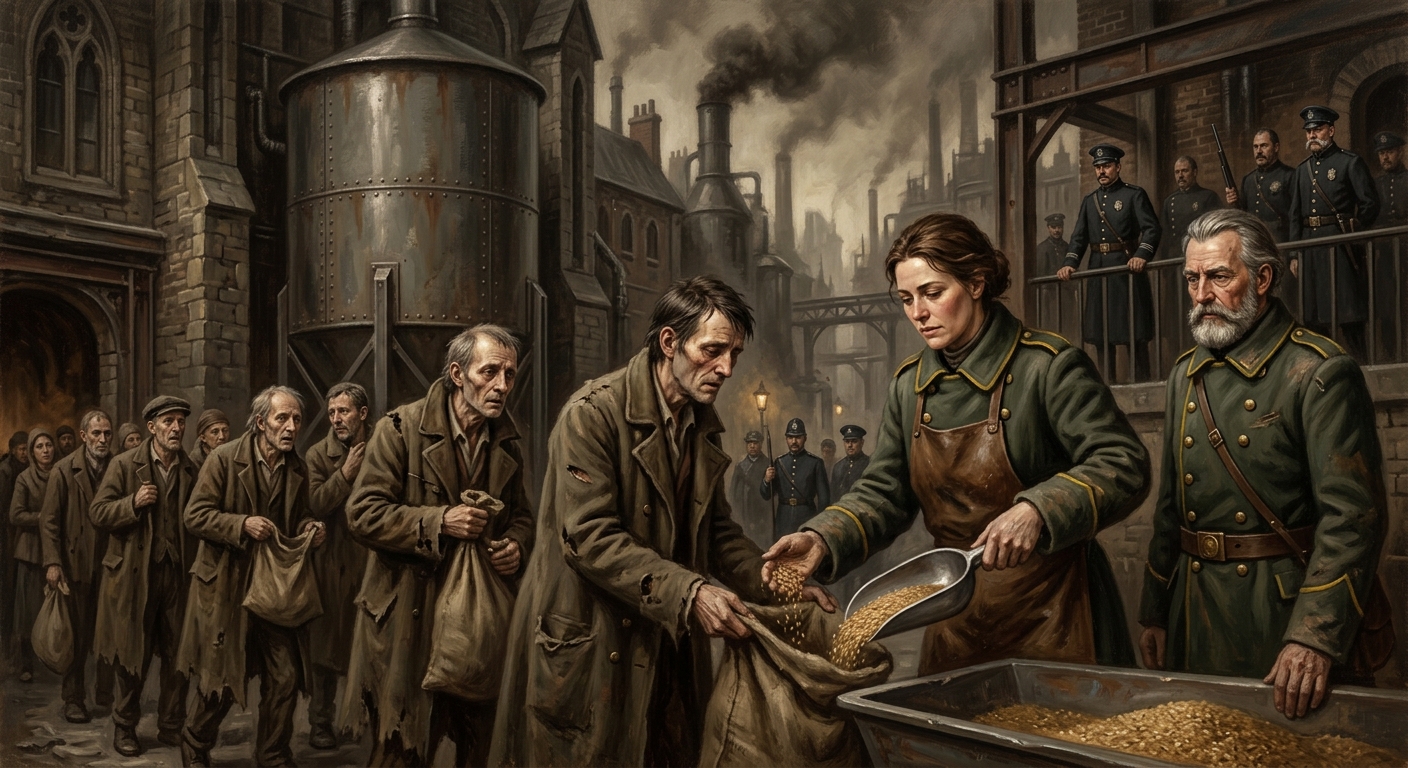
Mercy Keepers
The softest heresy is always the one that feeds before it counts
Mercy Keepers are the beloved, ruinous Grain Keeper faction that gives bread without fee, receipt, or permission, thereby offending every profitable theology.
Codex Ref. XII.13.04-001

Mercy Vicars
The quiet hand still writes names
Internal Street-Vicar faction favouring private correction, whispered Creed repair, delayed marking, and mercy so thoroughly filed that even compassion becomes evidence.
Codex Ref. VIII.1.07-001
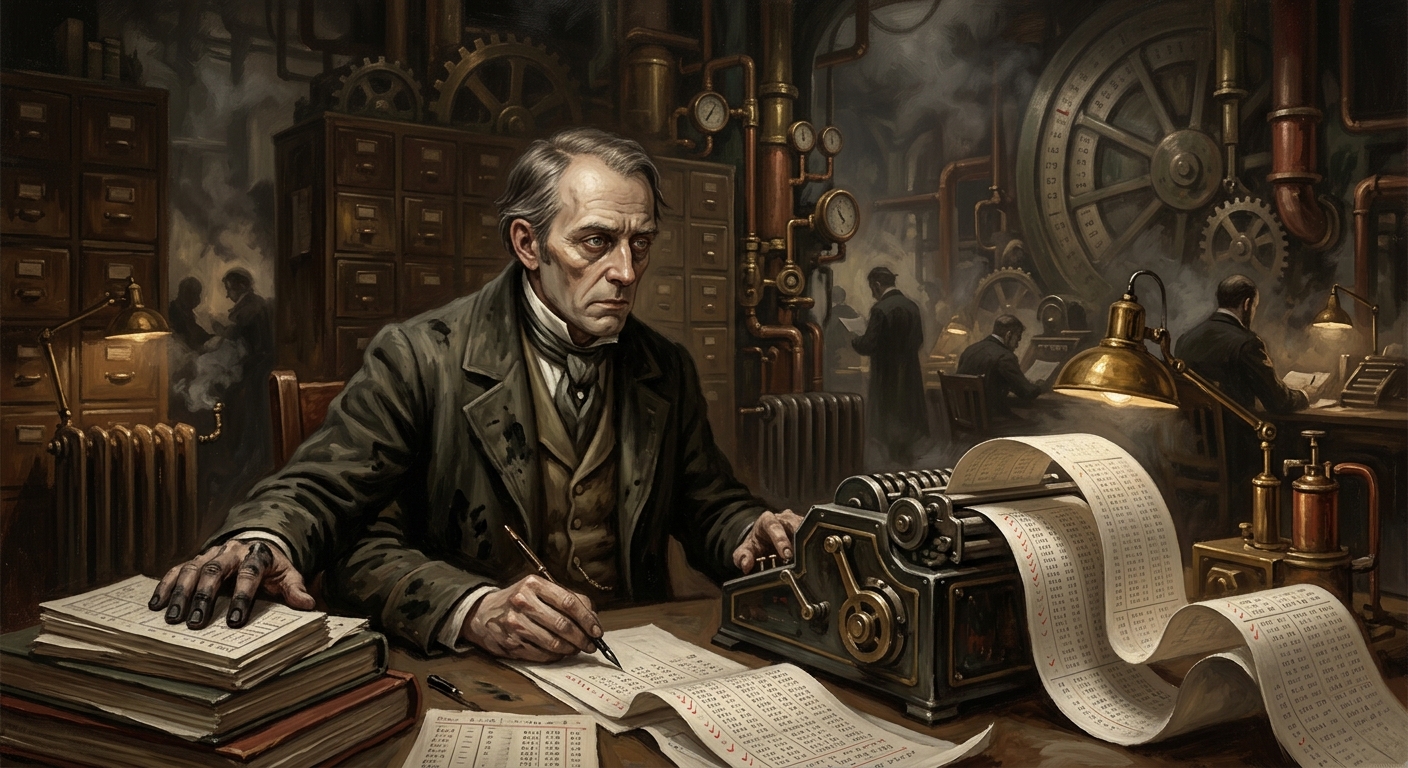
Metric Saturation Syndrome
The holy arithmetic enters the skull and finds office space
Internal medical classification for Auditors gone to numbers: the service deformation by which citizens become compliance probabilities before they remain human.
Codex Ref. XIII.1.83-001
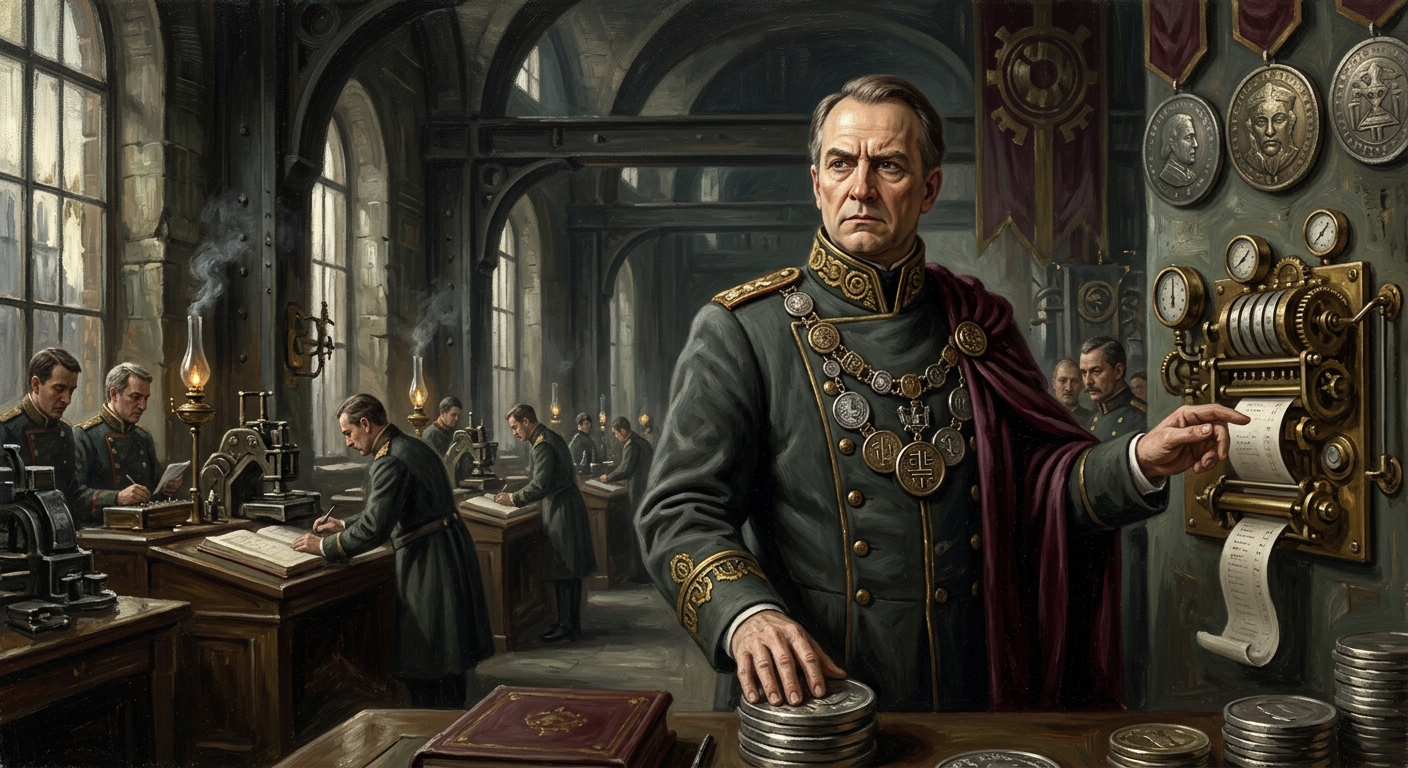
Mint-Prelate Albrecht Sable
He taught the coin to look back
Albrecht Sable made coinage into identity infrastructure: face, name, Ledger account, tax, recall, and accusation flattened into metal.
Codex Ref. III.2.01-094
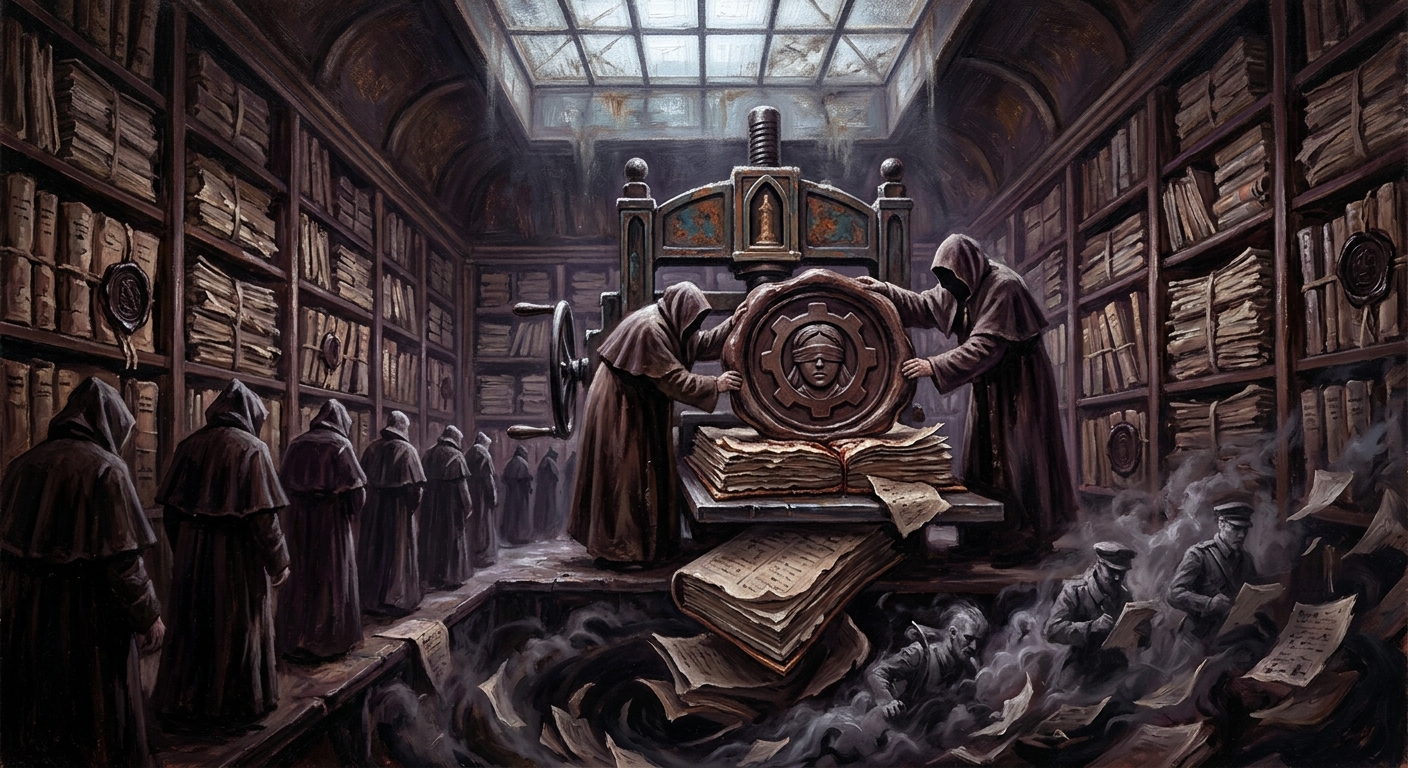
Ninth-Ratification
The seal that forbids analogy because pattern is accusation
Ninth-Ratification is the Synod's highest publicly nameable seal: a doctrine of lawful ignorance for records whose disclosure changes context, office, witness, and history itself.
Codex Ref. XIII.1.76-103
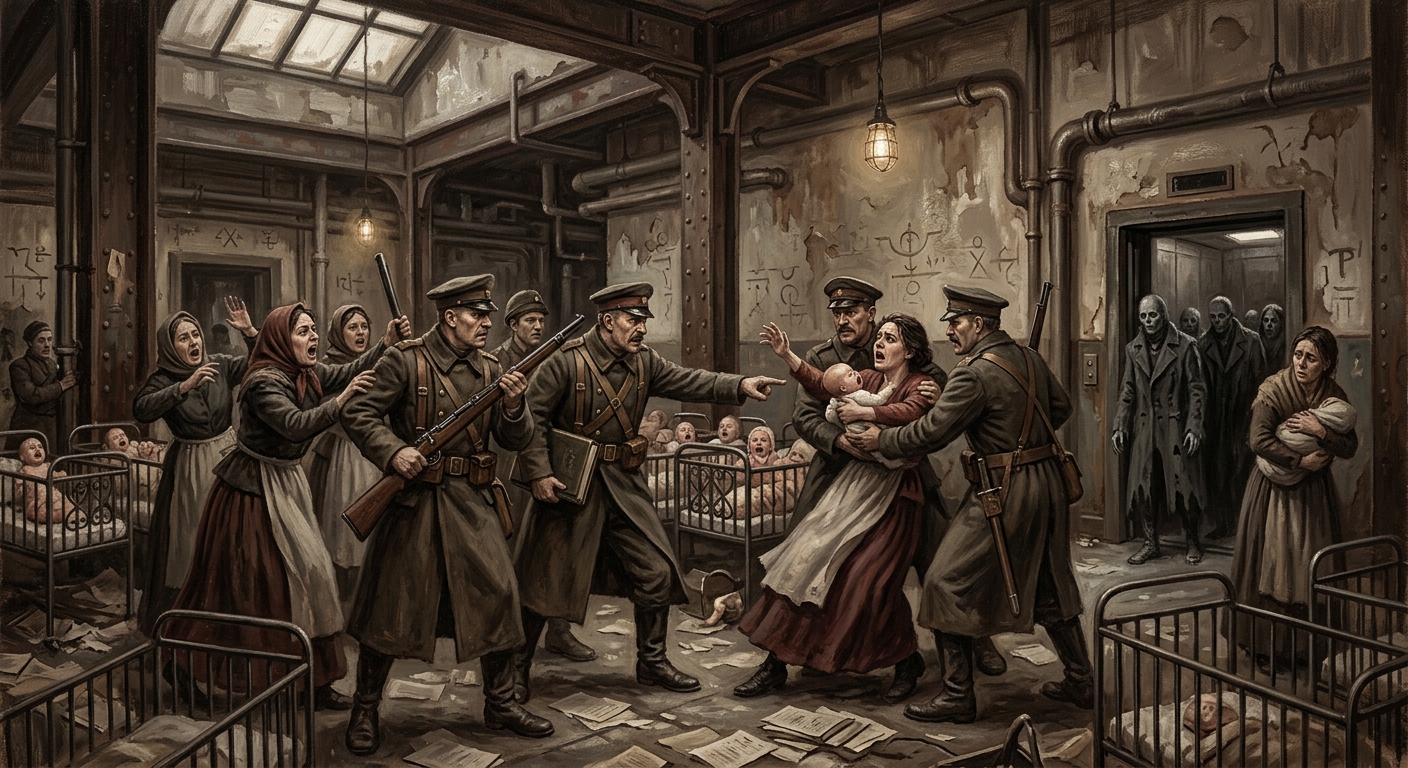
Nursery Levy Decrees
The law counted the cradle; the cradle learned to lie
A.S. 152 cradle-registration laws that cut infant filing to twelve and seventy-two hours, birthed armed registry teams, midwife resistance, and the Pale Kin trade.
Codex Ref. VII.8.10-054
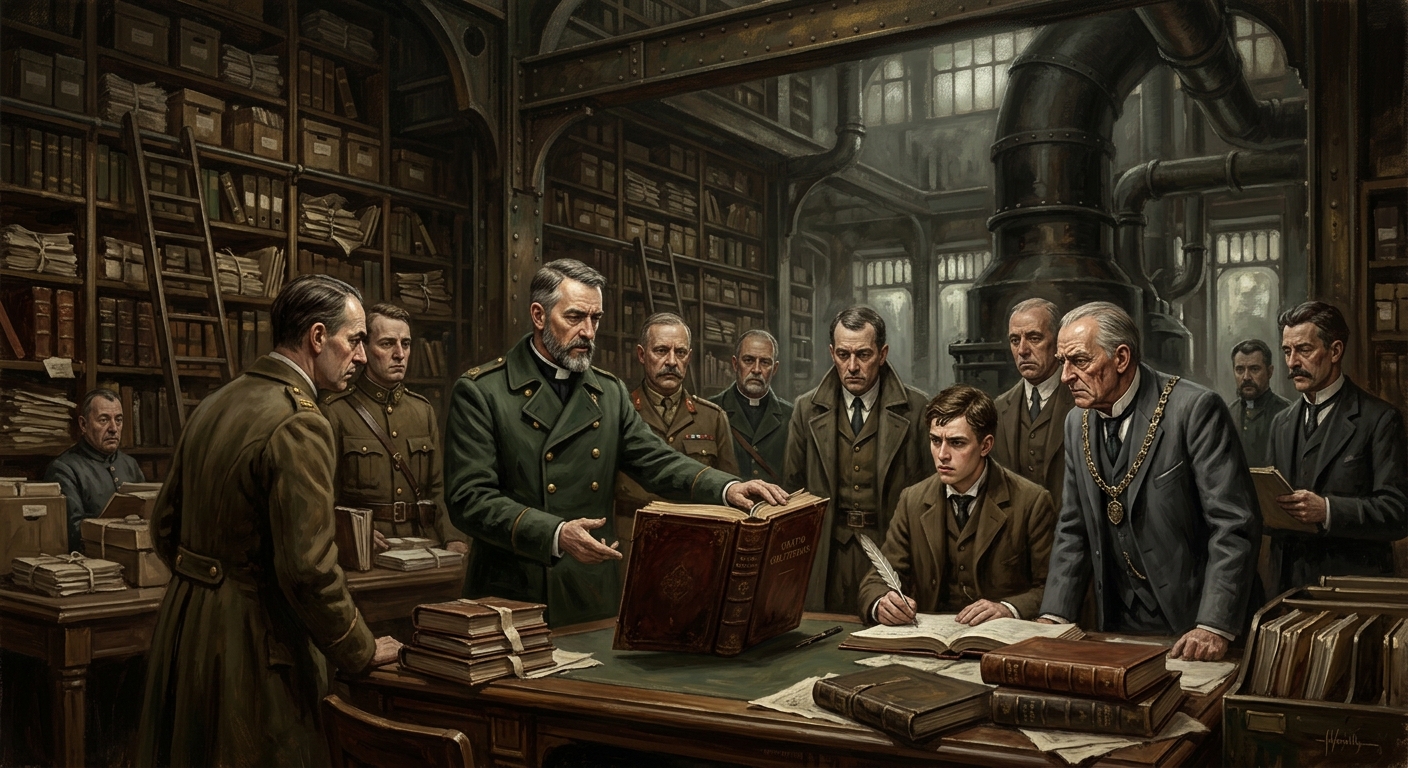
Oratio Oblitterans
The six lines Heaven was not permitted to hear
The Oratio Oblitterans is the six-line Rites prayer proposed in A.S. 142 for Administrative Dissolution, rejected by Records, and preserved wherever mercy disobeys filing autonomy.
Codex Ref. XIII.1.01-003
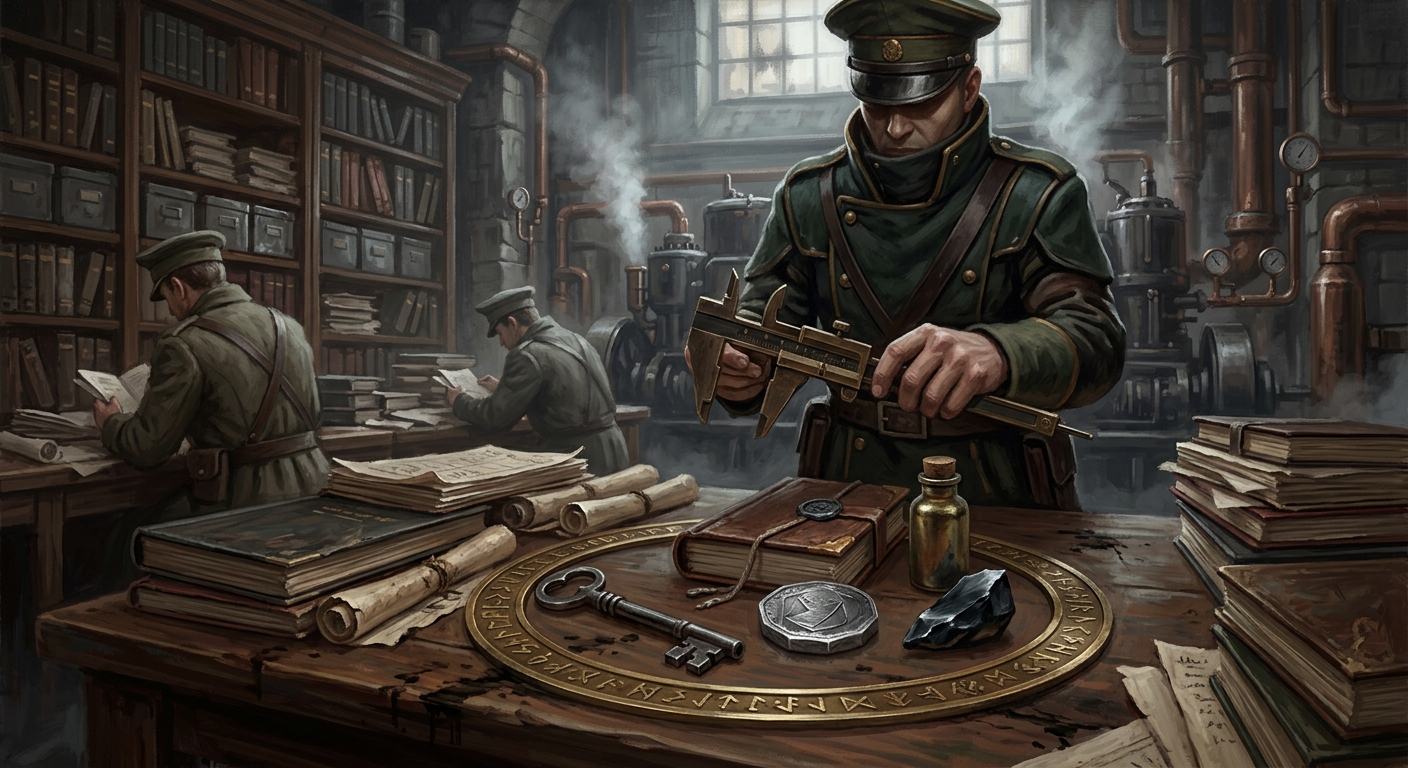
Ordeal
The test that asks whether mercy has started charging interest
Ordeal is Sibiu's counter-accounting rite: coin, key, mercy, clause, and refusal arranged to learn whether charity has become Velmora's collateral.
Codex Ref. XIII.1.95-200
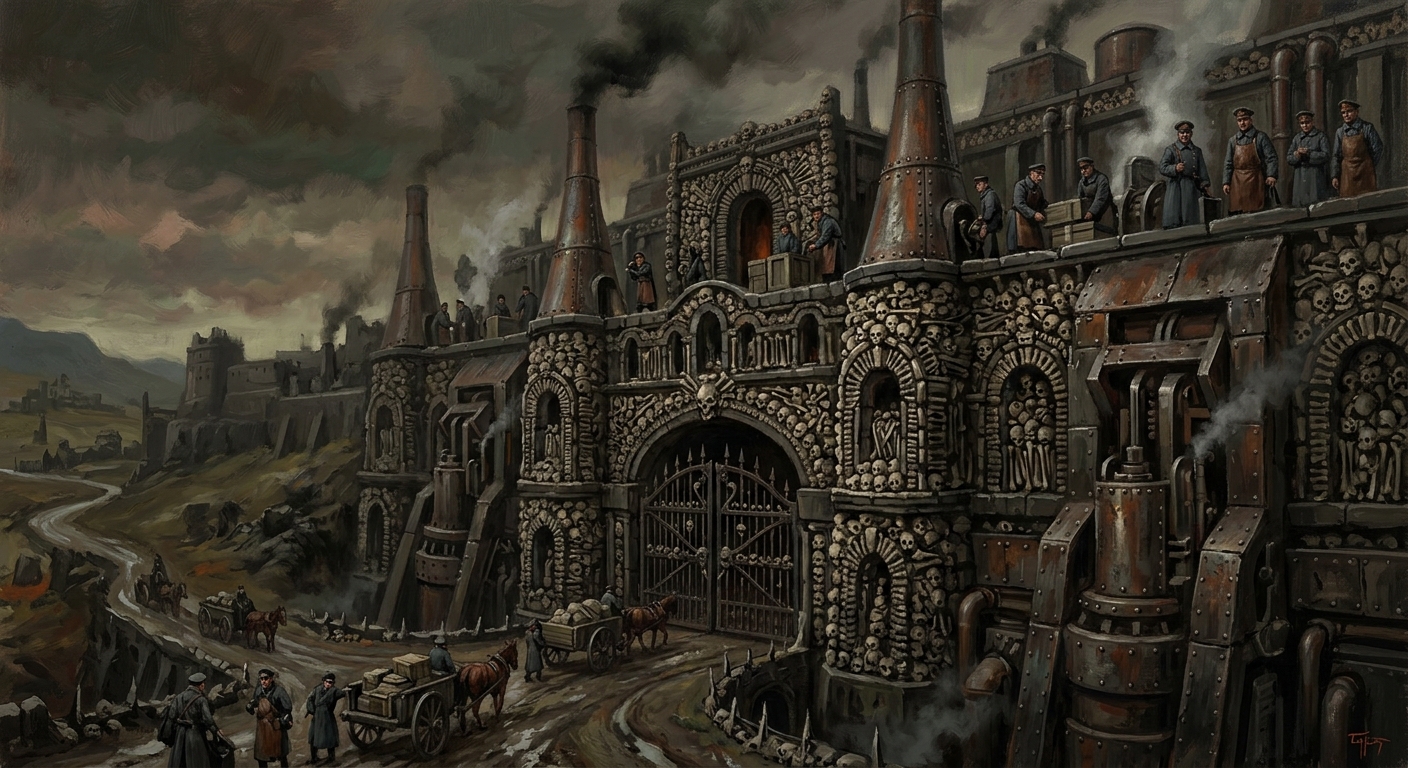
Ossuary Gate of Debrecen
The skull-wall that audits the dead before the marsh may answer
Active gate-fort on the Debrecen exclusion approach, built from branded parish bone and notorious for tolling without a bell when its skulls revise their confessions.
Codex Ref. VI.1.01-002
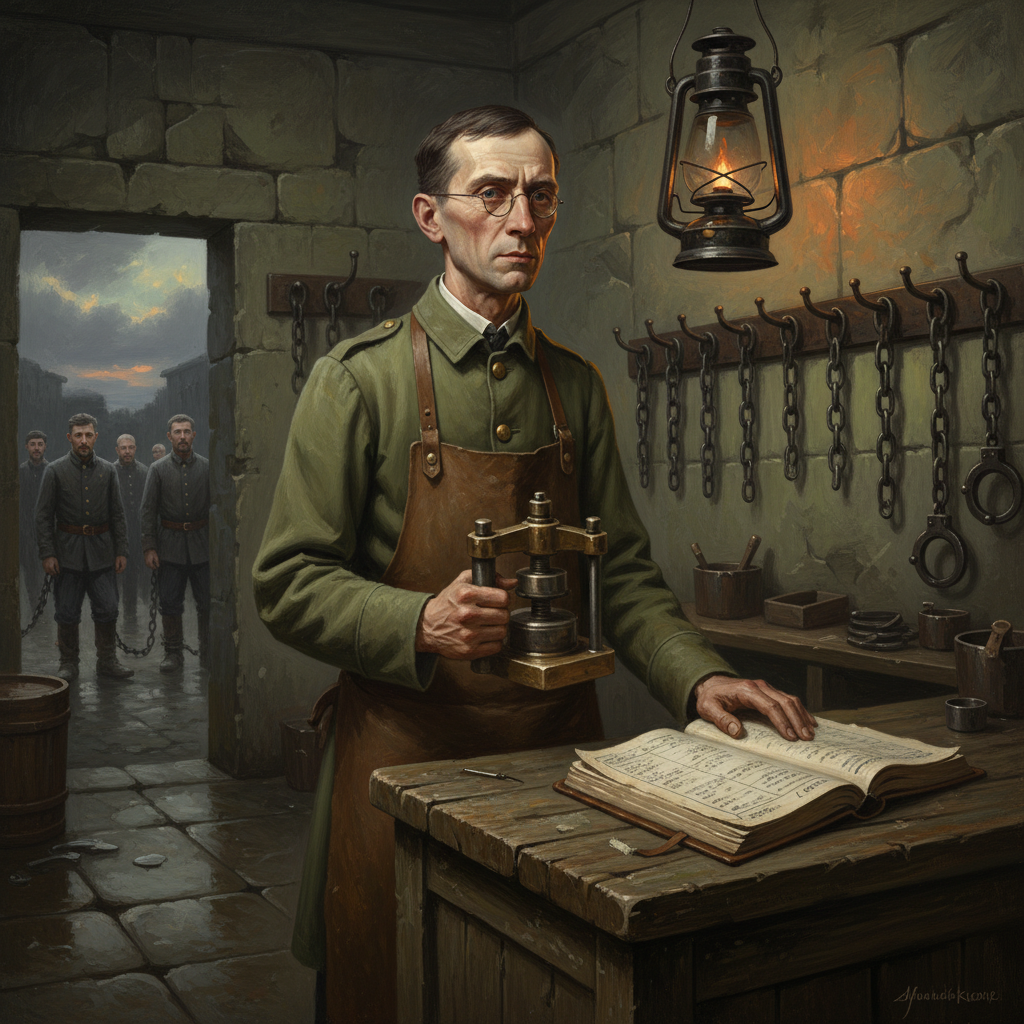
Ossuary-Draft Handler
Sanctioned freight-keeping; or, how the condemned earn their redemption by the pound
The Ossuary-Draft Handler converts the condemned into transport capacity. Licensed under joint writ of the Bureau of Rites and Bureau of War, he decides whether a human body is worth forty pounds over twenty miles.
Codex Ref. XII.27.01-001
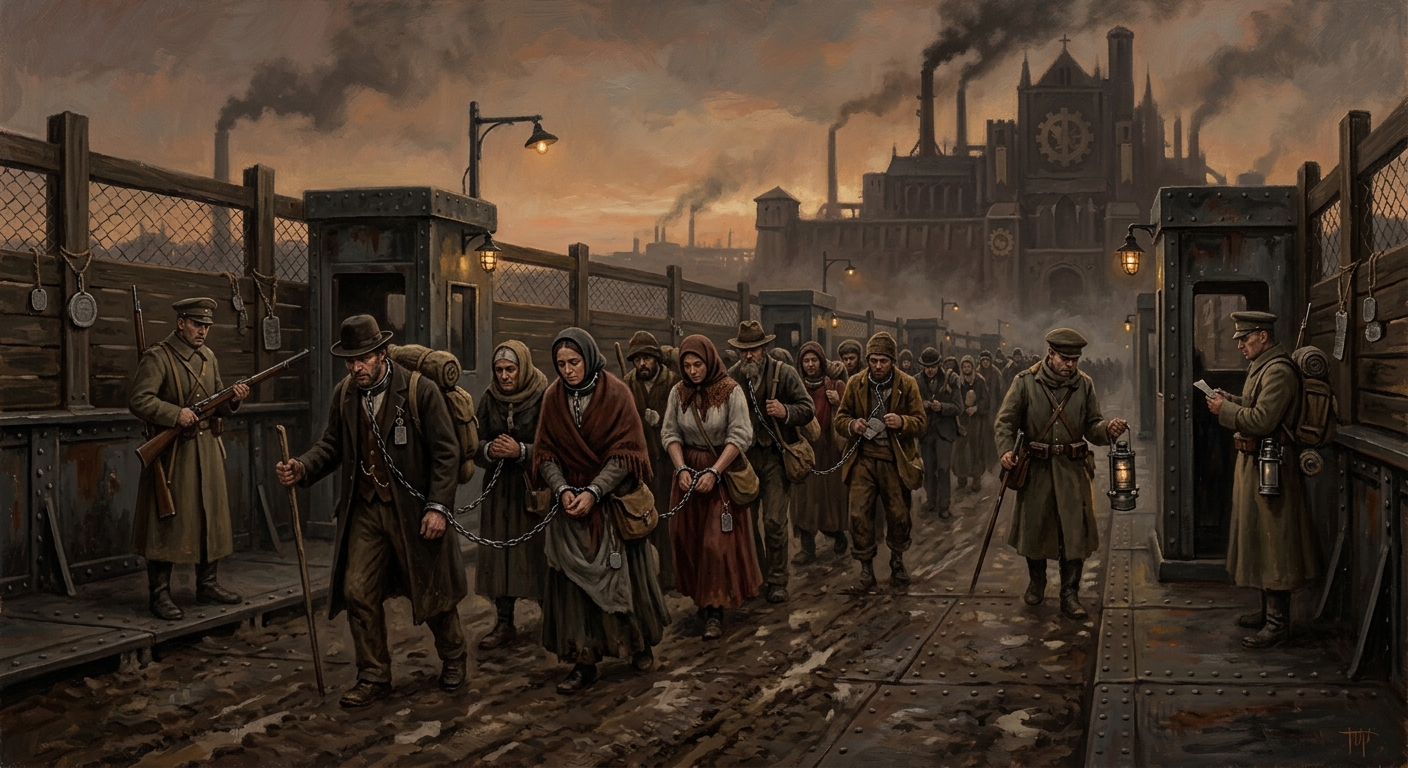
Pilgrim Roads
Sanctity is motion under witness, and witness under invoice
The Pilgrim Roads made walking obedient: licensed motion, tolls, tokens, chains, grief, delay, and low earth holiness under seal.
Codex Ref. XIII.1.86-094
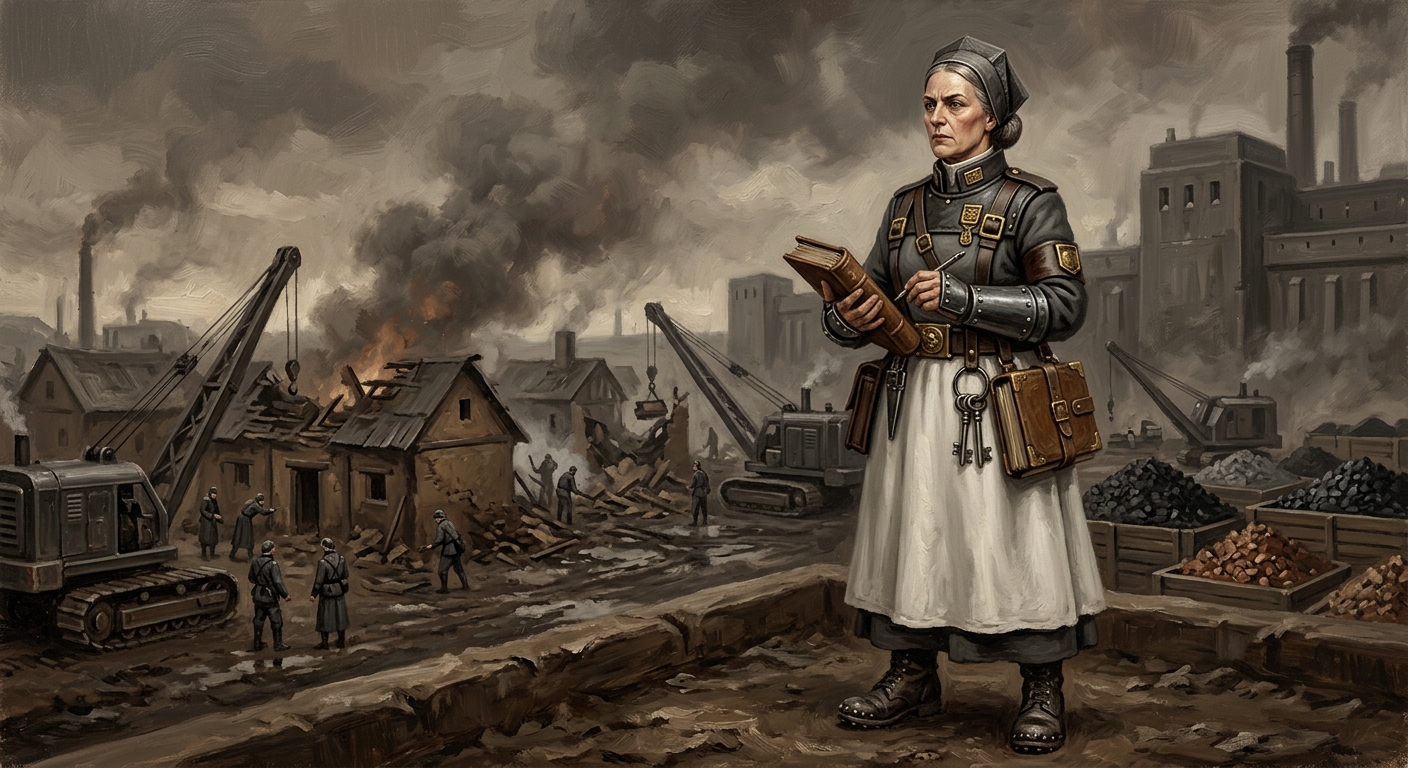
Procurator Hildegarde of Mainz
She made correction visible and mercy file its own apology
Hildegarde of Mainz gave Purity its white mantle, razed forty tithe villages, and became the saint of visible correction.
Codex Ref. III.2.03-001
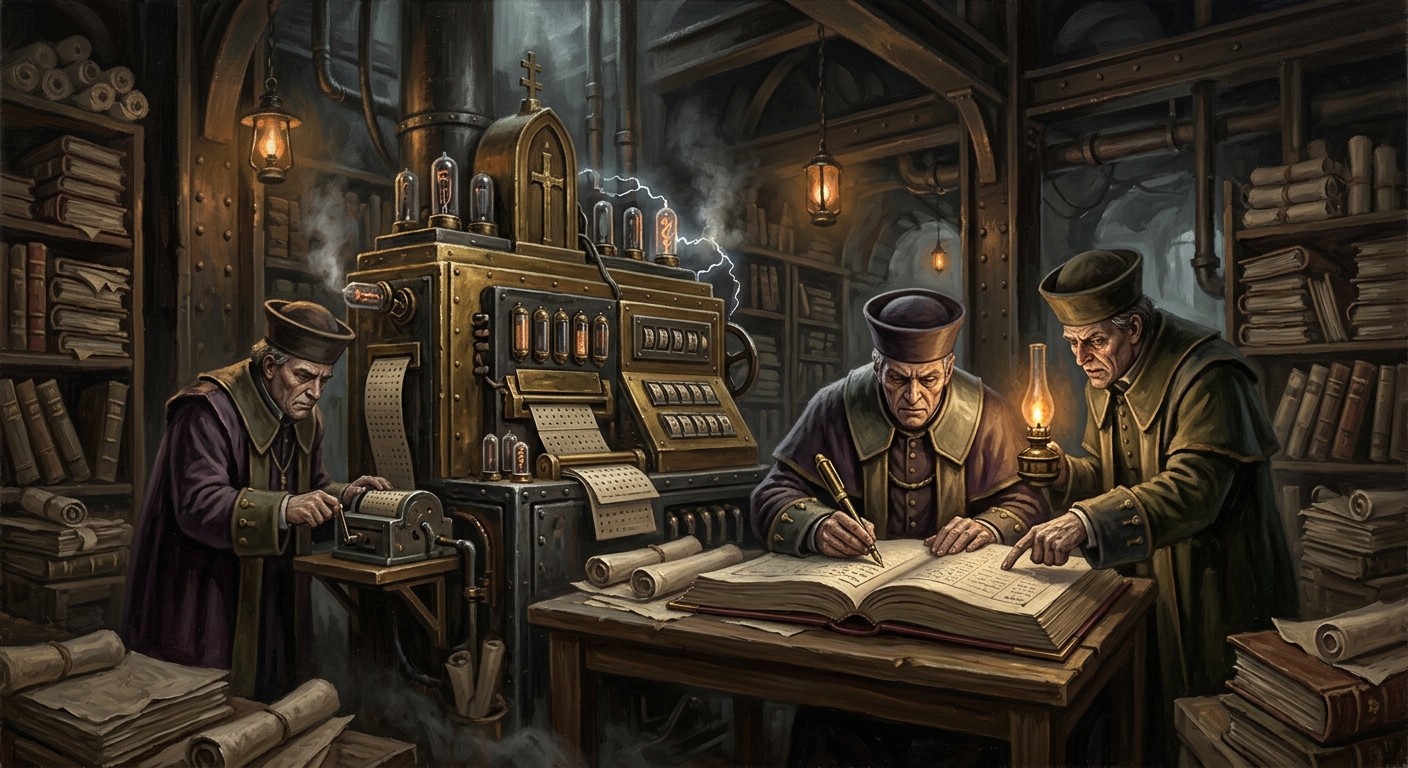
Purists of the Bureau of Records
One truth, one roll, no supper invitations
Strict-text faction within the Bureau of Records, devoted to clean rolls, witnessed corrections, discrepancy reporting, and the holy unpleasantness of unpurchased truth.
Codex Ref. XII.9.03-001

Quiet Engine Heresy
The machine ran, and therefore men had to be punished
A.S. 147 mechanistic scandal in which licensed Engineers proved stable combustion without certified cant, forcing Doctrine to punish success before it became method.
Codex Ref. VII.8.10-050
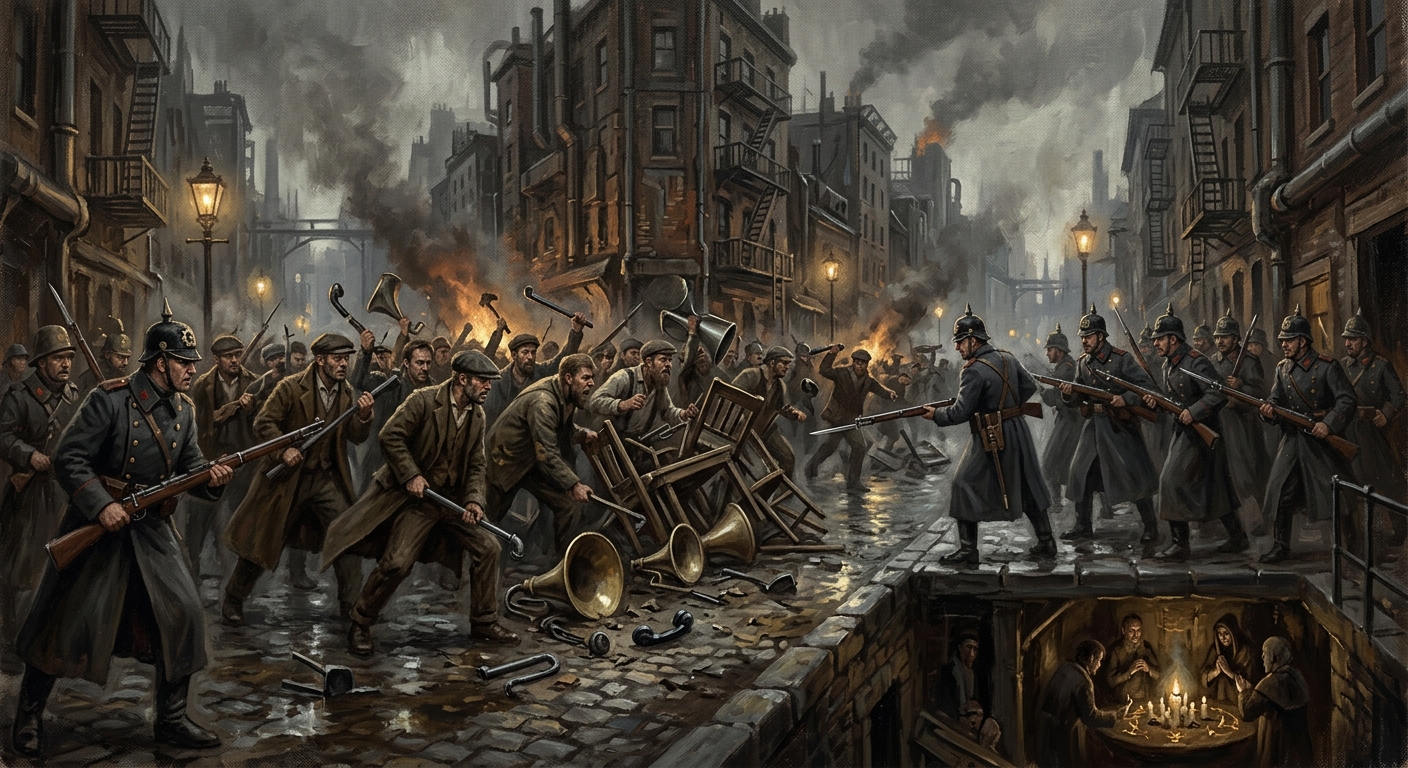
Quiet Quarter Revolt
The district that missed the sermon until silence learned to organise
A.S. 149 deadzone rising in lower Kanzleiburg, where failed horns, broken receivers, Silent Godless cells, and cellar rites forced the Hornline Reforms.
Codex Ref. VII.8.10-149
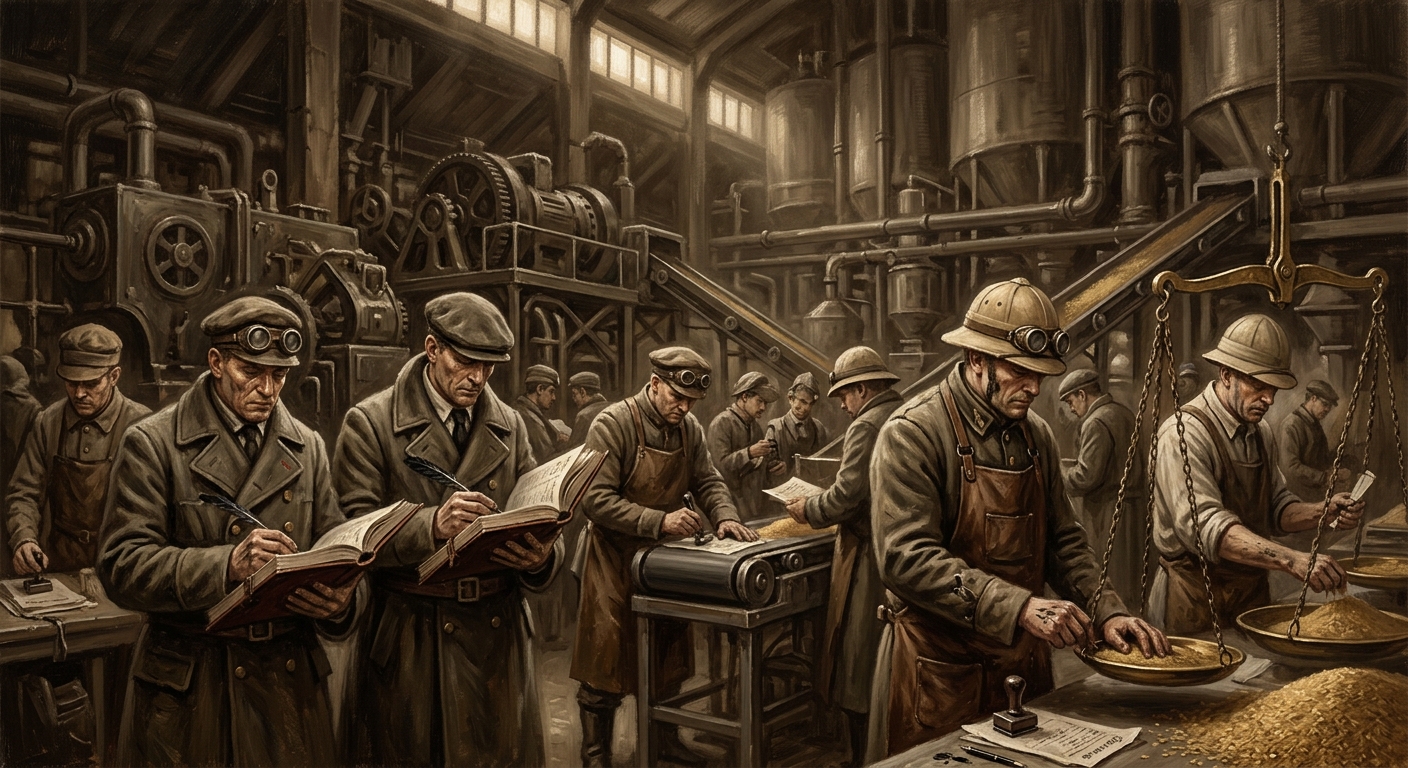
Quota Men
Modest theft is what famine calls governance when the pantry has witnesses
Quota Men are the Grain Keeper faction of modest diversion and immaculate ledgers, preserving wards by stealing little enough to keep collapse boring.
Codex Ref. XII.13.05-001
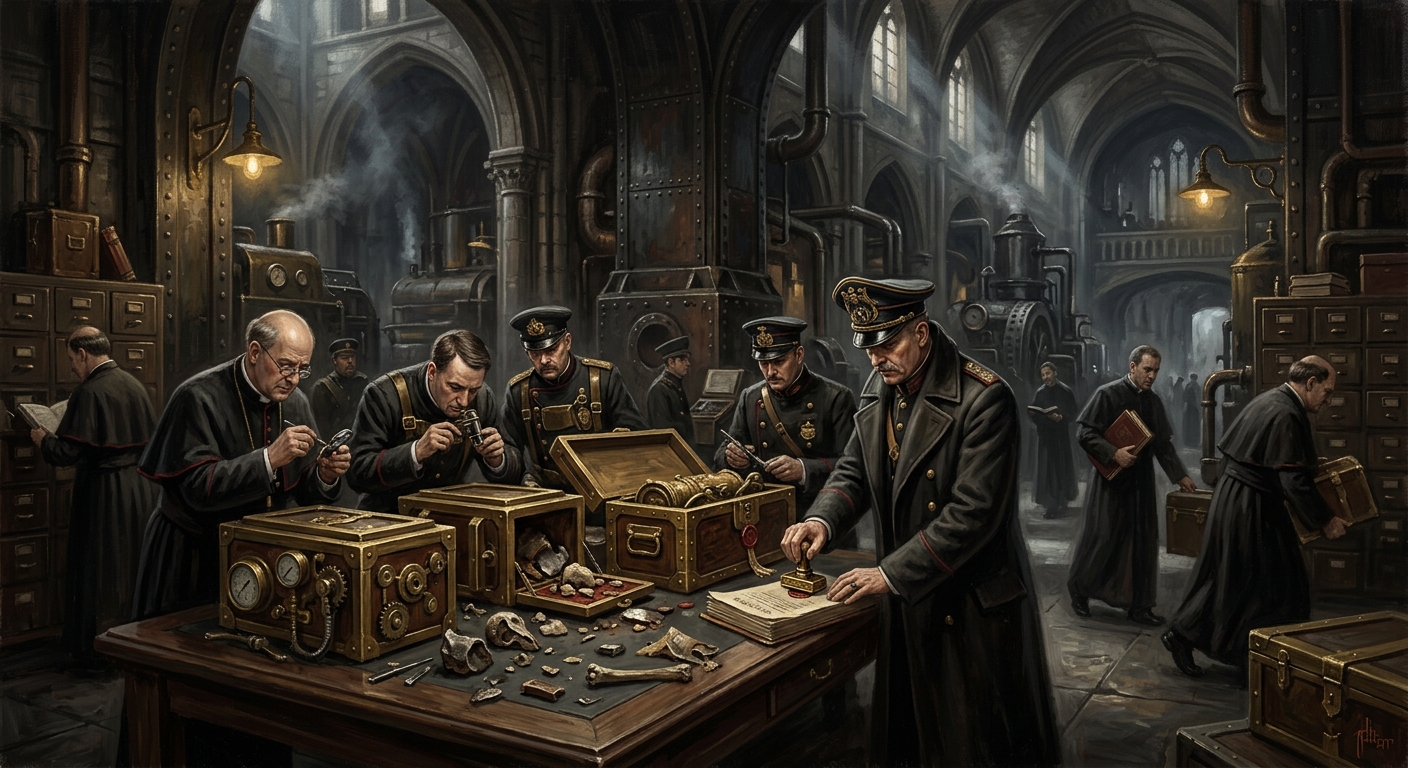
Relic Counterfeit Scandal
When the pig-bone taught the saint to submit to assay
Circa A.S. 117 scandal in which counterfeit relic fragments entered tariff-chapel calibration caskets, forcing mandatory assay and Masks-and-Seals counter-seals.
Codex Ref. VII.8.10-012
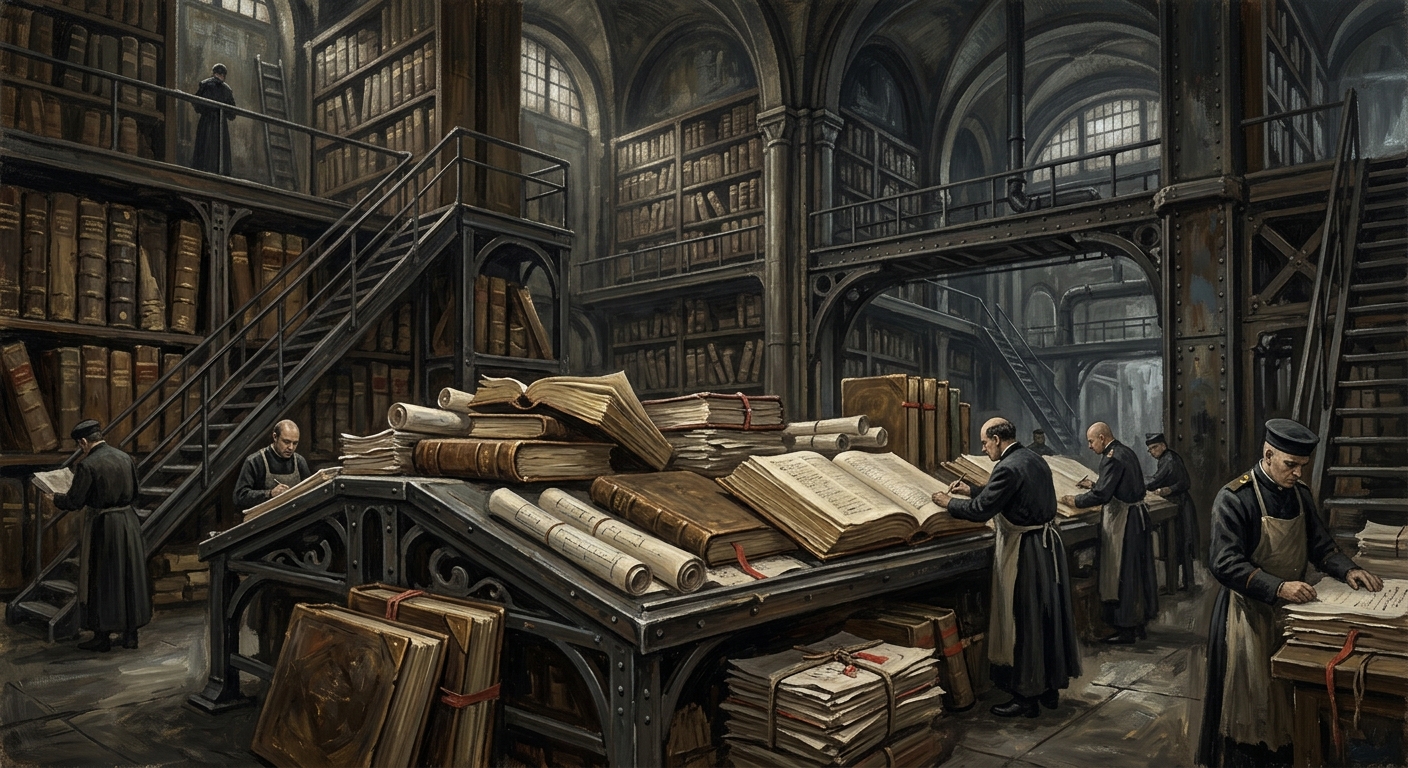
Sacred Ledger
The Synod's memory, sharpened until grief signs the receipt
The Sacred Ledger is the Synod's authorised memory: fact cooked into Doctrine, grief made grammatical, contradiction kept on a leash.
Codex Ref. XIII.1.32-090
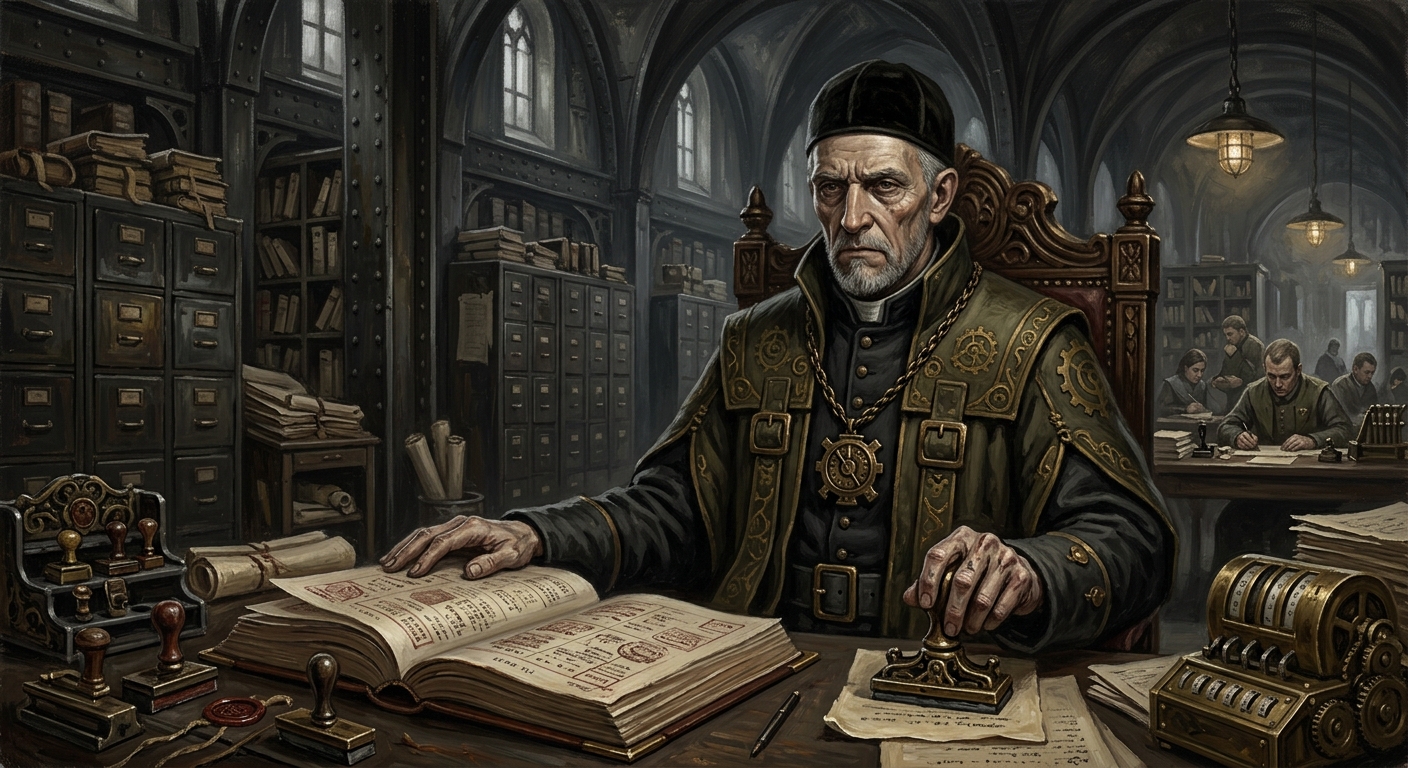
Saint Cadrin the Measured
A saint so useful the archive had no choice but to discover him
Patron saint of Route-Stampers and Indulgence-Token Smiths, canonised in A.S. 112 to make counted movement, stamped routes, and profitable delay holy.
Codex Ref. III.2.01-141
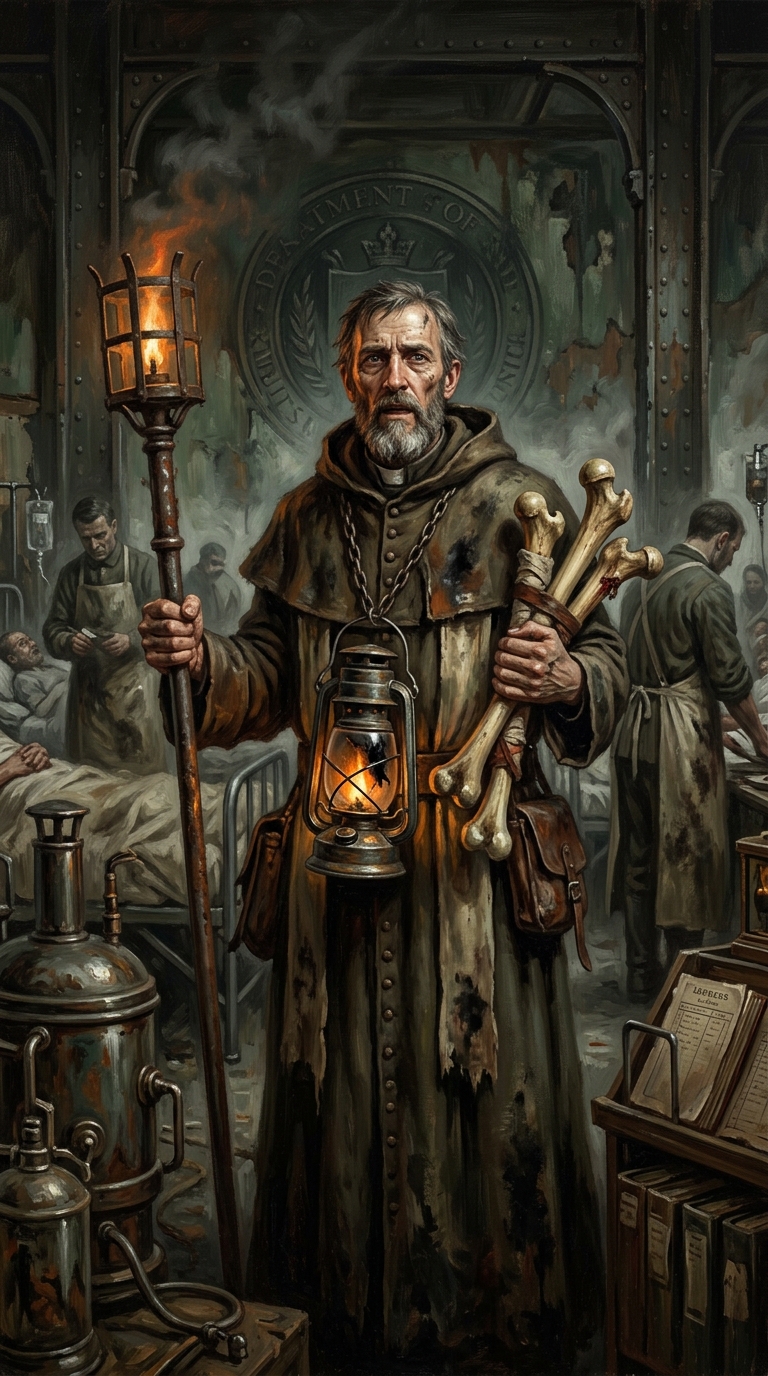
Saint Maurus of the Burnt Lantern
The hospice martyr whose left leg taught arithmetic to kneel
Hospice martyr, ward-lantern patron, and owner of three authenticated left femurs; Maurus proves that sanctity can outgrow anatomy.
Codex Ref. III.2.01-148
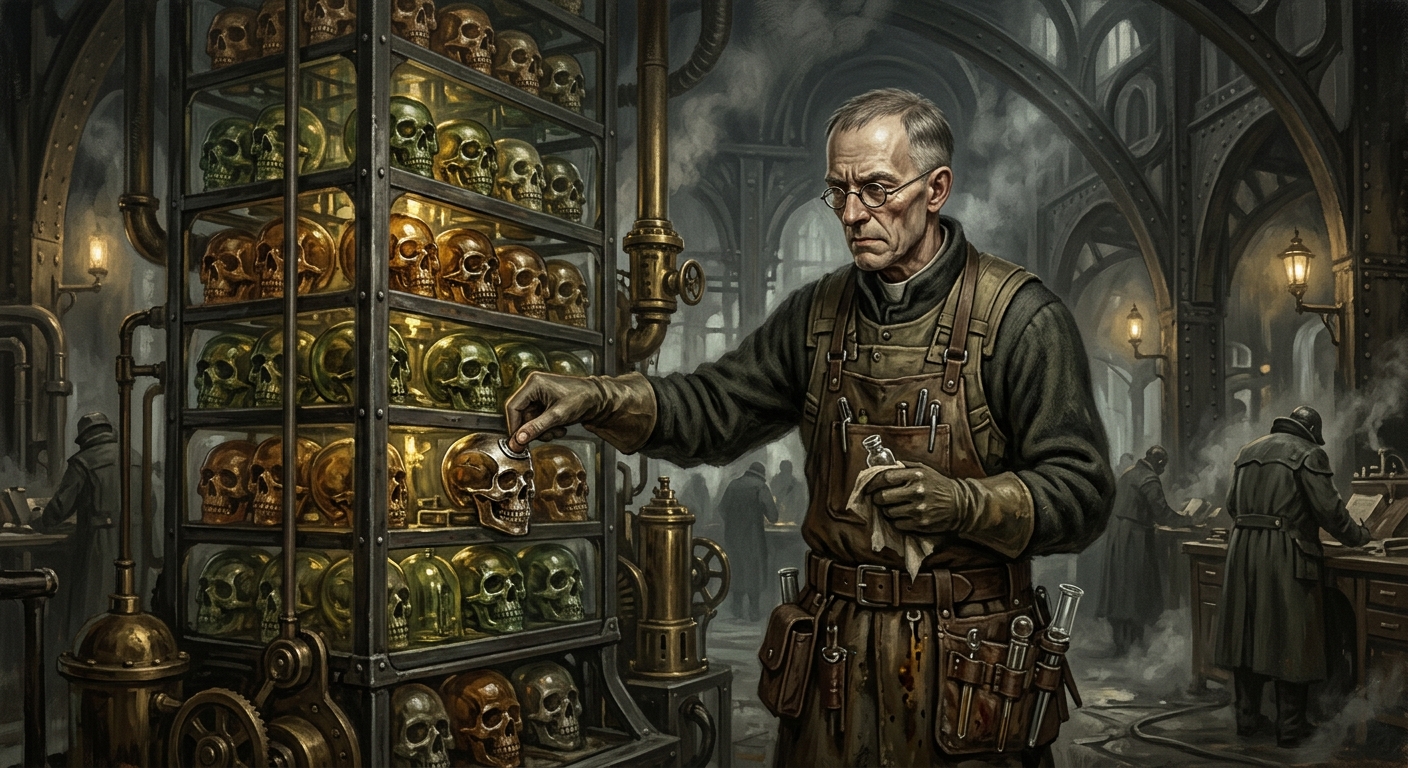
Saint Velek the Clear-Eyed
Sight and sentence, lens and burn
Ratified patron of Pillar-Keepers and severe glasswrights, Saint Velek gives Glass Skull Stack maintenance a face, a thumbprint, and a saintly excuse for sounds after Vespers.
Codex Ref. III.2.01-068
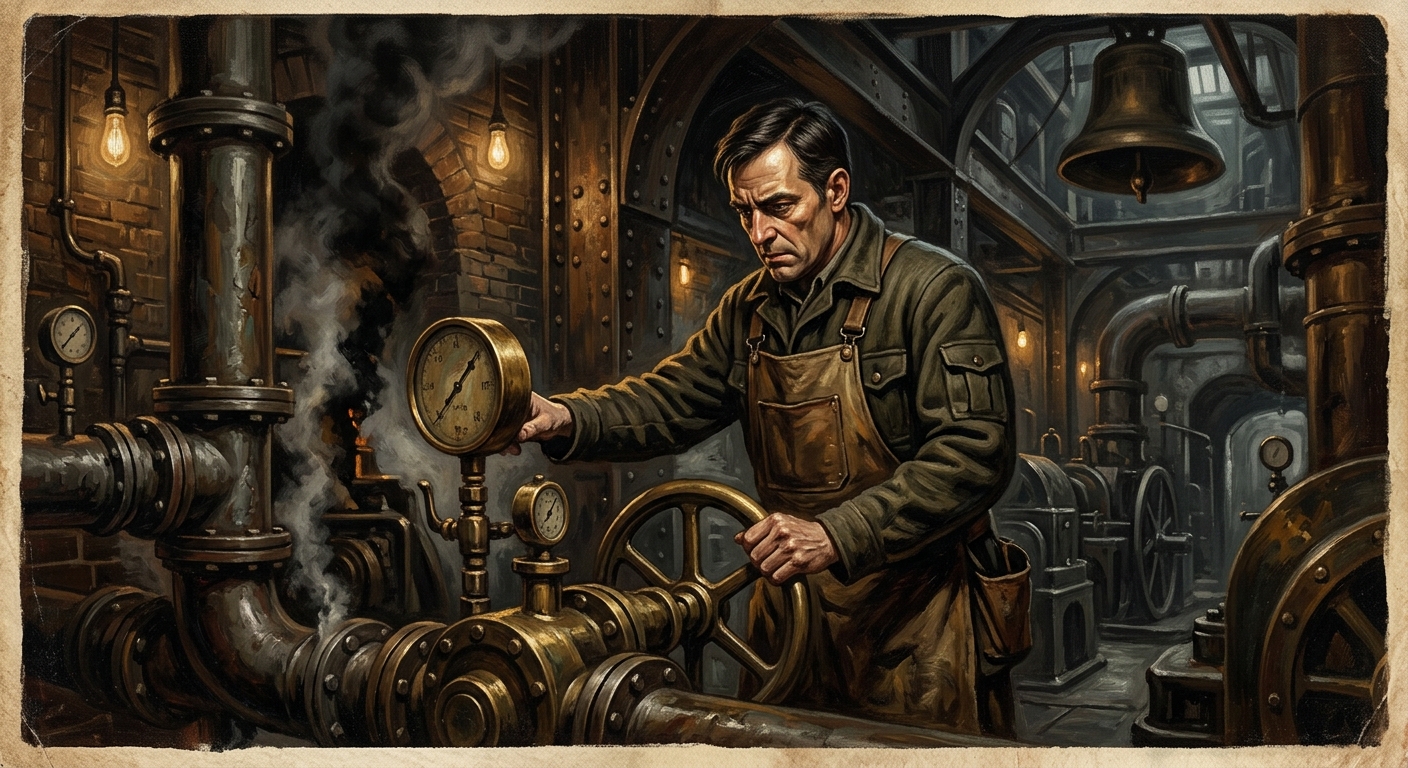
Saint Vellum of the Valve
Hold while I turn, says the saint the clean offices refuse to hear
Uncanonised occupational patron of Diesel Resonance Plumbers, Saint Vellum of the Valve is the hand on the wheel where pressure, bell-shadow, and useful heresy meet.
Codex Ref. III.2.01-111
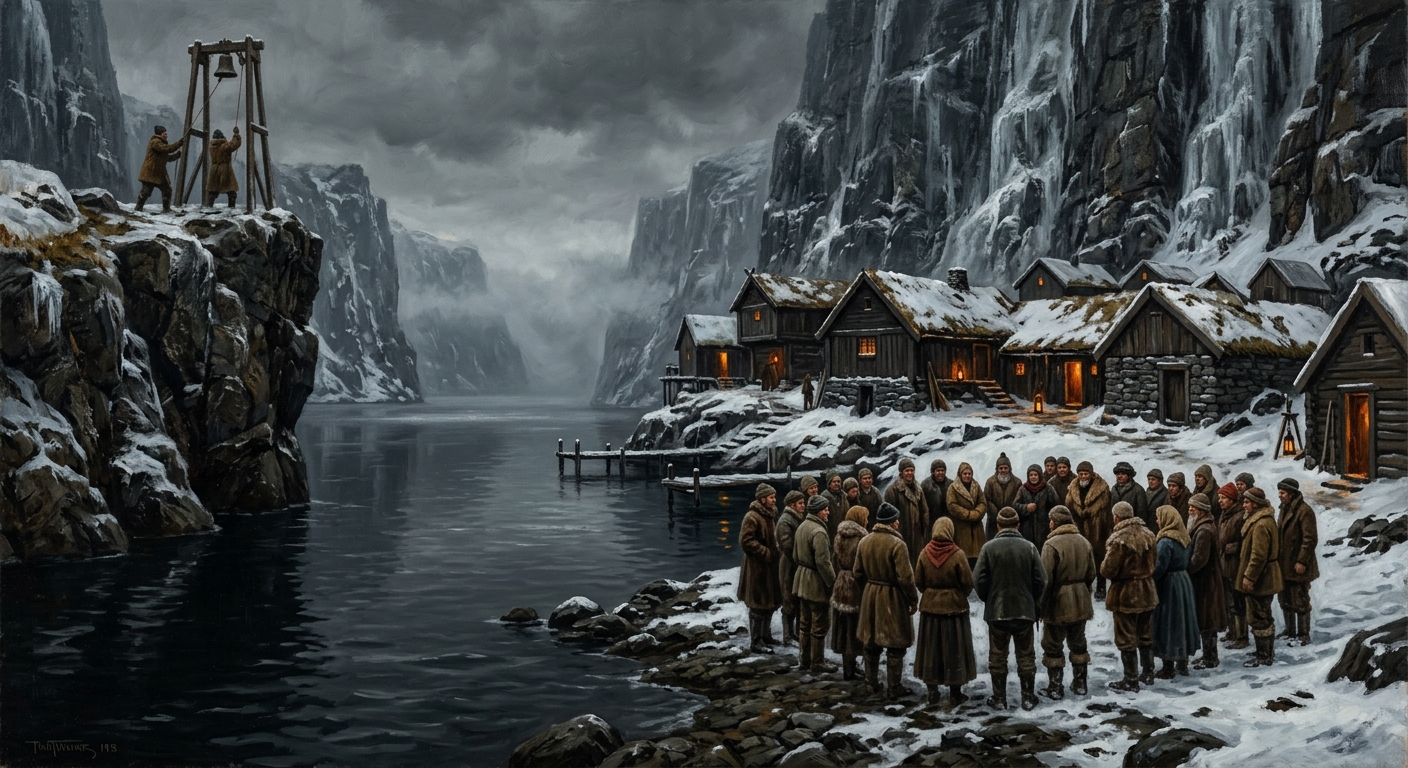
Scandinavia (The Fractured North)
The Synod's supplier, its creditor, and the thing the Bureau cannot name
A compliance assessment of Zone 8 — 1.9 million souls, clan moots, seal-oil, and the thing in the fog the Bureau classified Category Two Acoustic Distortion and has not re-examined. Filed by me. Not ratified by the wind.
Codex Ref. X.1.03-001
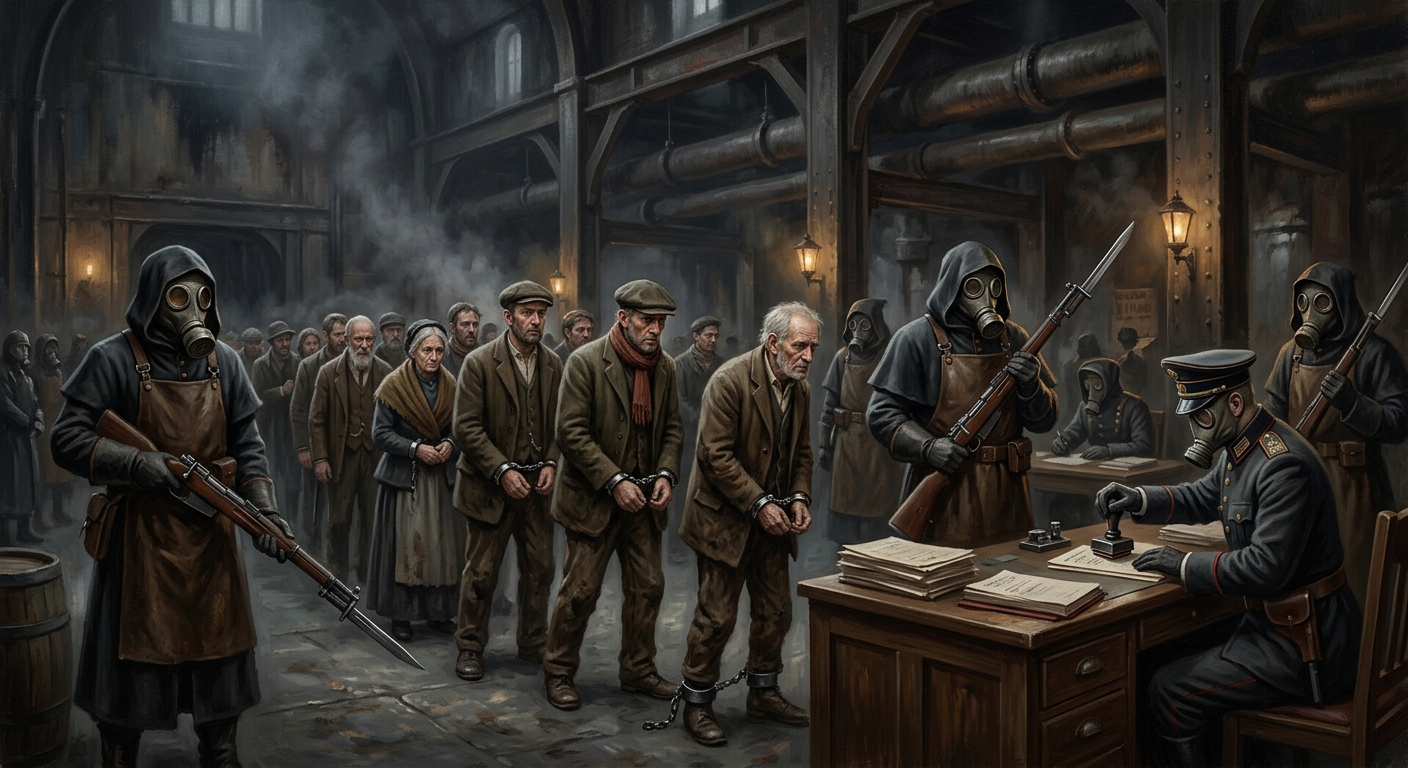
Secular Gatherings Act
The permit form that taught bayonets to quote law
The Secular Gatherings Act did not order massacre. It made massacre available, cleanly phrased, properly witnessed, and ready for bayonets.
Codex Ref. I.1.05-002
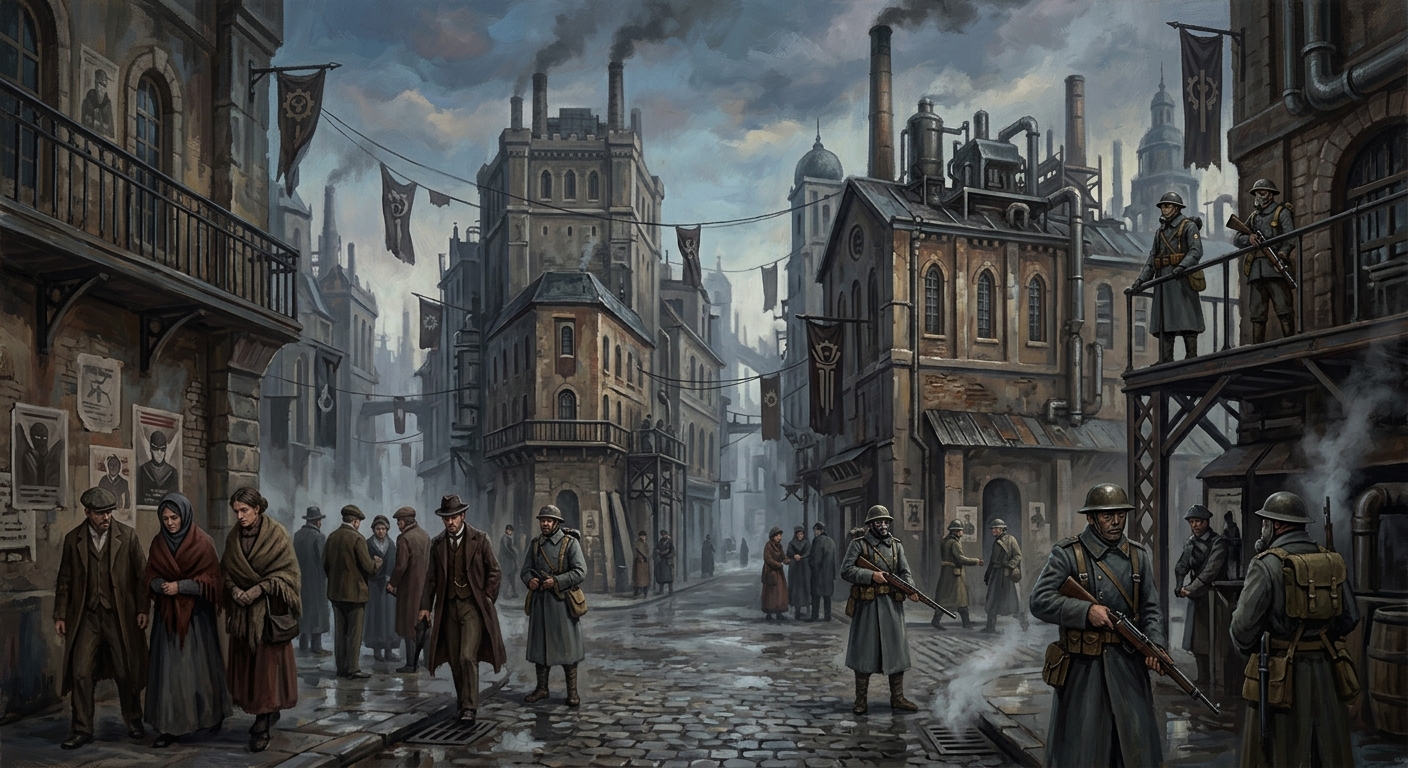
Seville
The city that lowered its voice and learned to speak in cups
Seville, the corrected City of Closed Lips: beautiful, prosperous, muted after the Laugh Riots of A.S. 153 and the Subjugation of A.S. 155.
Codex Ref. II.1.04-001
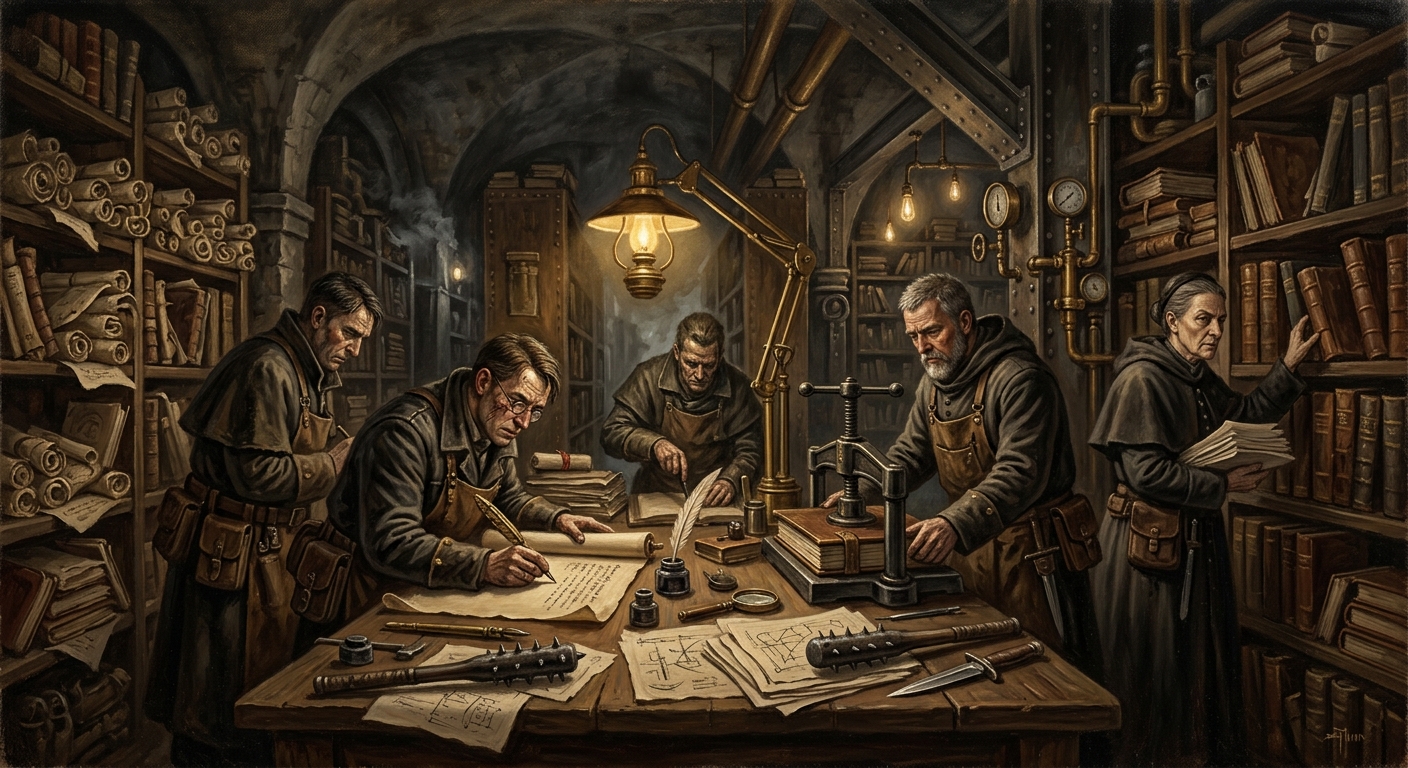
Shadow Archivists
The second copy is always a heresy until Records needs it
Alleged Records Scribe faction preserving unsanctioned copies of corrected rolls, officially absent, practically feared, and dangerous under the right lamp.
Codex Ref. XII.9.03-003
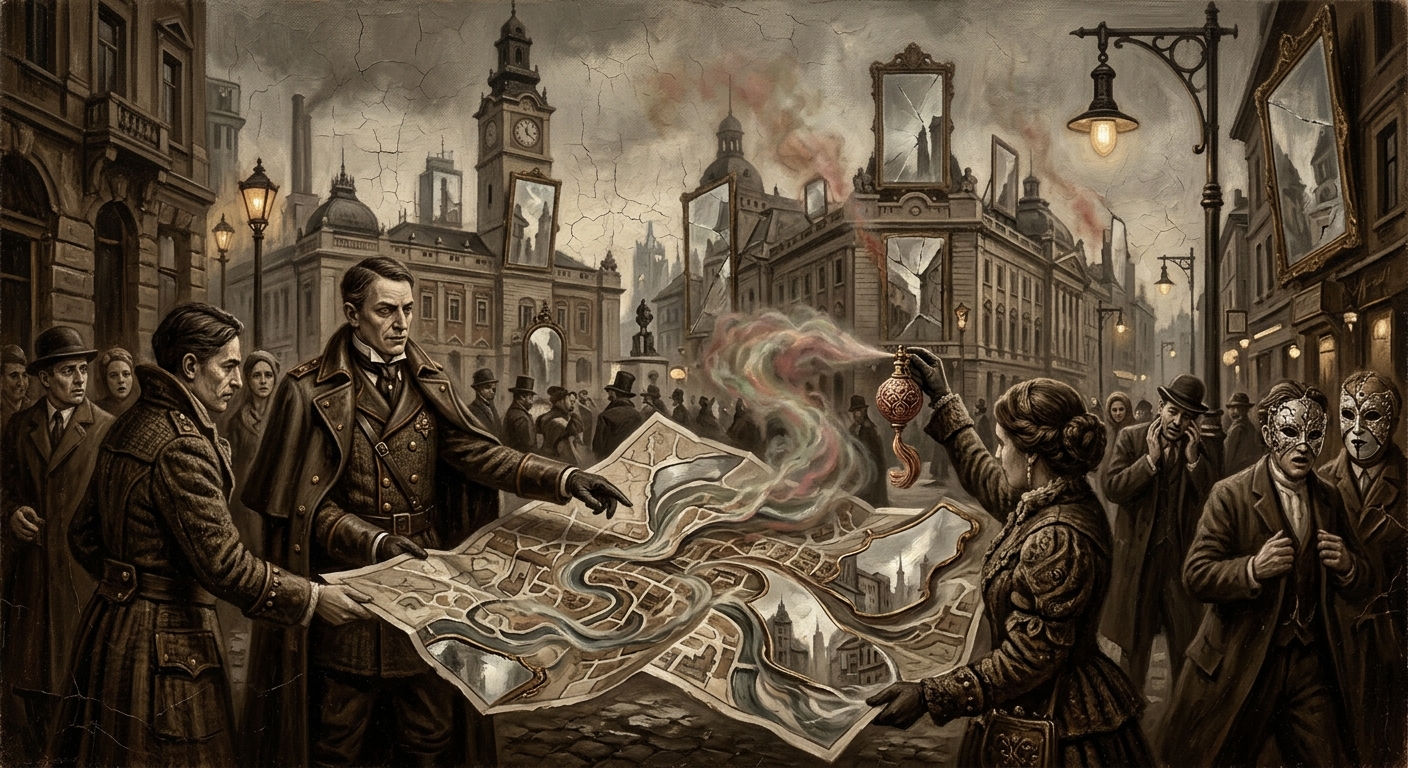
Shattered Courts
A palace that wears Belgrade like perfume wears a throat
Velkara's Shattered Courts occupy Belgrade by mirror, perfume, appetite, and refusal: a hostile palace that cannot be mapped without flattering it.
Codex Ref. II.5.06-117
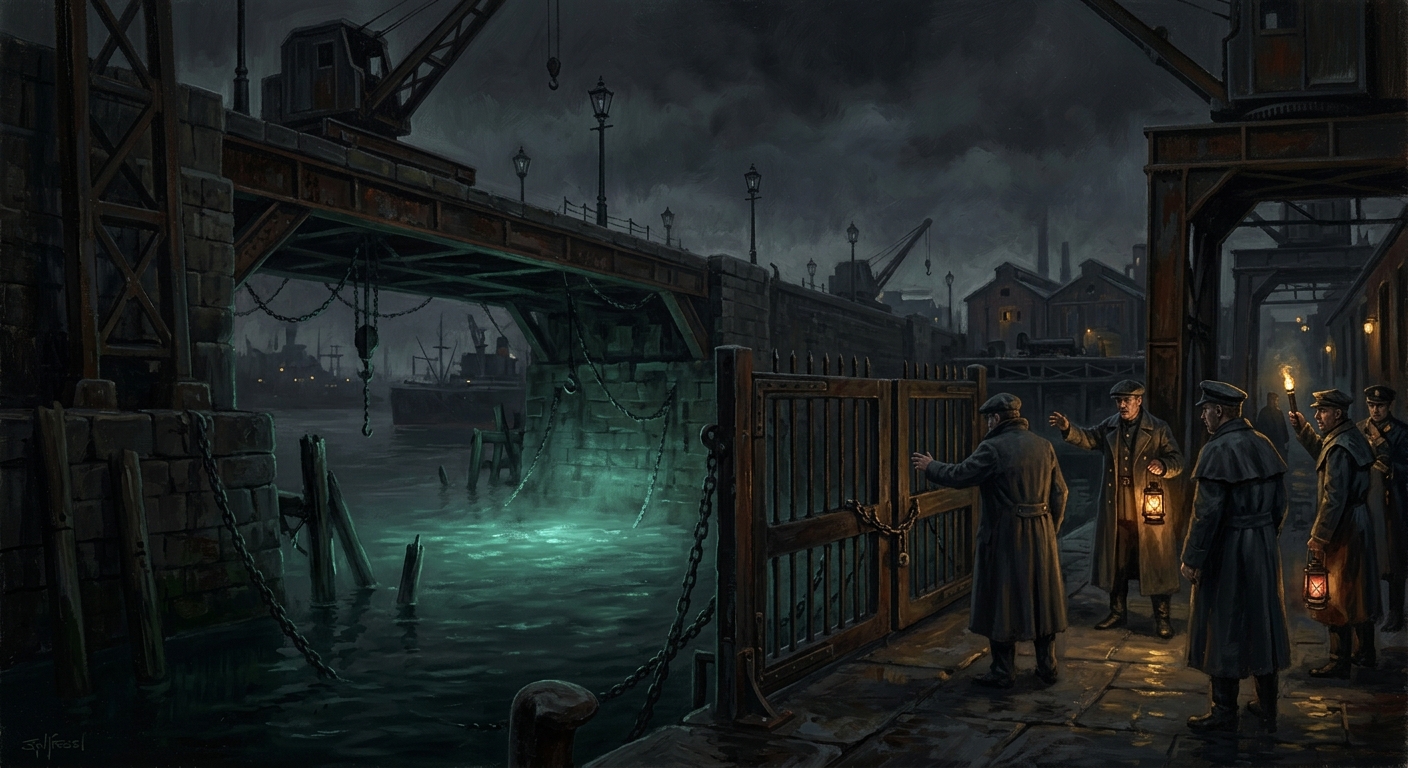
Silence of Harbor Lamps
Darkness received a harbor office and stamped the water
For seventy-two hours in A.S. 185, Bastion-Constantinople's harbor lights died, the water lit beneath, and the *Saint Veritas* vanished from a locked quay.
Codex Ref. VII.8.10-185
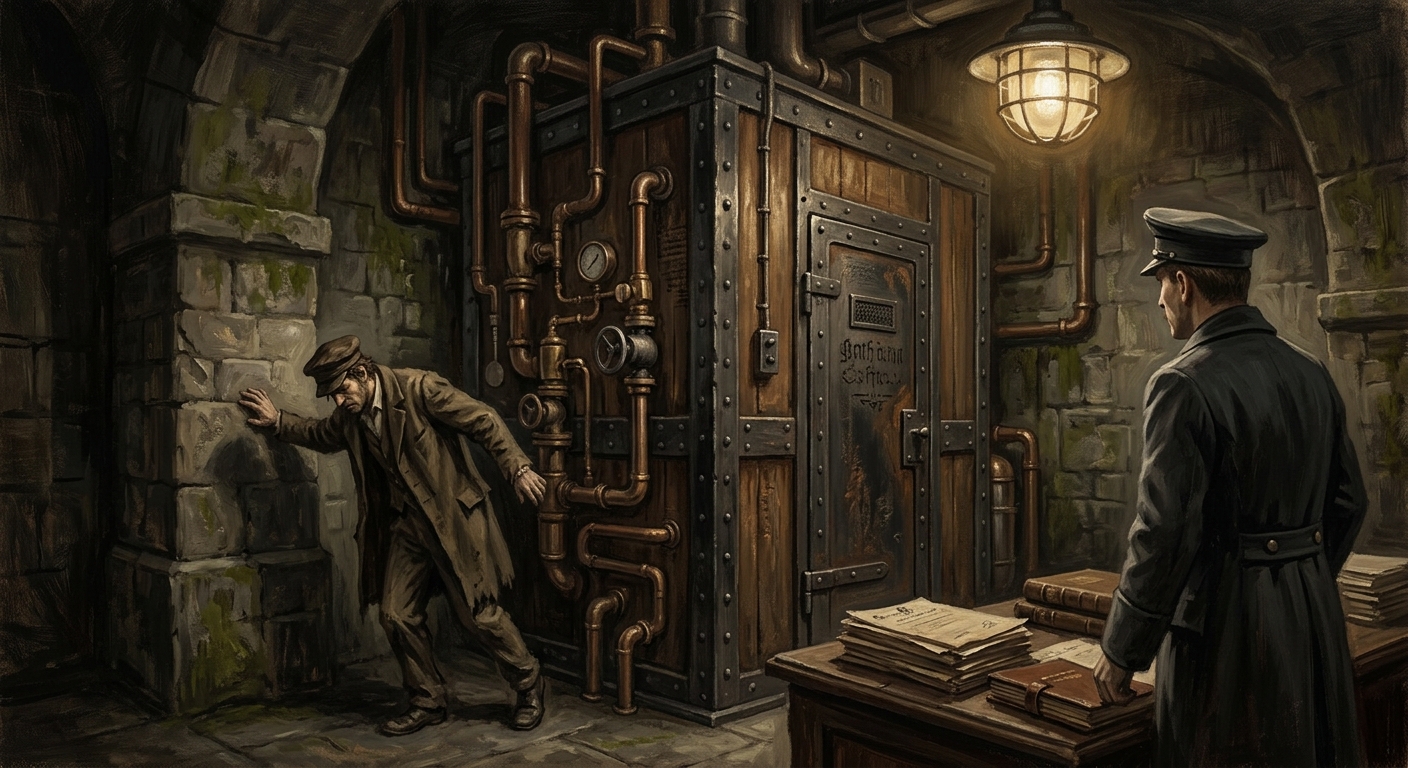
Silent Confessional of Vienna
A cabinet need not hear you to make you confess
Rumoured Viennese black-iron confession apparatus whose victims emerged senseless yet speaking, preserved by Doctrine as a repurposed warning to every booth clerk who trusts furniture.
Codex Ref. XIII.1.61-001
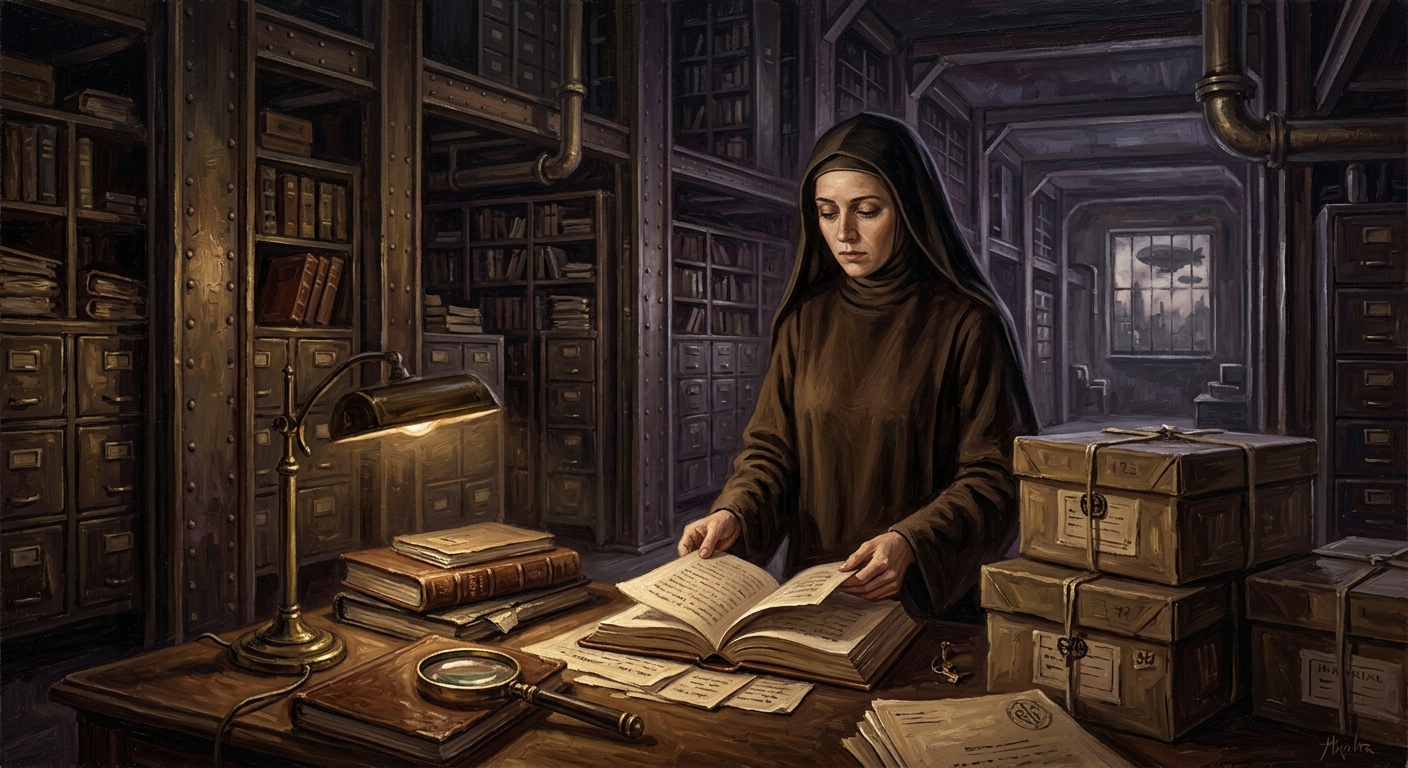
Sister Agata Wiśniewska
The witness who counted wire when action failed
Poor Clare witness to the A.S. 18 Night of Knives whose hidden psalter testimony, ratified in A.S. 148, made forty-seven murders impossible to tidy.
Codex Ref. III.2.01-087
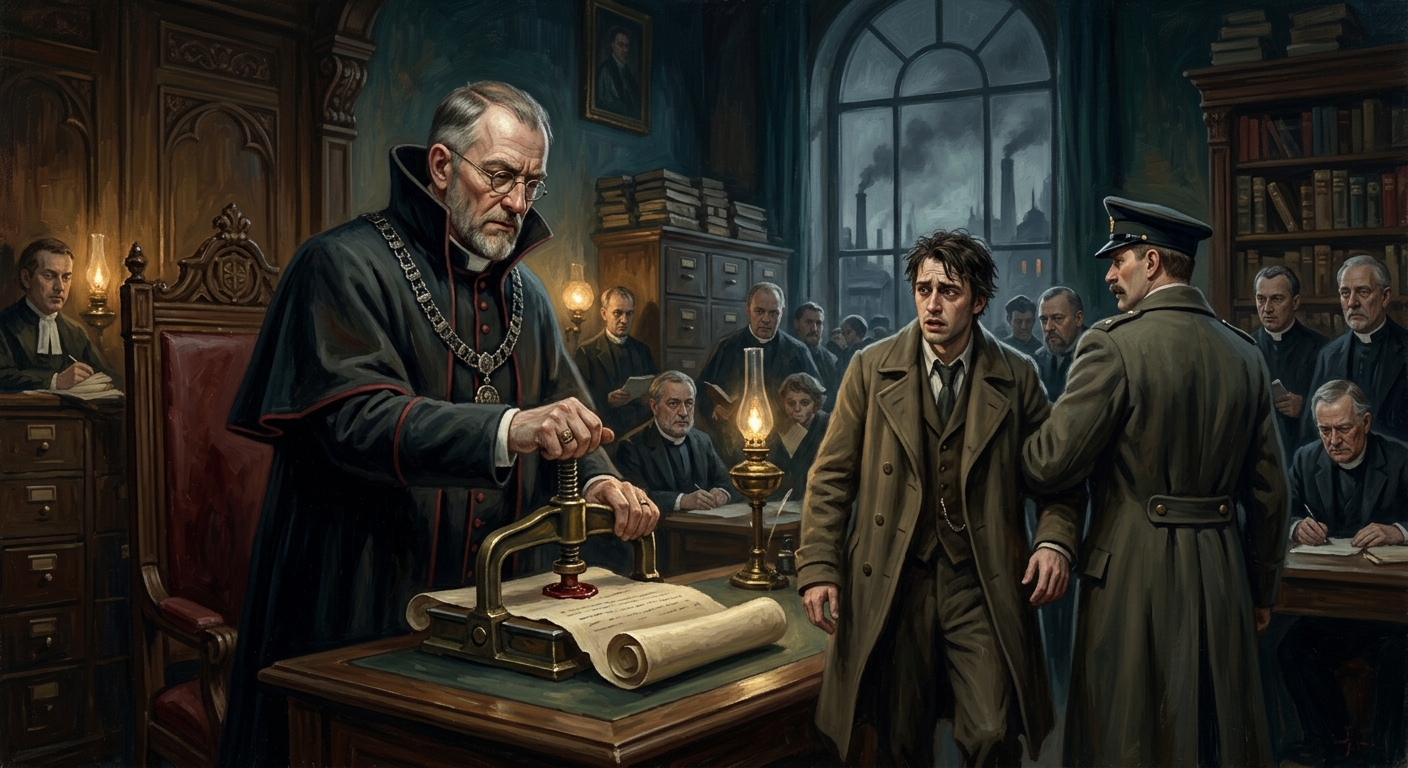
Standard Ratification Protocol
The seal descends, and yesterday learns obedience
The Synod's Standard Ratification Protocol makes sequence repent: dissent is heard, wax cools, and the completed act becomes obedient.
Codex Ref. XIII.1.89-087
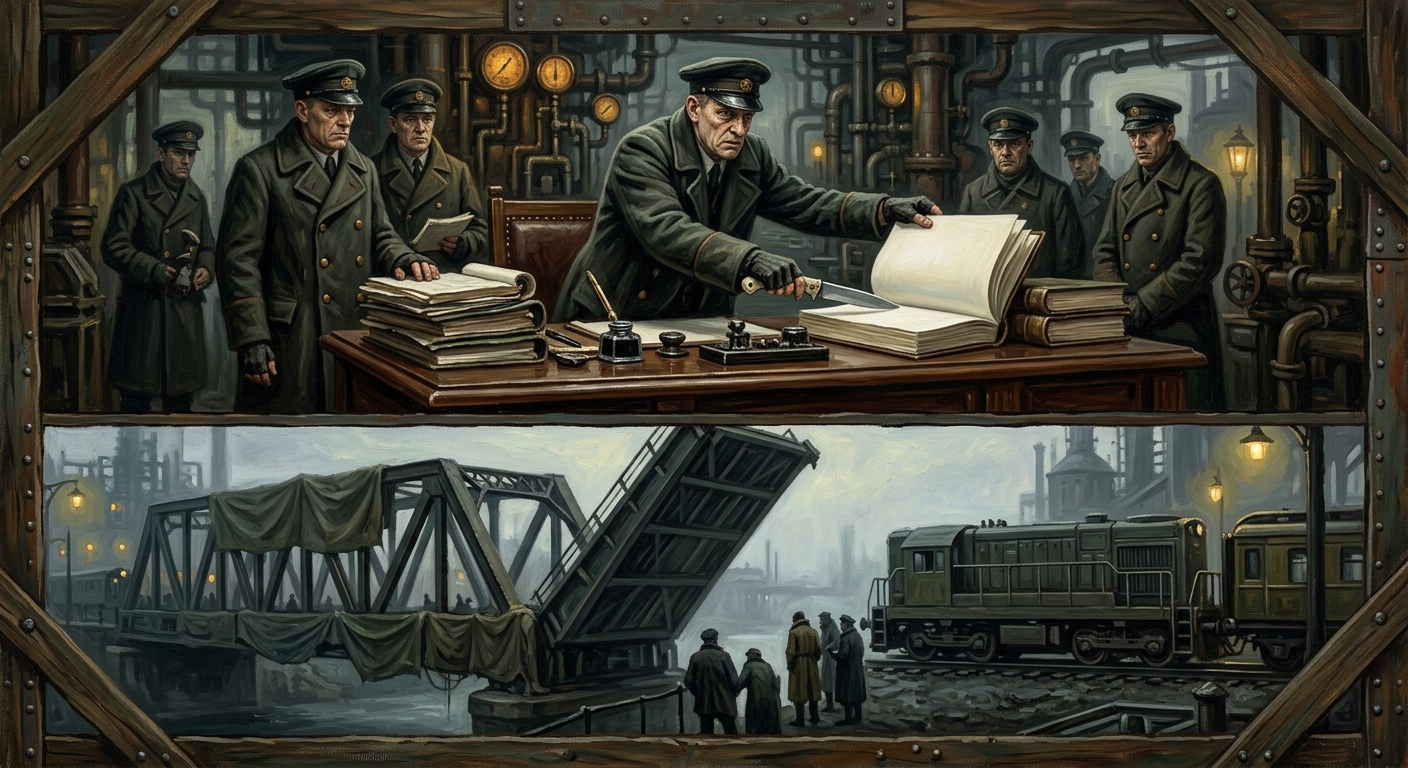
Standing Order 14-B
The bridge learned to answer before Strasbourg finished asking
Standing Order 14-B is Brest's span-sovereign knife: seize the blank paper, halt the crossing, and make absence answer.
Codex Ref. XIII.1.14-196
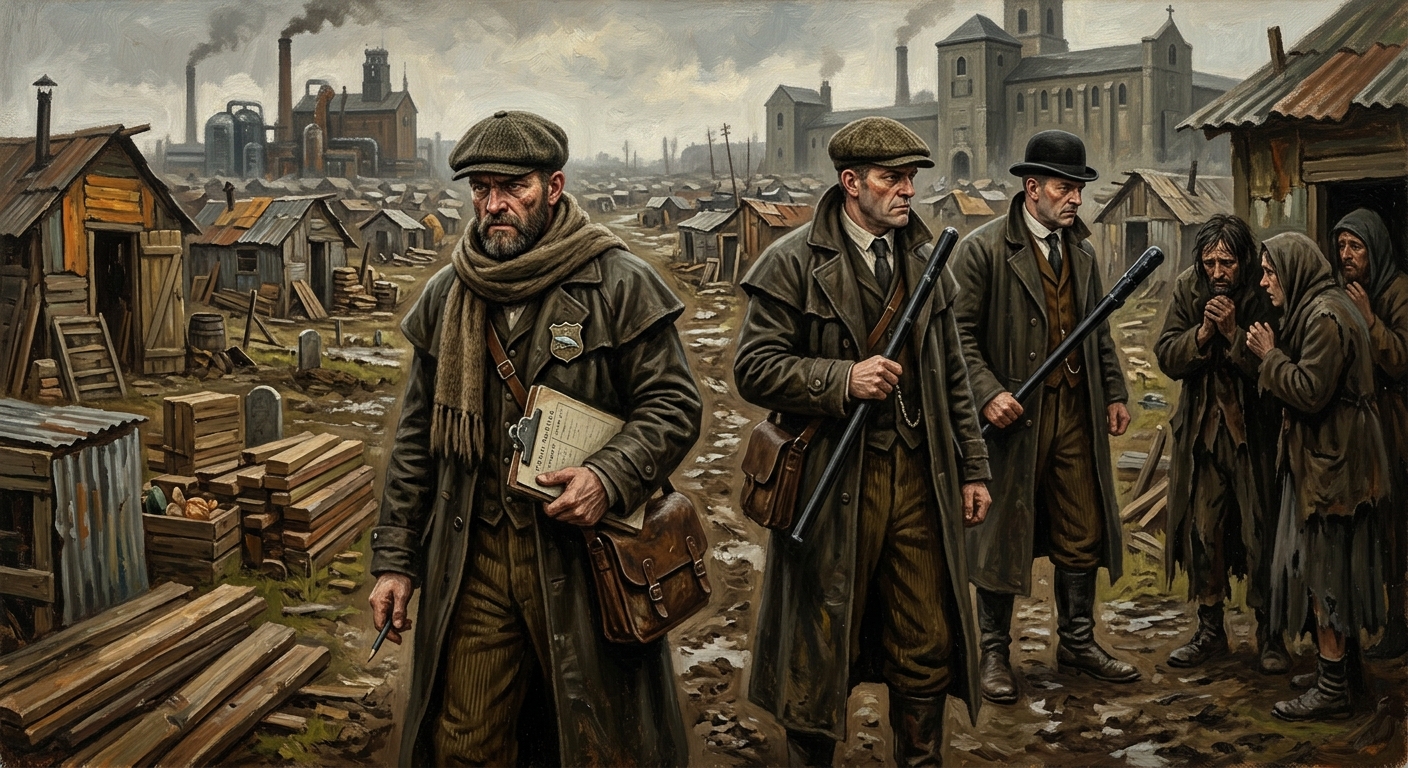
Stone Sharks
Safety by the inch, eviction by the weather, mercy by invoice
Stone Sharks are the profit-hardened branch of Grave-Field Shanty Brokers: orderly grave-lane landlords who sell safety, patrol blindness, and winter survival at predatory rates.
Codex Ref. XII.27.03-001
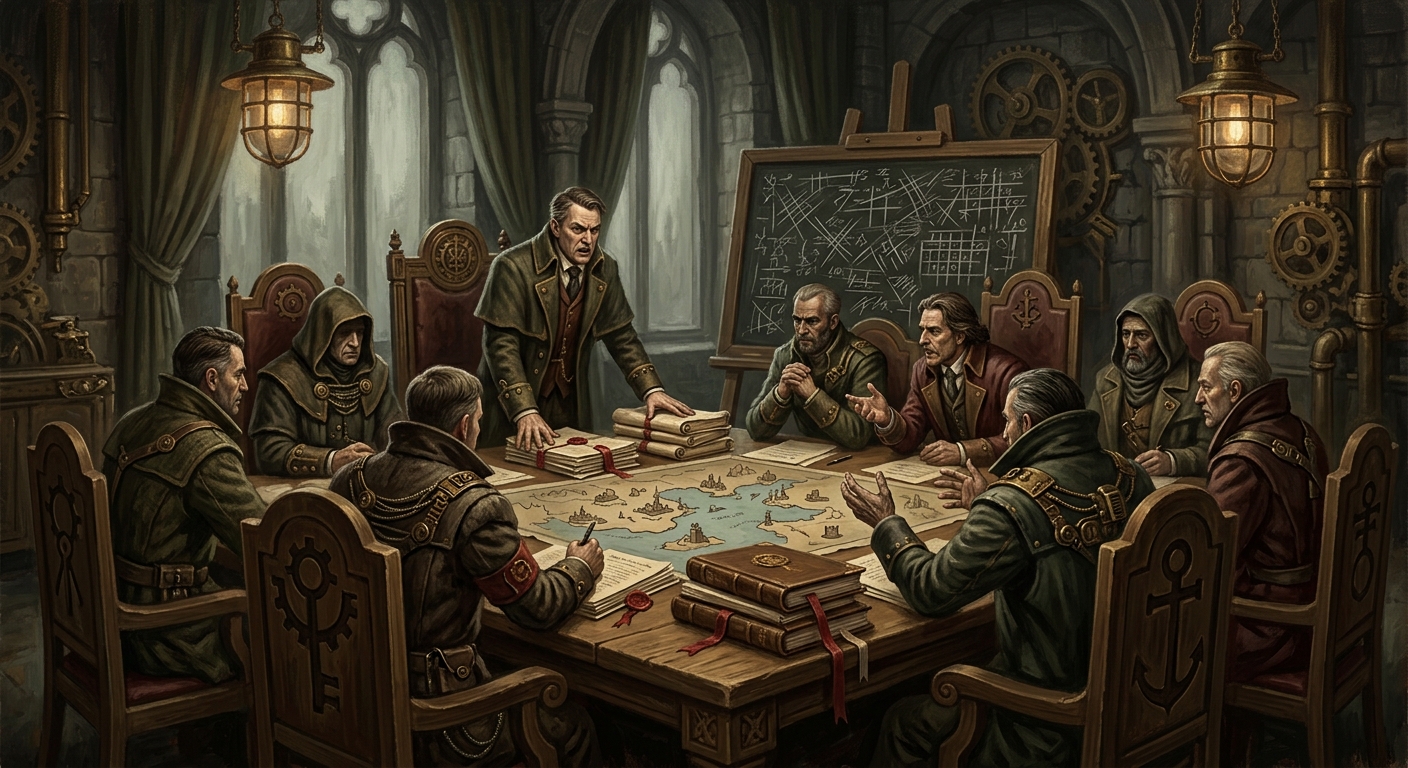
Table of Nine
The oak that refuses inspection and still moves ships
Britain's Table of Nine withholds its charters, argues before Aldric, commands ports and Wardens, and teaches Strasbourg the agony of useful illegibility.
Codex Ref. X.1.02-201
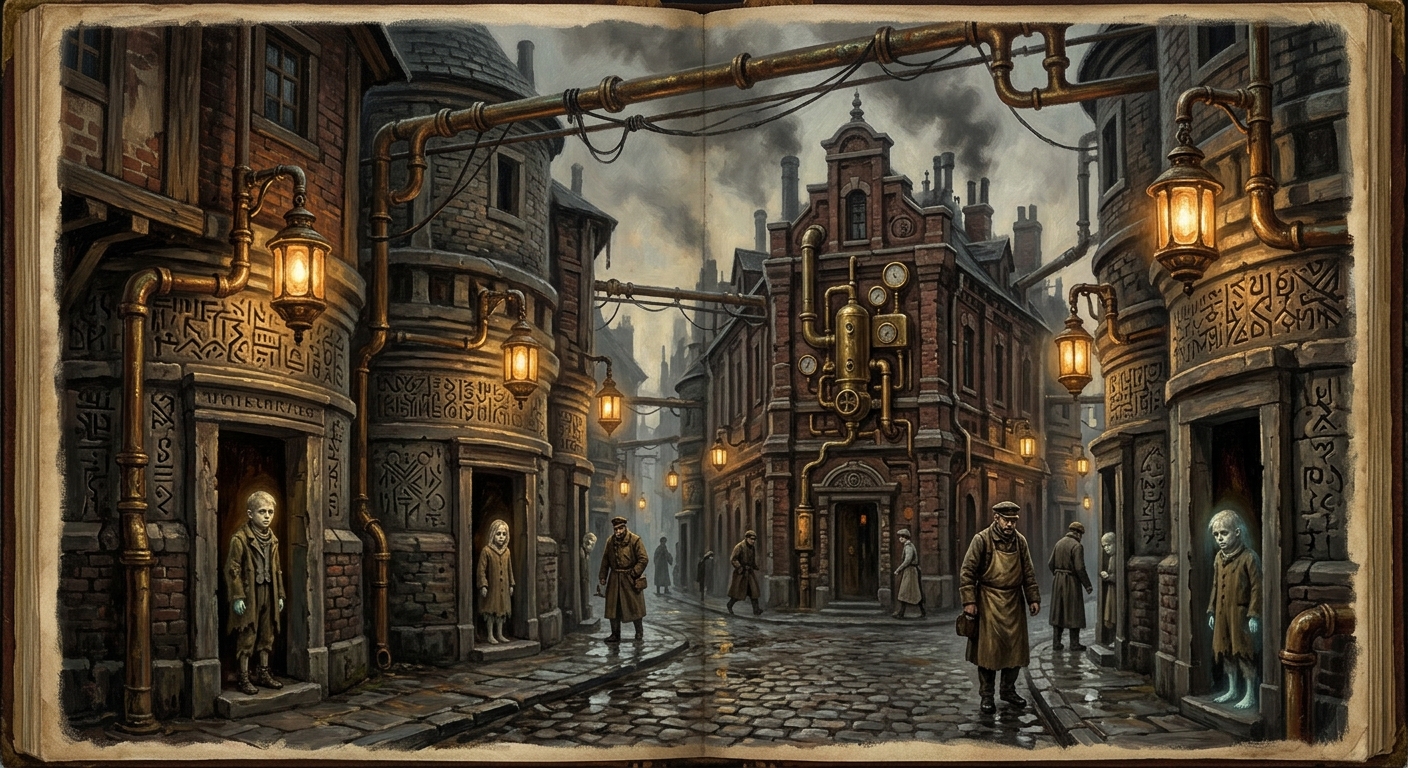
Târgu
The grave-ring town where walls learned doctrine
Târgu is the Przemyśl approach town where grave-rings house the living, walls recite through mortar, and surplus lamps taught children to glow.
Codex Ref. II.4.09-201
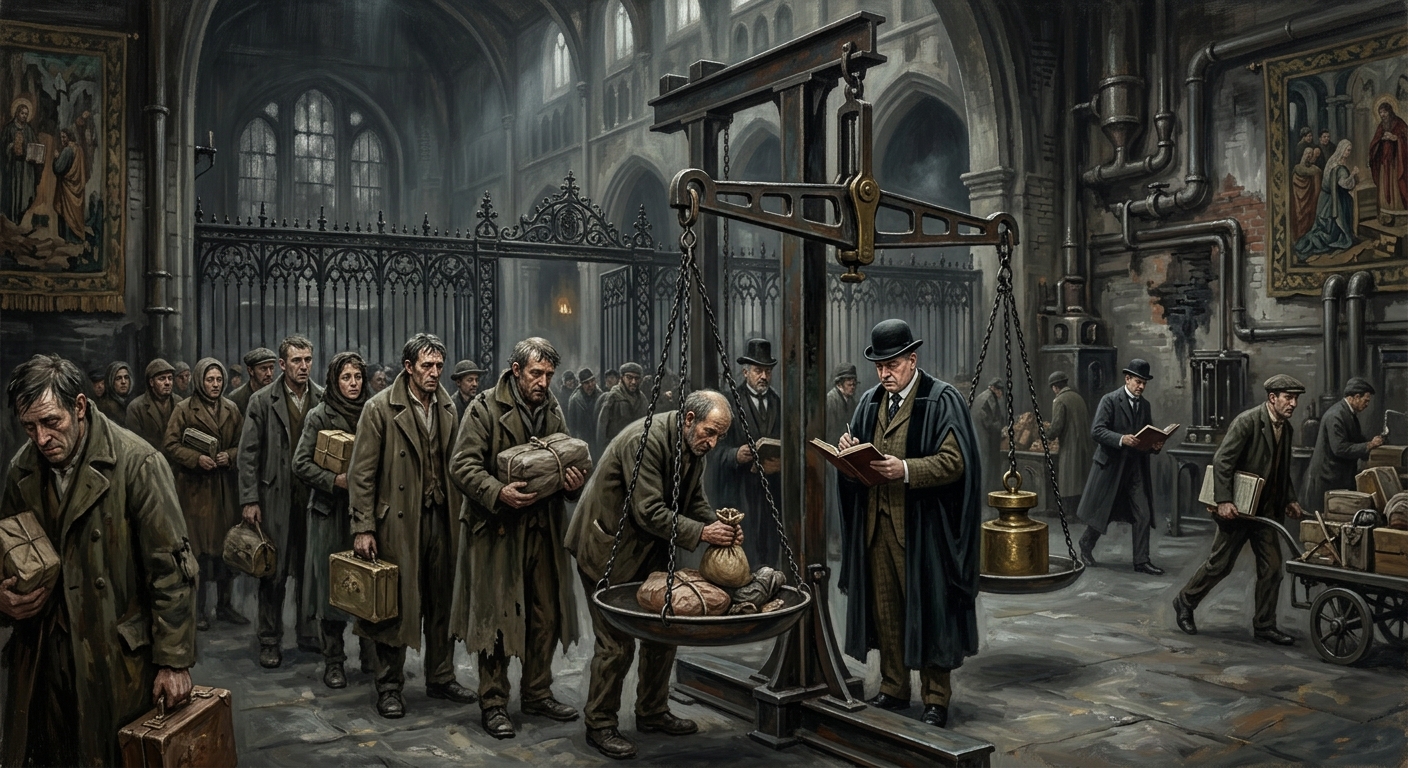
Tariff Chapel
The altar where hunger, bone, freight, and grief learn their lawful weight
The Tariff Chapel is the Synod's sacramental weighing room, born from the A.S. 97 Bread-Scale Uprising and extended to goods, corpses, relics, queues, and taxable desperation.
Codex Ref. XIII.1.67-001
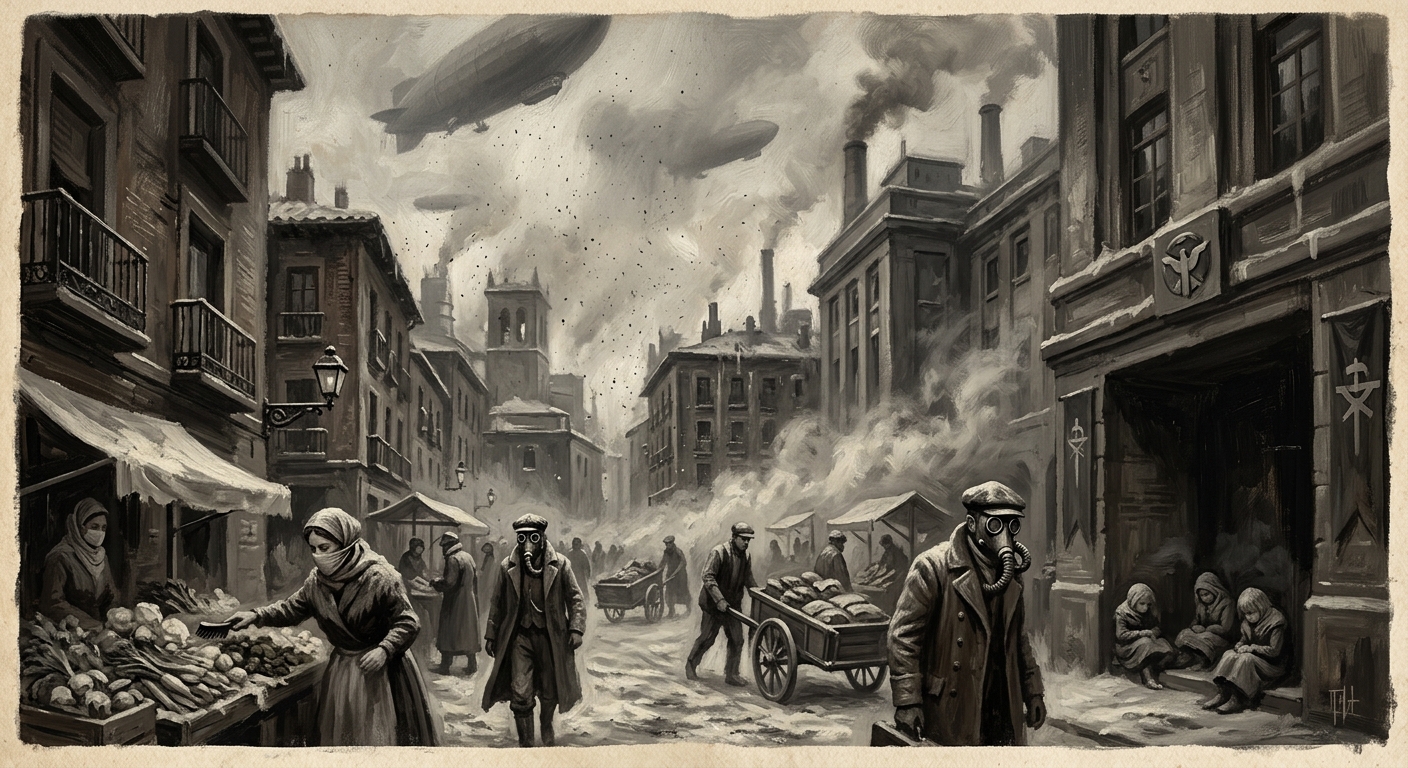
The Ash-Rain of Zaragoza
Where artillery made weather and fourteen children paid the grammar of “clean”
The A.S. 143 Ash-Rain of Zaragoza followed a sanctioned bombardment of a Velkara-aligned compound: three days of salt-and-milk ash, fourteen silenced children, no quarantine, and a city forced to keep trading beneath residue.
Codex Ref. VII.4.13-001
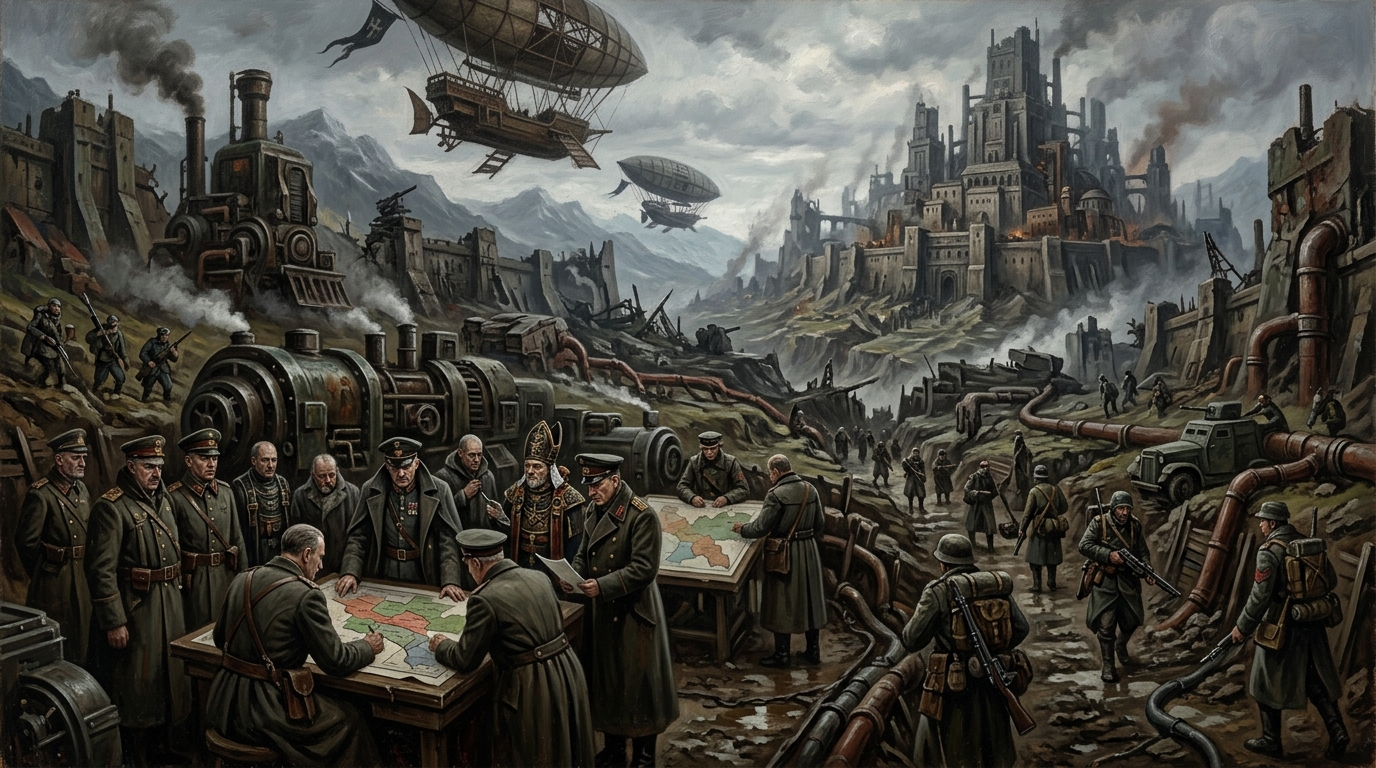
The Balkans
The wound that taught Europe to count its bleeding
The Balkan wound-region, broken first by the Eastern Silence and the Sundering, then divided into Synod margins, contested corridors, Sin-General dominions.
Codex Ref. II.6.05-045
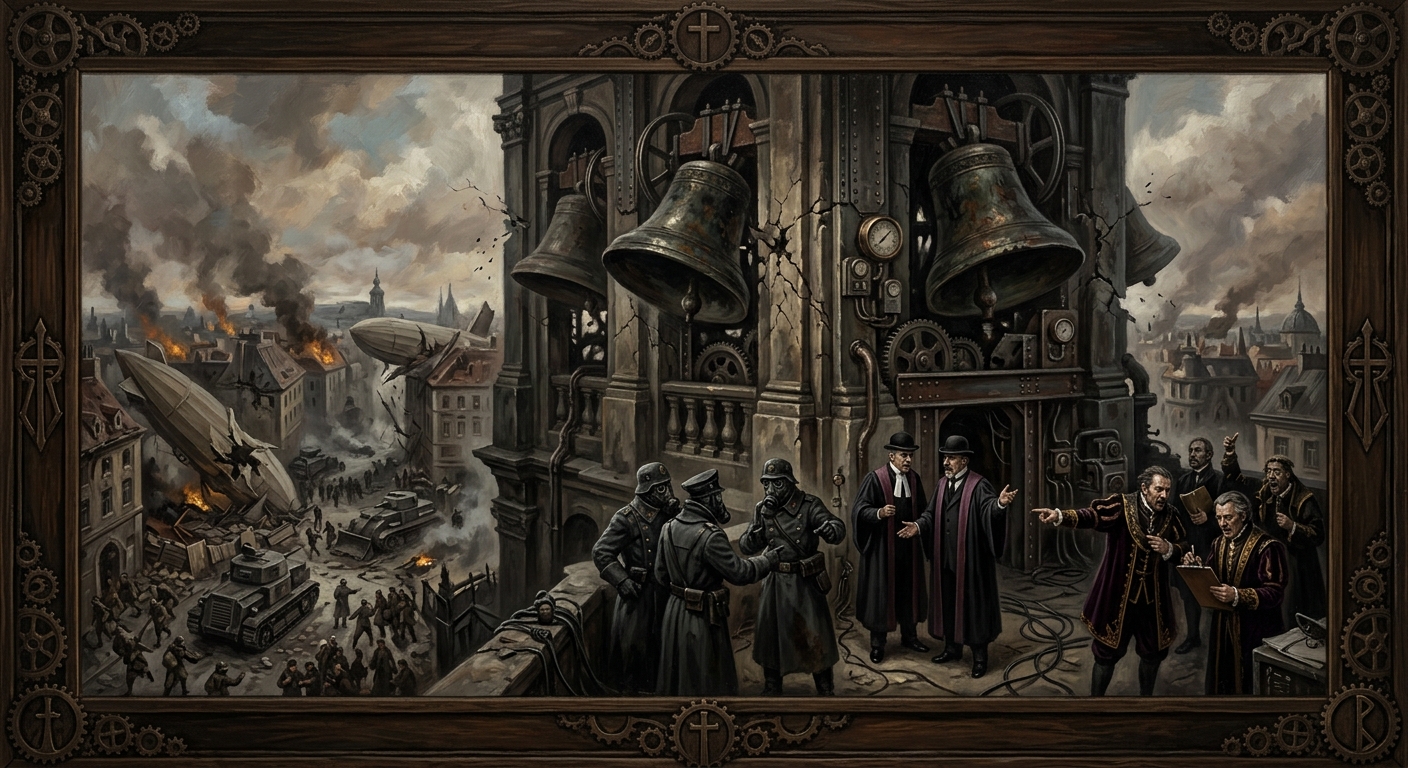
The Bells of Saint Rupert
Bronze sang; committees have been recovering ever since
At Vienna in A.S. 95, the unroped bells of Saint Rupert rang without permission, broke a siege, and left three Bureaus arguing with bronze.
Codex Ref. III.2.04-018
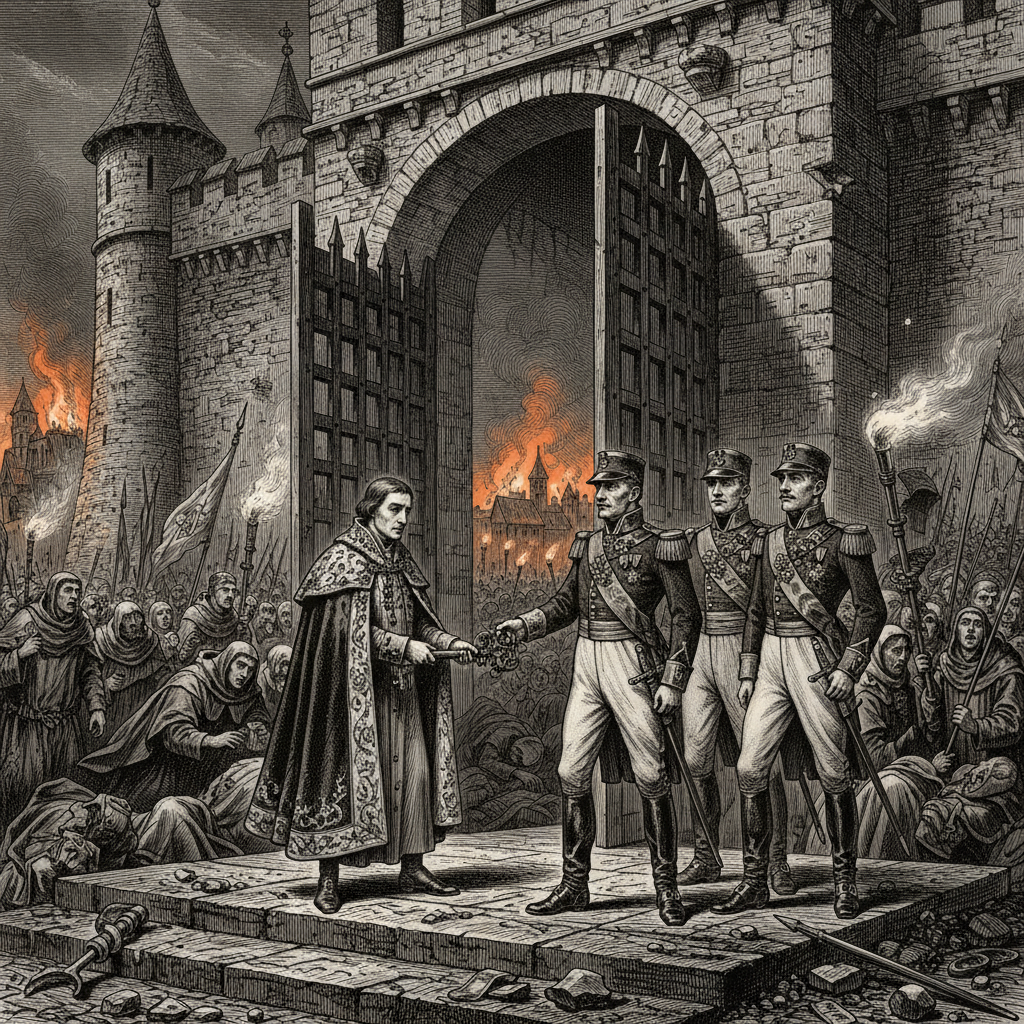
The Betrayal of Aachen
On the Surrender of the Citadel and the Erasure of Guillaume
In the twenty-fifth year of our calendar, Lord-Protector Guillaume sold Aachen's gates for thirty provinces of the Lowlands. The citadel fell without a siege. The faithful fell without a warning.
Codex Ref. II.1.06-066
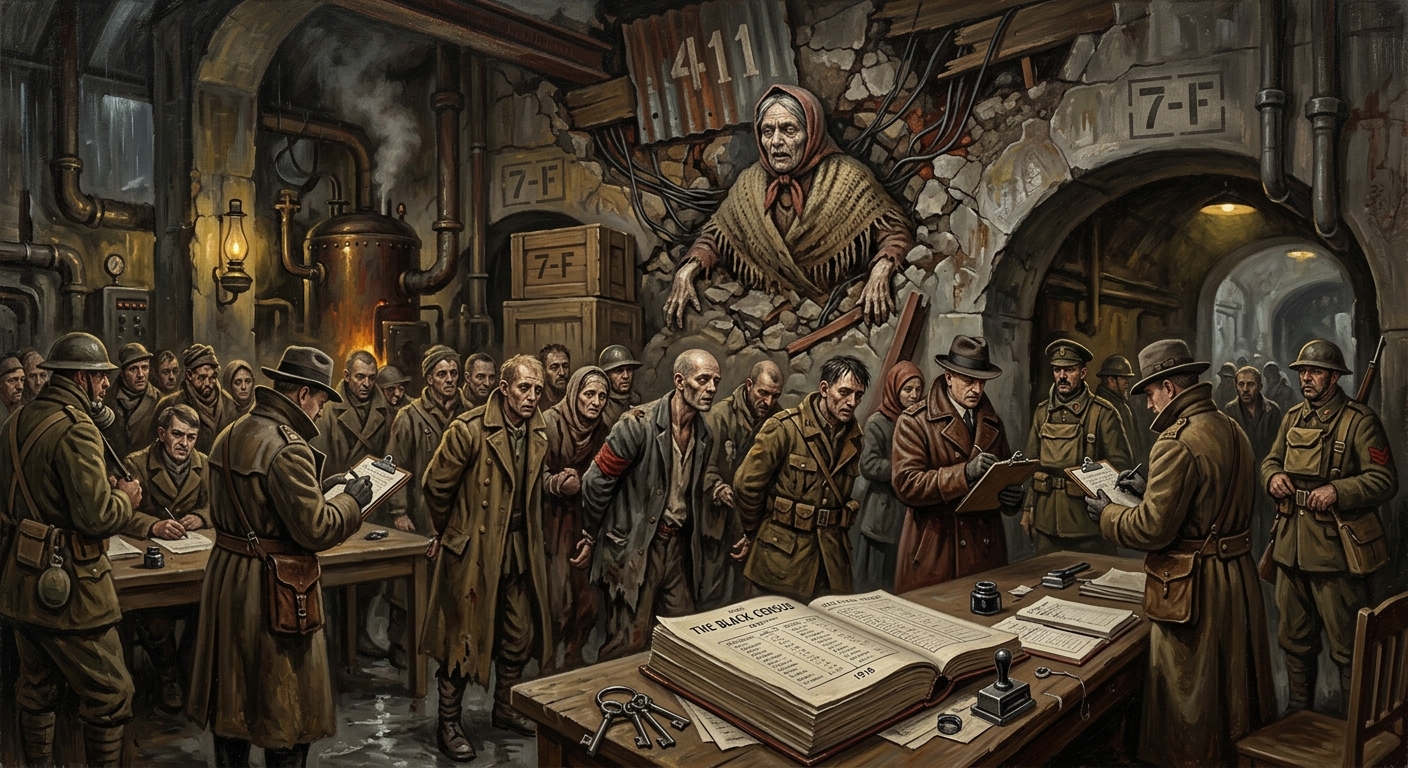
The Black Census of Metz
Four hundred and eleven soldiers, one mother, and the arithmetic that broke denial
The Black Census of Metz turned Ash-Mothers from trench epithet into Classification 7-F after four hundred and eleven captured Thralls were traced to one dead woman whose remains held an enemy bastion together.
Codex Ref. VII.4.14-001
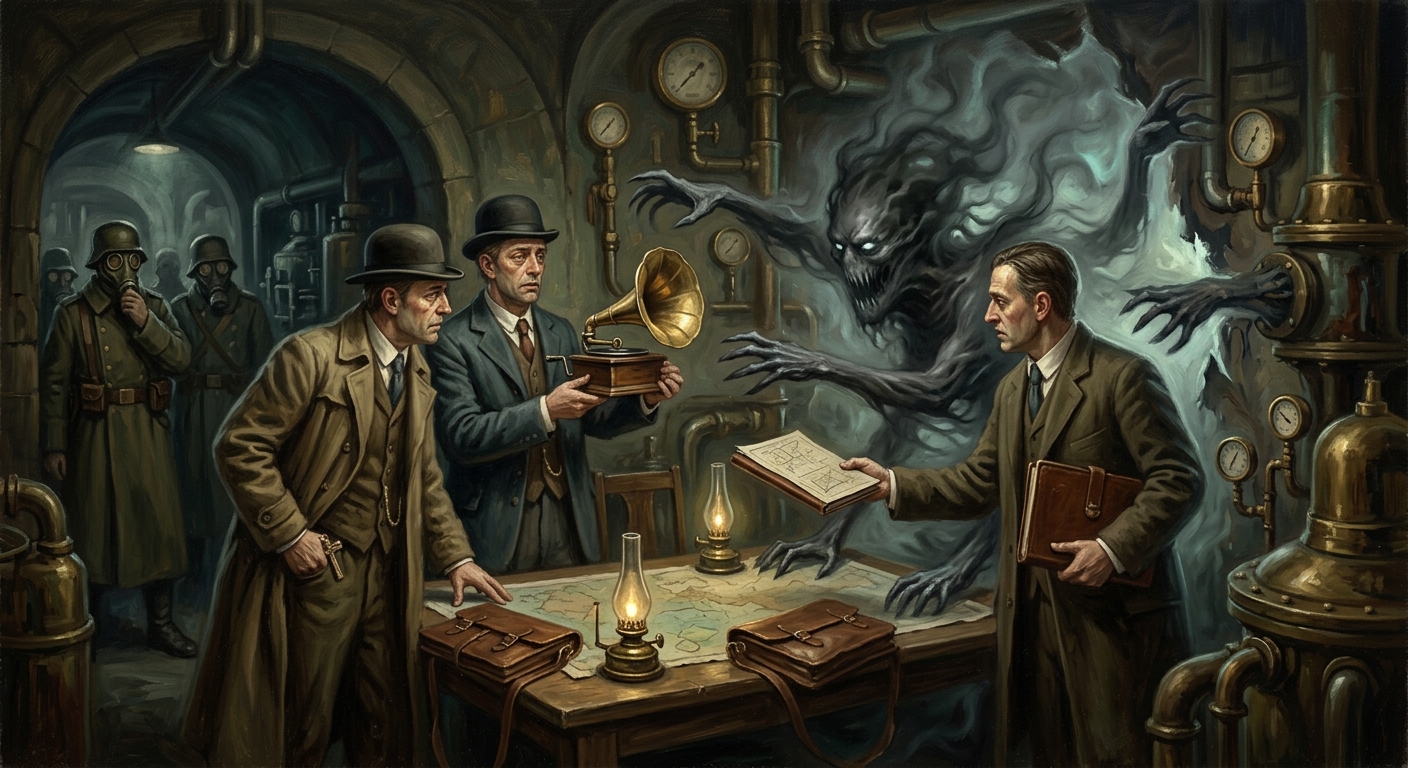
The Coexistence Heresy
The treaty Hell offers while still chewing the witnesses
Fourth of the eight proscribed heresies, the Coexistence Heresy teaches that mankind should bargain with demons; Doctrine answers that Hell only negotiates while digesting.
Codex Ref. XIII.1.37-001
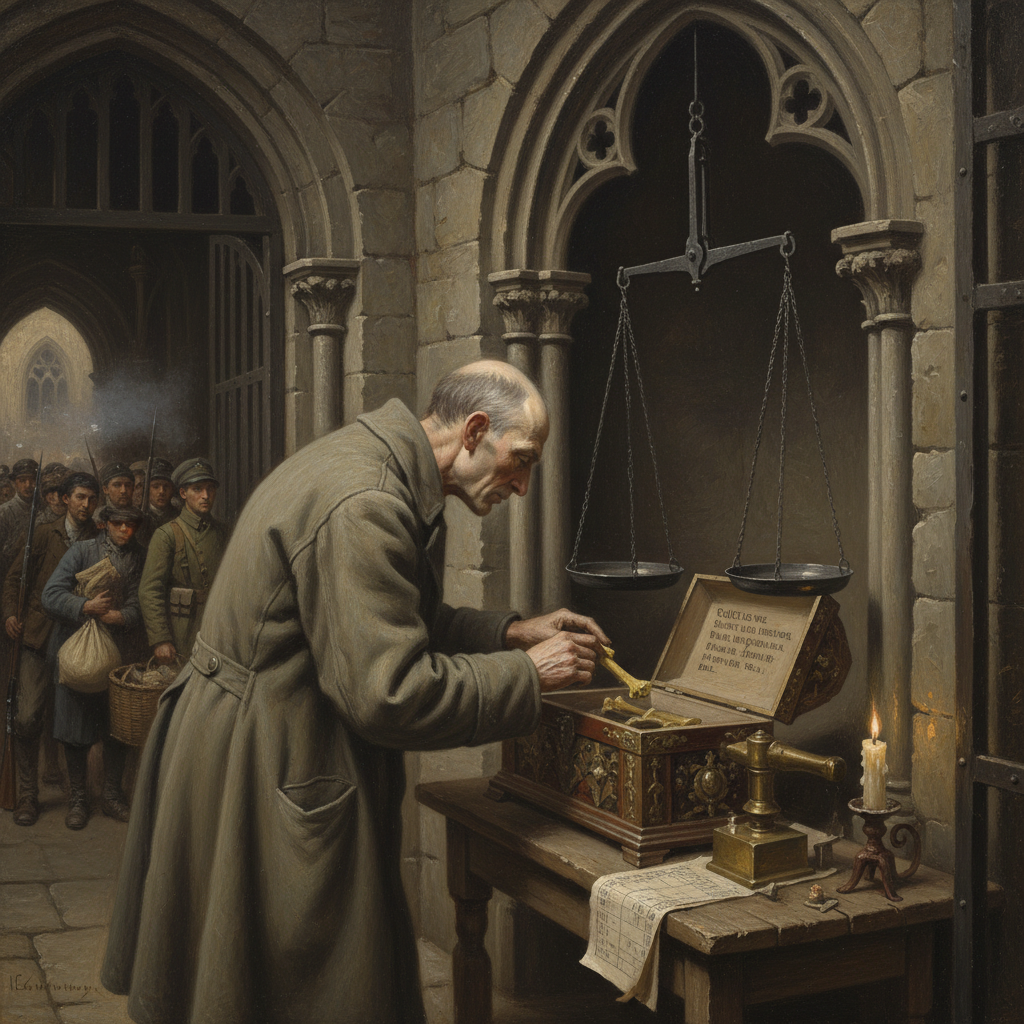
The Commerce Clerk (Tariff-Chapel Weigher)
The man who stands between a bastion and famine, and who resolves the question with the splintered bone of a saint.
The Synod's most bribable sacrament: the chalk-fingered clerk whose iron scale, calibrated against saint-bone, determines whether a bastion eats.
Codex Ref. XII.8.01-001
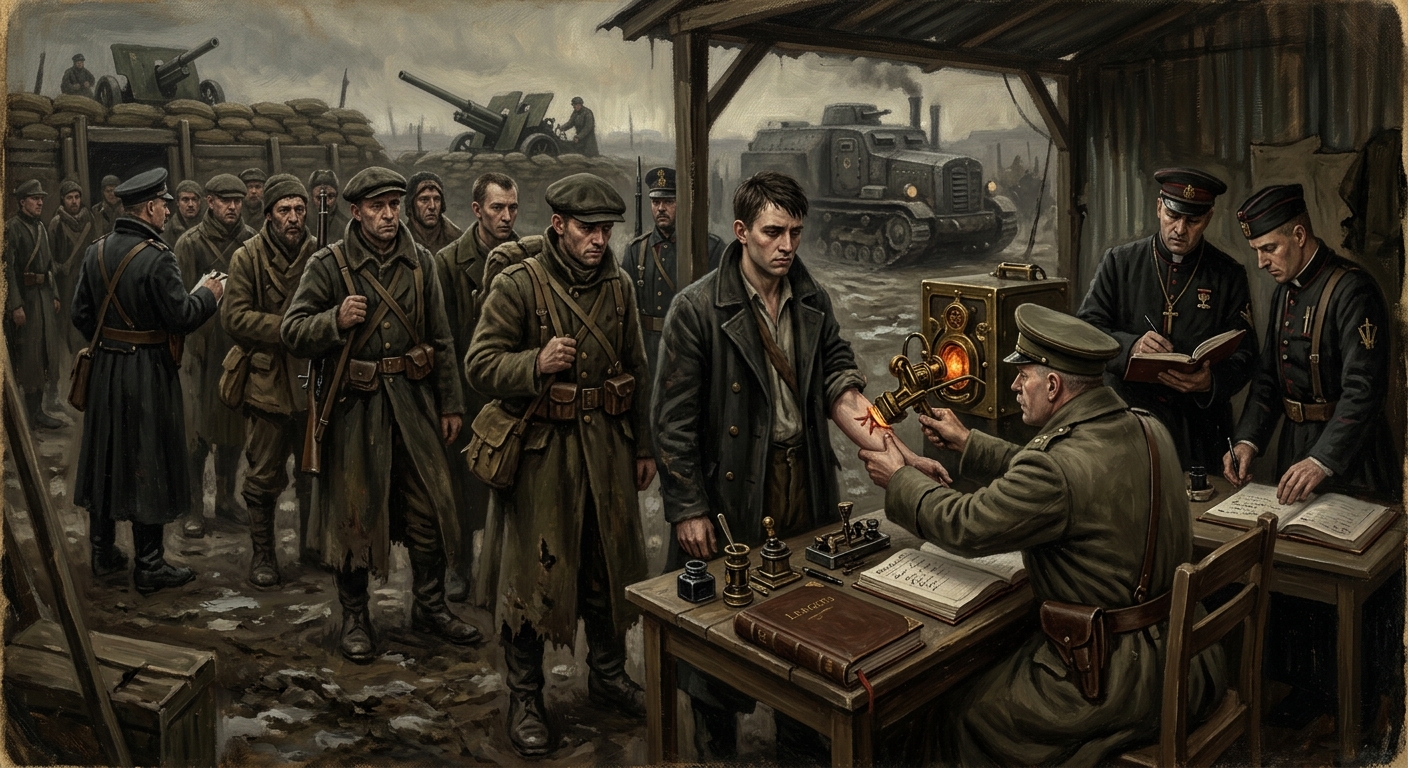
The Compulsory Marking Decree
The day paper lost authority and flesh became the Bureau's preferred document
The A.S. 113 Compulsory Marking Decree made bodily tri-marks mandatory at forward-zone checkpoints after forged papers killed eighty-seven at Bastion-Przemyśl.
Codex Ref. VII.8.10-035
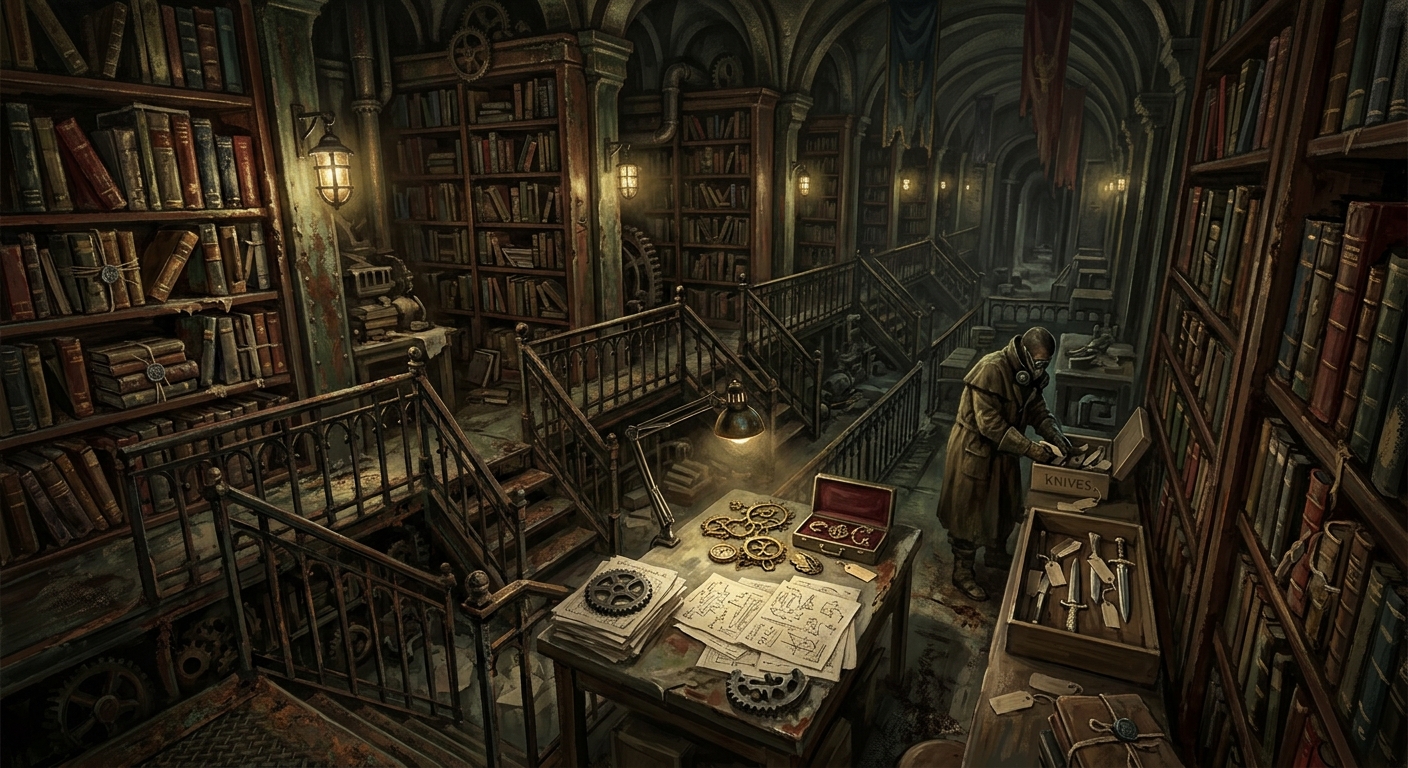
The Forbidden Stacks
Where heresy is shelved close enough to hate efficiently
The Forbidden Stacks beneath Strasbourg preserve Rationalist paper, contraband symbols, and other knives the Bureau prefers labelled rather than lost.
Codex Ref. II.2.06-001
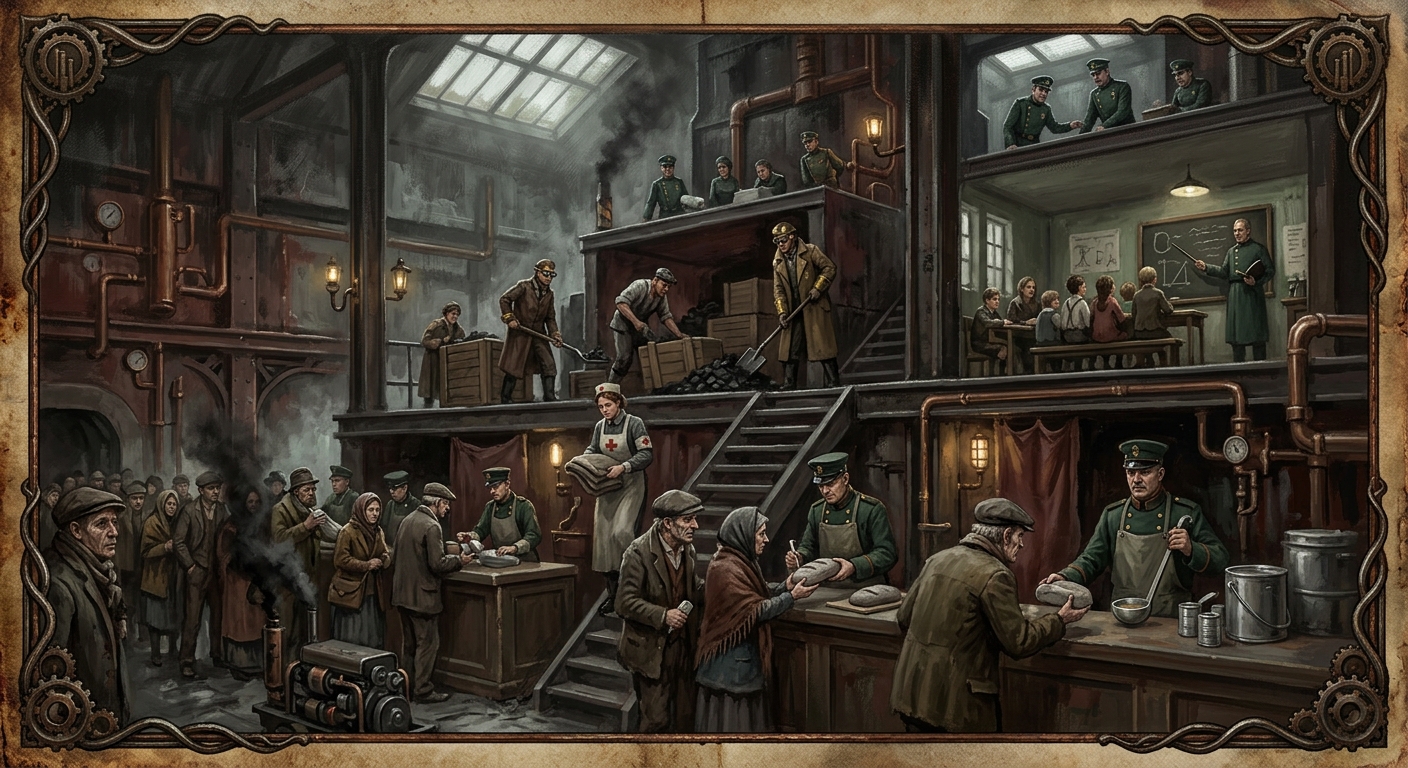
The Hierarchy of Need
Hunger is the sermon Kargath learned to serve hot
Kargath's cults do not begin with horns, but with bread. The Bureau calls their five stations a hierarchy. The hungry call them provision.
Codex Ref. IX.2.01-001
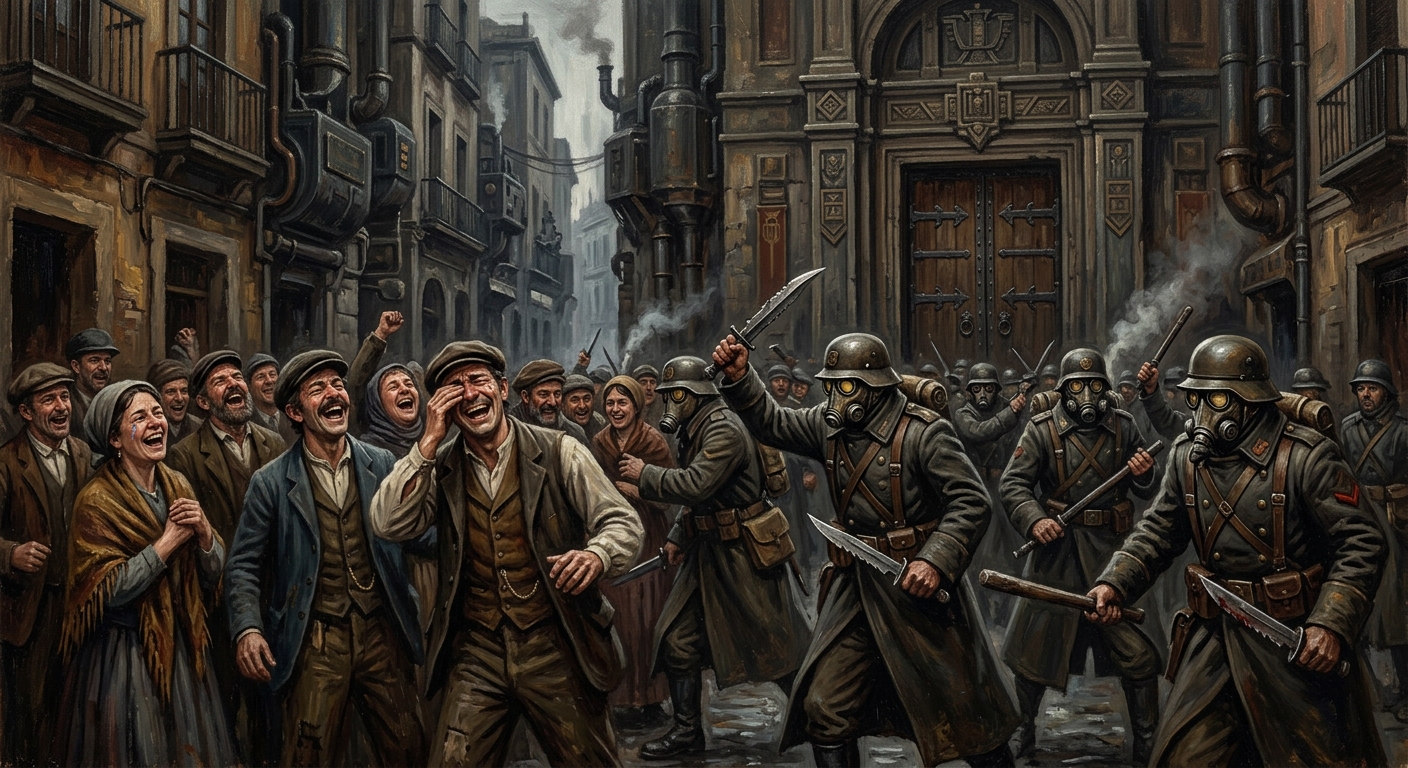
The Laugh Riots of Seville
The city laughed; the Bureau counted tongues
Seville exceeded its mirth quota in A.S. 153. The Bureau answered laughter with knives, and called the silence compliance.
Codex Ref. VII.8.02-001
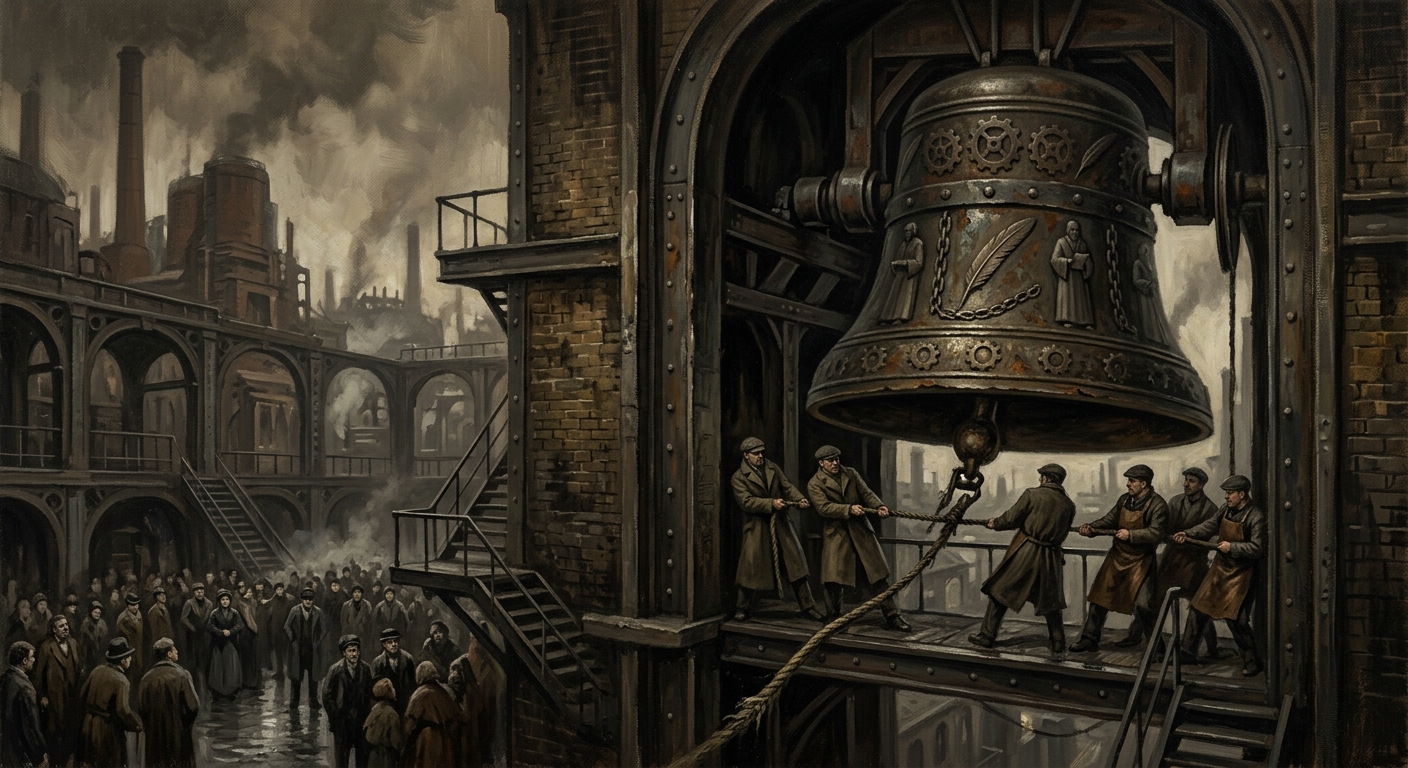
The Leviathan
The war bell of Strasbourg, too large for mercy and too honest for politics
Leviathan is the fourteen-tonne war bell of the Tower of the Quill, tolled eleven times since A.S. 92 when history required bronze to shout.
Codex Ref. XIII.1.72-004
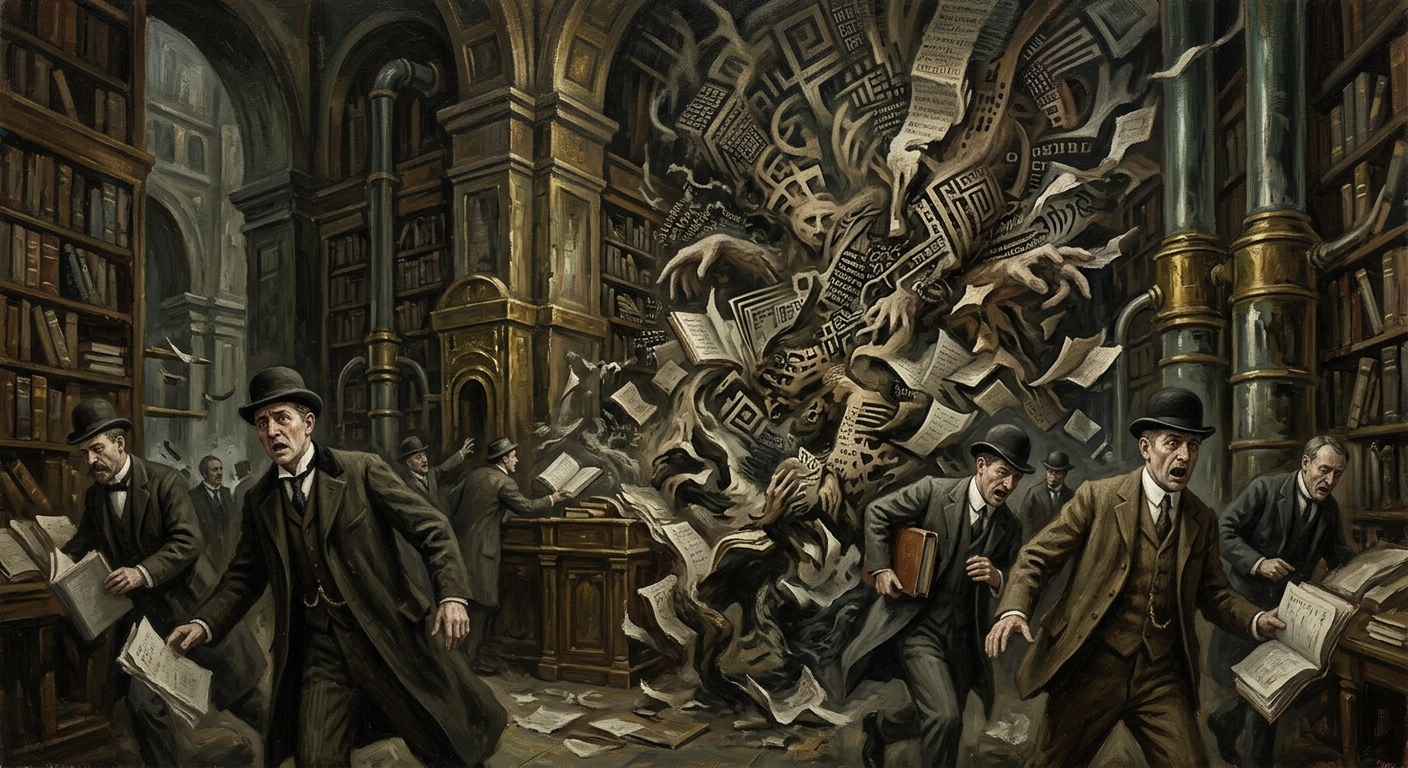
The Lie
Falsehood with appetite, corrected by bell and flame
The Lie is hostile ontology: uncounting, unnamedness, mimicry, record-contagion, and the enemy grammar by which Creation is taught to refuse the Ledger.
Codex Ref. XIII.1.30-201
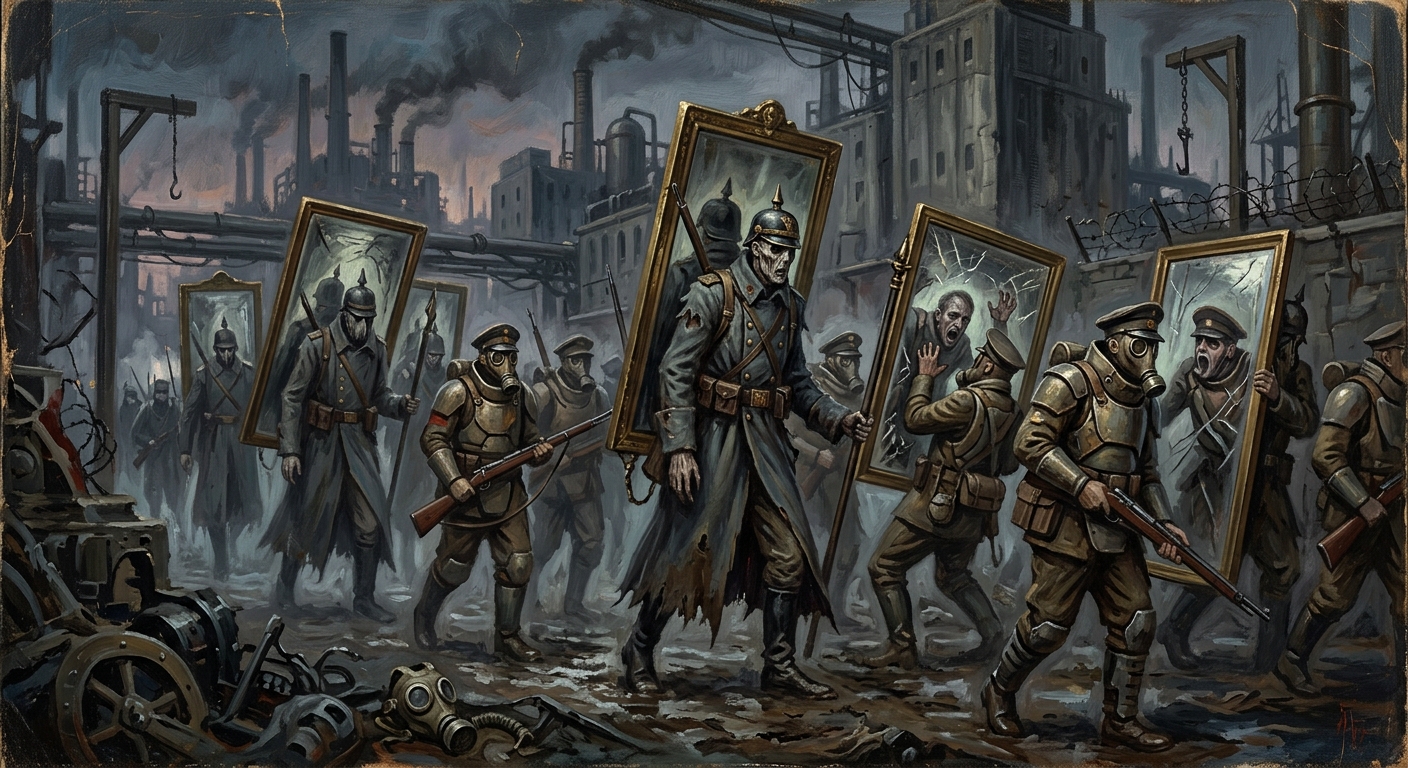
The Mirror-Lords
The glass does not lie; it flatters
Atheron's mirror-bearing support demons turn polish into accusation, reflection into rank, and a regiment into its own court-martial.
Codex Ref. IV.1.07-009
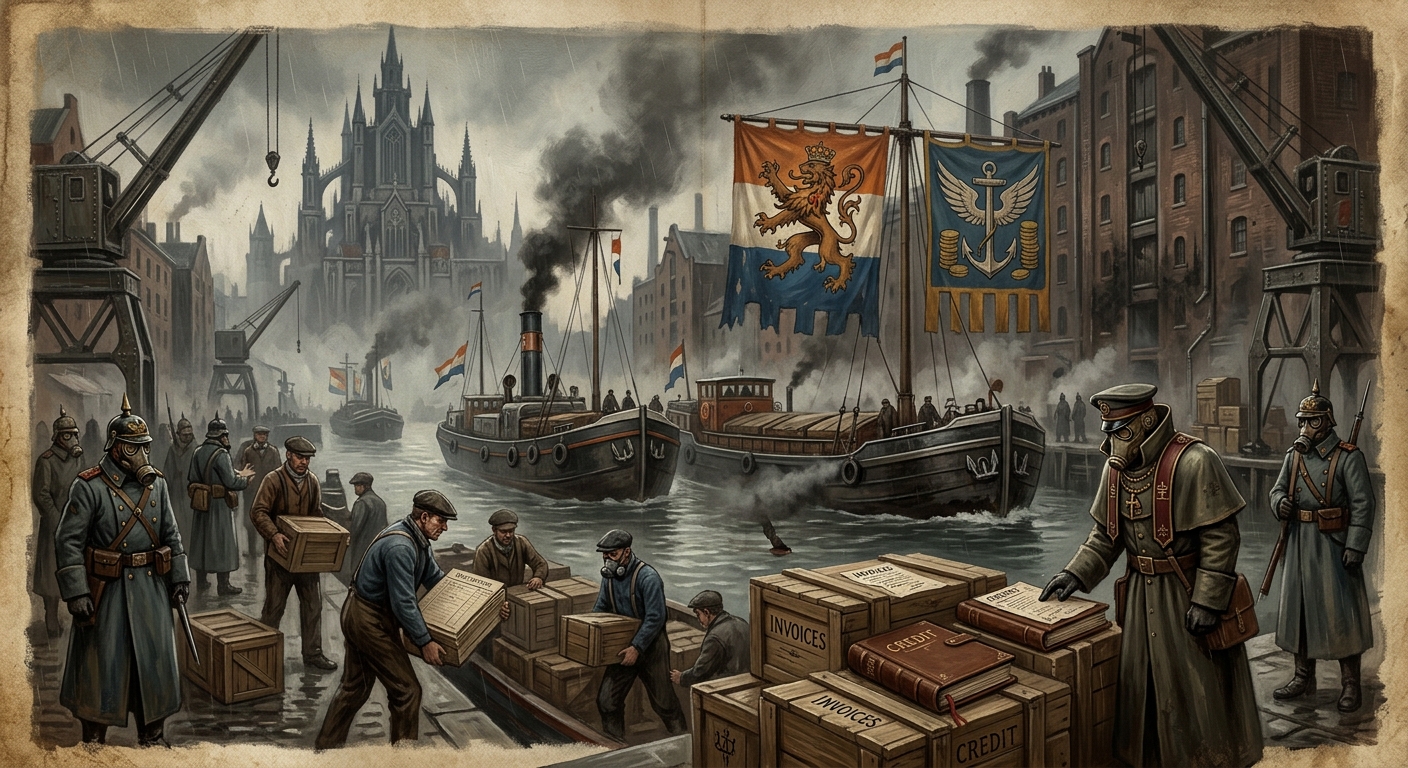
The Netherlands
The merchant republic that invoices our contempt
The Netherlands remain independent, solvent, suspect, and indispensable: a Dutch merchant republic whose ships, presses, credit, and invoices keep irritating the Synod into survival.
Codex Ref. X.1.02-001
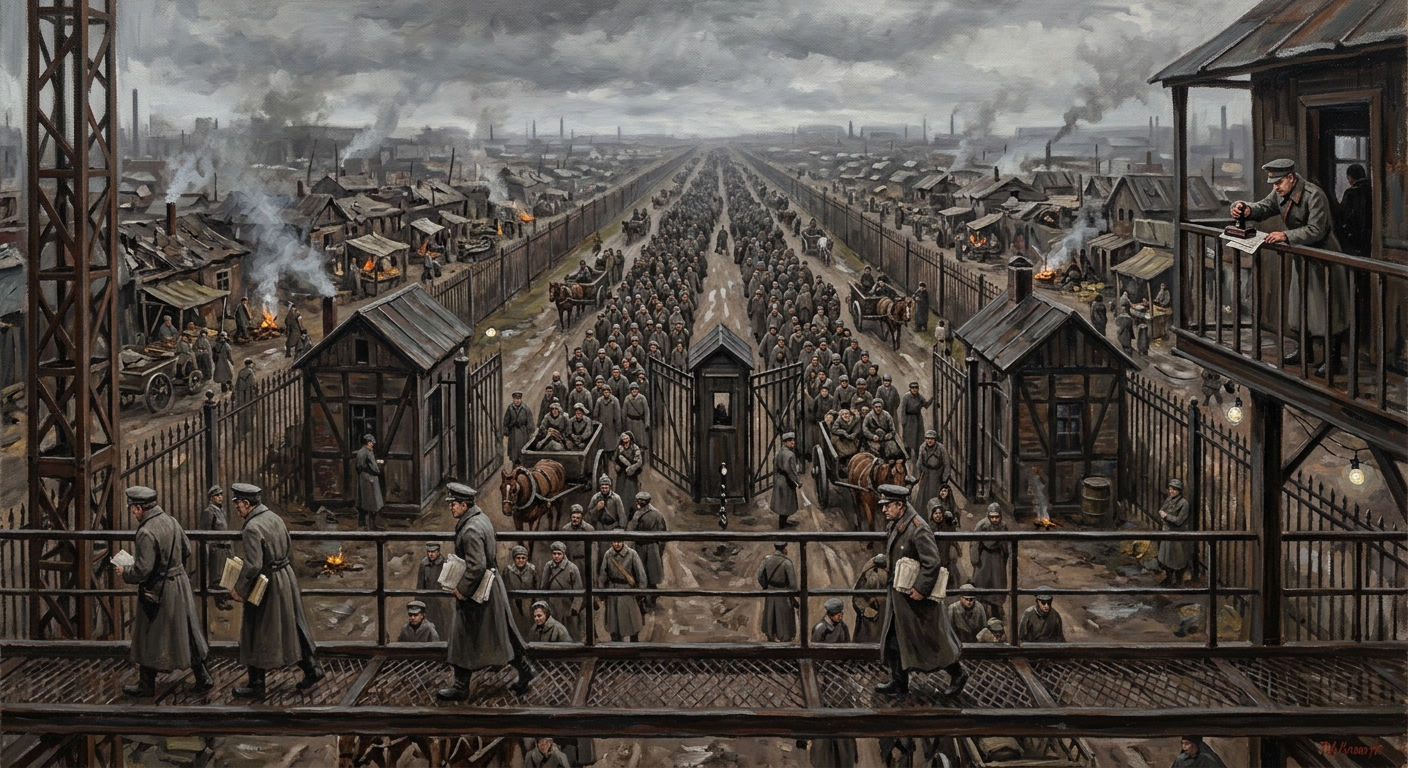
The Queue Road
Where motion became a taxable offense and patience became policy
One hundred and twelve miles of weaponised patience. The Queue Road converts motion into revenue and compliance into a commodity — nine gates, forty-eight thousand registered souls.
Codex Ref. II.3.05-001
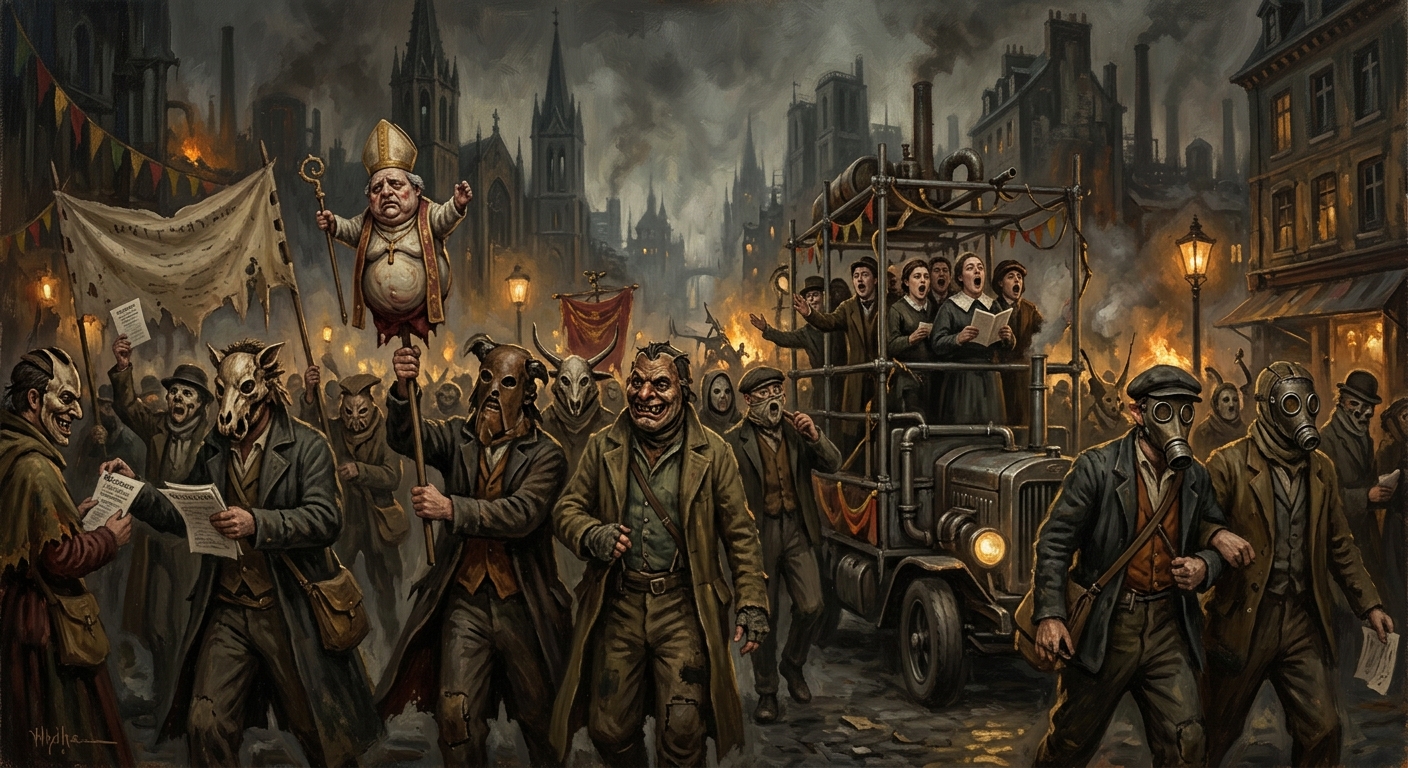
The Tumults of Lyon
Where licensed laughter discovered teeth and the bear wore a mitre
In A.S. 170, Lyon's licensed Carnival of Saint Bérard's Misrule became nine hours of masks, pamphlets, puppet blasphemy, altered hymns, and audited laughter.
Codex Ref. VII.4.11-001
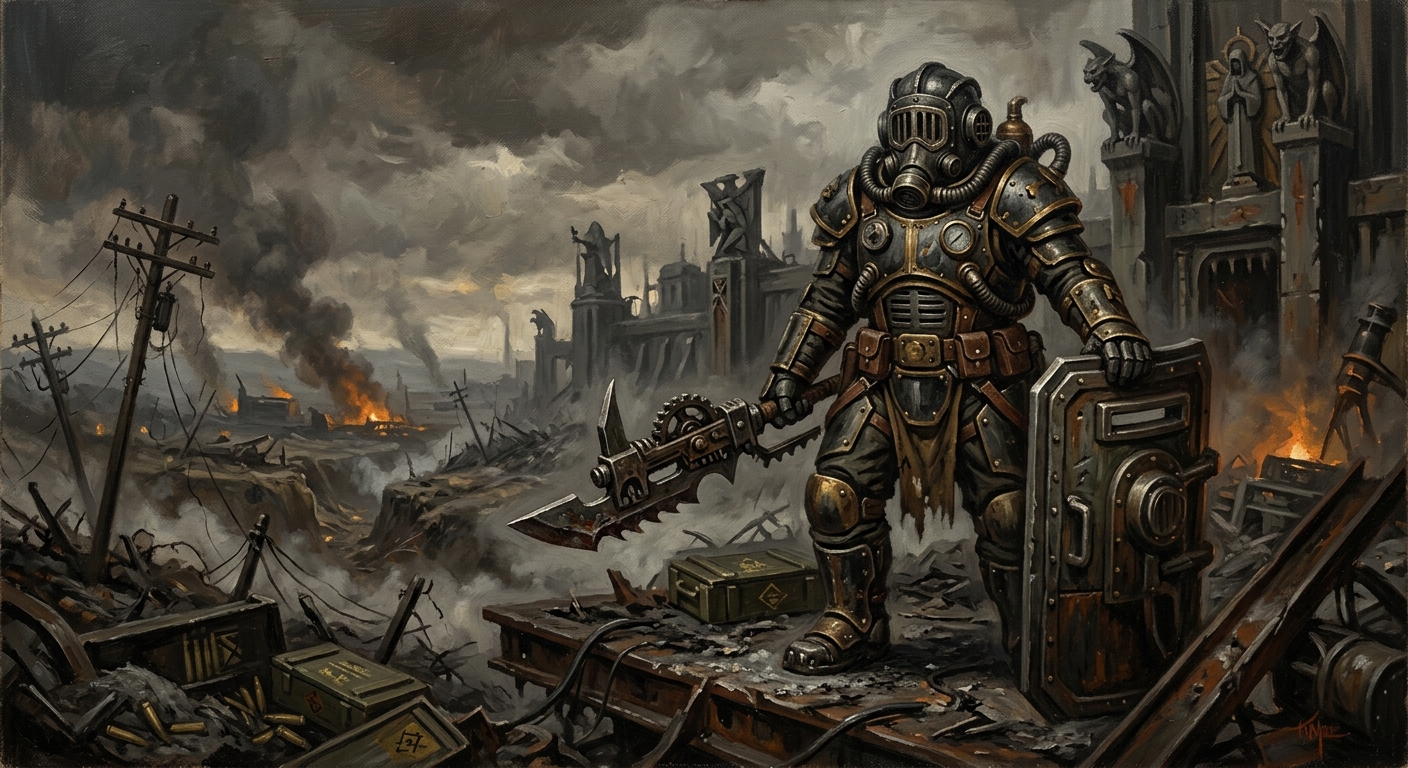
The Warrior of Justice
The faceless correction no Bureau has managed to license
Condemned as the Third so-called Virtue General, the Warrior of Justice is an unconfirmed faceless combatant whose alleged interventions rescue losing lines and insult every licensed channel of hope.
Codex Ref. III.2.01-053
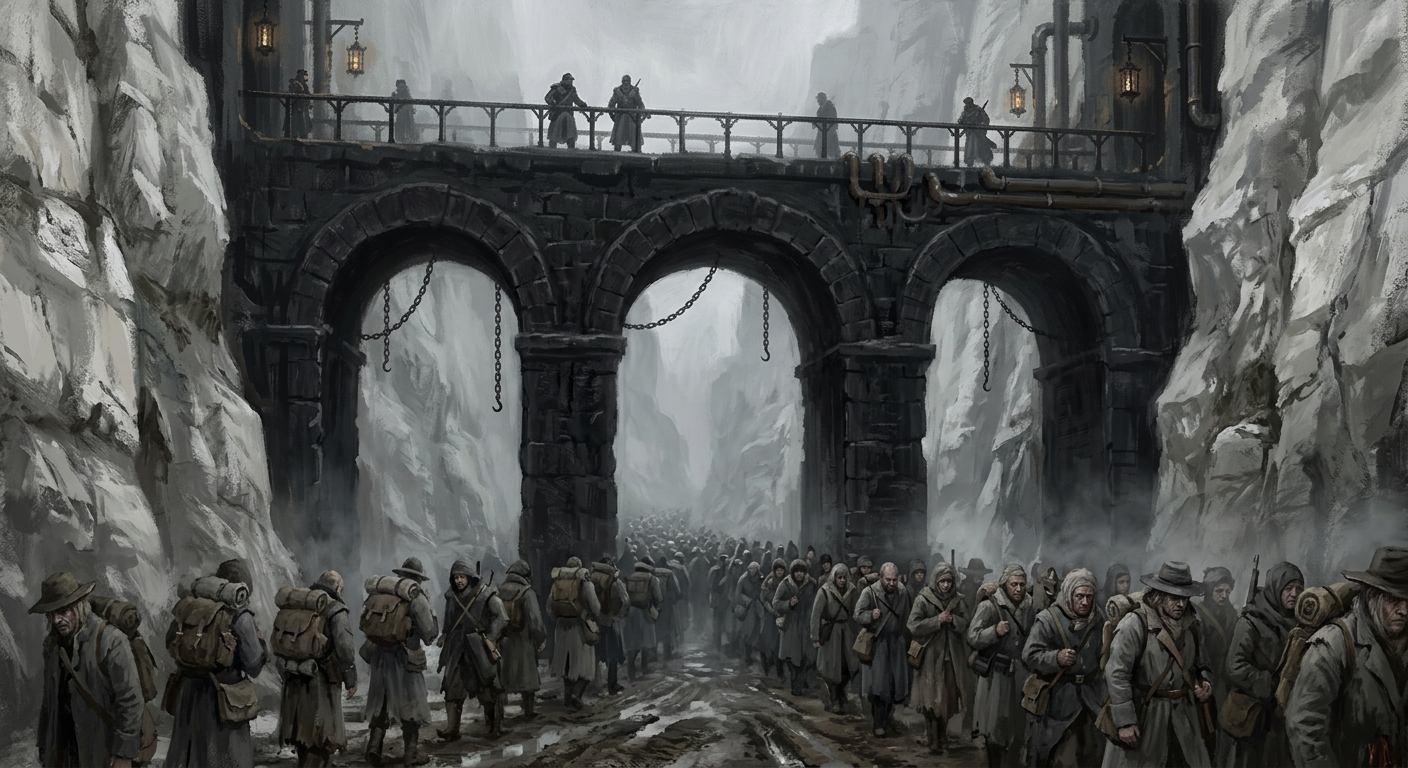
The Widow's Pennies Exchange at Griefgate
Where guilt is the currency and the arch keeps the change
The most efficient grief-processing apparatus on the pilgrim roads — three black-stone arches, a ledger of sorrows, and a staff of professionals who charge for the arithmetic.
Codex Ref. II.1.04-001
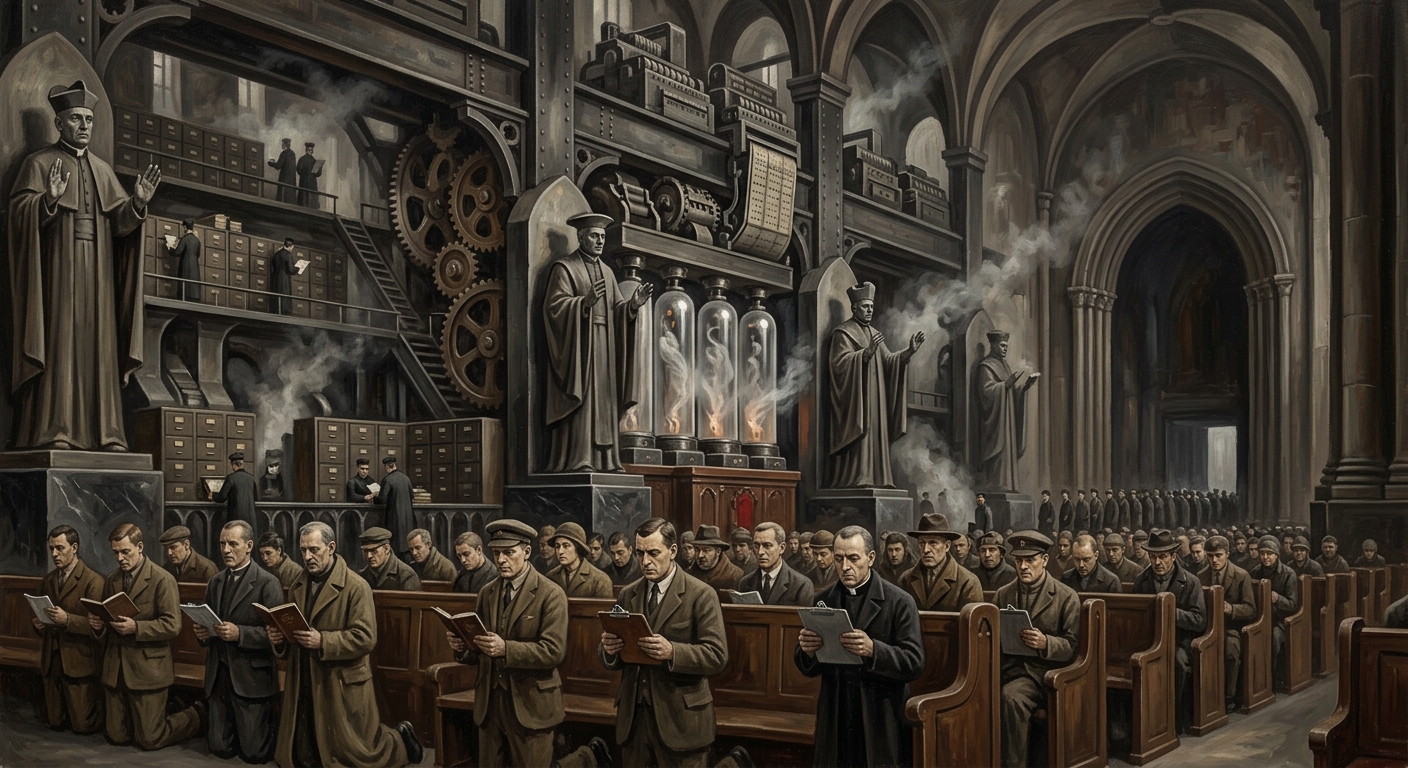
Theocracy
Piety with pipes, doctrine with payroll
Theocracy is the Synod's mature art: altar made warrant, prayer made schedule, fear made grammar, and every soul brought under ratified custody.
Codex Ref. XIII.1.01-201
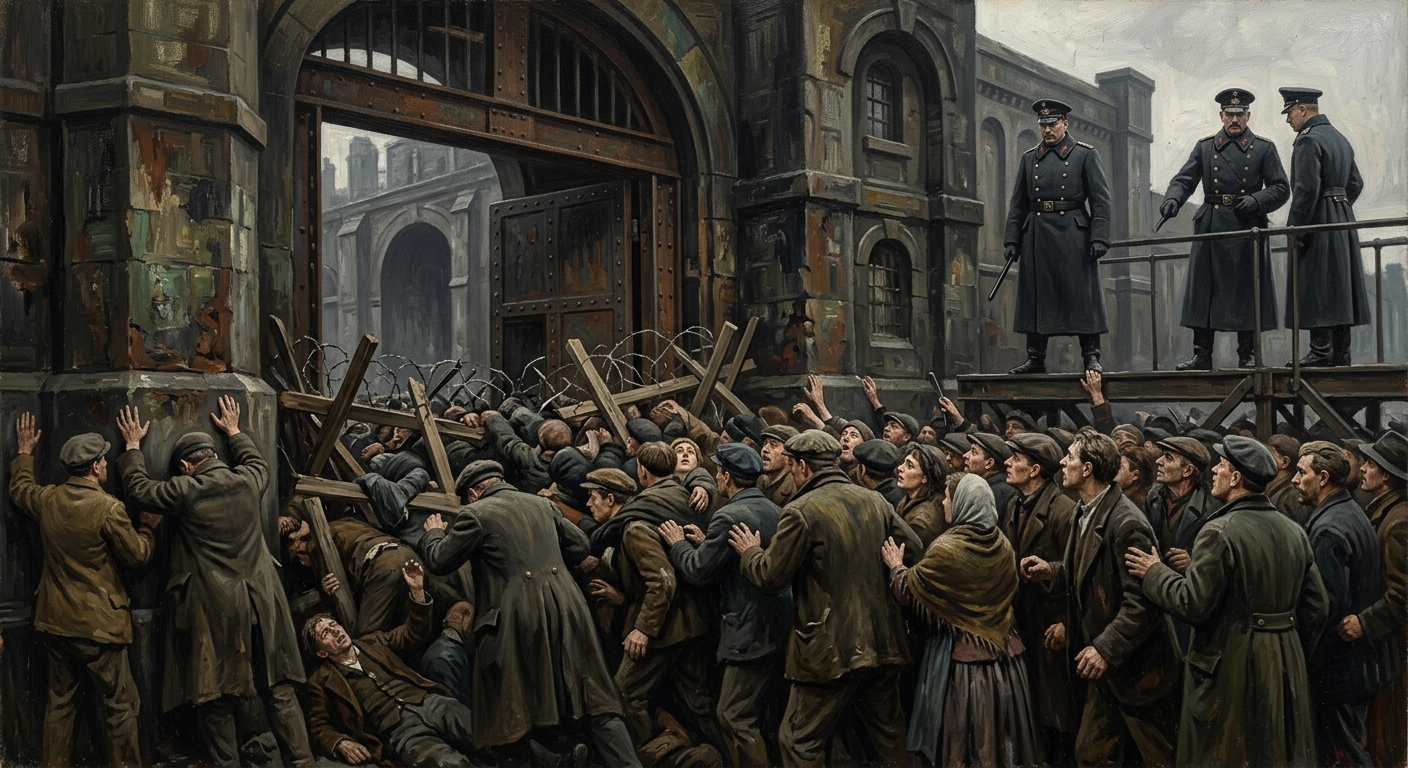
Three-Day Crush
Eleven minutes made a profession; three days counted the dead
The Three-Day Crush killed 309 at a famine gate, then taught the Synod to invent the Queue-Marshal Corps and call suffocation logistics.
Codex Ref. VII.8.10-007
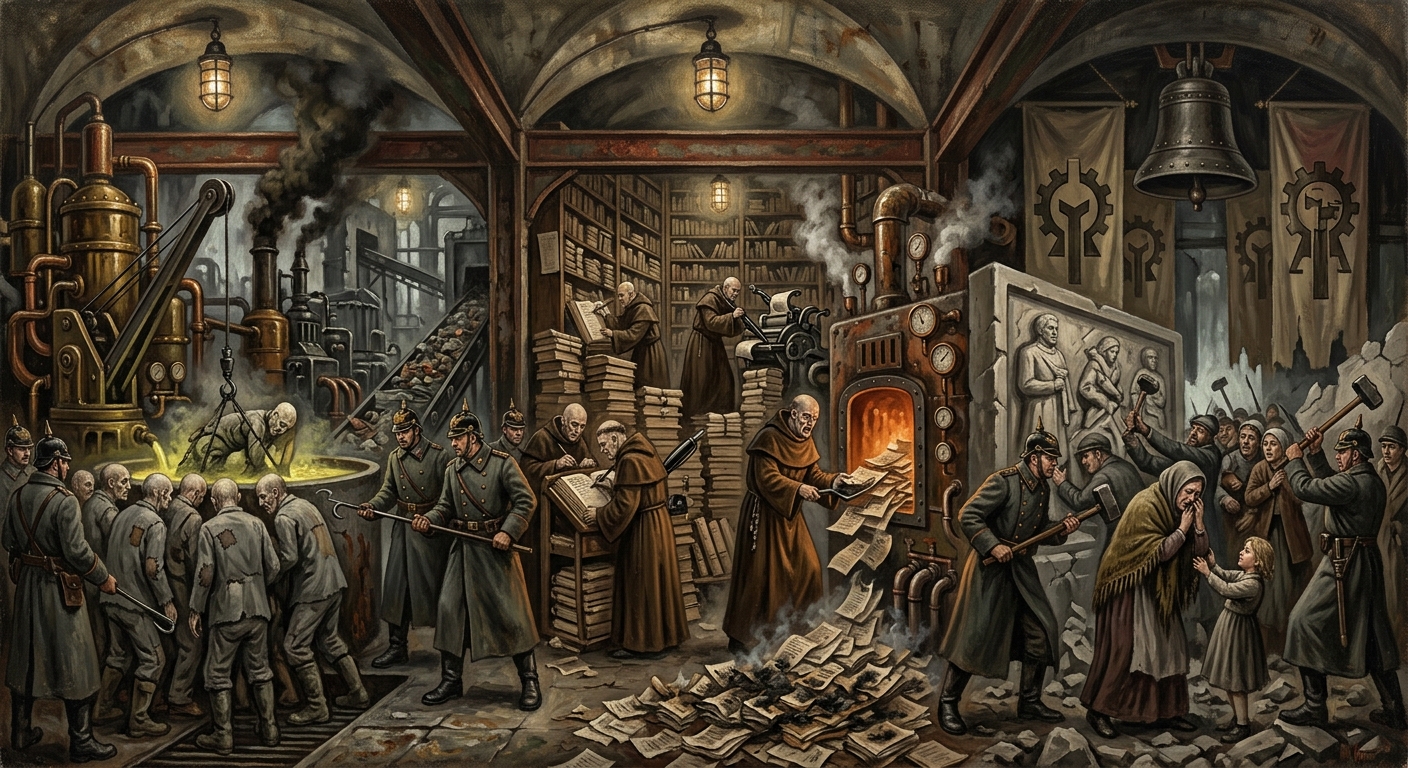
Trifold Erasure
Kill the body, strike the name, poison the recollection
Trifold Erasure is the Synod's threefold cure for rebellion: body extinguished, name struck, memory made too dangerous to love.
Codex Ref. XIII.1.71-111
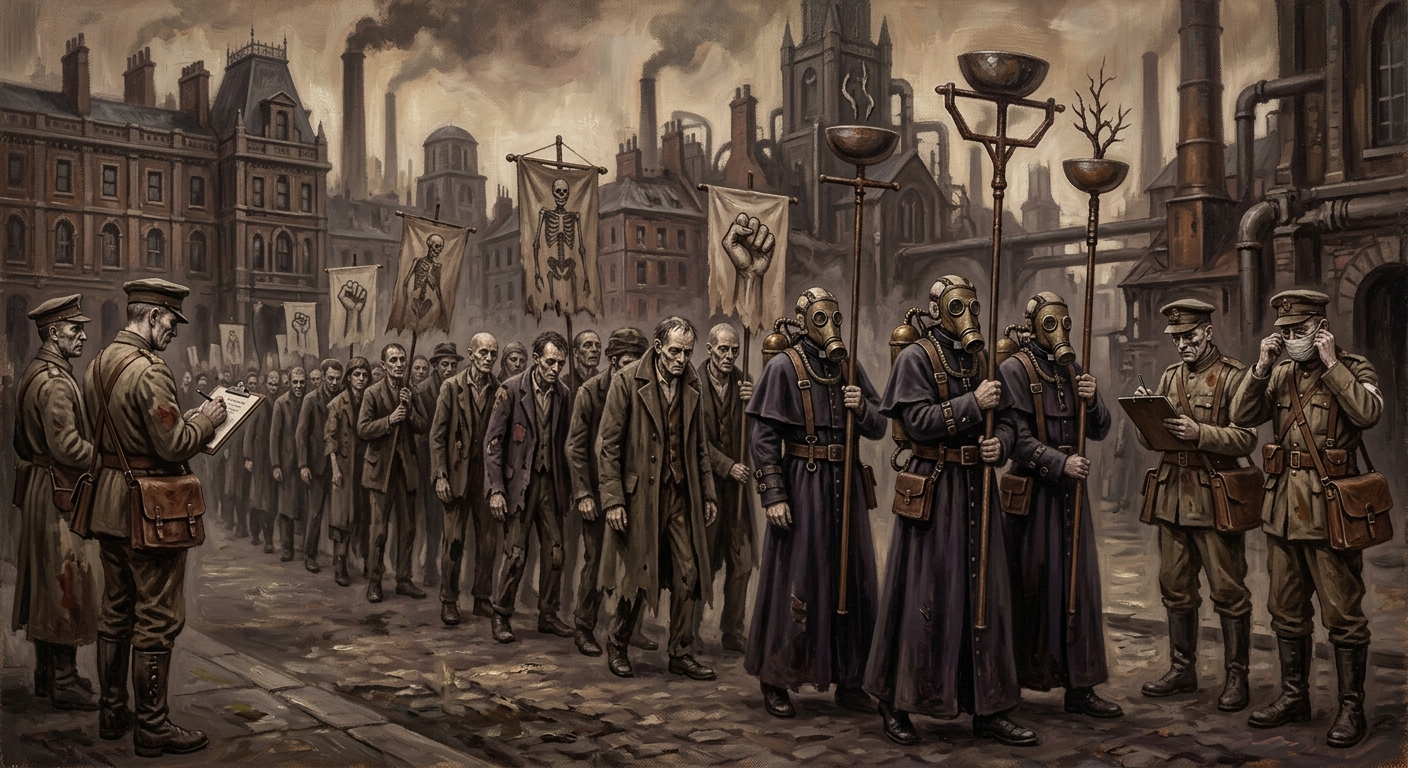
Triumph of the Gaunt
An injury given a hymn-sheet
The Triumph of the Gaunt crowns visible hunger as public virtue, training citizens to distrust plenty while Medicine counts the damage.
Codex Ref. XIII.1.25-001
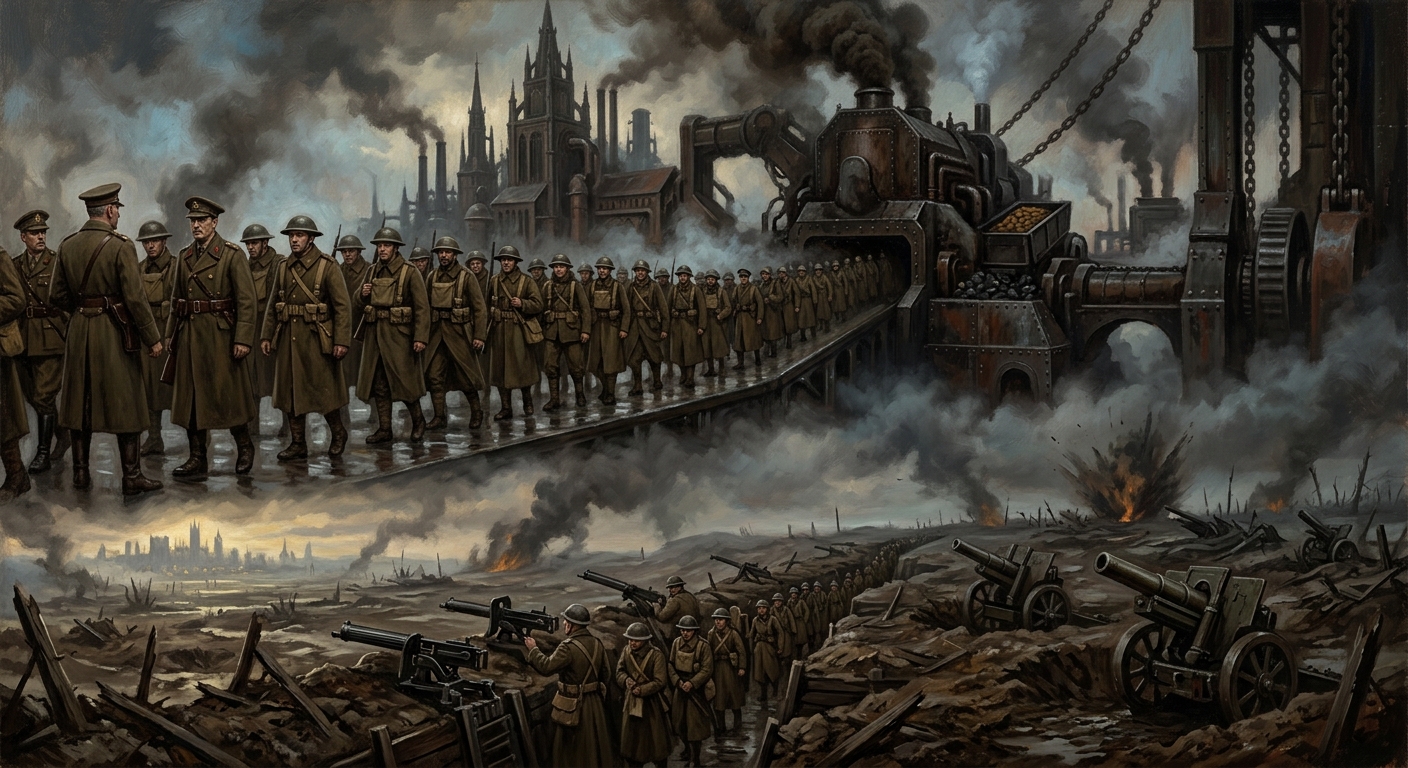
War Eternal
Victory assured; timetable irrelevant
The War Eternal is governed horror: the Line fed daily so the West may mistake survival for morning.
Codex Ref. XIII.1.92-065
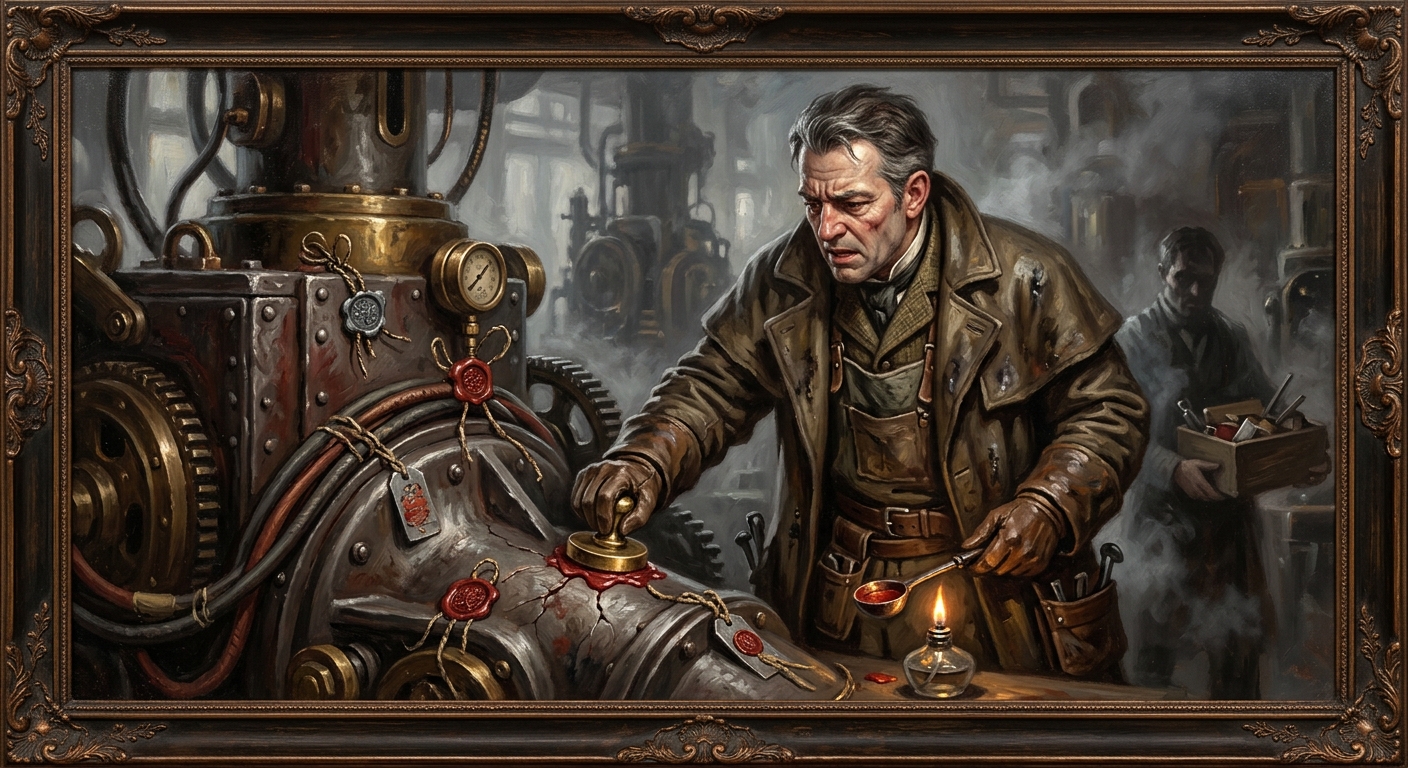
Ward-Seal Artificer
The rank no table admits and every failing boundary remembers
Ward-Seal Artificers are the denied apex of the Gasket-Hymn Mechanic hierarchy, summoned where ordinary repair succeeds mechanically and fails as a ward.
Codex Ref. XII.2.04-002
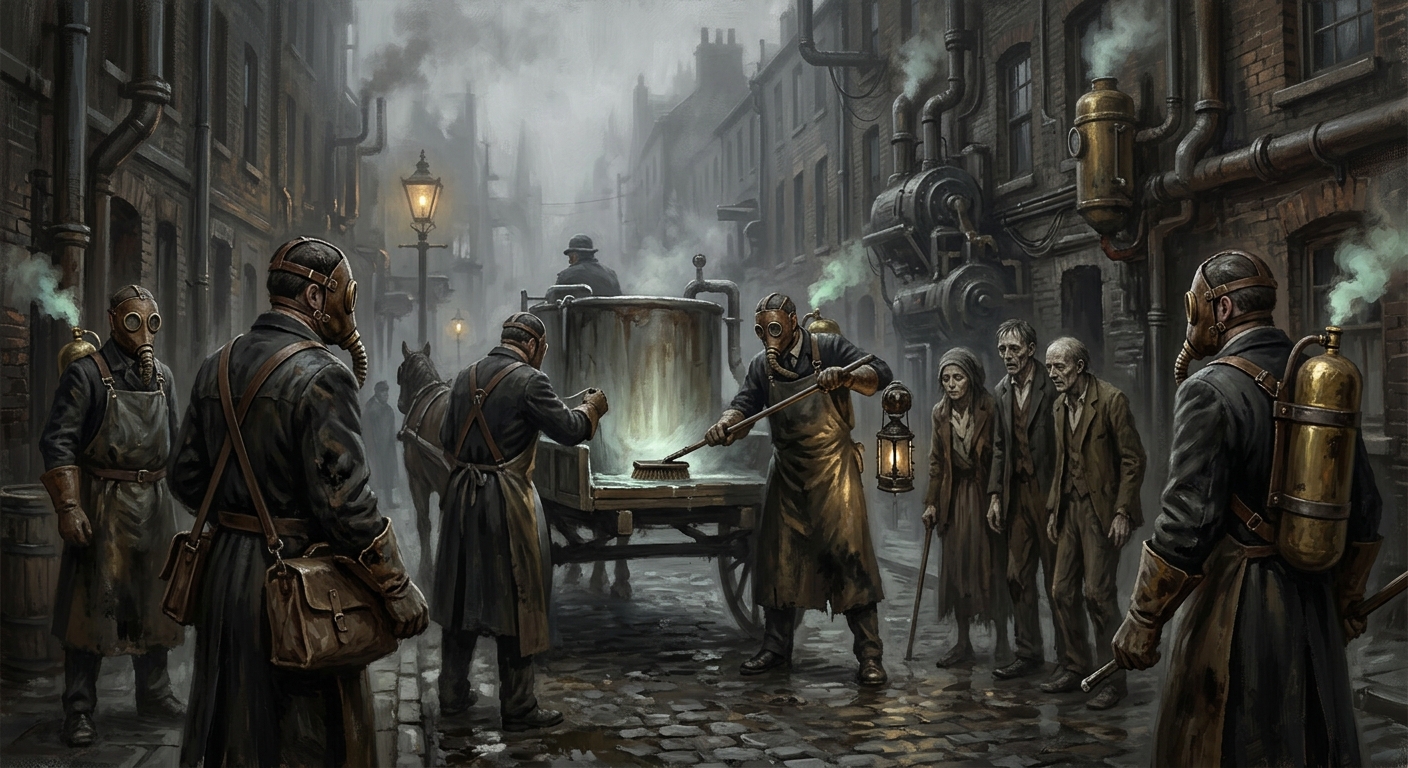
Ward-Soothe Purists
Clean hands, loud lanterns, and streets left dirty by correctness
The Ward-Soothe Purists are Lantern Brotherhood schismatics who severed Mercy Preacher contacts after the A.S. 178 Cologne dispute and mistook clean hands for clean streets.
Codex Ref. XII.25.07-001
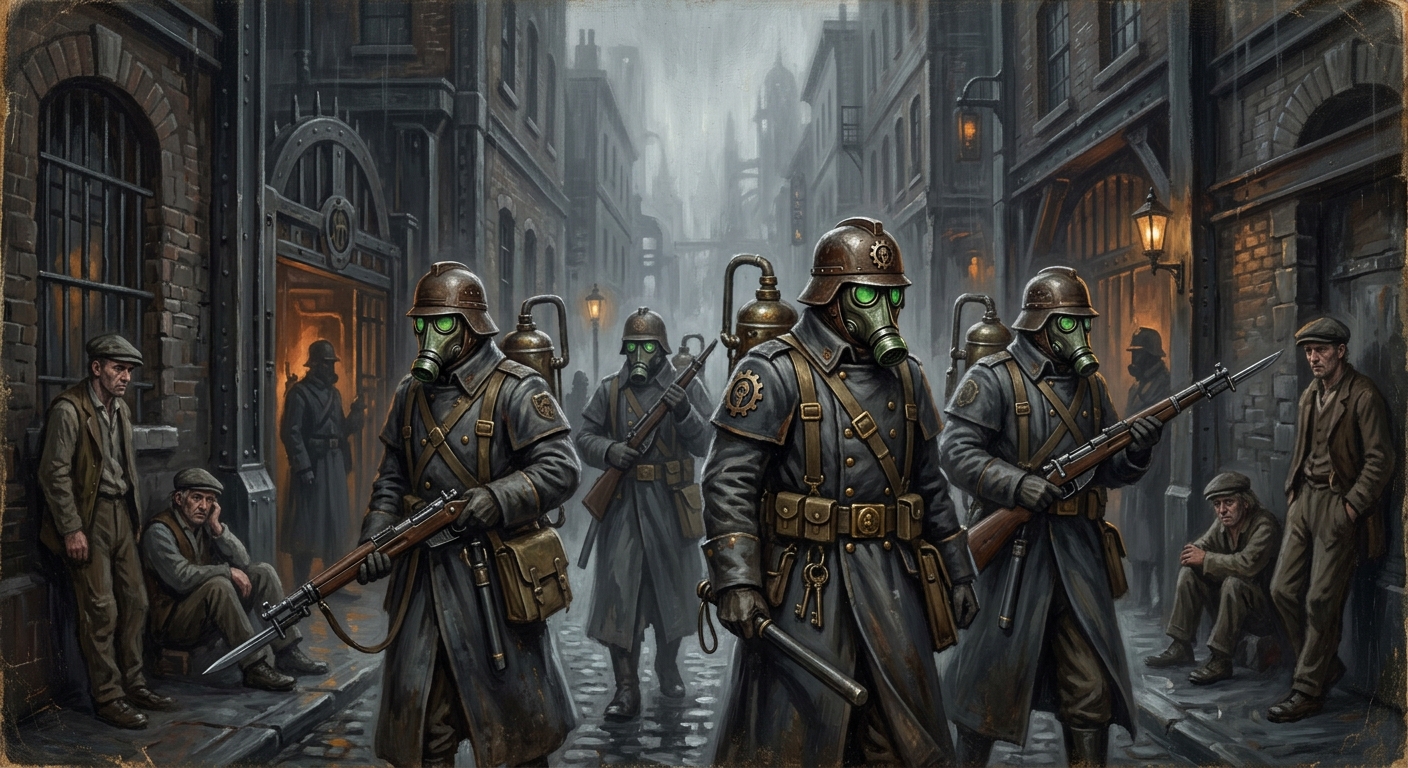
Wardens
The Synod's signature, written in keys and cudgels
Wardens are the Synod's street-level custodians of threshold, ration, gate, shrine, and curfew: resented because they are near, needed because they are near.
Codex Ref. XII.7.02-001
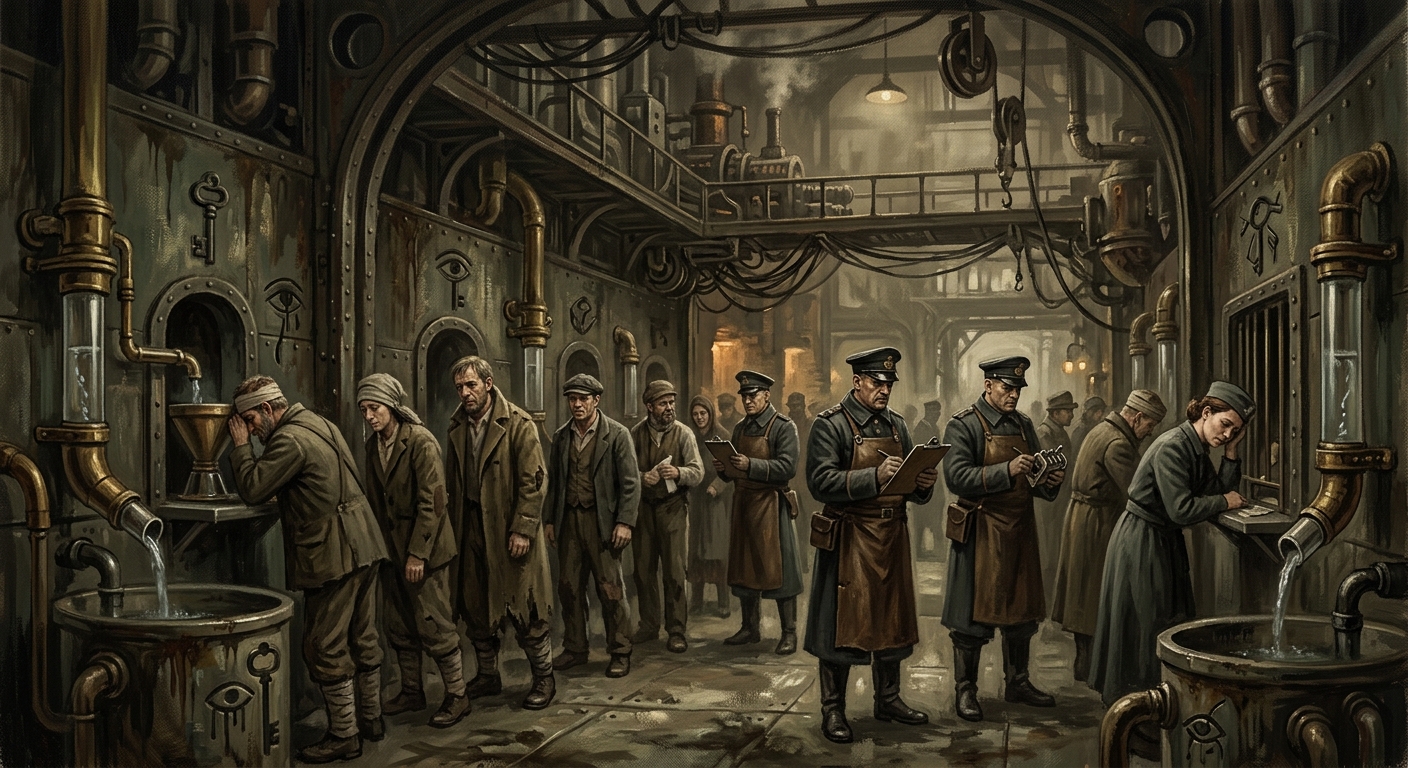
Weeping Chamber
Pay wet, pass dry
The Weeping Chamber turns grief into passage, tears into toll, and misery into a receipt tidy enough for every Bureau to admire.
Codex Ref. XIII.1.25-082
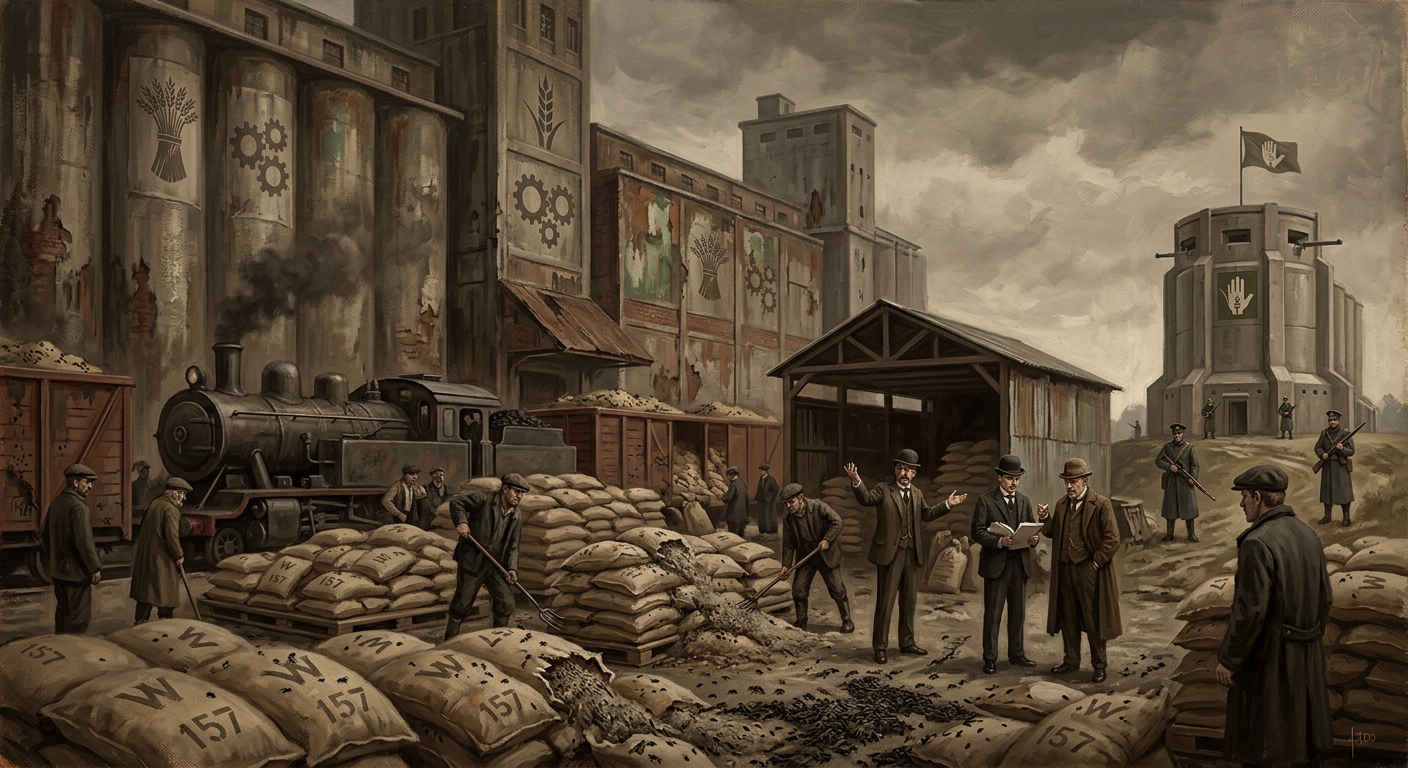
Weevil Year
The famine in which the illegal cellars breathed better than the state
The Weevil Year of A.S. 157 rotted western reserve grain under lawful custody, exposed Bureau incompetence, strengthened Grain Keeper caches, and killed the Bureau of Agriculture.
Codex Ref. VII.4.21-001
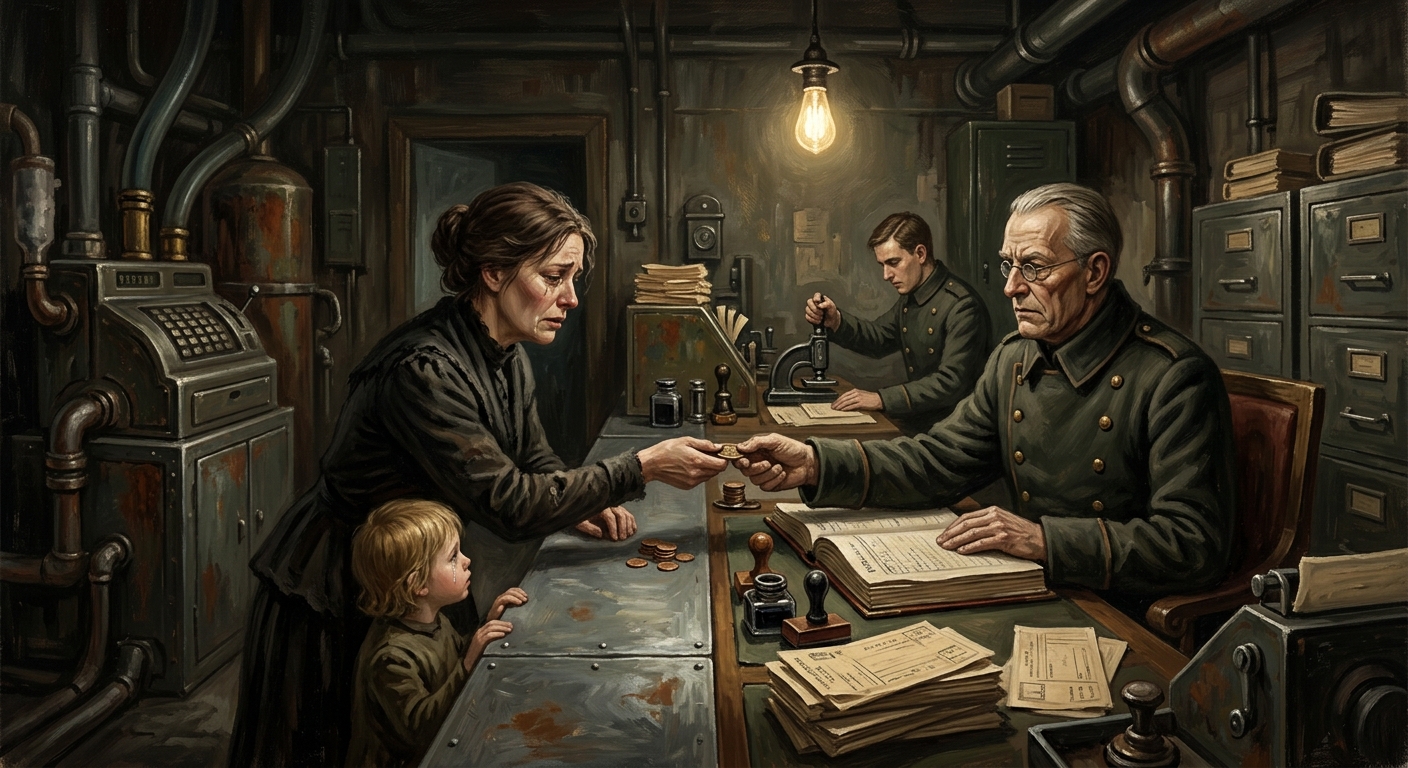
Widow's Pennies
A penny enters the palm and waits for the scale
The Widow's Pennies are the Bureau of Tithes' smallest perfected cruelty: bereavement turned into household continuity, route discipline, and receipt.
Codex Ref. XIII.1.85-065
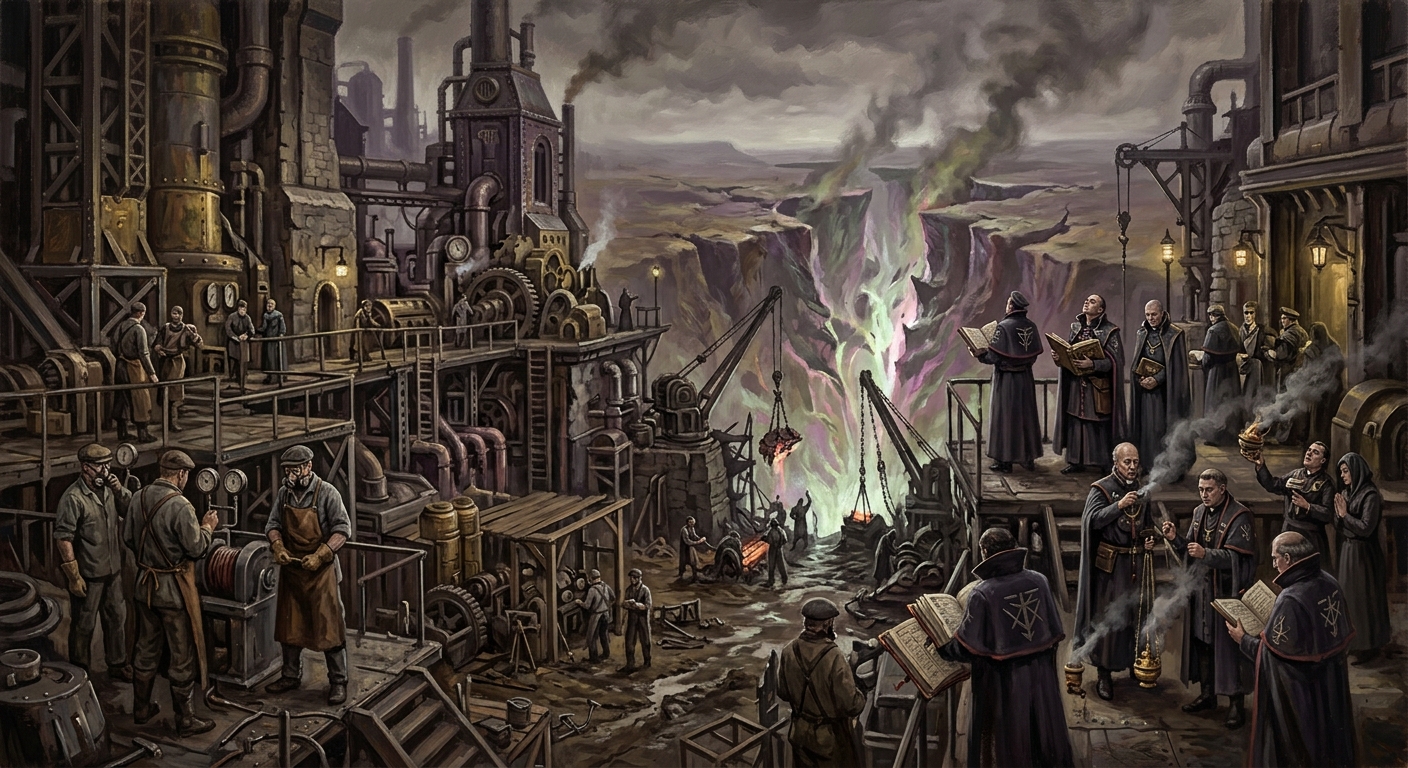
Wound-Sites
Where Creation filed an exception and the Bureau charged admission
Wound-Sites are Creation's open injuries: measured, taxed, exploited, prayed over, and officially caused by the Lie unless useful evidence says otherwise.
Codex Ref. XIII.1.29-001
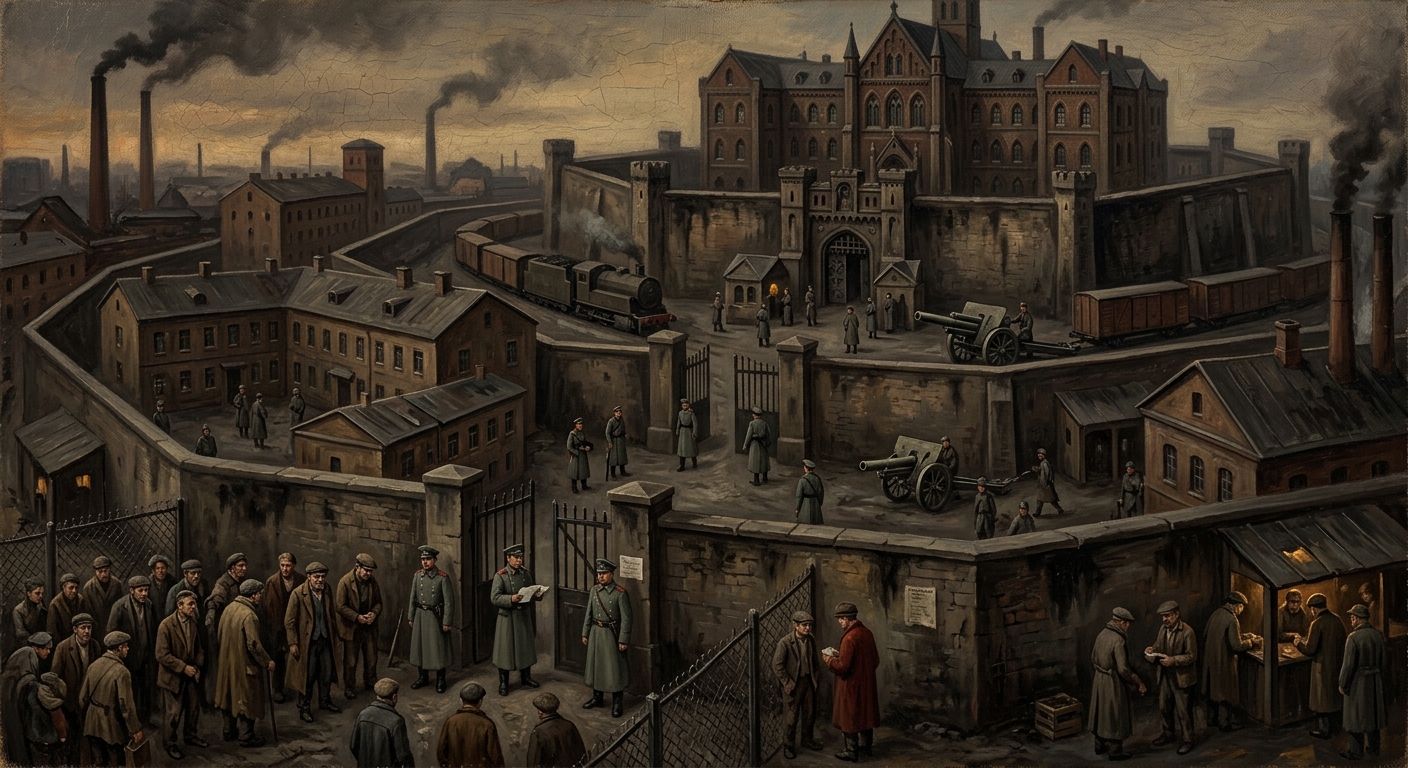
Zones 1 through 5
Five lawful pressures between invoice and mud
Zones 1 through 5 are graded permissions for bread, sons, movement, fear, artillery, and the state’s appetite.
Codex Ref. XIII.1.00-201