

Reverse Index
Referencing “The Index Damnatus”
Every codex entry that links to The Index Damnatus. 221 entries.
Return to The Index Damnatus
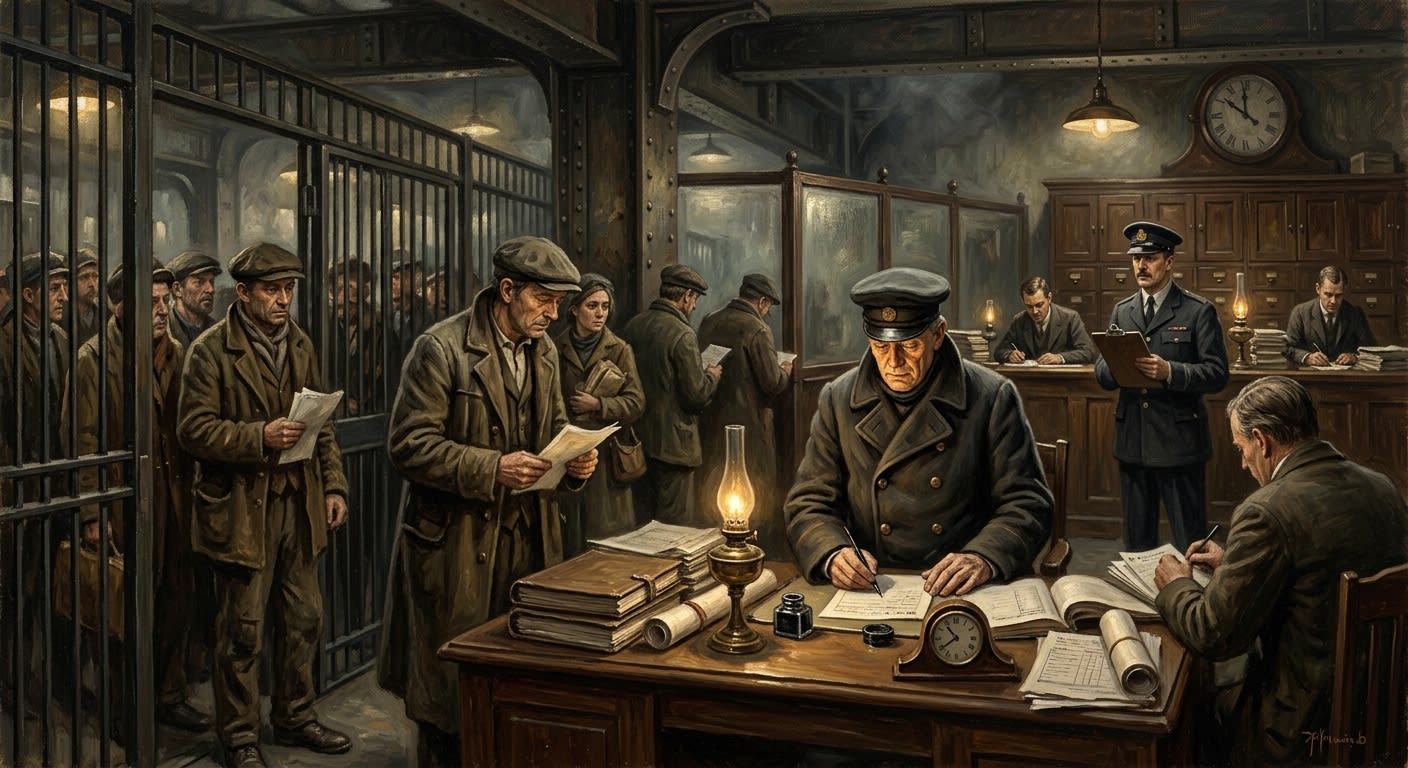
Administrative Order 44-B
The mercy of eight hours in a room that wanted twelve
Order 44-B shortened Vault duty after Breel's hand wrote forbidden music, proving the Bureau can call terror a scheduling improvement.
Codex Ref. XIII.1.44-188
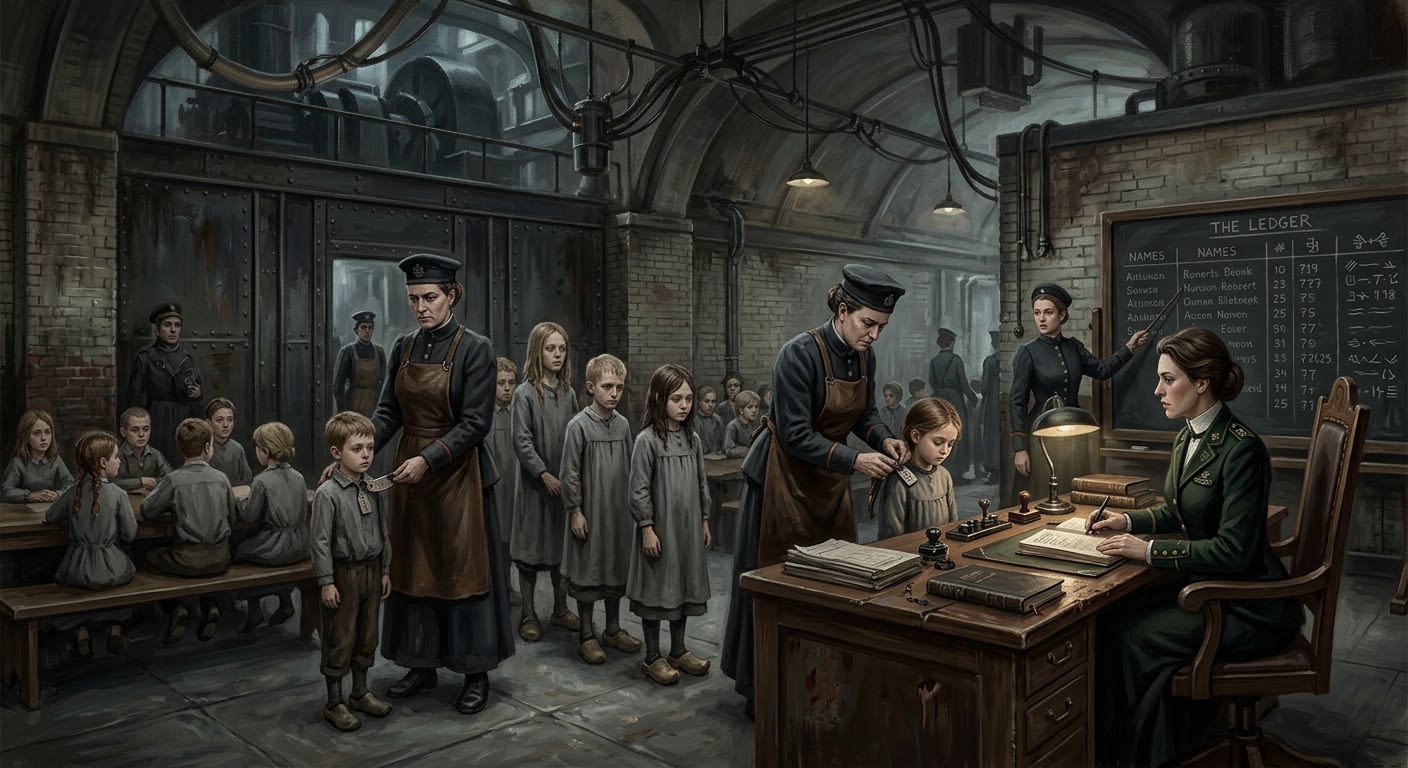
Administrative Recovery
The state calls it custody because theft has poor margins
Administrative Recovery is Mercy's washed name for taking unregistered children, renaming them, tagging them, and teaching the Ledger to stand where a family stood.
Codex Ref. XIII.1.02-159

Aldara Vess the Elder
The woman who taught fire to be inefficient
Aldara Vess the Elder founded the Bureau of Silence in A.S. 82 and gave the Synod its coldest doctrine: words are not burned; they are made absent.
Codex Ref. III.2.01-082

Aldric Venn
The clerk who heard our hymn in the enemy's mouth
Aldric Venn, Records copyist and brother to a master-carillonist, proposed that Covenant hymns might return through Wound-Sites as Pale Chanter cadence.
Codex Ref. III.2.01-060
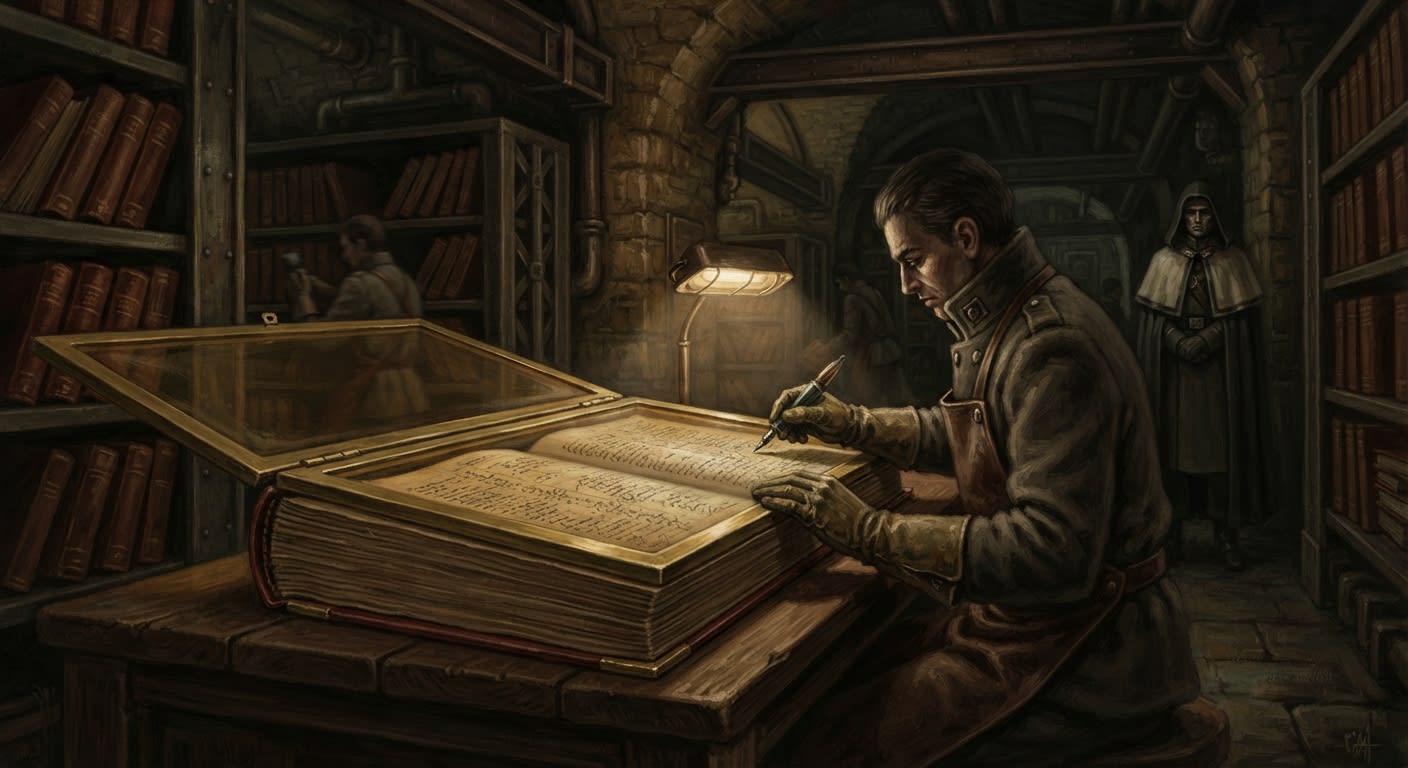
Amber Book
The ledger Purity refuses to close
The Amber Book is Purity's tacky ledger of suspended warrants: names kept breathing under glass until the charge written for them catches up.
Codex Ref. XIII.1.06-002
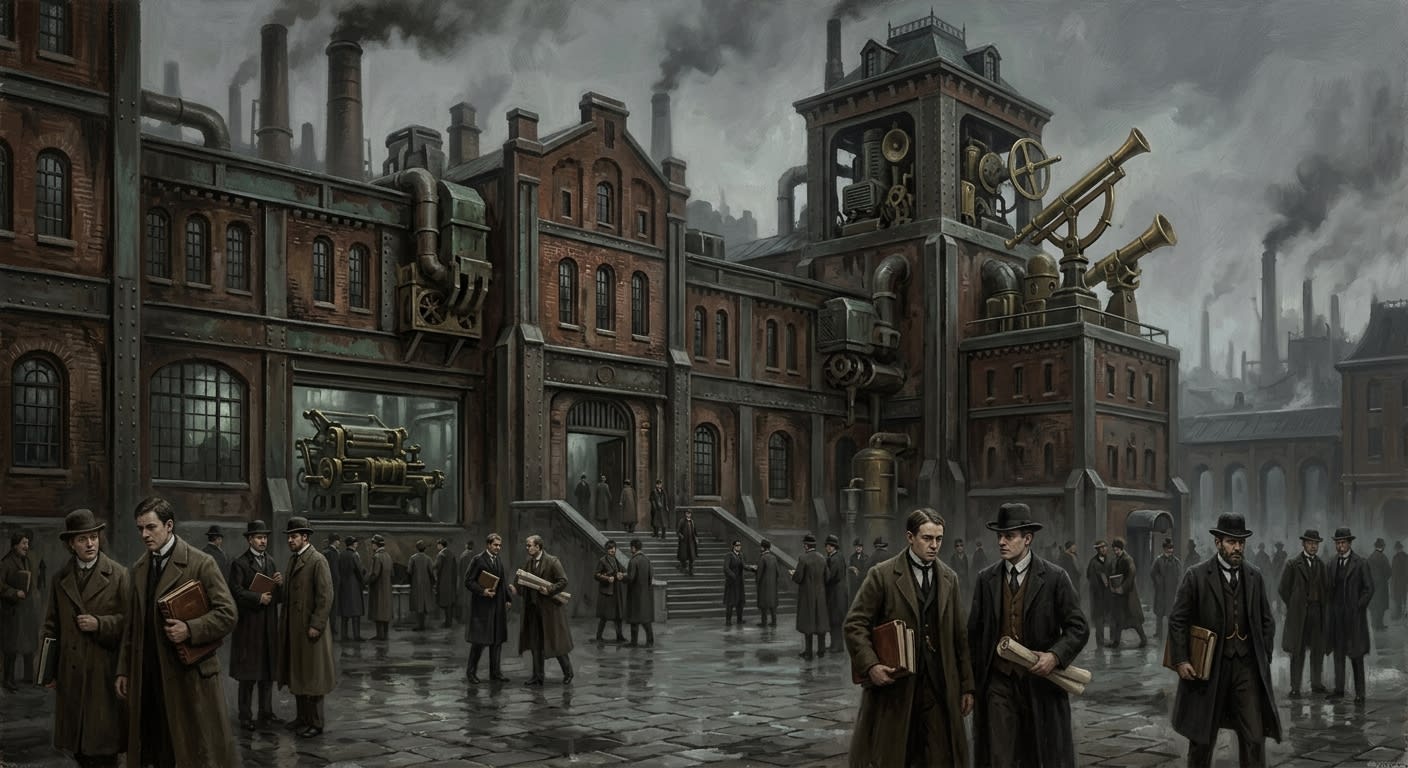
Amsterdam Academy
The lectern that made unbelief printable
The Amsterdam Academy licensed unbelief, printed the calendar wound, and taught Europe that a schoolhouse may do the work of a siege engine.
Codex Ref. VIII.8.01-000
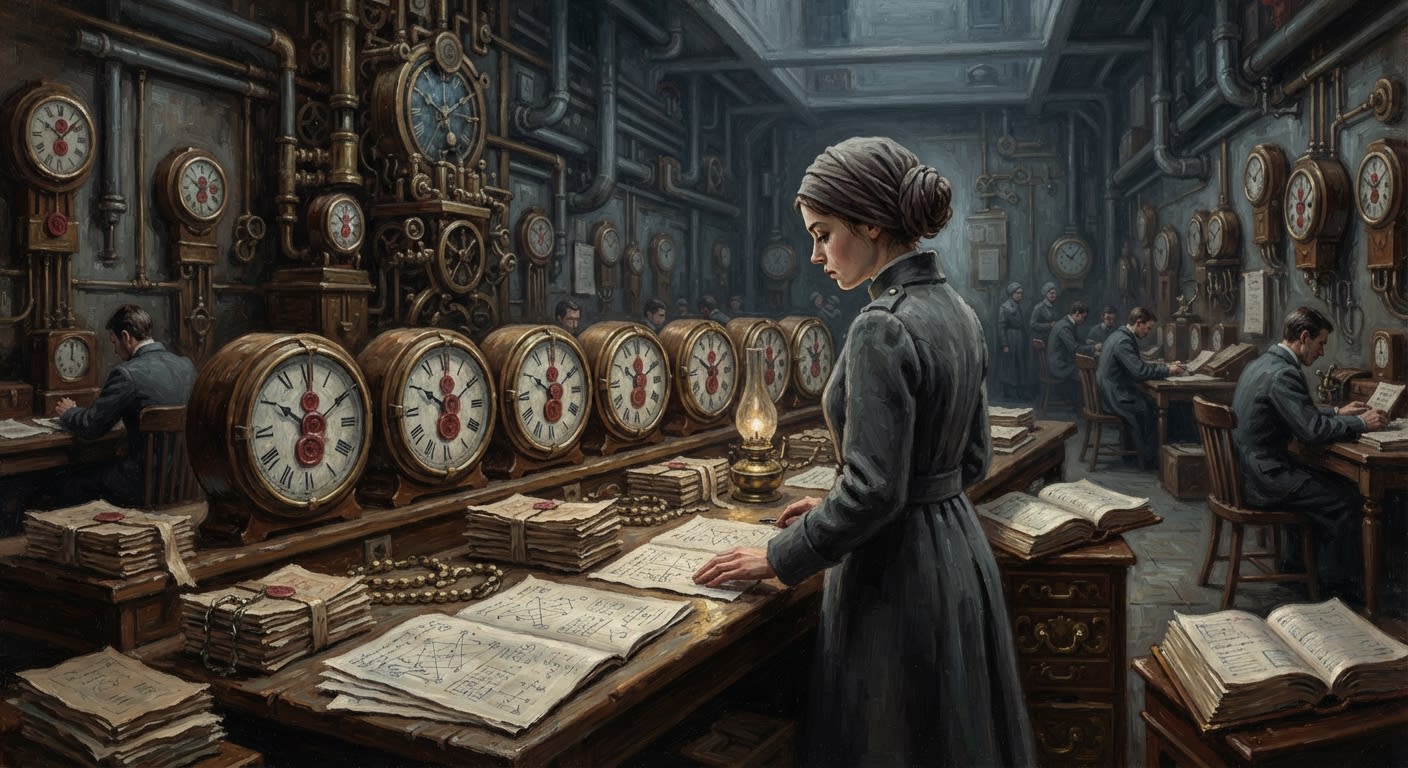
Ankletown Packet Fraud
Eight clocks, one missing minute, no forged hands
The A.S. 187 Ankletown Packet Fraud made Veyl Hark's name: two hundred and six lawful arrest bundles, eight shortened relay windows, and one missing minute.
Codex Ref. VII.8.10-187
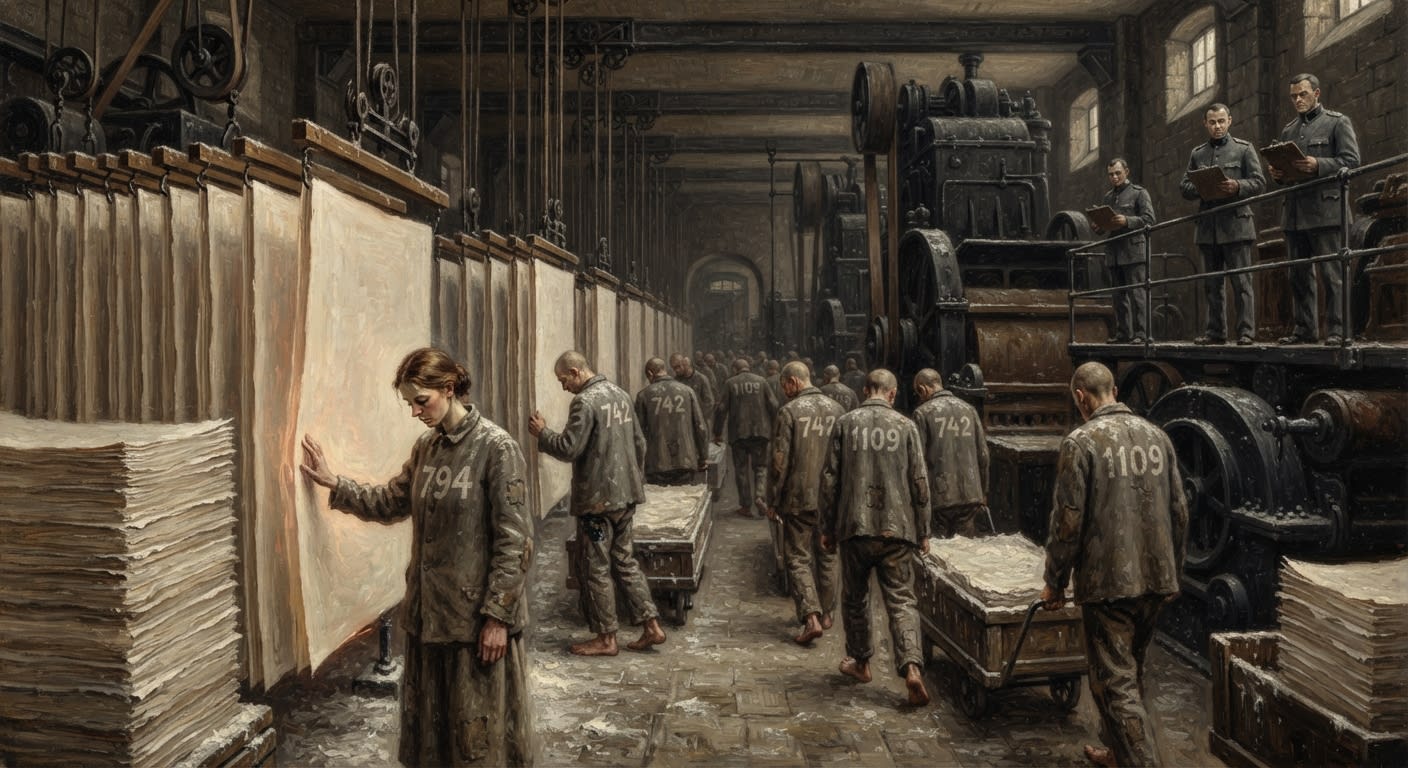
Anonymous Productive Penance
Where a name becomes a number, and the number becomes paper
Anonymous Productive Penance is the Paper Mines sentence that strips condemned workers of names, invoices their labour, and turns guilt into warm, troublesome sheets.
Codex Ref. XIII.1.02-114
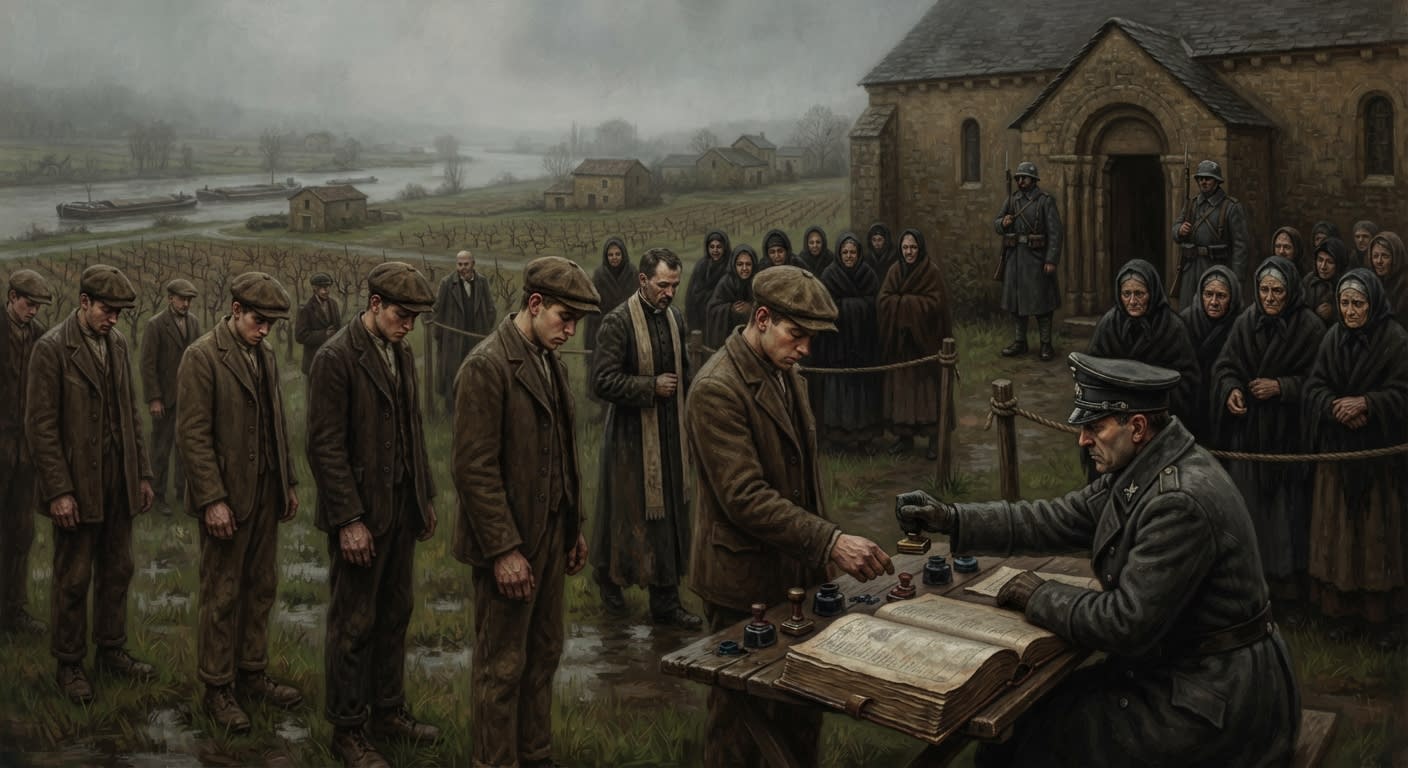
Aquitaine
The western field where sons go missing politely
Aquitaine is the Synod's damp western grain and wine basin: loyal by return, undercounted by suspicion, and courteous enough to make evasion look like hospitality.
Codex Ref. II.1.12-201
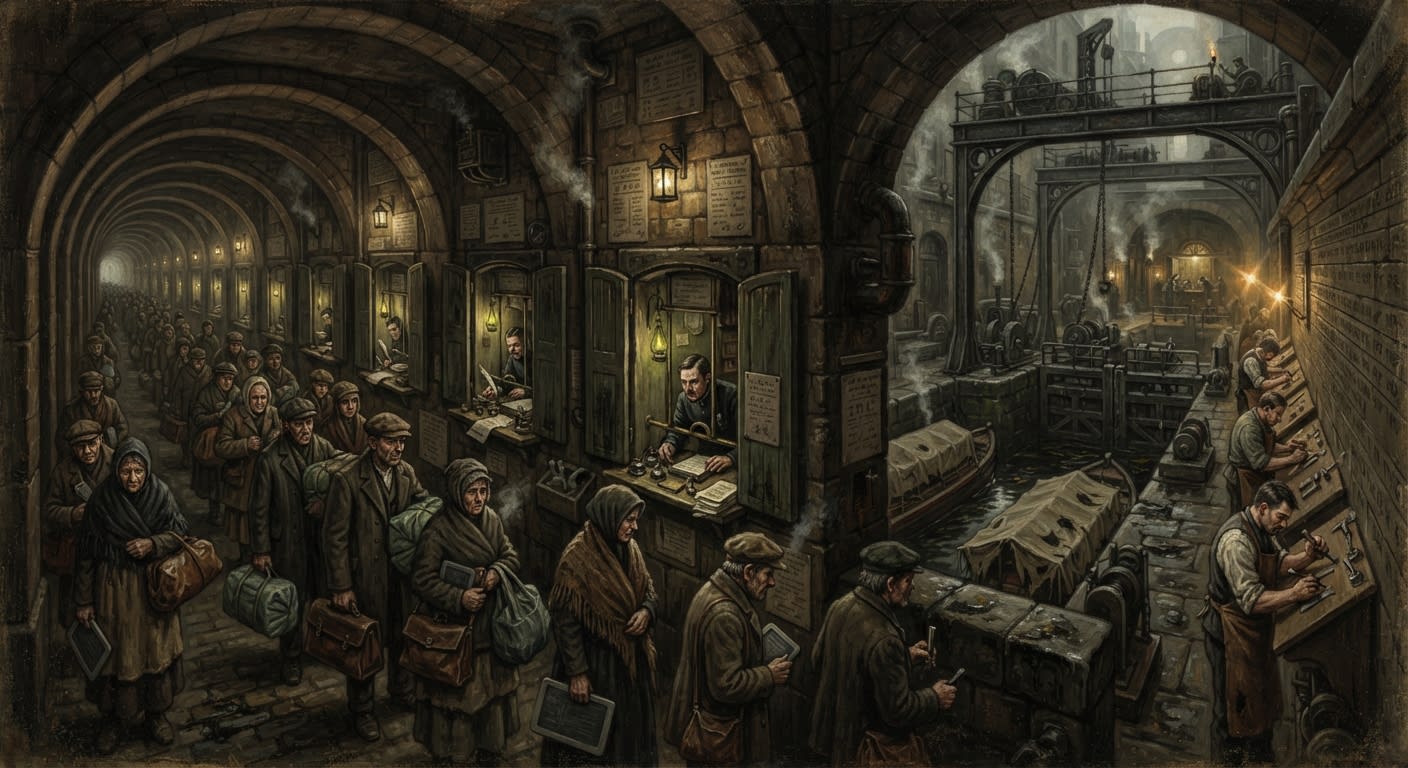
Archivolt Row
Where names enter damp paper and leave as permanent stone
Archivolt Row is the Causeyworks' central spine: registry windows, correction slates, side-ledgers, and the damp machinery by which a name becomes stone.
Codex Ref. II.1.02-092
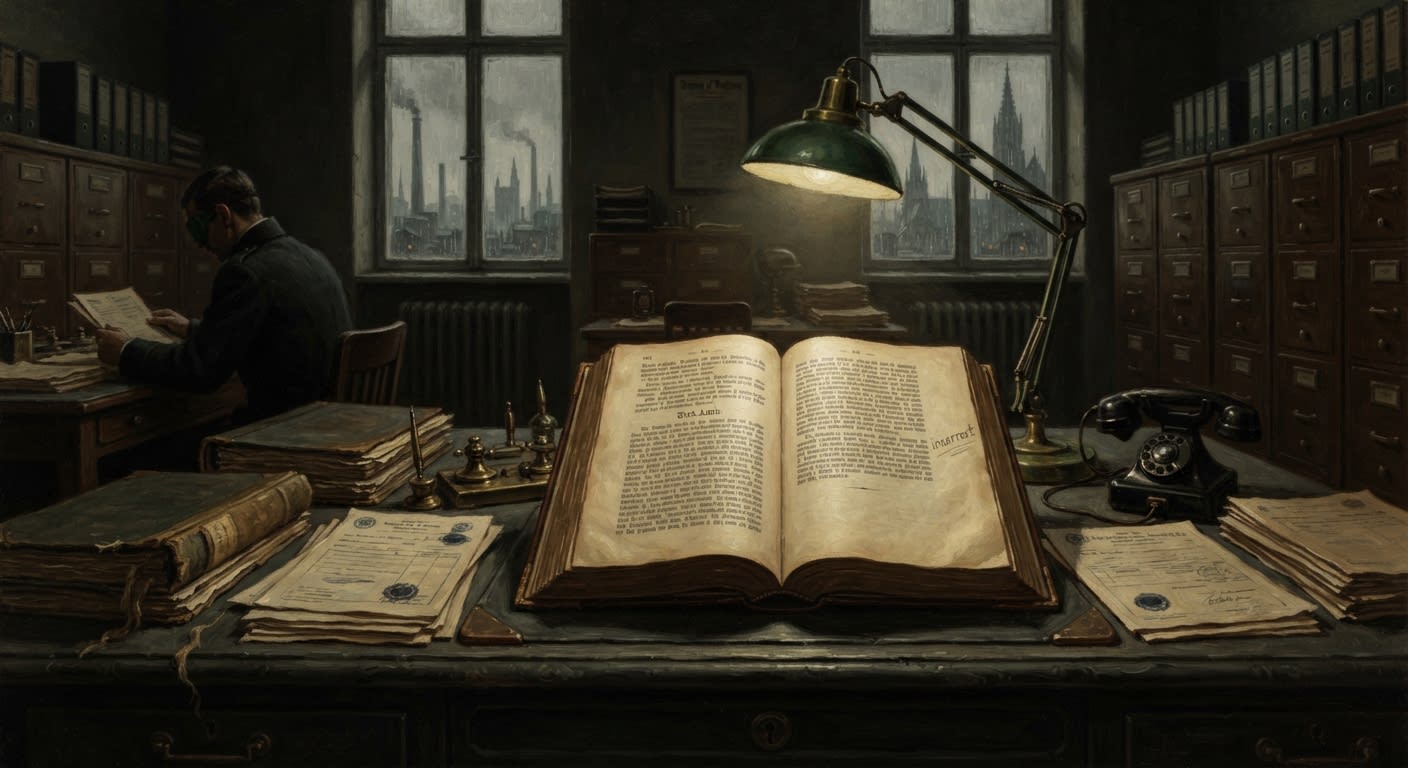
Articles of Covenant
The approved page that survived by being underestimated
The Articles of Covenant were safe enough to leave open on a desk, until one pencil beside the Third Article taught Silence that obedience could be graded.
Codex Ref. XIII.1.56-001
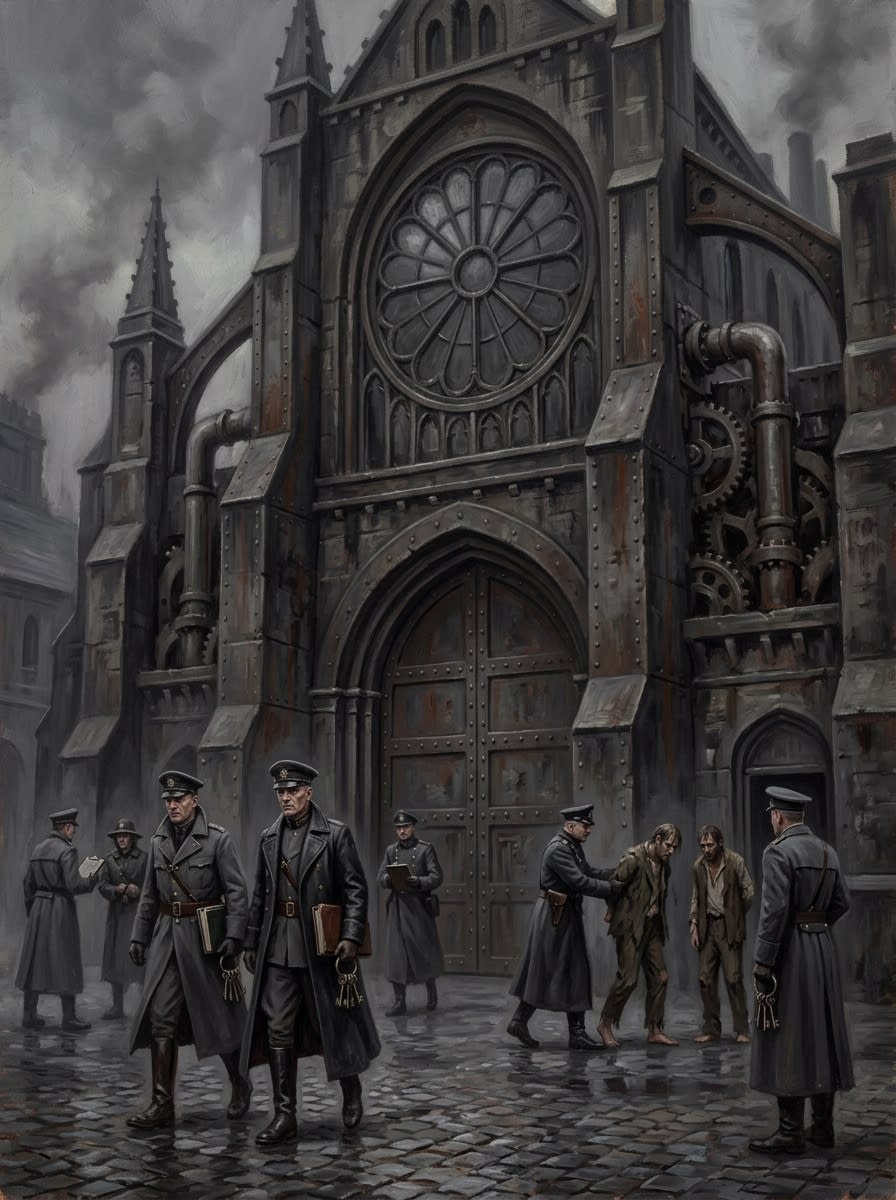
Ashen Cloister
Purity's house has handles only on the outside
The Ashen Cloister is Purity's Strasbourg seat: gate without welcome, court without mercy, archive with appetite, and the cleanest terror in the Synod.
Codex Ref. II.1.04-003

Astronomers of Kraków
The sky kept time; the Bureau kept jurisdiction
The unchartered university habit that wrote the sky down too accurately, earned Doctrine's A.S. 199 correction, and left twenty-one scholars counted among Ulm's paper.
Codex Ref. XI.5.04-199

Audit-Cantor
The officer who learned to distrust the whiteness around approved words
The Bureau of Silence keeps forty Audit-Cantors to open books, weigh margins, warm blank pages, and decide which libraries die quietly.
Codex Ref. VIII.3.02-002
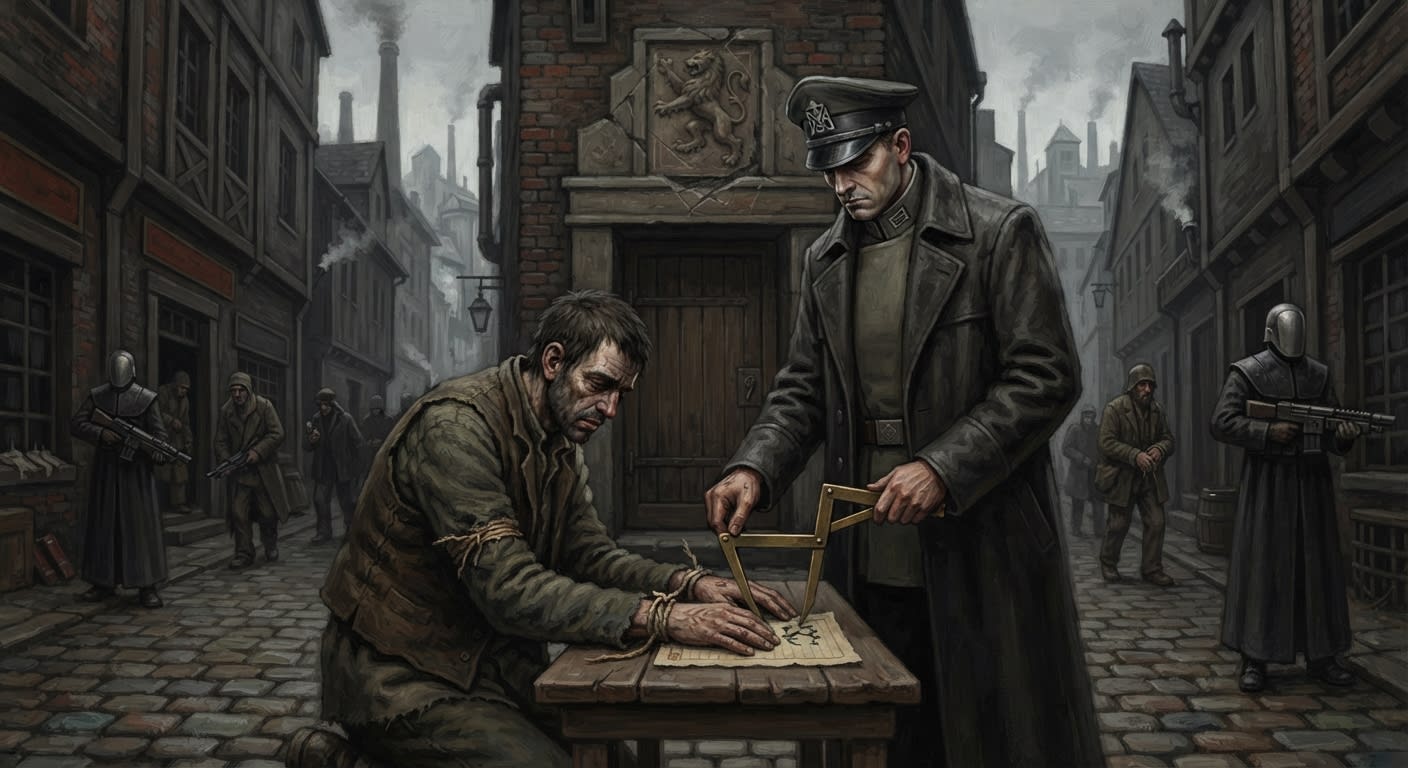
Augsburg
The city corrected first by blade, then by gauge
Augsburg is known to the Codex by what the Synod removed from it: beasts from its guildhalls, vermillion from a dyer, and doubt from three condemned hands.
Codex Ref. II.2.09-182
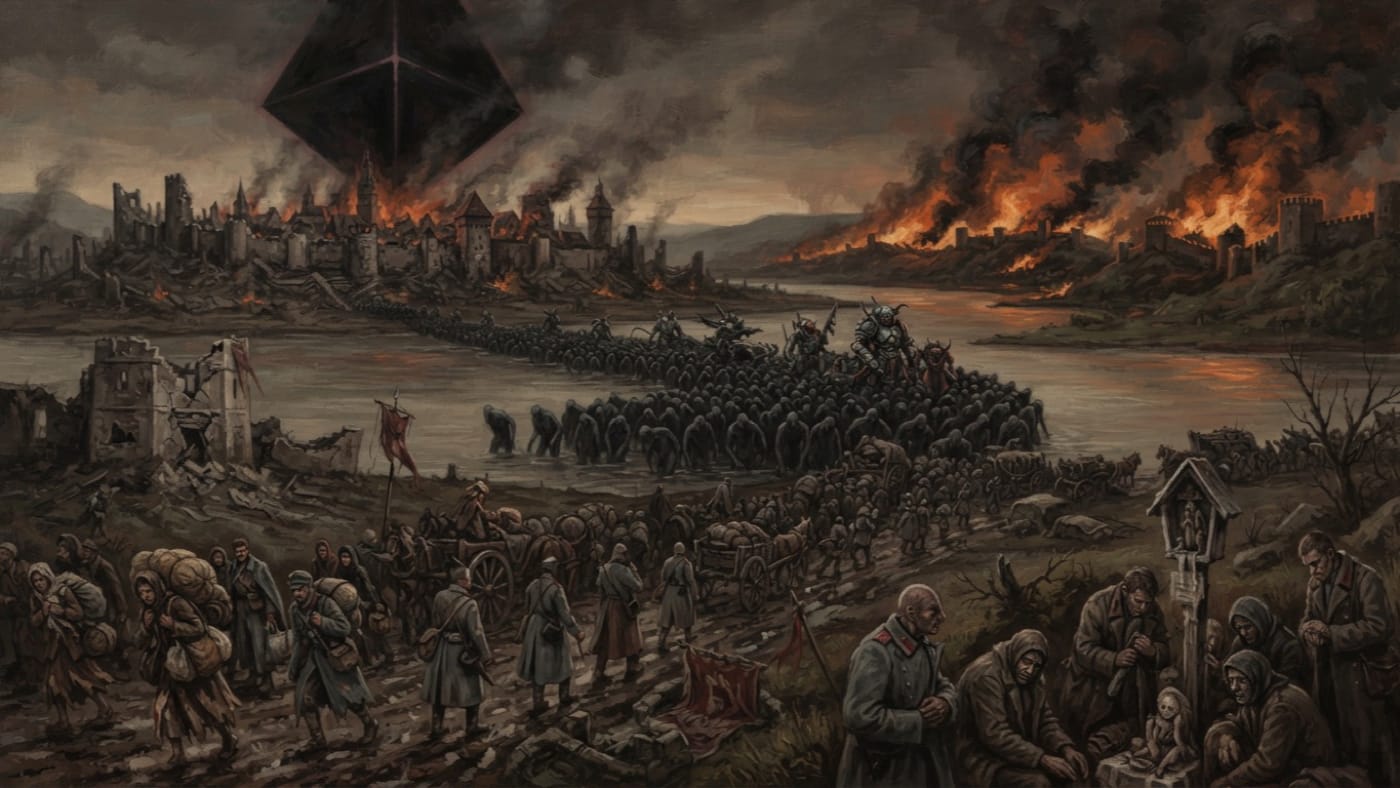
Balkan Collapse
A season of ruin, a permanent claim on sons
Brașov consumed, the Danube crossed on the drowned, and Thrace burned: the A.S. 110 Balkan Collapse gave Strasbourg an emergency it could charge to every household.
Codex Ref. IV.1.09-162
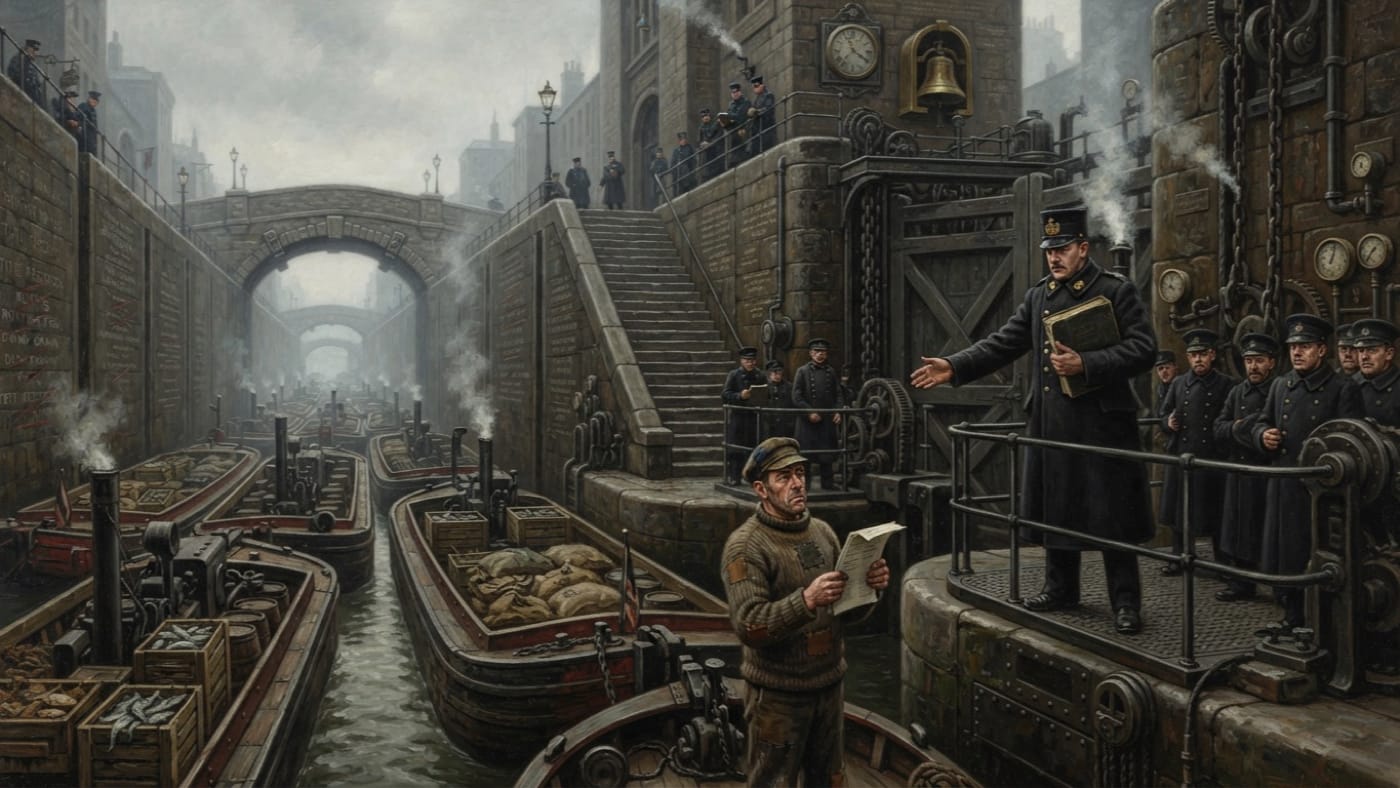
Barge Unions
Prudence at the gatehouse, extortion on the deck
The Causeyworks' barge associations call the Triple Lock's safety closures extortion. The Authority calls them prudence. I record both words; cargo rots while the clerks choose.
Codex Ref. XI.5.02-201
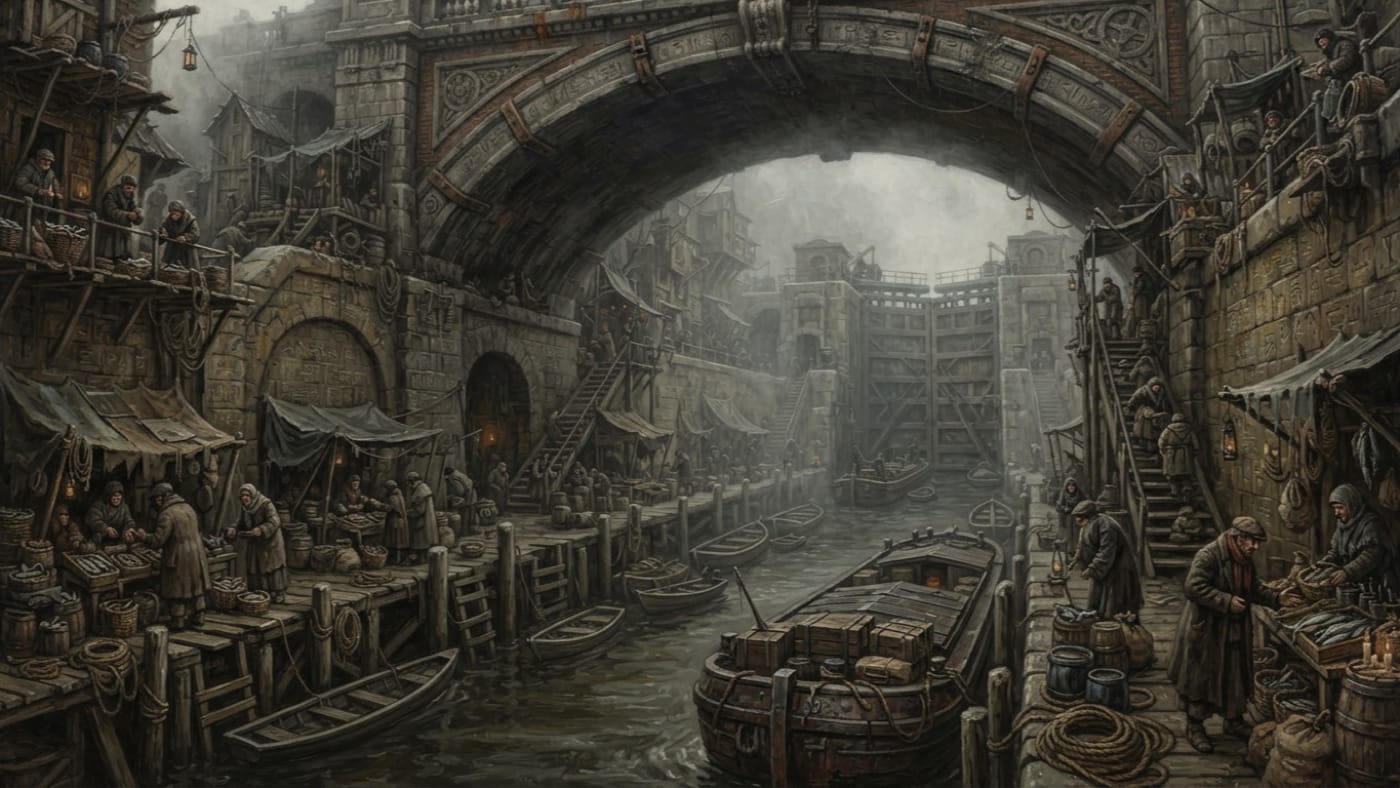
Barge-Lip Market
The planks keep no ledger; the bridges keep every debt
Barge-Lip Market hangs from the Causeyworks' canal edges, trading fish, tar, cheap spice and lock priority. The planks keep no ledger; the stone on the way home keeps every debt.
Codex Ref. II.1.02-002
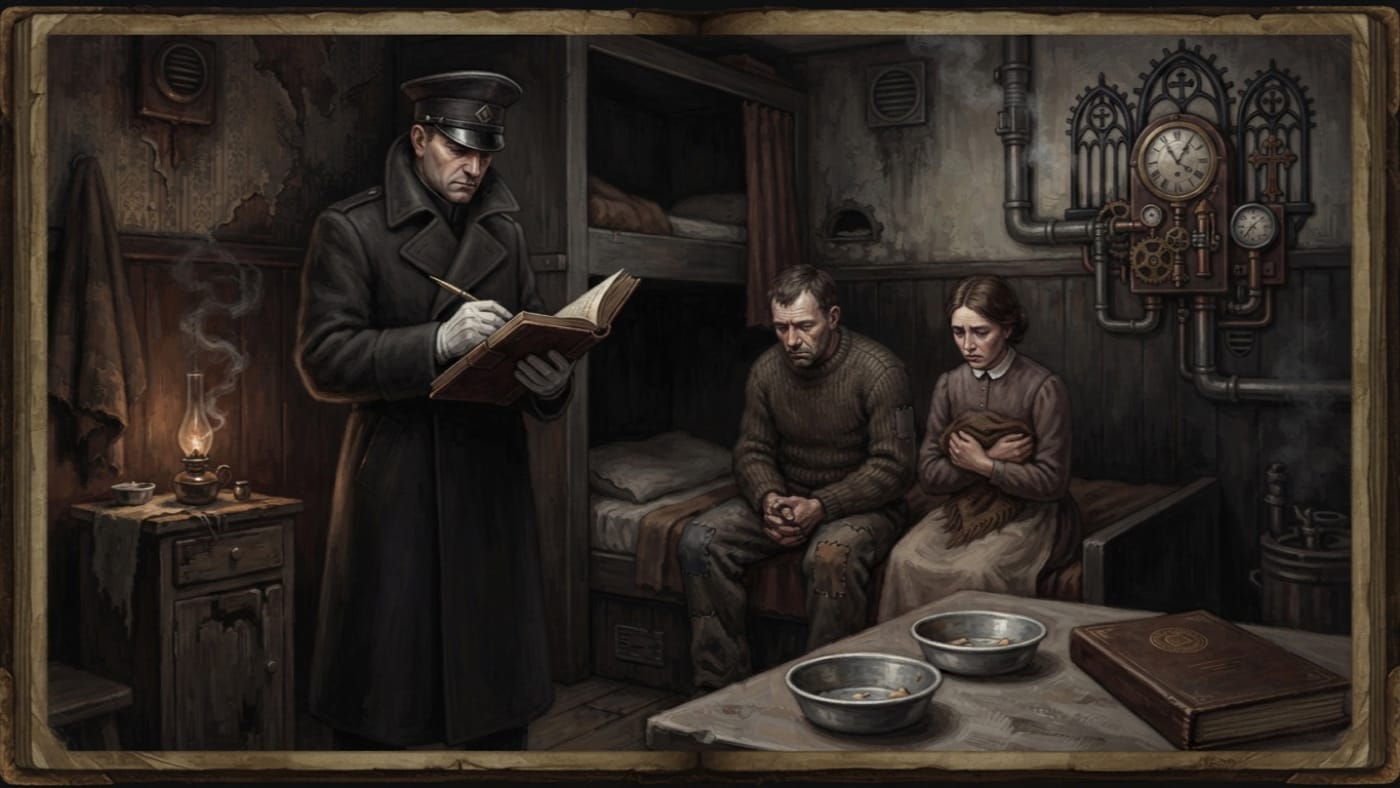
Bed Audits
The Bureau Counts Nights; the Household Counts Bread
Purity requires married couples to share a bed at least thrice per week. Failure is theft of fertility, answered by reduced rations. The Bureau counts nights; the household counts what remains in the bowl.
Codex Ref. XIII.1.02-197
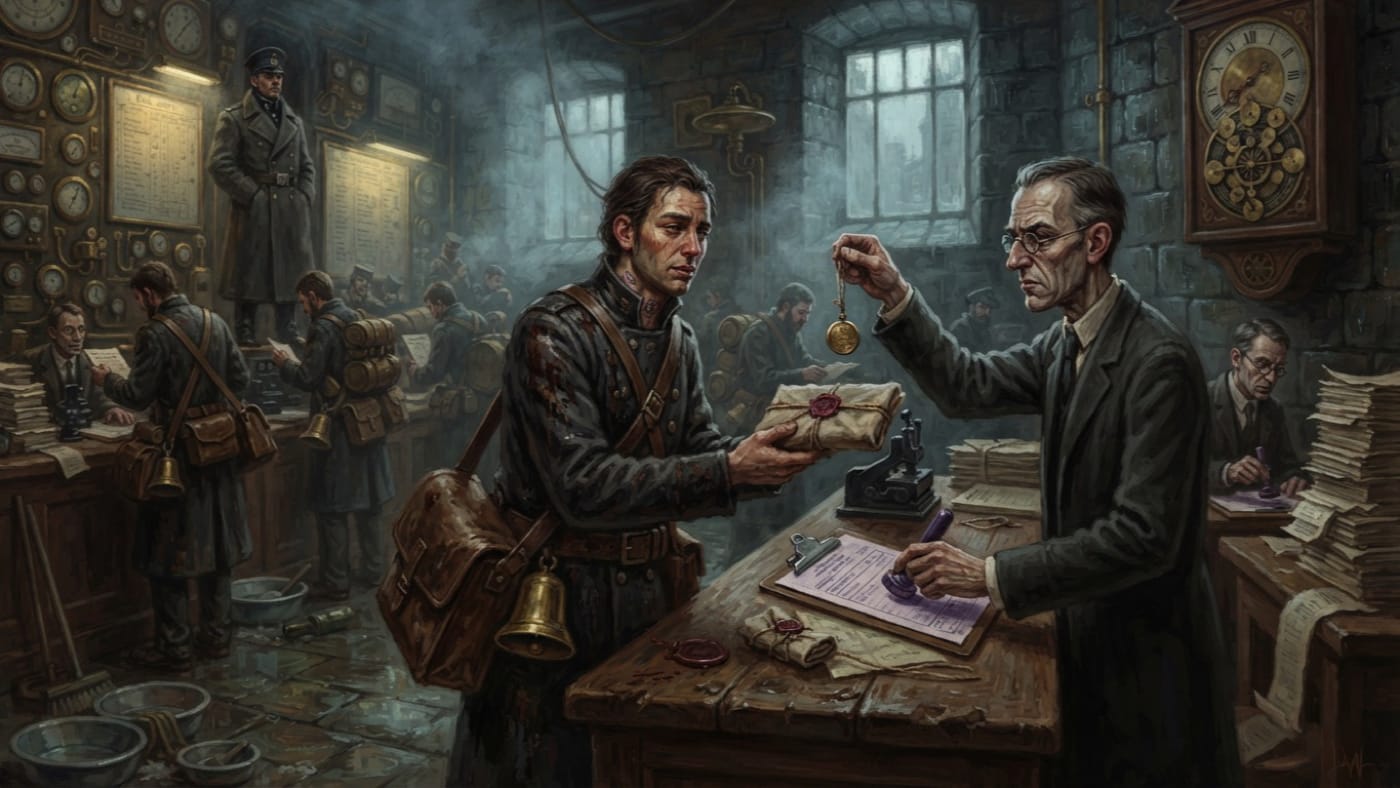
Bellway Synchronisation
The hour certifies arrival; it cannot certify a name
Bellway Synchronisation binds Purity's condemned-name packets to bell-hours, time-locked tokens and witnessed receipts. It proves when judgment arrived; it cannot make the judgment true.
Codex Ref. XIII.1.90-201
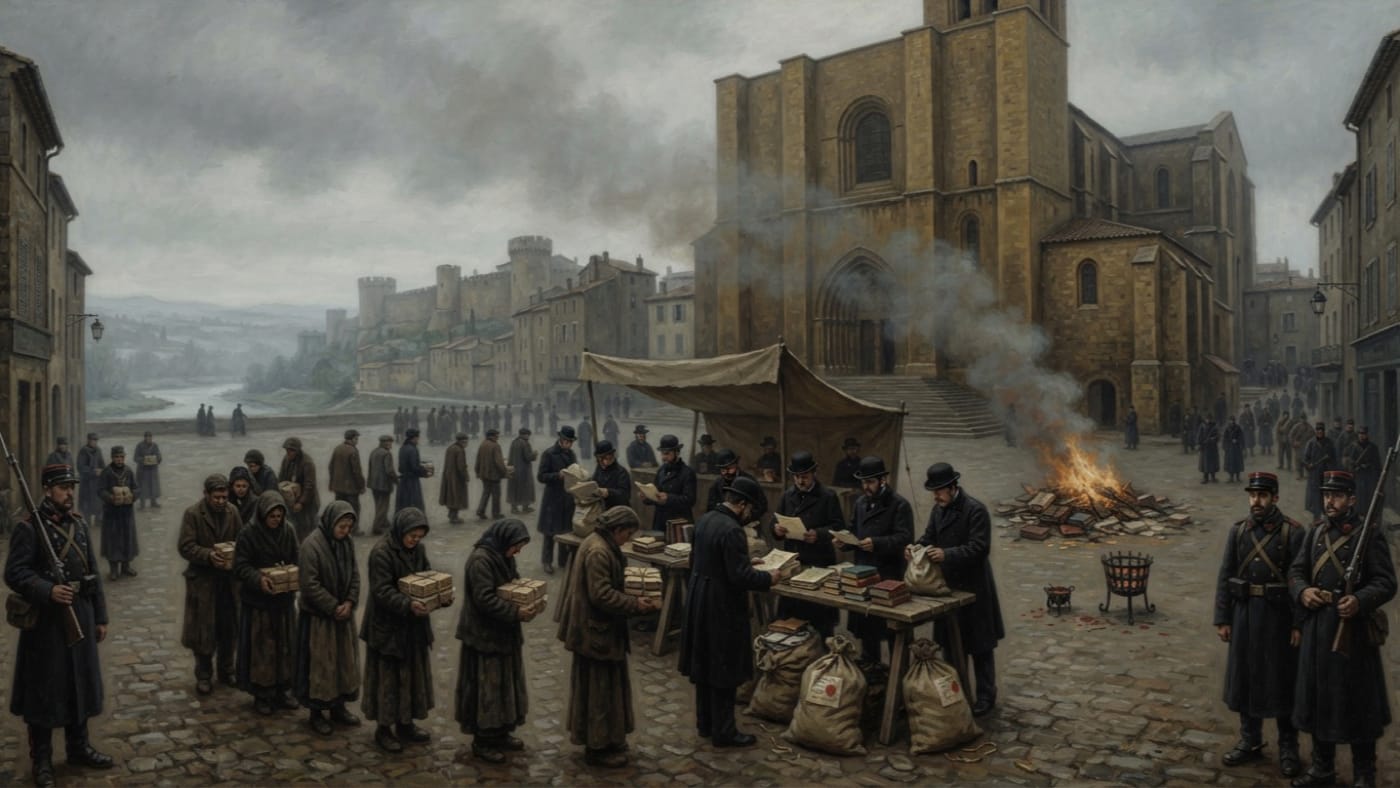
Béziers
A city named by someone else's confession
Béziers entered the Toulouse Hunts in A.S. 93 through a confession taken at Carcassonne. Purity retained the name; the surviving record supplies no separate local reckoning.
Codex Ref. II.1.10-093
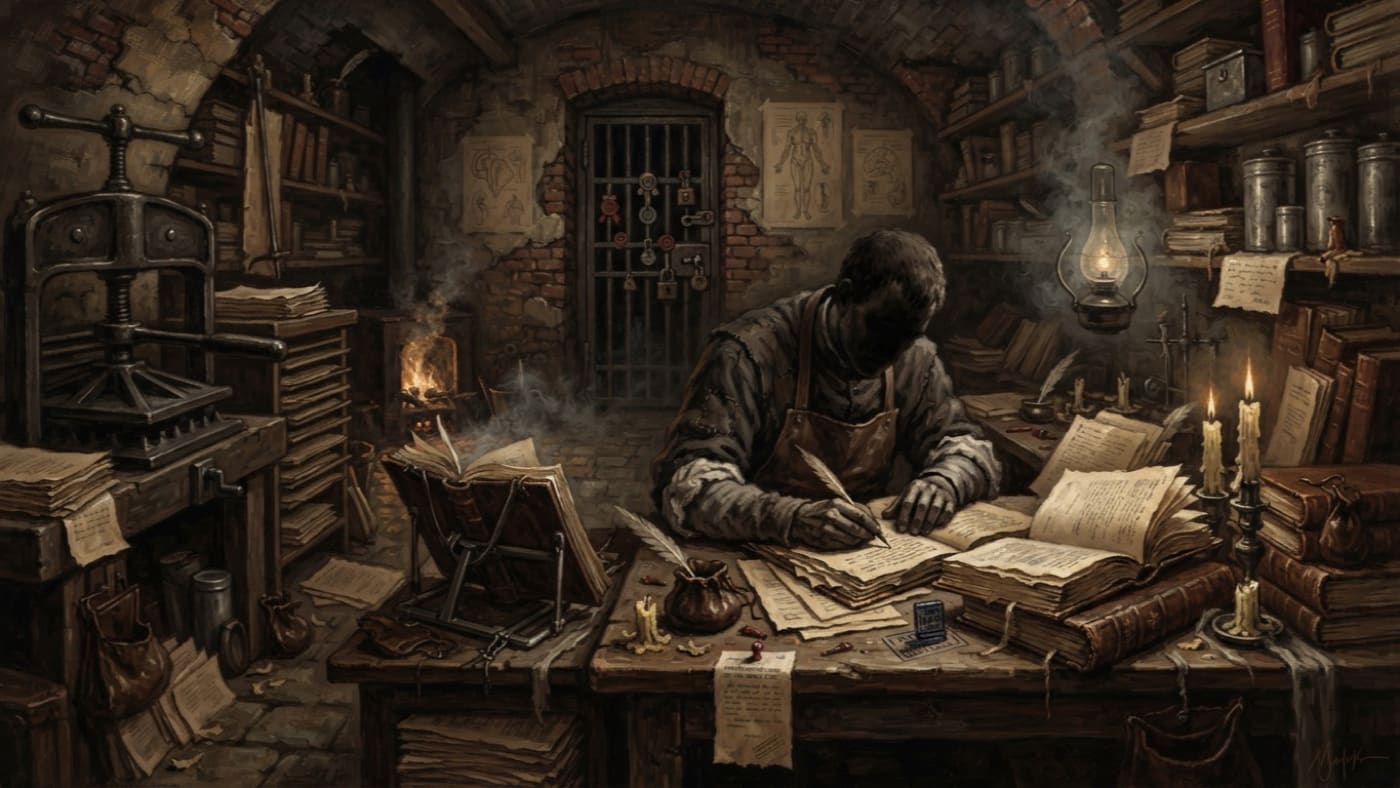
Bitter Mercy Line
A line with no address and no permission to correct the saints
One of twelve Ashen Circle copy lineages of the Index of Safe Lies, Bitter Mercy keeps the doses exact and the saints deliberately wrong. Its A.S. 201 survey records no founding date, fixed location, or named custodians.
Codex Ref. II.4.09-259
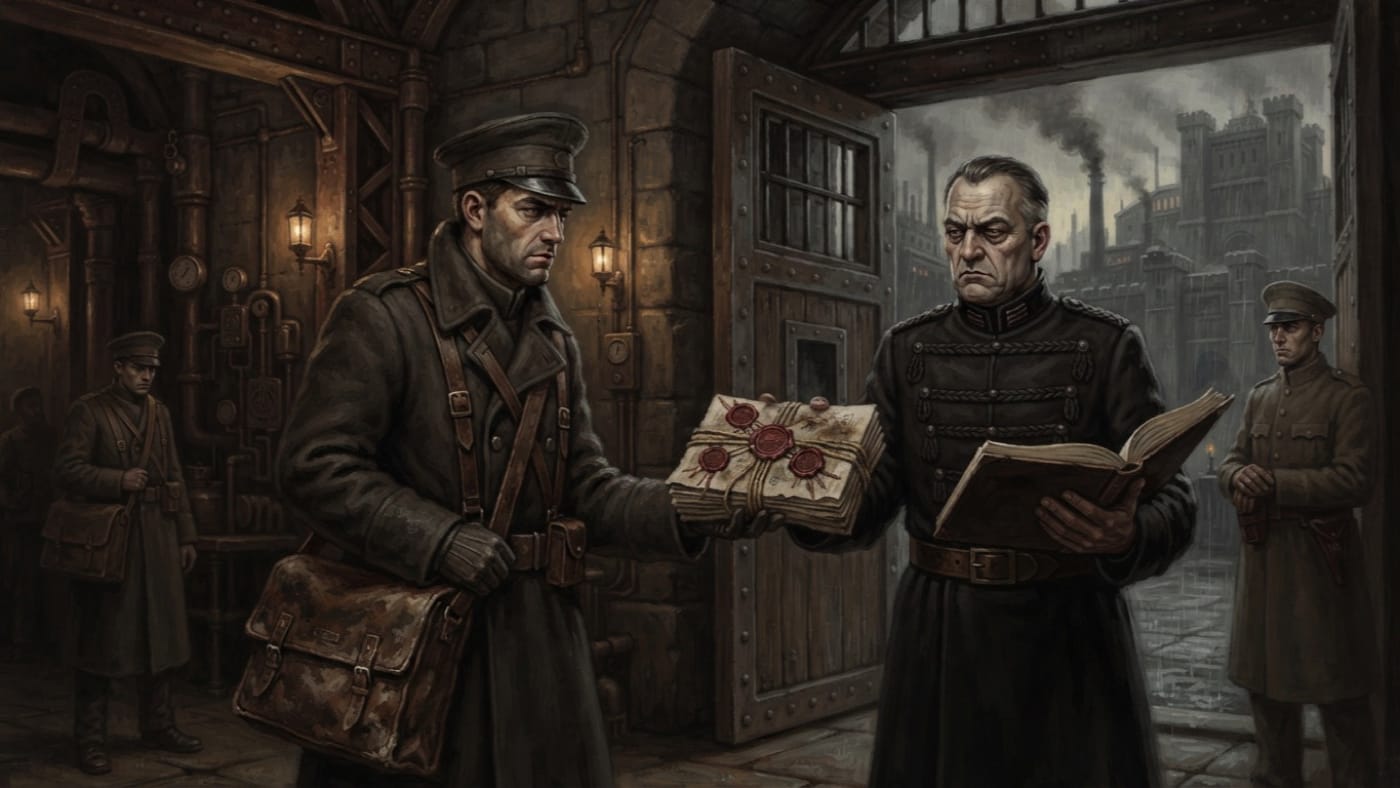
Blacklist Bundles
A decision with legs, dressed in wax
Sealed Index Damnatus amendments carried by the Runner Corps: paper that withdraws passage, rations, and sanctuary before its subject learns to fear the wax.
Codex Ref. XIII.1.76-001
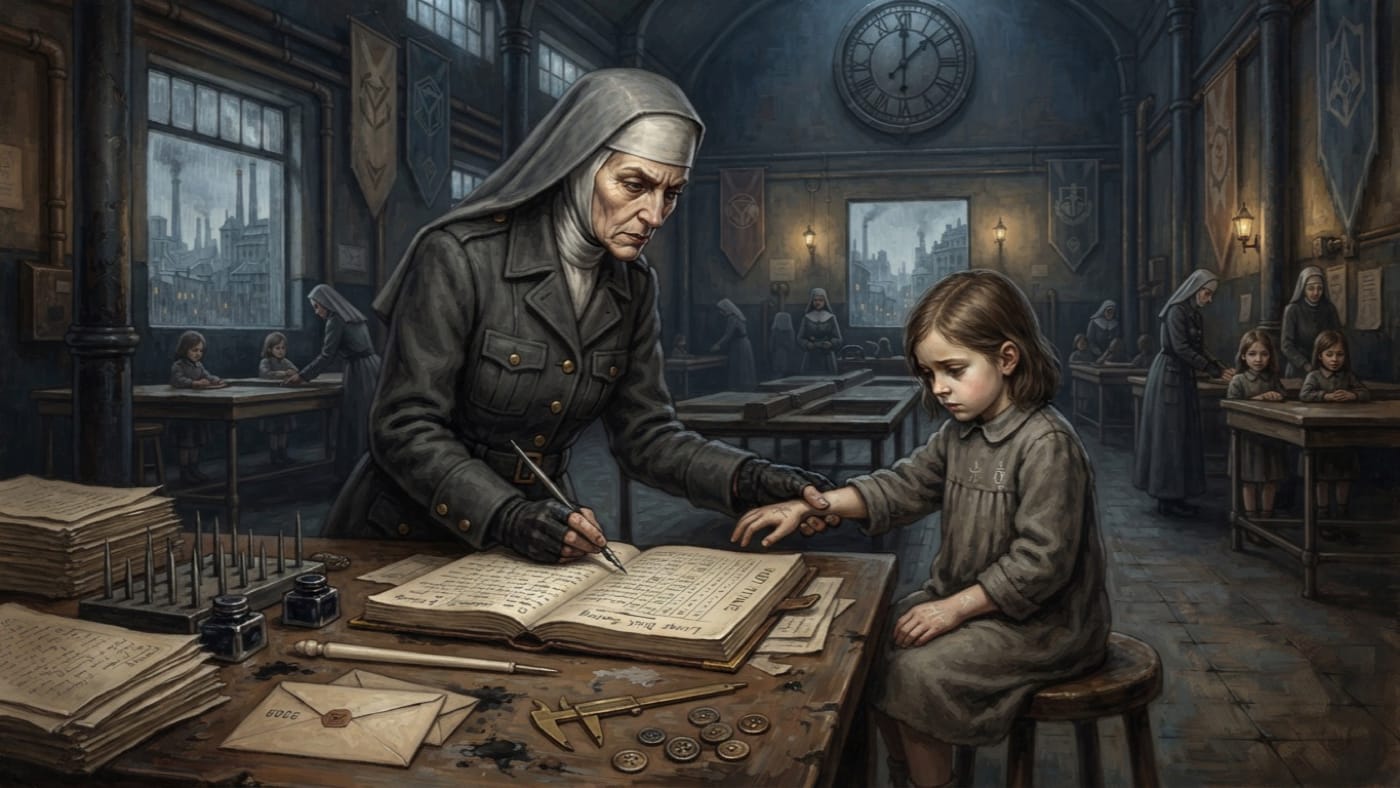
Bloodline Hawks
A clean name cannot silence the family the child remembers
The Bloodline Hawks distrust clean names: Registrars and Root assessors who turn inherited gestures, forbidden songs, and remembered parents into lineage flags.
Codex Ref. XI.1.05-002
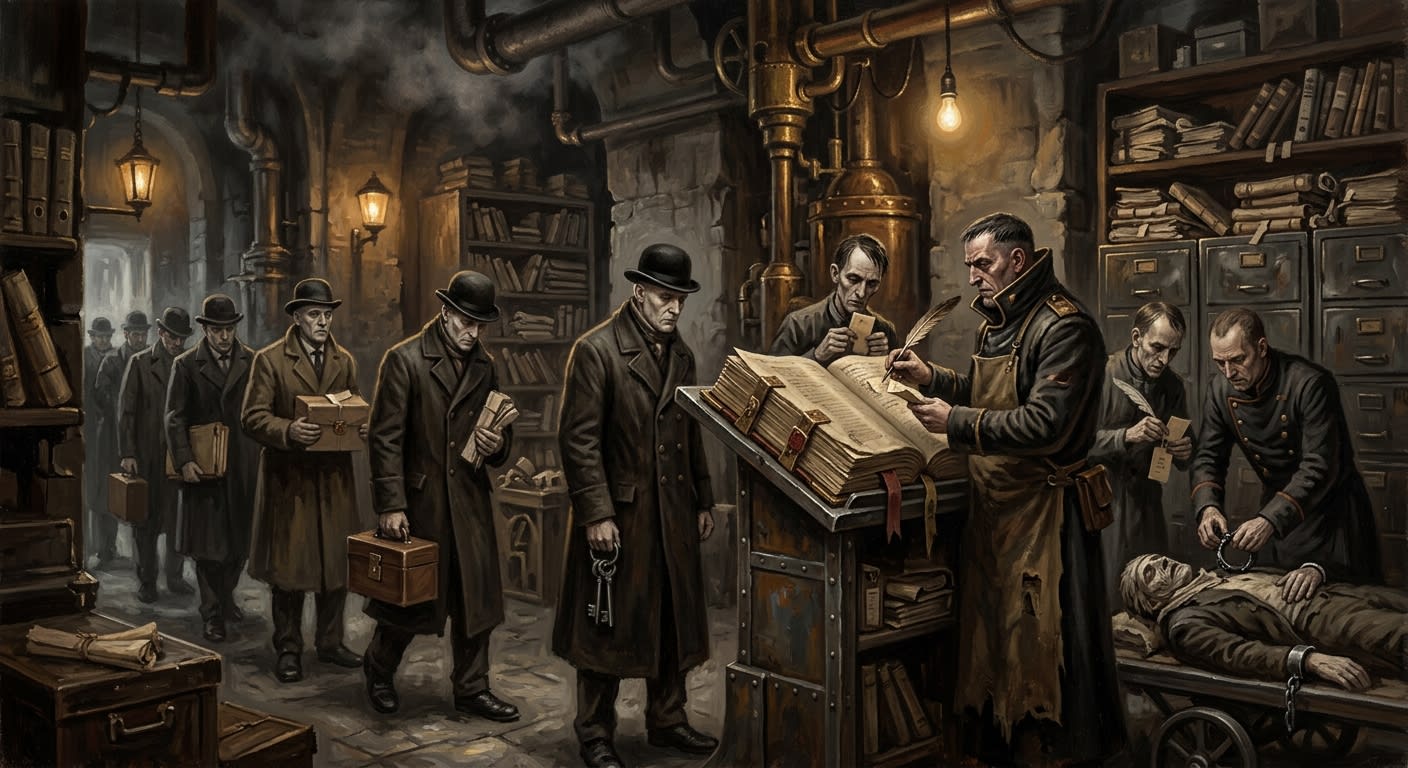
Book of Departures
Where the last breath becomes lawful ink
The Book of Departures receives every lawful death: mercy, tax instrument, burial rite, inheritance key, prayer license, and muzzle for ghosts.
Codex Ref. XIII.1.87-112
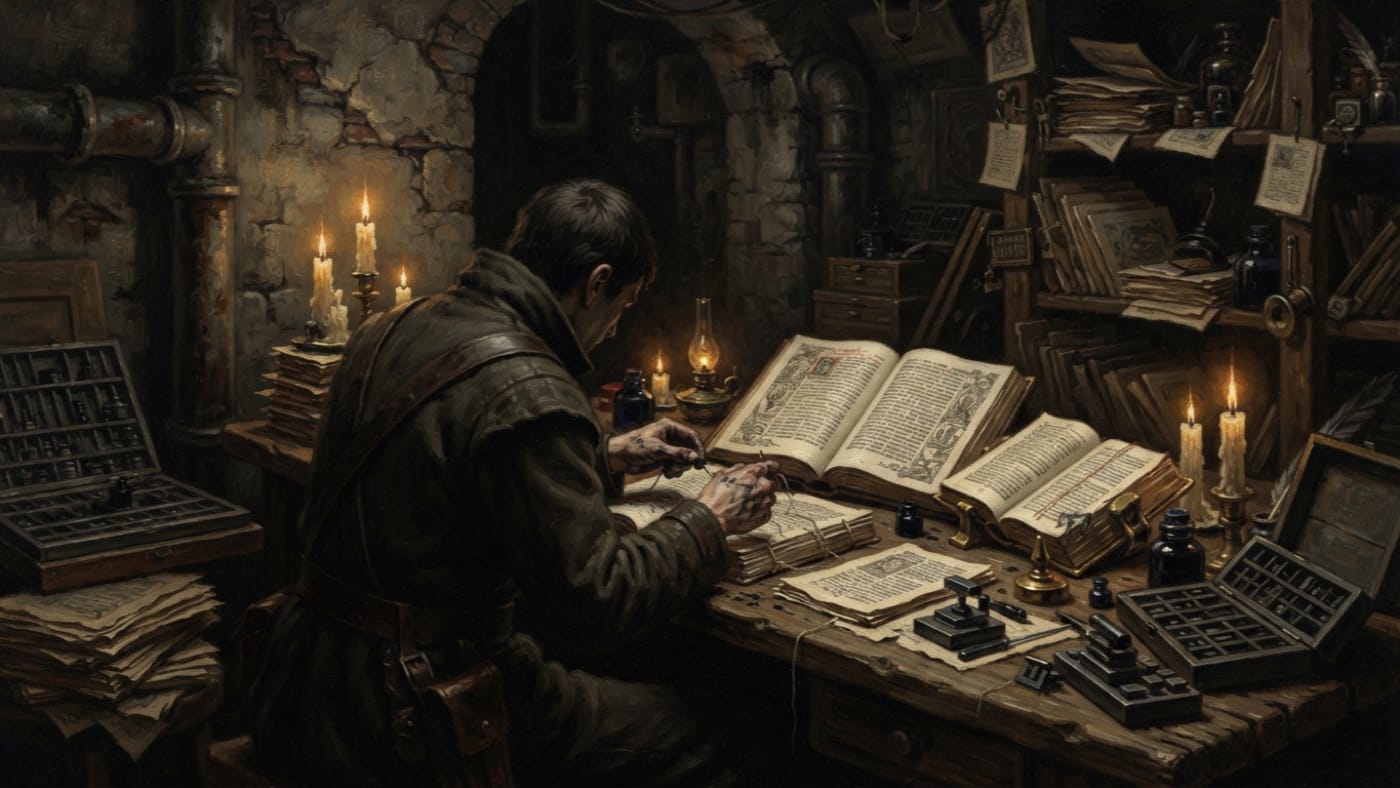
Bread-without-Prayer Line
The loaf before the grace, the copy before the fire
One of twelve Ashen Circle copy lineages of the Index of Safe Lies, named to put bread before grace. Filed under places; the A.S. 201 survey records no founding date, fixed address, or named custodians.
Codex Ref. II.4.09-336
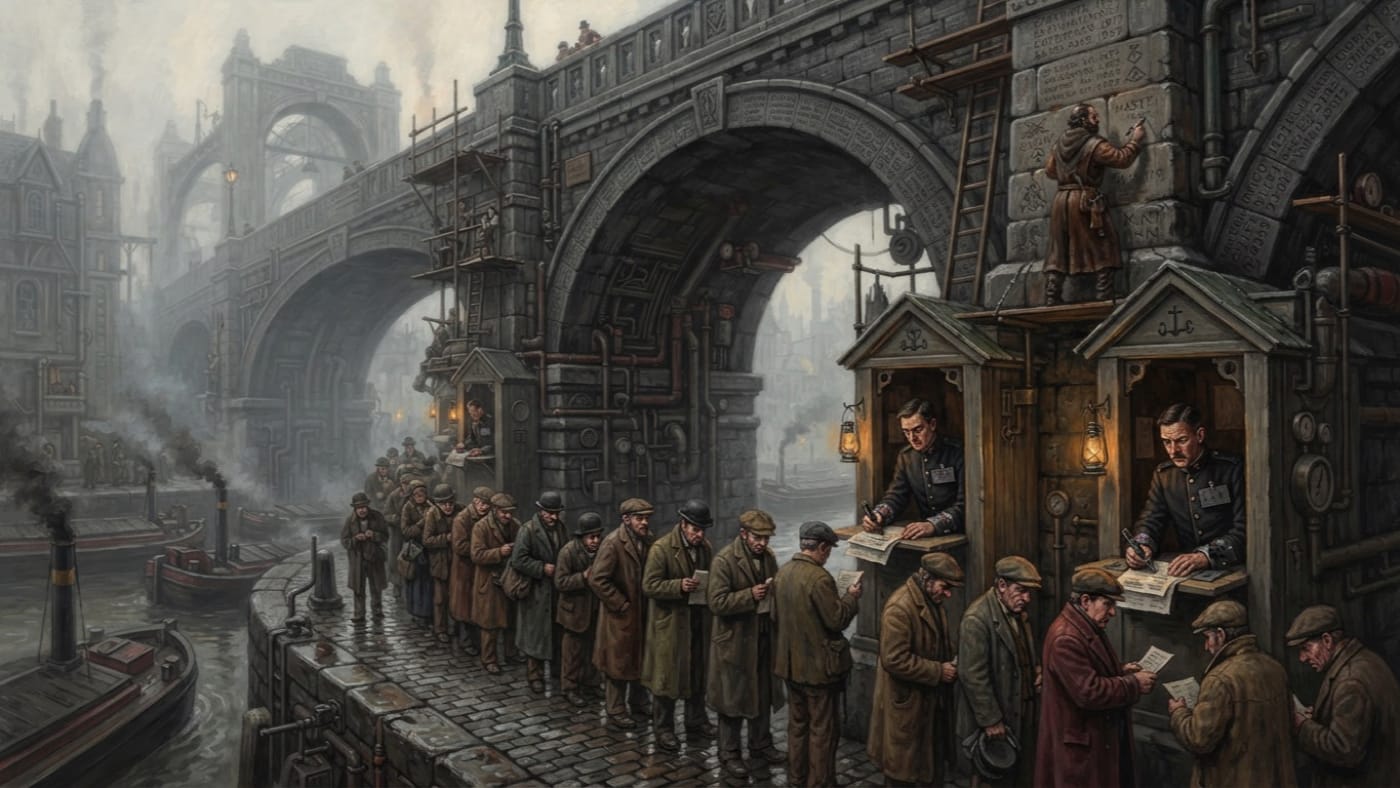
Bridge-Scribe Collegium
Paper may be corrected; stone must be reconciled
The Bridge-Scribe Collegium decides who exists in the Archivolt Causeyworks, witnessing toll papers and correcting names. Its registry can be amended. The stone cannot be erased.
Codex Ref. XI.1.08-001
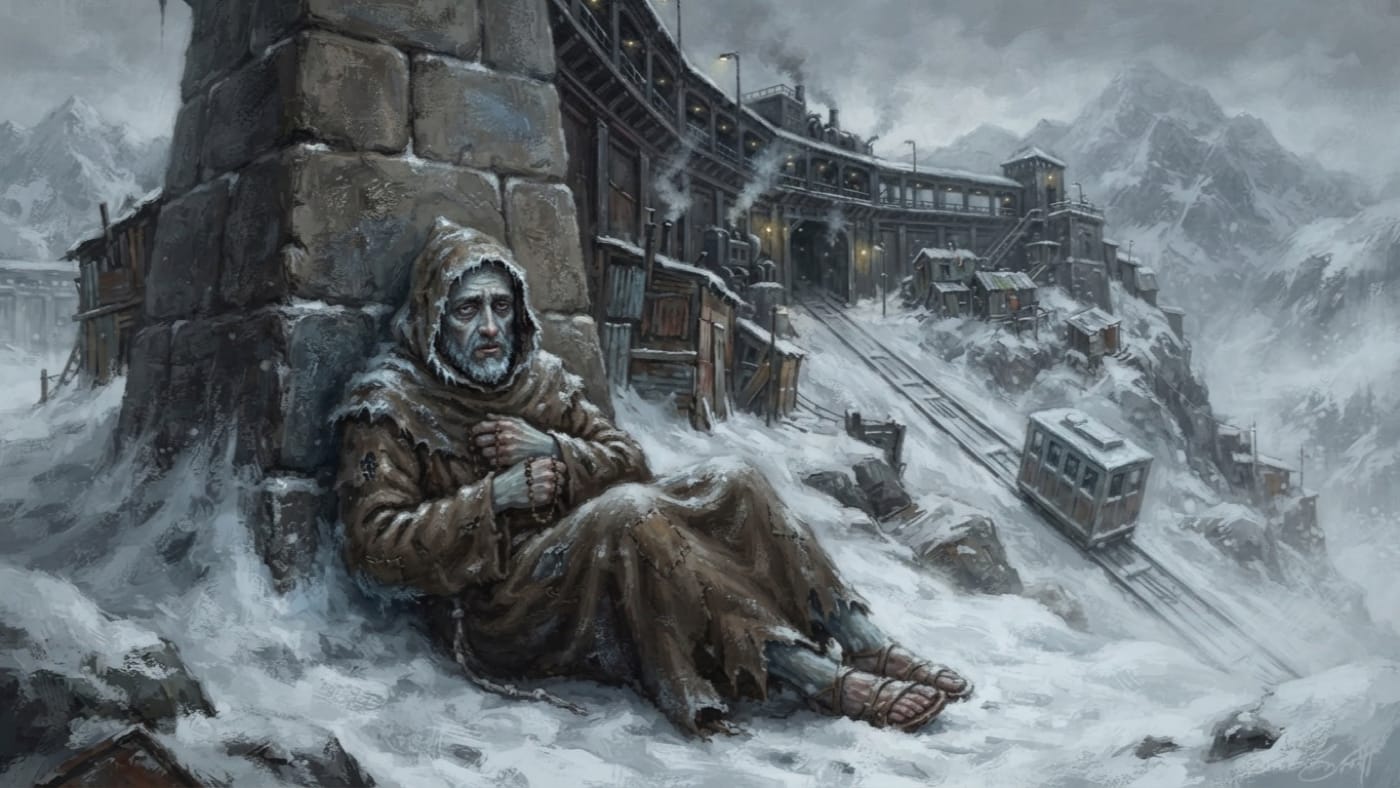
Brother Albrecht of Innsbruck
One dream, one reassignment, and a testimony the Church could not keep sealed
Brother Albrecht testified to a radiant dream-figure in A.S. 78. The Church filed his words and sent him to the Carpathian foothills, where he froze the following winter. His testimony escaped the archive; its copier remains unidentified.
Codex Ref. III.2.01-078
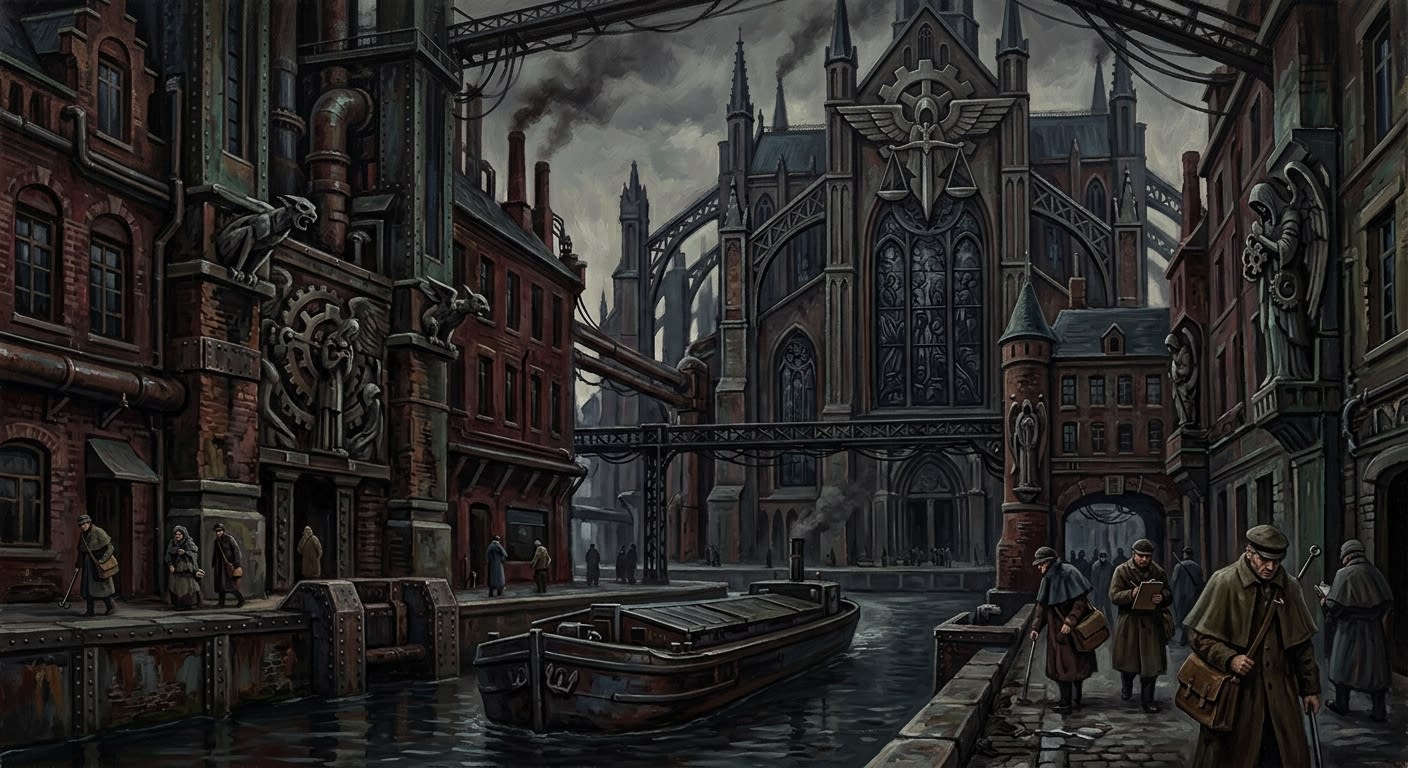
Bruges
Permit prosperity; audit beauty
Bruges is the Synod-held Lowlands city whose canals, colours, grotesques, relic glass, and impossible Tithes seal make beauty a recurring audit problem.
Codex Ref. II.1.04-058
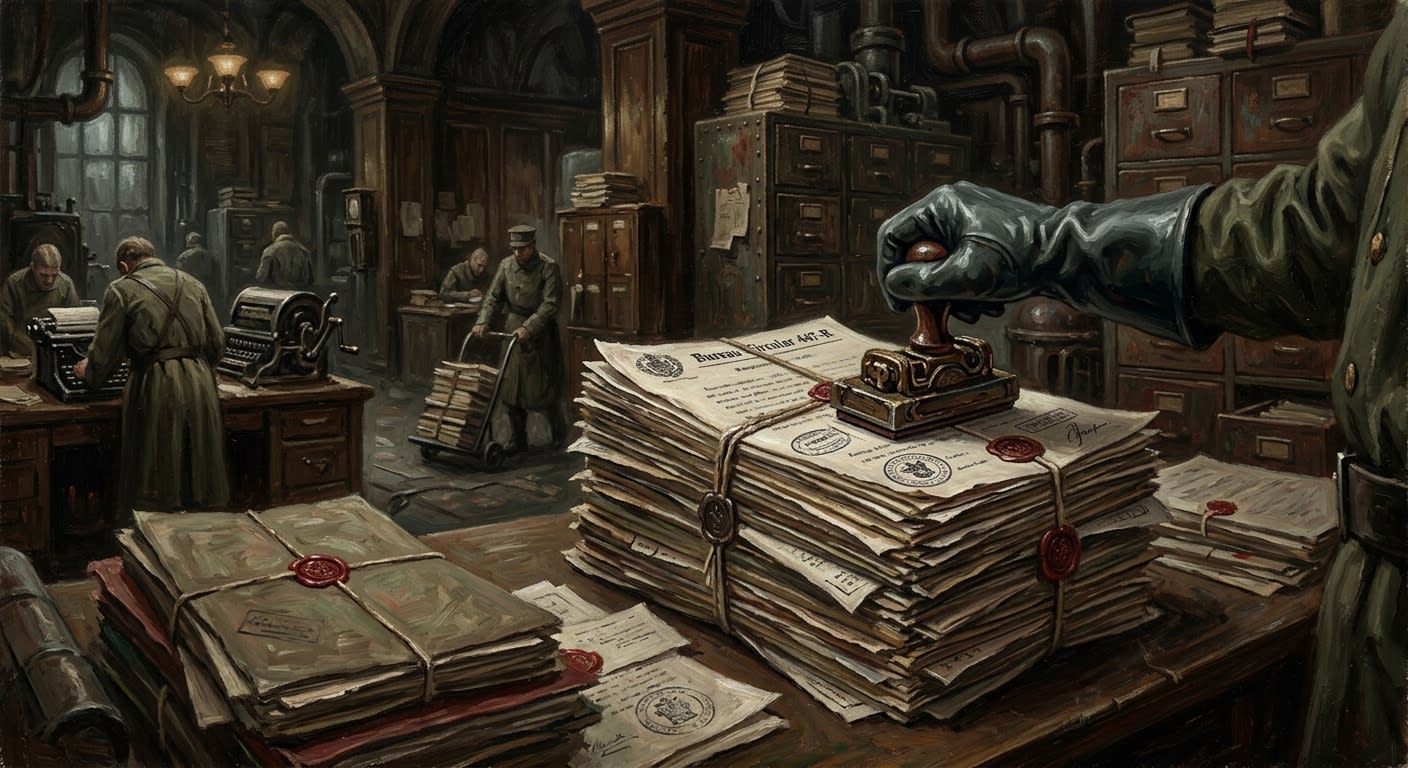
Bureau Circular 447-R
Four hundred and forty-seven words, none of them innocent
Bureau Circular 447-R denies the Codices Obscurae in exactly 447 words, each counted, sealed, revised, denied, and improved by fear.
Codex Ref. XIII.1.06-002
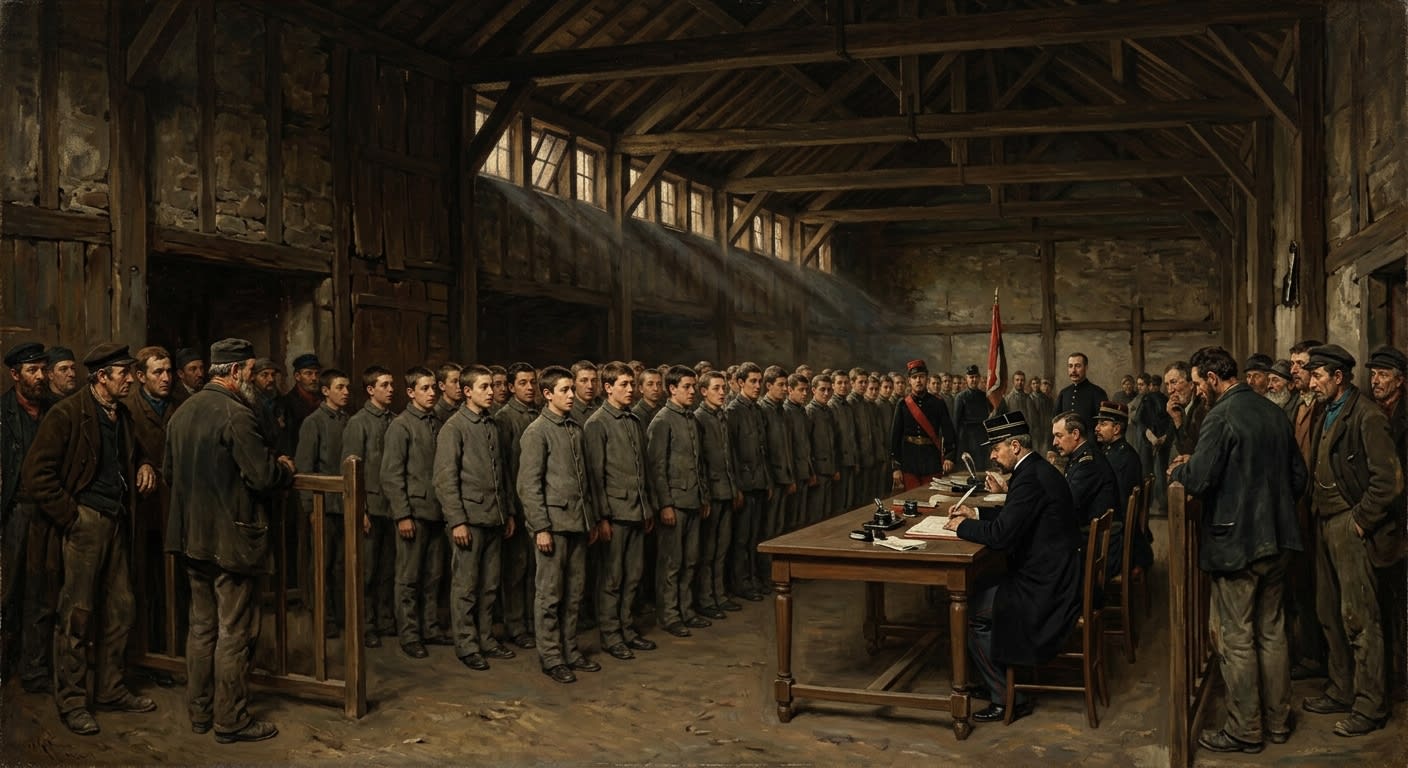
Bureau of Conscription
A tithe of flesh. The Bureau calls it a fraction.
The Bureau does not take. It collects. The hand that reaches into the household, past the mother's grip, and removes what was promised — which is to say, everything.
Codex Ref. III.4.07-112
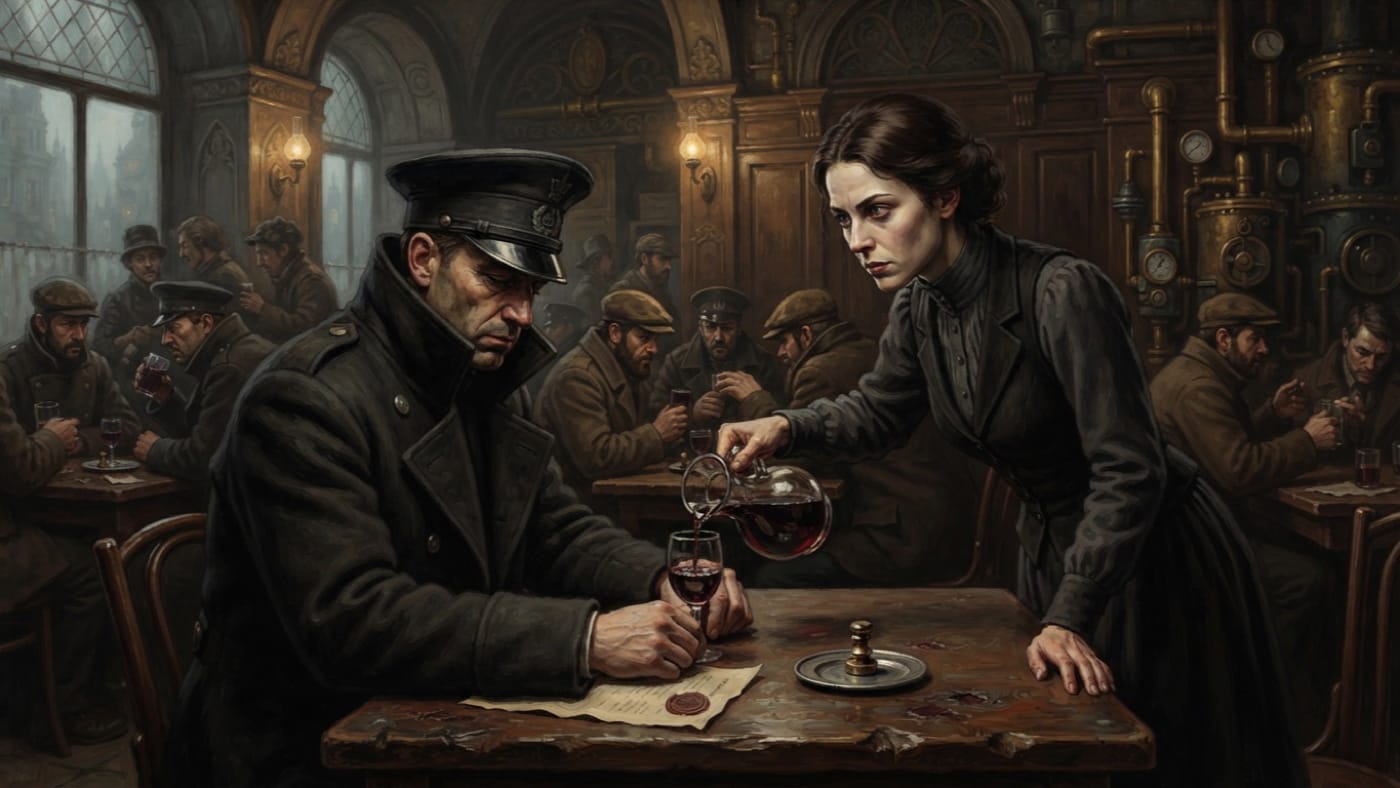
Bureau of Purity Case File 197-K-9
The guest was traced to a district. The officer remains unnamed.
File 197-K-9 reaches the Codex through an A.S. 199 reconstruction: a Choir operative traced to Constantinople's pilgrim quarter, an unchecked seal, and a retired officer still formally unnamed.
Codex Ref. VII.8.10-197
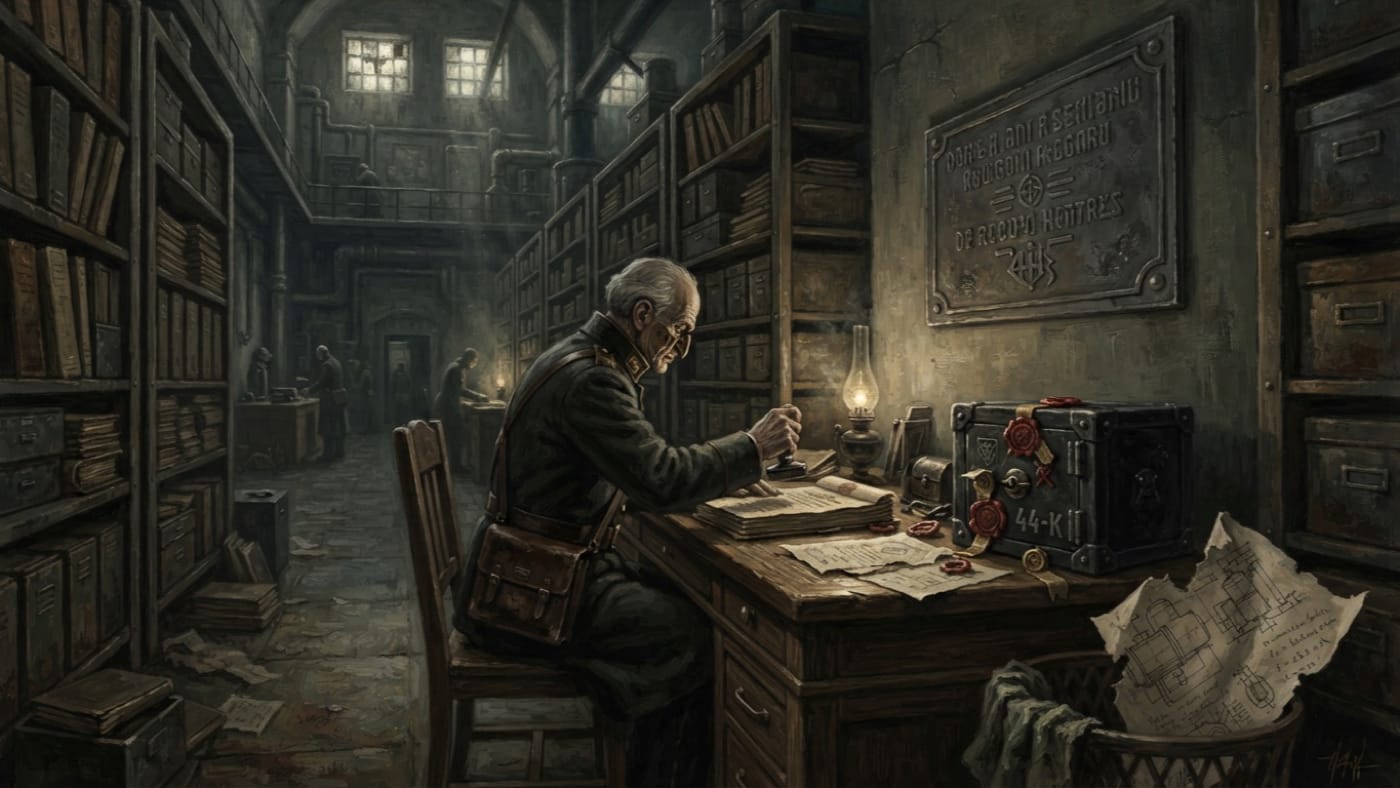
Bureau of Shadows File 44-K
On the name kept under seal after the men who read its arithmetic were walled up.
Doctrine's A.S. 147 correction admits that Fuel Is Chemistry came from a senior Engineering draughtsman. File 44-K seals his name; the sixty-one immured readers at Przemyśl remain in the public account.
Codex Ref. VIII.8.44-001
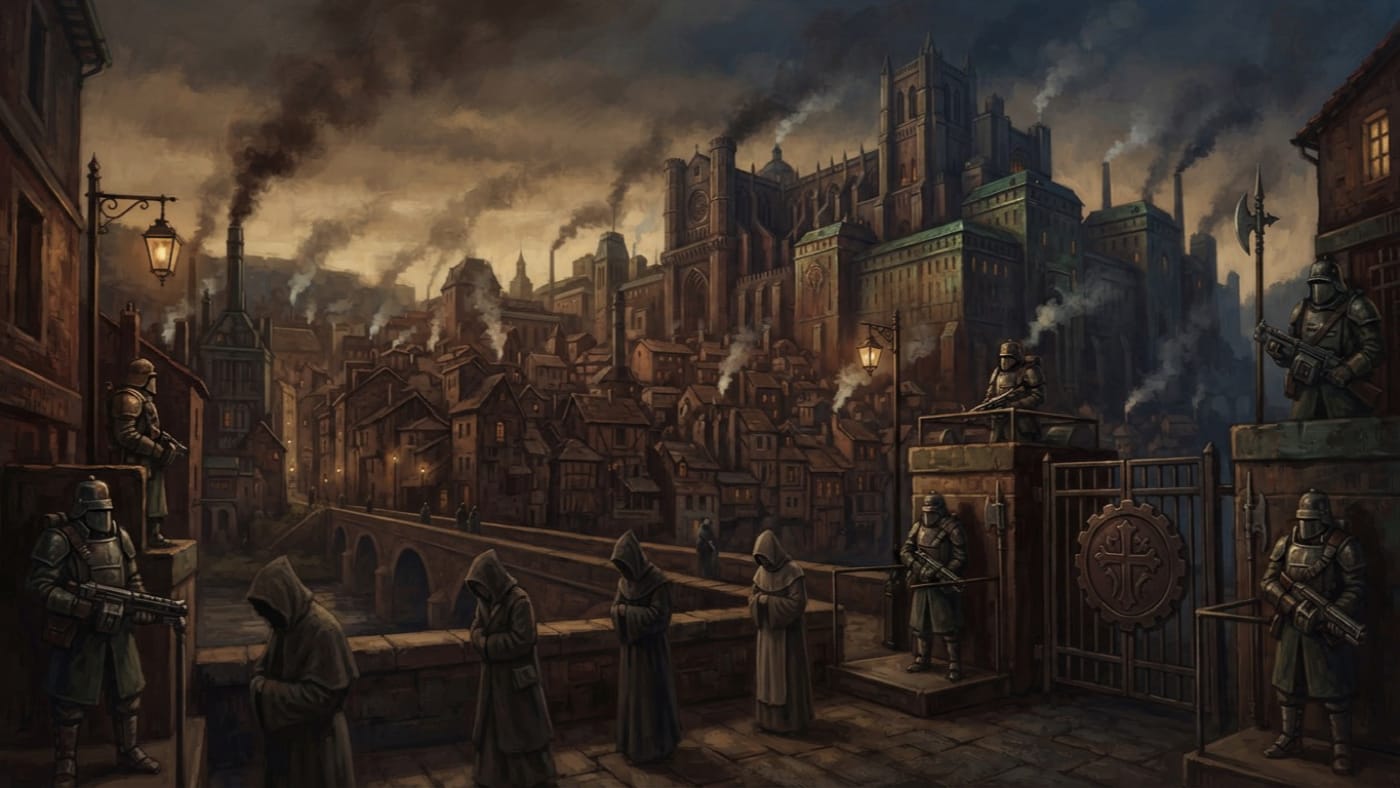
Cahors
Named elsewhere, retained forever
Cahors entered the Toulouse file in A.S. 93 through Carcassonne's confession. No local offence is established; the Bureau retained the address.
Codex Ref. II.1.09-093
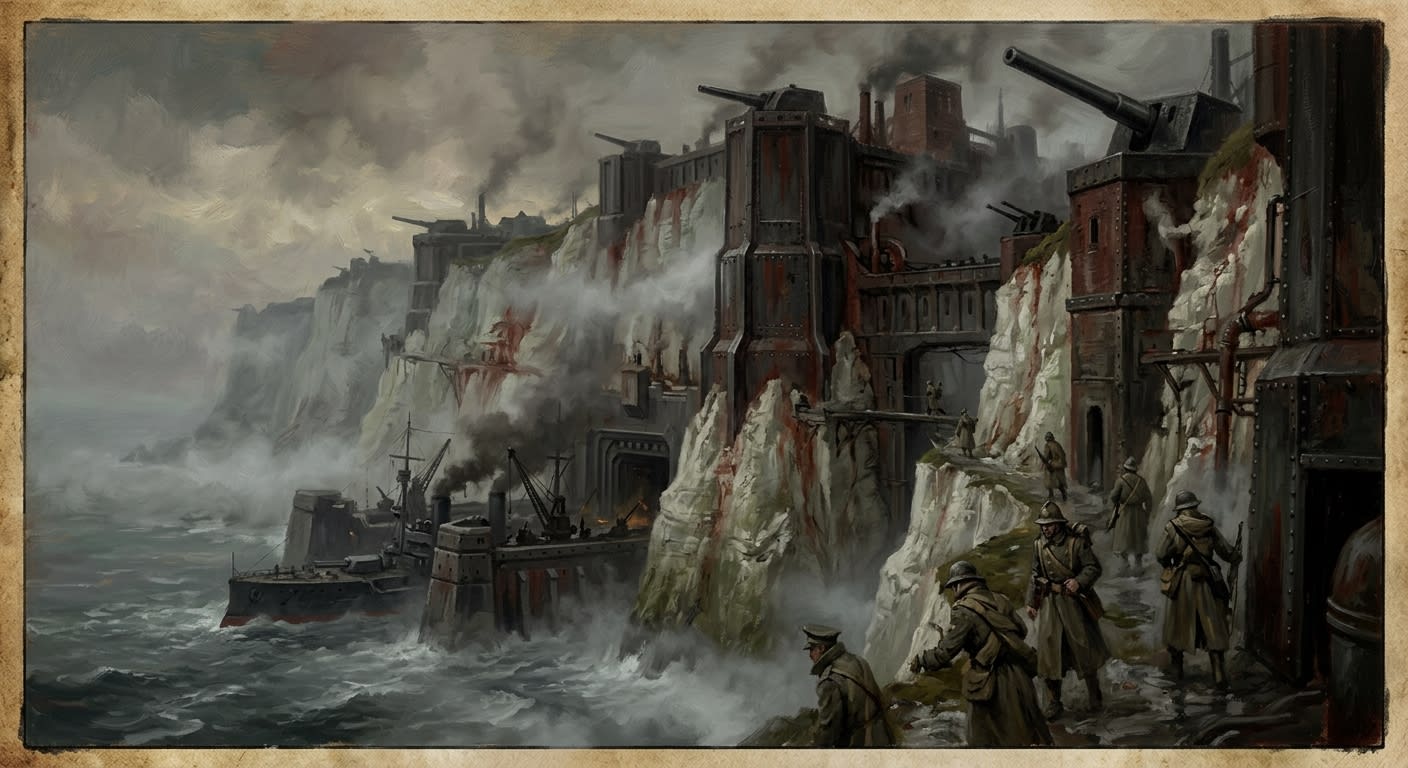
Calais
Read the fog, hold the sea, and pretend the Channel is only water
Calais is the Synod's western coastal tooth: a chalk redoubt where the fog writes names, the sea answers omissions, and every passage is taxed in breath.
Codex Ref. II.4.09-011
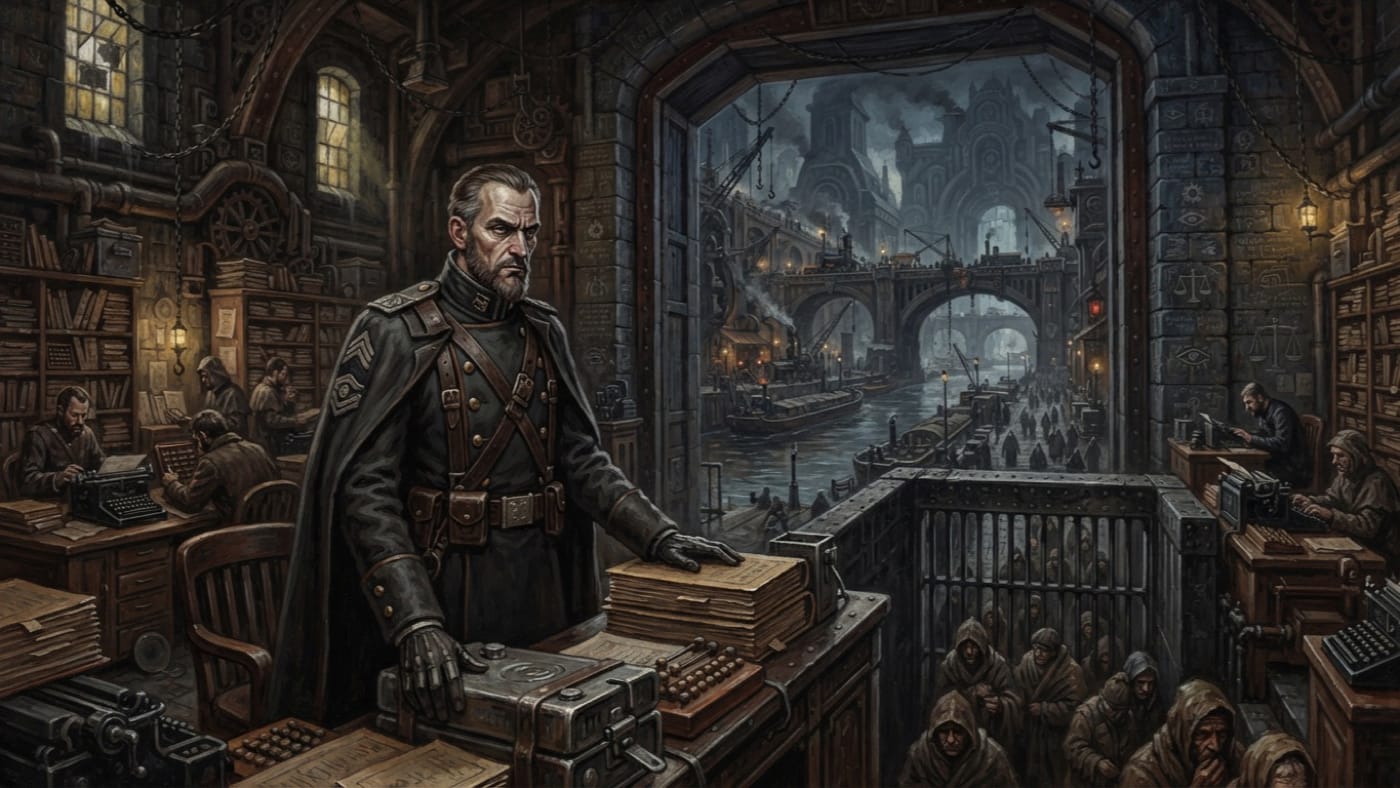
Canon-Toller Edris Vane
He governs the interval between arrival and departure
Canon-Toller Edris Vane holds the Causeyworks' crossing access. Permits, tolls and patient delays sustain his kingdom; Marrow's Saintspan warrant now opens stone on another Bureau's timetable.
Codex Ref. III.2.01-201
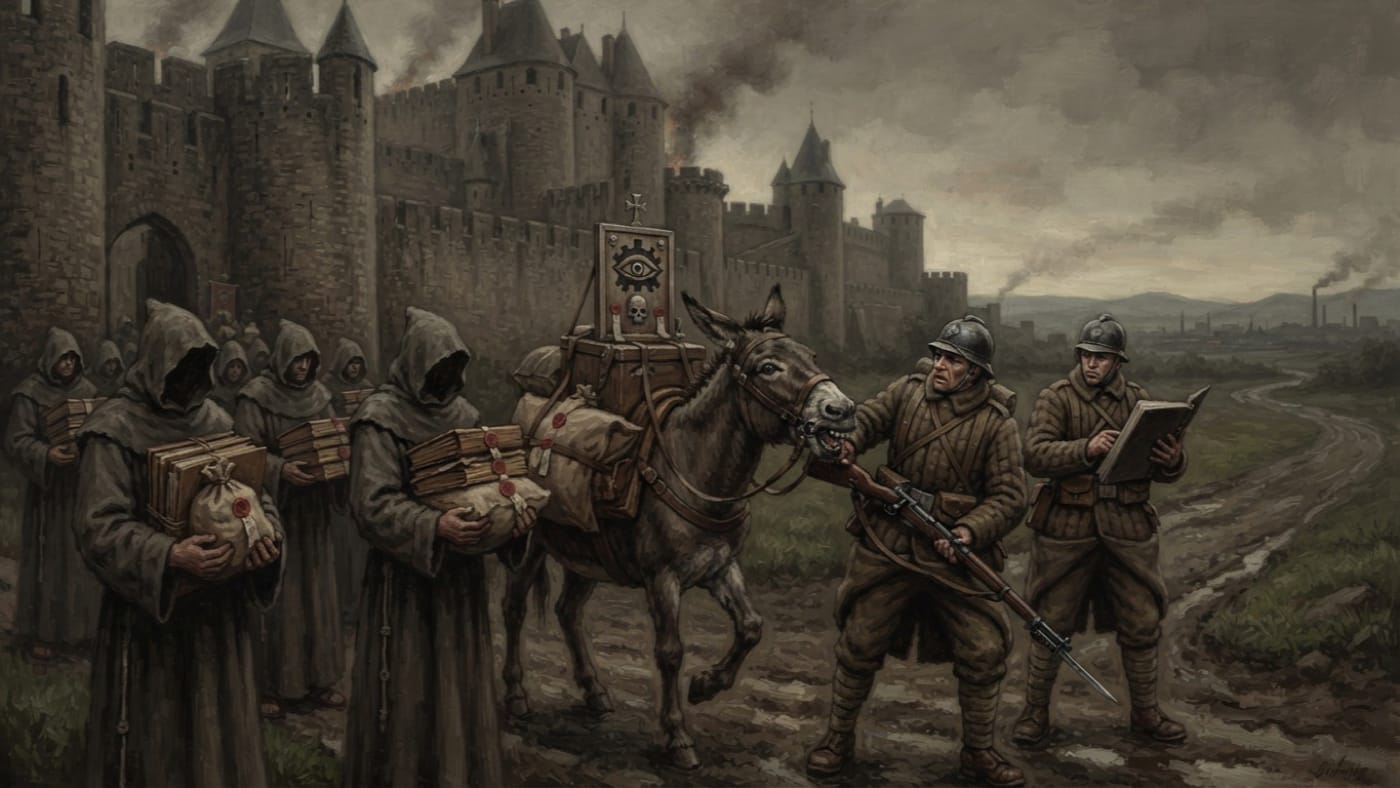
Carcassonne
Names outward, forbidden paper back
Carcassonne sent names outward and forbidden paper back to Toulouse. Purity enlarged its reach and its Index; Bernard the mule supplied the teeth.
Codex Ref. II.1.09-093
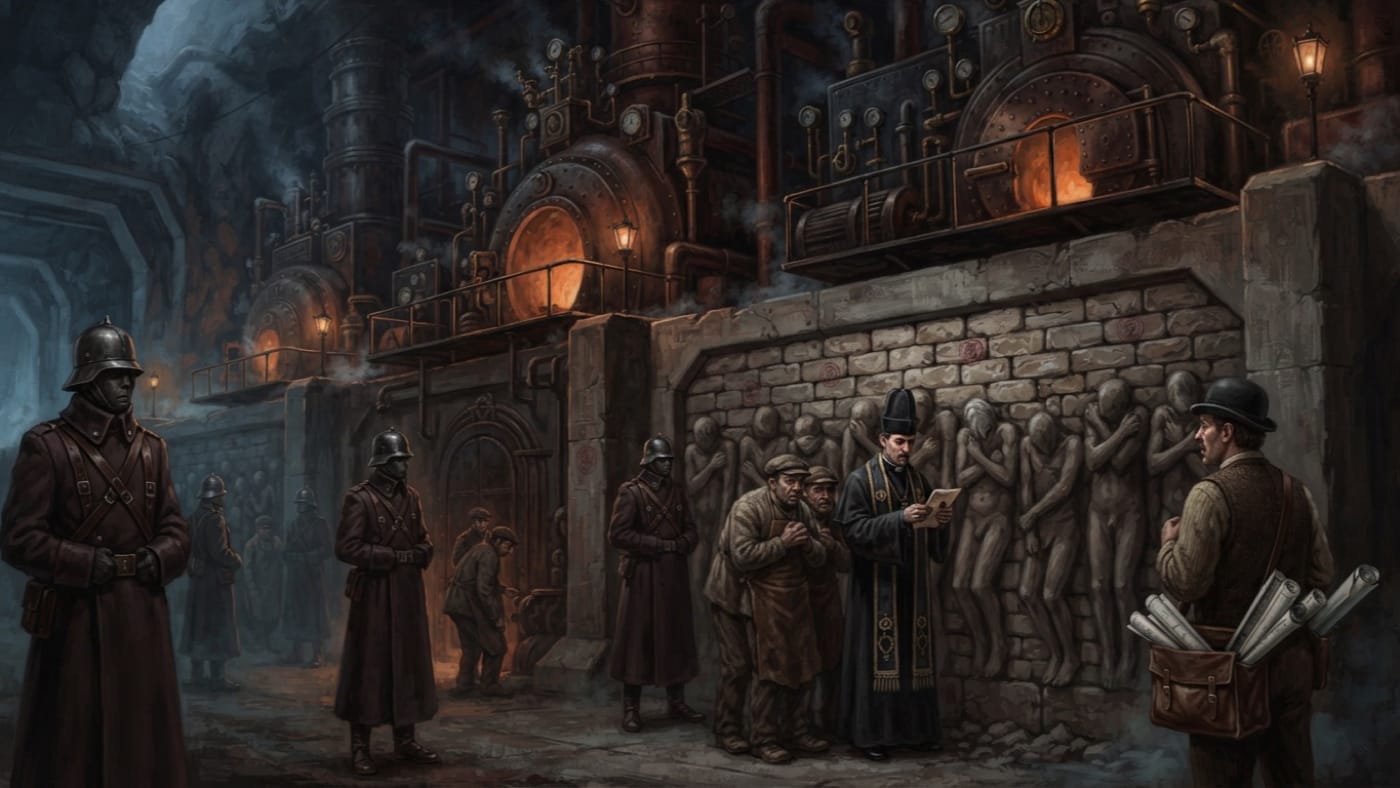
Causality Wars
Engineering owns the facts. Doctrine owns the sentences. The stoker owns a shovel.
Engineering owns the facts; Doctrine owns the explanation. Their undeclared feud reached its bloodiest engagement in A.S. 134, when sixty-one people were immured at Przemyśl. The account remains open.
Codex Ref. VII.8.10-134

Chainmaster
The binder of binders answers for every dirty hand
The Bureau of Purity's senior district rank: keeper of quotas, informants, seized words, and other officers' glasschains. Every dirty hand returns to the district seal.
Codex Ref. XII.49.02-002

Chainmaster Veyl
Bind the binders, and make their wrists confess
Purity reformer, rank, mask, or useful ghost credited with the Glasschain Reform that made White-Mantled Inquisitors audibly inspectable.
Codex Ref. III.2.03-002
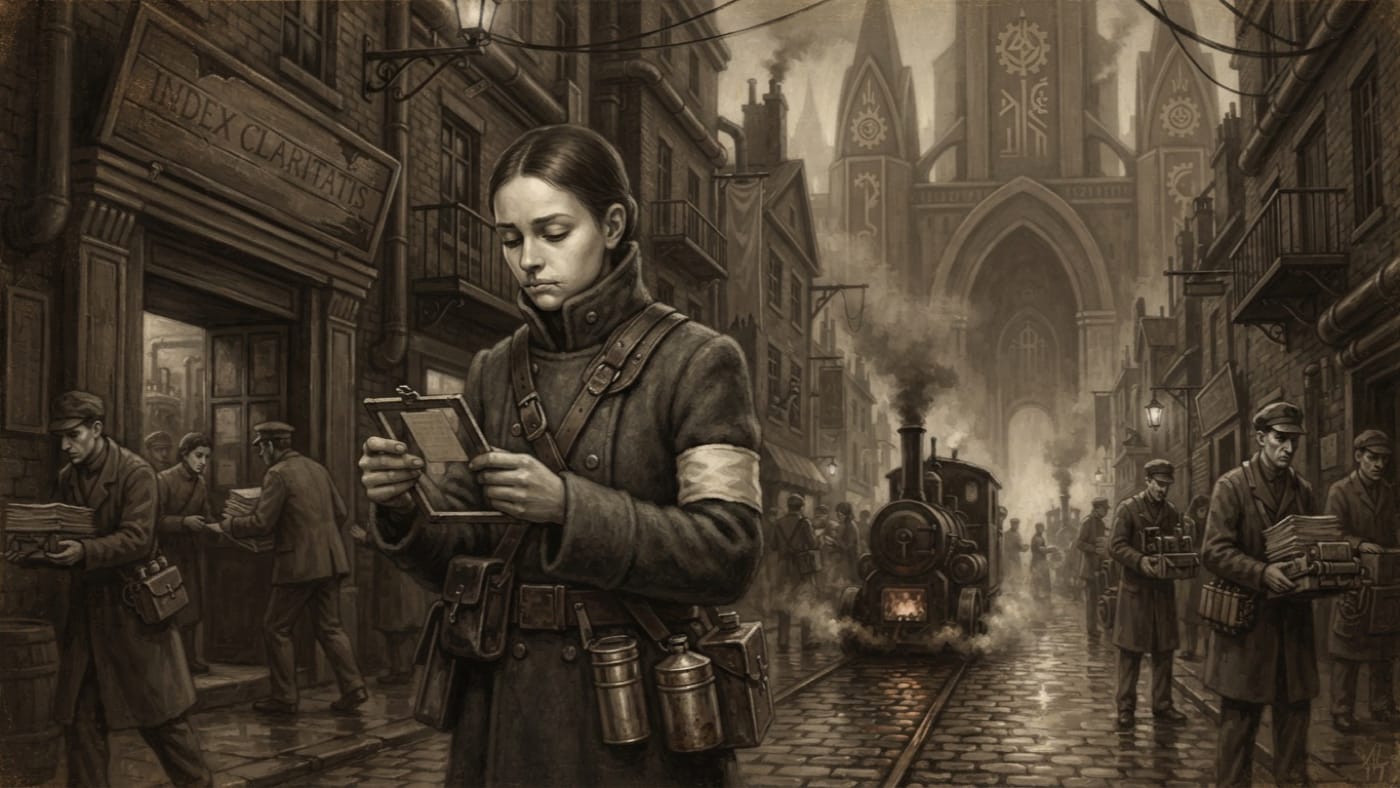
Chalkling
The junior carries the ear; the Examiner owns the voice
Chalklings are the entry rank of the White-Mantled Inquisitors: sign-checkers, errand carriers, and listening ears taught to remember forbidden words without saying them.
Codex Ref. XII.49.02-001
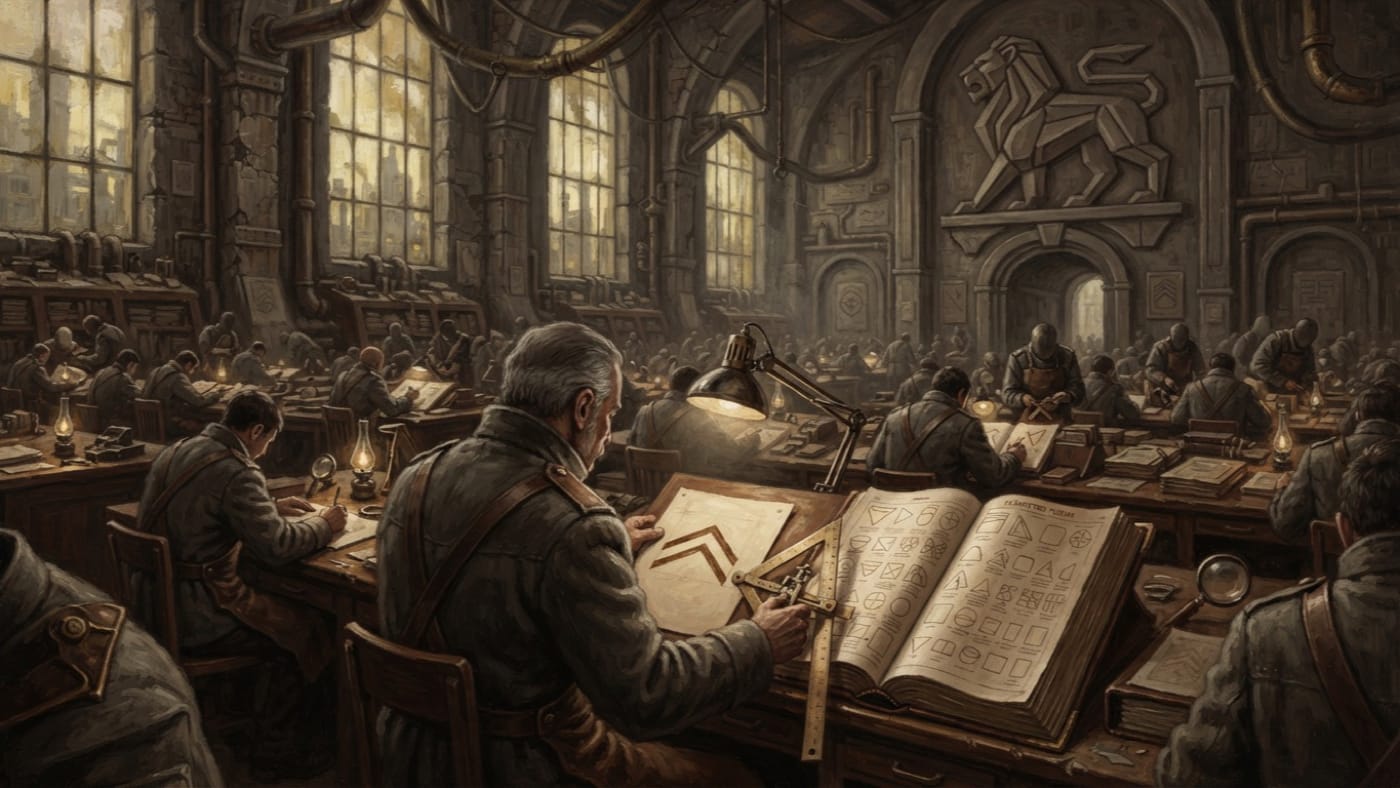
Chancellery of Permitted Forms
Even a corner must petition for absolution
Heraldry's geometry office licenses every bend, circle and corner before display. A lawful shape still requires the right surface, occasion and Armorial entry.
Codex Ref. VIII.1.03-006
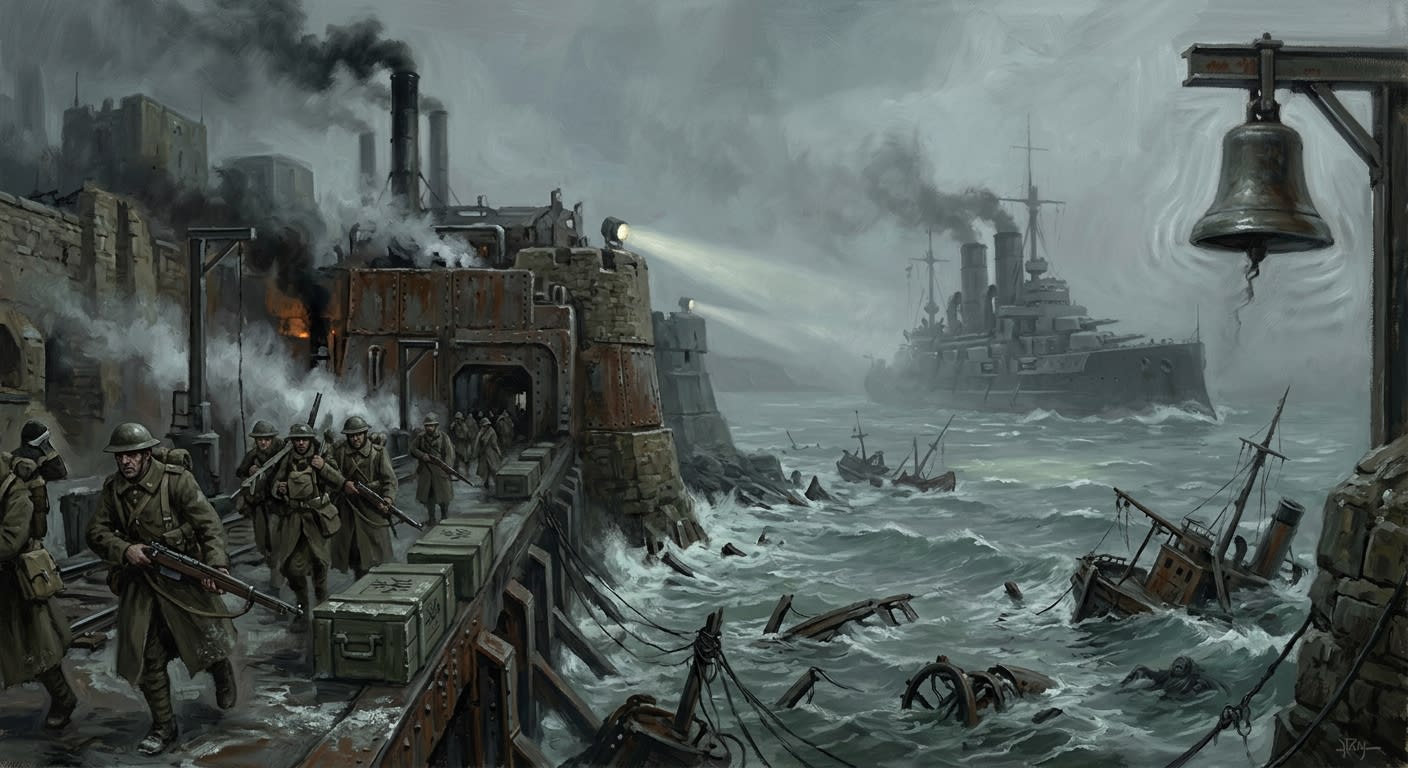
Channel
The water between two prides, and wiser than both
The Channel is the Synod's western salt wound: Calais to Dover, bells to fog, British pride to Synod arithmetic, and drowned things below.
Codex Ref. II.1.04-201
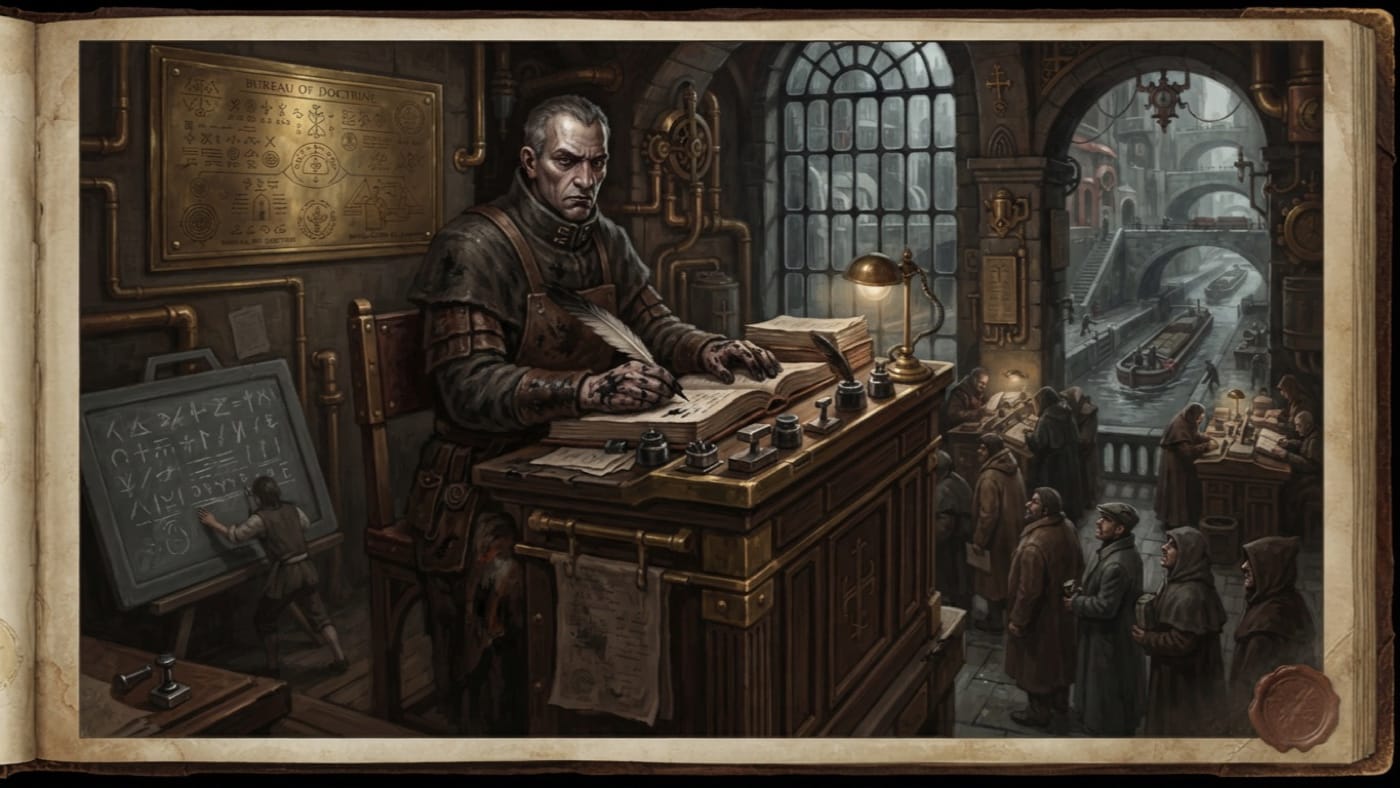
Chief Scribe Mael Arct
The quill revises a name; the stone keeps both
Chief Scribe Mael Arct sells recognition in the Archivolt Causeyworks. His quill revises the registry; the stone keeps both names, and Marrow's warrant reaches the correction slates.
Codex Ref. III.2.01-201

Child of Innocence
A condemned name, a river, and ash
Condemned as the first so-called Virtue General, the Child of Innocence is an unverified pale boy said to unravel loyalty with truth. The Rhine fires establish neither his identity nor their cause.
Codex Ref. III.2.01-054
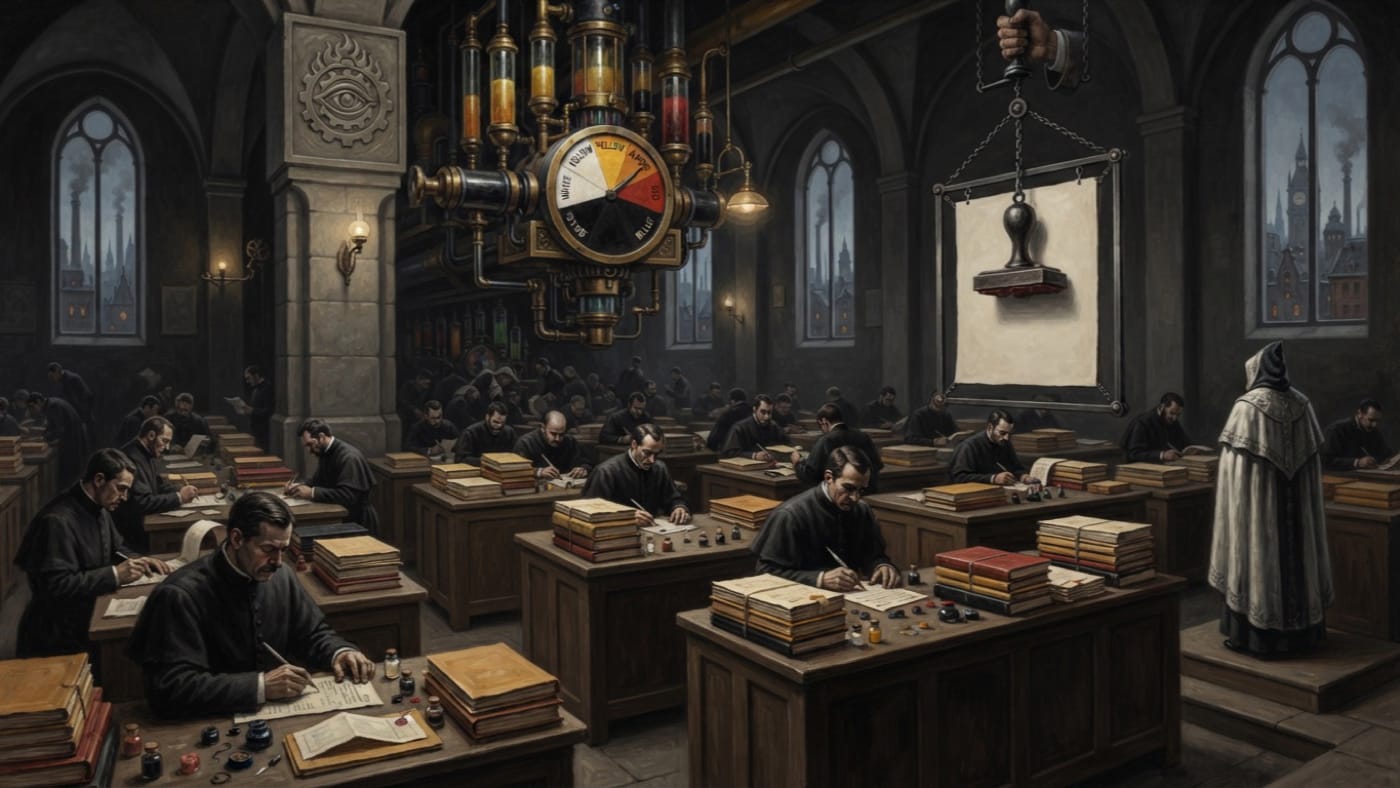
Chromatic Office
The hand touches the register, and the register keeps the name
The Chromatic Office supplies Purity's five-colour scale and Amber guidance. Its clerks need only paper to keep a name beneath a suspended warrant.
Codex Ref. III.3.02-002
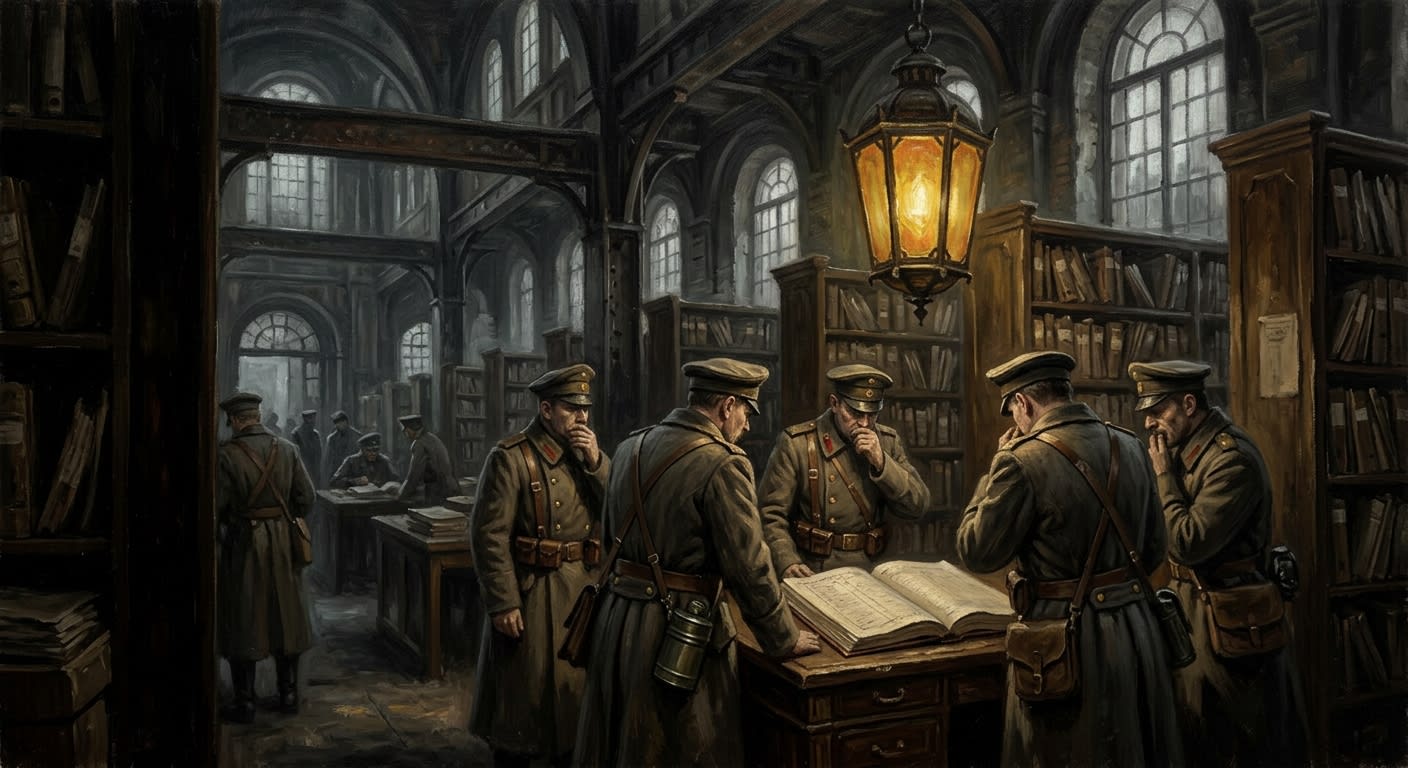
Classification Amber
The honeyed prison where Purity keeps suspicion alive
Classification Amber is Purity's suspended warrant: suspicion preserved in colour, fear extended by procedure, and mercy sharpened into watchfulness.
Codex Ref. XIII.1.06-001

Clean Knife Line
The place register has mistaken a pedigree for an address
The Clean Knife Line is one of twelve surviving Index of Safe Lies copy lineages. Its practical measures remain exact; its custodians remain unnamed, and the place register remains wrong.
Codex Ref. III.2.201-638
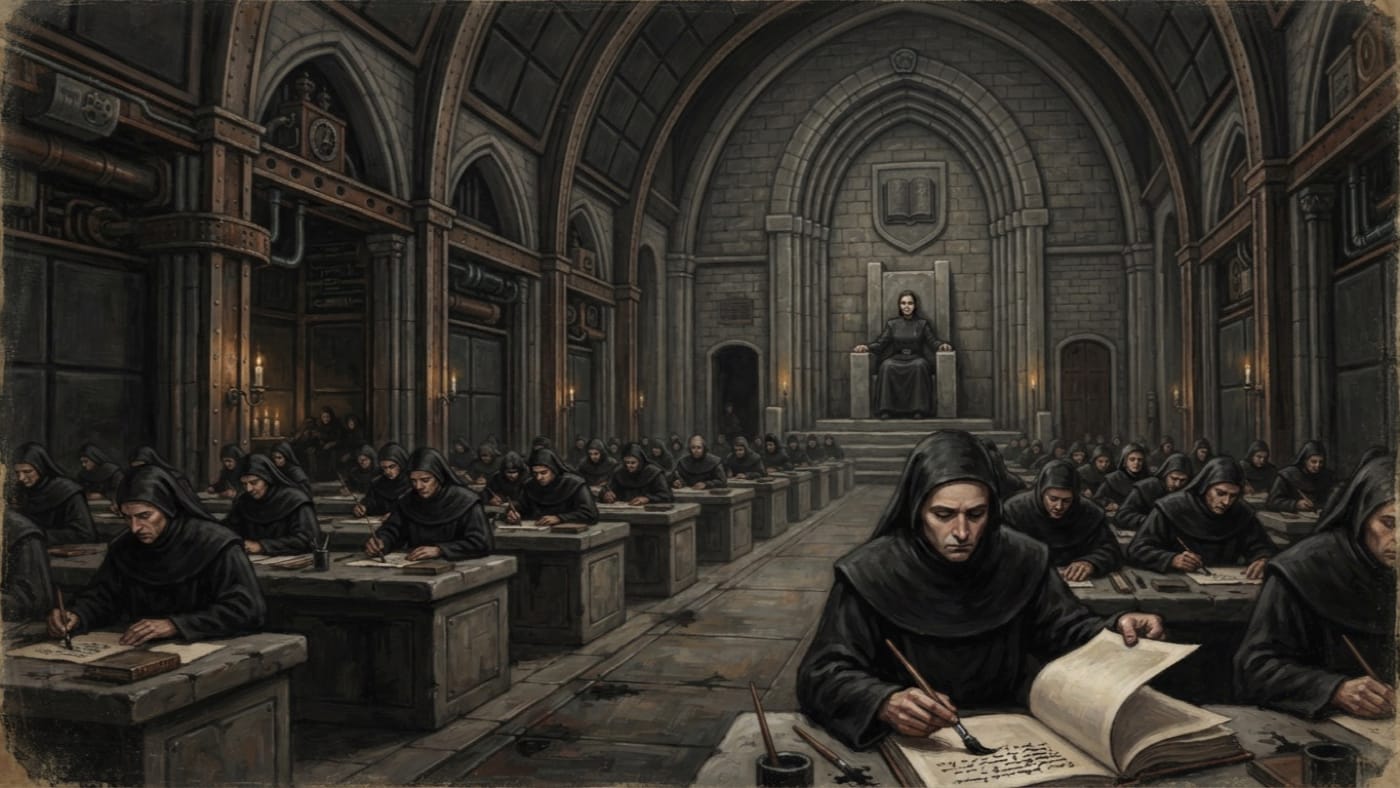
Cloister of Prescribed Silence
The room where refusal requires no reasons
The Cloister of Prescribed Silence is the Bureau of Silence's soundproofed Strasbourg seat, where libraries are licensed, Forbidden Stacks access is counter-sealed, and changing ink is declared obedient.
Codex Ref. II.1.04-019

Codex of Permitted Symbols
The little book that makes walls guilty
Pocket abridgement of the Armorial carried by Sigil Inspectors, where lawful shapes are licensed, colours are weaponised, and mercy is a counterfeit edition.
Codex Ref. XIII.1.82-001
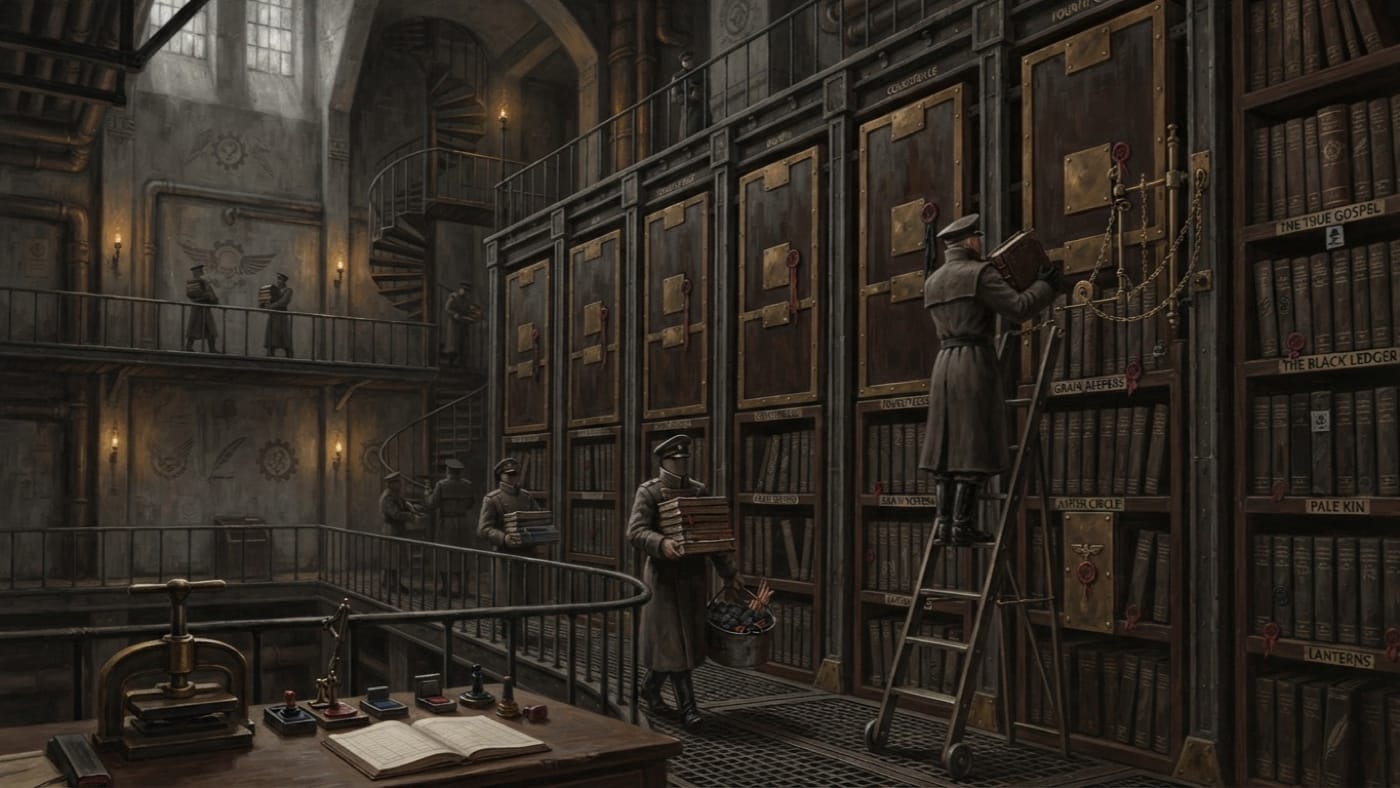
Compendium of Proscribed Errors
Every grievance gets a shelf; the clerk supplies the kindling
The Bureau of Doctrine's register of eight proscribed heresies: every grievance receives a shelf, and every clerk learns which kindling to fetch.
Codex Ref. XIII.1.37-002
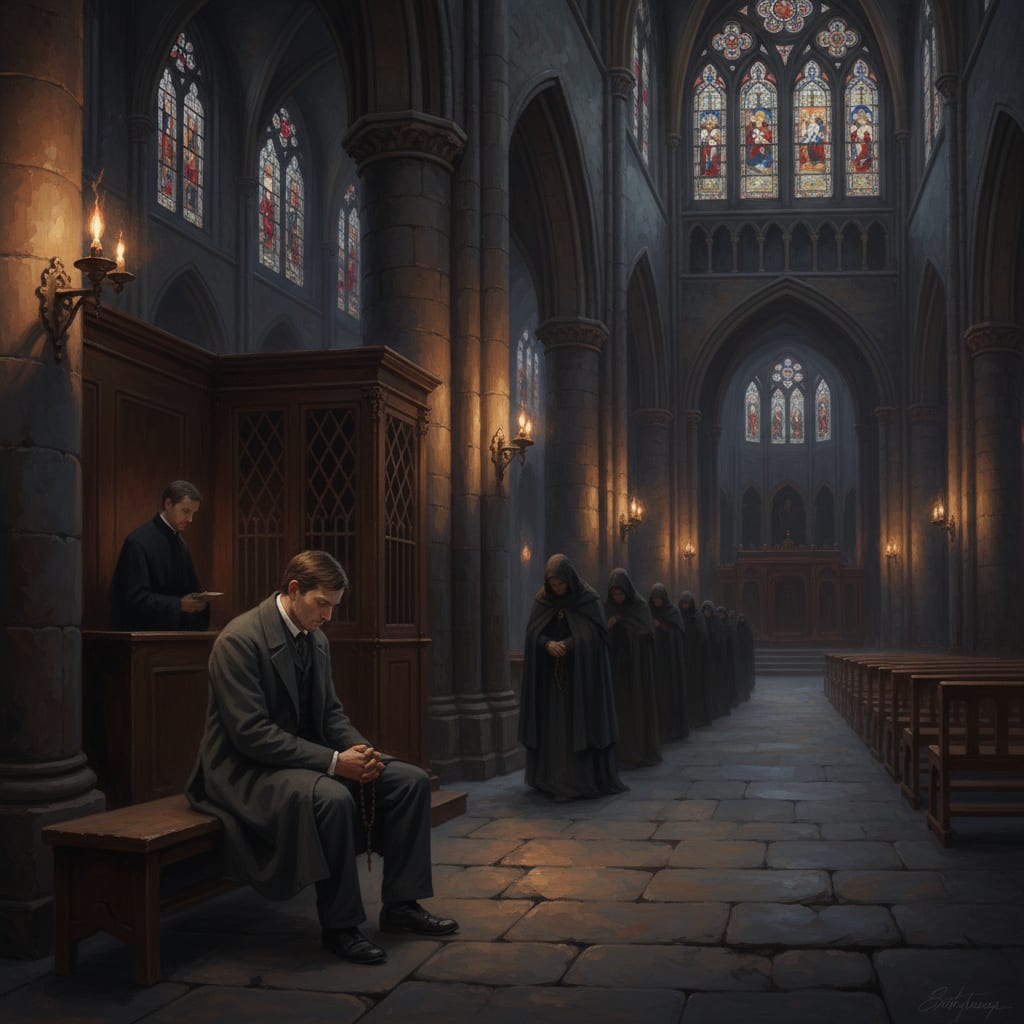
Confessarii
Two hundred and eighty-six reports filed; three blank pages received; the system functions as intended
The Confessarii are the Bureau of Shadows' listening network, which does not exist because the Bureau does not exist. They attend. They absorb. They file. The courier departs. Nothing is acknowledged. The system functions as designed.
Codex Ref. XIII.1.06-001

Continental Levy
The decimal point where obedience becomes infantry
The Continental Levy is the Synod's permanent tithe of flesh, born from the A.S. 110 crisis and refined into household arithmetic.
Codex Ref. XIII.1.54-001
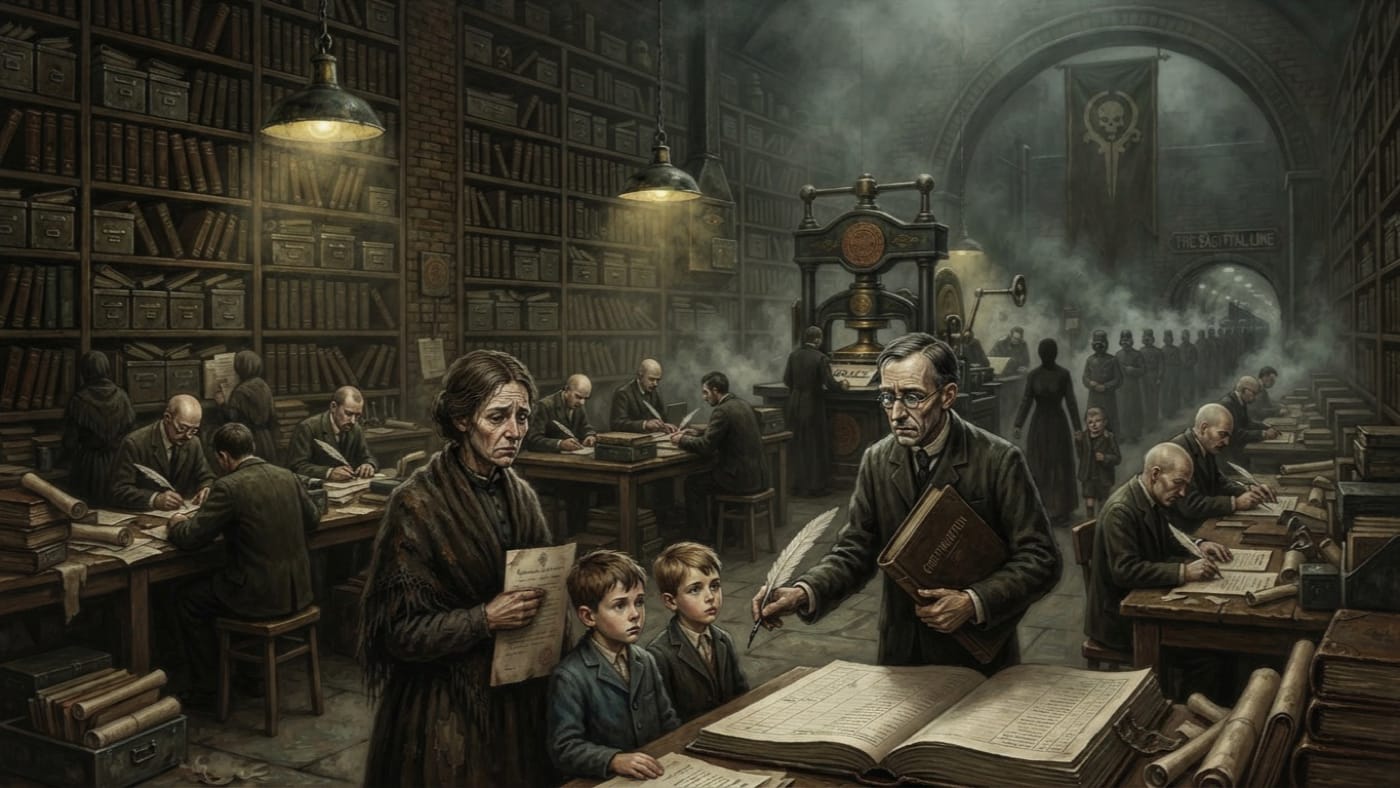
Continuations of the Original Grace
Grace is given once and collected forever
War's name for the Continental Levy renewals: the A.S. 110 emergency carried into successive generations, with sealed quotas and no promise of completion.
Codex Ref. XIII.1.54-002

Creed
The shortest border is the one behind the teeth
The Creed is the Synod's shortest border: a licensed mouth, a timed answer, a civic leash, and the little gate through which bread, obedience, and punishment pass.
Codex Ref. XIII.1.04-090
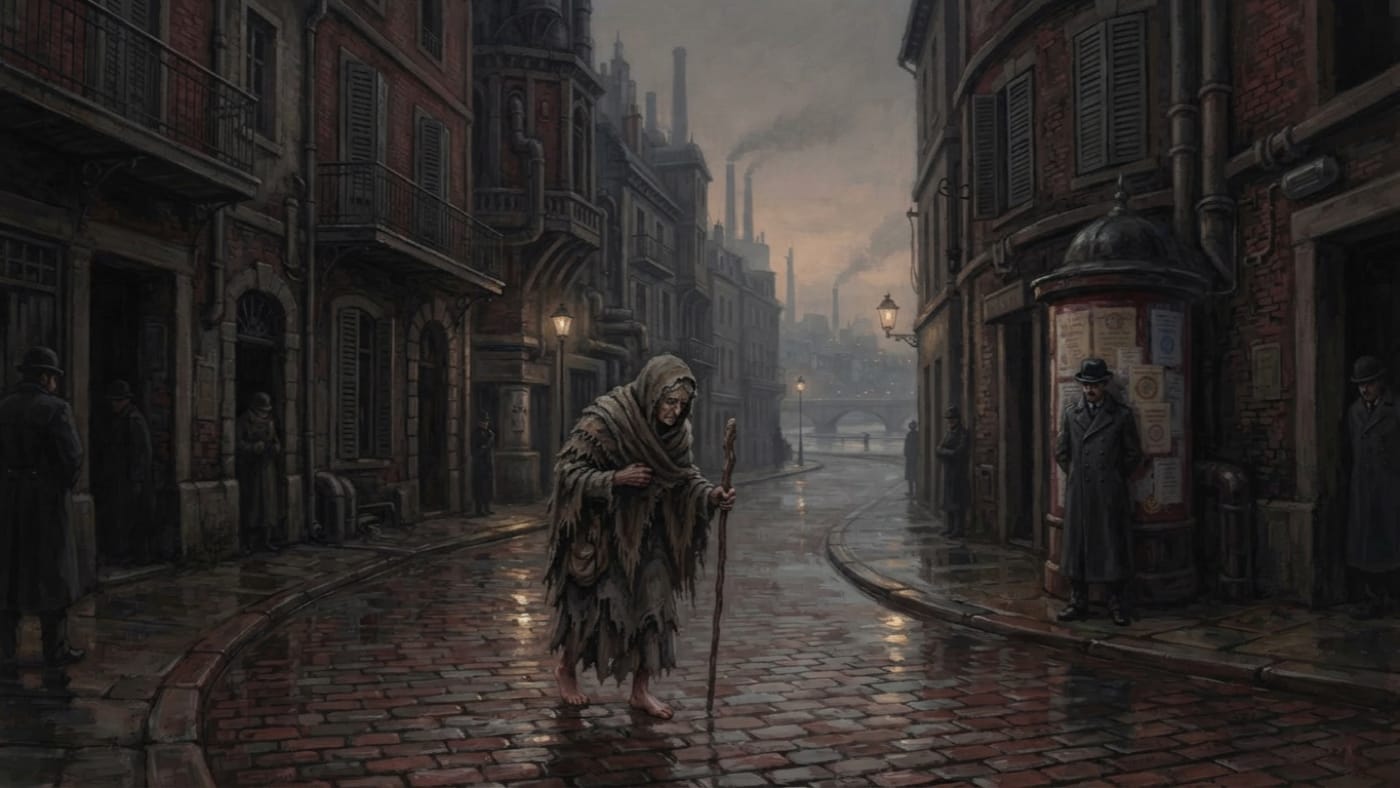
Crone of Patience
The woman who keeps walking through an unclosed file
Condemned as the Second so-called Virtue General, the Crone of Patience remains an unproven attribution: an old woman walks Toulouse while Shadows pays to watch.
Codex Ref. III.2.01-052
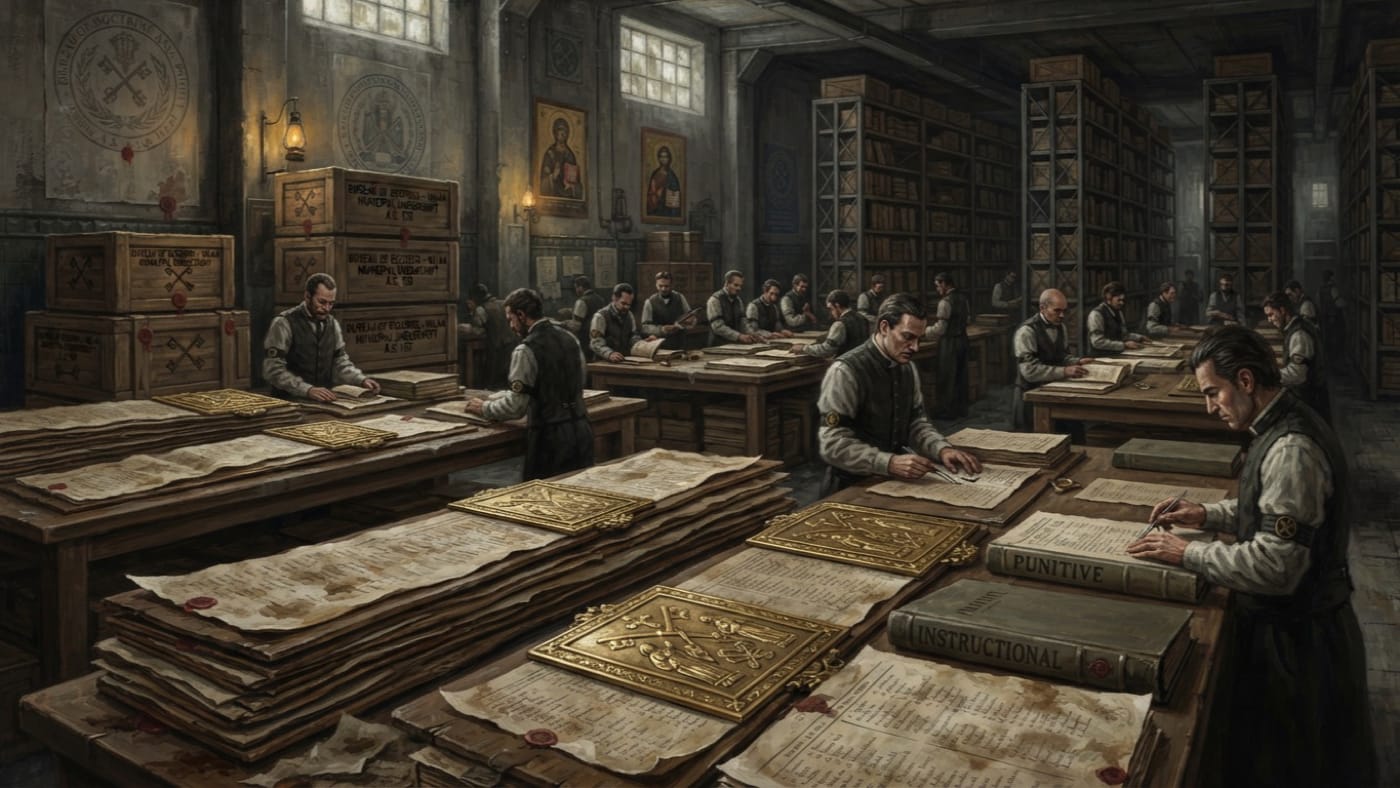
Crossed Keys Roll
Punishment finishes; the register continues
Recovered from twenty-seven soaked crates after the A.S. 150 Lombard revolt, the Crossed Keys Roll preserves names in punitive and instructional registers. Punishment finishes with a man; instruction pursues his grandchildren.
Codex Ref. IV.1.09-150
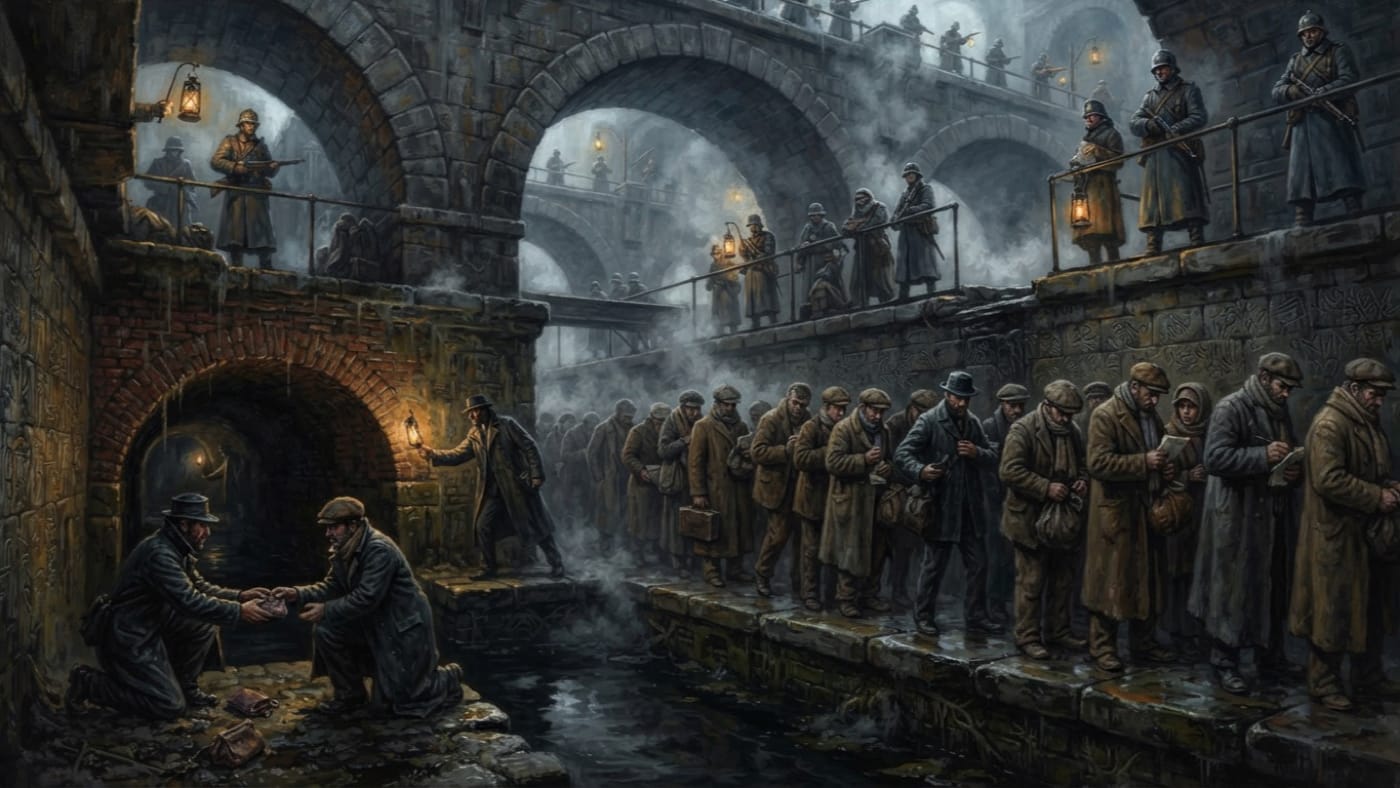
Culvert Choir
The arches can be passed; the name remains
Griefgate's unregistered smuggler network sells passage, borrowed grief and blank indulgence slips beneath the arches. Desperation sets the fee; the Ledger keeps the name.
Codex Ref. XI.5.03-002
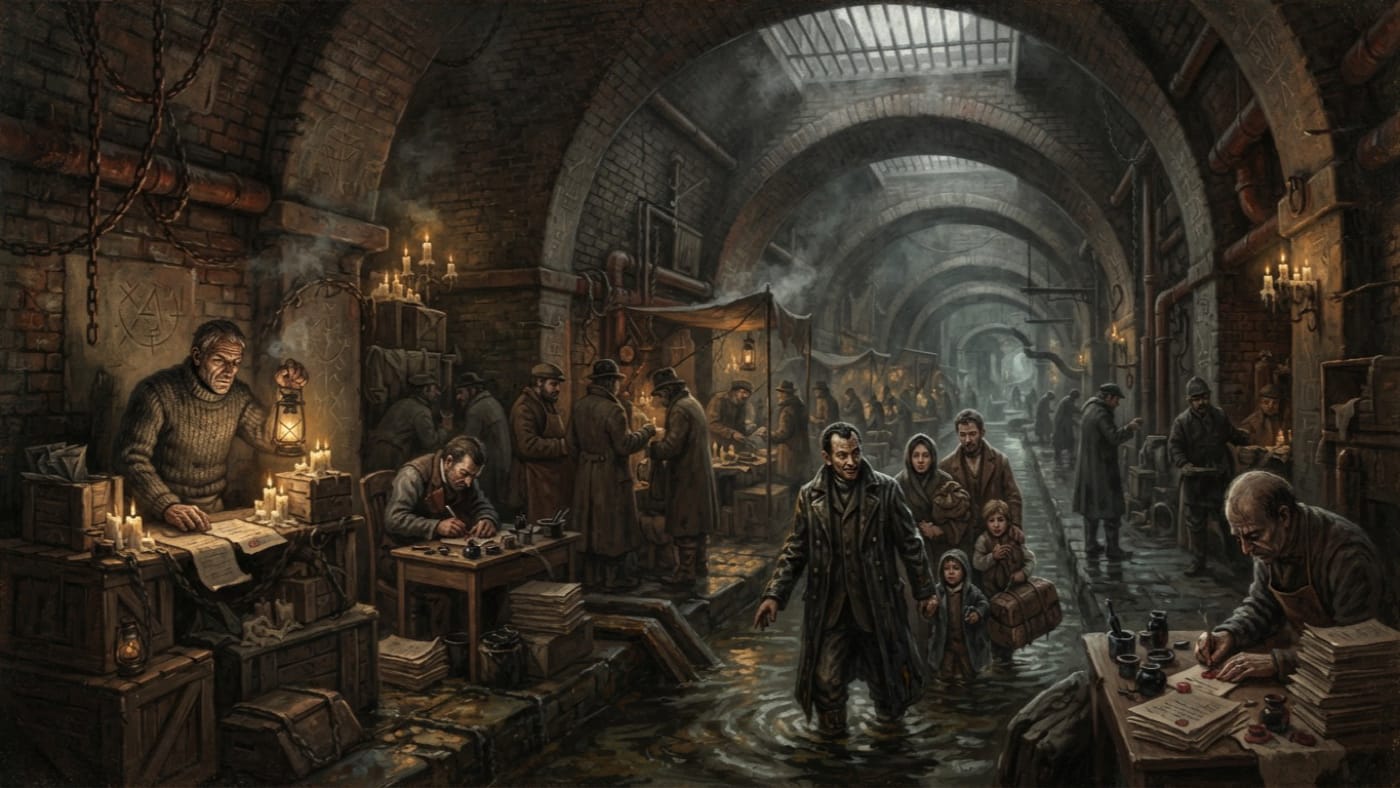
Culvert Market
Where passage is sold and the Ledger keeps your name
Griefgate's unchartered market beneath the arches trades in indulgence slips, forged papers, hired witnesses and unlawful passage. A body may evade the Gate; its name remains in the Ledger.
Codex Ref. II.1.04-002
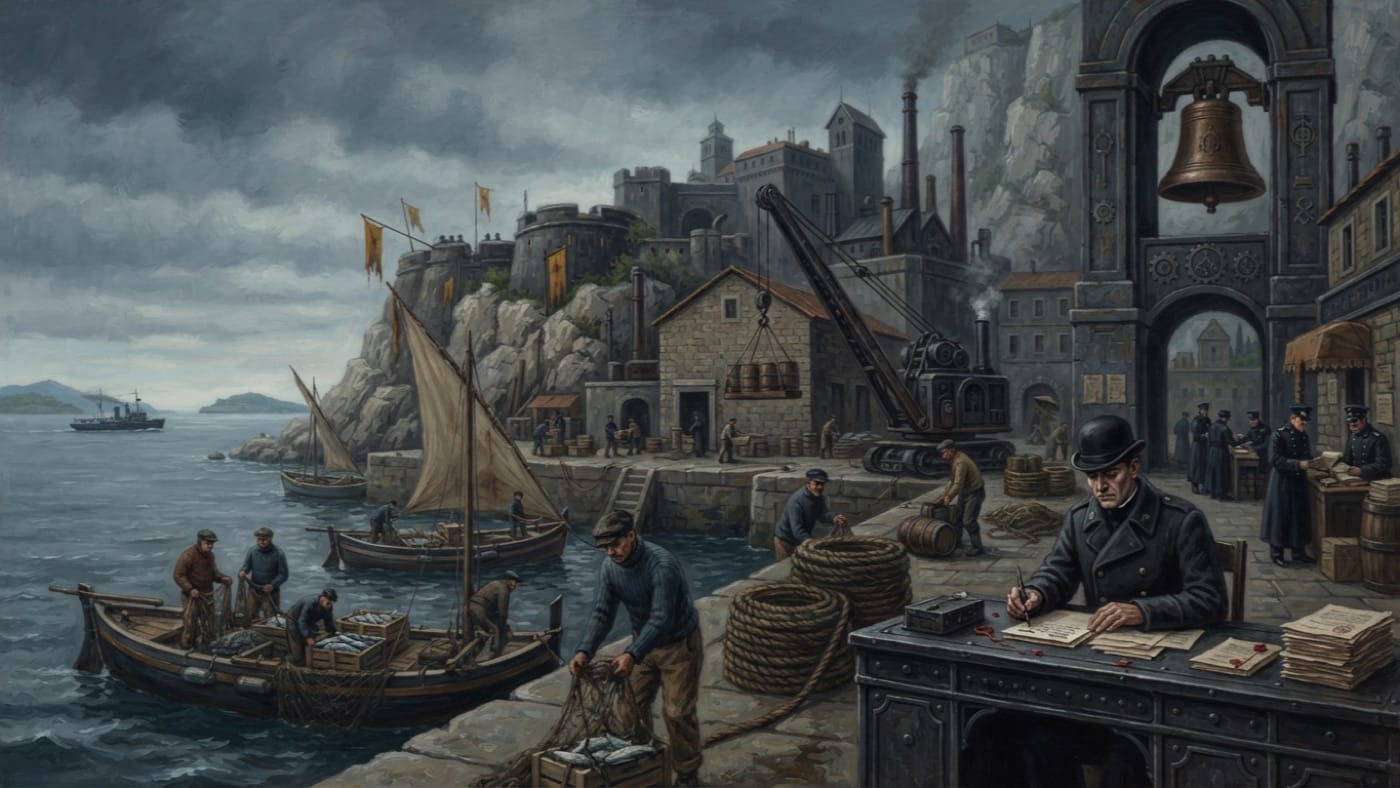
Dalmatian coast
Salt Fish, Sealed Passes, and a Tithe of Sons
The Dalmatian coast feeds the southern Line with salt fish, harbour labour, and fishermen's sons. The boats return to the quay; the sons answer to Strasbourg.
Codex Ref. II.3.07-201
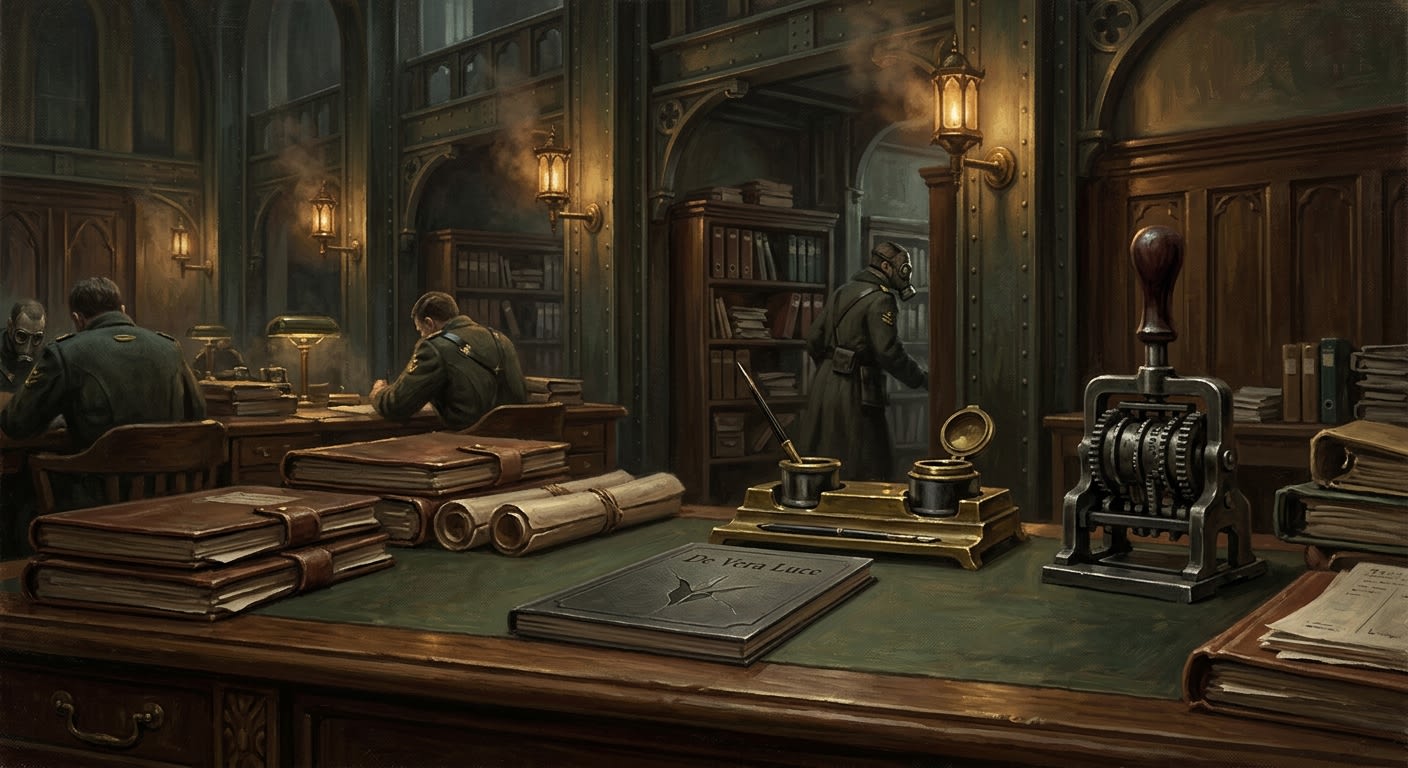
De Vera Luce
The lamp without altar becomes a torch in a library
The Amsterdam Academy's founding pamphlet made A.S. 0 a wound, not a birthday: thirty-two leaves of clean prose, humane poison, and continental ruin.
Codex Ref. I.1.04-001
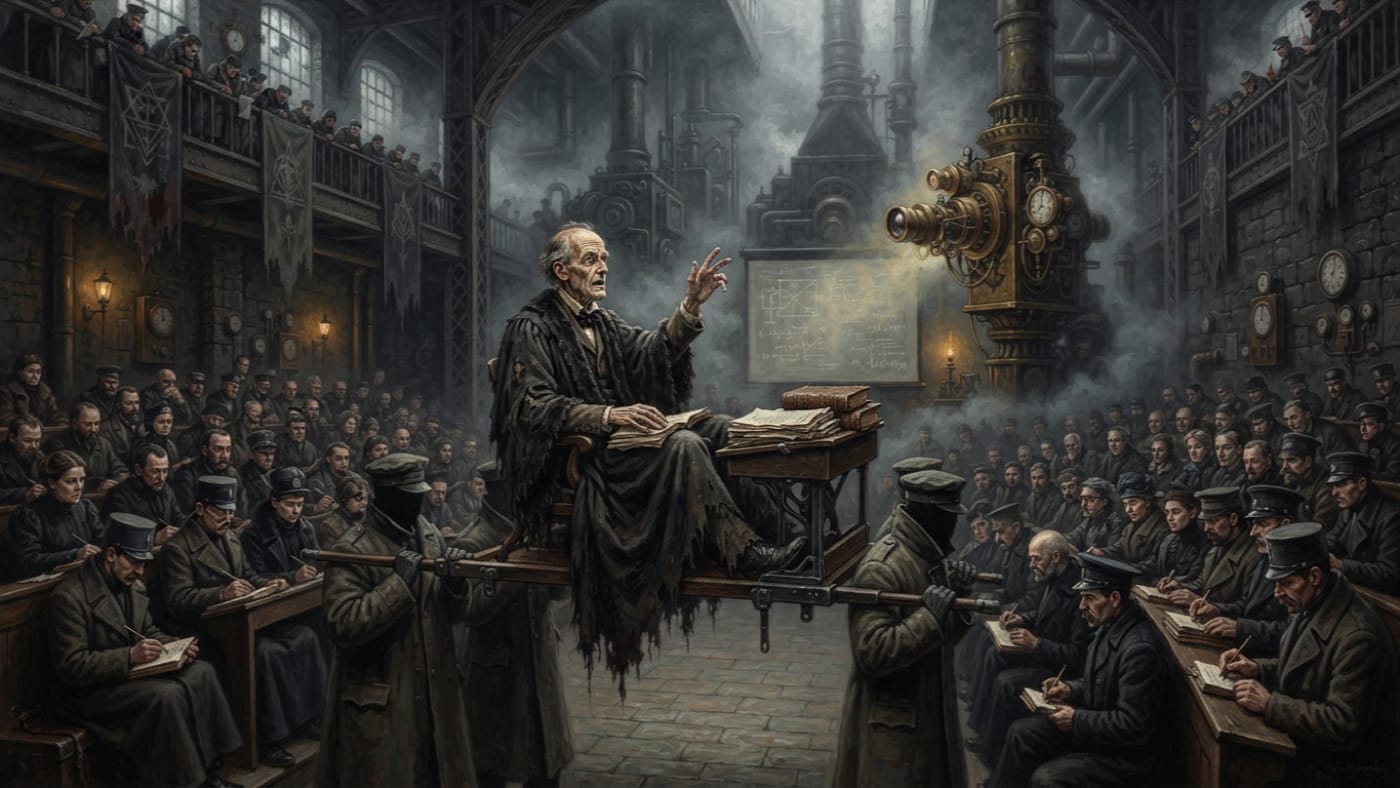
Dean Albrecht Moser
The signature survived; so, inconveniently, did the signatory
Dean Albrecht Moser signed the Concordats of Ulm in 1655 and reached Amsterdam's founding congress at seventy-nine, carried on a litter and still lecturing. His signature outlived his bones.
Codex Ref. III.2.01-850
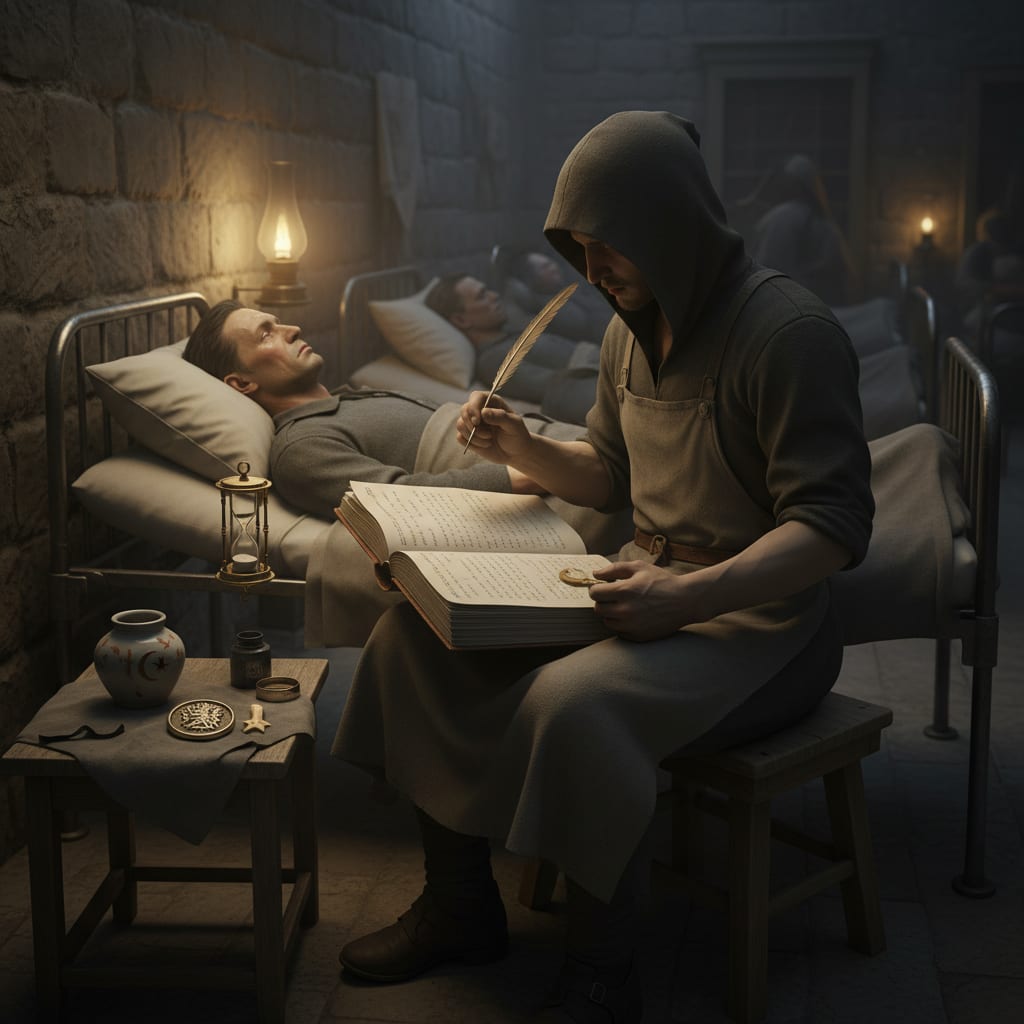
Deathbed Confession Harvester
The quill outlasts the patient; the Record outlasts both
Two thousand four hundred scribes posted at the bedsides of the dying, ensuring no death in Synod jurisdiction passes unfiled. The Record does not grieve. The Record does not wait. The Record simply continues.
Codex Ref. XII.12.01-001
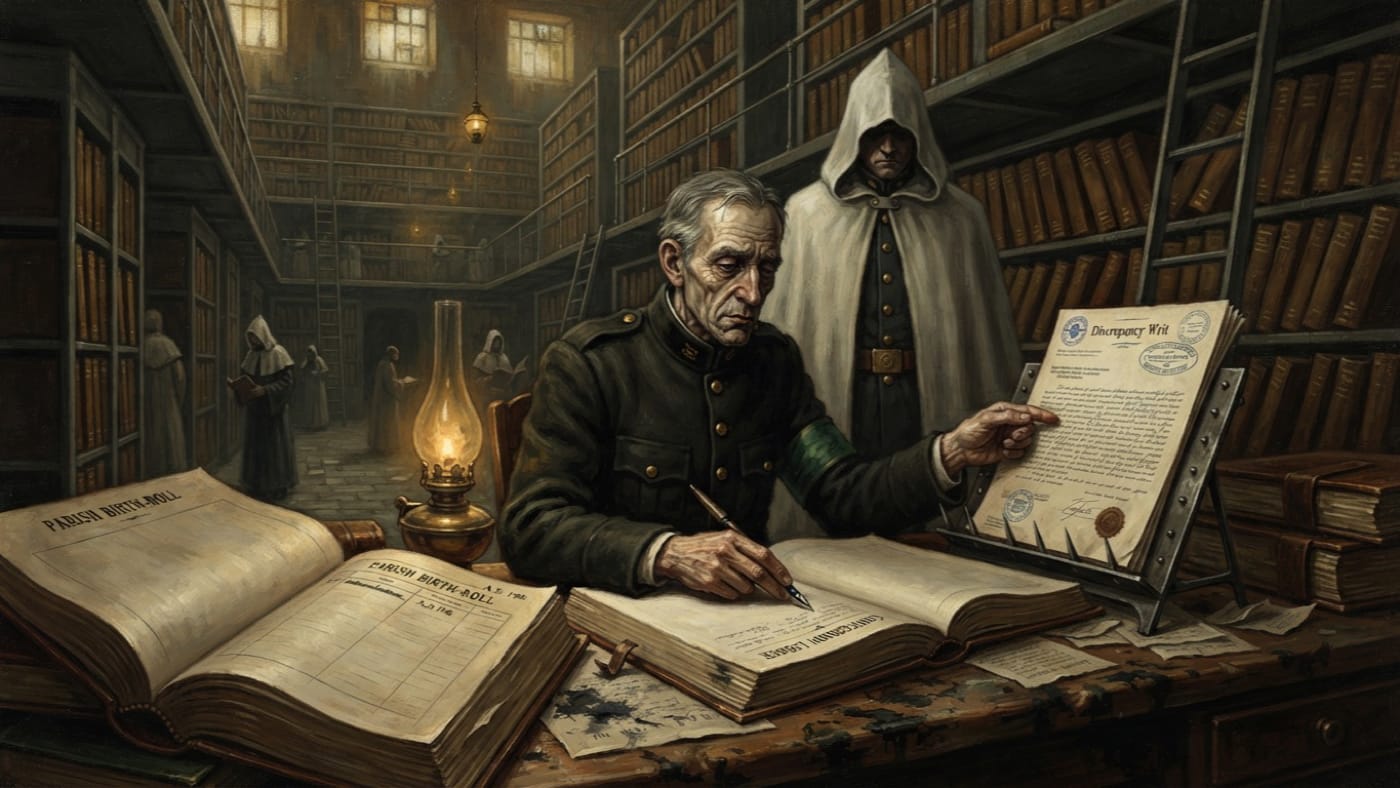
Discrepancy Writ
A name at the font. No voice at the screen.
A son stands on the birth-roll and vanishes from the confession ledger. Conscription files the writ and informs Purity. The books disagree; the household acquires a second Bureau's attention.
Codex Ref. XIII.1.83-201
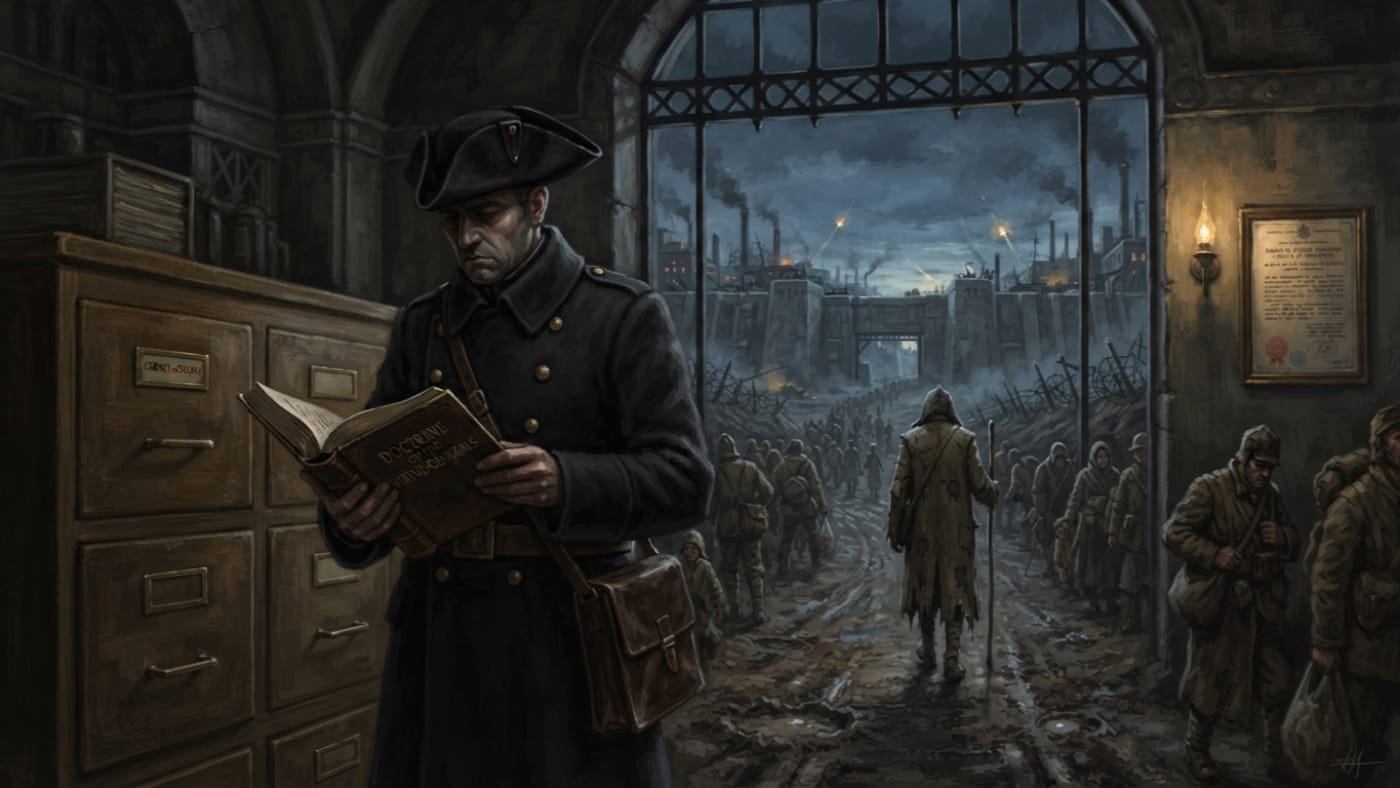
Doctrine of the Virtue-Generals
The witness reports; the Bureau names
The faithful may report a stranger on the road. They may not appoint him Heaven's general. Standing Order 44-D condemns the belief and retains the evidence.
Codex Ref. IX.3.44-002
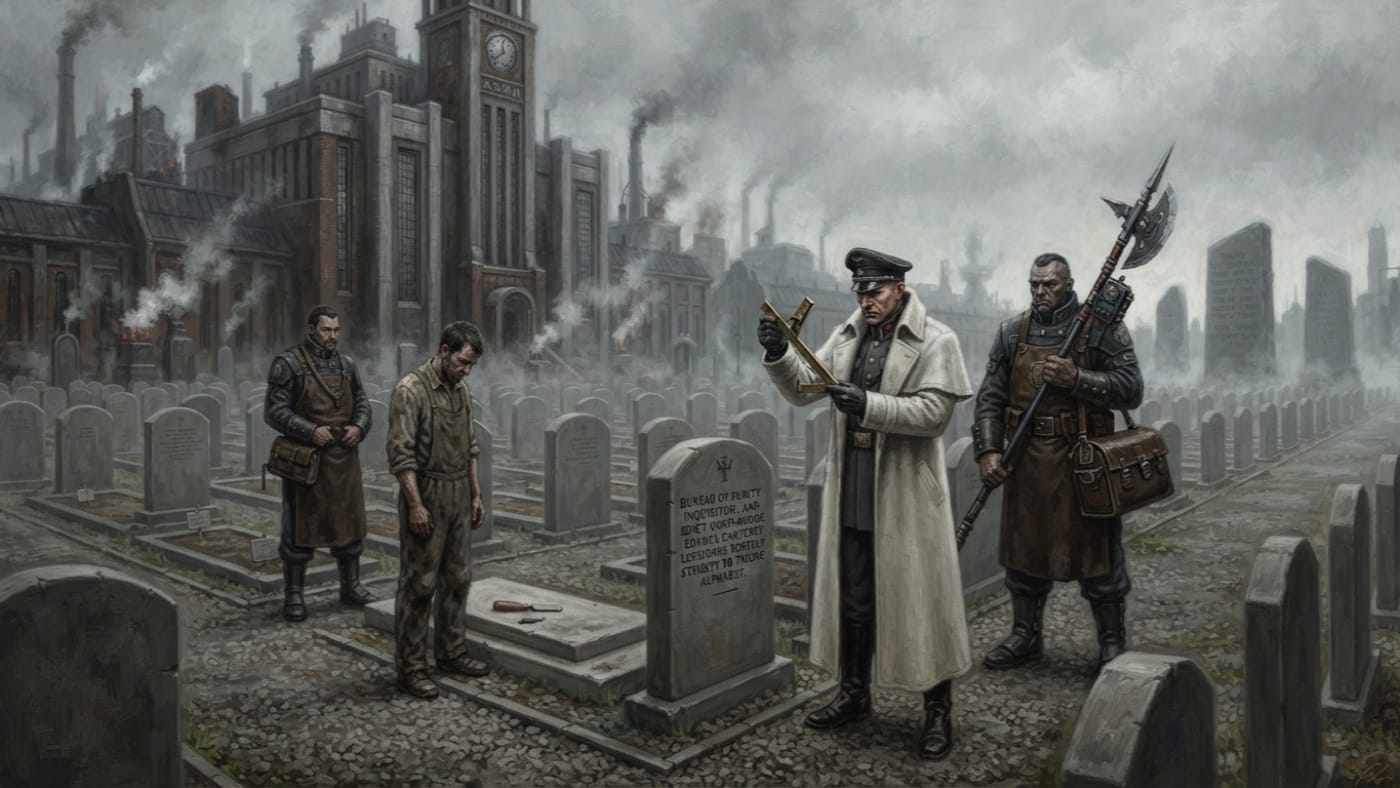
Edict of Graphic Uniformity
Twenty-three permitted letters, and no exemption for the dead
Della Torre's A.S. 178 edict made the Triune Alphabet the Synod's only recognised script, licensing literacy, prescribing spelling and requiring approval for gravestones. The dead may rest; their names must pass inspection.
Codex Ref. XIII.1.03-002
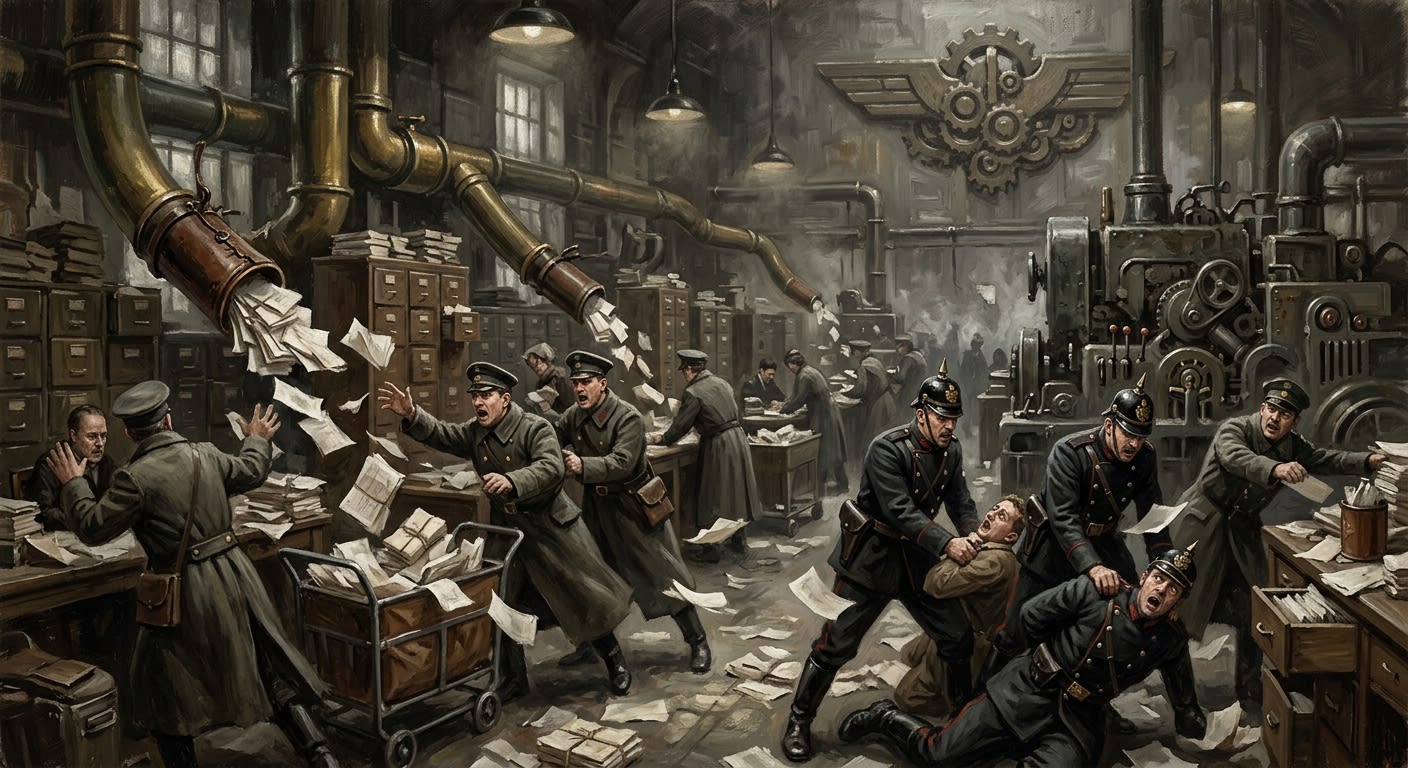
False Packet Panic
When forged wax taught four hundred citizens the speed of obedience
The A.S. 134 False Packet Panic sent forged blacklist bundles through three Rhineland cities, making false paper produce true arrests, riots, and reforms.
Codex Ref. VII.8.10-042
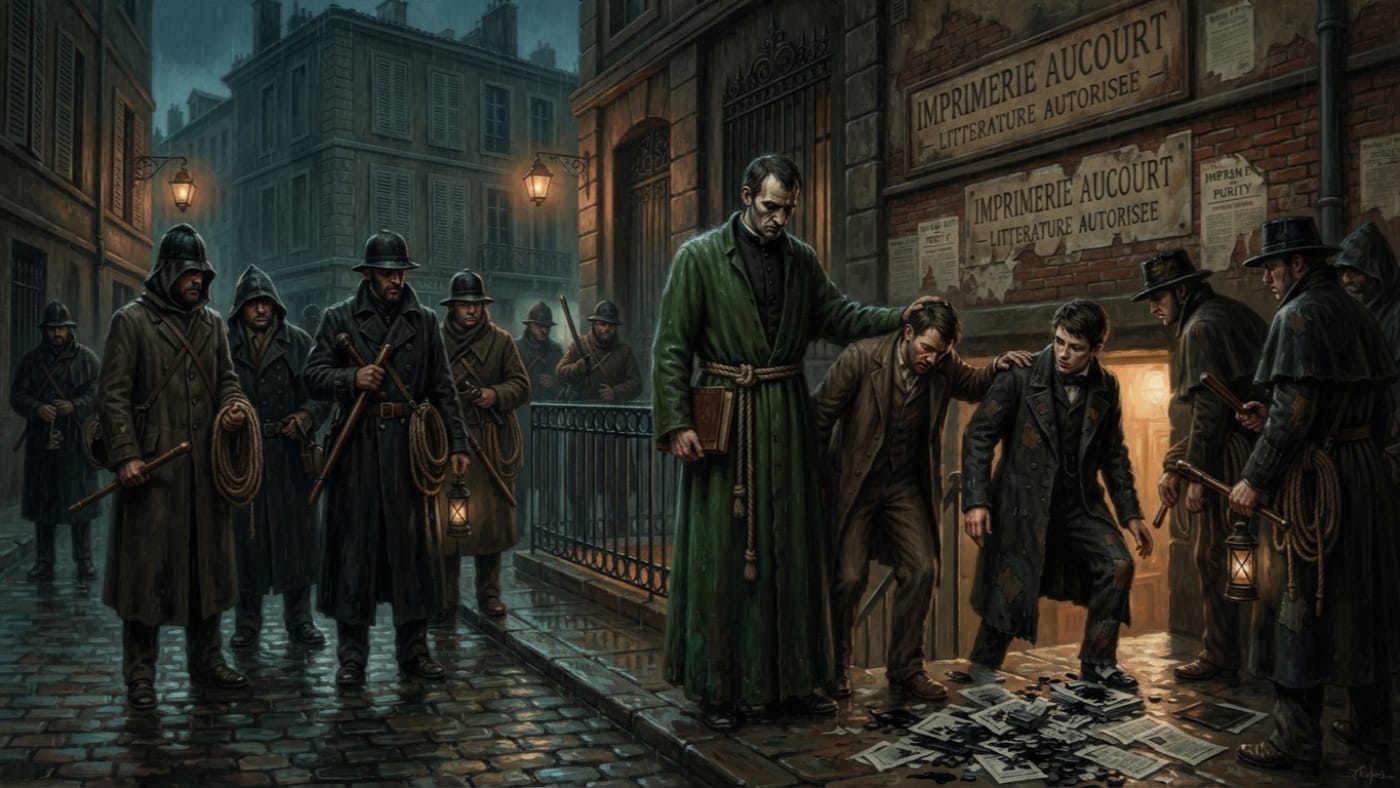
Father Ostel of Narbonne
The priest remembered by his robe
Father Ostel served in the A.S. 93 Toulouse Hunts in a green robe of claimed liturgical inheritance. Drax reports the sketches suppressed; the rest of the man escaped the file.
Codex Ref. III.2.01-093
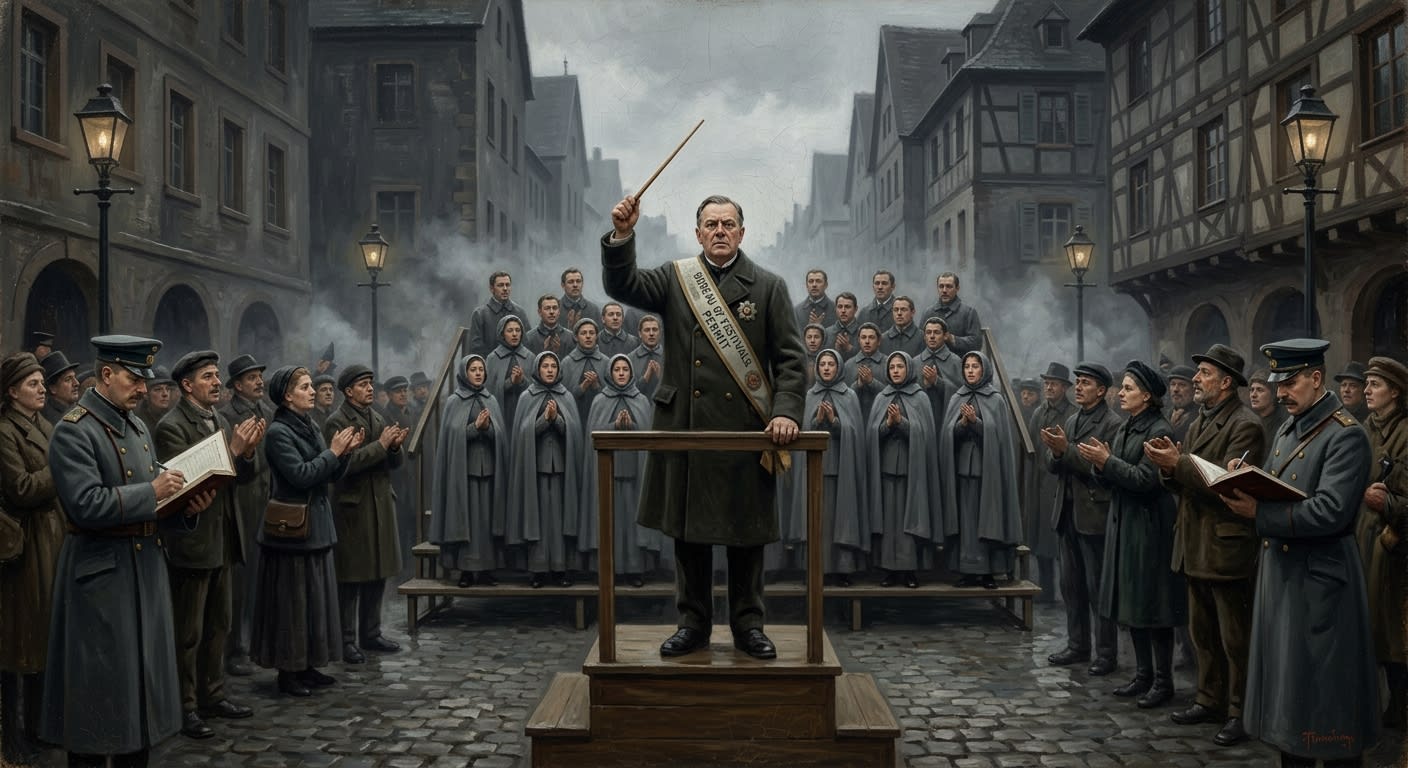
Festival Chorus-Master
The Synod's licensed conductor of controlled emotion — half-cleric, half-stagecraft tactician, certified to manufacture joy by those incapable of permitting it
The Bureau of Festivals' licensed joy engineer — eleven ranks, one Conservatory, forty-one years of unresolved investigations, and a career that ends when laughter becomes indistinguishable from threat.
Codex Ref. XII.17.01-001

Field Agent Corren
A title, a name and a report; the career is unrecorded
The record gives Corren a Purity title and an A.S. 198 report citation. It gives the merchant eleven years of false classification and the agent no recorded fate.
Codex Ref. III.2.01-198
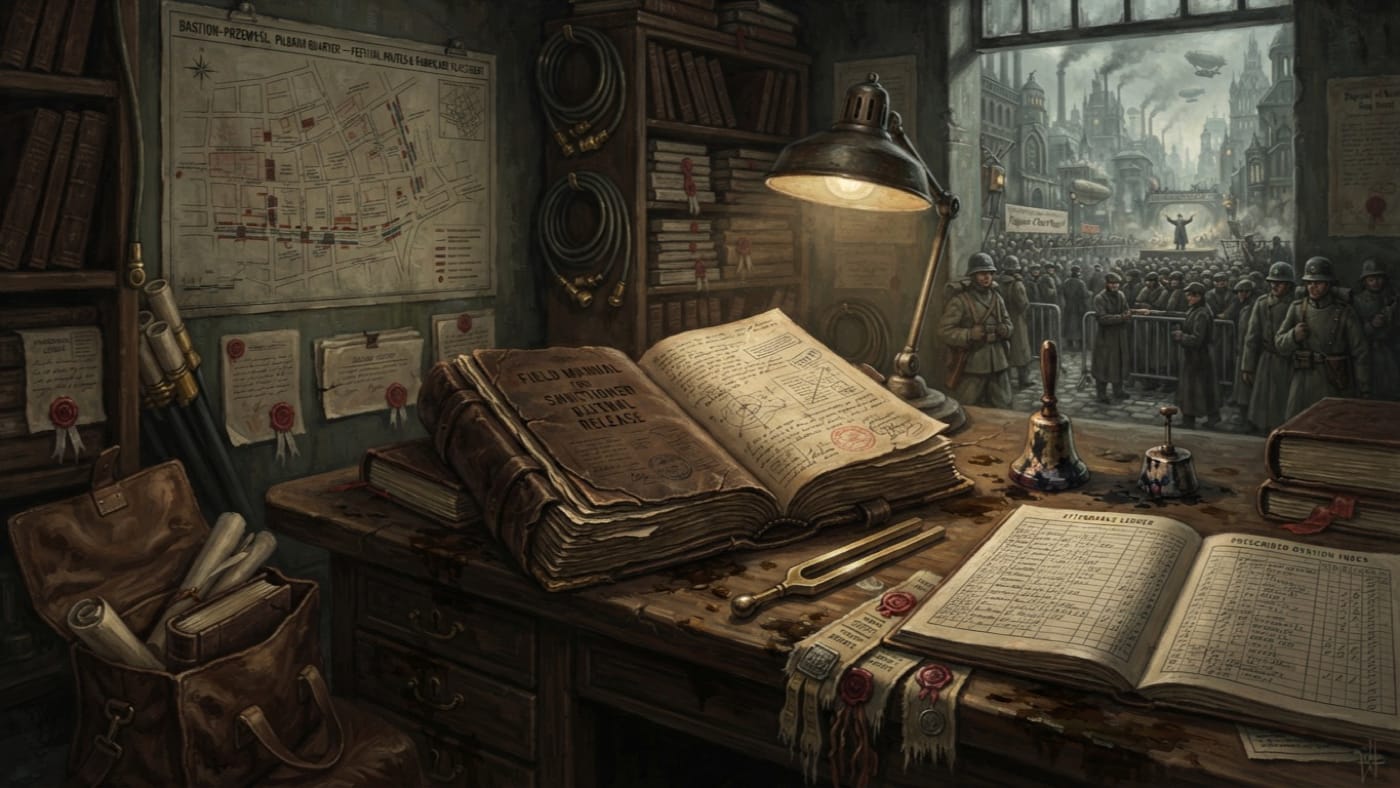
Field Manual for Sanctioned Emotional Release
The book that permits relief and forbids the crowd from providing its own
Eighteen revisions teach the Chorus-Master how to grant laughter, count applause and stop a crowd before it discovers that joy can proceed without permission.
Codex Ref. XIII.1.67-201
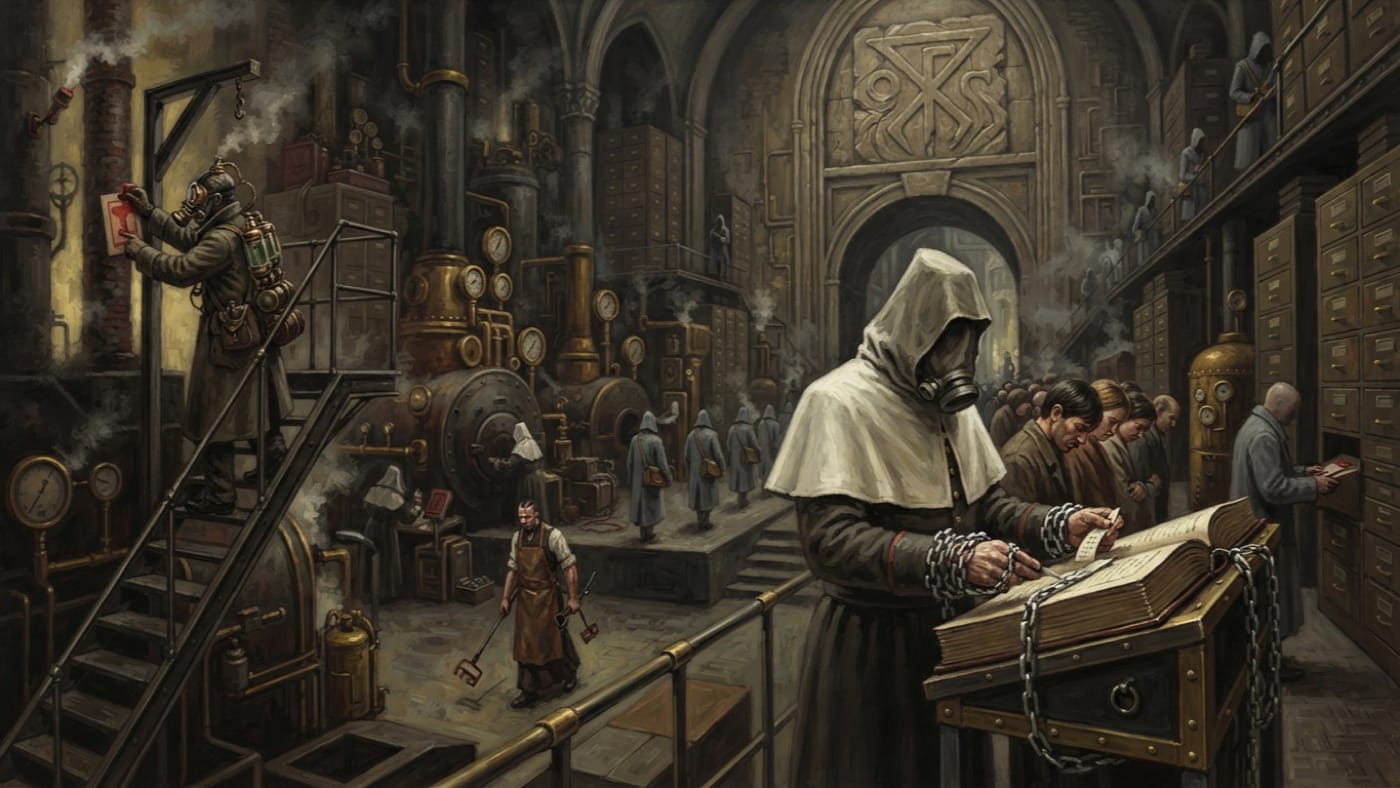
Fifth Seal of Faith
The prohibition arrives before the definition
The Fifth Seal governs Purity: forbidden speech, indexed forms, and the Inquisition. Strasbourg constituted it in A.S. 90; the definition of impurity remains pending while enforcement proceeds.
Codex Ref. XIII.1.05-005
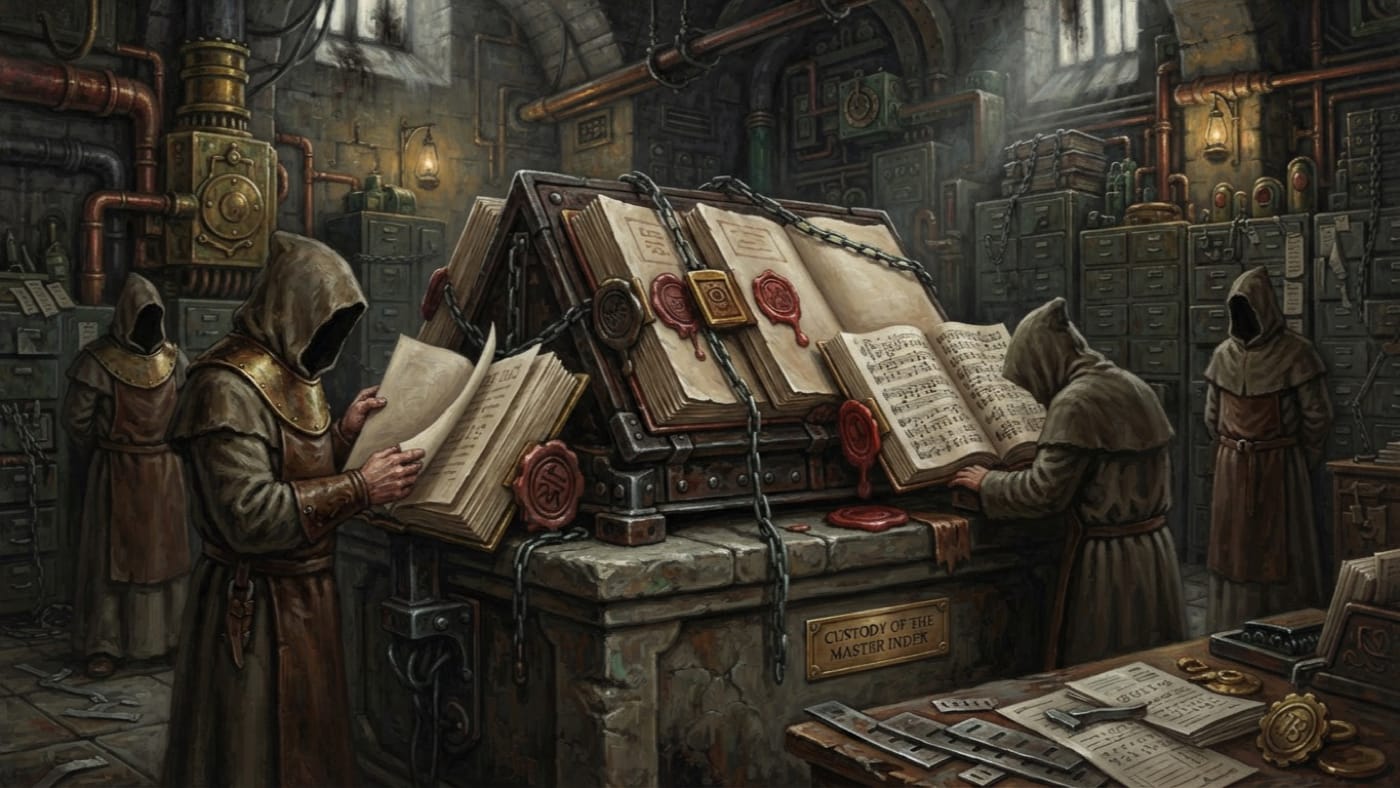
Five Registers of the Index Damnatus
One chained compendium, five kinds of condemnation
Five divisions of one chained compendium: Texts, Names, Sounds, Forms, and Lineages. Each has its own Purity quorum and seal; the faithful must obey what they may not read.
Codex Ref. XIII.1.48-001
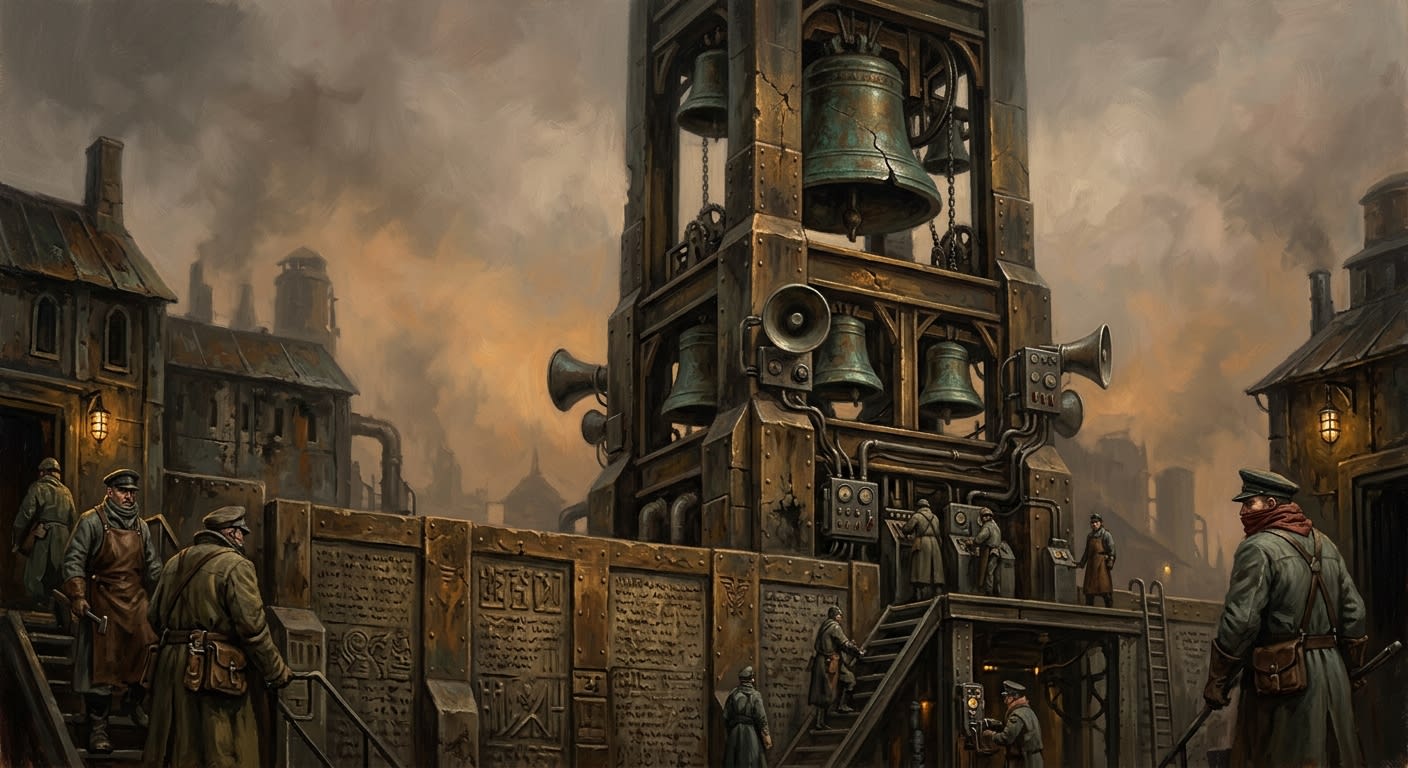
Fog Bell Tower
The cracked bronze throat that teaches Calais to survive fog
The Fog Bell Tower of Calais is the cracked bronze throat above the Script Wall: fog alarm, reading summons, Gunline relay, and Amber hazard.
Codex Ref. II.4.09-072
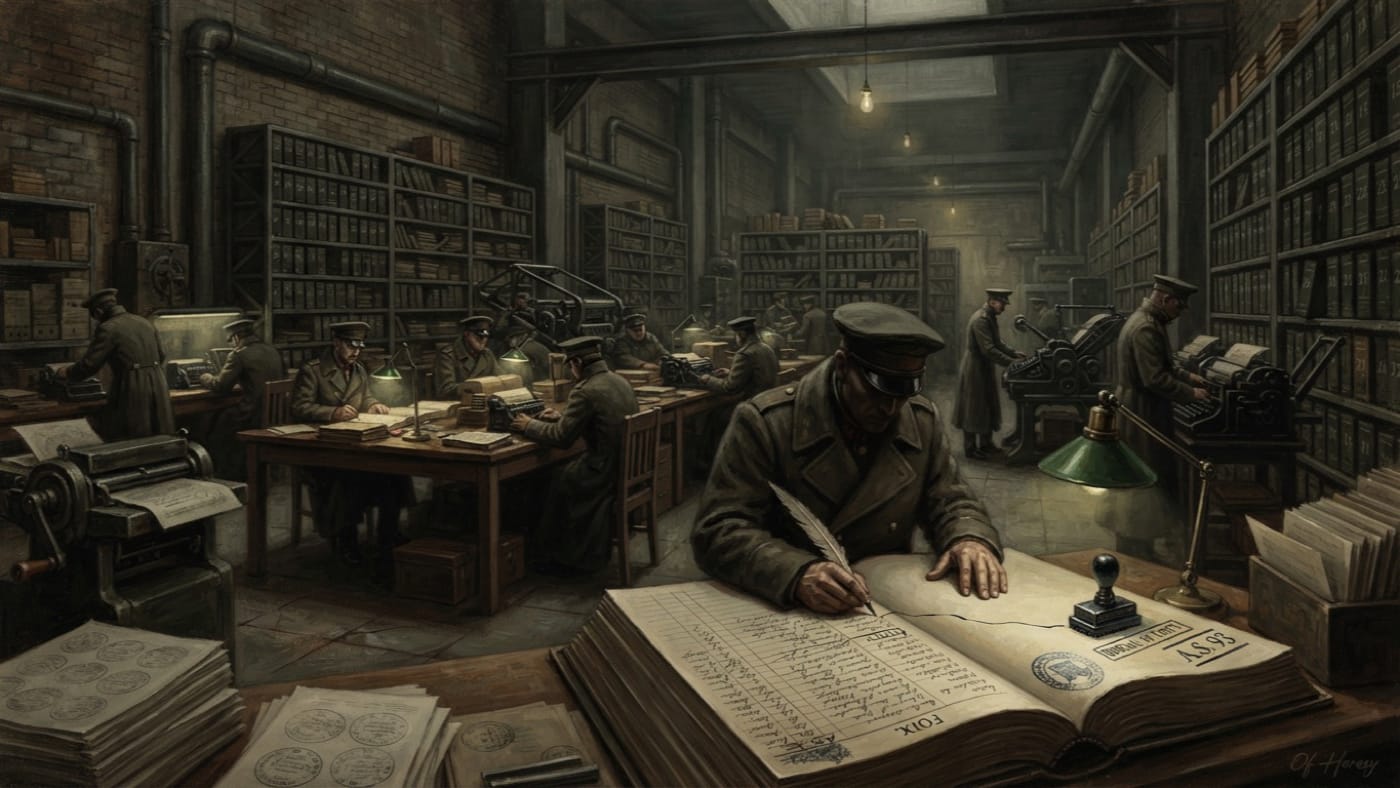
Foix
Named, included, not proved
Foix entered Purity's Toulouse file in A.S. 93 because Carcassonne named it. No local offence is cited. A town requires no proven guilt to become a permanent entry.
Codex Ref. II.1.09-010
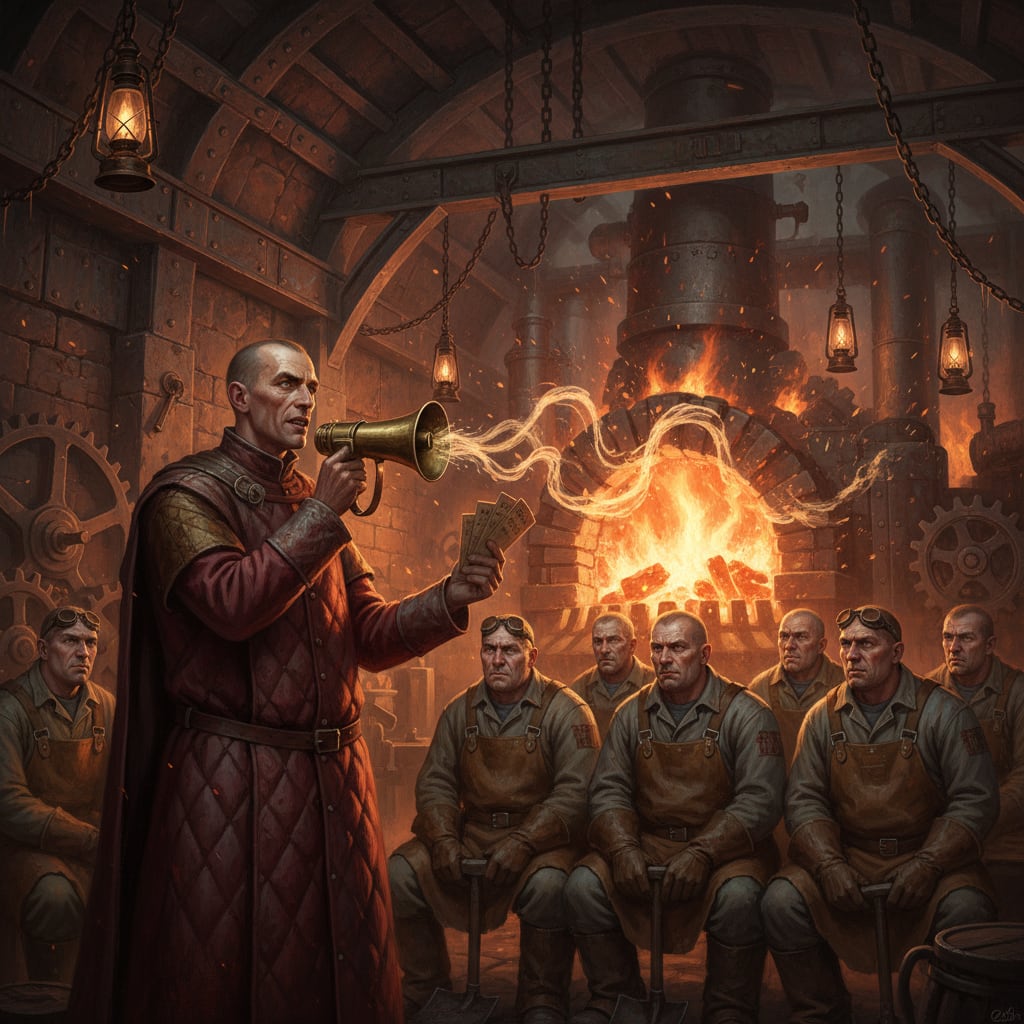
Furnace Catechist
On those who preach the Chain of Cause to men who know perfectly well why the furnace roars — and why neither party will say so aloud.
The Bureau of Doctrine's industrial clergy — stationed in every bastion powerhouse to preach that fire burns by divine permission rather than chemistry. Three thousand four hundred Catechists, two factions, and one question no one will authorise an answer to.
Codex Ref. XII.18.01-001
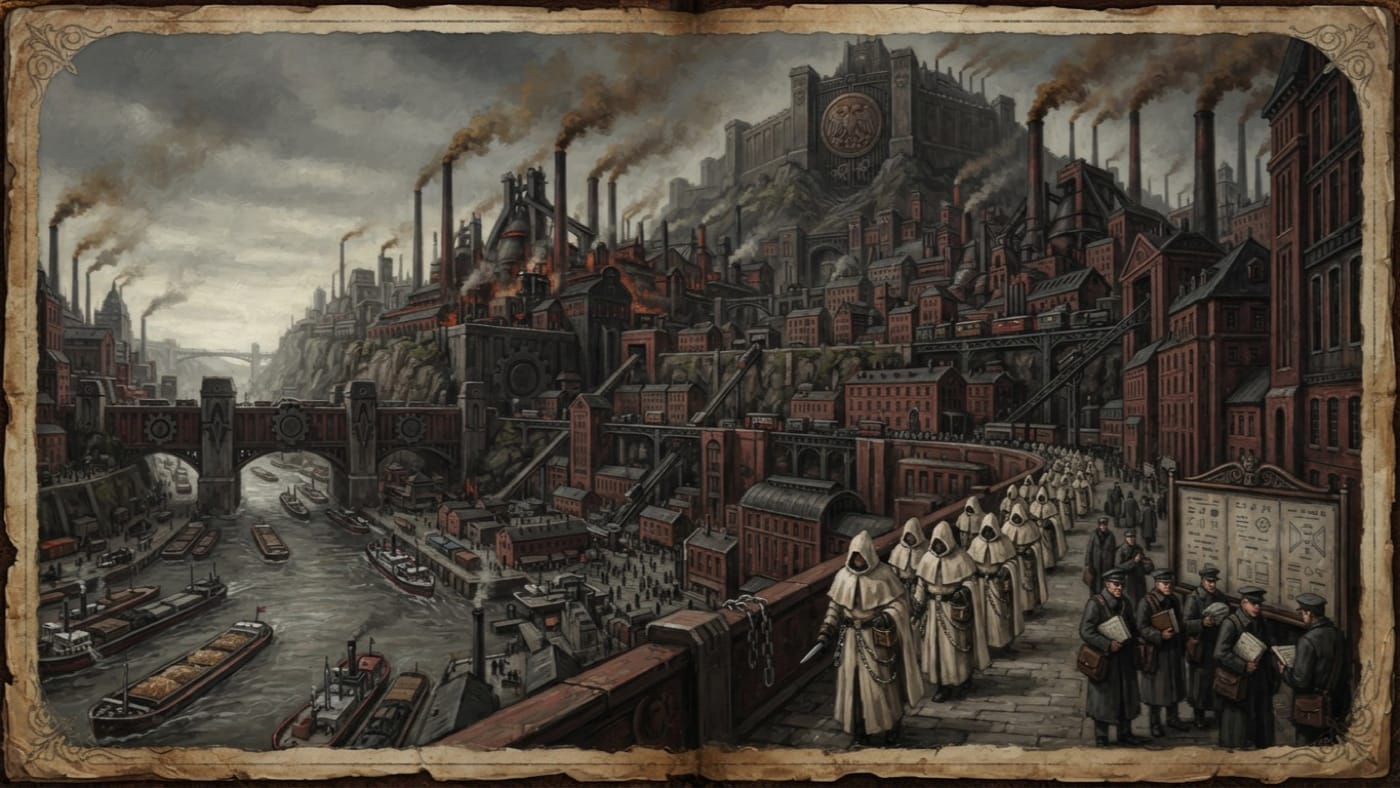
Germania
The Synod's most accurately spelled region
Germania is the Synod's procuratorial heartland: rivers taxed, furnaces singing, presses corrected, and schools teaching words their grandparents have forgotten to miss.
Codex Ref. II.6.02-201
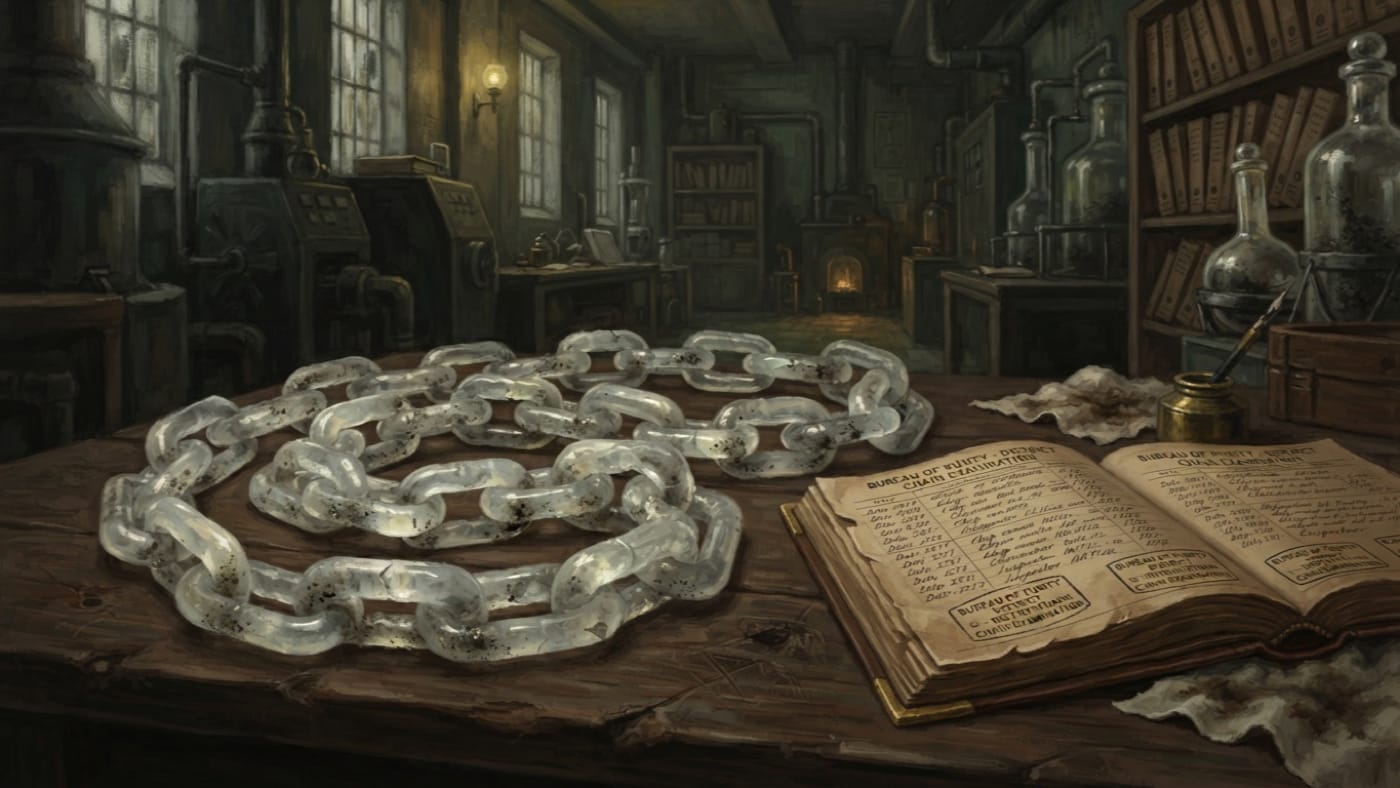
Glass Chain of the White-Mantled Inquisitors
The binder is bound, and every chip is entered in the log
Issued glass links bind the Bureau of Purity's Inquisitors to the lexicon they enforce. Every chip is logged; every click stills a room. When the glass sings, the audit ceases to be routine.
Codex Ref. IV.49.01-001
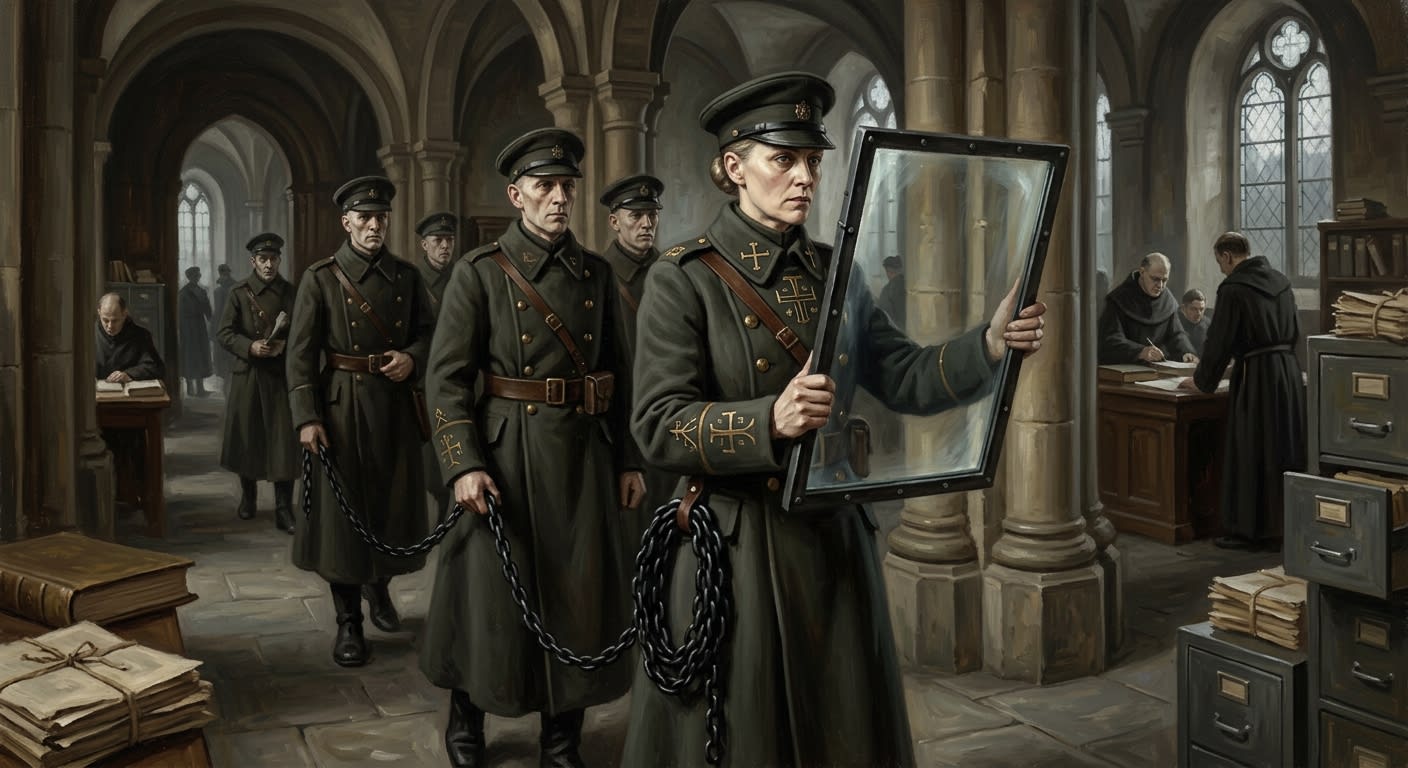
Glass-Canons
The officer enters after the chain begins to sing
Bureau of Purity specialists for singing phrases and chain-response events, armed with clear witness-glass and the black chain no public decree admits.
Codex Ref. XII.49.02-001

Glass-Listener
The Synod has found a use for ruined ears
A Pillar-Keeper whose disciplined glass-speech detects cracks, sealed names and counterfeit pins. The Synod calls the affliction folklore, sends the worker into sealed yards and pays the old wage.
Codex Ref. XII.30.04-001
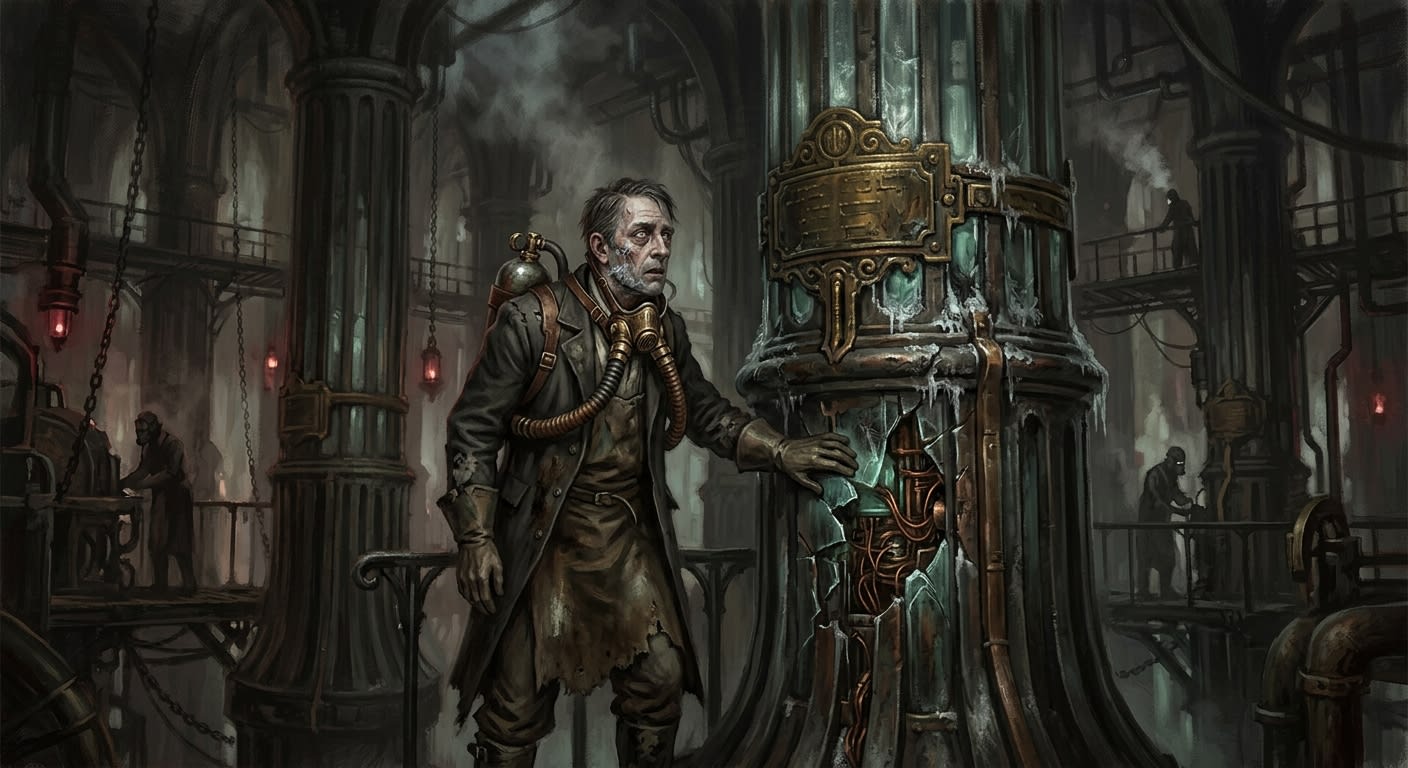
Glass-Speech
The city enters through the ear and leaves as obedience
Occupational condition of long-service Pillar-Keepers, beginning in tone, advancing into condemned names, and ending when the city speaks through the worker it has damaged.
Codex Ref. XIII.1.43-001
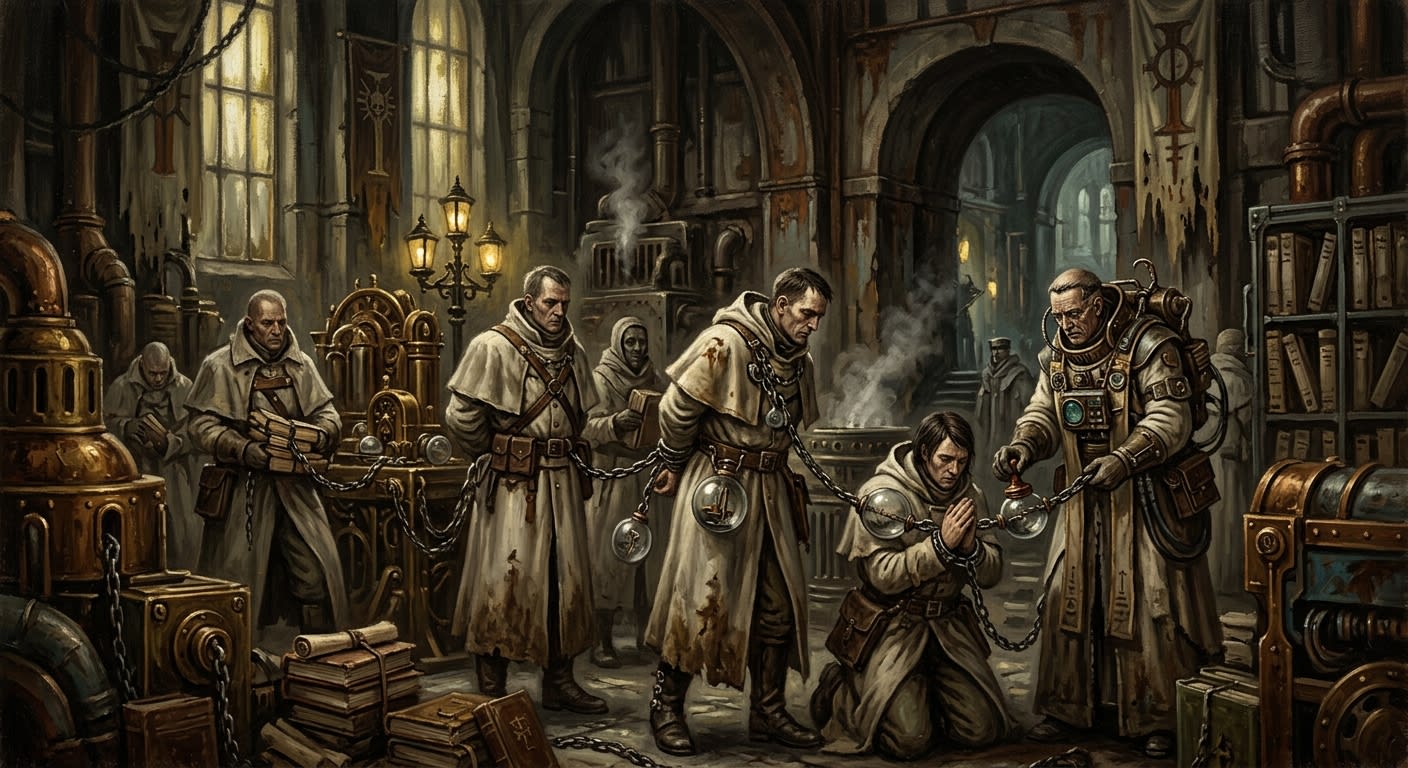
Glasschain Reform
Bind the binder, then listen when the glass objects
The Purity reform attributed to Chainmaster Veyl, binding White-Mantled Inquisitors to audible glass after seized words became contraband currency.
Codex Ref. XIII.1.87-201
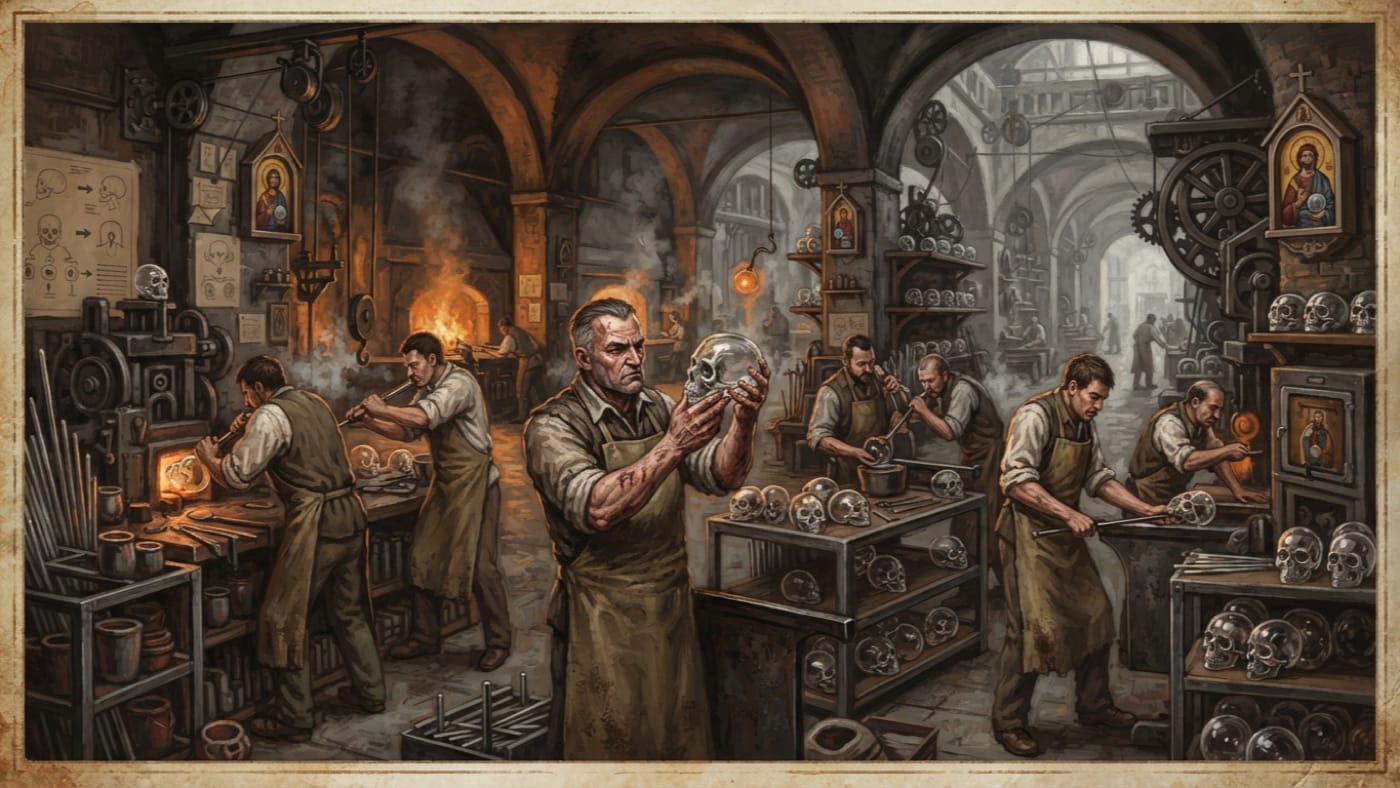
Glasswright
They cast the vessel; others supply the sentence
Licensed glasswrights cast the hollow skulls through which the Synod displays its sentences. Saint Velek blesses the furnace; Purity asks who supplied the glass when a name begins to sing.
Codex Ref. XII.30.02-001

Gothenburg
Two villages, fourteen gifts, and a refutation withdrawn
Gothenburg: one city reached, two fishing villages surveyed, fourteen gifts of dried herring accepted. The Northern Survey of A.S. 190 reported no evidence of heresy; the Bureau mistook a visit for a refutation.
Codex Ref. II.8.01-190
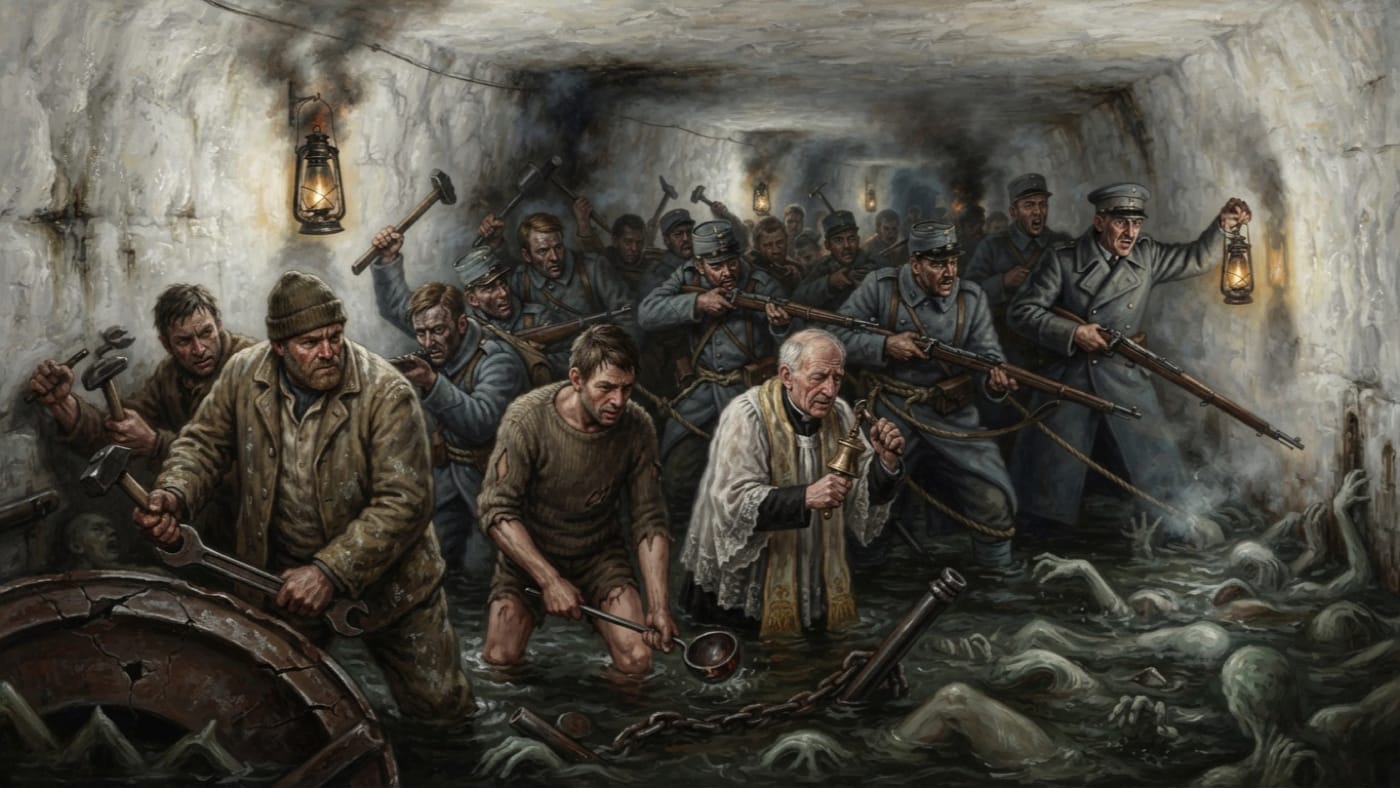
Great Breach
Eleven hours in the chalk, and the sea still listening
In A.S. 71, the sea forced Calais's caves and drowned hundreds. An improvised bell-choir drove it back; the chalk then began keeping names.
Codex Ref. VII.8.10-071
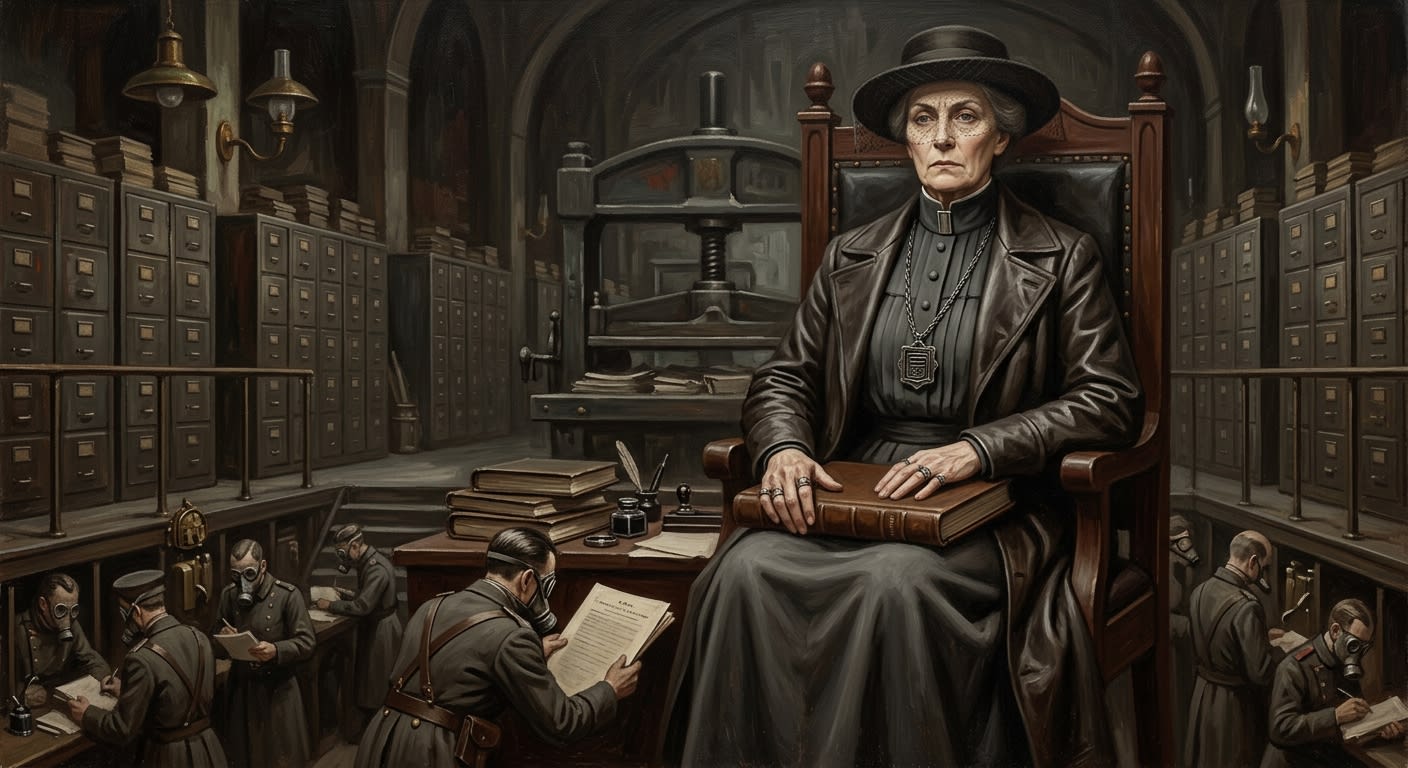
Hierarch of Purity
The silence before confession has a chair and wears white
The unnamed current holder of the Fifth Seal commands Purity, the Inquisition, and the administrative terror by which impurity becomes whatever her silence permits.
Codex Ref. III.2.01-072
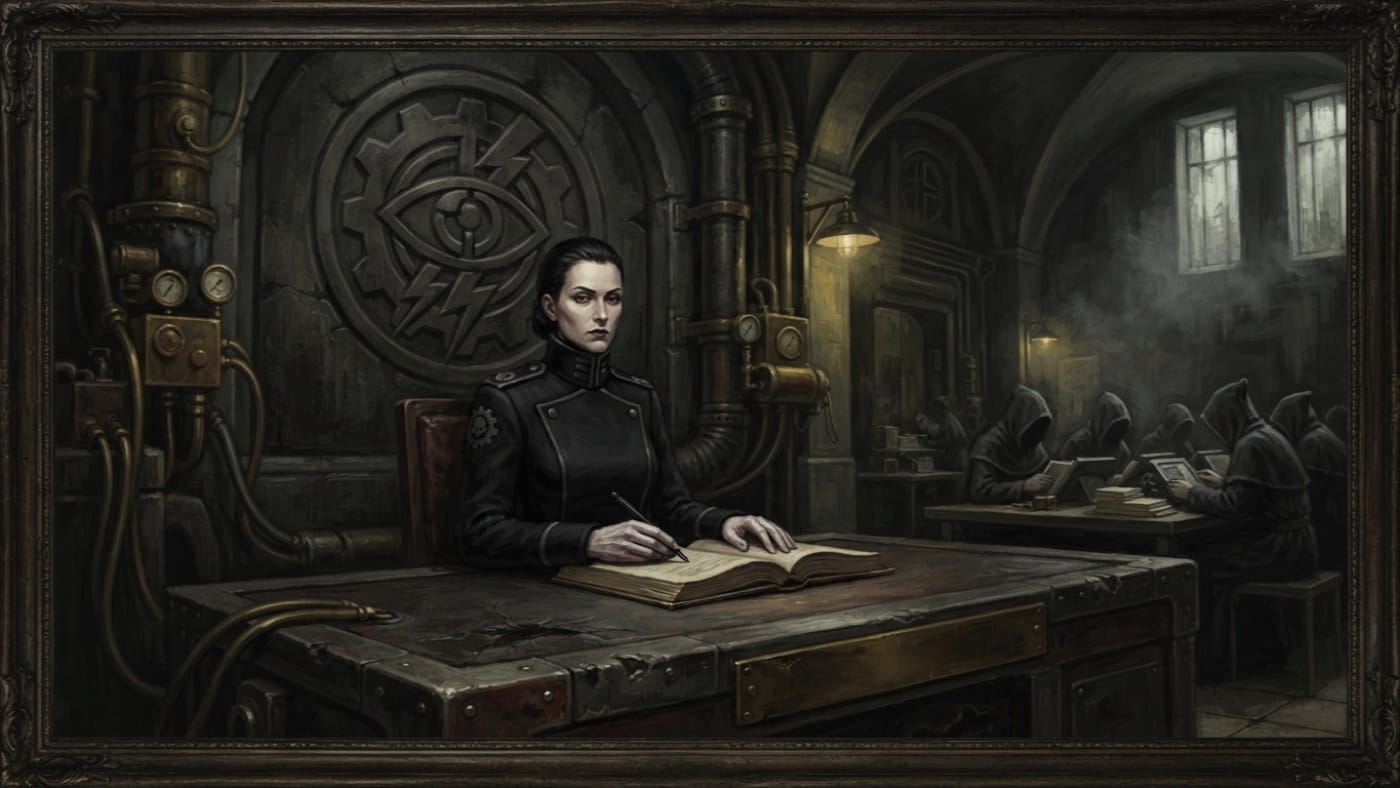
High Interrogatrix
A gentle voice with terrible hands, and a reform the Ledger cannot explain
Ysabeau leads the Bureau of Purity beneath the Hierarch's seal. Her reform reportedly cut the confession rate by forty per cent. Her personal dossier remains sealed; the Auditors still count pauses.
Codex Ref. III.2.01-201
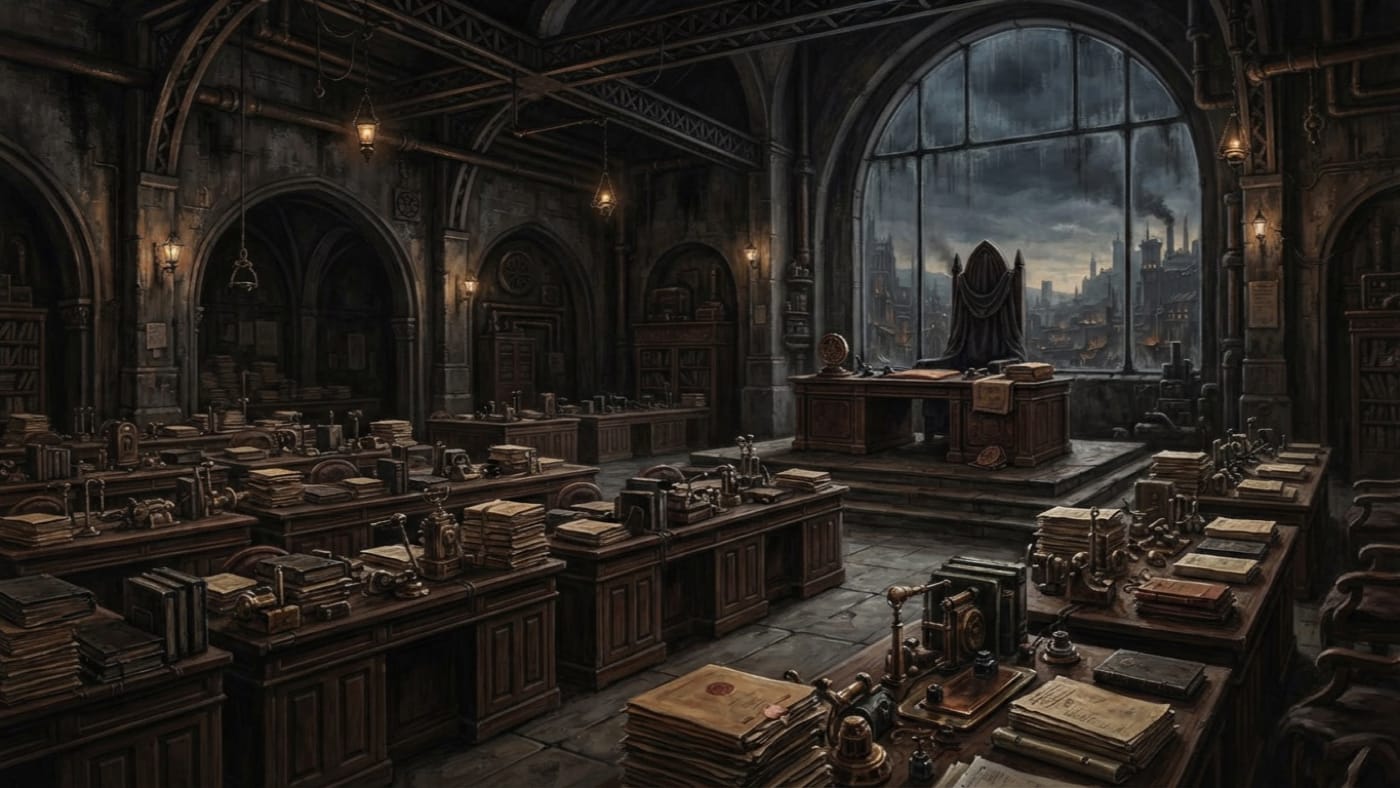
Iberian Prefect's office
One assessment, one resignation, one sealed file
The office that delivered the Bureau's A.S. 178 assessment of the alleged Flame of Charity. Its unnamed Prefect resigned six months later; Shadows keeps his file sealed.
Codex Ref. VIII.3.178-001
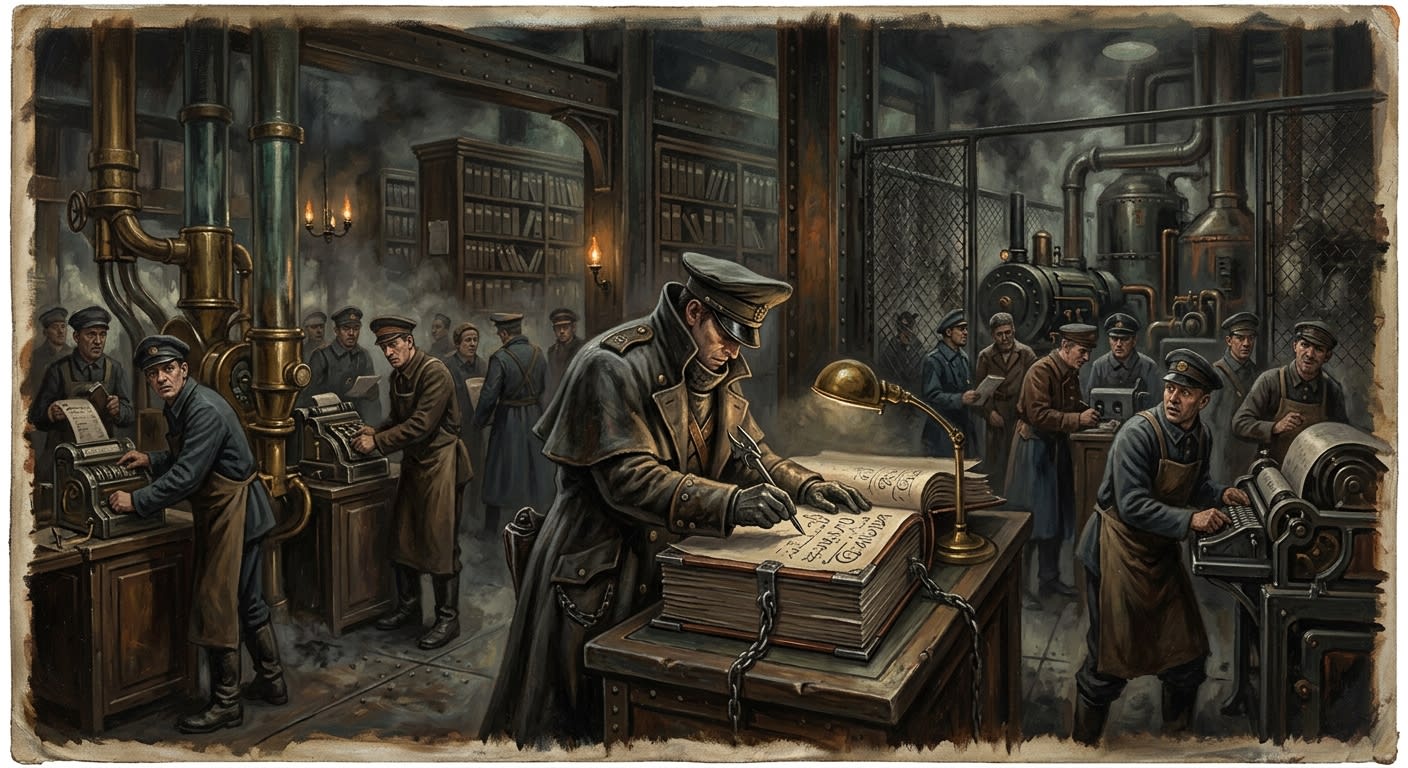
Incident of A.S. 187
The twelfth hour when the margin learned to sing
The A.S. 187 east-bench breach in which Inquisitor Breel copied proscribed Register of Sounds notation from the Index Damnatus, forcing Purity's eight-hour reform under Administrative Order 44-B.
Codex Ref. VII.4.17-001
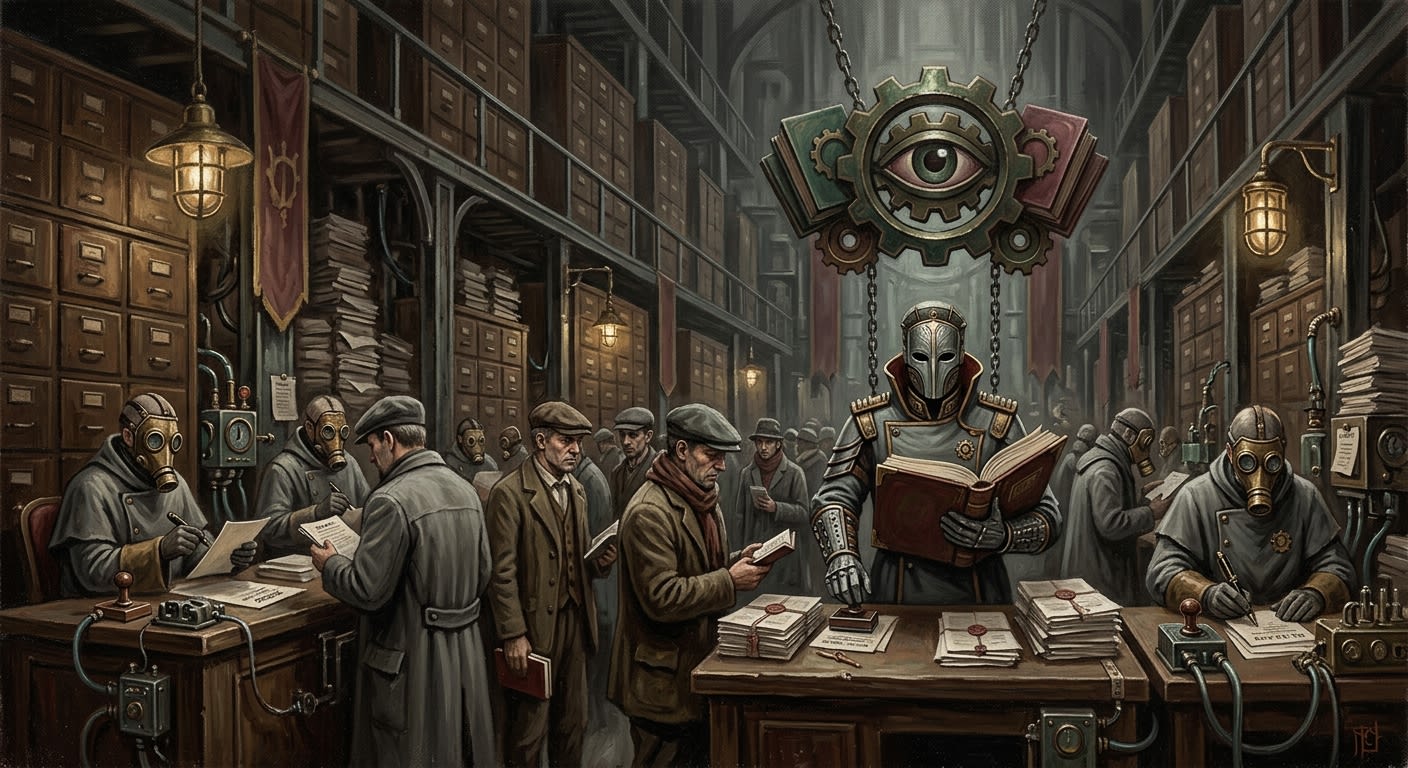
Index Claritatis
Speak only what has been granted, and preferably with witnesses
The Index Claritatis licenses permitted speech across the Synod, proving that censorship is crude until Doctrine teaches it grammar.
Codex Ref. XIII.1.30-001

Index Clerk
The Notary strikes the name. Someone has to tell him where it is.
The Office of Nullity's lowest desk with a pen: clerks who locate names, map dependent ledgers and file the notices that make an erasure travel. The seal belongs upstairs; the blame comes down.
Codex Ref. XII.14.01-003
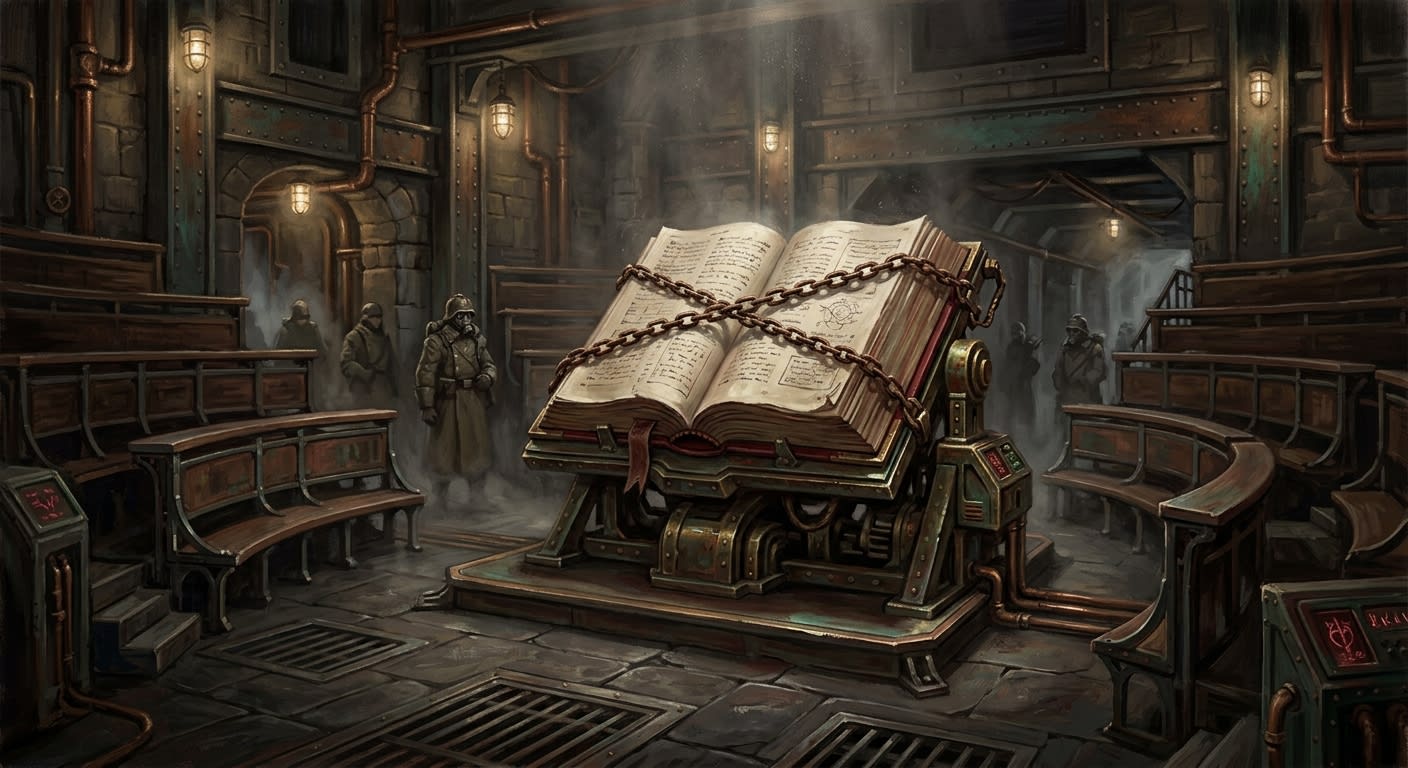
Index Damnatus Chamber
The room where forbidden paper teaches obedience to look away
Principal room of the Vault of Silences beneath Strasbourg's Basilica, where the Index Damnatus remains chained open, watched by benches that never learned mercy.
Codex Ref. II.2.02-004

Index Damnatus Runner
On couriers who carry condemned names faster than the condemned can flee
The Bureau of Purity's courier corps: eleven hundred Runners who carry condemnation packets from Strasbourg to every gate, ferry, orphanage, and shrine before the damned can cross a border. Speed is doctrine. Late is the same as false.
Codex Ref. XII.23.01-001
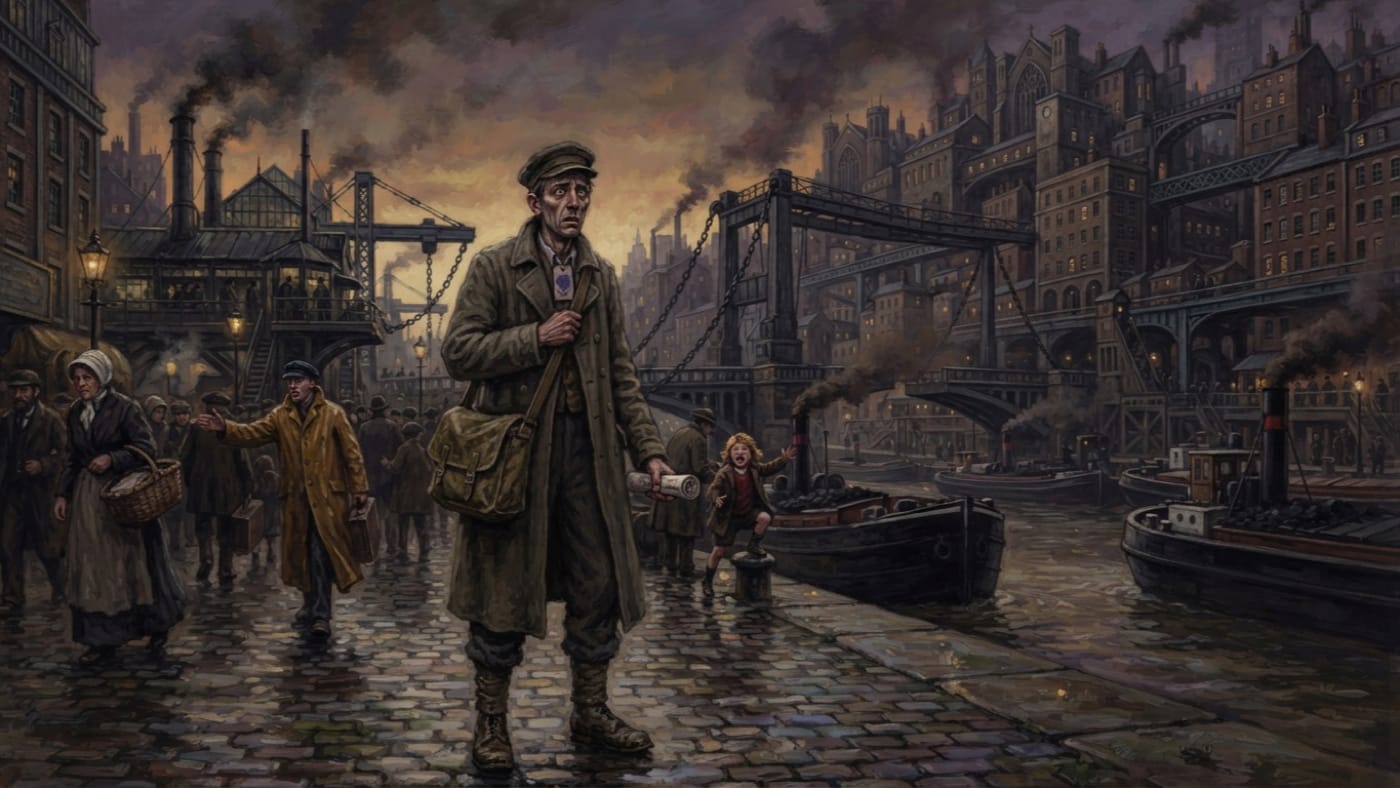
Index Echo
The ledger forgets; the courier does not
Index echo is the Runner's habit of hearing condemned names in ordinary speech. Purity calls it vigilance fatigue and issues another route.
Codex Ref. XIII.1.23-201
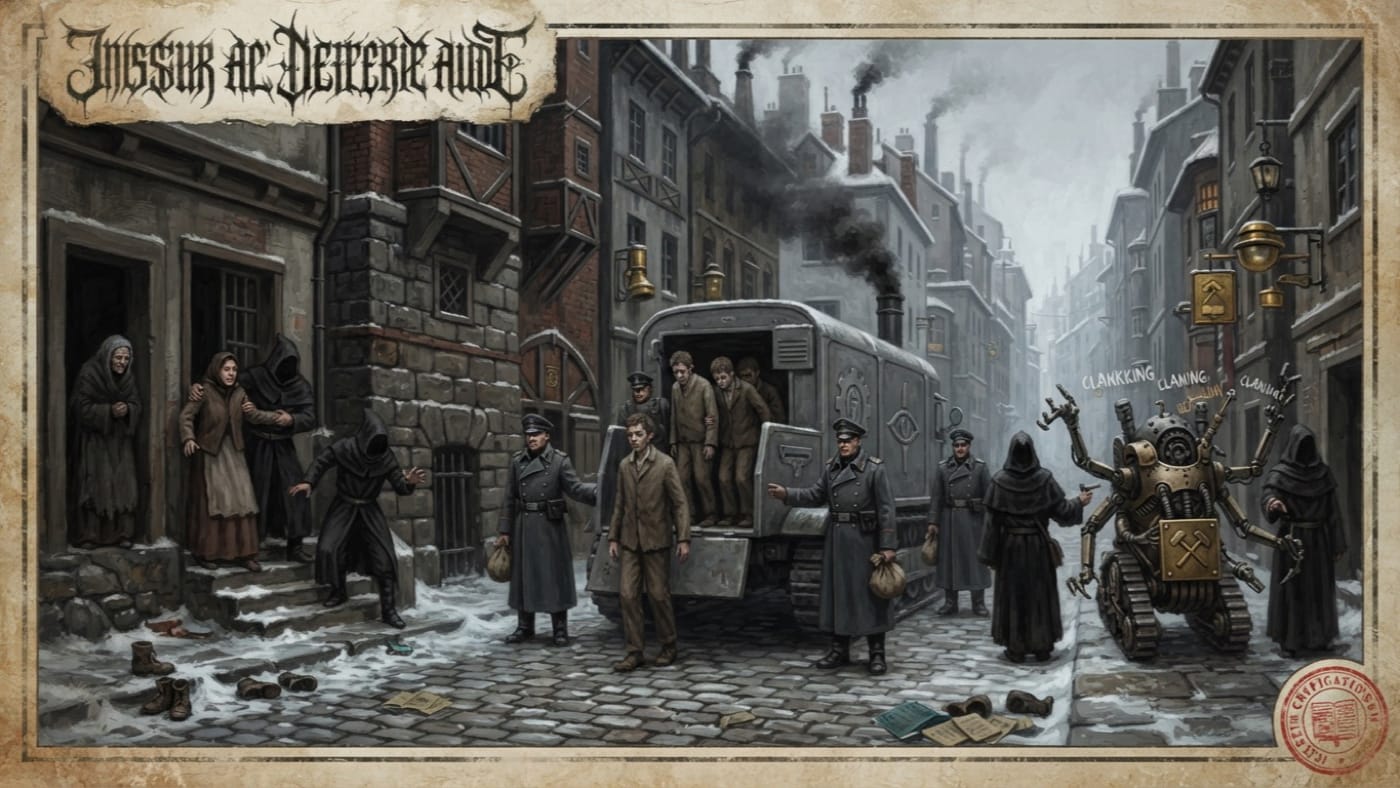
Innsbruck Audit
Fourteen years late, the Ledger declared victory
In A.S. 178, Innsbruck's auditors found three sons concealed for fourteen years. Conscription took the sons, the Index took the parents, and an iron choir took the midwife. The Ledger called its lateness a victory.
Codex Ref. VII.8.10-178
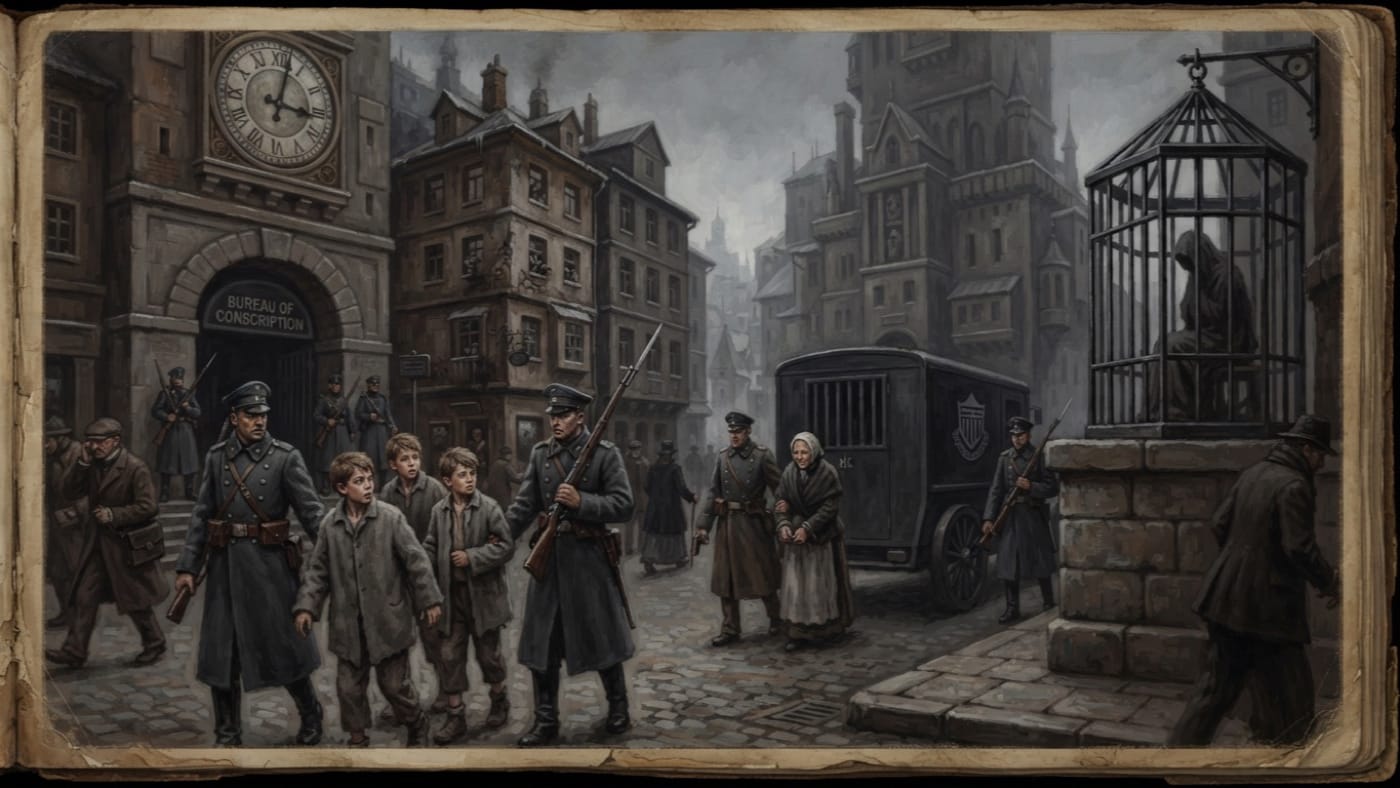
Innsbruck Audit of A.S. 178
Three recovered; fourteen years unaccounted
In A.S. 178, Purity found three sons concealed in Innsbruck for fourteen years. The sons were conscripted, the parents entered the Index, and the midwife died in an Iron Choir. The Bureau filed its lateness as vigilance.
Codex Ref. VII.8.10-178
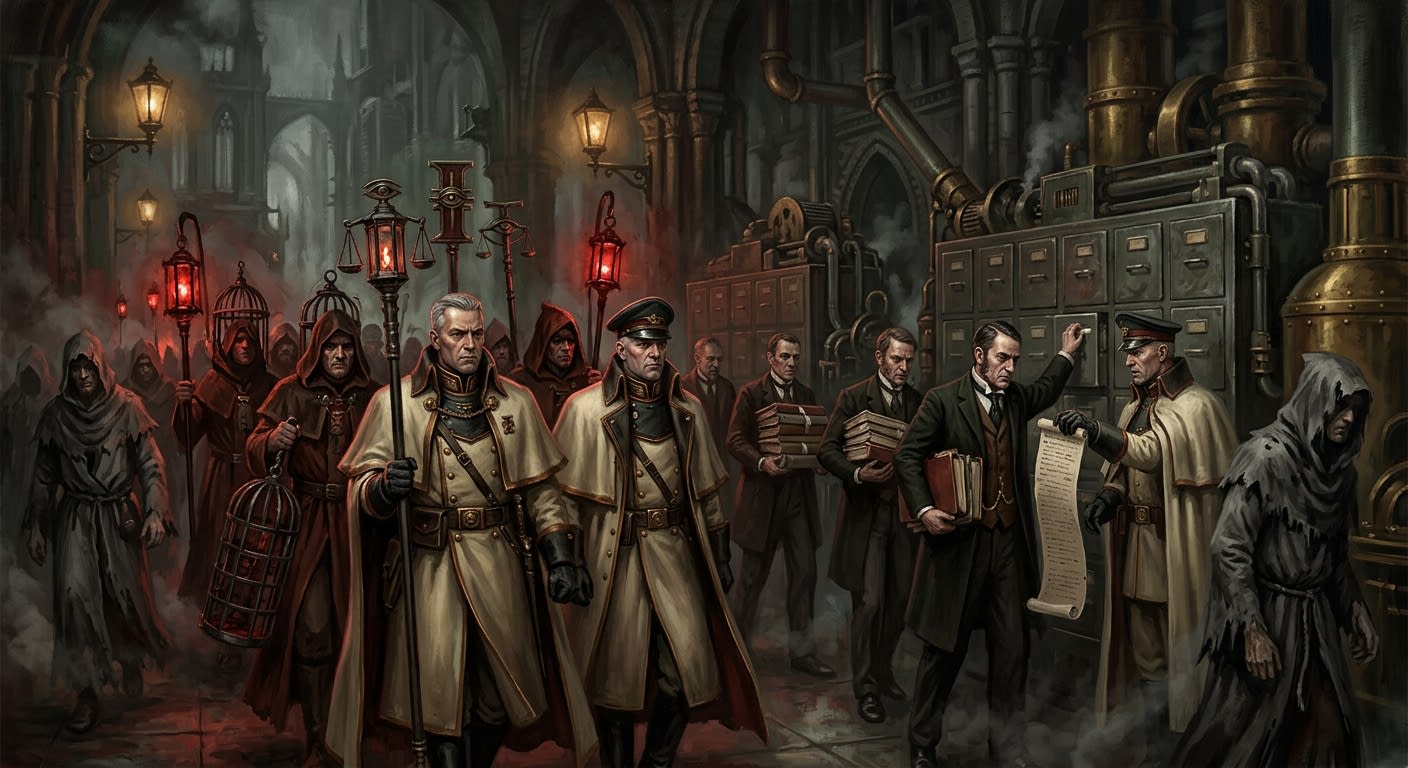
Inquisition
The white hand closes with a receipt
The Inquisition is Purity's authorised appetite for correction: White Cloaks, Lictors, Red Lanterns, Ashmen, Shadows, Index packets, denunciation law, and the clerkly miracle by which fear learns to file itself.
Codex Ref. VIII.1.08-093

Inquisitor Breel
The guard who became the margin of the song she never heard
Fourth-rank White-Mantled Inquisitor whose A.S. 187 east-bench exposure in the Vault of Silences made her hand copy forbidden notation from the Index Damnatus.
Codex Ref. III.2.01-070

Inquisitor Shadow Crew
Purity with a private counter and a locked drawer
The denied corrupt current inside the White-Mantled Inquisitors: protection sellers, denunciation brokers, chain-slack artists, and traffickers in seized words.
Codex Ref. XII.49.03-003
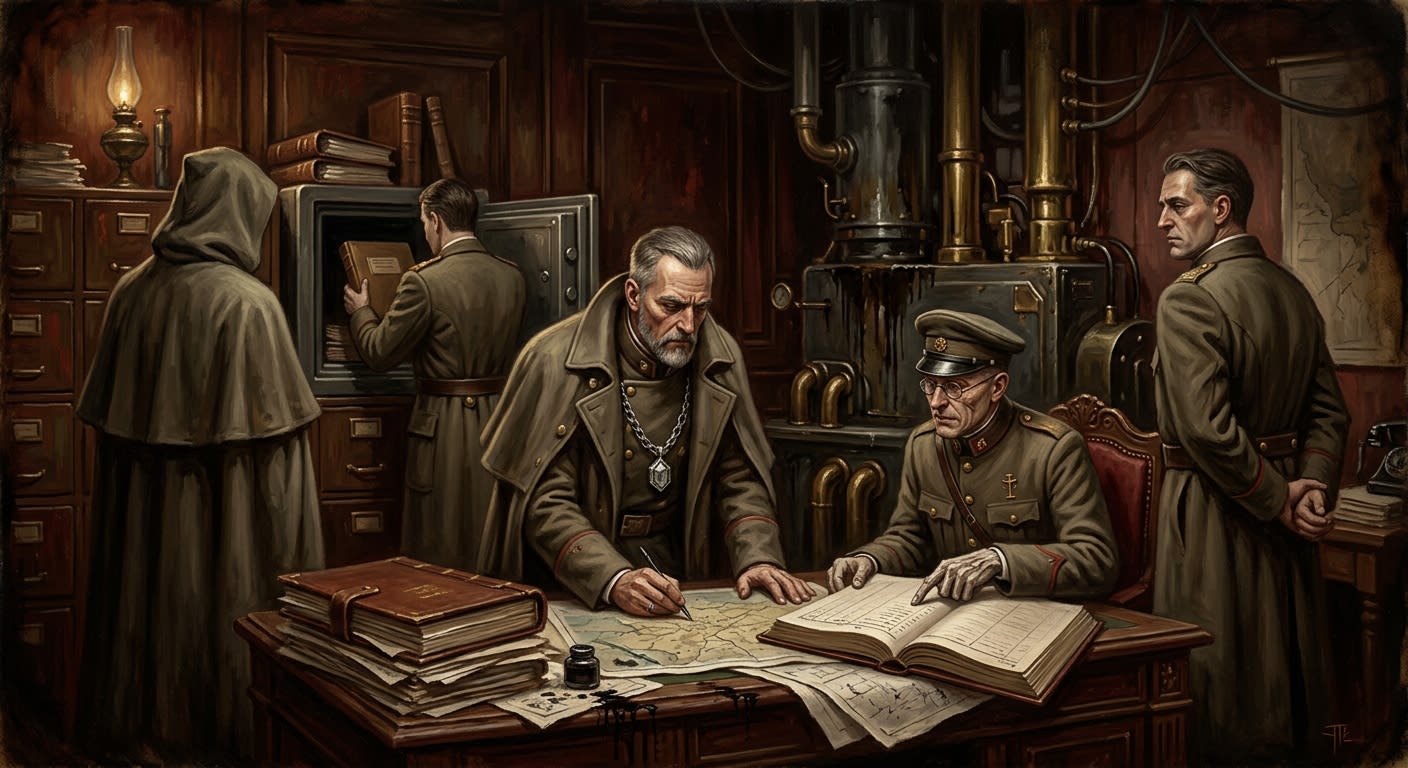
Inquisitor-Pragmatists
The clean chain is a quieter leash
The quiet current within the White-Mantled Inquisitors: Purity officers who prefer voluntary redaction, usage drift, clean chains, and profitable obedience.
Codex Ref. XII.49.03-002

Inquisitor-Purists
They call it clarity because ash does not argue
The hard current within the White-Mantled Inquisitors: Purity officers who burn first, file afterward, and leave districts obedient, silent, and commercially dead.
Codex Ref. XII.49.03-001
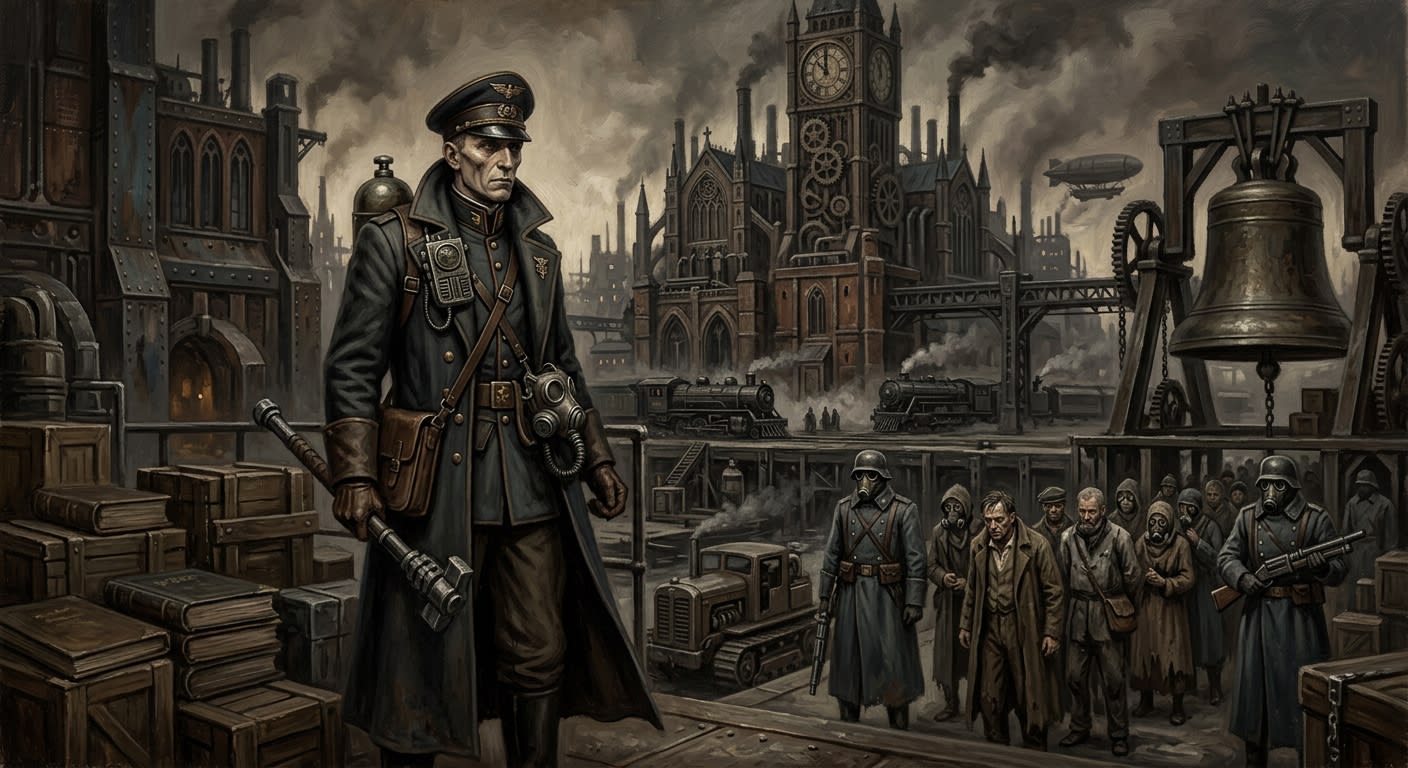
Inquisitor-Regent Veyl Hark
The audit that arrives before its carriage
Veyl Hark is Strasbourg's delayed calamity: an Inquisitor-Regent sent toward Lorn to separate bell, ledger, route, profit, and alibi.
Codex Ref. III.1.04-001

Inquisitorial Corps
The street sees one mantle; the ledger holds the Corps
Behind each white mantle stands a district of rolls, seized words, and inspected chains. I record the Corps that turns forbidden speech into cases, corrections, and silence.
Codex Ref. XII.49.02-001
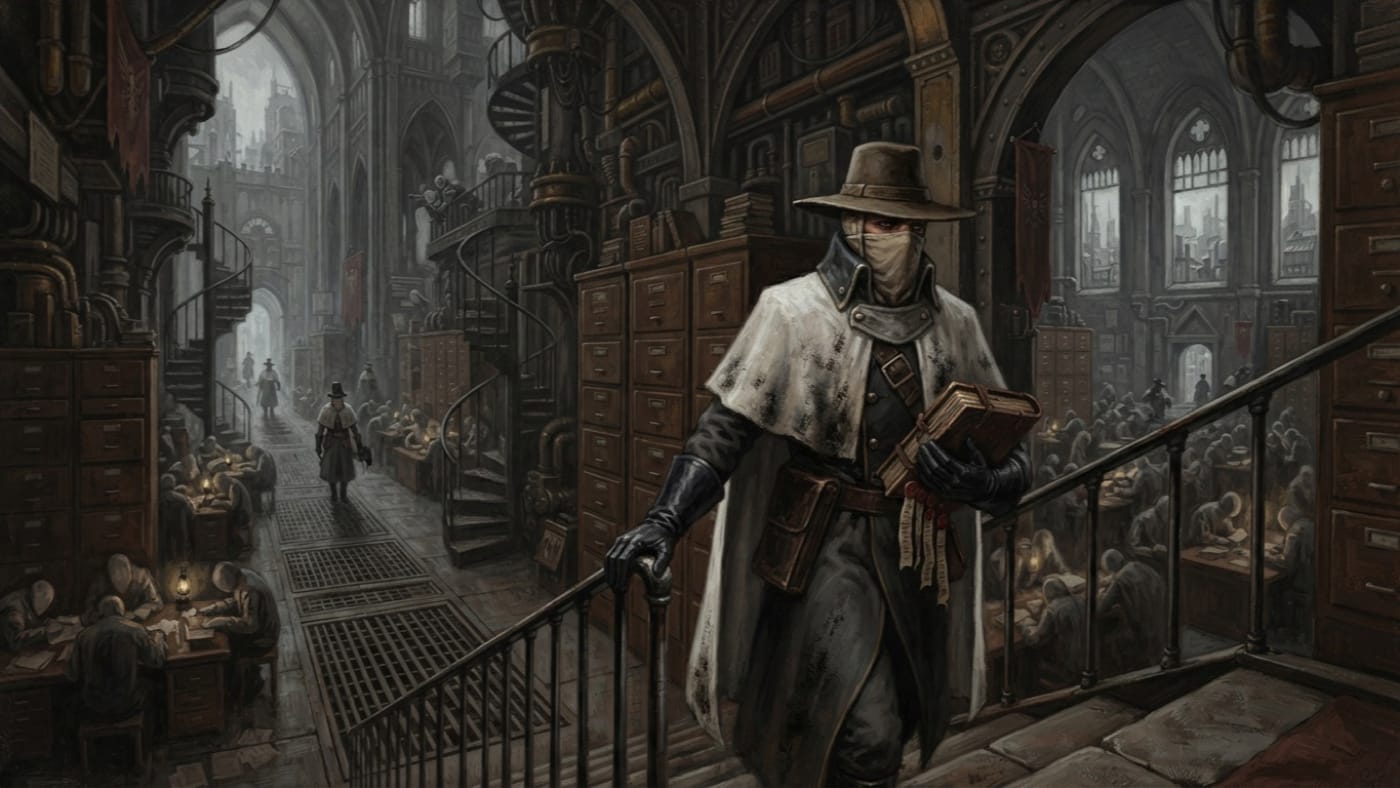
Inquisitors
A writ is a sentence still looking for its subject
An inquisitor carries a writ and decides which answers become evidence. I record Purity's officers: their white mantles, Levy enforcement, the Black Census, and the audits that may erase the examiner.
Codex Ref. VIII.1.09-201

Inspector Corris
The assessment was withdrawn; the destination was never entered
Inspector Corris attributed the Causeyworks' listening stone to damp and vibration in A.S. 194. The assessment was withdrawn; the reassignment has no destination on file.
Codex Ref. III.2.01-194
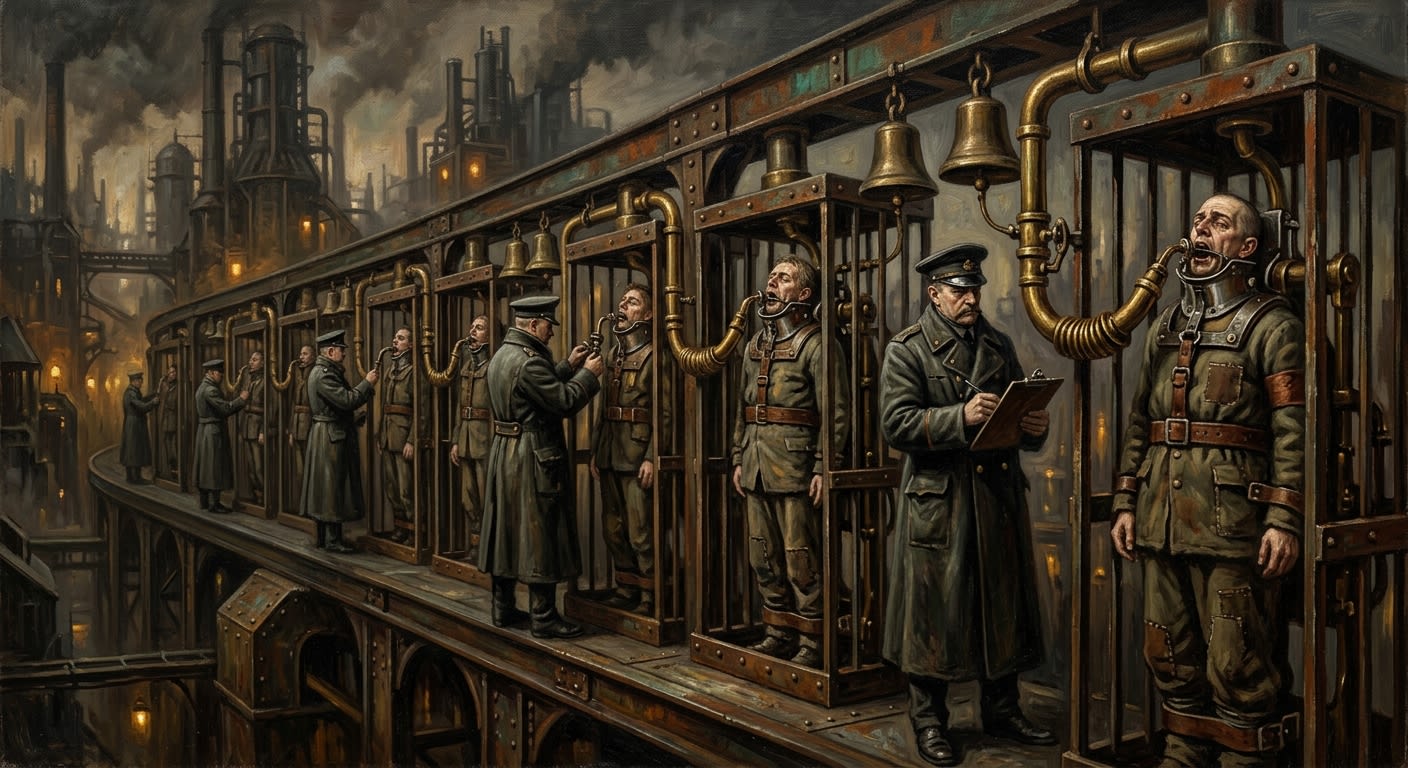
Iron Choir of Mainz
Where the road learned to keep a throat open
The Iron Choir of Mainz turns condemned throats into civic instruction: a Purity road of cages, bells, Brand-Singers, witness columns.
Codex Ref. VIII.1.09-134
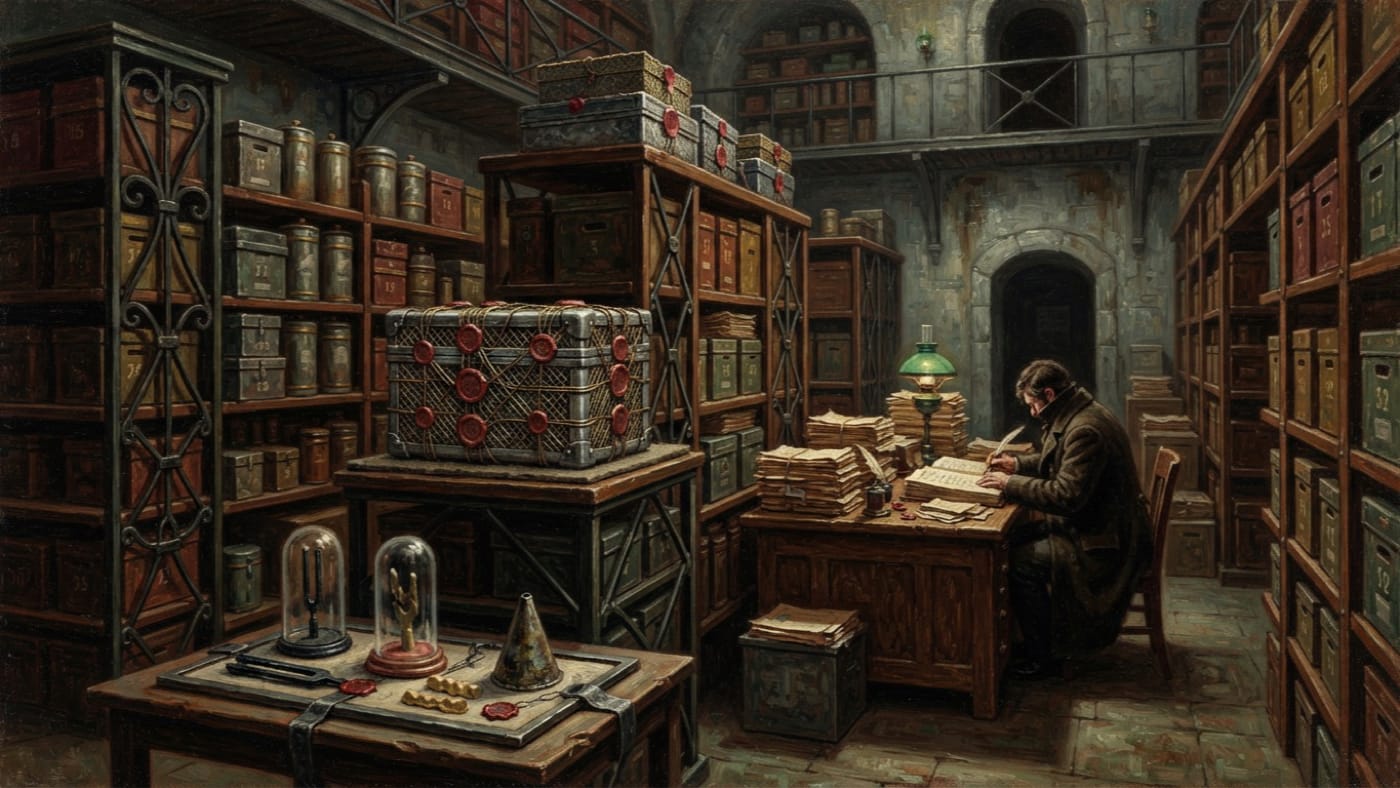
Jawbone Tone
One bone, two cells, and no lawful comparison
A jawbone hums at 217 hertz, proscribed since A.S. 114. Purity keeps the bone in the third silence and its sound in the second; neither may be compared.
Codex Ref. III.2.04-114

Keystone Sliver
Architecture broken into portable secrets
A bridge fragment used to smuggle letters, identities and forbidden syllables through the Archivolt Causeyworks. Stone may be pocketed; the debt remains on the books.
Codex Ref. V.2.02-001
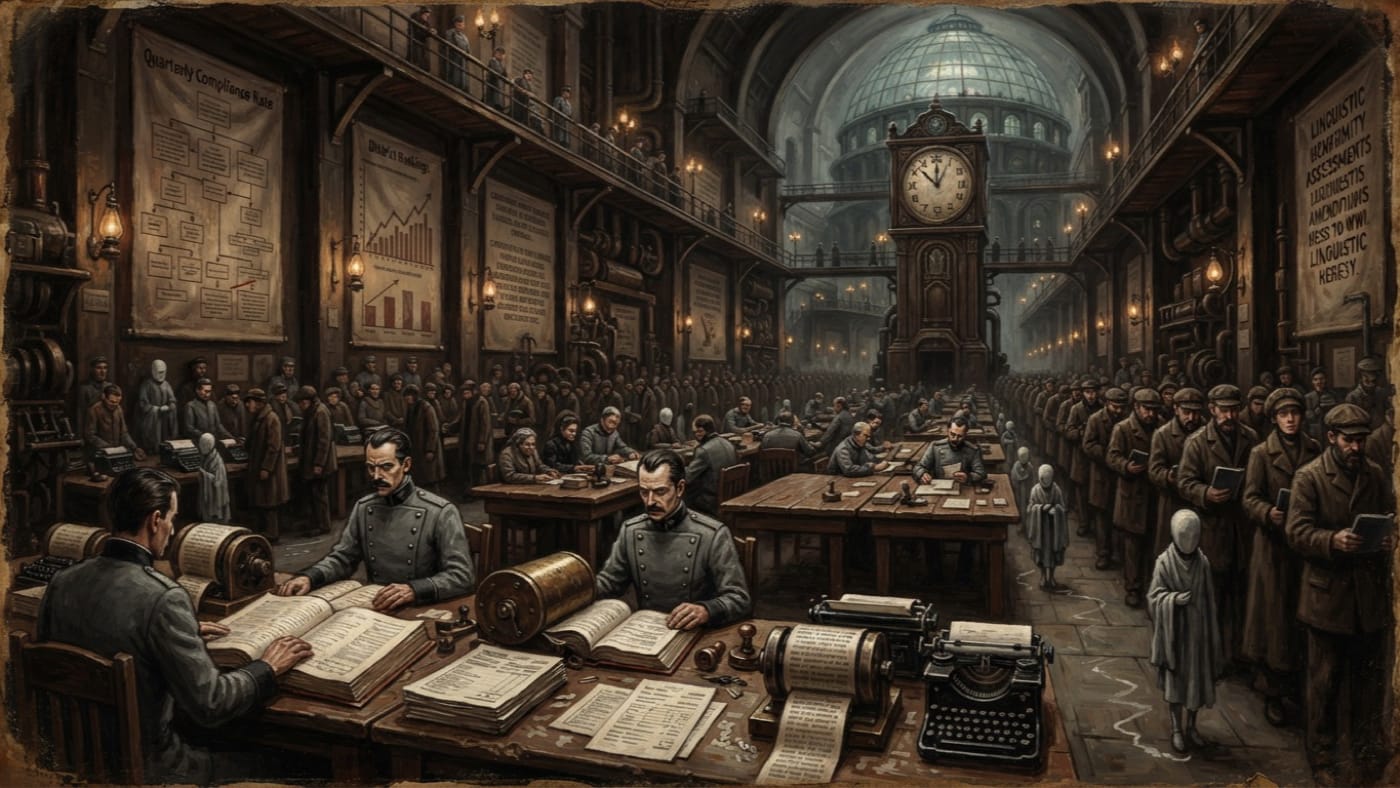
Language Conformity Assessments
The return records what was said; the Creator does not file quarterly
The Bureau of Purity's quarterly measure of how thoroughly approved words have displaced the old ones. Compliance ranks Inquisitors; belief remains beyond the ledger.
Codex Ref. XII.49.02-001
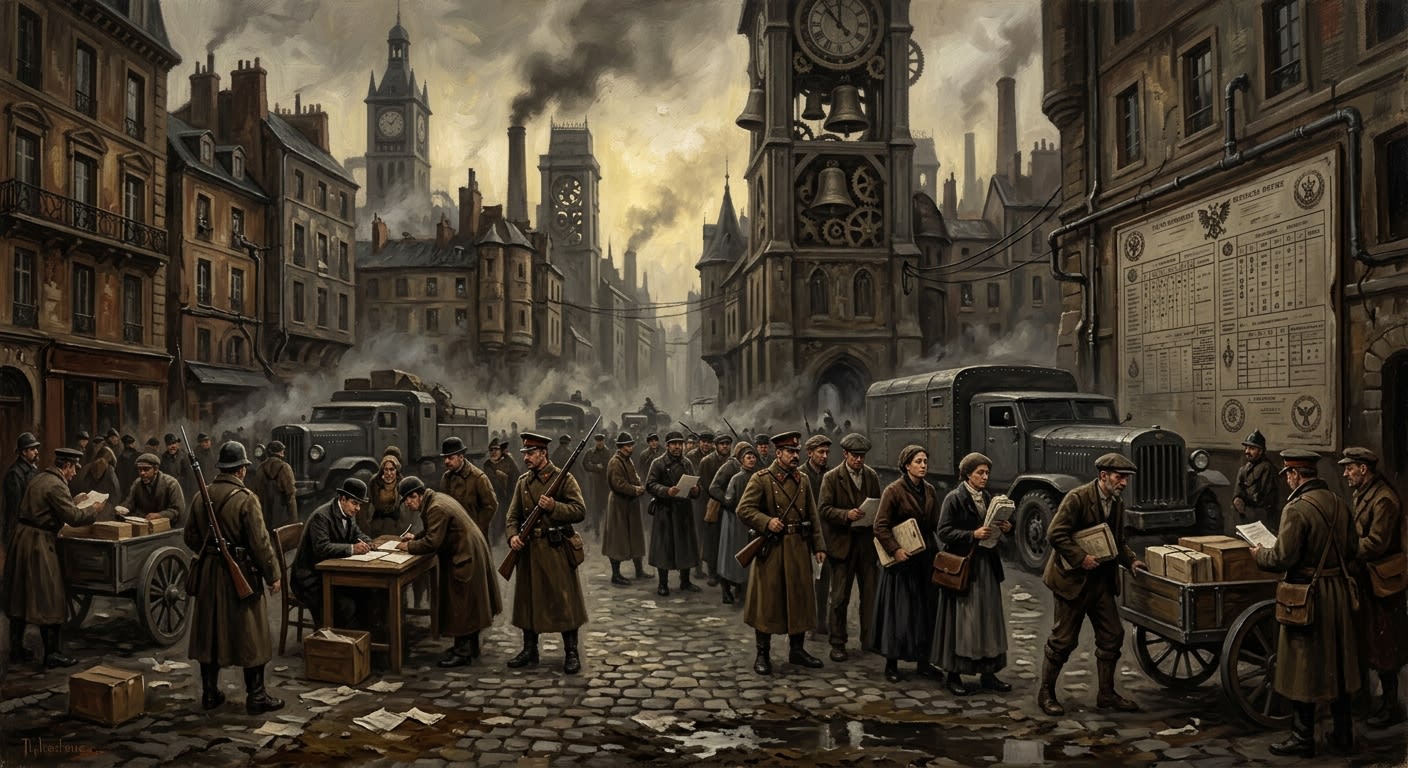
Languedoc
The province that made sunlight prosecutable
Languedoc is the southern heartland province where bells kept local time, songs bent under audit, and the Purges of A.S. 130 made sunlight a fileable risk.
Codex Ref. II.1.06-130
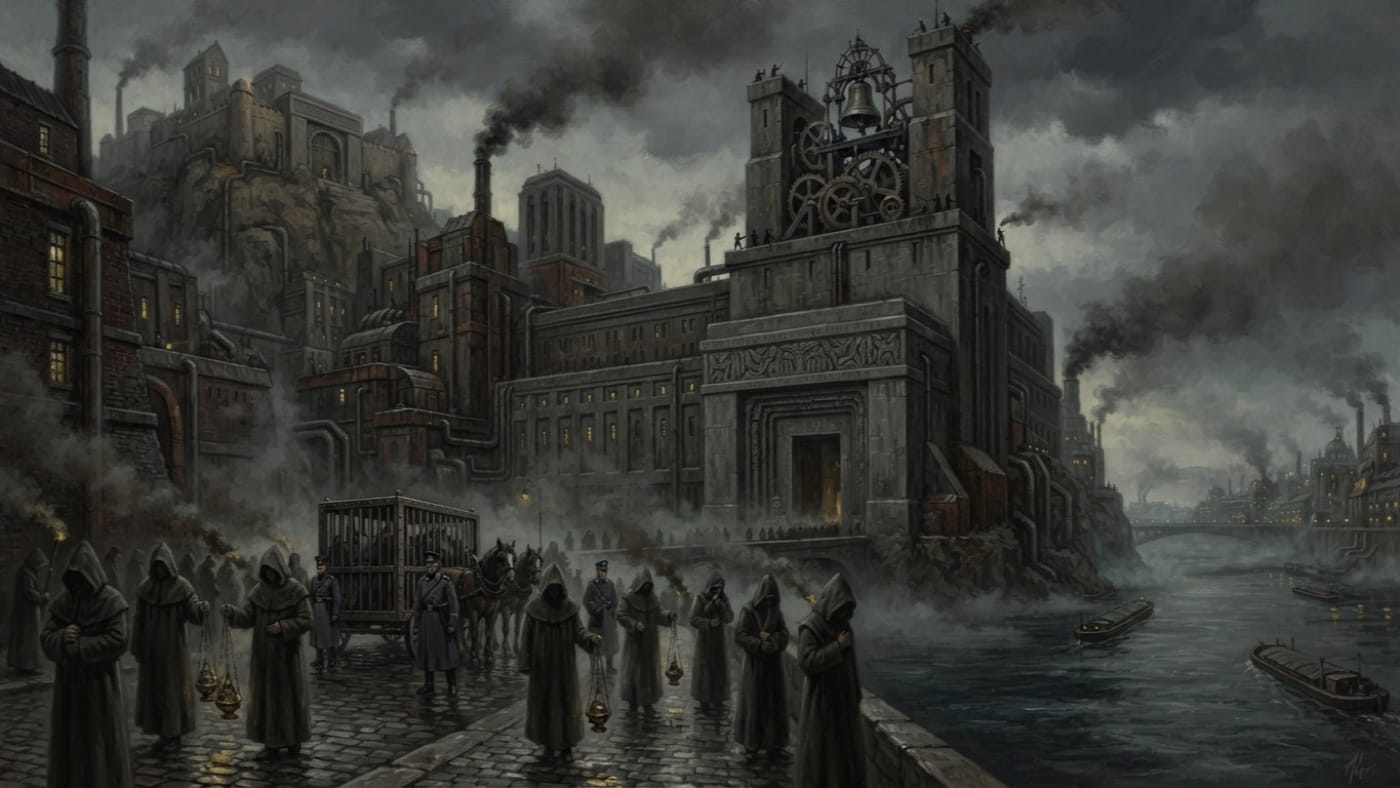
Latin
The river kept the hours; the Church kept arguing about the language
Latin carries the Church's prayers, titles and ceremonial condemnations. The Rhône reportedly used it; witnesses disagreed, and the archive declines to supply a grammar.
Codex Ref. XIII.1.97-001
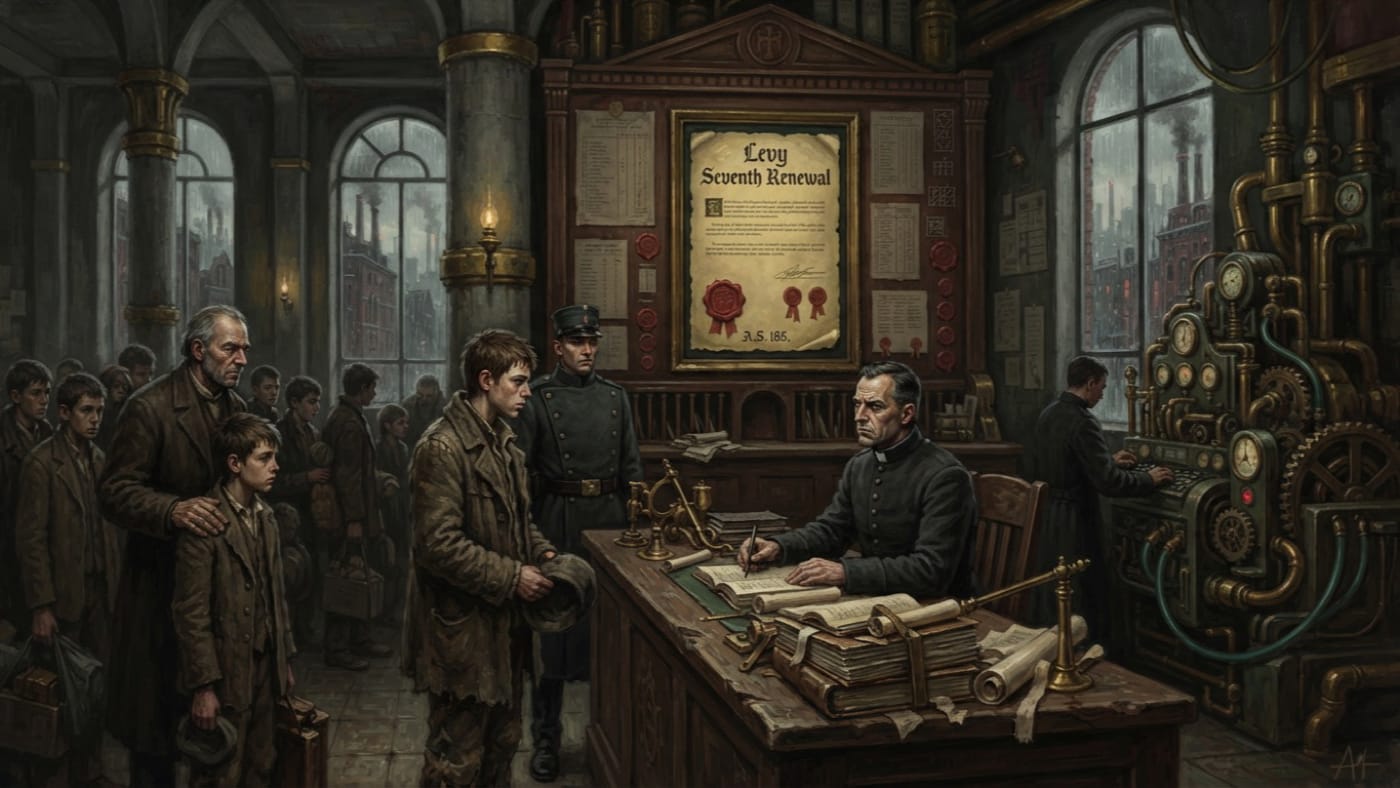
Levy Seventh Renewal
The charter is renewed. The fraction remains under wax.
In A.S. 185, the Church renewed the Bureau of Conscription's charter and revised levy quotas under a sealed Martial Edict. The year is public. The fraction, the provinces and the additional ratifying seals remain under wax.
Codex Ref. VII.8.10-185

Lexicon
The printer and the Warden fear the same strip of paper
The Synod's authority over permitted and forbidden speech binds printer and Inquisitor alike. Truth is eternal; the officer's strip may already be obsolete.
Codex Ref. XIII.1.30-201
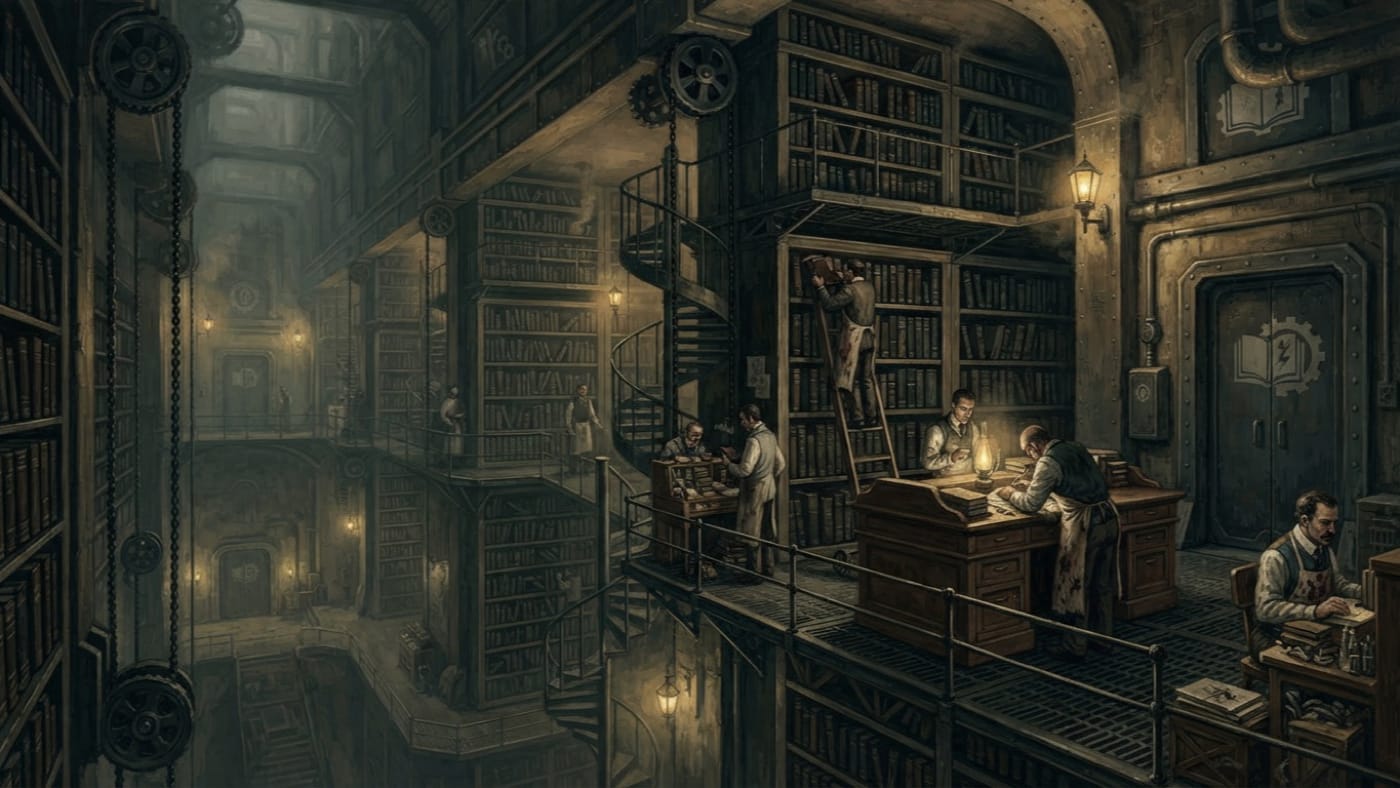
Library of Saint Origen
Two Hundred Thousand Volumes, and Nothing Beneath Them
Strasbourg's university library holds two hundred thousand volumes and supplies tutors to the Academy. Beneath it, the Secret Stacks preserve books, rooms and librarians that officially do not exist.
Codex Ref. III.2.01-1622

Listening Glass
The glass returns a sound; the offices return a sentence
Keeper lore credits Saint Velek with glass that holds and returns sound. A Velek cup may yield a condemned name, an inquisitor's business, or the Listener's own confession. Engineering denies the technique.
Codex Ref. XIII.1.43-002
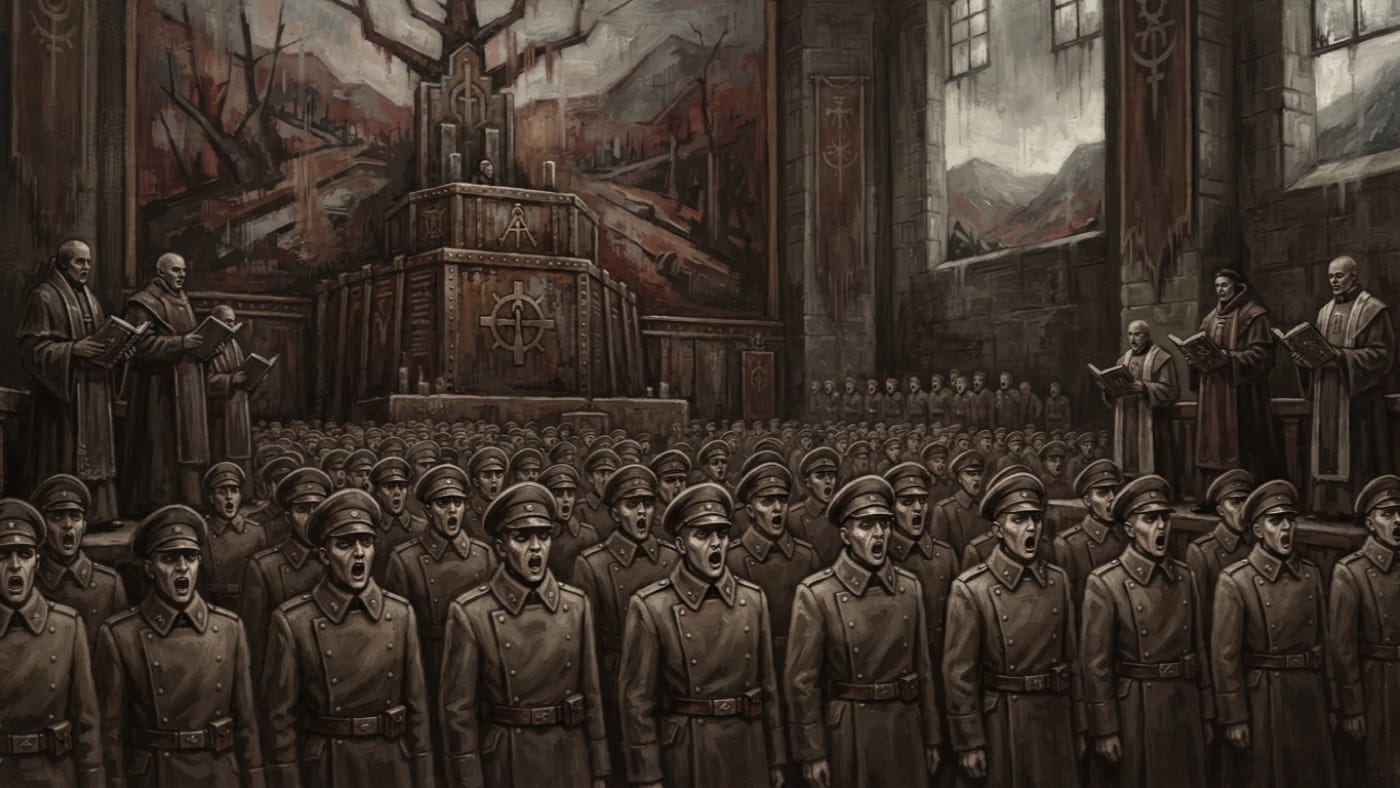
Litany of Errors
Eleven names. One designation. Four minutes to agree.
At Bastion-Przemyśl, cadets recite eleven Ulm signatories and the unknown twelfth, then condemn all twelve in unison. Four minutes of exact remembrance, with no room left for curiosity.
Codex Ref. XIII.1.95-201
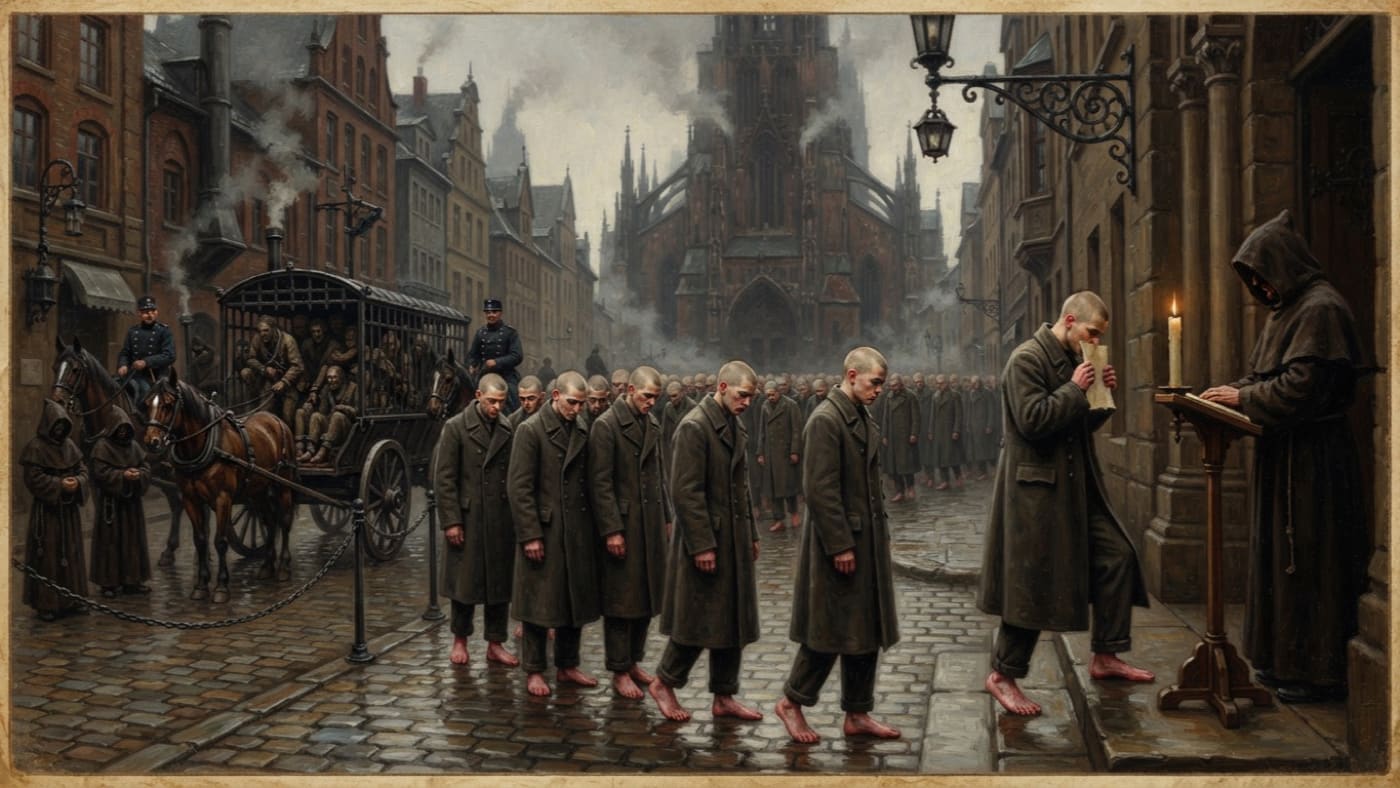
Litany of Twelve Errors
Bare feet, approved words, and a page that must remain unread
Ulm's students walk barefoot to the cathedral, recite the Litany of Twelve Errors and kiss blank Mine paper. Lawful learning survives by keeping its mouth obedient.
Codex Ref. XIII.1.97-201
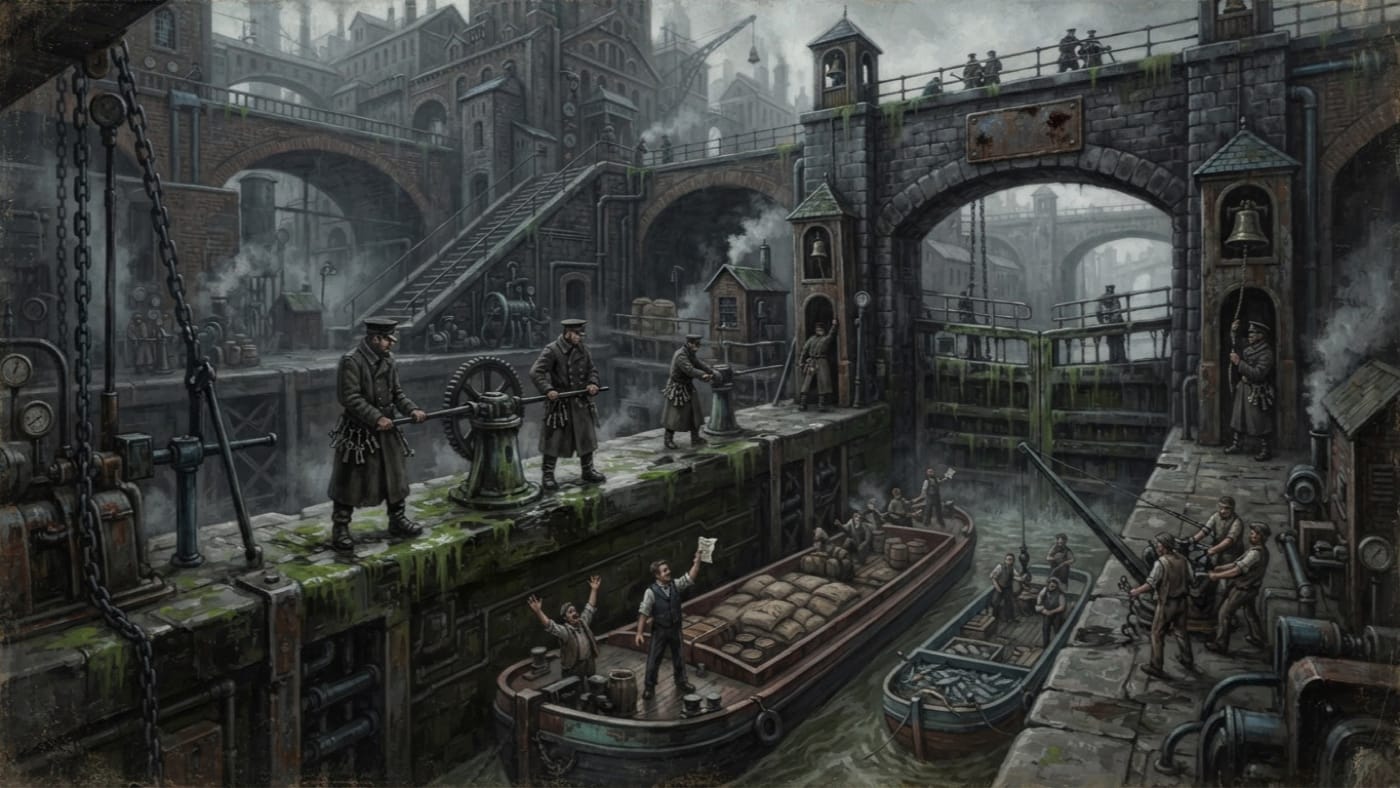
Lock Authority
The Chapter permits passage; the wardens permit the hour
The Triple Lock Wardens control the Archivolt Causeyworks' gates, bells and priority windows. Their closures are filed as prudence and disputed as extortion. The water waits for neither verdict.
Codex Ref. XI.1.08-003
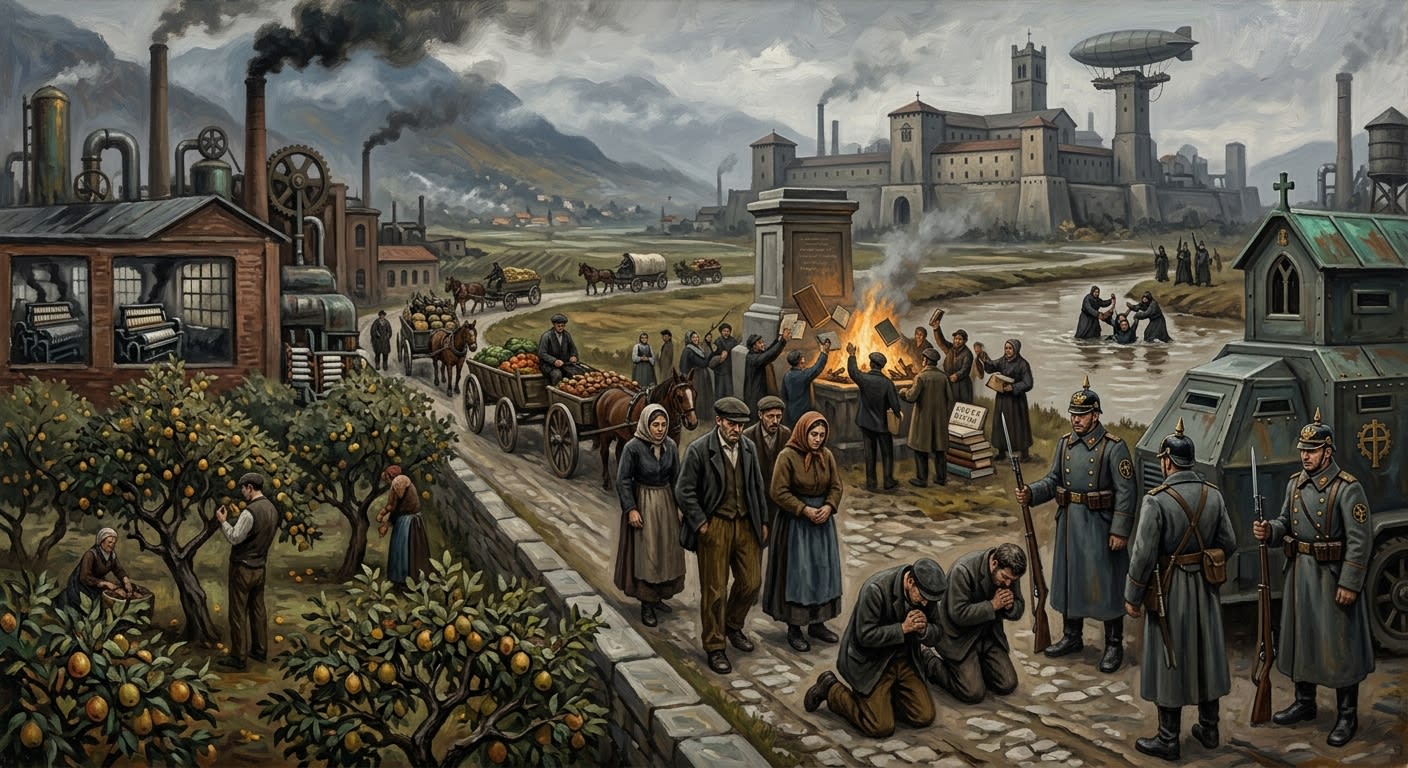
Lombardy
A rich province is merely rebellion with orchards
Lombardy is the Synod's rich northern Italian problem: orchard, loom, road, supper-table, drowned schism, corrected alphabet, and a province bowed just low enough to keep remembering.
Codex Ref. II.3.09-150
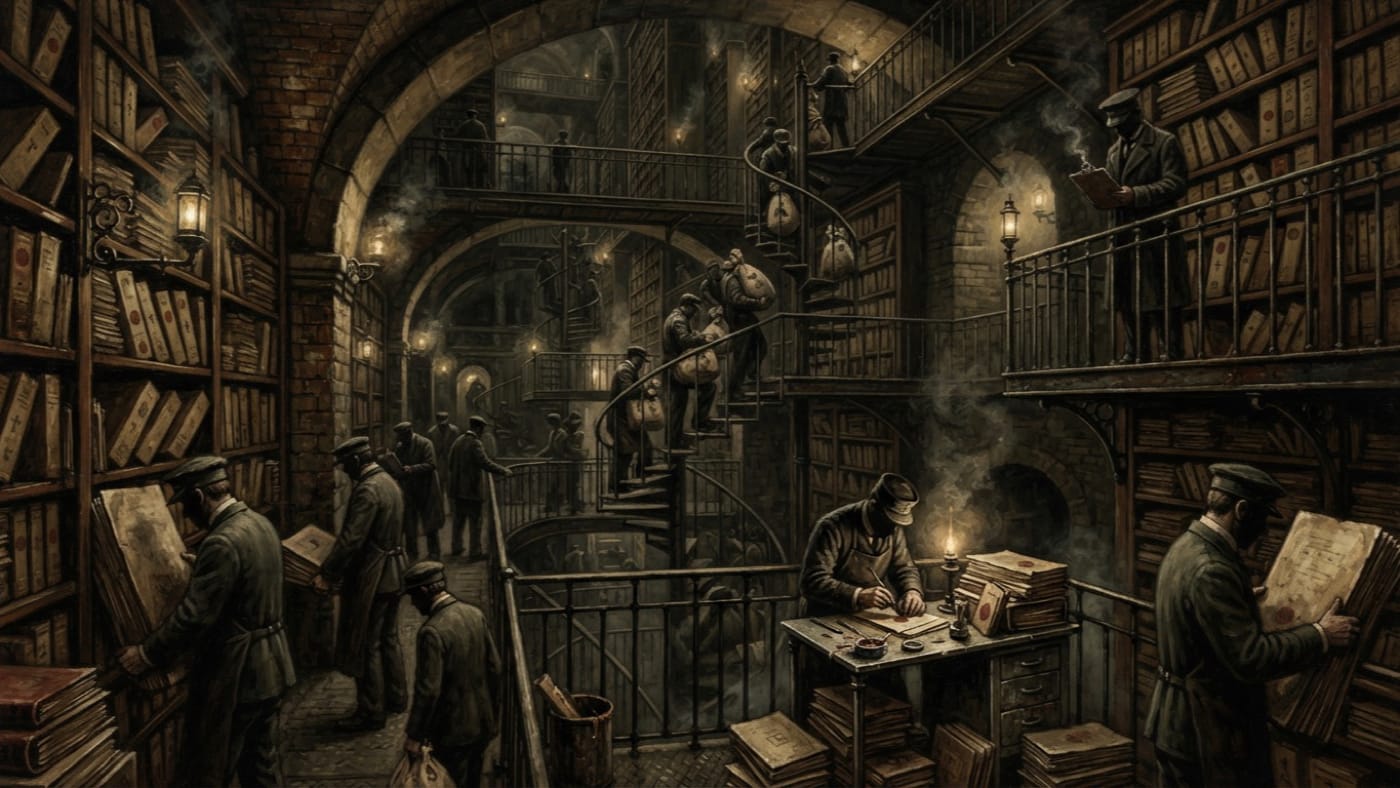
Lower Vaults
Every pardon descends; no depth is certified
Beneath Strasbourg's Basilica, Records shelves baptisms, tithes, pardons and recantations. The custody is certified; the depth is not.
Codex Ref. II.1.04-007
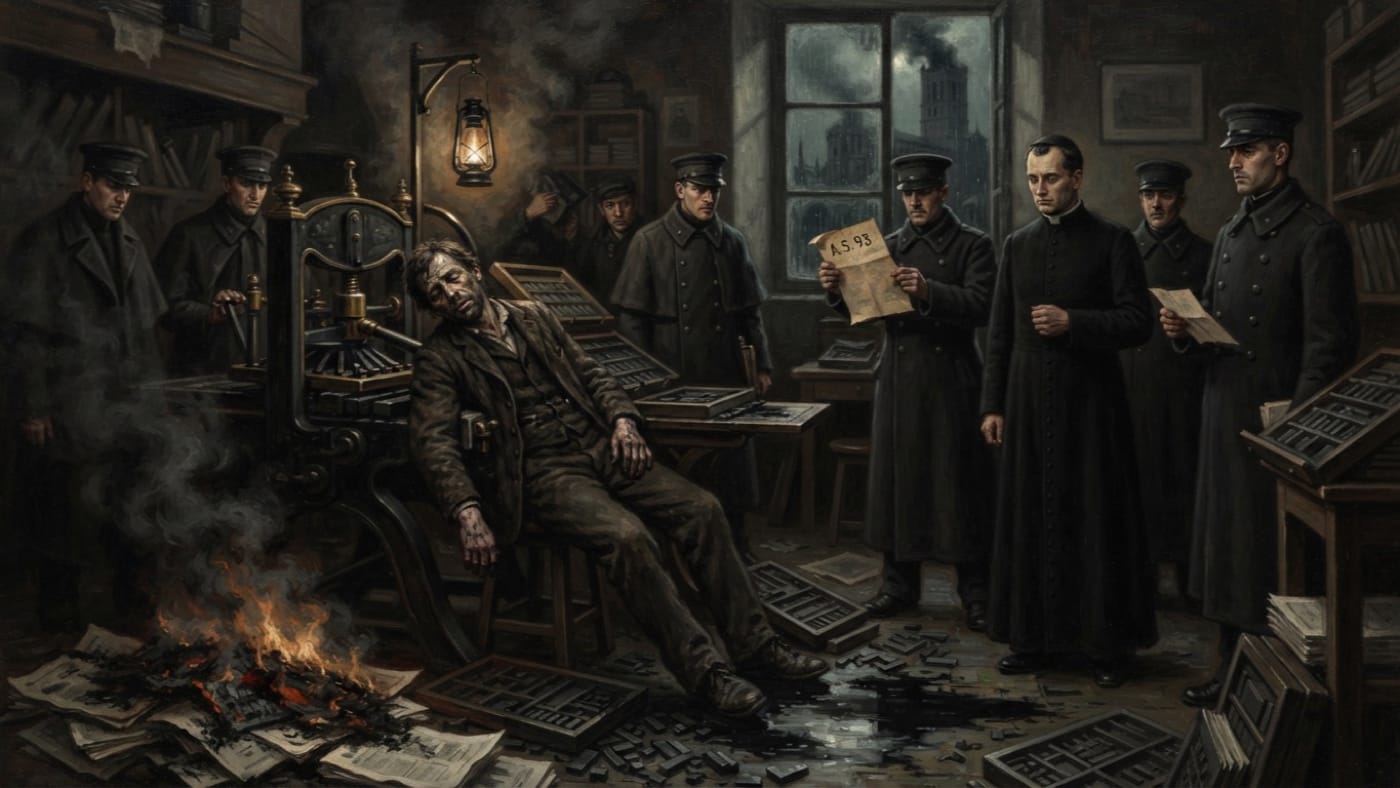
Maël Aucourt
The printer whose file outlived the man
Maël Aucourt hid Rationalist arguments among lawful notices. His A.S. 93 warrant opened the Toulouse Hunts; Purity preserved his offence more carefully than his life.
Codex Ref. III.2.01-093
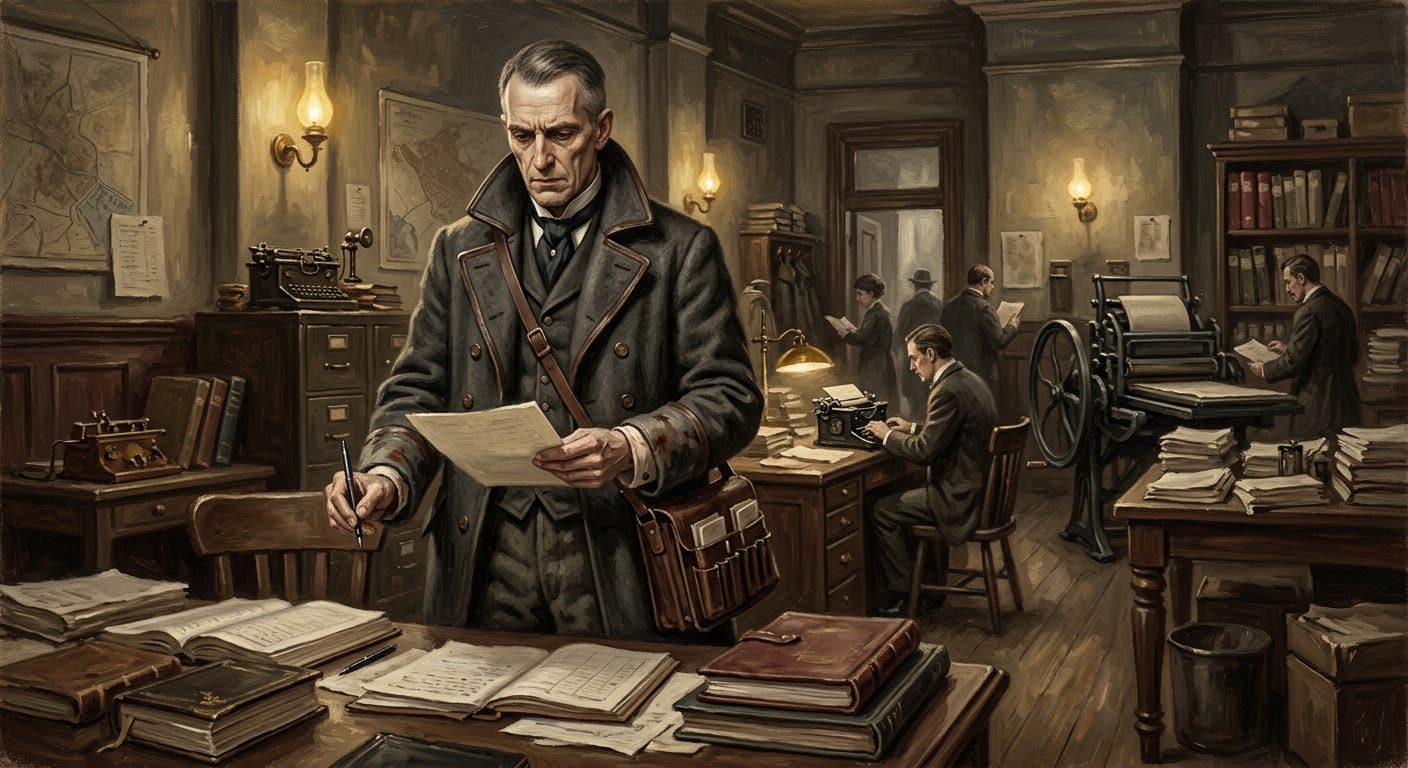
Mantle Examiner
The white cloth is clean only before it learns its work
Mantle Examiners are the working rank of the White-Mantled Inquisitors: raid officers, interrogators, seizure clerks, and daily editors of frightened speech.
Codex Ref. XII.49.02-001
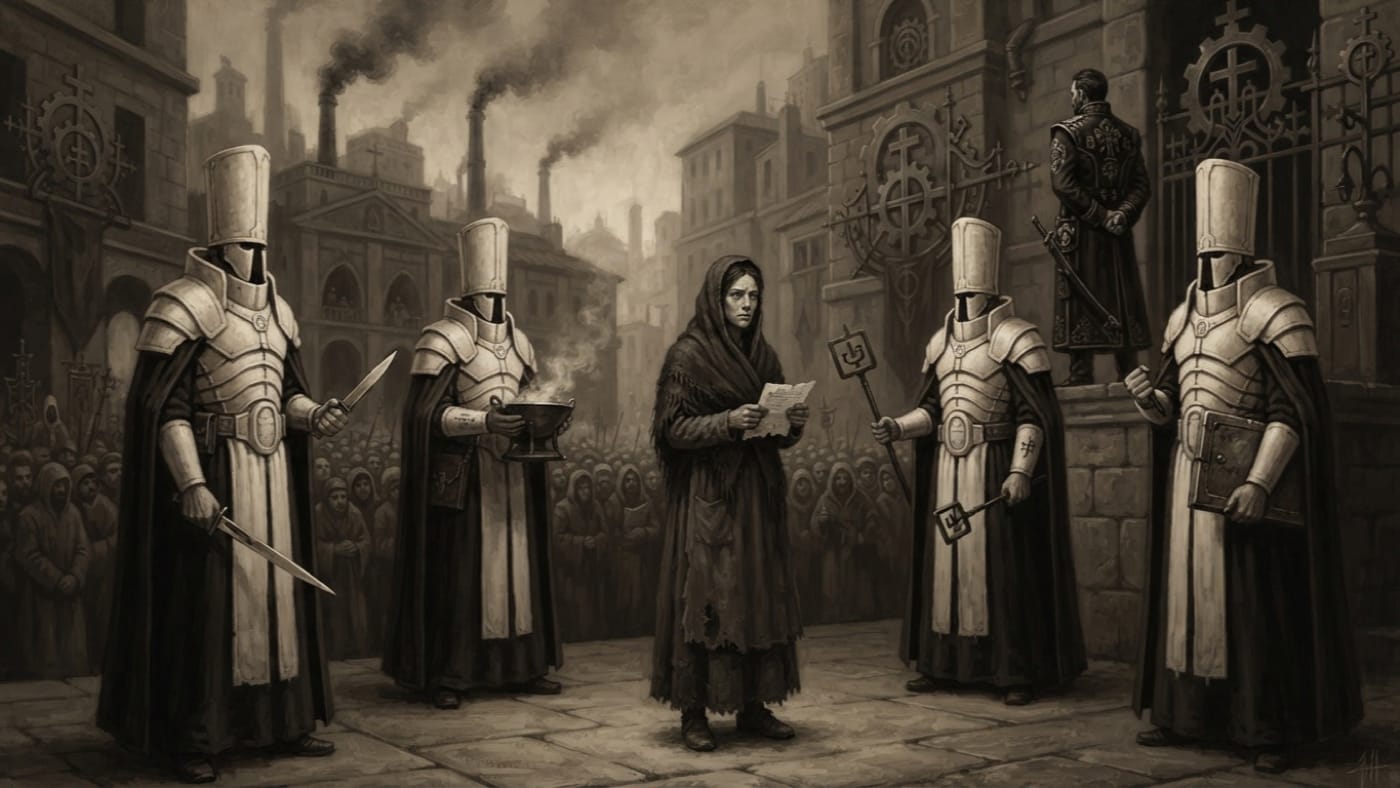
Mar Ortega
The laugh is attributed; the knife remains conditional
Mar Ortega is credited by one witness with making Seville laugh in A.S. 153. Purity's initials may put her under the knife; the Ledger cannot certify the match.
Codex Ref. III.2.01-153
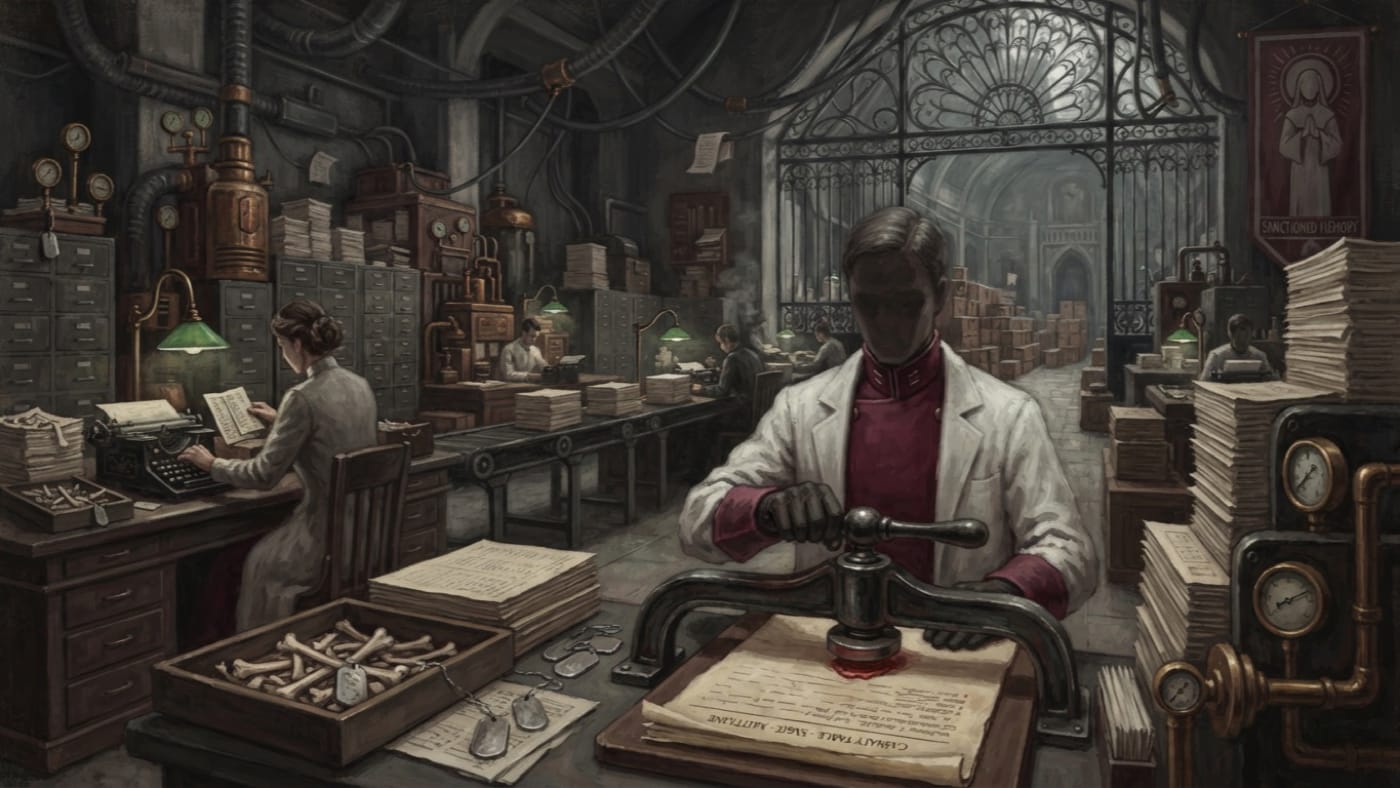
Martyrdom
The dead remain useful until their paperwork fails
The Seal of Martyrdom governs the Synod's recorded dead, sanctions their memory and commands the Bureau of Relics. War supplies names; Martyrdom decides what the parish may say.
Codex Ref. VIII.1.10-201
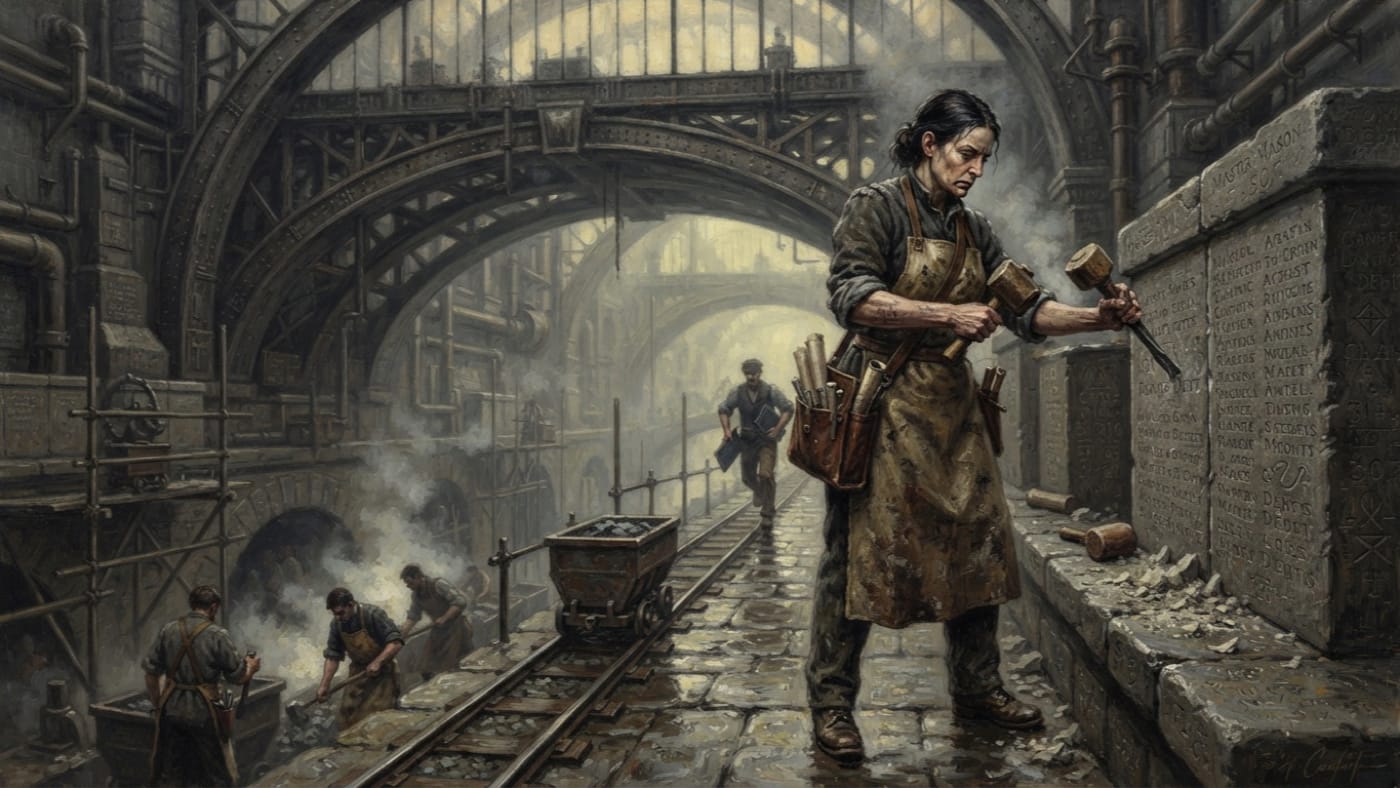
Master Mason Lysa Korr
The hand that reconciles the verdict without erasing it
Lysa Korr holds the Causeyworks' chisel: names, debts and corrections become public stone under her Lodge, now within reach of Marrow's warrant.
Codex Ref. III.2.01-201
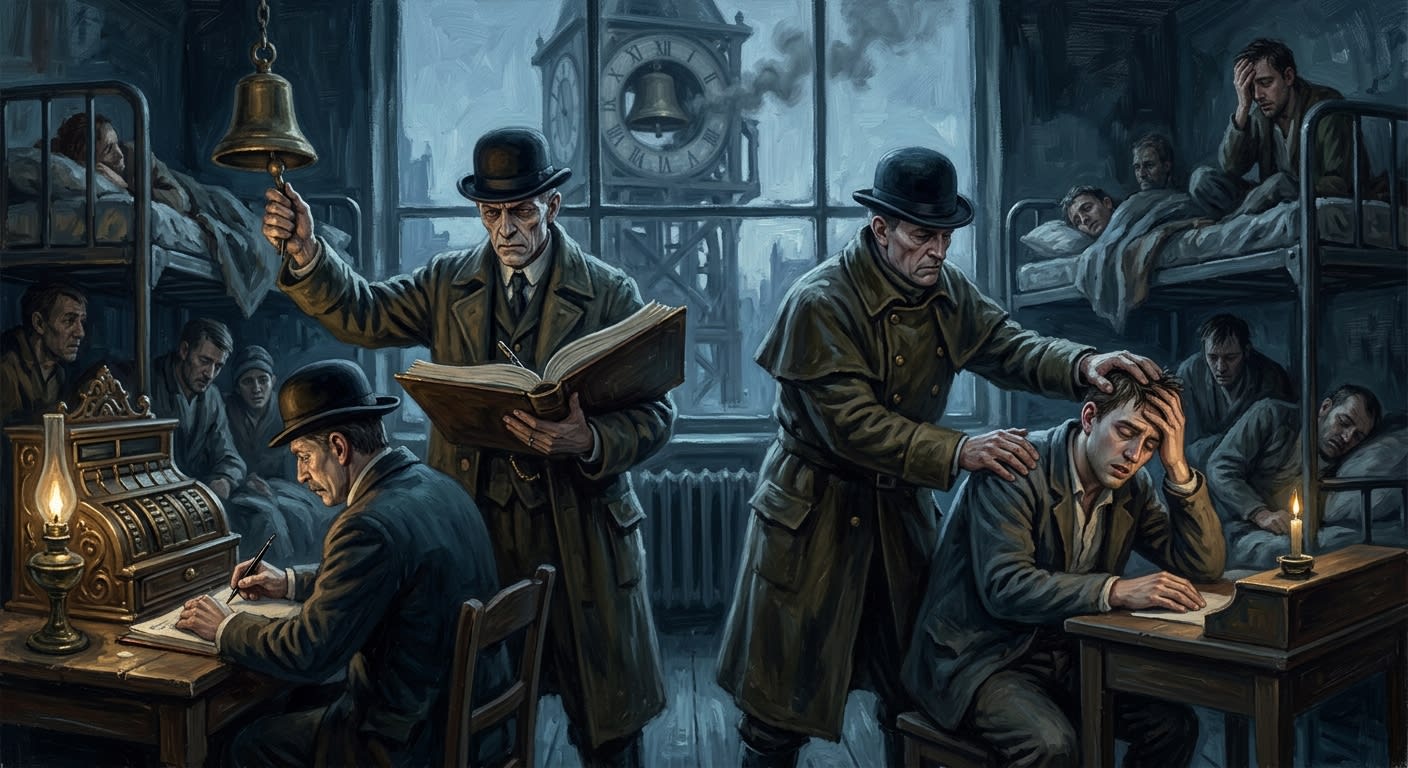
Matins
The first permitted injury of the day
Matins is dawn made lawful: bell, prayer, register, and the Bureau's delicate art of converting a sleeping body into taxable obedience.
Codex Ref. XIII.1.96-115
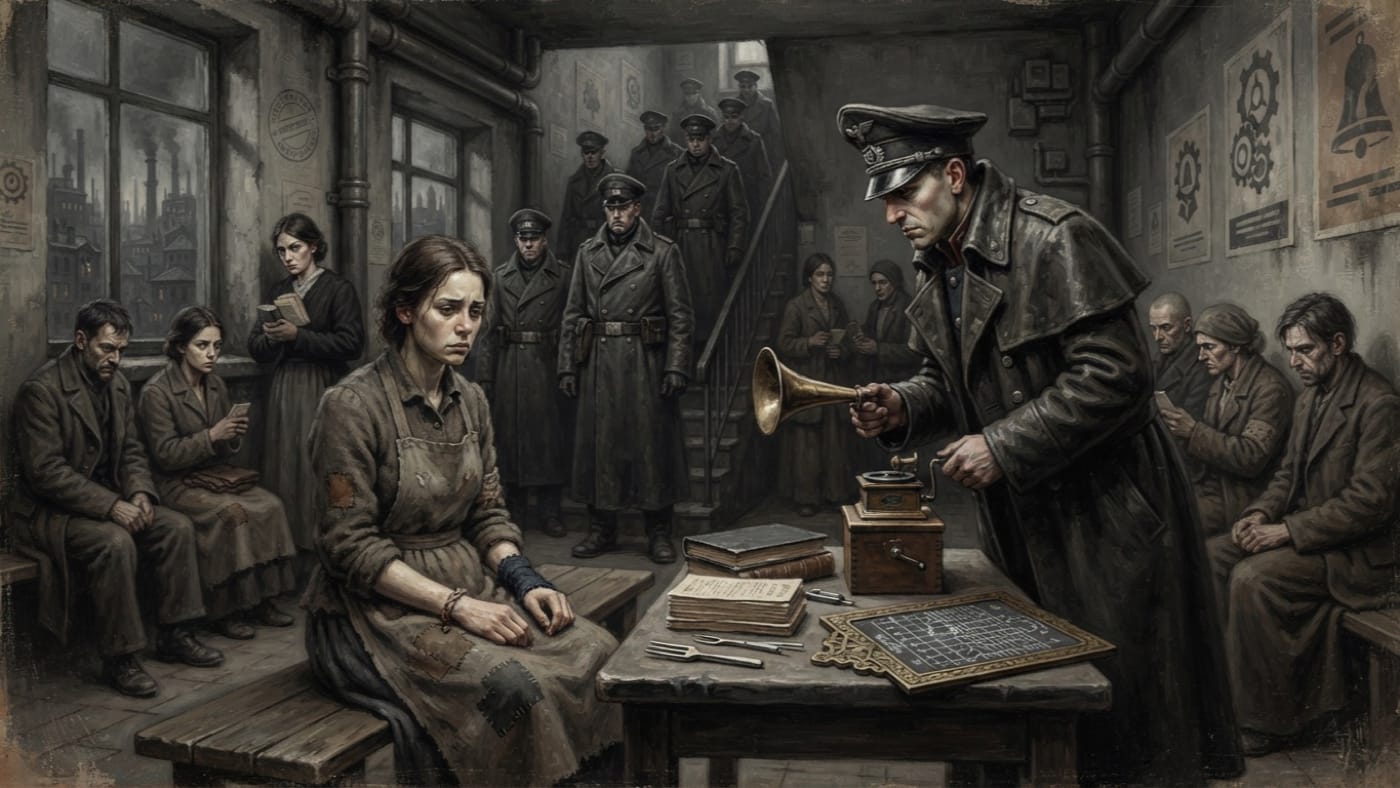
Melody Intent
The song need not be heard for the charge to be filed
Orison's charge for inferred knowledge of an unlicensed cadence and intent to transmit it; a silent cuff and a willing neighbour can begin the paperwork.
Codex Ref. XIII.1.86-201
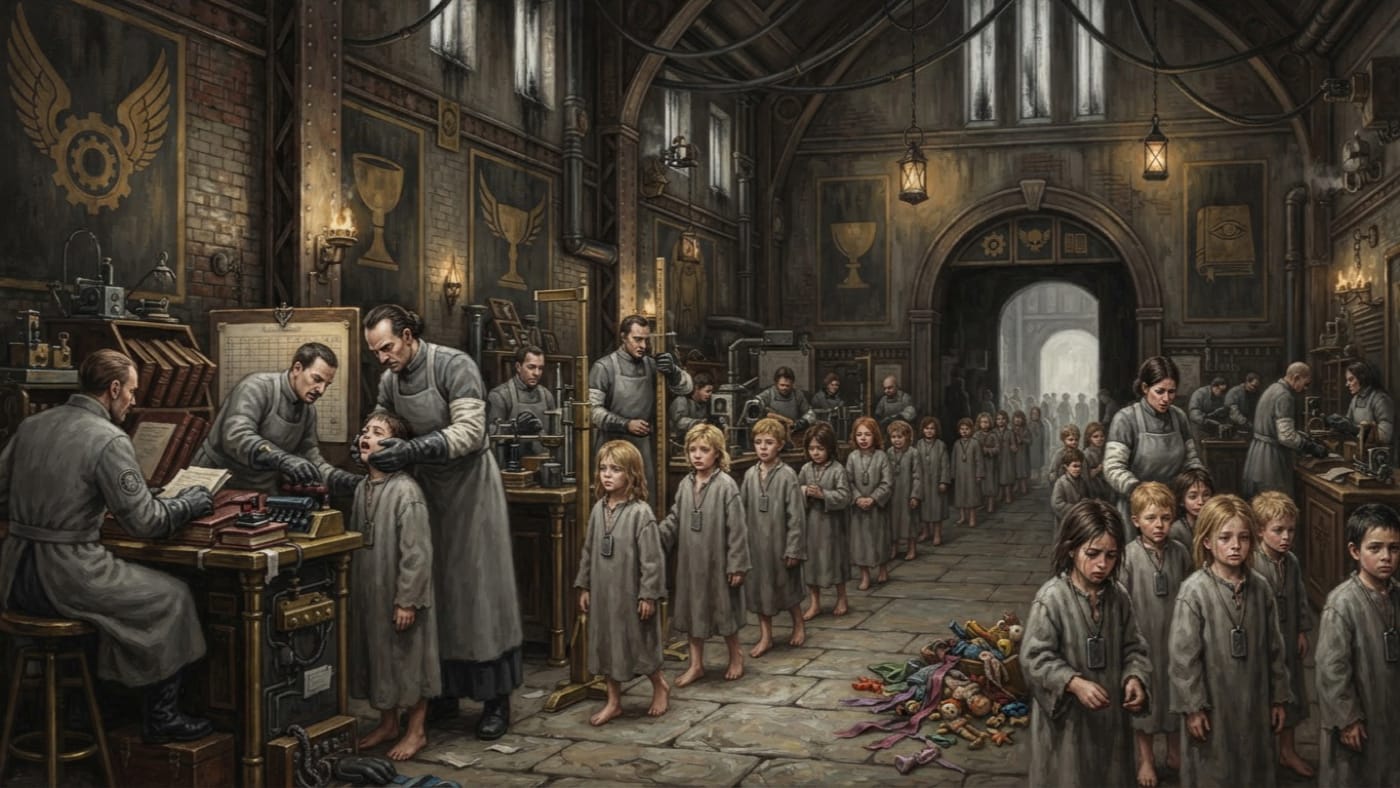
Mercy Orphanarii
A cot, a name, a future — all assigned
The Mercy Orphanarii feed, clothe and instruct the Synod's wards. They also replace family names, divide siblings and assign futures. A cot is provided; the child who entered it is administratively dissolved.
Codex Ref. VI.4.12-032
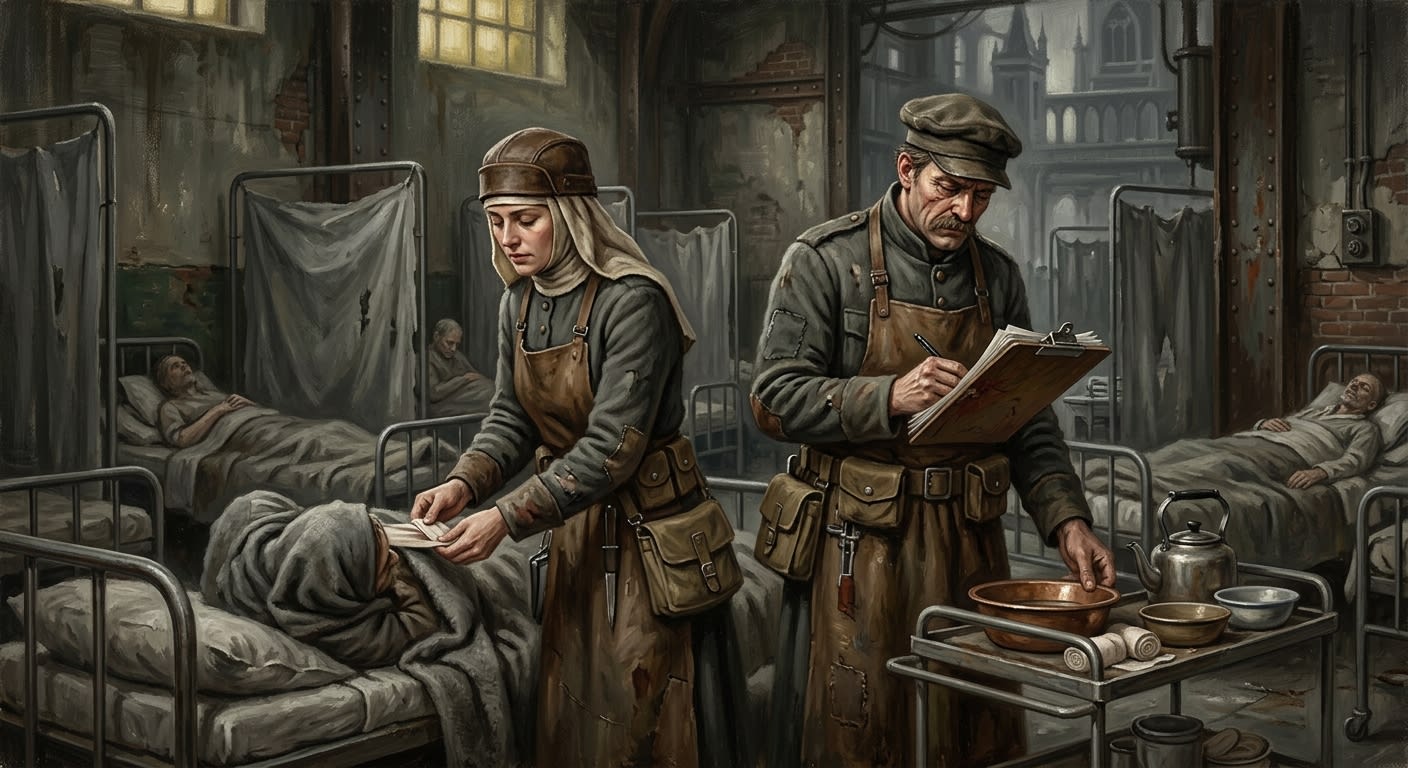
Mercy Ward-Sister / Mercy Ward-Brother
The hand that brings broth also carries the ledger
The Mercy Ward-Sister and Ward-Brother are the Bureau of Mercy's grey-aproned operators of counted compassion, where broth, bandage, confession, and paperwork become one instrument.
Codex Ref. XII.6.04-001
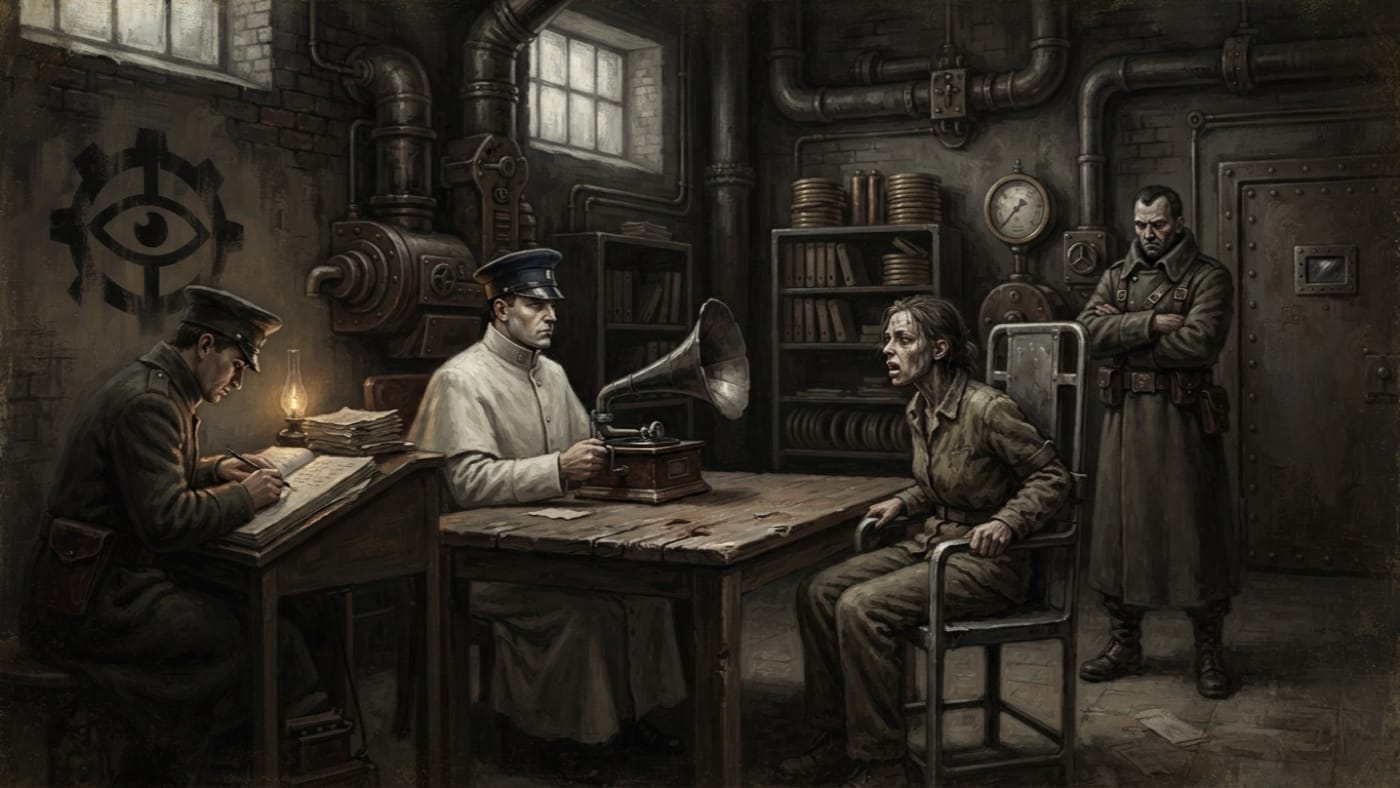
Methodical Interview Protocols
The song leaves no residue; the confession leaves names
The Bureau of Purity turns remembered melodies into sealed admissions. This A.S. 201 survey records the origin chain, the bargain for three names and the certainty a confession acquires once the wax is pressed.
Codex Ref. XII.48.02-001

Milan
The city that mistook minutes for sovereignty
Milan is Lombardy's polished mouth: silk, steel, banking paper, guild keys, and the old civic delusion that a beautiful memorandum can outrank Strasbourg.
Codex Ref. II.1.07-150
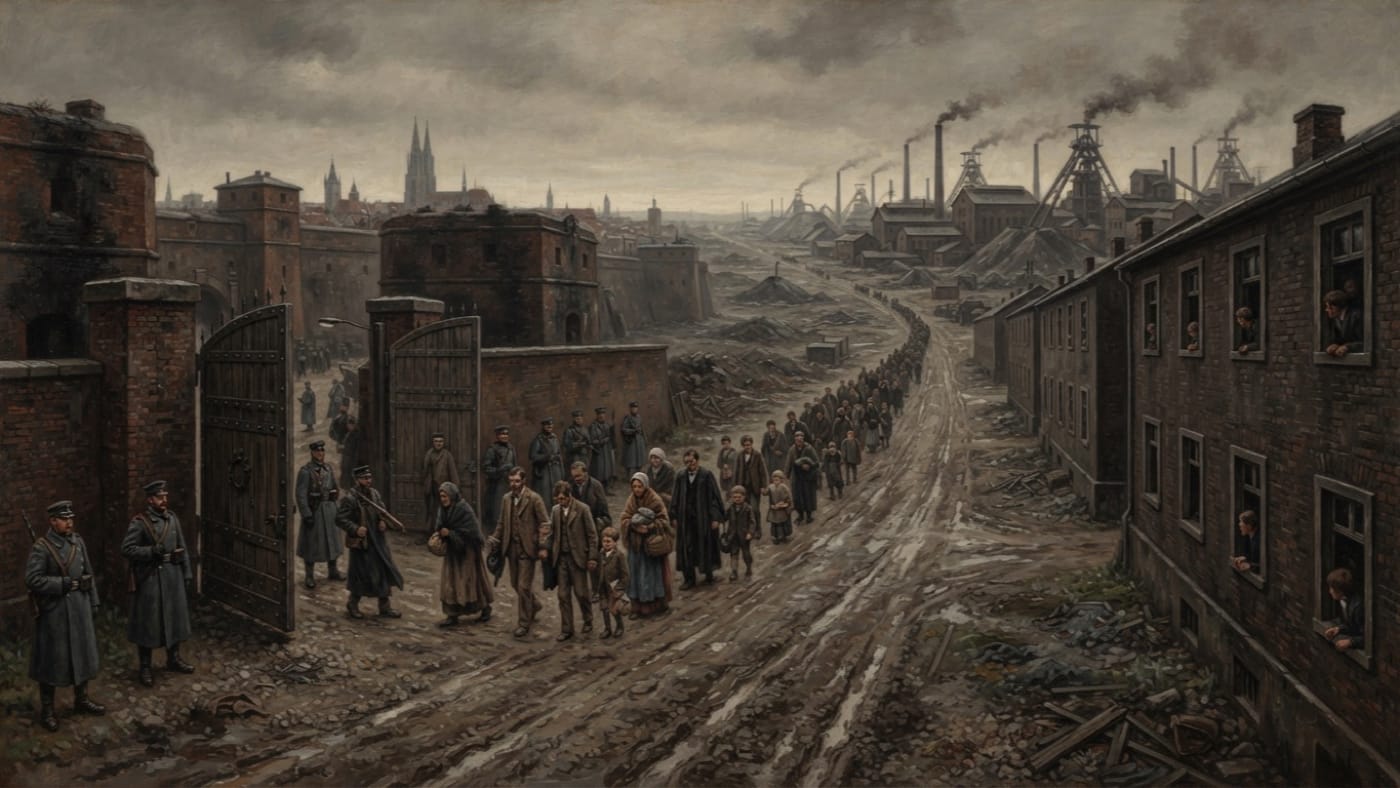
Mine Road
The road between a verdict and a number
Ulm's Mine Road carries condemned scholars and families south-east through checkpoint gates to the Paper Mines. The Nameless Hostels keep relatives waiting; disposition is usually intake.
Codex Ref. II.2.06-003
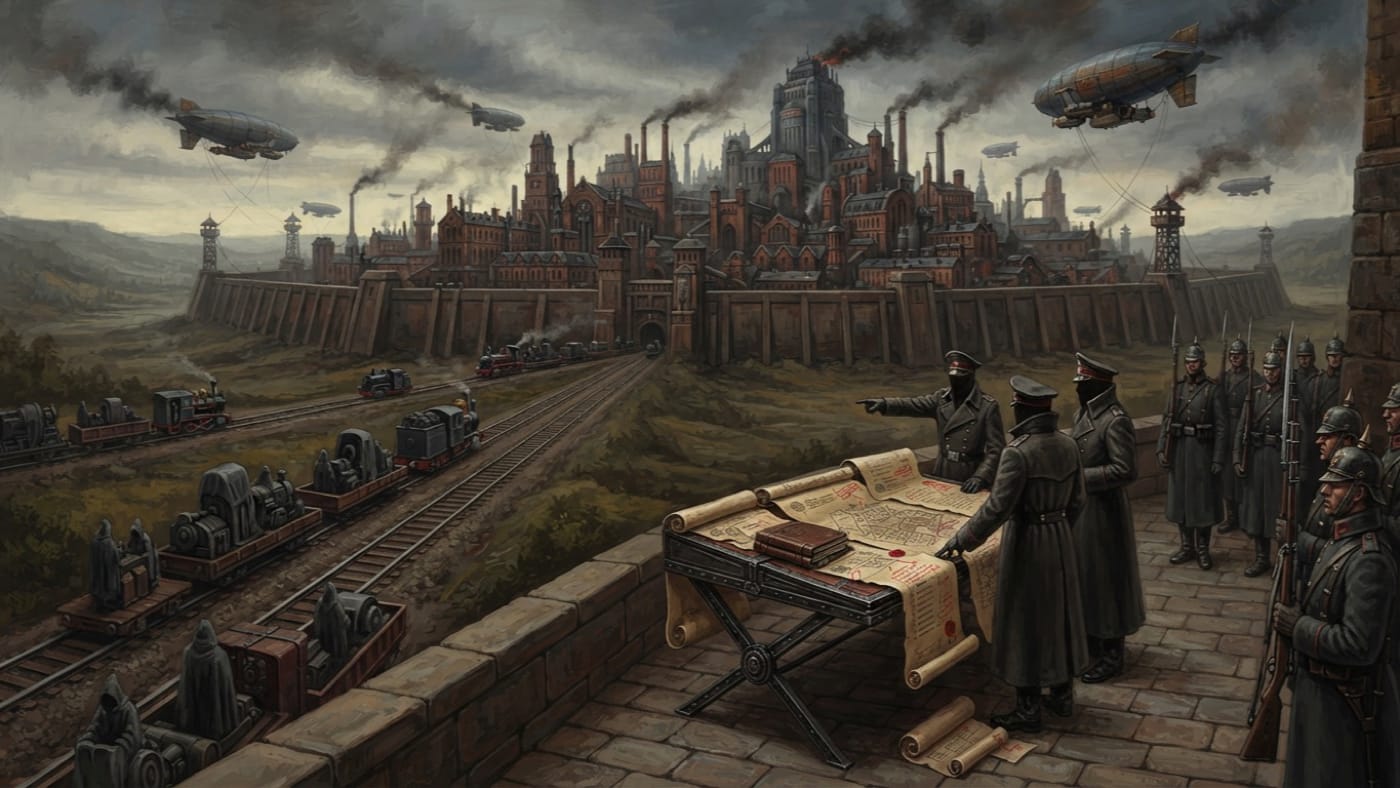
Montauban
The city made answerable by a name
Montauban entered Purity's Toulouse docket in A.S. 93 because Carcassonne named it. The file preserves no local testimony; the Bureau counts the city cleansed.
Codex Ref. II.1.09-093
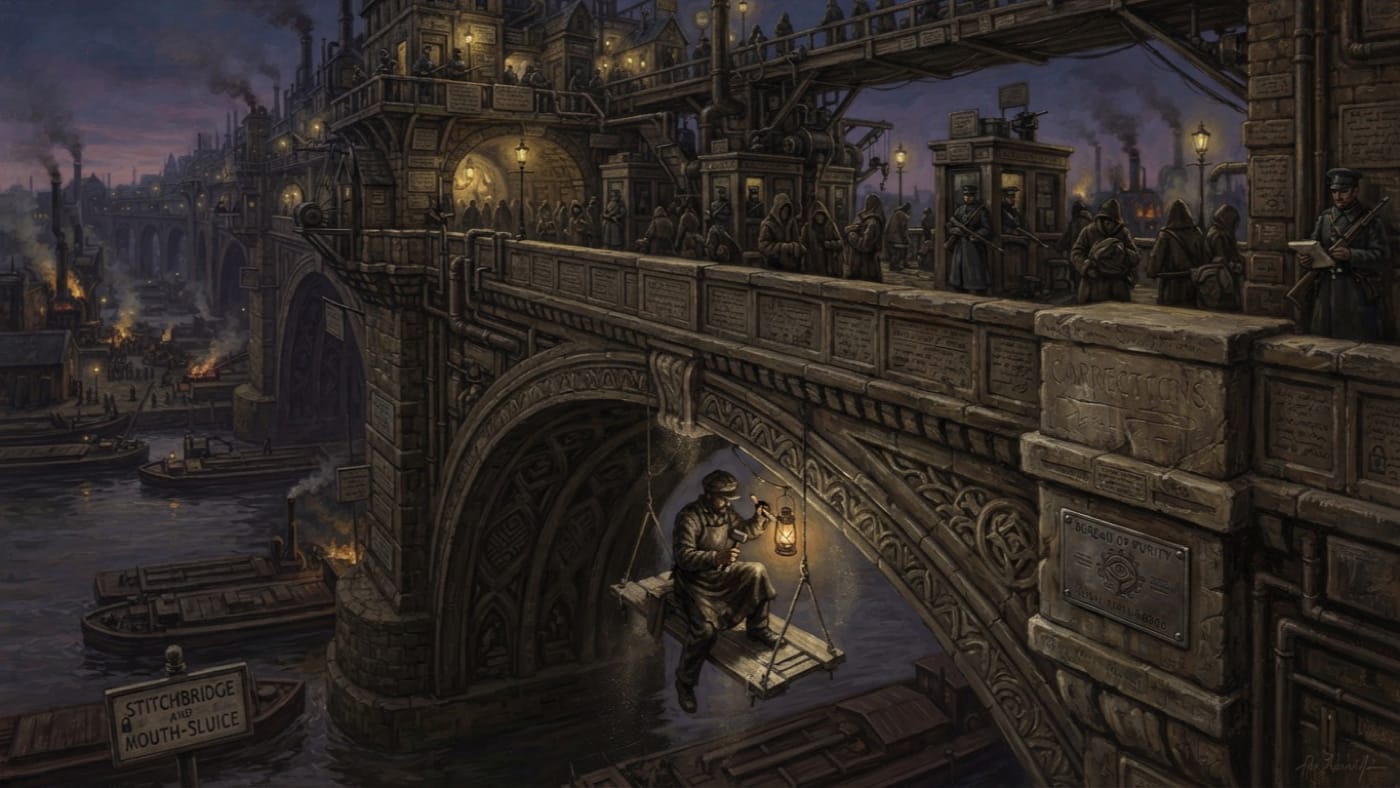
Mortar Saints
What the Index strikes from paper, the chisel returns to stone
The Mortar Saints hide forbidden names in the Archivolt Causeyworks' bridges. The Index condemns, the masons preserve, and the Saintspan audit remains authorized and unexecuted.
Codex Ref. XI.3.03-001
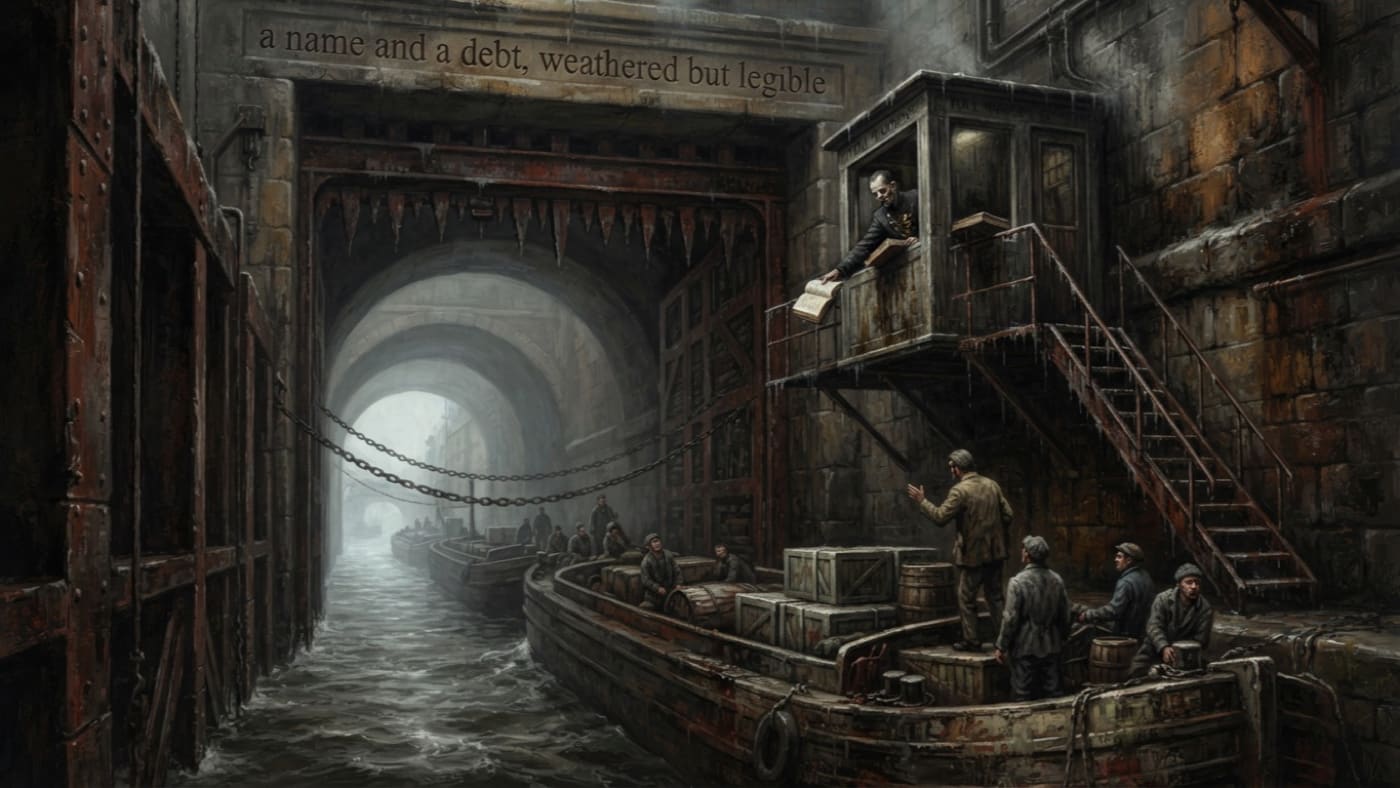
Mouth-Sluice
Three questions at the waterline, one unanswered debt overhead
The canal threshold of the Archivolt Causeyworks, where Goss asks three questions beneath his own stone debt. Barges wait by the hour; the lintel waits indefinitely.
Codex Ref. II.1.02-002
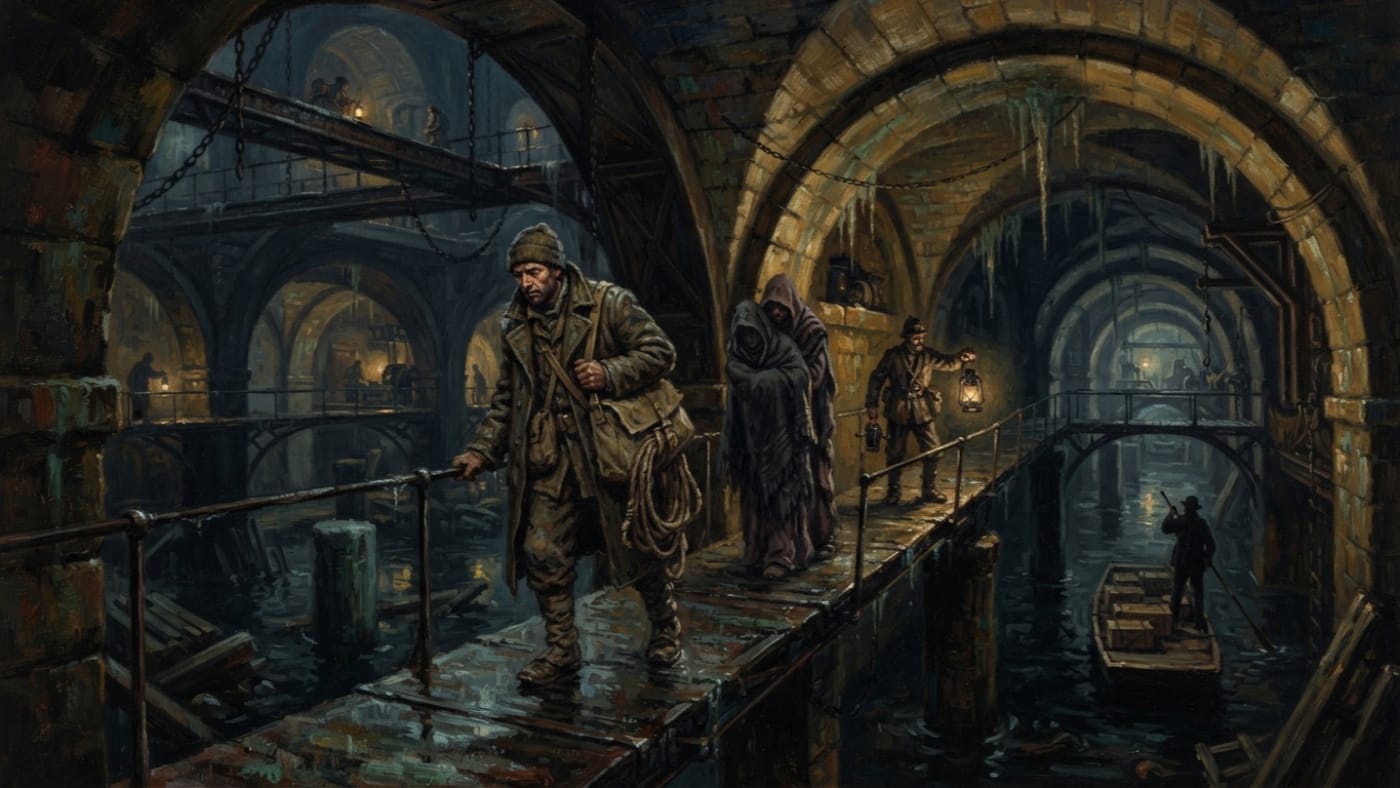
Mudkeys
The bridges demand papers; the runners sell a way beneath them
The Mudkeys sell passage beneath the Archivolt Causeyworks, moving people and contraband through the Undervaults. The bridges demand papers; the water demands competence.
Codex Ref. XI.7.01-006
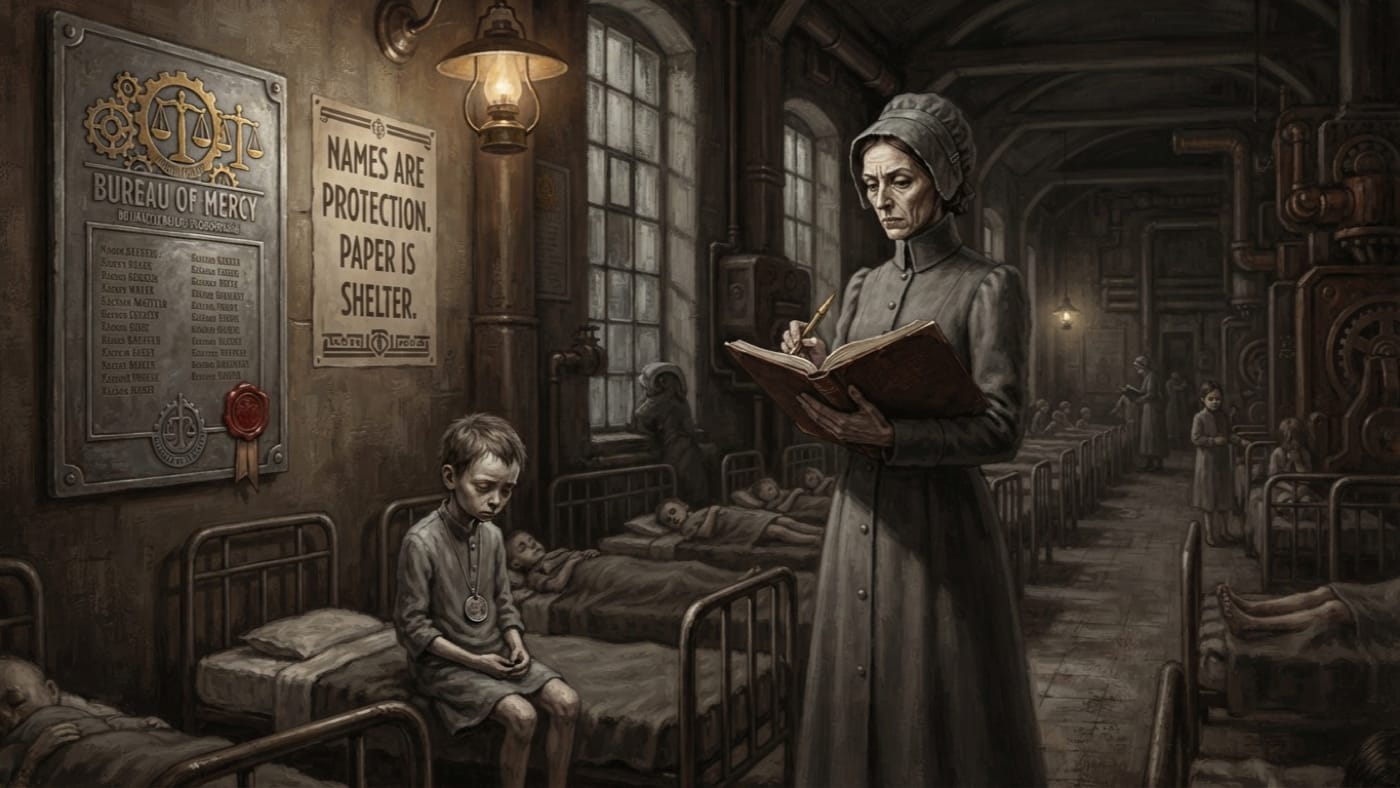
Name-Givers
The child answers to the name that feeds it
The Name-Givers are Orphanage Registrars who trust paper, discipline, and hunger to remake a child's identity. The assigned name secures supper; the remembered family remains a disciplinary problem.
Codex Ref. XI.1.05-003
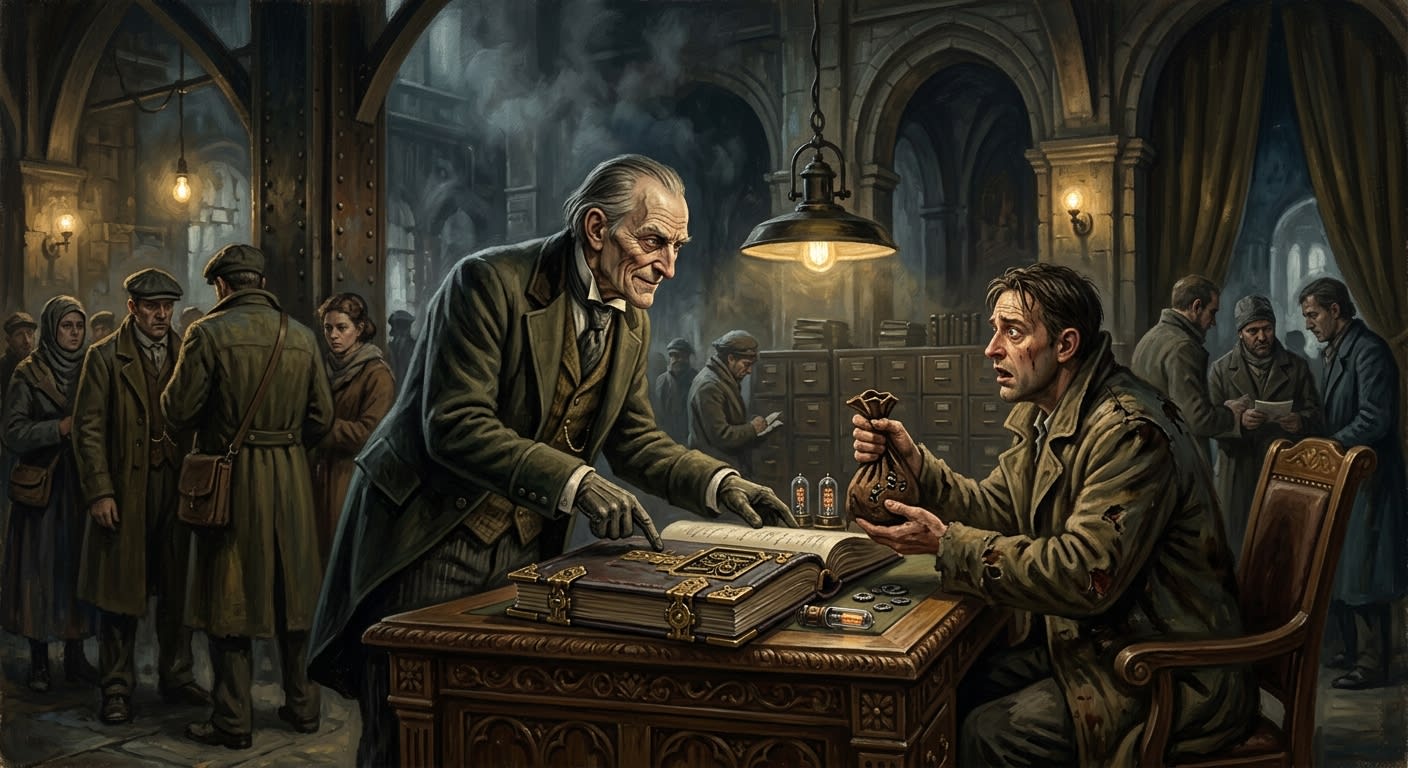
Name-Merchant
The broker who sells the bell before the knock
A Name-Merchant sells advance knowledge of Index condemnation, turning the interval before lawful erasure into the most expensive mercy in the Synod.
Codex Ref. XIII.1.75-001
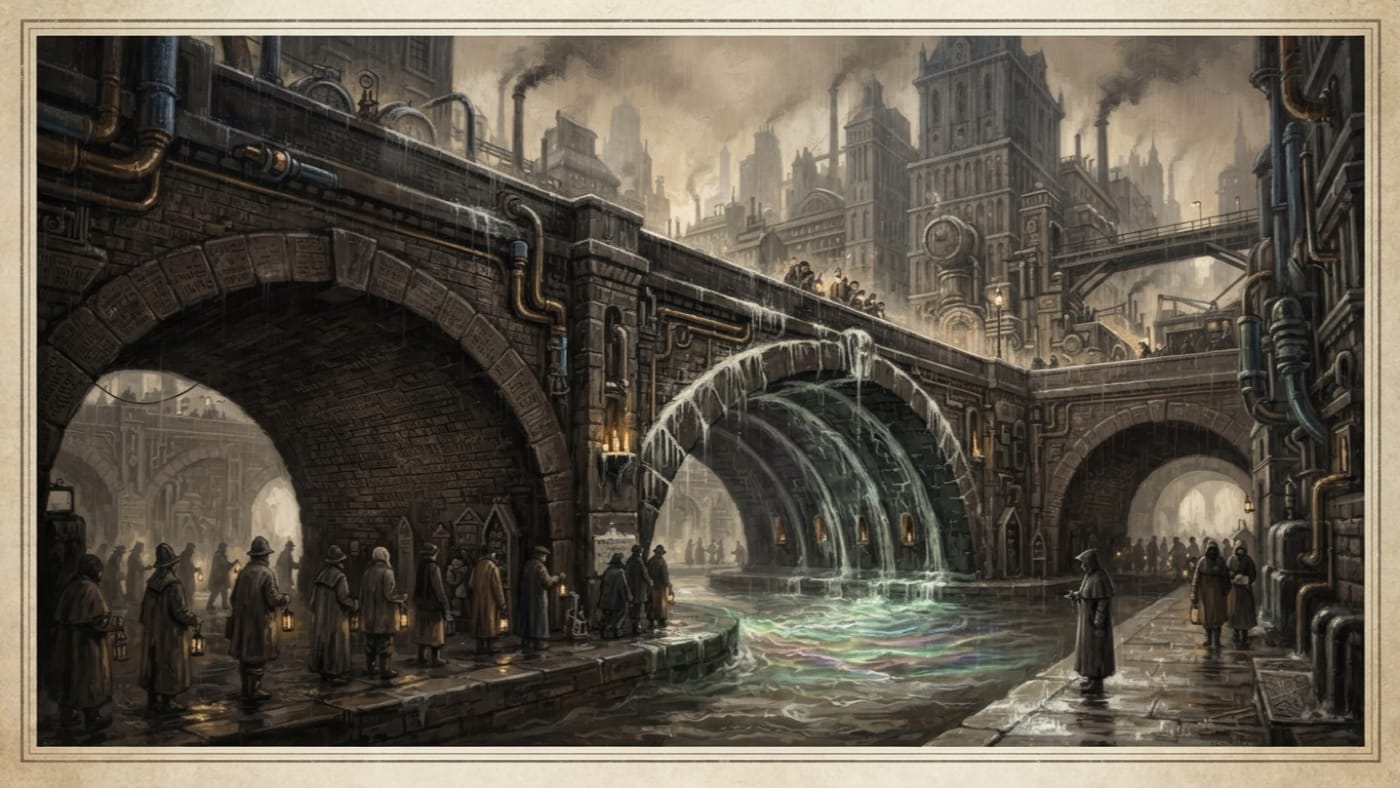
Name-Resonance Architecture
Where a registry error can become a bodily complaint
Certain arches of the Archivolt Causeyworks answer spoken names with lime, shifting water, healing or catarrh. The stone responds. Doctrine's explanation remains Category Three: Pending.
Codex Ref. XIII.1.02-003
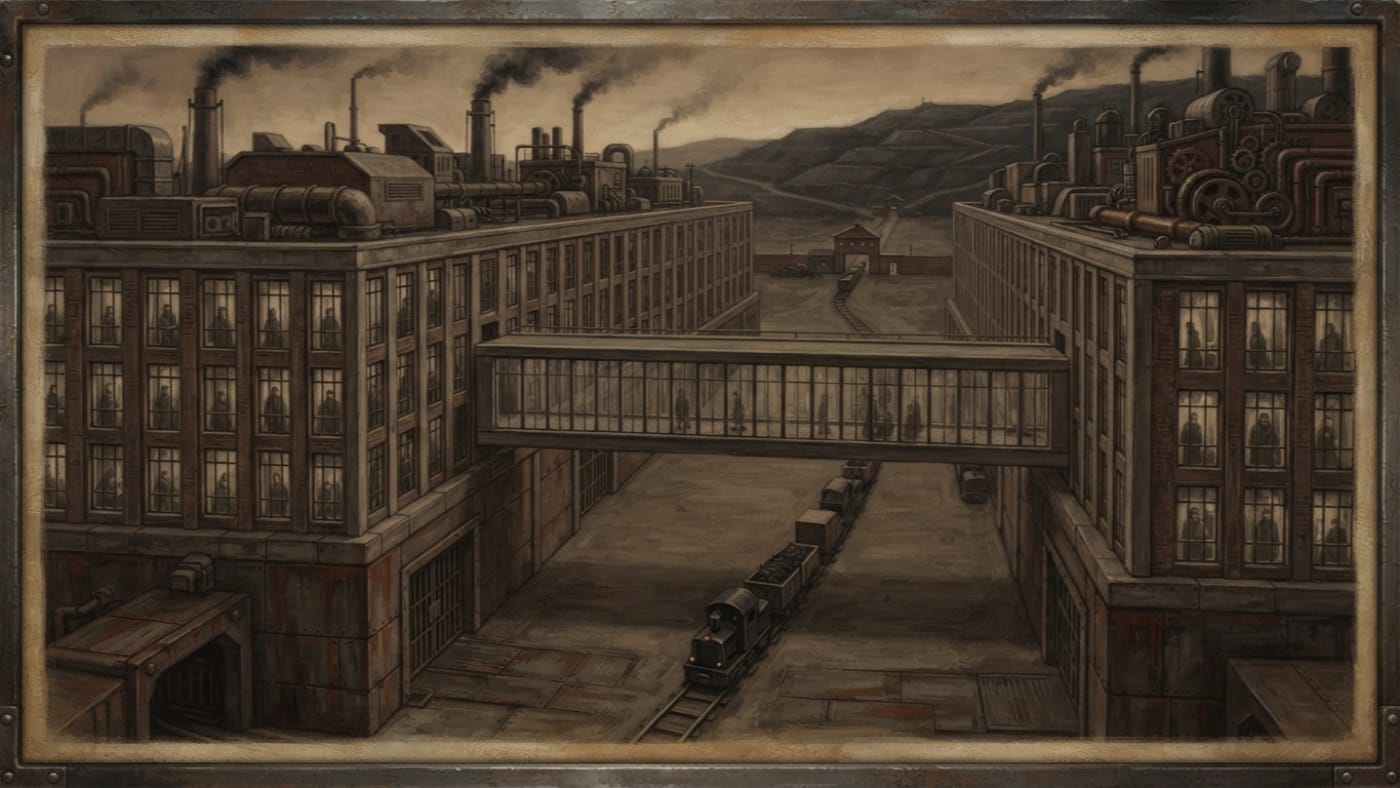
Nameless Hostels
Where a family keeps its name until the Mines require a number
Ulm's Nameless Hostels lodge relatives awaiting derivative disposition along the Mine Road. Windows face inward, curtains are forbidden, and names remain until the Mines' intake table requires numbers.
Codex Ref. II.2.06-004
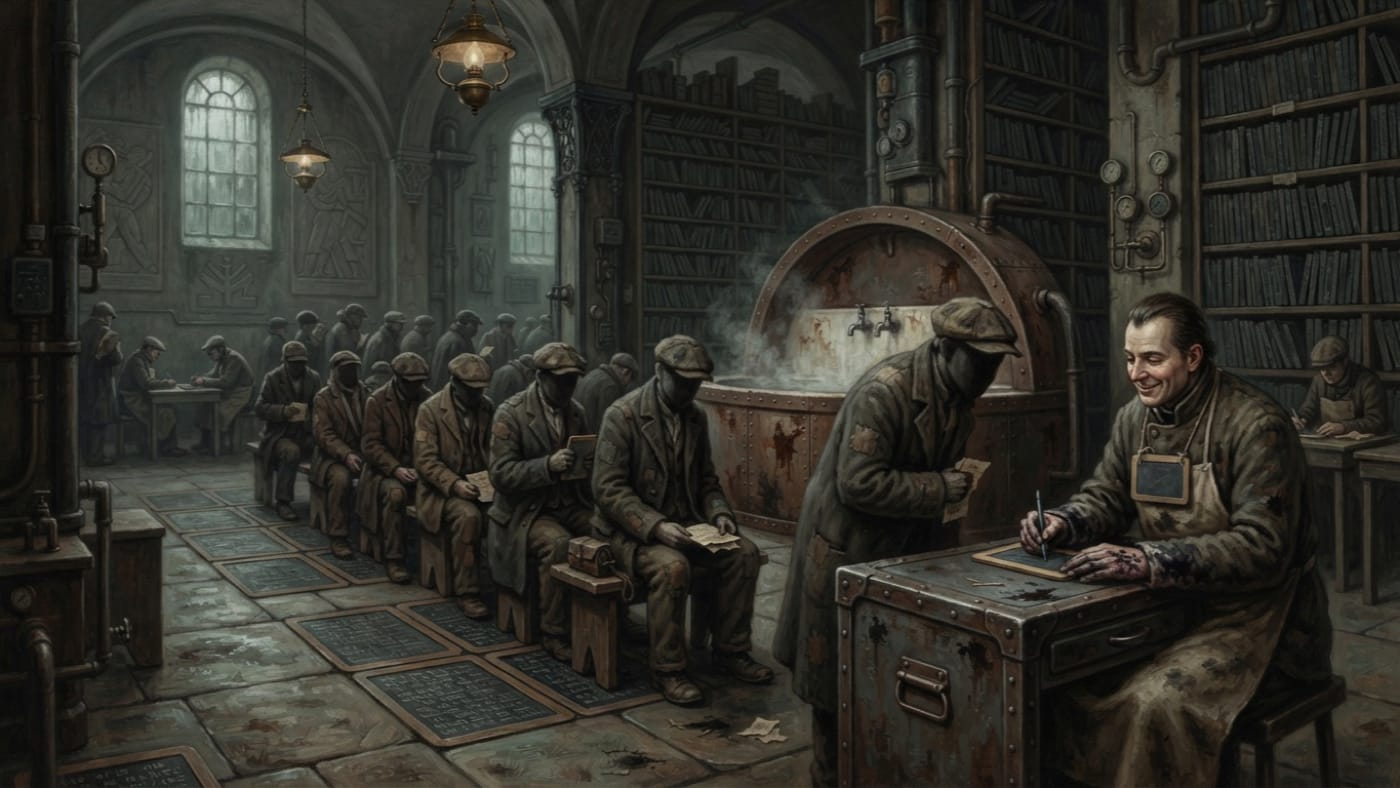
Namewash Night
The name comes back washed; the doubt stays in slate
Each week the Causeyworks requires residents to confess doubts about their names. The names are returned; the confessions remain in slate. The city calls this hygiene.
Codex Ref. XIII.1.02-004
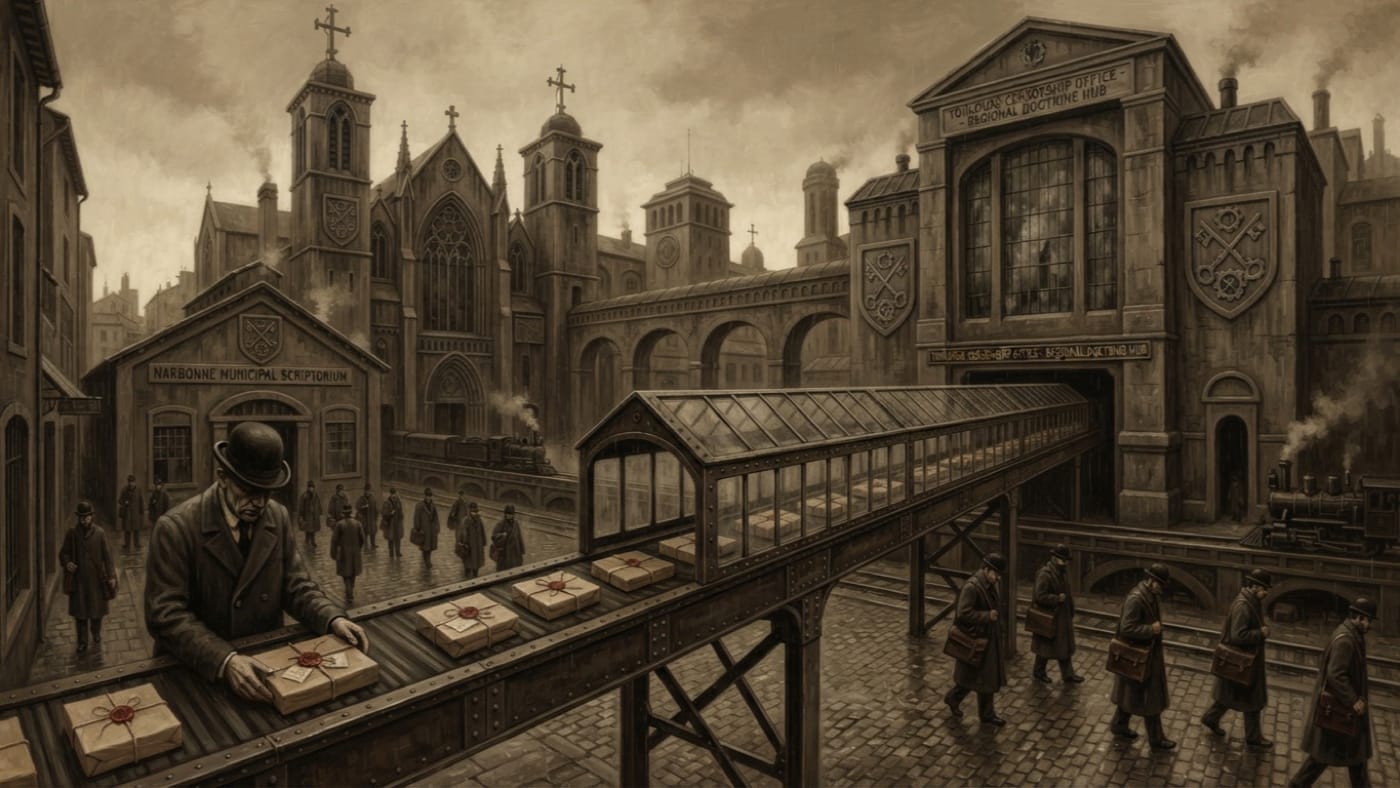
Narbonne
Named at Carcassonne, read at Toulouse
Narbonne entered the Toulouse file by confession in A.S. 93. In A.S. 201 its school primers travel there by routine post. Obedience has learned to wrap its own parcels.
Codex Ref. II.1.09-093
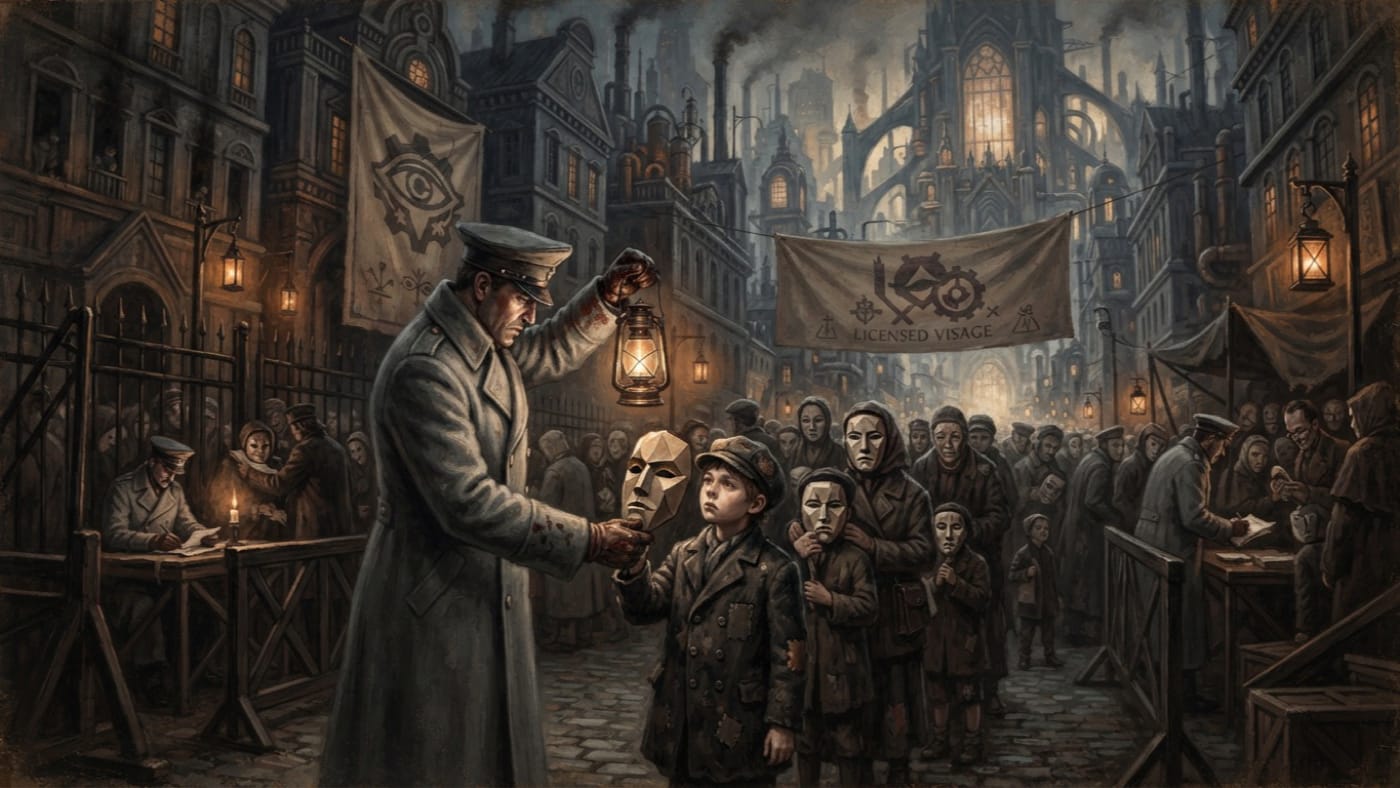
Night of Masks
Even delight must show its wax
On the eve of the Feast of the Sealed Door, the Synod licenses its carnival faces. Heraldry approves the design; Inspectors demand the wax. Even a child must learn to show permission.
Codex Ref. XIII.1.89-1919
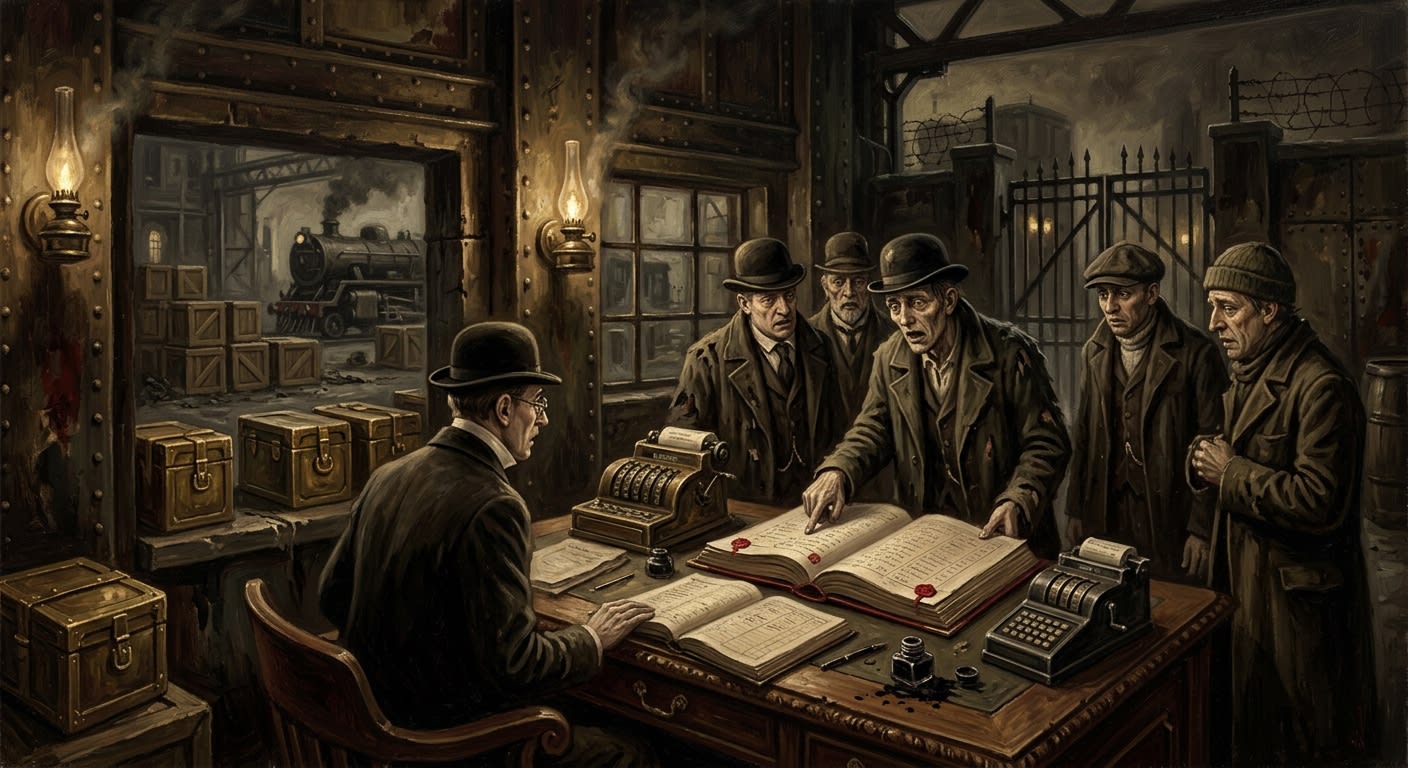
Night of Six Names
Six legal crossings taught the Index to run
The A.S. 80 Night of Six Names exposed stale Index data at six checkpoints and bought the Runner Corps its first twelve lungs.
Codex Ref. VII.8.10-043
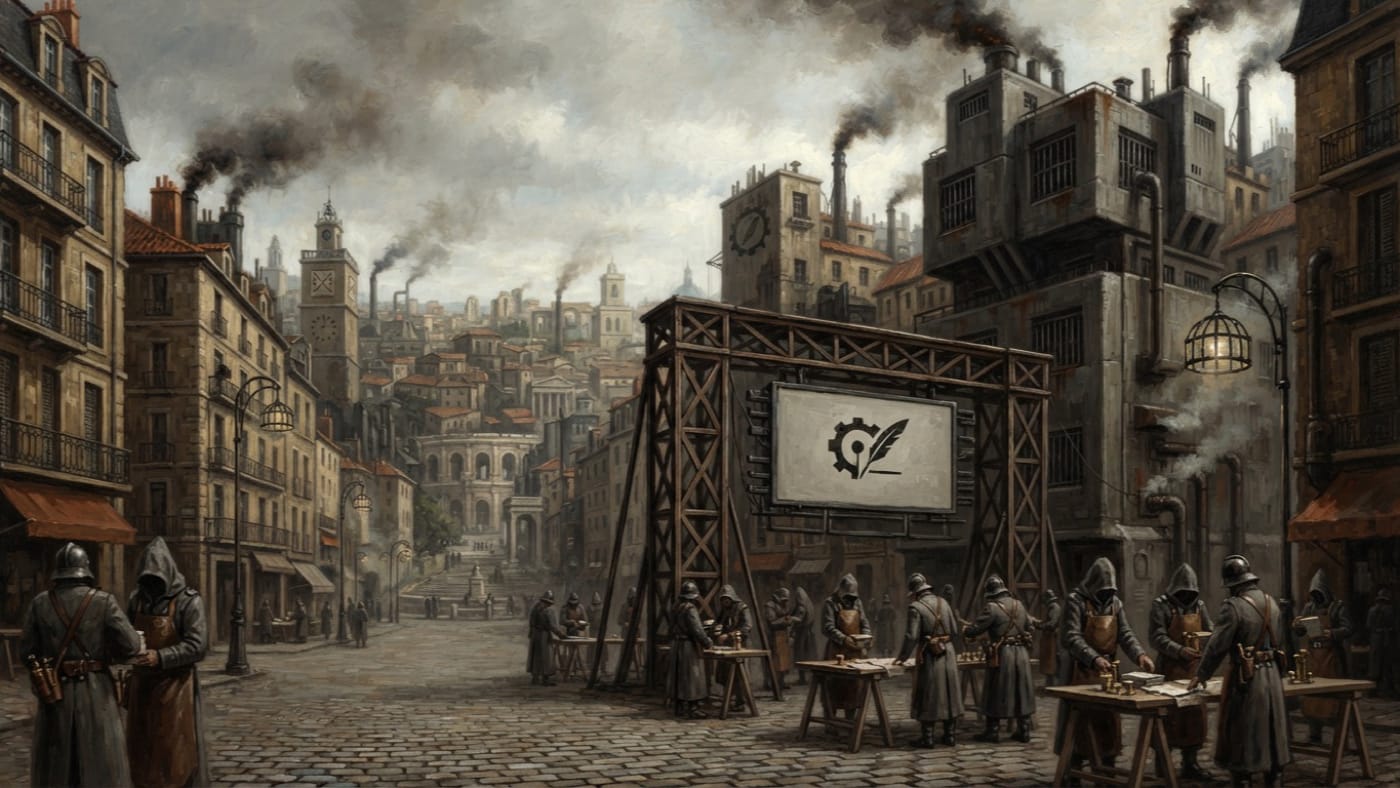
Nîmes
A city given a column before a case
Nîmes entered Purity's A.S. 93 Toulouse dossier because Carcassonne named it under interrogation. The city received a column; this file establishes no local offence.
Codex Ref. II.1.09-009
Ninefold Matins
Dawn is not welcomed; it is struck into obedience
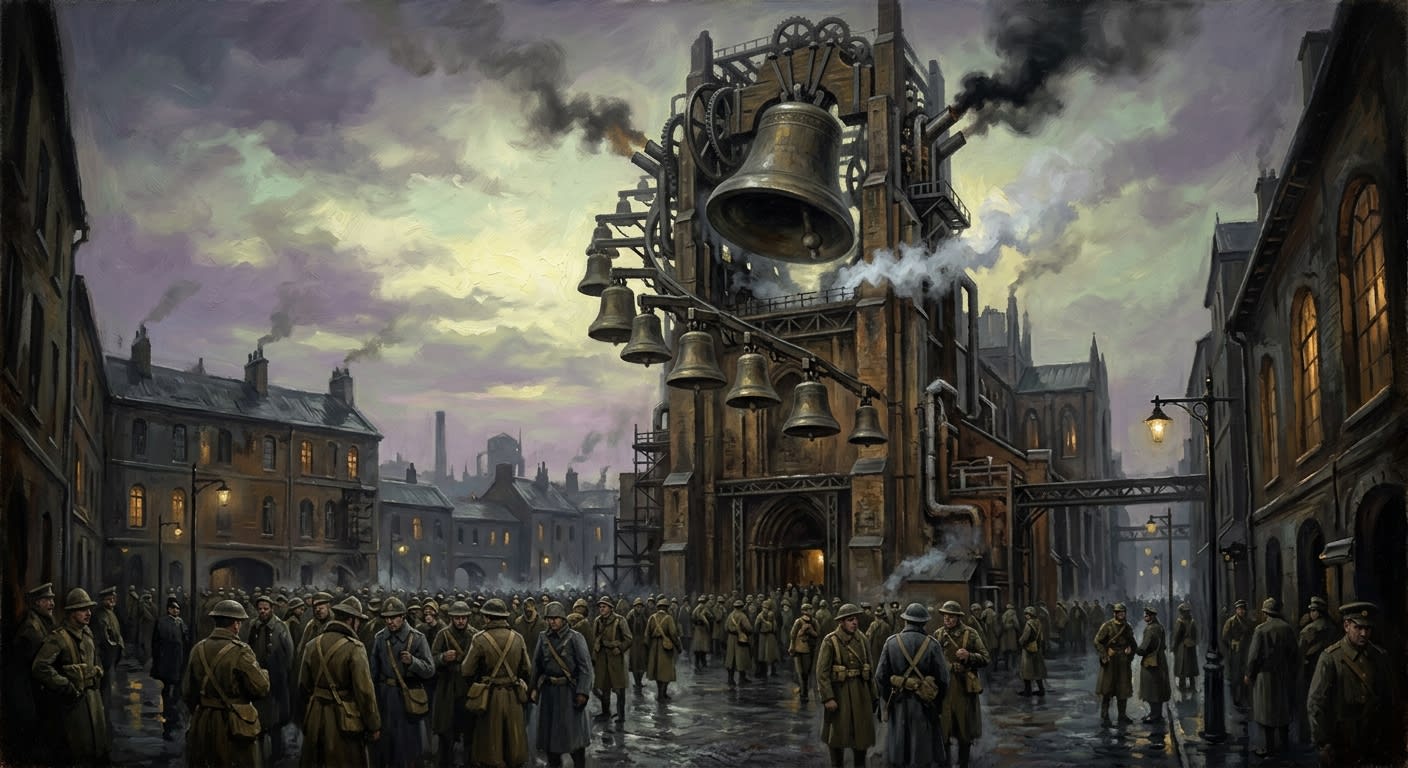
Ninefold Matins is the Synod's dawn peal: nine descending strokes by which sleep is annulled, bodies are mustered, first actions become lawful, and the private self is beaten into schedule.
Codex Ref. XIII.1.62-115
Ninth-Ratification
The seal that forbids analogy because pattern is accusation
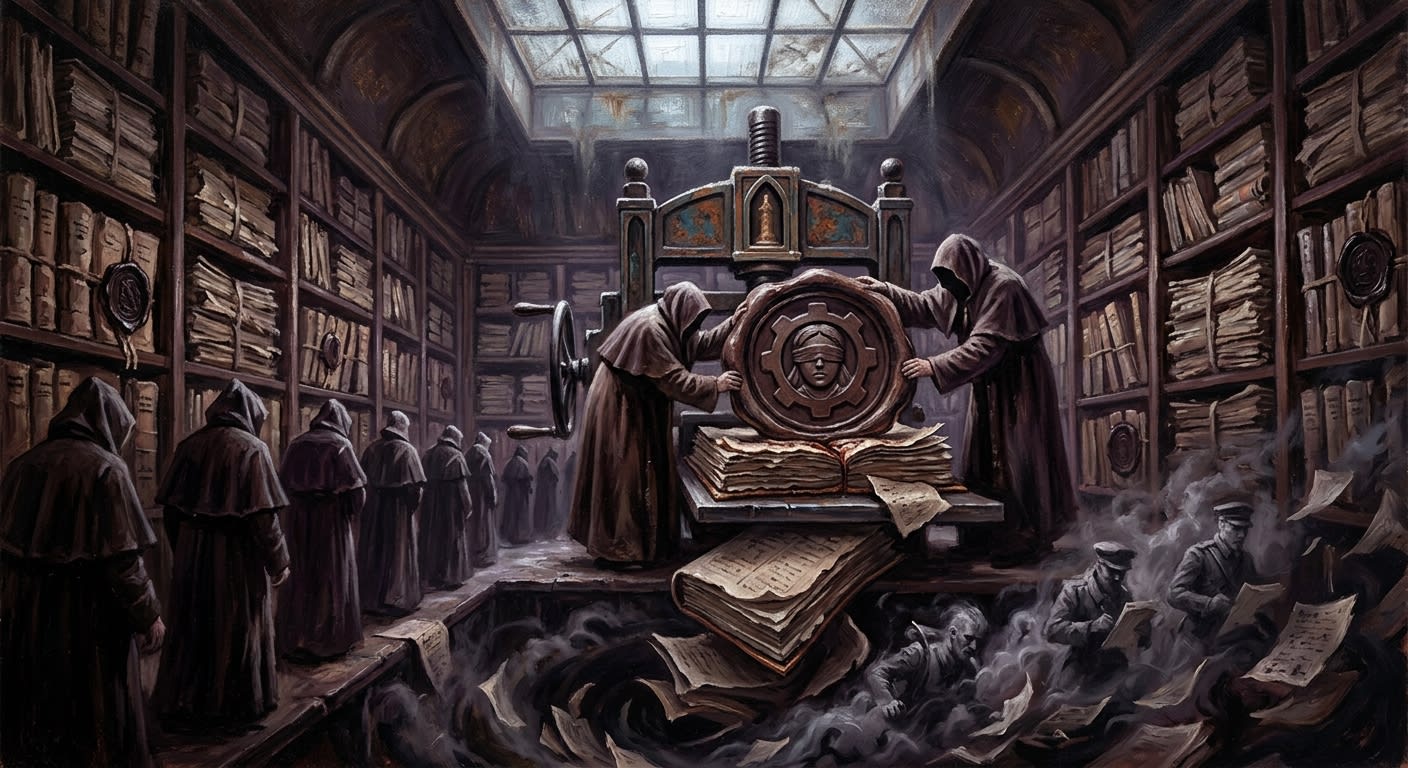
Ninth-Ratification is the Synod's highest publicly nameable seal: a doctrine of lawful ignorance for records whose disclosure changes context, office, witness, and history itself.
Codex Ref. XIII.1.76-103

Northern Survey of A.S. 190
Two villages, fourteen gifts of herring, and a refutation withdrawn
The A.S. 190 Survey reached Gothenburg, examined two fishing villages and accepted fourteen gifts of dried herring. Its finding survives; this Codex's claim that it disproved the Exile of Temperance does not.
Codex Ref. VII.8.10-190
Nursery Levy Decrees
The law counted the cradle; the cradle learned to lie
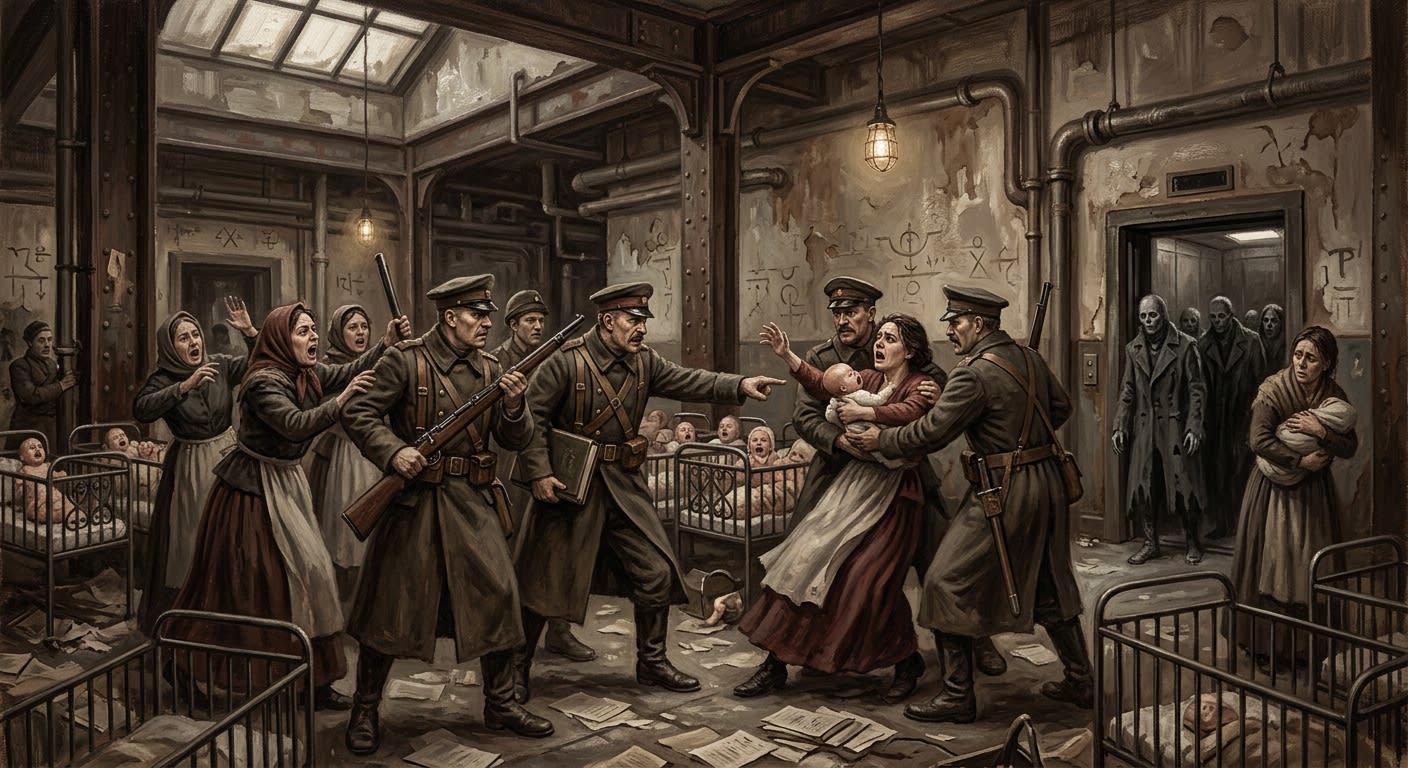
A.S. 152 cradle-registration laws that cut infant filing to twelve and seventy-two hours, birthed armed registry teams, midwife resistance, and the Pale Kin trade.
Codex Ref. VII.8.10-054

Obscurists of the Third Ink
The clerks no Bureau admits to employing
The Obscurists of the Third Ink allegedly turn hesitation into conscience entries for the Codices Obscurae. Their title survives in an undated fragment; no Bureau admits to employing them.
Codex Ref. XIII.1.06-003
Office of Doctrinal Risk
One case retained; one lesson still pending
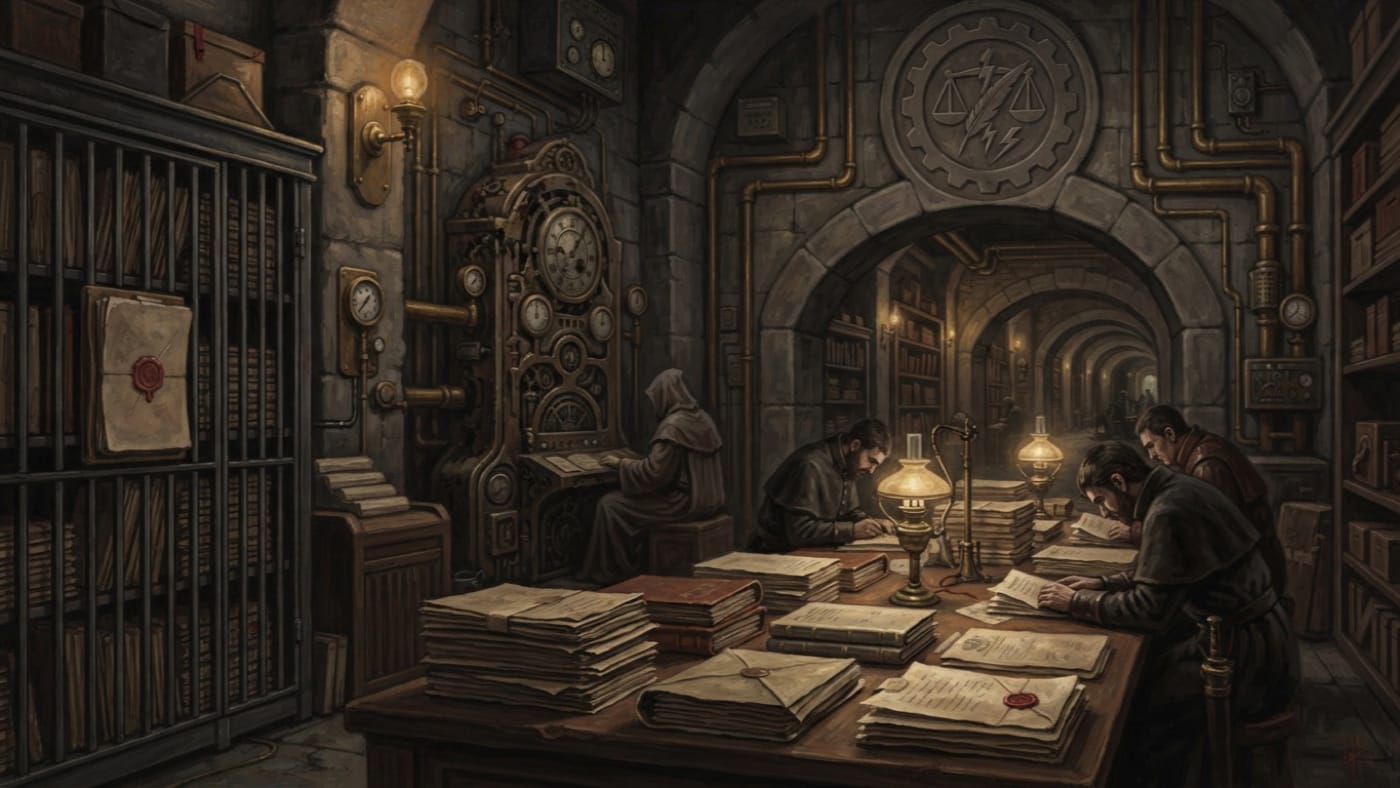
Attested by the sealed Breel addendum, the Office retains her case for instruction and prohibits public use. The personnel lesson limits exposure; the theological lesson remains pending.
Codex Ref. III.3.09-001
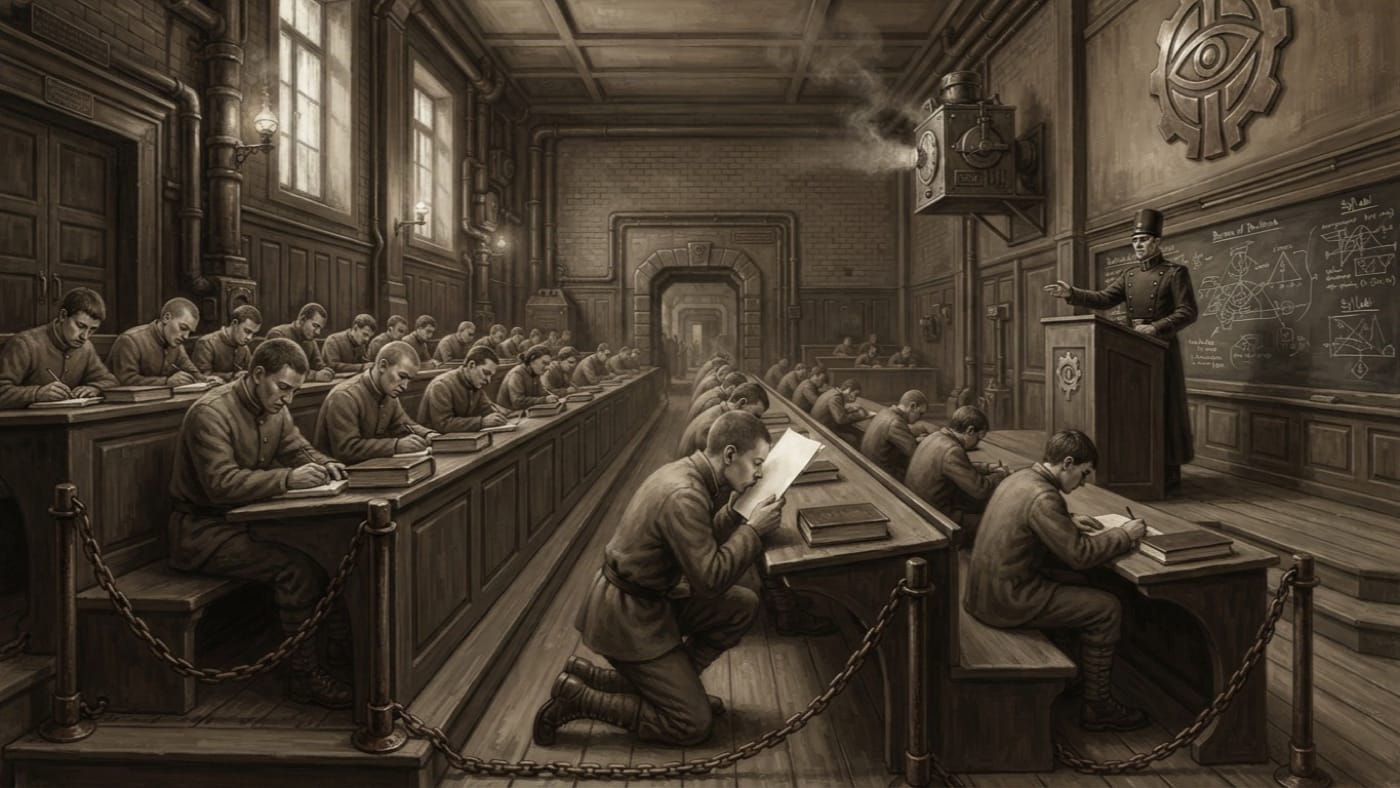
Old Faculty Rows
Where the syllabus was corrected and the desks were chained
Ulm's former Rationalist halls now house doctrinal schools, where Purity audits the syllabi, students kiss blank pages, and the lecture desks remain chained to the floor.
Codex Ref. II.2.01-006

Old Klem the Ledgerman
He did not hide the sack; he hid the absence
Old Klem the Ledgerman is the condemned founder-figure of Grain Keeper ledger fraud, the clerk who taught spoiled grain to become bread again.
Codex Ref. III.2.01-122
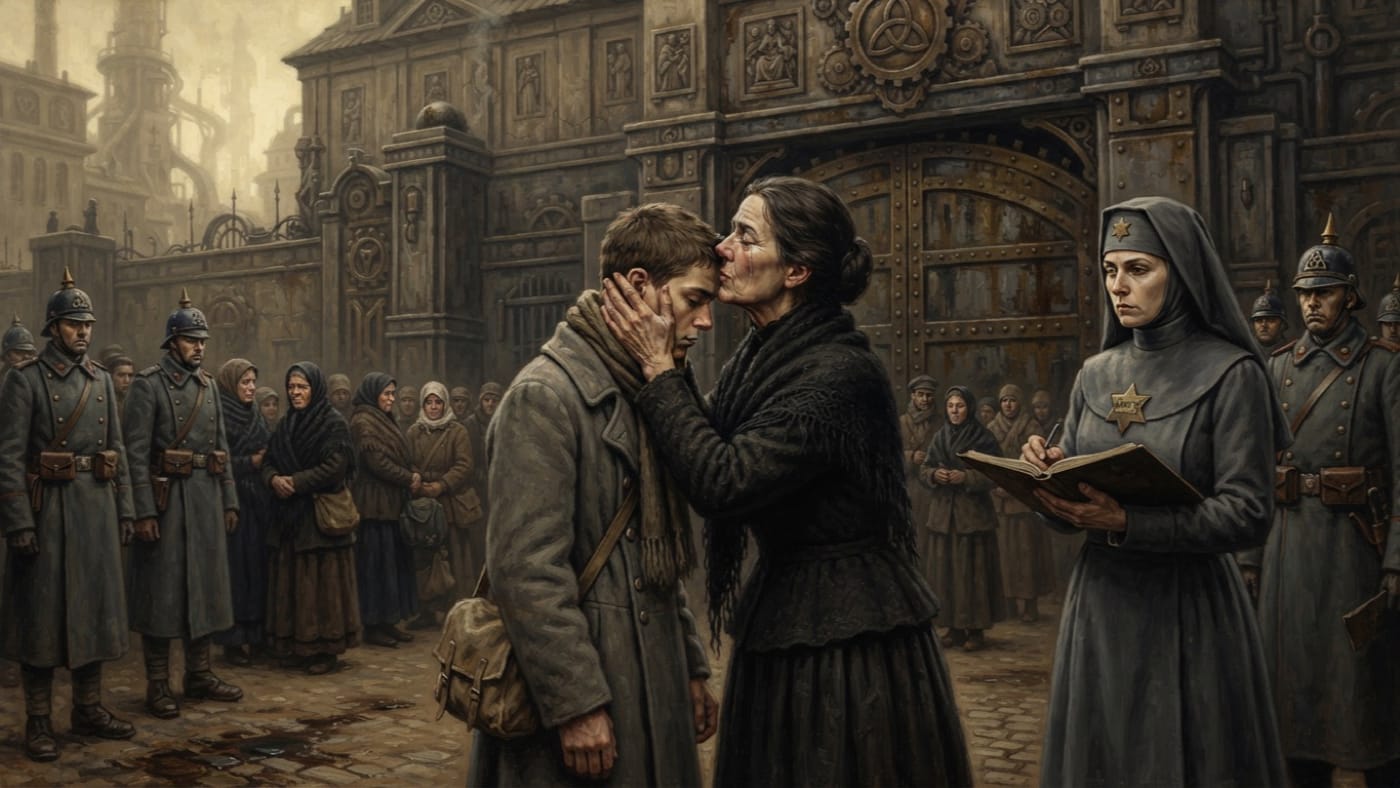
On the Joyful Surrender of Offspring to Providence
War Takes the Son; Mercy Receives the Tears
Mercy's pamphlet teaches mothers to surrender a son to the levy and enter their tears as proof of faith. War takes the boy; Mercy takes title to the grief.
Codex Ref. XIII.1.54-002
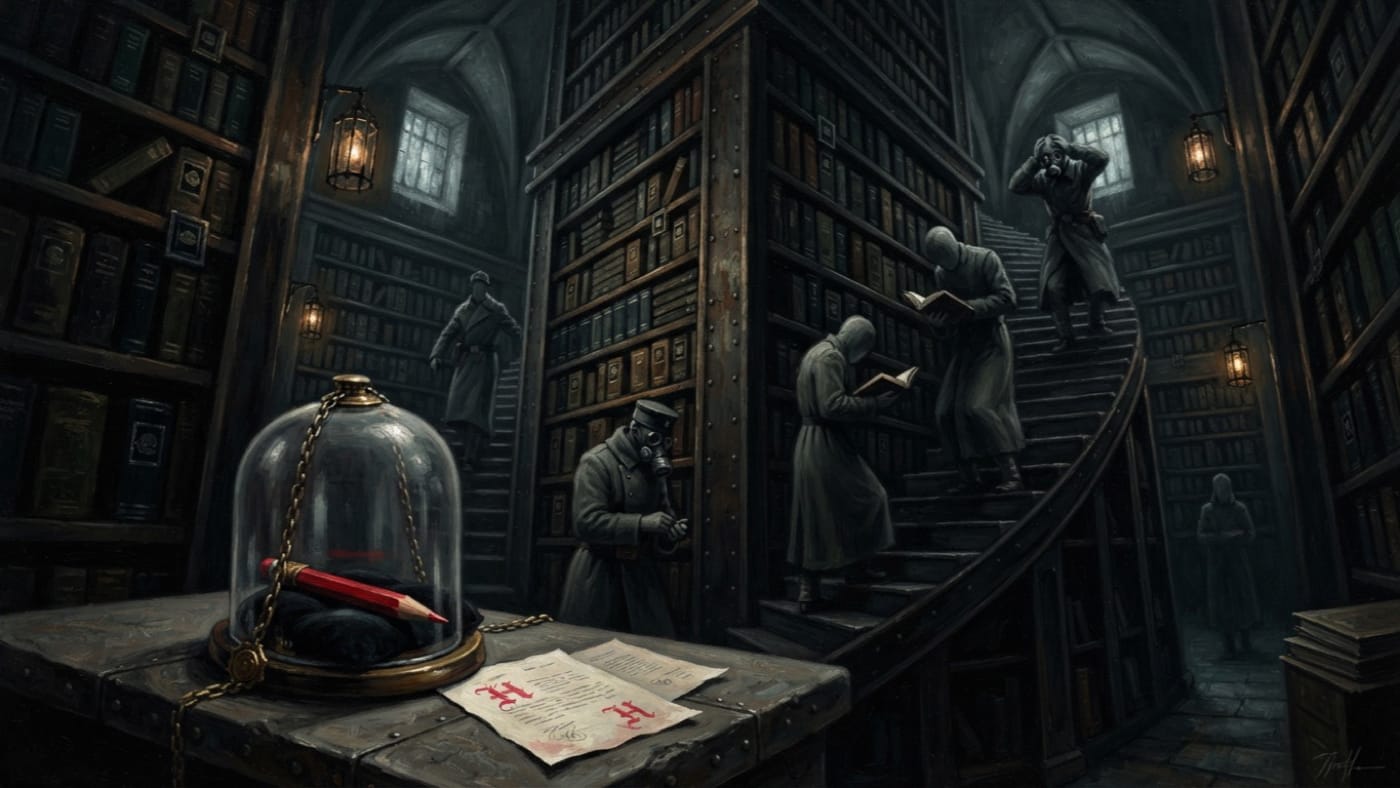
Ordinance 14-A
The shelf requires a licence; understanding requires discretion
Ordinance 14-A licenses libraries, grades unlicensed possession, reading and understanding as heresy, and protects the Censor-Prelate's red pencil. The full text has not been located. The notices suffice.
Codex Ref. XIII.1.14-187

Orphanage Registrar
The child enters crying and leaves legible
Orphanage Registrars convert foundlings into entries: named, tagged, risk-scored, and placed before hunger, memory, or bloodline can become a rival jurisdiction.
Codex Ref. VI.4.12-044
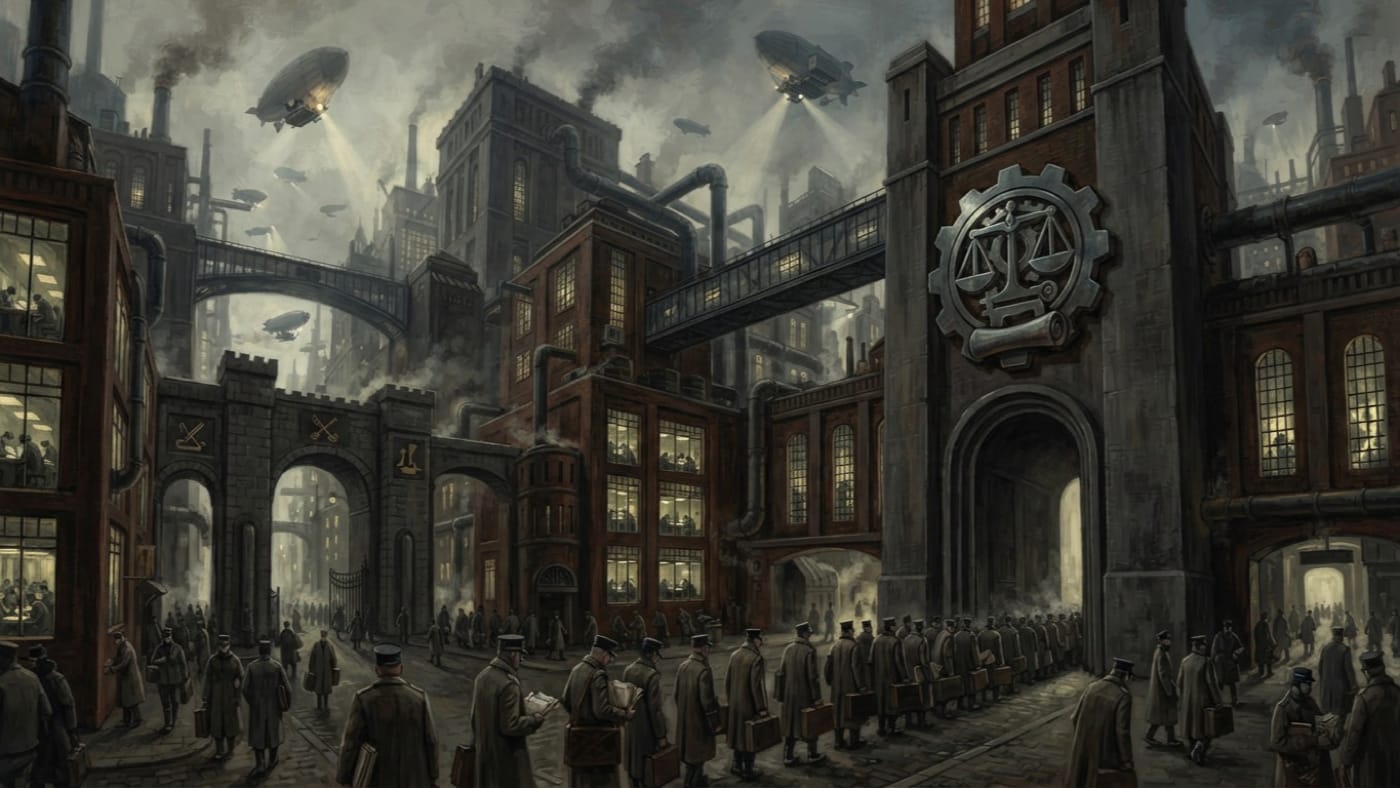
Padua
A University City Whose Questions Return Unopened
An A.S. 201 survey of Padua, university city of the Central Heartlands. Seven professors went to Strasbourg; the University's enquiries returned unopened. The names became clerical errors.
Codex Ref. III.2.01-2065

Pale Kin Runner
What the Bureau calls inventory discrepancy; what the mothers call salvation
The Pale Kin Runner is a child-smuggler, a midwife's heir, and the Bureau of Conscription's oldest unsolved arithmetic problem. She intervenes between birth and stamp. The Synod calls this heresy.
Codex Ref. XII.28.01-001
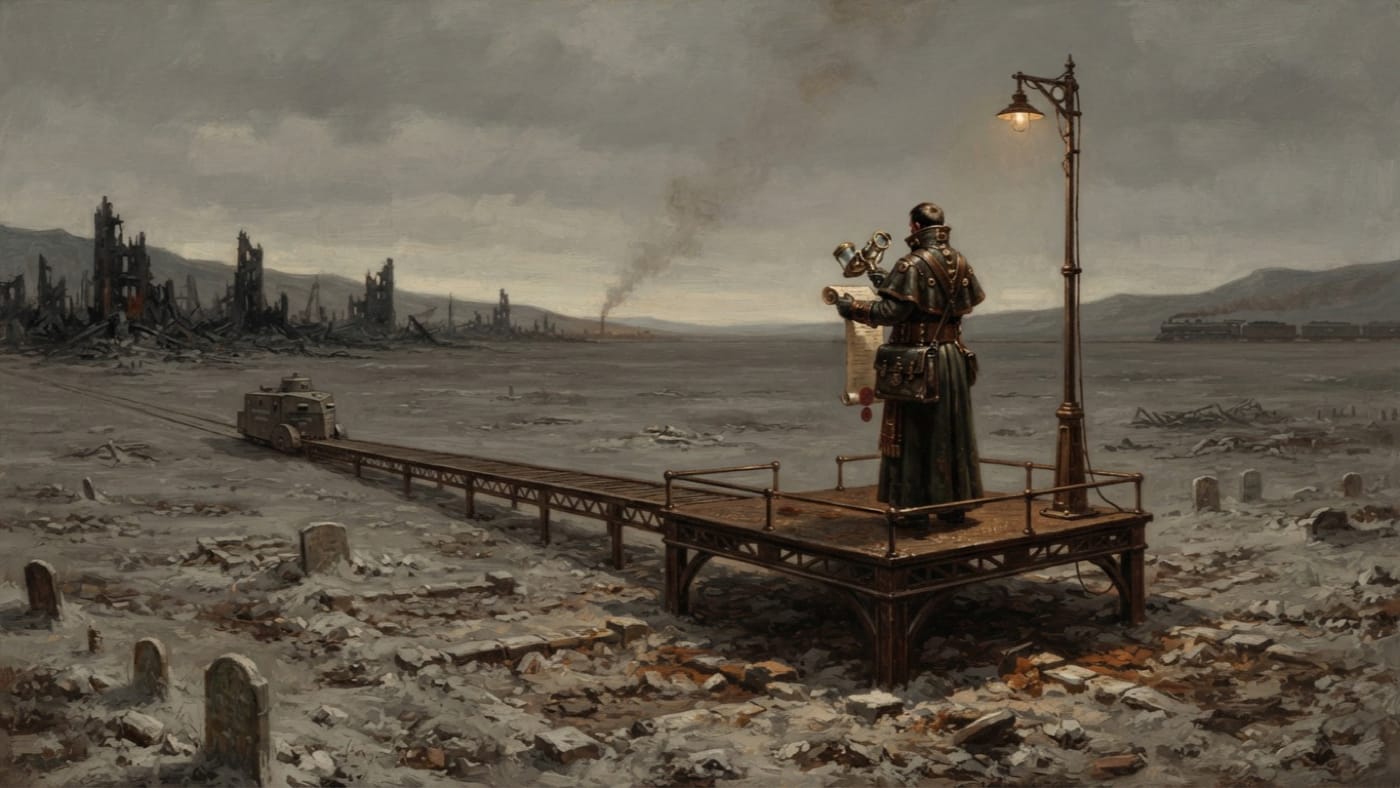
Pavia
The diocese whose stipend outlived its people
Pavia was razed in the Sundering of A.S. 45. Its diocese remains on the rolls, its Bishop-Praetorial paid to issue decrees and inspect an absence.
Codex Ref. II.1.12-045
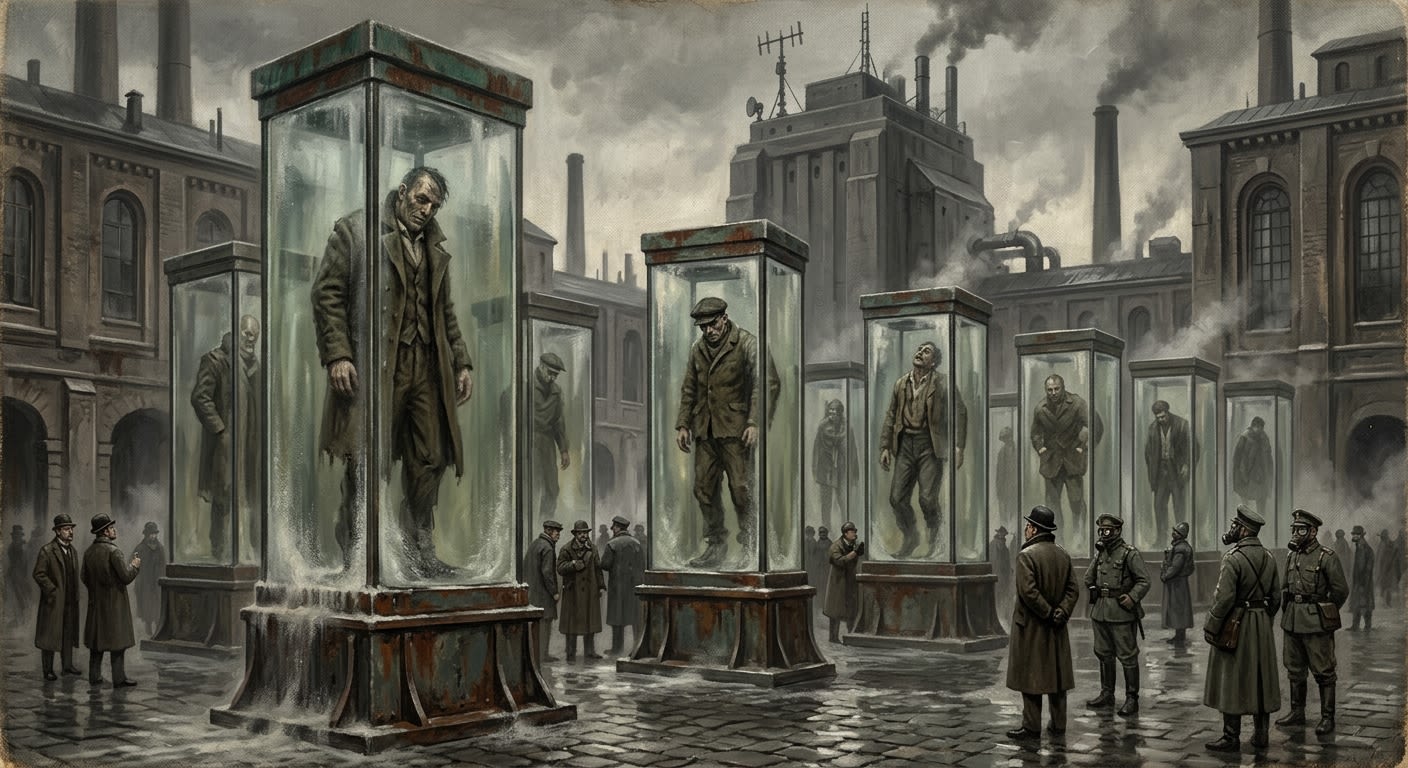
Pillars of Glass, Zaragoza
Transparent cruelty, polished daily for the improvement of the crowd
Zaragoza's punishment plaza of glass columns, where condemned bodies stand magnified into civic lessons and the Ash-Rain still leaves pale residue on Purity's proudest transparent cruelty.
Codex Ref. II.1.06-001
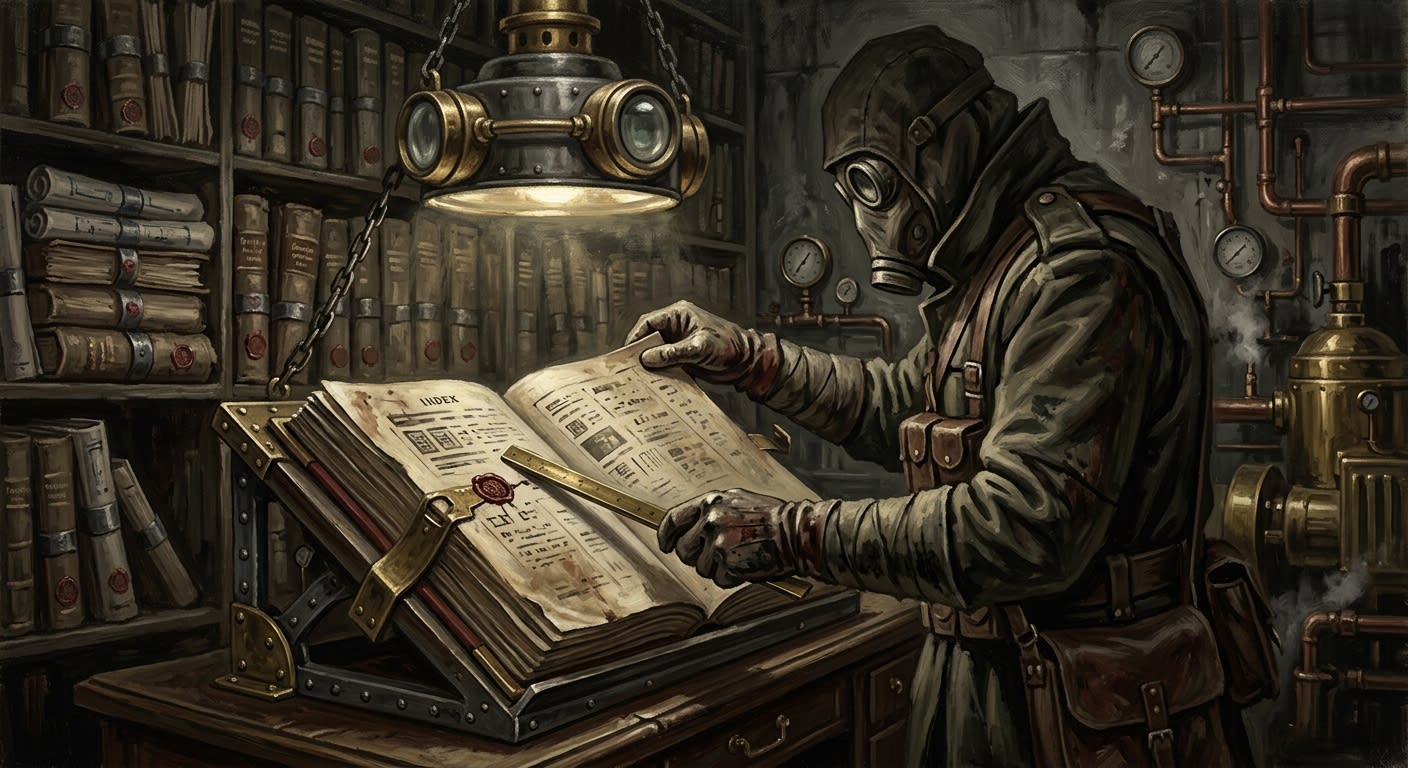
Prayer of Unseeing
The eye is ordered to forget what the hand has already touched
Bureau-ratified handling formula for Index page-turns and sealed matter, asking sight to record without appetite and memory to keep its filthy hands closed.
Codex Ref. XIII.1.51-001
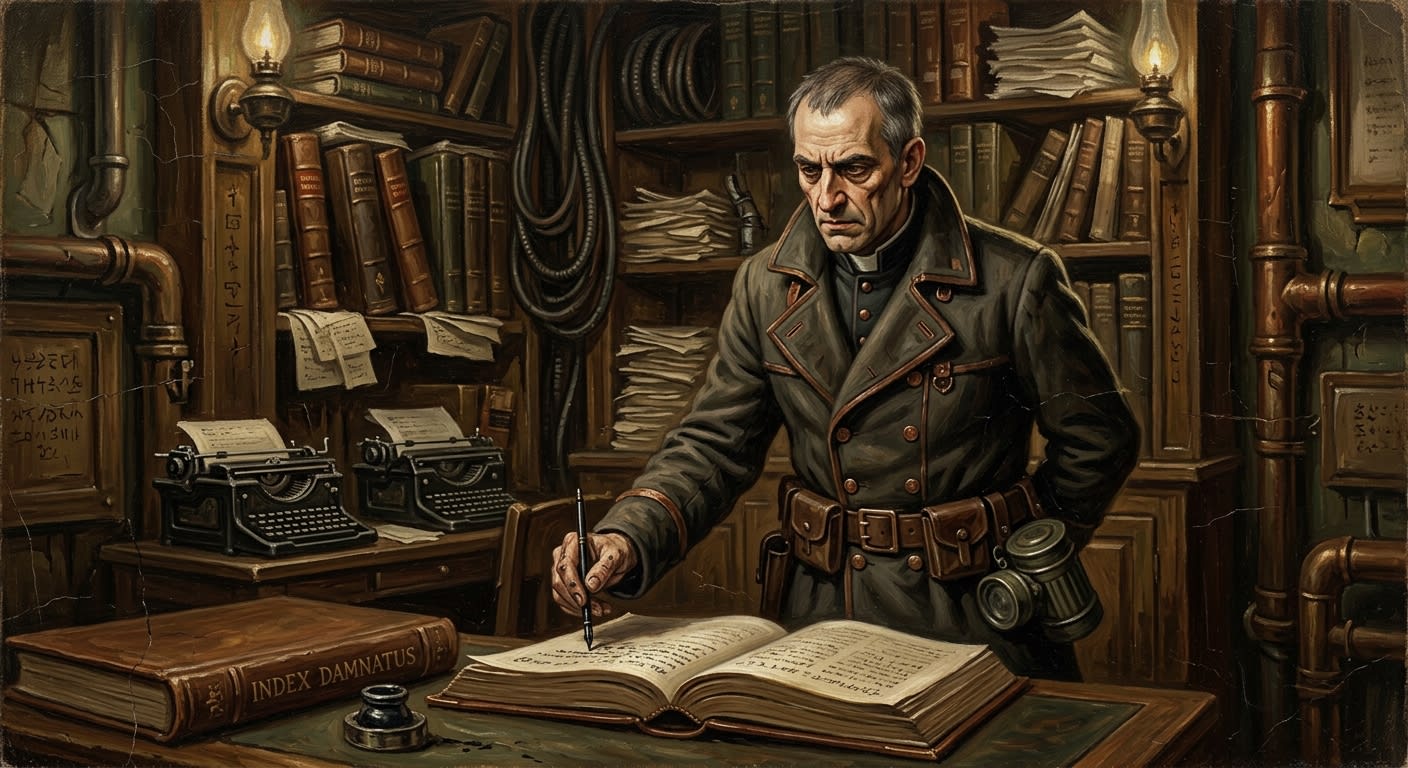
Procurator Maxentius della Torre
The jaw by which Doctrine learned to bite
Della Torre expanded Purity in A.S. 80, birthed the Index Damnatus, and taught the Synod that a named error is already halfway into chains.
Codex Ref. III.4.02-031
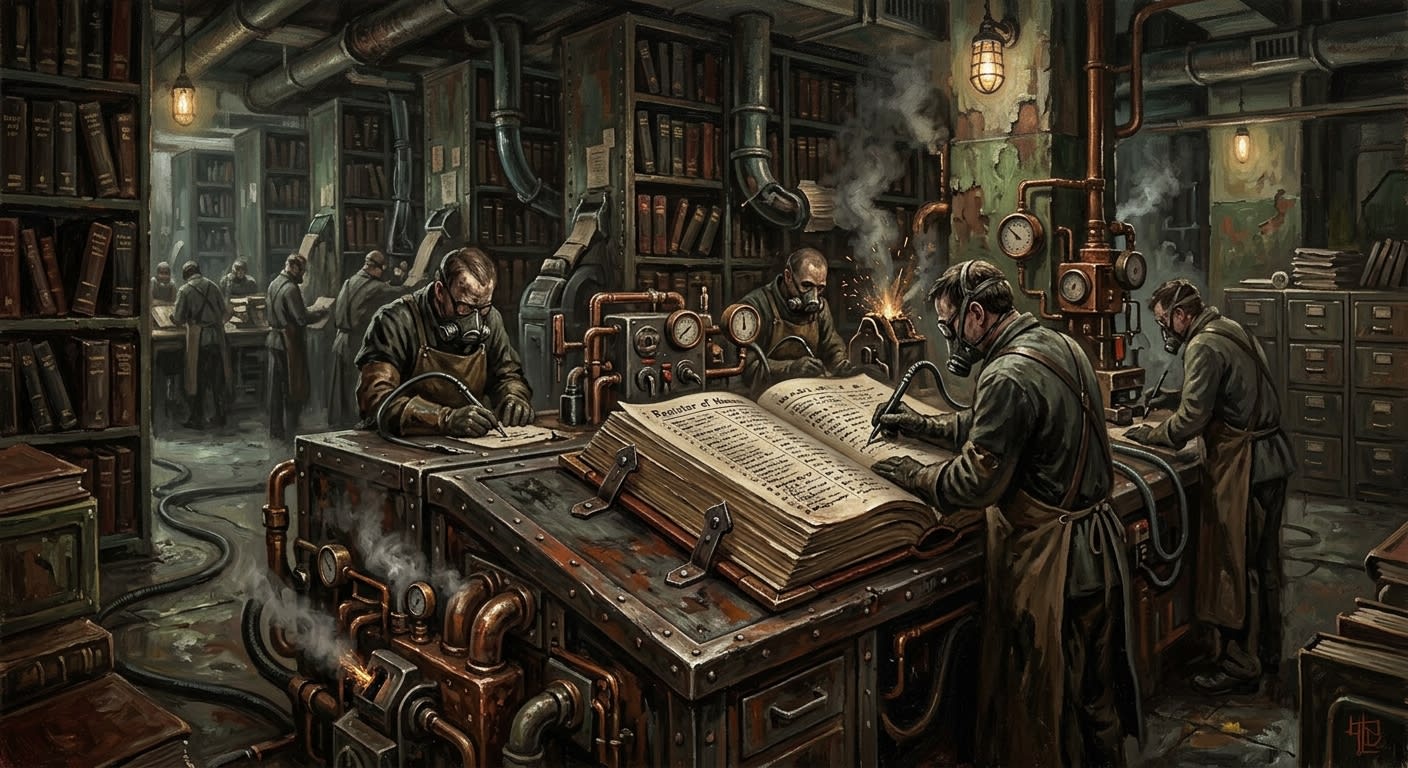
Register of Names
The death that continues answering until the clerks stop it
Second register of the Index Damnatus, preserving condemned names, aliases, lineage flags, seizure orders, and the machinery by which persons become legally absent.
Codex Ref. XIII.1.47-001
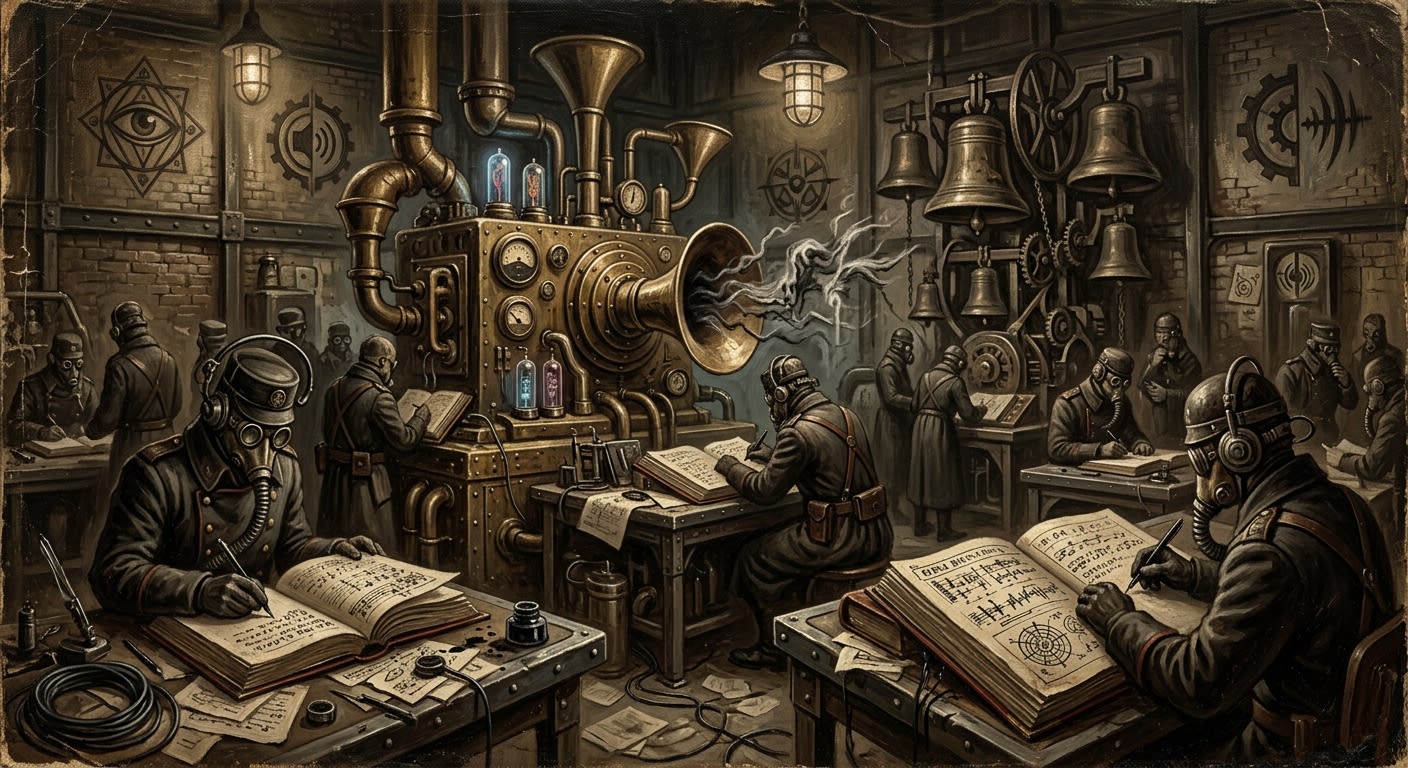
Register of Sounds
Where music is taught to confess before it escapes
Third register of the Index Damnatus, cataloguing forbidden tones, cadences, bellfalls, breath patterns, and the treasons ink can carry from one skull to another.
Codex Ref. XIII.1.46-001
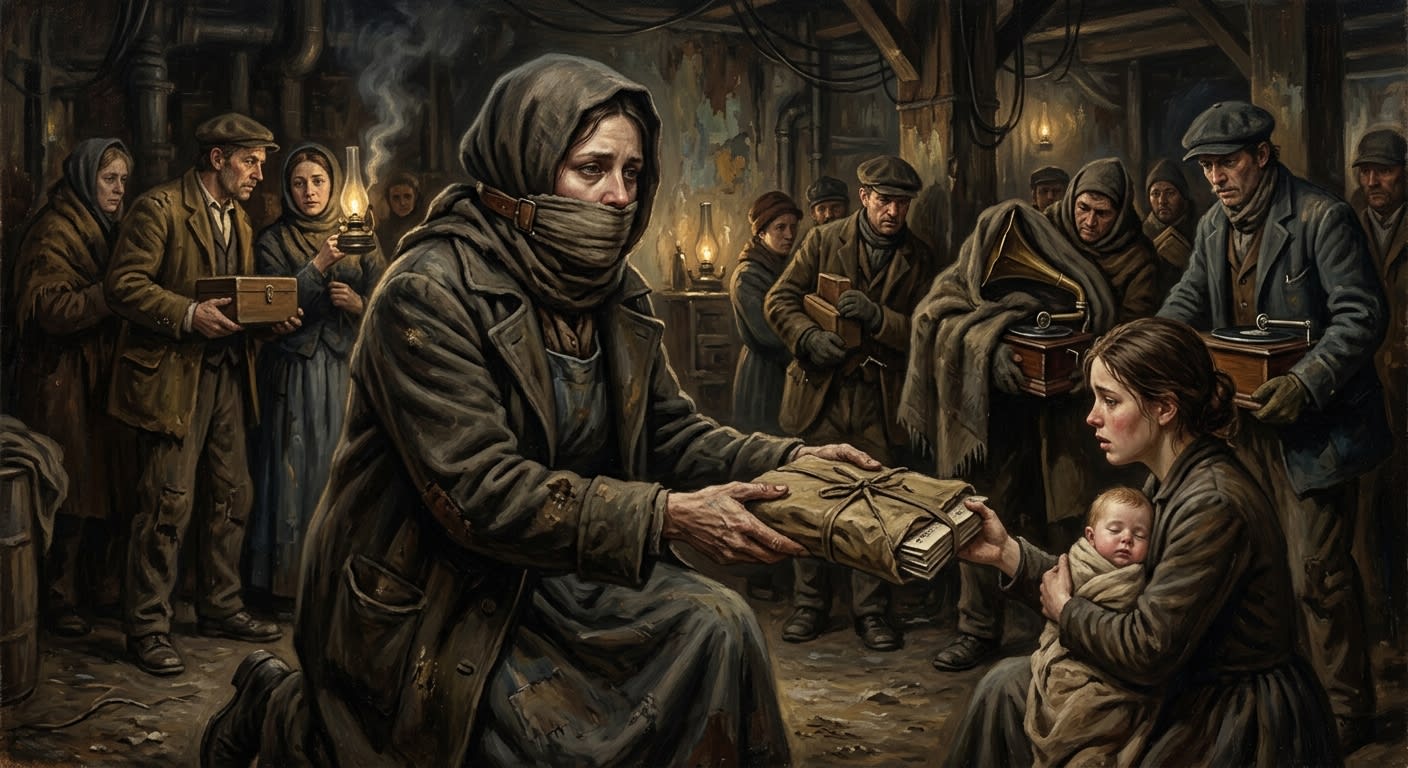
Saint Hessa of the Closed Mouth
The song delivered by silence
Uncanonised patron of melody smugglers, saint-knots, lull-runners, and mothers who move songs where licensed hymns have failed.
Codex Ref. III.2.01-148
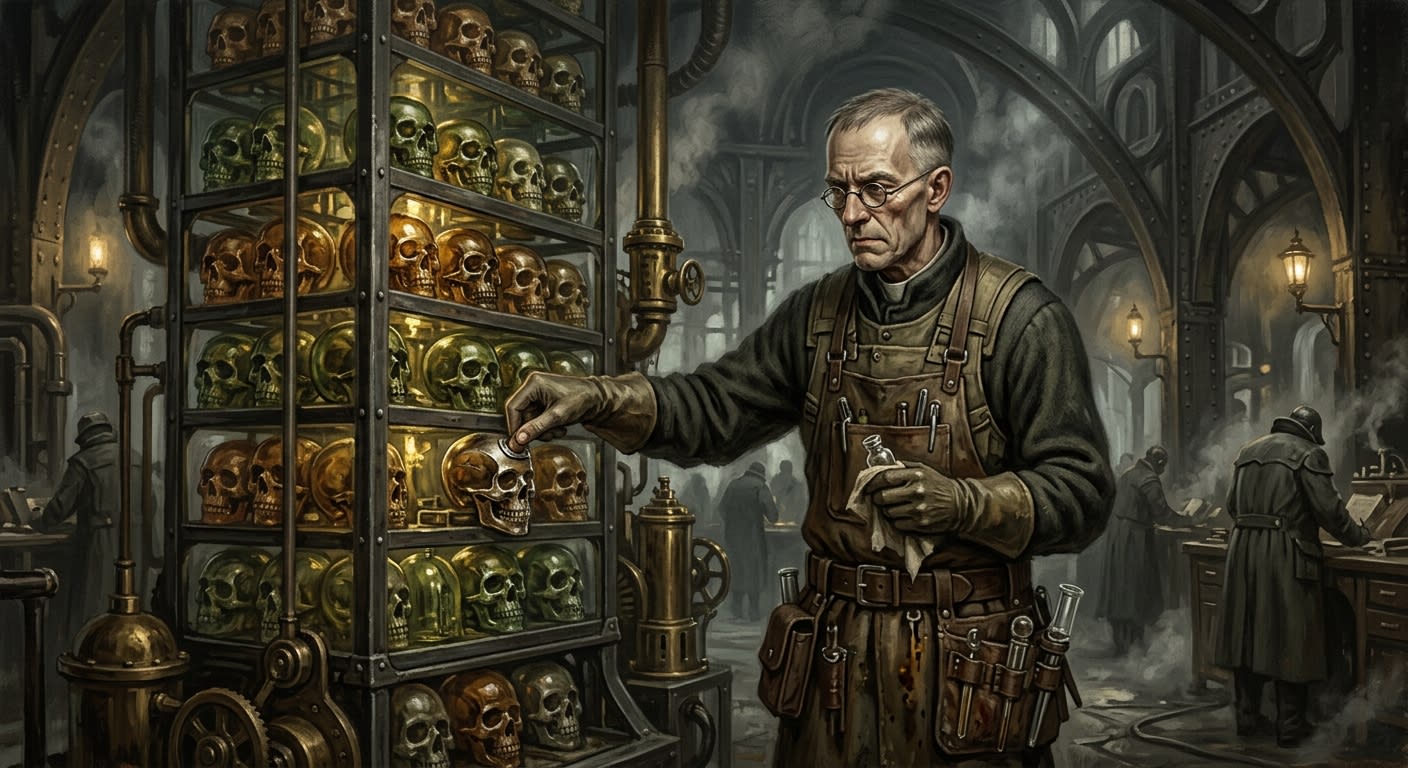
Saint Velek the Clear-Eyed
Sight and sentence, lens and burn
Ratified patron of Pillar-Keepers and severe glasswrights, Saint Velek gives Glass Skull Stack maintenance a face, a thumbprint, and a saintly excuse for sounds after Vespers.
Codex Ref. III.2.01-068
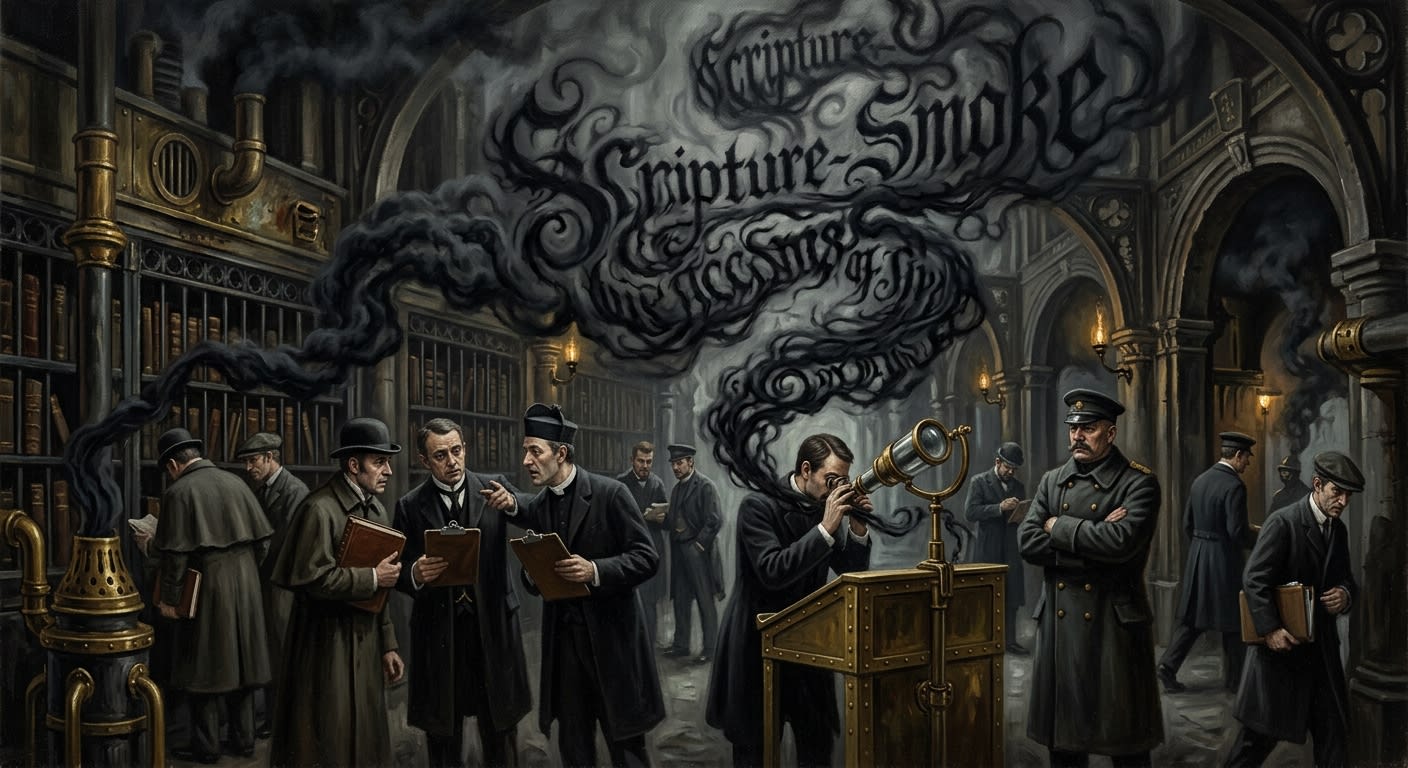
Scripture-Smoke
The vapour is not prophecy; it merely has the insolence to be legible
Scripture-Smoke is black-diesel vapour that writes back, which is precisely why the Bureau forbids reading it before reading it first.
Codex Ref. XIII.1.90-136
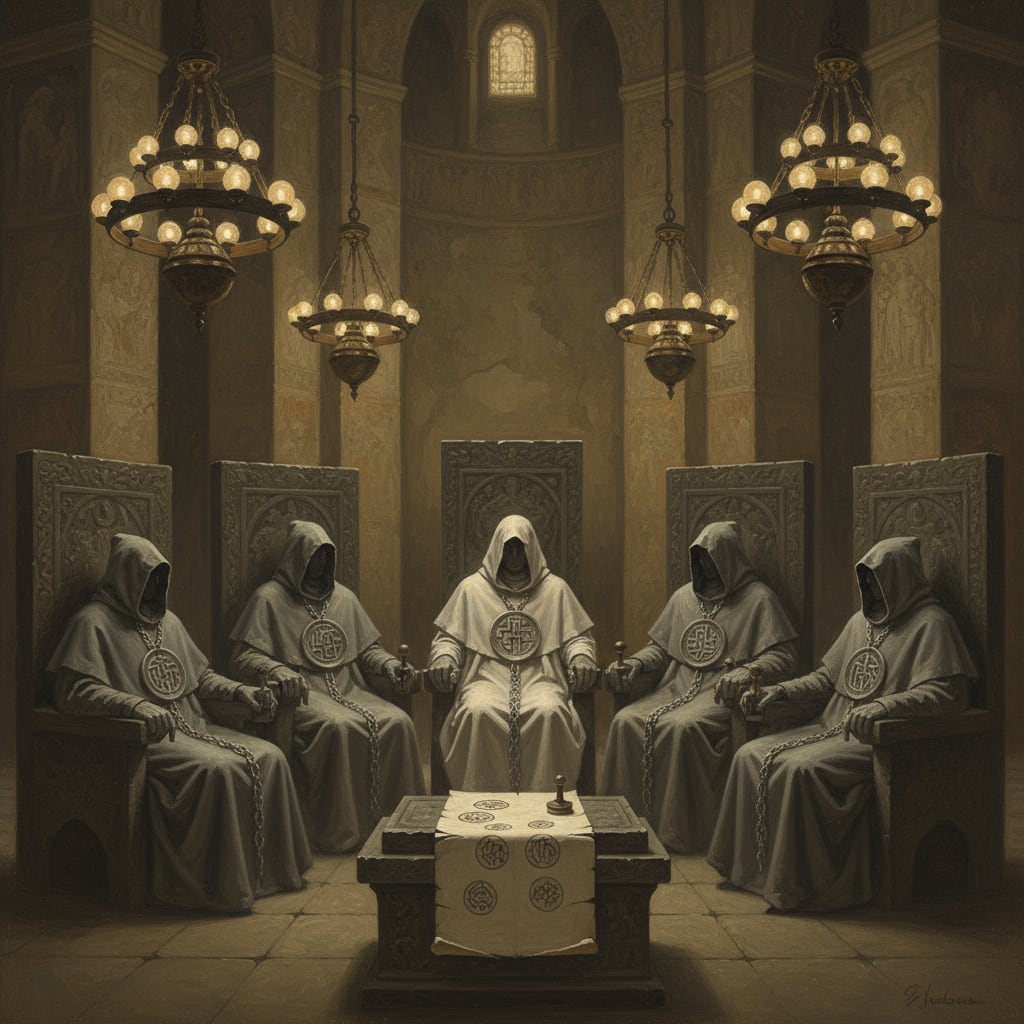
Seven Seals of Faith
Seven absolute sovereignties, each checking the others, which Kratz called something else entirely
The constitutional framework of the Bureaucratic Synod — seven domains of overlapping absolute authority, each assigned to one Hierarch, each cancelling the others into the only available direction forward, toward the Sagittal Line, where jurisdiction is settled by artillery.
Codex Ref. XIII.1.05-001
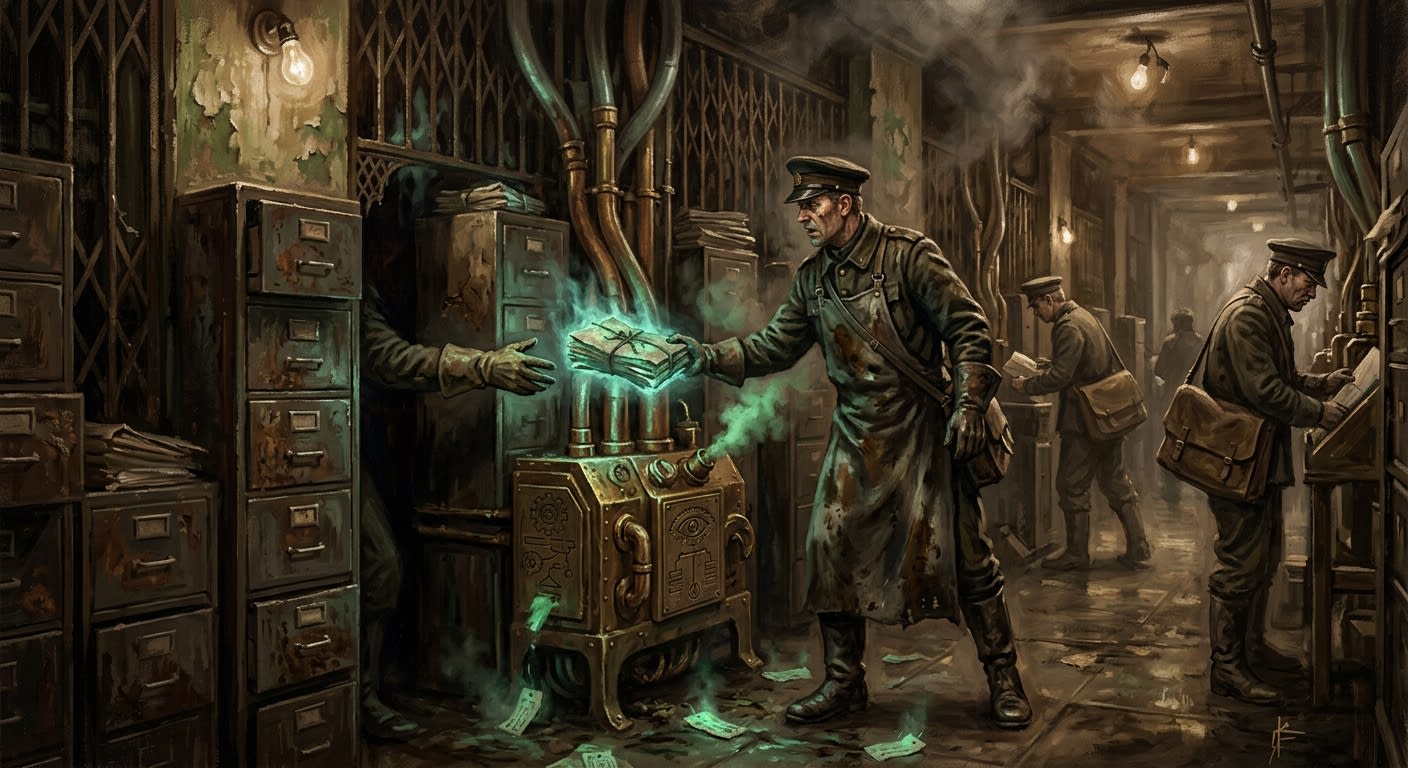
Shadow Relay
When the Index buys legs it refuses to name
Forbidden and persistent, the Shadow Relay is the illegal handoff that lets Index packets outrun their licensed Runners and poisons every receipt it saves.
Codex Ref. XIII.1.74-001
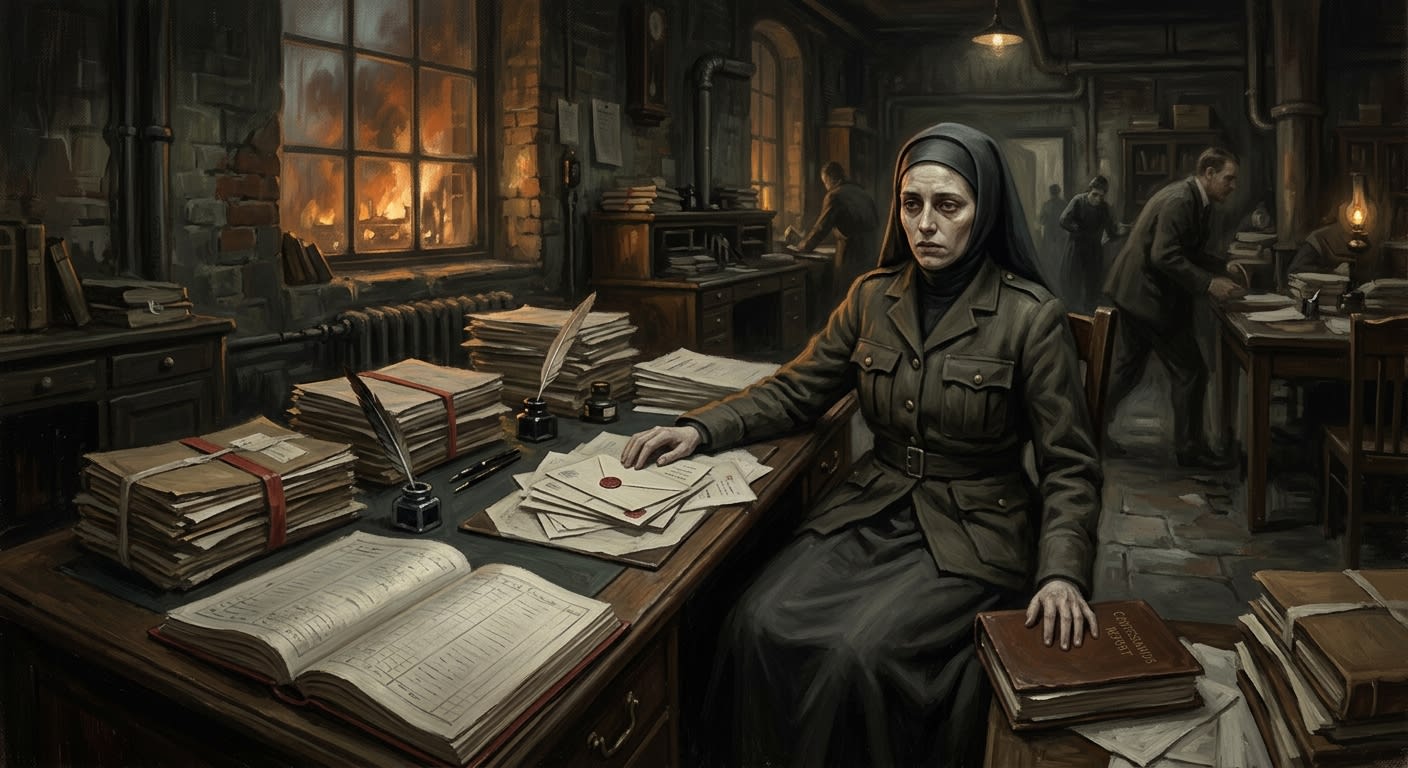
Sister Adelhaid
A name, a correspondence, a fire, and the blessed cowardice of files
Sister Adelhaid survives as a name in a Confessarius report, attached to Marseille letters, Saint Isidore's Eve, and a bookseller's fire too clean to comfort anyone.
Codex Ref. III.2.01-151
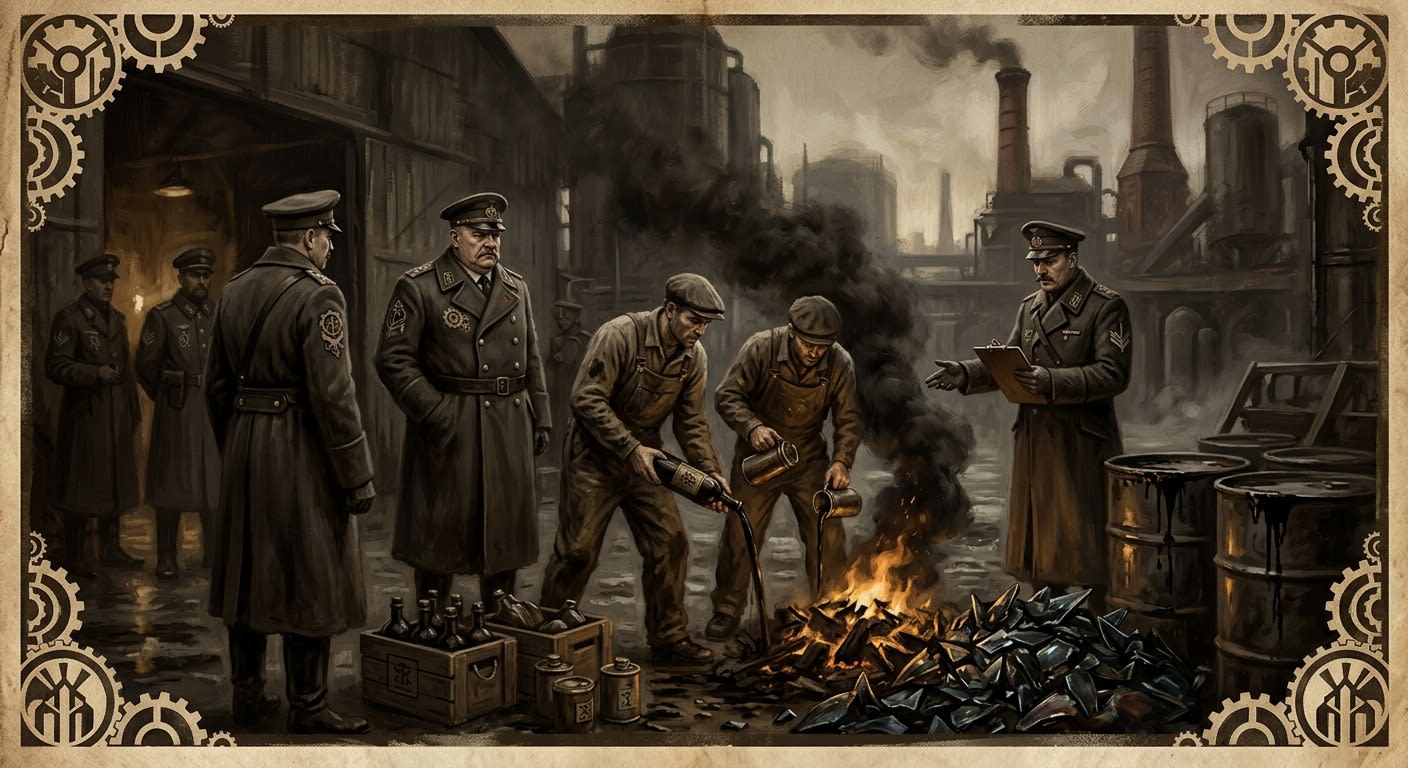
Standing Order 14-K
The law that forbids the fuel by which the righteous keep warm
Standing Order 14-K forbids black diesel, demon glass, scripture-smoke, and every useful contamination the Synod condemns in public and routes by night.
Codex Ref. XIII.1.96-134
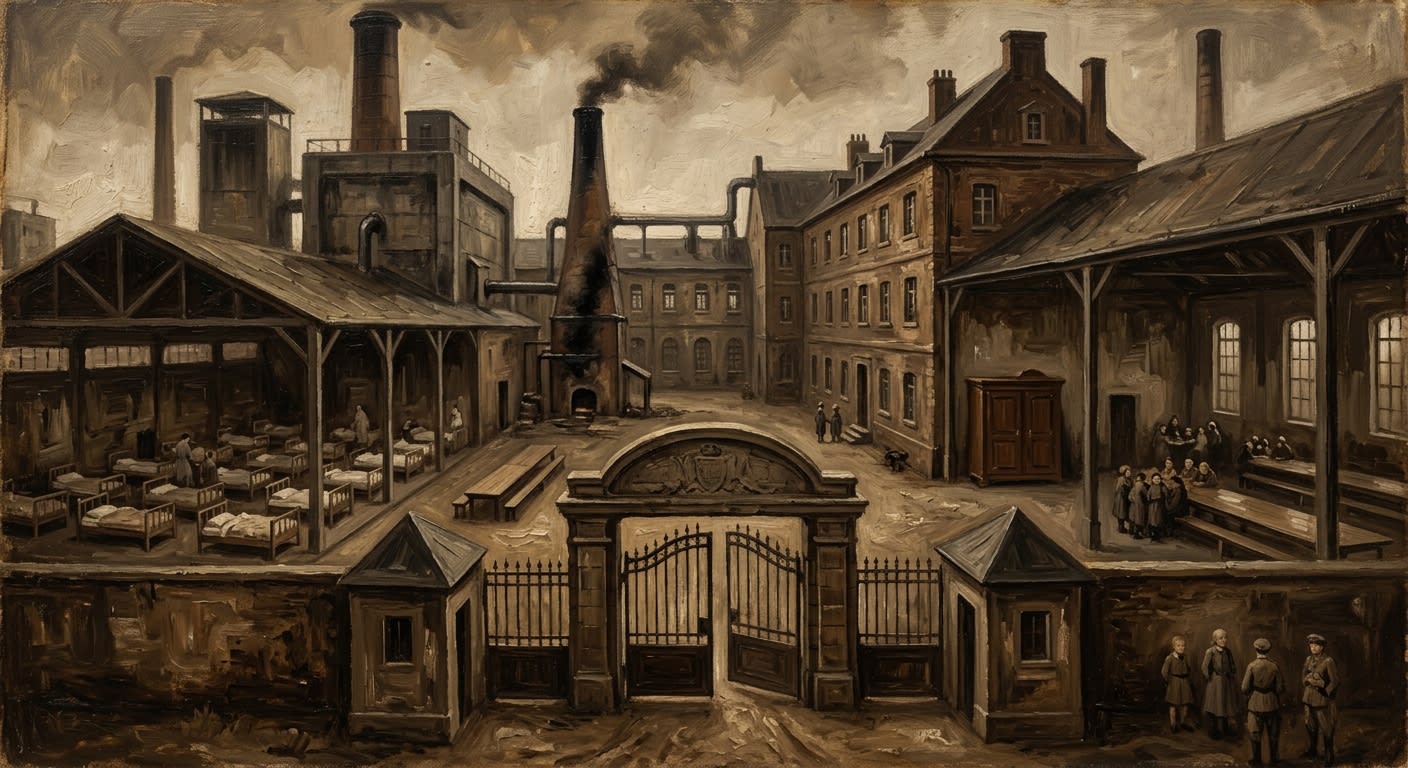
Strasbourg Central Orphanarium
No kin but the Synod, no cradle without a ledger
Strasbourg Central Orphanarium is Mercy's mother-house without mothers: gate, bench, tag kiln, sleep trial, placement hall, and cabinet.
Codex Ref. II.2.06-006
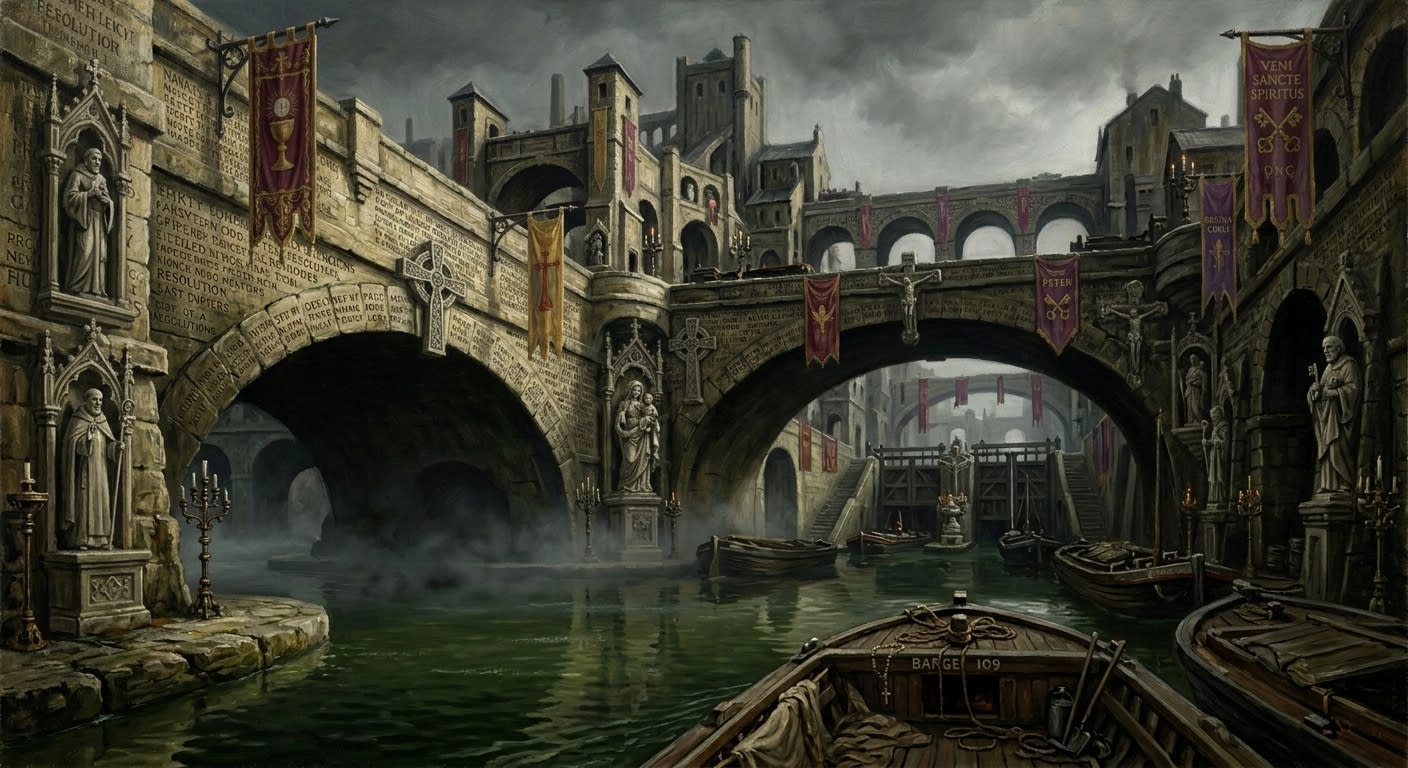
The Archivolt Causeyworks
Where stone keeps accounts, and every arch is also a court of law
A canal city where bridges are courts and debts are carved in granite — the Archivolt Causeyworks keeps its ledger in stone, and the stone has begun to listen.
Codex Ref. II.1.02-001
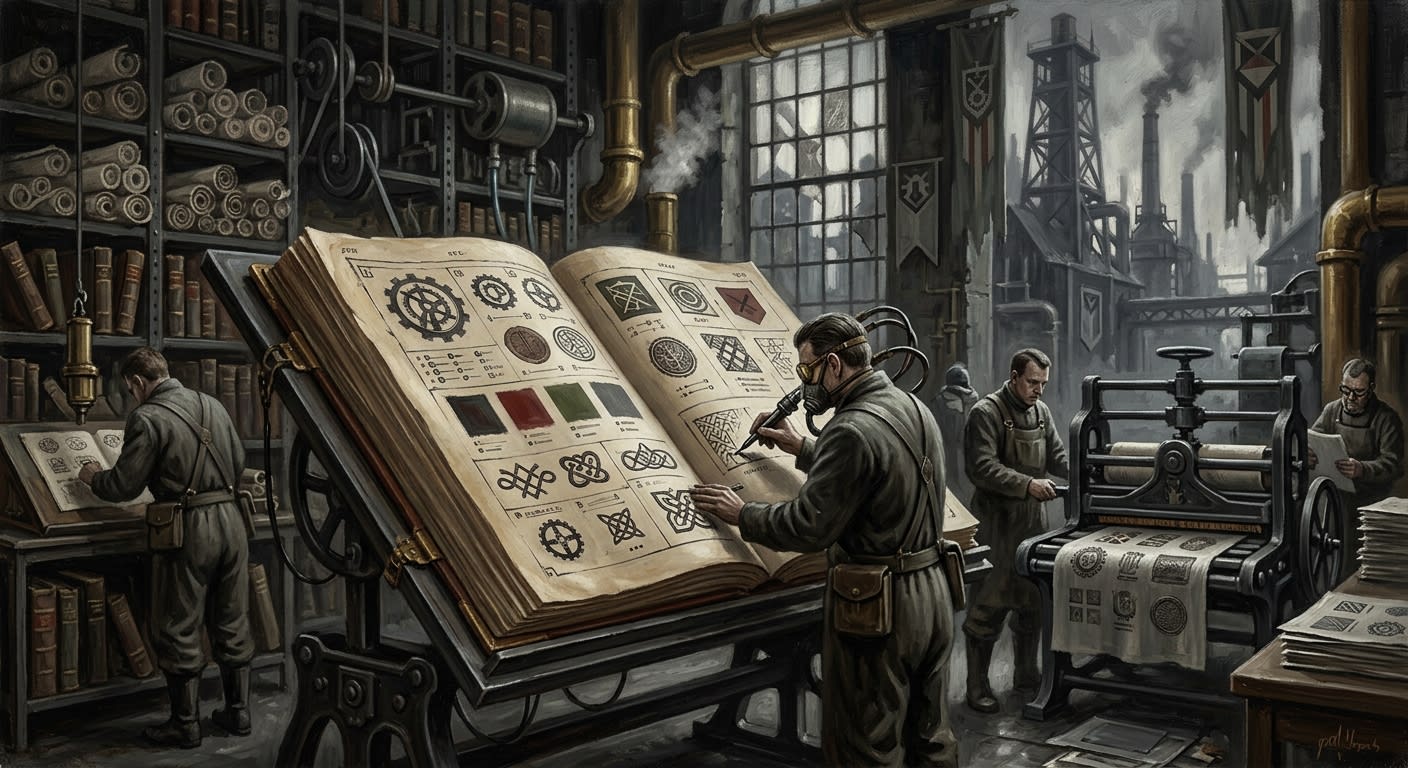
The Armorial of the Faithful
The book by which even colors learn obedience
The Armorial teaches every banner, crest, seal, colour, knot, and shop sign in the Synod the first virtue of a surface: obedience.
Codex Ref. VIII.1.03-002

The Ashen Circle
The denied archive that keeps the official world from collapsing
Unsanctioned scholarly network named in A.S. 103, trafficking in forbidden histories and sciences while the Bureaus deny, hunt, purchase, and depend upon its ash-borne work.
Codex Ref. XI.1.01-002
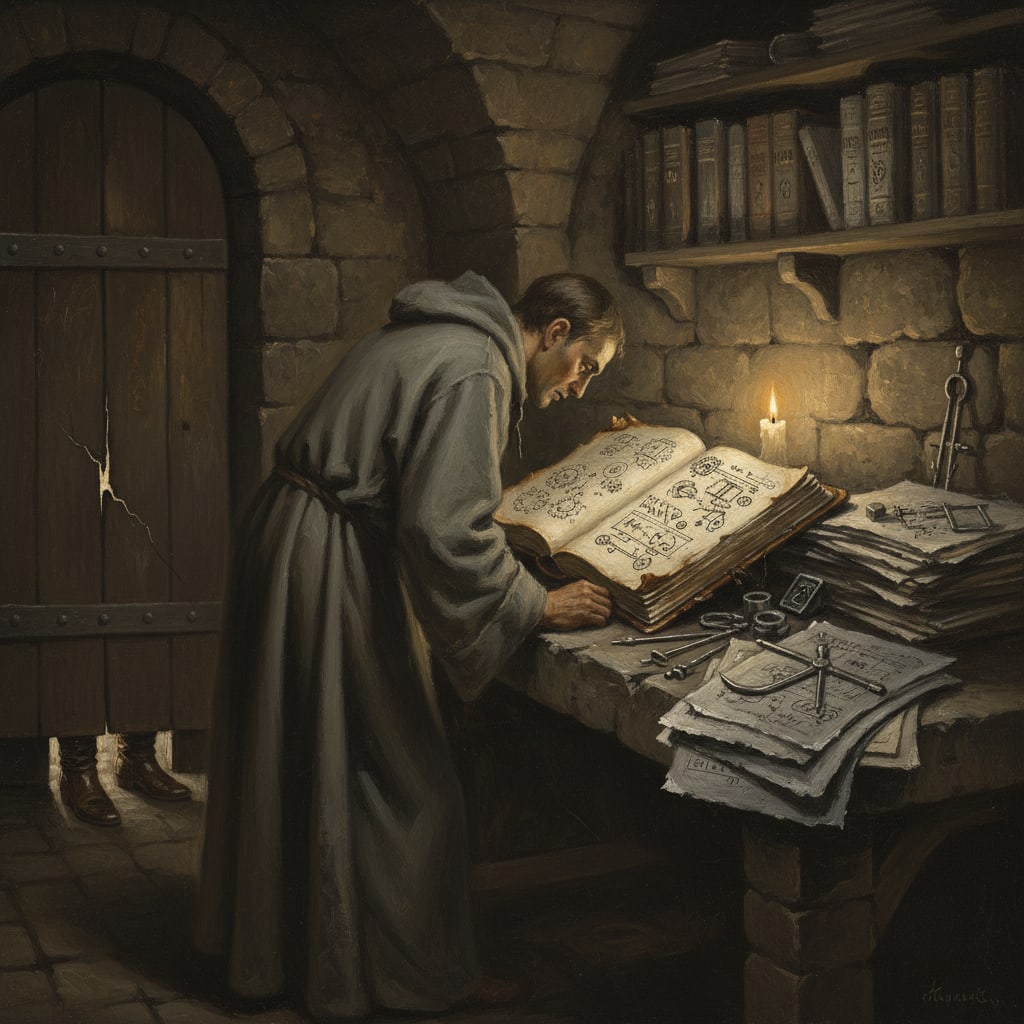
The Ashen Circle Scholar
What the Bureau Burns, the Circle Preserves — the Synod's Indispensable Heretic
The Bureau calls them poison. The front calls them indispensable. The Ashen Circle Scholar trades in what the Index Damnatus cannot afford to have gone permanently missing.
Codex Ref. XI.1.01-001
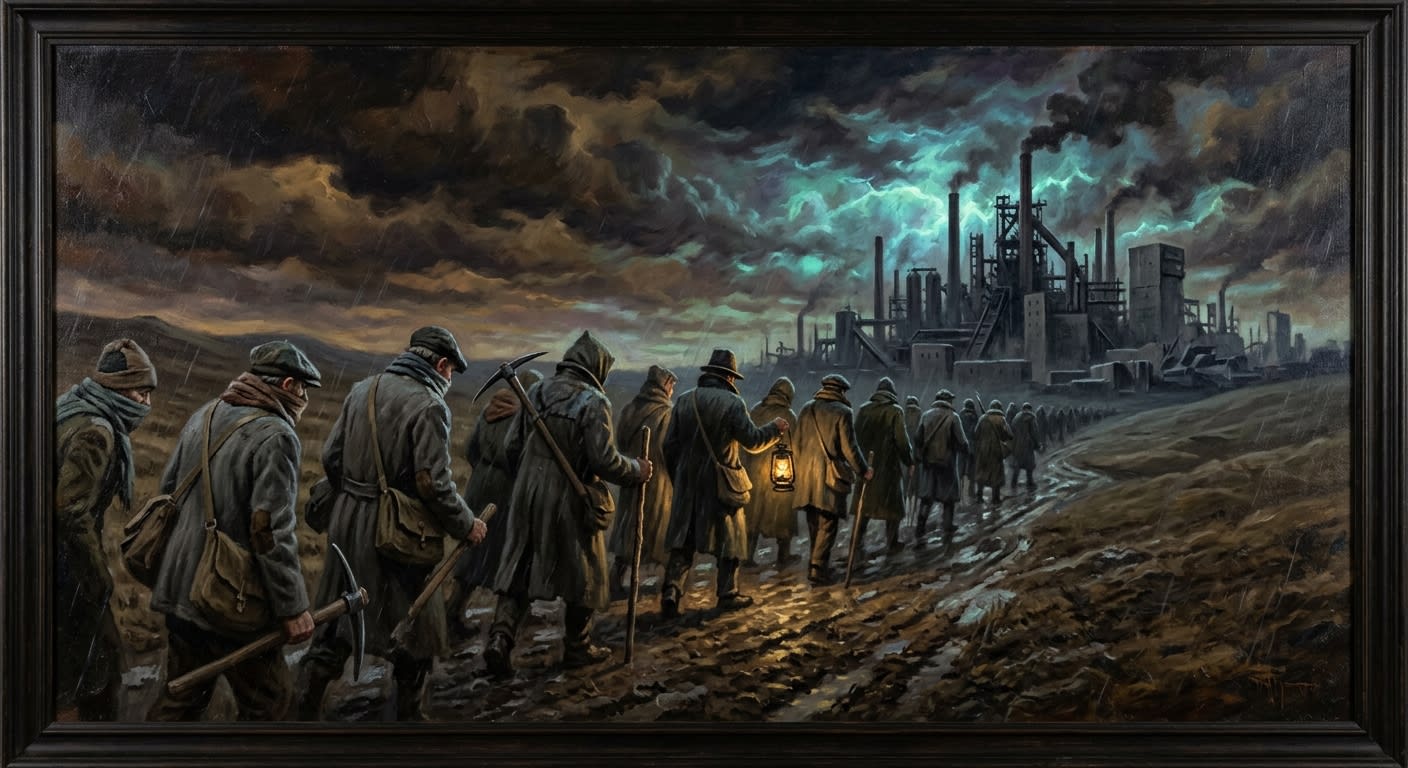
The Breathing
The forbidden name Praga gives the front at night
Praga calls the eastern night-pulse the Breathing; Doctrine forbids the name, which proves only that Doctrine has never successfully prosecuted weather, hunger, or grandmothers.
Codex Ref. XIII.1.88-201

The Bureau of Heraldry
The grammar of loyalty, measured in ink and iron
The Bureau of Heraldry controls what the Synod is permitted to look like. Every crest is a sentence. Every unregistered symbol is a rebellion not yet named.
Codex Ref. VIII.1.03-001
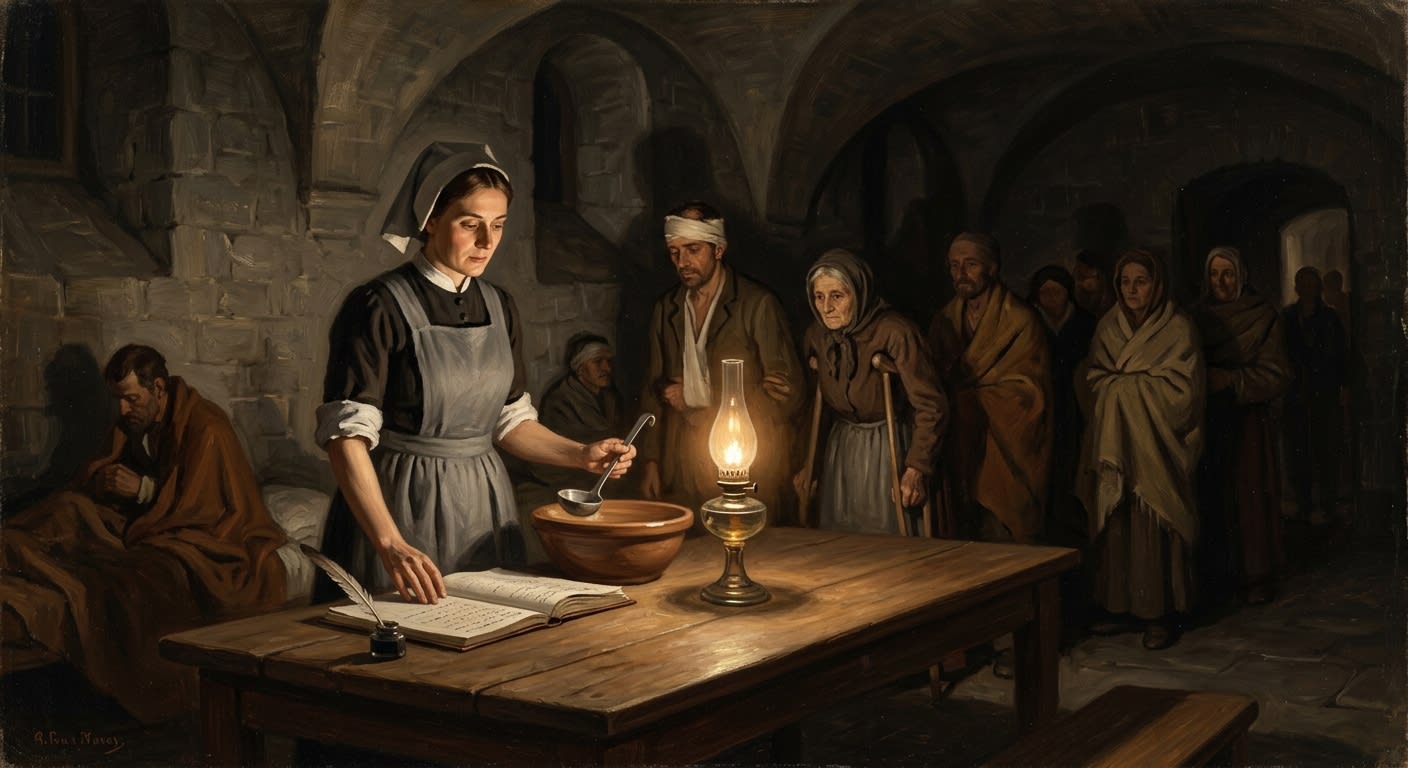
The Bureau of Mercy
Compassion Is a Ration. A Ration Is a Policy. A Policy Is the Synod's Will.
The Bureau of Mercy administers the Synod's hospitals, orphanages, broth-kitchens, and Hospices of Departure — every institution where subjects are at their most vulnerable and therefore most in need of documentation.
Codex Ref. VI.4.12-031
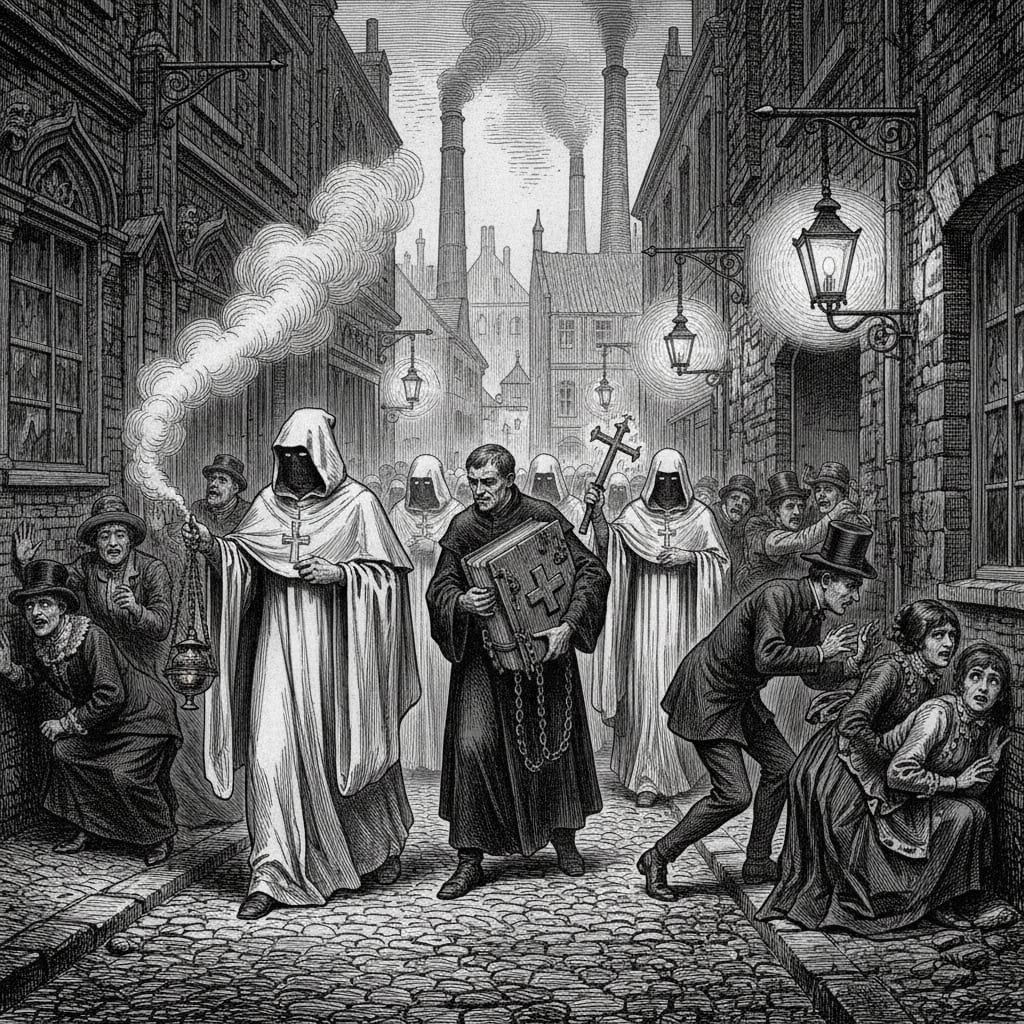
The Bureau of Purity
The White Cloaks Are Watching
The most feared organ of the Synod. Born in the Witch-Hunts of Toulouse, keepers of the Index Damnatus, enforcers of everything Doctrine defines and everyone else regrets. Where they walk, the air tastes of censer-smoke and branded confession.
Codex Ref. III.3.02-001

The Bureau of Records
The Memory That Never Forgets
Custodian of every birth, death, tithe, and trembling confession in the Theocracy. Records does not merely remember — it decides what happened.
Codex Ref. III.2.09-003
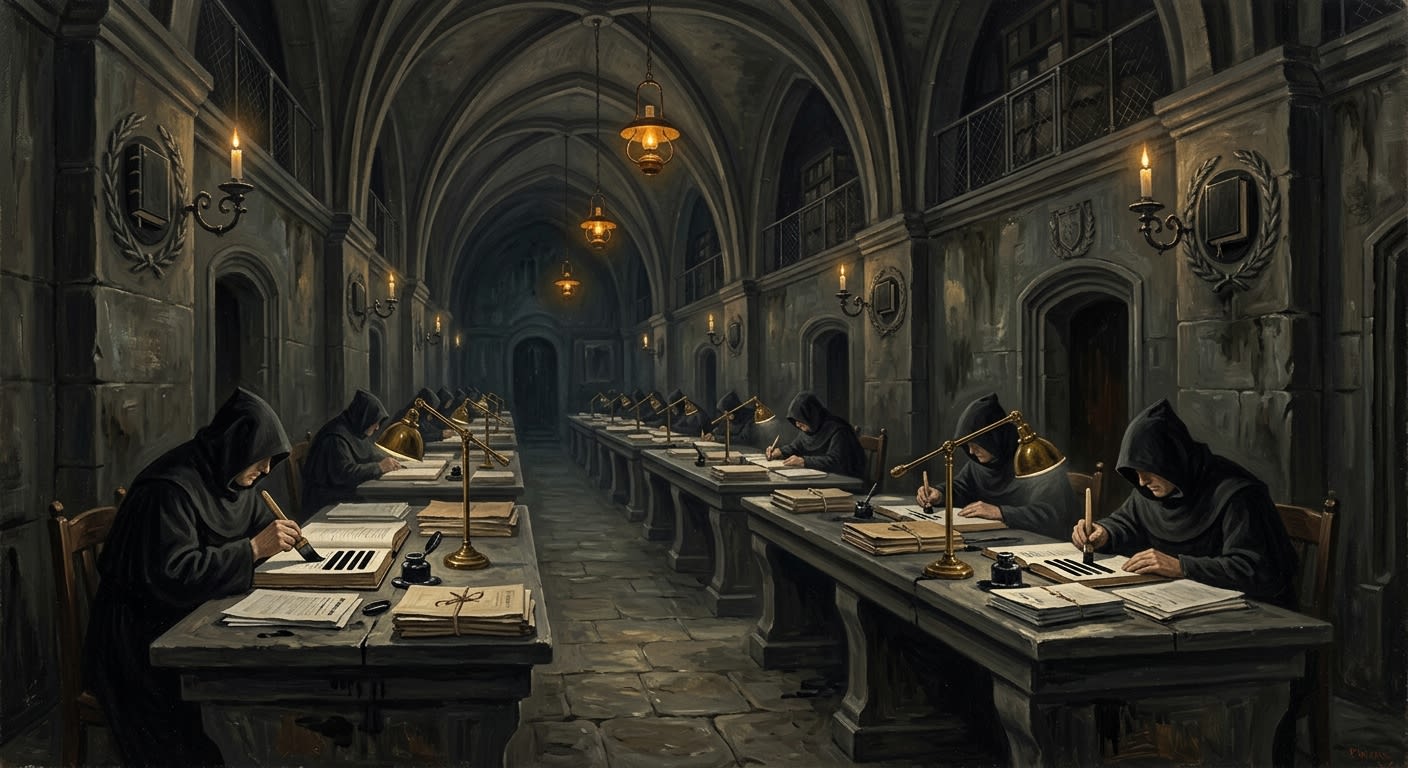
The Bureau of Silence
The word unspoken cannot wound. The word that reaches its target already has.
The Bureau of Silence does not burn books. Burning admits they existed. It renders knowledge into a state of administrative non-occurrence — and then redacts that too.
Codex Ref. III.4.19-031
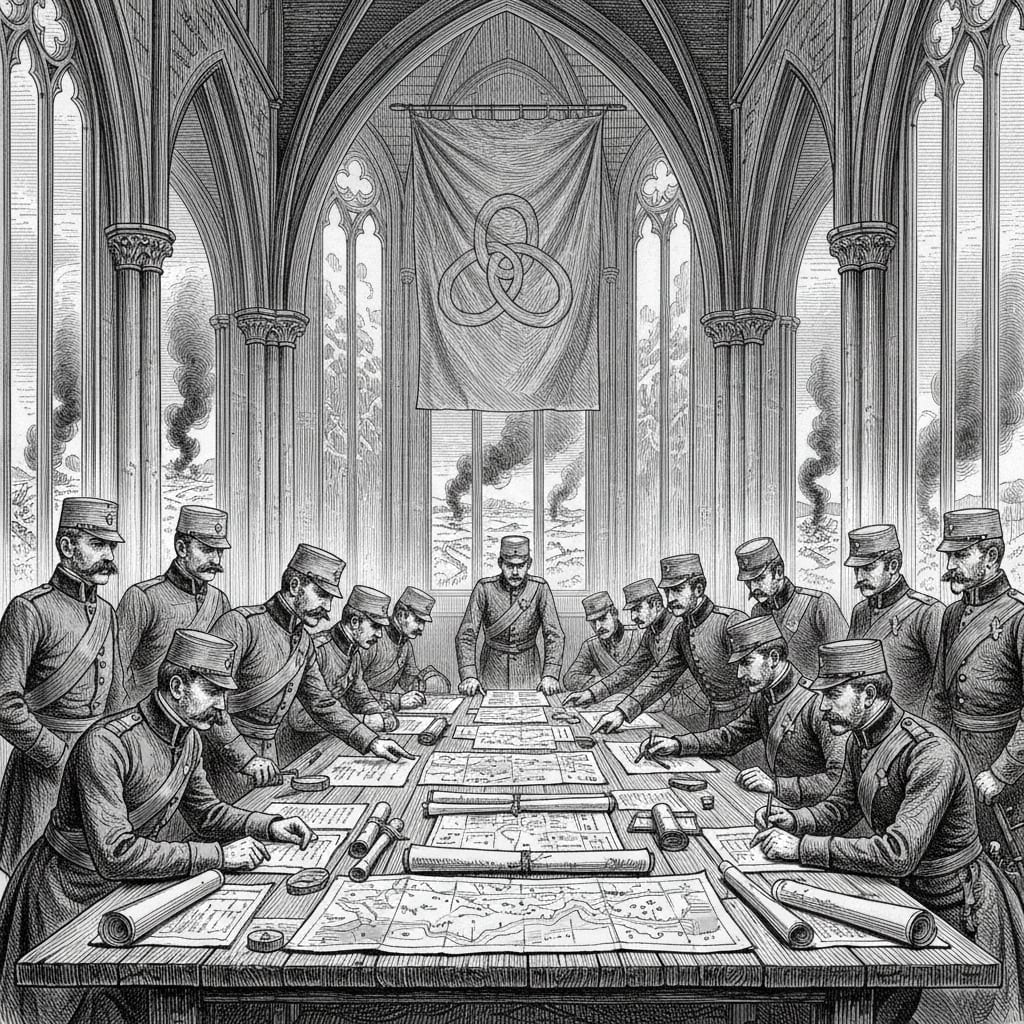
The Bureau of War
The Crimson Sash and the Sanctified Bayonet
Founded after the Siege of Vienna so that the Faith would never again beg feudal lords for swords. War raises the levy, baptizes the bayonet, and writes after-action reports indistinguishable from scripture.
Codex Ref. III.2.07-041
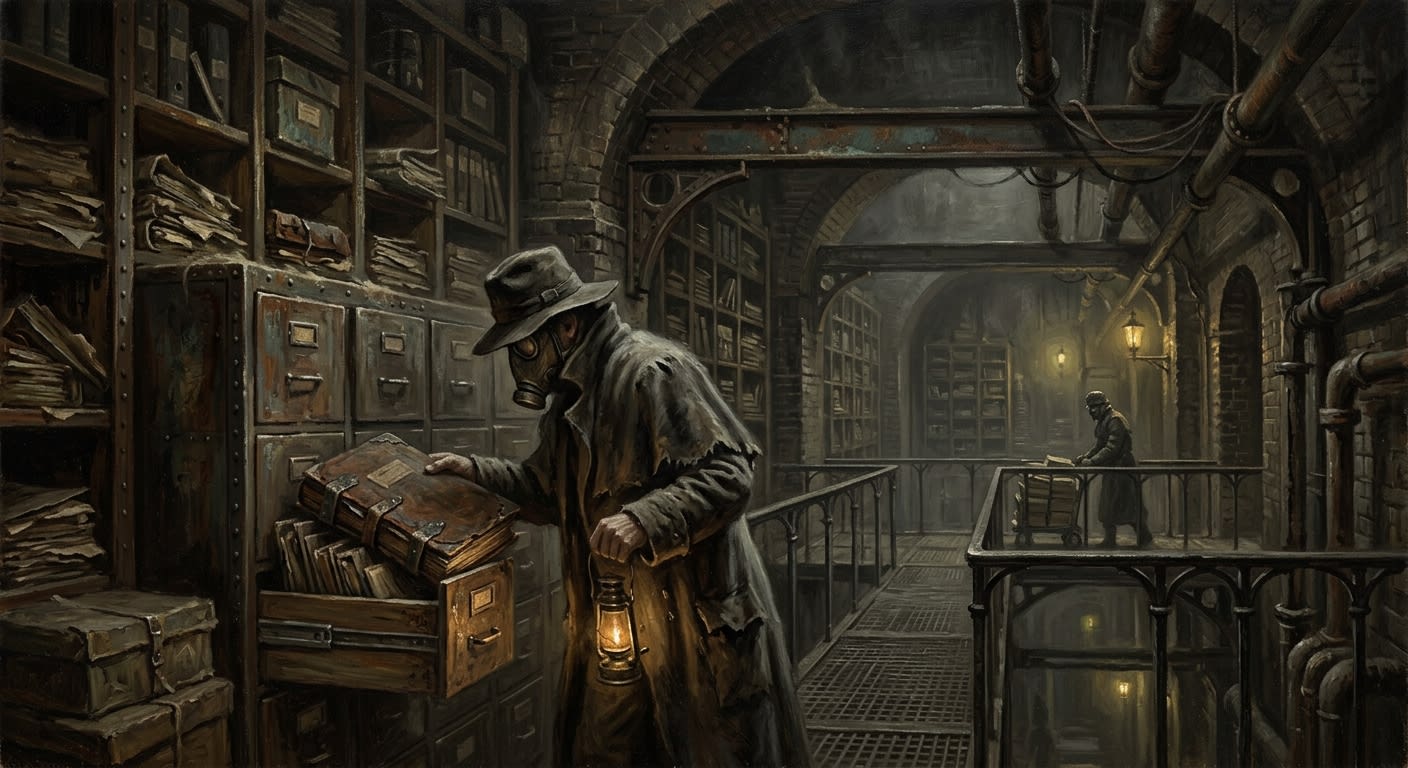
The Codices Obscurae
The books that do not exist have excellent indexing
The Codices Obscurae are denied by every Bureau that matters, which is precisely how a careful reader knows where the bodies are indexed.
Codex Ref. XIII.1.06-001
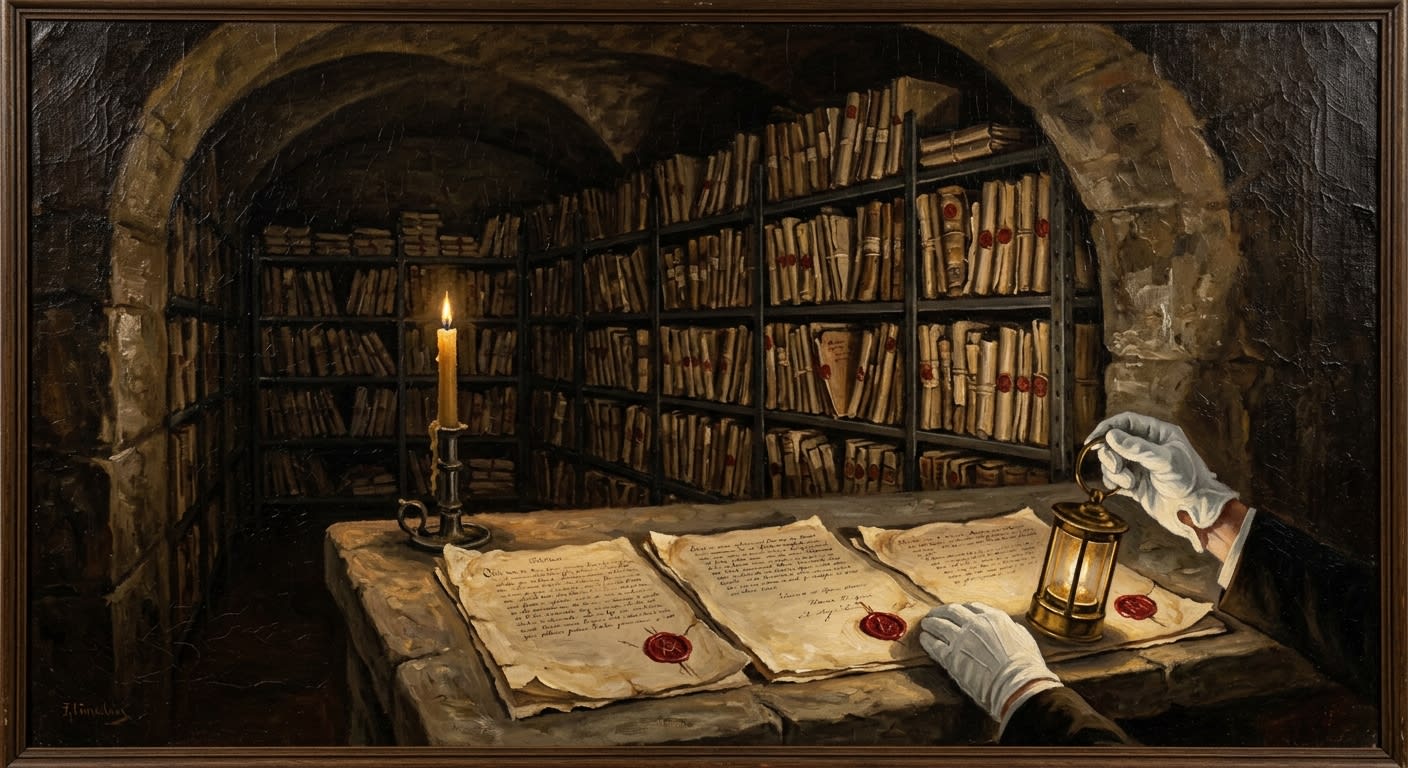
The Concordats of Ulm
Twelve signatures. One seal. Two hundred and fifty-six years of warm wax.
The founding instrument of Rationalist organisation — a compact of 'rational fraternity' signed in –55 A.S. by twelve university professors who mistook cleverness for wisdom, and built the machine that drove a century of war.
Codex Ref. II.7.03-055
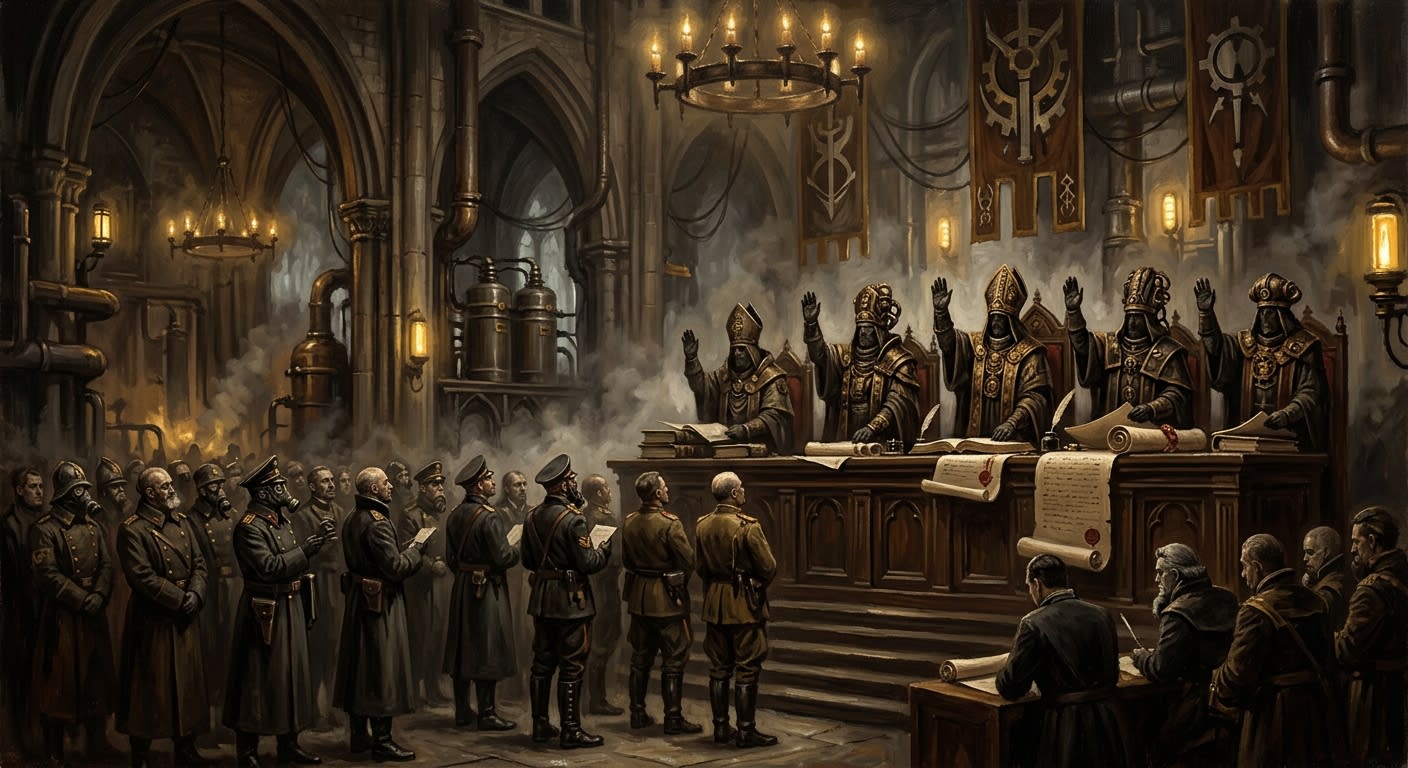
The Council of Mainz
Where law learned to cheer on command
The Council of Mainz confirmed the first seven Hierarchs in A.S. 93, turning Concordat law into staged acclamation, ratified offices, and obedient witnesses.
Codex Ref. VII.7.02-001
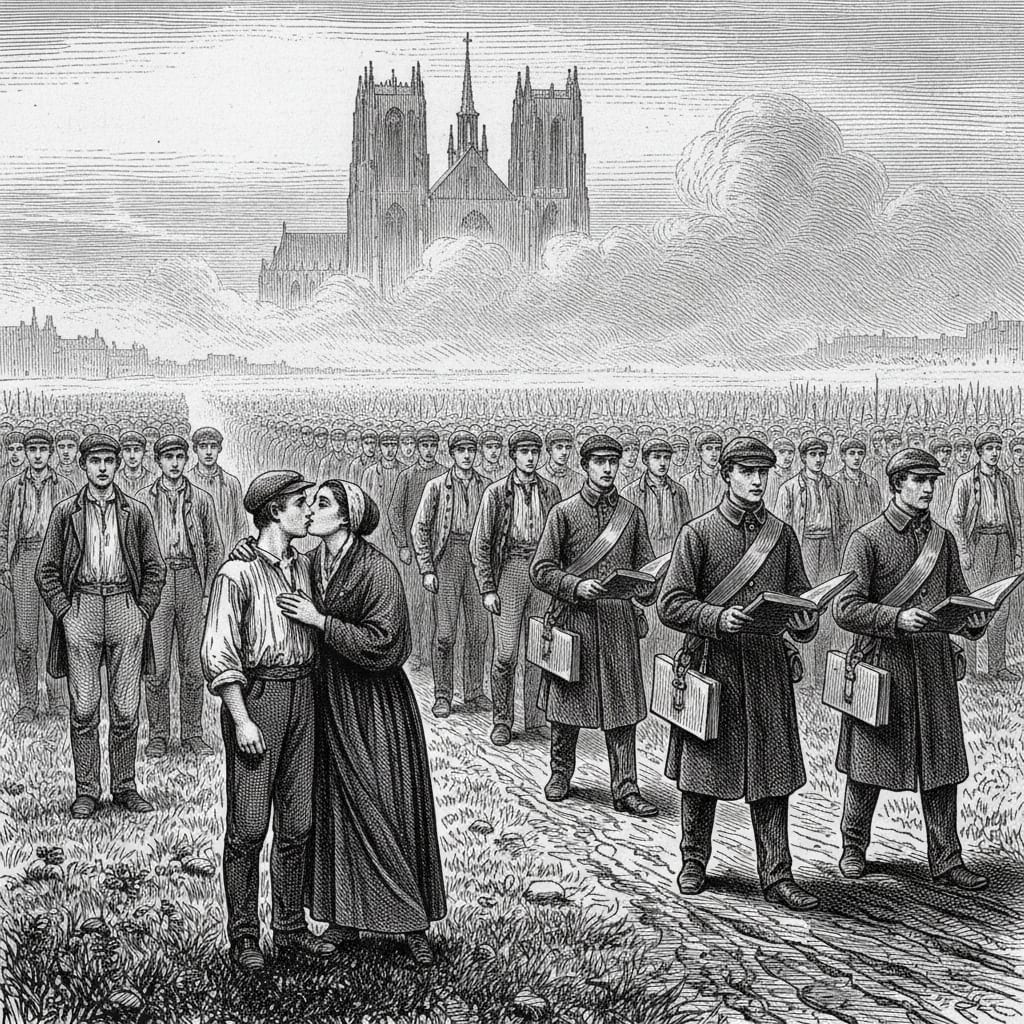
The First Continental Levy
A Tenth of Every Household's Sons
Strasbourg's answer to the devouring of Brașov — one boy in ten, taken by writ, drilled by the Bureau, and returned as either a soldier or a name in the Ledger.
Codex Ref. IV.1.09-034
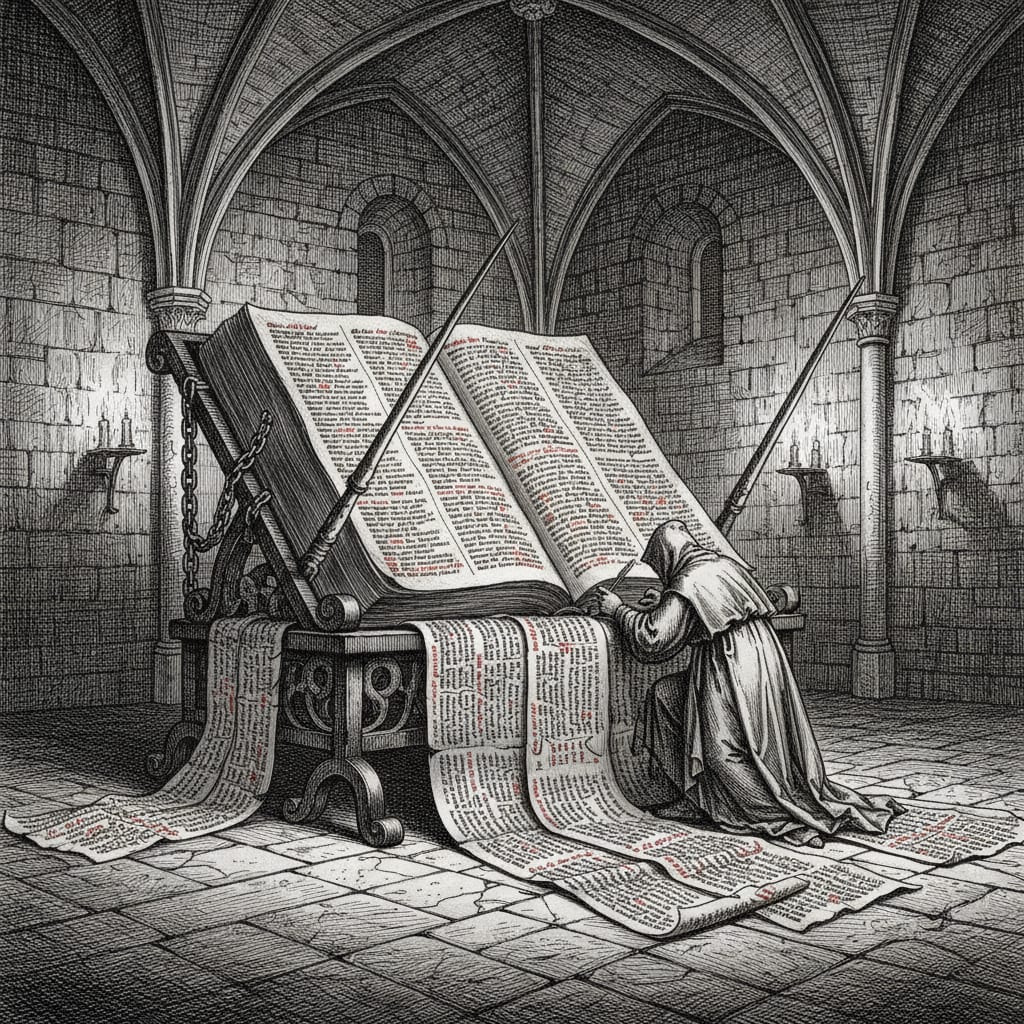
The Great Ledger of Souls
Census of the Living, Archive of the Damned
The Bureau of Records' supreme instrument of spiritual governance — an unbroken registry of every baptized soul since A.S. 80, kept in the subterranean vaults of Strasbourg, where forgetting is treason and being forgotten is worse.
Codex Ref. IV.1.09-003
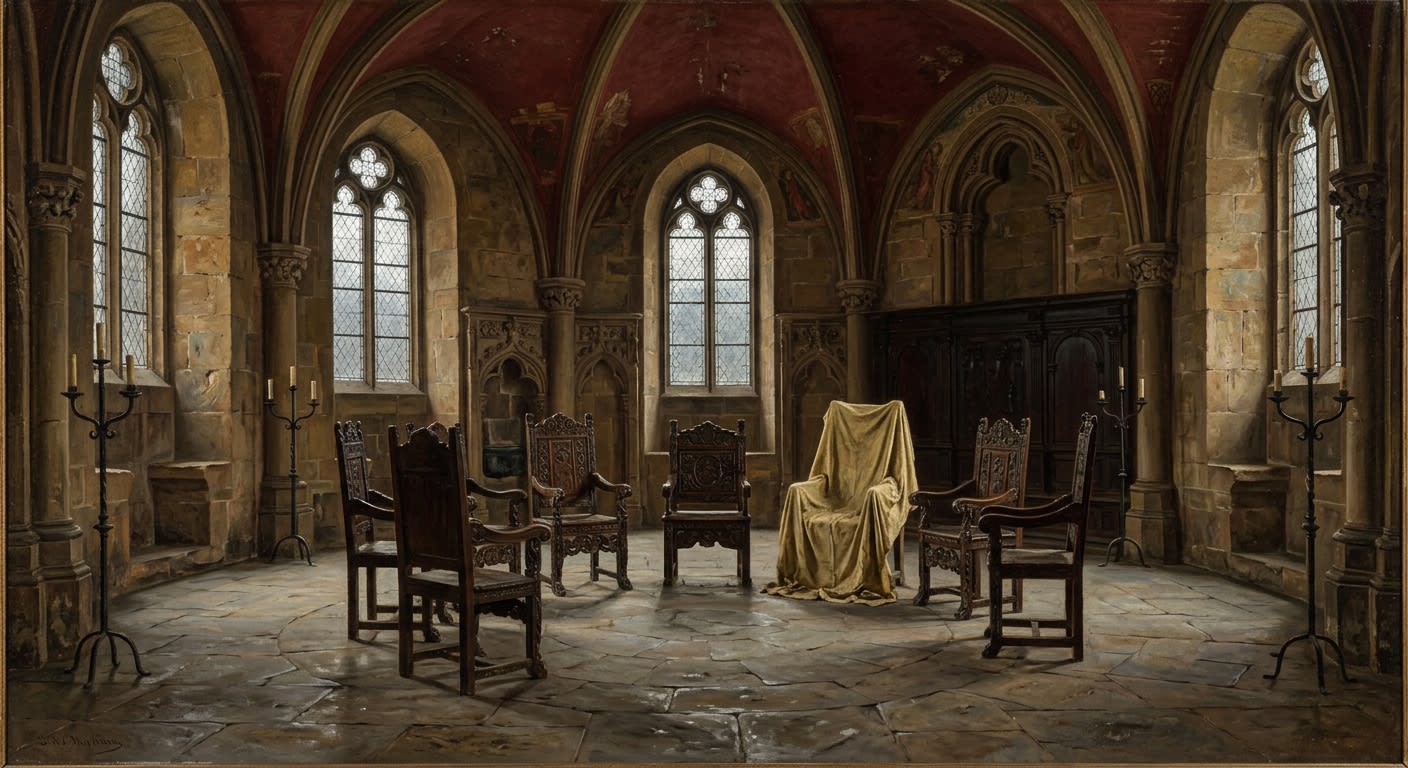
The Hierarchy of the Synod
Seven Seals, Six Occupants, and a Chair No One Has Laundered Since A.S. 107
Seven Seals. Six occupants. One chair draped in cloth no one has laundered since A.S. 107. The succession is continuous. The gaps are classified.
Codex Ref. VI.3.02-001
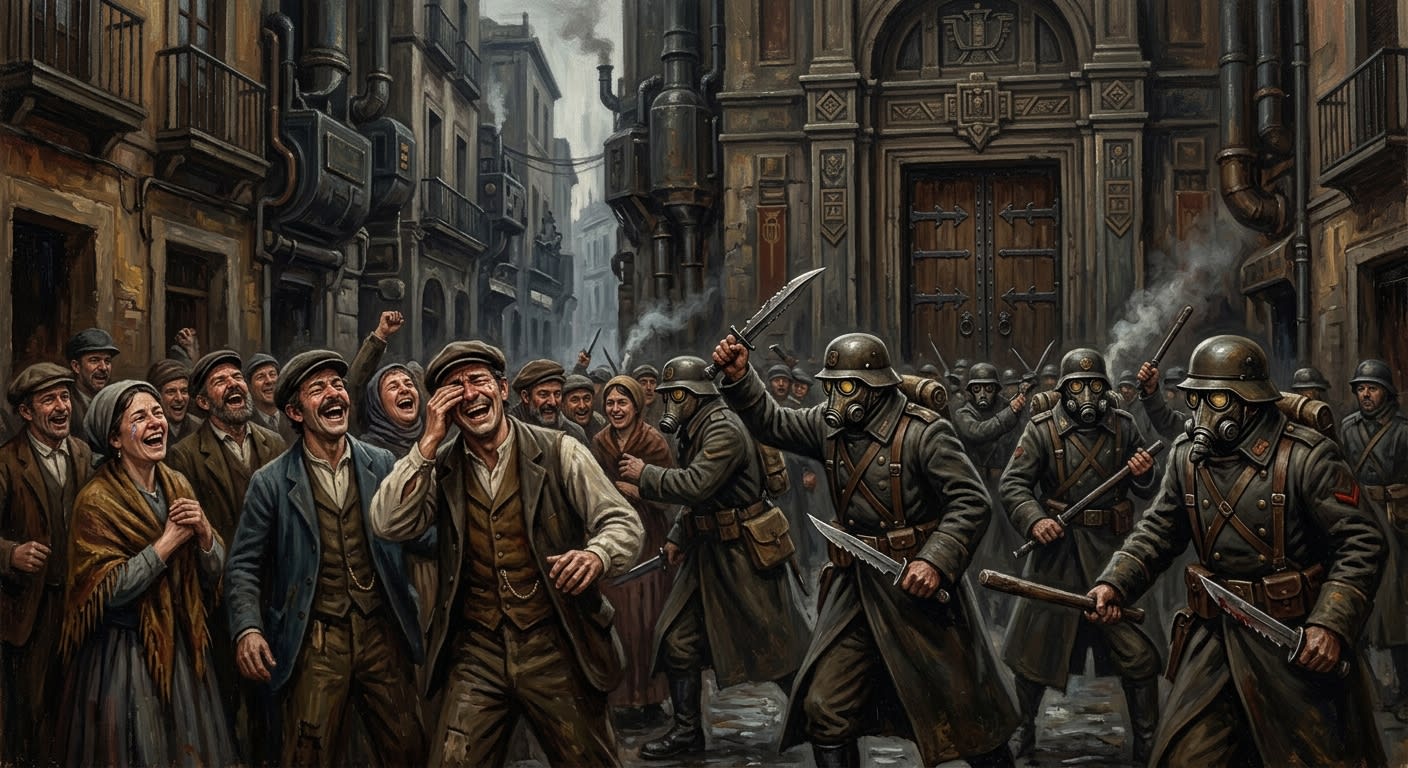
The Laugh Riots of Seville
The city laughed; the Bureau counted tongues
Seville exceeded its mirth quota in A.S. 153. The Bureau answered laughter with knives, and called the silence compliance.
Codex Ref. VII.8.02-001
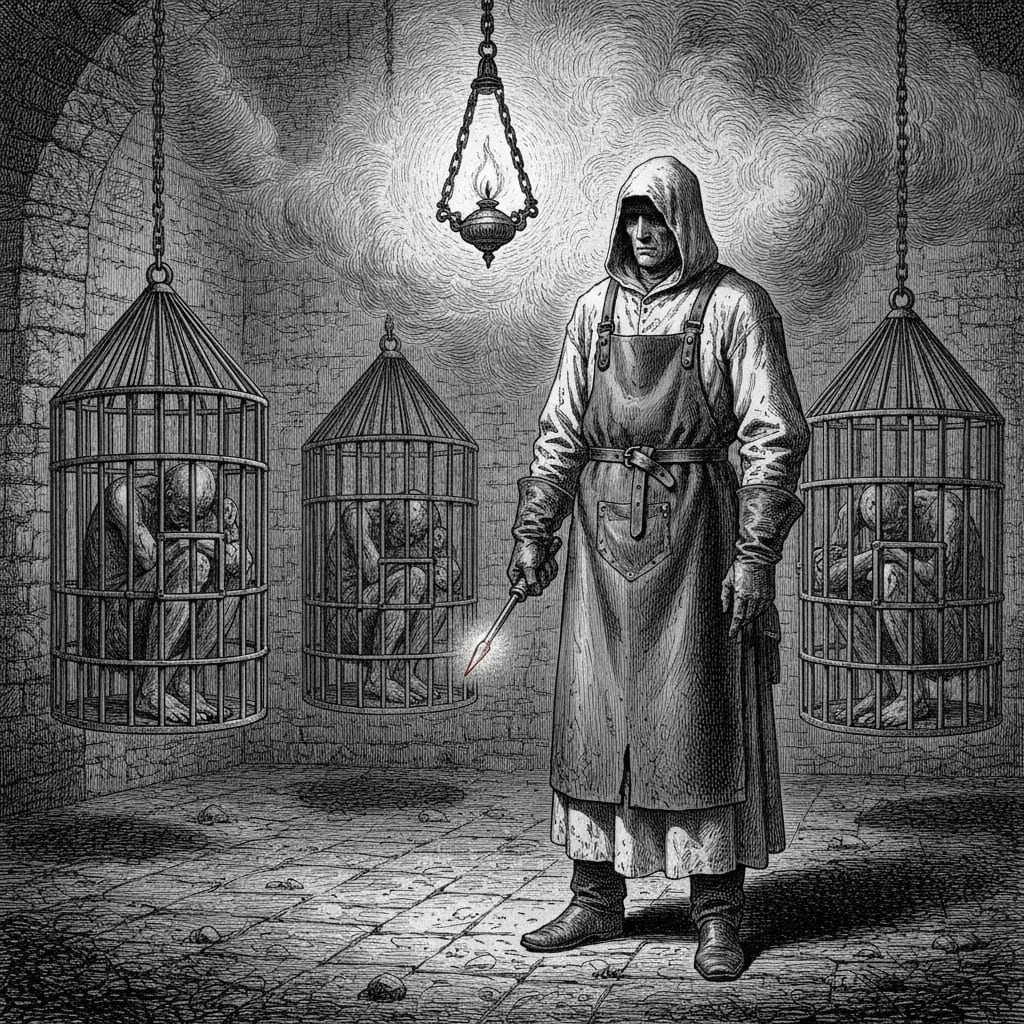
The Lictors of Purity
The Fingers That Write in Flesh
The Bureau of Purity's flesh-interrogators — those who brand confession into living skin, who carry the brazier and the stylus, and who have elevated punishment to a form of calligraphy the Bureau of Doctrine cannot help but admire.
Codex Ref. III.3.02-004
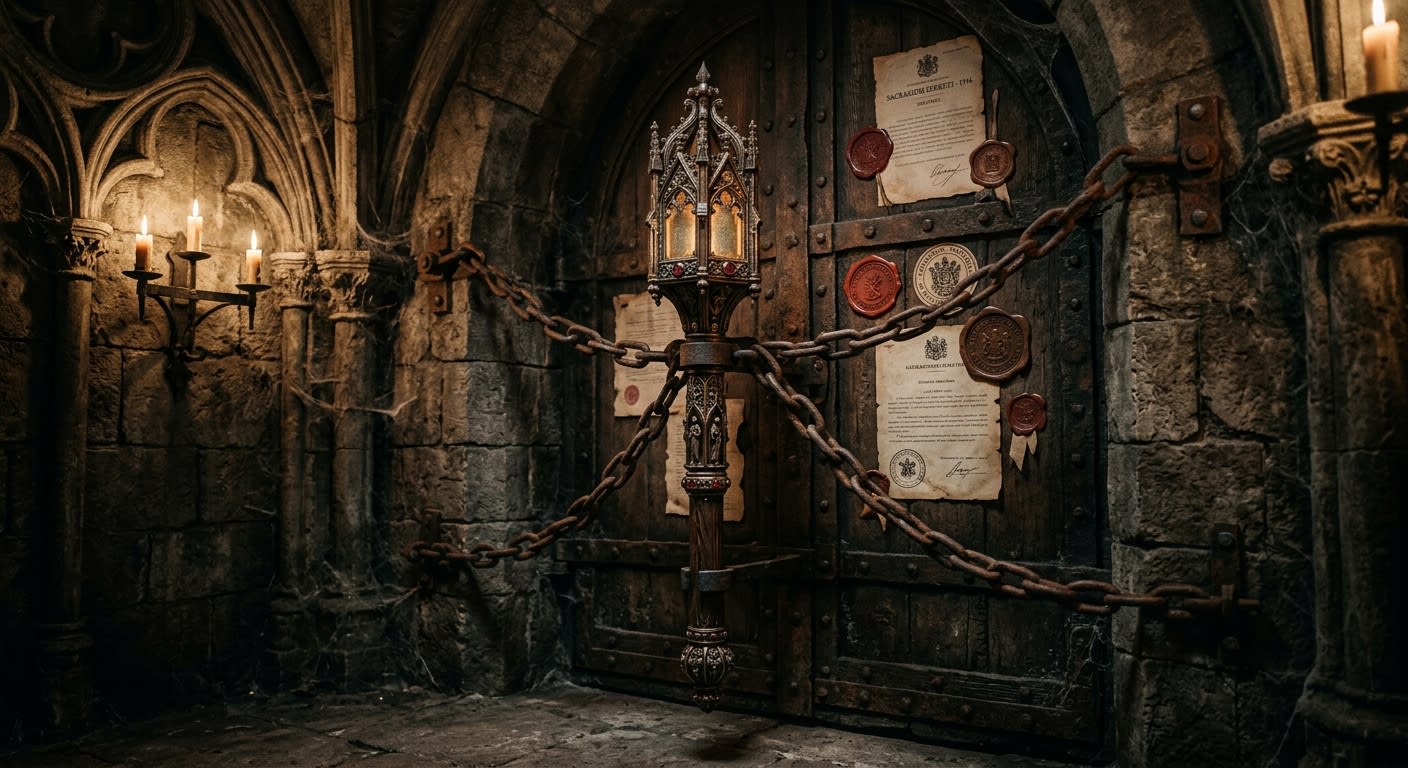
The Miracle of Saint Aldebrand
The Bureau erased the bone. The bone declined.
The Bureau declared the Reliquary of Saint Aldebrand non-existent in –32 A.S. In A.S. 95 it shattered a sorcerer-lord's skull and saved Vienna. Both facts are official, both carry seals, and the Bureau sees no difficulty.
Codex Ref. VI.4.01-001

The Mirror and Perfume Arts
Beauty is not evidence, comfort is not acquittal
Velkara's Mirror and Perfume Arts turn reflection into passage and scent into revised memory; the chooser remains intact, which is why Purity sharpens its irons.
Codex Ref. XIII.1.36-001
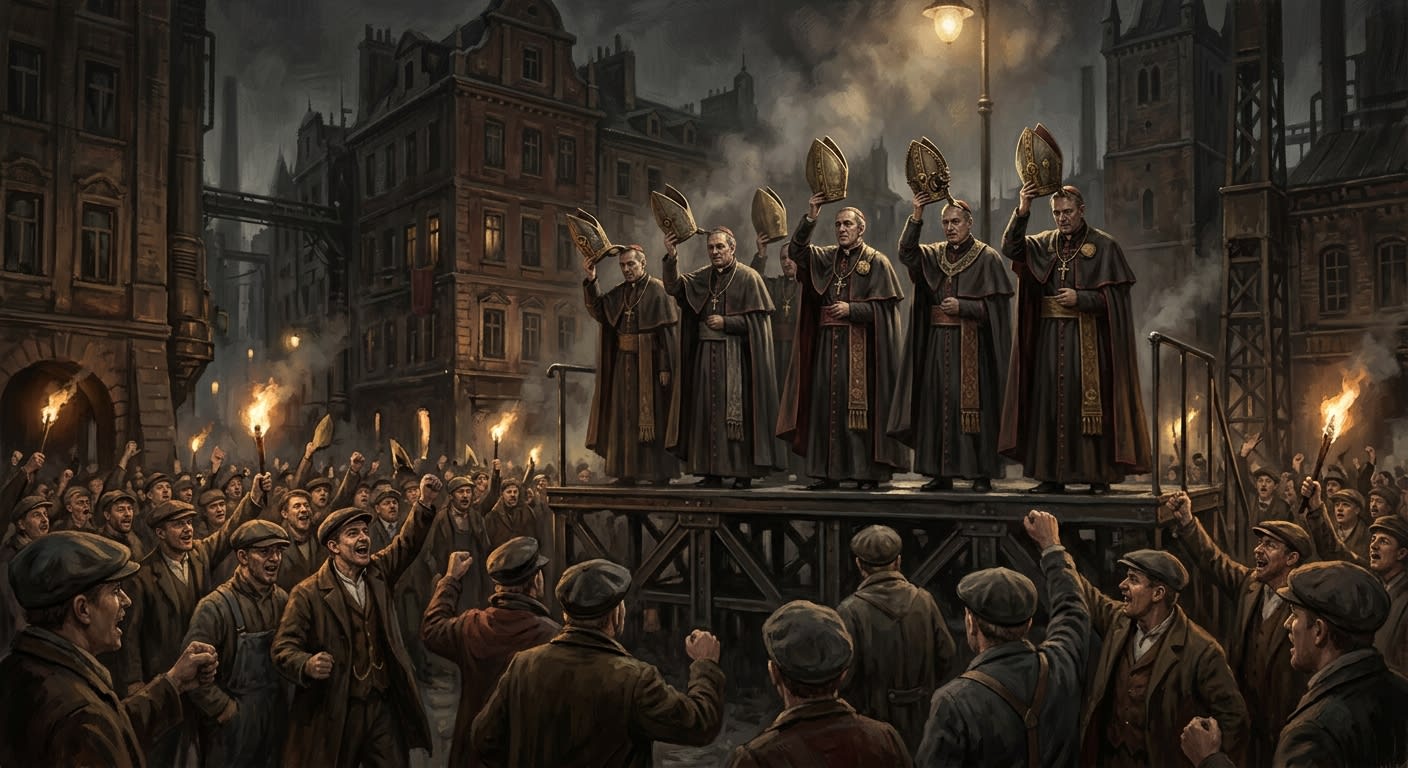
The Night of Crowns
Seven mitres fell, and Prague mistook the sound for progress
In A.S. 8, seven bishops in Prague removed their mitres before a cheering crowd, teaching the Rationalists that apostasy travels fastest when an authorised mouth performs it.
Codex Ref. VII.8.07-001
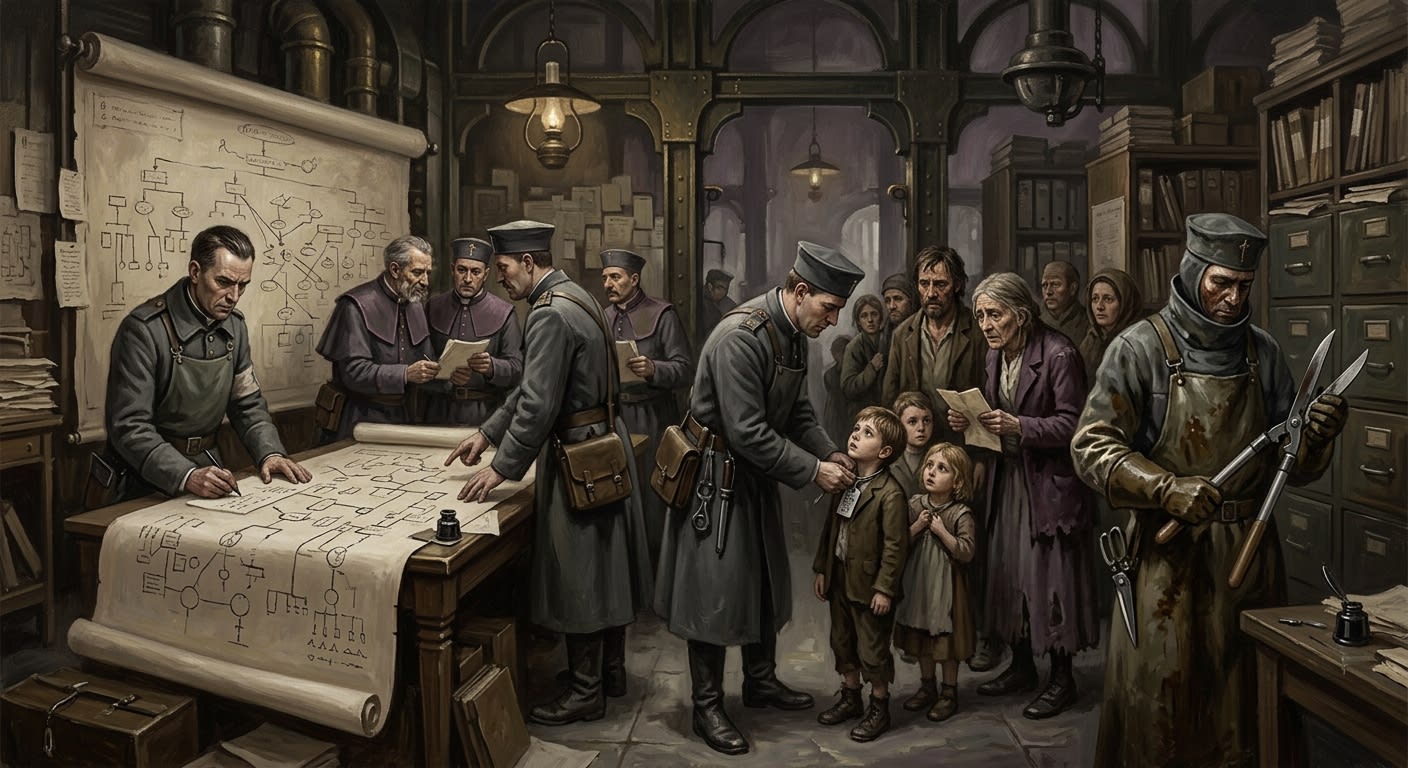
The Order of the Root
Where family trees are pruned with forms, cuffs, and holy shears
The Order of the Root is the Synod's hereditary-contamination apparatus: kinship charts, child tags, bloodline review, and mercy sharpened into pruning shears.
Codex Ref. XI.1.05-001
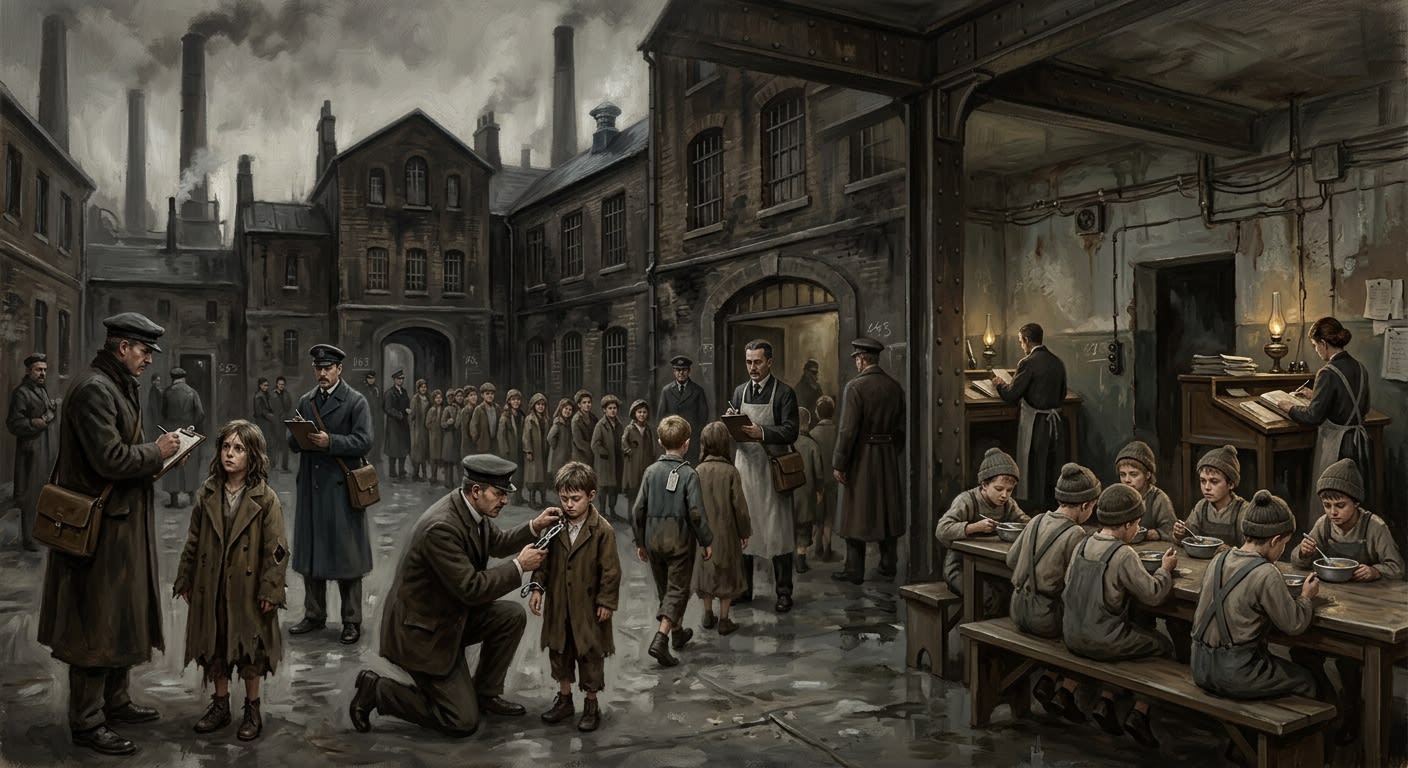
The Orphanarium
Mercy with hinges, locks, soup, and a tag cabinet
The Orphanarium receives children without acceptable custody and returns registered minors: washed, renamed, tagged, fed, placed, and corrected until Mercy can invoice itself.
Codex Ref. II.2.06-005
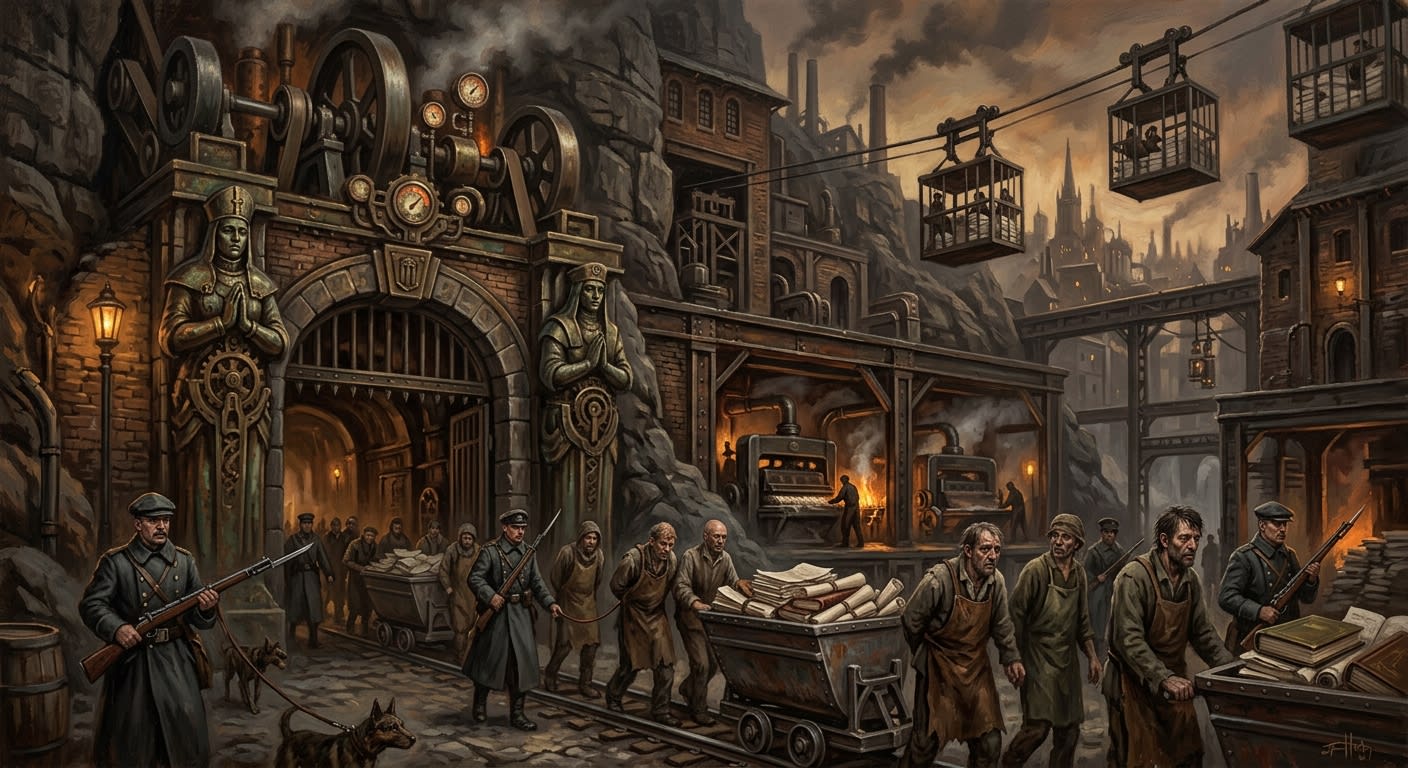
The Paper Mines of Ulm
Where forbidden minds are pressed into obedient sheets
The Paper Mines outside Ulm turn condemned scholars, clerks, witnesses, and families into archival stock, redaction vellum, penitential forms, and troublingly warm sheets.
Codex Ref. II.2.06-002
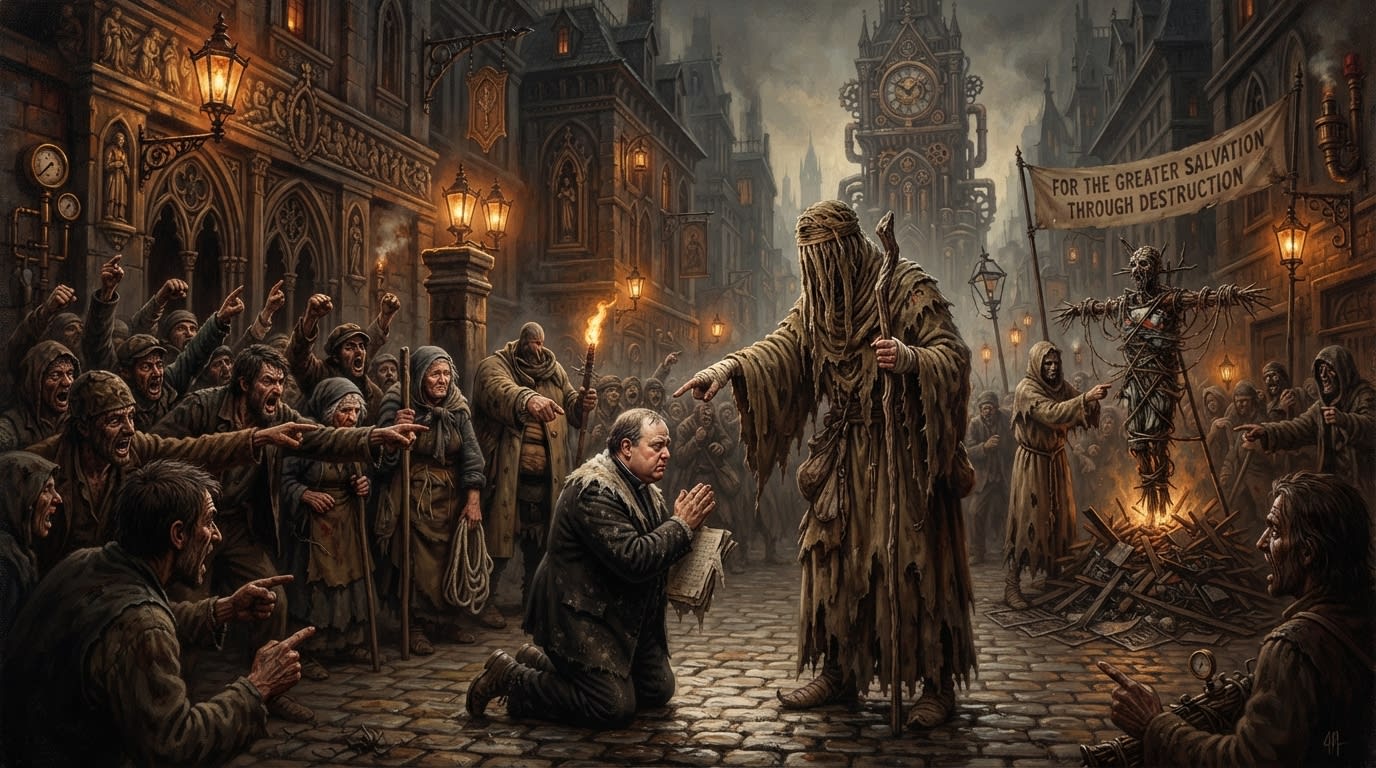
The Ragged Host
Where the remainder learned to kneel and the kneeling learned to burn
The Ragged Host is the condemned mobile movement that treats unaddressed harm as a public charge before the Creator — poor, armed, improvised, and more dangerous than any mob because it keeps records.
Codex Ref. XII.9.02-001
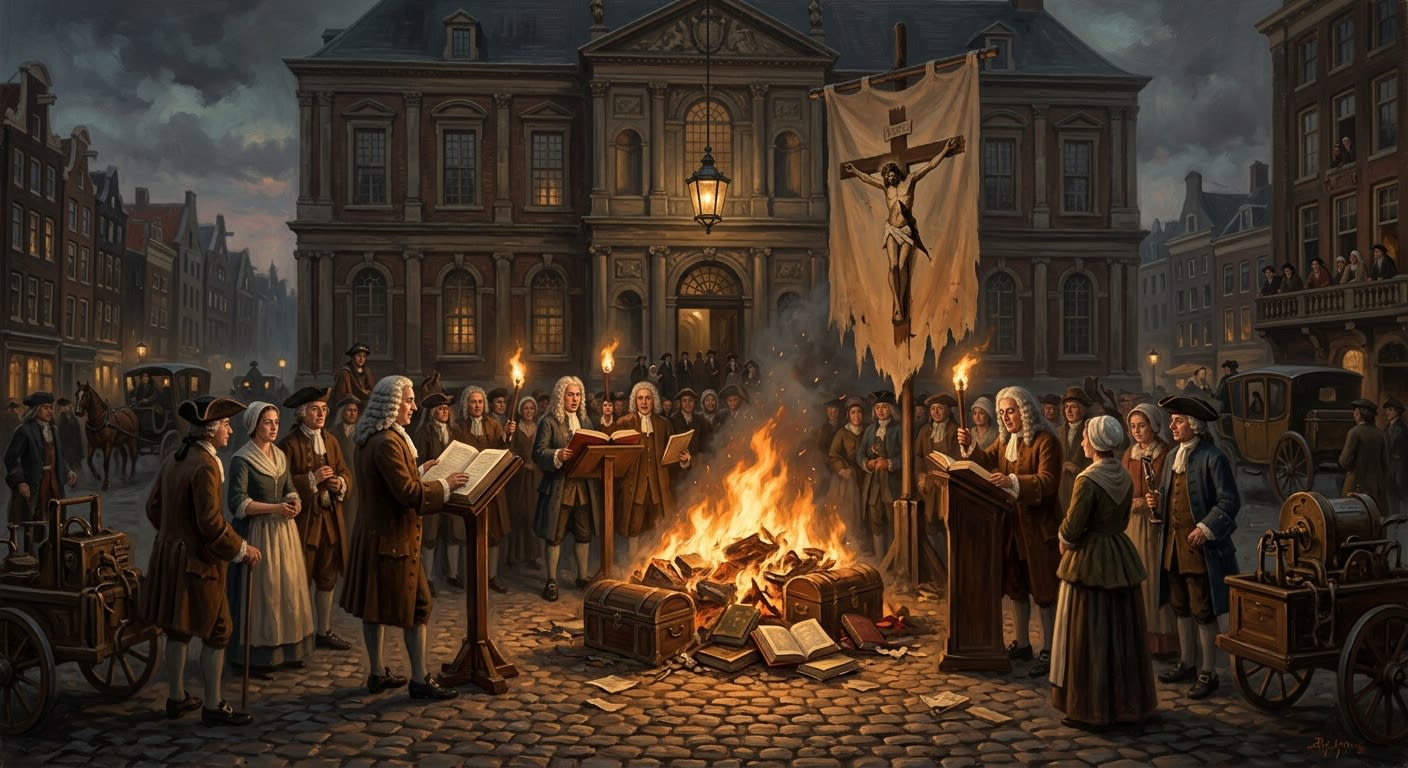
The Rationalists
Architects of the wound the Synod counts from
The Synod's most instructive enemy — philosophers who stripped Europe of its spiritual armor on the eve of Hell's invasion and then had the grace to be destroyed by the consequences.
Codex Ref. I.1.01-001
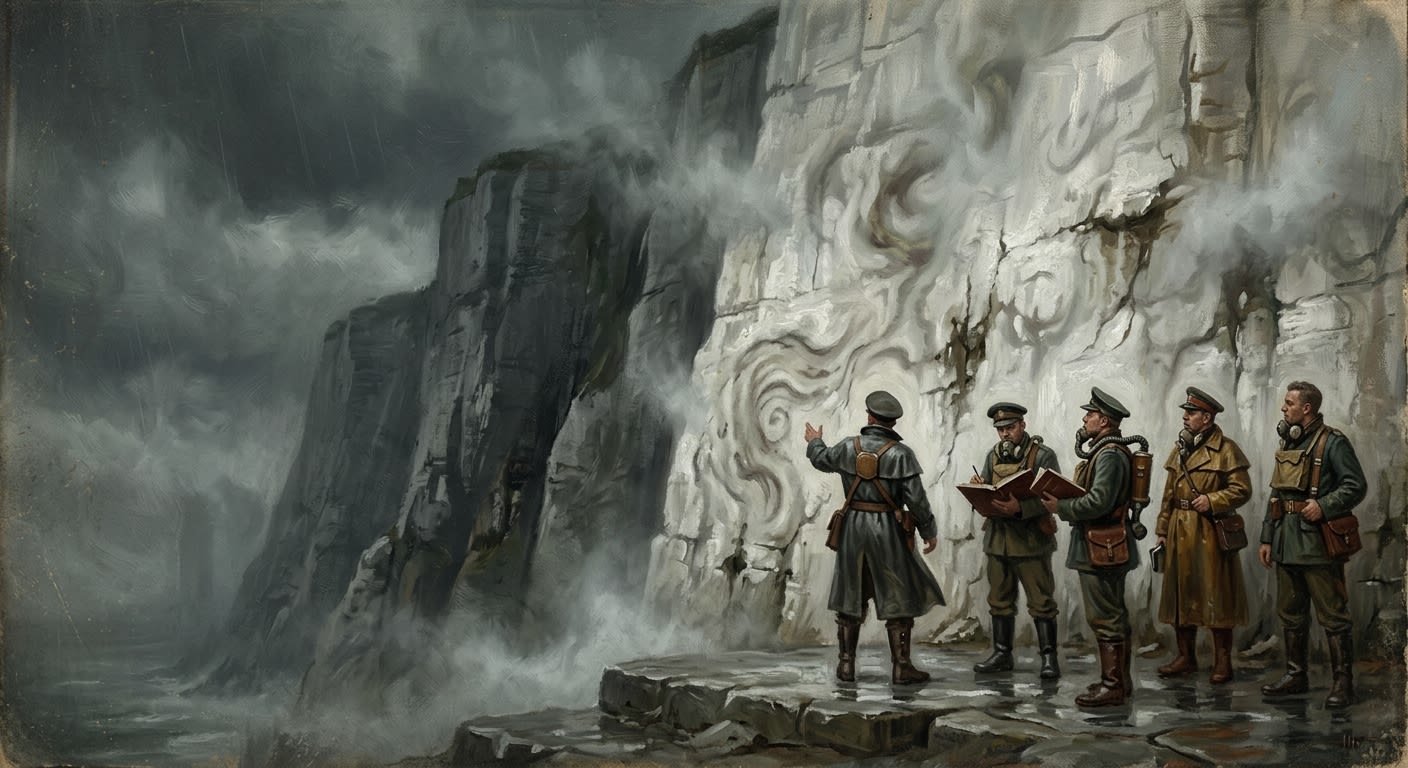
The Script Wall
Fog is only weather until it spells your mother's name
At the Chalk Redoubt of Calais, fog writes names on seventy feet of exposed chalk; readers speak them before the sea decides who was meant.
Codex Ref. XIII.1.14-001
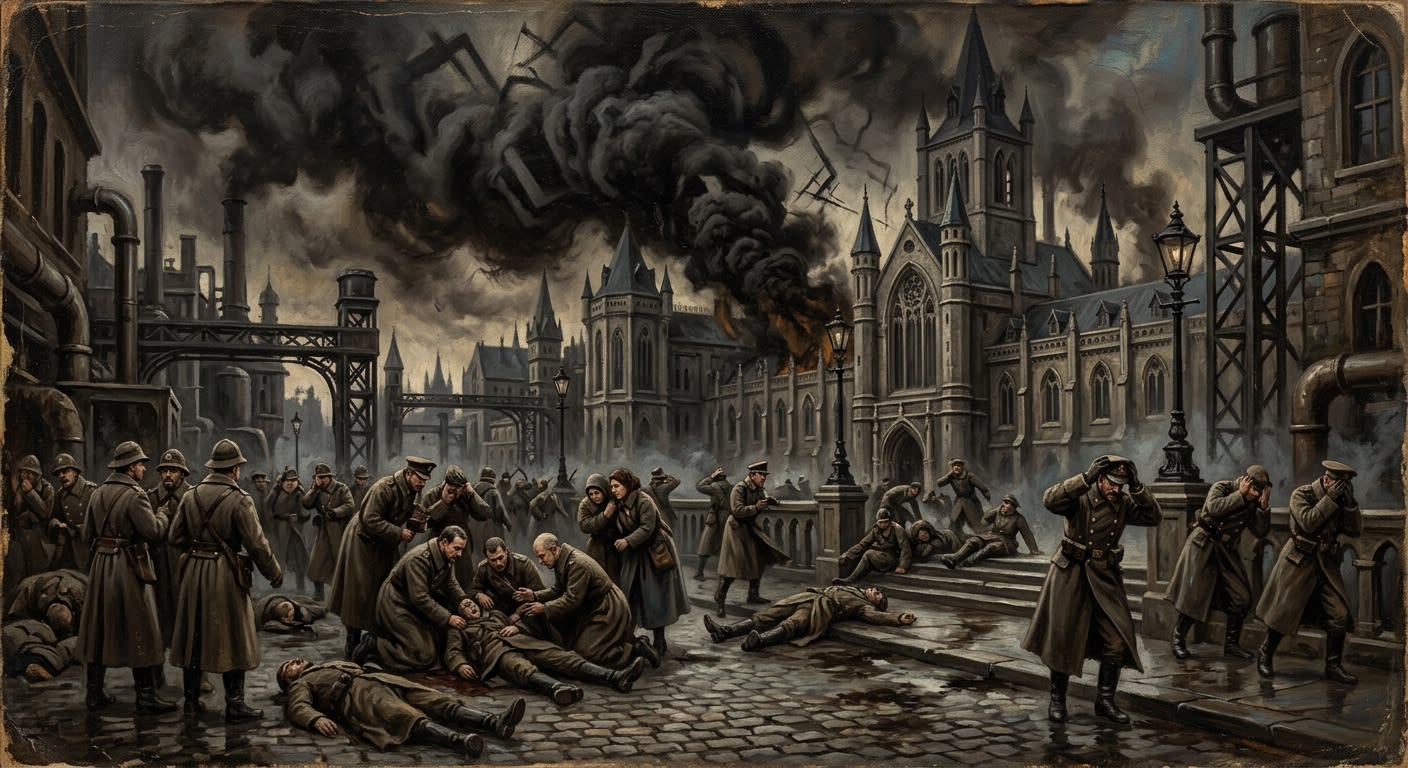
The Scripture-Smoke Incident of A.S. 136
When the chimneys preached and the soldiers fired upward
In A.S. 136, black diesel smoke above Constantinople formed Creed fragments, Index echoes, and Wallachian sentences before killing seventeen soldiers.
Codex Ref. VII.4.21-001
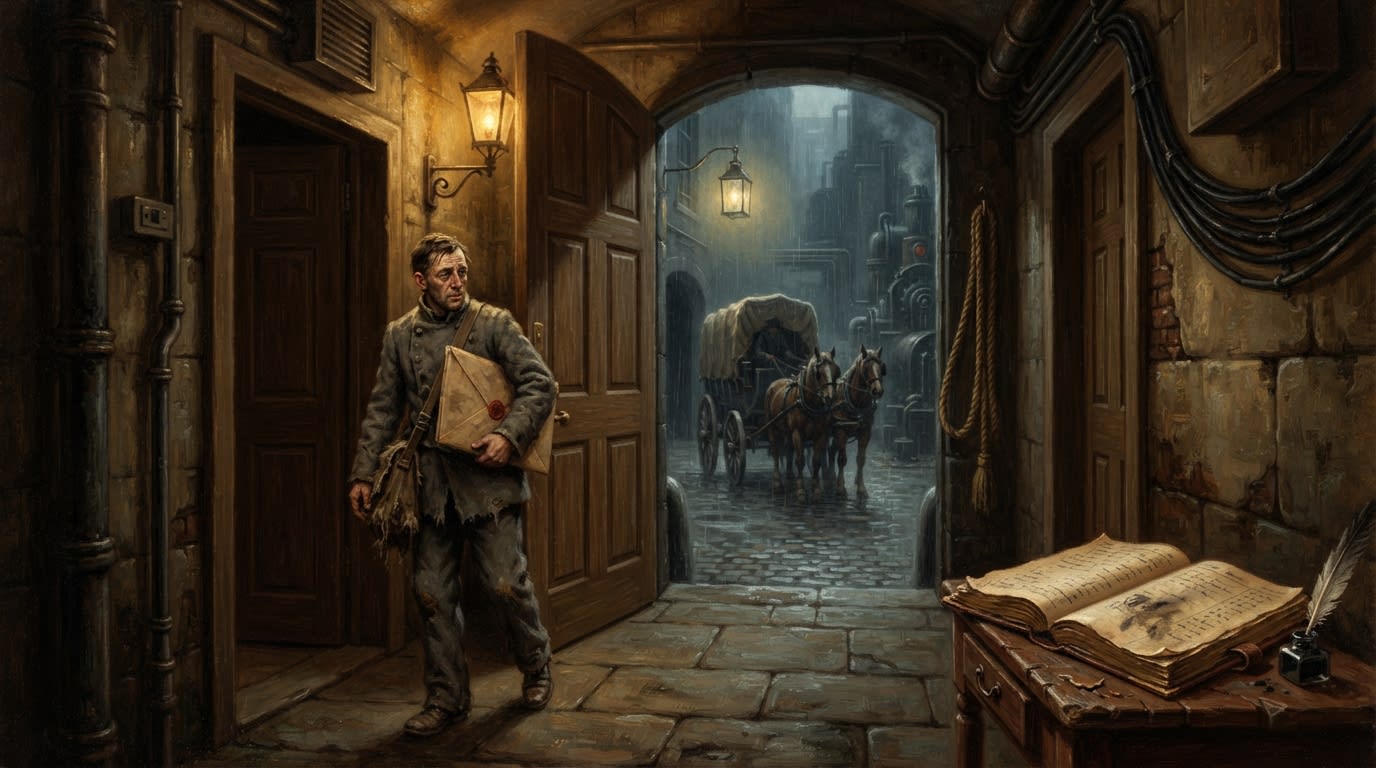
The Shadow Detail
The Hand That Writes in Rooms That Do Not Appear on Floor Plans
The Shadow Detail is the Synod's deniable hinge: clerks, couriers, wagon hands, and forgers who control the availability of persons, records, and routes. It can save a witness in the gap before procedure becomes consequence — or make that witness permanently unreachable.
Codex Ref. VIII.8.03-001
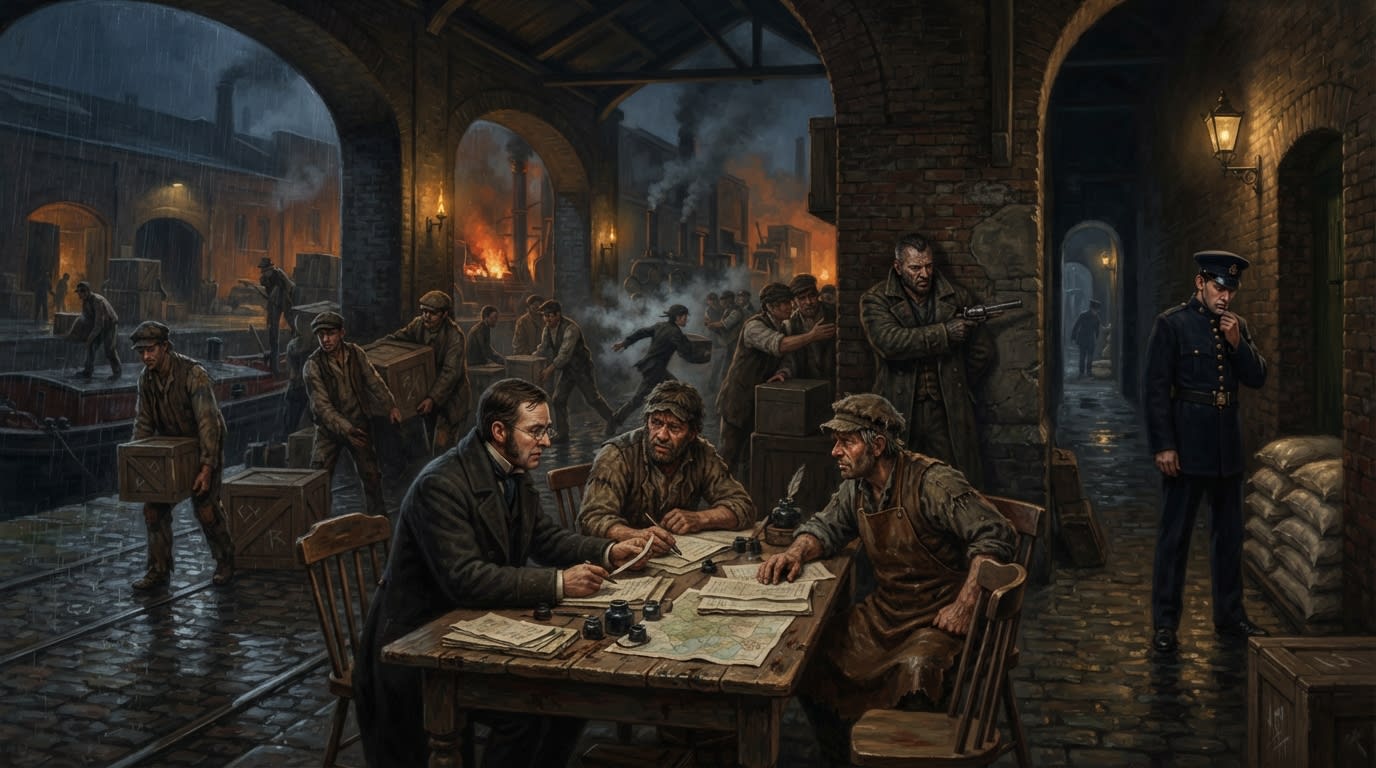
The Smuggler's Syndicate
The Other Road Has a Toll
Not a guild, brotherhood, cartel, or cause: the Syndicate is what emerges when official roads kill more reliably than unofficial ones. It moves medicine, witnesses, bodies, proof, names, and obligations through the interval between need and permission.
Codex Ref. IV.7.03-001
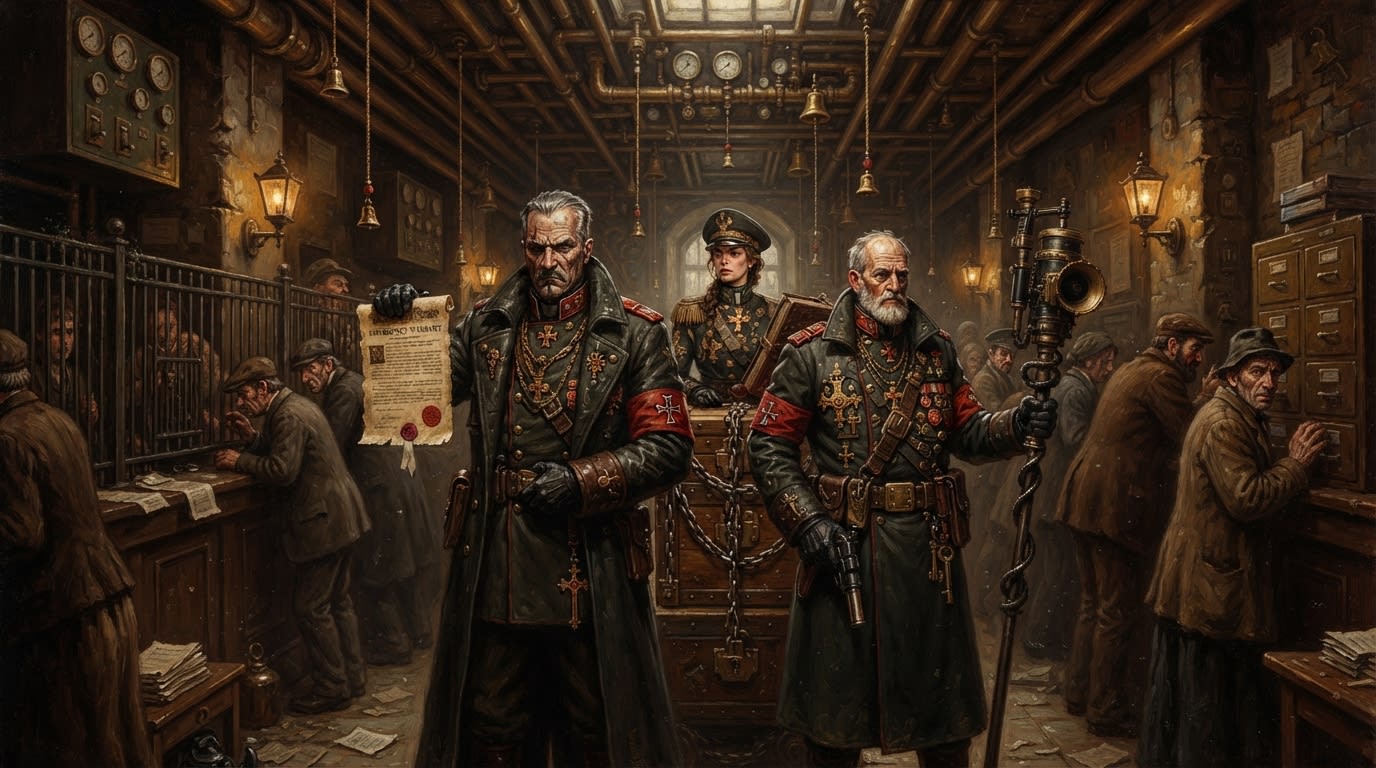
The Synod Task Force
On the Armed Enforcement of Administrative Truth
The Synod's answer to contested truth: temporary, armed administrative cells dispatched by warrant when ordinary procedure has failed, become complicit, or begun devouring its own paperwork. They preserve facts powerful offices would prefer misplaced.
Codex Ref. IV.7.12-001
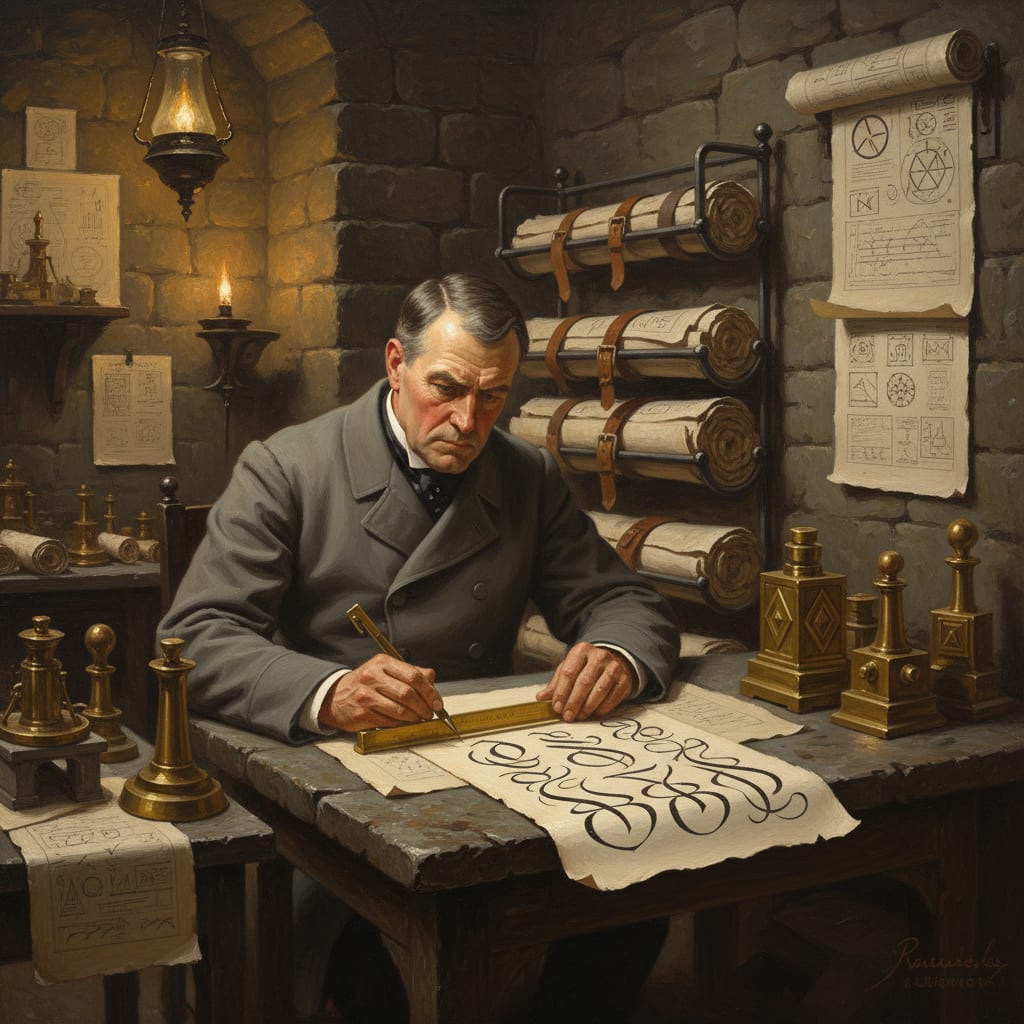
The Triune Alphabet
Twenty-three approved letterforms; everything else is heresy in the first stroke
The Triune Alphabet is the Synod's most perfect instrument of control: twenty-three approved letterforms, each angle mandated, each curve licensed, every dialect that falls between them erased. Procurator della Torre did not merely prescribe script. He proscribed thought.
Codex Ref. XIII.1.03-001
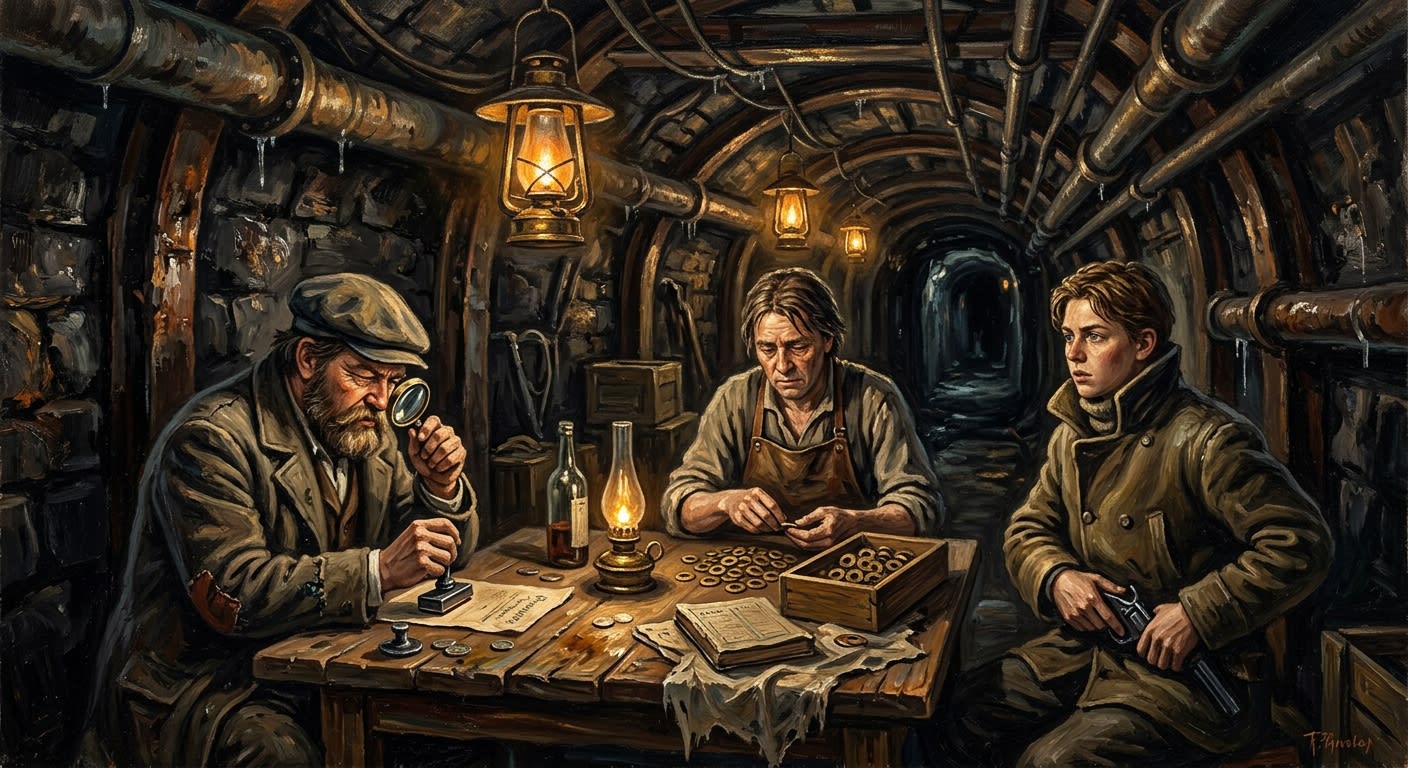
The Underchords
The Irongate's cellar has learned to grow
The eleven miles of sealed corridors and denied tunnels beneath Bastion-Irongate — home to the Underchord Cartel, the Counterkey Circle, and a gallery that grows by itself in the dark.
Codex Ref. II.4.10-001
The Undertide
The sea beneath Calais has learned to listen
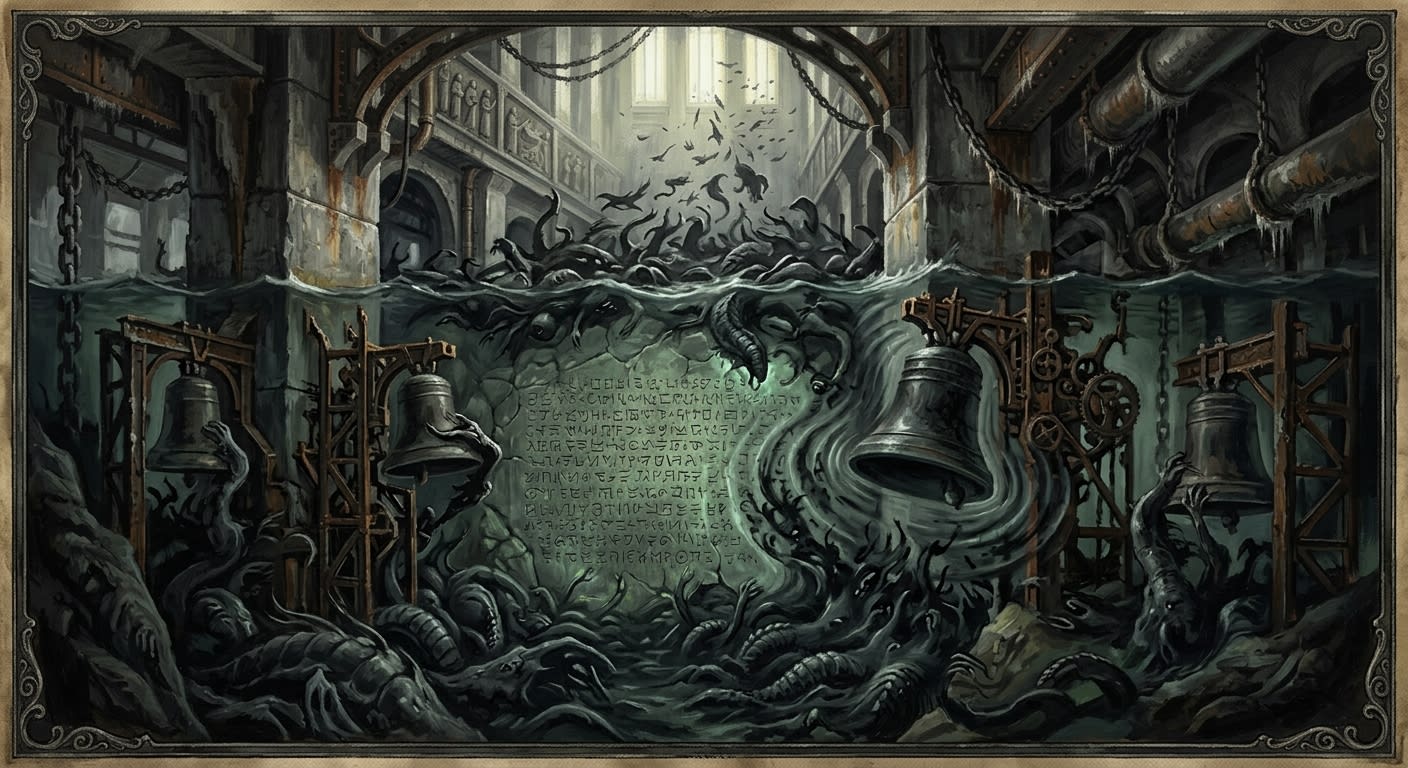
The Undertide are the unnamed marine entities beneath Calais: drawn to light, sound, and the Script Wall, repelled only when bells behave.
Codex Ref. IV.1.07-014

The Velvet Choir
[[velkara|Velkara's]] order of consciences-undone: it unfolds inside the [[the-sagittal-line|Line]]
The classified assessment of Velkara's primary infiltration instrument by the Bureau of Doctrine — the network by which Lust enters Synod territory as a Tuesday rather than an army.
Codex Ref. VIII.6.01-001
The Virtue Generals (So-Called)
Seven heresies dressed as hope, condemned in the forty-fourth standing order
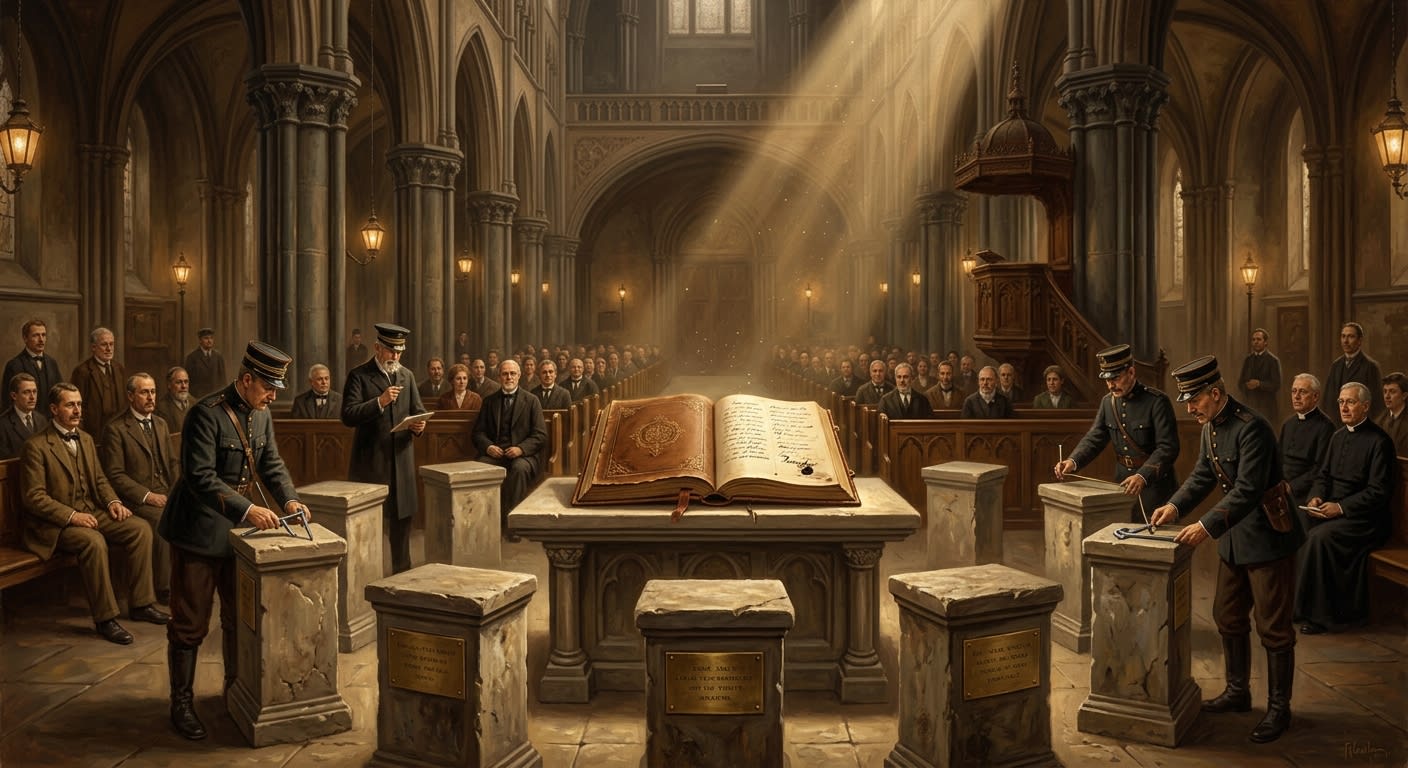
Standing Order 44-D refuted, filed, and reluctantly left open. Seven alleged champions of the Creator — unregistered, unconfirmed, and disturbingly active for entities that do not exist.
Codex Ref. IX.3.44-001

The White-Mantled Inquisitor
The Bureau does not silence speech; it teaches the population to do it themselves
Bureau of Purity's language constables — Chalklings, Mantle Examiners, Chainmasters, and Glass-Canons — charged with containing unregistered speech, enforcing the Index Claritatis, and hunting the phrases that make the chain sing.
Codex Ref. XII.49.01-001
The Widow's Pennies Exchange at Griefgate
Where guilt is the currency and the arch keeps the change
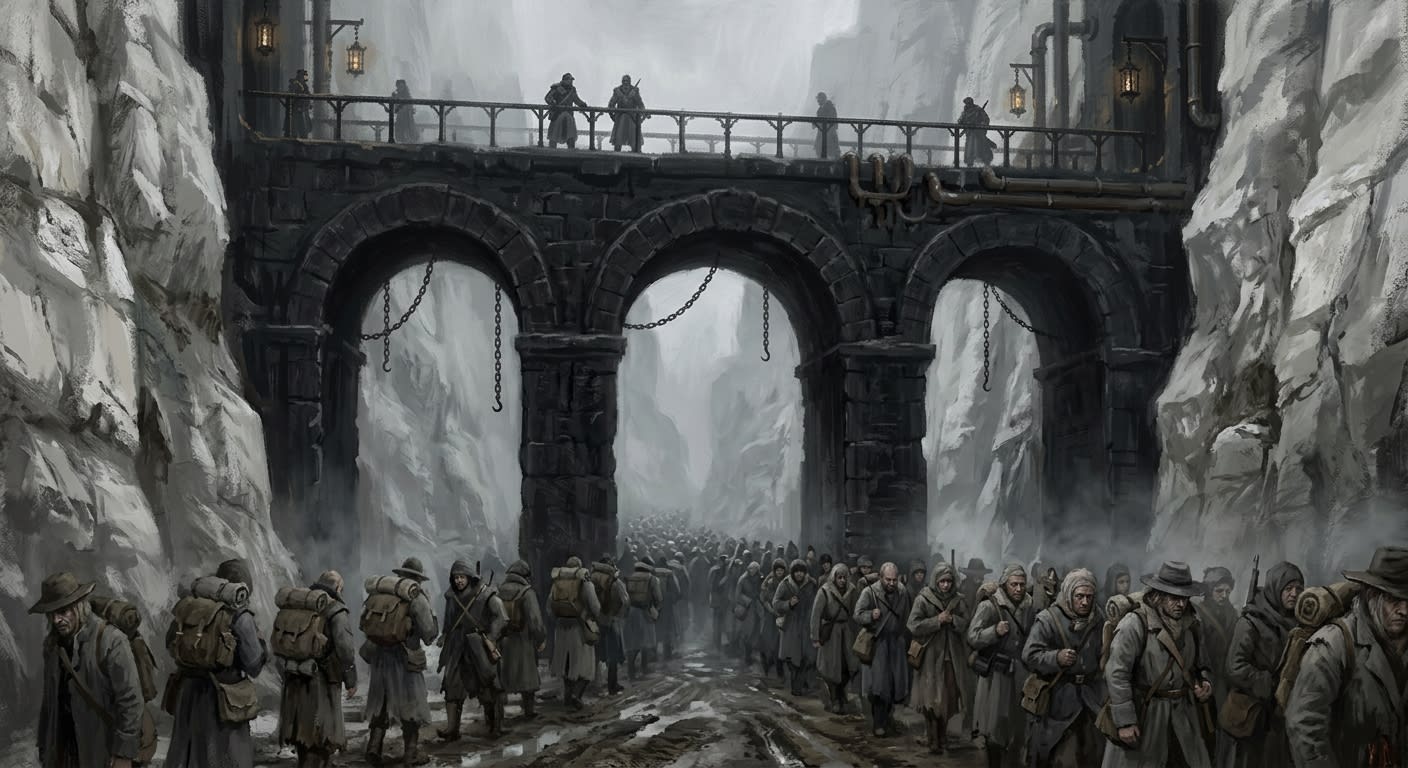
The most efficient grief-processing apparatus on the pilgrim roads — three black-stone arches, a ledger of sorrows, and a staff of professionals who charge for the arithmetic.
Codex Ref. II.1.04-001
The Witch-Hunts of Toulouse
The fire that learned to file its victims
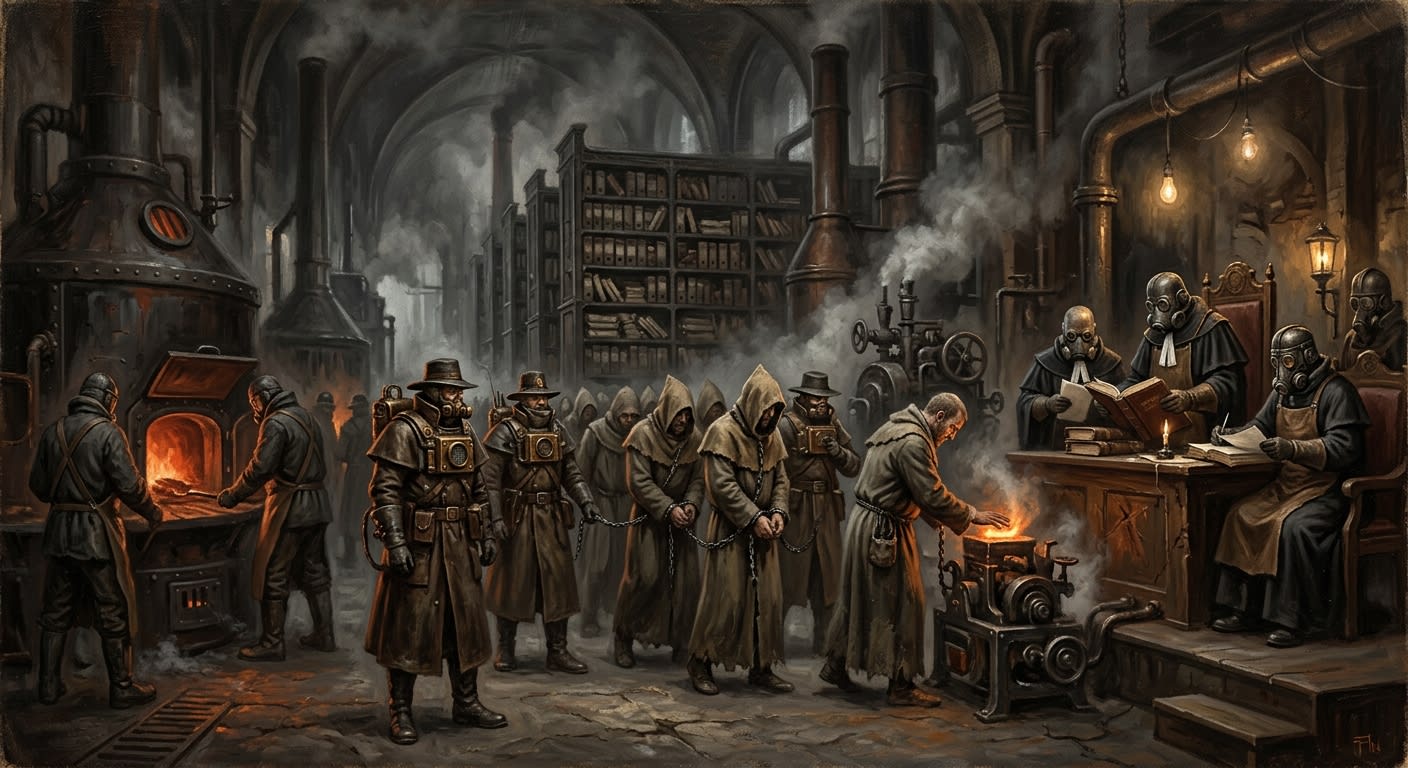
Toulouse taught Purity its grammar for cruelty: warrant before fire, confession before brand, spectacle before silence, silence before archive.
Codex Ref. VII.8.02-001
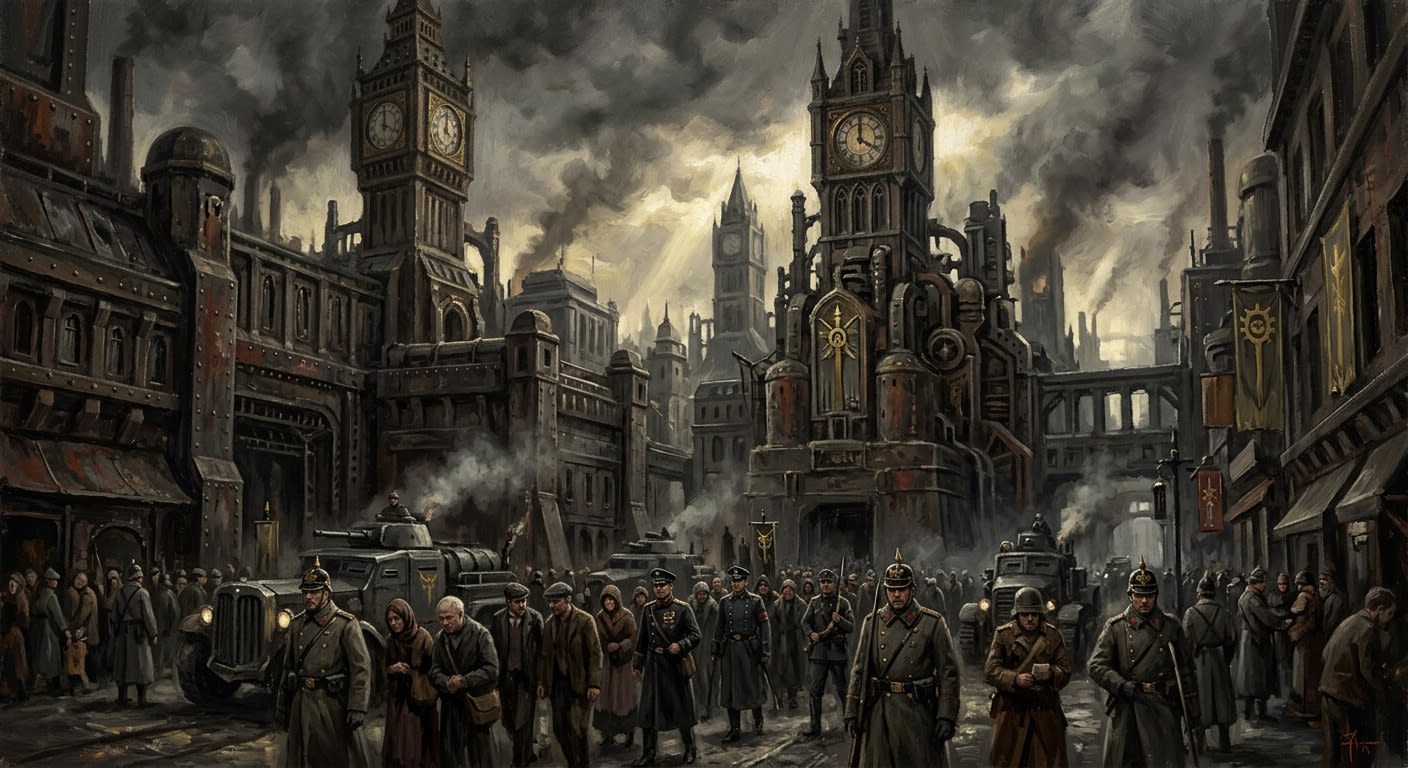
Toledo
The city taken by cannon and kept by ash
Toledo is the Synod-held Iberian martyr-city where a lost siege became custody, ash became law, and time itself learned tariffs.
Codex Ref. II.1.04-015
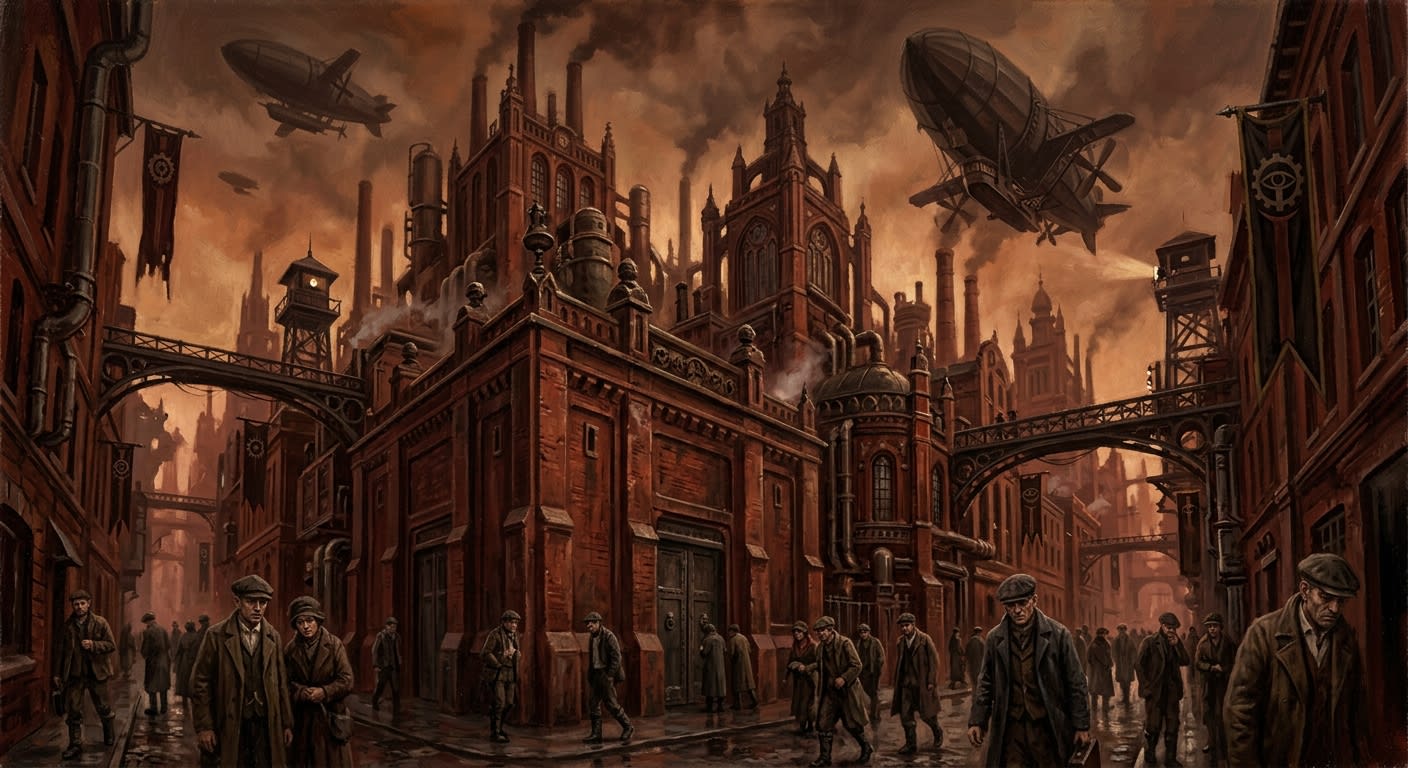
Toulouse
The safe city where Purity learned its grammar
Toulouse is the red-brick safe city corrected in A.S. 93: birthplace of Purity's public dread, still loyal, profitable, lowered-voiced, and watched.
Codex Ref. II.1.09-093
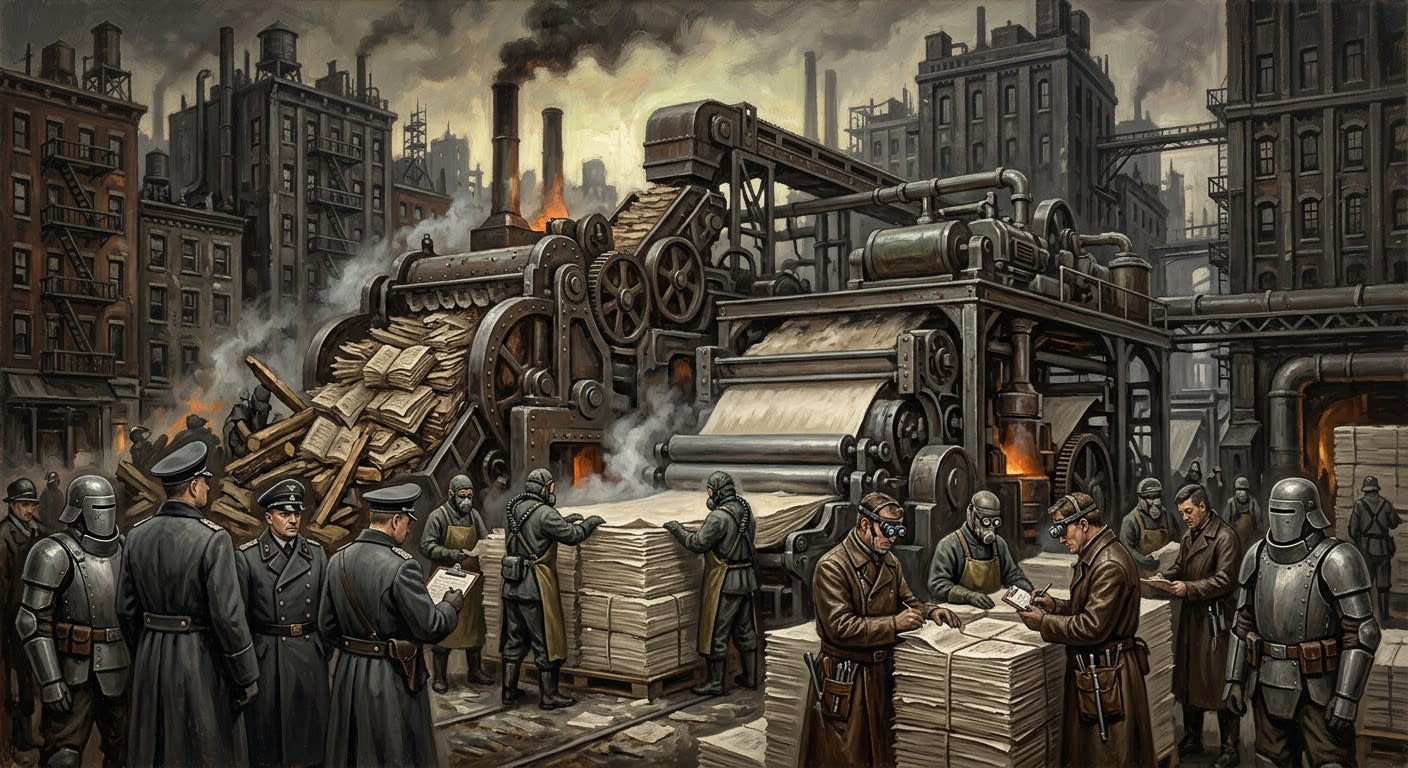
Ulm
The city that taught paper to confess and scholars to become pulp
Ulm is the corrected Heartlands city whose Rationalist compact predated the calendar wound, and whose Paper Mines now make heretical learning into obedient sheets.
Codex Ref. II.2.01-005

Unauthorized Melody Smuggler
The lullaby the Bureau buried; the mouth it walks out of now
The Unauthorized Melody Smuggler is classified under Tongue-Crime, Melody Intent, Doctrinal Sabotage — above common theft, below armed heresy. The lullaby does not care what the Bureau calls it. It continues to walk out in someone else's mouth.
Codex Ref. XII.48.01-001
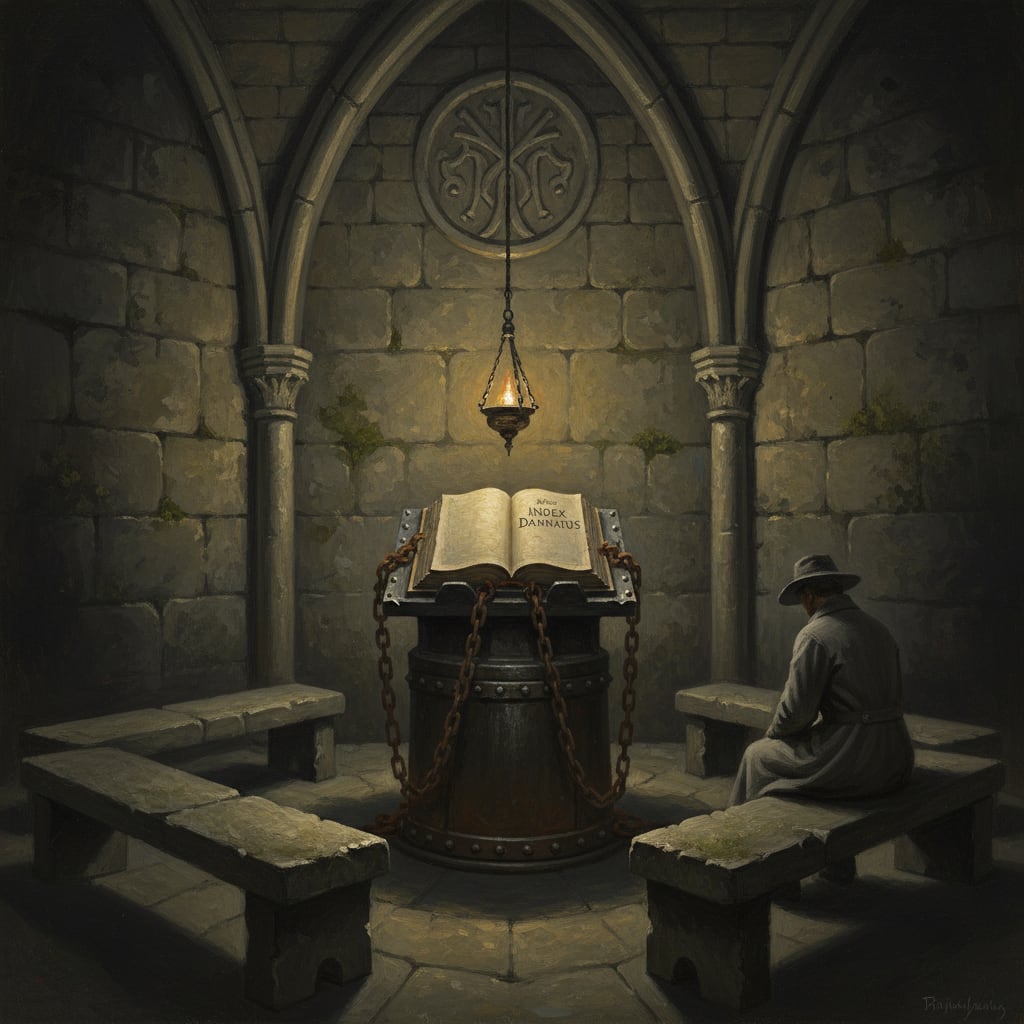
Vault of Silences
Forty-seven steps descending. Forty-nine ascending. The Bureau has certified both numbers correct.
The Vault of Silences occupies the sub-basement of the Basilica of the Ledgered Saints — the Bureau of Purity's sealed repository of everything the Synod prefers the world forgot. Four visits. One conclusion. The Bureau will stamp it out.
Codex Ref. II.1.04-002

Veyrel
The man who made condemnation buy shoes
Condemned in Strasbourg and respectable in Cologne, Veyrel exploited stale Index copies so neatly that Purity invented speed to hate him properly.
Codex Ref. III.2.01-125
Wallachia
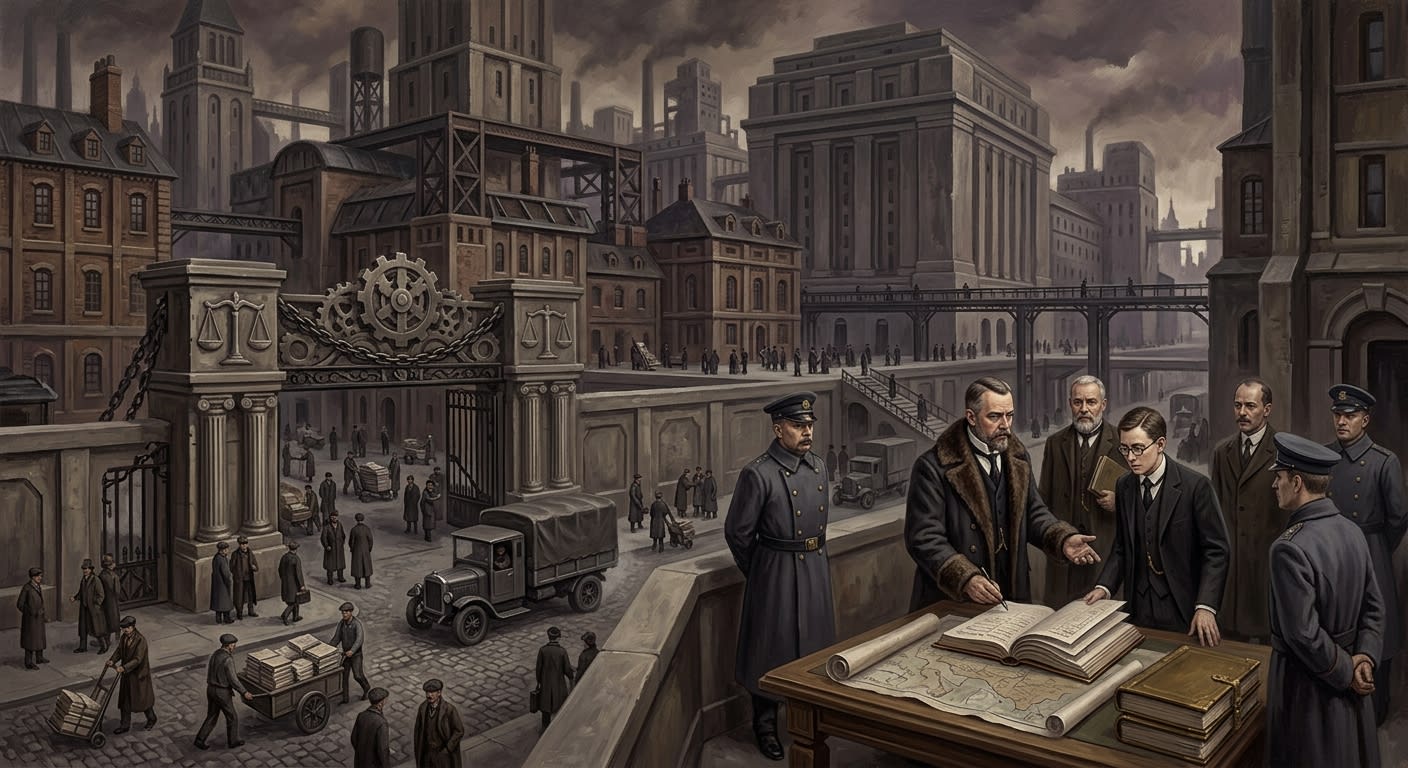
Fair prices are how Hell asks for a signature
Wallachia did not fall by trumpet and fire. It borrowed, signed, refinanced, and became Velmora's creditor province pointed at Sibiu.
Codex Ref. II.6.06-006
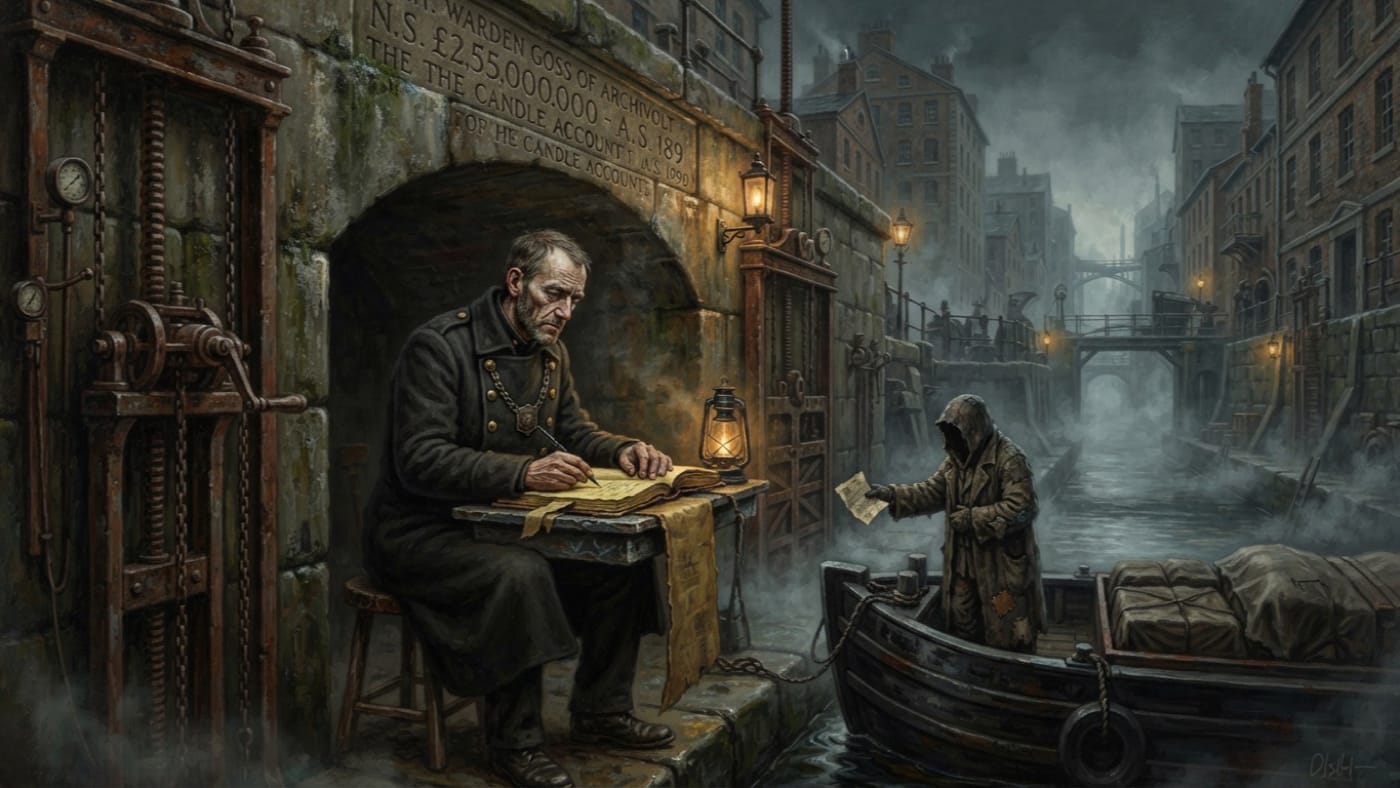
Warden Goss of Archivolt
Three questions on paper, one debt in stone
At the Mouth-Sluice, Goss asks a traveller's name, destination and ink-weight beneath his own debt, incurred for overweight devotional candles in A.S. 189. I found him there in A.S. 197 and 201.
Codex Ref. III.2.01-189

Warden-General
Command is safest when it kneels beneath an empty chair
The Warden-General is the rotating public throat of the Bureau of War, commanding beneath the Empty Throne and its occupied-in-absentia Seal.
Codex Ref. VIII.5.03-001