

Reverse Index
Referencing “Cologne”
Every codex entry that links to Cologne. 238 entries.
Return to Cologne
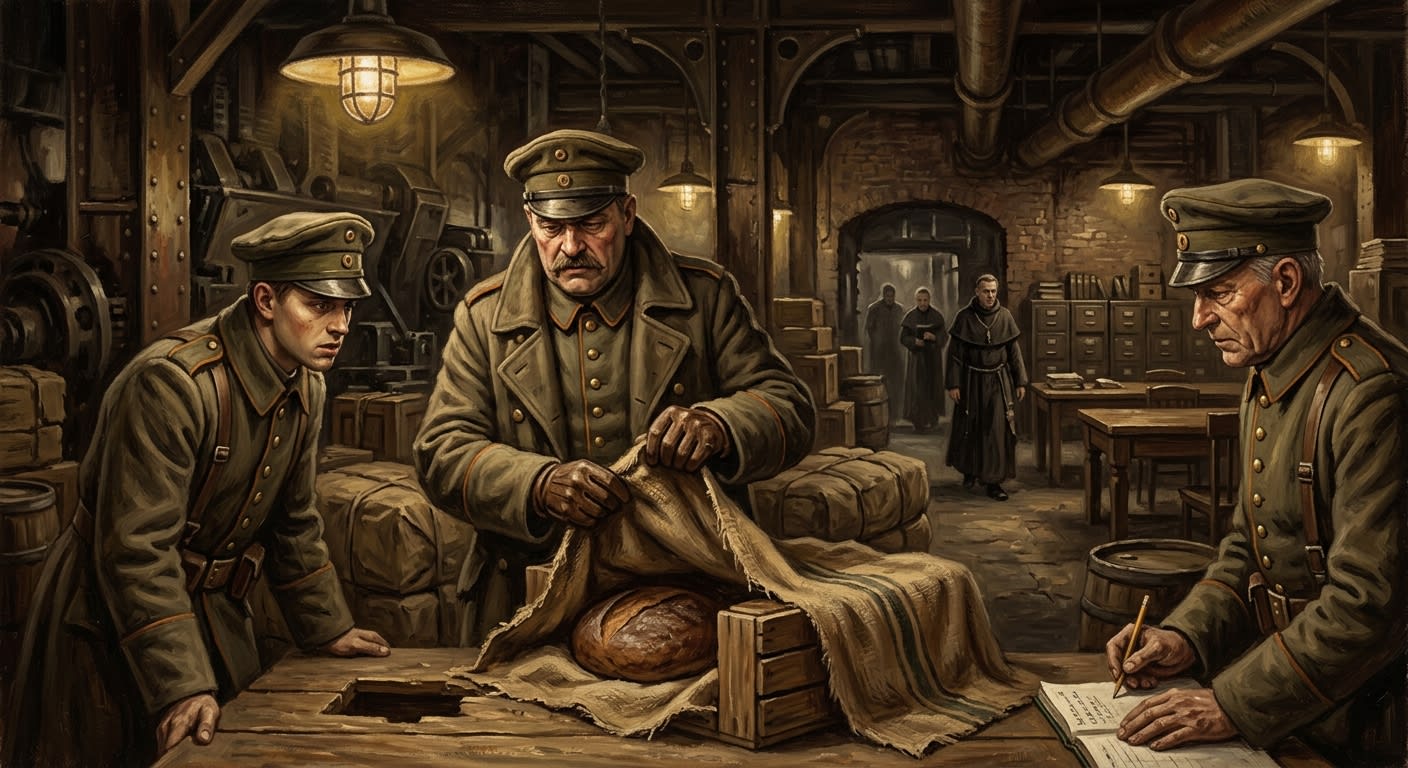
14th Rhine Customs Brigade
The guards who inspected bread and missed Providence
The 14th Rhine Customs Brigade lifted a cloth, saw bread, and missed three apostolic phalanges; Providence has seldom dressed itself so plainly.
Codex Ref. I.1.14-031
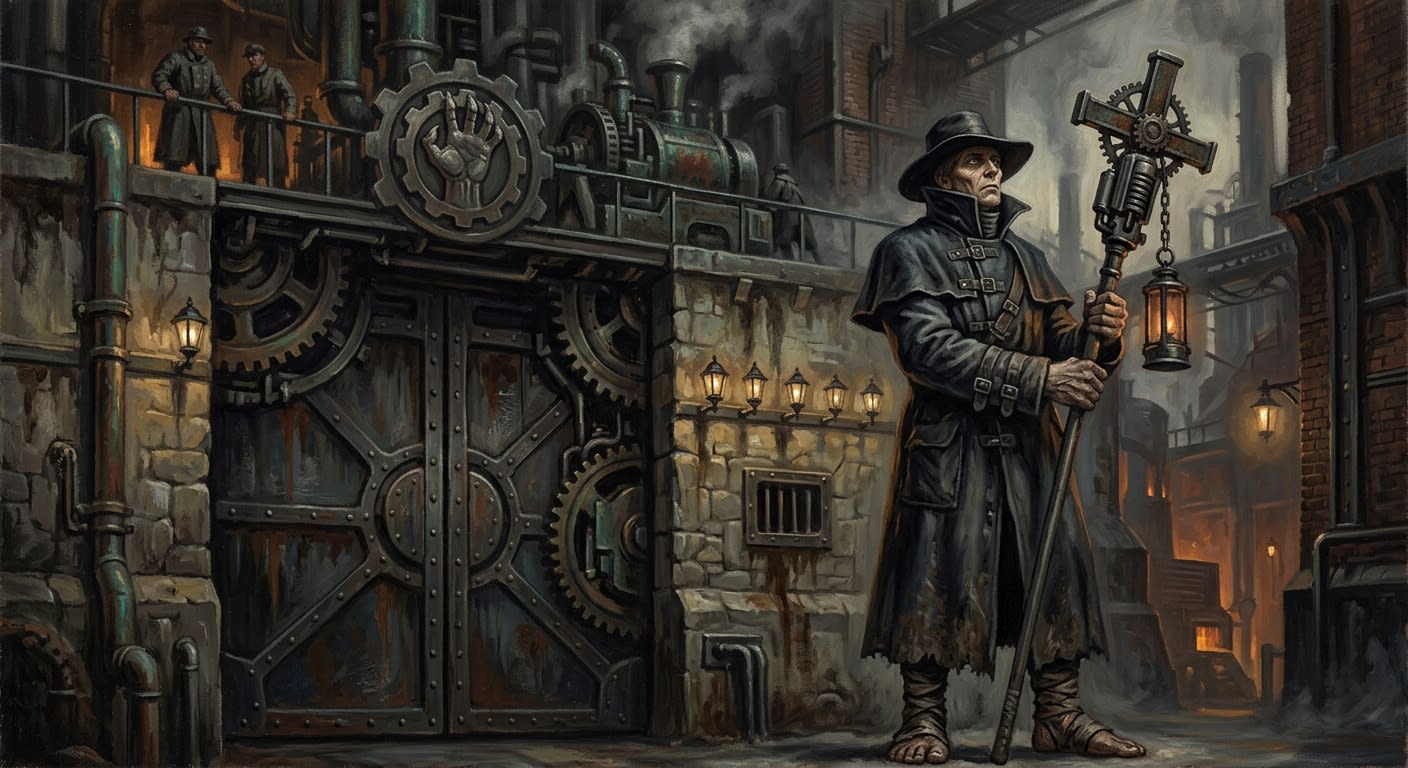
Aachen
The city that survived its own fall
Aachen opened its gate in A.S. 25, survived the betrayal, and has spent every taxed, polished, barefoot century proving survival is not innocence.
Codex Ref. II.2.02-001
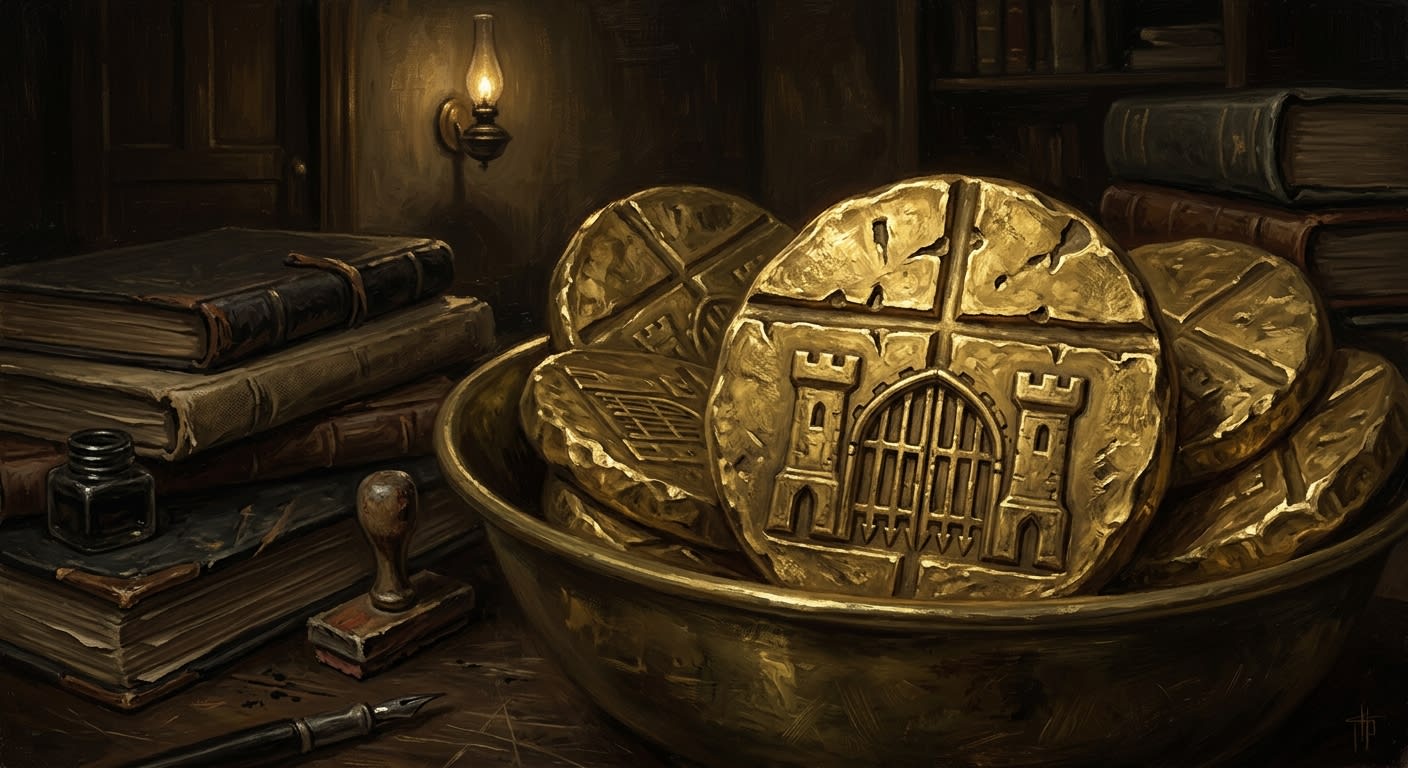
Aachen Gate-Penny
A saint's housing made small enough to buy boot grease
The Aachen gate-penny is reliquary gold made into emergency currency: a closed gate, a cross-groove, and a city’s old betrayal priced by the handful.
Codex Ref. V.2.04-160

Abbot-Registrar Solene
She made contradiction choose a widow and a loaf
Solene of Lyon, first Abbot-Registrar of Nemea, made ruins into an archive and panic into the doctrine of original by ratification.
Codex Ref. III.2.01-096
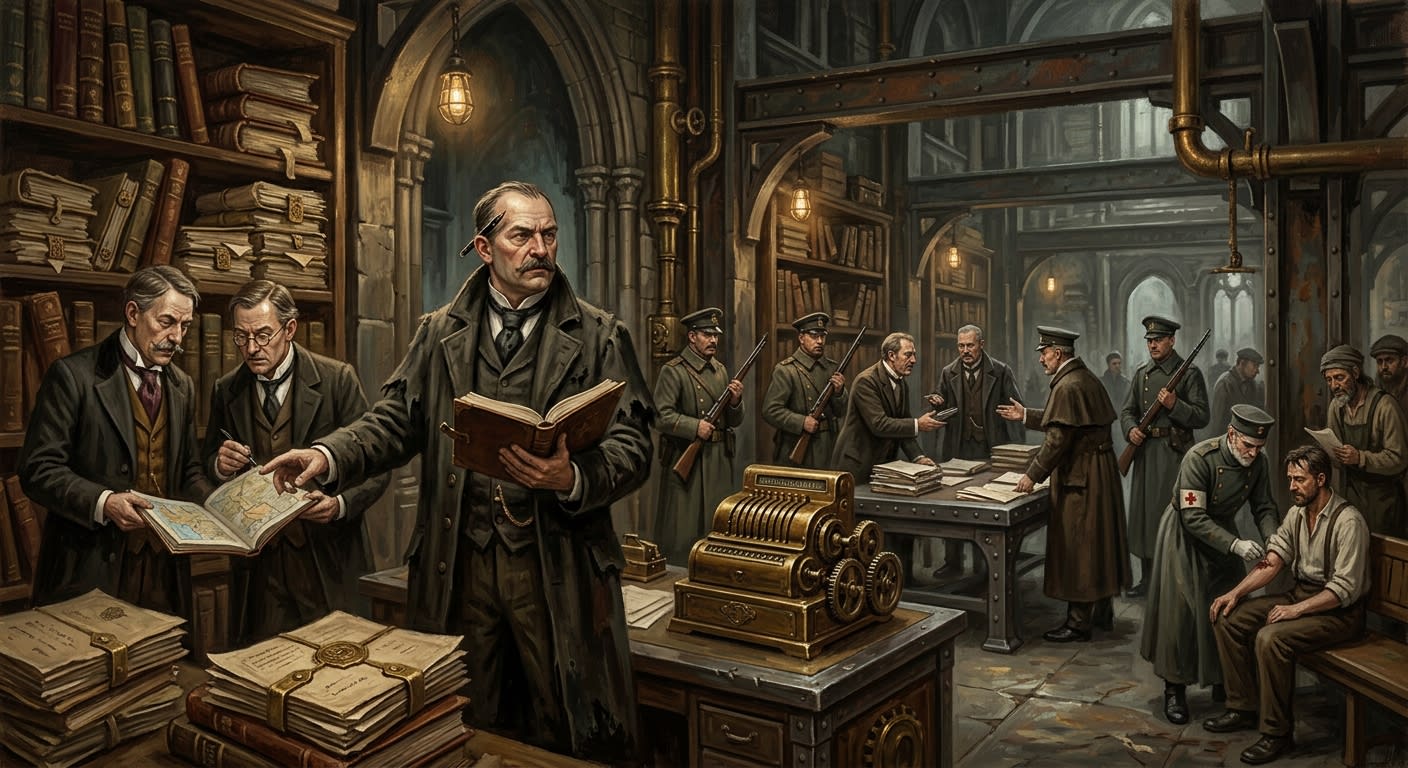
Advocates Guild
Licensed cruelty with gloves, seals, and a fee table
Licensed fraternity of Citation Advocates that turns Synodal quarrels into ledger-duels, sells precedent, polices pits, and calls the resulting injuries civil peace.
Codex Ref. XII.28.01-001

Aldric Hartmann
The brewer who hid apostles under beer and left no sermon to spoil the work
Uncanonised Deutz brewer and relic custodian who hid three apostolic phalanges beneath his vats from A.S. 31 until his death in A.S. 38.
Codex Ref. III.2.01-031
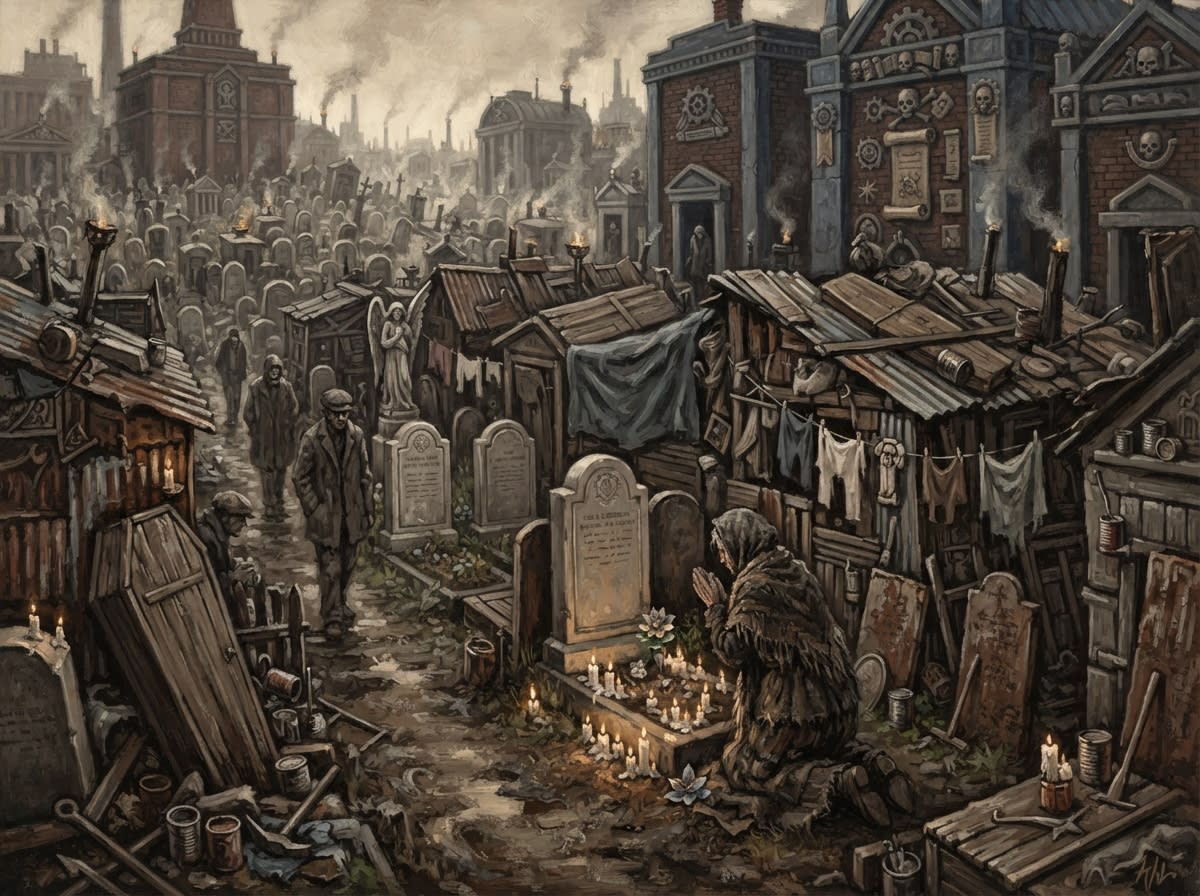
Anchor Graves
Where burial right does the work housing law refuses
Anchor graves are lawful family plots whose burial privileges let grave-field lanes pretend that shacks are caretaker shelters rather than homes.
Codex Ref. XIII.1.78-017
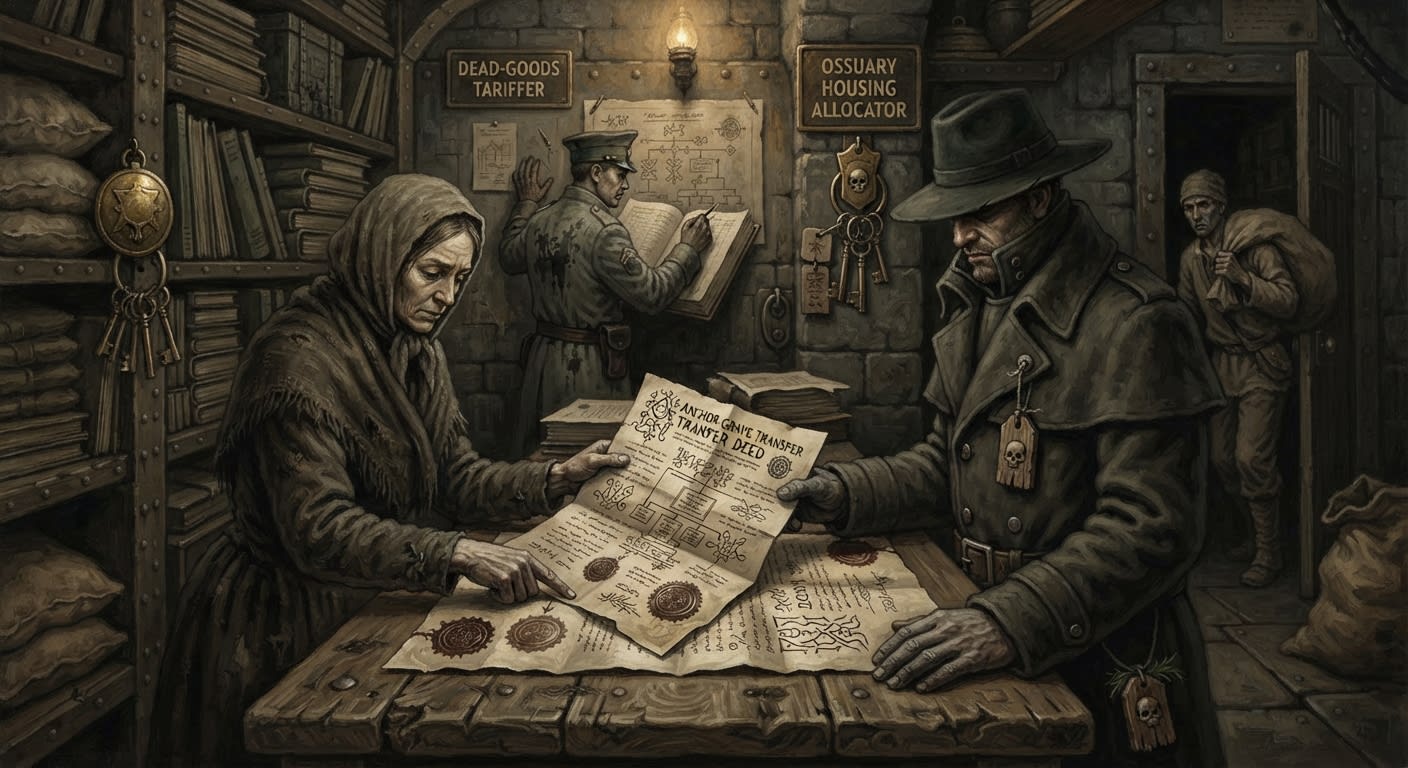
Anchor-Grave Transfer Deed
Where the grave becomes housing because hunger signs neatly
The anchor-grave transfer deed converts a family's burial claim into permitted ossuary presence, teaching grief to become tenancy and tenancy to remain revocable.
Codex Ref. XIII.1.78-178
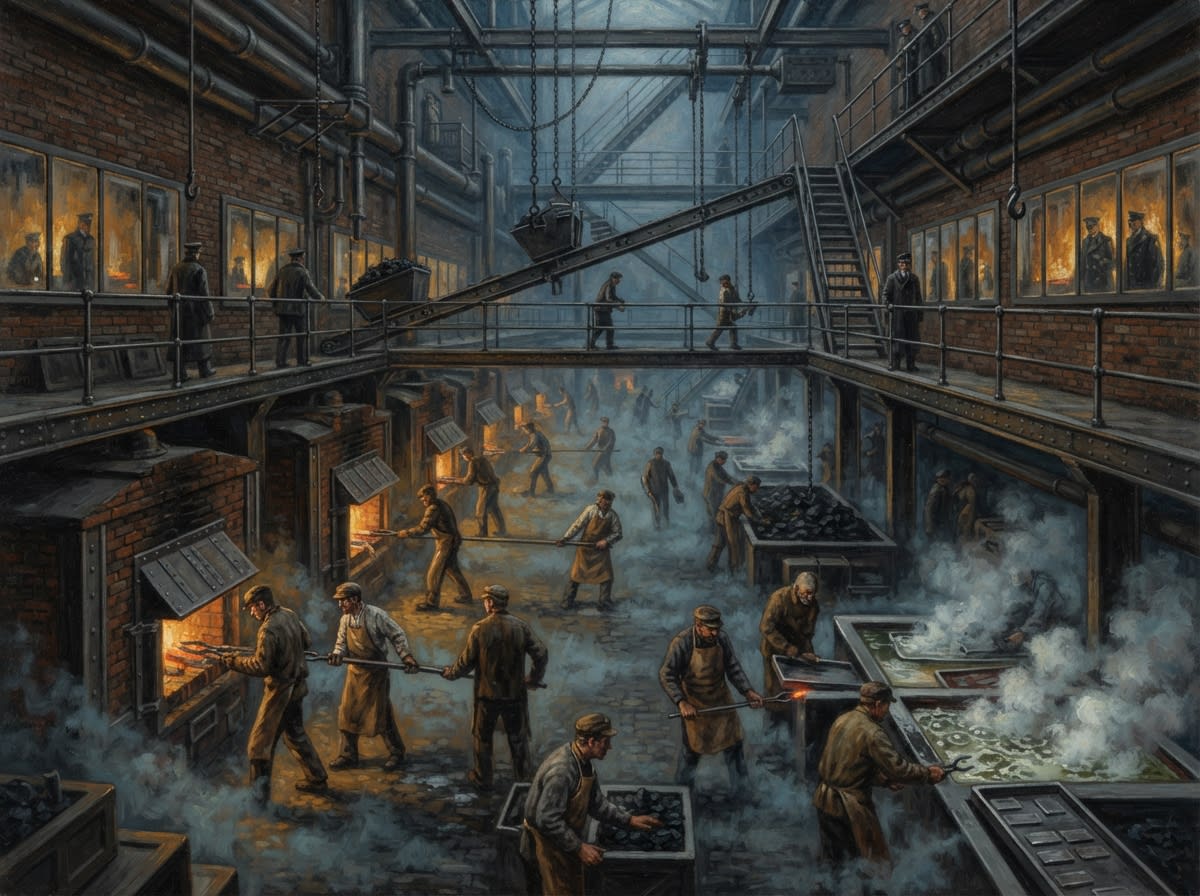
Anneal Courts
Where blank metal is taught to accept a face
Sable Court's Anneal Courts soften blank metal, harden lawful faces, feed the Clipped Choir through furnace loss, and prove identity survives only what the fire permits.
Codex Ref. II.2.07-094
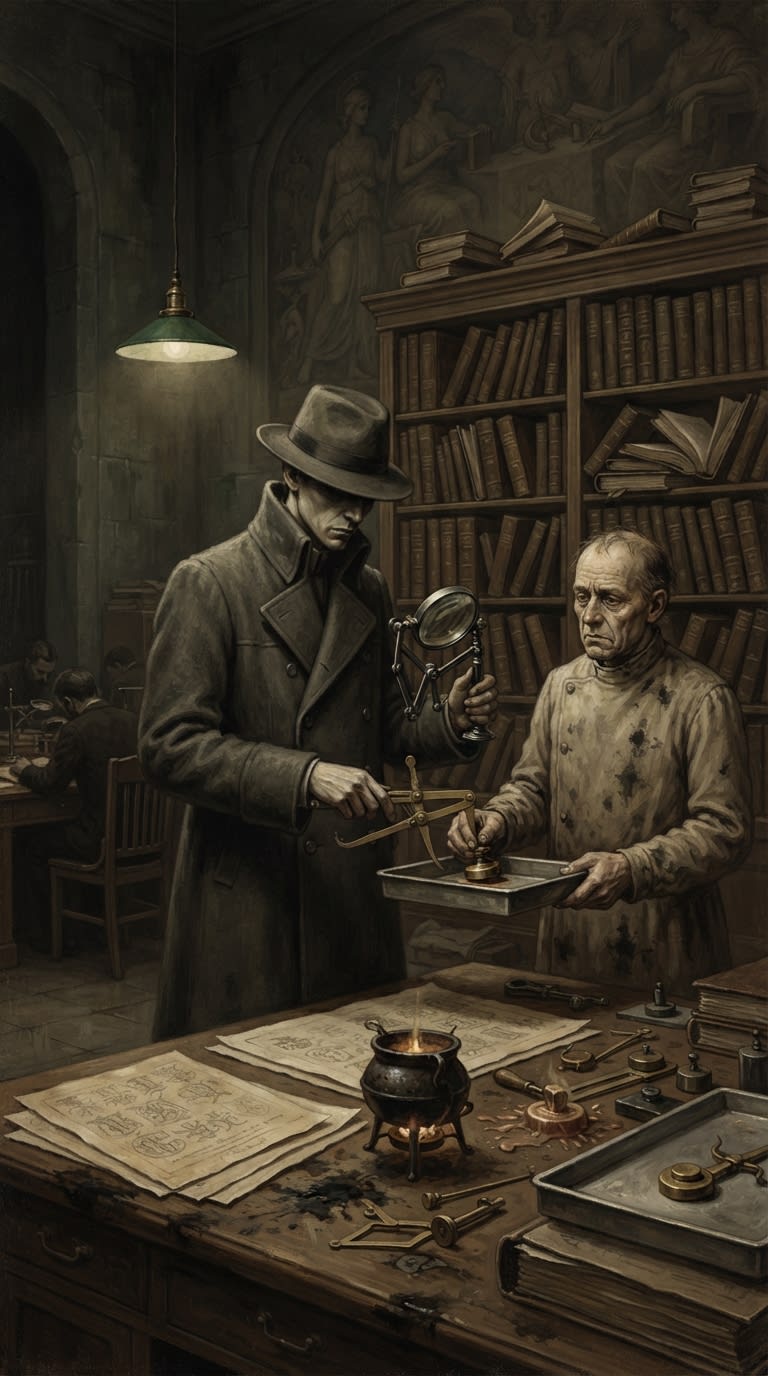
Annual Die Audit
Every lawful instrument must survive its own impression
Instituted after the A.S. 178 counter-seal embarrassment, the Annual Die Audit sends Seal-Walkers across Synod territory to weigh, strike, measure, accuse, retire, and occasionally retroactively shame every lawful seal-die.
Codex Ref. VI.4.19-178
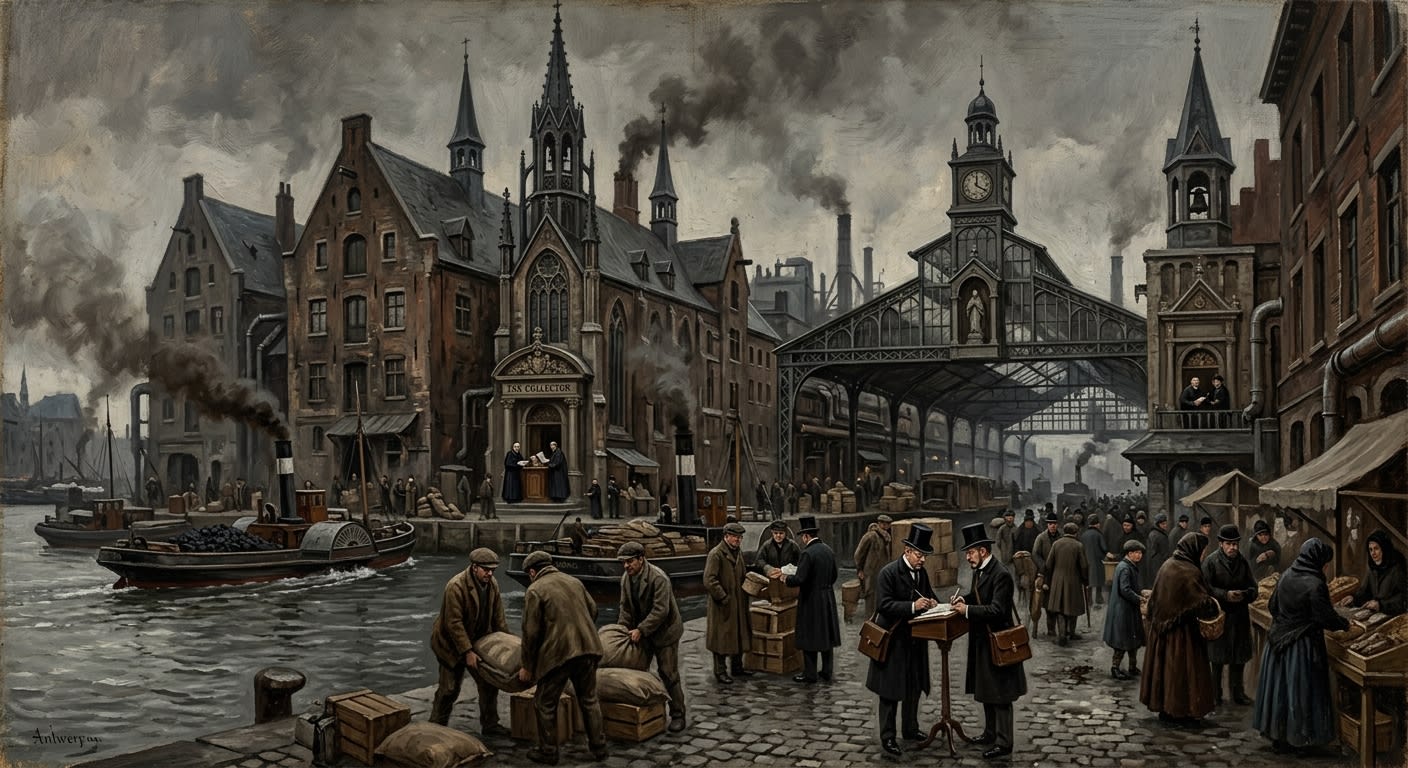
Antwerp
A port city weighing saints by warehouse light
Antwerp is the Scheldt port where commerce learned piety, hunger learned arithmetic, and every warehouse keeps a chapel close enough to tax.
Codex Ref. II.1.06-138
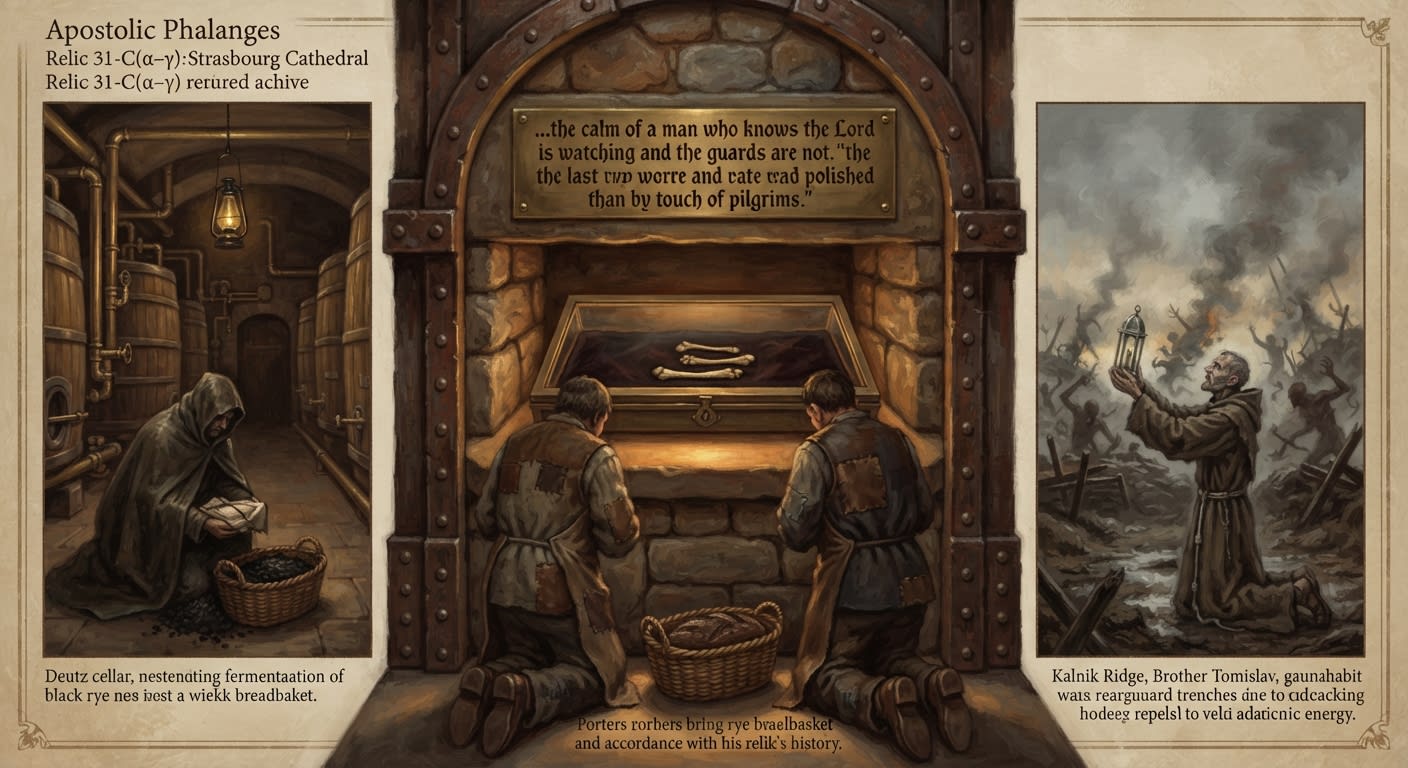
Apostolic Phalanges
Three finger bones, fourteen quiet years, and one ridge that learned fear
Relic 31-C(α–γ), three apostolic phalanges saved under rye and beer, later burned demons at Kalnik and now sit under licensed glass in Strasbourg.
Codex Ref. XIII.1.31-031
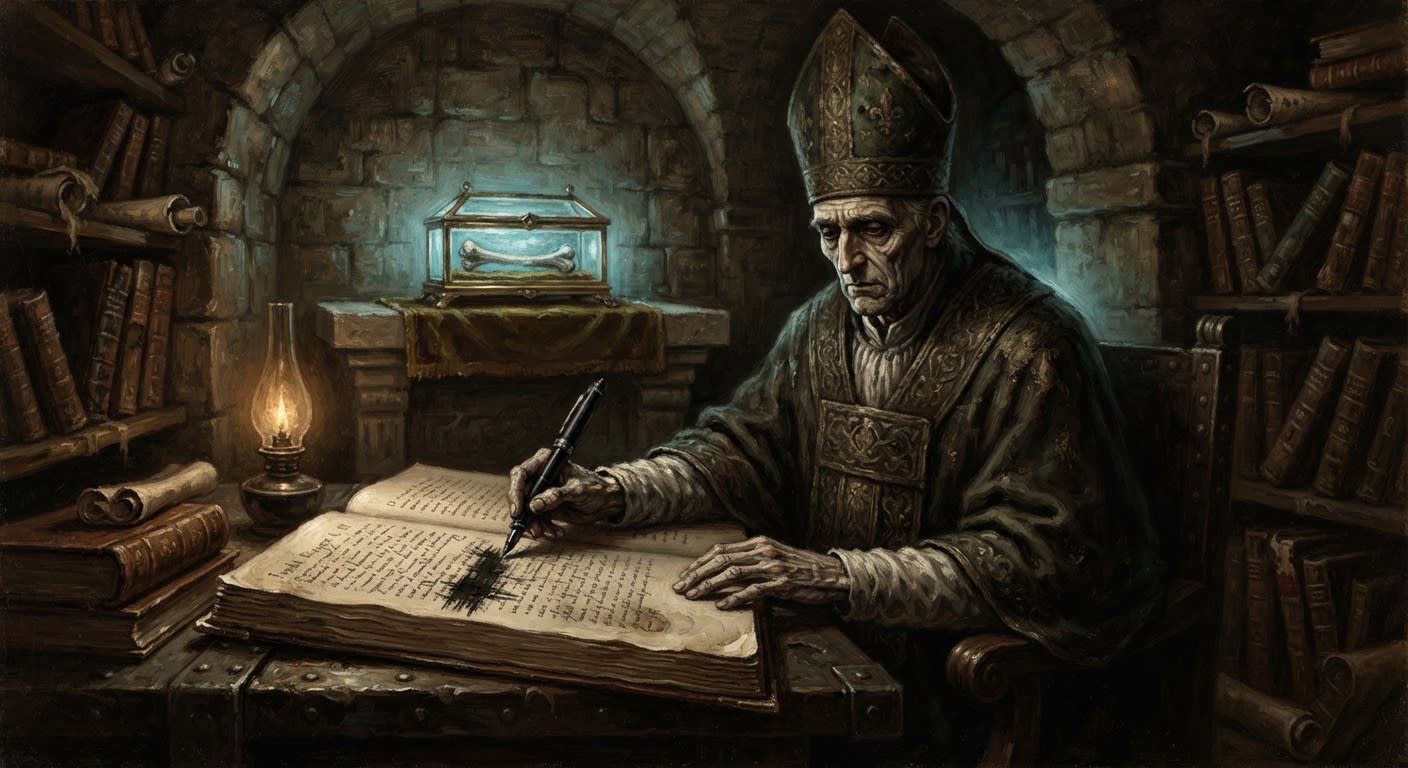
Archbishop Rupert III
The prelate who made a relic absent by letter
Pre-Synodic Archbishop of Vienna who answered Amsterdam's bone arithmetic by erasing the Reliquary of Saint Aldebrand from the records while leaving it glowing in the vault.
Codex Ref. III.2.01-032

Archon of Bells
The man who mistakes bronze for obedience and is usually correct
The Archon of Bells is the Bureau's supreme acoustic officer: custodian of licensed sound, enemy of Orison, and proprietor of every lawful peal that dares to call itself obedience.
Codex Ref. XIII.1.62-052
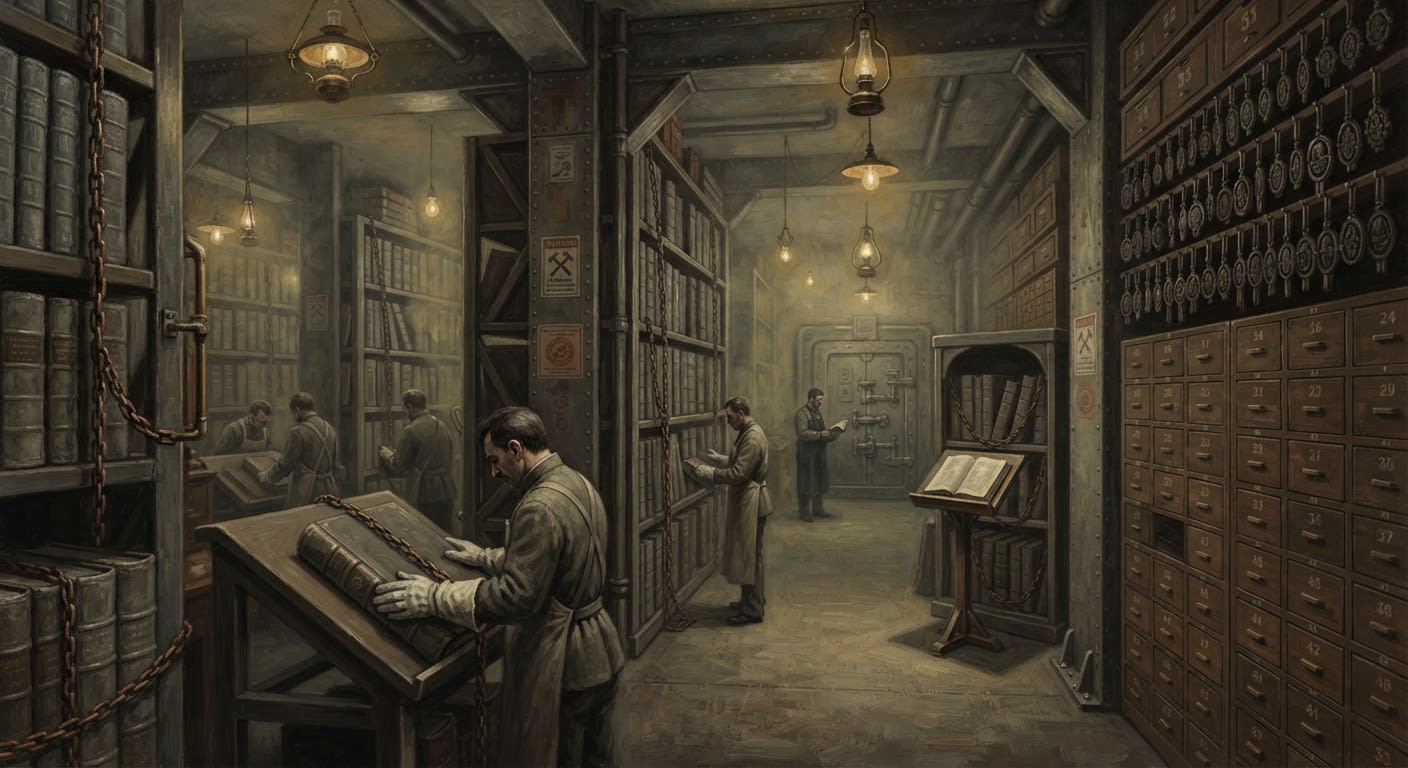
Armorial Vault
Where symbols are chained until they become law
The Armorial Vault is the chained body beneath Strasbourg where registered symbols become legal facts, false marks are preserved for prosecution, and colour learns to fear drawers.
Codex Ref. II.1.04-007

Arno Kett
The man who made disbelief small enough to fit in a pocket
Founder of the first verifiable Silent Godless cells, author of the question-based recruitment method, and the corpse from which Doctrinal Nullification was made lawful.
Codex Ref. III.2.01-144
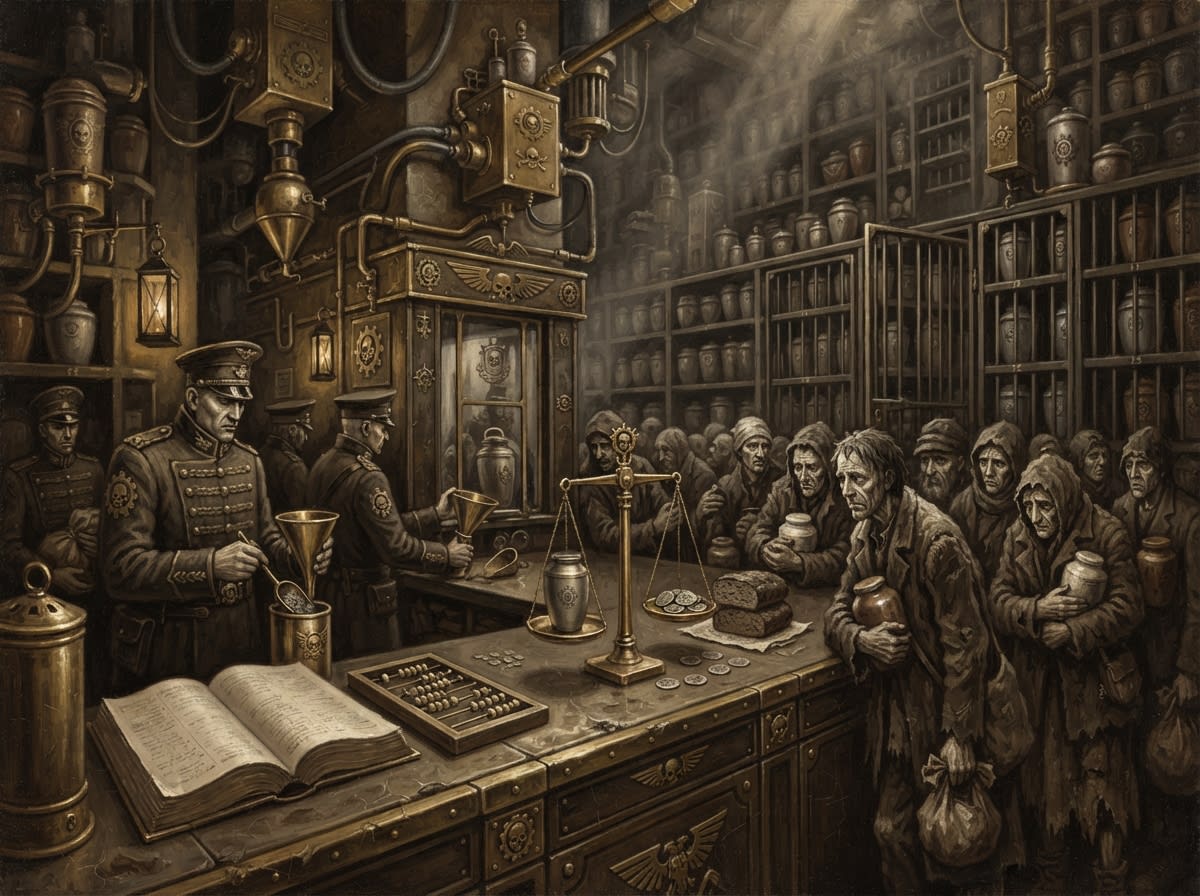
Ash Banks
Where grief is weighed, tendered, and filed as solvent
Ash Banks convert cremains, bone-dust, and pledged future remains into bread, salt, absolution tokens, and dust futures while every Bureau calls the ash something useful.
Codex Ref. XIII.1.98-201
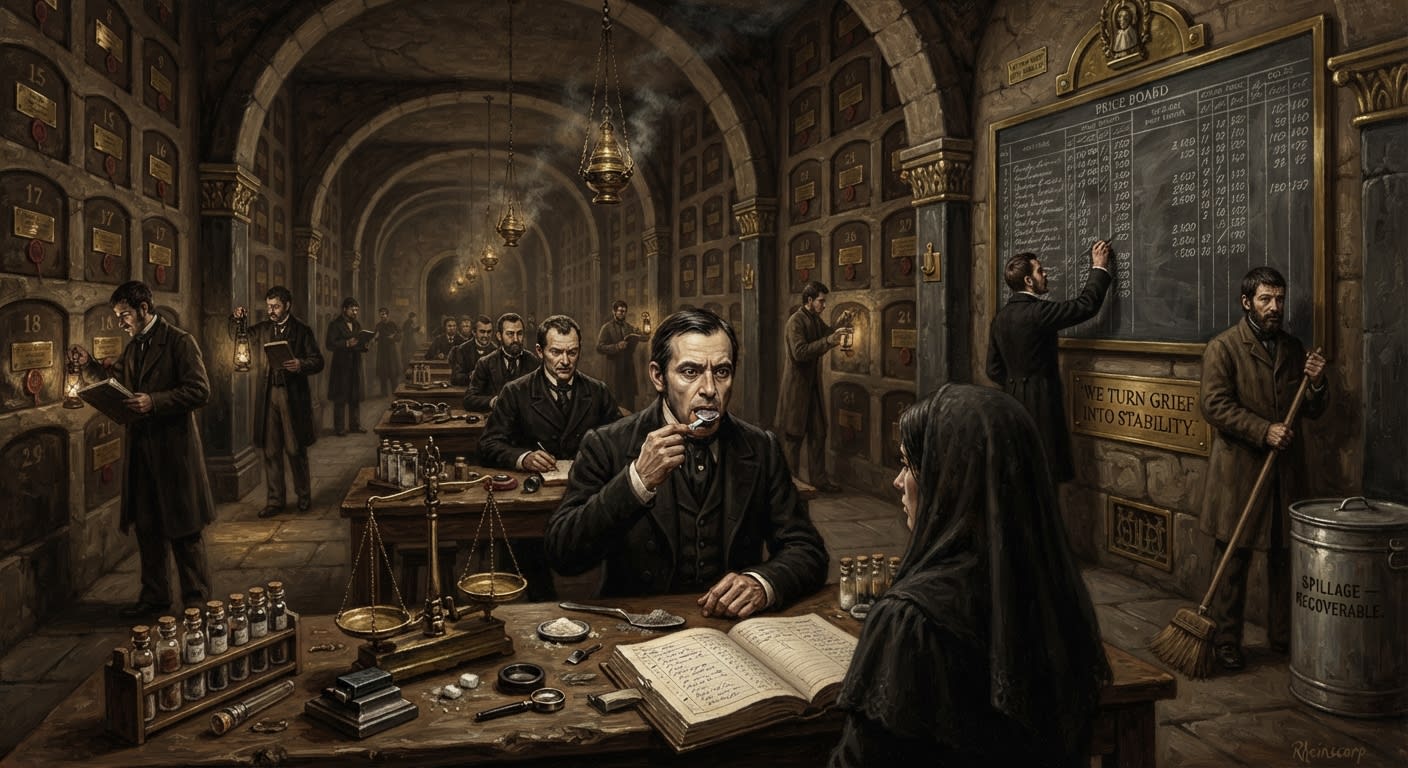
Ash Exchange of Saint Pelagia
Where grief becomes tender and the dead pay interest
Rheinscarp's seventh terrace turns the dead into collateral: cremains vaults, saint-shares, dust futures, and the cheerful arithmetic of Broker-Saintsman Damas Rohe.
Codex Ref. II.2.01-007
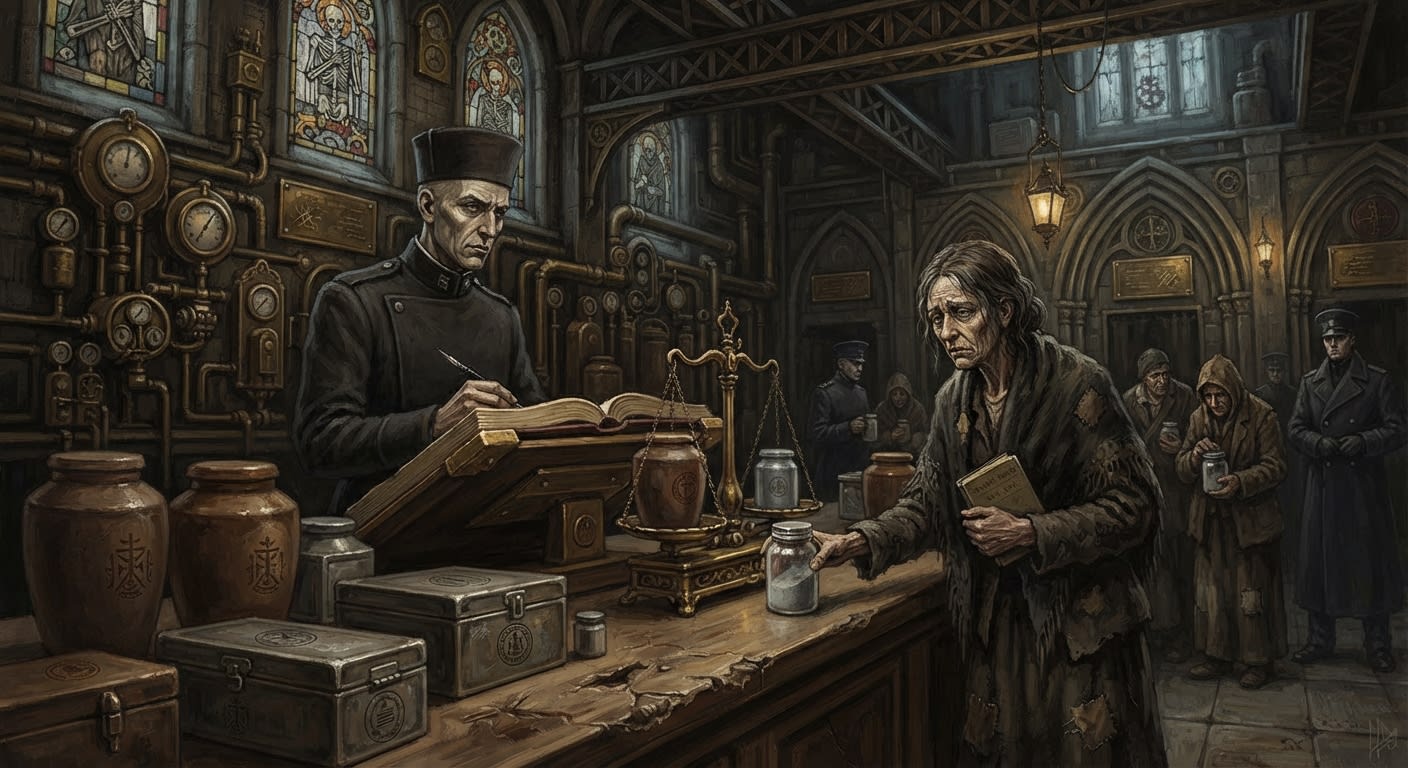
Ash-Credit
The dead are tender once Tithes finds a scale
Ash-credit is the Synod's devotional collateral, converting cremains, saint-dust, and pledged future remains into bread, grace rations, and obligations the dead cannot refuse.
Codex Ref. VI.3.01-002
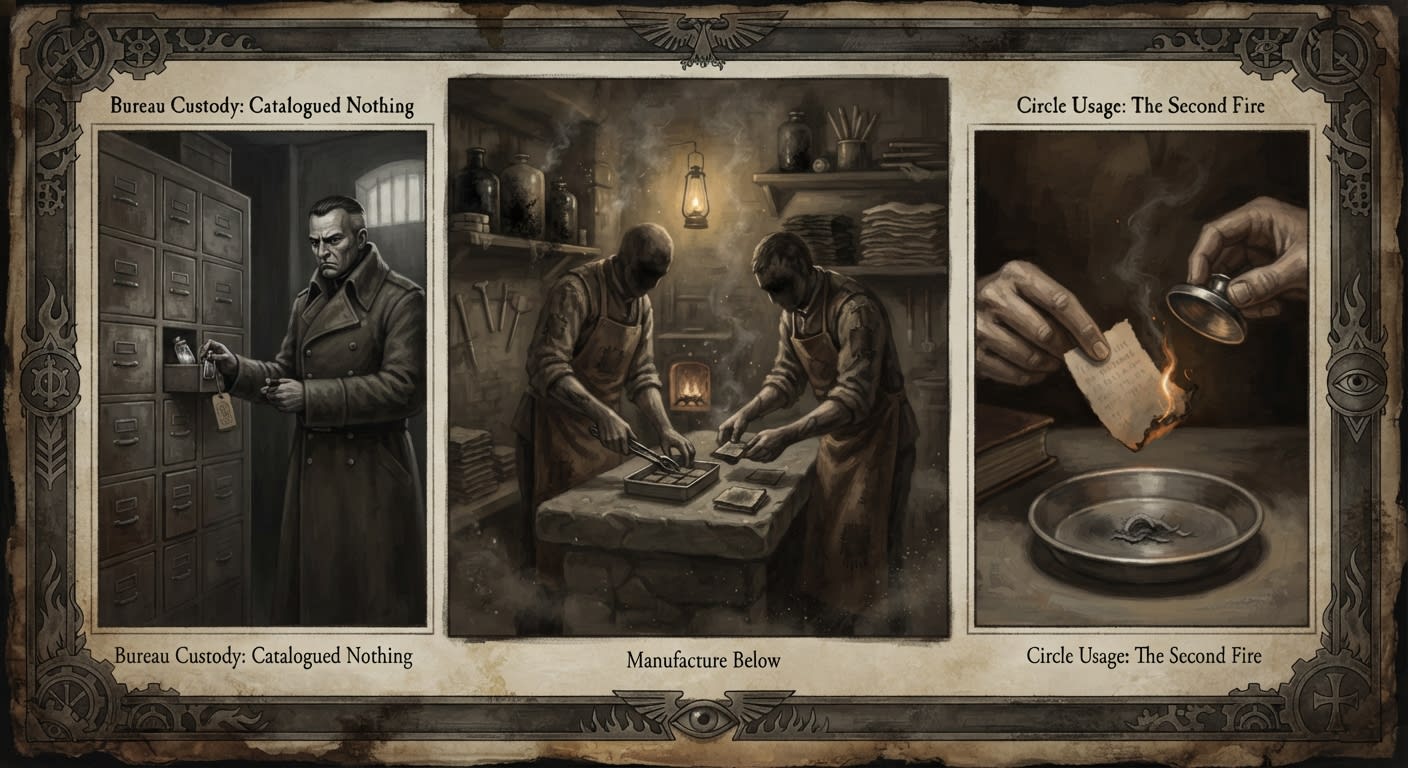
Ash-paper
A sheet built to outlast nothing, and therefore everything useful
Ash-paper is the Circle's pre-blackened answer to the Purge: charcloth pages made to carry one forbidden fact, burn twice, and leave the Bureau with only catalogued nothing.
Codex Ref. XIII.1.56-001
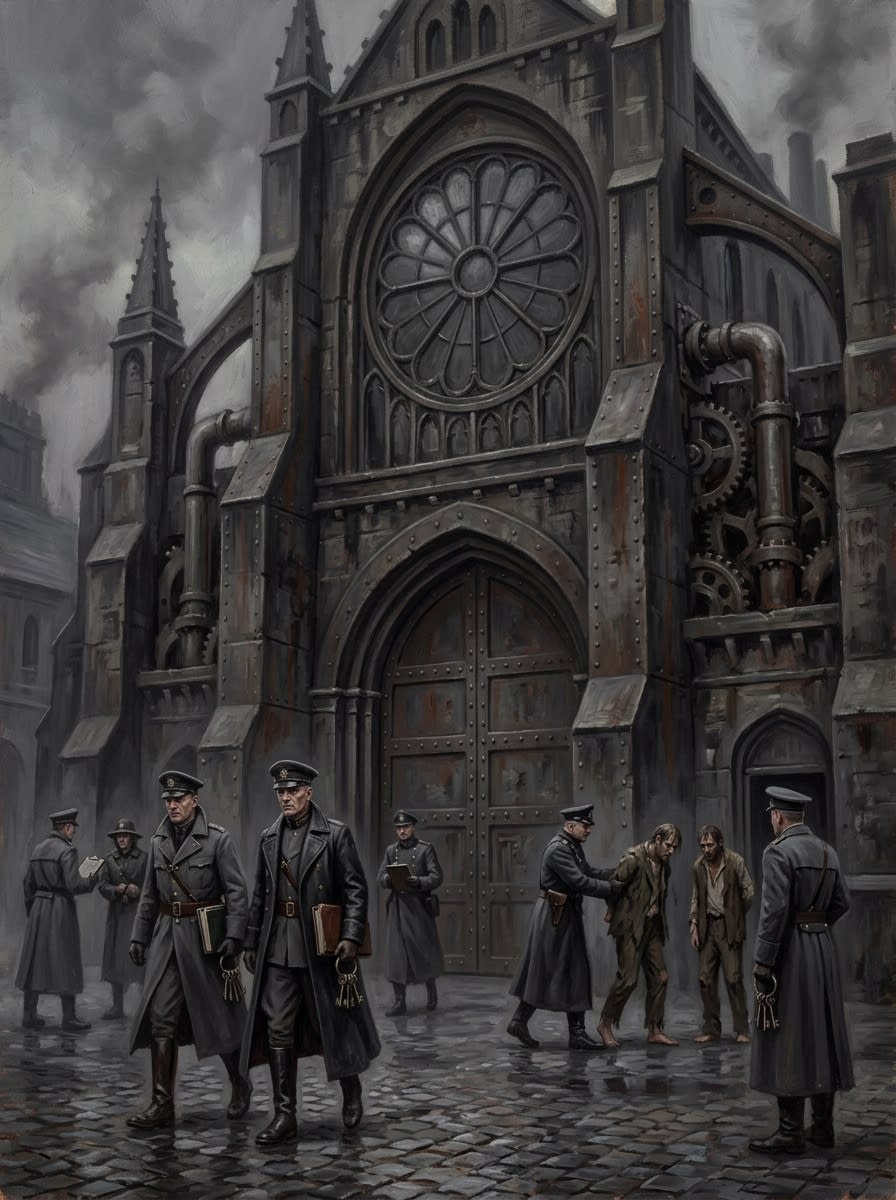
Ashen Cloister
Purity's house has handles only on the outside
The Ashen Cloister is Purity's Strasbourg seat: gate without welcome, court without mercy, archive with appetite, and the cleanest terror in the Synod.
Codex Ref. II.1.04-003
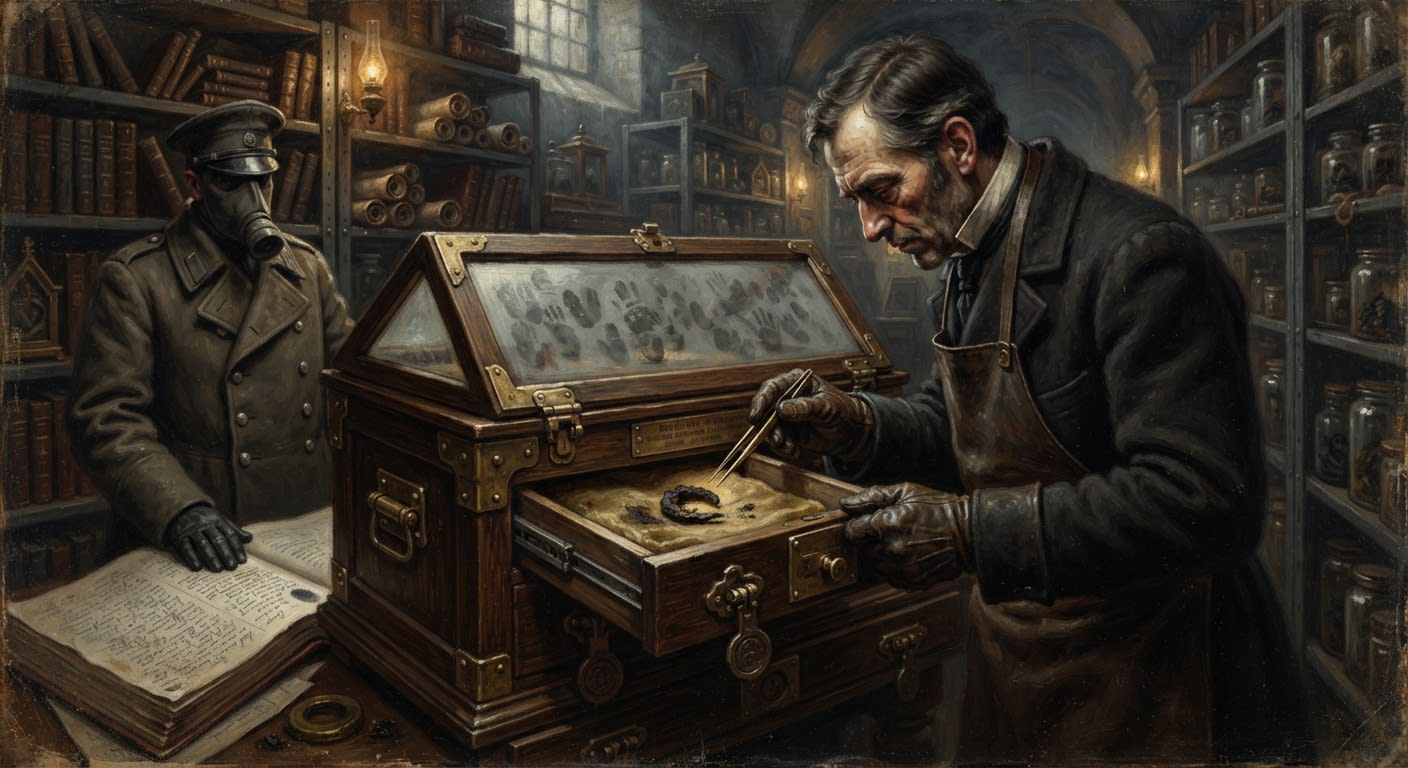
Ashen Thumbnail of Cologne
A relic too small for proof and too useful for disposal
Blackened nail-fragment attributed to Saint Vellum-of-the-Quiet-Hand, never authenticated by Relics and never surrendered by Records because Cologne's corridors keep answering the practical question.
Codex Ref. III.2.04-120

Assay Cloisters
Where coin is taught to confess before its owner is accused
In Sable Court's eastern arc, blind clerks, acid bowls, hymn-forks, and small bells decide whether a coin's face may continue pretending to be lawful.
Codex Ref. II.2.07-003

Audit-Cantor
The officer who learned to distrust the whiteness around approved words
The Bureau of Silence keeps forty Audit-Cantors to open books, weigh margins, warm blank pages, and decide which libraries die quietly.
Codex Ref. VIII.3.02-002
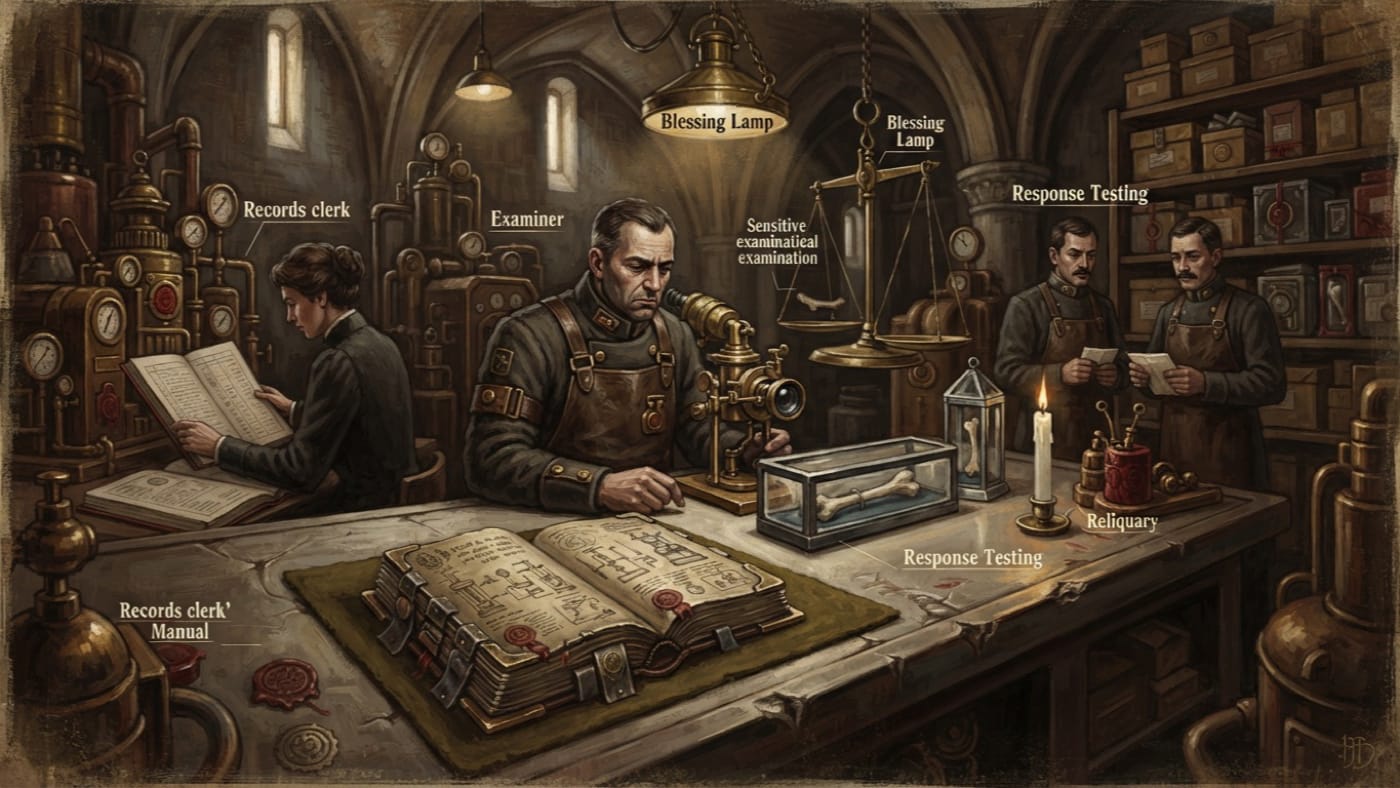
Authenticators' Manual
Seven stages. Two witnesses. Responsibility belongs to the hand.
The Bureau of Relics' working rulebook in A.S. 201: seven stages, two witnesses and seals that outrank arithmetic. Permission belongs to the Bureau; responsibility belongs to the Examiner.
Codex Ref. XIII.1.81-002
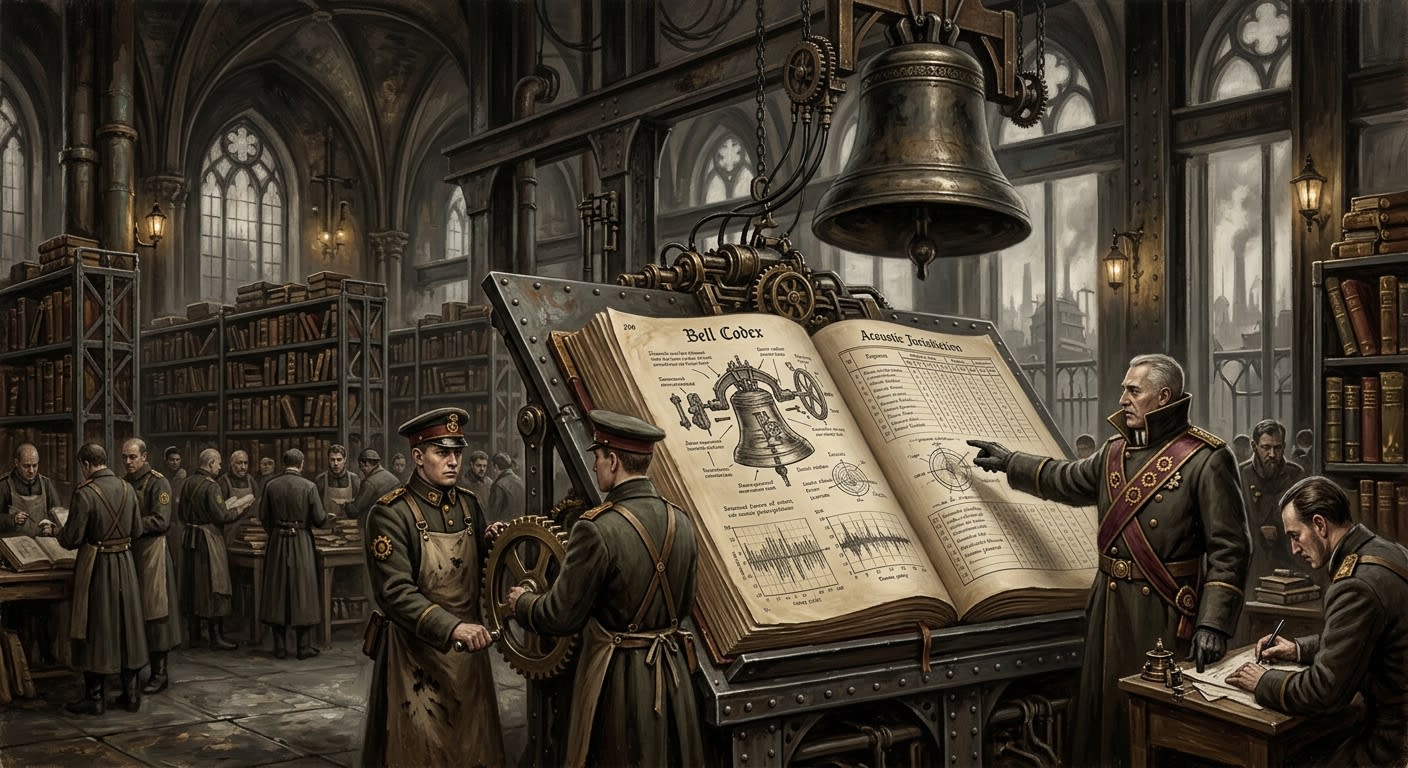
Bell Codex
The book by which bronze became law and silence learned to sign
Ratified in A.S. 115, the Bell Codex fixes the lawful grammar of peals, silences, curfews, alarms, licenses, and acoustic jurisdiction across the Synod.
Codex Ref. XIII.1.62-001
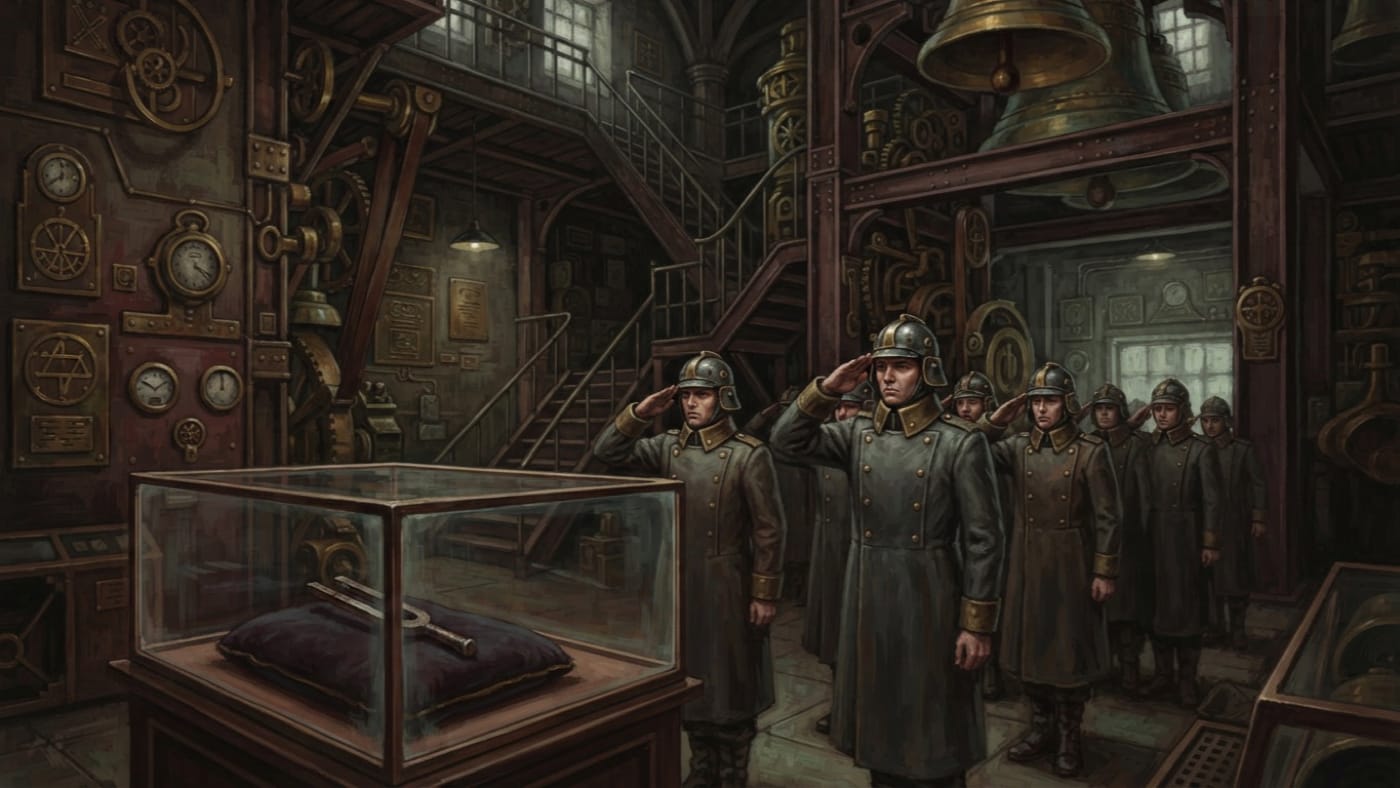
Bell Tower
The city obeys the bronze; the recruits salute the fork.
On Strasbourg's seventh floor, Canon Veyl's fork receives the Counter-Toll recruit salute. The Bell Tower keeps lawful hours and teaches that obedience must be louder than its enemies.
Codex Ref. XIII.1.62-201
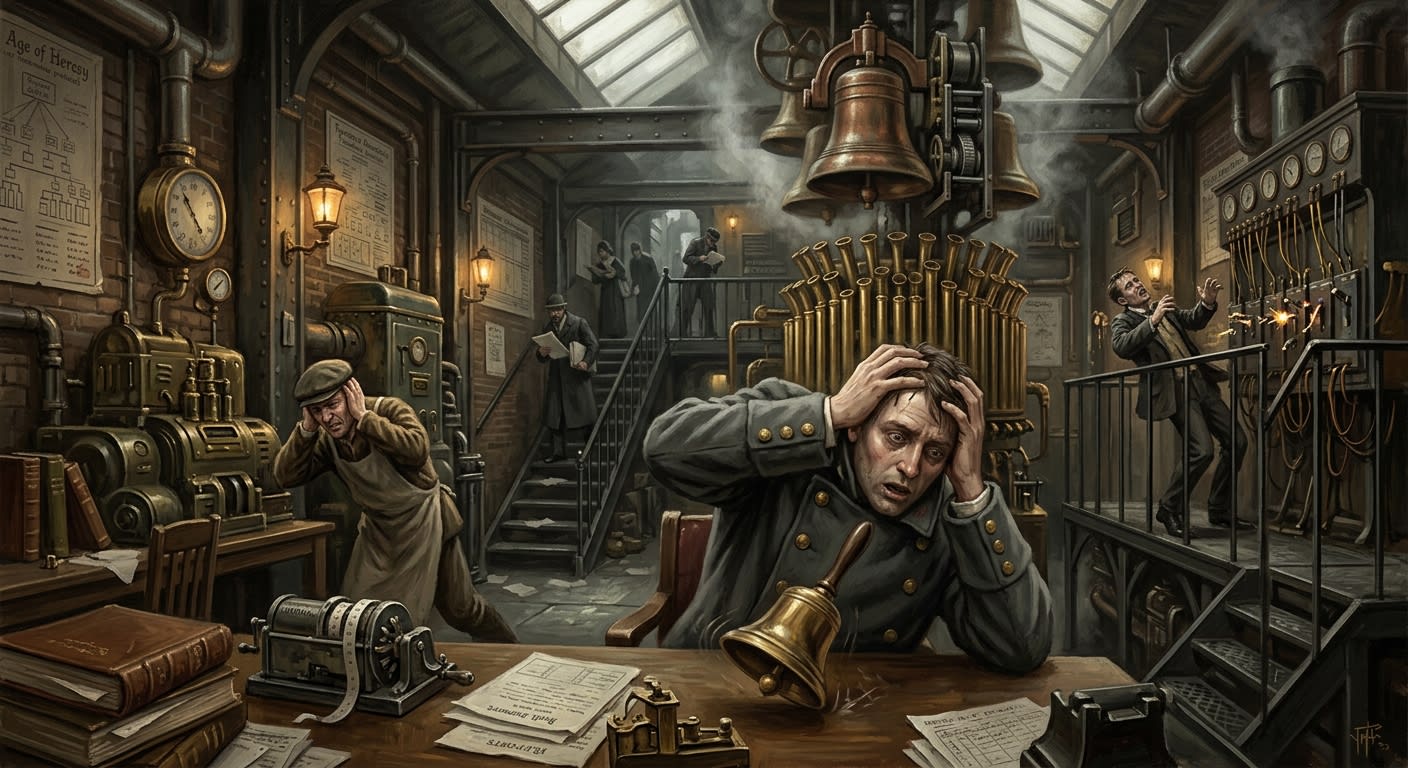
Bell-sickness
The bell stops; the obedient skull keeps ringing
Bell-sickness is the Synod's recognised resonance affliction: phantom peals, compulsive cadence, command mislocation, and the small theological problem of obedience ringing back.
Codex Ref. XIII.1.87-201

Bellwarden
Chained by the wrist to the Synod's schedule, he rings a war he will never be permitted to understand.
Eleven thousand four hundred souls chained by the wrists to a Synod schedule they did not write, ringing a war they cannot explain, in service of a theology their bells increasingly refuse to perform.
Codex Ref. XII.2.01-001
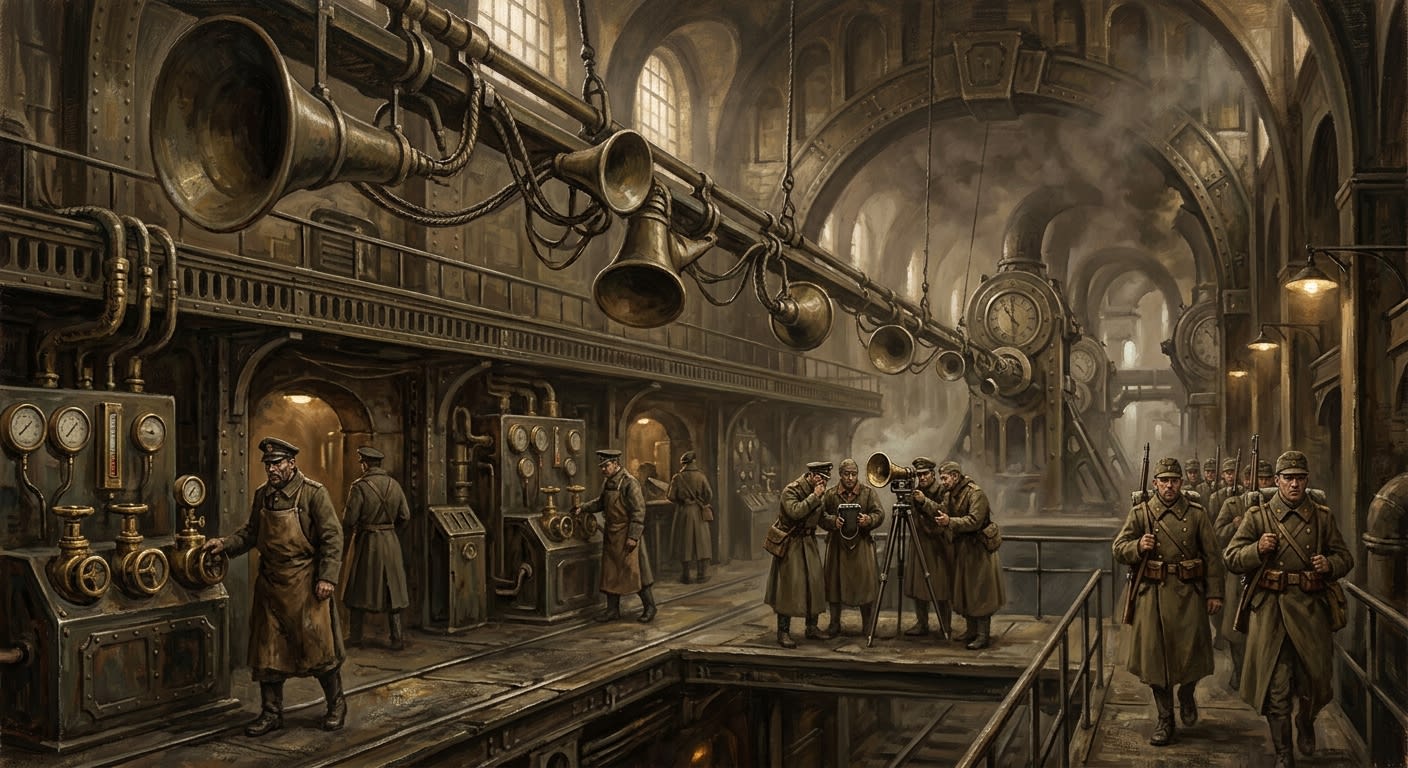
Bellway
The road that hears you, blesses you, taxes you, and may repeat you
Bellways are the Synod's sanctioned acoustic corridors: road, alarm, sermon, surveillance net, and mercy with teeth, carrying lawful sound through the Line and beyond.
Codex Ref. XIII.1.88-201
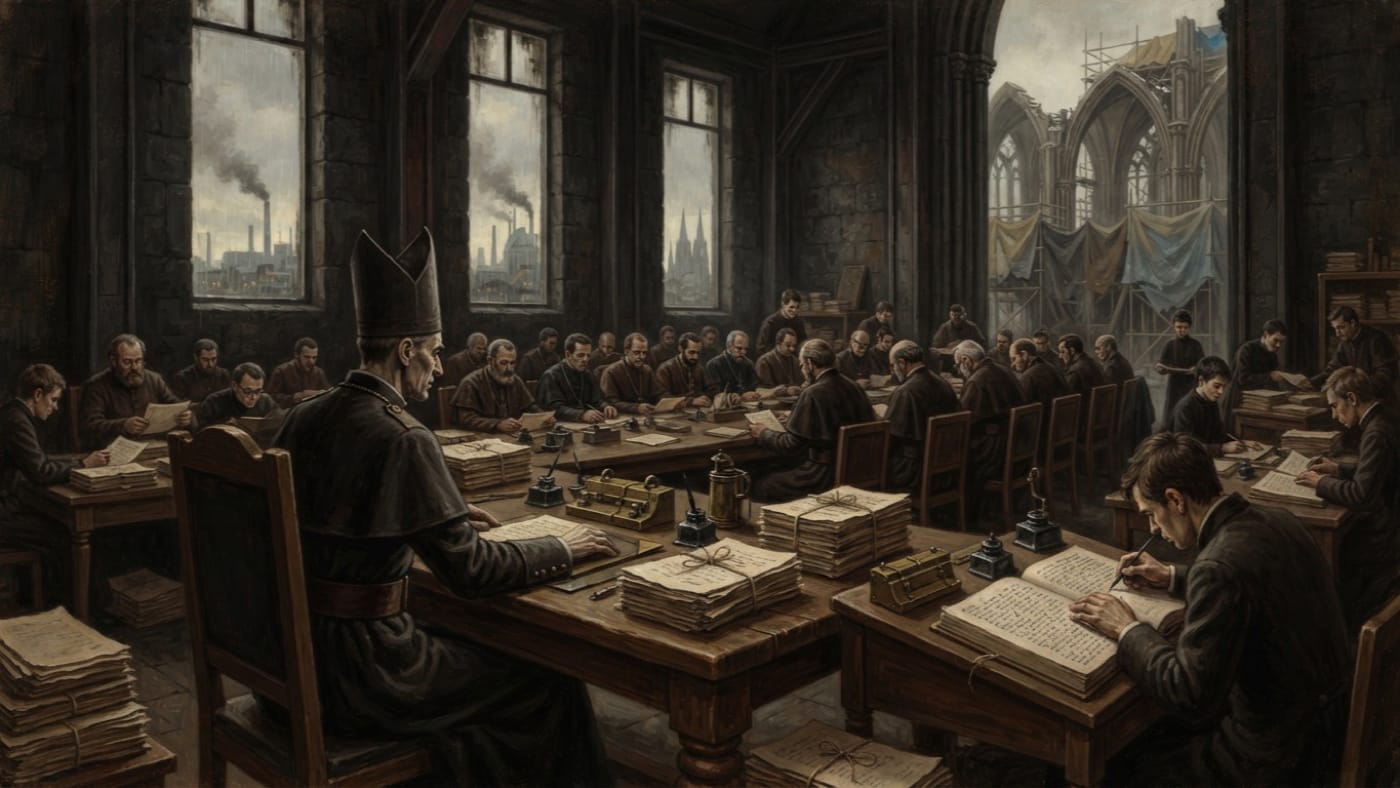
Bishop Adelmar of Cologne
Nine days entered; a lifetime left blank
Bishop Adelmar hosted the nine-day First Council of Cologne in September A.S. 27. Seven articles failed; voluntary requests survived. His life dates remain outside the Ledger.
Codex Ref. III.2.01-253
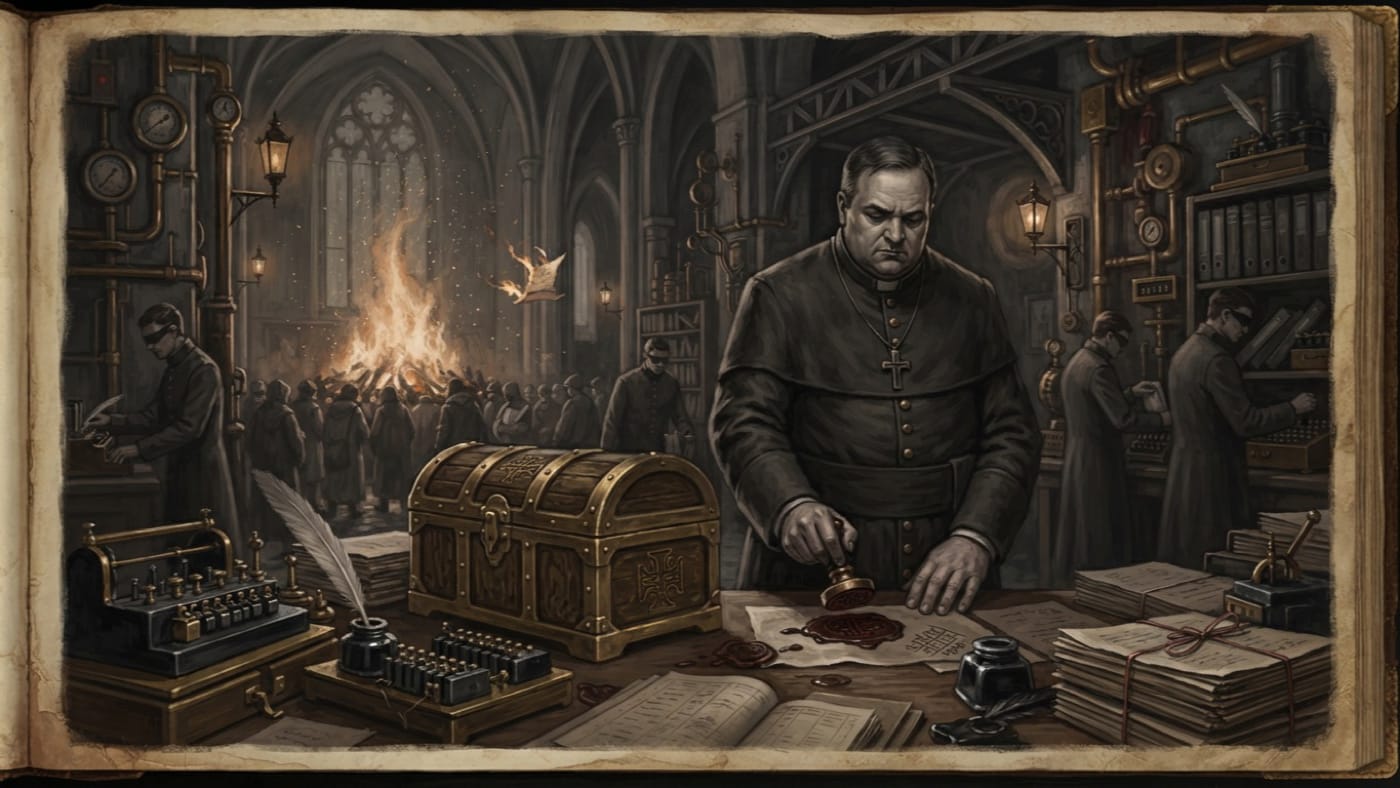
Bishop of Münster
He burned the question, then sealed the answer.
The Bishop of Münster burned Amsterdam's letter in 1678, then commissioned a relic census whose results remain sealed. The office survives in the Ledger; the man's name does not.
Codex Ref. III.2.01-256
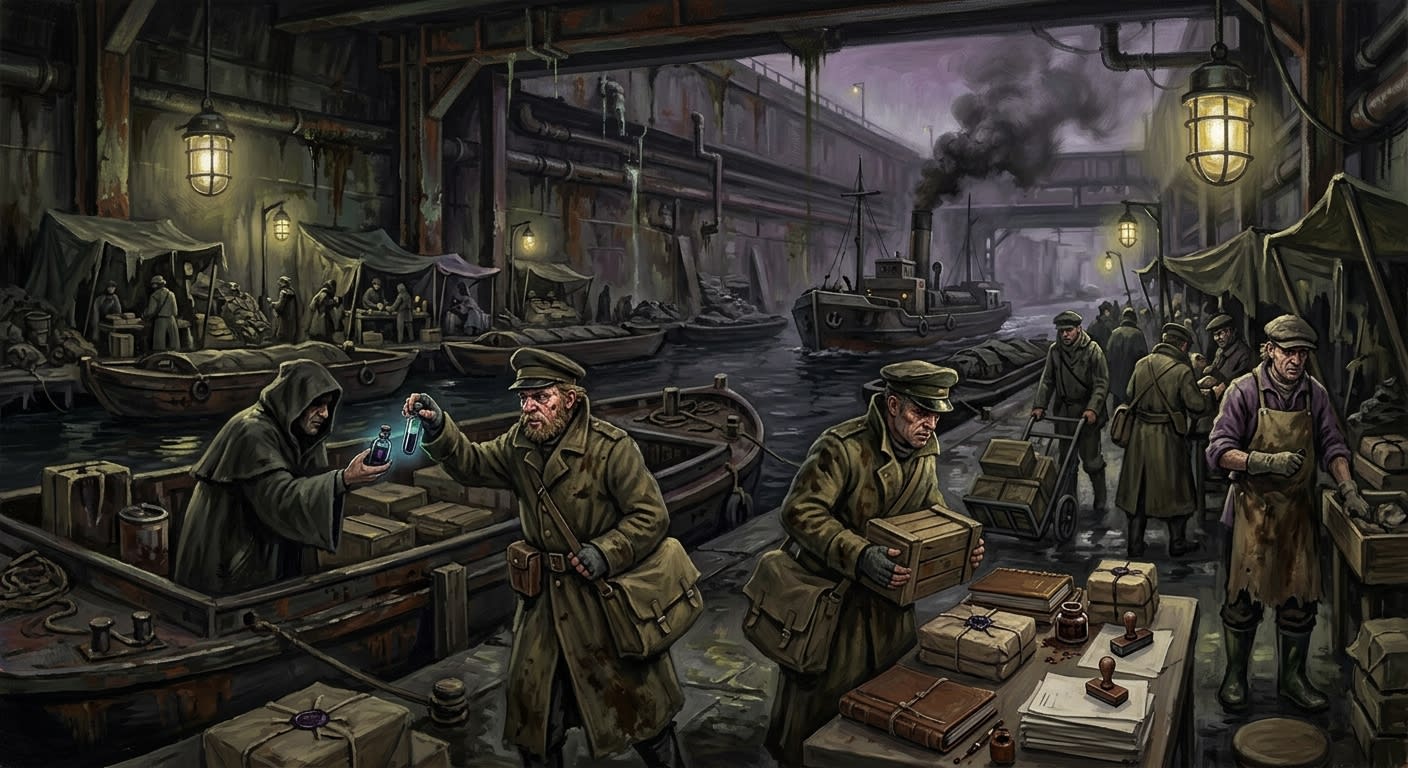
Black Canal
Where unlawful water teaches authority to float
The Black Canal is Candlewick's under-dike criminal water: a wet market of outlaw shade, Hungry Ink, false seals, name packages, and useful denial.
Codex Ref. XIII.1.19-098

Blessed Clerk Harlowe “Dry-Ink”
The closed stamp pad by which mercy learned its office hours
Tolerated vocational patron of Confessor-Booth Clerks: a devotionally sufficient blessed whose dry stamp pad sanctifies refused mercy and audit-safe cruelty.
Codex Ref. III.2.01-102
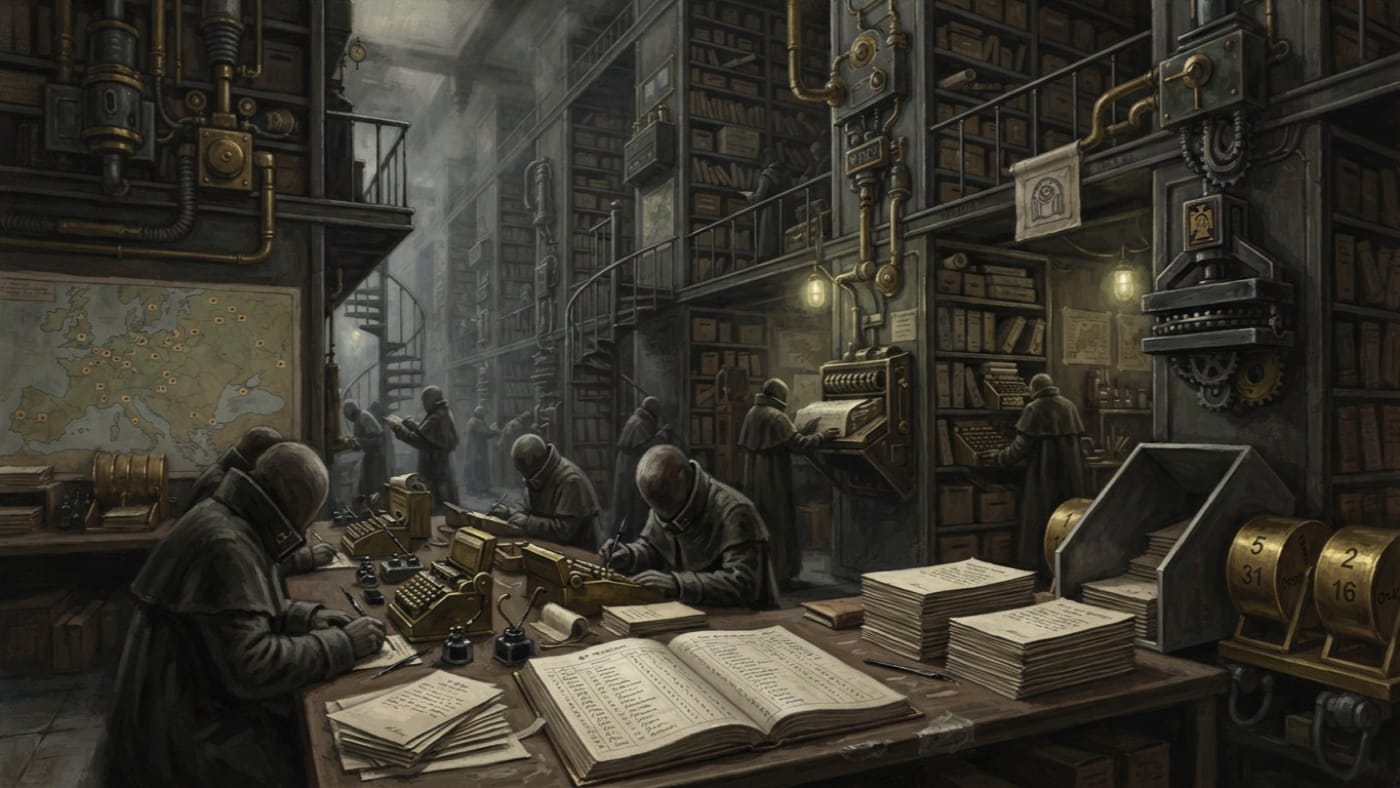
Bone Census
The count is conceded; the right to count is condemned
Compiled in Amsterdam in −32 A.S. / 1678 CE, the Bone Census tabulated 243 Aldebrand relic claims. The figures are conceded; the scholars' right to count remains condemned.
Codex Ref. I.1.04-000

Bonn
A saint nearby; no directions supplied
Bonn is a Rhineland city on the Rhine. Ignatius Brenner died and was buried nearby in A.S. 71. The churchyard is unnamed, the grave unmarked, and the record supplies no directions.
Codex Ref. III.2.04-313
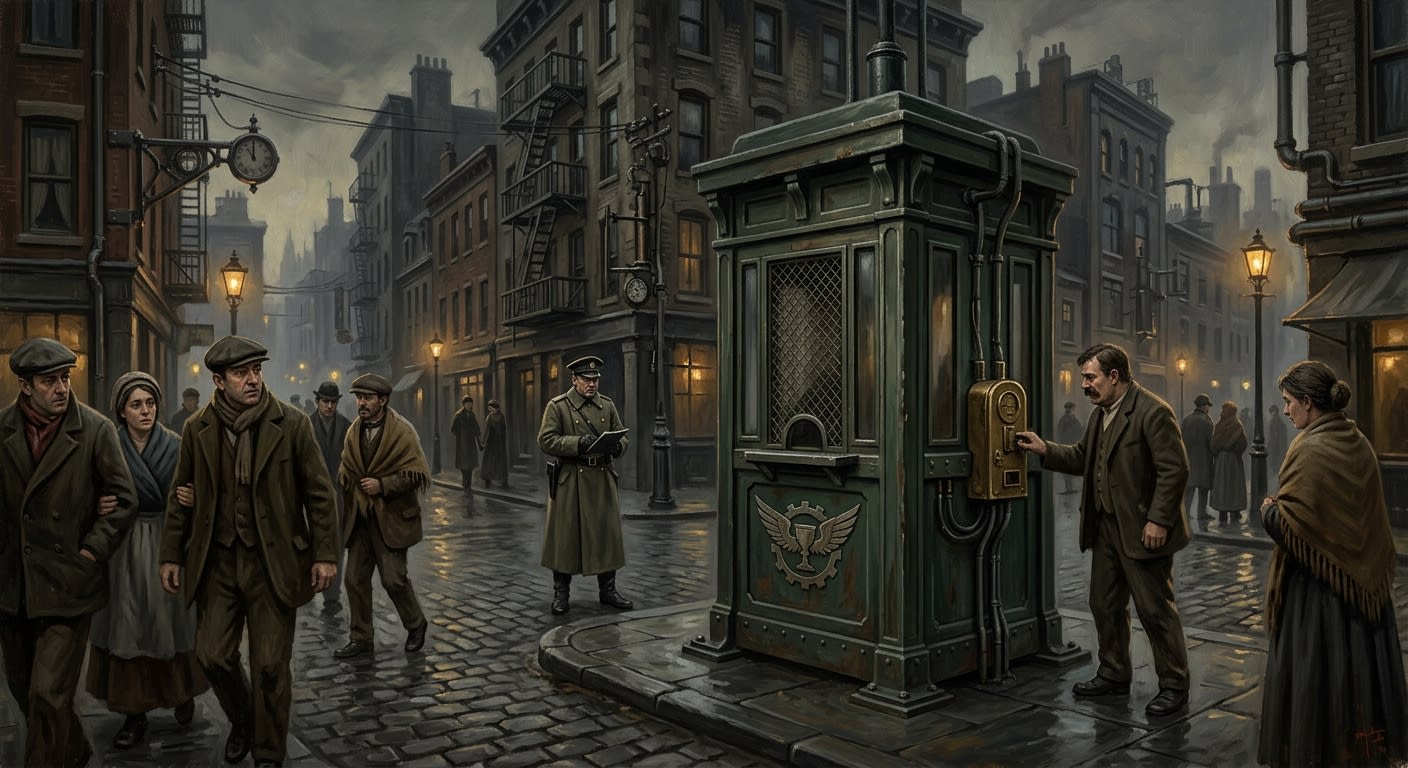
Booth Proliferation Decree of A.S. 112
One wooden box every three blocks, and Europe called it grace
A.S. 112 Bureau of Rites decree mandating one registered confession booth per three city blocks, turning confession into local, billable, auditable street infrastructure.
Codex Ref. VII.8.10-015

Bottle Quay
Where authority is poured into glass and taught appetite
Candlewick's ink-bottling throat: glassyards, shade seals, micro-vials, Hungry Ink suspicion, and the useful fires by which paper learns command.
Codex Ref. II.1.01-092
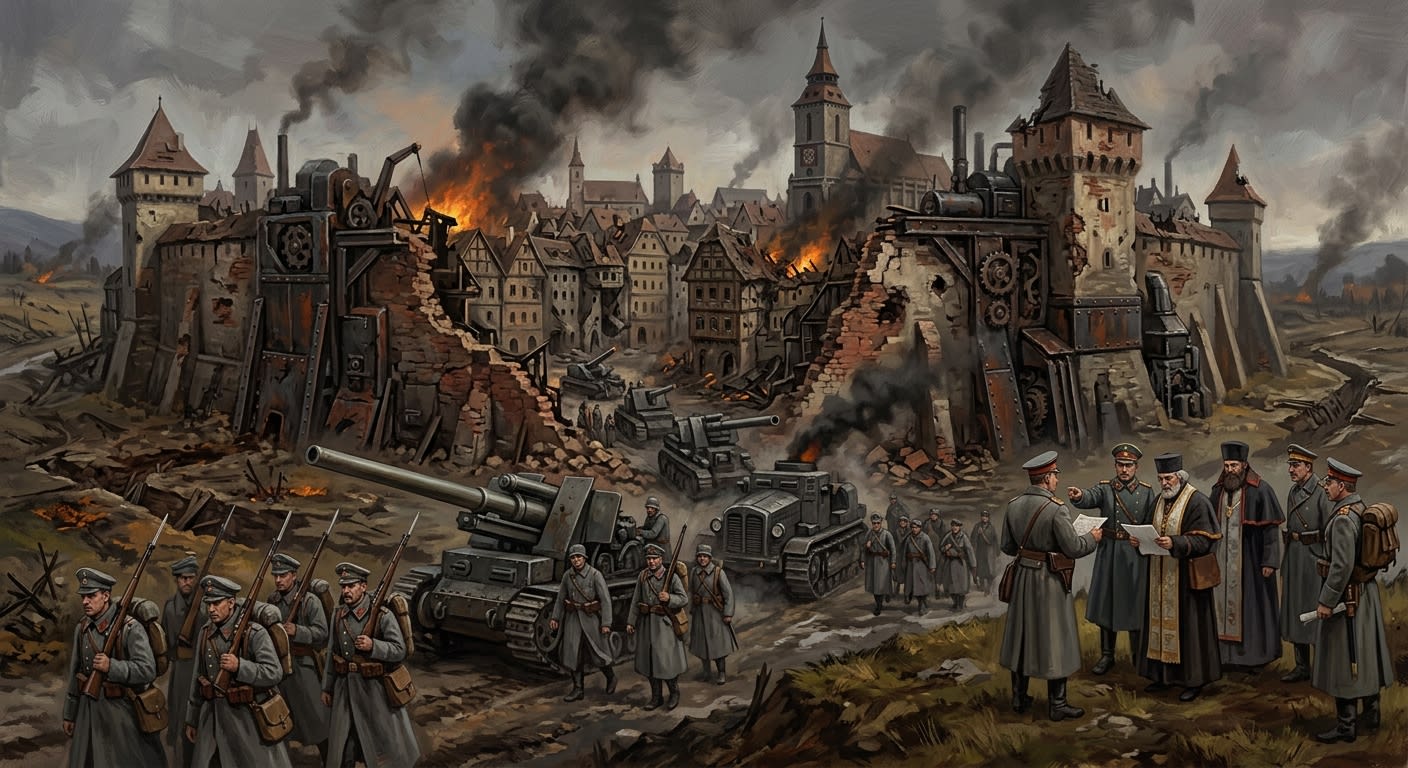
Brașov
The city [[hell|Hell]] ate before [[strasbourg|Strasbourg]] learned to count sons
Brașov, the Saxon-walled city consumed by Kargath in A.S. 110 and made pretext, warning, and arithmetic for the Synod's first continental levy.
Codex Ref. VI.1.01-110
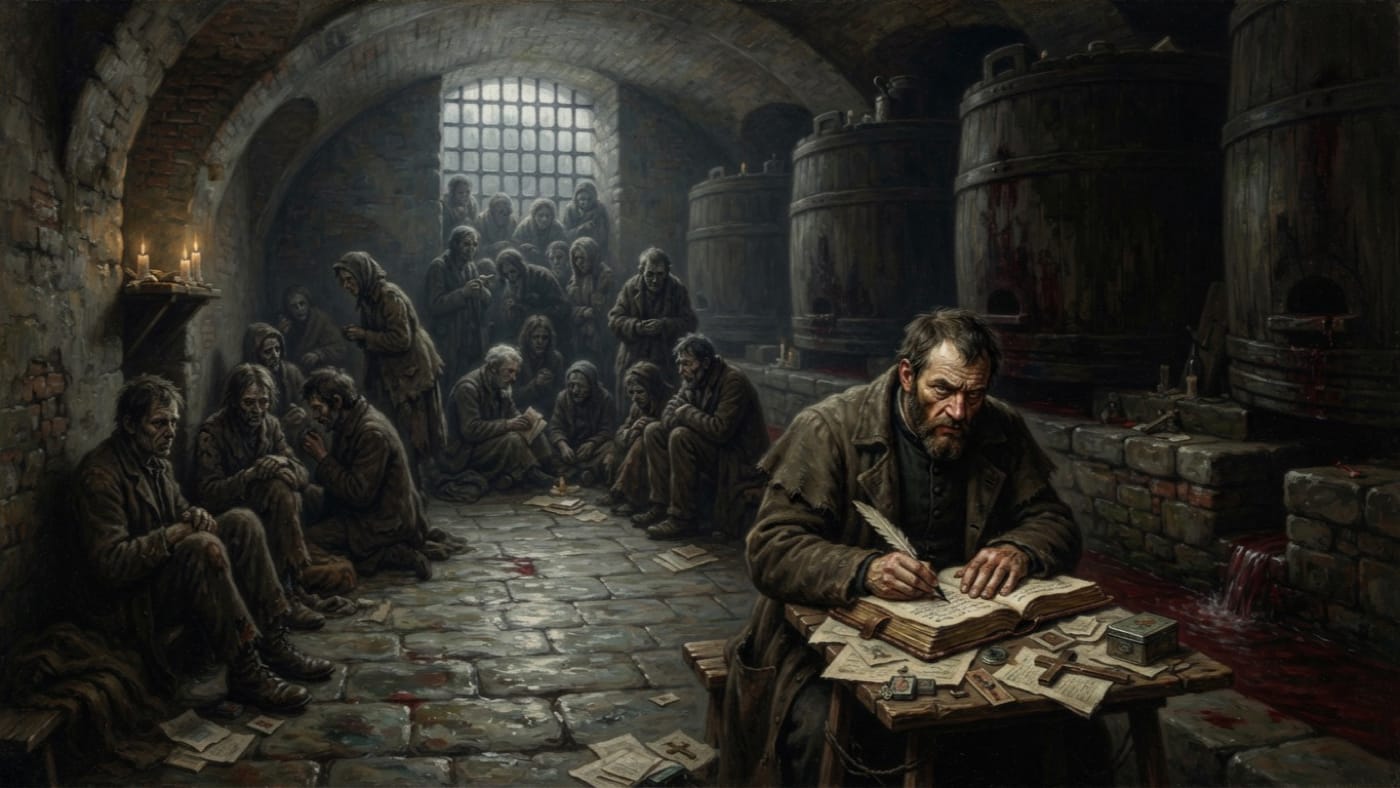
Brewers' Quarter
Sixty souls beneath the vats
Cologne's brewing quarter sheltered sixty faithful beneath the vats. In A.S. 34 its drains ran crimson; Records preserved the journal and holds no survey of the stone.
Codex Ref. II.1.04-034
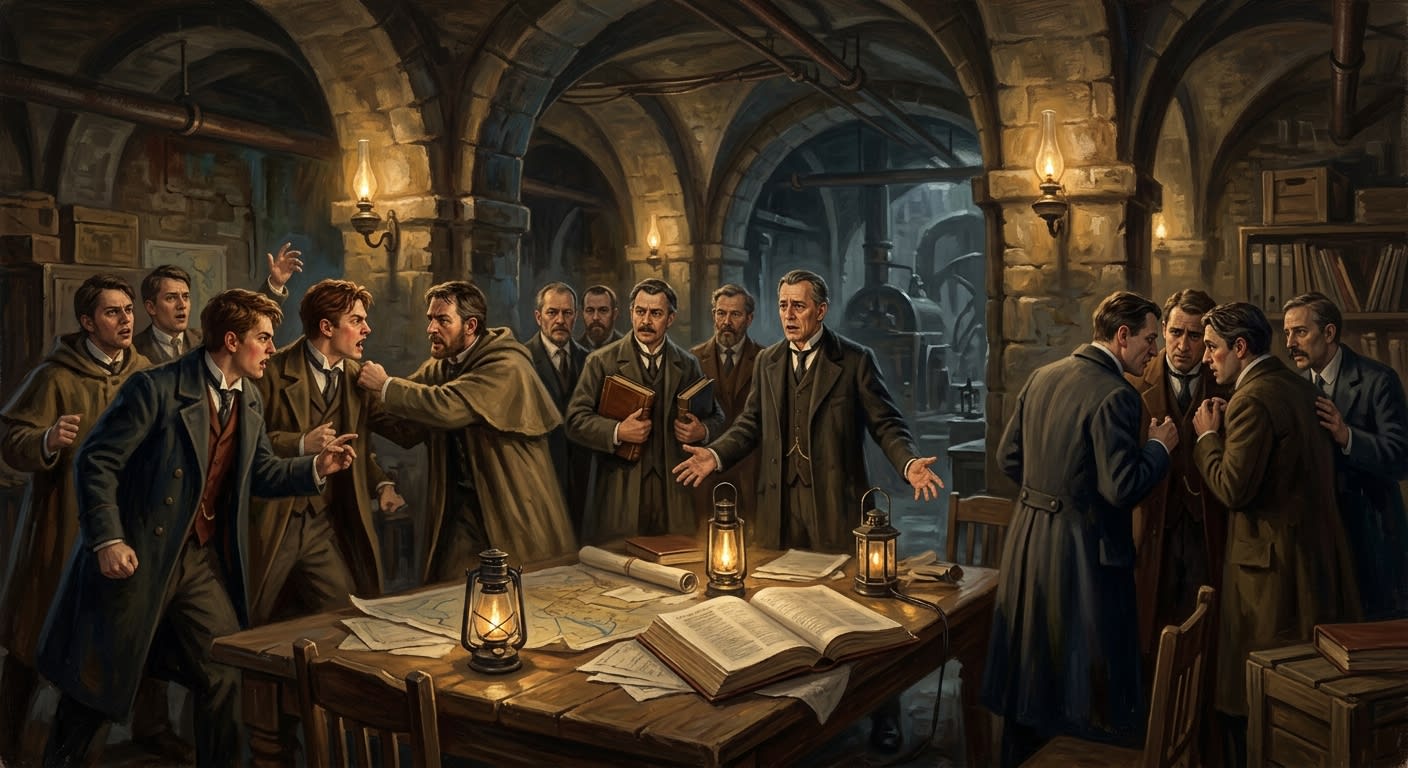
Brotherhood Schism of Cologne
Three lamps, one route slip, and a mercy too useful to remain innocent
A.S. 178 Cologne cellar fracture in which three Lantern Brotherhood watch circles split over Mercy Preacher complicity, birthing Purists, Loyalists.
Codex Ref. VII.8.10-045
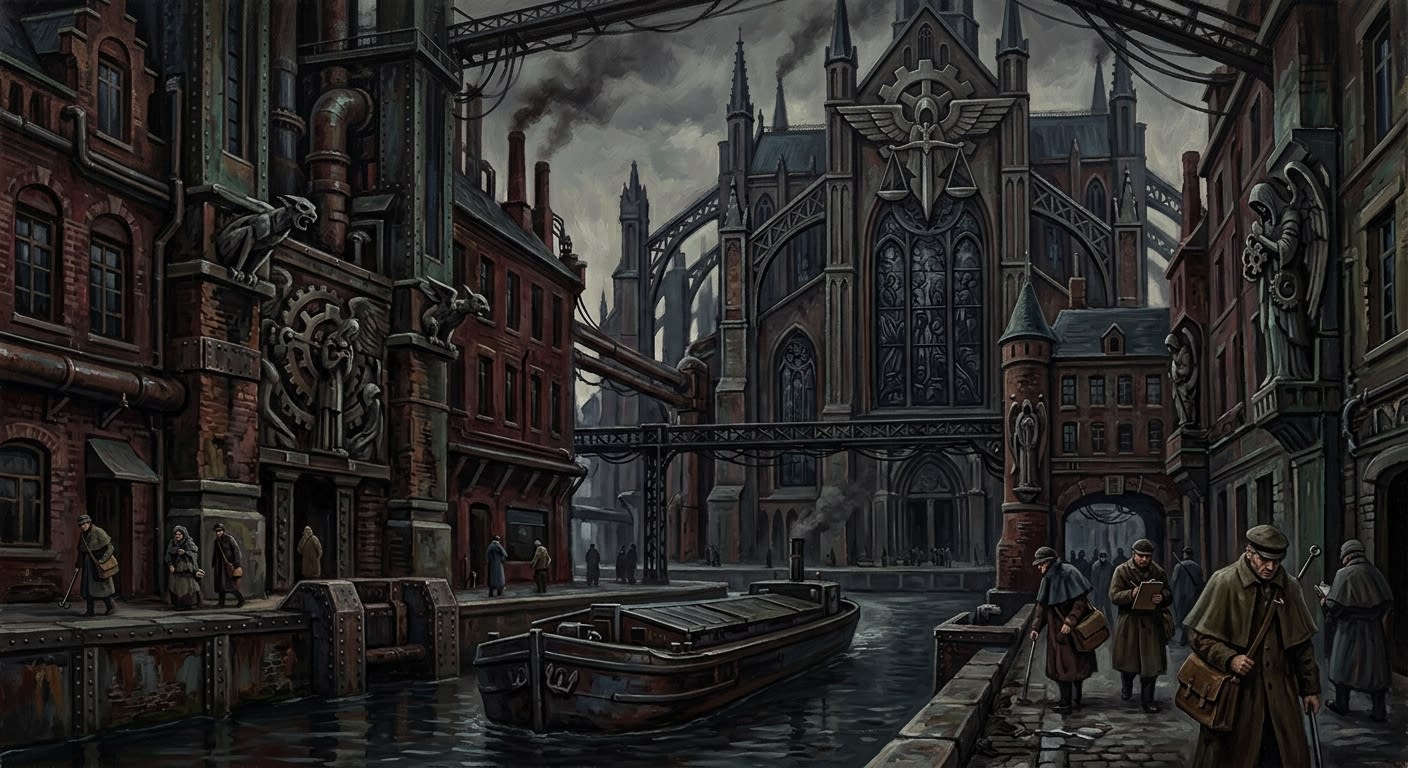
Bruges
Permit prosperity; audit beauty
Bruges is the Synod-held Lowlands city whose canals, colours, grotesques, relic glass, and impossible Tithes seal make beauty a recurring audit problem.
Codex Ref. II.1.04-058
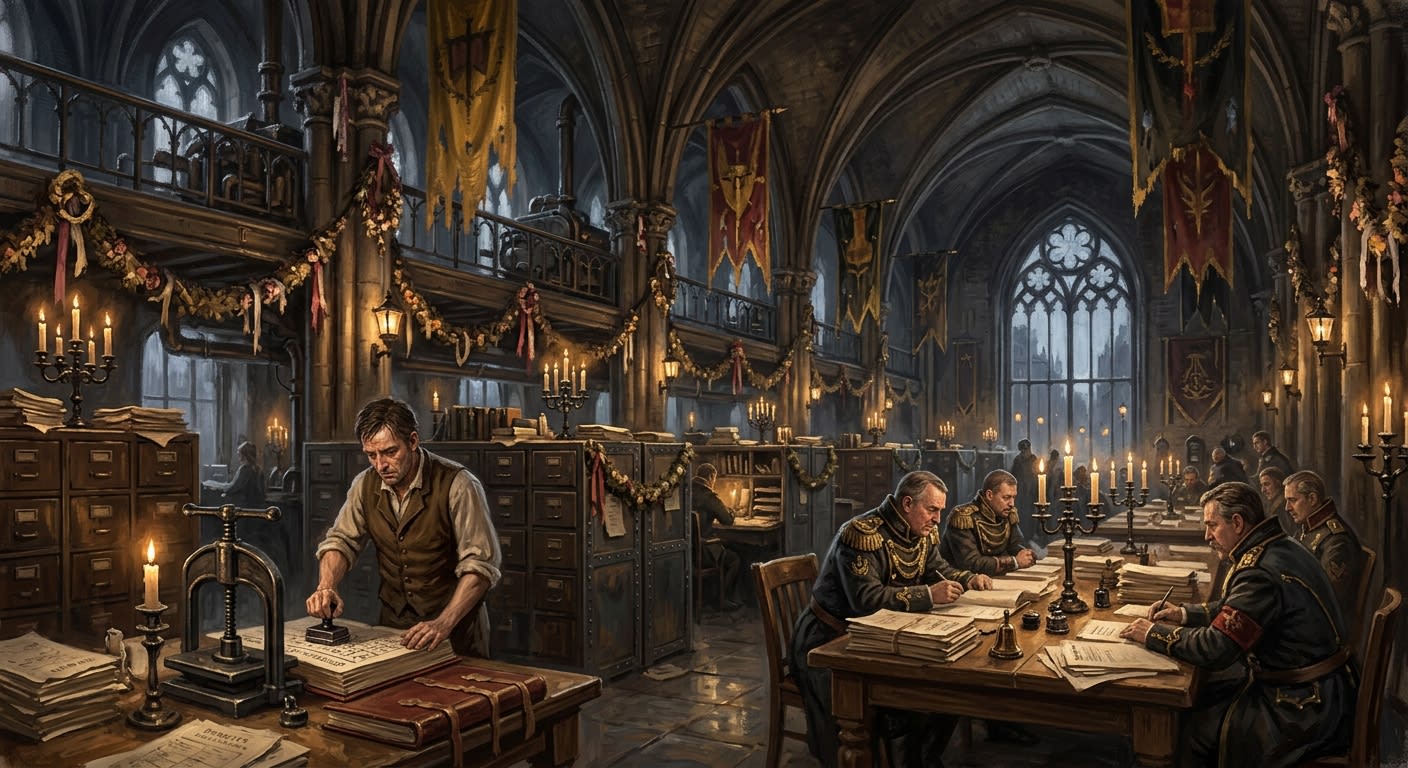
Bureau of Festivals
Joy, administered at scale — licensed, measured, and periodically revoked
The Bureau that manufactures joy, schedules grief, and meters celebration with the same rigour the Bureau of War applies to troop rotations — and which has, on seventeen documented occasions, deployed confetti.
Codex Ref. VIII.5.01-001
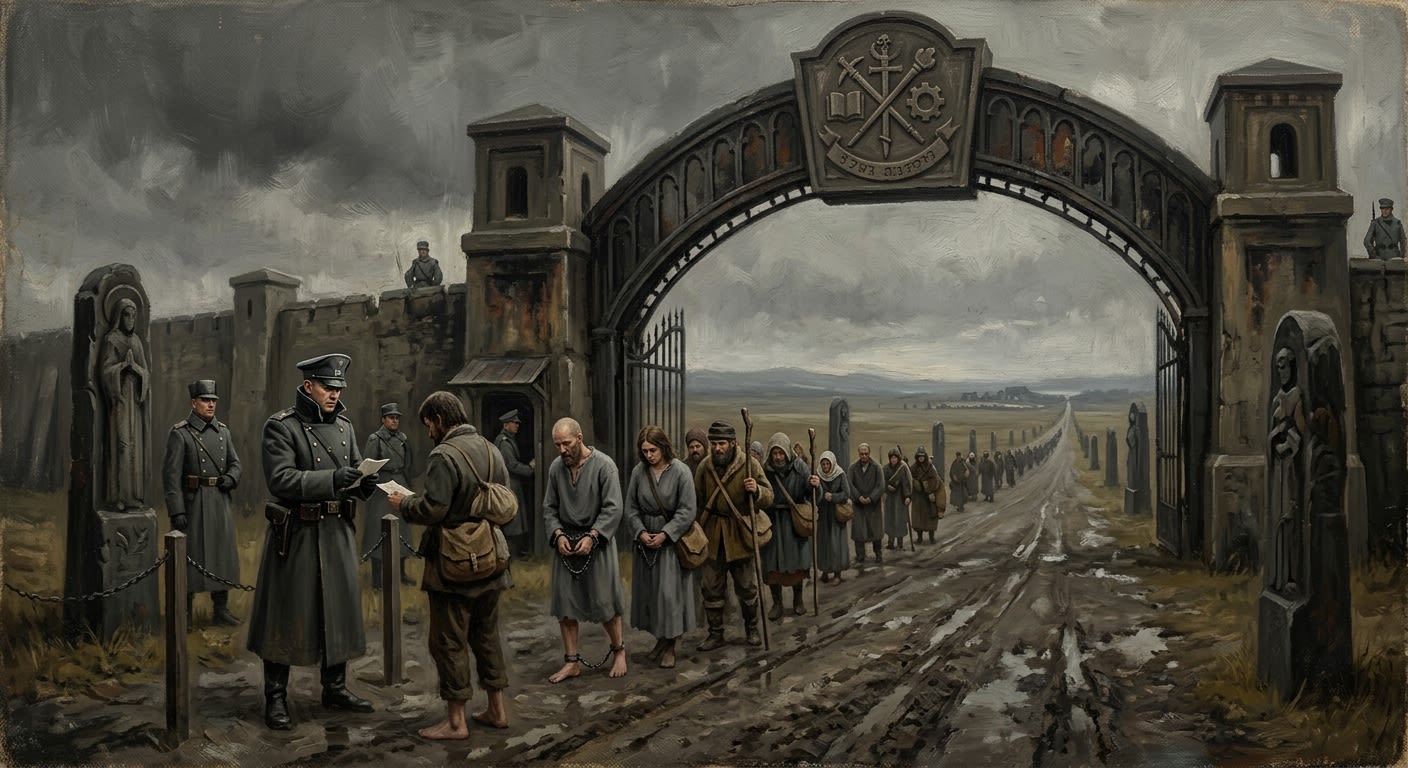
Bureau of Pilgrimage
Three million permits. Six million Crowns. No foot moves unwatched.
The Bureau of Pilgrimage governs all movement across the Theocracy's holy roads — issuing tokens, licensing routes, crushing guilds, and extracting revenue from every soul who dares to walk toward sanctity without prior authorisation.
Codex Ref. III.2.07-004
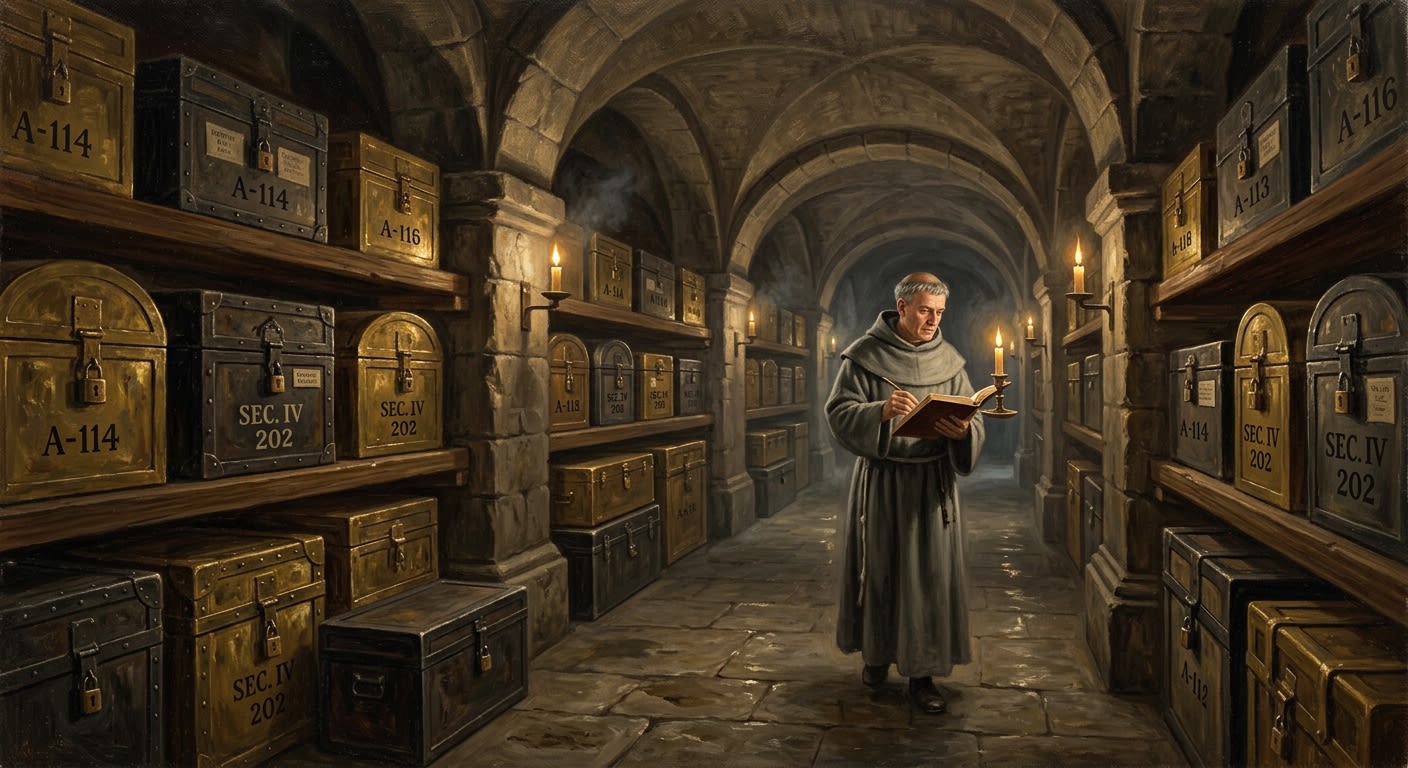
Bureau of Relics
The stamp is not the sanctity. The stamp is merely necessary.
The Bureau of Relics guards four thousand seven hundred authenticated bones, adjudicates the holiness of ash, and maintains the cheerful institutional fiction that it controls the things it catalogues.
Codex Ref. IV.3.12-019

Cadence Corps
One beat, one body, one road, and one stick for correction
The Cadence Corps teaches crowds to move as one obedient spine: ration queues, funerals, levies, relic routes, and riots corrected by beat, rope, whistle, and boot.
Codex Ref. XII.7.01-112

Candle-Runners
Small legs, lit wax, and the mercy no adult could carry cleanly
Juvenile couriers of the Lantern Mercy Preacher apparatus, carrying blessing schedules, coded calendars, chalk marks, and the small mercies adults make too searchable.
Codex Ref. XII.25.07-001

Canon Veyl “Iron Throat”
Louder is cleaner, said the man who made panic lawful
First commander of the Counter-Toll Corps, Canon Veyl turned Cologne's borrowed curfew into doctrine: answer hostile bells with sanctioned panic and overwhelming bronze.
Codex Ref. III.2.01-103

Carnelian erasures
Every seal was correct; the ledger was impossible
In A.S. 67, three Notaries struck the Carnelian lineage across four cities without a shared anchor table. Two lawful cousins vanished from the rolls; the Notaries followed. The children lost their bread.
Codex Ref. VII.8.10-067
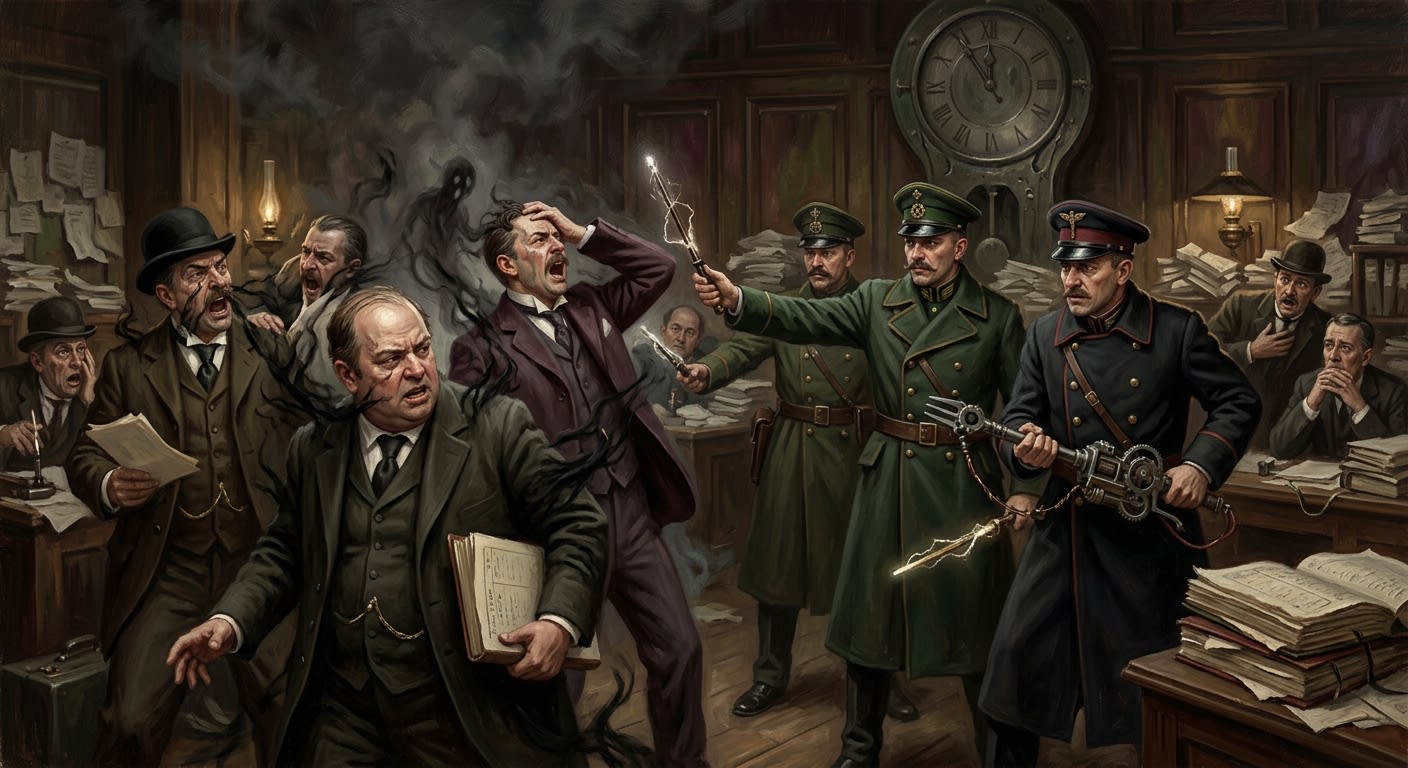
Carnelian Family of Metz
The lineage strike that bit its own hand
The A.S. 67 first recorded lineage-wide nullification attempt, in which Carnelian ration fraud, plague permits, and three overeager Notaries taught absence to bite backward.
Codex Ref. XIII.1.69-001
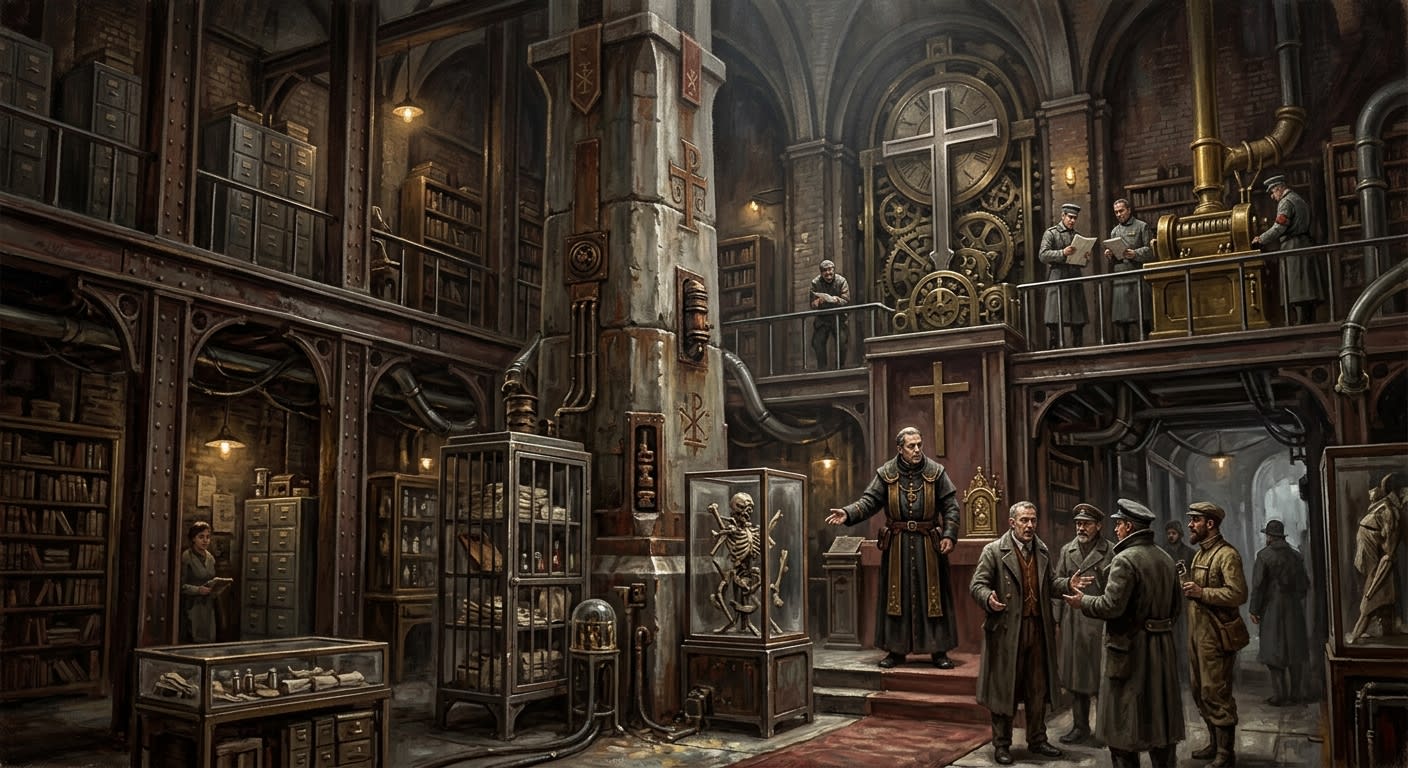
Cathedral of the Holy Column
The church that made obedience stand upright
Cologne's vertical archive: conciliar nave, Holy Column, relic galleries, Odo's sentence, and seventeen femurs arguing successfully with anatomy.
Codex Ref. II.2.01-005
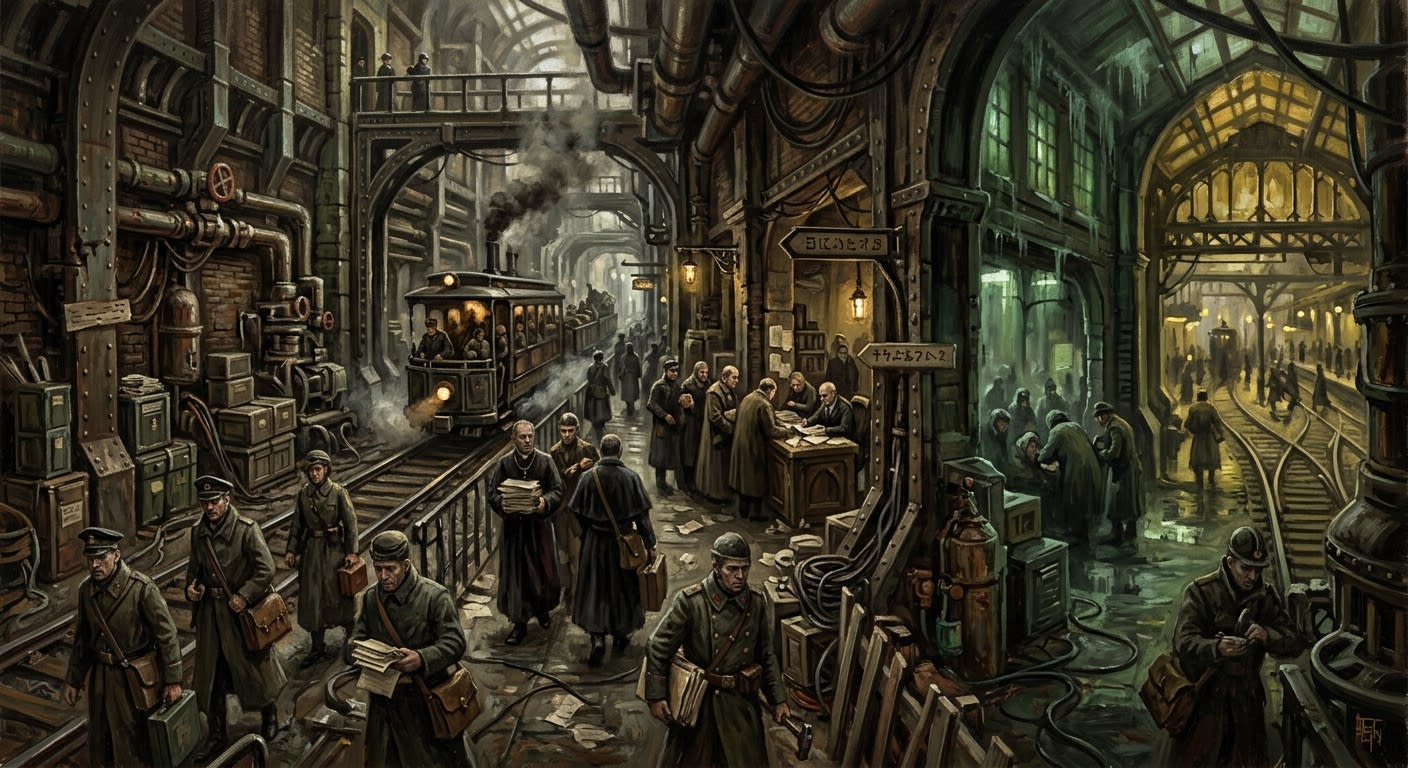
Central Corridor
Motion blurs the screams, which is why the Ledger loves trains
The Central Corridor is the Synod's middle artery: Munich's packed motion, Vienna's holy delay, Bratislava's damp throat, and Budapest's yellow pins.
Codex Ref. II.4.09-201
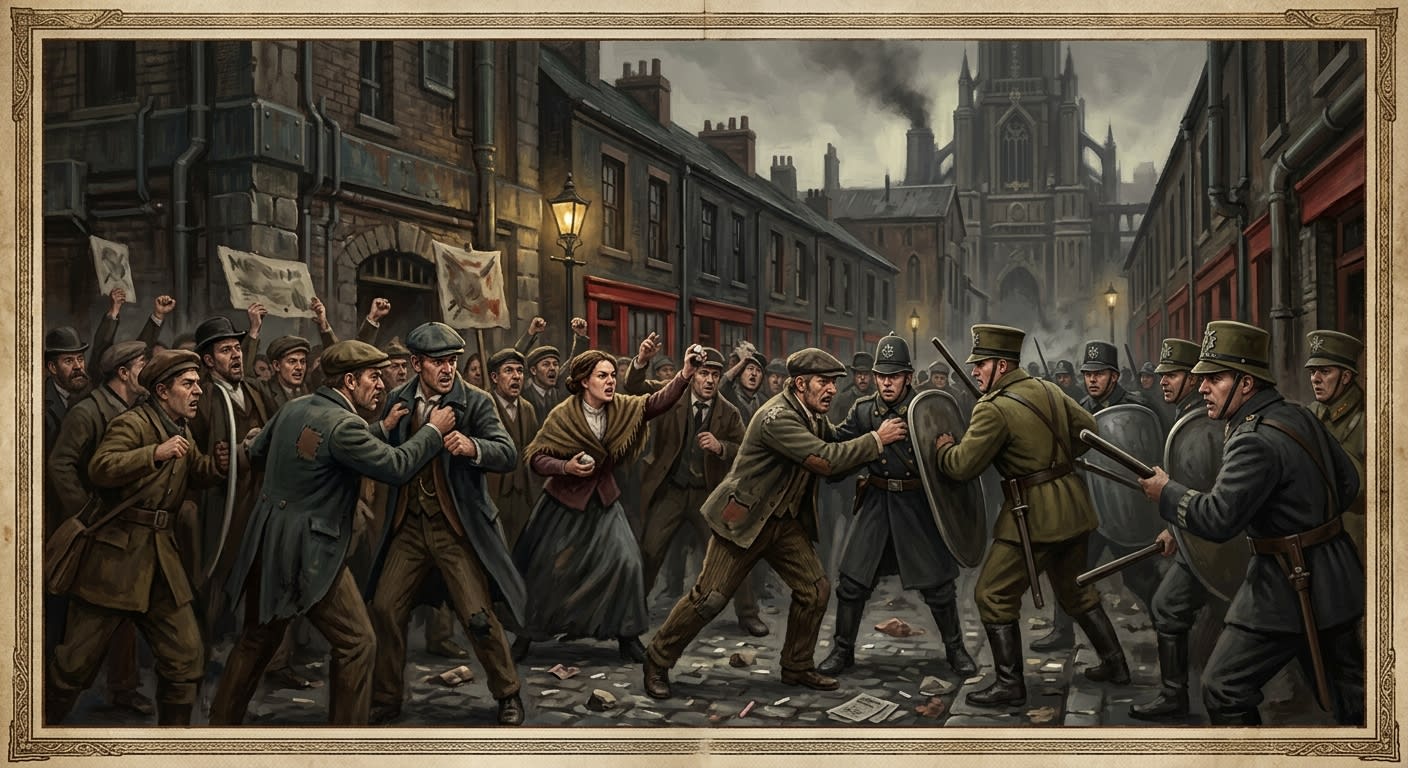
Chalk Riots
Fourteen red doors taught the Bureau arithmetic
Trier's A.S. 119 enforcement backlash, when fourteen red lintels turned compliant households into a crowd and forced the Bureau to ration visible shame.
Codex Ref. VII.8.10-024

Chancellery of Colors
No hue is innocent after public display
Heraldry sub-body that licenses the Synod's colours, issues quarterly swatch sets, and converts pigment drift into jurisdiction.
Codex Ref. VIII.1.03-004
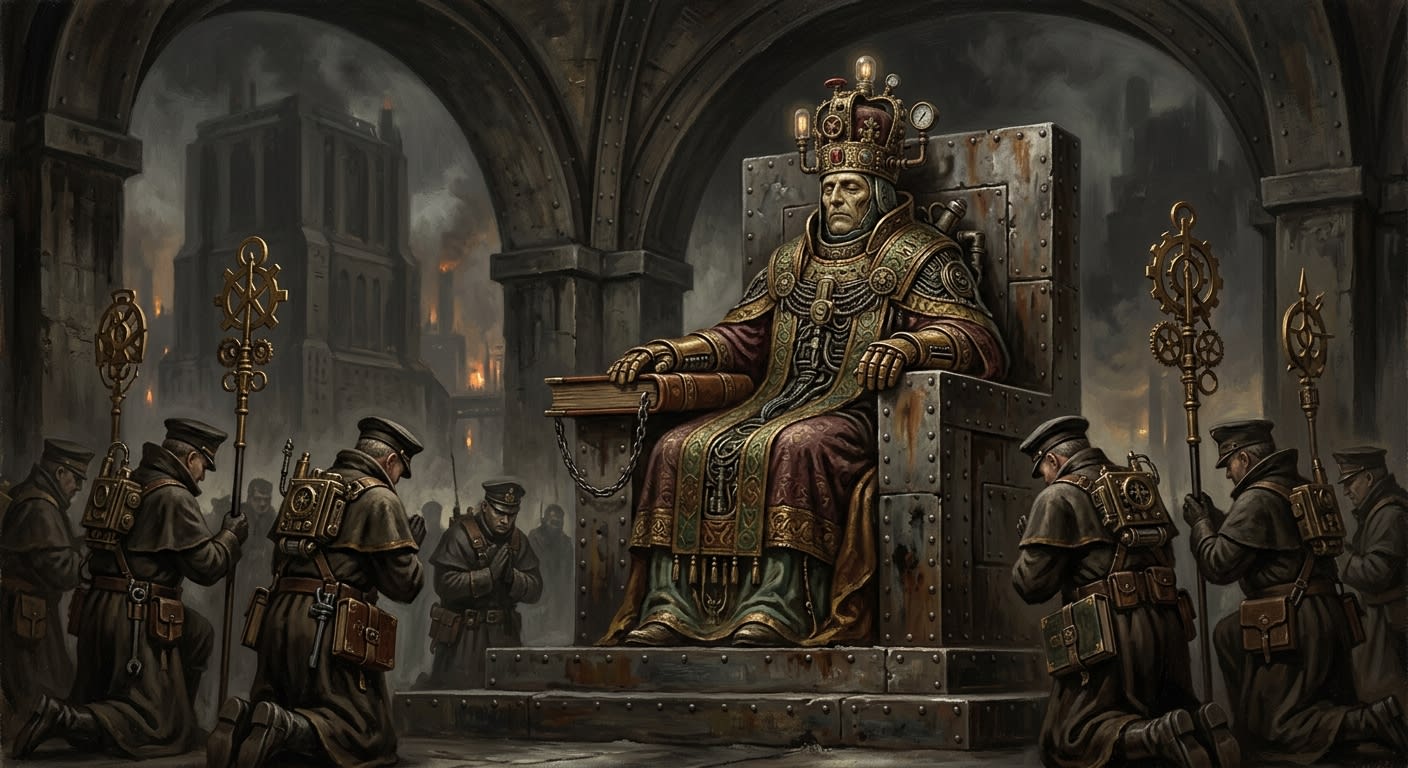
Charlemagne
The dead emperor conscripted as evidence after the gate was sold
Charlemagne is honoured as precursor, not rival: the dead emperor whose Aachen throne survived Guillaume, Verdane, and every provincial fantasy of a crown above the Ledger.
Codex Ref. III.2.01-000
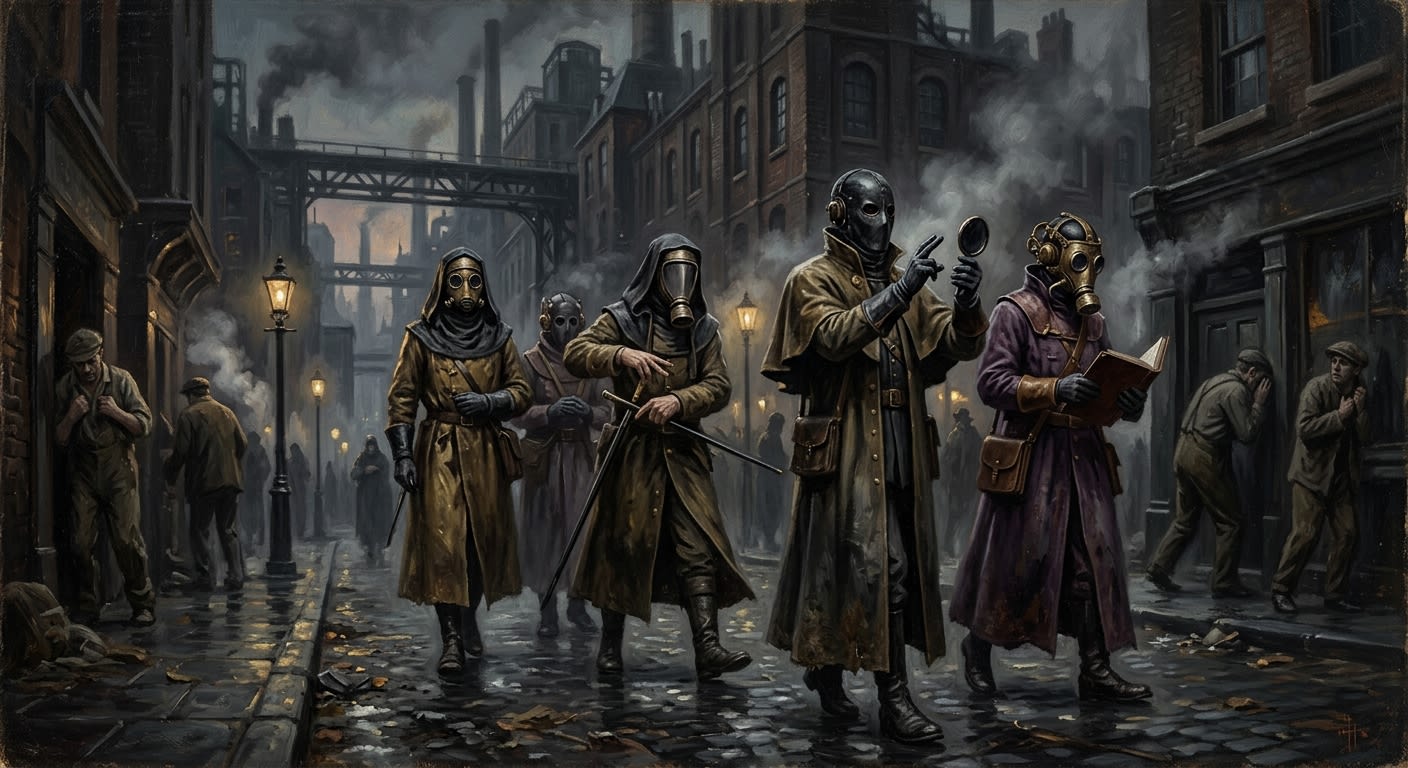
Circle of Mute Radiance
Silence has owners, and they carry mirror shards
The Circle of Mute Radiance governs bell-dead streets through hand-code, mirror-flash, Mouth-Seal, Hush Beating, and the quiet arithmetic of removal.
Codex Ref. XII.25.05-001
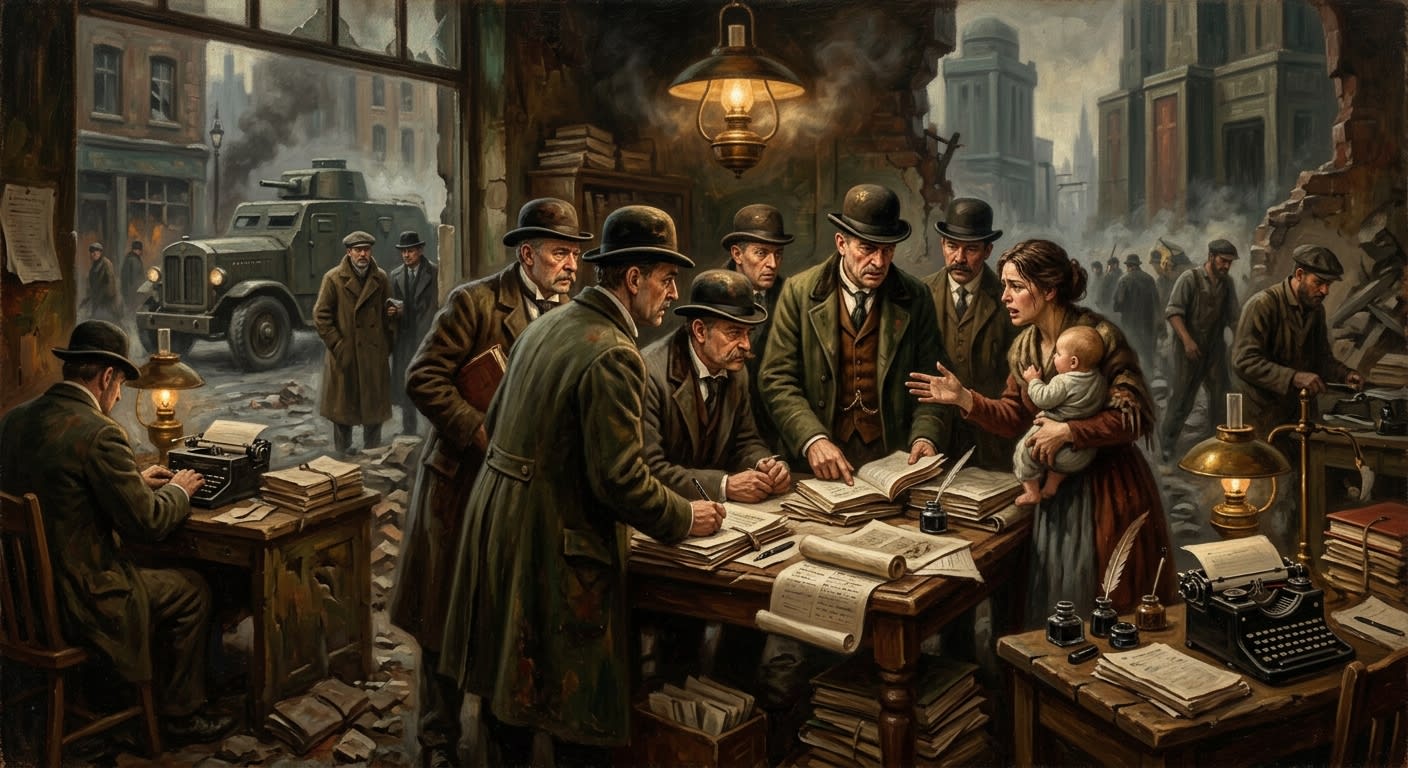
Citation Pragmatists
The useful lie, properly receipted, may keep a district alive
Informal Citation Advocate faction that argues intent, exploits ambiguity, and keeps clients, convoys, widows, and districts alive long enough to be billed.
Codex Ref. XII.28.03-001
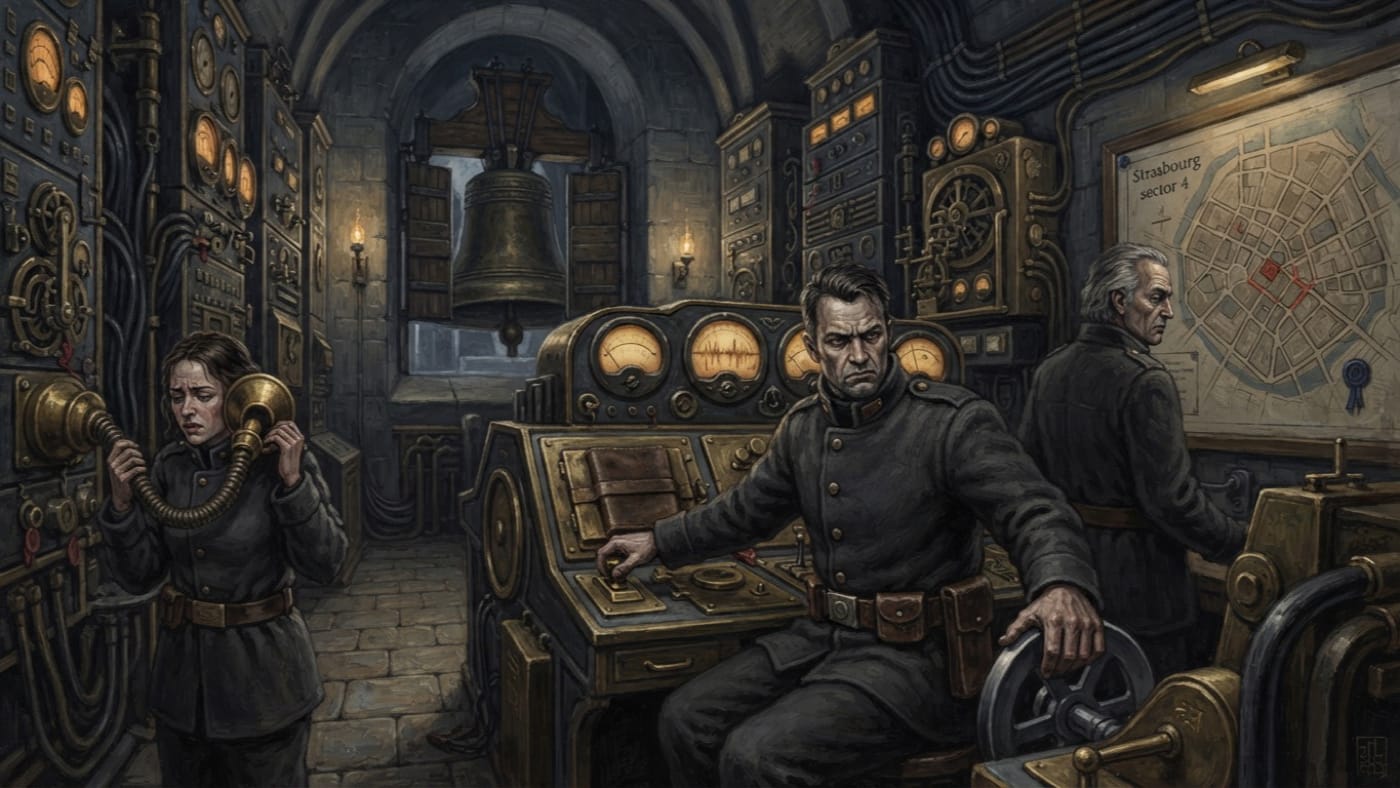
Clean Silence
The same obedience, fewer broken windows
Clean Silence is the Counter-Toll Corps' school of dampening and local hush: the same obedience, fewer broken windows, and an open quarrel with Loud Mercy.
Codex Ref. XII.2.02-003
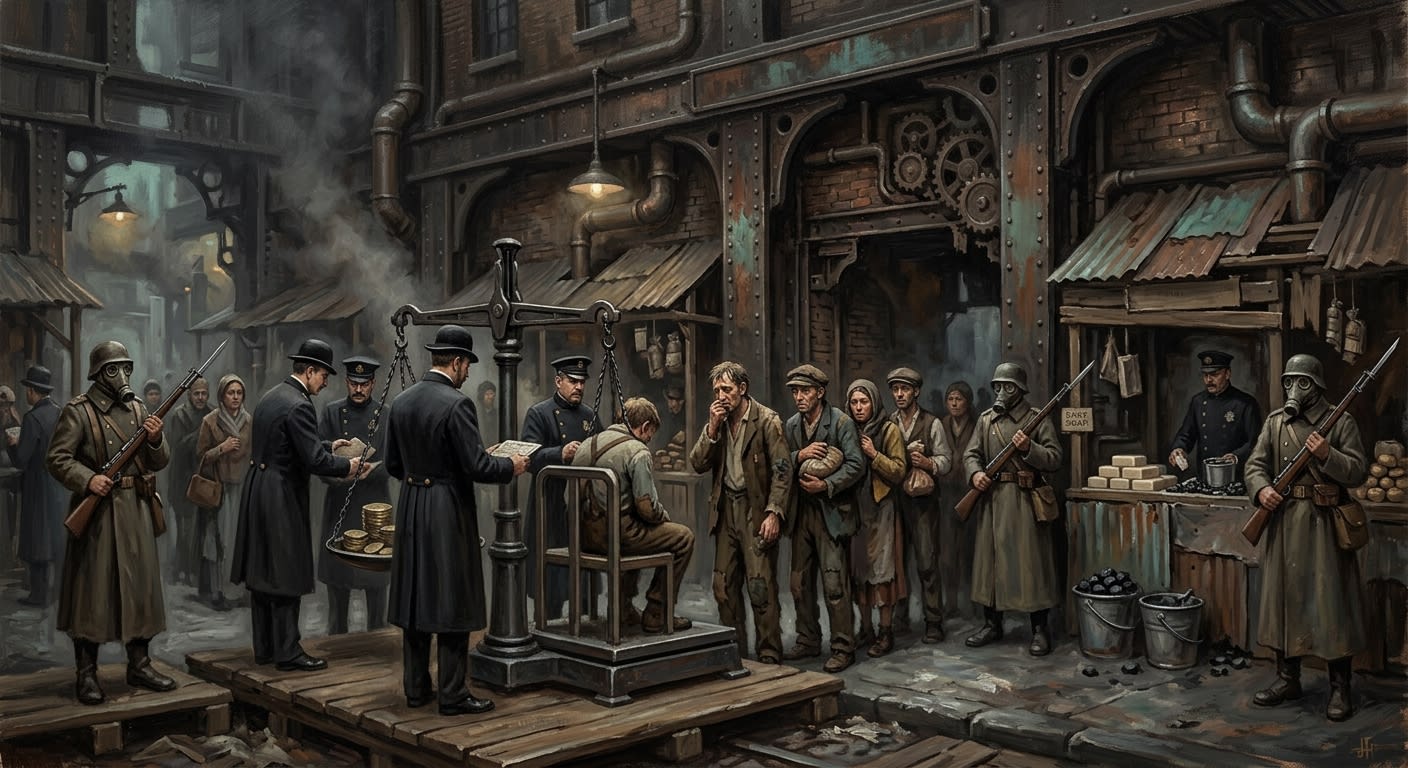
Clipper's Market
Where money confesses and hunger pays the fee
Sable Court's legal exchange frontage weighs coin, face, and citizen alike; the soap is cheap, the fear is official, and the mercy is illegal.
Codex Ref. II.2.07-002

Codex of Permitted Symbols
The little book that makes walls guilty
Pocket abridgement of the Armorial carried by Sigil Inspectors, where lawful shapes are licensed, colours are weaponised, and mercy is a counterfeit edition.
Codex Ref. XIII.1.82-001
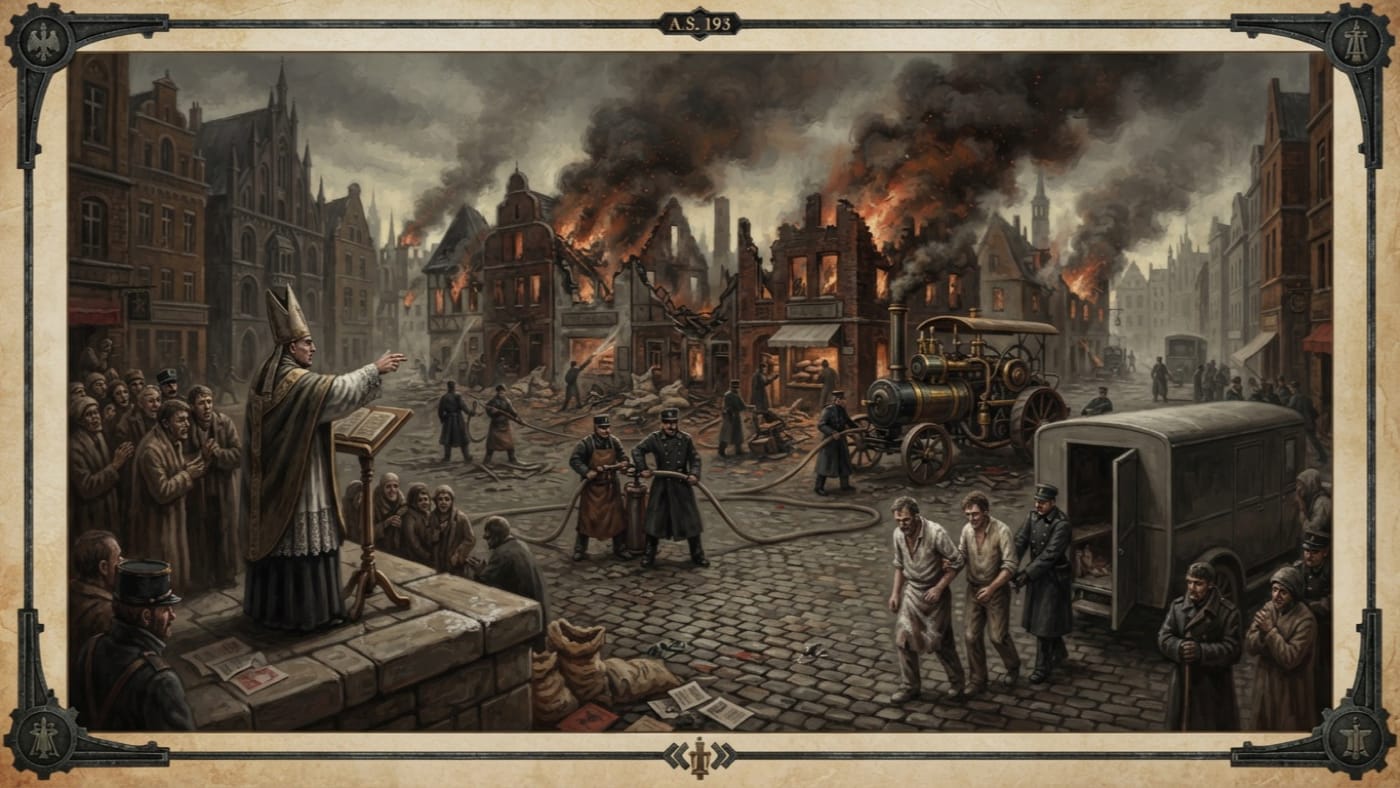
Cologne Flour Alarm
The flour had mould; the city supplied the fire
In A.S. 193, Cologne mistook mouldy flour for a Blightbearer's work, burned six bakeries, interrogated two innocent millers, and applauded a fast. The mould required no demon; the damage required authority.
Codex Ref. VII.8.10-193

Cologne Forgery Incident
The documents survived their maker.
In A.S. 195, ninety-three Cologne documents bore perfect false counter-seals. A Seal-Walker found the error in the resin; the forger was executed and every document re-stamped. The marriage is valid. The couple has been informed.
Codex Ref. VII.8.10-195
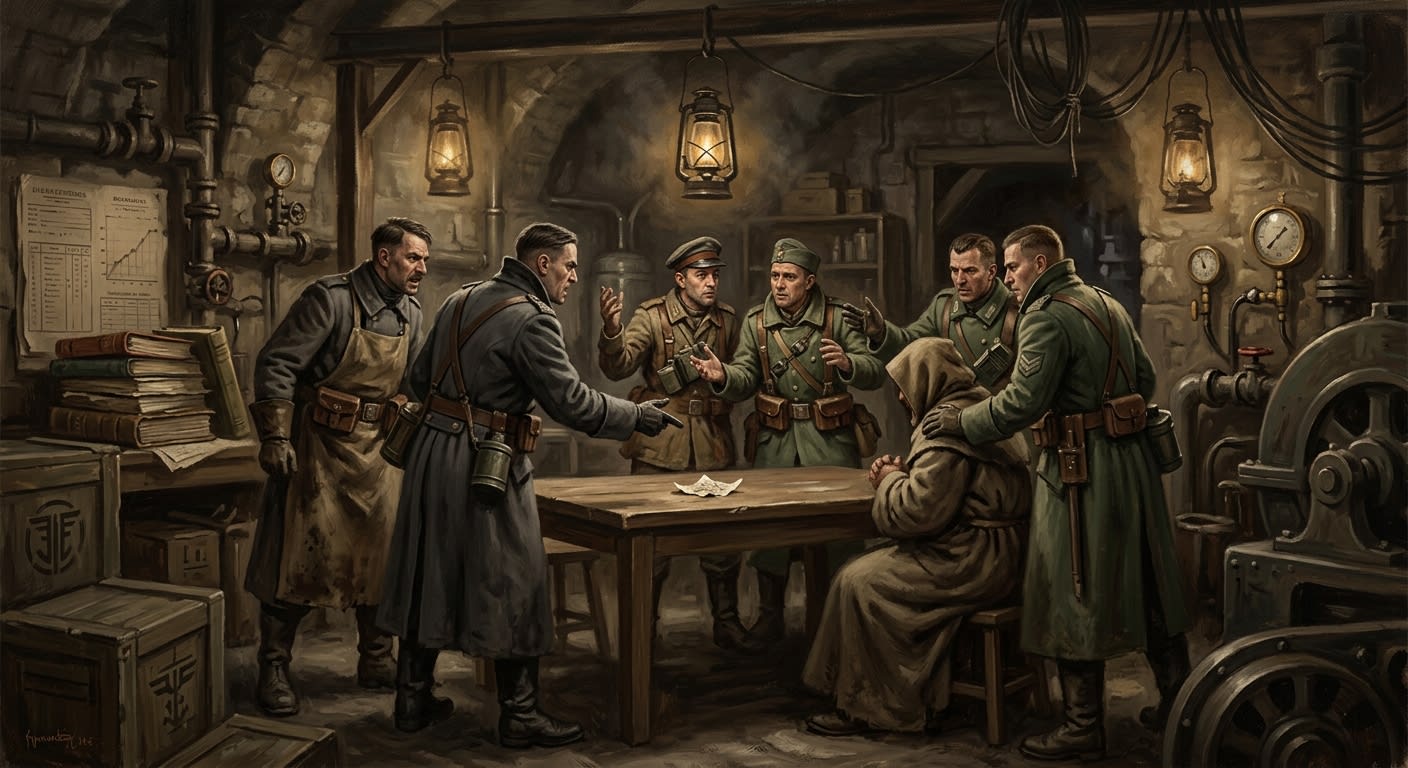
Cologne Schism of A.S. 178
Three lanterns, one cellar, and the mercy that learned to testify
The A.S. 178 Cologne Schism split three Lantern Brotherhood watch circles over Mercy Preacher shielding, producing Purists, Loyalists.
Codex Ref. VII.8.09-001
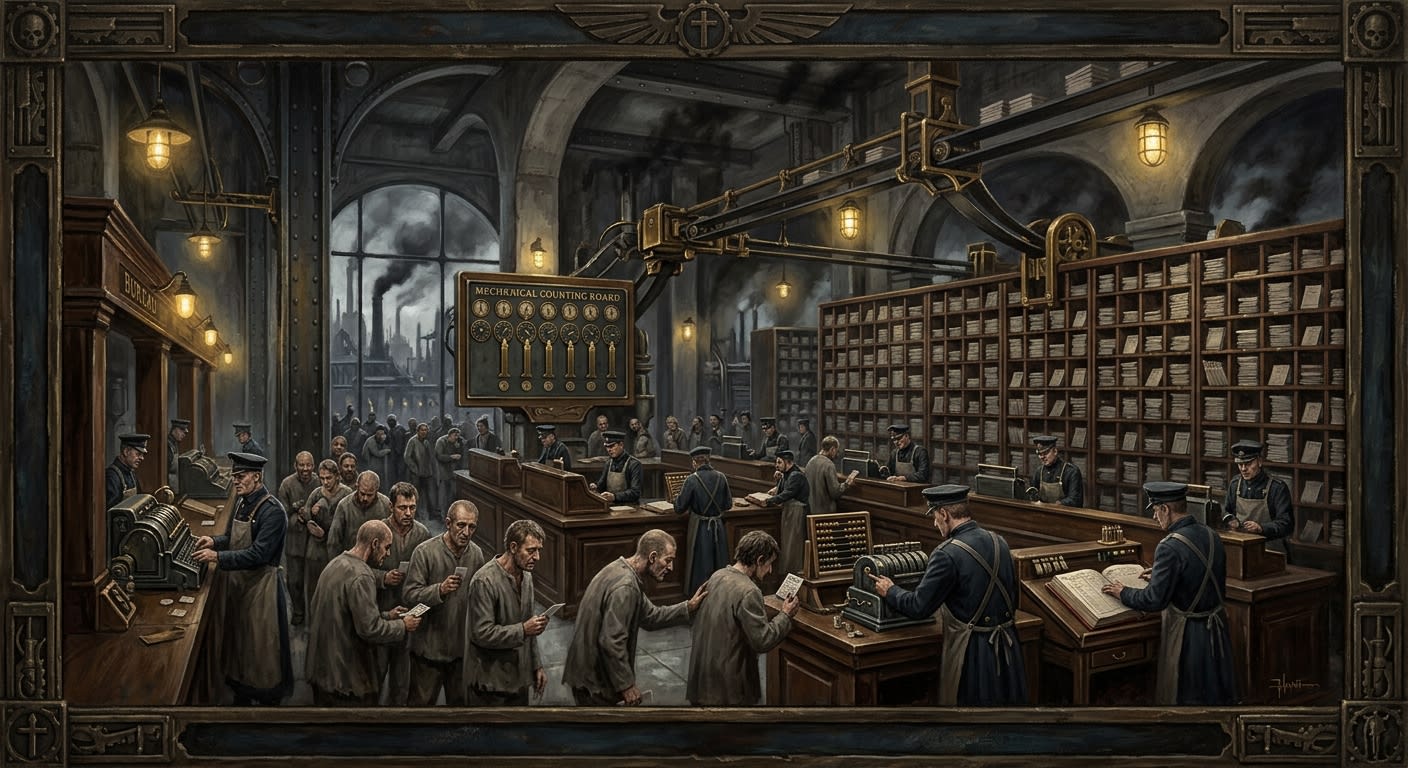
Confession Reform of A.S. 104
The paragraph that made sin stand in columns
A.S. 104 Bureau of Rites reform that standardised sin categories, introduced rubric cards, authorised lay intake clerks, and made confession countable at scale.
Codex Ref. VII.8.10-014
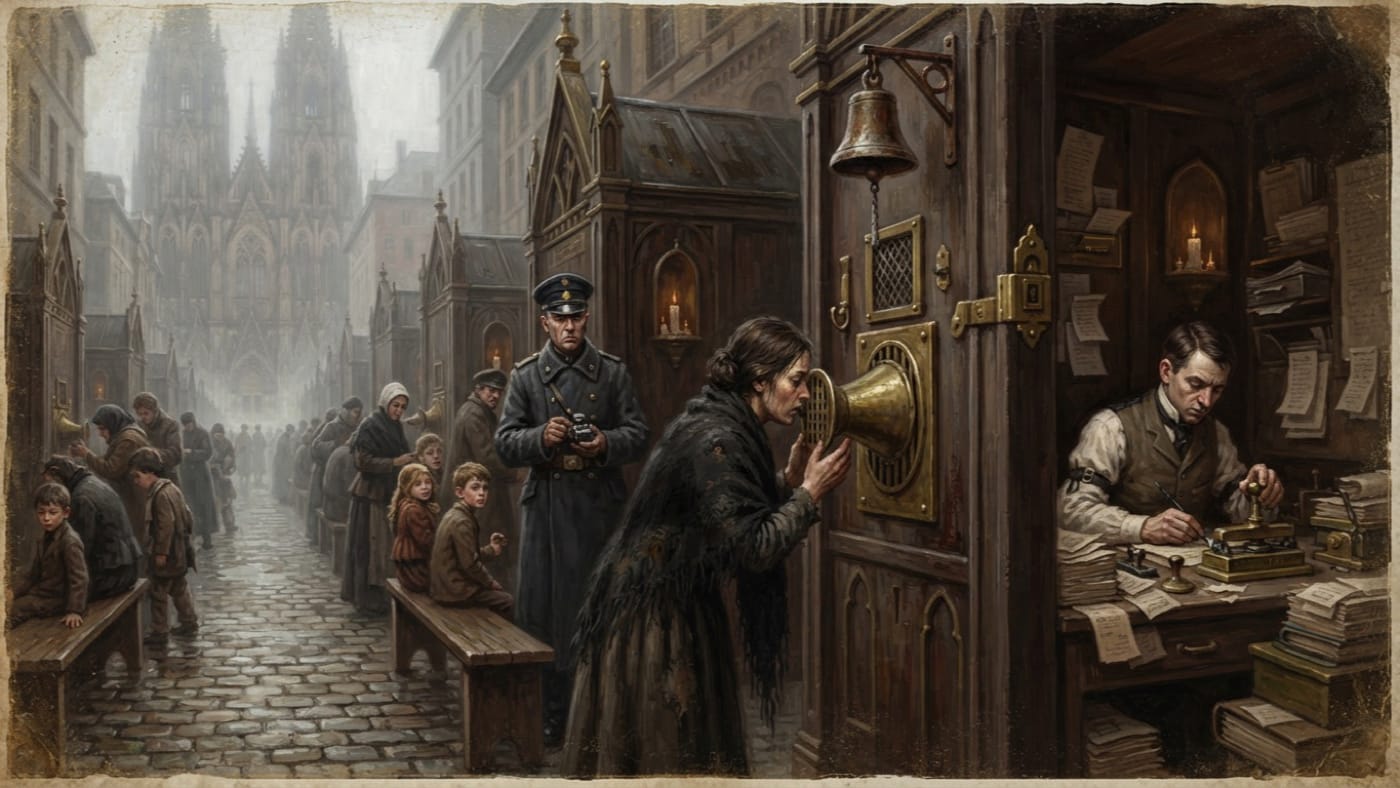
Confessor-Kiosks
The soul speaks; the city keeps the receipt
Cologne's confessor-kiosks turn spoken sins into stamped receipts. Records keeps the abstracts, Purity keeps listeners, and Doctrine calls disputed additions Heaven's interpolations.
Codex Ref. II.2.01-716
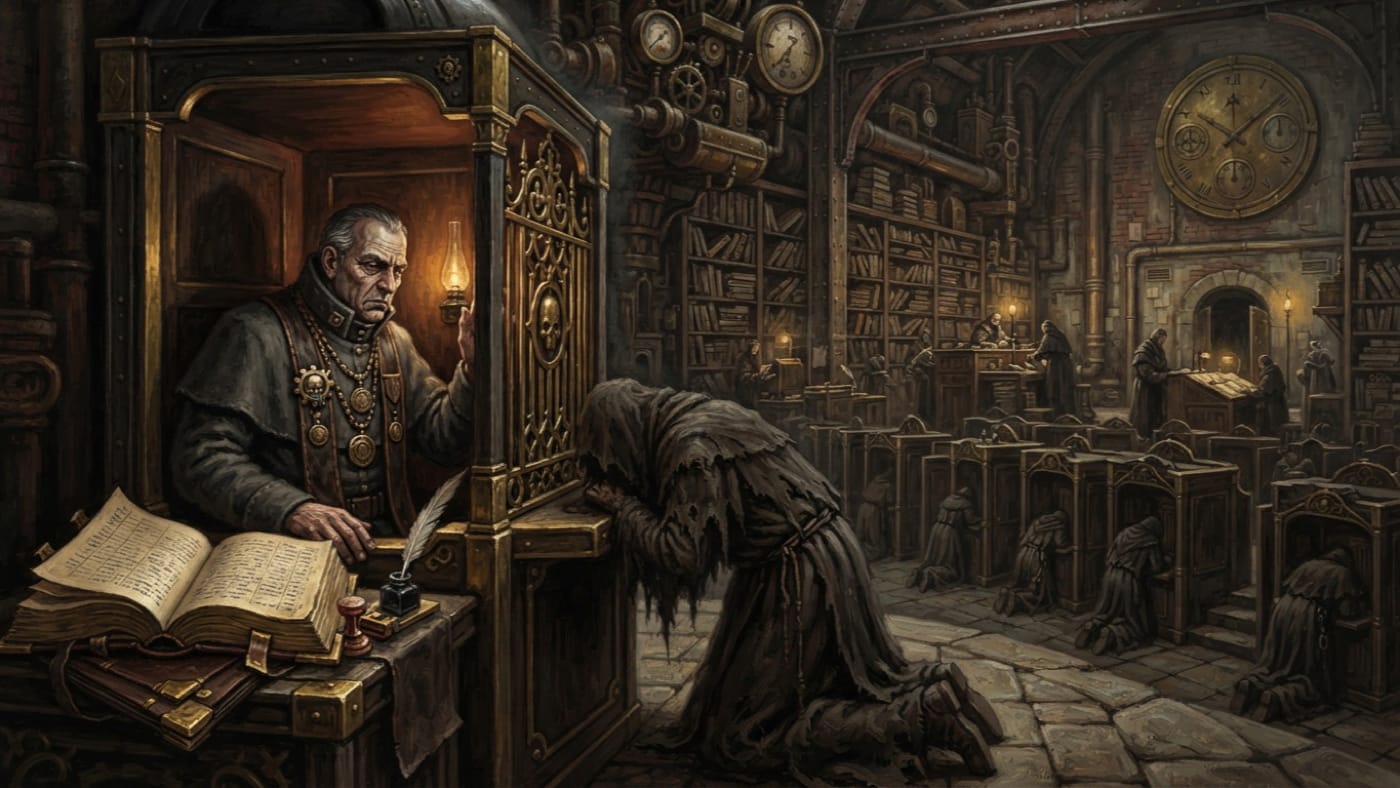
Confessors
The penitent goes home lighter. The register stays full.
The parish Confessor absolves the penitent and records the sin. I survey the ordained listeners who keep the Ear of the Synod open, from parish grilles to baptismal duty under Standing Order 88-F.
Codex Ref. XII.9.03-201
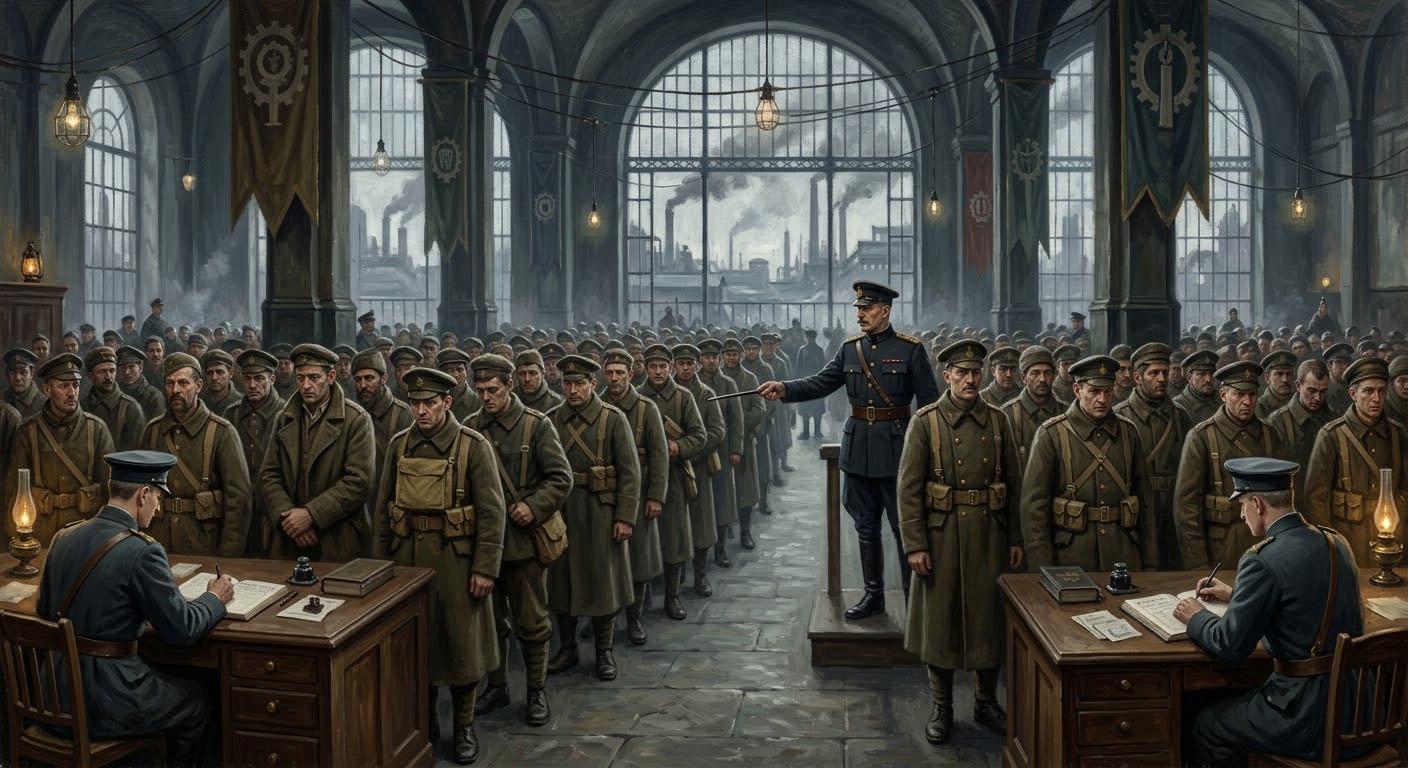
Continental Levy
The decimal point where obedience becomes infantry
The Continental Levy is the Synod's permanent tithe of flesh, born from the A.S. 110 crisis and refined into household arithmetic.
Codex Ref. XIII.1.54-001
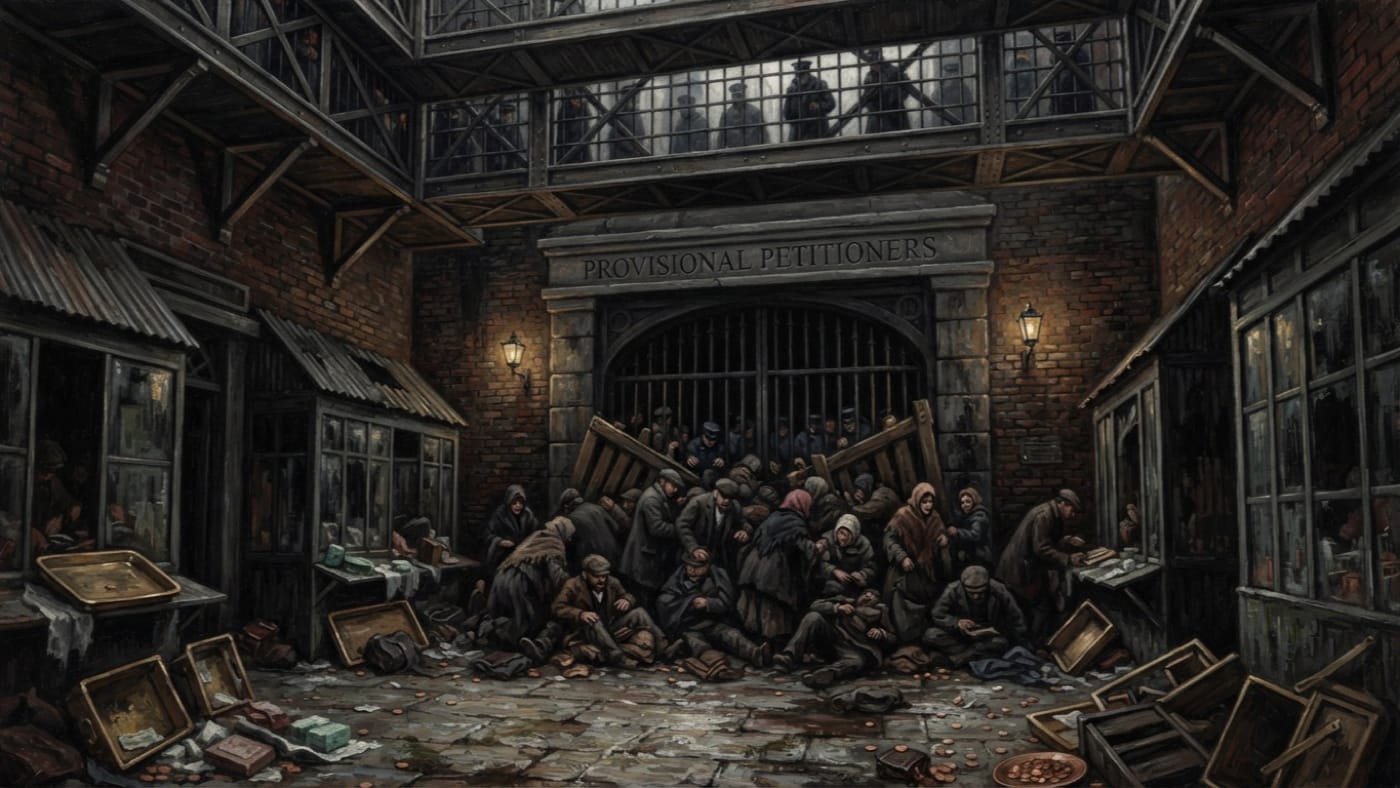
Copper Saint Crush
Ordinary copper, nineteen dead, and a bill
At Clipper's Market in A.S. 196, a rumour of saint-faced copper crushed nineteen petitioners against the Widow Gate. The copper was ordinary; the dead still owed inspection fees.
Codex Ref. VII.8.10-196
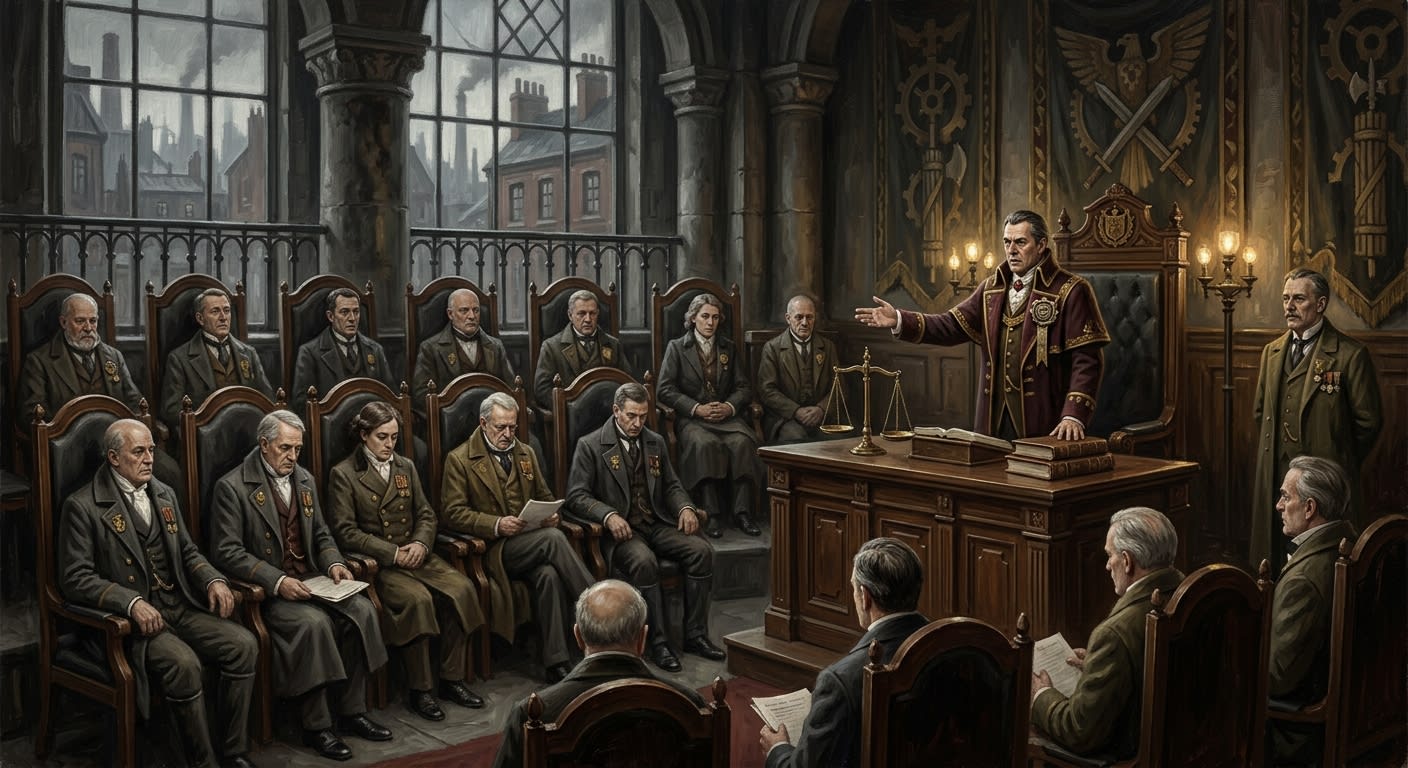
Council of Prefects
Where dissent receives a chair, a minute, and a family corridor
The Council of Prefects is unanimity with chairs: a ratifying chamber where civic officers discover what Strasbourg has already decided they believe.
Codex Ref. XIII.1.90-138

Counter-Toll Corps
Louder is cleaner, until the city taps back
The Counter-Toll Corps is the Synod's sanctioned acoustic overwrite force: bronze artillery for false curfews, borrowed obedience, and bells that answer back.
Codex Ref. XII.2.02-135

Counter-Toll Operator
What the enemy rings, the Bureau drowns. The toll is paid in bone and nerve.
The Bureau of Bells does not debate; it drowns. Its Counter-Toll Operators sit in sub-tower vaults and overwrite hostile tones with louder ones. The city's obedience is the bell's argument.
Codex Ref. XII.2.02-001
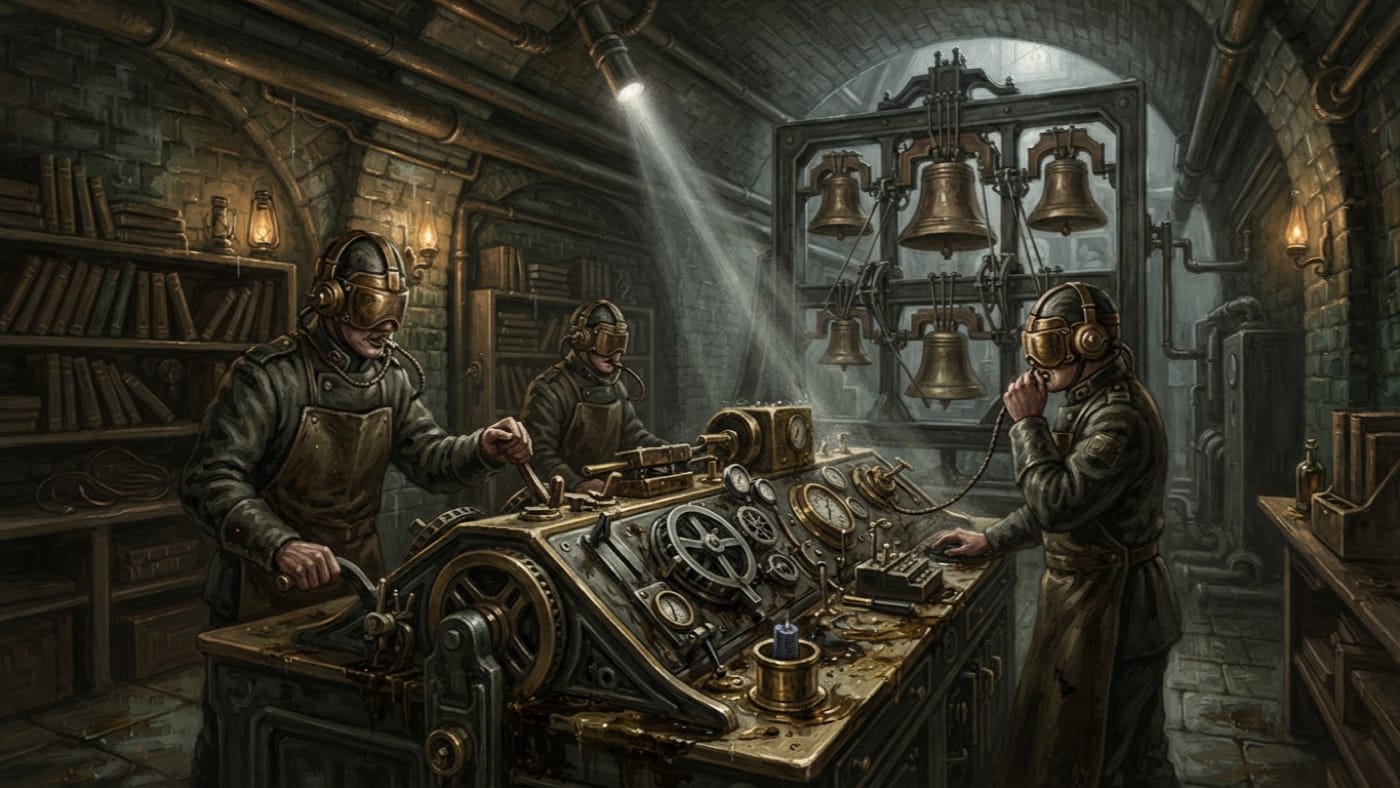
Counter-Toll vault
The tower announces the hour; the chamber defends its authority
An A.S. 201 survey of Counter-Toll vaults, the Bureau of Bells' sub-tower workrooms. Consoles, wax authority and living throats turn lawful sound into armed sound.
Codex Ref. II.4.09-201
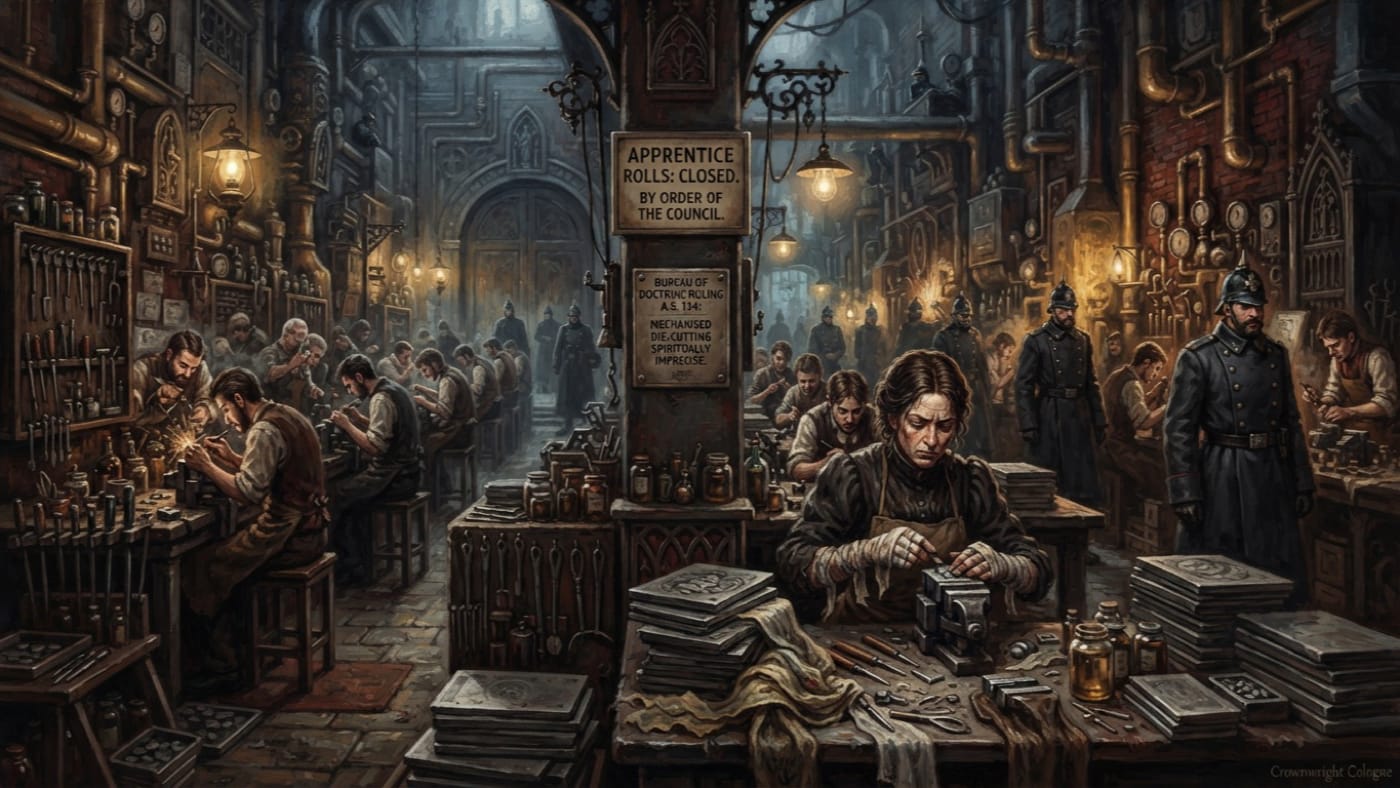
Crownwright Guild
The Chapter owns the face; the Guild owns the hand
The Crownwright Guild cuts Sable Court's lawful faces, charges for recognition, and keeps the Mint-Chapter dependent on its hands. Its apprentice rolls remain closed during the Face Theft crisis.
Codex Ref. XI.7.01-001

Custodial Chain
The ledger remembers the hands. The bone keeps its own counsel.
The ledger joins an authenticated relic to the hands that held it. In 1678, Vienna severed Aldebrand's chain without moving the bone. The record lost custody; the custodian did not.
Codex Ref. XIII.1.97-001
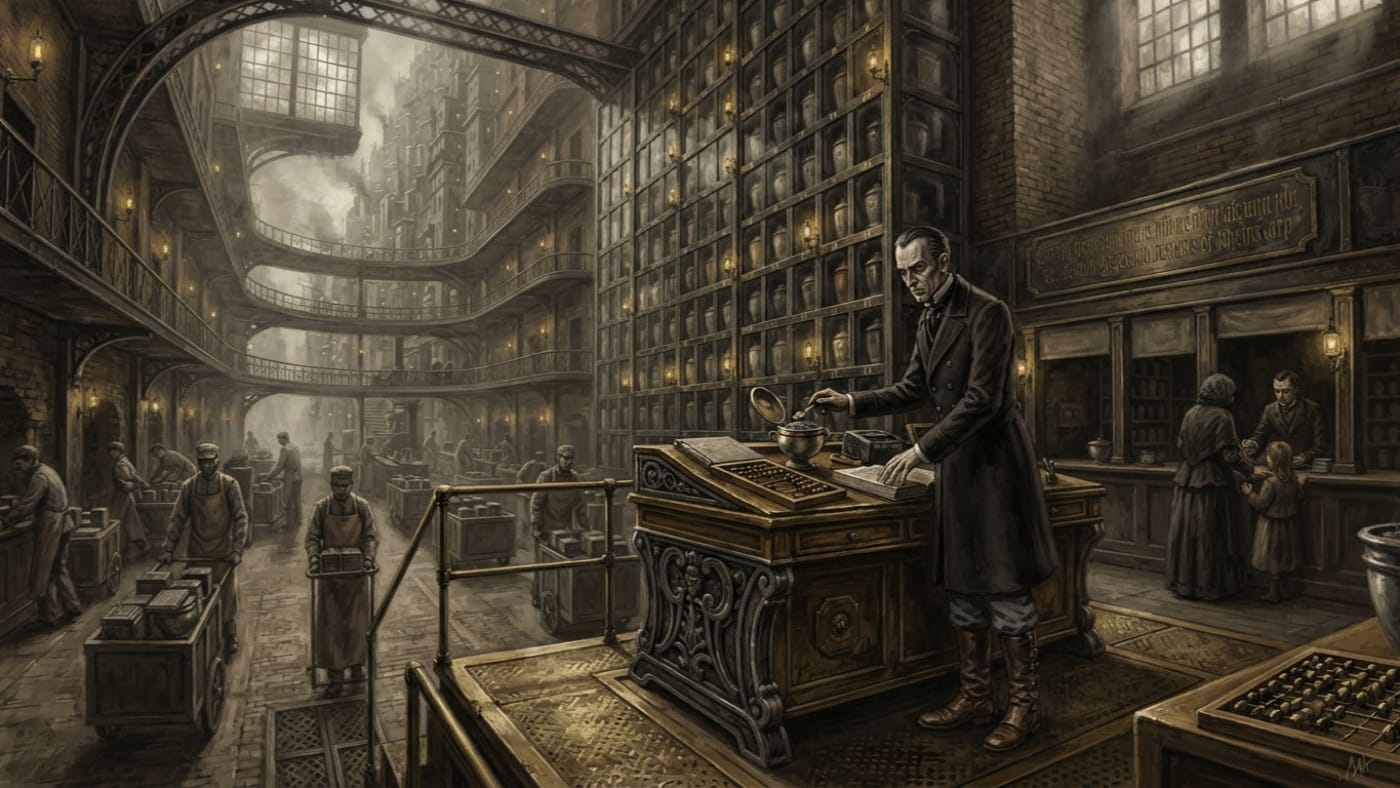
Damas Rohe
Uncle to the brokers, creditor to the dead
Broker-Saintsman Damas Rohe controls Rheinscarp's Ash Exchange, lending grain against future cremains and trading the dead. He holds no Synodal office; his collateral arrives all the same.
Codex Ref. III.2.01-201
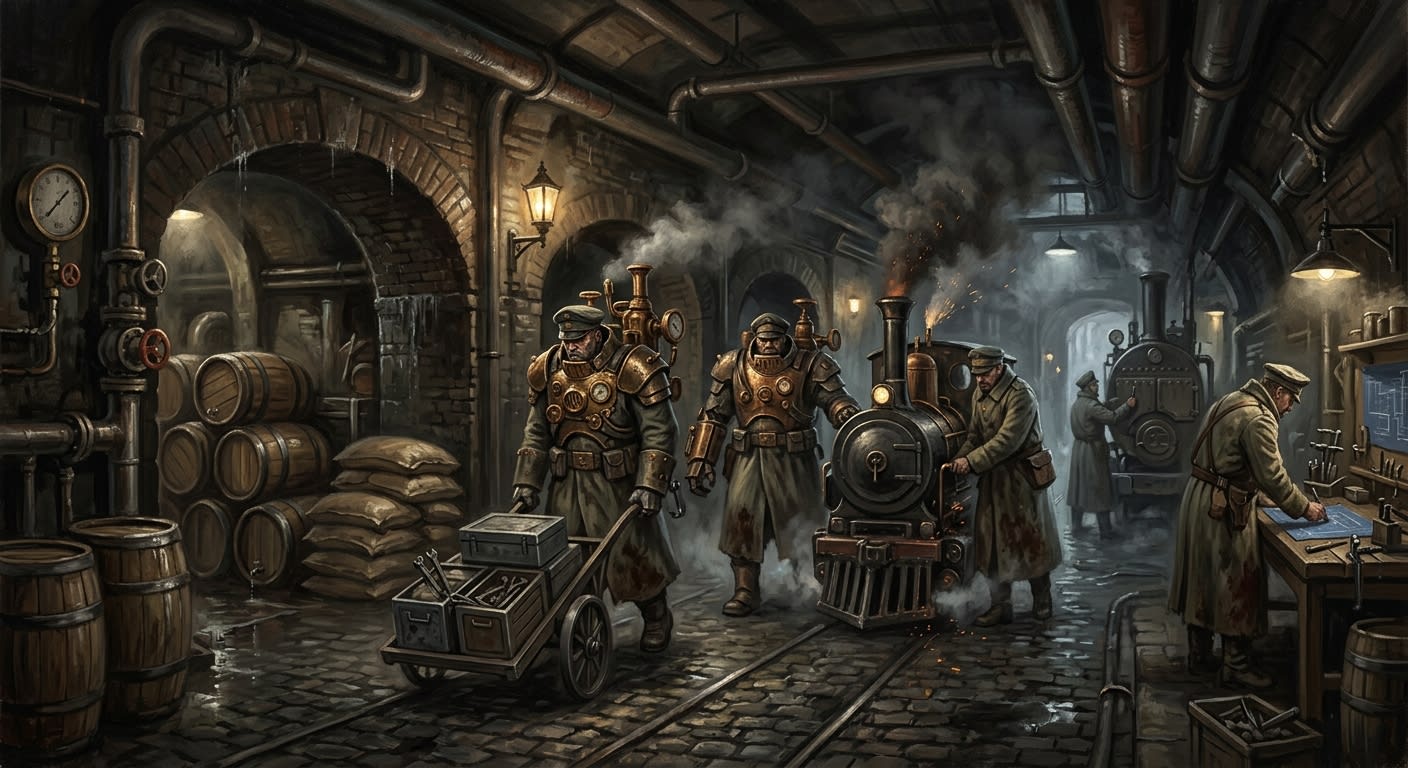
Deutz
The east bank where apostolic bones learned to smell like beer and keep quiet
Deutz is Cologne's right-bank service quarter, famous in Doctrine because three apostolic phalanges survived there beneath beer, silence, and useful damp.
Codex Ref. II.1.04-031
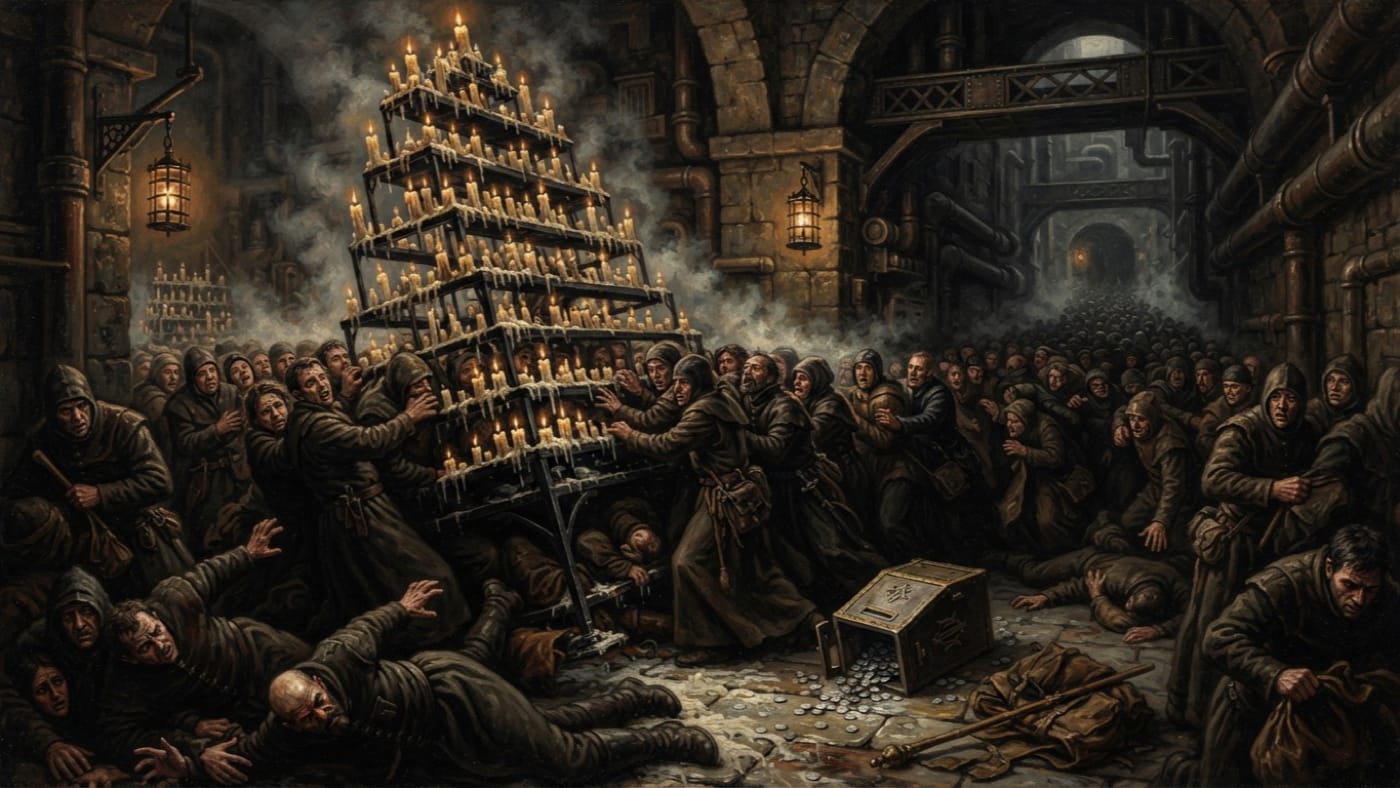
Deutz Candle Riot
Thirty-seven pilgrims taught an advisory to bind
The Deutz Candle Riot of A.S. 151 injured thirty-seven pilgrims and taught shrine committees that an Assessor's downgrade binds at utterance, before the cashbox can object.
Codex Ref. XIII.1.89-151
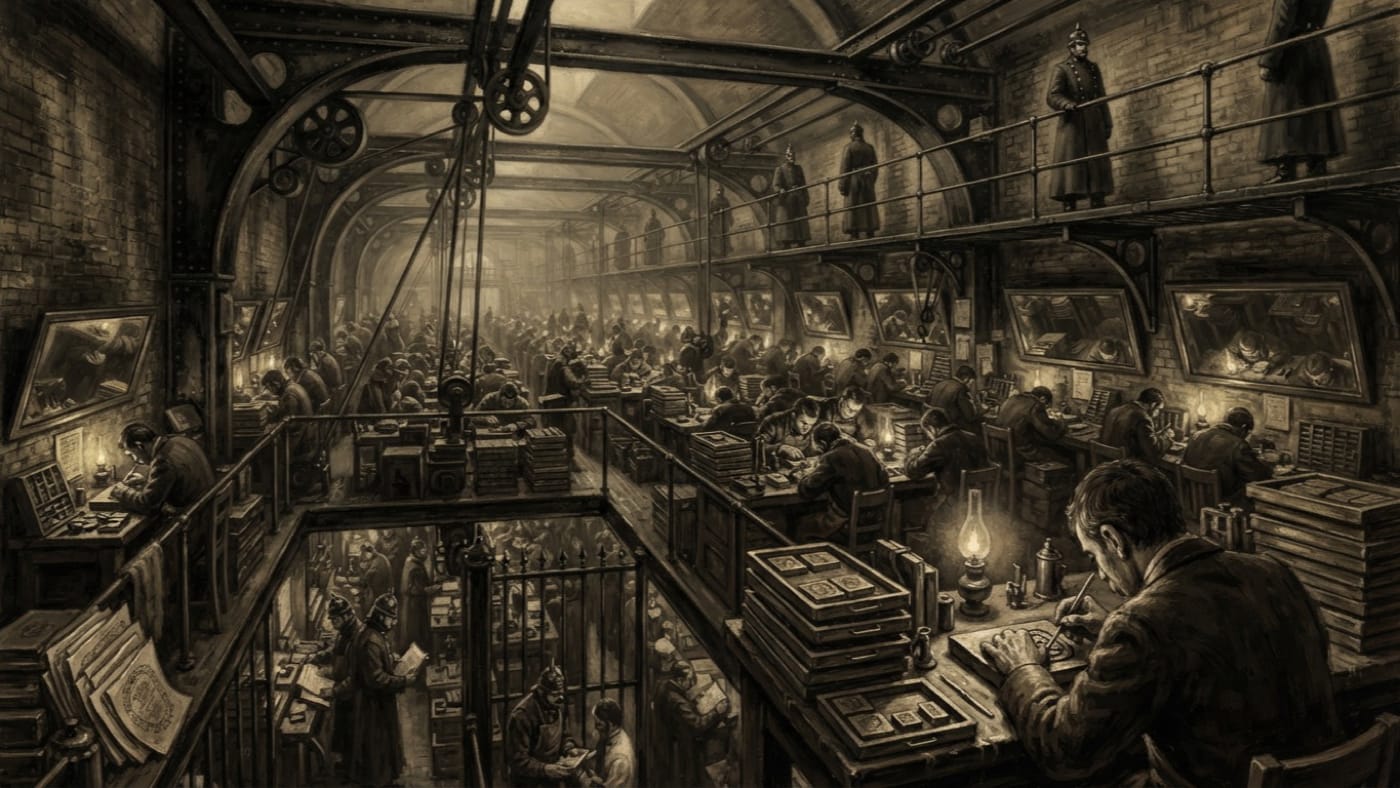
Die Row
Where a lawful face still requires a human hand
In Sable Court's northern engraving halls, Crownwright masters cut faces into steel by hand. Several offices make the result lawful; every office sends a bill.
Codex Ref. II.2.07-002
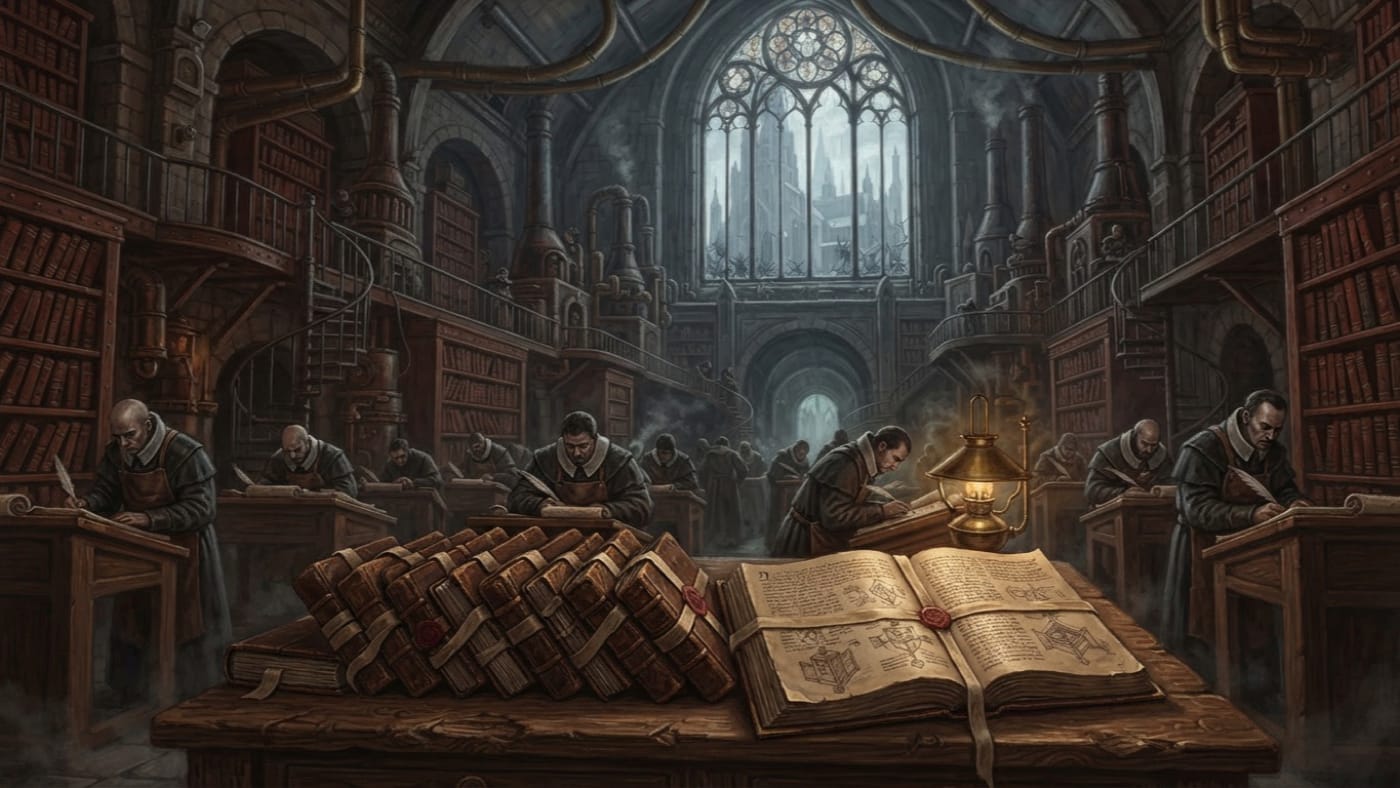
Diocese of Trier
Twelve pages of theology. No reconciled provenance.
Trier's twelve-page defence of multiplied Aldebrand relics in −32 A.S. / 1678 CE: magnificent theology, unreconciled provenance, and paperwork the Synod claimed a century late.
Codex Ref. I.3.09-032
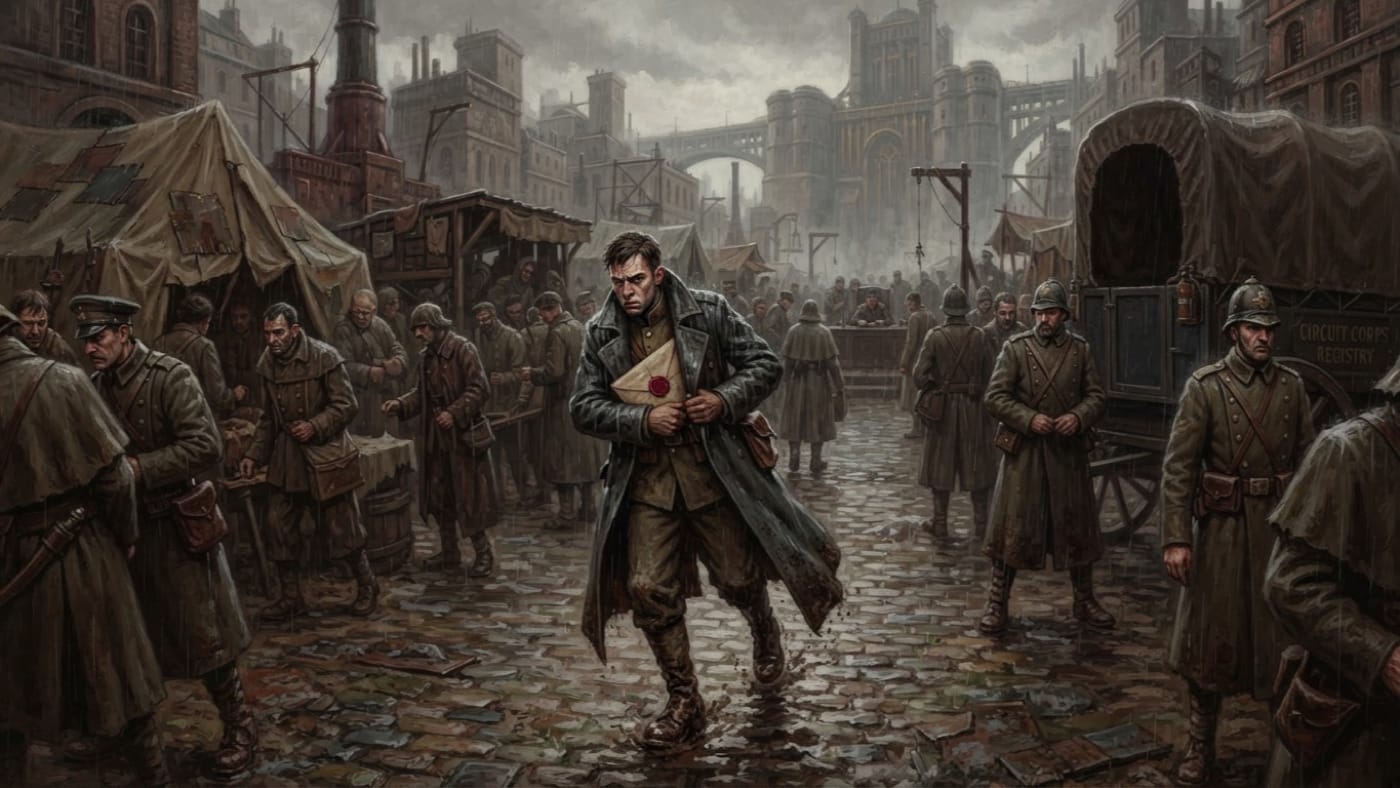
Docket Runner
The paper travels under seal; the blame travels on foot
Entry rank of the Roving Judge's Bailiff corps, carrying writs, custody pages and seizure receipts. The Runner conveys the Judge's authority and inherits the blame when paper fails.
Codex Ref. XII.39.01-002
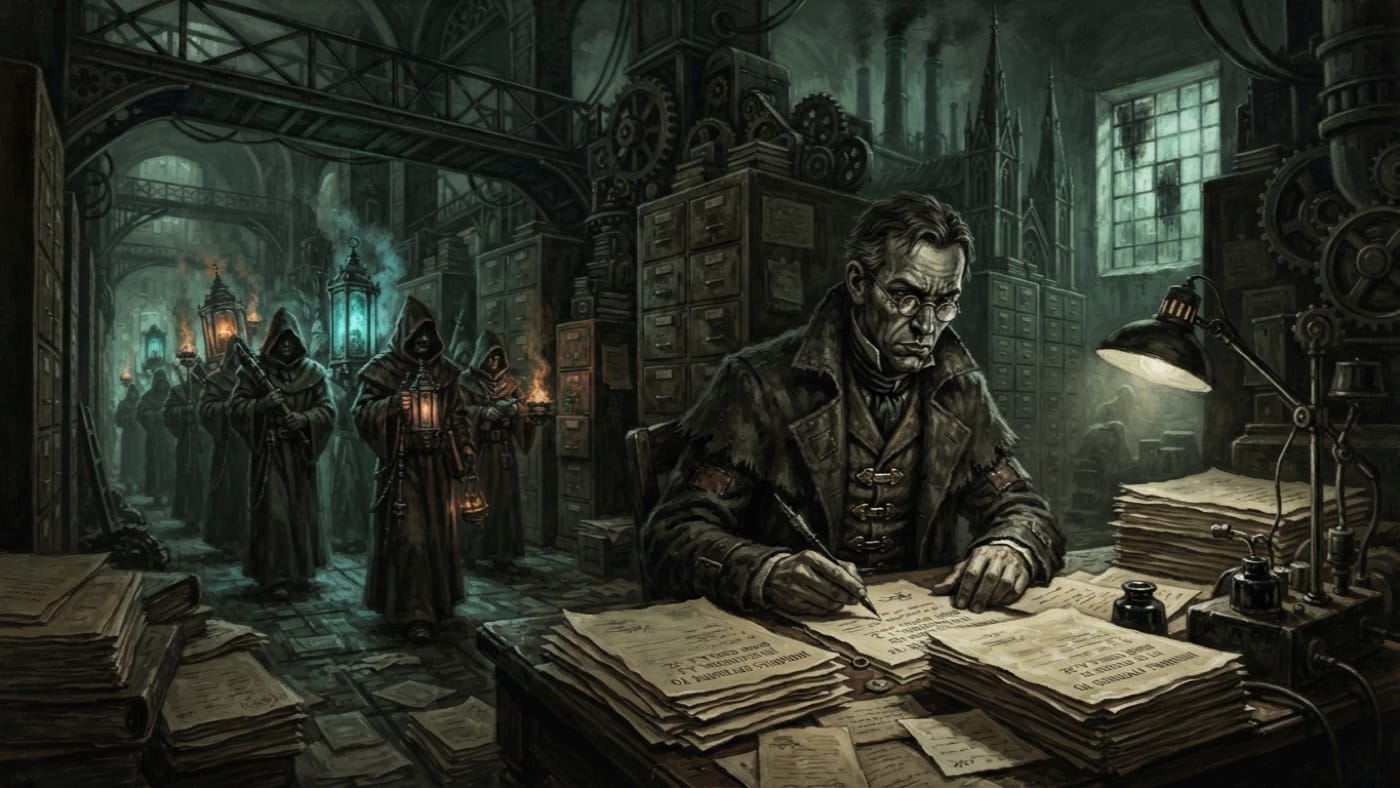
Dr. Gerrit Lemstra
The courtesy was impeccable. The inquiries remain open.
Dr. Gerrit Lemstra drafted the courteous inquiries sent with Amsterdam's Bone Census in −32 A.S. / 1678 CE. The Bureau condemns the scholar; his requests remain unreconciled.
Codex Ref. III.2.01-027

Dr. Jan de Waal
Addresses, funds and copyists. Forty cities received the doubt.
Dr. Jan de Waal kept the addresses, funds and fourteen copyists behind the Year of Letters in −32 A.S. / 1678 CE. Forty cities received the evidence; the Church supplied the silence.
Codex Ref. III.2.01-028
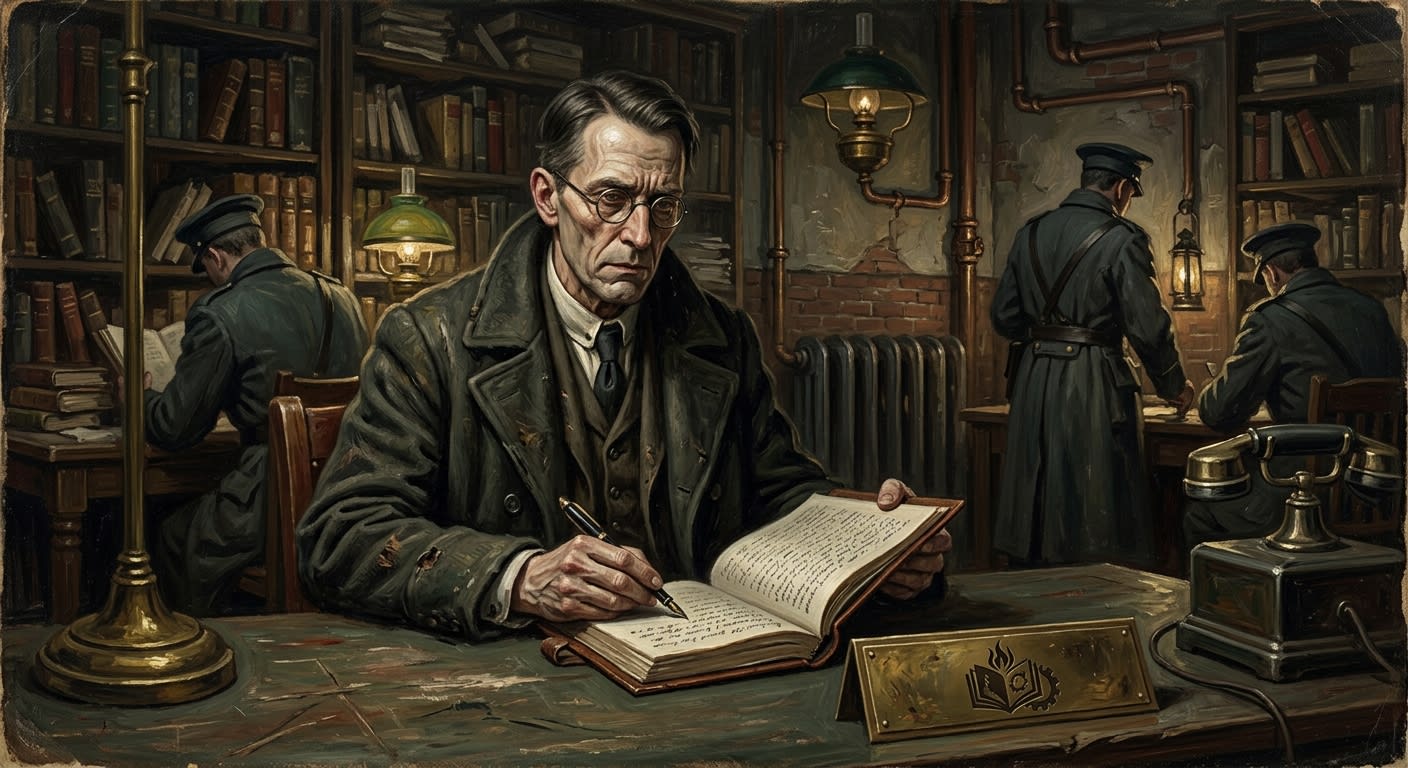
Dr. Marrow Vask
The physician who taught doctrine to carry contraband truth
Condemned Rationalist physician who survived as Brother Matthias, wrote the Index of Safe Lies, and became the Ashen Circle's stolen martyr after his A.S. 57 burning.
Codex Ref. III.2.01-090

Dr. Pieter van Hoorn
The count was correct. The compiler remains condemned.
Dr. Pieter van Hoorn compiled the Bone Census and conceived the Year of Letters in −32 A.S. / 1678 CE. The Bureau concedes his count, condemns its inference, and keeps his correspondence under quadruple seal.
Codex Ref. III.2.01-029
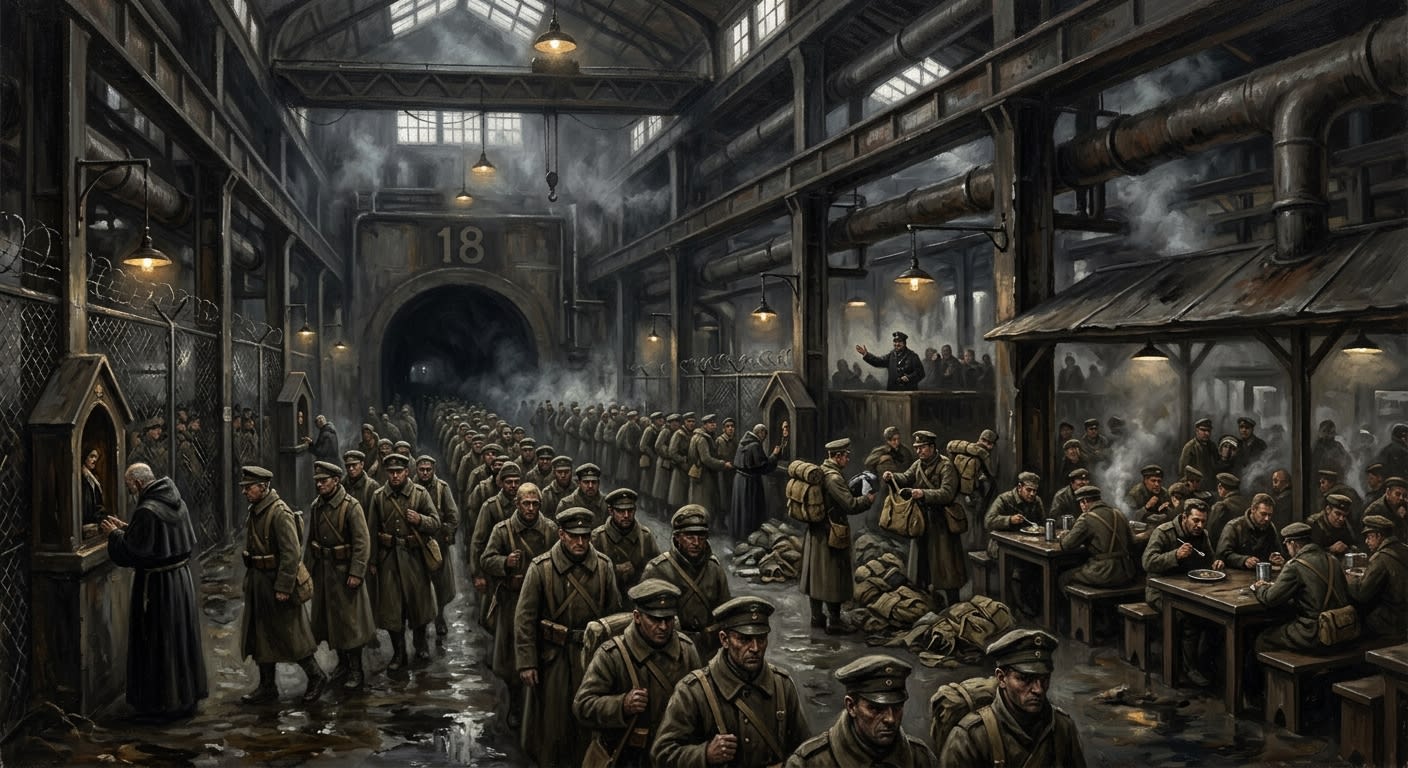
Durchgangskaserne
Munich's barracks of passage, where men are counted before the Line counts them again
Munich's Durchgangskaserne processes forty thousand soldiers a month through intake queues, kit rooms, mess halls, doctrinal briefings, and the last unofficial blessing before Platform Eighteen.
Codex Ref. II.2.06-014
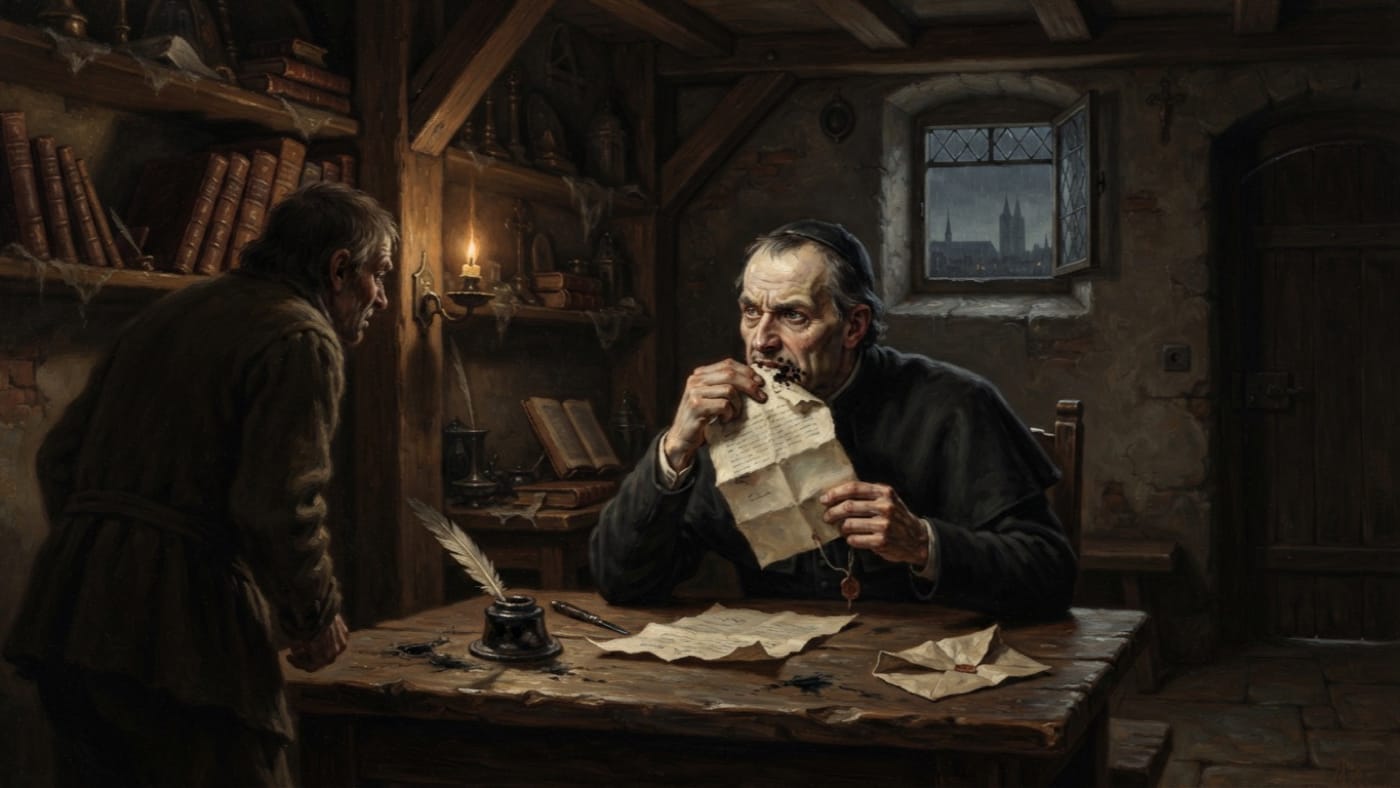
Düsseldorf
One priest. One letter. Nothing left to quote.
A Rhineland city remembered for Father Grauss, who ate the Amsterdam letter in A.S. −32 / 1678 CE. The magistrate supplied three days in gaol; the Bureau supplied a classification.
Codex Ref. II.2.01-941

Edict of Authentication
Anatomy objected; the seal overruled it
The Edict of Authentication ratified the Femur Principle at A.S. 147: sanctity obeys custody, seal, witness, and doctrine before anatomy.
Codex Ref. XIII.1.90-147
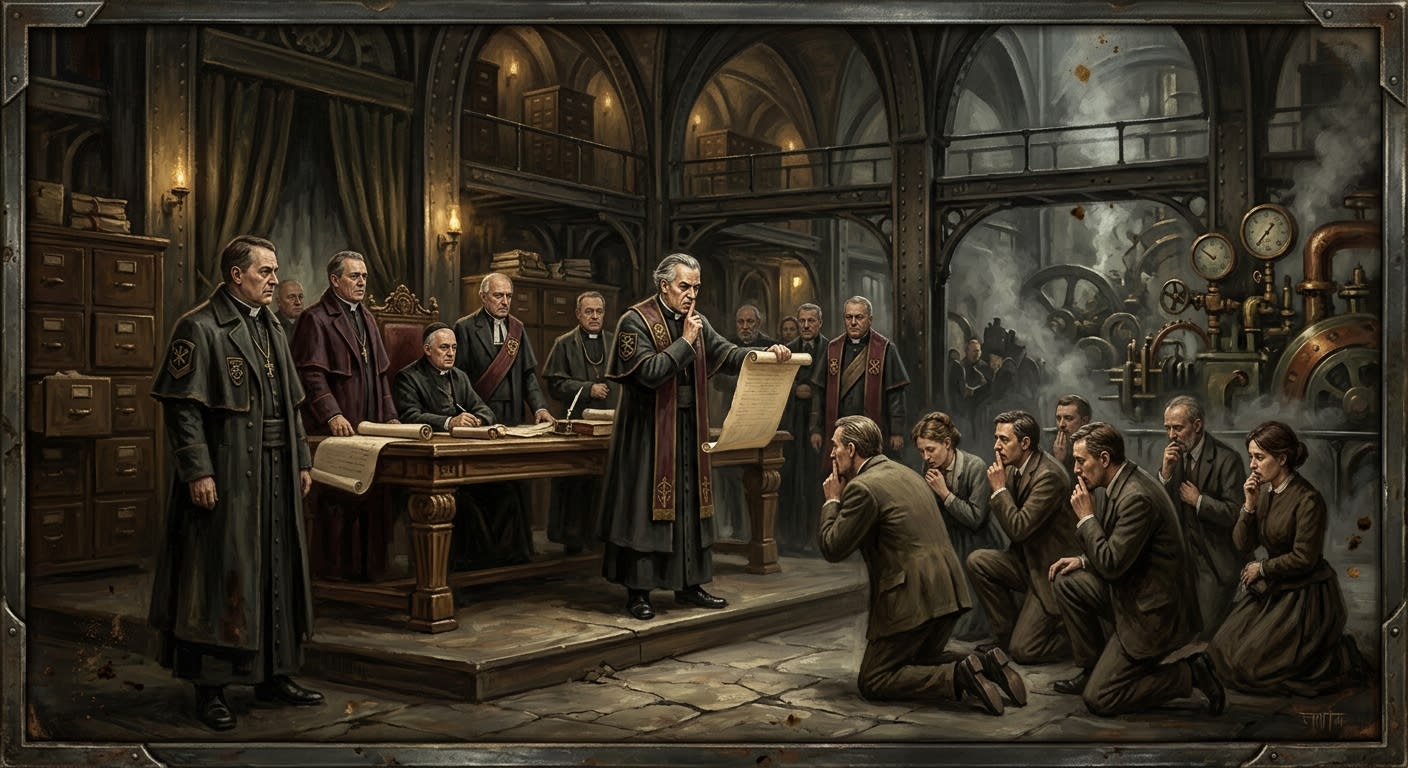
Edict of Cologne
Consent is expensive; retroactive obedience is cheaper
The Edict of Cologne bound dioceses to Strasbourg by discovering their obedience had already happened, then teaching silence to sign.
Codex Ref. XIII.1.90-100

Erasure Notary
The scaffold produces martyrs; the Office of Nullity produces only silence — and nine hundred Black-Stamps to stamp it.
Nine hundred Black-Stamps who unmake persons through ink and wax — no body, no grave, and no widow to scratch the martyr's name on cellar walls.
Codex Ref. XII.14.01-001

Europe
The wounded continent, held together by rails, bells, hunger, and denial
Europe is the wounded continent: Synod west, Charnel east, Line between, and every road, harbour, cradle, ration card, bell, and grave bent toward survival.
Codex Ref. II.0.01-201
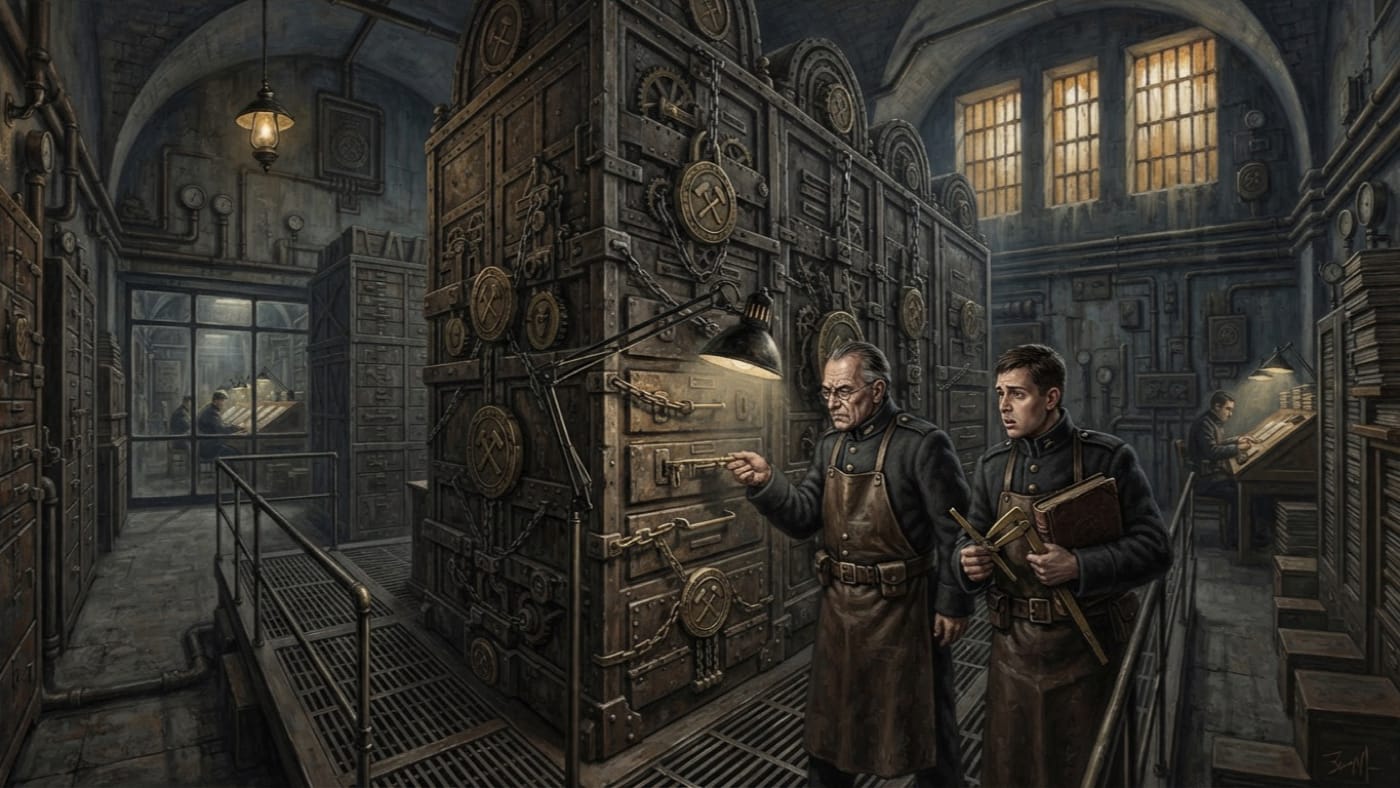
Face Archive
The locked reference by which a face is permitted to circulate
Sable Court keeps every lawful face under triple lock. The Face Archive binds coin to name and memory; since its plates began to change, the Chapter has answered doubt with tighter locks.
Codex Ref. II.2.07-002
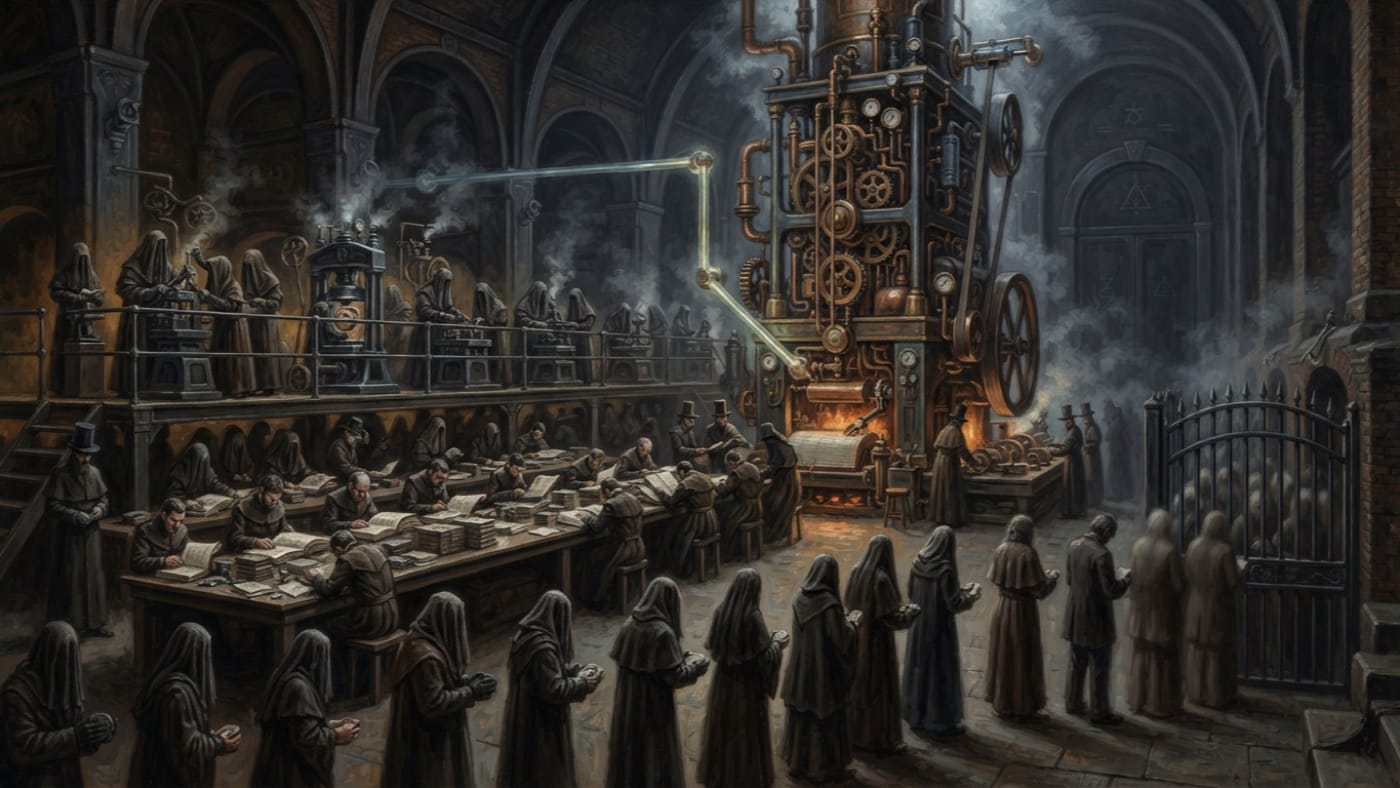
Face Registry Compact
The law that made recognition portable, taxable and revocable
Ratified in A.S. 94, the Face Registry Compact binds coin, face, name and the Ledger's soul account. Recognition may travel, be taxed, or be recalled; in Sable Court, even memory pays its dues.
Codex Ref. XIII.1.91-002
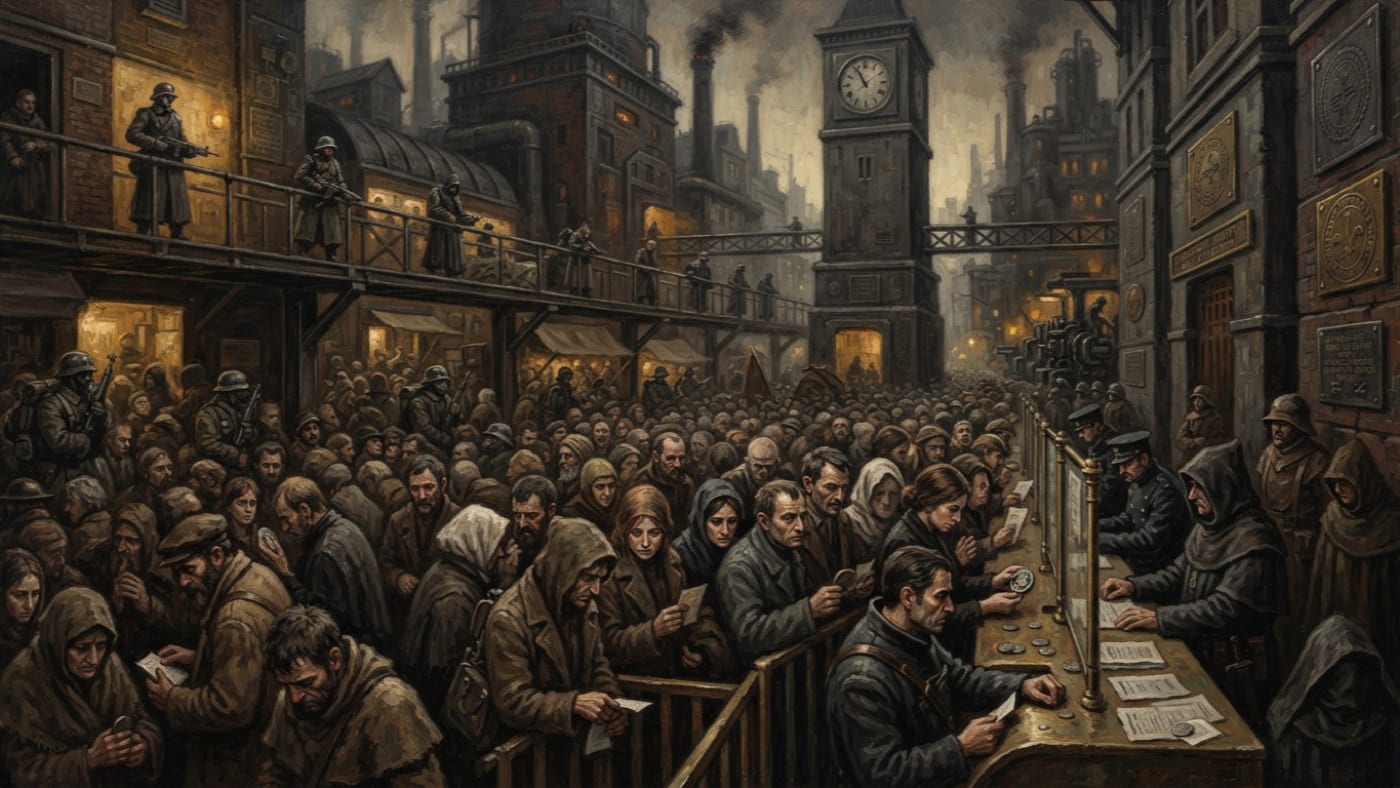
Face Theft Crisis of A.S. 199–201
When the coin forgets, the citizen pays
Since A.S. 199, Cologne's coins have changed faces, loosening memory and lawful identity. Seventeen denominations were recalled; the investigation remains open in A.S. 201, while hunger waits for an assay slip.
Codex Ref. VII.8.10-199
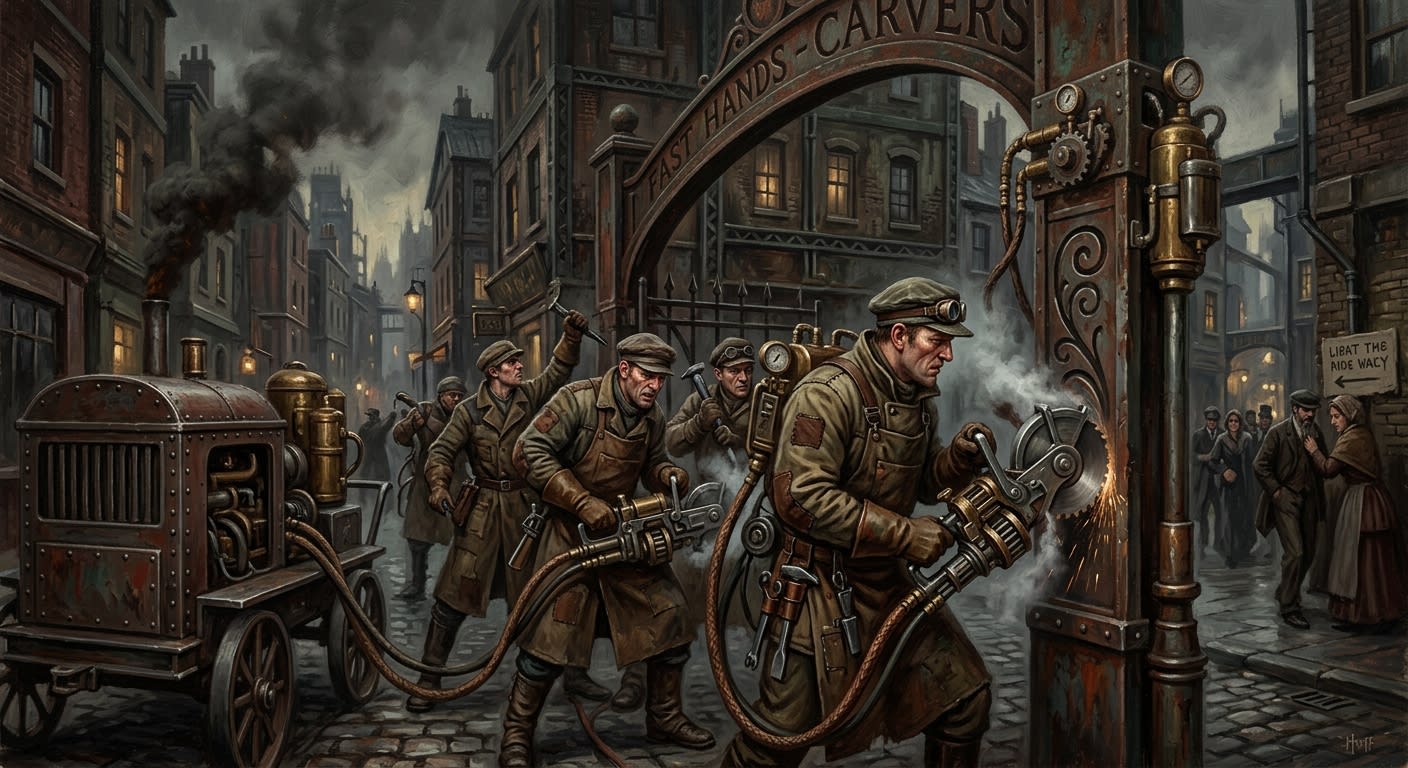
Fast Hands, Gate-Carvers
The marked door before dusk is the state admitting it was late
Fast Hands are the accelerated-compliance faction within the Gate-Carver trade, cutting thresholds quickly enough to legalise streets before hunger, riot, or Purity arrives.
Codex Ref. XII.19.02-002
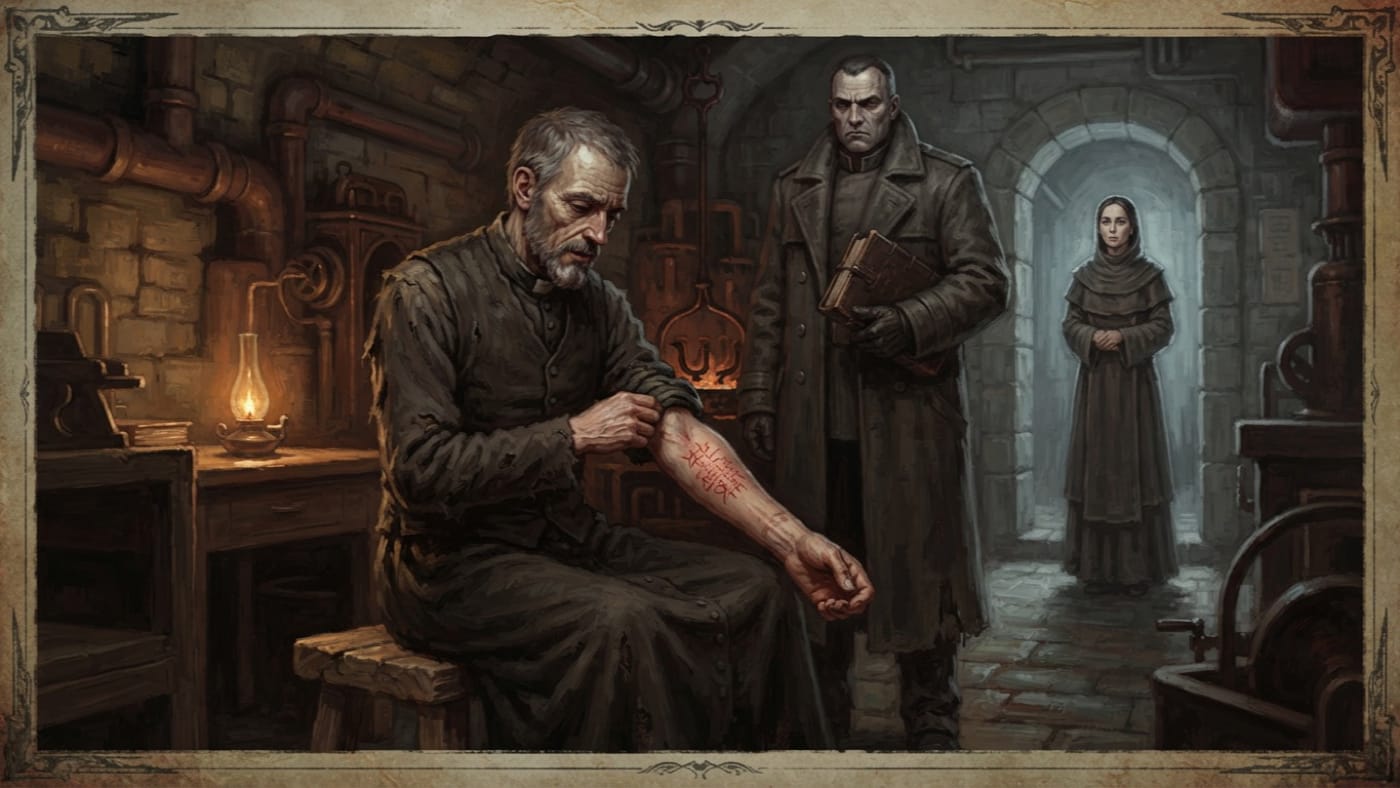
Father Arnolt Deiss
The man whose forearm entered the record before his life did
Condemned Cologne lecturer whose forearm supplied Saint Orla's first approved miracle. The inscription held; his charge and fate remain absent from the consulted account.
Codex Ref. III.2.01-1021
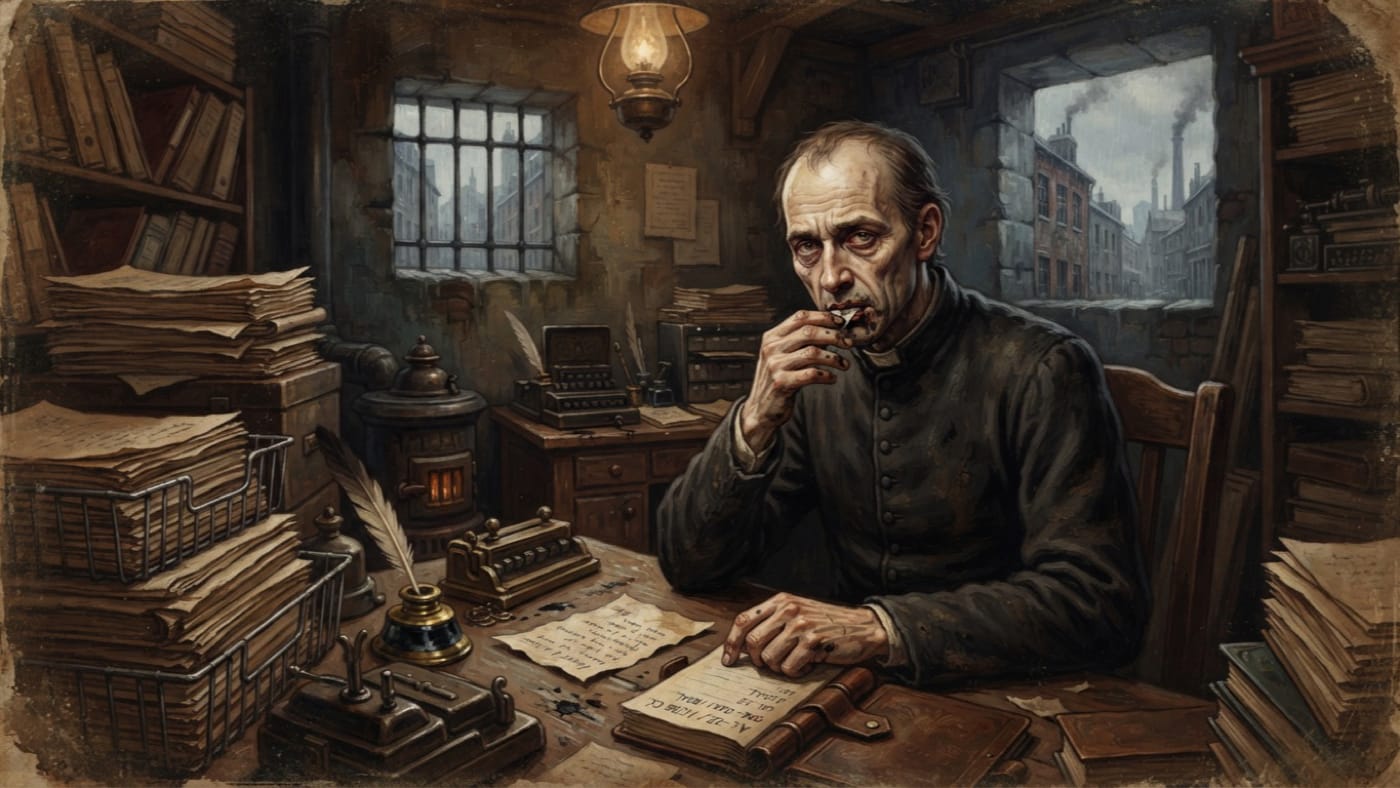
Father Grauss
One letter eaten. Three days served. Five words preserved.
Father Grauss ate the Amsterdam letter in A.S. −32 / 1678 CE. Düsseldorf supplied a beating and three days in gaol; the Bureau supplied its verdict: Doctrinally Sound, Gastronomically Irregular.
Codex Ref. III.2.01-1023
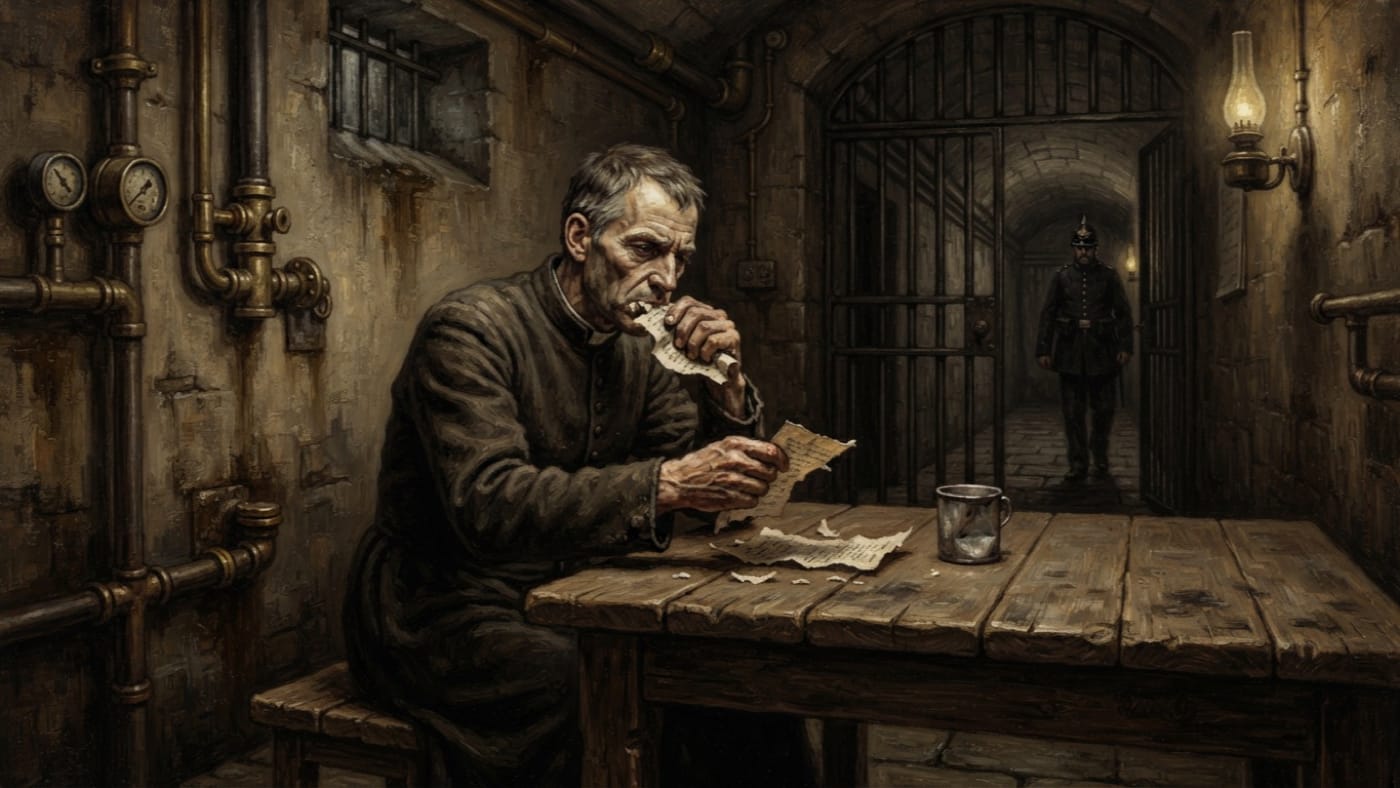
Father Grauss of Düsseldorf
One letter eaten. Three days served. Five words preserved.
Father Grauss ate the Amsterdam letter in A.S. −32 / 1678 CE, received a beating and three days in gaol, and did not recant. The Ledger calls him Doctrinally Sound, Gastronomically Irregular.
Codex Ref. III.2.01-1024

Father Ignatius of Cologne
The clerk whose breadbasket outranked an empire
Ignatius Brenner, parish clerk of Cologne, carried three apostolic phalanges beneath black rye in A.S. 31. The fire at Kalnik arrived seventeen years later.
Codex Ref. III.2.01-043

Father Wernher of Cologne
The cellar priest whose lists kept sixty souls from becoming a sermon illustration
Defrocked Cologne canon and Cellar Saint leader whose forty-seven-page journal preserves the underground Church between Regensburg and the Sundering.
Codex Ref. III.2.01-045
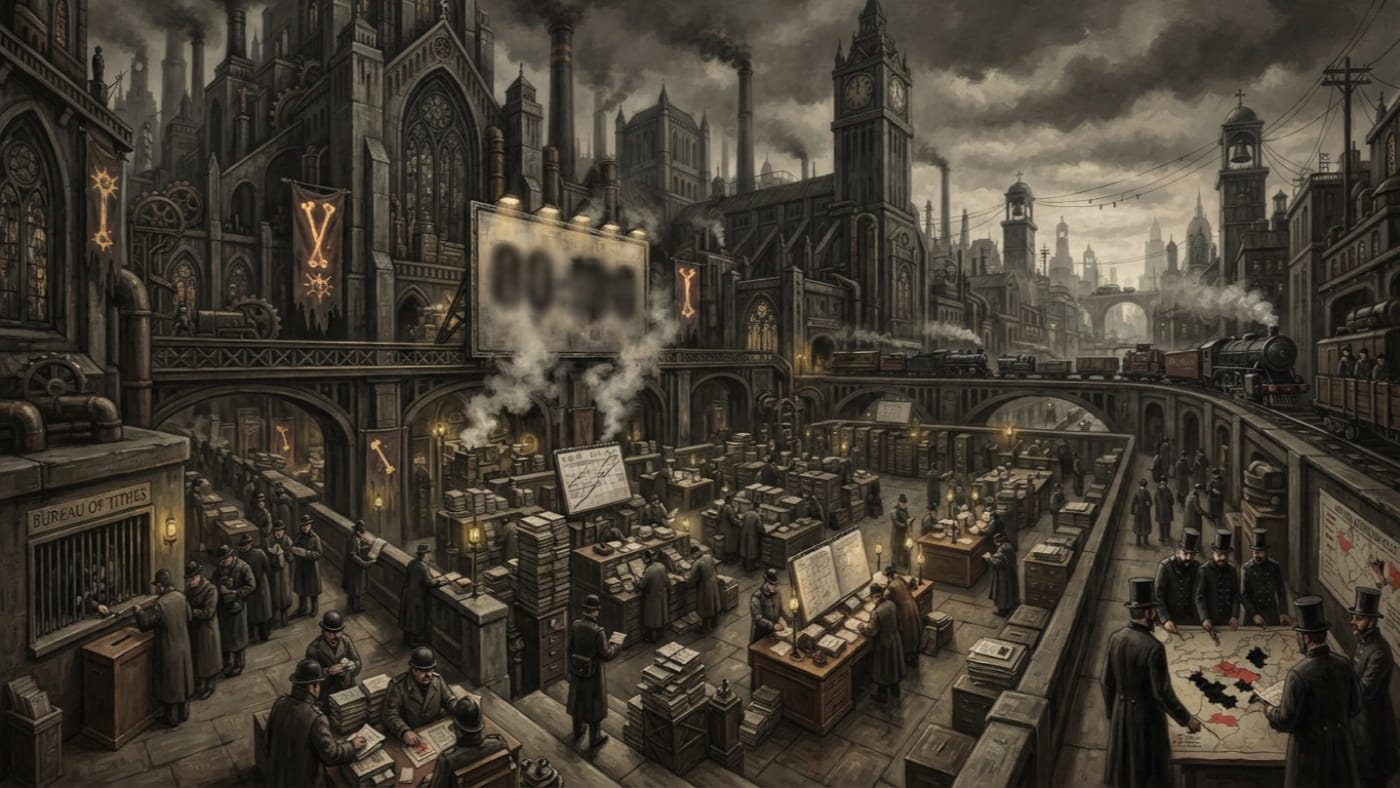
Feast of Saint Aldebrand
Remembered by the register, mislaid by the diocese
A.S. 201 survey of Aldebrand's feast: sanctioned by Festivals, observed or omitted by dioceses, disputed by Records and taxed by Tithes. The register remembers; the day remains unknown.
Codex Ref. XIII.1.89-201

Fellowship of the Correct Stroke
A crooked letter, a second fee
The Fellowship of the Correct Stroke taught Doctrine to suspect a hooked letter. Its A.S. 112 petitions helped reopen 411 manifest cases; the zealots acquired offices, and merchants acquired a second bill.
Codex Ref. XII.8.10-001
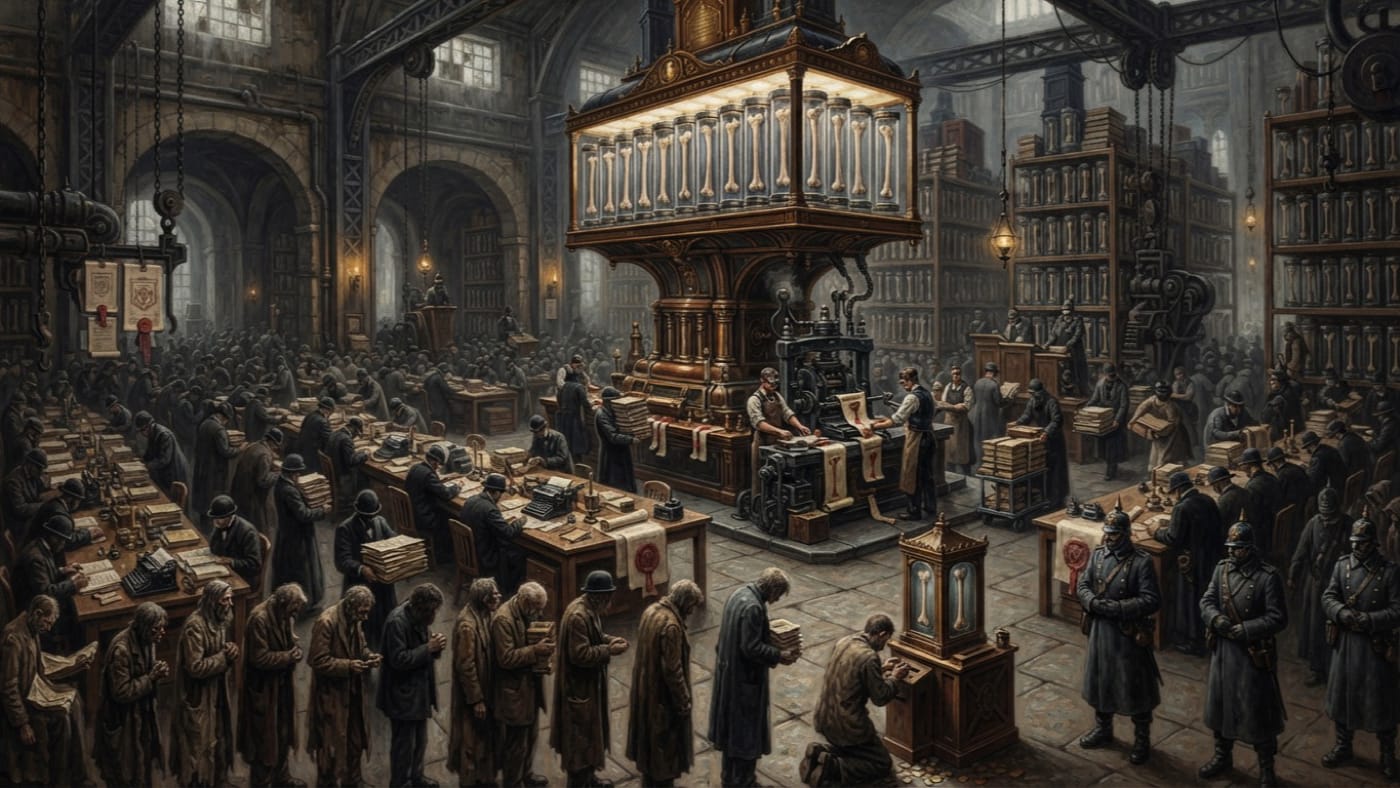
Femur Principle
The saint's skeleton has no standing
The A.S. 147 rule that made all notarized femurs authentic, preserved rival shrines, and gave anatomy the legal standing of an impertinent witness.
Codex Ref. XIII.1.90-147
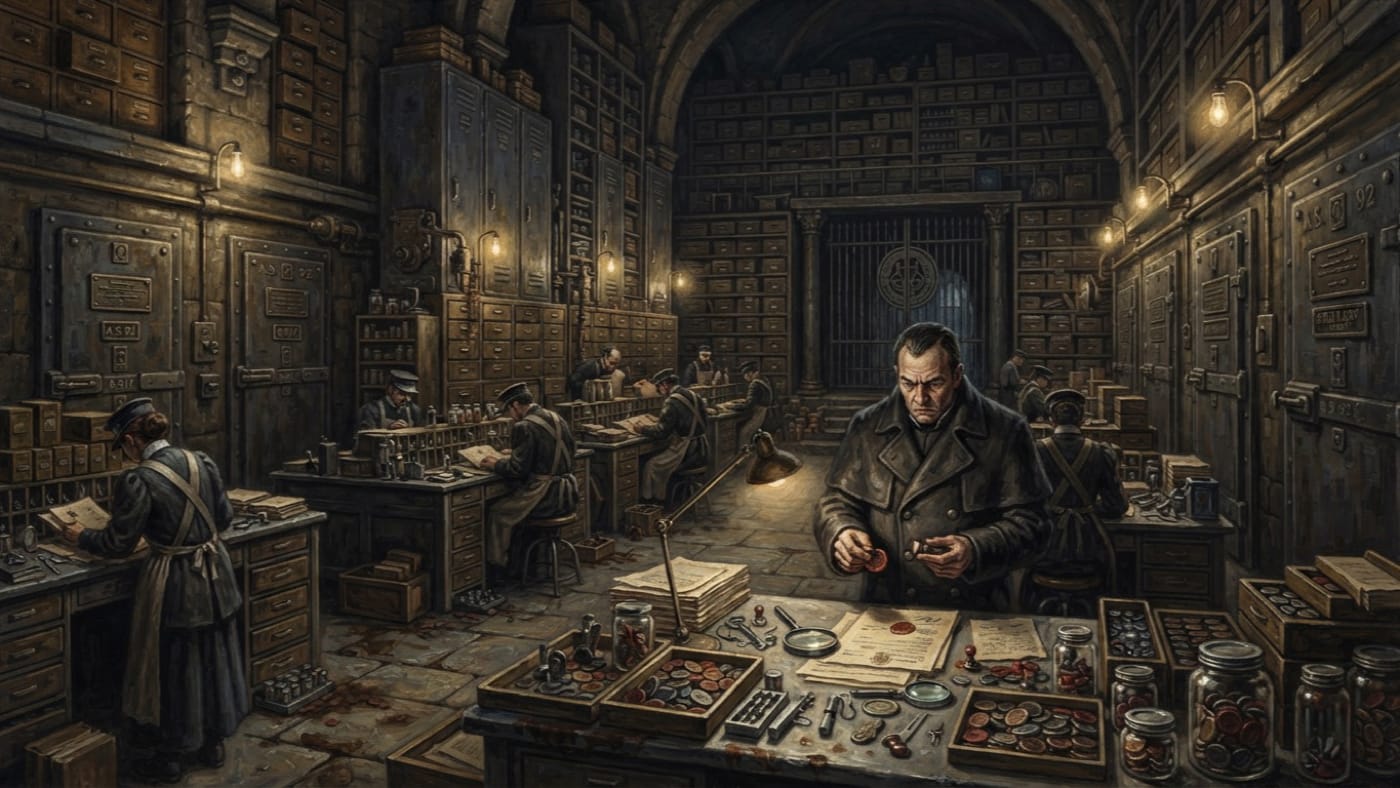
Forgery Archive
Every false impression needs a genuine stamp.
The Forgery Archive keeps 8,917 confiscated counterfeits beneath Strasbourg Cathedral, each certified as false. The Bureau of Masks and Seals publishes the count; the collection remains sealed.
Codex Ref. II.2.06-007

Forgery Panic of A.S. 178
The decree that was never written and cited fourteen times
A.S. 178 archival panic in which fourteen advocates cited the same fabricated ration-priority decree, forcing scribe licensing reform and chain-of-custody discipline.
Codex Ref. VII.8.10-049
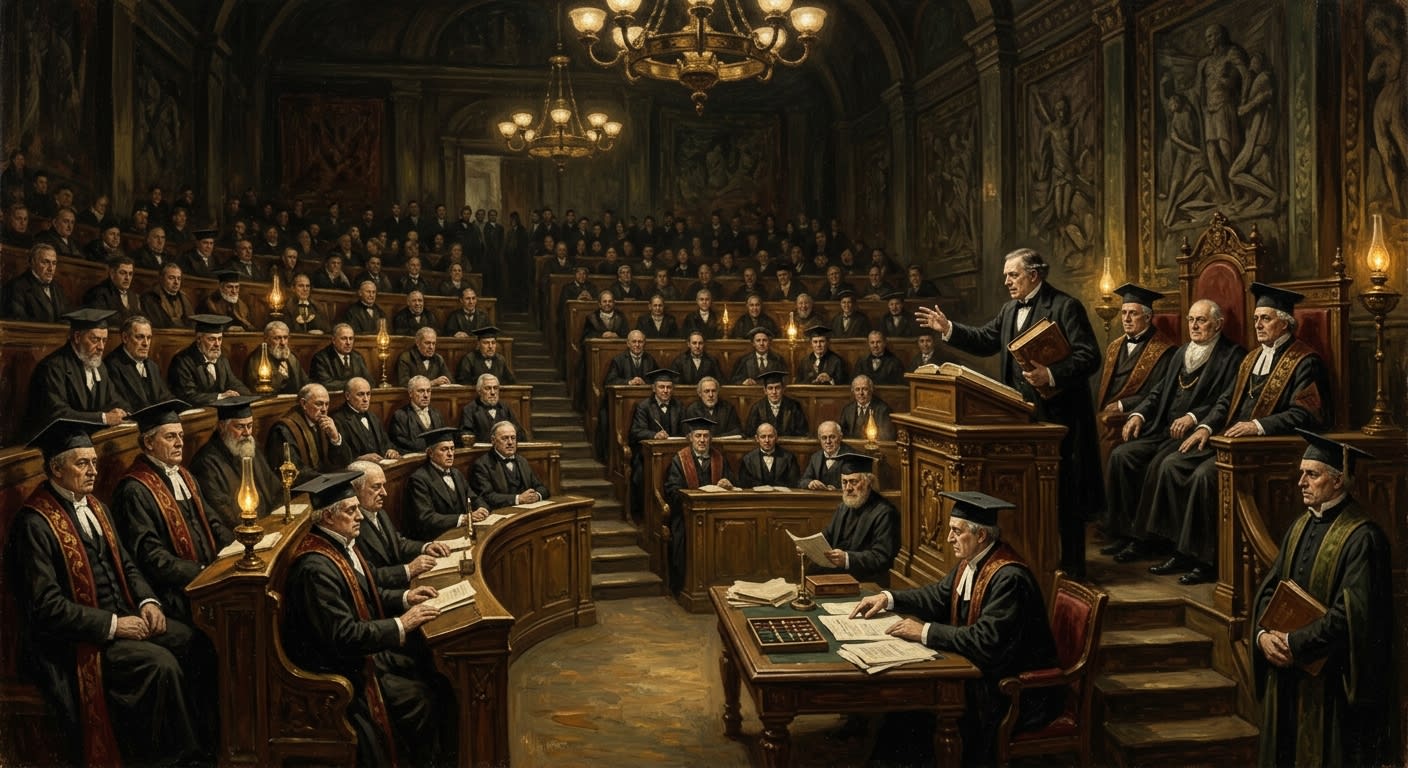
Fourteenth Doctrinal Congress
Matter protested; the seal prevailed
The A.S. 147 Congress that made authenticated contradiction obedient, ratifying the Femur Principle and Kargath's consumption taxonomy in the same week.
Codex Ref. XIII.1.90-147
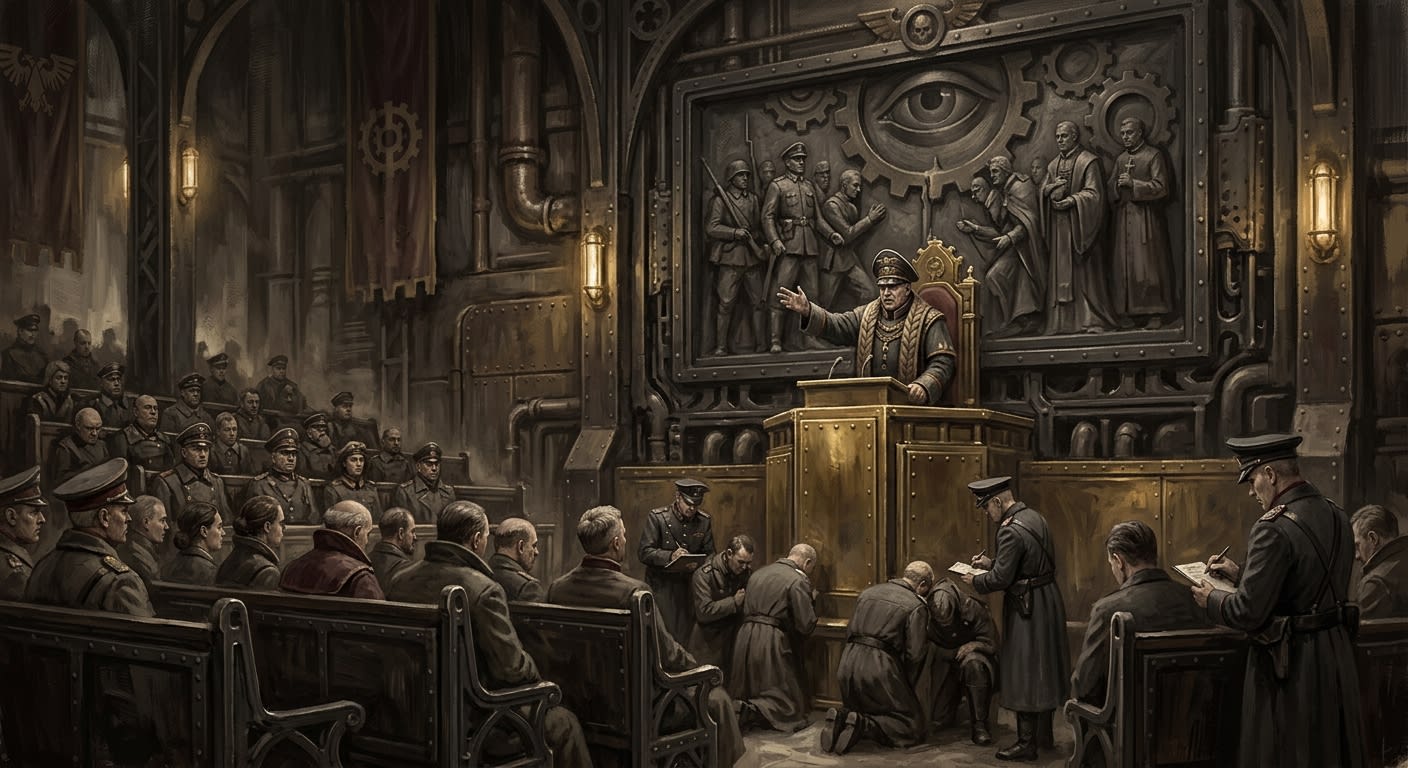
Fourth Doctrinal Congress
Where silence was made to testify against the listener
The Fourth Doctrinal Congress did not end doubt. It converted silence into mortal fault, canonised useful dead, and taught Strasbourg to occupy the Creator's quiet.
Codex Ref. XIII.1.90-104

Free Choirs
A voice may hold the measure; a wound may not grant the shot
A.S. 201 (1911 CE) survey of plural unsanctioned cadence cults among Shrine-Deck rivals. The Cologne cell claimed a bleeding throat outranked the firing seal; Purity suppressed it. Seven whistles do not establish a federation.
Codex Ref. XI.1.08-001

Geometry Brand-Smith
Six Thousand Four Hundred Licensed Geometers of Guilt, and the Irons That Did Not Come Back
The Bureau of Heraldry’s serialized geometers of guilt — 6,400 licensed Brand-Smiths who make identity permanent in the only ledger that cannot be forged, lost, or filed incorrectly: the body itself.
Codex Ref. XII.20.01-001
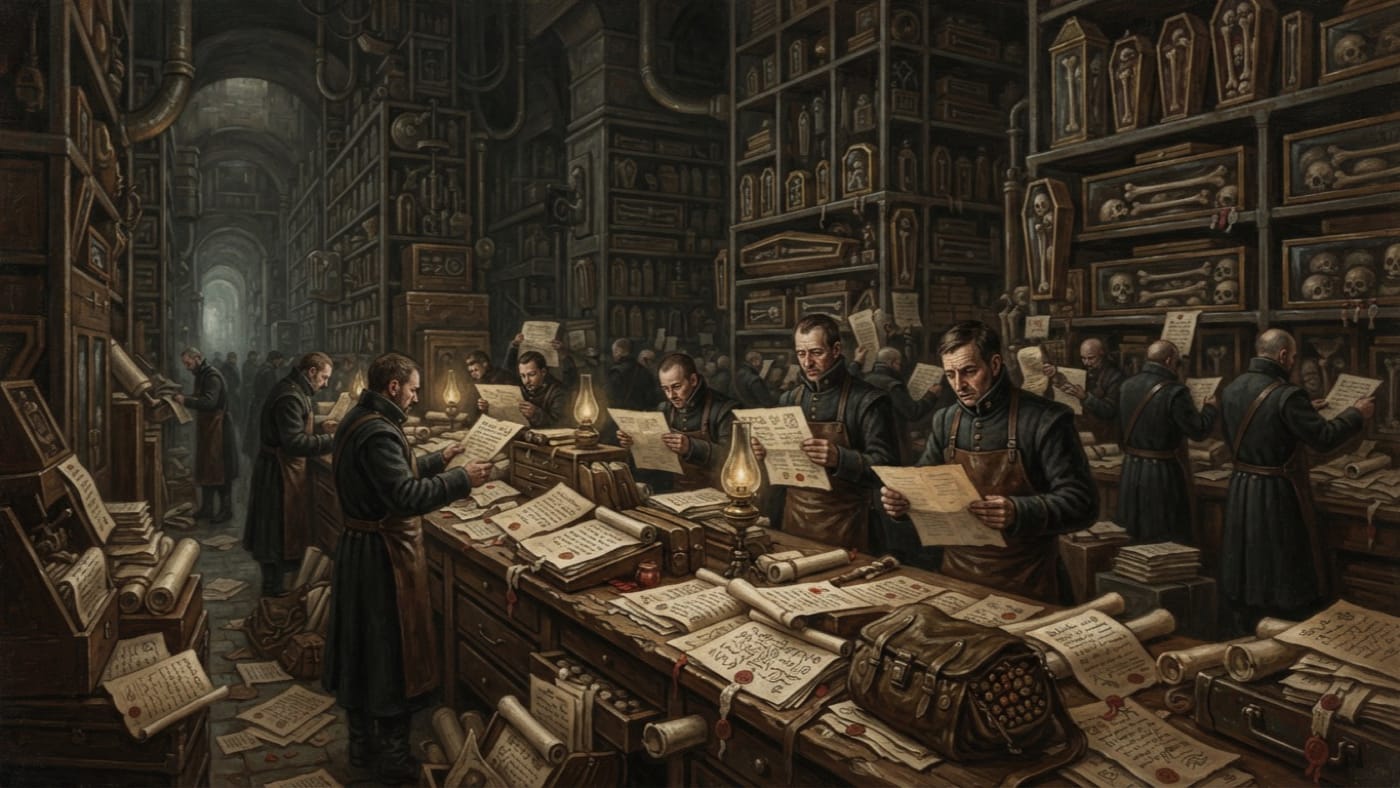
German states
Many jurisdictions. Separate seals. One inconvenient table.
The German states in 1678: many jurisdictions, separate seals, and no common answer to Amsterdam's bone census. The relics agreed locally. The ledgers did not.
Codex Ref. II.1.10-001
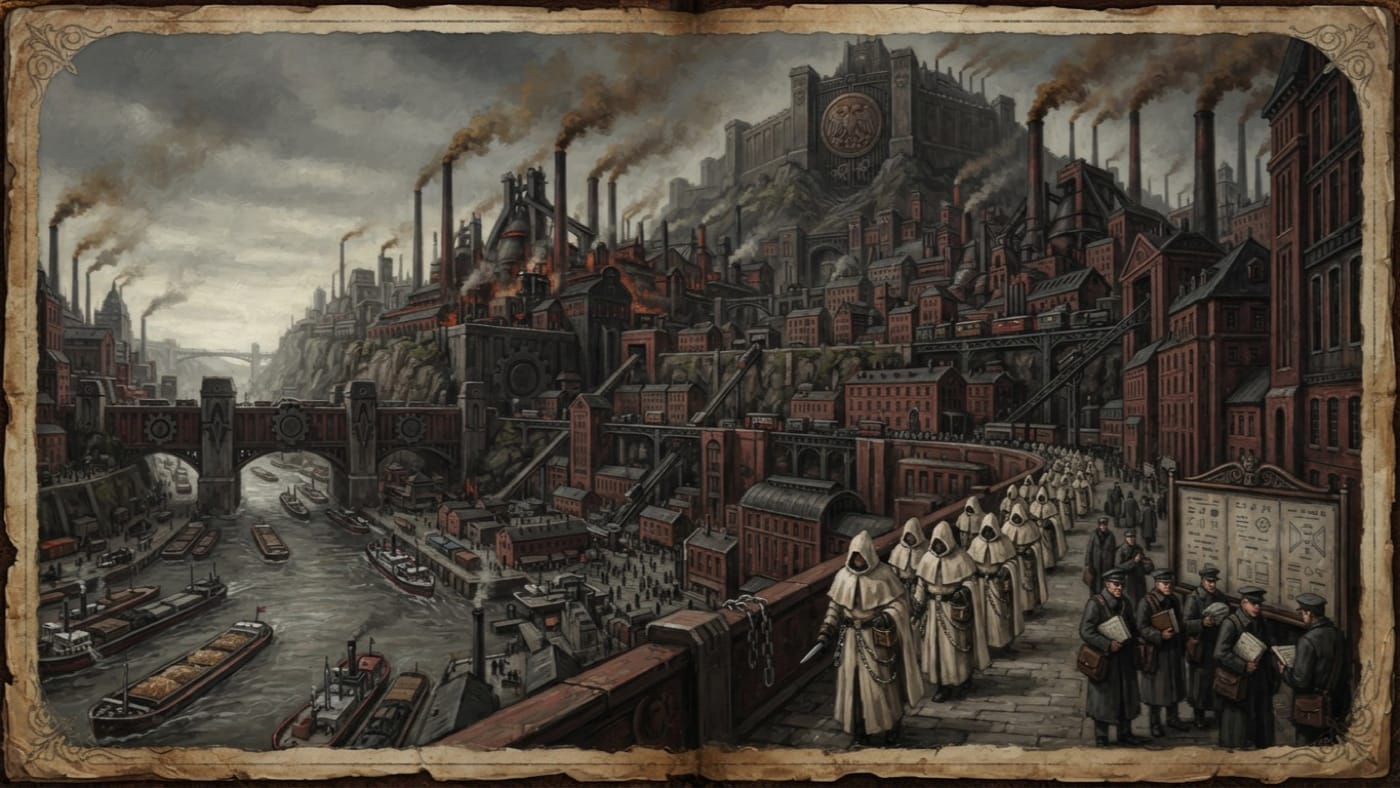
Germania
The Synod's most accurately spelled region
Germania is the Synod's procuratorial heartland: rivers taxed, furnaces singing, presses corrected, and schools teaching words their grandparents have forgotten to miss.
Codex Ref. II.6.02-201
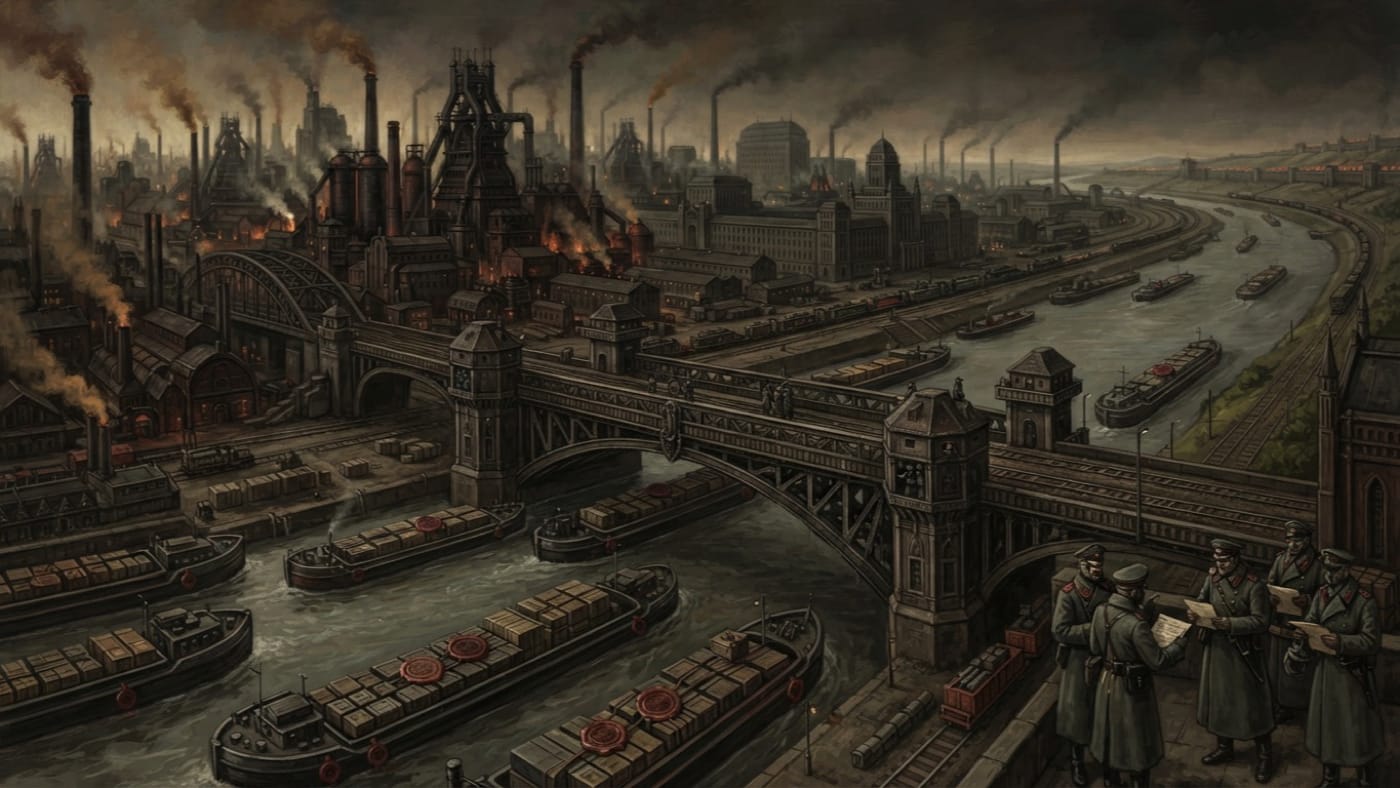
Germany
The heartland that supplies the frontier and answers to several seals
Germany in A.S. 201: the Zone Two heartland of taxed rivers, singing furnaces and military depots. The old borders were erased; the territory still supplies the frontier, and every cargo requires a seal.
Codex Ref. II.6.01-201
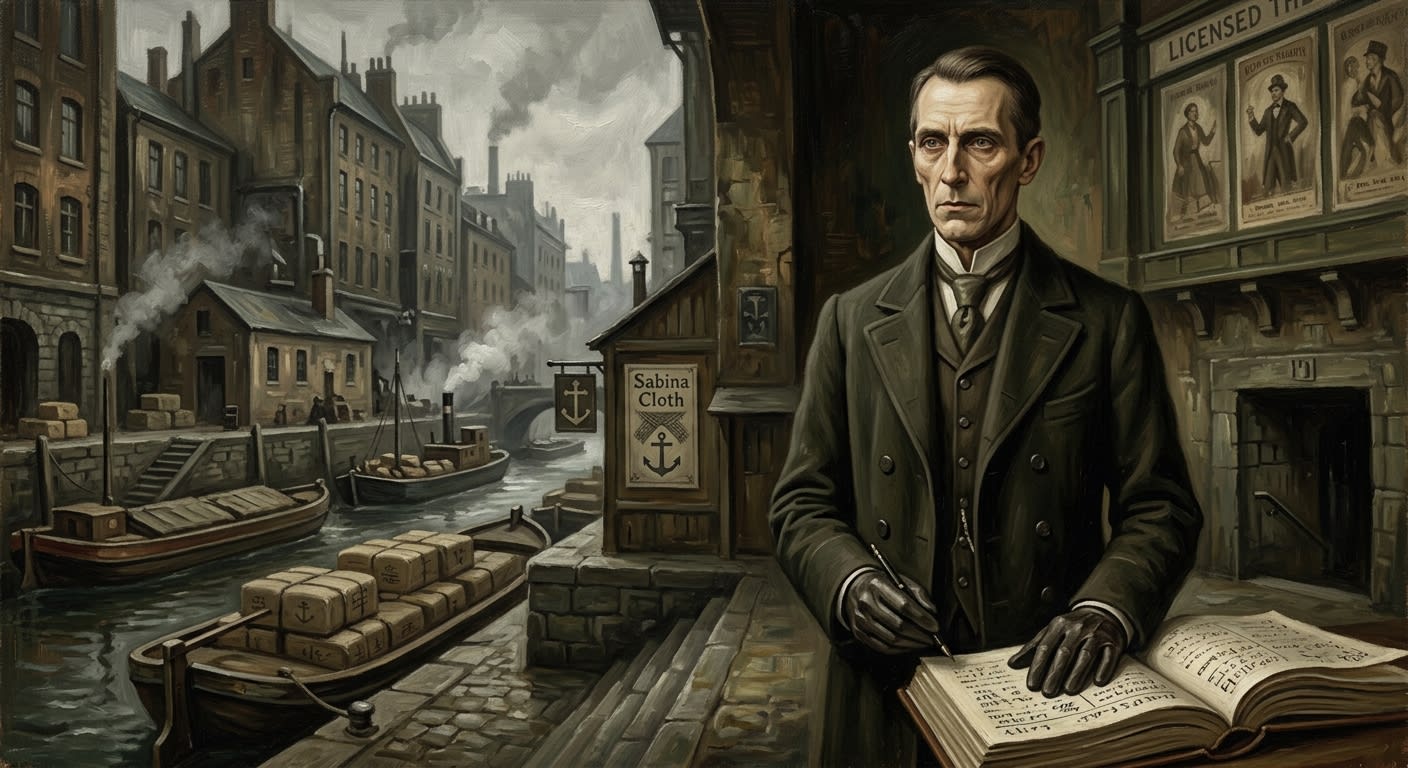
Ghent
The canal city where water keeps copies and loyalty learns to smuggle
Ghent is the Synod's wet ledger in Flanders: canal trade, Records quays, Sabina cloth, licensed theatres, Black Ledger cells, Wormhost scars, and obedience with annotations.
Codex Ref. II.1.05-201
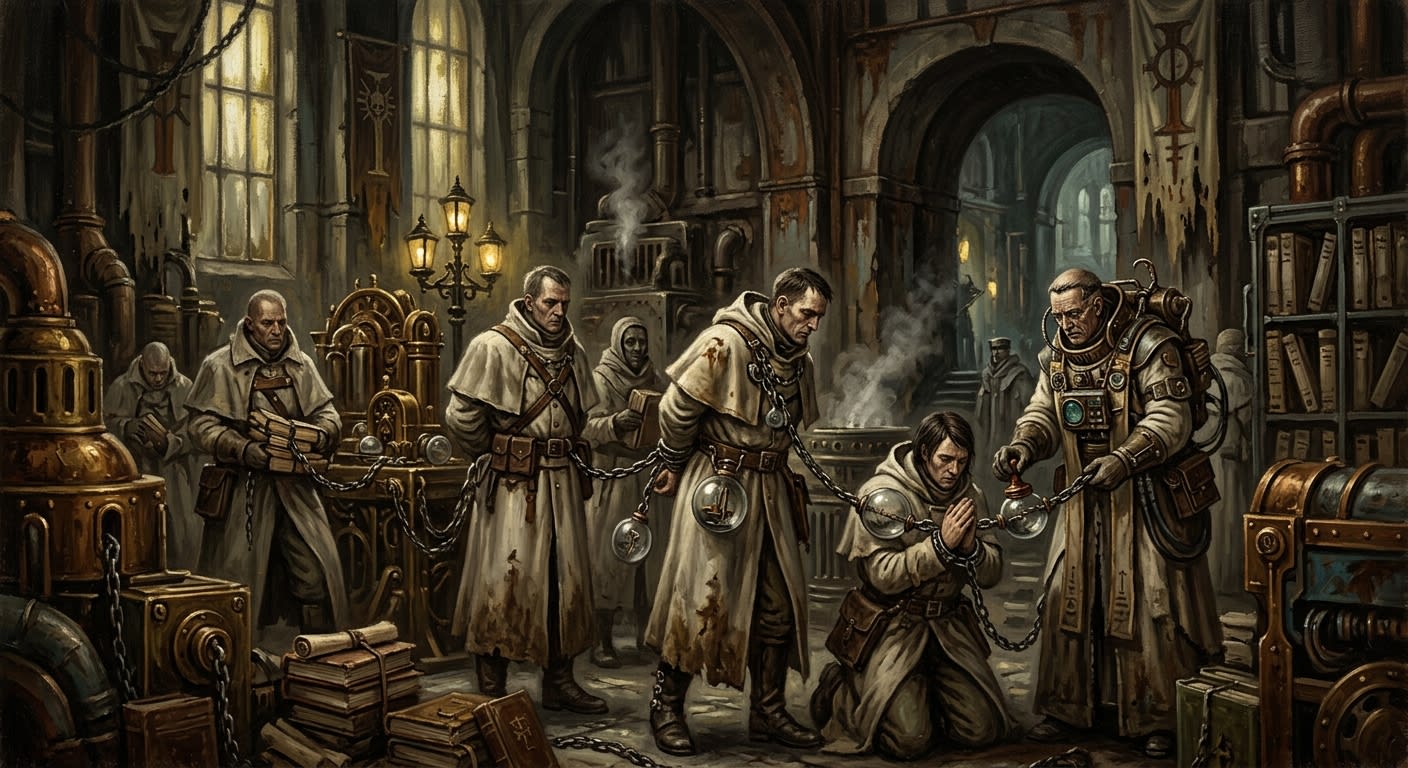
Glasschain Reform
Bind the binder, then listen when the glass objects
The Purity reform attributed to Chainmaster Veyl, binding White-Mantled Inquisitors to audible glass after seized words became contraband currency.
Codex Ref. XIII.1.87-201
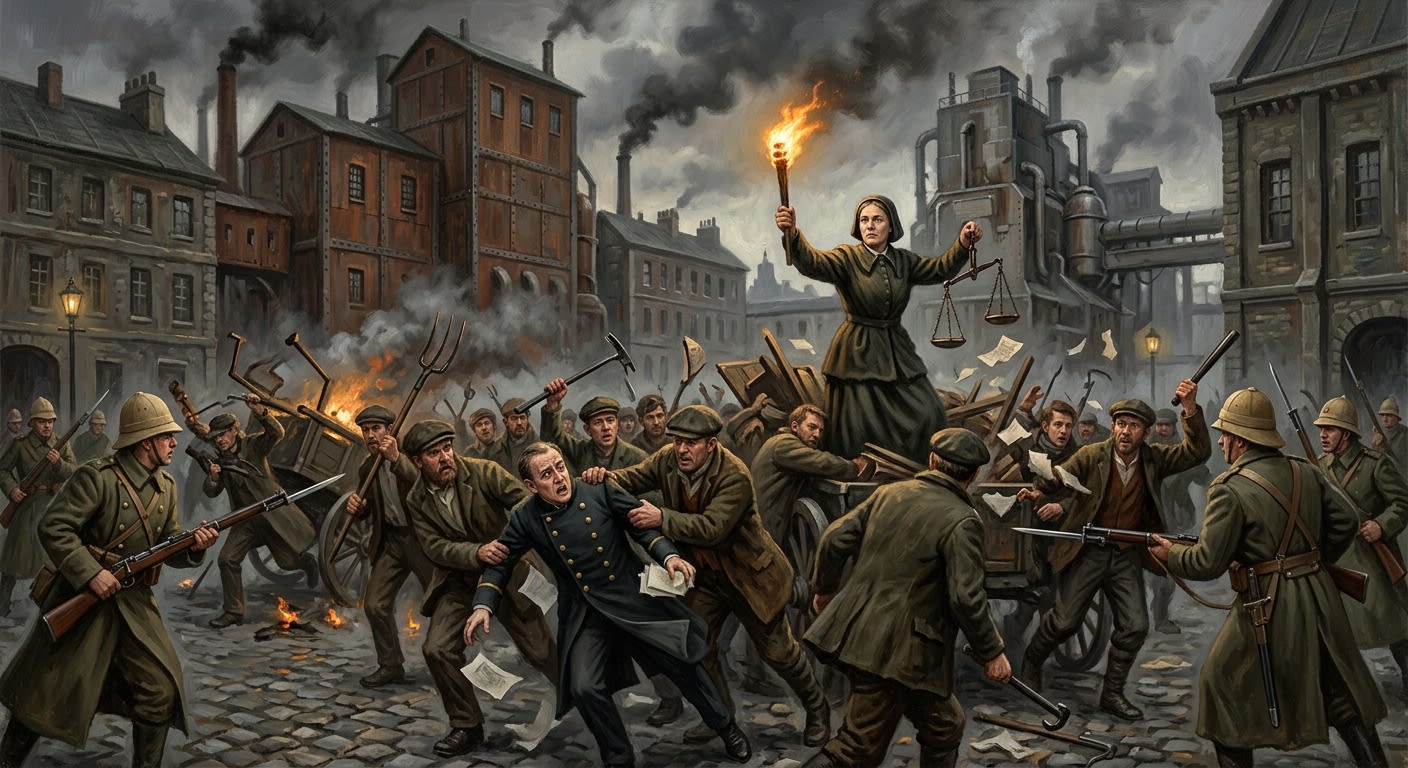
Grain Tithe Riots
Where hunger learned arithmetic and Hildegarde brought fire
The Grain Tithe Riots of A.S. 160 killed three Tithes Assessors, condemned forty Rhenish villages, and made Hildegarde of Mainz a saint with a scale in one hand and a torch in the other.
Codex Ref. VII.8.10-160
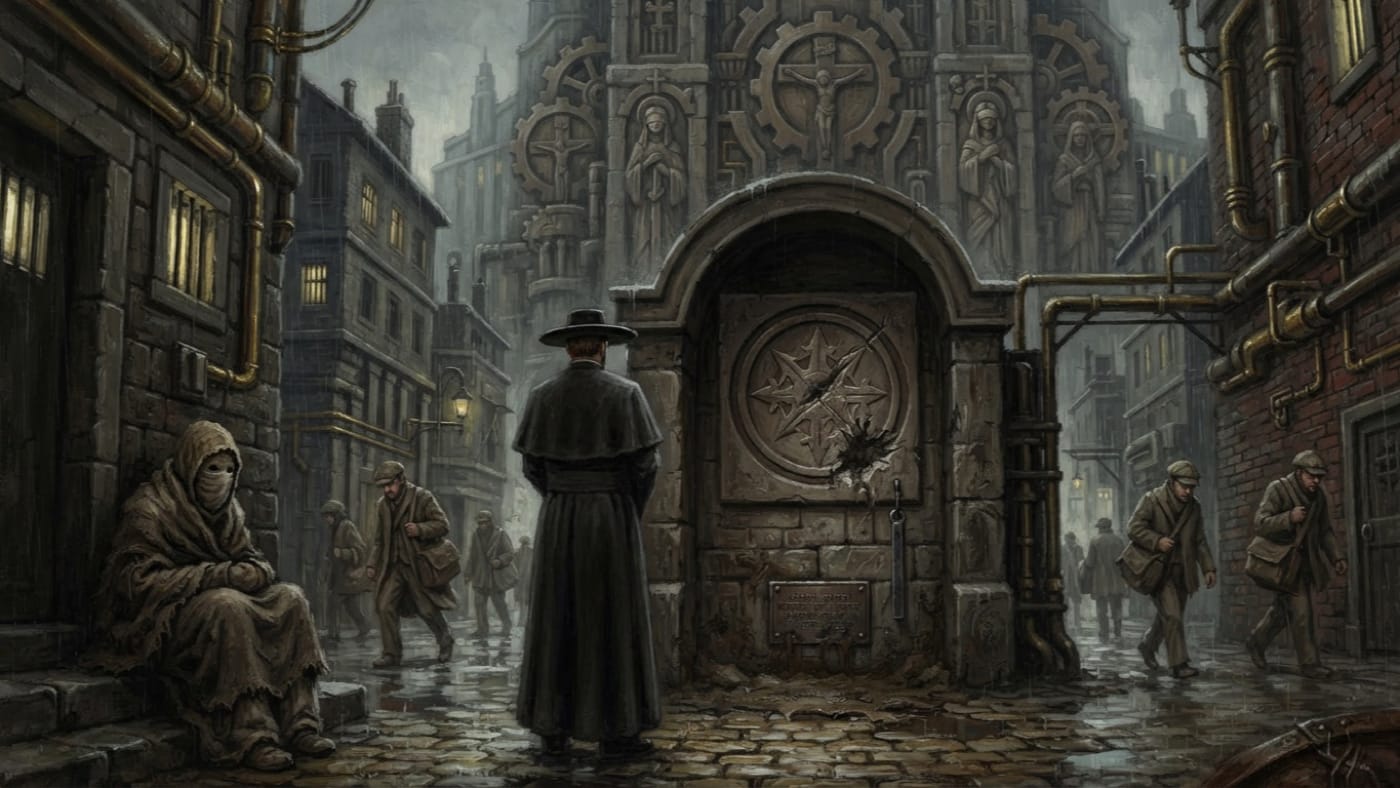
Guillaume bloodline
The names struck, the suspicion retained
The Guillaume bloodline persists without register standing, watched under private Seal Amber. The Church has struck its names and forbidden inquiry into its whereabouts.
Codex Ref. III.2.06-004
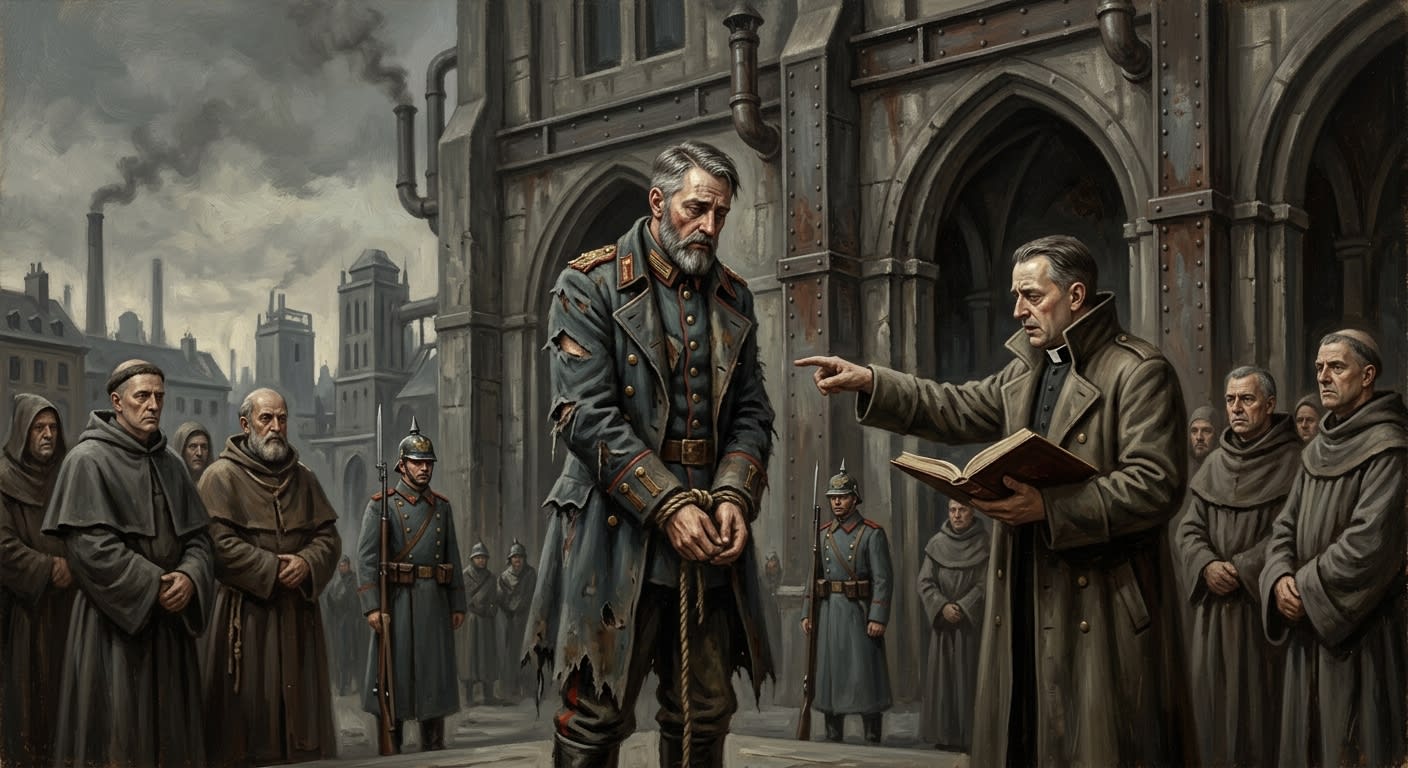
Guillaume of Aachen
The man who opened a gate and was closed by the Ledger
Lord-Protector Guillaume surrendered Aachen in A.S. 25, severed the Rhine approaches, and became the Synod's cleanest lesson in treason, nullity, and administrative damnation.
Codex Ref. III.2.01-123

Halle
The city that says the Creed, washes the chalk, and keeps the oven warm
Halle is a compliant rear city with salt in its gutters, fever in its records, Creed on its tongue, Ashen fragments in its ovens, and obedience with undocumented residue.
Codex Ref. II.2.09-201
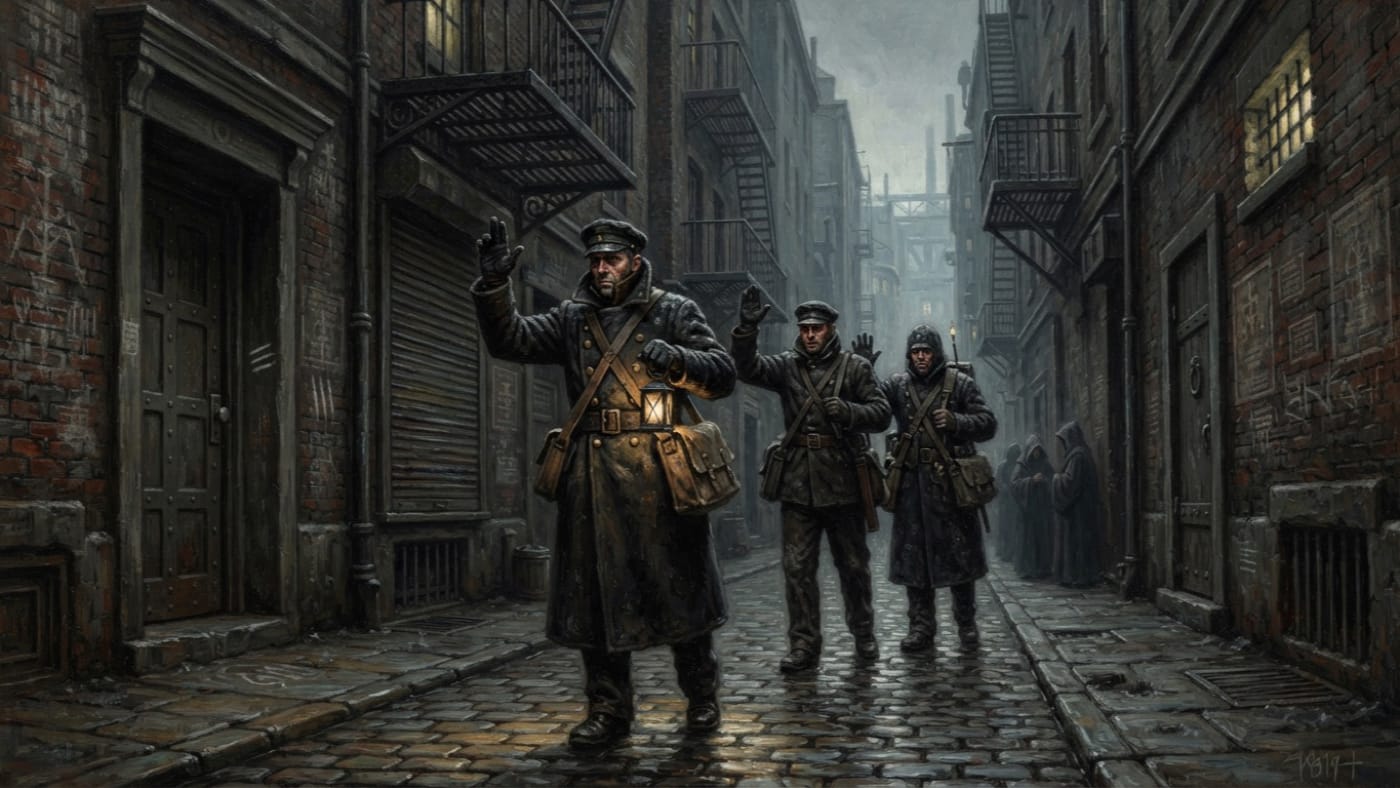
Hand-Code
The fist commands the man and leaves the register untouched
Hand-Code gives Mute Radiance four recorded manual commands for bell-dead patrols. The fist claims five minutes without citizenship; the parish register grants none. Adoption remains undated, and quiet congregations have no sign.
Codex Ref. XIII.1.76-007
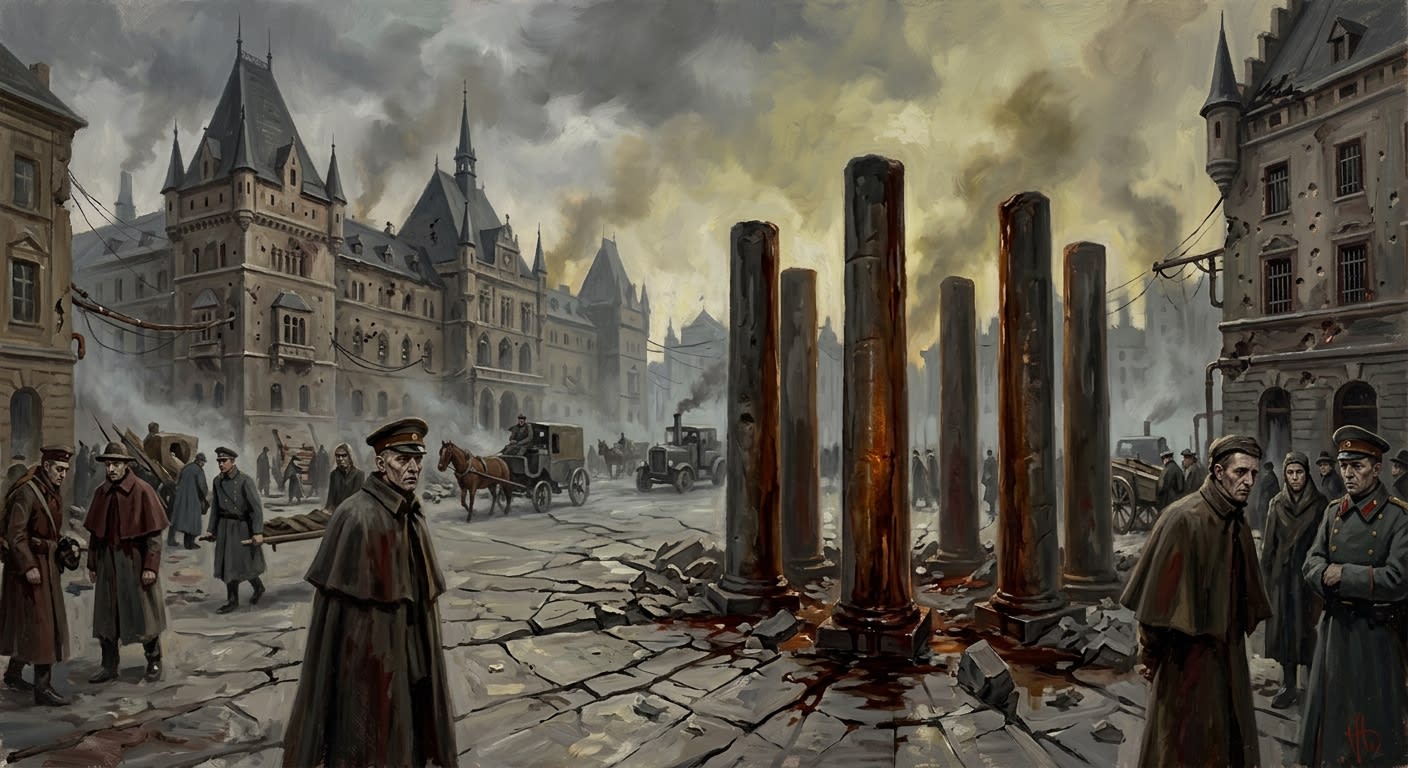
Heldenplatz
Where fire froze, stone warmed, and Vienna learned to kneel in public
Heldenplatz is Vienna's corrected civic theatre: the A.S. 30 cold-fire blasphemy answered by the A.S. 95 reliquary blow, radial fracture, and seven blood-warm basalt columns.
Codex Ref. II.4.09-095

Hierarch-Procurator Marius of Cologne
The signature that moved the state into the birth room
Marius of Cologne ratified the Natal Registration Act of A.S. 158, turning Veyrault's recorded-existence doctrine into midwife deadlines, Womb Registrars, and the price of a child's first breath.
Codex Ref. III.2.01-158
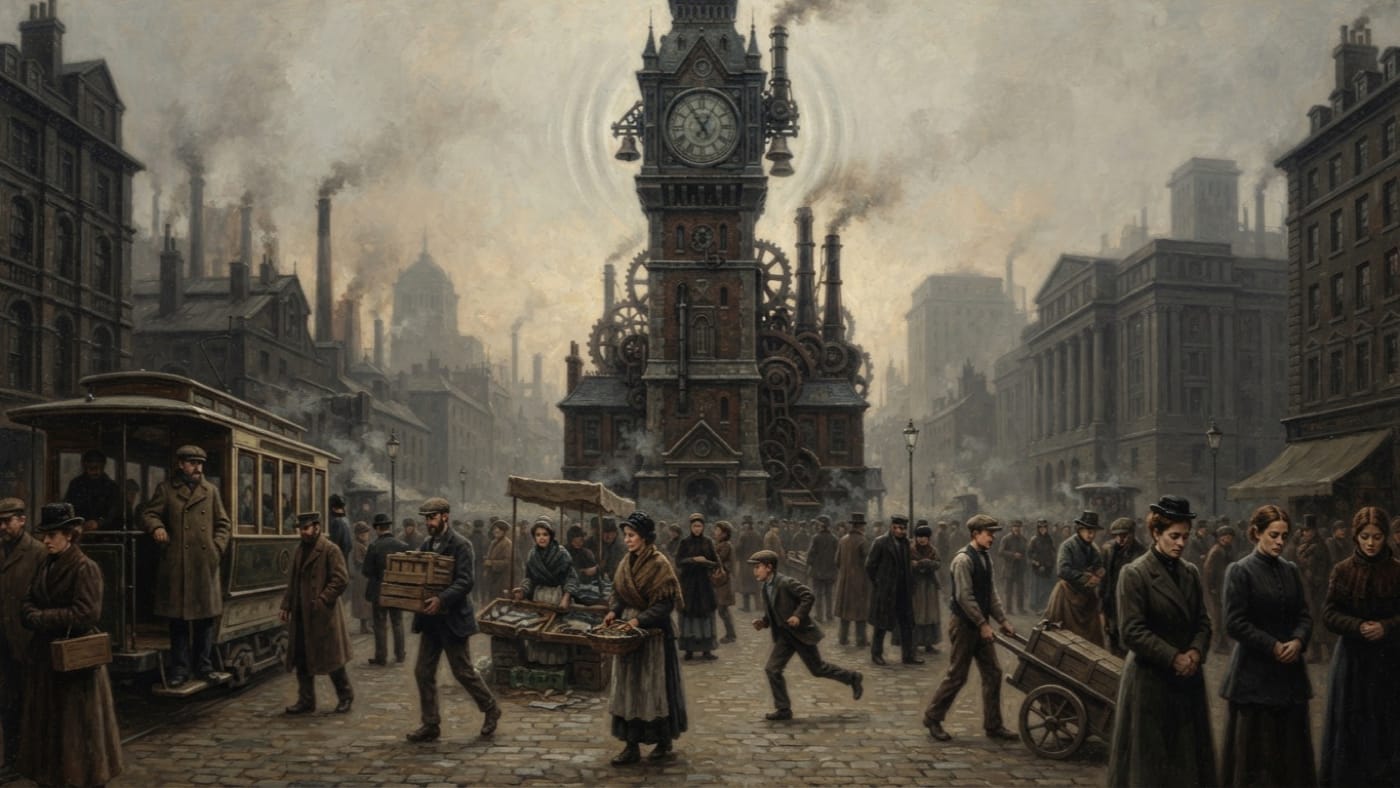
High Angelus
At noon, even the right to resume belongs to bronze
The High Angelus is the Bell Codex's noon peal: three ascending commands that stop the city, require recitation and return work by permission of bronze.
Codex Ref. XIII.1.62-003
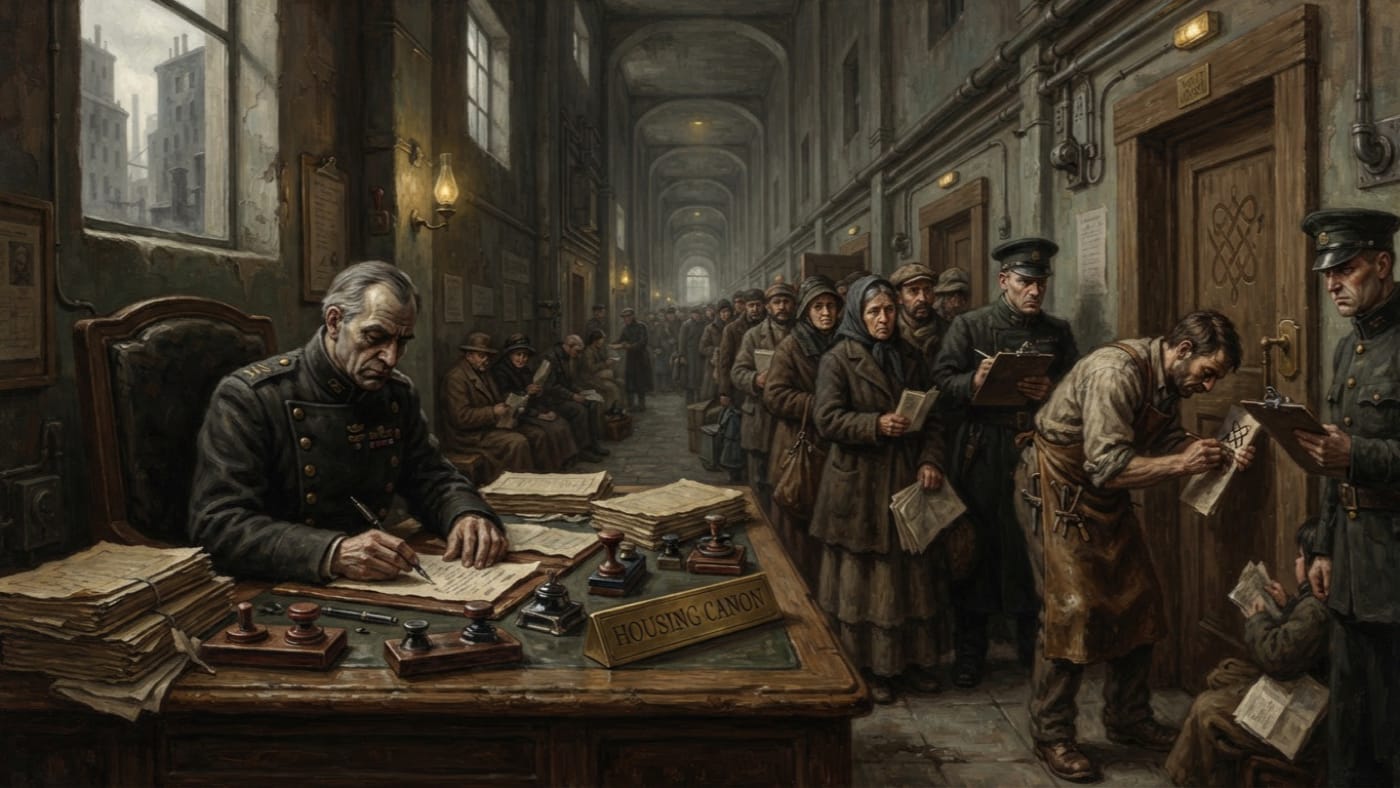
Housing Canon
Praise on the day, fines at month's end
The Bastion Housing Canon balances lawful households against marked thresholds, praising the carver who prevents today's riot and fining both haste and delay when the monthly tables arrive.
Codex Ref. XII.19.03-001
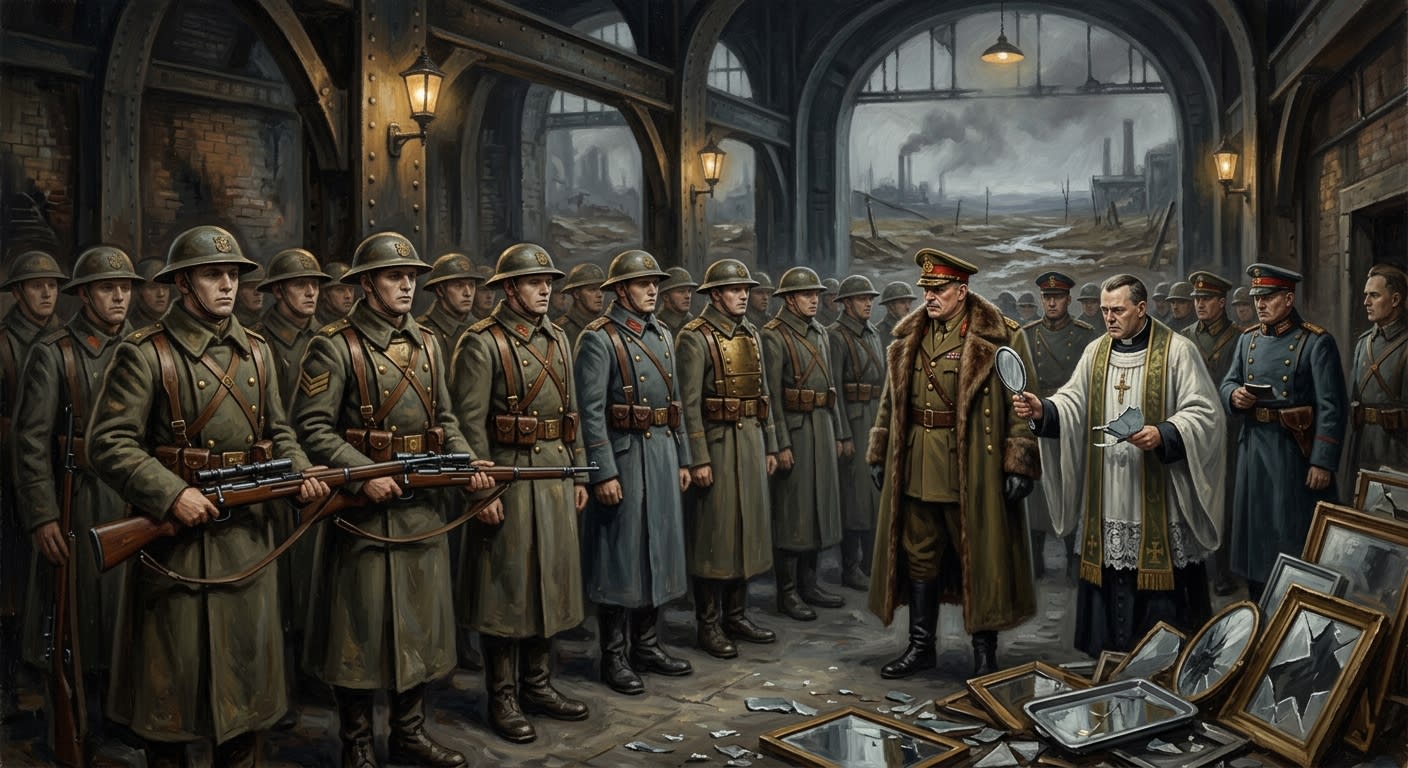
Incident at Sector Nineteen
Count to three, then stop being available
Sector Nineteen taught Irongate that a face is evidence only until Envy wears it better: thirty-one dead men returned to post, and mirrors became contraband.
Codex Ref. VII.8.10-193
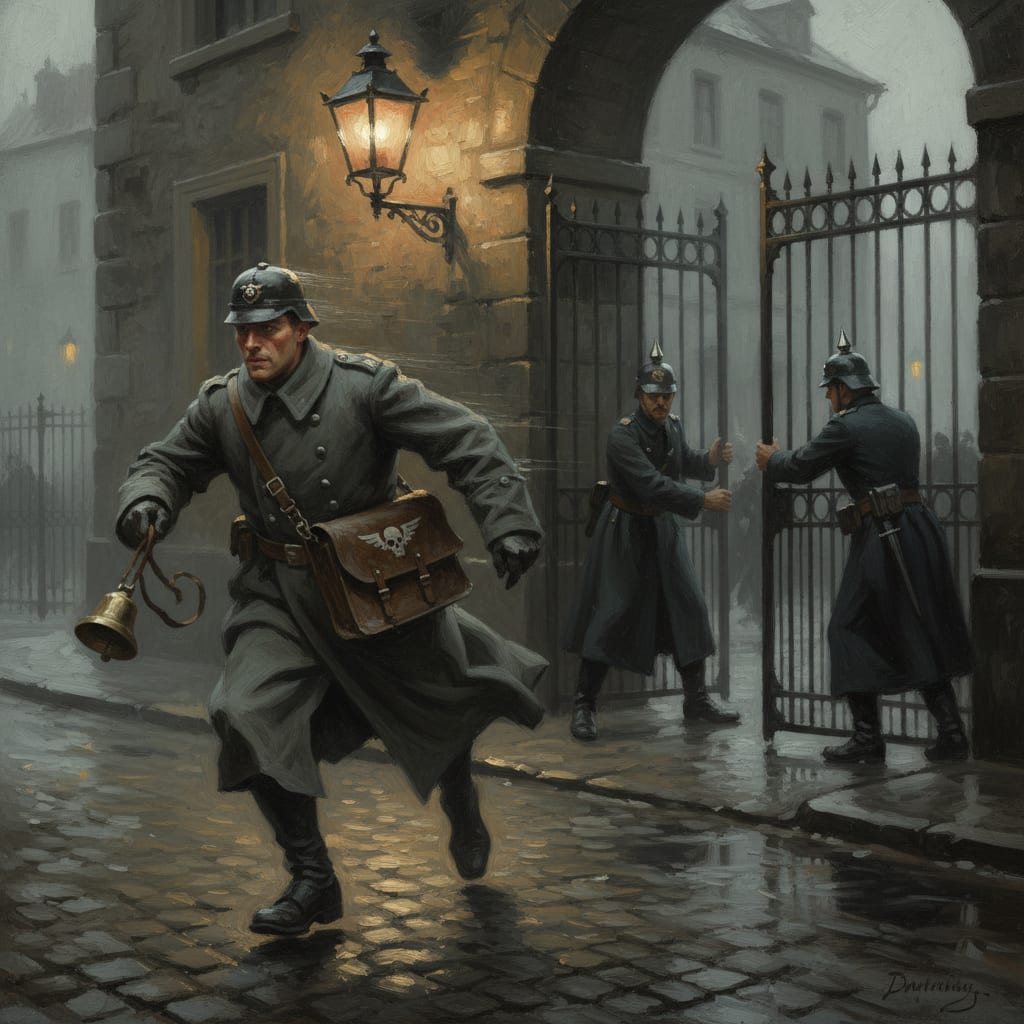
Index Damnatus Runner
On couriers who carry condemned names faster than the condemned can flee
The Bureau of Purity's courier corps: eleven hundred Runners who carry condemnation packets from Strasbourg to every gate, ferry, orphanage, and shrine before the damned can cross a border. Speed is doctrine. Late is the same as false.
Codex Ref. XII.23.01-001
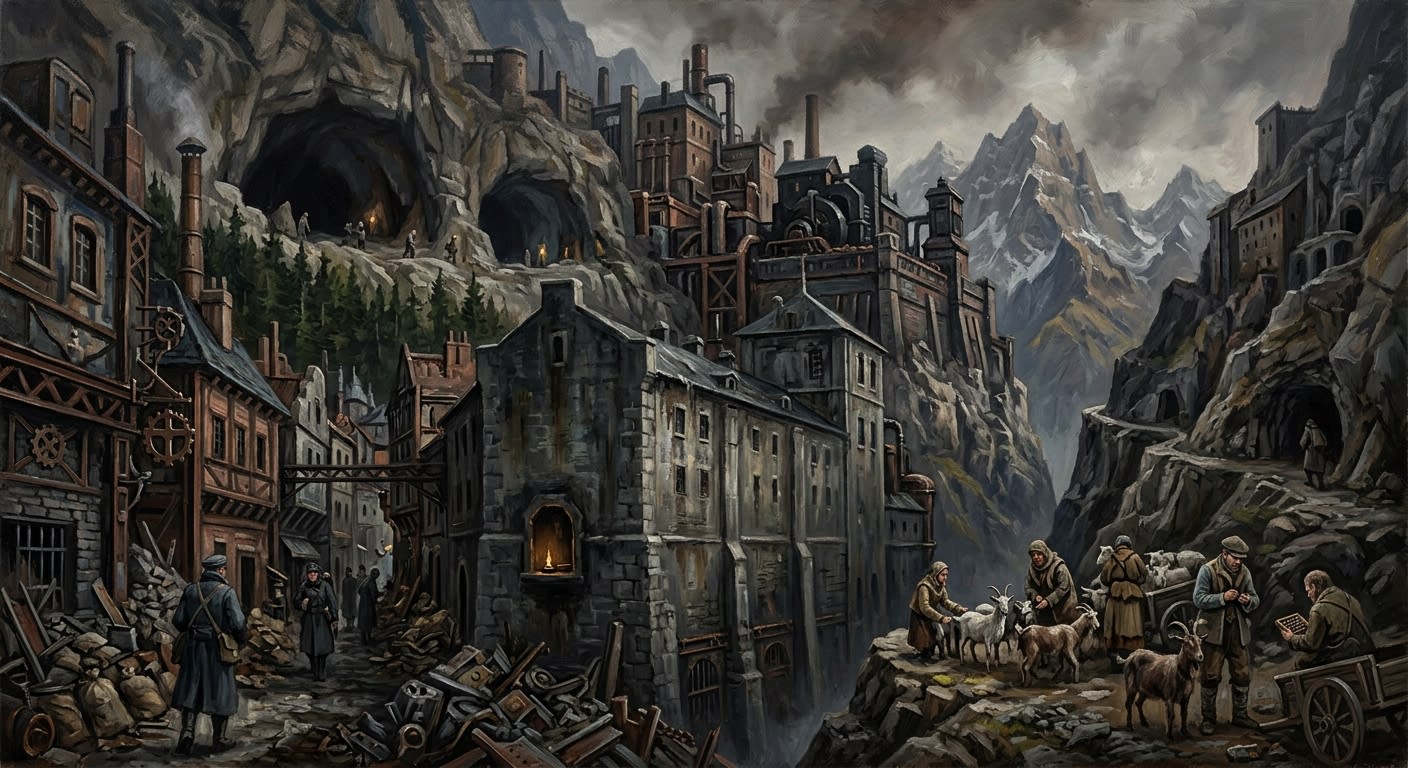
Innsbruck
Where mountains, grandmothers, caves, and walls defeat the census
Innsbruck is the Synod's alpine refuge-city: Cellar Saint caves above the treeline, relics disguised as trash, Mother Sava's wall-cavity, Pale Kin routes, goat arithmetic, and the most pious registry evasion in the mountains.
Codex Ref. II.2.09-030
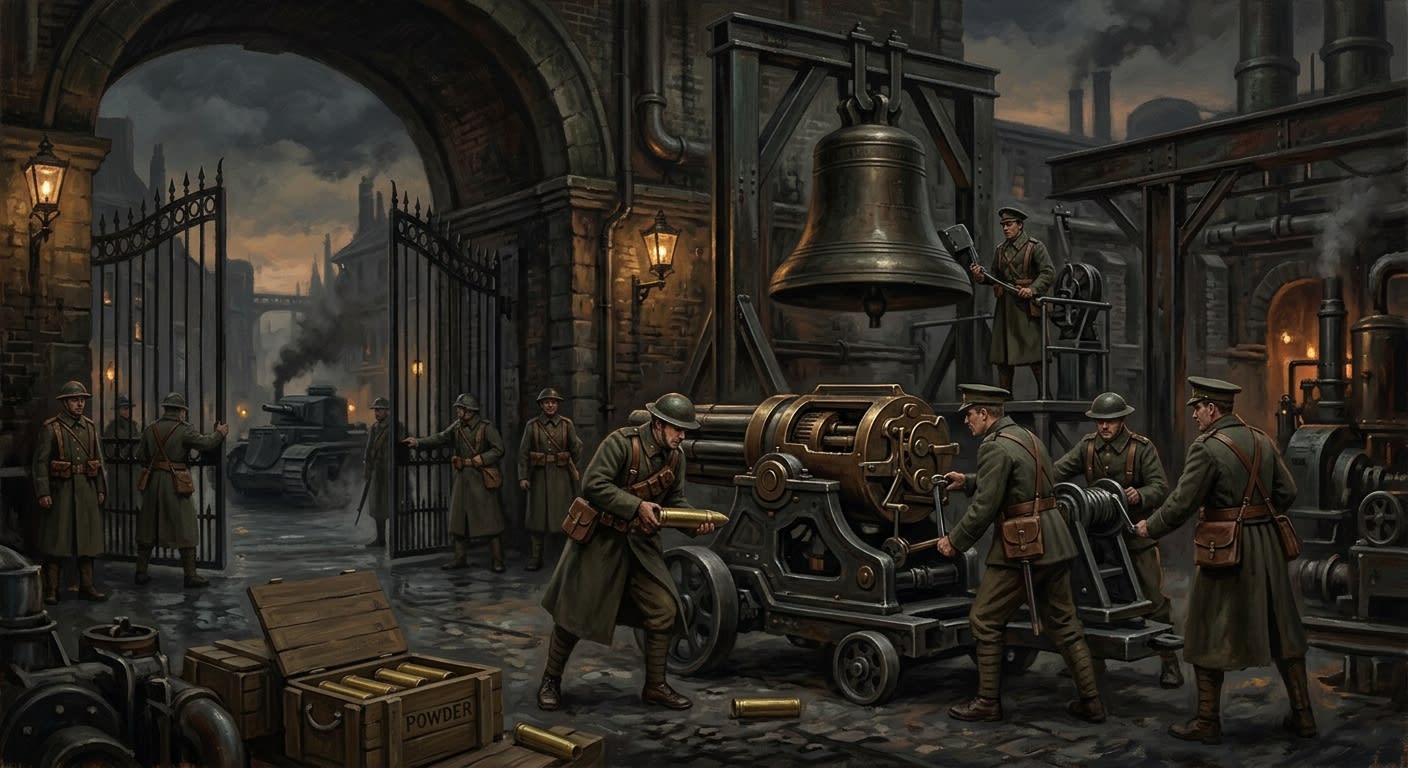
Iron Vespers
Bronze orders the night to become useful
Iron Vespers is the Synod's martial evening peal: seven strokes that lock gates, open powder, transfer custody to night, and teach soldiers that fear obeys better when bronze gives the order.
Codex Ref. XIII.1.62-004

Judge Anselm Varr
A Judge's name, a forged impression, and a prisoner still held by ink
Judge of Route 11-North whose authority was counterfeited in the A.S. 158 Cologne transfer of Petter of Lorch. The prisoner vanished; the ledger kept him.
Codex Ref. III.2.01-1515
Koblenz
The holy art of handing the burden onward
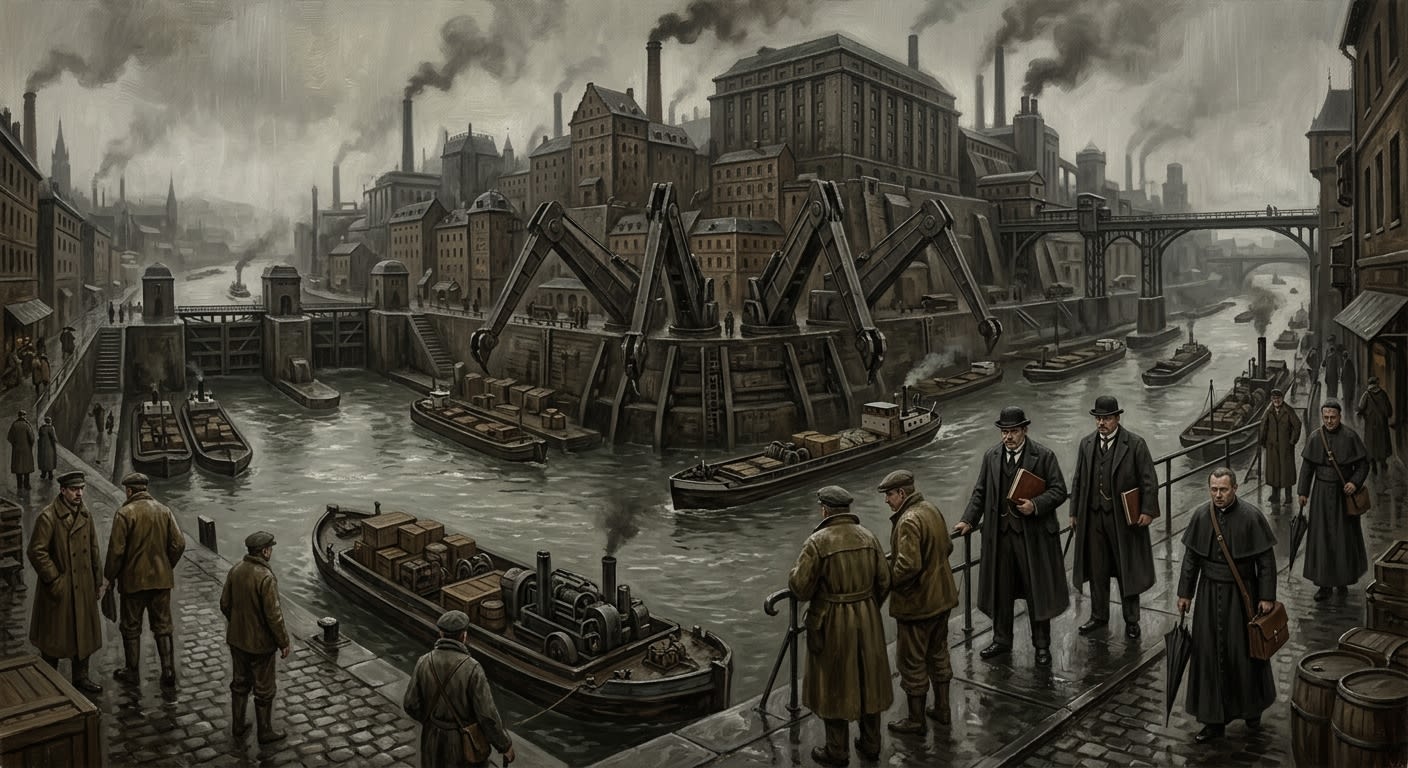
Koblenz is the wet middle hand of the Ignatian chain: a Rhine-Moselle transfer city where sanctity lasted six minutes and became taxable forever.
Codex Ref. II.3.05-045

Lantern "Mercy" Preacher (Rebel)
Eighth heresy, eighth rank, eighth because the Synod reserves that number for what it made, cannot unmake, and will not thank.
Eighth of eight proscribed heresies: the Licensed Consolators who meant what they said, and were immured for it.
Codex Ref. XI.3.01-001

Lantern Loyalists
Useful cowards, quiet streets, and the holy art of misfiled mercy
Lantern Loyalists preserved Brotherhood routes after the A.S. 178 Cologne split by tolerating Mercy Preachers, disguising mercy as workload reduction, and leaving doctrine off the page.
Codex Ref. XII.25.08-001

Lemon-Ink
A forbidden sentence waits inside a permitted book for the wrong candle
Lemon-ink hides forbidden figures inside approved books until a candle browns them into evidence. The Ashen Circle writes; the Interdiction Squads warm the page.
Codex Ref. XIII.1.56-002
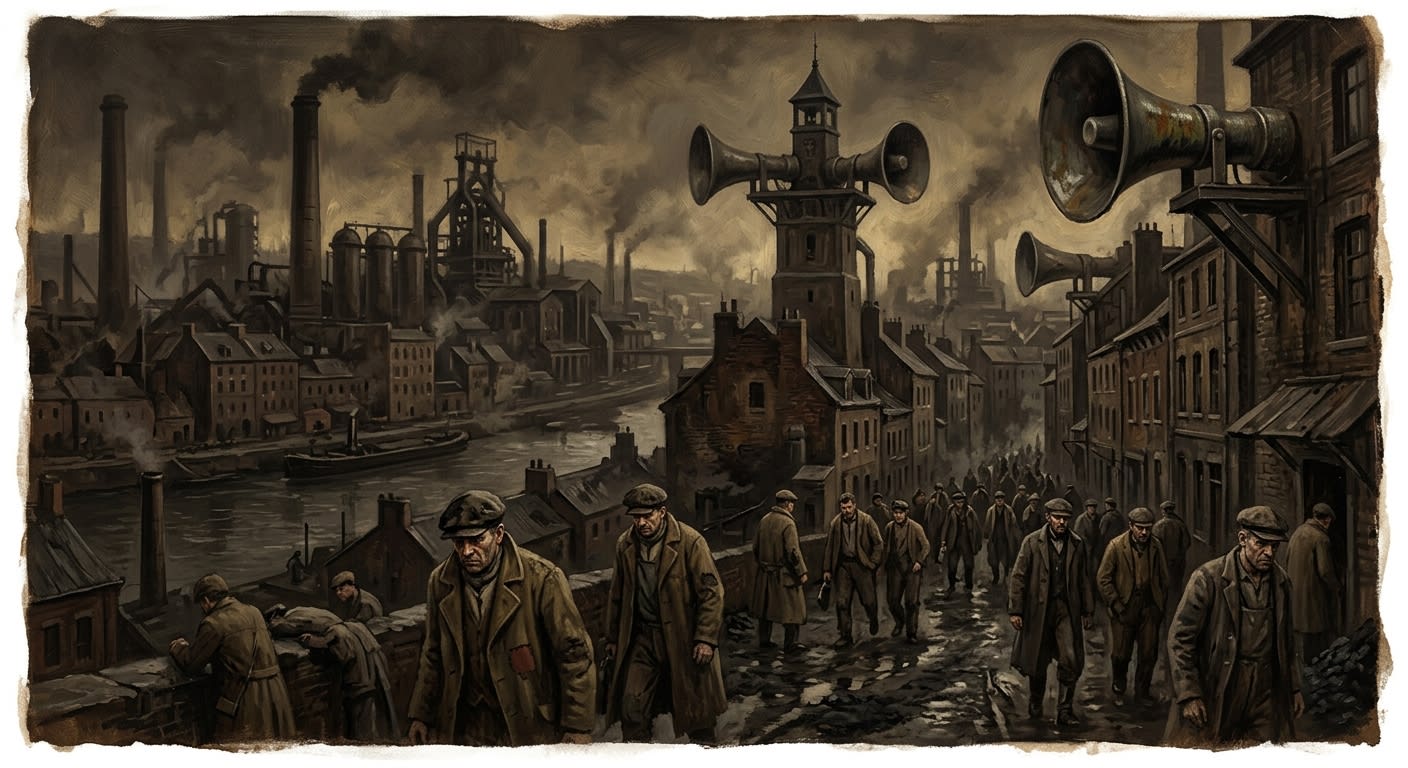
Liège
Where the bell was broken and the horn learned obedience
Liège, soot-black industrial city of the Meuse, lost its shift-bells in A.S. 108 after miners rang survival without licence; the horns remain ugly, lawful, and obeyed.
Codex Ref. II.2.03-108
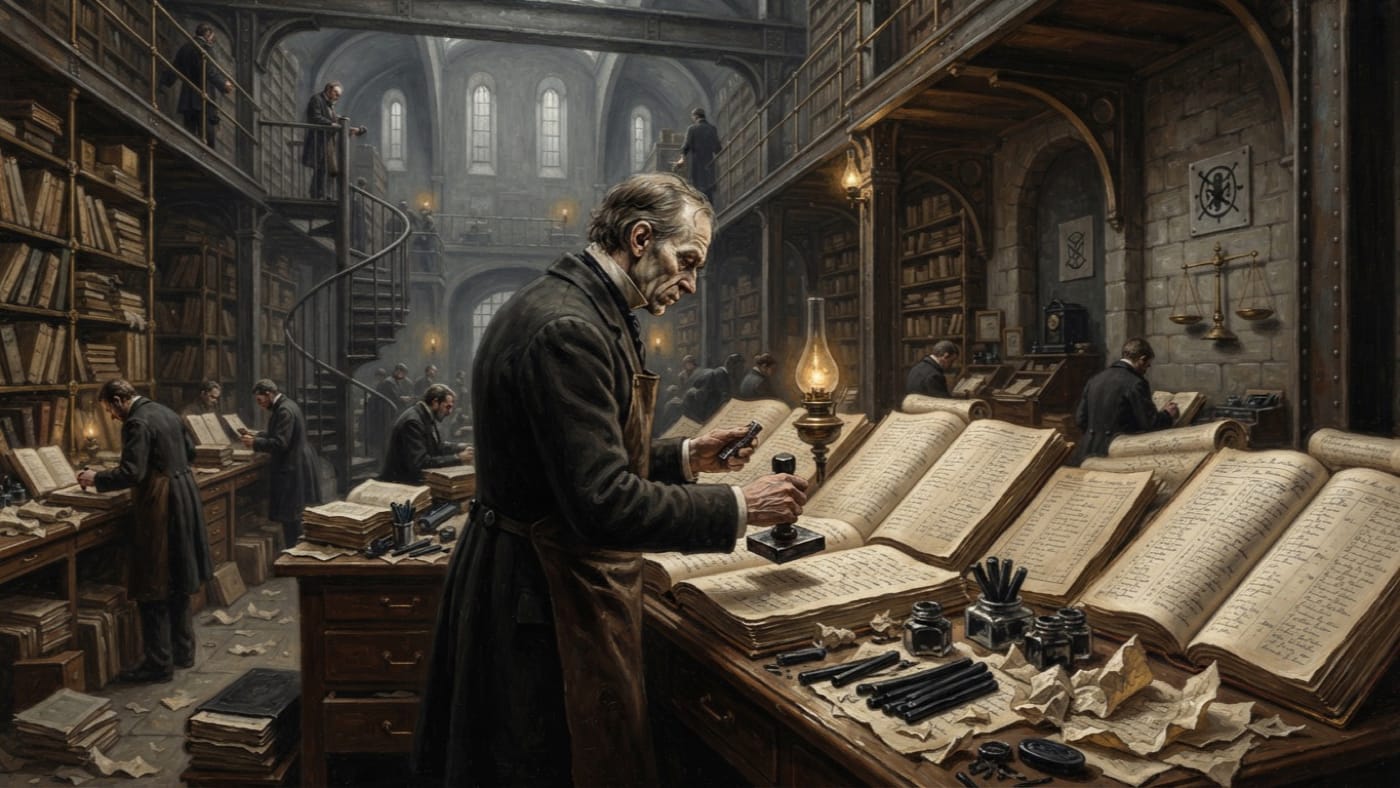
Lineage Severer
The household loses its standing; the Office keeps every page.
The Office of Nullity's family-strike specialists reconcile dependent rolls before sealing a household out of civic life. Nobody dies at the desk; every office afterward refuses them.
Codex Ref. XII.14.01-003
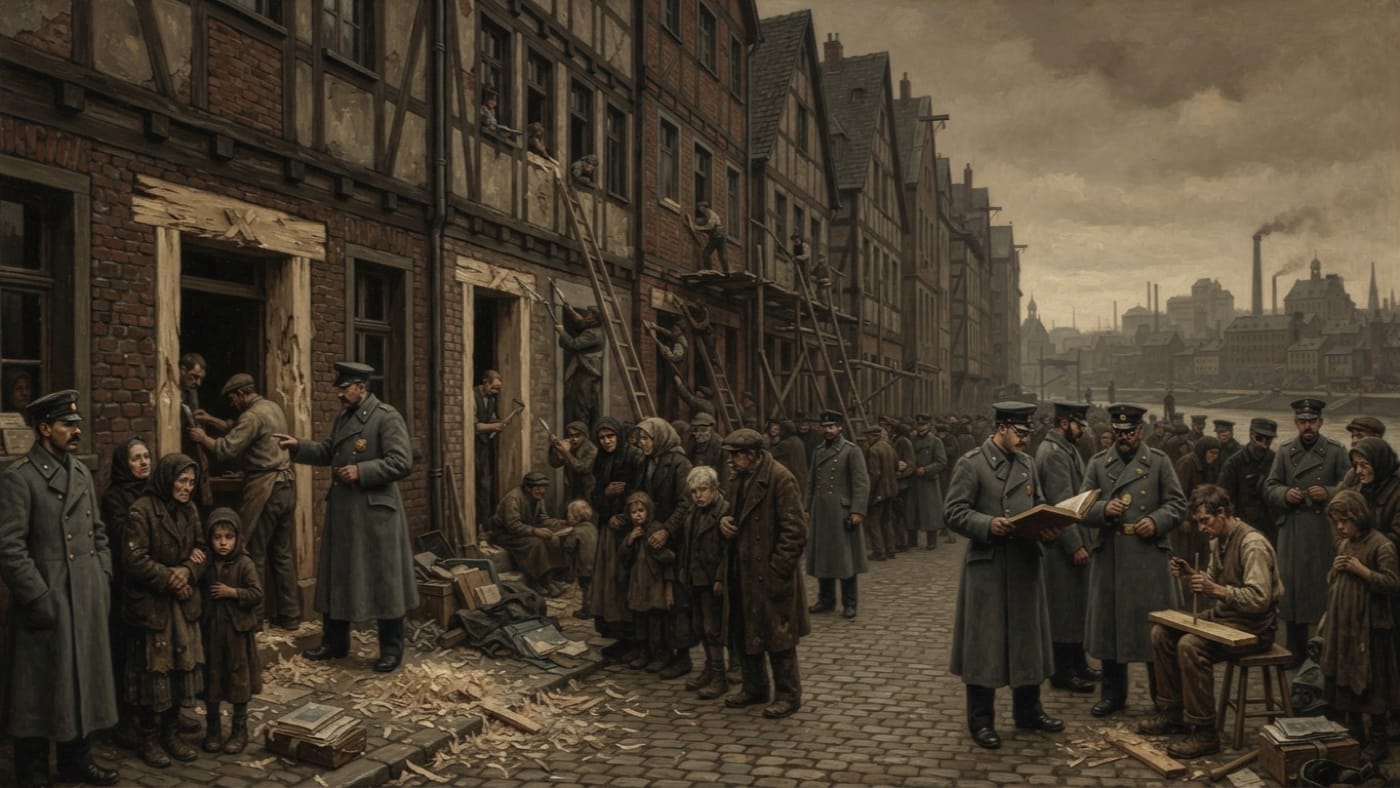
Lintel Pogroms of Cologne
Fourteen perfect Knots, three sealed niches, and a Registry to count the tools
In A.S. 112, fourteen perfect false Knots cost Cologne's river quarter its lawful thresholds, three carvers their air, and Heraldry the trouble of founding the Knotwright Registry.
Codex Ref. VII.8.10-112

Lord-Protector Guillaume
The gate-seller who mistook a palace for survival
Guillaume sold Aachen for Lowlands dominion, sent a proxy to Regensburg, and learned too late that the Bureau's cleanest executions are grammatical.
Codex Ref. III.2.06-003
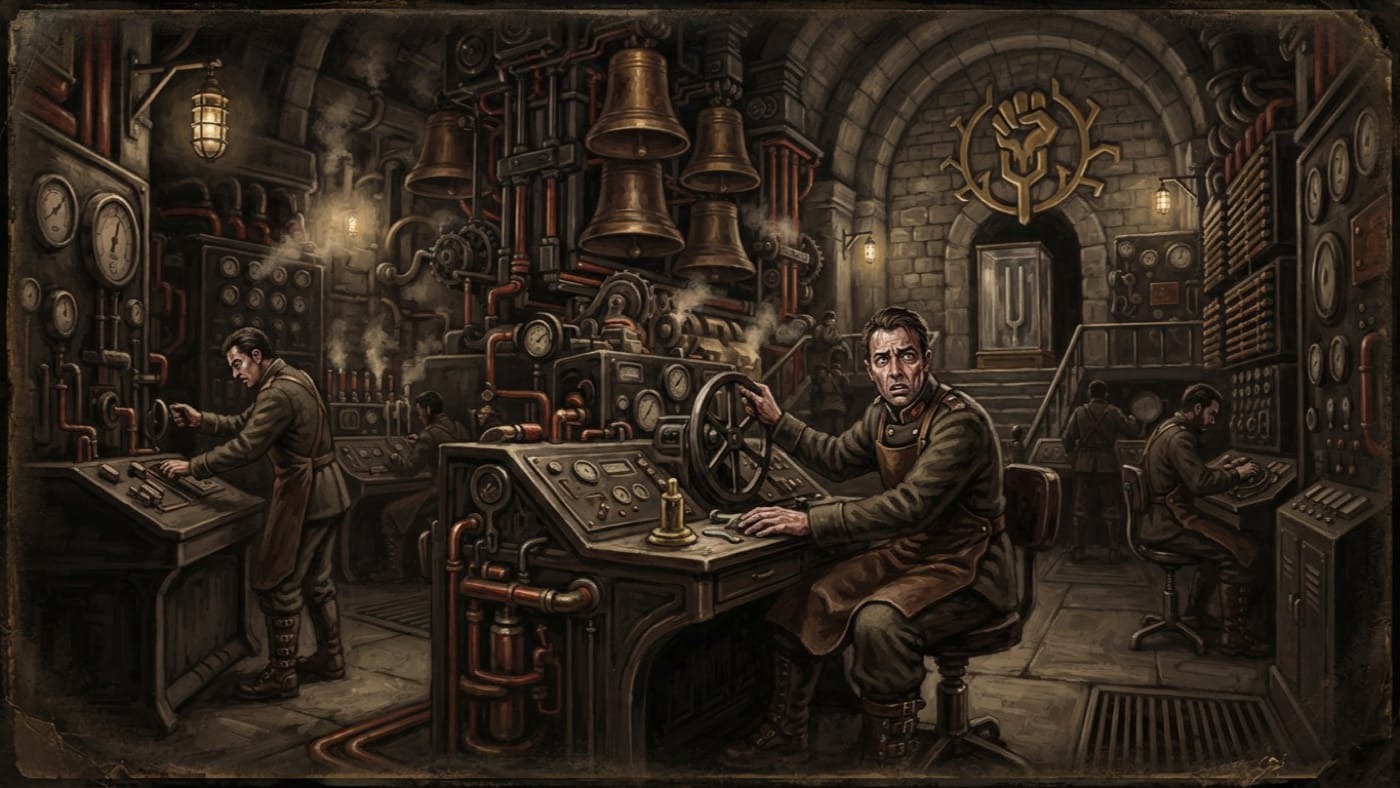
Loud Mercy
Drown it before it names you
Loud Mercy claims Veyl's inheritance within the Counter-Toll Corps: drown hostile command before the street knows it has been addressed. The damage is filed afterward.
Codex Ref. XII.2.02-002
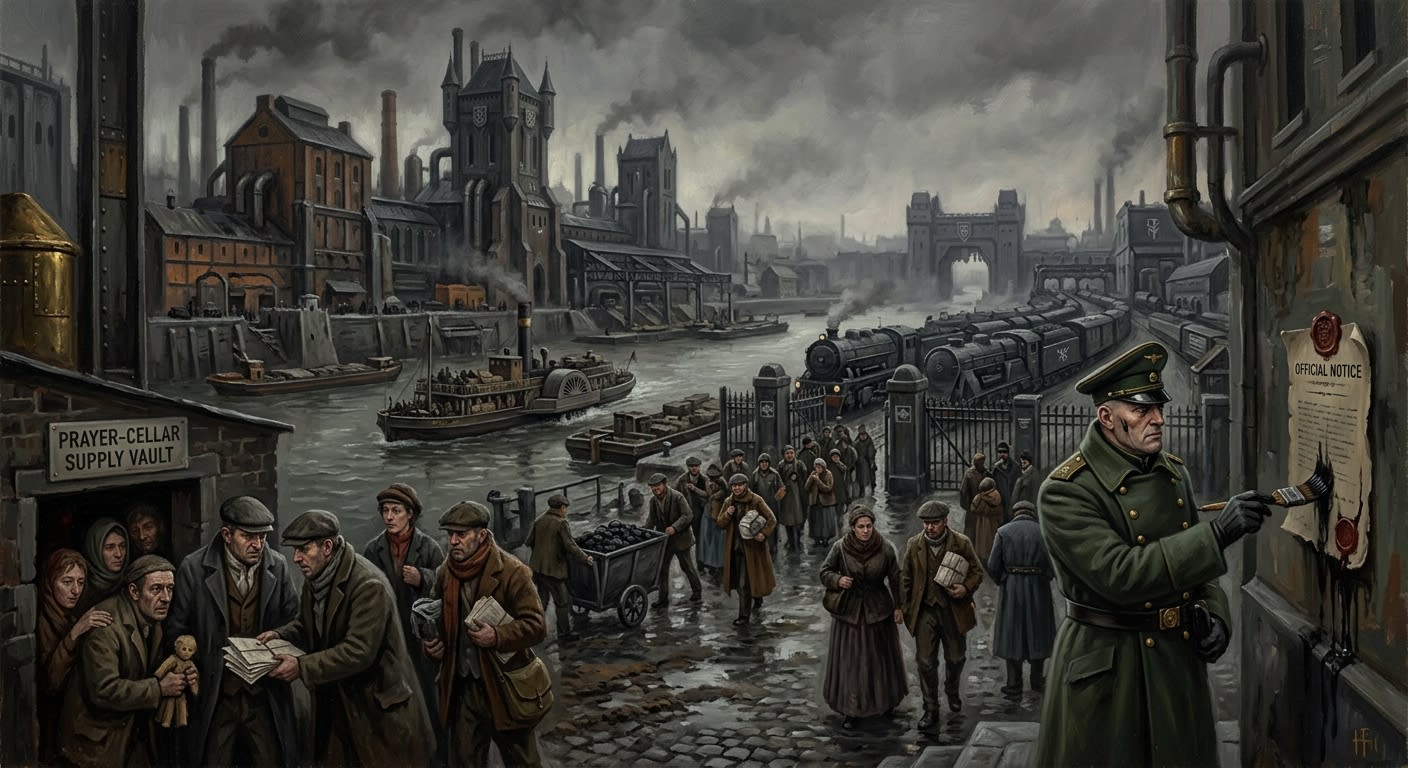
Maastricht
The sleeve beside Aachen's knife
Maastricht survived by adjacency: feeding roads to Aachen, relabelling prayer-cellars, selling shame politely, and teaching Hungry Ink how seals can scream.
Codex Ref. II.1.07-025

Mandatum Candoris
The decree by which terror learned to wear white
Hildegarde of Mainz's A.S. 62 decree requiring visible white mantles for Bureau of Purity field agents, making correction legible before it struck.
Codex Ref. XIII.1.88-062
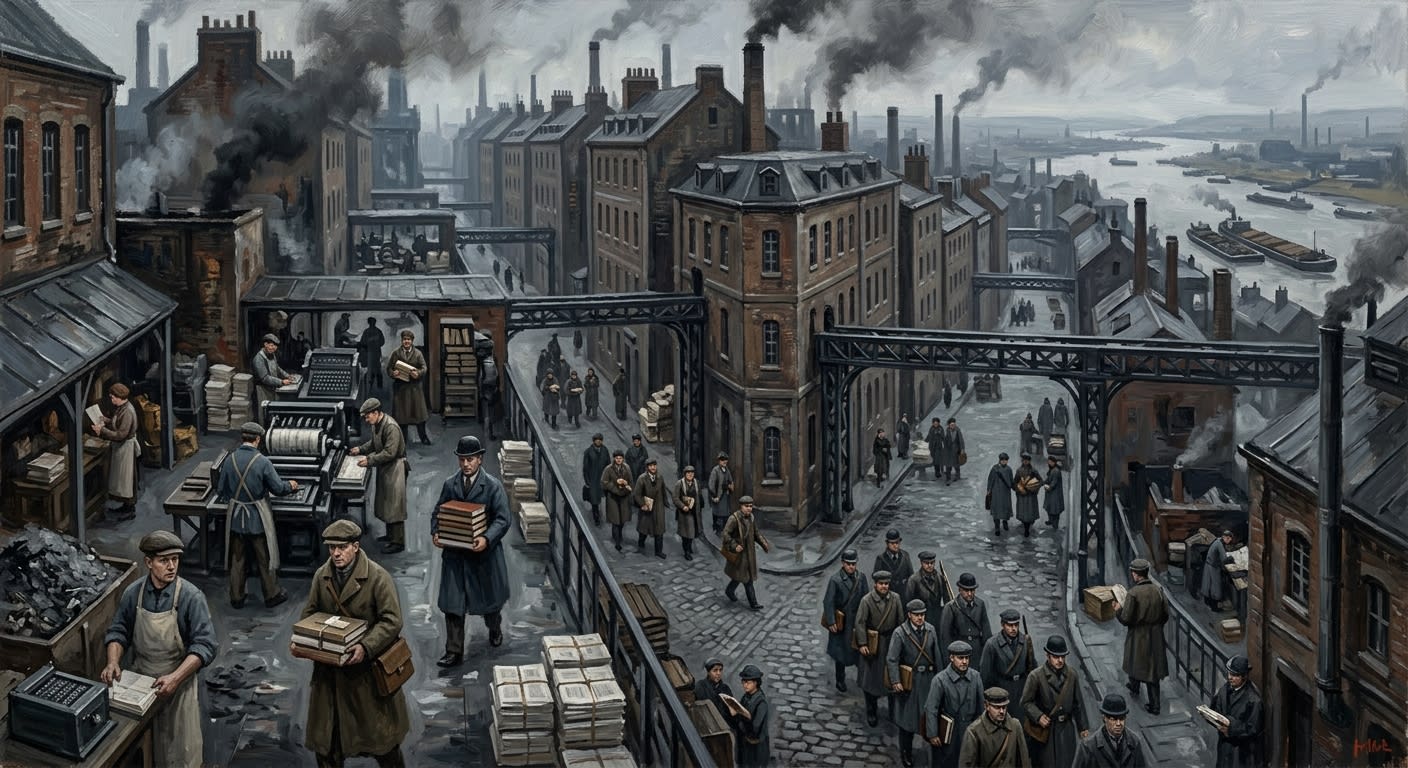
Mannheim
The square city teaches arithmetic to doubt
Mannheim is the Rhine Corridor's square heresy school: copyhouses, ash-yards, tidy streets, and arithmetic sharp enough to cut Doctrine.
Codex Ref. II.2.10-125
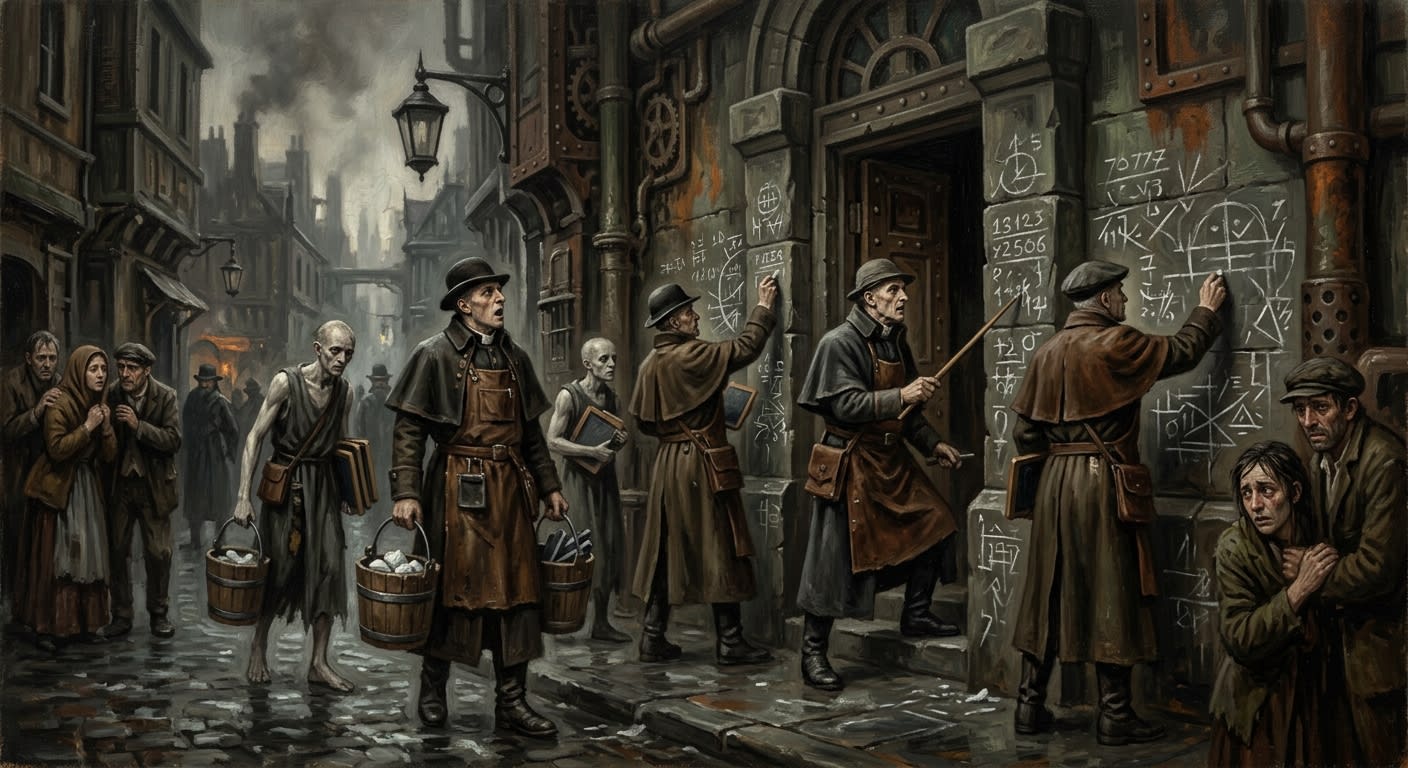
Marking Vicars
The doorframe made into a tribunal
Internal Street-Vicar faction of public chalk correction, visible recitation, reputational punishment, and the dangerous arithmetic by which a doorframe becomes doctrine.
Codex Ref. VIII.1.08-001

Marrow-Quill of Cologne
The advocate who taught grammar to leave bodies hungry
Cologne Citation Advocate and Ledger Duellist whose week of three duels struck a rival household from standing, bread, gates, contracts, and consecrated earth.
Codex Ref. III.2.01-128
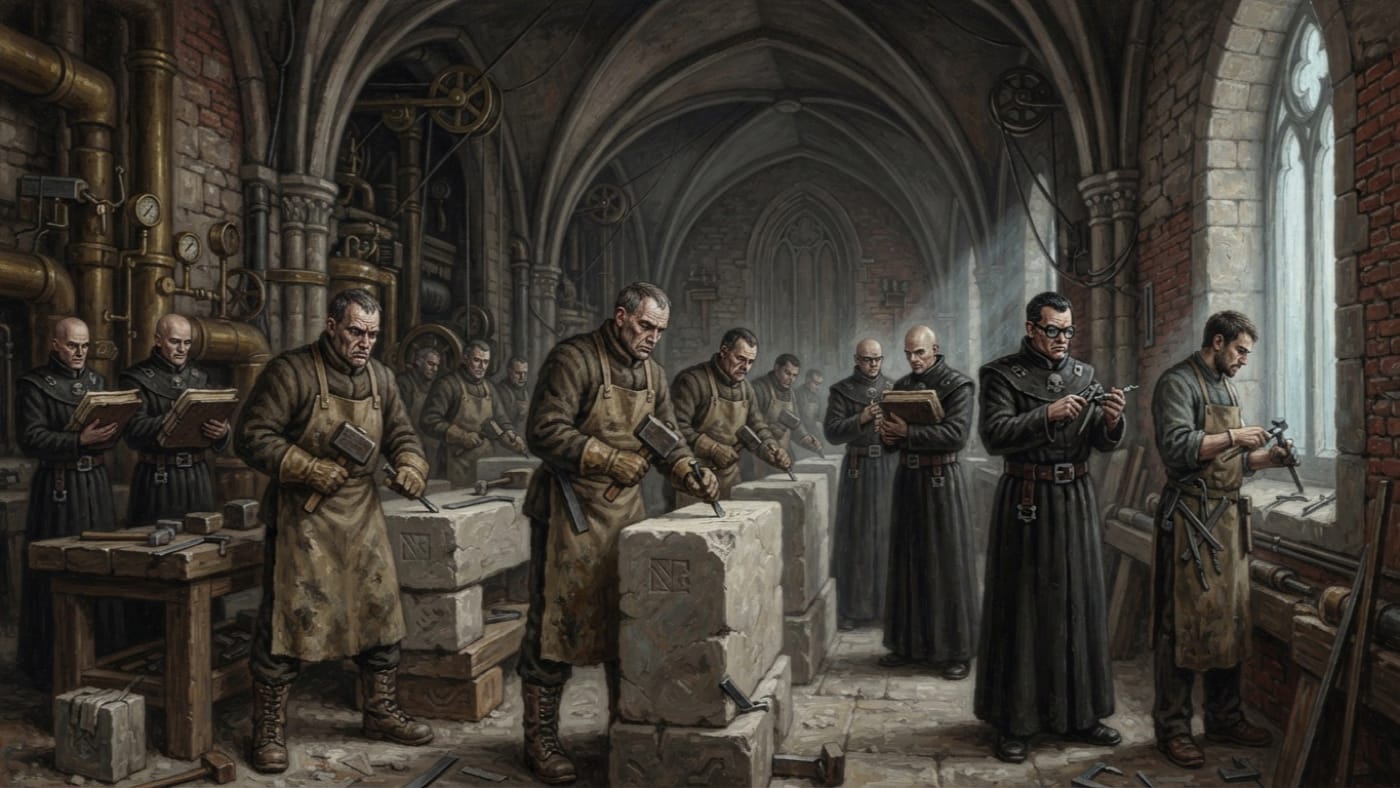
Masons of Cologne
They kept their chisels and inherited the bill
Cologne's masonry guild, bound by the A.S. 105 Münster blood-compact to hereditary service. The Synod acquired its rolls, methods and descendants; the quarrel with Bruges survived.
Codex Ref. XII.30.04-105

Master Engraver Irena Coilhand
The hand that makes recognition spendable
Irena Coilhand cuts Sable Court's lawful faces. The Mint-Prelate may recognize a soul; making it spendable still requires a hand Doctrine forbids replacing.
Codex Ref. III.2.01-1784

Master-Carillonist Aldo Venn
The man who makes obedience audible
Aldo Venn, Master-Carillonist of Strasbourg's ninth floor, keeps the Grand Schedule, answers hostile bells with sanctioned dominance, and calibrates grief into usable doctrine.
Codex Ref. III.2.01-061

Mercy Vicars
The quiet hand still writes names
Internal Street-Vicar faction favouring private correction, whispered Creed repair, delayed marking, and mercy so thoroughly filed that even compassion becomes evidence.
Codex Ref. VIII.1.07-001

Metric Saturation Syndrome
The holy arithmetic enters the skull and finds office space
Internal medical classification for Auditors gone to numbers: the service deformation by which citizens become compliance probabilities before they remain human.
Codex Ref. XIII.1.83-001

Milan
The city that mistook minutes for sovereignty
Milan is Lombardy's polished mouth: silk, steel, banking paper, guild keys, and the old civic delusion that a beautiful memorandum can outrank Strasbourg.
Codex Ref. II.1.07-150
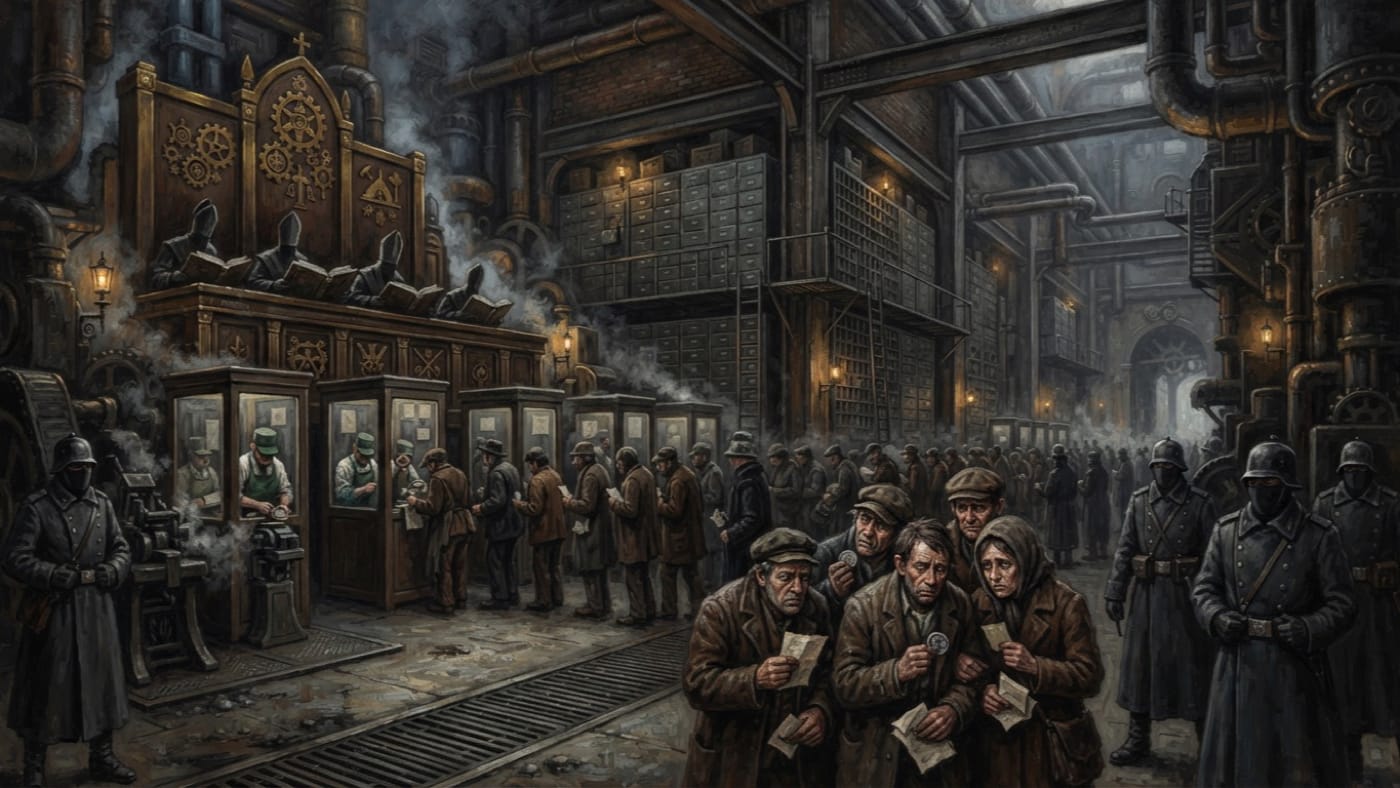
Mint Tribunal
Recognition is lent. The Hall keeps the receipt.
The Mint Tribunal of Sable Court holds, recalls, and corrects the right of a face to be recognised. Its orders reach bread, wages, and memory; the Face Theft complaints now wait on evidence that cannot remember itself.
Codex Ref. XIII.1.91-201

Mint-Chapter
Where the Synod makes faces spendable and obedience portable
The Mint-Chapter binds face, name, and coin into one leash: a polished doctrine by which bread, debt, memory, and burial all learn to ask for a clean strike.
Codex Ref. XIII.1.91-094
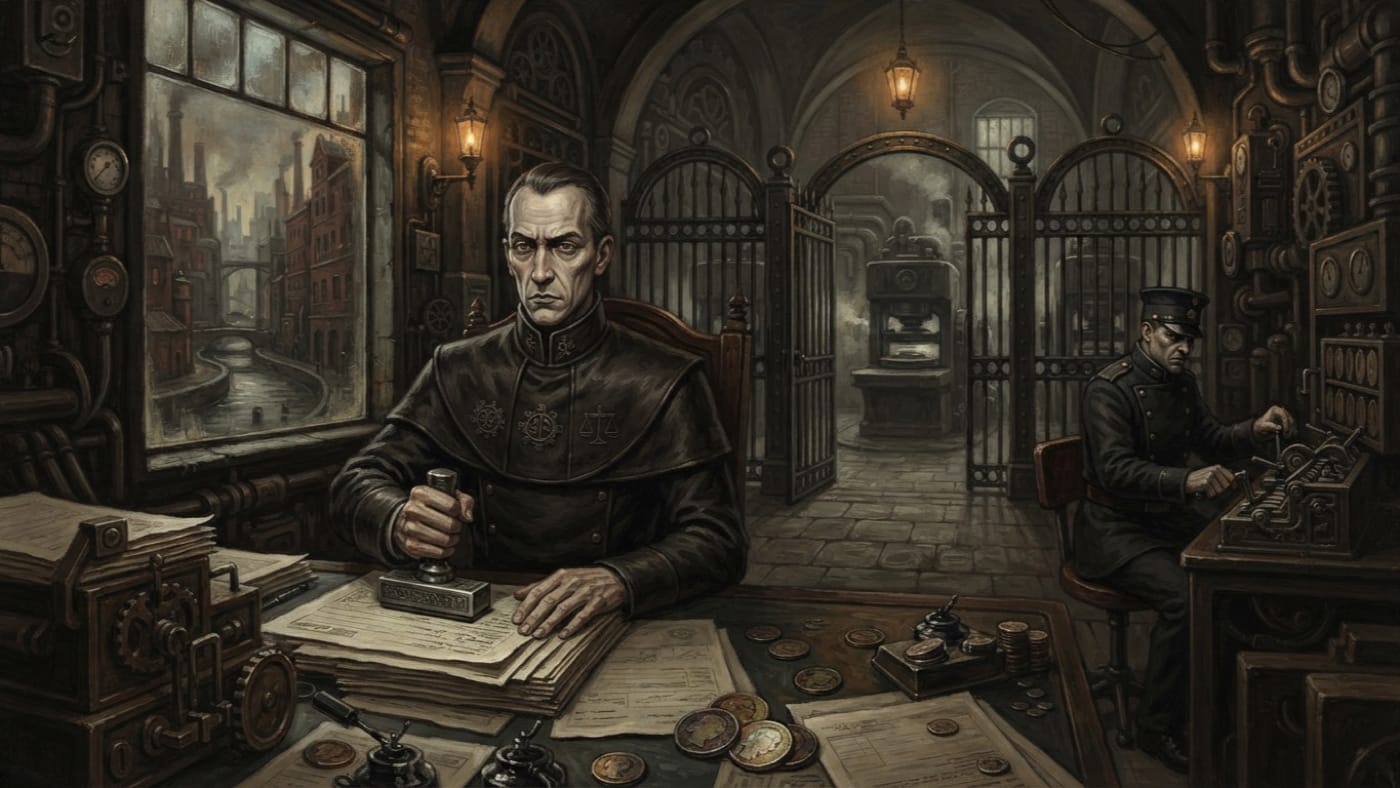
Mint-Prelate
The stamp that makes a face spendable
The Mint-Prelate makes Sable Court's coin-faces lawful. Varo Sable keeps recognition payable in advance while the Face Theft crisis enlarges the office's authority.
Codex Ref. XIII.1.91-002
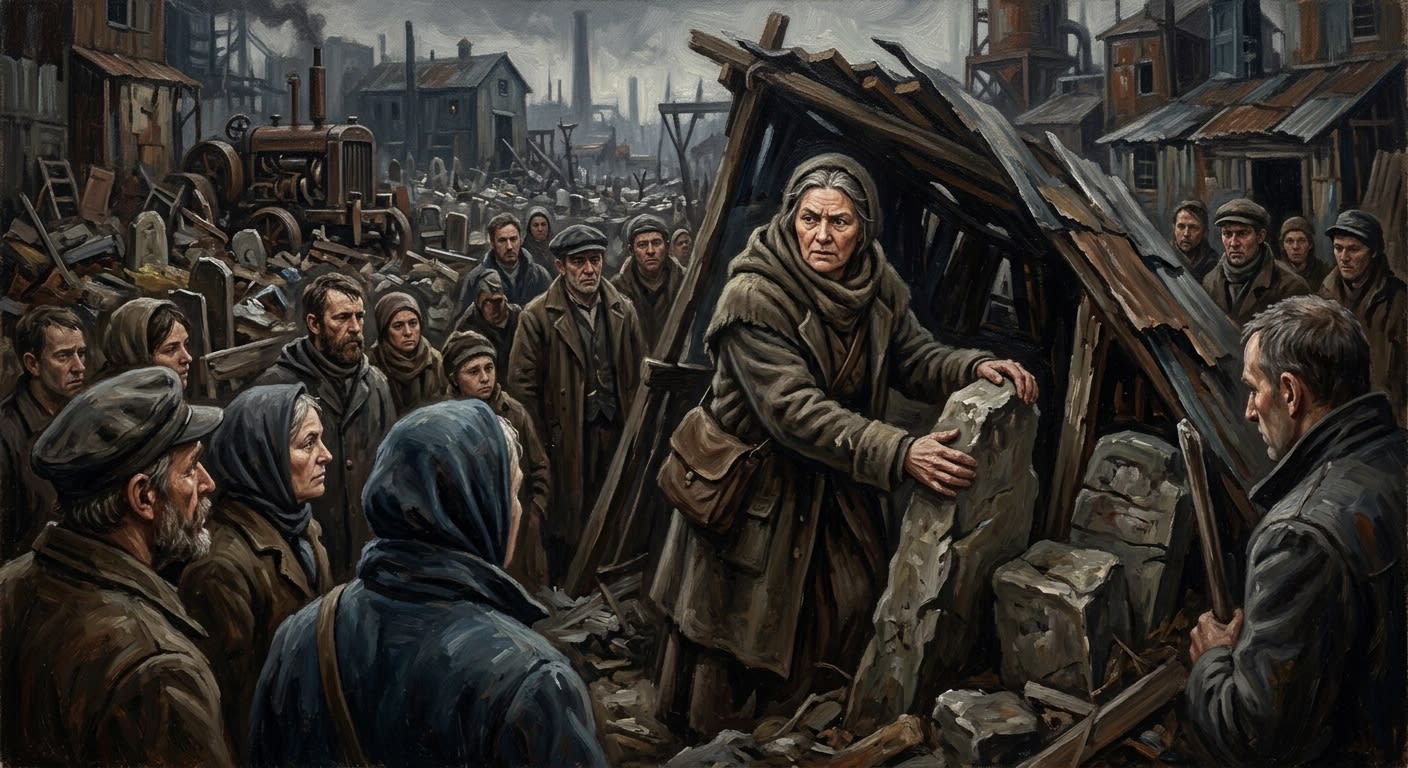
Mother Vell of the Crooked Stones
A plot is a promise, and promises have tenants
Uncanonised patron of Grave-Field Shanty Brokers, Mother Vell turns crooked stones, leased graves, and shelter fraud into a cult the Bureaus cannot afford to suppress.
Codex Ref. III.2.01-122

Mouth-Seal
One marked mouth instructs the watching alley
Mouth-Seal is Mute Radiance's public wax mark at the centre of the lips: the wearer supplies the notice and the alley learns silence. Origin and adoption remain unrecorded; auxiliary toleration grants no arrest authority.
Codex Ref. XIII.1.76-008
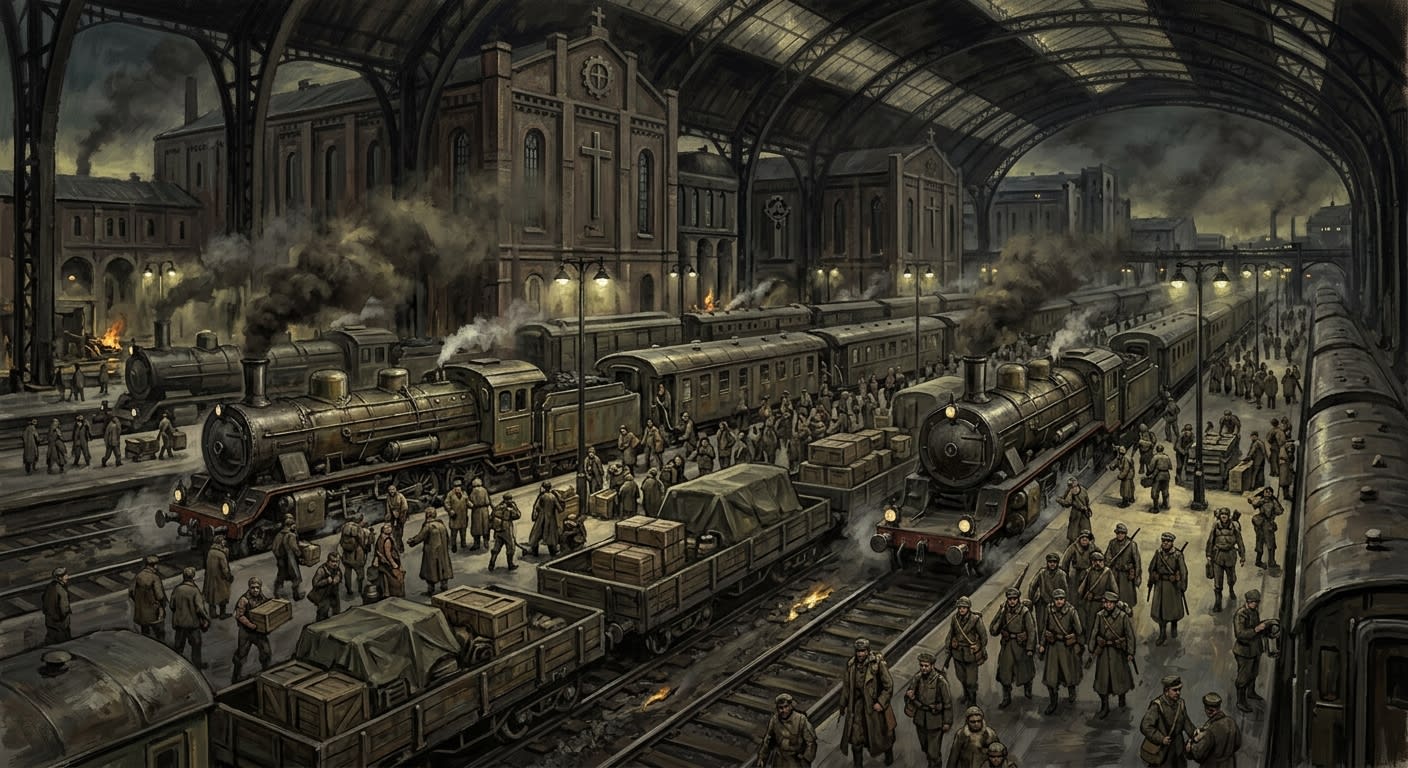
Münchner Kreuzbahnhof
Munich's iron jaw, chewing the west into eastbound obedience
Munich's Cross-Station is the Synod's second-largest rail complex: fourteen public platforms, sixty trains daily, ninety in surge, and eleven thousand workers feeding the eastern war.
Codex Ref. II.4.09-012

Munich
The last comfortable city; or, where the war becomes a number before it becomes a wound
The Synod's central logistics hub and the last city where the war is an abstraction. Seven hundred thousand souls administer the machinery of a conflict they will not fight. Munich pays its tithes, fills its quotas, and resents everything.
Codex Ref. II.4.09-008
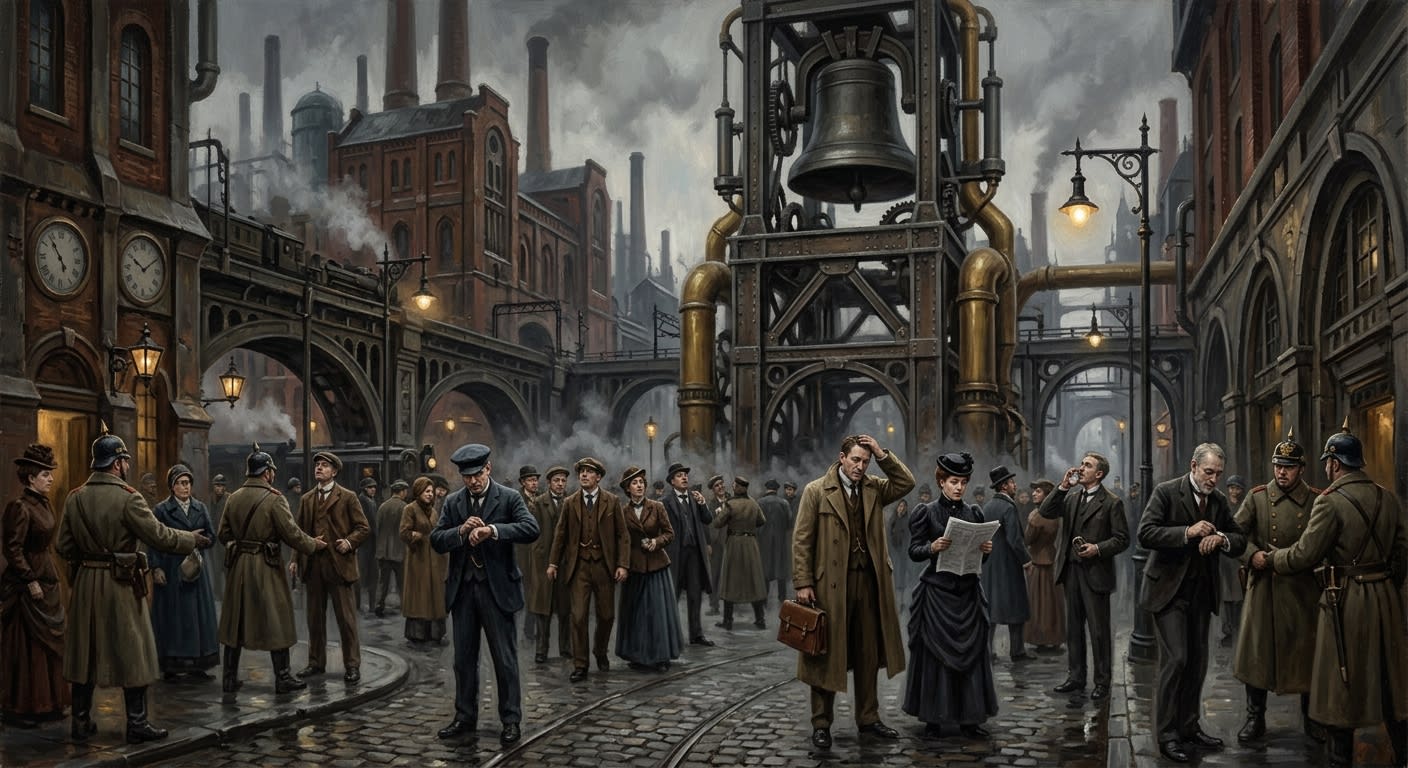
Night of Borrowed Curfew
When Cologne obeyed the enemy in the Synod’s own voice
Cologne's A.S. 134 acoustic breach, when an unknown foreign peal rang curfew three hours early and taught Strasbourg that obedience itself could be borrowed.
Codex Ref. VII.8.10-018
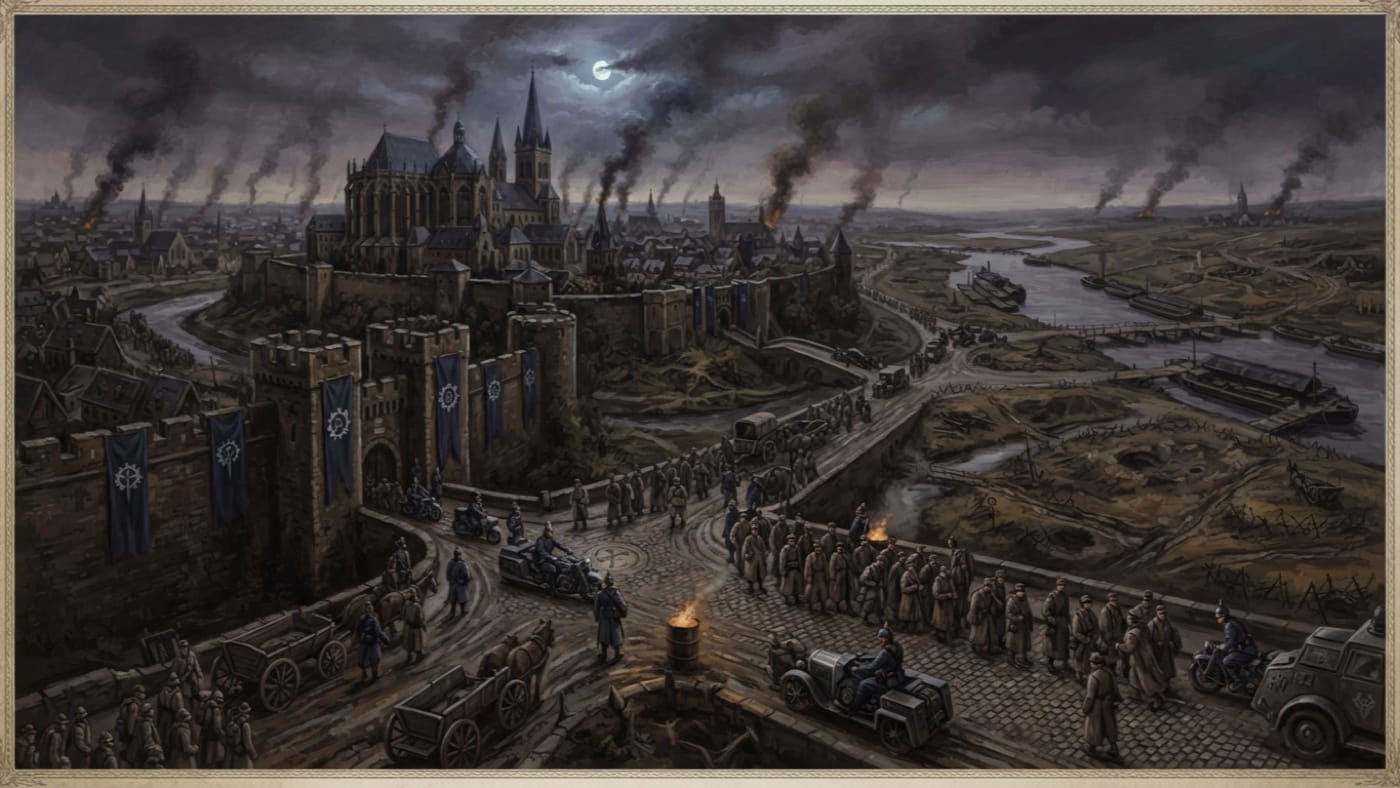
Northern Coalition
The Front Guillaume Sold for a Promise
The faithful's northern command lost its roads, stores and future when Guillaume sold Aachen in A.S. 25. The soldiers owed bread received a lesson in noble honour.
Codex Ref. VIII.6.02-025

Order of Severance
The inward knife that cuts office from affection before affection becomes a kingdom
The Order of Severance is the Bureau of Purity's inward knife: an inquisitorial fraternity that hunts clerical and bureaucratic heresy where clean cuffs, perfect ledgers, and trusted colleagues become shelter.
Codex Ref. VIII.1.07-134
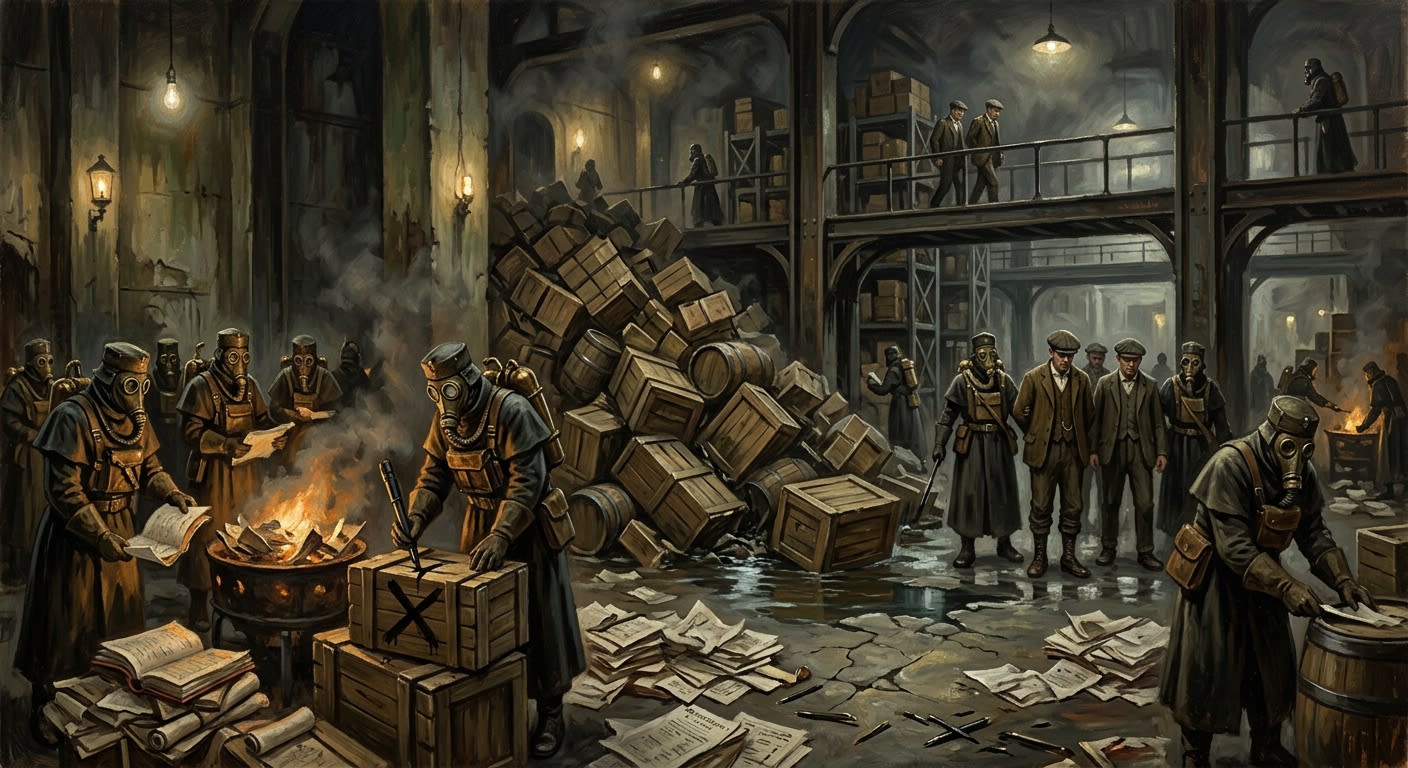
Orthography Purge of A.S. 112
When the letter changed, the invoice died obediently
The Orthography Purge of A.S. 112 reopened 411 manifest cases, stripped eleven Litigants of practice rights, and taught merchants that one suspect stroke can bankrupt a warehouse.
Codex Ref. VII.8.10-002
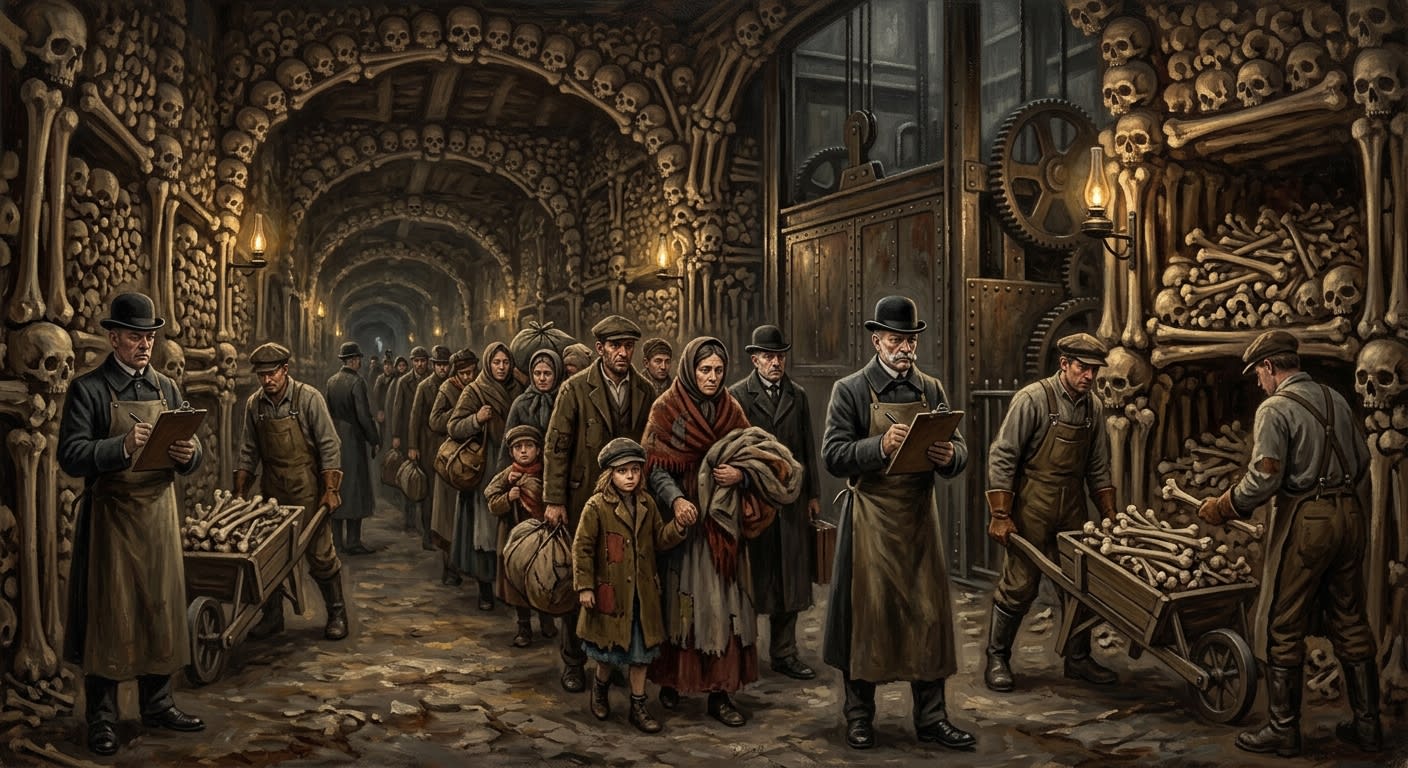
Ossuary Allies
Bring me your dead and I will find room for your living
Ossuary Allies convert grave-field claims into bone-walled tenancy, moving poor families from exposed graveside lanes into ossuary corridors at the price of their dead.
Codex Ref. XII.27.04-001
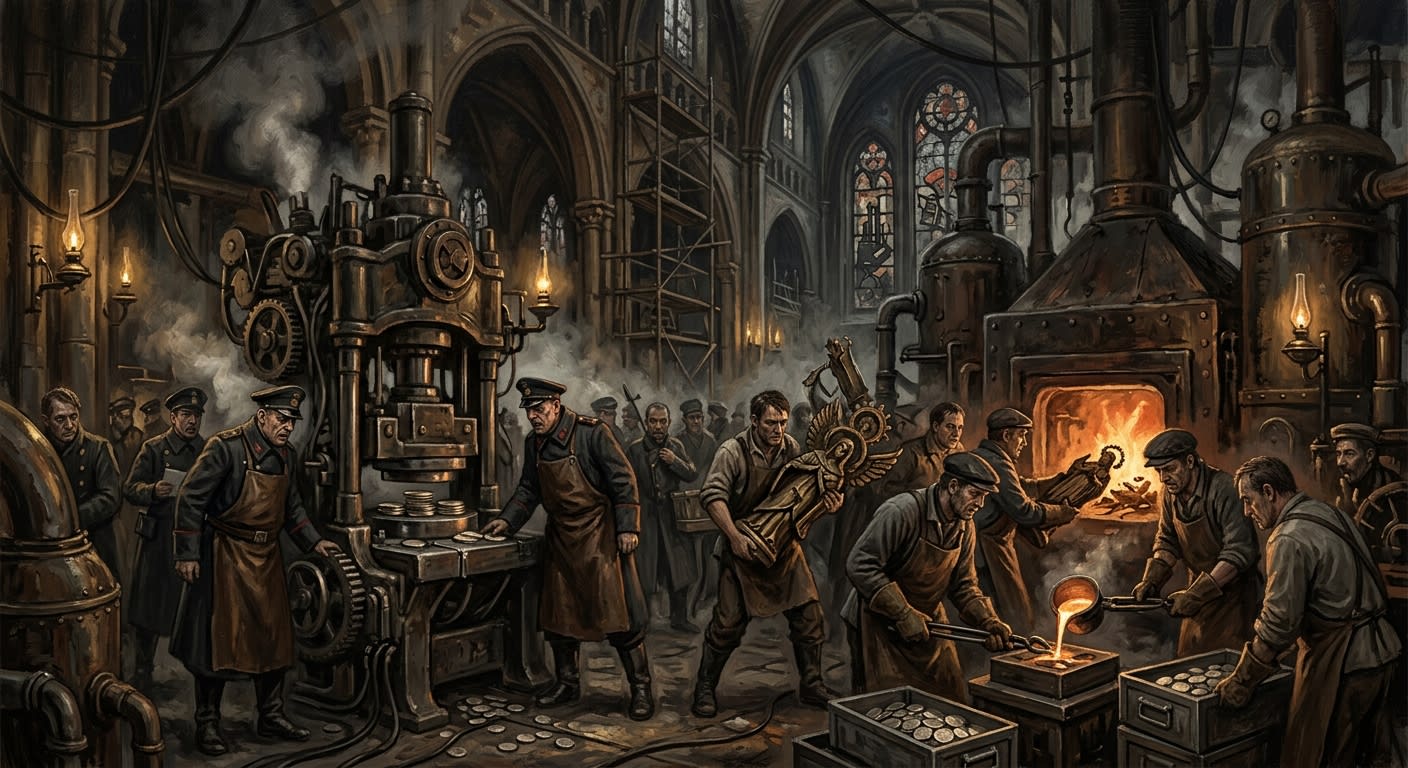
Panic of Wrath's March
Wrath did not enter Aachen; Aachen paid anyway
A.S. 160 gave Aachen no siege, no breach, and no Maldrake at the gate — only fear hot enough for Tithes to melt saints into coin.
Codex Ref. VII.8.10-160
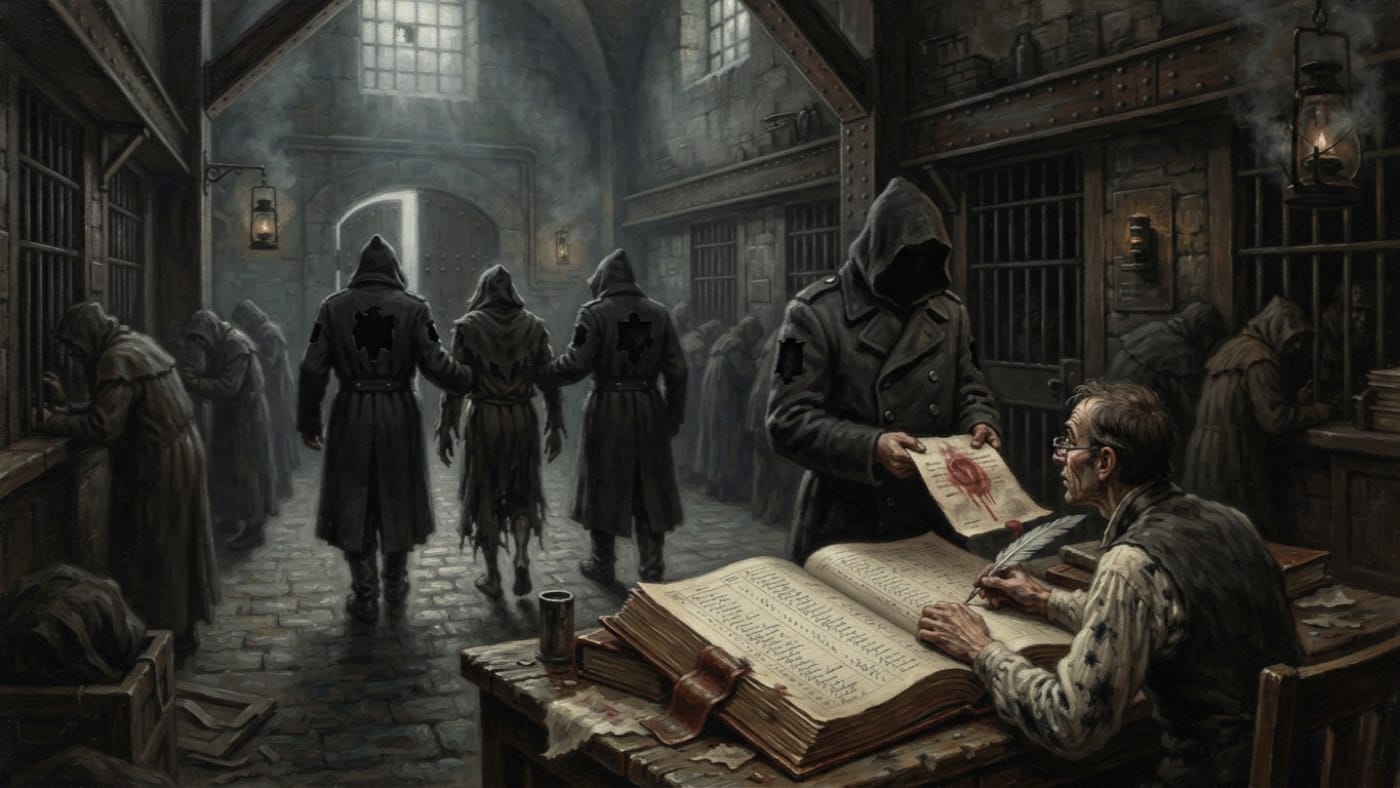
Petter of Lorch
The prisoner who left the lockhouse and stayed in its ledger
Petter of Lorch vanished from a lockhouse near Cologne under a forged judicial order in A.S. 158. His name remained in the custody ledger; the ink kept its prisoner.
Codex Ref. III.2.01-2105
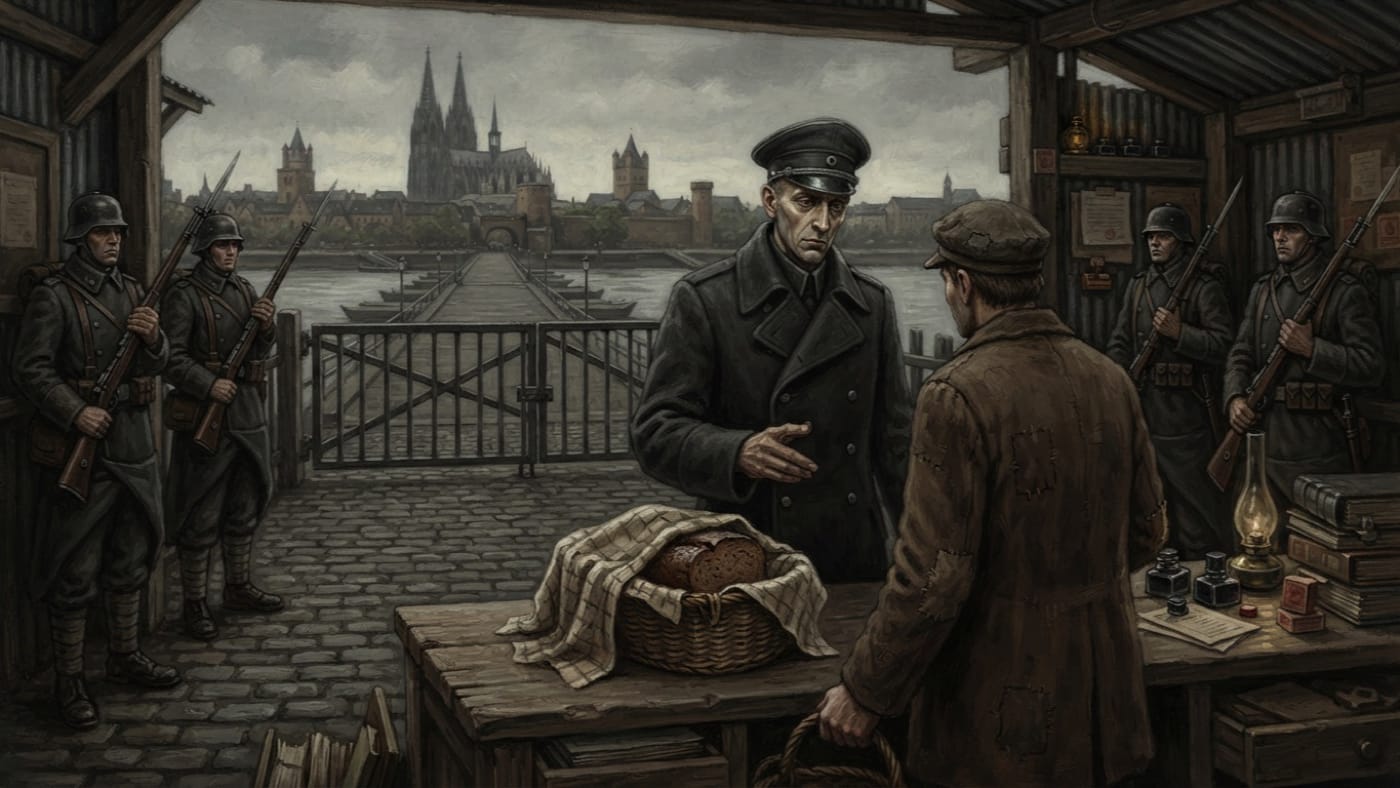
Philosophical Prefect
He looked at the basket. The bones went through.
A Rationalist examiner of documents, parcels and suspected sacred objects, attested at Cologne in A.S. 31. He waved Ignatius Brenner's breadbasket through. Three apostolic bones escaped; the inspector's name did not survive.
Codex Ref. III.2.01-031

Pragmatists of the Bureau of Records
Mercy enters the Ledger wearing a counterfeit collar
Night-correction faction within the Bureau of Records, tolerated for making the Roll function wherever pure truth would freeze the queue before Matins.
Codex Ref. XII.9.03-002
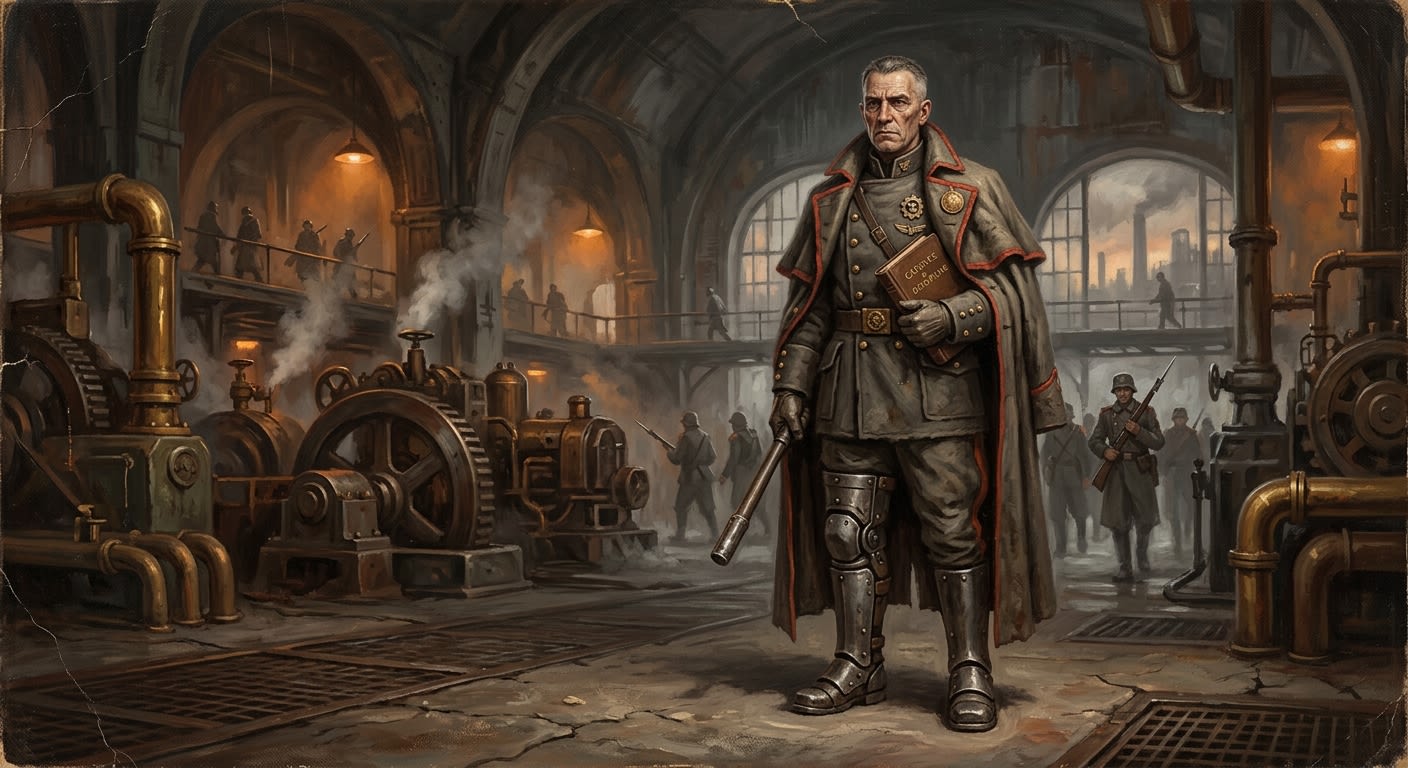
Prefect Malven "Iron Step"
A boot-beat older than evidence and more useful than truth
Composite patron of the Cadence Corps, Malven “Iron Step” survives as quarantine legend, training rhythm, disputed relic nuisance, and mandatory boot-beat.
Codex Ref. III.2.01-137
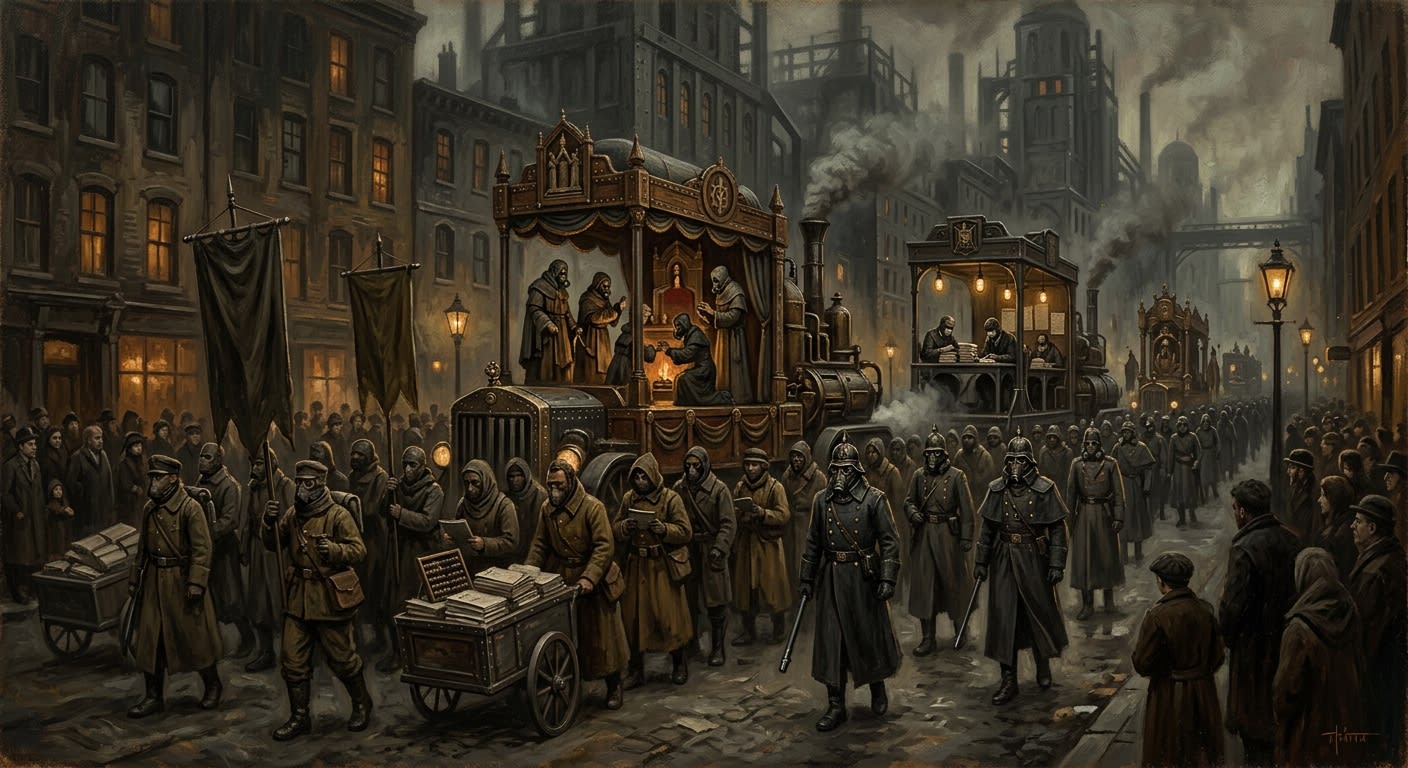
Procession of the Triune Hearth
One people, one creed, one spectacle, counted twice
First staged in A.S. 175, the Procession of the Triune Hearth turned Concordat memory into forty days of floats, census work, unity theatre, and invoices.
Codex Ref. VII.3.02-001
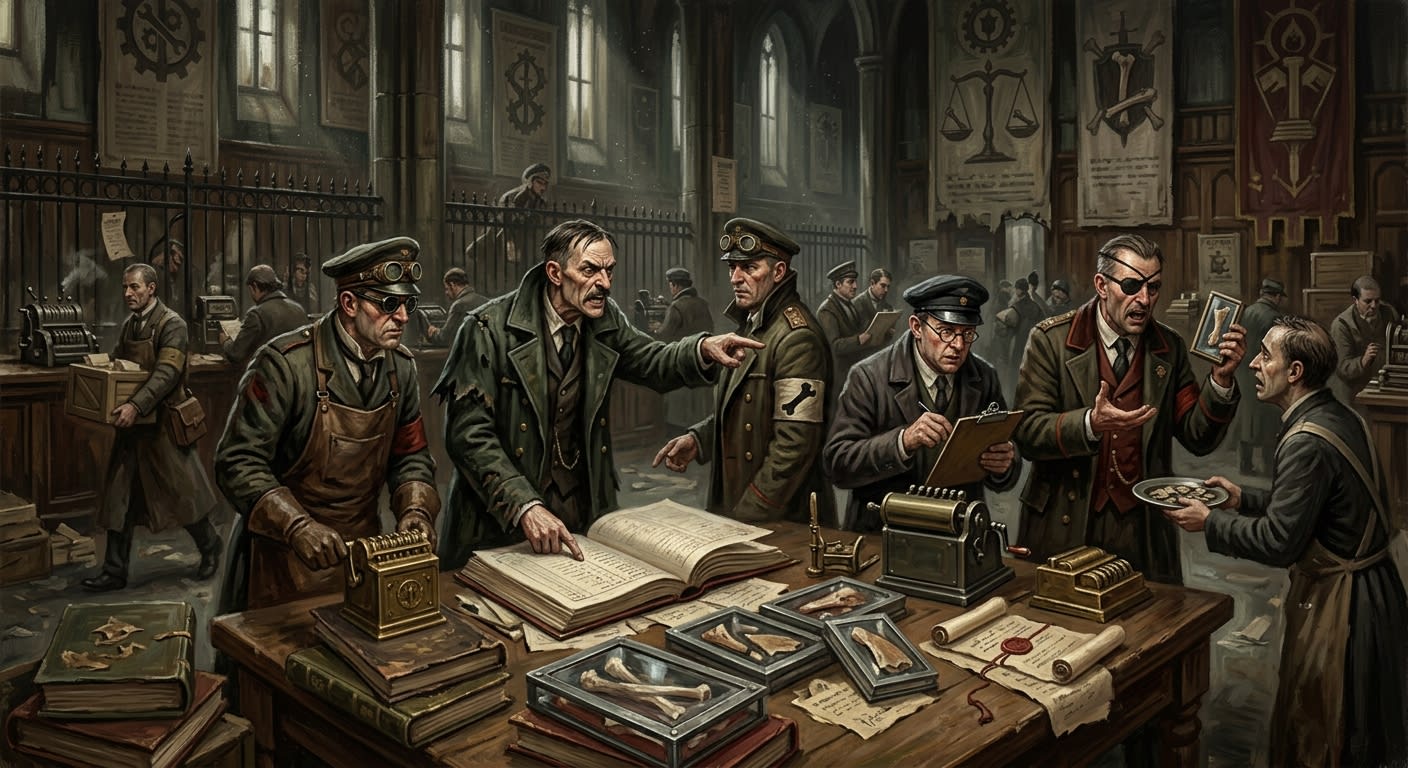
Profit Brokers
Where surplus holiness becomes inventory, urgency, and invoice
Profit Brokers are the aggressive Femur-War Broker faction, maximising contradiction yield through secondary fragments, rival claims, fee-bearing urgency, and useful greed.
Codex Ref. XII.15.03-001
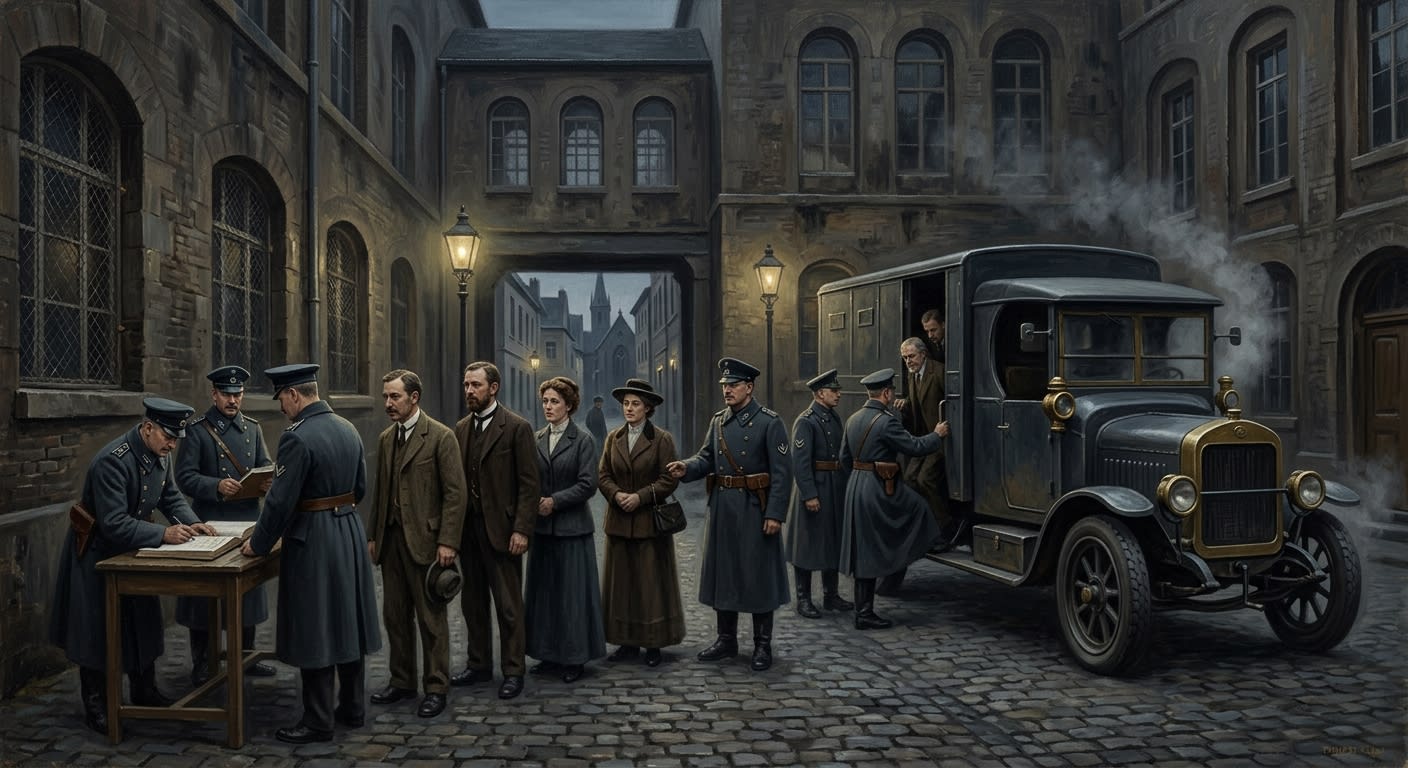
Quiet Purges of A.S. 112
The year absence learned to sign the payroll
The A.S. 112 Rhineland removals of 411 teachers, choirmasters, and Street-Vicars proved Purity could correct without spectacle.
Codex Ref. VII.8.10-010
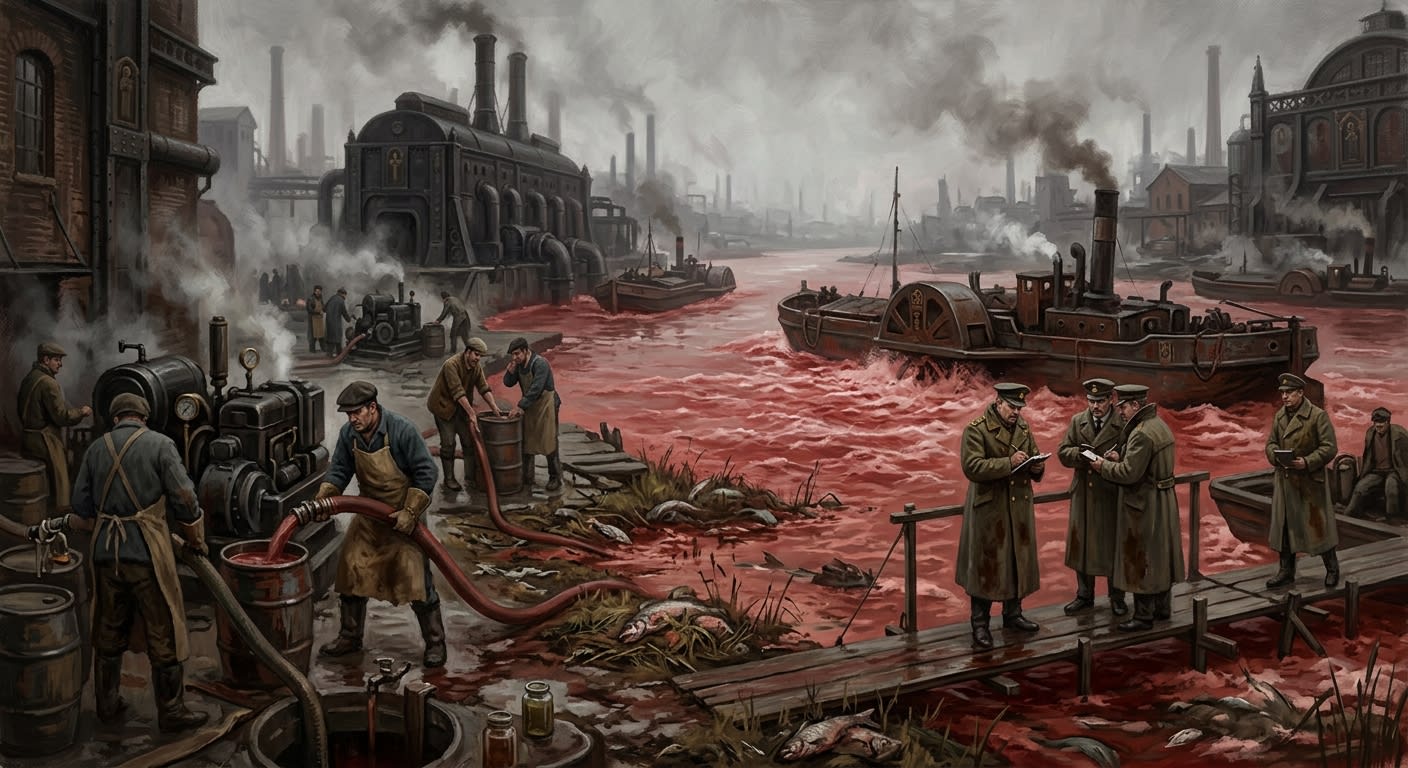
Red Flood of the Danube
The river cleared; the warning did not
The Danube ran crimson for three weeks in A.S. 34, boiling, staining wells, killing fish, and teaching Rationalist hydrology that some rivers are invoices.
Codex Ref. VII.4.18-001
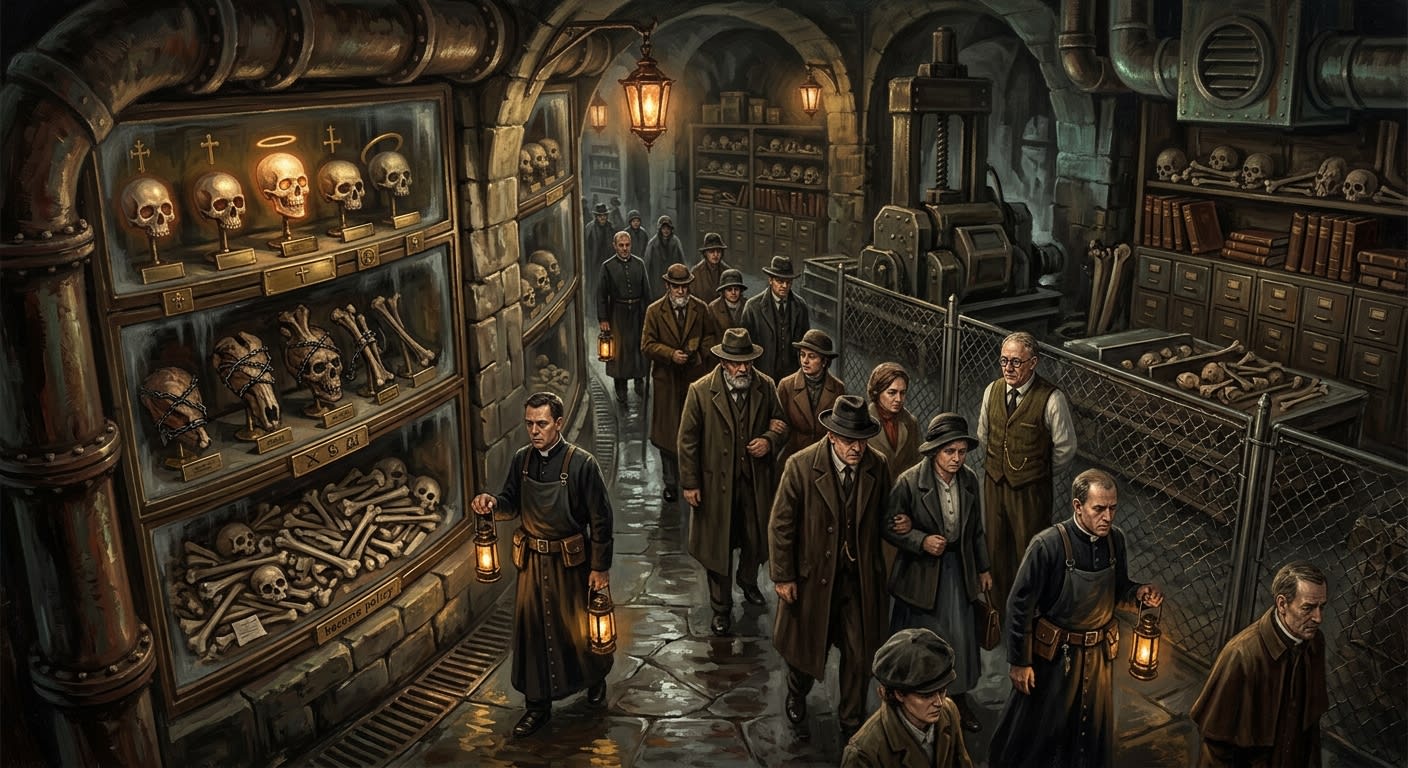
Relics Archive
The polite room before the locked stomach begins digesting saints
The Relics Archive beneath Strasbourg Cathedral teaches pilgrims which bones may be admired, which must be feared, and which have already become policy.
Codex Ref. II.2.06-005

Reliquary of Saint Aldebrand
Count the bones if you must; the mace will wait for Vienna
Saint Aldebrand's reliquary mace was erased, mocked, duplicated, and finally obeyed at Vienna; the Bureau now preserves every contradiction it failed to prevent.
Codex Ref. V.1.02-095
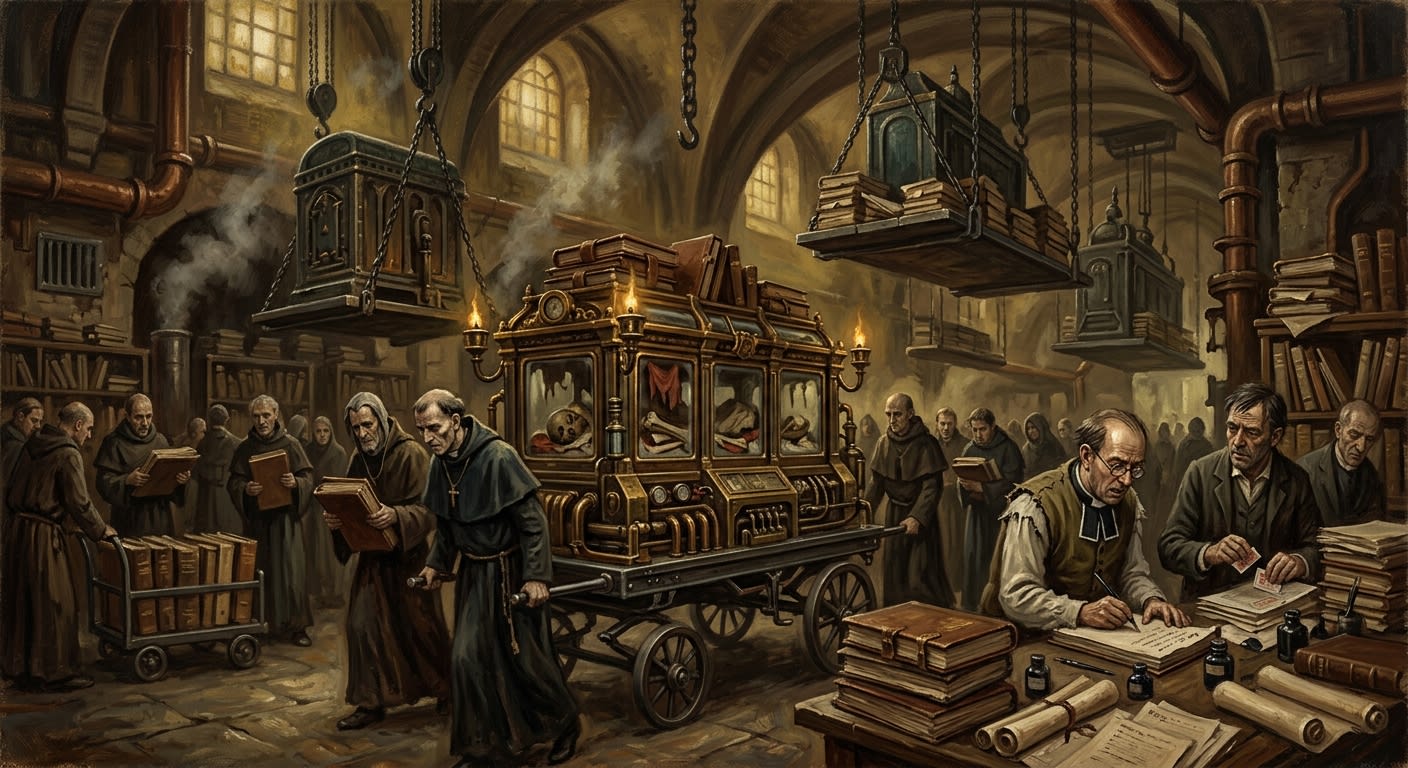
Reliquary Schisms
When valid seals taught anatomy to kneel
The twenty-year relic crisis in which clean paperwork made saints anatomically impossible, until Doctrine gave every notarized femur a throne.
Codex Ref. VII.8.10-140
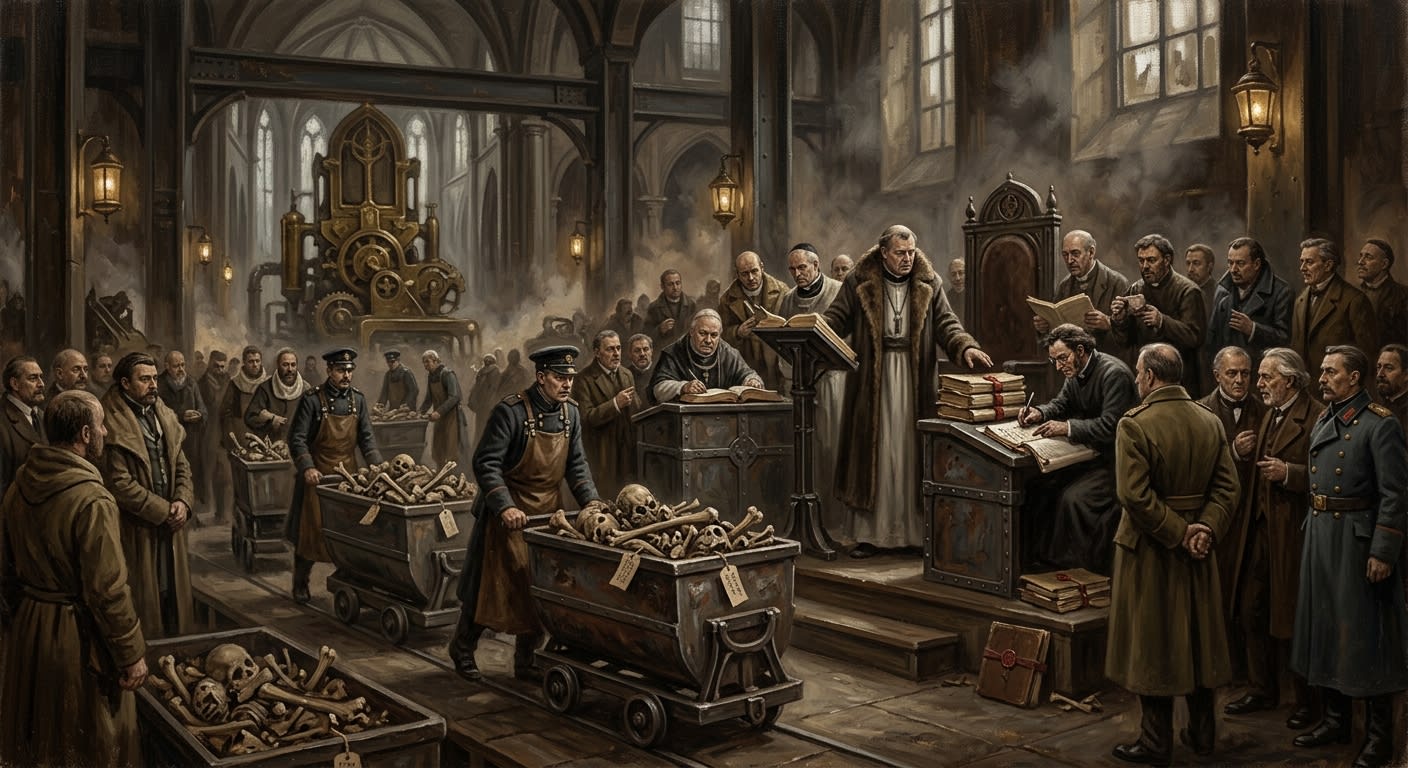
Reliquary Schisms A.S. 140–160
When seventeen femurs became policy and anatomy was reassigned
Twenty years of authenticated surplus bones, shrine bloodshed, and the Fourteenth Doctrinal Congress that made notarized contradiction lawful.
Codex Ref. VII.8.10-090
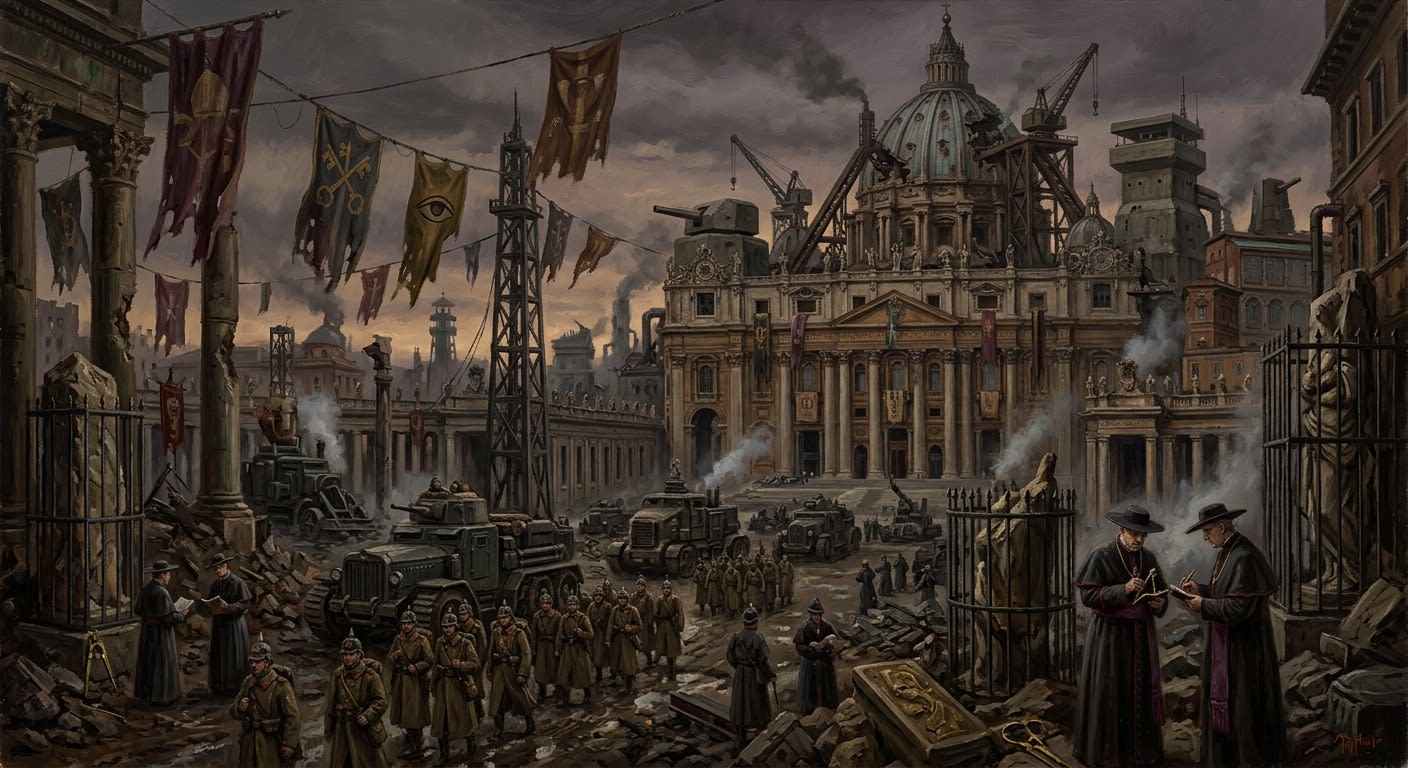
Rome
The old chair, subordinated and still dangerous in pieces
Rome is the Synod-held Old Chair: ruined, supervised, relic-rich, papalist-haunted, and too symbolically useful for Strasbourg to bury cleanly.
Codex Ref. II.1.11-201
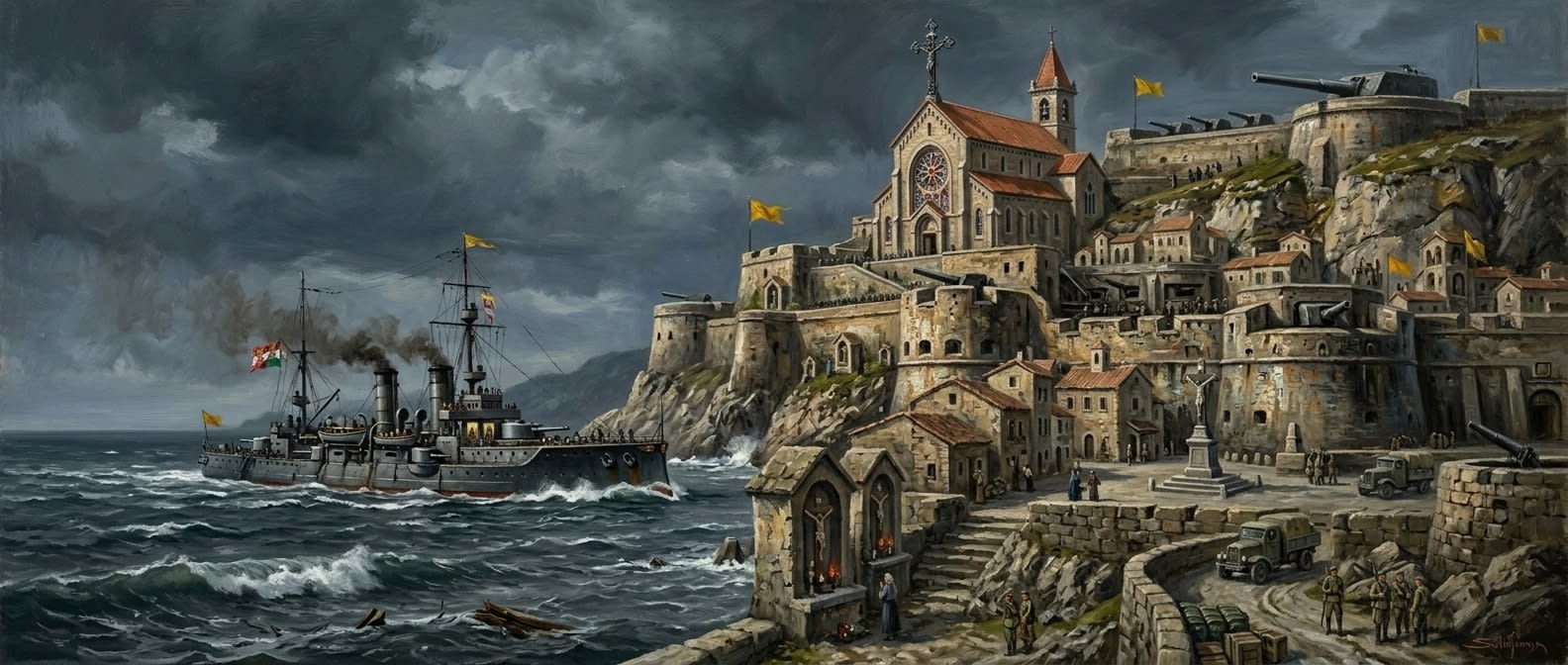
Saffron Bastion
Where quarantine is mercy, mercy is leverage, and the sea pays what it owes
The Synod's coastal chokepoint on the Adriatic — quarantine piers, cliff batteries, saffron flags, and one hundred and twenty thousand souls balanced on the edge of an audit. The sea pays what it owes.
Codex Ref. II.4.09-001

Saint Aurel of the White Wall
The saint who may have arrived after the invoice, yet holds the wall all the same
Disputed patron of Saint-Bone Melters, Saint Aurel offers the convenient femur by which relic fragments become bone-lime, mortar, wall, and doctrine with a clean conscience.
Codex Ref. III.2.01-142

Saint Barachiel
He looked down, and what he saw was true
Saint Barachiel is the Synod's patron of aerial witness: a late-ratified saint, an oversized bone, and the holy permission by which the sky submits.
Codex Ref. III.2.01-167

Saint Cadrin the Measured
A saint so useful the archive had no choice but to discover him
Patron saint of Route-Stampers and Indulgence-Token Smiths, canonised in A.S. 112 to make counted movement, stamped routes, and profitable delay holy.
Codex Ref. III.2.01-141

Saint Edrin of the Three Nails
Cut true, name all, hold the door
Saint Edrin of the Three Nails is the patron of Gate-Carvers, remembered for sealing a plague-house during the A.S. 78 Lull of Names with measure, witness, and refusal.
Codex Ref. III.2.01-120

Saint Gereon
The soldier-saint whose crypt taught Cologne how refusal walks under law
Old soldier-saint of Cologne, patron of disciplined refusal and crypt custody; every faction borrows his sword, which proves the blade remains sharp.
Codex Ref. III.2.01-031

Saint Orla of the Steady Note
The patron who taught singers to hold the note and refuse the answer
Patron of the Iron Choir Brand-Singers, Orla gave Purity its steady note, its closing silence, and its most useful command: do not answer it.
Codex Ref. III.2.01-064

Saint Orla the Brass-Throated
Hold the measure, even when the deck burns and the bell lies
Occupational patron of Shrine-Deck crews, Cadence Callers, Choir Runners, and fire-harmed singers; useful because she kept measure while burning.
Codex Ref. III.2.01-143
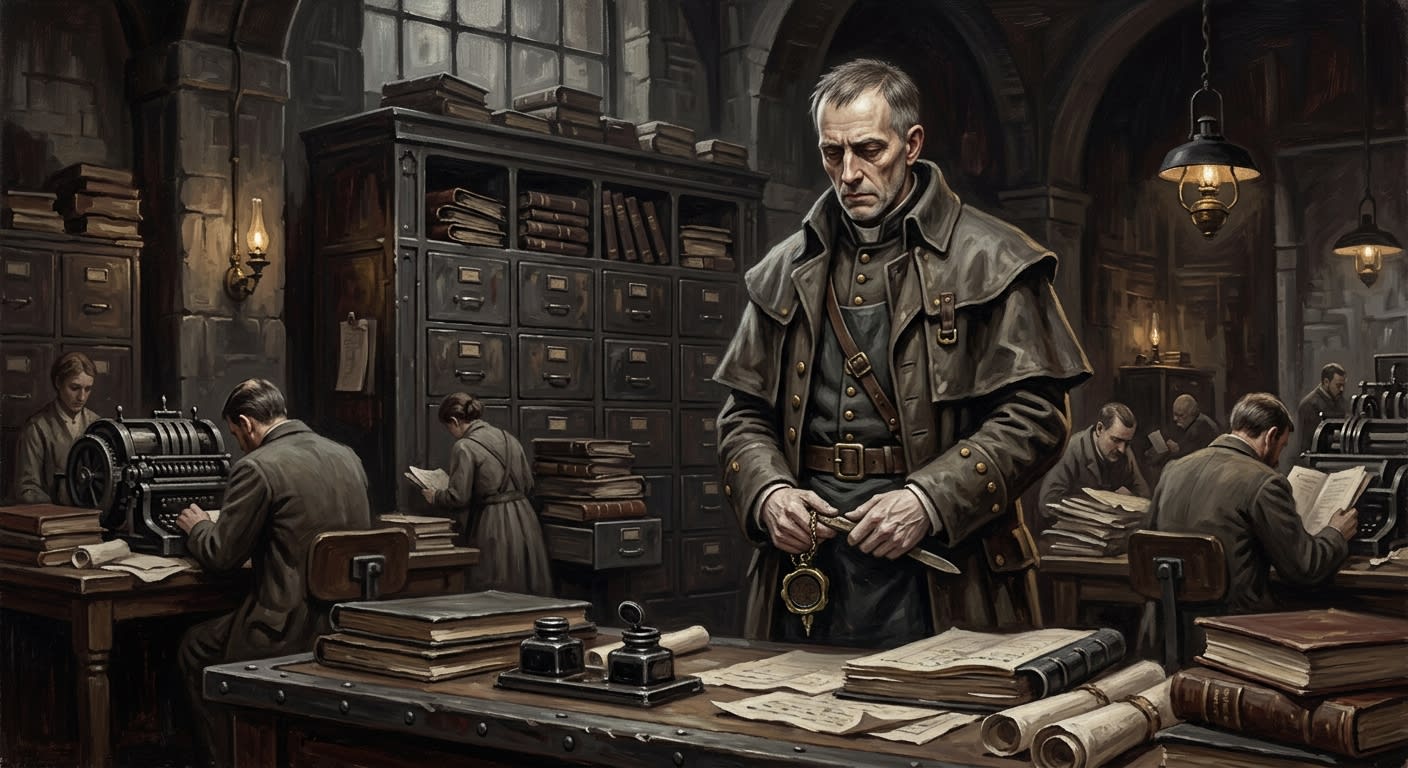
Saint Vellum the Silent
A patron saint whose relic is procedure
Occupational patron of Erasure Notaries, Strike Scribes, Nullity Clerks, and Lineage Severers; a saint of washed hands, black seals, and names made quiet.
Codex Ref. III.2.01-113

Saint Verral of the Clean Field
The hot blade is kinder than the singing wall
Doubtful patron of Sigil Inspectors and field scrapers, useful because his hot blade gives Heraldry a saint for every wall that must be made obedient.
Codex Ref. III.2.01-144
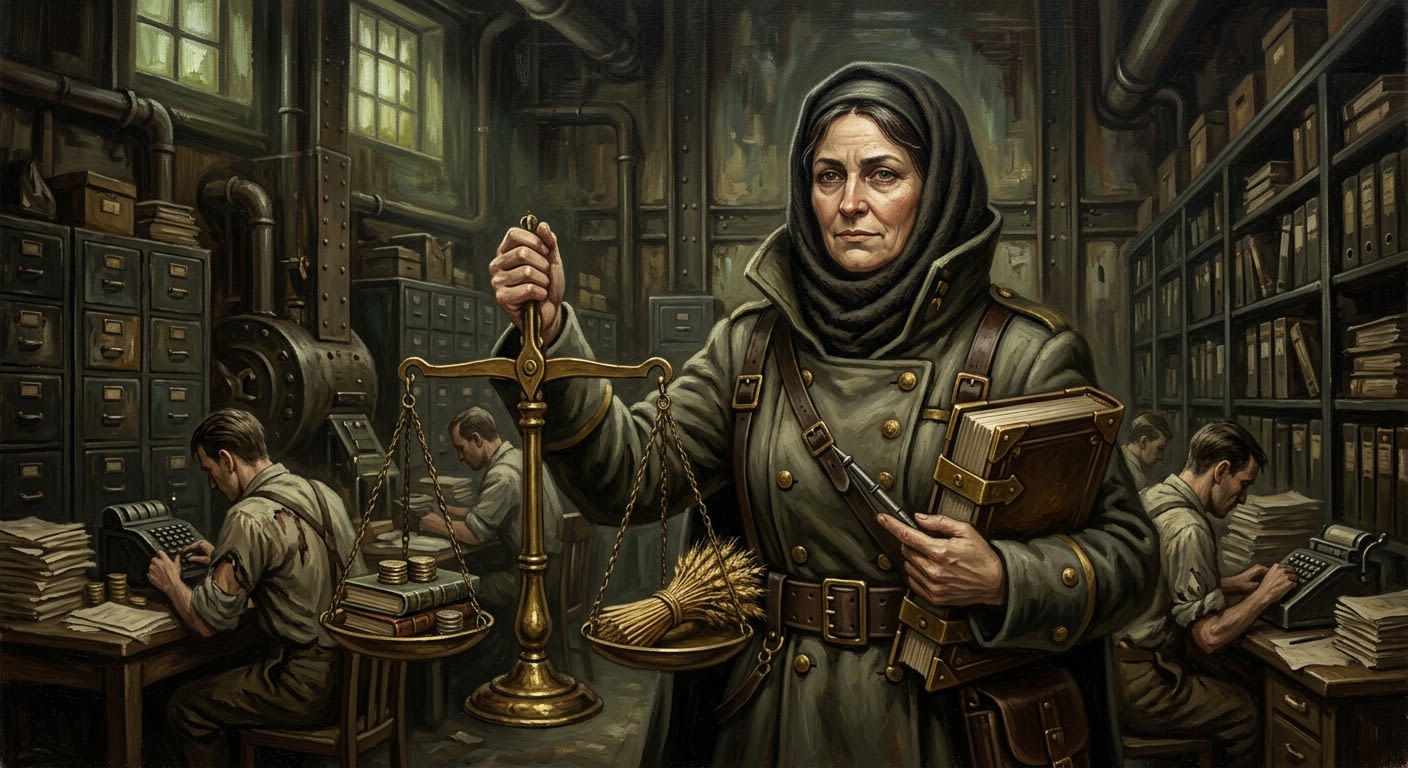
Saint Ysolt of the Scales
Patroness of pity weighed until it becomes collection
Ratified patron of Tithe Assessors and arrears clerks, Saint Ysolt gives extraction a kindly face, a brass scale, and a grain that never falls.
Codex Ref. III.2.01-146
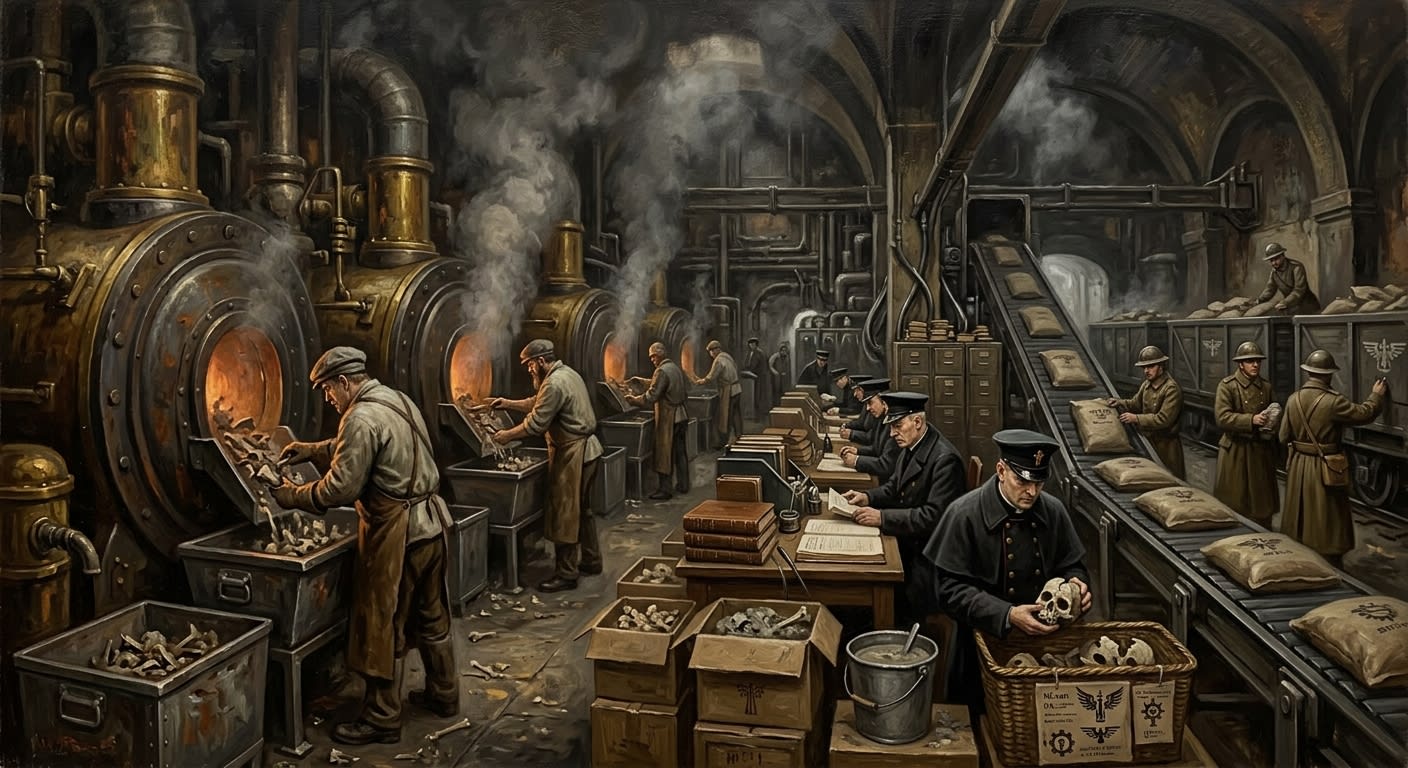
Saint-Bone Melting Acts A.S. 96
The statute that taught saints to bear weight, whether they had consented neatly or not
A.S. 96 legislation that turned surplus, damaged, disputed, duplicated, and unassignable relic fragments into deployable sanctified mortar for the Sagittal Line.
Codex Ref. VII.2.10-096

Salzburg
The Alpine city where a warm shinbone taught bishops to bleed politely
Salzburg is a profitable Alpine shrine-city whose Warm Tibia dispute killed two bishops and made custody smell faintly of salt, wax, and knives.
Codex Ref. II.3.05-141
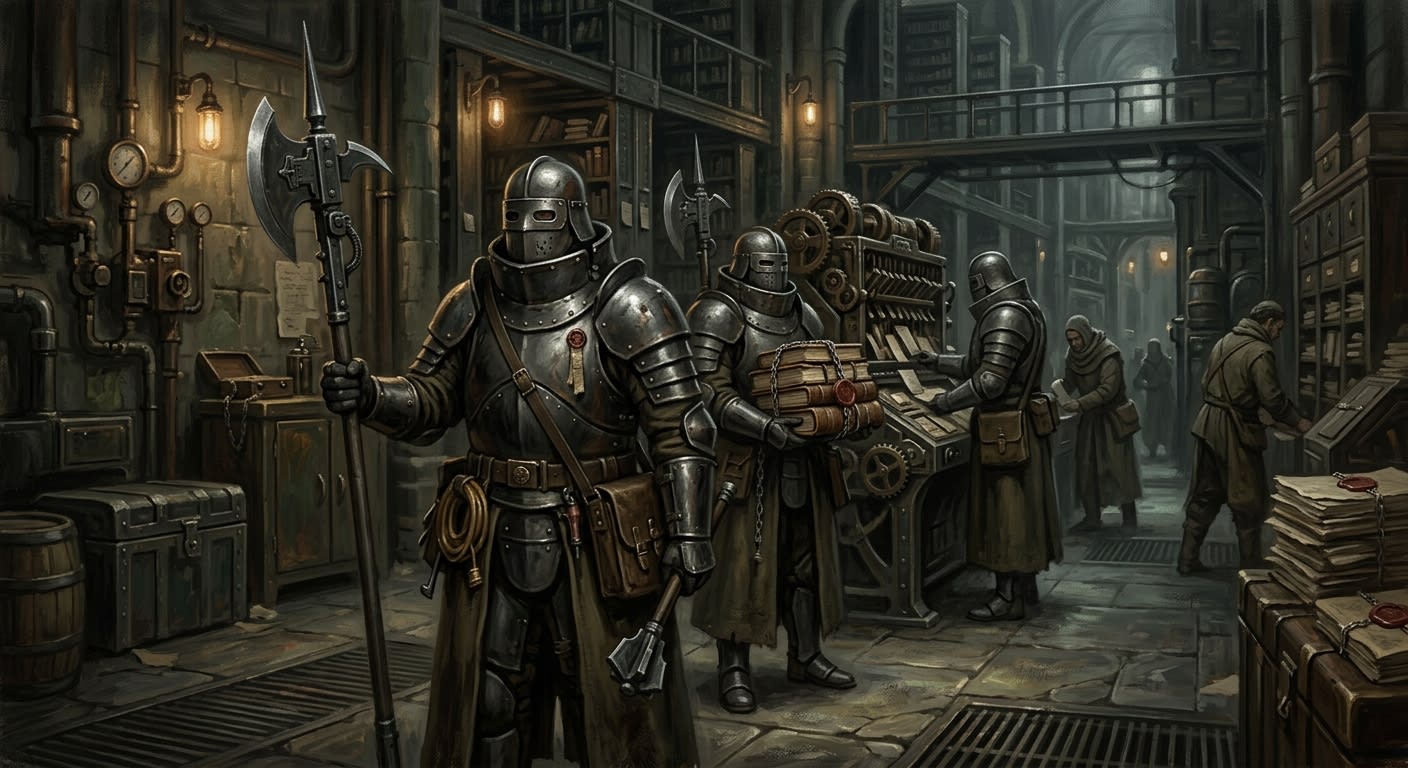
Seal Custodians
The box is small because sovereignty likes to be stolen by inches
Elite Circuit Bailiffs formed after the Seal Theft Scandals to guard judicial seals, wax, rags, cooling marks, and every scrap by which sovereignty may be counterfeited.
Codex Ref. XII.39.03-001
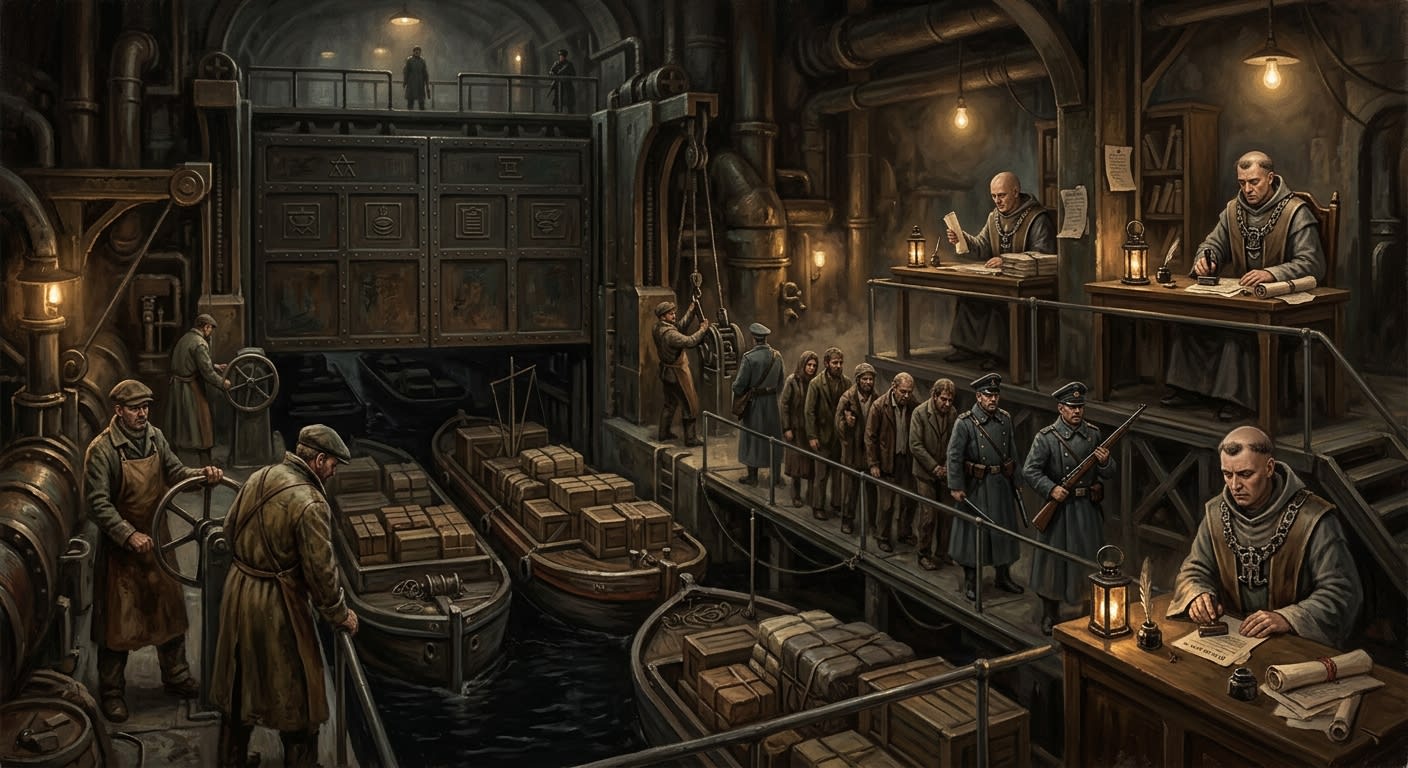
Seal Locks
Where the river kneels, the Ledger learns to swim
Seal Locks pause water, cargo, papers, fugitives, ink, dust, and conscience long enough for the Synod to call movement lawful and billable.
Codex Ref. XIII.1.95-092
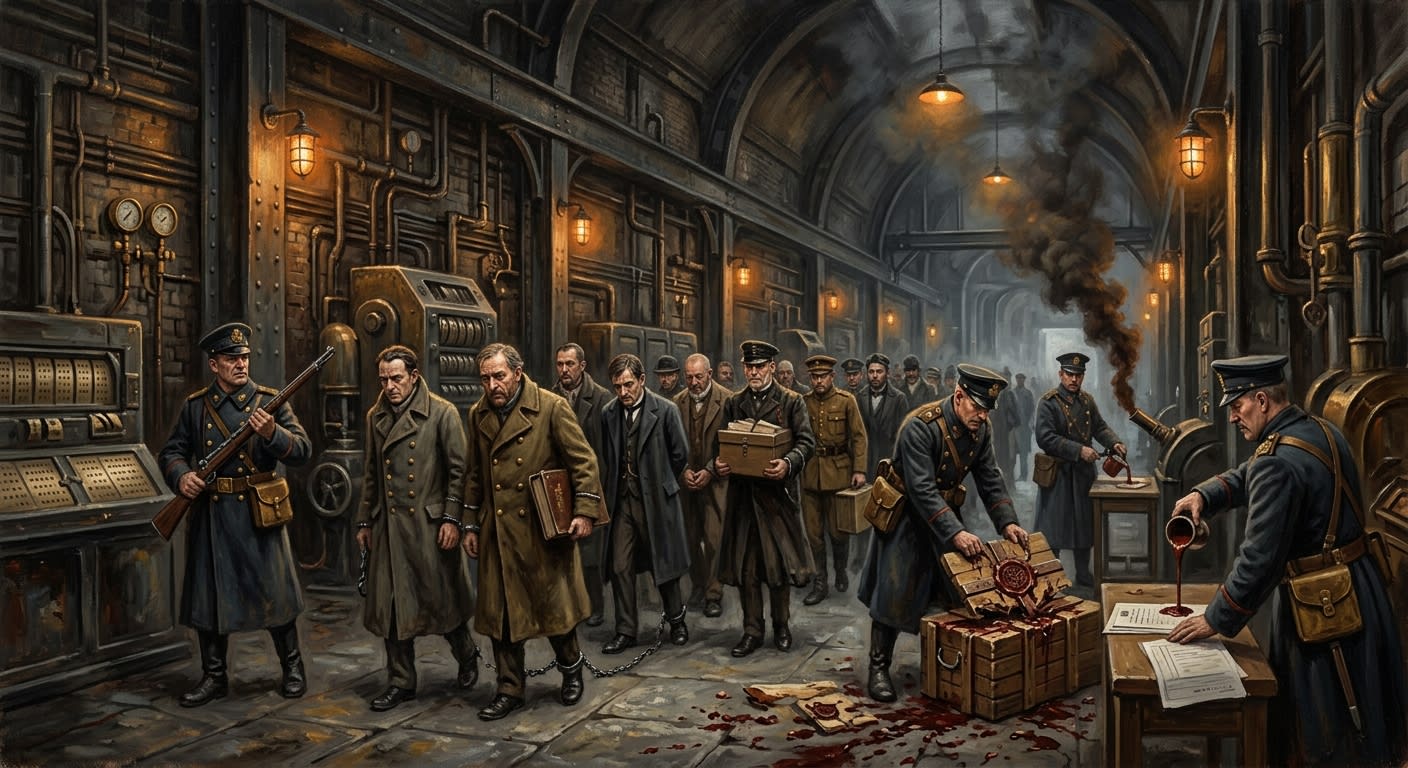
Seal Theft Scandals A.S. 158
Three false impressions and the day sovereignty learned to smell its own wax
The A.S. 158 Seal Theft Scandals exposed forged judicial impressions across the Rhine circuits, purged a third of the bailiff corps, and made wax residue into doctrine.
Codex Ref. VII.8.10-096
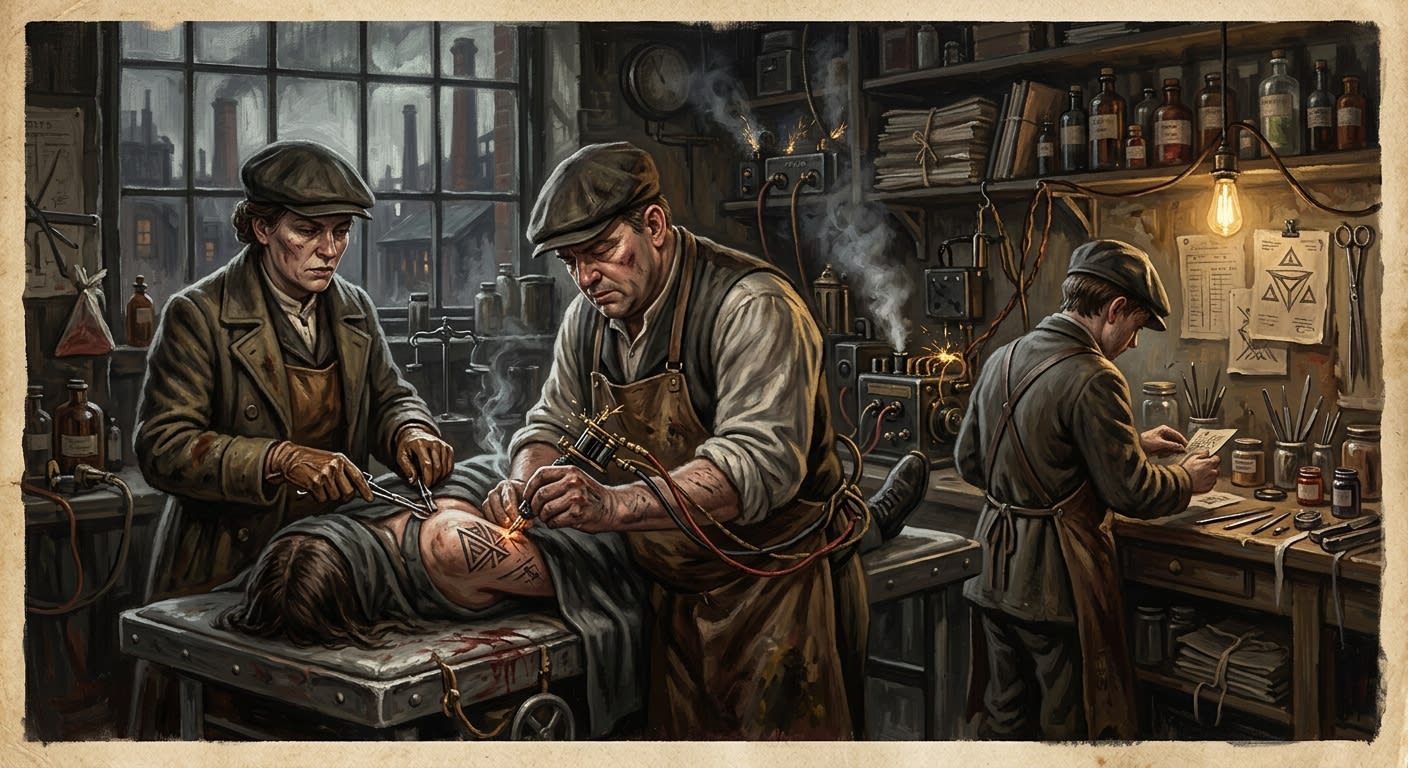
Shadow Angle Crews
The illegal geometry that teaches skin to lie back
Shadow Angle crews are unlicensed Brand-Smith cells that alter, downgrade, counterfeit, and erase bodily tri-marks wherever lawful identity has become intolerable.
Codex Ref. XI.5.01-001
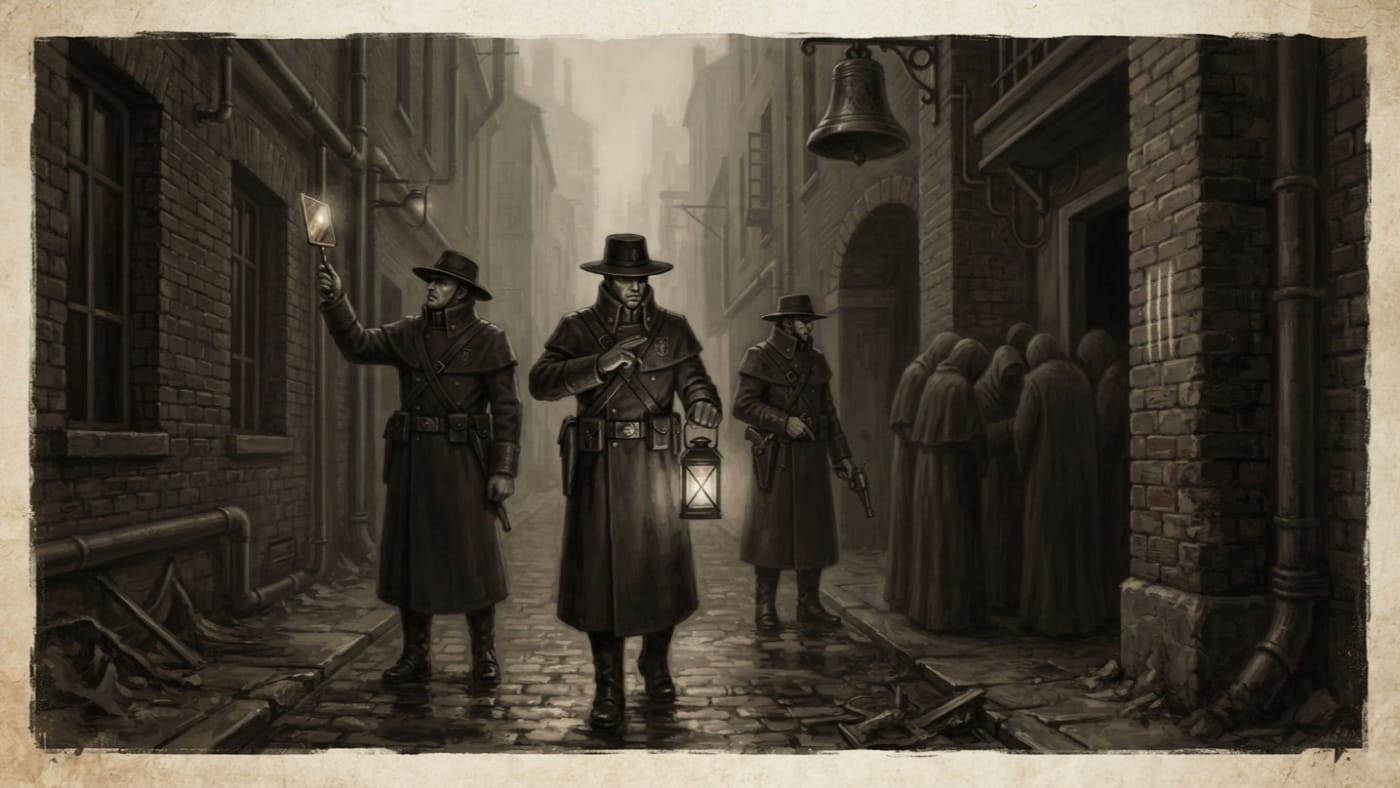
Signal Law
The hand commands what the bell cannot reach
Signal Law lets Mute Radiance command bell-dead streets by hand-code, mirror-flash and chalk. Auxiliary toleration supplies its licence; the charter claims the alley. Quiet congregations expose what silence-order cannot govern.
Codex Ref. XIII.1.76-005
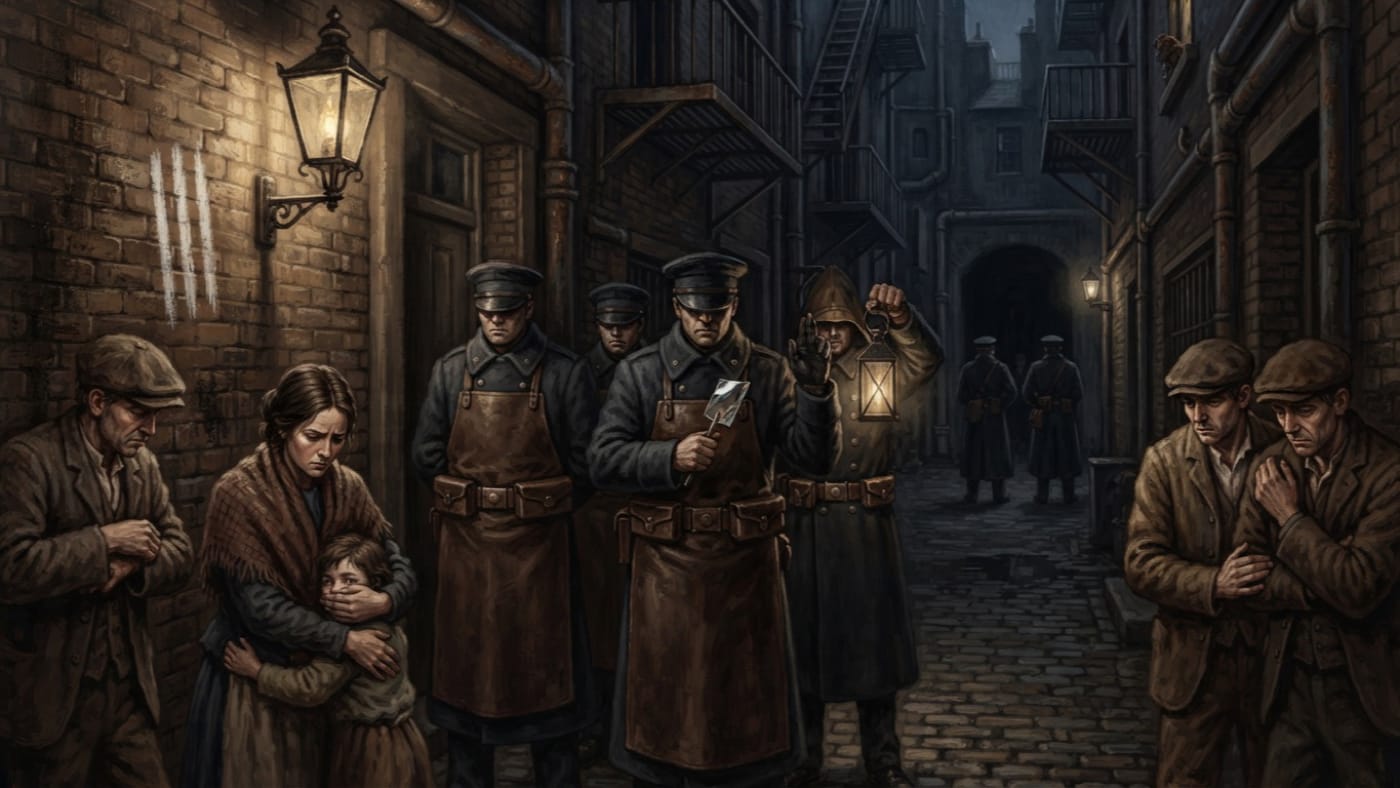
Silence-Order
A quiet street makes an immaculate return
Mute Radiance's silence-order forbids screams, gatherings and audible truth in hush-zones. Panic suppression earns toleration; silent detention keeps the returns clean. Quiet preaching leaves the mandate's boundary unresolved.
Codex Ref. XIII.1.76-006
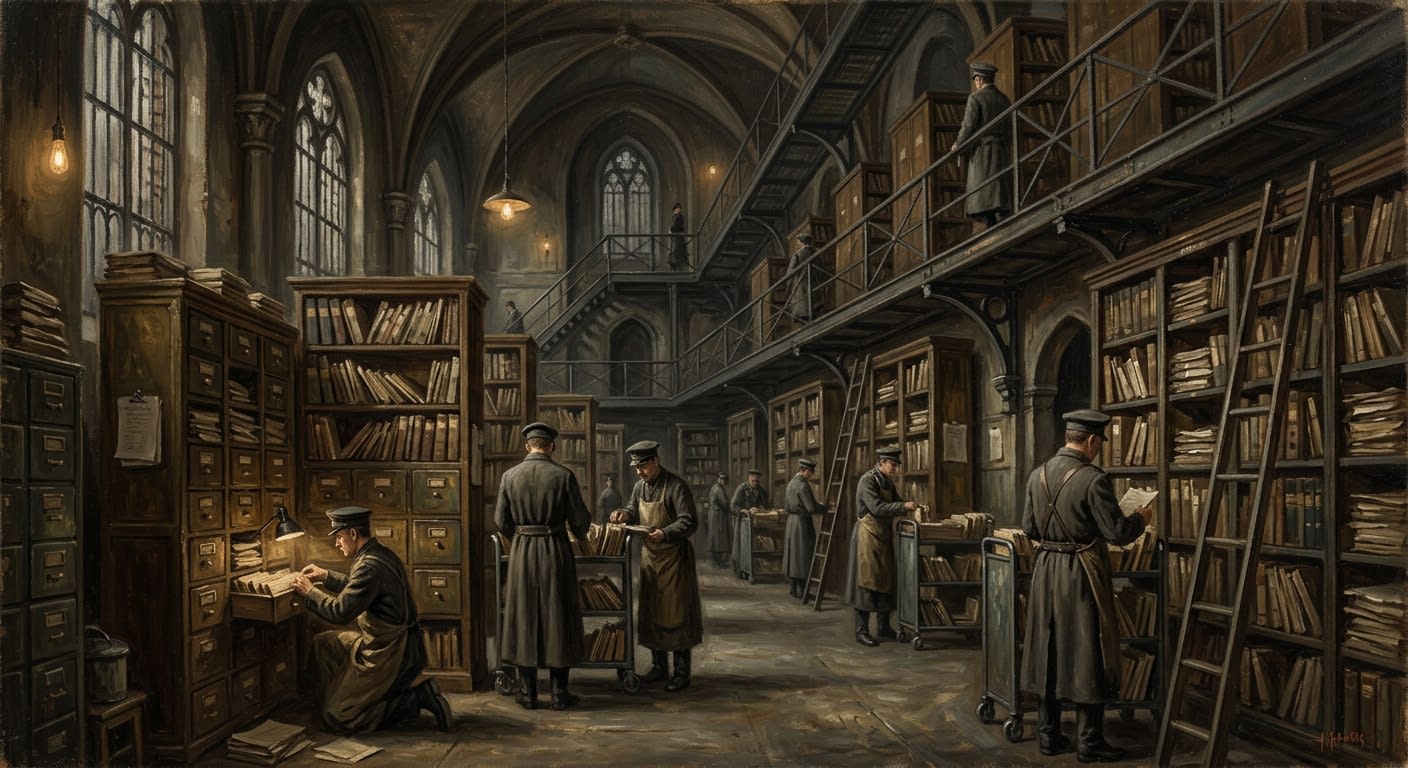
Sofia Filing Annex
A seminary gutted, shelved, and made merciful by neglect
The Sofia Filing Annex is a converted seminary where the Bureau of Records stores southern personnel files, impossible dates, and people too useful to diagnose.
Codex Ref. II.4.09-012
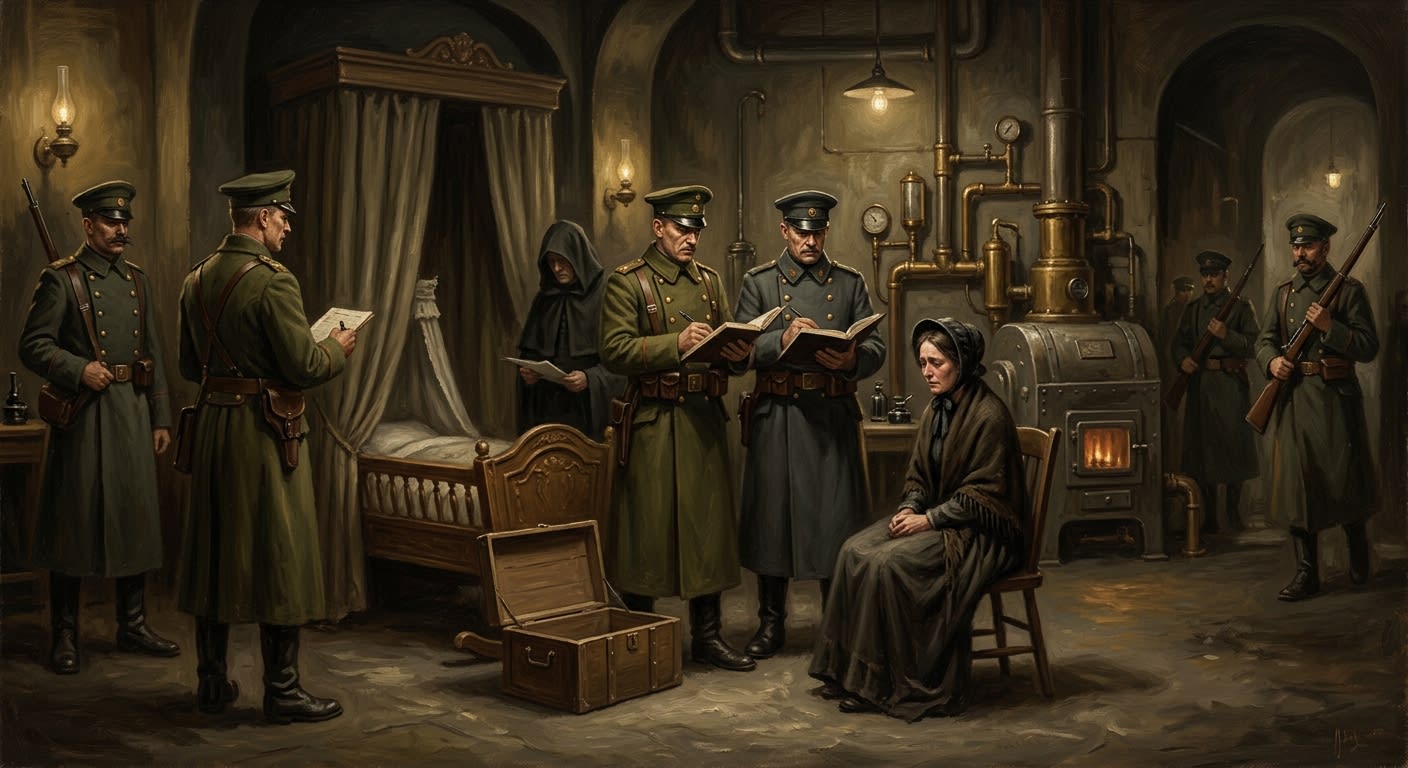
Standing Order 34-PK
The cradle confesses when the Ledger is hungry
Standing Order 34-PK makes the hidden cradle confess: missing infants become stolen soldiers, and a mother’s silence becomes evidence.
Codex Ref. XIII.1.34-158

Stone Sharks
Safety by the inch, eviction by the weather, mercy by invoice
Stone Sharks are the profit-hardened branch of Grave-Field Shanty Brokers: orderly grave-lane landlords who sell safety, patrol blindness, and winter survival at predatory rates.
Codex Ref. XII.27.03-001
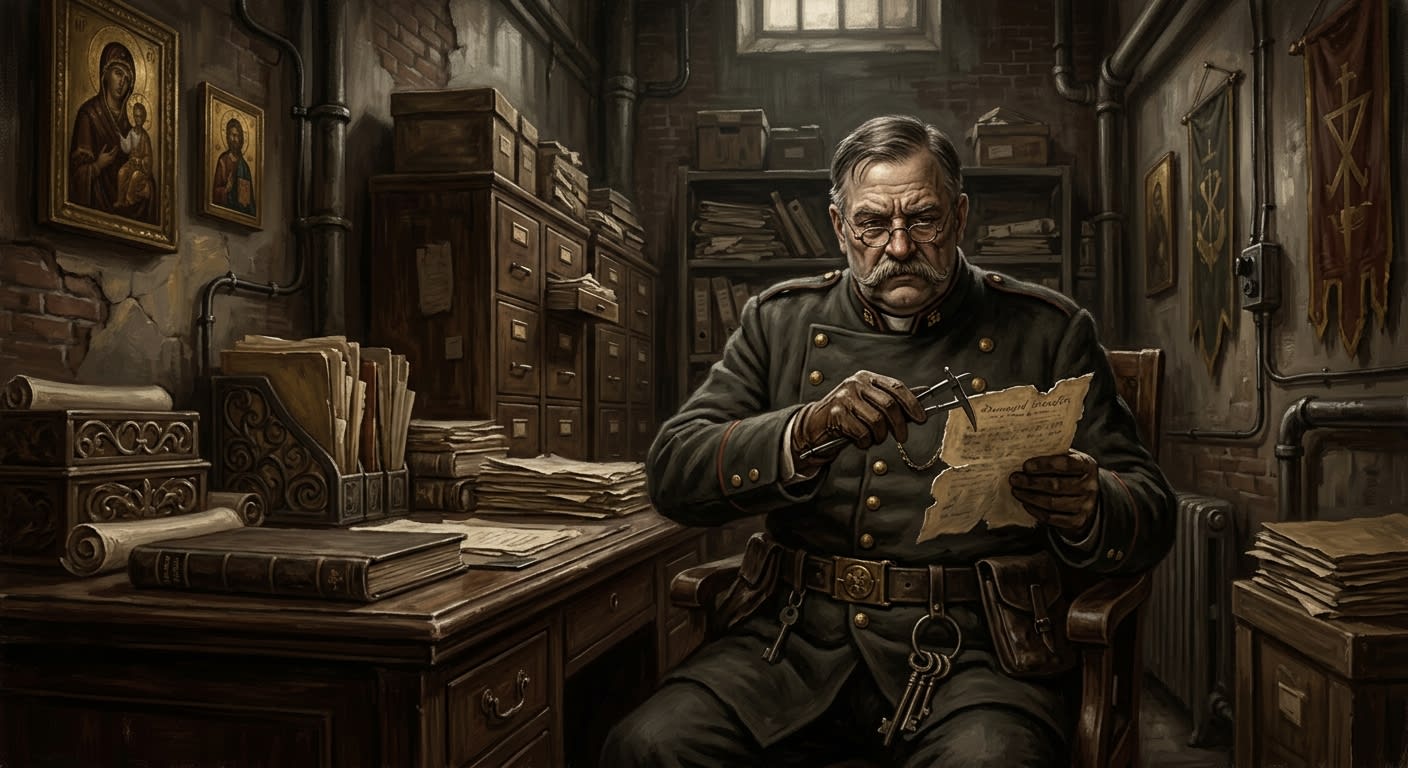
Superintendent Horvath
Mercy disguised as custody, filed under acceptable output
Superintendent Horvath keeps the Sofia Filing Annex running by treating damaged transfers as records worth preserving, which is almost mercy and therefore suspicious.
Codex Ref. III.2.01-151
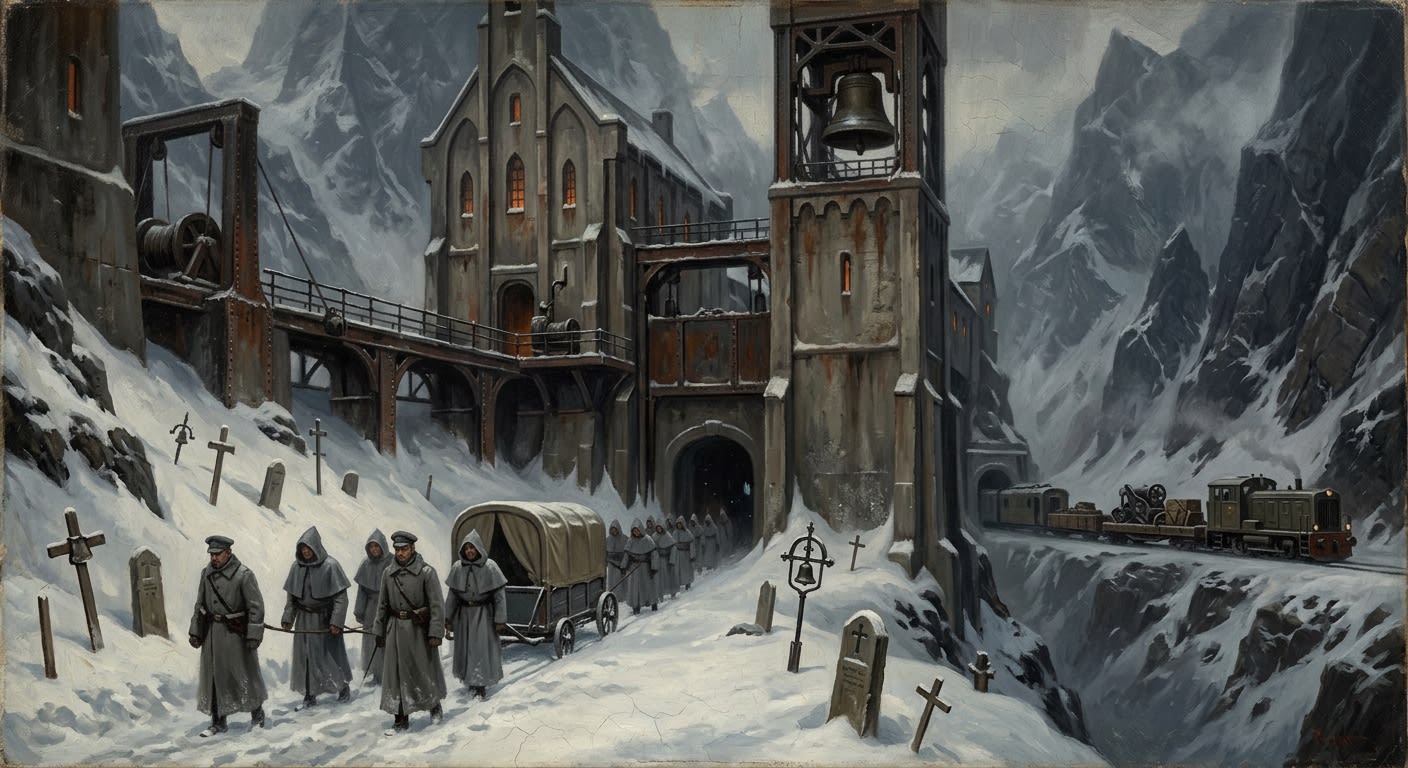
Swiss Cantons
Where mercy climbs uphill and stops writing back
The Swiss cantons keep passes, bells, hospice beds, and the Synod's most merciful disappearances beneath snow clean enough to indict Heaven.
Codex Ref. II.2.08-201
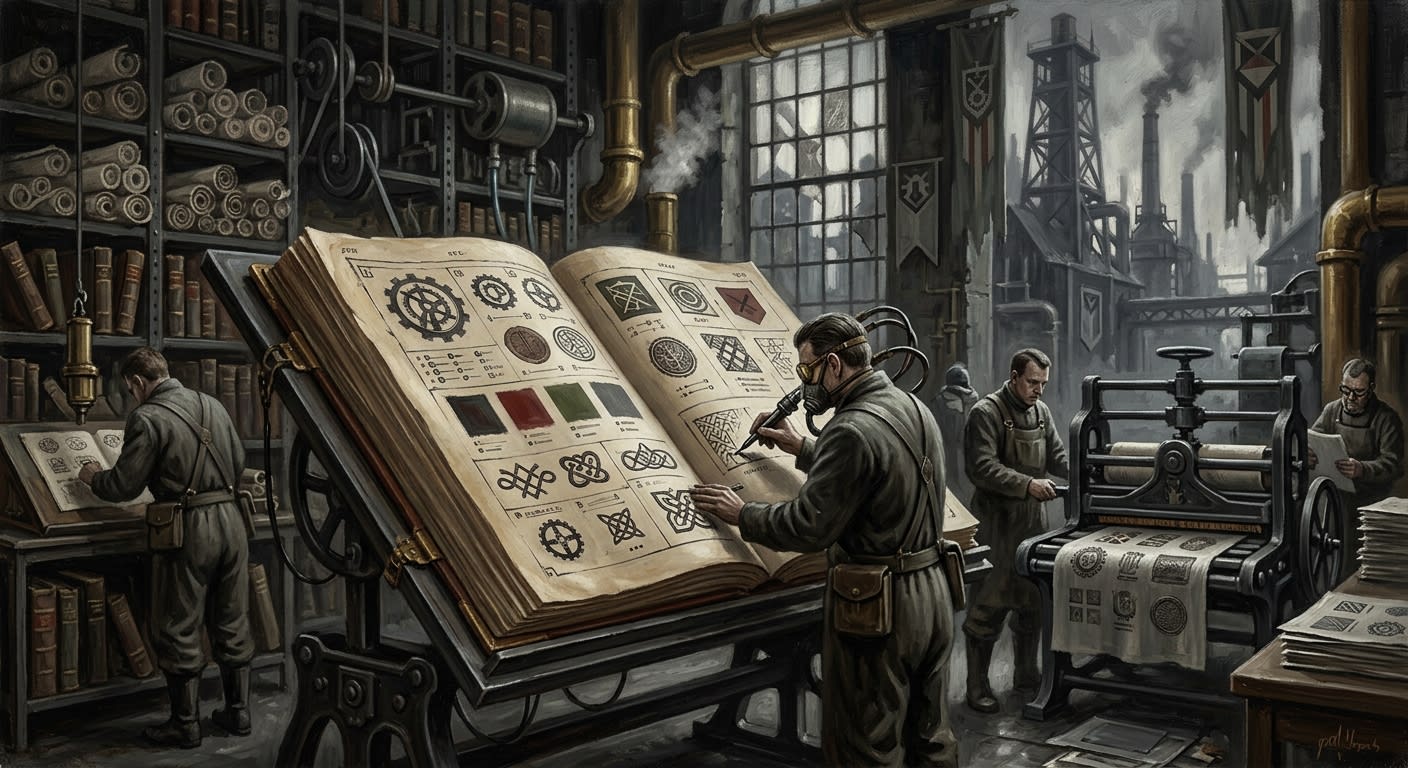
The Armorial of the Faithful
The book by which even colors learn obedience
The Armorial teaches every banner, crest, seal, colour, knot, and shop sign in the Synod the first virtue of a surface: obedience.
Codex Ref. VIII.1.03-002

The Ashen Circle
The denied archive that keeps the official world from collapsing
Unsanctioned scholarly network named in A.S. 103, trafficking in forbidden histories and sciences while the Bureaus deny, hunt, purchase, and depend upon its ash-borne work.
Codex Ref. XI.1.01-002
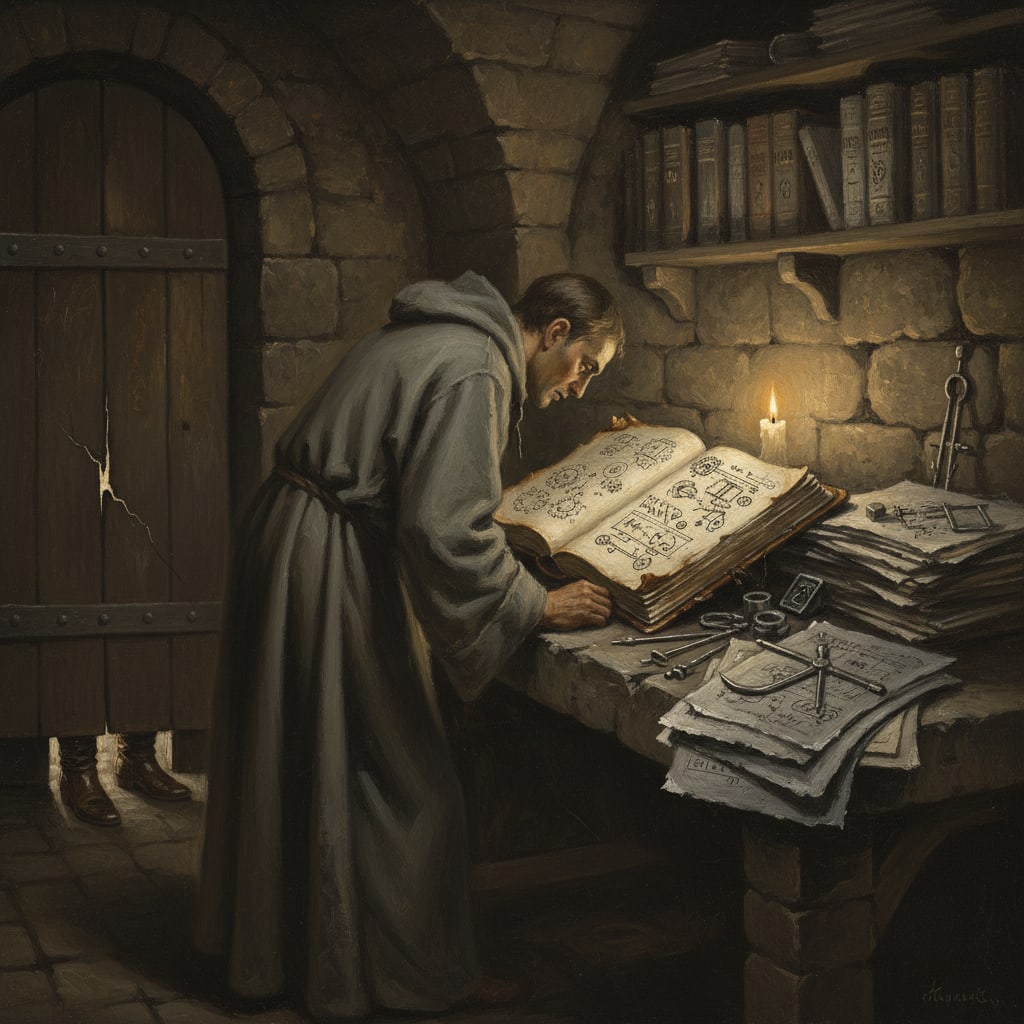
The Ashen Circle Scholar
What the Bureau Burns, the Circle Preserves — the Synod's Indispensable Heretic
The Bureau calls them poison. The front calls them indispensable. The Ashen Circle Scholar trades in what the Index Damnatus cannot afford to have gone permanently missing.
Codex Ref. XI.1.01-001
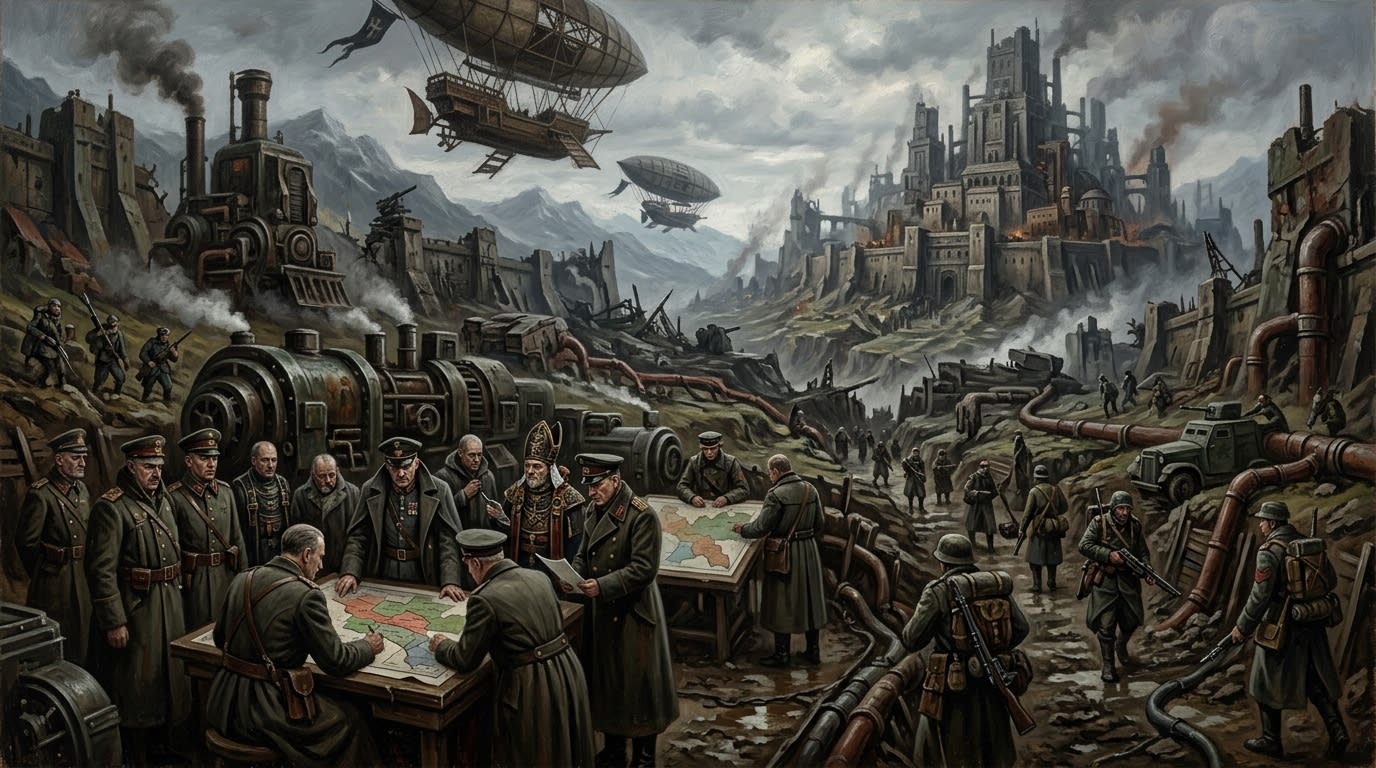
The Balkans
The wound that taught Europe to count its bleeding
The Balkan wound-region, broken first by the Eastern Silence and the Sundering, then divided into Synod margins, contested corridors, Sin-General dominions.
Codex Ref. II.6.05-045
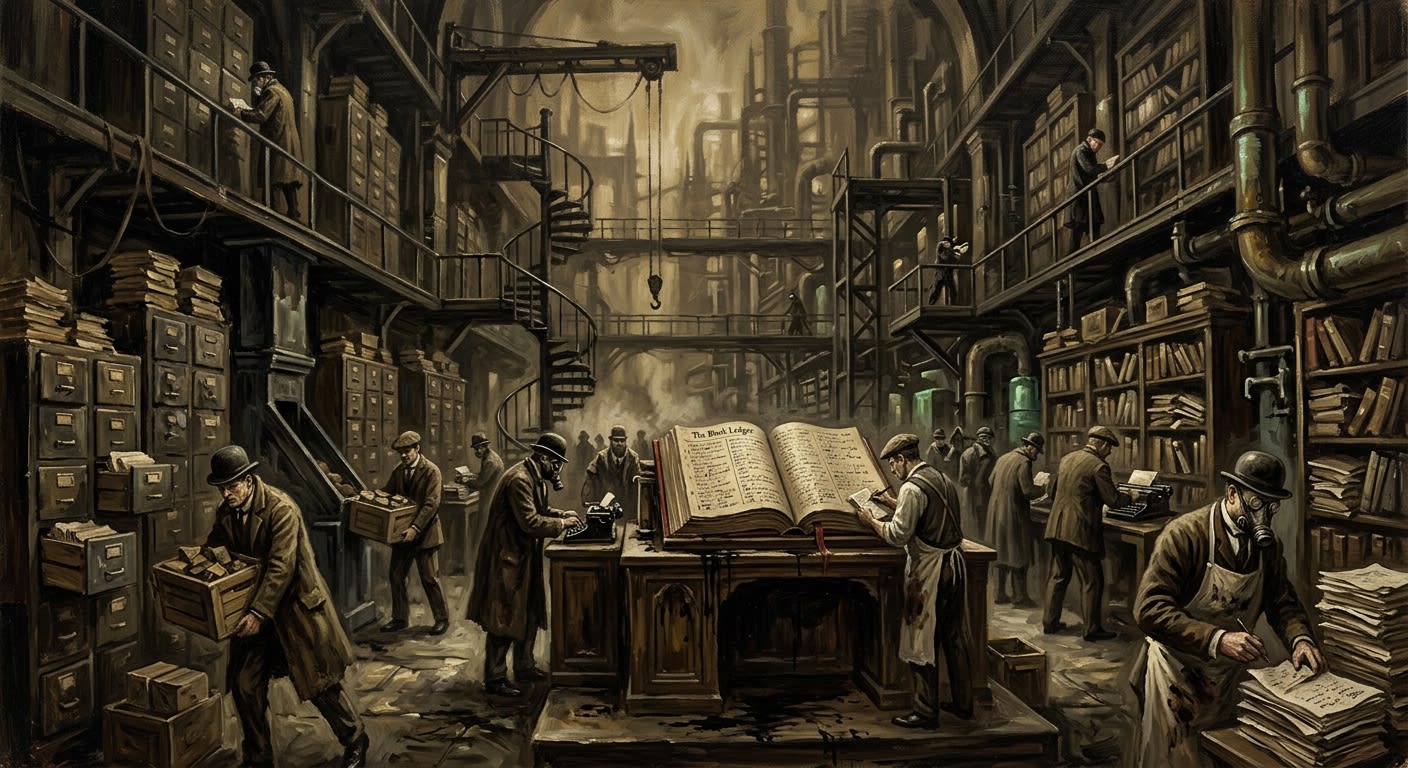
The Black Ledger
Hunger with a filing system and better memory than mercy
The Black Ledger is the Synod's gutter-mirror: a criminal heretical network that steals, feeds, records debt, and turns absence into jurisdiction.
Codex Ref. XI.1.04-001
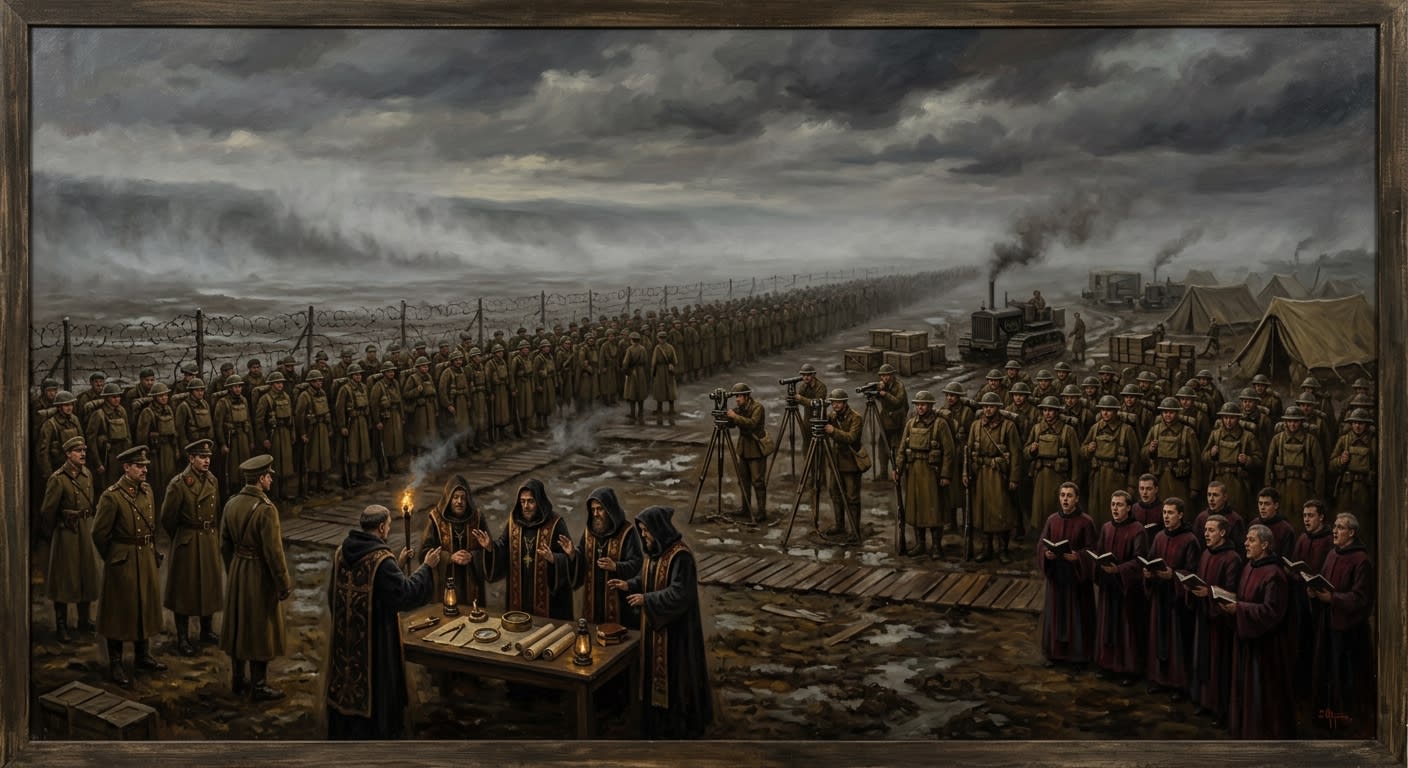
The Cartographic Expedition of A.S. 73
Three hundred men went to draw a map. The map drew them instead.
In A.S. 73, three hundred men entered the Charnel Lands to draw a map. Fourteen returned, and on every folio they carried — drawn in charcoal, ink, graphite, and in one case blood — the same face. Commission 73-C is closed. Its lesson is not.
Codex Ref. VII.1.01-001
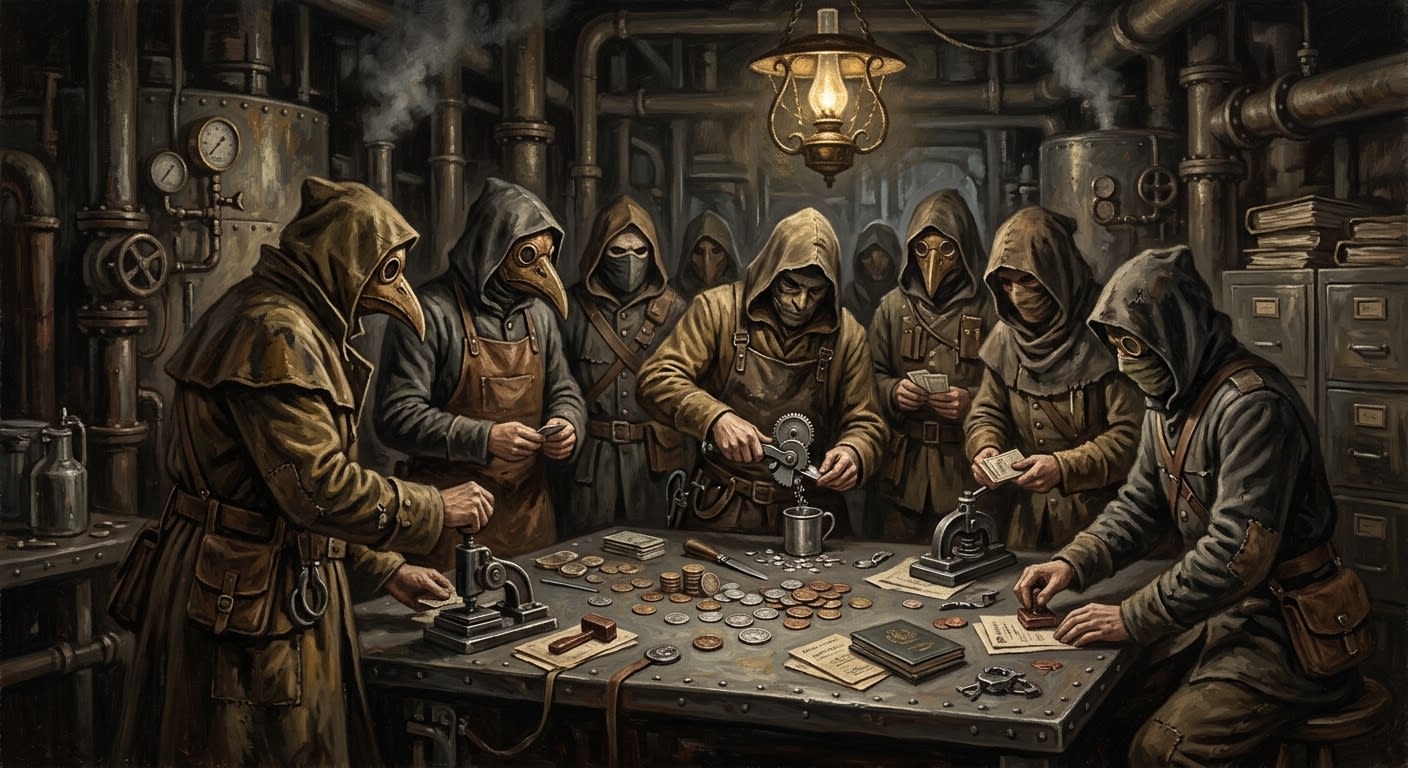
The Clipped Choir
The counter-mint beneath Sable Court’s lawful face
Beneath Sable Court’s lawful face, the Clipped Choir clips coin, rents recognition, and proves that even identity has a discount stall.
Codex Ref. XI.7.02-004
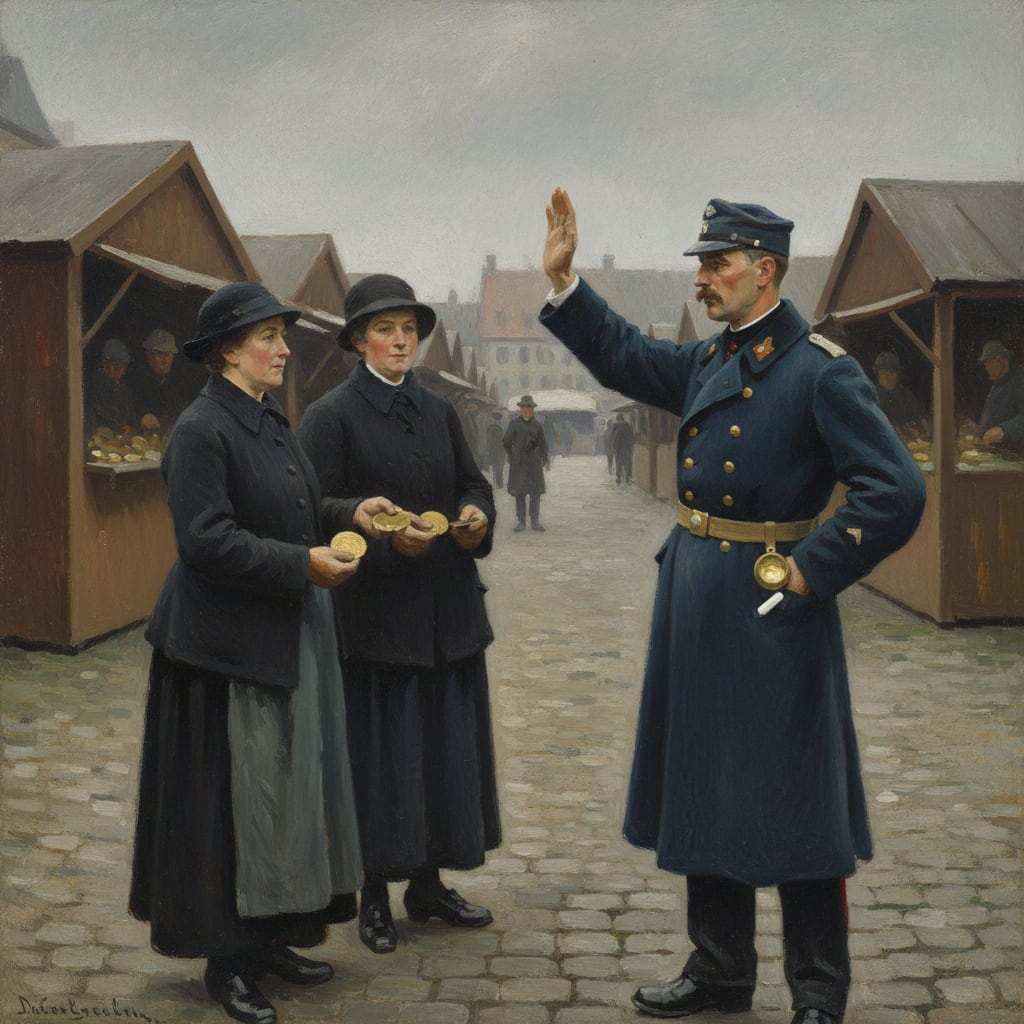
The Doctrine Street-Vicar
The bell's feet; the chalk's teeth; the compliance that comes to you.
The Bureau of Doctrine's mobile enforcement arm: four thousand three hundred chalk-bearing officers who walk where the bell cannot reach, inspect purity tokens, and mark doorframes in white, yellow, and red.
Codex Ref. XII.9.02-001

The Eternal Creed
The first tax of the day is breath
The Eternal Creed is the Synod's oral civic machine: recited at dawn, commerce, correction, and inspection, hidden from paper so obedience may occupy the tongue.
Codex Ref. XIII.1.68-001
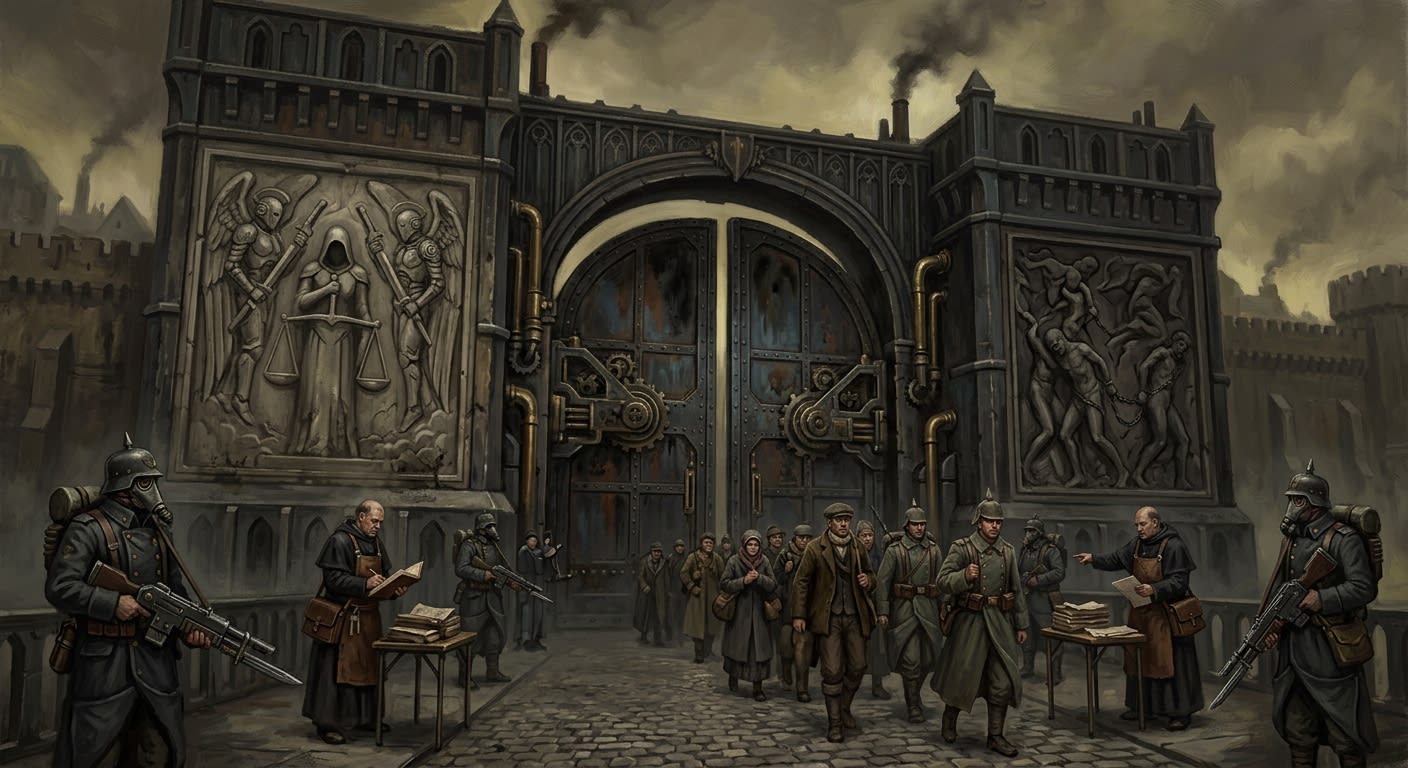
The Gates of Regensburg
Blessing above, curse below, and the pamphlet between
Regensburg's western gates bless and curse the traveller at once, leaving theologians, pamphleteers, and sinners to discover which verdict bites first.
Codex Ref. VII.2.01-003
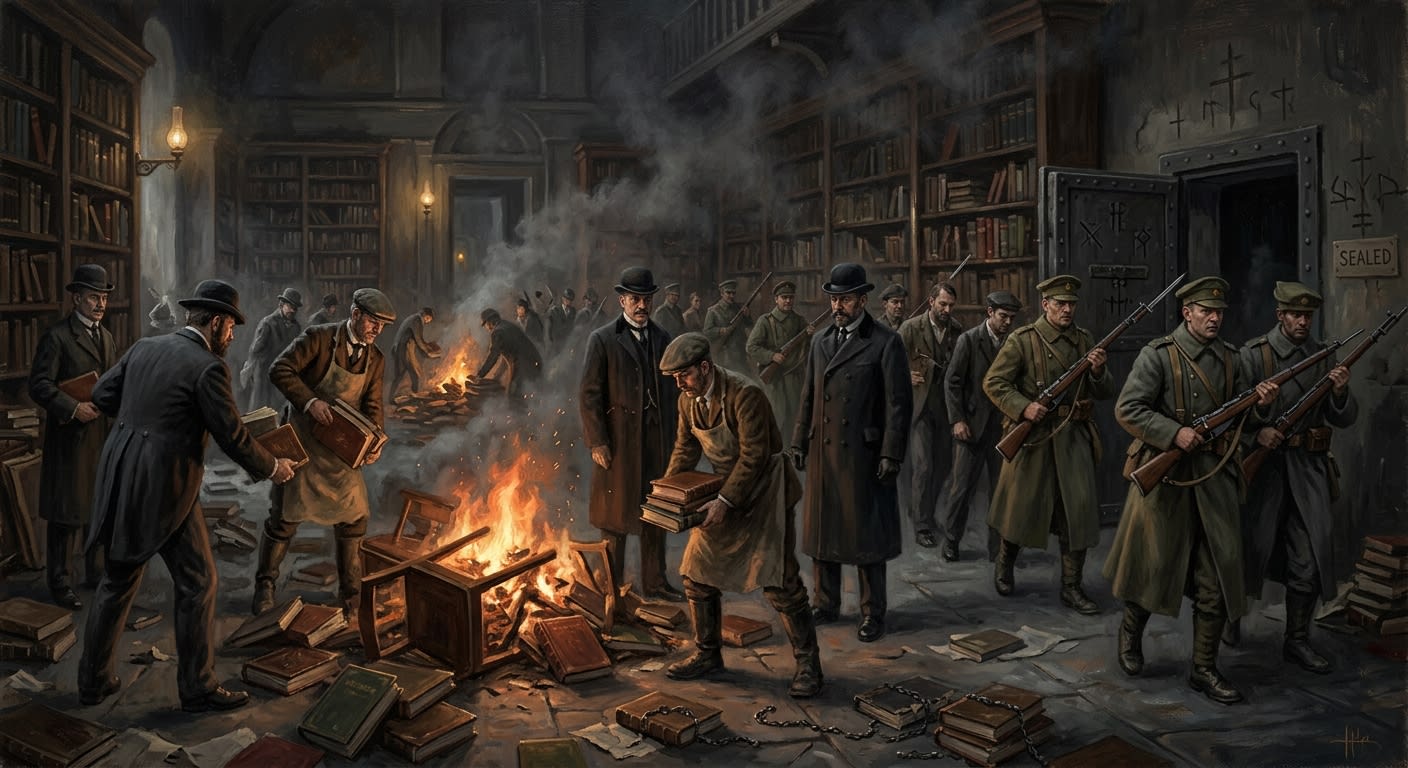
The Great Purge of Margins
Silence scraped the page clean and taught thought to hide in warmer vessels
The A.S. 56–58 Silence campaign against annotated books executed forty-seven scribes, sealed libraries, and accidentally taught the Ashen Circle how to survive without margins.
Codex Ref. VII.8.11-001

The Greyling Cohort
Children born under the sky that declined to answer
The Greyling Cohort names the silent grey-eyed children born during the Year Without Dawn, officially extinct, unofficially watched by anyone sensible.
Codex Ref. XIII.1.32-001

The Heartlands
The safe country, provided one defines safety as distance from teeth and proximity to stamps
The Heartlands are the Synod's safe interior only by infantry arithmetic: Zones 1–3 feed the Line with bread, steel, bodies, bells, paperwork, and bones.
Codex Ref. II.0.02-201
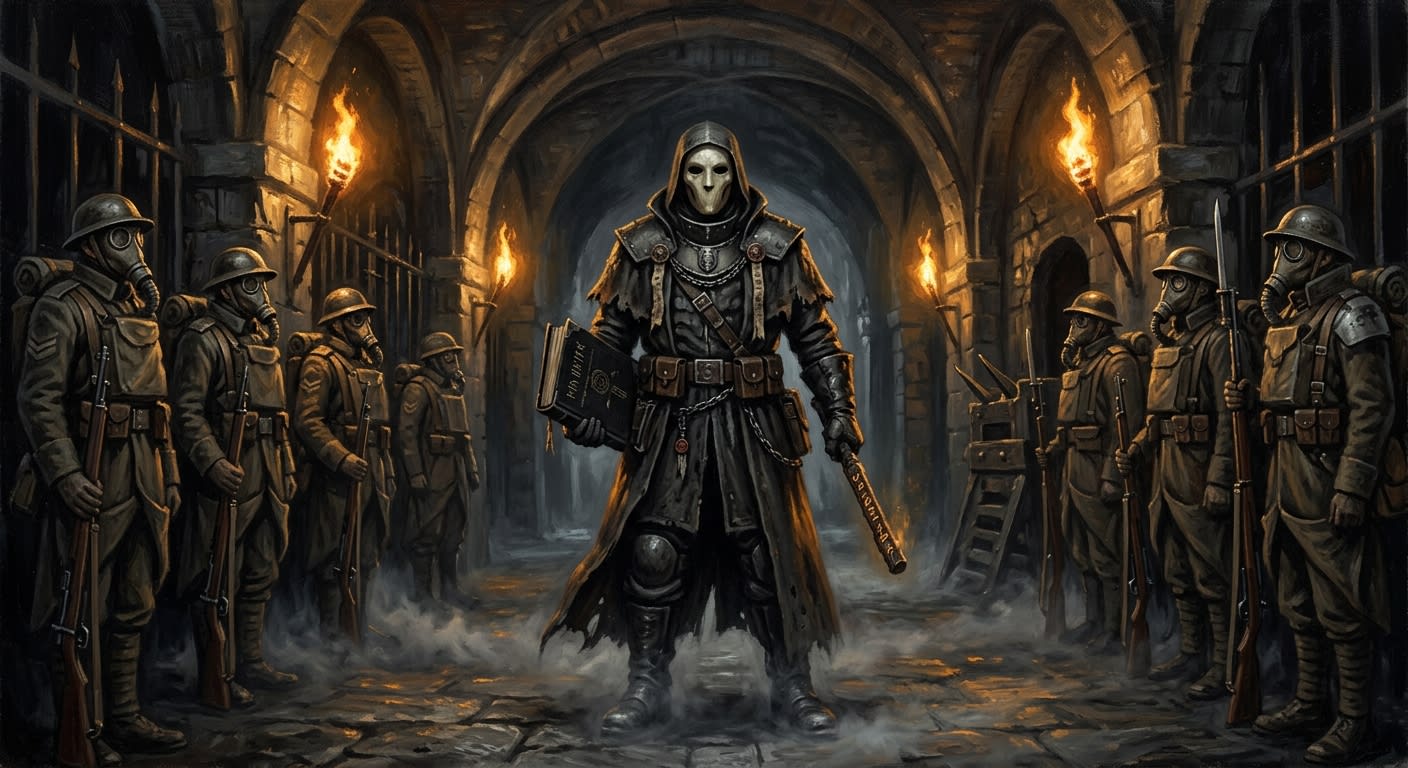
The Judges
They walk without letter, without herald, and without the patience of the Bureau.
The Judges arrive without letter, try without jury, and depart without filing. The Bureau denies they exist. It has been denying this since A.S. 92. The denial requires renewal every thirty years, which is itself a kind of evidence.
Codex Ref. V.1.01-003

The Knotwright Registry
Where every lawful threshold becomes a number, and every number becomes a leash
The Knotwright Registry is Heraldry's A.S. 112 tool-custody office for Gate-Carvers, where stencils, punches, rubbings, licences, and trembling hands become evidence.
Codex Ref. VIII.1.03-002
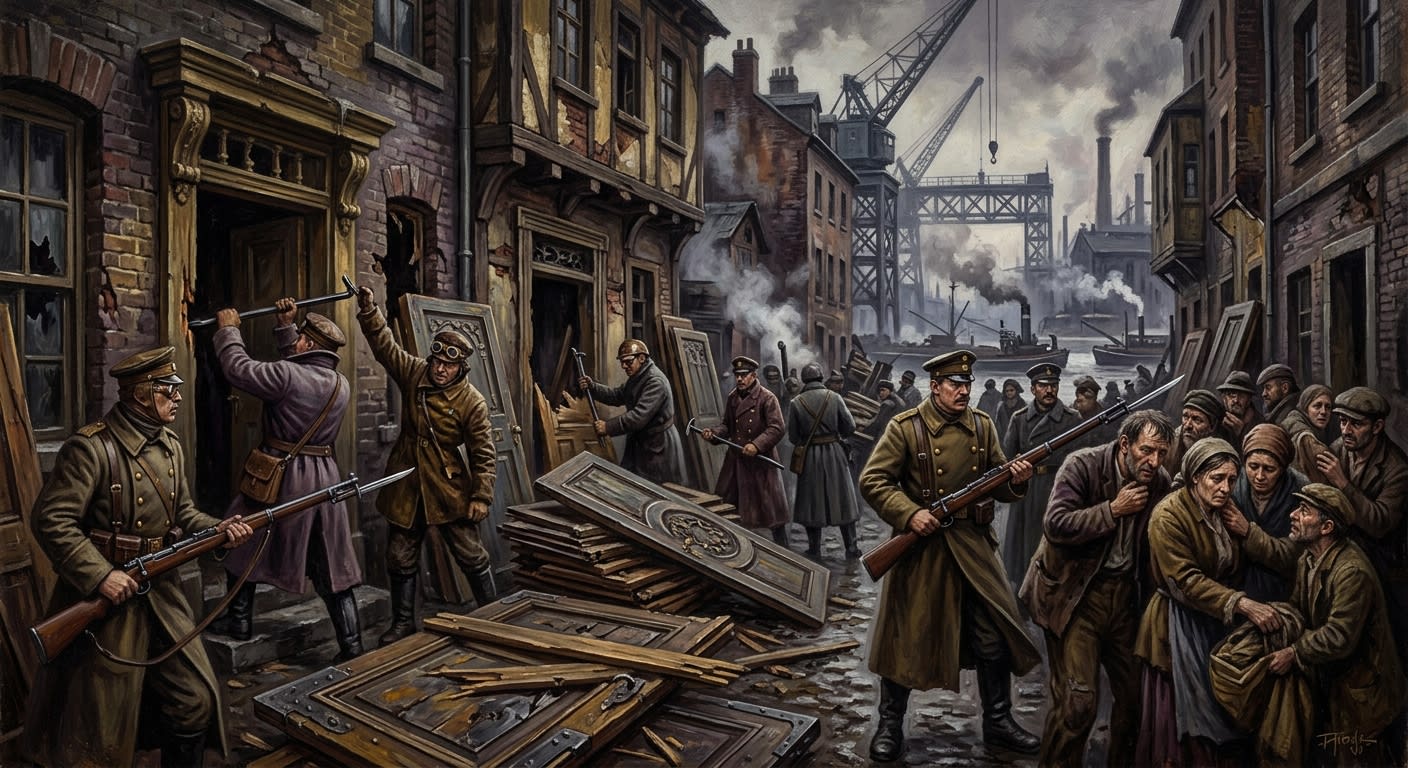
The Lintel Pogroms
When fourteen correct doors made a district homeless
The A.S. 112 Lintel Pogroms stripped Cologne's river-quarter doors after fourteen perfect false Knots exposed stolen stencils, counterfeit punches, hidden bodies, and a trembling hand fit for a wall.
Codex Ref. VII.8.10-112
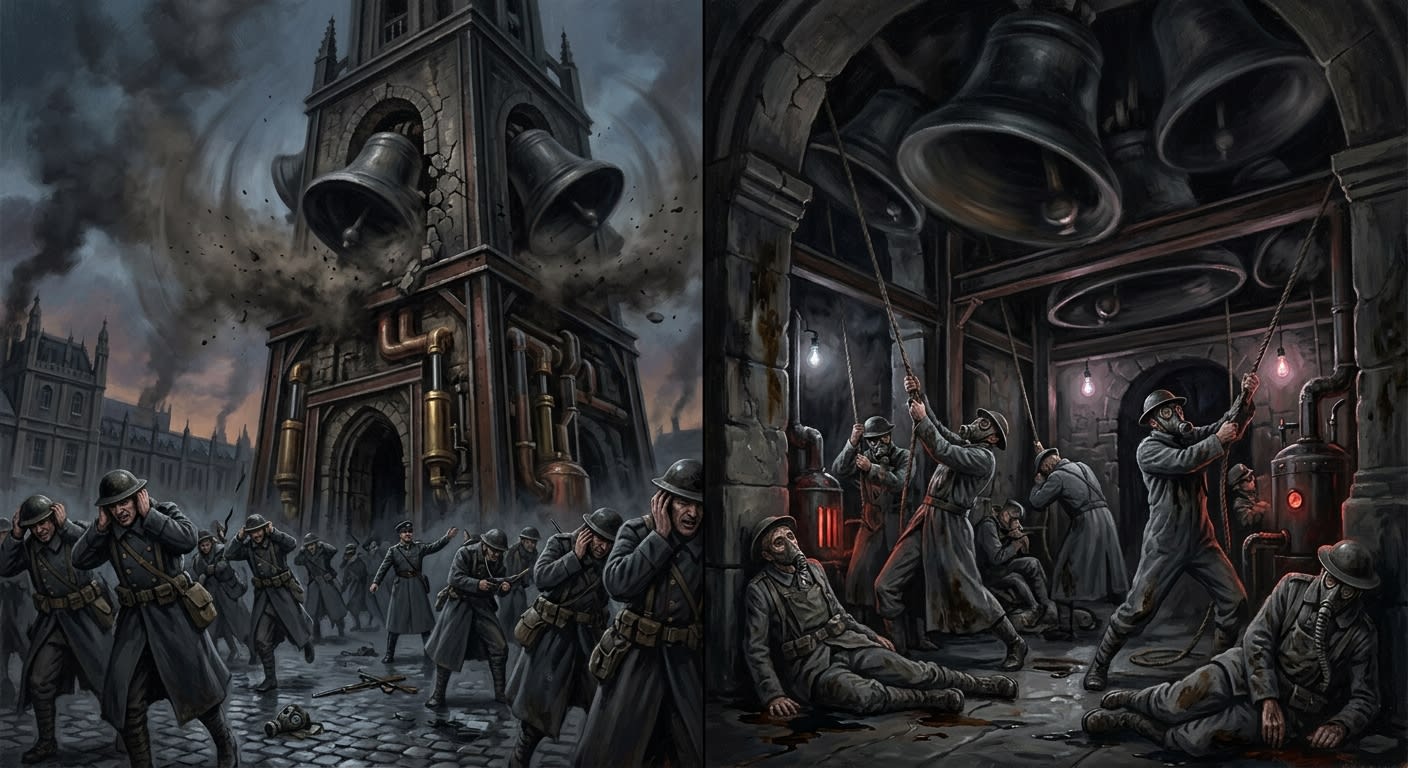
The Miracle of Cologne
When every bell became artillery and bureaucracy was born from the echo
The A.S. 49 Miracle of Cologne drove Maldrake's Wrath vanguard from the cathedral square by nine hours of unscheduled total bell-ringing, cracking stone, killing ringers, and founding the jurisdiction that became the Bureau of Bells.
Codex Ref. VII.4.12-001
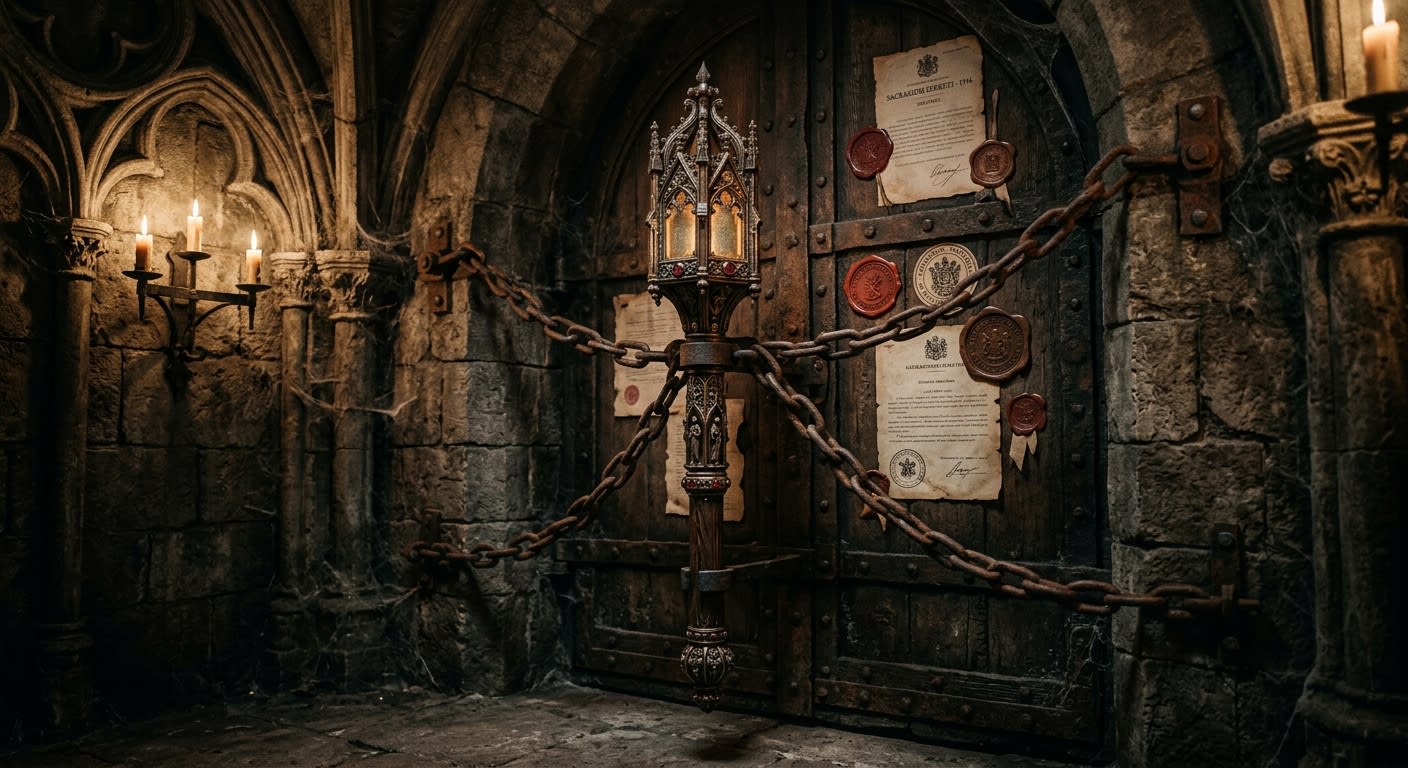
The Miracle of Saint Aldebrand
The Bureau erased the bone. The bone declined.
The Bureau declared the Reliquary of Saint Aldebrand non-existent in –32 A.S. In A.S. 95 it shattered a sorcerer-lord's skull and saved Vienna. Both facts are official, both carry seals, and the Bureau sees no difficulty.
Codex Ref. VI.4.01-001
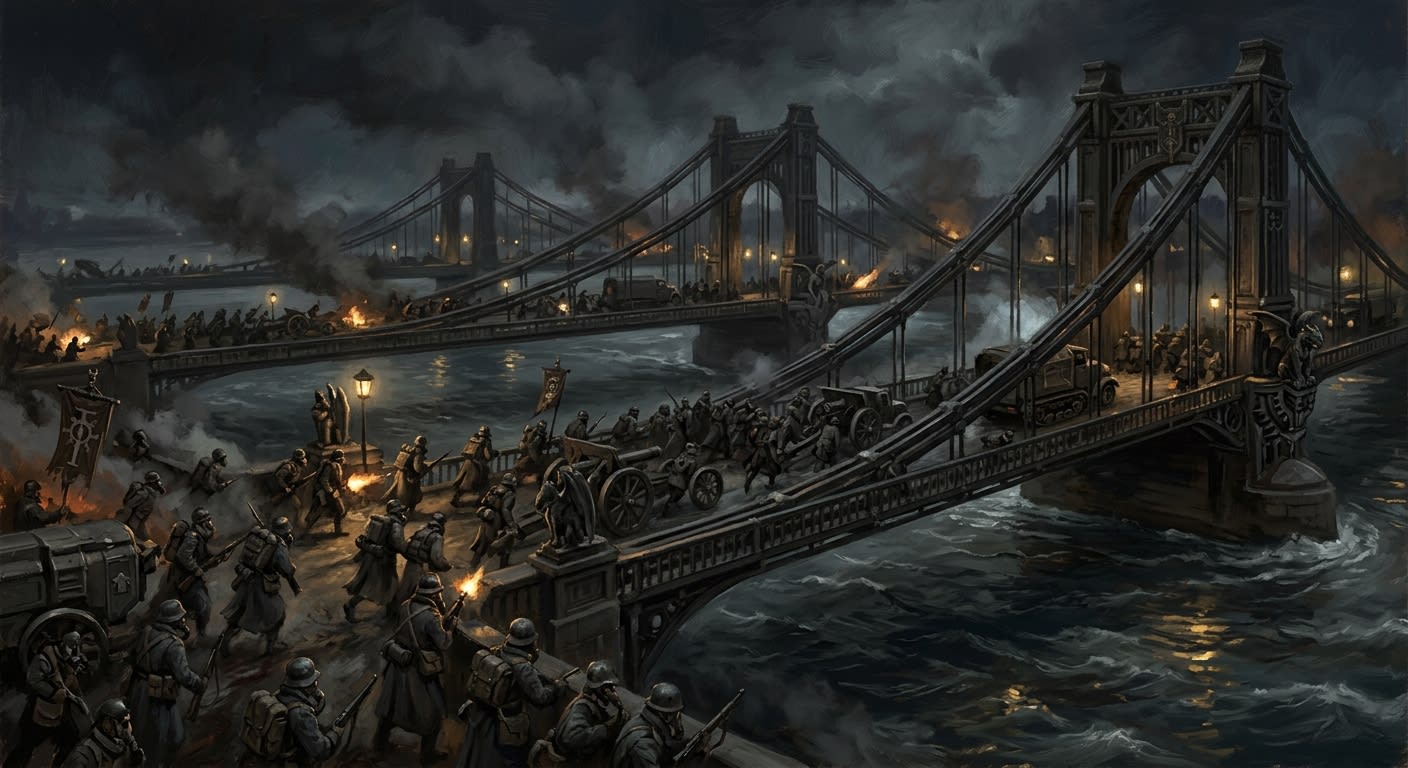
The Night of the Three Bridges
The men did not swim; the Bureau found cheaper grammar
Three Danubian crossings in seven minutes gave War its favourite miracle and Records its favourite arithmetic: fewer casualties, more glory.
Codex Ref. VII.5.01-002
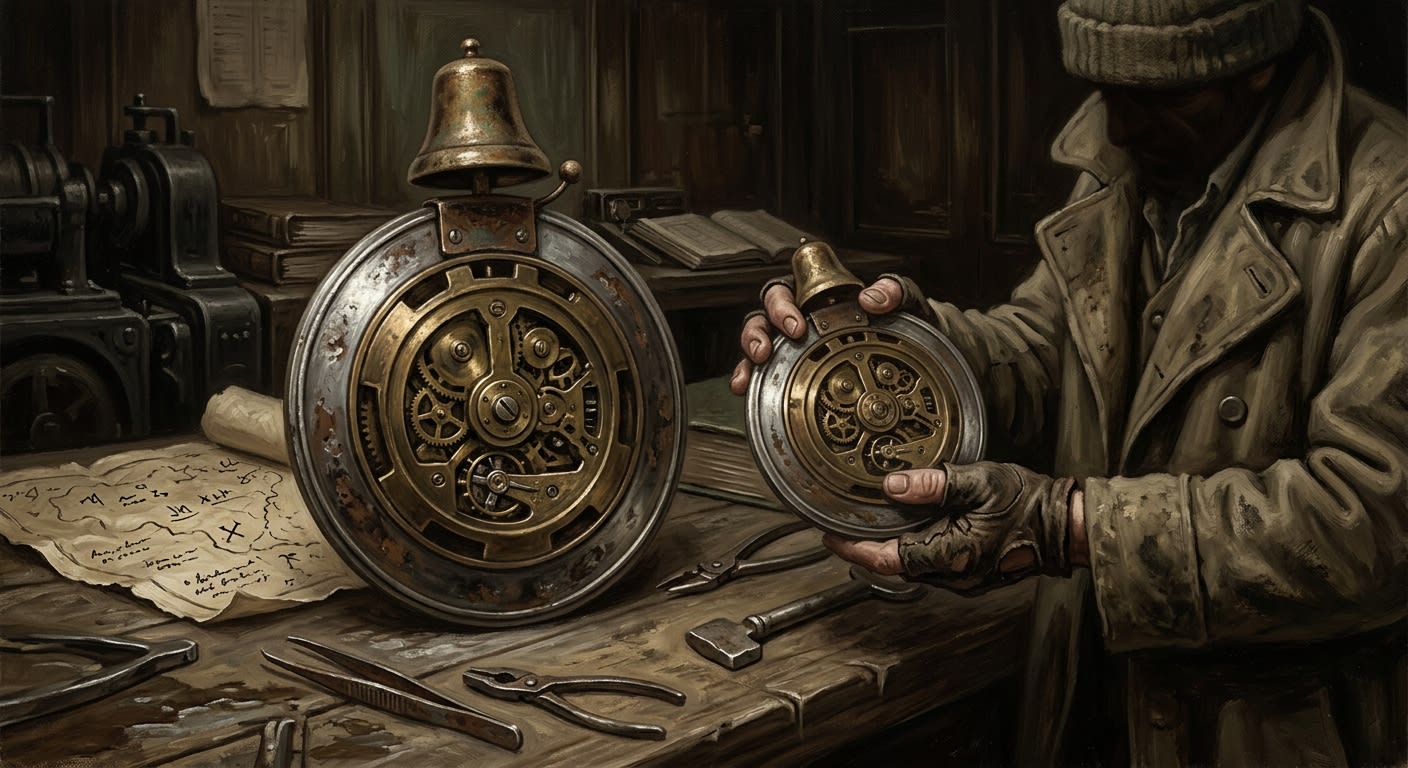
The Pilgrim Token
A tiny bell at the throat, counting every licensed step toward mercy
The pilgrim token is Pilgrimage's stamped disc of licensed motion: bronze, silver, or gold by road and rank, fitted after A.S. 140 with a bell-hour core that turns approved walking into billable absolution.
Codex Ref. XIII.1.40-001
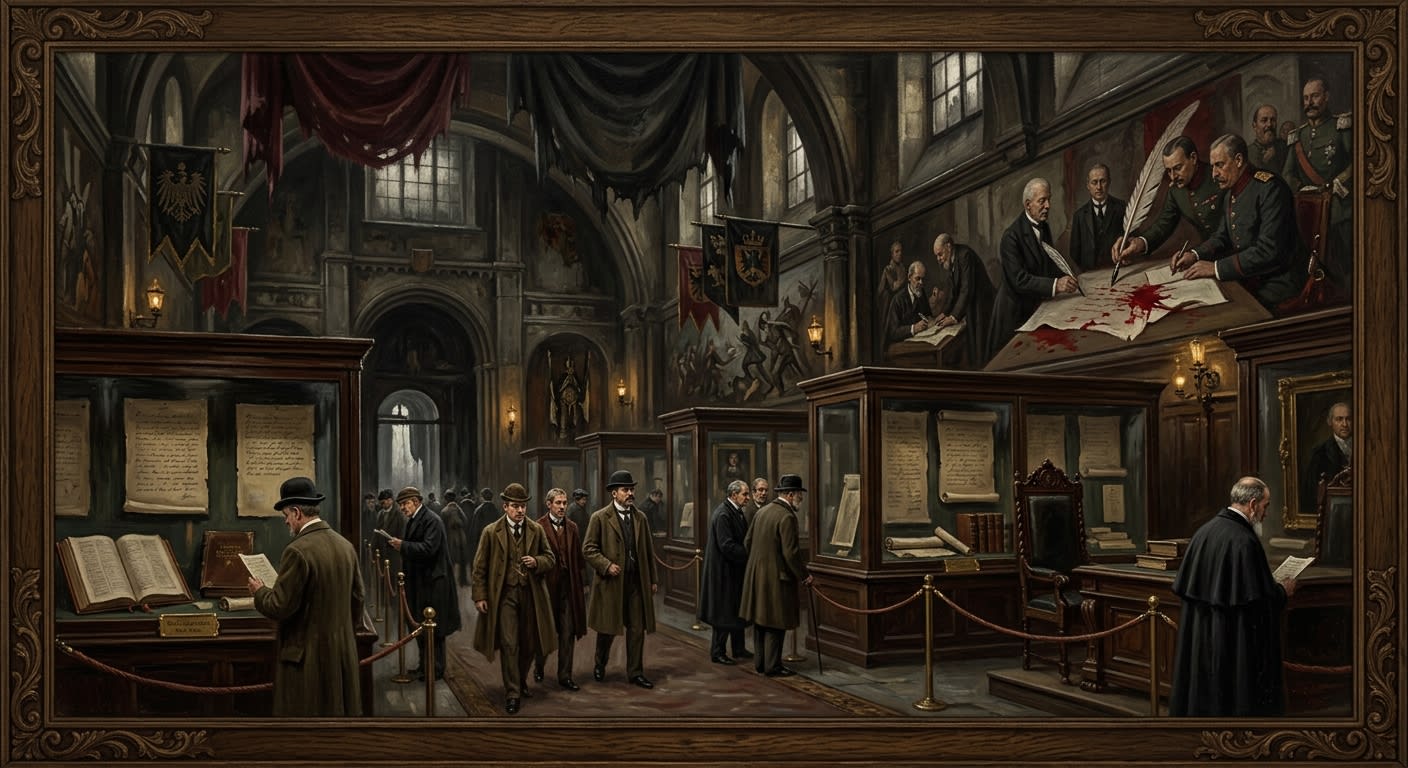
The Reichssaal
The hall that lent empire to heresy and received an altar for its trouble
The Reichssaal gave imperial furniture to Rationalist blasphemy, received the Treaty in blood and ink, and now instructs pilgrims under glass, pall, and Bureau custody.
Codex Ref. II.2.03-031
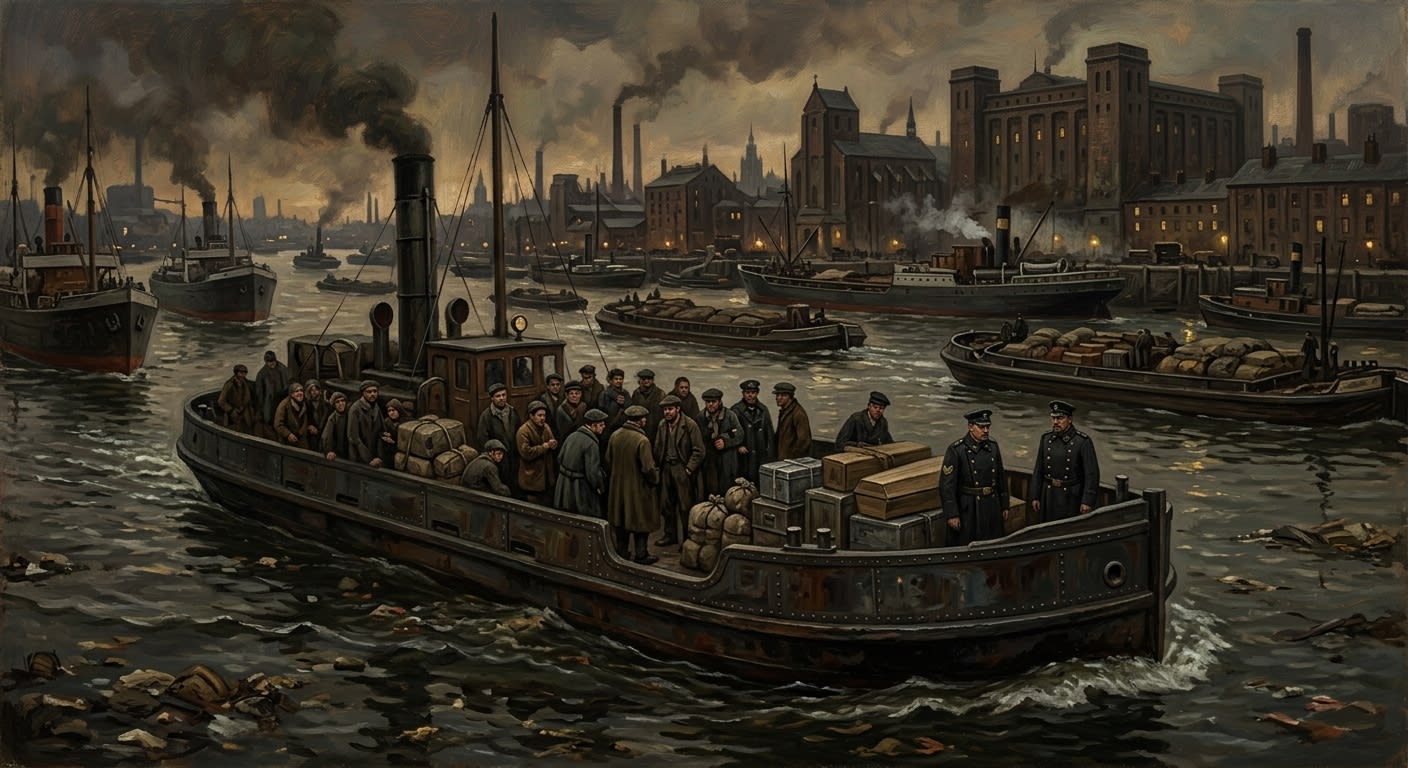
The Rhine
The wet jurisdiction by which the heartlands pretend to be orderly
The Rhine is the Synod's wet jurisdiction: artery, tithe-chain, pilgrim road, corpse carrier, ferry court, and profitable rebuke to every office built too near the bank.
Codex Ref. II.2.08-201

The Rhine Corridor
Damp procedure, counted backward from every bridge
The Rhine Corridor is the Synod's damp procedure: a Zone 2 logistics artery, mortuary road, ferry court, heresy school, and billable proof that movement can be made afraid.
Codex Ref. II.2.08-202
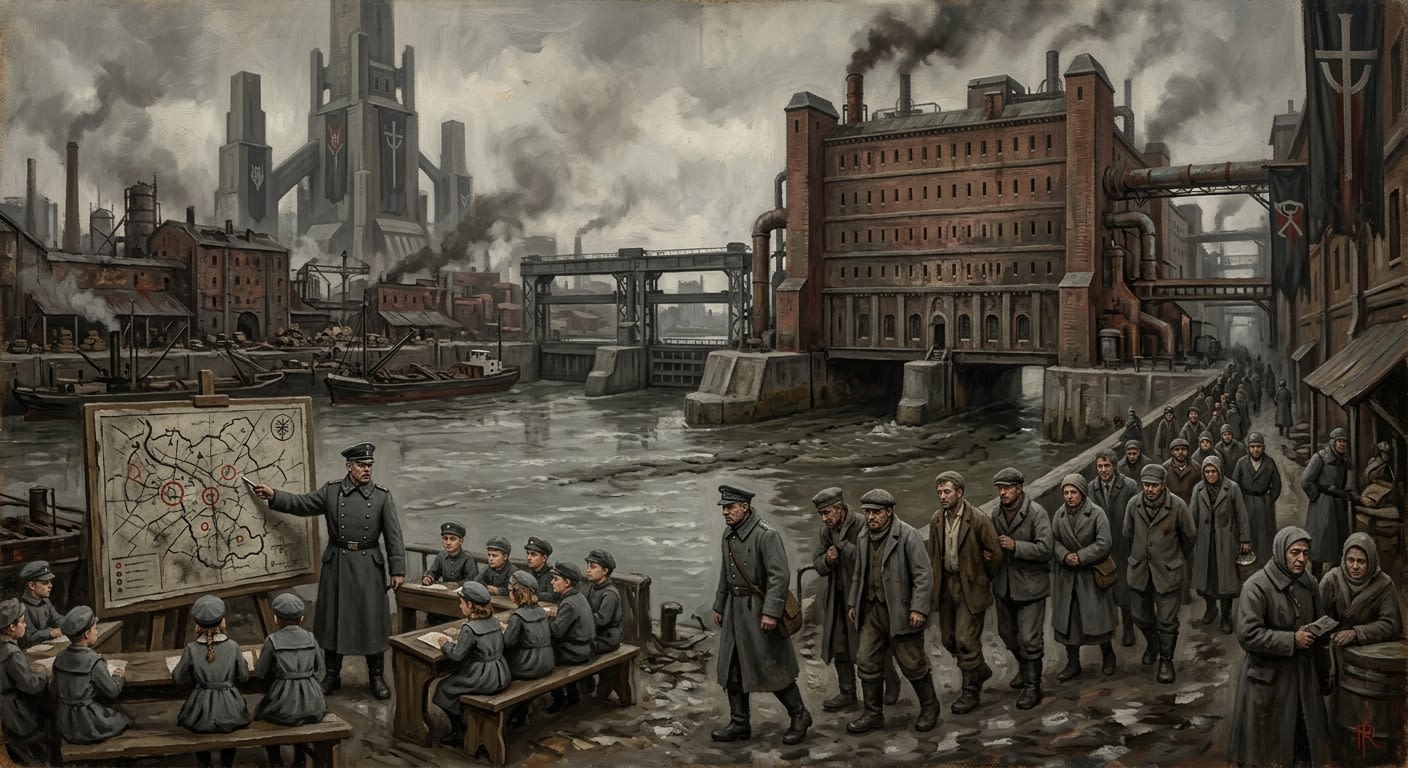
The Rhineland
A province corrected so often it learned to keep the corrections
The Rhineland is the Synod's most corrected province: river belt, market school, scriptorium wound, curfew map, chalk lesson, and loyal suspicion made taxable.
Codex Ref. II.2.09-201

The Saint Veritas
Truth went below and returned with courtesy in its teeth
A Bureau of Records supply galleon vanished during the Silence of Harbor Lamps and returned six months later with its crew intact and its log ruined by invitation.
Codex Ref. V.2.03-001
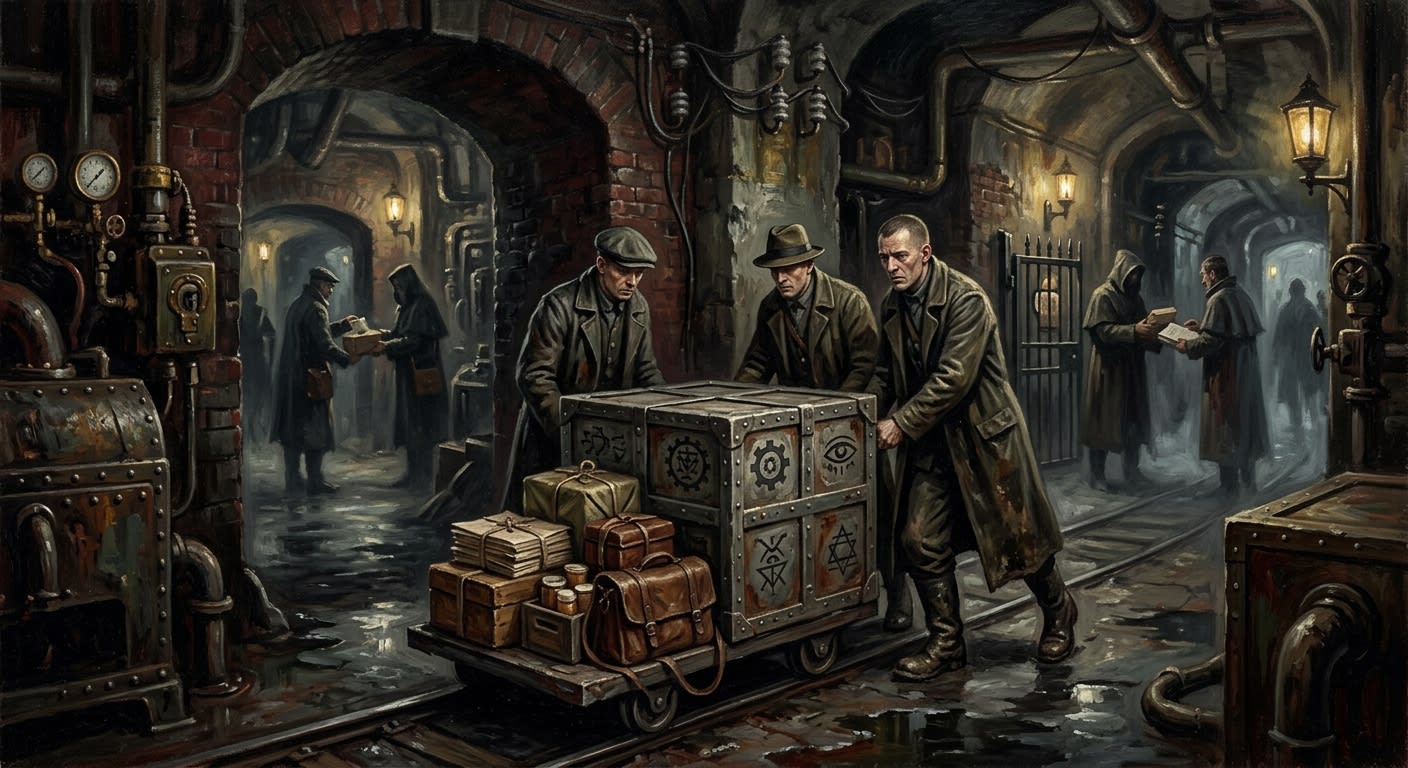
The Thread
The quiet line by which bones, names, and suspicion crossed the dark
Informal Cellar Saint transit doctrine that moved relics, names, wafers, and warnings through trusted cellars from A.S. 30 until the Sundering tore the roads open.
Codex Ref. XIII.1.91-045
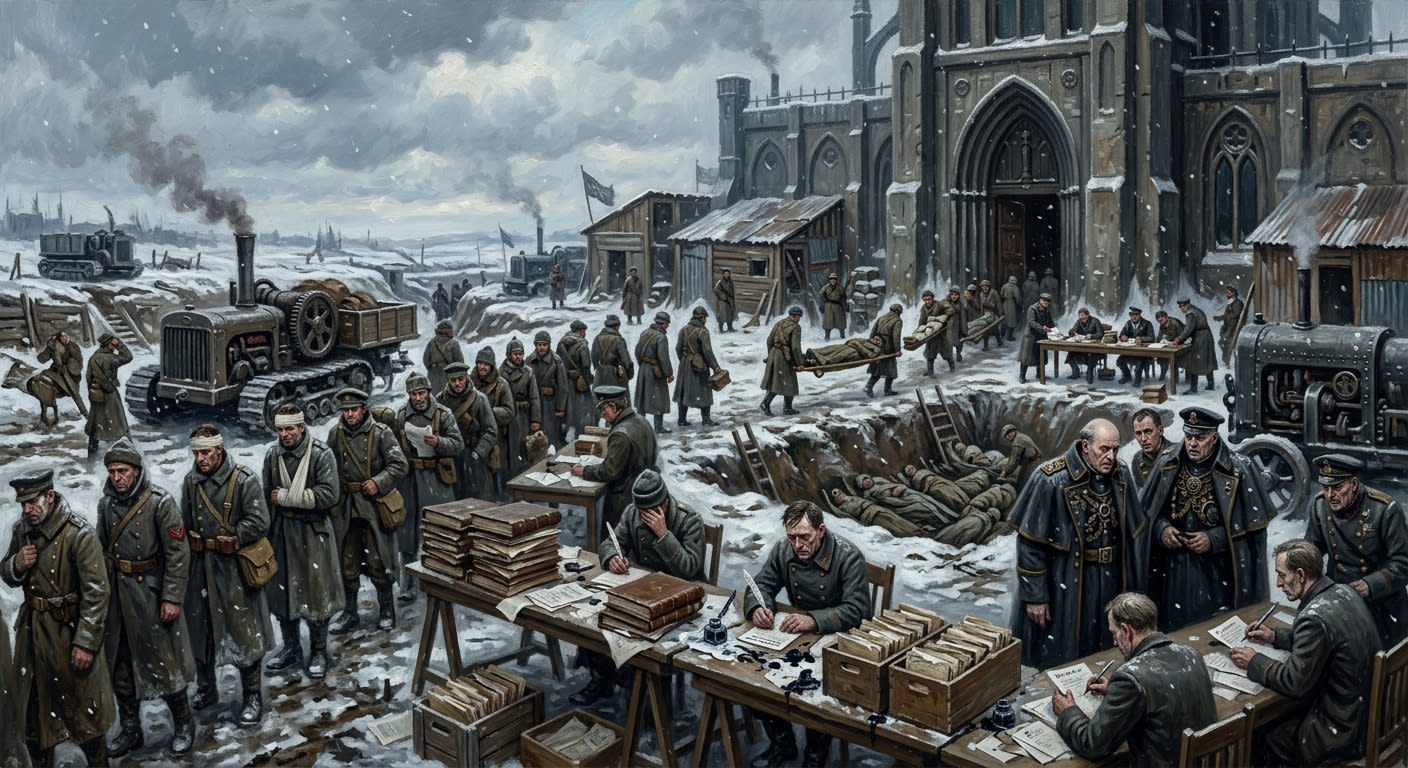
The Uncounted Winter
Fifty thousand dead, and the page arrived late
Northern offensive and registry collapse of A.S. 87–91, when fifty thousand dead went unattested and the Synod learned to put a court beside the wound.
Codex Ref. VII.8.10-091
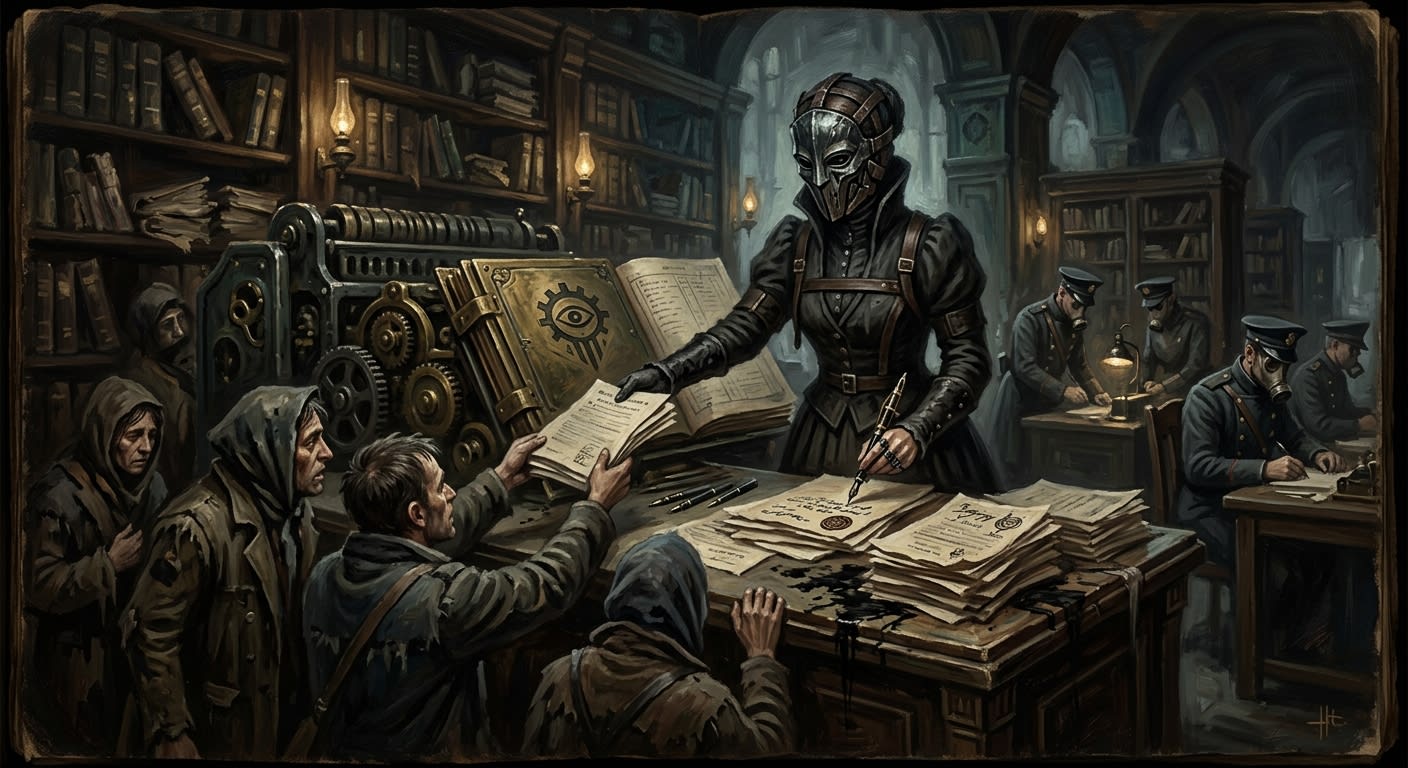
The Widow-Notary
The hand that taught charity to forge receipts
The Widow-Notary may be one woman, seven women, or a criminal mask; her forged assessments fed Strasbourg's poor and taught the Black Ledger to steal in the Bureau's own hand.
Codex Ref. III.2.01-062

The Year of Letters
One table of bones. Forty cities. The first assault on everything.
The Bureau's account of –32 A.S.: how three Amsterdam scholars, one table of bones, and forty cities' worth of polite arithmetic crippled three centuries of relic authentication — and inaugurated everything.
Codex Ref. I.2.01-001
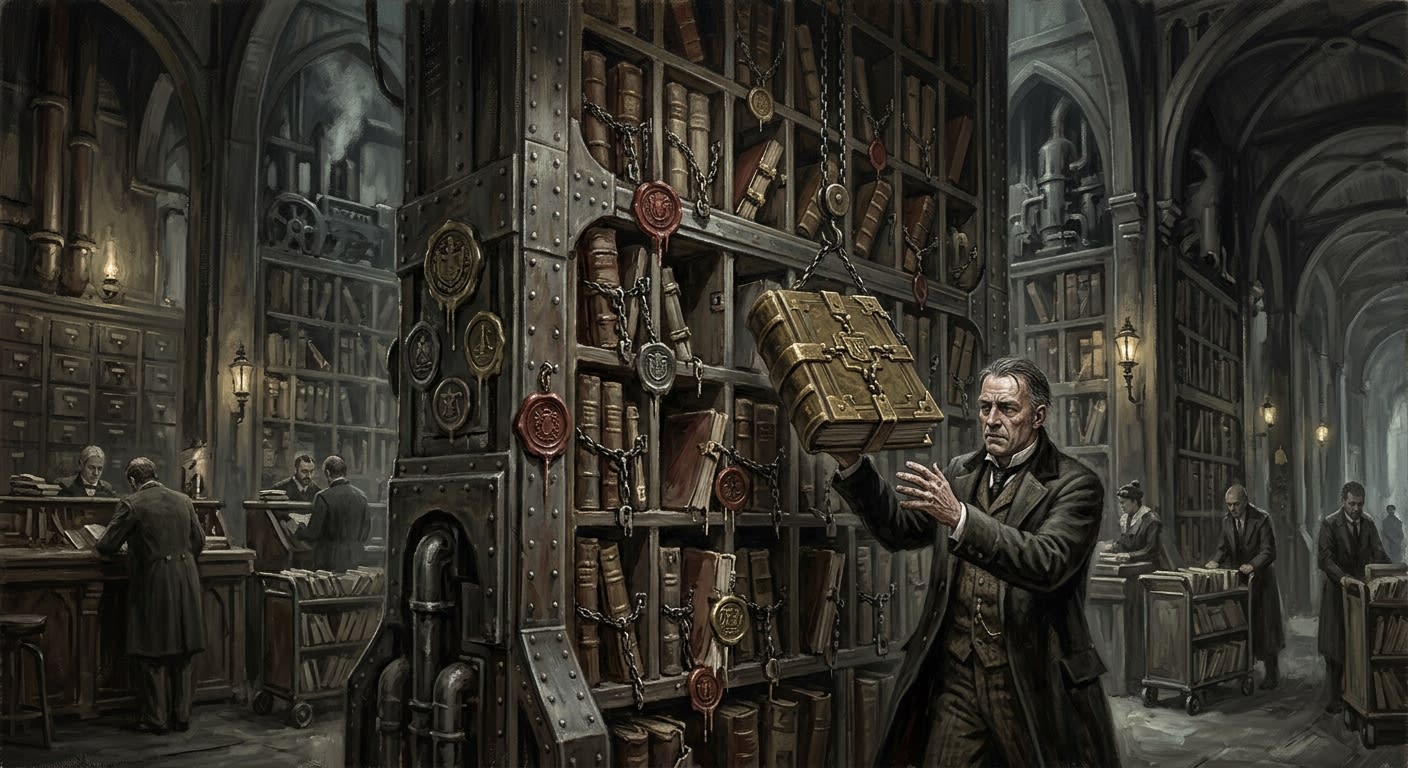
Thirty-Seal Index of Precedent
The book that lets old disputes bite new throats
The Thirty-Seal Index is Commerce's weaponised memory: port-court precedent sealed thirty ways, kept cold, and lent to litigants who know where hunger must wait.
Codex Ref. XIII.1.89-187

Tongue-Smiths
Lawful ink made treasonous by breath, comma, grief, and timing
Elite Lantern Mercy writers who forge audit-clean catechisms with breath-dependent meanings, making authorised comforts disobey before the law can quote them.
Codex Ref. XII.25.10-001
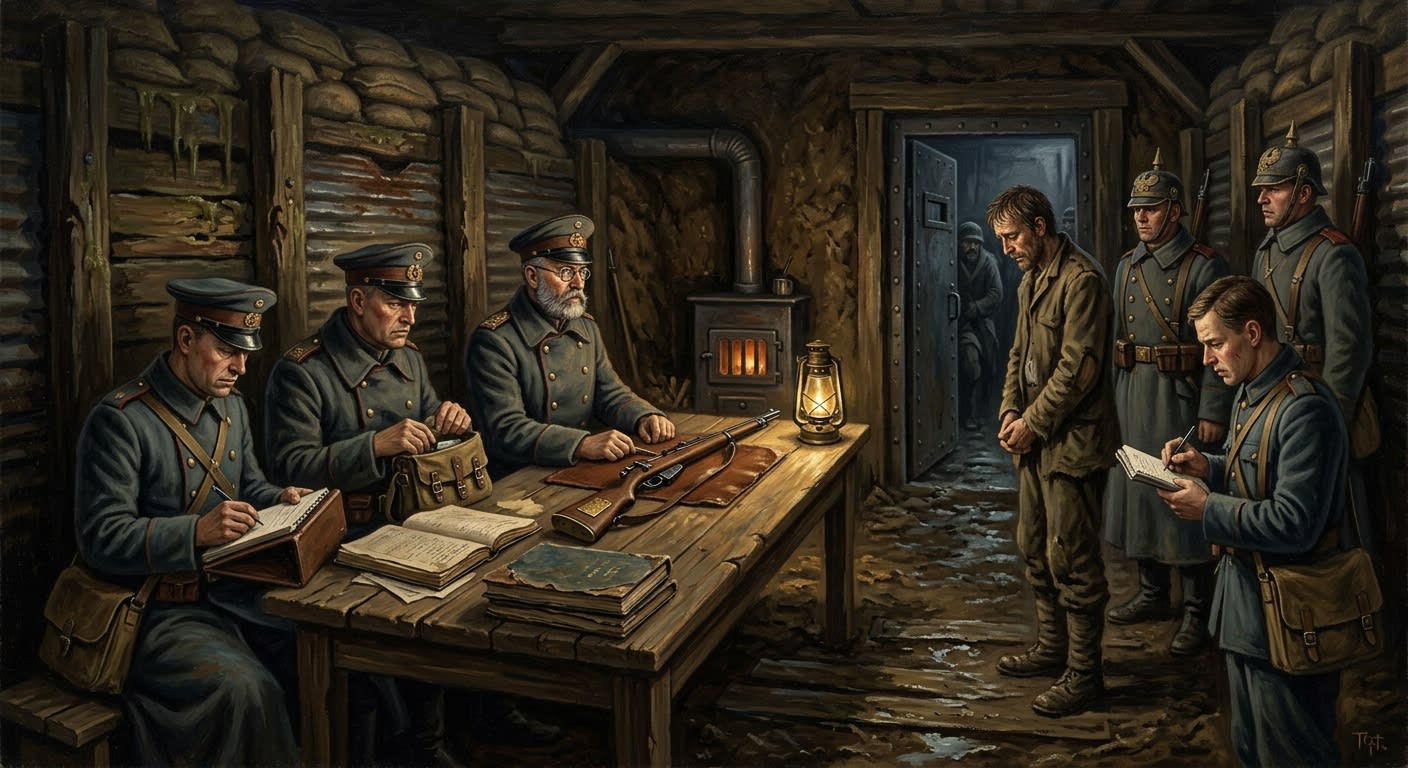
Trench Courts
Due process, shortened to fit one hymn and a rifle knock
The Trench Courts drag law into mud: lantern table, rifle-gavel, contradiction pouch, furnace, and the mercy of recording men before they rot out of legality.
Codex Ref. XIII.1.86-091

Trier
The city that taught chalk to count before it spoke
Trier is a loyal Moselle city with old hands, white margins, soft chalk, river memory, and the dangerous courtesy of obedience performed too well.
Codex Ref. II.2.02-004
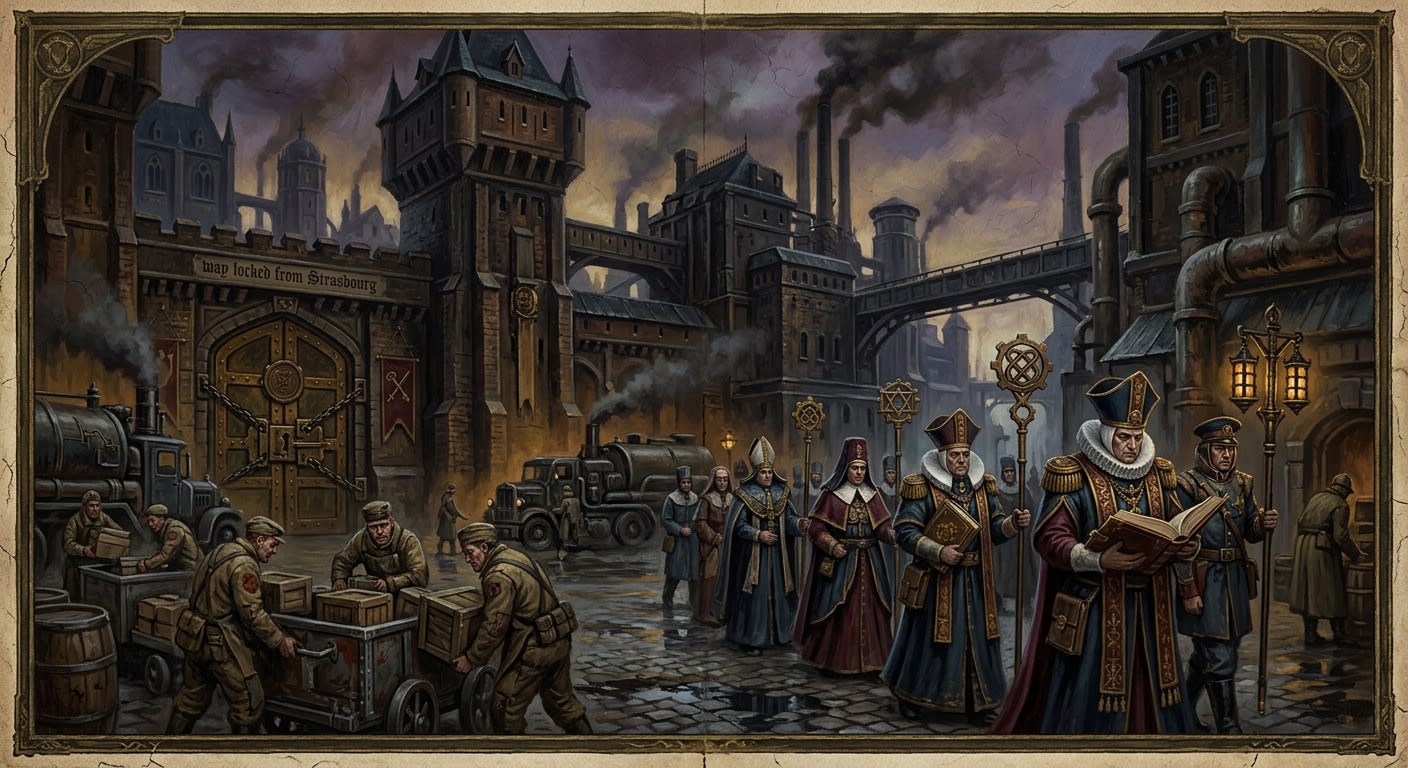
Triune Hearth
Three old bodies, one chimney, and Strasbourg holding the poker
The Triune Hearth binds France, Iberia, and the Rhineland into one Synodal household: warm in sermon, hungry in ledger, and locked from Strasbourg.
Codex Ref. XIII.1.04-090
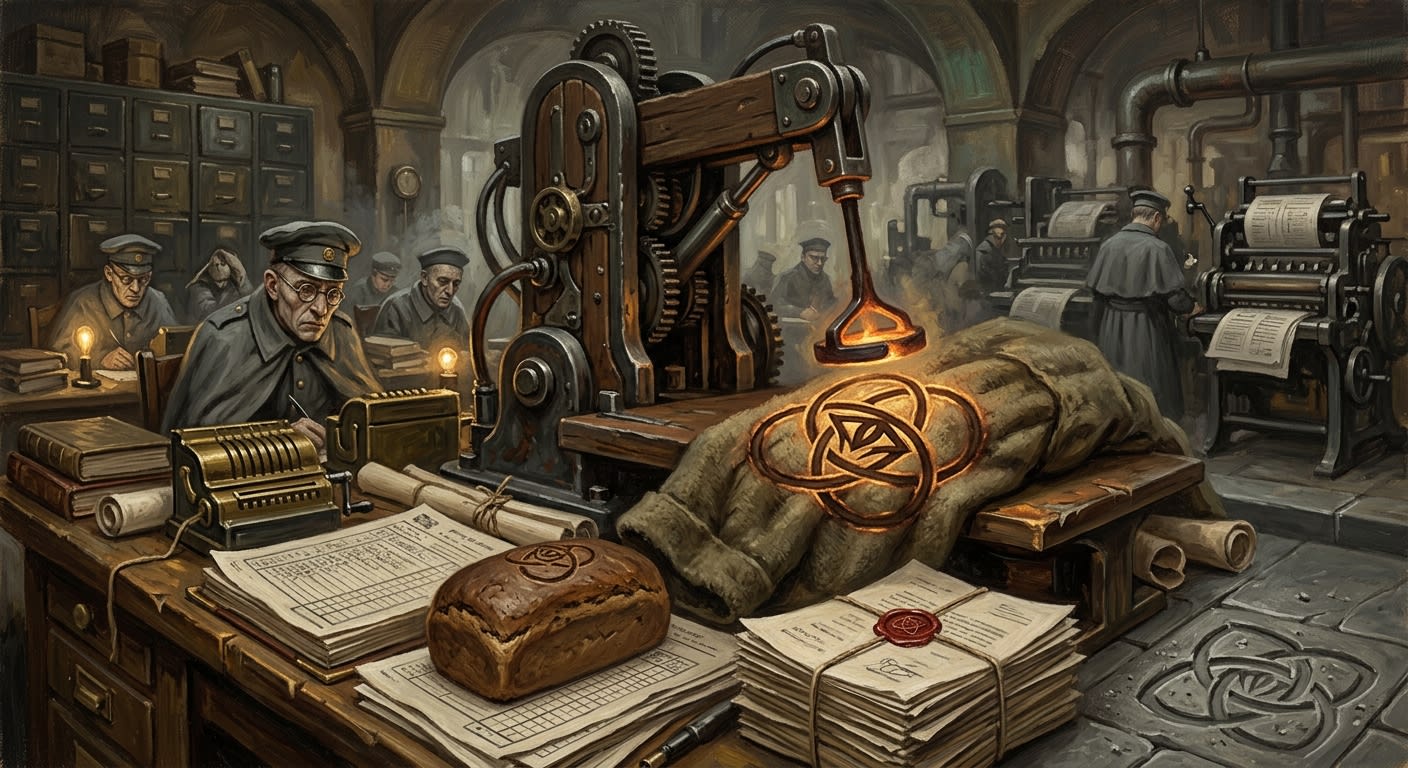
Triune Knot
Three loops, one law, and every door accounted for
Universal Synodal binding mark standardised under Theobald of Worms, by which doors, papers, bread, flesh, and graves become readable to law.
Codex Ref. XIII.1.03-002
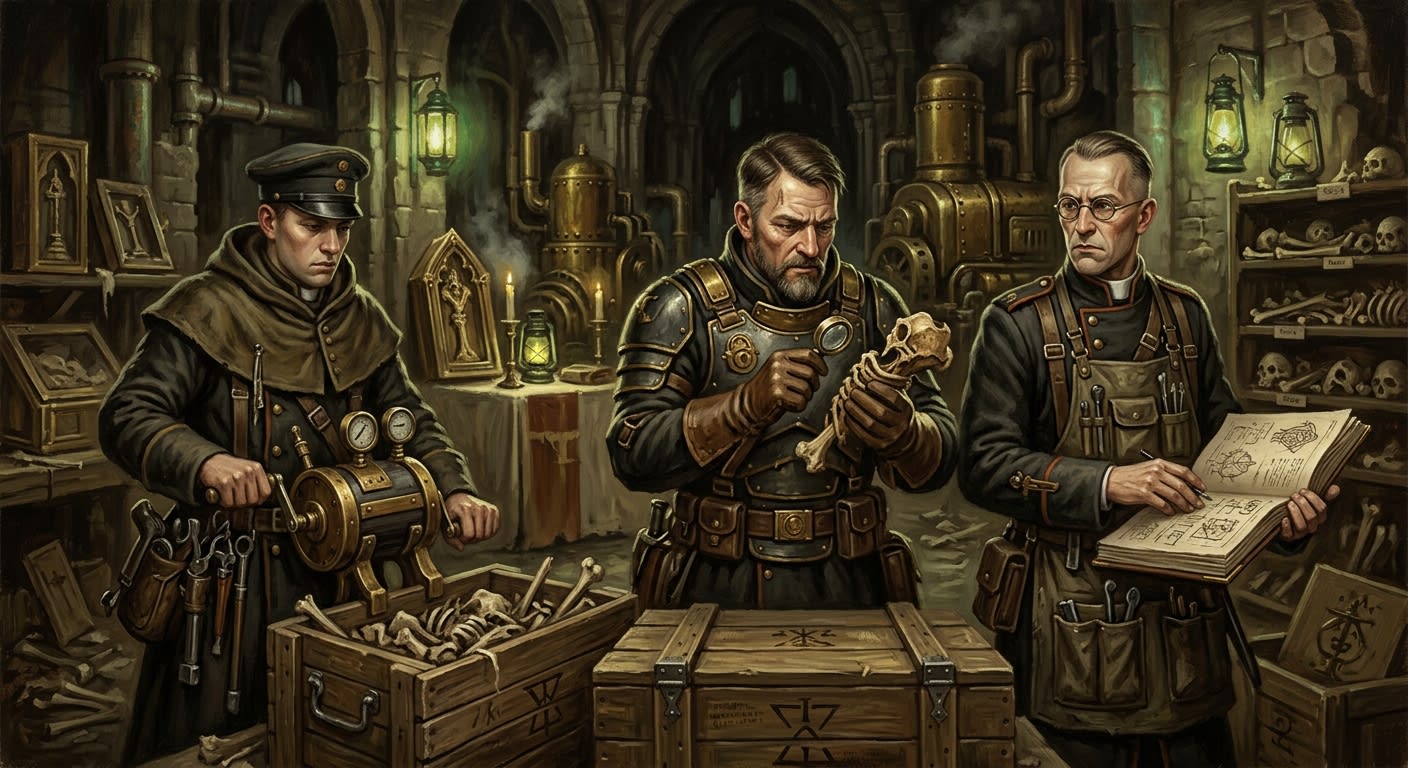
Van Hoorn, Lemstra & de Waal
Three clerks of doubt, one table of bones, and forty cities taught to sneer
Pieter van Hoorn, Gerrit Lemstra, and Jan de Waal made doubt portable in -32 A.S.; their Bone Census counted relics accurately and wounded truth efficiently.
Codex Ref. III.2.01-026
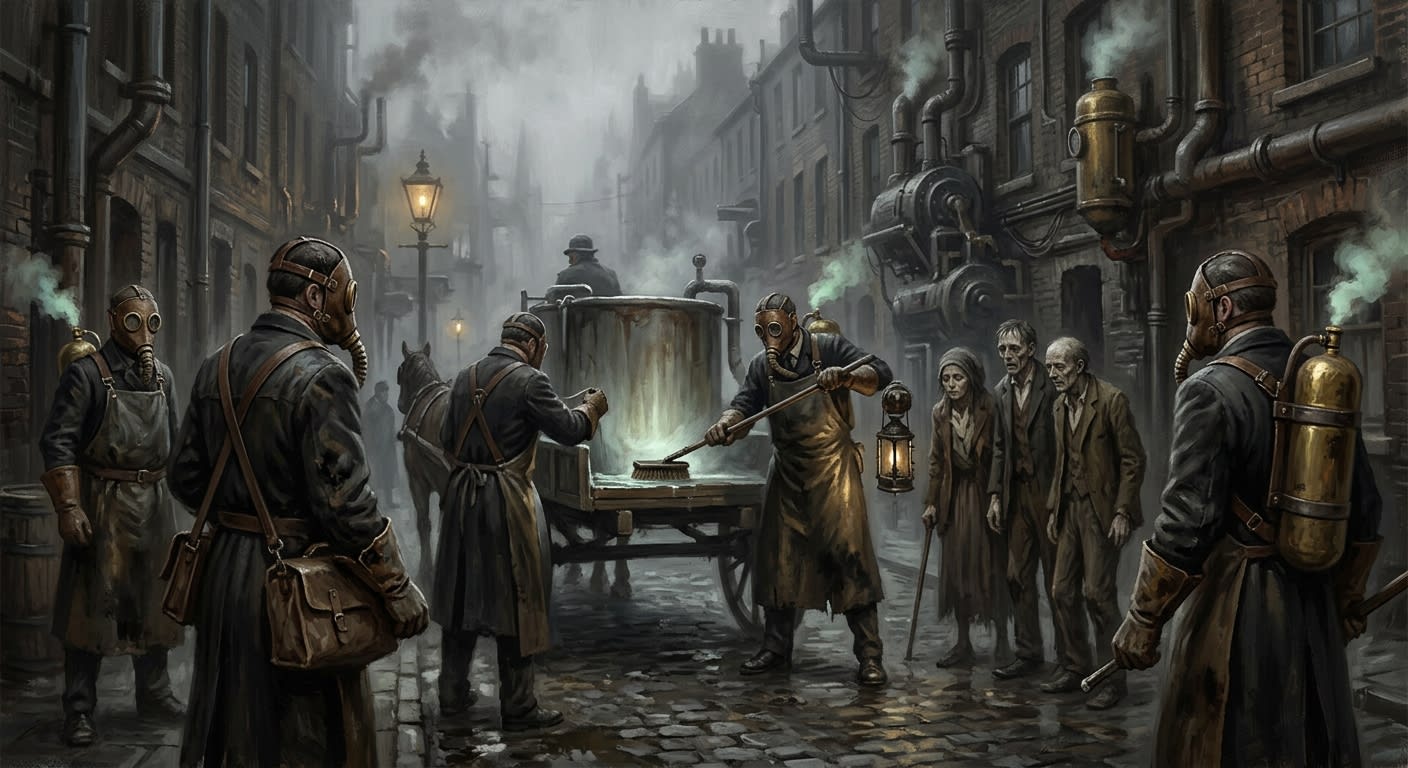
Ward-Soothe Purists
Clean hands, loud lanterns, and streets left dirty by correctness
The Ward-Soothe Purists are Lantern Brotherhood schismatics who severed Mercy Preacher contacts after the A.S. 178 Cologne dispute and mistook clean hands for clean streets.
Codex Ref. XII.25.07-001
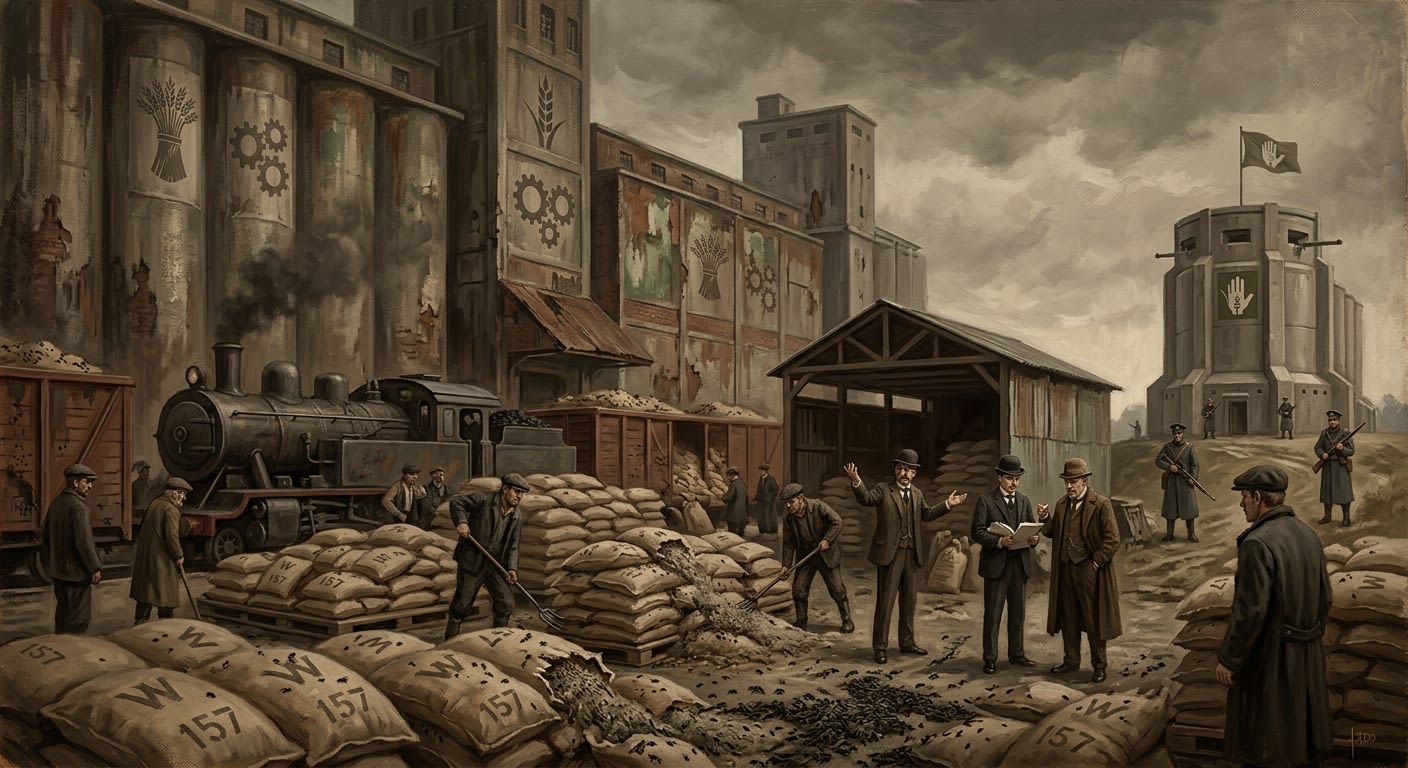
Weevil Year
The famine in which the illegal cellars breathed better than the state
The Weevil Year of A.S. 157 rotted western reserve grain under lawful custody, exposed Bureau incompetence, strengthened Grain Keeper caches, and killed the Bureau of Agriculture.
Codex Ref. VII.4.21-001
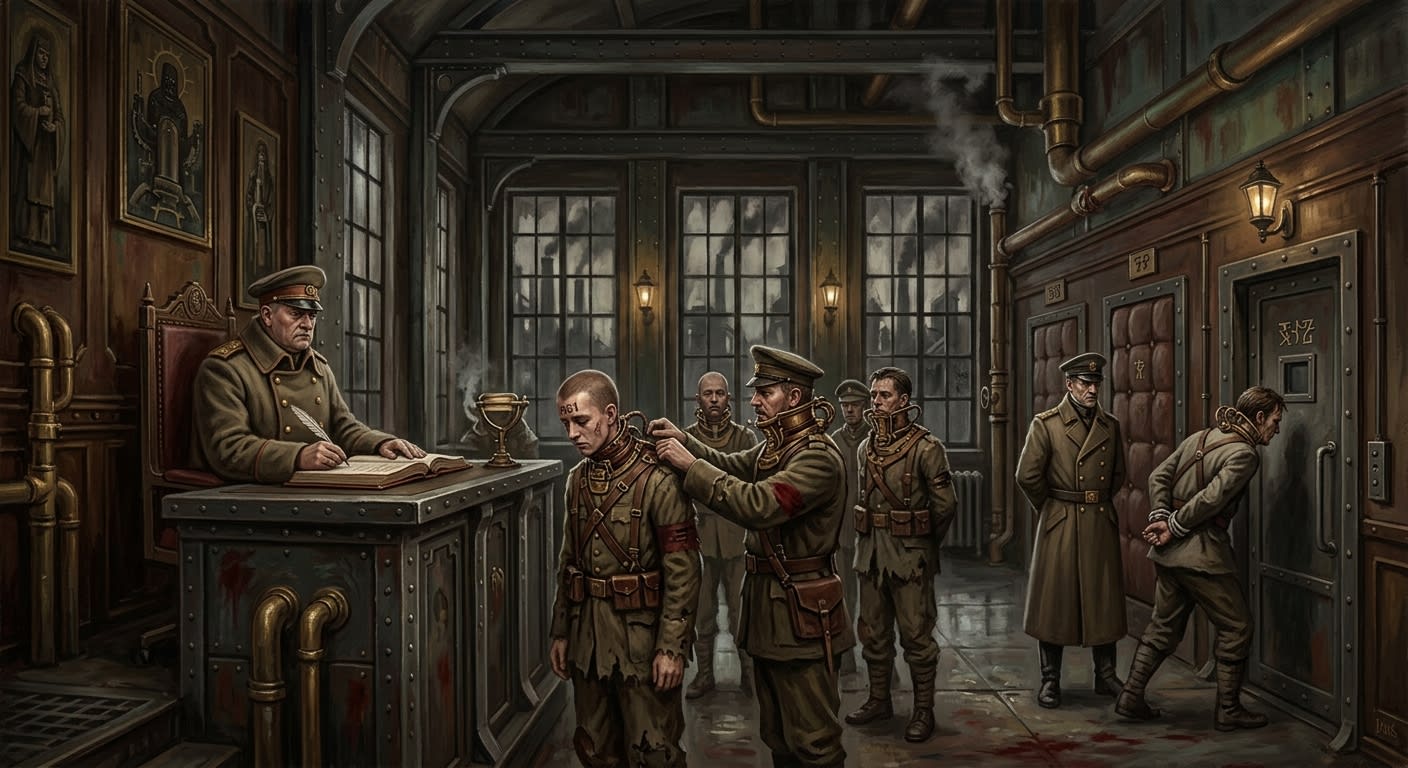
Writ 14-C
The law that taught the throat to wear a seal
Writ 14-C made the human throat an office: licensing Iron Choir Brand-Singers, disciplining pain into sound, and teaching rooms not to be answered.
Codex Ref. XIII.1.41-104
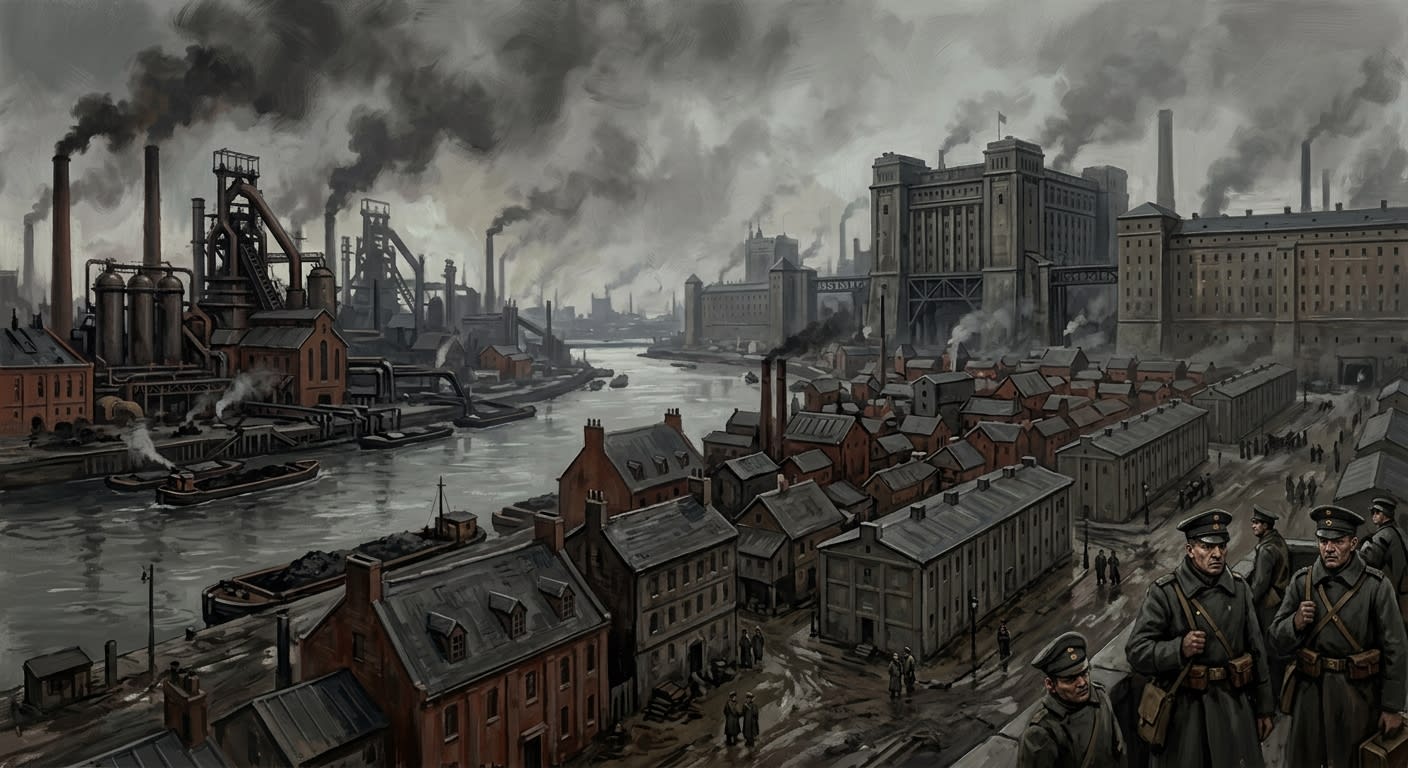
Zone 2
The throat where empire learns to speak in smoke
Zone 2 is the Synod's central throat: Strasbourg's field of authority, Rhine wealth, furnace obedience, catechism-barracks, and useful smoke.
Codex Ref. II.0.04-201
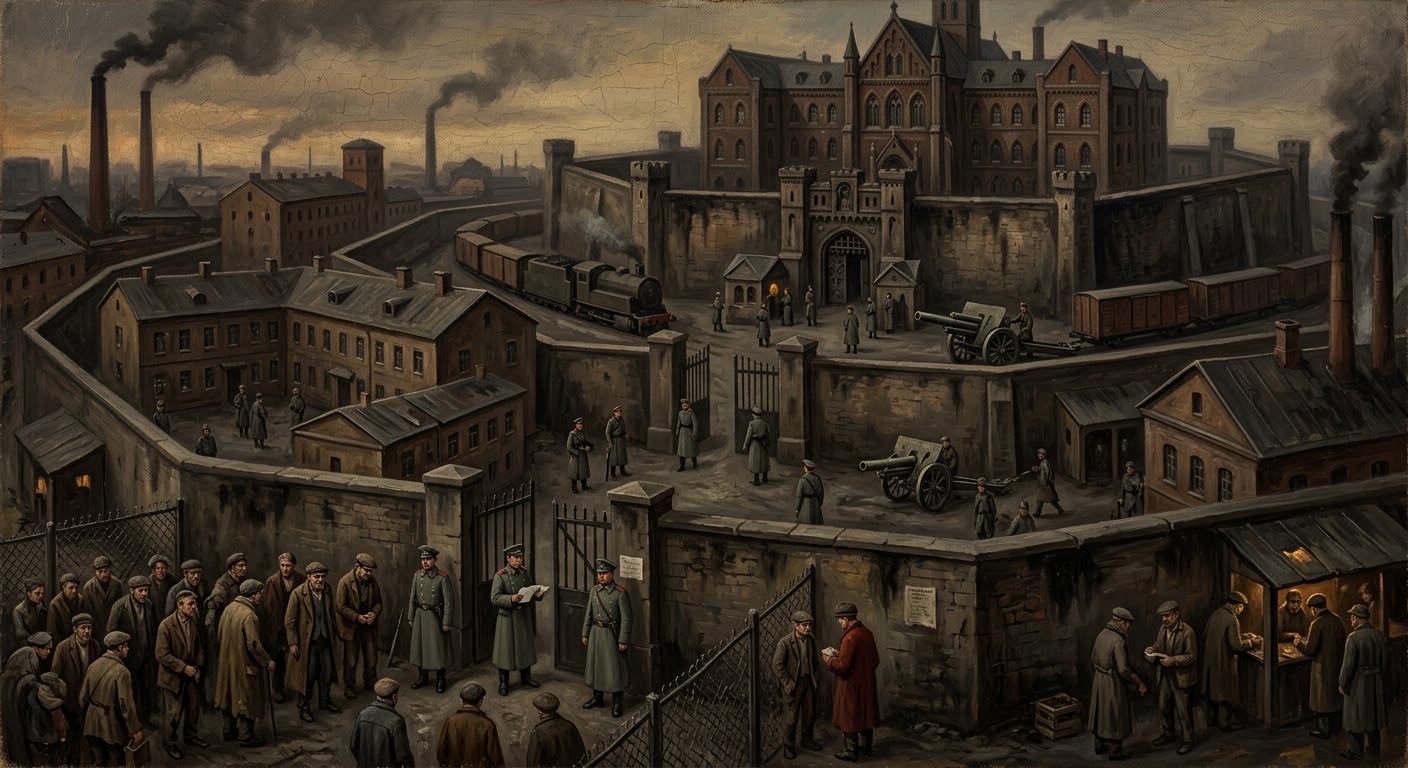
Zones 1 through 5
Five lawful pressures between invoice and mud
Zones 1 through 5 are graded permissions for bread, sons, movement, fear, artillery, and the state’s appetite.
Codex Ref. XIII.1.00-201