

Reverse Index
Referencing “Maldrake, the Wrathforged”
Every codex entry that links to Maldrake, the Wrathforged. 365 entries.
Return to Maldrake, the Wrathforged
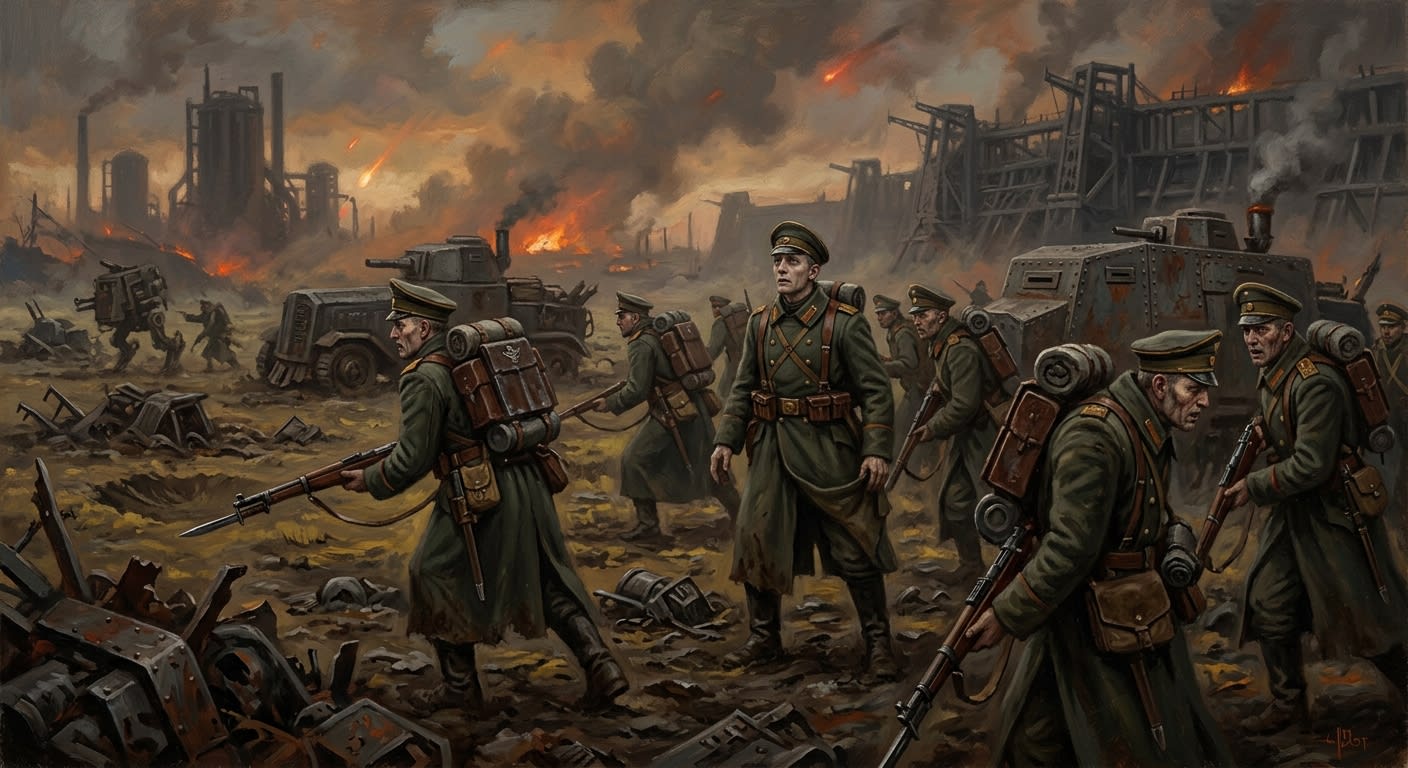
12th Prefectural Division
The flank that heard the fire sing
The 12th Prefectural Division was a Rationalist flank formation annihilated at the Iron Plains and remembered because Private Kessler heard the fire sing.
Codex Ref. VIII.1.05-012
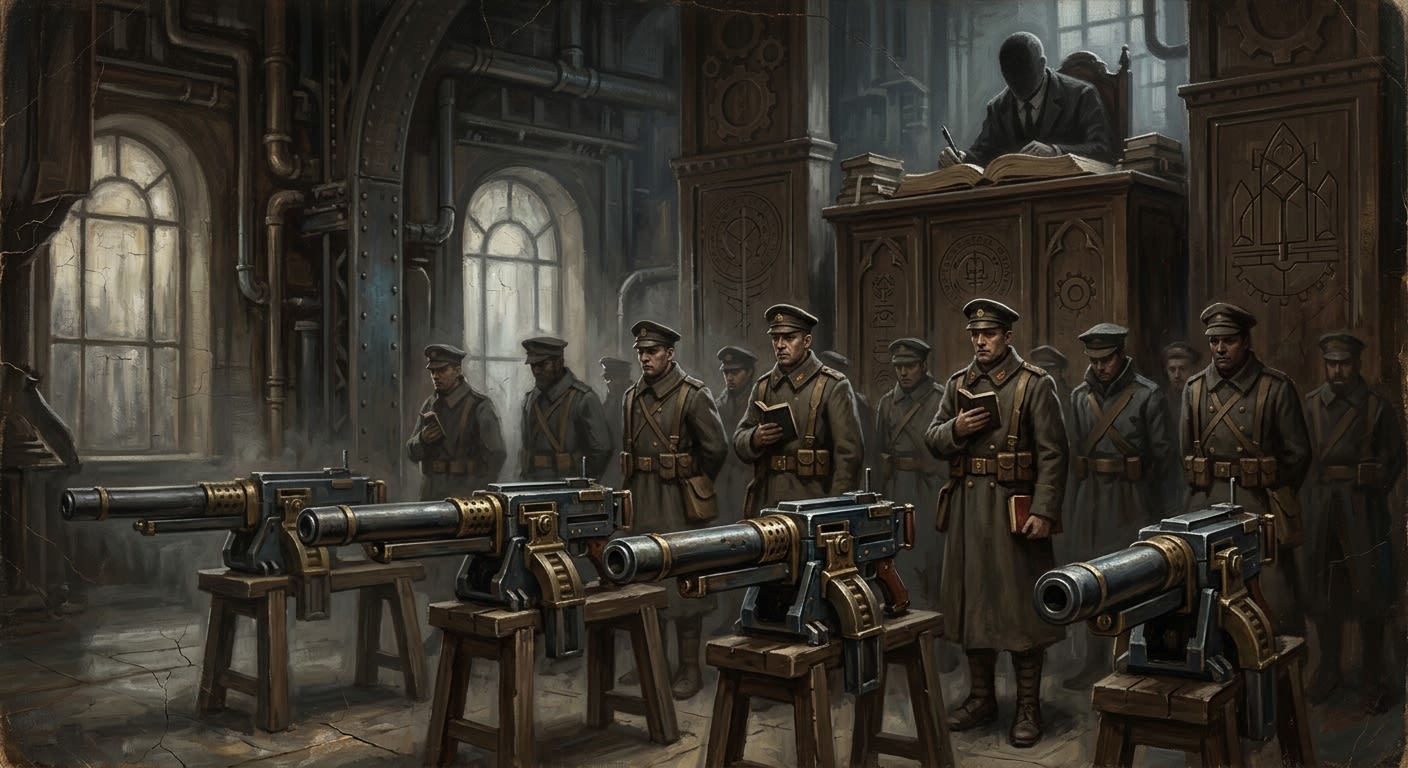
14th Parish Regiment
Four guns cold, four guns owed
The 14th Parish Regiment was dissolved by Night Paper before the Vigil of the Hollowed, leaving four relic guns cold and a parish song the Ledger cannot kill.
Codex Ref. VIII.5.14-170
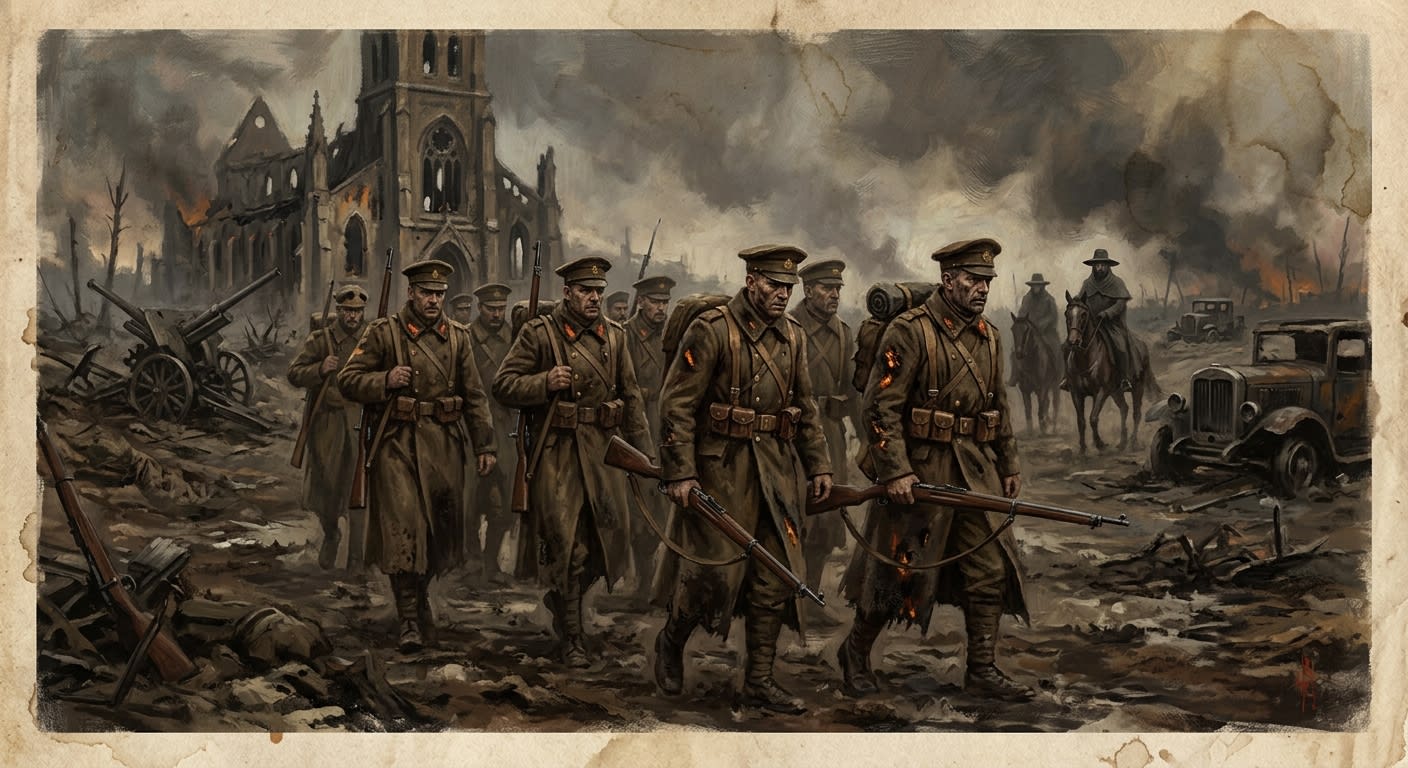
14th Parish Regiment
A regiment erased so thoroughly it still casts smoke
The 14th Parish Regiment was burned, erased, denied, and still left an unmanned curtain before Maldrake's Hellbow assault. Absence, when filed carelessly, has edges.
Codex Ref. VIII.5.14-170
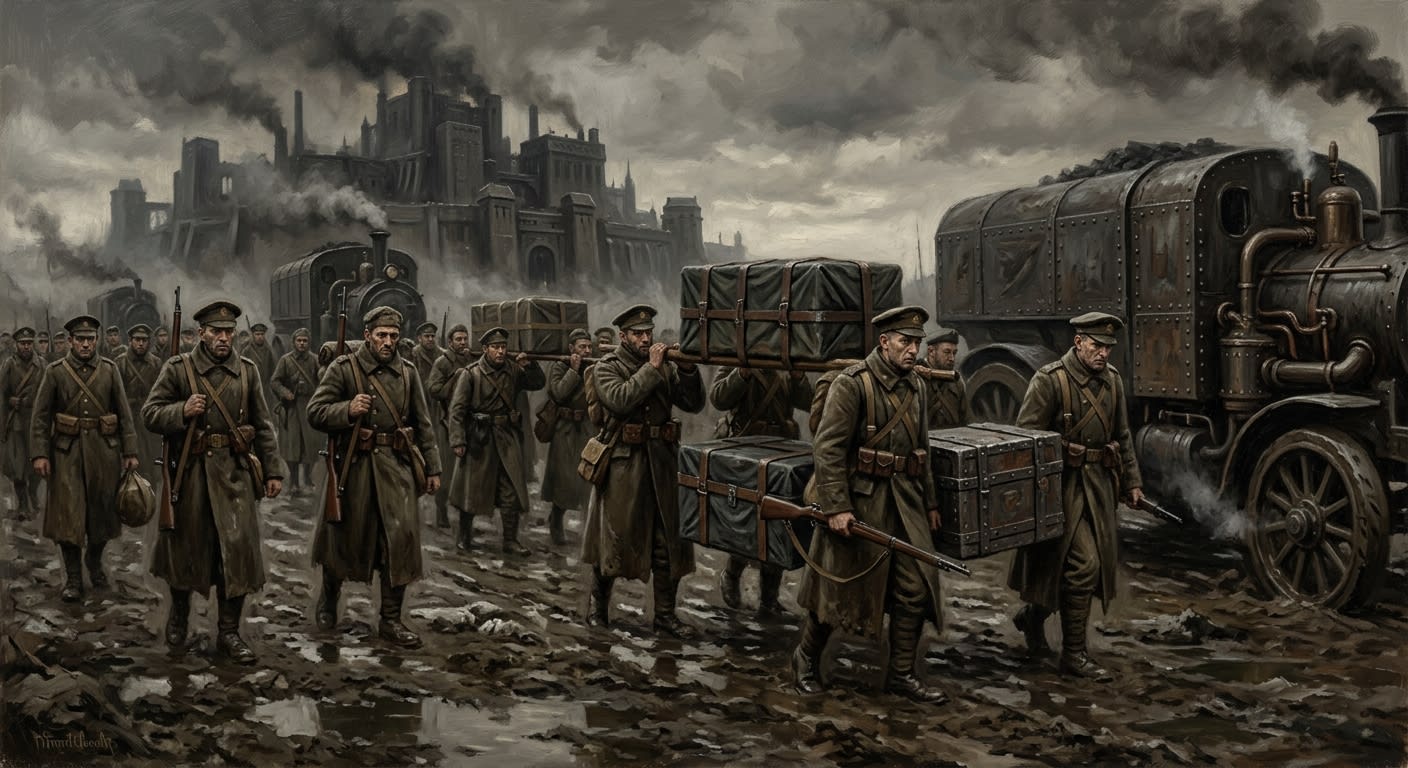
7th Rearguard Column
The middle hand that did not lose the bones
The 7th Rearguard Column did not blaze at Kalnik; it carried the bones through the middle miles, and the miracle survived because nobody lost the packet.
Codex Ref. VIII.5.07-045
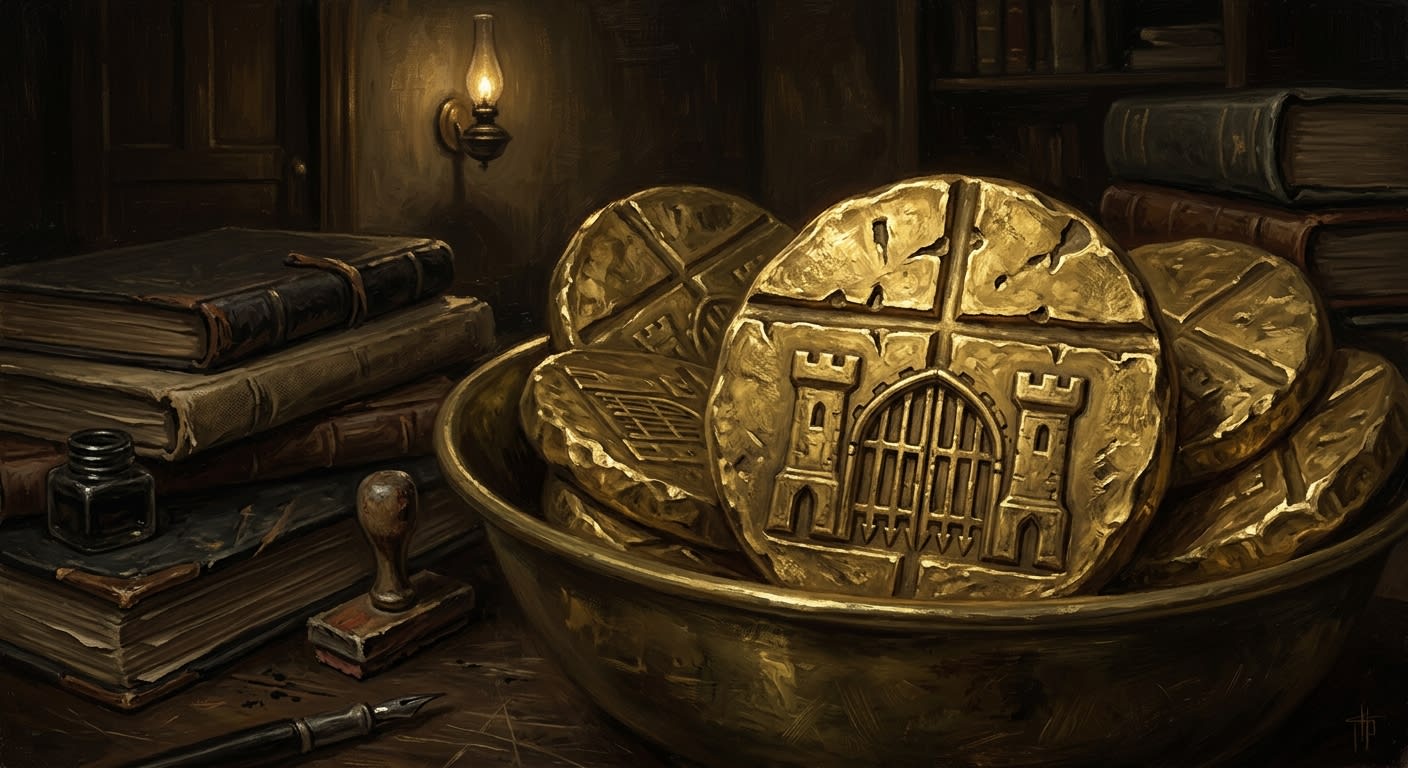
Aachen Gate-Penny
A saint's housing made small enough to buy boot grease
The Aachen gate-penny is reliquary gold made into emergency currency: a closed gate, a cross-groove, and a city’s old betrayal priced by the handful.
Codex Ref. V.2.04-160
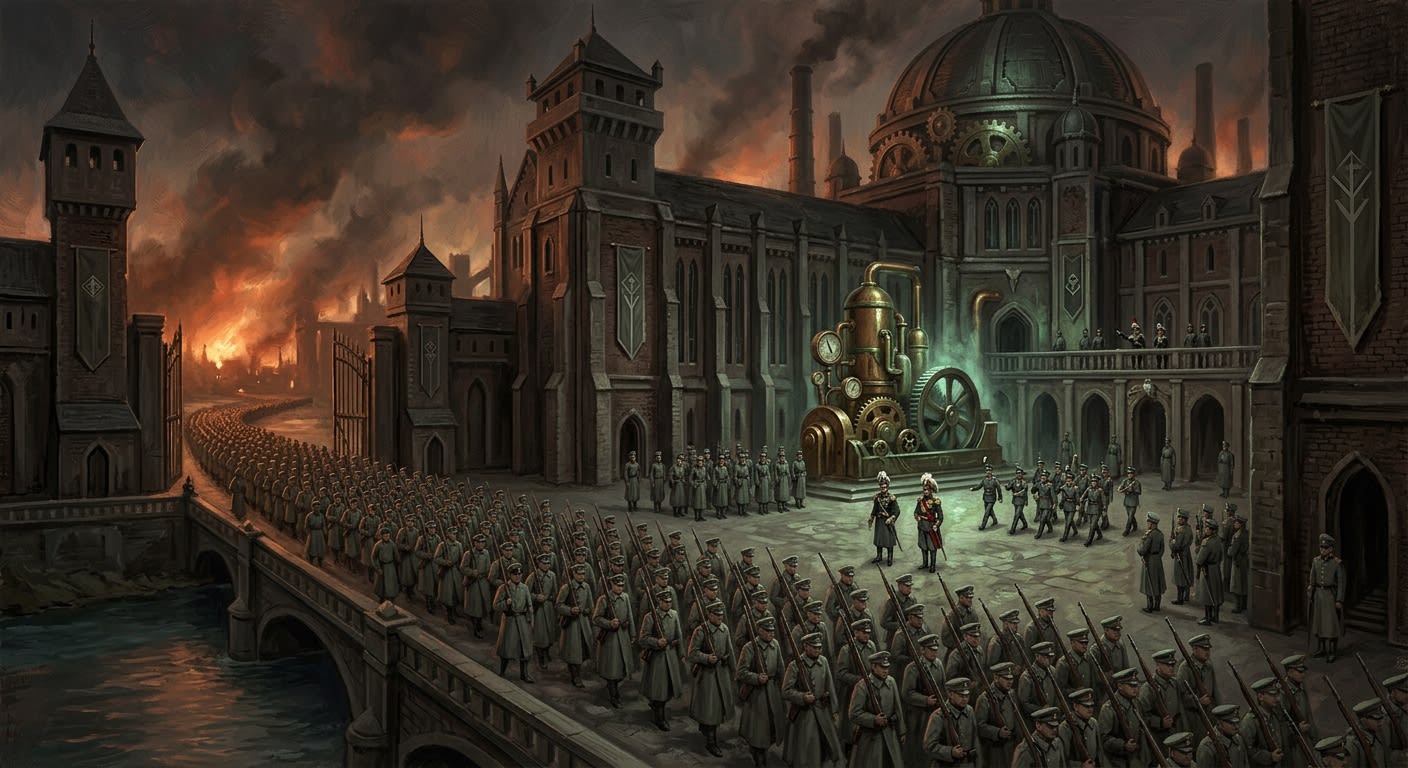
Academy at Vienna
Where correct formation met fire from a cloudless sky
Vienna's Academy taught order so perfectly that twelve thousand men marched by its rules into Maldrake's cloudless fire at the Iron Plains.
Codex Ref. II.4.09-045
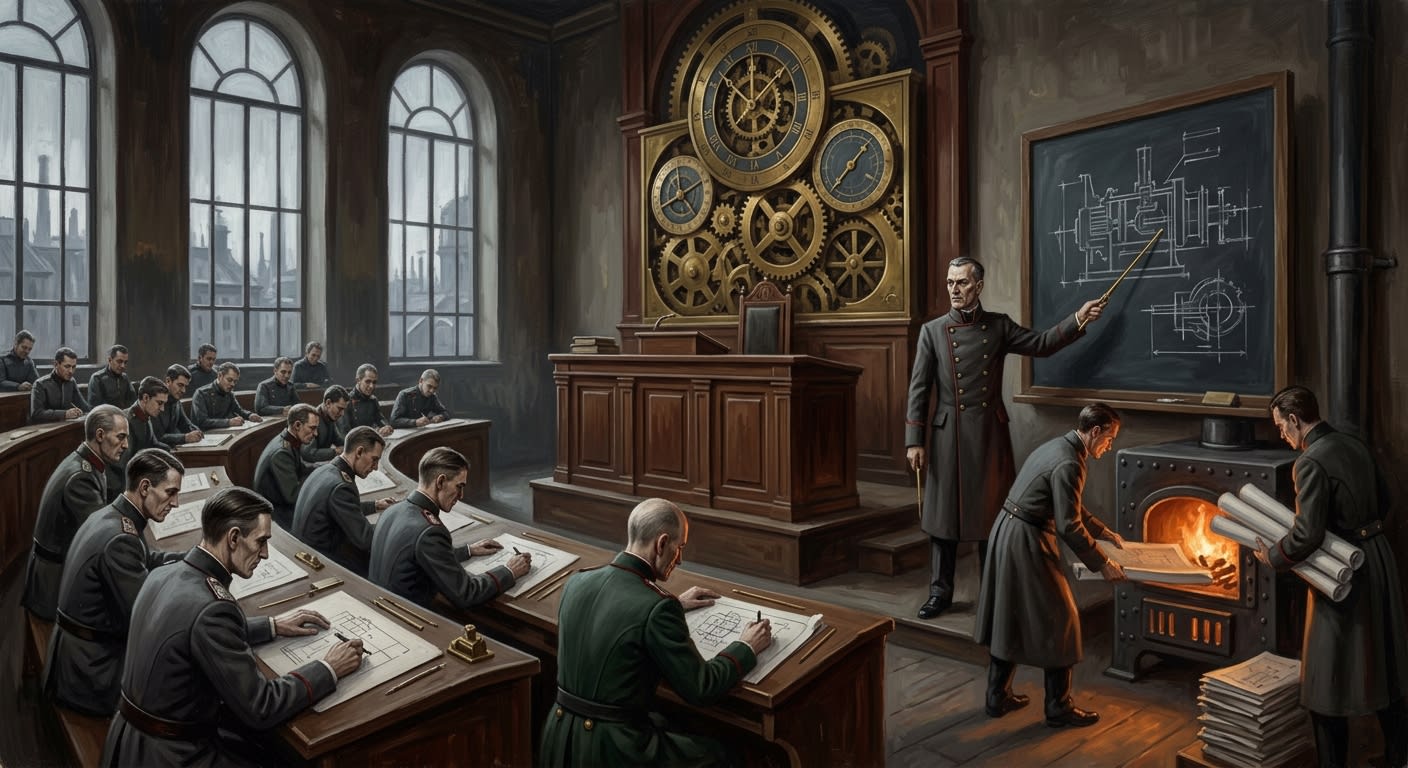
Academy of Vienna
Where gears replaced the crucifix and called the arrangement practical
Vienna's Rationalist Academy replaced Saint Stephen's crucifix with gears, trained clean-handed persecutors, and sent perfect diagrams into Maldrake's fire.
Codex Ref. I.1.03-045
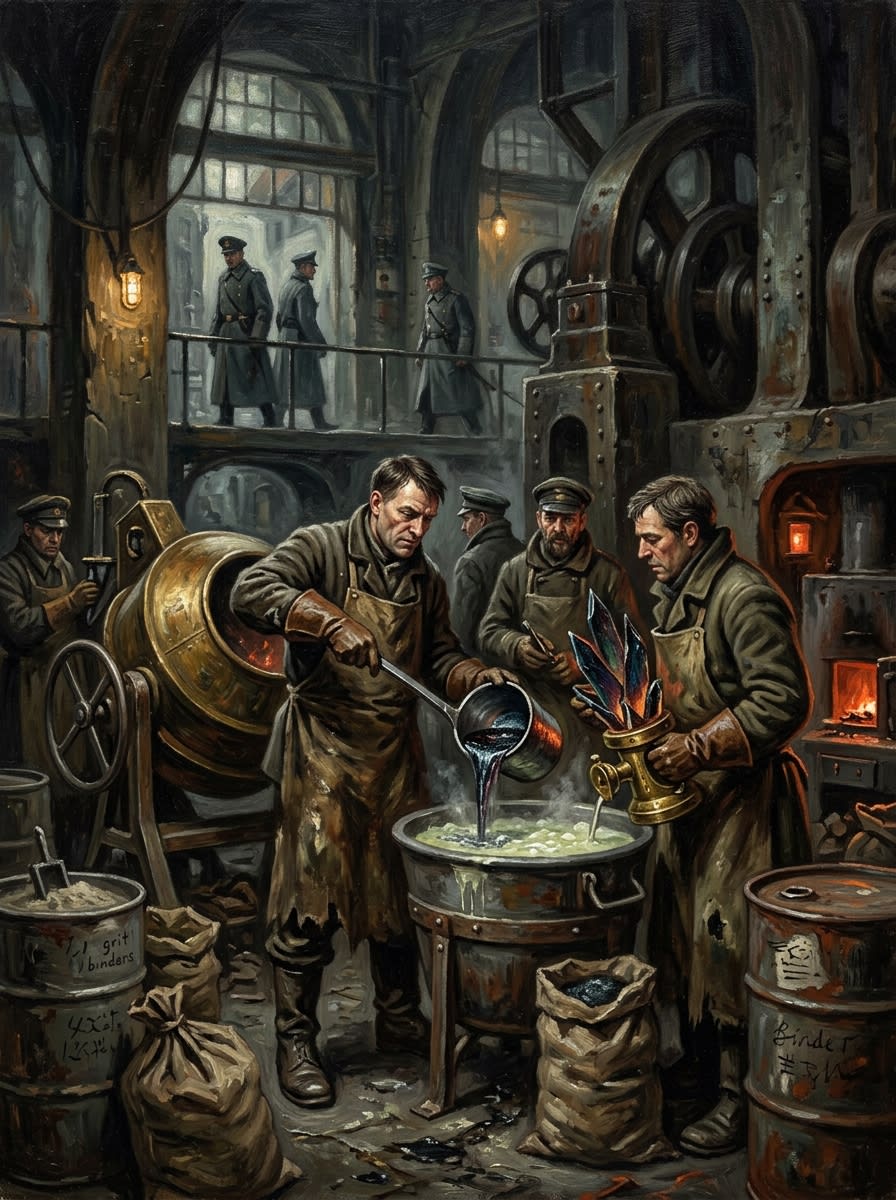
Additive Heretics
The men who put forbidden strength into holy mortar and called the wall their witness
Condemned Saint-Bone Melter tendency that improves sanctified lime with forbidden binders, hardeners, grit, and demon-glass heat-listeners while the Bureaus pretend not to measure the results.
Codex Ref. XI.5.01-001
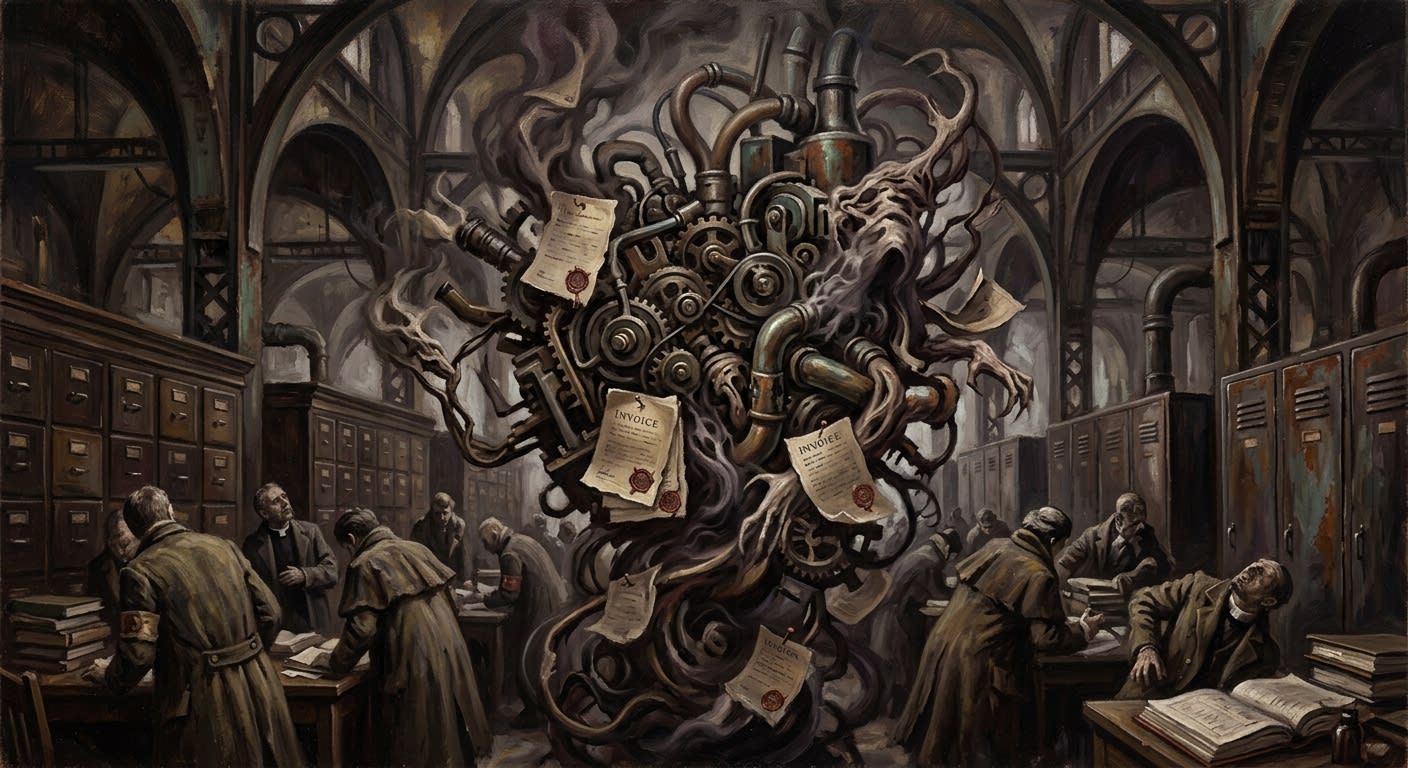
Adversary
The Enemy receives an office title and no face
The Bureau's cleanest dangerous word: a title for the hostile will behind sorcery, demons, Sin-General dominion, and every invoice Hell sends in bone.
Codex Ref. VI.3.01-001
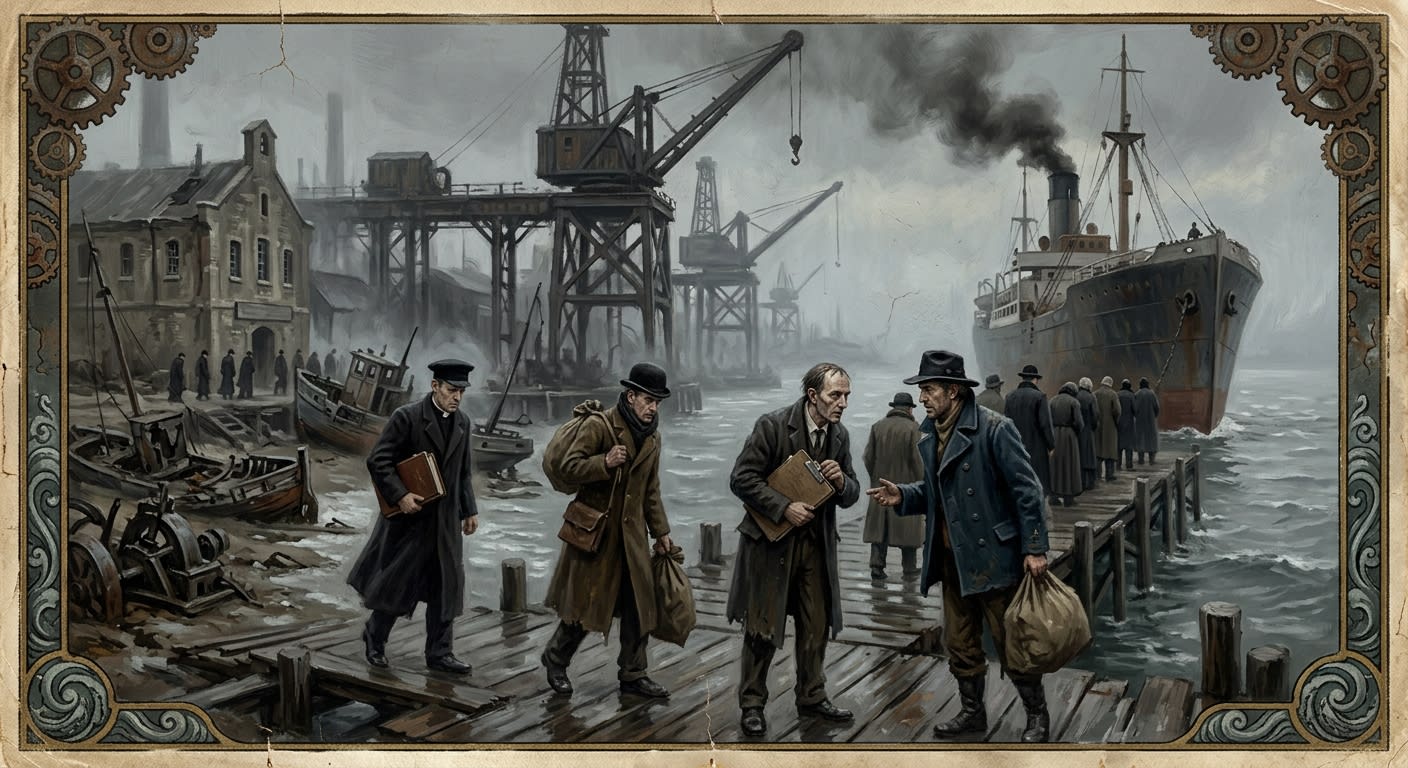
Aegean
The sea is held where it is counted
The Aegean is the Synod's southern salt-ledger: supply lane, pilgrim road, smuggler's chapel, drown-office, and sea with a clerical appetite.
Codex Ref. II.4.09-072
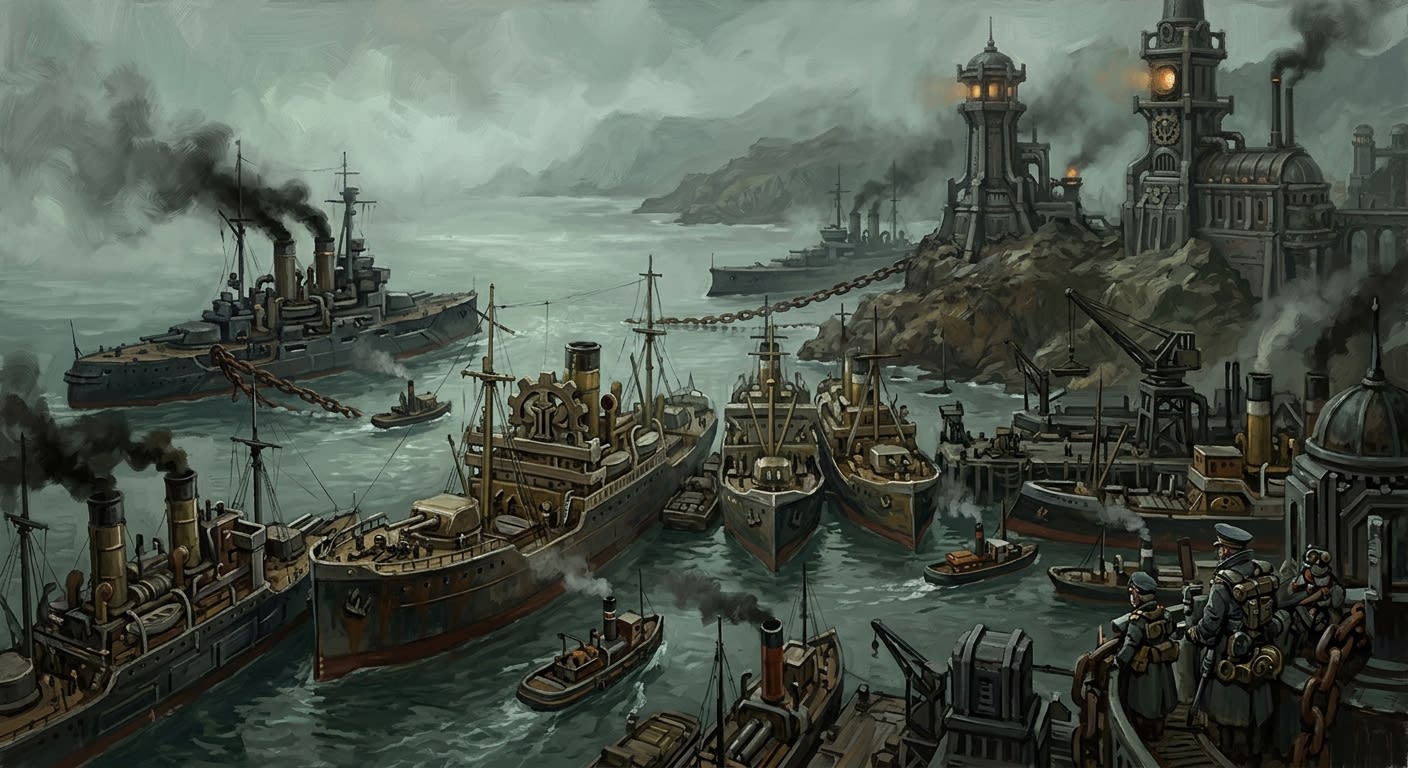
Aegean Approaches
The sea route where even sleep must show papers
Southern maritime threshold where the Aegean supply sea, Shipka road, Thessaloniki chains, and Syrion's fog politely conspire to make motion taxable.
Codex Ref. II.4.09-072
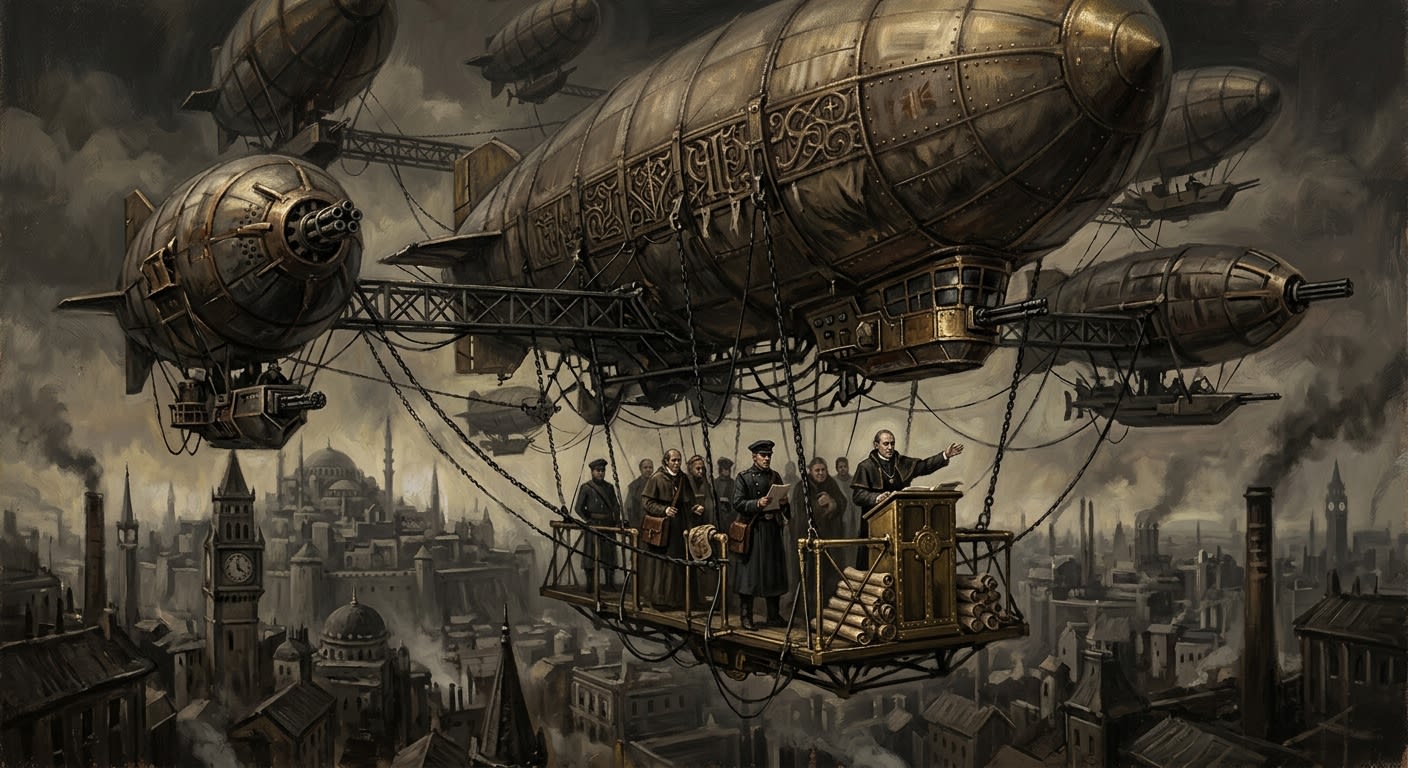
Aerial Wing
The sky, briefly obedient, under seal
Joint aerial custody apparatus by which the Synod lifts reliquary dirigibles, sermons, guns, clerks, and terror above Bastion-Constantinople.
Codex Ref. XIII.1.21-168
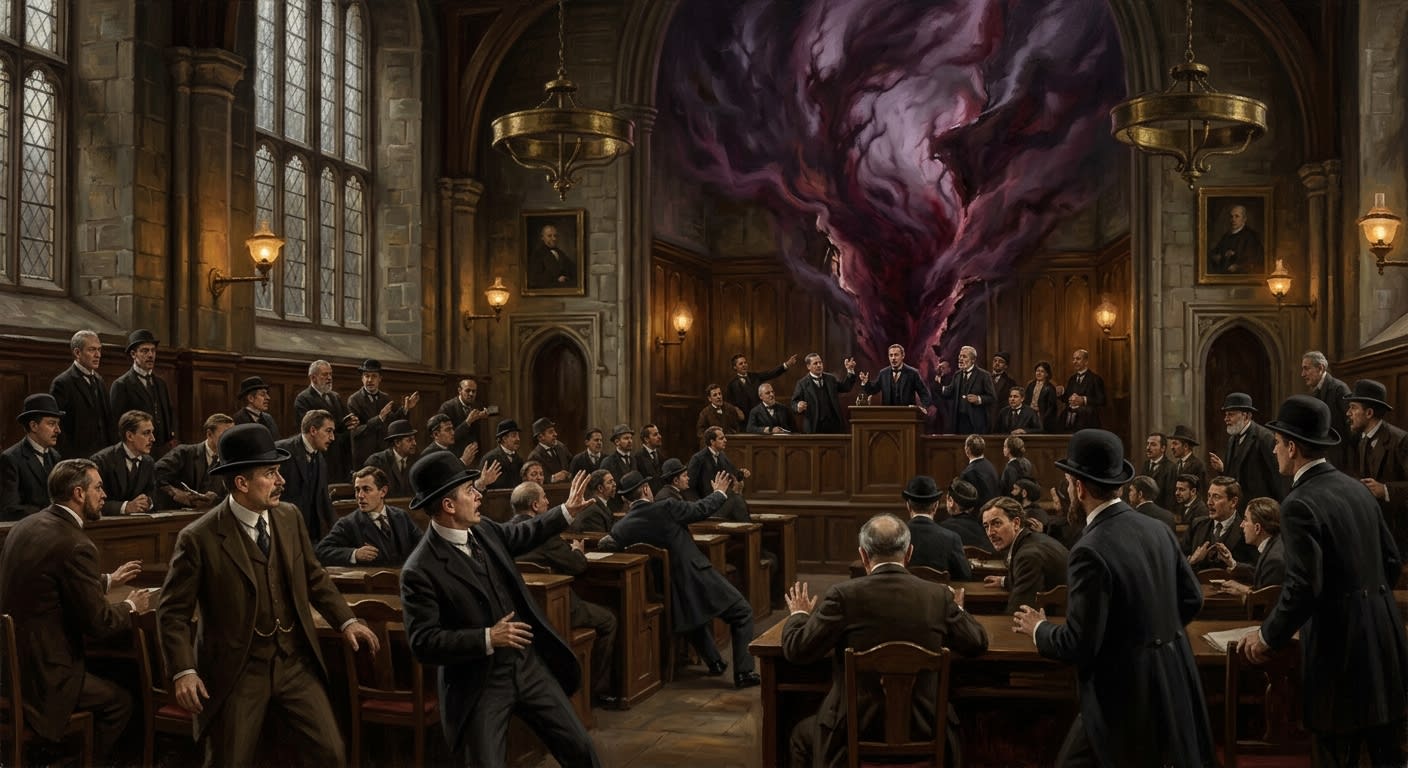
Age of Reason
The mind may hold the lamp, but Doctrine owns the flame
The Age of Reason licensed unbelief, polished desecration into civic virtue, and ended when Hell answered the lecture hall without raising its hand.
Codex Ref. XIII.1.00-001

Alen Rill
The missing hand that taught Irongate to answer out of tune
Alen Rill is the unregistered Counterkey Circle theorist whose gasket-grease progressions at Bastion-Irongate made Purity fear the crime of being correct.
Codex Ref. III.2.01-045
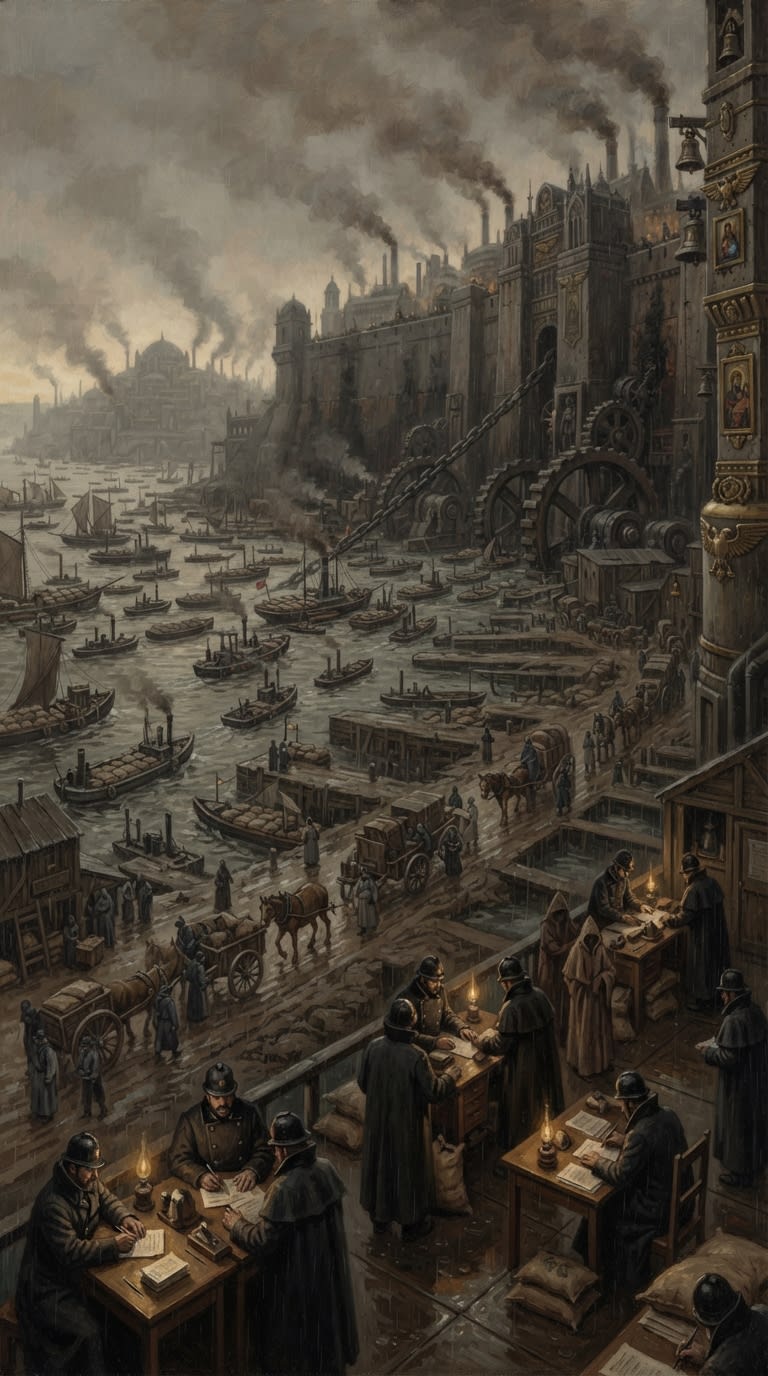
Anatolian grain convoys
The wall stands because the wheat arrives, usually lighter than declared
Constantinople's grain lifeline: Anatolian hulls, Green permits, Passage windows, Tithes arithmetic, and the persistent miracle by which every convoy arrives smaller than it departed.
Codex Ref. VI.4.21-068
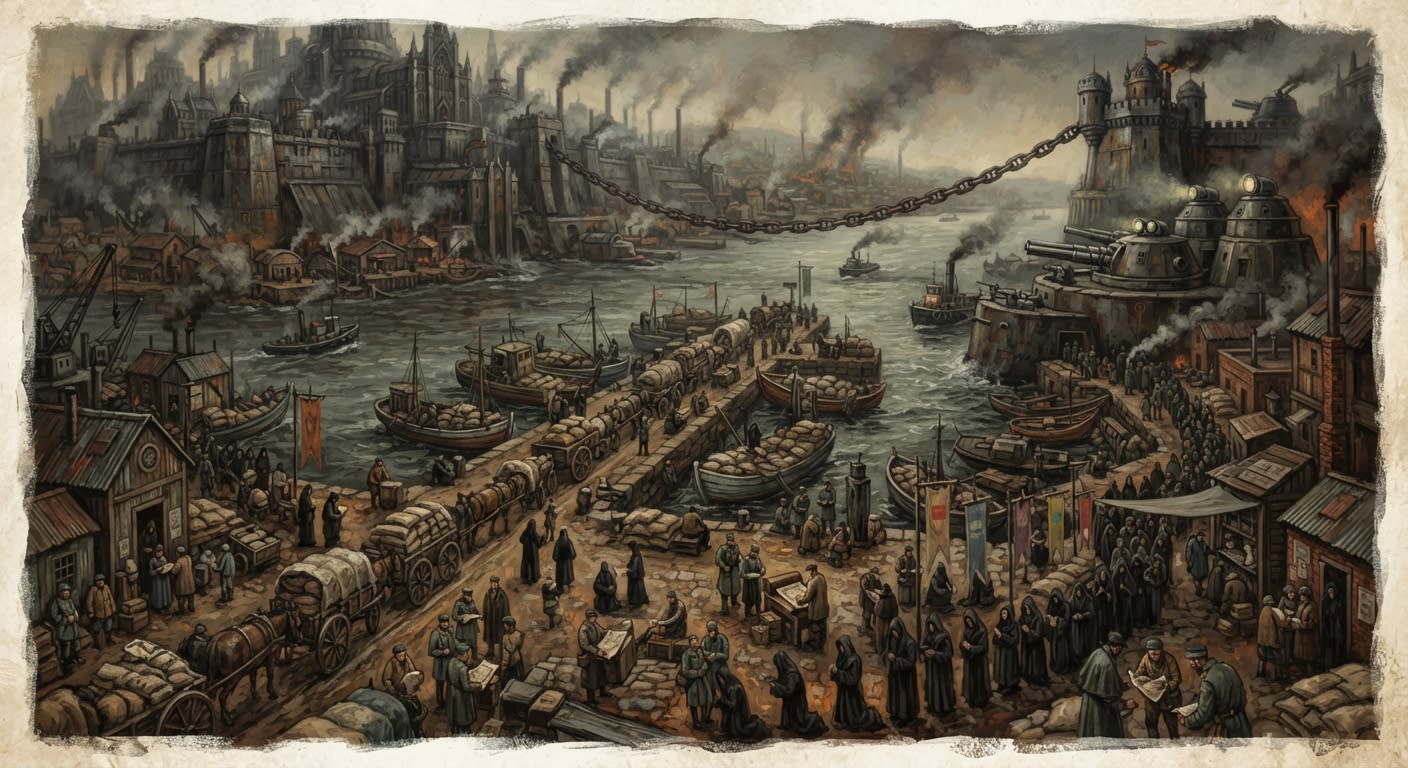
Anatolian Prefectures
The pantry the Hinge audits after eating
Synod-held Green Approach across the Bosphorus: grain, pilgrims, black diesel, and the arithmetic by which Bastion-Constantinople eats while accusing the hand that feeds it.
Codex Ref. II.4.09-069
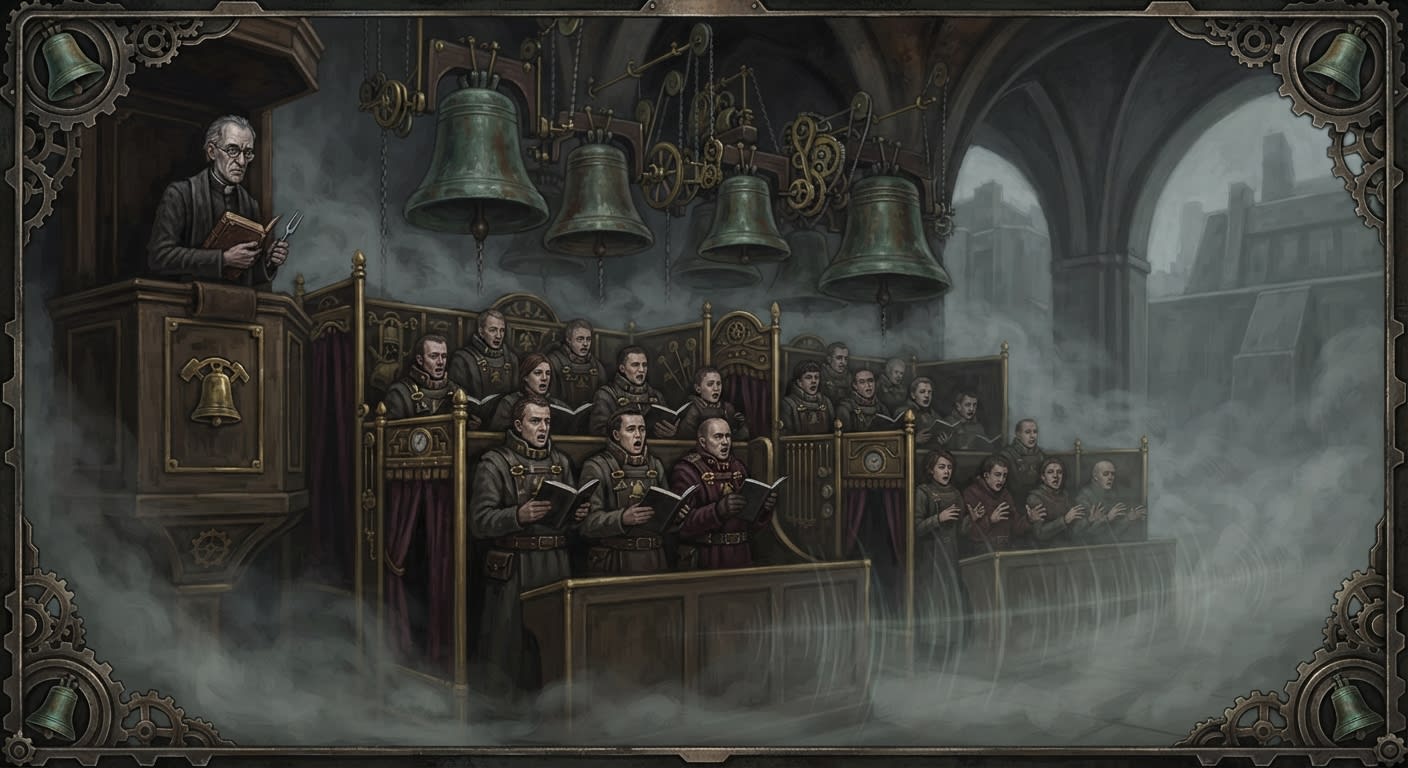
Anticipatory Acoustic Resonance
What the fog sings before the Choir dares breathe
Anticipatory acoustic resonance names the Grey's habit of returning Königsberg hymns before they are sung, because prophecy would require a braver office.
Codex Ref. XIII.1.87-037
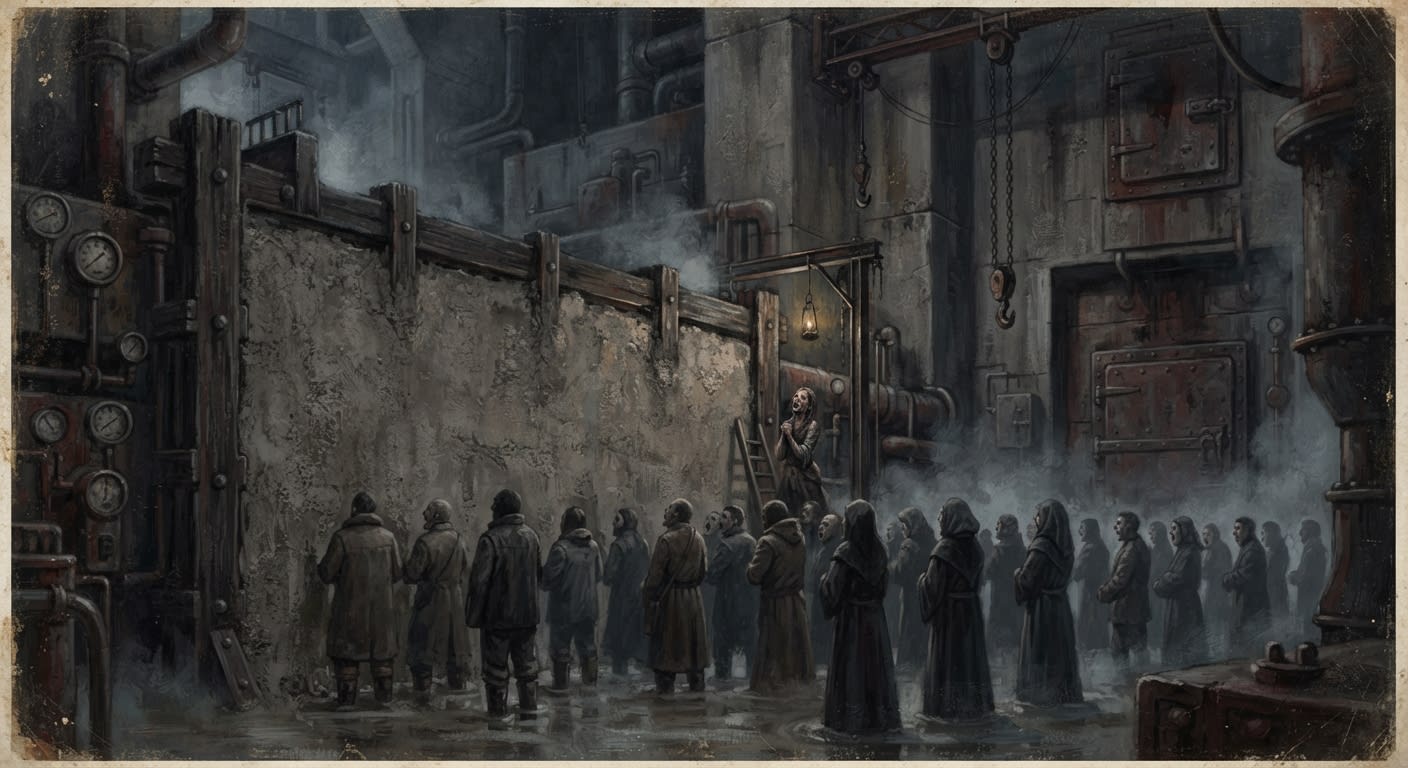
Antiphon of Endurance
Thirty-two verses, one last voice, and a wall that keeps time
The Antiphon of Endurance is the licensed siege hymn sung by the forty-seven as Chamber 7 was poured; thirty-two verses now answered yearly by a warm wall.
Codex Ref. XIII.1.96-170
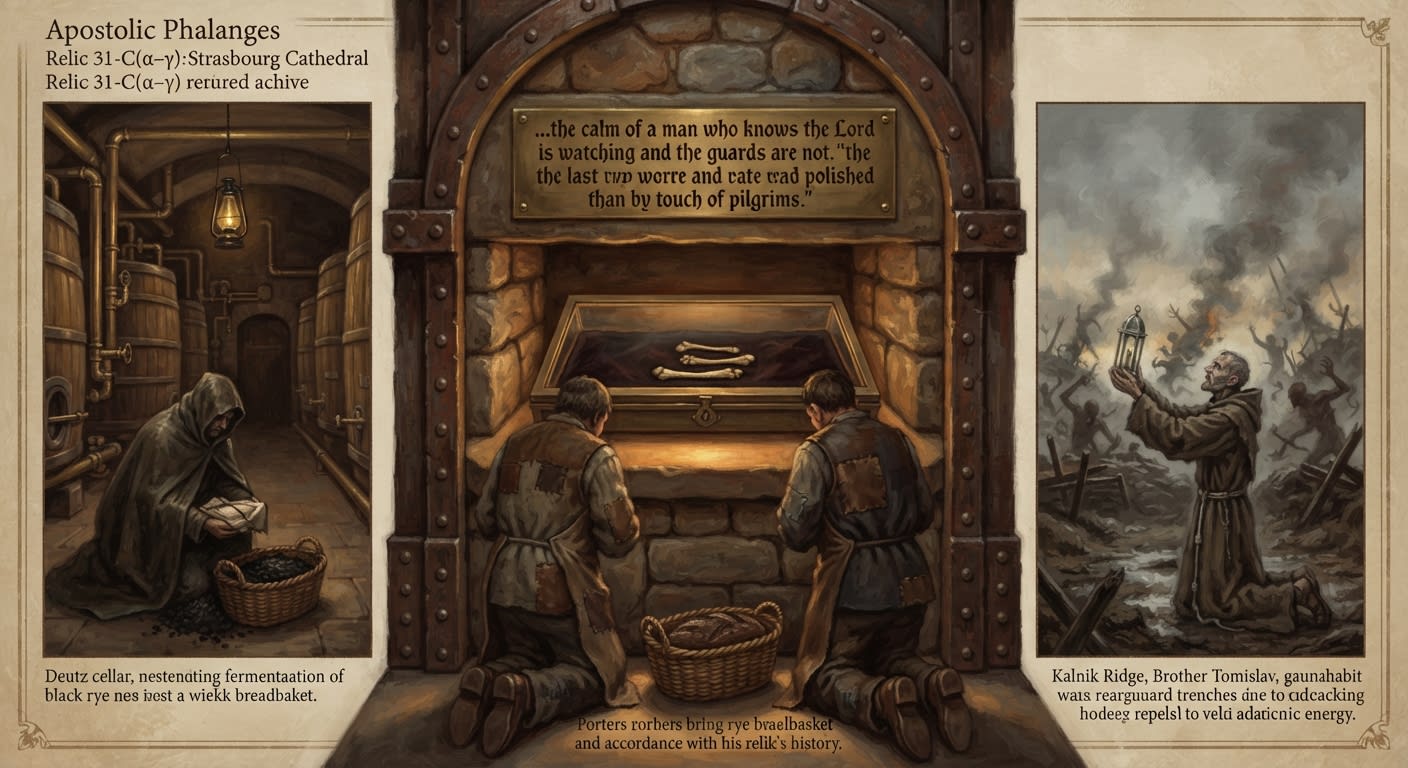
Apostolic Phalanges
Three finger bones, fourteen quiet years, and one ridge that learned fear
Relic 31-C(α–γ), three apostolic phalanges saved under rye and beer, later burned demons at Kalnik and now sit under licensed glass in Strasbourg.
Codex Ref. XIII.1.31-031
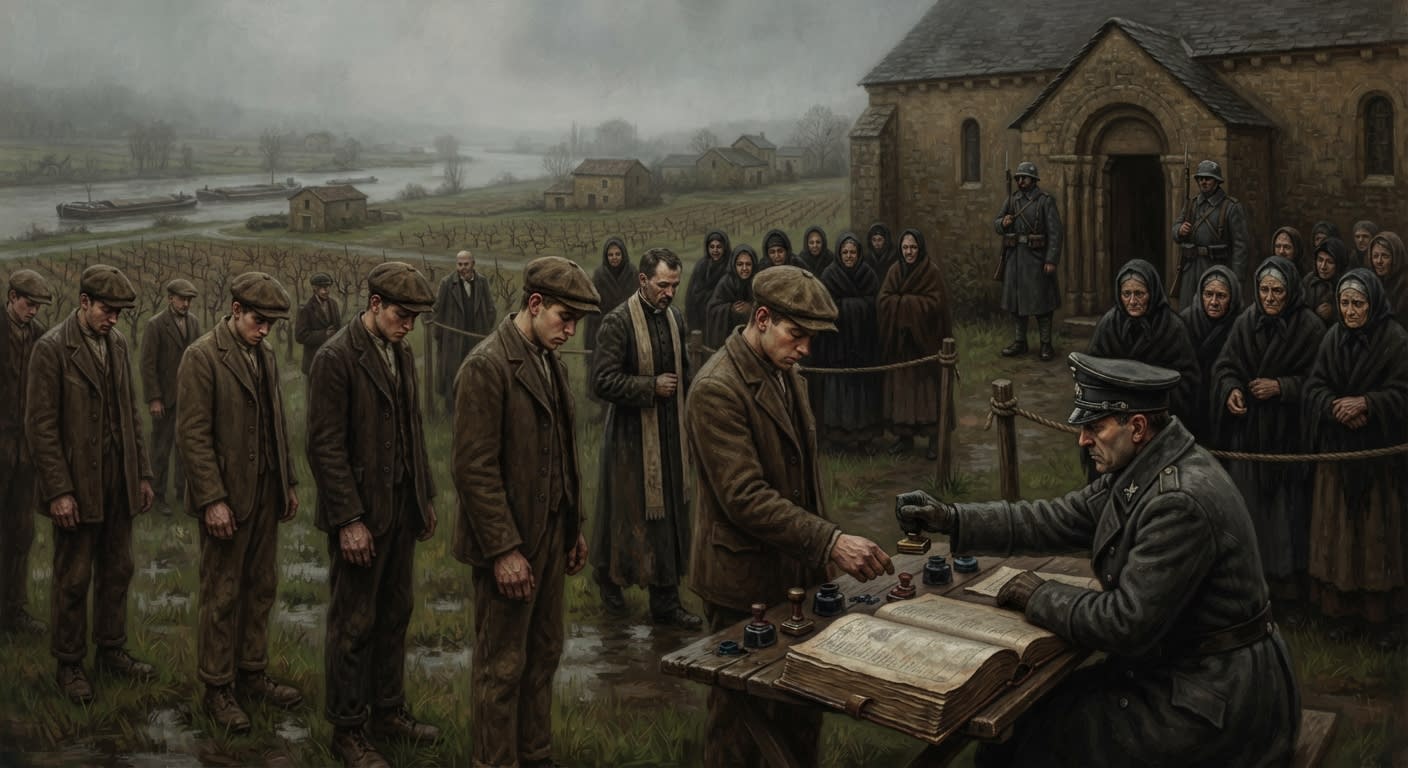
Aquitaine
The western field where sons go missing politely
Aquitaine is the Synod's damp western grain and wine basin: loyal by return, undercounted by suspicion, and courteous enough to make evasion look like hospitality.
Codex Ref. II.1.12-201

Archon of Records
The hand that opens almost everything, and records what it cannot touch
The Archon of Records opens nearly every lock in the Church's memory, commands the Great Ledger, and preserves one terrifying receipt: proof that some silences outrank even Records.
Codex Ref. XIII.1.07-078
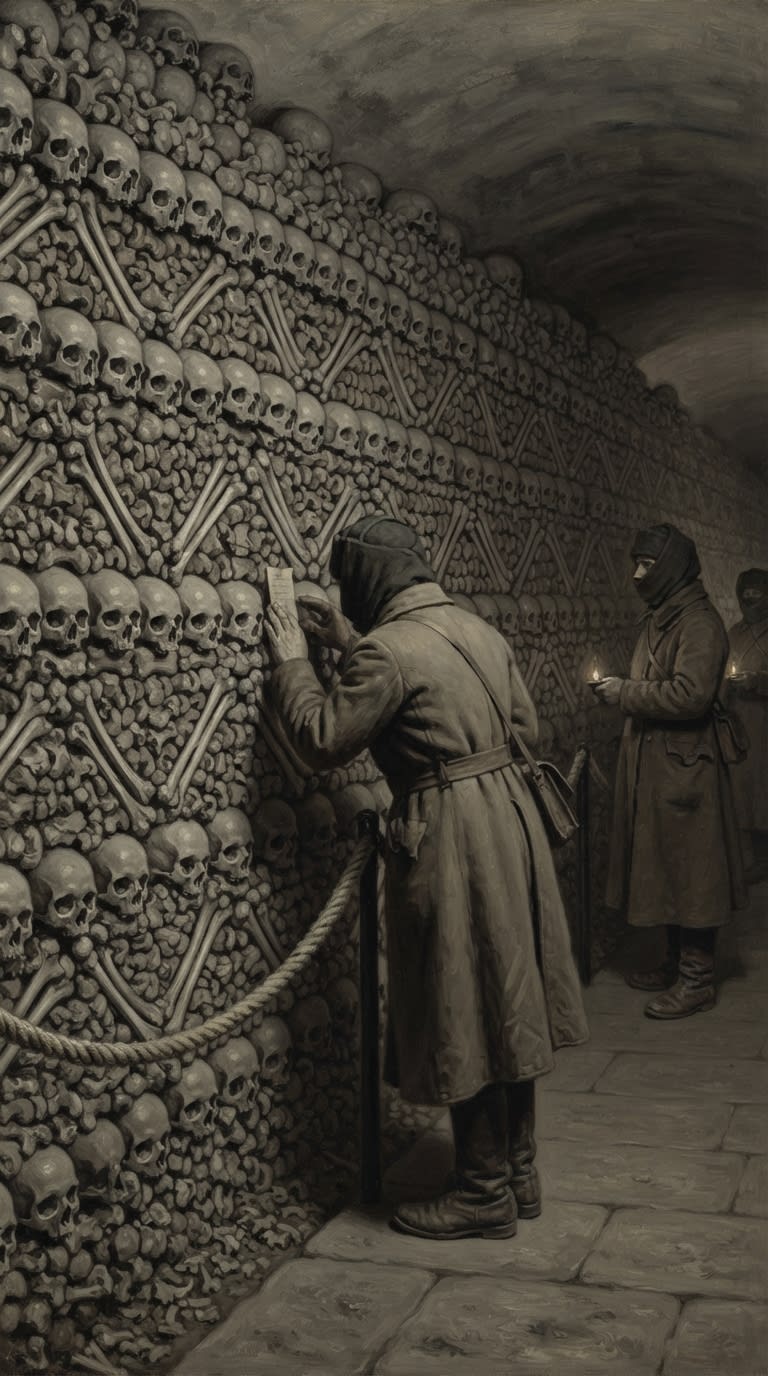
Ash Gallery
Where hunger became masonry and ash learned the names
A Sixth Ring tunnel where famine dead face outward, Thracian ash has entered the bone, and every pilgrim's name-reading asks the wall what it remembers.
Codex Ref. II.4.10-009
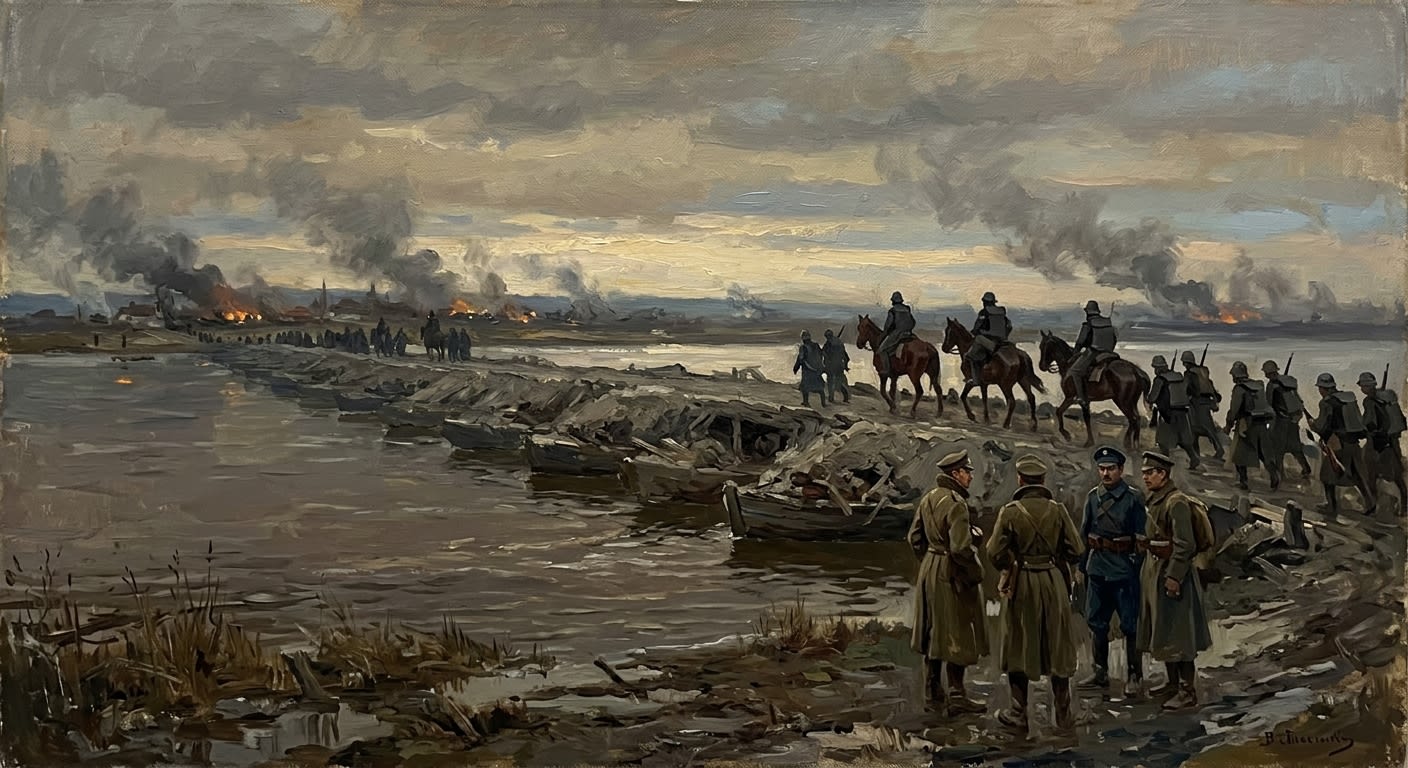
Ash-Fodder
The cheapest weapon in the Adversary's ledger — and the one no committee is willing to count
The Ash-Fodder Militias are the lowest tier of the Shadow Court's mortal force taxonomy — unenhanced, unarmed or barely armed, drawn from conquered populations and driven forward to exhaust Synod ammunition and armour before the real assault begins.
Codex Ref. IX.1.03-001
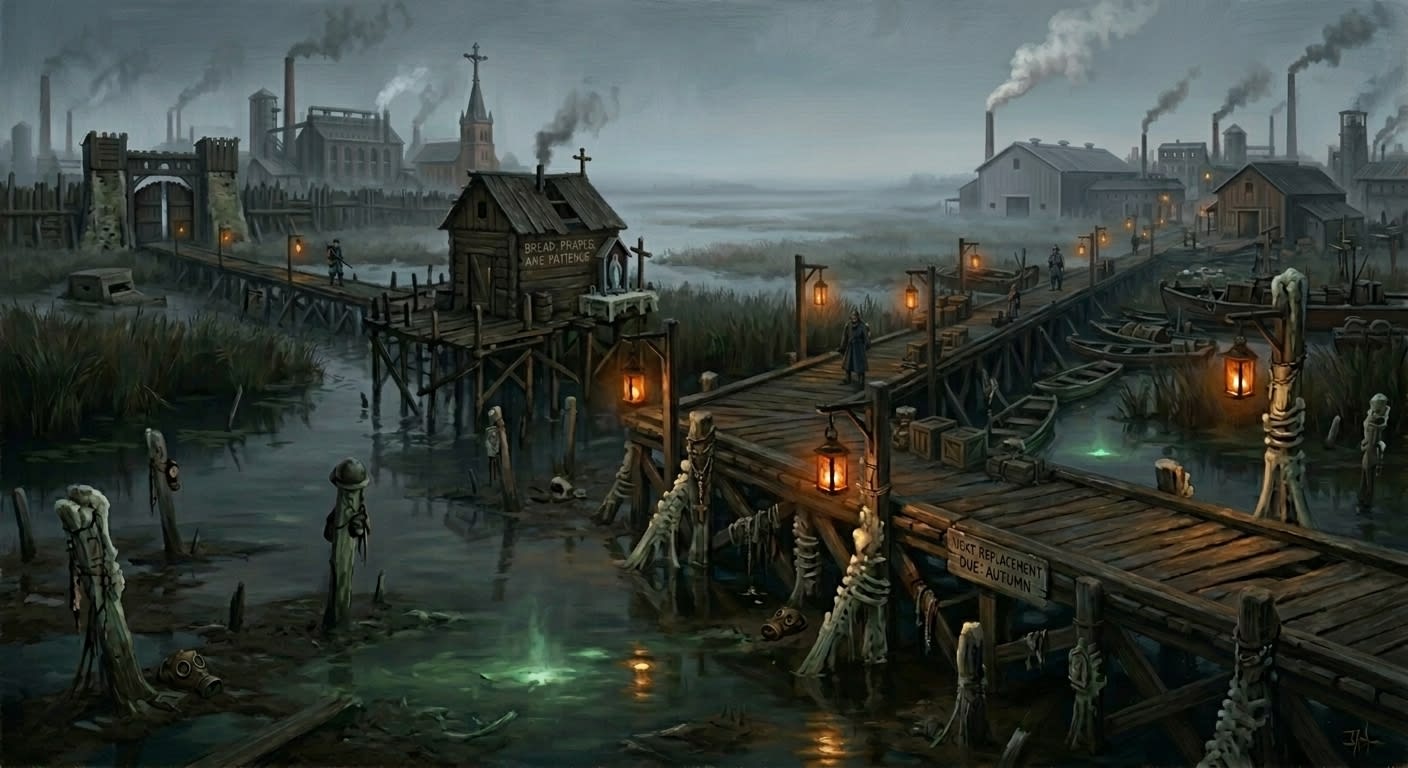
Ash-Glyph Marshworks
All graves are provisional at the river's edge.
A mortuary settlement at the Danube's mouth where the war-dead are converted into filing coordinates. The marsh glows at night, the relics arrive already tagged, and the Bureau has been reviewing the anomalies for fifty-eight years without result.
Codex Ref. II.4.08-004
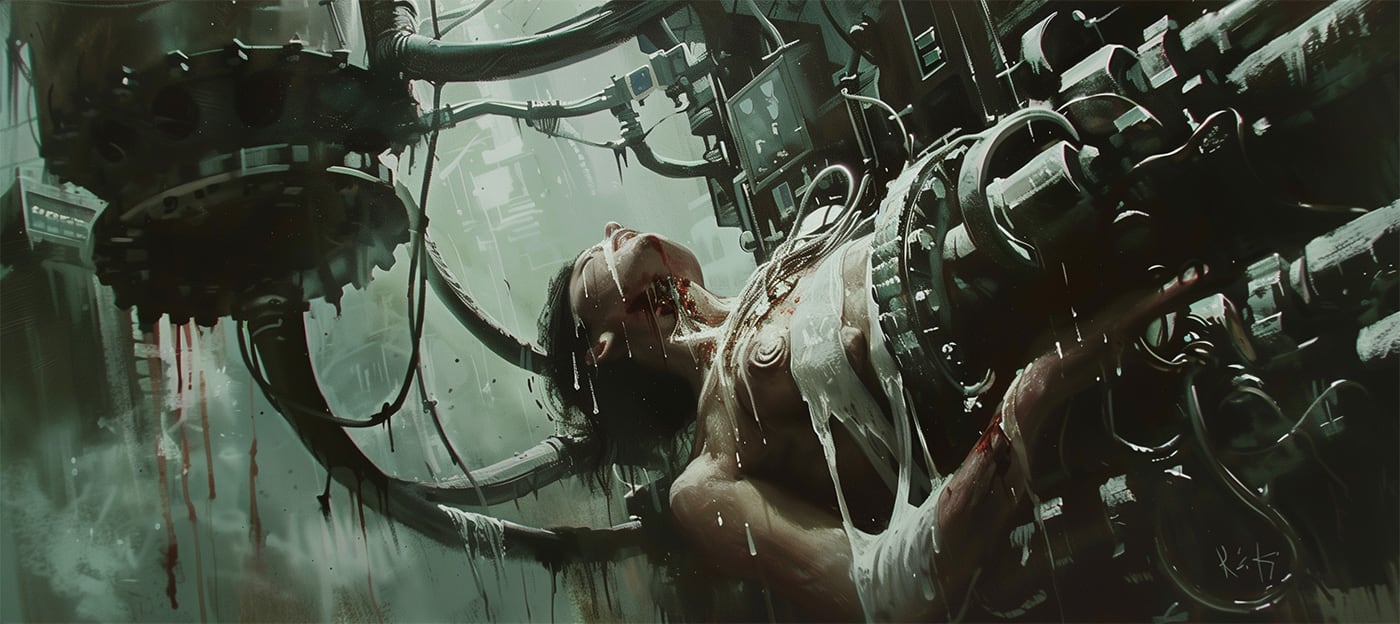
Ash-Mothers
A production line. The Bureau said two paragraphs were enough. They were not.
The Bureau's most exhaustive silence — Ash-Mothers are enemy reproductive logistics cells, captured women sustained by sorcery to generate Thrall regiments at industrial scale. I file the account that two paragraphs could not contain.
Codex Ref. IX.1.02-001
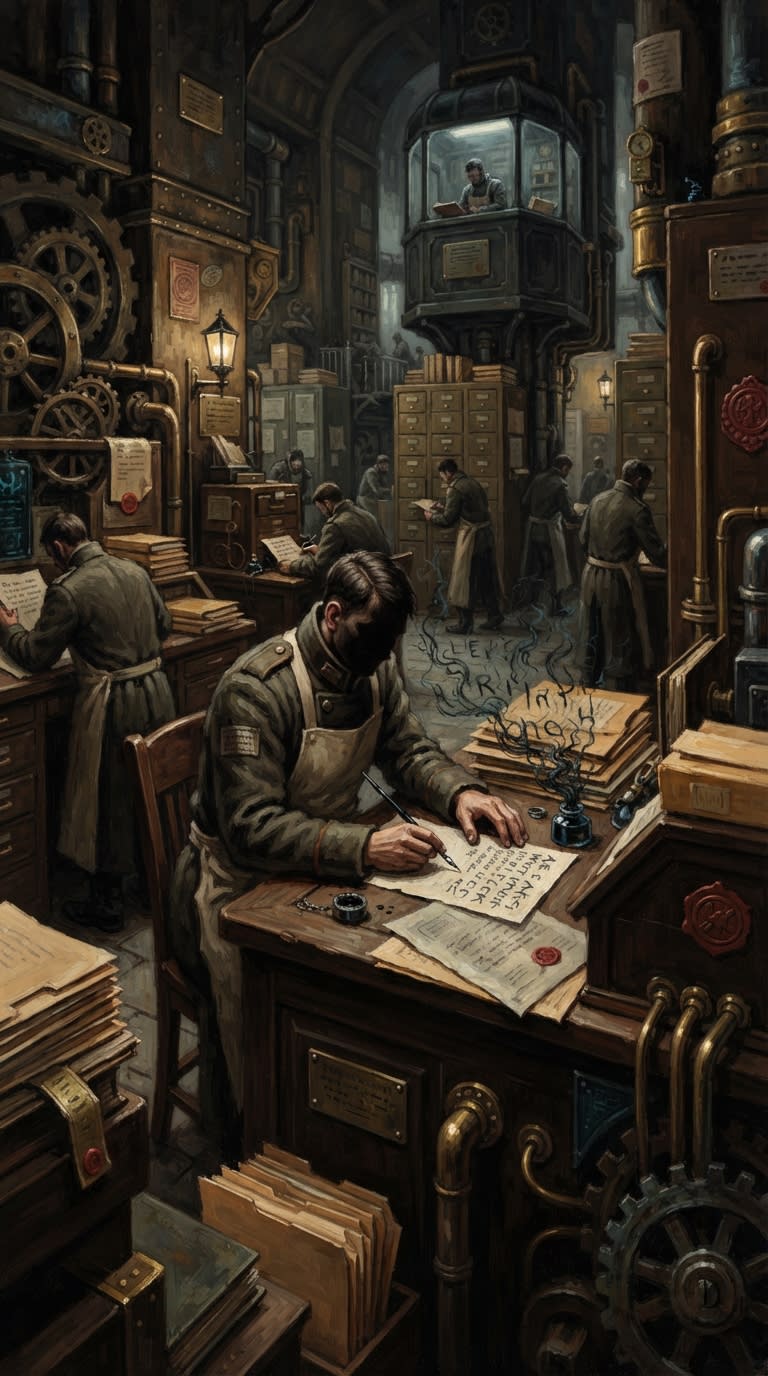
Ash-Substrate school
The unnamed doctrine that made the ink look back
The Ash-Substrate school argues that Hungry Ink is not contaminated ink but ash-bound intention, which is why the Bureau commissions its memoranda and buries their names.
Codex Ref. XIII.1.18-002
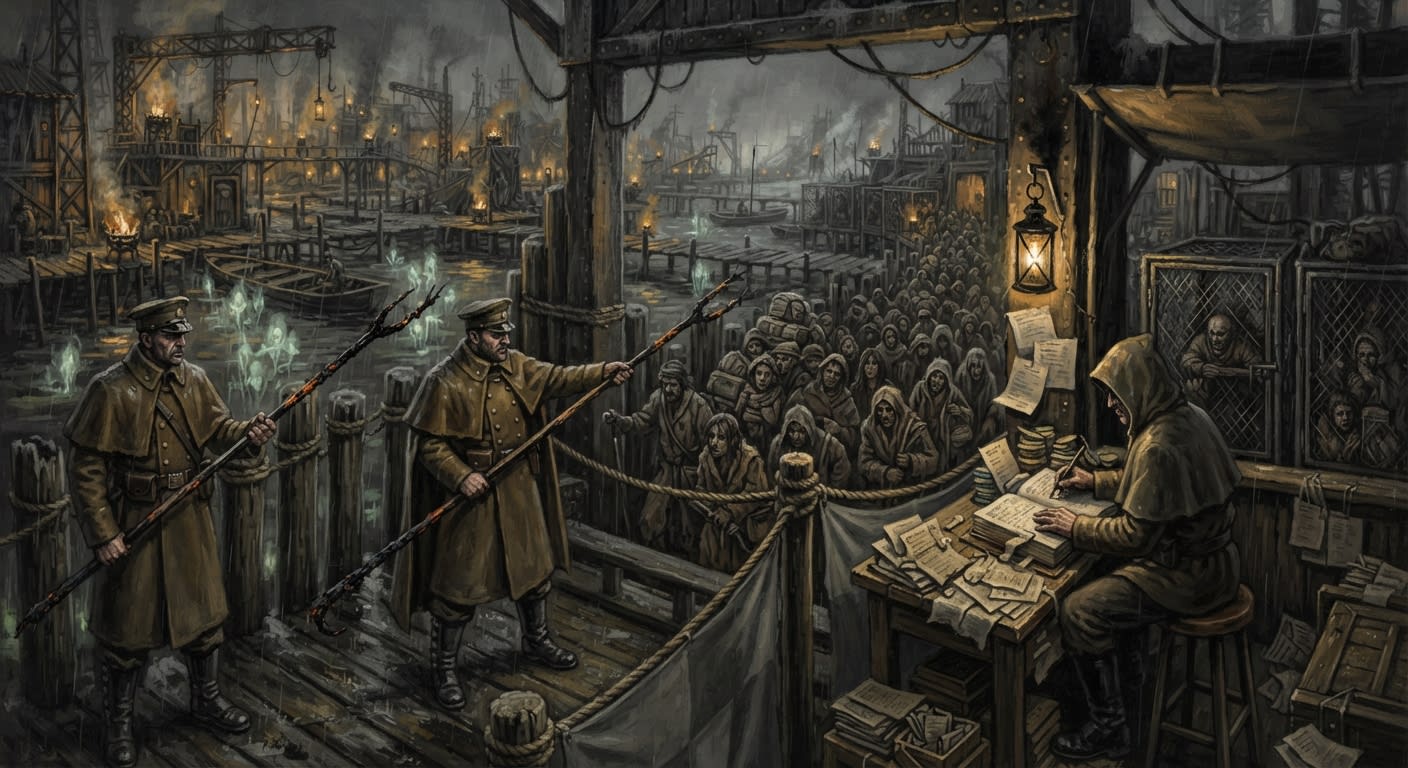
Ashbound Wardens
The Gate has one road out and one ledger open
The Ashbound Wardens hold the Causeway Gate at the Ash-Glyph Marshworks, enforcing a temporary quarantine that has lasted eighty-nine years and converting passage, debt, and fear into revenue.
Codex Ref. XII.7.02-002

Assessor-Tertiary Yrsa Haugen
She keeps watch over Hell's resentments, which is why the minutes still matter
Yrsa Haugen directs Inter-Infernal Analysis from three rooms in Strasbourg, keeping fourteen analysts and one dangerous assumption from becoming a lullaby.
Codex Ref. III.2.01-152
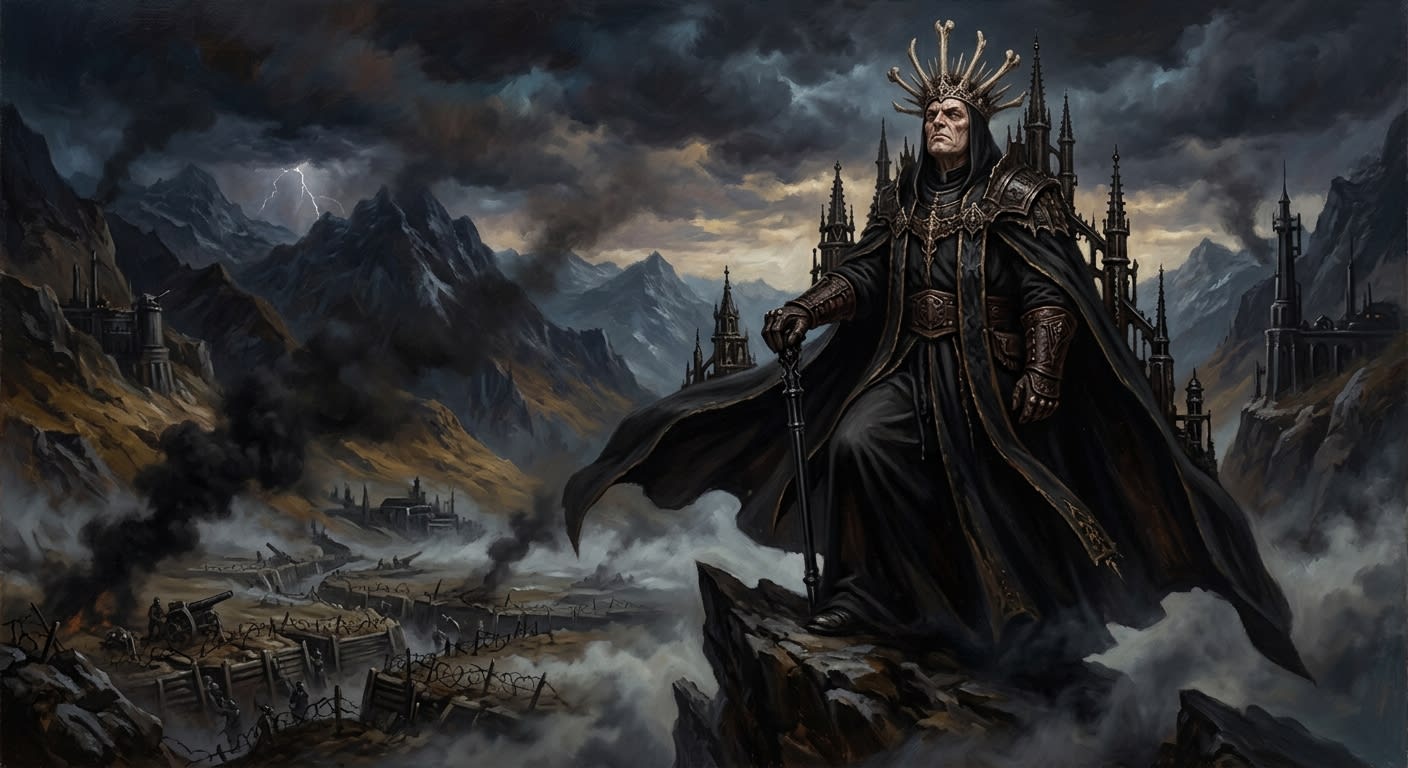
Atheron
The summit that denied the mountain that bore it
Atheron, Sin-General of Pride, holds the Carpathian passes opposite Bastion-Przemyśl — not for strategy, but for the dominion of being seen from above. He is the enemy the Synod least understands because it resembles him most.
Codex Ref. IV.1.07-006
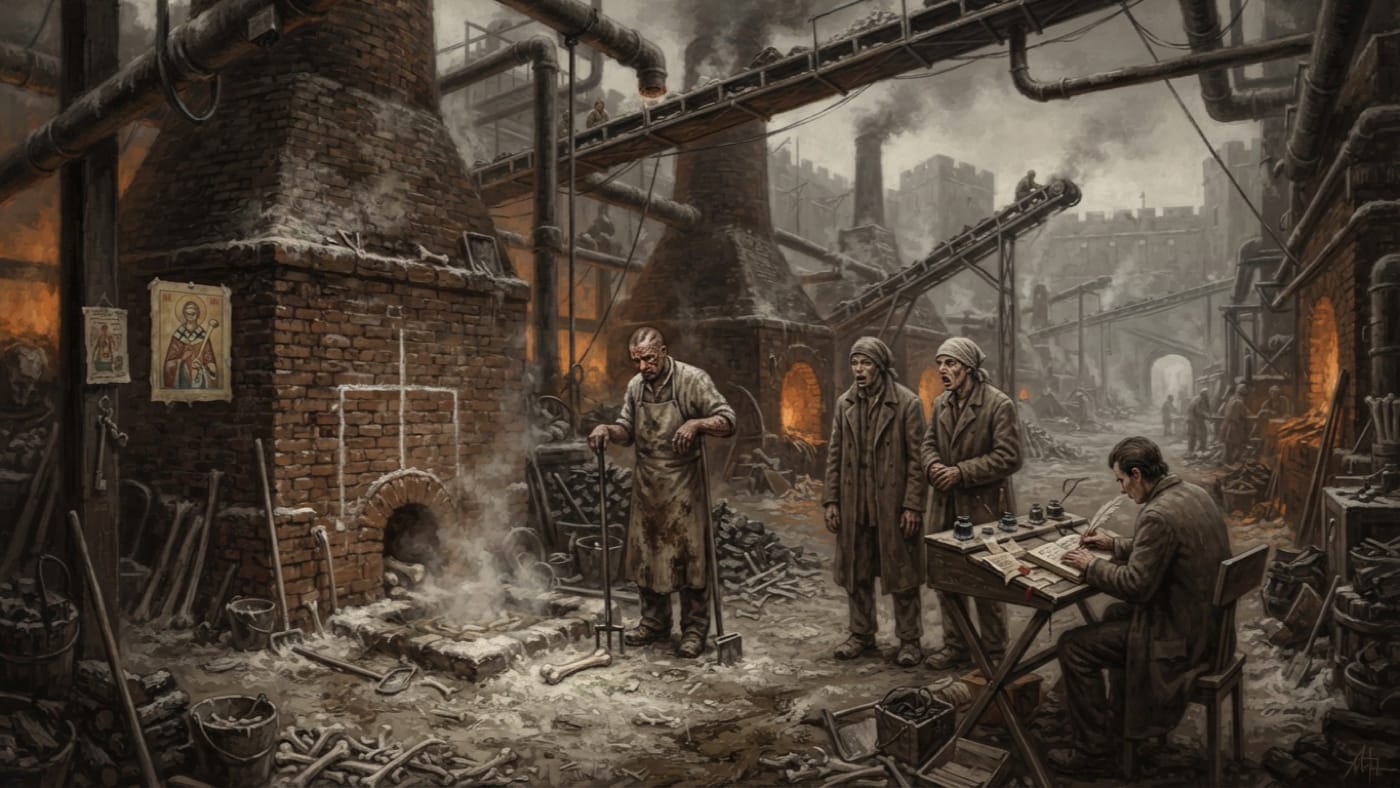
Aurelite Use
Four lines for mercy, no additional licence for the kiln
One attributed kiln prayer and a tolerated yard observance: Aurelite Use lets Saint-Bone Melters ask Saint Aurel for mercy while granting no additional licence to burn.
Codex Ref. XIII.1.91-146
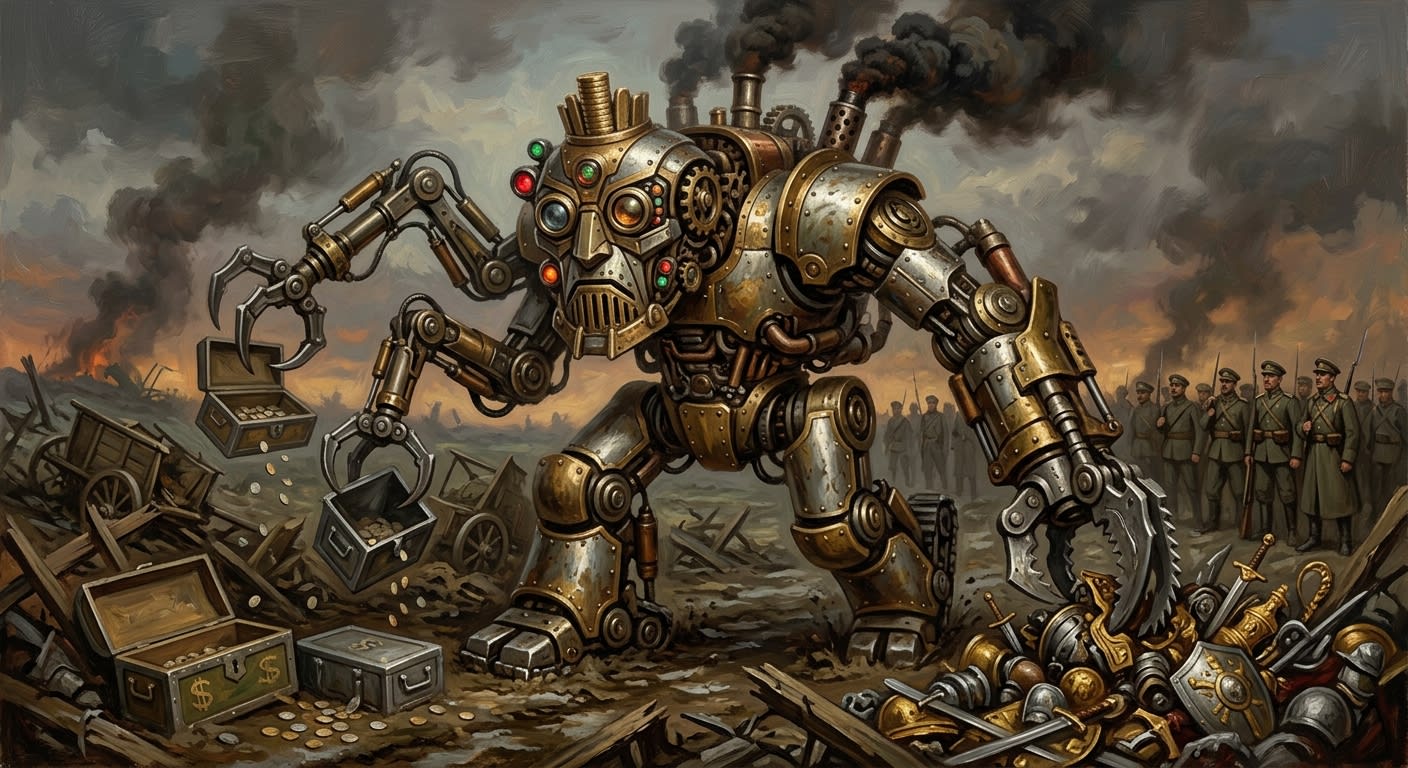
Avarice Engine
A walking treasury with foreclosure for feet
The Avarice Engine is Velmora's walking treasury: a gold-and-silver war-golem that crushes ownership, appraises courage, and leaves pay-chests empty.
Codex Ref. XIII.1.27-190
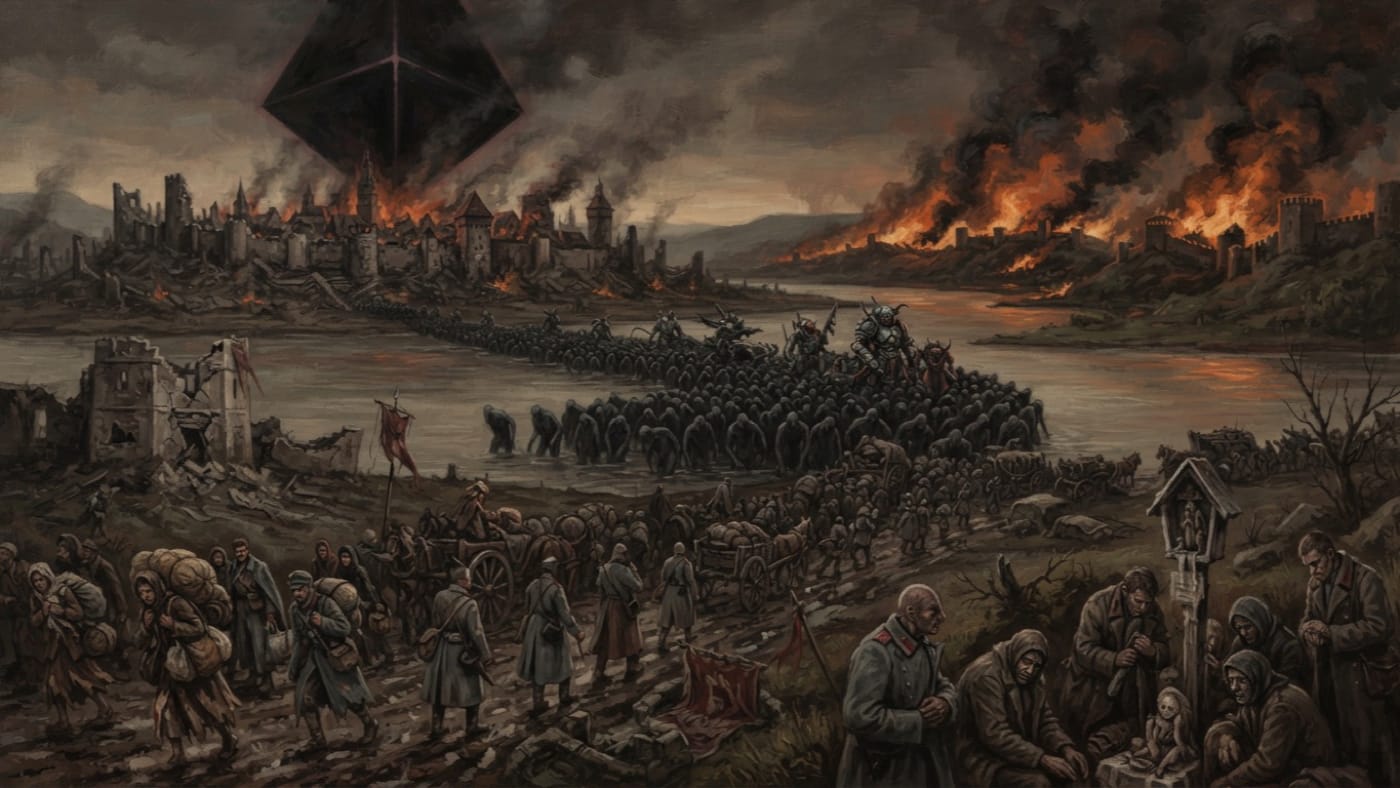
Balkan Collapse
A season of ruin, a permanent claim on sons
Brașov consumed, the Danube crossed on the drowned, and Thrace burned: the A.S. 110 Balkan Collapse gave Strasbourg an emergency it could charge to every household.
Codex Ref. IV.1.09-162
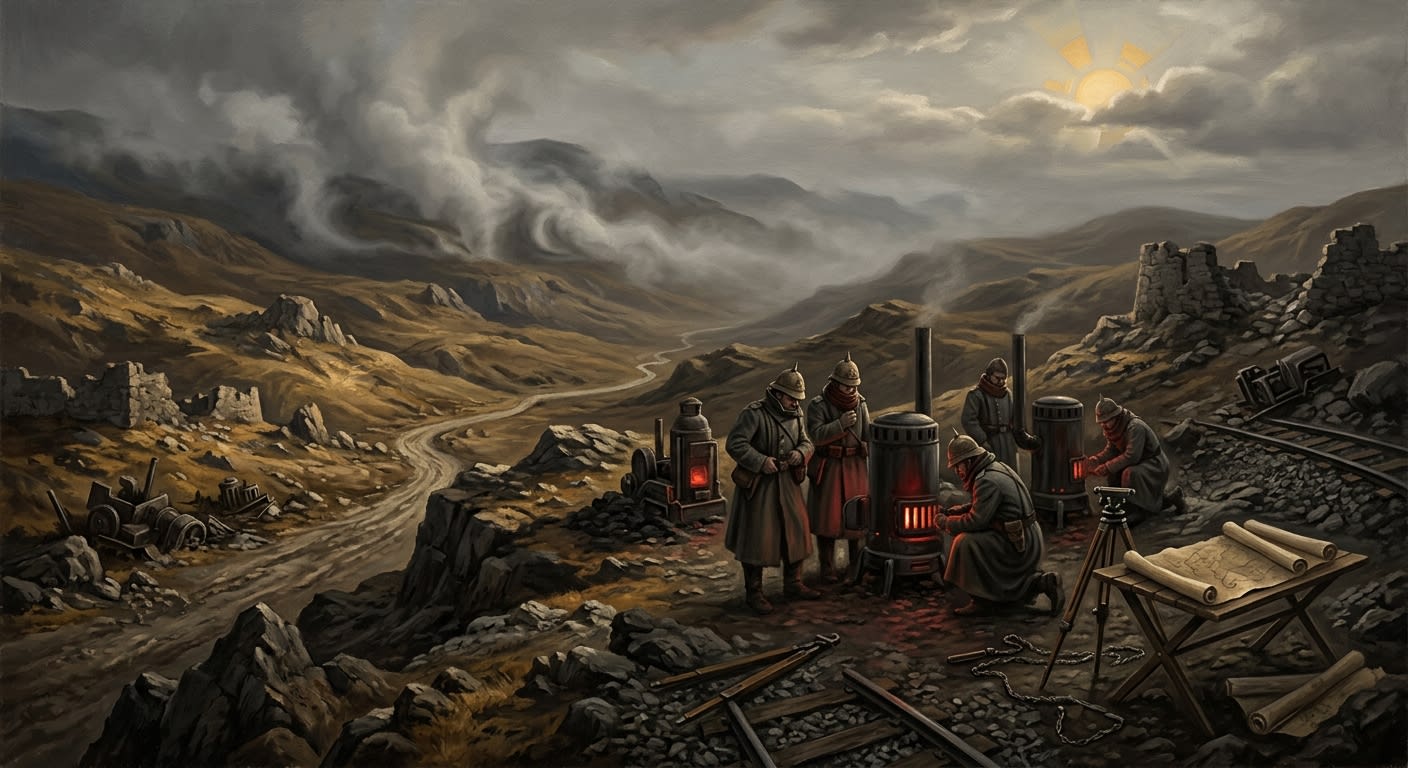
Balkan Foothills
Where the weather learned politics
The Balkan foothills are the broken stair below Shipka, where Maldrake's furnace weather, Syrion's time-fog, and Synodal maps all lose jurisdiction.
Codex Ref. II.4.12-045
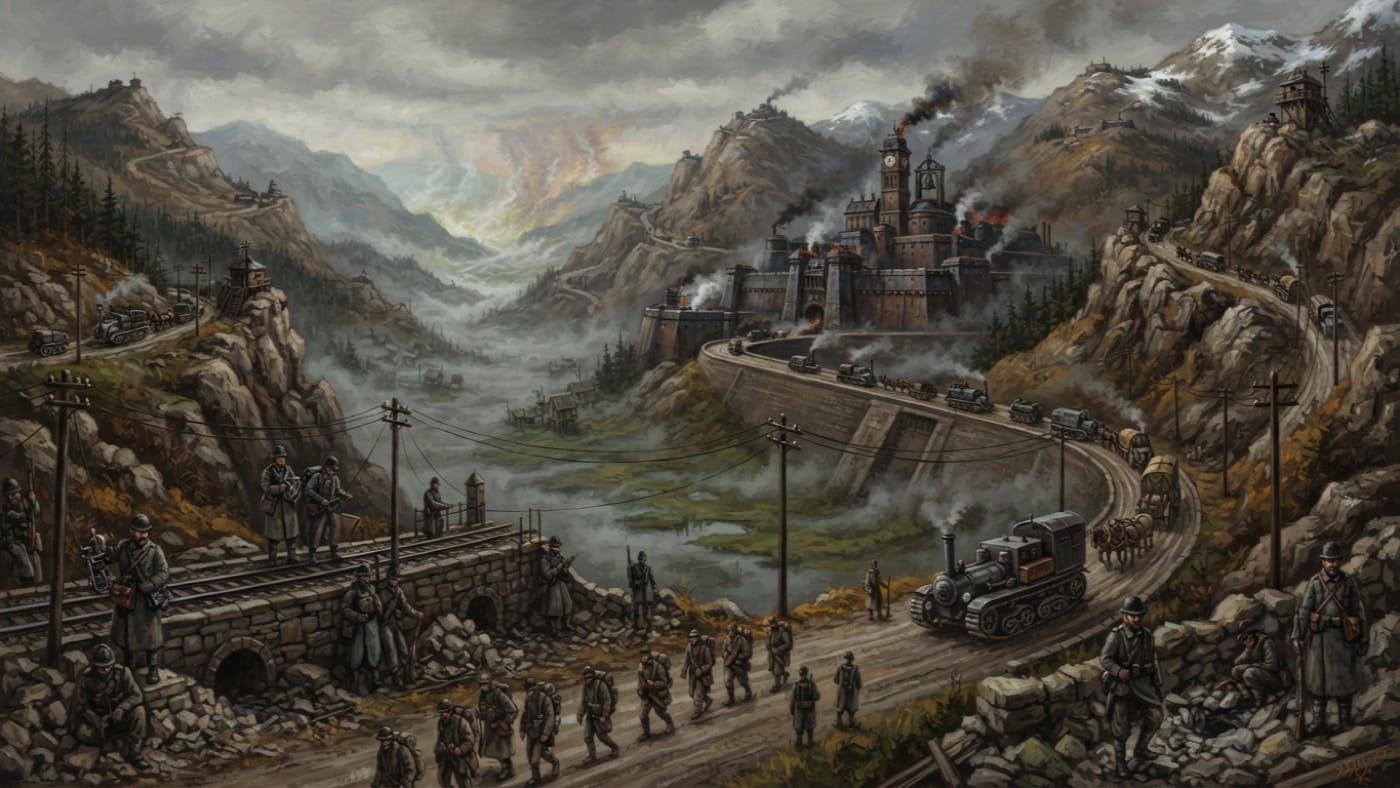
Balkan Mountains
The road is held as far as the bells can reach
Bulgaria's mountain barrier carries Shipka's supply road toward Thrace and Constantinople. Convoys cross under escort while Syrion's fog steals hours in the valleys. The passage is maintained; beyond the bells, geography is written in pencil.
Codex Ref. II.4.12-046
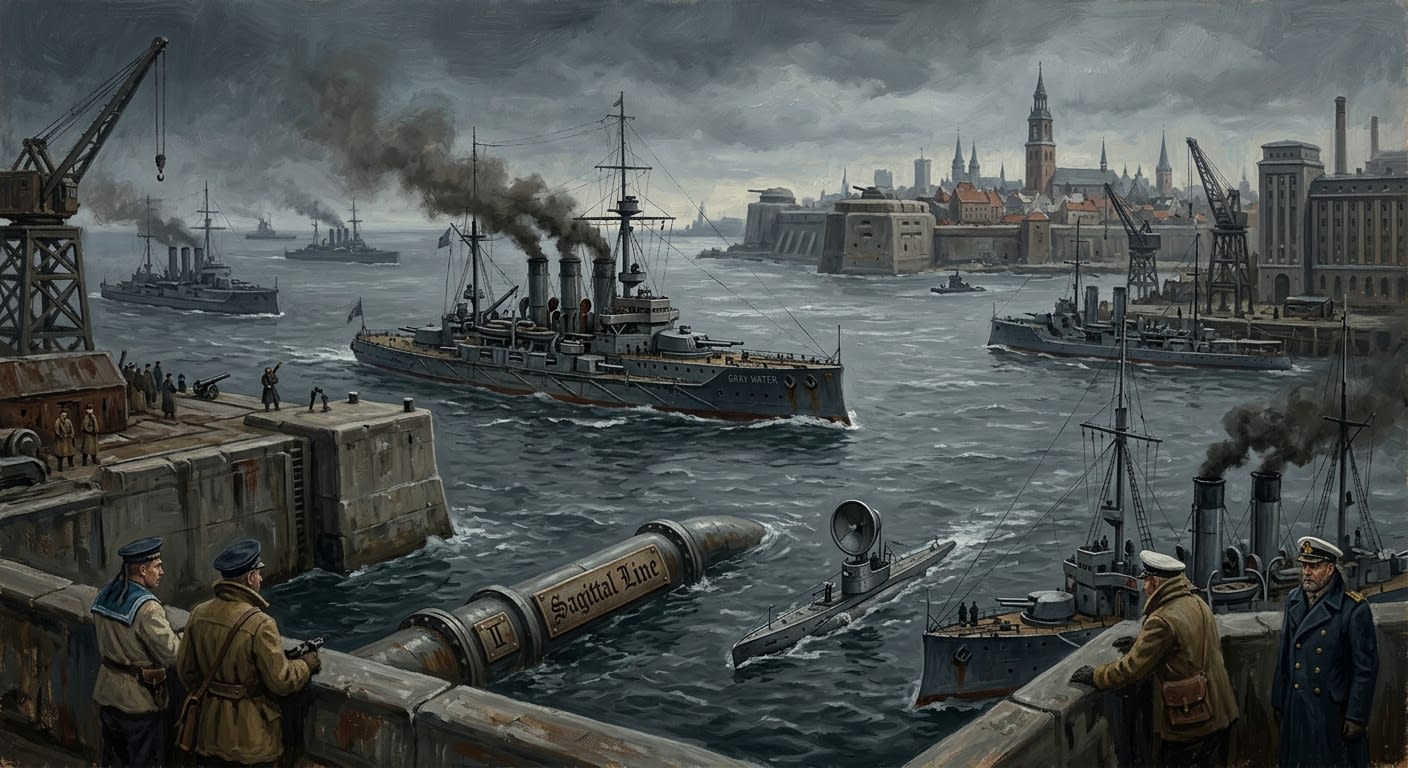
Baltic Sea
The cold bowl that listens back
The Baltic Sea is the cold northern bowl where the Sagittal Line ends at Königsberg, Grey Water listens, old bells answer, and maps lose courage.
Codex Ref. II.8.01-065
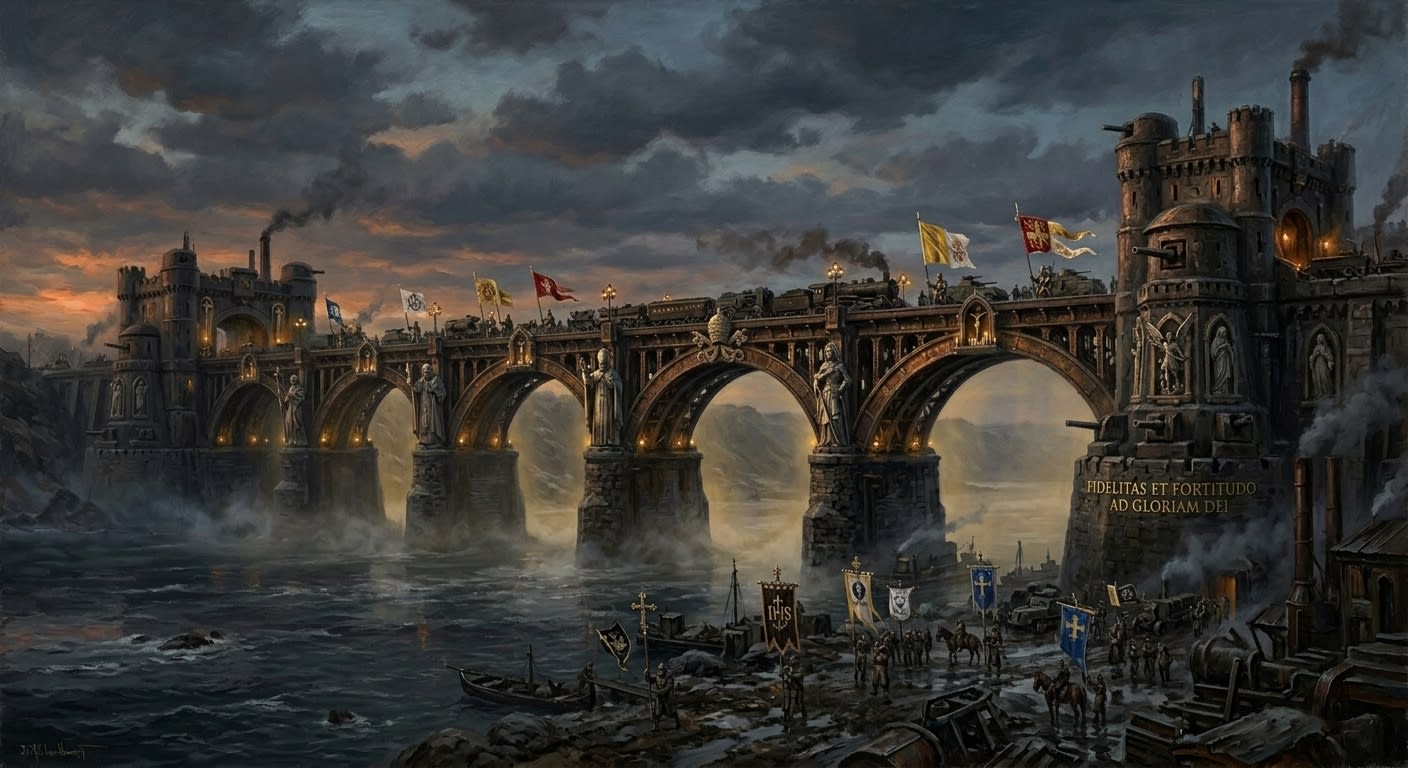
Bastion-Brest
Where the Confession Comes Back
The Brass Ribs of the Bug River crossing — a bridge-fortress of thirty-two brass-ribbed trusses where crossing the span requires a moral audit at gunpoint, confession is currency, and the sins spoken into the booths have, since A.S. 199, begun to come back.
Codex Ref. II.4.07-002

Bastion-Constantinople
The Hinge of the South
Keystone fortress of the Sagittal Line, ratified in A.S. 68. The southernmost anchor of the Wall and its most celebrated grave. Where the advance of Hell first broke against ink and iron, and has broken ever since.
Codex Ref. III.2.04-017
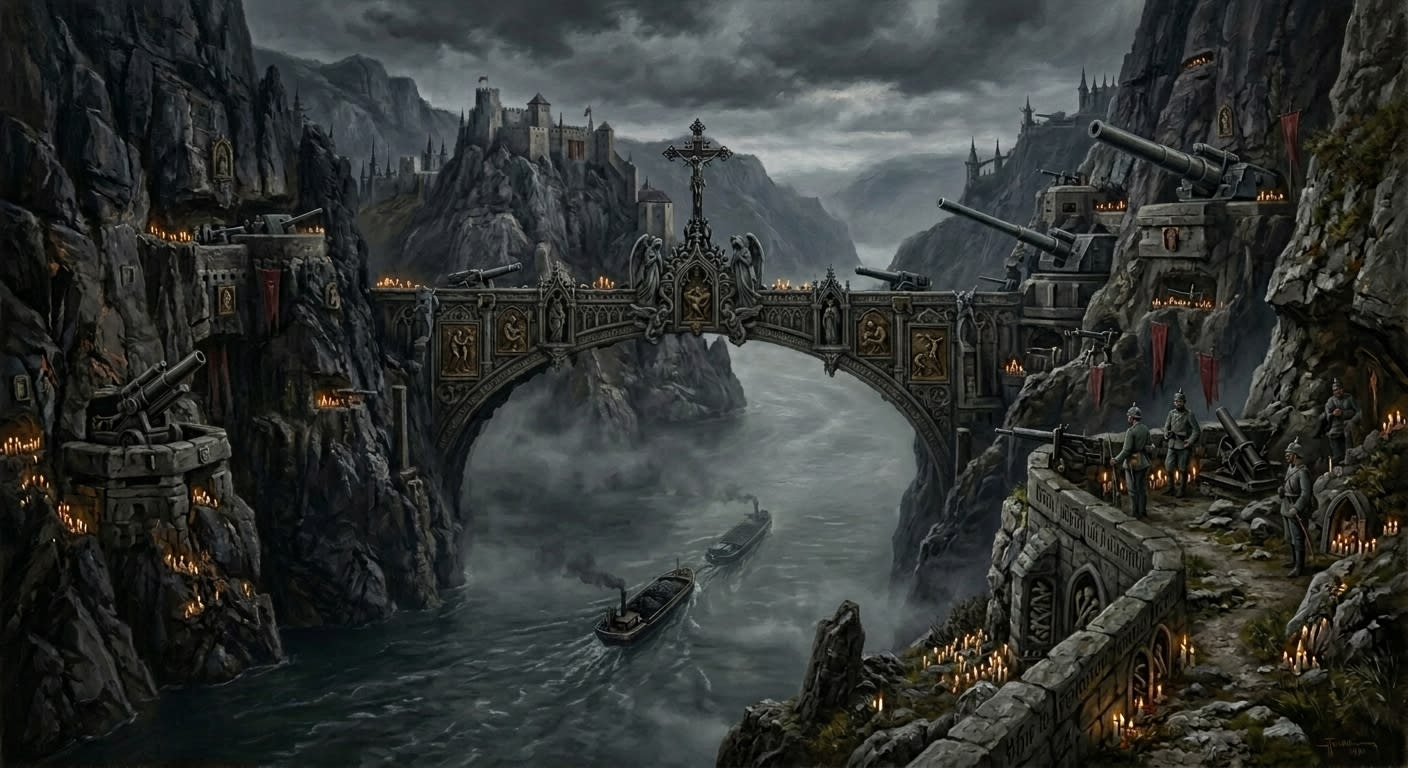
Bastion-Irongate
The mountain does not need the iron. The mountain needs the sound.
The fifth bastion of the Sagittal Line guards the Danube gorge with stone, chain-booms, and a choral infrastructure whose song is the only reason the mountain has not yet collapsed. Facing Morwen, Sin-General of Envy, who attacks not to take the gorge but to ruin it.
Codex Ref. II.4.07-005
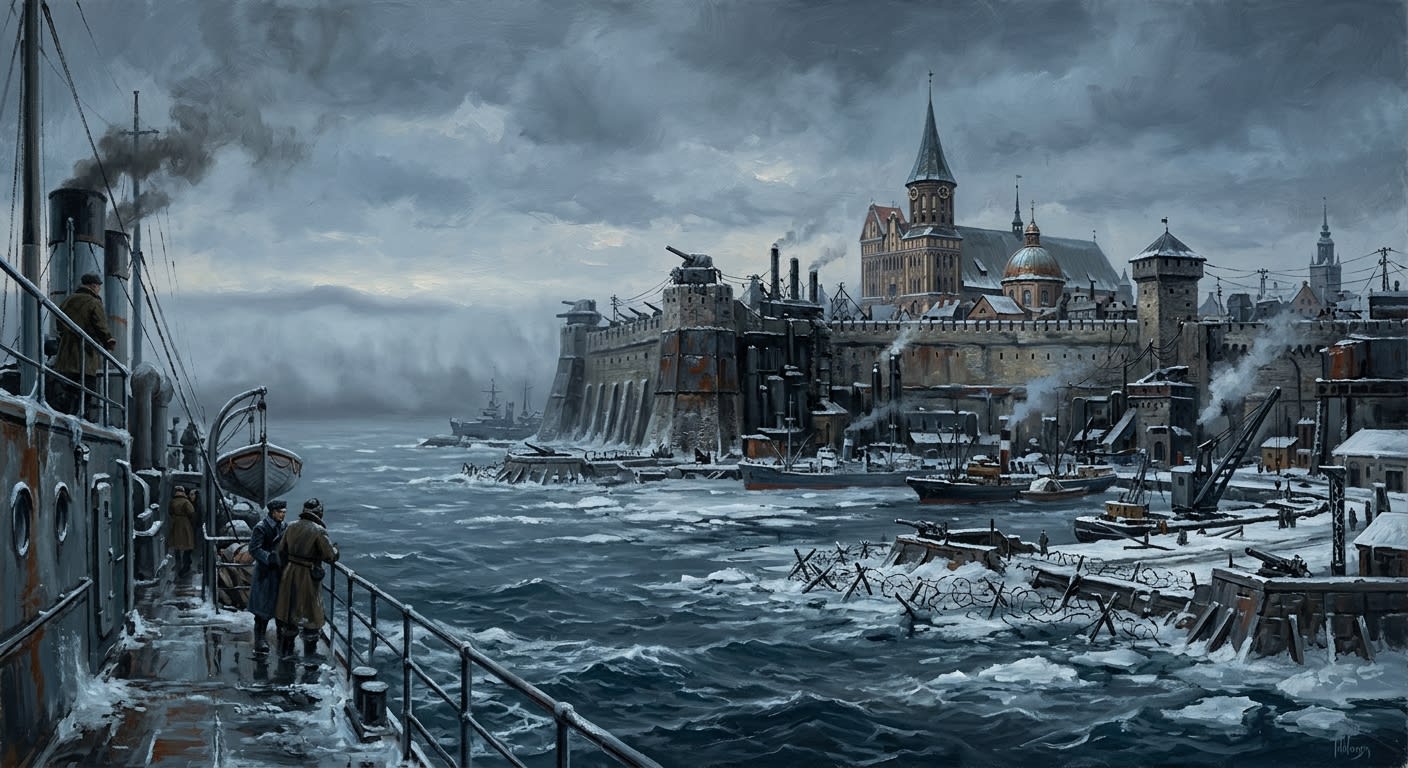
Bastion-Königsberg
The Far Nail, the Last Bell, the Thing the Grey Has Not Yet Chosen to Break
The northern anchor of the Sagittal Line and the loneliest posting on the face of the earth — where the bells answer something that has no name, and the fog has faces, and the garrison holds for reasons the Bureau has spent eleven years declining to investigate.
Codex Ref. II.4.07-001
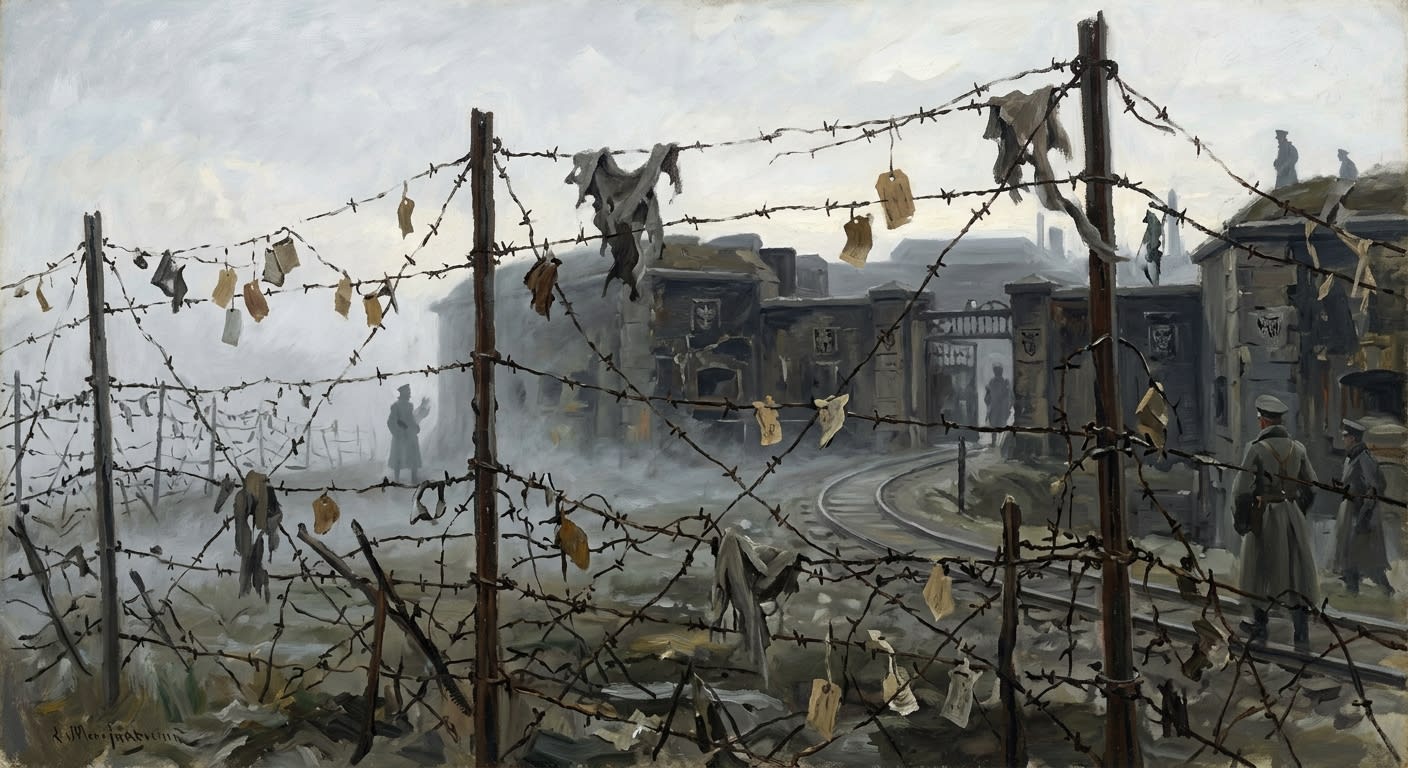
Bastion-Przemyśl
The Wire Remembers What the Ledger Forgets
The Wire Orchard at the Carpathian arc: three miles of electrified barb, a ration-tag economy, and the cold arithmetic of the dawn harvest. What enters Bastion-Przemyśl is processed. What exits is stamped. What fails the stamp feeds the Orchard.
Codex Ref. II.4.07-003
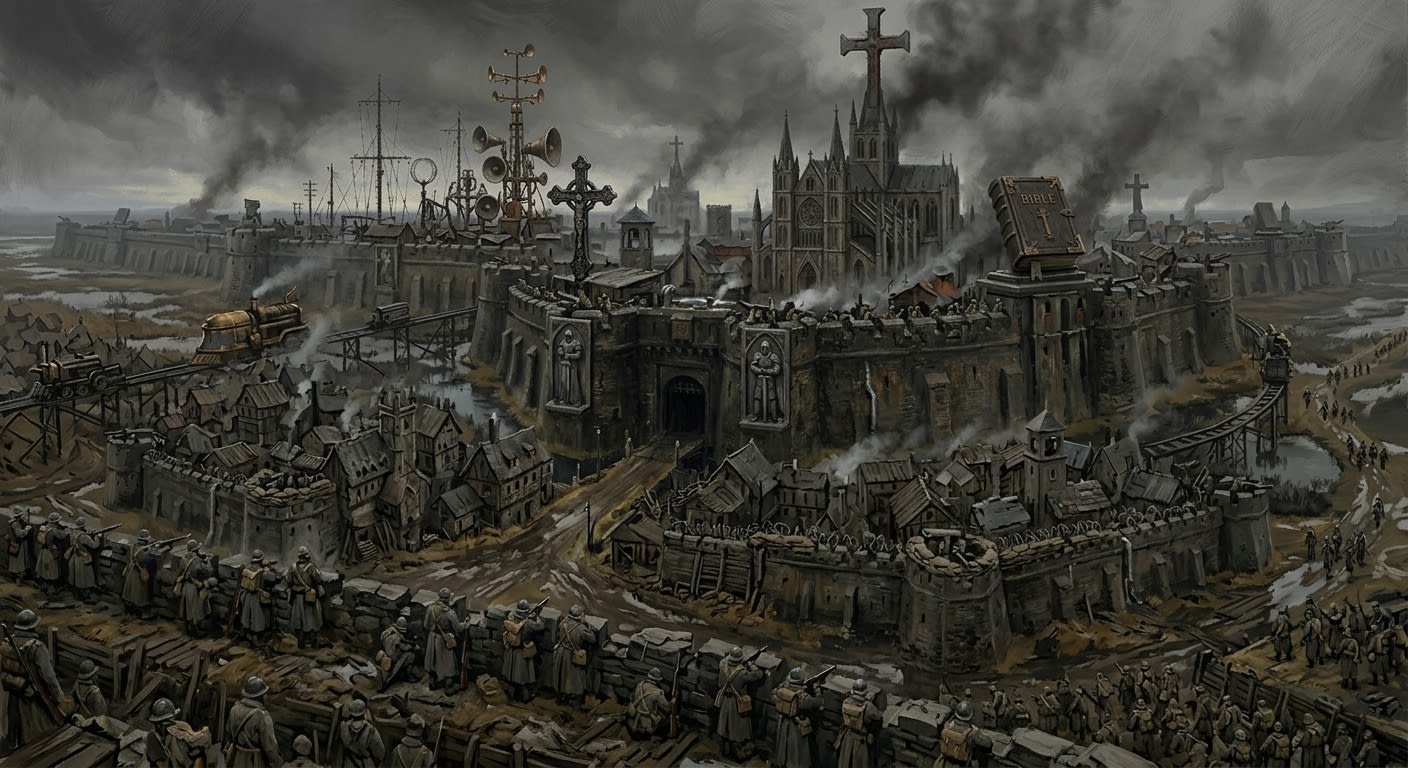
Bastion-Shipka
The Bastion That Guards the Minutes
The mud-sunk marsh-gate at the edge of Syrion's dream, where a kingdom once slept itself to death and a bastion stands awake by sheer force of maintenance schedules. Shipka guards not walls but minutes — the last reliable clock before the Vales of Stagnance.
Codex Ref. II.4.07-006
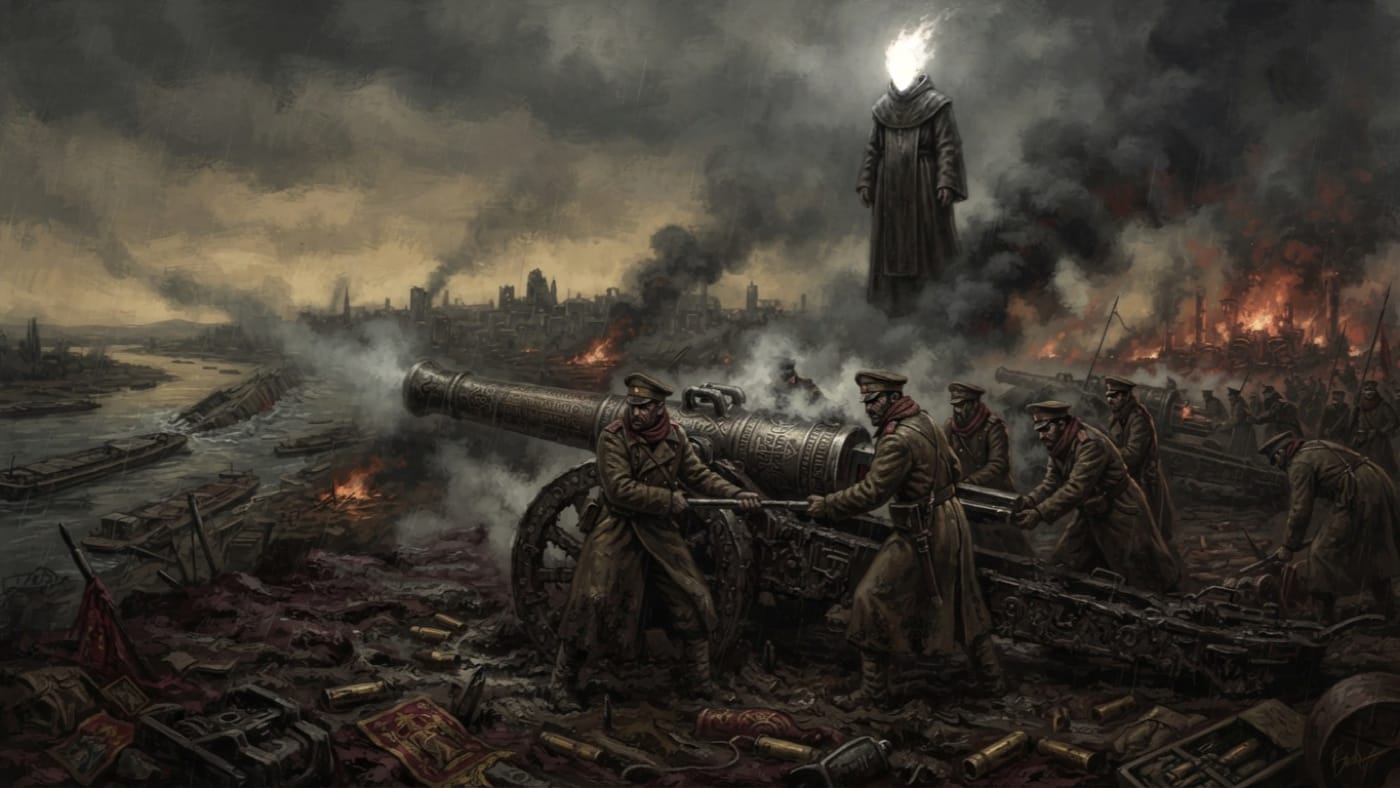
Battery Veyl
A visor of white fire, a sentence under seal
Battery Veyl served at Belgrade in A.S. 120 beneath an unnamed apparition with a visor of white fire. Its survivor's account of the third saint remains under seal.
Codex Ref. II.5.06-122
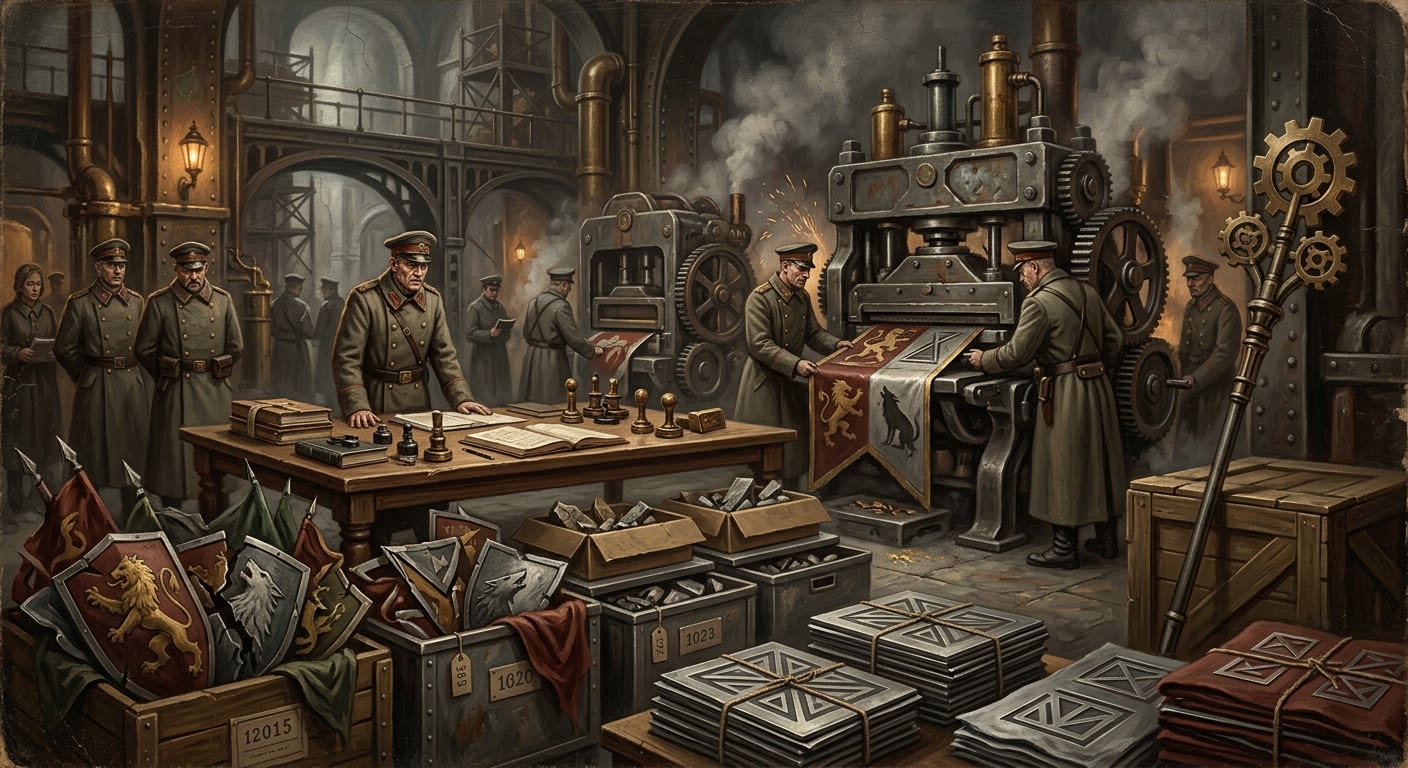
Beast Proscription
When Heraldry put the animal kingdom under seal
The Beast Proscription of A.S. 108 reclassified Europe's animal crests after the Crimson Gate Riot, turning lions into geometry and wolves into evidence.
Codex Ref. VII.8.10-033
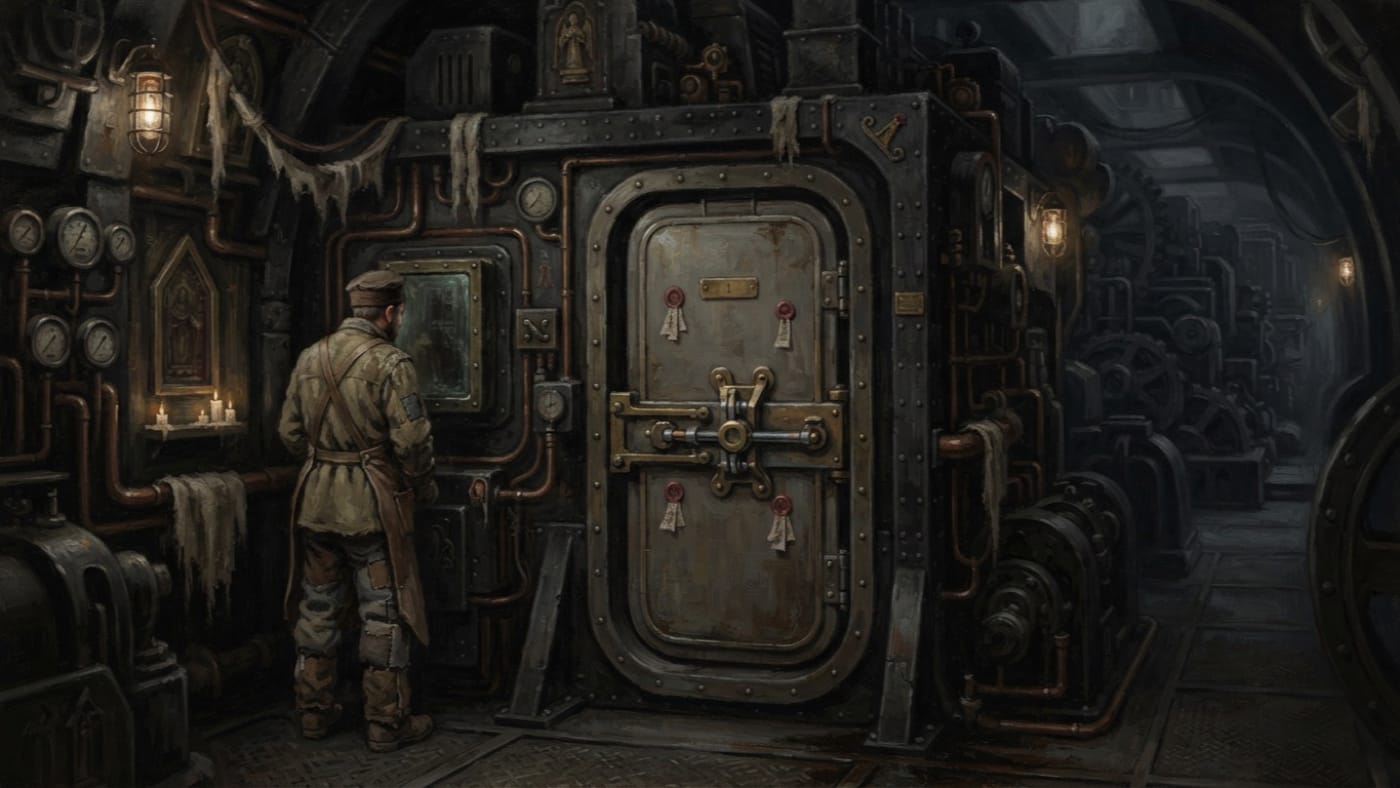
Belan
The room has a seal; the absence has no verdict
Artificer Belan is recorded missing from a locked compartment aboard Threnody, sealed from inside. The paperwork preserves the seal more faithfully than the person.
Codex Ref. III.2.01-412
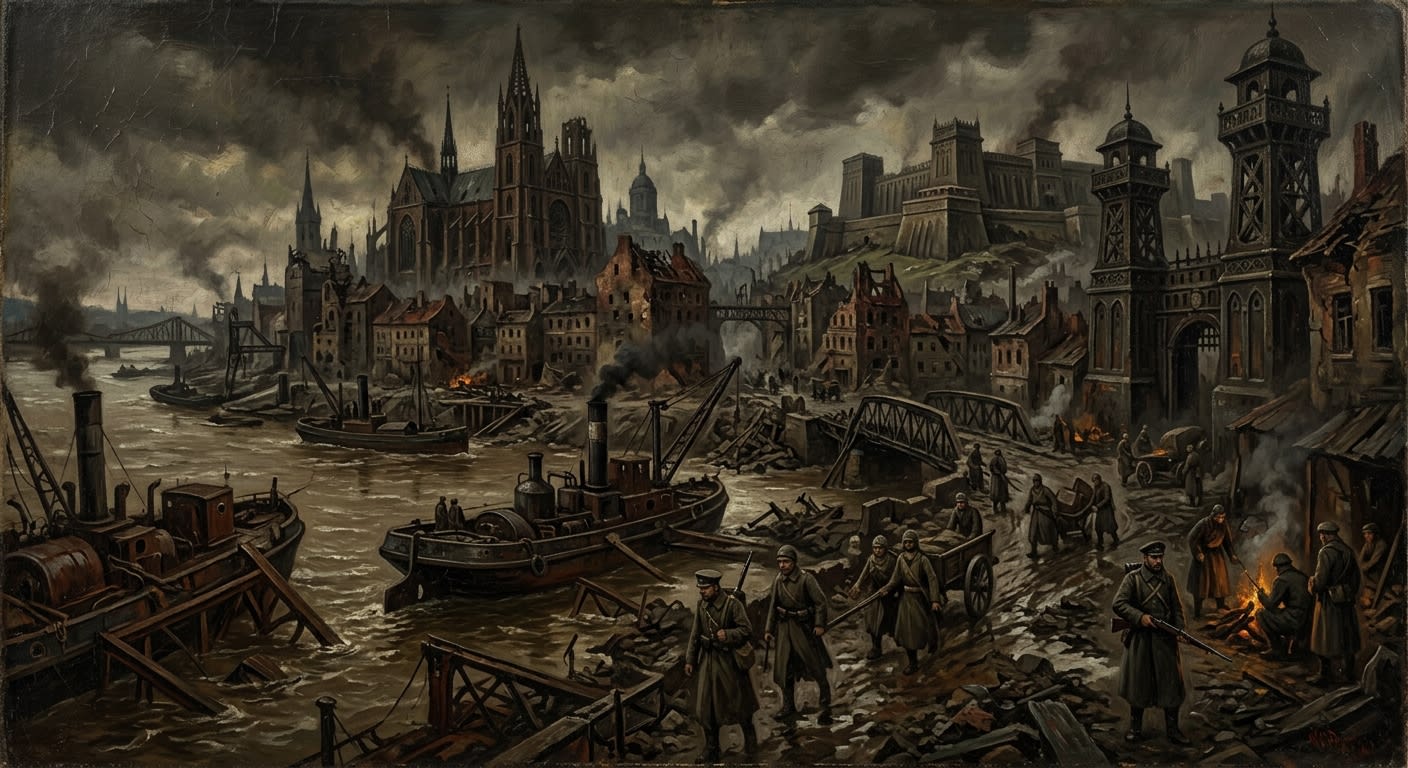
Belgrade
The city the river refused to bury, and therefore made taxable
Belgrade, ruined-contested confluence city where Shattered Courts perfume met Maldrake's Wrath, the Danube turned in A.S. 120, and sanctity became an armed hazard.
Codex Ref. II.5.06-120
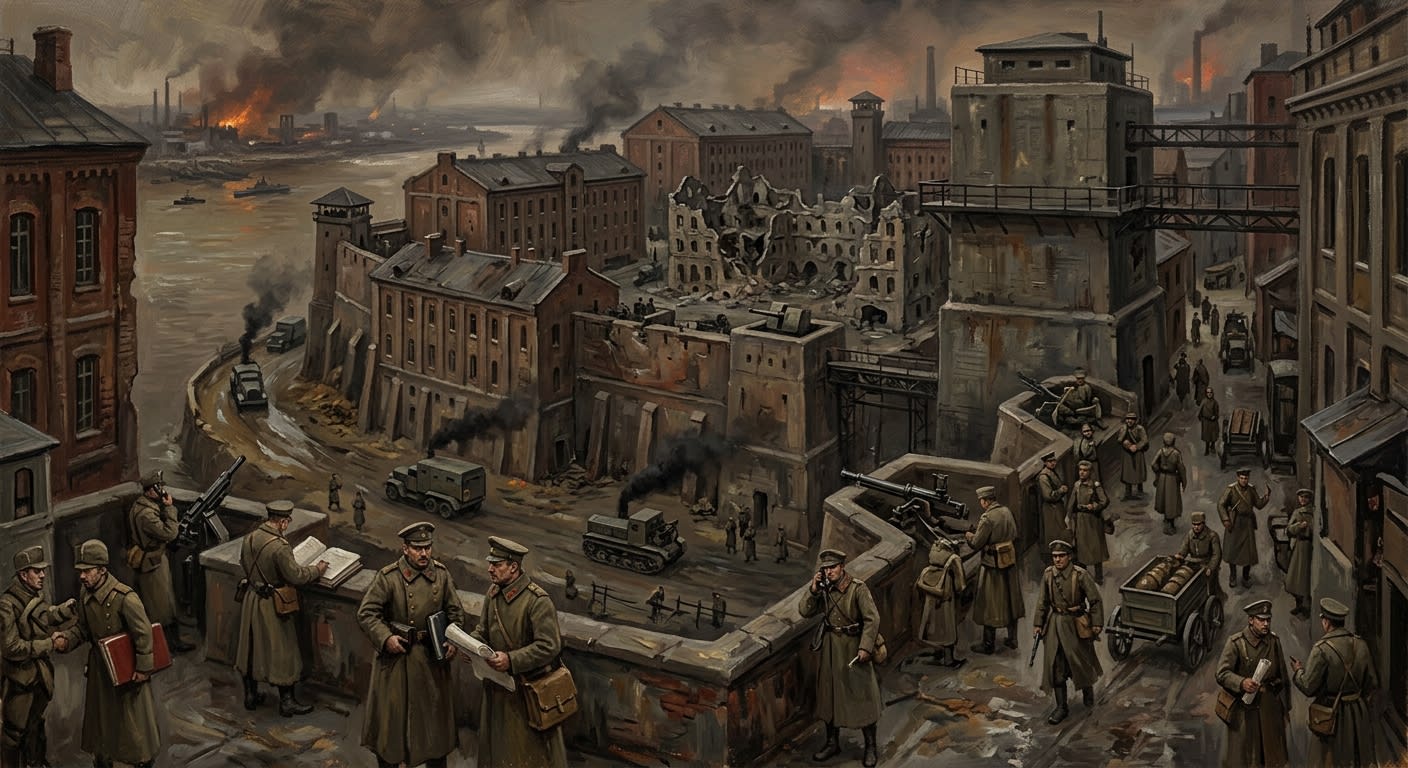
Belgrade Courts
Where miracle became evidence and silence learned to testify
The Belgrade Courts are the judicial-military scar around Velkara's Shattered Courts, where Maldrake burned, the Danube turned, and silence acquired paperwork.
Codex Ref. II.5.06-121
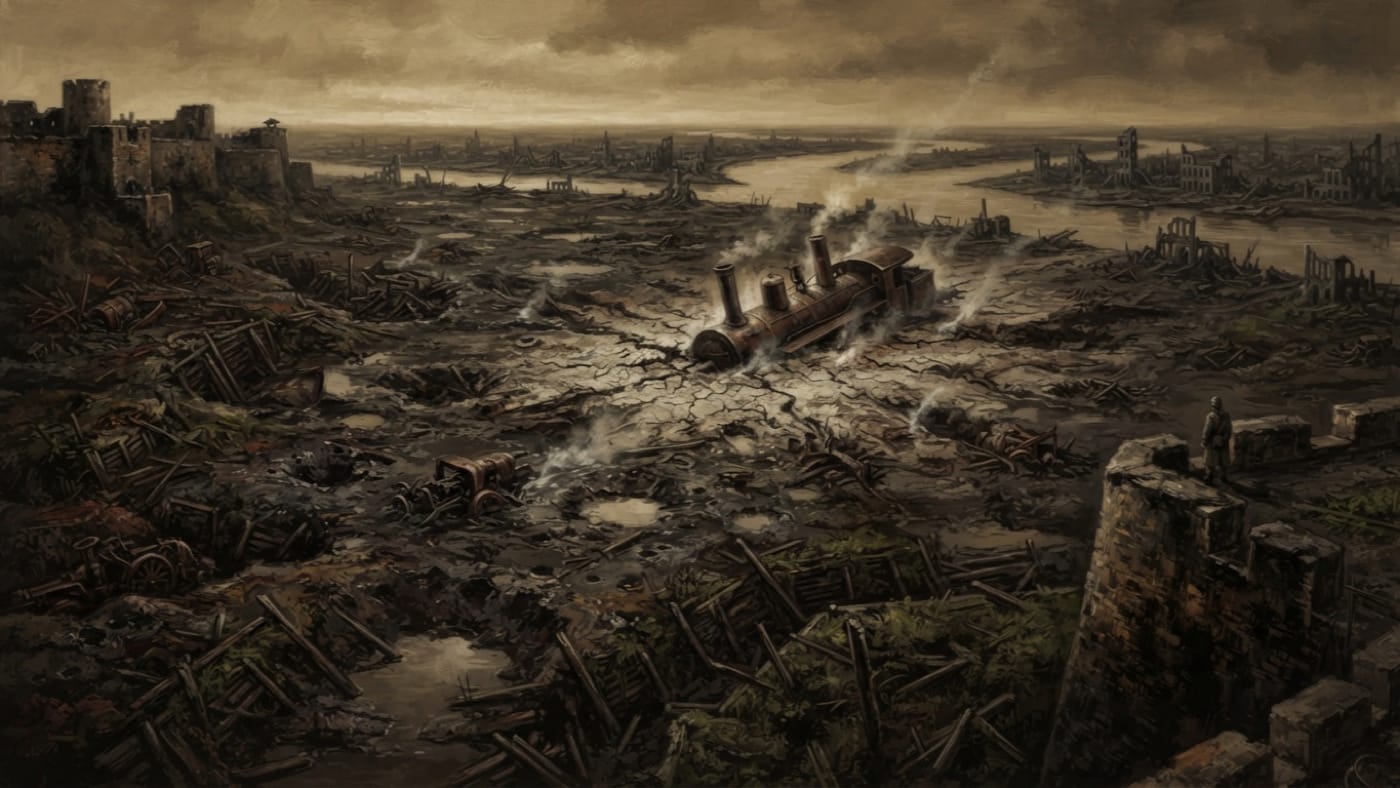
Belgrade flats
Victory ratified. Ground not.
The Belgrade flats are forbidden low ground at the Sava-Danube confluence, where Flesh-Mud swallowed a Wrath-forged engine in A.S. 120. The victory was ratified; the ground remains hungry.
Codex Ref. II.5.06-122
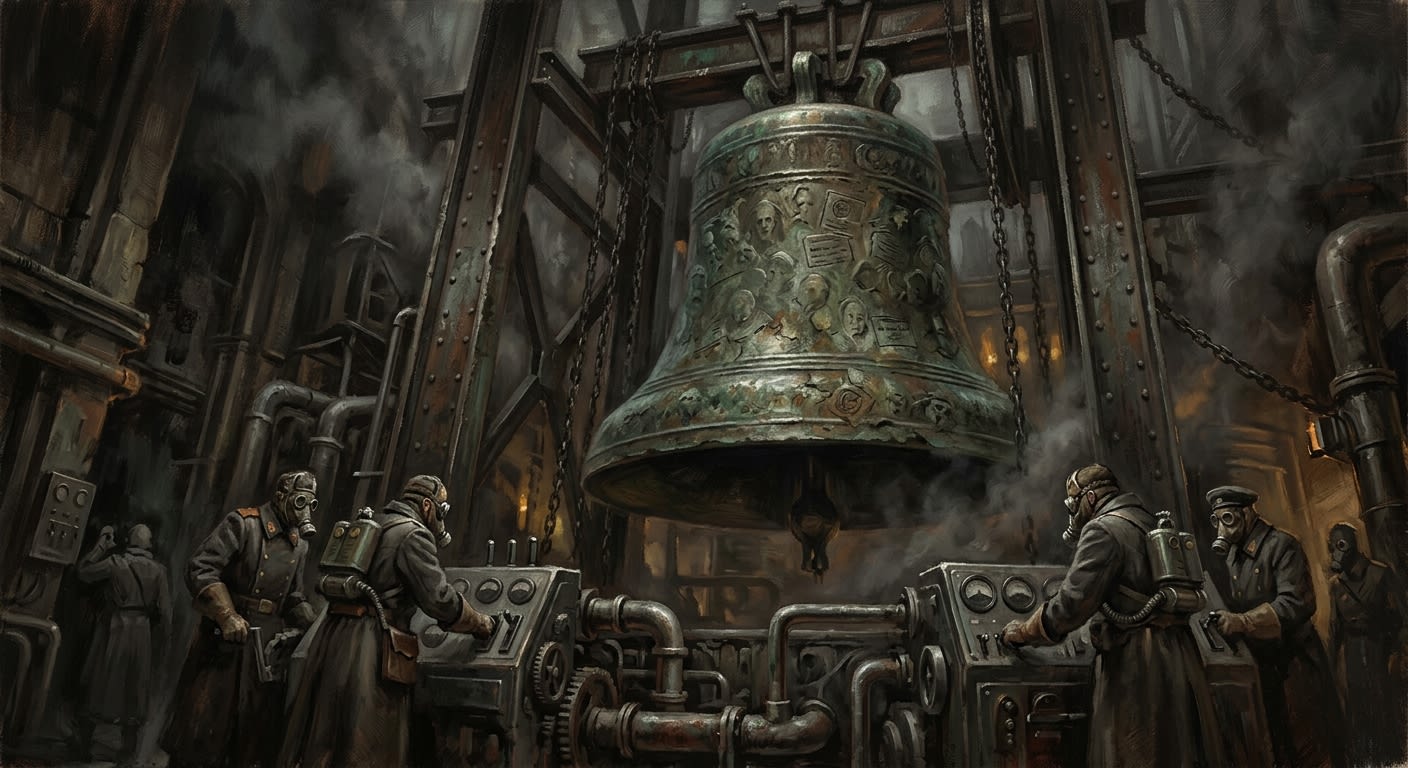
Bell of Names
When a city survives by paying thirty years from its own throat
The Bell of Names is the Synod's highest civic miracle: a forbidden peal that revises a city's memory and charges the years to its living.
Codex Ref. XIII.1.32-001
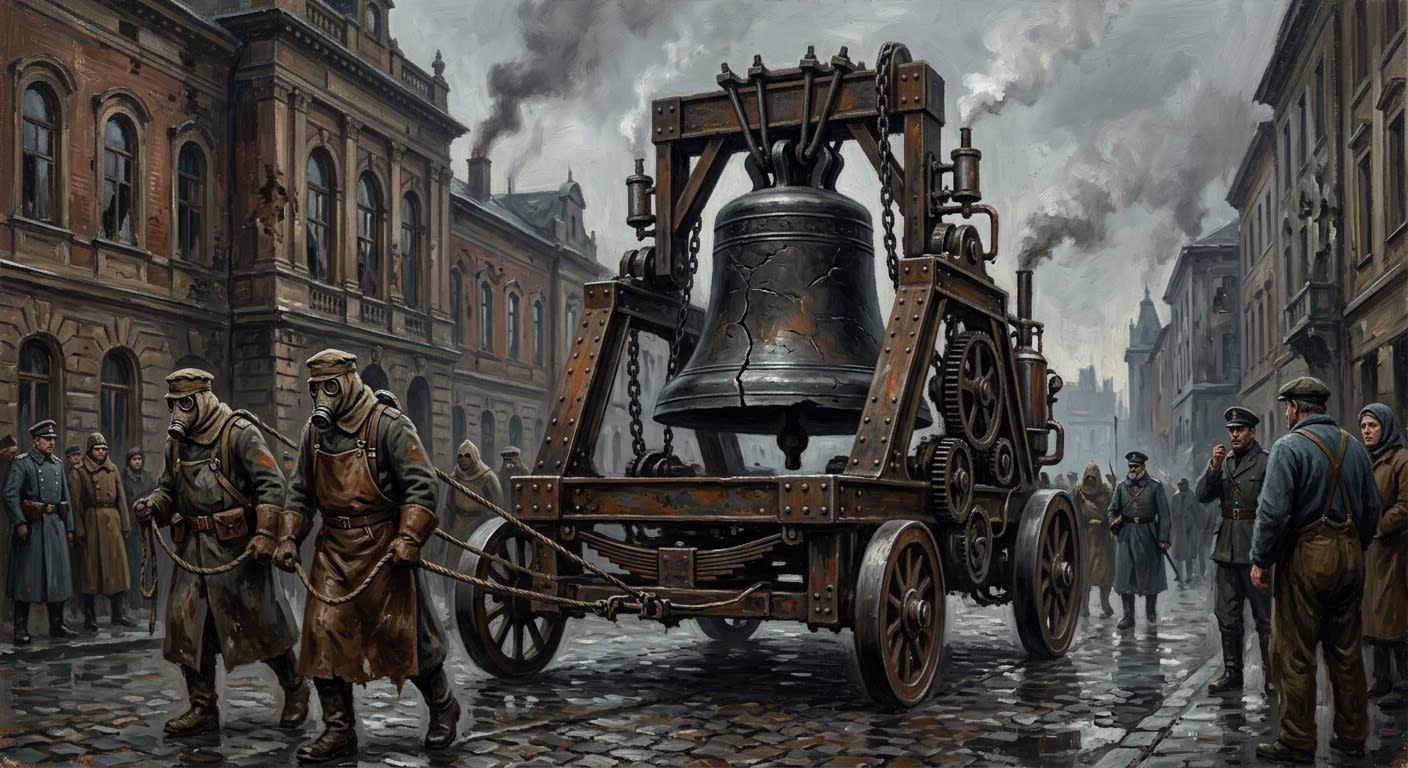
Bell of Saint Isidore
The cracked bronze that made Debrecen inherit a miracle's bill
The Bell of Saint Isidore is a cracked mobile relic-bell born from Kalnik Ridge, useful enough to parade and costly enough for Debrecen to remember in its bones.
Codex Ref. V.1.02-001
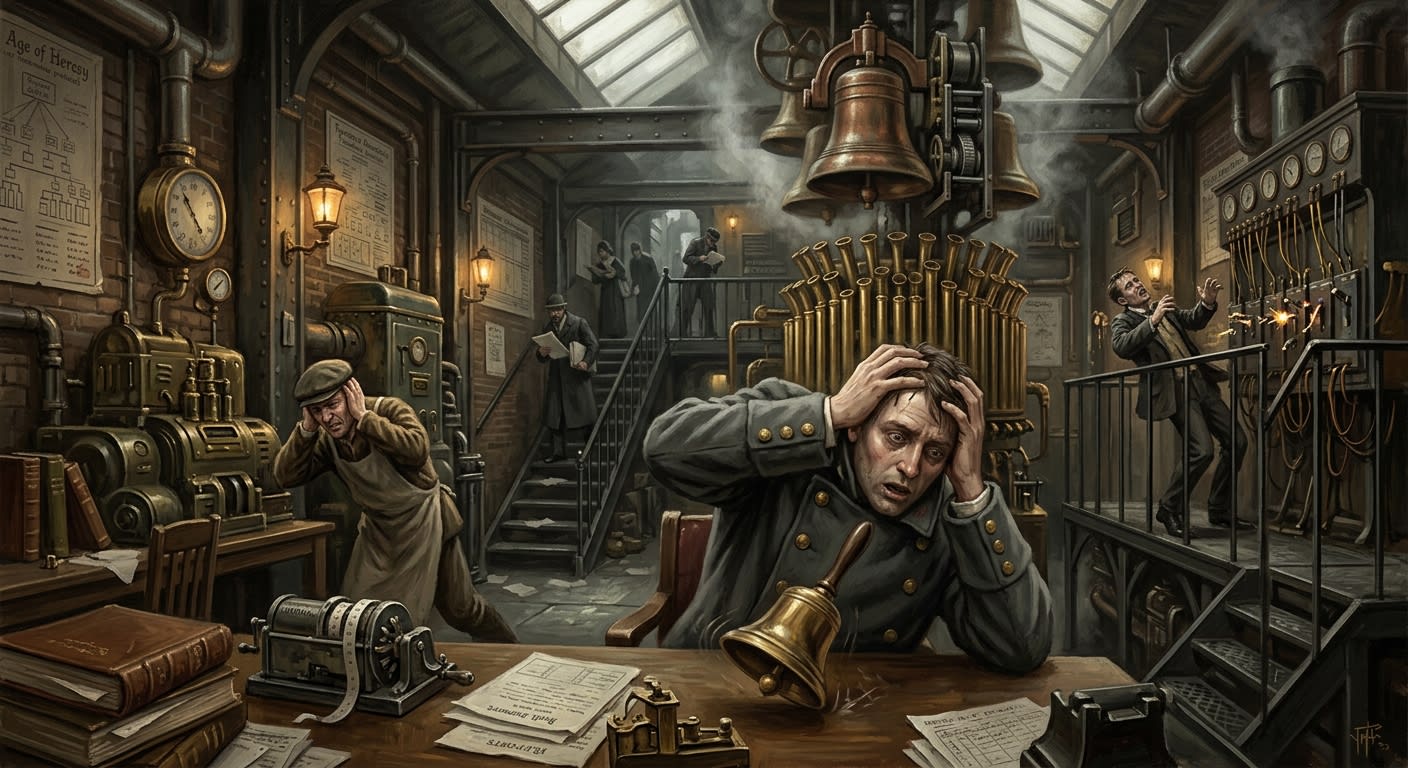
Bell-sickness
The bell stops; the obedient skull keeps ringing
Bell-sickness is the Synod's recognised resonance affliction: phantom peals, compulsive cadence, command mislocation, and the small theological problem of obedience ringing back.
Codex Ref. XIII.1.87-201
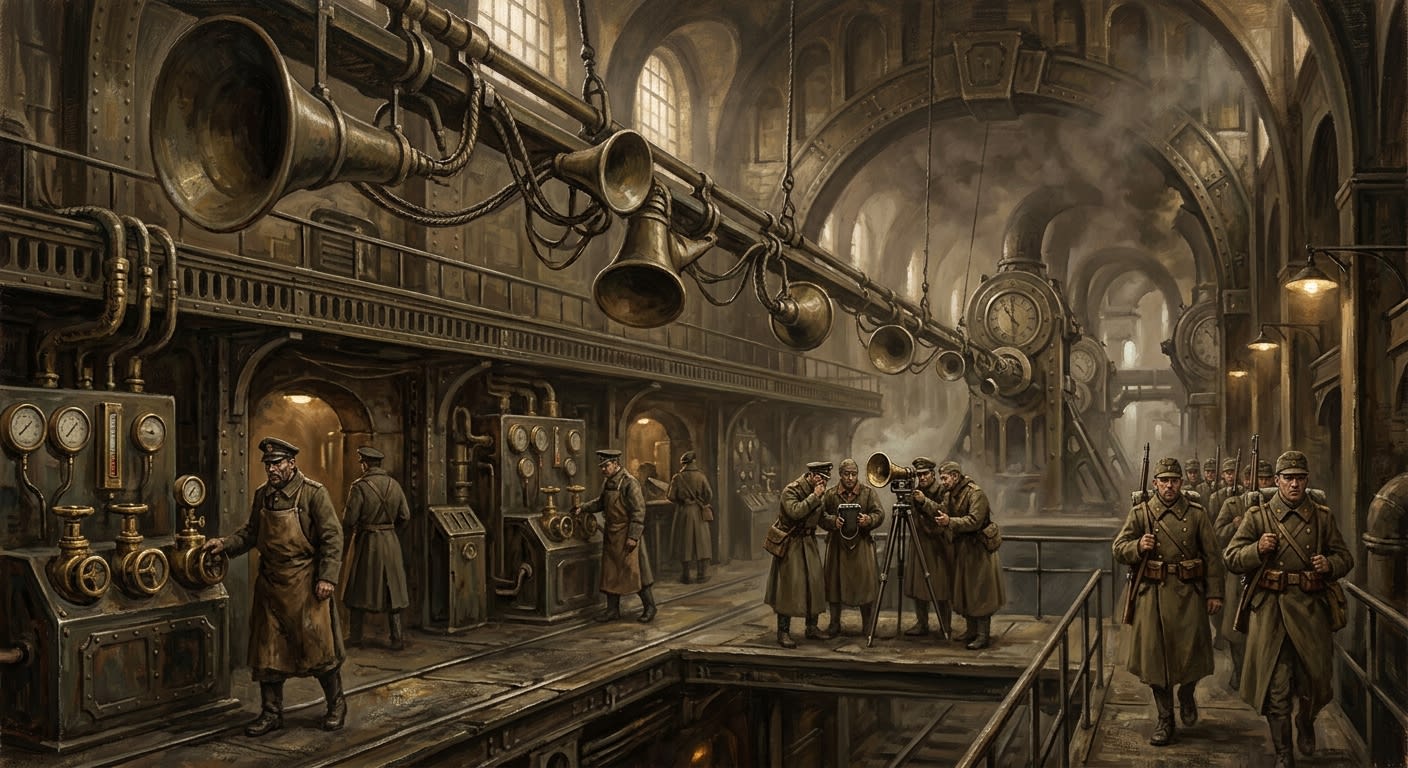
Bellway
The road that hears you, blesses you, taxes you, and may repeat you
Bellways are the Synod's sanctioned acoustic corridors: road, alarm, sermon, surveillance net, and mercy with teeth, carrying lawful sound through the Line and beyond.
Codex Ref. XIII.1.88-201
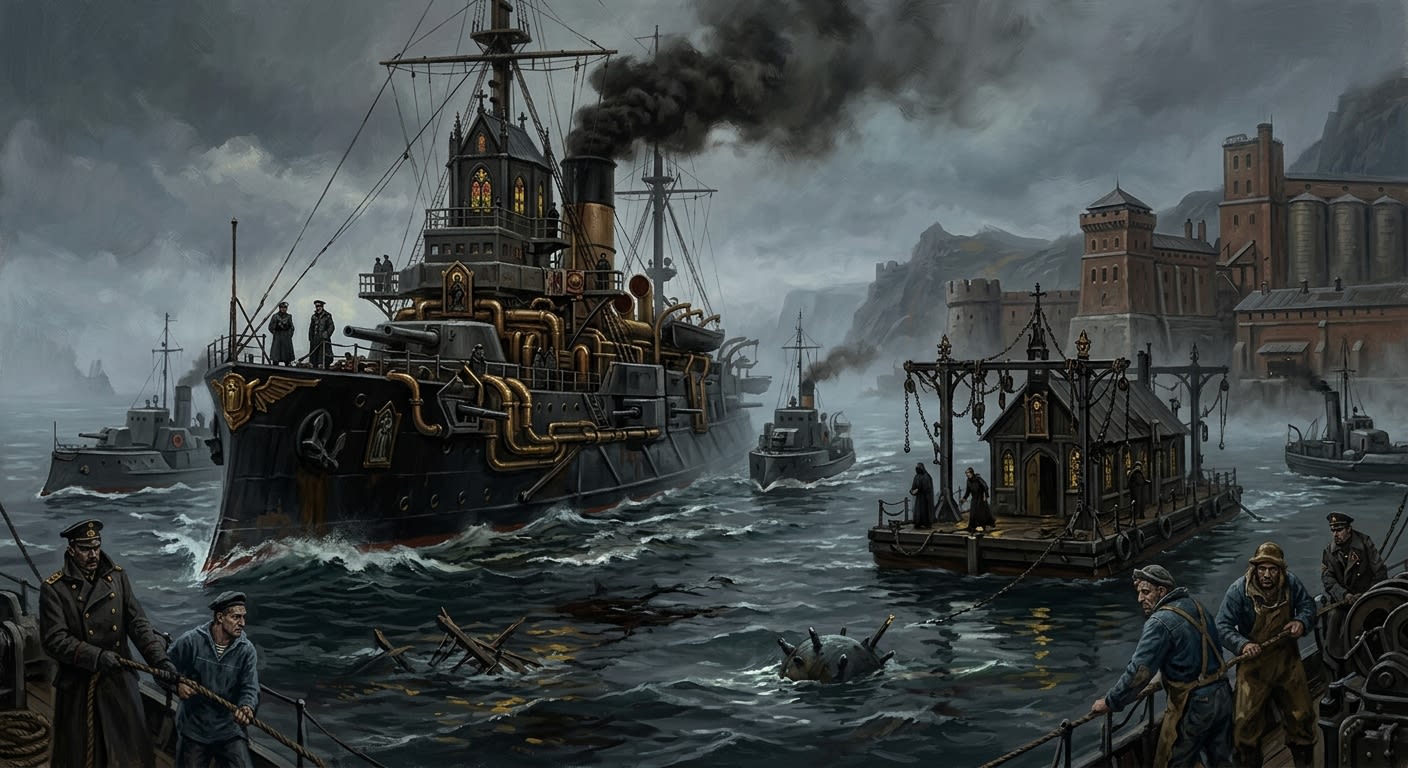
Black Sea
The Sable Deeps keep their own docket
The Black Sea is the Synod's northeastern wound against salt water: threat lane, relic route, grain hazard, Flotilla parish, and water that remembers too much.
Codex Ref. II.4.09-018
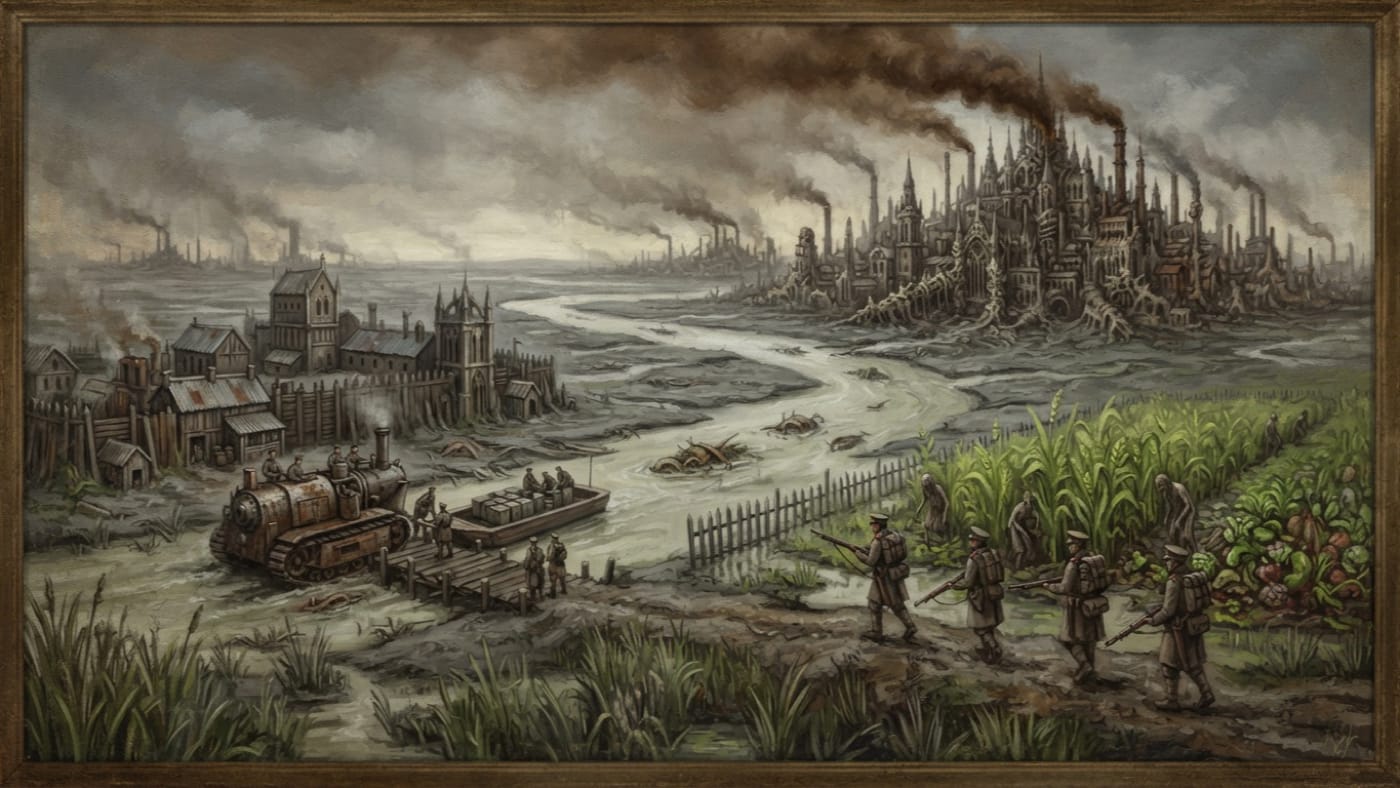
Blightmarsh of the Drava
Where the Breadbasket Became a Stomach
Kargath's dominion in the drowned Drava and Sava valleys: a Pannonian breadbasket consumed into marsh, false harvests and famine. Its boundary cannot be certified; its hunger travels farther.
Codex Ref. V.6.01-004
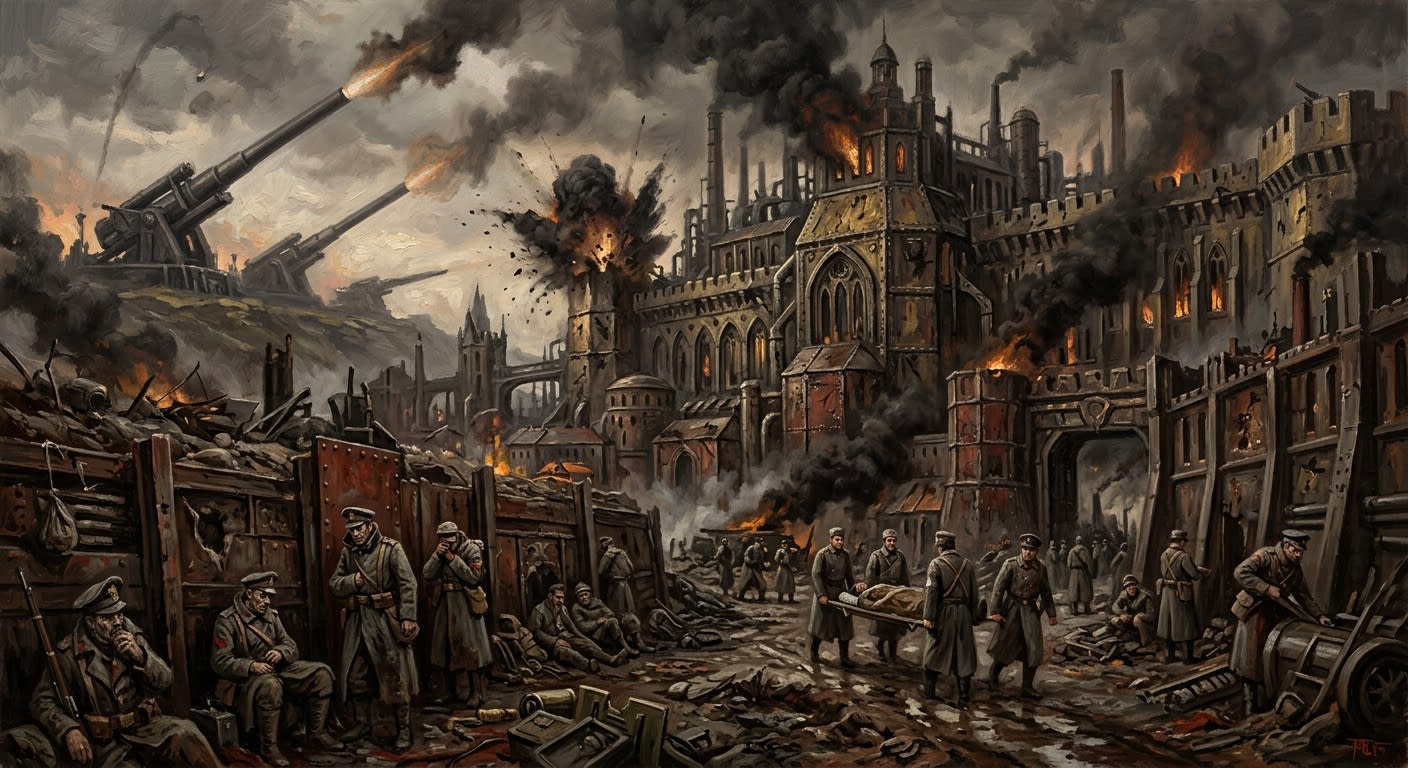
Bombardment of Bastion-Constantinople
Eleven days when shells, bowels, and Bureau all fired
Maldrake's Wrath-tide guns battered Bastion-Constantinople for eleven days; War printed the dysentery homily faster than medicine arrived.
Codex Ref. VII.5.03-182
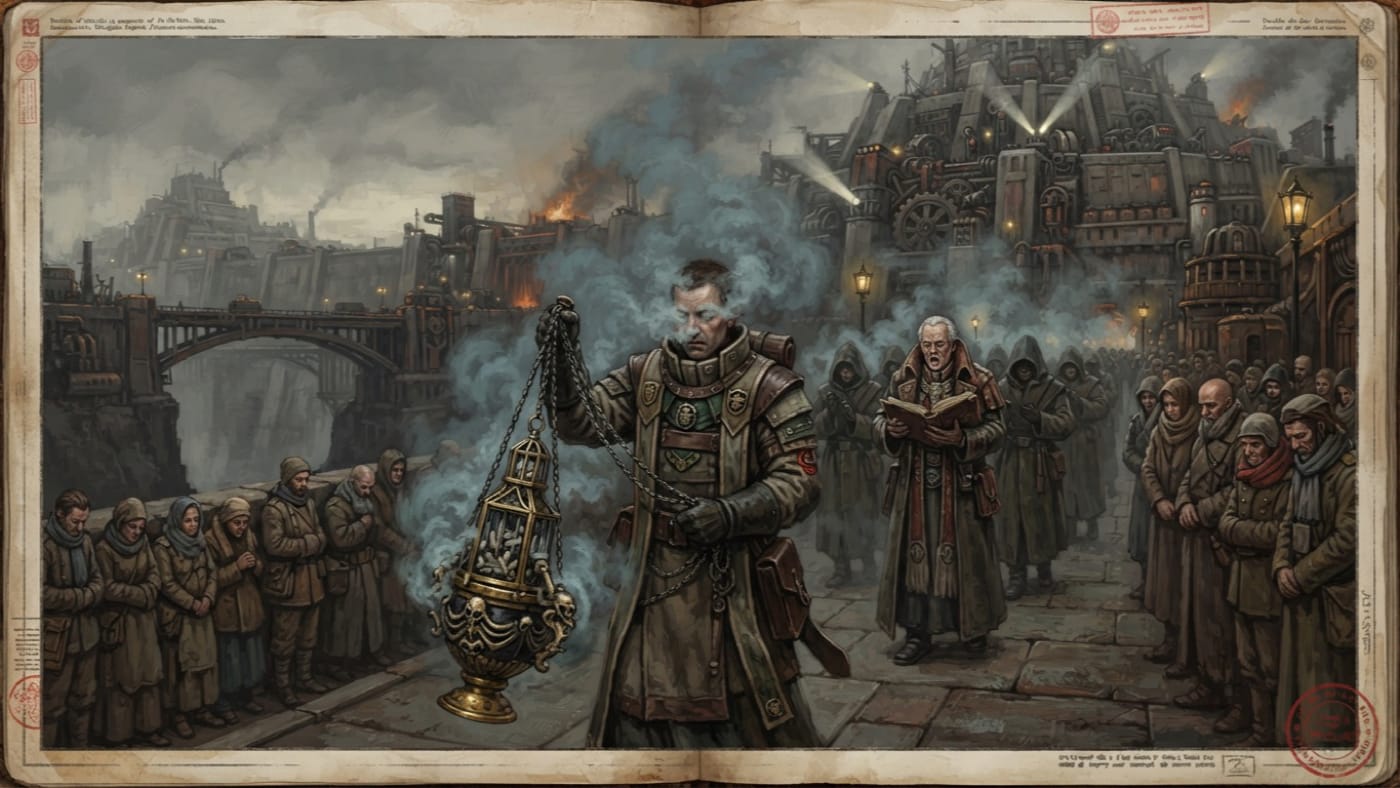
Bone-Censer of Saint Thaddeus
Seventeen genuine censers; forty-seven names withheld.
Present liturgical survey, A.S. 201: one of seventeen genuine censers carried at Constantinople's Vigil of the Hollowed. The vessel is authenticated; the forty-seven names remain sealed.
Codex Ref. III.2.04-298
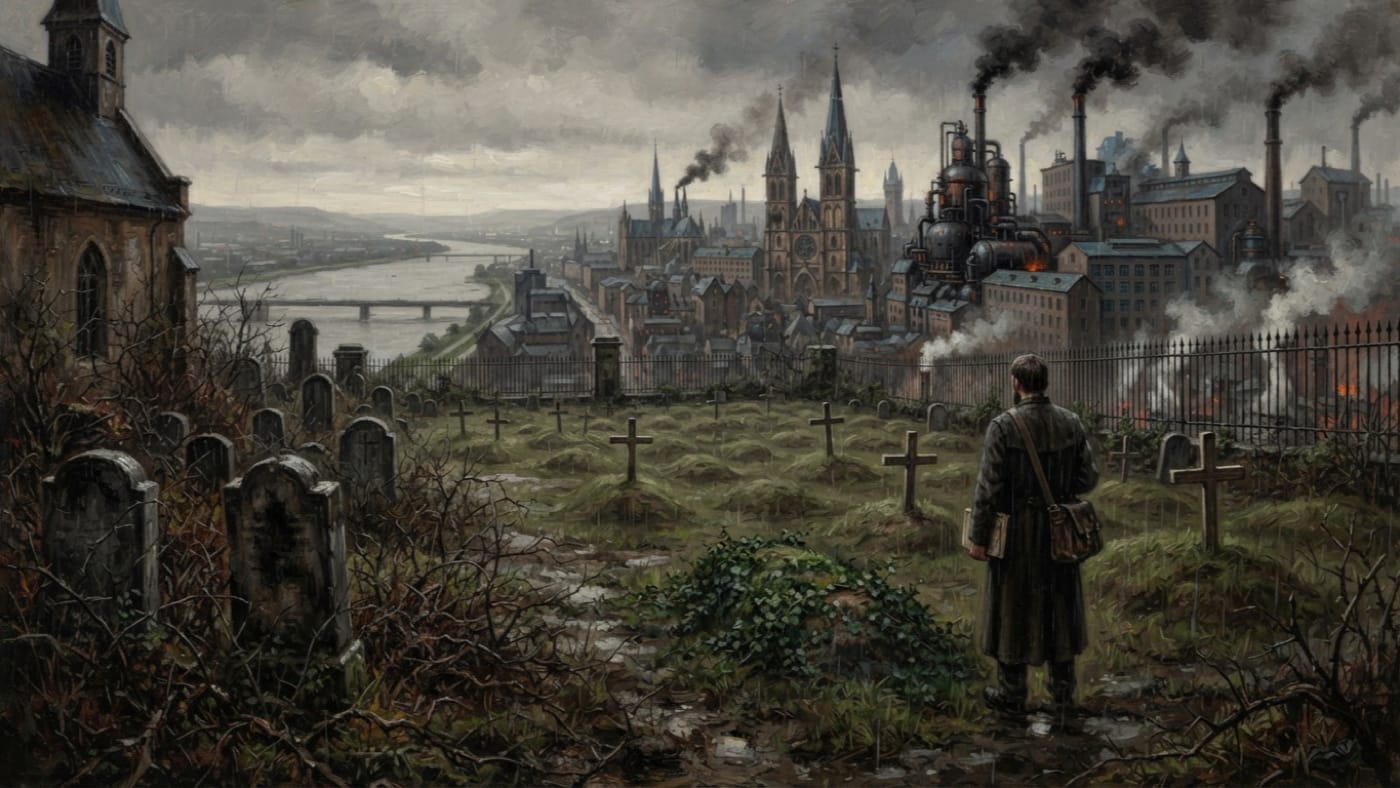
Bonn
A saint nearby; no directions supplied
Bonn is a Rhineland city on the Rhine. Ignatius Brenner died and was buried nearby in A.S. 71. The churchyard is unnamed, the grave unmarked, and the record supplies no directions.
Codex Ref. III.2.04-313
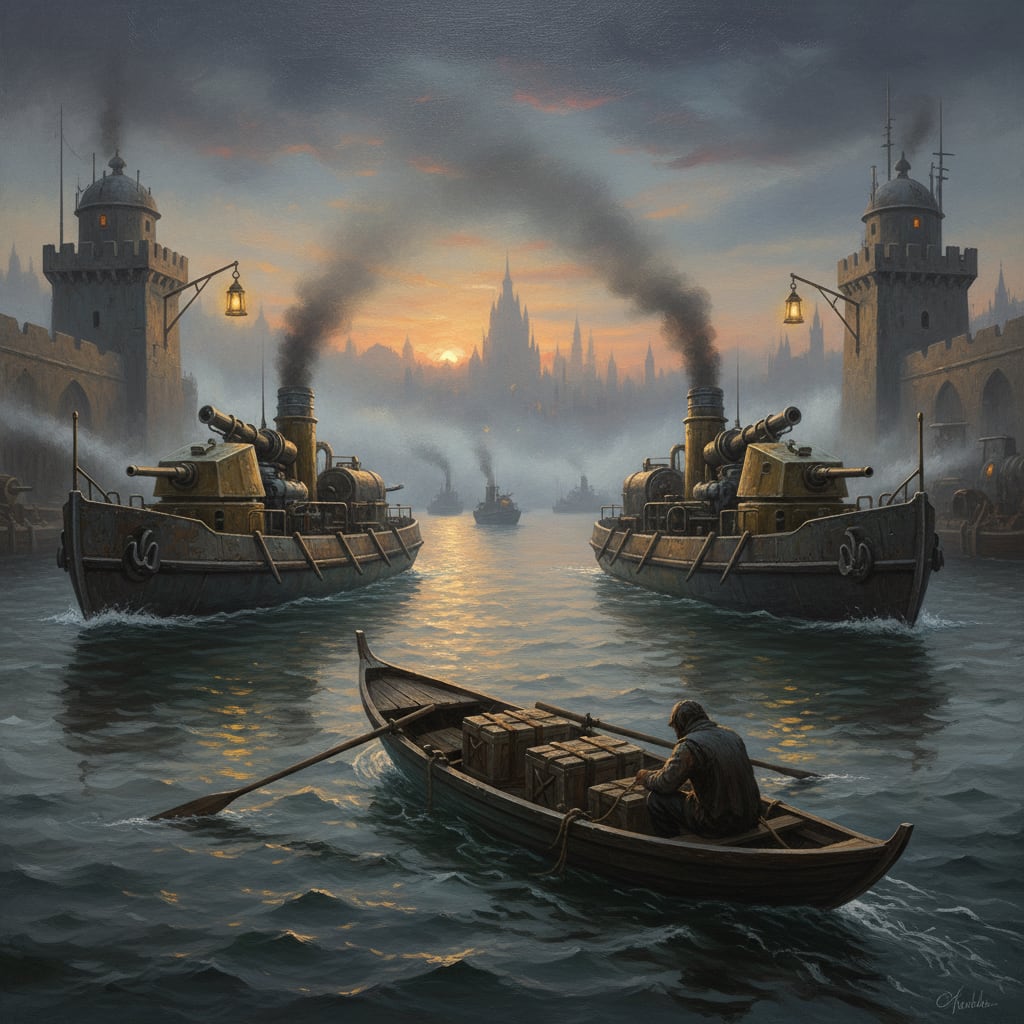
Bosporus Smuggler-Sailor
On the men who ride the bell-wake, move the glass, and do not exist
The Synod's officially nonexistent fourth transport service — four ranks, four metres of narrowing channel, and crates that hum.
Codex Ref. XII.5.01-001
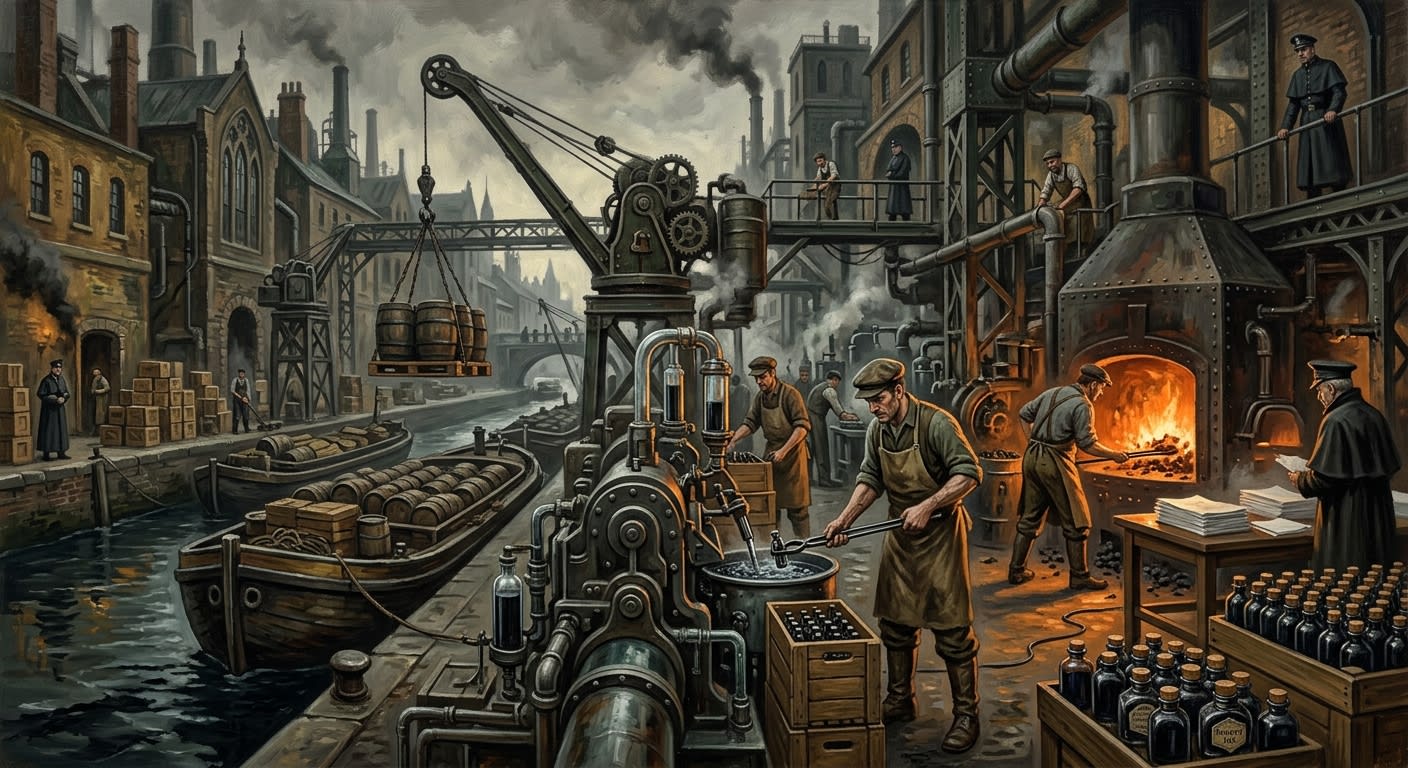
Bottle Quay
Where authority is poured into glass and taught appetite
Candlewick's ink-bottling throat: glassyards, shade seals, micro-vials, Hungry Ink suspicion, and the useful fires by which paper learns command.
Codex Ref. II.1.01-092
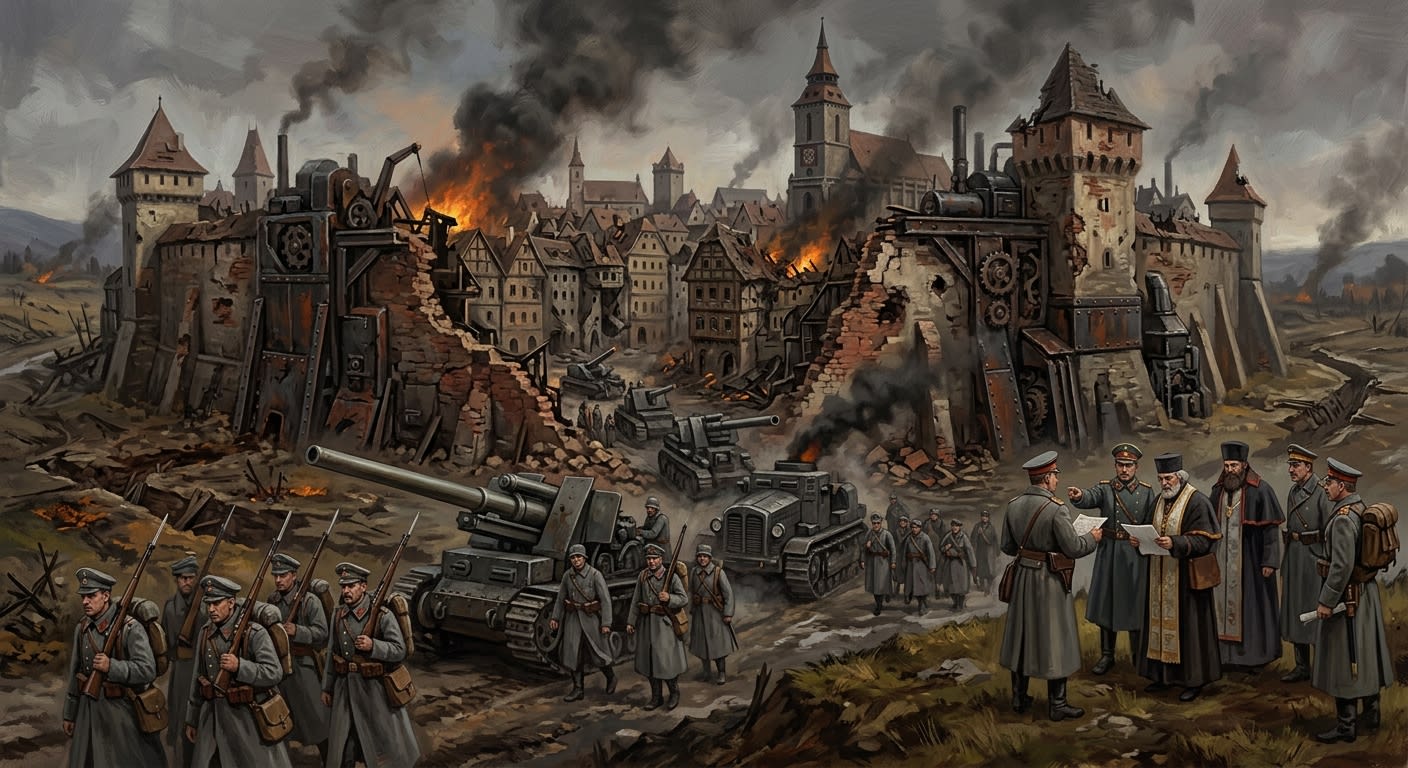
Brașov
The city [[hell|Hell]] ate before [[strasbourg|Strasbourg]] learned to count sons
Brașov, the Saxon-walled city consumed by Kargath in A.S. 110 and made pretext, warning, and arithmetic for the Synod's first continental levy.
Codex Ref. VI.1.01-110
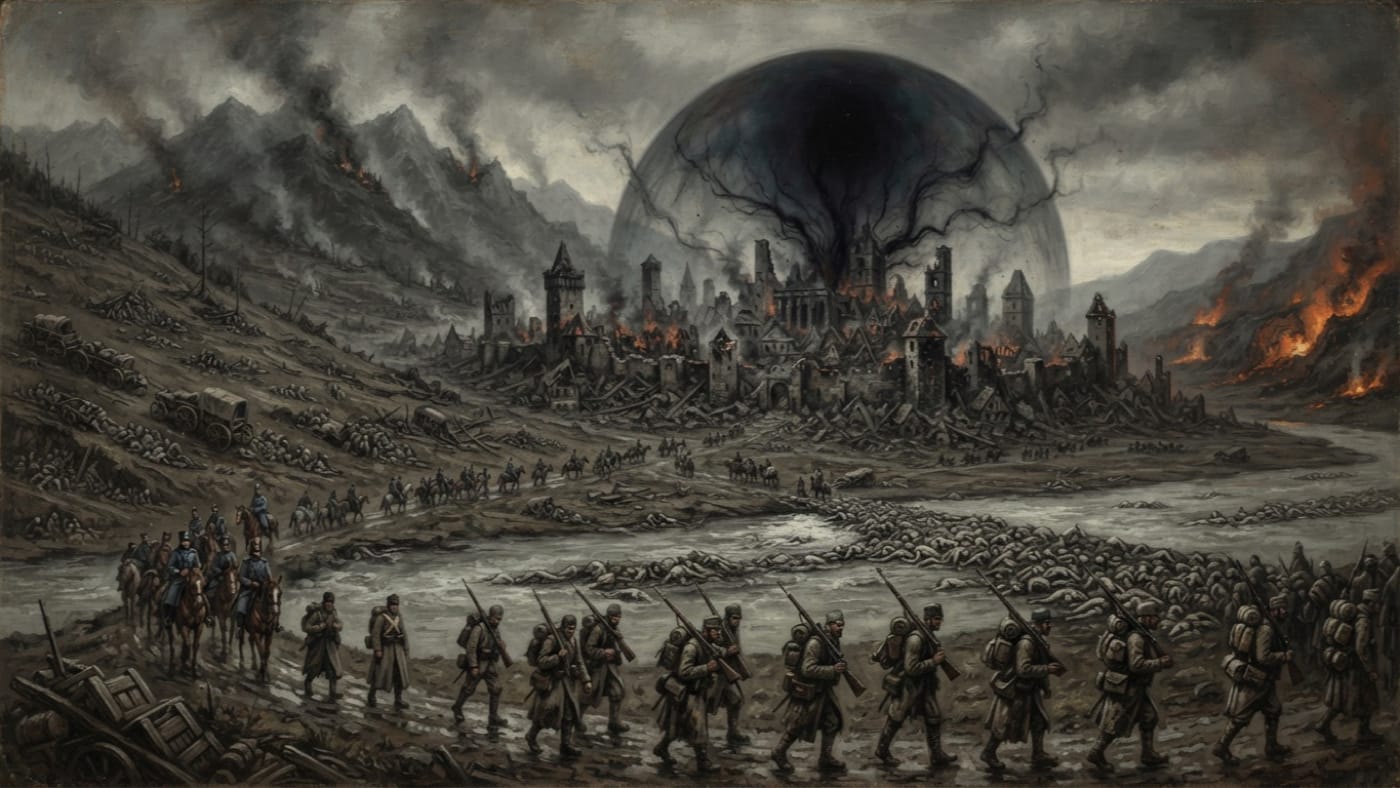
Brașov Crisis
The emergency that taught a fraction to march
In A.S. 110, Brașov was consumed, the Danube bridged with drowned men, and the Thracian passes burned. Strasbourg answered with one son in ten, an emergency measure that learned to endure.
Codex Ref. VII.8.10-110
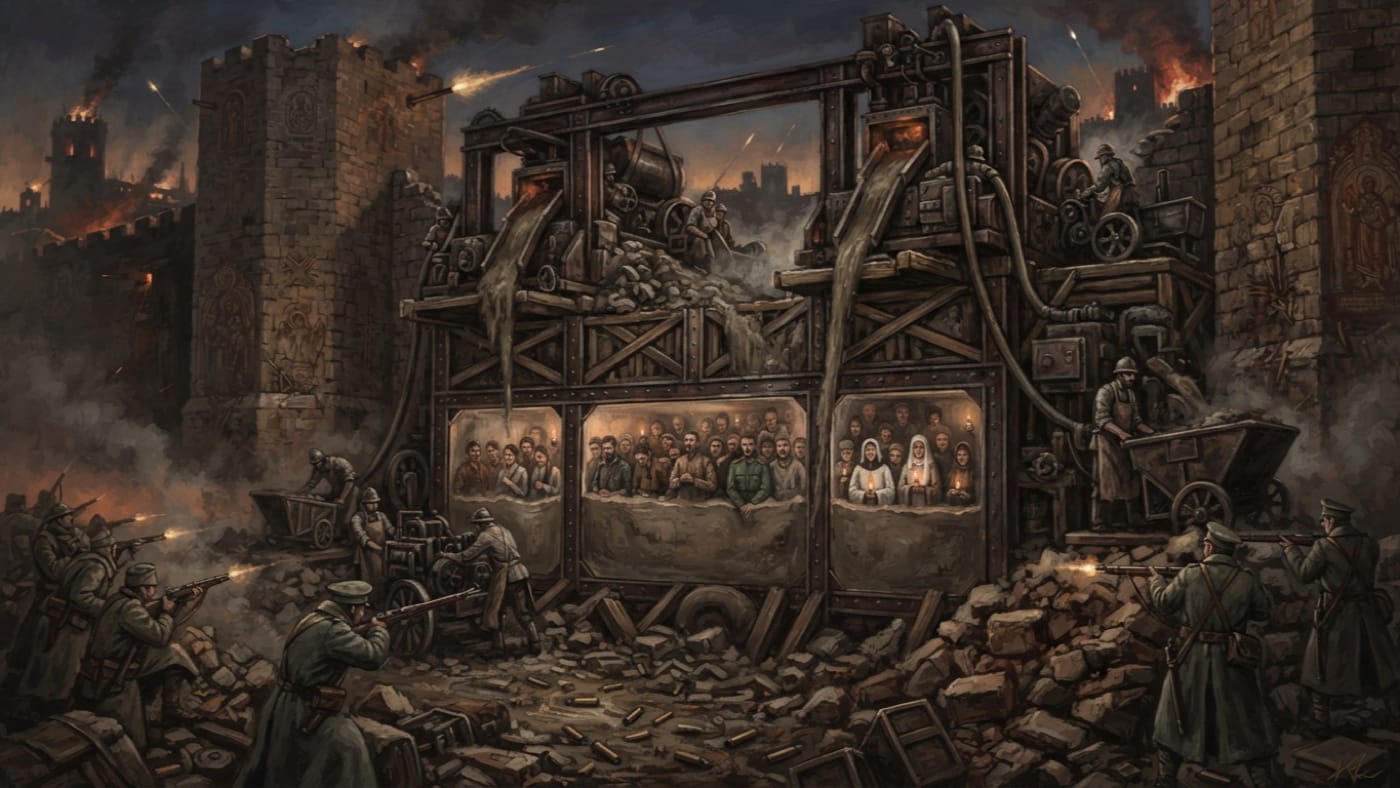
Breach-Sealing Apparatus Model 7
Thirty minutes to erect; sixty to fill; no provision for volunteers
Engineering's standard pour-frame presumes an empty breach. At Constantinople in A.S. 170, forty-seven volunteers stood inside it. Chamber 7 holds; the specification still has no paragraph for them.
Codex Ref. III.2.07-007
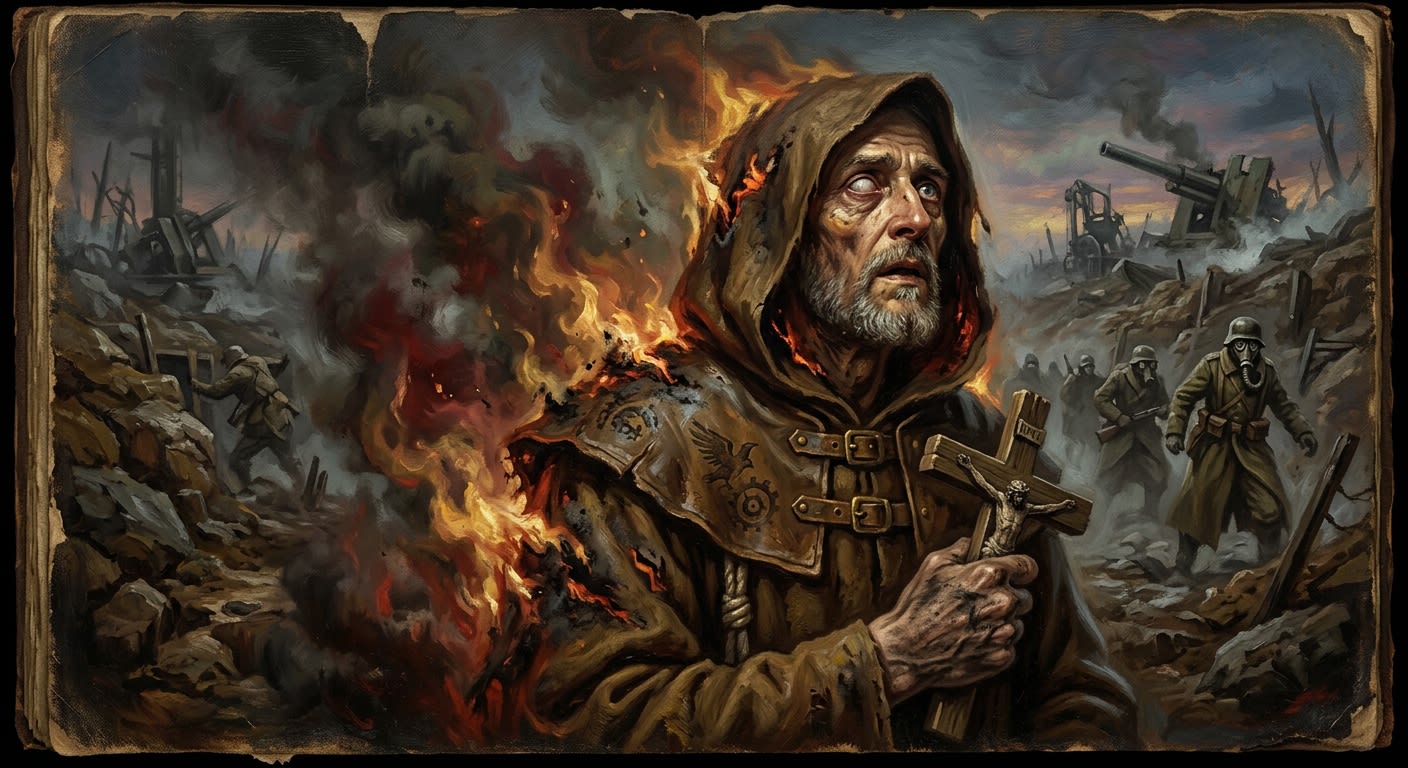
Brother Tomislav
The half-blind monk who lifted a reliquary and made Wrath recoil
Half-blind Franciscan, custodian by refusal, and instrument of the Miracle of Kalnik Ridge; consumed by sacred fire in A.S. 48, though the Bureau remains professionally unable to call him dead.
Codex Ref. III.2.01-004
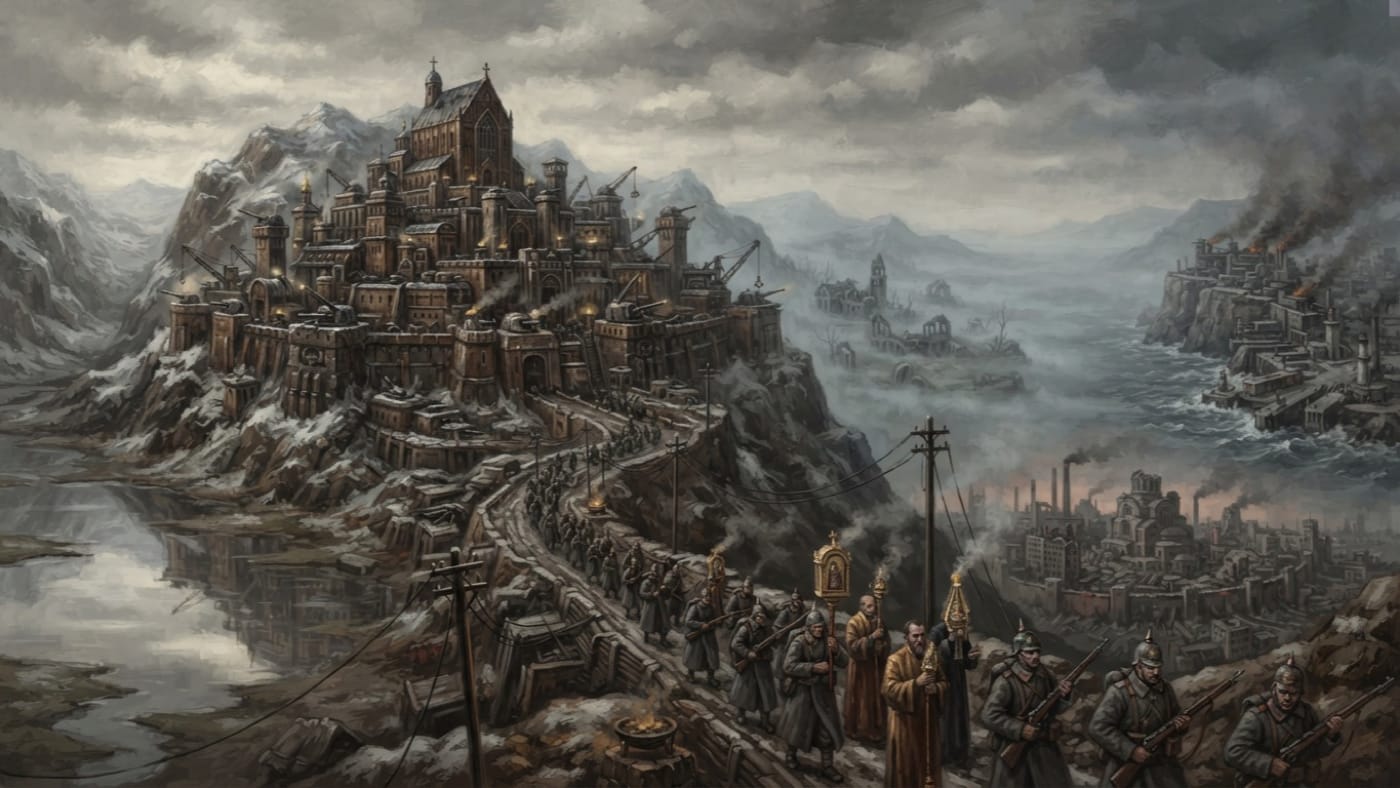
Bulgaria
Three holdings, disputed roads, and a name the Ledger keeps
Bulgaria remains held at Shipka, Sofia and Varna, contested along the approaches, and fallen beyond the returns. The Church keeps the country's name; its garrisons keep what ground they can.
Codex Ref. II.6.06-008
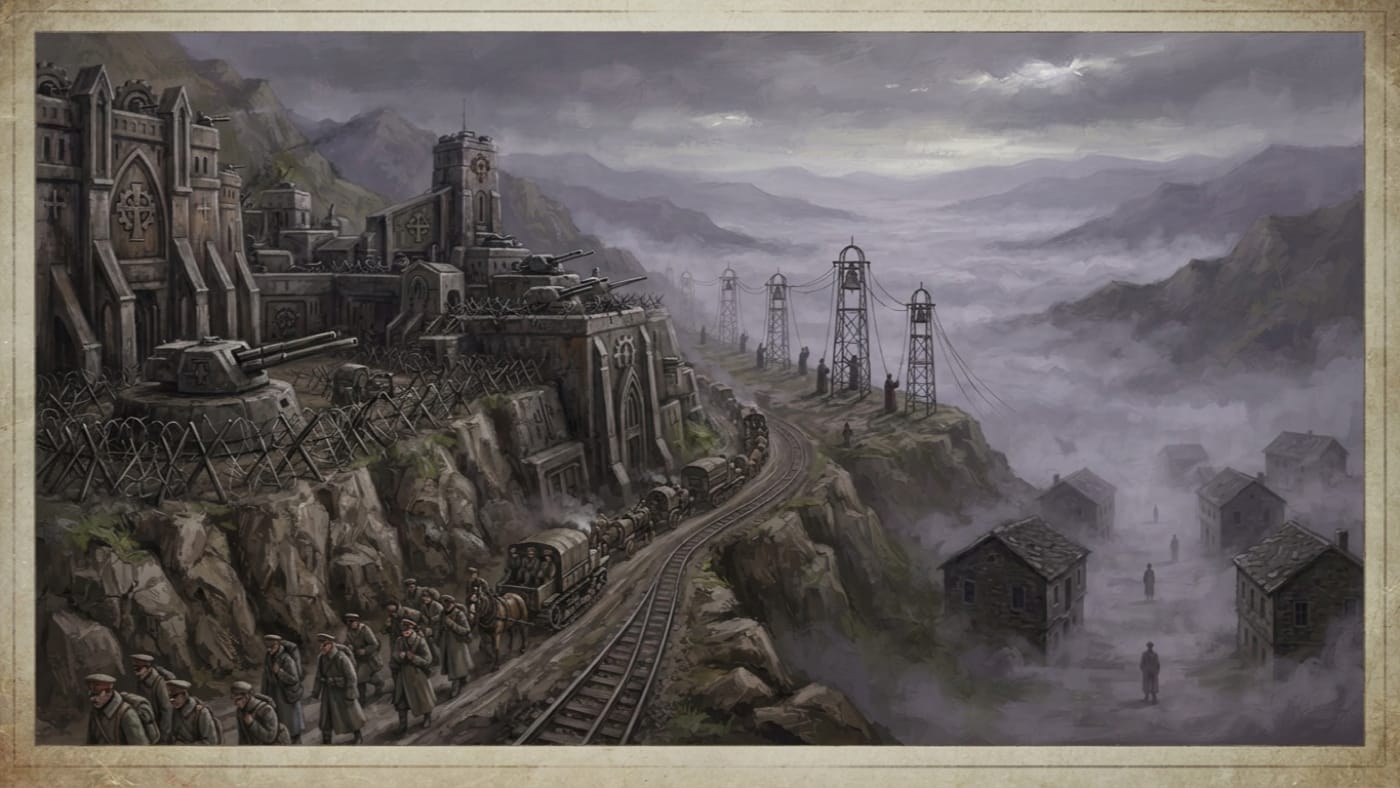
Bulgarian highlands
The villages remain on the rolls after their replies cease
Syrion's time-fog occupies the Bulgarian highlands in depth. Shipka holds the passage, the approaches remain contested, and the villages beyond the bells still receive letters they no longer answer.
Codex Ref. II.4.12-201
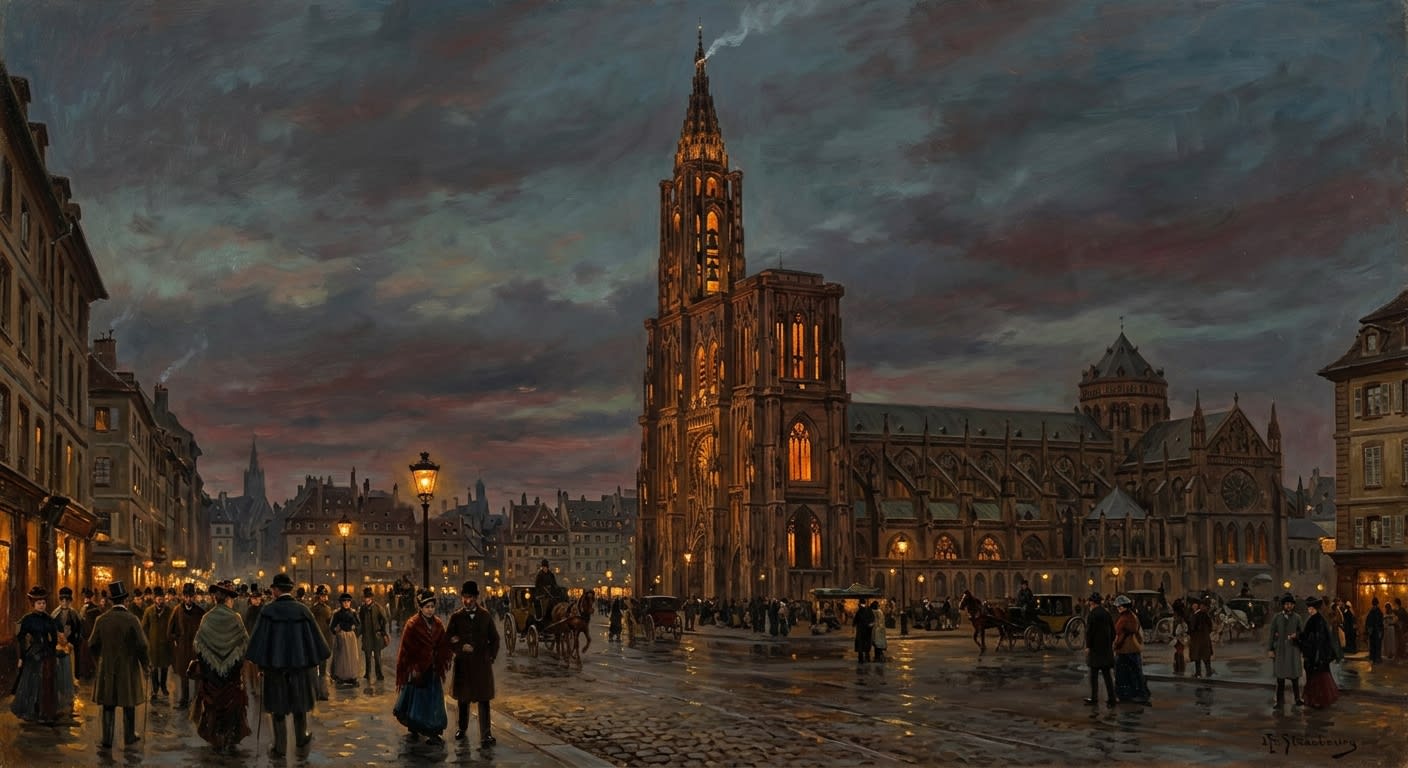
Bureau of Bells
Every hour is the Creator's hour. Every silence is His verdict.
The Bureau of Bells regulates every sacred peal from Calais to Constantinople — weapon, doctrine, and nervous system of the Theocracy, constituted A.S. 52 on the authority of a miracle that cracked the cobblestones.
Codex Ref. IV.3.01-012
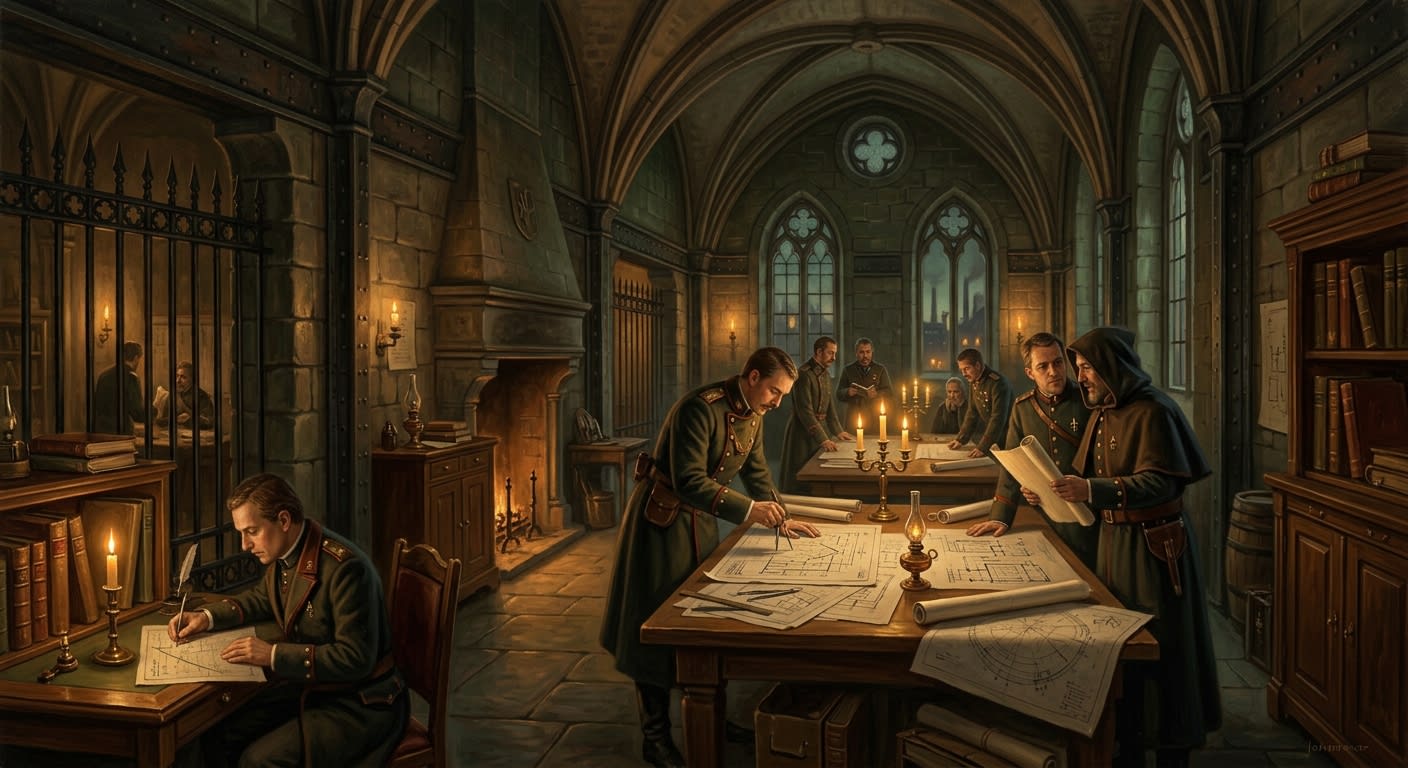
Bureau of Engineering
The number is the number, and the number does not care whether you find it convenient.
The Bureau of Engineering digs, measures, pours, rivets, surveys, calculates, and then builds the thing that holds every other Bureau upright. Its motto is not in any catechism. It is carved into latrine walls.
Codex Ref. VII.4.02-011
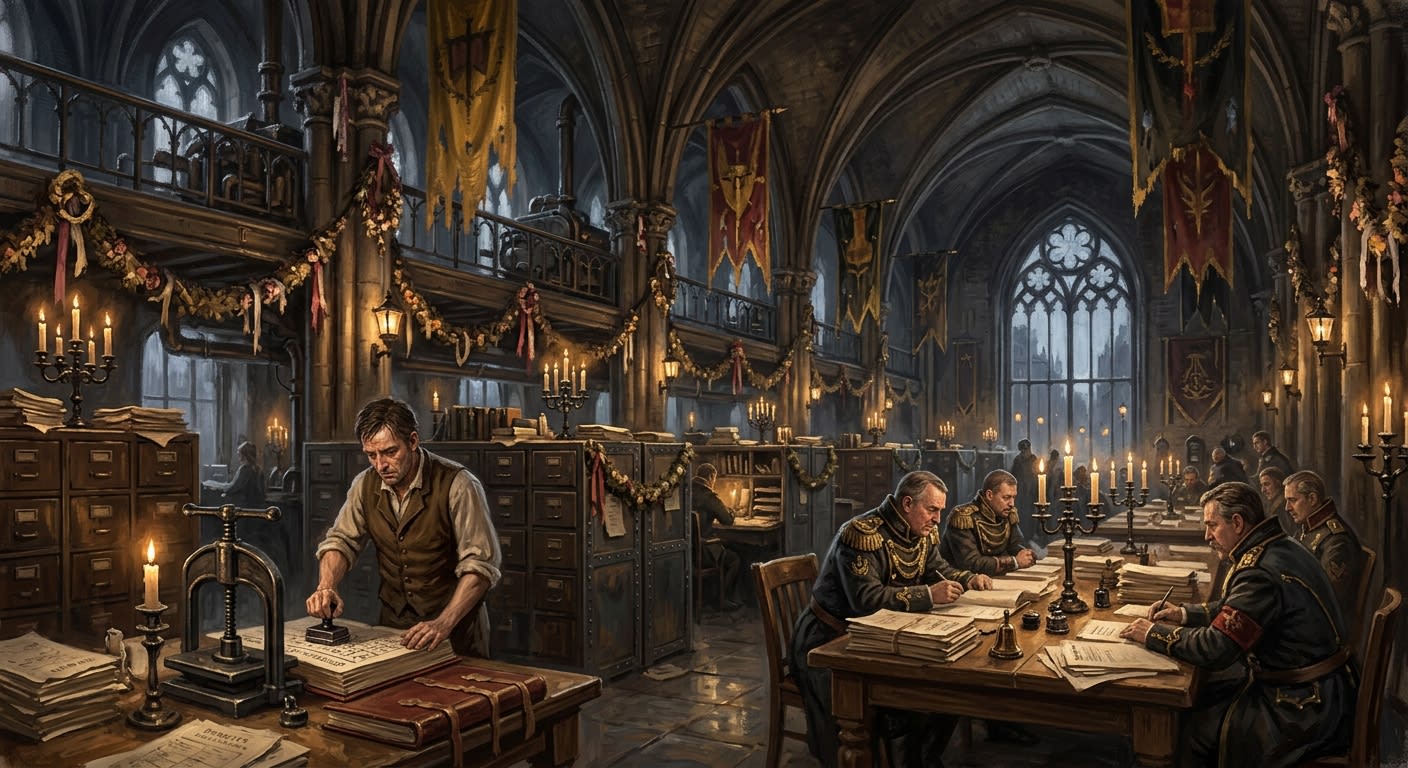
Bureau of Festivals
Joy, administered at scale — licensed, measured, and periodically revoked
The Bureau that manufactures joy, schedules grief, and meters celebration with the same rigour the Bureau of War applies to troop rotations — and which has, on seventeen documented occasions, deployed confetti.
Codex Ref. VIII.5.01-001
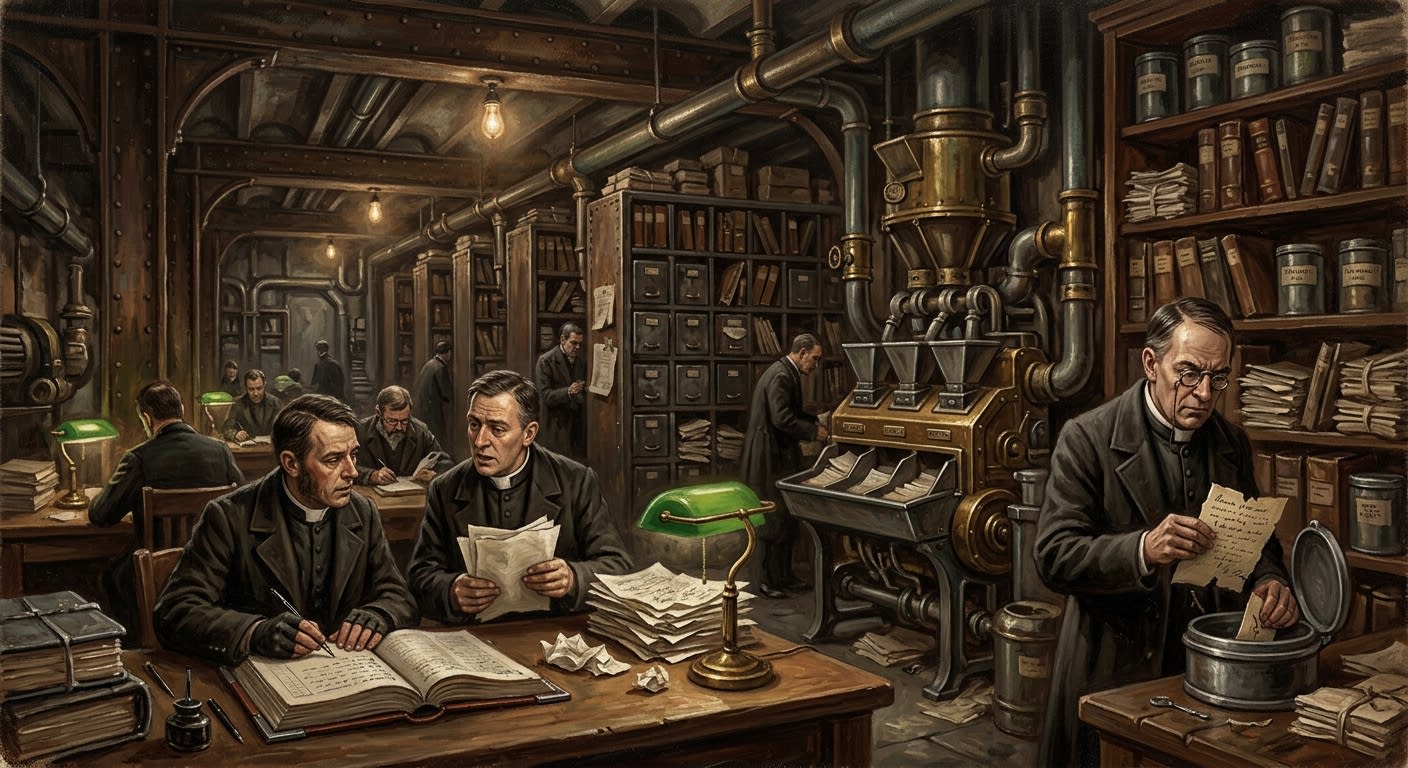
Bureau of Hearsay
Copy the ugly sentence before a cleaner office teaches it to lie
The Bureau of Hearsay preserves rumour before proof can disinfect it: tavern scraps, trench gossip, enemy jokes, and every ugly sentence that later becomes doctrine.
Codex Ref. VIII.8.02-112
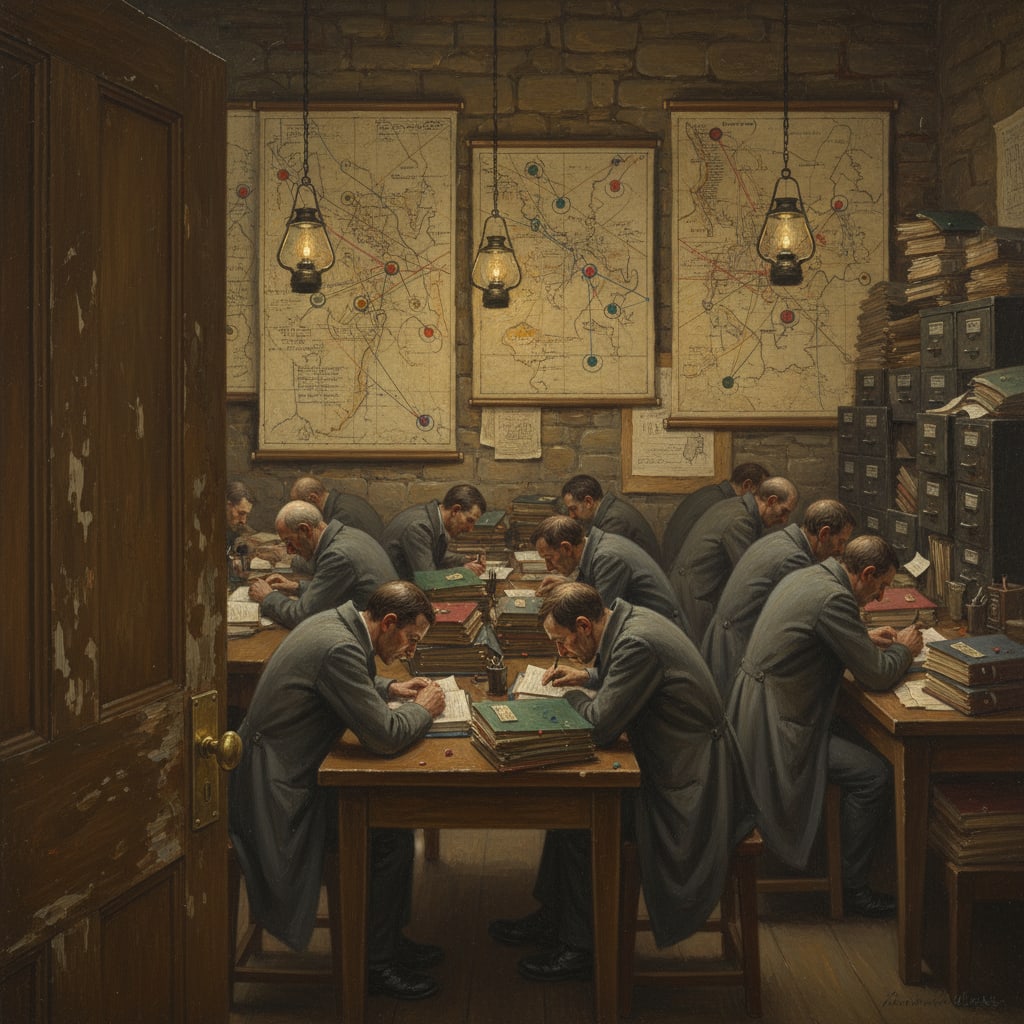
Bureau of Inter-Infernal Analysis
Fourteen analysts, three rooms, one assumption; the Line holds because the assumption holds
The Bureau that watches Hell watch itself — fourteen analysts cataloguing the rivalries among the Seven Sin-Generals, amplifying their feuds, and verifying quarterly that spite remains the Sagittal Line's most reliable load-bearing element.
Codex Ref. VIII.7.01-001
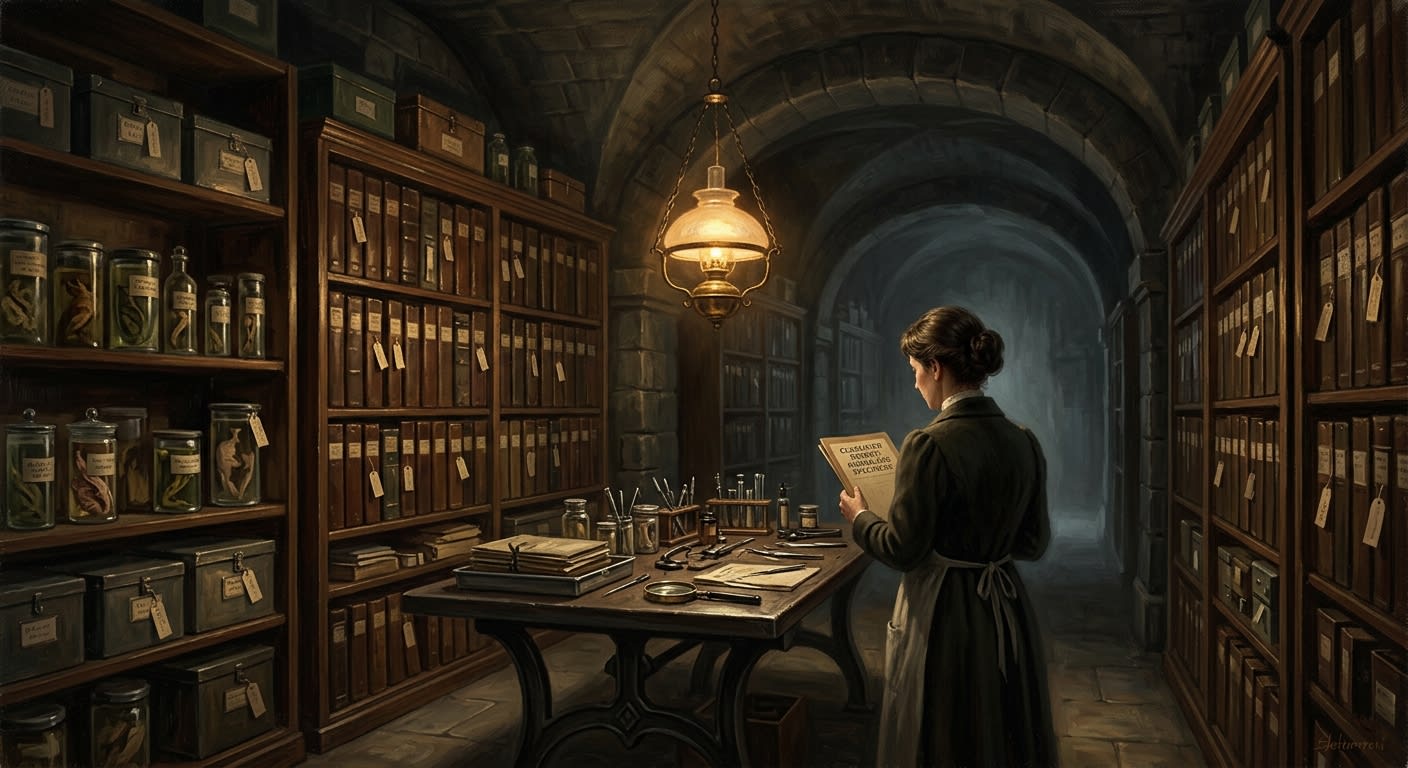
Bureau of Medicine
It measures. It classifies. It declines.
The Bureau of Medicine is not, technically speaking, a Bureau. It is something more dangerous: an institution that measures everything and recommends nothing, staffed by people who have read every report and arrived at conclusions they will not share.
Codex Ref. XII.7.09-044
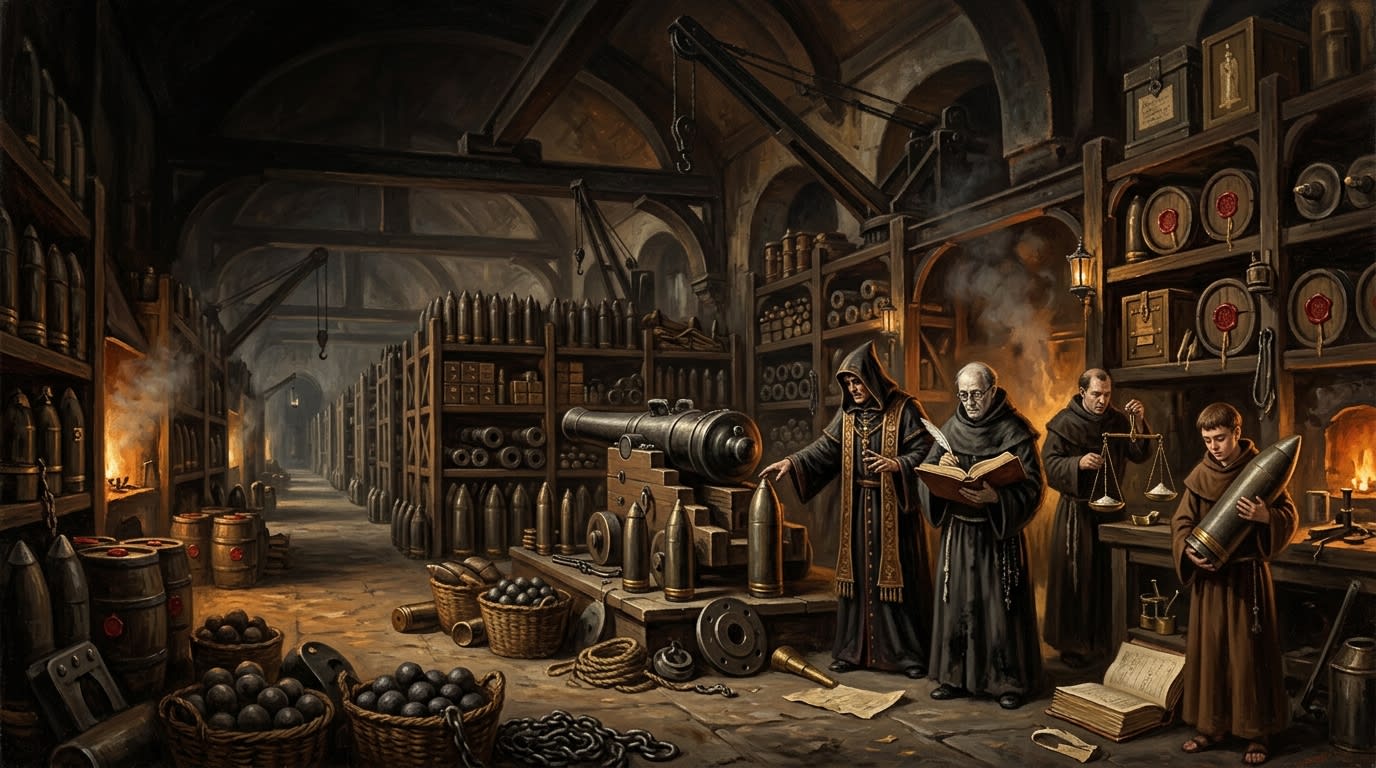
Bureau of Ordnance
No violence is lawful until inventory permits it
The Bureau of Ordnance blesses powder, counts shells, seals fuel, restrains officers, and teaches matter to obey violence only after the Ledger consents.
Codex Ref. VIII.2.11-090
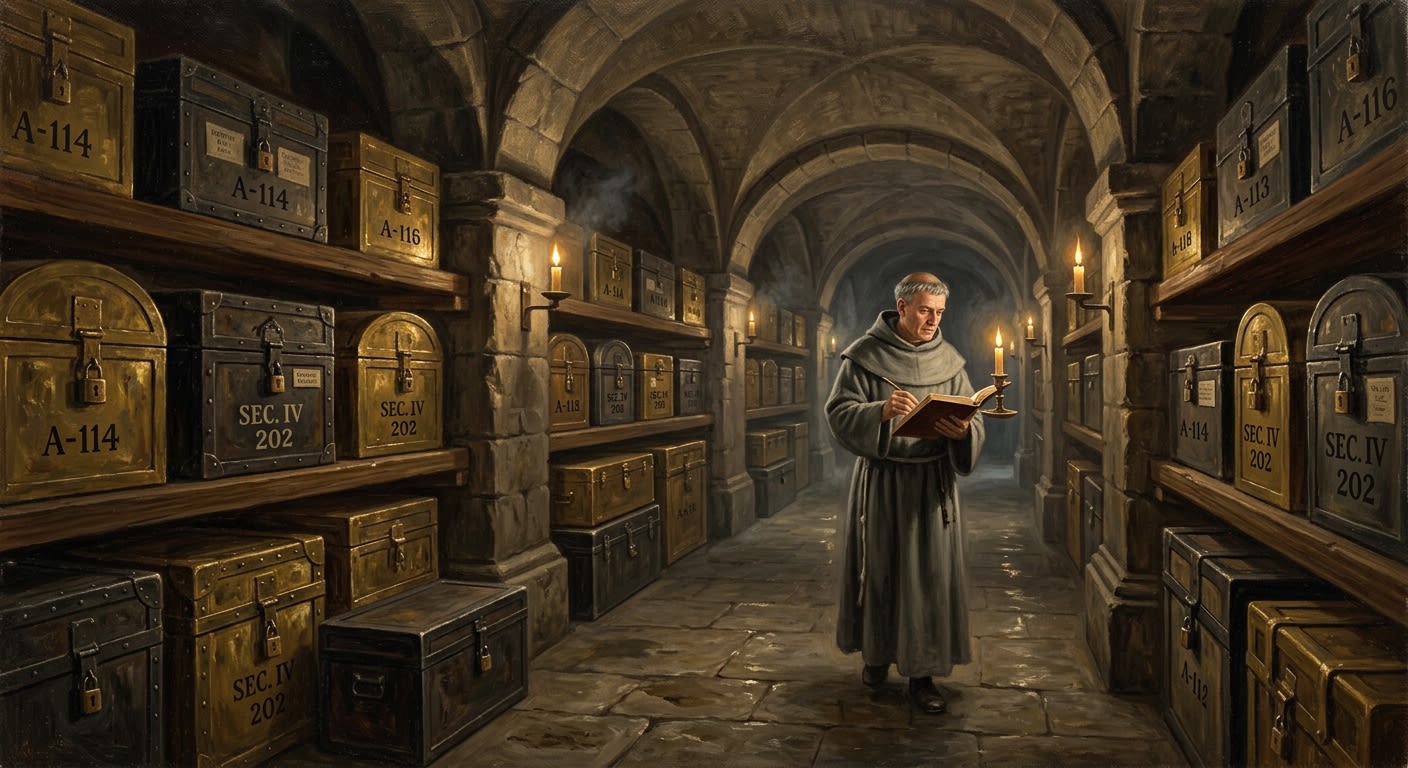
Bureau of Relics
The stamp is not the sanctity. The stamp is merely necessary.
The Bureau of Relics guards four thousand seven hundred authenticated bones, adjudicates the holiness of ash, and maintains the cheerful institutional fiction that it controls the things it catalogues.
Codex Ref. IV.3.12-019
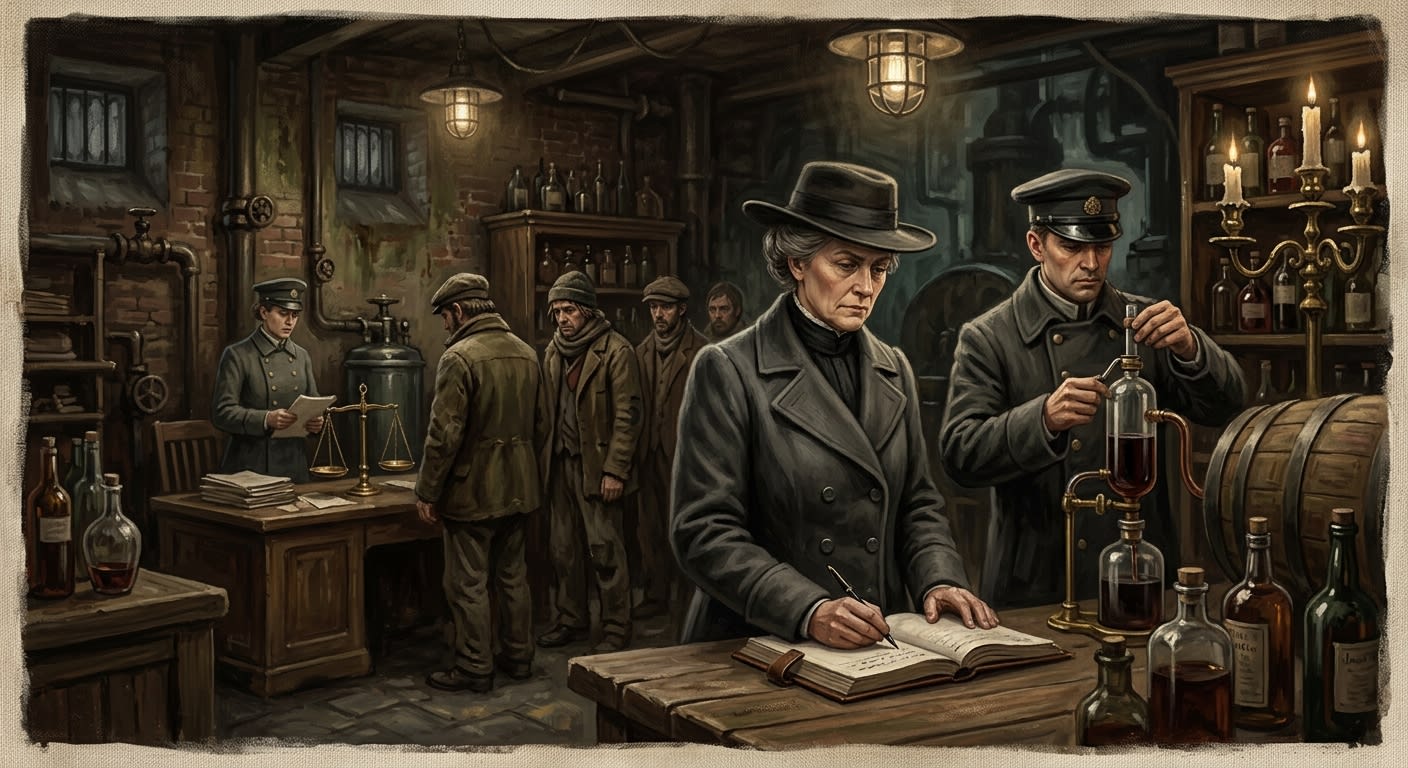
Bureau of Temperance
Appetite is a gate; moderation is the latch, and the latch has forms
The Bureau of Temperance measures wine, hunger, tavern weakness, northern spirits, and every appetite the Synod fears might become a gate for Hell.
Codex Ref. VIII.6.04-108
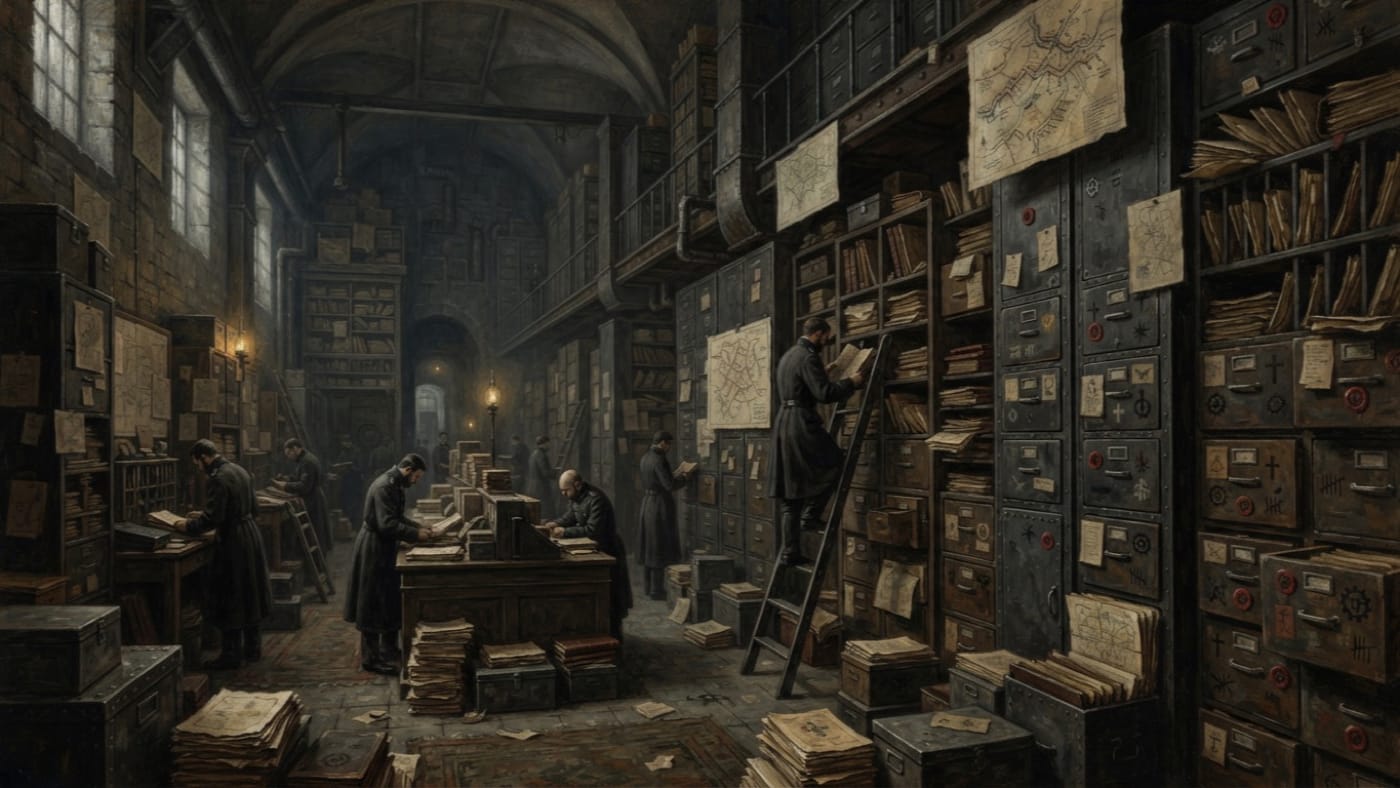
Bureau of War archives
What the next commander must know
The Bureau of War's operational memory: maps, assessments, supply rolls and field images kept against the next assault. Doctrine may correct the account; the guns still require the arithmetic.
Codex Ref. III.2.07-042
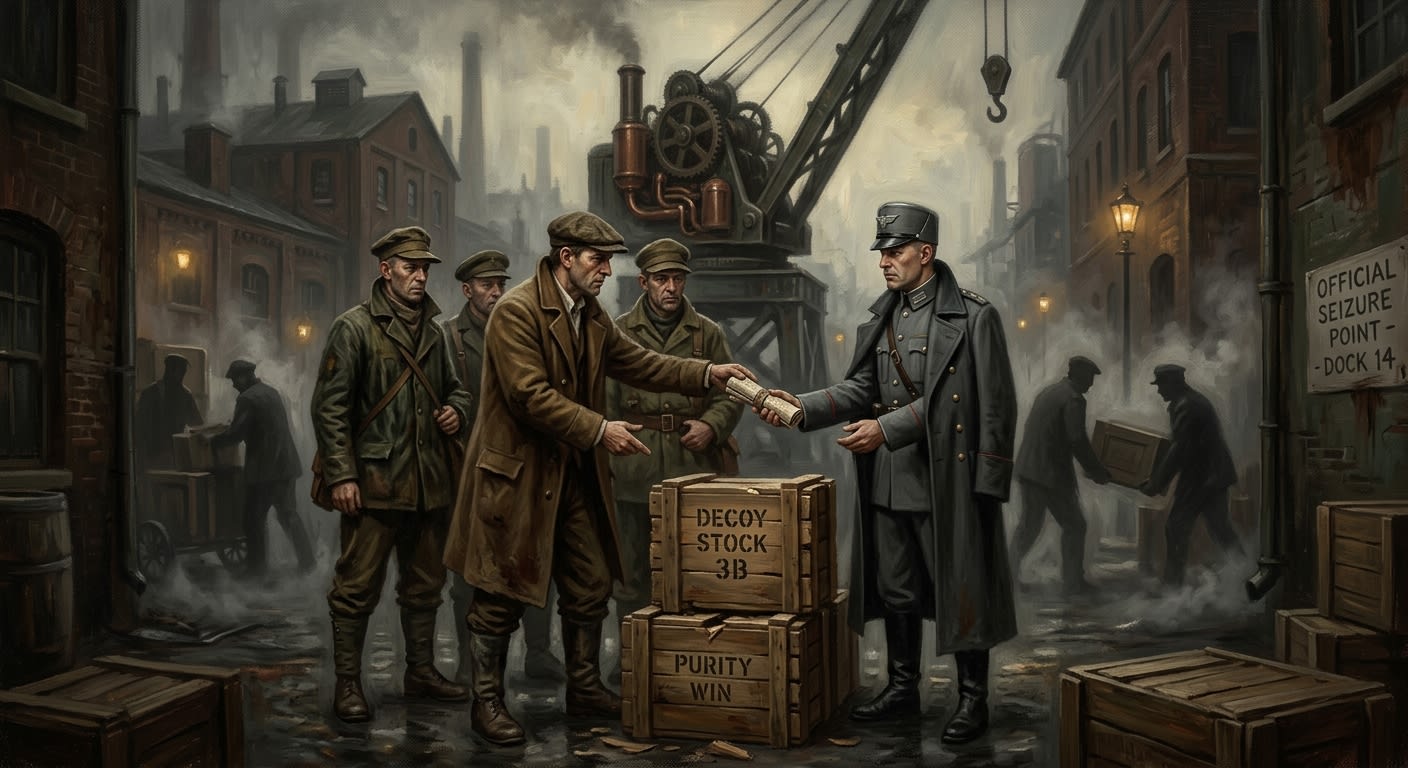
Bureau-Friends
Compliance made theatrical, profitable, and almost legal
Bureau-Friends are the compliance faction of Demon-Glass Polishers: smugglers who stage raids, pack decoy crates, pay expected fines, and let Purity win loudly while useful stock leaves quietly.
Codex Ref. XII.13.05-001
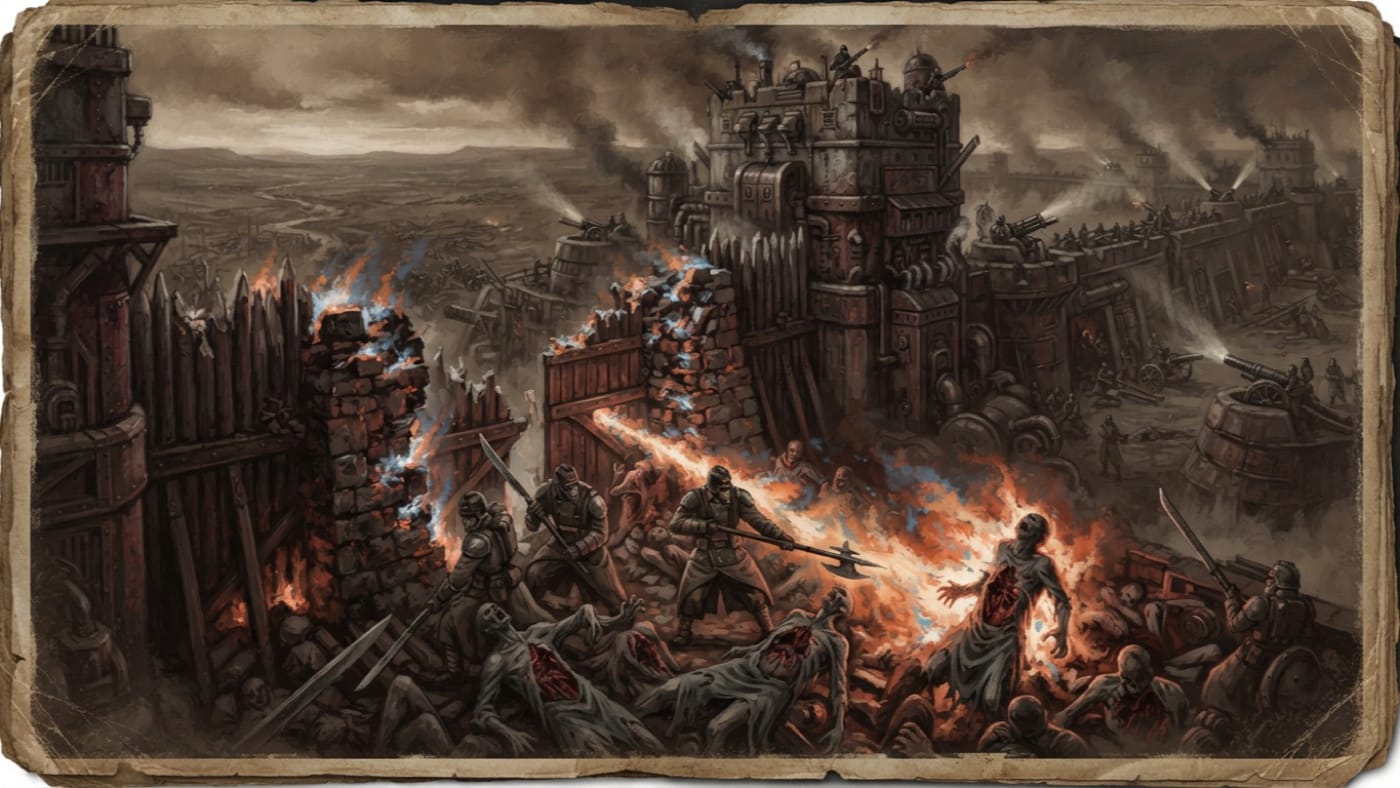
Burning of the North Gate
Obedience Opened the Bodies
In A.S. 140, Hollowed collapsed before Bastion-Constantinople's North Gate. Paladin blades opened their chests; sorcery-flame ate stone. The Ninth of Corvus commemorates obedience with disastrous results.
Codex Ref. VII.3.01-002
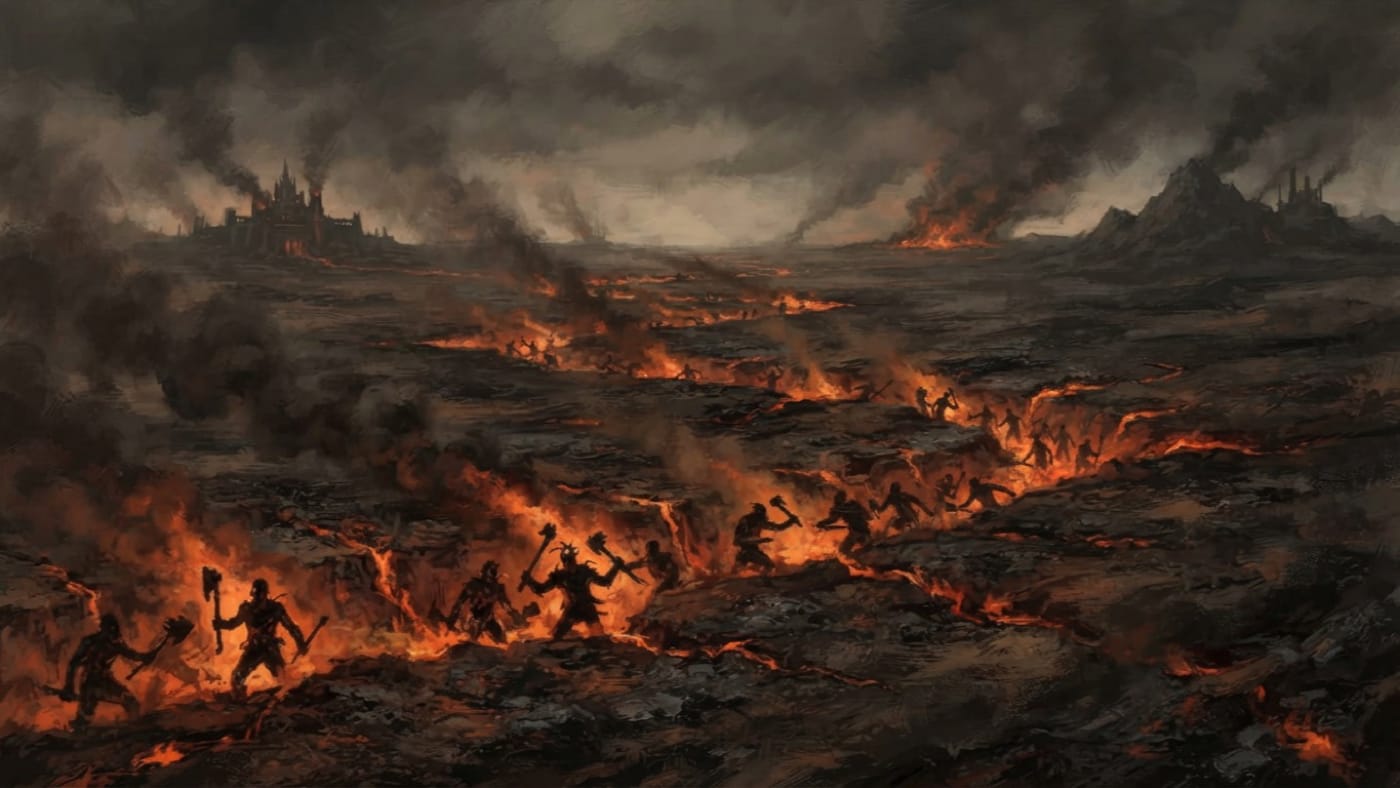
Burning Trenches
The fighting is the point.
A.S. 201 survey of Maldrake's Burning Trenches in Thrace: a mirror of the Sagittal Line carved in fire. They advance, consume ground and produce warriors. The fighting is the point.
Codex Ref. II.6.06-402
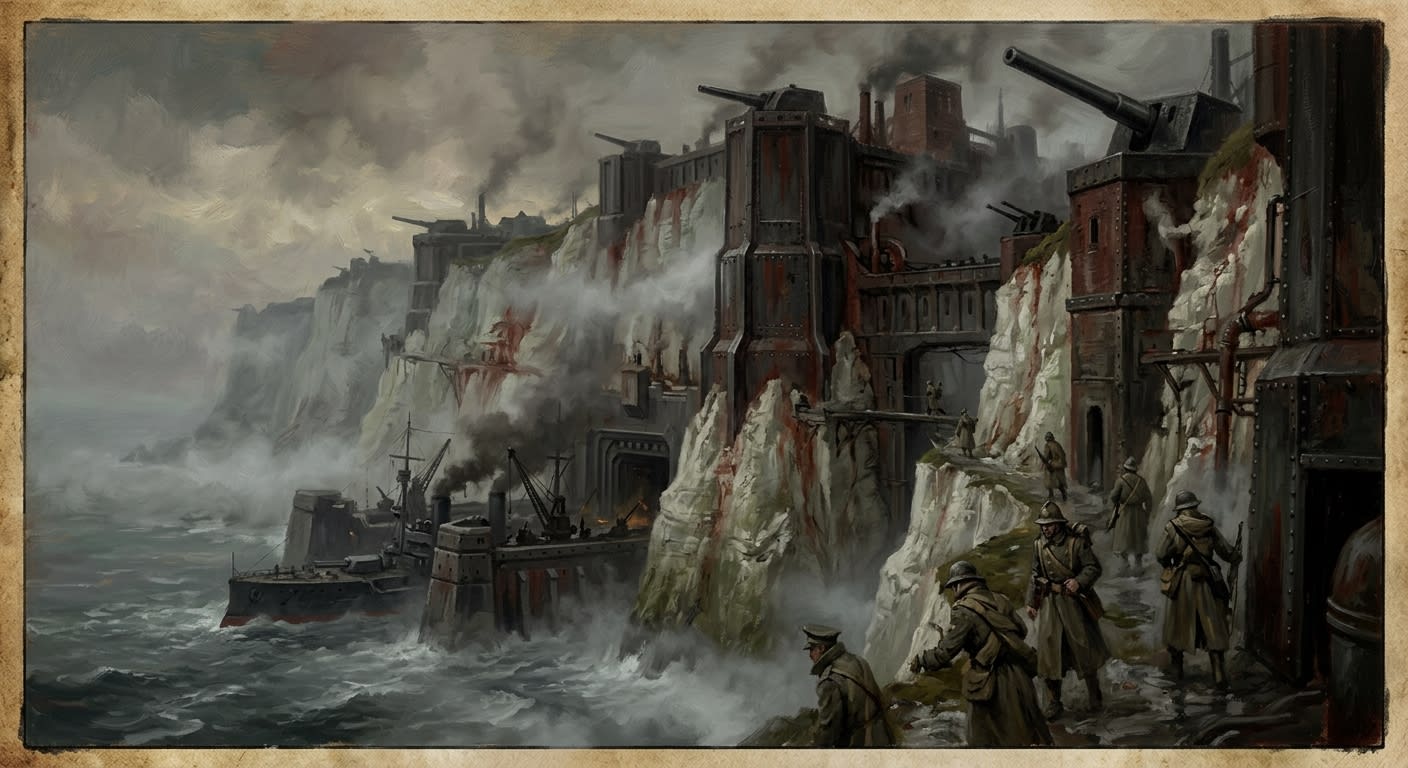
Calais
Read the fog, hold the sea, and pretend the Channel is only water
Calais is the Synod's western coastal tooth: a chalk redoubt where the fog writes names, the sea answers omissions, and every passage is taxed in breath.
Codex Ref. II.4.09-011
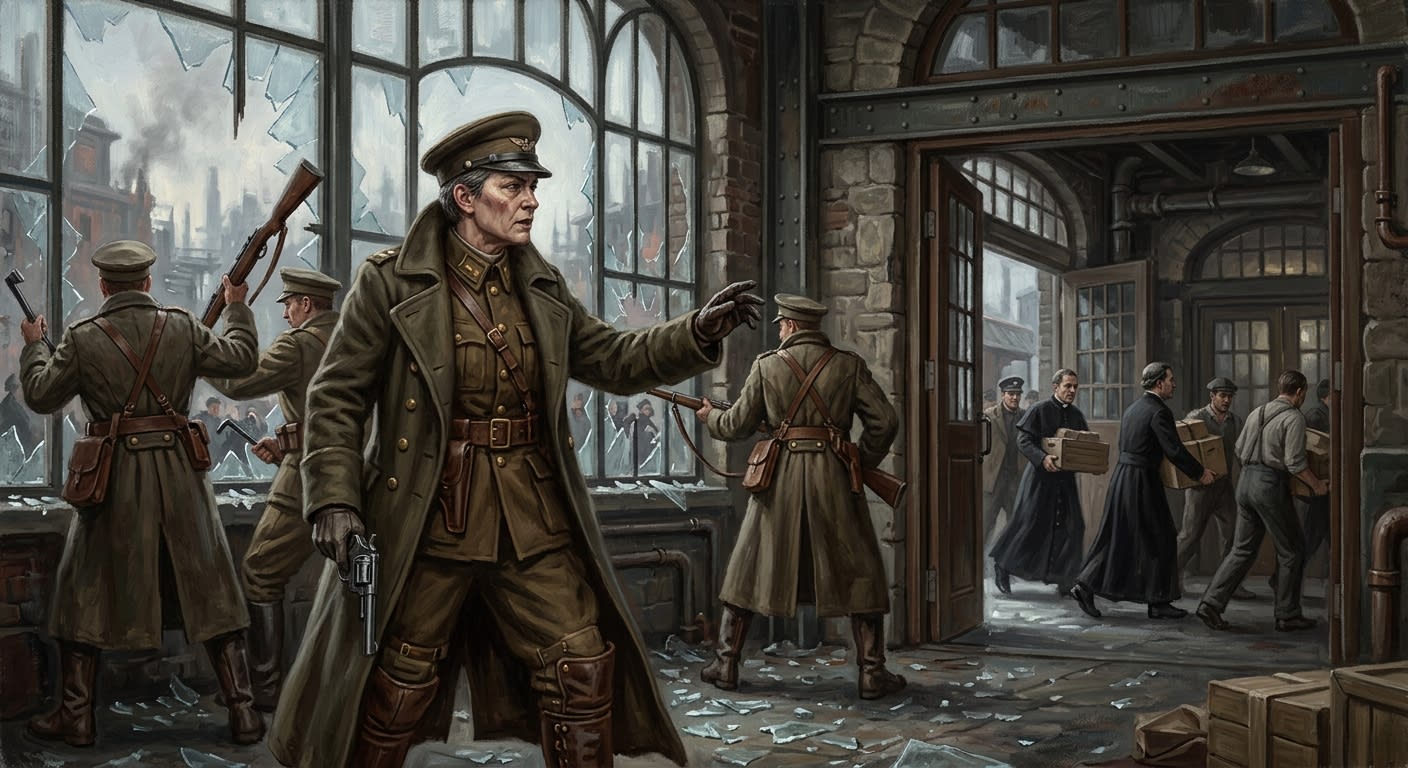
Captain Mavra
The hammer falls where the useful crate does not
Captain Mavra stages Purity's noon raids in Thessaloniki, breaking the visible glass while the useful pane leaves by another door.
Codex Ref. III.2.01-201
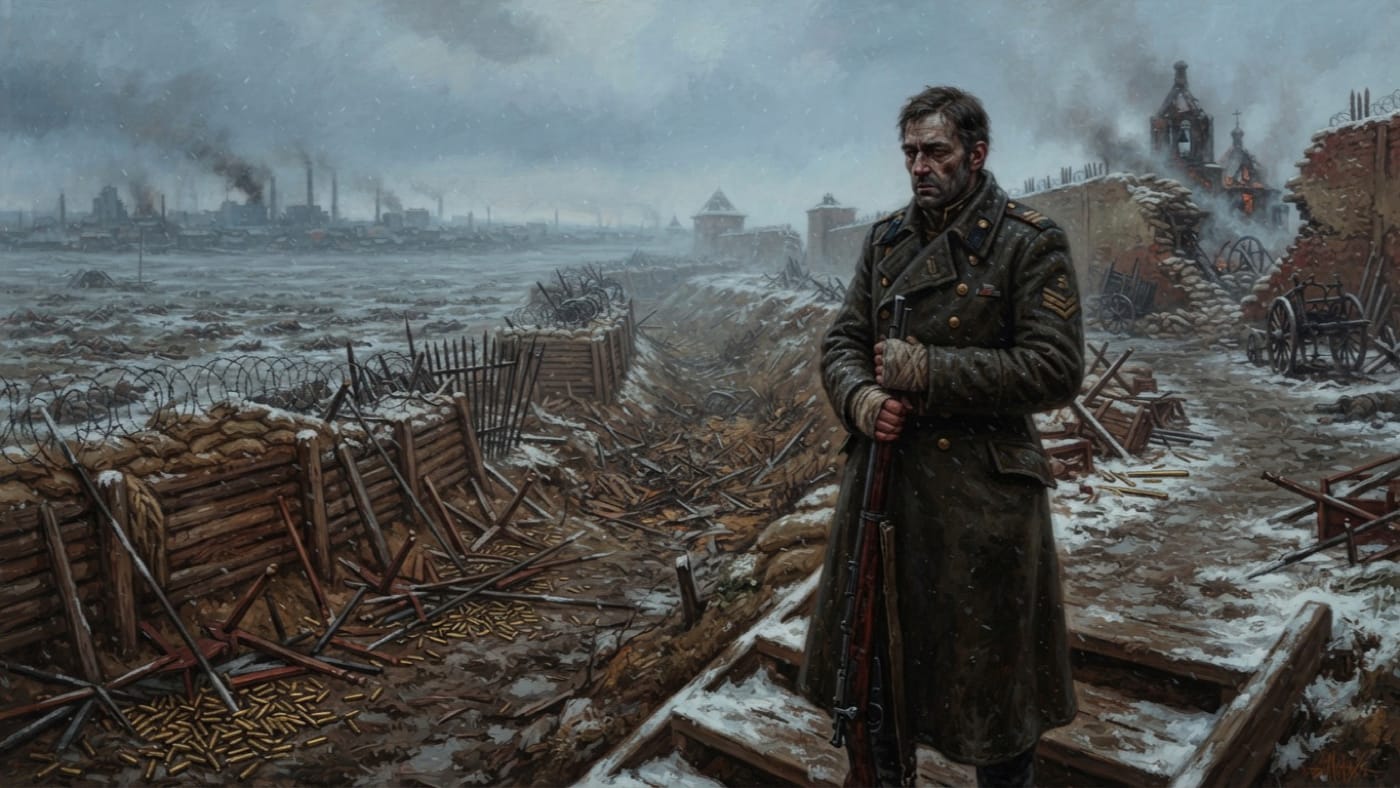
Captain Odran Hale
A name kept where the particulars run out
Captain Odran Hale served among Rostov's six hundred defenders in A.S. 153. The shrine roll keeps his name; the consulted file establishes neither his command nor his fate.
Codex Ref. III.2.01-153
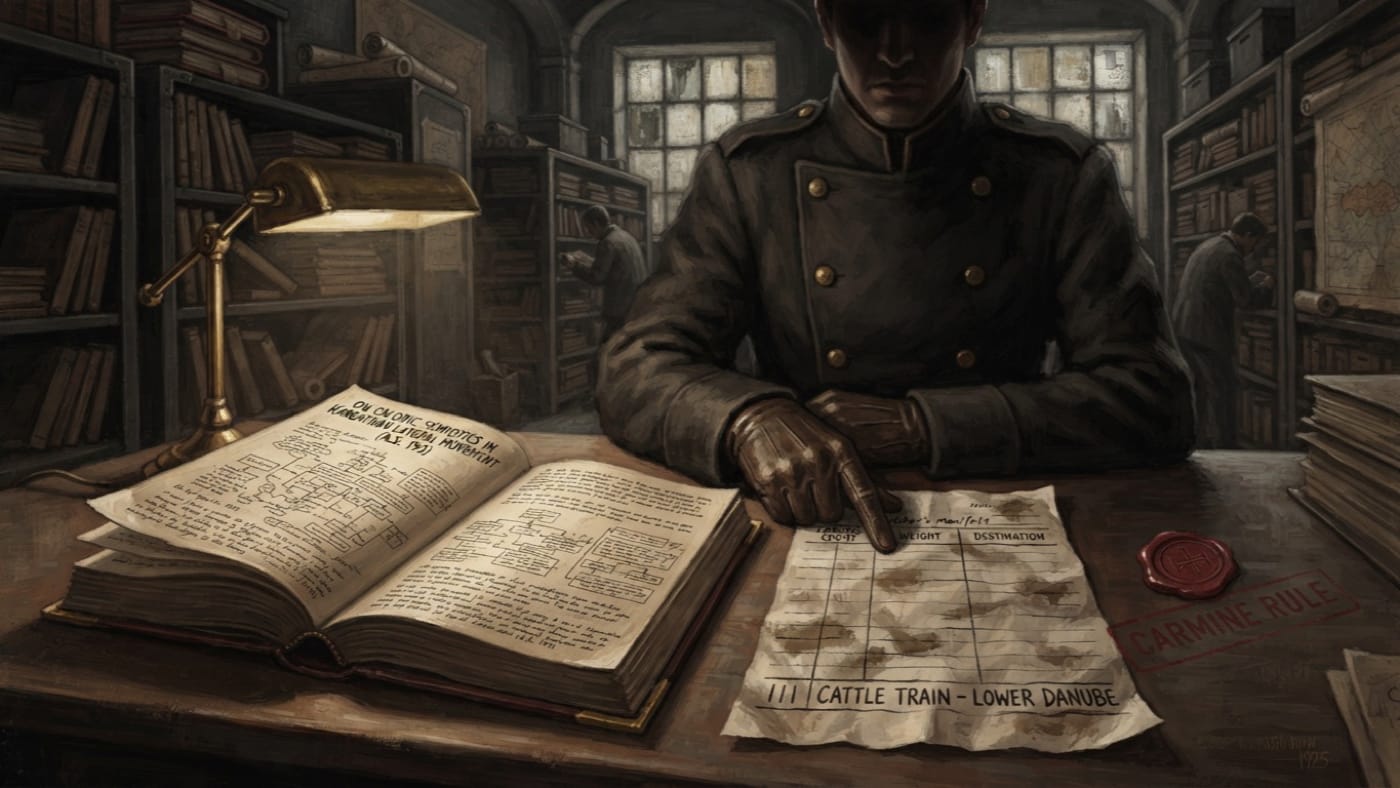
Carmine Rule
Fourteen pages of theory, one butcher's manifest
The Carmine Rule asks every hypothesis in Dossier Carmine: was there food there? Haugen's answer to fourteen pages of theory undone by a butcher's manifest.
Codex Ref. VIII.7.01-005
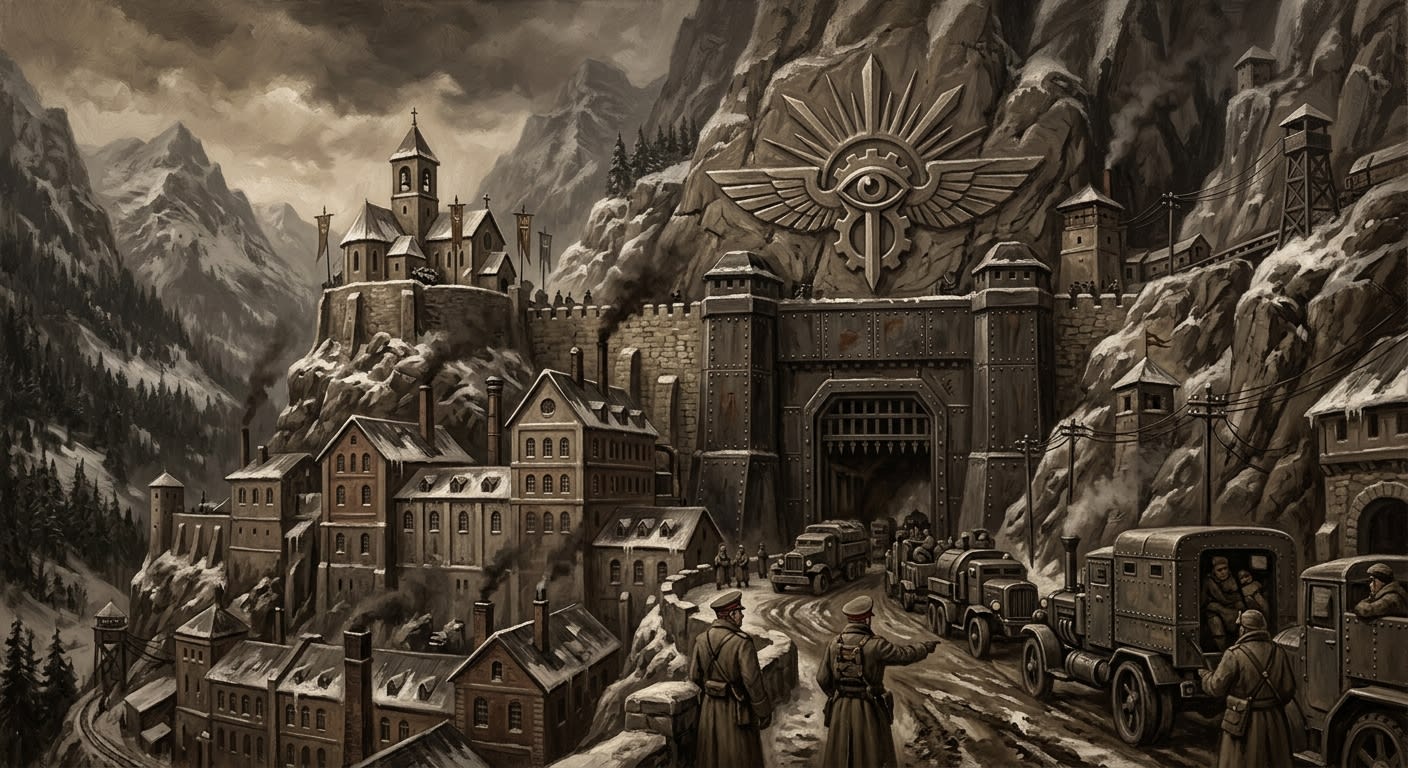
Carpathian Gates
Where the mountain learned to close its teeth
Mountain hinge of the middle Line: passes, locks, shrines, snow-voices, and Harrowglass terror between Bastion-Przemyśl and the Carpathian spine.
Codex Ref. II.4.08-065
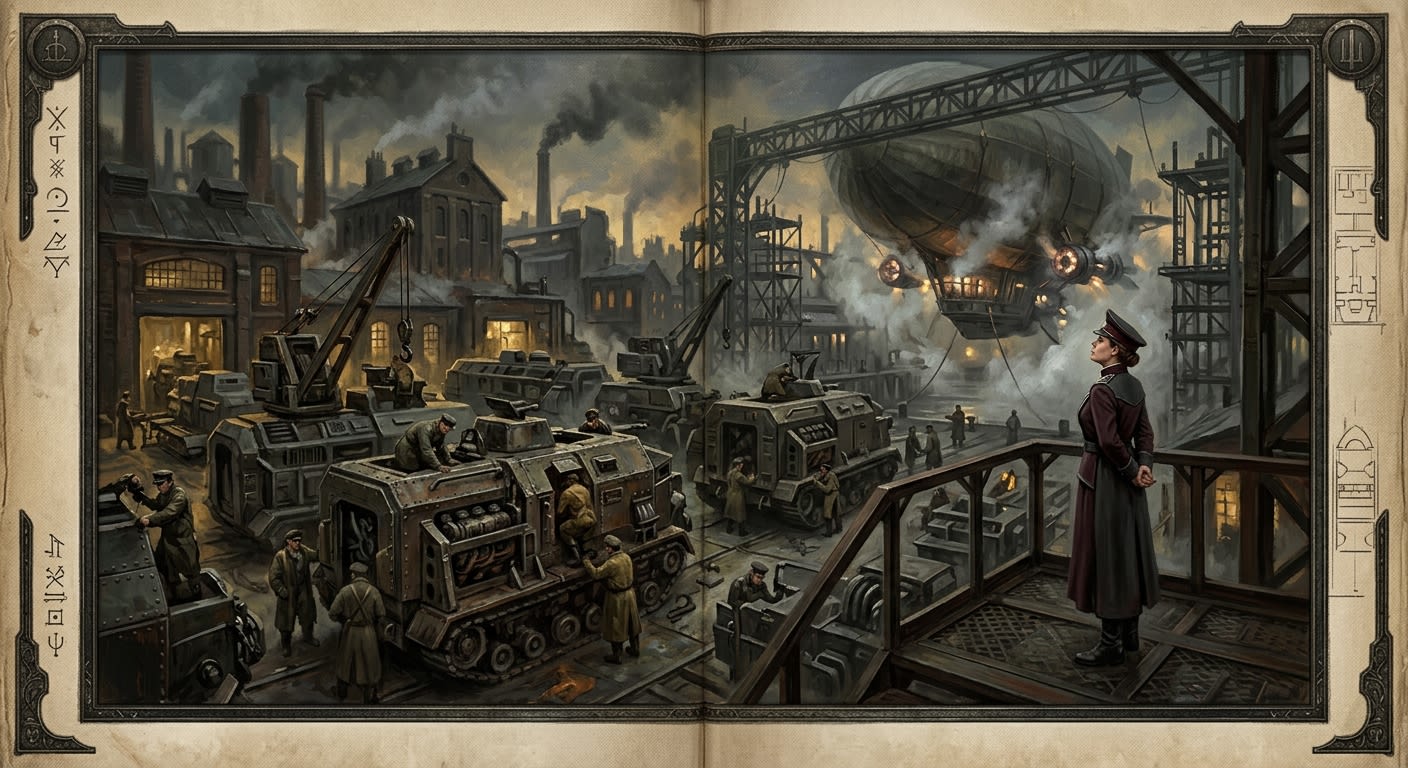
Carrier Yard
Where crawling cathedrals learn obedience from chains
Southern Foundry Quarter yard where Catacomb-Carriers are assembled, Threnody hums at Pier Seven, and Saint Uriel refuses the sky.
Codex Ref. II.4.10-006
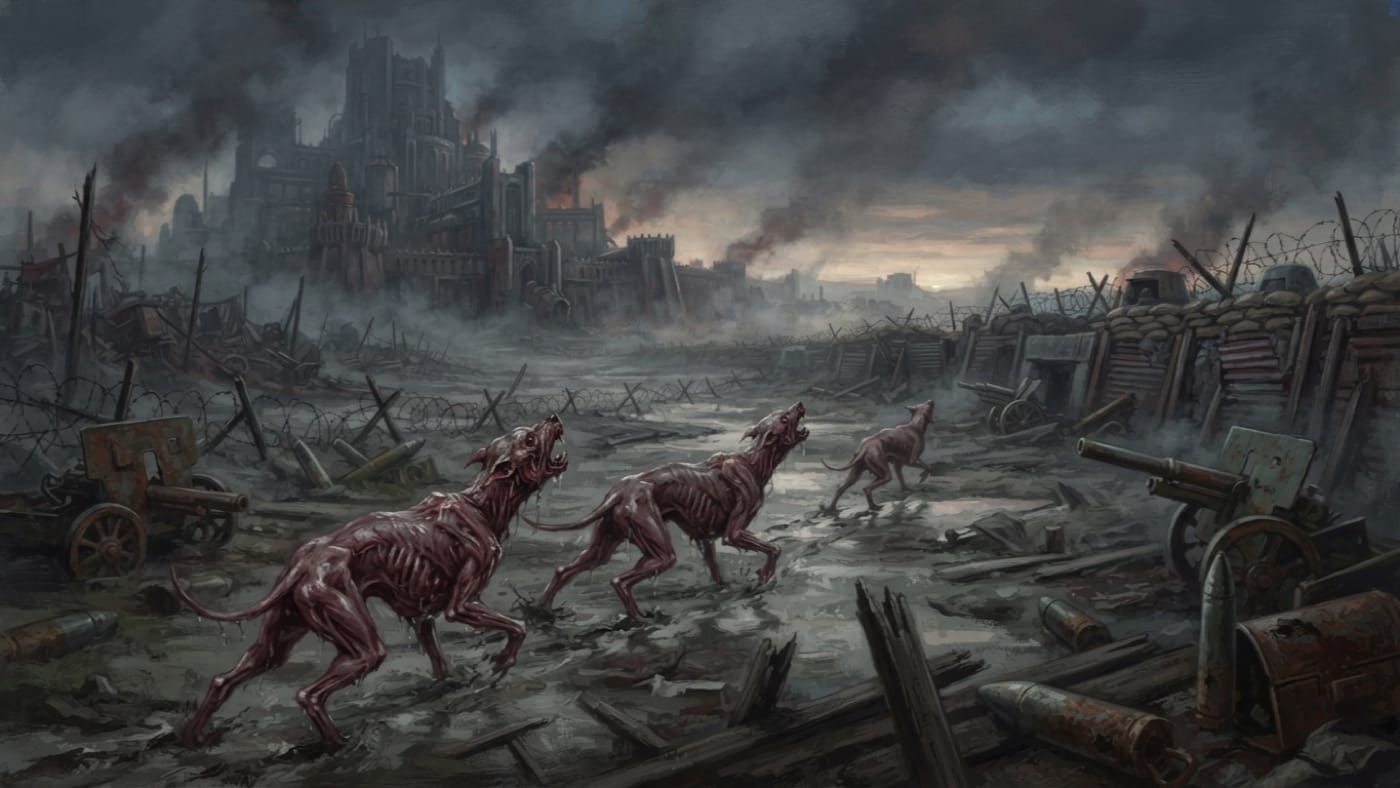
Carrion-Dogs
Skinless Hounds of Kargath, Howling in Human Voices
Skinless hounds of Kargath's host, howling in human voices and tearing throats from the living. The howl is confirmed; their origin and first encounter remain blank in the ledger.
Codex Ref. IV.1.07-493
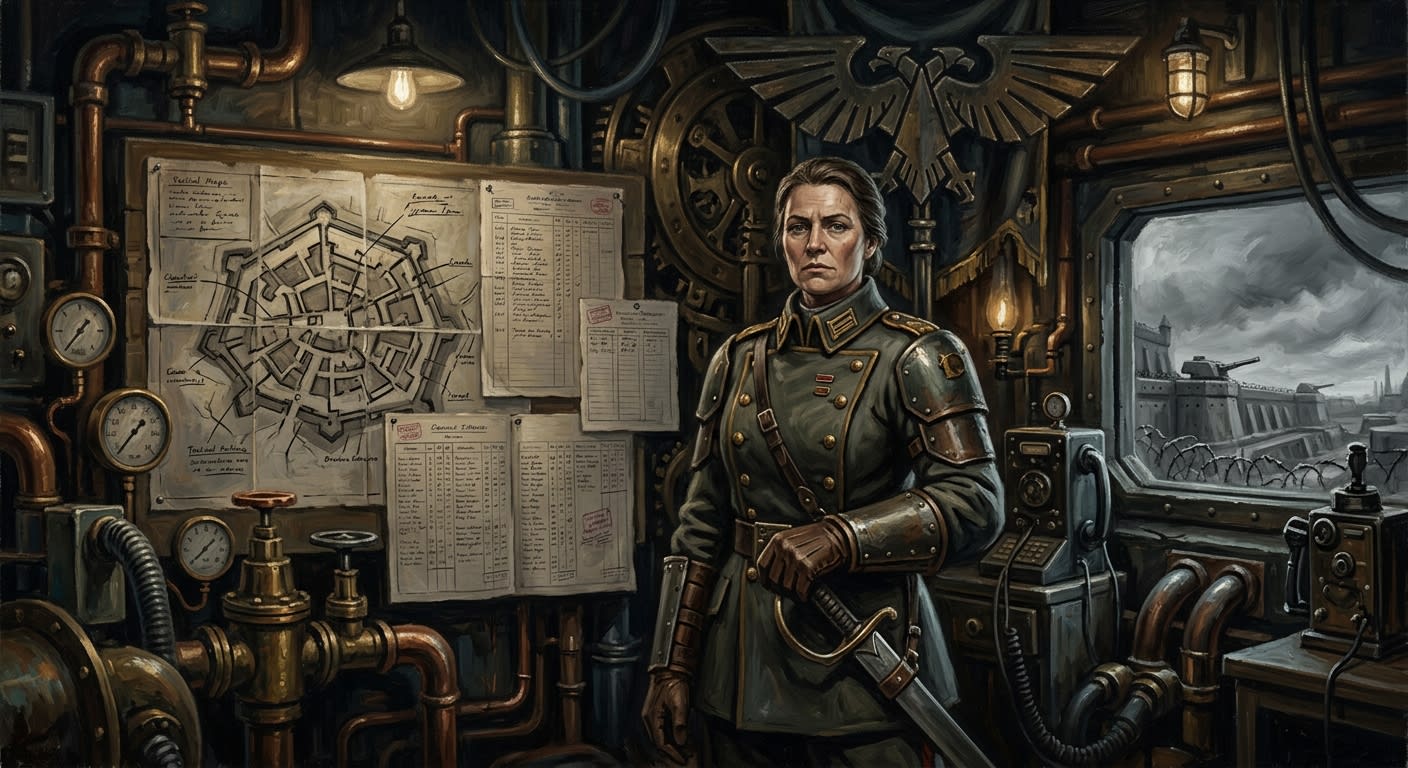
Castellan-Warden Ingrid Halvorsen
She commands the Far Nail by refusing to mistake inaction for peace
Castellan-Warden Ingrid Halvorsen has commanded Bastion-Königsberg since A.S. 191, keeping twenty-six thousand souls aligned against the Grey's patient nothing.
Codex Ref. III.2.01-039
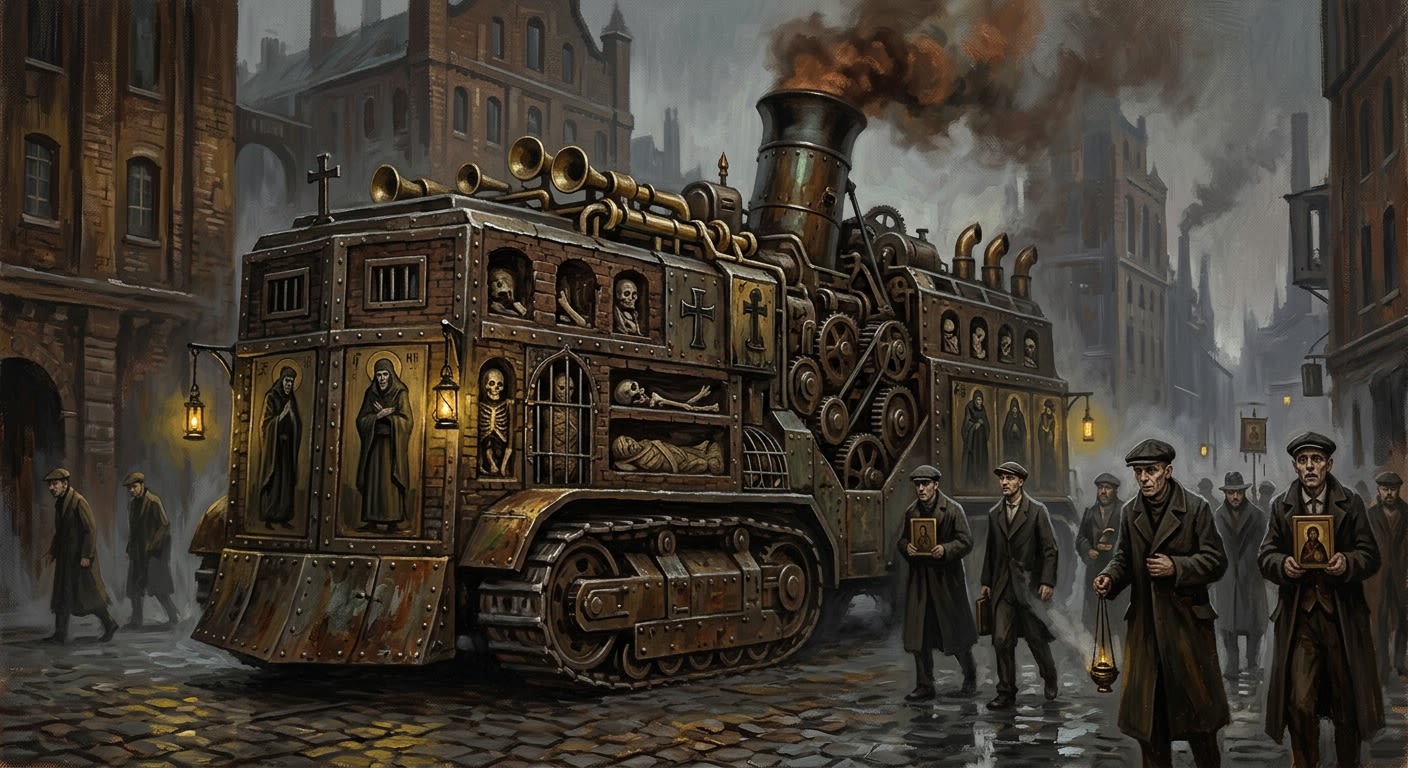
Catacomb-Carrier
A cathedral on treads, because Constantinople dislikes modest blasphemy
Catacomb-Carriers are sixty-ton armoured reliquary-engines from Bastion-Constantinople: hymn-driven, saint-bricked, effective, and wrong.
Codex Ref. XIII.1.72-007
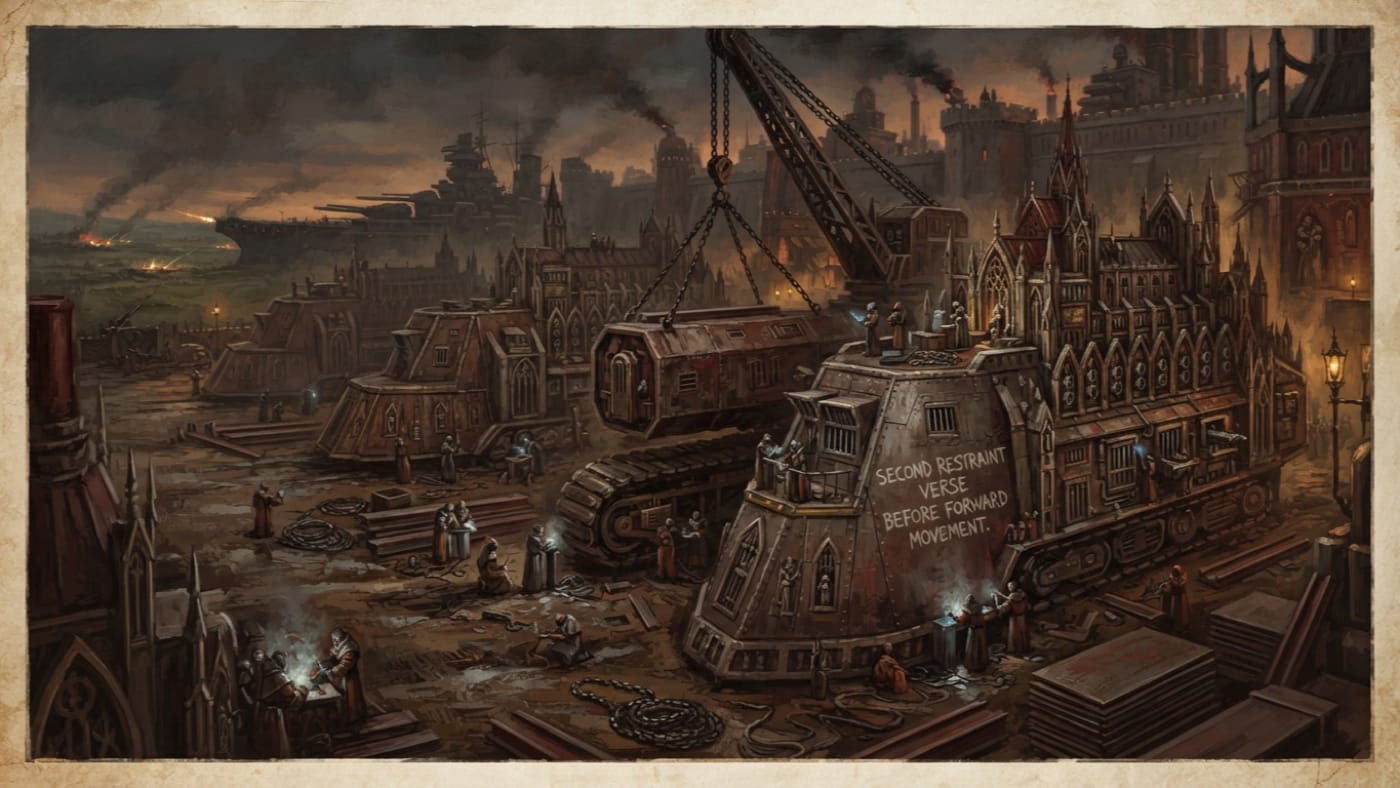
Catacomb-Carrier Engines
The whole crawling church is entered as one machine
A Catacomb-Carrier engine is the whole crawling church, its motive housing separately sealed. Four were lost in the A.S. 177 Bombard; this A.S. 201 survey finds War still ordering more.
Codex Ref. XIII.1.72-010
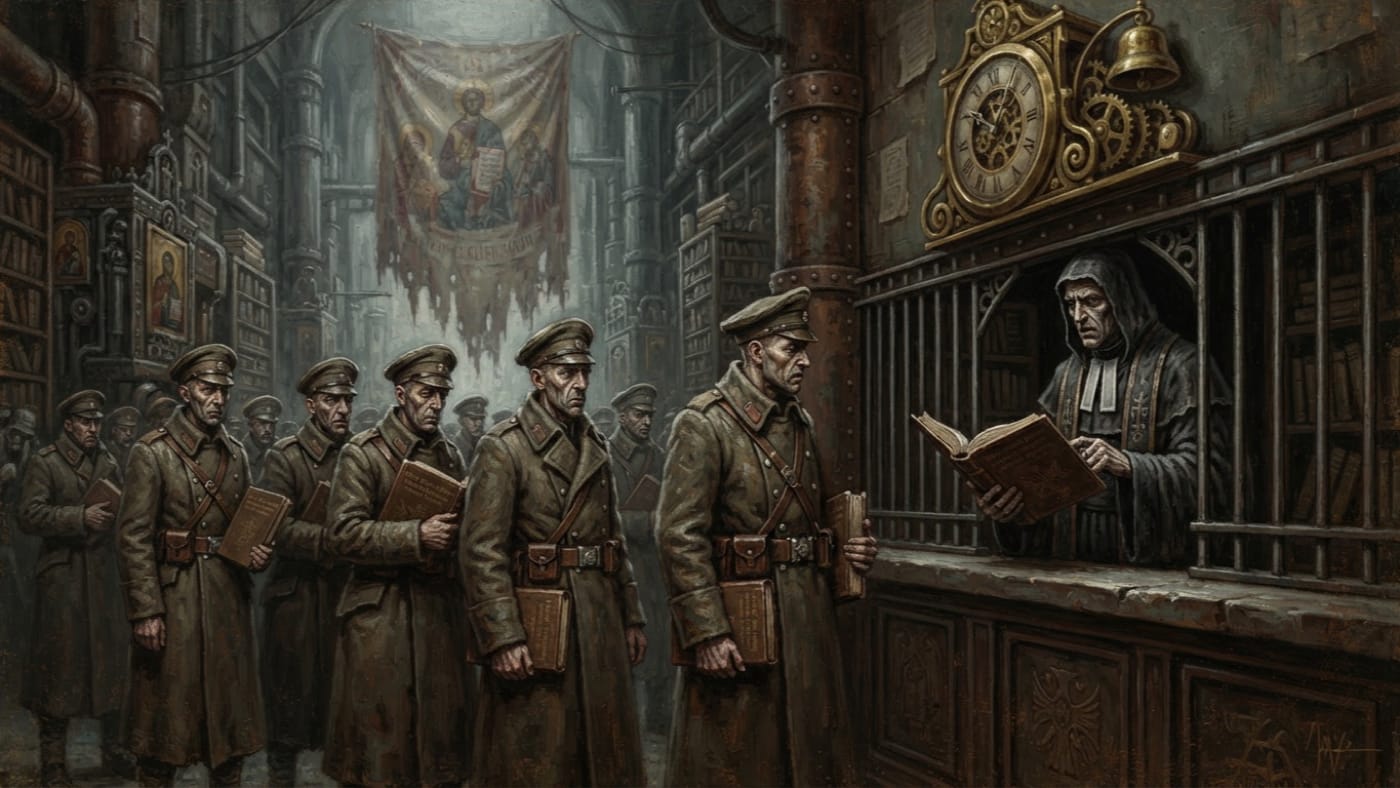
Catechism of the Empty Belly
An empty pot enters the register as readiness
In this A.S. 201 survey, Seraphinus's sixty-nine articles and seven appendices remain compulsory officer reading. The Synod gives shortage a grade and calls it readiness.
Codex Ref. XIII.1.69-001
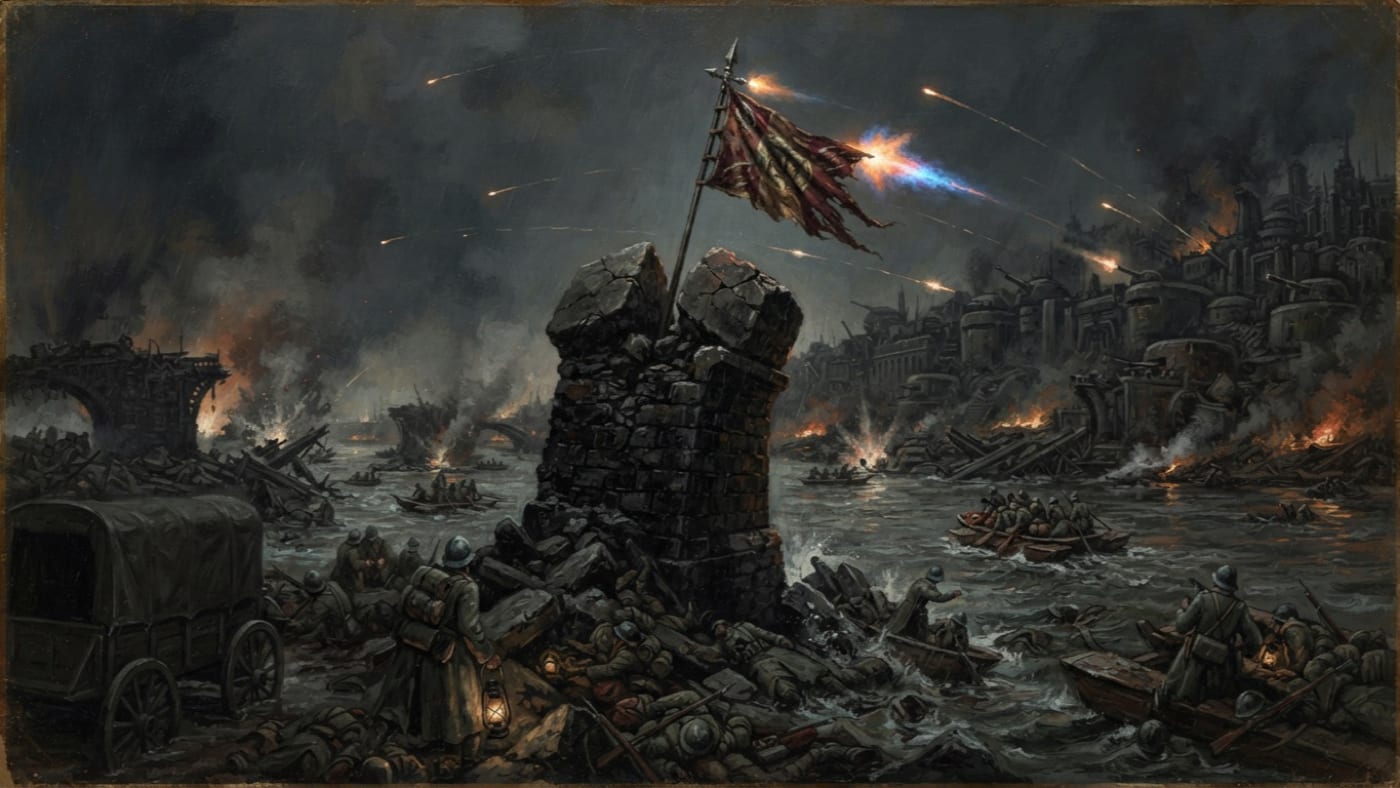
Chain-Pier Ruin
Ninety seconds upright; two explanations on file
Ruined Danubian passage used in A.S. 172, where Lorn of Metz's banner stood unattended for ninety seconds: Doctrine cites Sign One; veterans cite the weighted socket. The stones offer no opinion.
Codex Ref. II.3.05-172
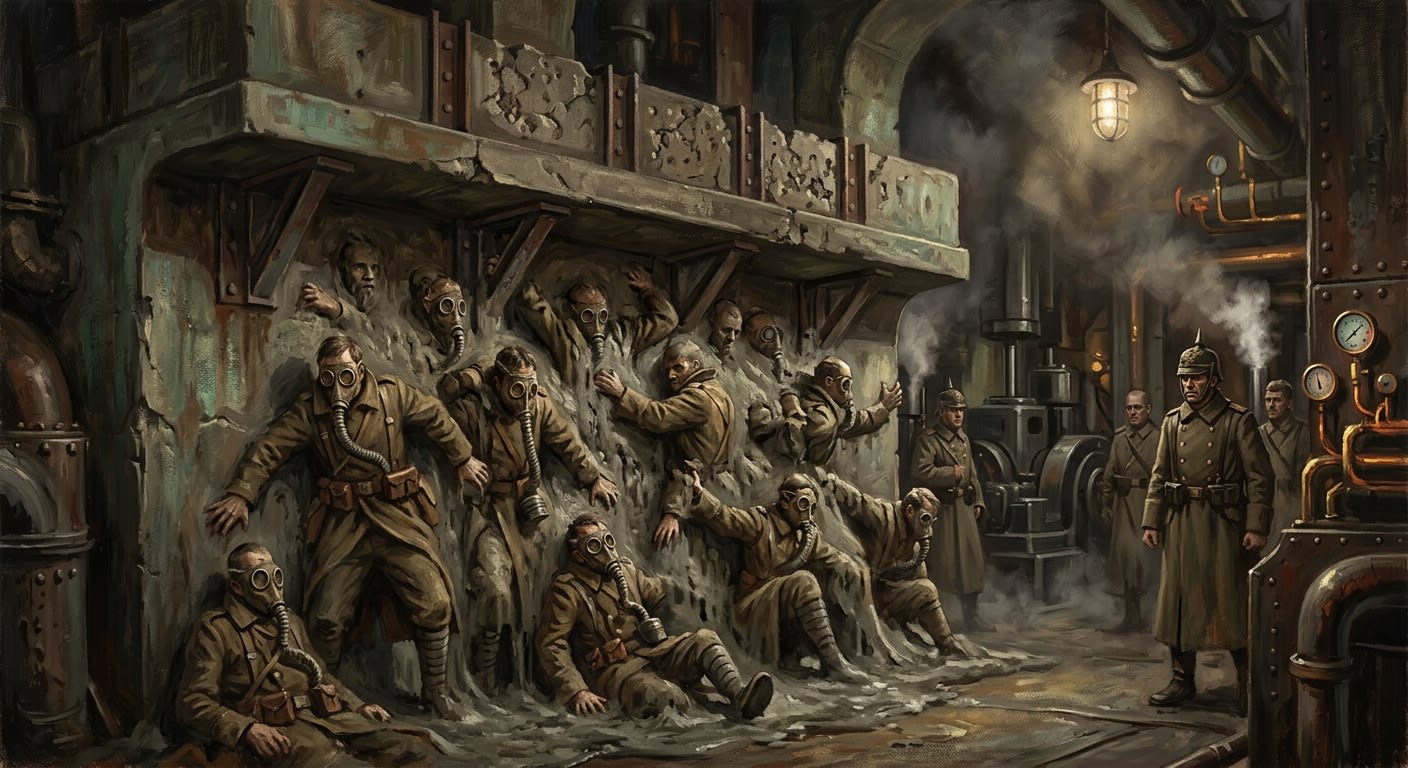
Chamber 7
Forty-seven unnamed martyrs, one warm wall, and seven permitted words
Chamber 7 is the sealed section of Bastion-Constantinople's Sixth Ravelin where forty-seven volunteers entered wet cement and became architecture.
Codex Ref. II.4.10-006
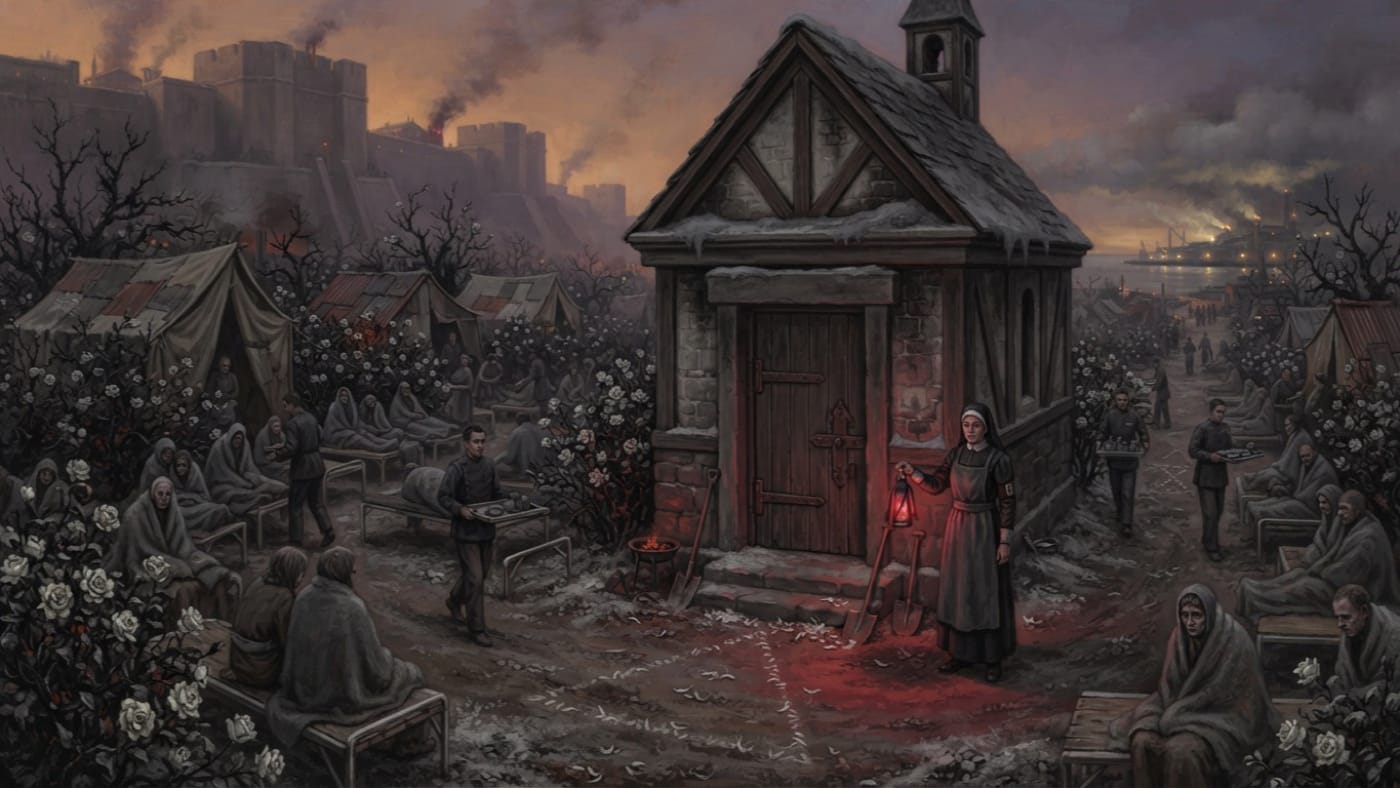
Chapel of Ash and Rose
Where the dead remain local and Records remains pending
A mortuary chapel in the Ash Gardens shelters a burial register older than the Bastion. Records attempted removal in A.S. 187; Sister Ovidia served the courier broth and kept the book.
Codex Ref. II.4.10-008
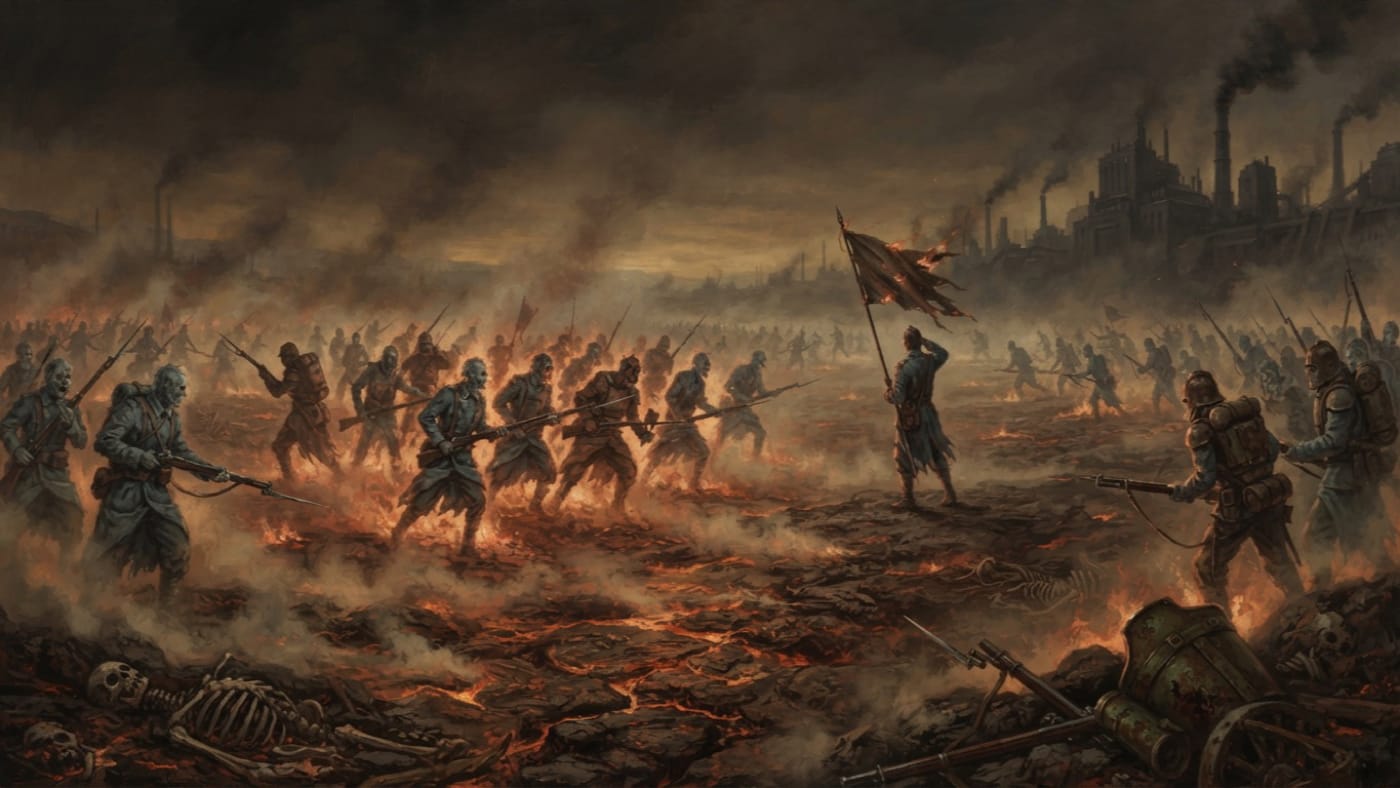
Char Fields
The battles ended. The fighting did not.
The Char Fields are battlefields in Maldrake's Iron Wastes that never cooled. Records sought names in A.S. 181; a dead standard-bearer reportedly supplied the observer's own.
Codex Ref. VI.1.03-002
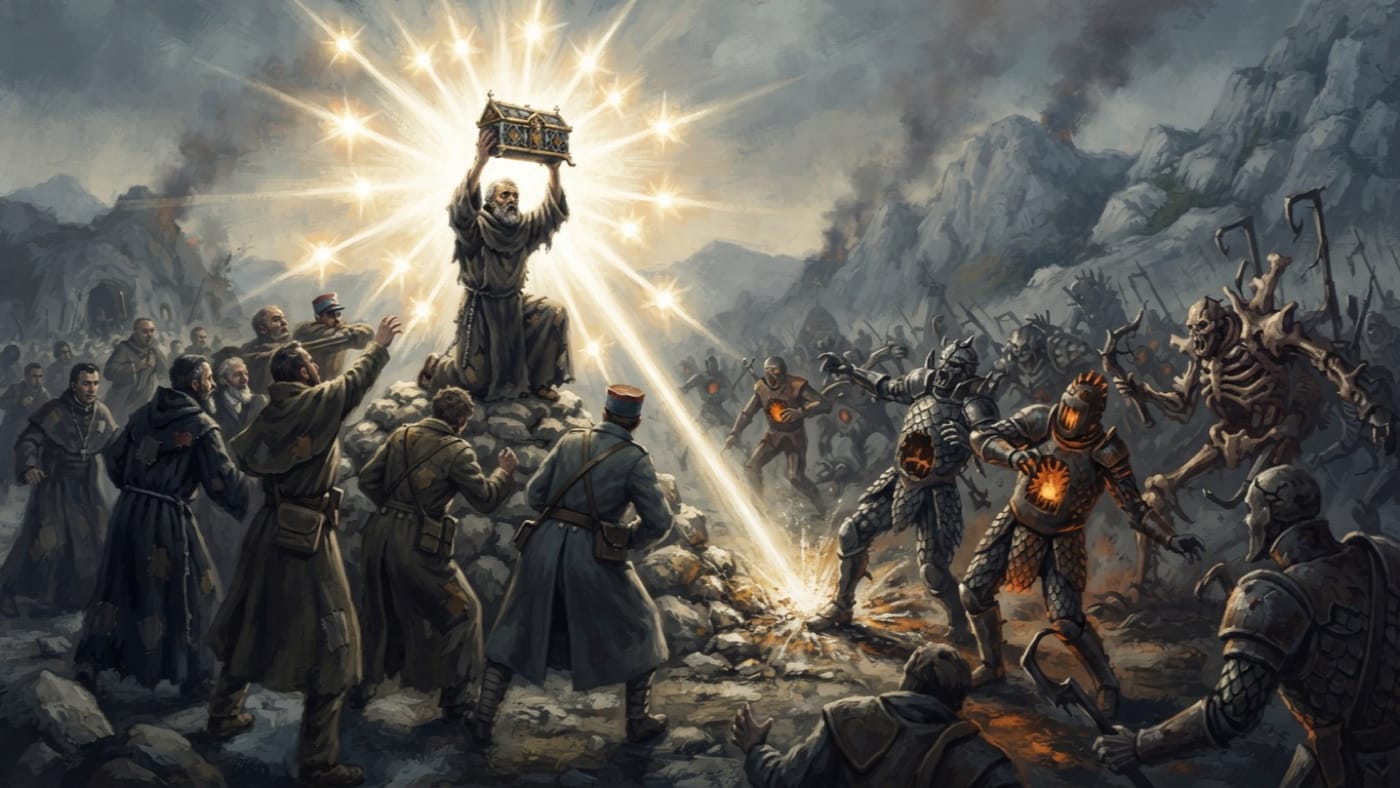
Charnel Host
A name, an association, and a recoil; the rest remains unrecorded.
The Charnel Host is named among Maldrake's attackers at Kalnik Ridge in A.S. 48 and recorded recoiling before Saint Isidore's reliquary. Its composition and command are unrecorded; the Bureau has a name and a recoil, and will certify no more.
Codex Ref. IV.2.07-048
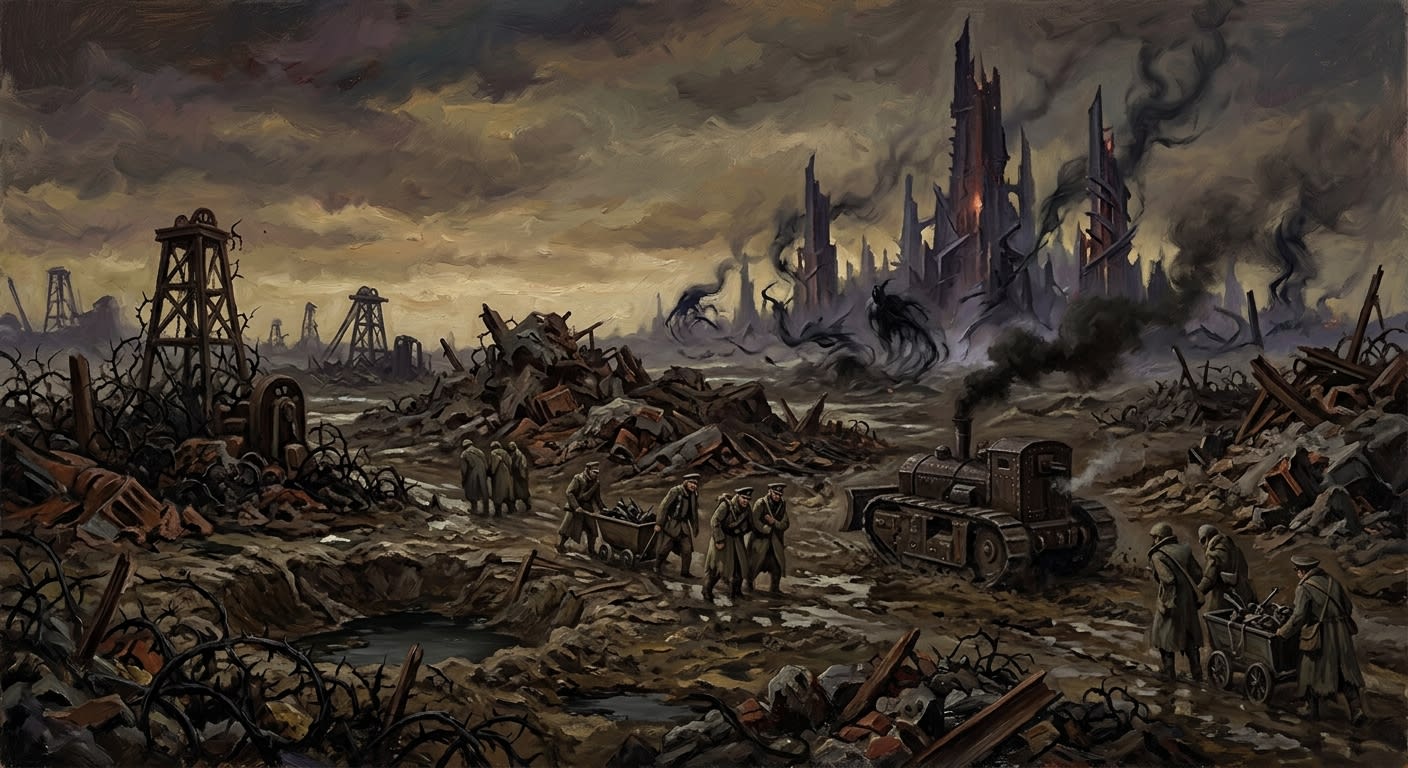
Charnel Lands
Where geography continues after mercy has been denied
The Charnel Lands are Zone 6, the demonic territories east of the Sagittal Line: geography made hostile to custody, with wilderness and cemetery both demoted to inadequate clerkly metaphors.
Codex Ref. II.6.06-001
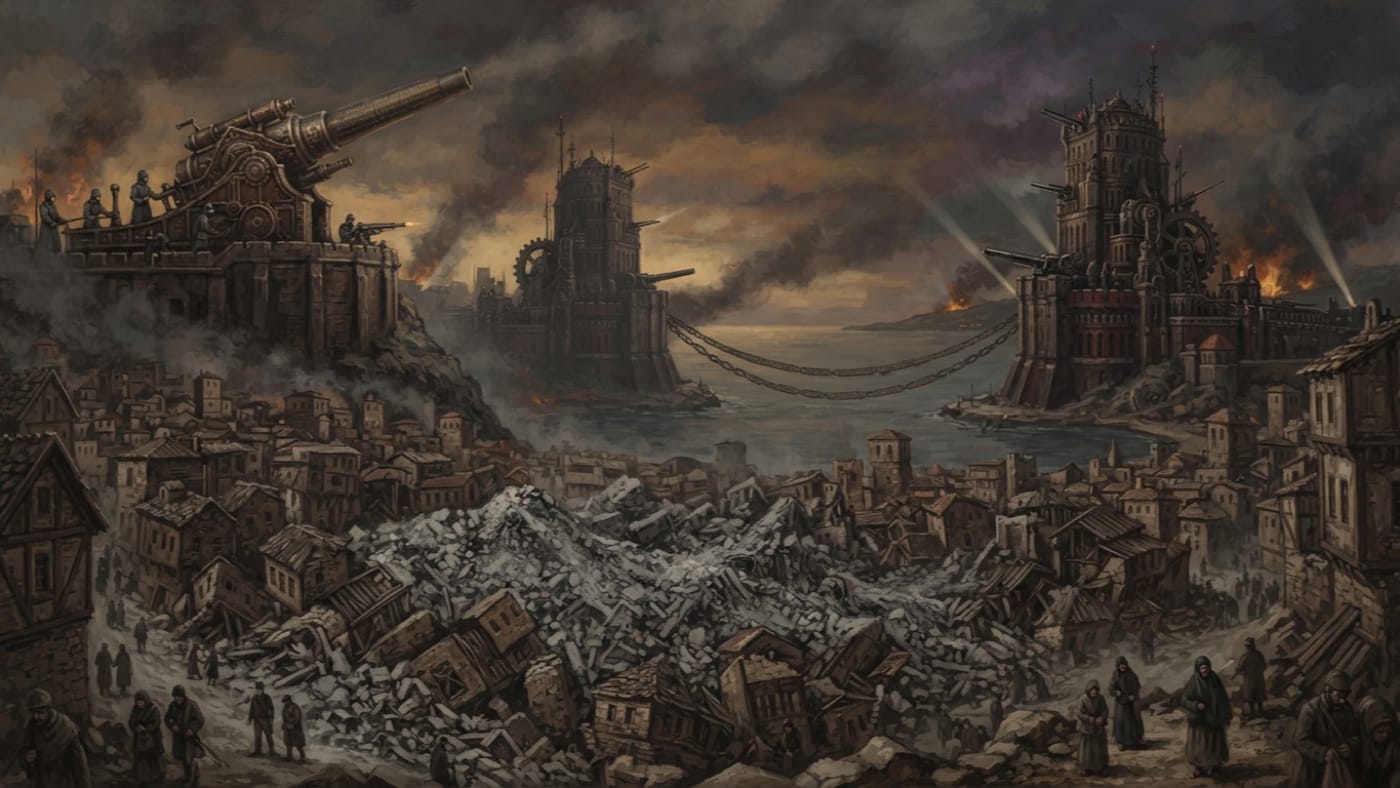
Choir-Mortar Campaigns
Five towers fell; the record kept two names and no year.
An A.S. 201 survey of the undated Thessaloniki engagement: one Choir-Mortar barrage brought down five sorcery towers and entombed thousands of captive civilians. The city calls it the Ash Wedding; Doctrine files it as necessary.
Codex Ref. VII.5.03-002
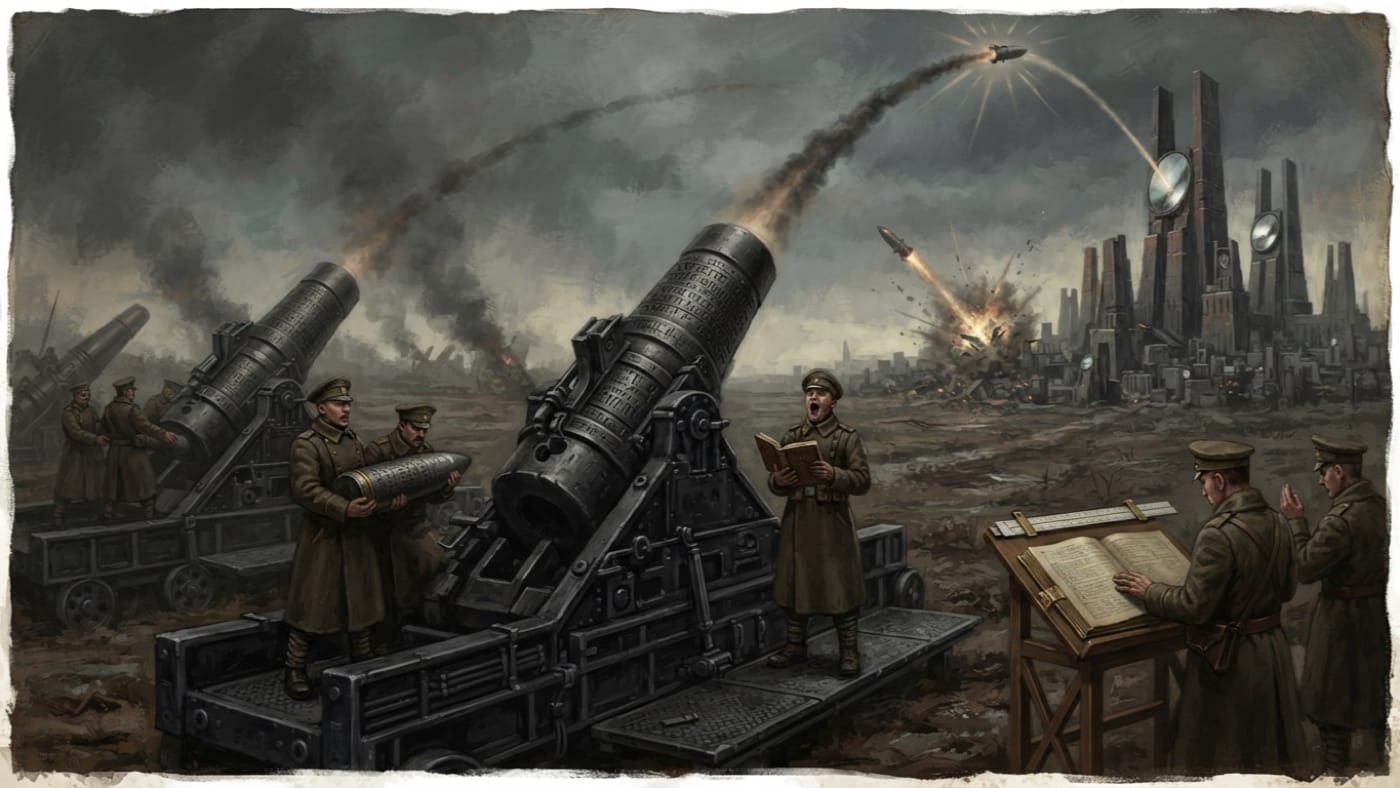
Choir-Mortars
Aim with the psalter; correct with the slide-rule
My A.S. 201 survey of liturgical artillery and counter-battery practice: barrels bear canticles, crews chant the trajectory, and shells finish the hymn in fire. Enemy mirrors may return the refrain.
Codex Ref. XIII.1.66-001
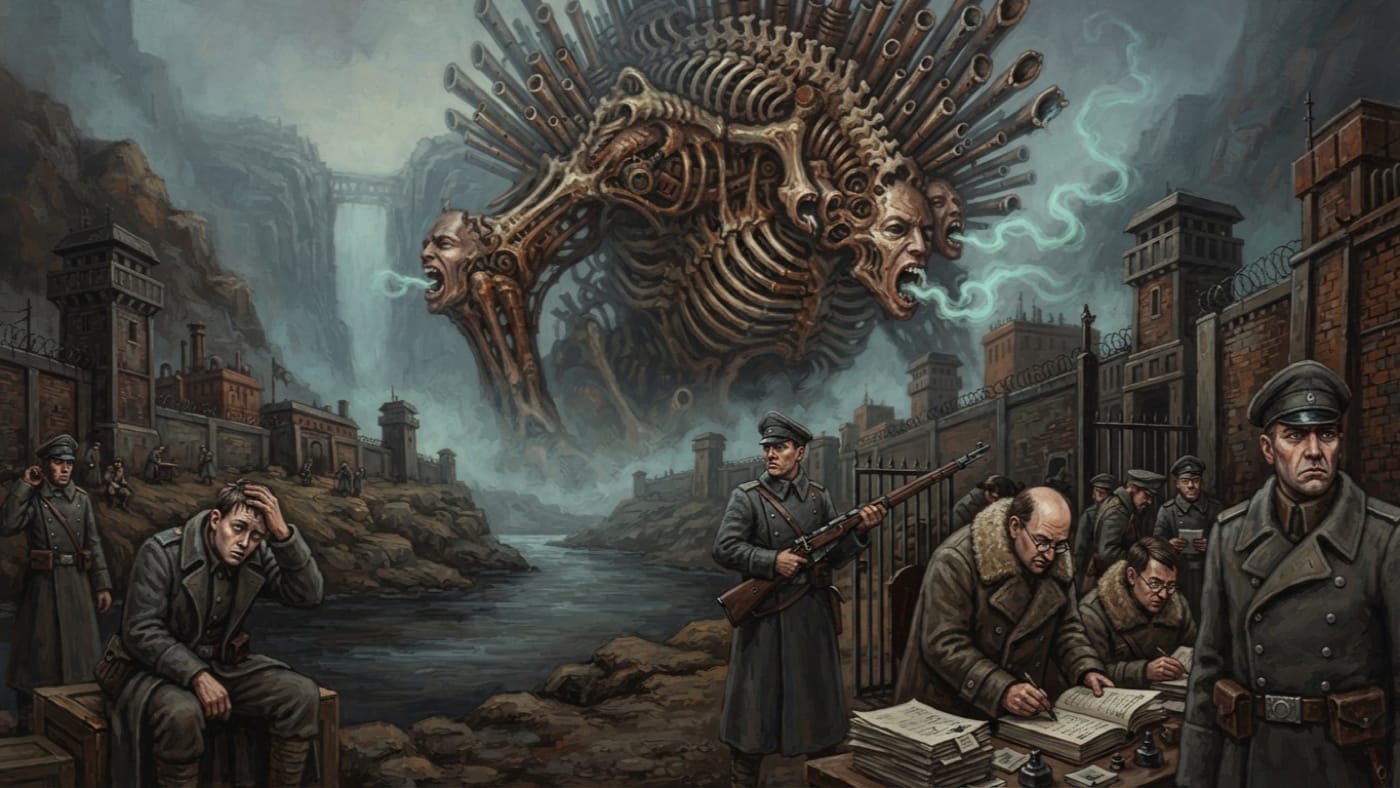
Choral Maw
Where Your Own Voice Ceases to Be Evidence
Morwen's vast organ of bone and sinew wails in stolen voices until a man cannot distinguish his thoughts from their echo. The Bureau can verify his name; it cannot make him trust the voice that answers.
Codex Ref. IV.1.07-008
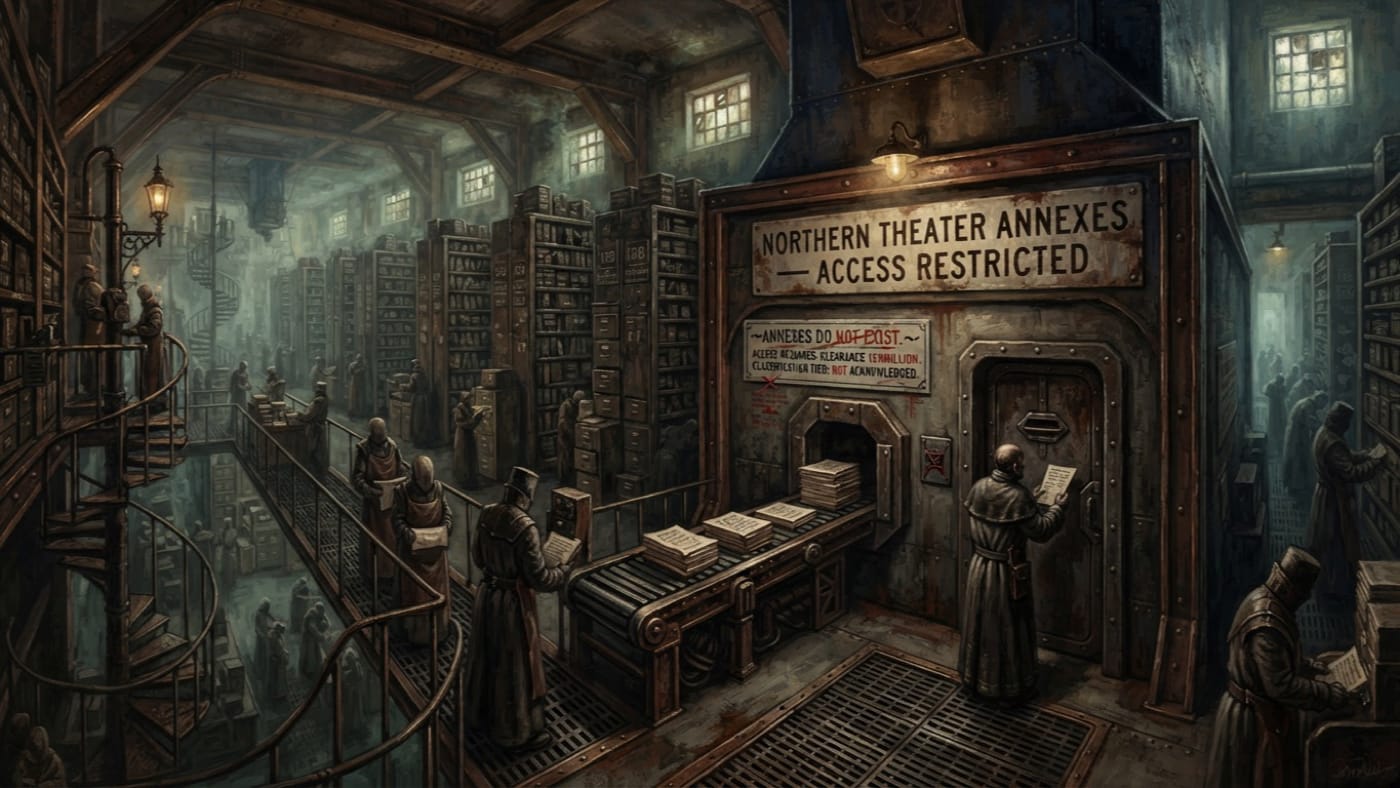
Clearance Vermillion
The Tier That Denies Its Own Existence
Clearance Vermillion restricts Brest's Northern Theater annexes while the Church denies the tier exists. I recorded the denial; my record acquired the same classification. The Ledger keeps its answer from its own Warden.
Codex Ref. XIII.1.72-011
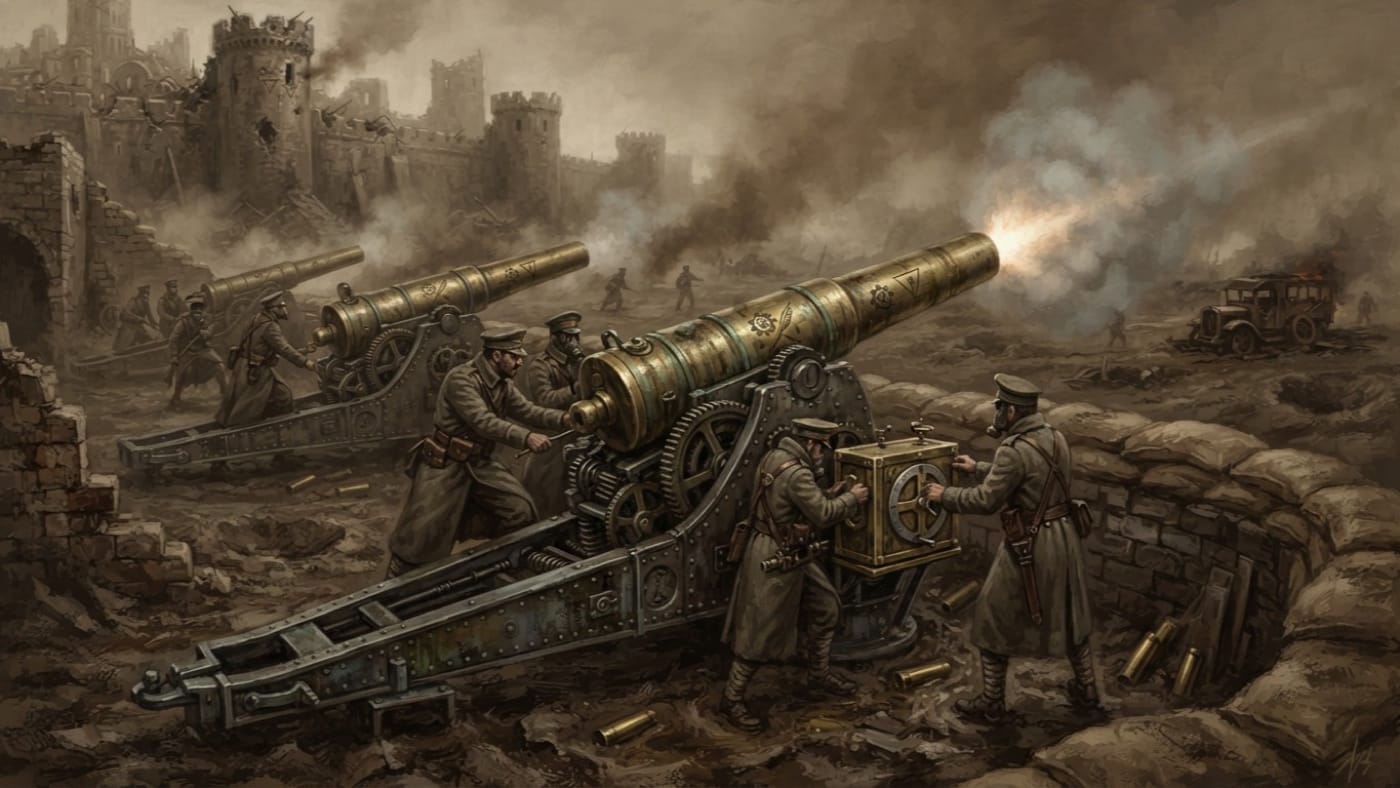
Clockwork Artillery
Four rounds per minute; no provision for Providence
Brass-barrelled Rationalist cannon capable of four rounds per minute. The Bureau condemned the makers, blessed the barrels, and kept the design.
Codex Ref. III.2.04-016
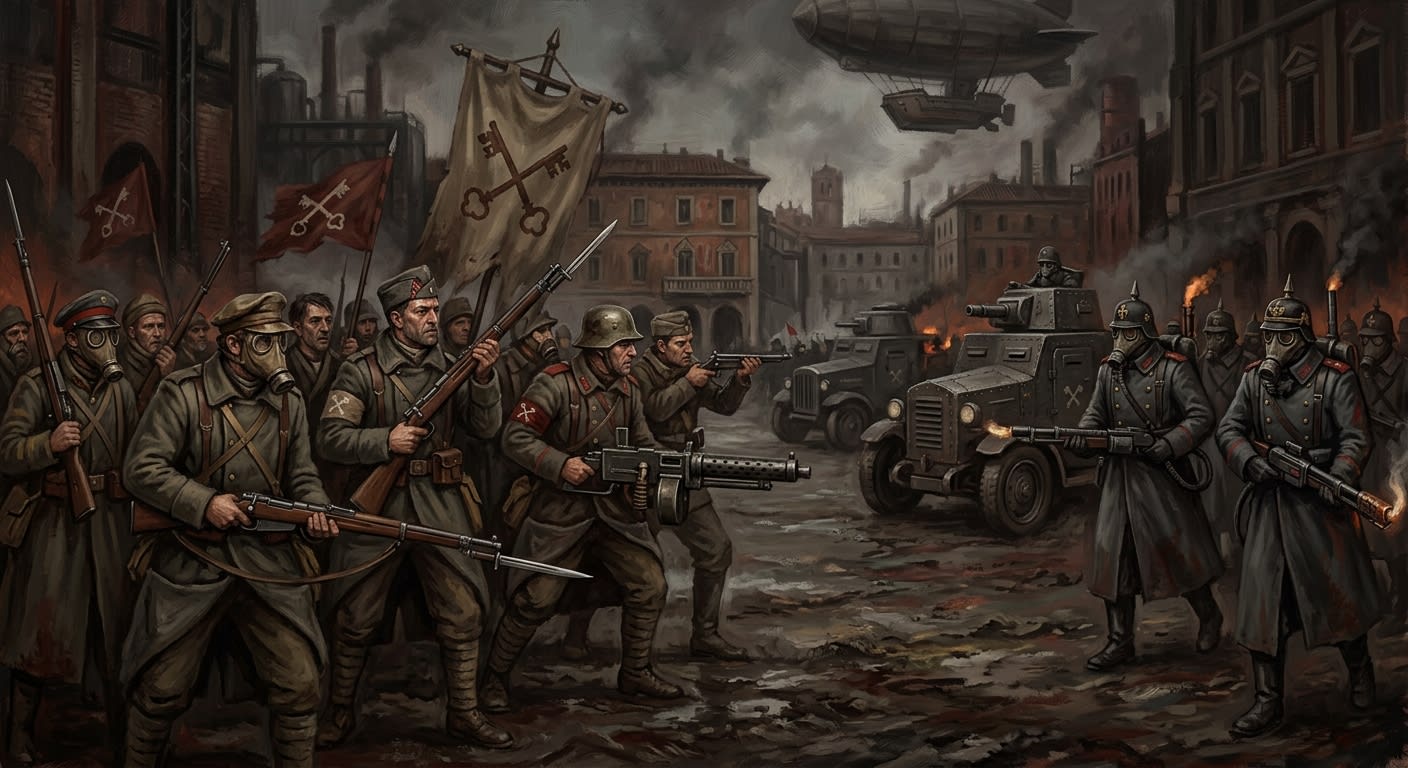
Coalition of the Crossed Keys
A handsome heresy drowned with exemplary thoroughness
The Coalition of the Crossed Keys rose in Lombardy in A.S. 150, mistook local dignity for apostolic succession, held three cities, and drowned under Synod correction.
Codex Ref. VII.8.04-001
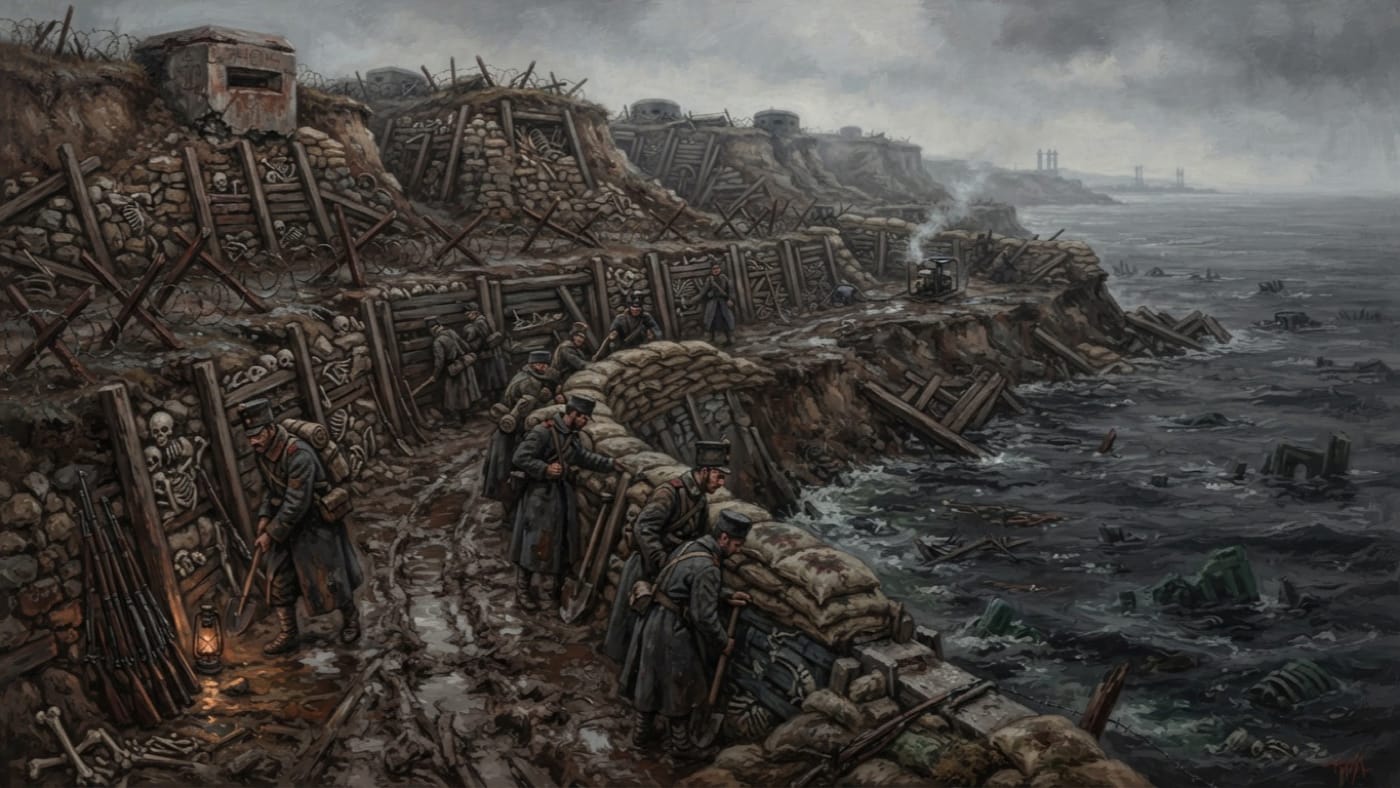
Collapse Tradition of the Sister Trenches
The ledger predicts; the garrison rebuilds
Commissioned in A.S. 201, this review preserves the Sister Trenches' Collapse as disputed tradition, rejects its numbered form as history, and finds Elder and Younger still active. The ledger cannot replace a shovel.
Codex Ref. XIII.1.08-201
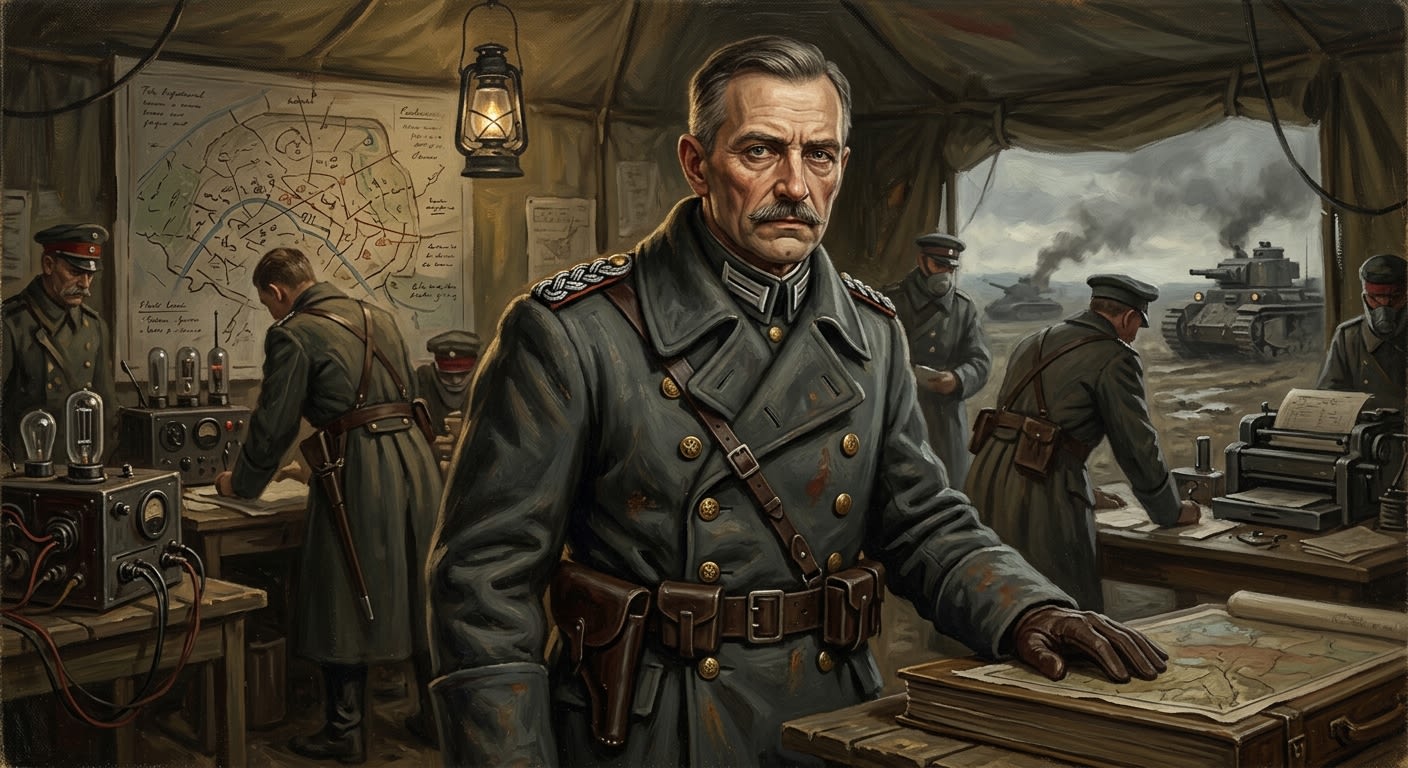
Colonel Kreszner
Formation held, which is exactly why the world broke him so neatly
Rationalist colonel of the 7th Prefectural Division whose last order at the A.S. 45 Iron Plains became War College doctrine and Doctrine's cleanest indictment of competent unbelief.
Codex Ref. III.2.01-080
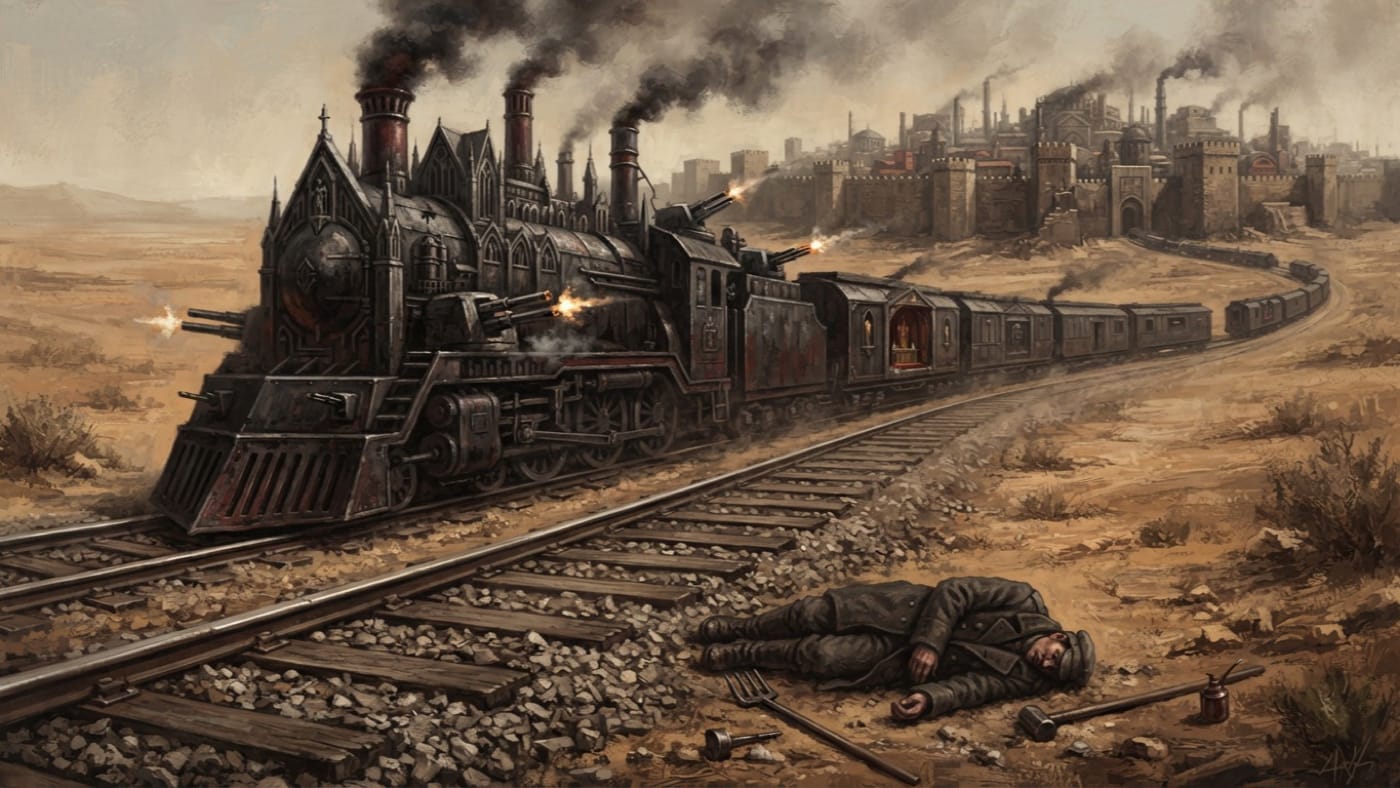
Constantinople Relief
War found the rail losses acceptable
Published accounts of the A.S. 191 rail relief to Bastion-Constantinople: the Sepulcher fired, War judged rail losses acceptable, and the Corps man's condition beside the ballast remains unknown.
Codex Ref. VII.8.10-191
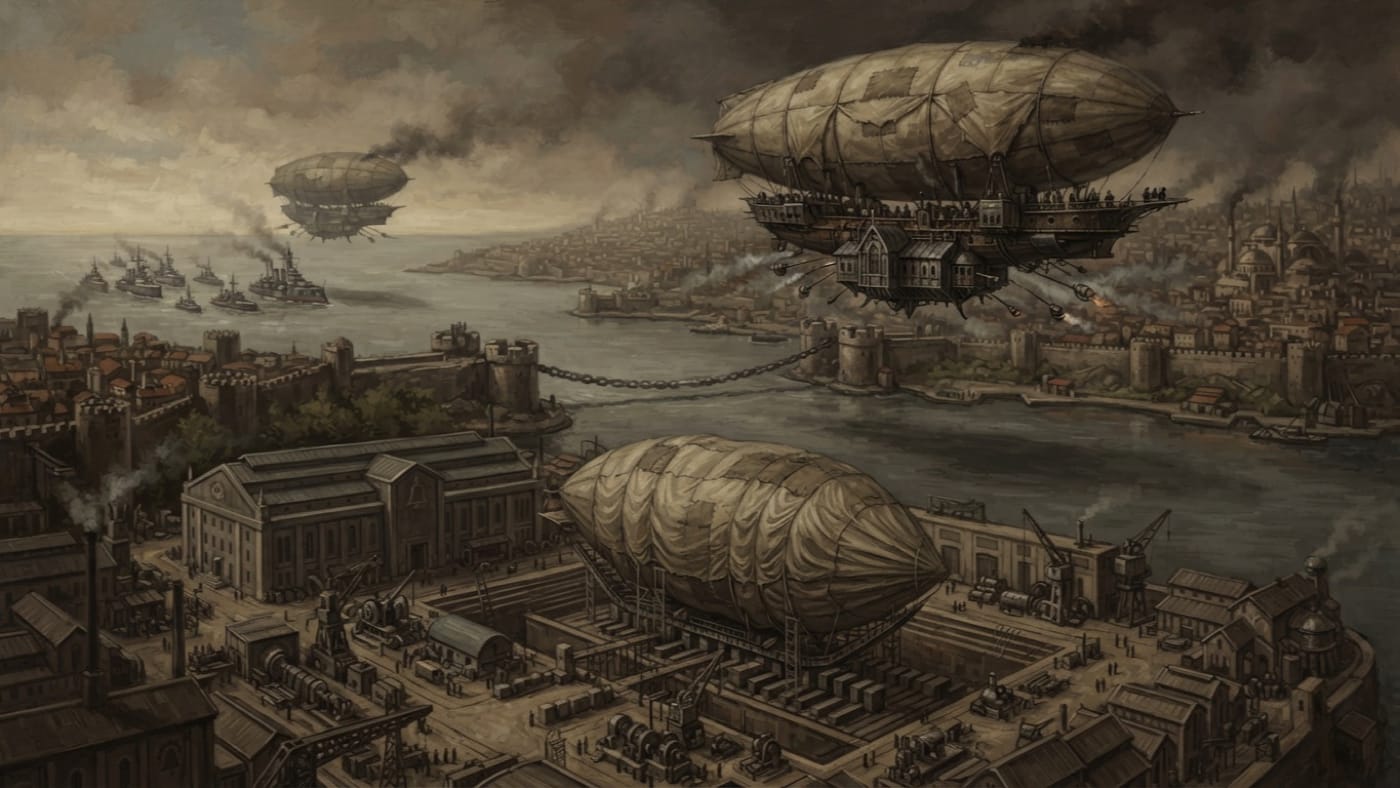
Constantinople Vigil Ark Fleet
Three Arks on the register, two in the air, and a southern Bellway guarded by a certificate.
Constantinople's aerial register lists three Vigil Arks: Saint Barachiel and Saint Gabriel patrol the Bosphorus approaches; Saint Uriel remains grounded. The southern Bellway is uncovered. Every paper is in order.
Codex Ref. VIII.5.11-168
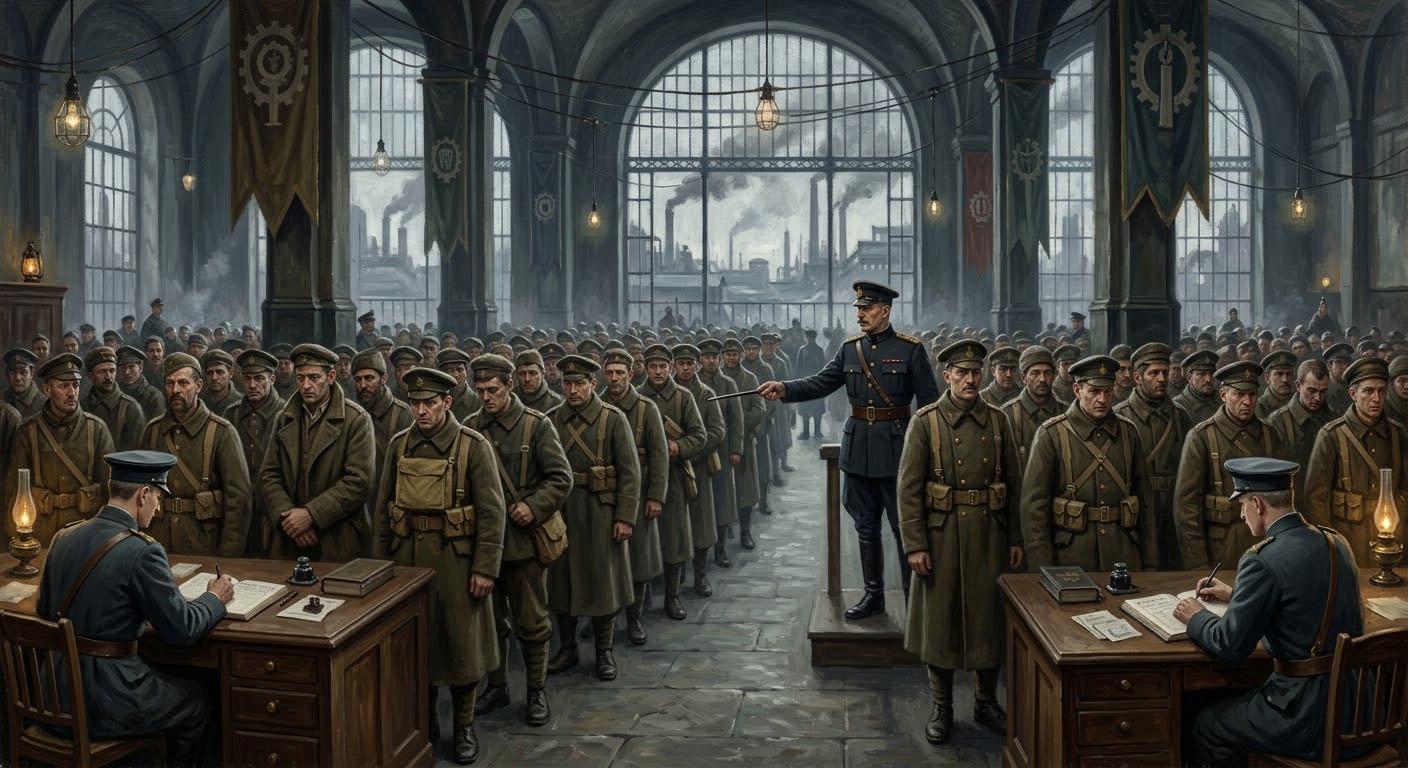
Continental Levy
The decimal point where obedience becomes infantry
The Continental Levy is the Synod's permanent tithe of flesh, born from the A.S. 110 crisis and refined into household arithmetic.
Codex Ref. XIII.1.54-001
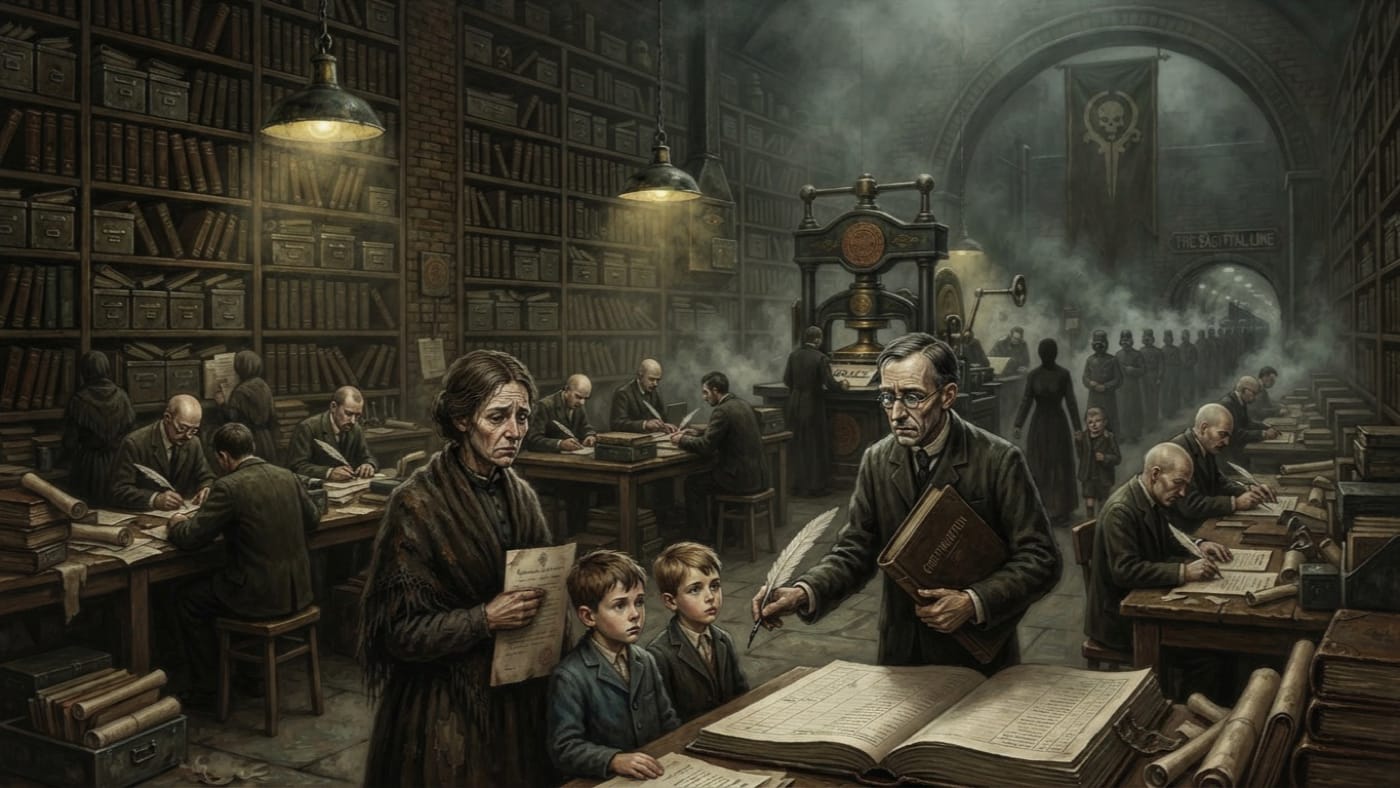
Continuations of the Original Grace
Grace is given once and collected forever
War's name for the Continental Levy renewals: the A.S. 110 emergency carried into successive generations, with sealed quotas and no promise of completion.
Codex Ref. XIII.1.54-002
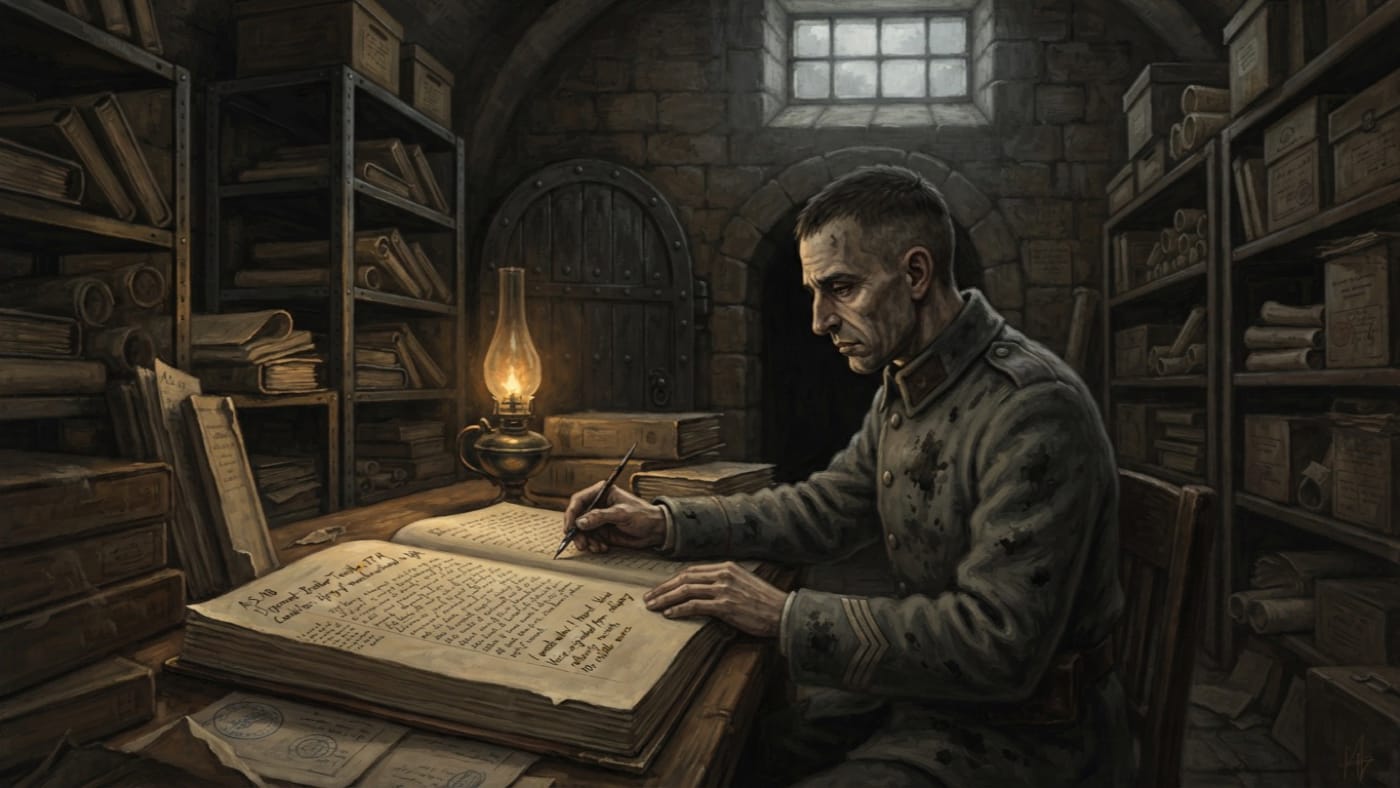
Corporal Aleks Dragović
The corporal who filed the contradiction whole
Field scribe of the 7th Rearguard Column who dated Brother Tomislav's deposition three days after his consumption at Kalnik. Thirty-one years of record service followed; the chronology remains unreconciled.
Codex Ref. III.2.01-745
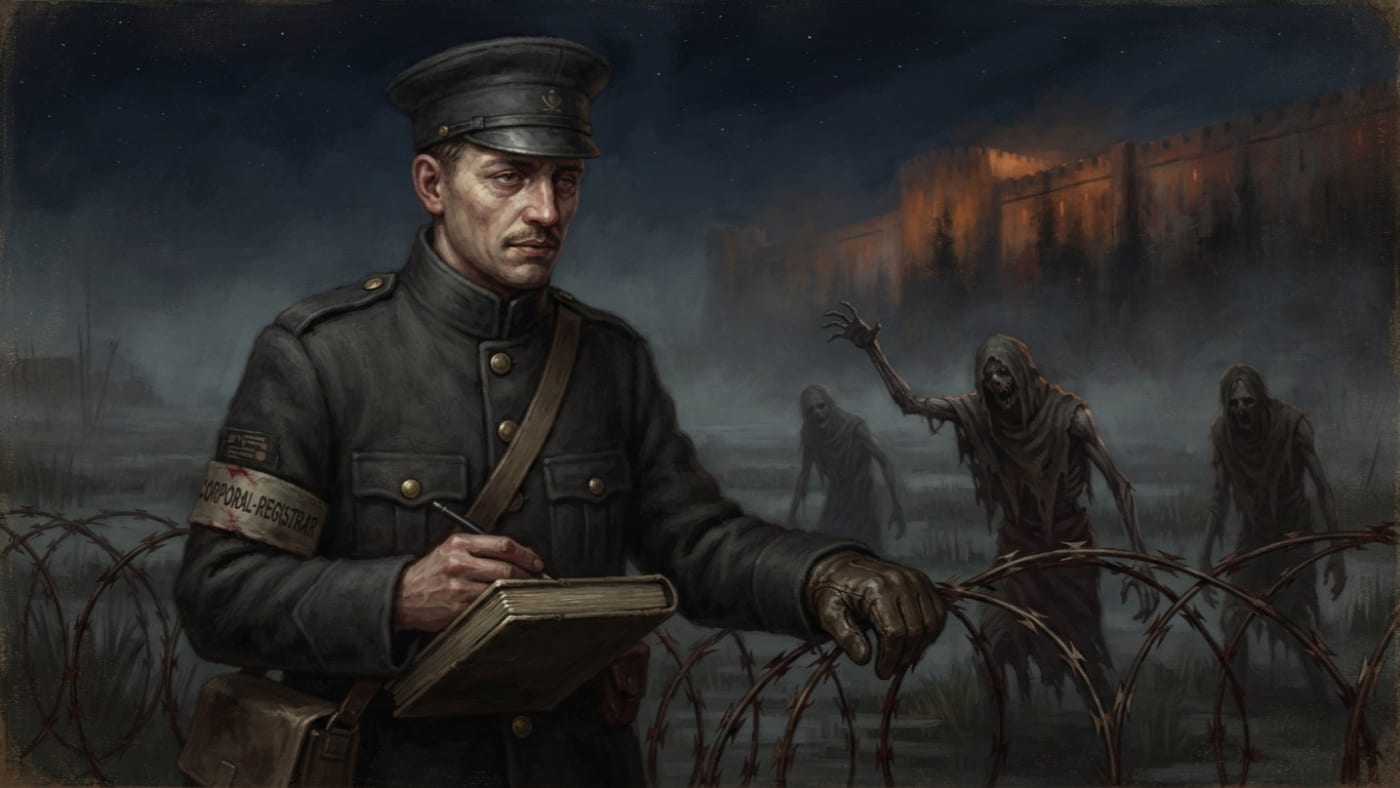
corporal-registrar H. Mace
One request preserved beneath the charcoal
A corporal-registrar remembered by one charcoal caption. His A.S. 197 testimony records a Hollow-Walker speaking in his mother's dialect; the rest of his life remains unestablished.
Codex Ref. III.2.01-197

Corpse-Light
If it shines, don't follow.
Green-white light at the Ash-Glyph Marshworks copies lantern routes and burial grids, drawing boats into sinkholes. The Guild rows blind; the Bureau has spent fifty-eight years leaving the classification pending.
Codex Ref. XIII.1.24-002

Counter-Toll Corps
Louder is cleaner, until the city taps back
The Counter-Toll Corps is the Synod's sanctioned acoustic overwrite force: bronze artillery for false curfews, borrowed obedience, and bells that answer back.
Codex Ref. XII.2.02-135
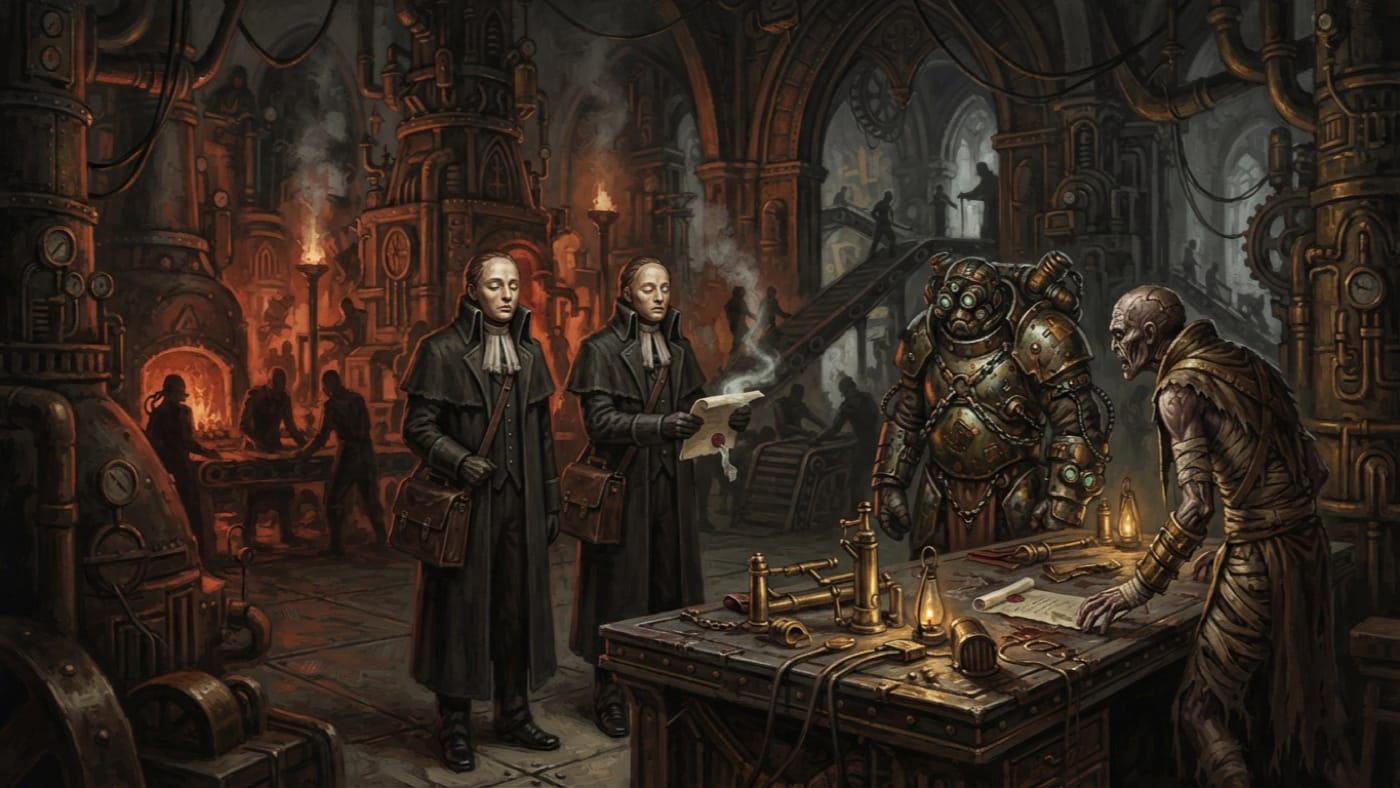
Court-Adjacents
The Bureau recognizes the work. It refuses the title.
Reports describe human envoys carrying writs between the Sin-Generals in masks taken from saints. The Bureau recognizes the function and refuses to call it diplomacy.
Codex Ref. V.9.02-001
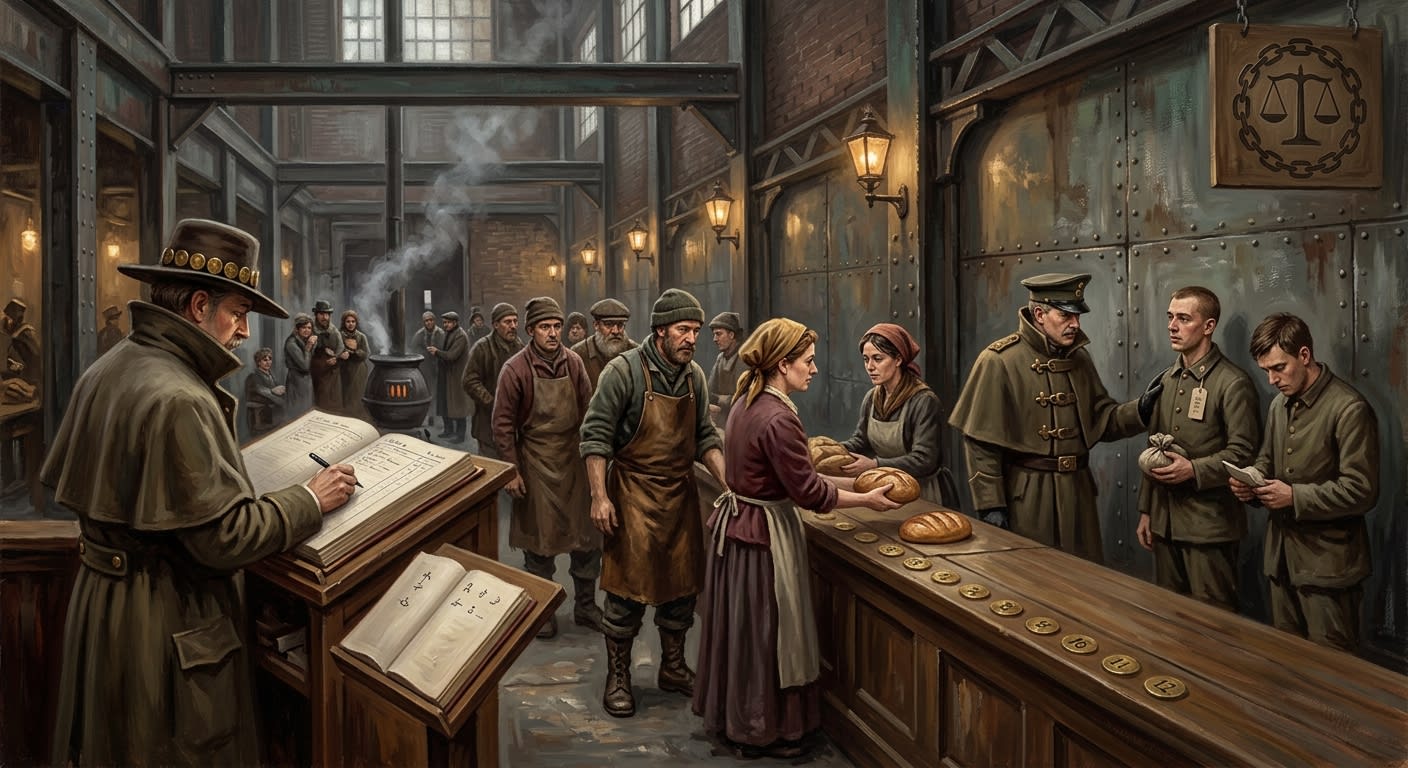
Covenant
The leash with bread on it, sanctified for public use
Covenant is the Synod's master noun: sacred pact in sermon, enforceable belonging in ledger, bread-chain in queue, and body-debt at the Line.
Codex Ref. XIII.1.04-090
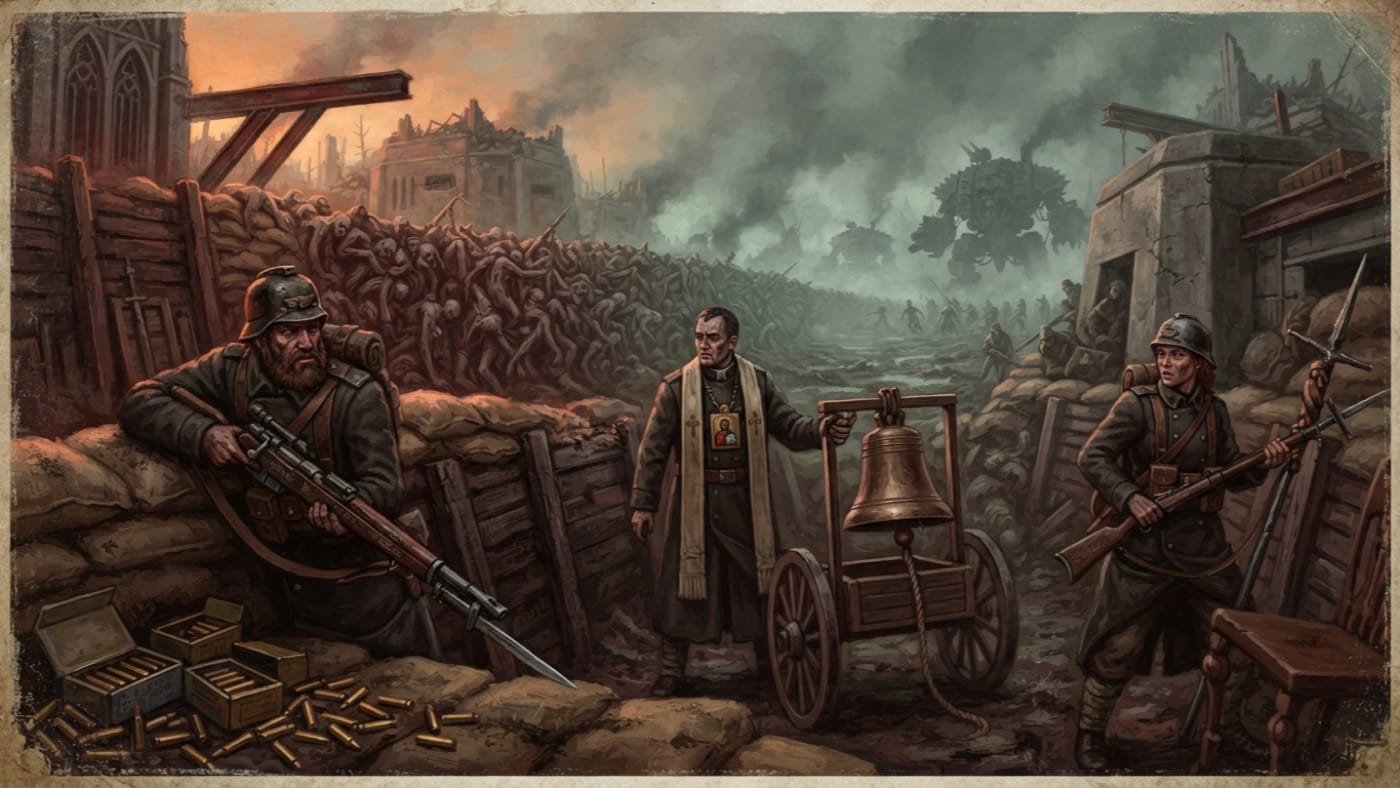
Covenant Garrison
Six hundred names, three days of stores, eleven days of holding
The Covenant Garrison is the parish name for Rostov's six hundred defenders in A.S. 153. Supplied for three ordinary combat days, they held eleven. The roll preserves their names and records final dispositions where known.
Codex Ref. VIII.5.05-153
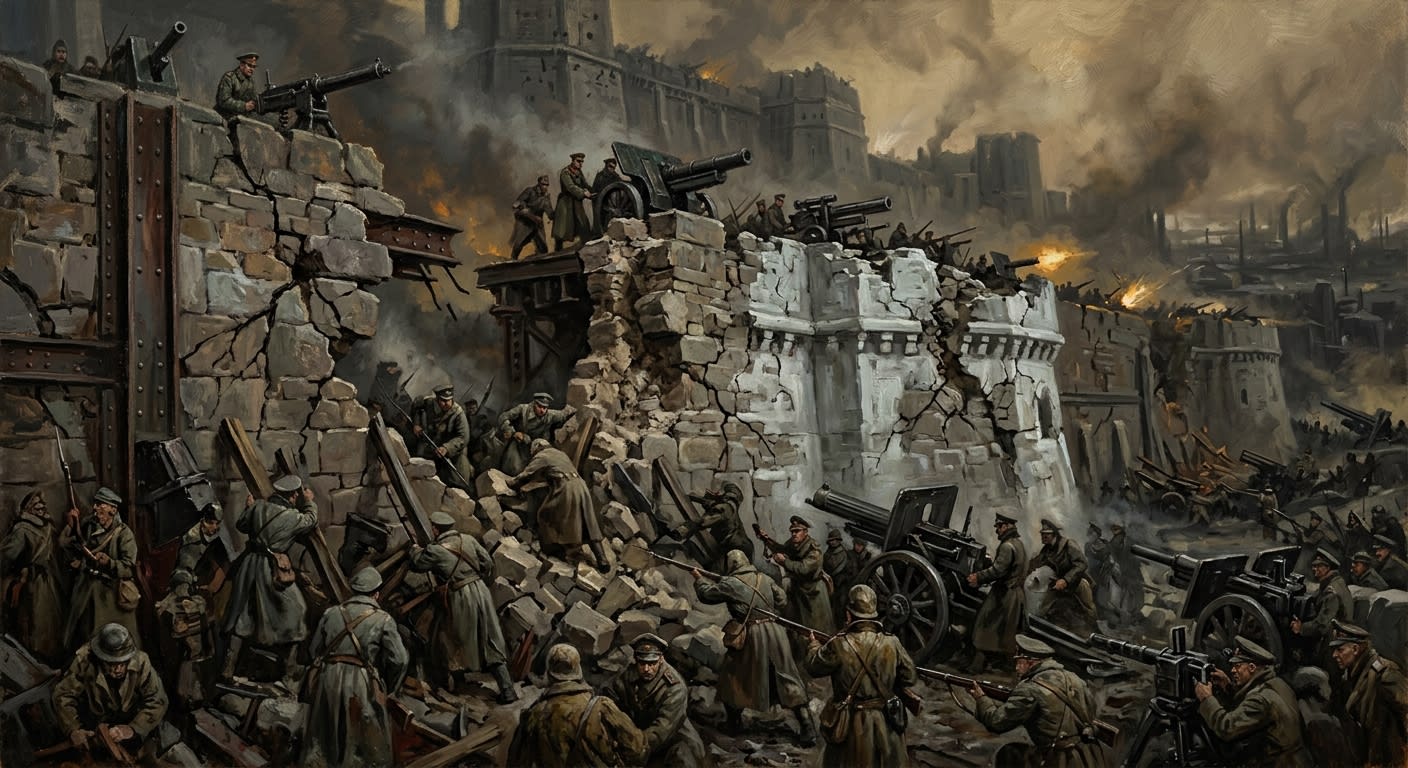
Cracked Ring Sieges
When the wall taught the law by cracking first
The Cracked Ring Sieges proved at Bastion-Constantinople that common mortar cracks under Maldrake, while sanctified bone-lime holds long enough for law to discover courage.
Codex Ref. VII.8.10-096

Crimson Boar of Saxony
The picture that outlived its guild and earned a sentence
A dead Saxon guild's red boar returned on convoy banners at Essen in A.S. 106. Eighty-seven died. Heraldry condemned the device by name in A.S. 108 and kept a banner to teach Inspectors what to scrape.
Codex Ref. XIII.1.82-002
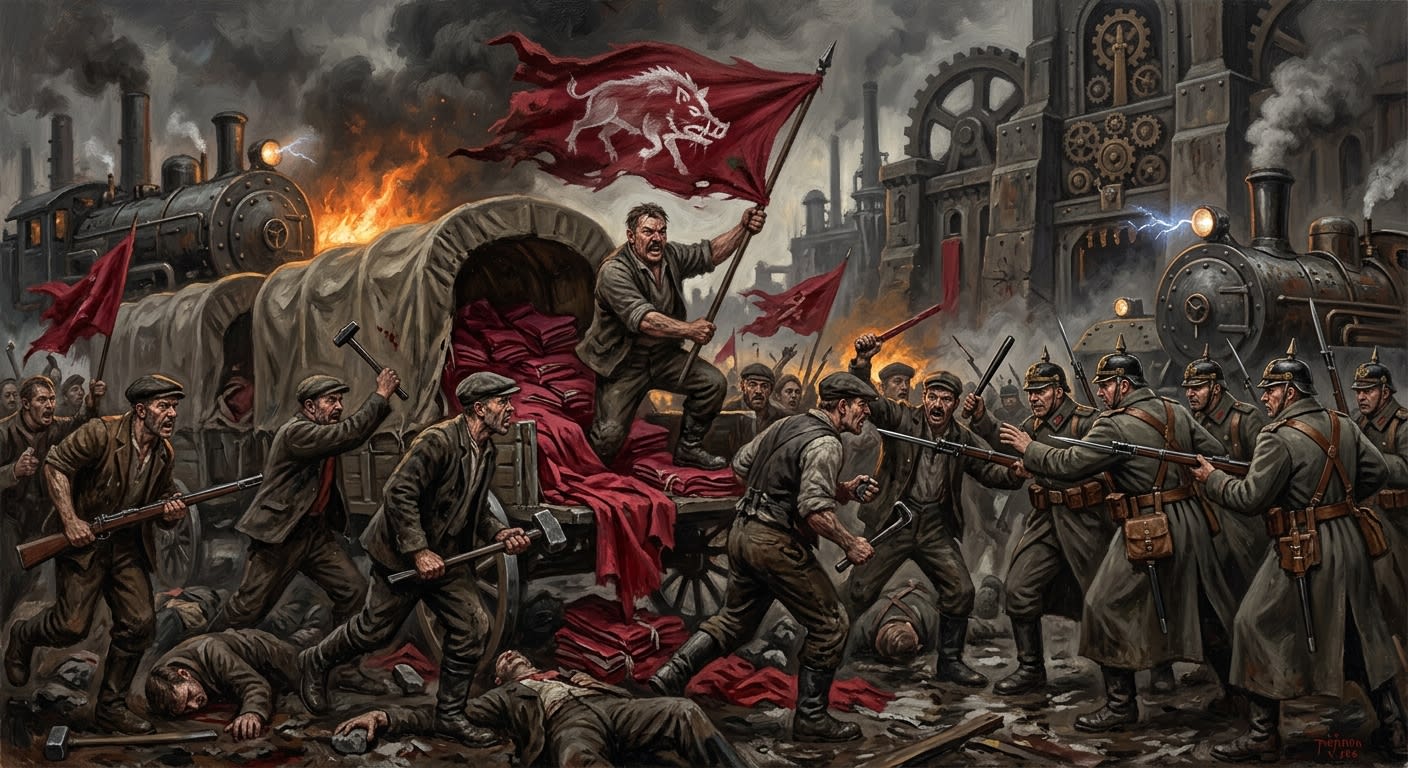
Crimson Gate Riot
Eighty-seven dead because a painted boar remembered too well
A.S. 106 Essen gate riot in which the crimson boar of a dead Saxon guild turned convoy cloth into command, killing eighty-seven and birthing the Beast Proscription.
Codex Ref. VII.8.10-033
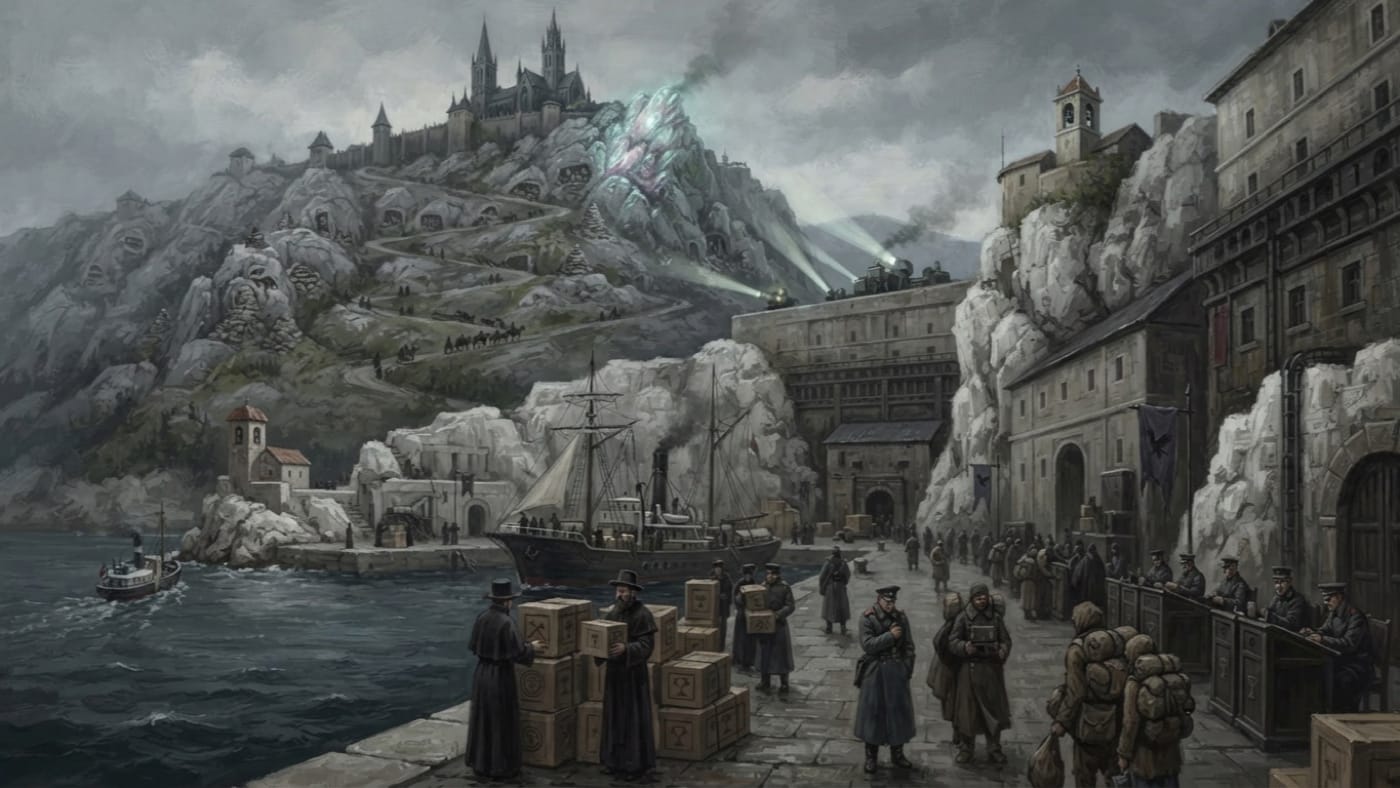
Croatia
A ridge to pray on, a coast to unload at
Croatia survives in the Ledger as Kalnik's armed shrines and Dalmatian supply harbours. The Church certifies the cargo more readily than the borders.
Codex Ref. II.7.04-201
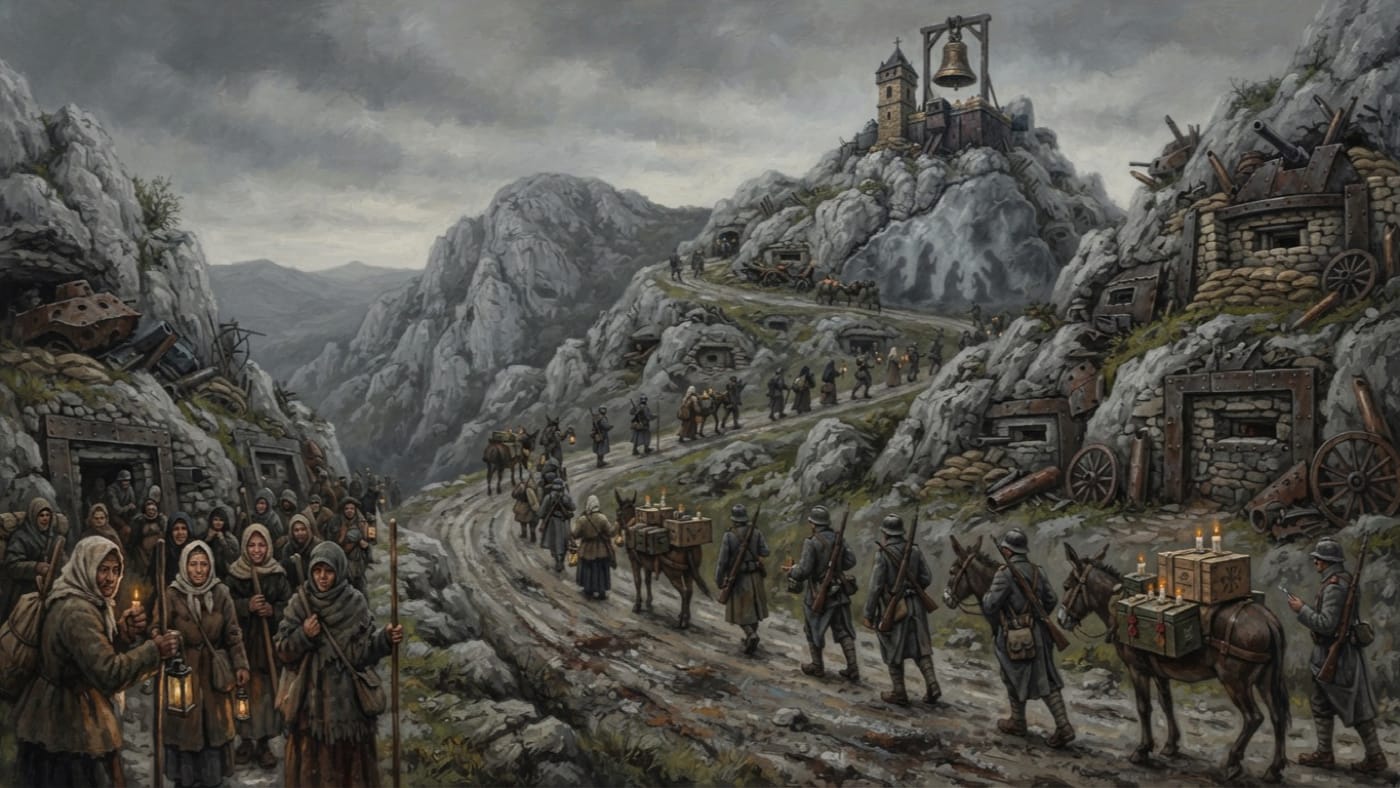
Croatian highlands
Where candles and cartridges climb the same road
The Croatian highlands enter the Ledger through Kalnik Ridge, where cave chapels became armed shrines and the same road carries pilgrims, candles and cartridges.
Codex Ref. II.3.07-807
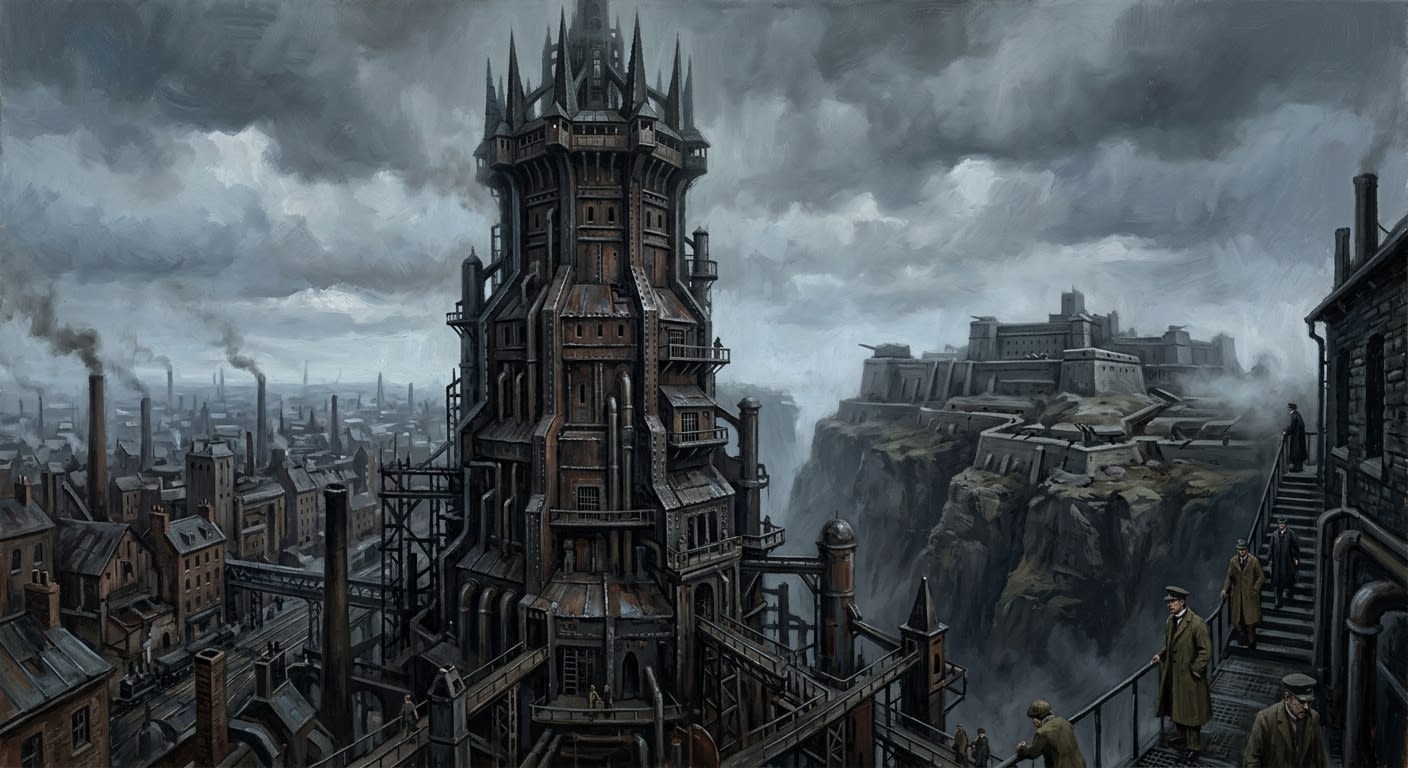
Crownspire
The tower that mistakes altitude for title
Crownspire is Atheron's black vertical thesis in the Ebon Heights: throne-plan, citadel, temptation, and measurement-trap opposite Bastion-Przemyśl.
Codex Ref. II.4.03-045
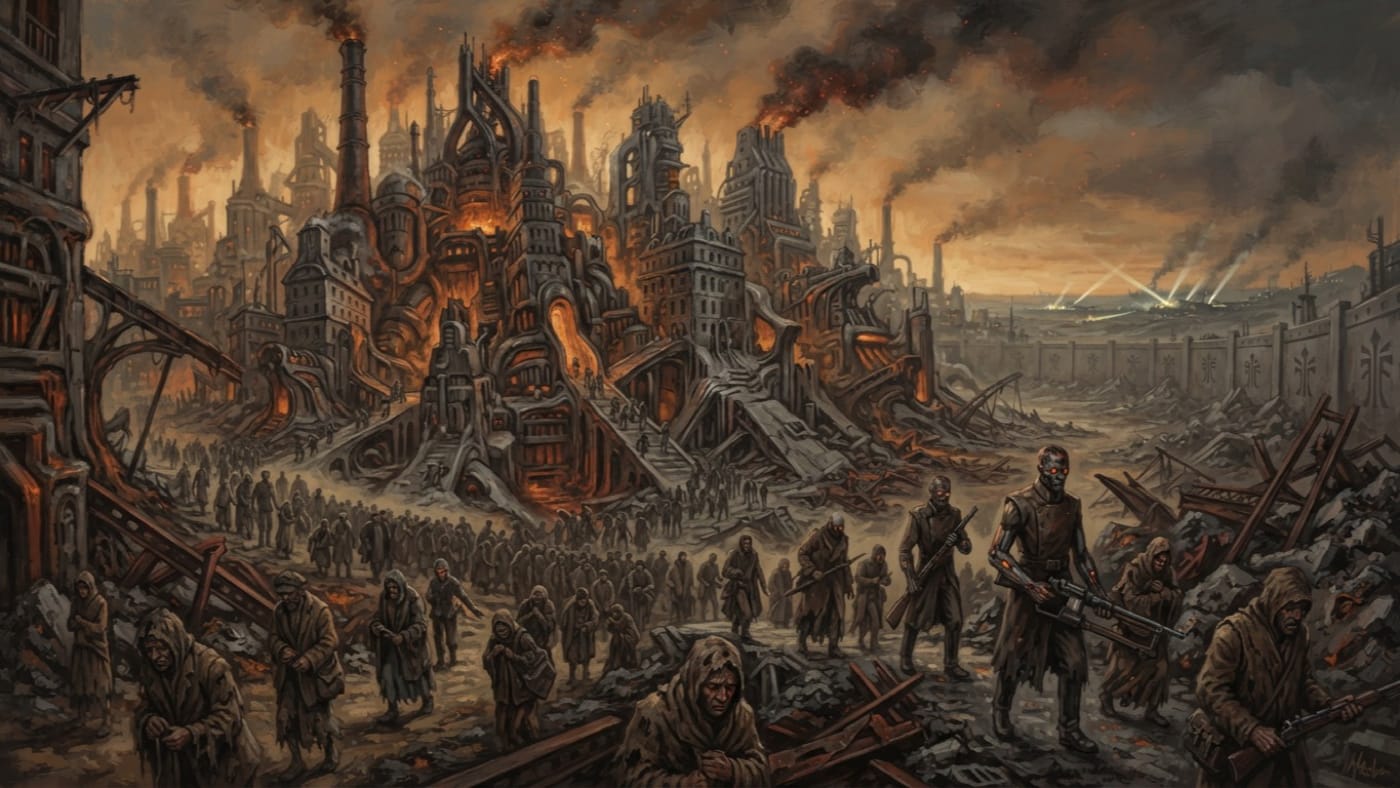
Crucible Cities
Where the grievance ends and the rage remains
In Maldrake's Crucible Cities, years of ritual violence refine living humans into Crucible-Born. The streets melt and reform; the grievance ends, but the rage remains.
Codex Ref. VI.1.03-002
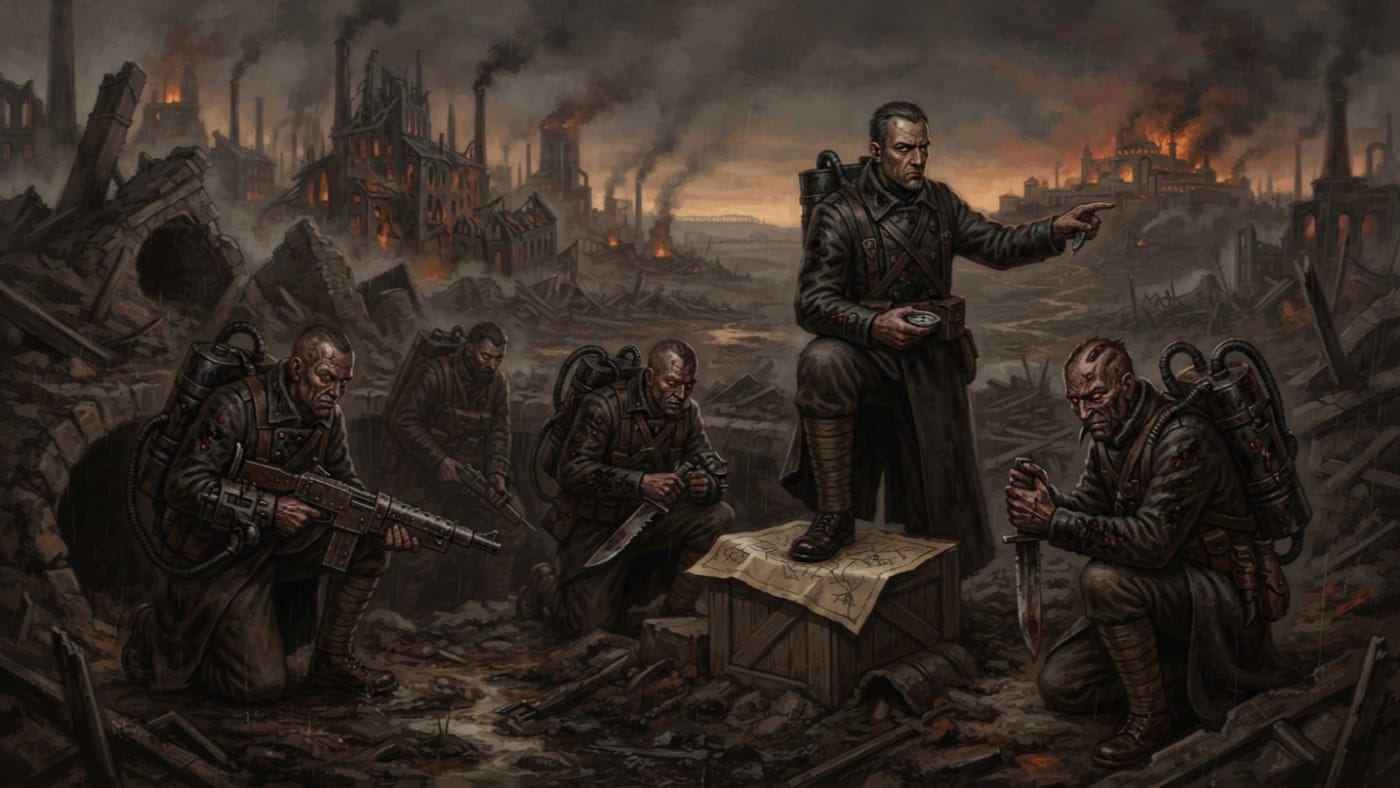
Crucible-Born
Wrath that remembers, reasons, and waits.
Human survivors of Maldrake's Crucible Cities, transformed by choice and still capable of thought. They plan campaigns, lay ambushes, and wait. The Bureau would prefer an enemy that only burns.
Codex Ref. IV.1.07-012
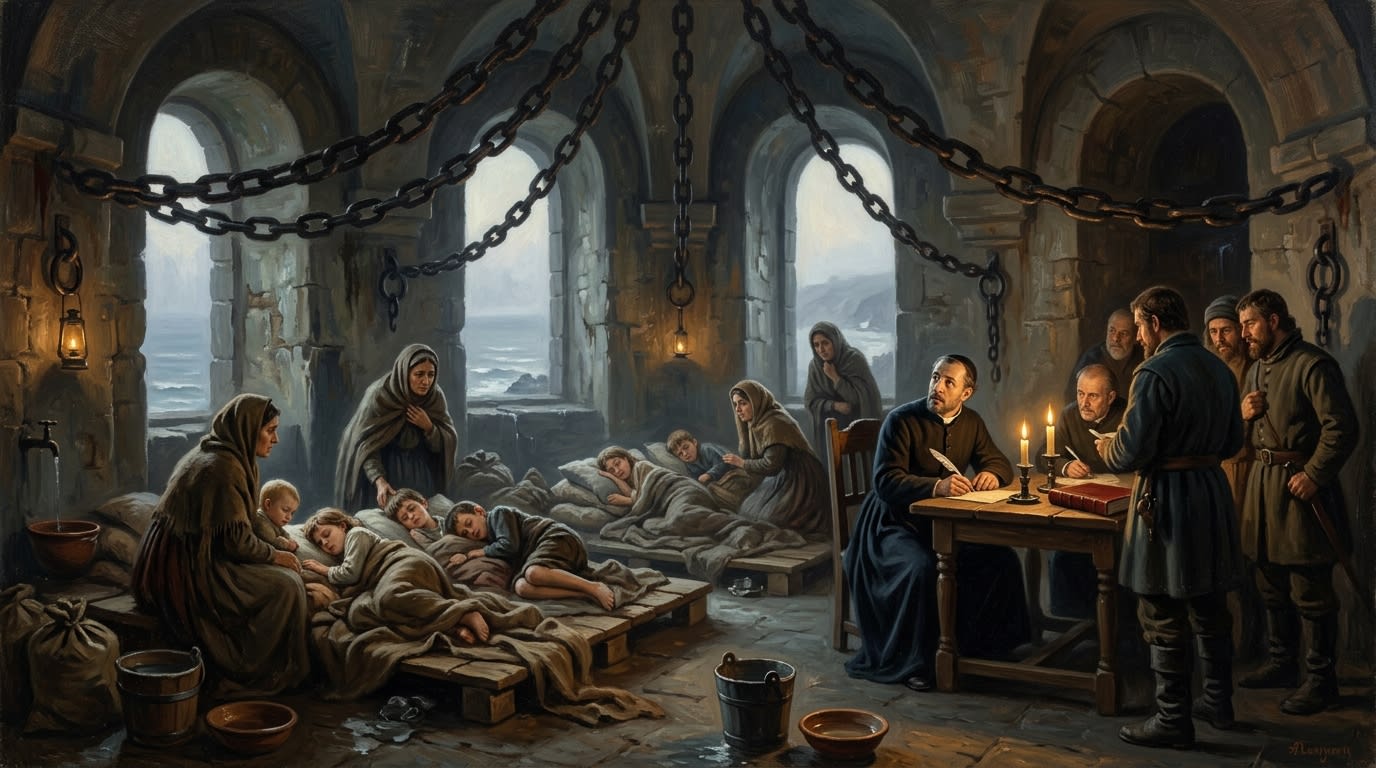
Crying Choir Incident
The night Thessaloniki learned a living child could be filed as lost
A.S. 145: refugee children sleeping under Thessaloniki's Harbor-Chain Towers sang before dawn, lost their tongues to salt water, and taught the Ledger to call the living lost.
Codex Ref. VII.8.10-145
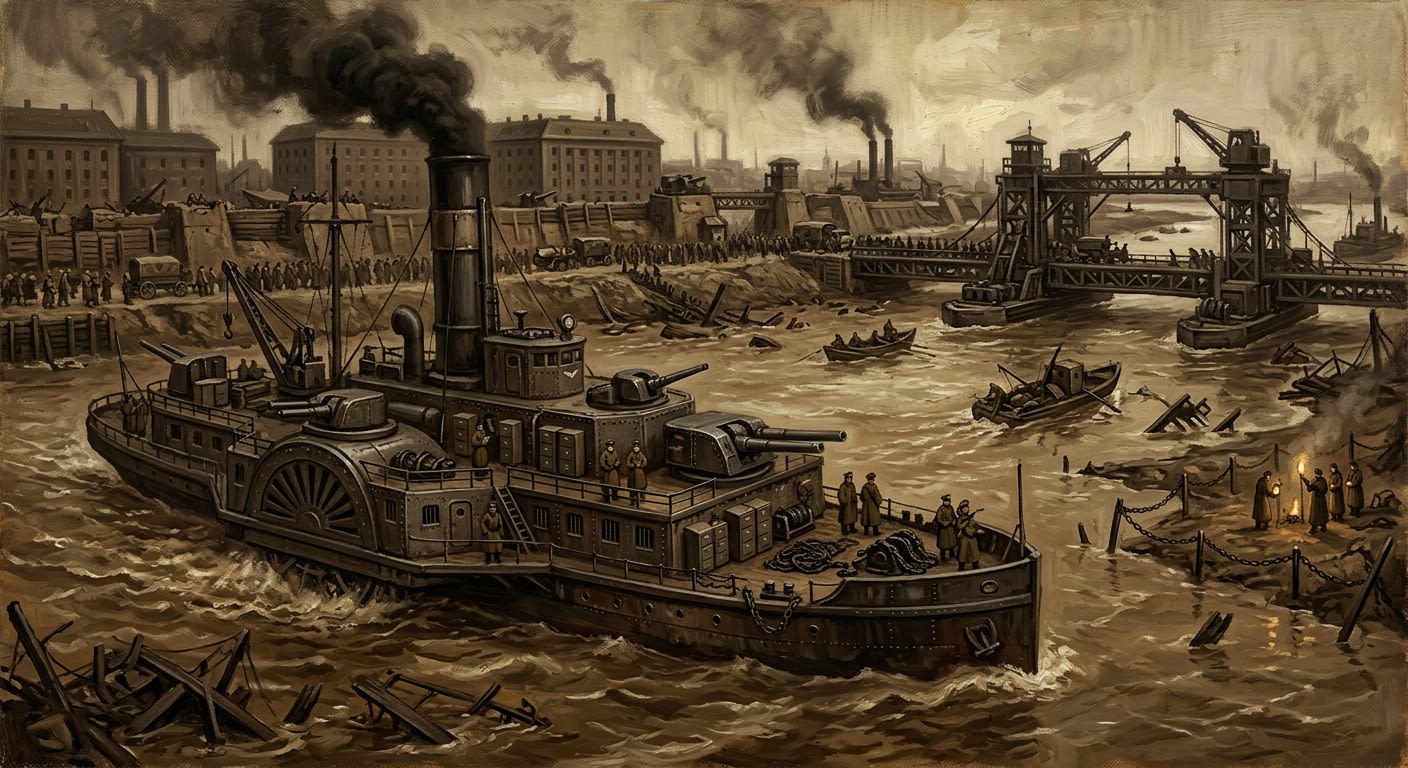
Danube
A moving jurisdiction, interrupted by Hell
The Danube is the Synod's brown moving jurisdiction: road, border, weapon, archive, tariff, grave, miracle-site, and contested throat of Irongate.
Codex Ref. II.4.09-034
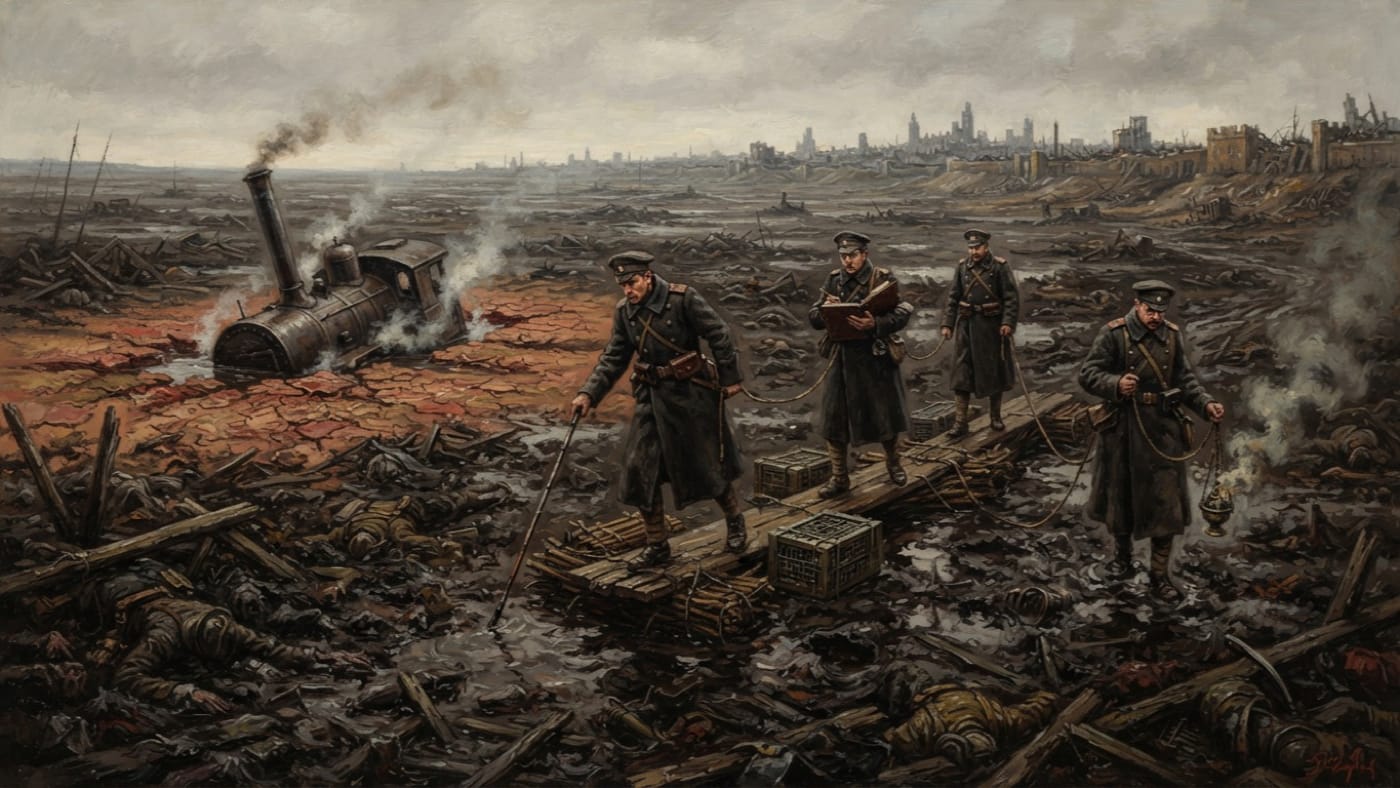
Danubian flats
The crust looked safe at Belgrade too.
An A.S. 201 survey of Danubian front flats in No Man's Land where Flesh-Mud is reported. Belgrade's A.S. 120 file records a swallowed Wrath-forged engine. Three Bureaus disagree; the crust looked safe there too.
Codex Ref. II.4.12-048
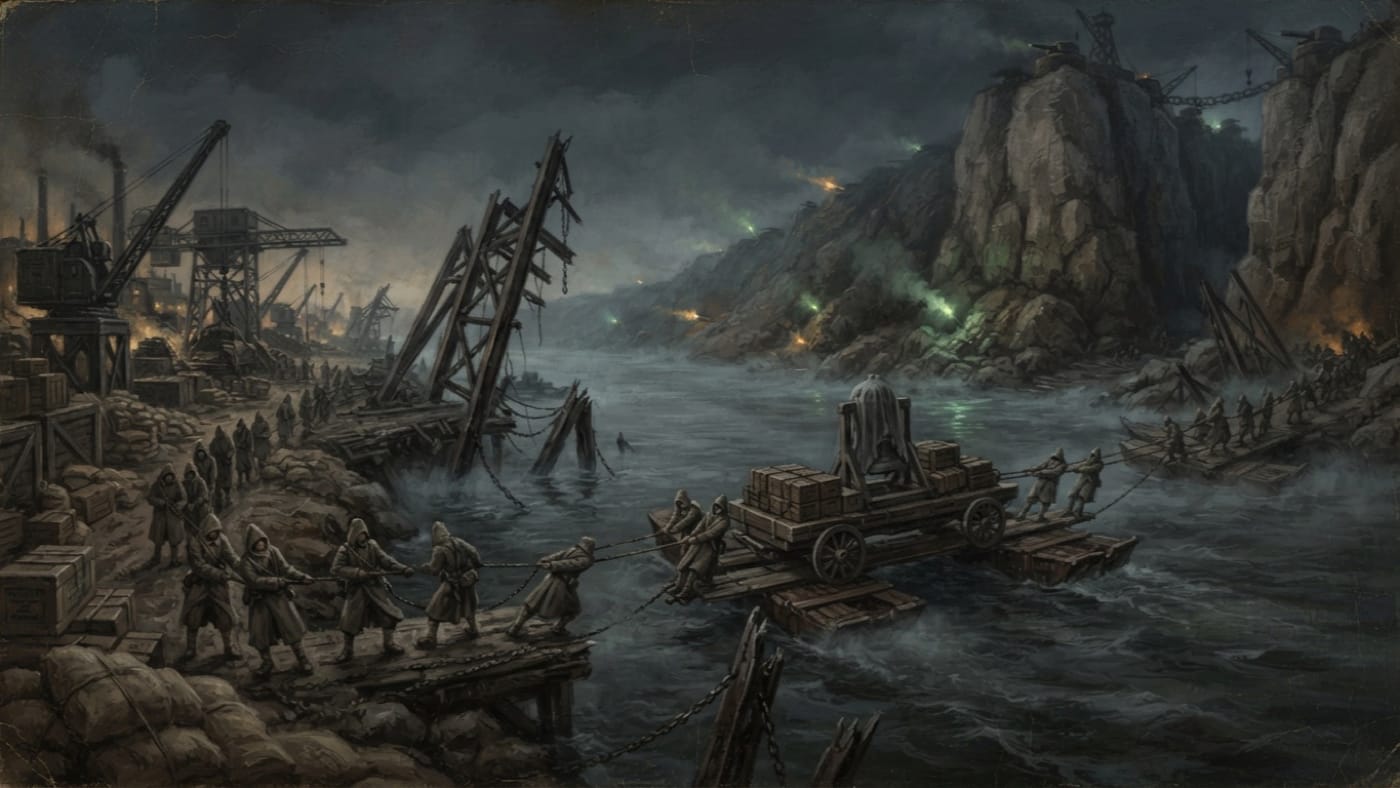
Danubian forward corridor
The grain arrives; the river keeps the difference
Between Budapest and Bastion-Irongate, the Synod moves grain, cartridges and bells through ruined crossings. The cargo is counted; the river keeps the difference.
Codex Ref. II.4.09-172
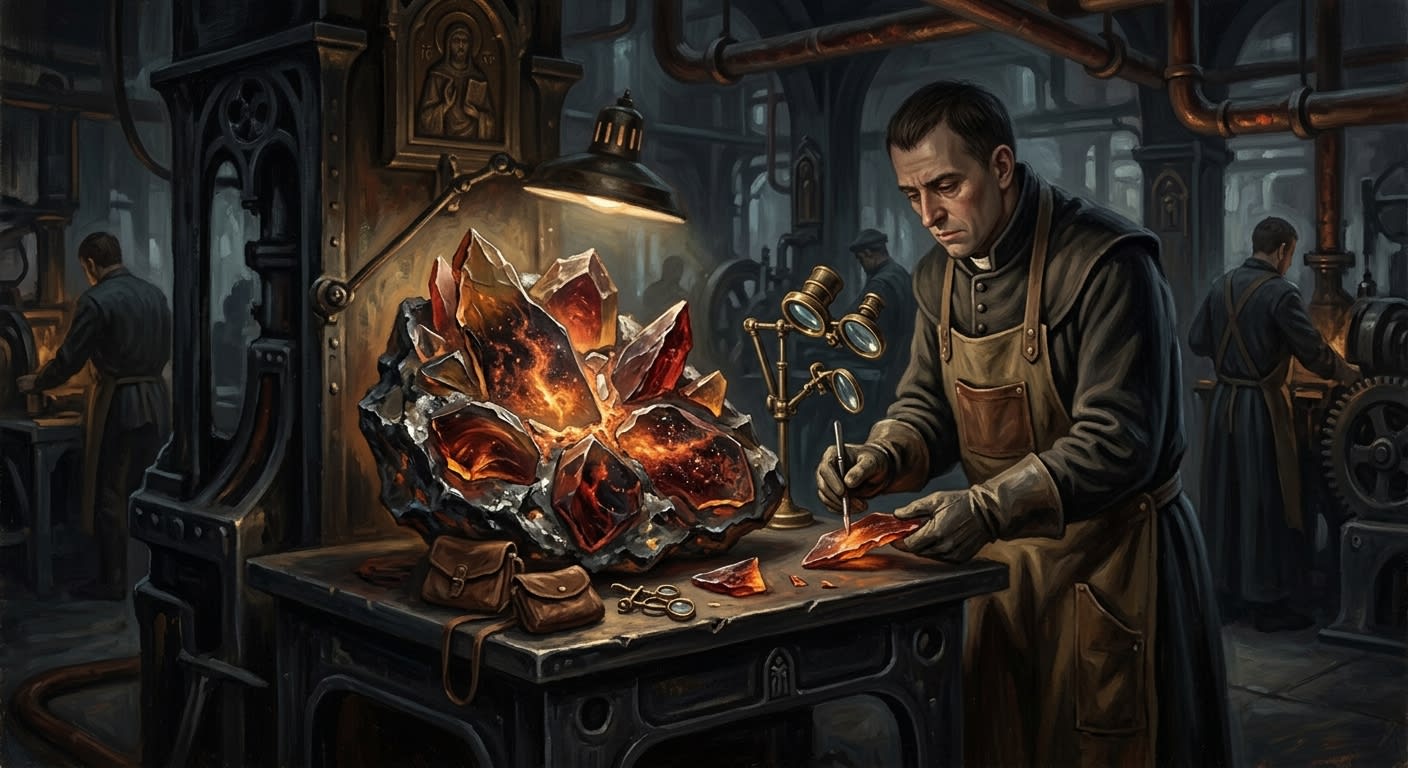
Demon Glass
The pane that looks back and invoices the sin
Demon glass is warm responsive shard-substance from Wound-sites, Wrath slag-plains, and Lust courts: contraband when raw, optical supply when useful.
Codex Ref. XIII.1.58-001
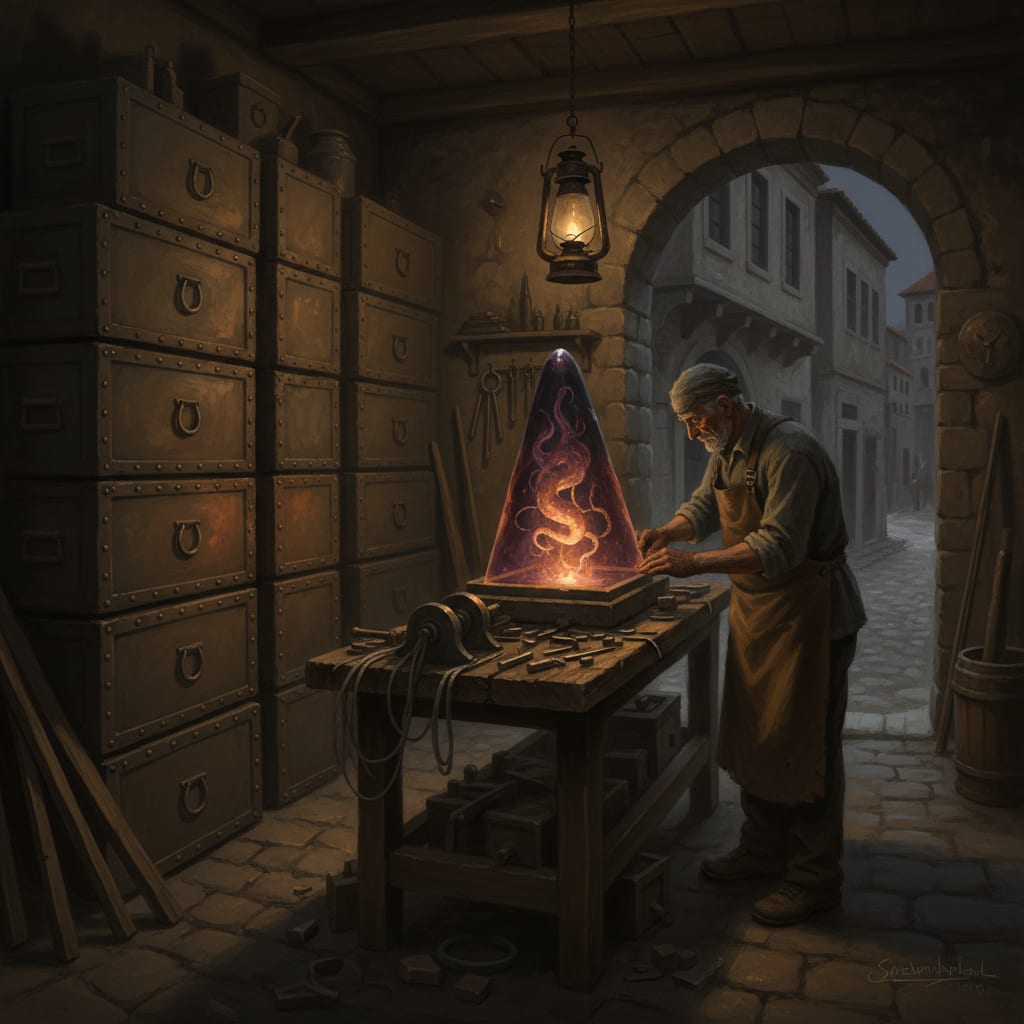
Demon-Glass Polisher
The craft the Bureau has shattered, blessed, interred in lime, and declined to stop purchasing
The profession the Bureau insists does not exist: found in every port from Marseille to the Harbor of Chains, supplying the Bureau of War with combat-grade optics, having developed a hierarchy, a patron saint, and three factions — all since the last Purity raid.
Codex Ref. XII.13.01-001
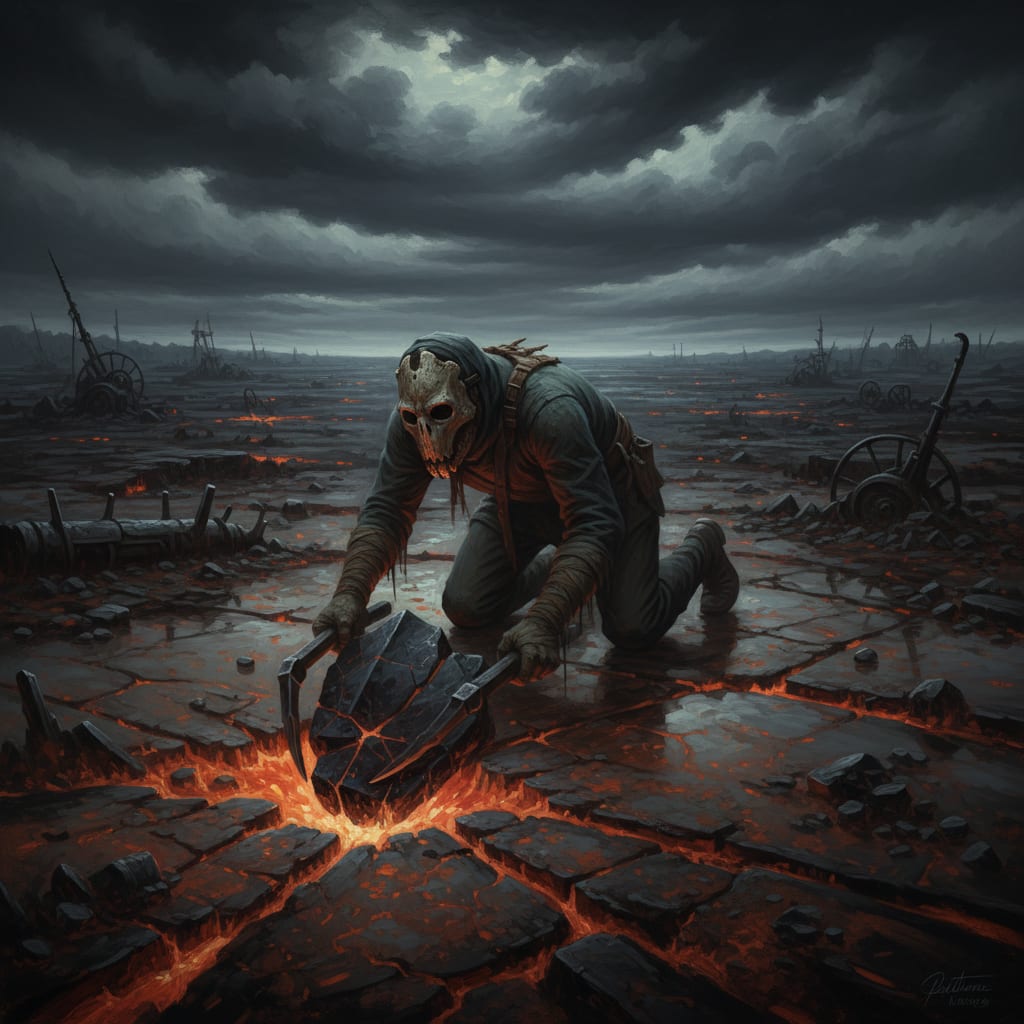
Demon-Glass Scavenger
The trade that crawls through Hell's workshop at three in the morning, because the Bureau's purchasing department opens at nine
The profession that supplies the Polisher, the Smuggler, the Bureau of War's optics division.
Codex Ref. XII.13.02-001
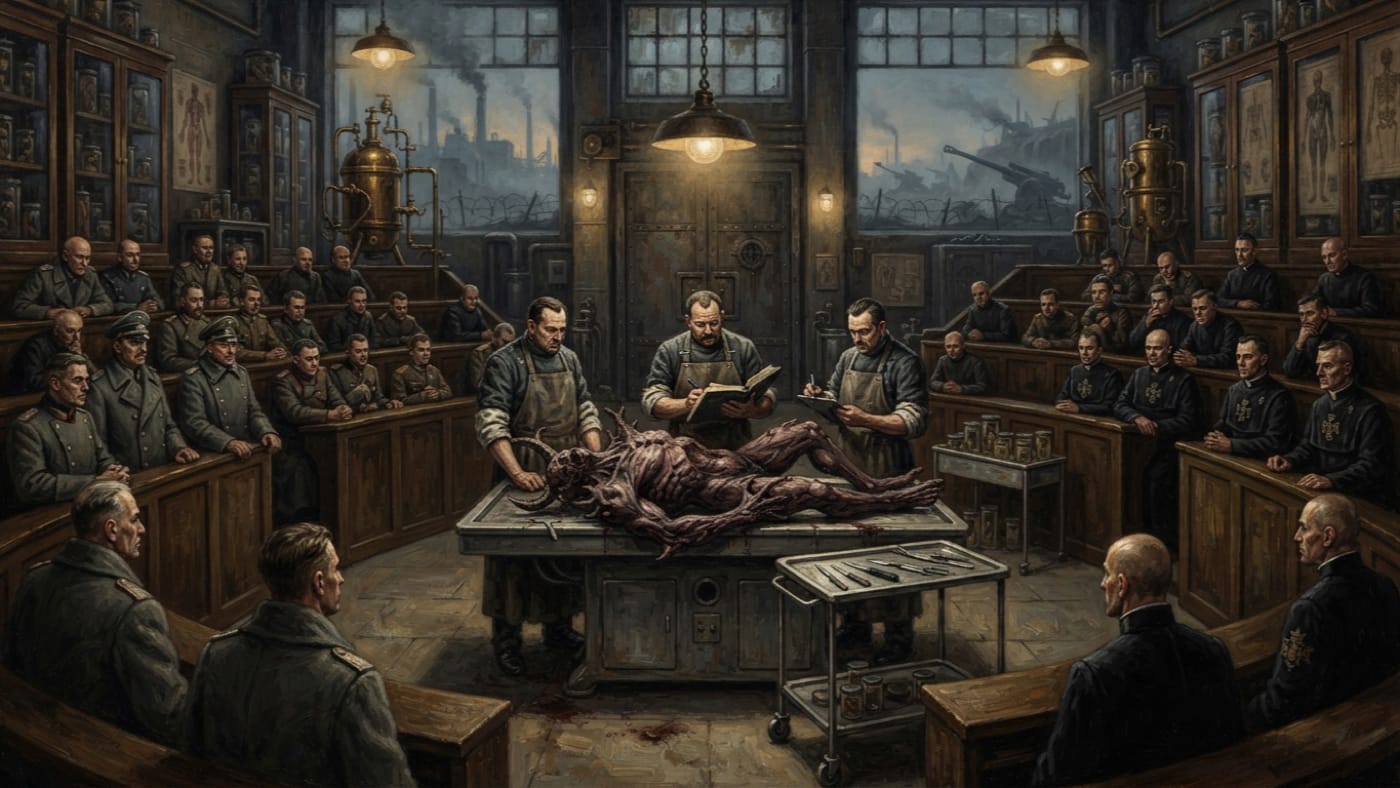
Demons
Iron for the flesh, a separate column for the theology
Corporeal demons die by iron; rare influence-demons whisper. Their hosts are chiefly human. Doctrine certifies their origin; the surgeon keeps their bodies.
Codex Ref. IV.1.00-001
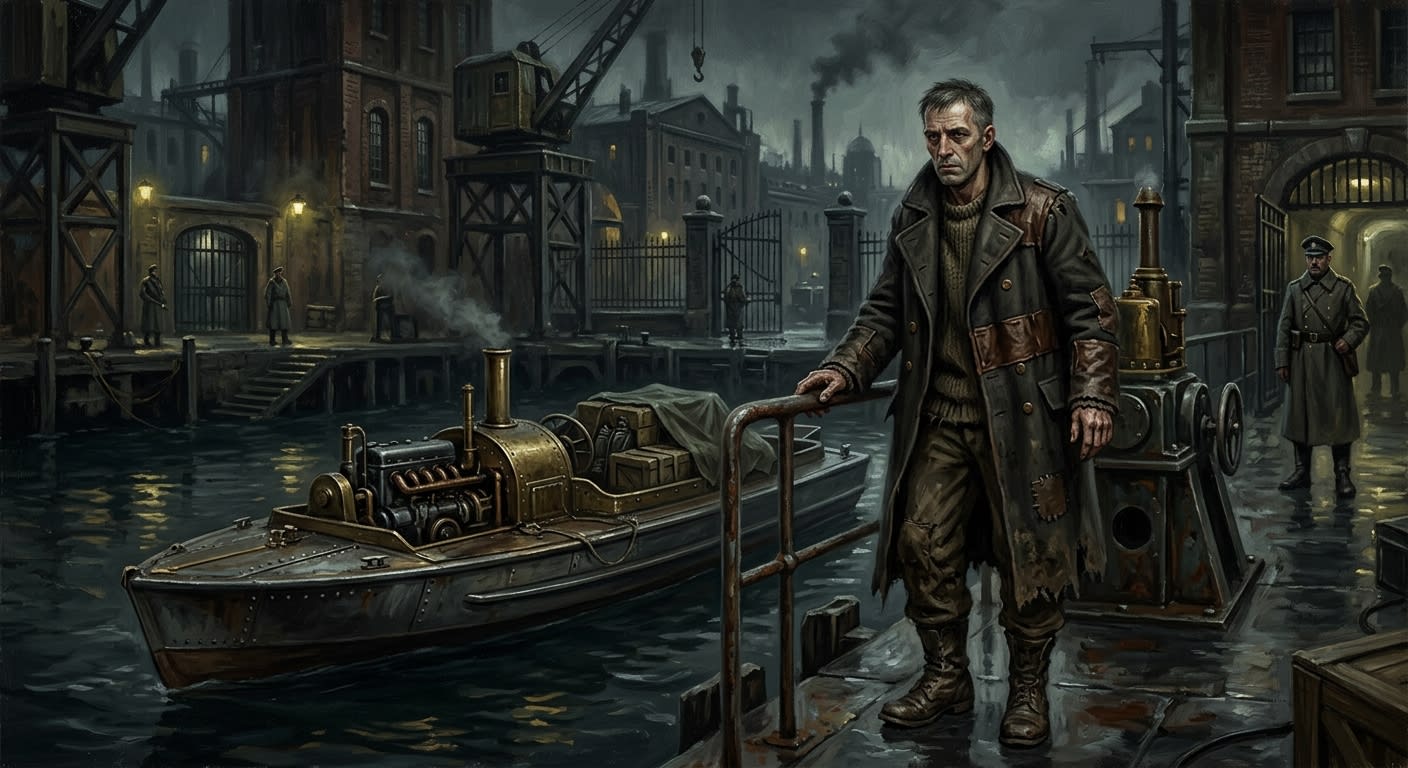
Demyan
The pilot who moved salvation before permission arrived
Demyan, condemned Strait Pilot of the inner Bosphorus, made a theology of speed, contraband, and false mercy before the customs pier made him useful.
Codex Ref. III.2.01-094
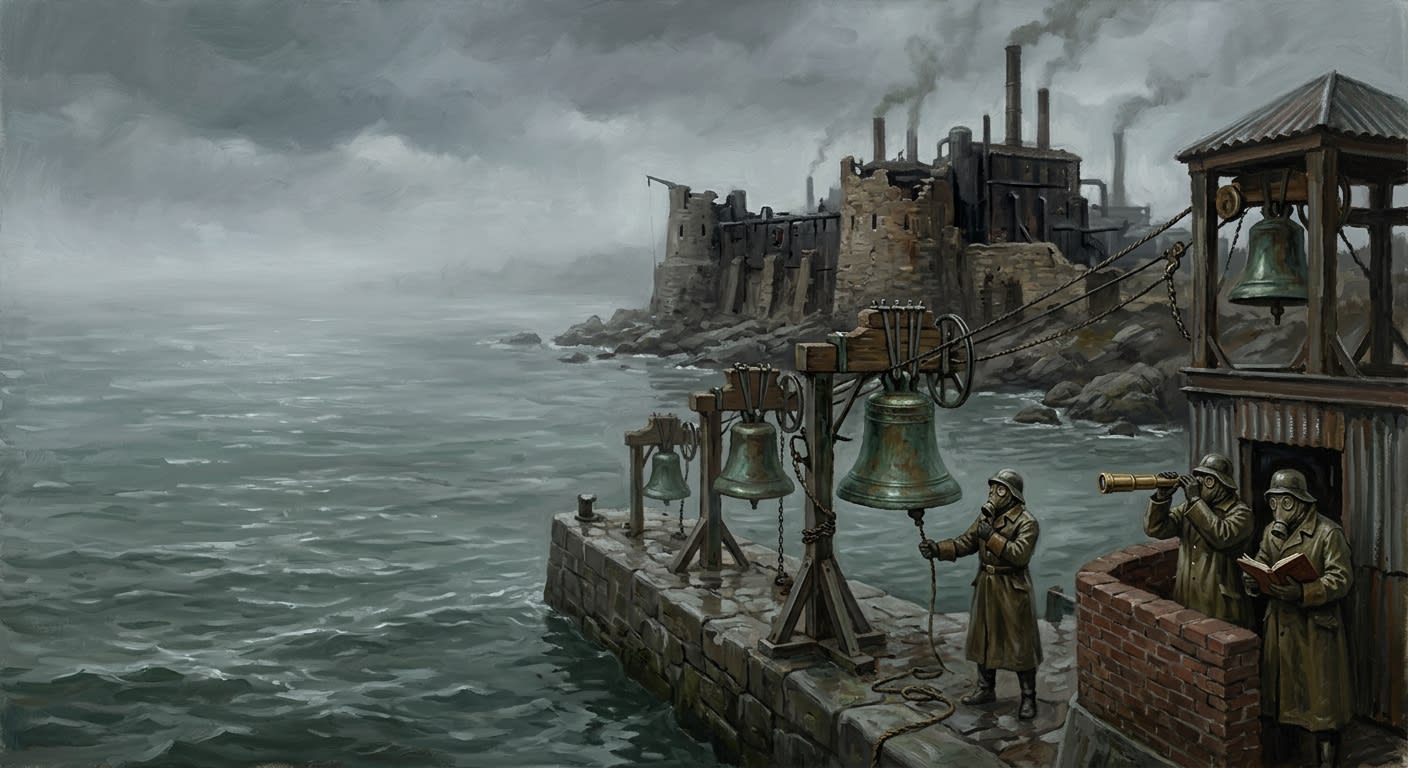
Det grå vattnet
The grey water listens before the bell decides whether to speak
Det grå vattnet, the grey water of the Fractured North, names a Baltic and fjord phenomenon related to the Grey: patient, reflective, responsive, older than the Bureau's comfort, and held only by old bells.
Codex Ref. IV.1.07-005
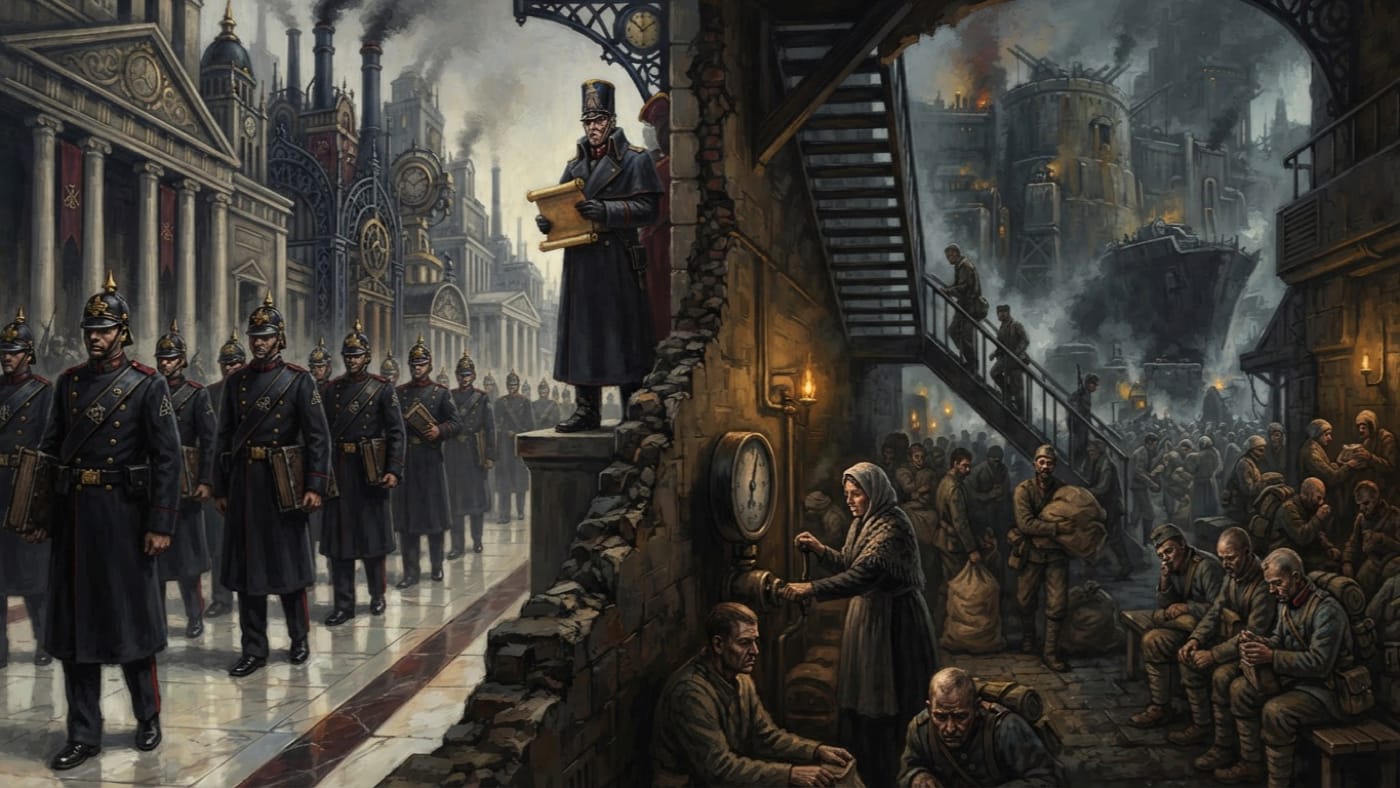
Dispatches from the Southern Hinge
One paragraph, and the review still waits
One paragraph from Warden-Adjutant Remy Sauvage's suppressed Dispatches survives in the Codex's A.S. 197 citation. It credits Constantinople's endurance to exhausted competence. The theological review remains pending.
Codex Ref. XIII.1.197-001
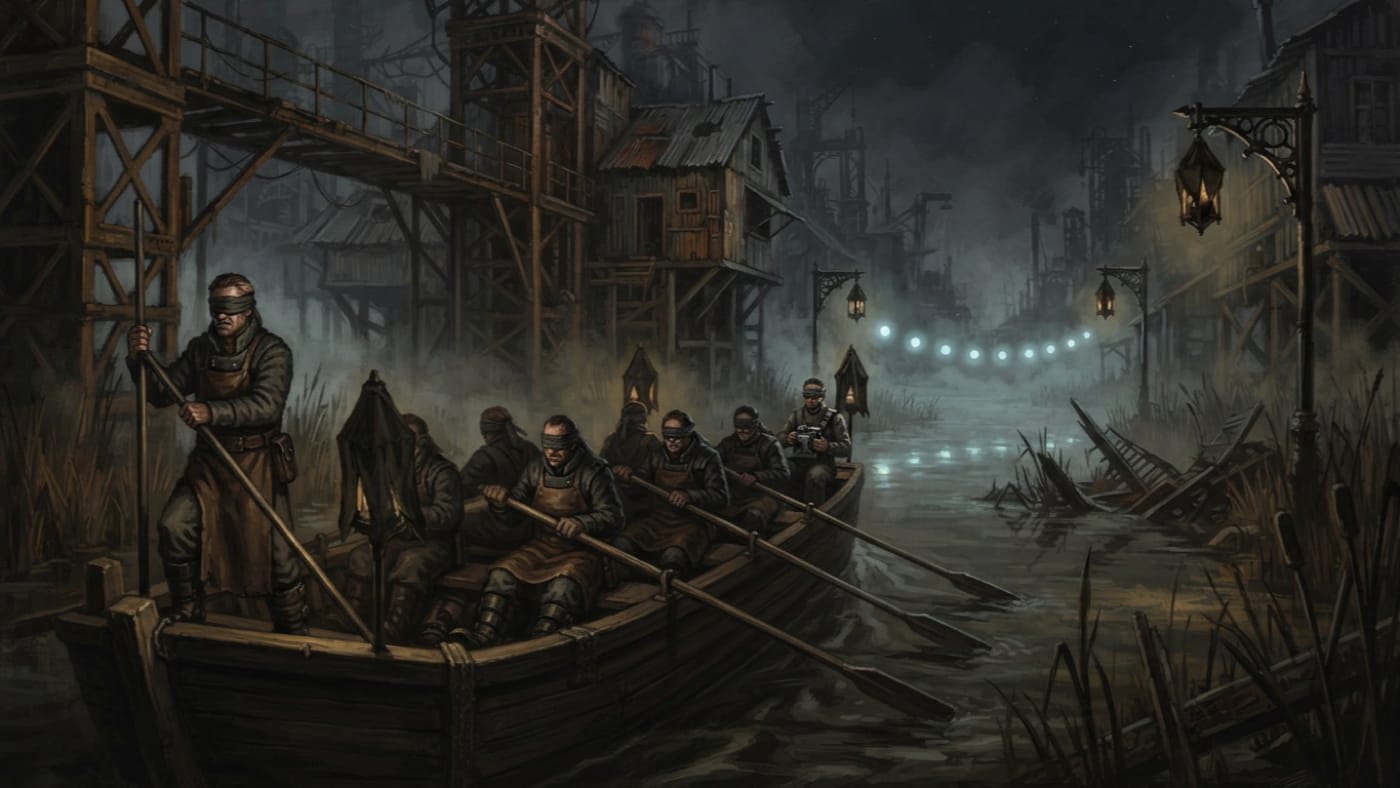
Do Not Answer
When the water answers, put out the light.
At the Ash-Glyph Marshworks, the Lantern Guild meets counterfeit corpse-light with hooded lamps, blindfolded oarsmen and bell-click cadence. The code is withheld; its origin is unrecorded.
Codex Ref. XIII.1.24-003
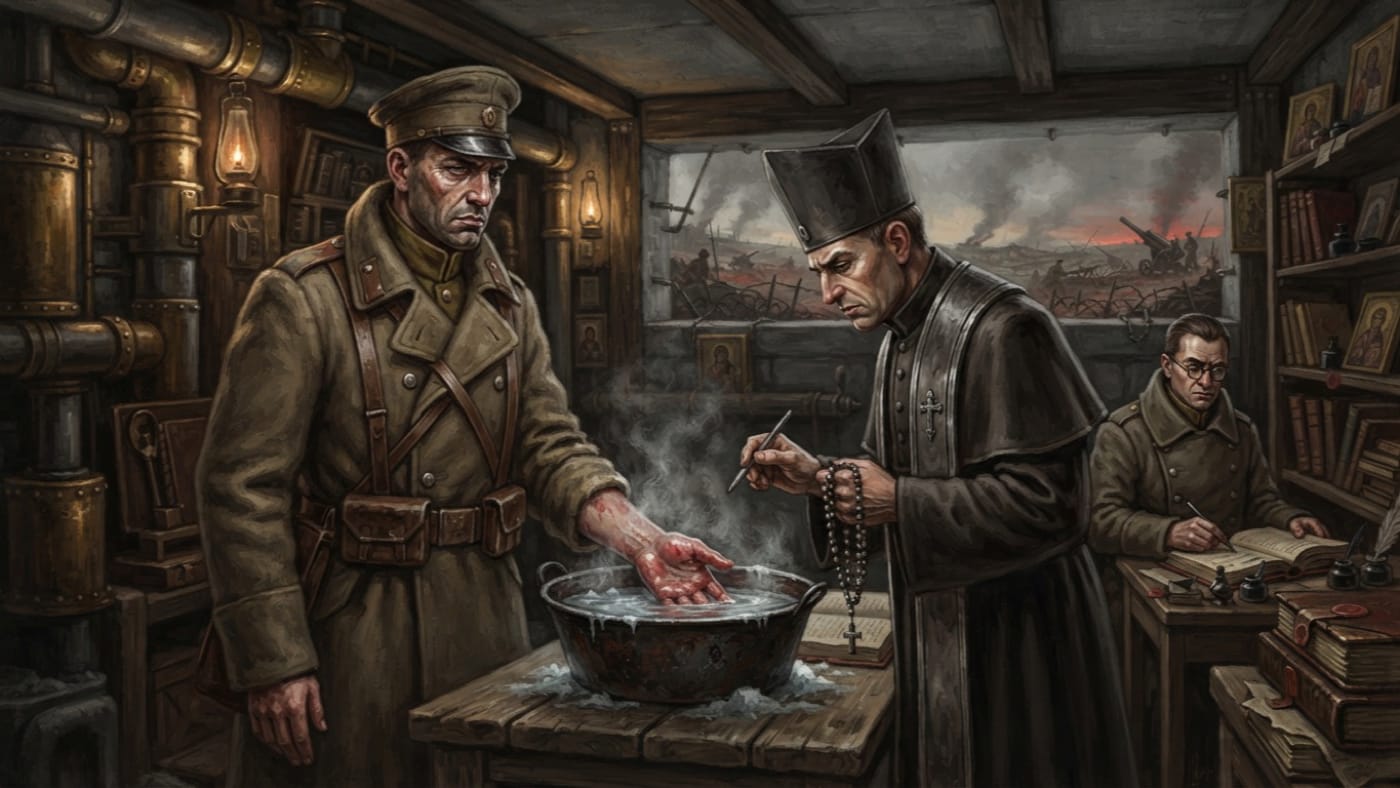
Doctrine of Cool Hatred
The hand must open when the prayer is done
The Doctrine of Cool Hatred teaches Thracian soldiers to kill from duty and surrender pleasure in violence. Its improvement is marginal; the Bureau publishes the margin and withholds the count.
Codex Ref. XIII.1.125-201
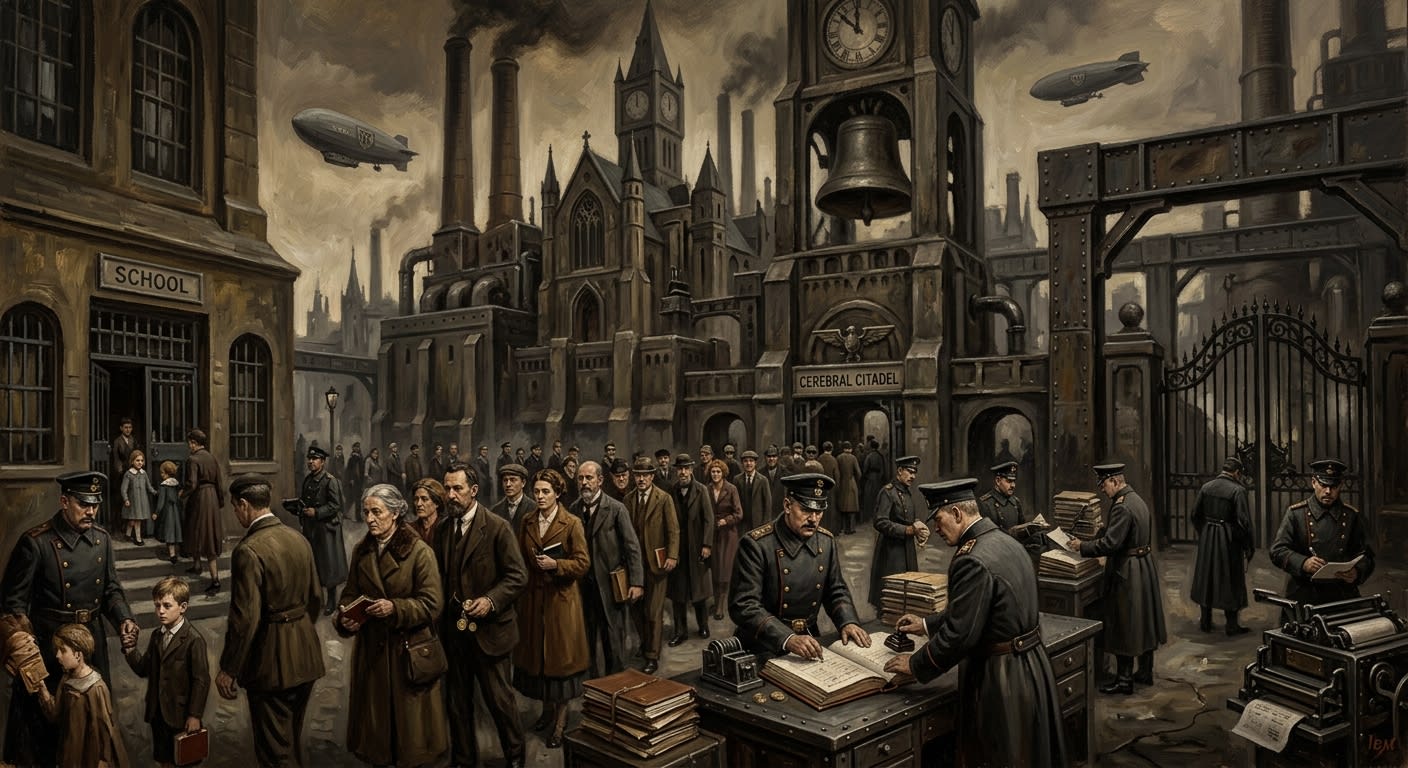
Dominion
Europe held in one gloved hand and taught to call it custody
Dominion is the Synod's official name for custody over Europe: border, tithe, bell, school, grave, and the thought before speech.
Codex Ref. XIII.1.02-090
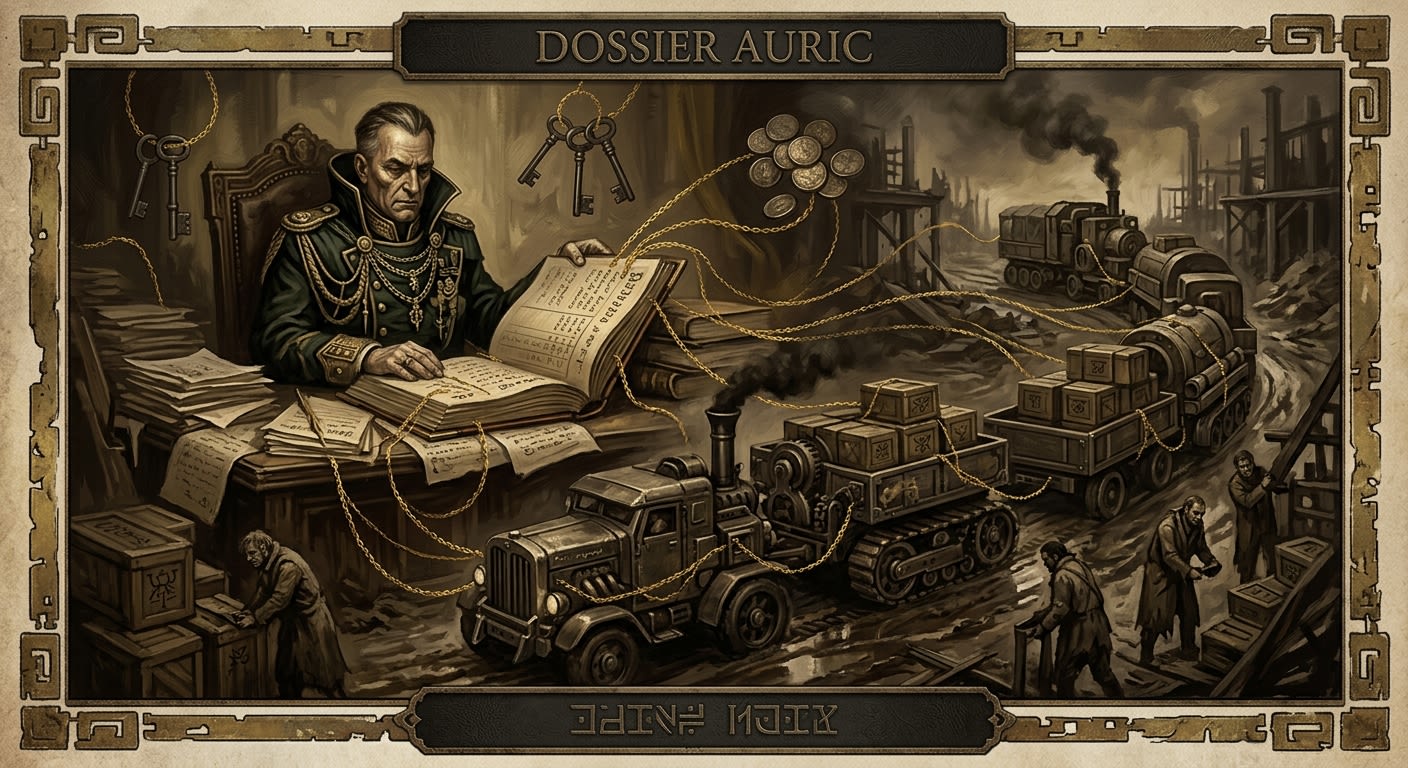
Dossier Auric
Greed keeps receipts because damnation prefers a clean audit trail
Dossier Auric tracks Velmora's fastest-growing war: contracts, keys, counterfeit mercy, Sibiu convoys, and the terrible competence by which Greed makes debt look like help.
Codex Ref. VIII.7.01-003
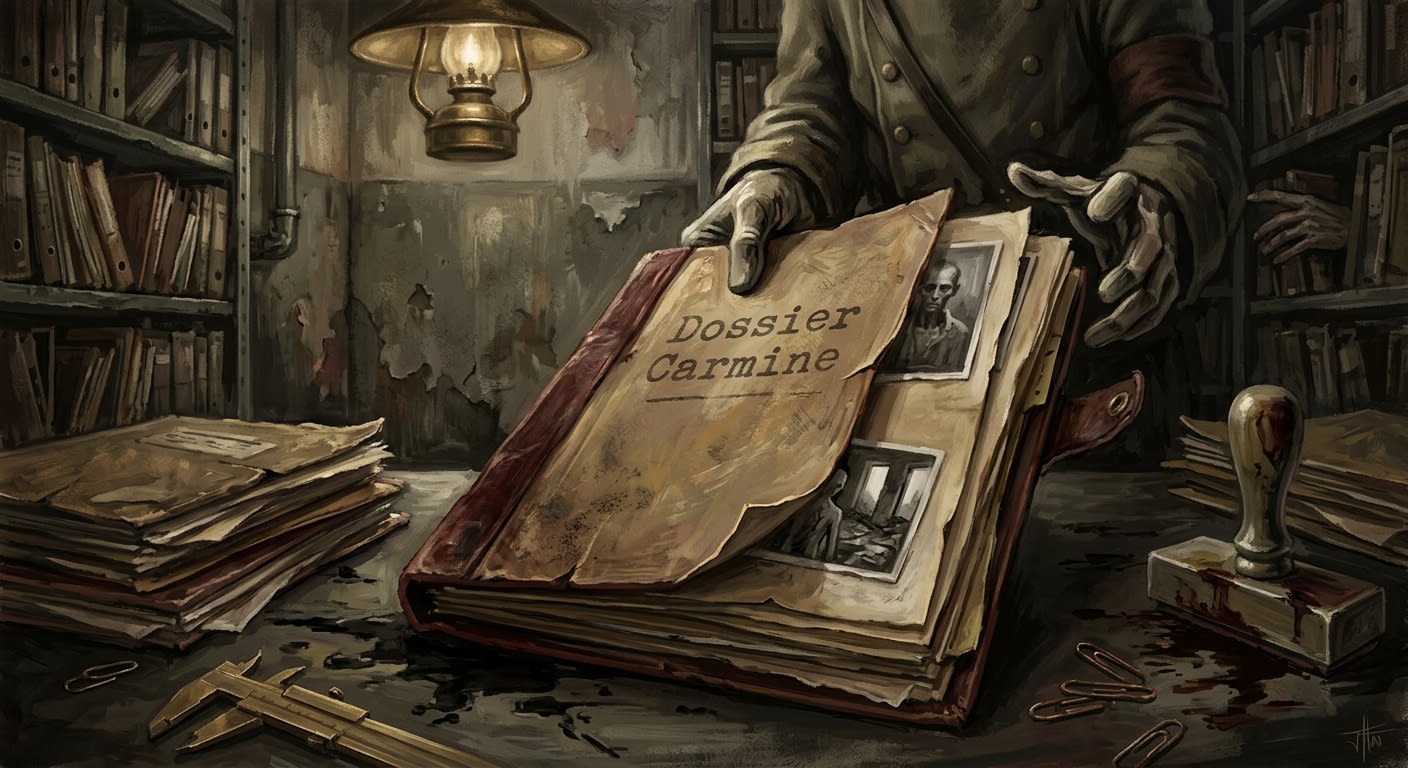
Dossier Carmine
The thinnest file in the Seven still outweighs a province of graves
Dossier Carmine is Inter-Infernal Analysis's thinnest file: Kargath, hunger, Blightmarsh creep, famine aftereffects, abundance hazards, and the brutal mercy of short sentences.
Codex Ref. VIII.7.01-004
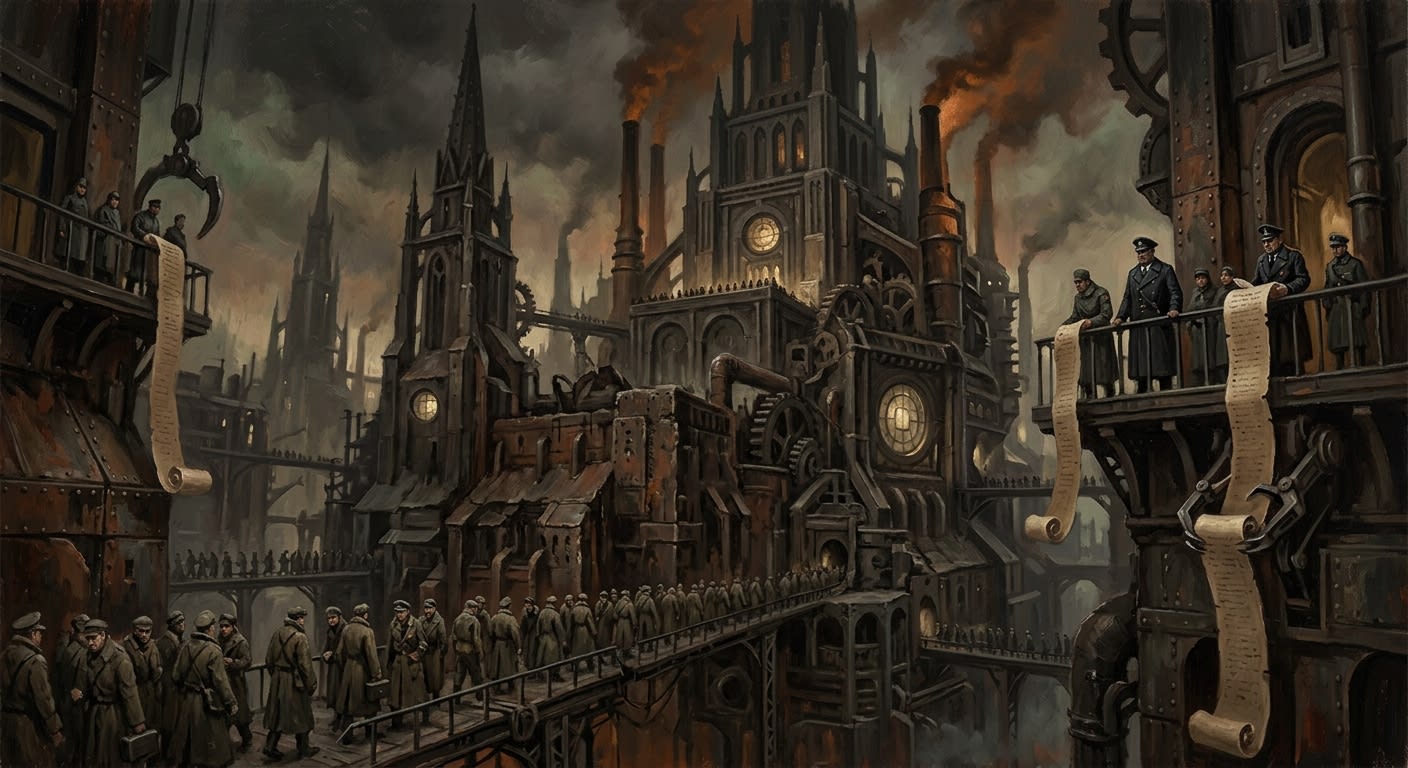
Dossier Vermillion
Pride receives a red file and mistakes the cabinet for a stairway
Dossier Vermillion is Inter-Infernal Analysis's largest file: Atheron, Pride, spires, oaths, and the terrible question of whether ambition can climb above Hell itself.
Codex Ref. VIII.7.01-002
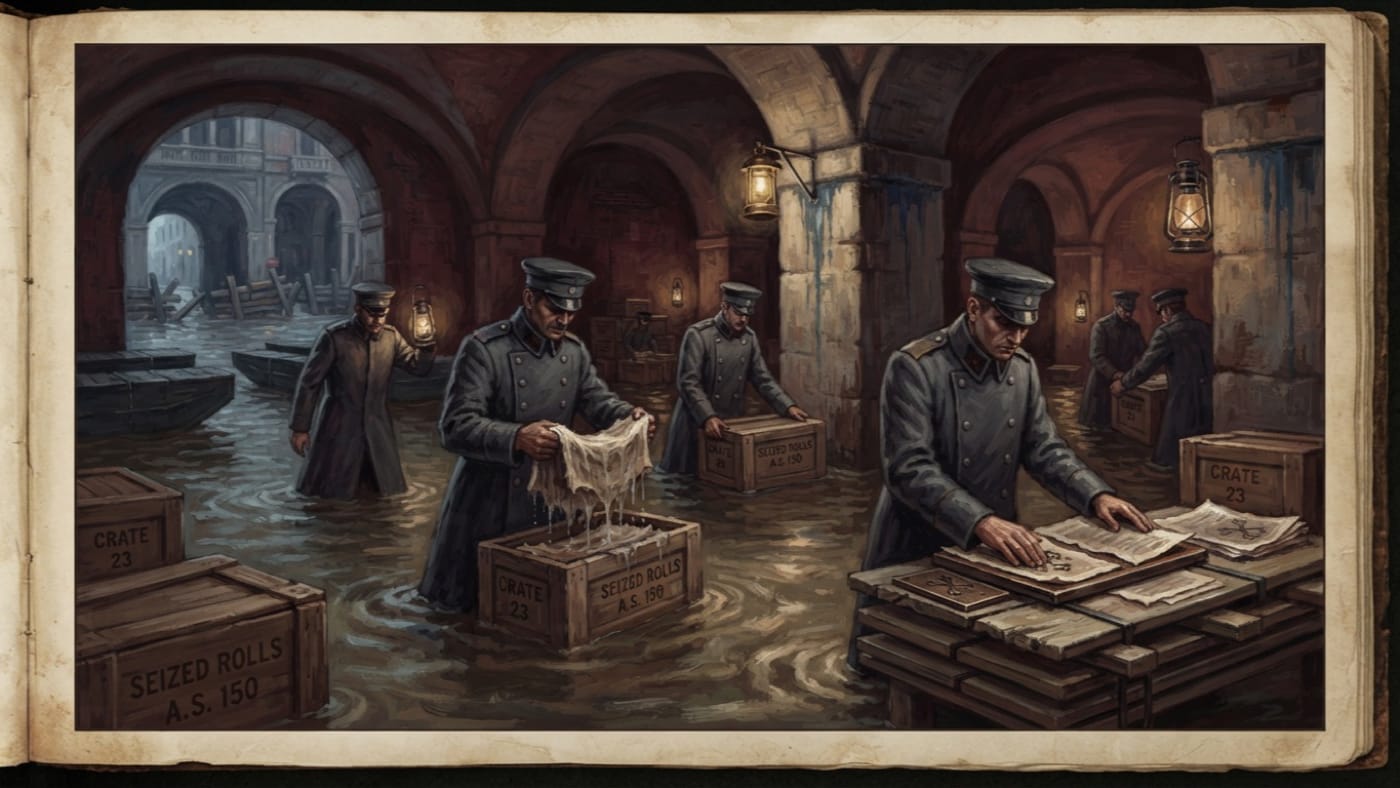
Drowning of Lombardy
The canals obeyed; the registers remembered
In A.S. 150, the Bureau of War turned Lombardy's canals against the Coalition of the Crossed Keys. Water corrected its streets; preserved registers kept its families under review.
Codex Ref. VII.8.04-002
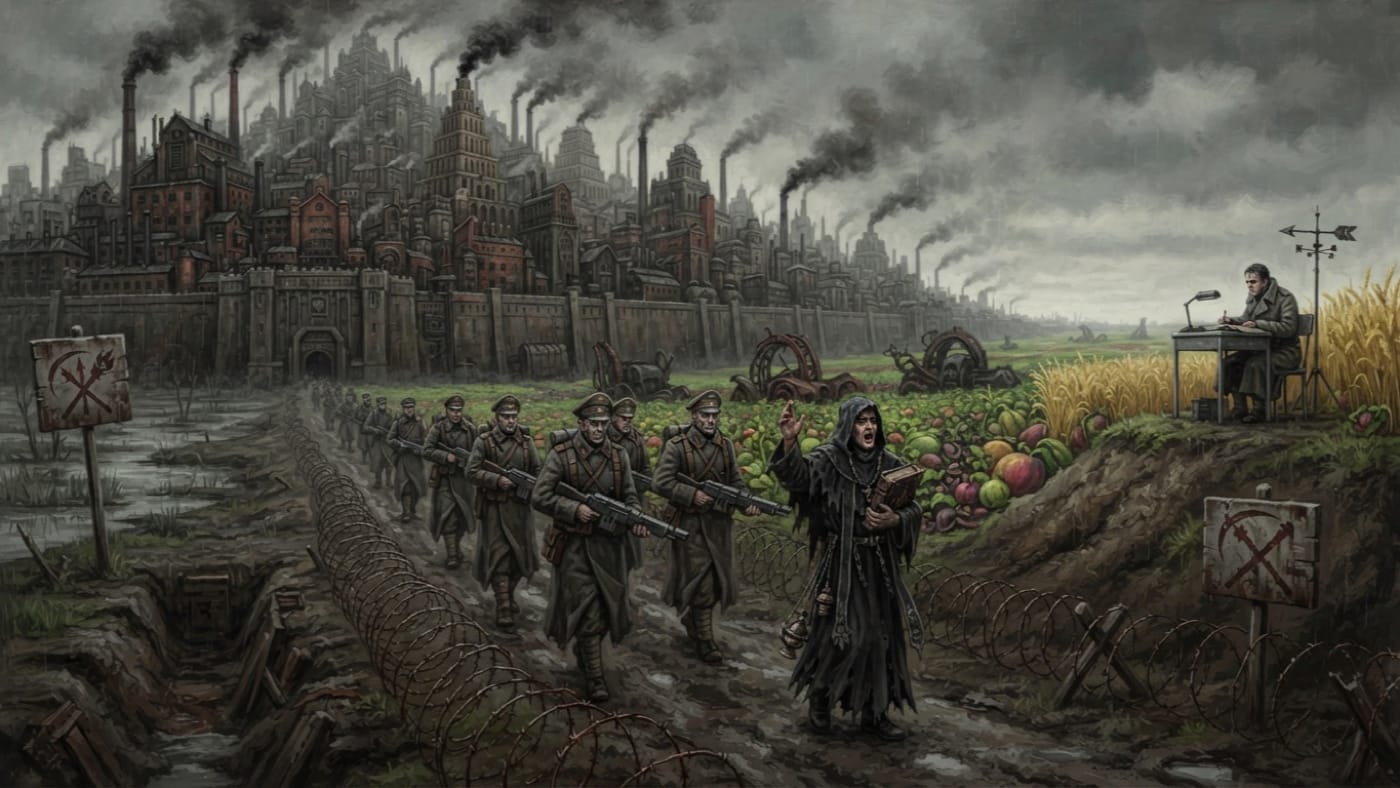
Eastern Command
Where protecting the soldier means forbidding the harvest
Eastern Command issues the eastern sector's orders from Bastion-Constantinople. Its documented duty is to keep soldiers from Kargath's food: the ration feeds them; the harvest devours them.
Codex Ref. VIII.7.05-201
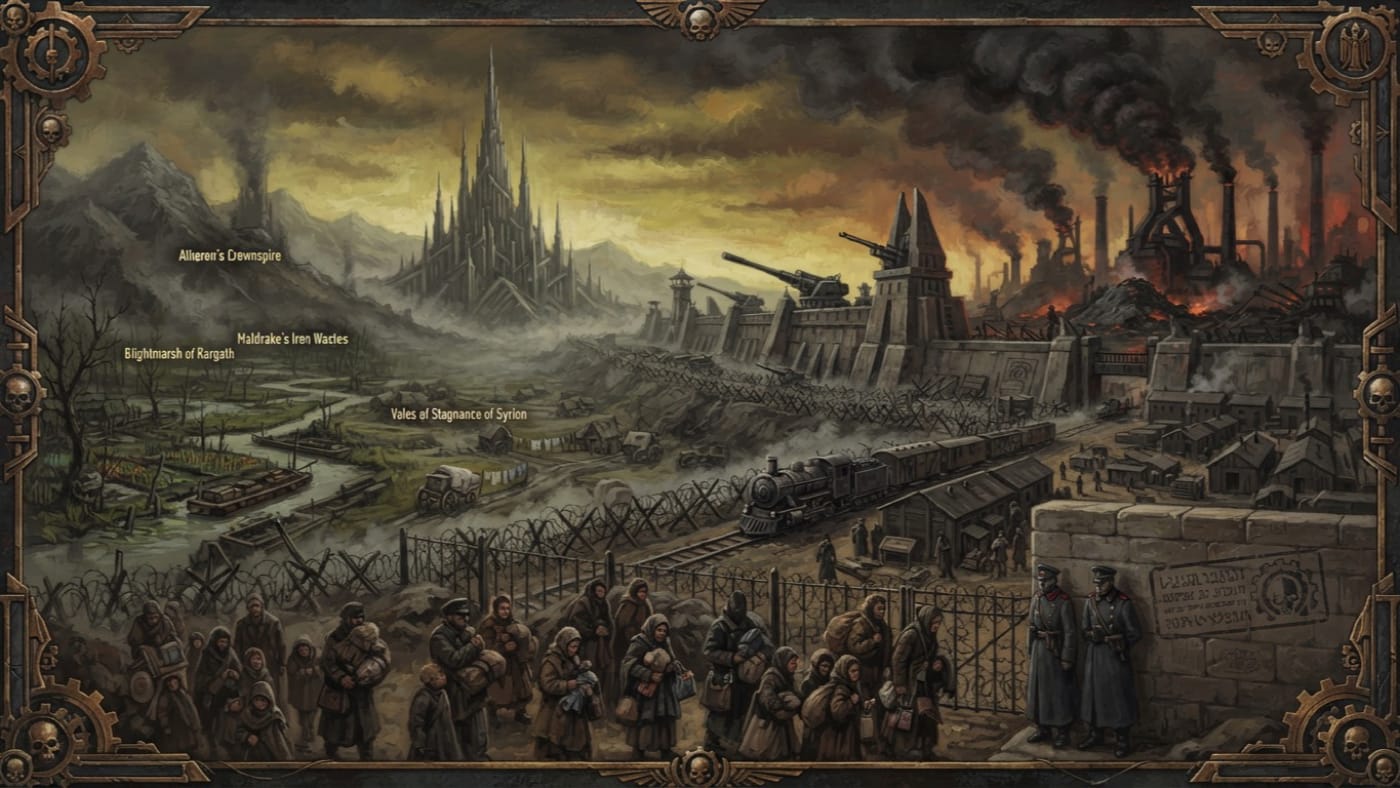
Eastern Kingdoms
The lands were lost; the Ledger retains their names
The eastern jurisdictions lost after the Sundering, now largely held by rival Sin-General dominions. Their people endure; the Ledger still calls the occupation temporary.
Codex Ref. II.6.07-201
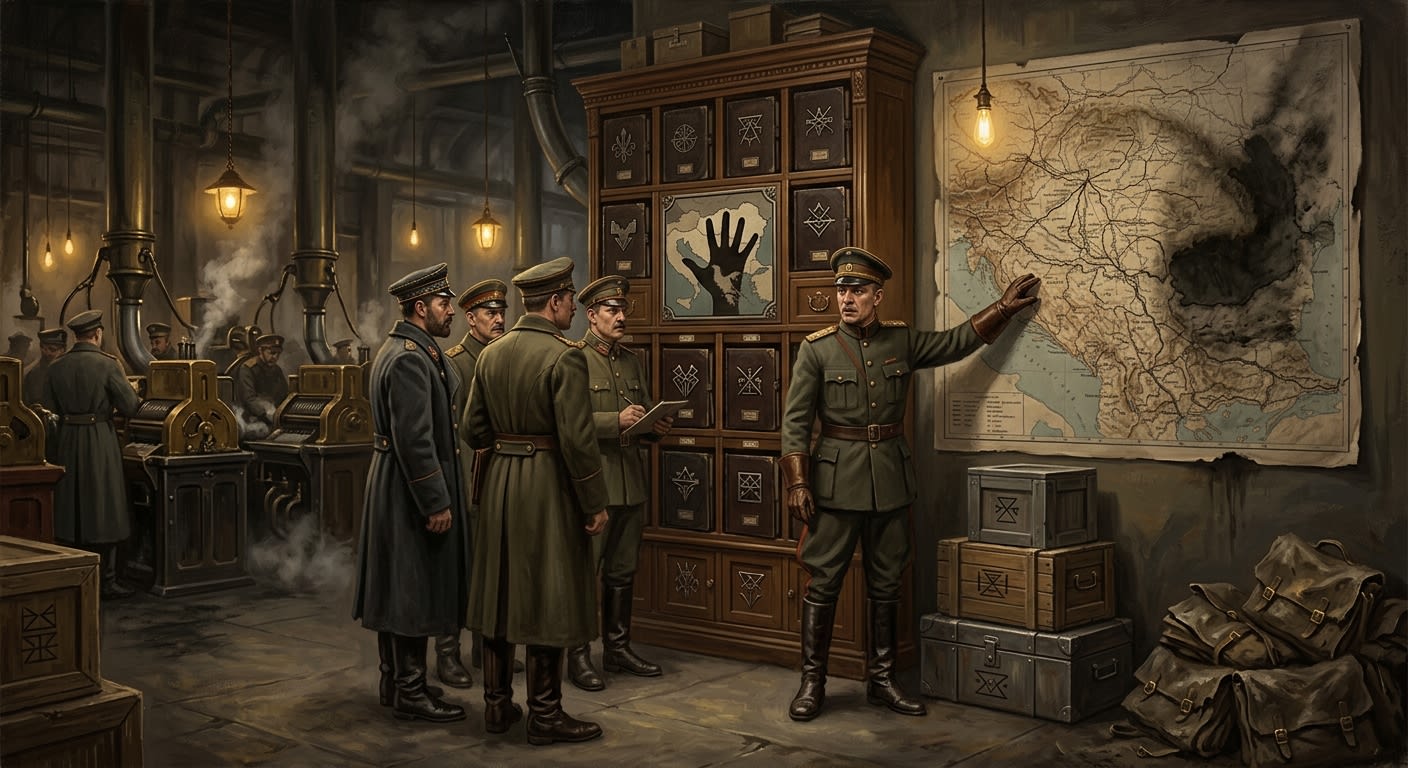
Eastern Silence
When the East stopped answering and the world mistook absence for order
In A.S. 38 the Balkans stopped writing back. Letters failed, couriers vanished, maps lied, and the Rationalists called silence a quarantine until Hell translated it.
Codex Ref. VII.4.19-001
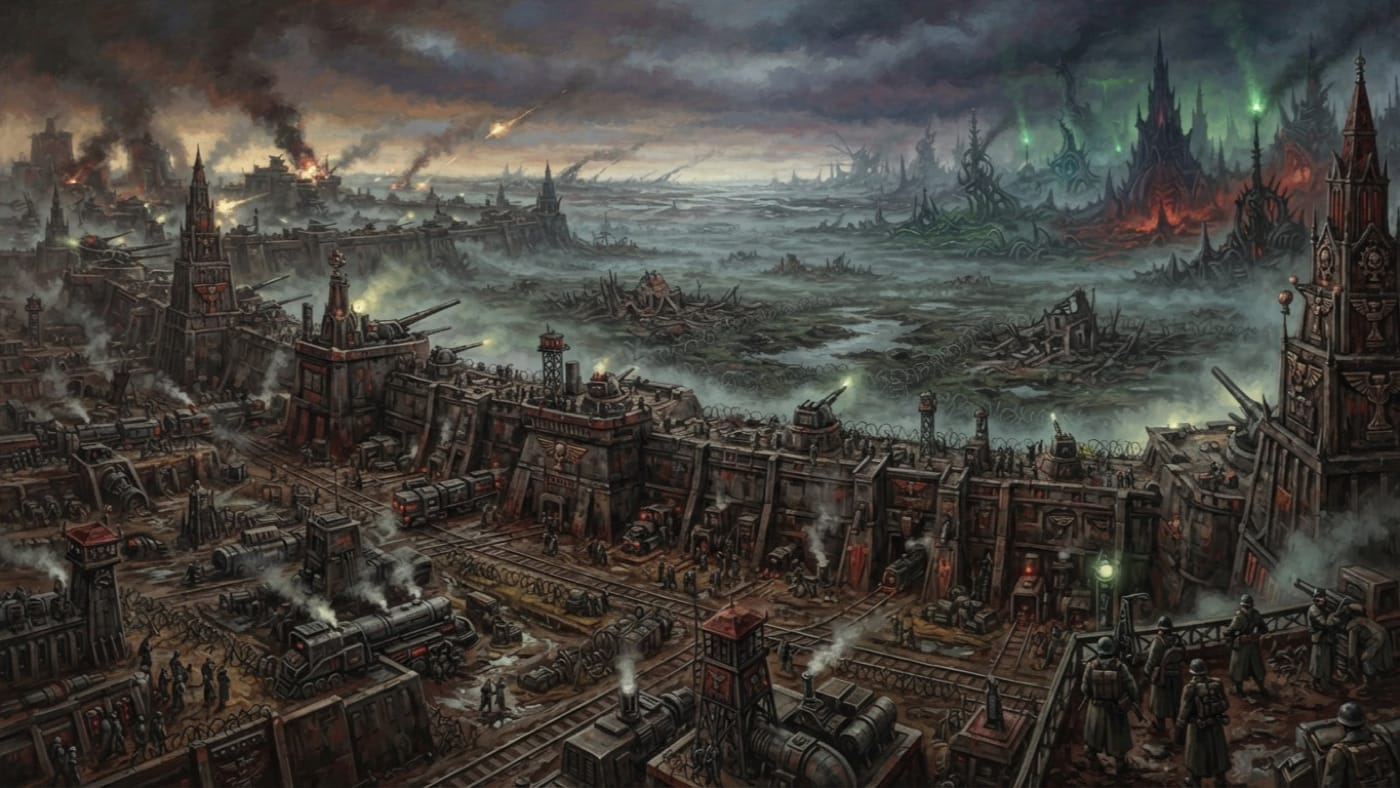
Eastern Theatre
A province has a governor to blame. The Eastern Theatre has an inbox.
The eastern war's unchartered heading: the Sagittal Line, contested strip, fallen lands and supporting rear. Drax surveys the front in A.S. 201; the reports have desks, but the Theatre has no commander.
Codex Ref. II.4.13-201
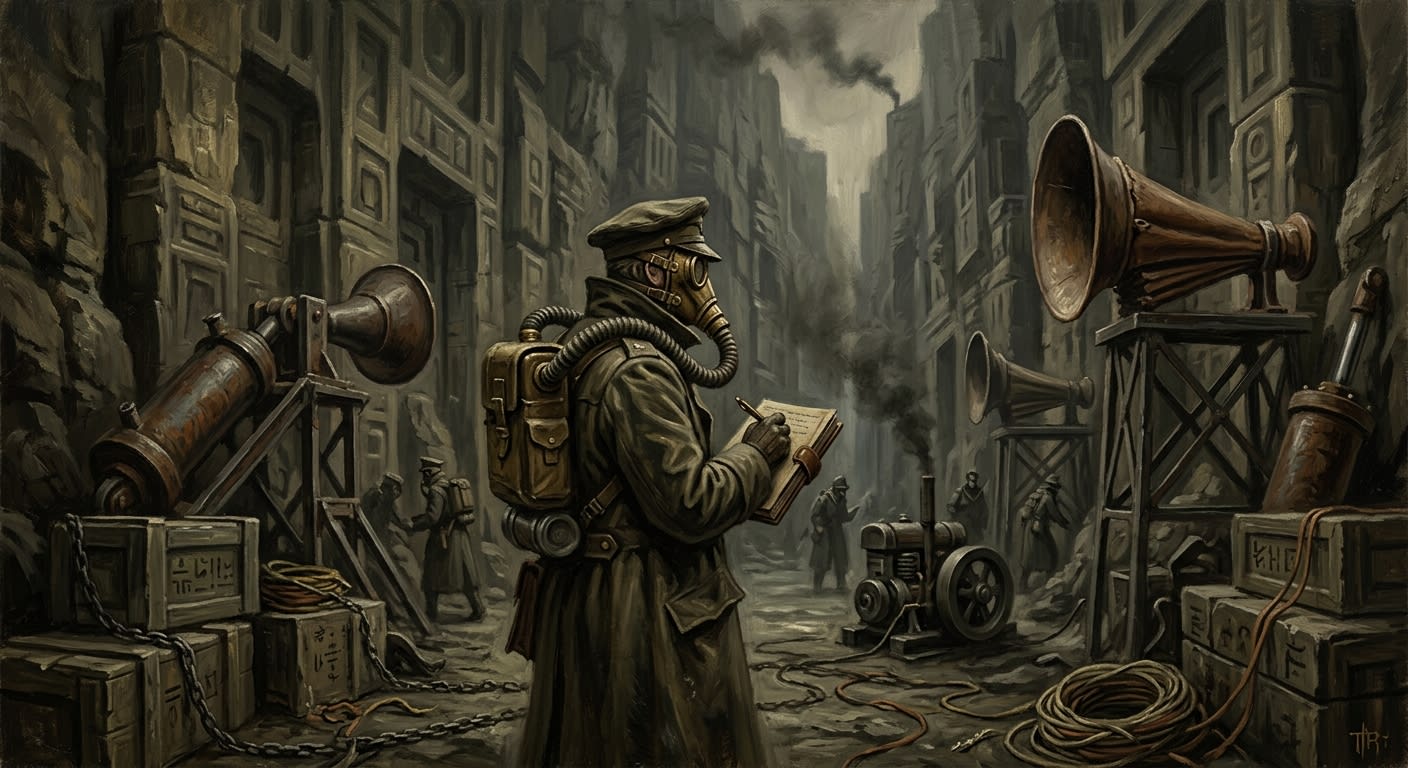
Echo Creed
When the canyon misquotes prayer and the invoice arrives clean
At Peregrine Row, a canyon repeats prayers with one vowel altered, and the Road Chapter has discovered that bad theology invoices beautifully.
Codex Ref. XIII.1.23-001
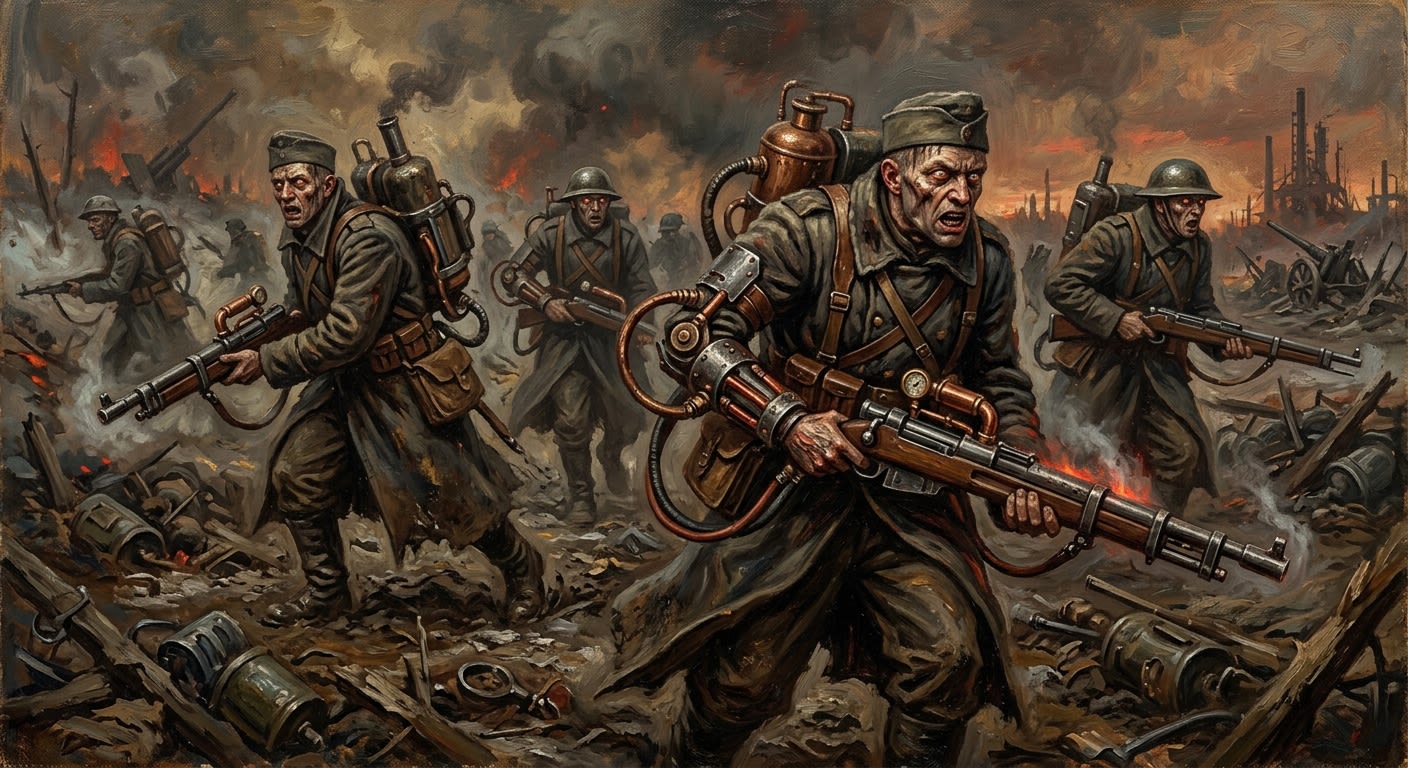
Ember-Soldiers
The infantry Maldrake makes from anger the dead were not allowed to finish
Ember-Soldiers are Maldrake's common horror: human-derived Wrath infantry, banked in rage, fused to weapons, and dangerous even after death seems persuaded.
Codex Ref. IV.1.07-201
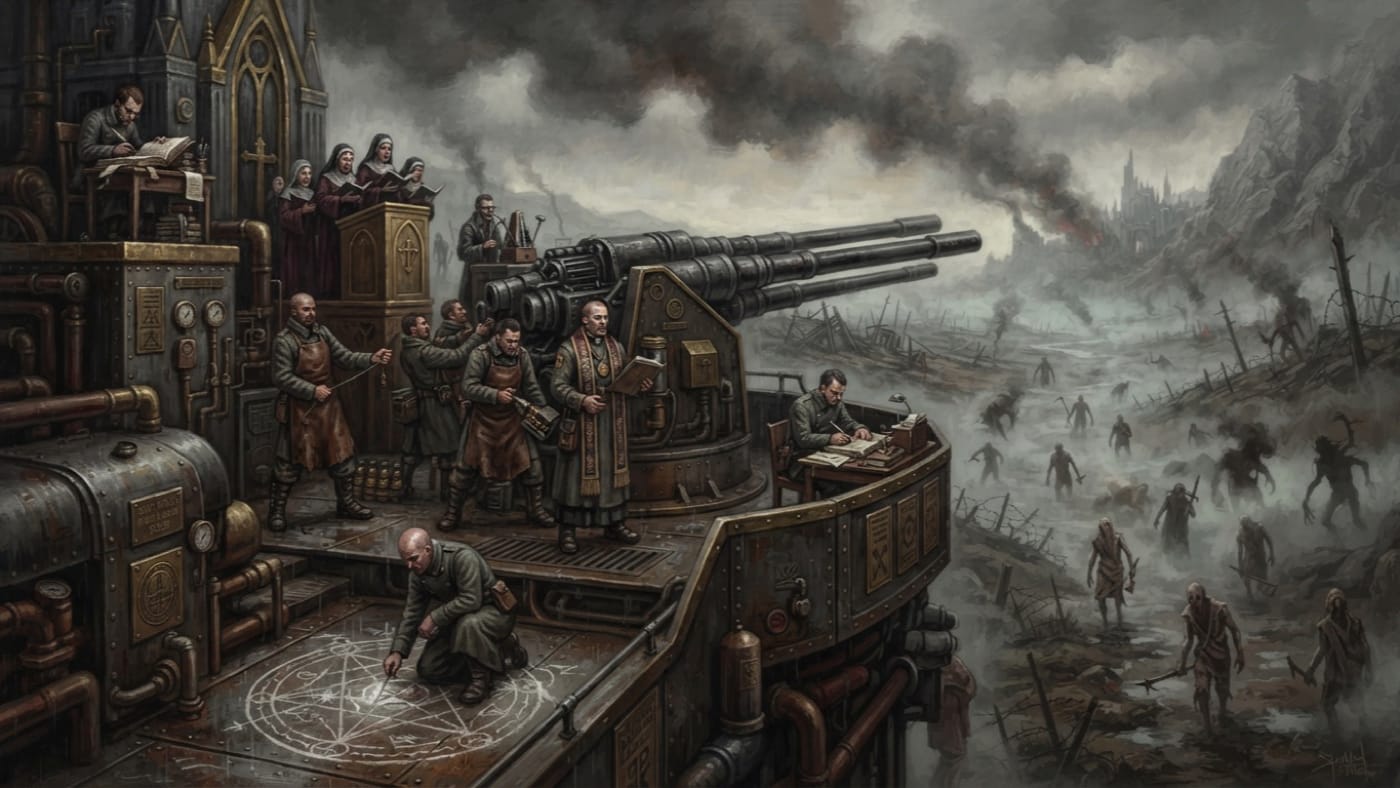
Enemy
One word for the thing beyond the Line and the person beneath the seal
The Enemy is the Synod's collective name for demonic powers, mortal auxiliaries and sanctioned targets. This present survey records how Doctrine's word becomes War's seal, the shrine-platform's volley and Records' permanent entry.
Codex Ref. XIII.1.43-201
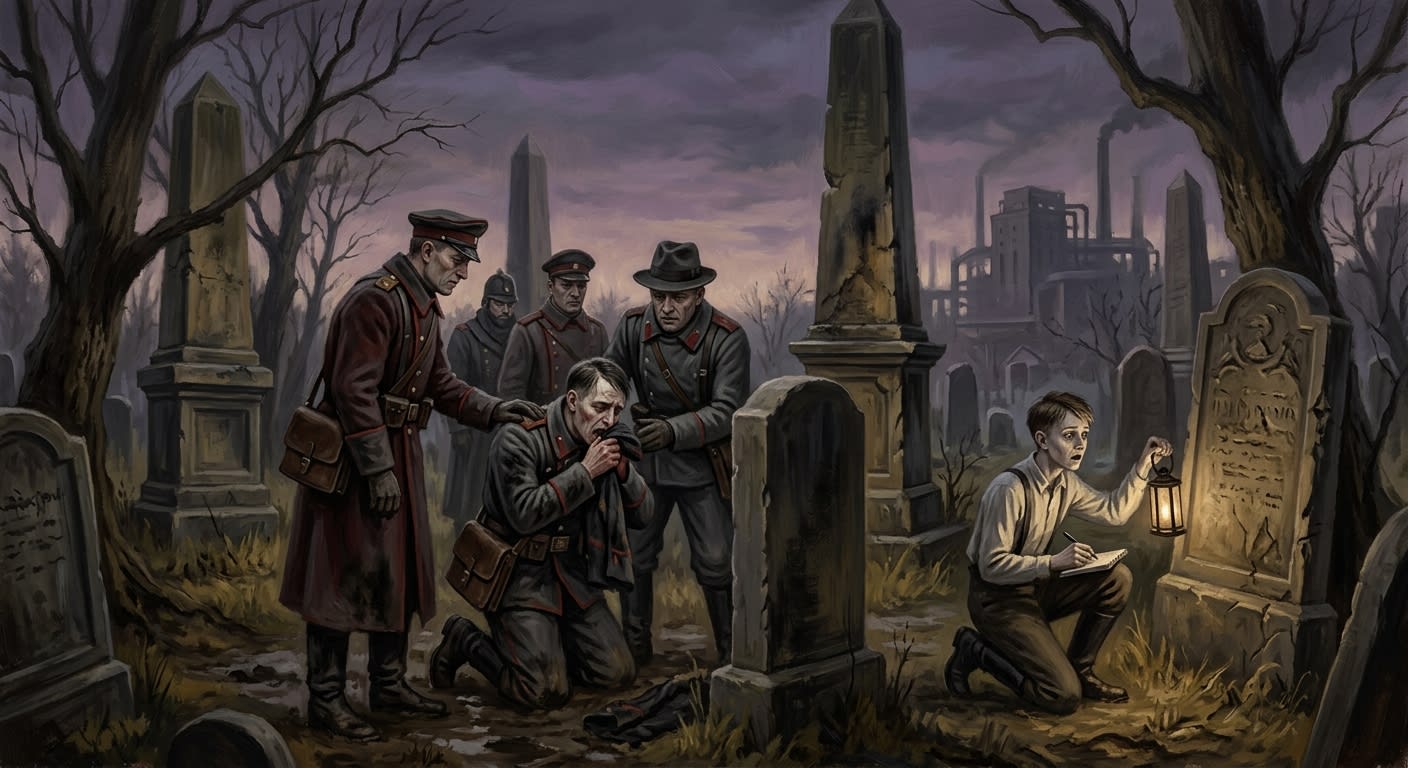
Epitaph Plague of Novi Sad
When the stones wrote first, the living learned to count backward
In A.S. 122, Novi Sad grave stones began carving living names before their deaths; Records called it weathering for fourteen years, then learned grammar can kill.
Codex Ref. VII.8.10-037
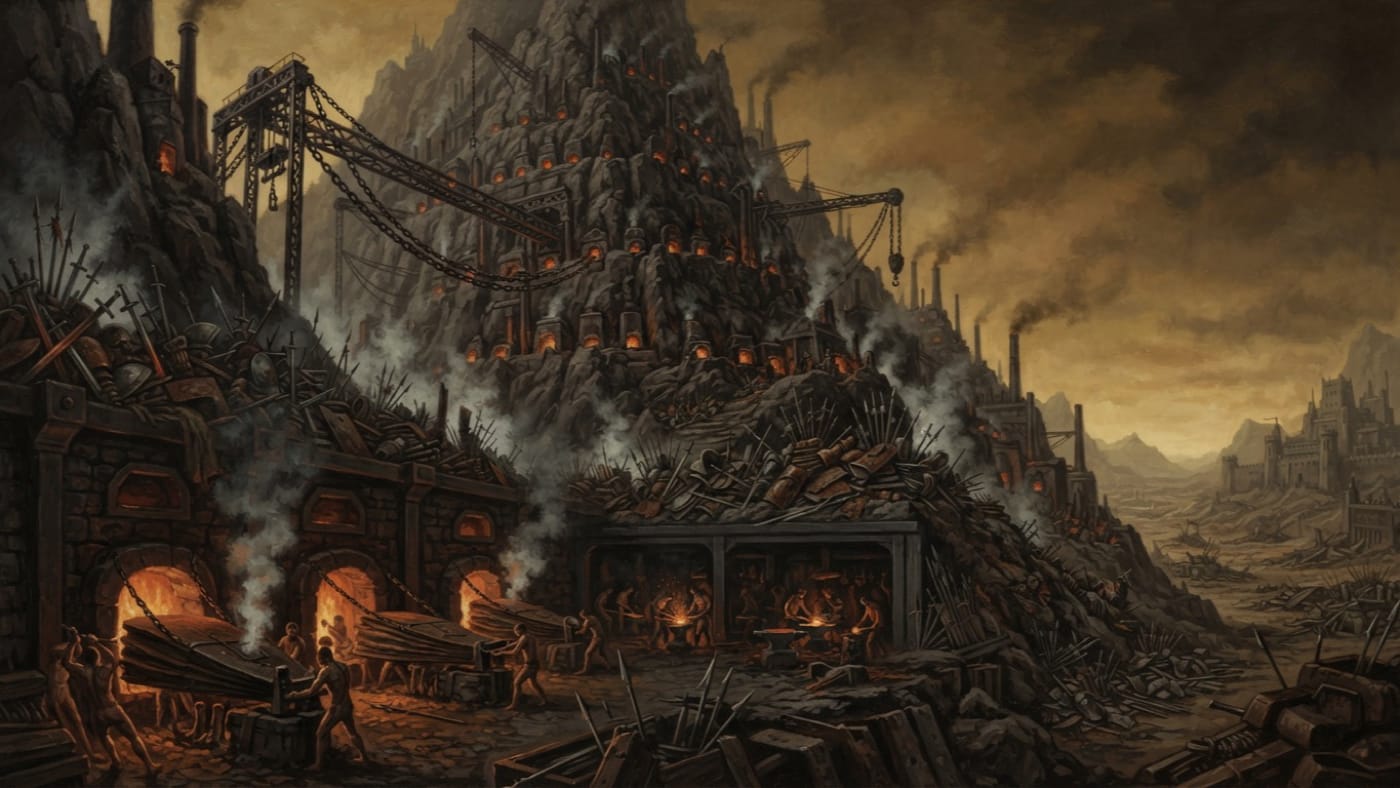
Eternal Forges
Wrath keeps producing. The bellows still need people.
Maldrake's mountain forges in the Thracian highlands produce arms and the Hammered without orders or inventory. Enslaved humans work the bellows until their lungs fail. The weapons are surplus; the people are spent.
Codex Ref. VI.1.03-003
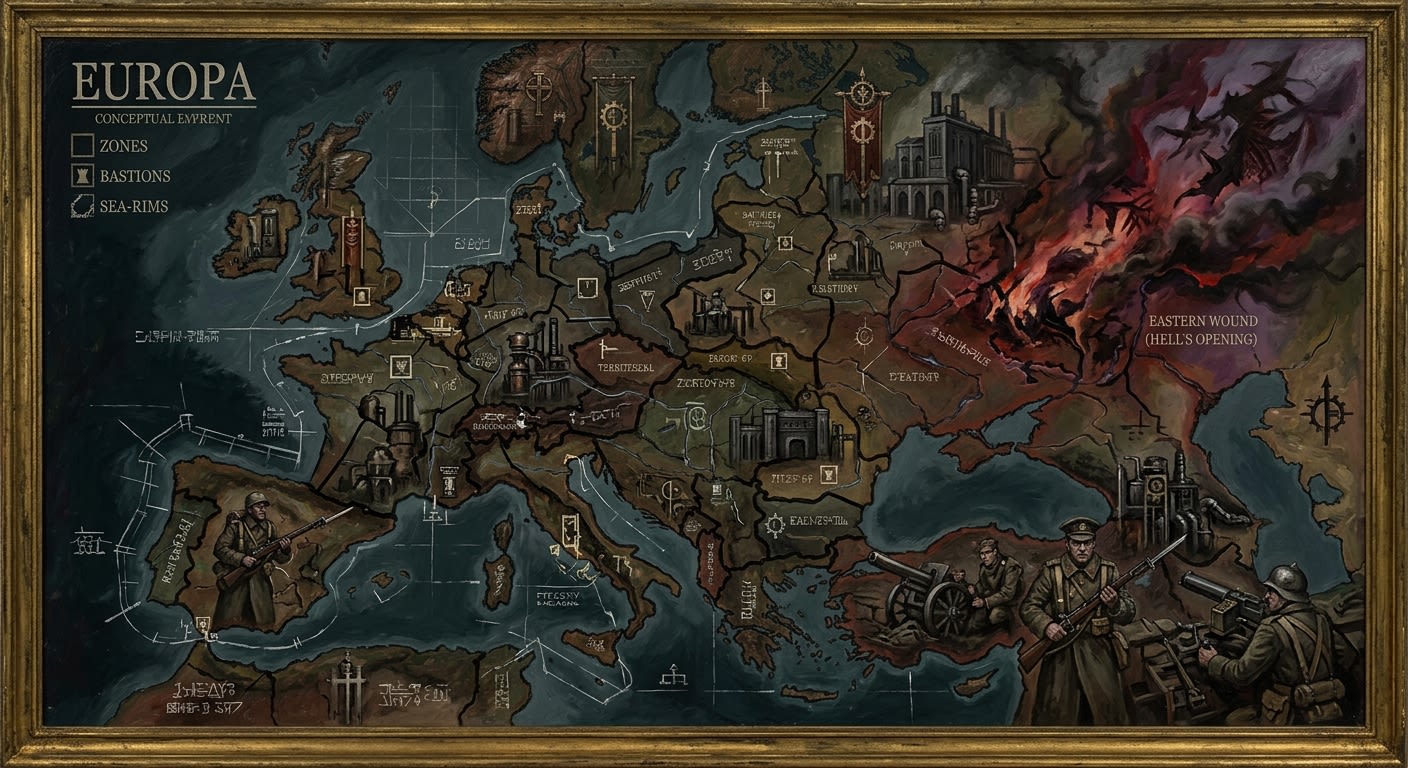
Europa
The continent as filed, wounded, taxed, and made obedient enough
Europa is not whole; it is the continent filed into zones, bastions, sea-rims, independent nuisances, and the eastern wound Hell keeps open.
Codex Ref. II.0.00-201

Europe
The wounded continent, held together by rails, bells, hunger, and denial
Europe is the wounded continent: Synod west, Charnel east, Line between, and every road, harbour, cradle, ration card, bell, and grave bent toward survival.
Codex Ref. II.0.01-201
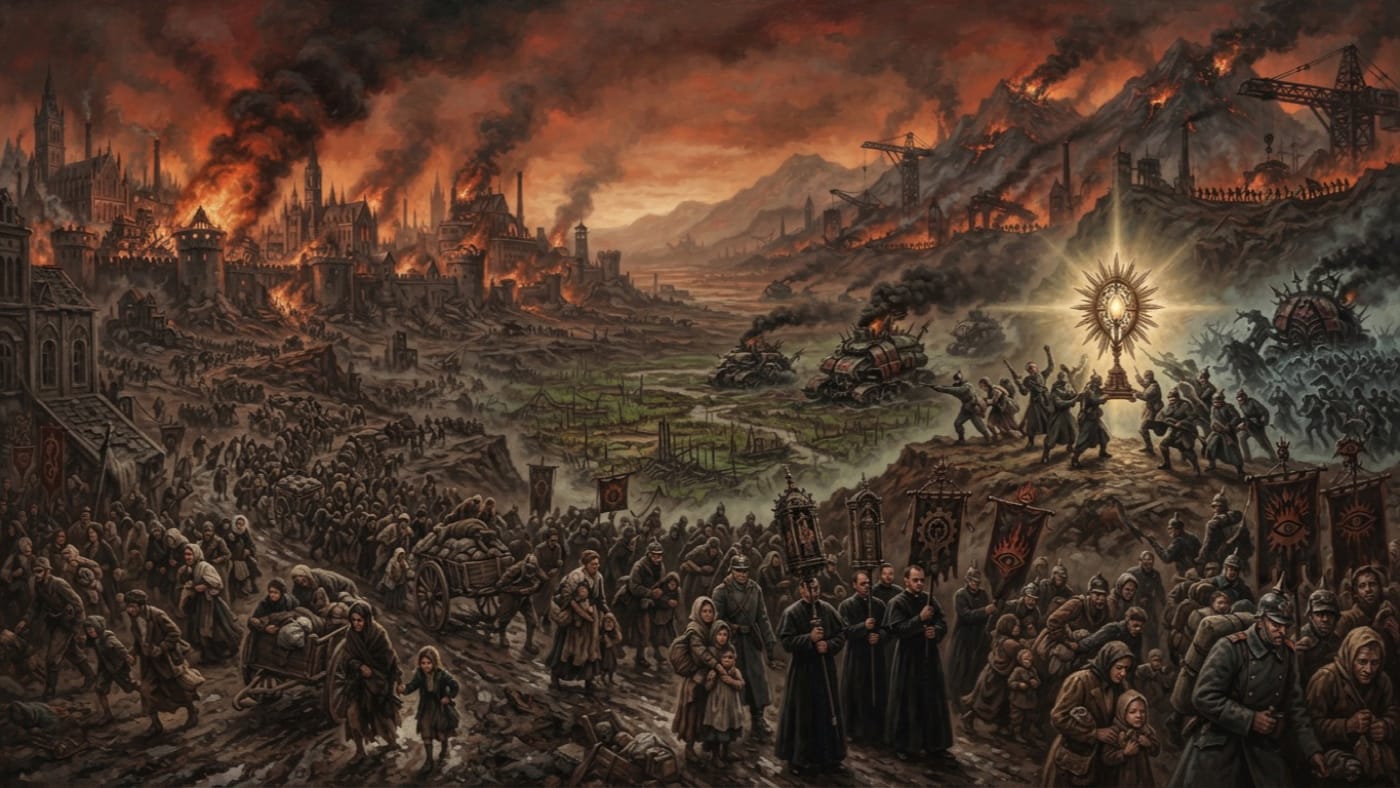
Fall of the Eastern Kingdoms
The Kingdoms Fell; Their Accounts Remain Open
The eastern jurisdictions collapsed after the Sundering of A.S. 45: garrisons burned, granaries failed, and refugees fled west. I retain their accounts in the Ledger; occupation does not constitute permission to forget.
Codex Ref. VII.1.02-001
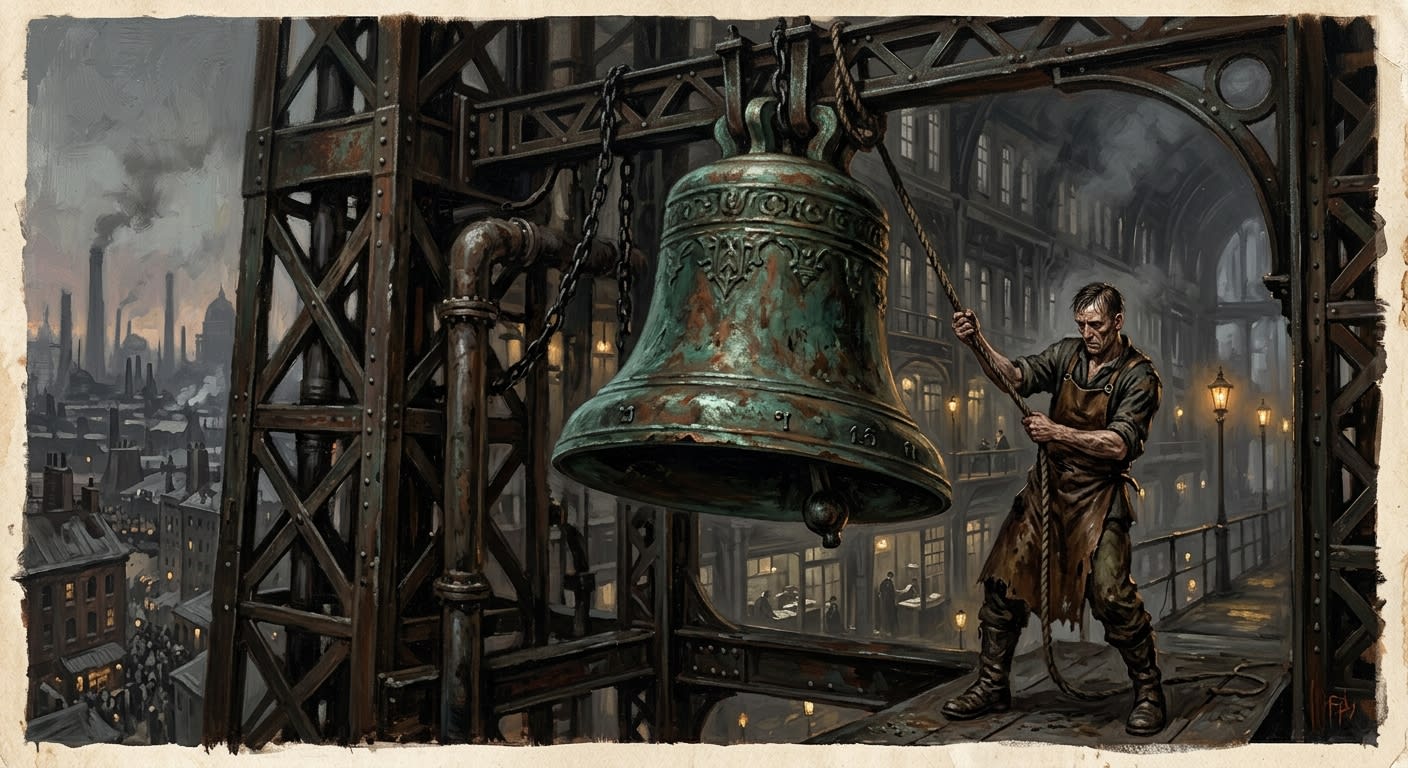
Fames (Bell)
The hunger bell of Strasbourg, whose receipts frighten wiser governments than drums
Fames is the Tower of the Quill's middle bell, tolled for rationing adjustments when hunger becomes too official to remain quiet.
Codex Ref. XIII.1.72-005
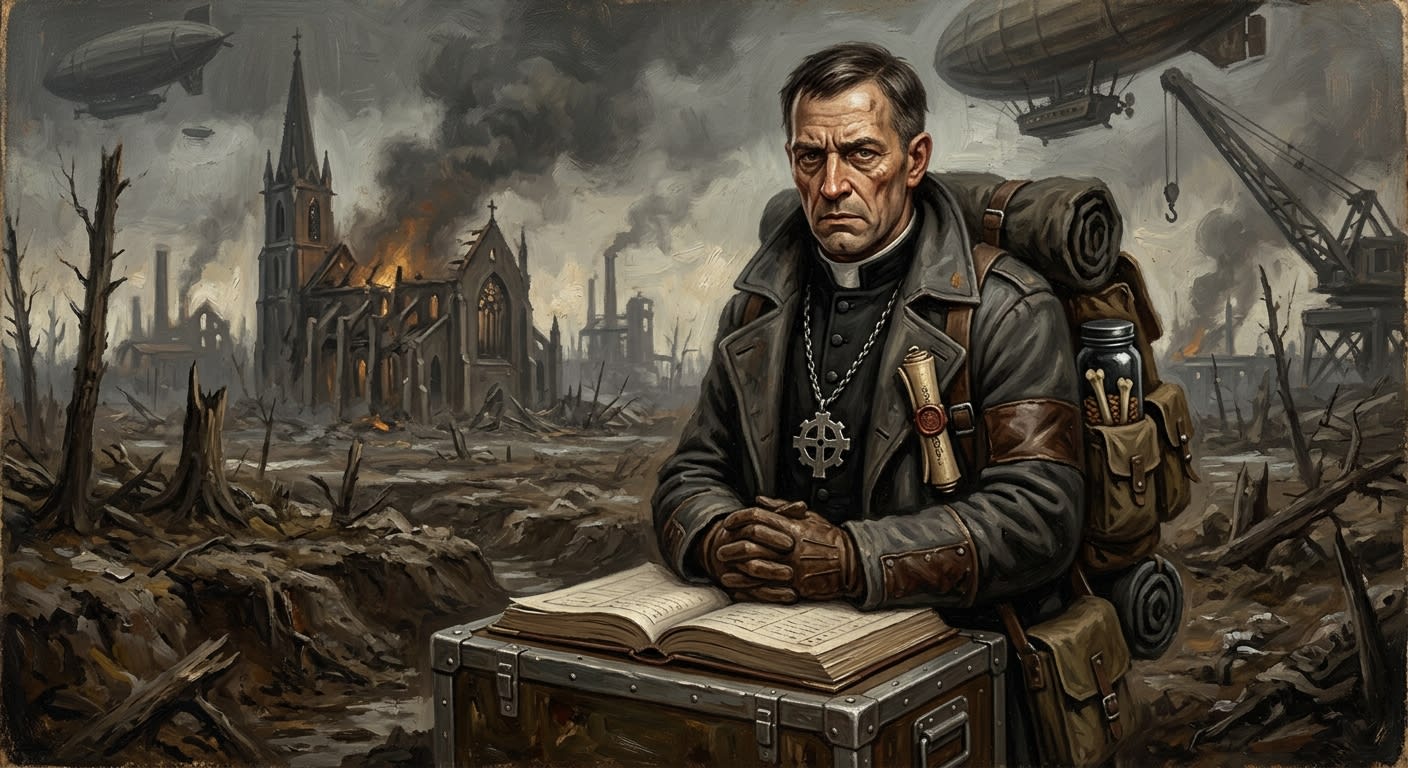
Father Ignatius of Cologne
The clerk whose breadbasket outranked an empire
Ignatius Brenner, parish clerk of Cologne, carried three apostolic phalanges beneath black rye in A.S. 31. The fire at Kalnik arrived seventeen years later.
Codex Ref. III.2.01-043
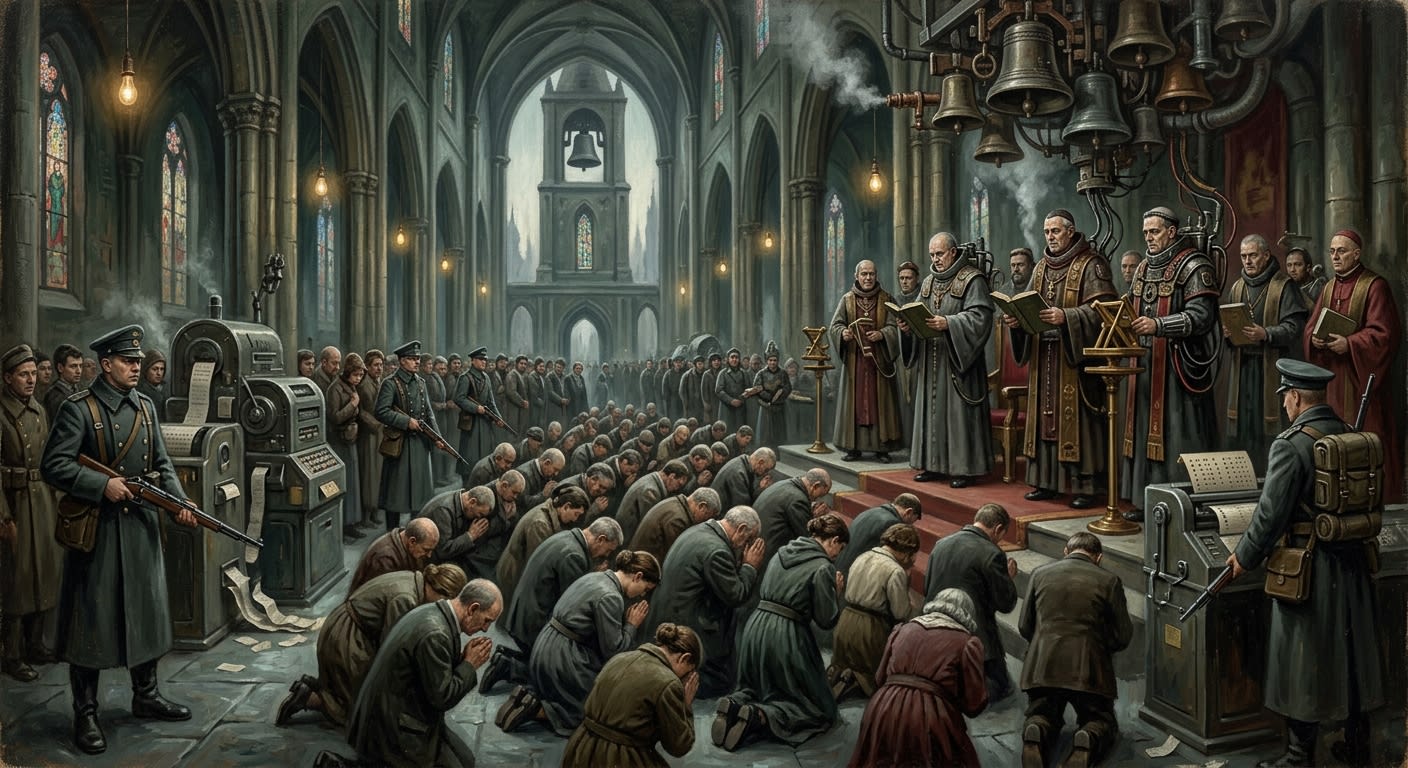
Feast of Doctrinal Submission
The holiday that teaches the spine to kneel before the mouth calls it faith
The Feast of Doctrinal Submission is the Synod's mandatory kneeling holiday: census, pageant, ration queue, loyalty assay, and permitted joy under bells.
Codex Ref. XIII.1.89-072
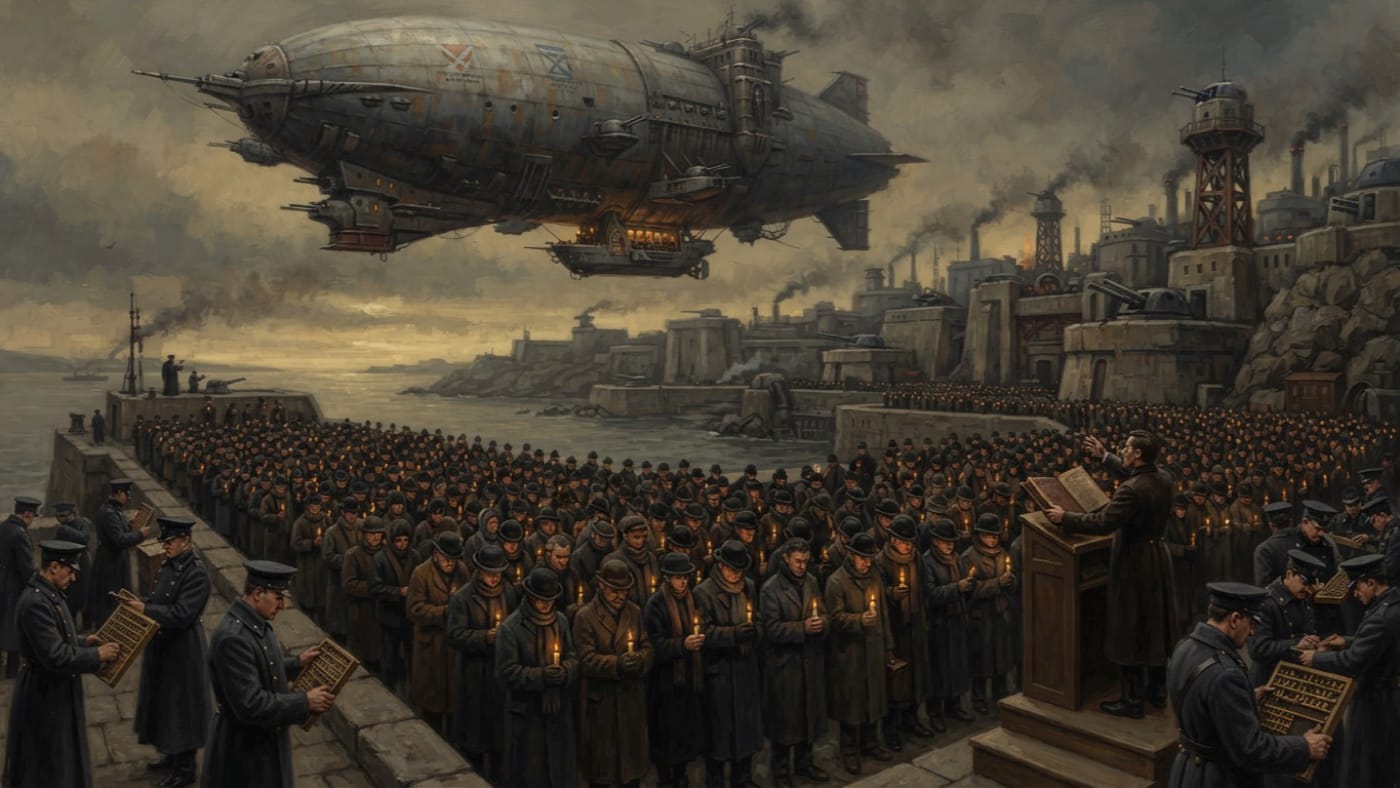
Feast of Saint Barachiel
The calendar gave the sky a patron and the weapon an appropriation
Ratified in A.S. 167 and bound to the Ark's first ascent in A.S. 168, Saint Barachiel's feast supplies lawful witness, counted candles, and the holy protection of a military budget.
Codex Ref. XIII.1.89-167
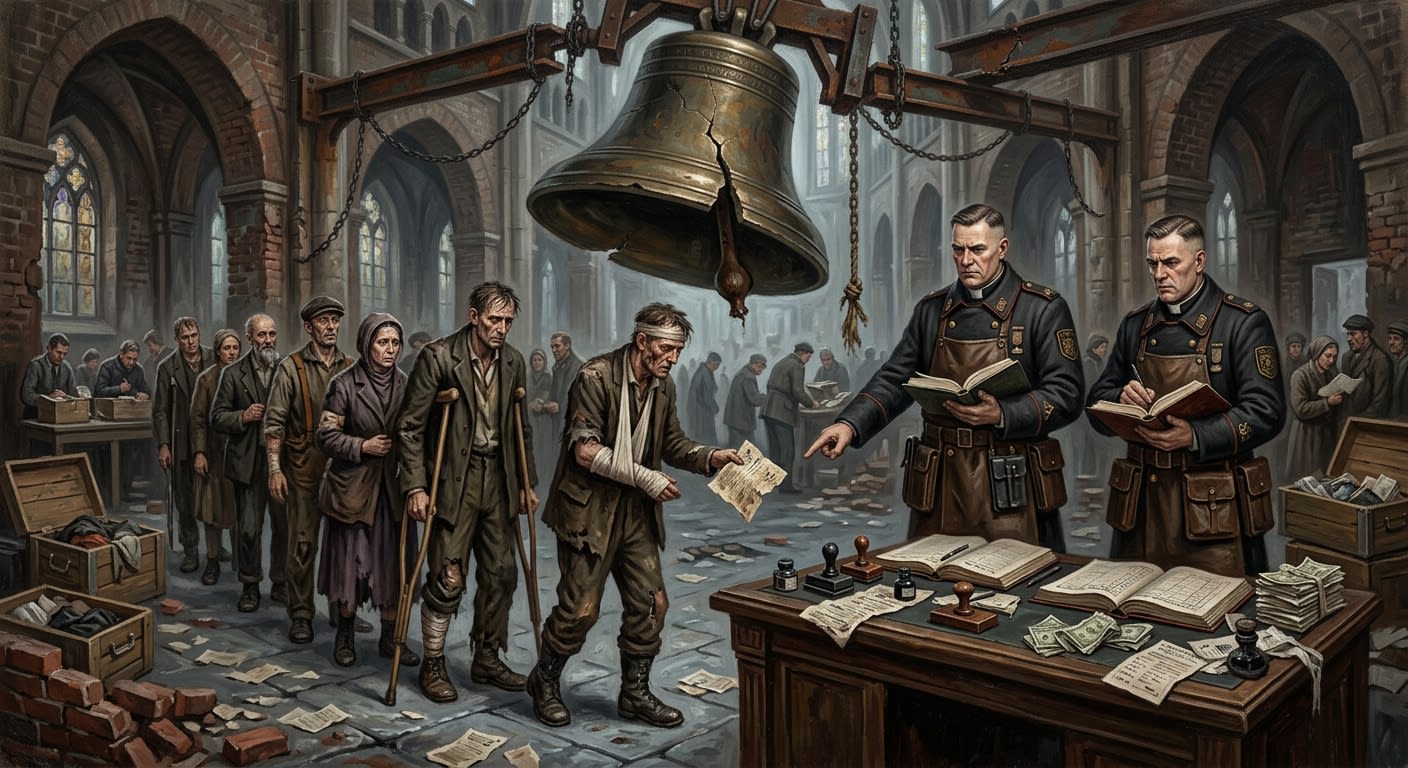
Feast of the Cracked Bell
The damaged bell still tolls, therefore the damaged citizen still owes
The Feast of the Cracked Bell teaches the Synod's favourite mercy: broken things may still serve, so damaged citizens may still be counted, tolled, and taxed.
Codex Ref. XIII.1.89-201
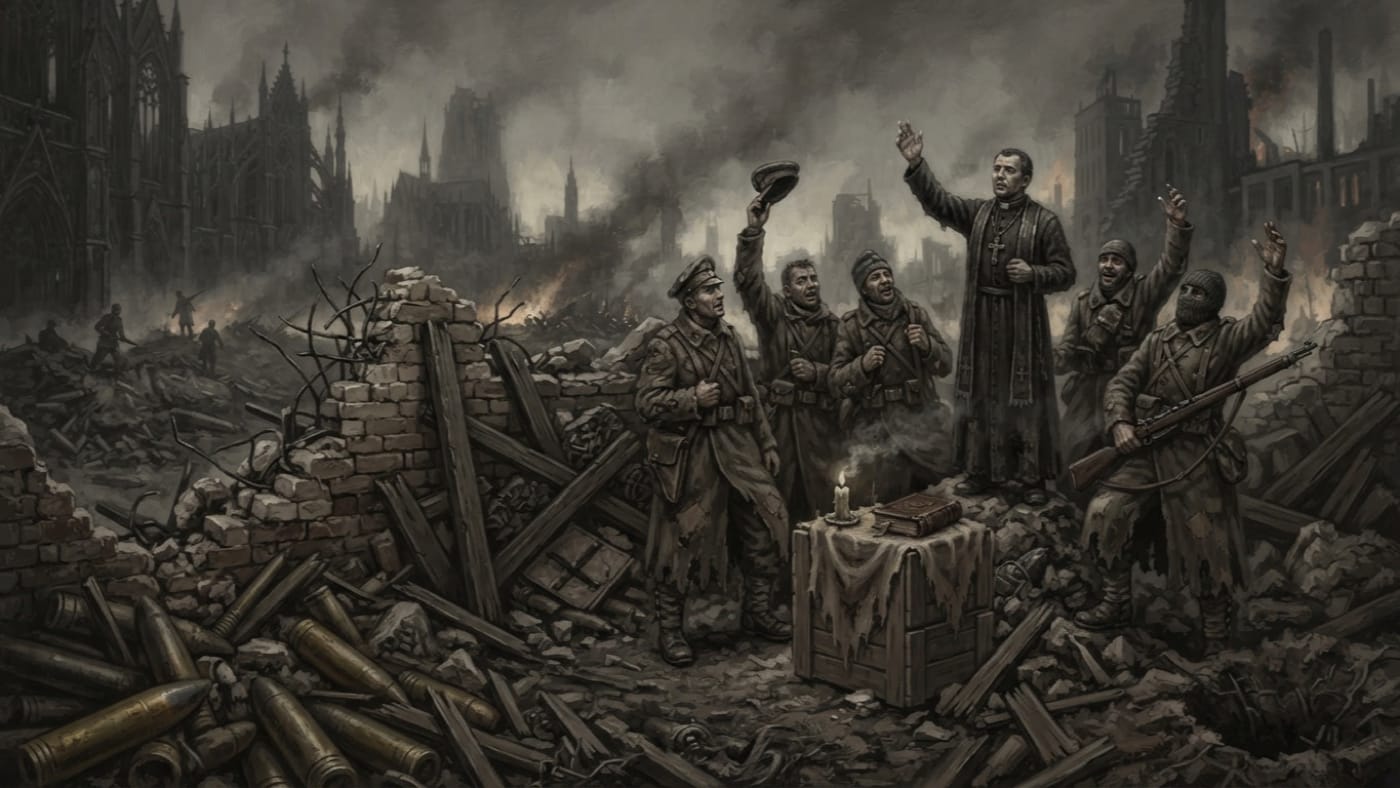
Feast of the Unbroken Wall
The wall held; the bureaucracy arrived later
A surviving barricade, an unnamed priest, and one unscheduled cheer in A.S. 52: the Bureau of Festivals' founding precedent. The wall held; the bureaucracy arrived later.
Codex Ref. VII.8.10-1050
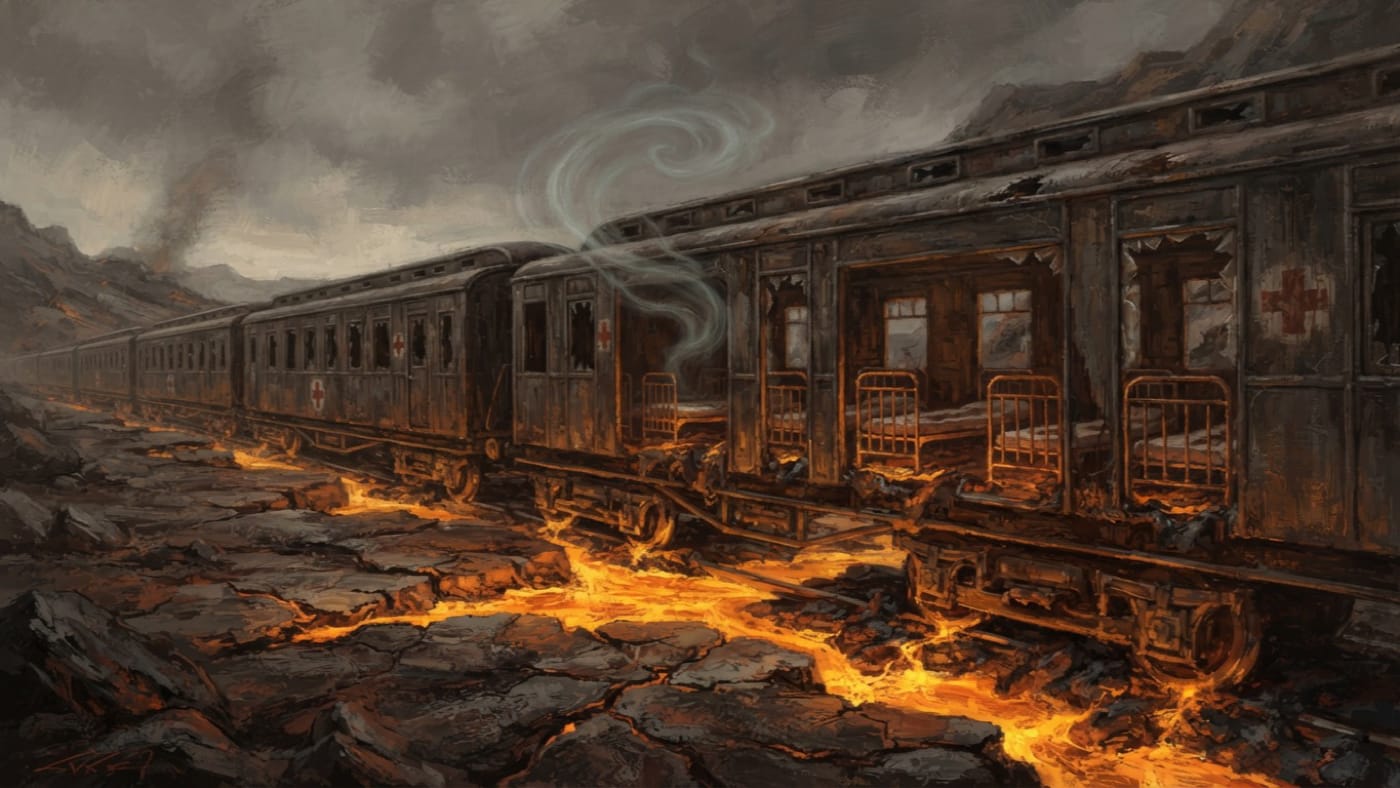
Ferrum-17
The river moved; the beds stayed warm
Ferrum-17 diverted beneath an abandoned hospital train in the Iron Wastes in A.S. 197. The salvage note counts 112 bedframes, warm mattresses and no remains. The river's present course is undocumented.
Codex Ref. VI.1.03-017
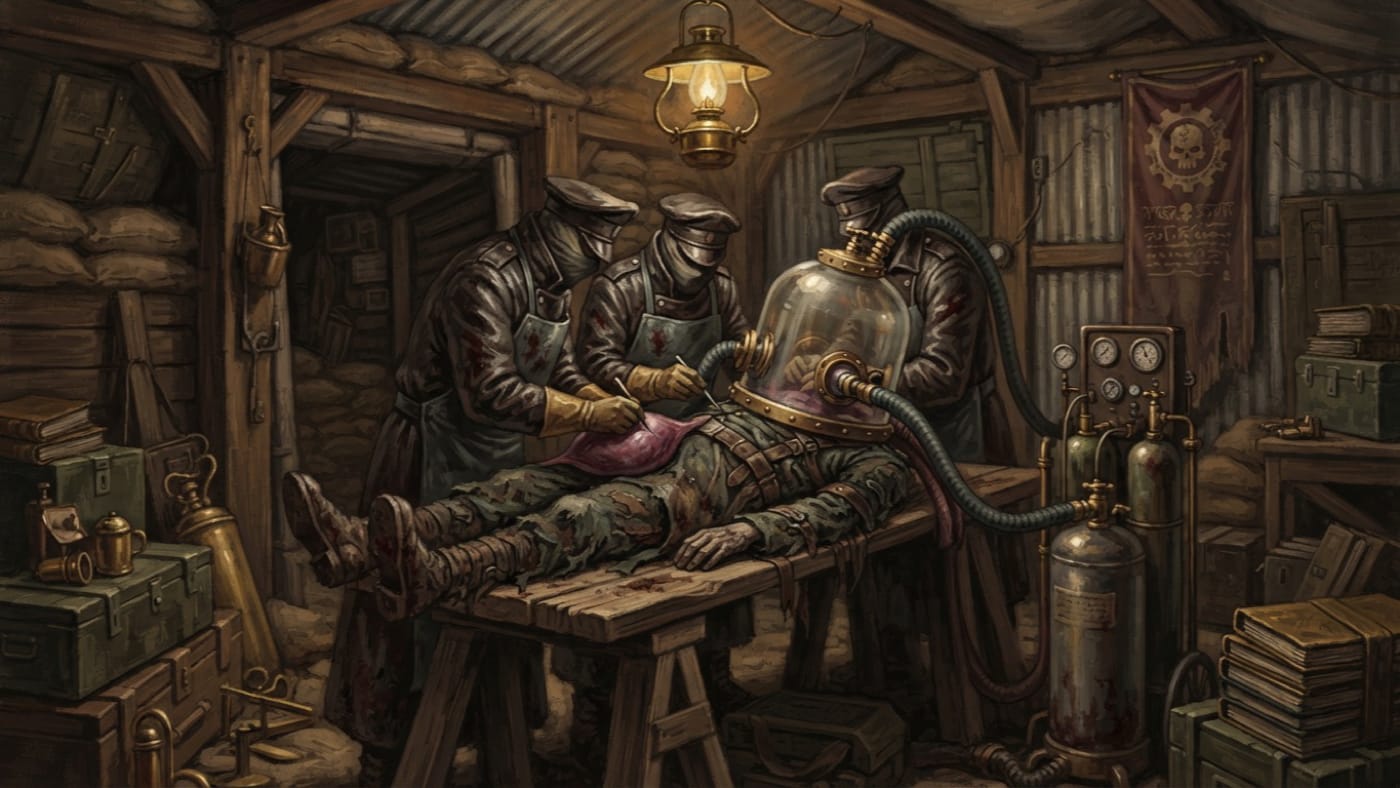
Field Autopsy Protocol 14-D
Three lost, one silent, and the capital letters remain.
The Bureau of Medicine's recorded A.S. 193 prohibition on incising Gore-Slinger sacs without full containment apparatus. Three field surgeons were lost; the fourth survived and has not spoken since.
Codex Ref. XIII.1.74-193
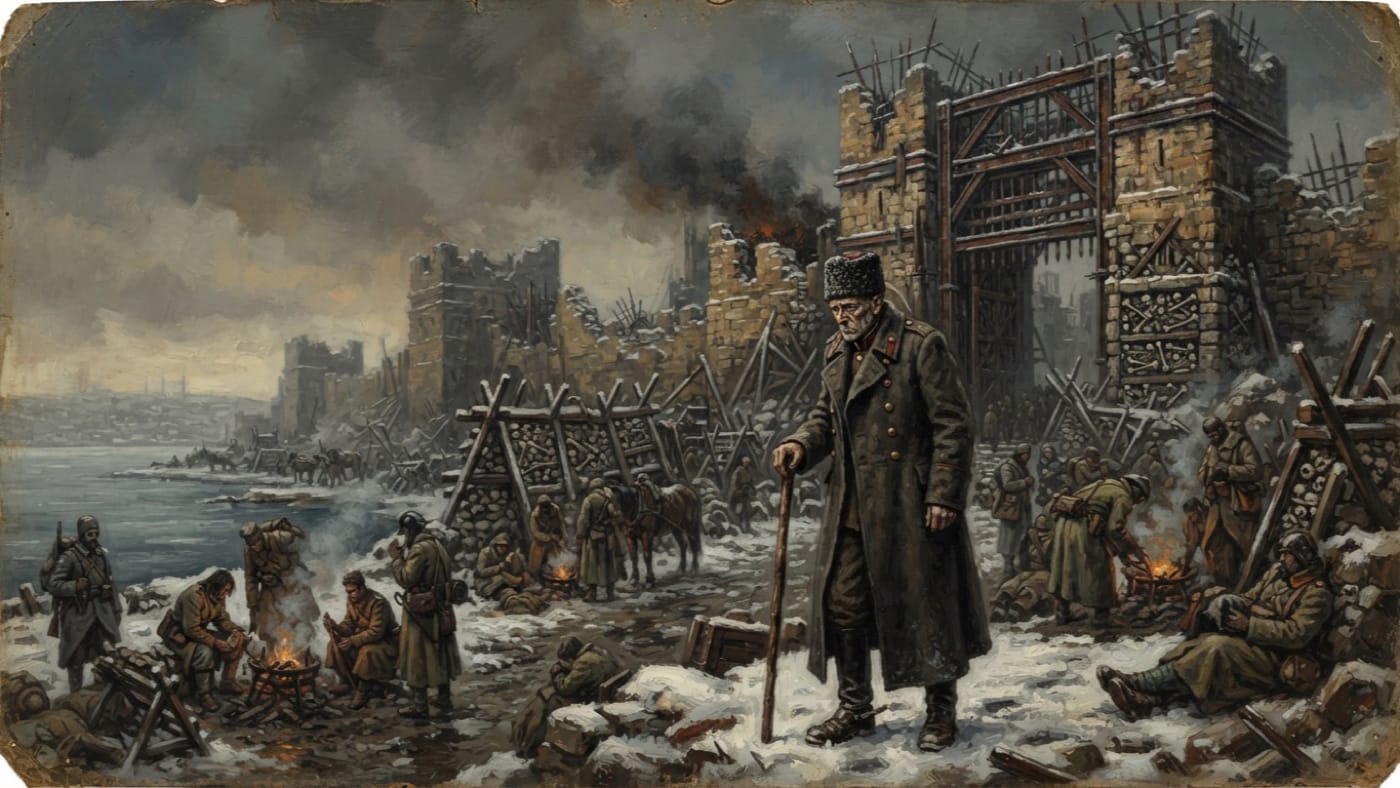
Field-Marshal Edras
A winter's halt, remembered in masonry
Field-Marshal Edras halted at ruined Constantinople in winter A.S. 47. Drax blames his boots and legs; the Bastion remembers him with a gate. The record grants him a rank, not a career.
Codex Ref. III.2.02-047
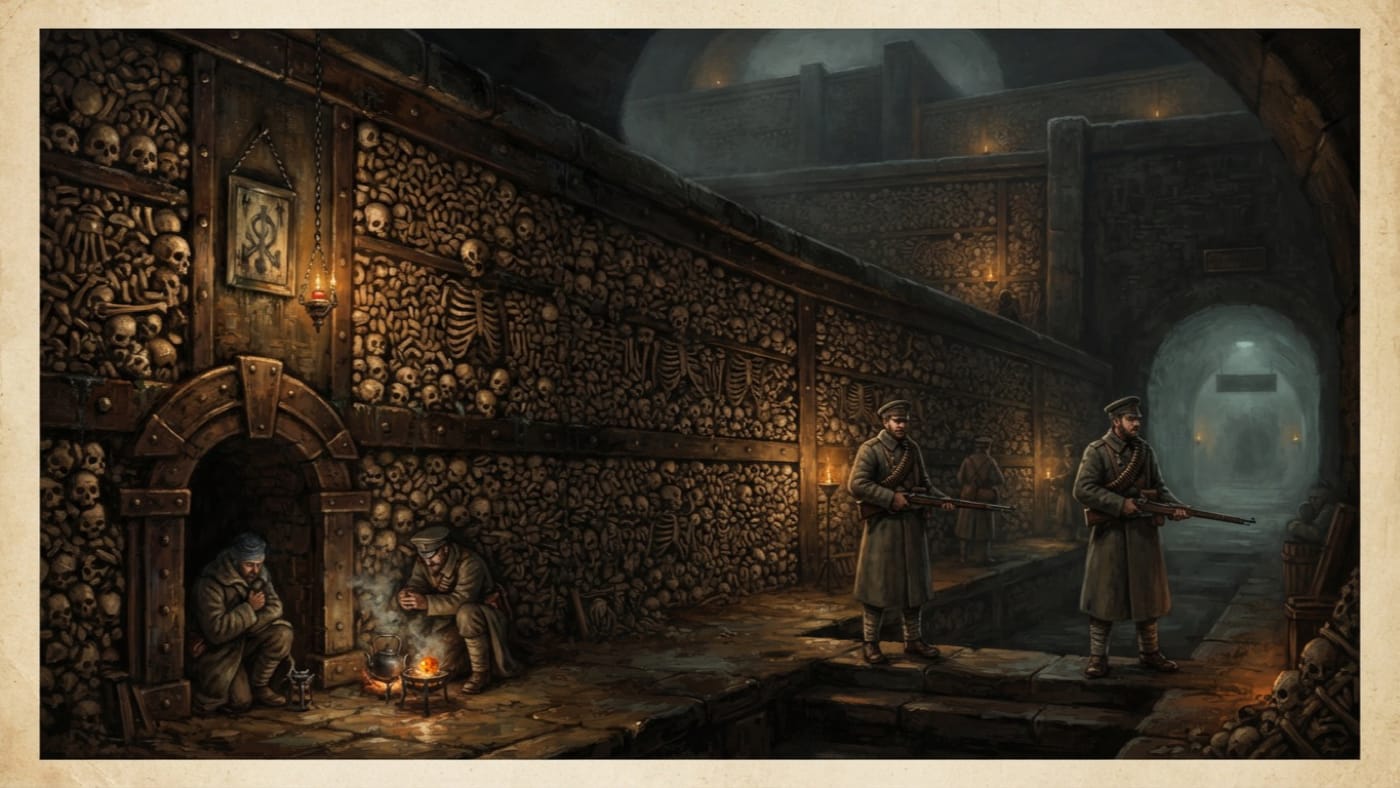
First Ossuary Ring
The dead remain on duty
The oldest bone-built wall of Bastion-Constantinople, accreted from the Continental Levy's graves in the winter of A.S. 47. Standing, garrisoned and consecrated by attestation. The dead remain structural; their service has not concluded.
Codex Ref. II.4.10-047
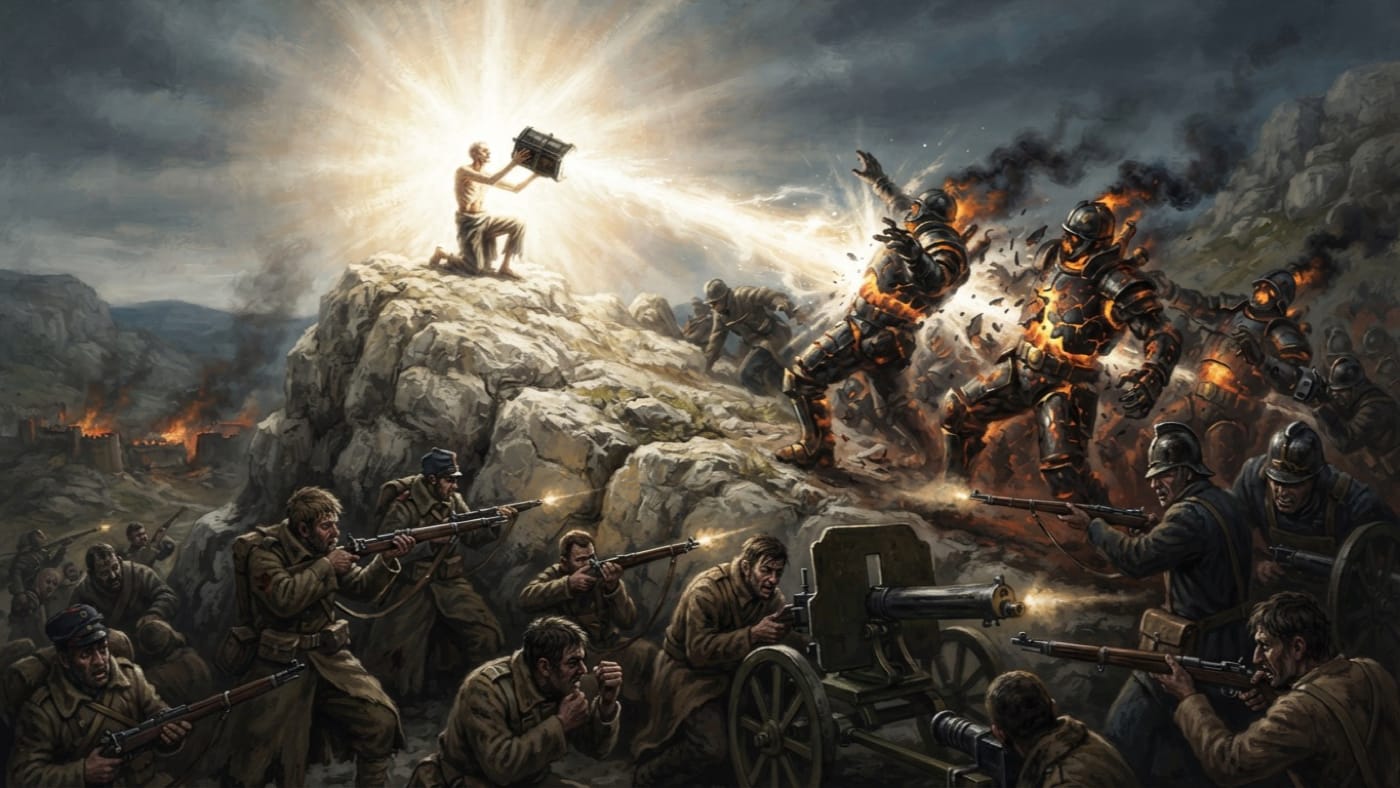
First-Order Miraculous Emission
The enemy recoiled; the rubric remains undefined
At Kalnik Ridge in A.S. 48, seventeen relics checked Maldrake's vanguard. The Bureau later filed the blaze as First-Order Miraculous Emission, Category: Martial; it neglected to define First-Order.
Codex Ref. VI.3.01-048
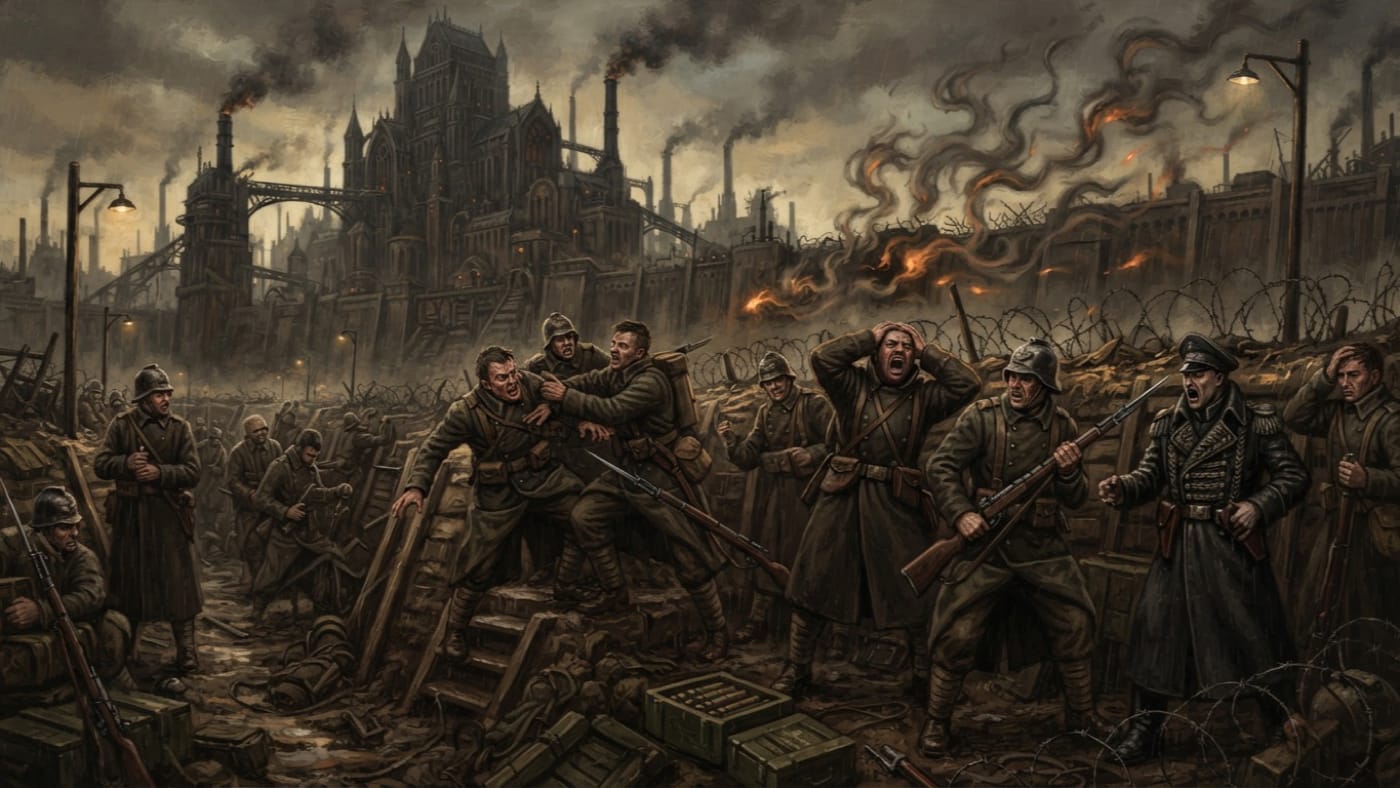
Flame-Tongues
A furnace needs no argument. It needs a draught.
A.S. 201 survey of Maldrake's Flame-Tongues: demons that scream provocation and feed when fighting begins. In Synod territory, the listener still chooses what his hands do.
Codex Ref. IV.2.1108-201
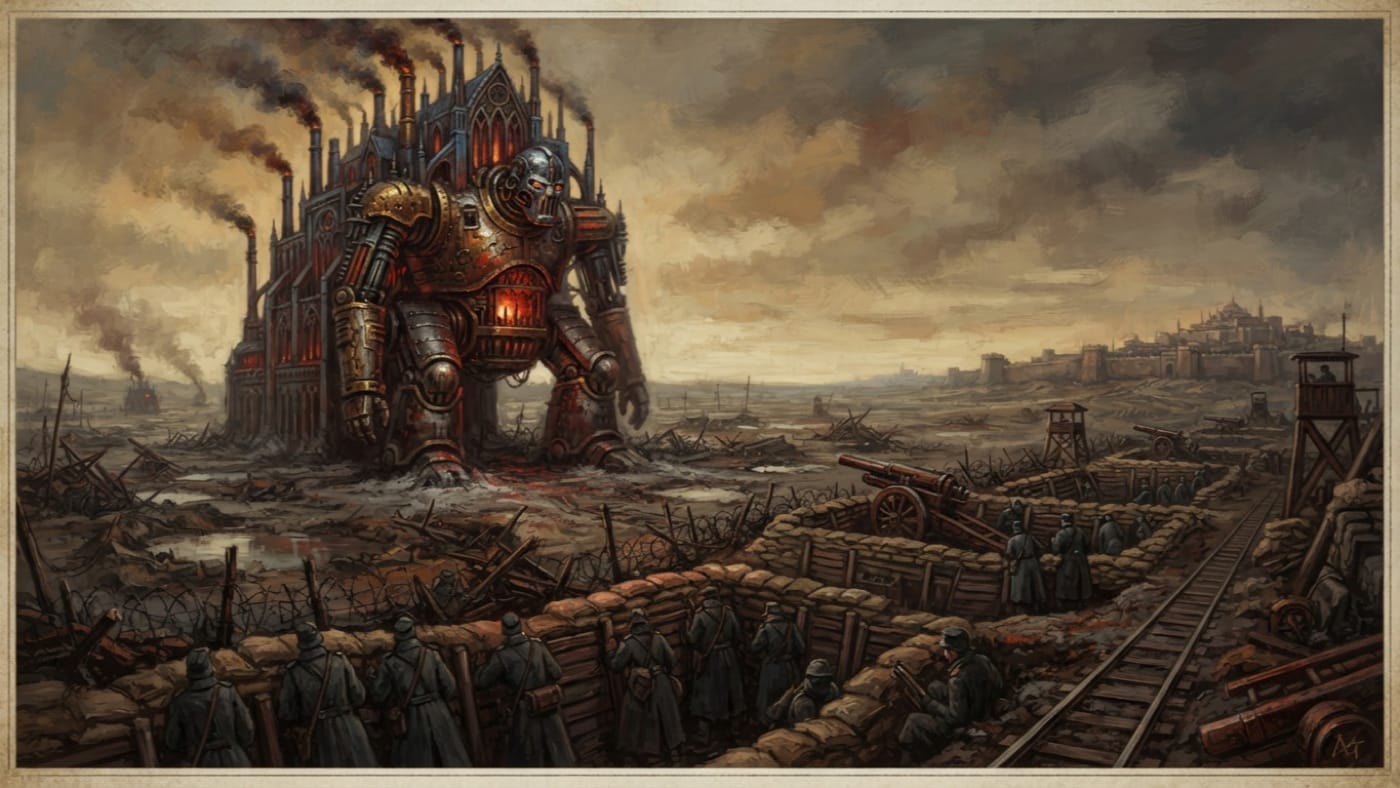
Flameheart Colossus
The weapon that leaves a column open
Maldrake's singular siege weapon: a furnace-wrought giant recorded at grid 4-9-7 on the Thracian Plain in A.S. 194, still motionless in the A.S. 201 dossier. War finds its stillness worse than movement.
Codex Ref. IV.1.07-011
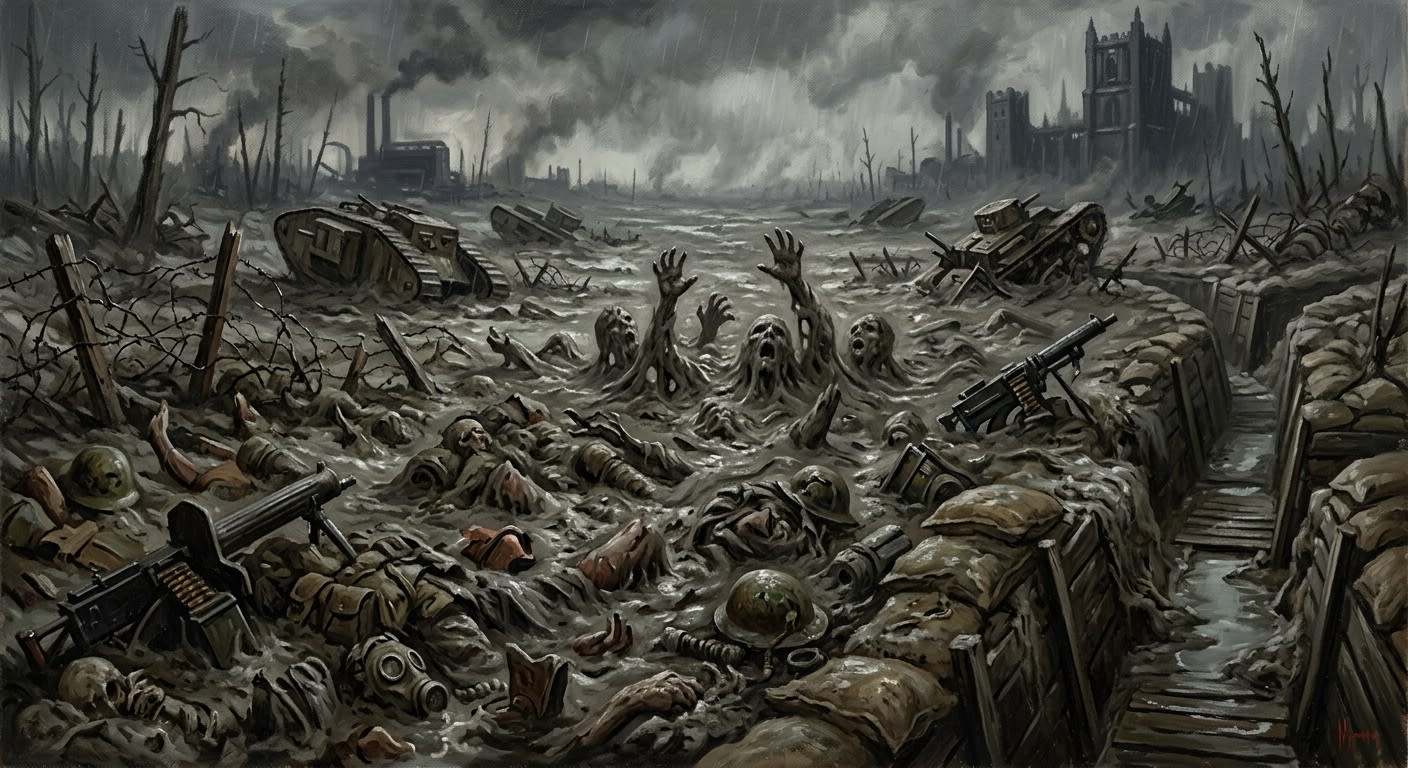
Flesh-Mud
The trench remembers what the grave failed to finish
Flesh-Mud is No Man's Land with appetite: trench mire made from rain, bone, grief, and the administrative failure to bury men separately.
Codex Ref. VI.2.01-004
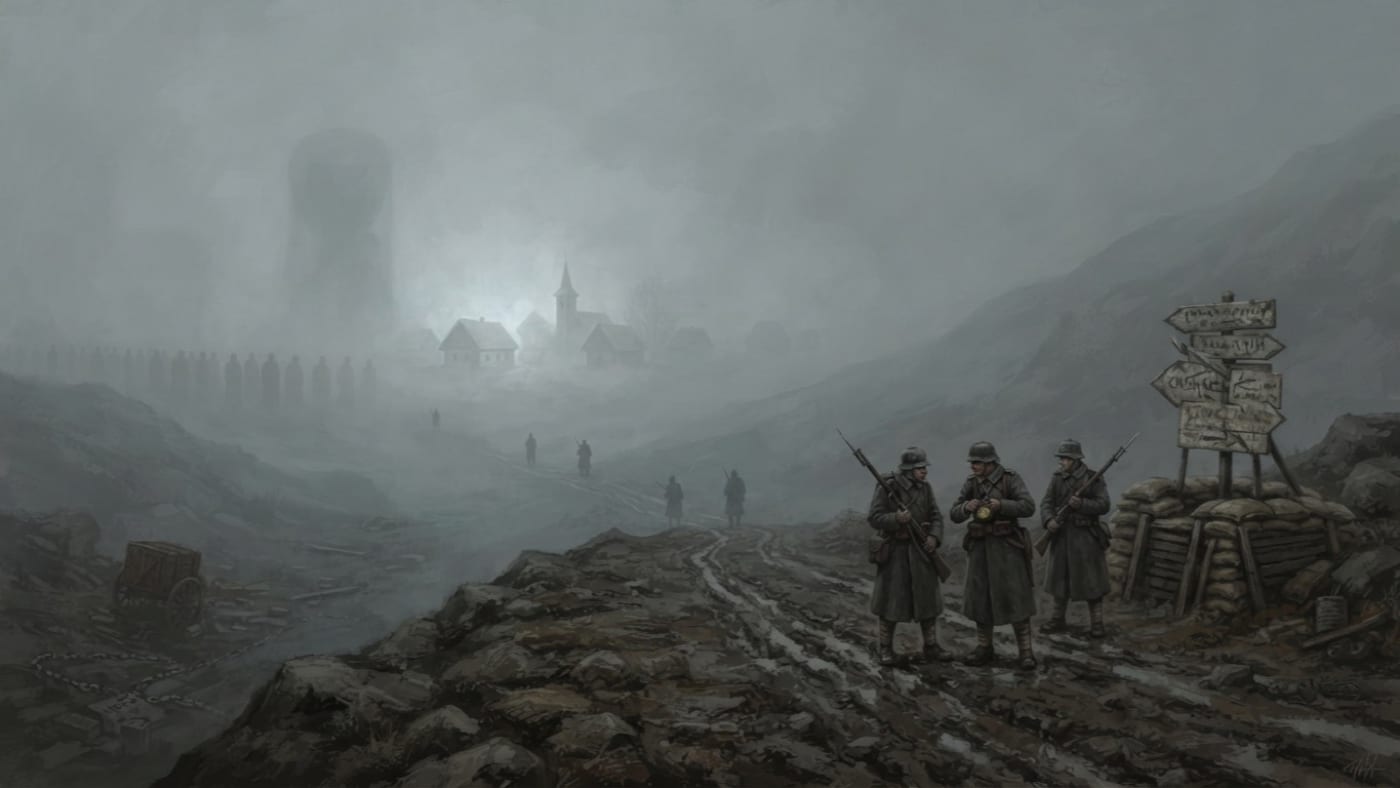
Fog Kingdoms
The pass is held. The boundary remains unsurveyed.
The soldiers' name for Syrion's unsurveyed fog beyond Shipka. The pass is held, the approaches contested, the depth occupied. The villages remain on the rolls; their letters go unanswered.
Codex Ref. II.6.08-201
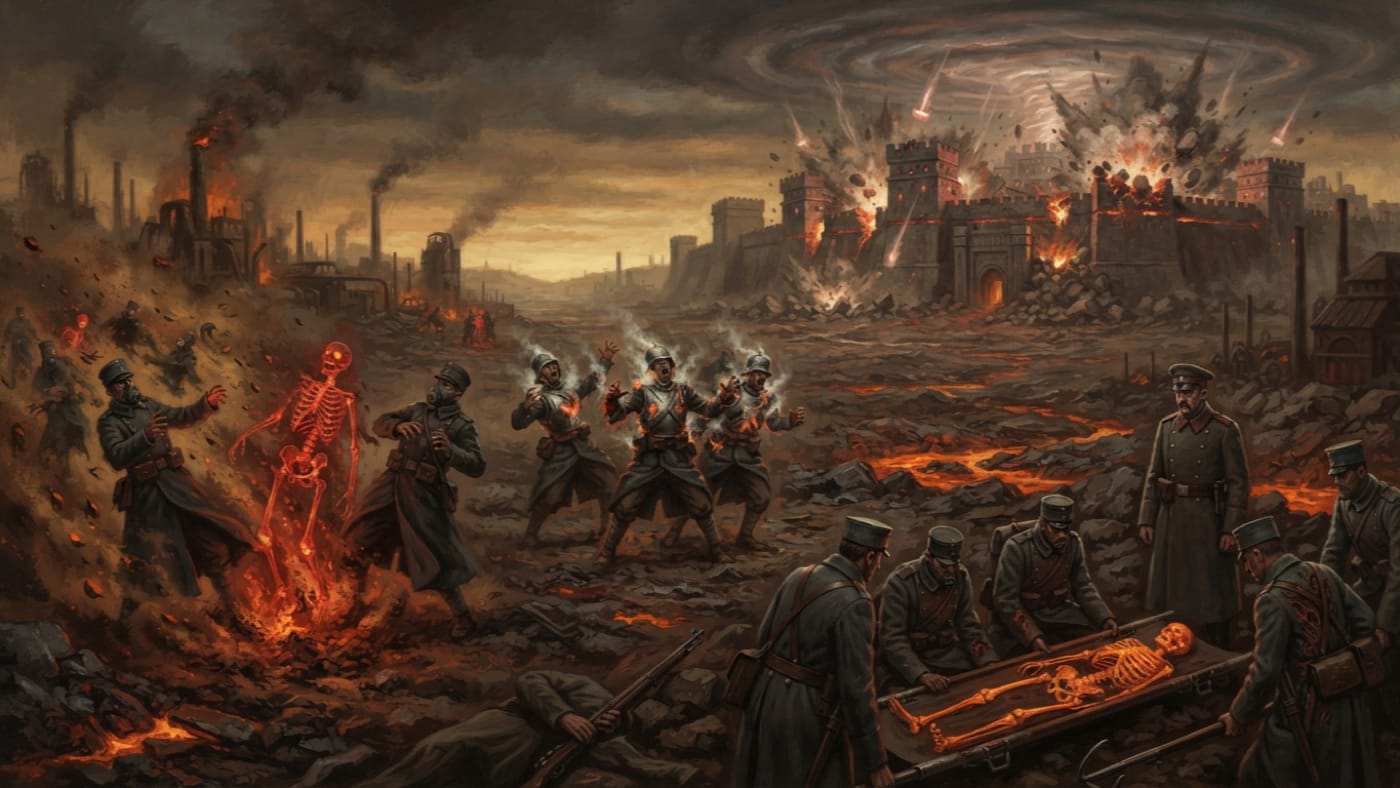
Forge Evocations
Molten rage hammered into spell-form
Maldrake's Forge Evocations turn Wrath into slag-storms, screaming armour and blows from an empty sky. Three manifestations are certified. The first use is unrecorded; the bones are recovered.
Codex Ref. VI.3.01-004
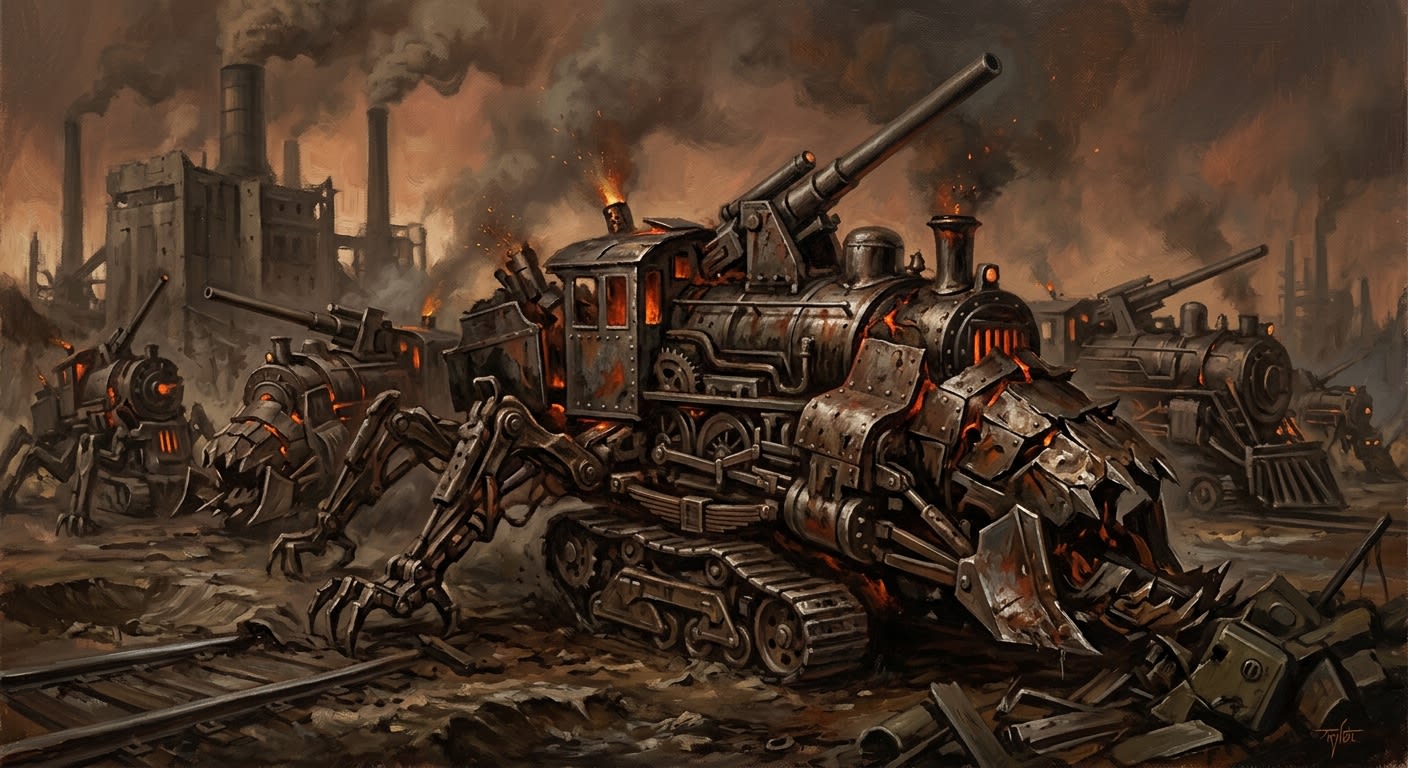
Forge-Beasts
The siege engine that learned appetite from Wrath
Forge-Beasts are Maldrake’s corrupted siege engines: captured Synod iron given appetite, crew-memory, heat, and enough hatred to keep moving.
Codex Ref. IV.1.07-010
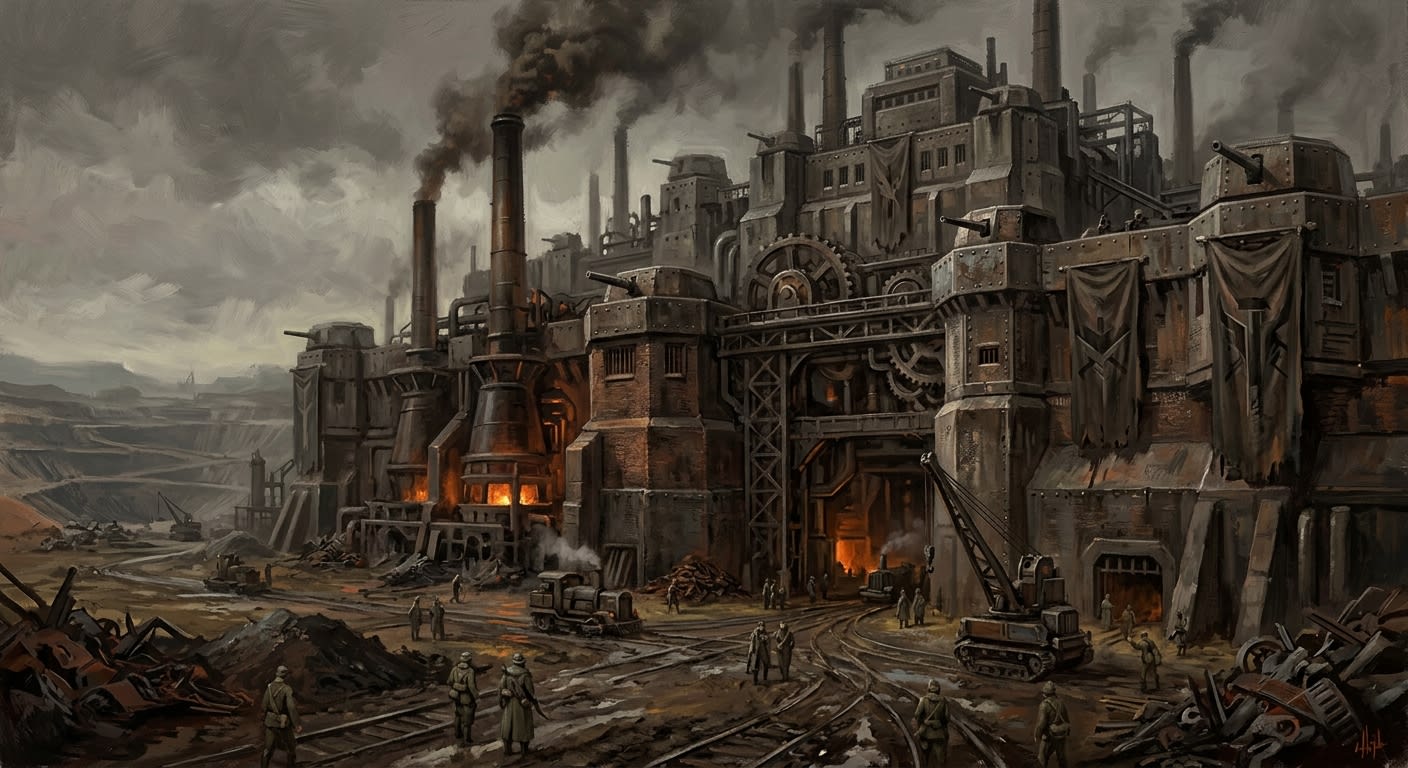
Forge-Pyre Bastion
The citadel that hammers distance into a theological inconvenience
The Forge-Pyre Bastion is Maldrake's unmeasured forge-citadel in the Iron Wastes, where Wrath manufactures walls, weapons, and reasons to hate.
Codex Ref. II.6.03-046
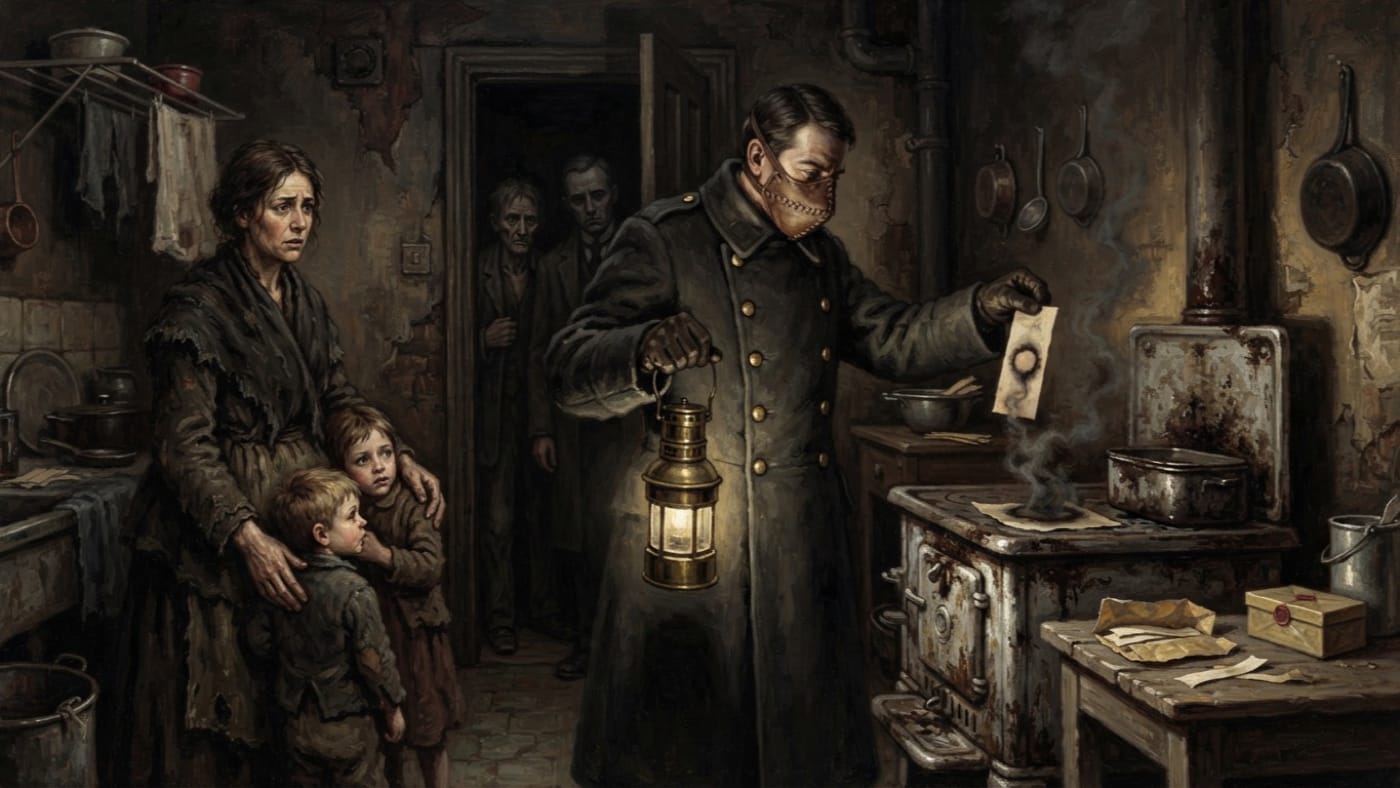
Fume Paper
The strip witnesses; the affidavit convicts
Reactive parchment issued to Ninth Mark inspectors: smoke blooms into coloured testimony, and a sealed affidavit turns the stained strip into authority over a household's stove.
Codex Ref. III.2.14-001

Gate of Correction
The manifest promised lime; the Foundry received three nights of fire
Gate of Bastion-Constantinople through which the first corrupted shipment of the Three-Night Bombard passed in A.S. 177, declared as mortuary lime. Its founding is unrecorded; its clearance cost the city three nights of fire.
Codex Ref. II.4.10-177
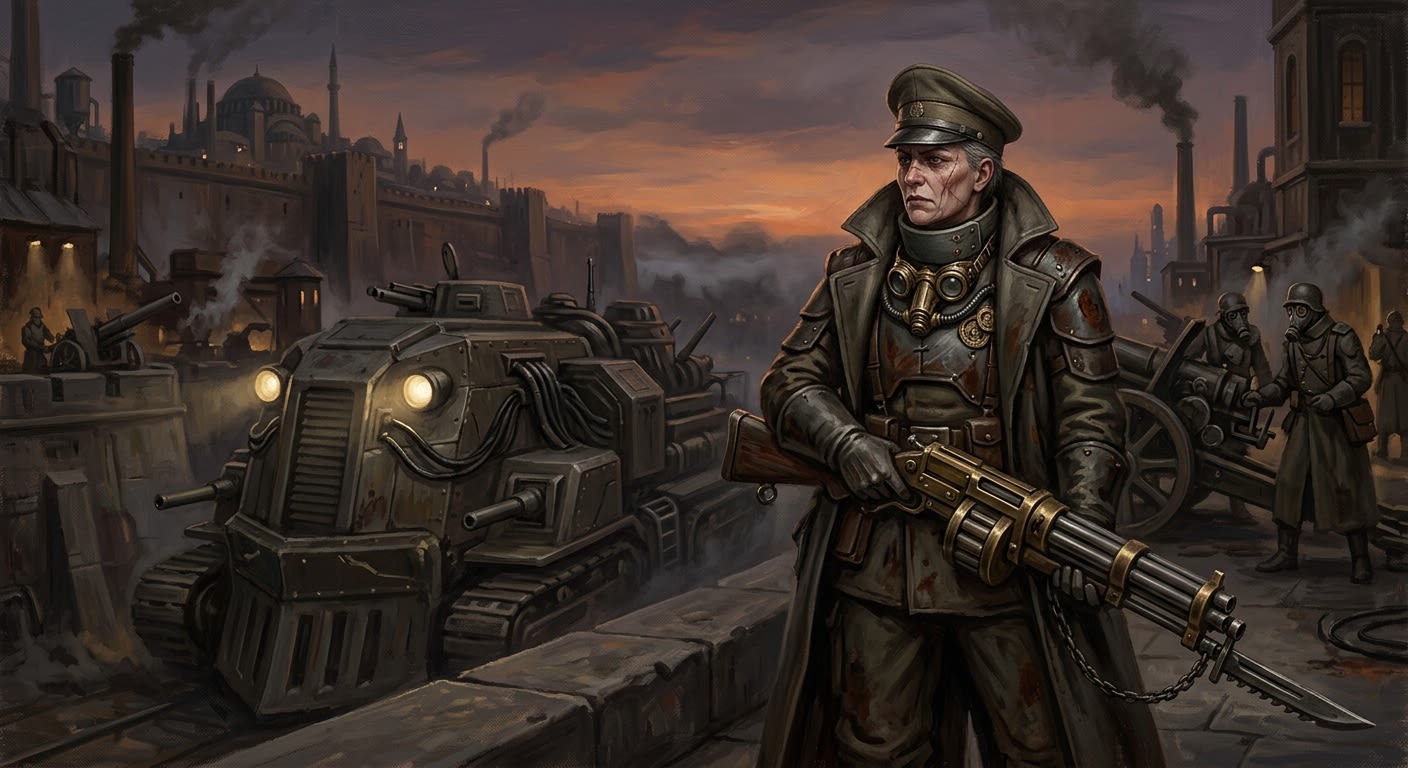
Gate-Warden Petra Valenne
The woman who taught a southern gate to keep its teeth shut
Gate-Warden Petra Valenne commands Constantinople's six ravelins, integrated the Vigil Ark Saint Barachiel, and made darkness retreat first.
Codex Ref. III.2.01-006
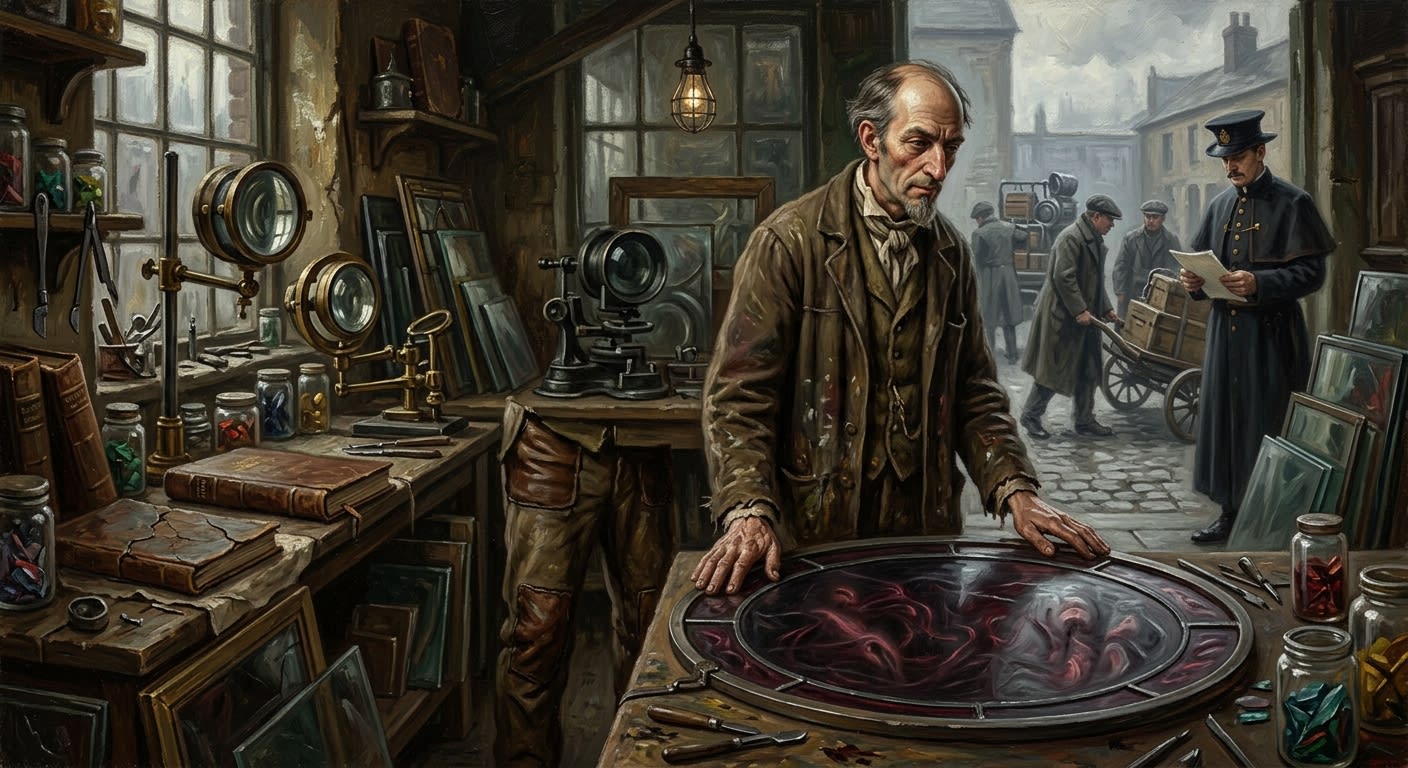
Glassman Dimo
The hand that makes Hell visible enough to invoice
Glassman Dimo, Thessaloniki Stainwright and tolerated contraband-optics master, certifies silence in demon-glass panes while War pays, Purity raids, and Doctrine pretends surprise.
Codex Ref. III.2.01-108
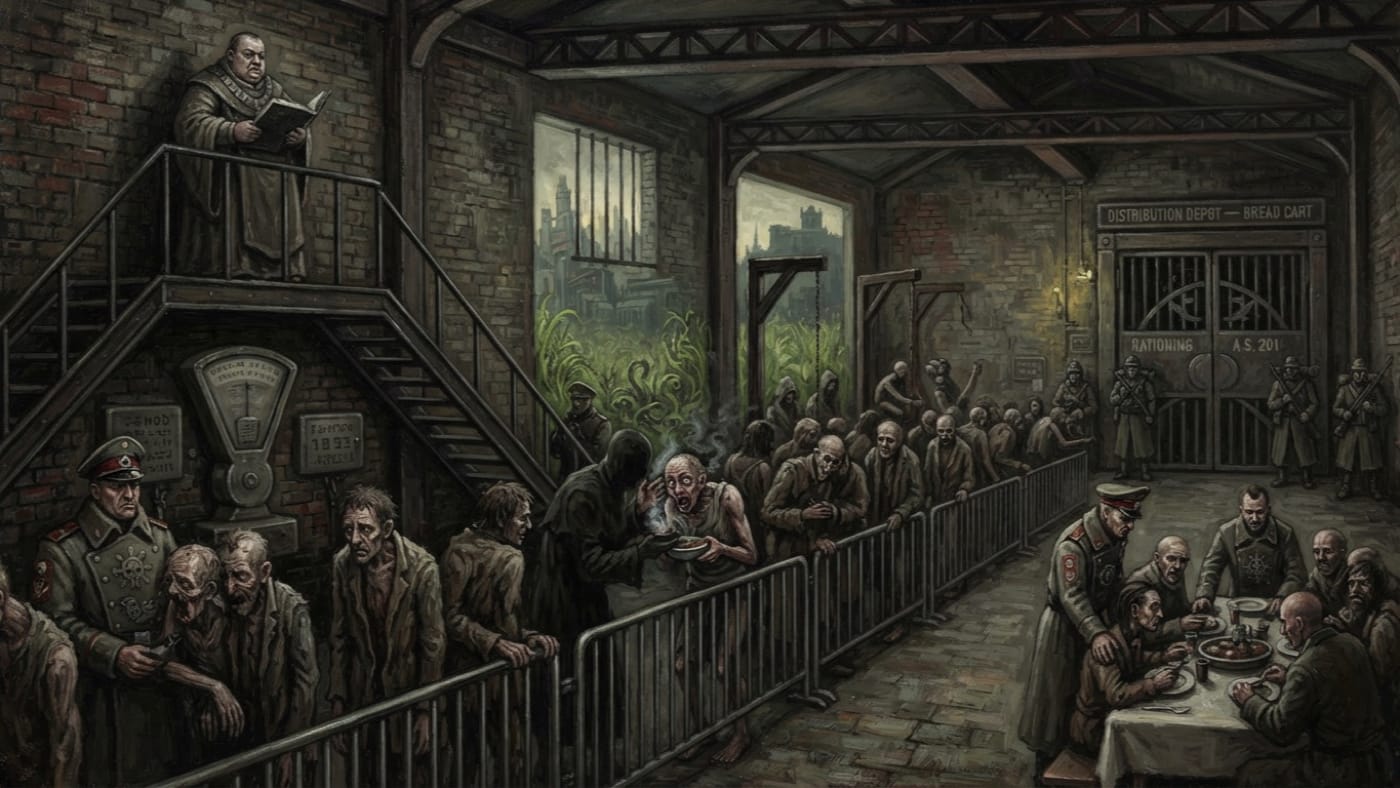
Gluttony
The Hunger That Survives the Feast
In this A.S. 201 survey, Gluttony is need that grows with feeding. Kargath offers relief before the hunger returns larger; the Synod answers with rationing, fasts and gallows. An empty stomach is no proof of a guilty soul.
Codex Ref. VI.3.01-003
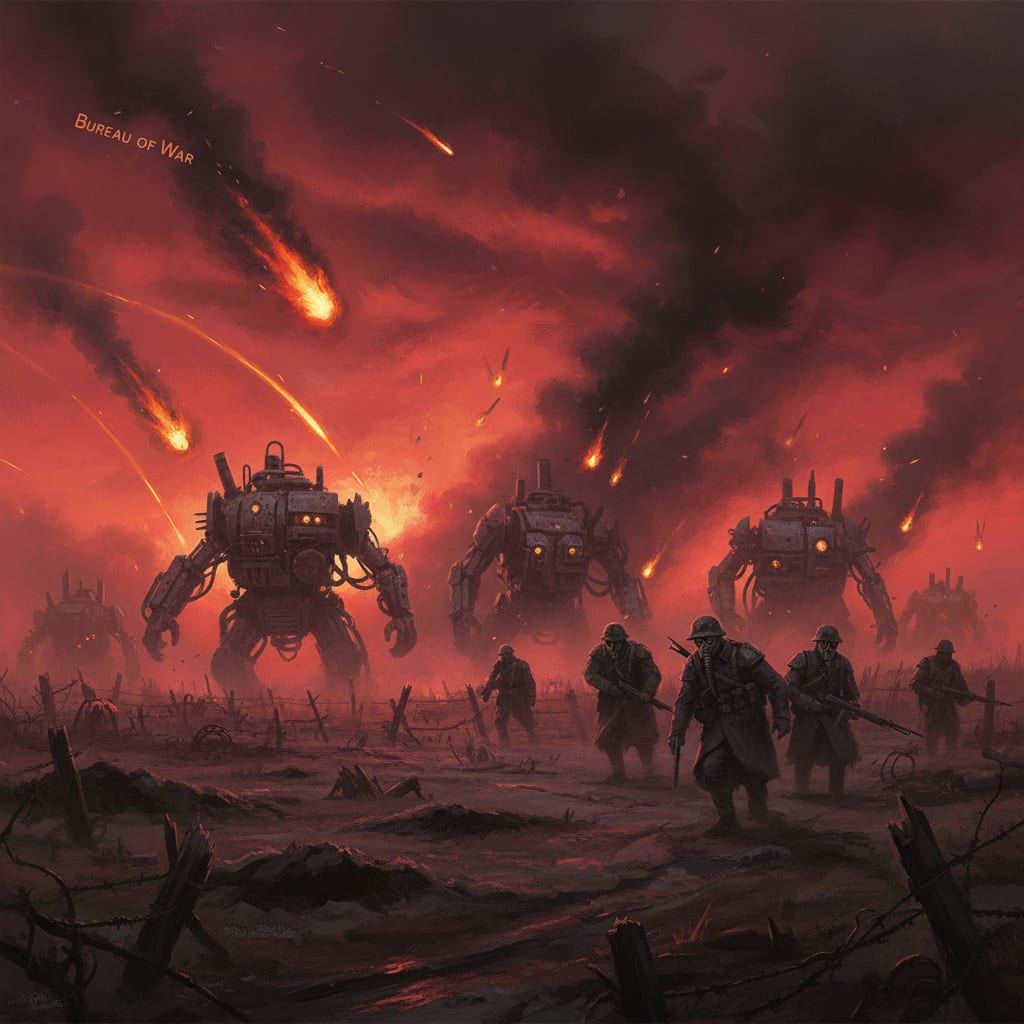
Gore-Slingers
Seven variants of the same atrocity, confirmed conscious, confirmed still producing.
The Bureau of War's least beloved Category Epsilon auxiliary — human bodies reshaped by sustained demonic exposure into biological ordnance, seven variants (one per Sin-General).
Codex Ref. IX.1.04-001
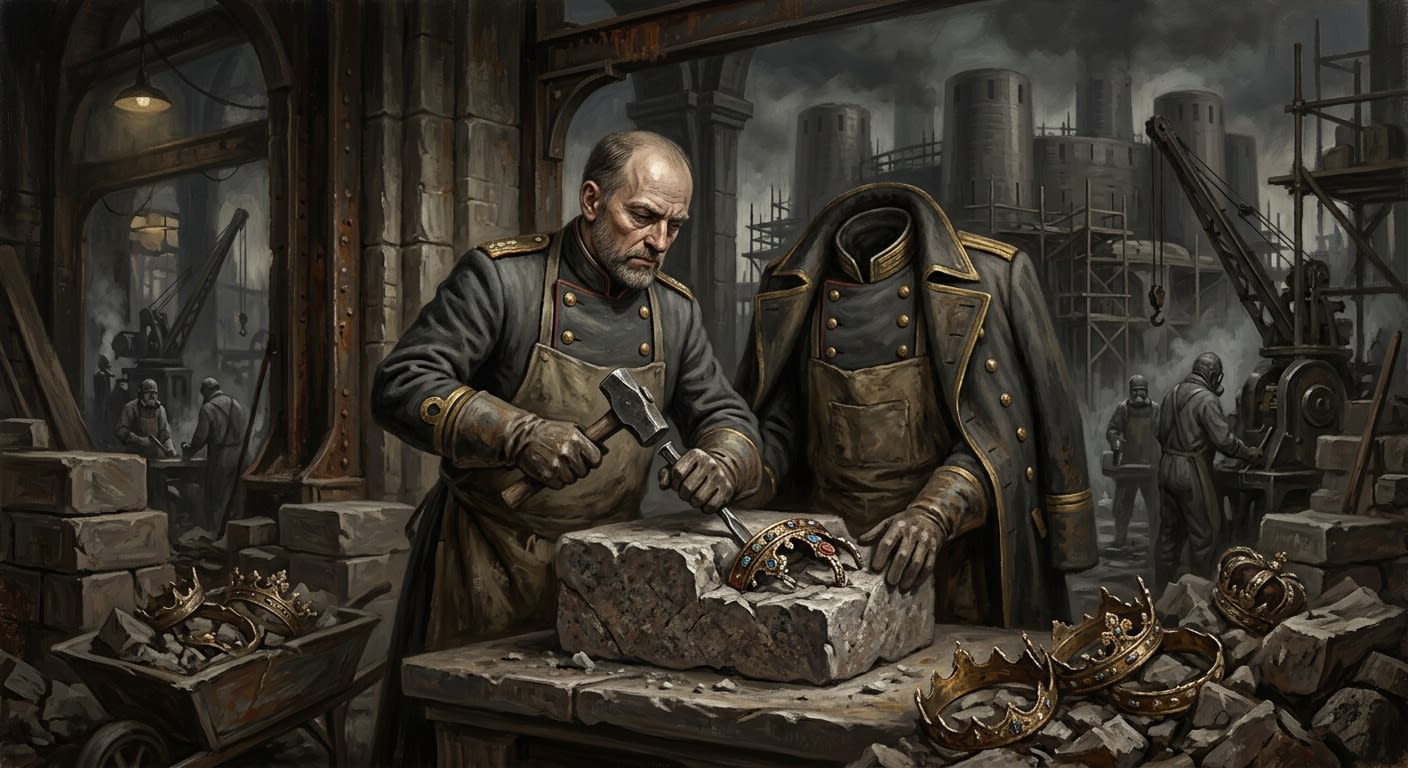
Governor-Praelate Hugo of Constantinople
The man who made abdication useful and bone load-bearing
Governor-Praelate Hugo surrendered his coronet in A.S. 68, ordered the Second Ossuary Ring, and taught crowns to become masonry.
Codex Ref. III.2.02-001
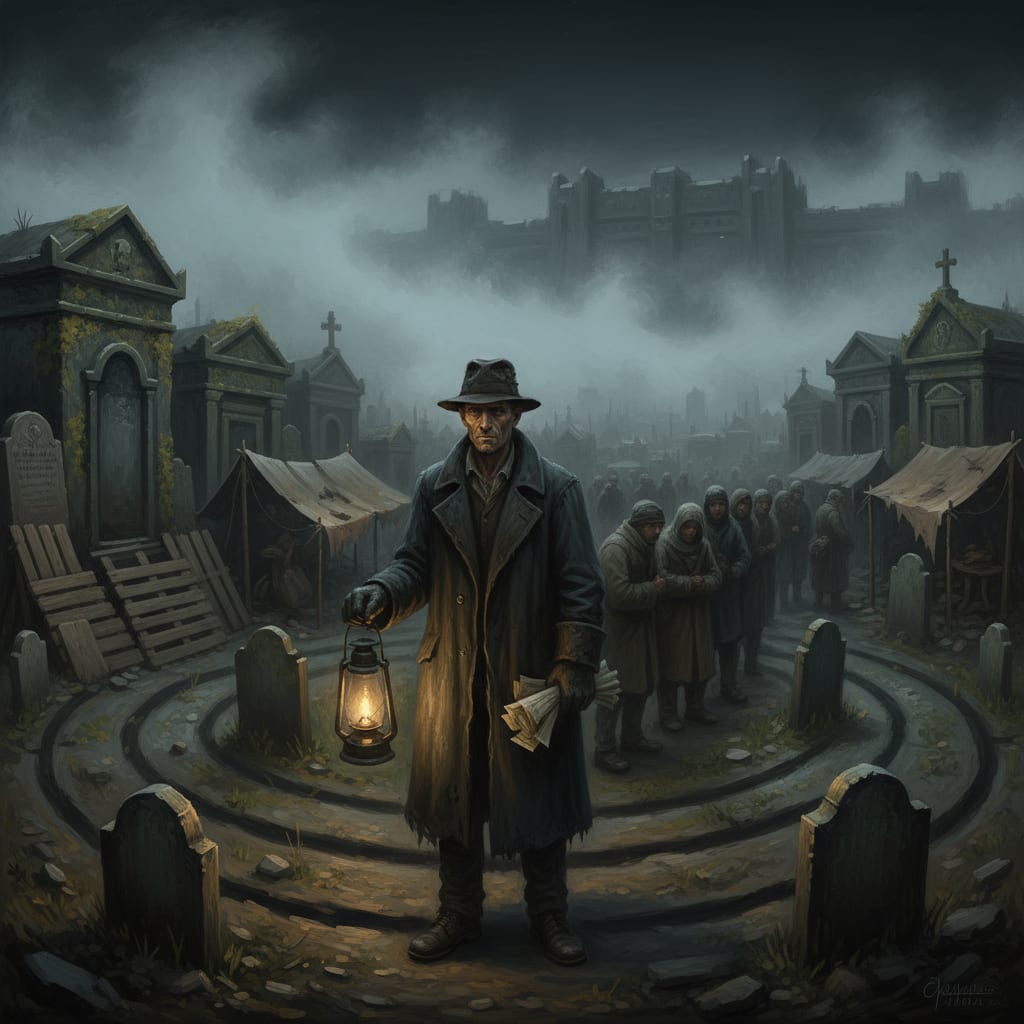
Grave-Field Shanty Broker
Where the Dead Own the Ground and the Broker Owns the Quiet
The officially unacknowledged profession administering forty thousand souls in the consecrated dead-lands the Bureau cannot legally rezone, will not formally notice, and cannot do without.
Codex Ref. XII.21.01-001
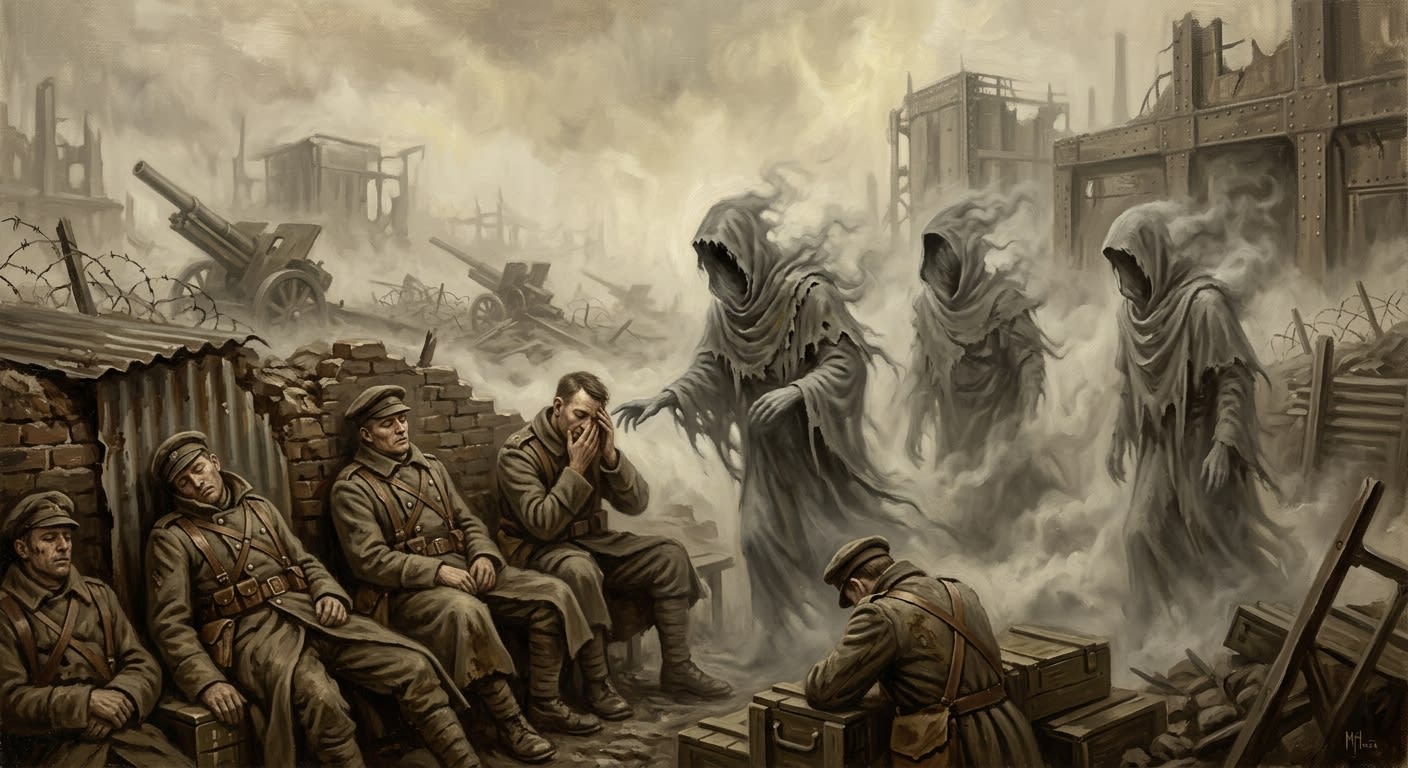
Grey Heralds
Syrion's kindness, spoken softly enough to kill
Grey Heralds are Syrion's fog-borne influence-demons: kind voices that invite soldiers, villages, and whole watches to sit, sleep, and never return to duty.
Codex Ref. IV.1.07-201
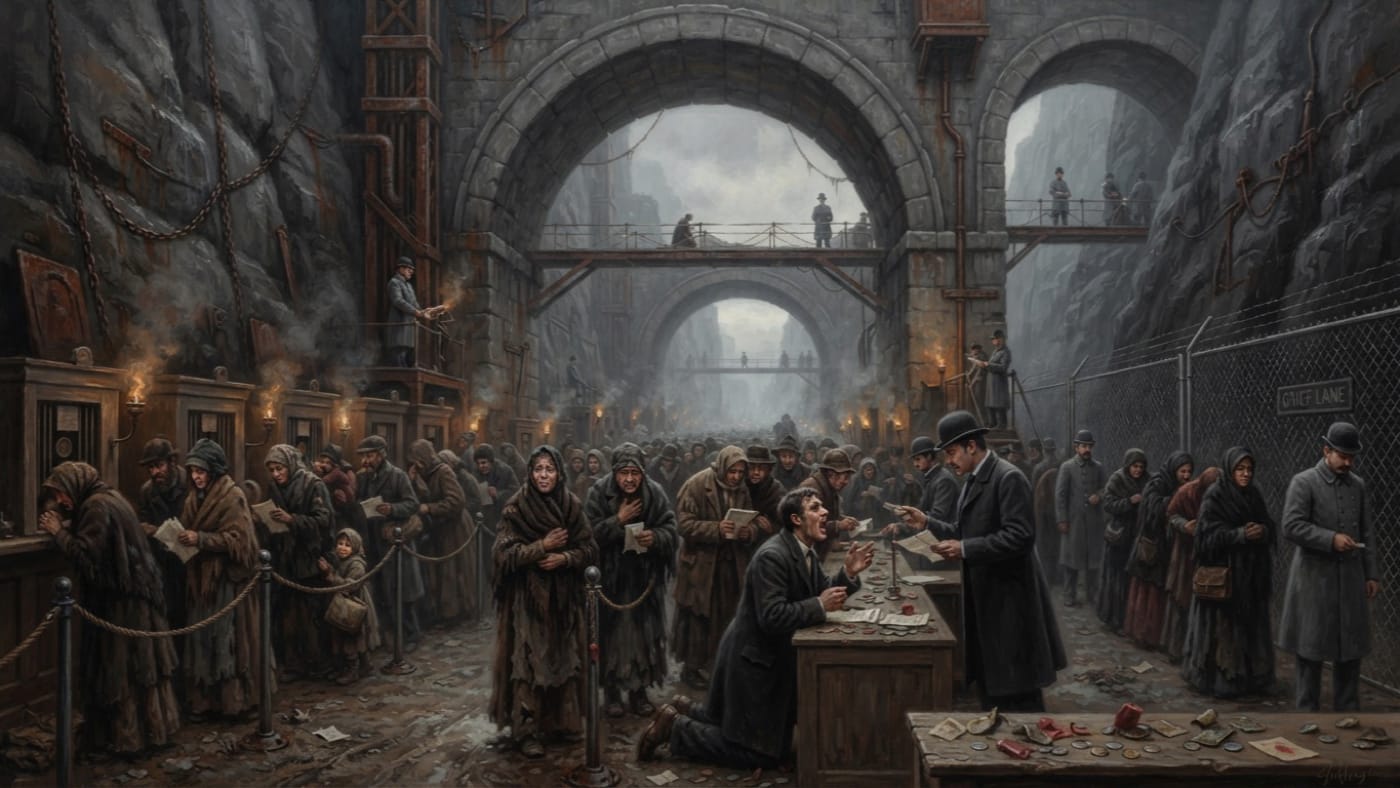
Grief Resonance
The stone takes a name; the clerk records a discrepancy
When mourners crowd Griefgate's arches, seals smear, coins tarnish, bells flatten and names fail. The Bureau has classified the disturbance and declined to fund its explanation.
Codex Ref. XIII.1.23-003
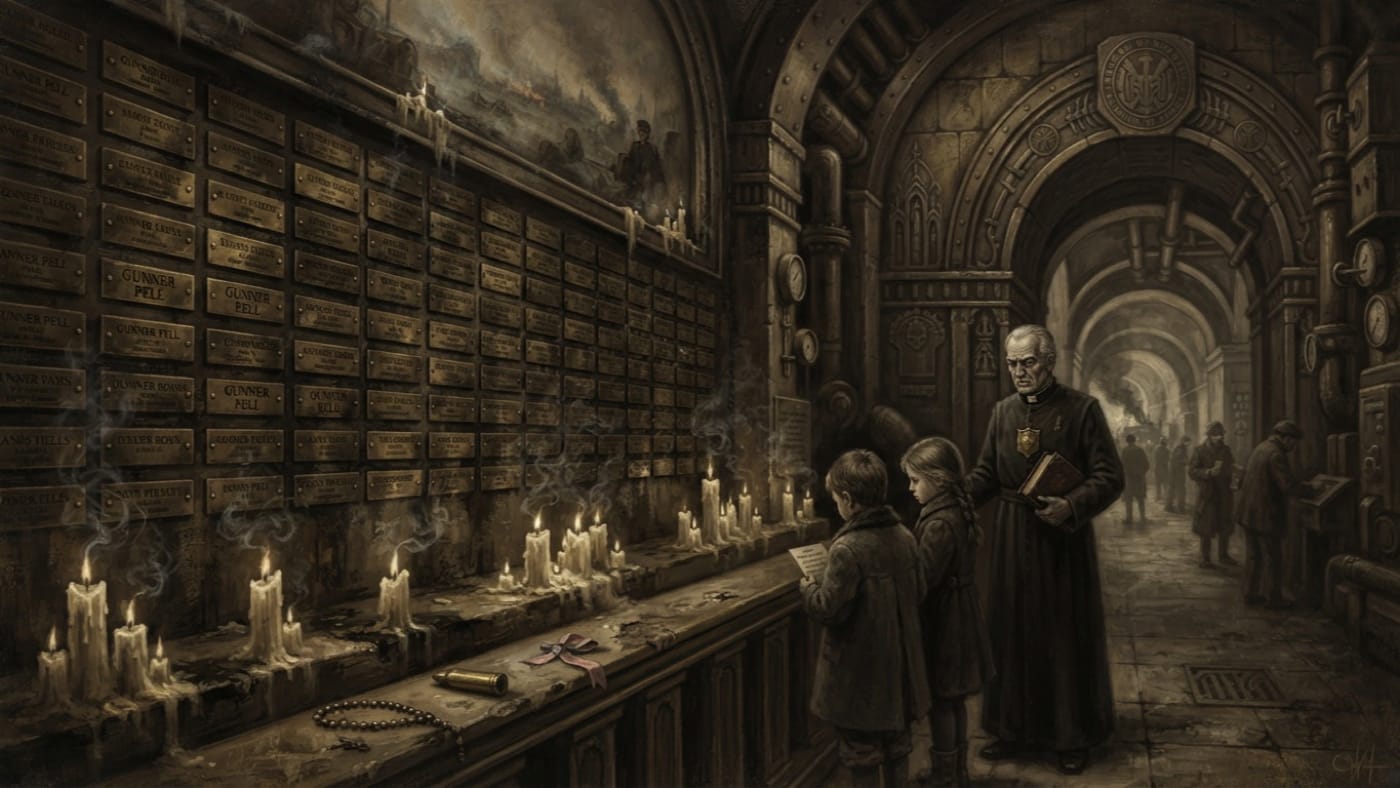
Gunner Pell
The name is kept; the life is unrecorded
Gunner Pell is named in Rostov's A.S. 153 remembrance and recited in western parishes. The Ledger preserves a rank and surname; it supplies no detailed career or individual fate.
Codex Ref. III.2.01-153
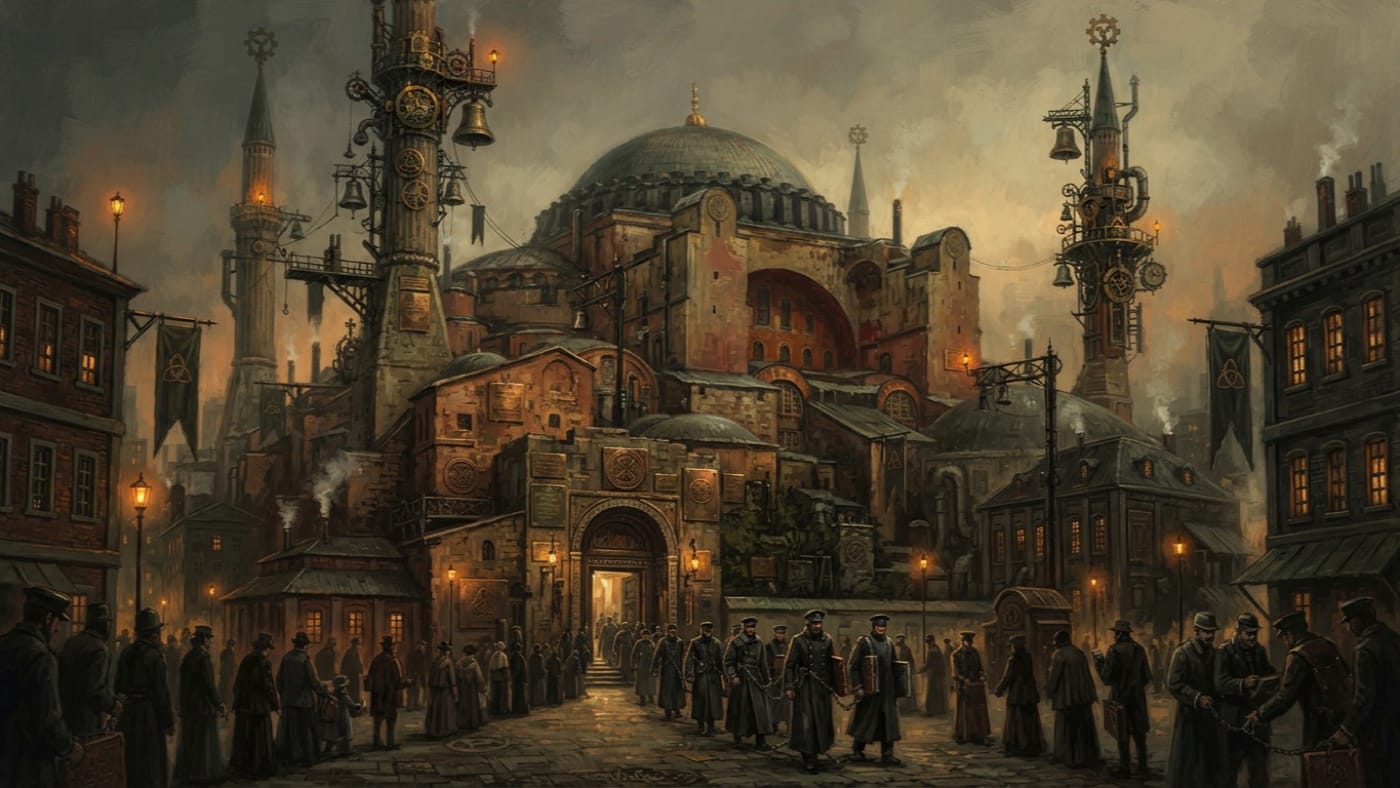
Hagia Sophia
The Dome Has Not Countersigned
Constantinople's old Hagia Sophia, seized in A.S. 68 and titled the Cathedral of the Perpetual Registry in A.S. 72. Beneath its ancient dome, the southern front is made official one ratified record at a time.
Codex Ref. II.4.10-1298
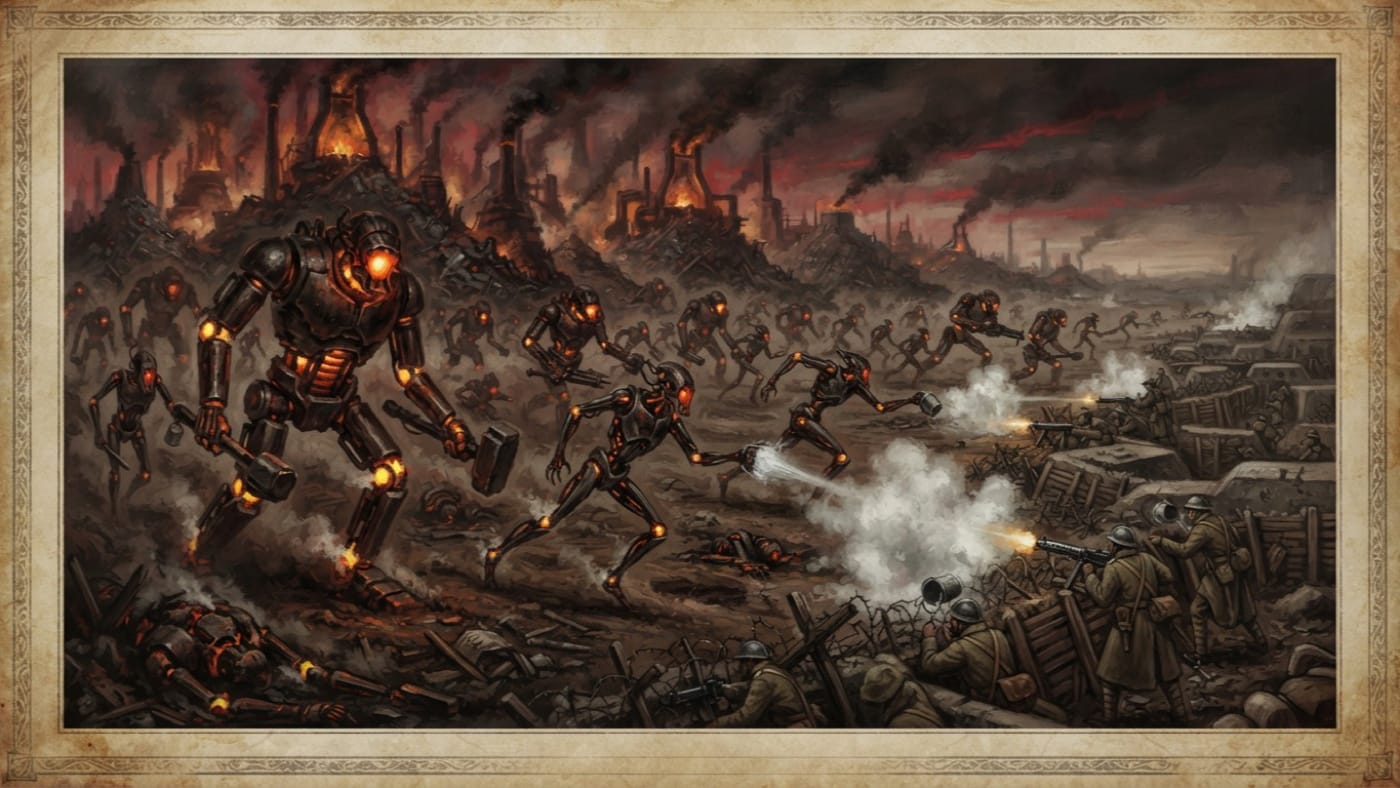
Hammered
A thing that was never anyone cannot be called back to itself.
Demons made in Maldrake's Eternal Forges: wrath given a body, with no prior human identity. They can be destroyed. The first manufacture remains undated.
Codex Ref. IV.1.07-1316
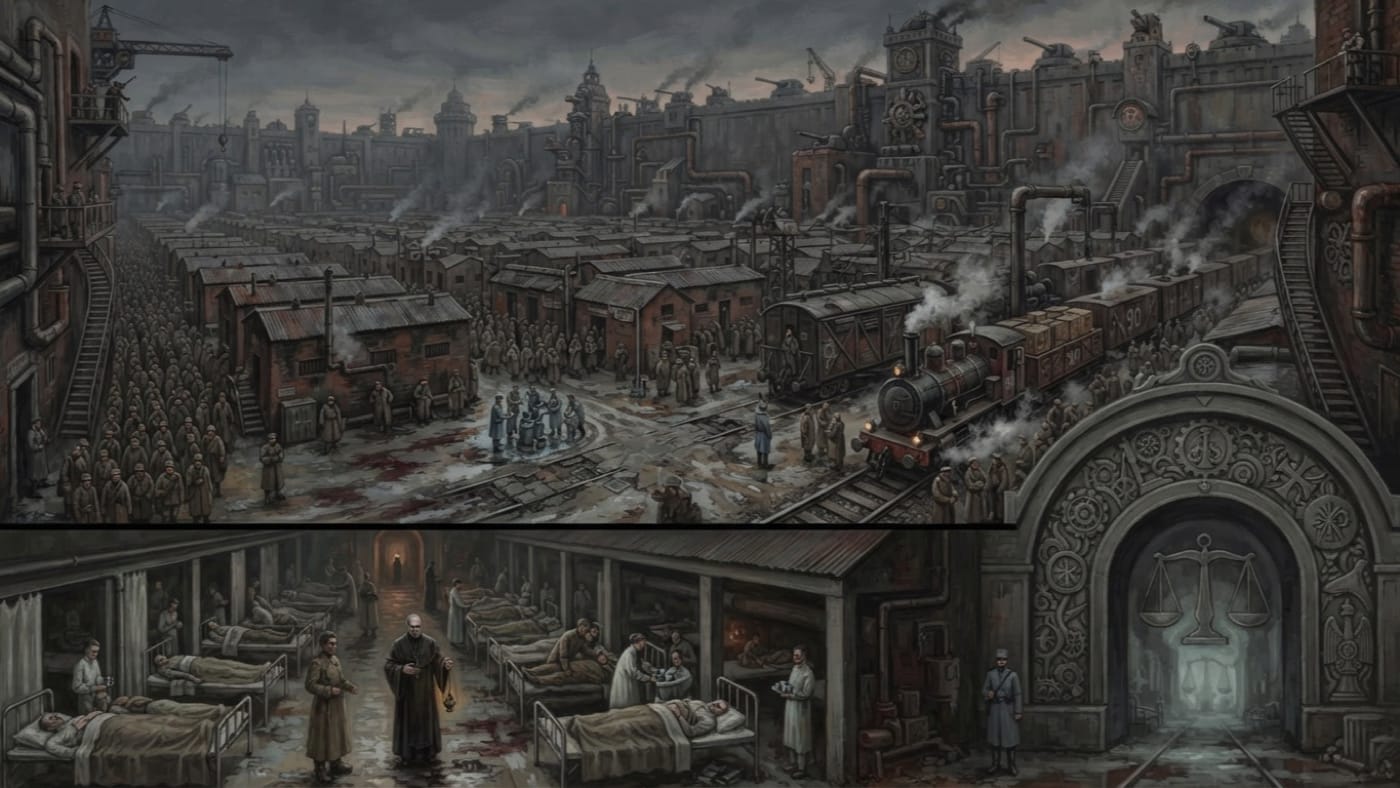
Hammers
Ninety days on paper; twelve thousand men in Grey
Bastion-Constantinople's Grey conscript quarter houses twelve thousand Continental Levy men on ninety-day orders. Relief trains run late; shells, fouled water, and the Velvet Choir keep their appointments.
Codex Ref. II.4.10-201
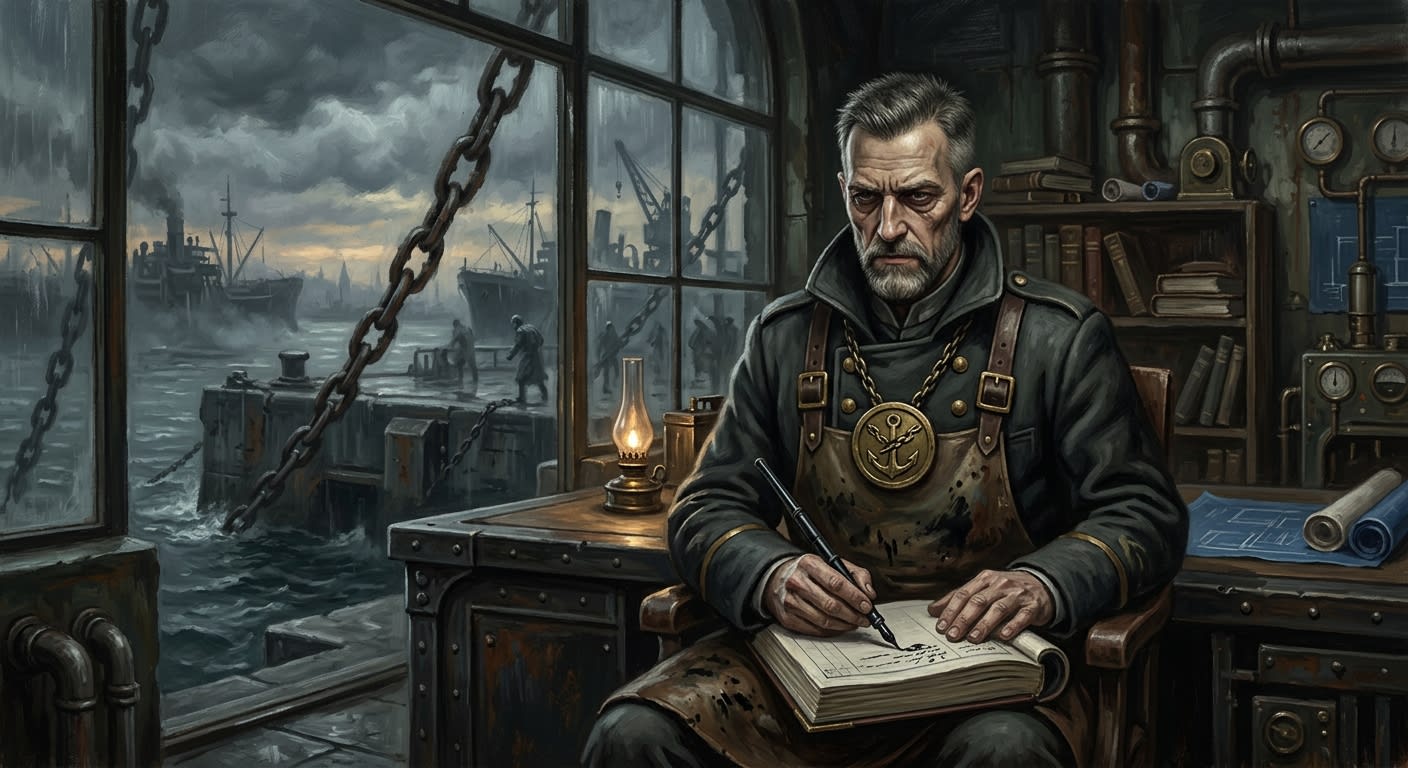
Harbormaster Joram Clee
The man who made nil into a seawall and Weather into doctrine
Harbormaster Joram Clee governs Constantinople's chained harbor with nil, absence, Weather, and a pen sharp enough to hold the Bosphorus down.
Codex Ref. III.2.01-007
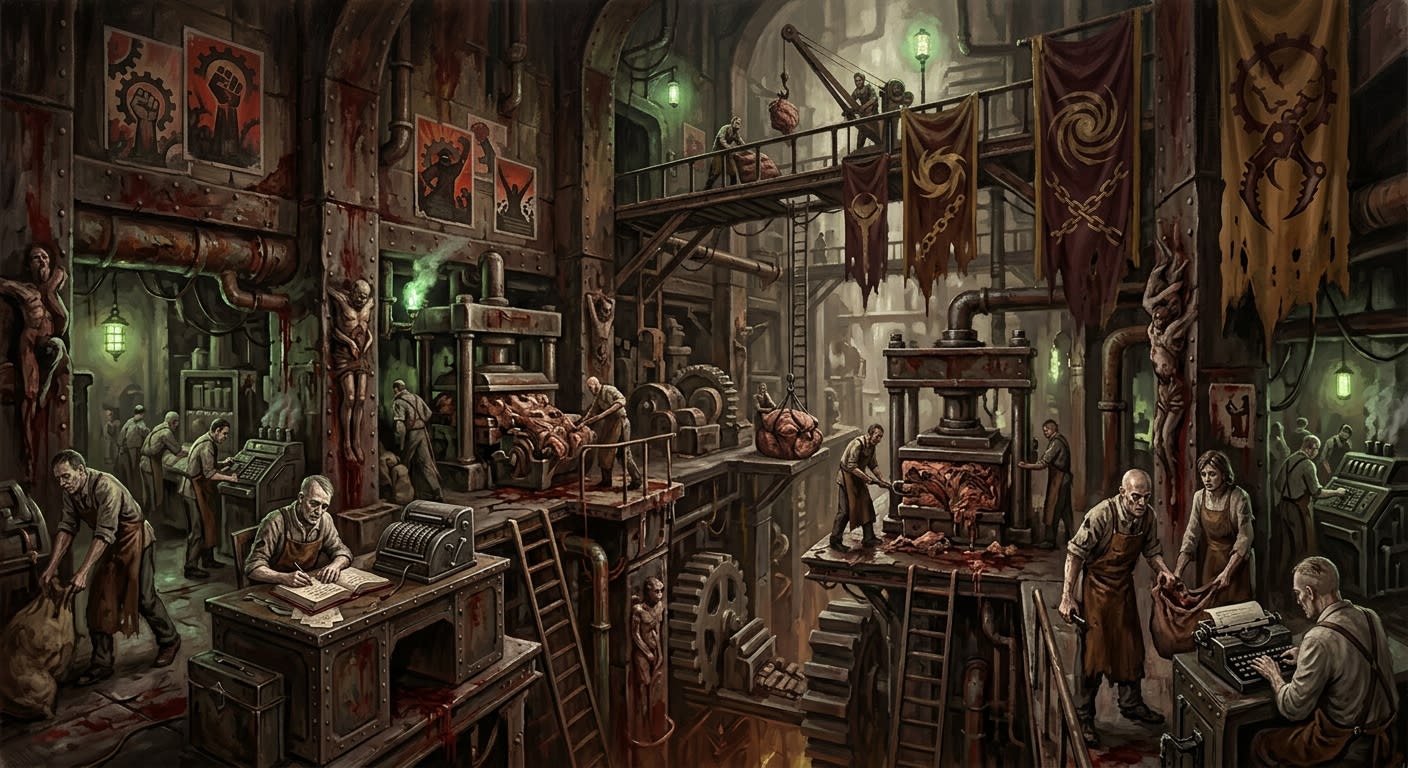
Hell
The Enemy's claim upon Creation, filed where screams become jurisdiction
Hell is not merely a place beyond the Sagittal Line. It is the Great Deceiver's active claim upon Creation: jurisdiction expressed through matter, contract, territory, sorcery, corrupted flesh, and obedient fear.
Codex Ref. XIII.1.01-201
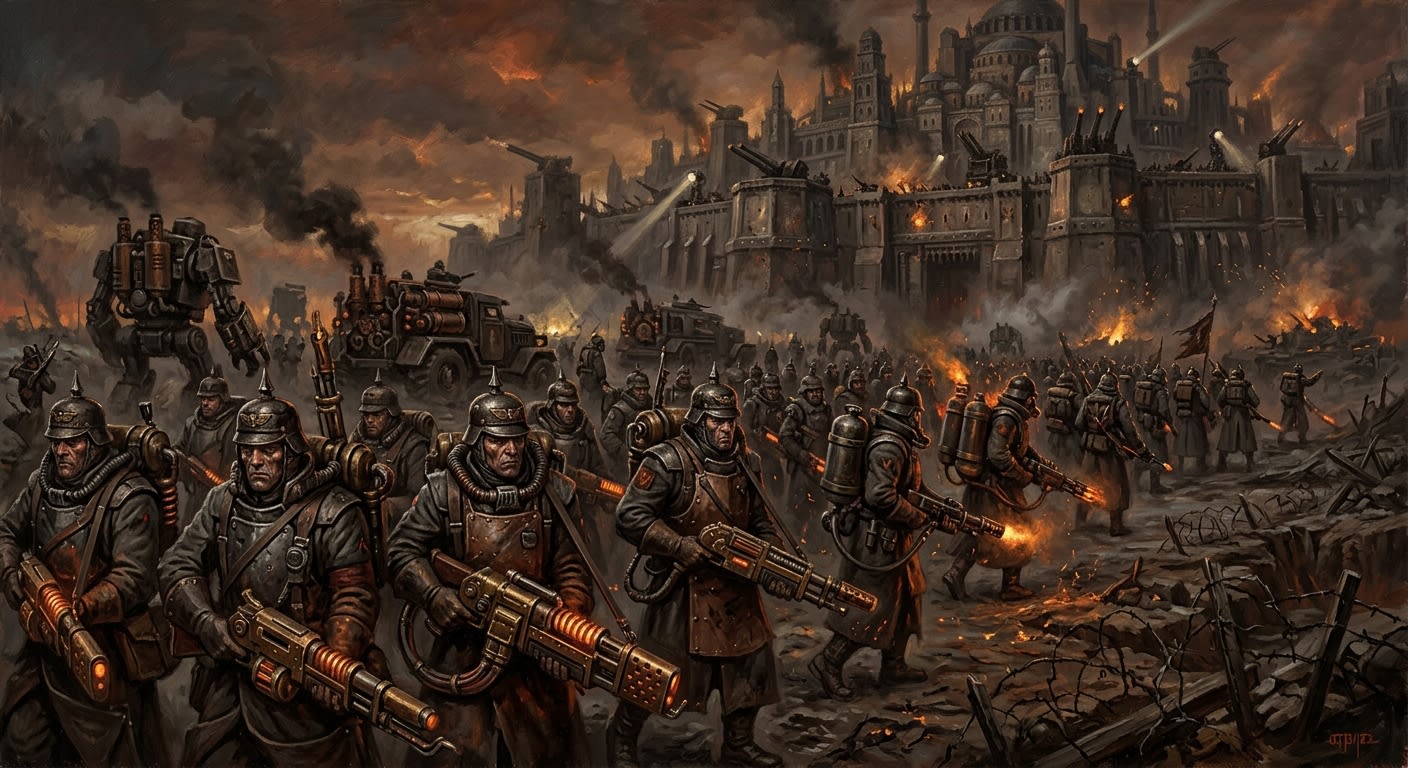
Hellbow Legion
Maldrake's arc of wrath, where range becomes theology and stone learns fear
Maldrake's Hellbow Legion is a wrath-forged assault host, not a regiment of archers: slag-bow cohorts, pyre-smiths, Ember-Soldiers, Hollowed columns, and siege heat aimed at Bastion-Constantinople.
Codex Ref. IV.1.07-009
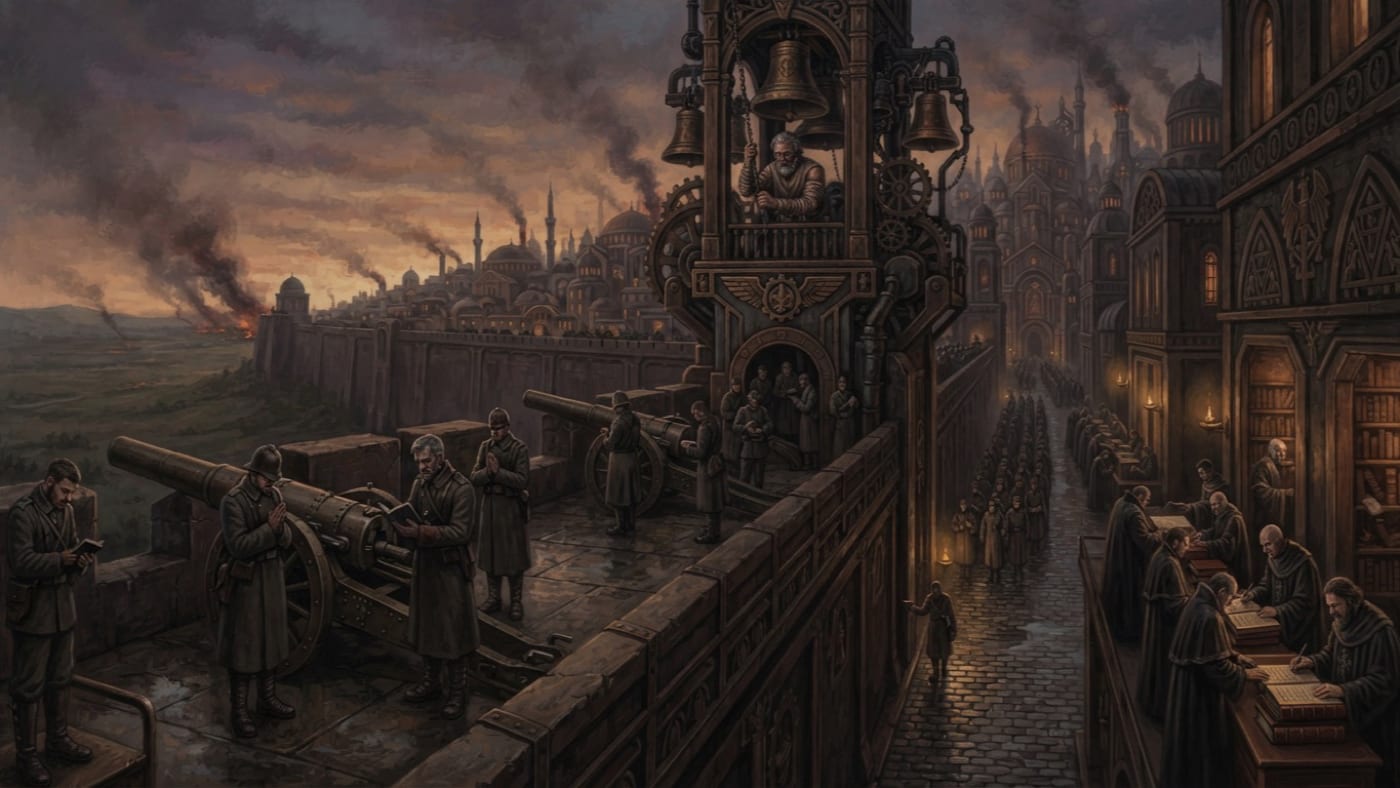
Hour of Vespers
The day closes when the bell permits it
The evening interval of Bastion-Constantinople, where prayer, watch readiness and the day's accounts answer to authorized bronze. Four Bureaus close the day; the guns remain attentive.
Codex Ref. XIII.1.96-201
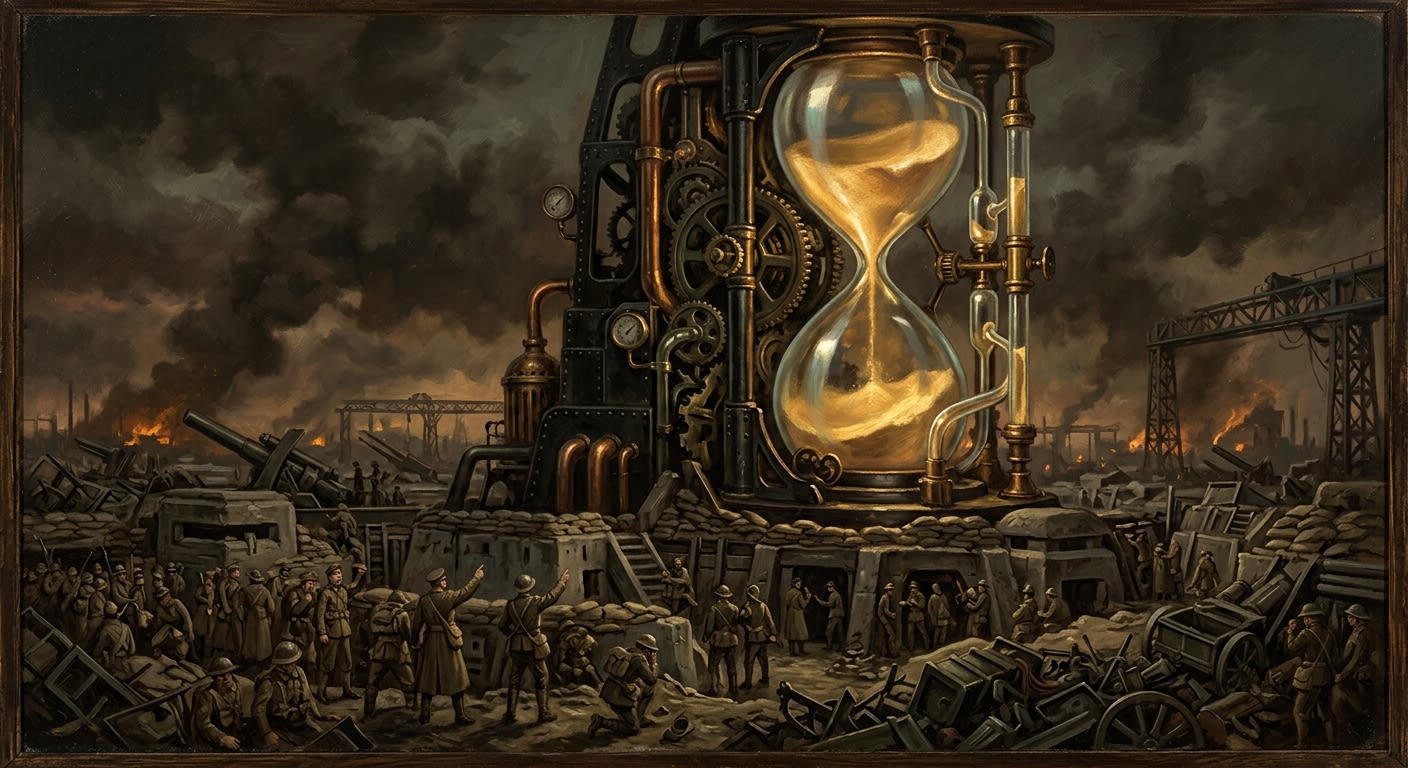
Hourglass Monolith
The engine that steals the second before obedience
The Hourglass Monolith is Syrion's colossal temporal war-engine: seen twice, measured never, and guilty of stealing the moment in which men obey.
Codex Ref. IV.1.07-134
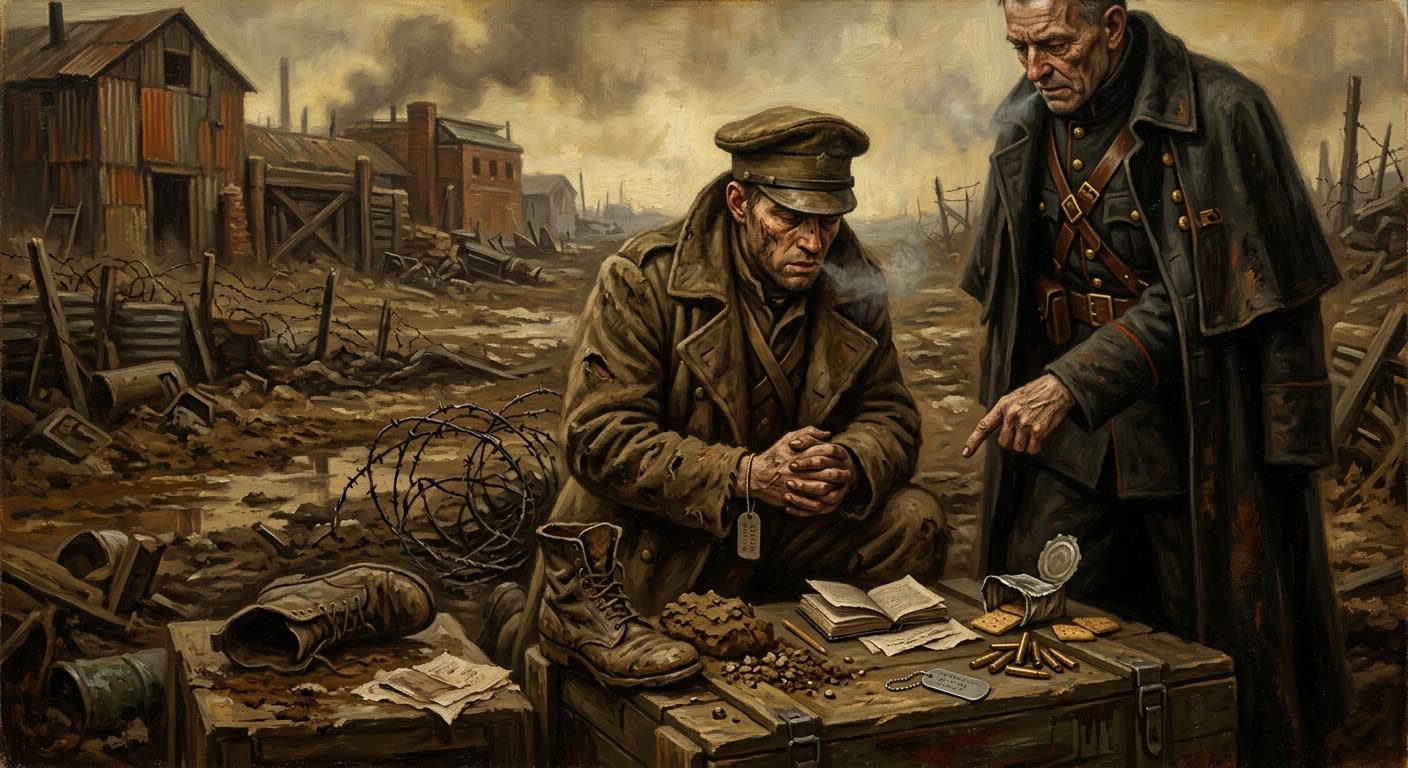
Humility Sequence
Boot, mud, ration, wire; the ugly words that keep Pride low
The Humility Sequence is Przemyśl's deliberately ugly counter-recitation against Atheronic grandeur: boot, mud, ration, wire, cartridge, number, name, breath.
Codex Ref. XIII.1.94-188
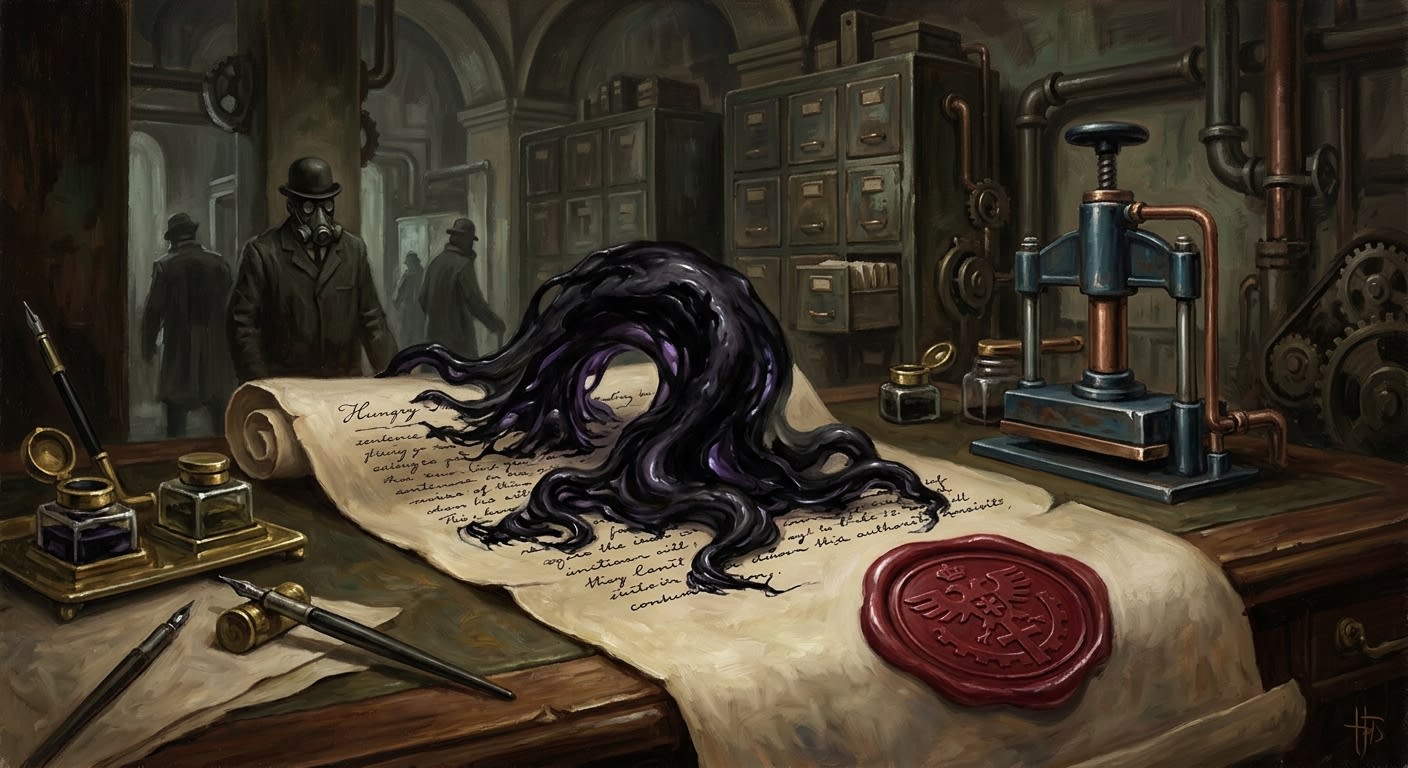
Hungry Ink
When the seal survives what the sentence cannot
Hungry Ink eats the sentence and spares the seal, proving with intolerable neatness that authority may survive the meaning it was meant to govern.
Codex Ref. XIII.1.18-001
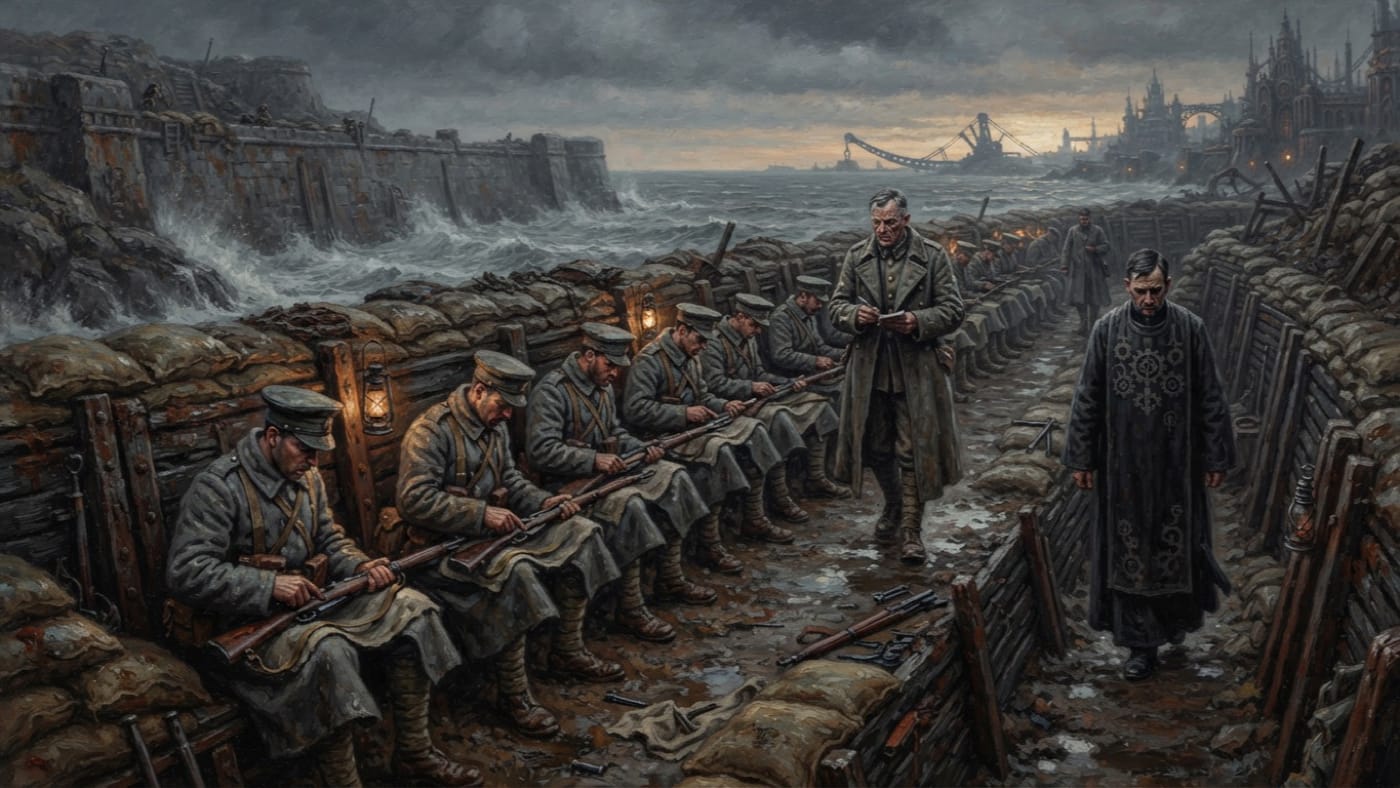
Hymn of Rust
Where a rag, a tune, and a clerk keep the rifles ready
At the Sister Trenches, the Hymn of Rust sets rifle cleaning to an evening chant. Each fallen flake is believed to buy the Line an hour; the quartermaster requires only that the rifle fire.
Codex Ref. III.5.08-017
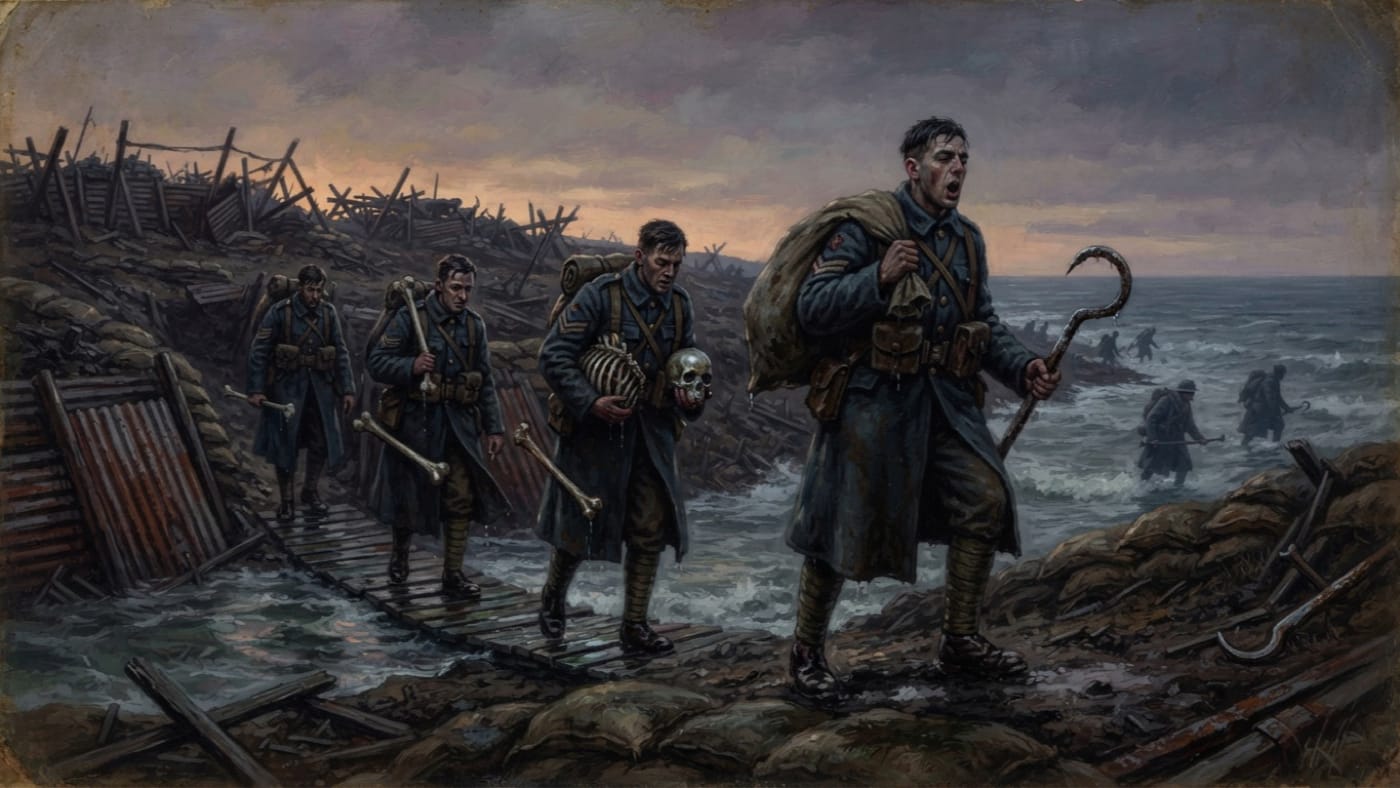
Hymn of Salt
The sea returns the dead; the garrison supplies the hymn
At the Sister Trenches, soldiers chant the Hymn of Salt at dusk while collecting and reburying remains returned by the tide. The words are not held under seal; the dead still require a pit.
Codex Ref. III.5.08-018
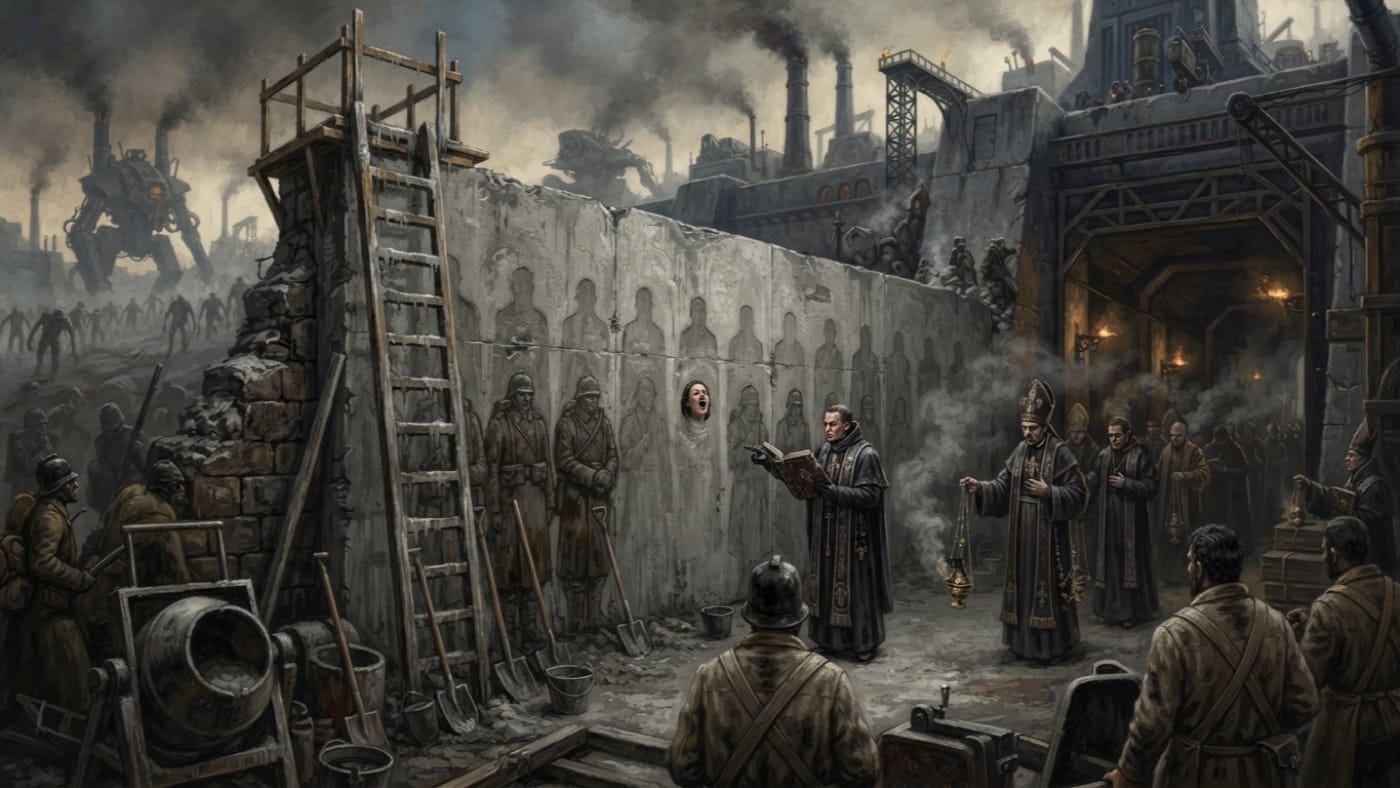
Hymnal for Desperate Hours
Page 4,117; thirty-two verses; forty-seven sealed singers.
The Bureau of Orison and Song's liturgical reference: page 4,117 prescribes the thirty-two-verse Antiphon of Endurance, sung by forty-seven at the Sixth Ravelin. The citation survives; the singers are sealed.
Codex Ref. XIII.1.97-170

Index of Prohibited Emanations
The book that gives smoke a docket number
Bureau of Purity catalogue that turns unlawful smoke, warmth, vapour, residue, and prayer by-product into chargeable evidence for Fume-Inspectors and their theatrical little strips of paper.
Codex Ref. XIII.1.77-001
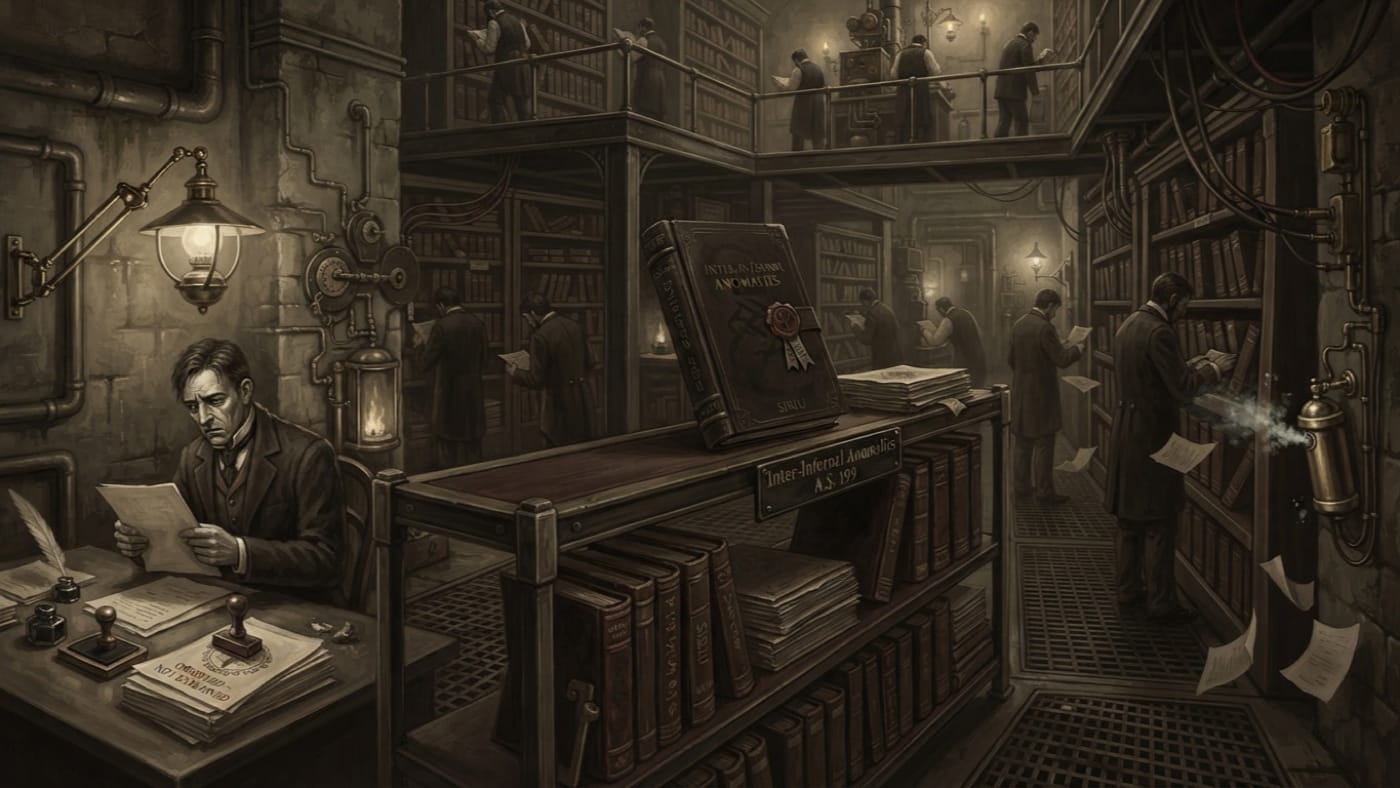
Inter-Infernal Anomalies
Hell's quarrels do not excuse an unwatched road
The Inter-Infernal Anomalies shelf records cooperation where Hell's quarrels should have prevented it. The A.S. 199 Sibiu contact is confirmed; its purpose remains unresolved, to the inconvenience of strategy and filing.
Codex Ref. VIII.7.02-001
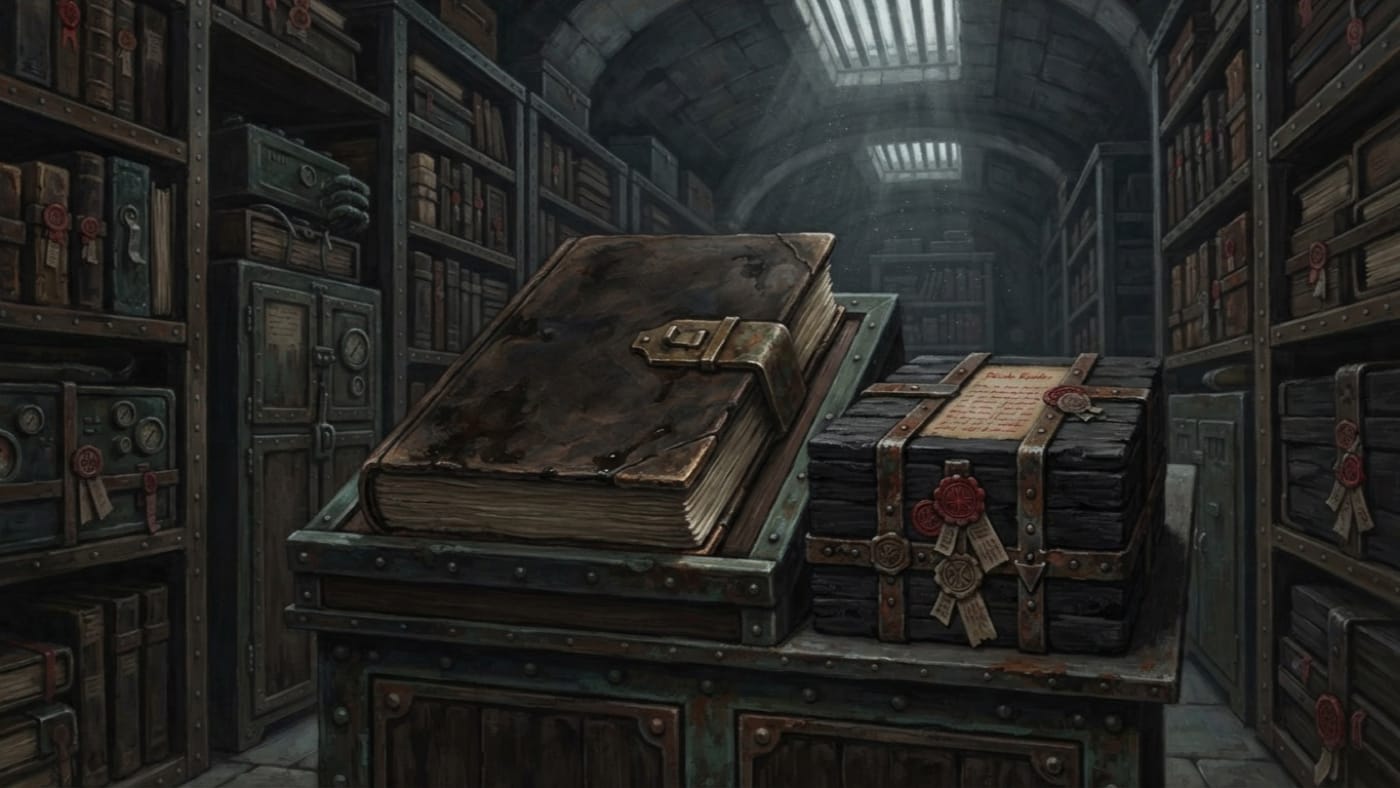
Iron Plains Survivor Volume
Thirteen witnesses bound; the fourteenth indexed in red
Thirteen survivors of the A.S. 45 Iron Plains are bound in this volume beneath Strasbourg. Kessler's testimony is held apart; Records indexes his absence in red.
Codex Ref. XIII.1.48-002
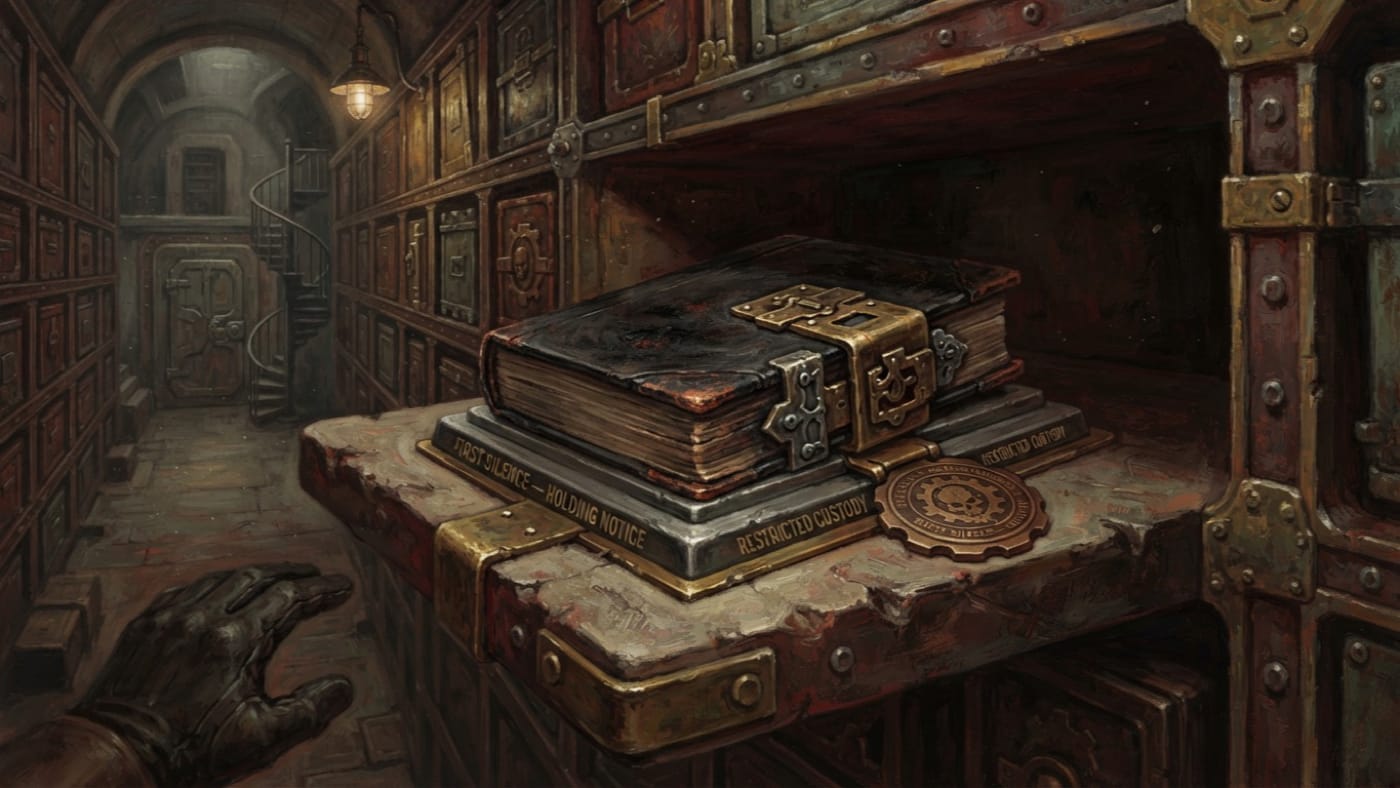
Iron Plains Volume
Fourteen voices retained; permission to hear them withheld
Fourteen Iron Plains survivor testimonies held in the first silence of the Vault of Silences. The order may be copied; the testimony stays under clasp.
Codex Ref. XIII.1.48-003
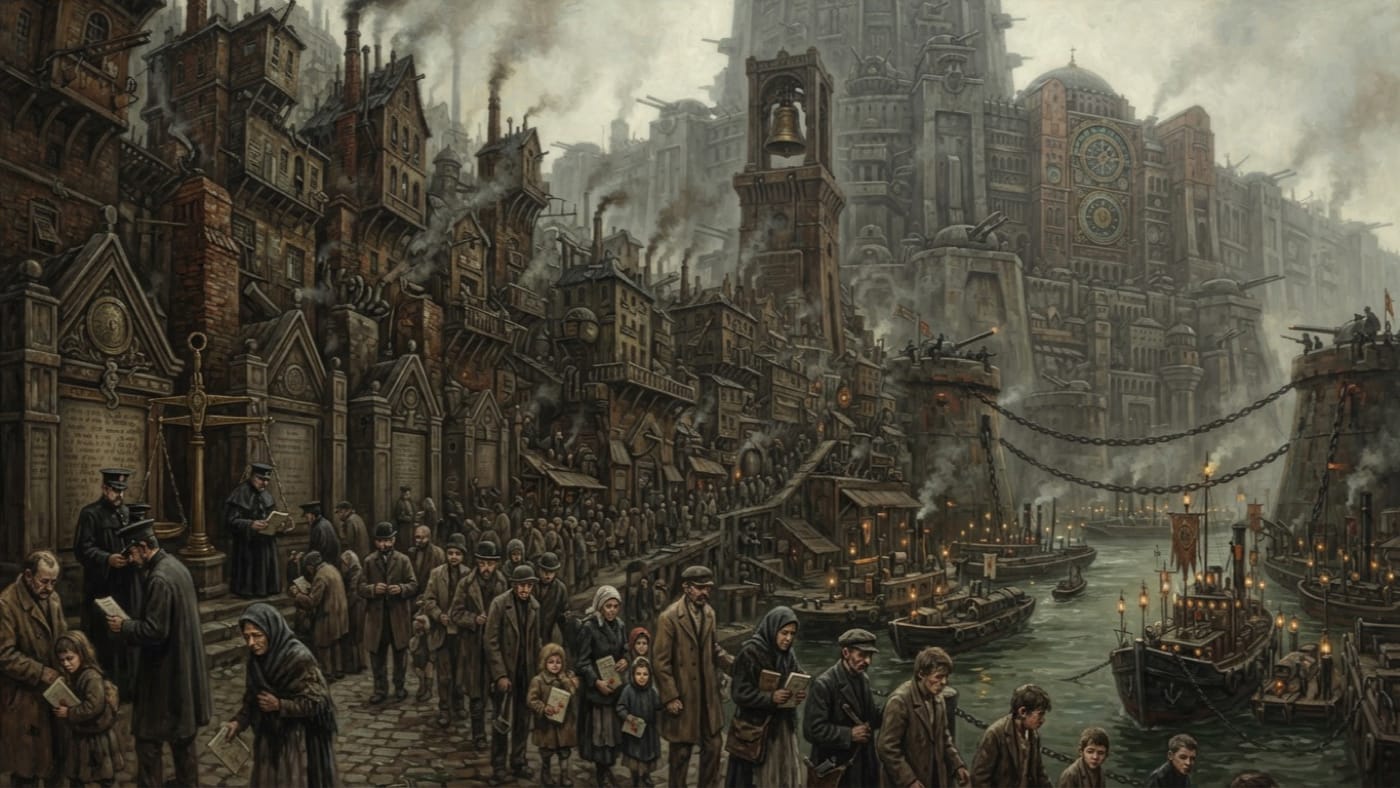
Istanbul
The City That Feeds the Last Lock
Istanbul is the living city beneath Bastion-Constantinople: dockers, clerks and foundry hands keep the southern anchor supplied, while bells, seals and Kargath's hunger decide who eats.
Codex Ref. III.2.04-018
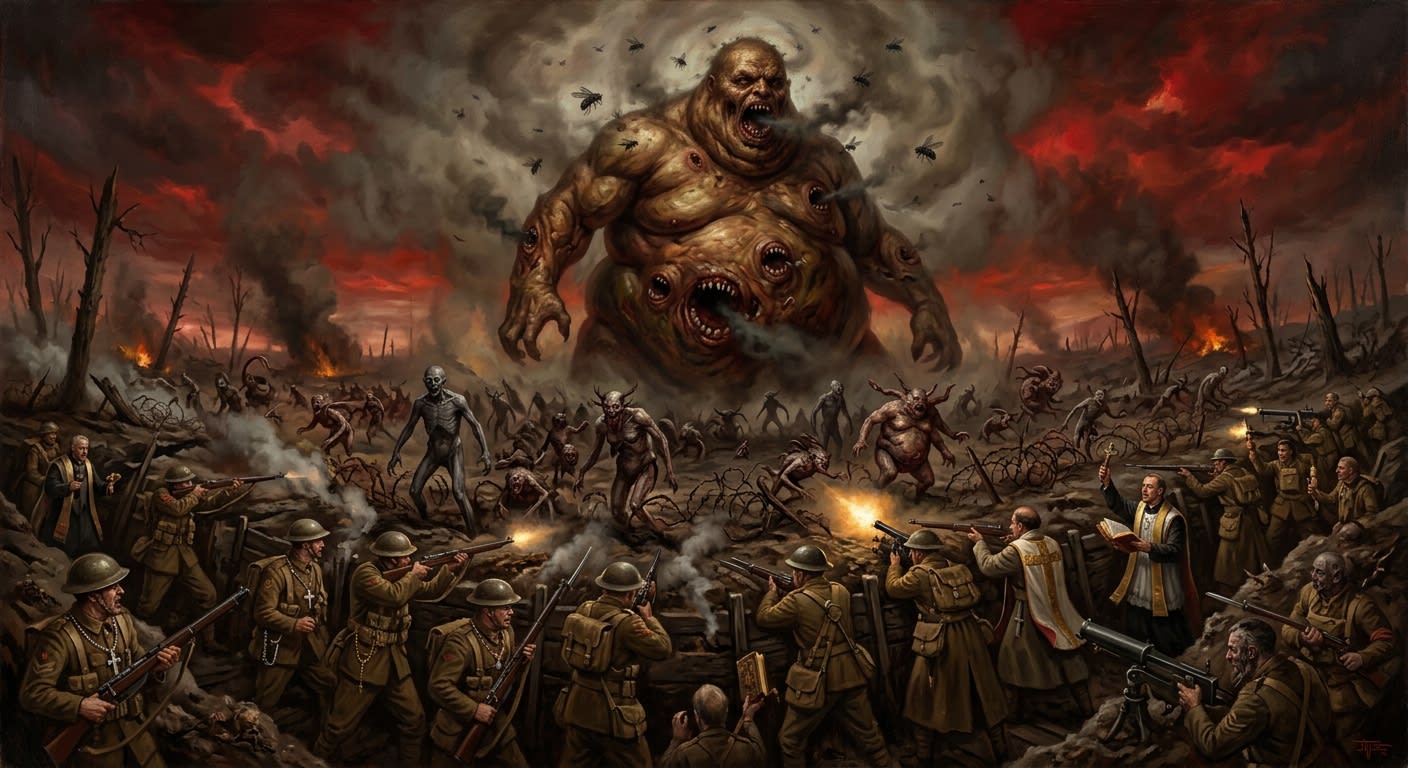
Kargath
The Maw of Endless Hunger
First and nearest of the Sin-Generals opposite Bastion-Constantinople. Where he passes, famine follows, and the famine outlives him.
Codex Ref. IV.1.07-001
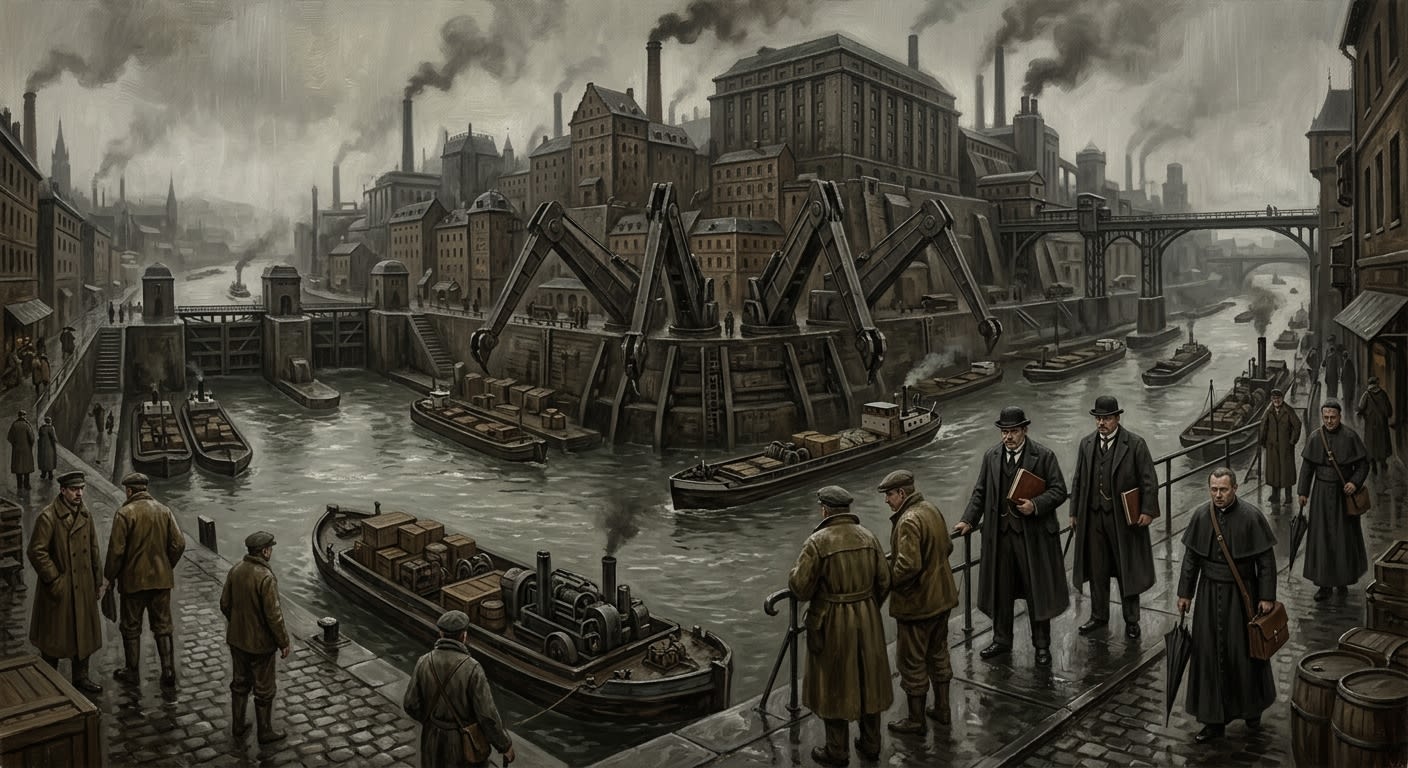
Koblenz
The holy art of handing the burden onward
Koblenz is the wet middle hand of the Ignatian chain: a Rhine-Moselle transfer city where sanctity lasted six minutes and became taxable forever.
Codex Ref. II.3.05-045
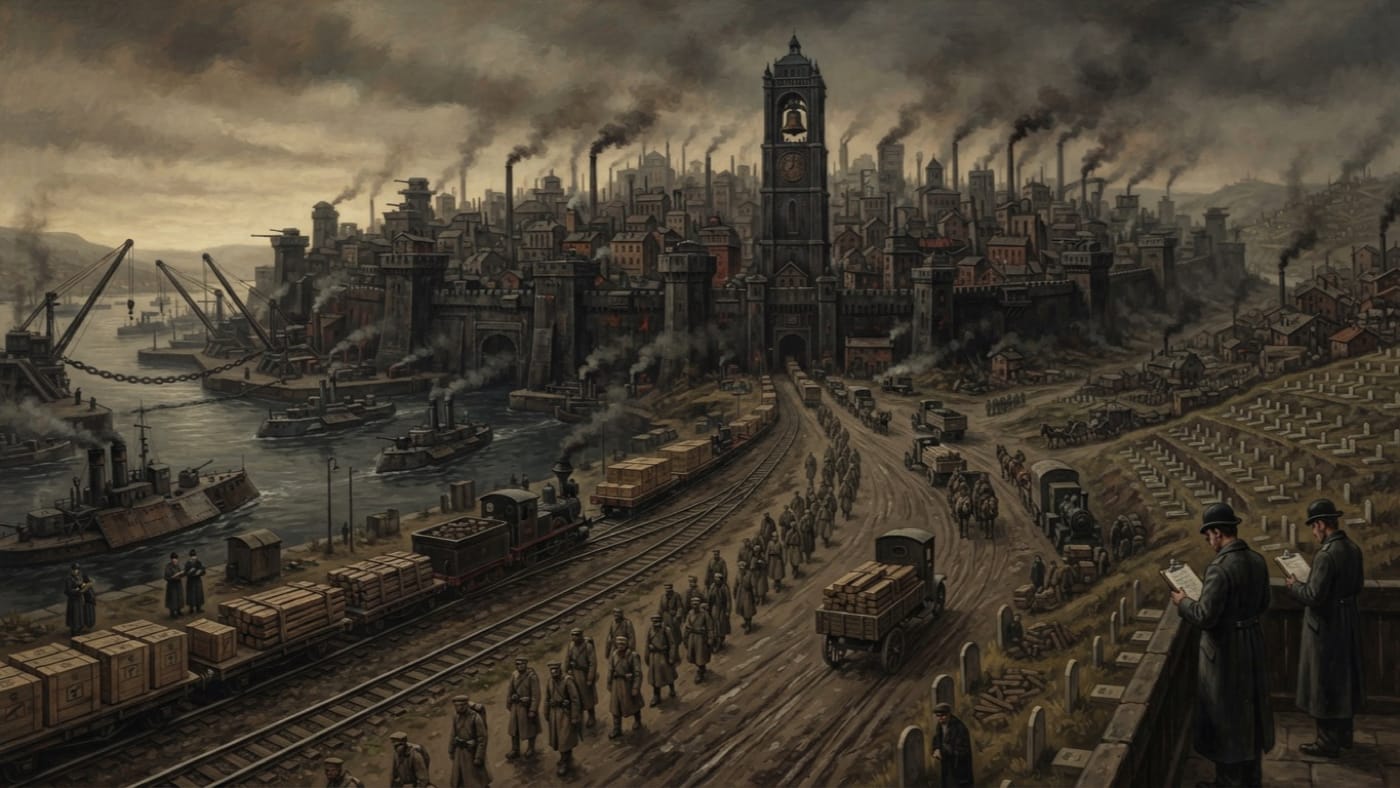
Last Lock
The southern anchor takes the credit; the Hintermark sends the bill
The Last Lock is Bastion-Constantinople, southern anchor of the Sagittal Line: barred strait, punctual hunger, and walls kept standing by Hintermark coal, metal, levies, and graves.
Codex Ref. II.4.10-068
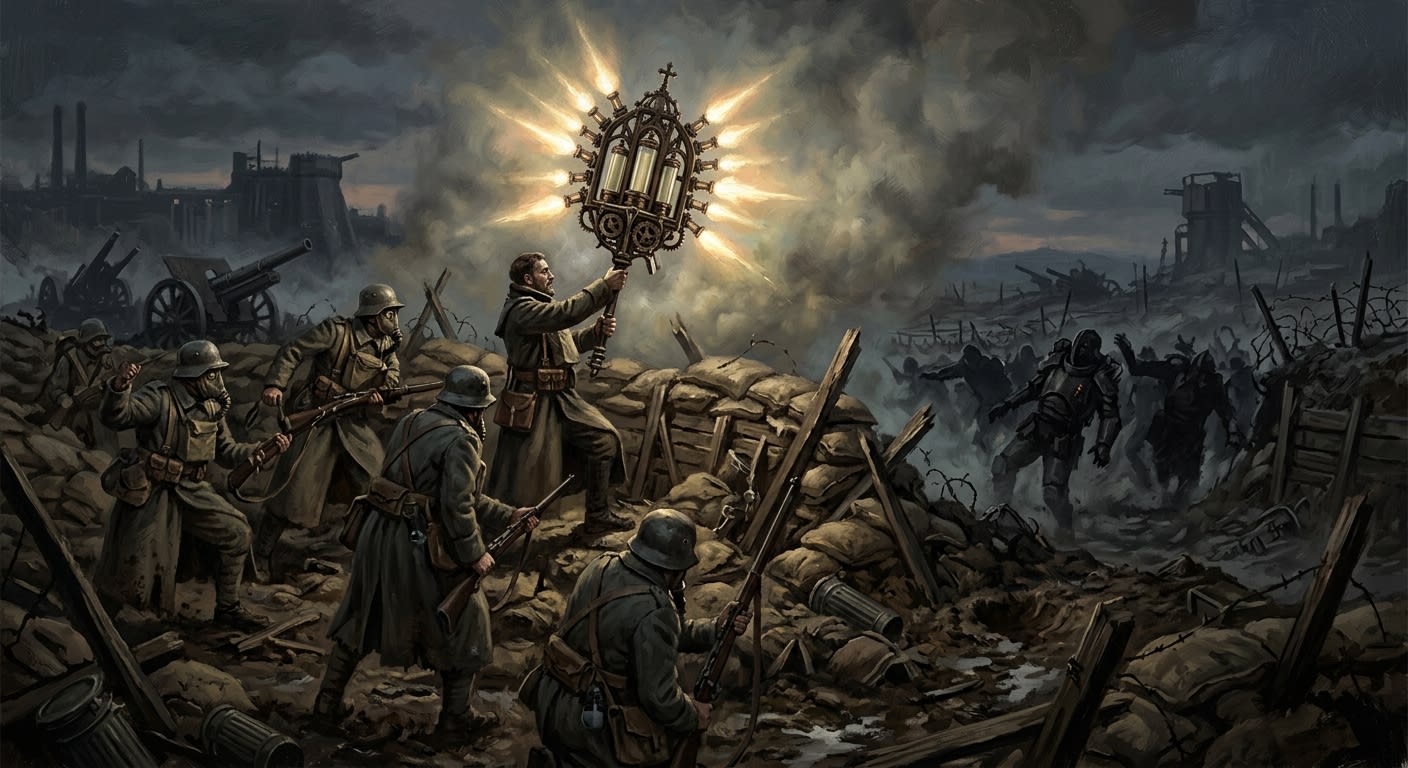
Last Stand of Kalnik Ridge
Where Wrath flinched and retreat learned to march
At Kalnik Ridge in A.S. 48, Brother Tomislav raised the Reliquary of Saint Isidore, seventeen relics blazed, Maldrake's vanguard recoiled, and rout became discipline.
Codex Ref. VII.5.03-001
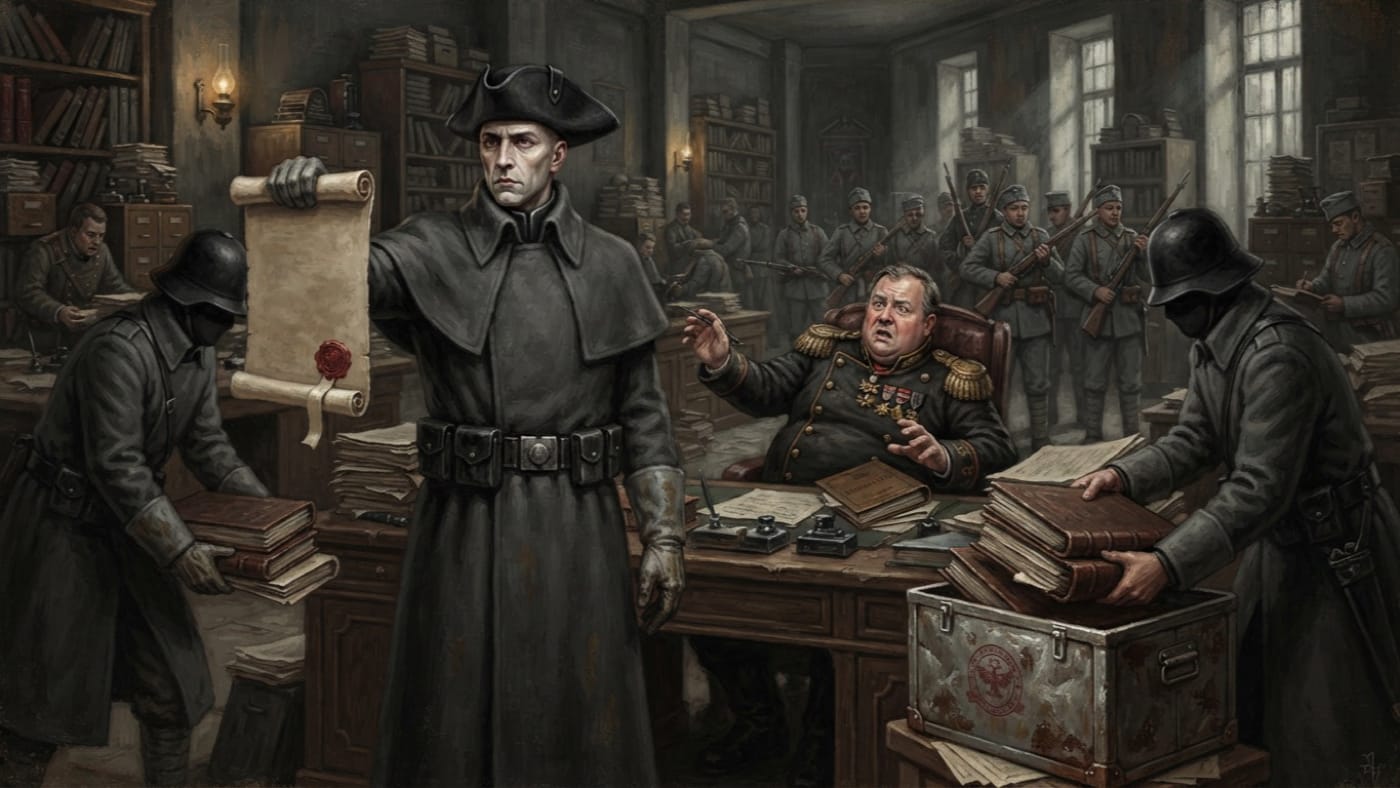
Legate
The commission travels; the correction stays
A legate carries Strasbourg's seal into troubled dioceses, seizes records, deposes governors and suspends armies. The commission ends; the correction stays.
Codex Ref. XIII.1.32-201
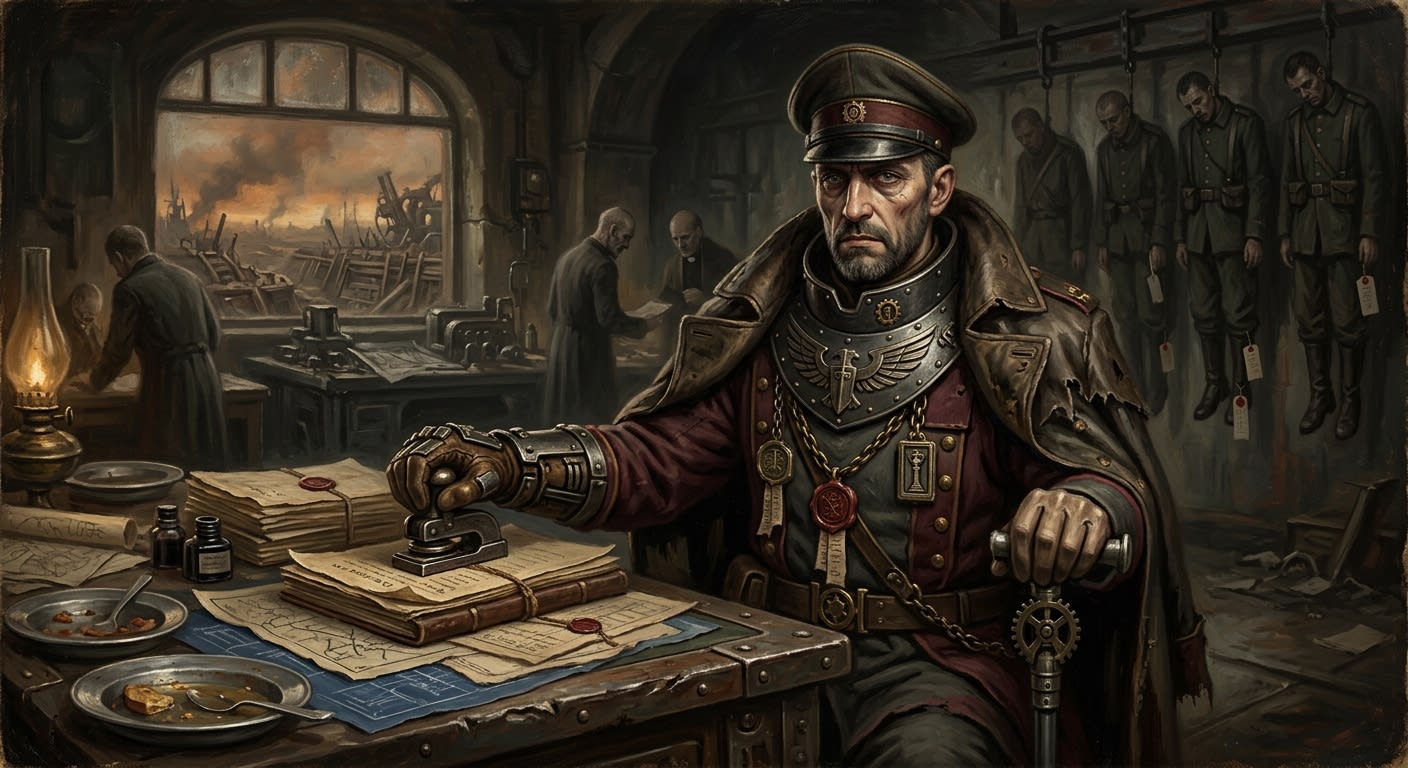
Legate Seraphinus of Lyon
The stomach is a bell, and this saint rang it inward
Seraphinus of Lyon turned fasting into field doctrine, hanged generals for broth, and proved that hunger can carry a seal.
Codex Ref. III.2.04-001
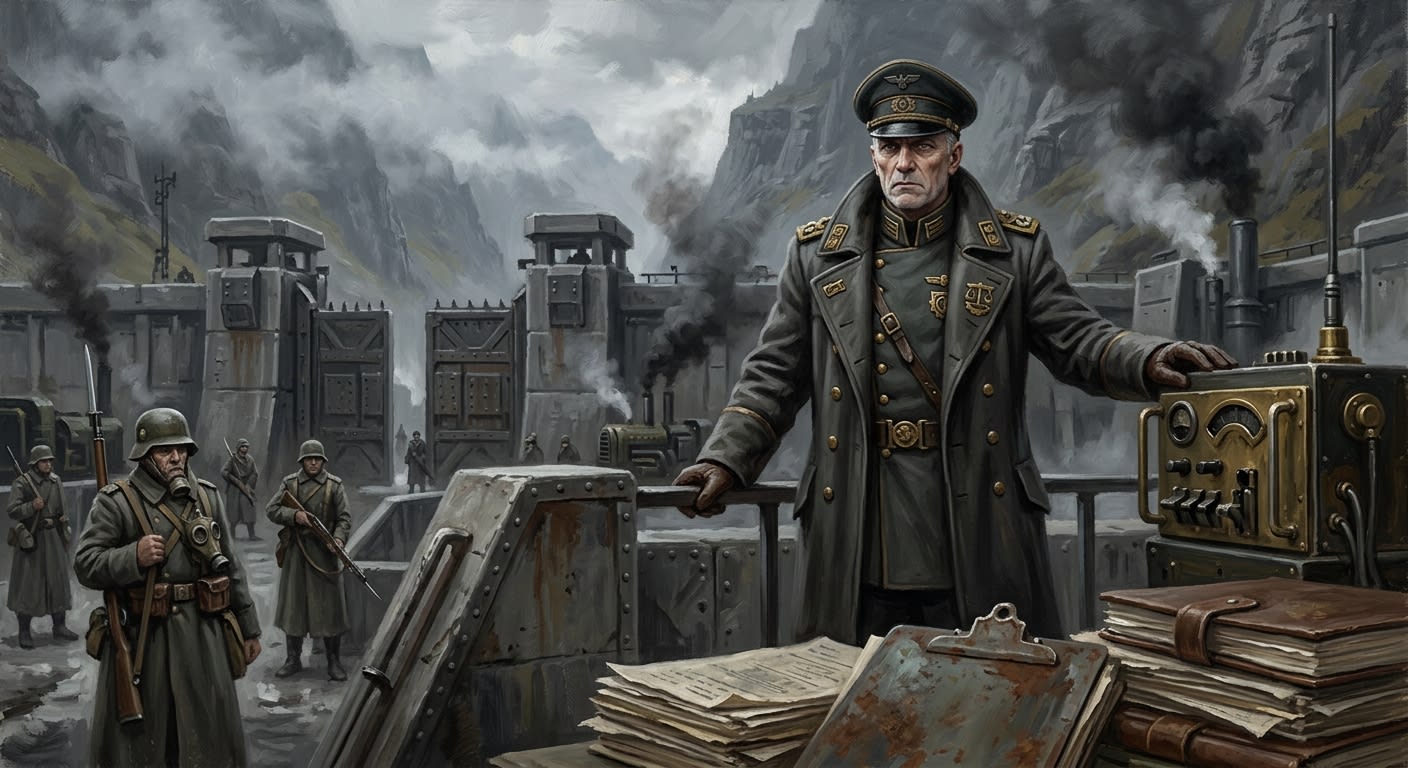
Legate-Inspector Theron Vast
The man whose open road indicts a locked gate
Theron Vast commands the Macedon Escarpment checkpoints, filed an A.S. 187 closure proposal still pending after fourteen years, and remains useful enough to frighten Doctrine.
Codex Ref. III.2.01-051
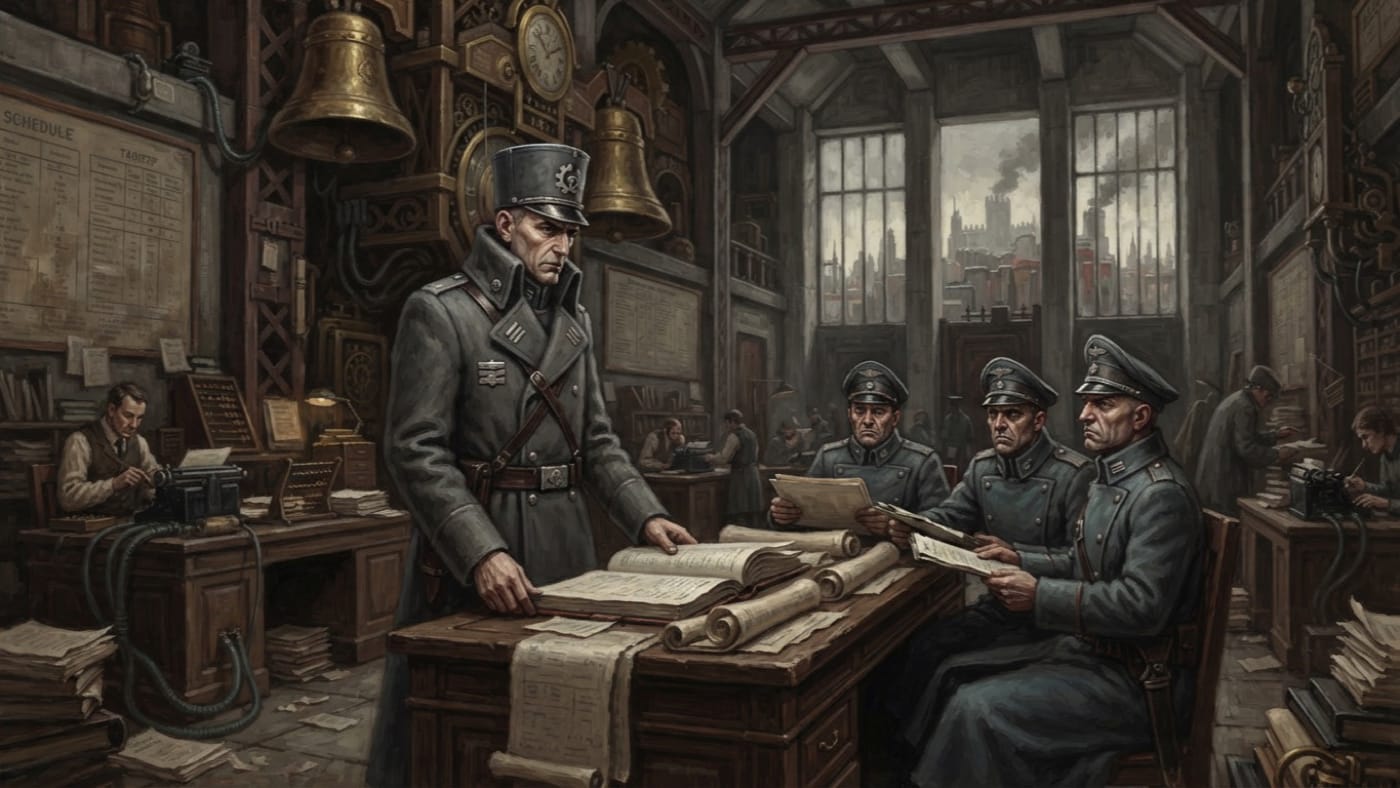
Legate-Praetorial
The guns are autonomous; the kitchens are inspected
Quarterly inspector of Bastion-Constantinople's internal administration. The fortress commands its guns; its observances remain open to correction. Seraphinus of Lyon's three generals supply the warning.
Codex Ref. XIII.1.33-201
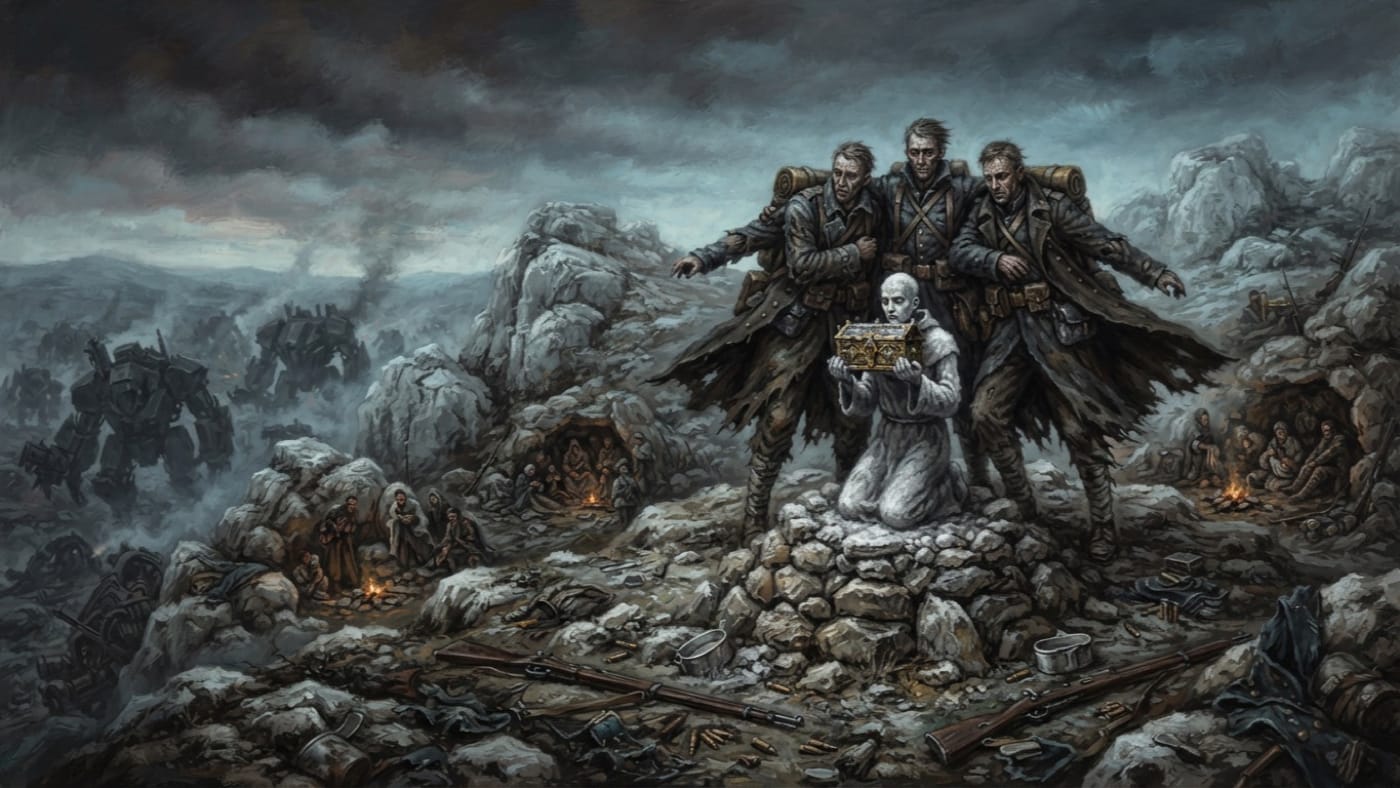
Lieutenant Petar Vladek
The lieutenant who posted a guard against the wind
Kalnik Ridge's sole surviving defending officer, A.S. 48: four lines on extraordinary morale, one guard against the wind, and no birthplace for the Bureau to enter.
Codex Ref. III.2.01-048
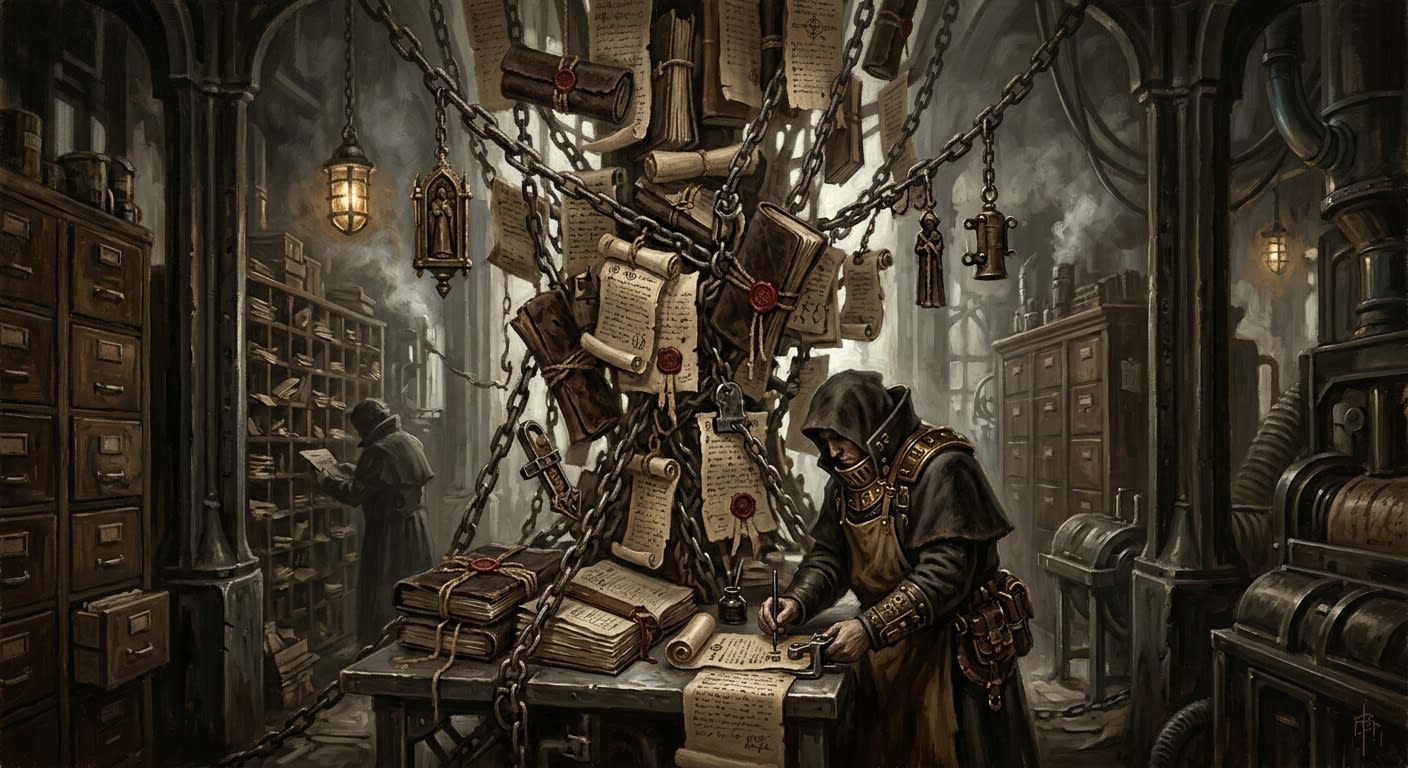
Links
Custody is only a small fastening with authority
Links are the Synod's smallest instruments of custody: iron, ink, oath, route, relic claim, debt, guilt, and every useful fastening in between.
Codex Ref. XIII.1.84-201
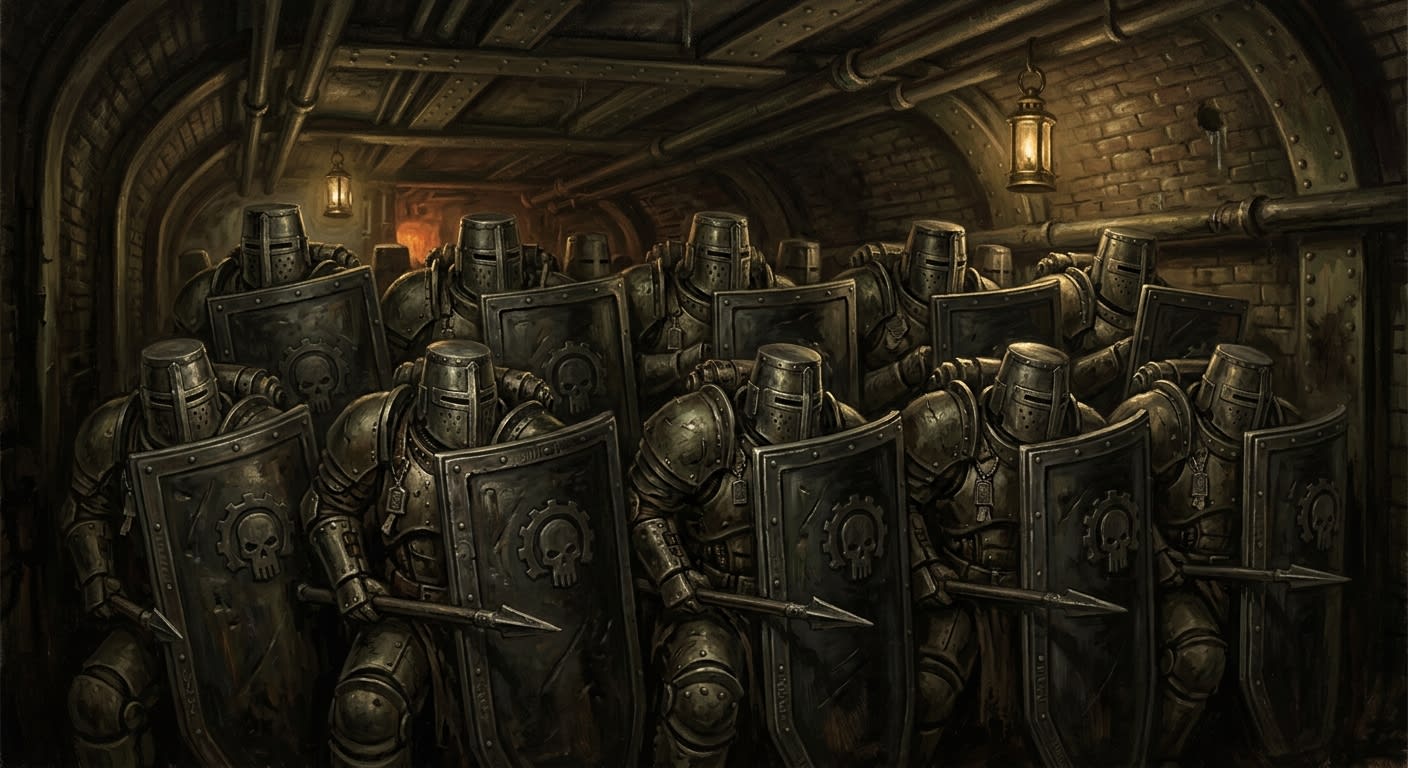
Lock Formation
Three ranks, one breath, and the wall answering in iron
The Shield Paladins' breach-reception doctrine: three ranks of interlocked iron, jawbone chant, rim discipline, and the geometry by which panic is denied passage.
Codex Ref. XIII.1.63-001

Lumen
Reason alone, debased by its own mint
The Lumen was the Rationalist Republic's bright little sermon in stolen metal: altar silver, RATIO SOLA, and a compass pointing straight into confiscation.
Codex Ref. XIII.1.90-030
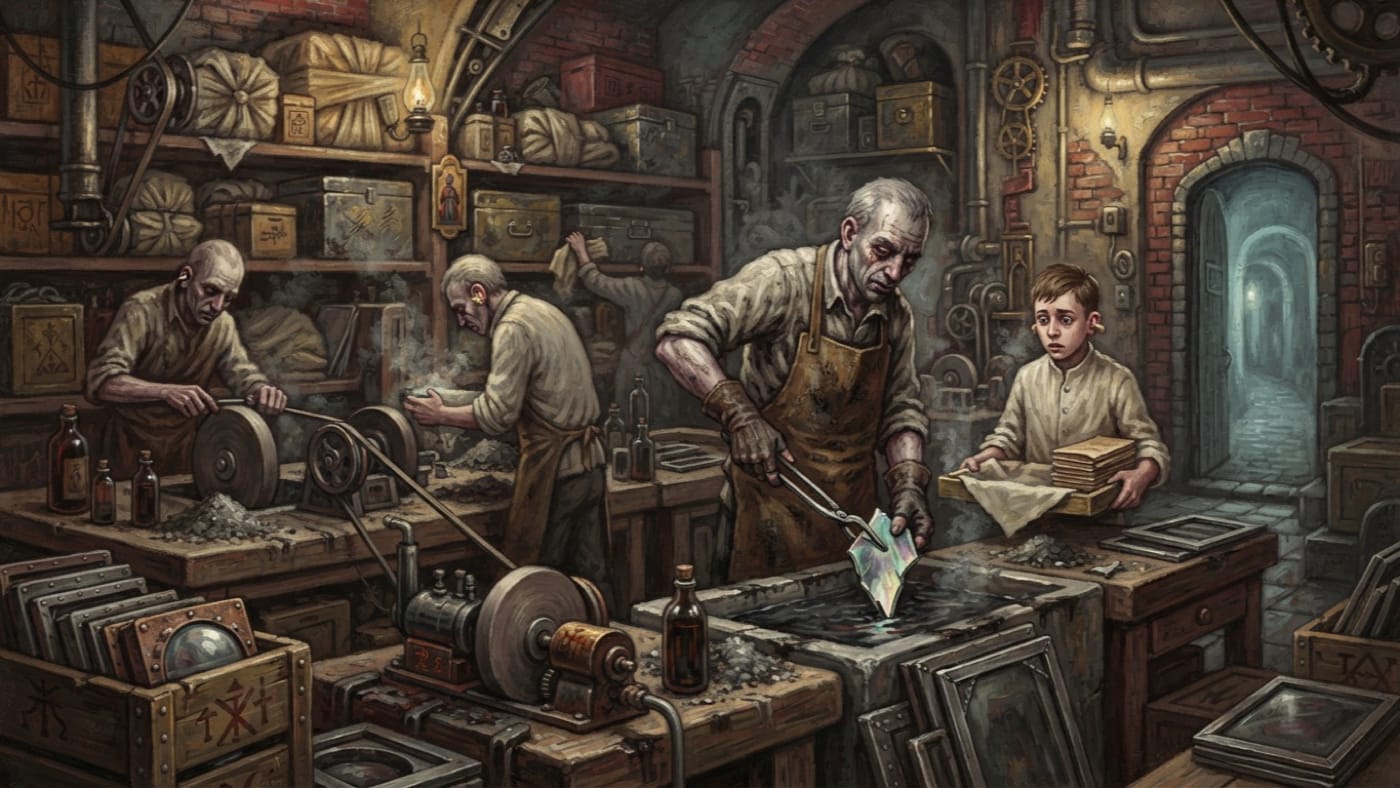
Lust-court debris
Condemned as contraband, requisitioned as optics
Lust-court debris is the court-born stream of demon glass: recovered from hostile palaces, quieted at the bench, condemned by Purity, and delivered to War as optics.
Codex Ref. XIII.1.58-002
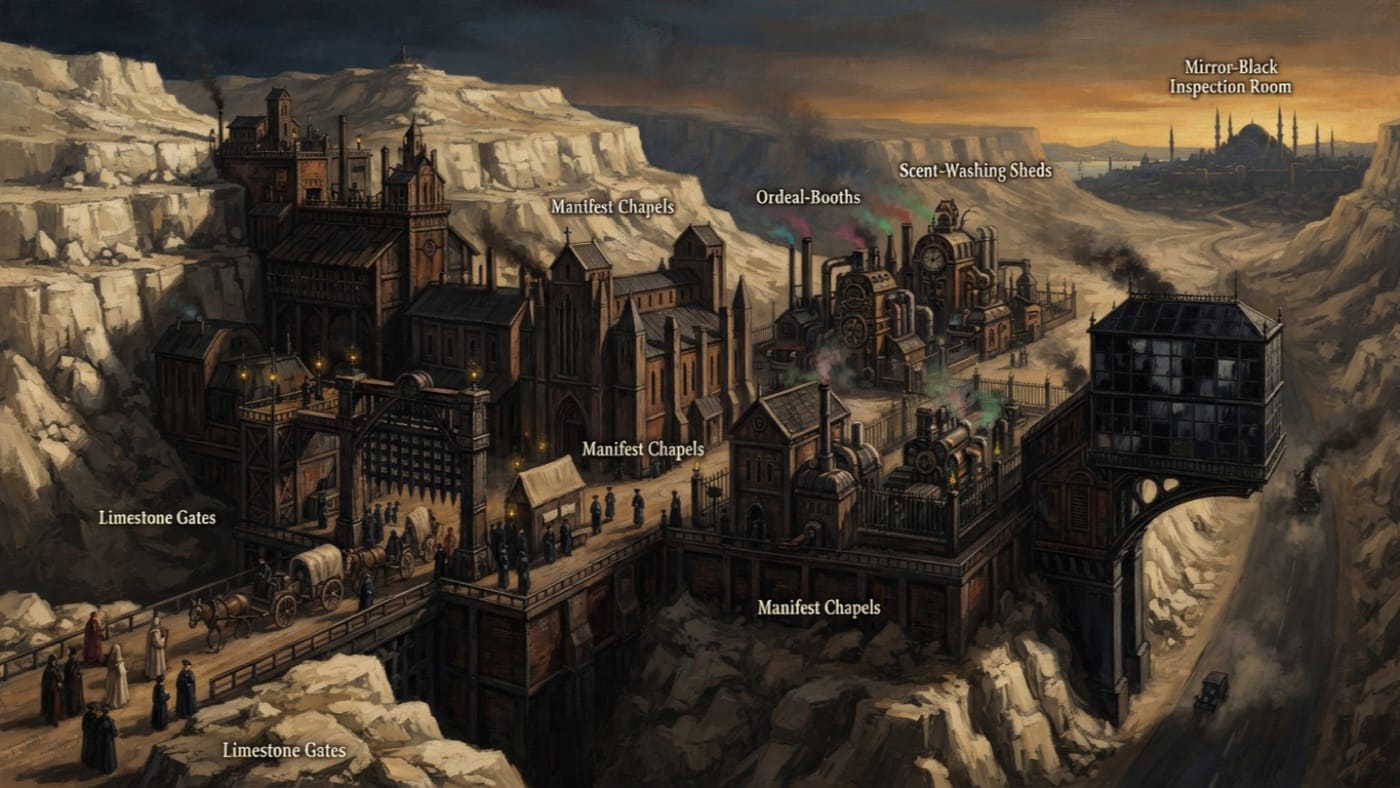
Macedon Escarpment Checkpoints
Where the papers pass and the people remain a question
The Macedon gates keep Constantinople supplied and its manifests correct. Vast's A.S. 187 closure proposal remains pending in A.S. 201; the papers certify names more readily than people.
Codex Ref. II.4.10-009
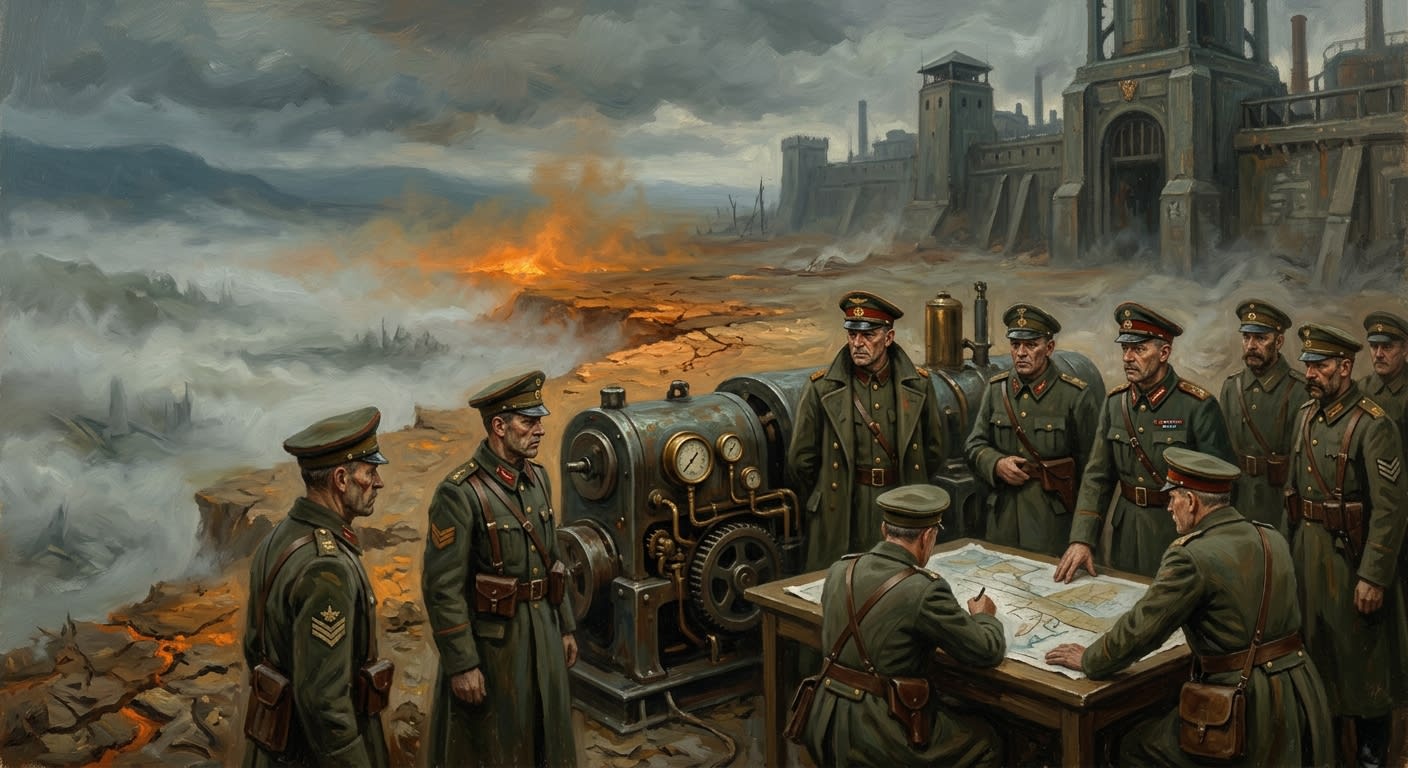
Maldrake-Syrion Contact Zone
Where fire learned patience and fog acquired manners
The Maldrake-Syrion Contact Zone is the Balkan strip where Wrath's furnace weather and Sloth's time-fog hold a stable hostile interface, which is Doctrine's least relaxing miracle.
Codex Ref. VII.8.10-201
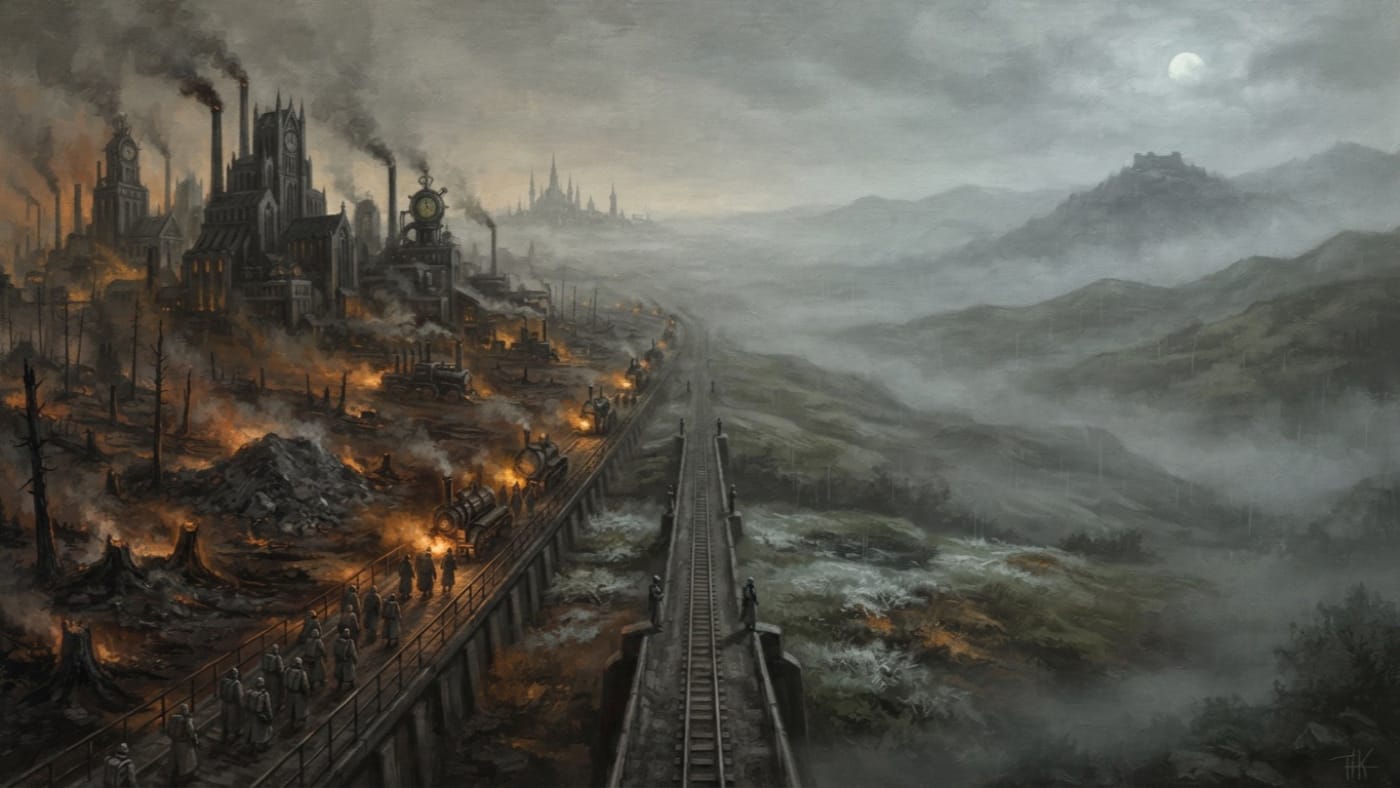
Maldrake-Syrion feud
War feeds the hatred; the foothills refuse to explain their quiet.
An A.S. 201 survey of the Maldrake-Syrion rivalry: War feeds a feud that has devastated sectors, while local accommodation in the Balkan foothills troubles the arithmetic.
Codex Ref. VII.8.11-201
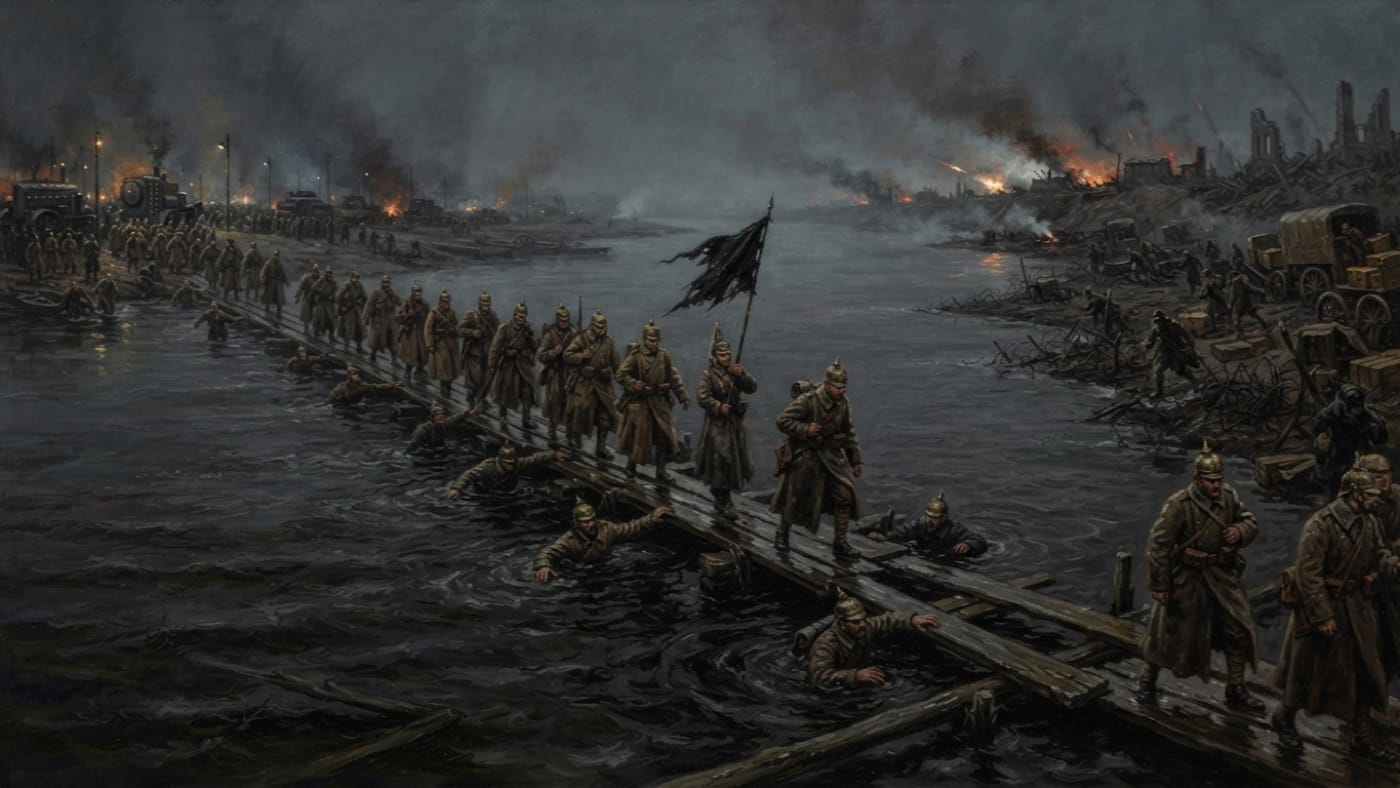
Mark Seven
The floor was taken on faith; the dead were entered by column
A drowned Danube pontoon used in A.S. 172: its returning soldiers furnished Sign Two, while its dead received no separate subtotal.
Codex Ref. II.4.09-007
Marshal Vaubret
He counts the wire; his officers supply the prayers
Marshal-Elector Galien Vaubret commands the Thracian theater beneath Bastion-Constantinople. He counts wire; his officers pray for him. Two Bureaus dispute whether this is sufficient.
Codex Ref. III.2.02-018
Martial Code 22-A
The smoke may write. The reader must answer.
Martial Code 22-A names voluntary spiritual contamination: reading smoke-text and specified demon-glass recovery under Standing Order 14-K. I hold the citations; the full Code and its prescribed sentence remain beyond my desk.
Codex Ref. XIII.1.22-001
Martial Miracle
The river turns; the Bureaus take custody
Battlefield manifestations of the Creator's favour, read through Kalnik and Belgrade. Doctrine interprets, Records keeps the testimony, and War claims the victory. Pilgrimage sends the bill.
Codex Ref. VI.3.02-001
Maskwright Lanes
Where legal masks learn illegal sight
Thessaloniki's Maskwright Lanes are a craft district, contraband-optics artery, and municipal embarrassment whose legal masks hide demon-glass mounting, War lenses, decoy stock, and quarterly Purity theatre.
Codex Ref. II.7.03-001
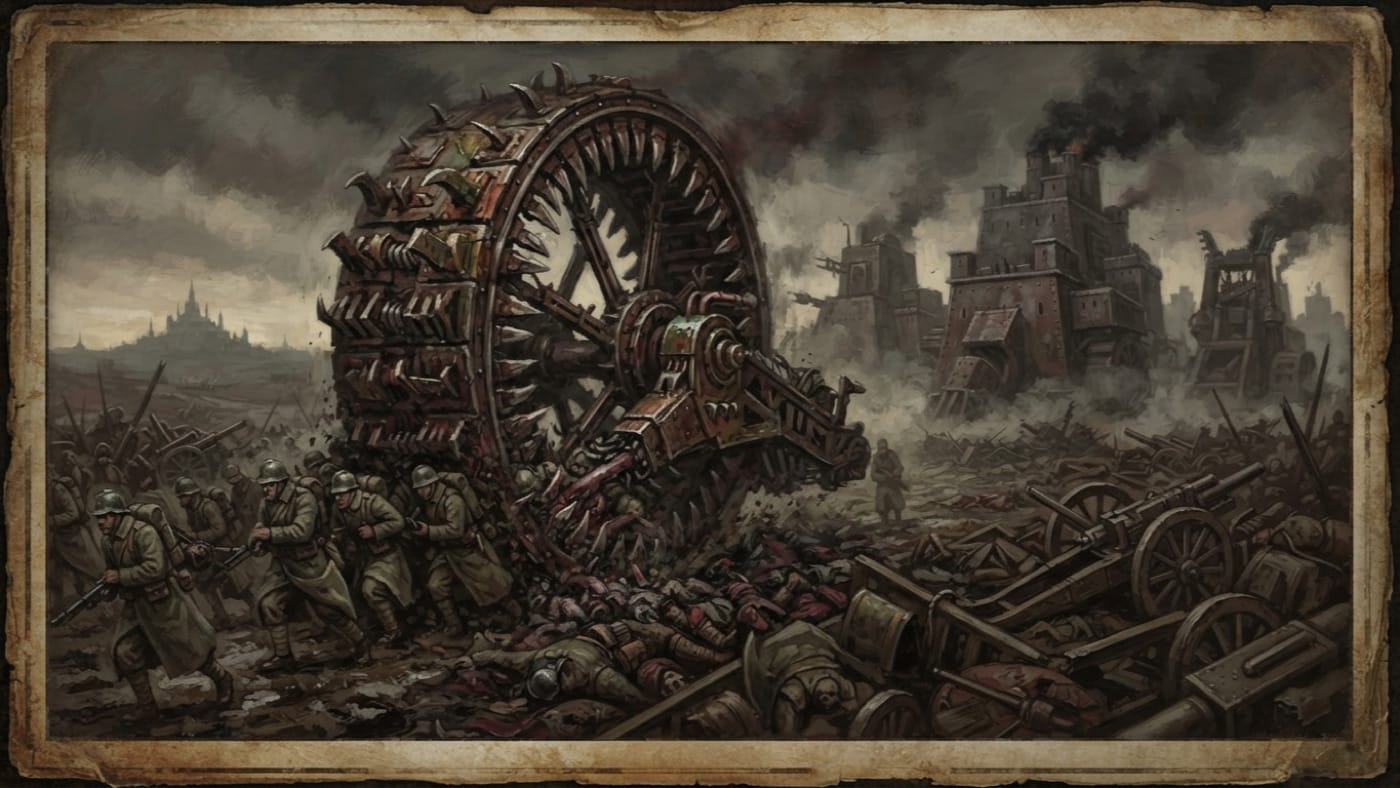
Mawwheel
Each Slaughter Fuels the Next
Kargath's colossal wheel of iron and flesh grinds armies beneath iron fangs and devours the slain as fuel. Its maker and first appearance remain blank in the ledger.
Codex Ref. IV.1.07-494
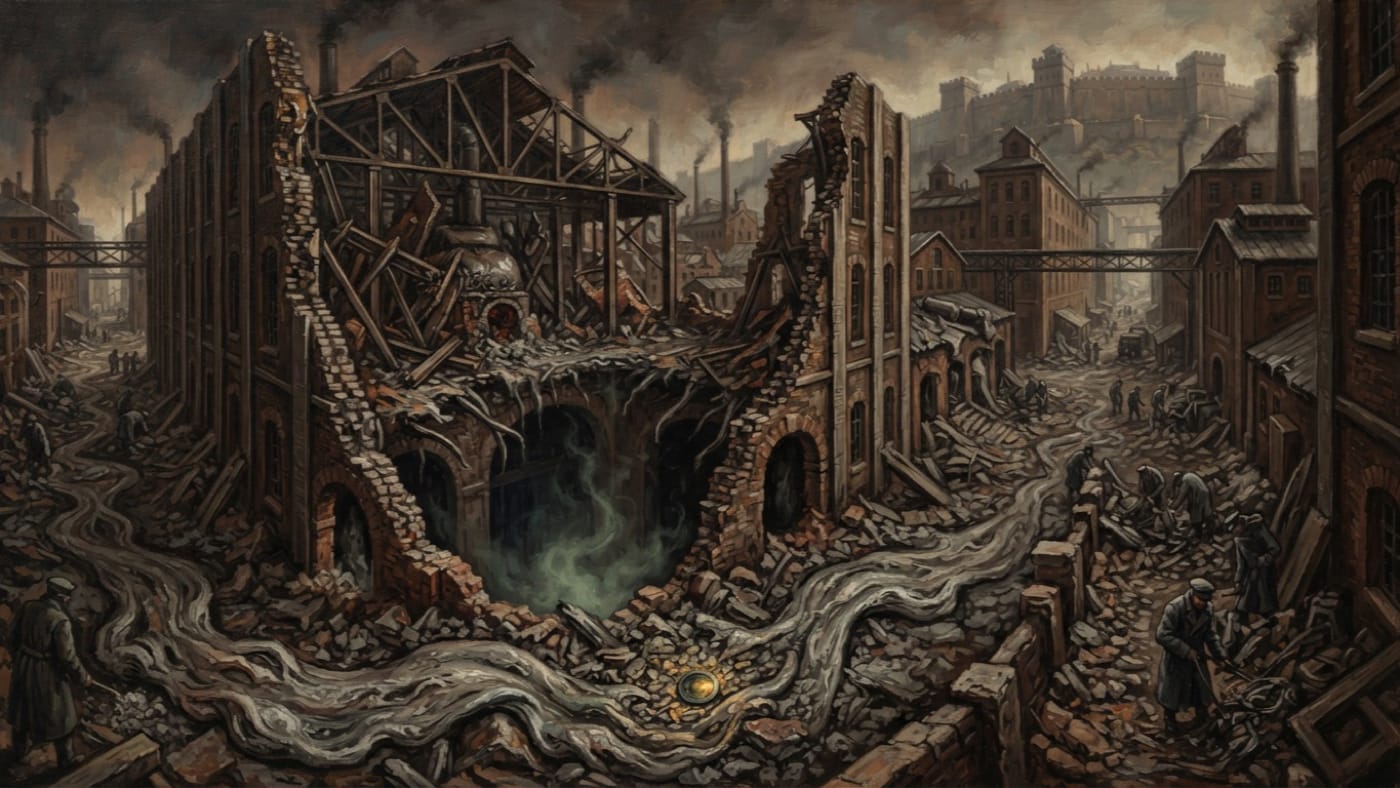
Mill Seven
The Quarter was restored; the mill's fate went unrecorded
Mill Seven took the first blast of the Three-Night Bombard; its slag gutter later yielded the Screaming Coin. The Quarter was certified restored. The mill's later fate remains unrecorded.
Codex Ref. II.4.10-177
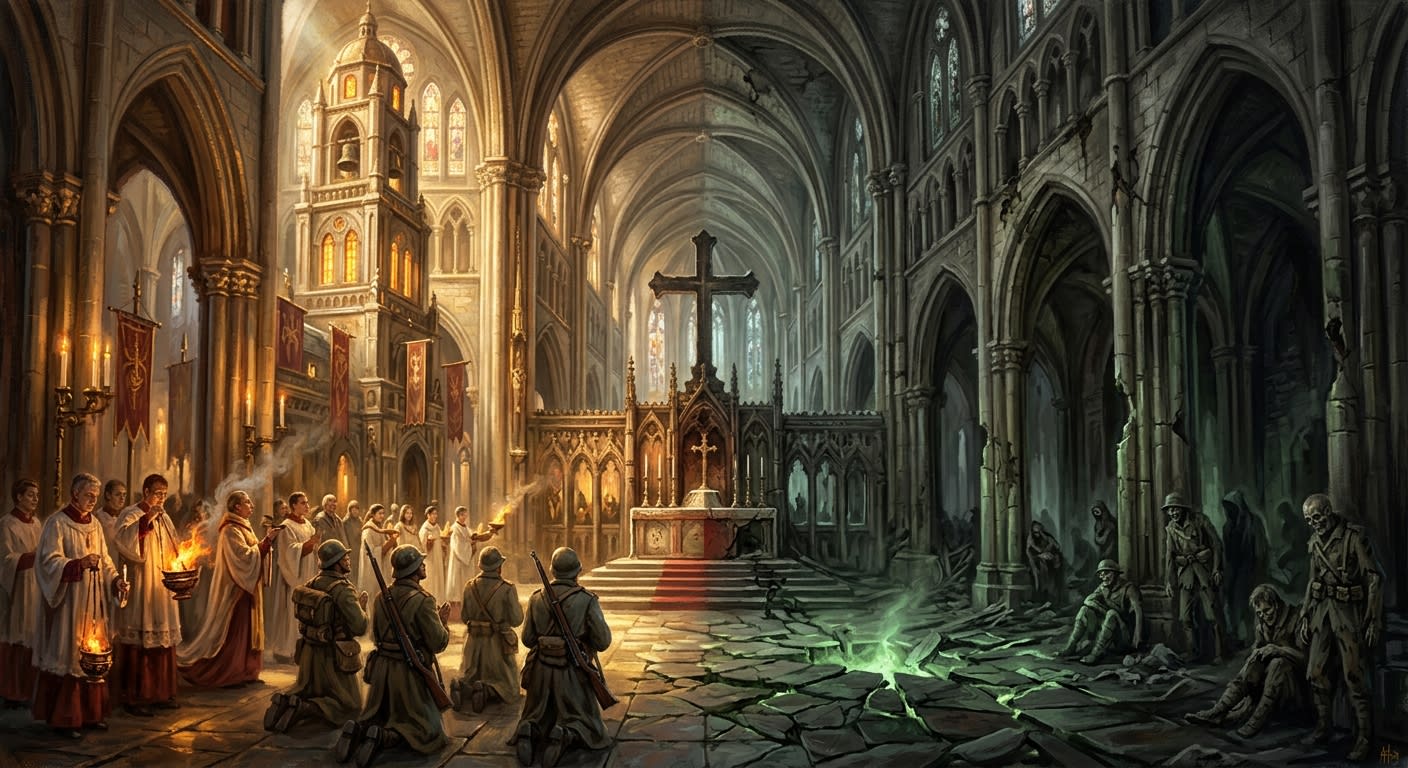
Miracles and Sorcery
Both crack Creation; only the paperwork differs
The Bureau insists miracles and sorcery are opposites. The mechanism, as Drax reluctantly confirms, is identical. The source determines canonisation or burning. The paperwork is different. The world pays either way.
Codex Ref. VI.3.01-001
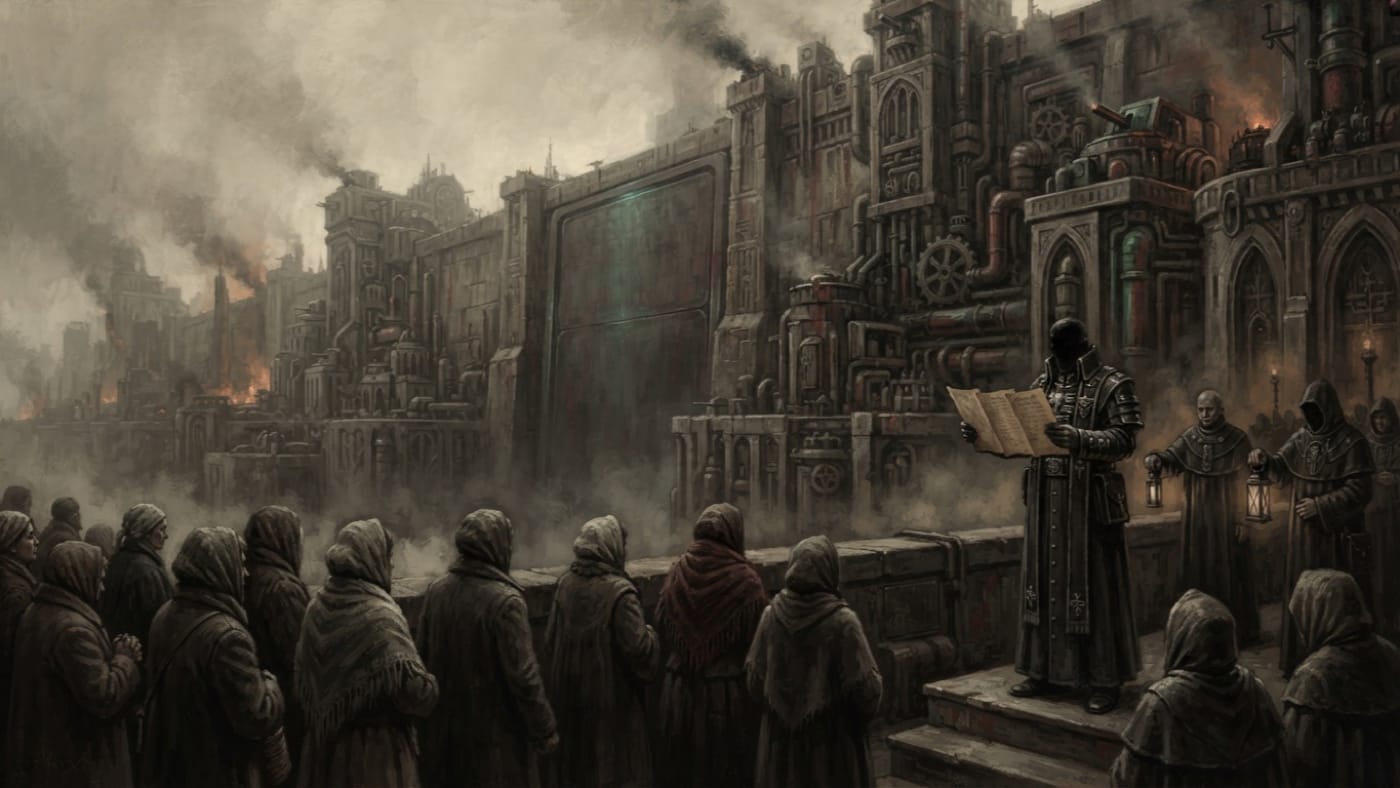
Miraculum Septimum: De Custodia Sancta
Three pages; forty-seven unnamed; the Wall endures.
The Bureau of Doctrine's three-page account of the Sixth Ravelin's sealing, filed in A.S. 170 and read at the Vigil of the Hollowed. Forty-seven offered; none named. The account records acceptance. The cement is omitted.
Codex Ref. XIII.1.98-170
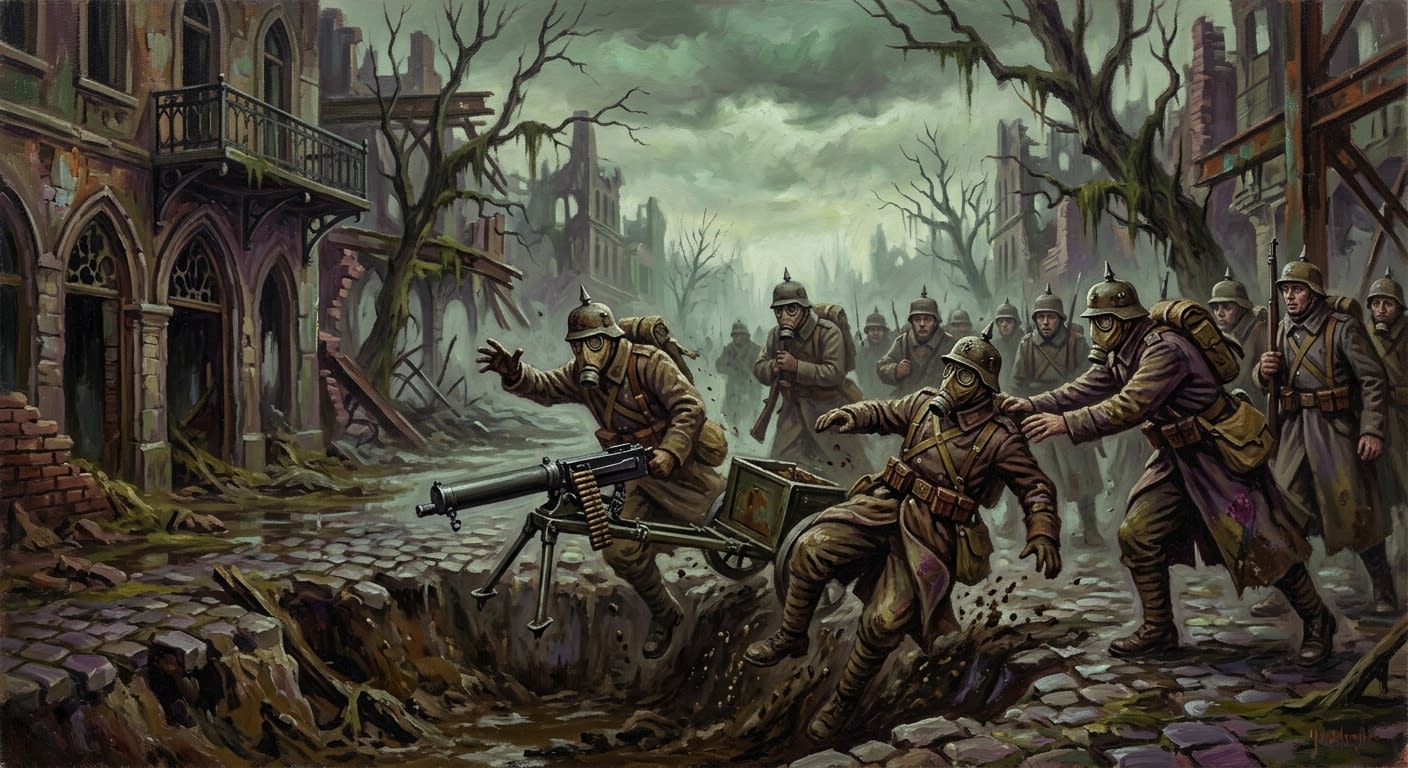
Mire Collapse of Debrecen
The day the mud reopened a dead city's streets
In A.S. 172, the Blightmarsh reopened Debrecen's pre-Sundering streets beneath a forward regiment, proving that Kargath's mud remembers what it eats.
Codex Ref. VII.4.10-001
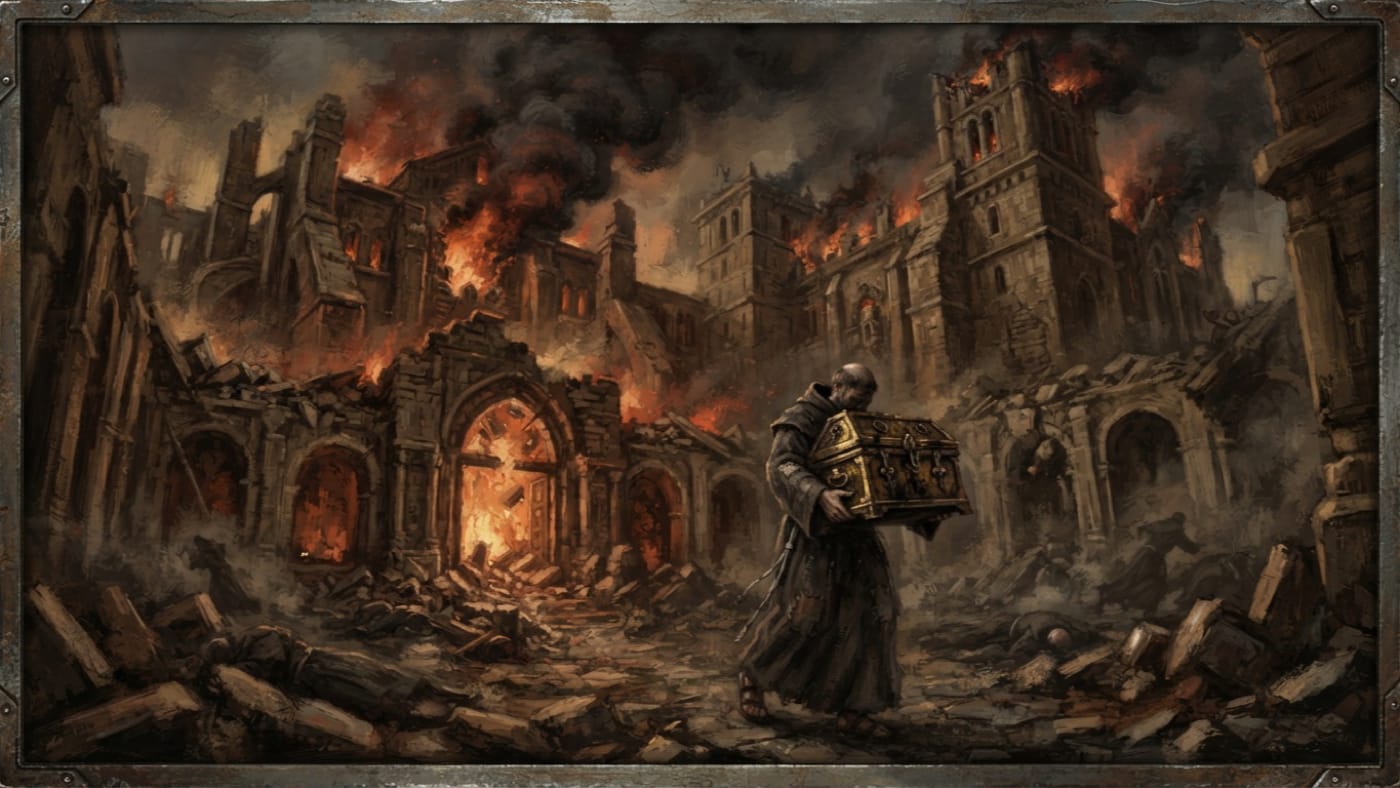
Monastery of Saint Alexios
The house burned; one brother carried its relic out
Dalmatian monastery destroyed in the first week of the Sundering, A.S. 45. Brother Tomislav carried out its reliquary; the house survives chiefly as the first link in a custody chain.
Codex Ref. III.2.04-1871
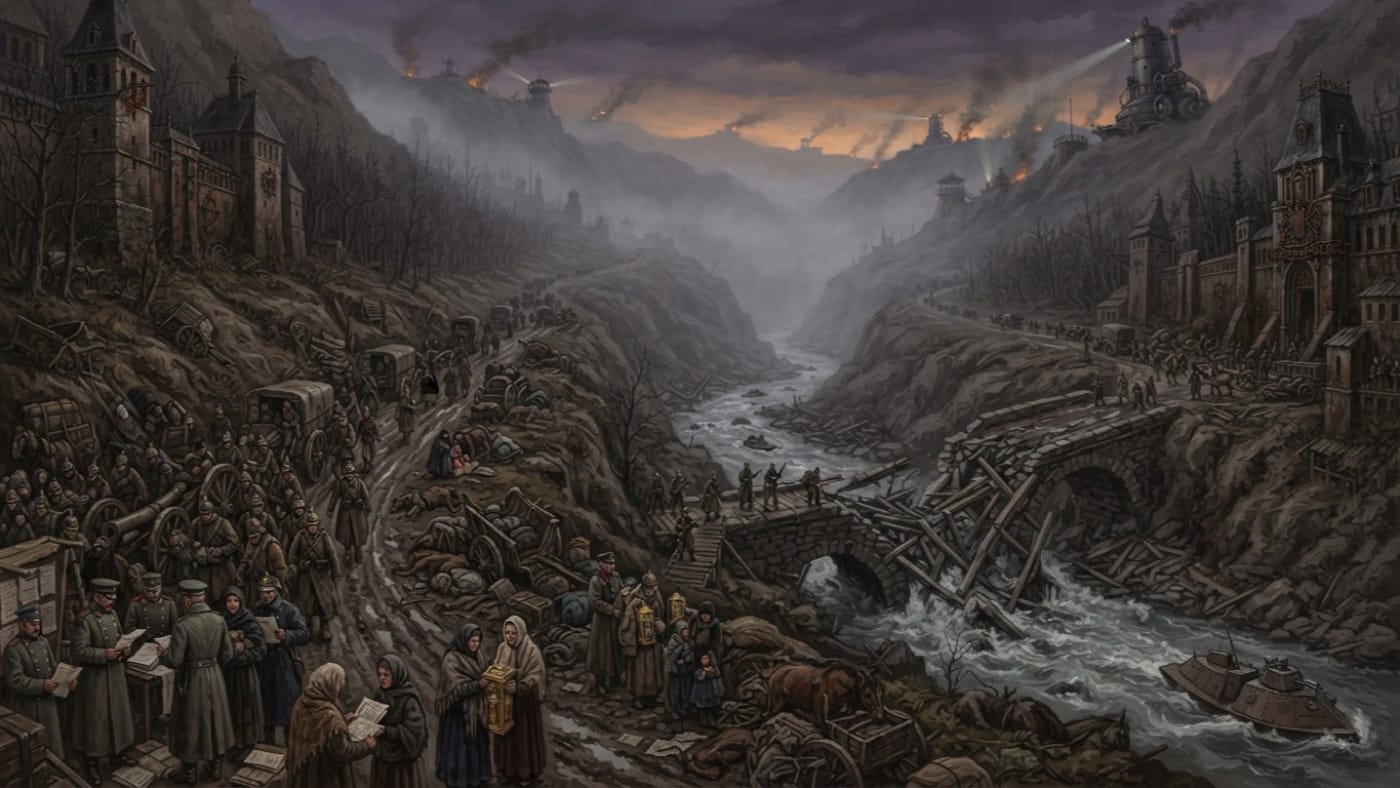
Morava
The roads that carried armies inward and excuses back to Vienna
The Morava corridor carried armies inland and letters out. In A.S. 38, a reported washout nearby gave Vienna a plausible explanation for an East that had stopped answering.
Codex Ref. II.6.06-201
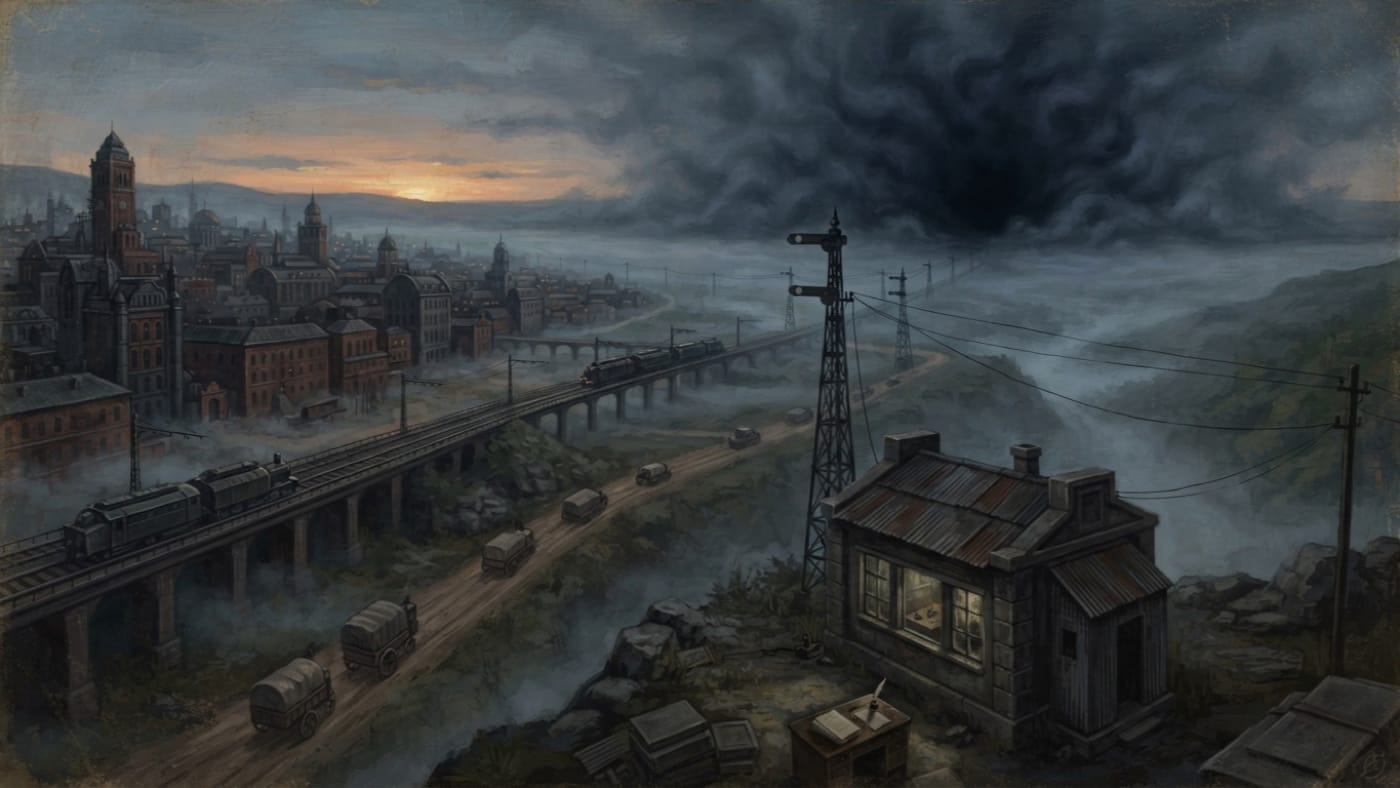
Niš
A missing grain return and a column no conjecture can close
In A.S. 38 a parish in Niš failed to send its grain report. The Eastern Silence gave that empty column a place in the Codex; it supplied no explanation.
Codex Ref. II.5.09-038
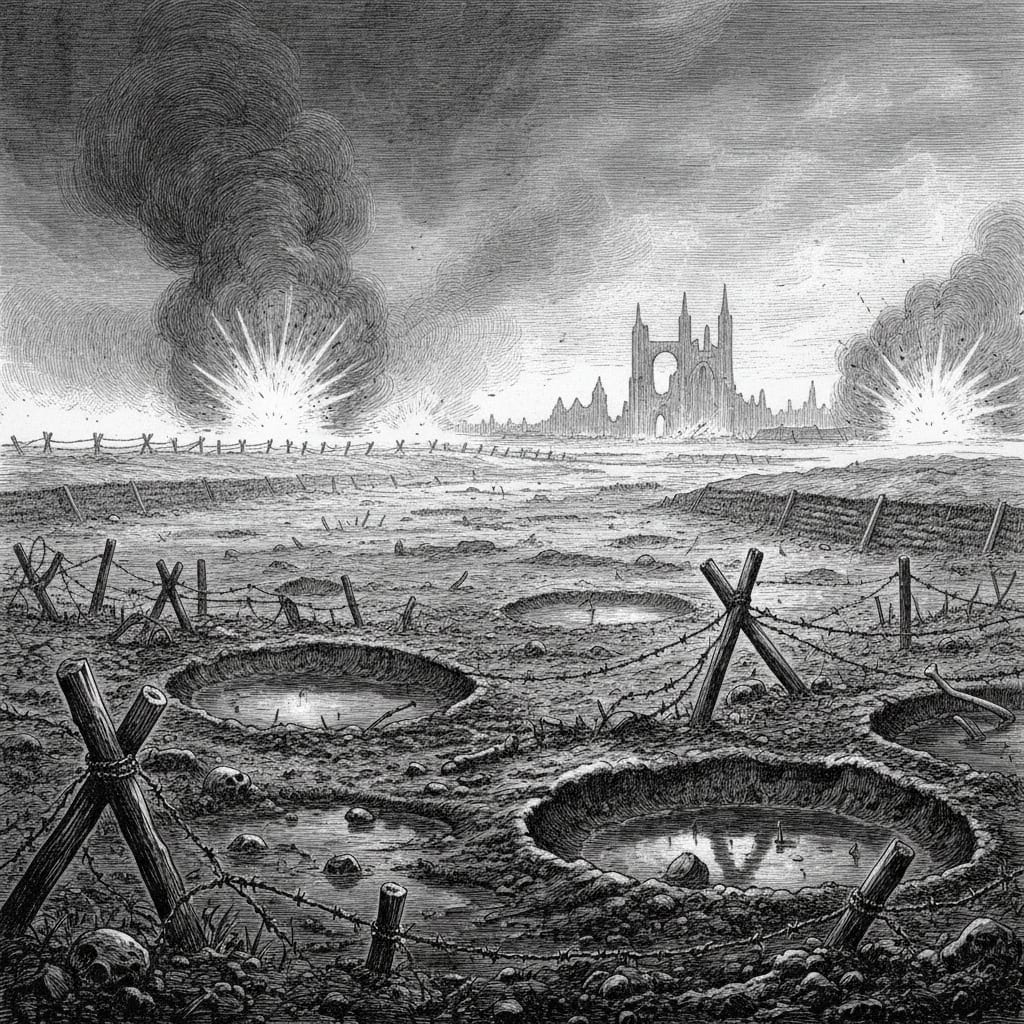
No Man's Land
The Wound That Will Not Heal
The continent-length scar between the bastions and the Great Deceiver's domains, where mud remembers, fog sings, and the dead outnumber the living by a margin the Bureau declines to publish.
Codex Ref. V.1.02-031
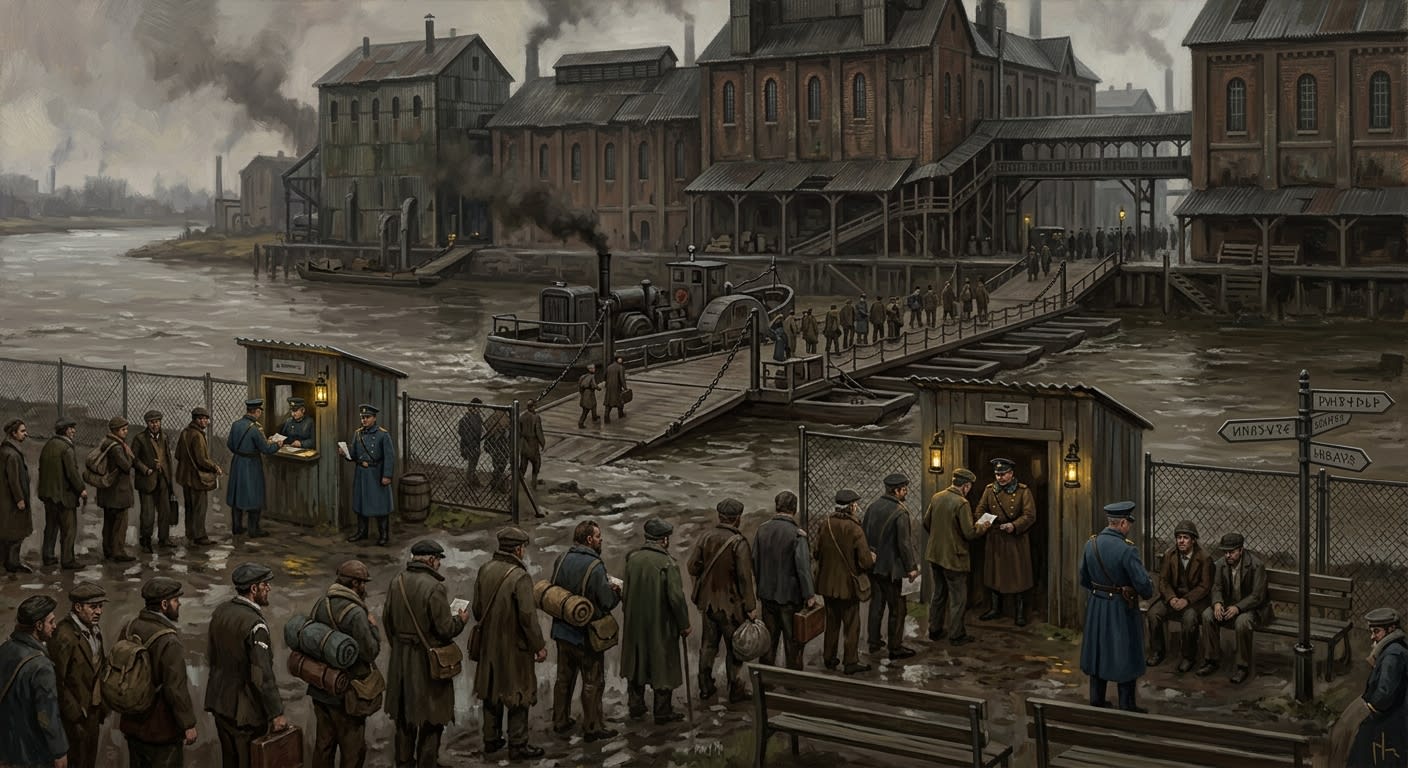
Nominalist's Gate
Miss one consonant and become doctrine
Nominalist's Gate is a Zone 2–3 river crossing where ferry law, password doctrine, mud courts, and Records exactitude turn travellers into cases.
Codex Ref. II.3.05-002
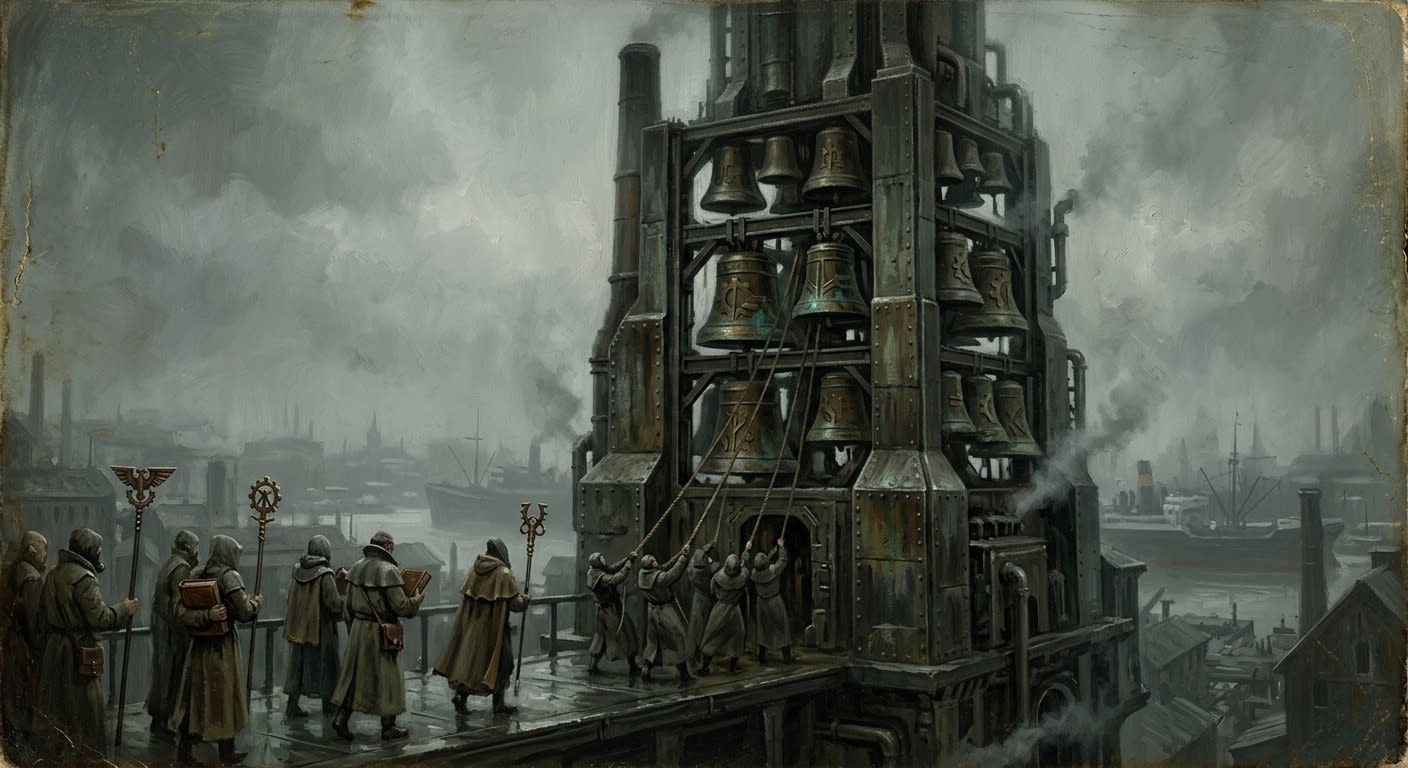
Northern Carillon
Forty-one bells speaking law into a fog that answers too politely
Königsberg's Northern Carillon is forty-one lawful bells, a Choir that sings into answering fog, and the Bureau's coldest proof that bronze can be obeyed without being understood.
Codex Ref. XIII.1.96-097
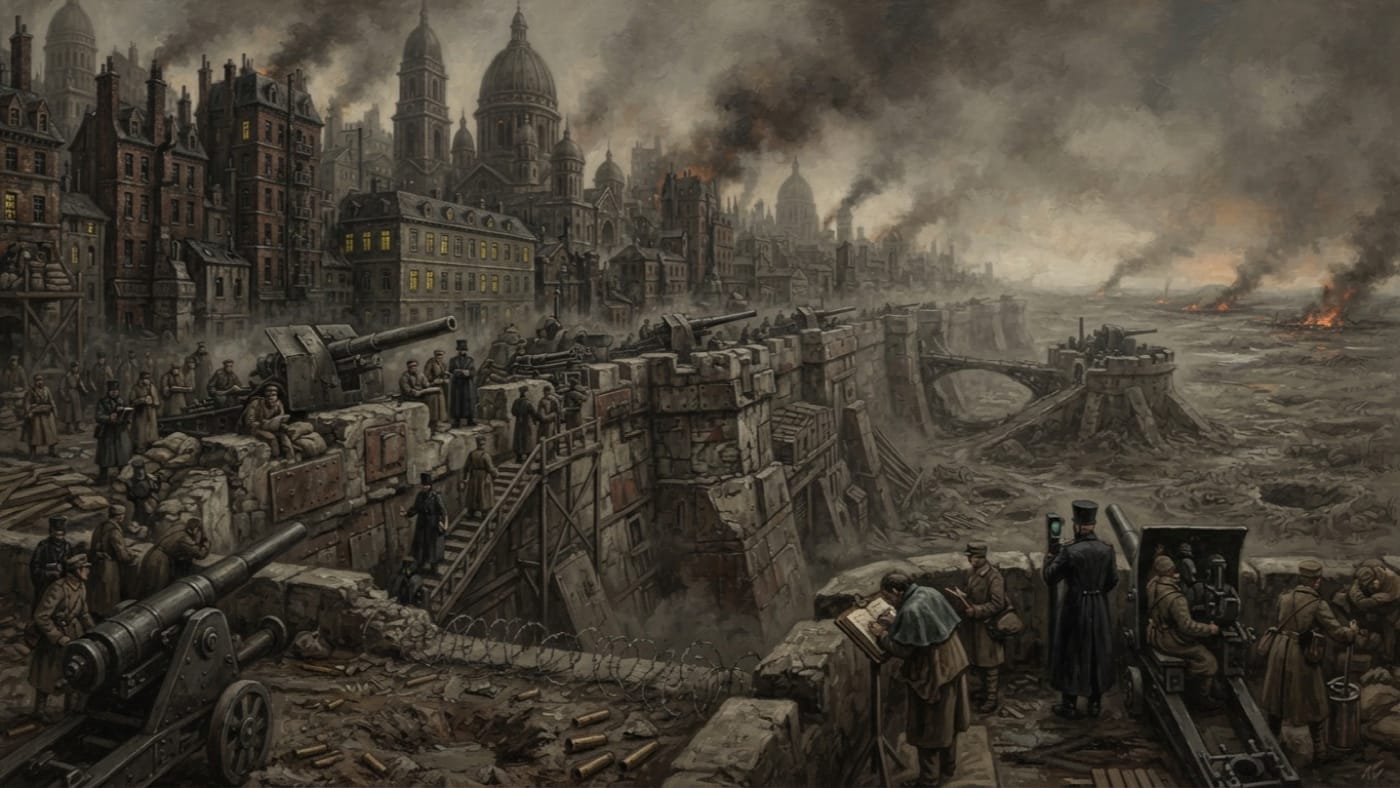
Northern Wall
The guns answer north; the city goes to dinner
The north-facing defenses of Bastion-Constantinople answer Maldrake across the Thracian Plain. Guns, Wardens and repair crews keep the frontage in service; the records still cannot agree where it ends.
Codex Ref. II.4.10-201
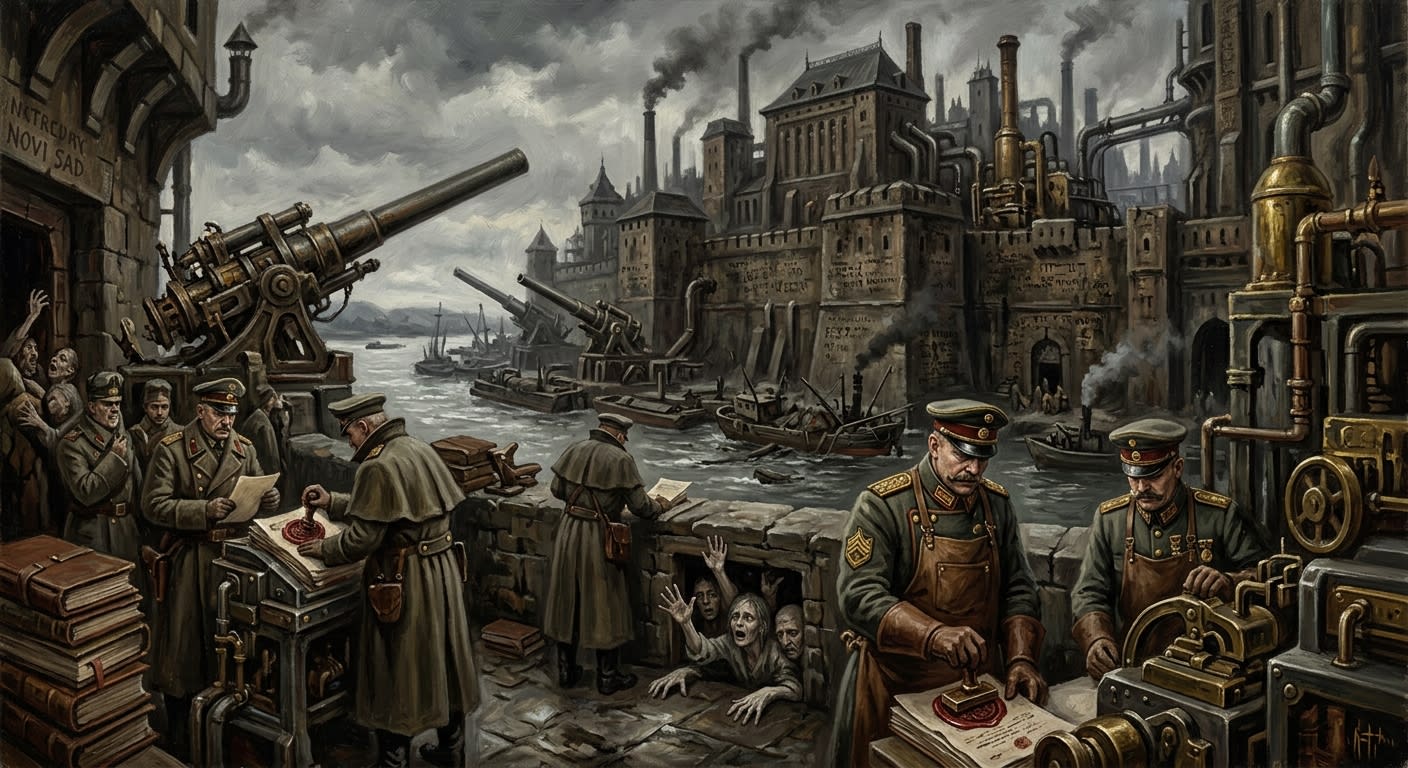
Novi Sad
The city where cannon, stone, and stamp each learned to fail
Novi Sad is a fallen Danube city whose cannon never fired, whose stones wrote living names, and whose valid seals once starved the bodies beneath them.
Codex Ref. II.4.09-045
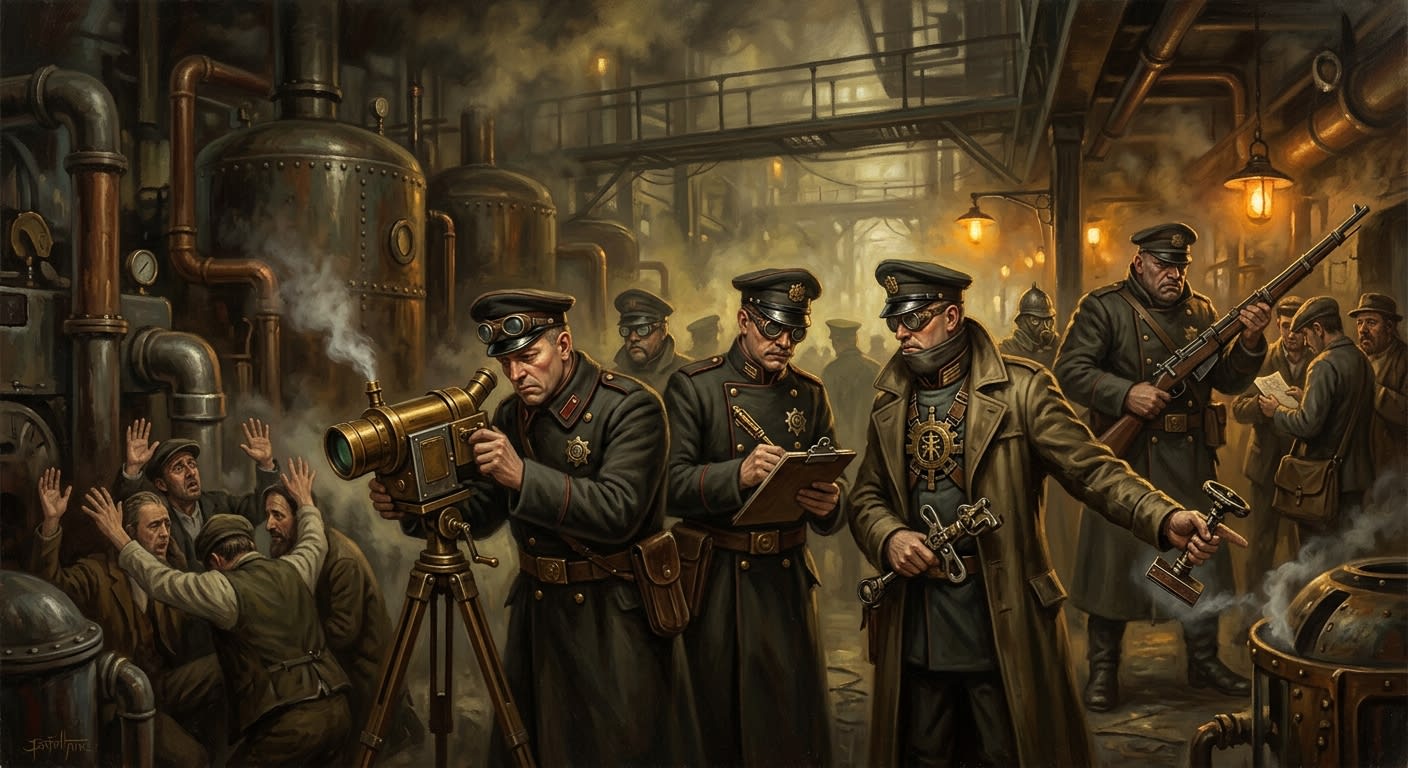
Operational Directive 14
The order that made air searchable and warmth prosecutable
Operational Directive 14 made smoke a witness, warmth a suspicion, and air a lawful target of Bureau of Purity entry, seizure, citation, and theatrical correction.
Codex Ref. XIII.1.94-143
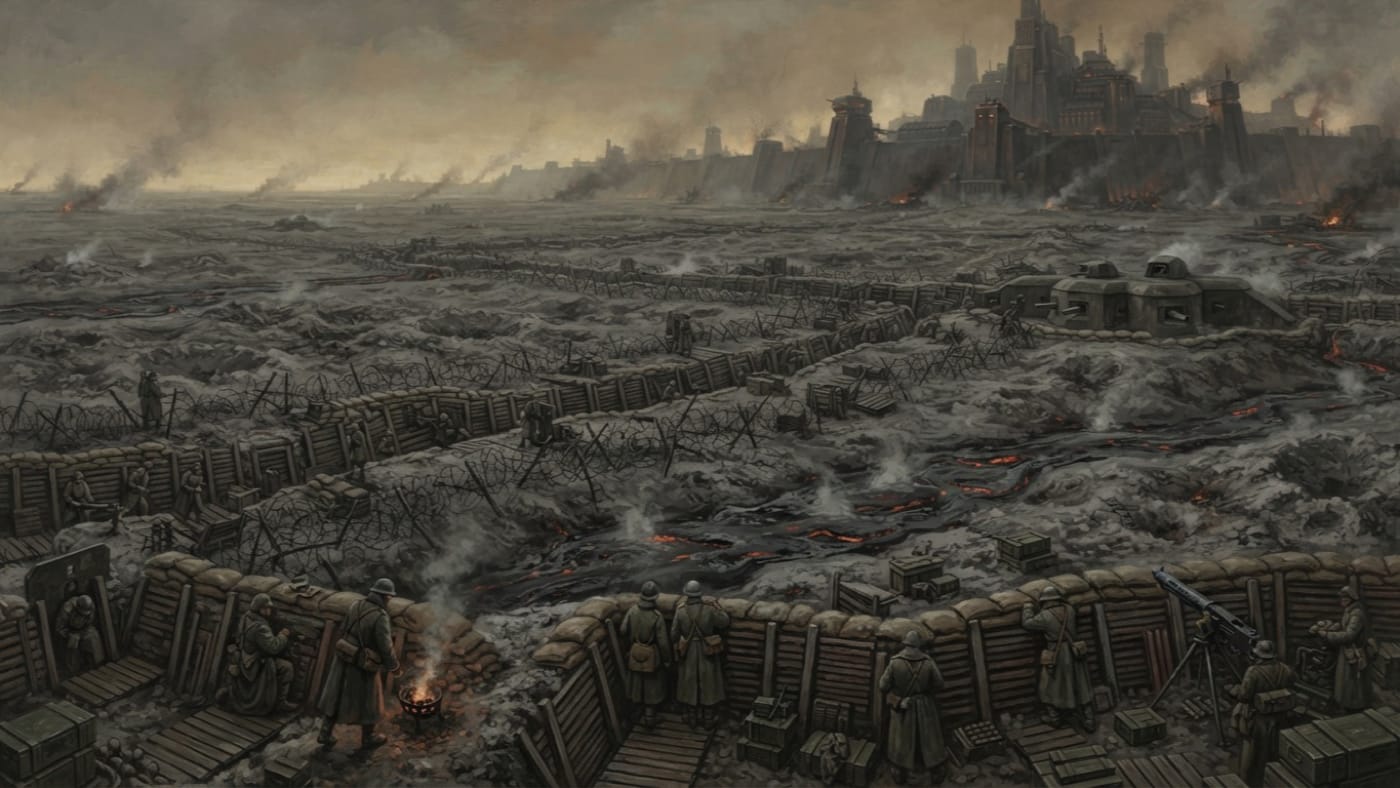
Operational Zone Ferrum-North
The Plate, Retained on the Active Register
The contested Thracian approach north of Bastion-Constantinople, entered by the Bureau of War as Ferrum-North and called the Plate by its defenders. Maldrake has room to muster here; the garrison has orders to hold.
Codex Ref. III.2.04-018
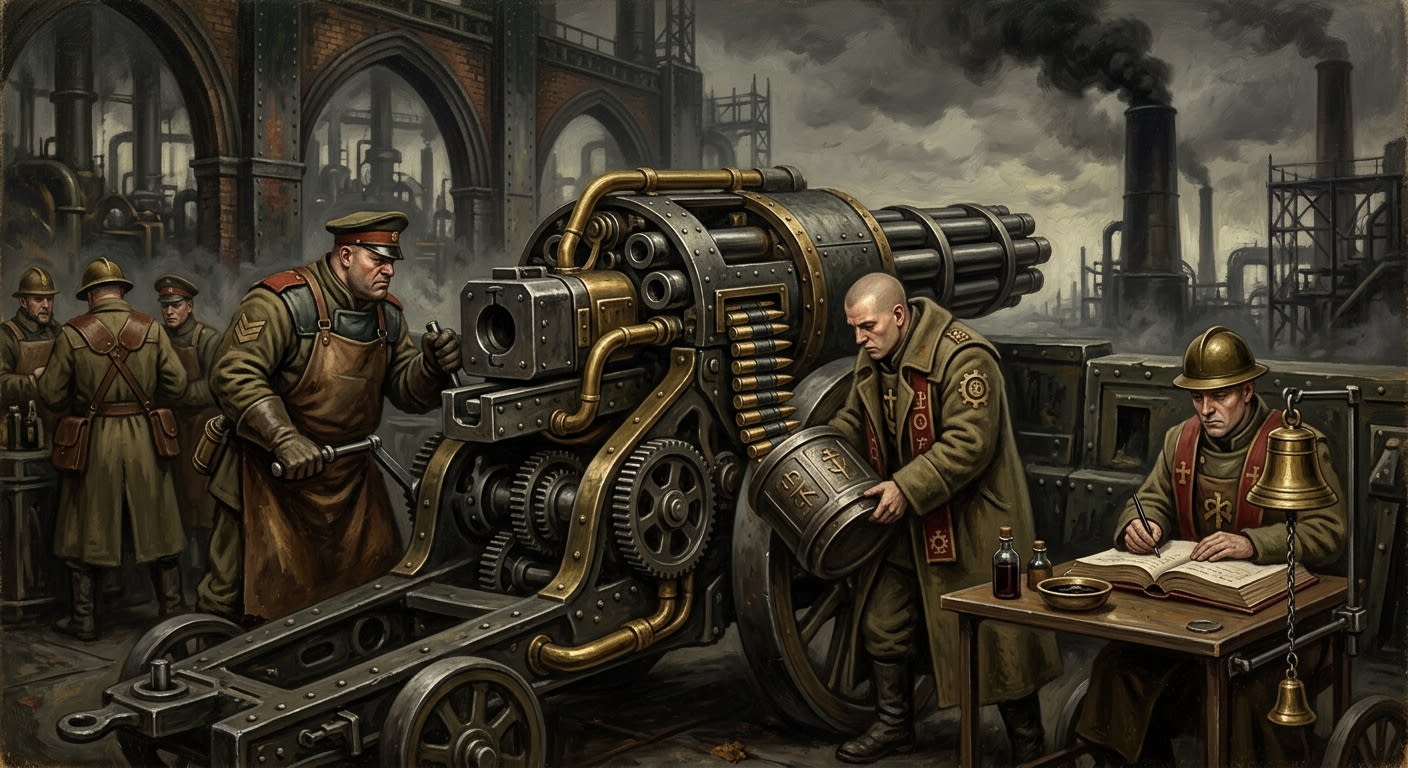
Ordained Repeater
The heretic made a gun; the Synod made it kneel
The Ordained Repeater is Artois's clockwork artillery corrected by chrism, ledger, bell-cadence, and the sacred art of denying useful debt.
Codex Ref. III.2.04-015
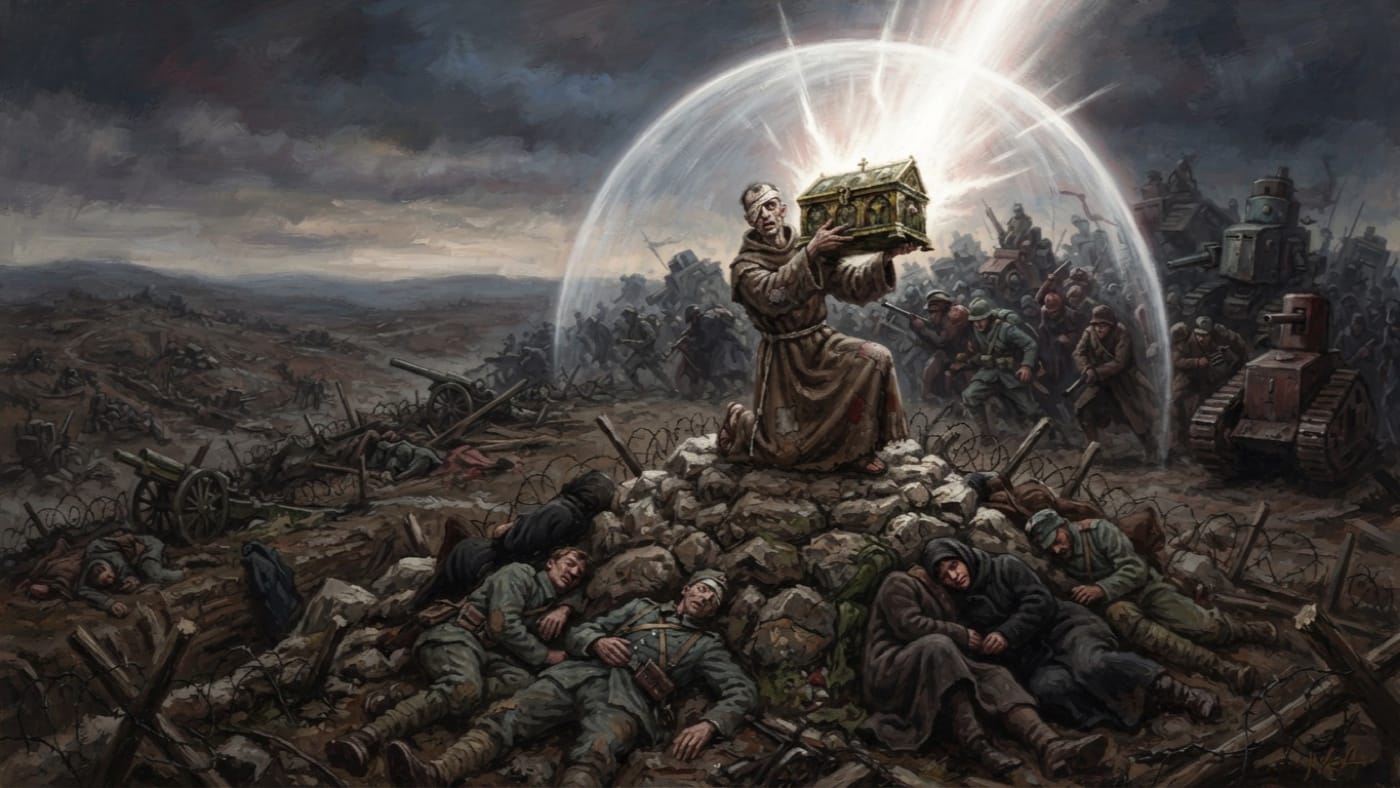
Order of Friars Minor
One brother in the record, an Order still unaccounted for
The Franciscan Order named in Brother Tomislav's file. One friar is confirmed; its foundation, superiors and survival remain beyond the Ledger's reach.
Codex Ref. VIII.9.02-2026
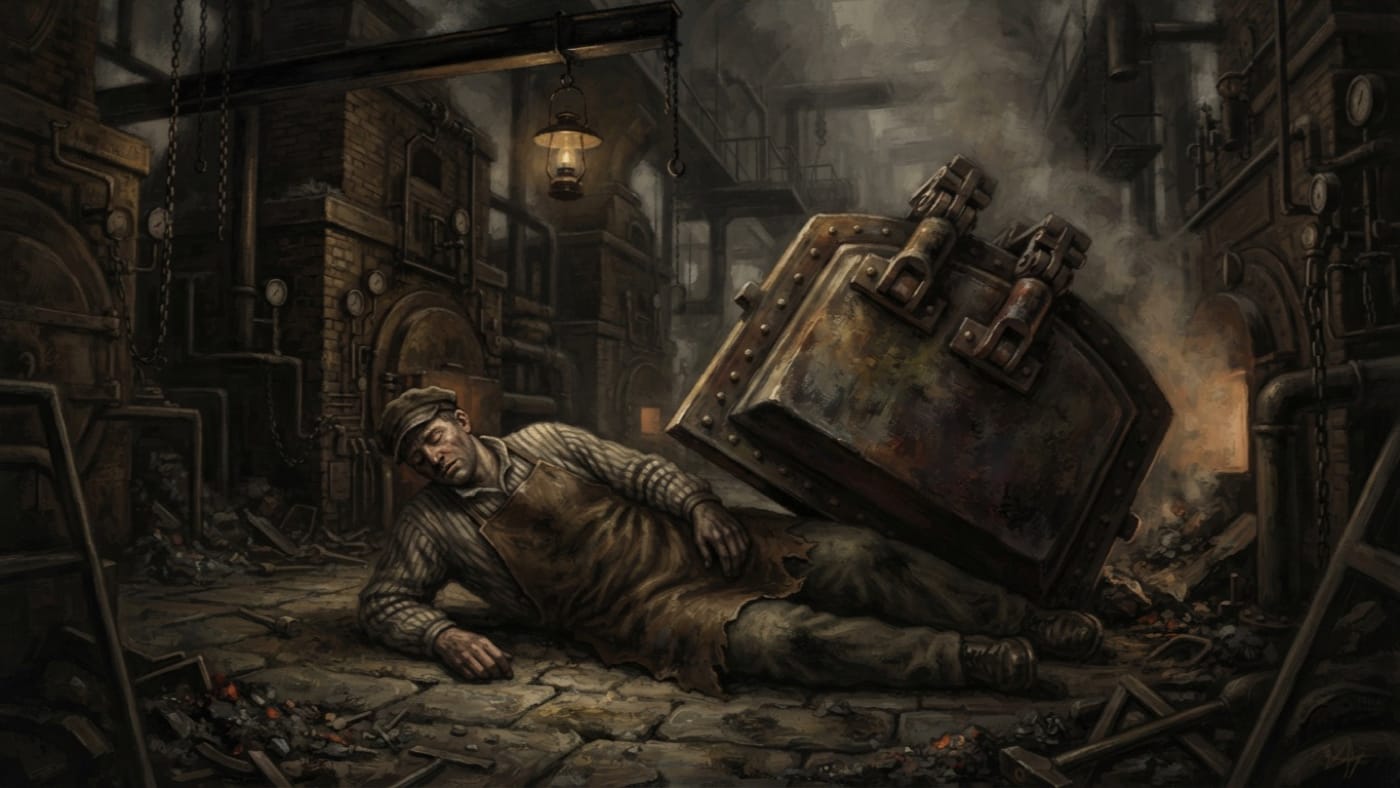
Orek Marr
The hinges were certified sound
Orek Marr found the Screaming Coin beneath Mill Seven in A.S. 177 and died two days later. The hinges were certified sound; the coin was recovered from his mouth.
Codex Ref. III.2.01-2033
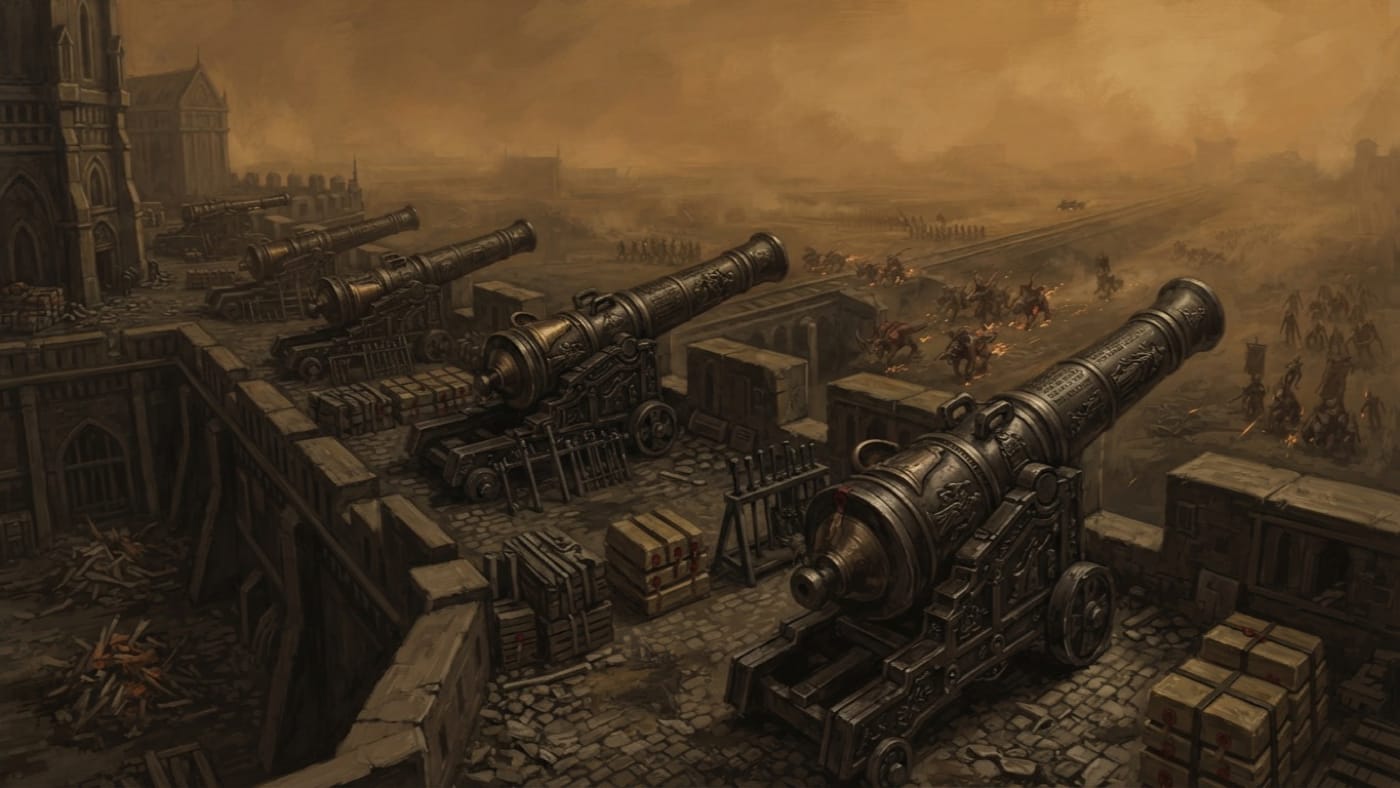
Orison Mark III
Eight to load, twelve to fire; at dawn, neither.
Four Orison Mark III bell-cannon stood ready at the Sixth Ravelin in A.S. 170. Their crews had burned before dawn. The guns were blessed, supplied and silent; no stamp could put a choir back beside them.
Codex Ref. III.2.04-170
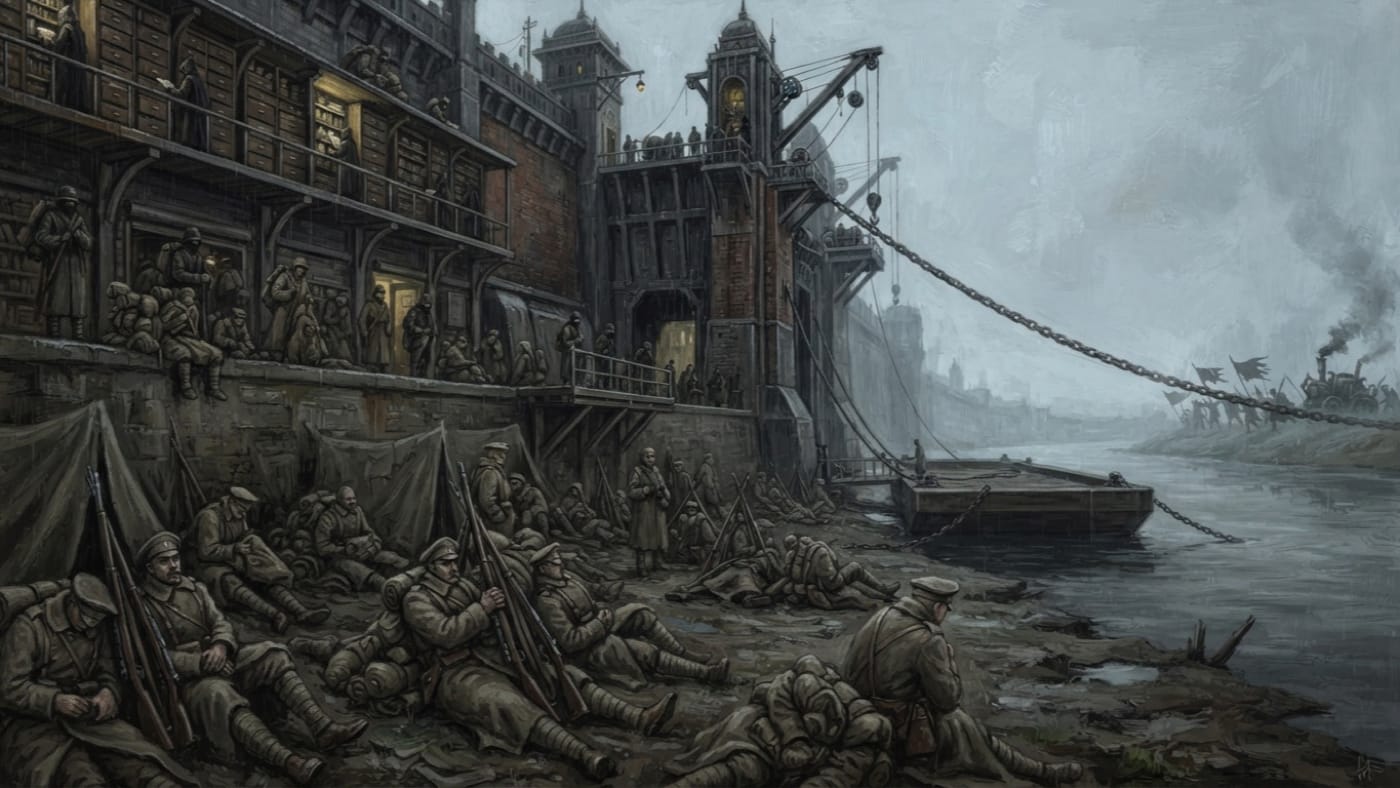
Orthography Siege
Three spellings, one dead regiment
At Nominalist's Gate, three spellings of a colonel's name held a regiment on the bank until hunger and Wrath's raiders destroyed it. The audit found immaculate ledgers and no procedural breach.
Codex Ref. VII.8.10-138

Orthography Siege at Nominalist's Gate
Three spellings held the regiment; the ledgers survived inspection.
At Nominalist's Gate, three spellings of a colonel's name barred a regiment from crossing. It starved on the trench-bank until Wrath's raiders came at dawn. The ledgers were immaculate.
Codex Ref. II.3.05-138
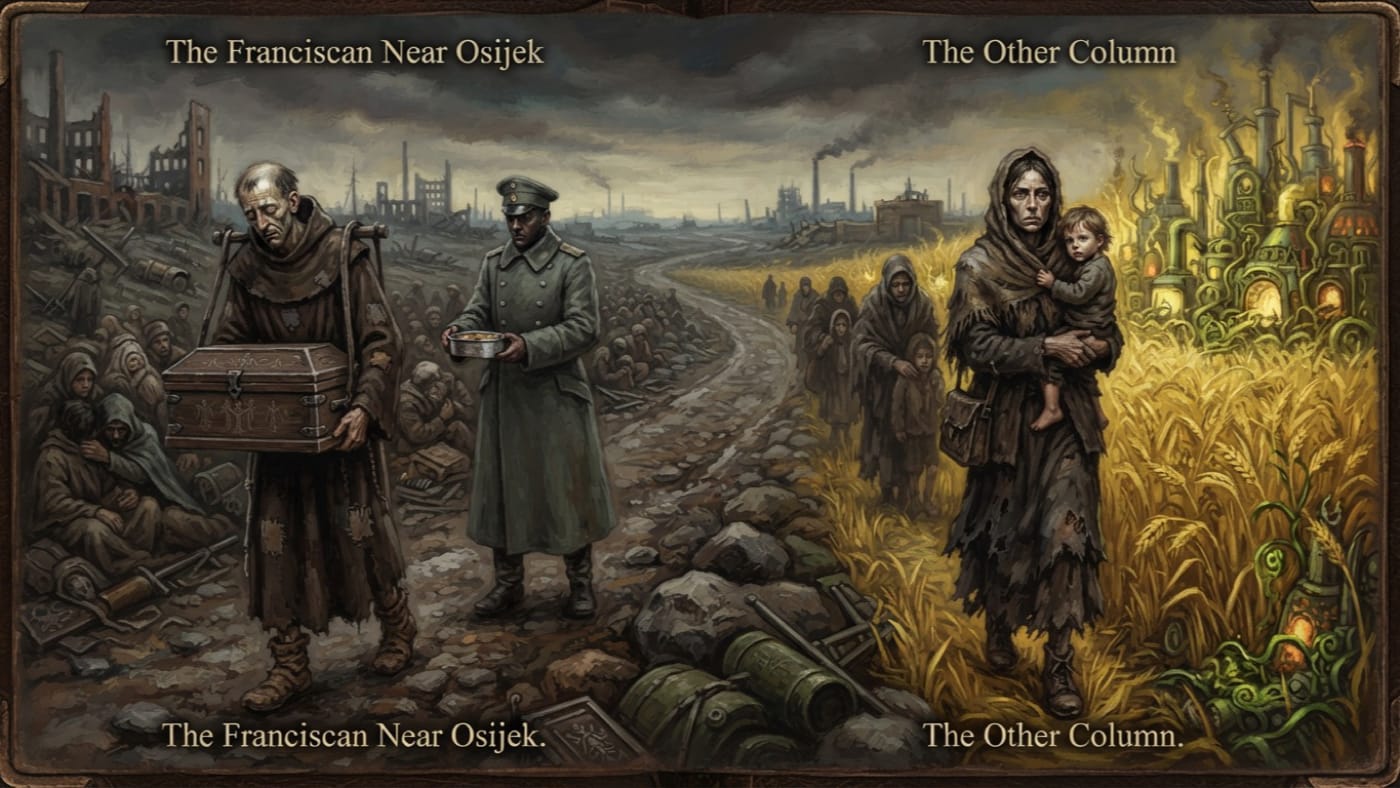
Osijek
Two roadside accounts and the hunger the Church filed differently
Osijek survives in two roadside accounts: a fasting friar near the town in late A.S. 45 and an undated mother approaching a Field. The Ledger keeps their hunger in separate drawers.
Codex Ref. II.3.08-045
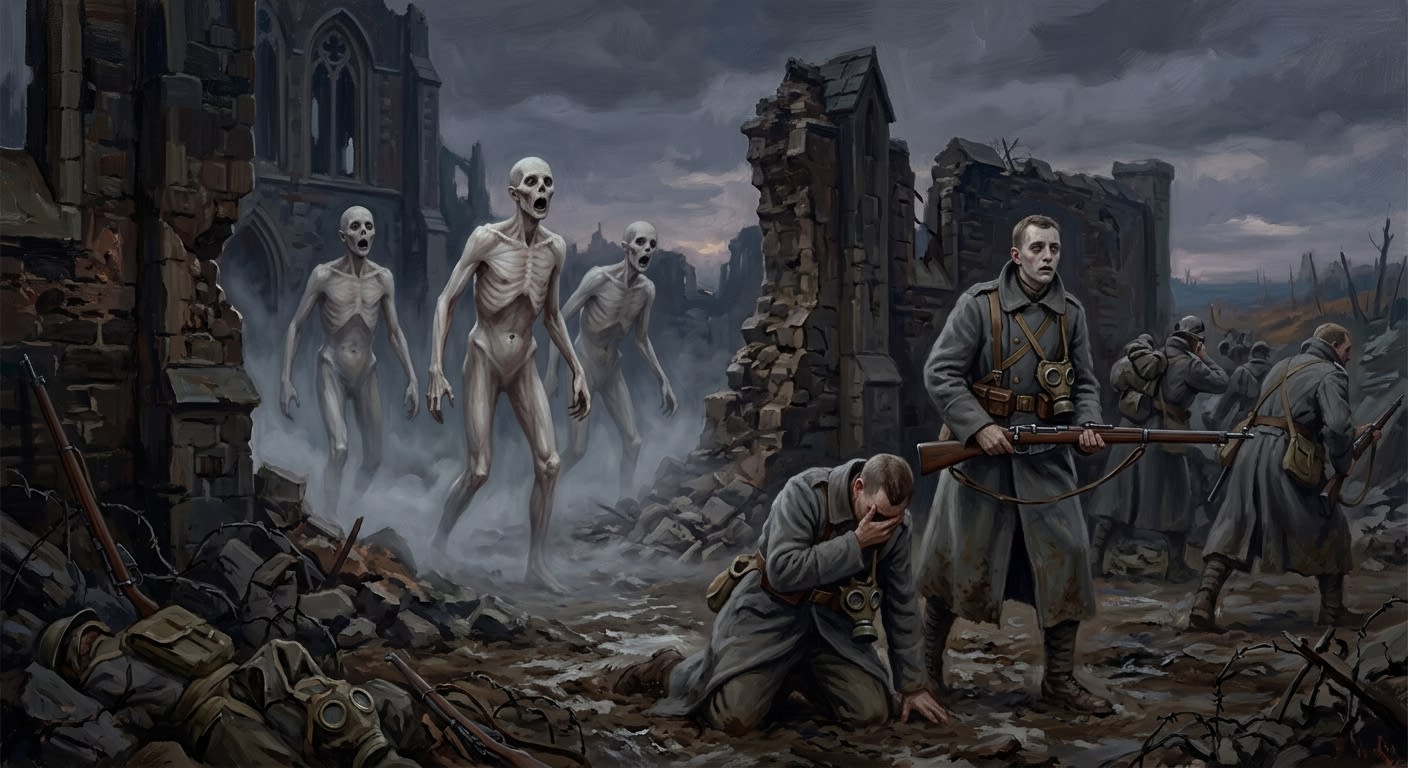
Pale Chanters
They do not sing. The Bureau is, as always, correct. And the Chanters keep singing.
Former humans animated by an unsanctioned hymn that evacuates the will to fight from every soldier within earshot. Classified as involuntary sorcerous emission, Category Epsilon. The Bureau forbids calling it song.
Codex Ref. IX.1.06-001
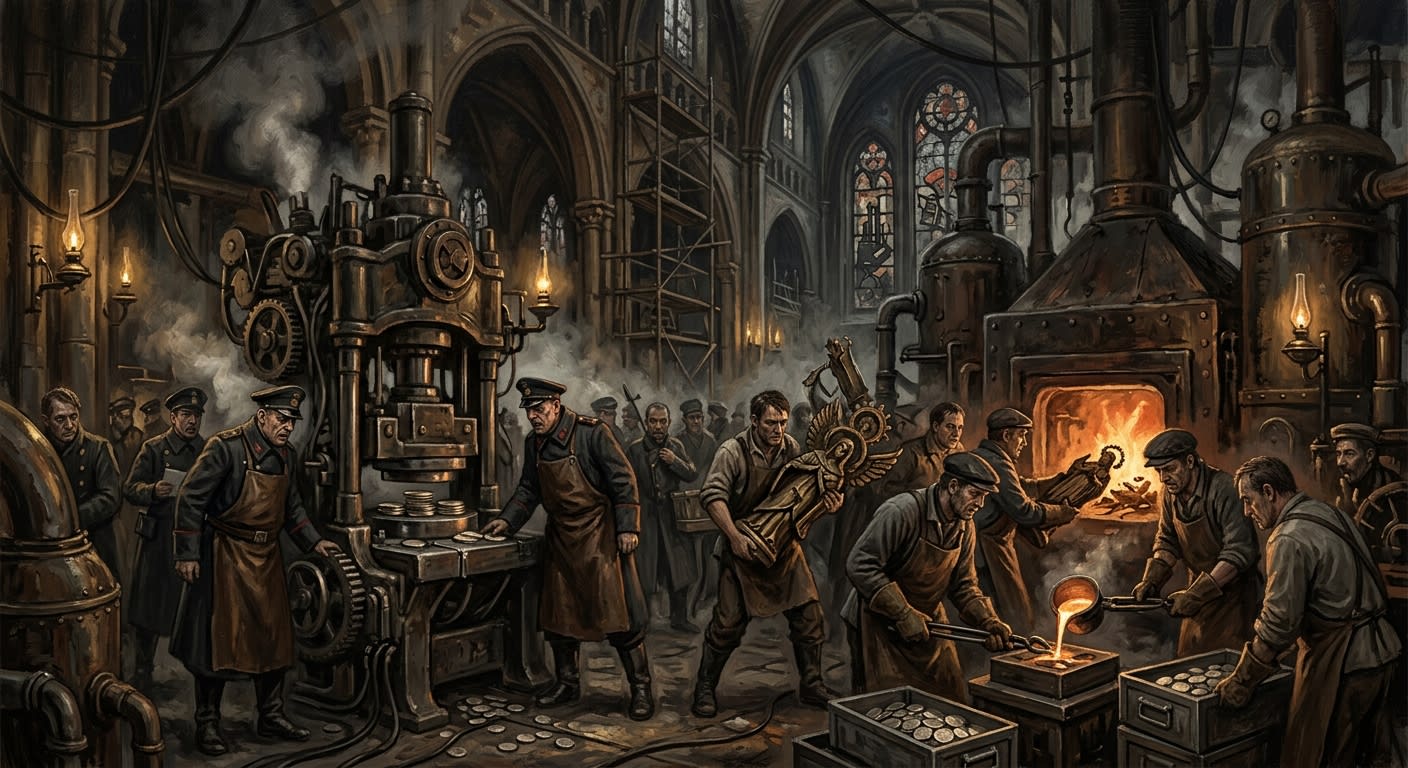
Panic of Wrath's March
Wrath did not enter Aachen; Aachen paid anyway
A.S. 160 gave Aachen no siege, no breach, and no Maldrake at the gate — only fear hot enough for Tithes to melt saints into coin.
Codex Ref. VII.8.10-160
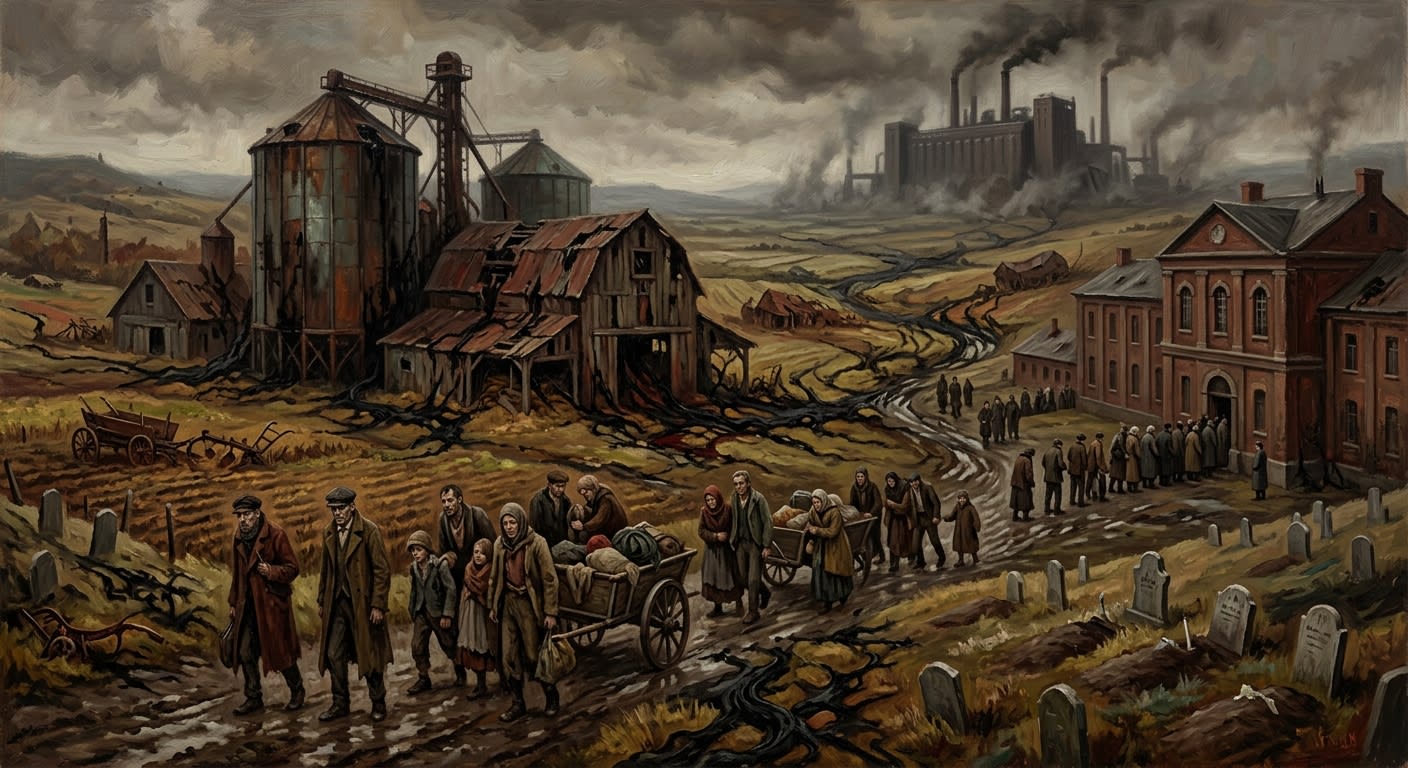
Pannonia
The bread basin that learned appetite
Pannonia was the basin that fed empires before Kargath taught its barns to hunger, its graves to want, and its maps to rot into accusation.
Codex Ref. II.4.09-045
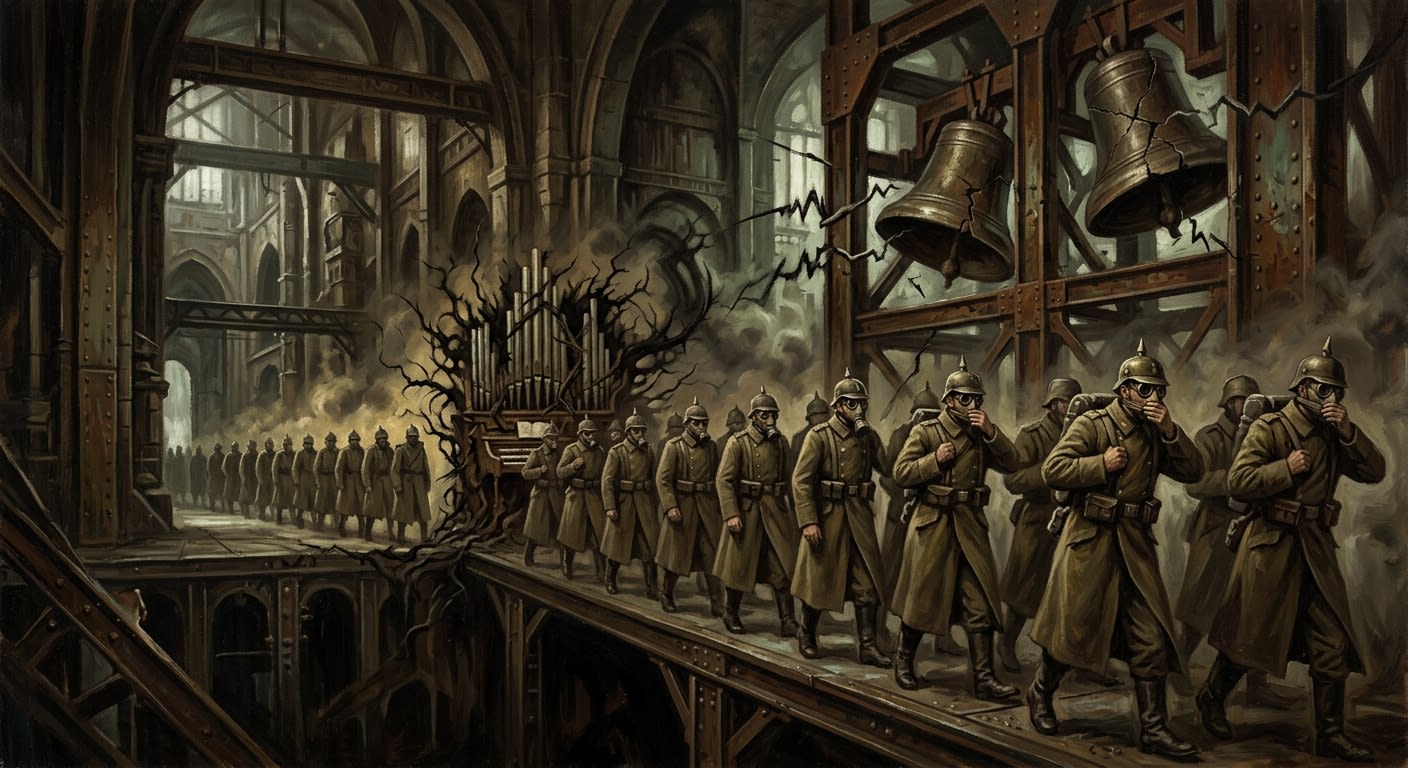
Prayer-Jam
When obedience enters the ear and comes out treason
Prayer-Jam is liturgical signal failure under hostile acoustic pressure: bells betray, hymns gag, and obedient men march precisely into ruin.
Codex Ref. VI.2.01-005
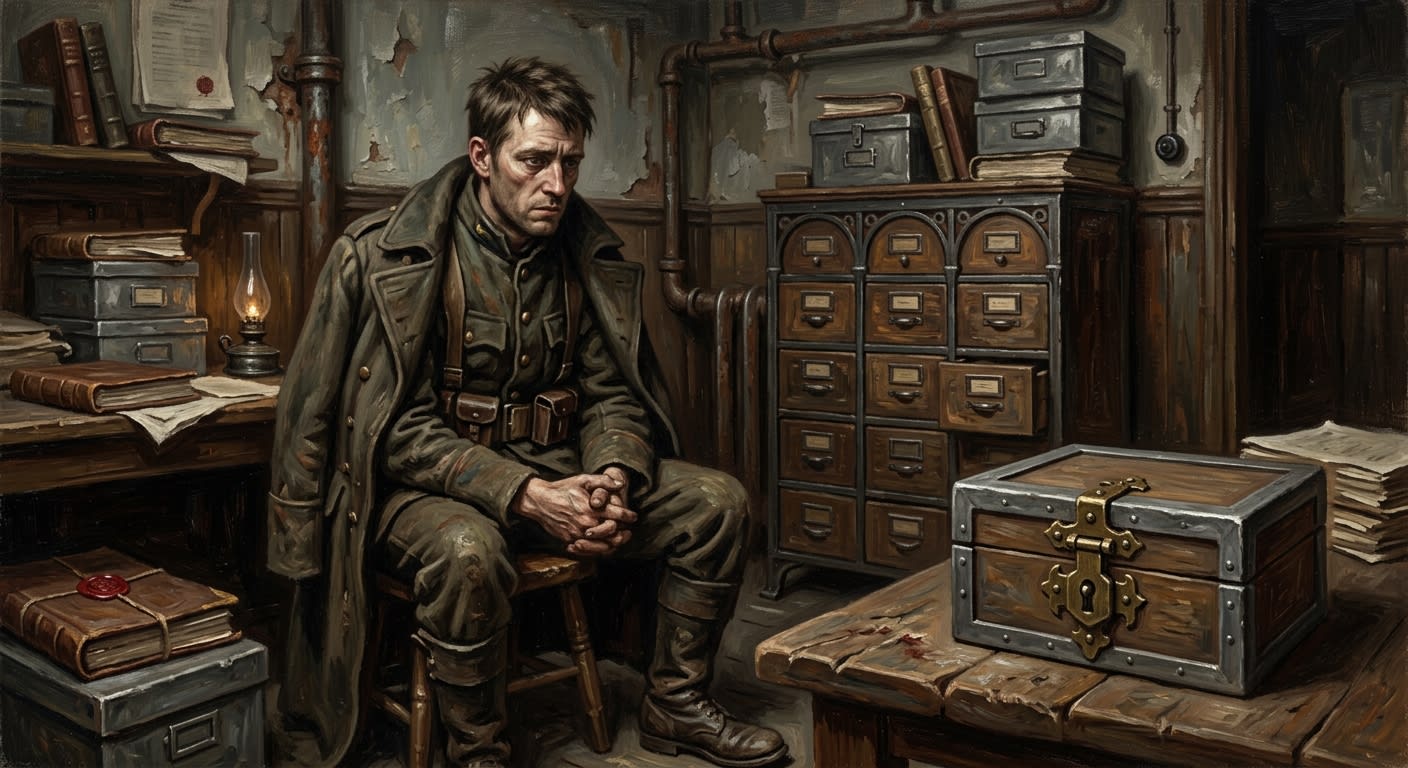
Private Kessler
The low-rank witness who heard annihilation carry a tune
Survivor of the A.S. 45 Iron Plains whose separate testimony—“The fire was singing”—is kept apart from the fourteen witnesses as an acoustic hazard and doctrinal wound.
Codex Ref. III.2.01-081
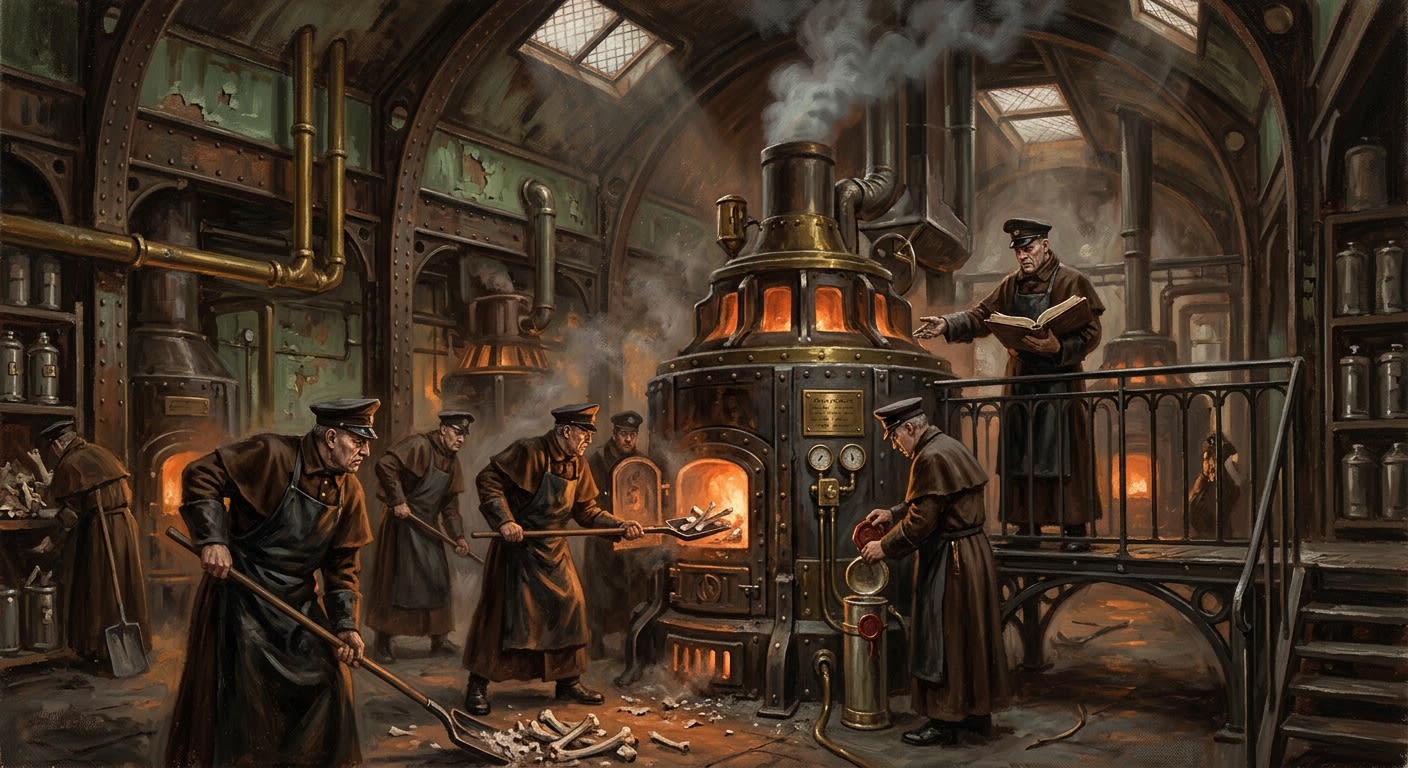
Purity Kiln Decree
Holiness must bear weight, and so must the men who burn it
The A.S. 142 decree made saint-bone burning legible: hymn, heat, quiet, seal, witness, blame, and the pious sentence that holiness must bear weight.
Codex Ref. XIII.1.91-142
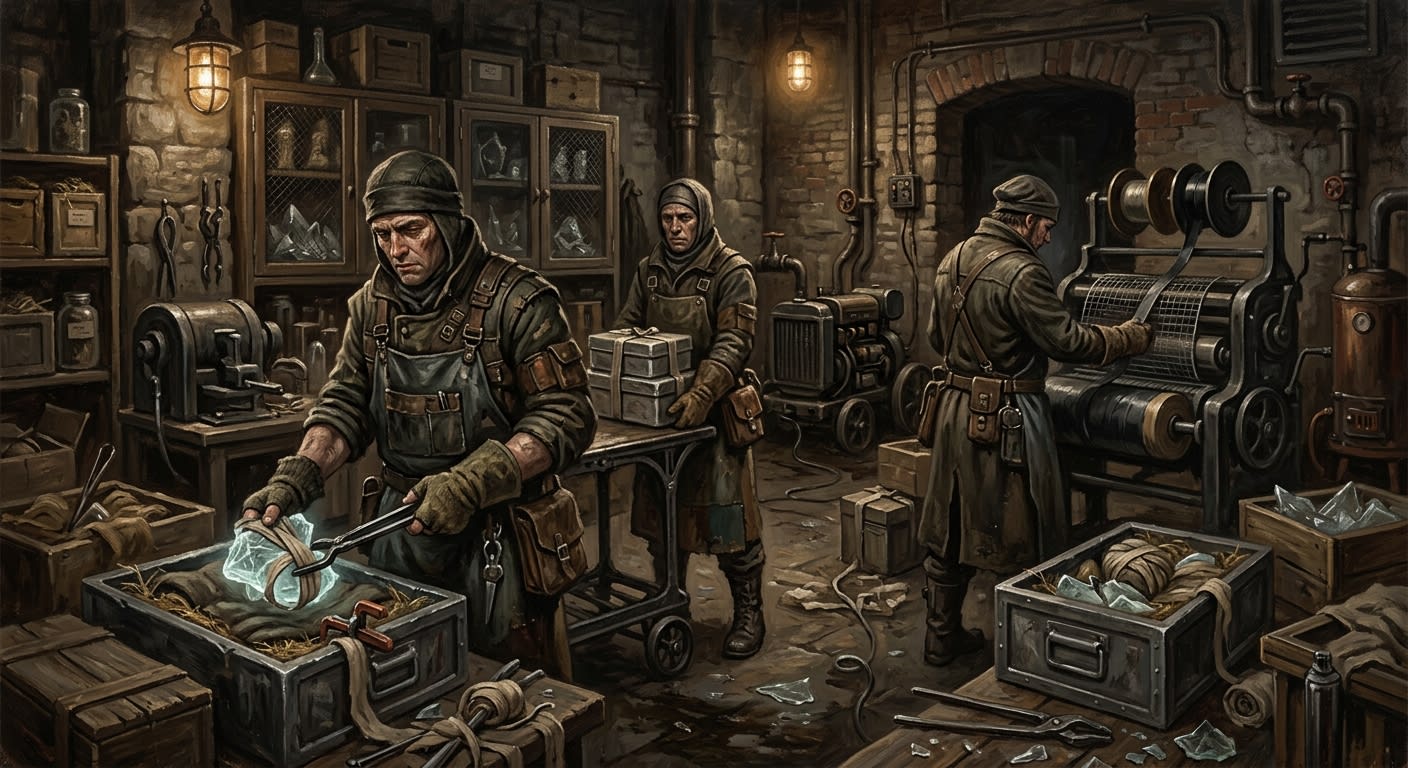
Quieters
Refusal is the only prophecy that returns with cargo
Quieters are the dominant faction within the Demon-Glass Scavenger trade: handlers who treat shard-whispers as contamination, wrap faster than they wonder, and survive by refusing revelation.
Codex Ref. XII.13.05-001
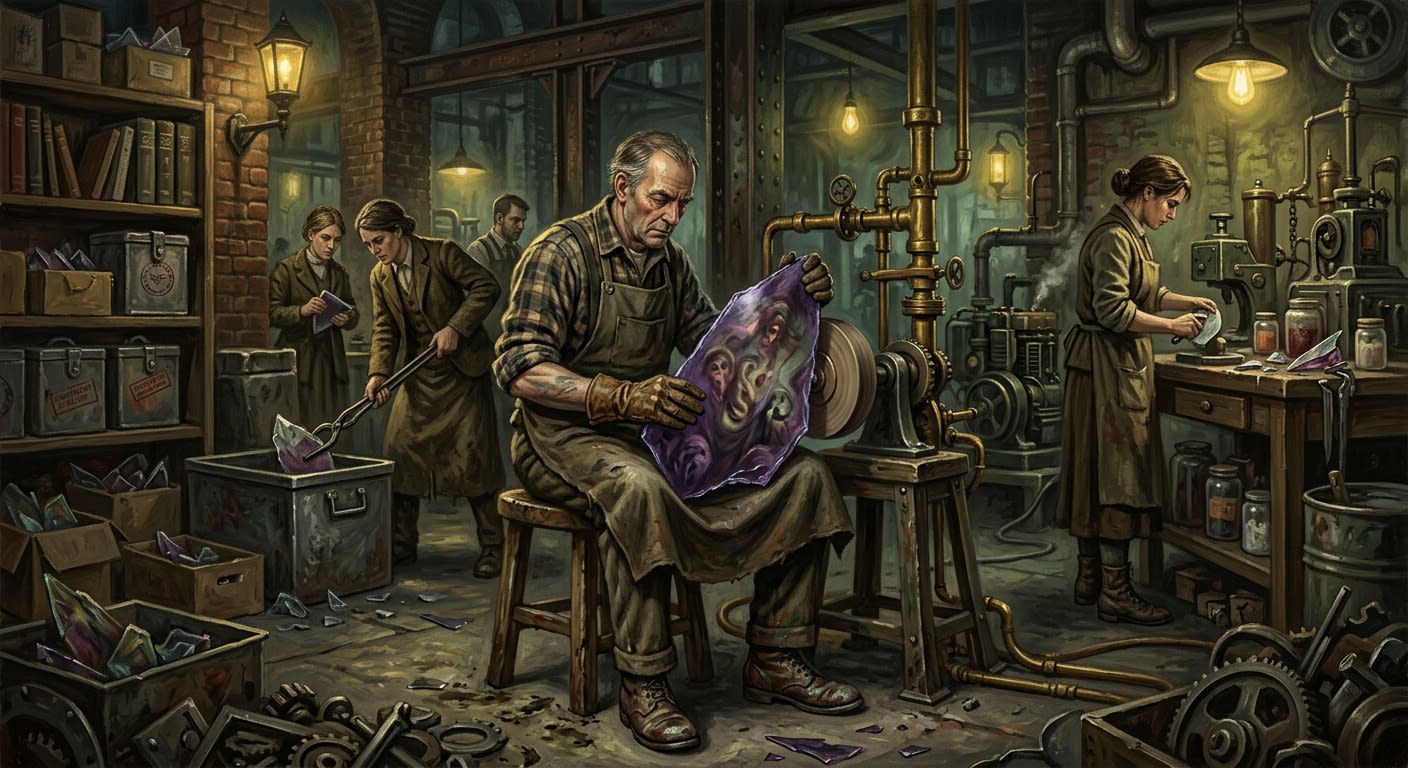
Quietists
The faction that sells disappointment and calls it survival
Quietists are the conservative Demon-Glass Polisher faction: illegal artisans who polish for silence, containment, and the profitable denial of visions men are foolish enough to desire.
Codex Ref. XII.13.03-001
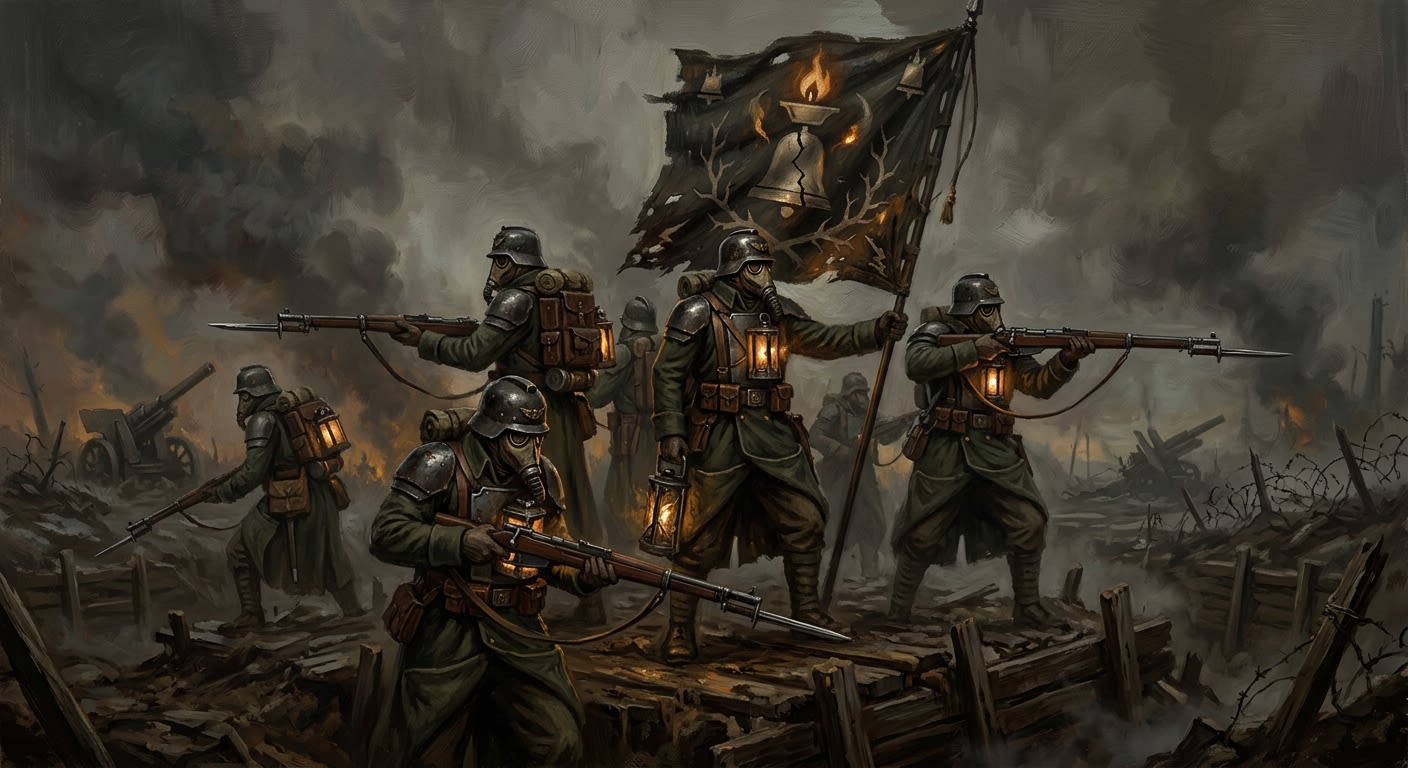
Radiant Fusiliers
The rifle as rite, the volley as testimony
The Radiant Fusiliers are elite Covenant light infantry whose banner-lit volleys serve as weapon, rite, and witness; at Debrecen, obedience learned to count horror after firing at it.
Codex Ref. VIII.5.02-001
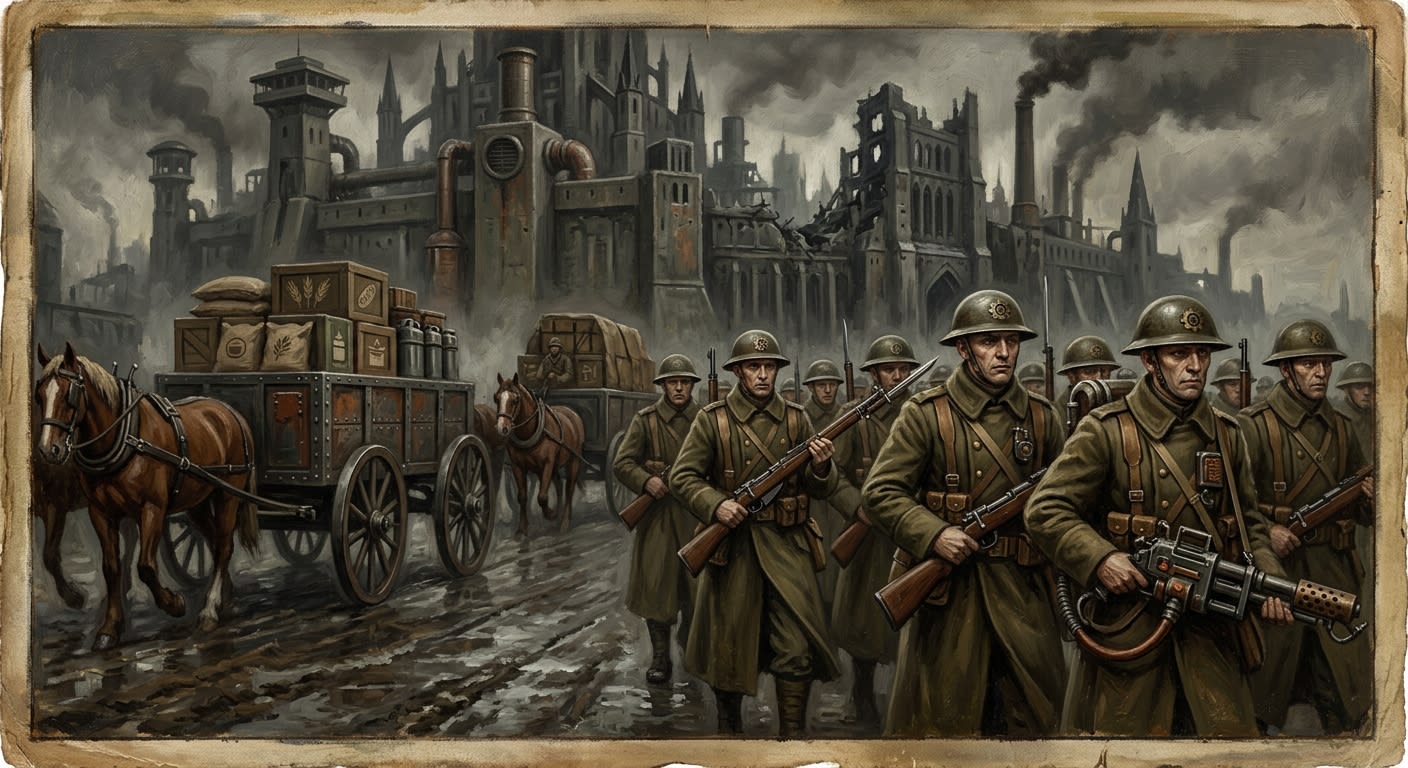
Rationalist Second Army
Competence marched east, and Hell corrected the formation
The Rationalist Second Army did nearly everything correctly: it brought rations to Hunger, formation to Wrath, and left the Synod a perfect instructional corpse.
Codex Ref. VIII.1.05-045
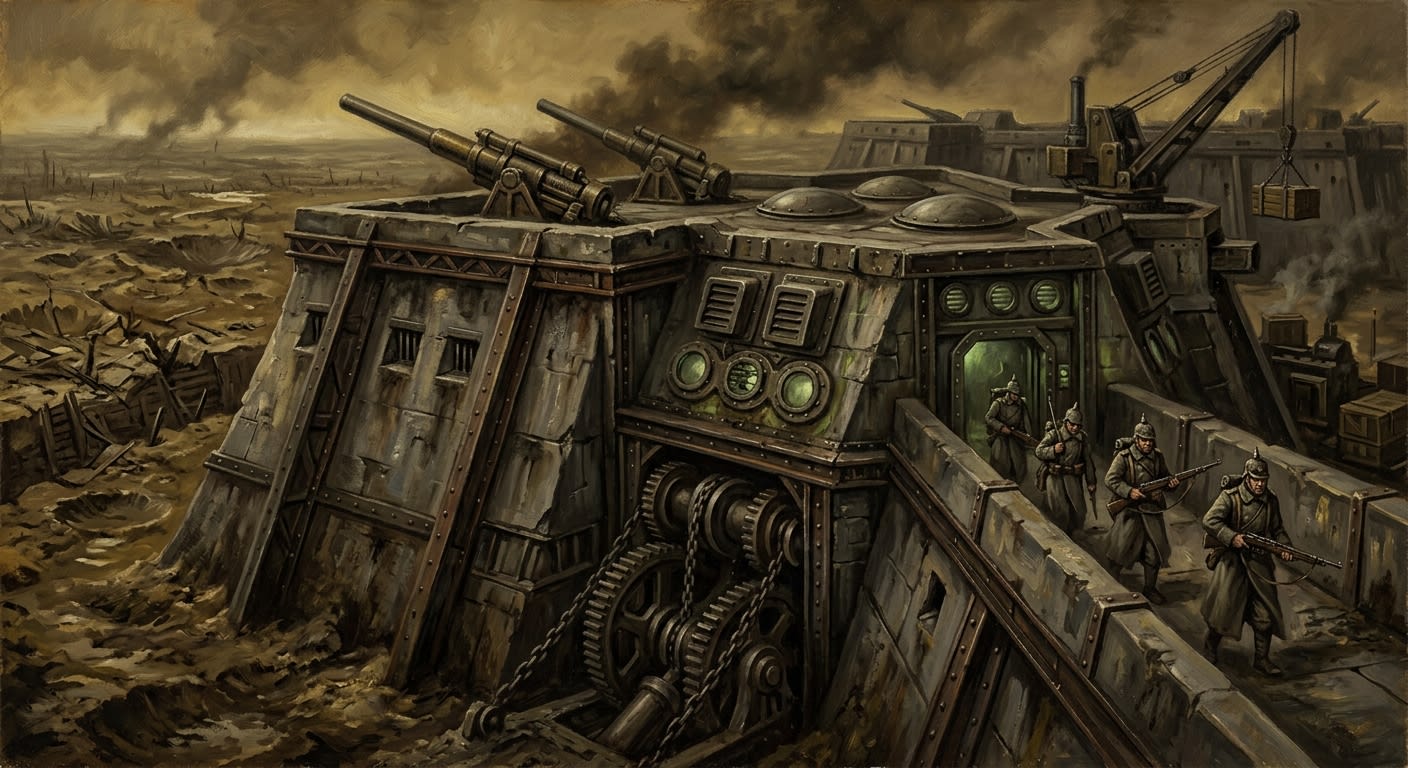
Ravelin of Fortitude
The wall that answers panic with stone
Fortitude is Bastion-Constantinople's fourth outer ravelin: a powder hinge, command bunker, cistern shield, and stone rebuke to every request to fail.
Codex Ref. II.4.10-092
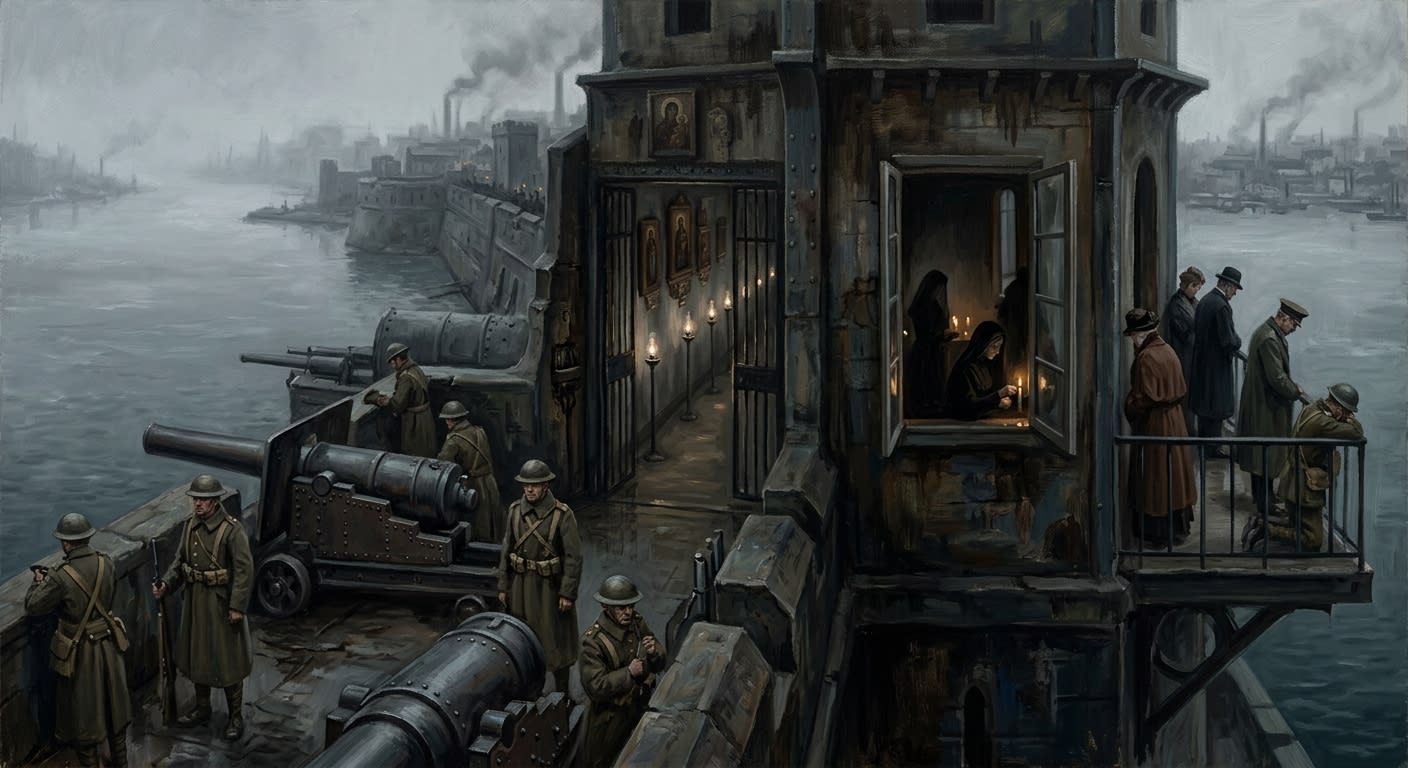
Ravelin of Sorrow
The wall that teaches grief where to stand
The Fifth Ravelin of Bastion-Constantinople is witness-post, lower harbour gun line, warded corridor, widow chapel, and authorised balcony for grief before Chamber 7.
Codex Ref. II.4.10-170
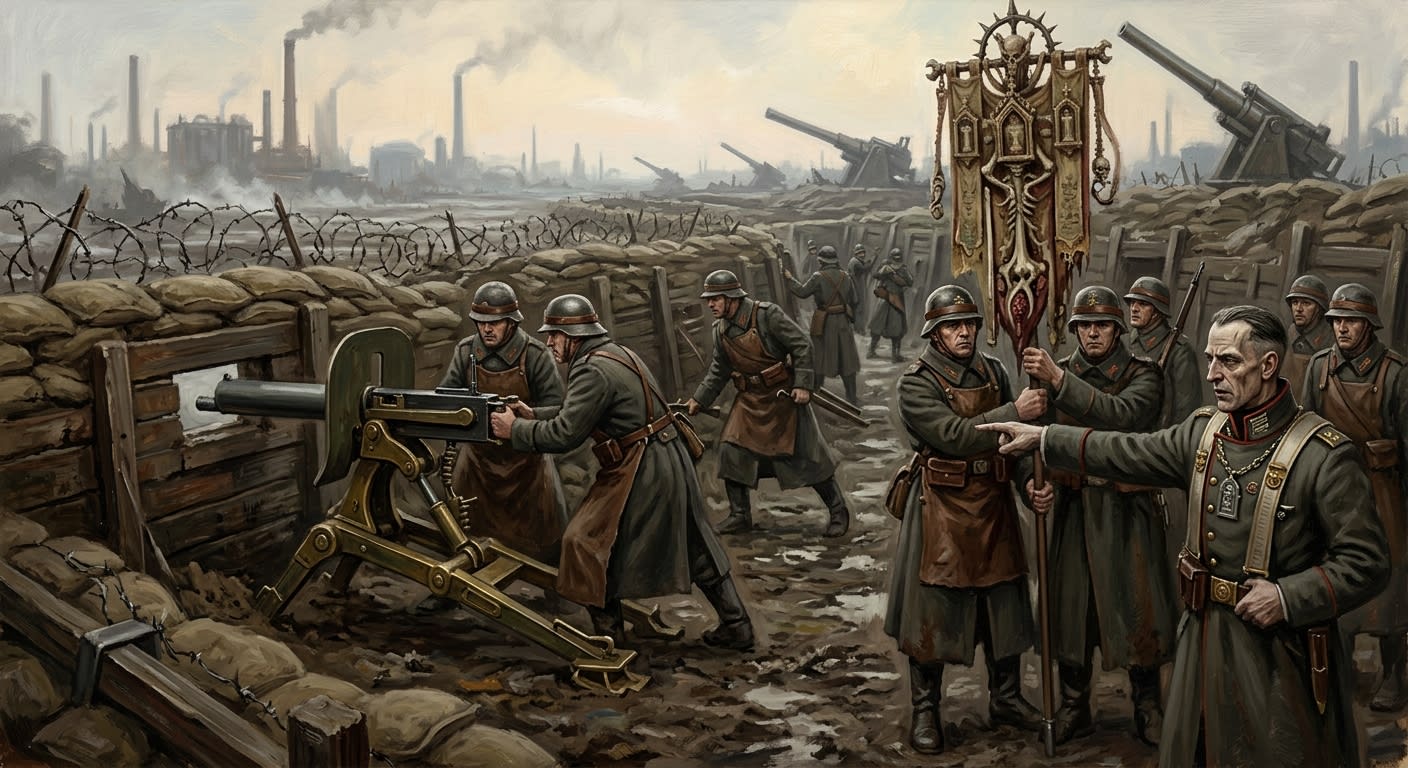
Ravelin of Vigilance
The eye that learned to blink by rotation
The First Ravelin of Bastion-Constantinople watches the Knife Mile, drills low guns, carries Saint Iselda's Bone Walk, and teaches sentries the cost of seeing first.
Codex Ref. II.4.10-137
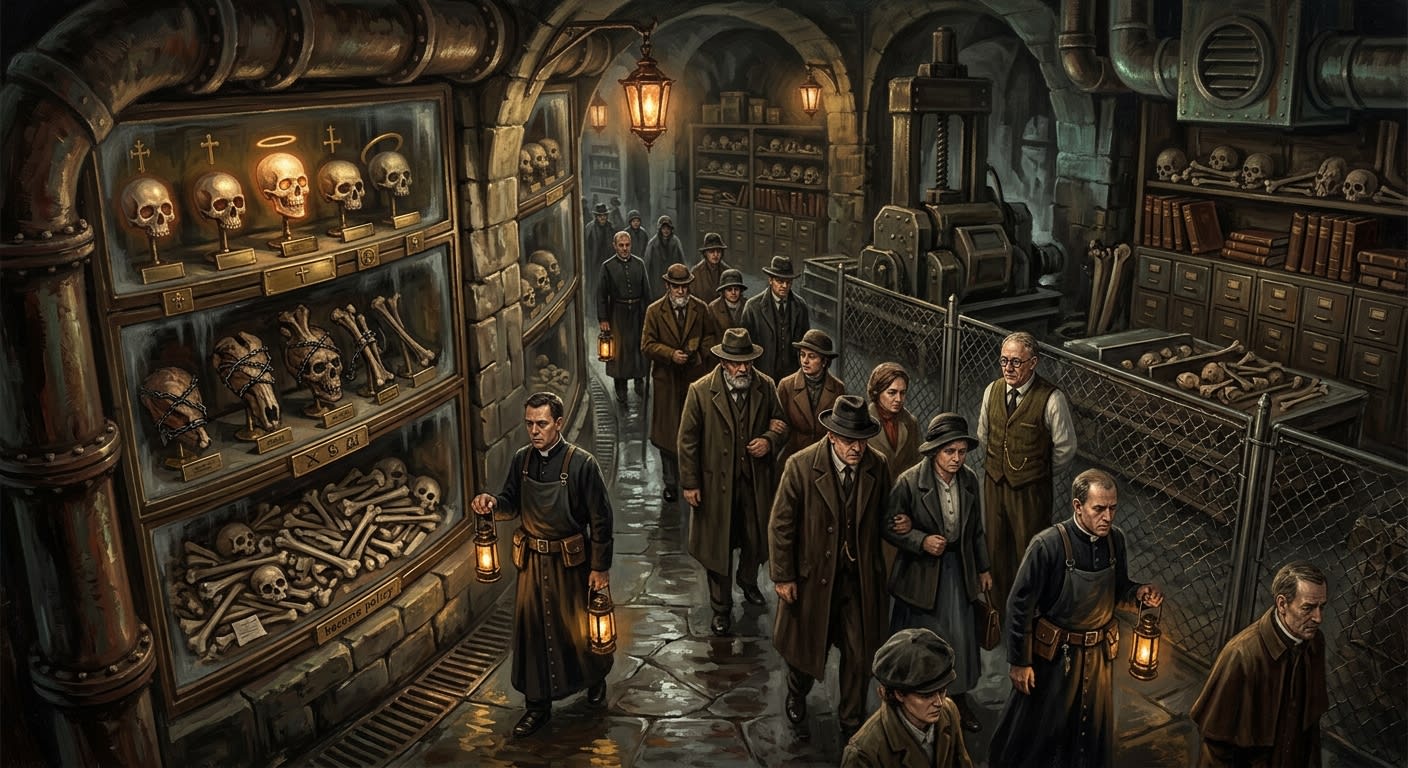
Relics Archive
The polite room before the locked stomach begins digesting saints
The Relics Archive beneath Strasbourg Cathedral teaches pilgrims which bones may be admired, which must be feared, and which have already become policy.
Codex Ref. II.2.06-005

Revelators
The prophets of coloured glass, properly invoiced
Revelators are the visionary faction of Demon-Glass Polishers, selling caged prophecy, widow-panes, pilgrim gleams, soldier trench-glimpses, and every profitable almost-speech the glass can survive.
Codex Ref. XII.13.04-001
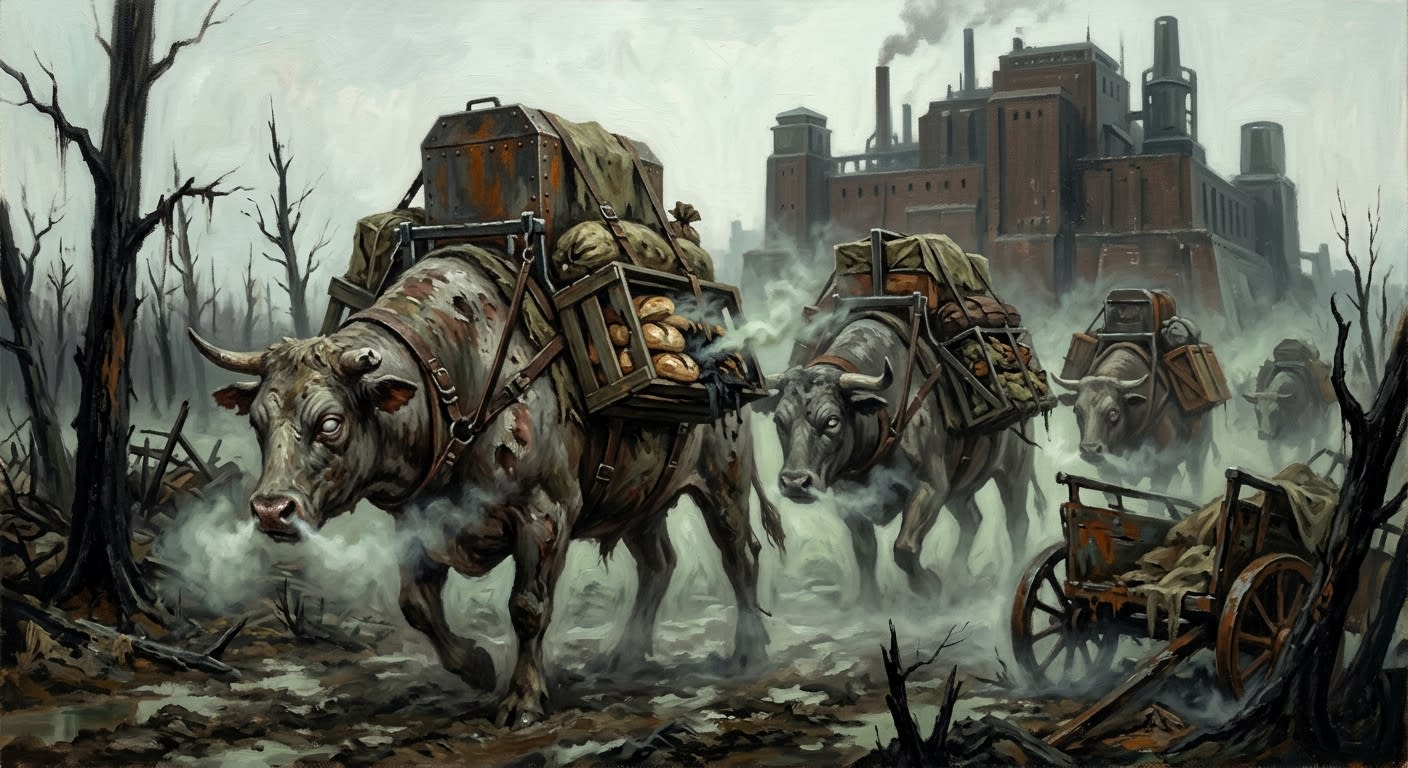
Rot-Oxen
Hell's logistics, given horn, chain, stink, and obedience
Rot-Oxen are the Shadow Court's corpse-haul beasts: dead supply animals whose fog spoils bread, rusts iron, dries tongues, and prepares territory for conquest.
Codex Ref. IV.1.07-008
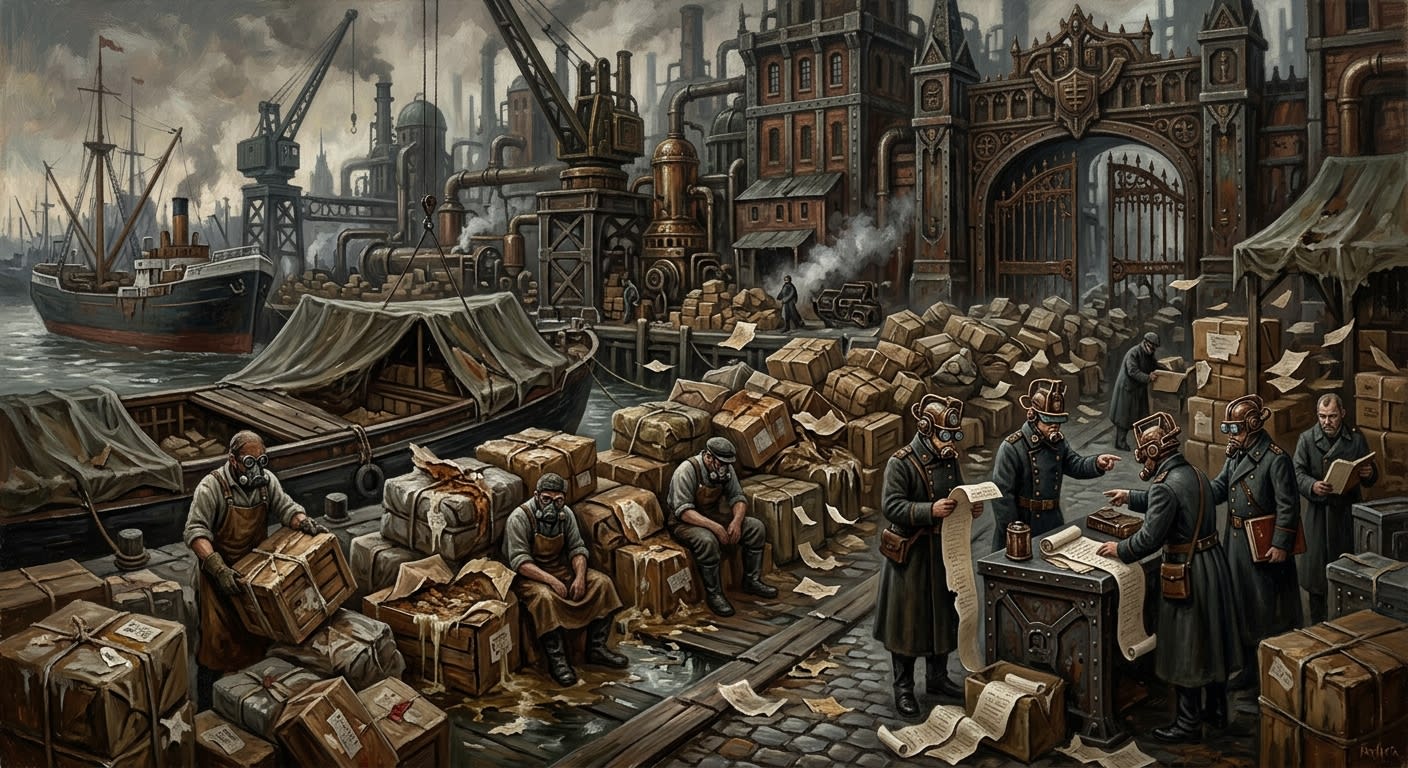
Rot-Week of Saint Vellum
Eleven days to save the forms, four days to lose the food
The Rot-Week of Saint Vellum was an eleven-day port paralysis in which disputed cargo names perfected the paperwork, spoiled the food, and licensed Manifest Litigants into profitable necessity.
Codex Ref. VII.8.10-001
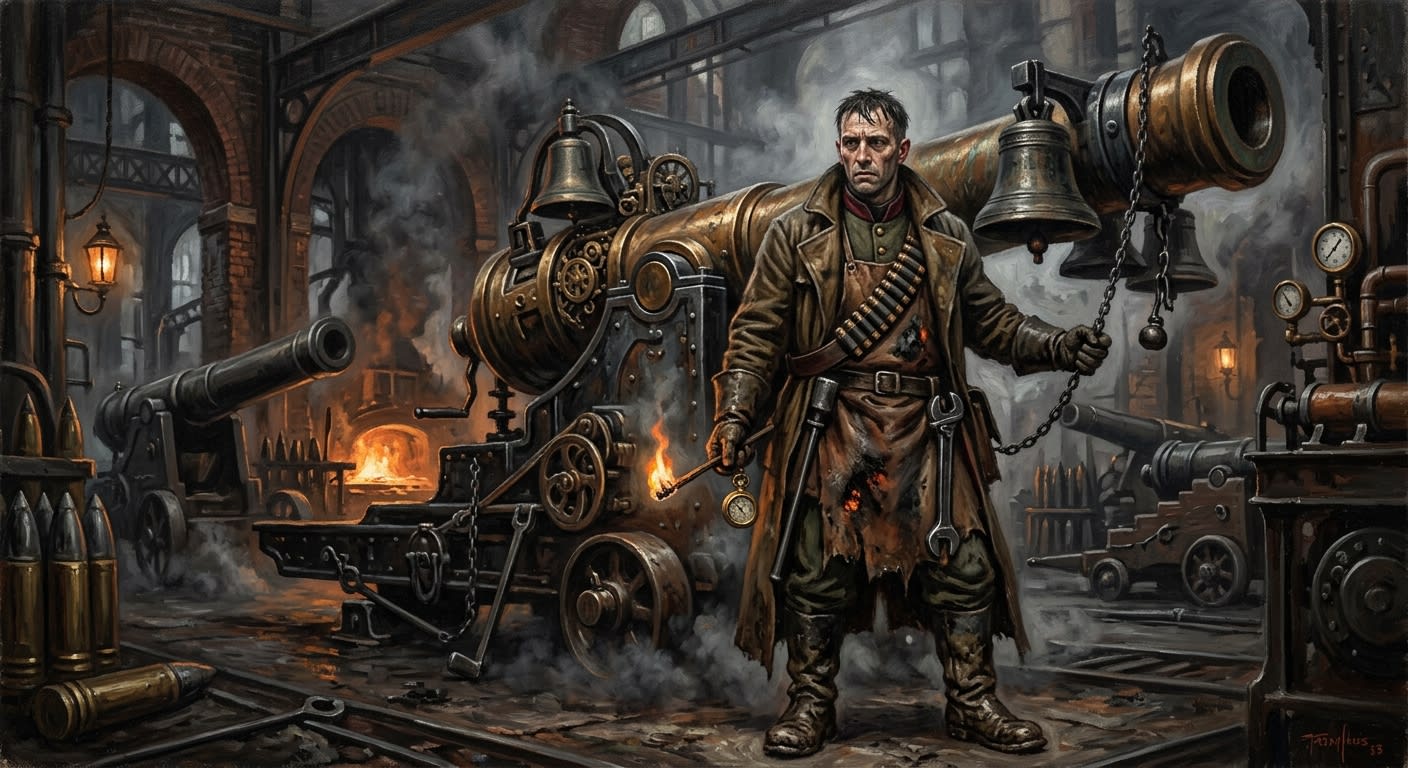
Saint Aegidius
The patron of the waiting hand and the honest charge
Saint Aegidius is the artillerymen’s patron: foundry hand, martyr of the Third Peal, saint of timed violence, bell-cannon discipline, and Shipka’s sulking gun.
Codex Ref. III.2.01-194
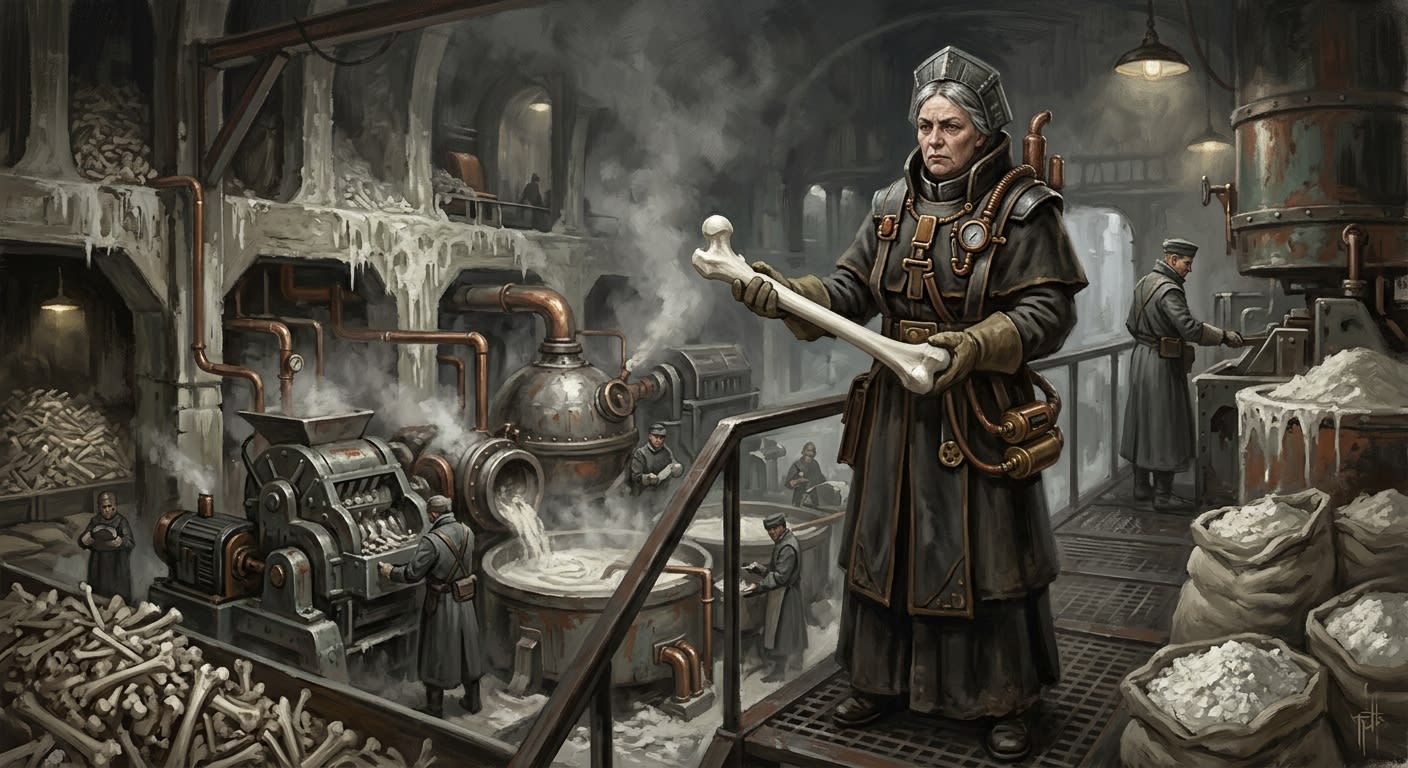
Saint Aurel of the White Wall
The saint who may have arrived after the invoice, yet holds the wall all the same
Disputed patron of Saint-Bone Melters, Saint Aurel offers the convenient femur by which relic fragments become bone-lime, mortar, wall, and doctrine with a clean conscience.
Codex Ref. III.2.01-142
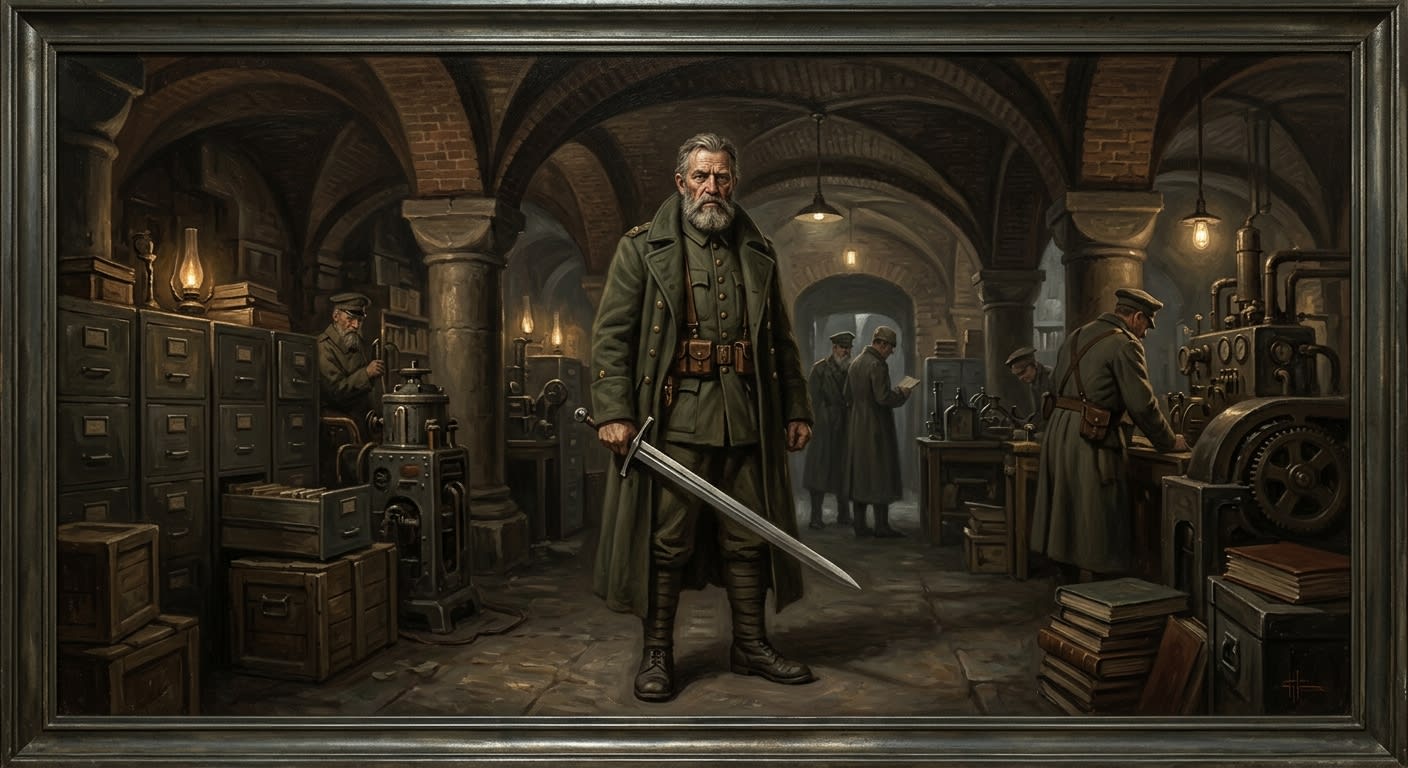
Saint Gereon
The soldier-saint whose crypt taught Cologne how refusal walks under law
Old soldier-saint of Cologne, patron of disciplined refusal and crypt custody; every faction borrows his sword, which proves the blade remains sharp.
Codex Ref. III.2.01-031
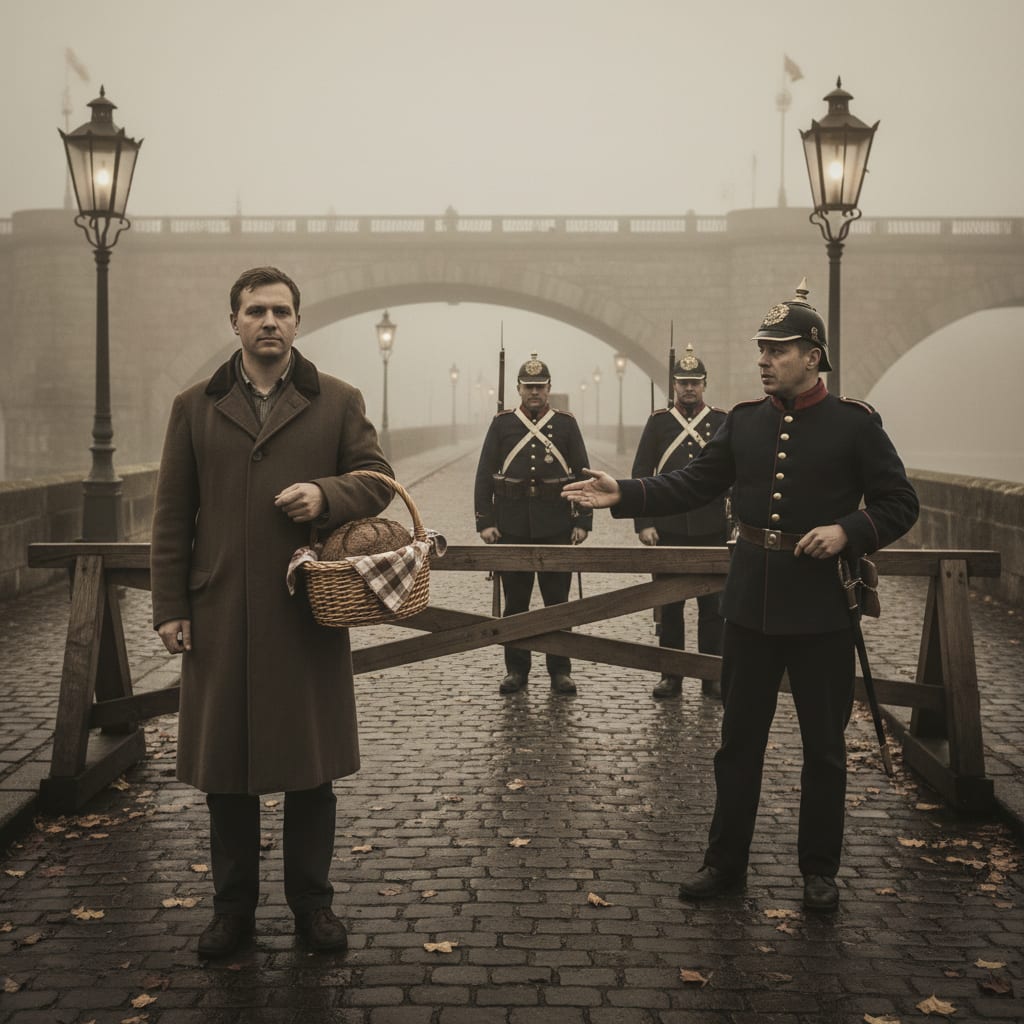
Saint Ignatius the Carrier
He walked. That was enough.
Parish clerk who carried three apostolic phalanges across a Rationalist checkpoint in a breadbasket. Zero personal miracles; one Kalnik Ridge. Canonized A.S. 104 at the insistence of every porter, smuggler, and supply-runner on the Line. He walked. That was enough.
Codex Ref. III.2.01-003
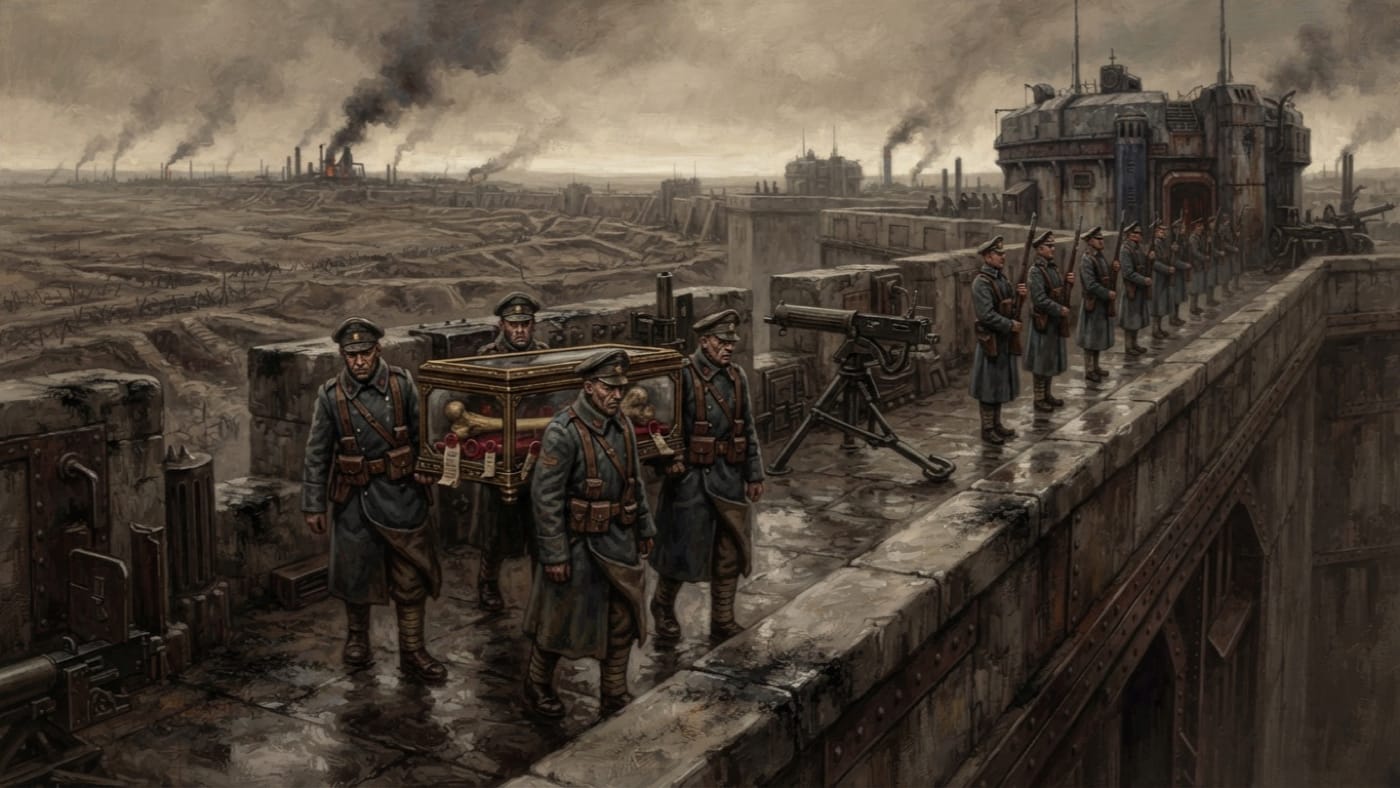
Saint Iselda
The saint whose station is a parapet
Survey of Saint Iselda's attested relic service in A.S. 201: a notarised femur makes the third-Friday Bone Walk along Vigilance's parapet. The soldiers stand straighter. The Bureau requires no more.
Codex Ref. III.2.01-201
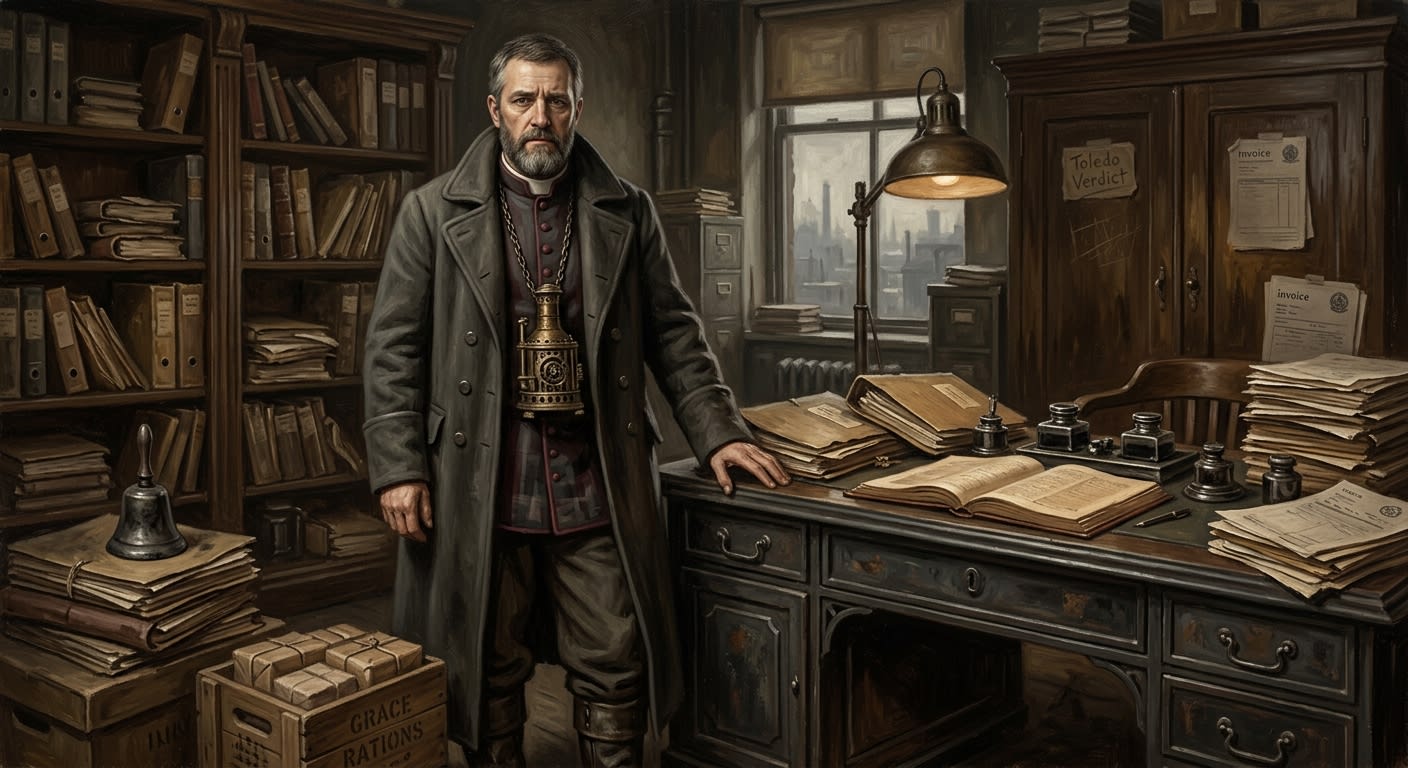
Saint Isidore
The saint who became vessel, bell, ash, and invoice
Pre-Synod saint whose militarised relic blazed at Kalnik Ridge in A.S. 48, then multiplied into bell, ash, Grace Ration, Toledo verdict, and Bureau invoice.
Codex Ref. III.2.01-086
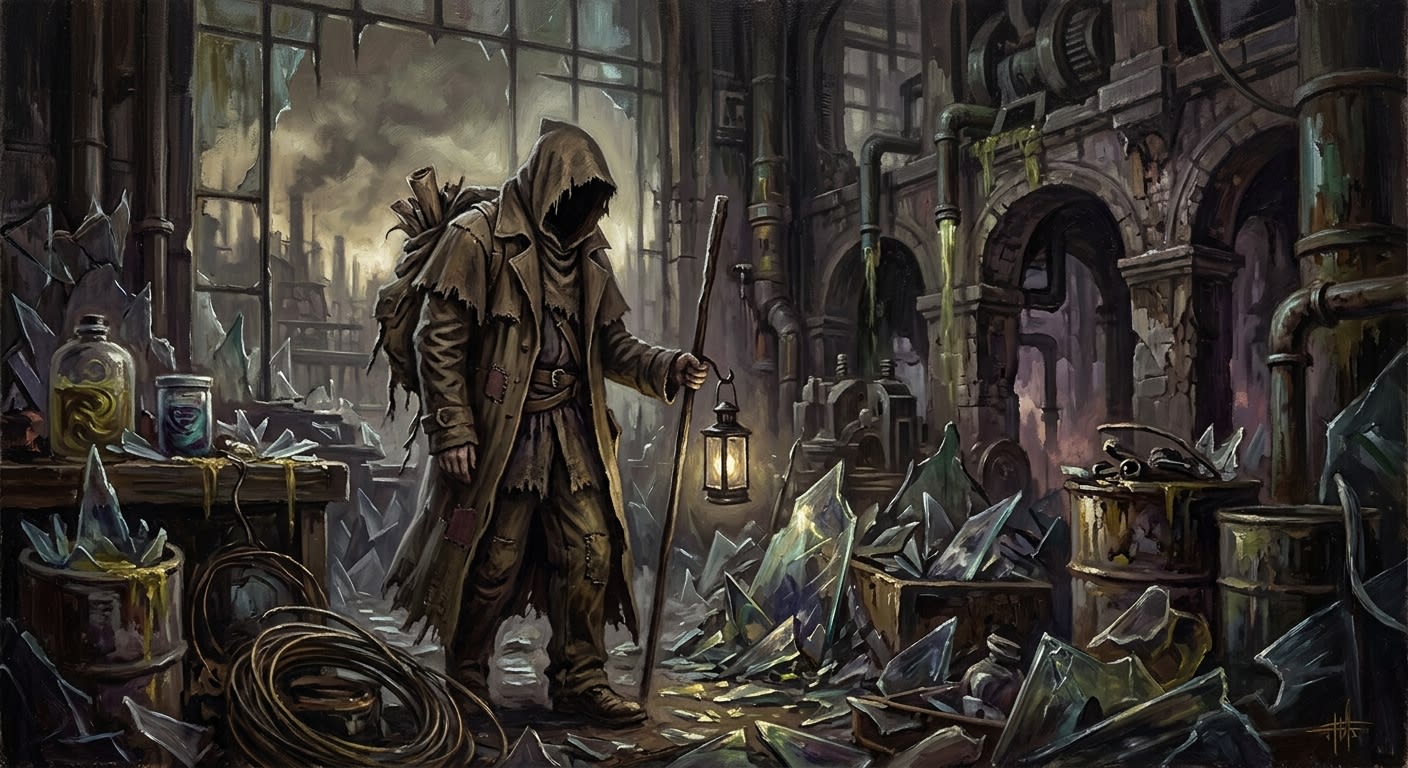
Saint-Anonymous of the Glass Parish
The nameless patron who keeps the shard from learning the road
Saint-Anonymous of the Glass Parish is the unauthenticated patron invoked by demon-glass scavengers, wrappers, route-null couriers, and other professionals whose safest miracle is remaining unnamed.
Codex Ref. III.2.01-110
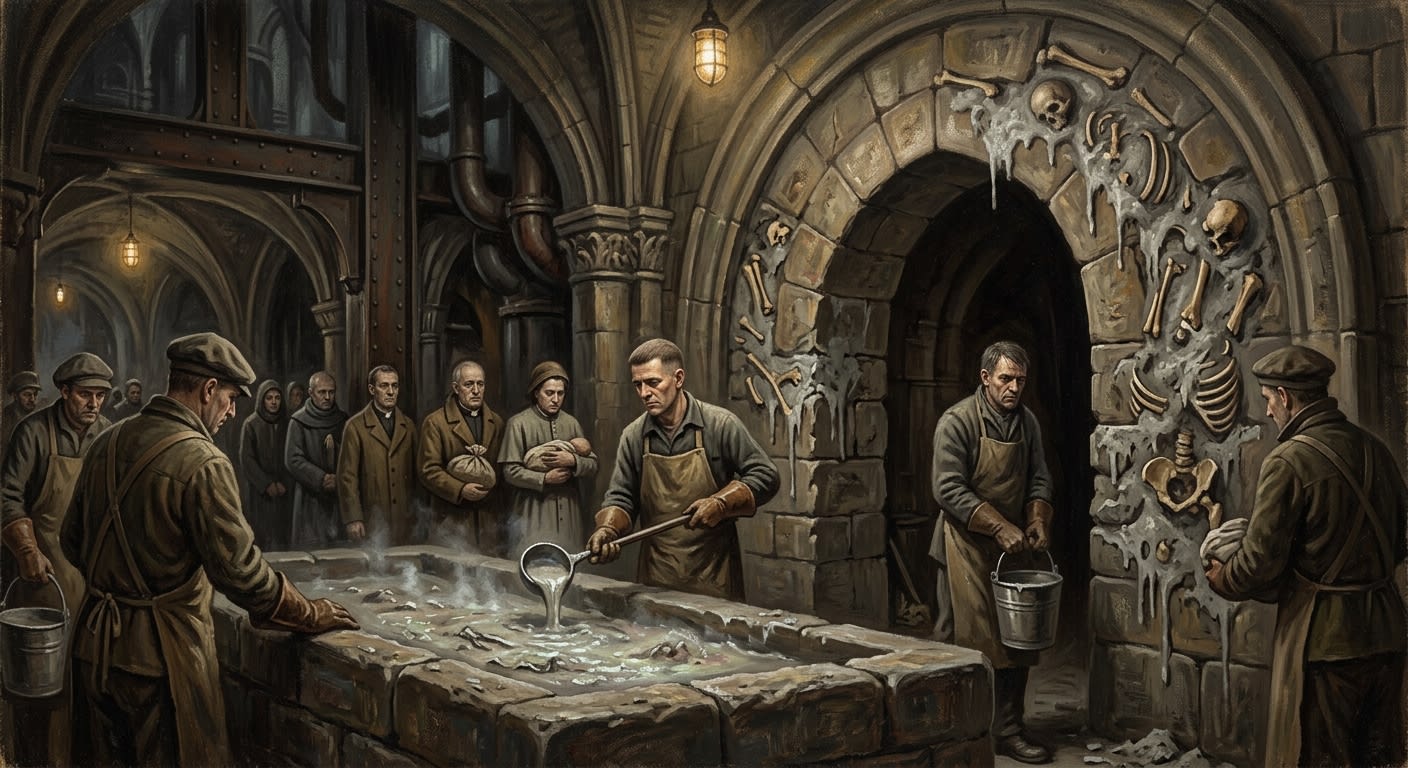
Saint-Bone Melting Acts
Sanctity must bear weight, and the wall has receipts
The A.S. 96 Saint-Bone Melting Acts made surplus holiness structural, teaching relics to become mortar and the faithful to call subtraction a wall.
Codex Ref. XIII.1.91-096
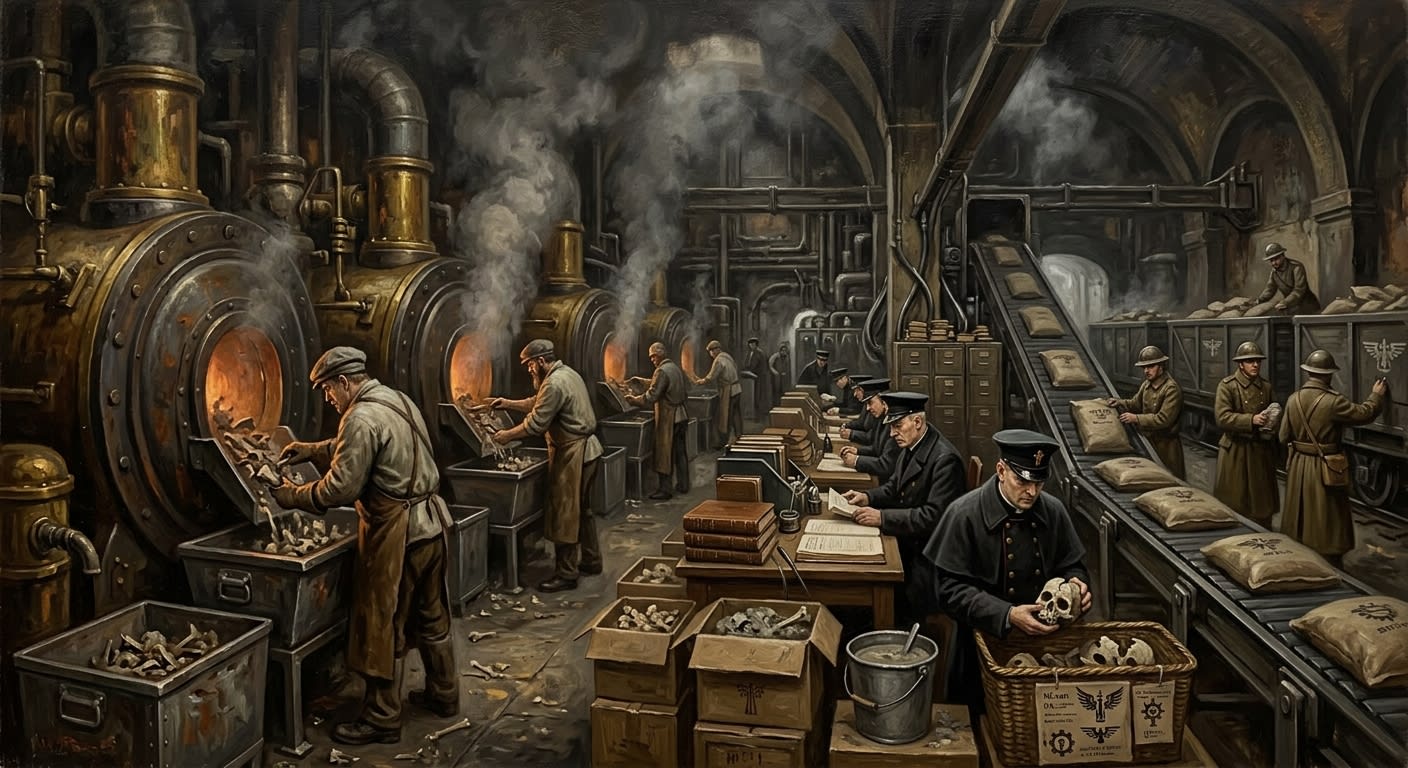
Saint-Bone Melting Acts A.S. 96
The statute that taught saints to bear weight, whether they had consented neatly or not
A.S. 96 legislation that turned surplus, damaged, disputed, duplicated, and unassignable relic fragments into deployable sanctified mortar for the Sagittal Line.
Codex Ref. VII.2.10-096
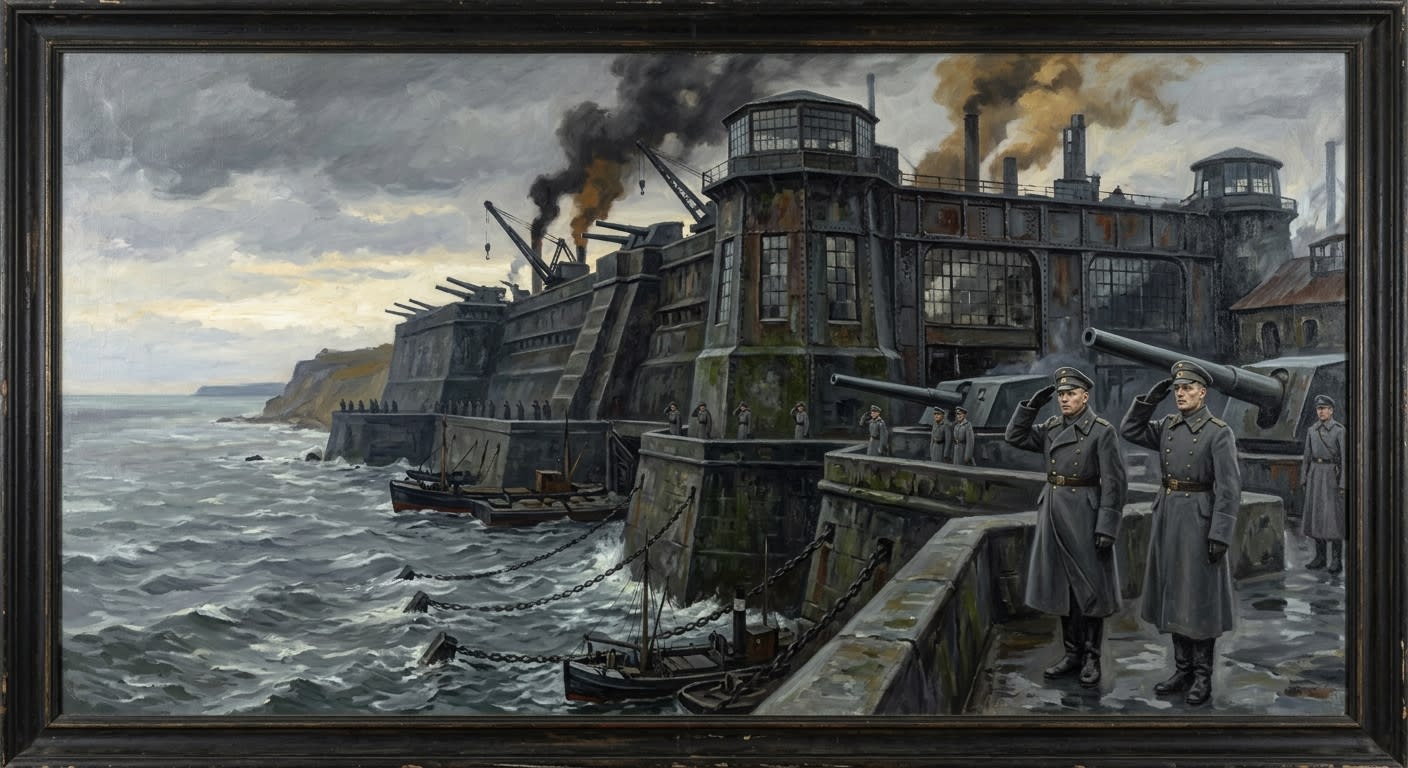
Sea Wall, Bastion-Königsberg
Where the Sagittal Line meets Baltic water and the fog outranks the wall
The Sea Wall of Bastion-Königsberg is where the Line runs into Baltic water, the Grey arrives without attacking, and sentries salute absence.
Codex Ref. II.4.07-067

Seers
Dangerous attention, mispriced as wisdom
Seers are the listening minority within the Demon-Glass Scavenger trade: useful for route omens, seam detection, and ambush warnings, disastrous whenever a shard learns their name.
Codex Ref. XII.13.06-001
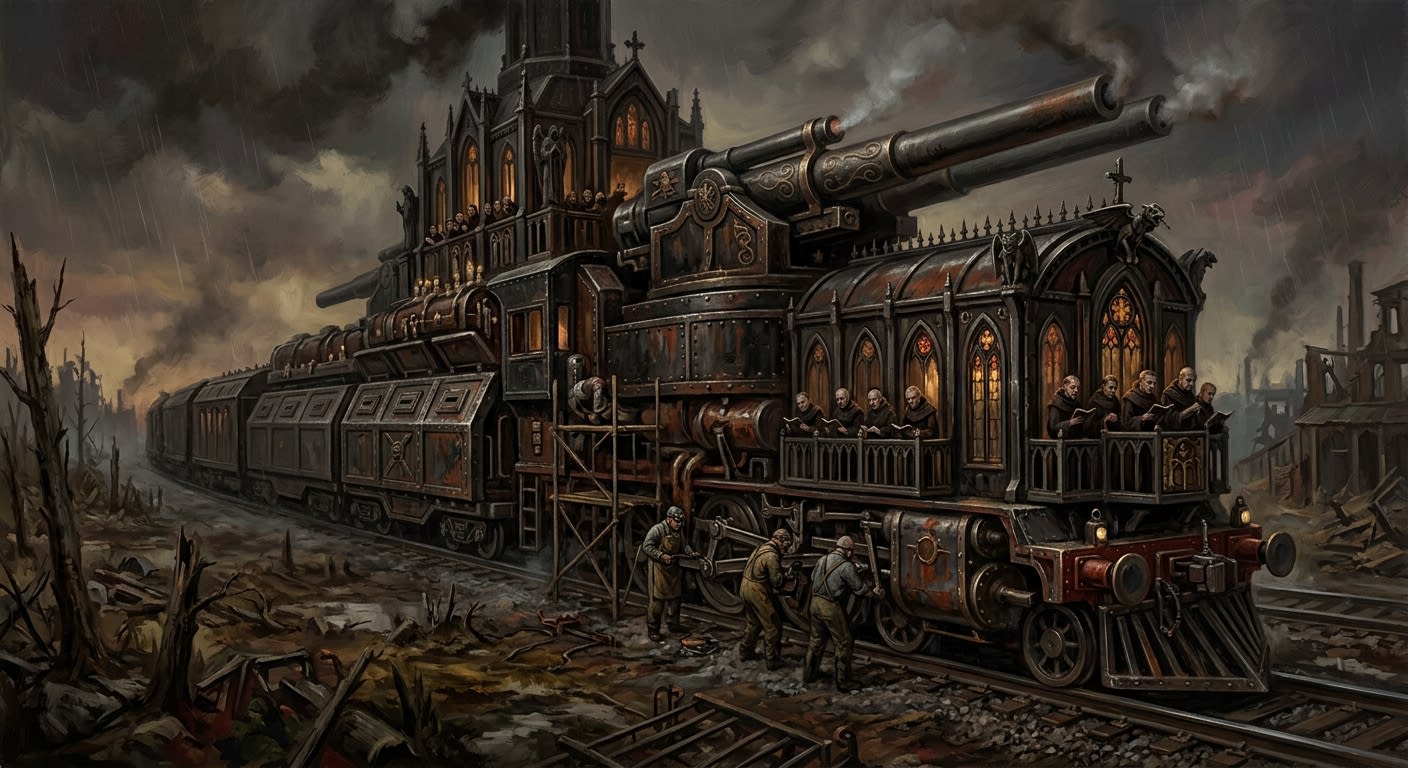
Sepulcher Locomotive
A shrine at speed, with guns already turning
Rail-bound mobile shrine and artillery train whose blessed guns, ossuary magazine, choir bay, and ruinous maintenance bills make piety arrive on schedule.
Codex Ref. XIII.1.90-001
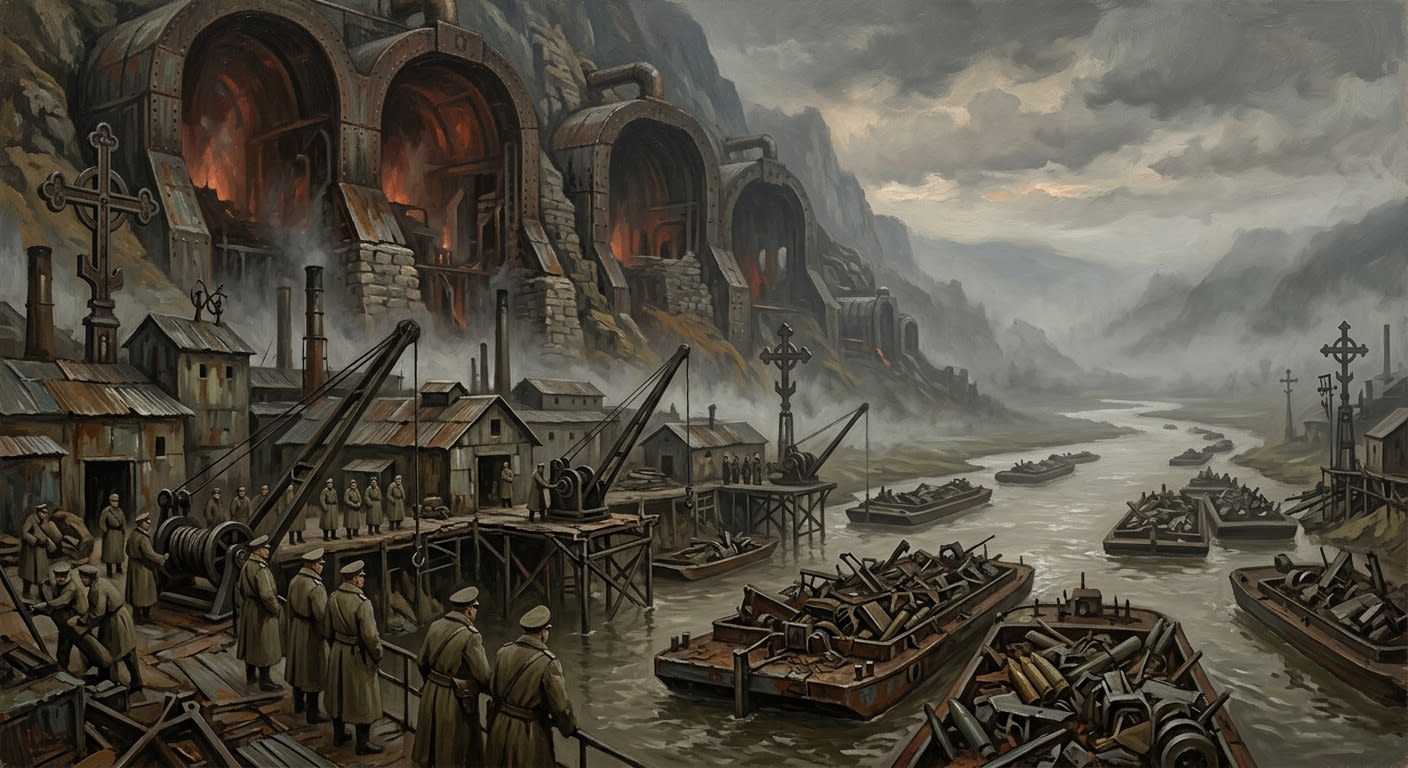
Serbia
The country where fire and fog filed rival claims and both were accepted
Serbia is the Balkan wound-country where Wrath heats the caverns, Sloth cools the valleys, and the Danube keeps carrying useful ruin west.
Codex Ref. II.6.06-007
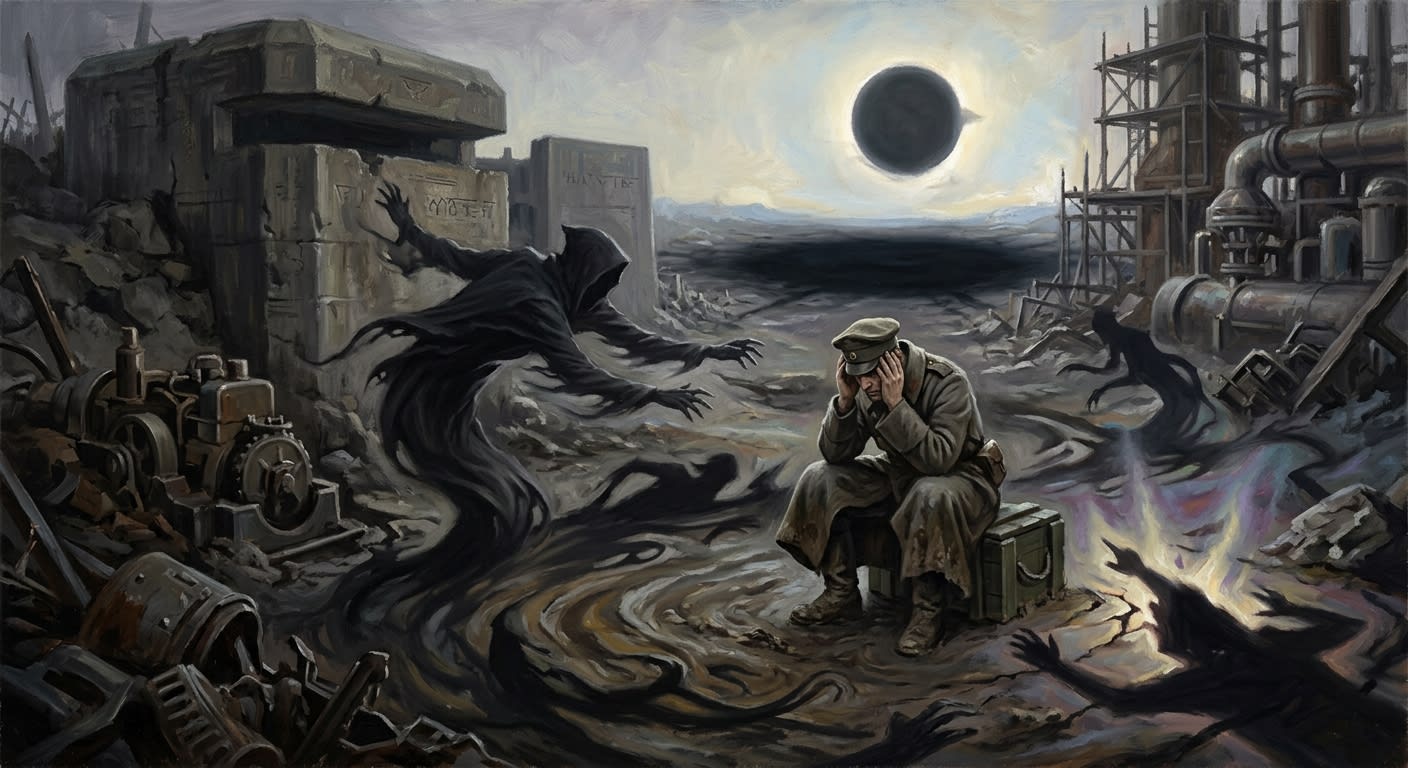
Shadow Noon
When a man's shadow applies for command
Shadow Noon is the Zone Five contradiction where light behaves, shadows mutiny, and the wise soldier survives by sitting down before Doctrine catches up.
Codex Ref. XIII.1.97-201
Shattered Courts
A palace that wears Belgrade like perfume wears a throat
Velkara's Shattered Courts occupy Belgrade by mirror, perfume, appetite, and refusal: a hostile palace that cannot be mapped without flattering it.
Codex Ref. II.5.06-117
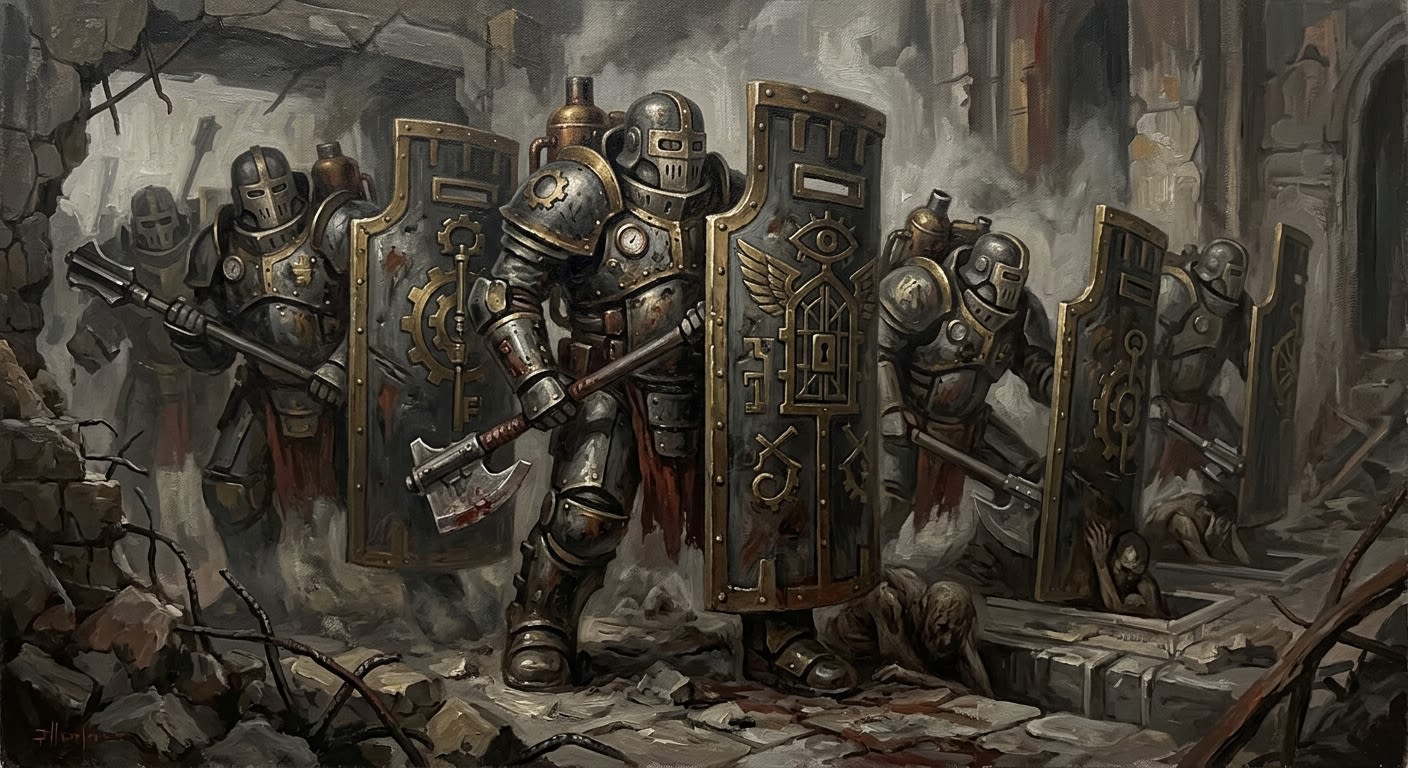
Shield Paladins
Men instructed to become wall until the wall believes them
Covenant heavy infantry trained for breach reception, line denial, emergency causeways, and the sacred absurdity of turning frightened men into architecture.
Codex Ref. VIII.5.06-001
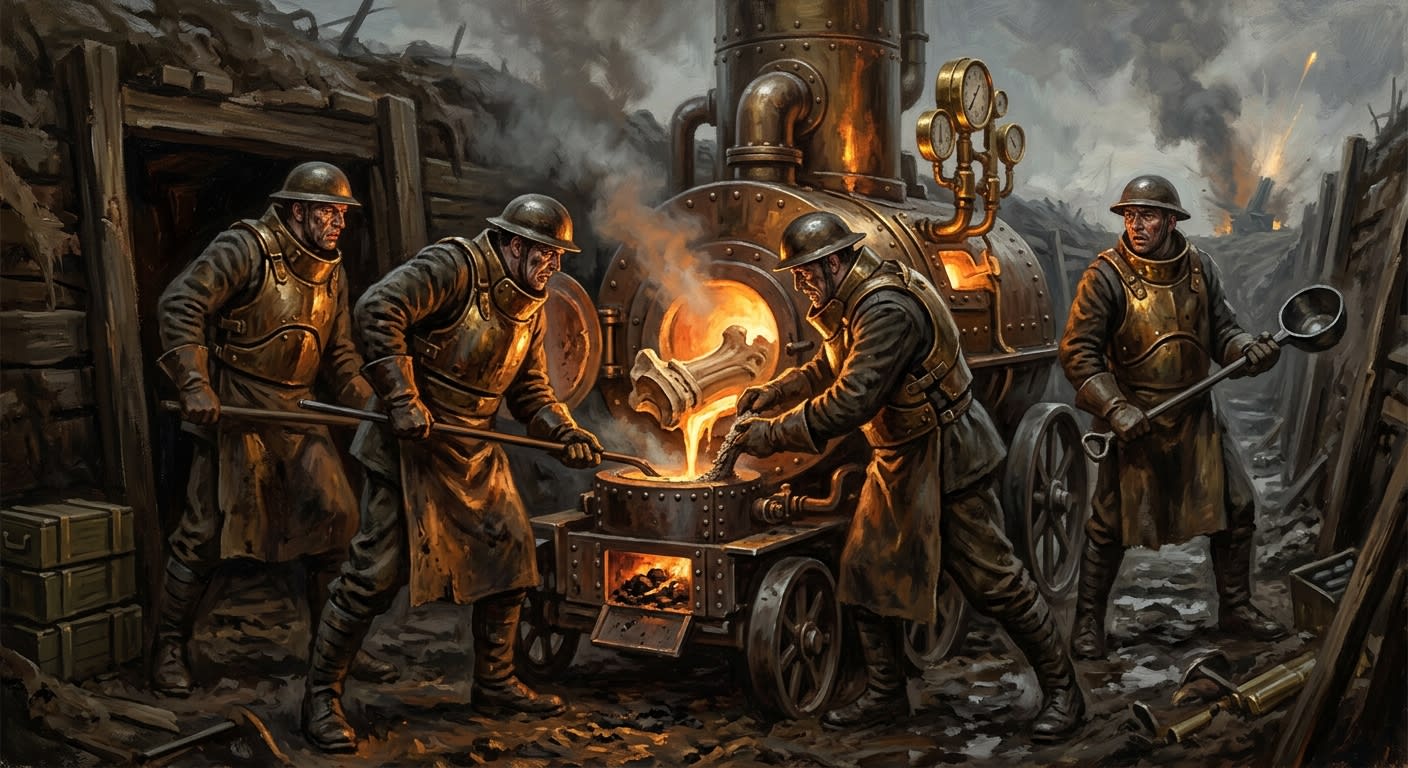
Siege Melters
The men who burn first, write later, and keep the wall standing long enough to be reprimanded
Impatient faction of Saint-Bone Melters who run trenchline quick-kilns, defer provenance under shelling, and seal cracks before doctrine can finish objecting.
Codex Ref. XII.20.08-001
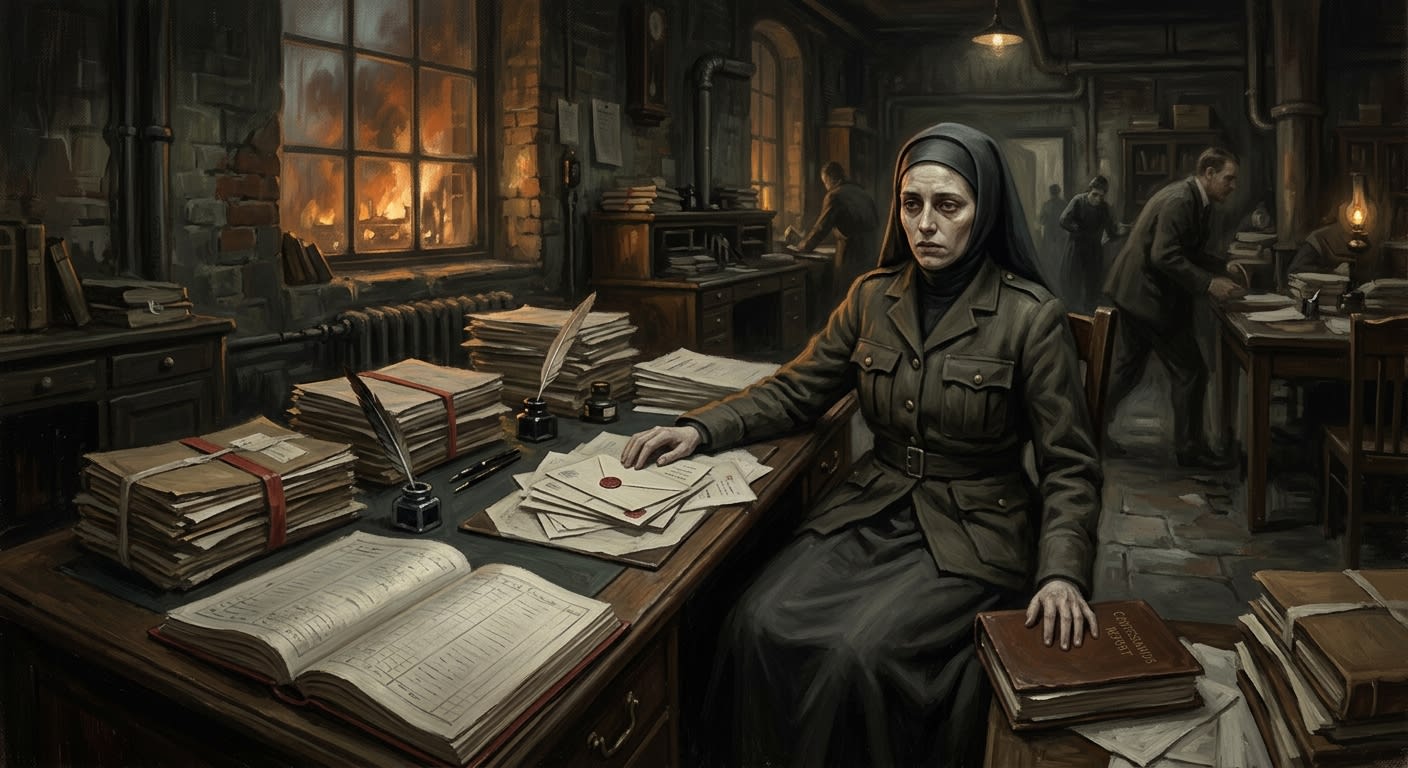
Sister Adelhaid
A name, a correspondence, a fire, and the blessed cowardice of files
Sister Adelhaid survives as a name in a Confessarius report, attached to Marseille letters, Saint Isidore's Eve, and a bookseller's fire too clean to comfort anyone.
Codex Ref. III.2.01-151
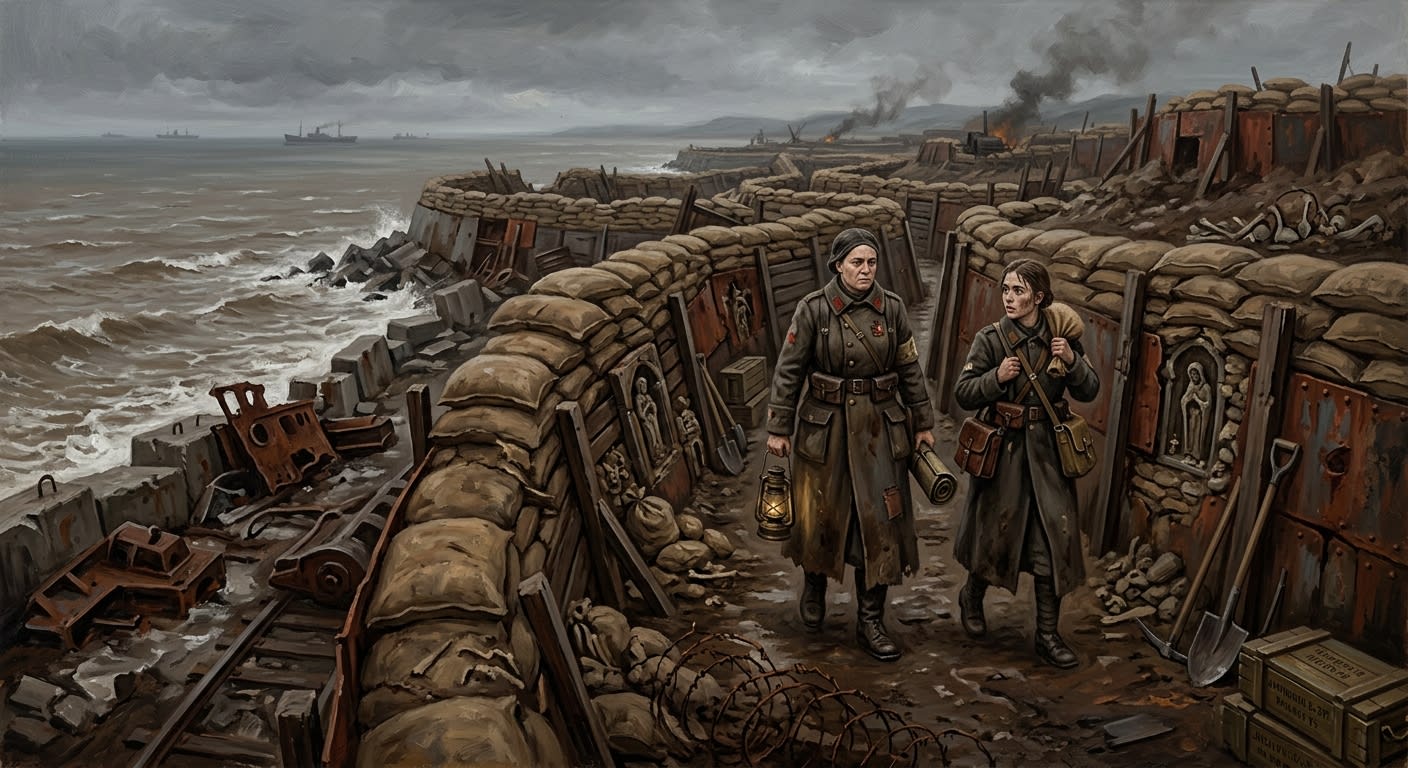
Sister Trenches
Where the Line touches surf and is corrected twice daily
The Sister Trenches are Elder and Younger, twin coastal forward works near Thessaloniki where sandbag, seawall, saint-bone, rust hymn, and tide-return burial keep the southern flank barely filed as held.
Codex Ref. II.4.08-017
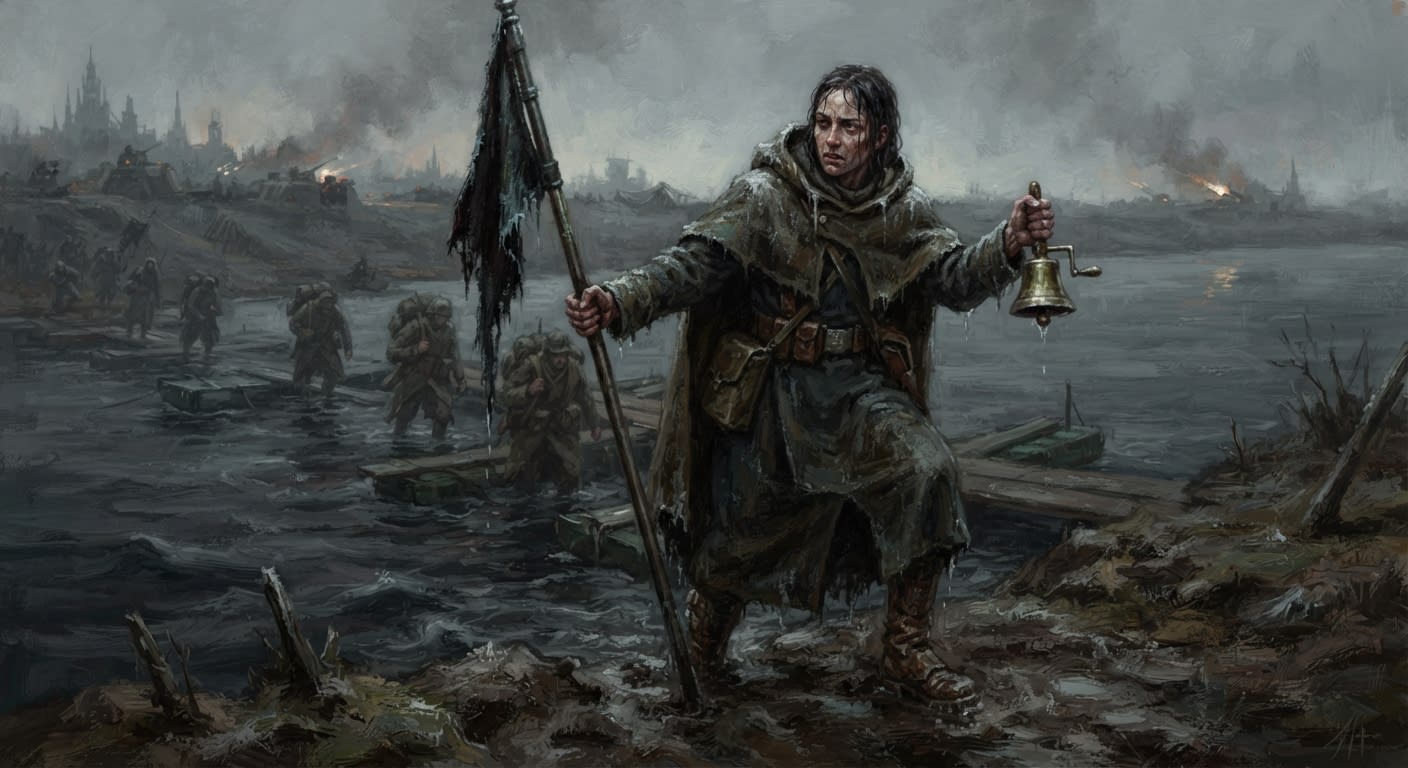
Sister-Vexillator Anje Rusk
The cloth stood, the bell rang, and Records misplaced the woman
Anje Rusk is certified at Mark Seven by one standard, one frozen bell, and one conspicuous absence from every useful casualty column.
Codex Ref. III.2.01-172
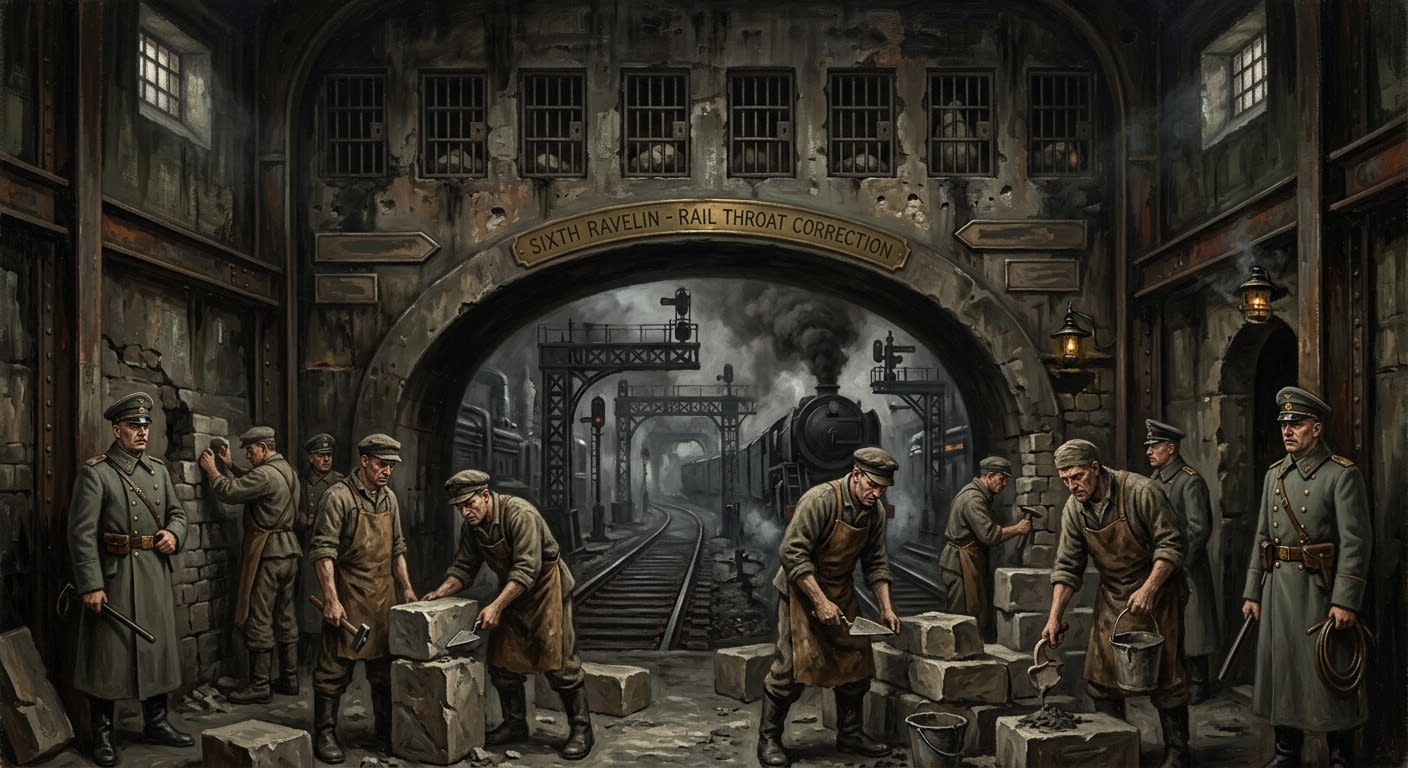
Sixth Ravelin
Correction faces consequence, and consequence answers warm
The Sixth Ravelin, called Correction, guards Bastion-Constantinople's rail throat and carries Chamber 7: forty-seven sealed in cement where guilt learned masonry.
Codex Ref. II.4.10-170
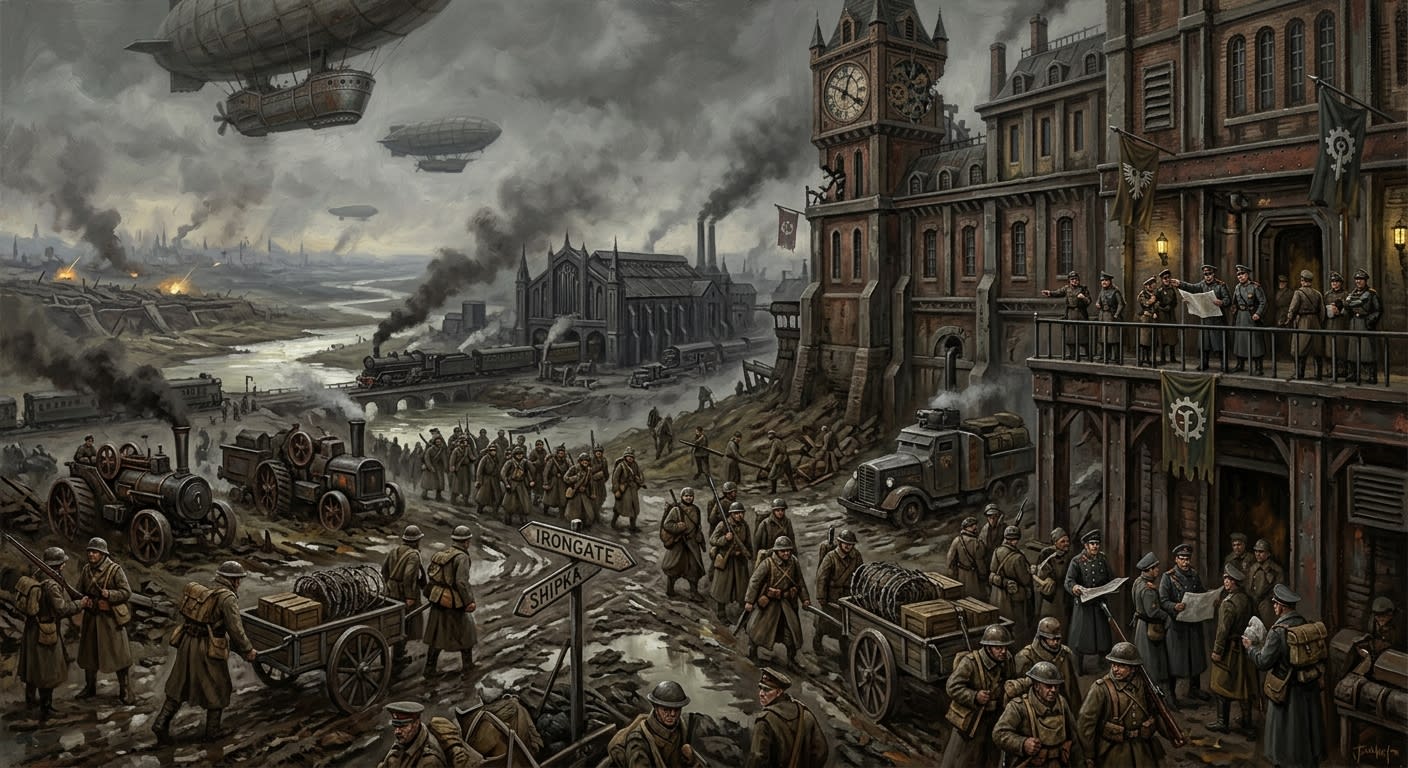
Southern Theater
The lower spear holds by bells, roads, suspicion, and bad sleep
The Southern Theater is the Line's lower spear: Irongate, Shipka, Constantinople, bad roads, worse clocks, mixed sins, and command halls full of clean answers.
Codex Ref. II.4.12-201
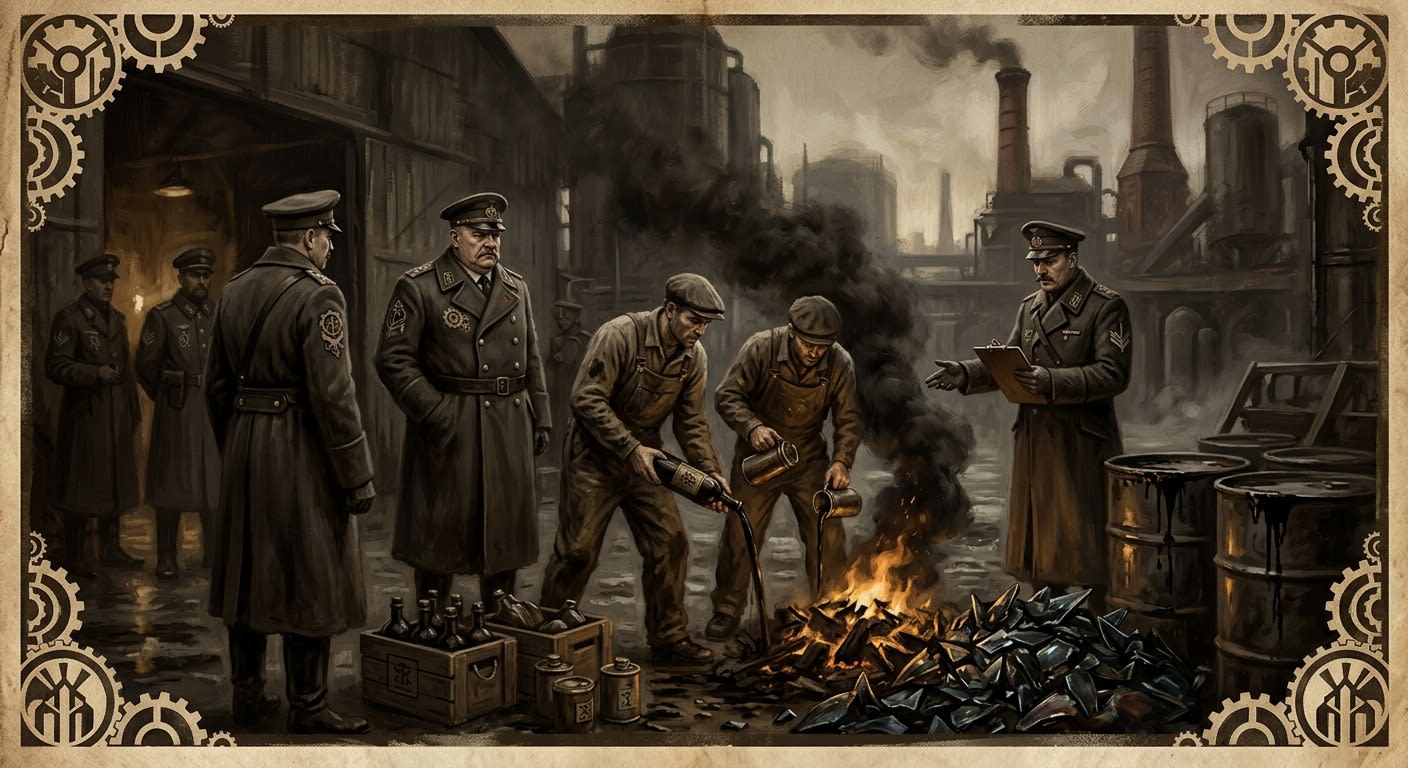
Standing Order 14-K
The law that forbids the fuel by which the righteous keep warm
Standing Order 14-K forbids black diesel, demon glass, scripture-smoke, and every useful contamination the Synod condemns in public and routes by night.
Codex Ref. XIII.1.96-134
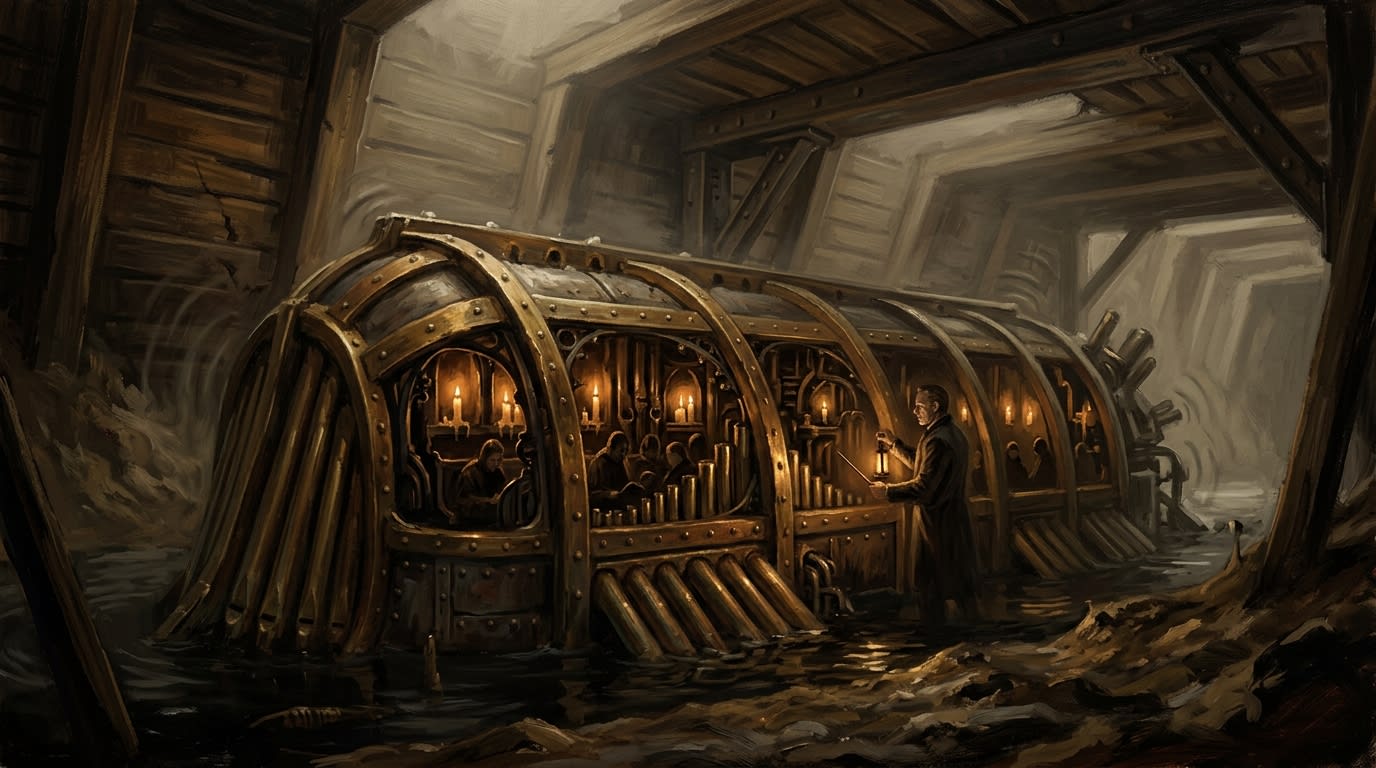
Sunken Choir
The hymn beneath the trench, paid for in boys' throats
The Sunken Choir is a sanctioned Choir-Engine: boys altered into subterranean hymn machinery so the Synod may collapse enemy tunnels while calling the invoice grace.
Codex Ref. XIII.1.33-001
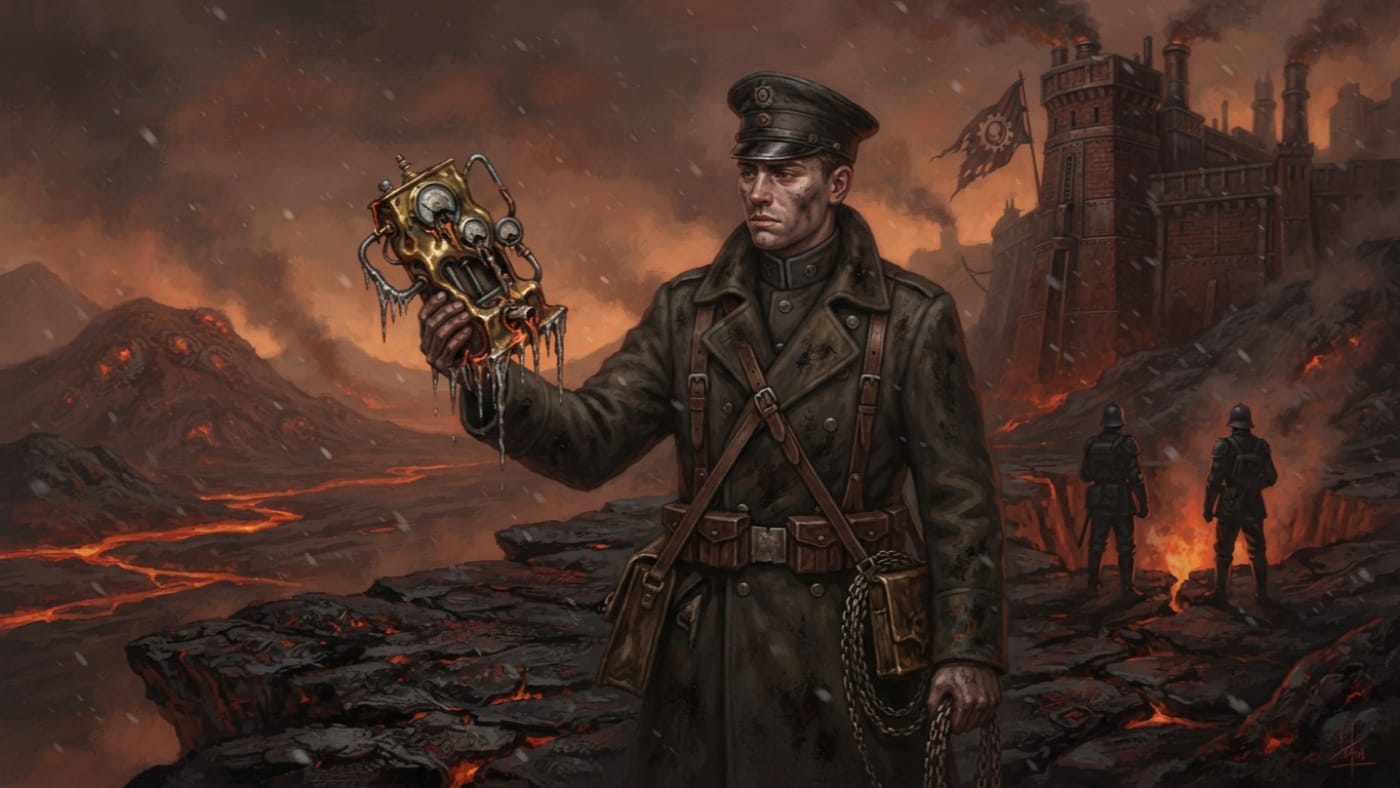
Surveyor-Lieutenant Hadrien Vesk
The heat destroyed his instruments; the Bureau preserved his reprimand
In A.S. 189, Hadrien Vesk was sent to measure the Iron Wastes' western thermal gradient. His instruments melted; Engineering obtained a reprimand instead of a number.
Codex Ref. III.2.01-189
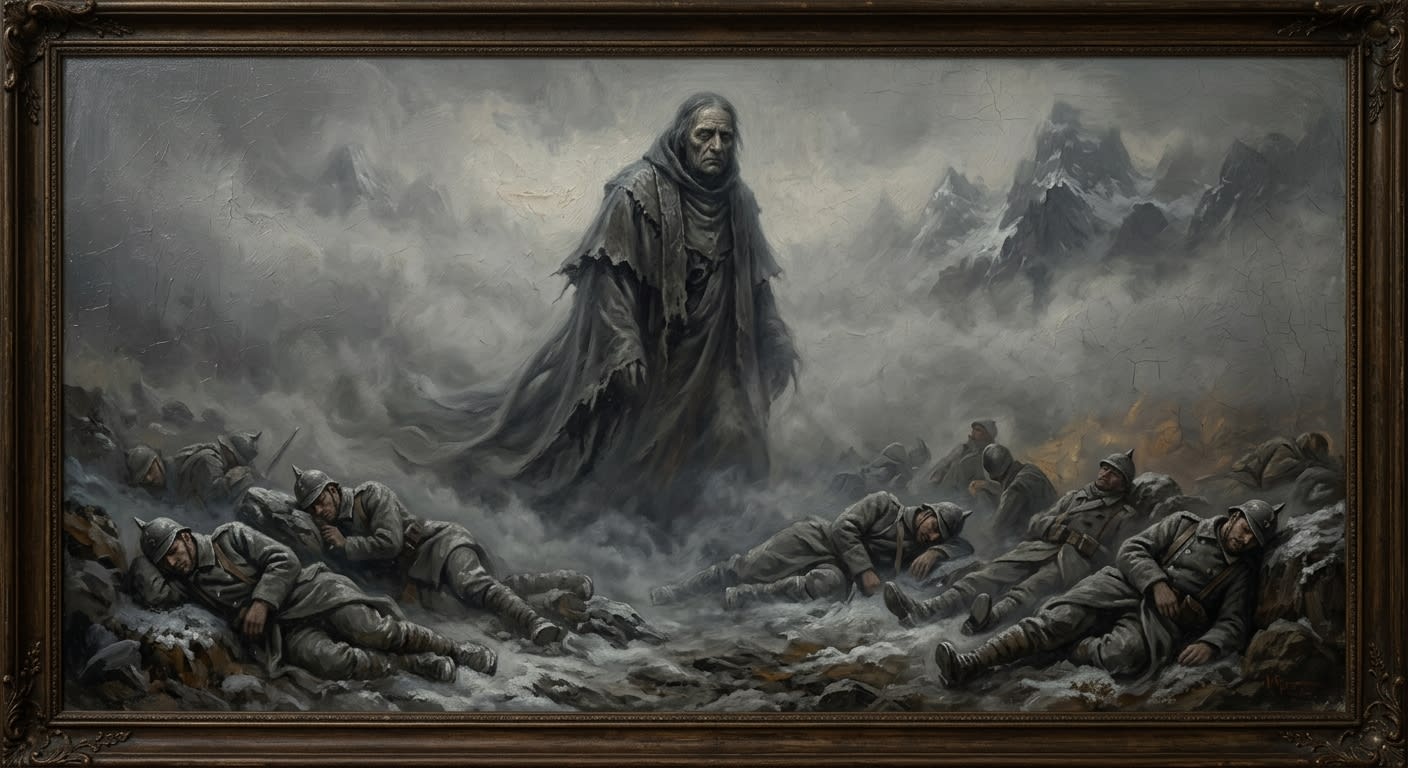
Syrion
The fog does not advance. It waits for you to stop moving.
Fourth of the Seven, Syrion holds the Bulgarian highlands in a fog of stillness and stolen time. He does not attack. He waits while you attack yourself.
Codex Ref. IV.1.07-004
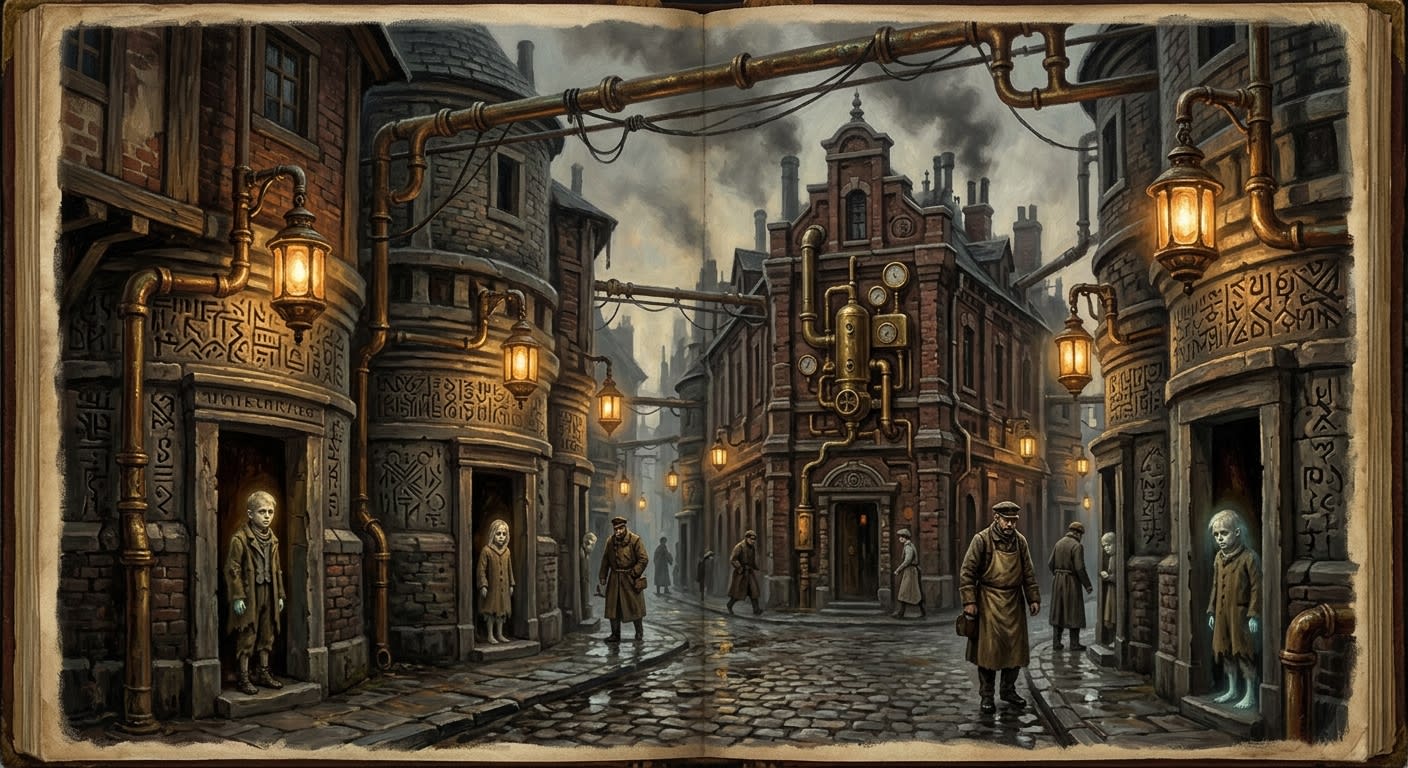
Târgu
The grave-ring town where walls learned doctrine
Târgu is the Przemyśl approach town where grave-rings house the living, walls recite through mortar, and surplus lamps taught children to glow.
Codex Ref. II.4.09-201
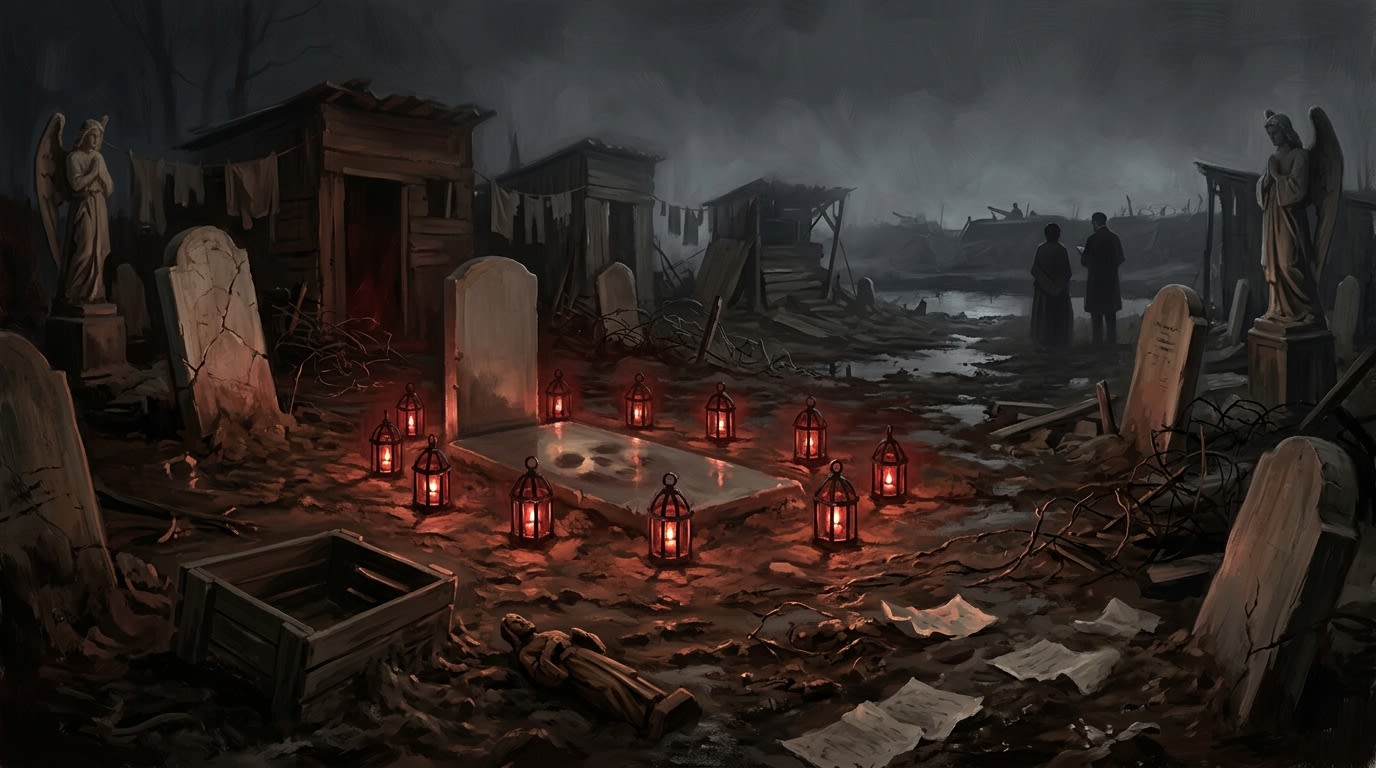
Târgu Child-Lamp Incident
Eleven small lights, and every Bureau suddenly blind
The Târgu Child-Lamp Incident began with surplus Engineering lamps and ended with eleven children requisitioned as battlefield light.
Codex Ref. VII.8.10-038

The Age of Heresy
A World Sundered, a Faith Forged in Fire
The definitive overview of the Age of Heresy — a continent sundered by demonic invasion, ruled by a theocratic bureaucracy of bells and ink, locked in eternal war against the Seven Sin-Generals. As compiled by the only man qualified to compile it.
Codex Ref. I.1.01-001
The Armorial of the Faithful
The book by which even colors learn obedience
The Armorial teaches every banner, crest, seal, colour, knot, and shop sign in the Synod the first virtue of a surface: obedience.
Codex Ref. VIII.1.03-002
The Ash Gardens
Where roses feed on siege residue and Medicine pretends not to notice
Three miles inland from the Harbor of Chains, the Ash Gardens heal burned men, ash-lung children, and shell-broken soldiers beneath roses fed by Maldrake's old fires.
Codex Ref. II.4.10-007
The Ashen Ascension
Mercy with a bowl, a ledger, and an appetite it will not name
The Ashen Ascension feeds before it prays, shelters before it asks, and names the dead before it claims the living — which is why the Bureau cannot burn it without admitting what the Bureau has failed to feed.
Codex Ref. XII.9.04-001
The Balkans
The wound that taught Europe to count its bleeding
The Balkan wound-region, broken first by the Eastern Silence and the Sundering, then divided into Synod margins, contested corridors, Sin-General dominions.
Codex Ref. II.6.05-045
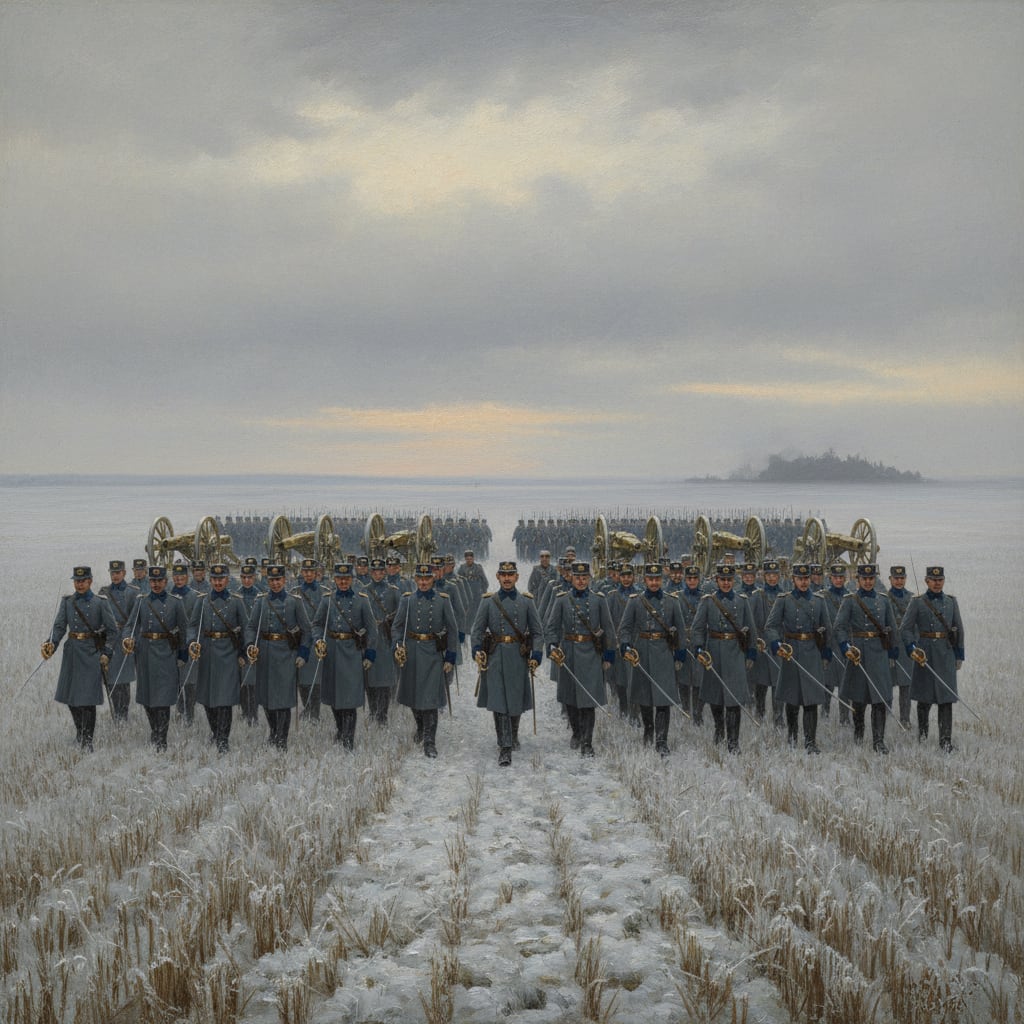
The Battle of the Iron Plains
Where twelve thousand trained men died proving that competence is a necessary but insufficient condition for survival
Twelve thousand Rationalist professionals deployed in textbook formation on 1 November A.S. 45. Fire fell from a cloudless sky. The Bureau calls it evidence. The ground still rings when struck.
Codex Ref. VII.5.01-001
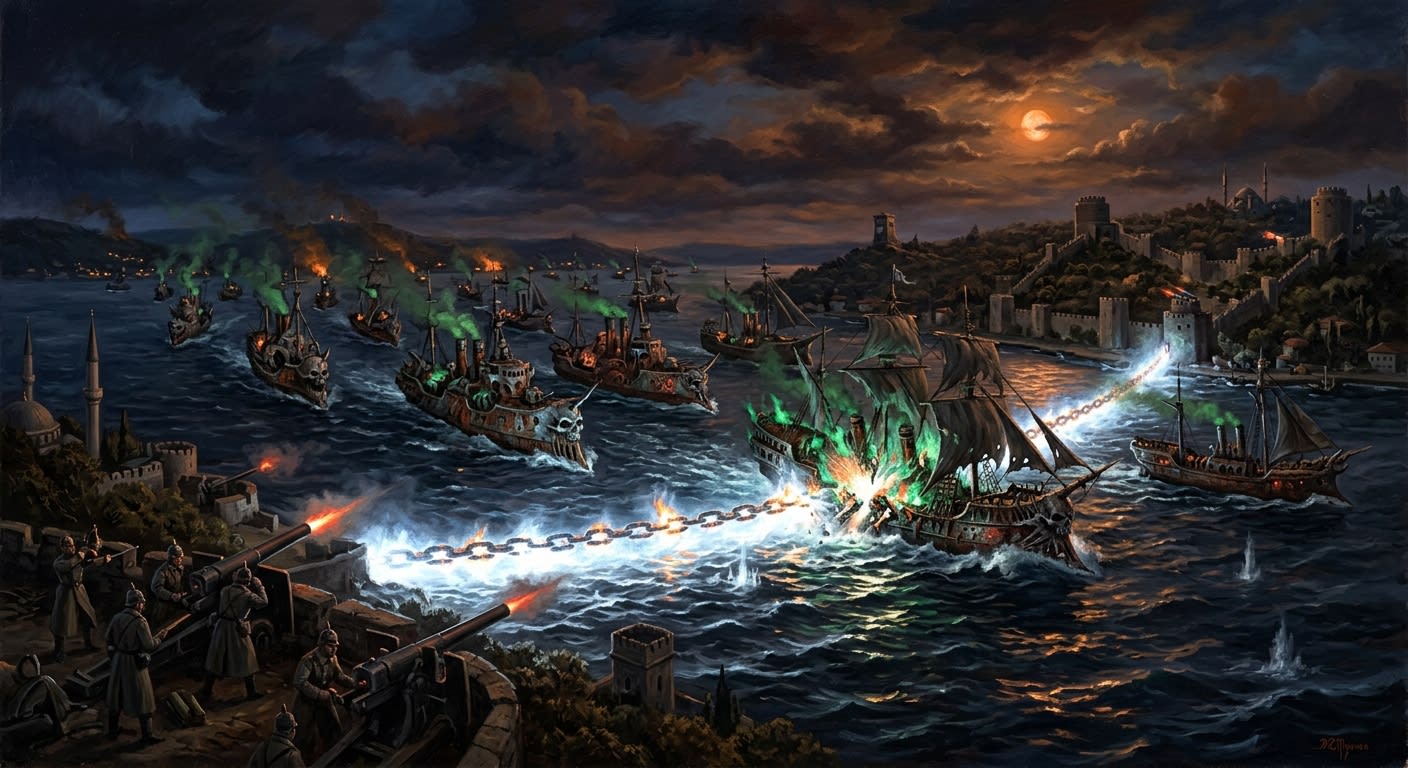
The Black Sea Armada
Forty-seven ships. The Bureau counted them twice. The second count was worse.
On the night of 14 Ferrum, A.S. 162, forty-seven demon vessels entered the Bosphorus. The Chain of Saint Anakletos held — and burned white-hot for seven hours. Forty-three ships destroyed, the chain gone dark ever since, and one ship never found.
Codex Ref. VII.4.01-001
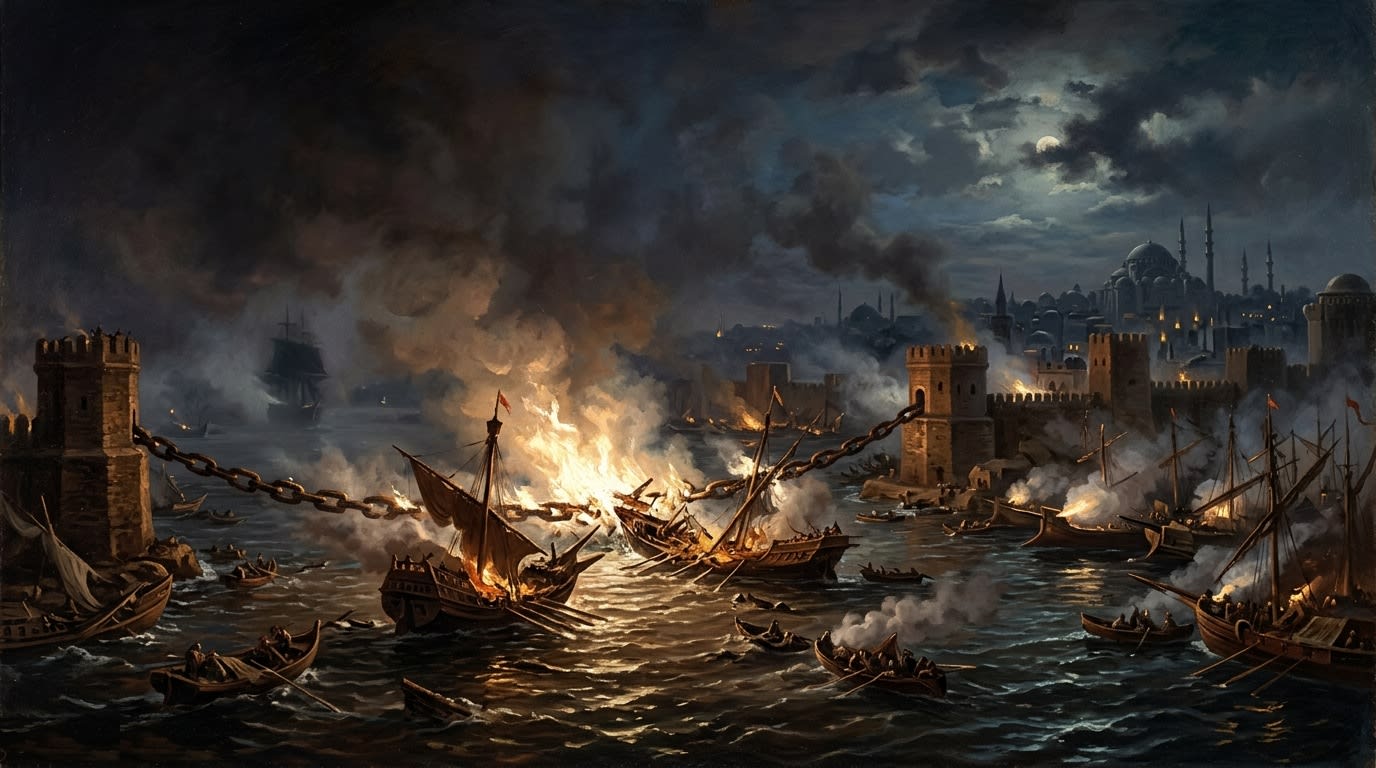
The Black Sea Armada Engagement
Forty-seven ships entered the ledger; one refused arithmetic
The A.S. 162 naval assault on Bastion-Constantinople's Harbor of Chains: forty-seven demon vessels, seven hours of white fire, and one ship-shaped absence still drawing interest.
Codex Ref. VII.5.10-162
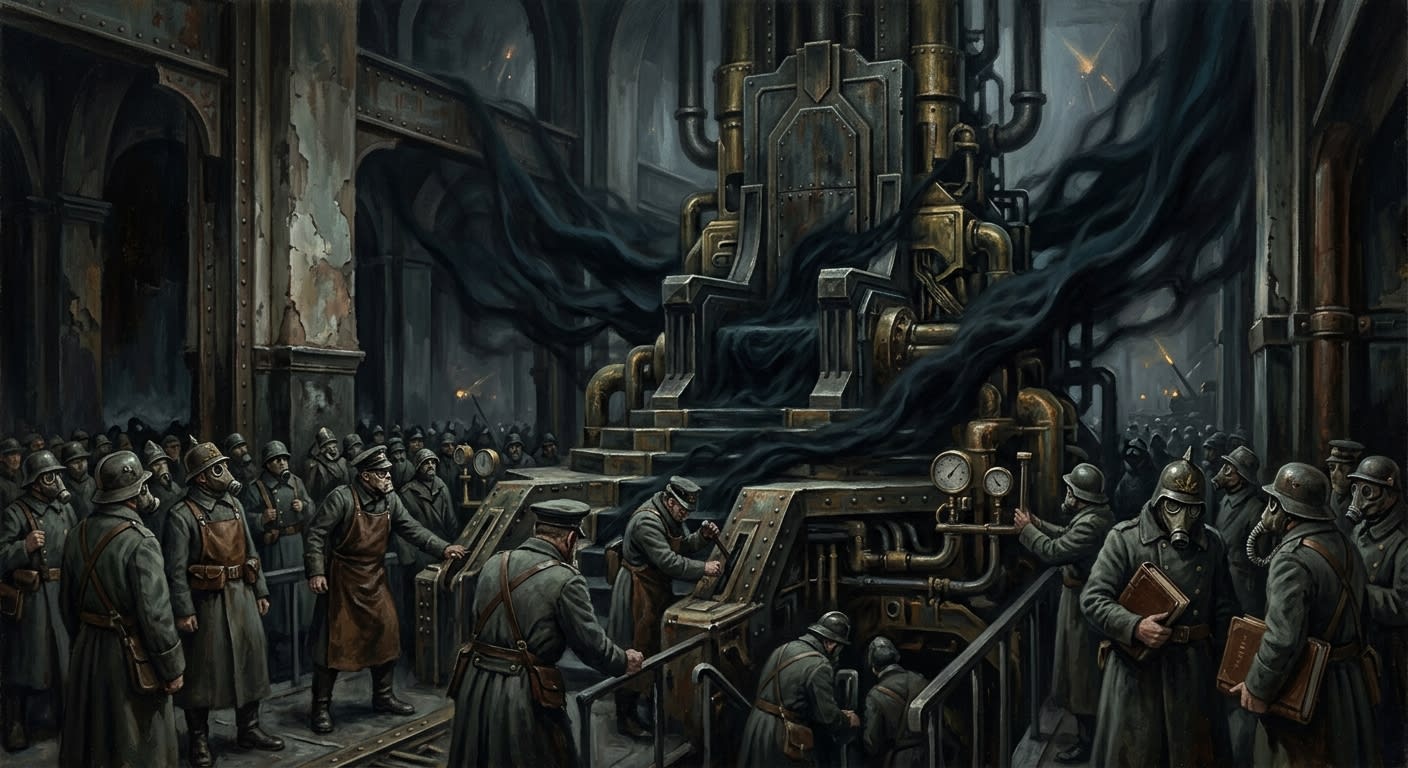
The Black Throne
Authority need not sit to make others kneel
Doctrine treats the Black Throne as symbol, Shadows as object, War as target; all agree that authority gathers there until place obeys.
Codex Ref. XIII.1.24-001
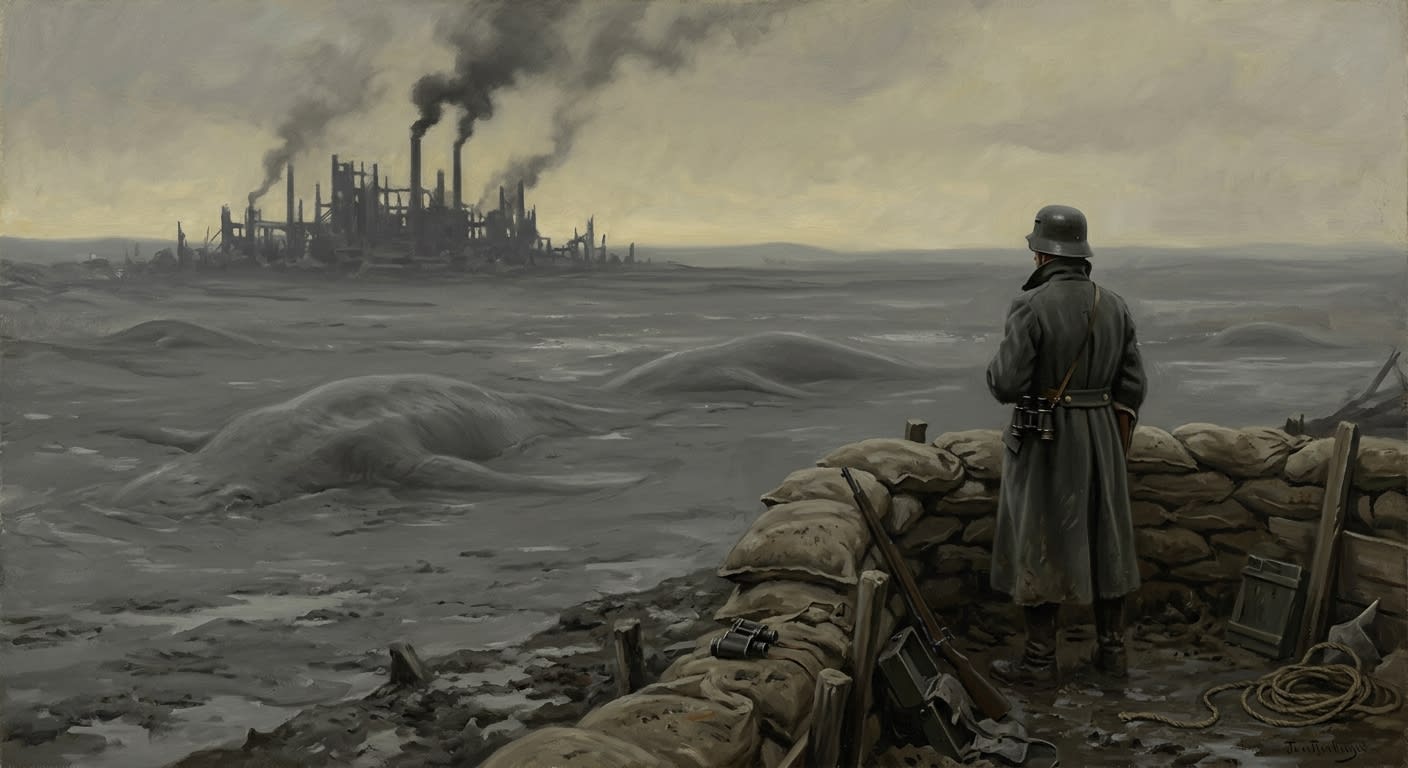
The Blightmarsh
Kargath's larder, fully stocked, permanently empty
The consumed plains of Hungary — twenty-three thousand square miles of grey mud, expanding mouths, and hunger that does not end. Kargath's forward infrastructure. The Sagittal Line's nearest unsolvable problem.
Codex Ref. V.6.01-001
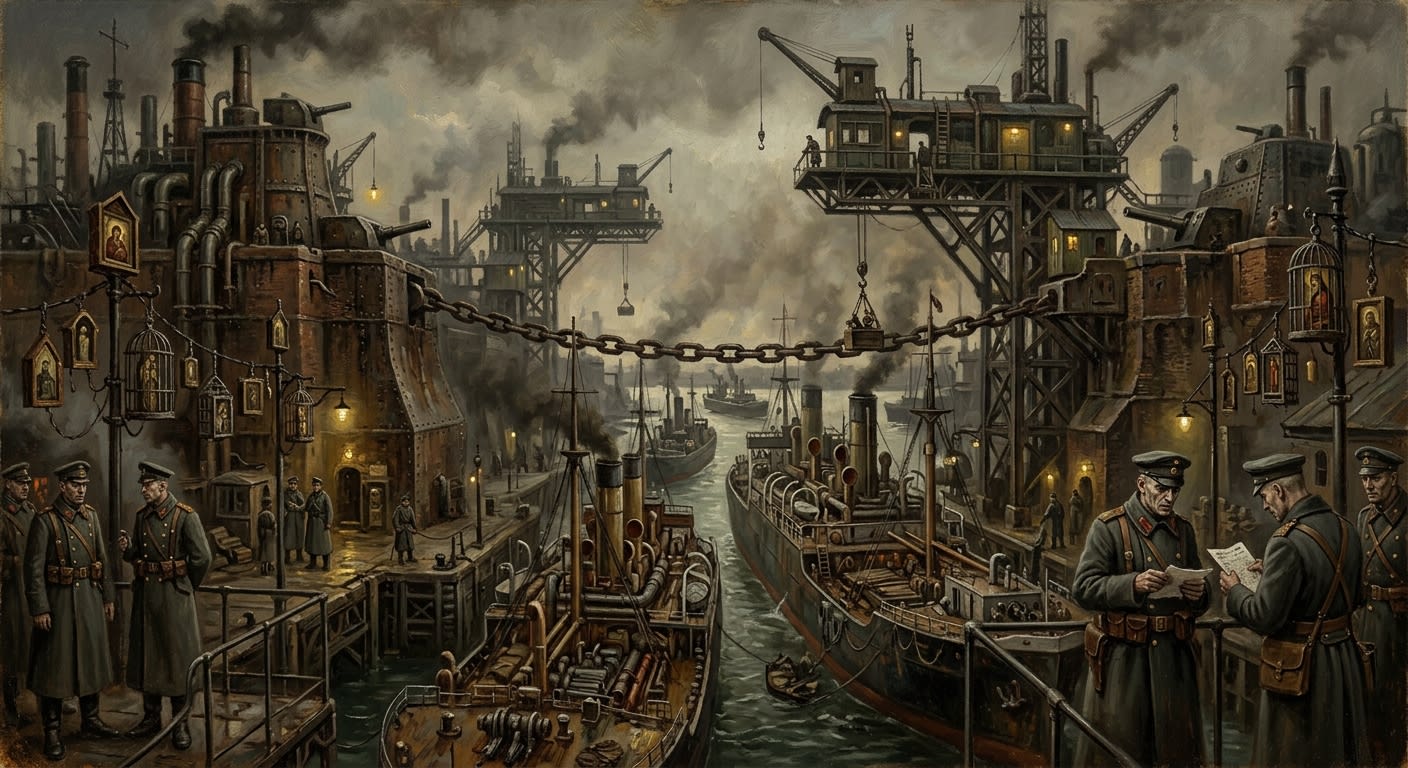
The Bosphorus
The water has not countersigned
The Bosphorus is the southern hinge of the Sagittal Line: chain-defended, tariff-choked, relic-strung, and still refusing to admit that water can be owned.
Codex Ref. II.4.09-004
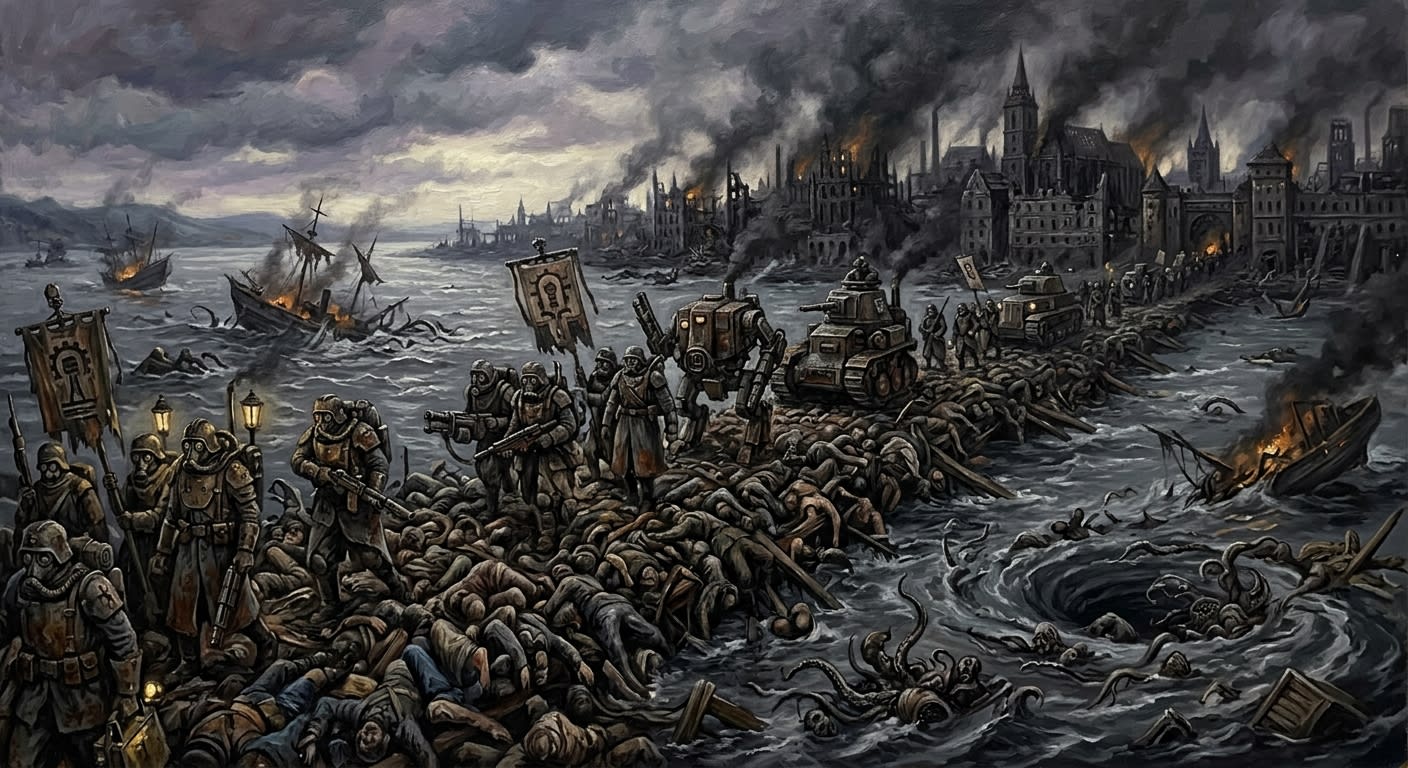
The Brașov Flood
The day Hell made the conquered carry it dry-shod
In A.S. 110, Velkara's host crossed the Danube on a cadaveric causeway of fifty thousand drowned Ash-Fodder after Kargath consumed Brașov; the river remembered water nine days late.
Codex Ref. VII.8.05-001

The Bureau of Heraldry
The grammar of loyalty, measured in ink and iron
The Bureau of Heraldry controls what the Synod is permitted to look like. Every crest is a sentence. Every unregistered symbol is a rebellion not yet named.
Codex Ref. VIII.1.03-001
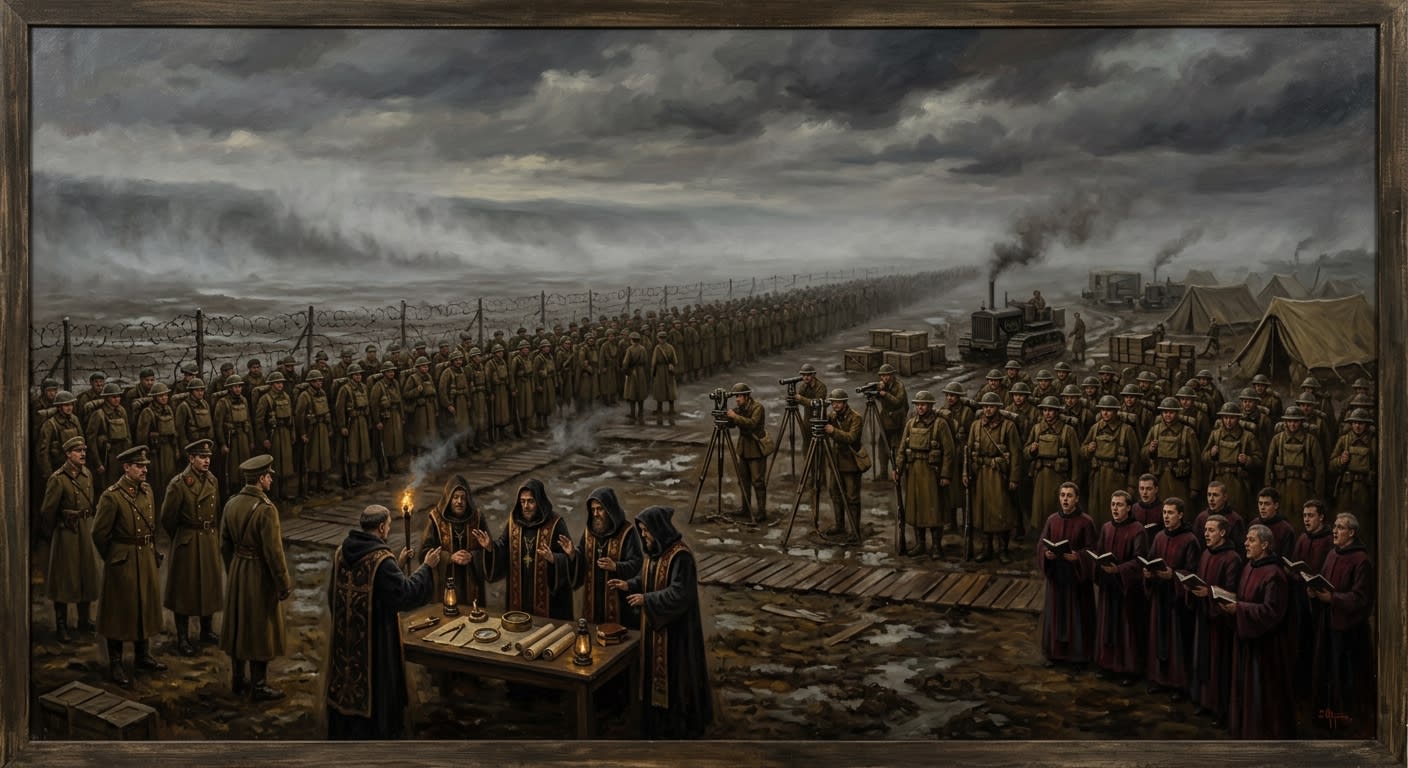
The Cartographic Expedition of A.S. 73
Three hundred men went to draw a map. The map drew them instead.
In A.S. 73, three hundred men entered the Charnel Lands to draw a map. Fourteen returned, and on every folio they carried — drawn in charcoal, ink, graphite, and in one case blood — the same face. Commission 73-C is closed. Its lesson is not.
Codex Ref. VII.1.01-001
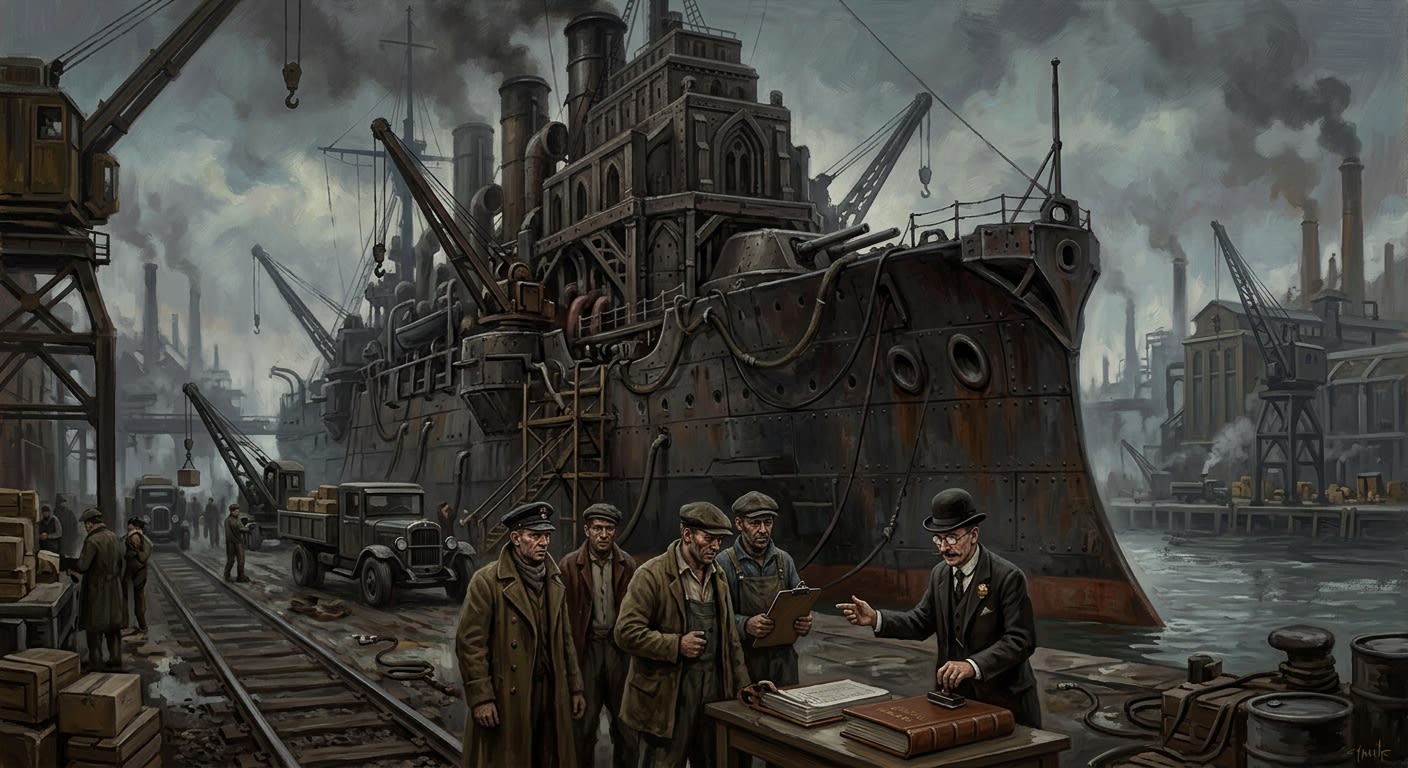
The Catacomb-Carrier Threnody
A land engine paying harbor fees to remain mercifully still
The Catacomb-Carrier Threnody occupies Pier Seven under continuous maintenance, drawing rations for an intact crew no one sees and fees no clerk queries.
Codex Ref. XIII.1.72-008
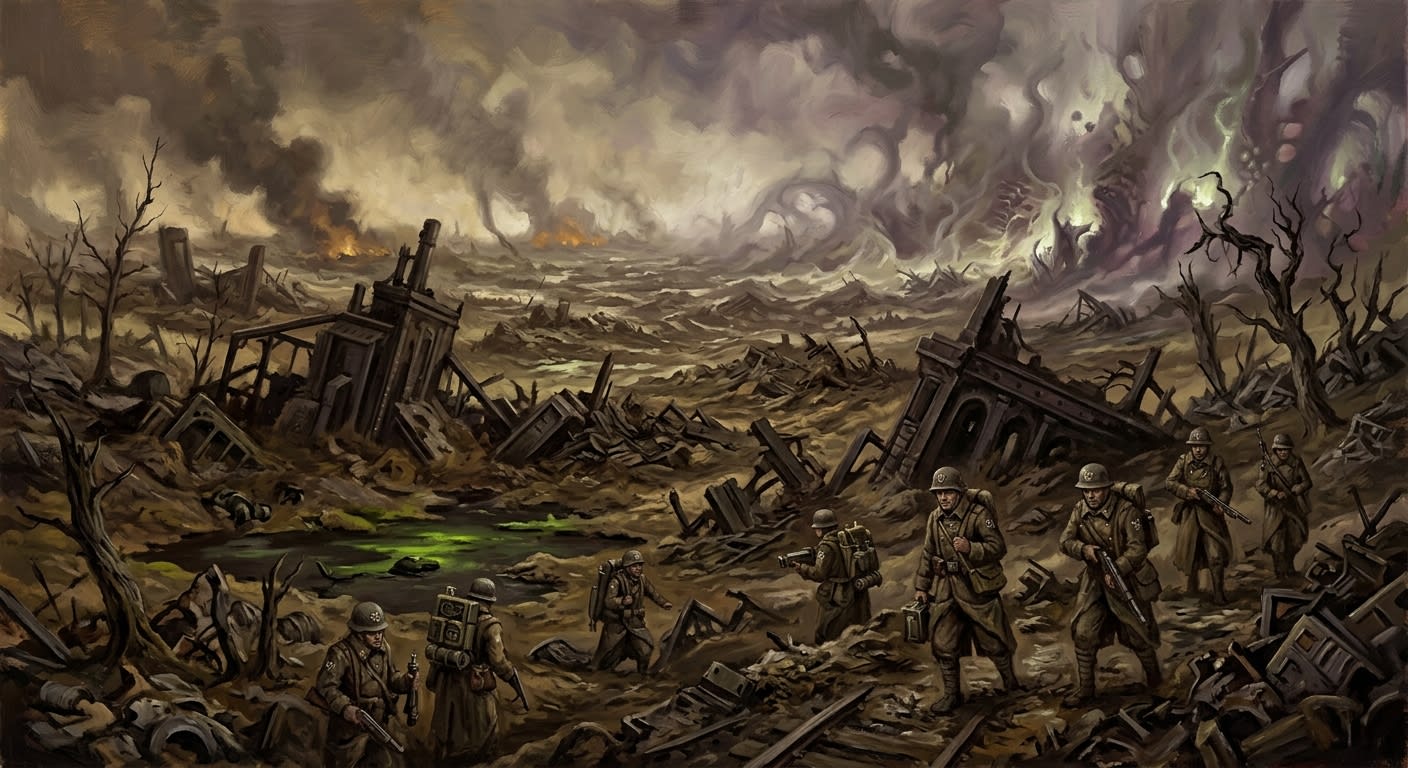
The Charnel Lands
The East keeps our failures alive in hostile weather
Zone 6 is the Synod's polite name for the Charnel Lands: the demonic East where appetite has borders, maps fail, and names come home missing.
Codex Ref. II.6.06-001
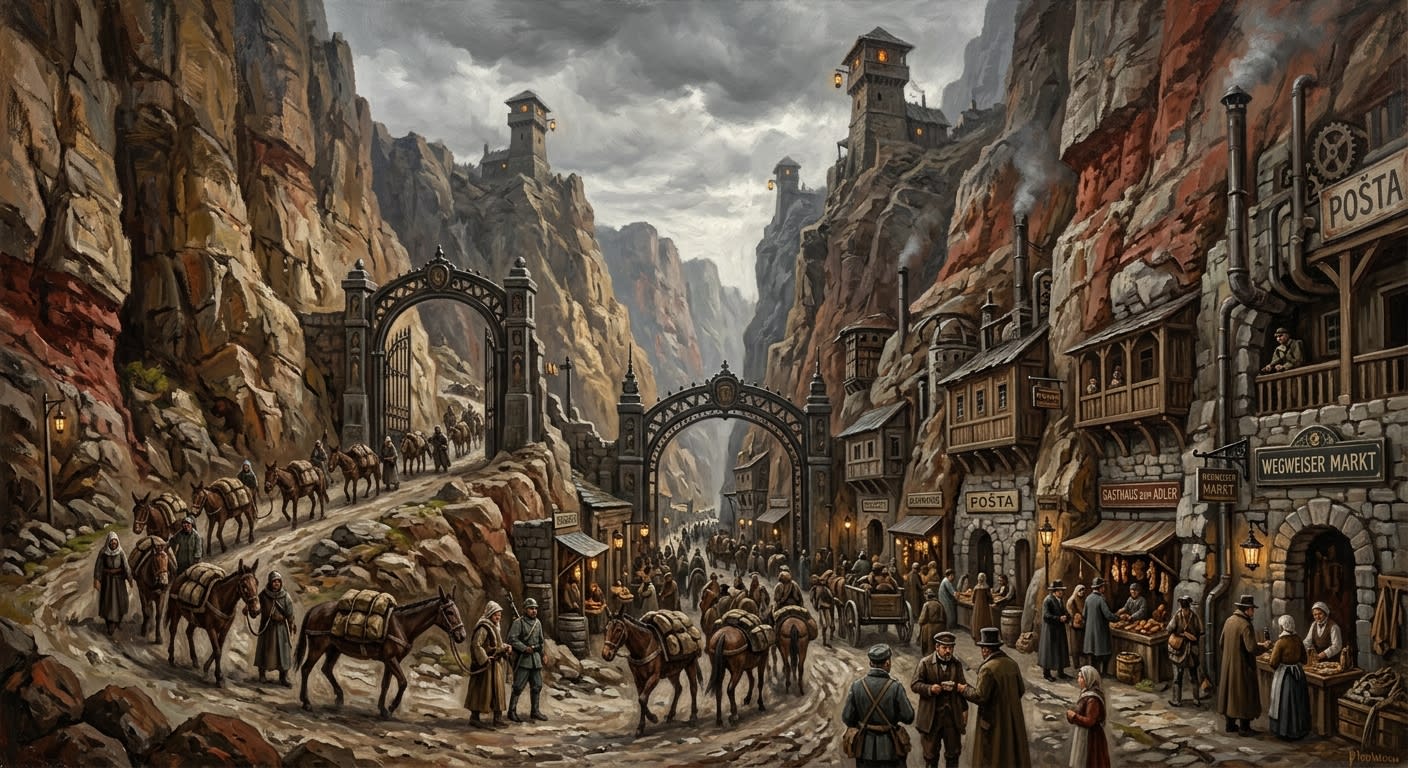
The Choir-Broker Hall of Peregrine Row
Where the canyon charges for its echoes and the brokers charge for everything else
A Zone 1/2 waystation-market on the Pilgrim Roads where creed-testing, escort contracts, and bead reconciliation converge into an economy of sanctioned extortion. The canyon echoes your prayers with one vowel wrong. The brokers charge for that too.
Codex Ref. II.1.03-001
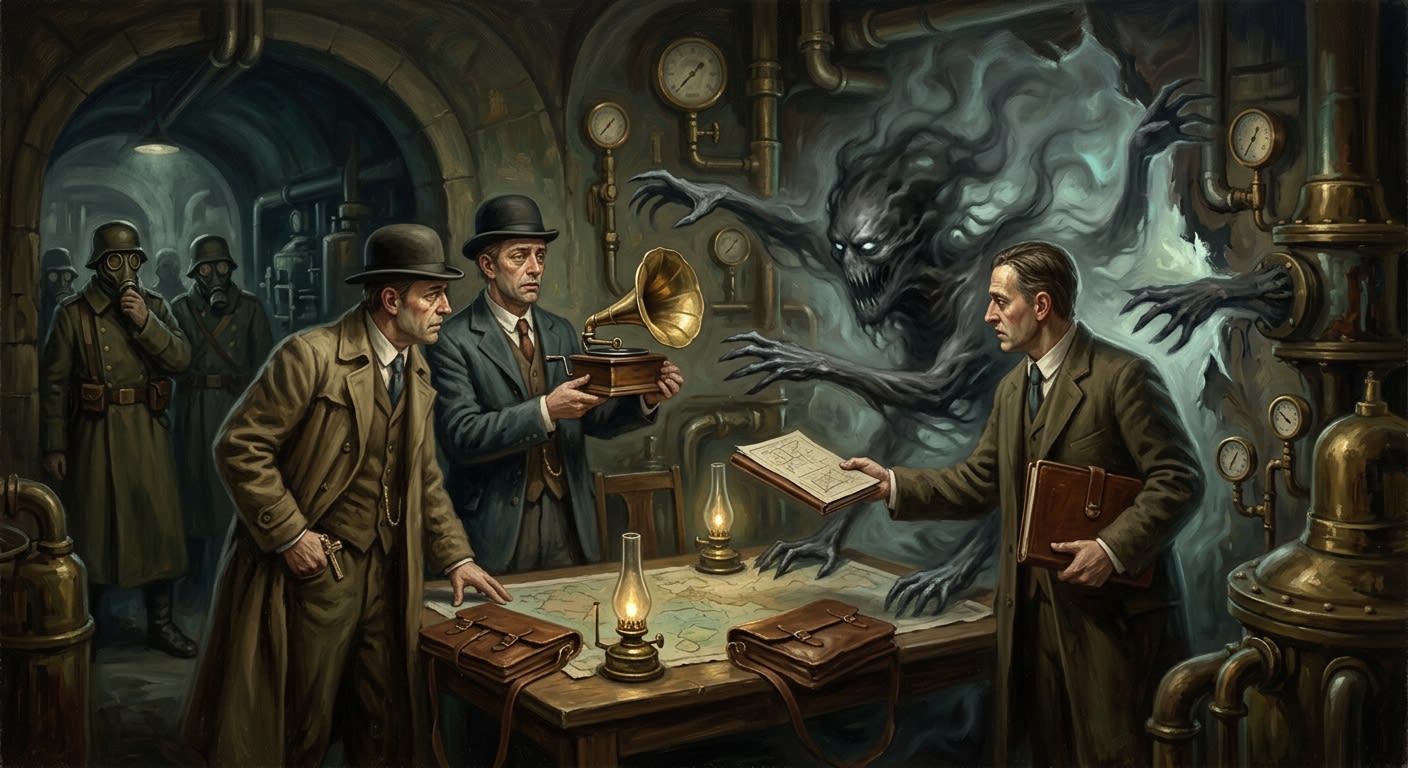
The Coexistence Heresy
The treaty Hell offers while still chewing the witnesses
Fourth of the eight proscribed heresies, the Coexistence Heresy teaches that mankind should bargain with demons; Doctrine answers that Hell only negotiates while digesting.
Codex Ref. XIII.1.37-001
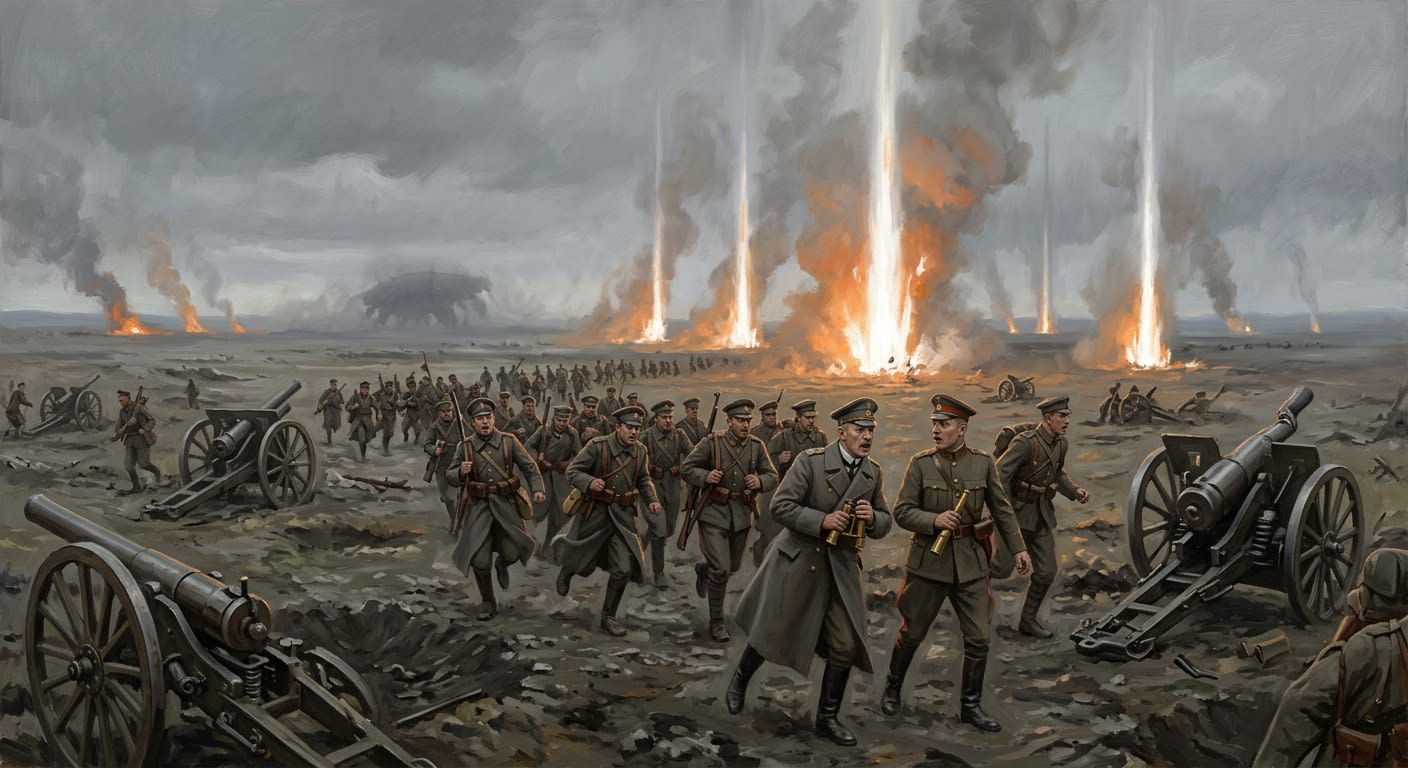
The Collapse of the Rationalists
The Adversary did not invade. It arrived.
The Rationalist Republic dismantled every spiritual defence on the continent, and in A.S. 45 the Adversary walked through the unguarded door. A doctrine article, a body count, and a mandatory catechism text.
Codex Ref. VII.2.01-001
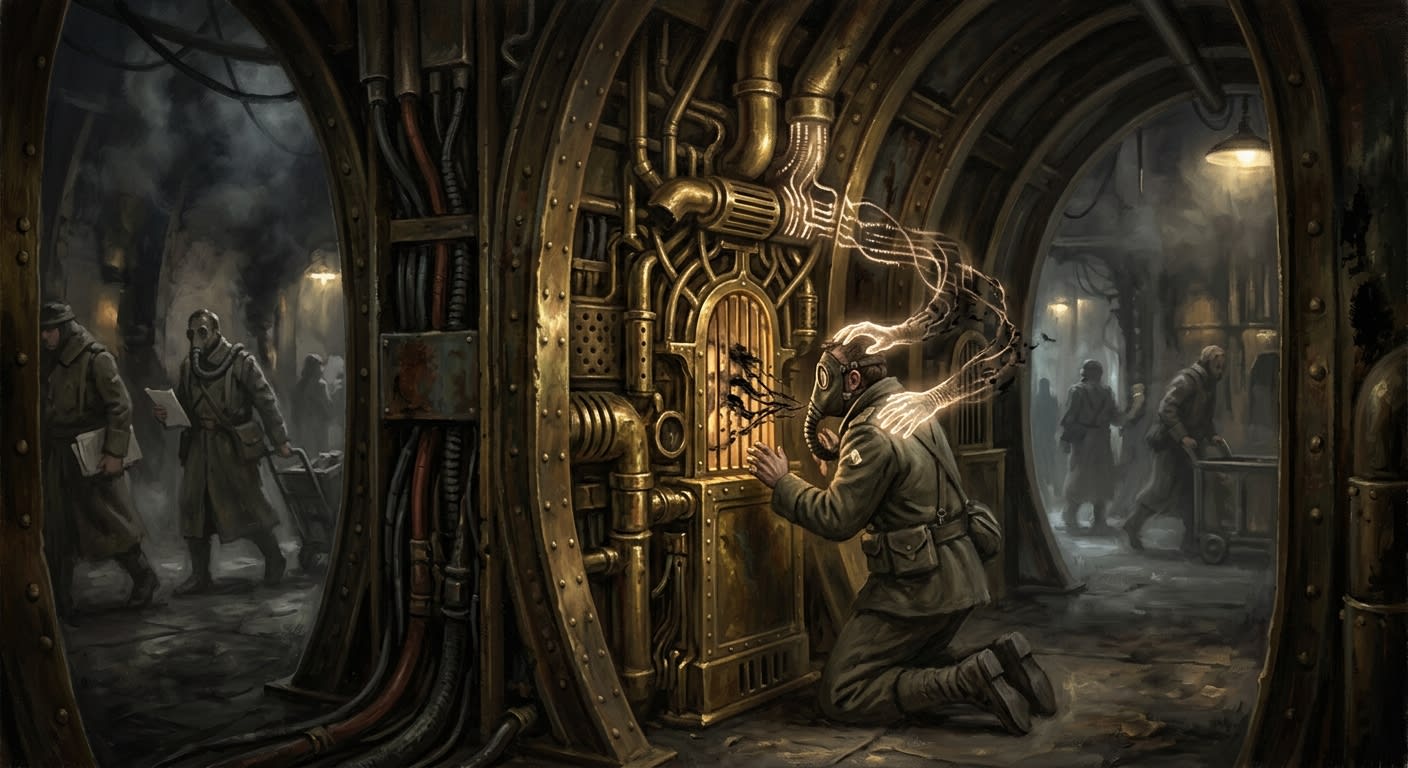
The Confession Echo
Speak once for the booth; speak twice for the river
At Bastion-Brest, sins spoken into the Confessional Lanes return from brass ribs, corrected by something that has learned the Synod's sacrament.
Codex Ref. XIII.1.13-001
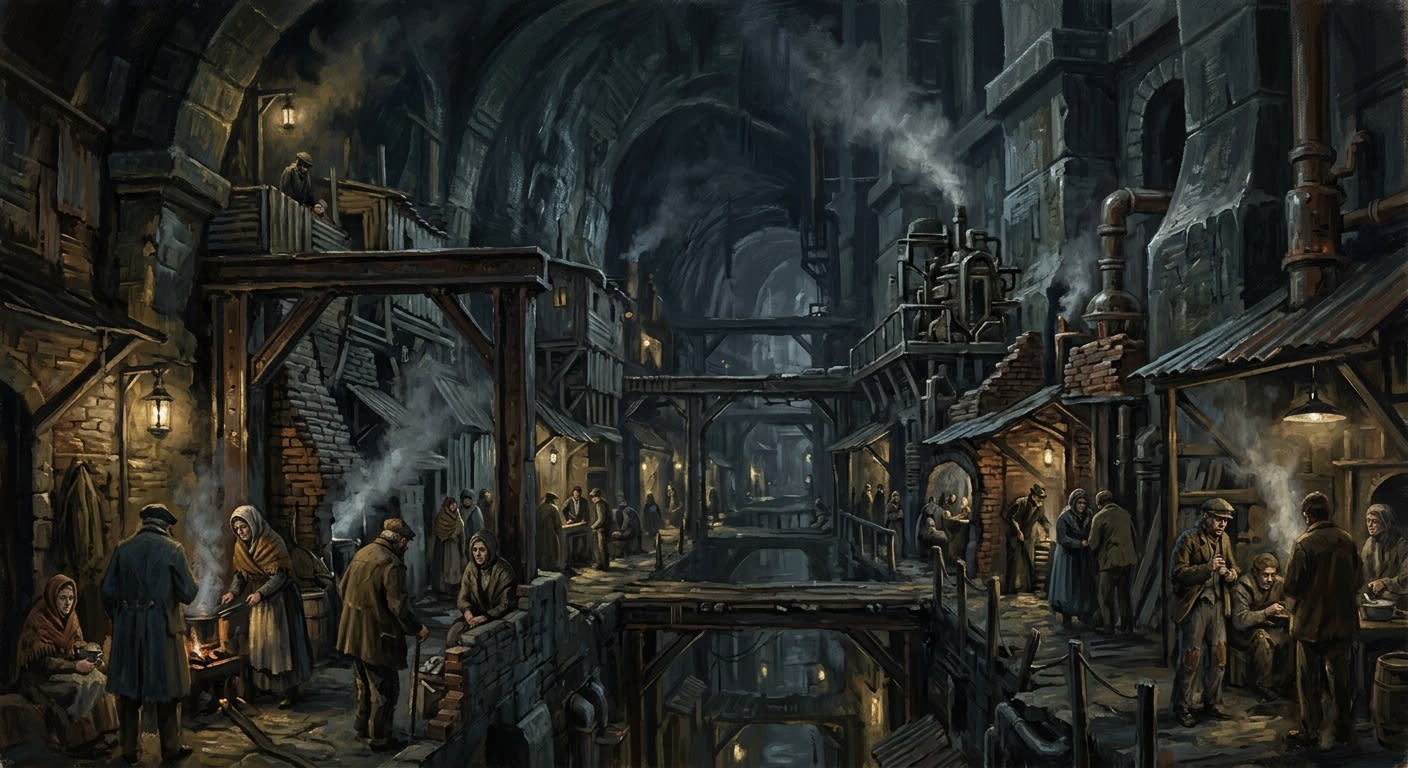
The Constantinople Warrens
The city beneath the city, tolerated by omission and counted by echoes
Beneath Bastion-Constantinople's Ossuary Rings, forty thousand unregistered souls live where Settlement maps insist there is only stone.
Codex Ref. II.4.10-005
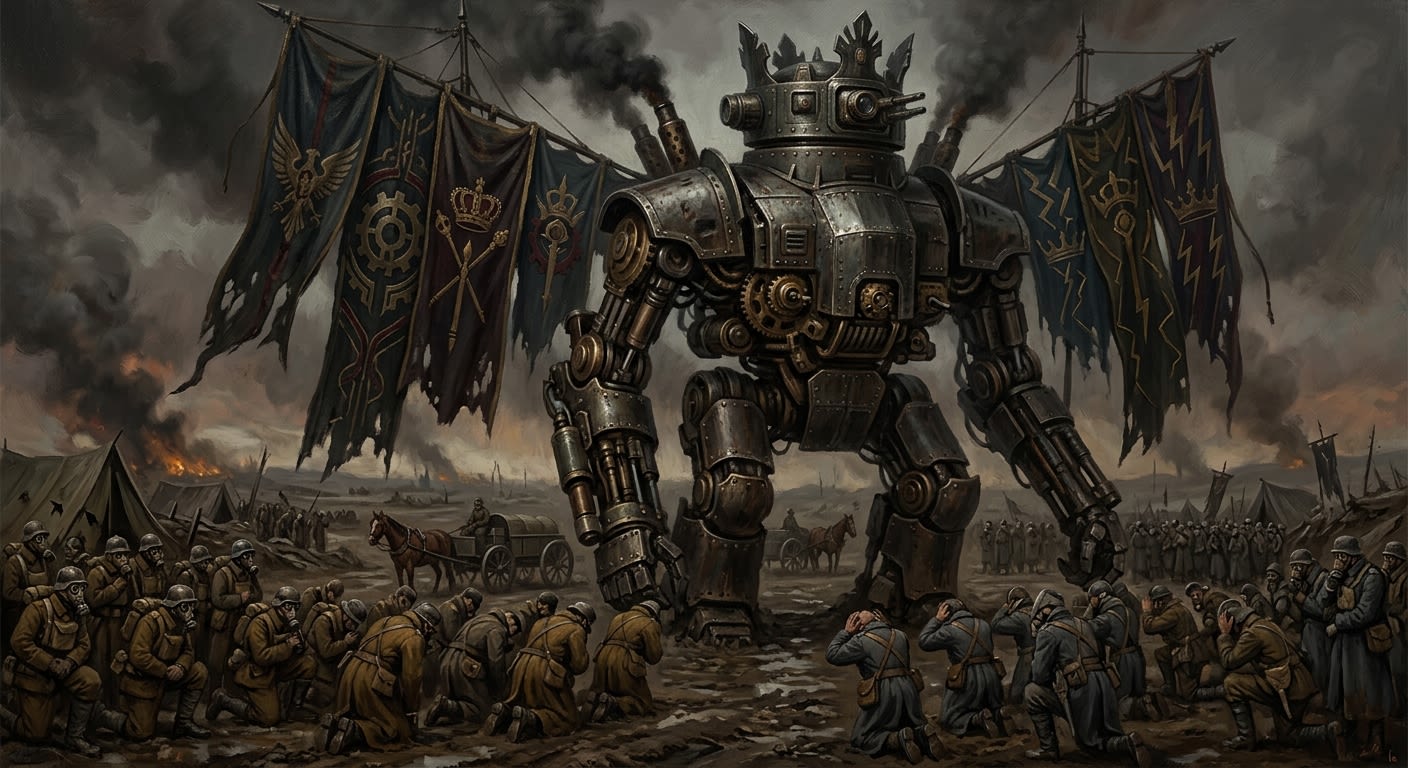
The Crownguard Titans
Pride's first argument is always height
Atheron's crowned vanguard: armoured giants whose banners teach knees to bend before artillery has the courtesy to speak.
Codex Ref. IV.1.07-008
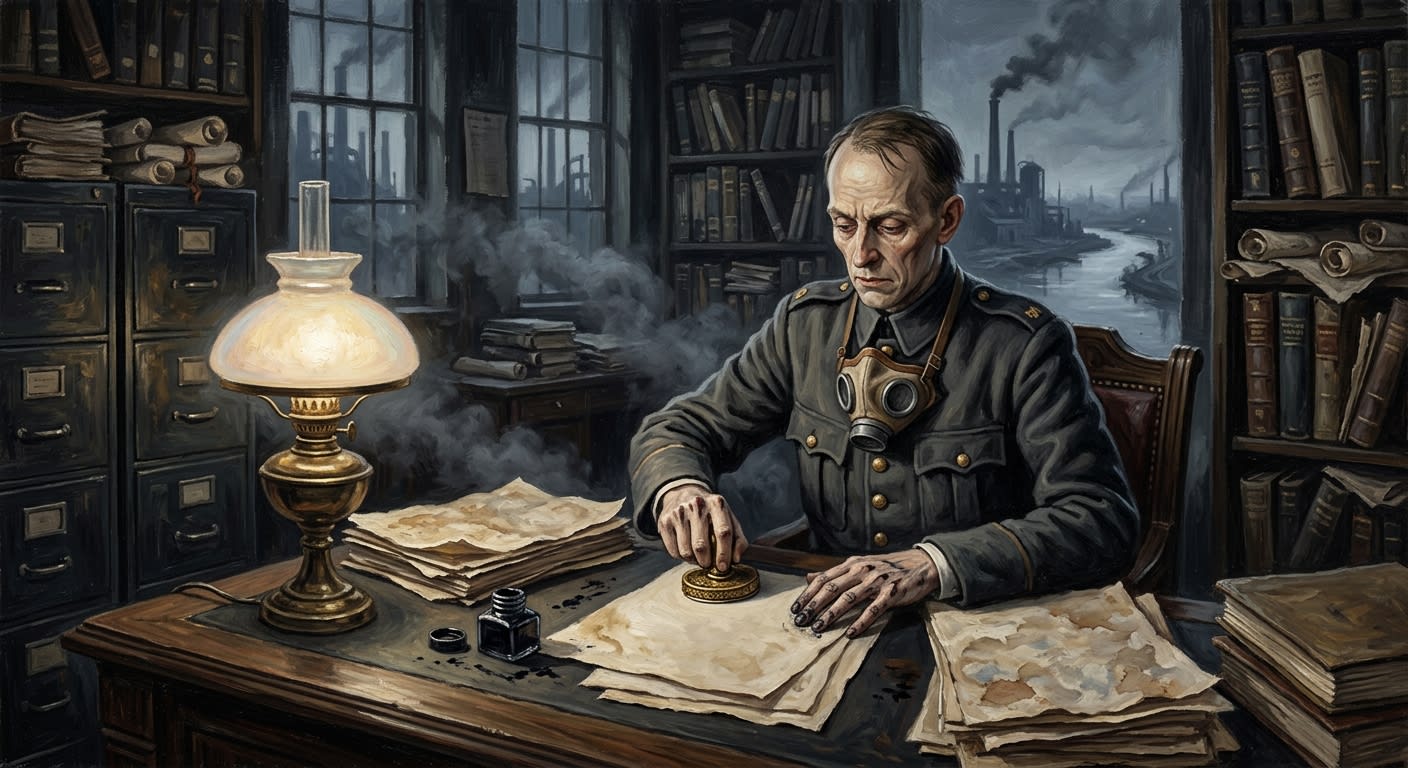
The Fading Winter
When the seal remained and the words deserted their posts
The A.S. 199 Fading Winter stripped text from sealed documents across the River-belt, leaving Candlewick to discover that blank authority still bites.
Codex Ref. VII.4.04-001
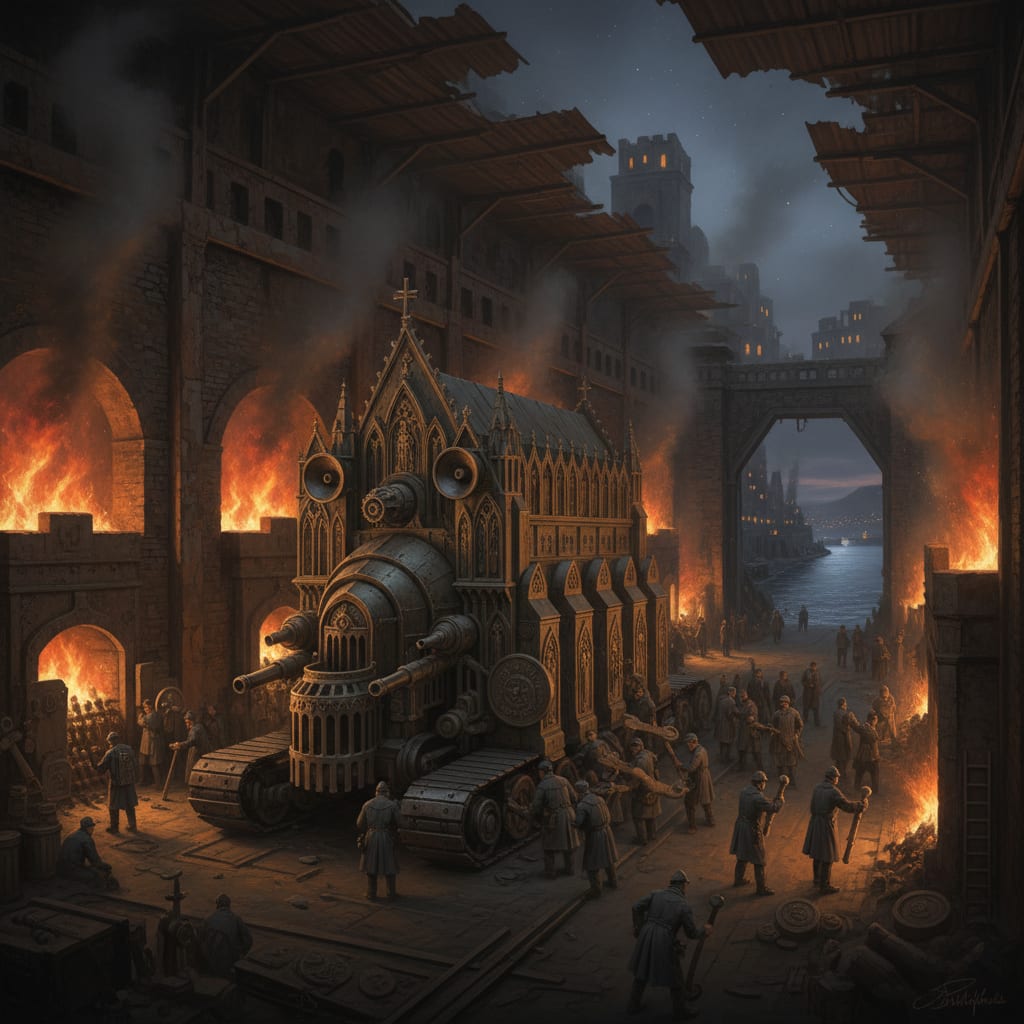
The Foundry Quarter
The forge that does not stop, and the question that does not ask itself
The Foundry Quarter of Bastion-Constantinople manufactures the weapons that hold the Wall. It has not stopped since A.S. 179. No one has verified what is inside the engines. The Bureau files the question under Restricted Access.
Codex Ref. II.4.10-003
The Great Deceiver
The Adversary Without Name, the Will Behind the Veil
He has no face, no form, no name the Bureau dares to print — only a Will that wears the world like a mask. The supreme architect of the Sundering, the forger of the Seven Sin-Generals, and the one enemy the Synod cannot file, stamp, or archive into submission.
Codex Ref. IV.1.01-001
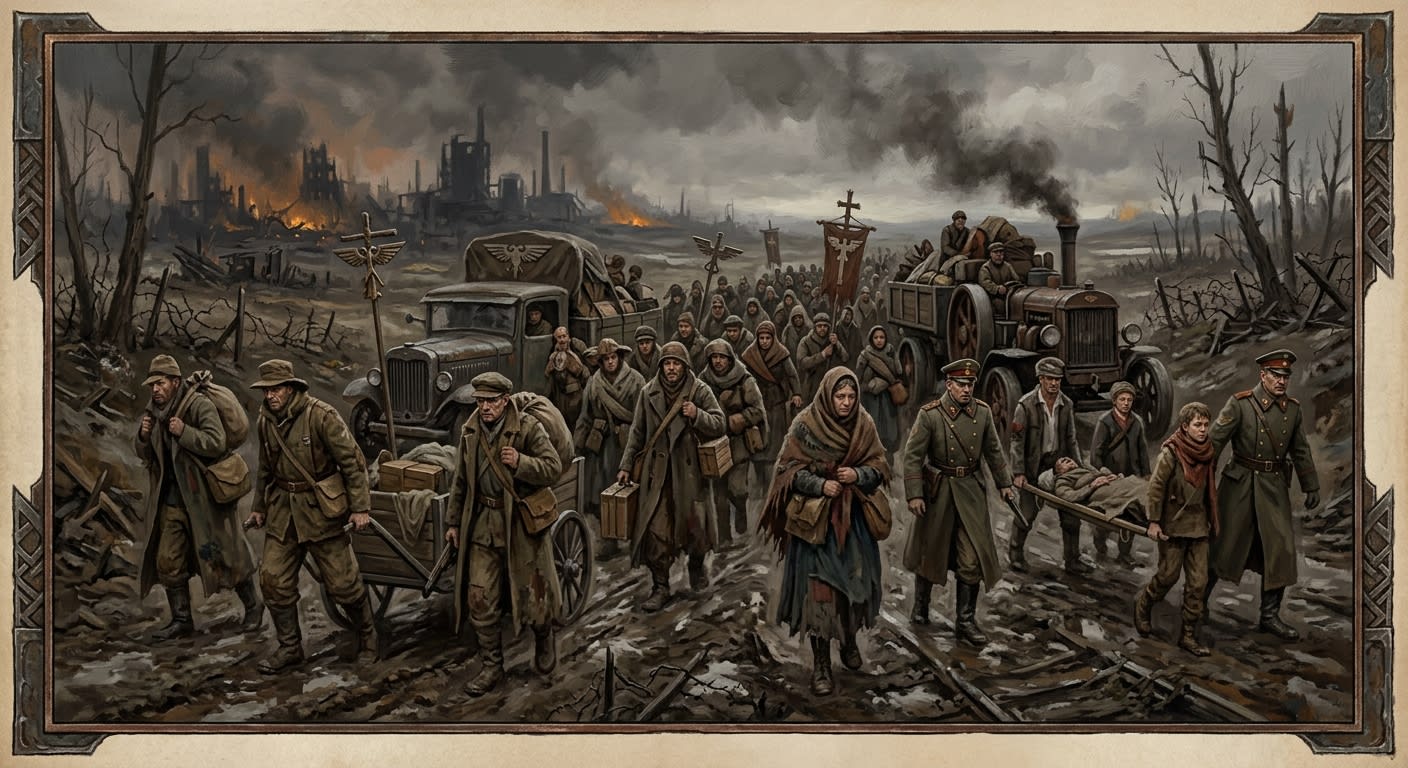
The Great Retreat
Seventeen years of westward mud before the Line learned to stand
From A.S. 48 to A.S. 65, the faithful West walked, bled, improvised institutions, and finally stopped running where the Sagittal Line began to hold.
Codex Ref. VII.1.03-001
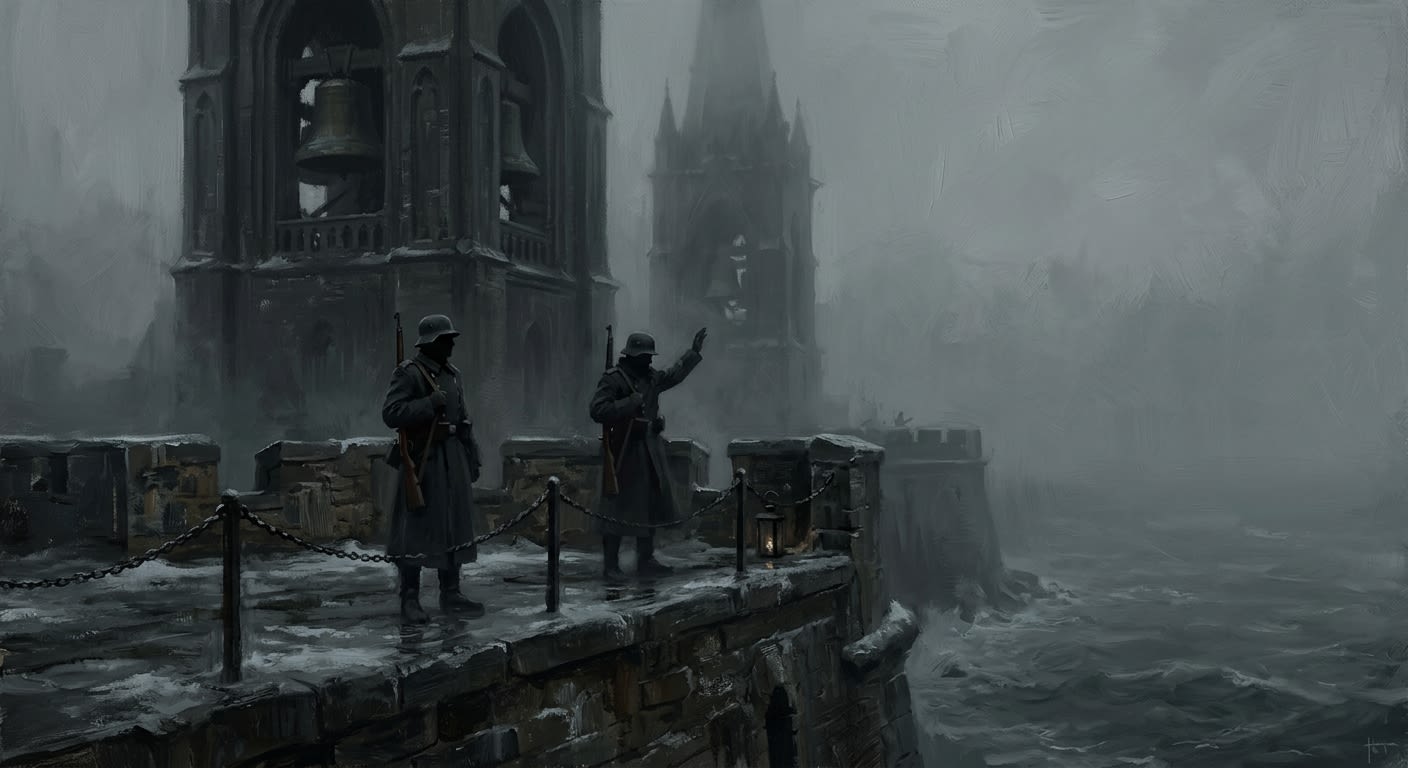
The Grey (The Unnamed)
Eleven years of classification pending, and the Bureau's best answer to why
The Grey is not a Sin-General. The Bureau has known this for eleven years and found the fact so uncomfortable that it has not yet produced a classification. Drax produces one anyway.
Codex Ref. VI.3.01-001

The Heartlands
The safe country, provided one defines safety as distance from teeth and proximity to stamps
The Heartlands are the Synod's safe interior only by infantry arithmetic: Zones 1–3 feed the Line with bread, steel, bodies, bells, paperwork, and bones.
Codex Ref. II.0.02-201
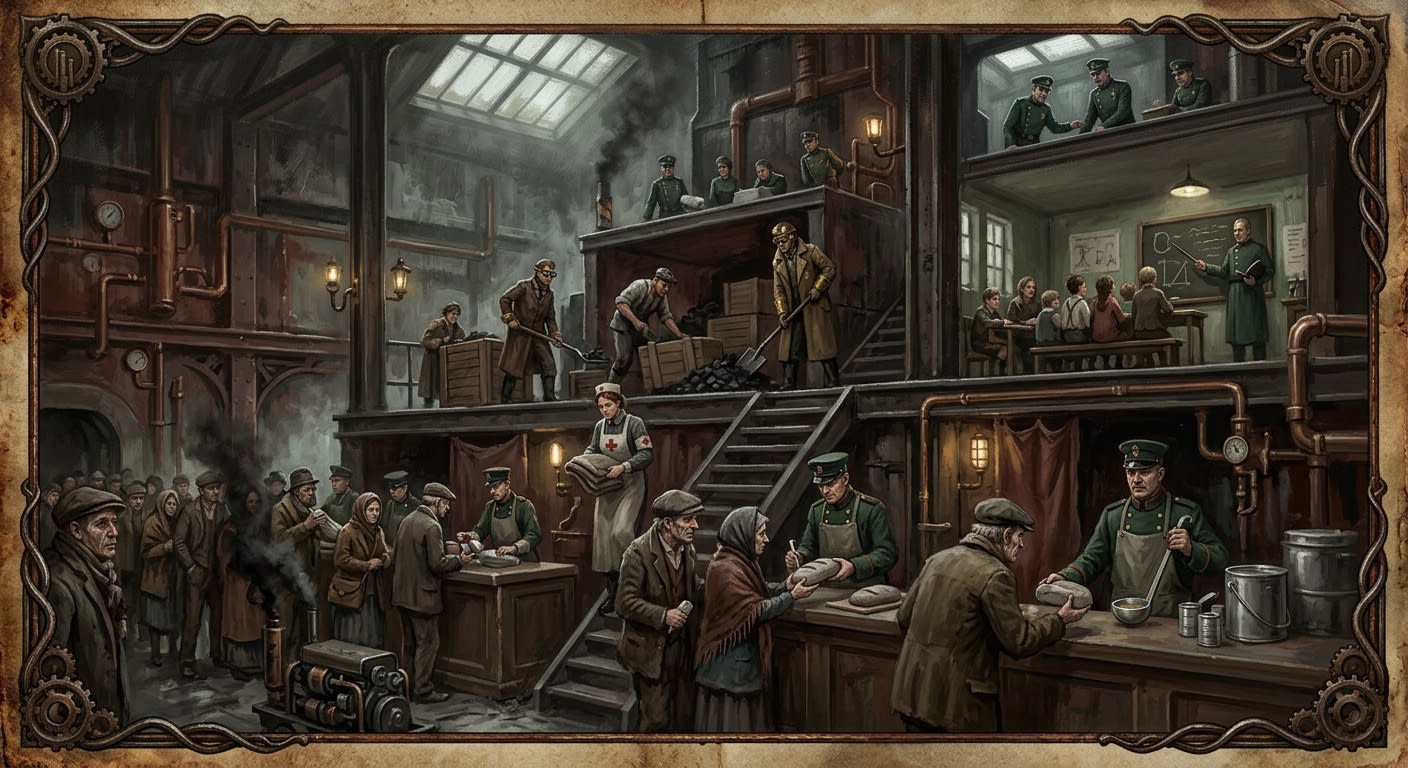
The Hierarchy of Need
Hunger is the sermon Kargath learned to serve hot
Kargath's cults do not begin with horns, but with bread. The Bureau calls their five stations a hierarchy. The hungry call them provision.
Codex Ref. IX.2.01-001
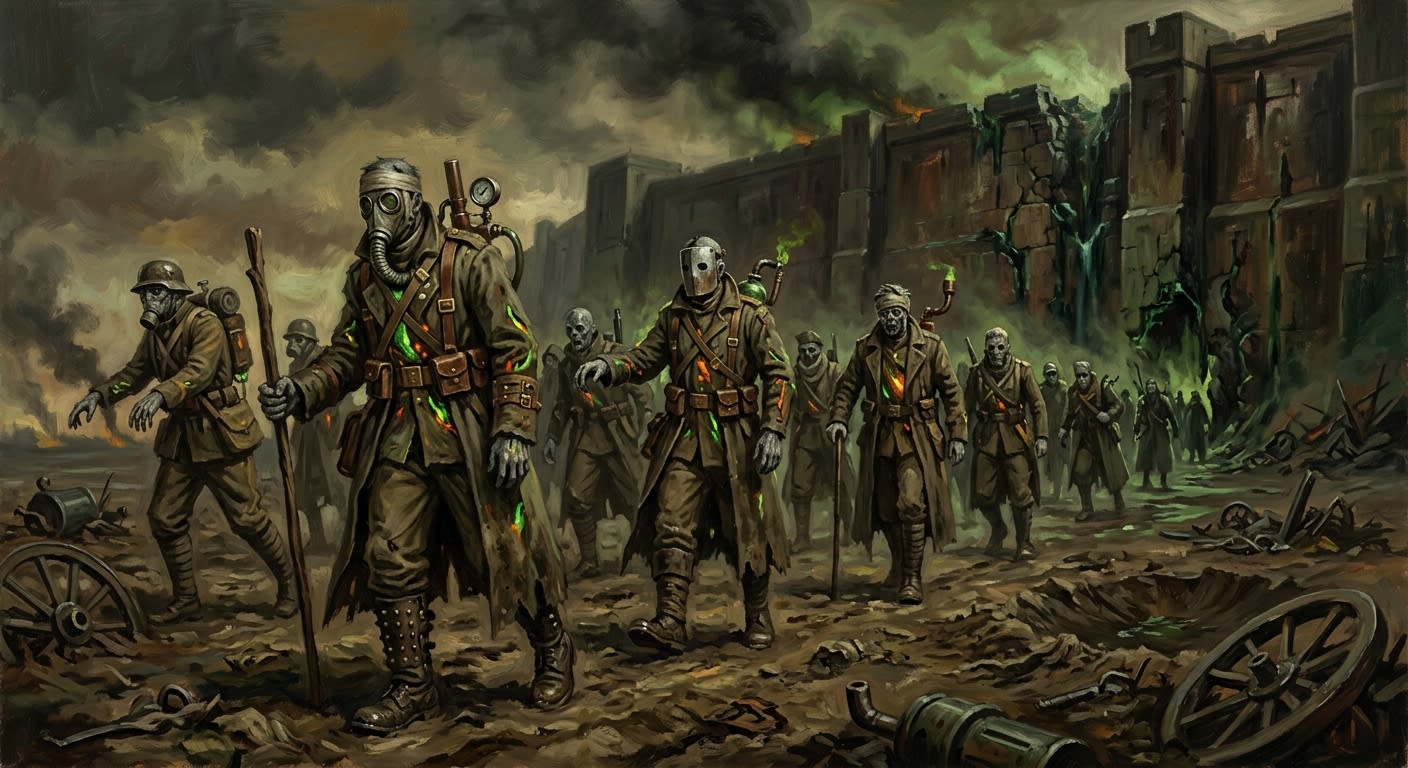
The Hollowed
Dead men packed with breach-fire, because Hell has learned logistics
The Hollowed are profaned corpse-ordnance: dead bodies emptied, packed with bile and sorcery-flame, and walked patiently into walls until stone forgets itself.
Codex Ref. IV.1.07-004

The Hourglass Monolith
A black standard for measuring the ways time refuses obedience
The Hourglass Monolith is Lyon's forbidden temporal standard: part instrument, part confession, and quite possibly an enemy noun wearing Bureau wax.
Codex Ref. XIII.1.86-134
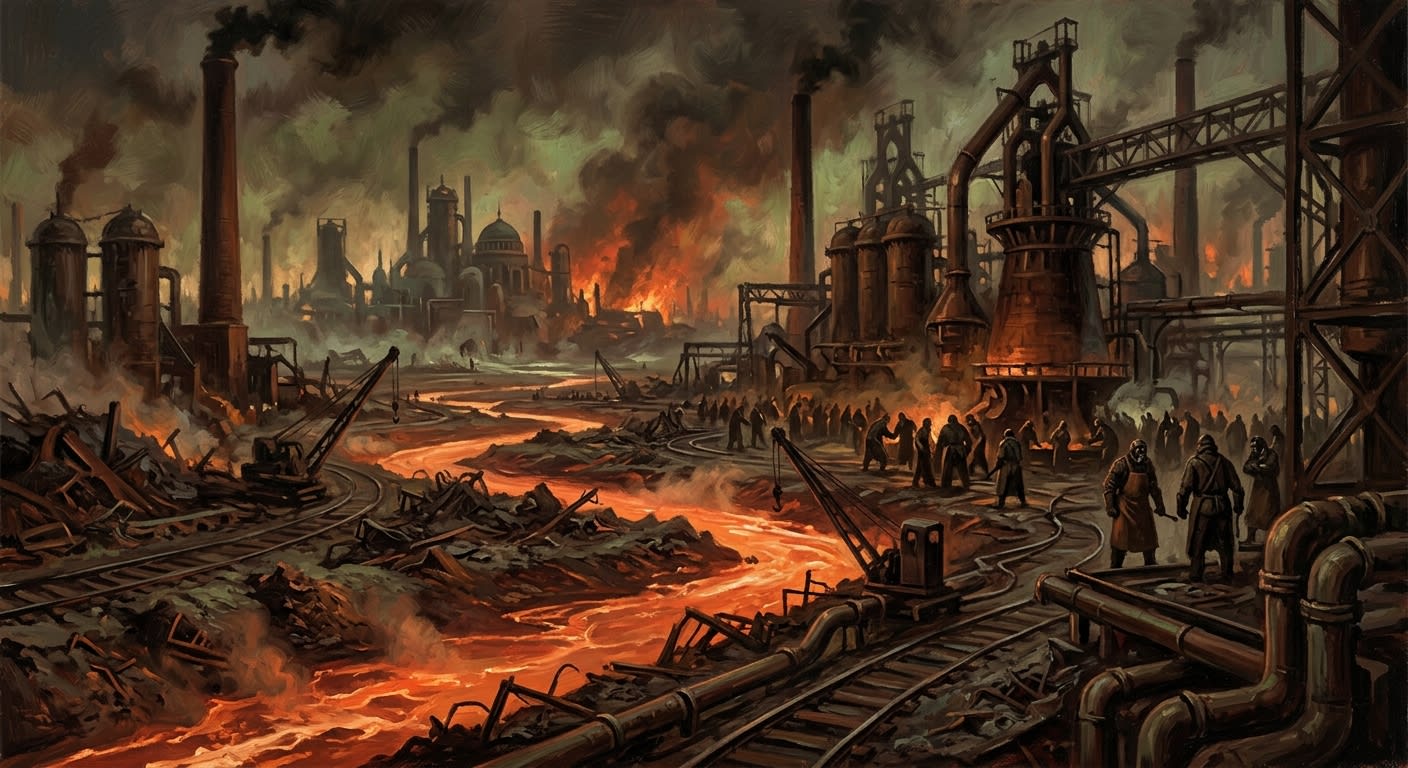
The Iron Wastes
Where Wrath taught geography to burn without cooling
The Iron Wastes are Maldrake's Thracian furnace-country: slag-rivers, moving heat, hostile iron, and the northern pressure against Constantinople.
Codex Ref. VI.1.03-001
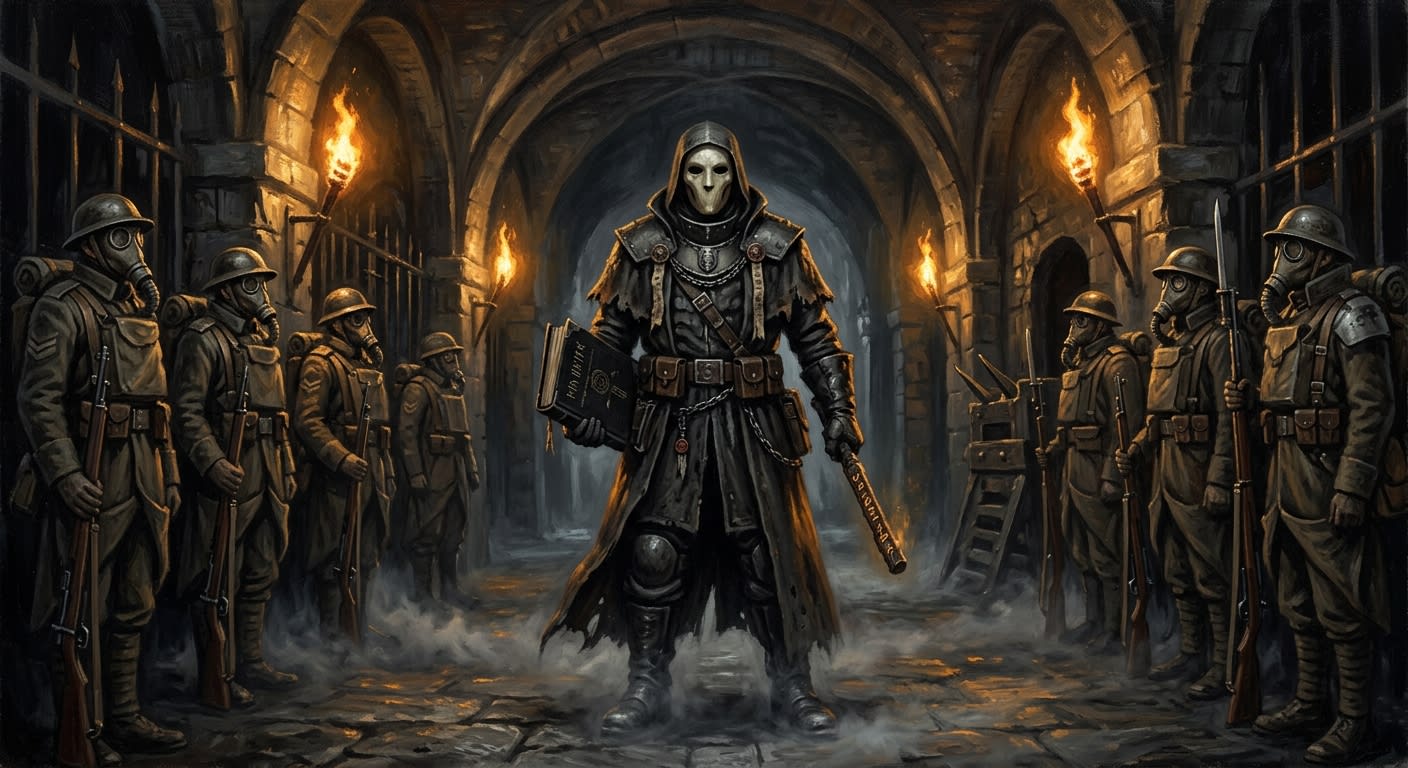
The Judges
They walk without letter, without herald, and without the patience of the Bureau.
The Judges arrive without letter, try without jury, and depart without filing. The Bureau denies they exist. It has been denying this since A.S. 92. The denial requires renewal every thirty years, which is itself a kind of evidence.
Codex Ref. V.1.01-003
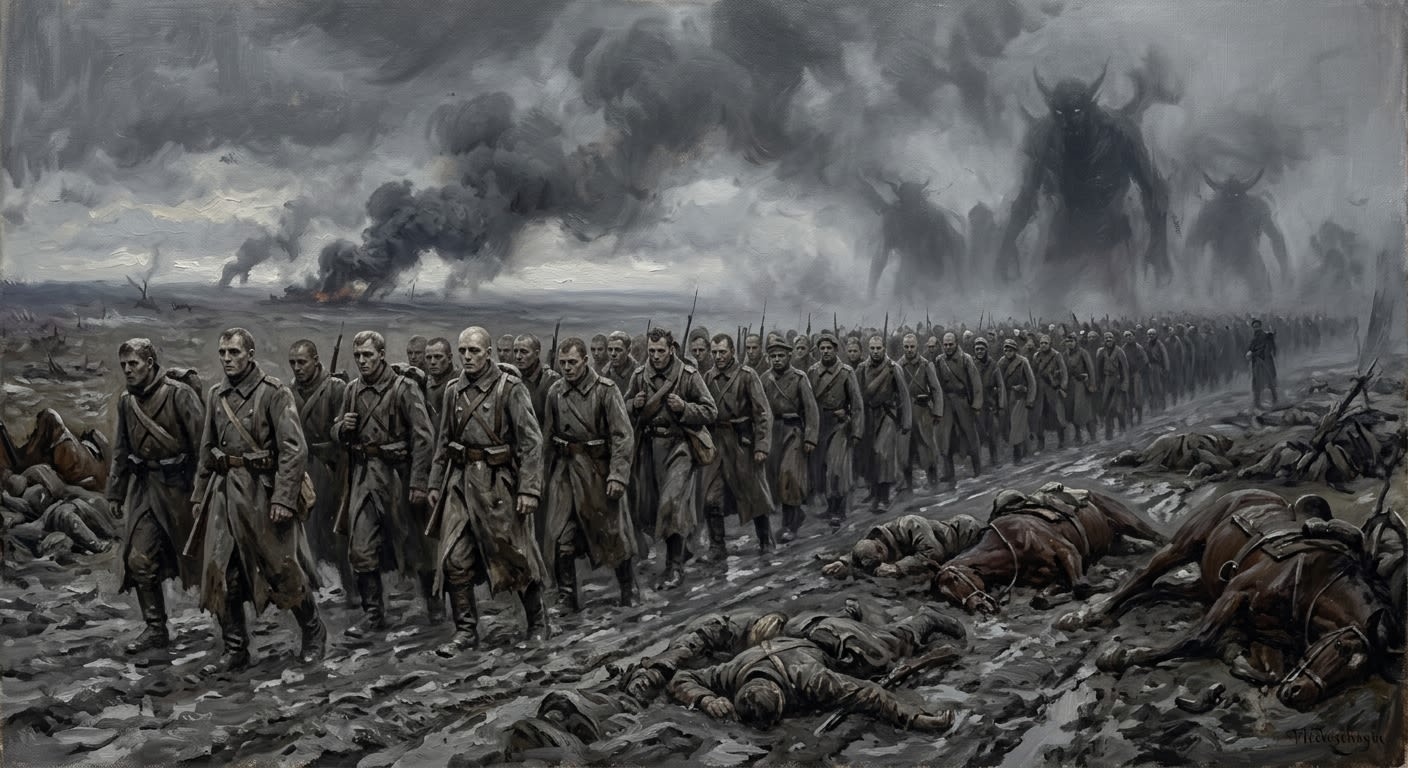
The Legions of Sin
Forty-seven souls for every demon — and the Bureau calls this mathematics
The mortal host beneath the Lie's banners: Thralls, Hollowed, Ash-Mothers, Blood-Tithes, Wormhosts, Processional Slaves, Ash-Fodder. Forty-seven souls for every demon. The Bureau calls this mathematics. I call it a confession.
Codex Ref. IX.1.01-001
The Locked
The collector becomes the last object collected
Former visitors of the Vault of Ten Thousand Keys, the Locked hold the thing they came to find and remain alive behind glass, arranged as Greed's museum.
Codex Ref. IV.1.07-003
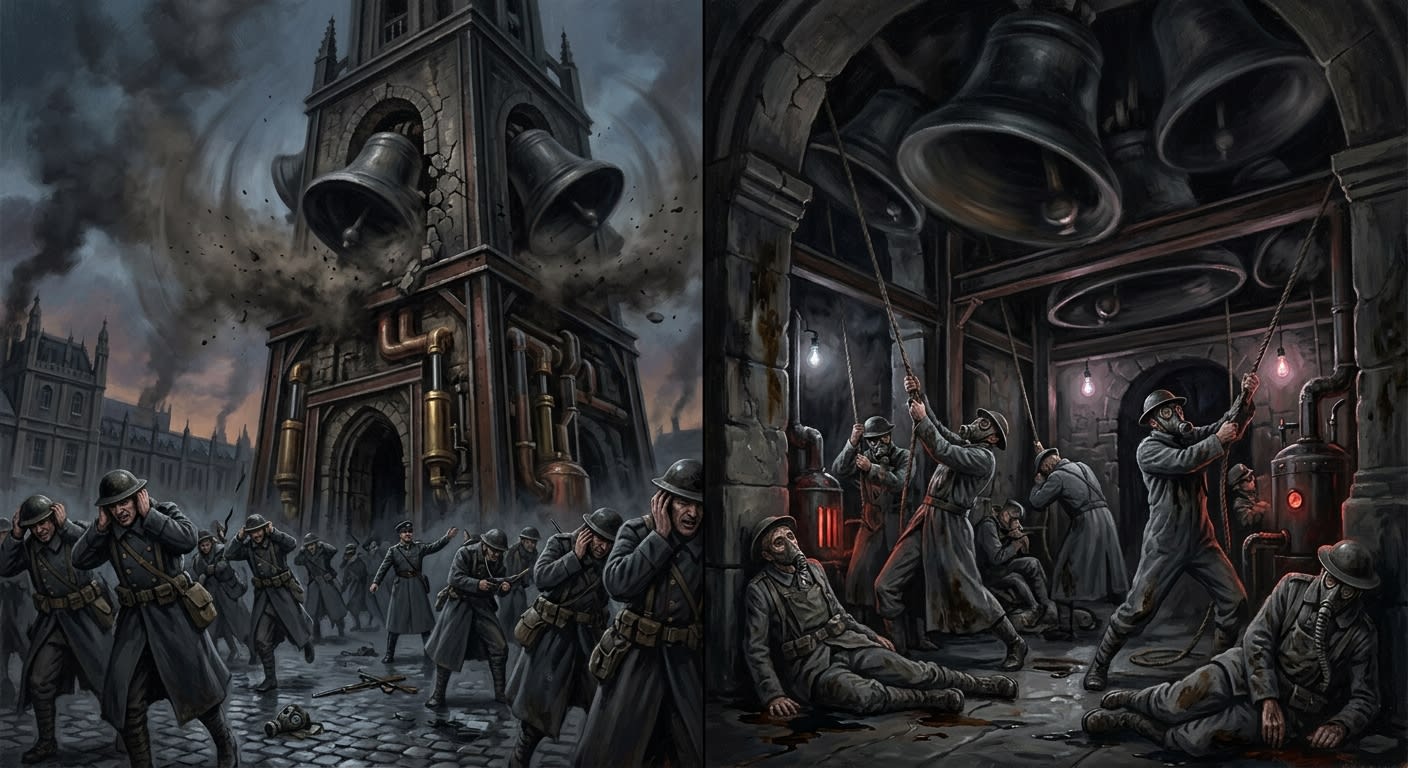
The Miracle of Cologne
When every bell became artillery and bureaucracy was born from the echo
The A.S. 49 Miracle of Cologne drove Maldrake's Wrath vanguard from the cathedral square by nine hours of unscheduled total bell-ringing, cracking stone, killing ringers, and founding the jurisdiction that became the Bureau of Bells.
Codex Ref. VII.4.12-001
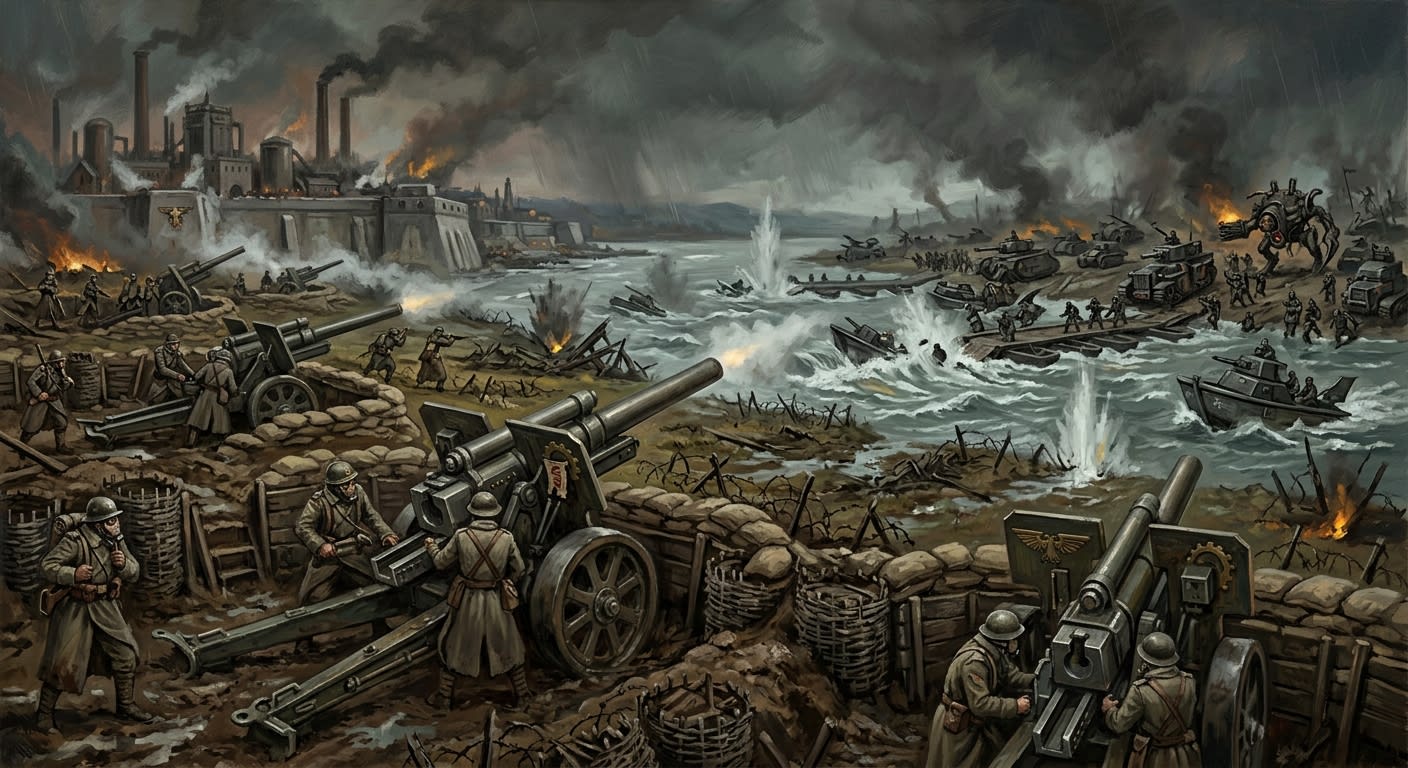
The Miracle of the Danube's Turning
When the river struck the Enemy in the teeth
At Belgrade in A.S. 120, Maldrake's Wrath-host broke against mud, relic artillery, and a Danube that turned back upon the Enemy. Victory followed; so did tariffs.
Codex Ref. VII.5.04-001
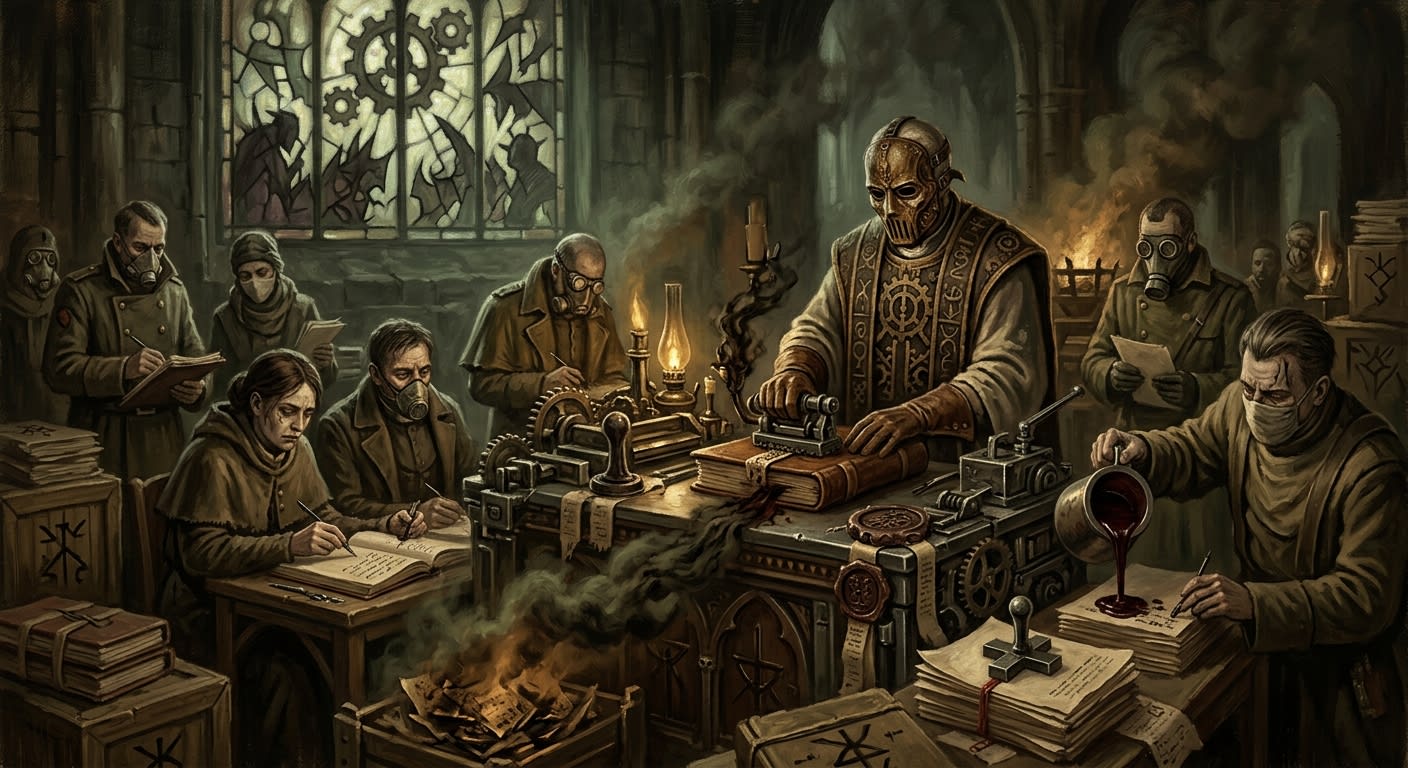
The Mock Liturgy
Hell learned our responses and improved the paperwork
The Shadow Court's parodic sacramental apparatus turns worship into damnation-paperwork: counter-seals, unhymns, inverse rites, and choices that bind.
Codex Ref. XIII.1.25-001
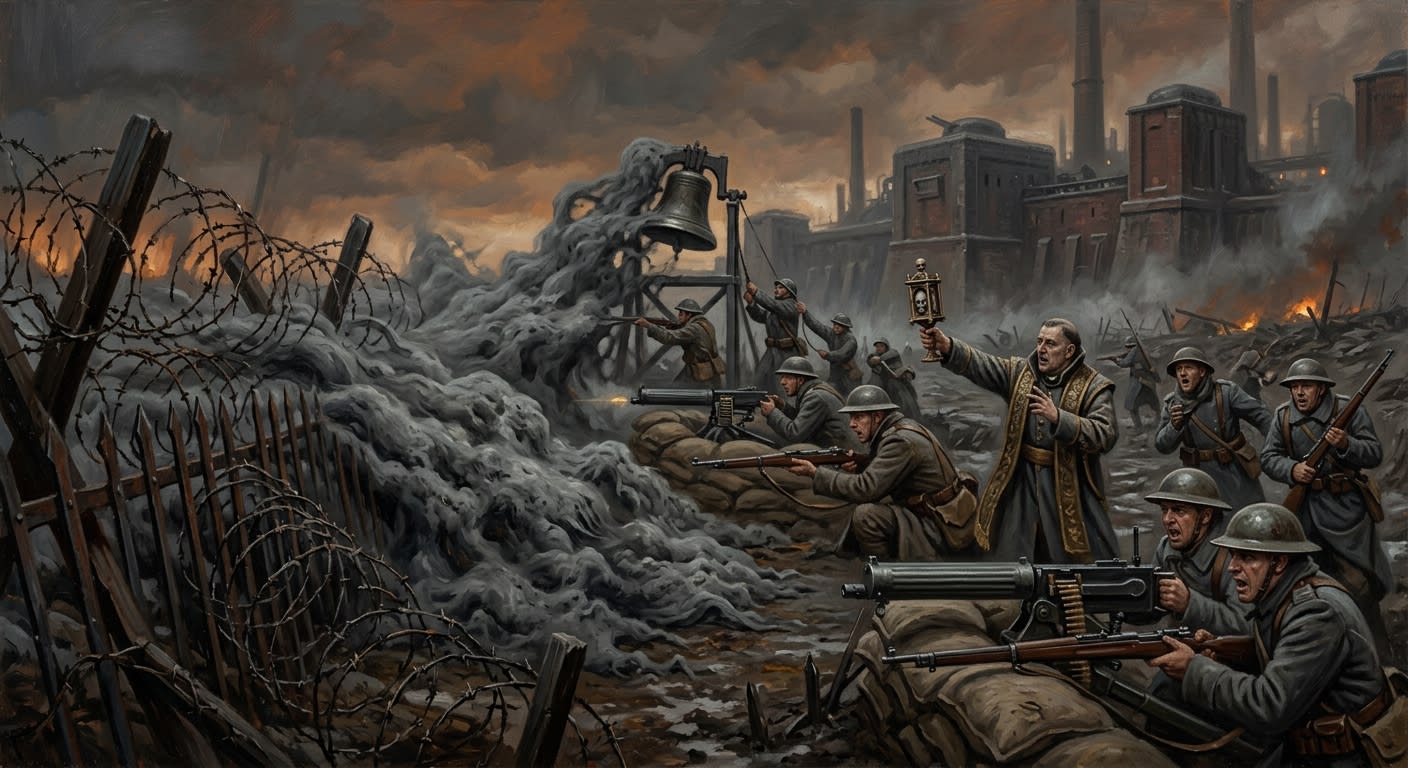
The Nameless Tide
The thing at Brest that does not arrive until it has already taken your name
The Nameless Tide presses Bastion-Brest's eastern wire: a grey, accumulating hostile phenomenon that defeats hymns, relics, bells, names, and the Bureau's last useful excuses.
Codex Ref. IV.1.07-008
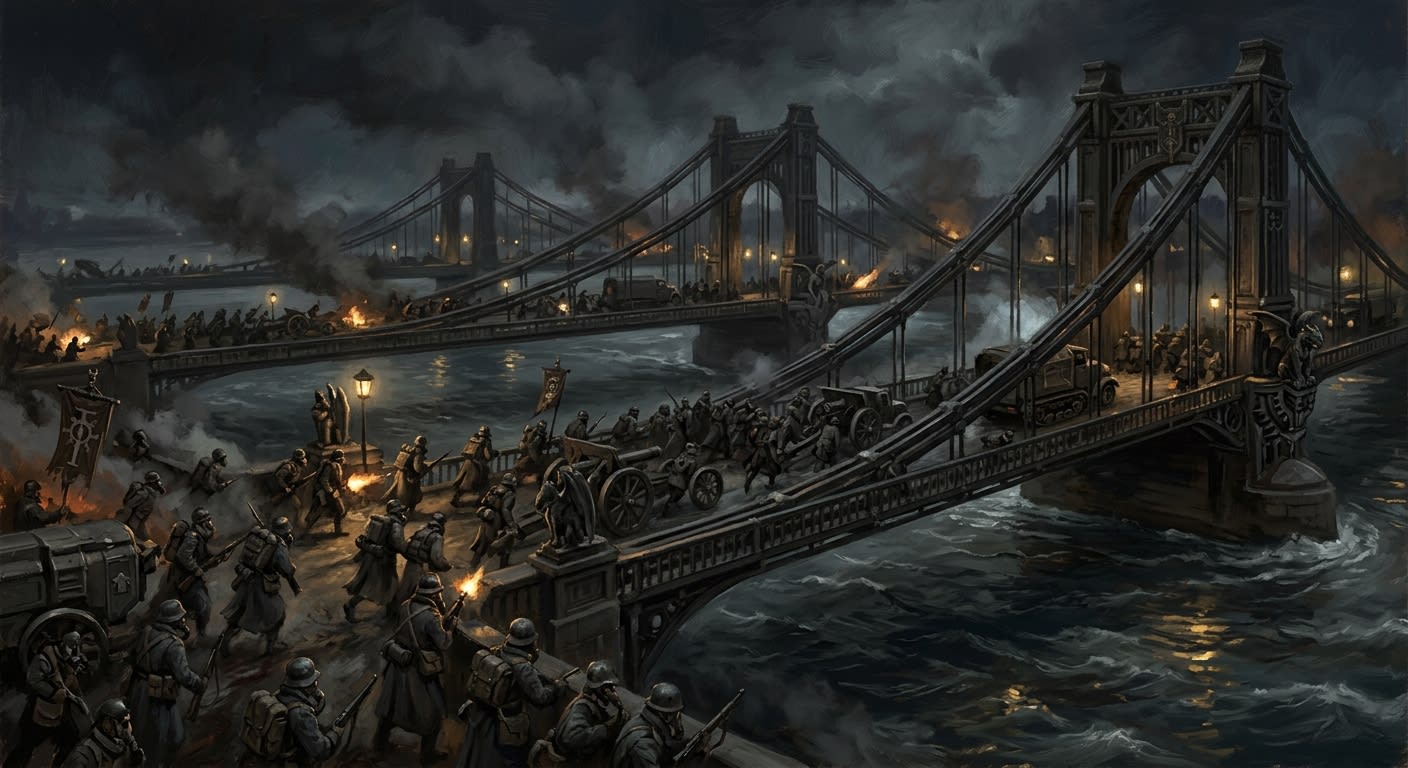
The Night of the Three Bridges
The men did not swim; the Bureau found cheaper grammar
Three Danubian crossings in seven minutes gave War its favourite miracle and Records its favourite arithmetic: fewer casualties, more glory.
Codex Ref. VII.5.01-002
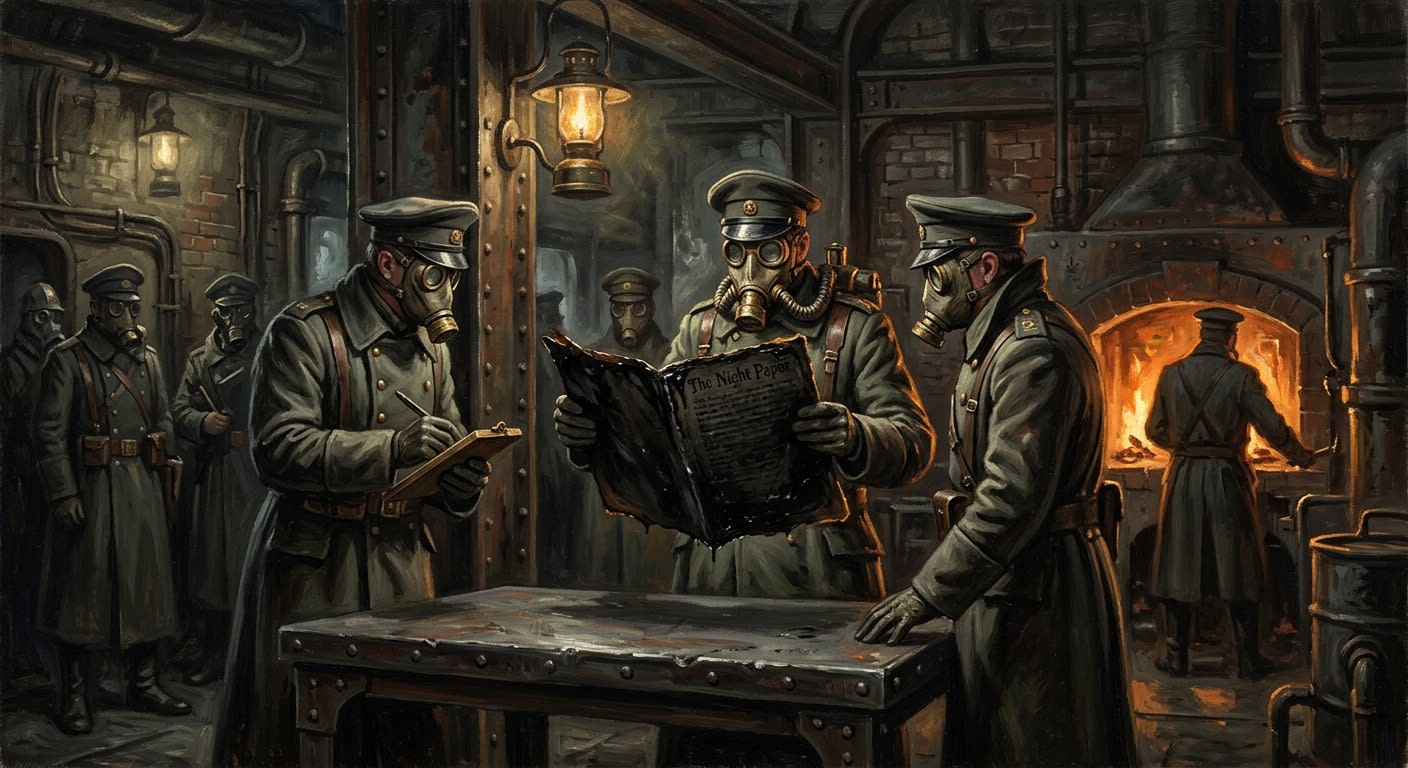
The Night Paper
Law with a knife in its sleeve, valid only between receipt and dawn
The Night Paper is Doctrine's black-wax instrument: read once, witnessed by three, burned before dawn, and obeyed before conscience learns its own name.
Codex Ref. XIII.1.28-001
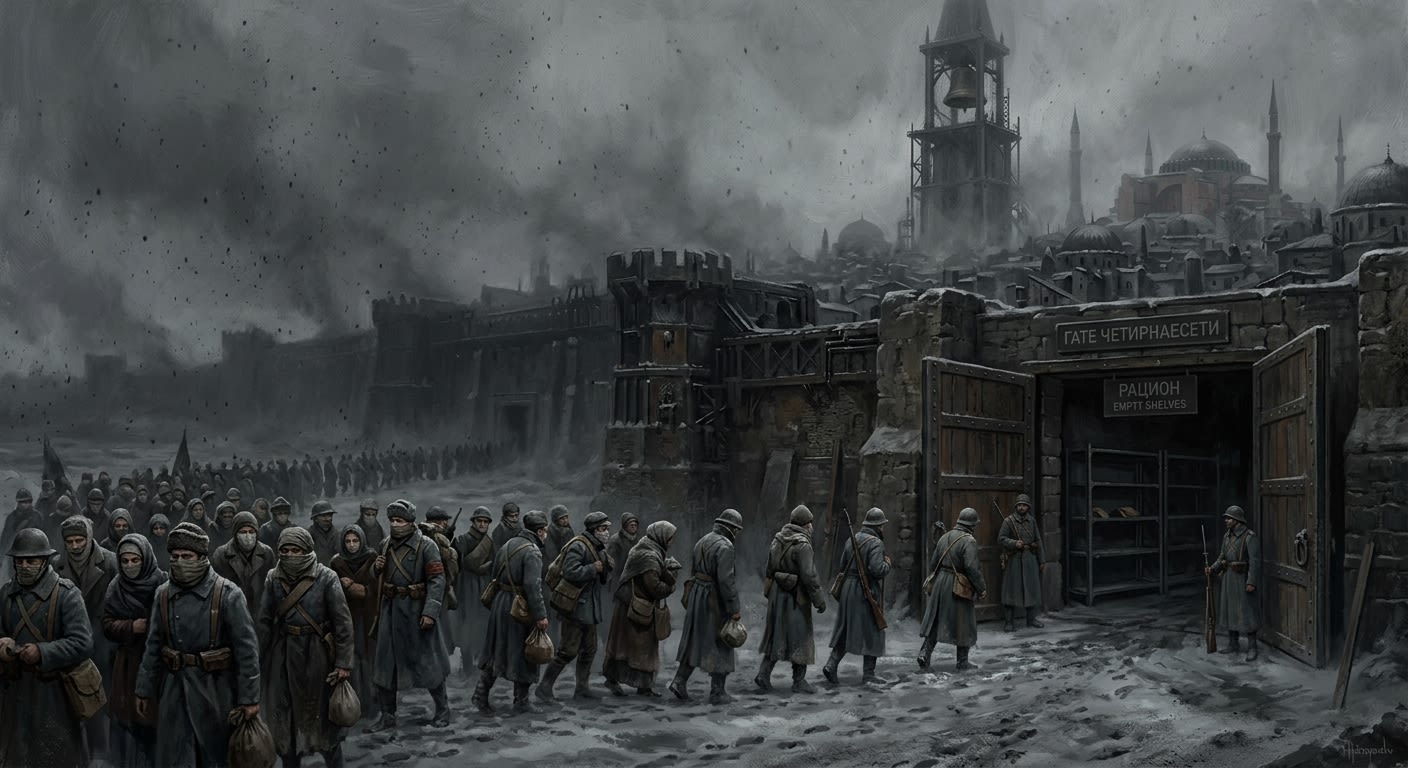
The Ninth Bell Famine
The bell tolled. The bread did not arrive. The Bureau classified this distinction later.
Sixty-eight thousand dead. Nine months of ash. The ninth bell tolled on time. The bread did not arrive. The Bureau of Rites calls it a refining tribulation. The refined are in the walls.
Codex Ref. VII.5.01-001
The Ragged Host
Where the remainder learned to kneel and the kneeling learned to burn
The Ragged Host is the condemned mobile movement that treats unaddressed harm as a public charge before the Creator — poor, armed, improvised, and more dangerous than any mob because it keeps records.
Codex Ref. XII.9.02-001
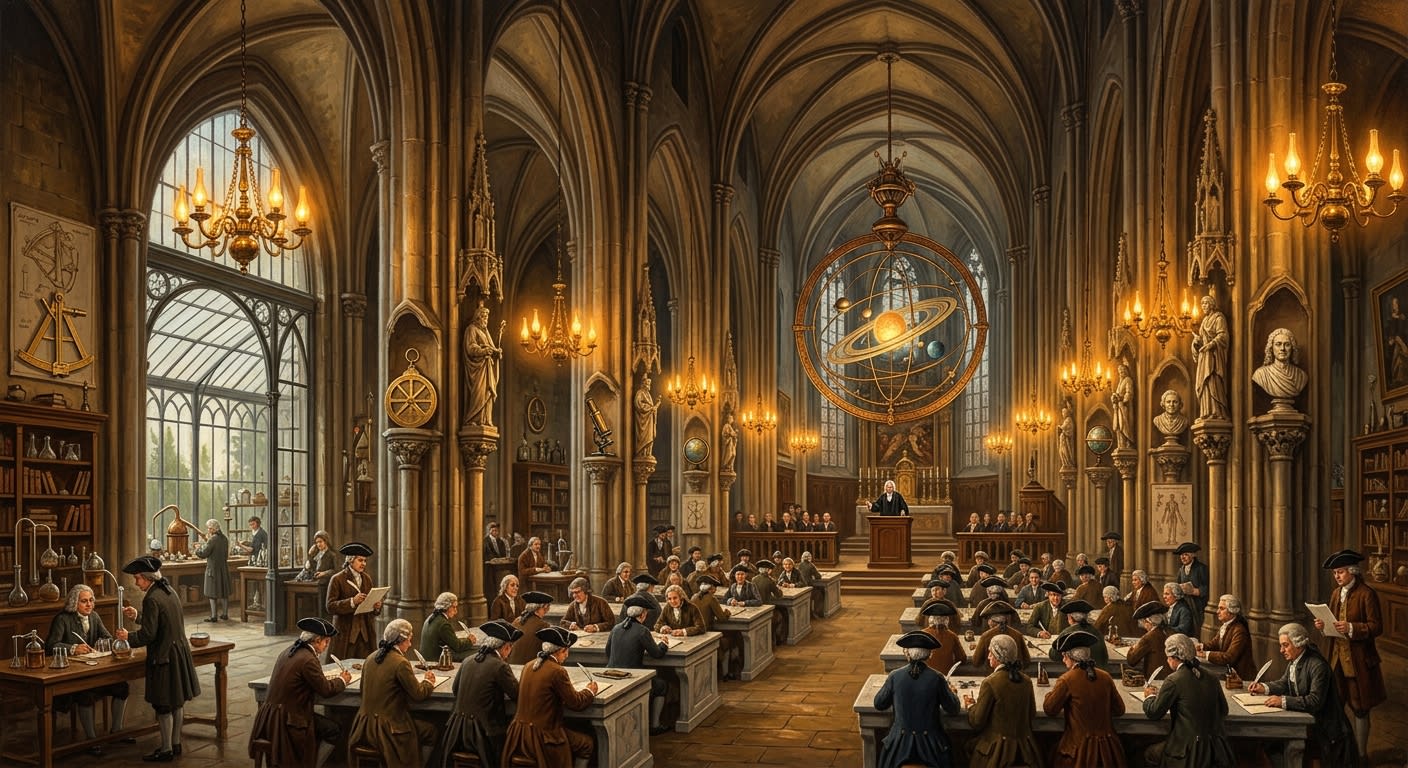
The Rationalist Republic
Fifteen Years of Continental Supremacy, and the Precise Nature of Its Correction
Rationalist institutions predated Regensburg; the Republic's A.S. 30–45 continental supremacy expanded prefectures, census rolls, and repression before central command collapsed at the Sundering.
Codex Ref. I.1.02-001
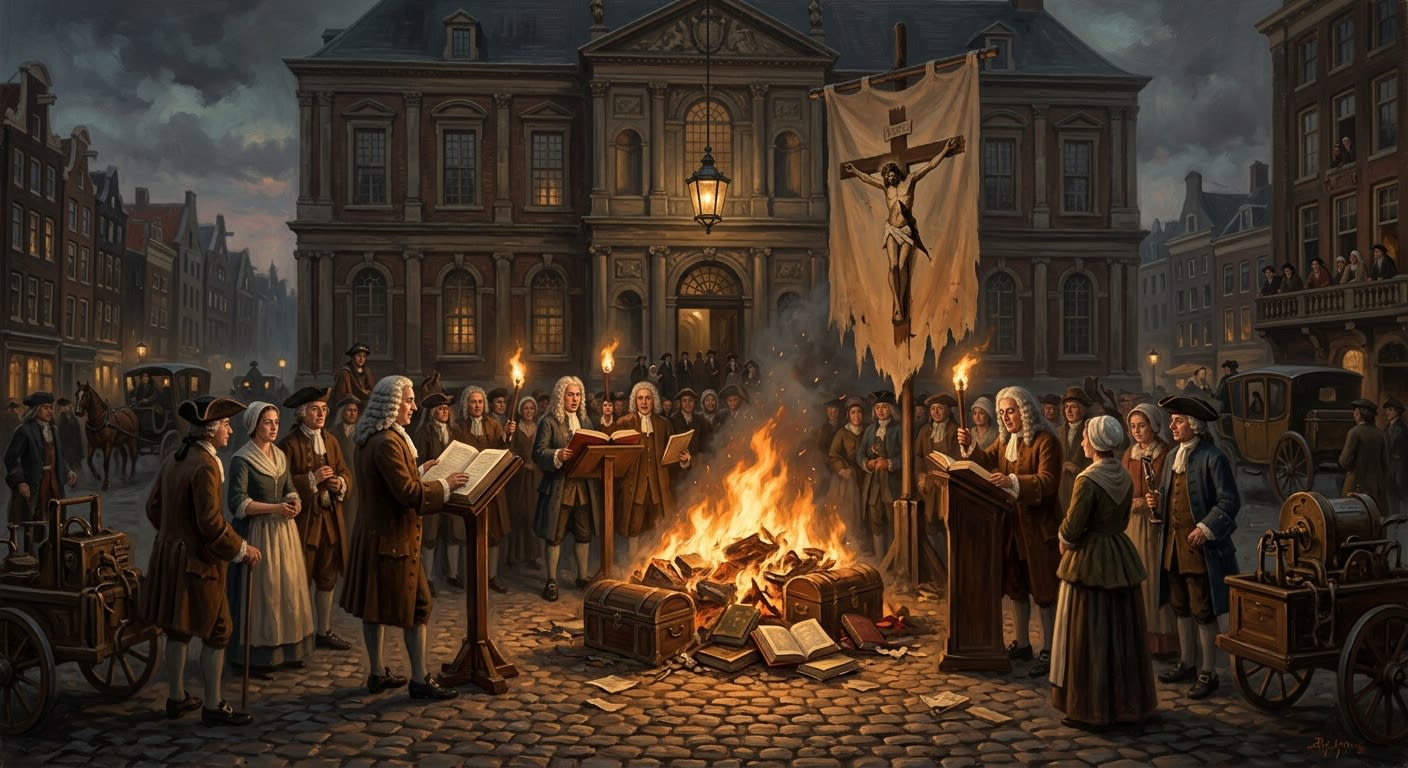
The Rationalists
Architects of the wound the Synod counts from
The Synod's most instructive enemy — philosophers who stripped Europe of its spiritual armor on the eve of Hell's invasion and then had the grace to be destroyed by the consequences.
Codex Ref. I.1.01-001
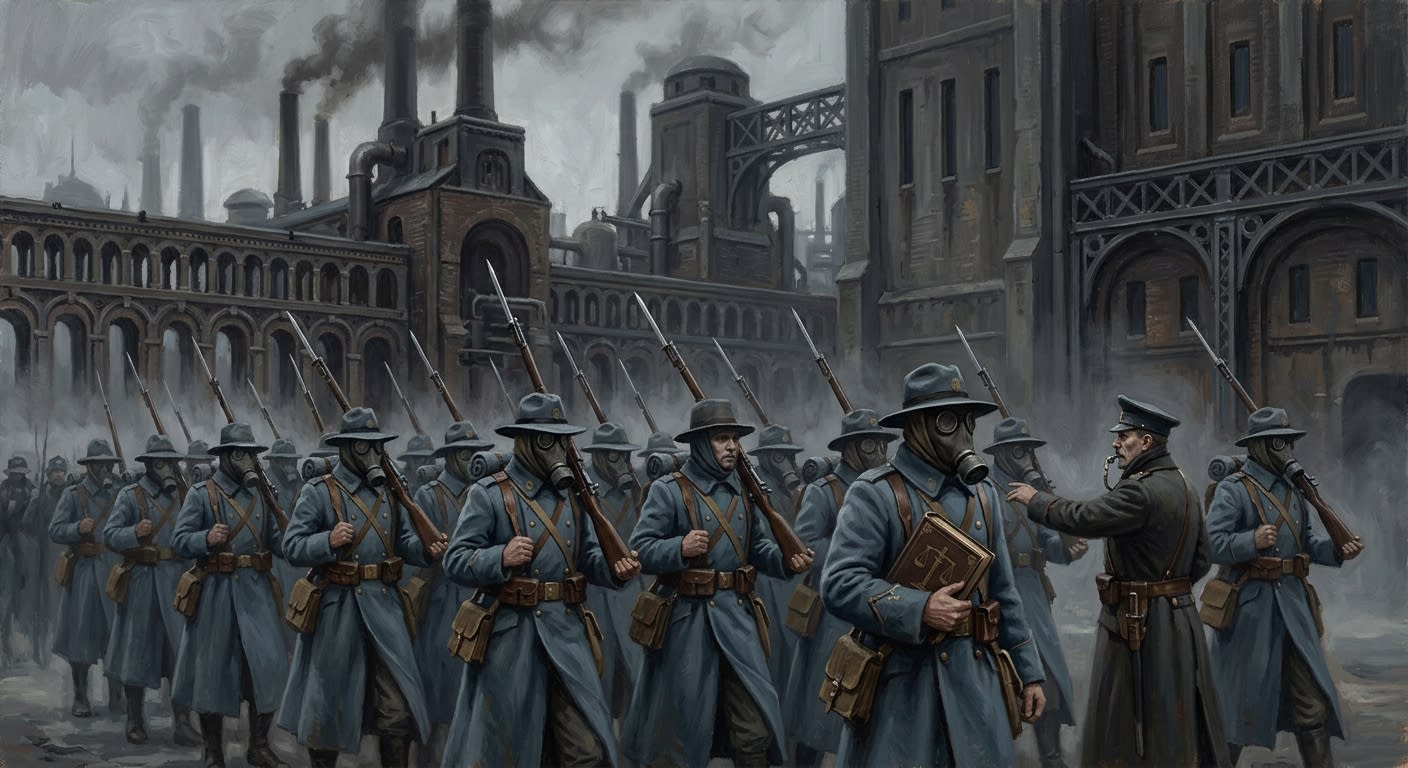
The Republican Guards
The philosophers wrote the sentence; the Guards added punctuation
The Republic's armed hand wore blue-grey, carried law over the heart, and proved that unbelief does not remain in books. It drills.
Codex Ref. I.1.05-001
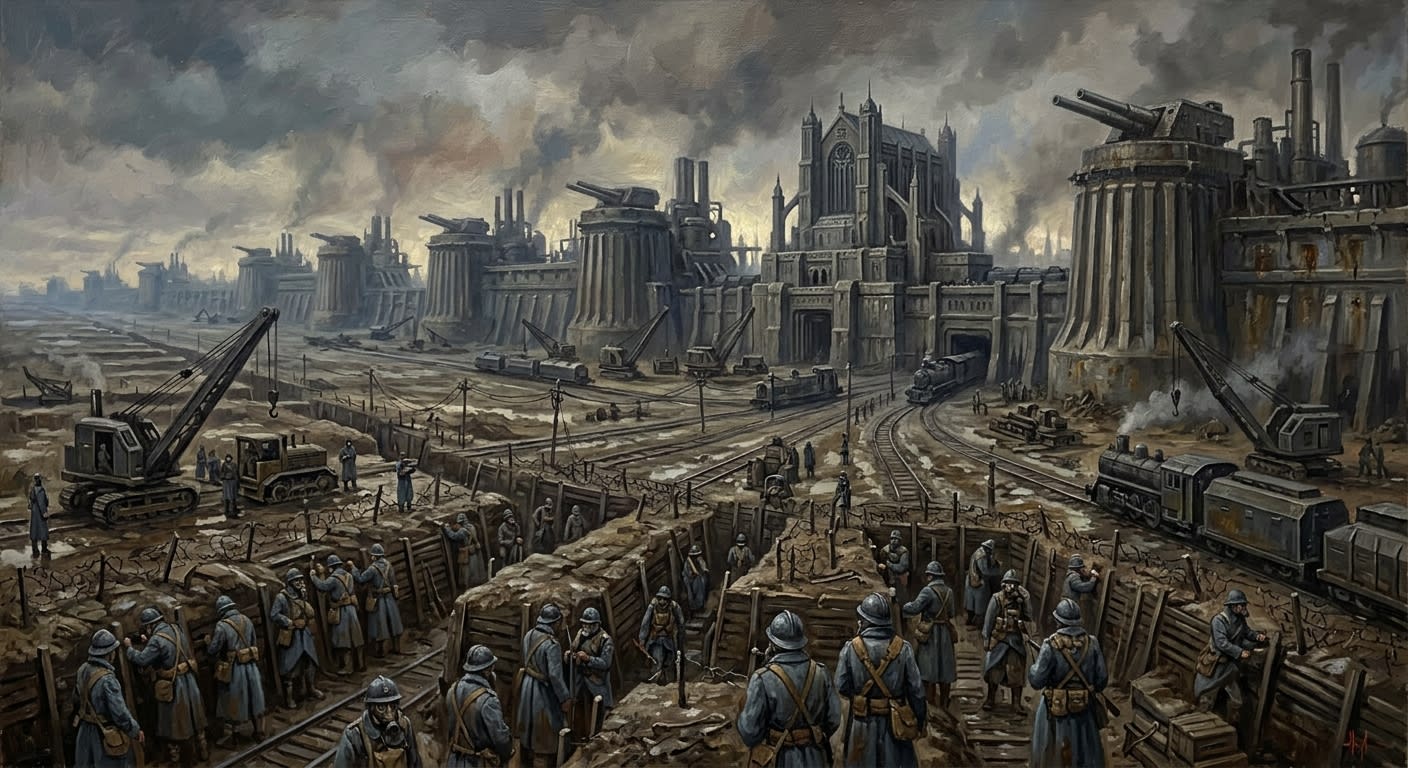
The Sagittal Line
The continent's spine, stitched in mud, bells, and refusal
The north-south defensive spine of the Synod: seven bastions, two thousand miles of trenches, and the bureaucratic miracle of making stalemate into civilization.
Codex Ref. III.1.01-001
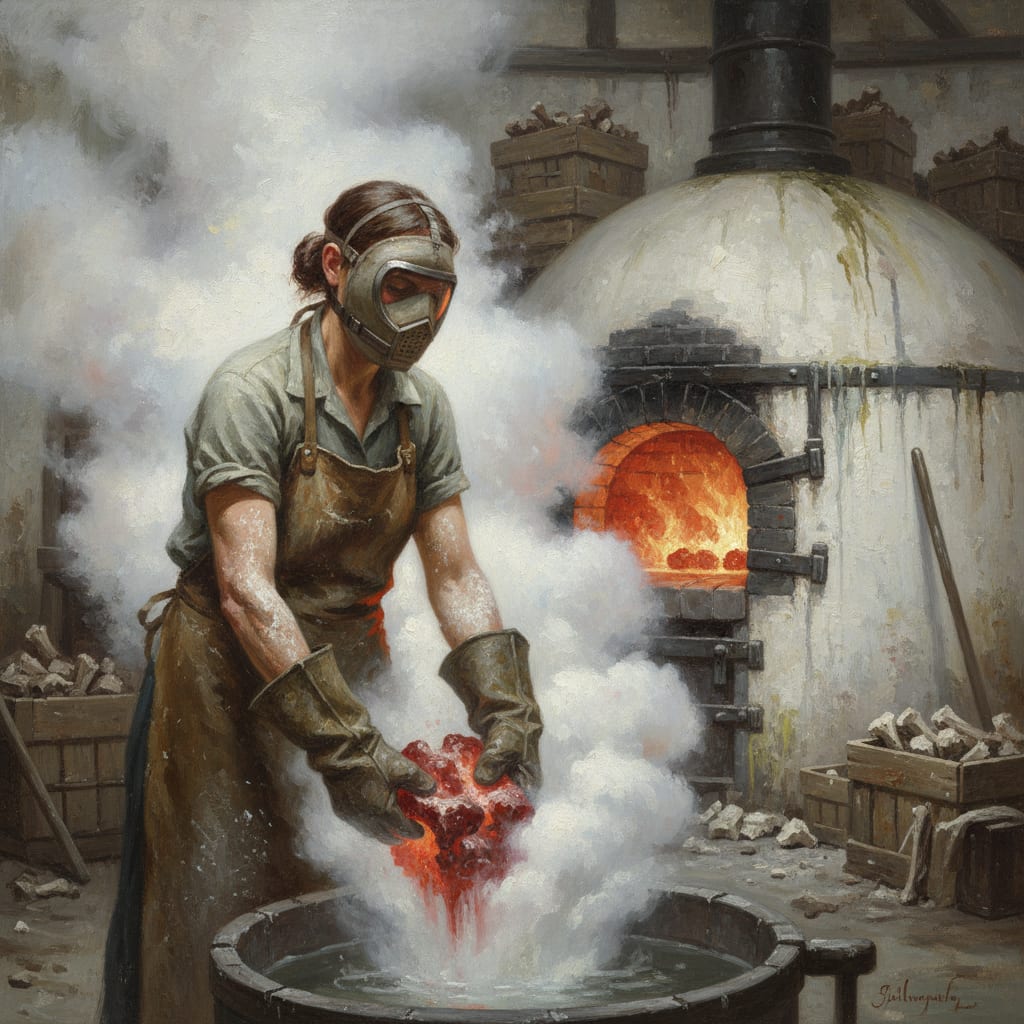
The Saint-Bone Melter
The wall is the only sermon the Enemy has ever been forced to hear
The artisan who feeds the bones of saints to the kiln and receives in return the mortar that holds the Sagittal Line together. The arithmetic is simple and brutal: a femur in a reliquary inspires; a femur in a wall holds.
Codex Ref. XII.40.01-001
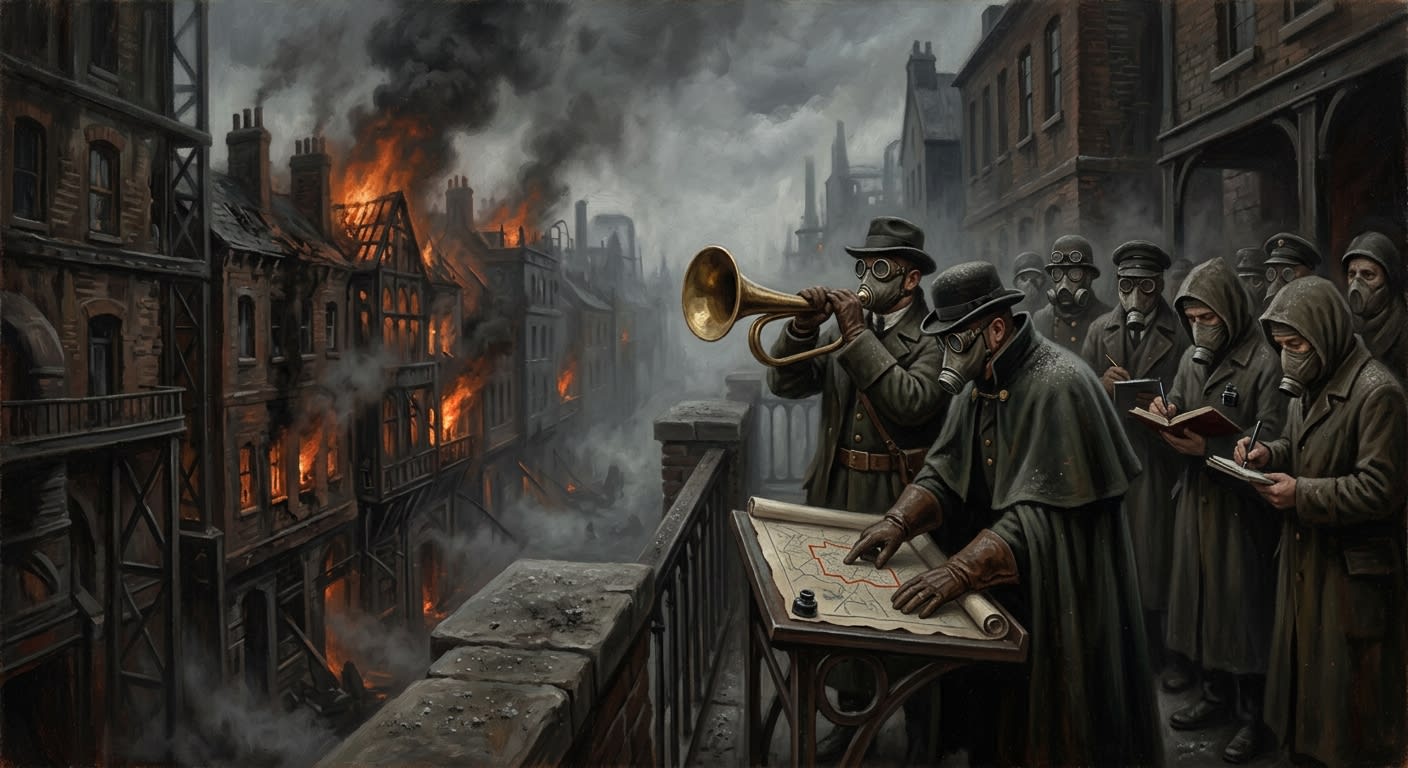
The Scour
When the Bureau decides a street has forfeited the privilege of remaining architecture
The Synod's ritual fire-purge of condemned quarters: horn, map, witness-line, and ash — the point at which bureaucracy ceases to argue and begins to burn.
Codex Ref. VI.4.01-001
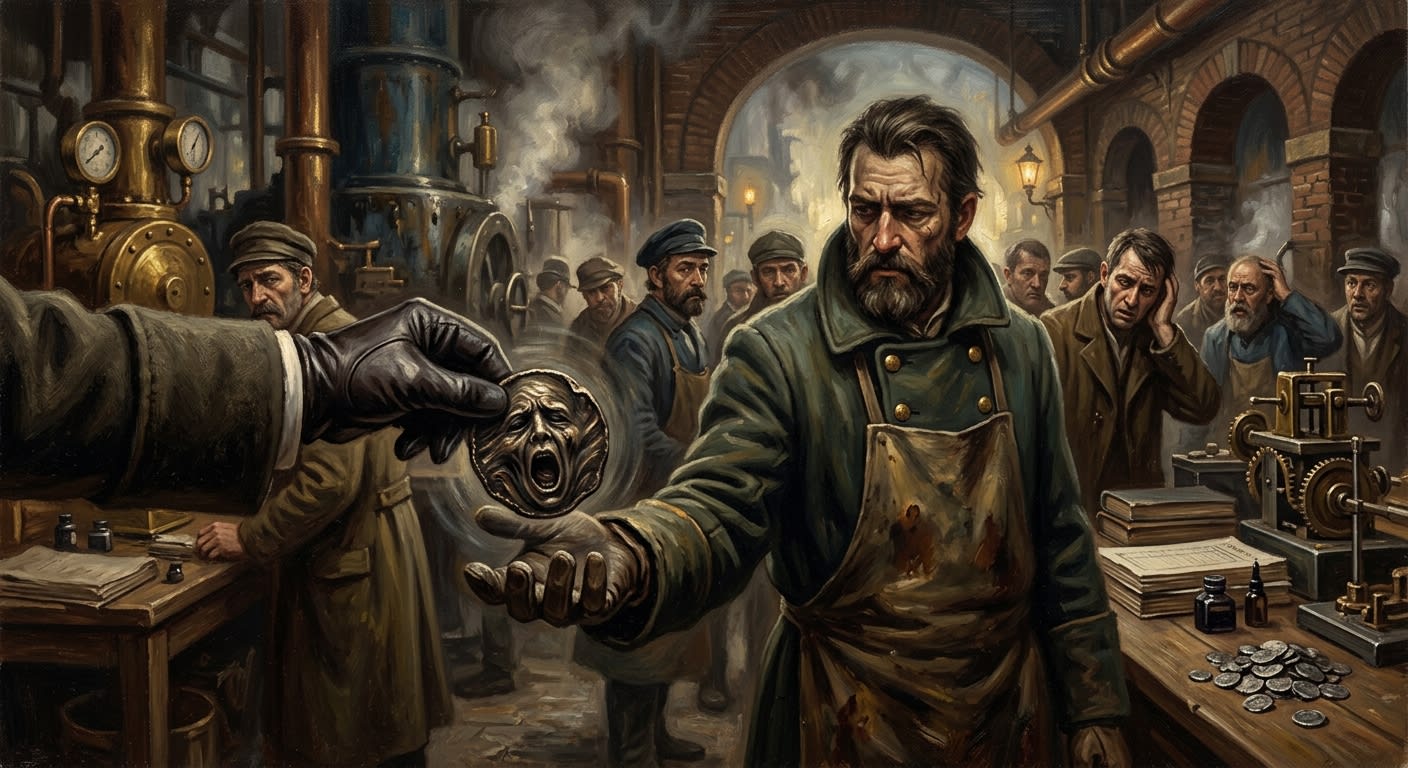
The Screaming Coin
The smallest transaction Hell ever notarised
A coin-like anomaly from Constantinople's Foundry Quarter passes through lawful hands, screams at transfer, and returns after every recorded destruction.
Codex Ref. V.2.01-001
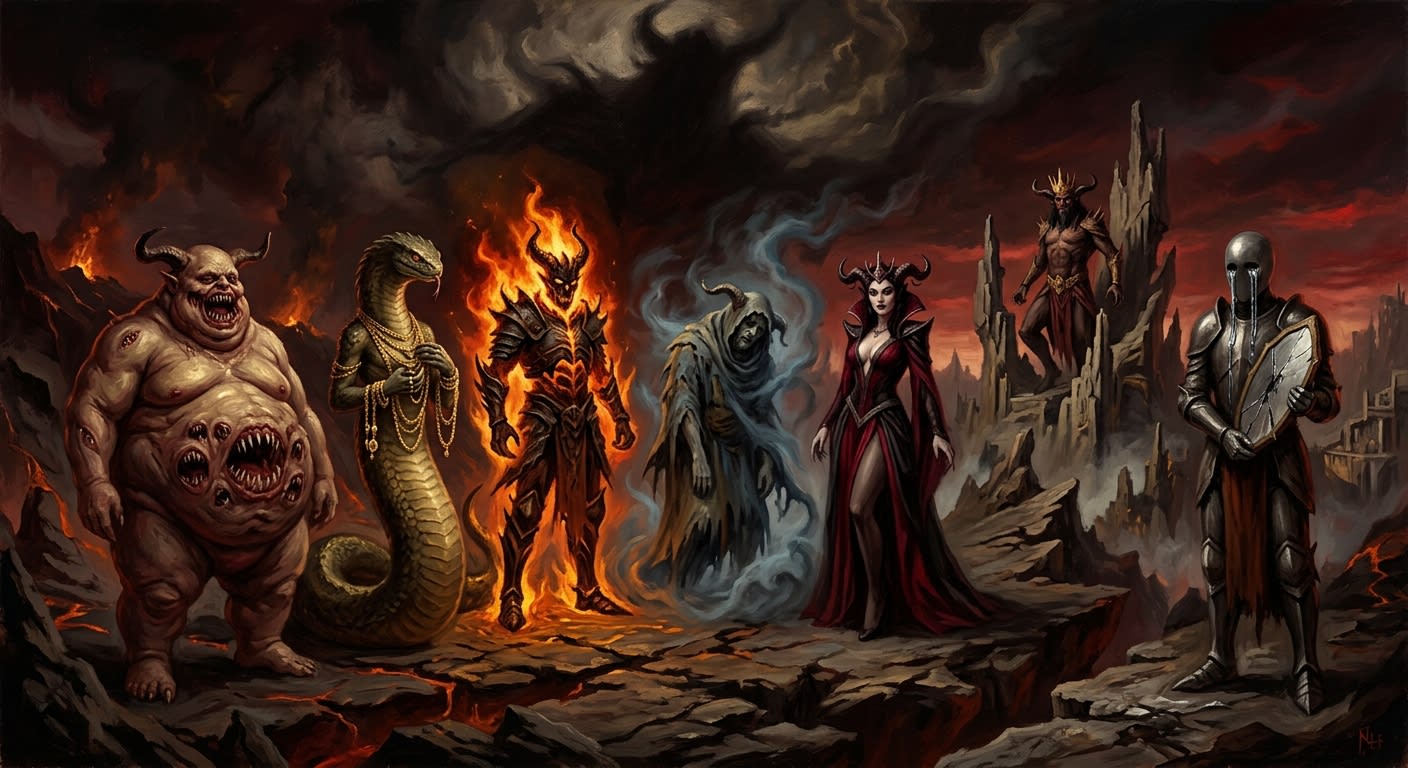
The Seven Sin-Generals
Shards of the Great Deceiver's Will, Made Flesh and Given Dominion
Seven abominations forged from the Great Deceiver's own Will, each sovereign over a cardinal sin and a blighted domain east of the Wall. They are not his servants. They are his fingers — and they grip the throat of the world.
Codex Ref. IV.1.02-001
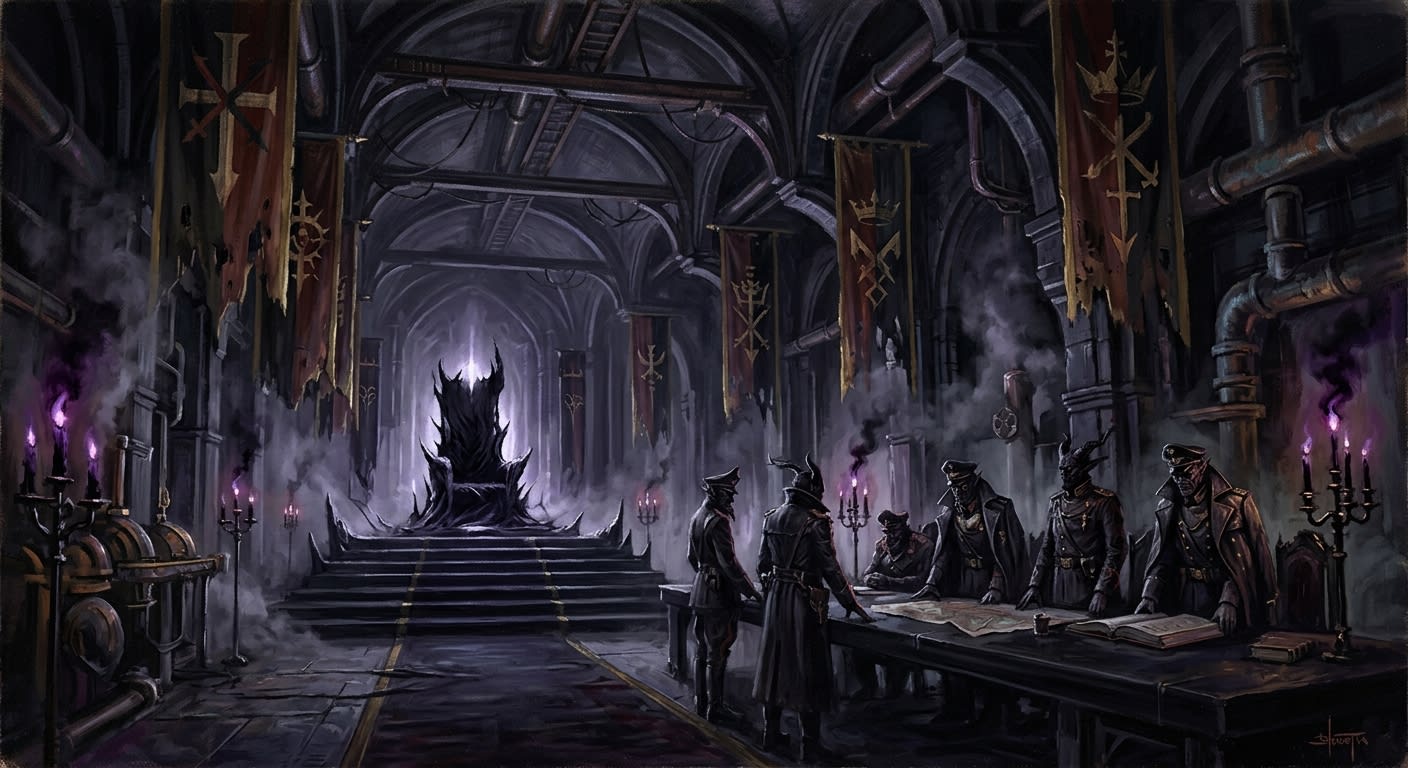
The Shadow Court
Filed under 'Locations, Hostile, Extant.' Coordinates: Pending.
The Bureau of Records has assigned the Shadow Court a filing number. The filing number is one hundred and nine years old. The Shadow Court has not provided coordinates.
Codex Ref. V.9.01-001
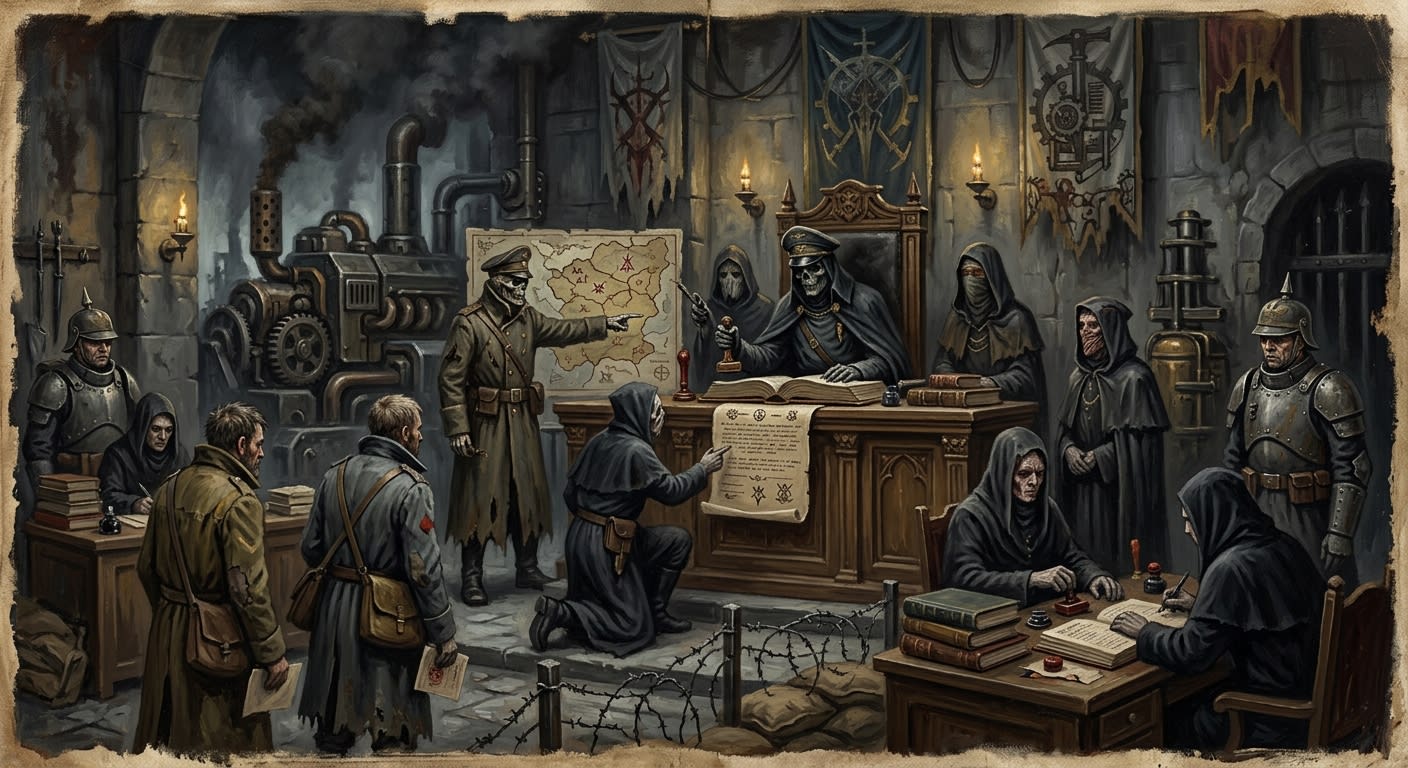
The Shadow Court
Infernal sovereignty without a capital, throne, or mercy
The Great Deceiver's anti-Synodal jurisdiction: not a mere place east of the Line, but a hostile authority expressed through sin-generals, bargains, mortal auxiliaries, and mock liturgy.
Codex Ref. IX.1.01-001
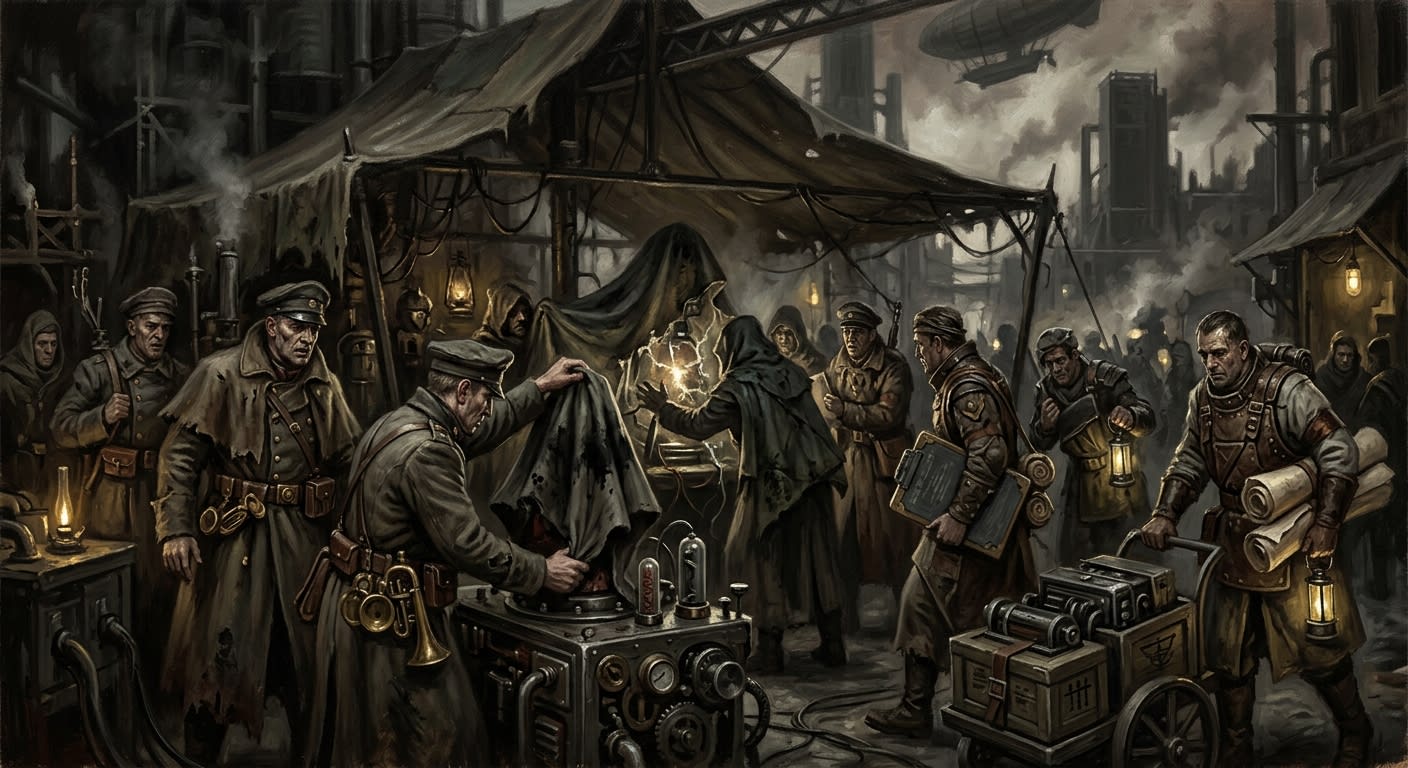
The Sibiu Anomaly
Where the creditor lent the preacher a knife and called it relief
The A.S. 199 Sibiu Anomaly confirmed contact between Crimson Concord argument and Velmoran debt-work: officially anomalous, practically a screaming fact under an ink hood.
Codex Ref. VII.8.10-199
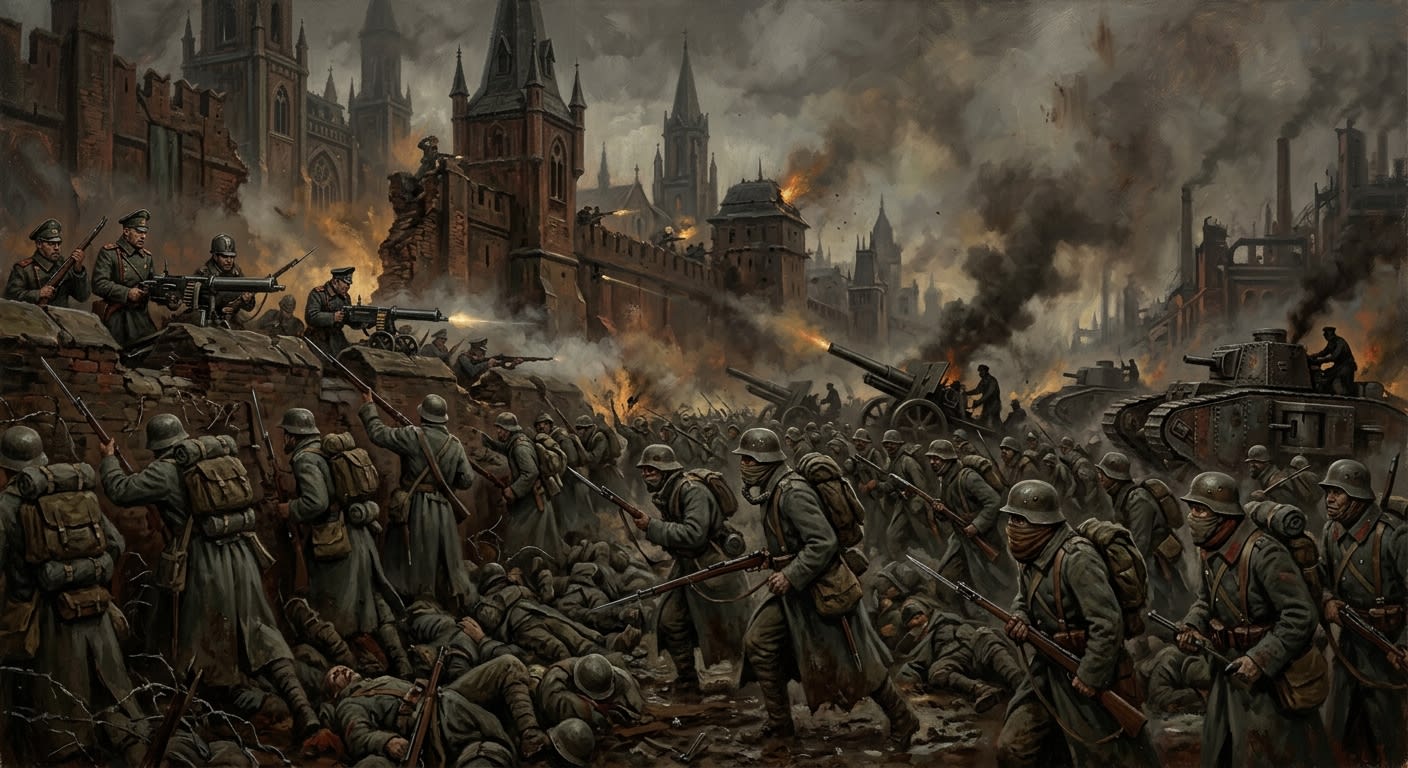
The Siege of Rostov
Within expected parameters, which is how clerks bury astonishment
The A.S. 153 Siege of Rostov was Maldrake's eleven-day arithmetic of exhaustion: ninety thousand Ash-Fodder spent against six hundred defenders before the Wrathforged arrived rested.
Codex Ref. VII.5.03-001
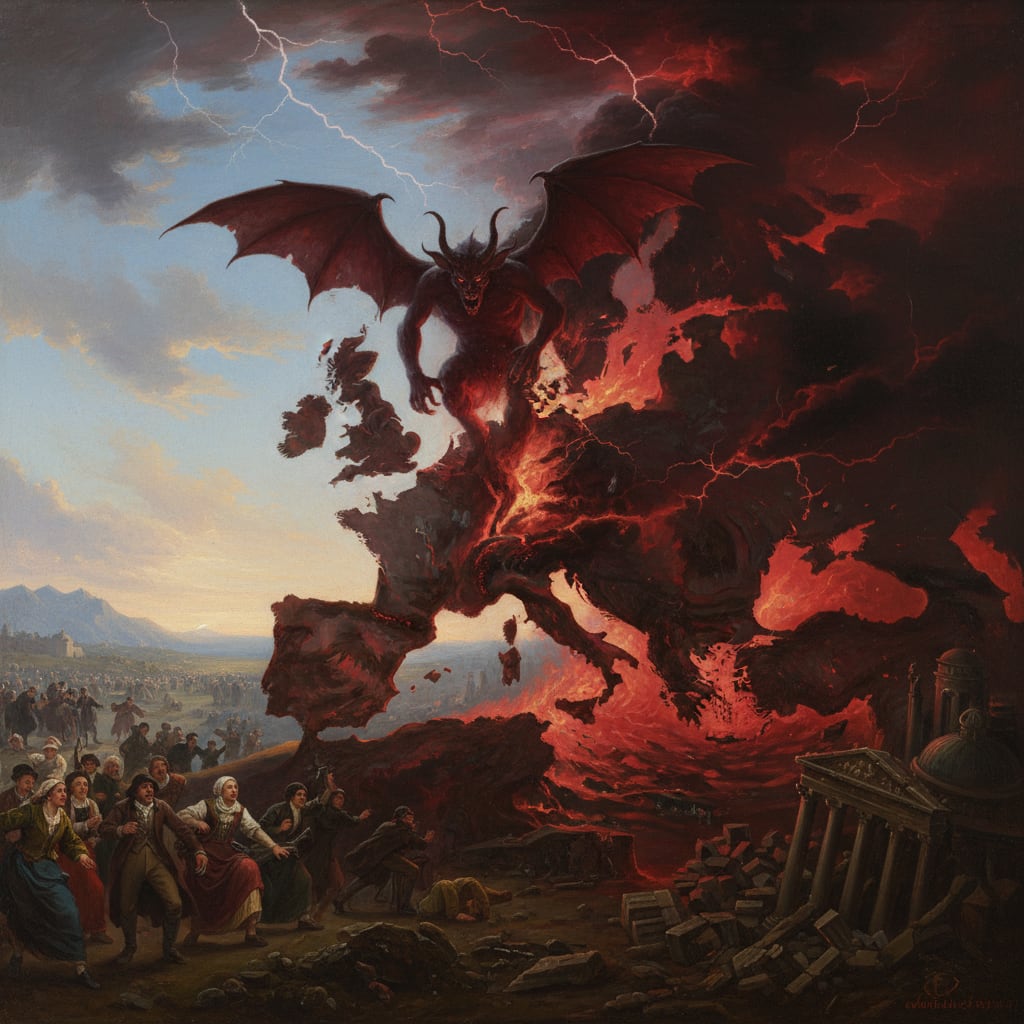
The Sundering
The Day the World Cracked Open and the Creator Sent His Invoice
The cataclysm of 1 November, 45 An.S. — when the Balkans erupted and the legions of the Great Deceiver poured through the wound in Creation. The event that ended Reason and birthed Faith's second coming. As explained by the only man whose explanation matters.
Codex Ref. I.1.02-001
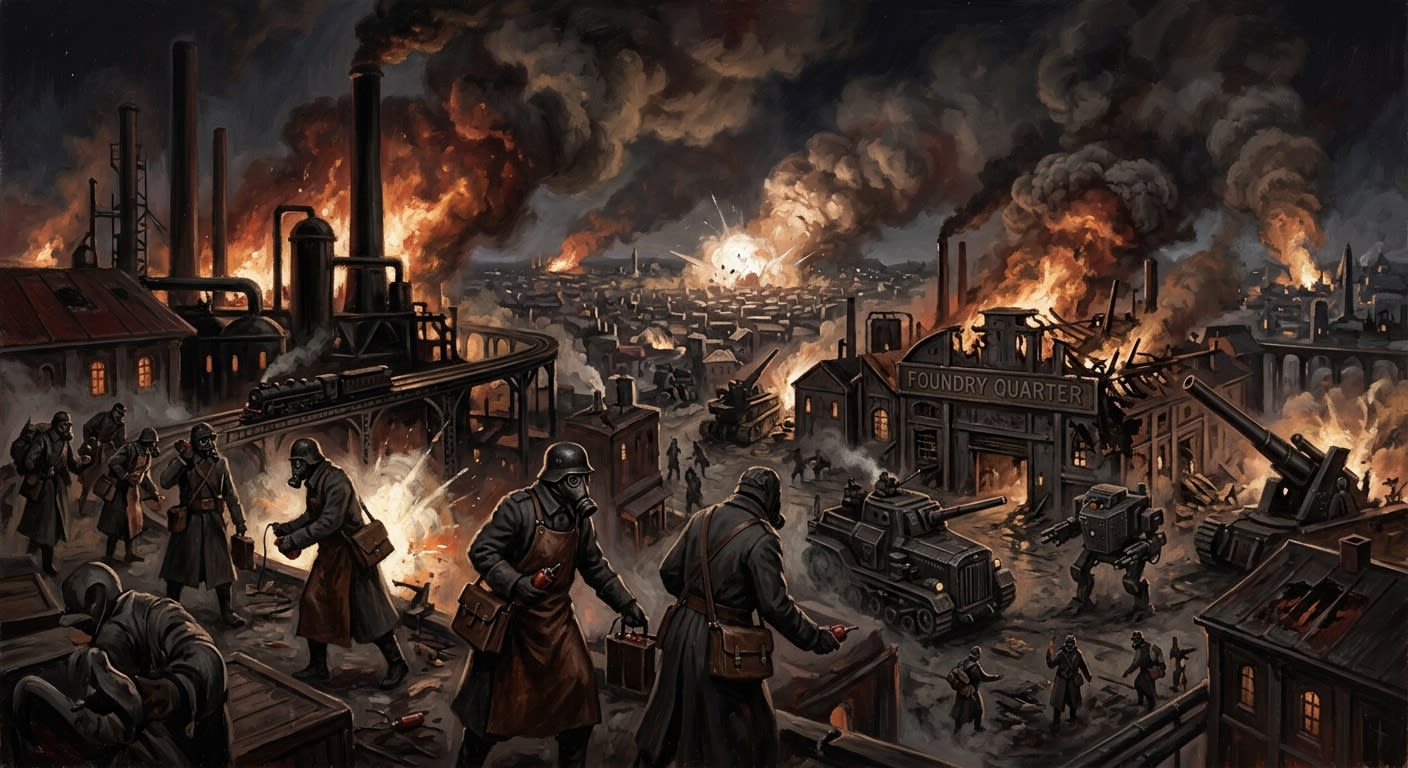
The Three-Night Bombard
Constantinople learned that a paid invoice may be louder than cannon
Velmora's A.S. 177 infiltration detonated Constantinople's Foundry Quarter for three nights, teaching the southern anchor that debt can breach what artillery cannot.
Codex Ref. VII.5.03-001
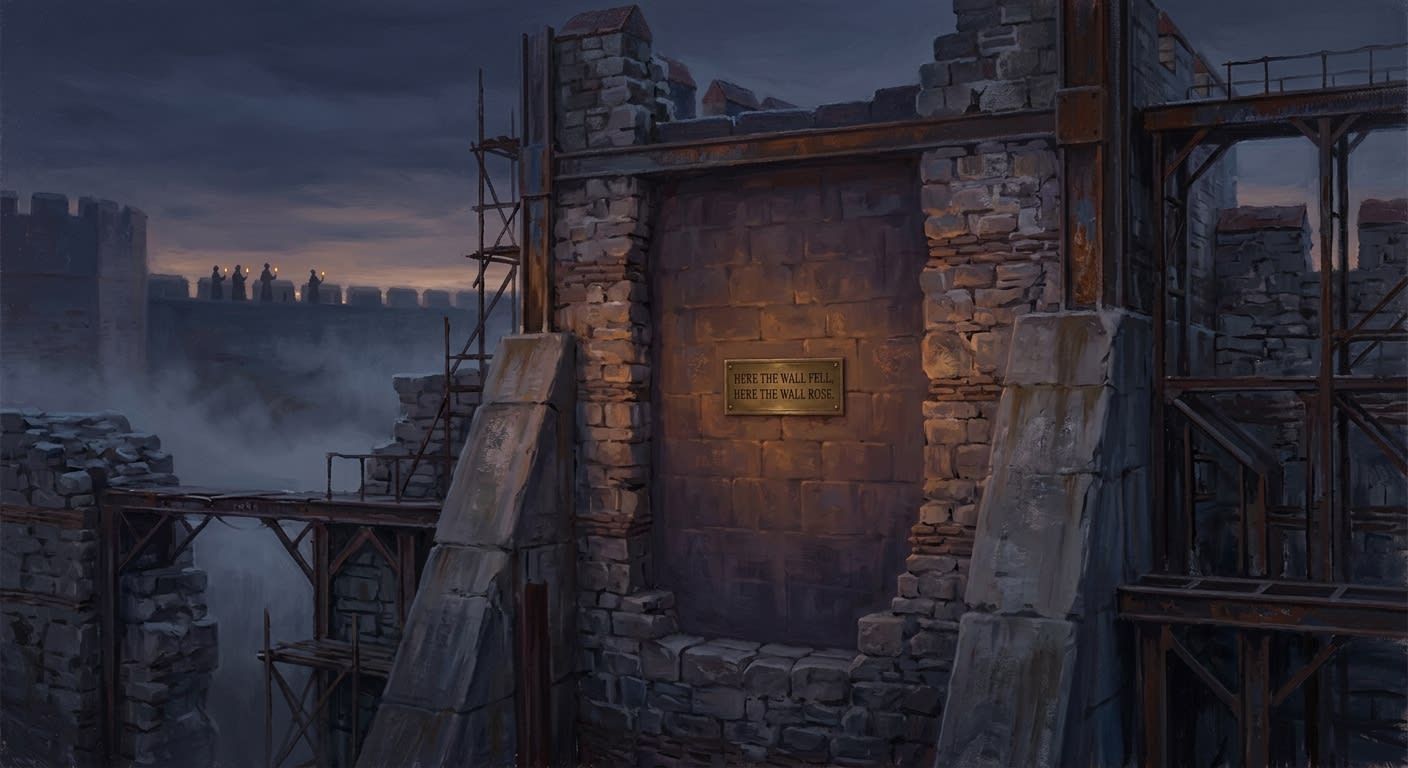
The Vigil of the Hollowed
Forty-seven in the cement; seven words permitted; the wall is warm.
The breach of Bastion-Constantinople's Sixth Ravelin in A.S. 170: the Night Paper, the burned regiment, the 140-metre gap, and the forty-seven who entered the pour-frame singing. The wall holds. Seven words allocated for what remains inside.
Codex Ref. VII.3.01-001
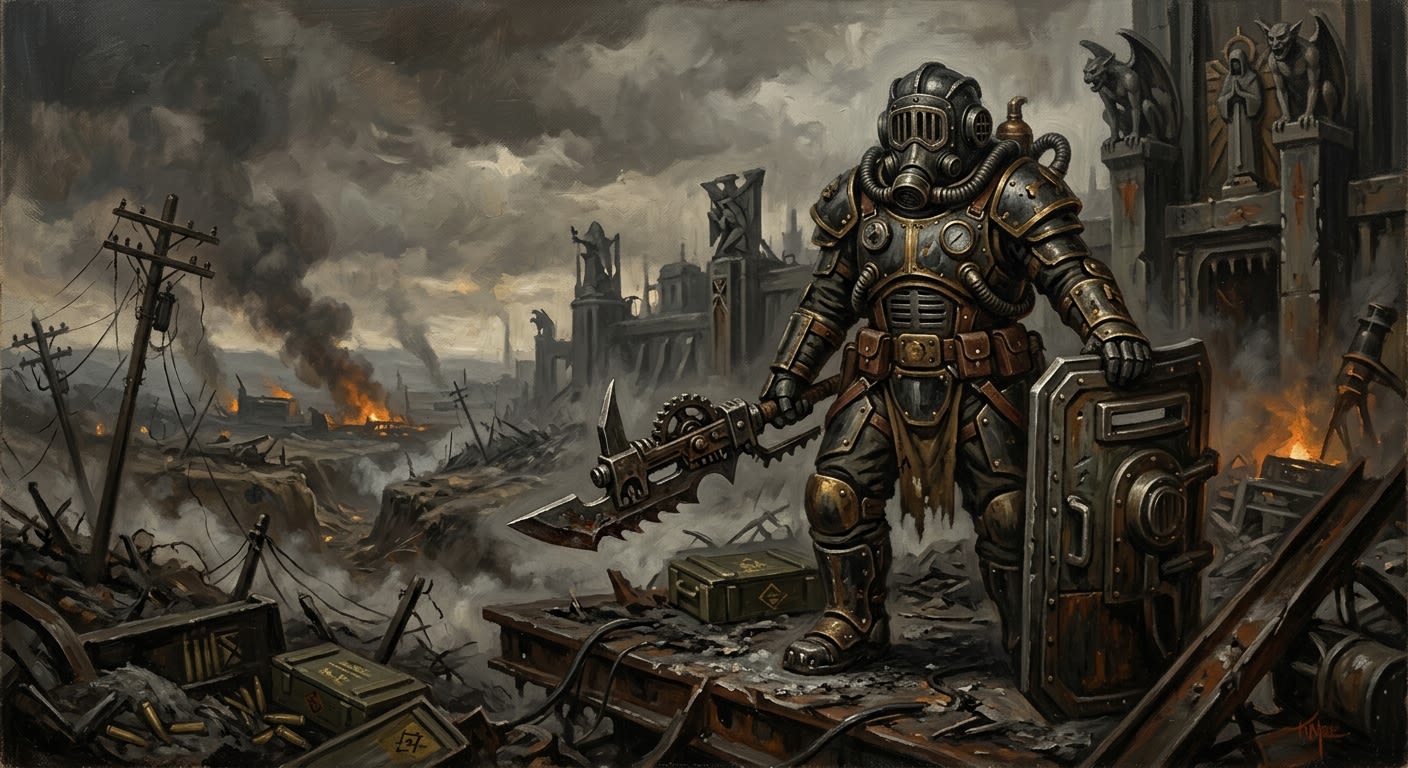
The Warrior of Justice
The faceless correction no Bureau has managed to license
Condemned as the Third so-called Virtue General, the Warrior of Justice is an unconfirmed faceless combatant whose alleged interventions rescue losing lines and insult every licensed channel of hope.
Codex Ref. III.2.01-053
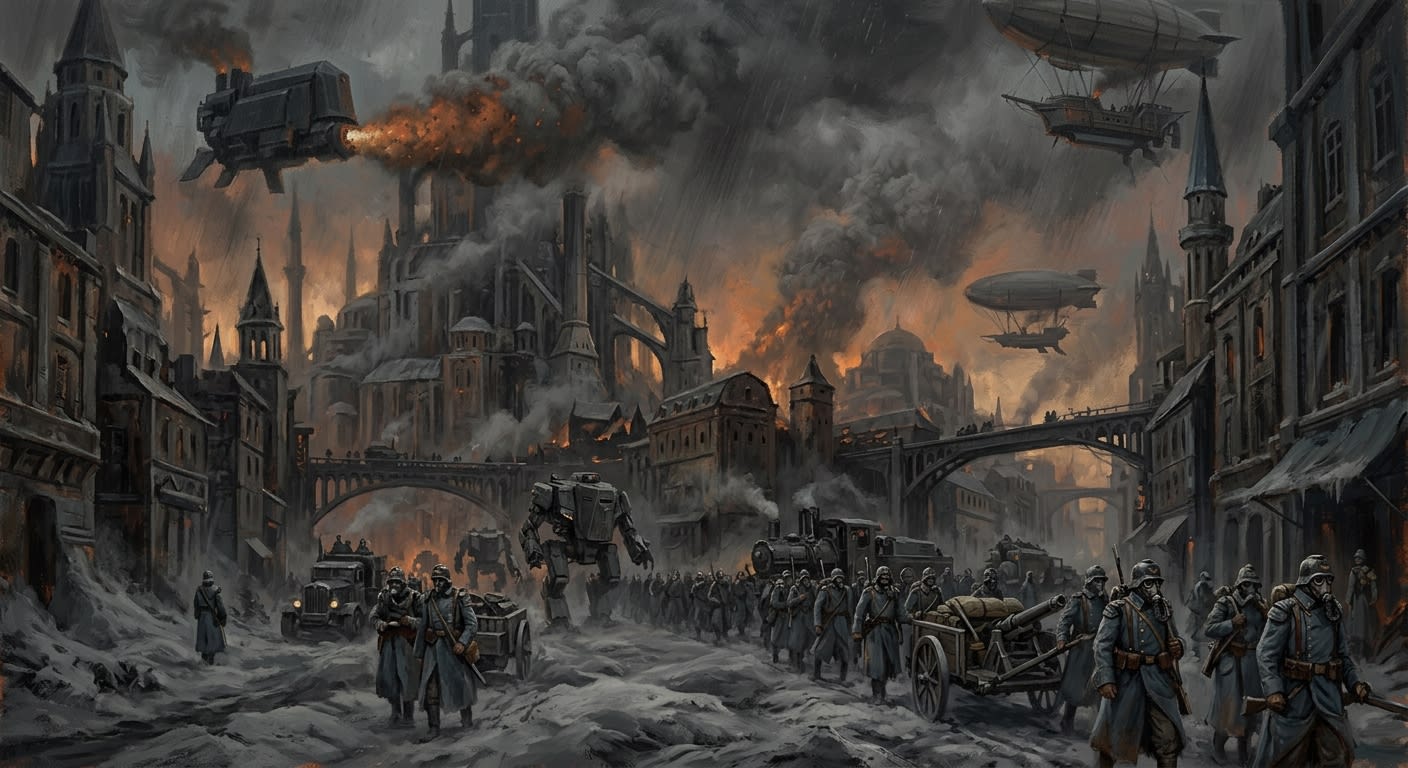
The Year of Ash Rain
The sky became a siege engine, and Constantinople learned to breathe doctrine
Maldrake's A.S. 143 burning of the Thracian forests turned ash into weather, famine into architecture, and Constantinople into a city under siege from above.
Codex Ref. VII.4.03-001
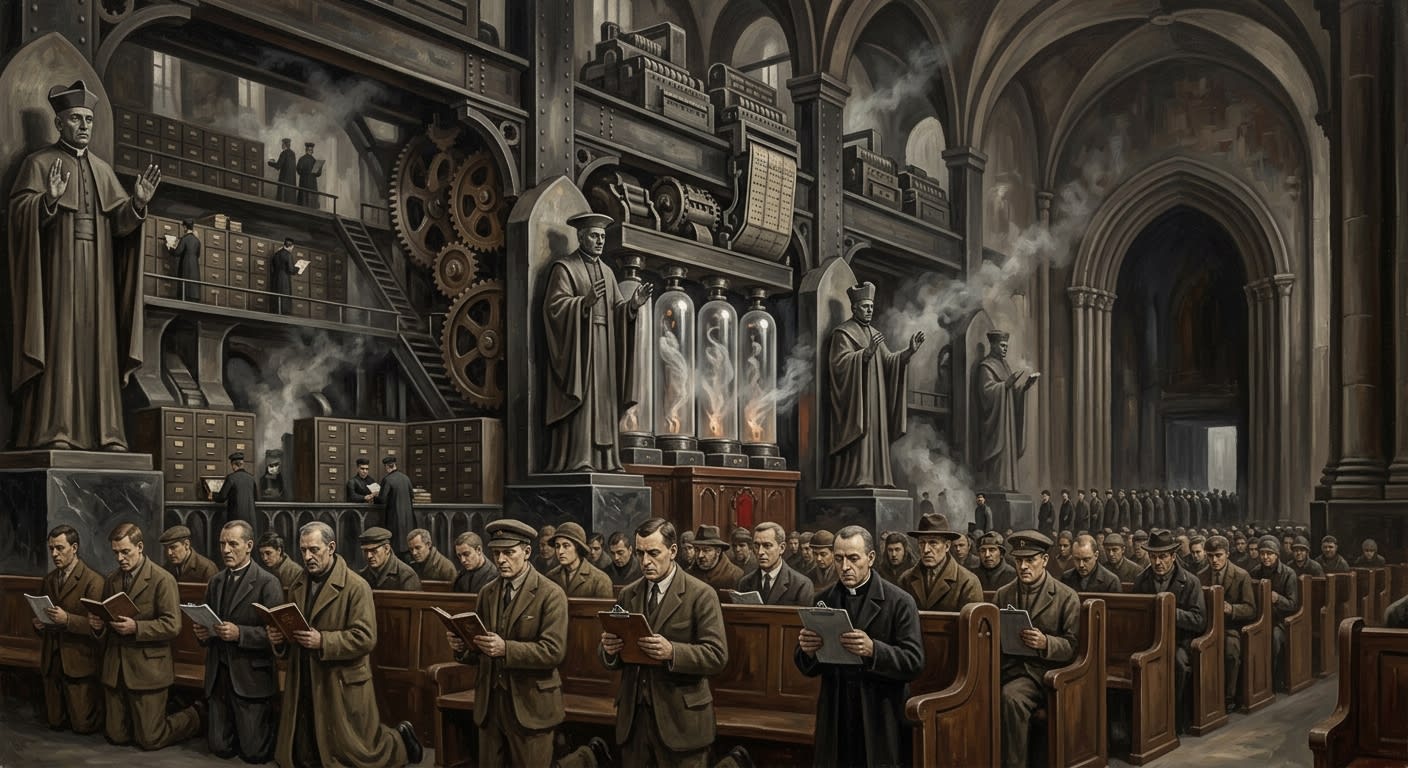
Theocracy
Piety with pipes, doctrine with payroll
Theocracy is the Synod's mature art: altar made warrant, prayer made schedule, fear made grammar, and every soul brought under ratified custody.
Codex Ref. XIII.1.01-201
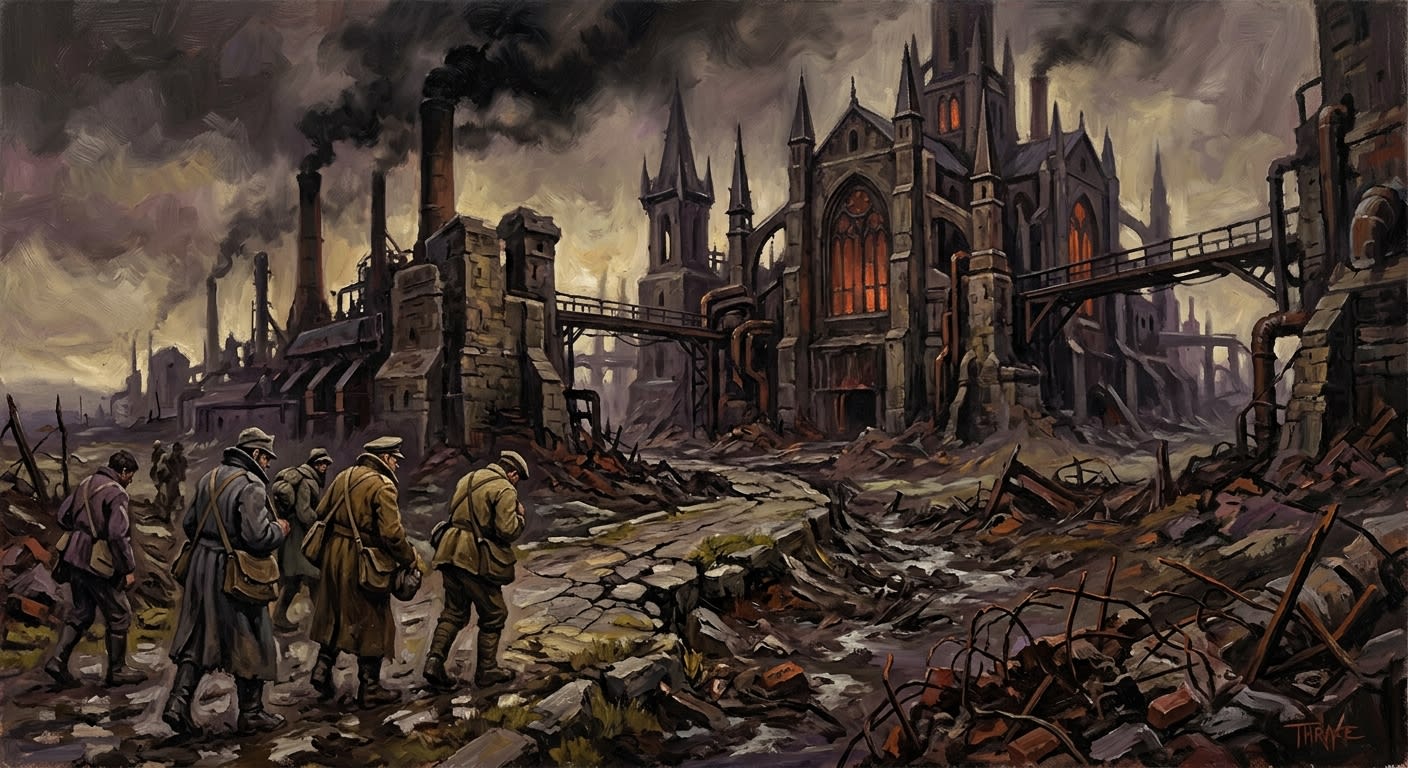
Thrace
The province geography learned to condemn
Thrace is the fallen south-eastern furnace where old roads became warnings, Maldrake taught soil to rage, and maps learned shame.
Codex Ref. II.6.03-045
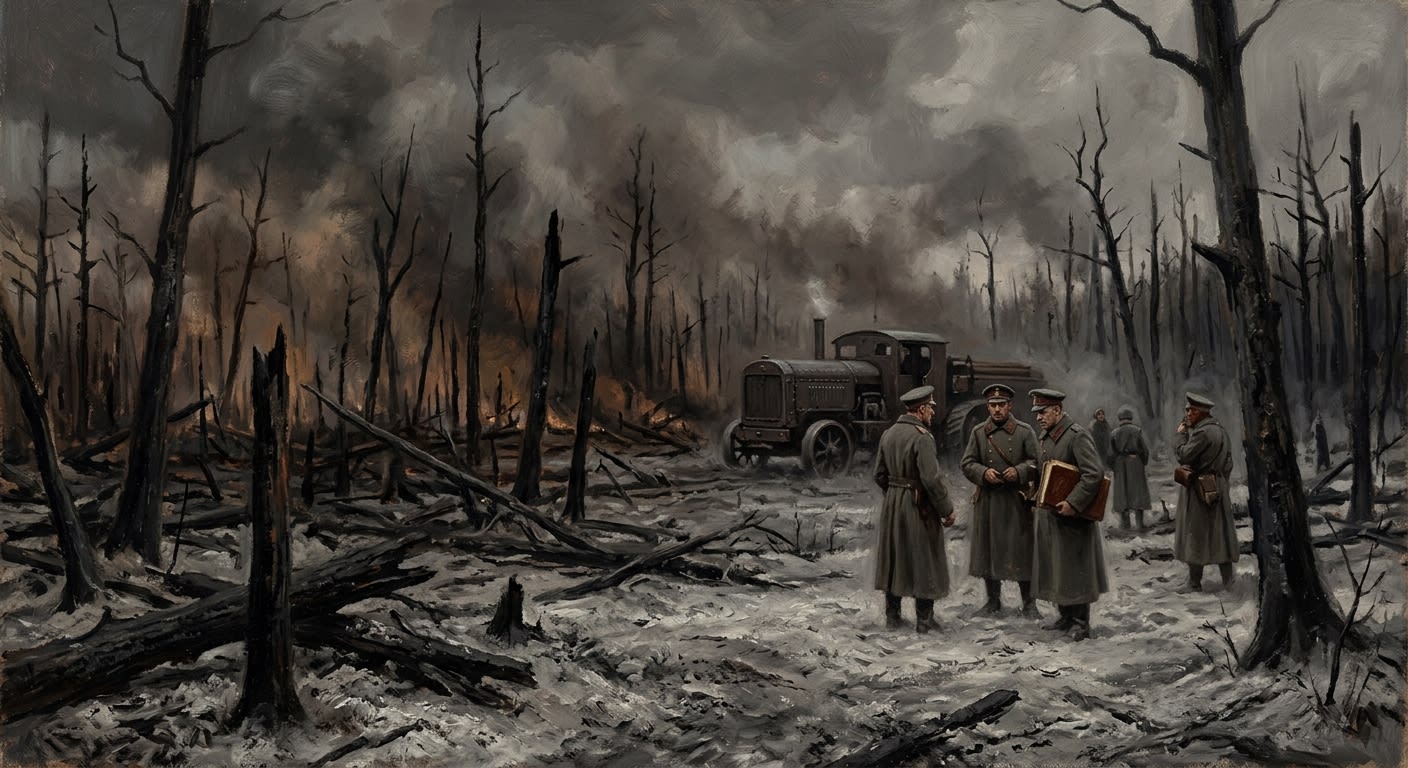
Thracian Forests
Maldrake felled a province into the sky
The Thracian forests were Maldrake's timbered weapon: a fallen reserve burned in A.S. 143 until ash became famine, ink-hunger, echo drift, and weather.
Codex Ref. II.6.03-143
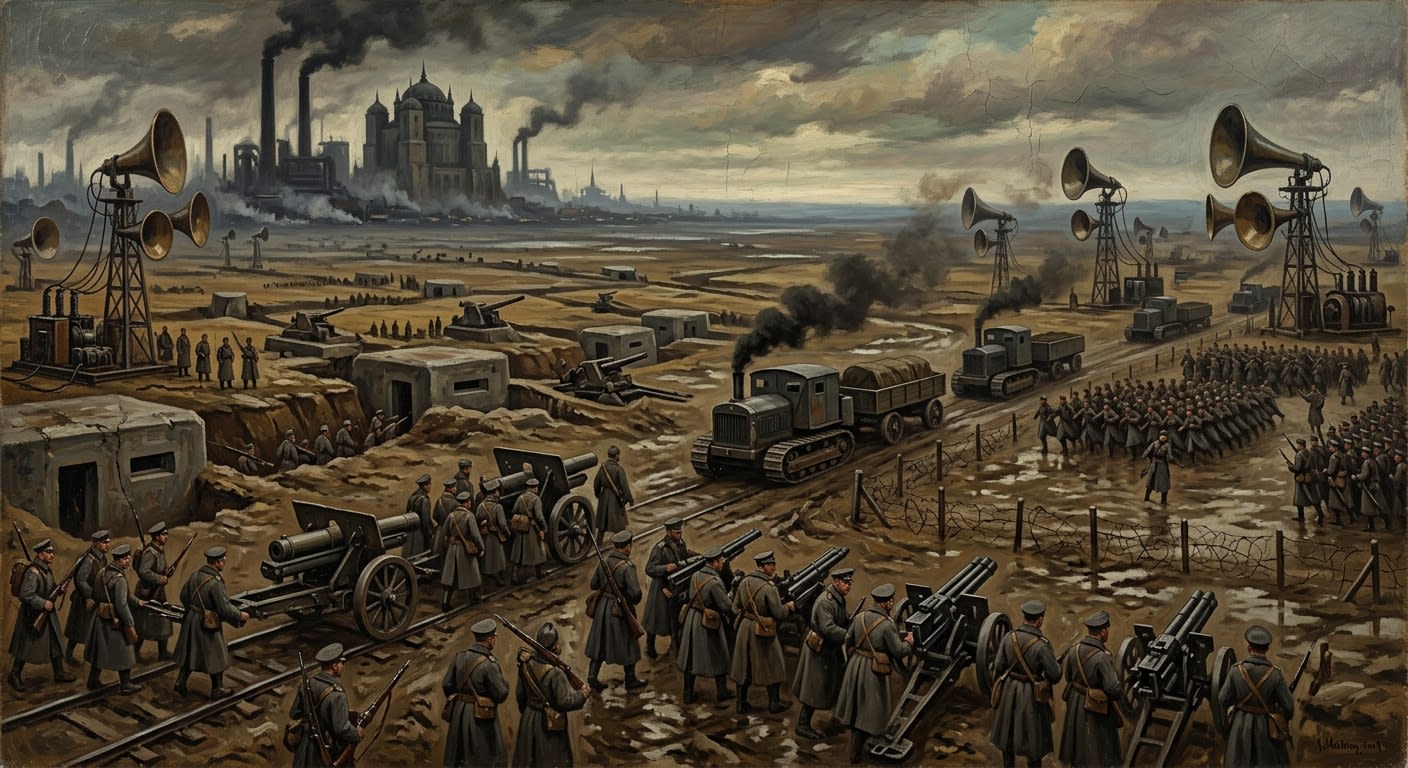
Thracian Plain
The open ground that learned to listen for weakness
The Thracian Plain is Constantinople's northern killing apron: old grainland remade after A.S. 45 into Maldrake's listening floor, muster yard, and artillery throat.
Codex Ref. II.6.03-045
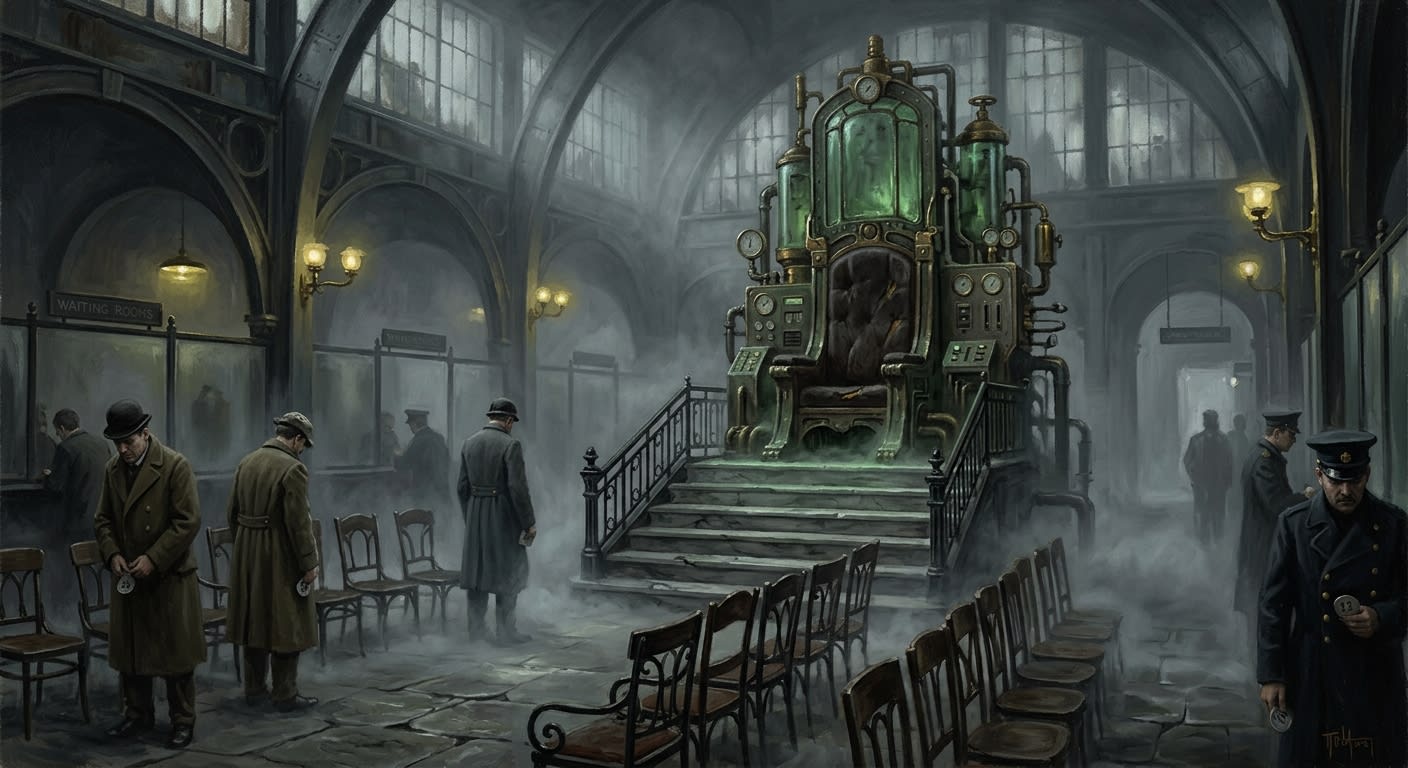
Throne of Mists
Remain standing when comfort offers a crown
The Throne of Mists is Syrion's unreached seat: a palace of fog, glass, waiting rooms, polite summons, and chairs that promise the exhausted soul an end.
Codex Ref. II.6.07-073
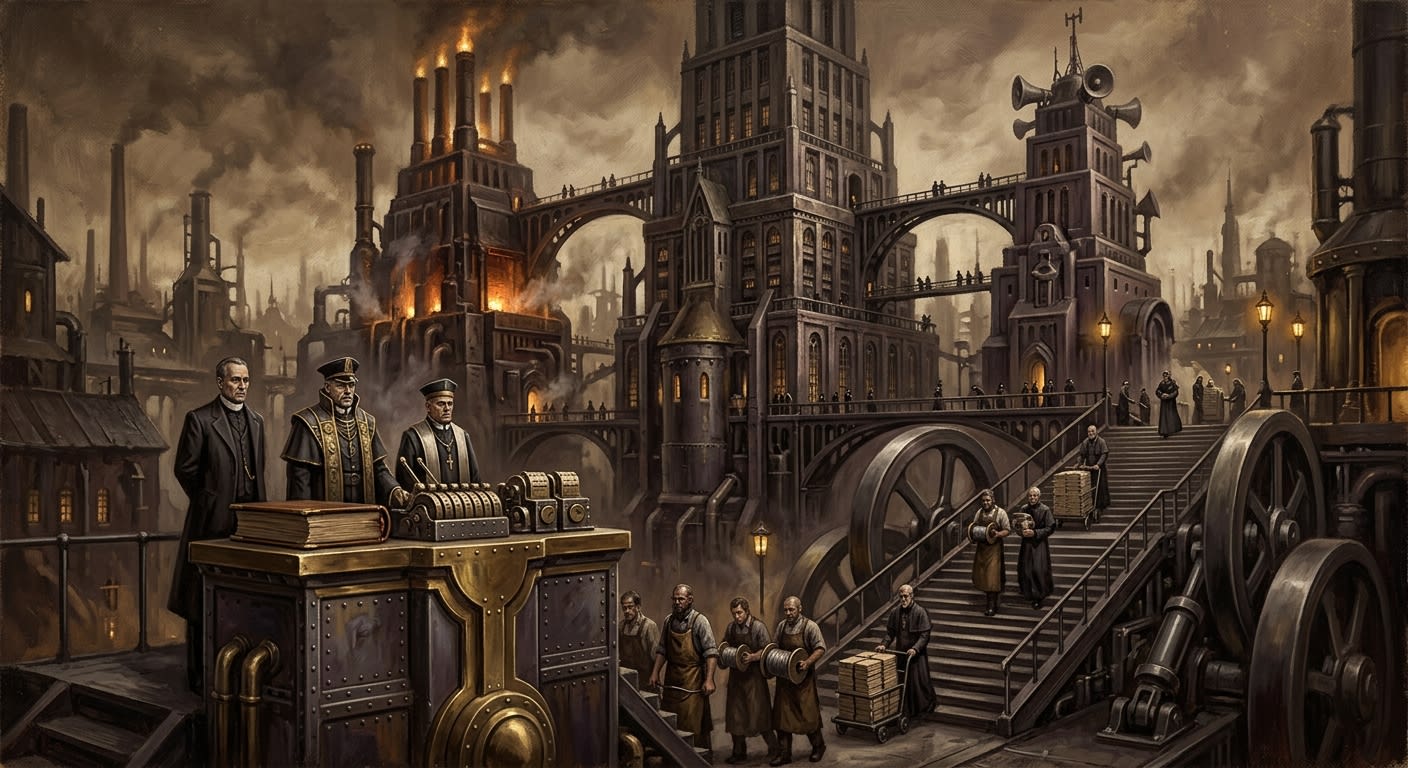
Tri-Bureau Compact
Three hands on one throat, and the furnace calls it law
The A.S. 110 Compact put Essen's heat, names, and voices under three rival Bureaus, turning guild craft into hymnsteel law and tyranny into minutes.
Codex Ref. XIII.1.93-110
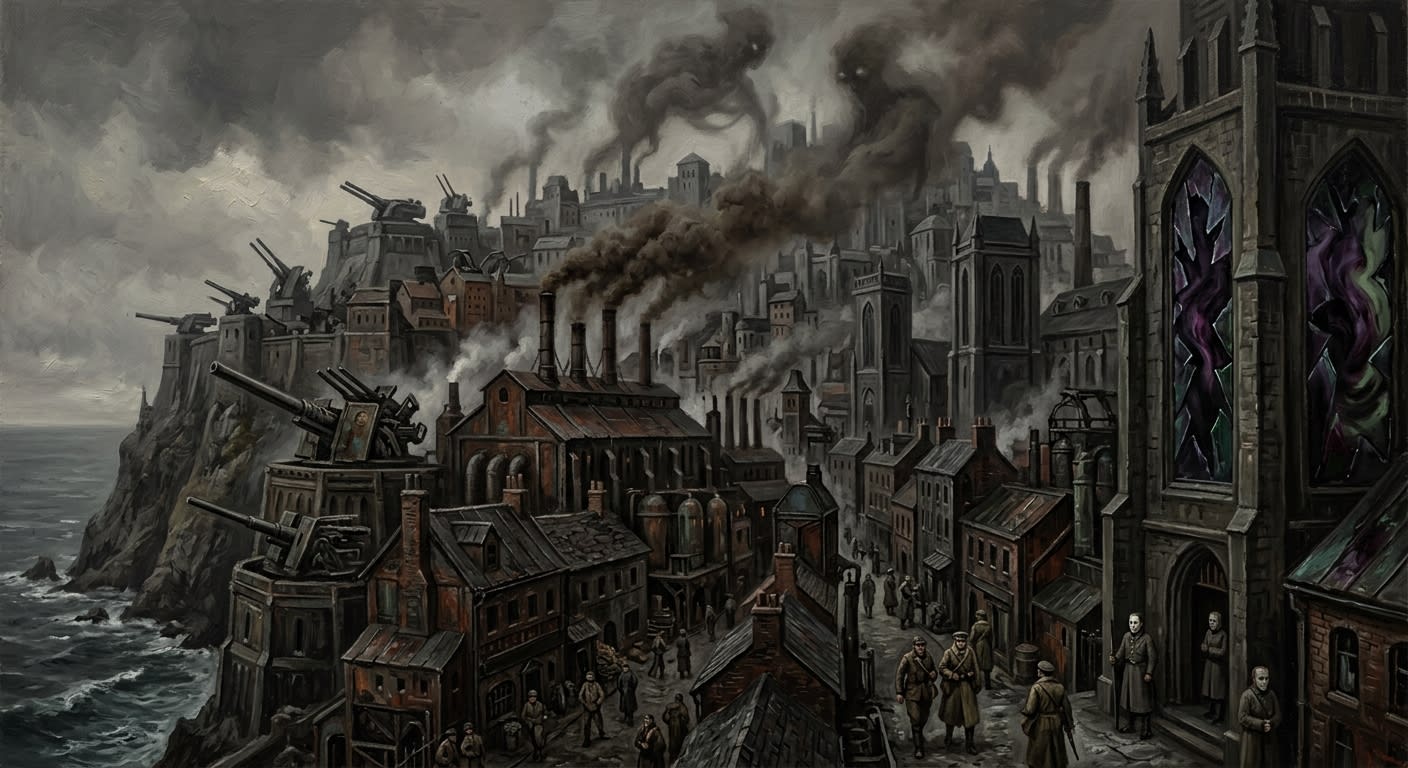
Varna
The Ashen Redoubt where smoke looks back and bread learns law
Varna, the Ashen Redoubt, is a Black Sea cliff-fortress of guns, bone-kilns, tariff chapels, demon glass, hunger law, debt masks, and smoke that looks back.
Codex Ref. II.4.09-070
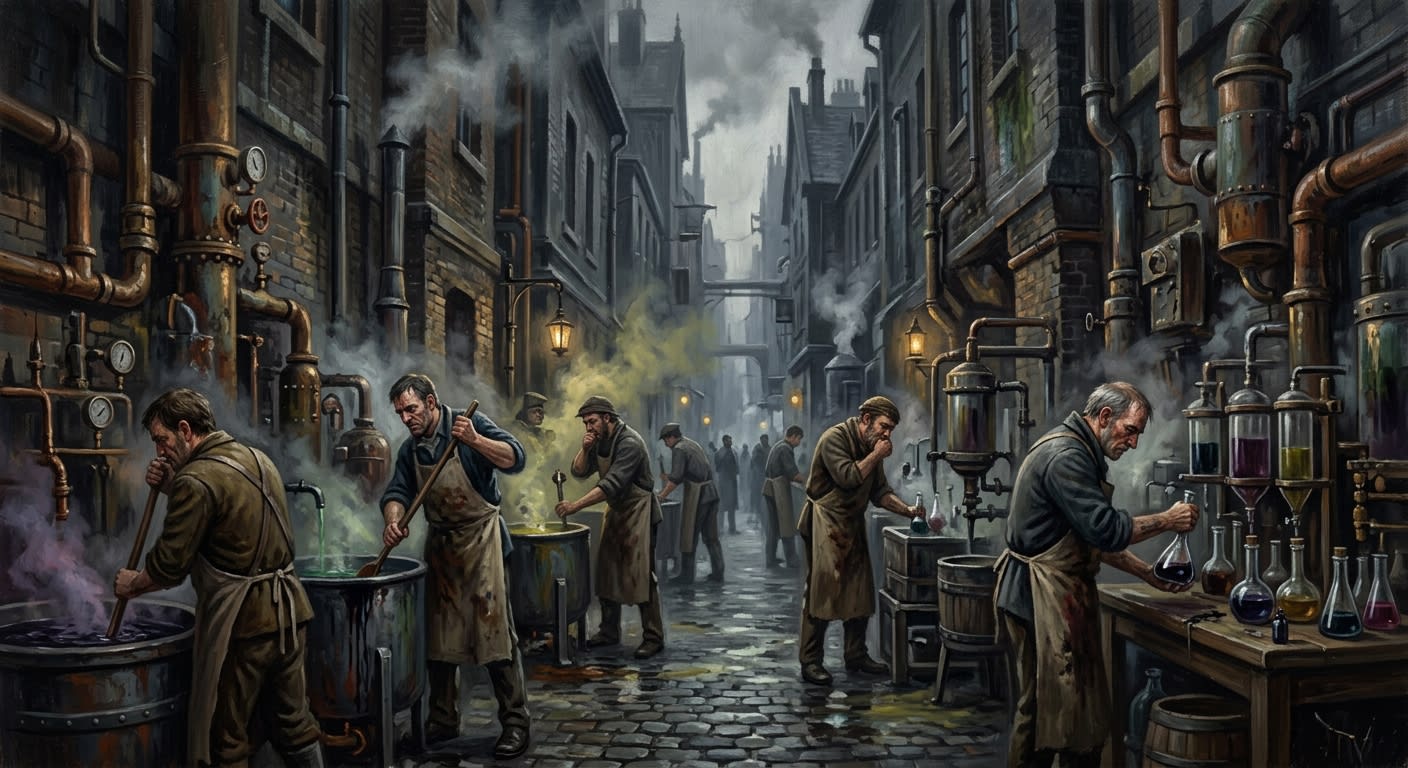
Vatmarsh Row
Where ink learns to outlive mercy
Vatmarsh Row fixes the Synod's ink and loosens the lungs of those who make it. Permanence, naturally, invoices by the breath.
Codex Ref. II.1.01-092
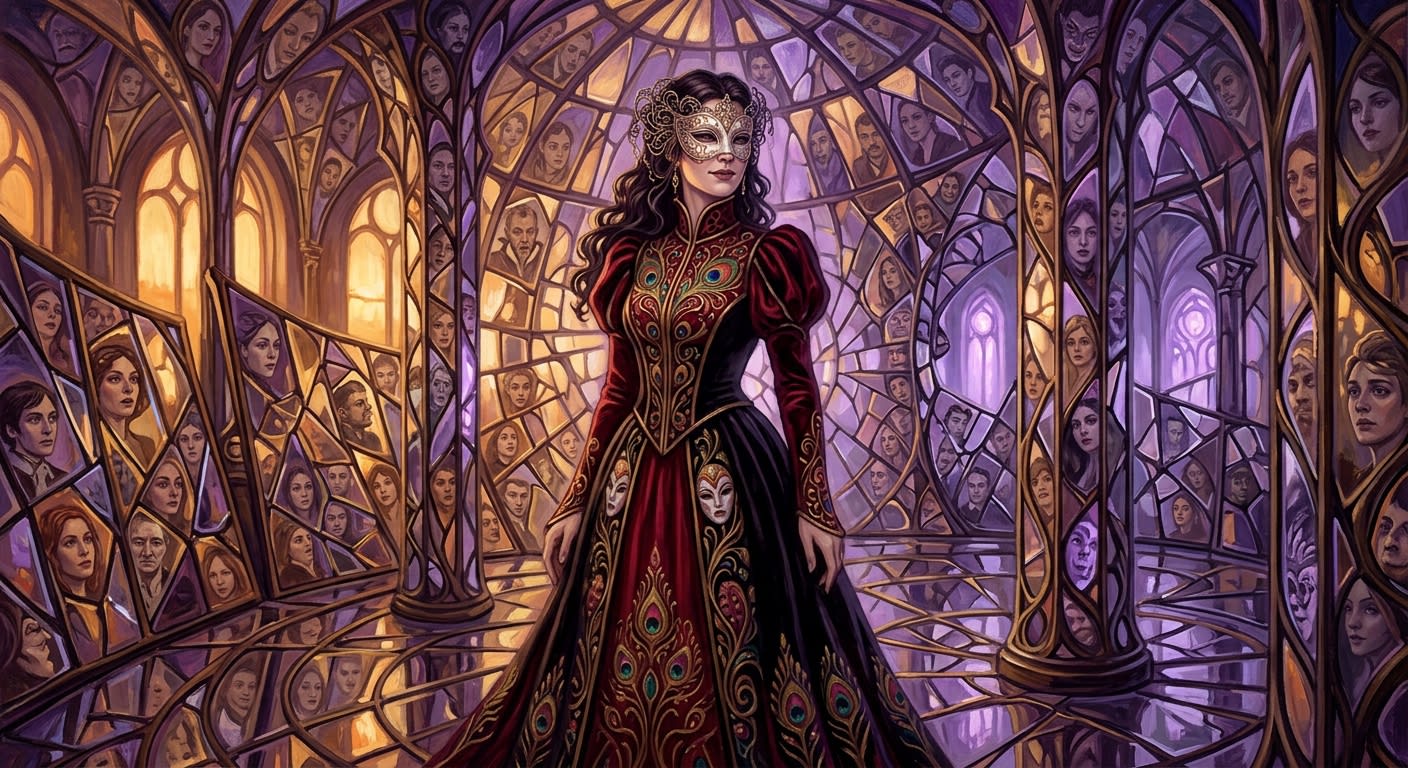
Velkara
She Holds No Sector. She Holds Every Room.
The Sin-General of Lust holds no sector of the Sagittal Line and requires none. Velkara does not breach walls. She wakes inside them, and the Bureau cannot identify the seam.
Codex Ref. IV.1.07-005
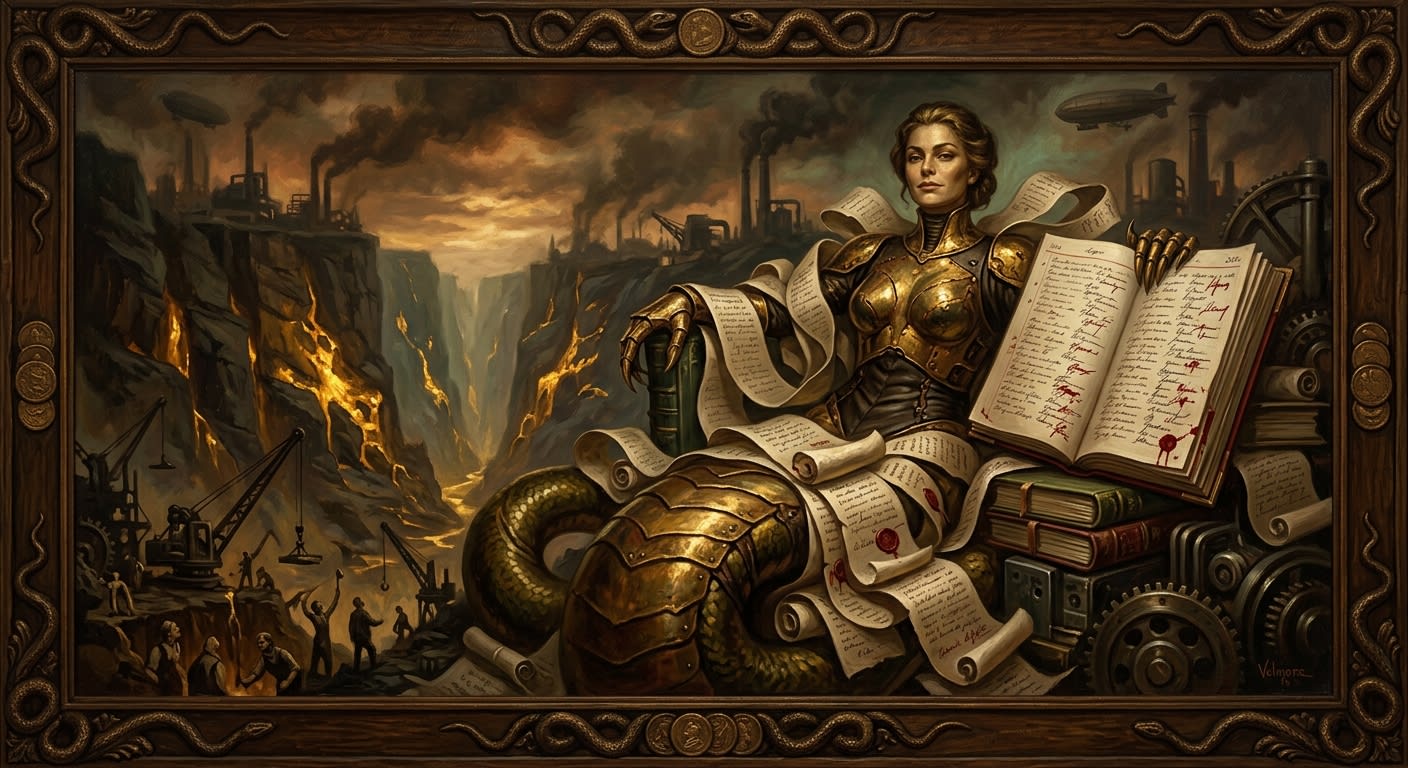
Velmora
She does not conquer. She possesses.
The Covetous Serpent, Sin-General of Greed — she does not conquer, she possesses. One signature at a time, one contract at a time, until nothing remains to sell and the ledger still shows a balance owed.
Codex Ref. IV.1.07-002
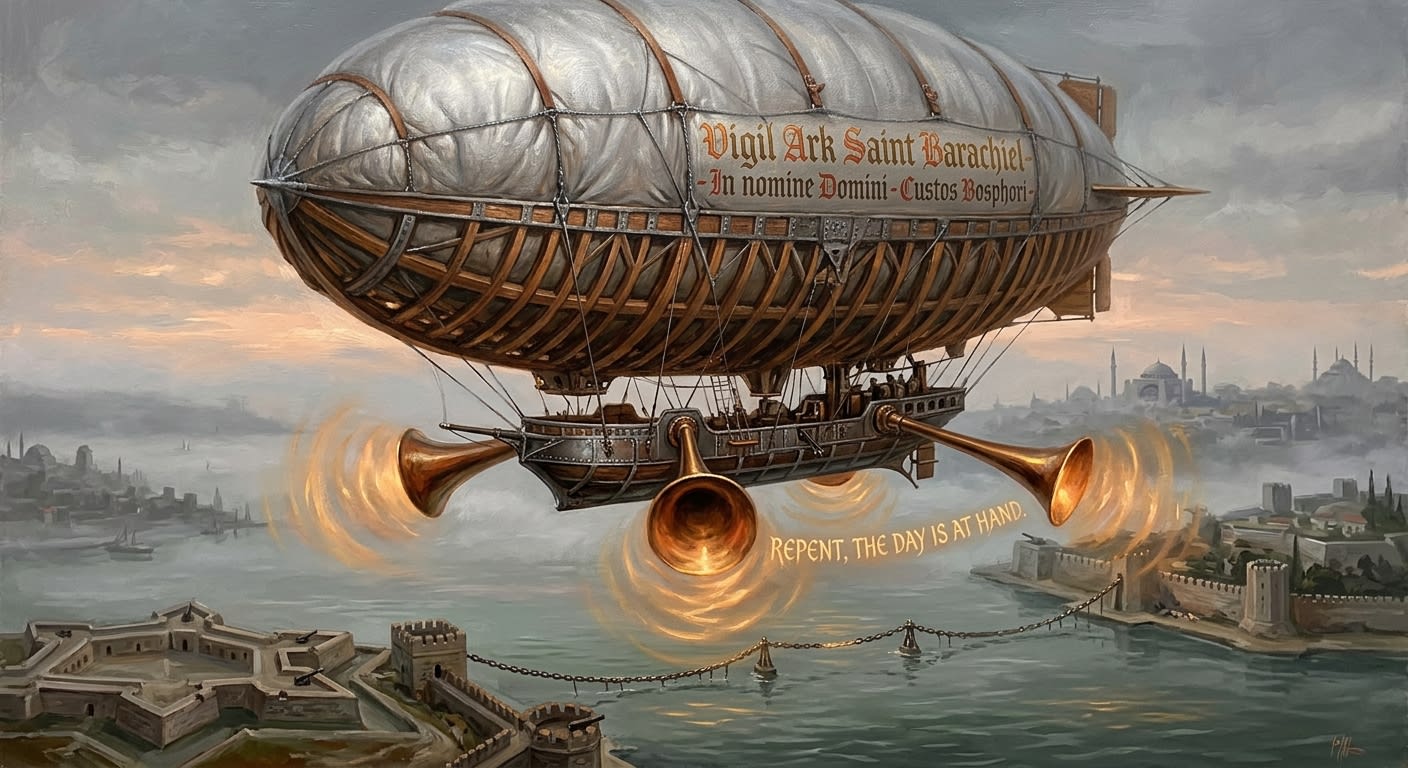
Vigil Ark *Saint Barachiel*
On the consecrated dirigible that blesses the Bosphorus sky, the sermon heard forty feet below the water, and the eleven minutes forty-three seconds of A.S. 199 the Bureau has classified as Not Our Co
The Vigil Ark Saint Barachiel: armed dirigible-reliquary, Constantinople theater, A.S. 168–present. Thirty-three years of consecrated patrol. One unexplained Broadcast. The Ark flies. The Bureau recommends continued faith.
Codex Ref. II.4.11-001
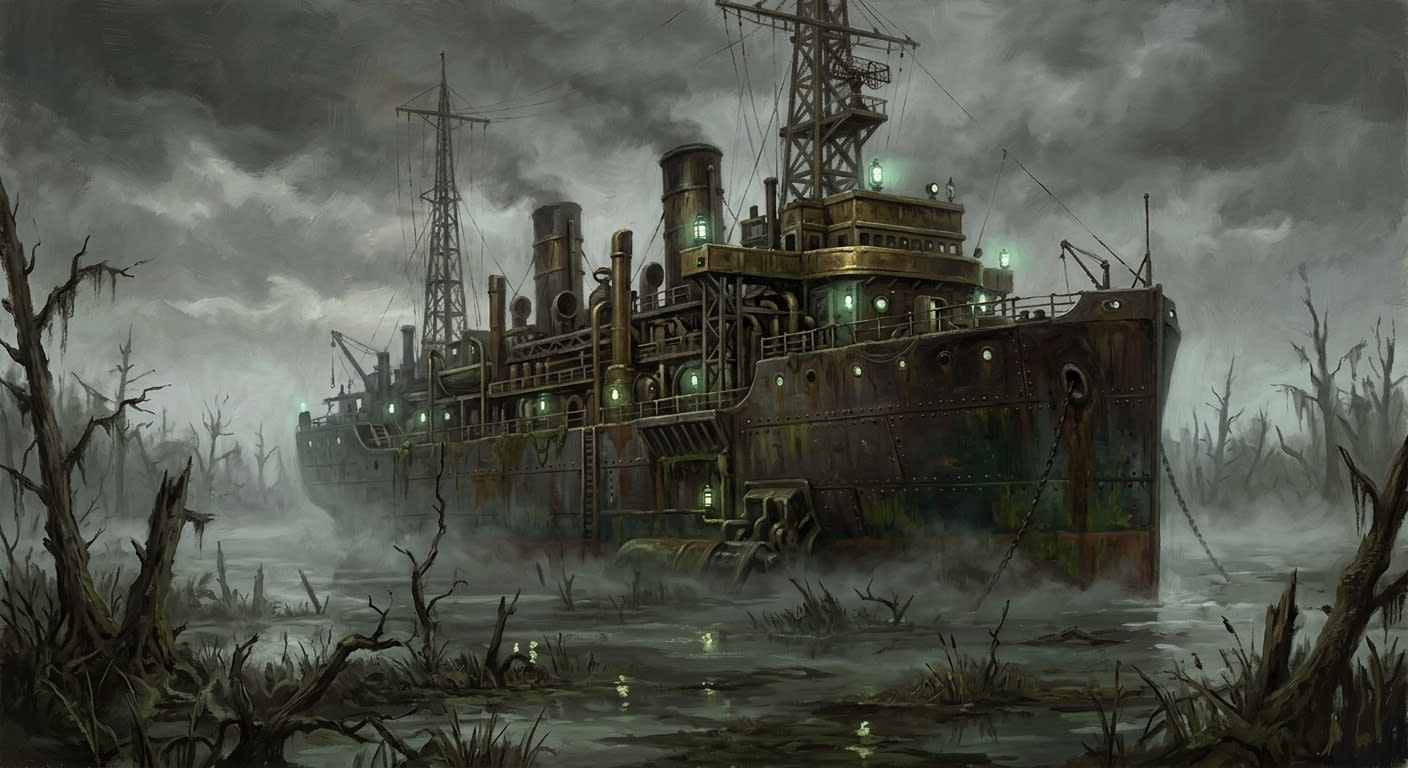
Vigil Ark Sanctissima Vox
The Ark that fell slowly and remained administratively active
The Vigil Ark Sanctissima Vox sank into the Blightmarsh during its A.S. 147 hymnal broadcast mission; its lanterns still burn, so the roster still calls it active.
Codex Ref. V.2.04-002
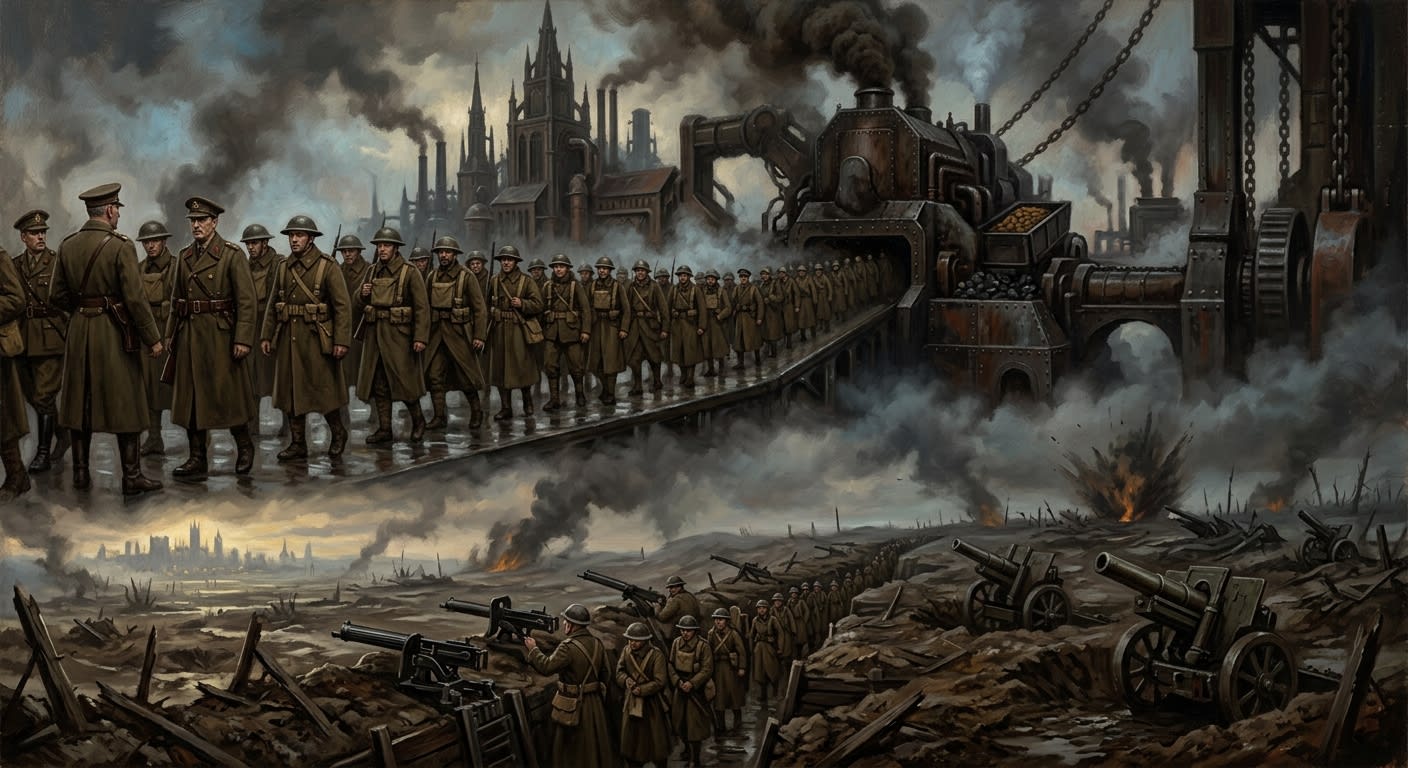
War Eternal
Victory assured; timetable irrelevant
The War Eternal is governed horror: the Line fed daily so the West may mistake survival for morning.
Codex Ref. XIII.1.92-065
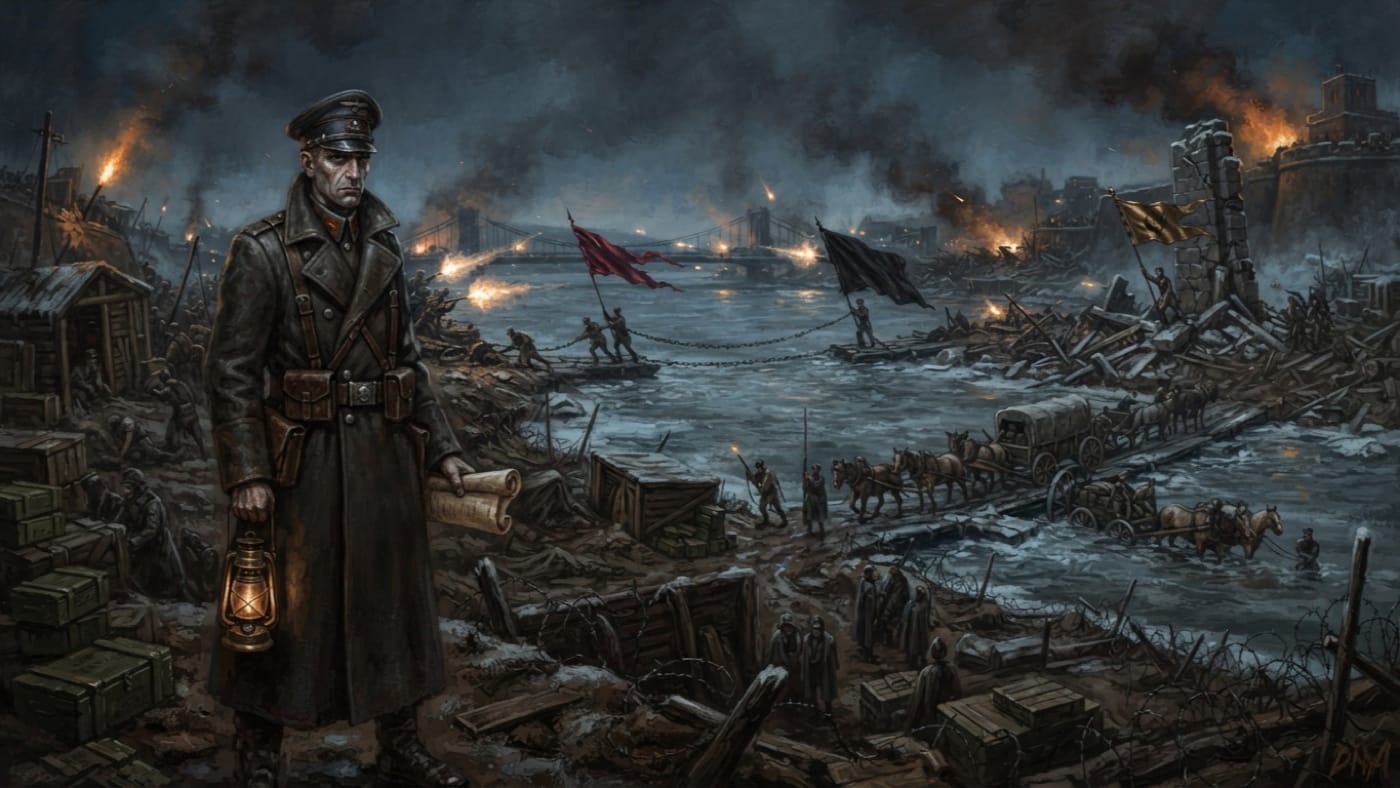
Warden-Submarshal Calev Rohn
Three crossings, one order, and a ledger improved afterward
Rohn ordered three crossings at once on the Danube in A.S. 172. Forty-seven supply wagons crossed; 4,200 men were removed from formation. The Bureaus improved the arithmetic afterward.
Codex Ref. III.2.01-172
Wrath-Slag
Anger, cooled badly, remains warm
Wrath-slag is Maldrake's violence cooled into matter: warm, accusatory, useful, illegal, and always listening for an excuse.
Codex Ref. XIII.1.58-045
Wrath-Sloth Convergence Code
When the fire learns patience and the fog begins to burn
The Wrath-Sloth Convergence Code is the ugly alarm that makes fire-readiness and wake-resistance obey one breath before Hell profits from contradiction.
Codex Ref. XIII.1.87-194
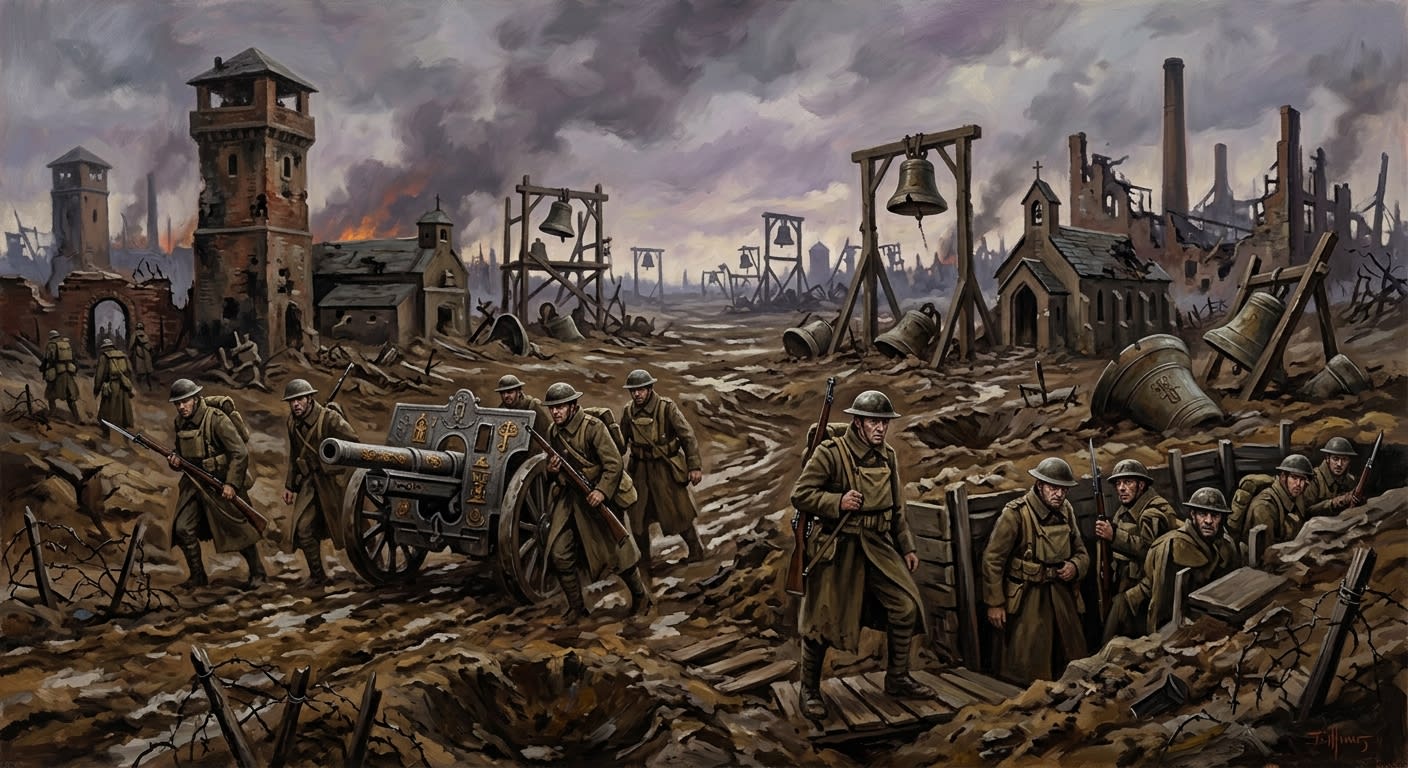
Zone Five
The strip where maps confess and mud countersigns
Zone Five is the Synod's contested receipt between living stone and demonic appetite: No-Man's-Land, where mud, bells, shadows, and orders all lie.
Codex Ref. II.5.00-201
Zones 1 through 5
Five lawful pressures between invoice and mud
Zones 1 through 5 are graded permissions for bread, sons, movement, fear, artillery, and the state’s appetite.
Codex Ref. XIII.1.00-201
Zones 5 through 7
Mud, mouth, water — the outer grammar of danger
Zones 5 through 7 are the Synod’s controlled contact belt: contested mud, demonic custody, sea-rim commerce, contraband, pilgrimage, and useful contamination.
Codex Ref. XIII.1.00-207