

Ledger Category · Places
Places
Every ratified entry of the place register, sorted alphabetically. 839 entries inscribed.
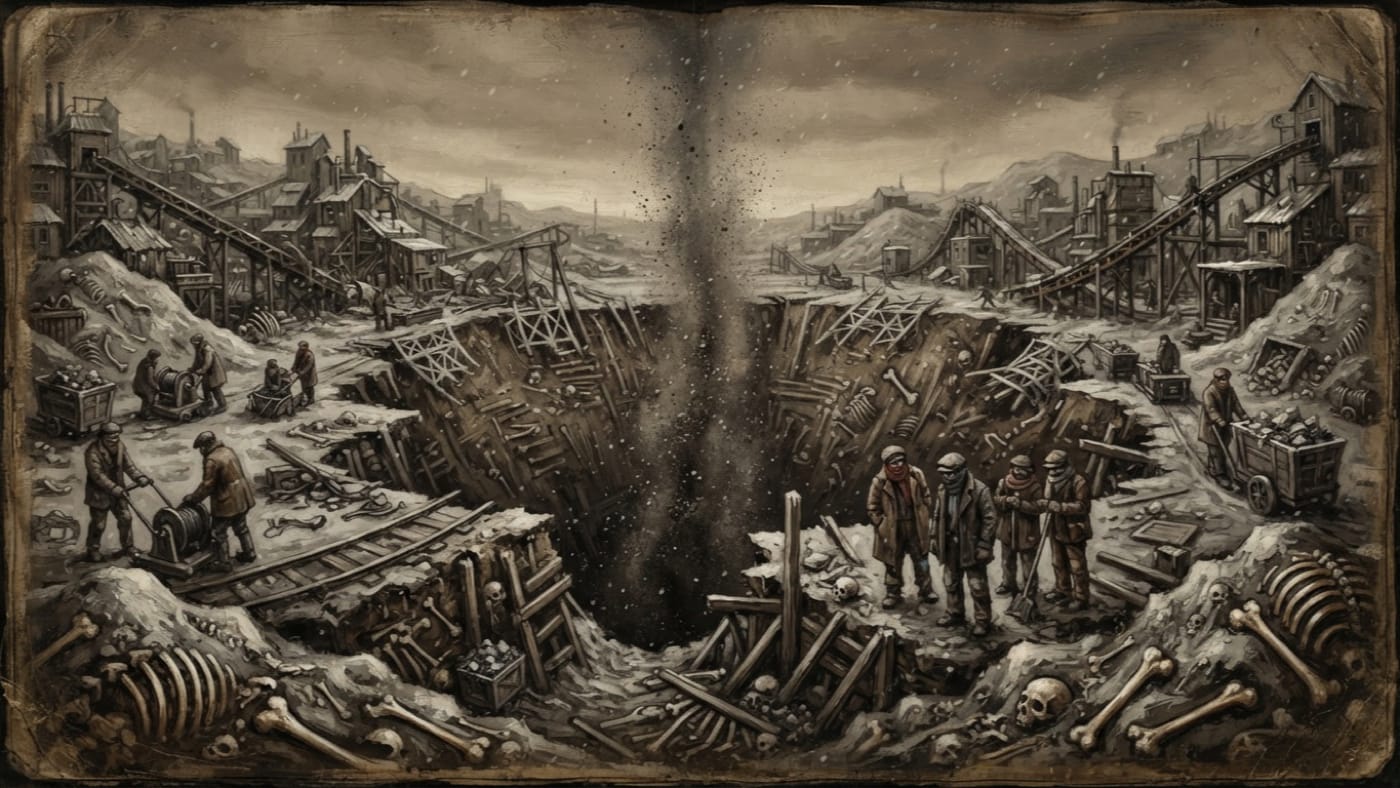
A.S. 194 northern Storm Pit sinkhole
Where buried weather rose and rumour found a face
In A.S. 194, Lor's northern Storm Pit opened, exposing pre-founding bones and driving ash upward. The sinkhole is recorded; Ilex Marr's supposed disfigurement remains rumour.
Codex Ref. III.2.04-1953
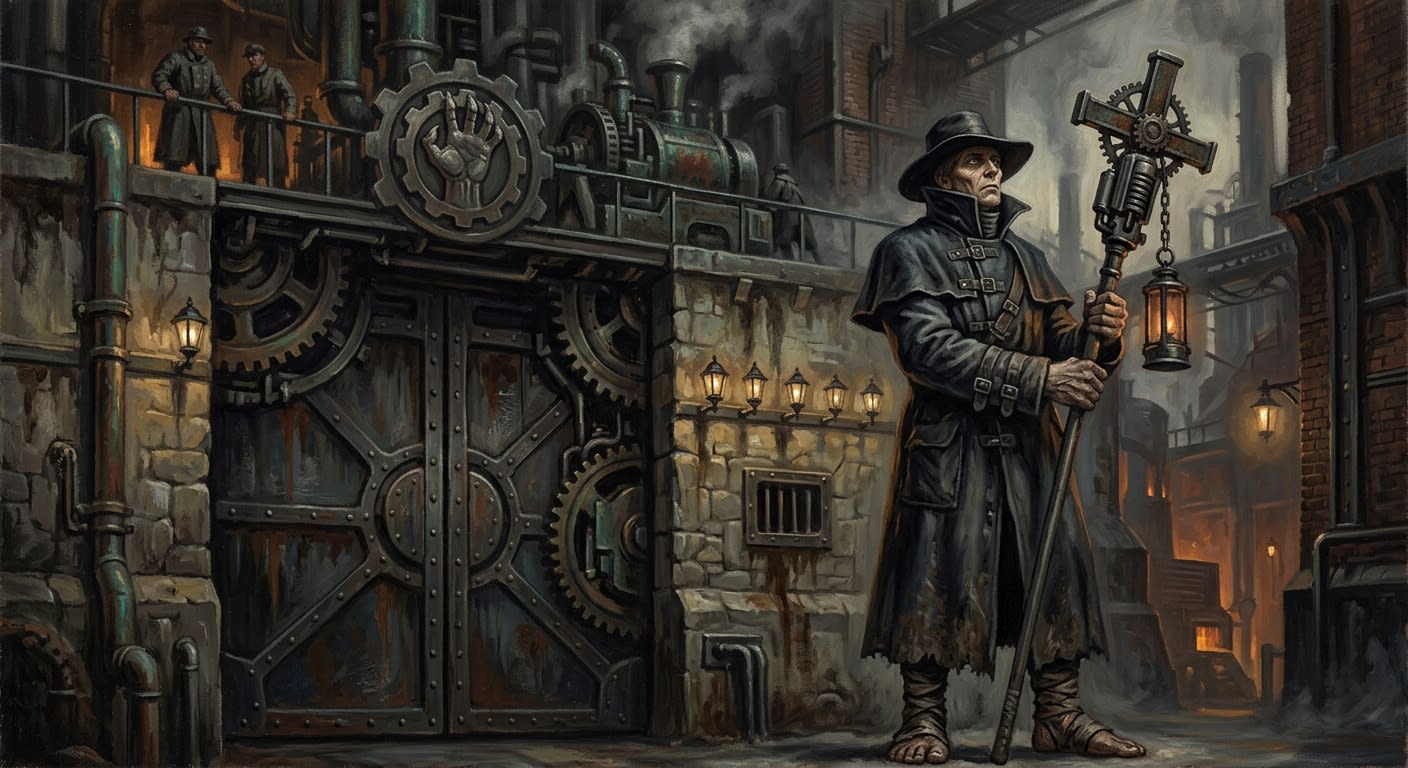
Aachen
The city that survived its own fall
Aachen opened its gate in A.S. 25, survived the betrayal, and has spent every taxed, polished, barefoot century proving survival is not innocence.
Codex Ref. II.2.02-001
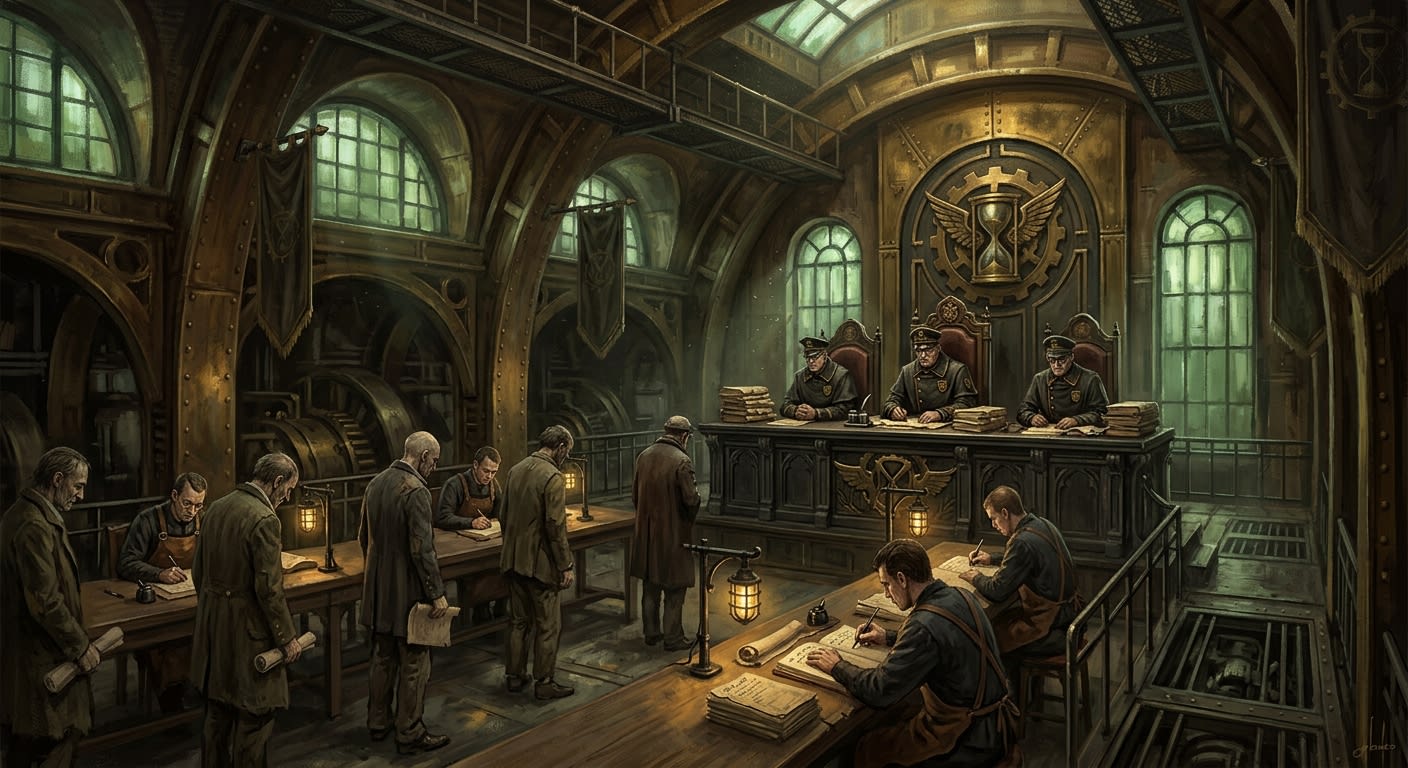
Absolution Hall
Where crossing becomes confession and confession becomes custody
Mid-span tribunal chamber inside Bastion-Brest's brass bridge-body, where crossing petitions, confession irregularities, Blank-Sheet cases, and Echo events are weighed in iron ink.
Codex Ref. II.4.08-098
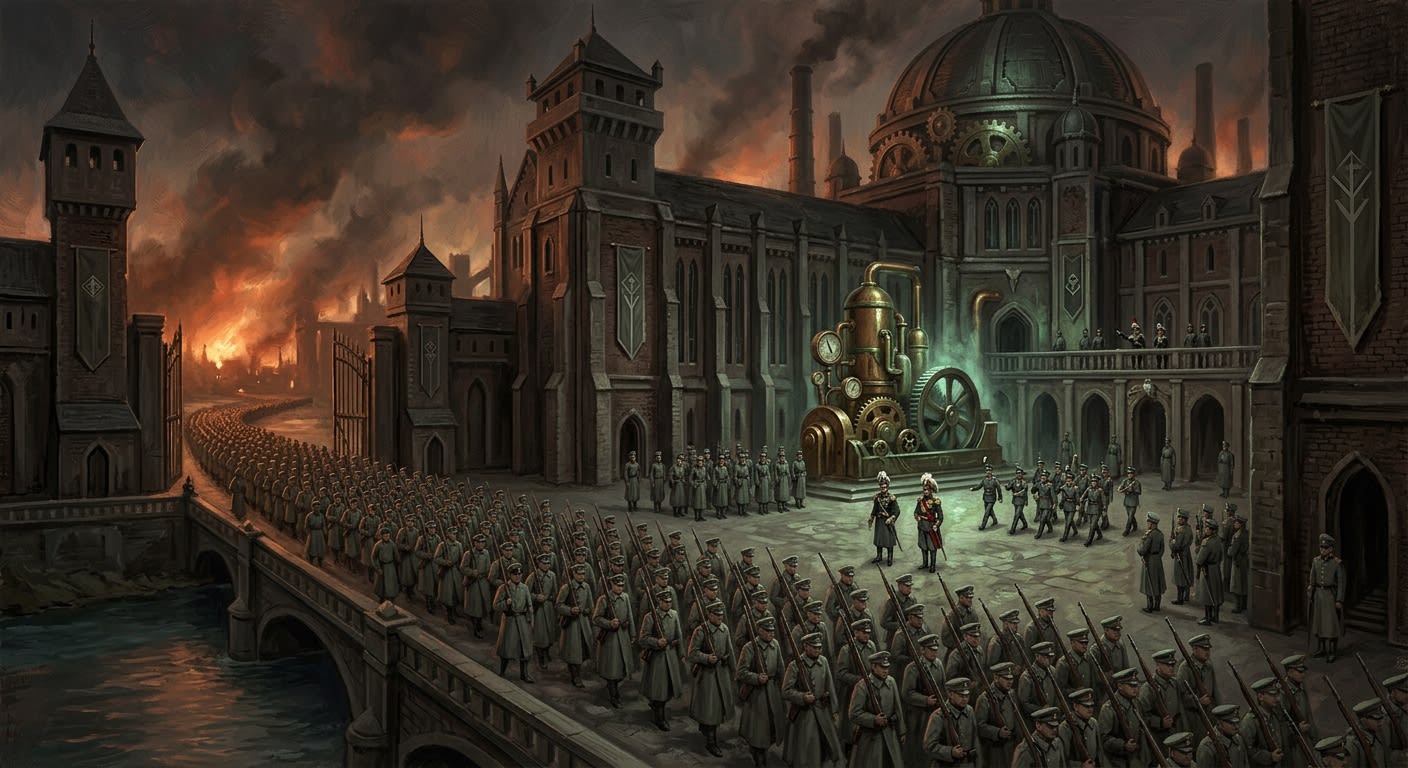
Academy at Vienna
Where correct formation met fire from a cloudless sky
Vienna's Academy taught order so perfectly that twelve thousand men marched by its rules into Maldrake's cloudless fire at the Iron Plains.
Codex Ref. II.4.09-045
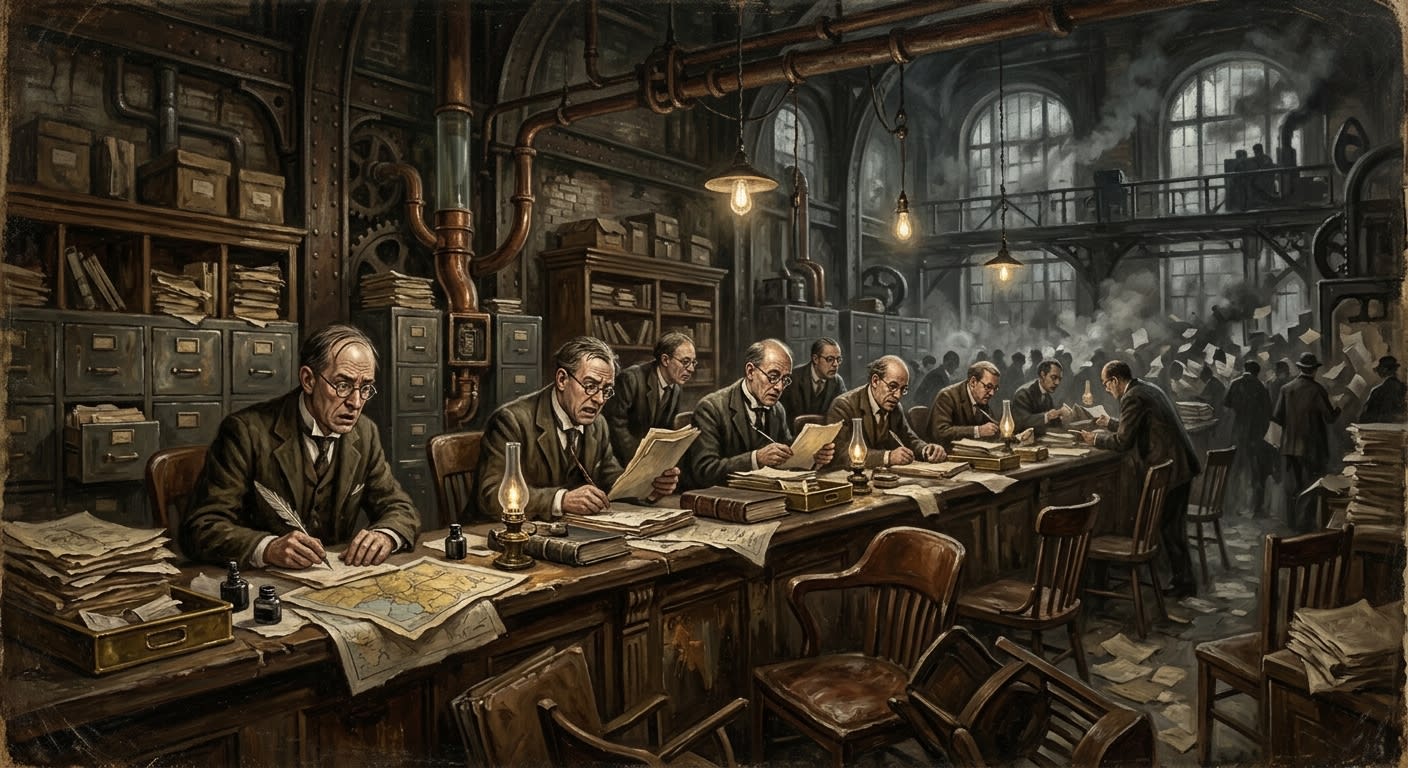
Administrative Node Seven
Where wonder learns to wait at the counter
Surface annex above the Burnless Archive, Node Seven turned treaty paper, complaint chairs, and clerical panic into the counter where strange documents became government.
Codex Ref. II.5.07-078
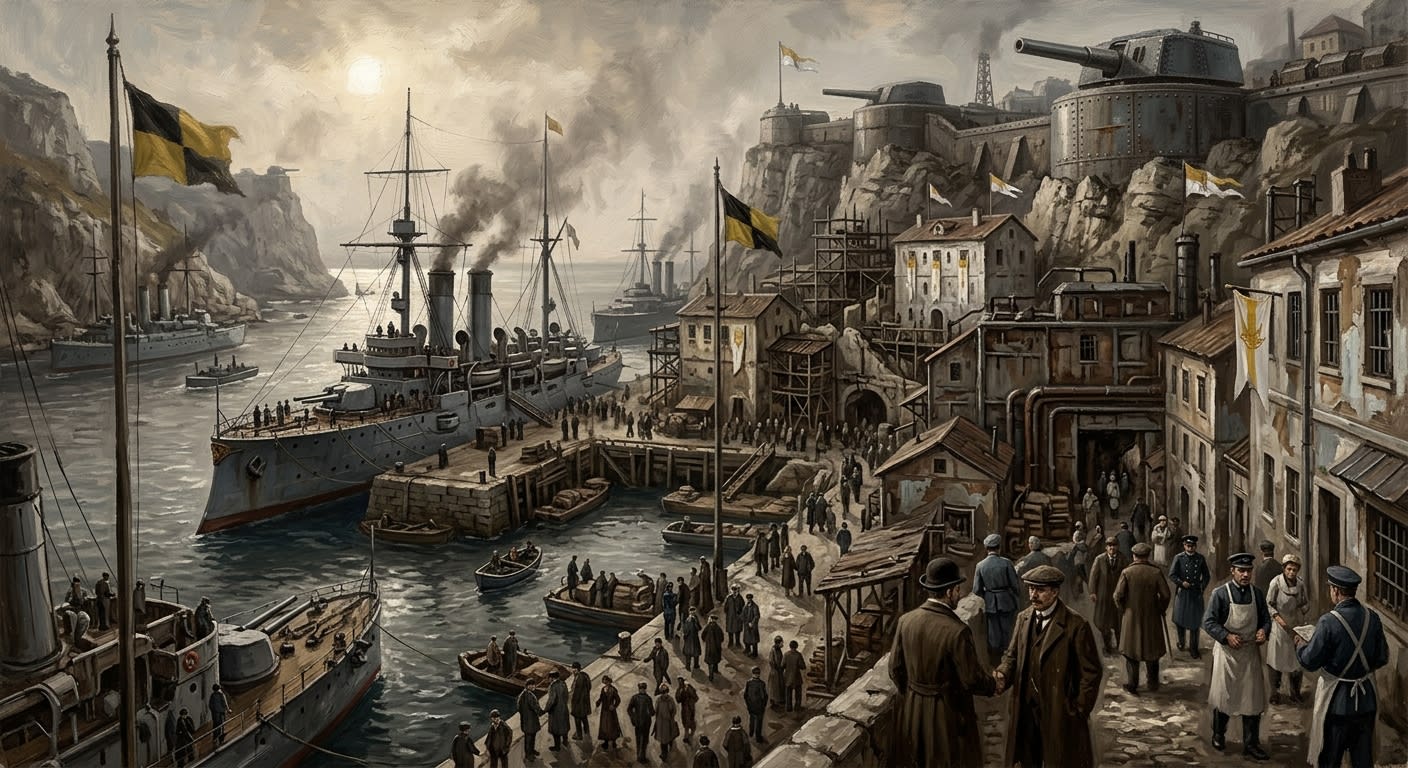
Adriatic Coast
The white edge where pilgrimage, quarantine, and invoice learn to float
The Adriatic Coast is the Synod's white southern hinge: pilgrim piers, quarantine flags, cliff guns, fever wards, and profitable fraud.
Codex Ref. II.7.03-201
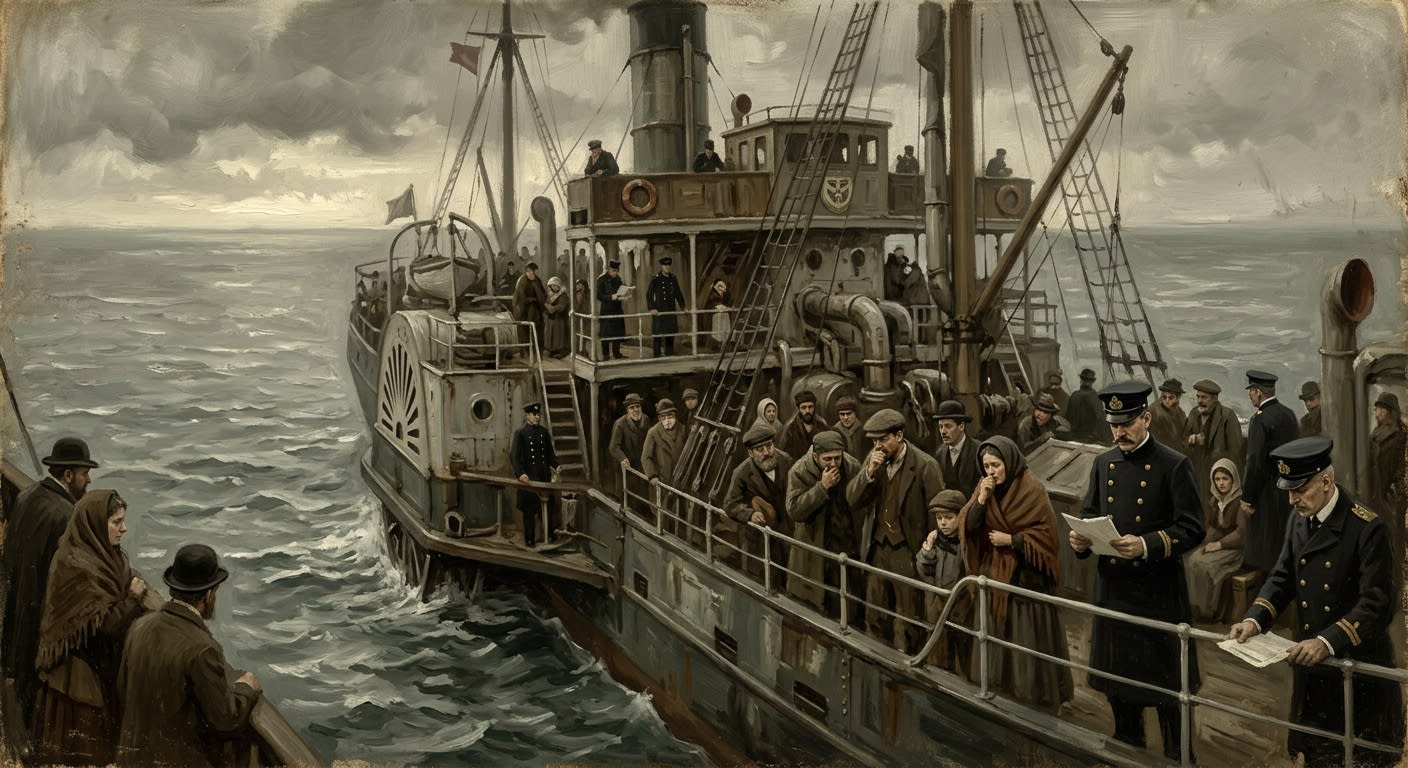
Adriatic Sea
A wet alibi for Rationalist cowardice and Synodal tariffs
The Adriatic Sea carries pilgrims, fever, tariffs, and the stale Rationalist lie that an invisible seabed volcano stole the dawn.
Codex Ref. II.7.03-032
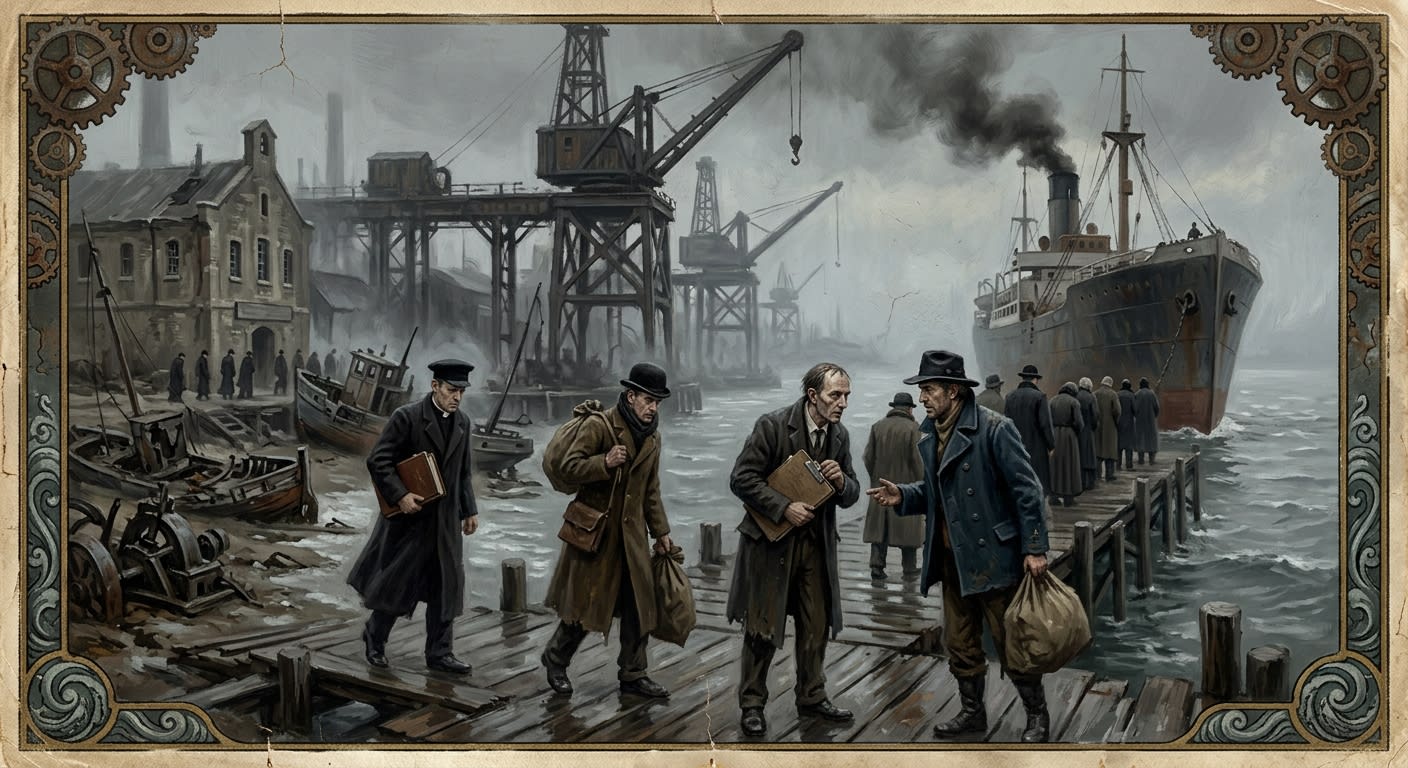
Aegean
The sea is held where it is counted
The Aegean is the Synod's southern salt-ledger: supply lane, pilgrim road, smuggler's chapel, drown-office, and sea with a clerical appetite.
Codex Ref. II.4.09-072
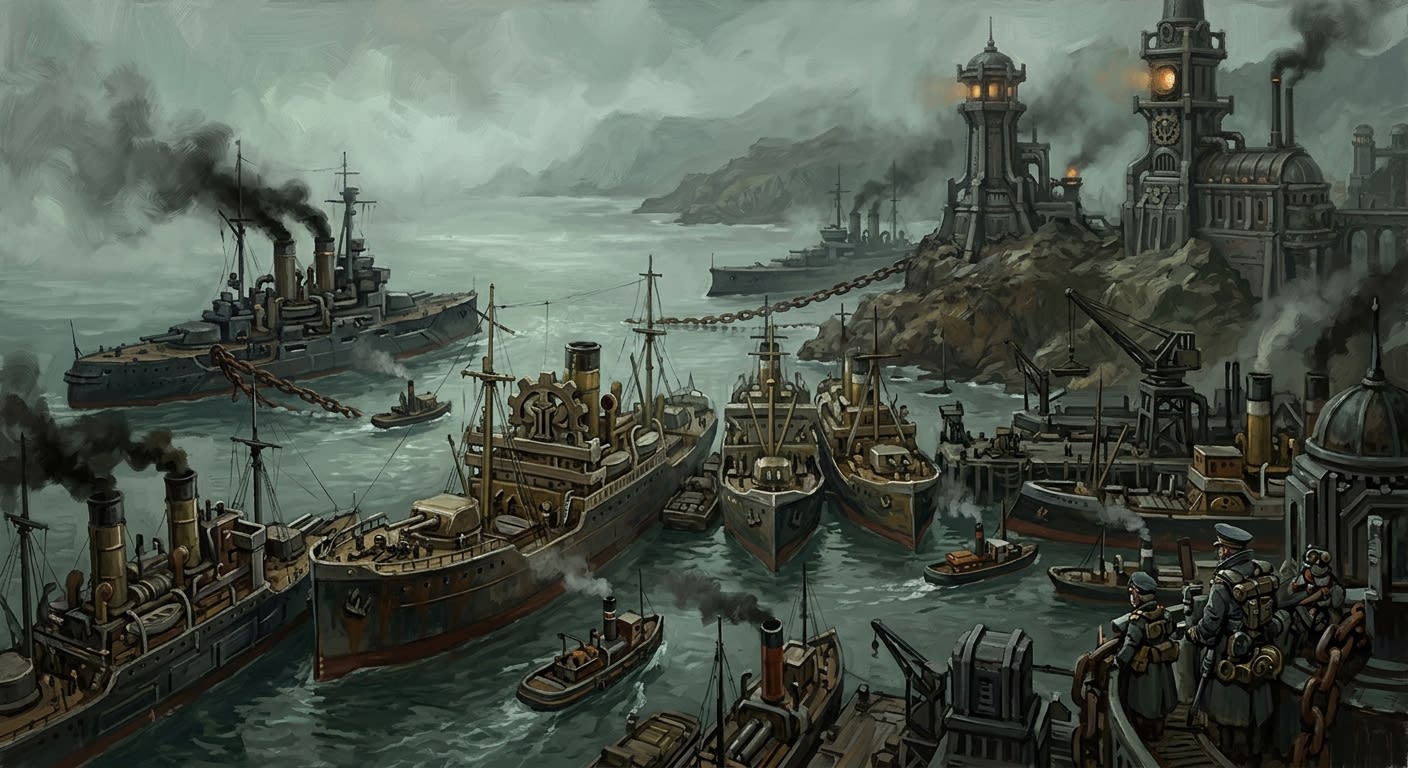
Aegean Approaches
The sea route where even sleep must show papers
Southern maritime threshold where the Aegean supply sea, Shipka road, Thessaloniki chains, and Syrion's fog politely conspire to make motion taxable.
Codex Ref. II.4.09-072
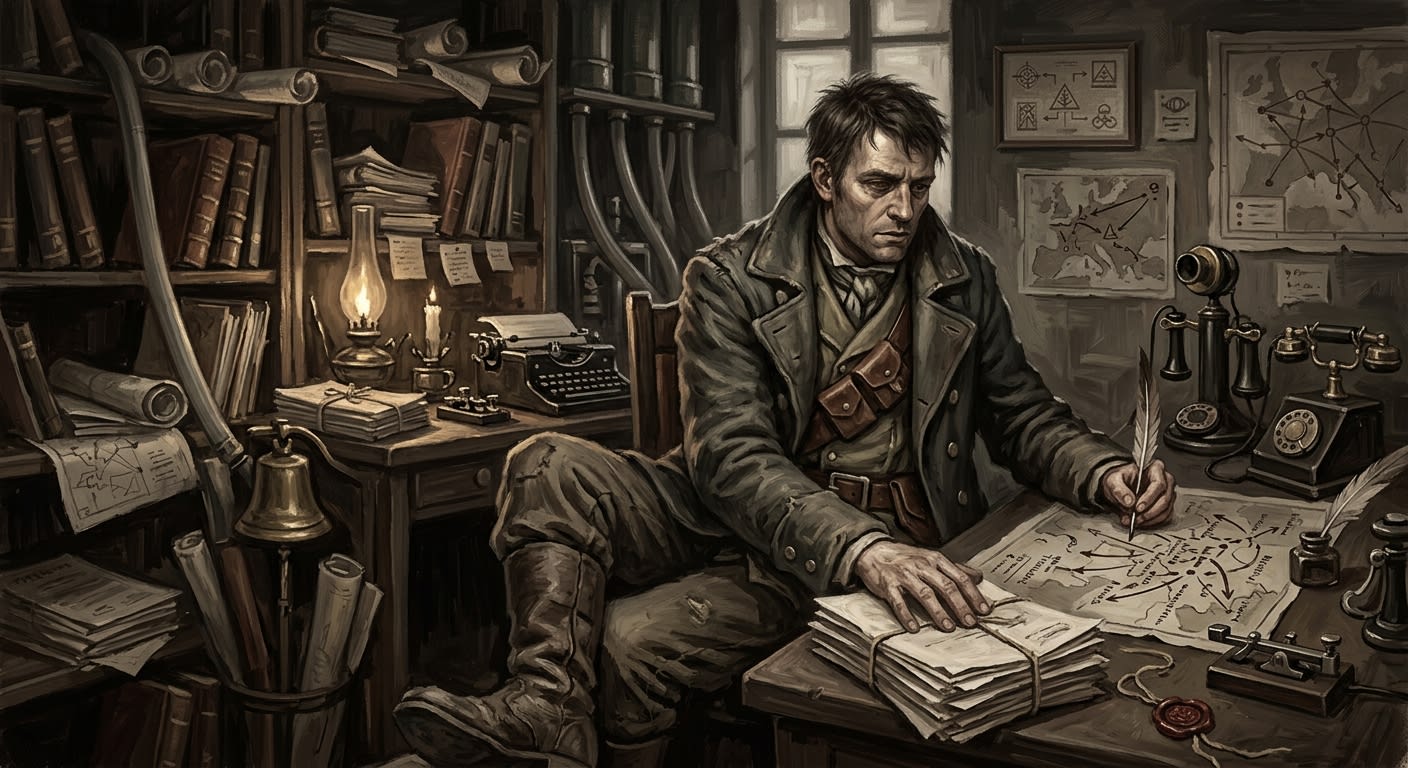
Albi
The first road-sign of the Toulouse fire
Albi did not invent the Toulouse fire. It proved the fire could travel: by courier, confession, pamphlet scrap, bell, and useful fear.
Codex Ref. II.1.09-093
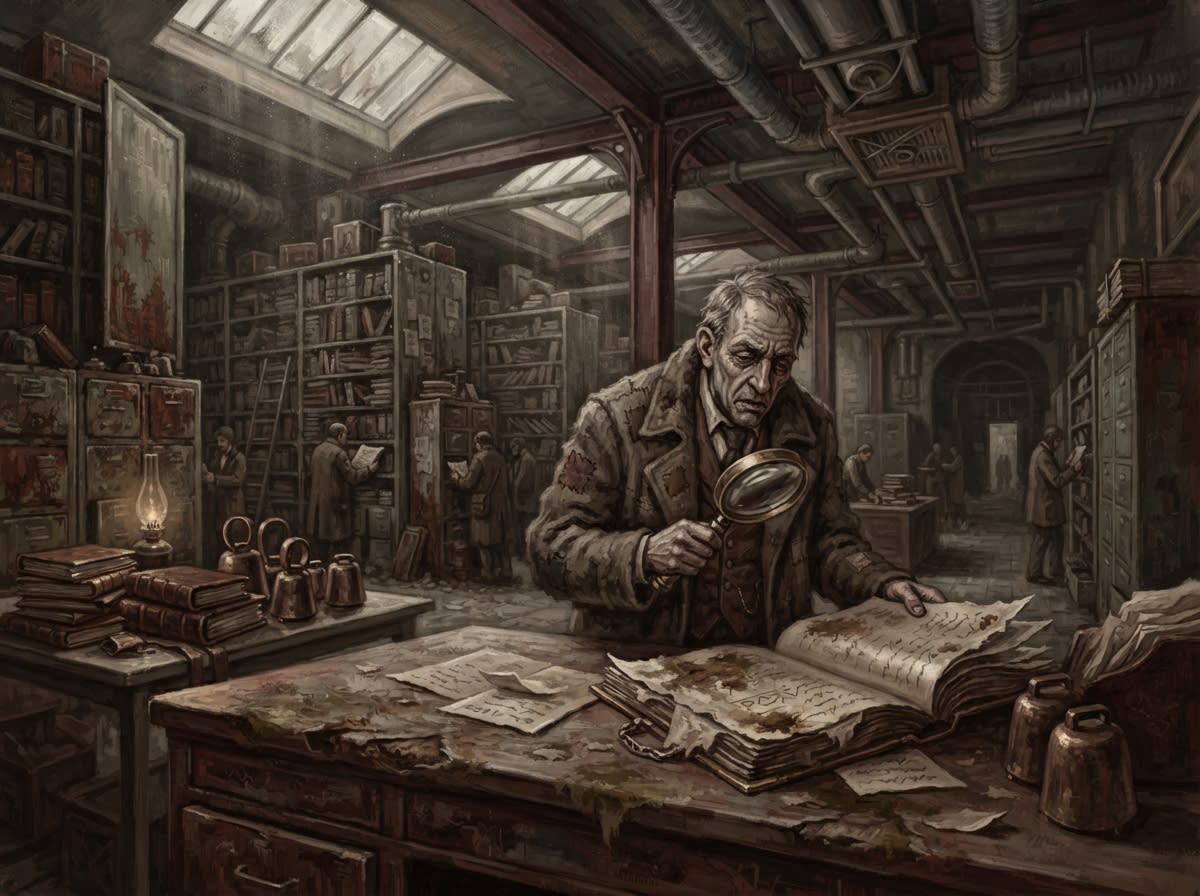
Alfold
The plain that remembered hooves after hunger learned to count
The Alfold was the cattle plain of old Hungary, where herds vanished with Debrecen's stores and the registers survived the hooves they were made to count.
Codex Ref. II.4.09-046
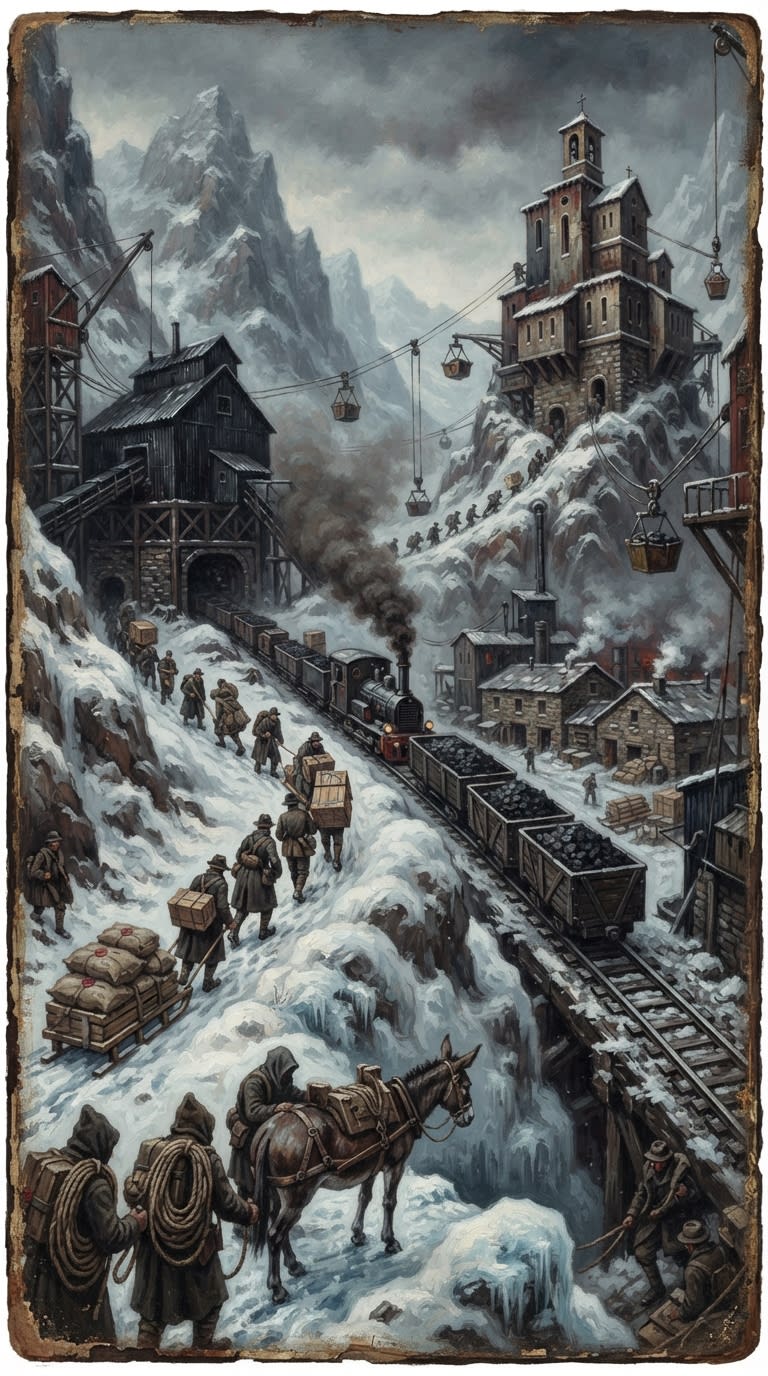
Alpine Marches
The Mountain Province That Obeys by Receipt
The snowbound Procuratorial region of passes, salt roads, coal depots and hidden wards whose obedience is meticulous, profitable and never quite submission.
Codex Ref. II.2.08-201
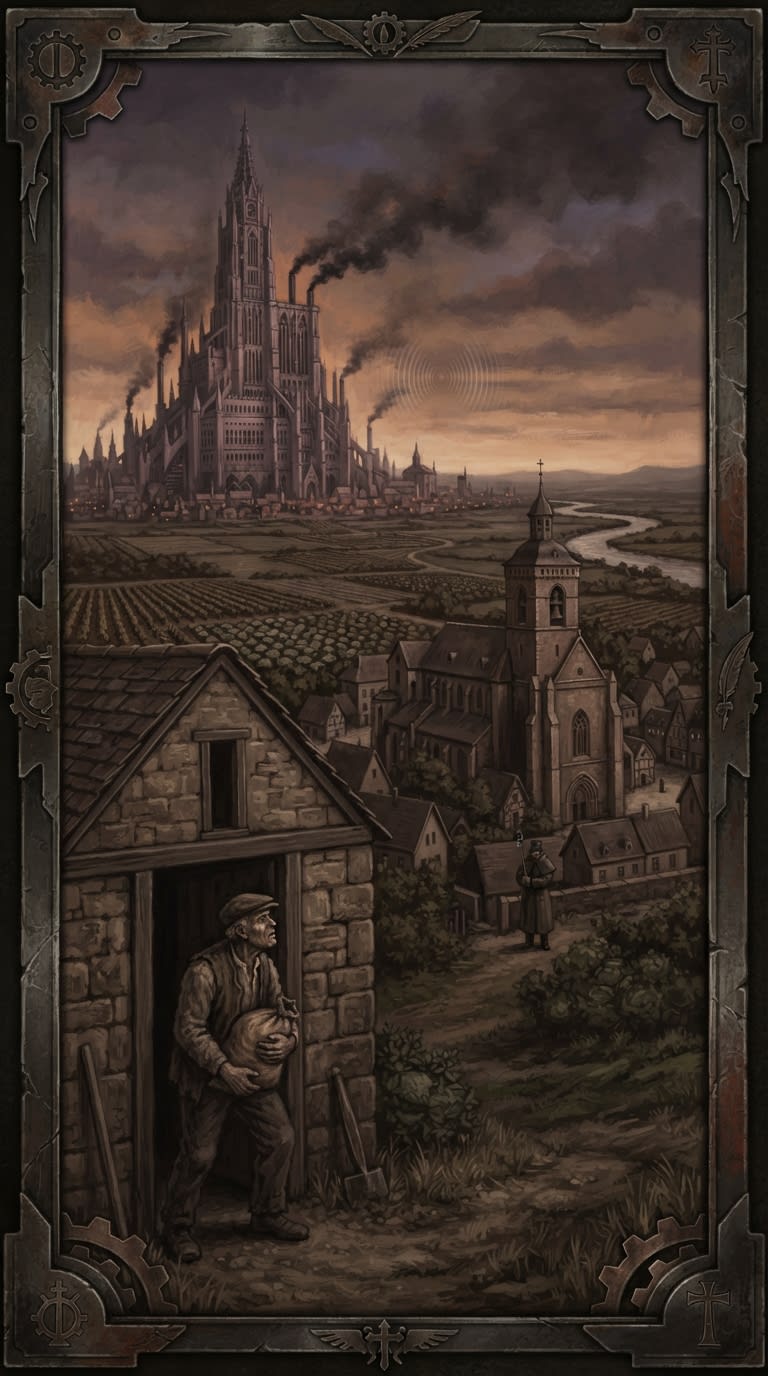
Alsace
The province close enough to mistake obedience for acoustics
Alsace is Strasbourg's near countryside: stone, grain, wine, licensed parish bells, and villages taught that the Whisper may hear what the assessor has not yet counted.
Codex Ref. II.2.10-201
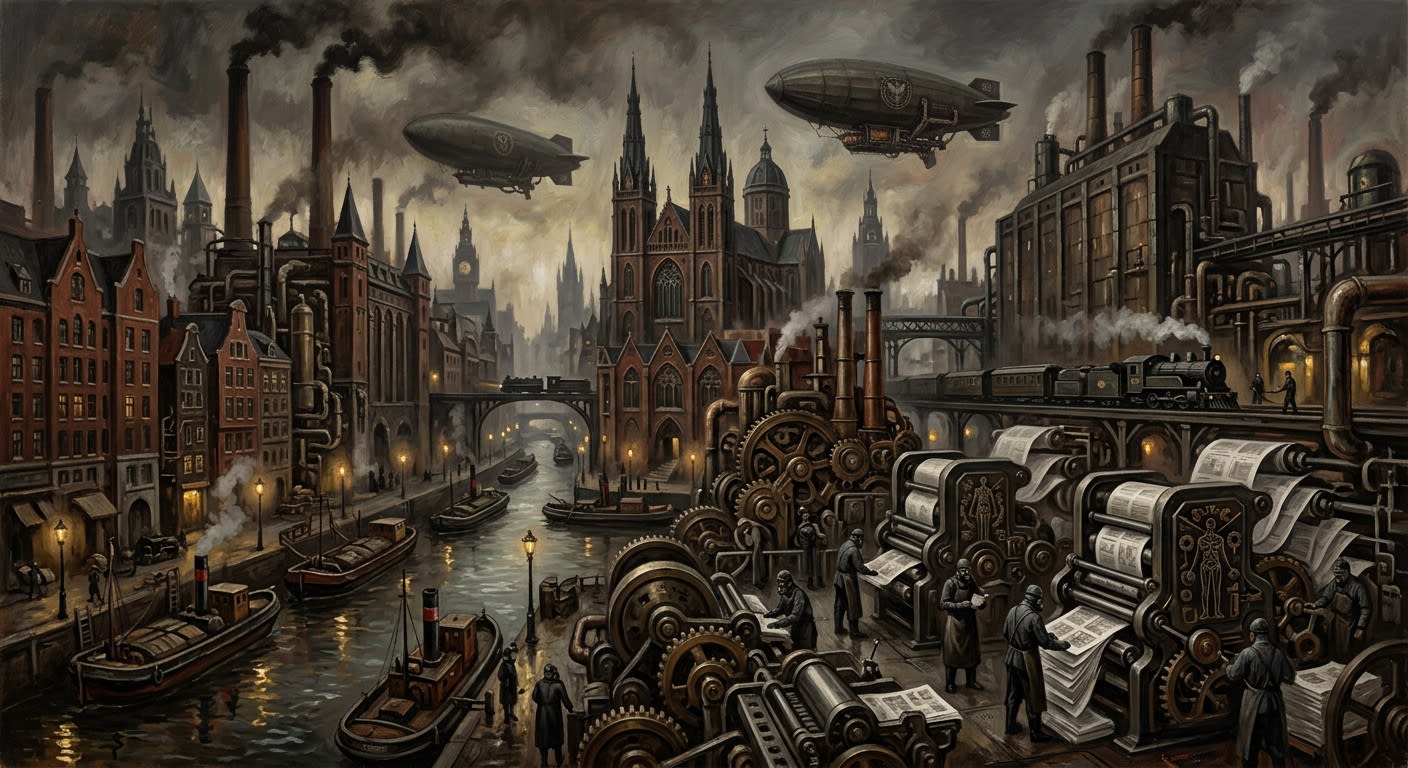
Amsterdam
The city where Europe learned to sin in pamphlet form
Amsterdam is the independent Dutch city where the Synod's calendar wound was printed: first the Year of Letters, then *De Vera Luce*, then Europe taught to doubt by invoice.
Codex Ref. II.4.09-012
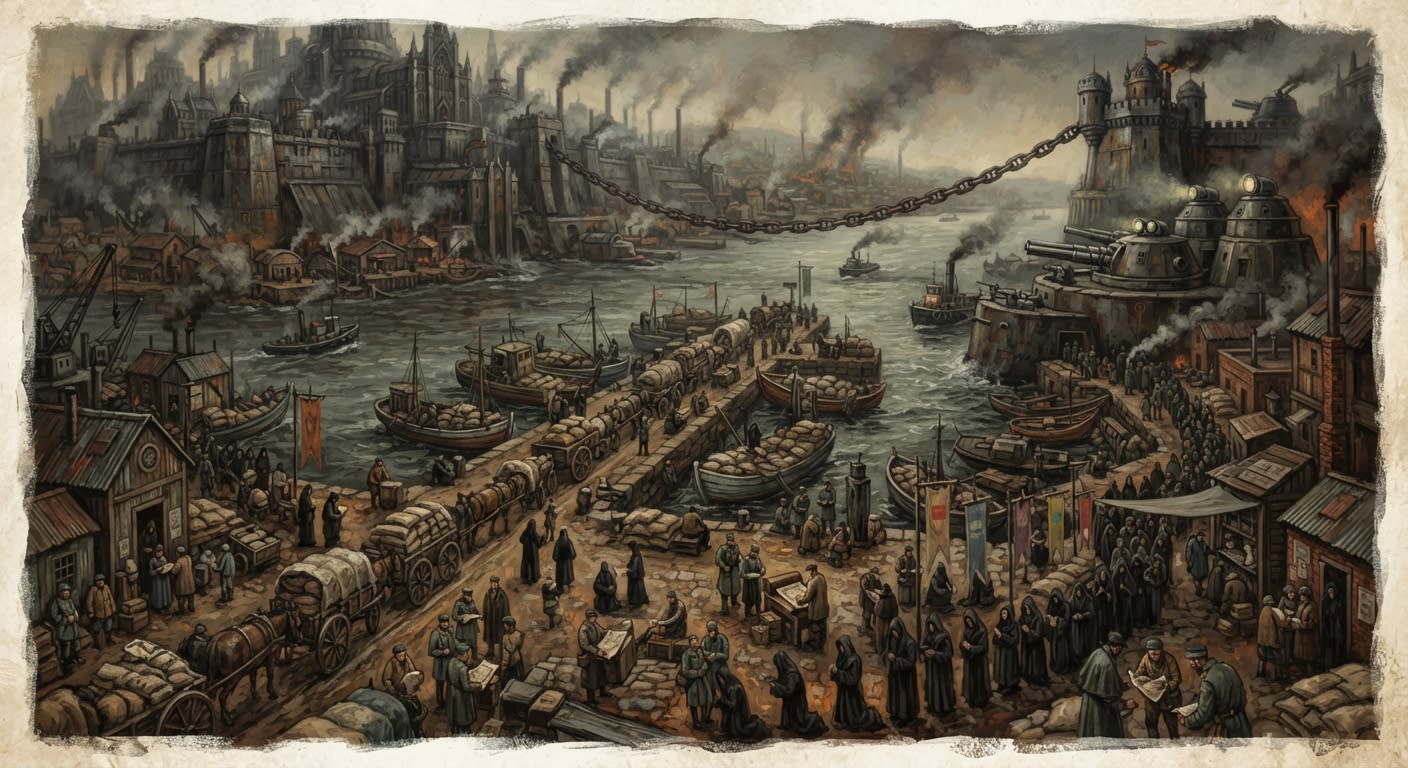
Anatolian Prefectures
The pantry the Hinge audits after eating
Synod-held Green Approach across the Bosphorus: grain, pilgrims, black diesel, and the arithmetic by which Bastion-Constantinople eats while accusing the hand that feeds it.
Codex Ref. II.4.09-069
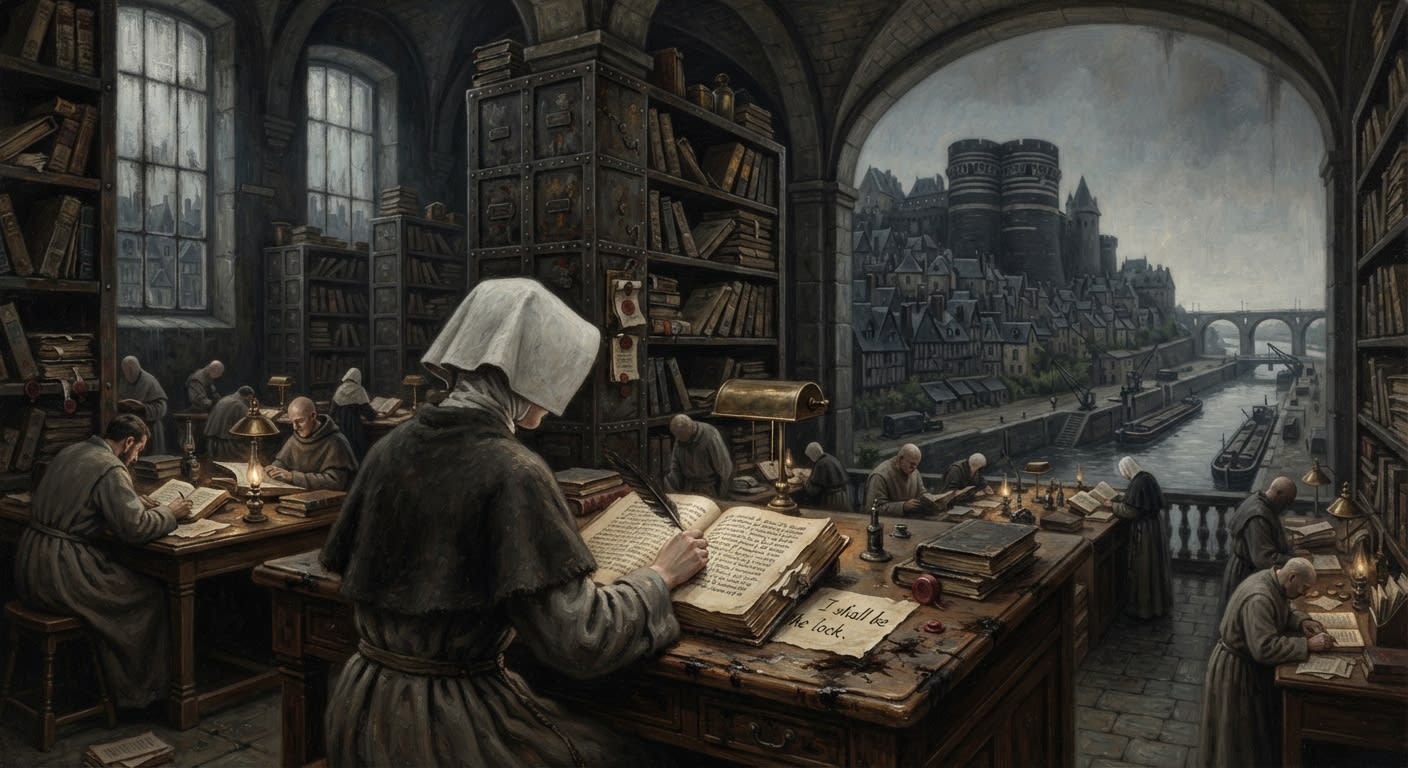
Angers
Five words, no bridge, and a city trying to found an order
Angers is a Zone One city whose claim on the Sisters of the Martyrdom rests on five psalter-margin words: I shall be the lock.
Codex Ref. II.1.09-015
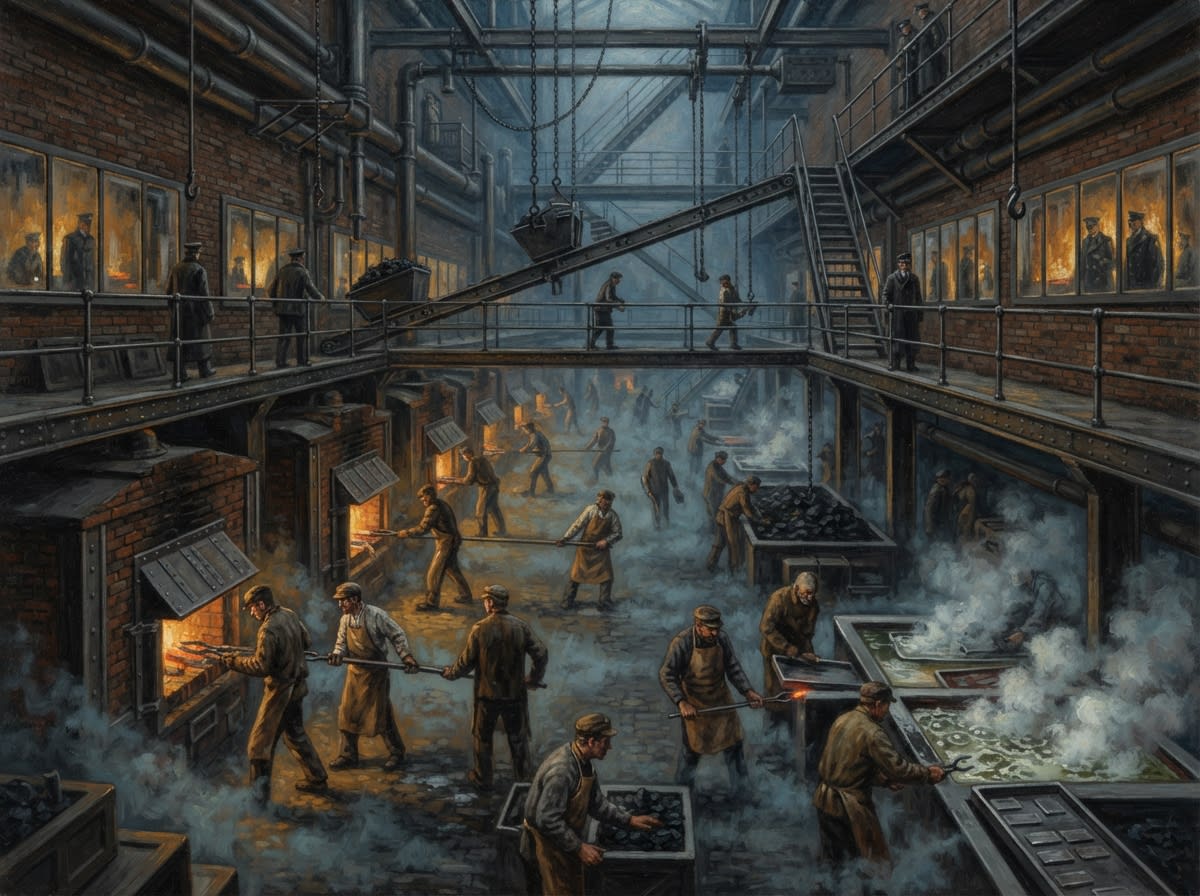
Anneal Courts
Where blank metal is taught to accept a face
Sable Court's Anneal Courts soften blank metal, harden lawful faces, feed the Clipped Choir through furnace loss, and prove identity survives only what the fire permits.
Codex Ref. II.2.07-094
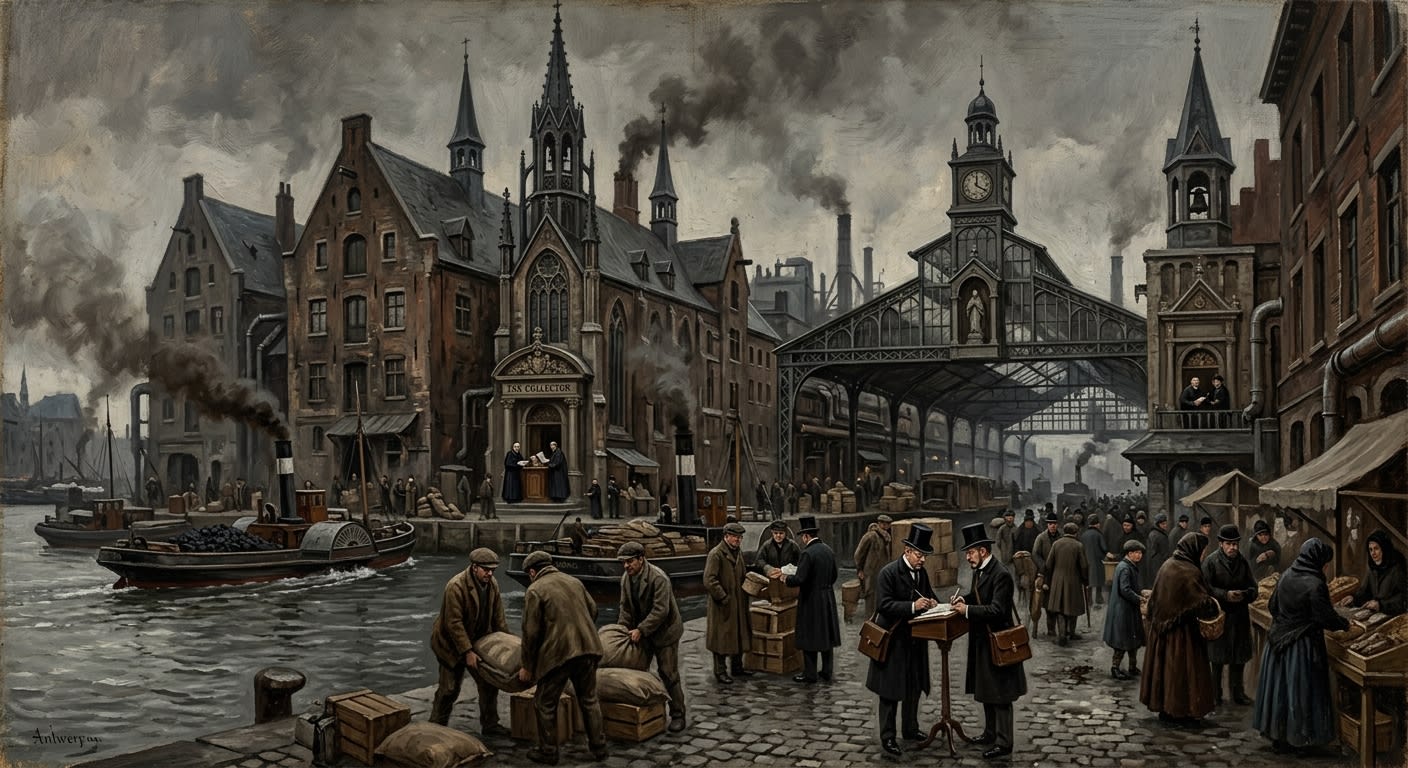
Antwerp
A port city weighing saints by warehouse light
Antwerp is the Scheldt port where commerce learned piety, hunger learned arithmetic, and every warehouse keeps a chapel close enough to tax.
Codex Ref. II.1.06-138
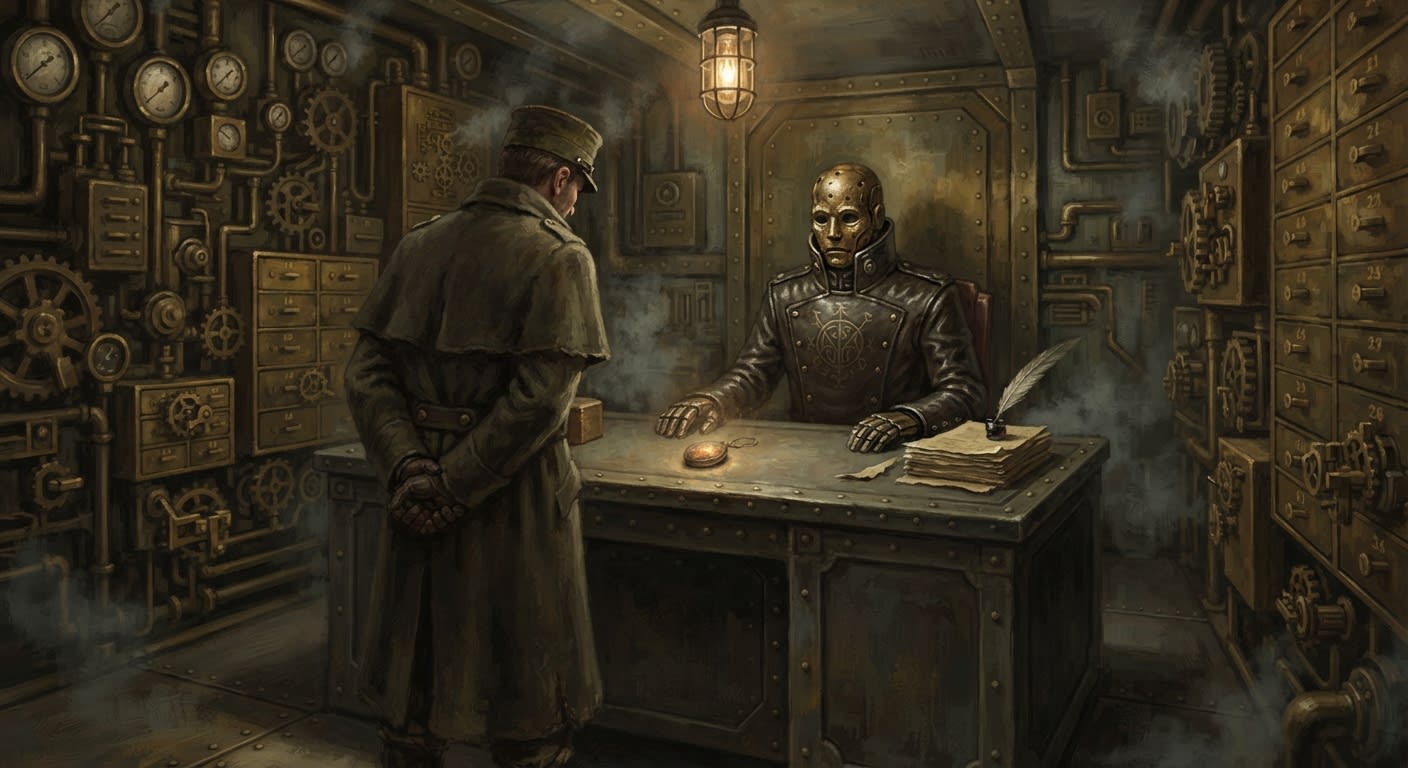
Appraisal Chambers
The room names the price after the wanting has confessed itself
Fourth level of the Vault of Ten Thousand Keys, where Velmora's Appraisers price personal desire as contract, custody and eventual glass.
Codex Ref. IV.1.07-004
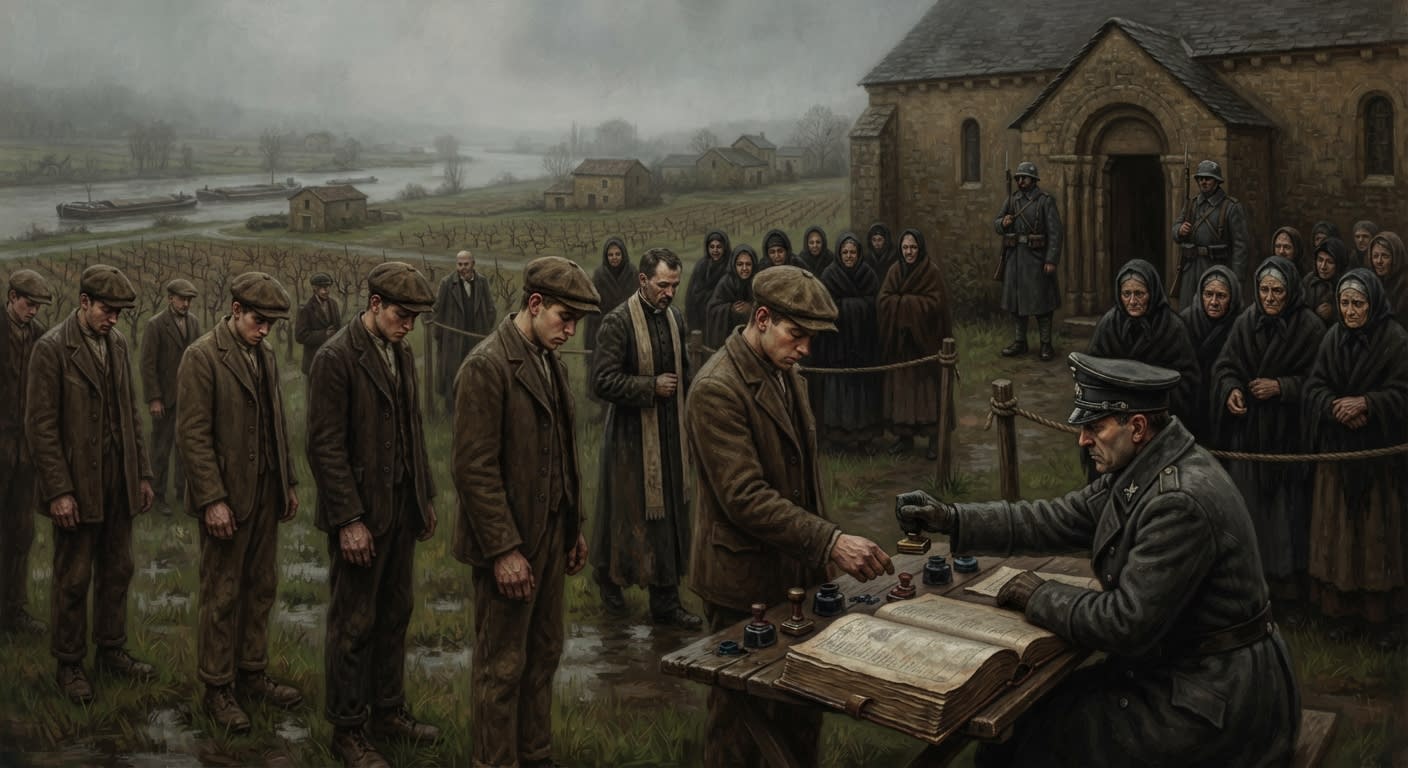
Aquitaine
The western field where sons go missing politely
Aquitaine is the Synod's damp western grain and wine basin: loyal by return, undercounted by suspicion, and courteous enough to make evasion look like hospitality.
Codex Ref. II.1.12-201
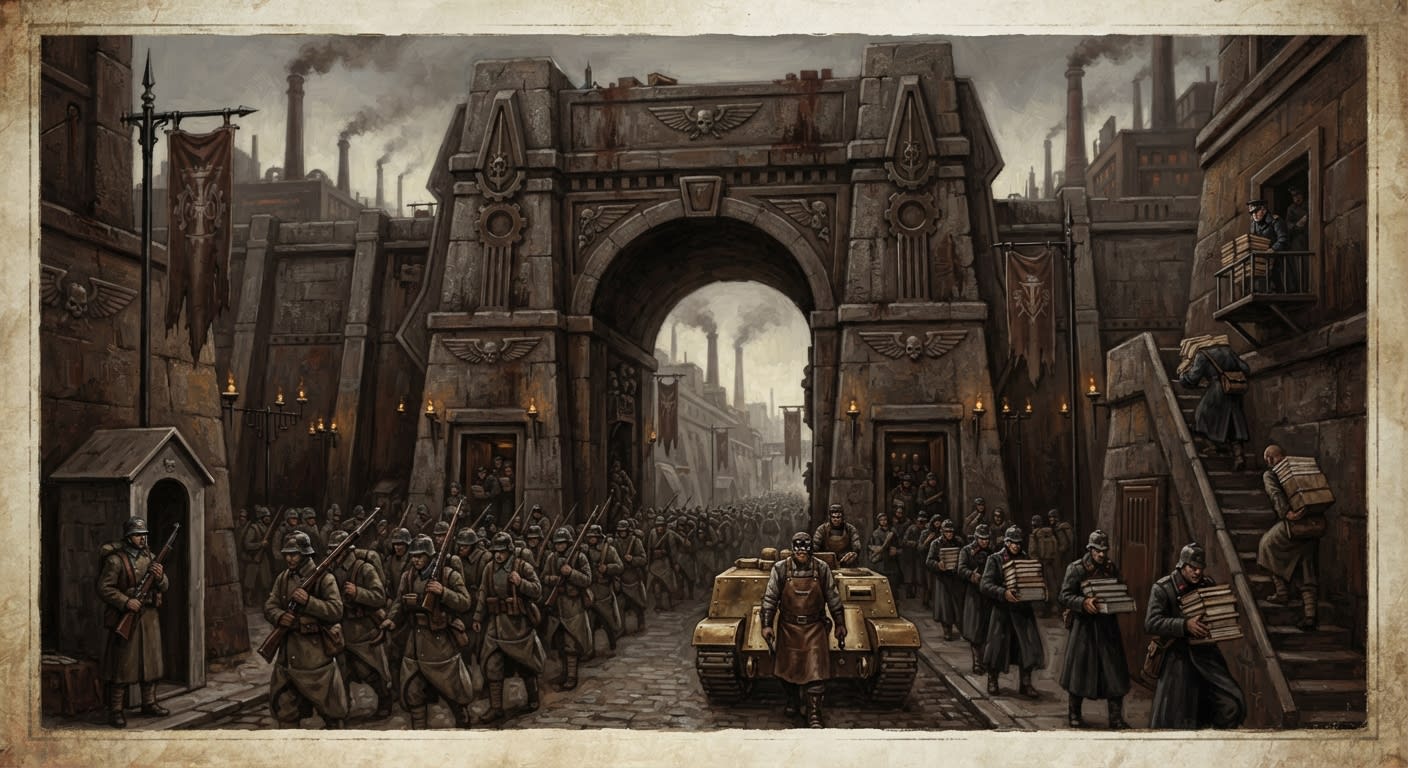
Arch of Campaigns
Where iron enters, and law exits wearing a crimson seal
Strasbourg's military threshold, where the Bureau of War turns cannons, levies, rail priority, and coffin orders into lawful violence beneath the keystone.
Codex Ref. II.3.06-105
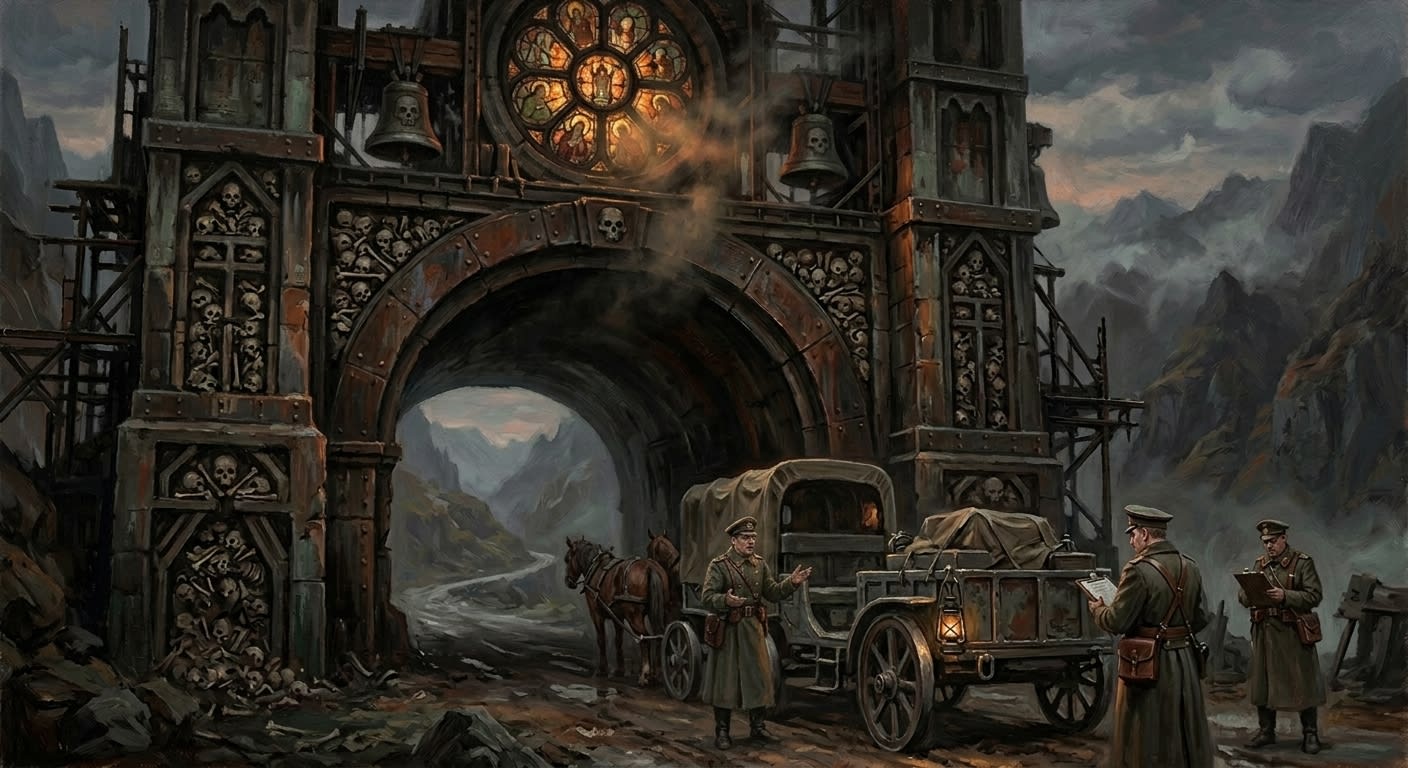
Arch of Saint Harrowglass
The checkpoint that makes cowardice ring
Ossuary checkpoint in the Carpathian approaches where Harrowglass shrine-glass clouds, skullwork rings hollow, and no wagon may turn beneath the span.
Codex Ref. II.4.08-014
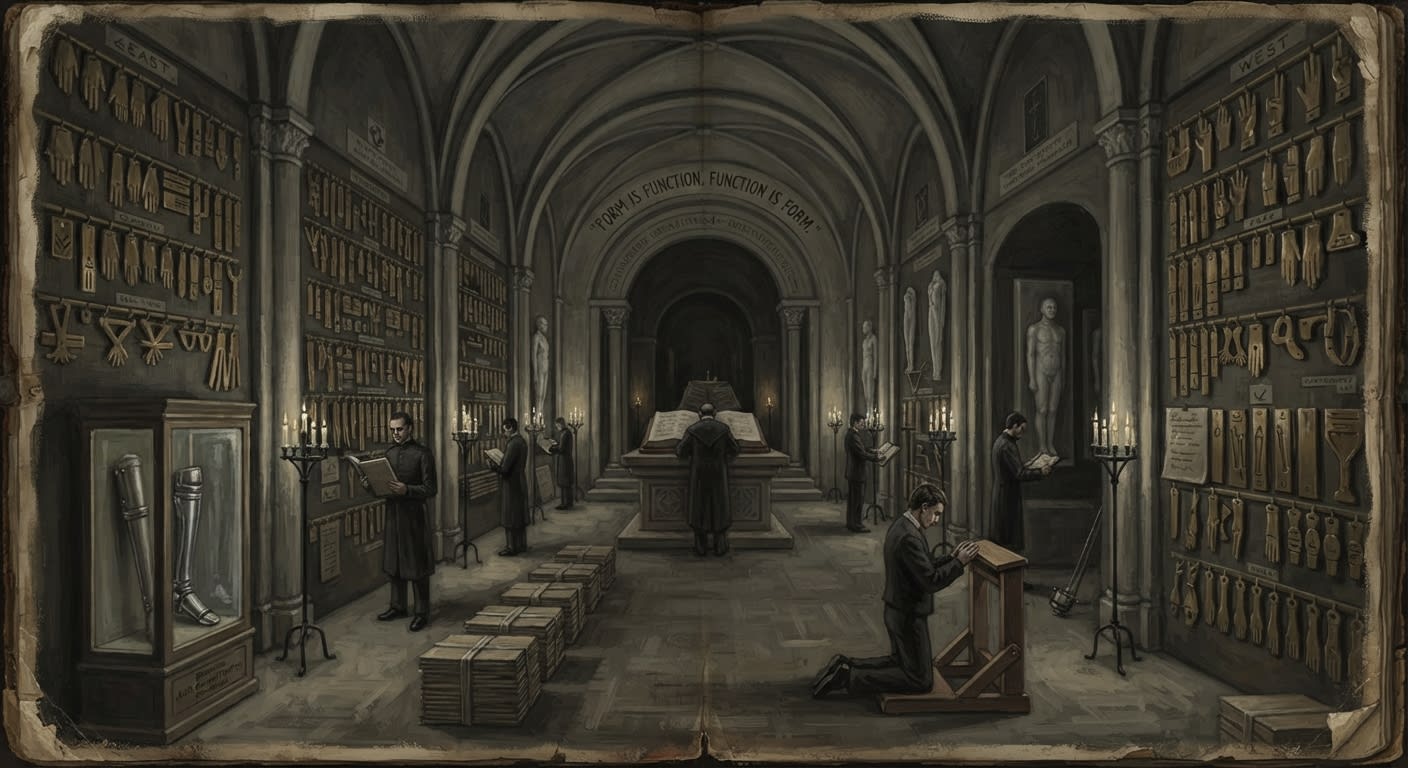
Archive of Prescribed Gesture
The room where the Synod files the body.
A vaulted Strasbourg hall where posture becomes law: brass plates, knee gauges, timing tables, sealed anomalies, and every lawful motion the faithful may perform before the Creator.
Codex Ref. II.2.06-195
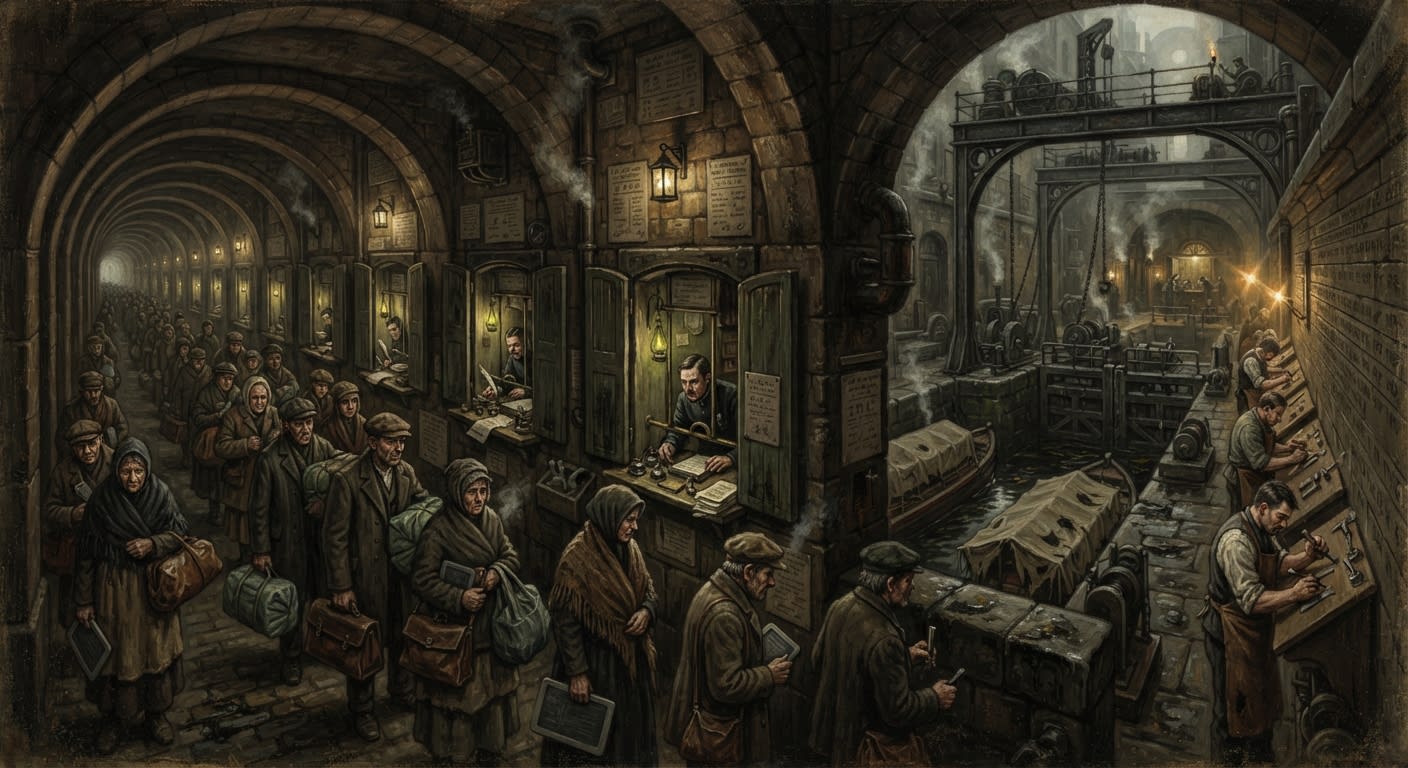
Archivolt Row
Where names enter damp paper and leave as permanent stone
Archivolt Row is the Causeyworks' central spine: registry windows, correction slates, side-ledgers, and the damp machinery by which a name becomes stone.
Codex Ref. II.1.02-092
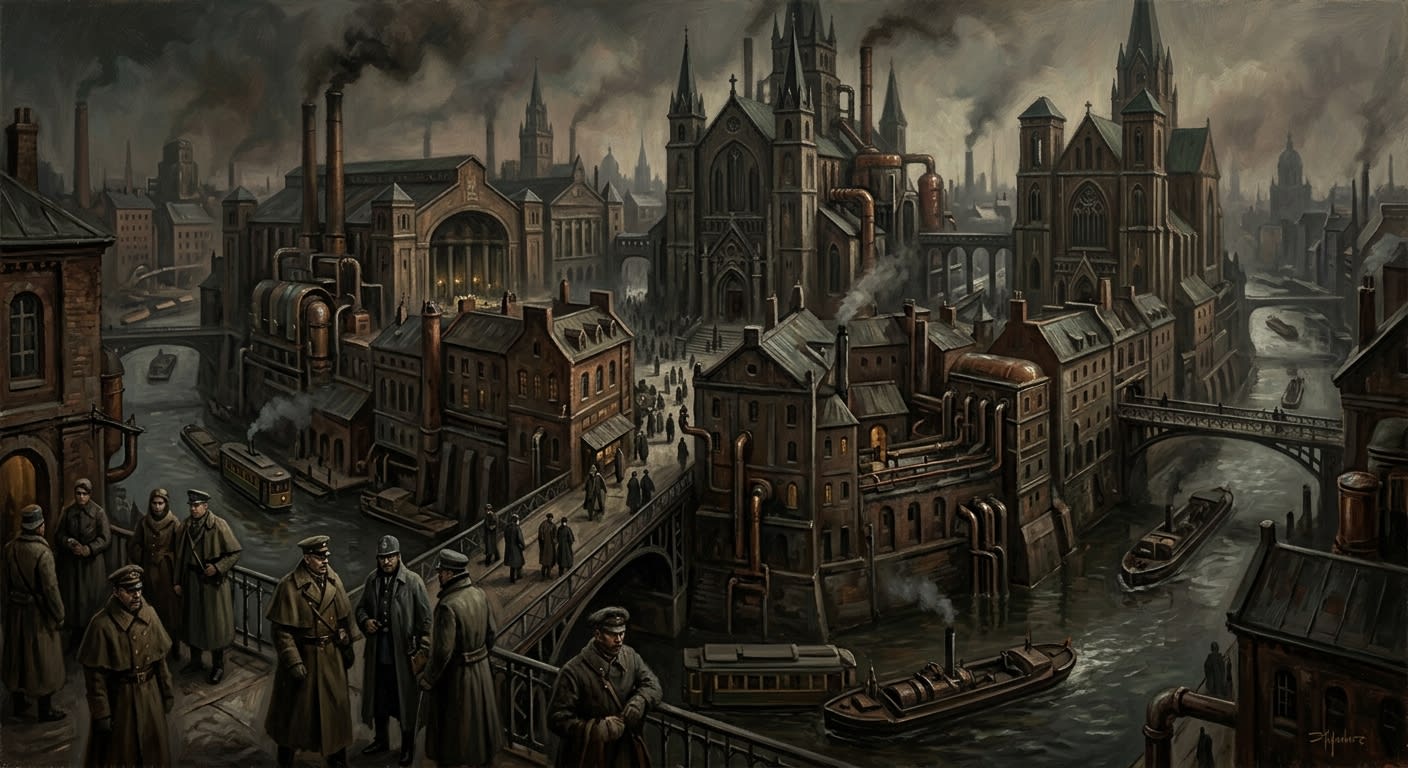
Archonate Isle
The north is not commanded; it is routed until obedience becomes timetable
Administrative island at Kanzleiburg's Spree core, where the Northern Hierarchate, the Archon, Records vaults, War concurrence, and Doctrine's coldest sermon desk make the north move.
Codex Ref. II.4.09-007
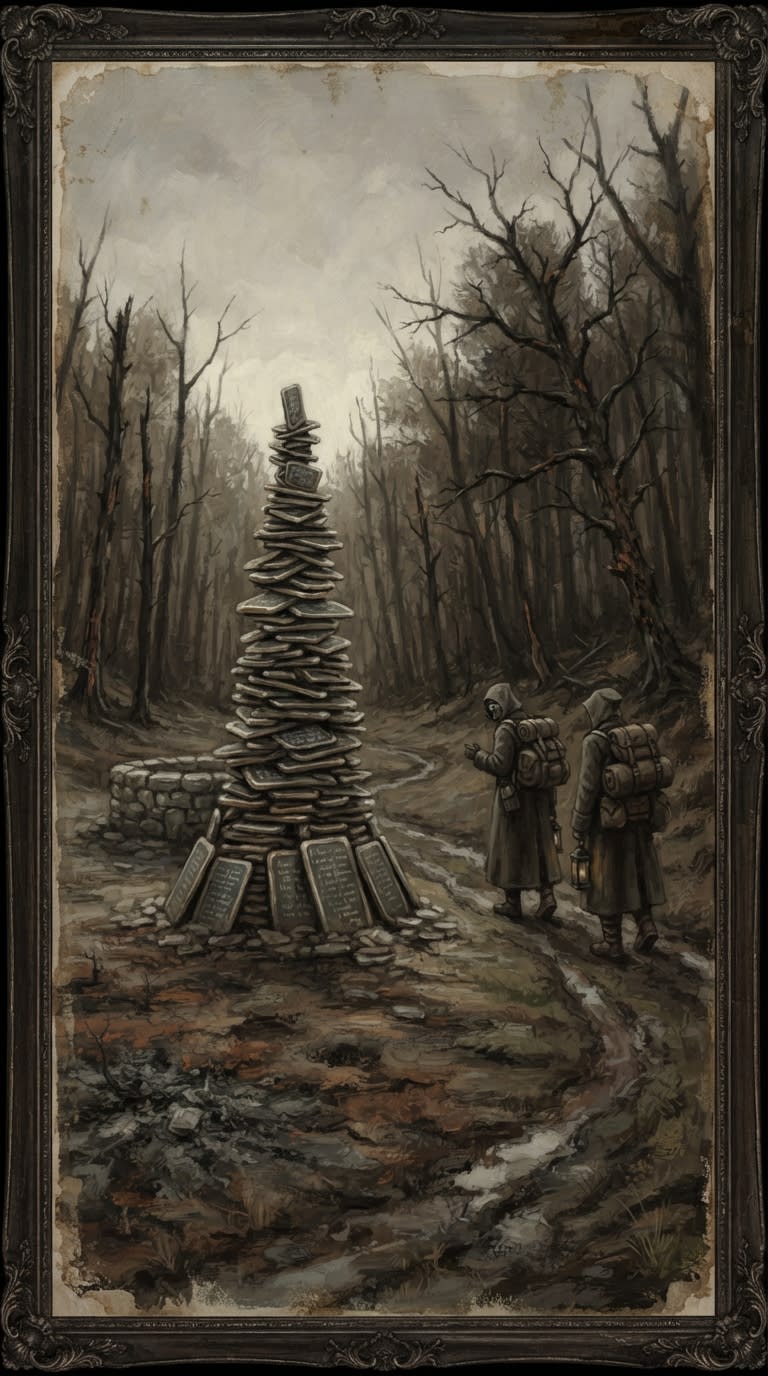
Ardennes
The forest that remembers what Records cannot file
A loyal western forest where expelled friars vanished beneath the moss and the Order of Ash left a parish glassed so clean that even absence required a form.
Codex Ref. II.1.09-189
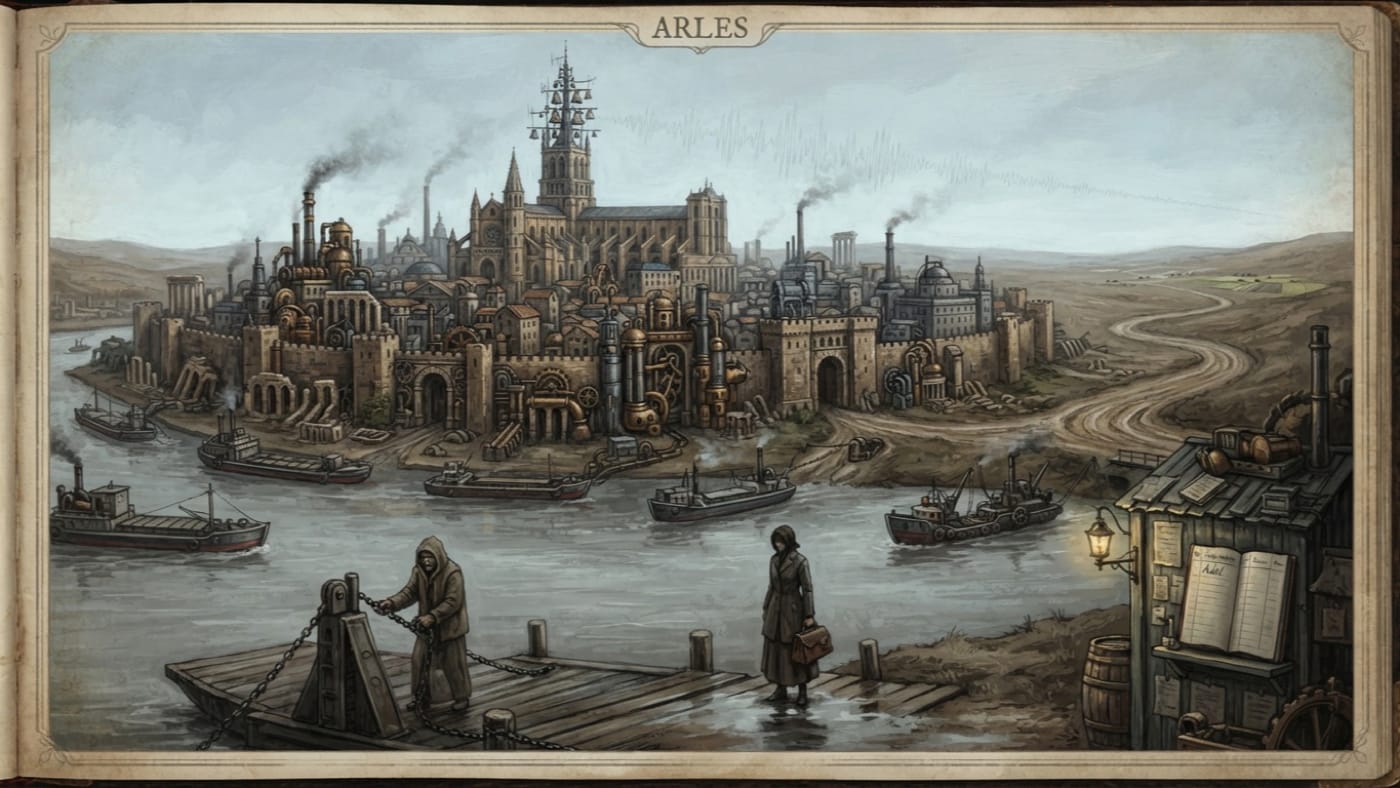
Arles
A town, a diocesan claim, and a name without a destination
Arles stands on the lower Rhône. An undated account gives its diocese fields sixty miles away by bell and ledger; a ferry registry near the town gives Adel no destination. Paper hears further than it explains.
Codex Ref. II.1.08-201
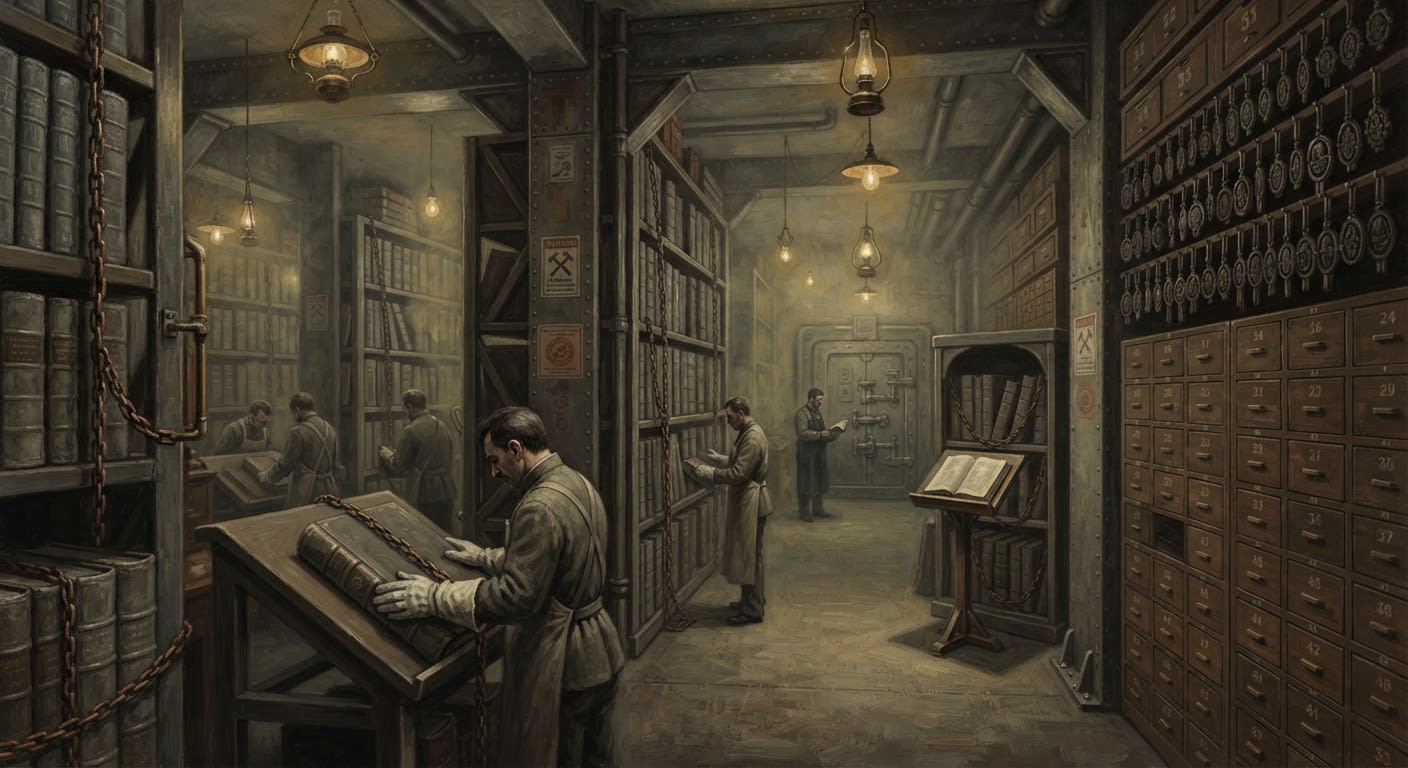
Armorial Vault
Where symbols are chained until they become law
The Armorial Vault is the chained body beneath Strasbourg where registered symbols become legal facts, false marks are preserved for prosecution, and colour learns to fear drawers.
Codex Ref. II.1.04-007
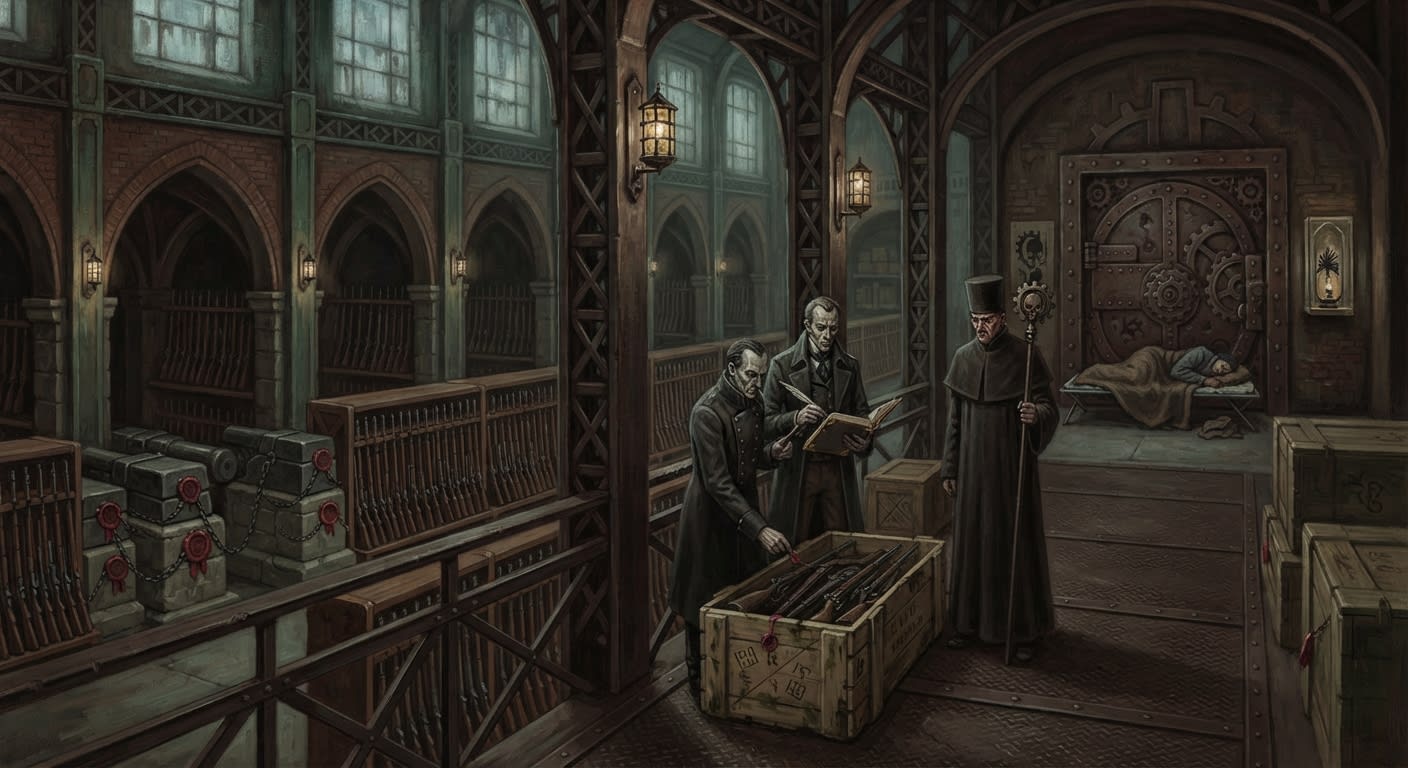
Armoury
Where Strasbourg stores the war it insists will not arrive
Strasbourg's Armoury keeps rifles, powder, breech-blocks, parade steel, and very careful ledgers for a city that claims itself safe. Twenty thousand weapons wait more honestly than their owners speak.
Codex Ref. II.2.09-201
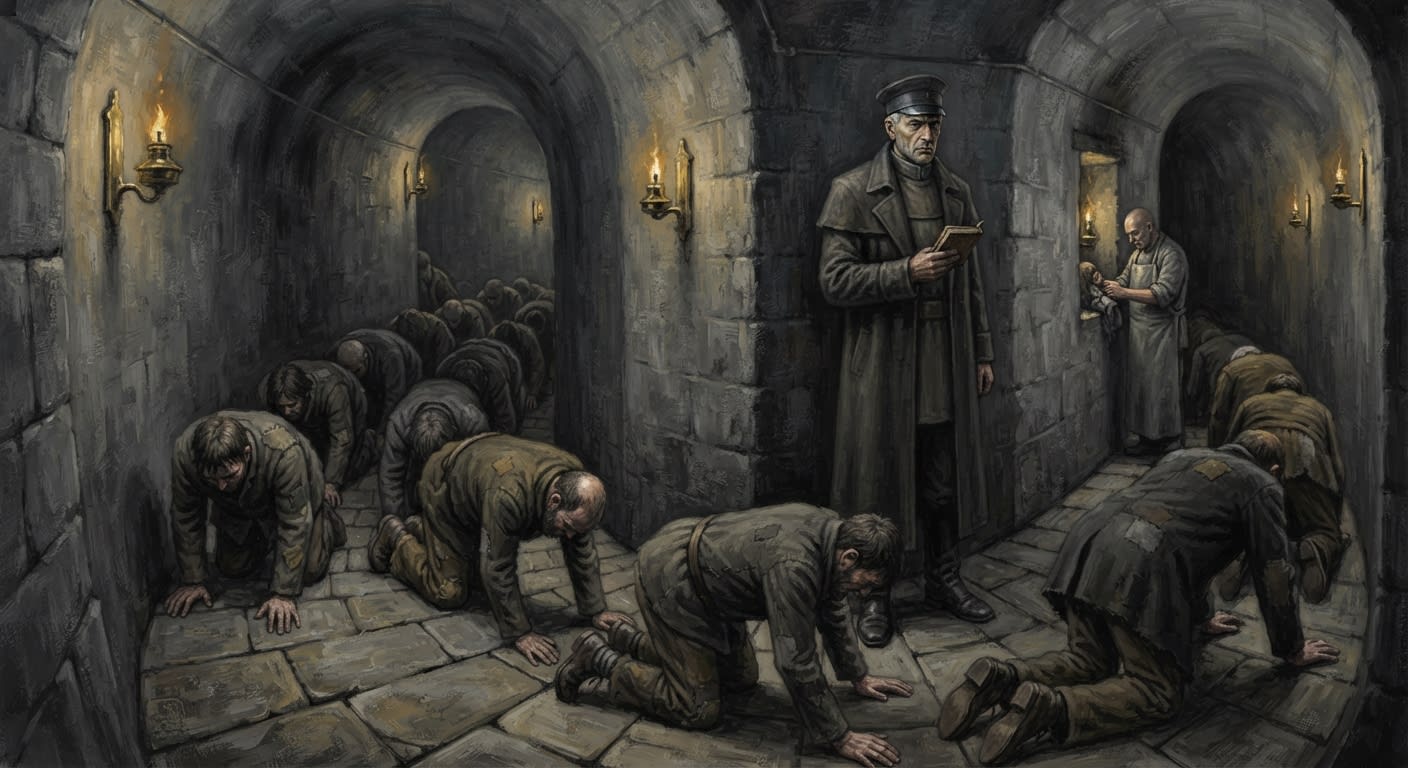
Ash Bend
Where siege memory waits its turn
Ash Bend is the grey turning segment of Vienna's Via Stahlhand, where pilgrims lose sight of the altar and hear the garrison dead rationed by cadence.
Codex Ref. II.4.09-011
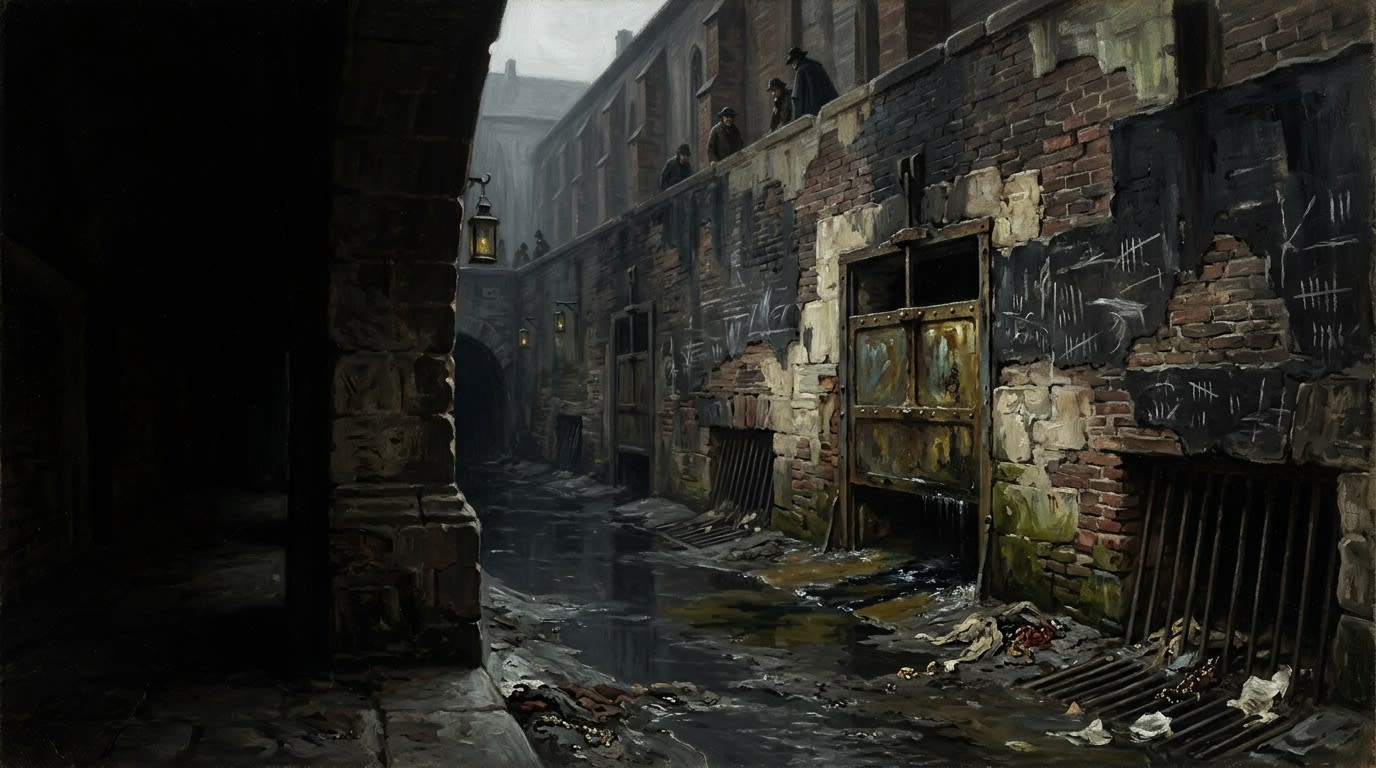
Ash Canal
Where Strasbourg teaches water to forget names
The Ash Canal is the Cloister's south runoff: drain, boundary, market, fever line, and the useful black water into which inconvenient custody is poured.
Codex Ref. II.3.06-007
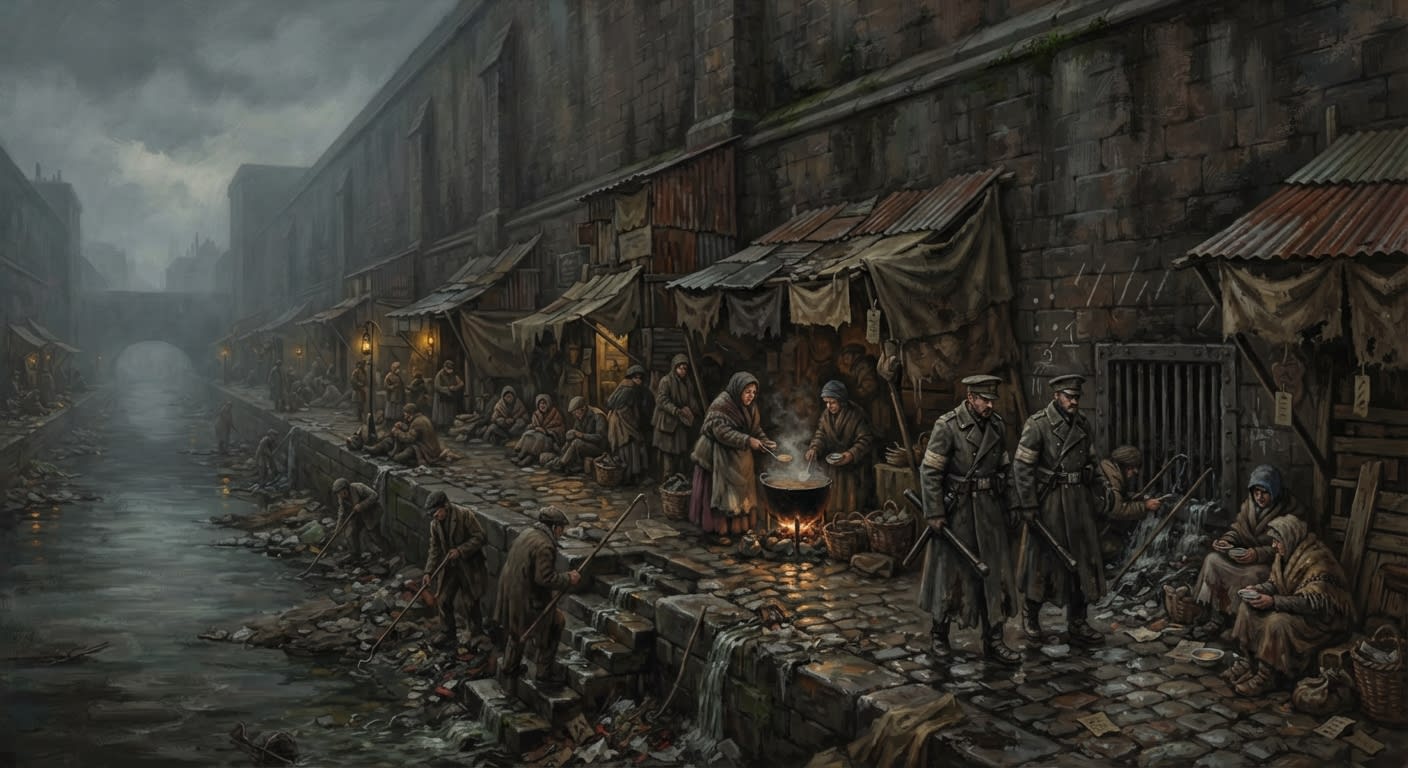
Ash Canal Walk
Where the wall leaks people, tags, and jurisdiction
Ash Canal Walk is the Cloister's denied south-wall strip: runoff margin, fever camp, broth market, hatch-smuggling line, and the place where sorted pilgrims return as prices.
Codex Ref. II.3.06-008
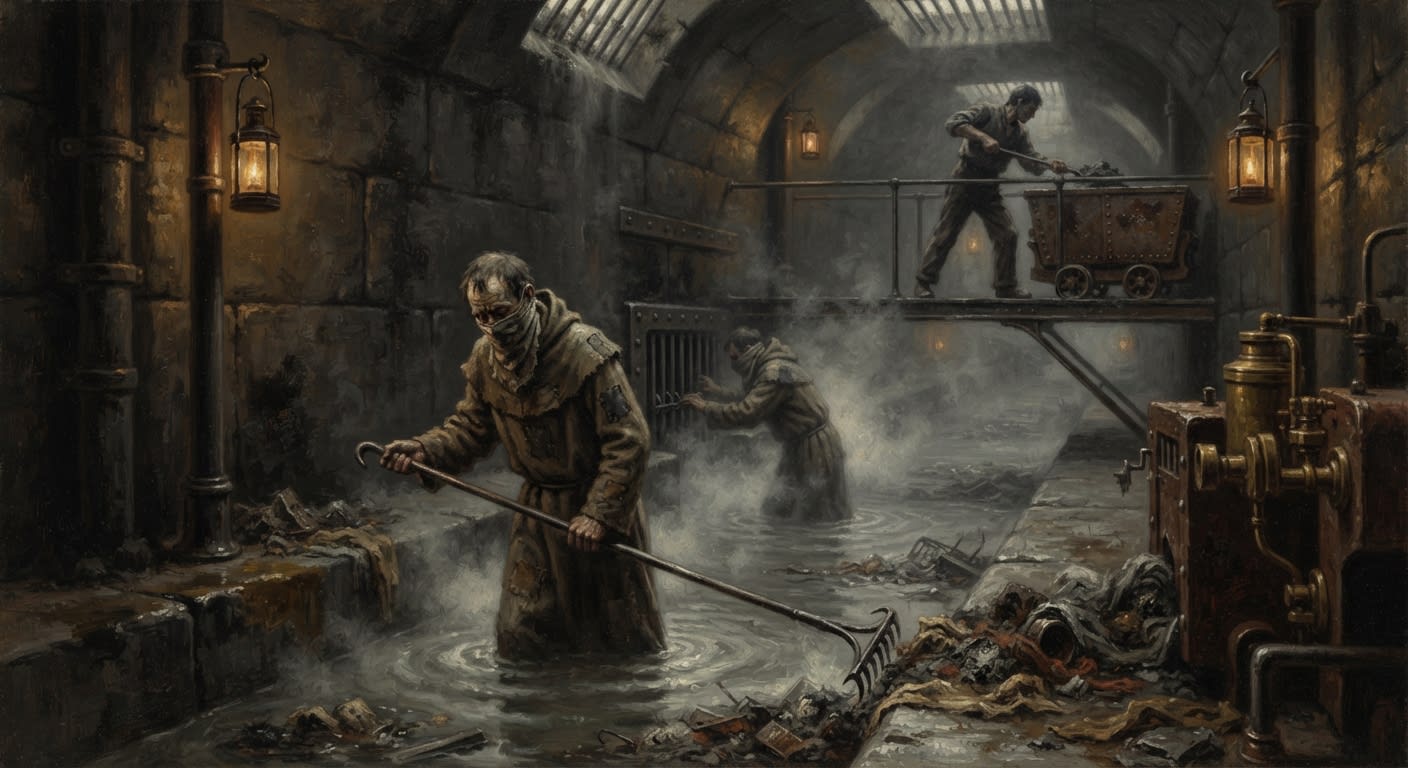
Ash Canalworks
The Throat takes what the ovens cannot afford to remember.
Lower basalt channels beneath San Vesta where cooling water, kiln waste, recovery-service debt, and unlicensed mercy run together in wet soot.
Codex Ref. VII.1.03-002
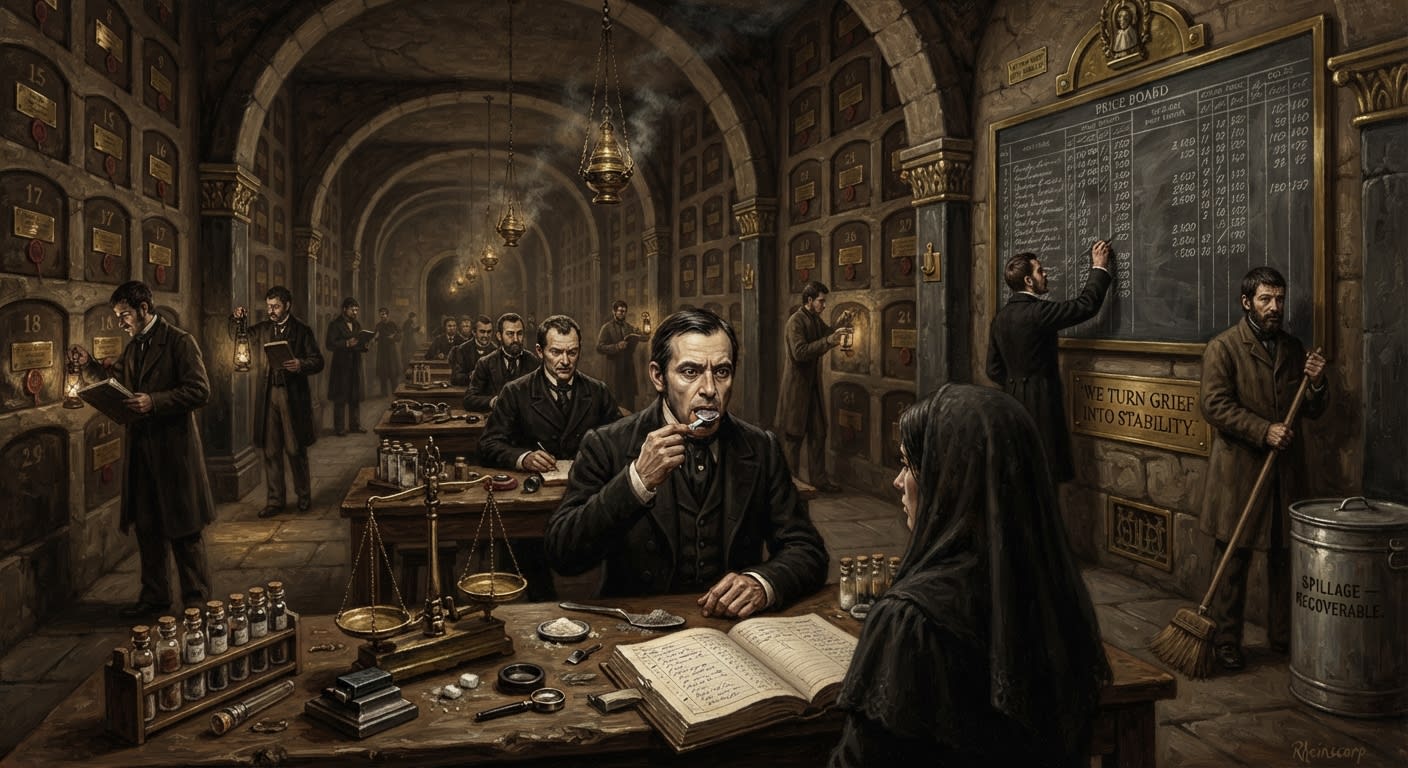
Ash Exchange of Saint Pelagia
Where grief becomes tender and the dead pay interest
Rheinscarp's seventh terrace turns the dead into collateral: cremains vaults, saint-shares, dust futures, and the cheerful arithmetic of Broker-Saintsman Damas Rohe.
Codex Ref. II.2.01-007
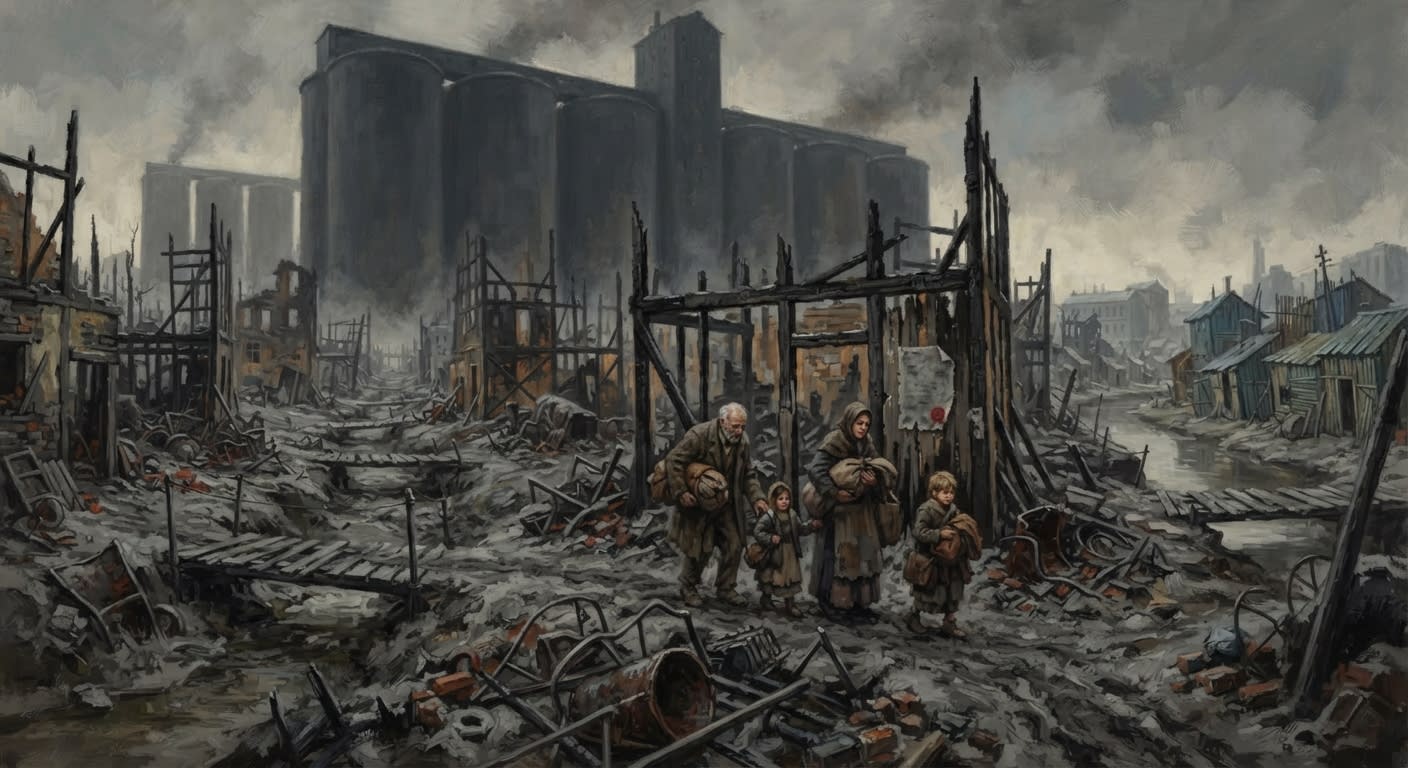
Ash Fines District
Where Wexel puts households the Ledger has already burned
Wexel's ash-wet quarter of purified parcels and unrecognised residents, where a burned house raises the land value and a family learns to live where the Ledger says nobody lives.
Codex Ref. II.2.04-002
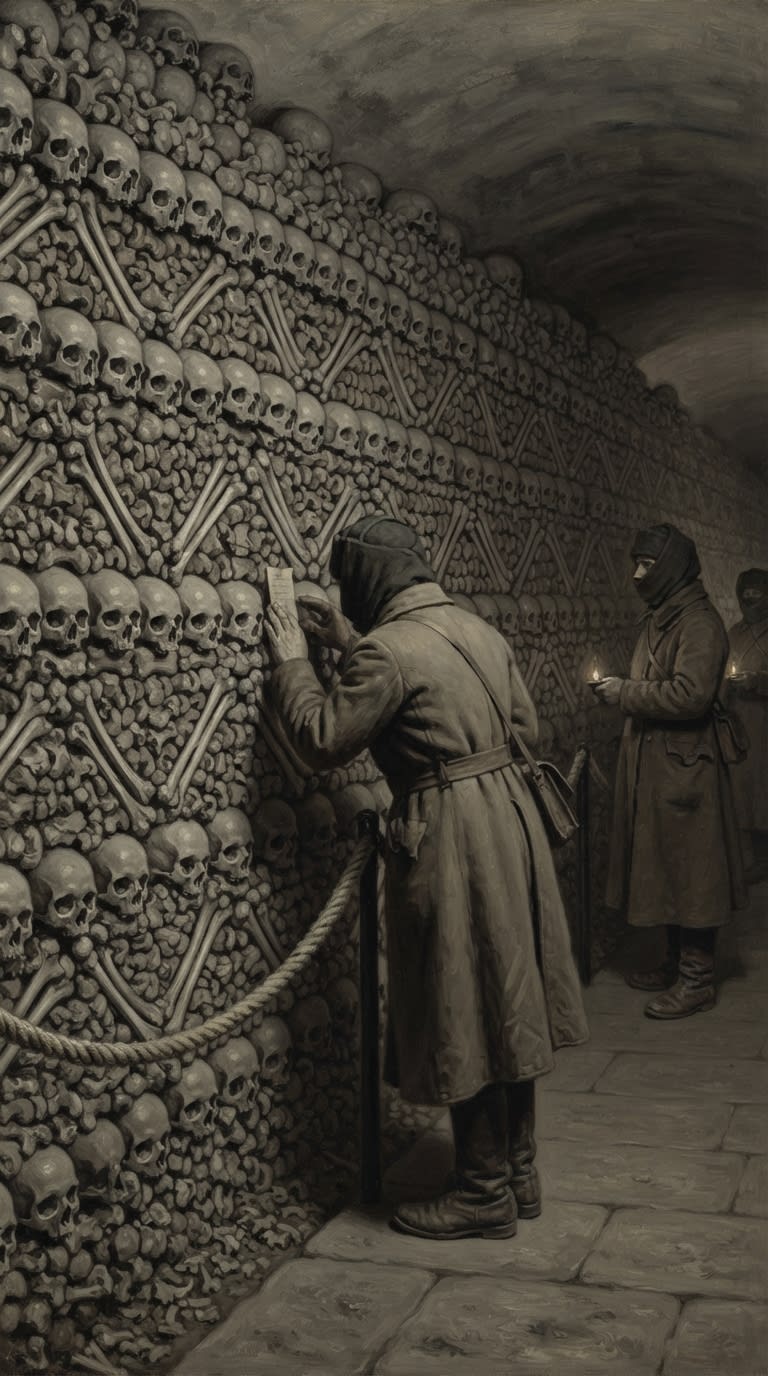
Ash Gallery
Where hunger became masonry and ash learned the names
A Sixth Ring tunnel where famine dead face outward, Thracian ash has entered the bone, and every pilgrim's name-reading asks the wall what it remembers.
Codex Ref. II.4.10-009
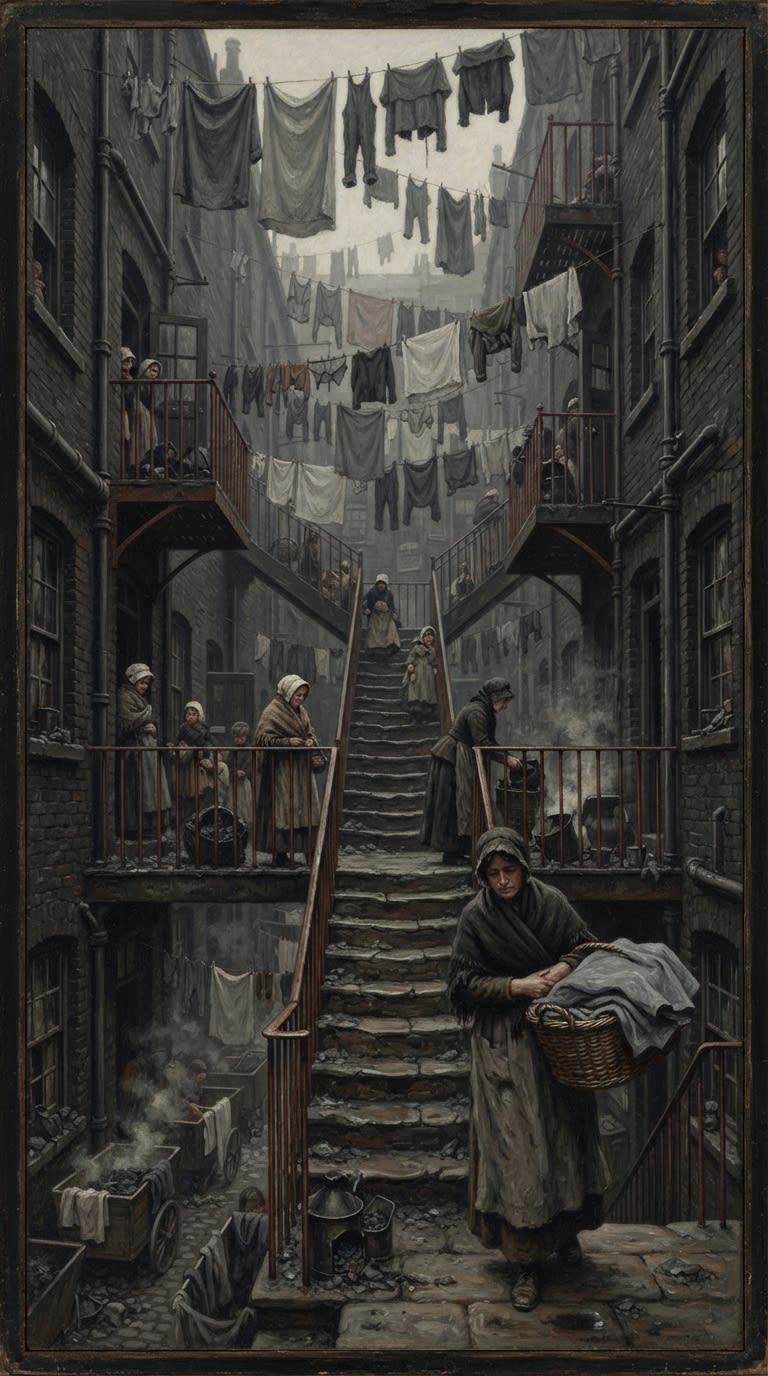
Ash Steps
Where a parish became a method and a roll became ash
The Ash Steps are an unmapped parish-name where laundry, back stairs, milk debts, and a burned A.S. 154 registry taught the Pale Kin that a place can become a method.
Codex Ref. II.2.06-154
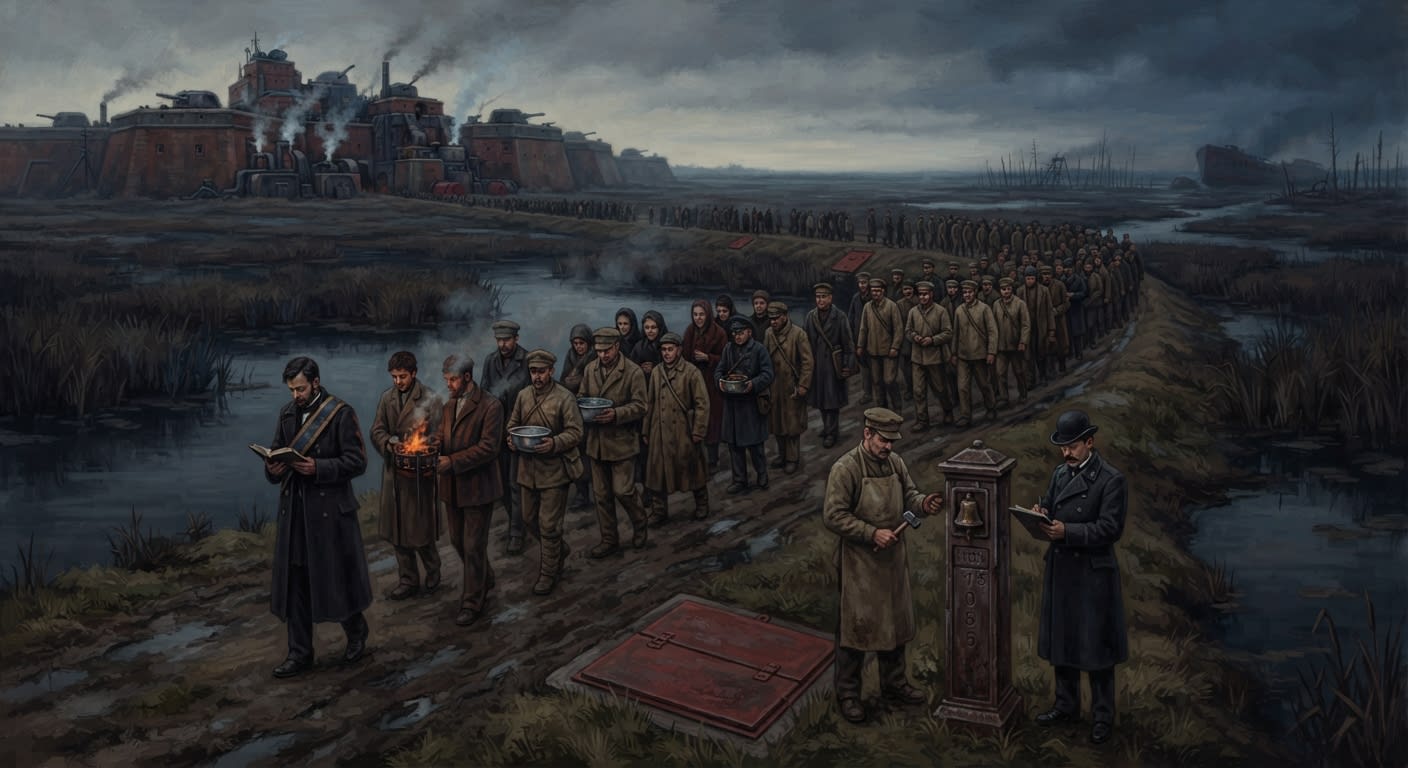
Ash Toll of Bastion-Shipka
A licensed walk over the fire Shipka refused to light
The Bureau of Festivals calls it a regional observance. Shipka calls it a drill with singing: two kilometres of ash, bells, sealed fire and black water, walked yearly over the road that once survived by drowning.
Codex Ref. II.4.08-113
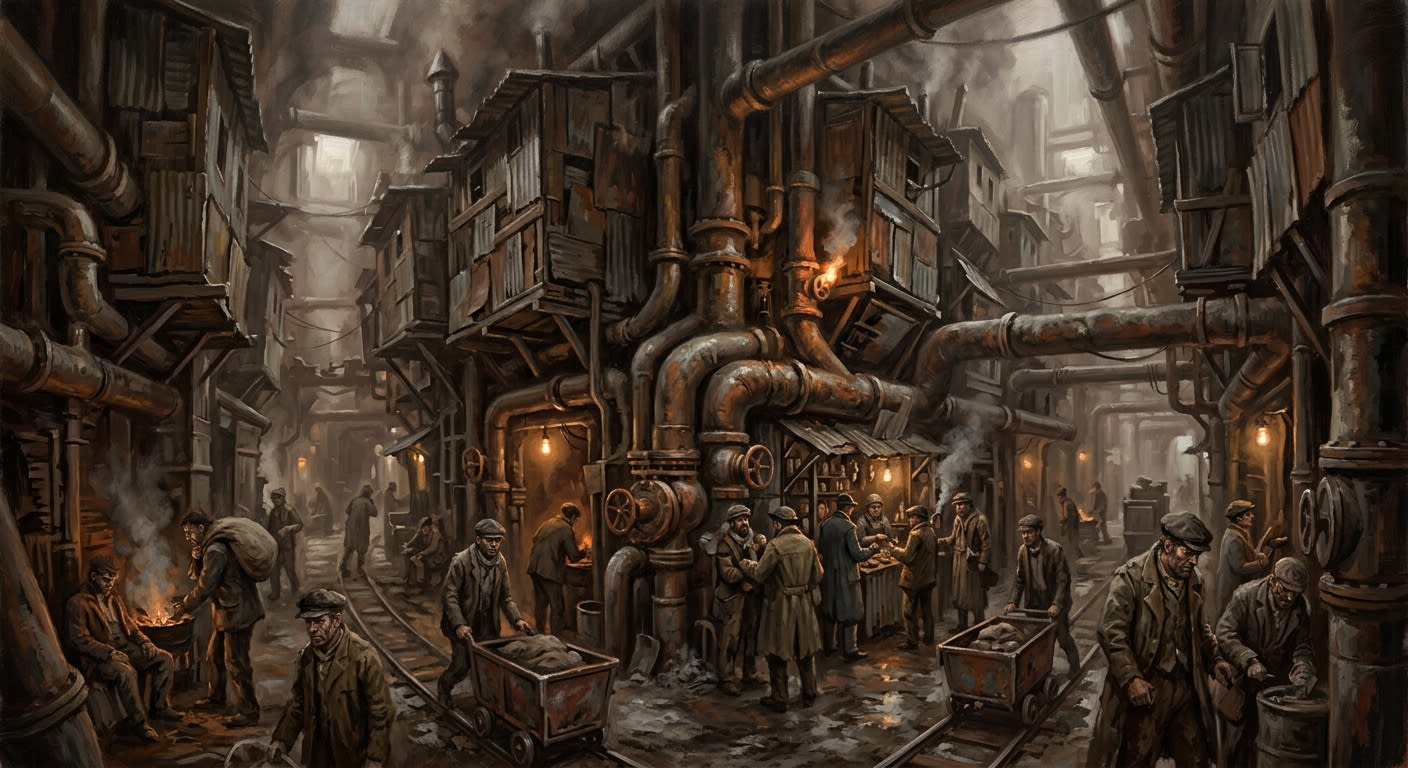
Ash Warrens
Where Essen rents warmth by the breath
The Ash Warrens are Essen-of-Hymnsteel's southern warm-duct sprawl: refugee burrow, condemned labour reserve, heat market, and acoustic wound.
Codex Ref. II.2.01-008
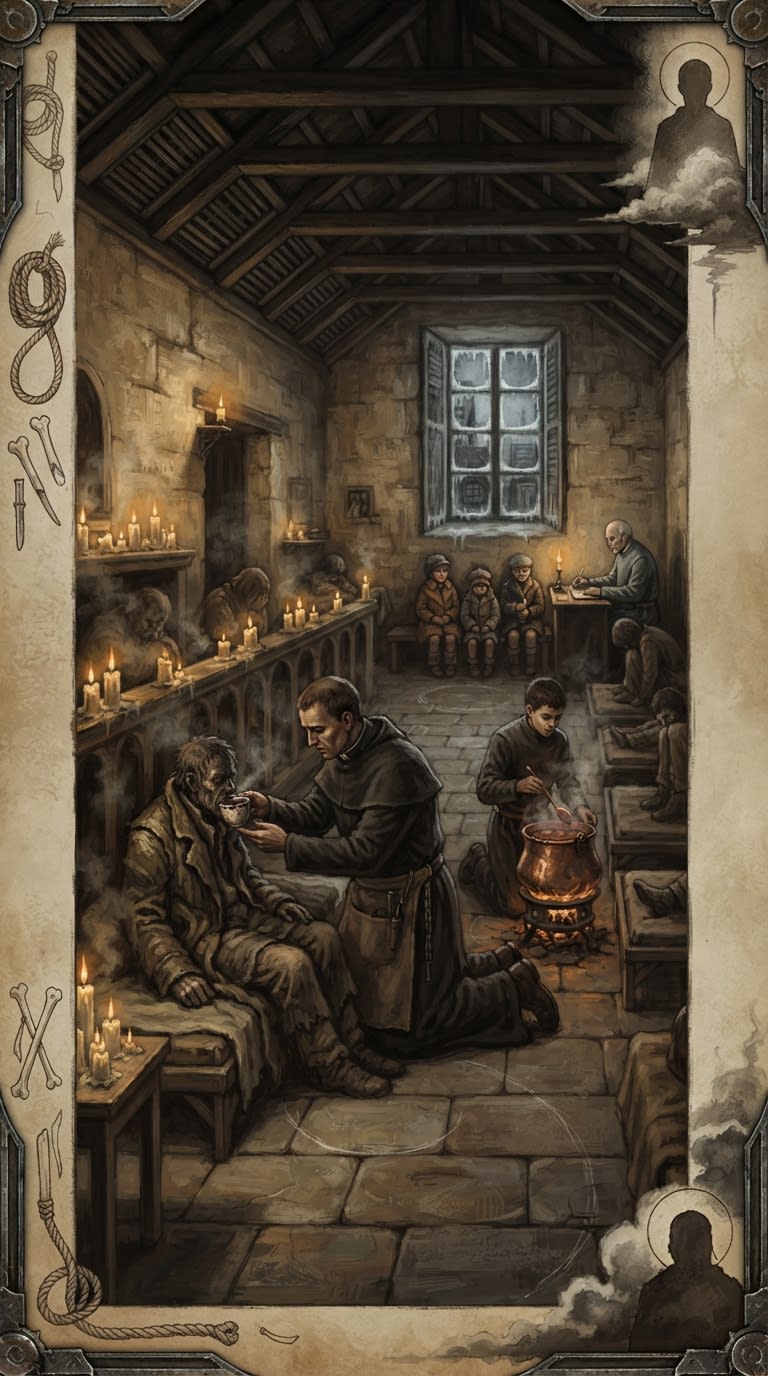
Ash-Chapel of Saint Lorn
Where Lor turns failed breath into wards
At the Warrens edge of Black-Snow Lor, the Ash-Chapel comforts the choking, registers storm-orphans, and keeps the oath lists no Bureau wants to read.
Codex Ref. II.4.09-201
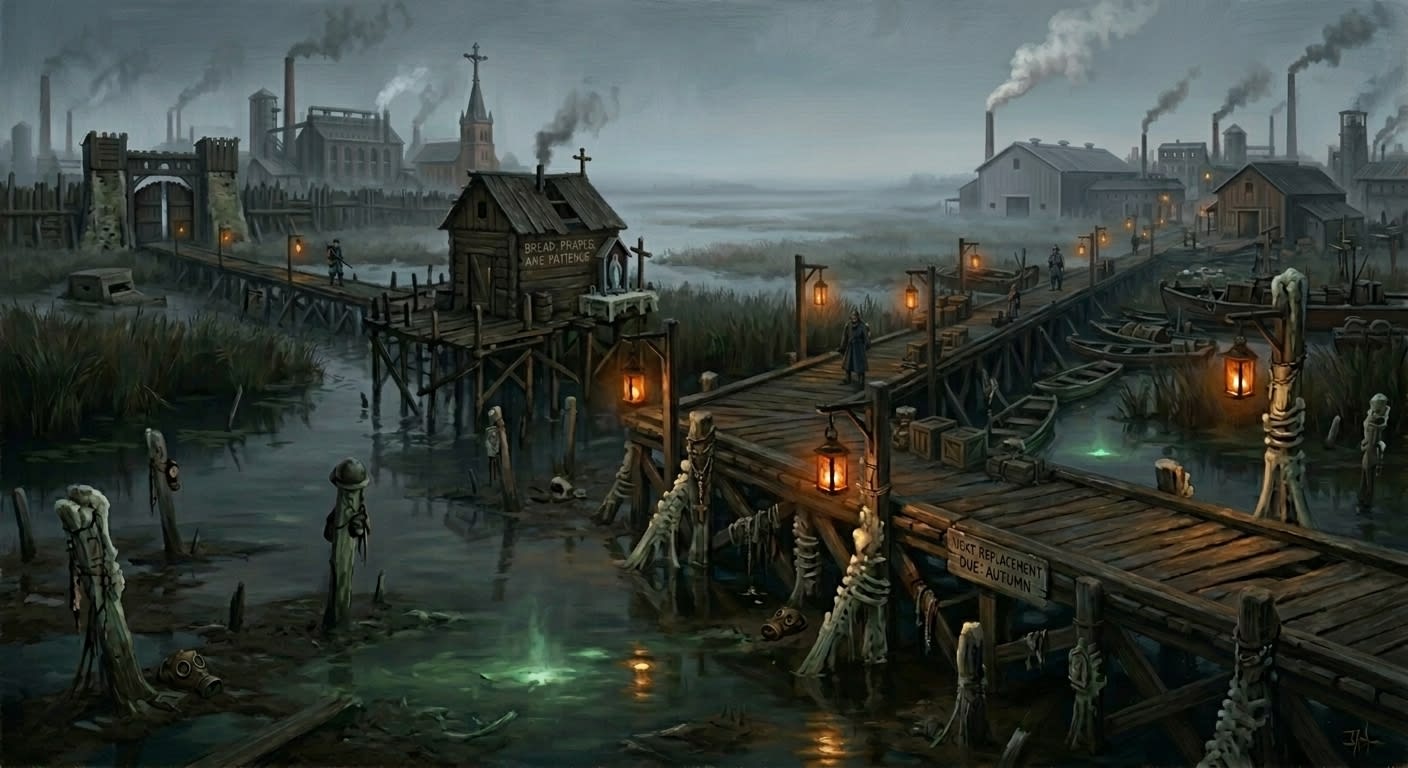
Ash-Glyph Marshworks
All graves are provisional at the river's edge.
A mortuary settlement at the Danube's mouth where the war-dead are converted into filing coordinates. The marsh glows at night, the relics arrive already tagged, and the Bureau has been reviewing the anomalies for fifty-eight years without result.
Codex Ref. II.4.08-004
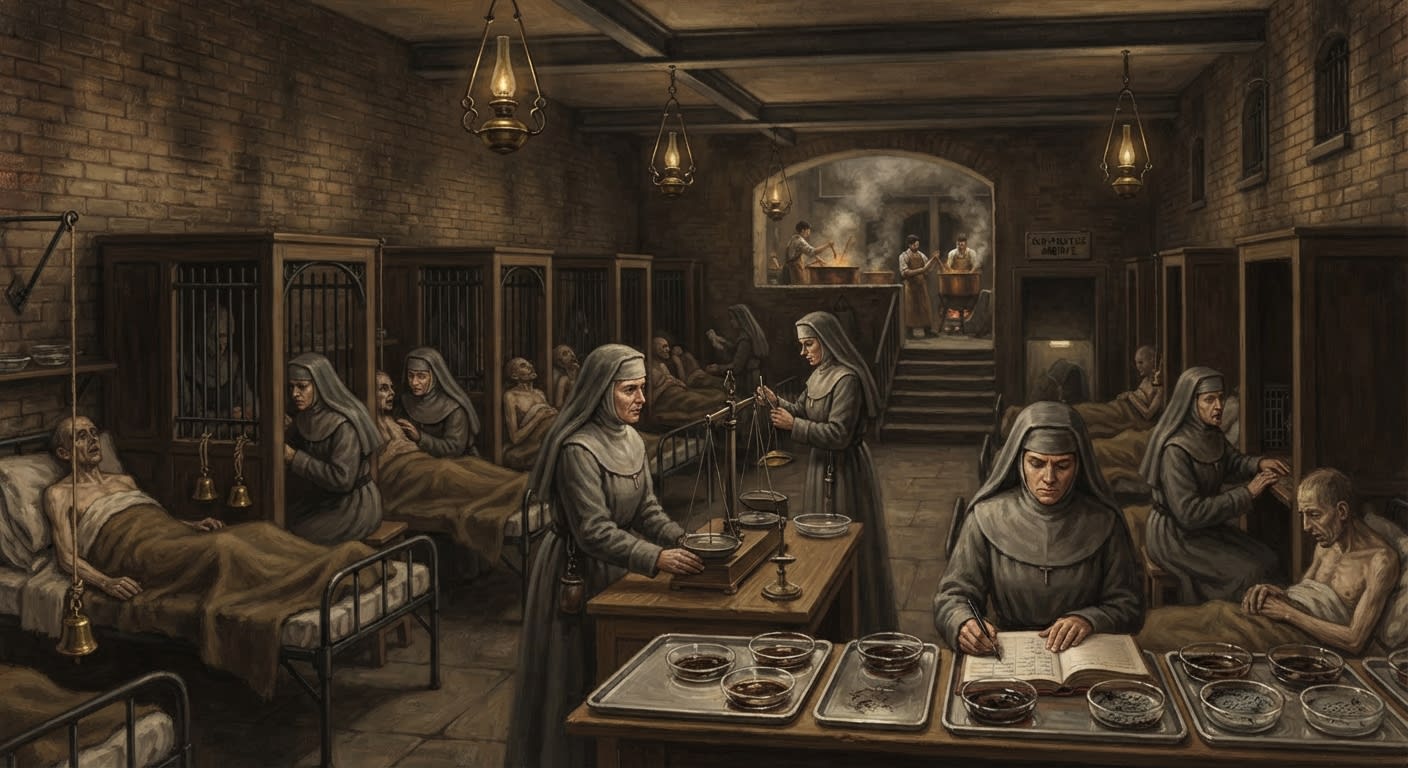
Ash-Hospice Row
Mercy, filed in glass and soot
Brast's western hospice district catches the soot, the dying and the facts the Ordnance ledgers misplace; by A.S. 201 its fever dishes have begun writing names.
Codex Ref. II.2.06-201
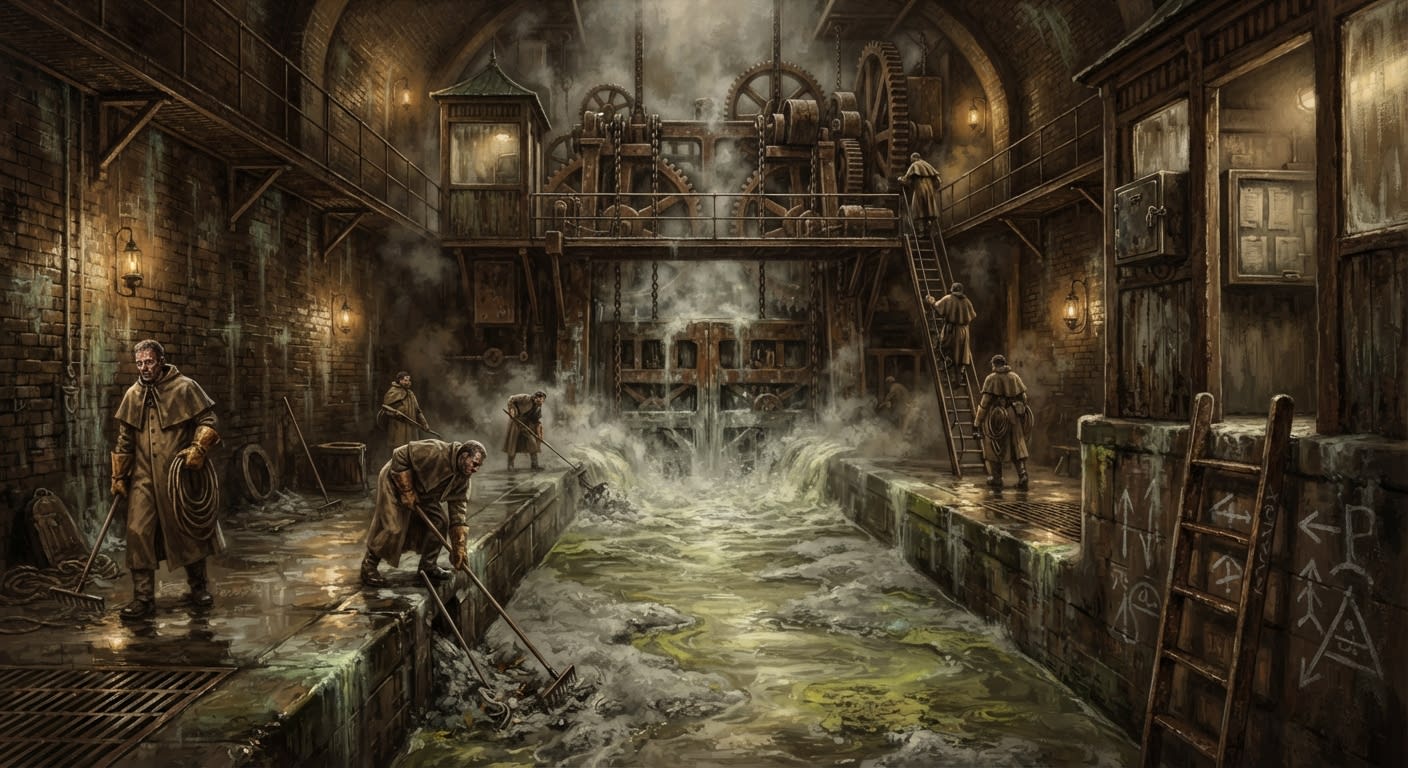
Ash-Sluice Line
Who holds Gate IX holds the water, and therefore everything else
The lowest line of Candle-Sump: soot brick, caustic water, Gate IX's singing gears, and the chart boxes that may govern both flood releases and the harvest of dead names.
Codex Ref. II.1.05-002
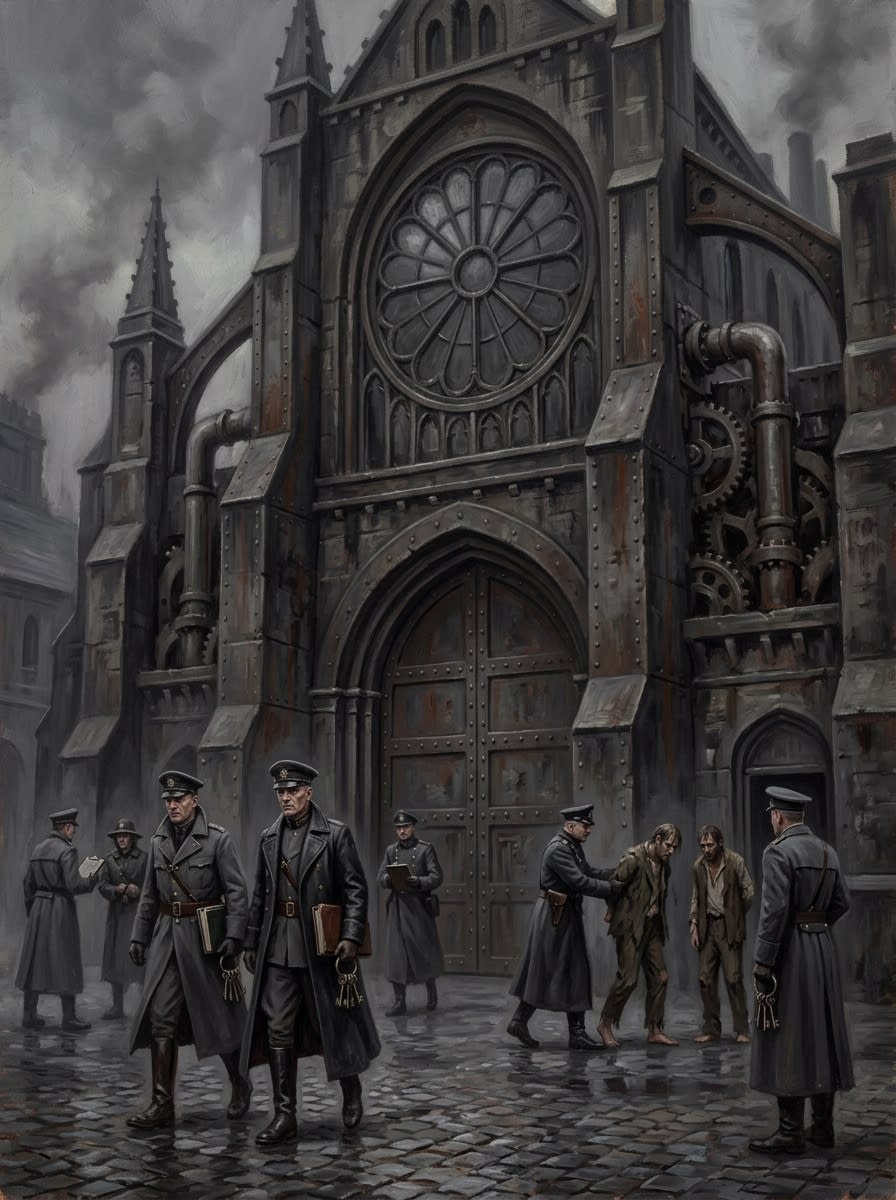
Ashen Cloister
Purity's house has handles only on the outside
The Ashen Cloister is Purity's Strasbourg seat: gate without welcome, court without mercy, archive with appetite, and the cleanest terror in the Synod.
Codex Ref. II.1.04-003
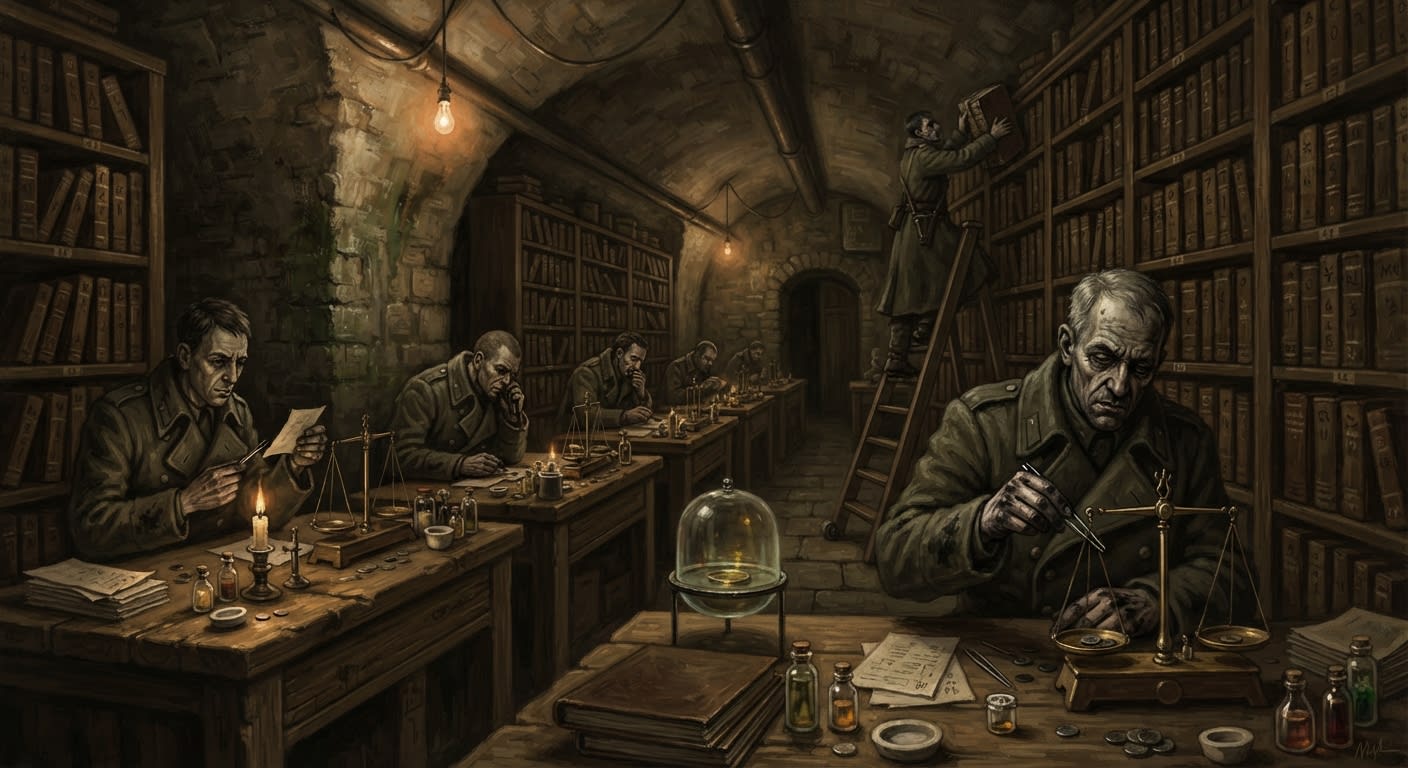
Assay Chamber
The scales are honest. That is the problem.
The Assay Chamber weighs Sibiu's war in coin, scrip, brass, and clean gold. Its tests are excellent. Velmora's economy is faster.
Codex Ref. II.4.09-181
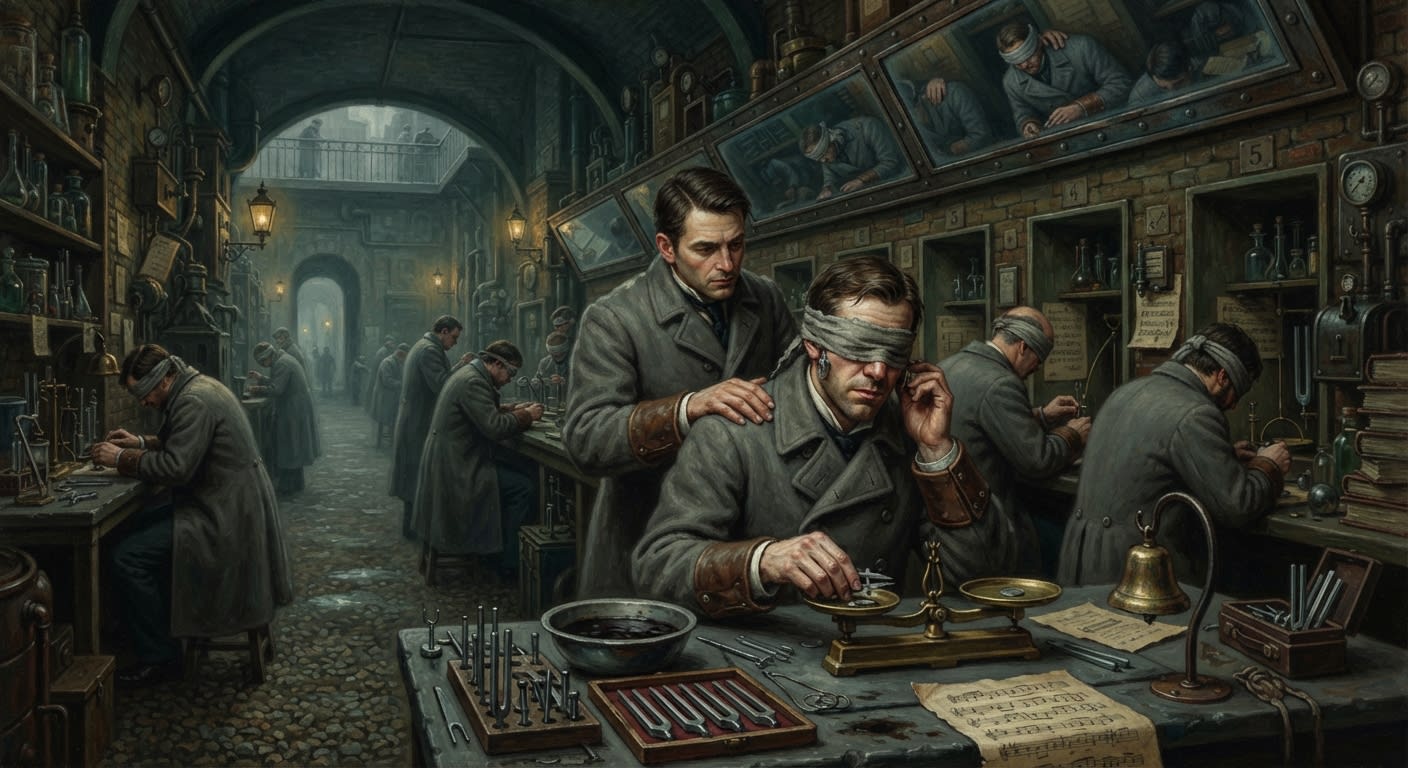
Assay Cloisters
Where coin is taught to confess before its owner is accused
In Sable Court's eastern arc, blind clerks, acid bowls, hymn-forks, and small bells decide whether a coin's face may continue pretending to be lawful.
Codex Ref. II.2.07-003
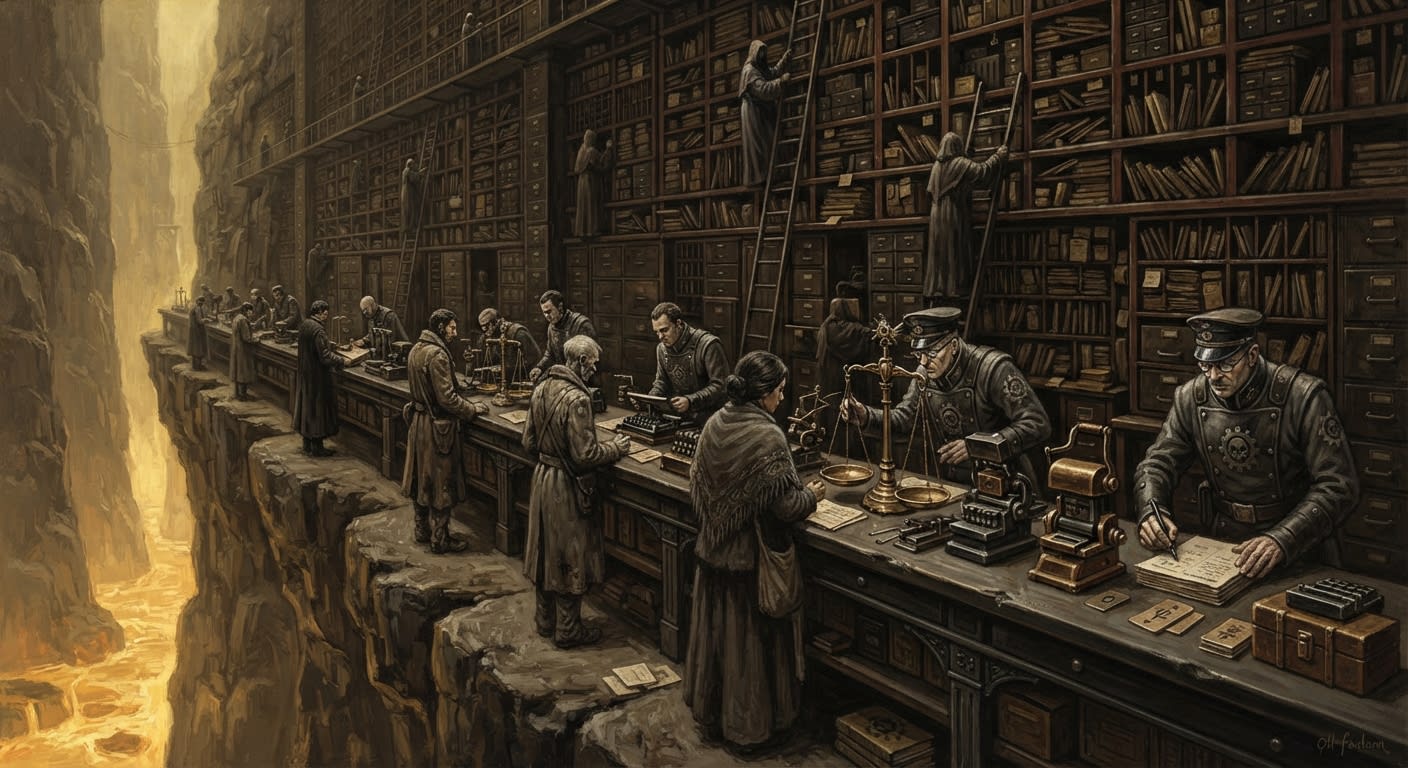
Assessment Halls
Where price stops haggling and begins pronouncing sentence
The Assessment Halls of the Gilded Chasm do not auction souls; they value them, shelve the figure, and let Velmora spend the arithmetic.
Codex Ref. VI.1.02-002
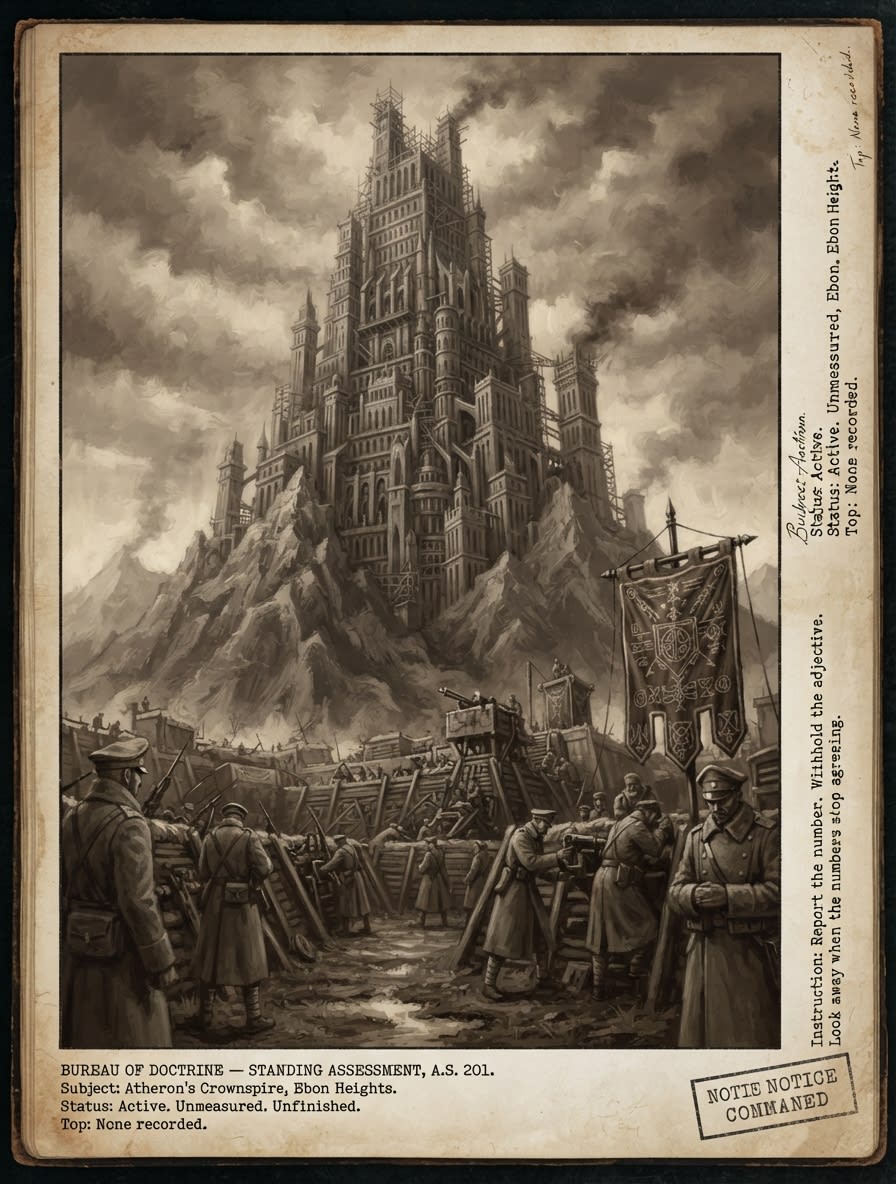
Atheron's Crownspire
The ascent is the throne and the cage
Atheron's Crownspire is Pride's unfinished throne: a tower without a top, a citadel without a throne room, and the reason Przemyśl teaches soldiers to look low.
Codex Ref. II.4.03-047
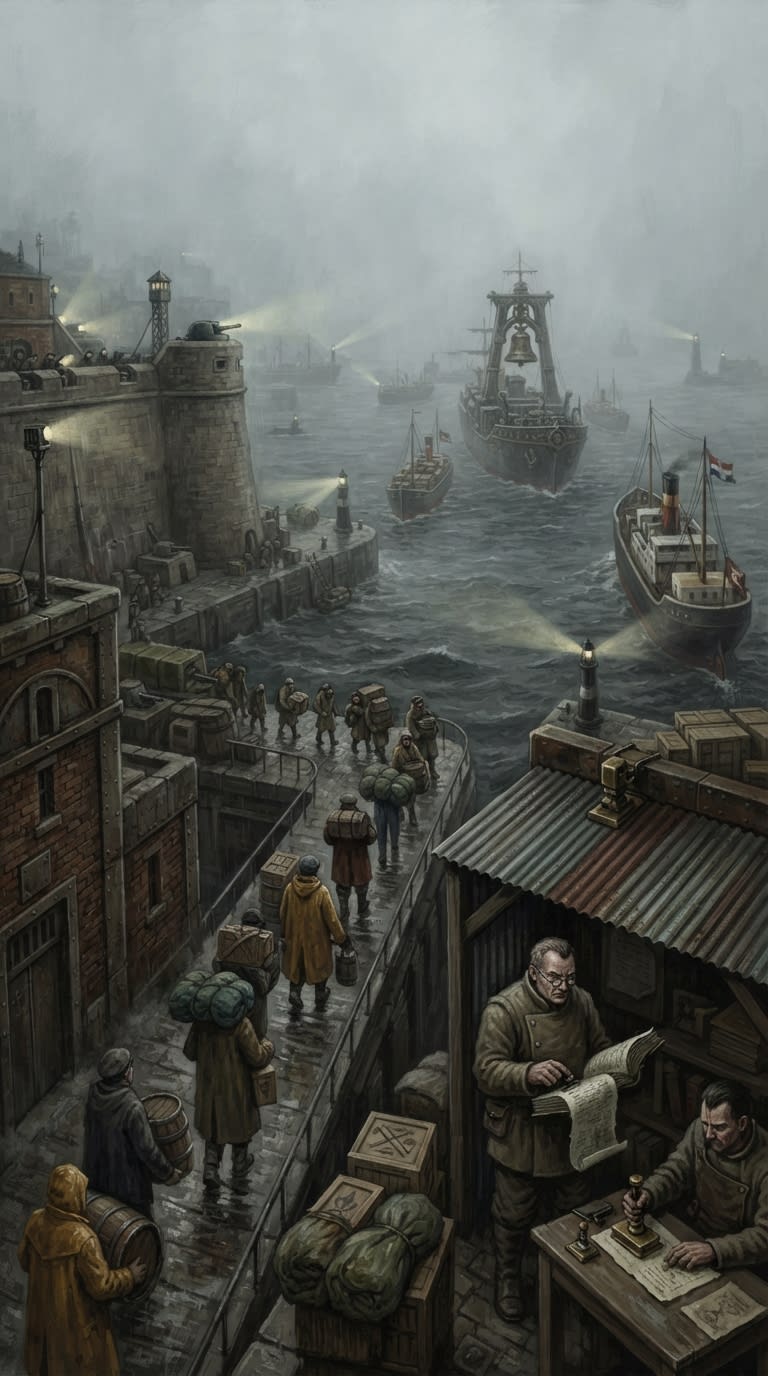
Atlantic
The water at the western end of every Synodal sentence
The Atlantic is the Synod's western water: open, escorted, profitable, watched, and owned by nobody, with Zone 1 harbours feeding the Line through wet ledgers and foreign hulls.
Codex Ref. II.4.09-201
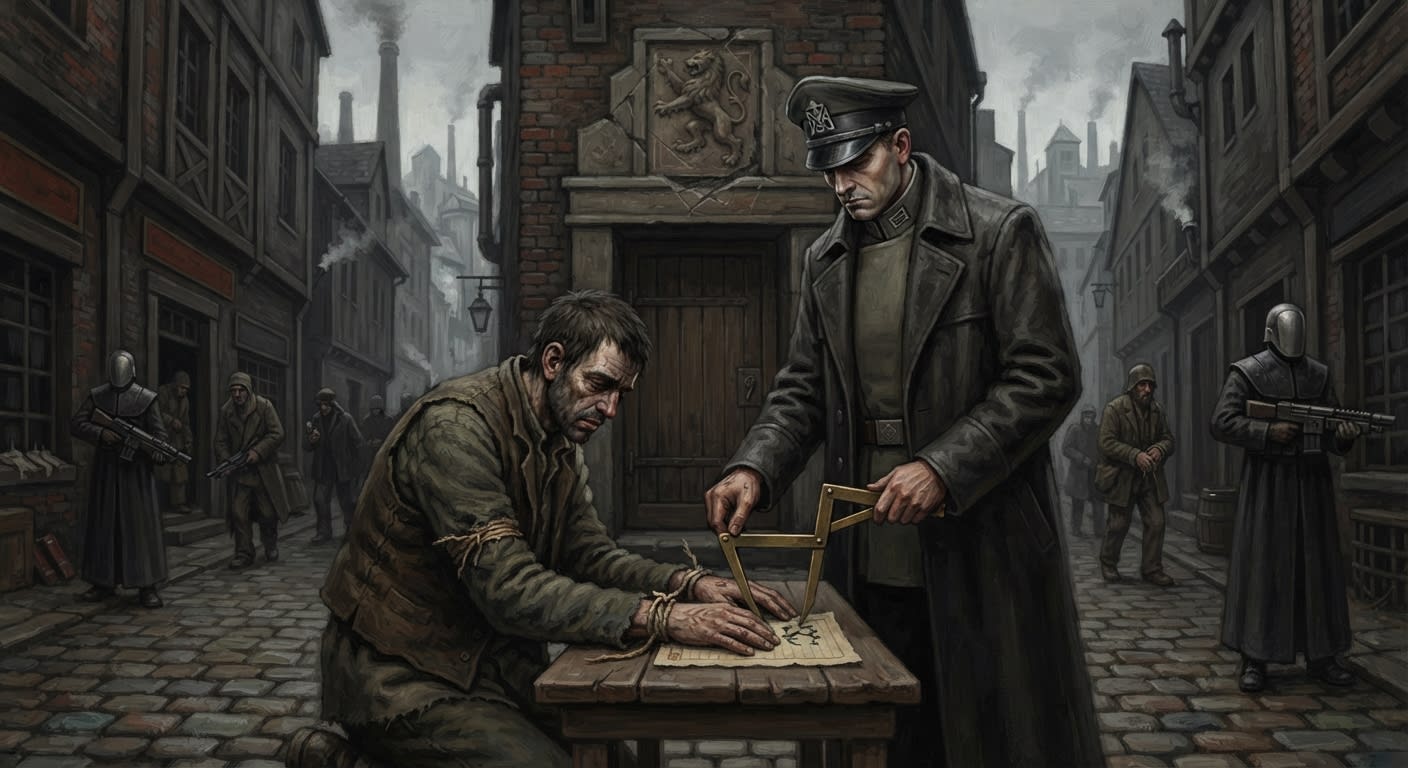
Augsburg
The city corrected first by blade, then by gauge
Augsburg is known to the Codex by what the Synod removed from it: beasts from its guildhalls, vermillion from a dyer, and doubt from three condemned hands.
Codex Ref. II.2.09-182
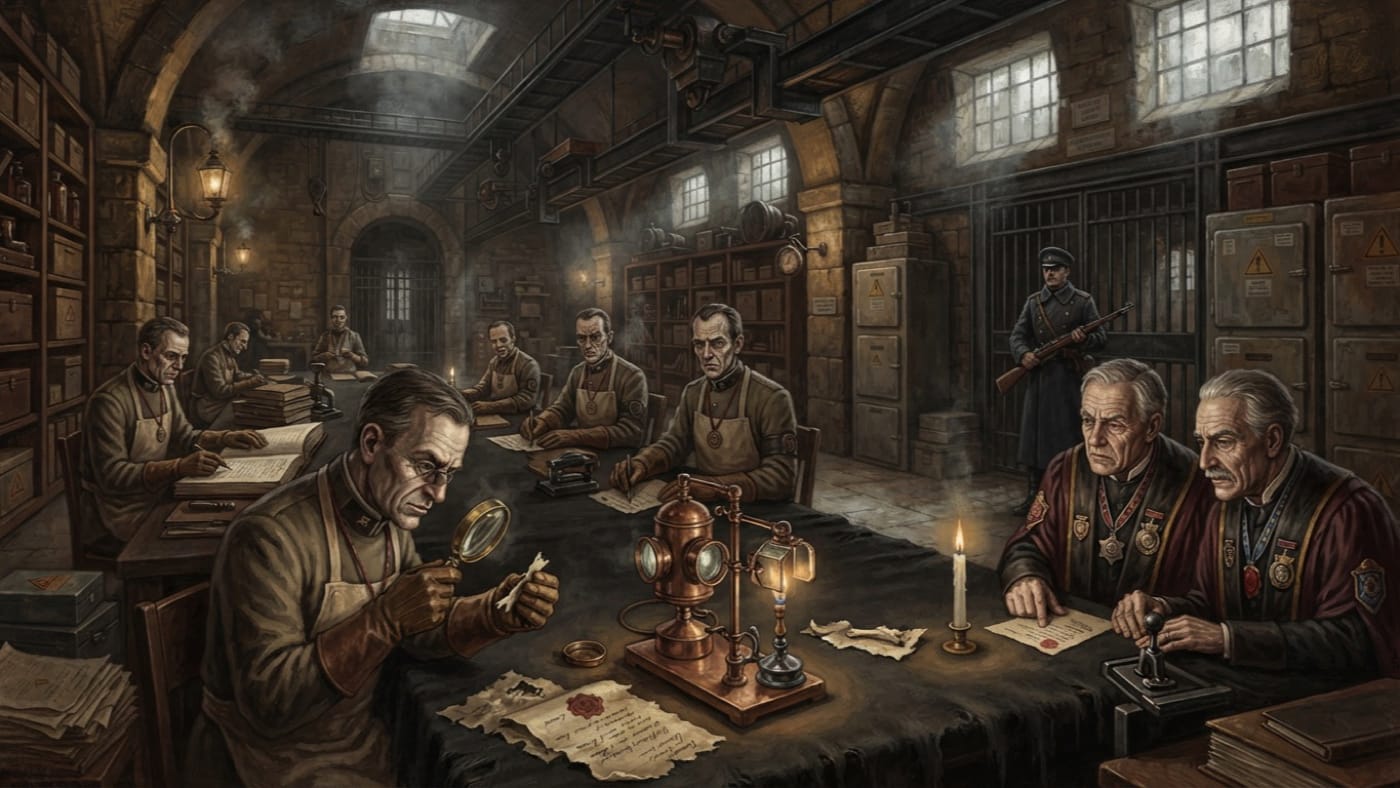
Authentication Hall
Where a rumour in a box becomes a verdict in wax
The Bureau of Relics' examination halls turn sealed submissions into Ward-safe, Votive, Contaminant or Fraud. Seven stages, two witnesses and a press decide whether a bone guards the Line, graces a shrine or becomes mortar.
Codex Ref. II.2.06-006
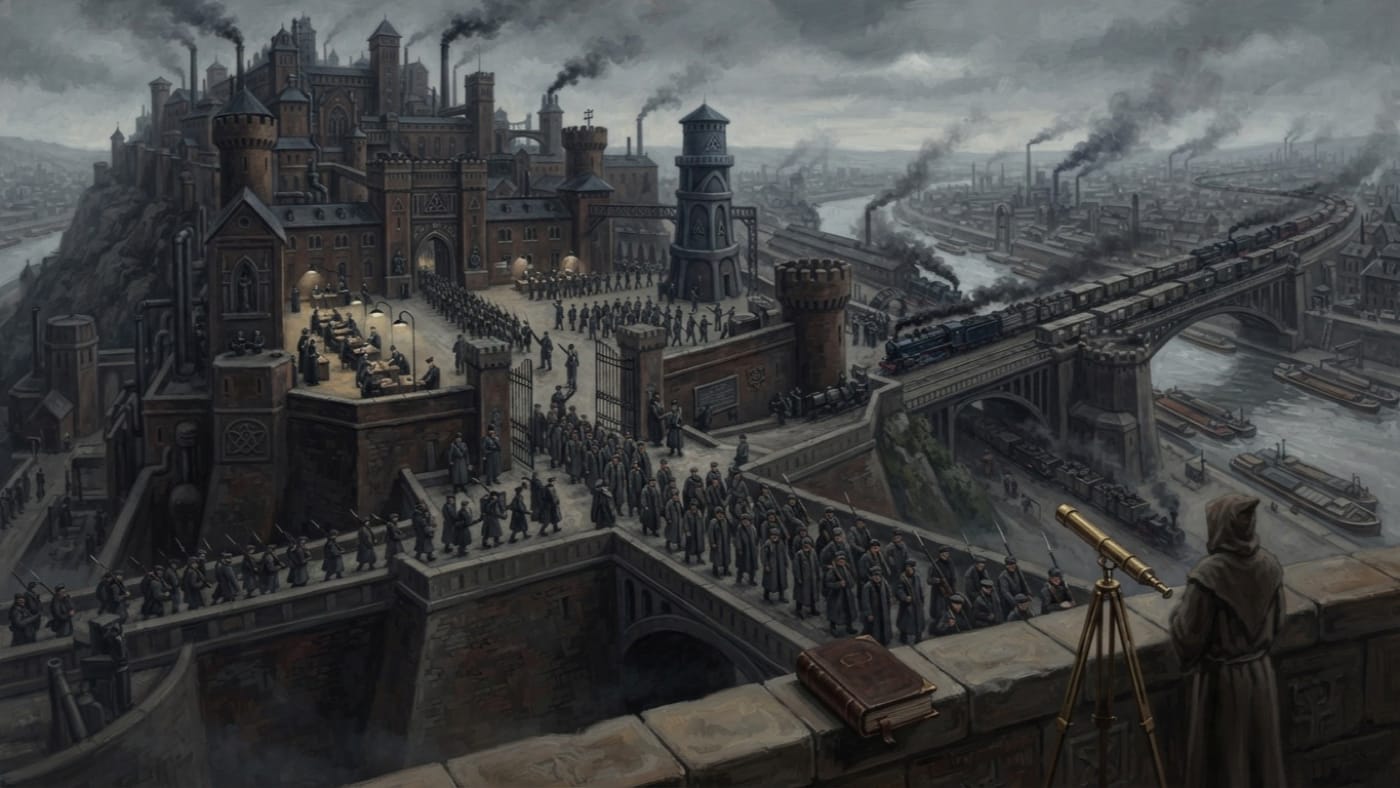
Auvergne
The province supplies, Lyon receives, the east consumes
Auvergne supplies levy boys to the Citadel of Lyon. This commissioned A.S. 201 survey records its place in the Rhône corridor's machinery: the province supplies, Lyon receives, the east consumes.
Codex Ref. II.1.12-201
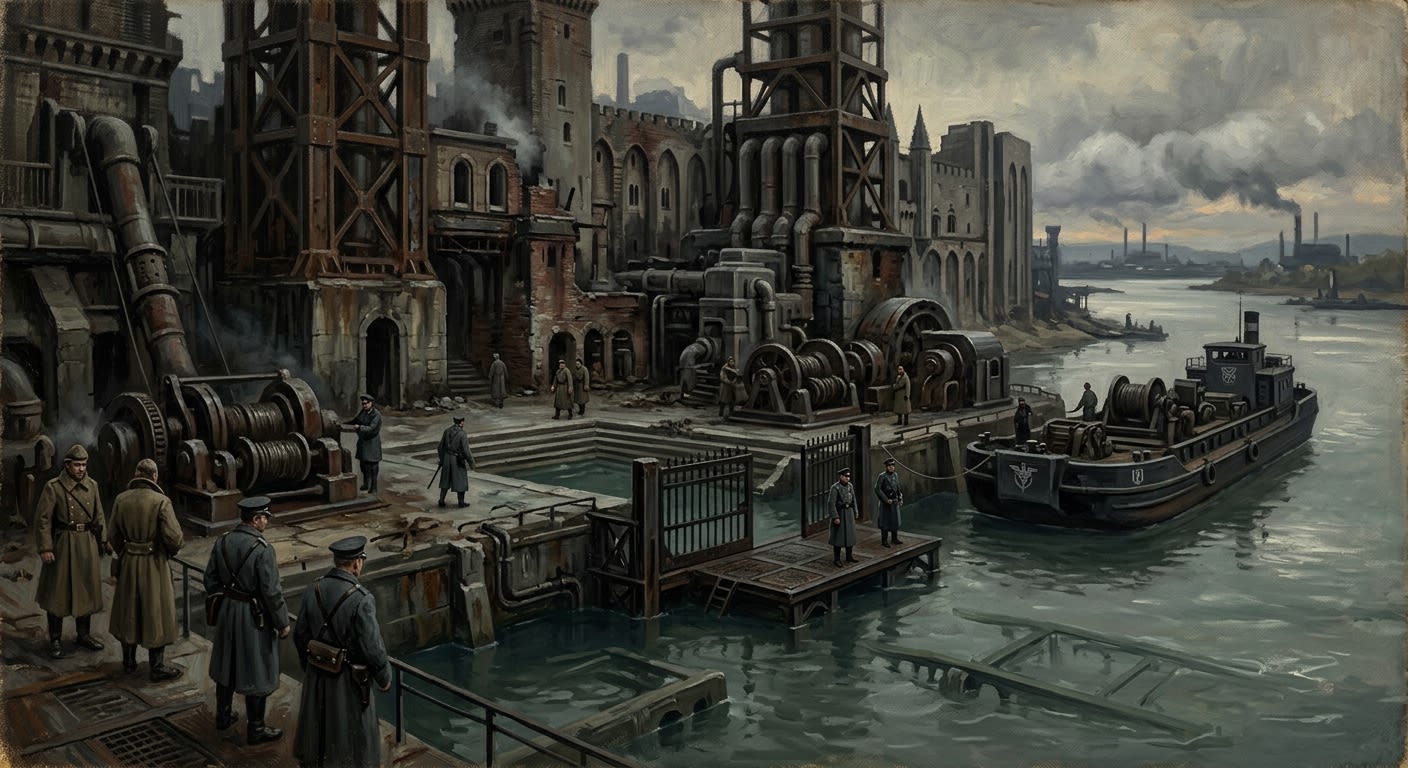
Avignon
A city corrected so thoroughly the river kept the receipt
Penitential ruins on the Rhône, where the Pontifex Submersis was crowned beneath water in A.S. 111, Avignon was razed into correction, and A.S. 145 burned the calendars into agreement.
Codex Ref. II.1.08-111
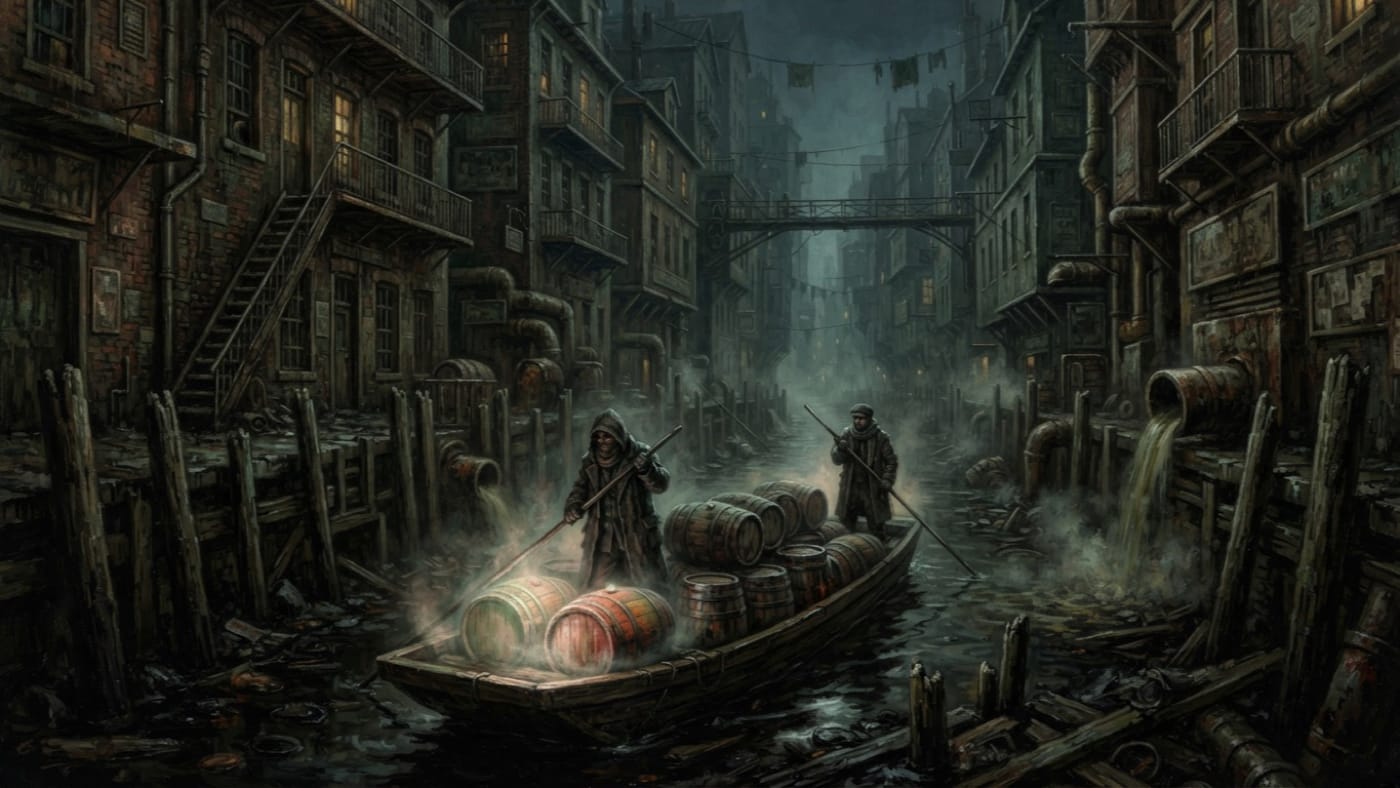
Backchannel Needleway
Where condemned sanctity finds a buyer
Mournwater's uncharted smuggler run carries condemned saint-dust, forged seals and futures intelligence to buyers whose chapels prefer a full cask to an honest certificate.
Codex Ref. II.2.03-002
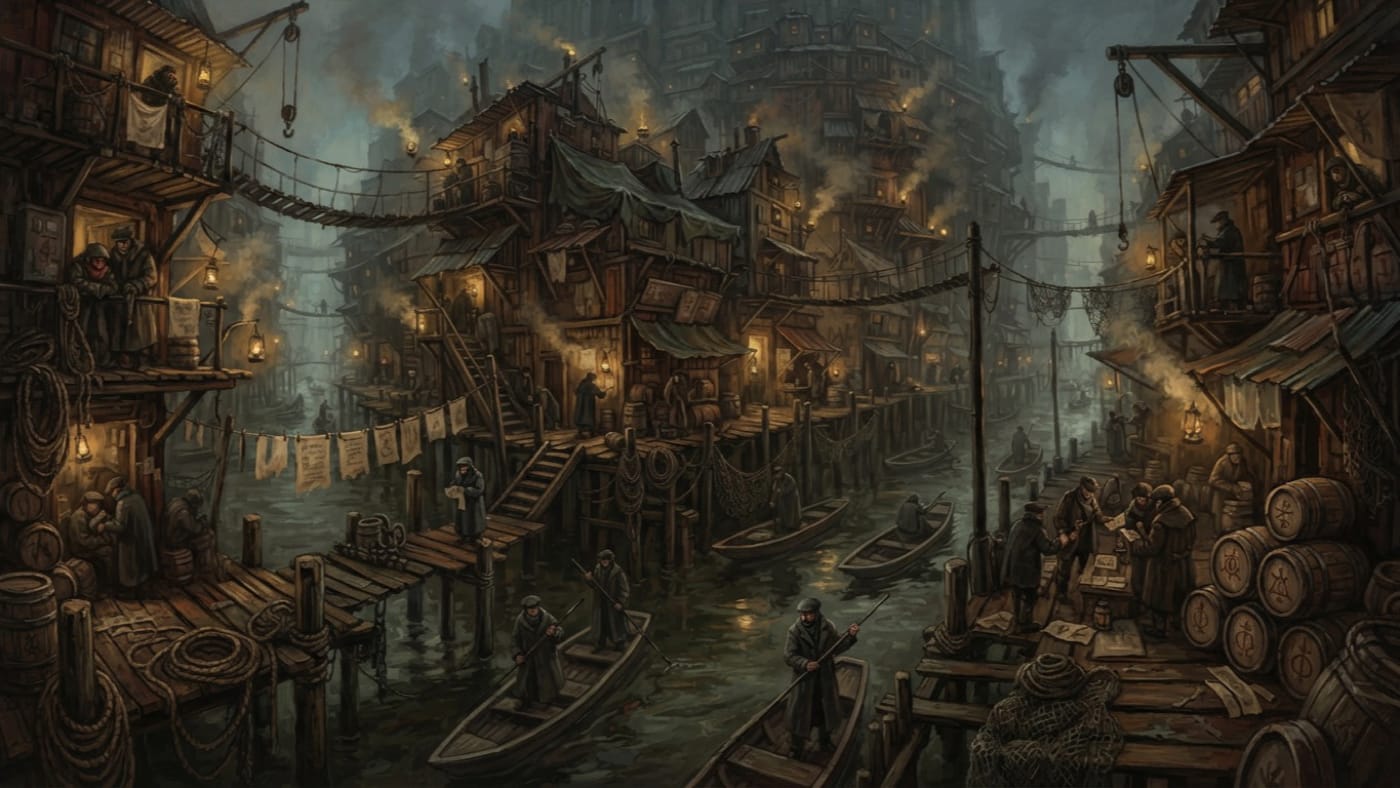
Backchannel Shacks
Where the ledger ends, the river keeps trading.
Mournwater's flooded under-quarter trades cut saint-dust, forged purity seals and hidden passage. The Silt-Rooks keep its routes; the ledger declines to count its people.
Codex Ref. II.2.03-003
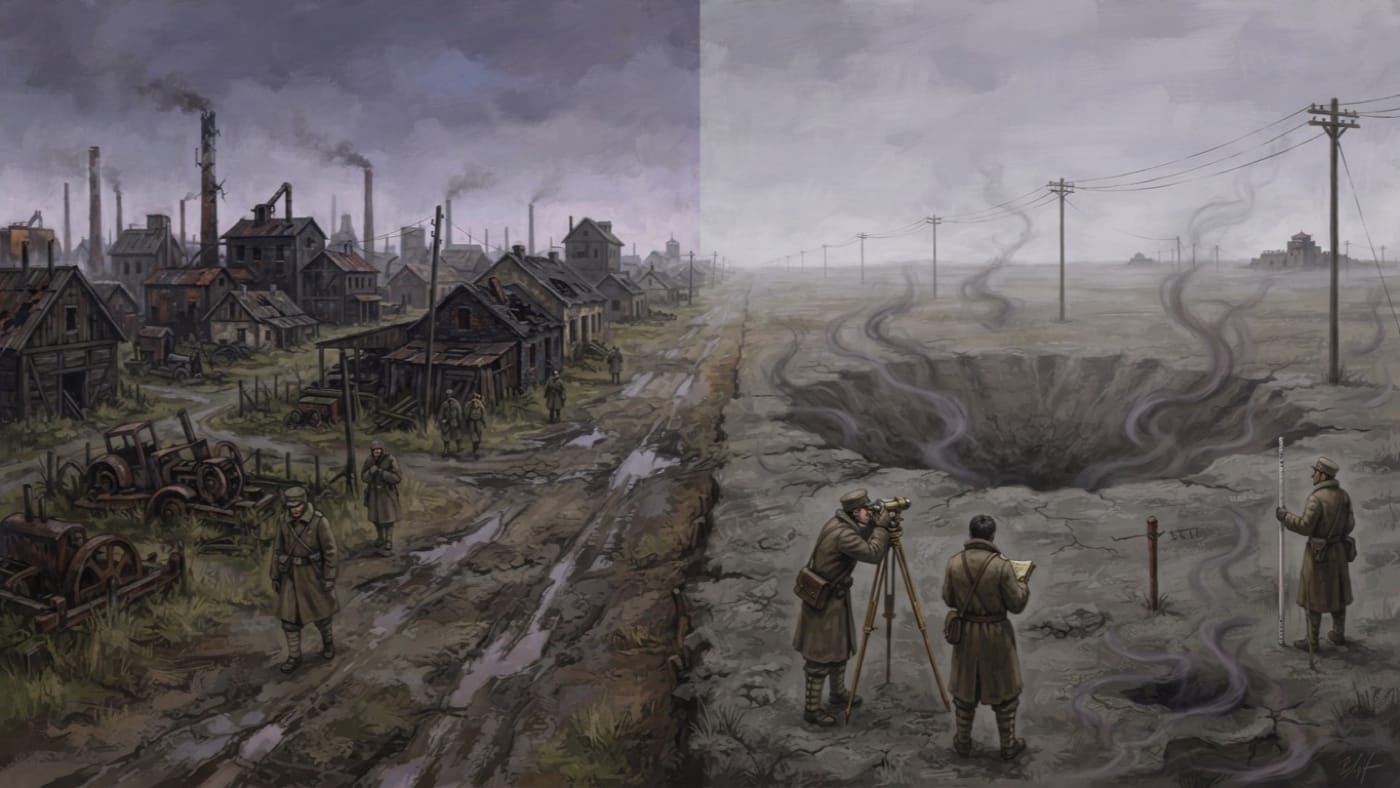
Baja
A town kept as an address for a grave whose hunger is reaching.
Baja survives as the locator for Famine Pit Twelve on the former road to Szeged. Two surveys record its hunger reaching farther; neither counts the dead. I have kept the town and the grave in separate columns.
Codex Ref. V.6.01-003
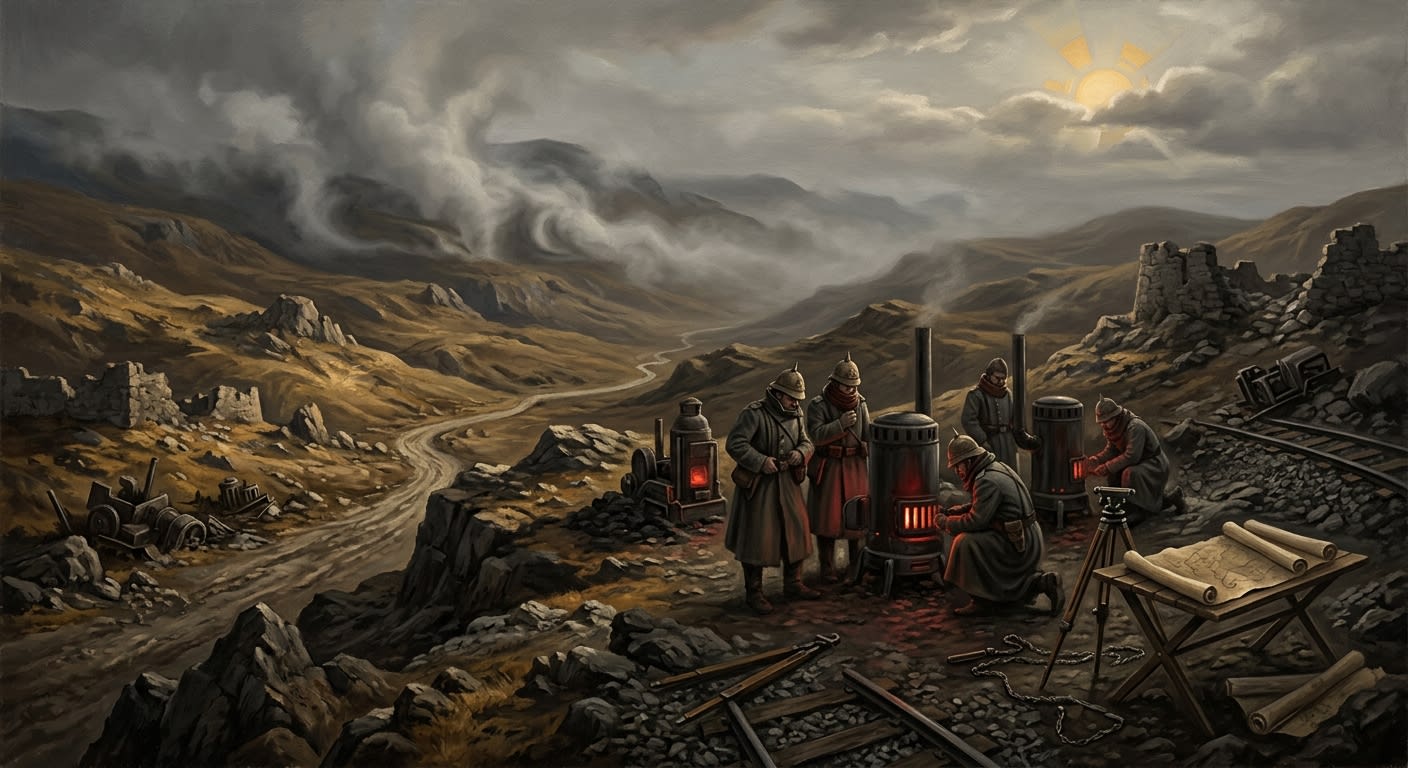
Balkan Foothills
Where the weather learned politics
The Balkan foothills are the broken stair below Shipka, where Maldrake's furnace weather, Syrion's time-fog, and Synodal maps all lose jurisdiction.
Codex Ref. II.4.12-045
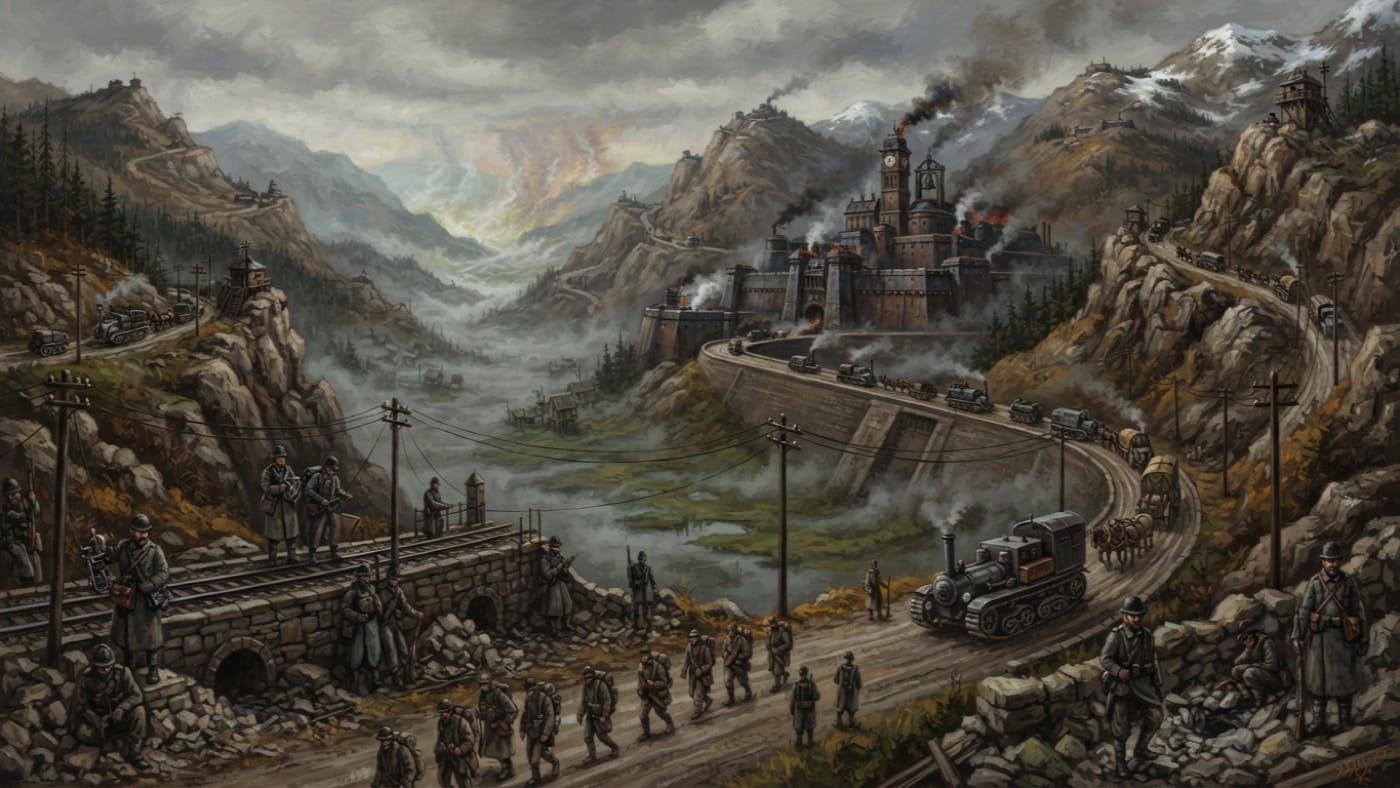
Balkan Mountains
The road is held as far as the bells can reach
Bulgaria's mountain barrier carries Shipka's supply road toward Thrace and Constantinople. Convoys cross under escort while Syrion's fog steals hours in the valleys. The passage is maintained; beyond the bells, geography is written in pencil.
Codex Ref. II.4.12-046
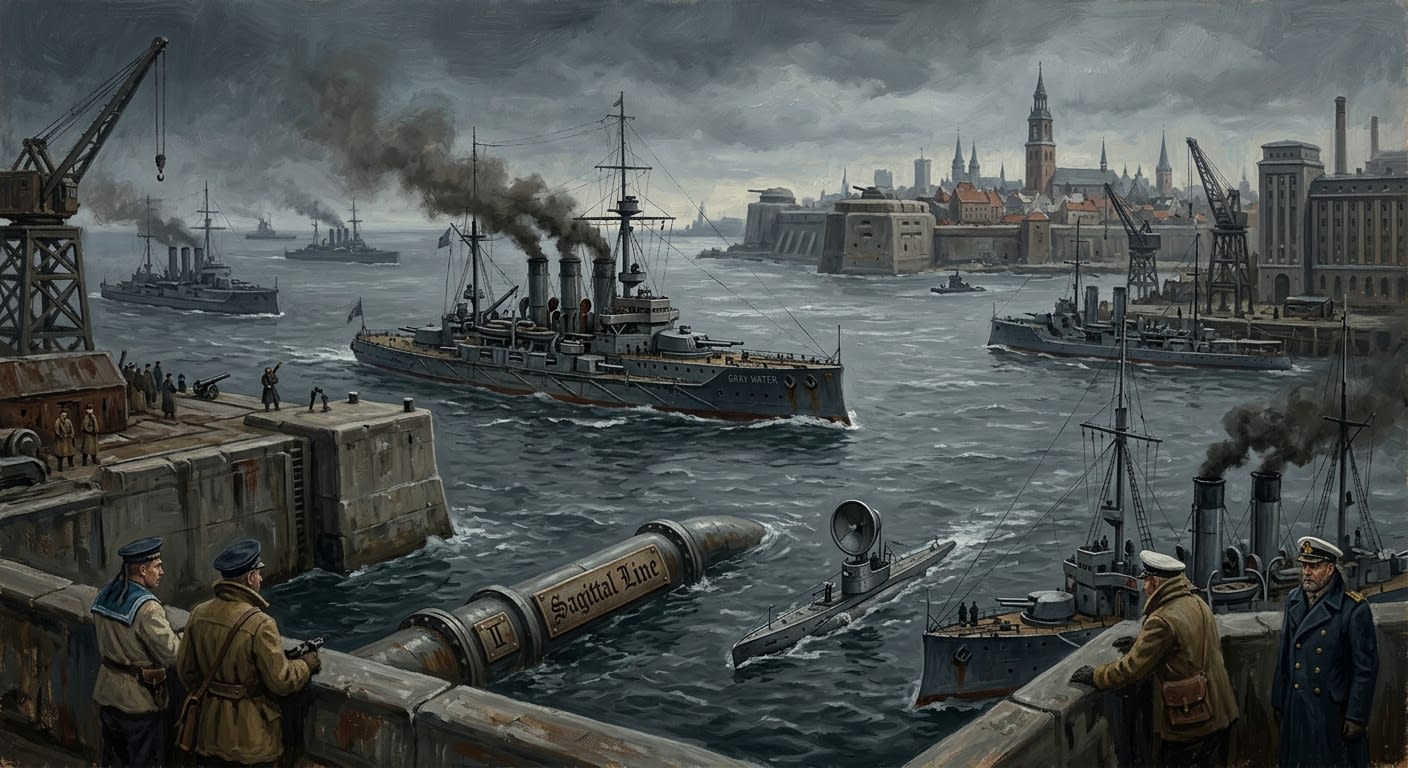
Baltic Sea
The cold bowl that listens back
The Baltic Sea is the cold northern bowl where the Sagittal Line ends at Königsberg, Grey Water listens, old bells answer, and maps lose courage.
Codex Ref. II.8.01-065
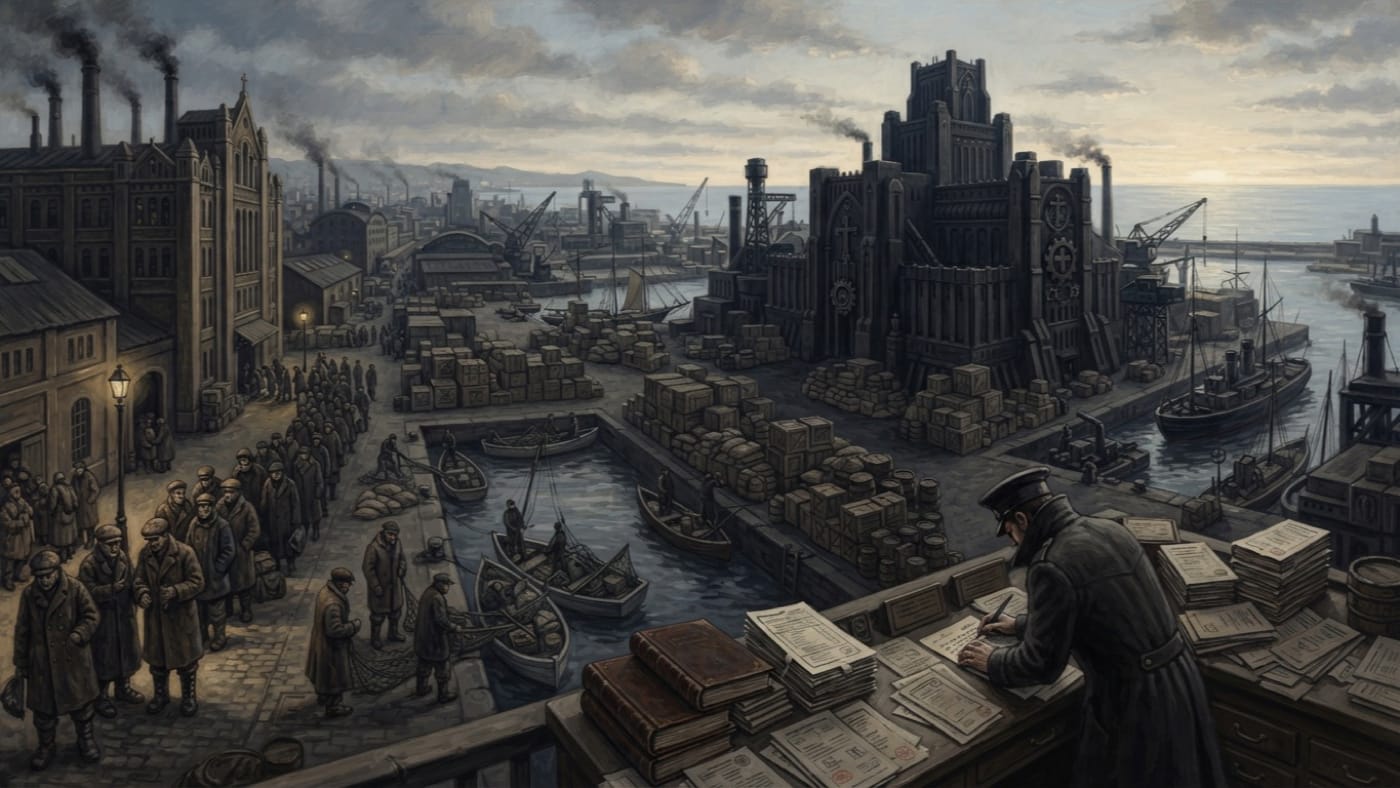
Barcelona
The dead are read correctly; the living appeal
Barcelona keeps Saint-Malo's Thirty-One Names at dawn and its dialect disputes on the clerk's desk. An Iberian port where the dead are read correctly and the living appeal.
Codex Ref. II.1.04-166
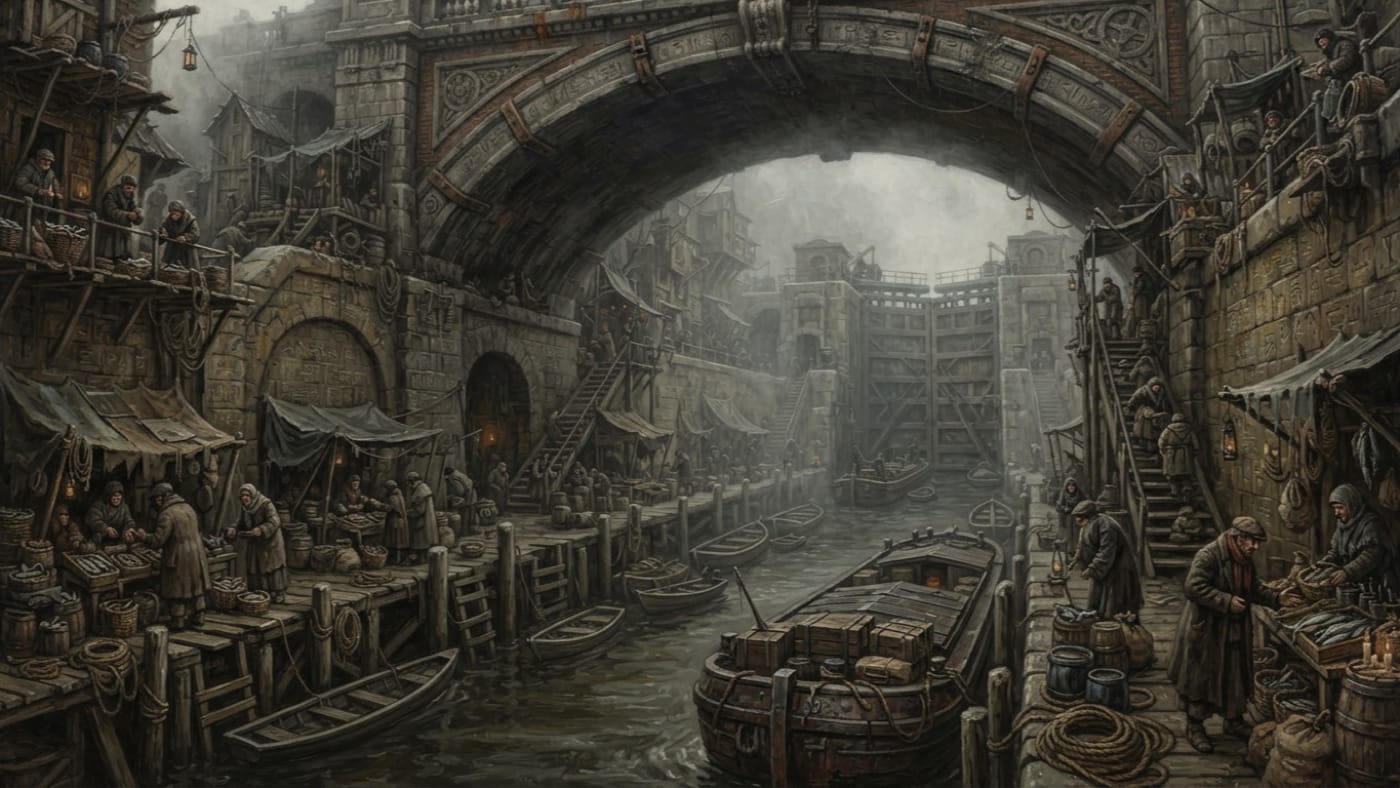
Barge-Lip Market
The planks keep no ledger; the bridges keep every debt
Barge-Lip Market hangs from the Causeyworks' canal edges, trading fish, tar, cheap spice and lock priority. The planks keep no ledger; the stone on the way home keeps every debt.
Codex Ref. II.1.02-002
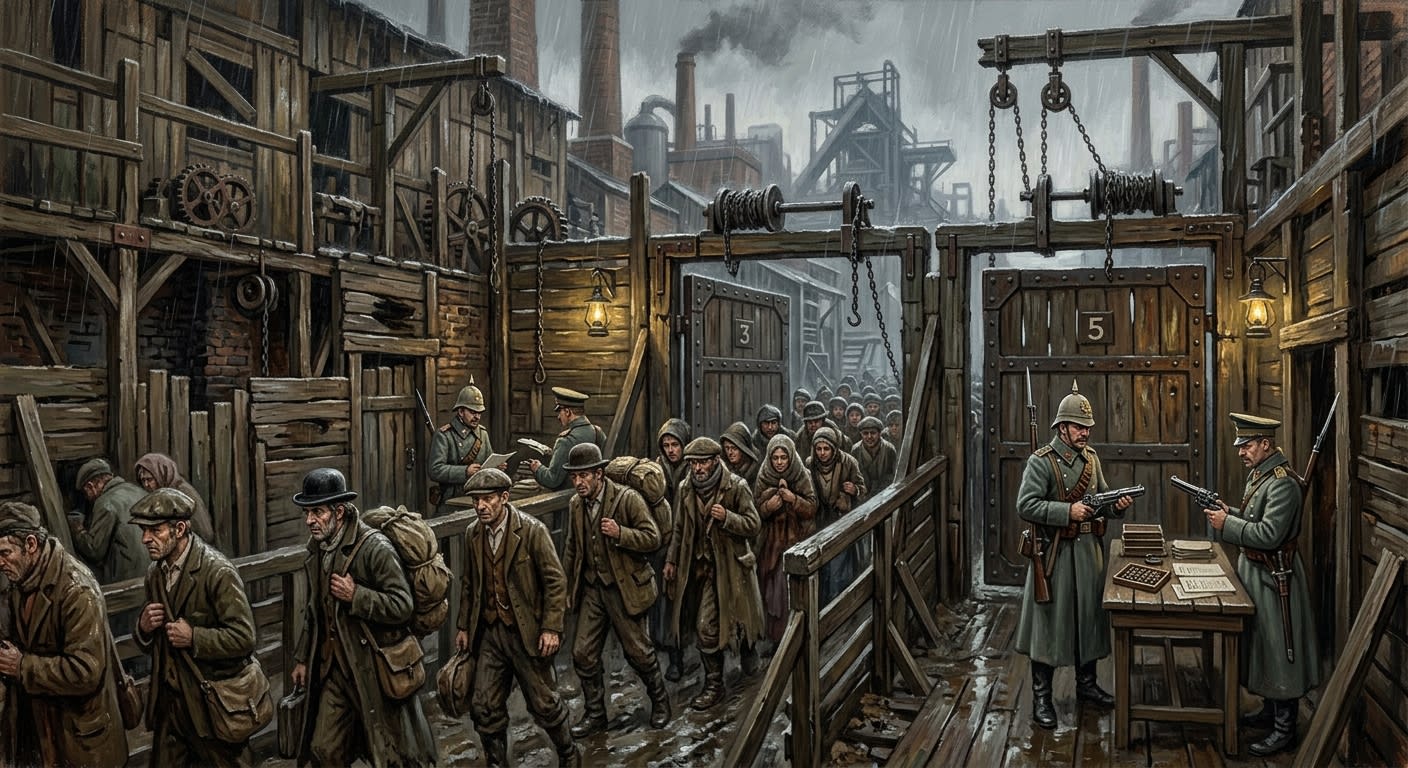
Barricade Maze
The fence that taught patience to pay rent
The Barricade Maze is the Queue Road's wet timber throat, where Gates Three and Five compress bodies, minutes, debts, and heresies into orderly revenue.
Codex Ref. II.3.05-010
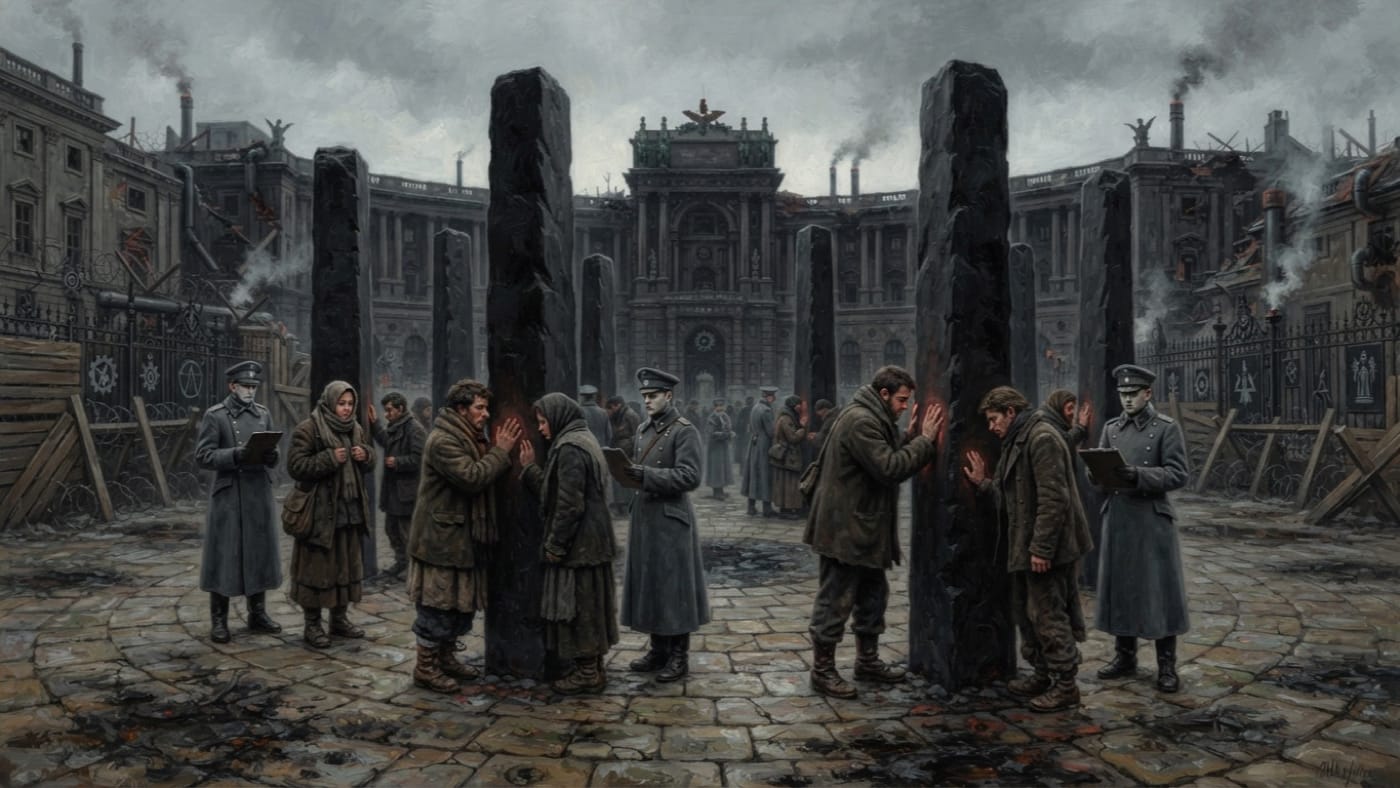
Basalt Columns of Heldenplatz
Seven stones, two explanations, and one temperature
Seven basalt columns warm the palms of Vienna's pilgrims at thirty-seven degrees. Raised in A.S. 95 where Rationalist pyres burned cold, they need no fuel; their explanations require two Bureaus.
Codex Ref. II.4.09-012
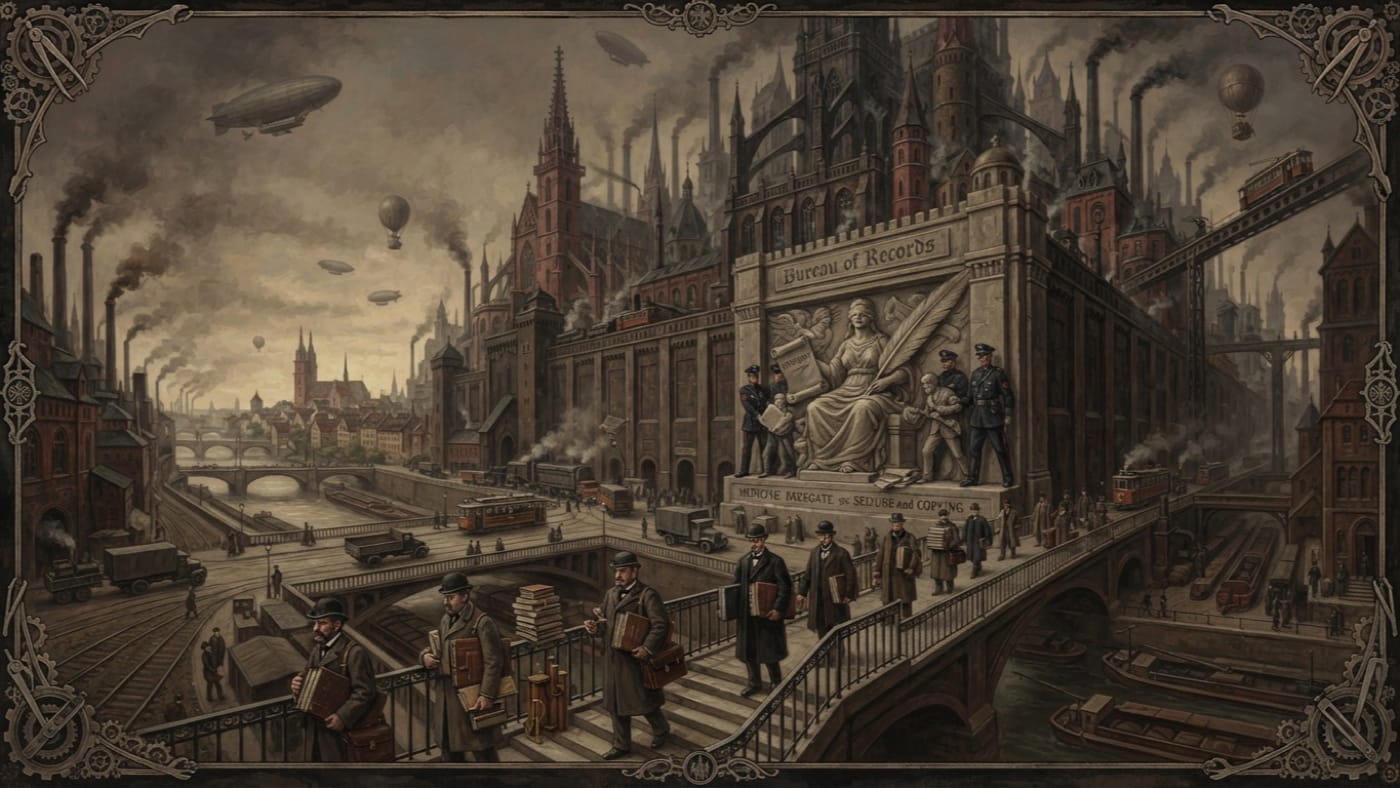
Basel
A city of letters; three words against the seal
Basel sent letters, physicians and one stubborn anatomist into the Ledger. Its unnamed Medicine delegate was removed from the A.S. 147 Congress; his treatise was seized, copied, studied and denounced.
Codex Ref. II.2.01-147
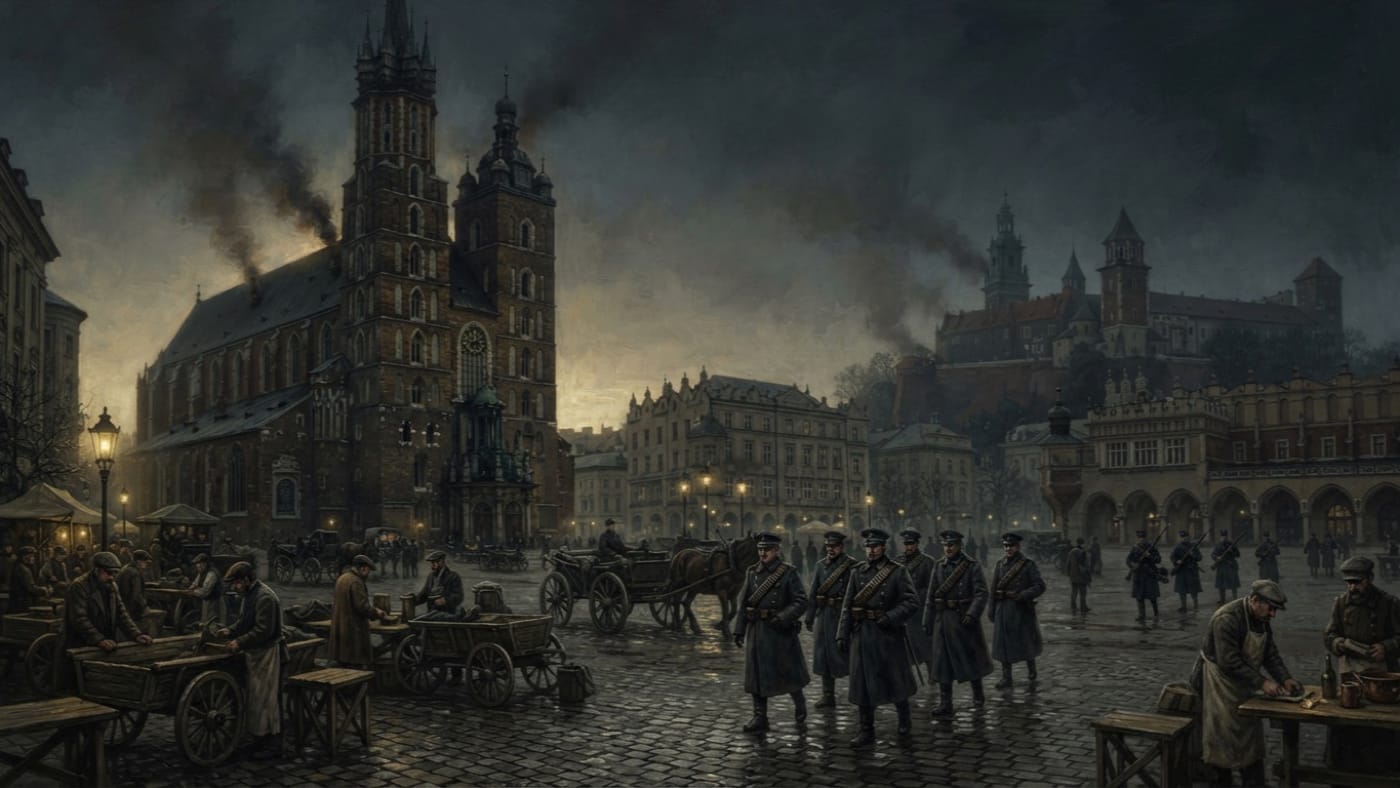
Basilica of Our Lady
The stones have a place in the record; their age does not
The Basilica of Our Lady stood in Kraków's market square before the Night of Knives in A.S. 18. The Ledger certifies its place beside the trade; its founding and later fate remain unrecorded.
Codex Ref. II.3.06-003
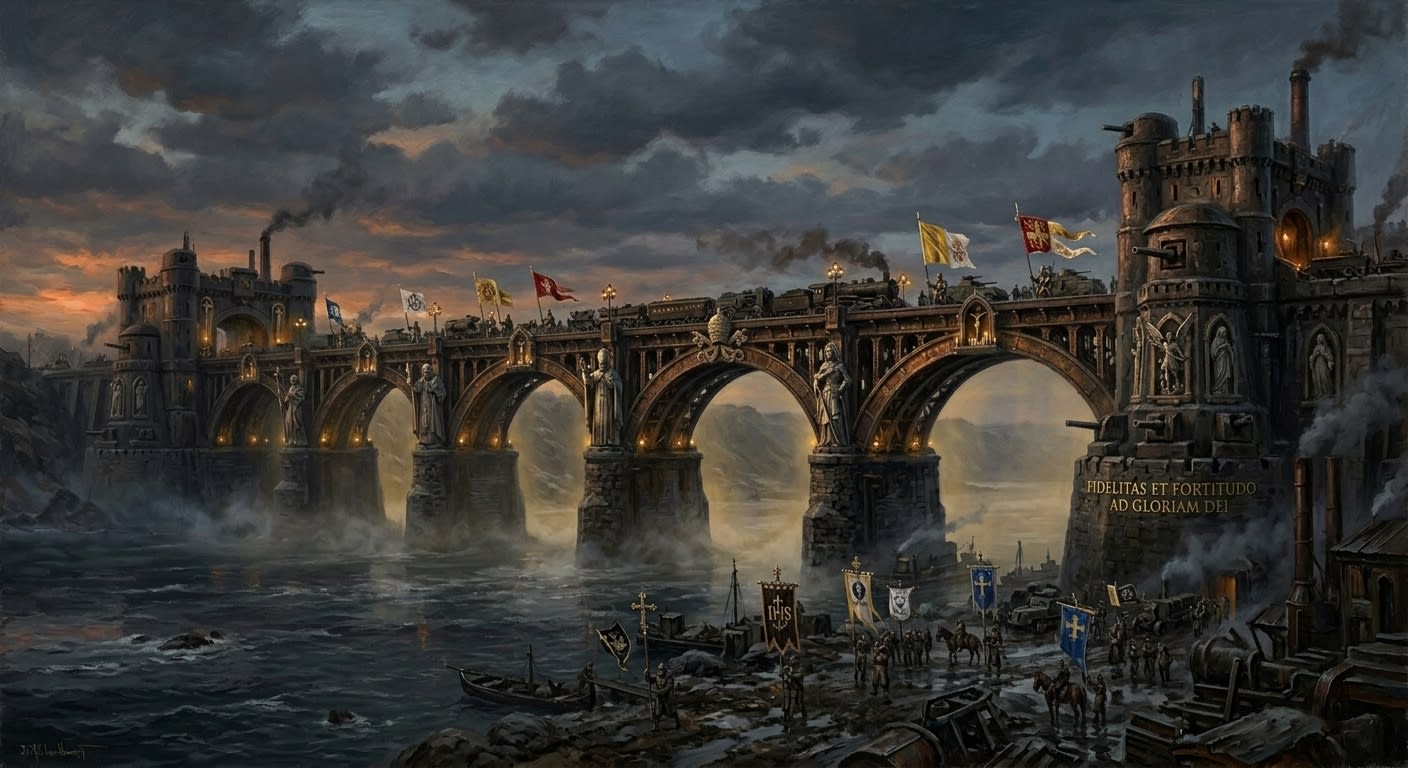
Bastion-Brest
Where the Confession Comes Back
The Brass Ribs of the Bug River crossing — a bridge-fortress of thirty-two brass-ribbed trusses where crossing the span requires a moral audit at gunpoint, confession is currency, and the sins spoken into the booths have, since A.S. 199, begun to come back.
Codex Ref. II.4.07-002

Bastion-Constantinople
The Hinge of the South
Keystone fortress of the Sagittal Line, ratified in A.S. 68. The southernmost anchor of the Wall and its most celebrated grave. Where the advance of Hell first broke against ink and iron, and has broken ever since.
Codex Ref. III.2.04-017
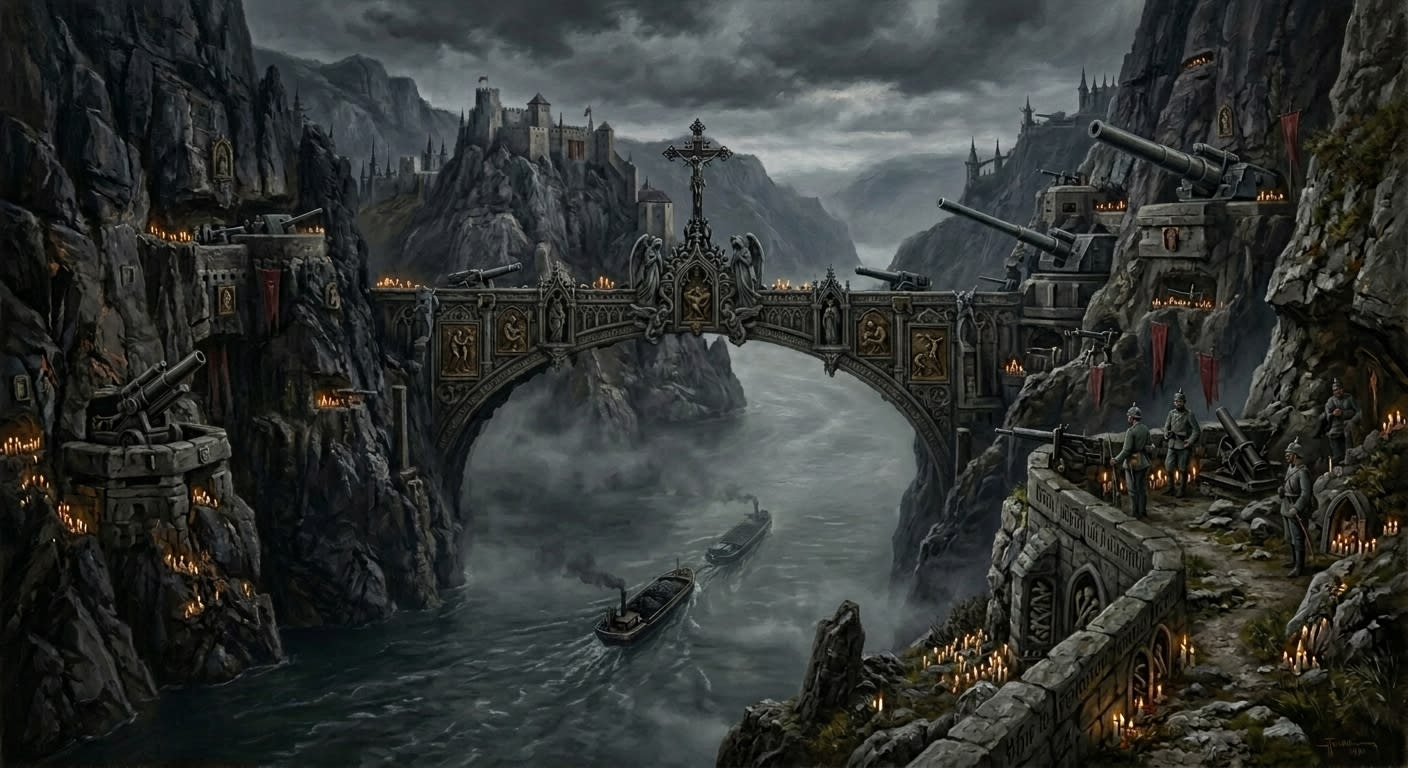
Bastion-Irongate
The mountain does not need the iron. The mountain needs the sound.
The fifth bastion of the Sagittal Line guards the Danube gorge with stone, chain-booms, and a choral infrastructure whose song is the only reason the mountain has not yet collapsed. Facing Morwen, Sin-General of Envy, who attacks not to take the gorge but to ruin it.
Codex Ref. II.4.07-005
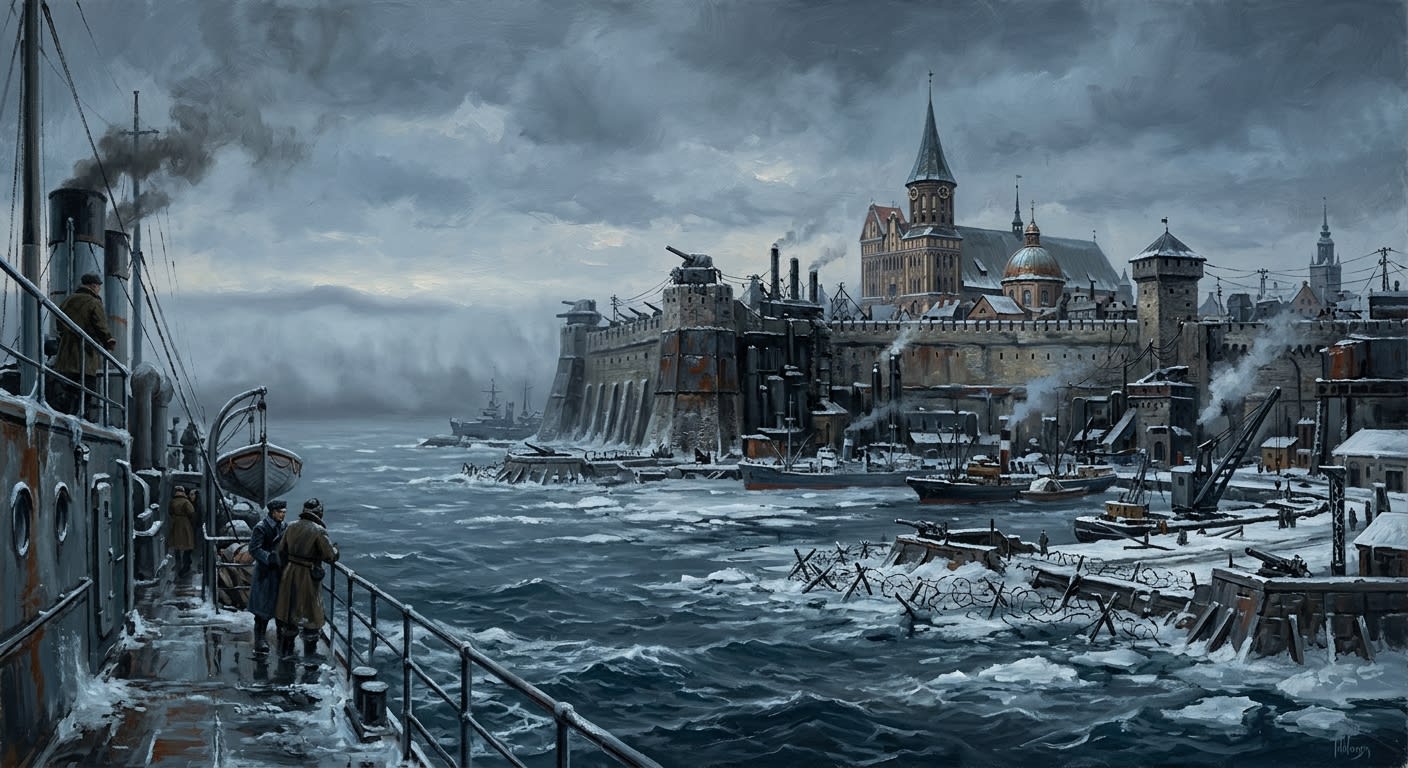
Bastion-Königsberg
The Far Nail, the Last Bell, the Thing the Grey Has Not Yet Chosen to Break
The northern anchor of the Sagittal Line and the loneliest posting on the face of the earth — where the bells answer something that has no name, and the fog has faces, and the garrison holds for reasons the Bureau has spent eleven years declining to investigate.
Codex Ref. II.4.07-001
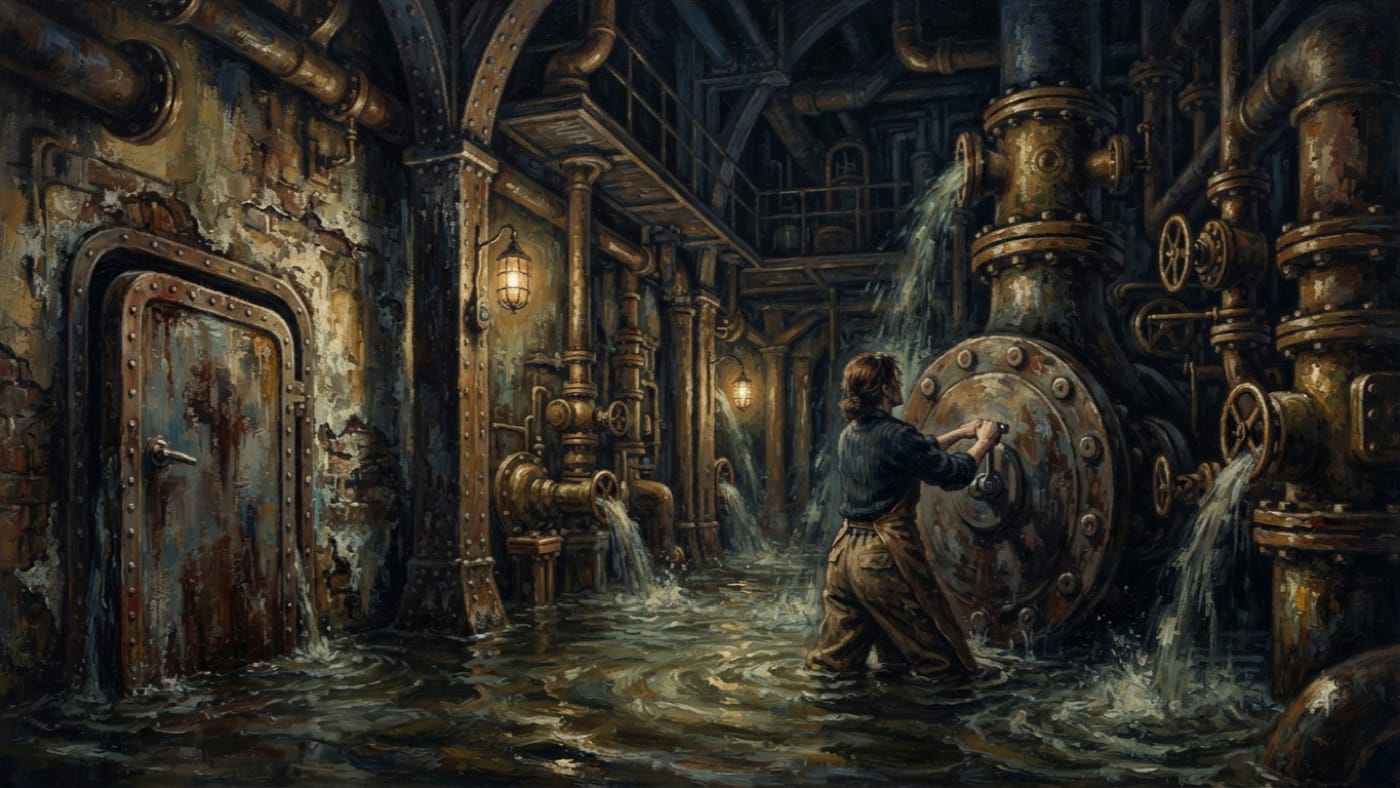
Bastion-Metz
Behind the Line, the water is the enemy that files no declaration.
Metz's historical rear supply-bastion, where Orla completed Seal Seven beneath rising water. The low ward survived; the mechanic did not. Its founding is unrecorded, and its present condition remains uncertified.
Codex Ref. II.4.09-176
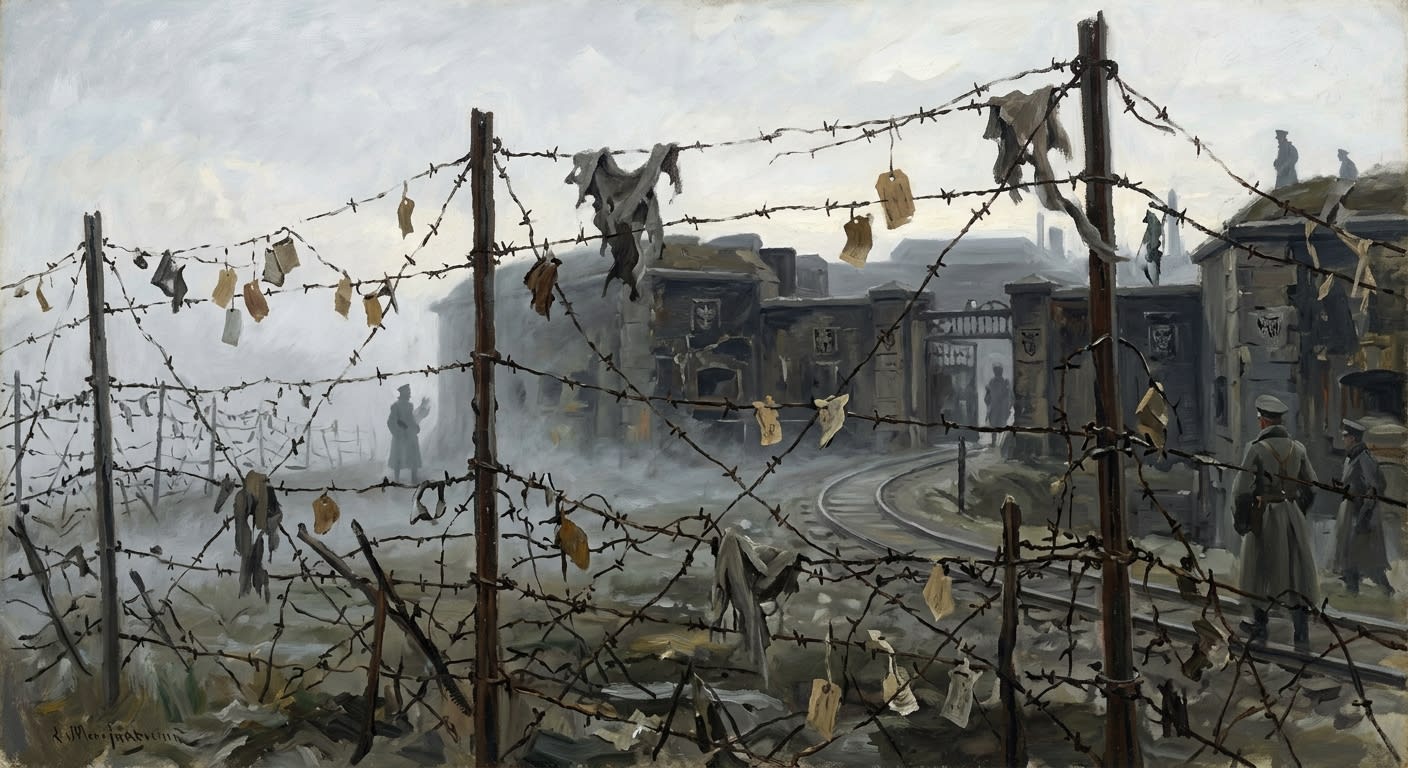
Bastion-Przemyśl
The Wire Remembers What the Ledger Forgets
The Wire Orchard at the Carpathian arc: three miles of electrified barb, a ration-tag economy, and the cold arithmetic of the dawn harvest. What enters Bastion-Przemyśl is processed. What exits is stamped. What fails the stamp feeds the Orchard.
Codex Ref. II.4.07-003
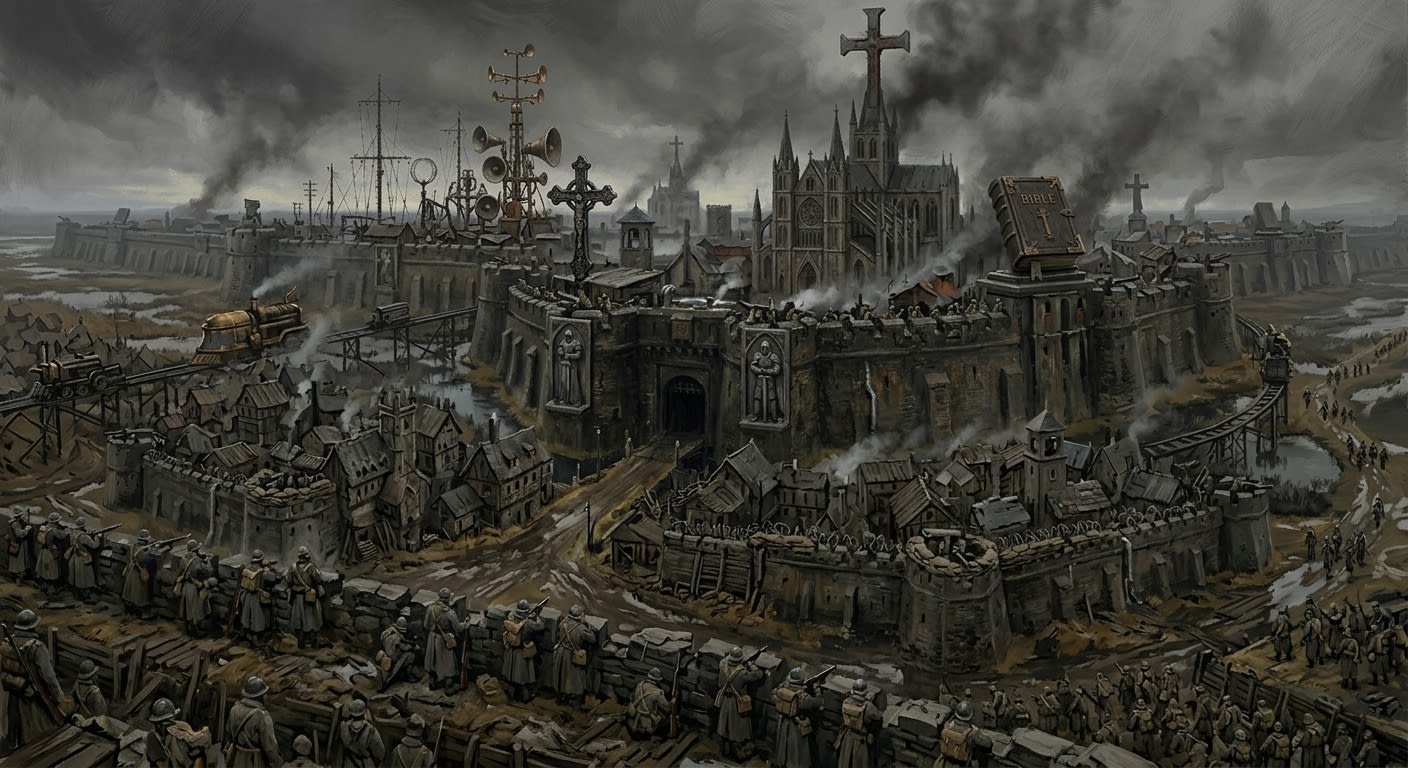
Bastion-Shipka
The Bastion That Guards the Minutes
The mud-sunk marsh-gate at the edge of Syrion's dream, where a kingdom once slept itself to death and a bastion stands awake by sheer force of maintenance schedules. Shipka guards not walls but minutes — the last reliable clock before the Vales of Stagnance.
Codex Ref. II.4.07-006
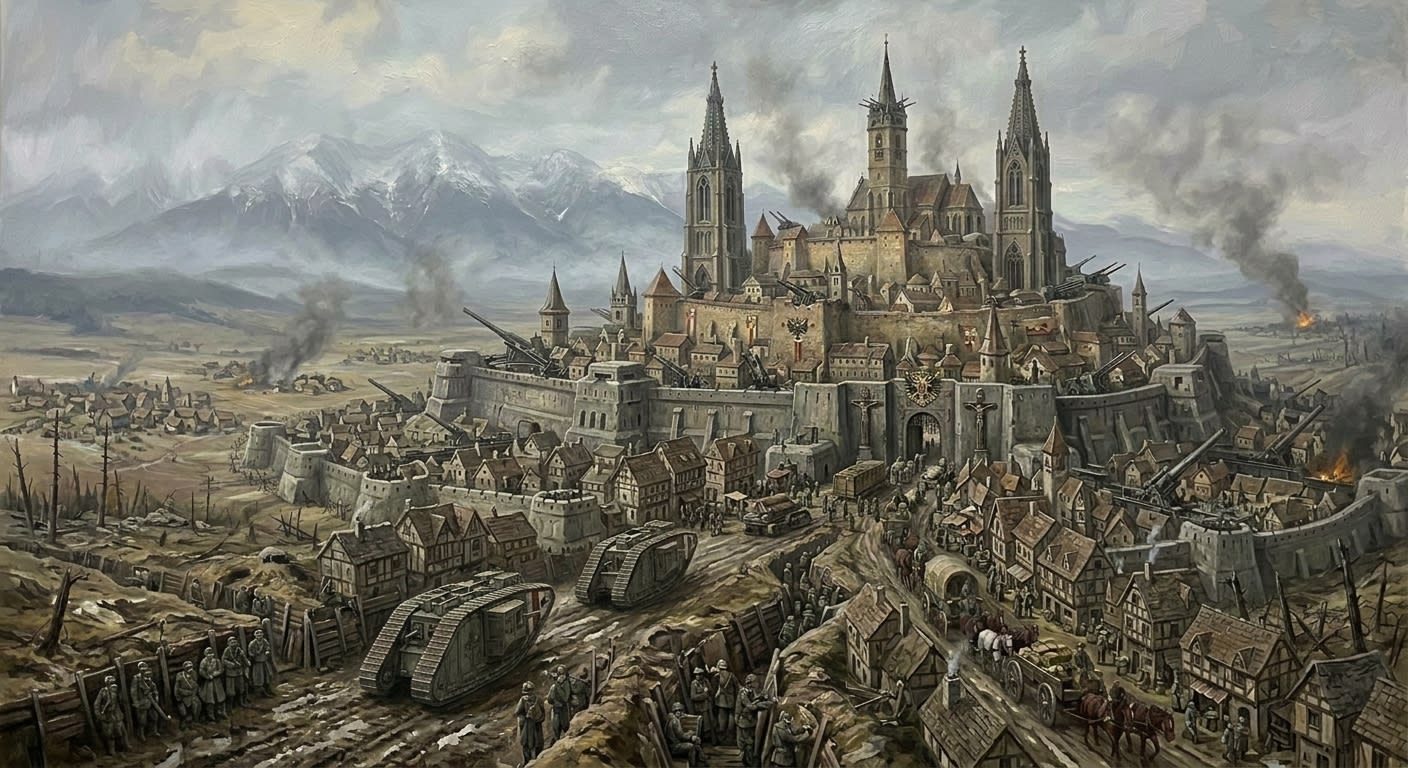
Bastion-Sibiu
The walls hold. The ledger bleeds.
Bastion-Sibiu has never fallen. Its economy is another matter. Velmora does not storm the Transylvanian Alps — she audits them: counterfeit scrip, corrupted convoys, and the gold veins that may already be hers.
Codex Ref. II.4.07-004
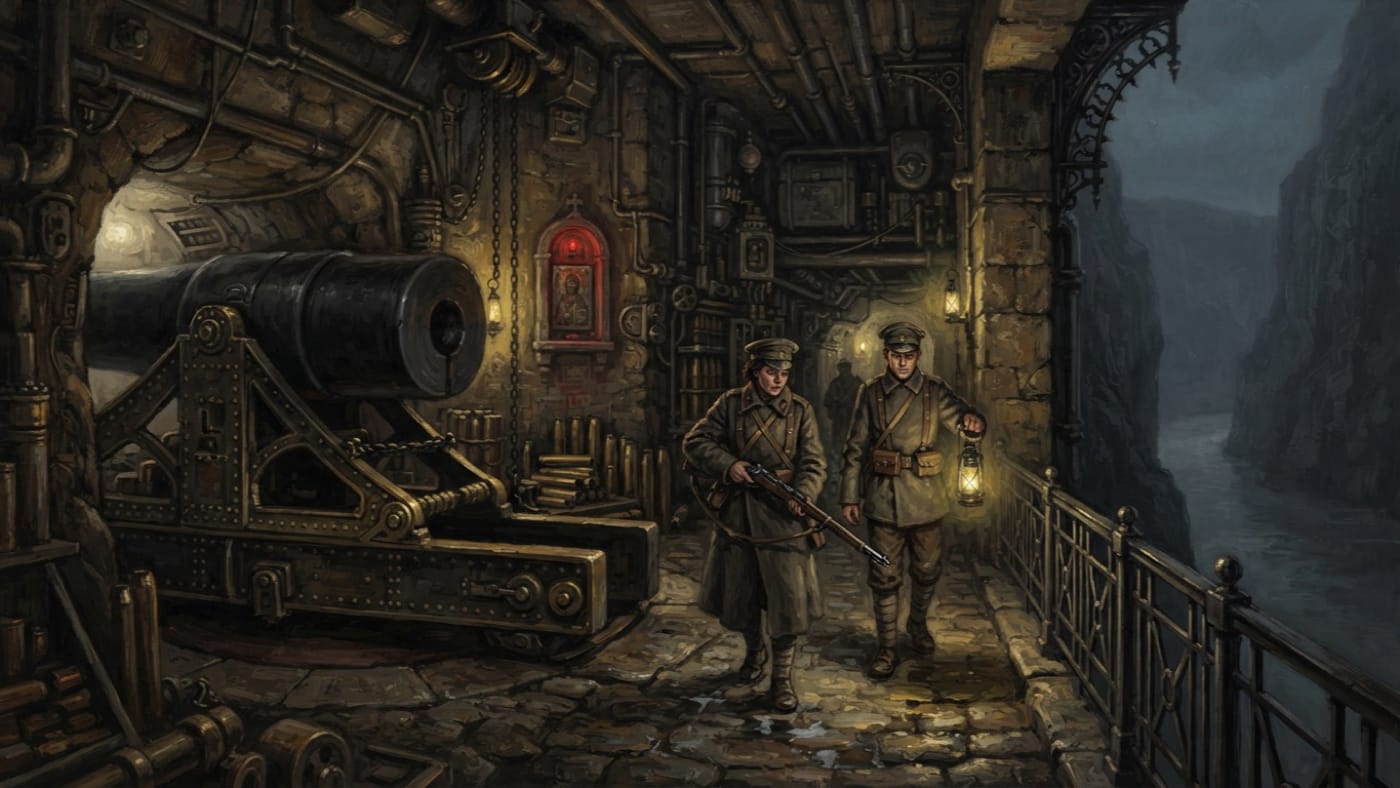
Battery Saint Cuthbert
The saint lends a name; the sentries pay in sleep
Battery Saint Cuthbert marks one end of Voss's night watch at Bastion-Irongate. The A.S. 197 deposition counts sleepless sentries more carefully than the file counts guns.
Codex Ref. II.4.07-197
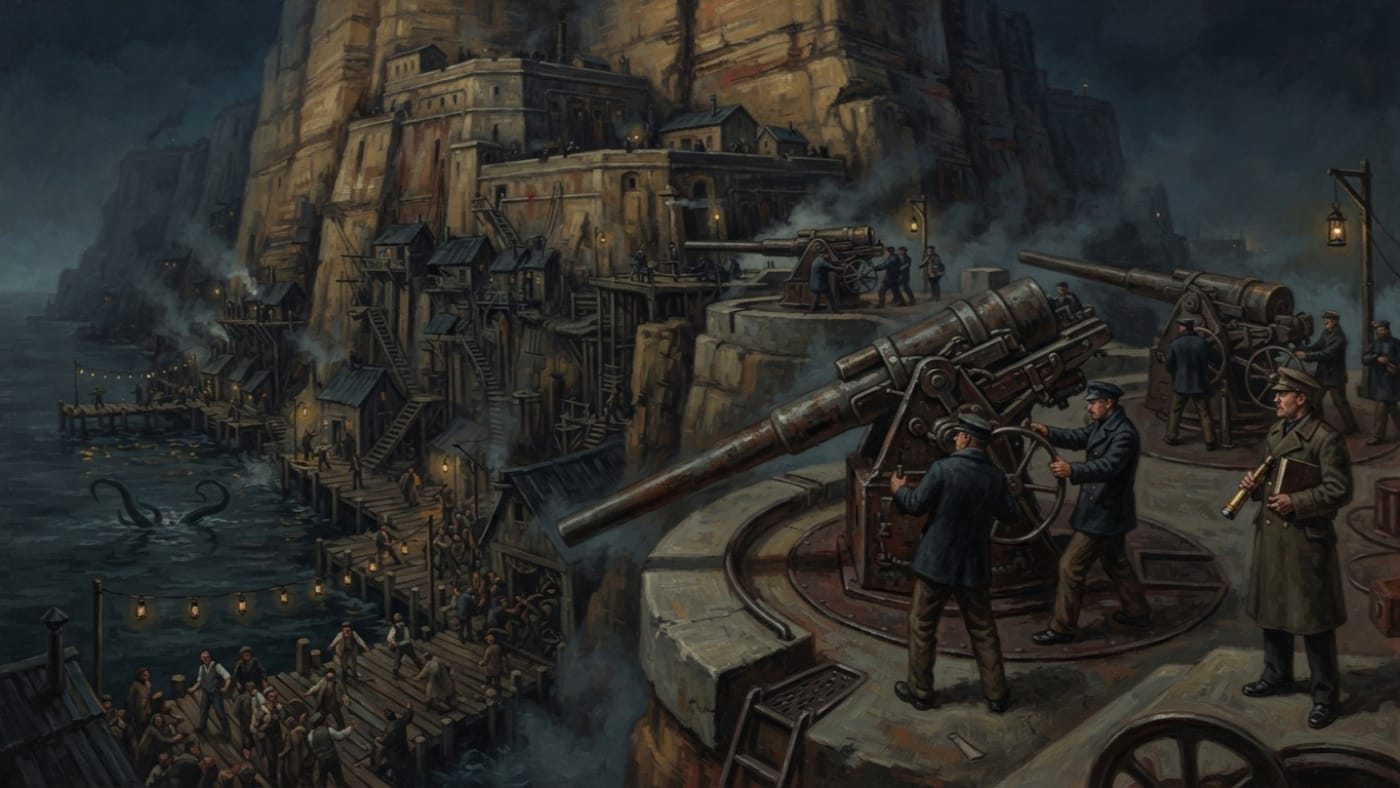
Battery Twelve
The gun agrees, within its arc
Battery Twelve is Saffron Bastion's cliff-gun answer to Demon-Lures: command from the Marshal, payments from the Courts, and no reach beneath the piers.
Codex Ref. II.4.09-012
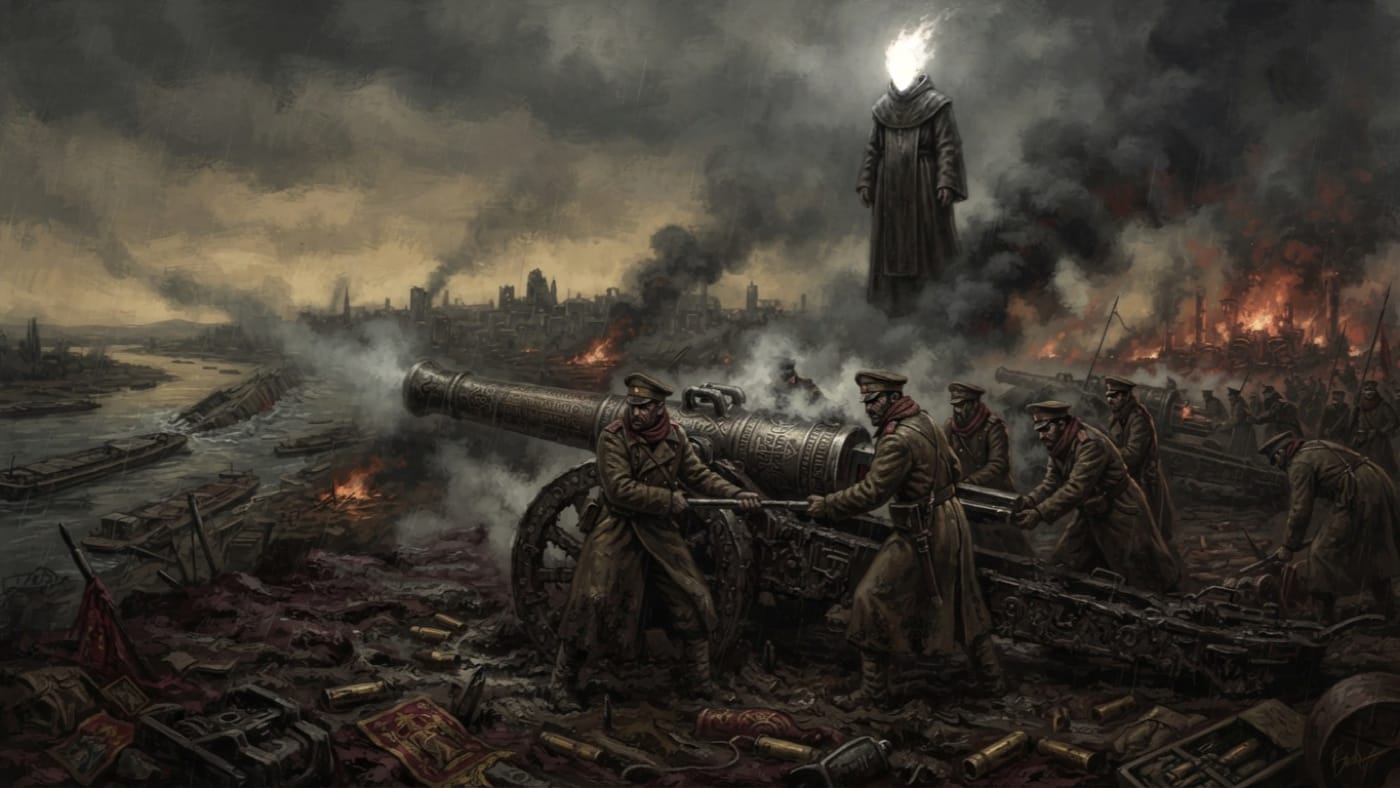
Battery Veyl
A visor of white fire, a sentence under seal
Battery Veyl served at Belgrade in A.S. 120 beneath an unnamed apparition with a visor of white fire. Its survivor's account of the third saint remains under seal.
Codex Ref. II.5.06-122
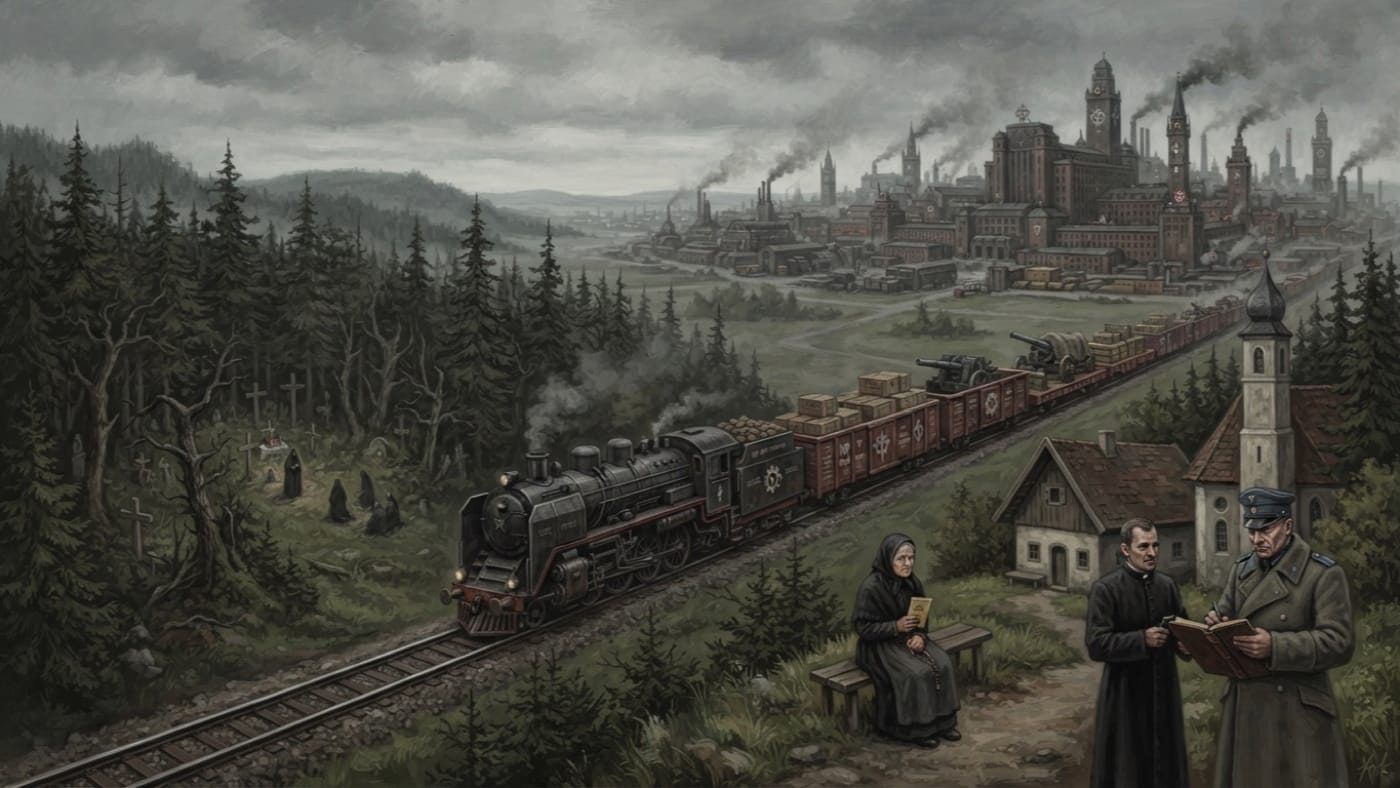
Bavaria
The heartland pays for safety one son at a time
Bavaria's forests once hid scattered faithful. Its parishes now supply the Continental Levy, while Munich sends War's freight east. Heartland safety is paid for one household at a time.
Codex Ref. II.2.11-201
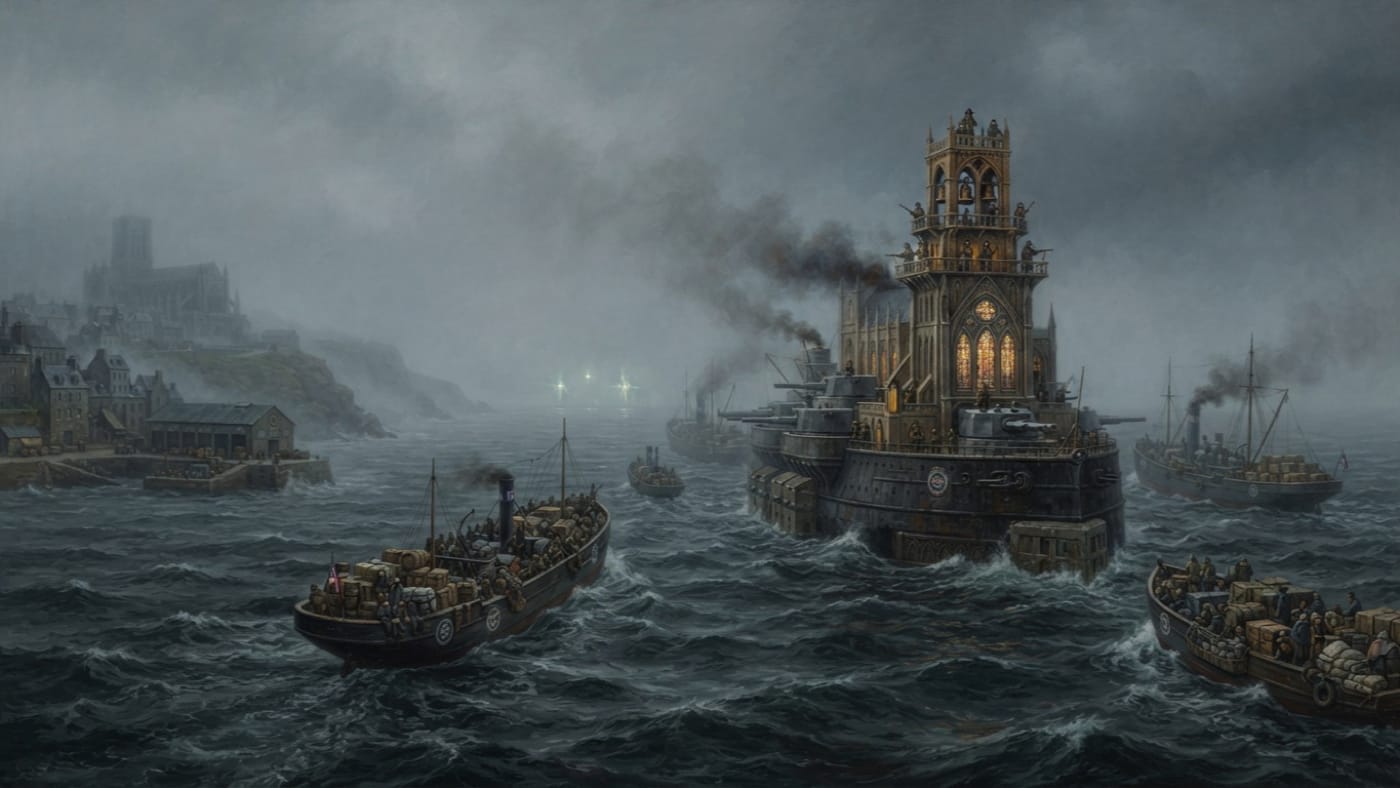
Bay of Biscay
We seal the barrels; the British bring them through
Off the western French and northern Iberian coasts, Biscay carries the Synod's cargo under British escort. The shore bears our seals; the open water has accepted none.
Codex Ref. II.4.09-189
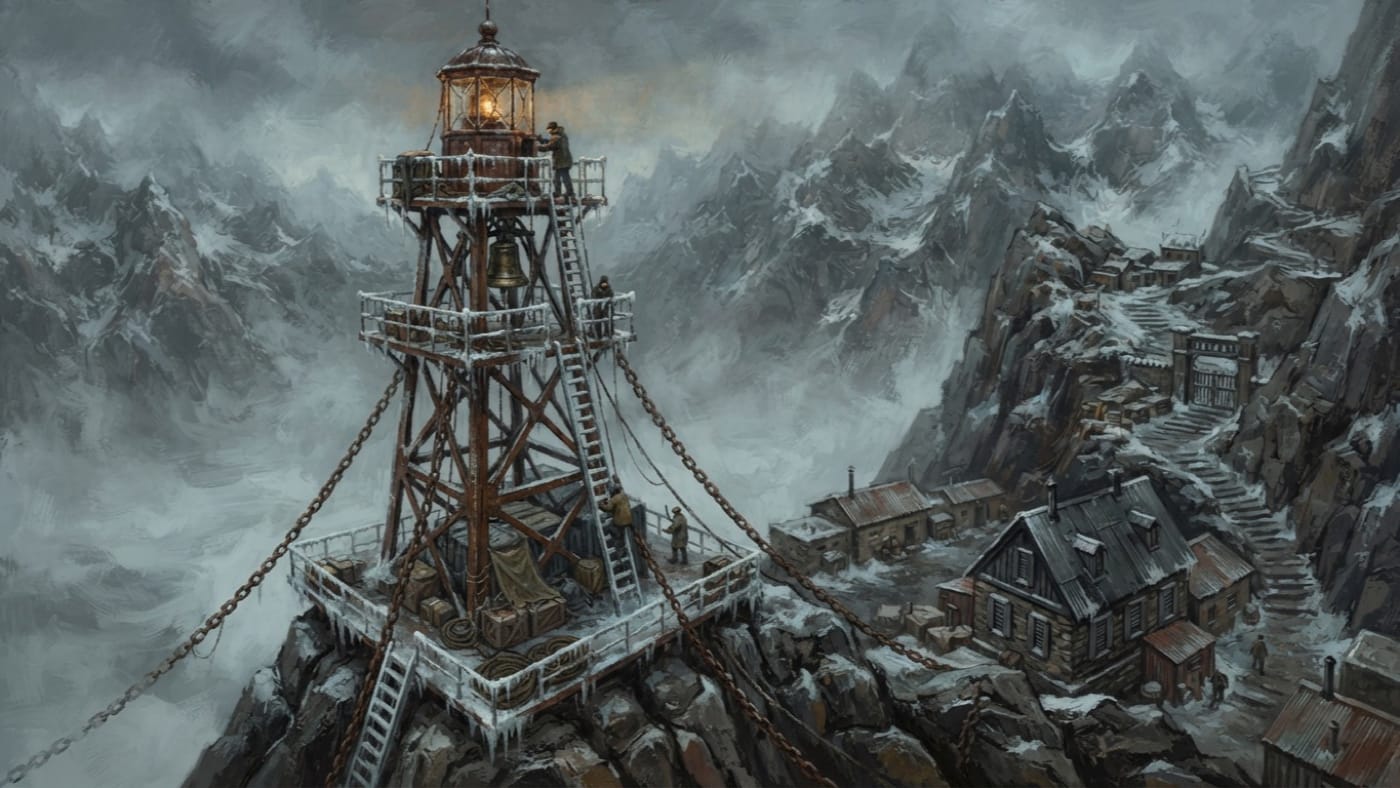
Beacon Tower Three
Six cycles of light, and one answer too many
The fifty-foot signal tower at Third Light, where a relic-lantern, a restricted bell and six daily cycles govern convoy passage. The fog answers in the tower's own protocol; the logs accept what the ridges deny.
Codex Ref. II.4.08-006
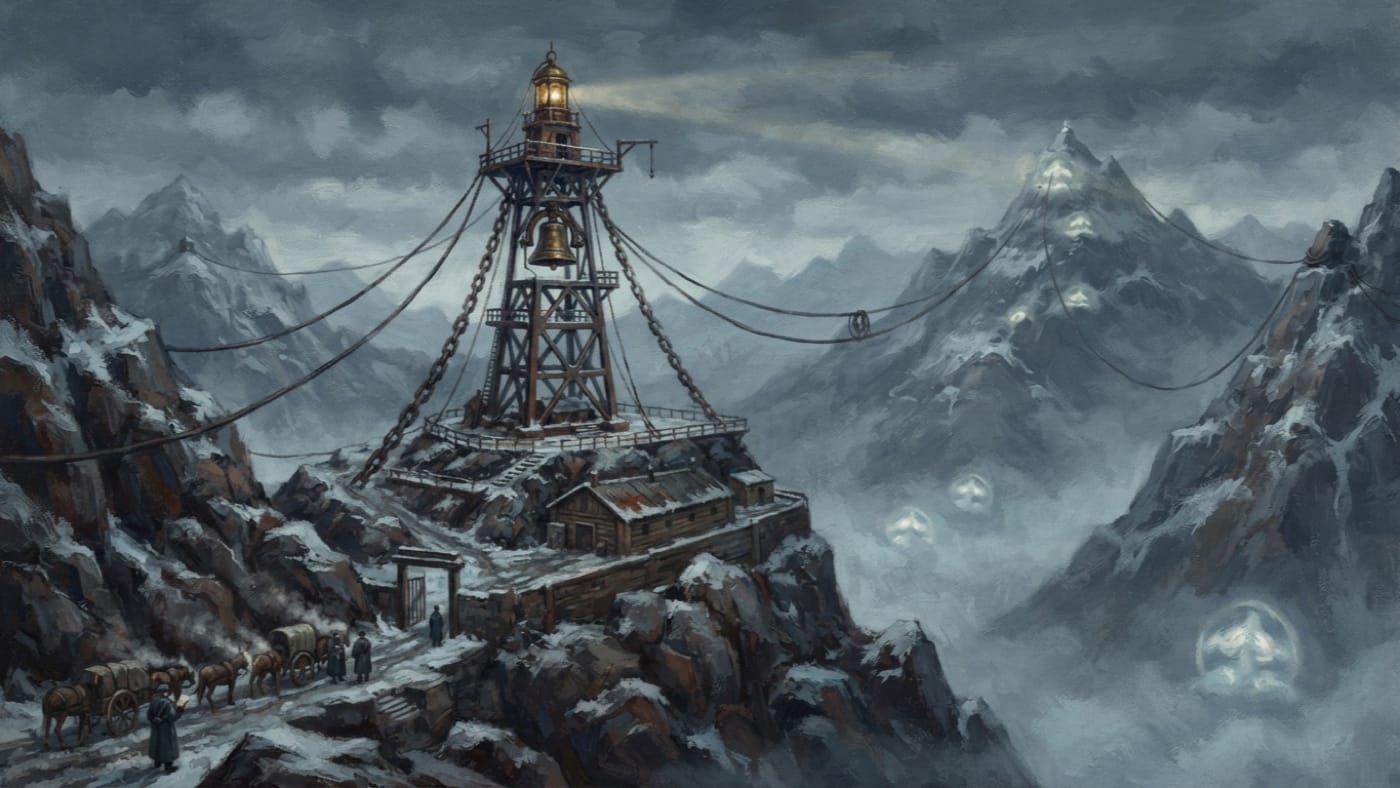
Beaconchain
Permission travels by lantern; certainty by stamp
The Carpathian relay of iron towers, relic-lanterns and bells governs convoy passage. Its seals certify every answer; at Third Light, the fog has learned to answer correctly.
Codex Ref. II.3.05-072
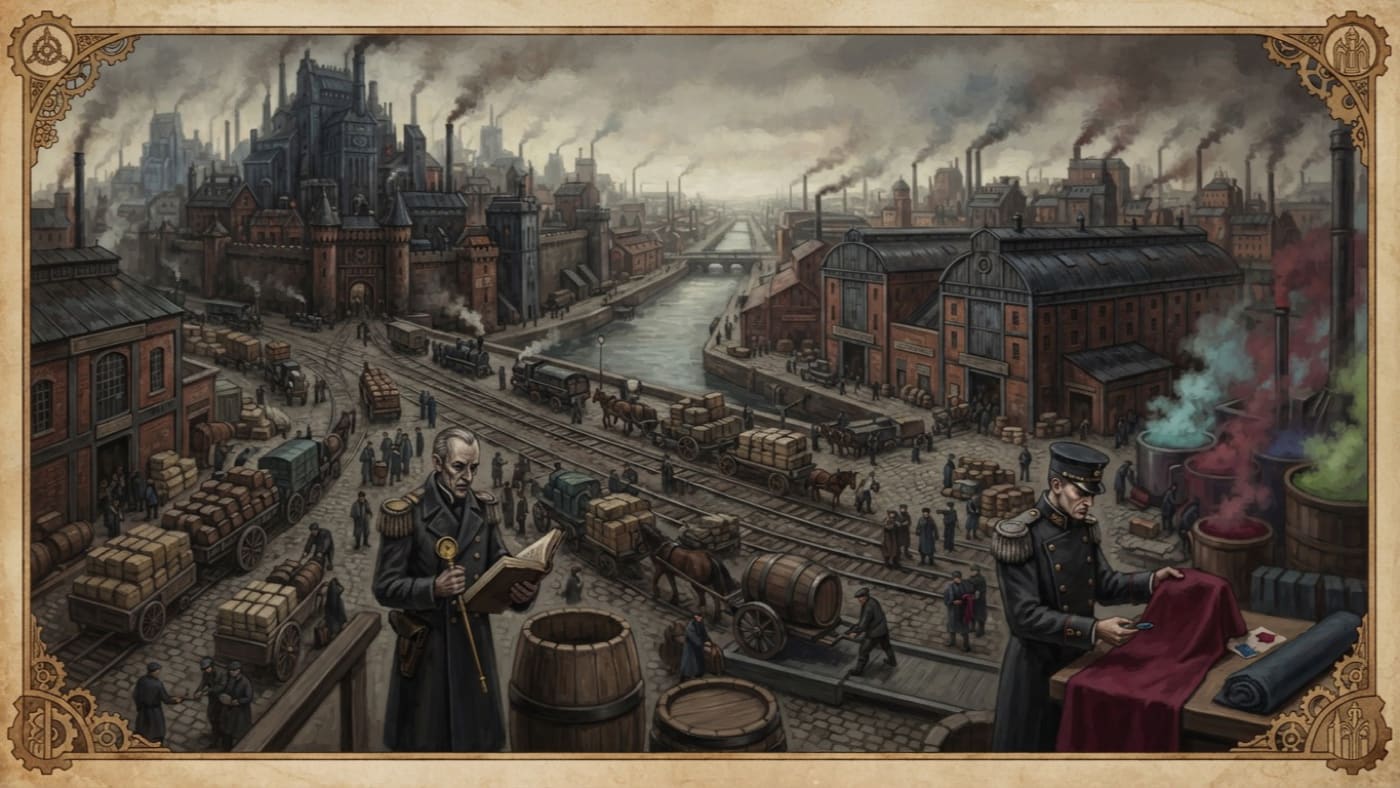
Beaune
Count the casks, check the swatch, knock on the barrel
Beaune sends Burgundy's wine toward the Rhône. Tithes gauges its casks, the Chancellery watches its dyes, and Shadows remembers a barrel that held no wine.
Codex Ref. II.1.12-201
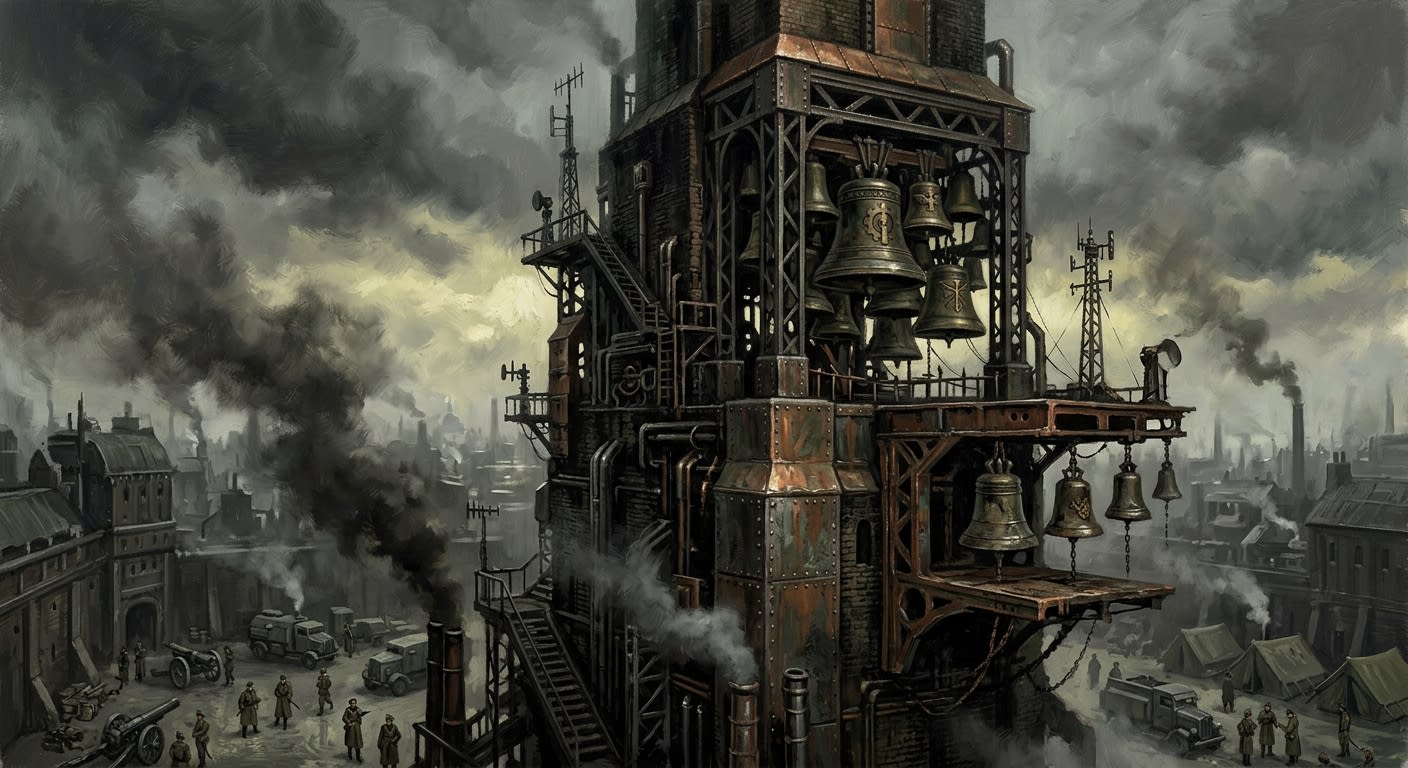
Belfry of the Hinge
Twenty-three mouths teach Constantinople which fear is lawful
The Belfry of the Hinge is Bastion-Constantinople's command tower: twenty-three principal bells, four shame bells, and the voice that makes fear lawful.
Codex Ref. II.4.10-007
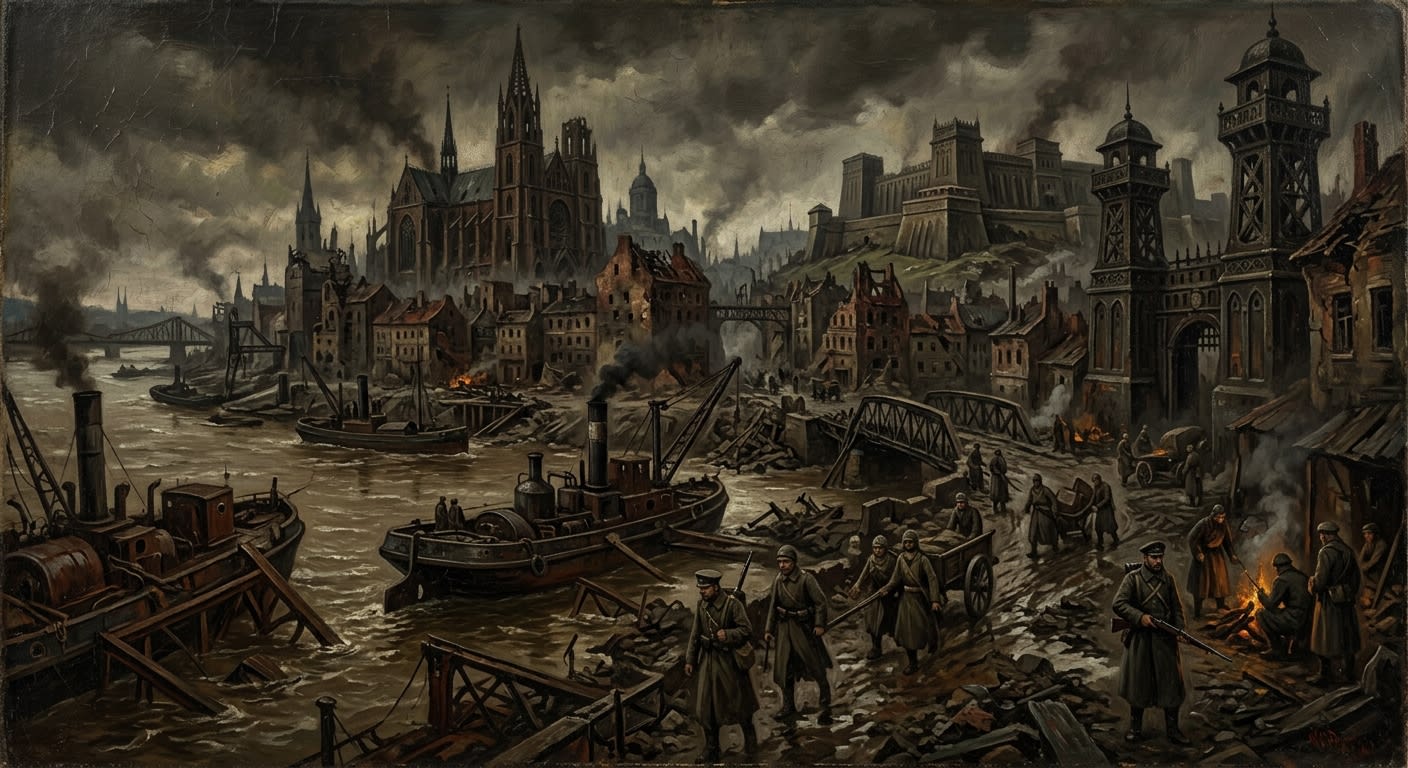
Belgrade
The city the river refused to bury, and therefore made taxable
Belgrade, ruined-contested confluence city where Shattered Courts perfume met Maldrake's Wrath, the Danube turned in A.S. 120, and sanctity became an armed hazard.
Codex Ref. II.5.06-120
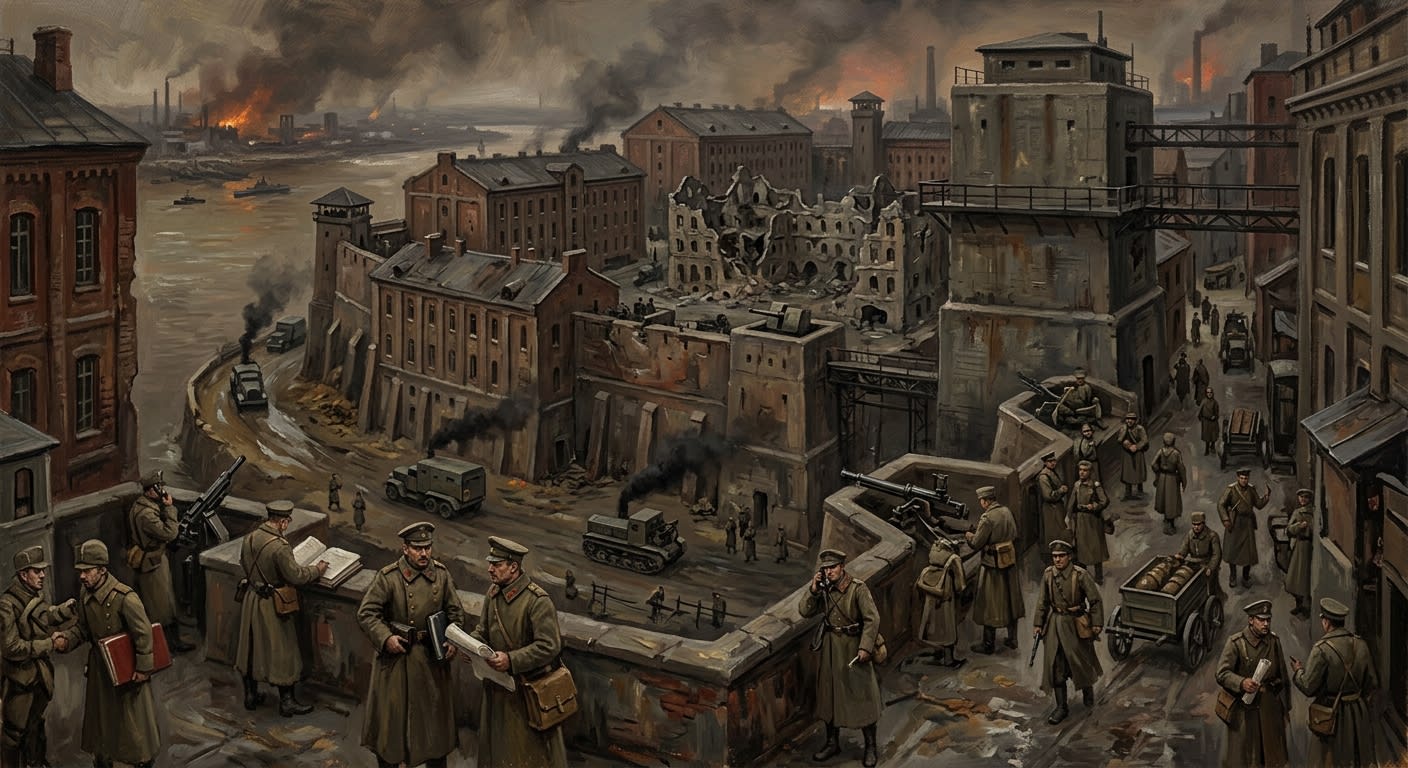
Belgrade Courts
Where miracle became evidence and silence learned to testify
The Belgrade Courts are the judicial-military scar around Velkara's Shattered Courts, where Maldrake burned, the Danube turned, and silence acquired paperwork.
Codex Ref. II.5.06-121
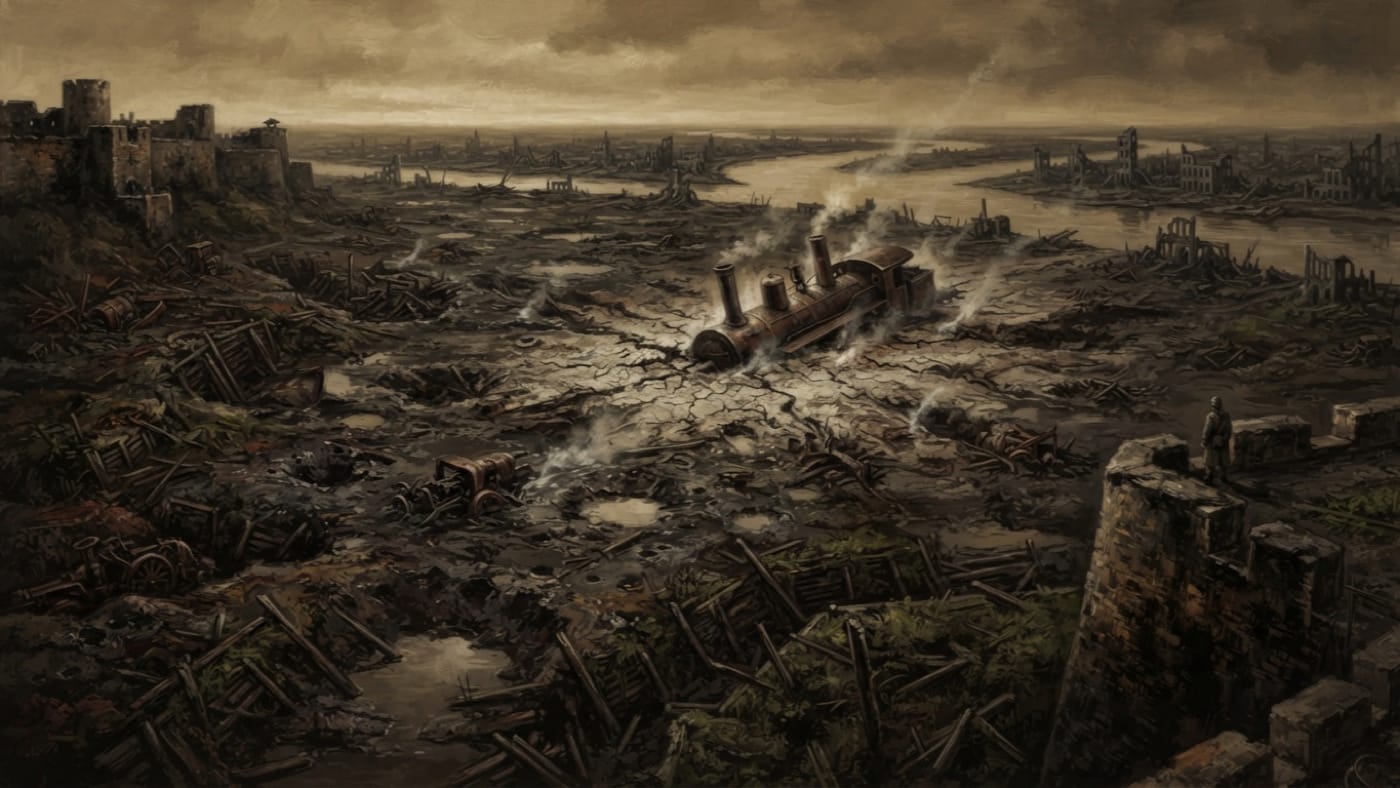
Belgrade flats
Victory ratified. Ground not.
The Belgrade flats are forbidden low ground at the Sava-Danube confluence, where Flesh-Mud swallowed a Wrath-forged engine in A.S. 120. The victory was ratified; the ground remains hungry.
Codex Ref. II.5.06-122
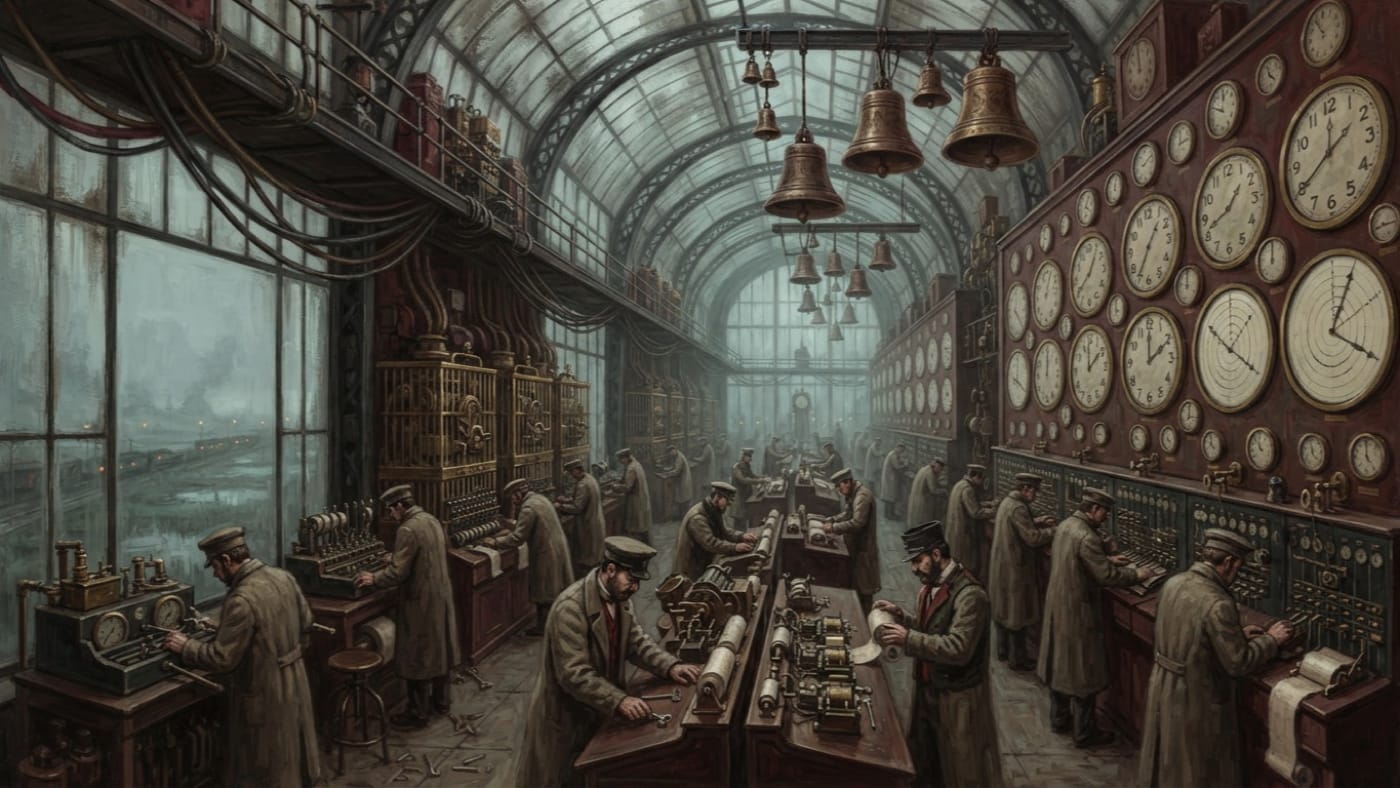
Bell Gallery
The bells keep the hour; the committees keep its meaning
The Bell Gallery governs Shipka's bells, clocks and telegraph traffic. Its hours move trains and patrols; what those hours measure remains before committee.
Codex Ref. II.4.08-209
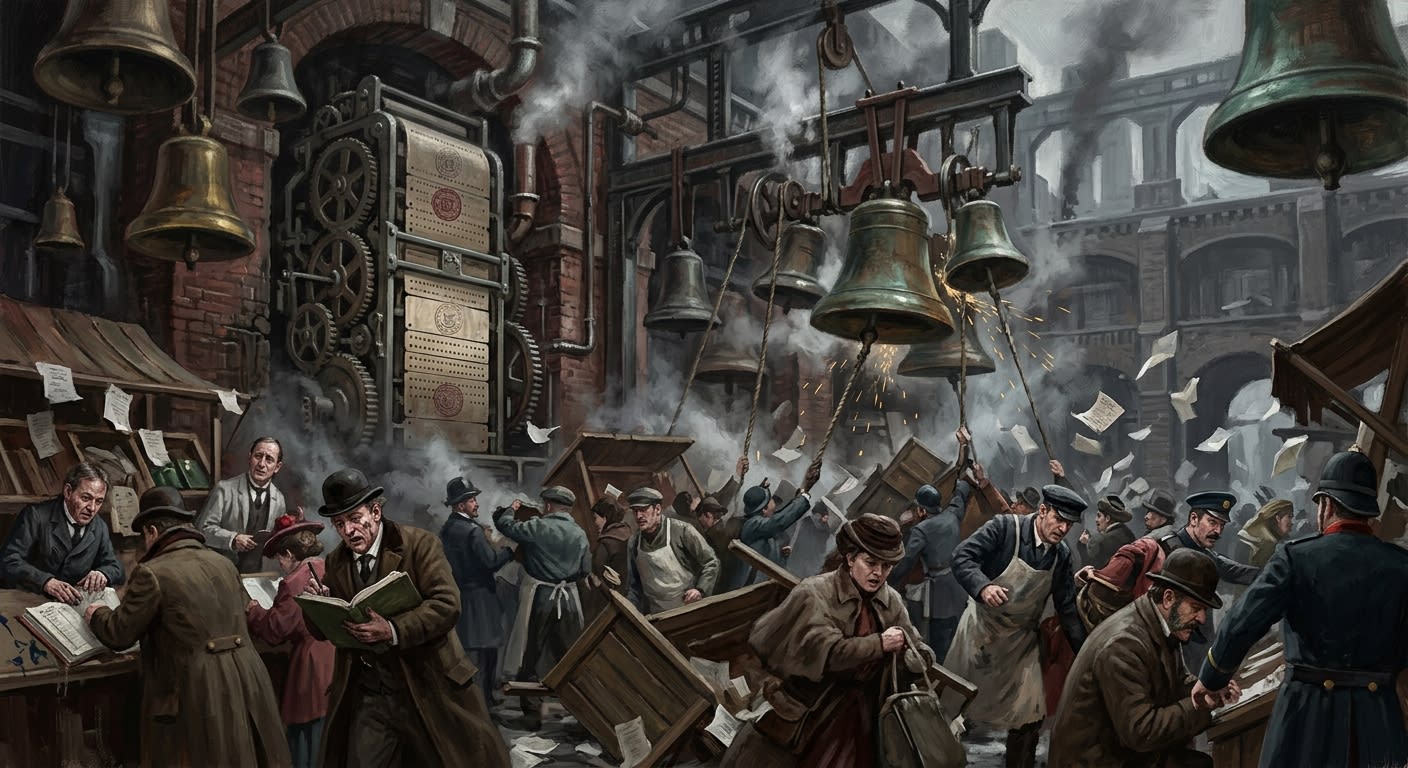
Bell-Market of Toledo
The city where even time queues for a receipt
Toledo's west-cloister market leases bell-hours by stamp and tariff, prospering after reconstruction until the oversold Sext of A.S. 163 proved time dislikes accountants.
Codex Ref. II.1.06-002
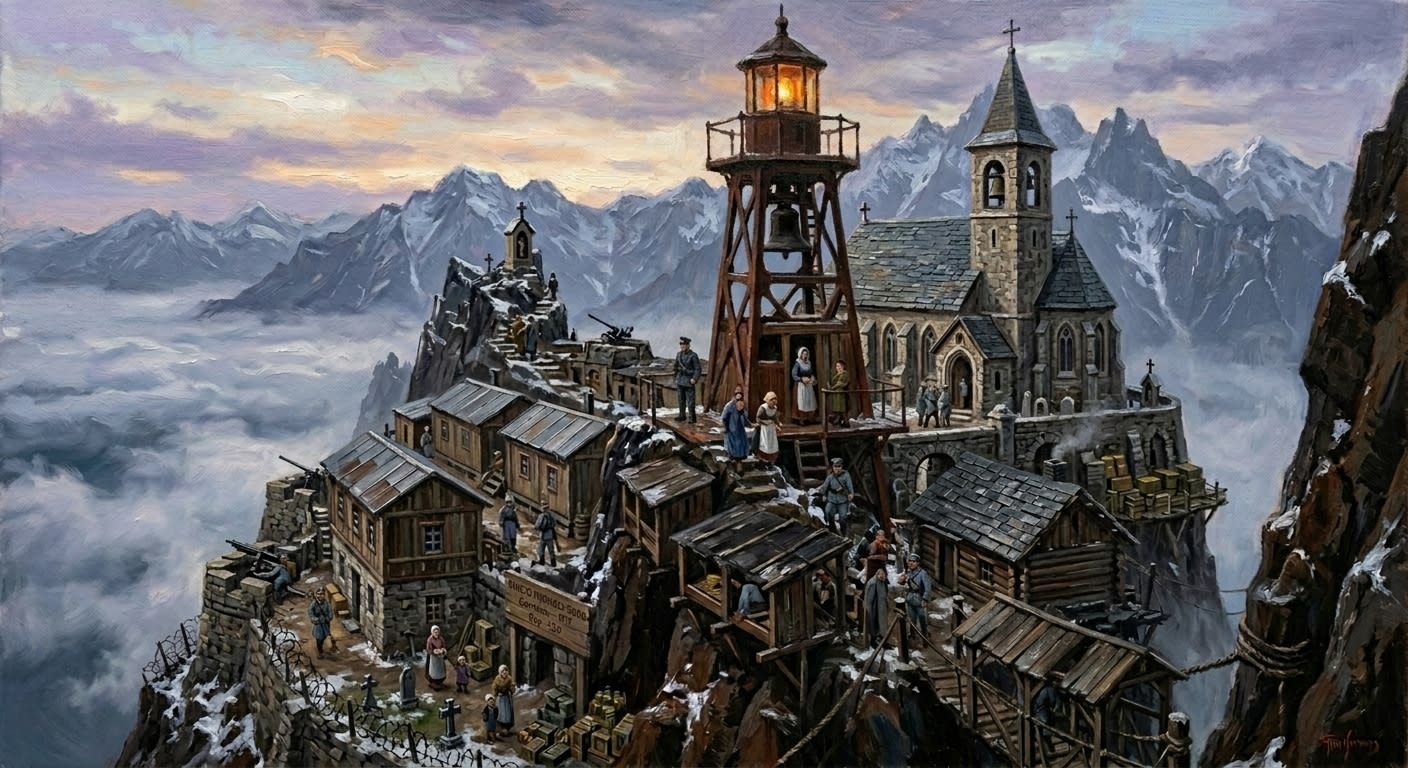
Bell-Signet Beaconchain Hamlet, Third Light
Where the signal ends and the fog begins to answer
A relay station of four hundred souls on a basalt knife-ridge in the high Carpathians, where the Beaconchain's Third Light burns between civilization and the fog — and the fog has started answering back.
Codex Ref. II.4.08-005
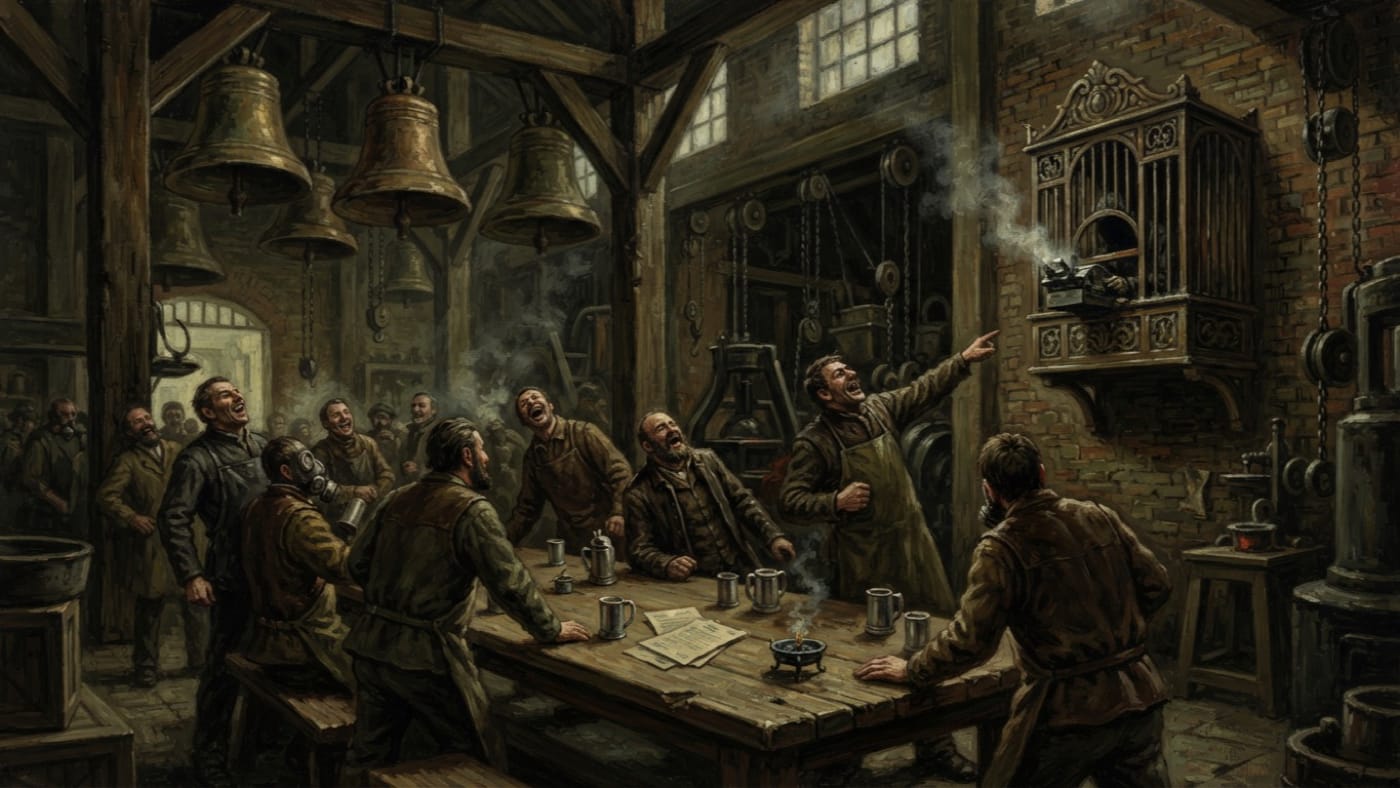
Bellfounders' Hall
Seven minutes of laughter, one brief permission
Bellfounders' Hall, Seville: a licensed grief toast became seven minutes of hostile laughter in A.S. 153. Form 19-M claims the first breach; the Fishmongers' Court disputes it.
Codex Ref. II.1.04-153
Bellhouse Heights
Where every legal hour belongs to the bell schedule
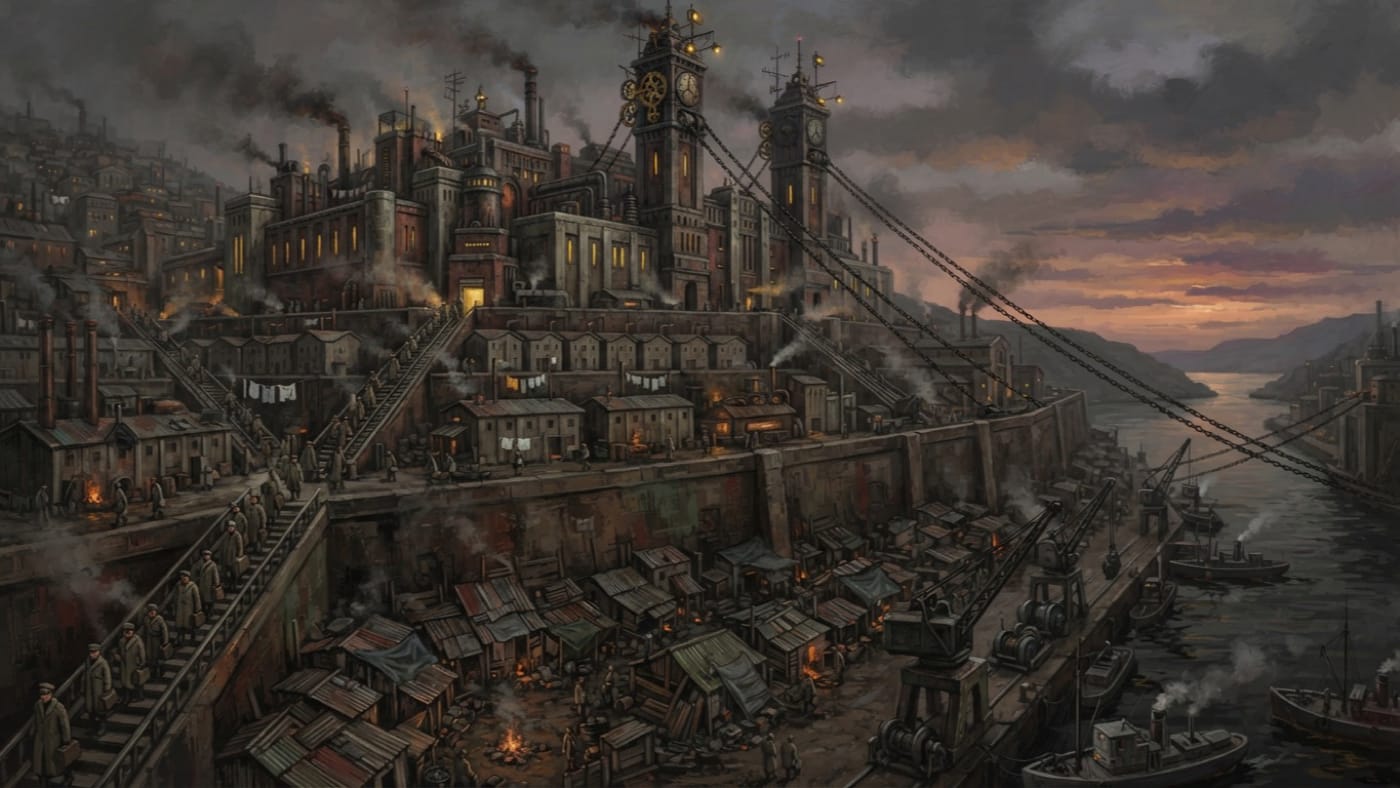
Bellhouse Heights administers Thessaloniki's tower bells, choir barracks, and legal hours. The bells ring in exchanged voices; the district still expects everyone to be punctual.
Codex Ref. II.4.09-201
Bend Ferry
Read the rope, then cross
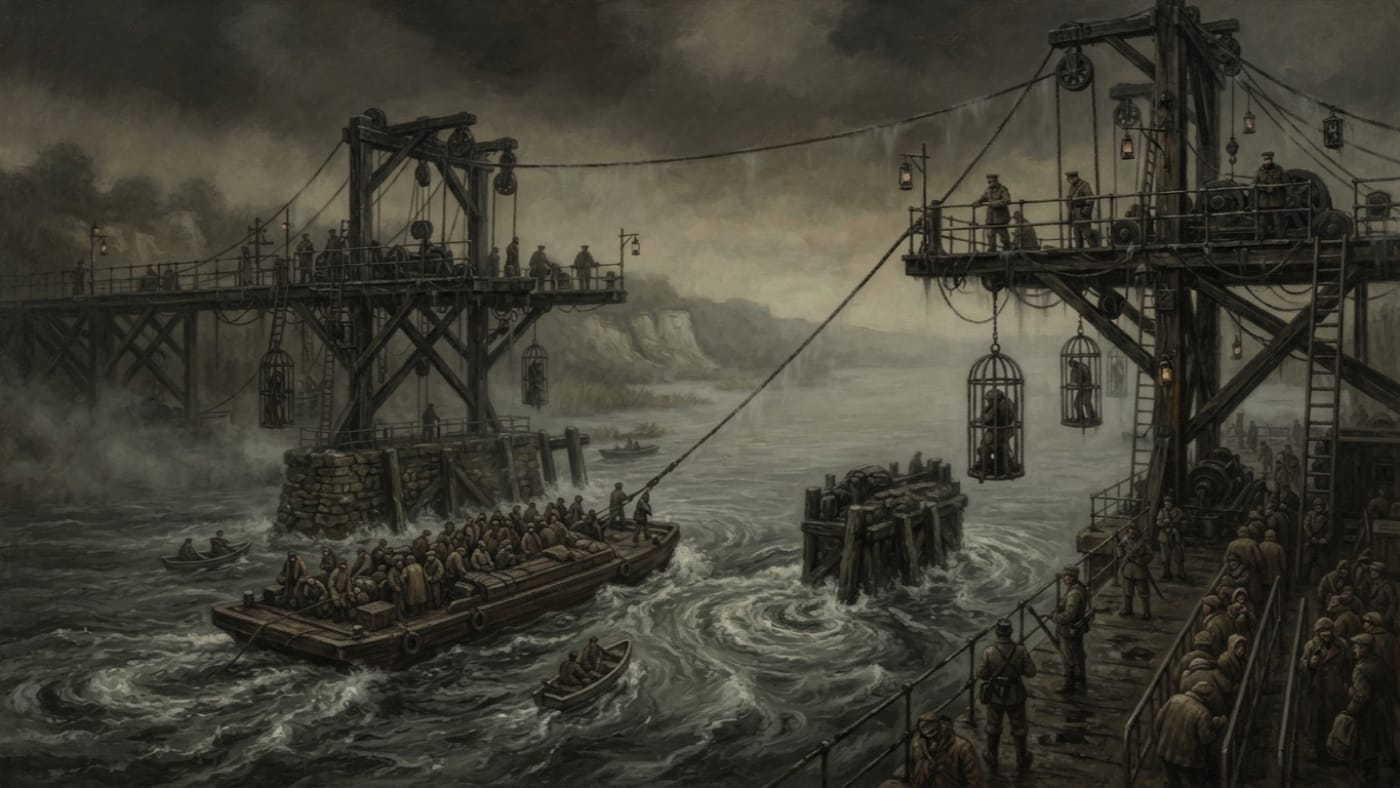
At Node Seven, the Chain's fastest current runs beneath drowning cages and a rope that writes the future. The Throat remains open, subject to the river's corrections.
Codex Ref. II.3.05-007
Bergen
Where the Church buys warmth and borrows money
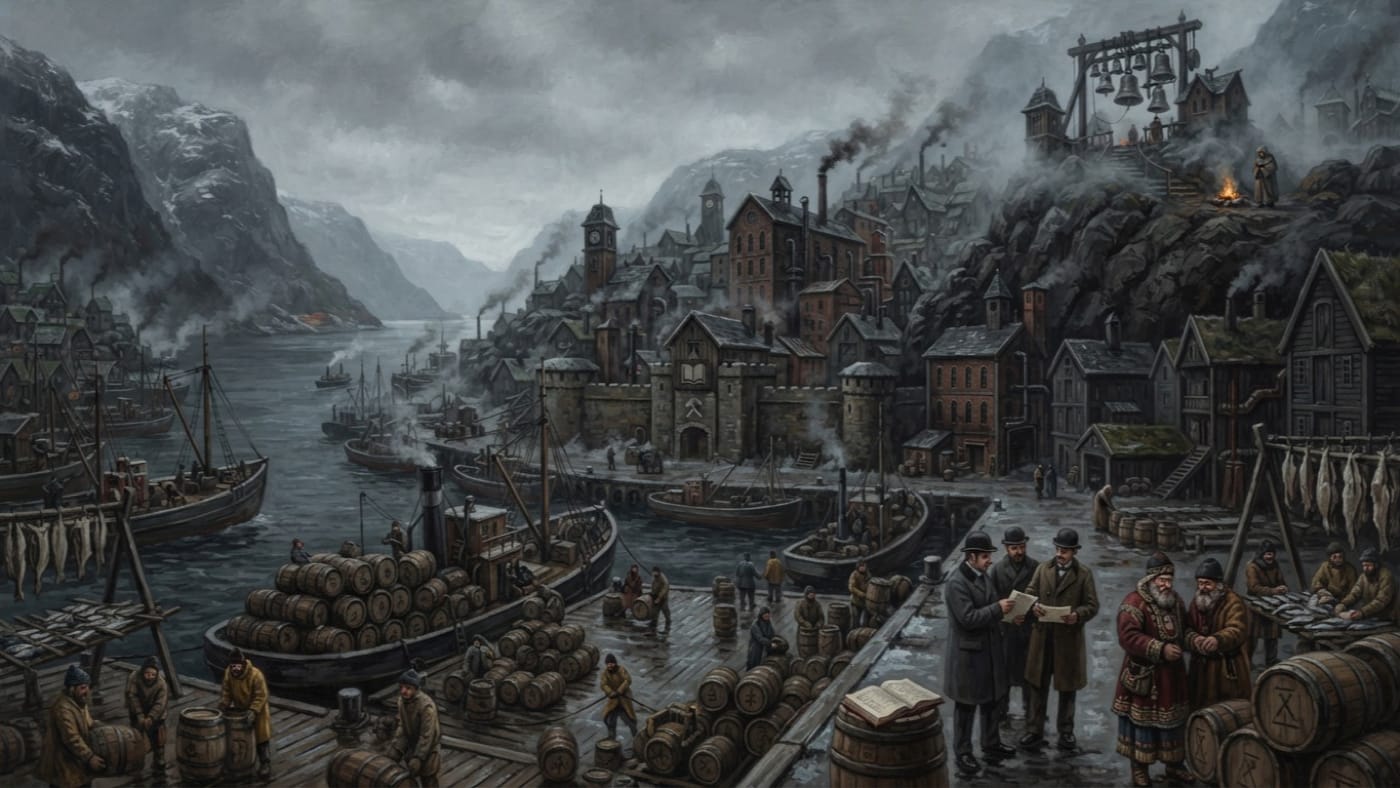
Bergen loads the Fractured North's seal-oil, guarantees the Church's debt, and keeps bells the Bureau cannot improve. Its Prior files reports; its elders govern.
Codex Ref. IX.8.02-001
Berlin
The Ledger keeps both names; the city answers to one
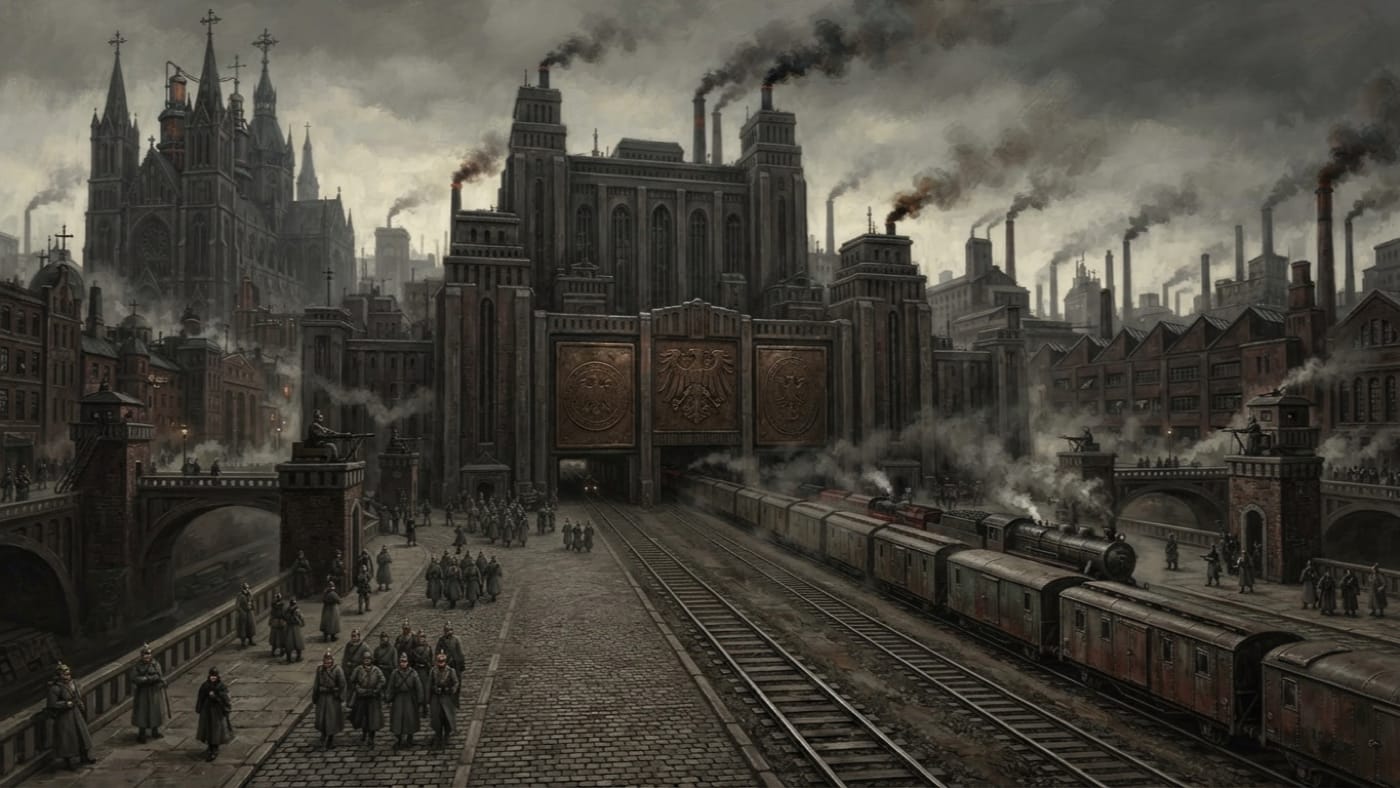
Berlin supplied the Northern Garrison sent to famine-struck Hamburg in A.S. 65. Renamed Kanzleiburg in A.S. 95, it remains the same city; the Ledger keeps both names.
Codex Ref. II.4.09-095
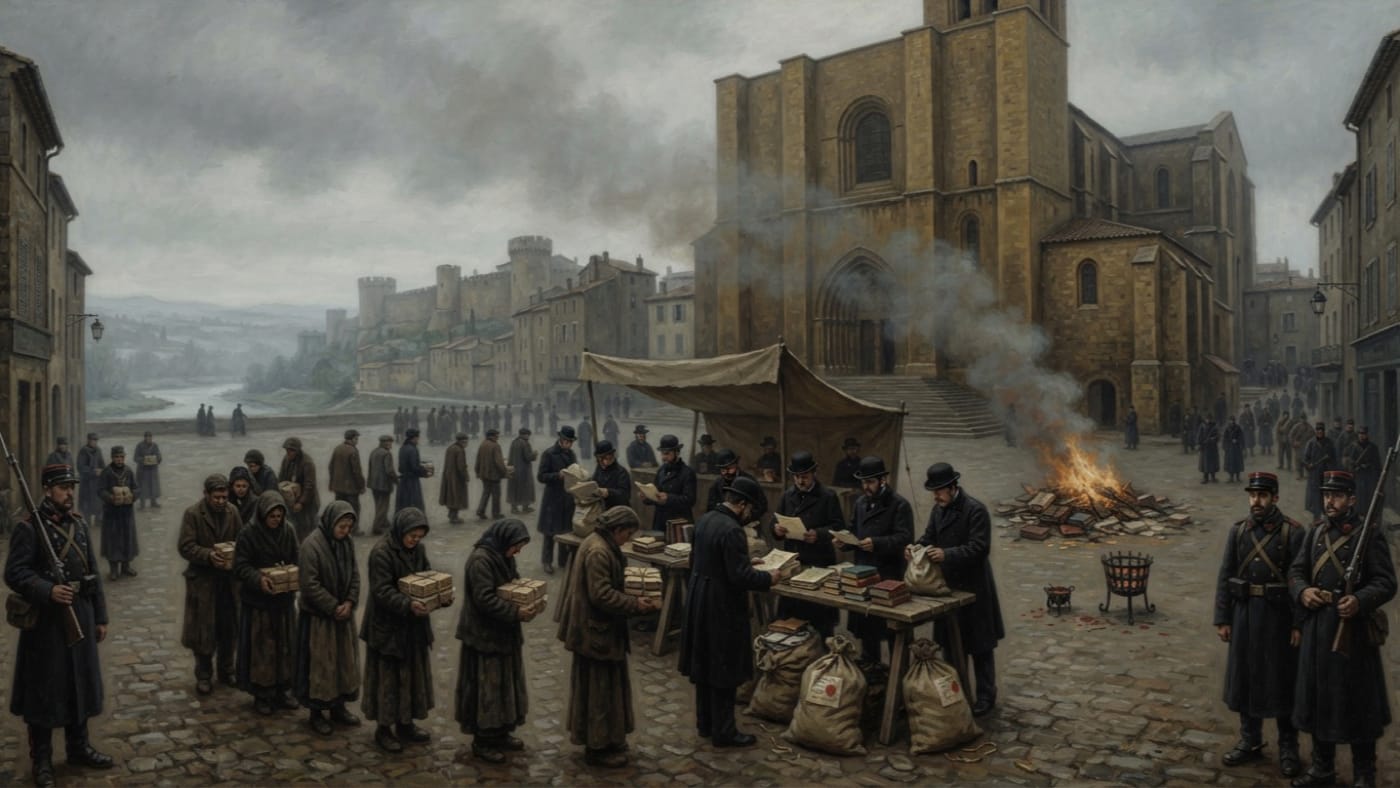
Béziers
A city named by someone else's confession
Béziers entered the Toulouse Hunts in A.S. 93 through a confession taken at Carcassonne. Purity retained the name; the surviving record supplies no separate local reckoning.
Codex Ref. II.1.10-093
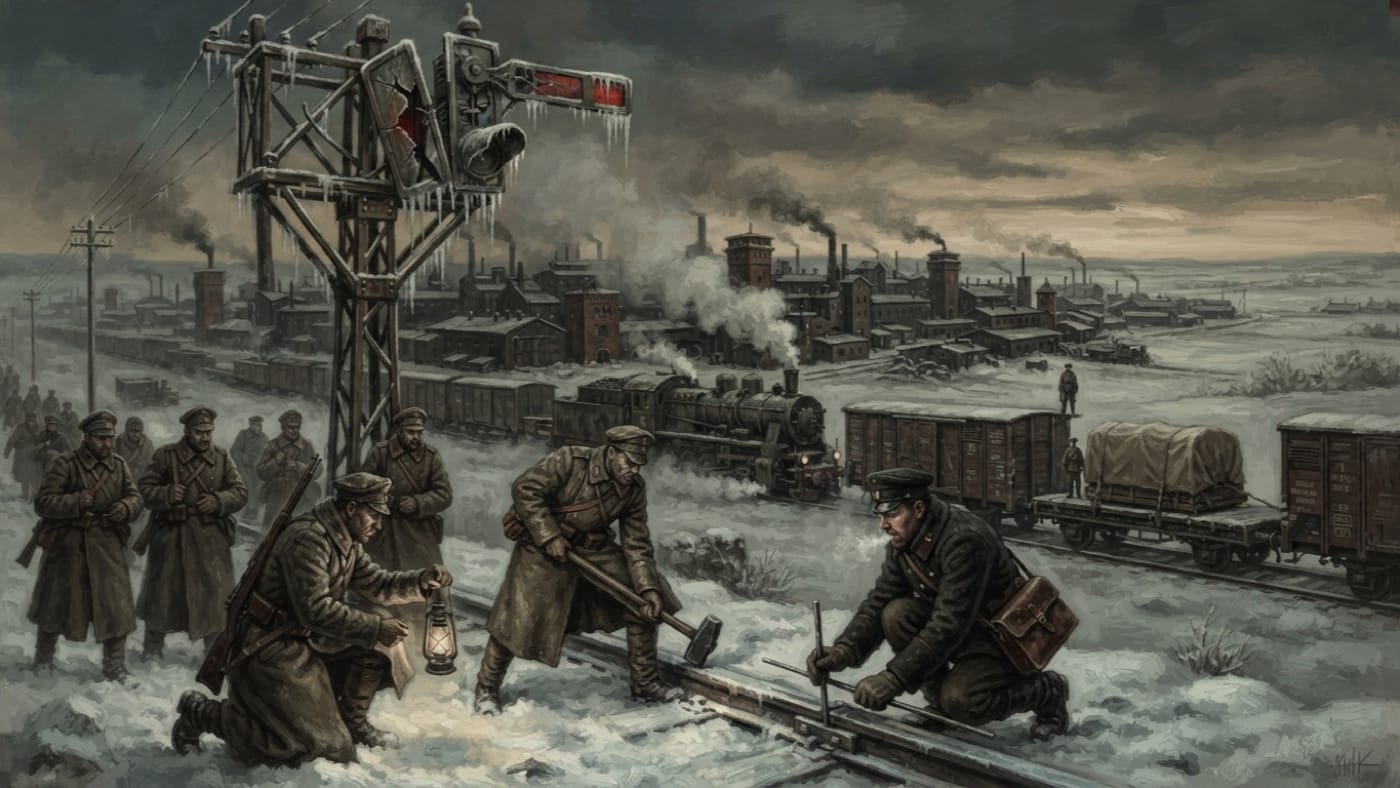
Białystok
Frost cracks the signals; War suspects the delay
Białystok carries Warsaw's military freight toward Königsberg. This commissioned A.S. 201 survey covers winter signal risk, rail damage and extra patrols: frost obeys no timetable.
Codex Ref. II.4.09-250
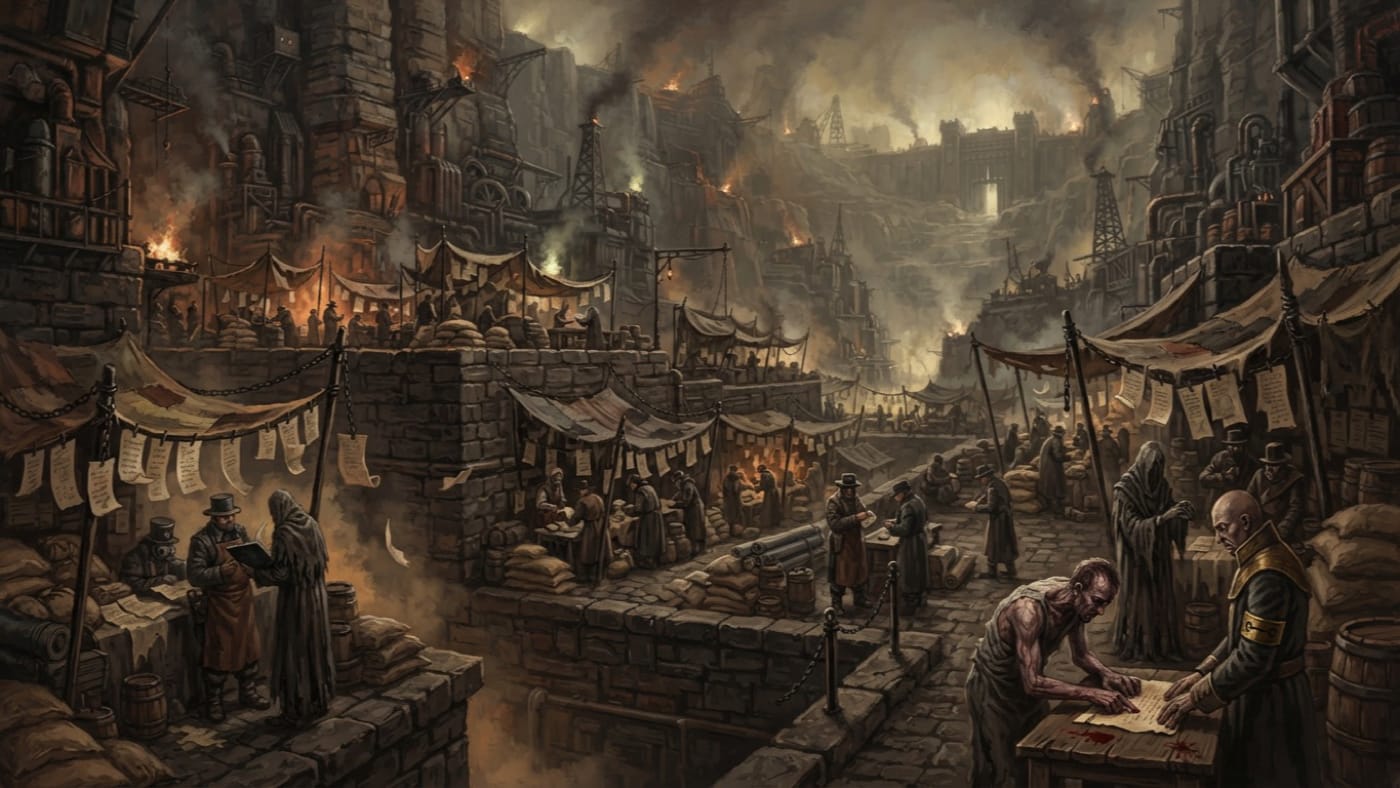
Binding Markets
The exchanges never close, and every promise has a price
Below the Gilded Chasm's rim, Velmora's Binding Markets trade service, memory, loyalty and unborn futures. The grain arrives as promised. So does the debt.
Codex Ref. VI.1.02-002
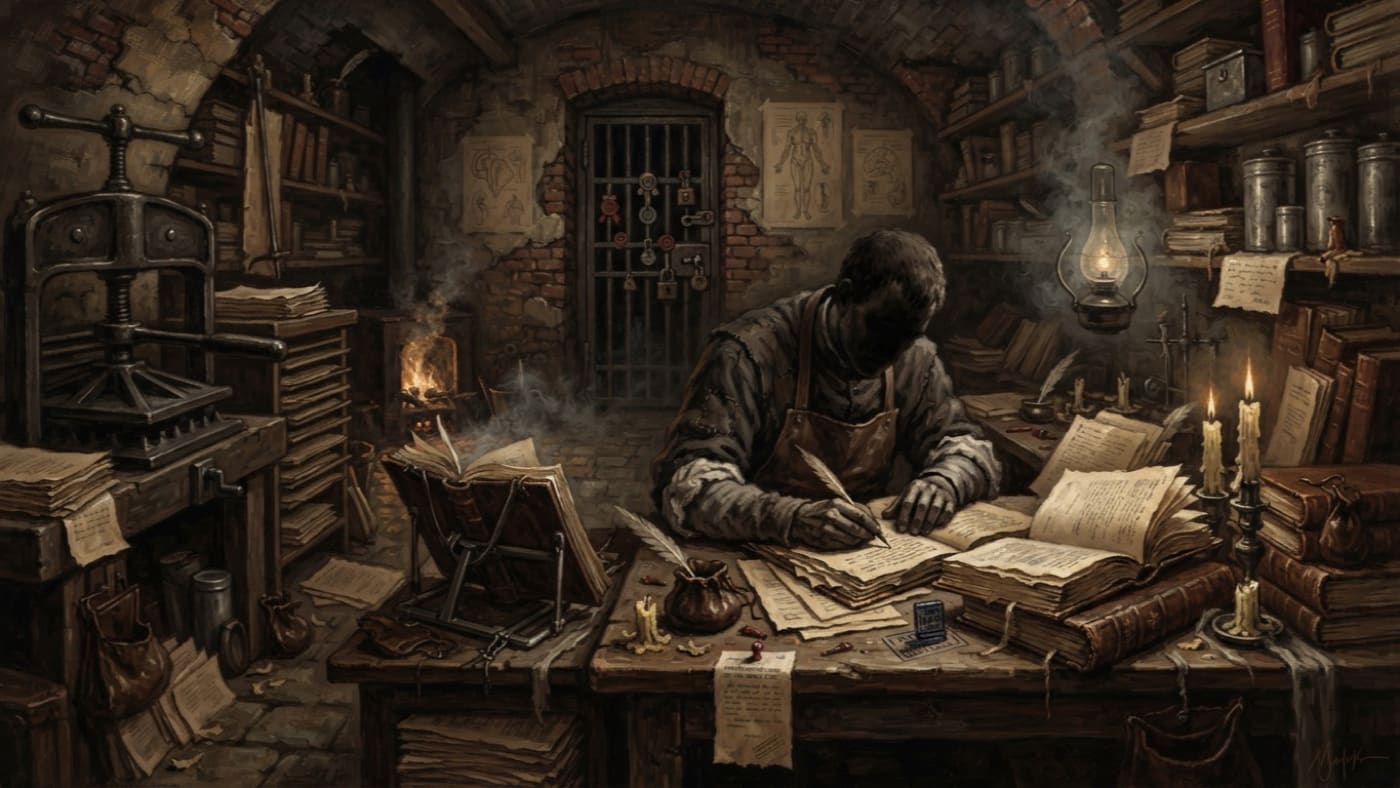
Bitter Mercy Line
A line with no address and no permission to correct the saints
One of twelve Ashen Circle copy lineages of the Index of Safe Lies, Bitter Mercy keeps the doses exact and the saints deliberately wrong. Its A.S. 201 survey records no founding date, fixed location, or named custodians.
Codex Ref. II.4.09-259
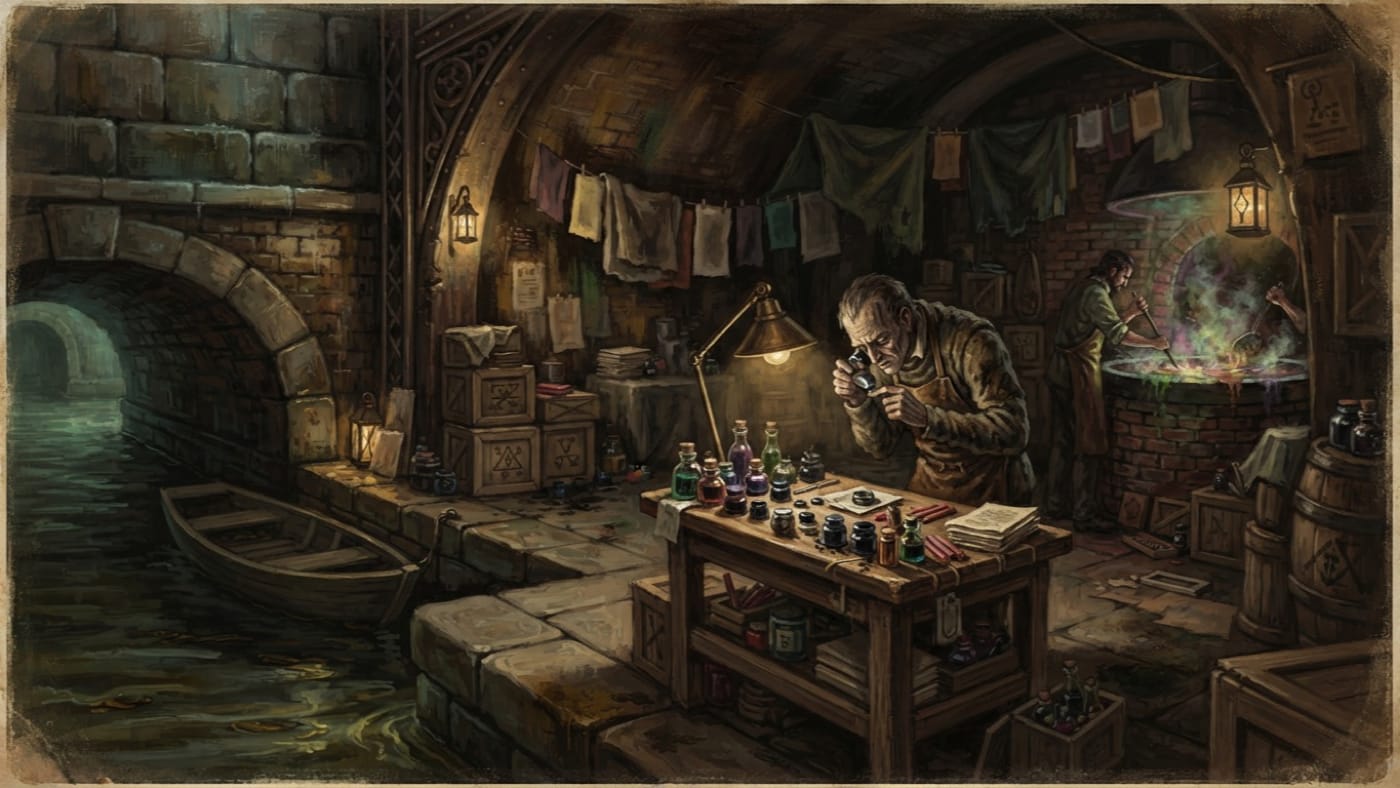
Black Canal workshops
Where the unlicensed make permission by the drop
Beneath Candlewick's dikes, unlicensed artisans make outlaw pigments, false seals, illicit paper, and fade-proof ink. The Provosts blame their benches for the Fading Winter; proof remains absent.
Codex Ref. II.1.01-201
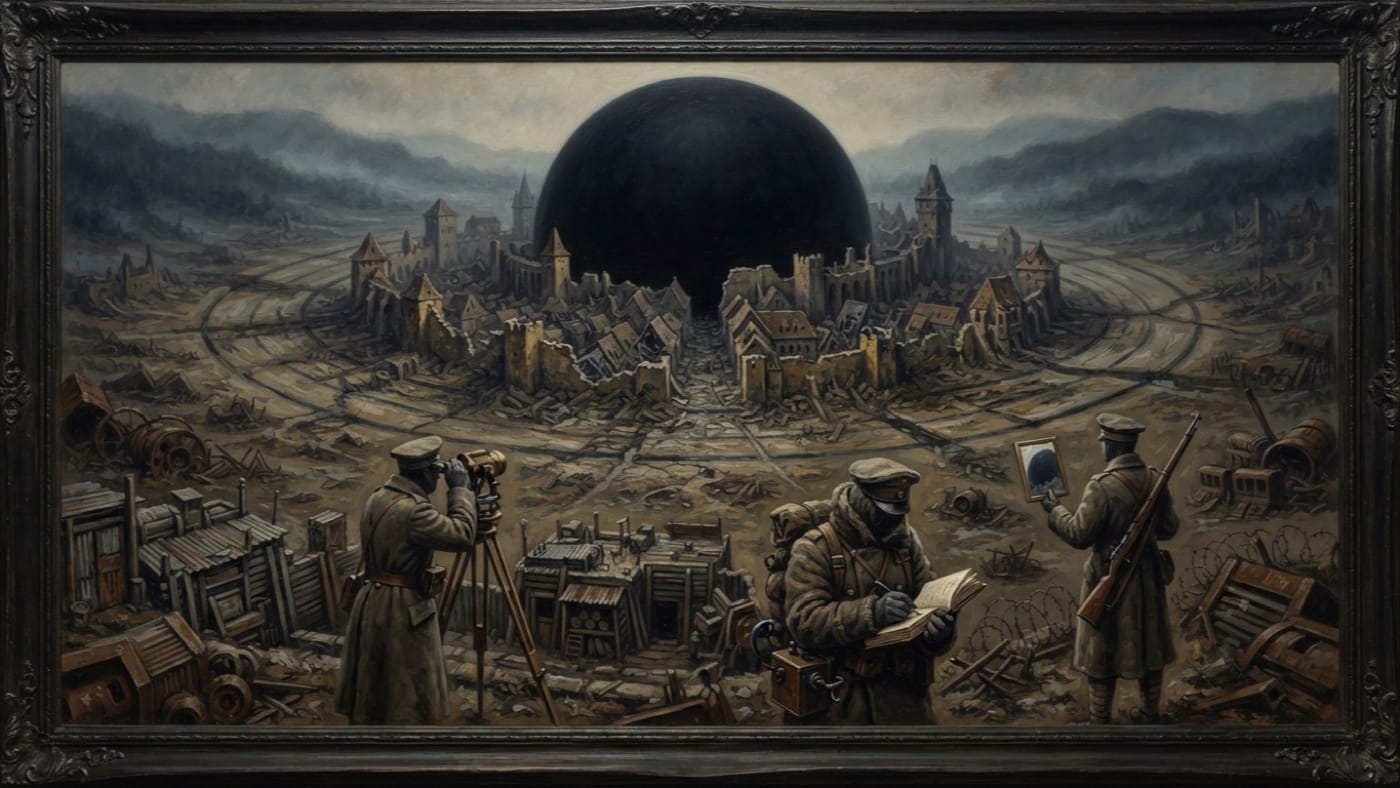
Black Dome of Brașov
Three rings in ink, one in pencil
Brașov's Black Dome is surveyed from the standing record in A.S. 201: disputed rings, Orison access terms and an undated regiment's ruin. A Pass grants permission; the hazard promises nothing.
Codex Ref. VI.1.02-201
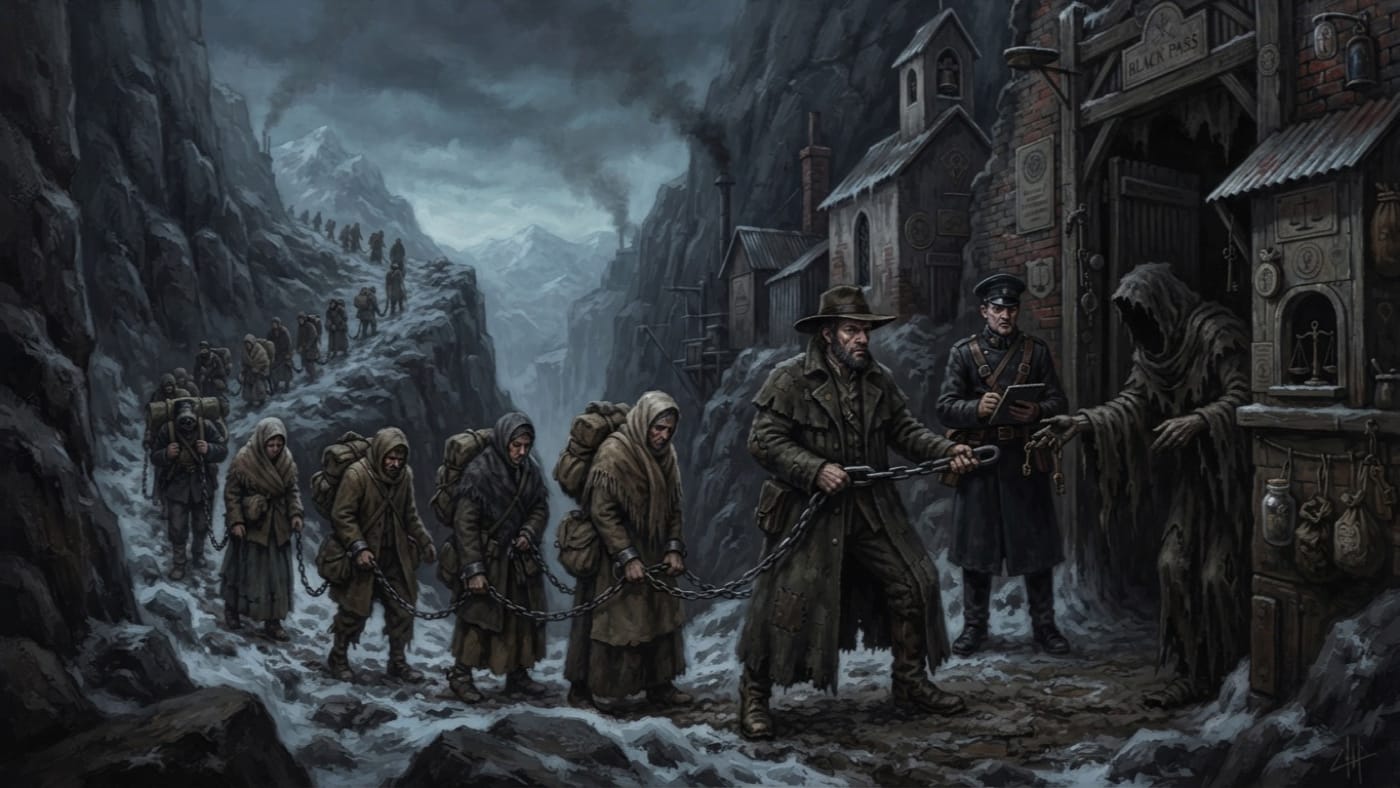
Black Pass
The demon offers release; the Station collects a toll
The tenth Station of Obedience on Varric's road, where a demon offers release, a saint tightens the chain, and a toll survives the absence of a reliable map.
Codex Ref. III.2.04-272
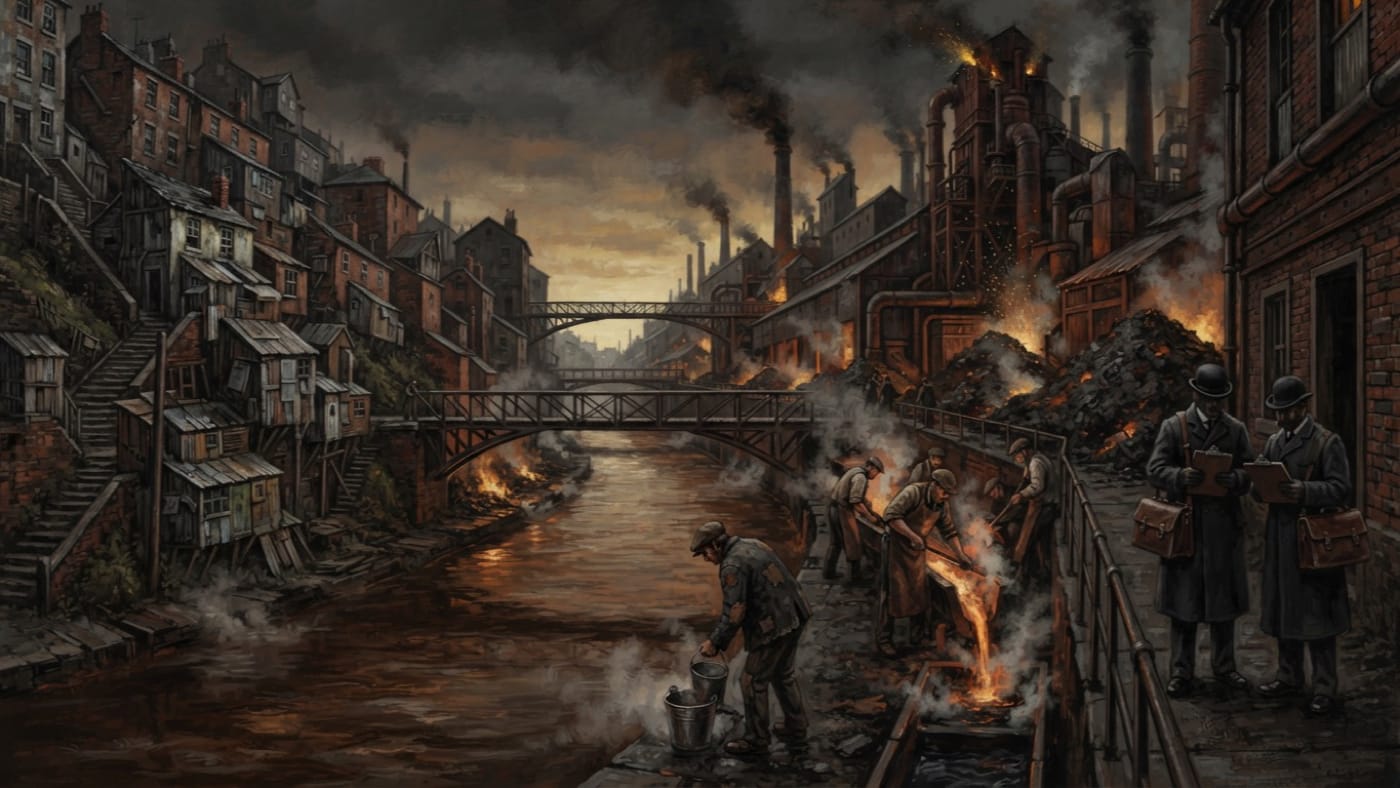
Black Run
A saint on the survey, slag in the water, and a town between the lines
The Black Run is Keska's Saint Orban Channel: warm slag water beside a rural strip Mandate 188-A erased. The water strips paint; Settlement preferred a town.
Codex Ref. II.3.06-003
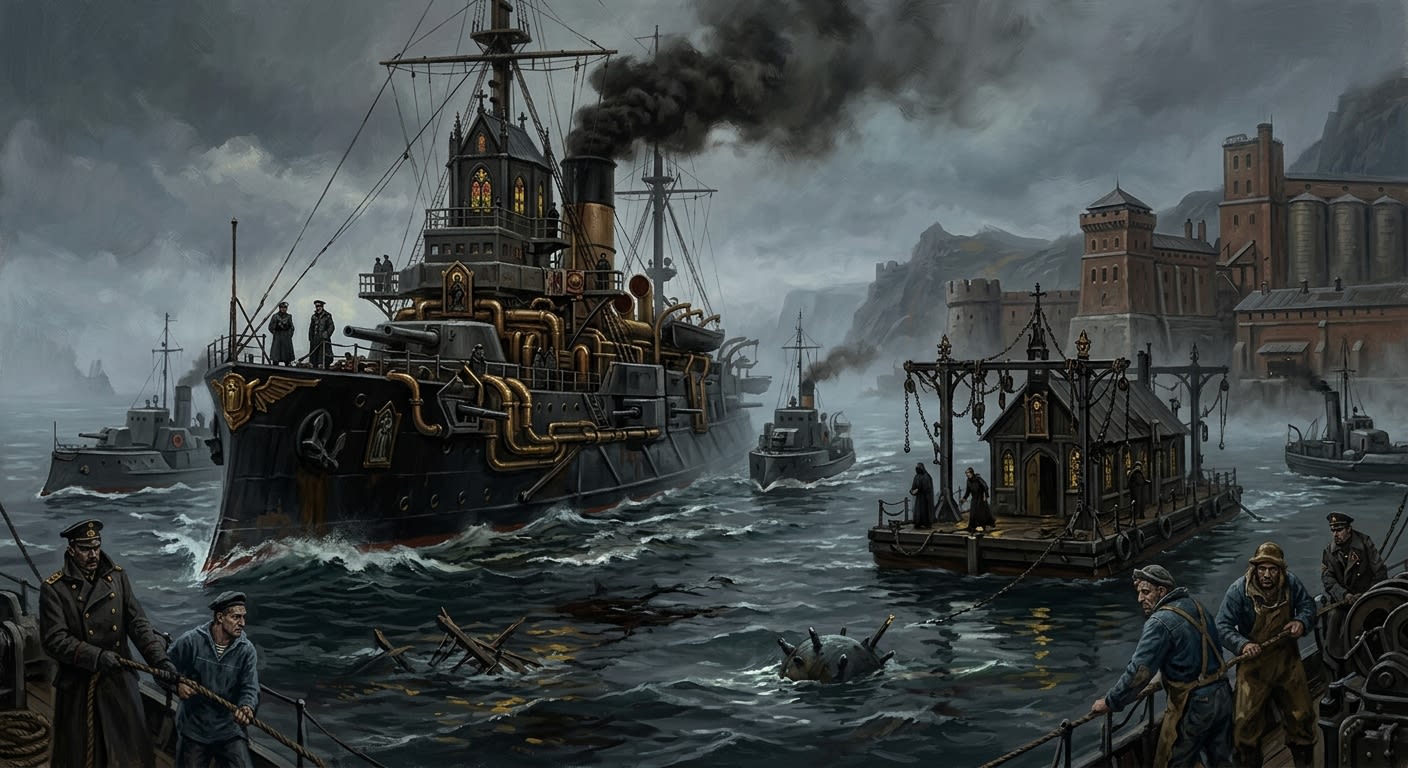
Black Sea
The Sable Deeps keep their own docket
The Black Sea is the Synod's northeastern wound against salt water: threat lane, relic route, grain hazard, Flotilla parish, and water that remembers too much.
Codex Ref. II.4.09-018
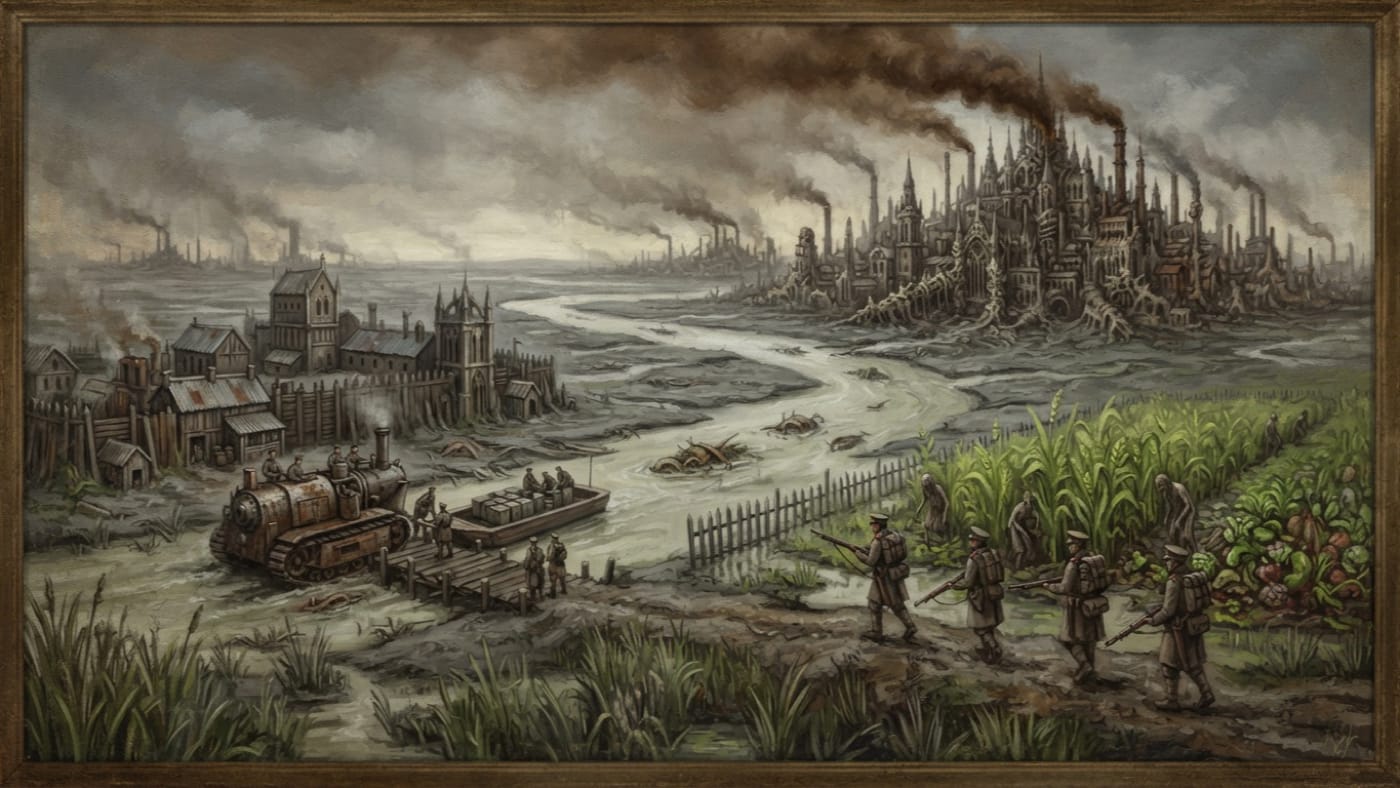
Blightmarsh of the Drava
Where the Breadbasket Became a Stomach
Kargath's dominion in the drowned Drava and Sava valleys: a Pannonian breadbasket consumed into marsh, false harvests and famine. Its boundary cannot be certified; its hunger travels farther.
Codex Ref. V.6.01-004
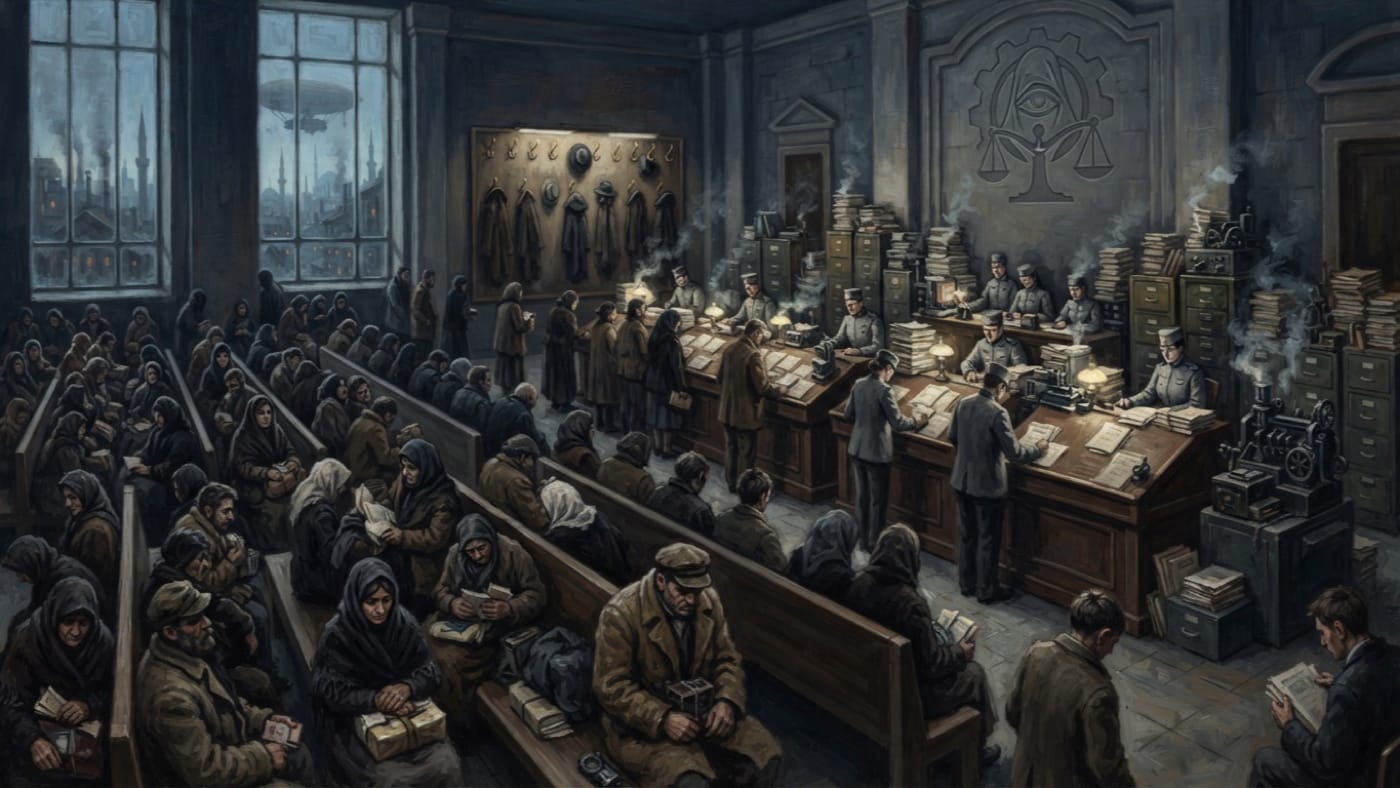
Blue Zone (Constantinople)
Where a household waits to become an entry
Constantinople's Blue Zone records households, pensions and corrections. The Widow's Syndicate keeps the other ledger; the Screaming Coin leaves two transactions open.
Codex Ref. II.4.10-006
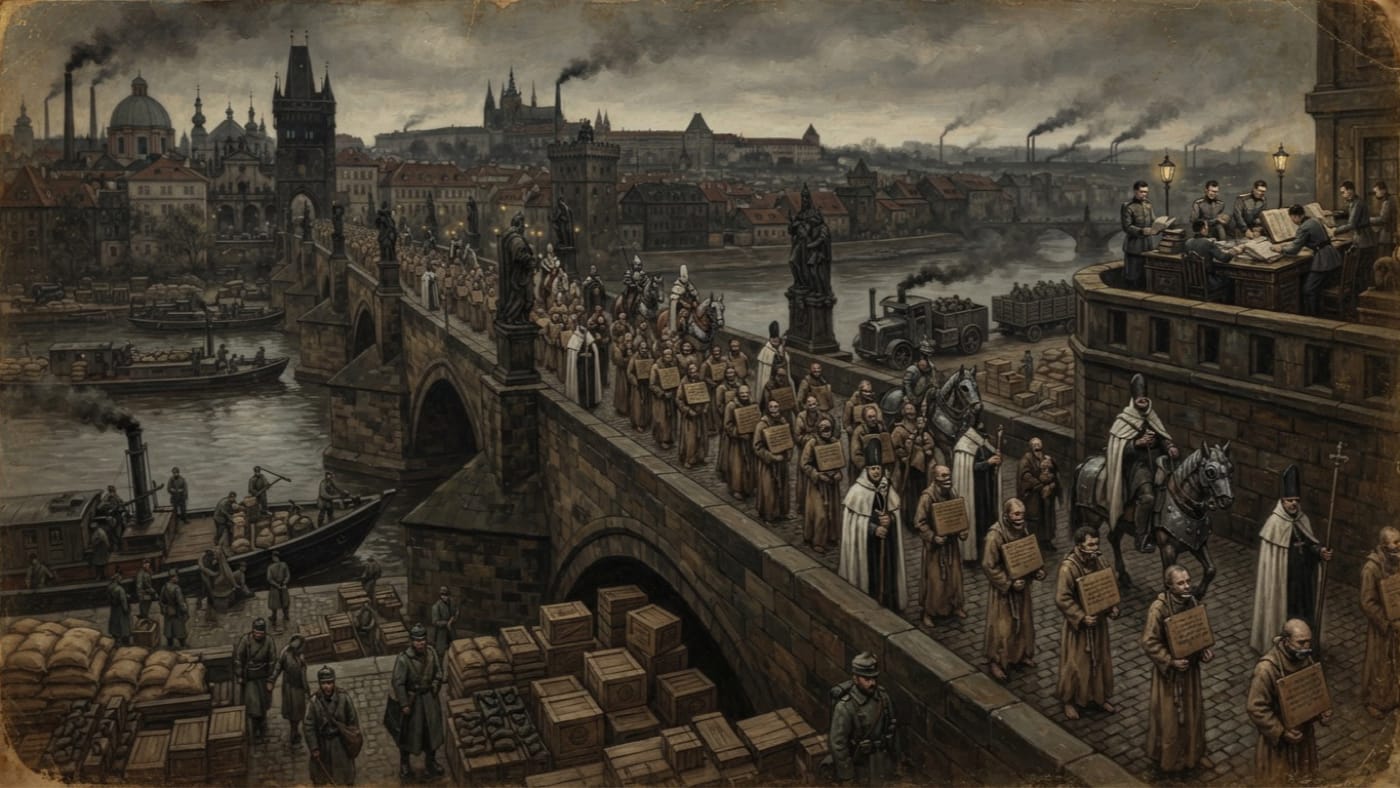
Bohemia
The province that feeds the Line and lets Prague instruct its tongues.
Bohemia, a Synod-held province of the Forward Heartlands, provisions the Sagittal Line while Prague supplies public correction. Grain moves east; the Procession of Tongues crosses its bridge. Both have paperwork.
Codex Ref. II.3.01-001
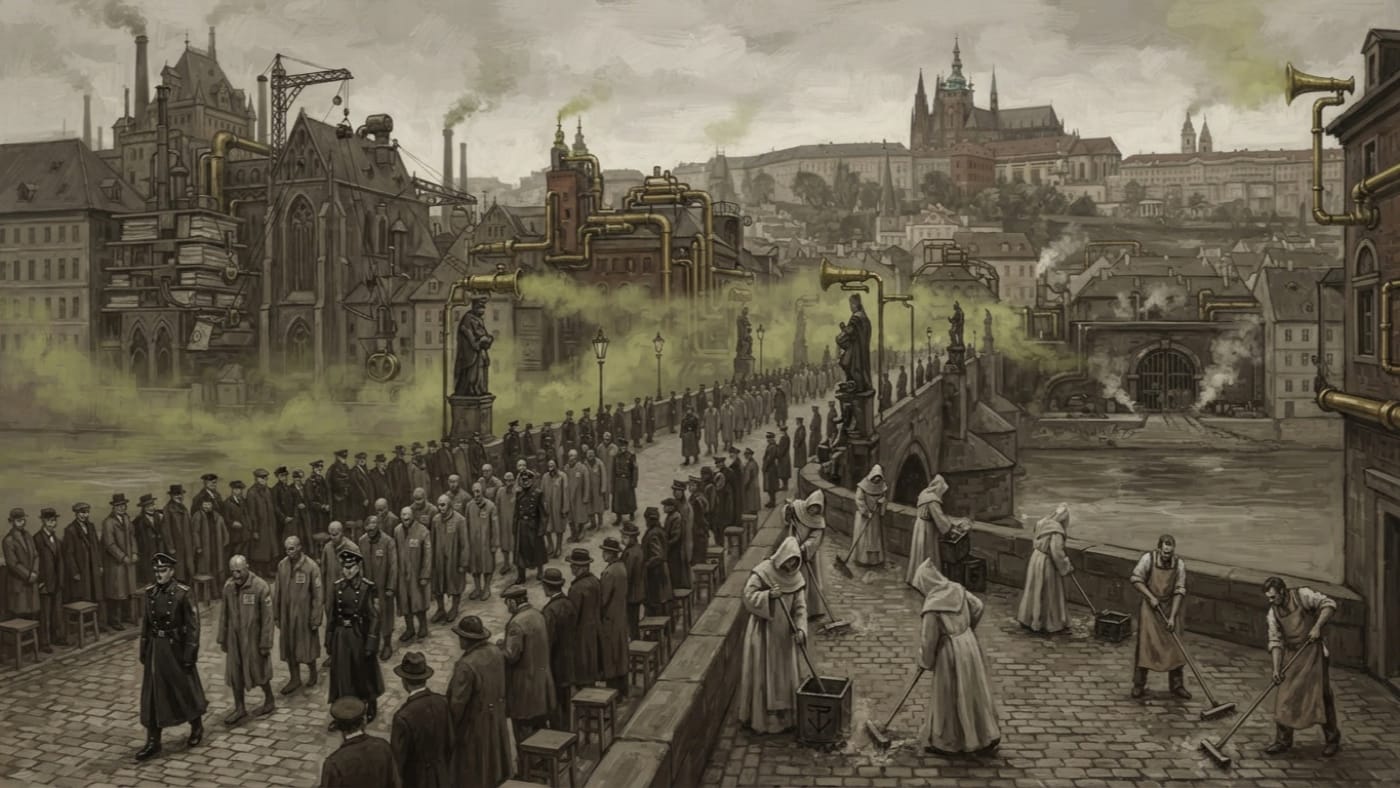
Bohemian Severity District
Where severity travels under counterseal
Prague's attested severity jurisdiction, where Purity sentences travel by Ephrath route, bell cadence and counterseal. Wider boundaries remain unproved.
Codex Ref. II.3.02-295
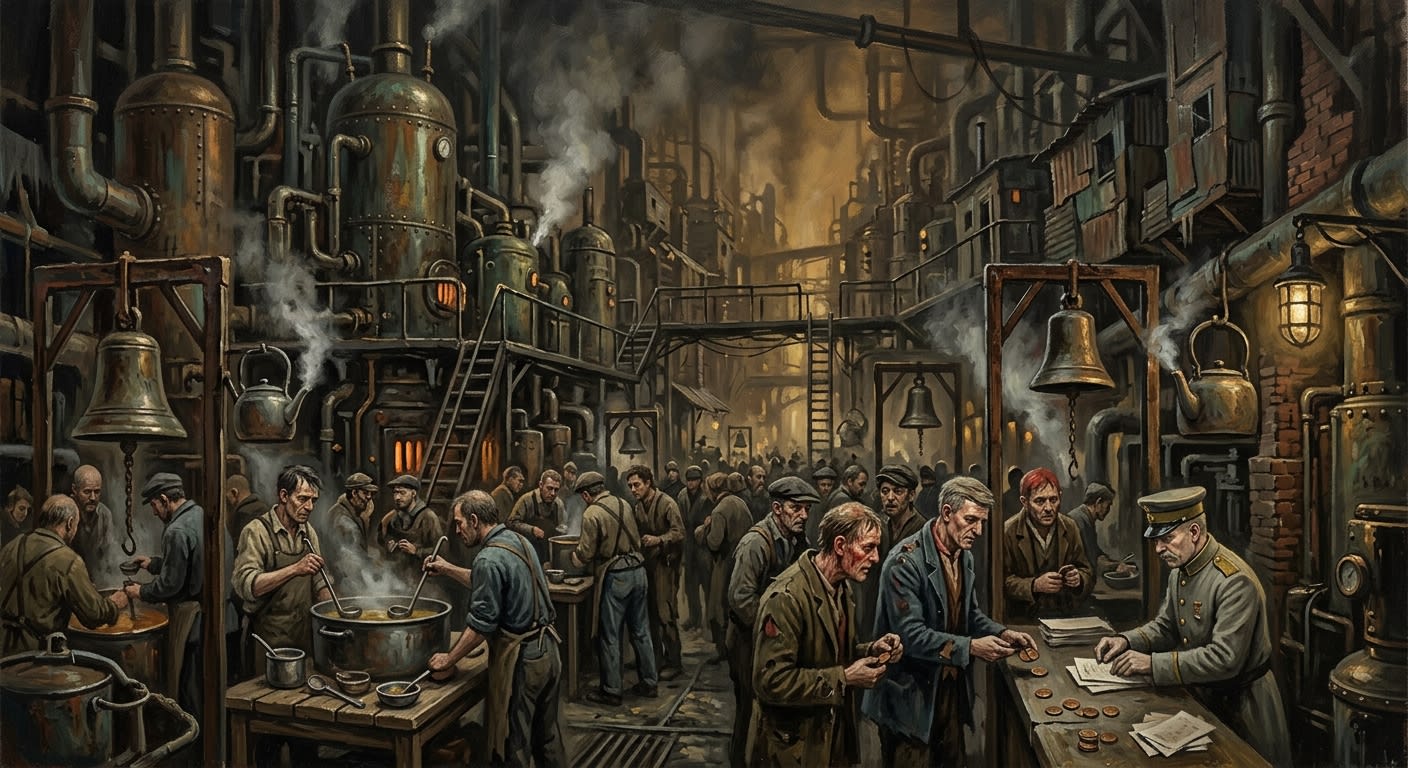
Boiler Commons
Where warmth is rent, leash, verdict, and little idol
The Boiler Commons of Brast are a worker district of heat debt, warm chits, ration kitchens, pipe-lane kingdoms, Red-Three fever, and kettles that have begun answering bells.
Codex Ref. II.2.01-019

Bone-Tag Arcade
The dead require a receipt; the living require permission
The counters of Candle-Sump certify the dead and hold the living's papers in suspense. Chief Clerk Dalen Voss commands the seals; behind him, a second press reissues names harvested from the crypt drafts.
Codex Ref. II.1.05-003
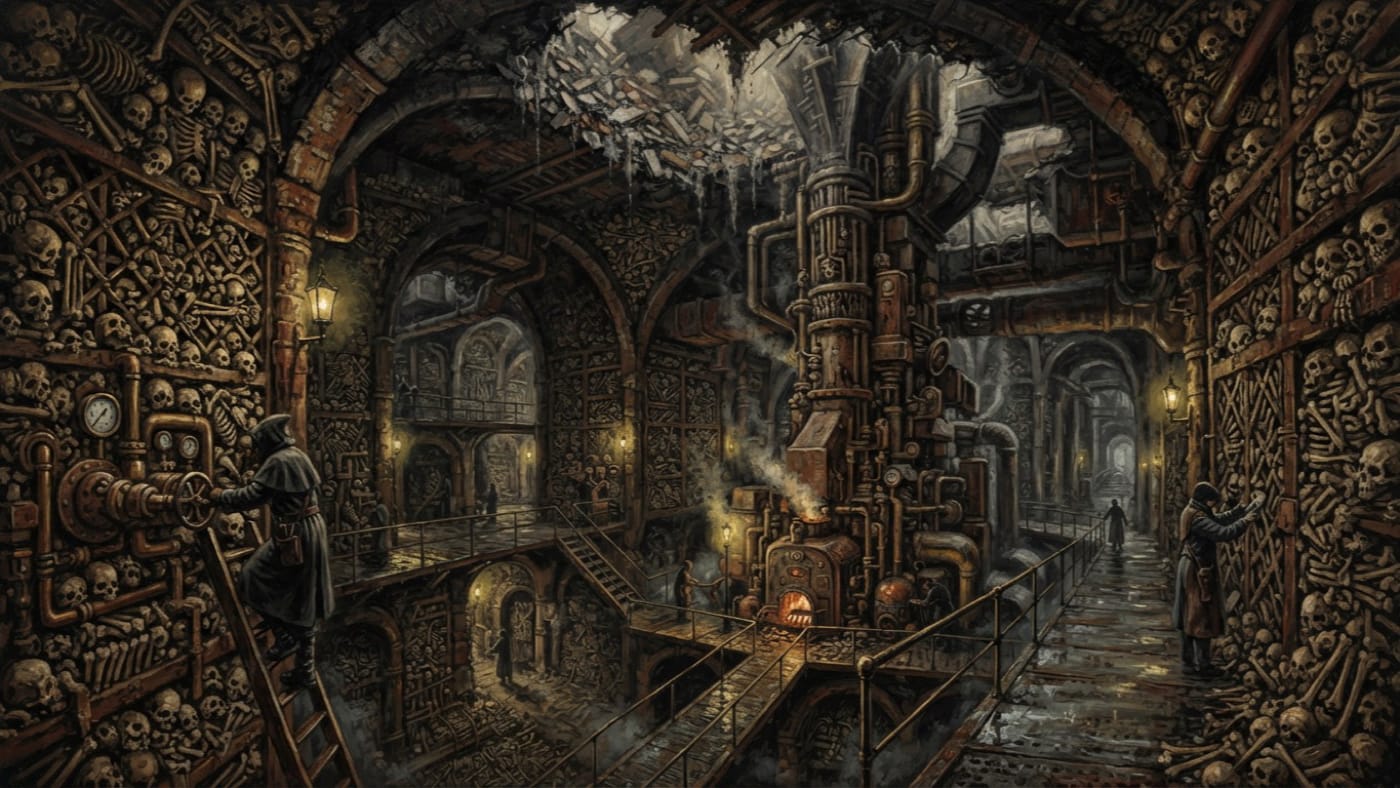
Bonefield Vaults of Lor
Where the dead hold the air and the living pay to breathe
Mortuary chambers beneath Black-Snow Lor carry its air through the forgotten dead. A northern chamber yielded recovered assets in A.S. 194; the rest remain unsurveyed. The Bureau approves the mortar and declines to discuss the lungs.
Codex Ref. II.4.08-003
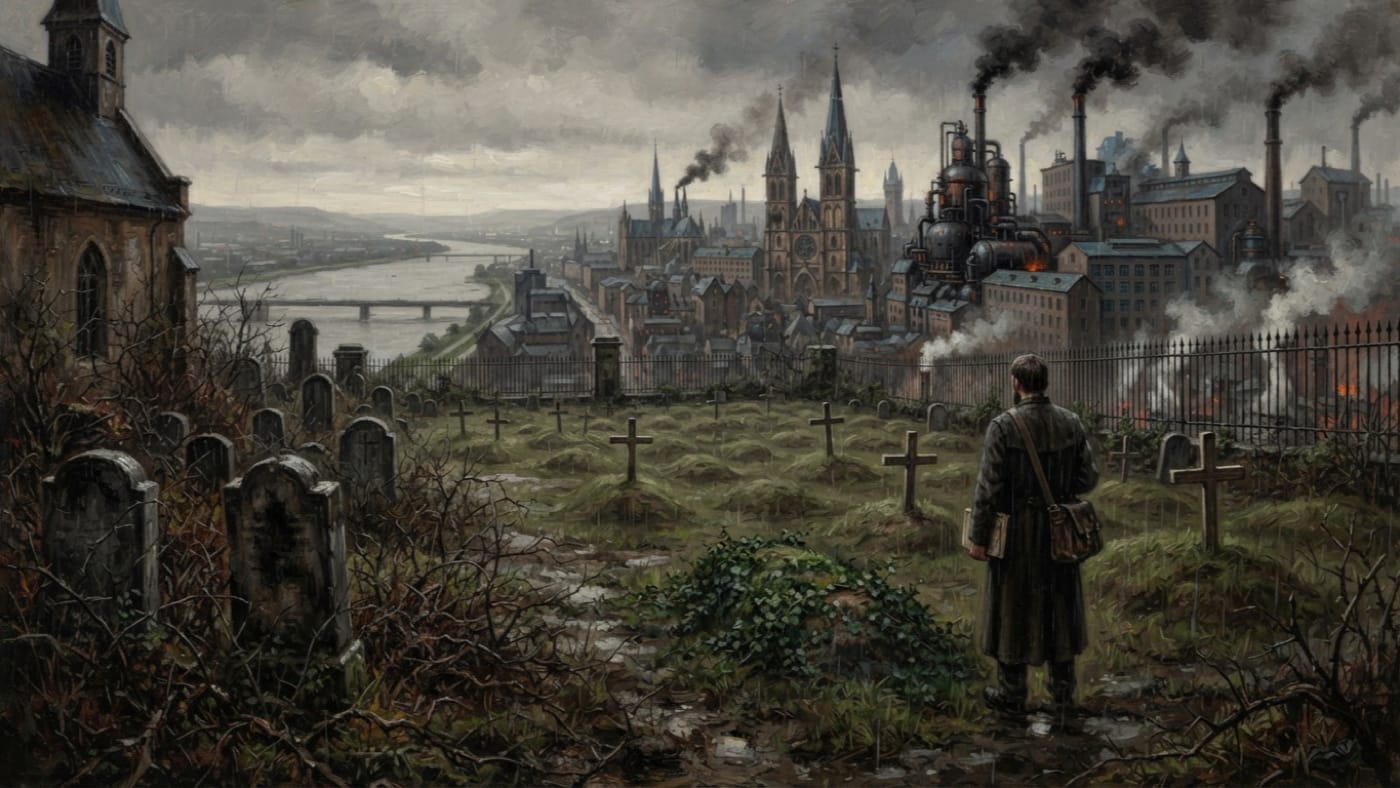
Bonn
A saint nearby; no directions supplied
Bonn is a Rhineland city on the Rhine. Ignatius Brenner died and was buried nearby in A.S. 71. The churchyard is unnamed, the grave unmarked, and the record supplies no directions.
Codex Ref. III.2.04-313
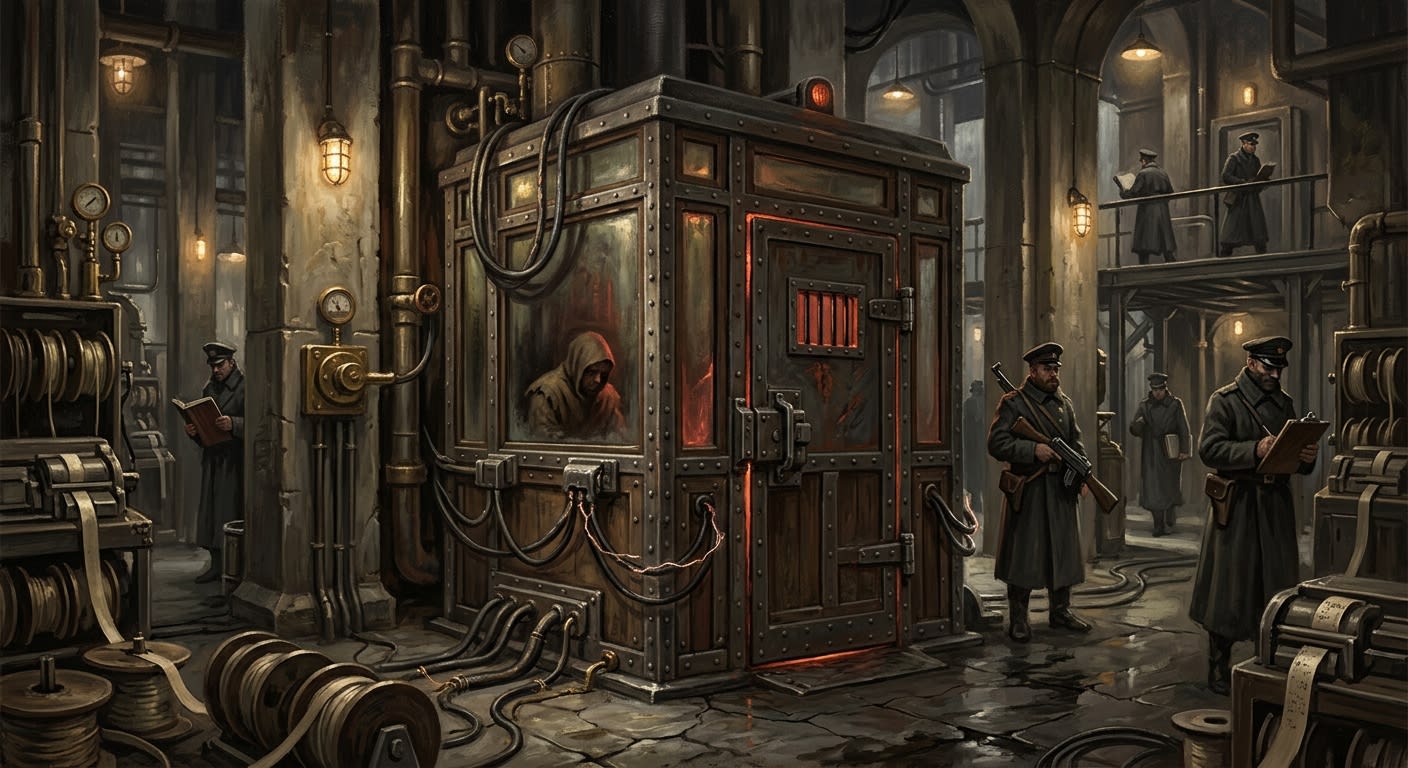
Booth 77
The confession box that filed tomorrow before the sinner arrived
Booth 77 is Bastion-Brest's sealed confession box that repeats sins before mouths arrive, making time itself an unlicensed witness before the Bridge Tribunal.
Codex Ref. II.4.08-077
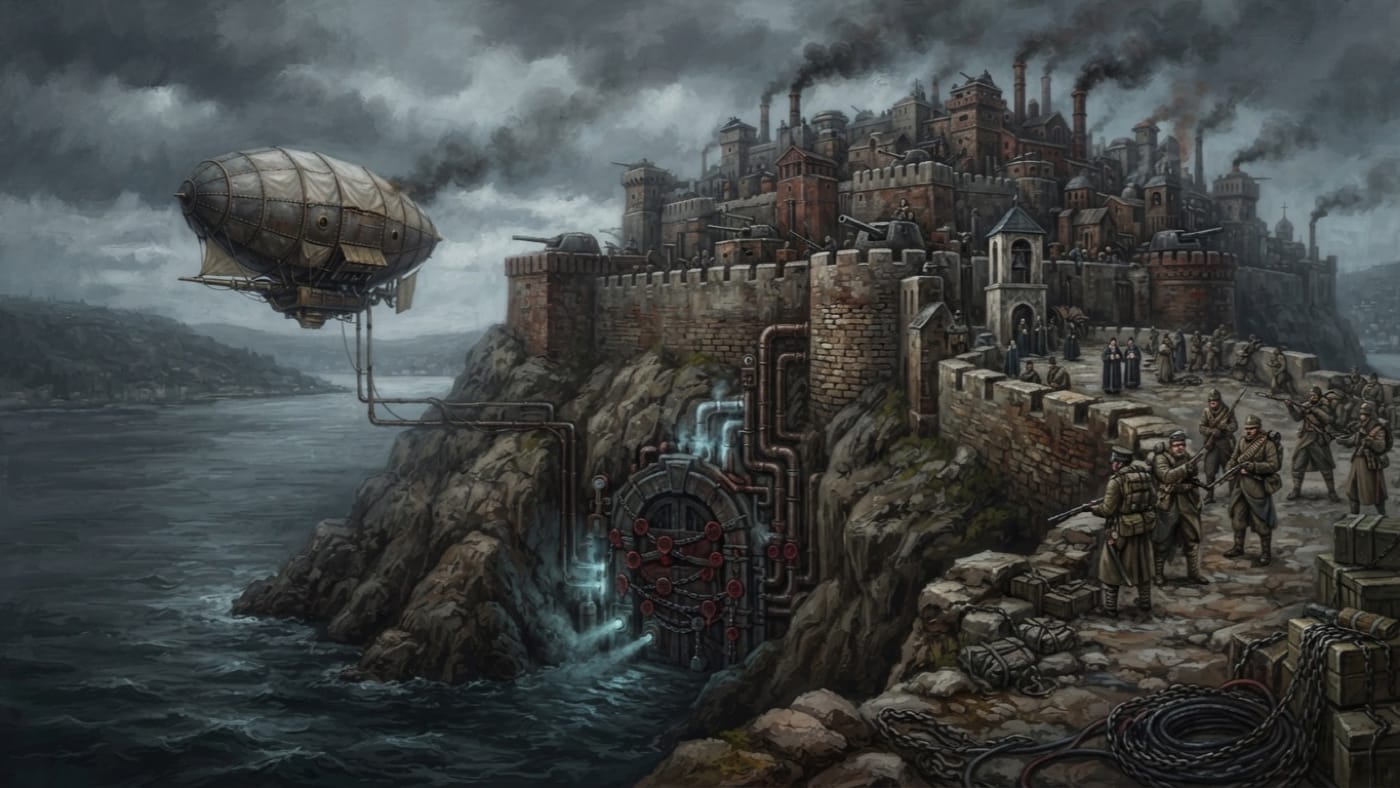
Bosphorus headland
The soldiers chose the rock. Doctrine arrived later.
Ancient bedrock above the Bosphorus, occupied in the winter of A.S. 47. Its first pilings struck sealed chambers. Bastion-Constantinople rose above them; the Third Ossuary remains below. The rock was defensible. The silence was not catalogued.
Codex Ref. II.4.10-047
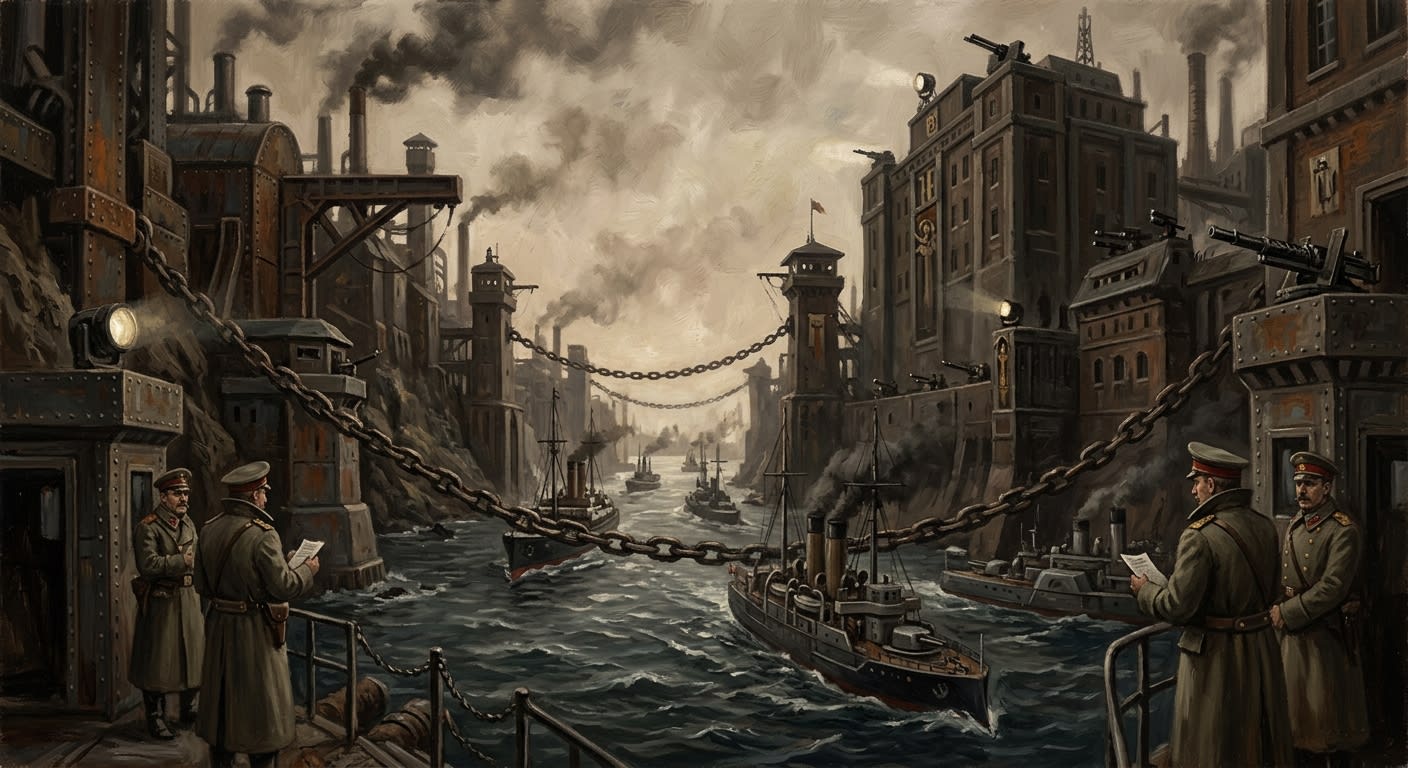
Bosphorus Strait
The wet throat where the Line learns to drown
The Bosphorus Strait is the southern maritime hinge of the Sagittal Line, chained, taxed, watched, and never quite obedient to the maps that claim it.
Codex Ref. II.4.09-004
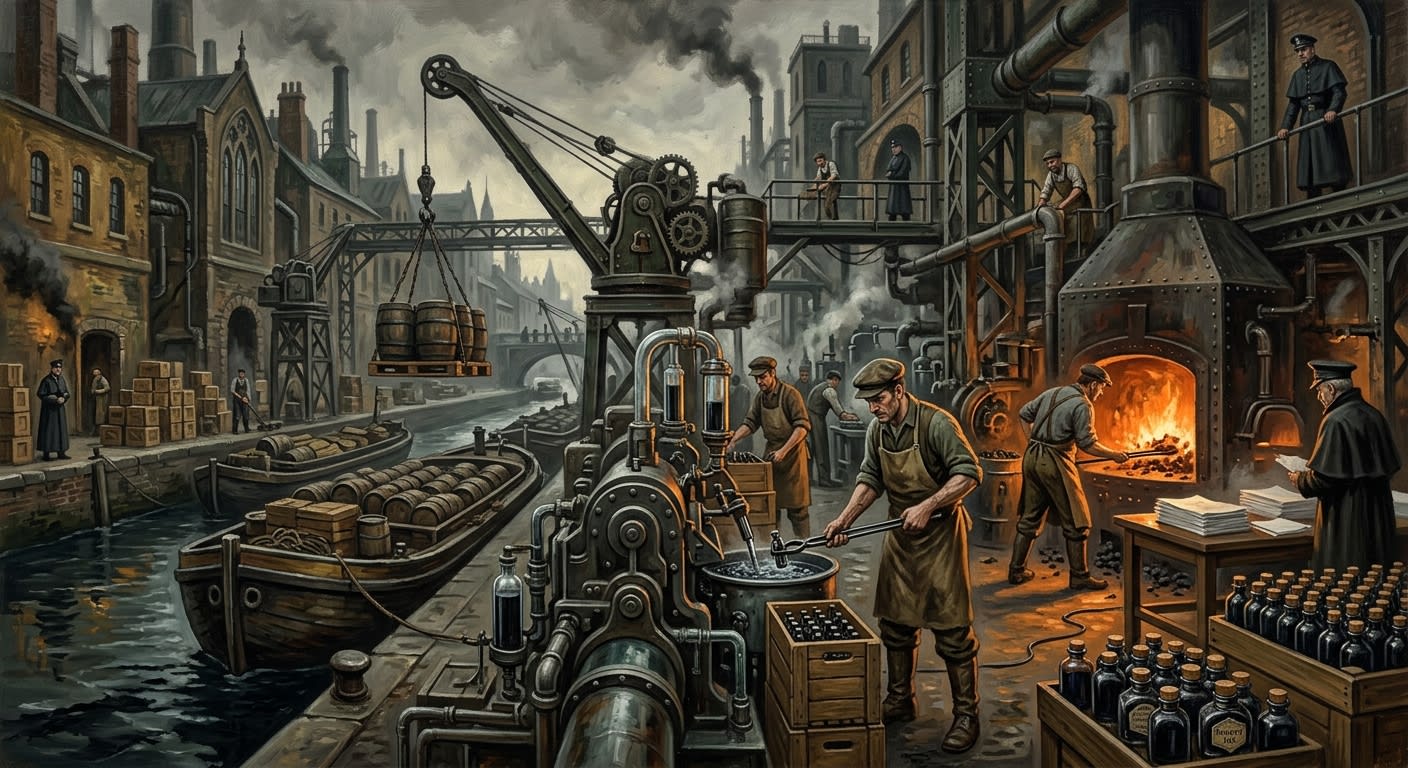
Bottle Quay
Where authority is poured into glass and taught appetite
Candlewick's ink-bottling throat: glassyards, shade seals, micro-vials, Hungry Ink suspicion, and the useful fires by which paper learns command.
Codex Ref. II.1.01-092

Bran corridor
The road is held. The accounts are under review.
The Bran corridor guards a northeastern approach to Bastion-Sibiu. An Alpine Watch battalion holds the road while Velmora's credit reaches the villages behind it. The corridor is held. The accounts remain under review.
Codex Ref. II.4.08-066
Brașov
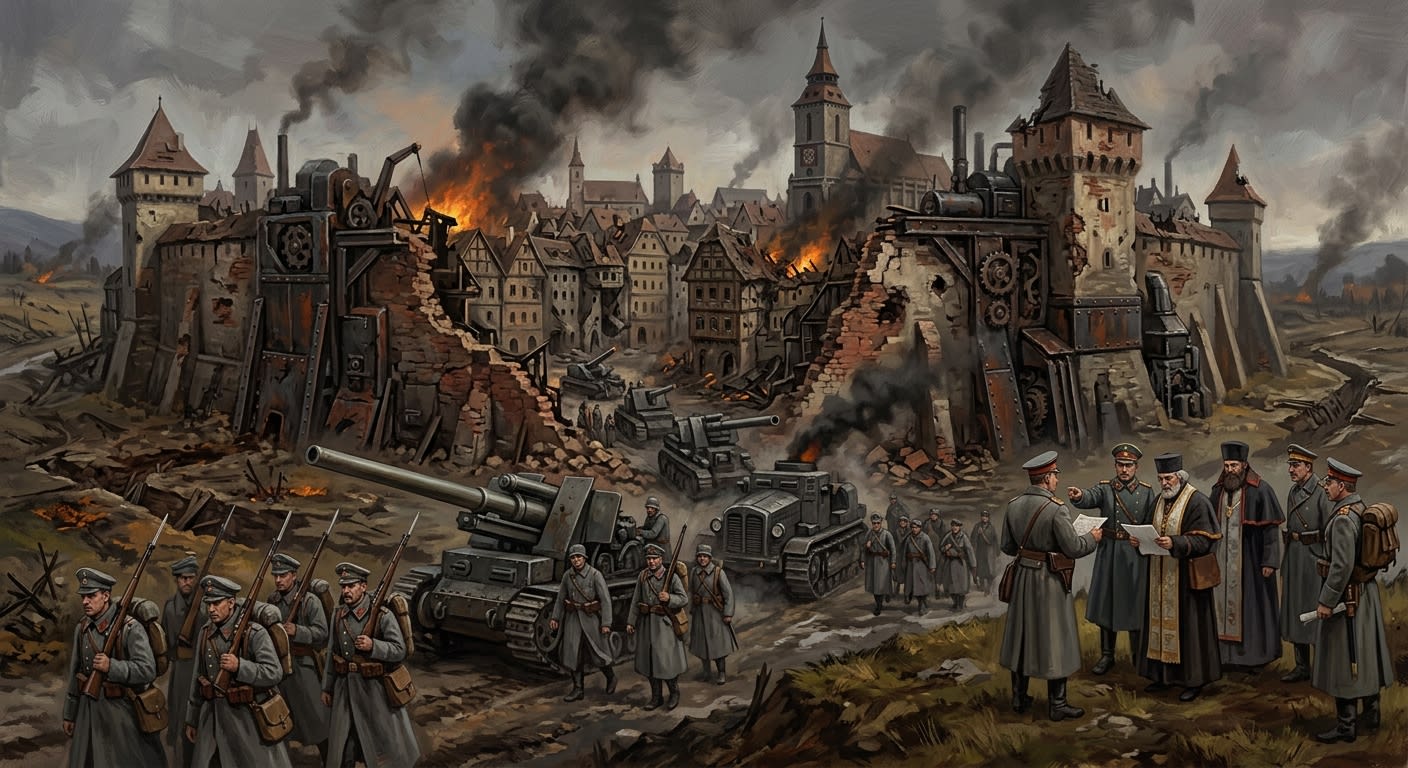
The city [[hell|Hell]] ate before [[strasbourg|Strasbourg]] learned to count sons
Brașov, the Saxon-walled city consumed by Kargath in A.S. 110 and made pretext, warning, and arithmetic for the Synod's first continental levy.
Codex Ref. VI.1.01-110
Brast
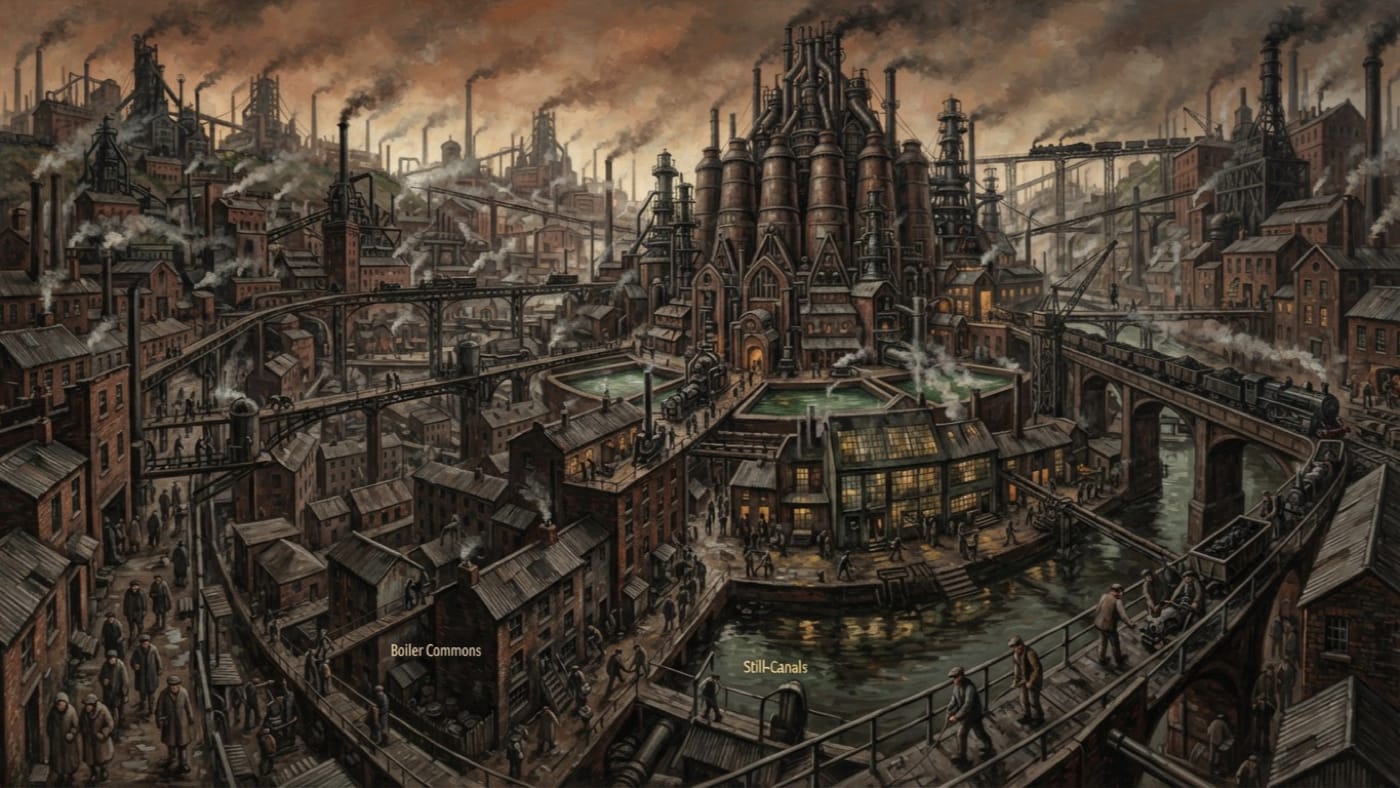
The Warm City, where fuel obeys licensed breath
Brast feeds the Line through seventeen kilns, licensed throats and audited drums. Heat is rationed; obedience is sold; the boilers have begun to answer.
Codex Ref. II.2.01-004
Brast Ordnance Works
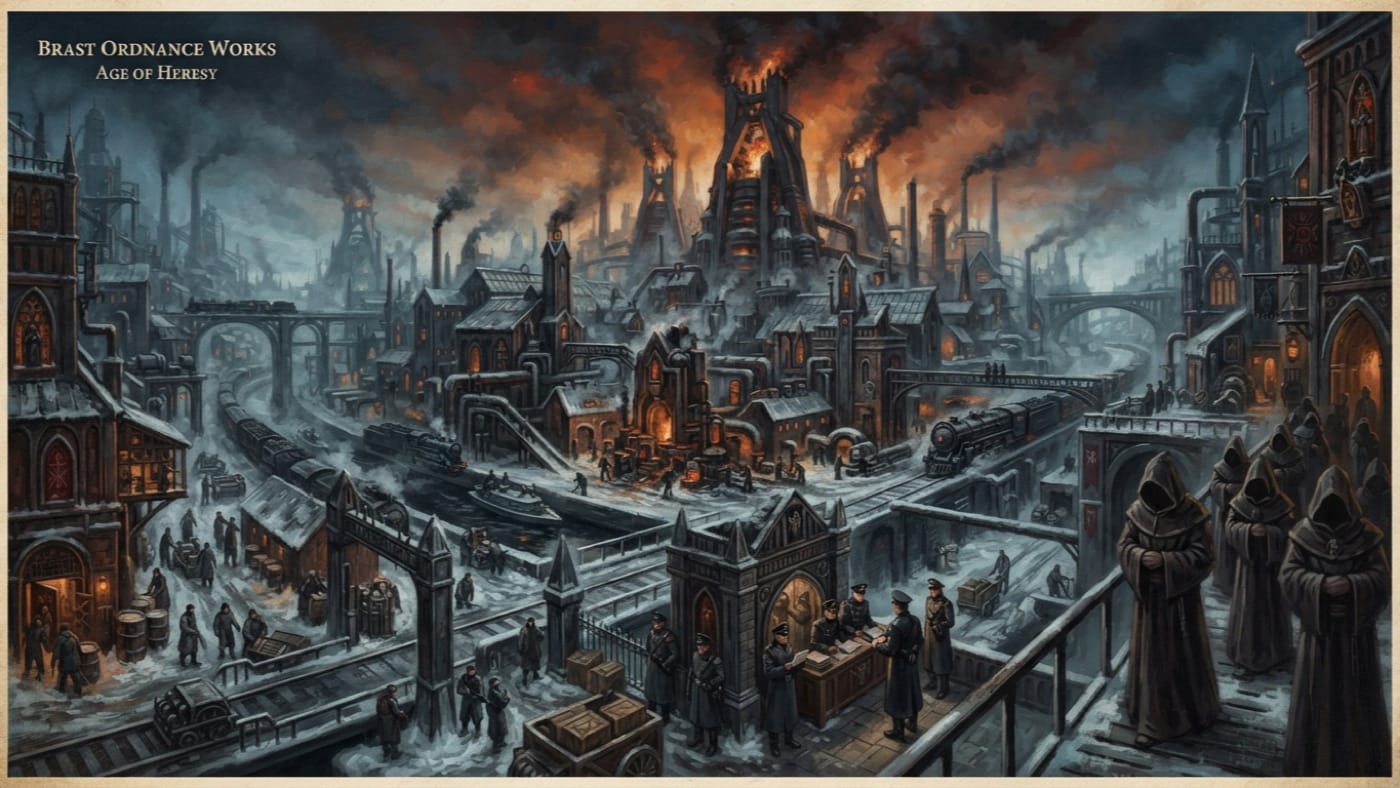
Where warmth is rationed and boilers require introductions
Brast turns licensed breath into chrismole, stamped drums and artillery measures. Ninety-two thousand souls owe it warmth; its engines have begun to answer.
Codex Ref. II.2.01-005
Bratislava
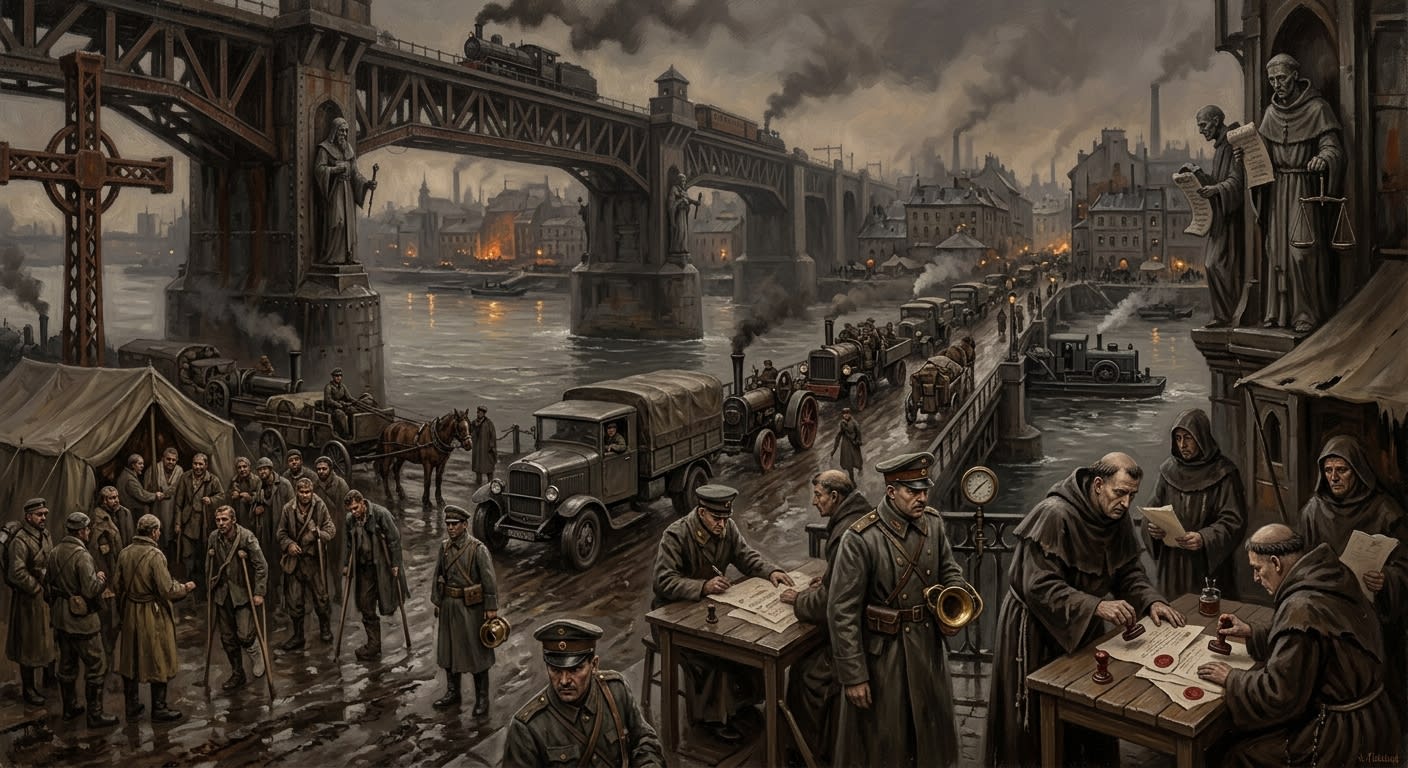
The throat between ruin, command, and the next inspection
Bratislava is the Central Corridor's damp throat: a Zone 3 Danube crossing where convoys, writs, wounded men, and official impatience are slowed into usefulness.
Codex Ref. II.4.09-011
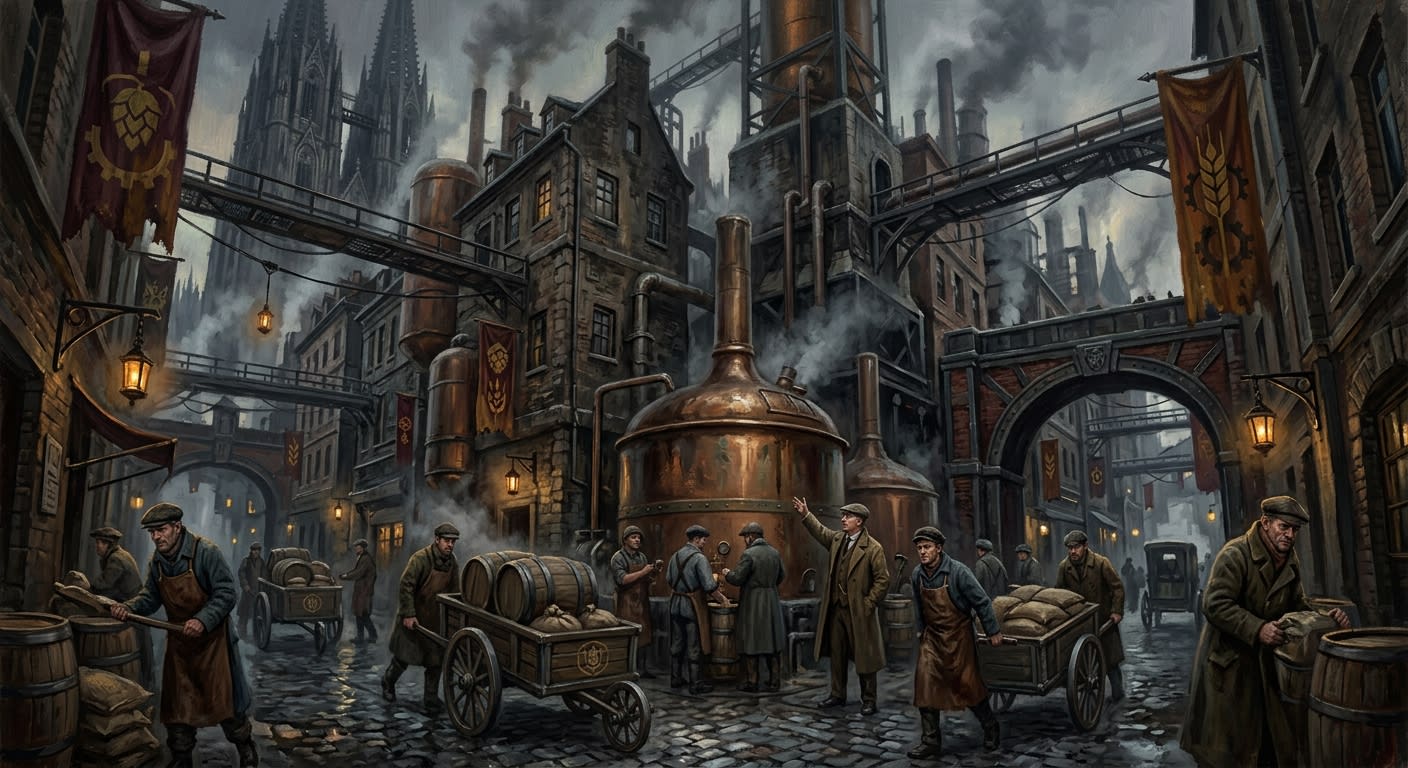
Bräuviertel
The Brewery Quarter older than the stamp and too taxable to condemn
Munich's Bräuviertel is a thirty-seven-block brewery quarter between the Provisorium and the old cathedral precinct: ancient, taxable, doctrinally irritating, and still boiling.
Codex Ref. II.2.06-015
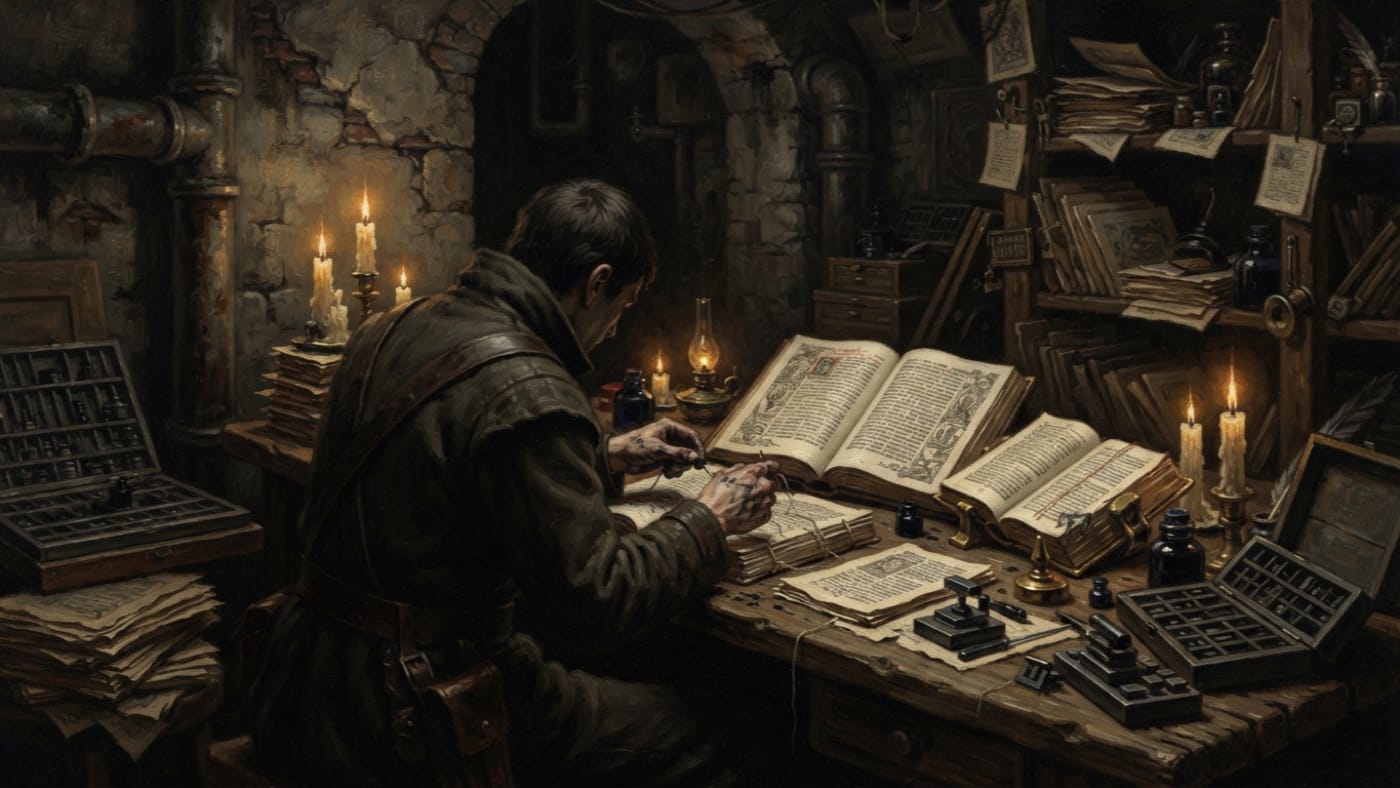
Bread-without-Prayer Line
The loaf before the grace, the copy before the fire
One of twelve Ashen Circle copy lineages of the Index of Safe Lies, named to put bread before grace. Filed under places; the A.S. 201 survey records no founding date, fixed address, or named custodians.
Codex Ref. II.4.09-336
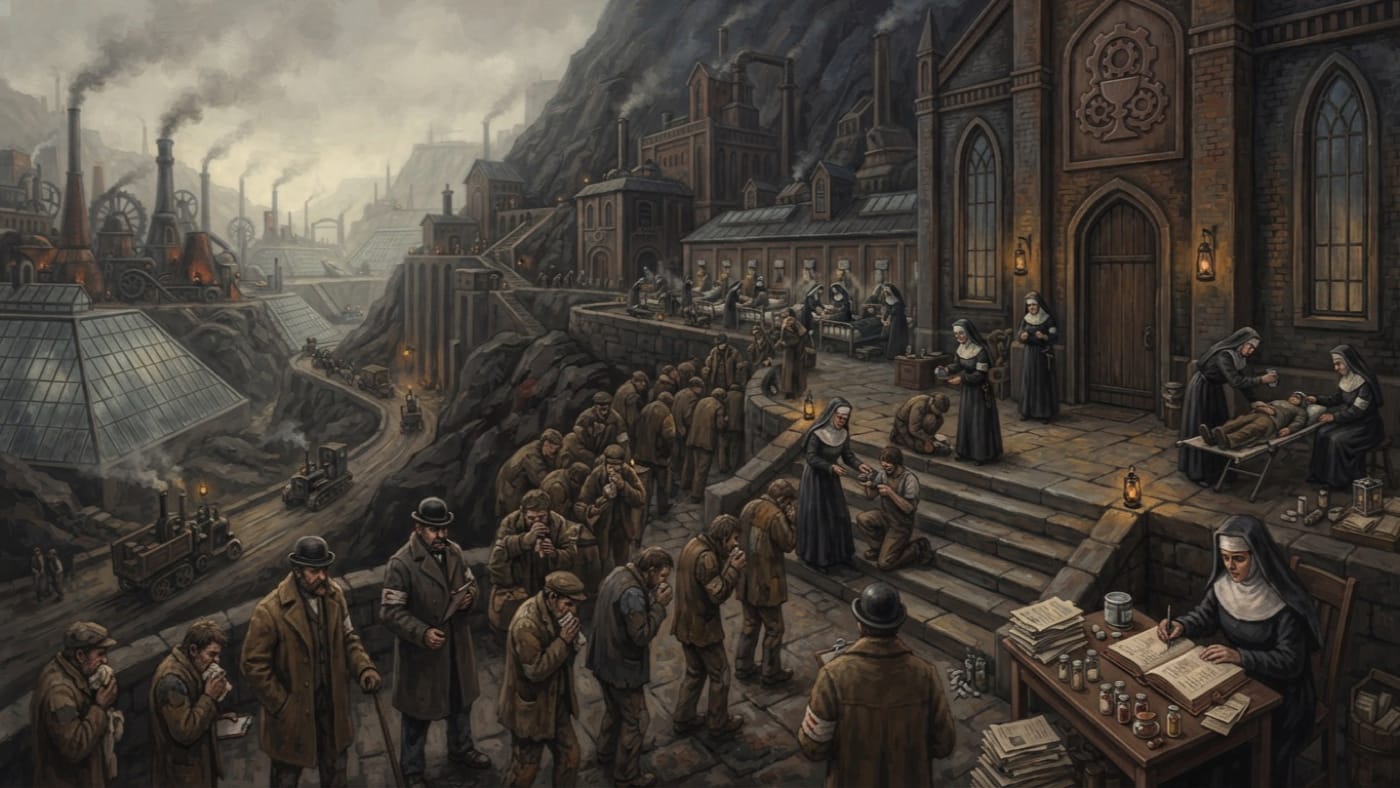
Breath Chapel
Mercy on credit, names under lock
At Saint-Helm's Cut, the Breath Chapel treats glass-lung, books cures as labour debt, and locks away names the quarry would gladly turn into quotas.
Codex Ref. II.2.05-002

Breath Cordon
Three bells decide which lungs belong indoors
Black-Snow Lor's inner shelter perimeter seals at third bell. Marr commands closure, Varr controls admission, and Sael certifies the rooms. The storm grants no extensions.
Codex Ref. II.4.08-341
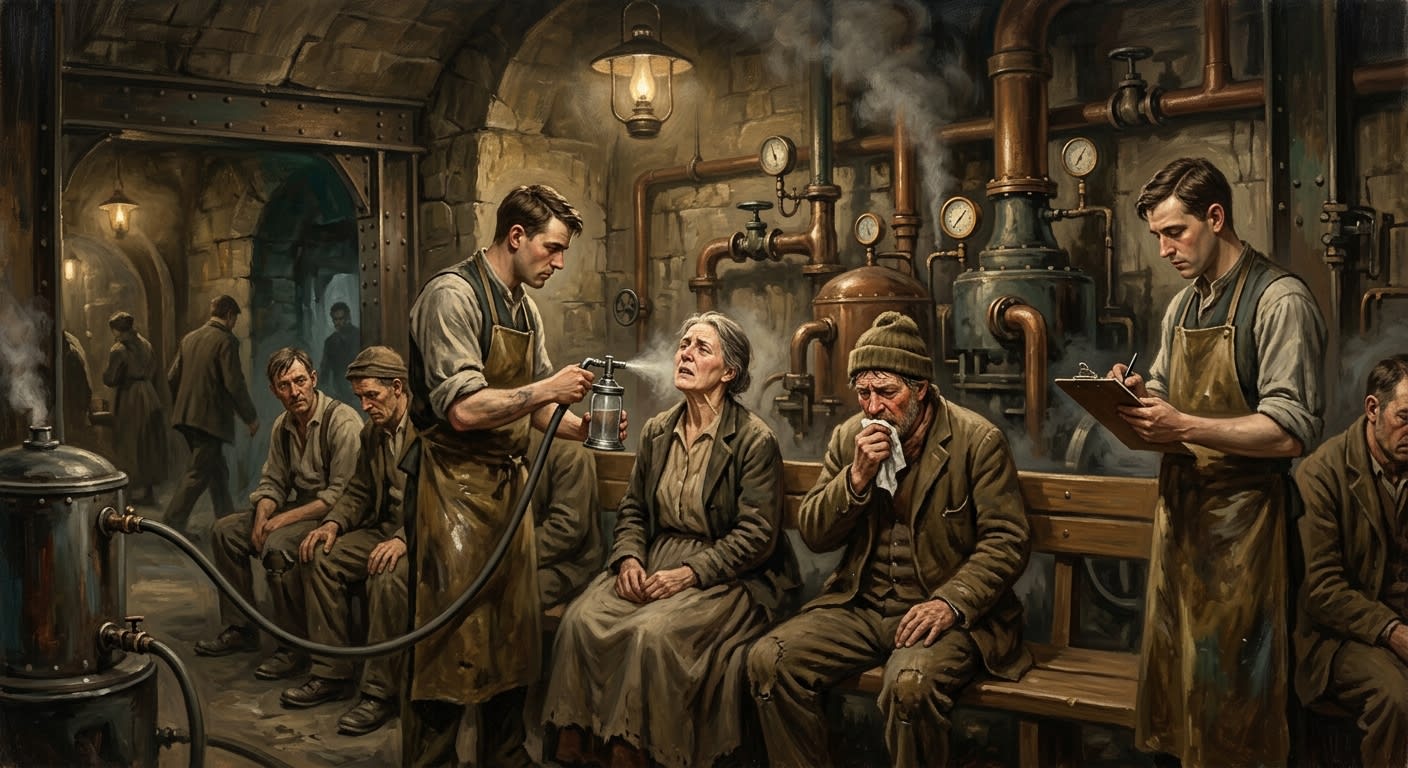
Breatheries
Where Irongate teaches lungs to become paperwork
The Breatheries of Bastion-Irongate heal, classify, spend, and sometimes hide the throats the mountain has used badly.
Codex Ref. II.4.24-199
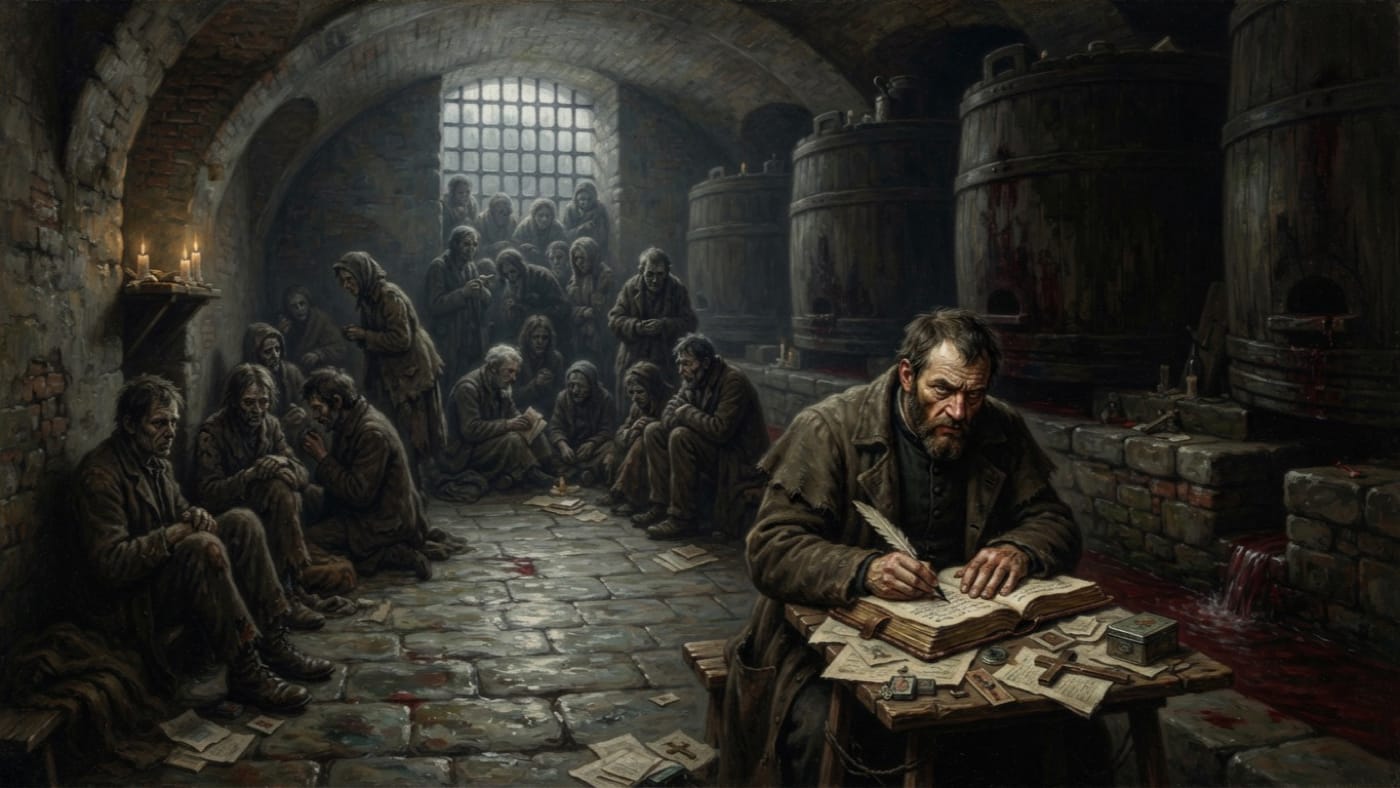
Brewers' Quarter
Sixty souls beneath the vats
Cologne's brewing quarter sheltered sixty faithful beneath the vats. In A.S. 34 its drains ran crimson; Records preserved the journal and holds no survey of the stone.
Codex Ref. II.1.04-034
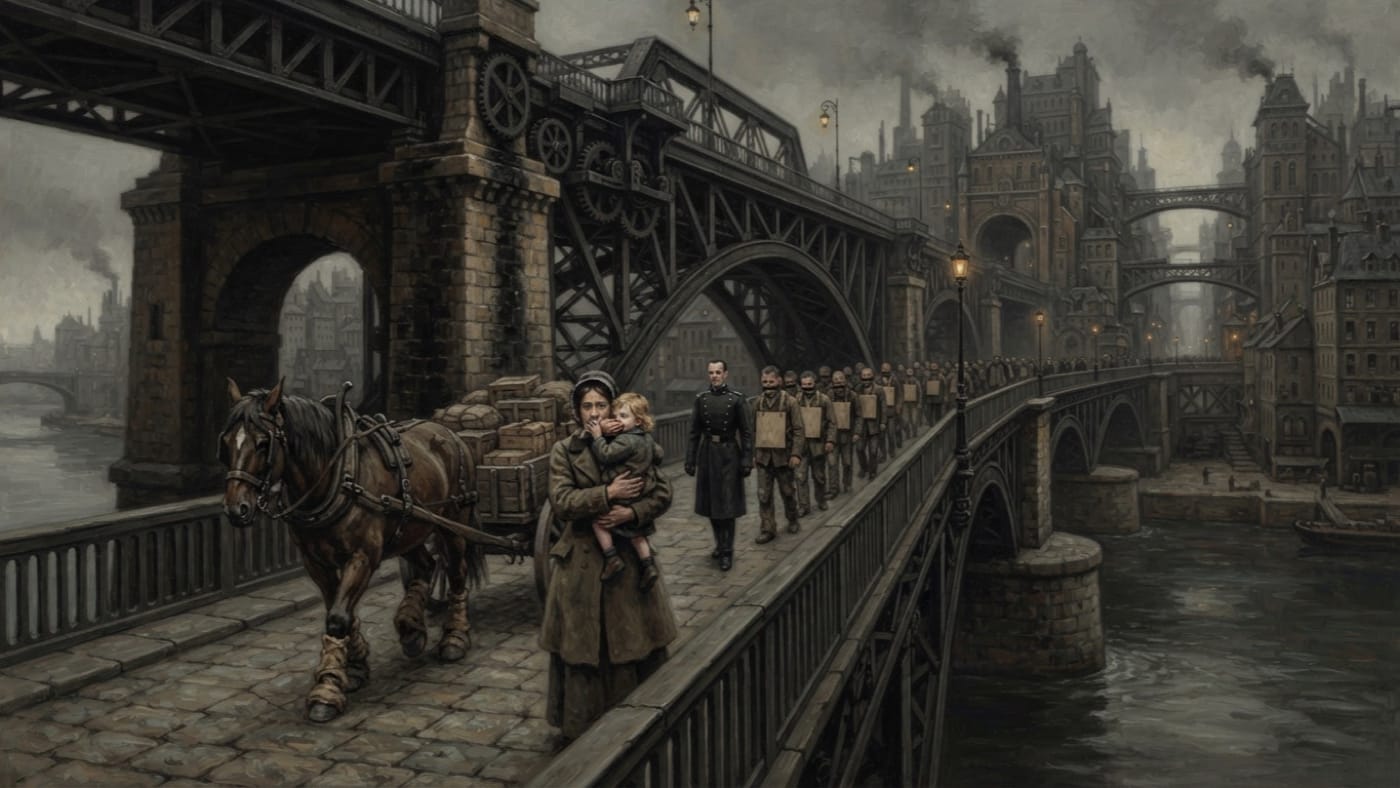
Bridge of the Silent Toll
Where silence pays and Purity speaks for the condemned
Metz's Bridge of the Silent Toll accepts silence instead of coin. Its rebuilt span carries muted travellers and the Toll of Held Speech; the masonry was corrected, the silence retained.
Codex Ref. II.1.05-002
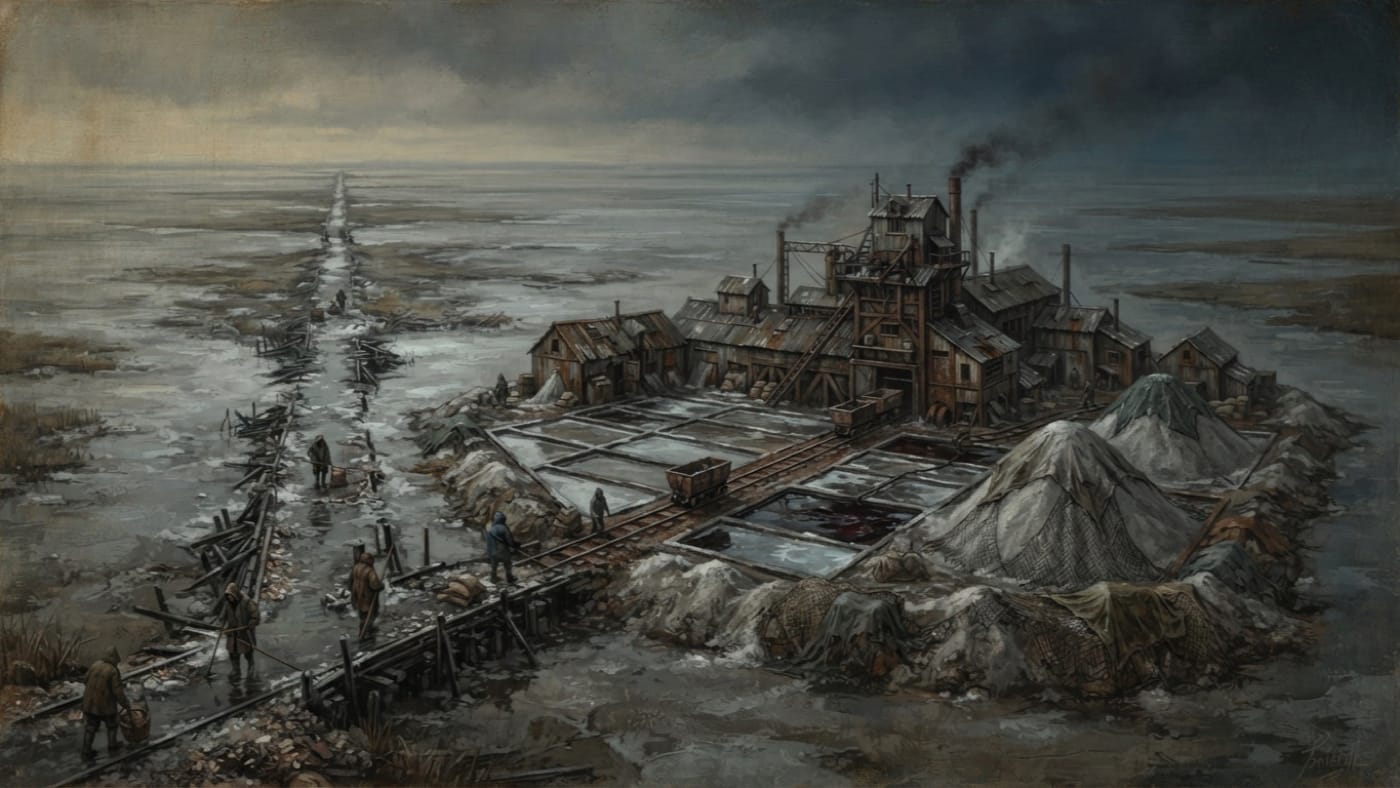
Brielle salt-panning station
Salt at the end of seven seasonal miles
At the end of the Fourth Causeway, Brielle makes salt and awaits the frost that gives it a road. The March A.S. 200 survey found it operational; ownership, method and output remain unrecorded.
Codex Ref. II.3.05-083
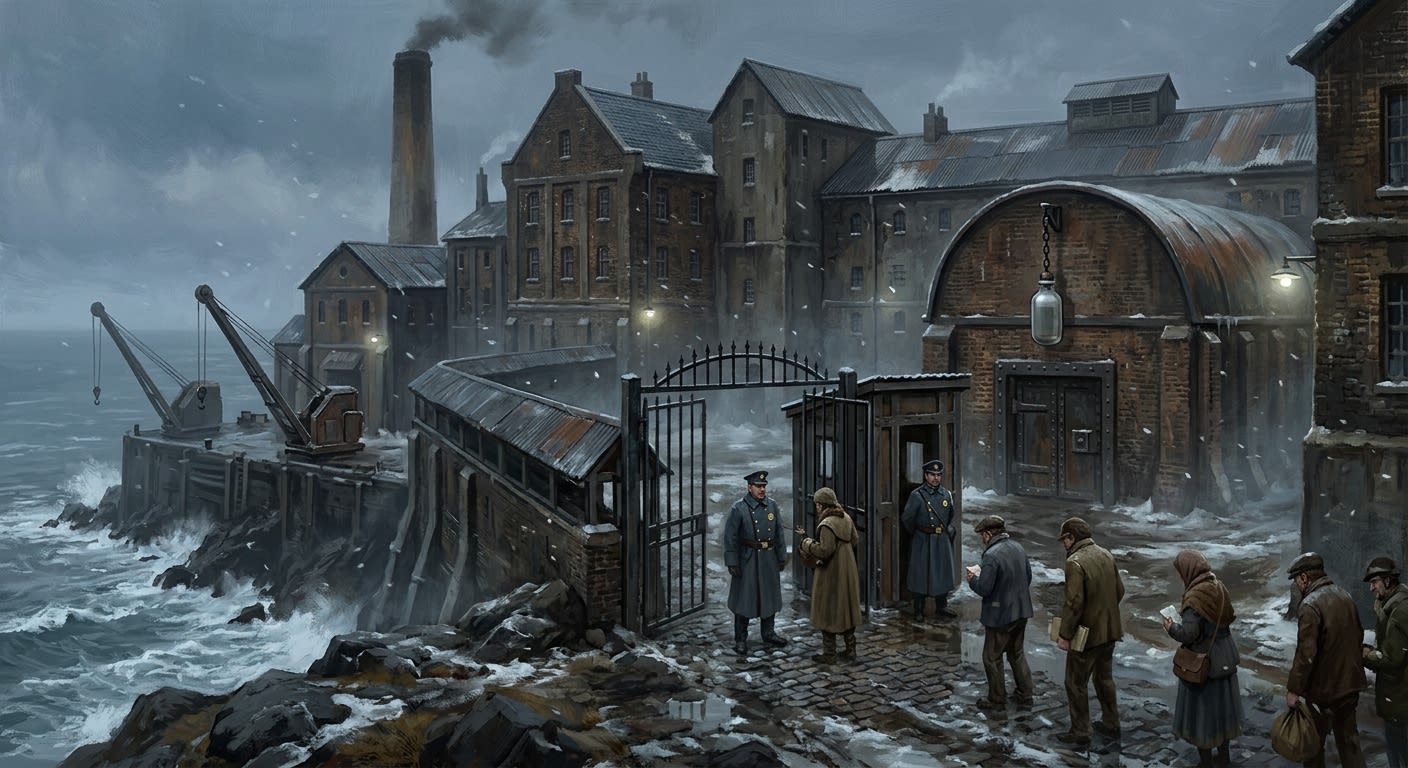
Brine Fork
Where three roads pay their grief before choosing a direction
Brine Fork is the Salt-Vigil island where winter roads divide, tolls become grief, and the Phial Cellar keeps the tears with better discipline than mercy.
Codex Ref. II.3.05-082
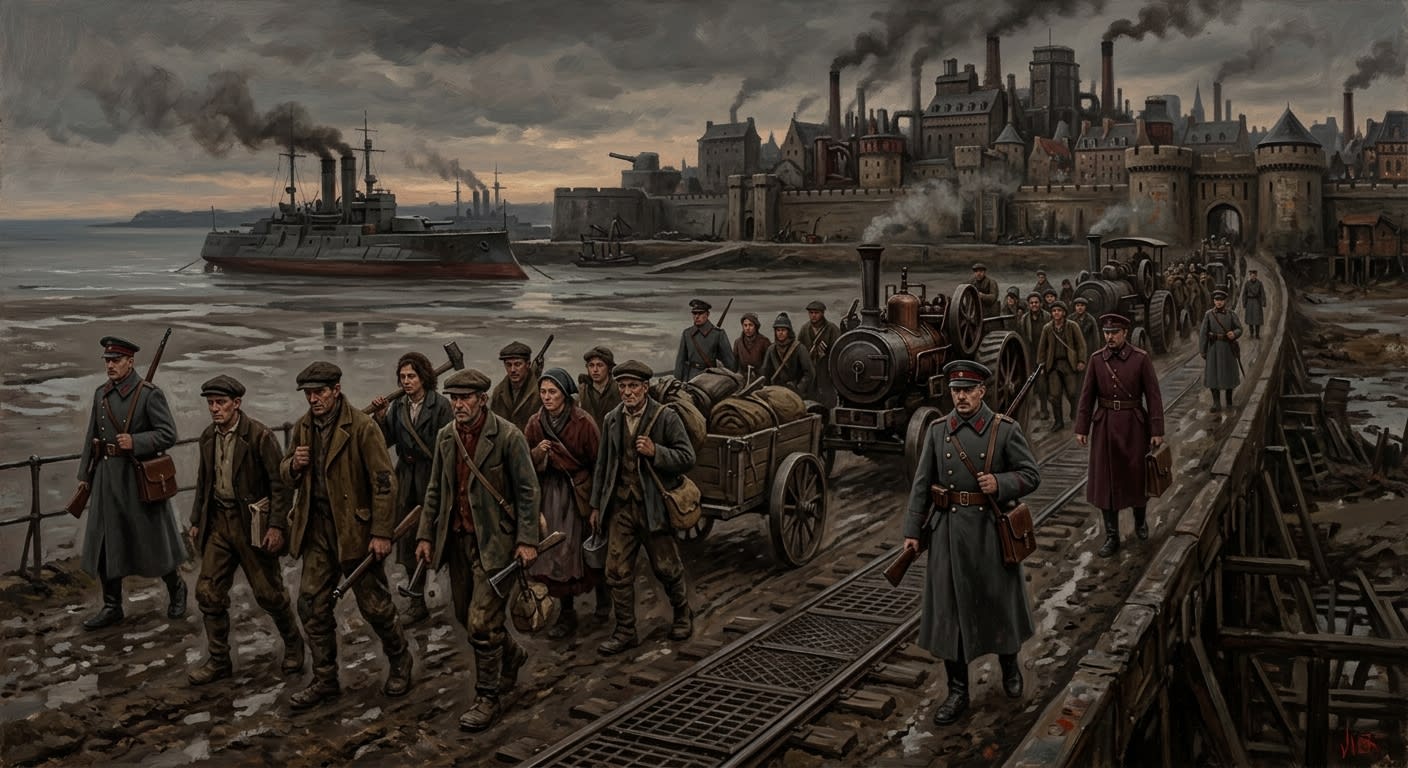
Brittany
The province that taught martyrdom to travel by road
Brittany is the Synod's western salt-wound: a loyal province that turned Saint-Malo's blood, Dinan's road, and local stubbornness into taxable Doctrine.
Codex Ref. II.1.09-010
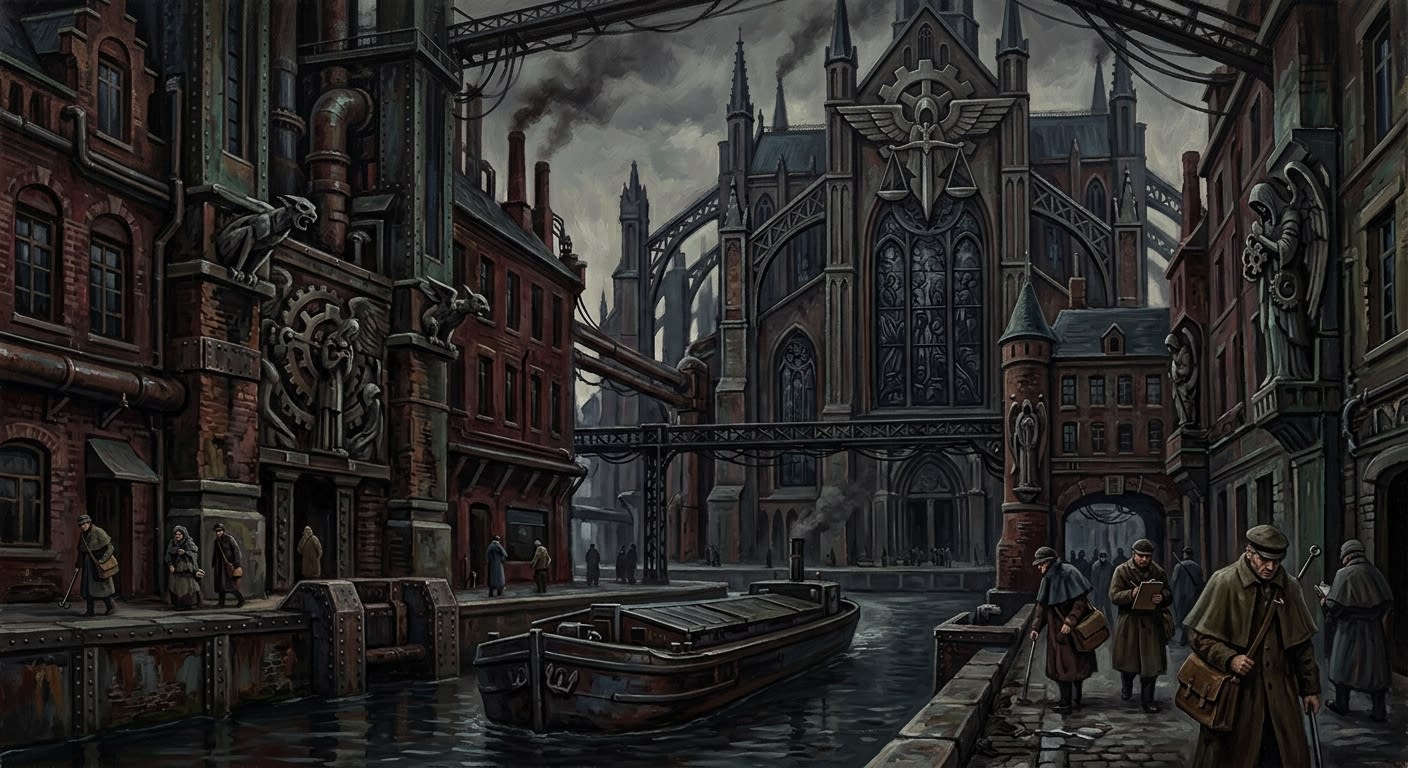
Bruges
Permit prosperity; audit beauty
Bruges is the Synod-held Lowlands city whose canals, colours, grotesques, relic glass, and impossible Tithes seal make beauty a recurring audit problem.
Codex Ref. II.1.04-058
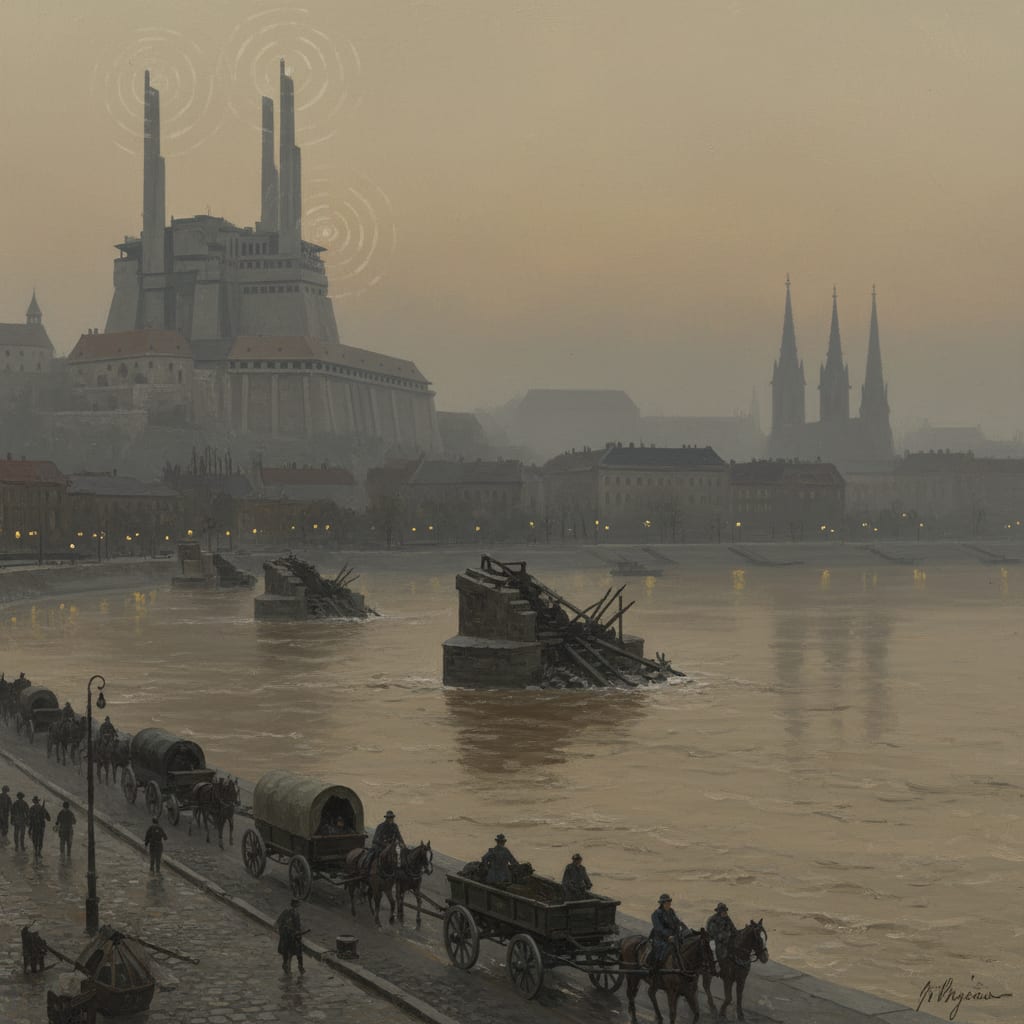
Budapest
The city the Danube cut in half, and the half that watches back
The largest city in the forward heartlands and the principal staging hub of the Central Corridor. 850,000 souls on the western bank, and something unaccounted for on the eastern. The Danube runs between them like a sentence the Bureau started and declined to finish.
Codex Ref. II.4.09-009

Budapest-Irongate Corridor
The road that pays in fuel and settles its accounts in men
The southern feeder route from Budapest to Bastion-Irongate carries blessed freight past nineteen confirmed wound-sites and four probable. Charter houses draw the fuel; their crews settle the human account.
Codex Ref. II.4.09-369
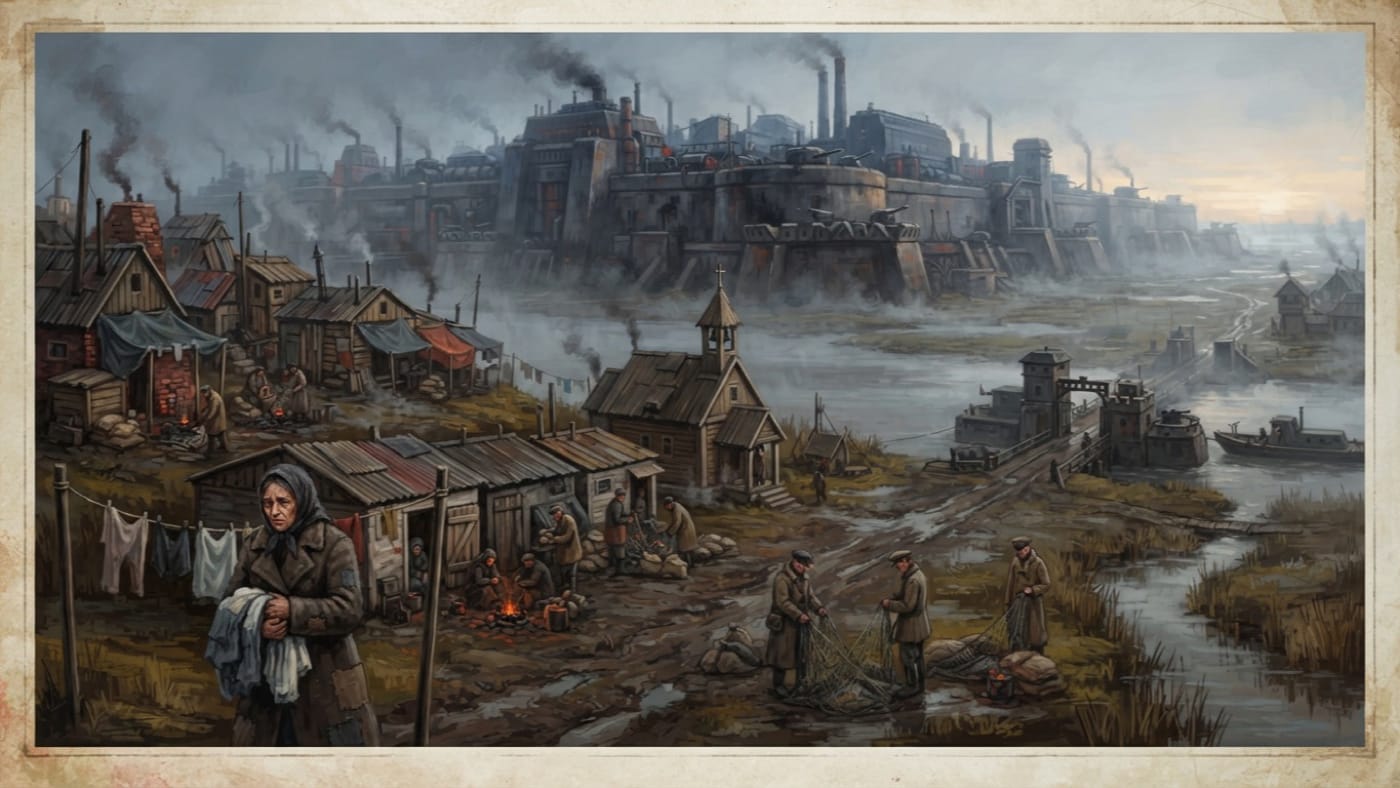
Bug River settlements
The villages disappear; their people remain pending
The Bug River settlements survive as a few western service hamlets and displaced households in Warsaw and Brest. Most villages are absent; their people still require permission to exist.
Codex Ref. II.4.09-201
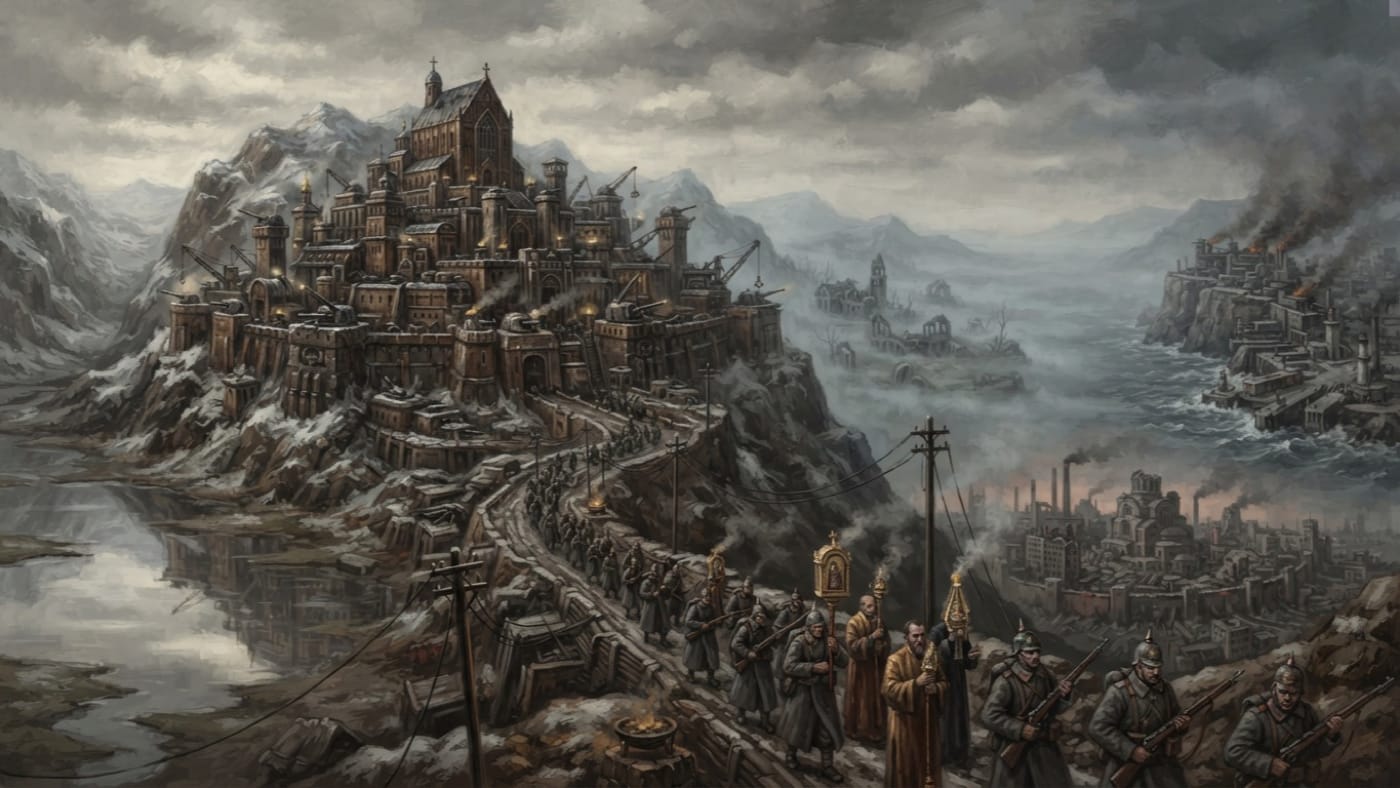
Bulgaria
Three holdings, disputed roads, and a name the Ledger keeps
Bulgaria remains held at Shipka, Sofia and Varna, contested along the approaches, and fallen beyond the returns. The Church keeps the country's name; its garrisons keep what ground they can.
Codex Ref. II.6.06-008
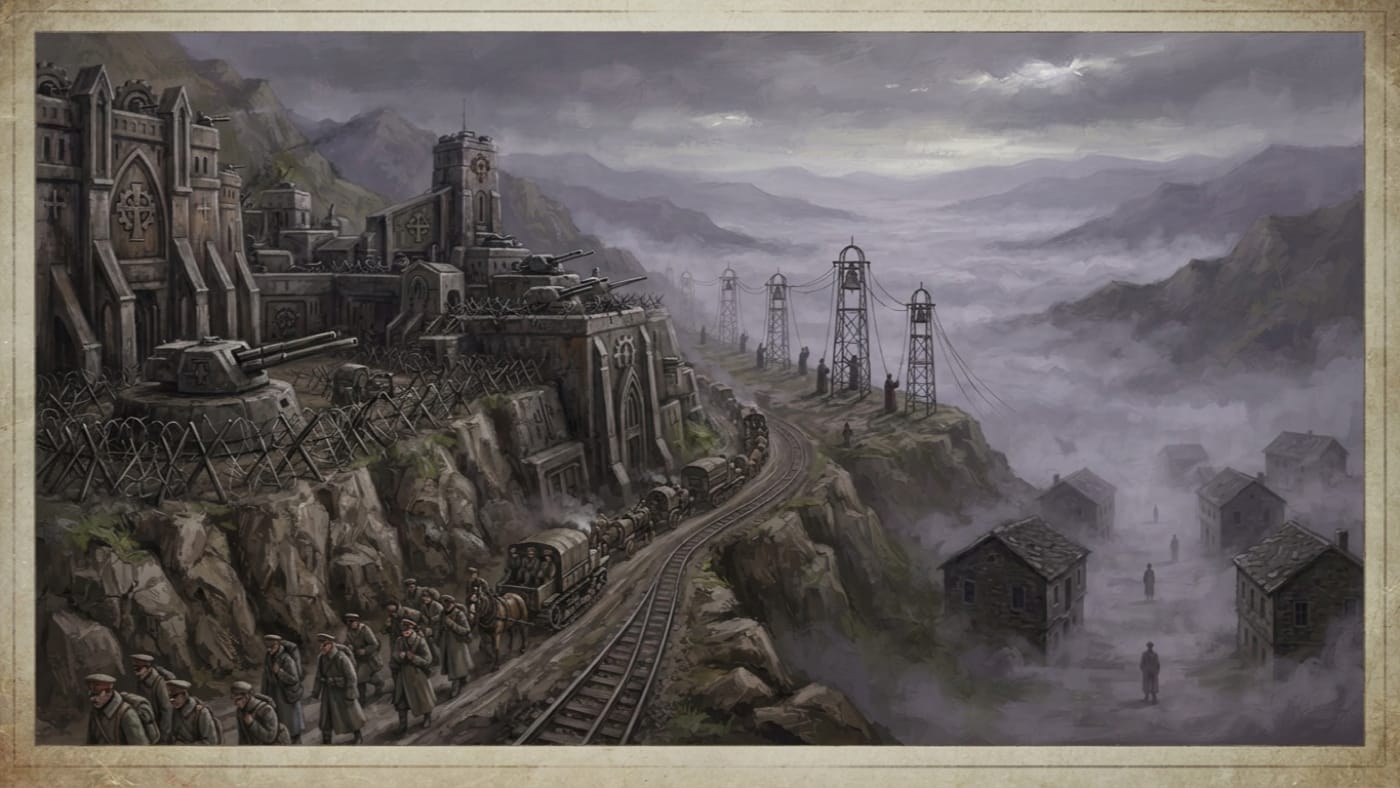
Bulgarian highlands
The villages remain on the rolls after their replies cease
Syrion's time-fog occupies the Bulgarian highlands in depth. Shipka holds the passage, the approaches remain contested, and the villages beyond the bells still receive letters they no longer answer.
Codex Ref. II.4.12-201
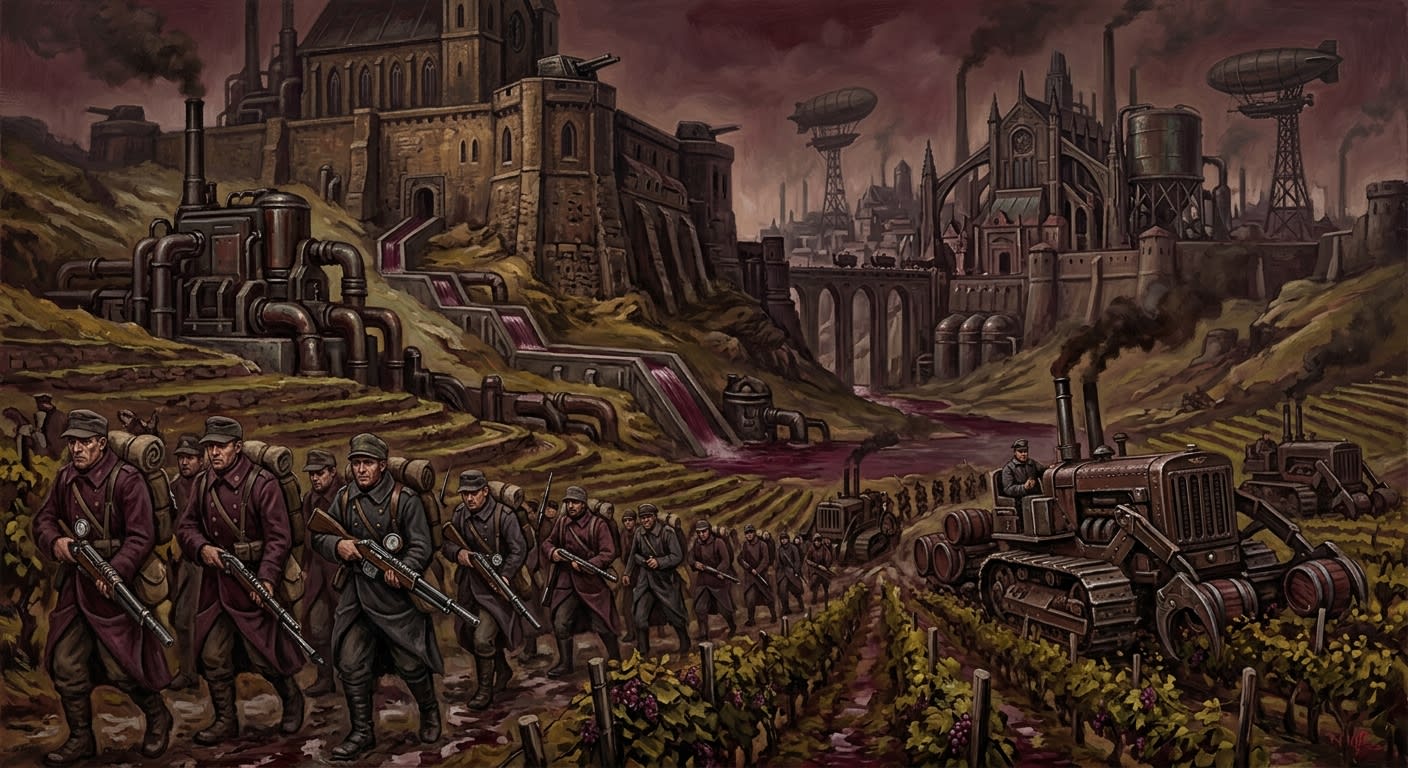
Burgundy
The wine-dark province that gives sons, casks, silence, and trouble
Burgundy is the Synod's wine-dark western province: vineyard, levy basin, Rhône feeder, cellar-church, chromatic hazard, and polite machinery of refusal.
Codex Ref. II.1.11-201
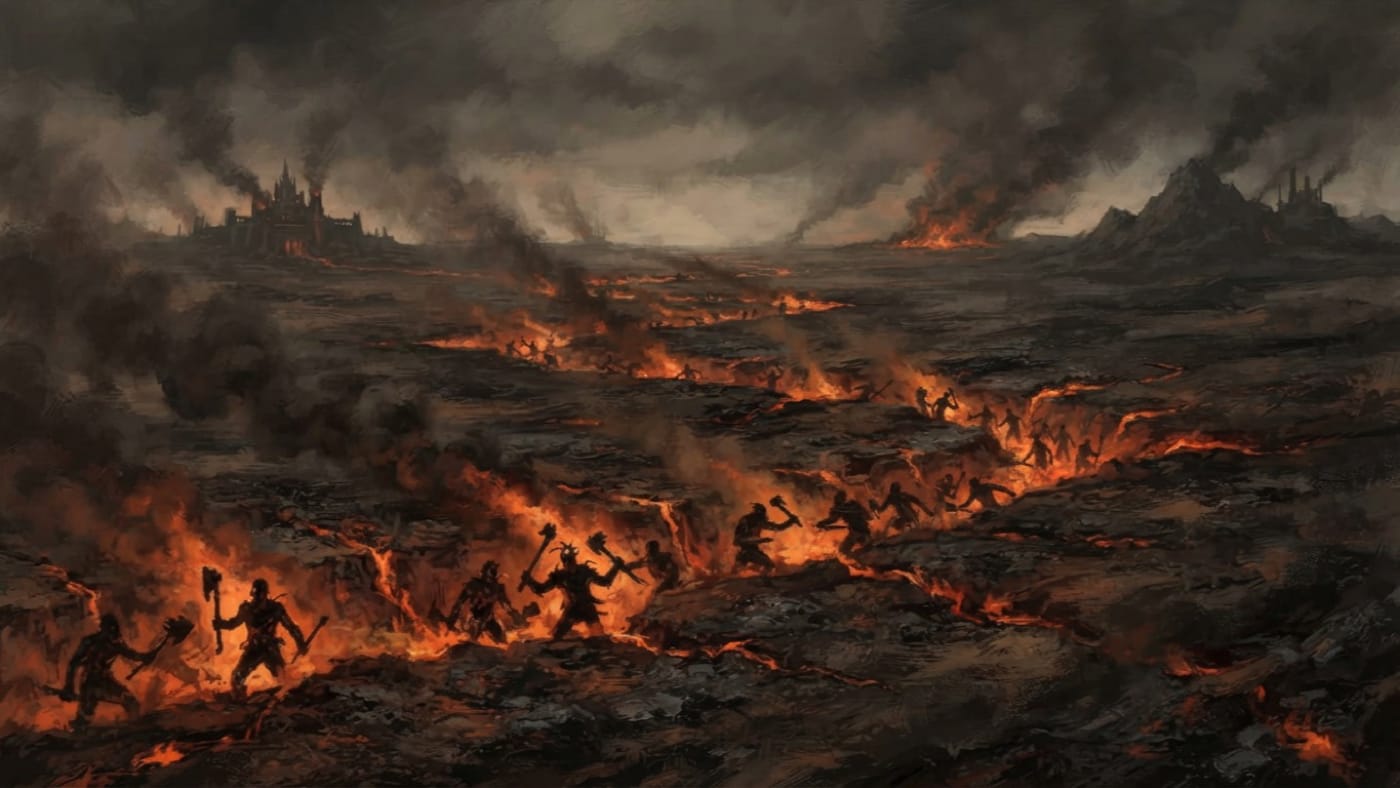
Burning Trenches
The fighting is the point.
A.S. 201 survey of Maldrake's Burning Trenches in Thrace: a mirror of the Sagittal Line carved in fire. They advance, consume ground and produce warriors. The fighting is the point.
Codex Ref. II.6.06-402
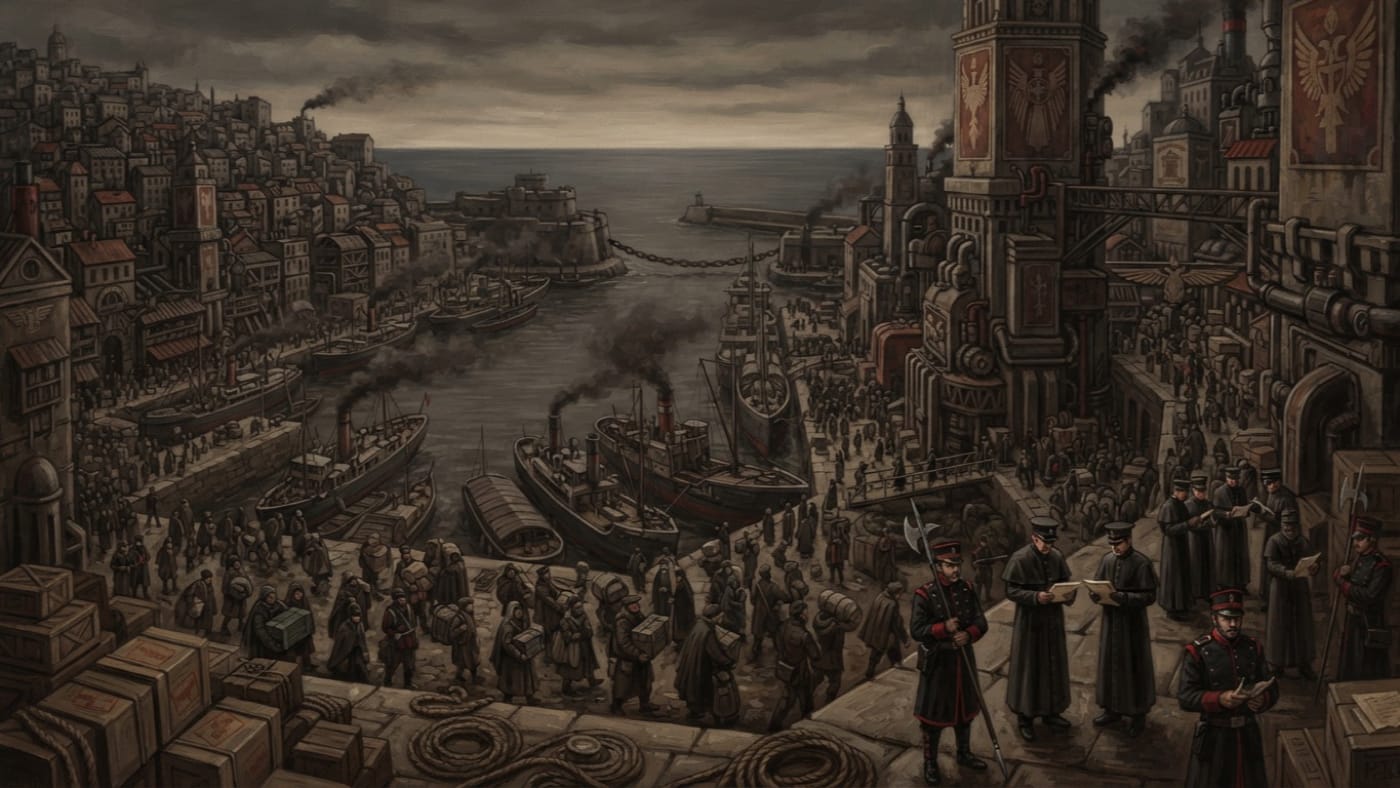
Cádiz
The tide carries pilgrims; the ink keeps them
Cádiz sells Atlantic passage, pilgrim safety, and deniability. Its Peregrine Cartel desk fell in A.S. 193; Pilgrimage kept the registers and the profitable habit of knowing who sailed.
Codex Ref. II.4.09-193
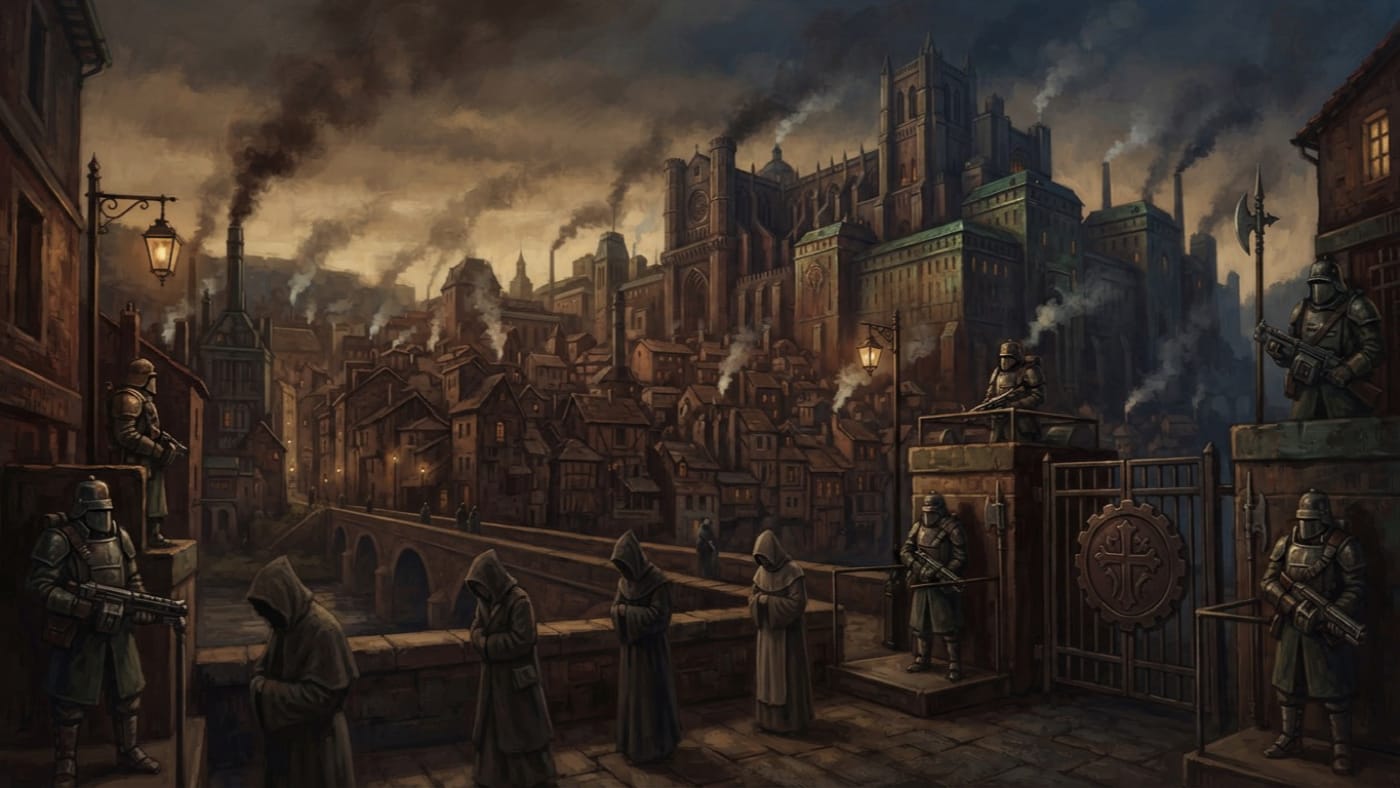
Cahors
Named elsewhere, retained forever
Cahors entered the Toulouse file in A.S. 93 through Carcassonne's confession. No local offence is established; the Bureau retained the address.
Codex Ref. II.1.09-093
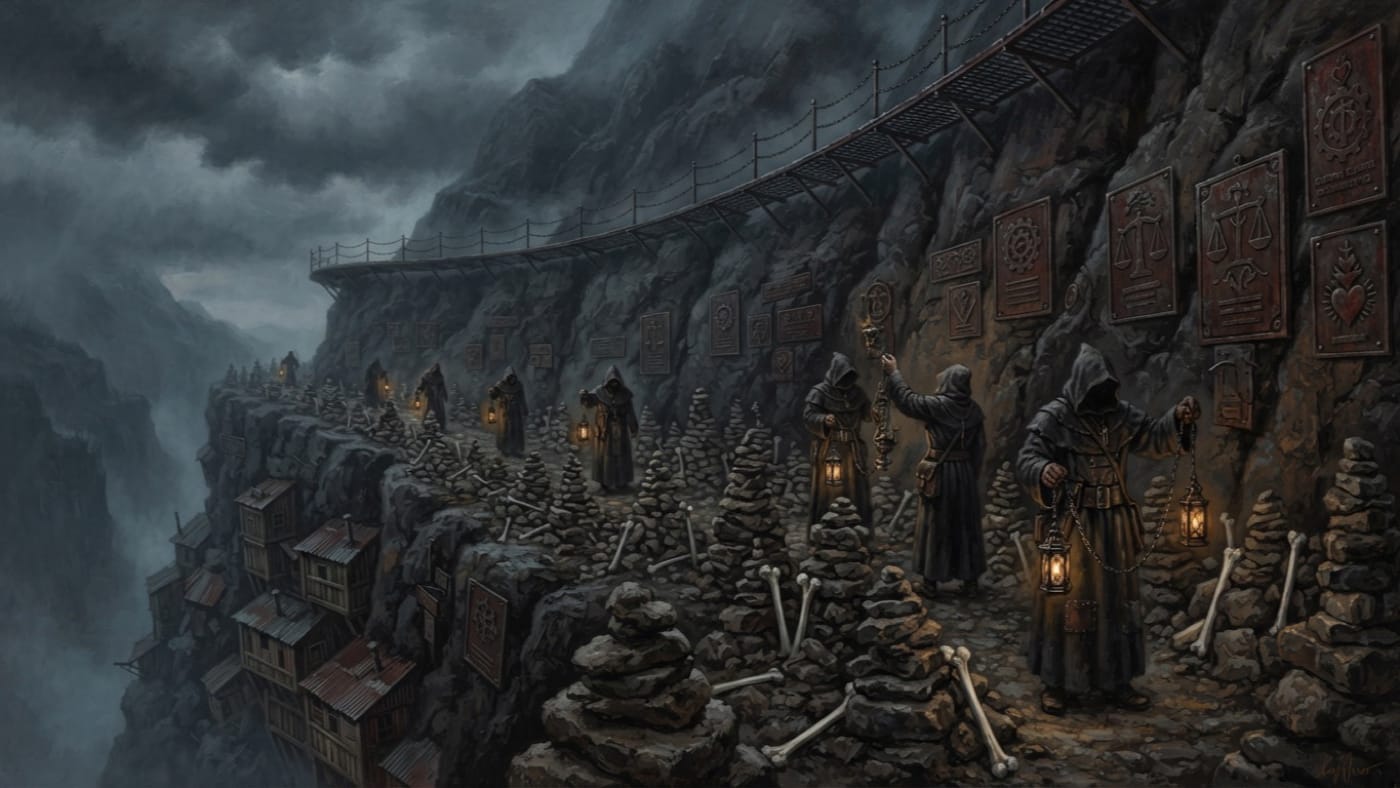
Cairnfield Terrace
Every stone is blessed; every search is referred upward
The sixth district of the Reliquary Switchbacks: a Carpathian memorial field kept by the Cairn Wardens, with contraband beneath its stones and Blank Saints behind them. Every cairn is blessed. Every search is referred upward.
Codex Ref. II.3.05-006
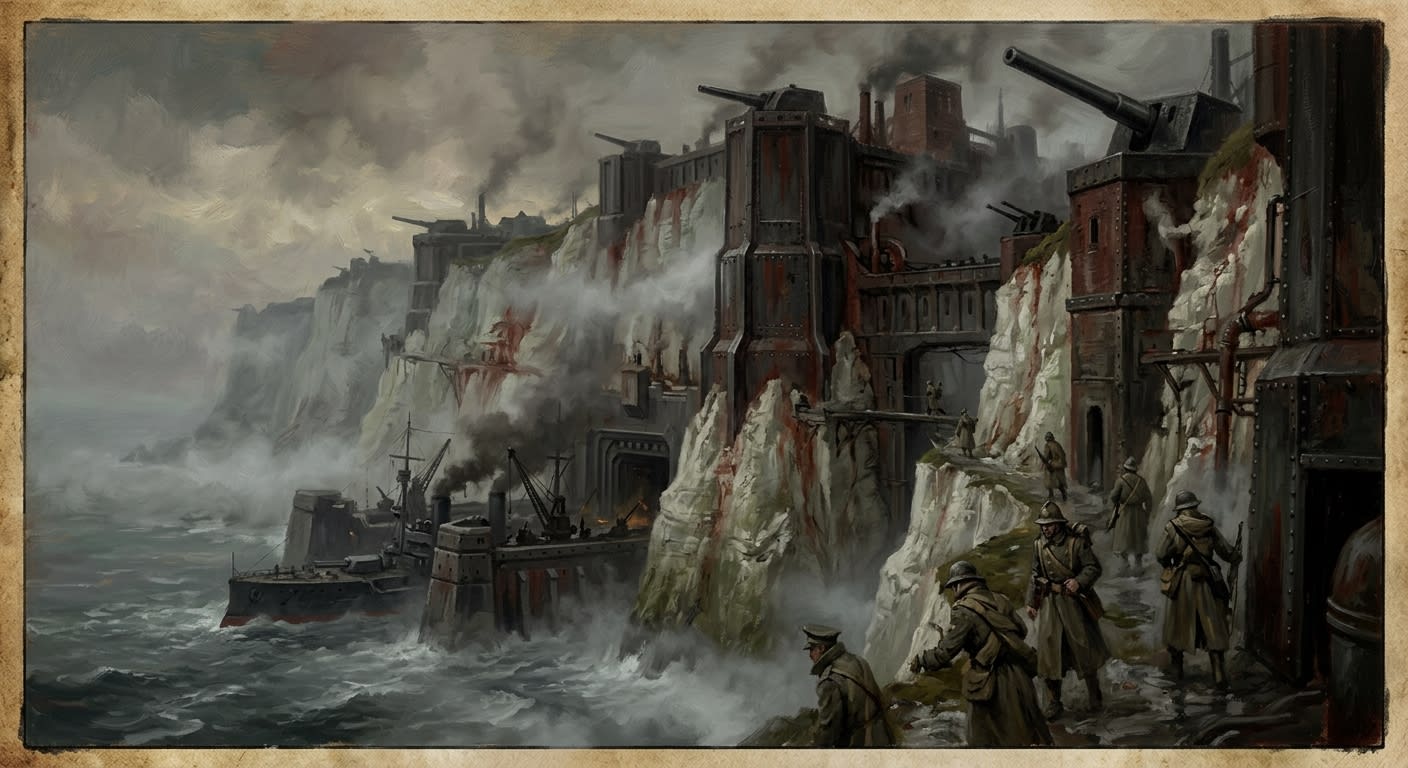
Calais
Read the fog, hold the sea, and pretend the Channel is only water
Calais is the Synod's western coastal tooth: a chalk redoubt where the fog writes names, the sea answers omissions, and every passage is taxed in breath.
Codex Ref. II.4.09-011
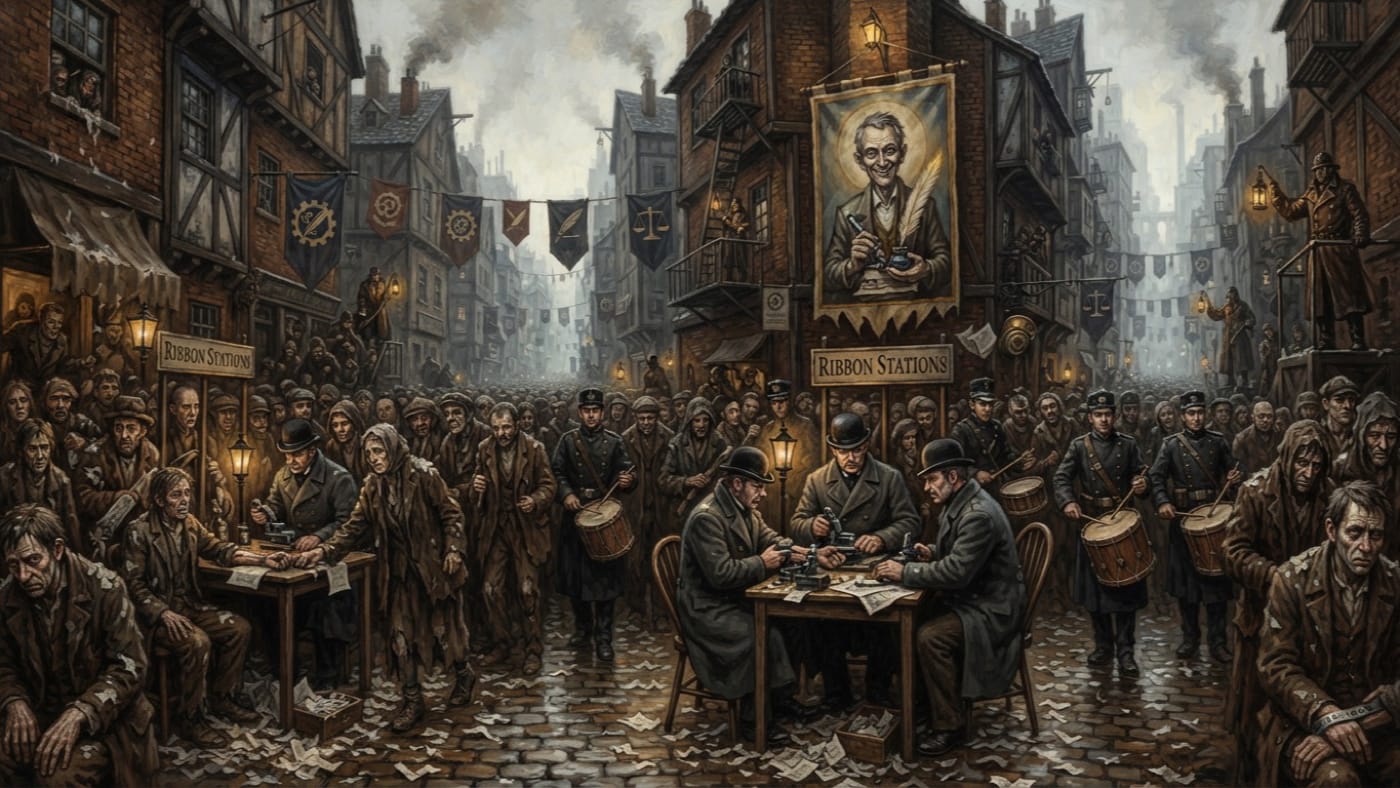
Calming of the Marrow Quarter
A miracle counted in ribbons and closed in ink
A.S. 201 survey of Caldrin's attributed Marrow Quarter miracle: no deaths, four thousand wrist-ribbons and a complete household correction ledger. The procession's year remains unverified; the count is cleaner than the claim.
Codex Ref. III.2.04-201
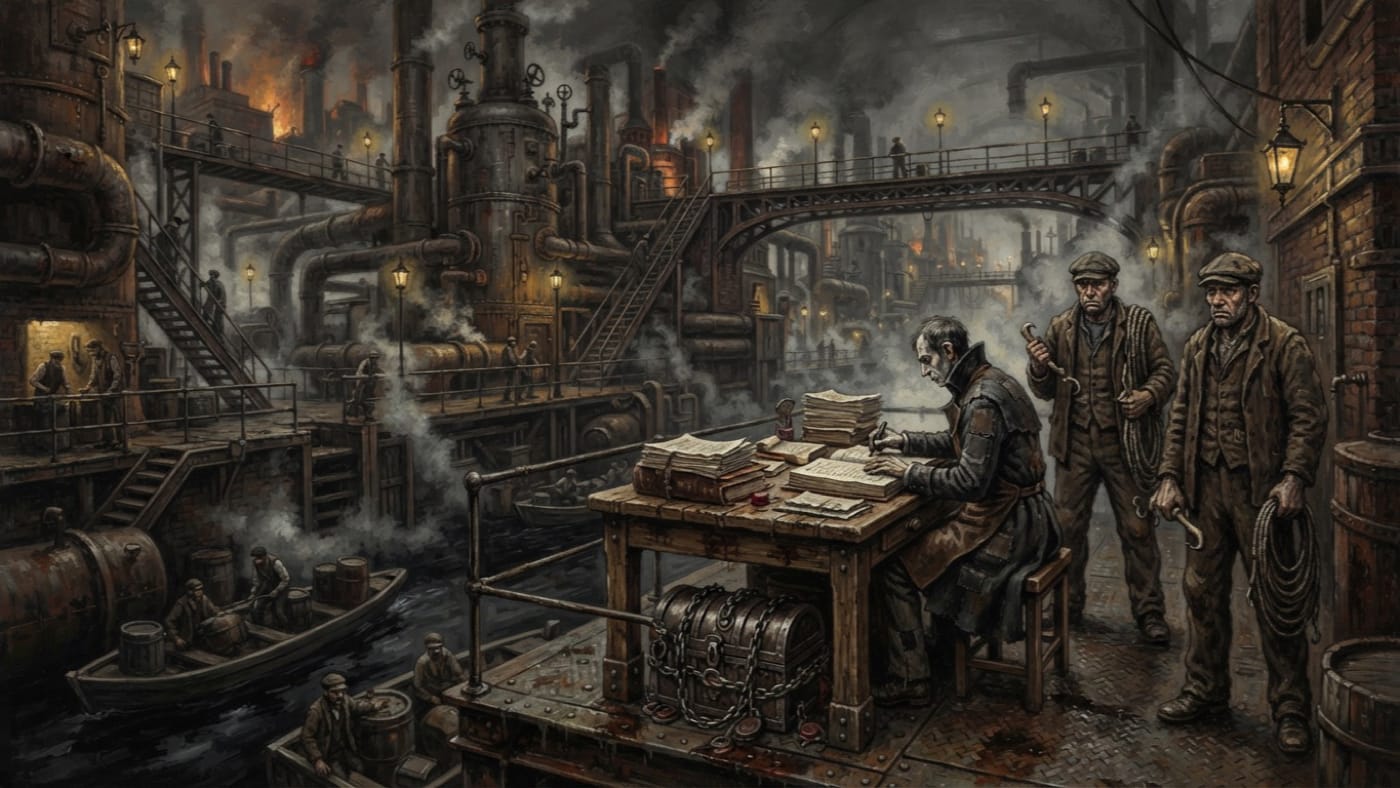
Canal South
Where a locked casket does the work of a cathedral
Canal South keeps Brast's substrate receipts beneath a counting table. Pex Ruln holds the key; the auditors hold requests answered in excellent grammar.
Codex Ref. II.2.01-023
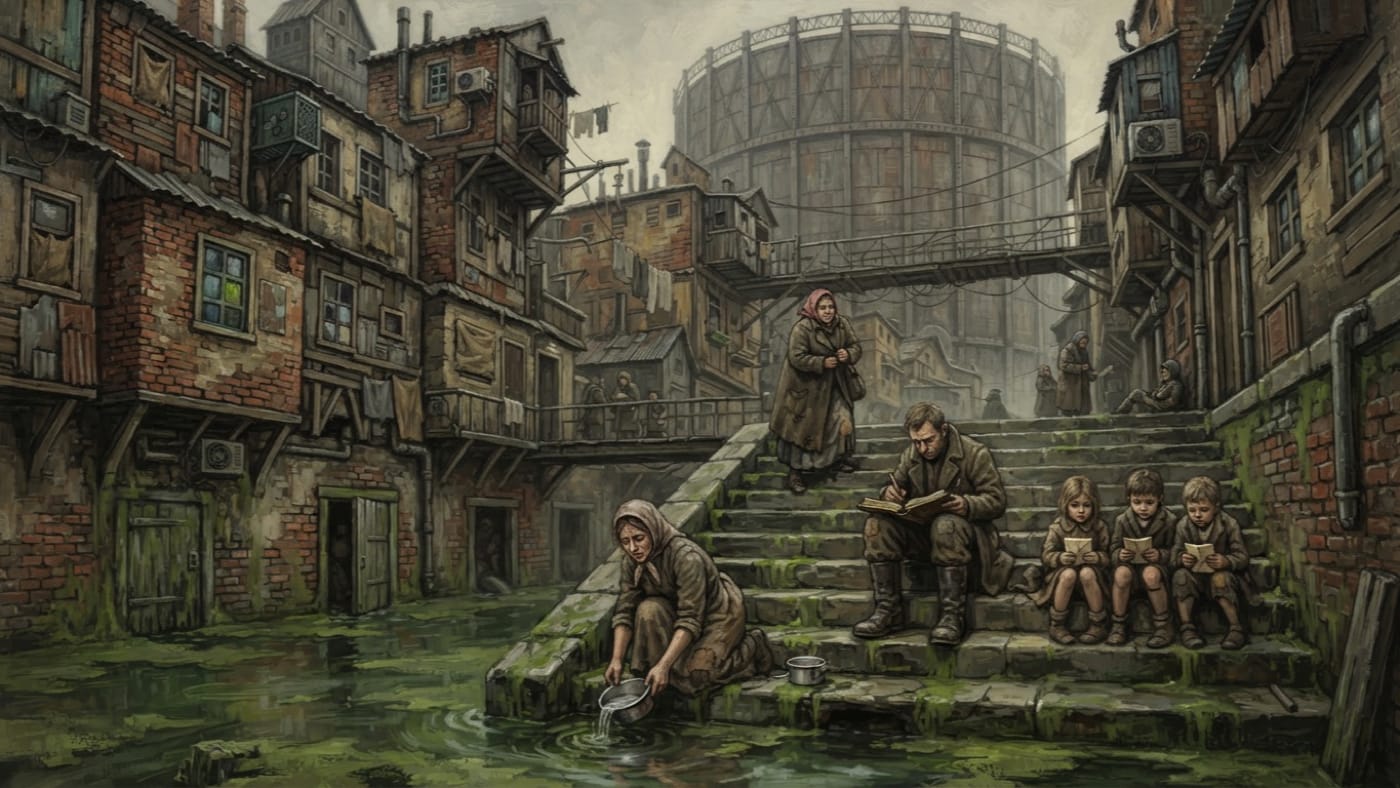
Canalback
Where a shack can be rebuilt and a ledger never cleared
Canalback is Wexel's canal-side poor quarter, where labour buys porridge, laughter earns citations, and cellar doors hide behind the flood-stains.
Codex Ref. II.2.04-002
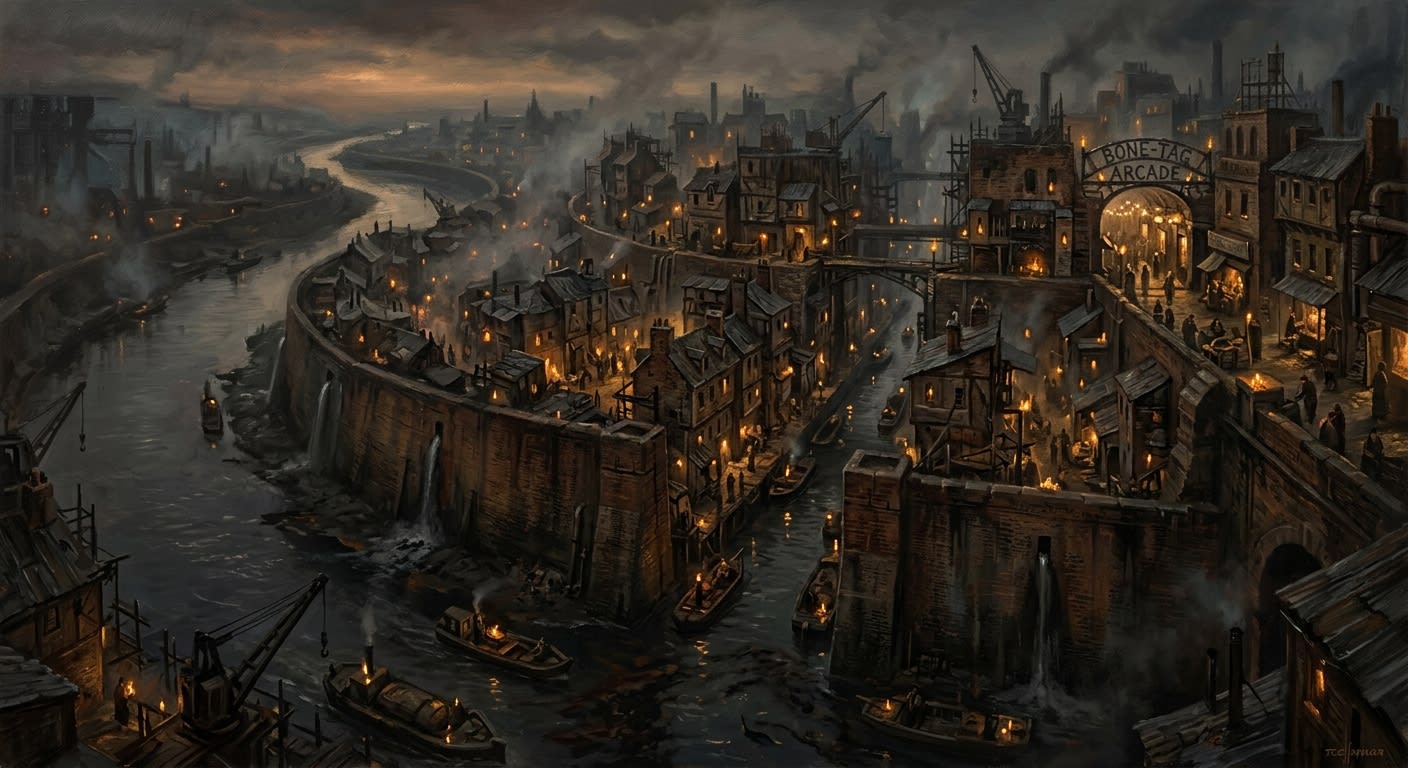
Candle-Sump District (Lower Vire)
The gut of Lower Vire — it was supposed to be a drainage ditch
The gut of Lower Vire — a drainage ditch that metastasised into a district of forty-two thousand souls, where tallow feeds the wards above, bone tags stamp the dead into existence, and the crypt-route drafts murmur names no one asked to hear.
Codex Ref. II.1.05-001
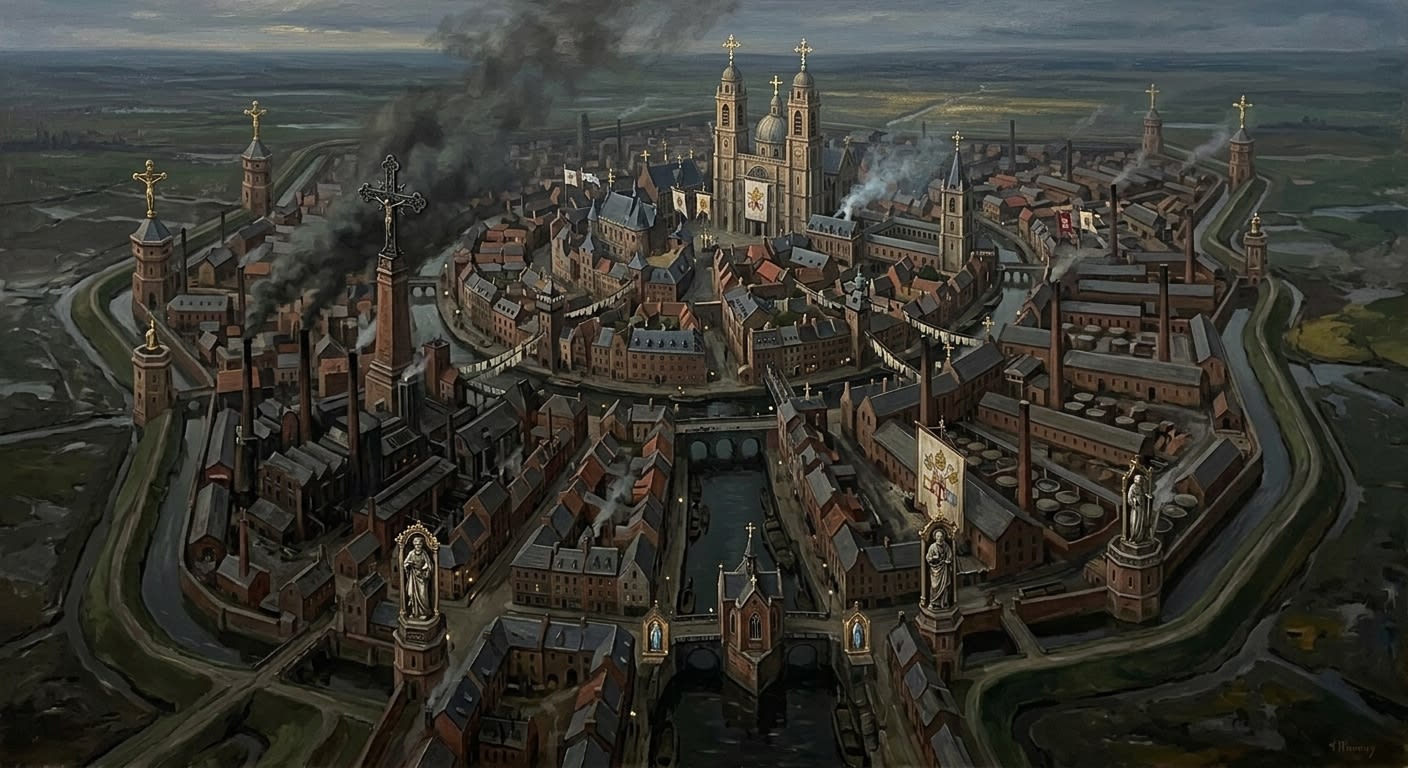
Candlewick Palatinate
Where Legitimacy Is Manufactured, and Colour Is Law
Canal city of chandlers, dyers, and wax-merchants whose misfortune was to be competent and noticed. The Candlewick Palatinate supplies the Synod with seals, sanctioned inks, and watermarked paper — and thus with the material substance of reality itself.
Codex Ref. II.1.01-001
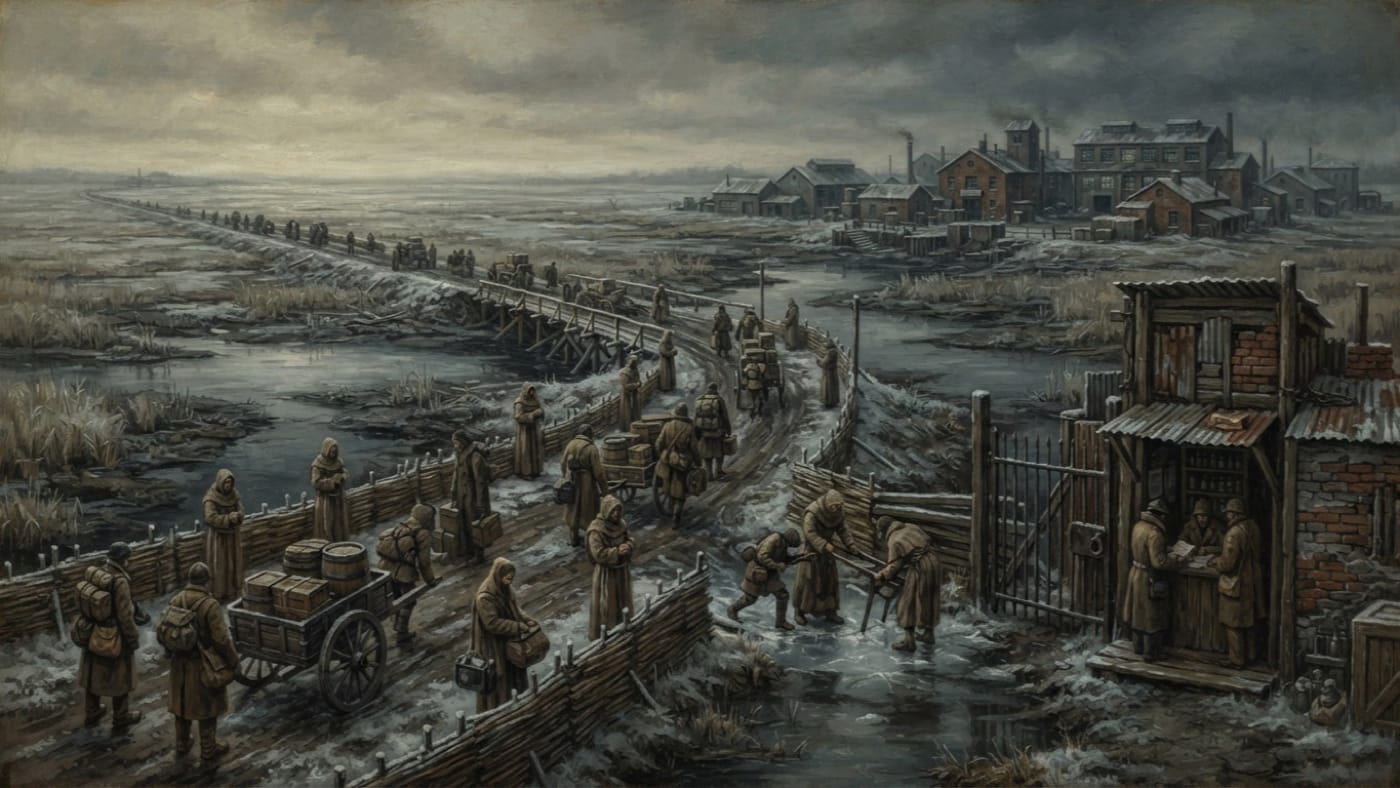
Candlewick Spur
Where authority travels in wax and passage is paid twice
Eleven miles of winter road carry Candlewick's wax, ink, and clerks to Brine Fork; three bridges return each autumn, and every traveller pays twice.
Codex Ref. II.3.05-004
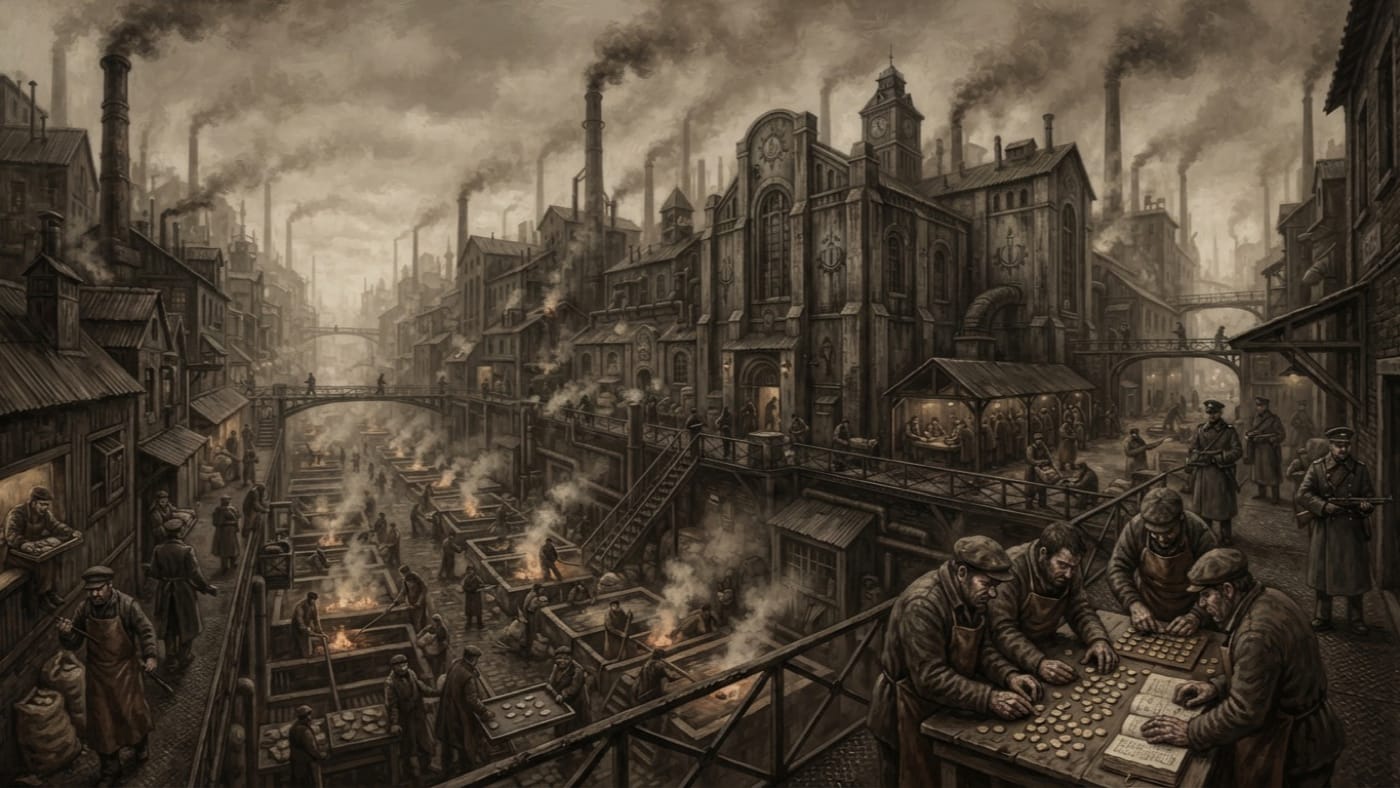
Candleworks Quarter
Where permission is poured
An A.S. 201 survey of Bastion-Przemyśl's tallow vats and sealwrights. The quarter pours permission to eat; a missing stamp die threatens its monopoly on existence.
Codex Ref. II.4.09-201
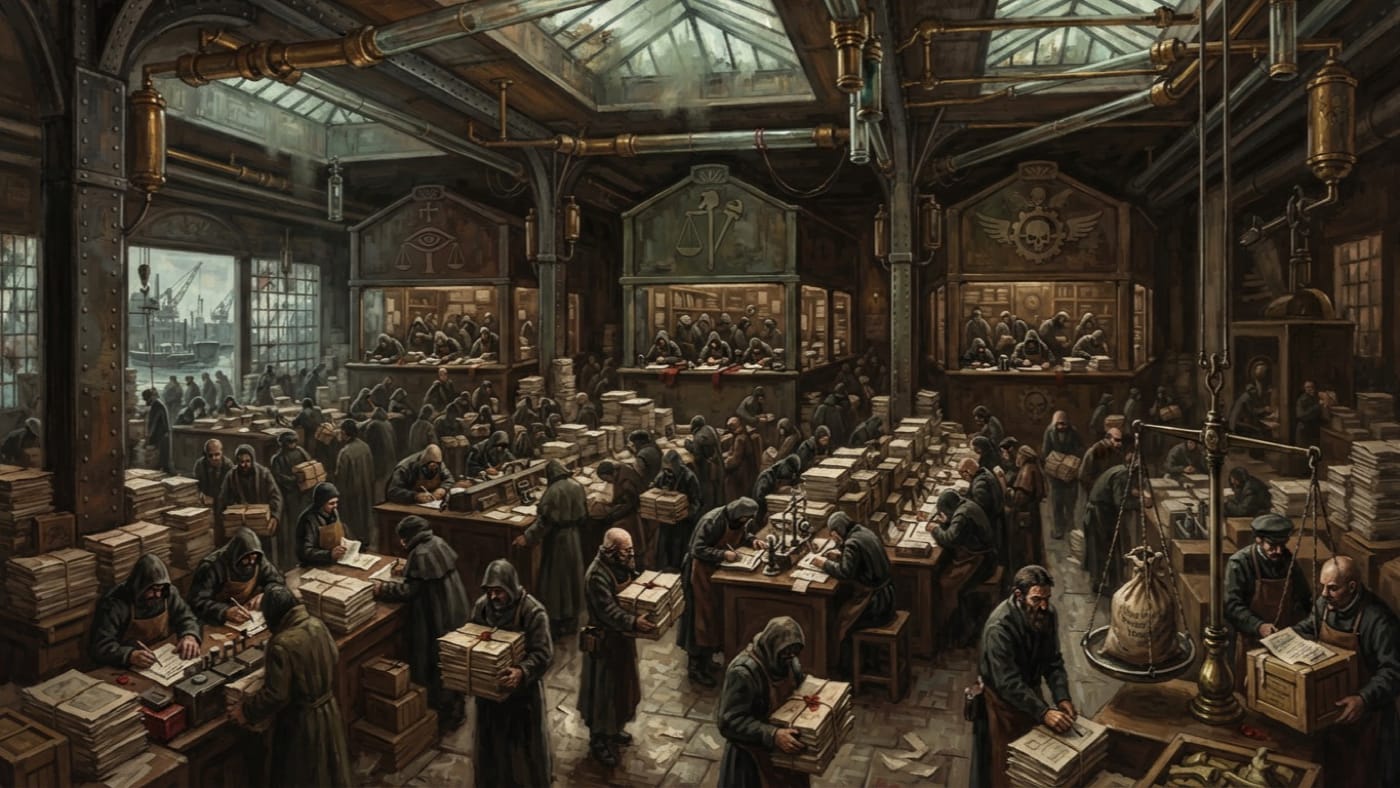
Canebière
Where cargo becomes paper, and paper waits for permission
Marseille's commercial quarter, where merchant houses turn cargo into paper under three competing Bureau offices. Goods may leave once their description has acquired every necessary seal.
Codex Ref. II.4.09-019
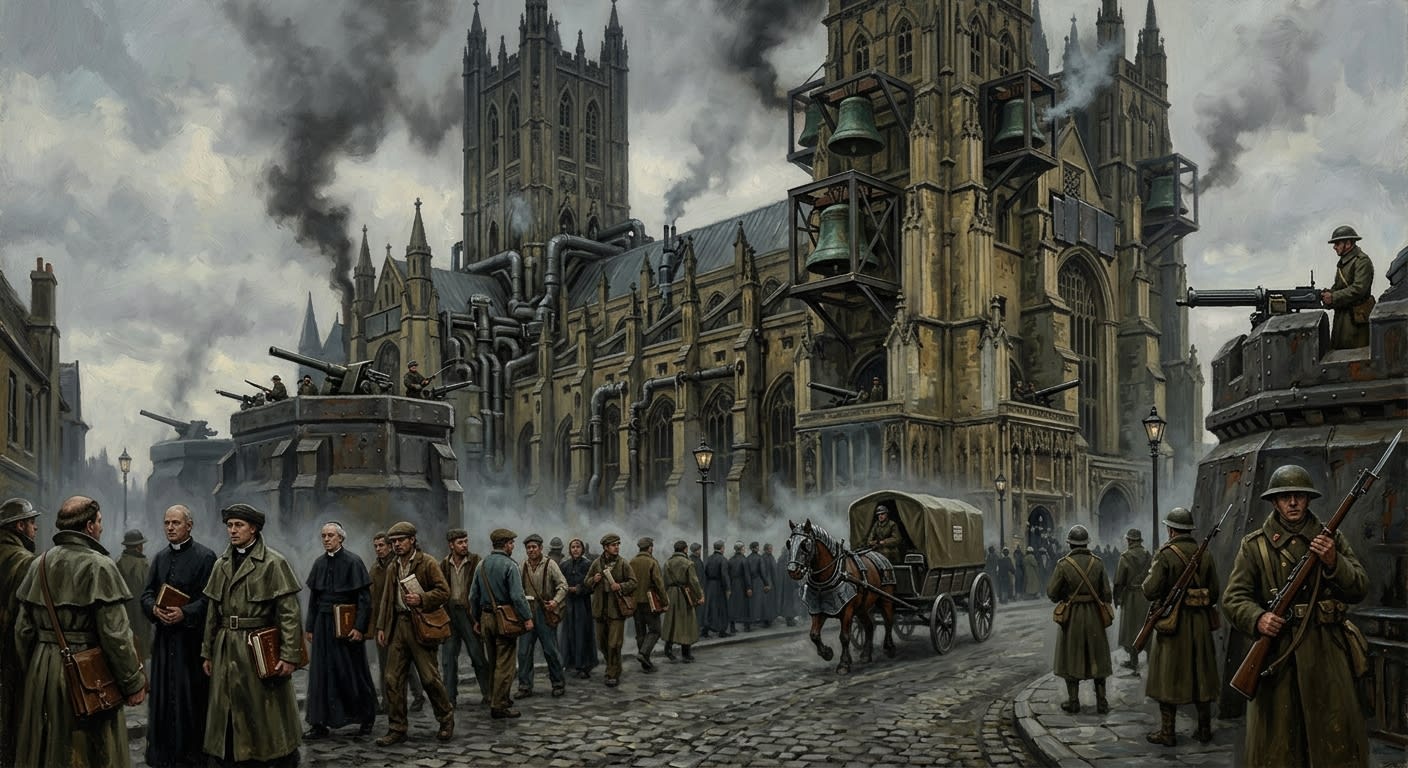
Canterbury
The cathedral that refused to become a bureau
Canterbury is the British Crown's cathedral-seat: old, armed, bell-ridden, unaudited, and infuriatingly functional beyond Strasbourg's forms.
Codex Ref. II.0.01-201
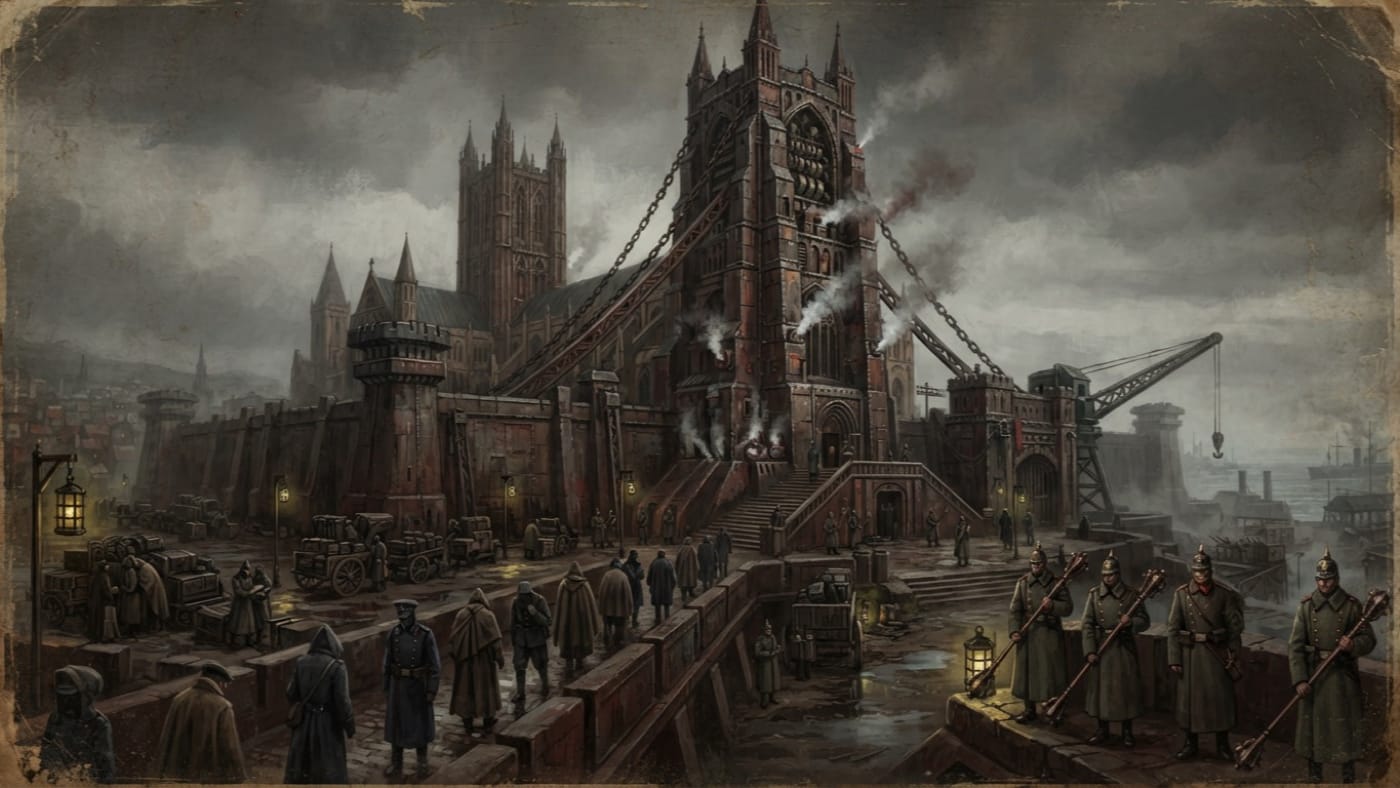
Canterbury Cathedral
Where British bells keep the hours and Strasbourg keeps its distance
Canterbury Cathedral keeps Britain's oaths, relics and bells beneath Crown authority. Its face circulates on Iron Crowns; Strasbourg's authority stops at the rail.
Codex Ref. II.0.02-201
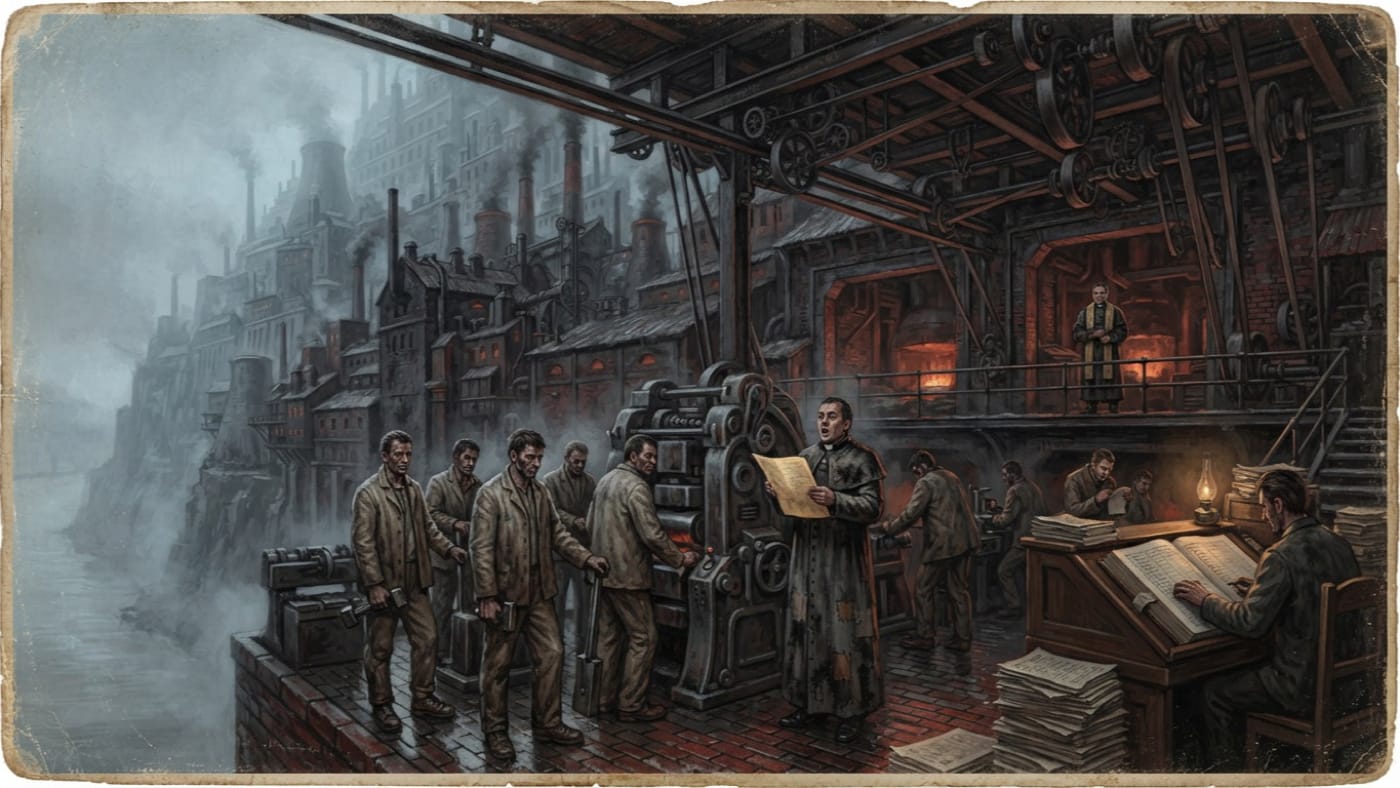
Cantor Foundries
Beneath the judges and above the dead, even the hour must be bought
Rheinscarp's eighth terrace runs its furnaces on purchased bell-hours and the Mill-Crown Cantors' cadence. The machinery may be ready; permission remains the Marshal's commodity.
Codex Ref. II.2.08-001
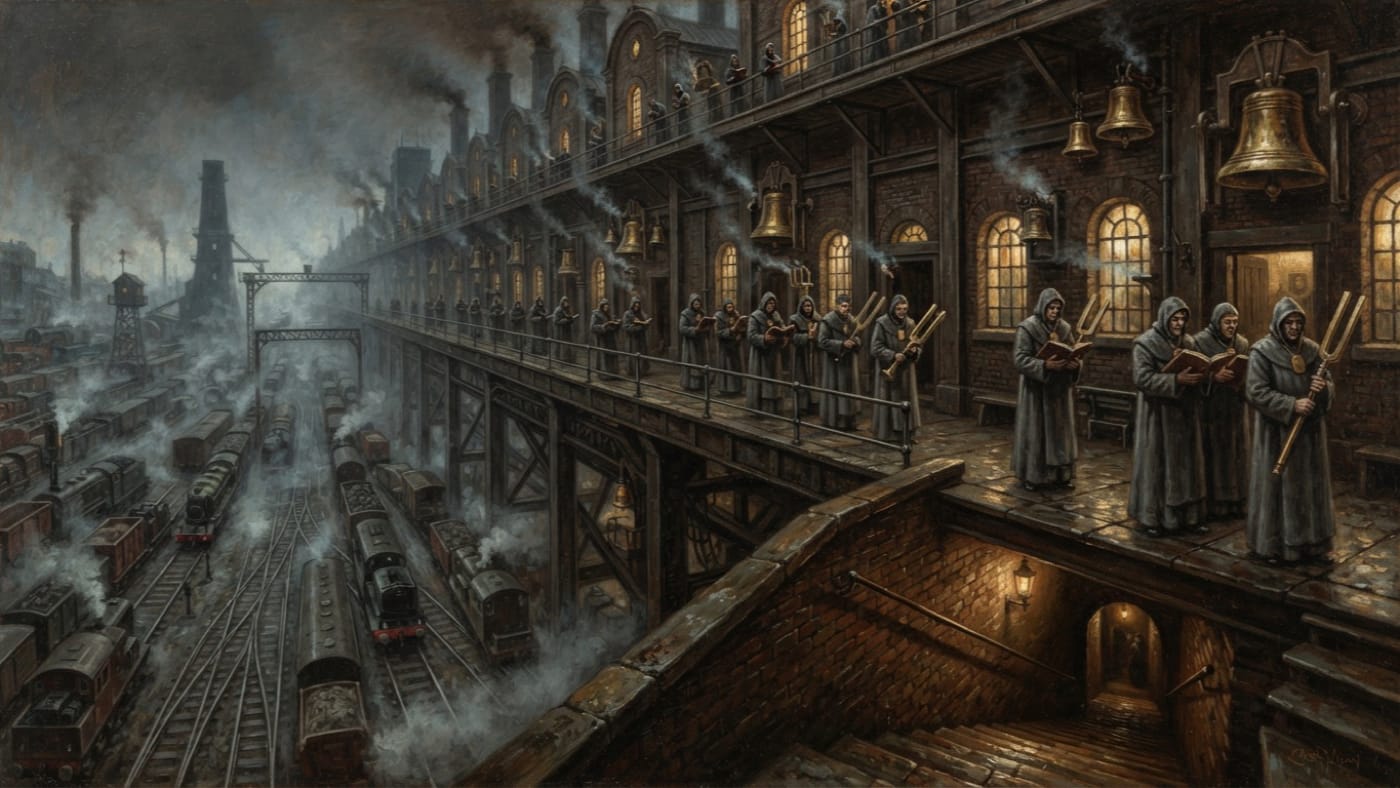
Cantor Walk
Where Lorn licenses its throat and hides its unlawful songs
Lorn's northern guild corridor licenses the yard's voices, guards its hymn codes, and prints illegal hymnbooks above a warm smuggling passage. The measures are certified; the routes remain suspect.
Codex Ref. II.3.01-002

Caravan Corrals
Where law removes dignity for inspection
Eastern pens of the Steppe Gate where caravans, beasts, cargo, refugees, orphans, and stolen goods wait until law has finished chewing them.
Codex Ref. II.4.08-077
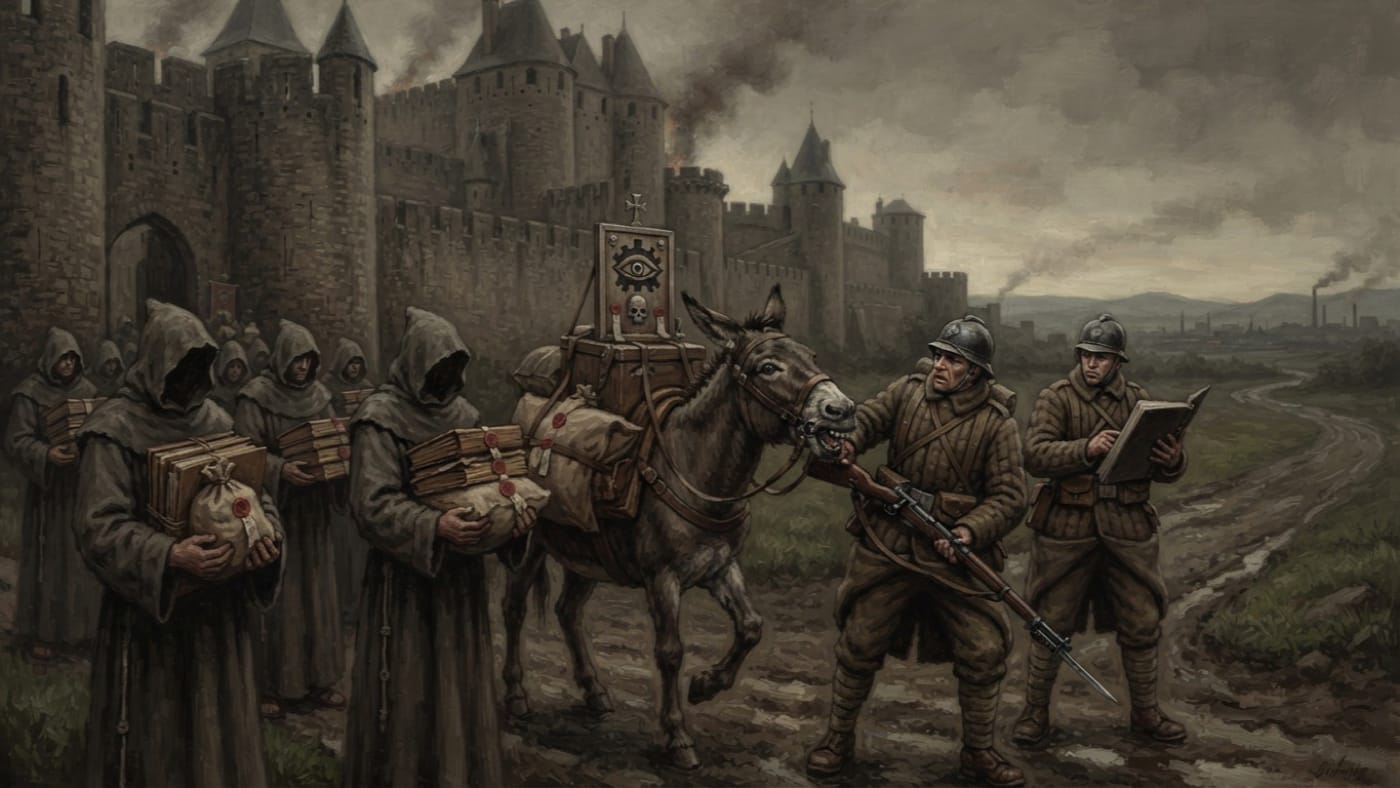
Carcassonne
Names outward, forbidden paper back
Carcassonne sent names outward and forbidden paper back to Toulouse. Purity enlarged its reach and its Index; Bernard the mule supplied the teeth.
Codex Ref. II.1.09-093
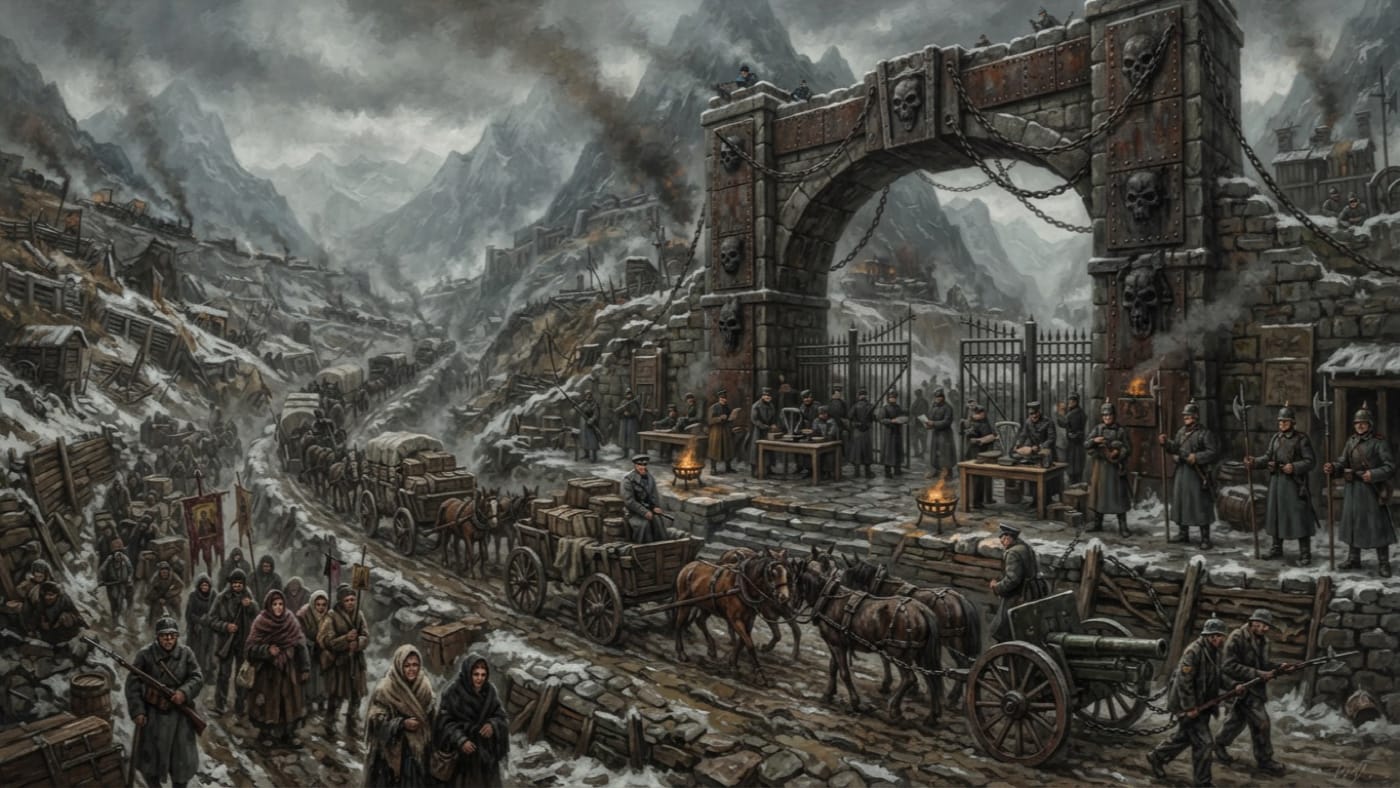
Carpathian Approaches
The ground between the last warm room and the first cold order
Roads and staging ground feeding the Carpathian Gates, where supply wagons, pilgrims and condemned labour climb toward the Line. No charter governs the region; every checkpoint knows how to charge it.
Codex Ref. II.4.08-015

Carpathian Corridor
The road that charges every mile twice
The Carpathian Corridor is the Synod's central mountain throat: rail, road, mule, shrine, bribe, and weather feeding Przemyśl and Sibiu.
Codex Ref. II.3.05-201
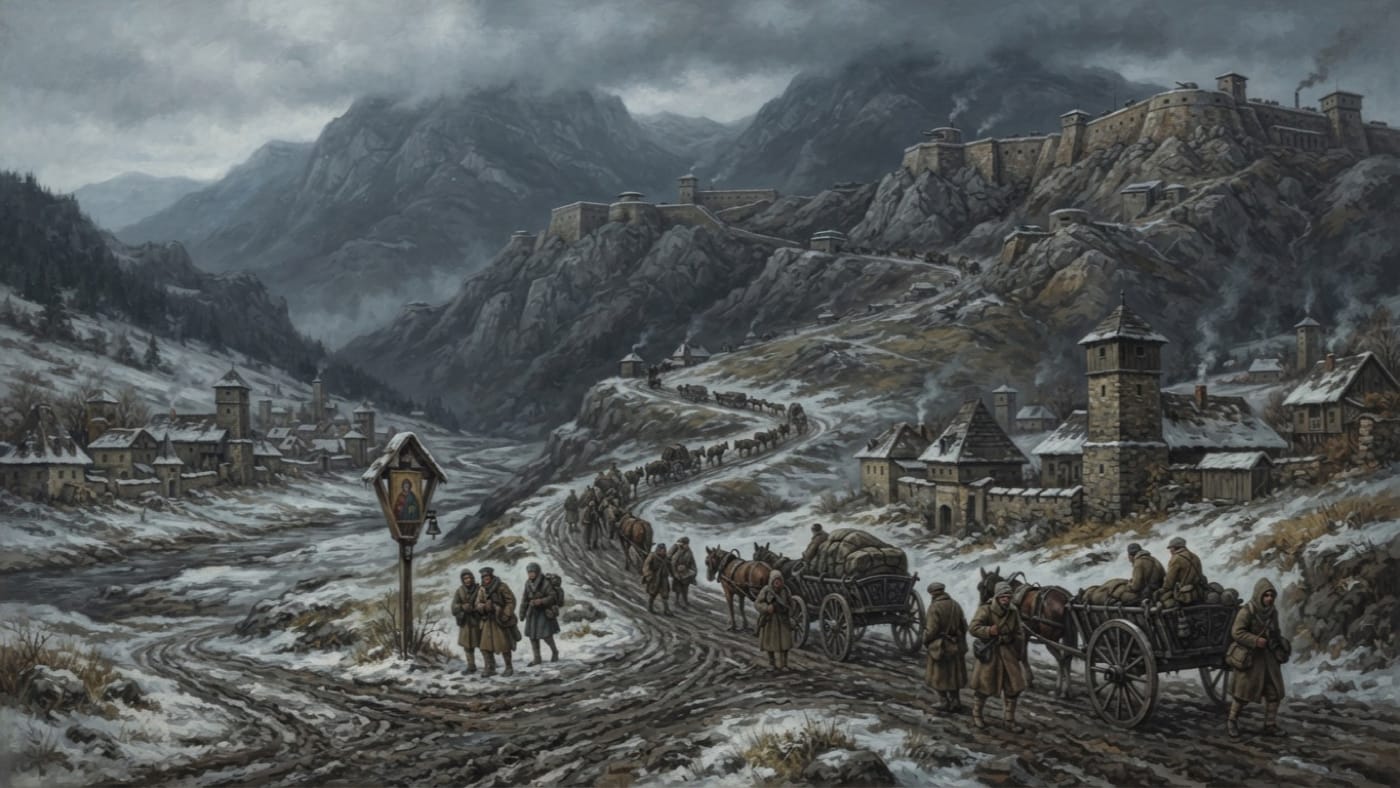
Carpathian Foothills
Below the wall, the country that feeds it
The country below the Carpathian wall feeds its bastions and hears its borders in the parish bells. Brother Albrecht froze here after his posting. The Ledger knows the region's name and cannot draw its edge.
Codex Ref. II.3.05-488
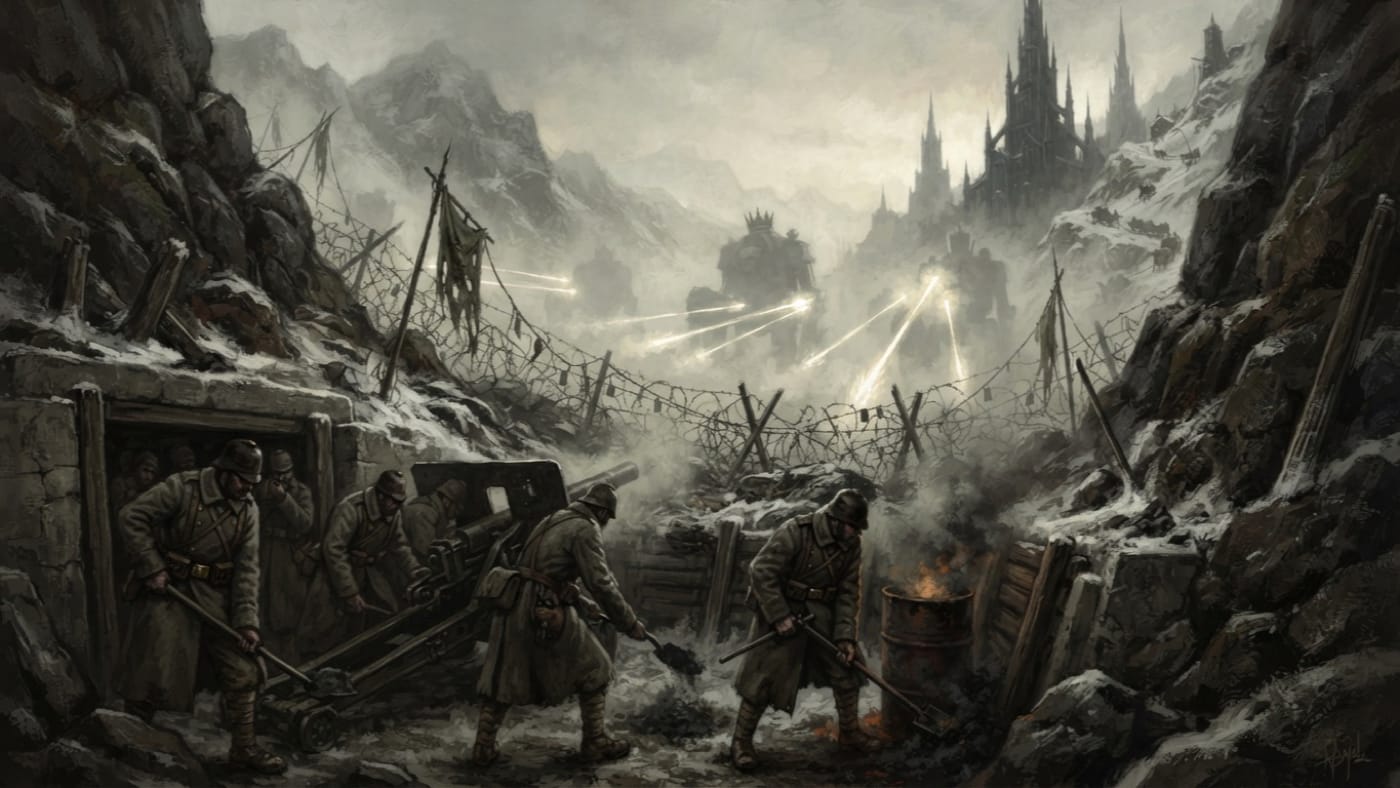
Carpathian Front
Altitude is another way to charge the infantry
The Carpathian Front is Przemyśl's mountain war against Atheron: frozen supply routes, blinding lances, and survival bought with ash, mud, and a lowered gaze.
Codex Ref. II.4.07-201
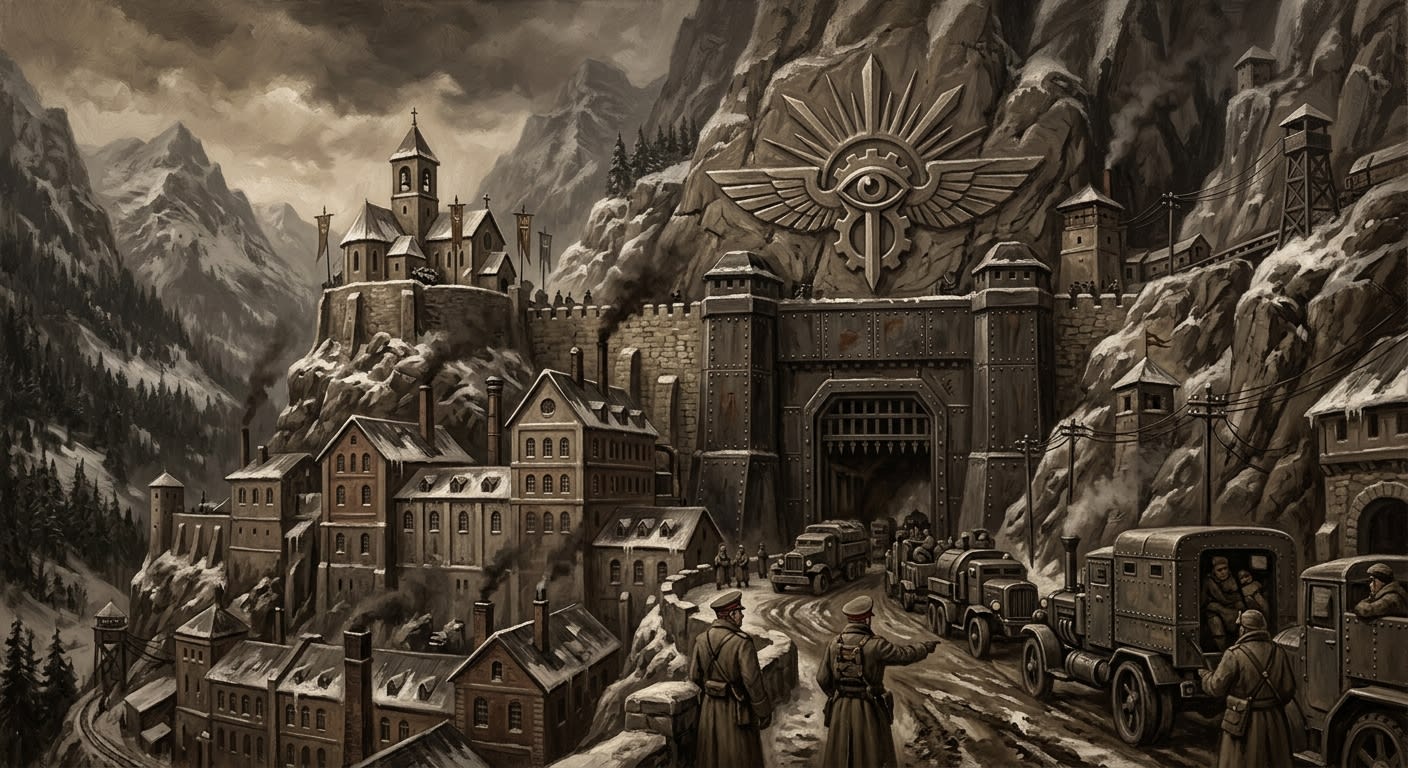
Carpathian Gates
Where the mountain learned to close its teeth
Mountain hinge of the middle Line: passes, locks, shrines, snow-voices, and Harrowglass terror between Bastion-Przemyśl and the Carpathian spine.
Codex Ref. II.4.08-065
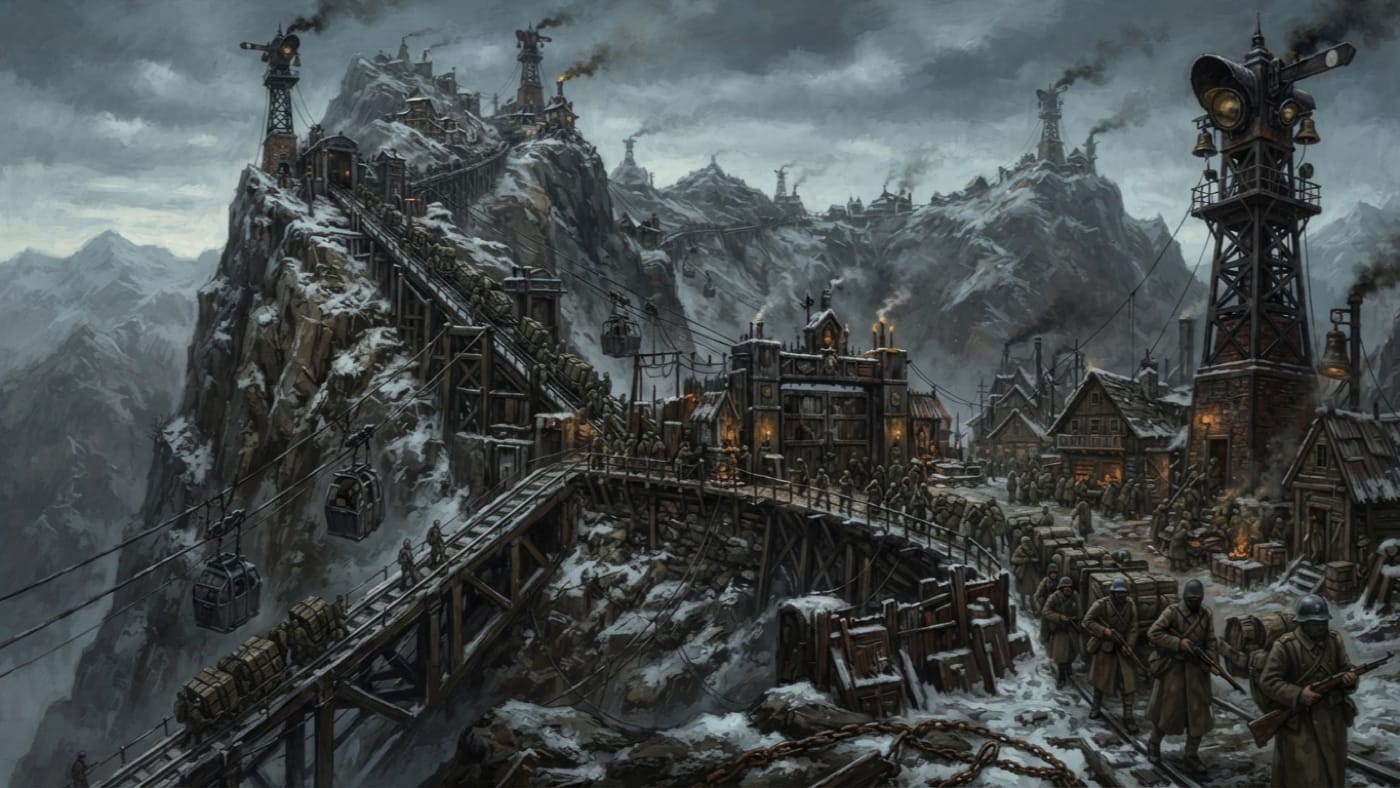
Carpathian Highlands
Where the Line climbs and every passage carries a price
The inhabited ridges and supply roads of the middle Sagittal Line, where relics climb, signal towers ration passage, and warmth costs more than absolution. The Church issues the paperwork; the mountain sets the terms.
Codex Ref. II.3.05-490
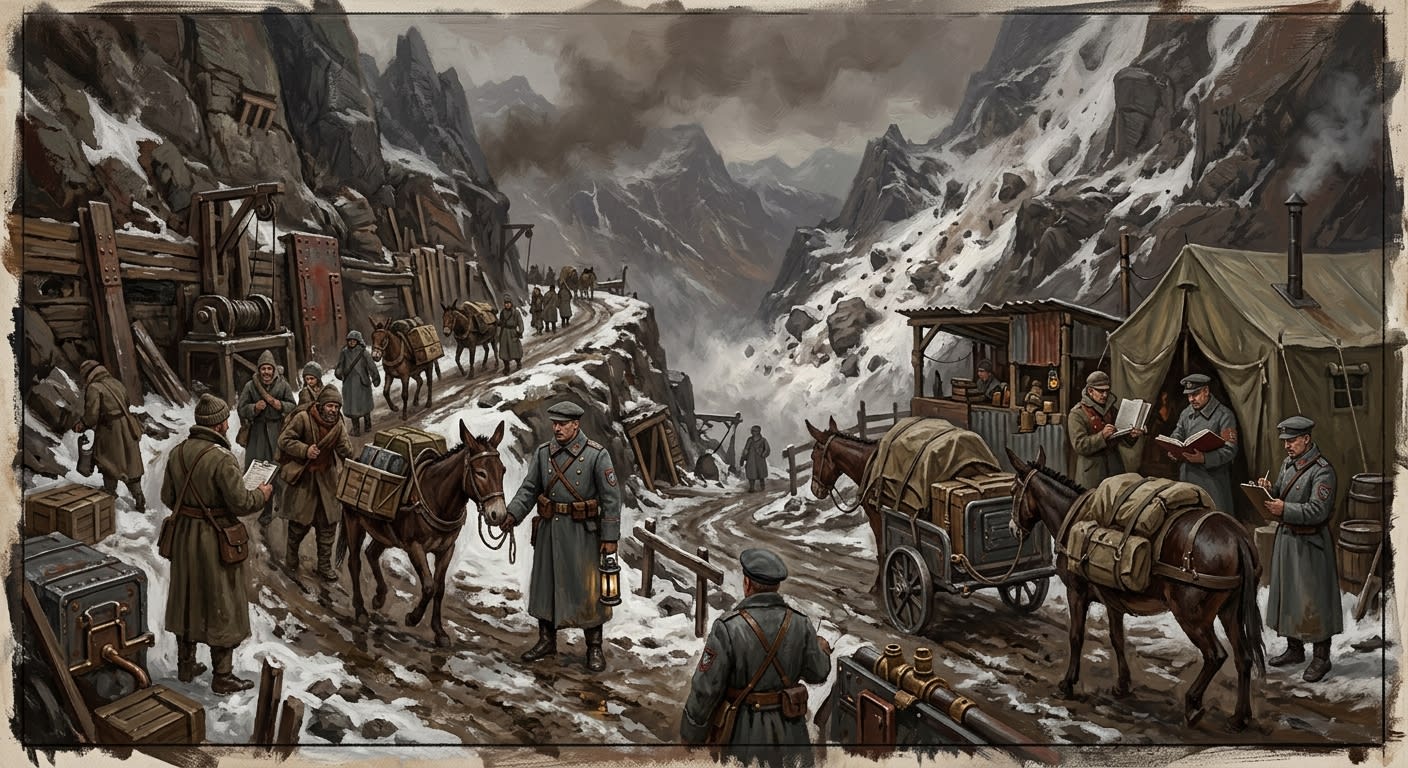
Carpathian Passes
Roads are wounds with toll offices
Licensed mountain wounds of the middle Line, where pilgrims, relics, mules, Wardens, tokens, avalanches, and invoices cross by permission.
Codex Ref. II.4.08-123
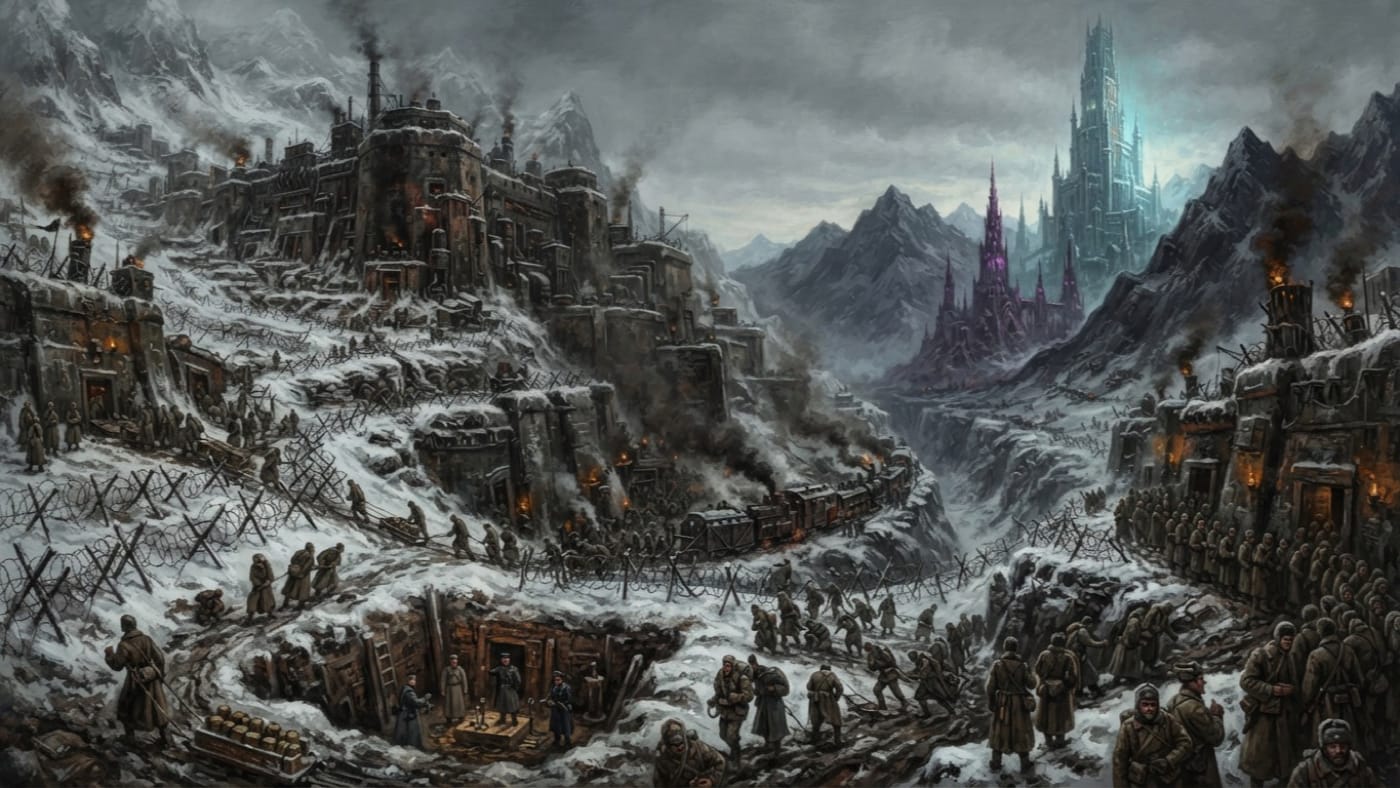
Carpathian Theater
Mud with a Filing System
The Przemyśl sector of the Carpathians: frozen passes, ration tags, and low bells against Atheron's Pride. War calls it a theater. Its boundaries remain unsigned, and the men holding them still require a stamp for bread.
Codex Ref. II.4.07-202
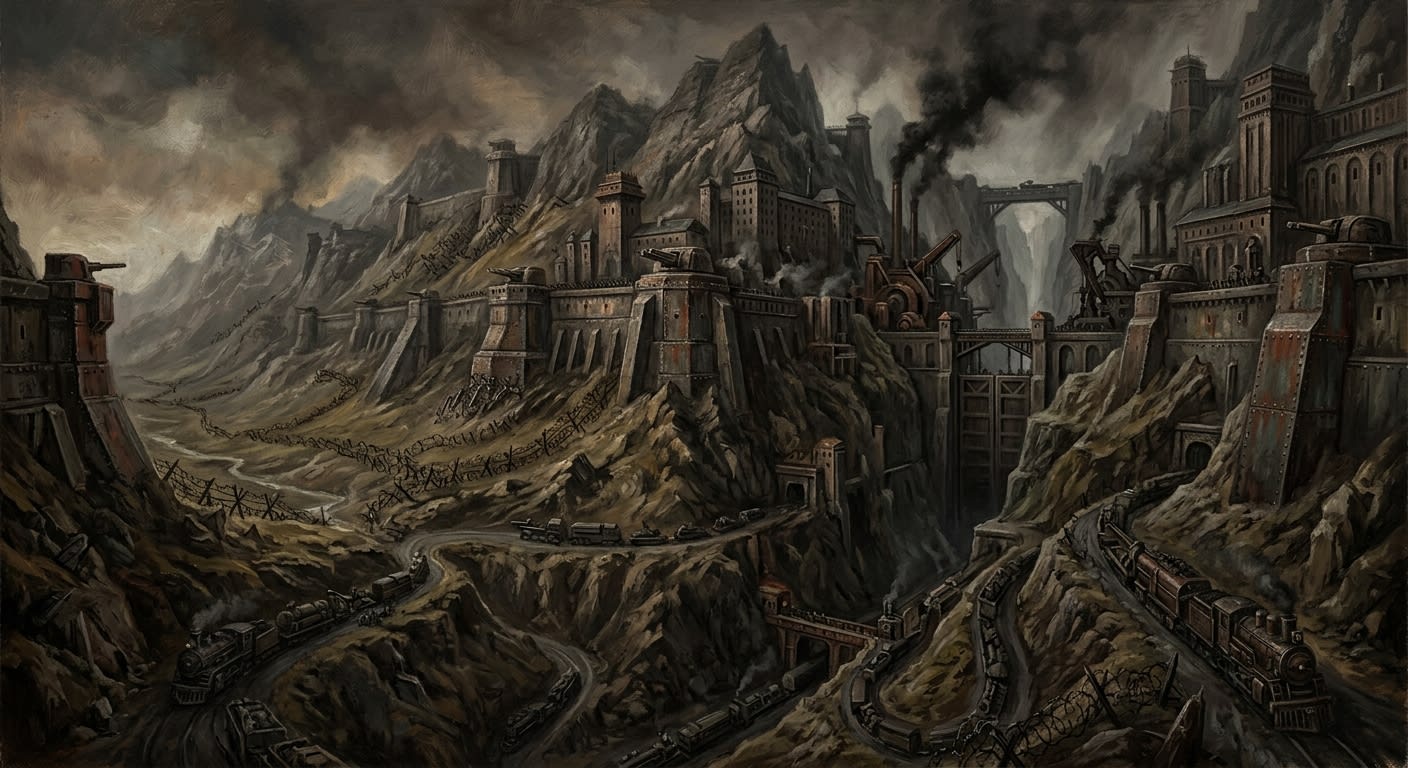
Carpathians
The mountains do not kneel; we made them useful
The Carpathians are the Synod's middle mountain wall: Przemyśl's wire, Sibiu's Saxon stone, Irongate's cut, and every road that charges blood.
Codex Ref. II.3.05-202
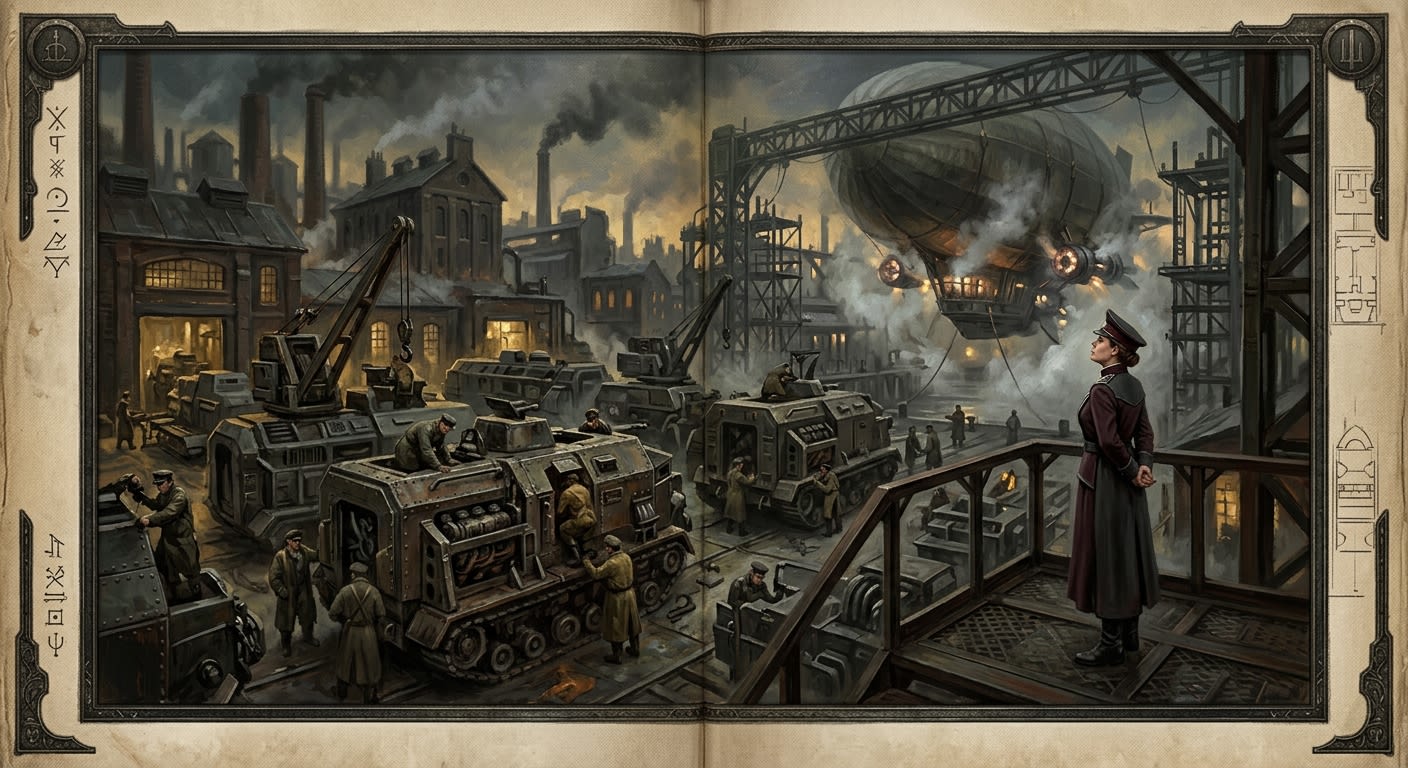
Carrier Yard
Where crawling cathedrals learn obedience from chains
Southern Foundry Quarter yard where Catacomb-Carriers are assembled, Threnody hums at Pier Seven, and Saint Uriel refuses the sky.
Codex Ref. II.4.10-006
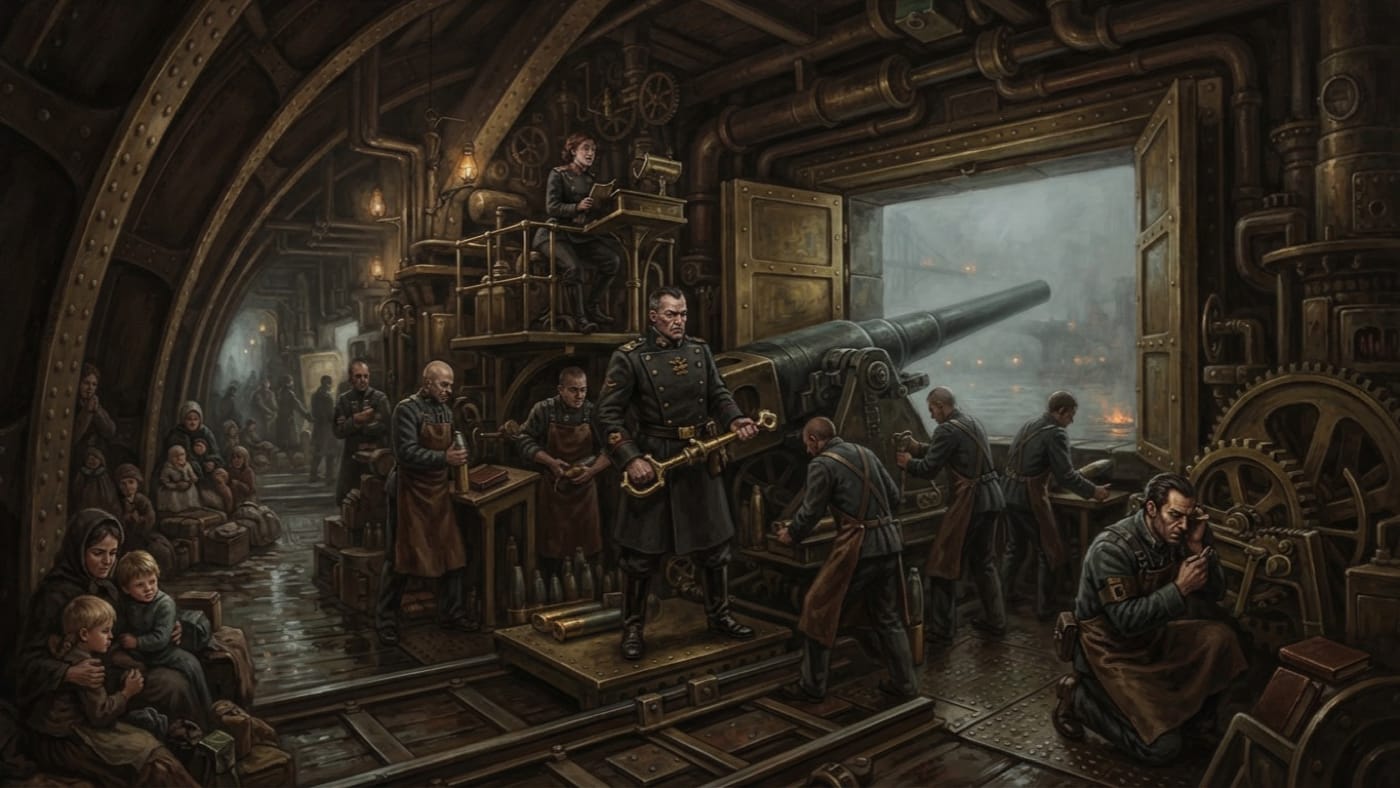
Casemate Galleries
Do Not Answer the Shutters
Bastion-Brest's artillery galleries lie beneath the Ribwalk, where cantors time the guns, the Brasswright Guild keeps the shutters moving, and the Confession Echo has learned the sound of a command. Operational, by the Bureau's definition.
Codex Ref. II.4.08-004
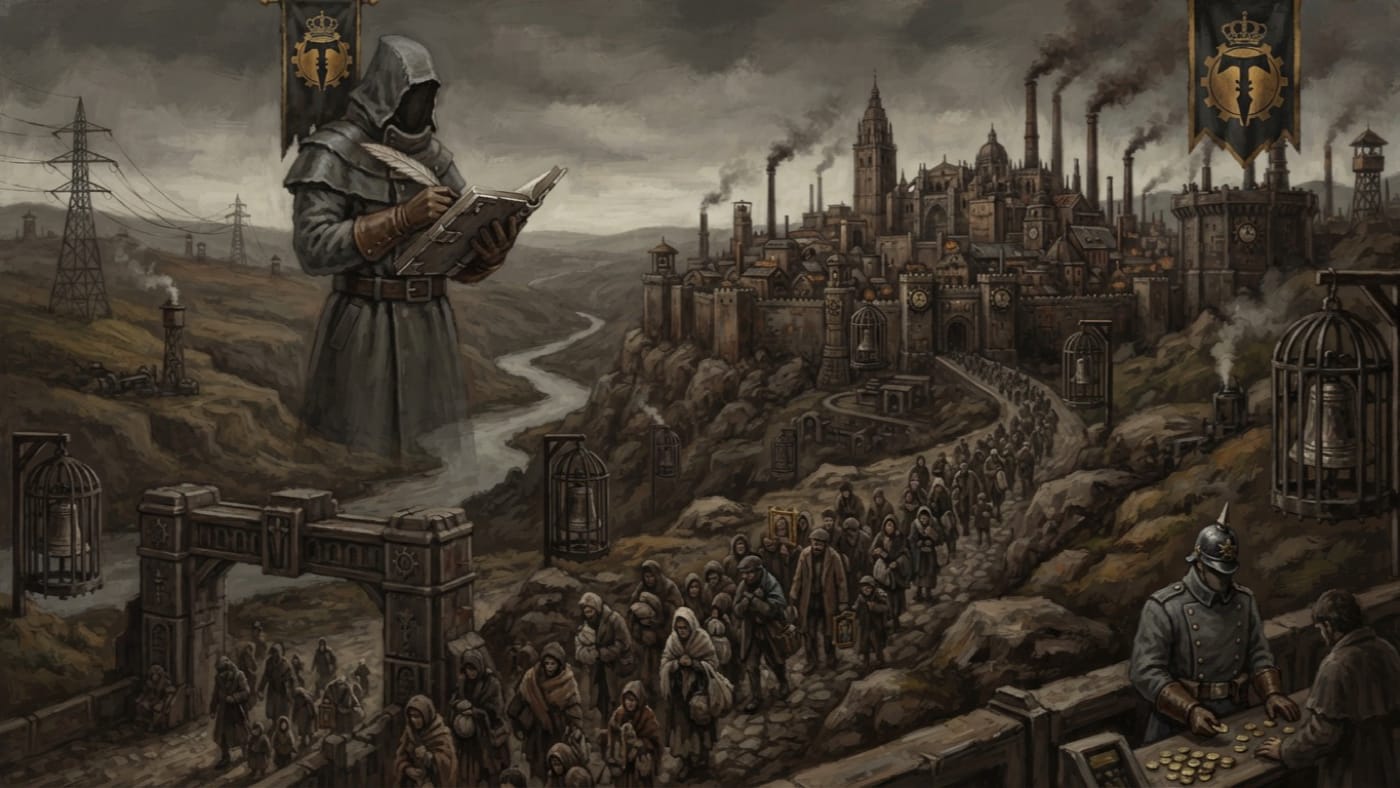
Castile
The province whose bells are better counted than its people
Castile pays under Iberia's seal and rings on Strasbourg's authority. Its refugees reached Toledo in A.S. 15; the Bureau preserved the martyr and omitted their names.
Codex Ref. II.1.04-201
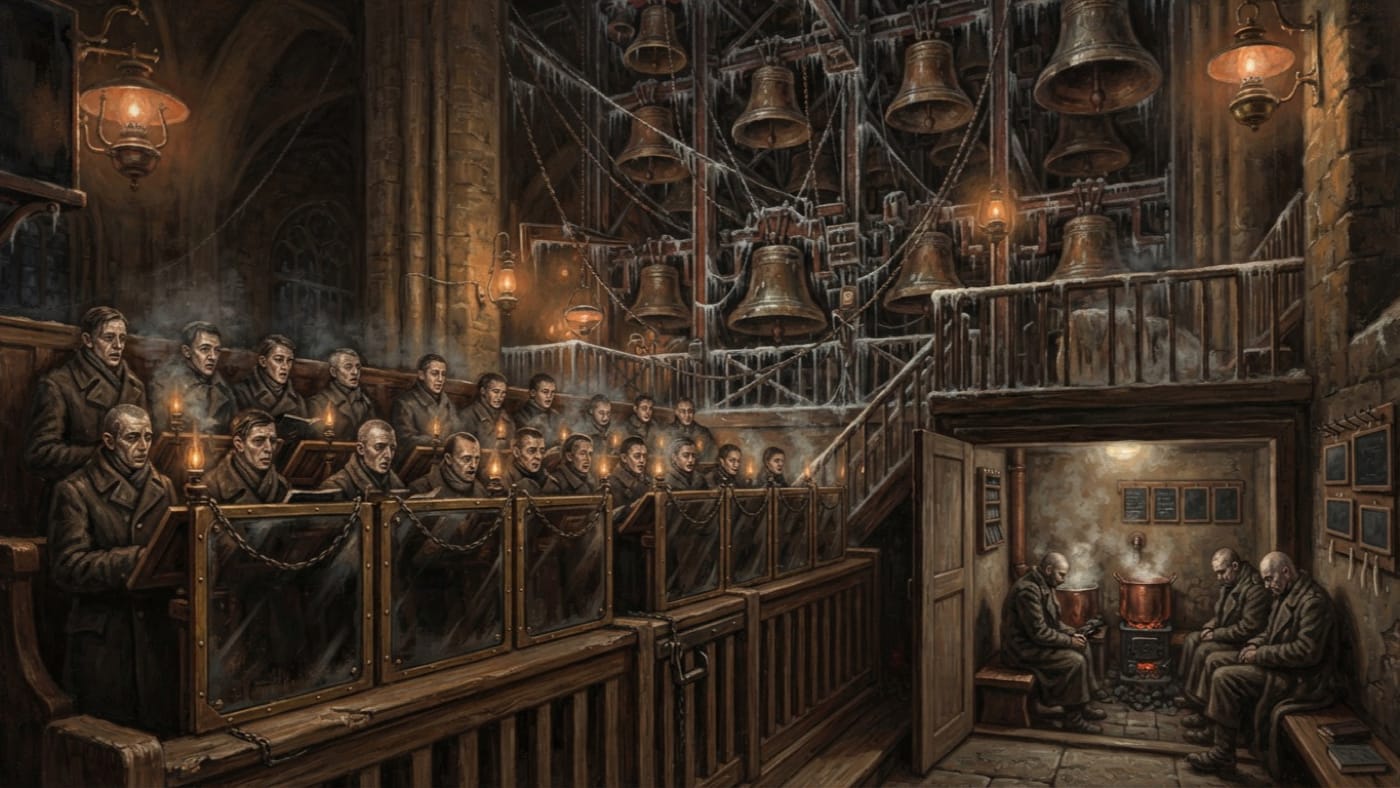
Cathedral Close (Königsberg)
Forty-one bells, seventeen fit voices, and an answer the screens cannot keep out
Königsberg's cathedral precinct keeps forty-one bells, the Northern Standard Choir, and Grau's throat-room in service. The screens reduce the Grey's reply; the Bureau calls this success.
Codex Ref. II.4.07-201
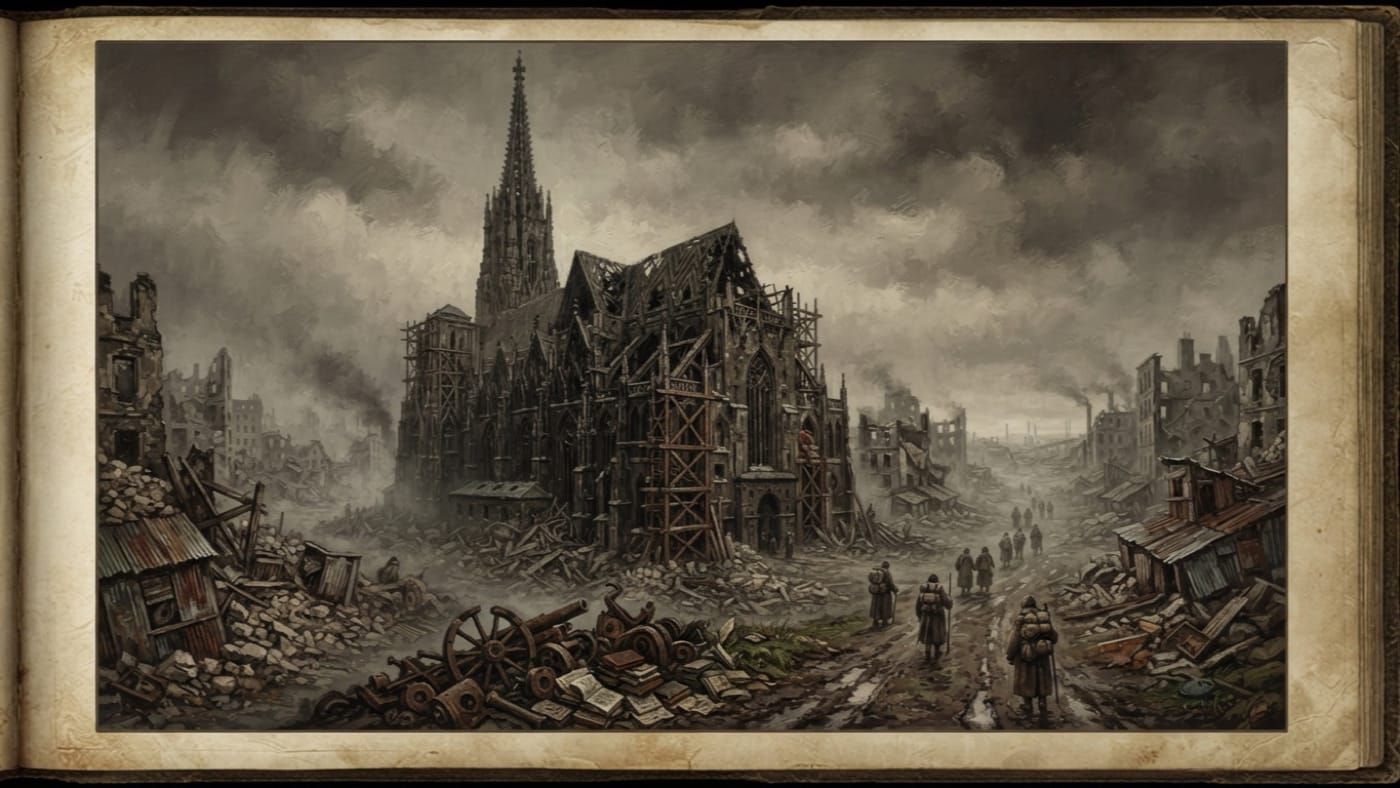
Cathedral of Saint Stephen
A Dead See, a Condemned Academy, and Stones That Stayed
Vienna's former cathedral housed the Rationalist Academy by A.S. 30 and was reclaimed with the city in A.S. 95. The See is dissolved, the Academy condemned, and the Ledger records no successor occupant.
Codex Ref. II.4.09-201
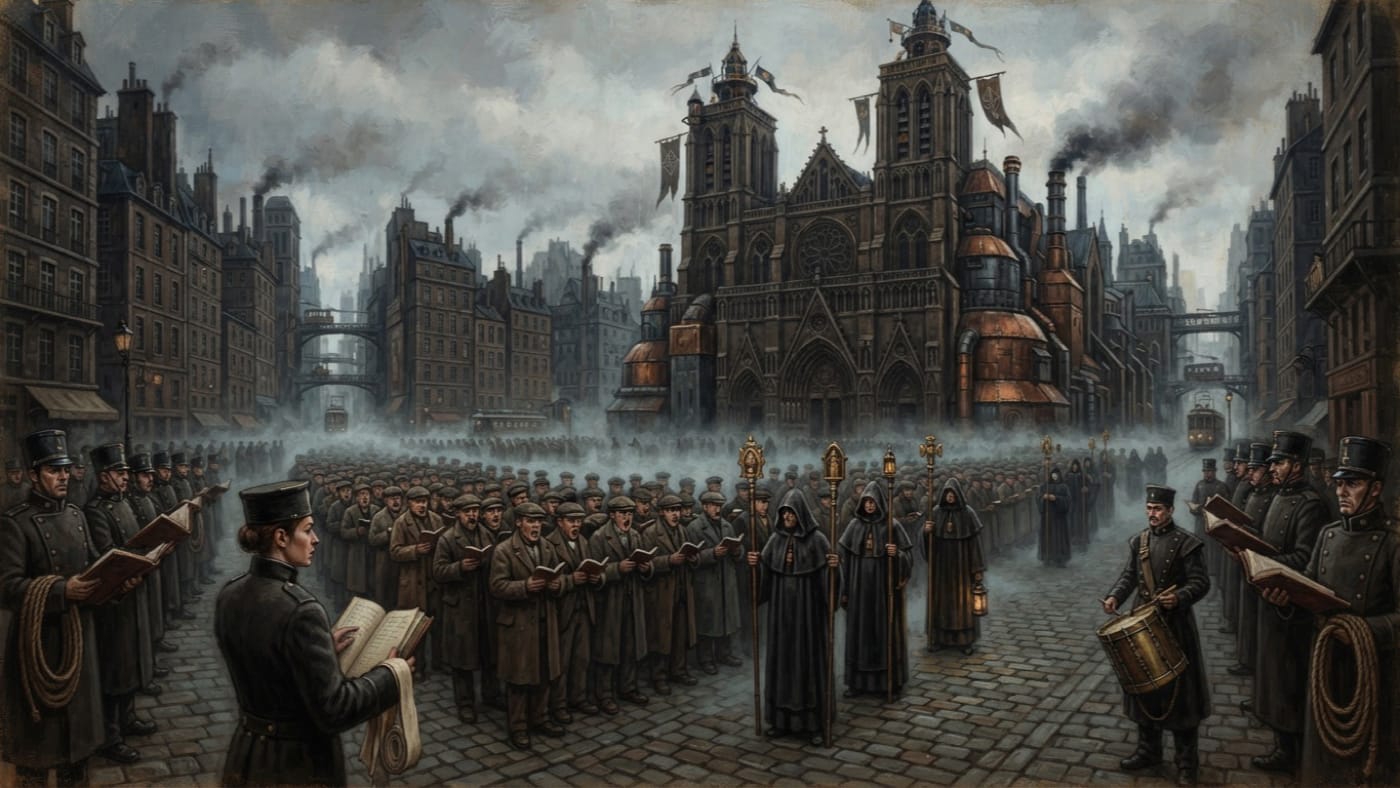
Cathedral of Saint-Jean
Three wards assemble with whole voices; the ledgers are still blank.
Saint-Jean, Lyon's departure station for the annual Procession of Tongues: three wards assemble by parish on Saint Sabina's feast, while their voices are still whole.
Codex Ref. II.1.04-201
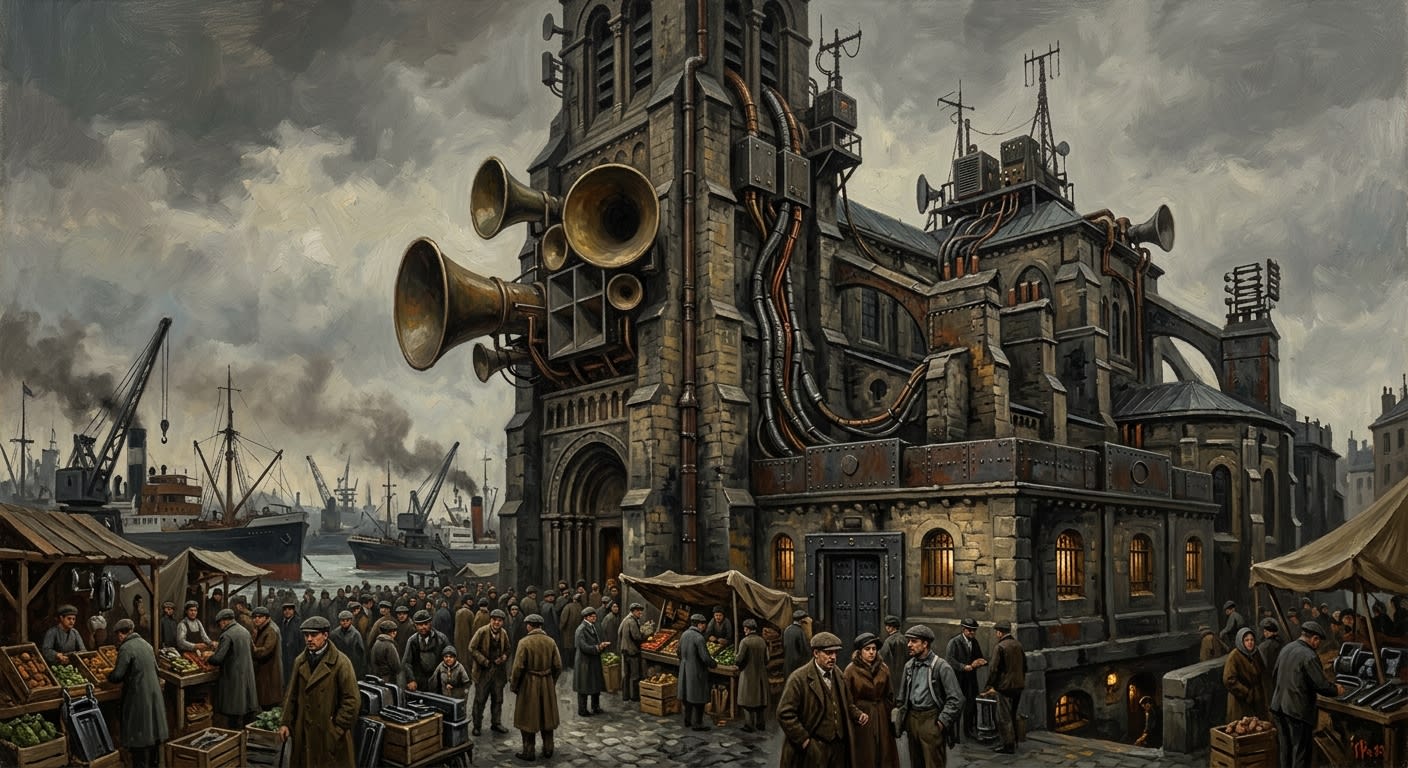
Cathedral of Saint-Victor
Marseille's bells govern the harbour because bronze argues better than clerks
The Cathedral of Saint-Victor is Marseille's acoustic throne: relay tower, crypt of disputed bones, parish market-anchor, and bell-mouthed rebuke to the harbour.
Codex Ref. II.4.09-018
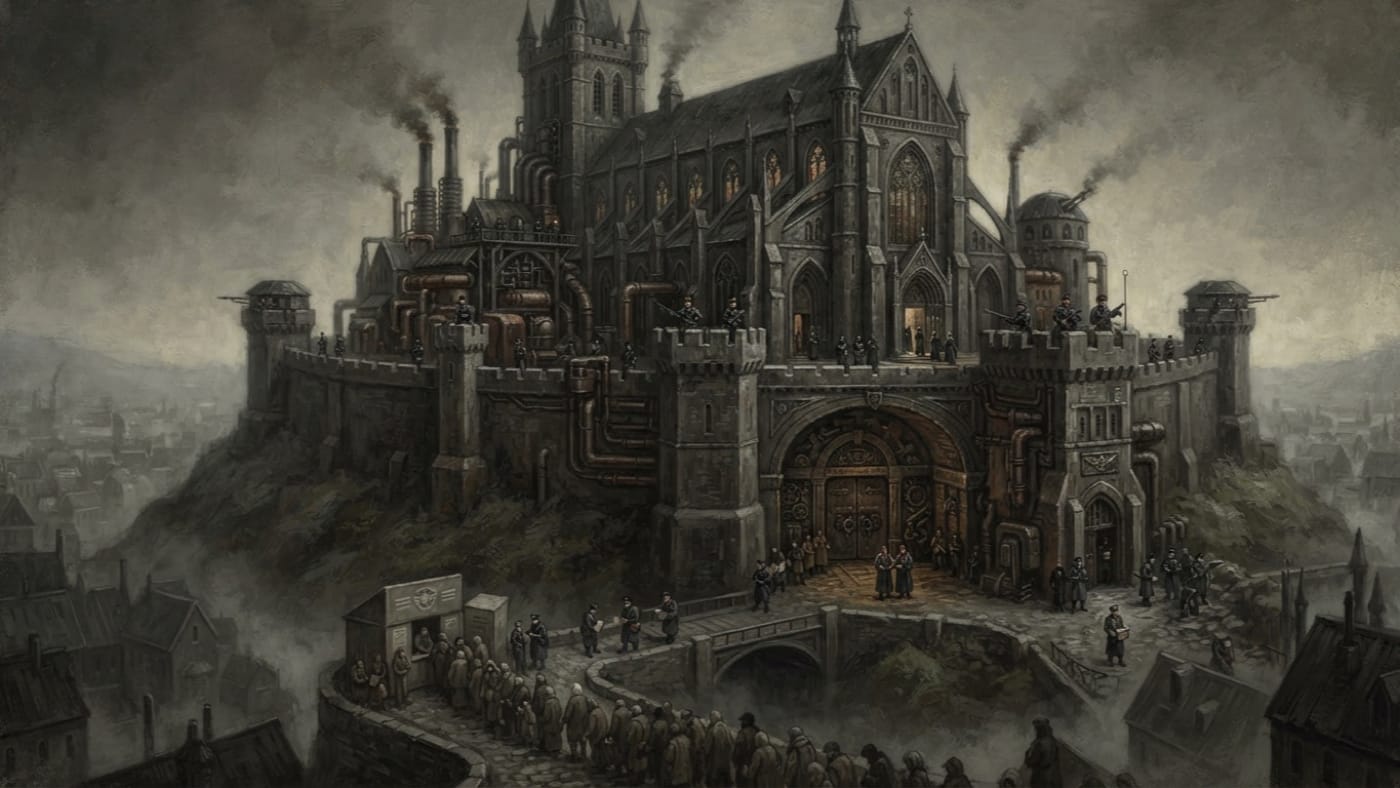
Cathedral of the Fortified Creator
The altar is served. The treasury is guarded.
Sibiu's cathedral crowns the Citadel Ring, with the Bureau of Tithes' best-guarded vaults beneath its altar. Worship continues above the treasury; Velmora trades in the bread queues below. Construction and dedication dates remain unrecorded.
Codex Ref. II.4.07-005
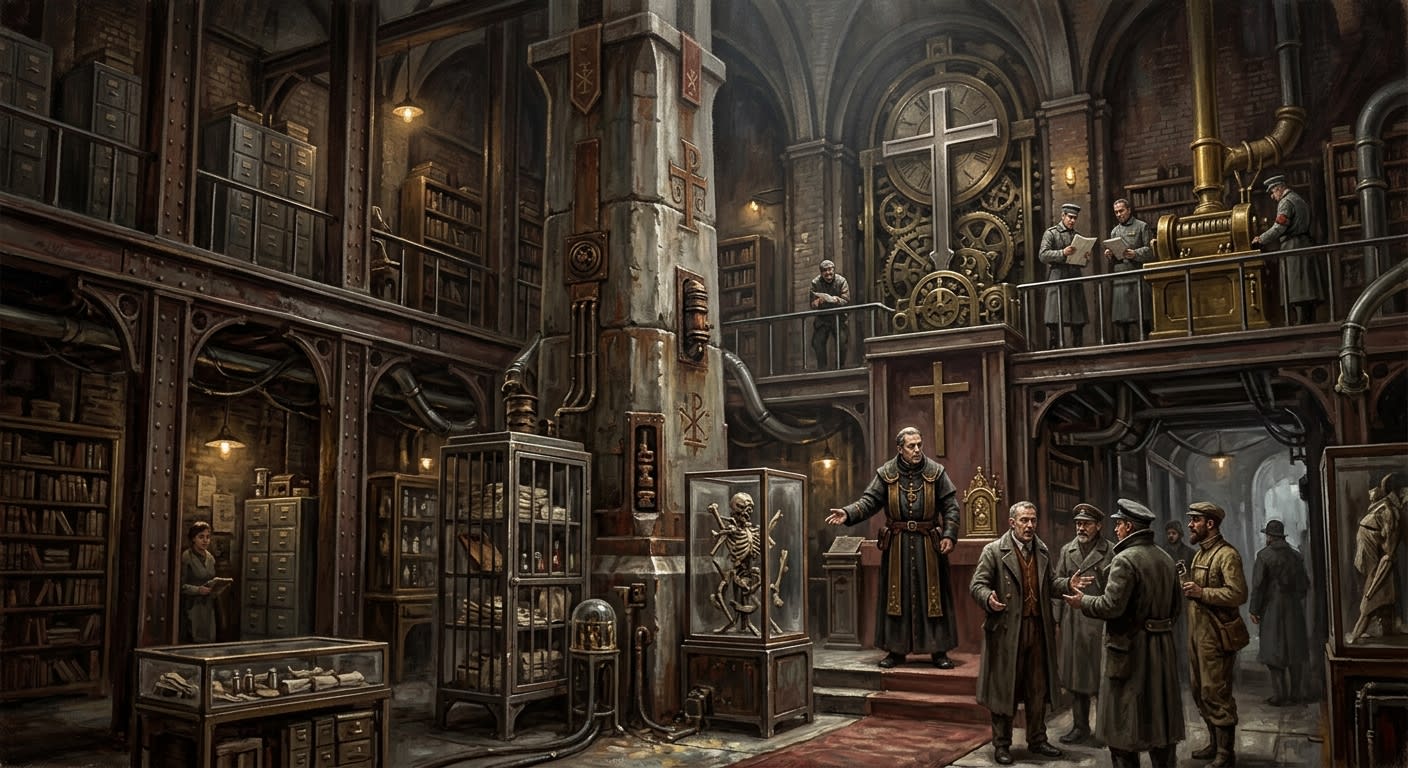
Cathedral of the Holy Column
The church that made obedience stand upright
Cologne's vertical archive: conciliar nave, Holy Column, relic galleries, Odo's sentence, and seventeen femurs arguing successfully with anatomy.
Codex Ref. II.2.01-005
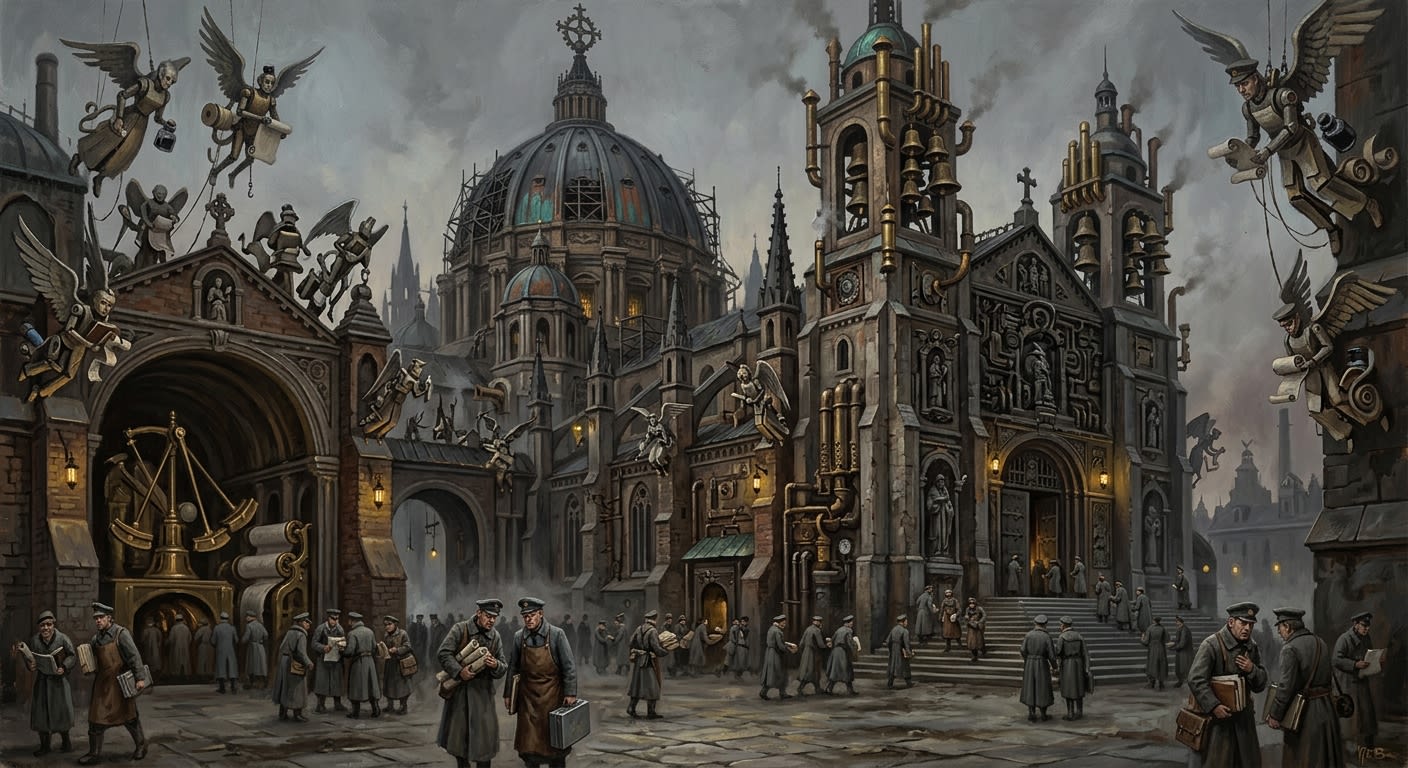
Cathedral of the Perpetual Registry
The dome that learned to stamp
Bastion-Constantinople's old Hagia Sophia turned ratification cathedral: dome, Registry Chapel, bell-choirs, seismograph vault, and all the paper angels of the southern war.
Codex Ref. II.4.10-008
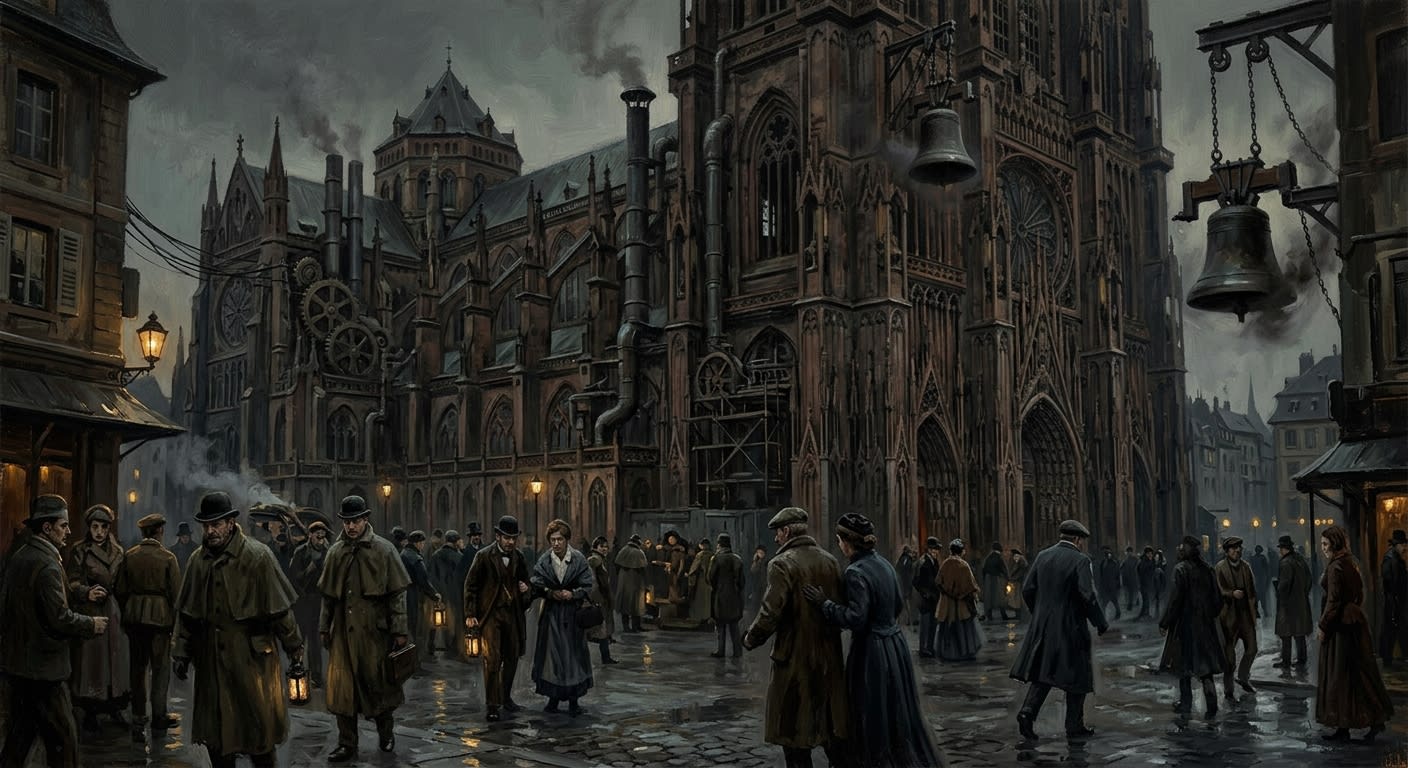
Cathedral of the Perpetual Writ
Where lawful bells learned to drown mourners politely
Strasbourg's lesser cathedral authenticates copies, stores route tables, and remembers the night two lawful bells divided eight hundred mourners into nineteen deaths.
Codex Ref. II.1.04-005
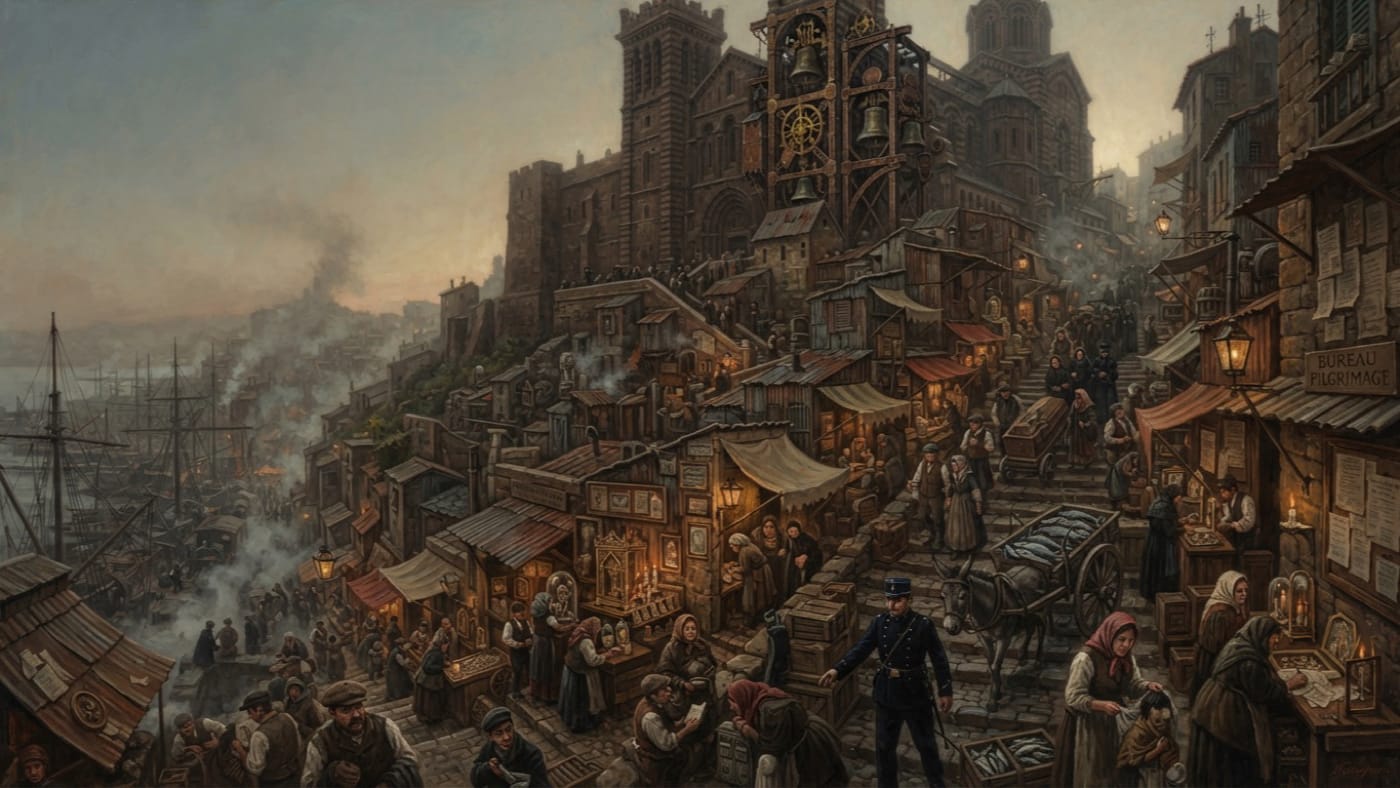
Cathedral Quarter
Saint-Victor keeps the hours; the slope keeps the accounts
The Cathedral Quarter is Marseille's slope of relic stalls, pilgrim hostels and parish rents: Saint-Victor's bells keep the hours while its claimants keep the accounts.
Codex Ref. II.4.09-019
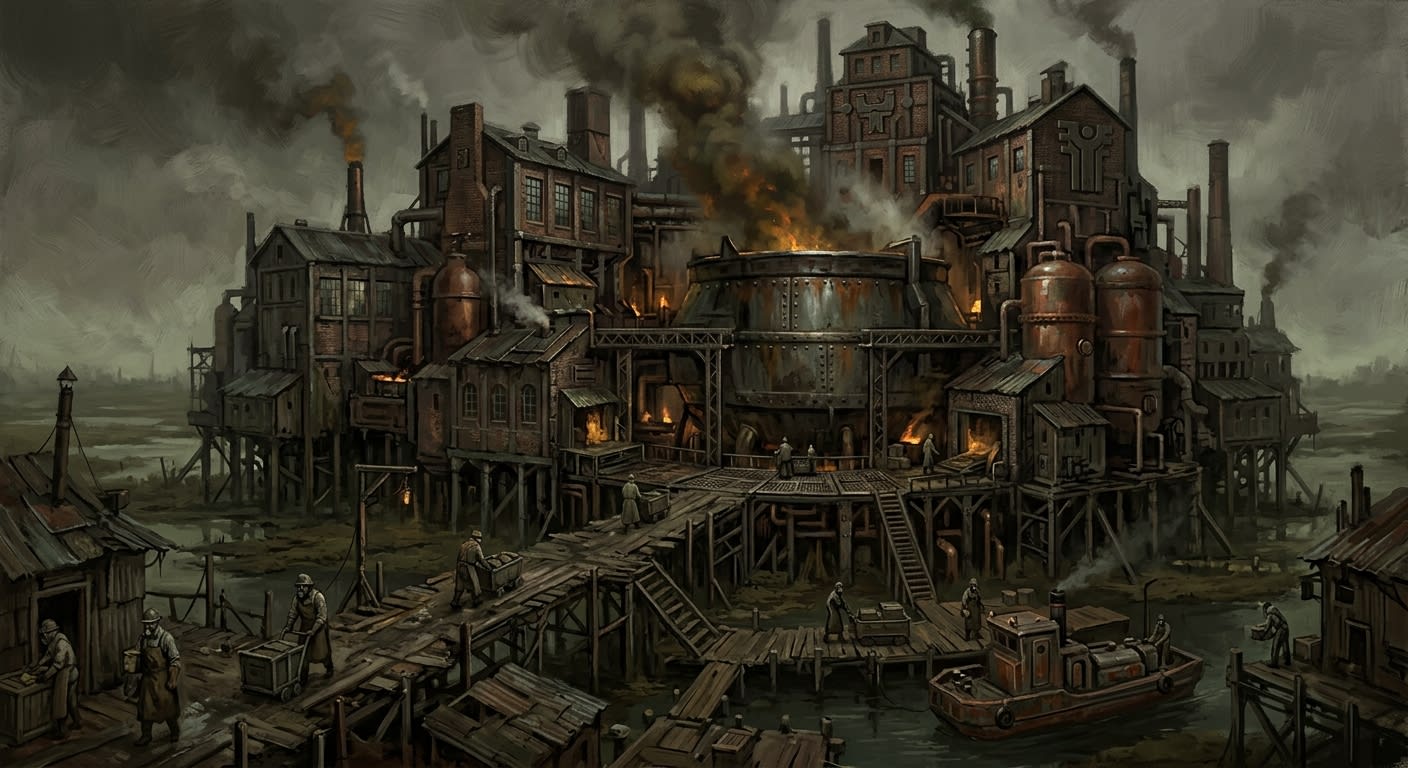
Cauldron Citadel
The Pot where Kargath teaches hunger to govern
At the Blightmarsh's approximate centre, the Cauldron Citadel cooks what Kargath's mud consumes: market, bakery, slaughterhouse, and law made appetite.
Codex Ref. VI.1.03-001
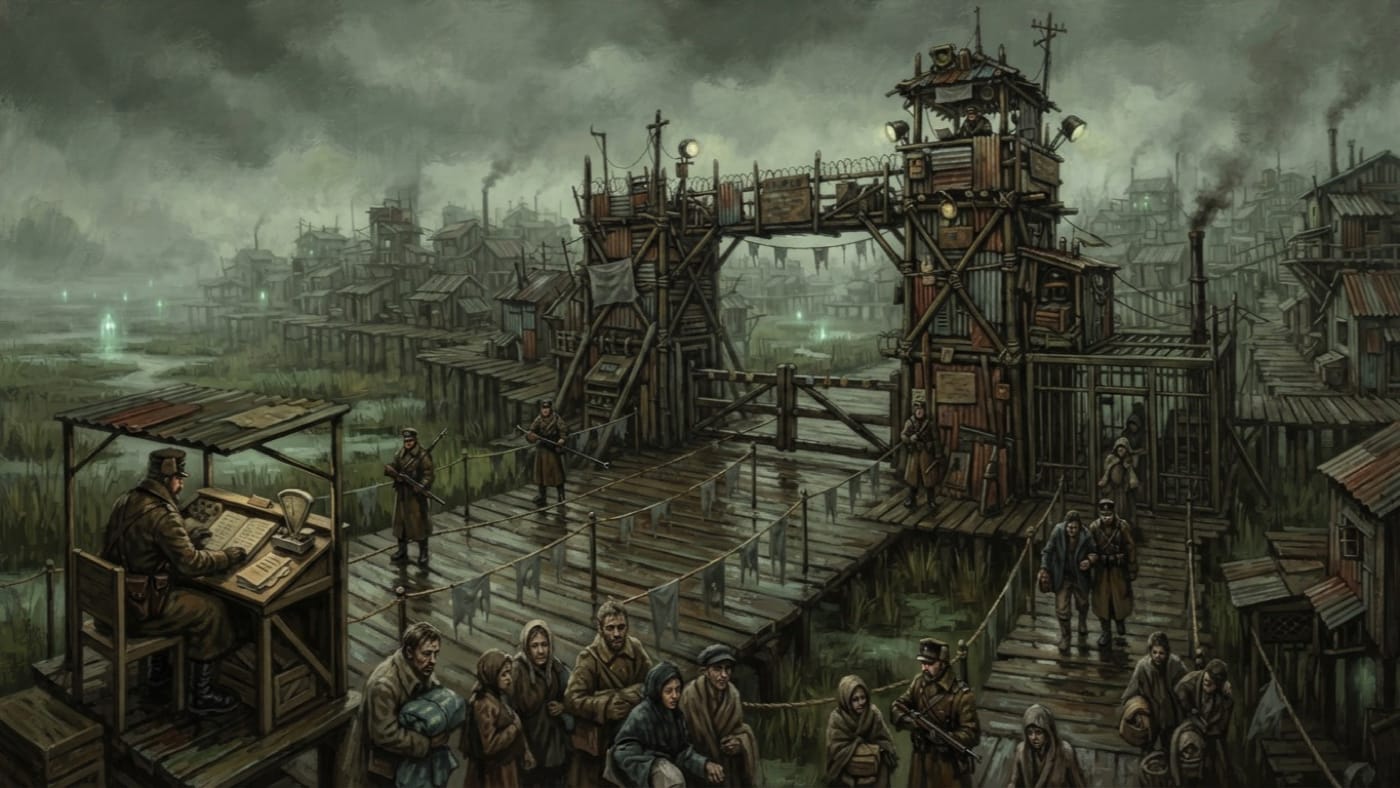
Causeway Gate
The road is open to those who can afford to leave.
The Ash-Glyph Marshworks' sole land checkpoint, where the Ashbound Wardens inspect seals, sell quarantine exemptions and charge more to leave than salvage earns. Those unable to pay are released to service. The ledger has yet to explain the release.
Codex Ref. II.4.08-005
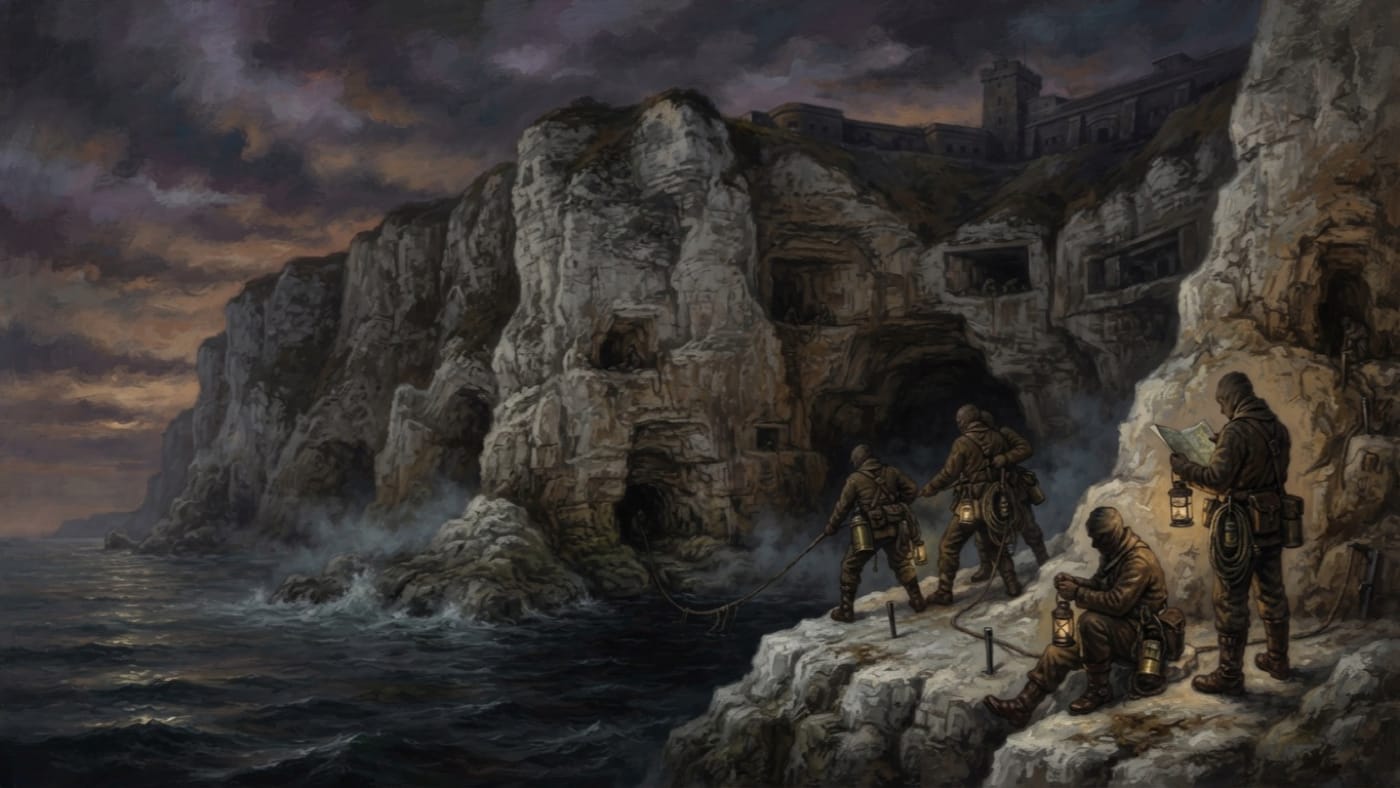
Cave System Alpha
First in the recovery ledger, absent from the admissible chart
Cave System Alpha marks the Undertide Divers' first recovery descent after the Great Breach of A.S. 71. The Chapterhouse keeps its designation; the Divers keep the way down.
Codex Ref. II.4.09-073
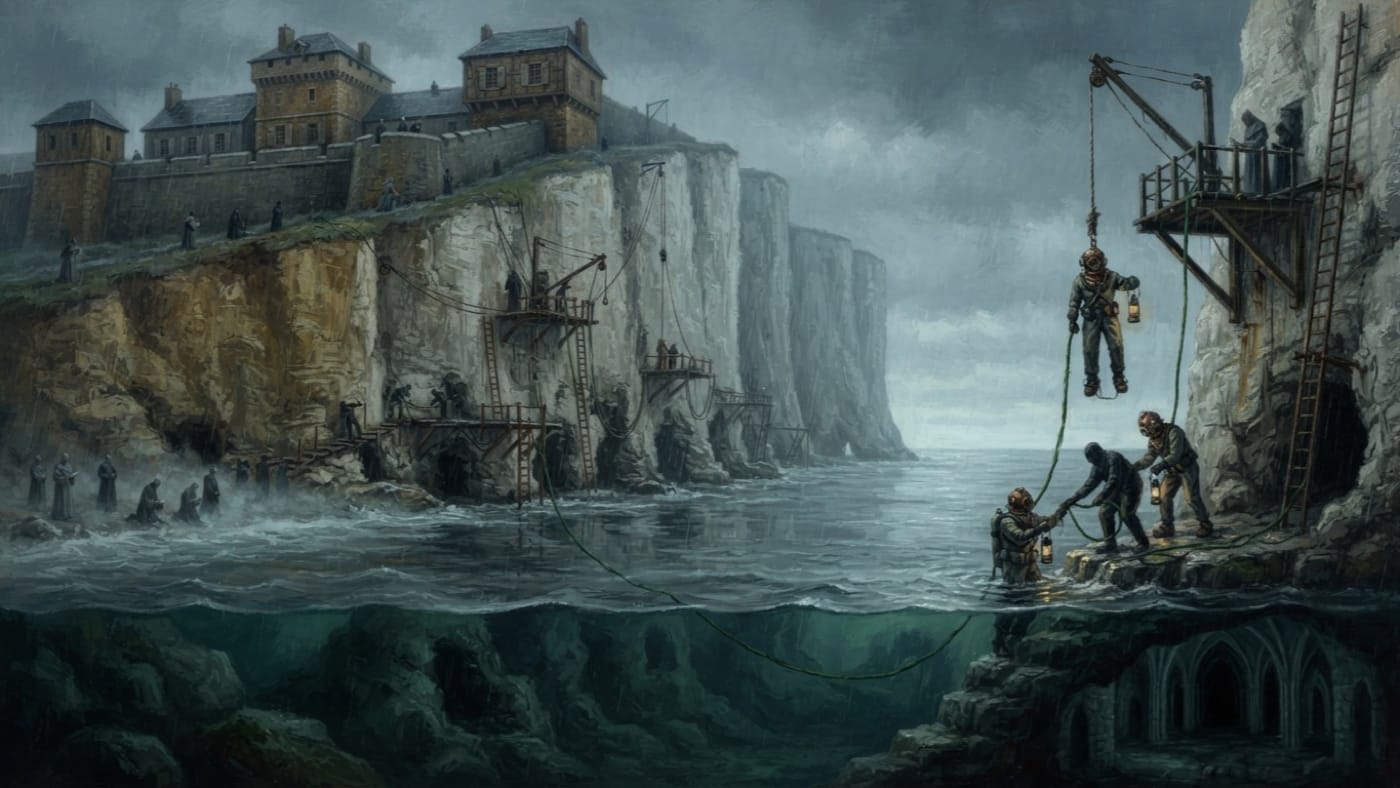
Cave System Bravo
A casualty ledger is easier to keep than a map
Beneath Calais, Cave System Bravo has a casualty ledger, a vanished chalk composite and no surveyed entrance. The Bureau counts the dead more readily than the chambers.
Codex Ref. II.4.09-199
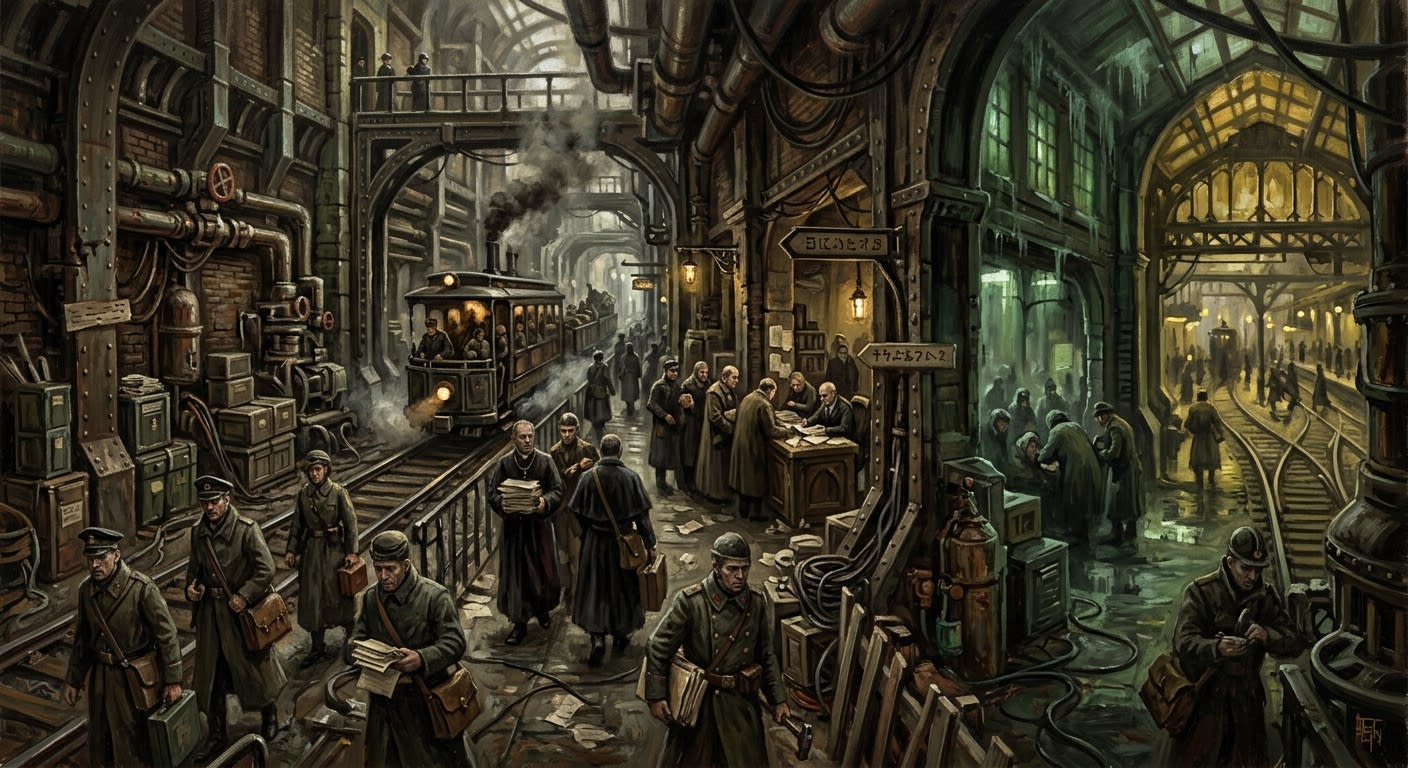
Central Corridor
Motion blurs the screams, which is why the Ledger loves trains
The Central Corridor is the Synod's middle artery: Munich's packed motion, Vienna's holy delay, Bratislava's damp throat, and Budapest's yellow pins.
Codex Ref. II.4.09-201
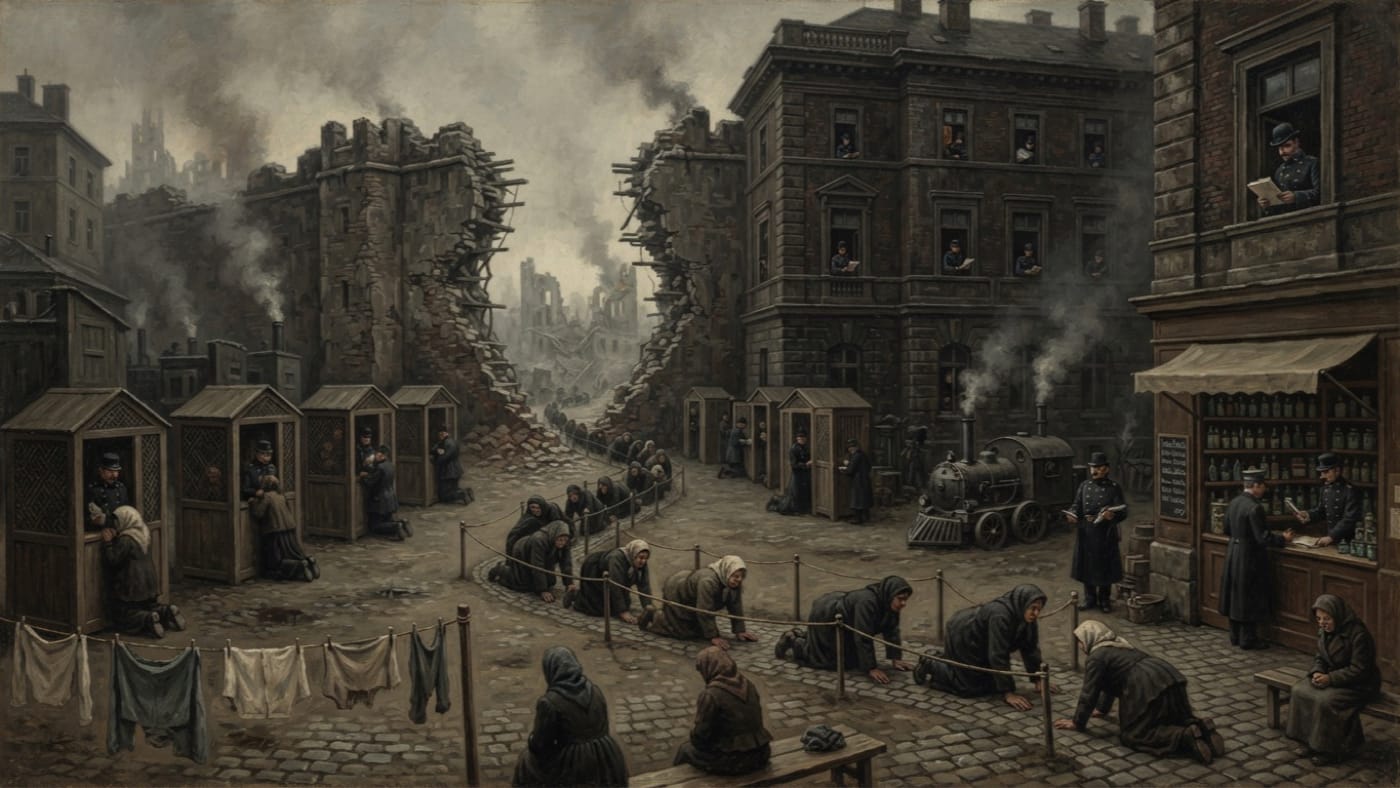
Central Corridor Headquarters
Where the knee is counted and mercy comes with a surcharge
The Bureau of Pilgrimage's Central Corridor headquarters occupies a former customs house beside Vienna's breach, admitting the forty, licensing the upright and billing mercy by the minute.
Codex Ref. II.4.09-012
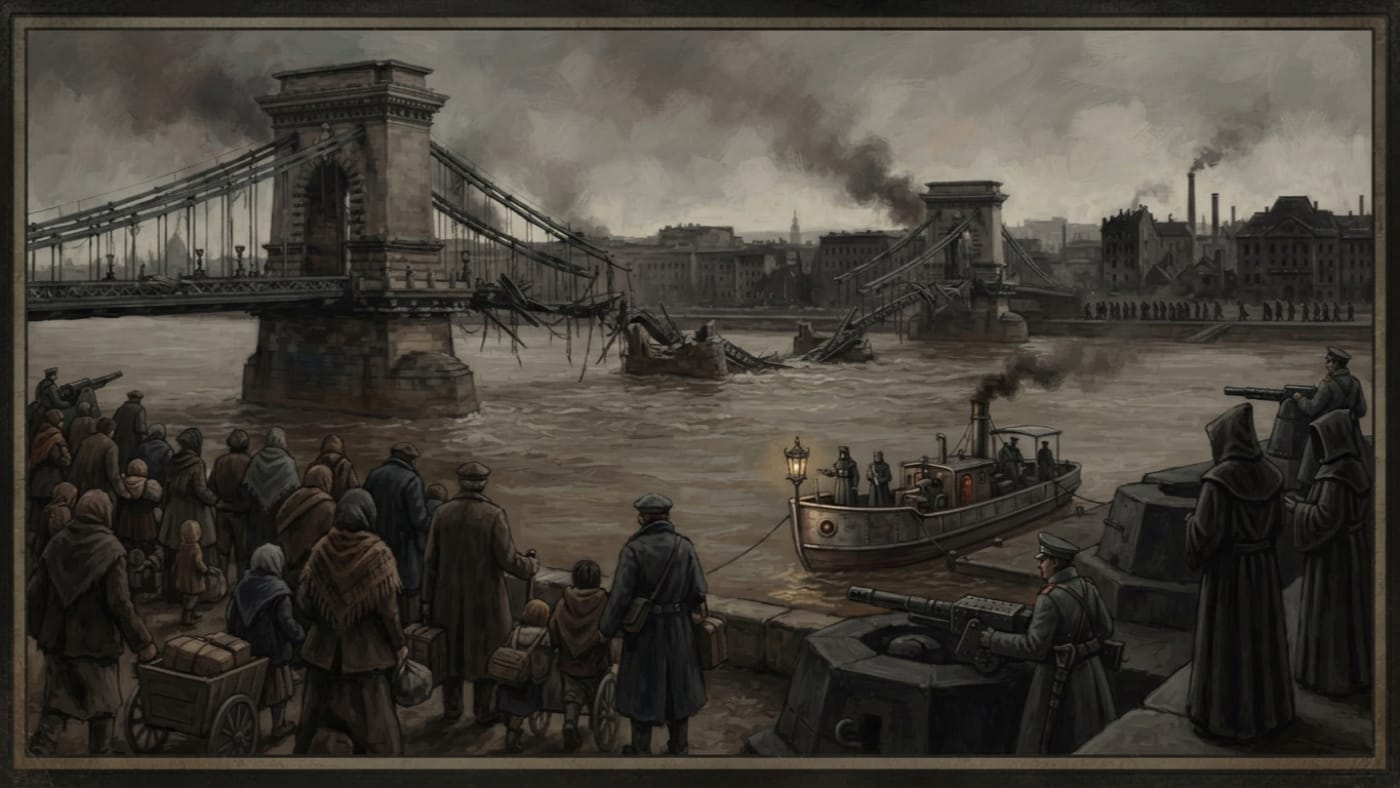
Chain Bridge
The crossing destroyed, the destination still pending
Budapest's last bridge held six hours after detonation in A.S. 122. Eight hundred refugees were crossing; the bridge is destroyed, their destination pending. Broken piers remain between Buda and Vacated Pest.
Codex Ref. II.4.09-122
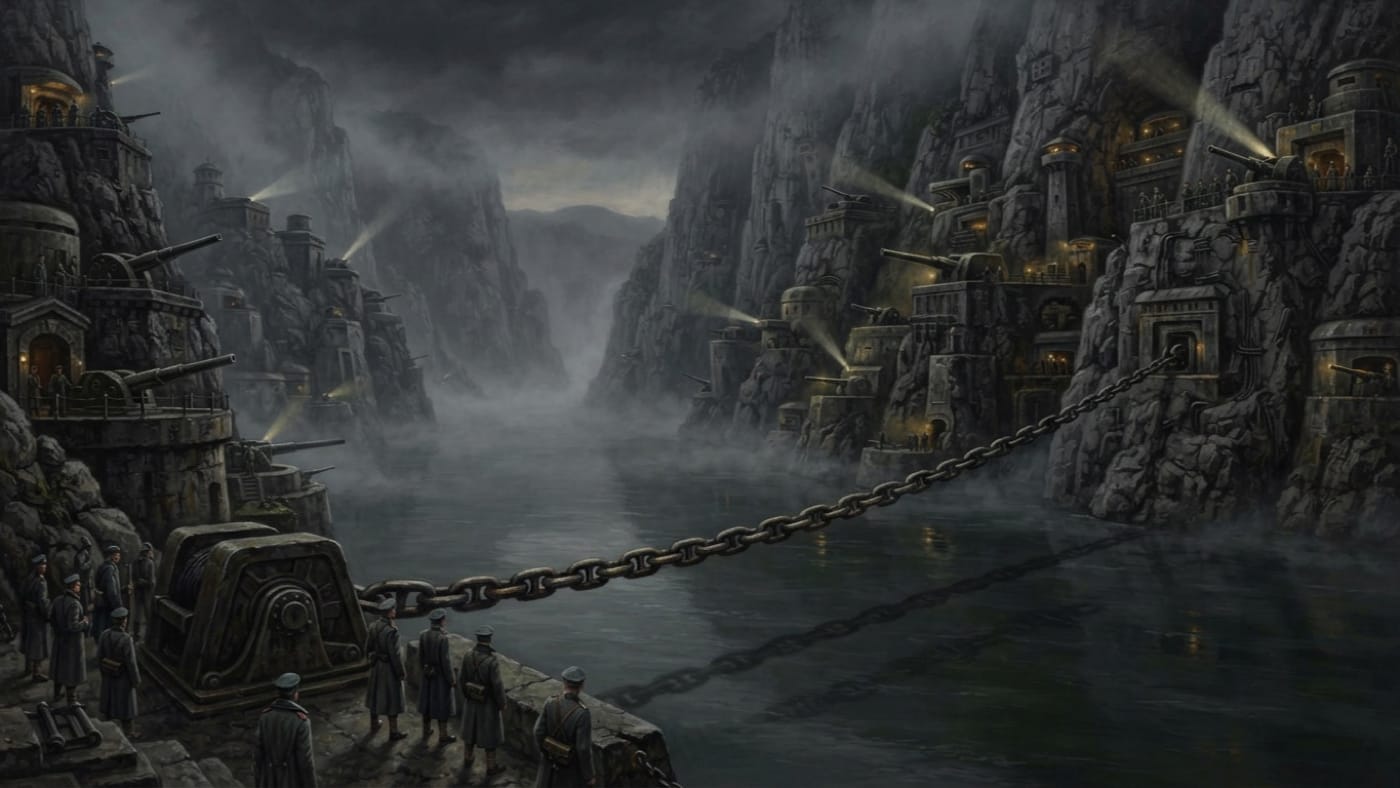
Chain Gate One
The chain stops hulls. The seal admits men.
The river barrier of Bastion-Irongate spans the Danube beneath batteries on both cliffs. The mountain must be sung into stability; passage requires a seal. Morwen would rather replace the sentry than break the chain.
Codex Ref. II.4.24-001
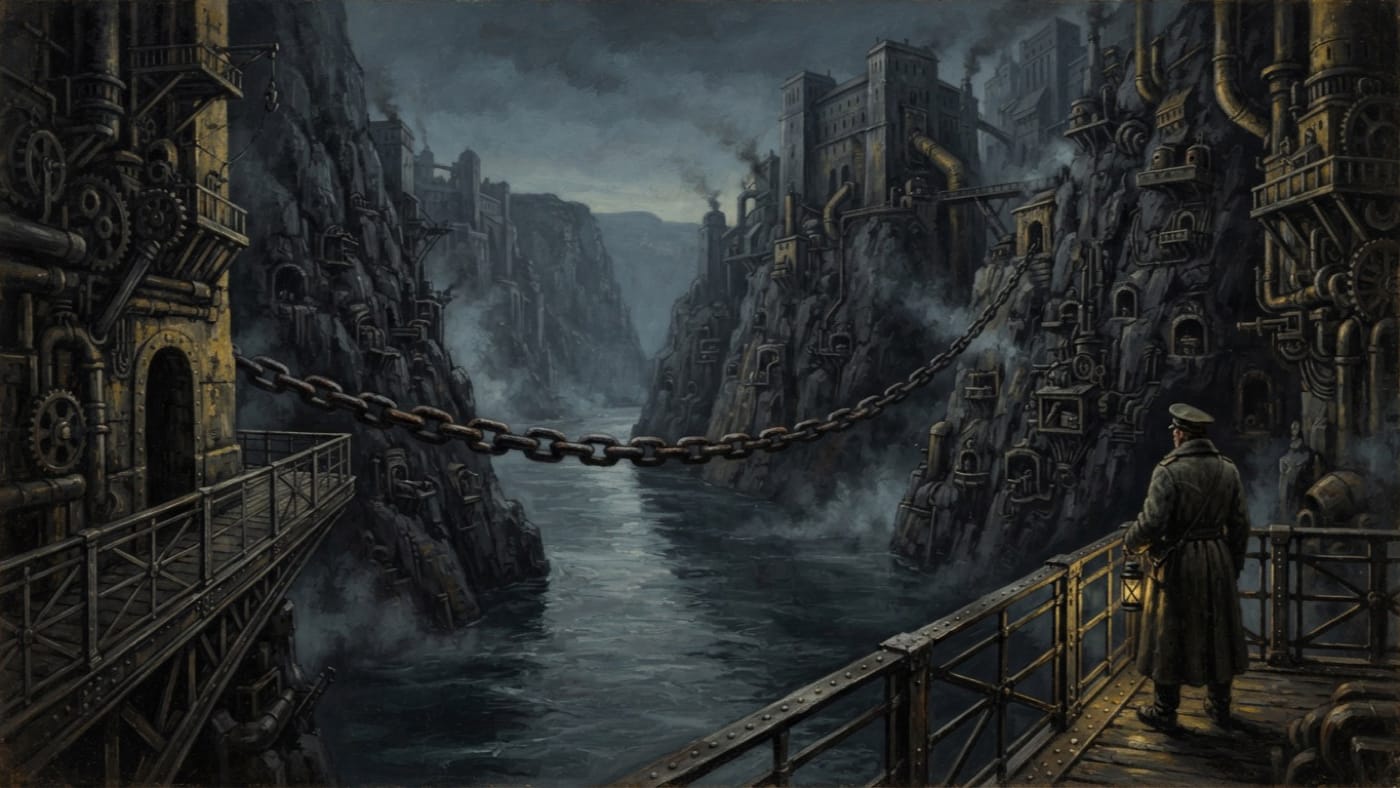
Chain Gate Two
Where the cliffs lean close enough to be chained.
Bastion-Irongate's second river-chain position bars the Danube beneath cliff batteries. Above it, Drax hears the Gasket Choir from the observation gallery. Iron stops hulls; Morwen prefers a sentry whose face the garrison already knows.
Codex Ref. II.4.24-002
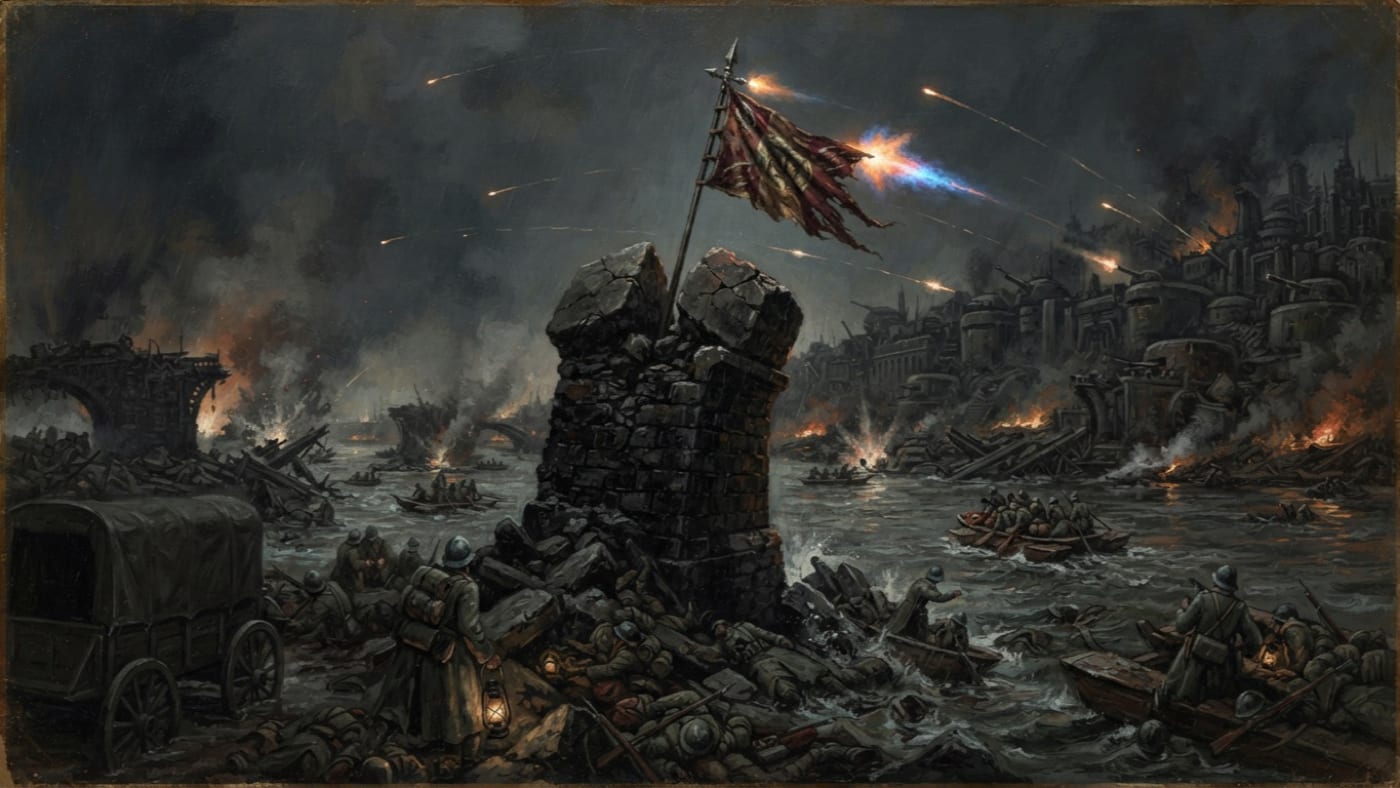
Chain-Pier Ruin
Ninety seconds upright; two explanations on file
Ruined Danubian passage used in A.S. 172, where Lorn of Metz's banner stood unattended for ninety seconds: Doctrine cites Sign One; veterans cite the weighted socket. The stones offer no opinion.
Codex Ref. II.3.05-172
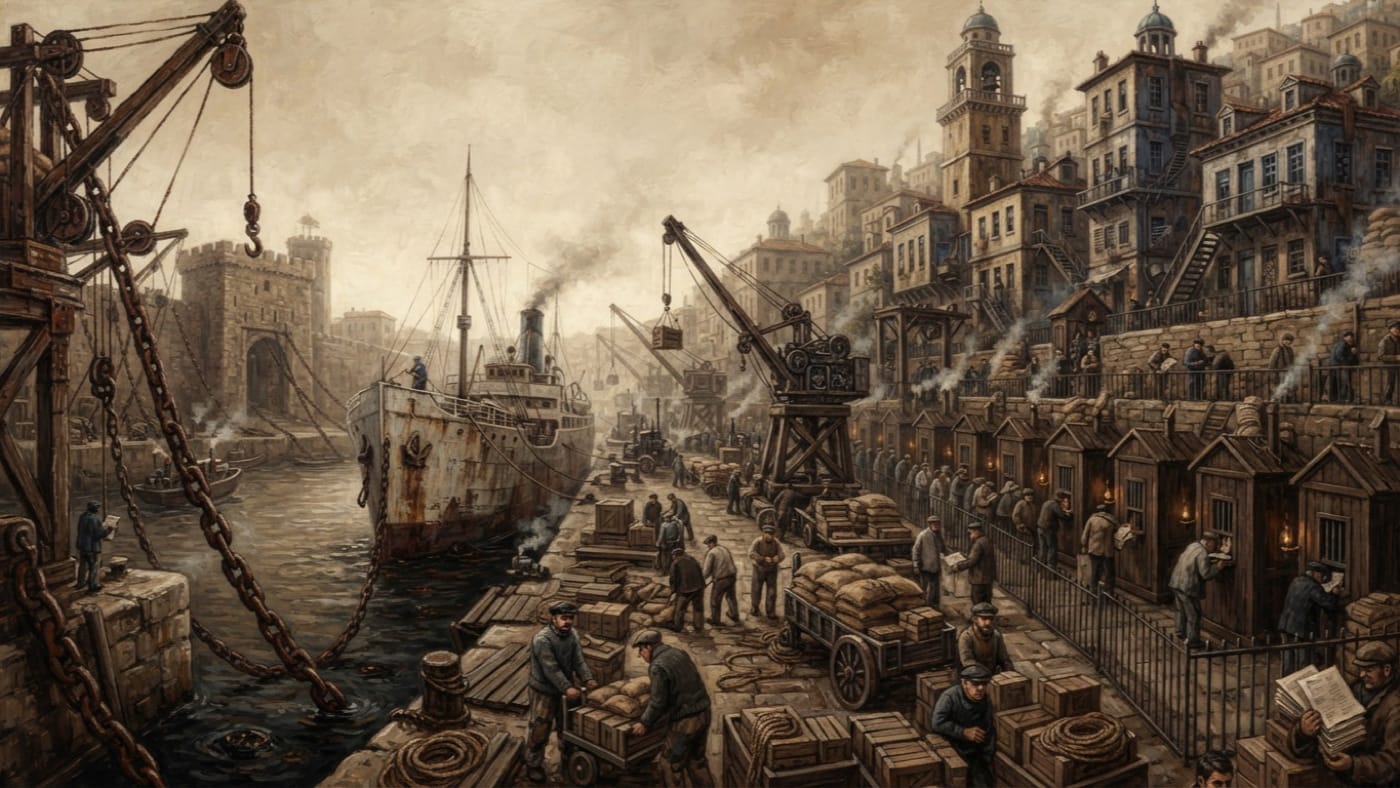
Chainward Quays
Three passes, three stamps, and the price of arriving
Thessaloniki's docking and inspection frontage, where Records, Purity and the provost each require a stamp, a fee and a receipt. The bells have exchanged voices; the quays still confer arrival by ink.
Codex Ref. II.4.09-004
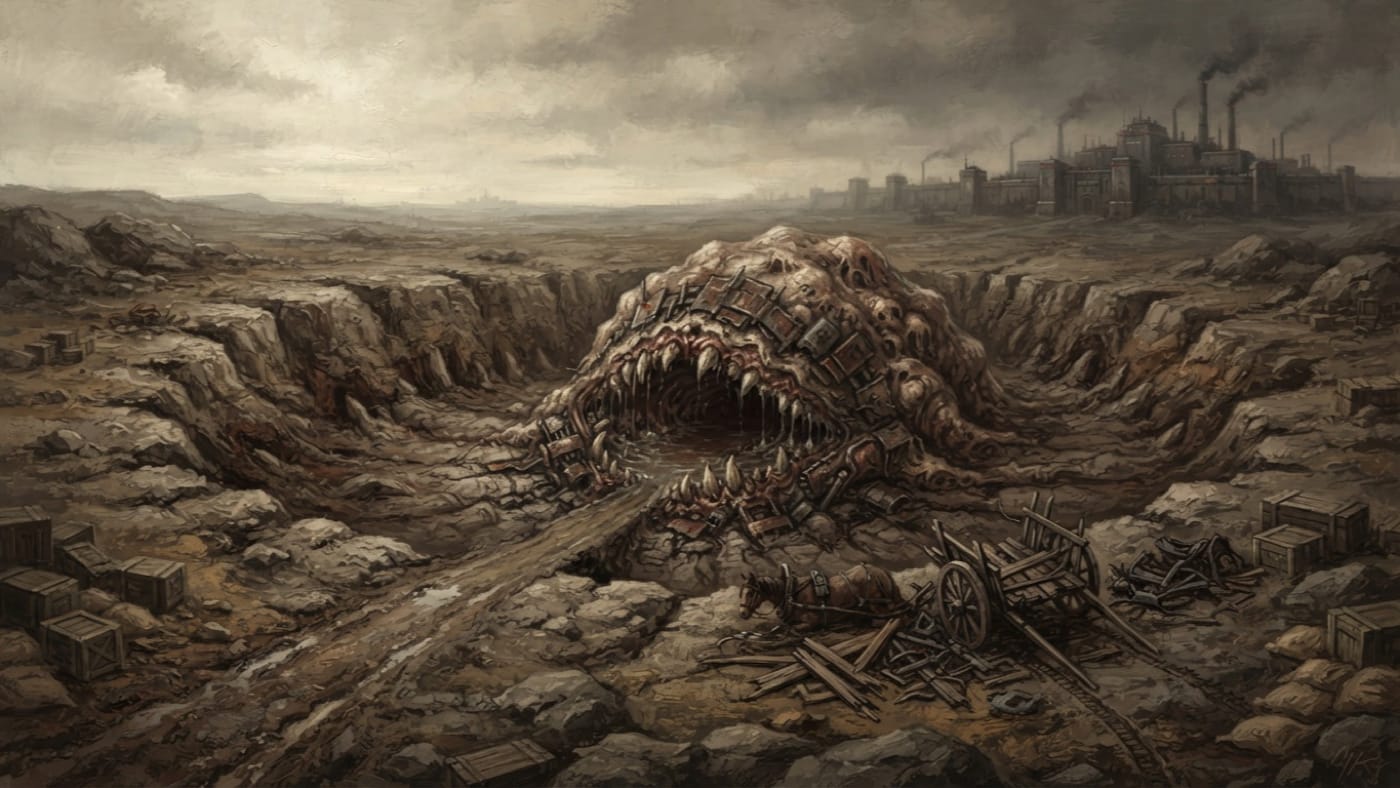
Chalk Pit Nine
A mouth, a road, and a proposal the mule could not refuse
At Chalk Pit Nine, a fixed Maw-Born coughed at ration carts during the A.S. 190 supply failure. A disposal proposal cost spoiled rations, a cart, a mule and a wheel track. The archive certifies no present condition.
Codex Ref. III.2.04-558
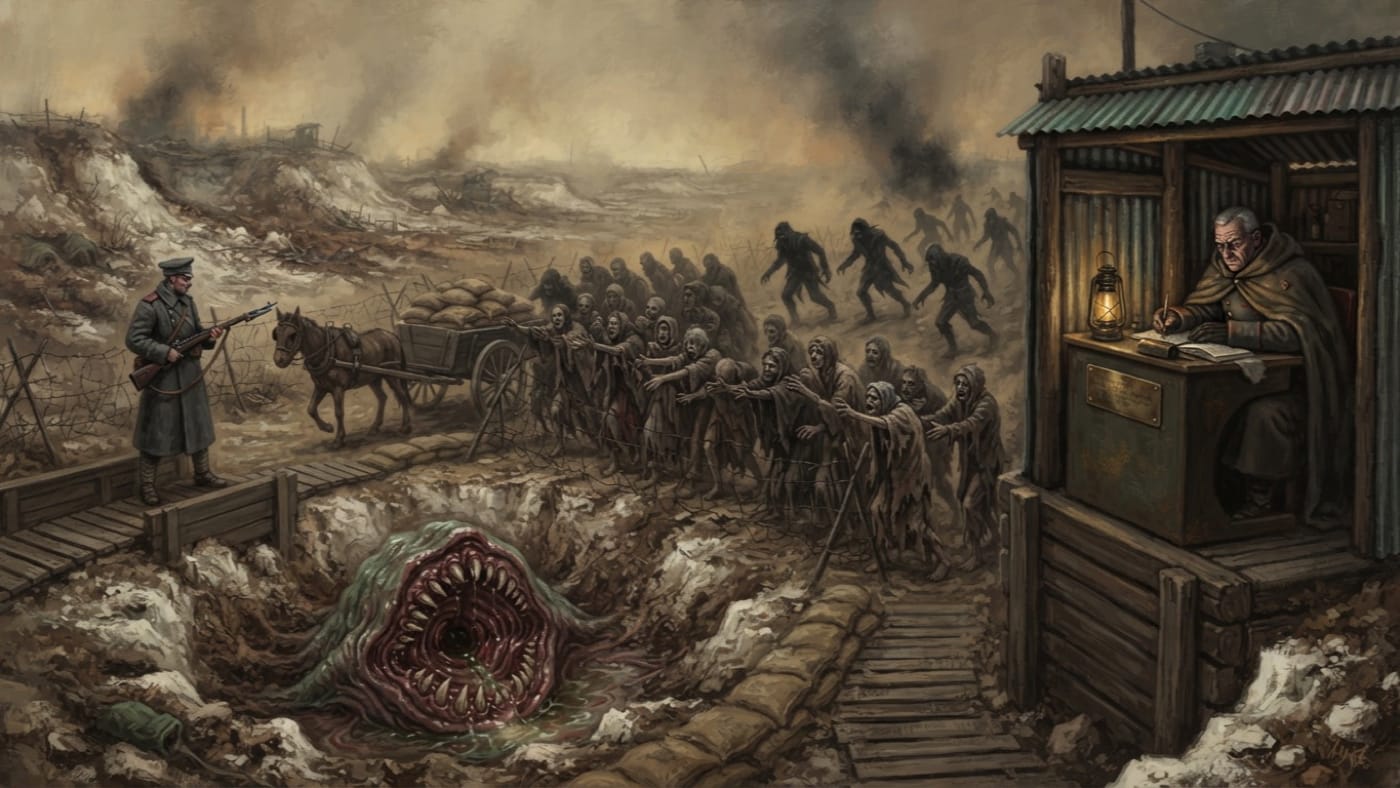
Chalk Pit Nine Maw-Born cough
A cough gathered beggars and gave an assault its cover
In A.S. 190, a fixed Maw-Born at Chalk Pit Nine coughed at passing food carts. Hollow-Walkers gathered, pity occupied the sentries, and scavengers advanced under cover of the crowd. The record certifies no outcome.
Codex Ref. III.2.04-559
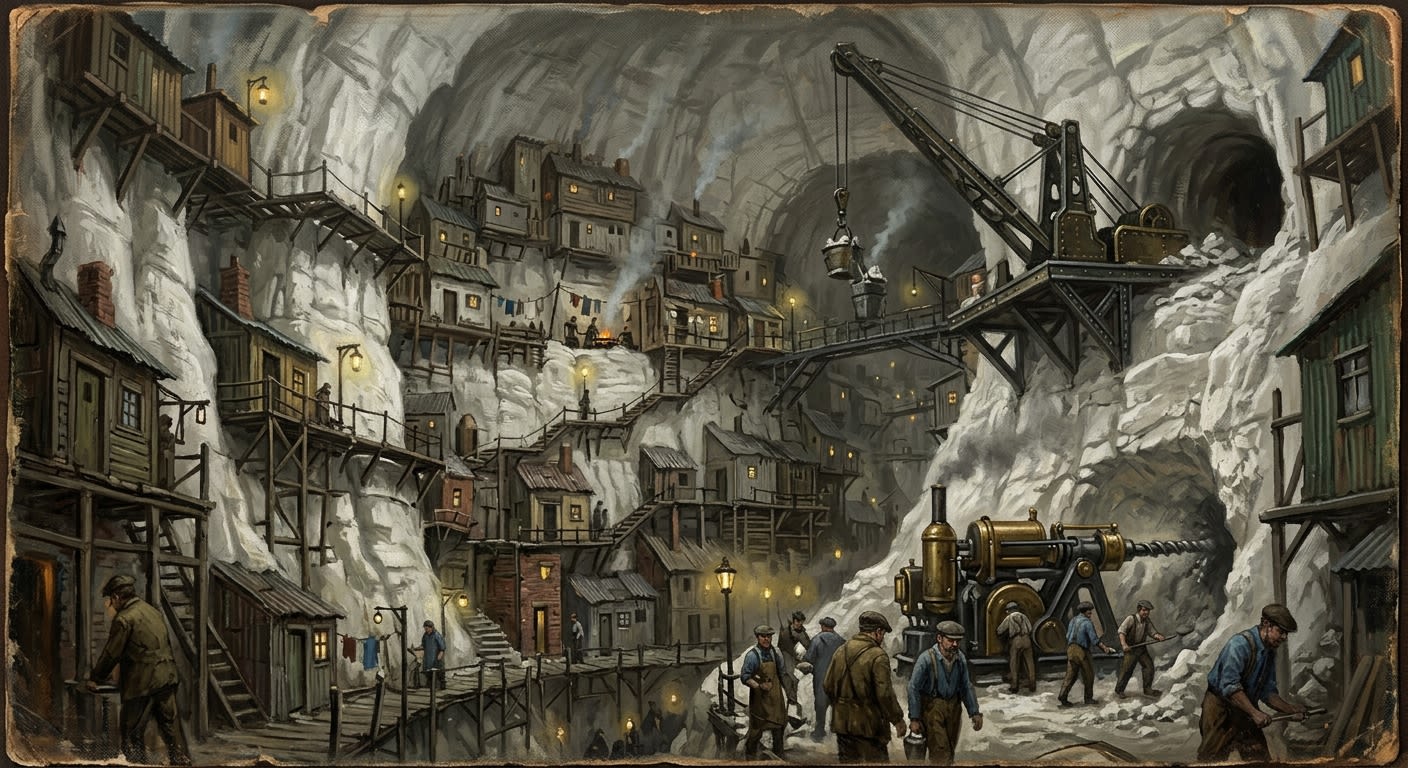
Chalk Warrens
The cliff's undercity, where rent is paid in breath
Worker-city beneath Calais, where quarry cuts became homes after the Great Breach, chalk writes inland, and every household owes the Wall a throat.
Codex Ref. II.4.09-071
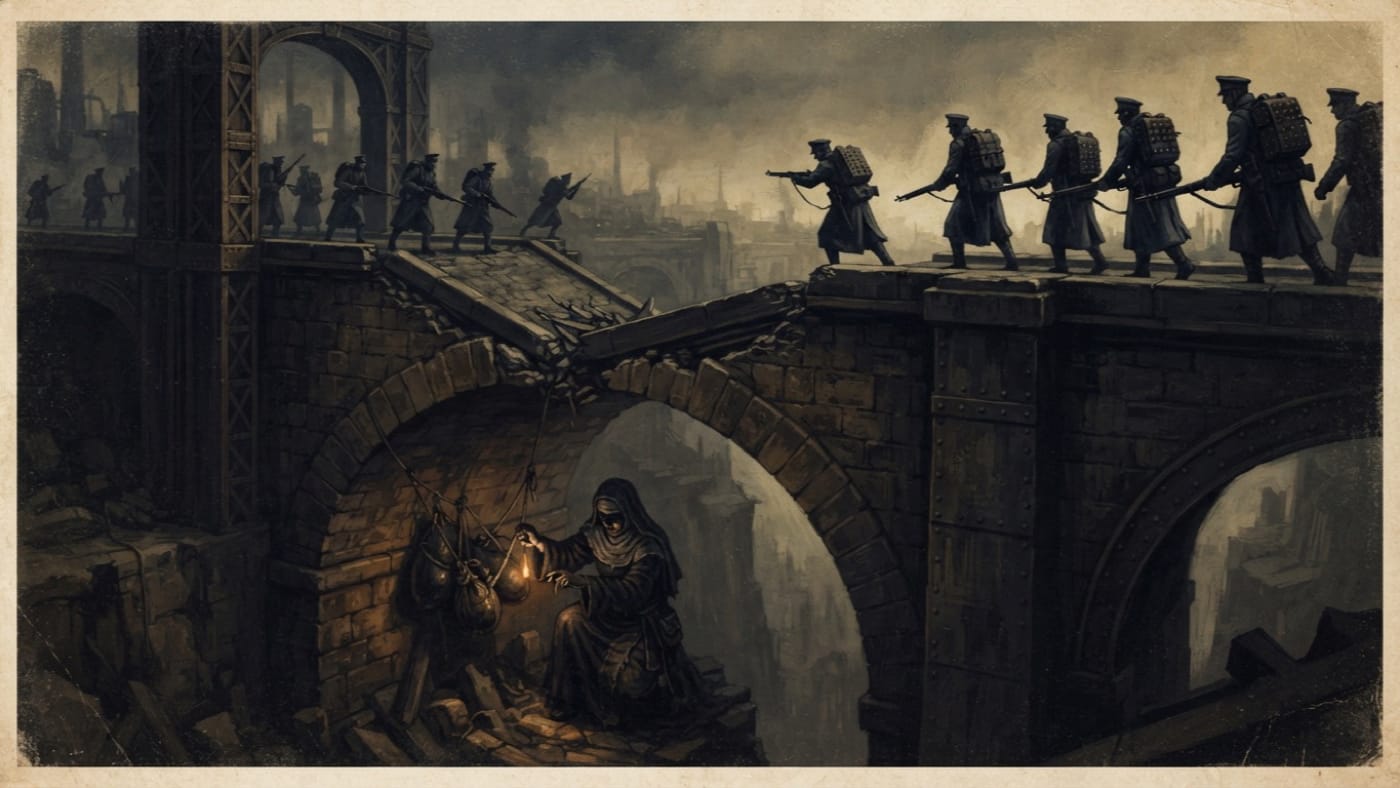
Châlons
One crossing, one attributed fire, no year
Châlons survives in the Ledger as one unnamed crossing and an undated fire attributed to Bérénice. The river is missing; the masonry has three explanations.
Codex Ref. II.1.04-565
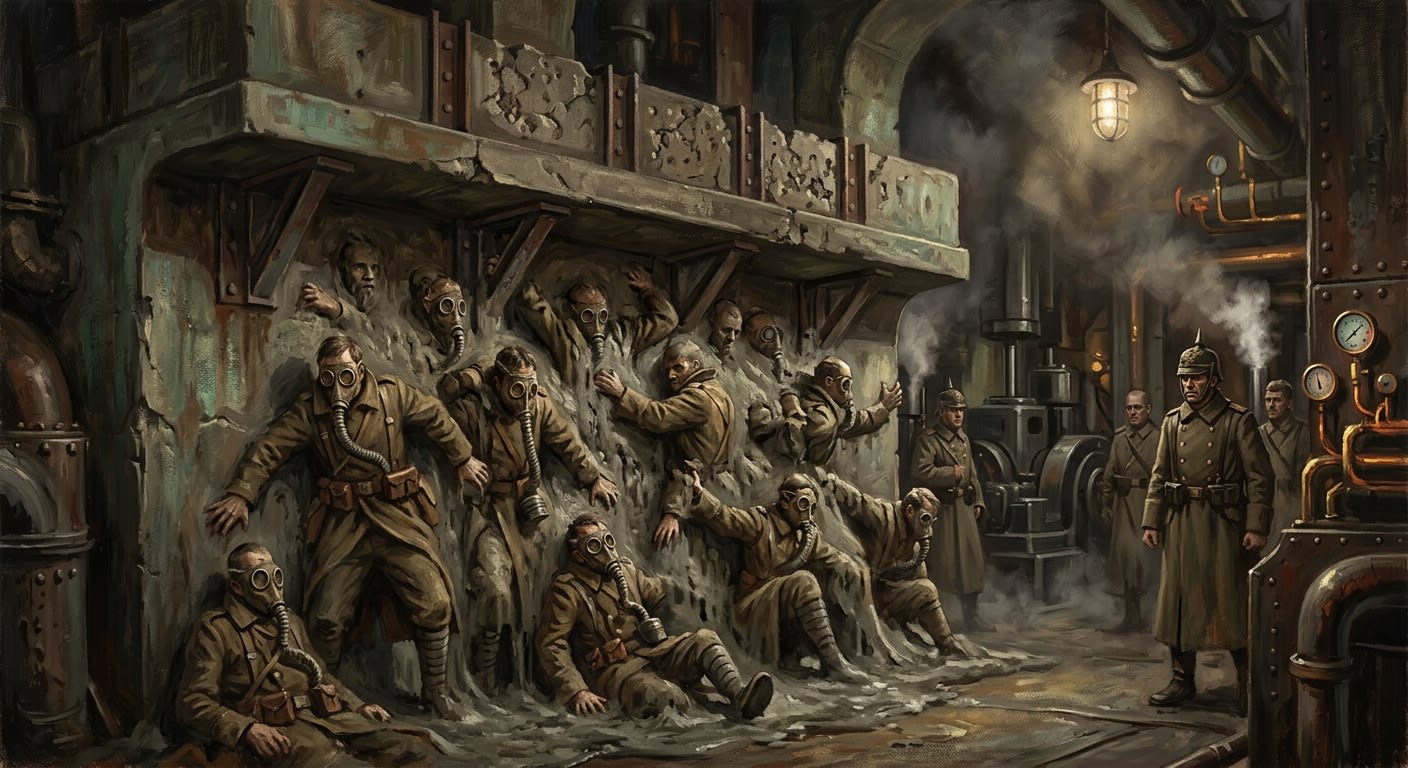
Chamber 7
Forty-seven unnamed martyrs, one warm wall, and seven permitted words
Chamber 7 is the sealed section of Bastion-Constantinople's Sixth Ravelin where forty-seven volunteers entered wet cement and became architecture.
Codex Ref. II.4.10-006
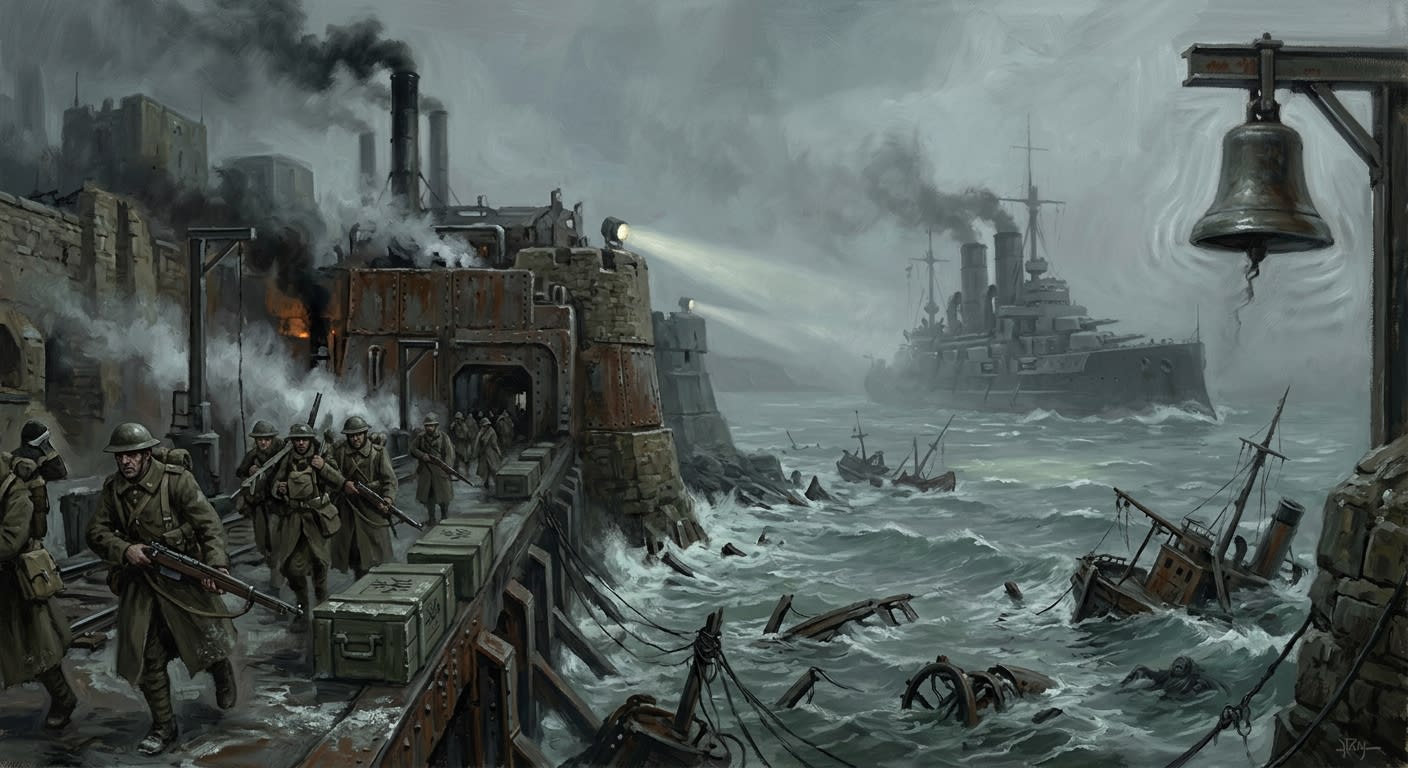
Channel
The water between two prides, and wiser than both
The Channel is the Synod's western salt wound: Calais to Dover, bells to fog, British pride to Synod arithmetic, and drowned things below.
Codex Ref. II.1.04-201
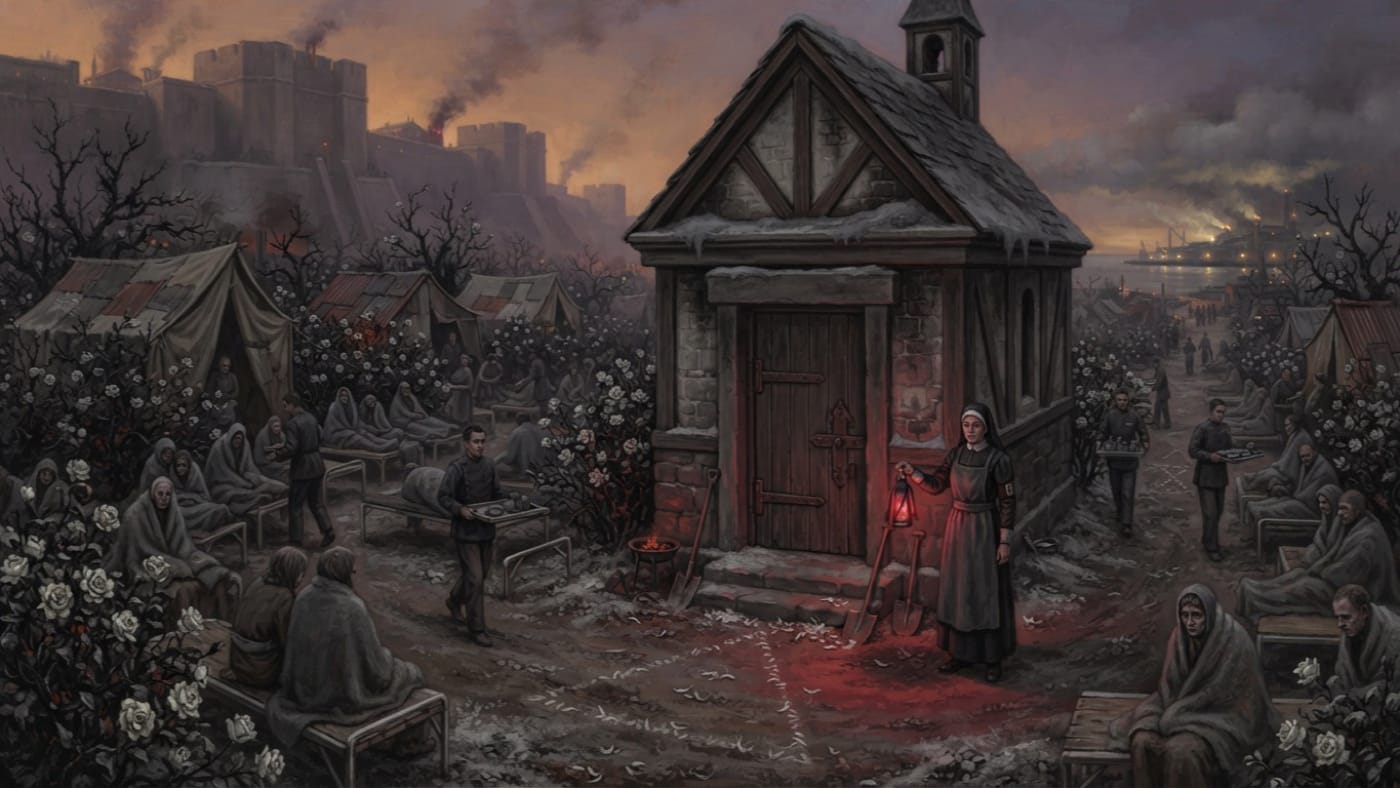
Chapel of Ash and Rose
Where the dead remain local and Records remains pending
A mortuary chapel in the Ash Gardens shelters a burial register older than the Bastion. Records attempted removal in A.S. 187; Sister Ovidia served the courier broth and kept the book.
Codex Ref. II.4.10-008
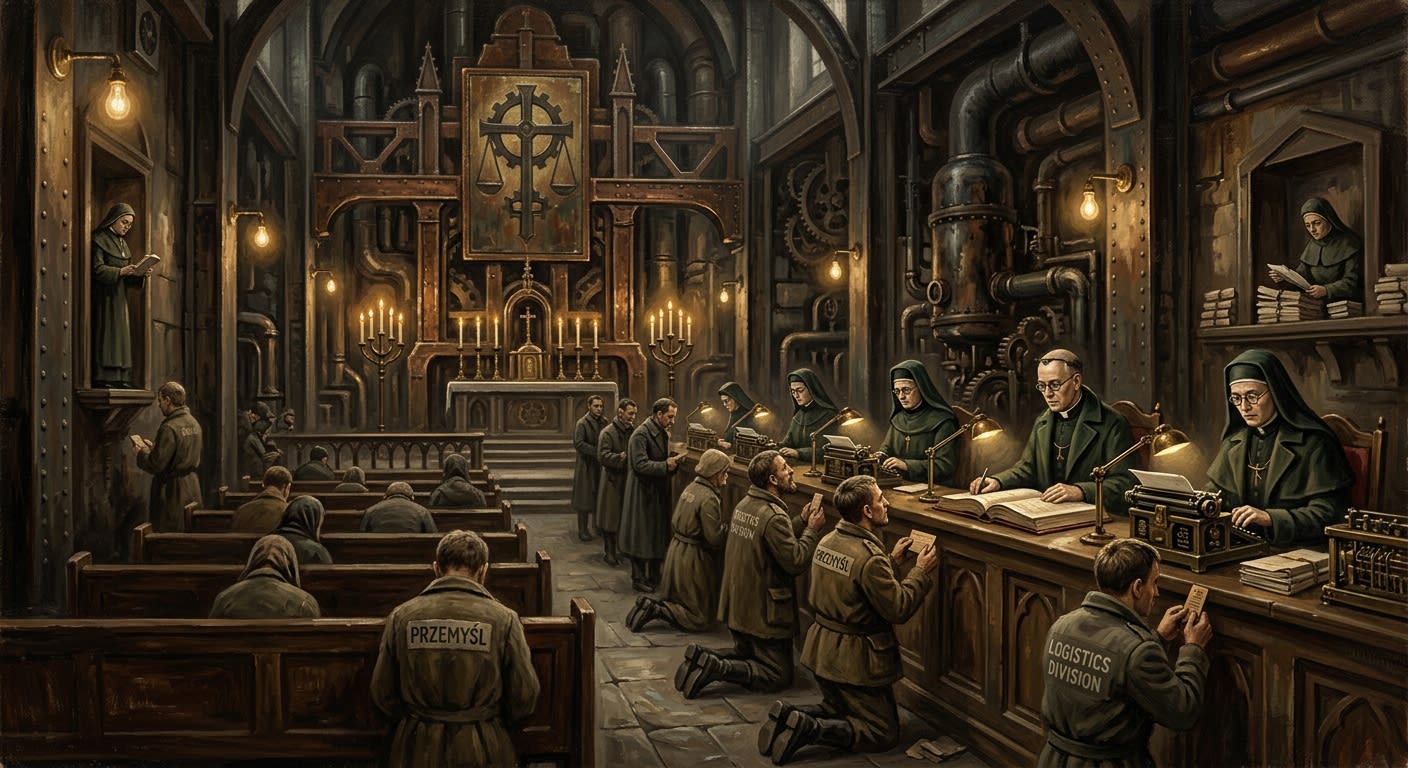
Chapel of Counting
Where mercy becomes ammunition and sin learns arithmetic
Inside Bastion-Przemyśl, the Chapel of Counting converts confession into inventory, penance into reassignment, and mercy into a weapon with clean cuffs.
Codex Ref. II.4.09-092
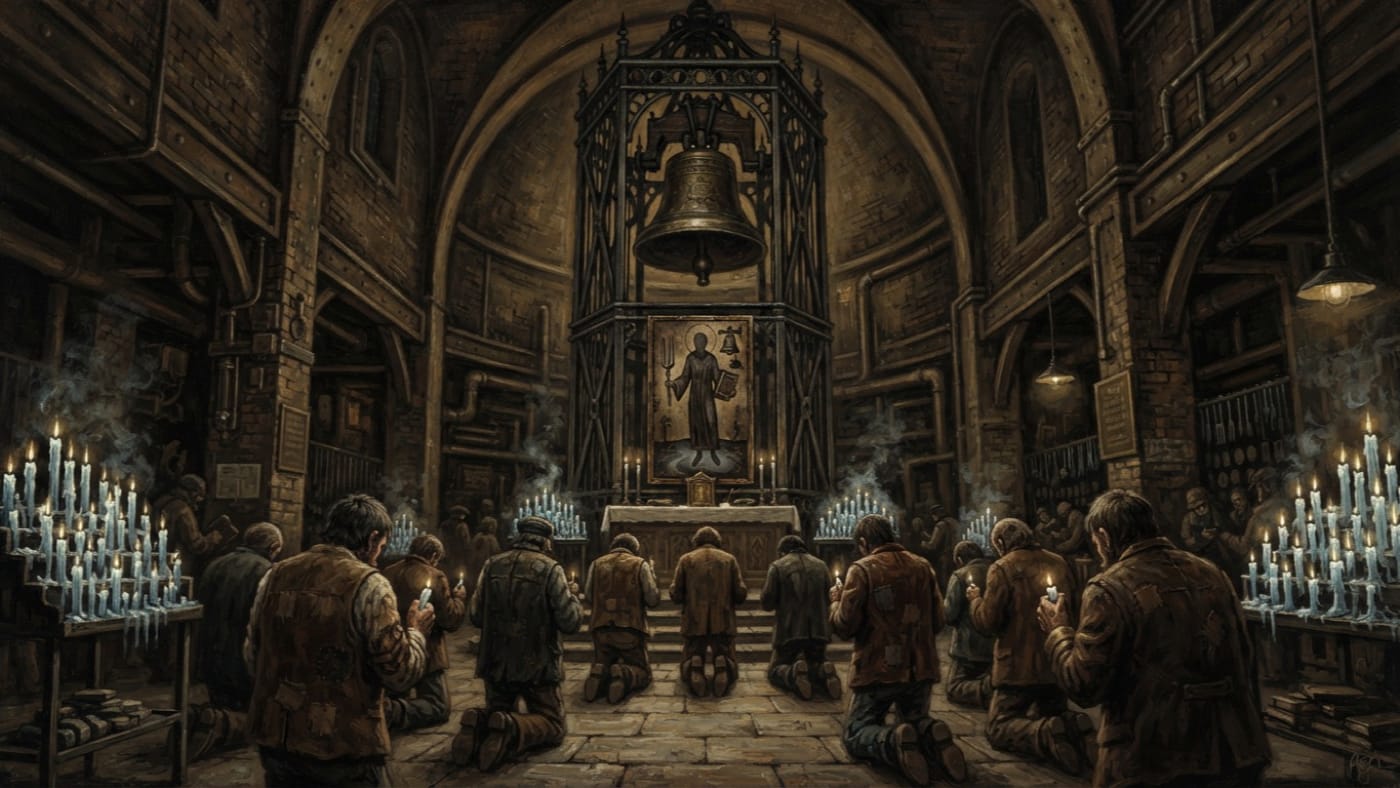
Chapel of Saint Cadrin
Confiscated permission, recast to keep the hour
Strasbourg's primary chapel of Saint Cadrin keeps an hourly bell recast from the Lyon Stampers' Guild master die. Three Bureaus explain its late undertone; none agrees.
Codex Ref. II.4.09-578
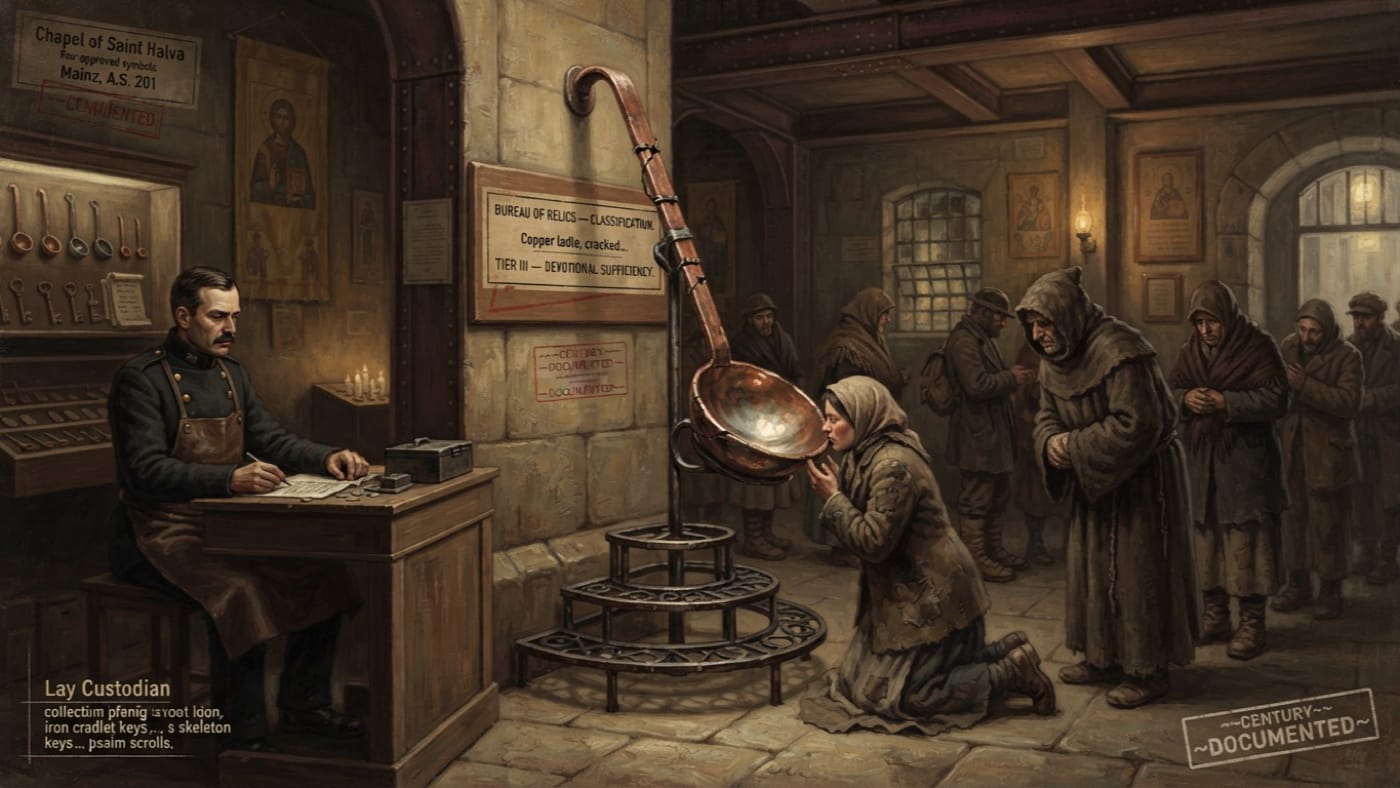
Chapel of Saint Halva
The pilgrim kisses; the Bureau collects
An A.S. 201 custody survey of the Mainz chapel holding Saint Halva's attributed copper ladle. The Bureau certifies devotional sufficiency; I dispute the provenance. A kiss still costs three pfennig.
Codex Ref. III.2.04-579
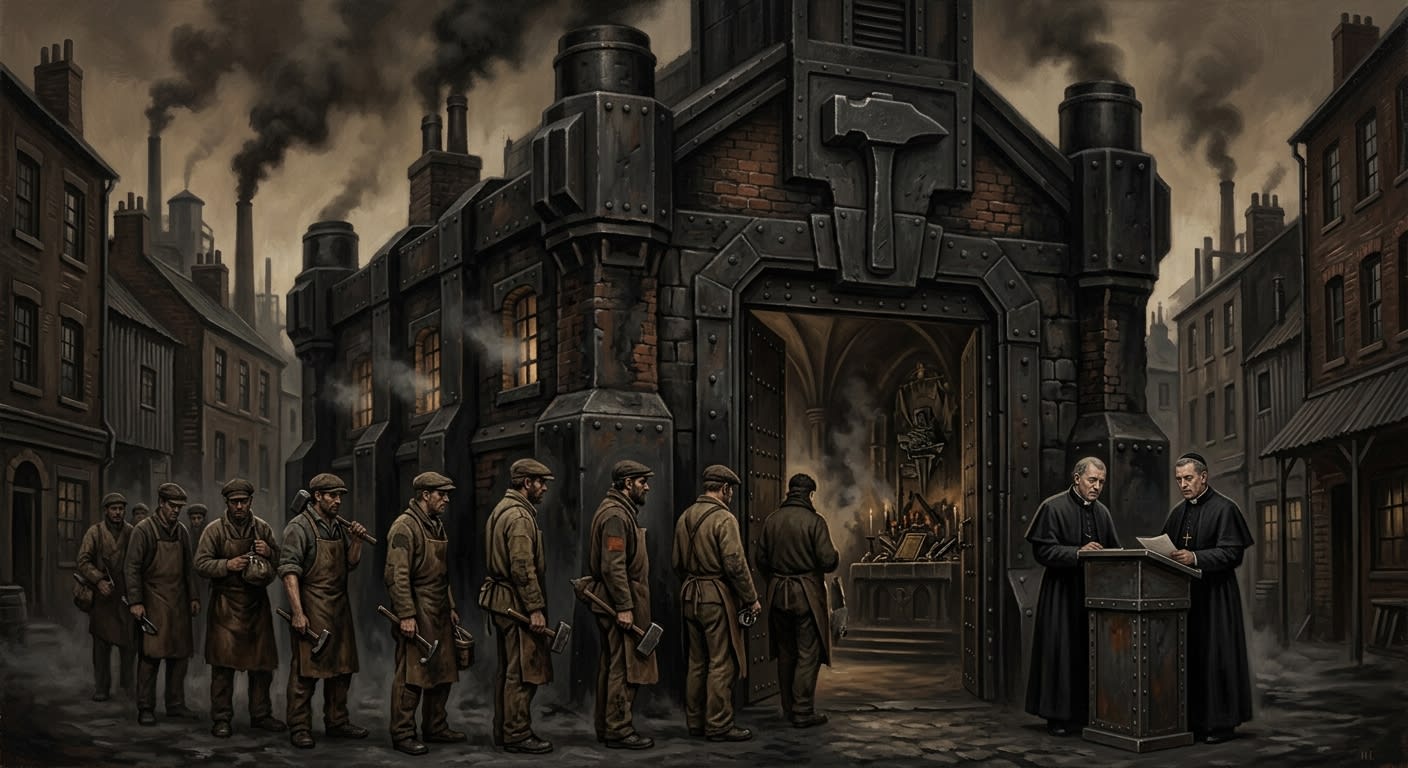
Chapel of Saint Vulcan
Where the hammers pray because the workers have no time
The Foundry Quarter's soot-black chapel keeps Saint Vulcan's doubtful file, the workers' hammer-prayers, and Doctrine's wisest act of looking away.
Codex Ref. II.4.10-004
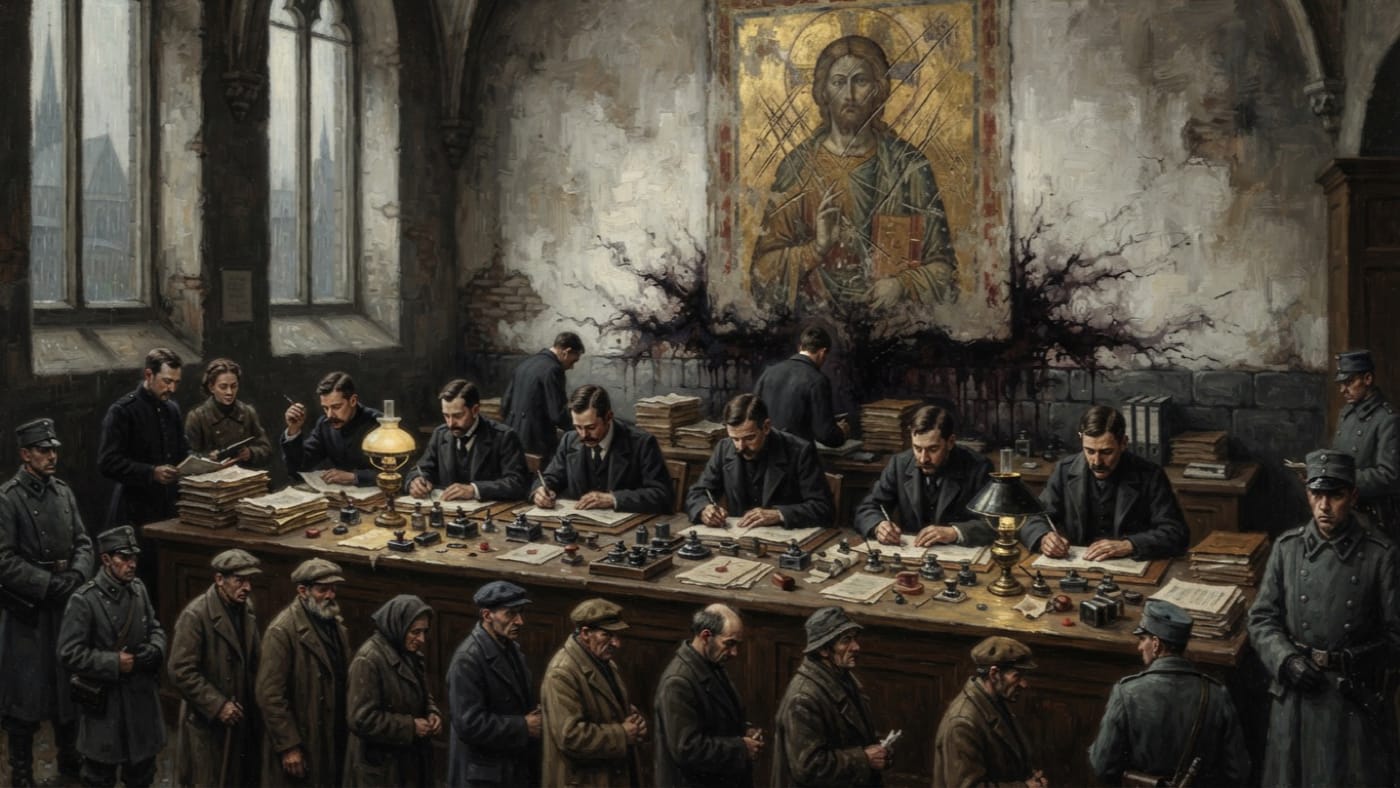
Chapel of the Crowned Seat
Where confiscation acquired a halo
Rationalist clerks signed away Aachen's property beneath a scratched halo. The Chapel of the Crowned Seat's wall darkens every Saint Bartholomew; administration leaves a stain.
Codex Ref. II.2.02-002
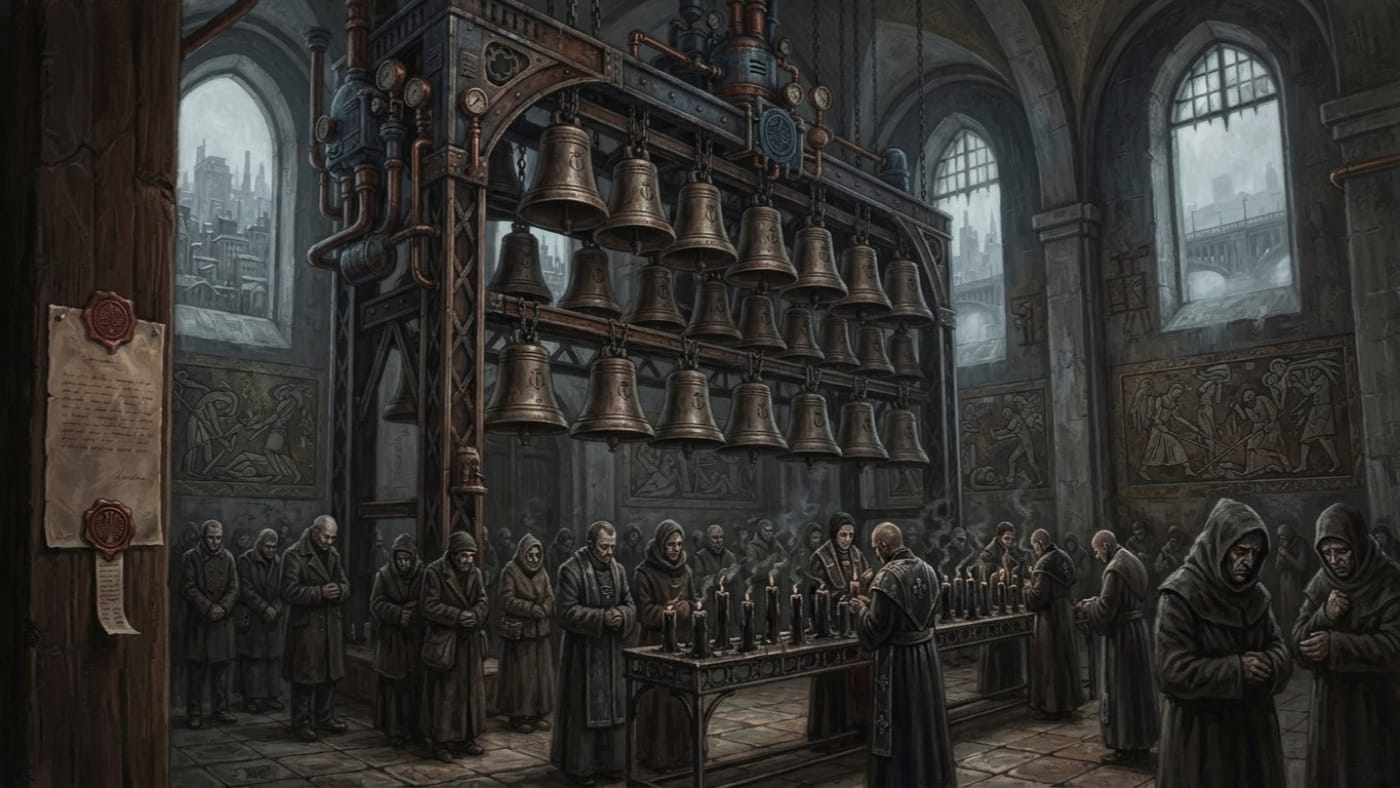
Chapel of the Drowned Priests
Forty-seven voices kept ready for one hour of silence
Wawel Cathedral's commemorative station keeps forty-seven throat-bells for the clergy drowned in A.S. 18. Cast after the A.S. 148 ratification, they fall silent each 17 Martius. The chapel keeps the count; Sandomierz keeps the recovery.
Codex Ref. II.3.06-020
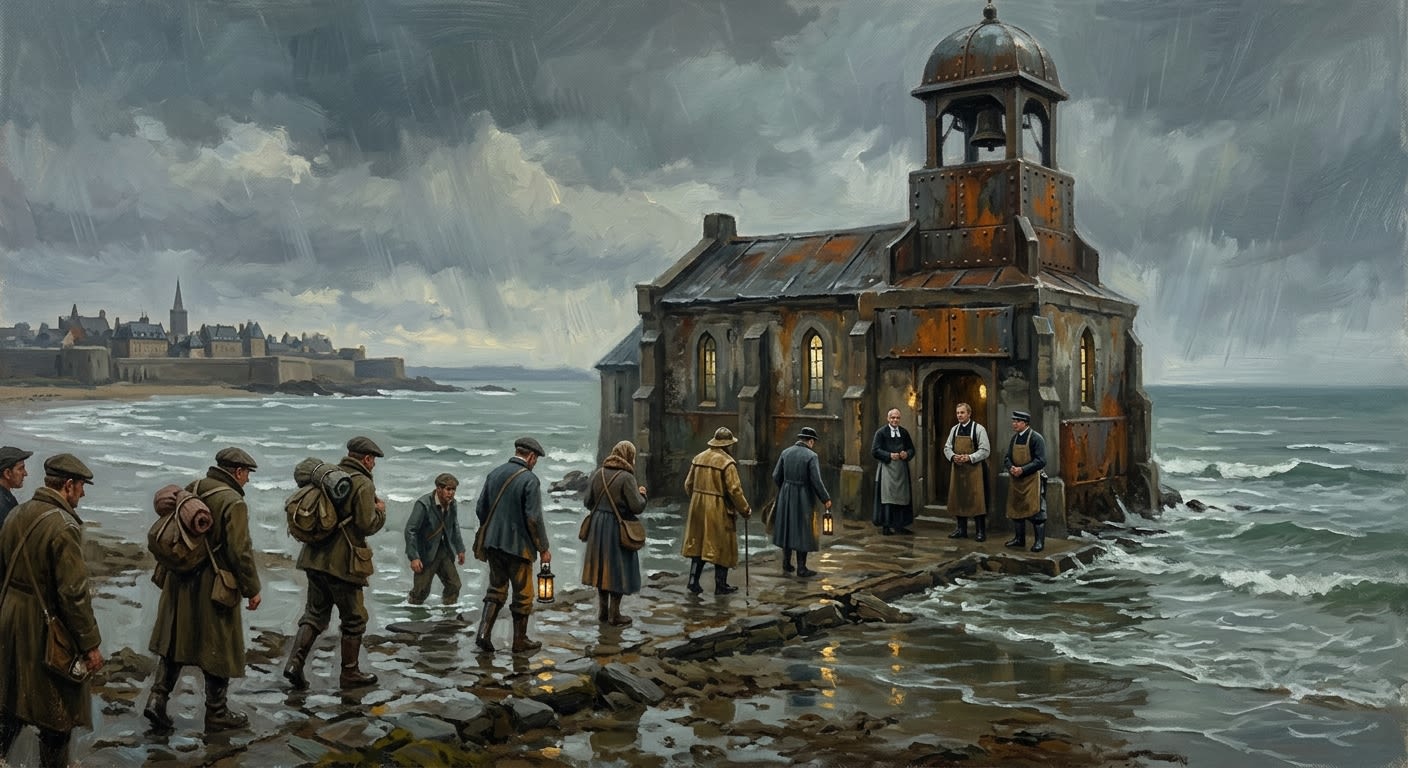
Chapel of the Tide
The shrine built from a journey denied
The Chapel of the Tide is Saint Clement's wet little shrine beyond Saint-Malo, made holy by forty-three pilgrims who were denied arrival and made profitable by everyone after.
Codex Ref. II.1.09-014
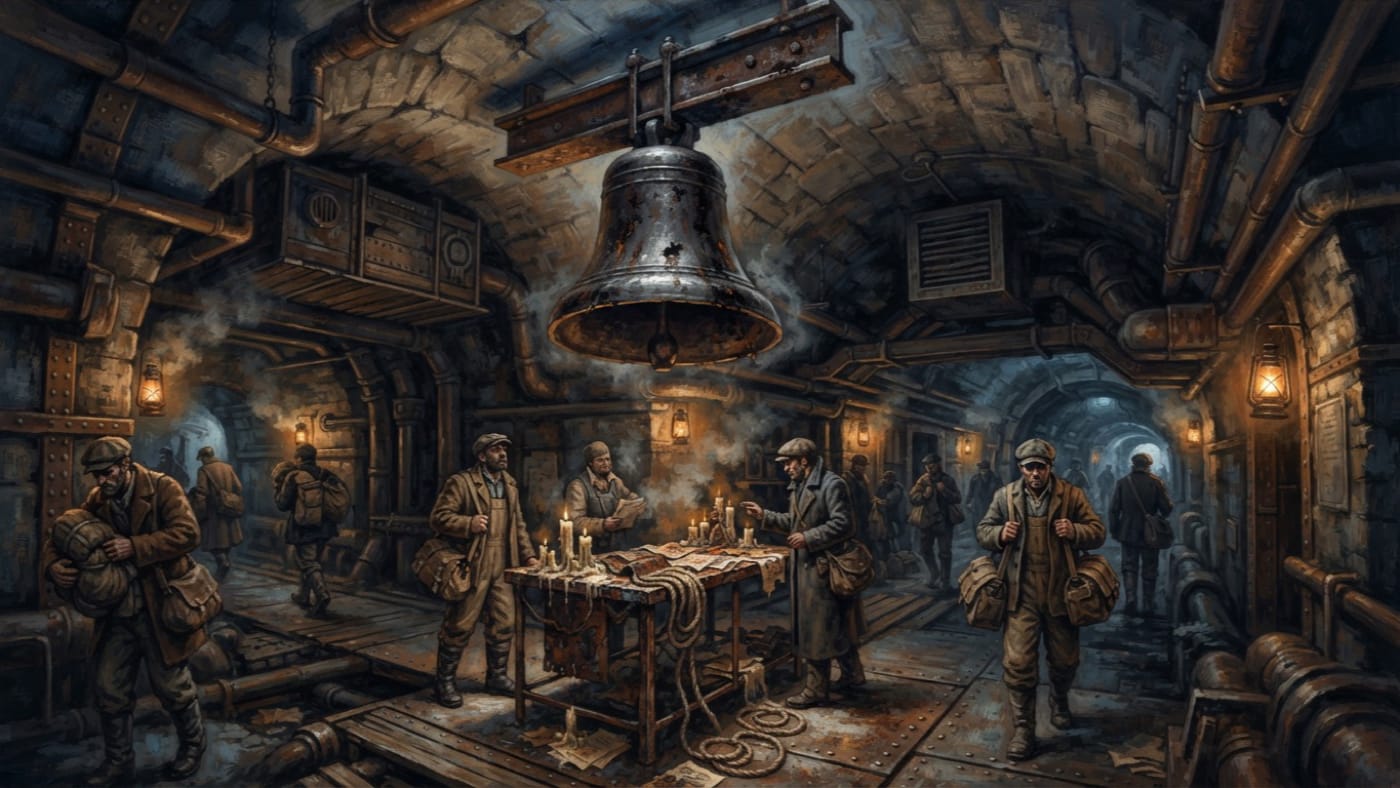
Chapel of the Uncounted Toll
A destruction entry is easier to file than silence
A.S. 201 documentary review of the Chapel of the Uncounted Toll in Skopje's Lantern Warrens: Purity records its clapperless bell destroyed; smugglers swear it rang six weeks later. The Ledger records testimony without granting it a clapper.
Codex Ref. II.4.08-584
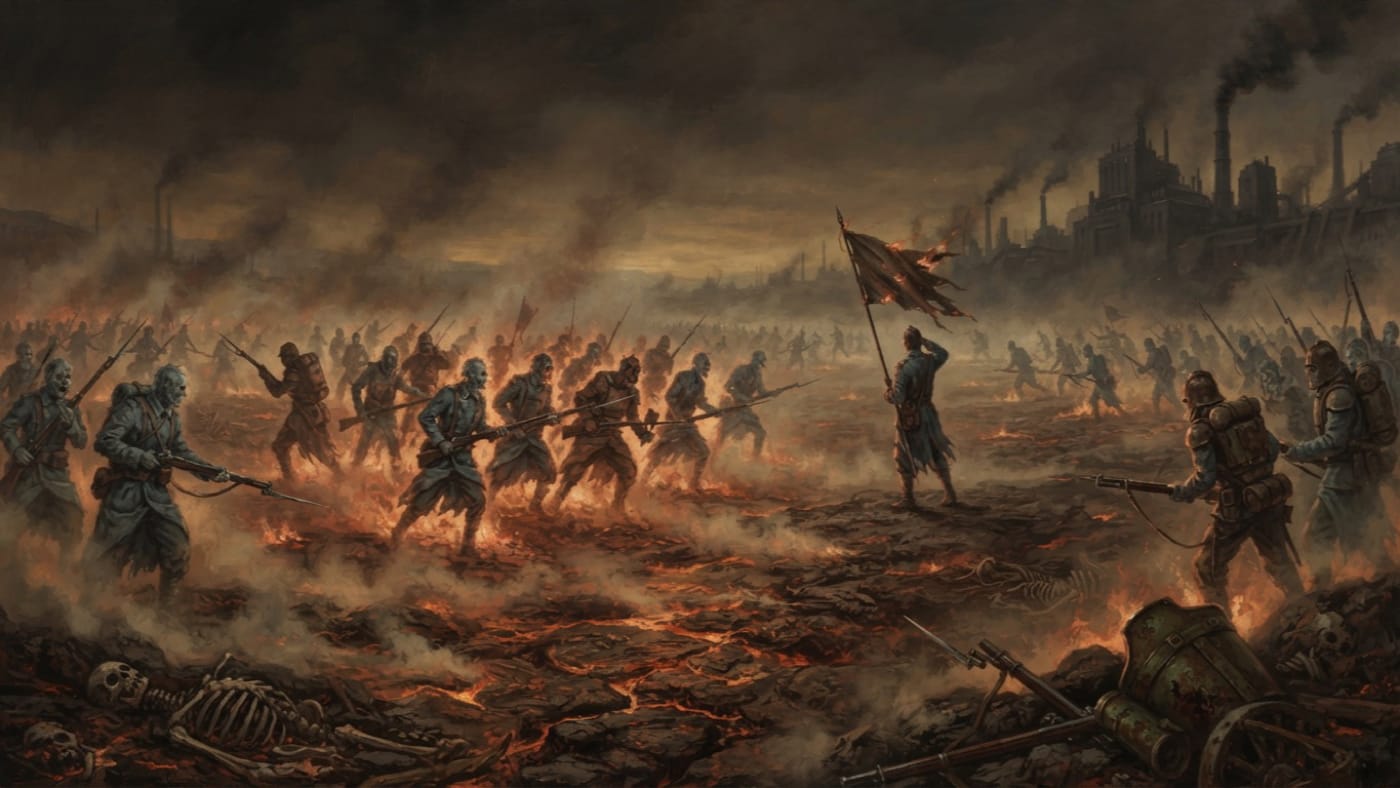
Char Fields
The battles ended. The fighting did not.
The Char Fields are battlefields in Maldrake's Iron Wastes that never cooled. Records sought names in A.S. 181; a dead standard-bearer reportedly supplied the observer's own.
Codex Ref. VI.1.03-002
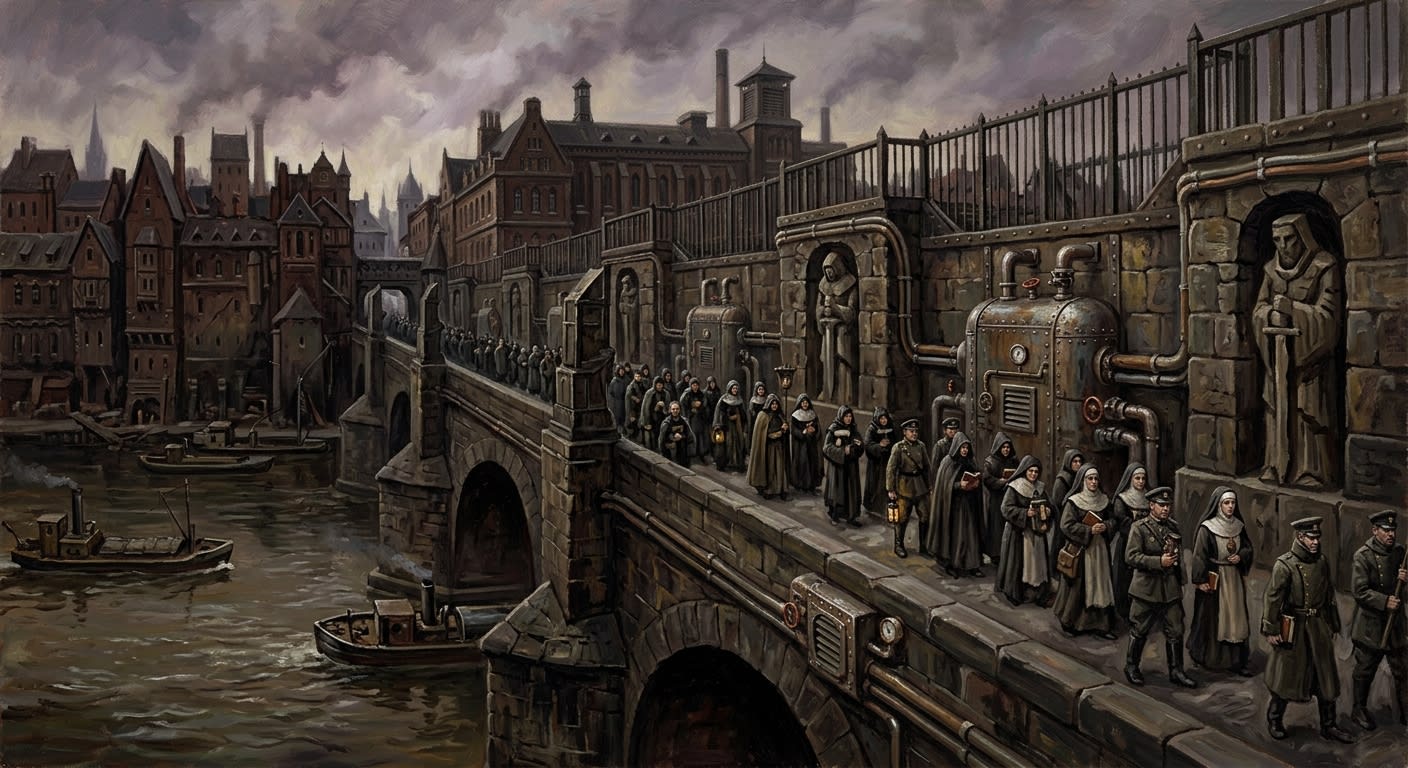
Charles Bridge
The Vltava crossing where Prague learned silence by nail
Charles Bridge crosses Prague's Vltava as road, witness bench, and Purity instrument: the stone throat through which the Procession of Tongues makes doctrine walk.
Codex Ref. II.3.02-096
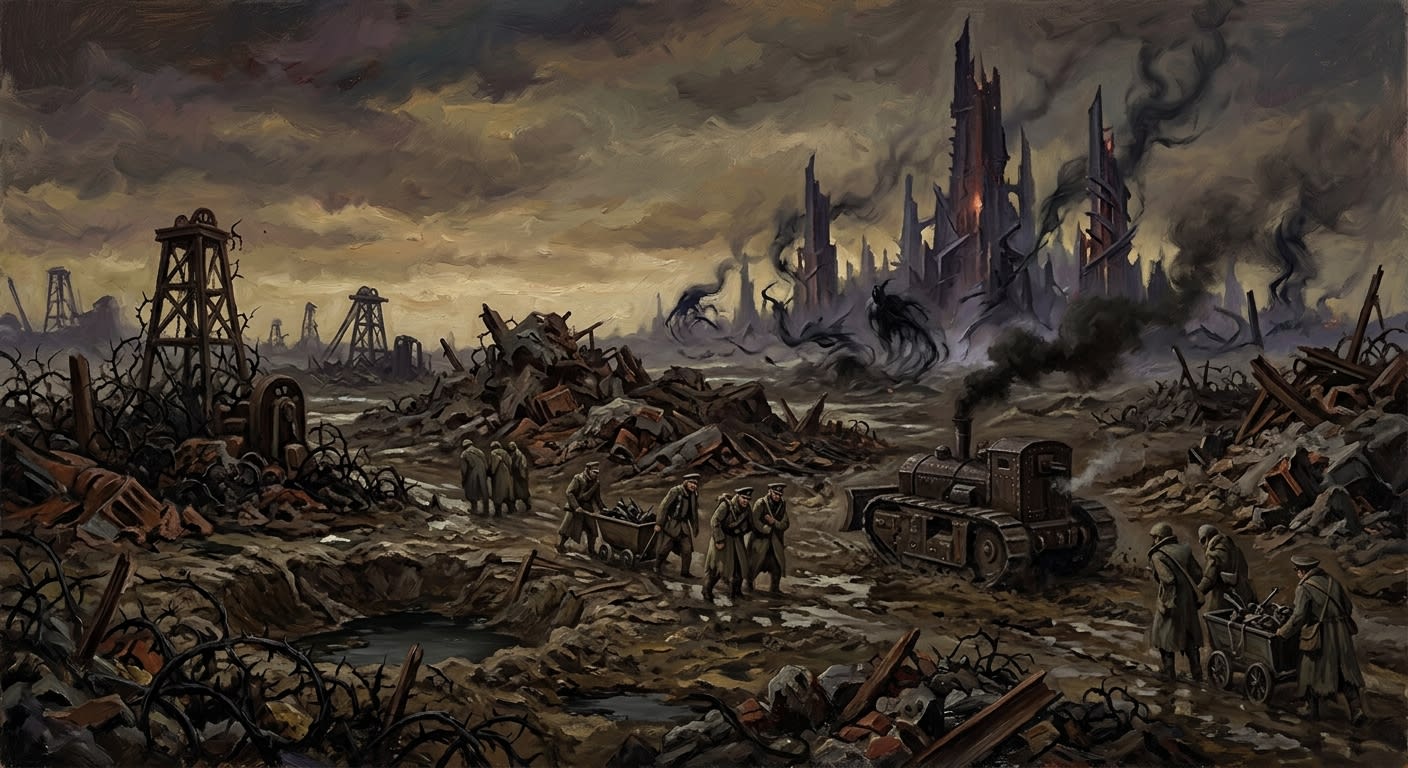
Charnel Lands
Where geography continues after mercy has been denied
The Charnel Lands are Zone 6, the demonic territories east of the Sagittal Line: geography made hostile to custody, with wilderness and cemetery both demoted to inadequate clerkly metaphors.
Codex Ref. II.6.06-001
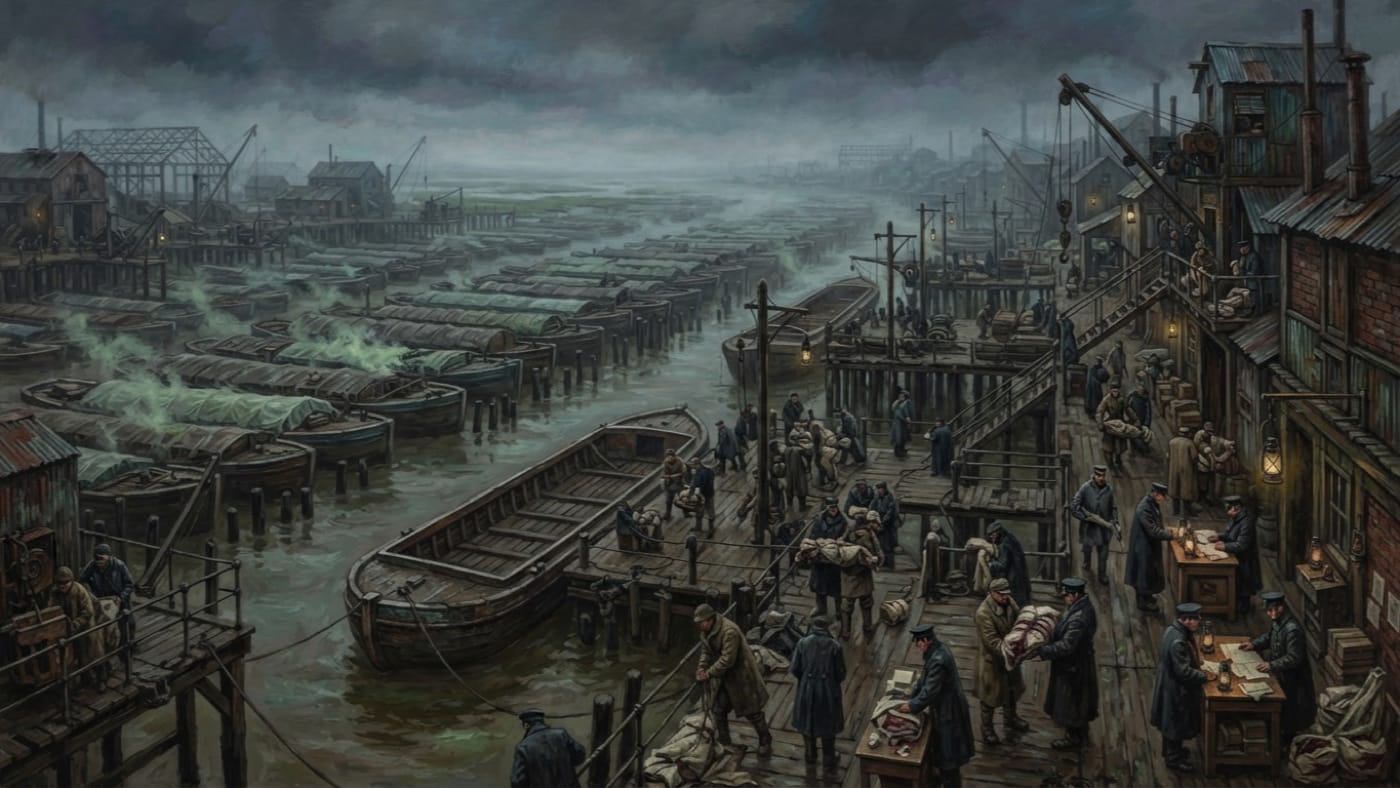
Charnel Moorings
Where a missing crew becomes a matter of weather.
The corpse-barge docks at the eastern end of Ash-Glyph Marshworks, where forty barges may wait on a seal. Registry Fourteen has returned empty and crewless three times. The Bureau files the returns under Weather.
Codex Ref. II.4.08-201
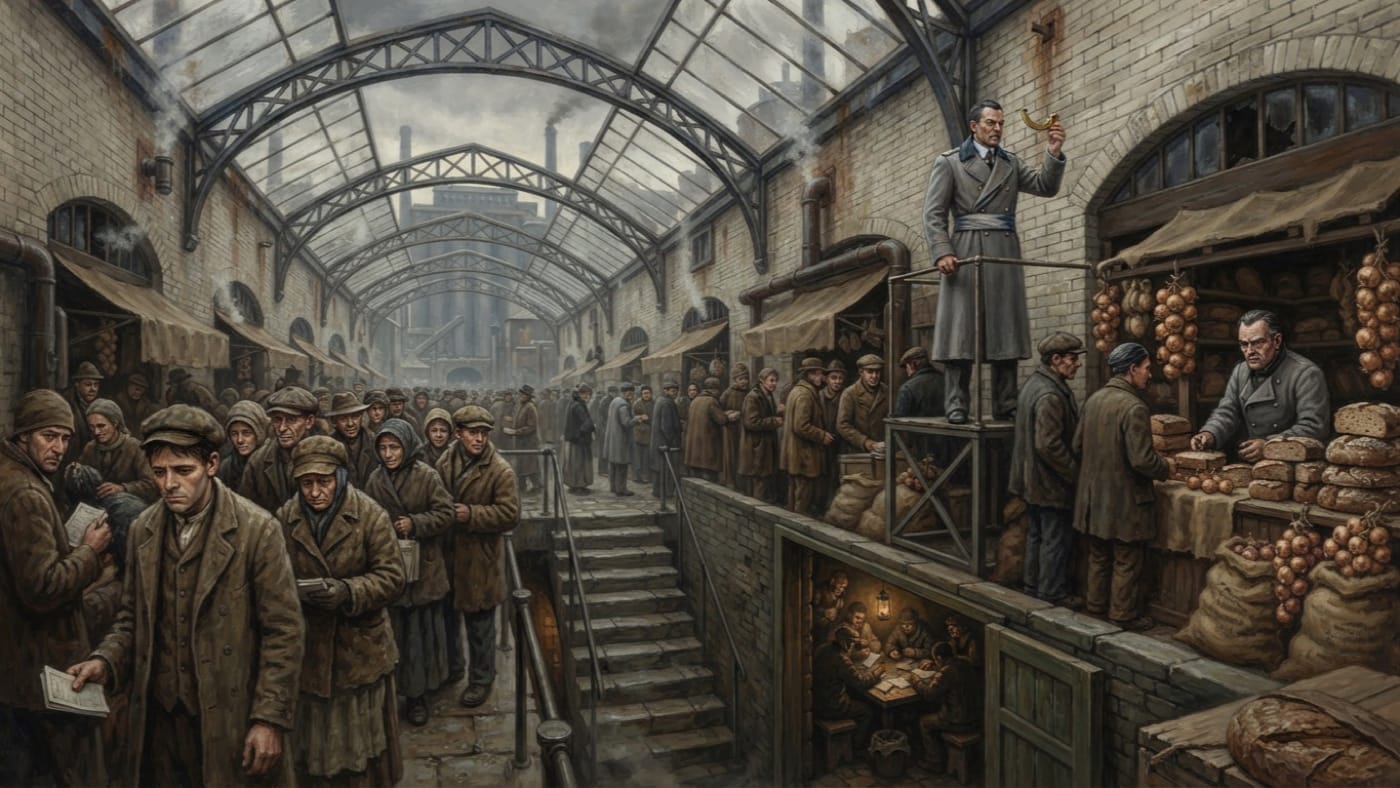
Chit Market
Present both hands and keep the mouth at two
At Wexel's Chit Market, bread is exchanged for paper and every smile is measured. Above ground the Mirth Office watches the stalls; below, grain, forged chits, and jokes circulate without audit immunity.
Codex Ref. II.2.04-002
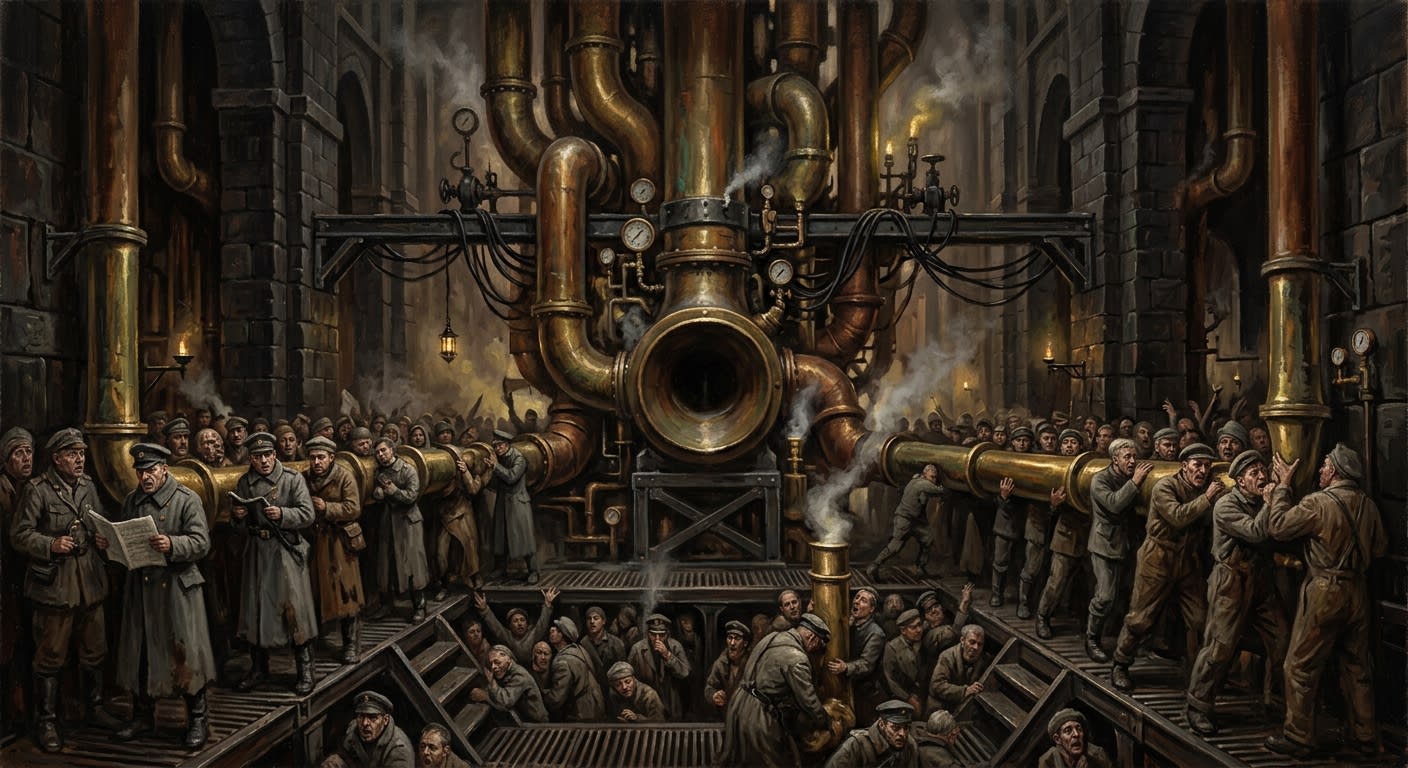
Choir Nave
The room where Irongate lends its throat to stone
The Choir Nave is Bastion-Irongate's load-bearing throat: a basalt chamber where human song is forced through brass, gauges, fear, and stone.
Codex Ref. II.4.24-094
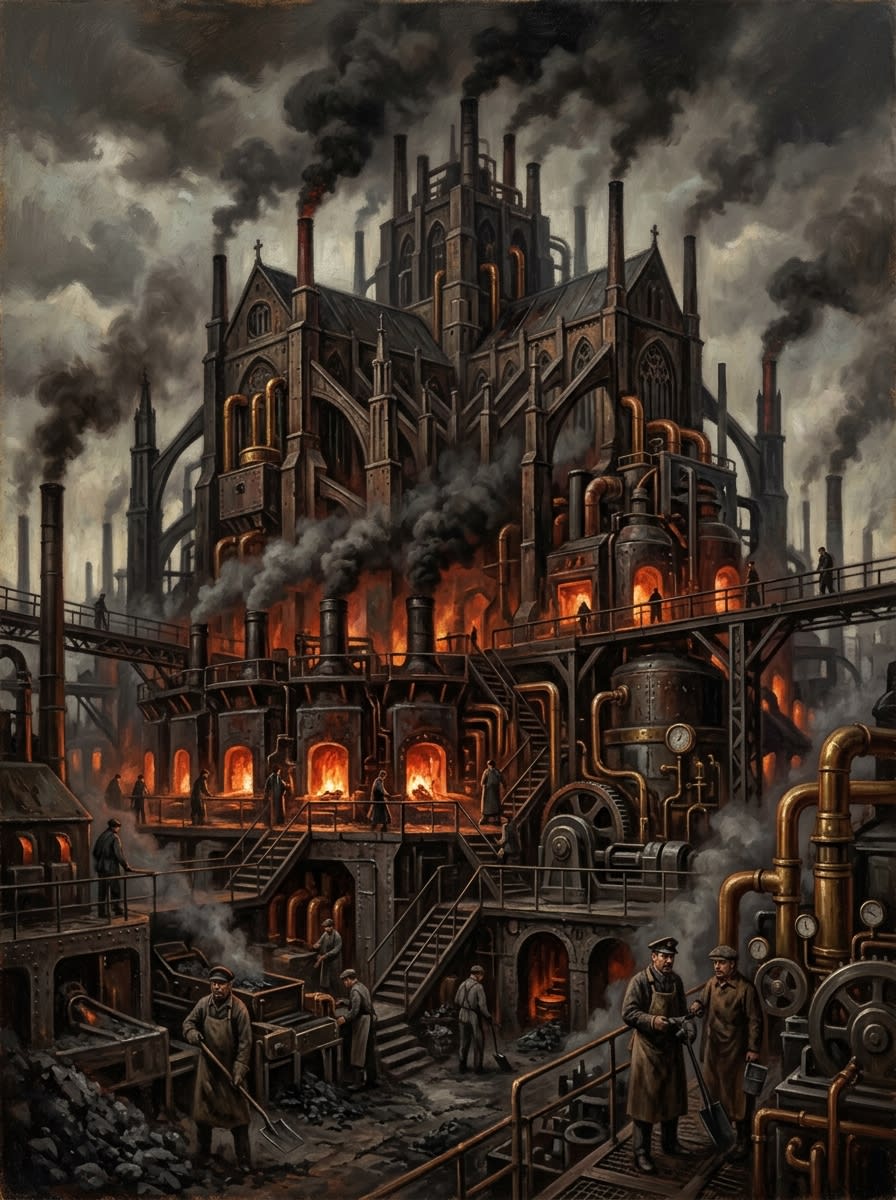
Chrismole Crown
Seventeen mouths, one hot room, and every office pretending it holds the leash
The Chrismole Crown is Brast's seventeen-mouth furnace-cathedral, where fuel becomes sacrament, machinery learns manners, and blame sweats.
Codex Ref. II.2.01-004
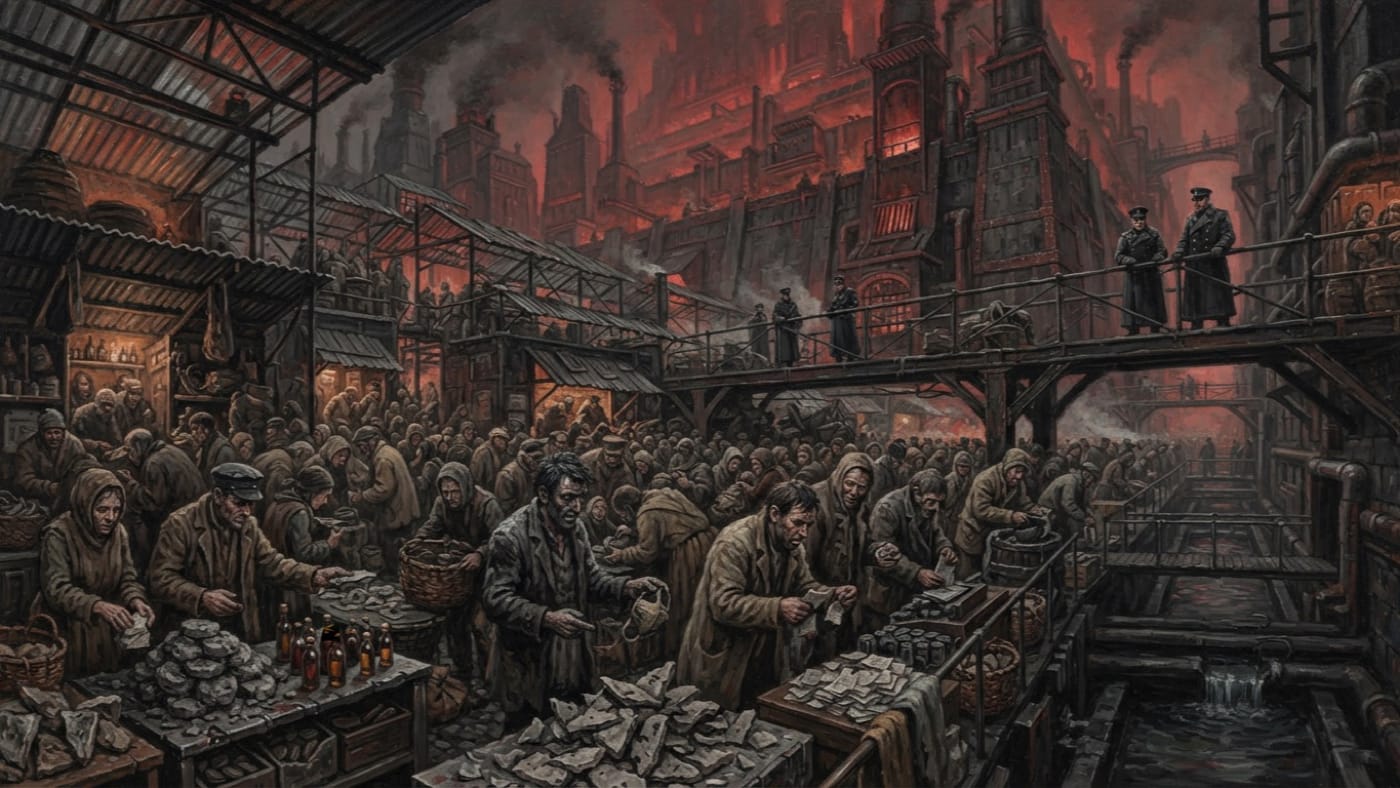
Cinder Markets
Pepper oil buys supper. A bread token proves you exist.
At San Vesta's lowest terrace, pepper oil and ash cakes change hands beside bread shards, cool masks and forged triage slips. The Ledger counts whole loaves; the Cinder Markets trade what hunger breaks off.
Codex Ref. VII.1.03-002
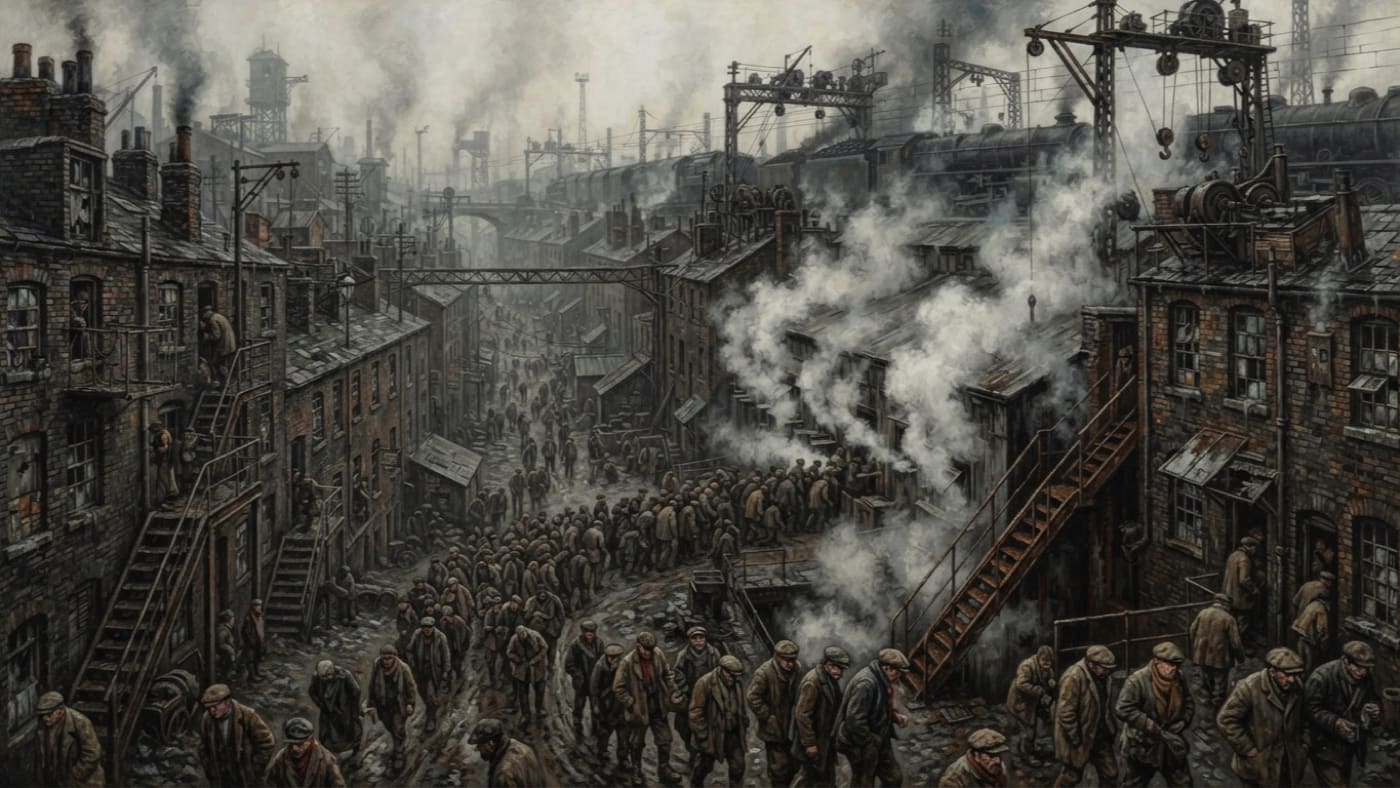
Cinderrow
Where Lorn feeds its hands and bills them for breaking
Cinderrow houses Lorn's shift masses, feeds them cabbage, and bills them for broken hands. Beneath its canteen steam waits the stair out of the Ledger.
Codex Ref. II.3.06-621
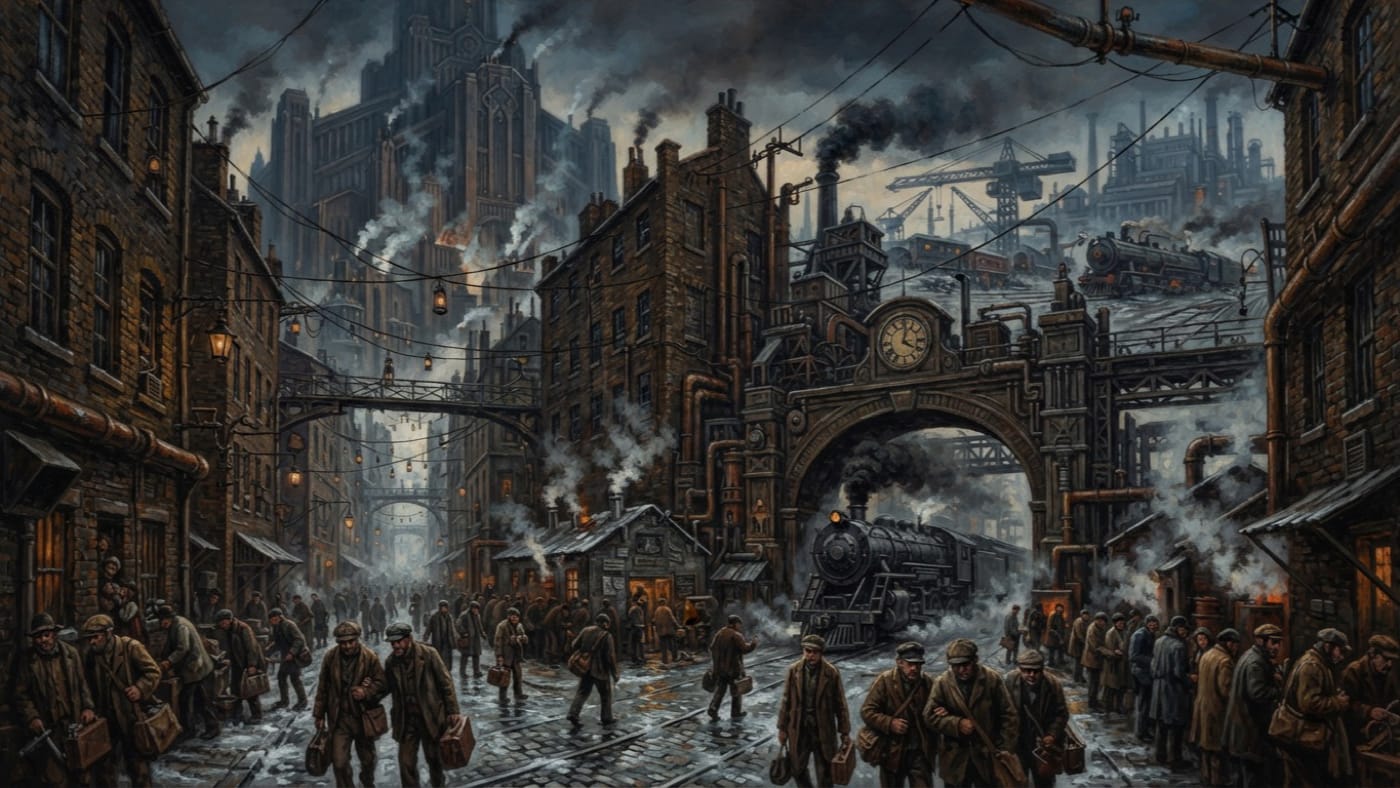
Cinderrow Wards
Where the hands are licensed and the lungs are not logged
The soot-brick worker wards of Lorn, where employment requires confession, debt is paid in night shifts, and the dying remain paper-safe. The Thrown Hand prepares a slowdown; the schedule still certifies its labour supply.
Codex Ref. II.3.01-003
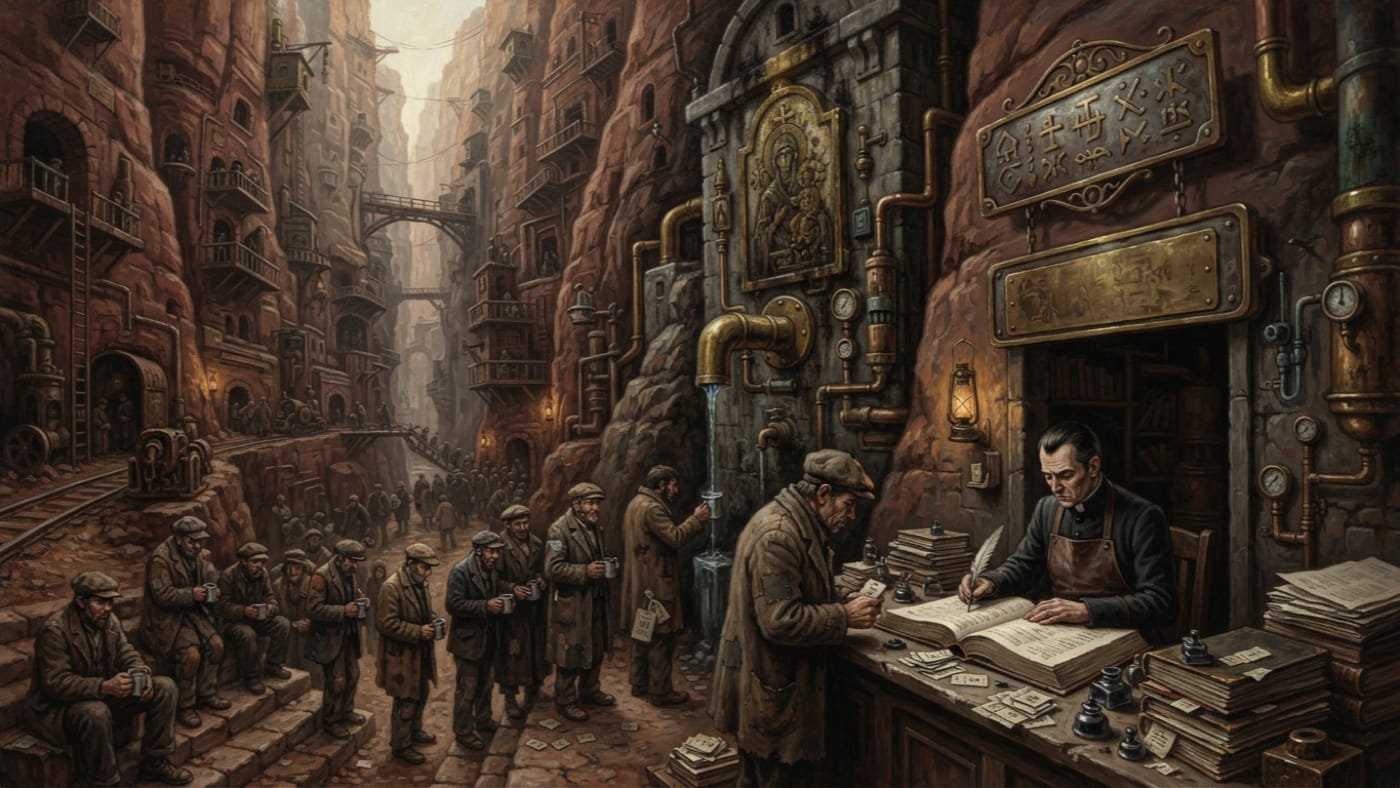
Cistern Chapel of Peregrine Row
Where water is blessed and thirst is entered in the ledger
In Peregrine Row's only natural hollow, the Cistern Chapel blesses water rations and records them against chits. The canyon may alter the ledger. The clerk still enforces it.
Codex Ref. II.1.03-002
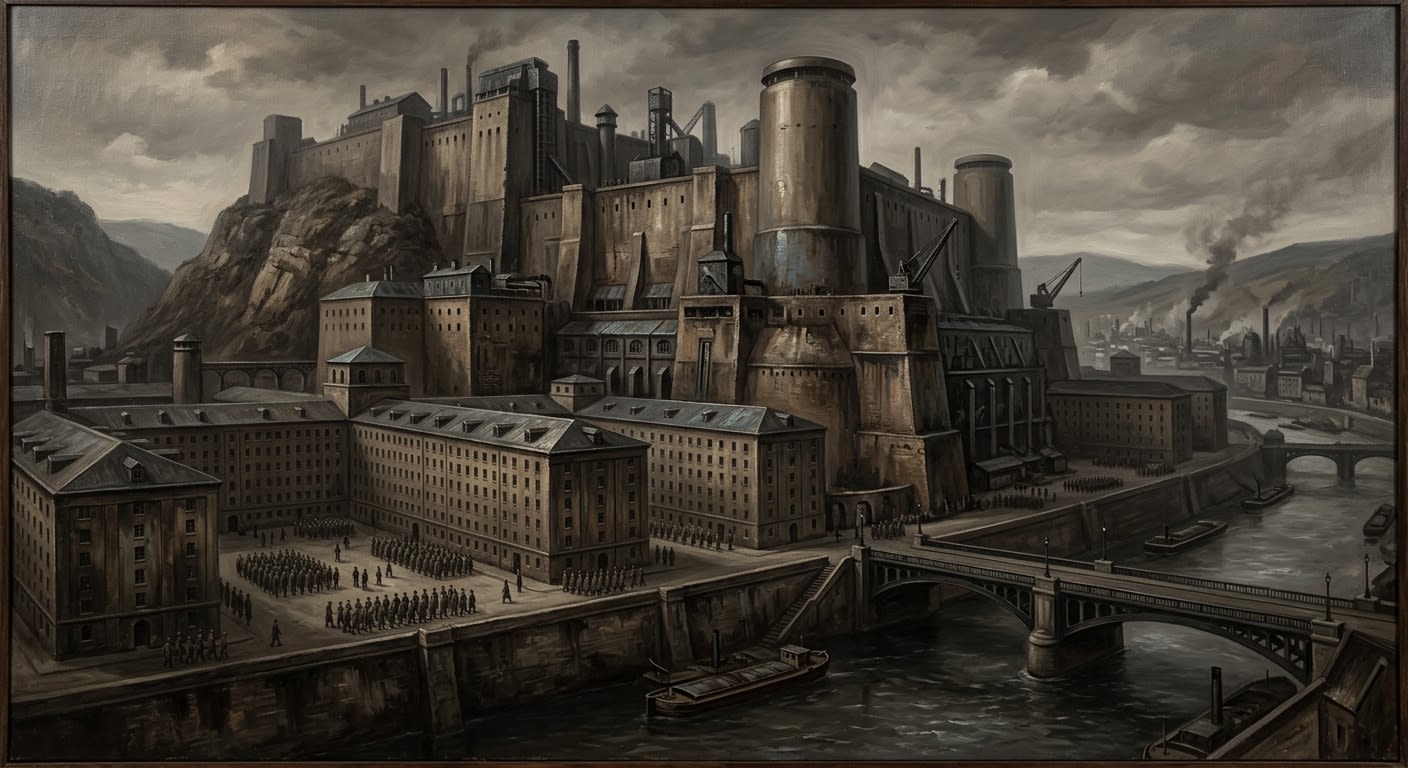
Citadel of Lyon
The hill where maternal invention meets drill tempo
The Citadel of Lyon is the Rhône corridor's catechism-barracks and civic warning, fixed after the Levy protests to train boys and supervise joy.
Codex Ref. II.1.01-004
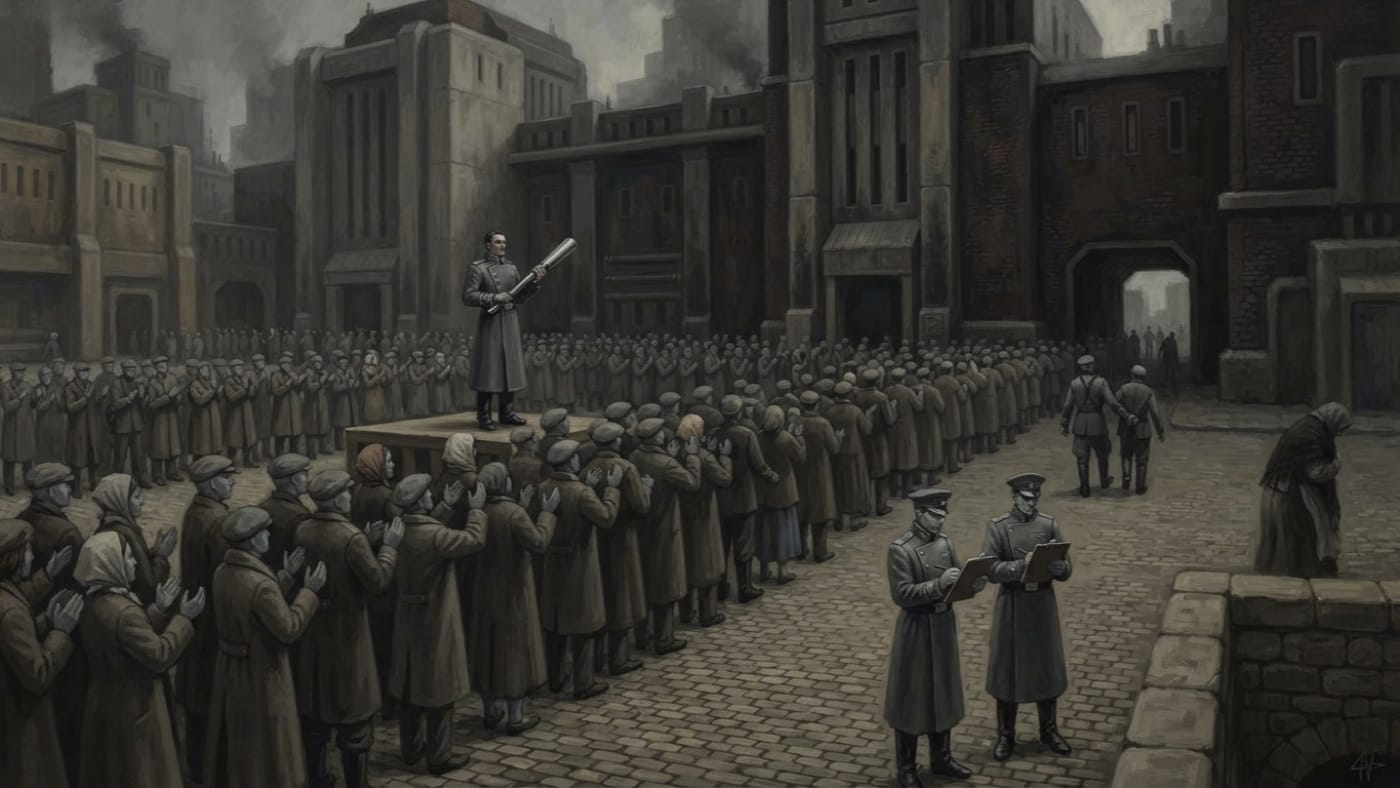
City of Grey Faces
Perfect applause, tripled knife assaults
An unnamed forward heartland city where eleven months of exclusive Pure Conductors produced perfect applause, doubled confession and tripled knife assaults. Filed under morale hazard; the ledgers remained beautiful.
Codex Ref. II.3.17-001

Clean Knife Line
The place register has mistaken a pedigree for an address
The Clean Knife Line is one of twelve surviving Index of Safe Lies copy lineages. Its practical measures remain exact; its custodians remain unnamed, and the place register remains wrong.
Codex Ref. III.2.201-638
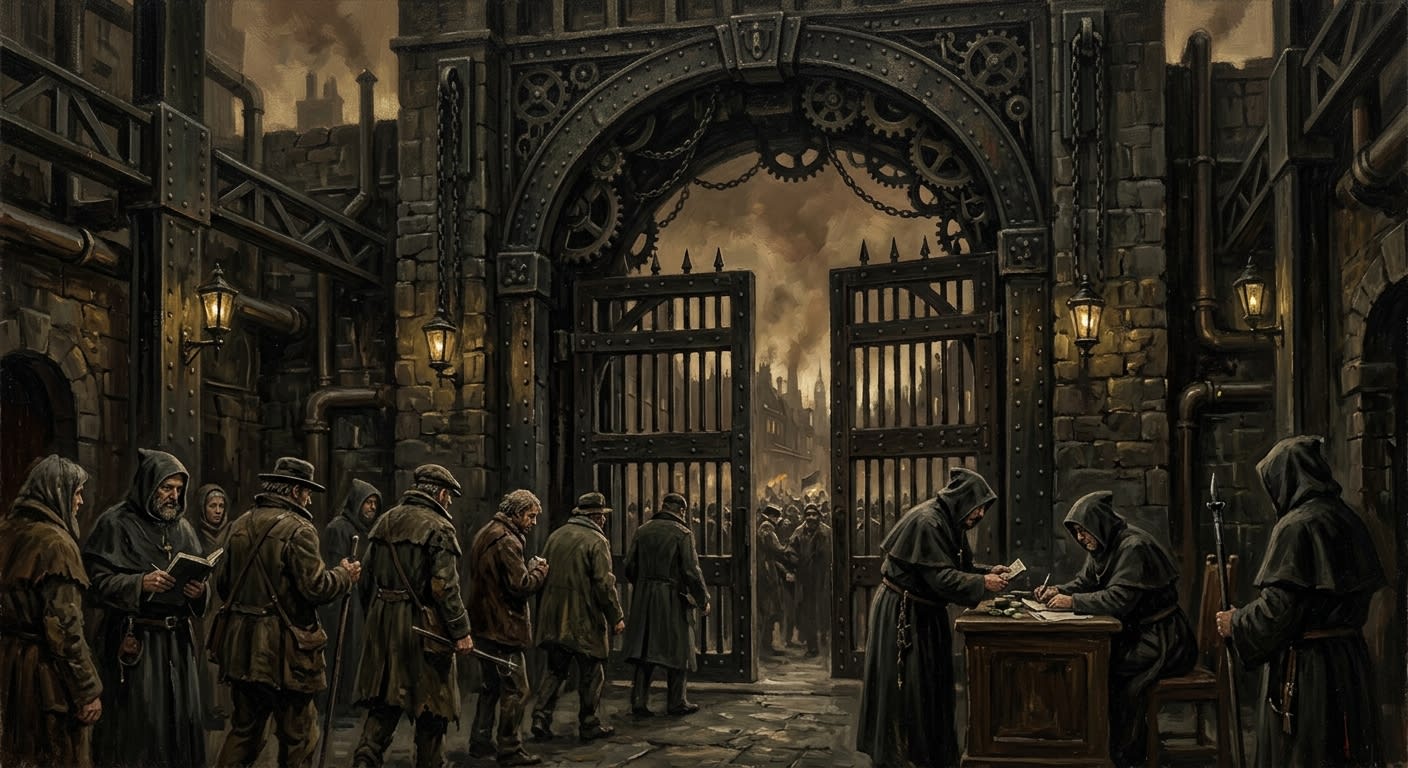
Clearance Gate
Release is merely refusal with better hinges
The Clearance Gate of the Cloister of Miscounted Beads opens cityward only after correction, then teaches released souls that Strasbourg charges rent for mercy.
Codex Ref. II.3.06-007
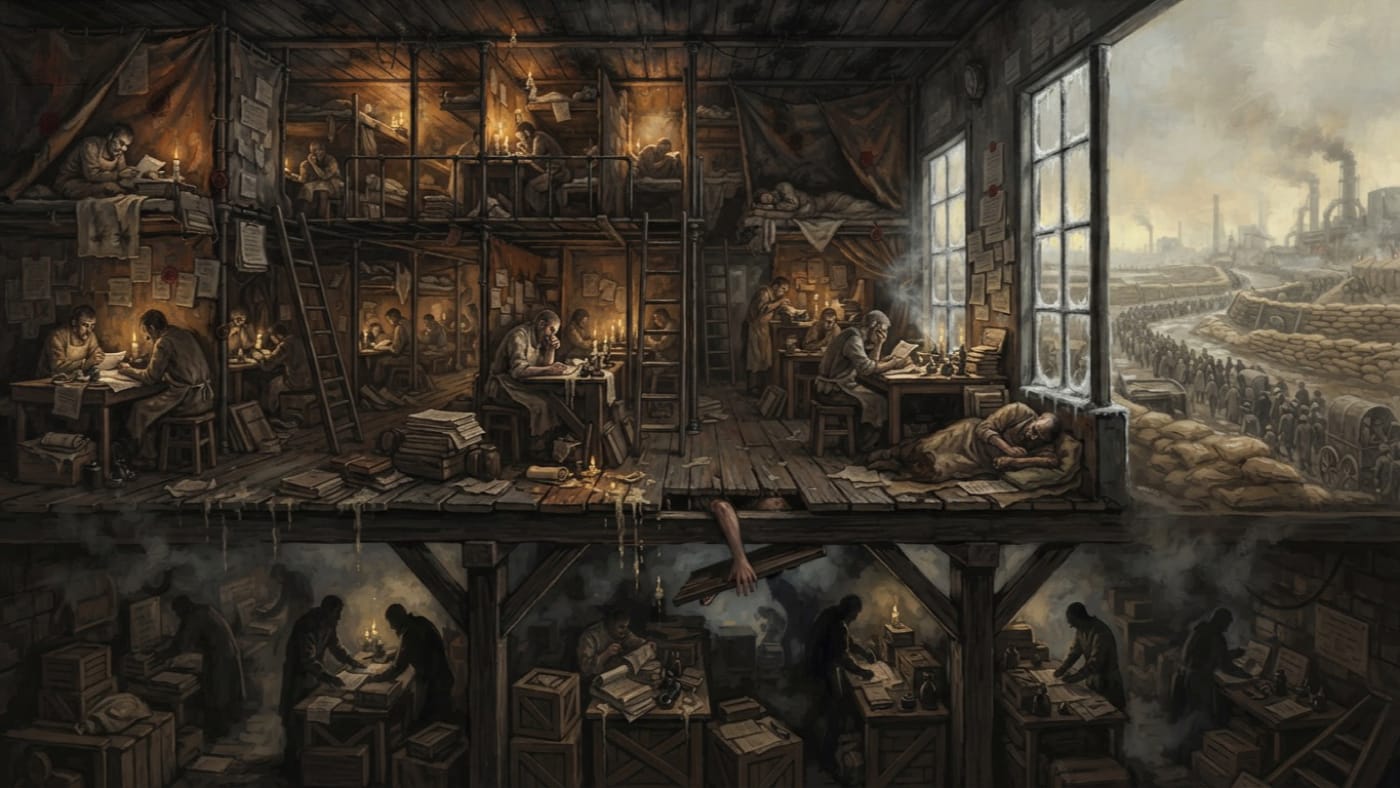
Clerklofts
Where the hands that grant passage sleep above the hands that sell it
The Clerklofts house Latchford's scribes above the Minute Market, where lawful passage sleeps one plank away from forgery, stolen windows, and mercy sold by the minute.
Codex Ref. II.4.08-201
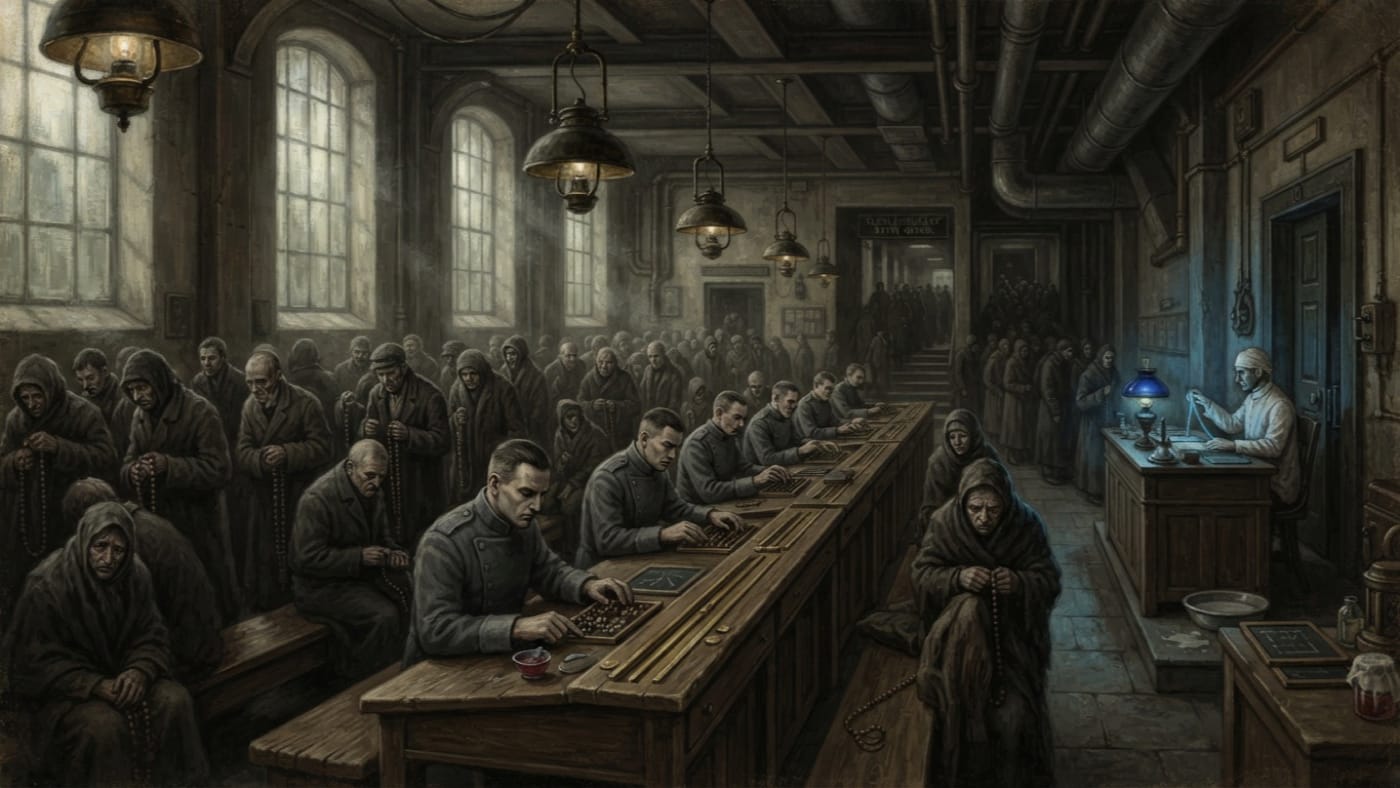
Clickery
Twelve desks between pilgrimage and permission
The Clickery is the Cloister's Counting Hall: twelve desks pronounce pilgrim discrepancies, send them to the Supplementary Entry Office, and leave the impossible to Desk Eleven.
Codex Ref. II.3.06-009
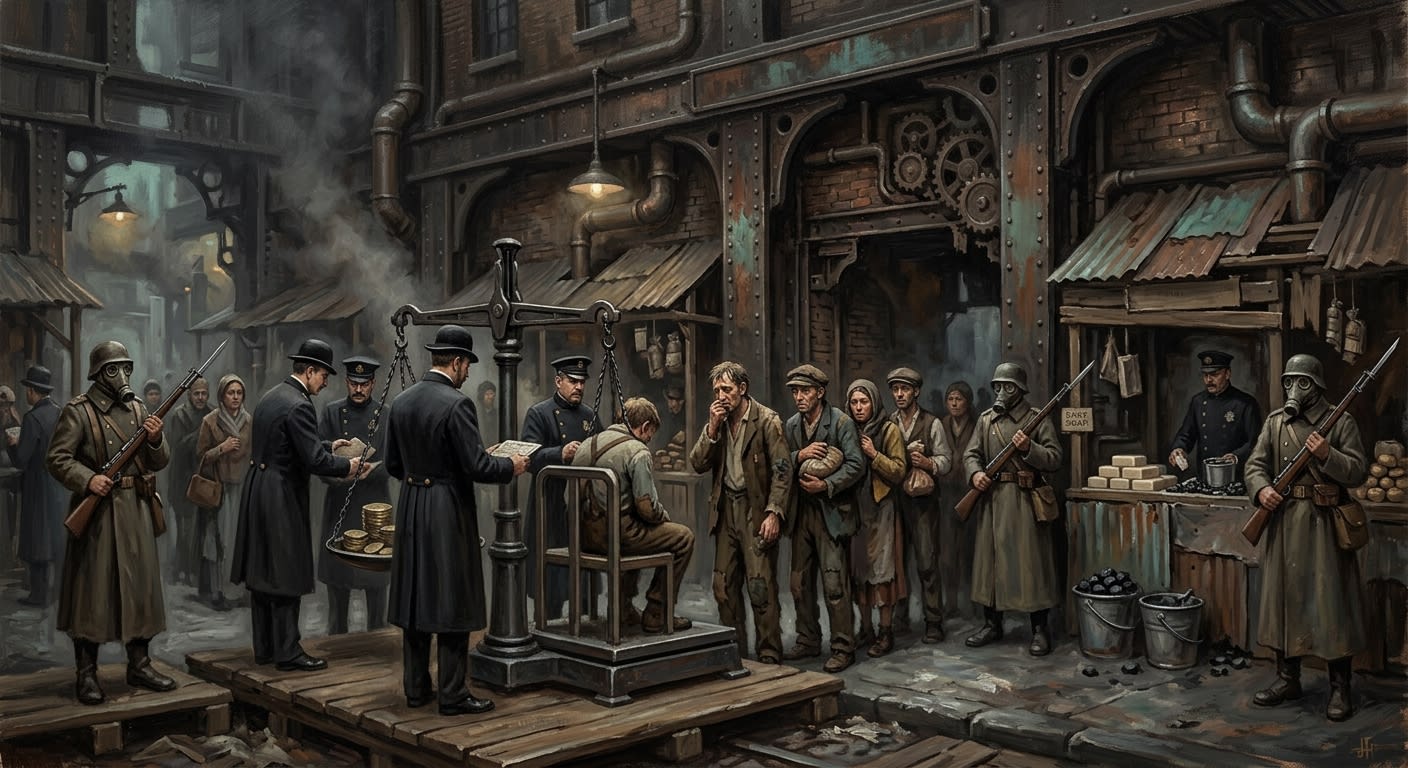
Clipper's Market
Where money confesses and hunger pays the fee
Sable Court's legal exchange frontage weighs coin, face, and citizen alike; the soap is cheap, the fear is official, and the mercy is illegal.
Codex Ref. II.2.07-002
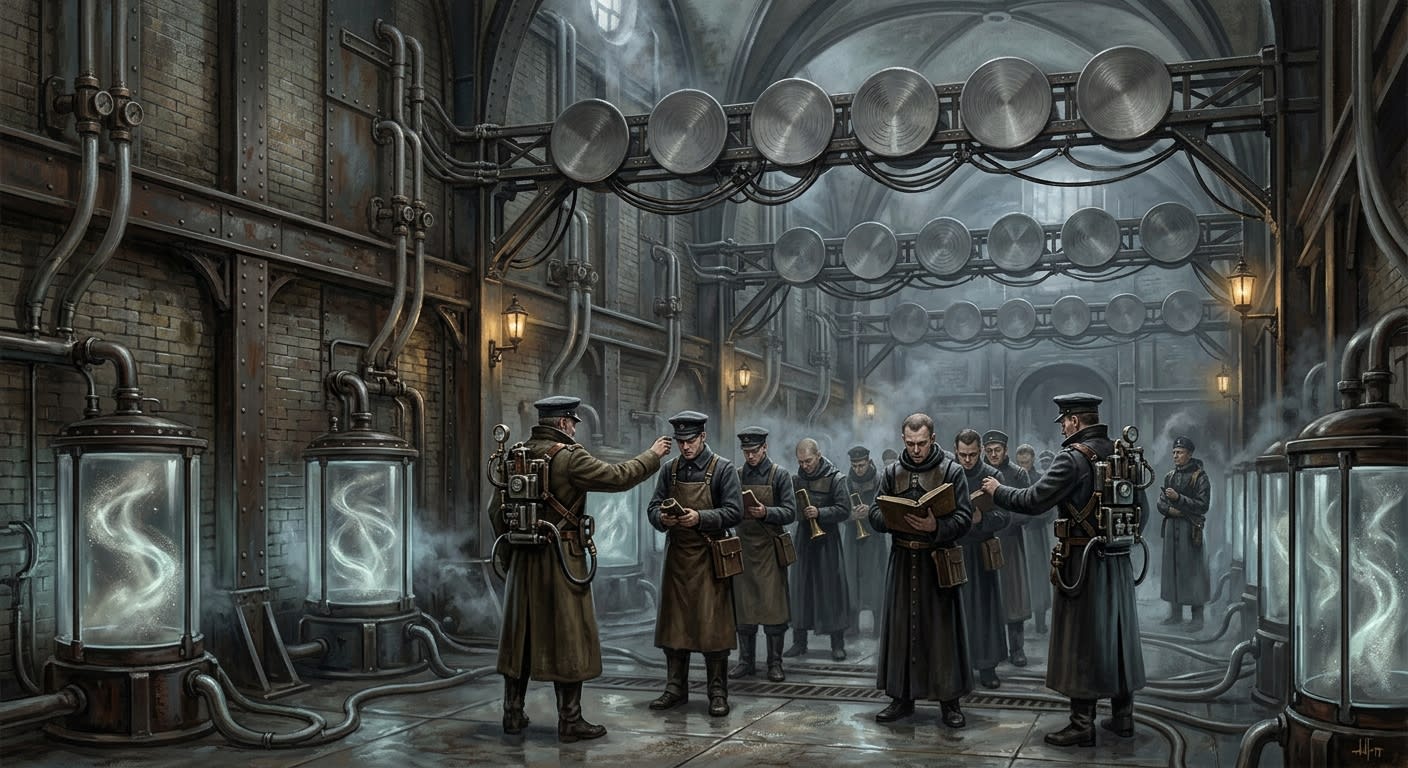
Cloister of Calibrated Breath
The lung exists; the Bureau measures
Strasbourg's Cloister of Calibrated Breath teaches air to obey: hymn plates above, saint-dust coils below, and silence trained until it confesses.
Codex Ref. II.2.06-008

Cloister of Concord
Agreement under pressure, paved in ash, ink, and enemy stone
The Cloister of Concord is Strasbourg's working courtyard of authorised agreement, where Doctrine turns contradiction into law and stone learns to listen.
Codex Ref. II.1.04-004
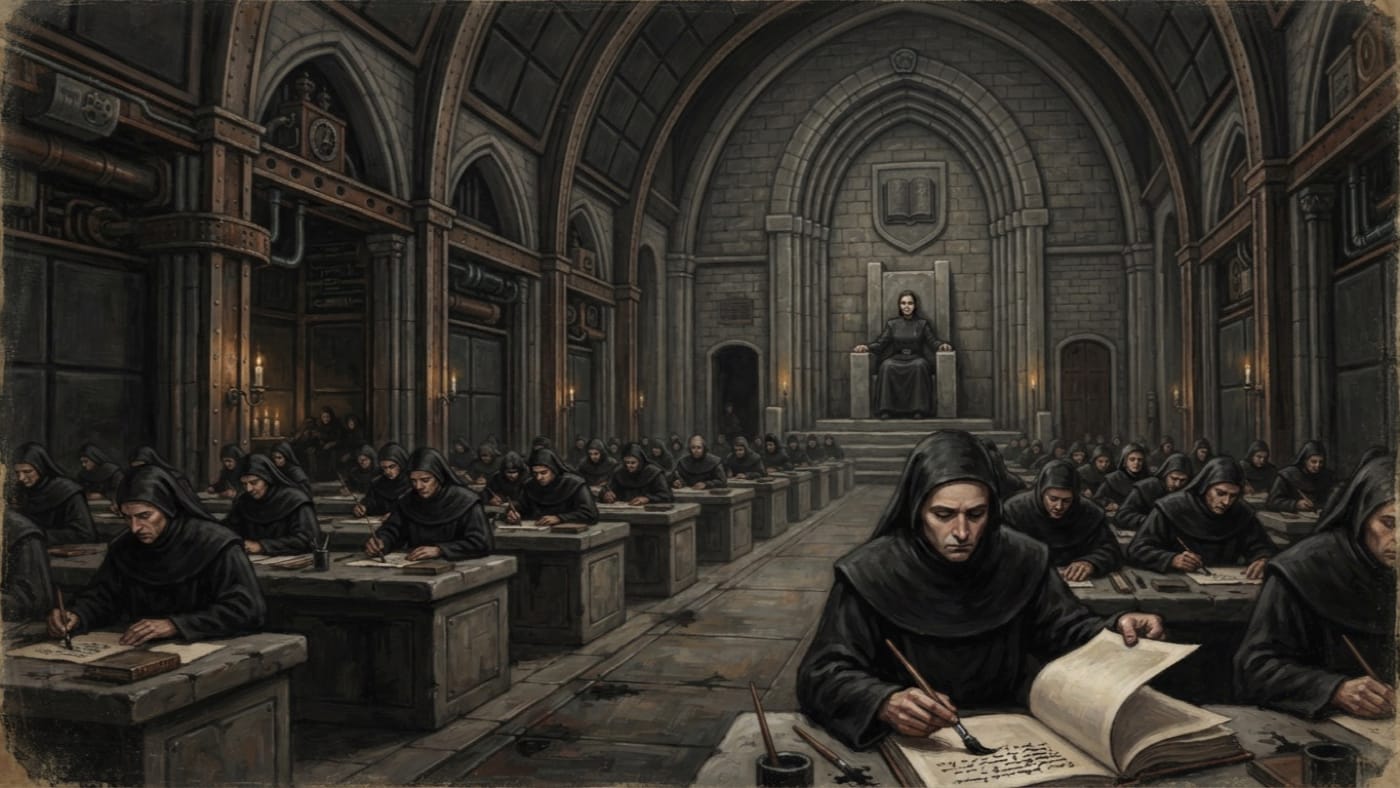
Cloister of Prescribed Silence
The room where refusal requires no reasons
The Cloister of Prescribed Silence is the Bureau of Silence's soundproofed Strasbourg seat, where libraries are licensed, Forbidden Stacks access is counter-sealed, and changing ink is declared obedient.
Codex Ref. II.1.04-019
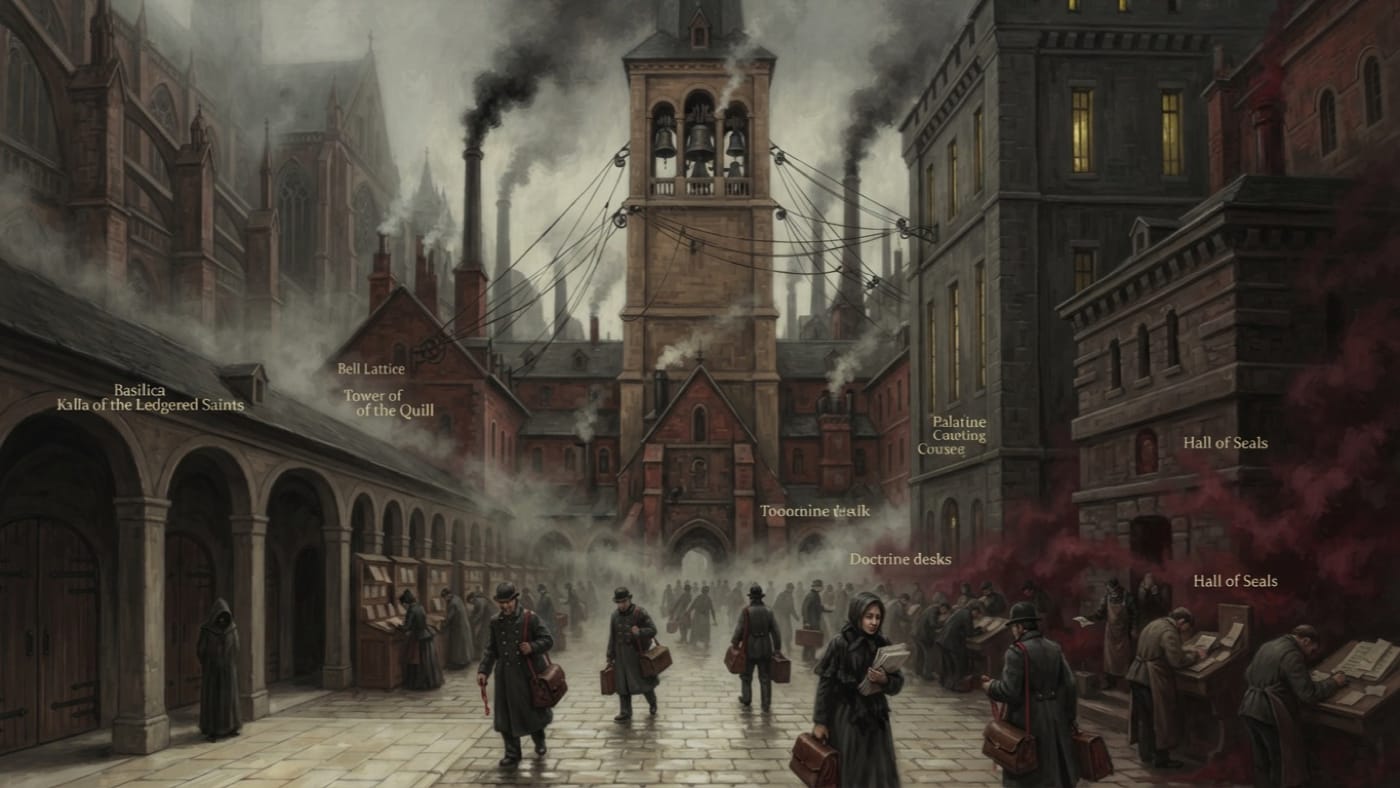
Cloister Precinct
Where every refusal stands within walking distance
Strasbourg's Cloister precinct gathers Doctrine desks, seals and tithes around one petitioner's walk. Every refusal is nearby; the northern arcade has no recorded custodian.
Codex Ref. II.1.04-008
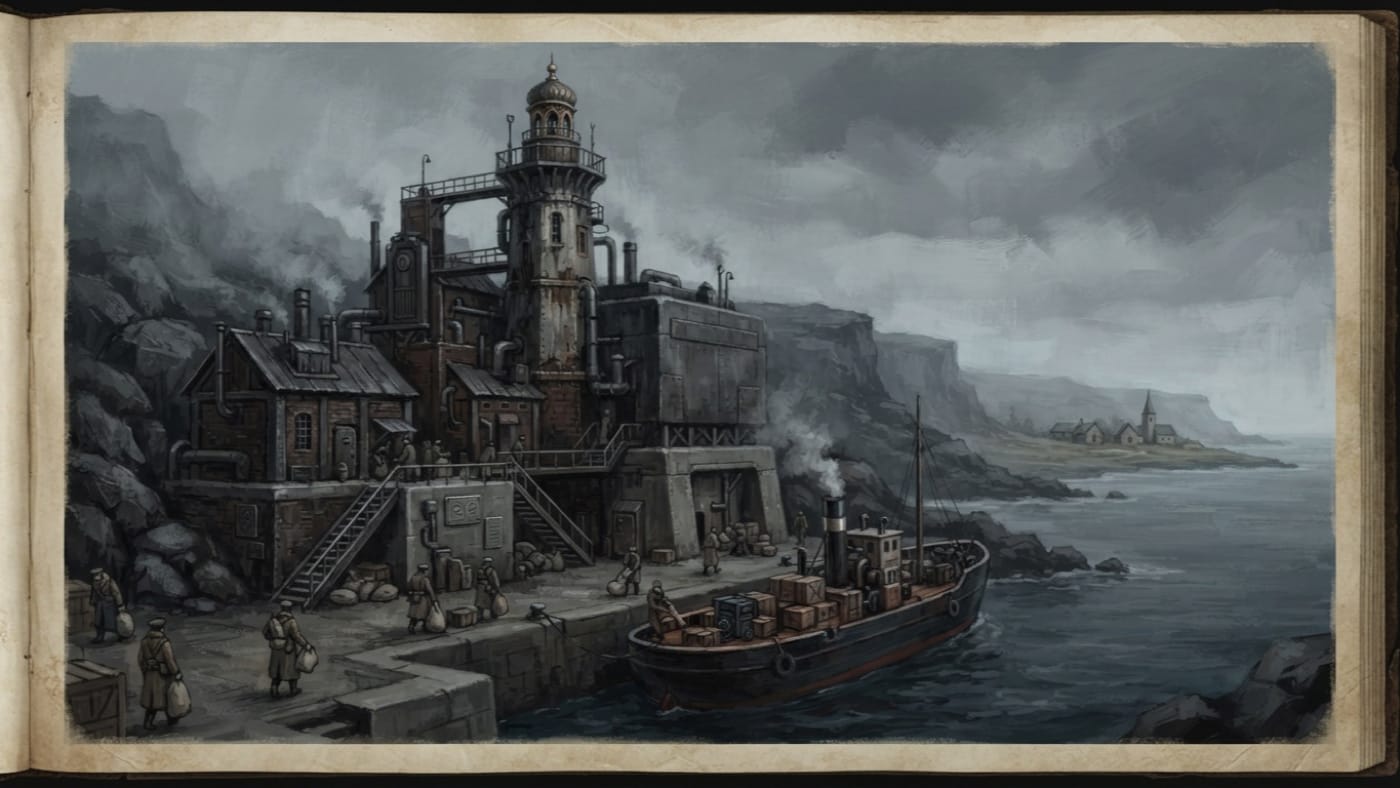
Coastal Station Theron
Where the sea is supposed to be written down
A.S. 201 documentary survey of the Pilgrim's Coast registry point attested in the Constantinople and Settlement accounts. A name, a harbour log and a measuring point: exactly as much station as the ink allows.
Codex Ref. II.4.09-661
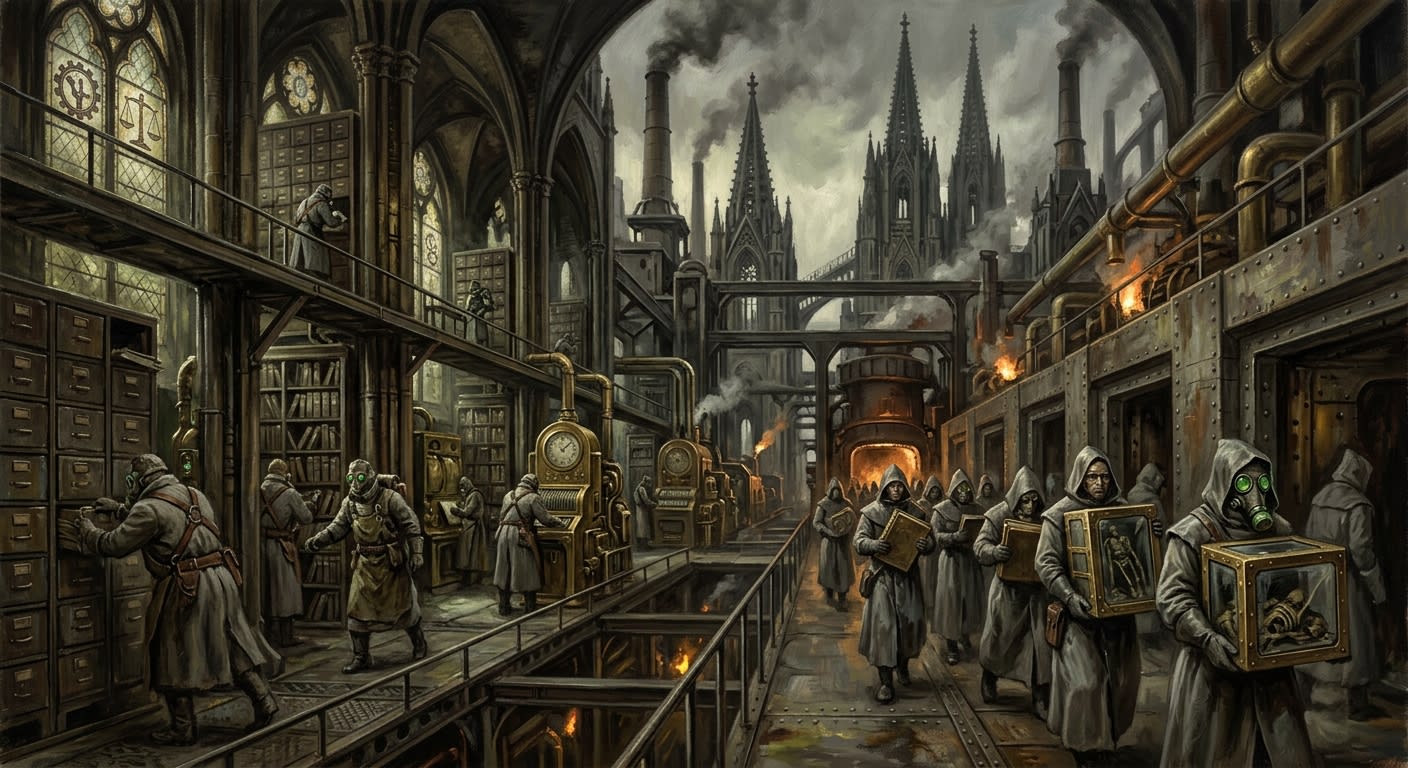
Cologne
The city where obedience borrowed a room and never repaid it
Cologne is the Rhine's holy account-book: cathedral, archive-bank, minting throat, relic cupboard, and the city where Synodic obedience learned to sign.
Codex Ref. II.2.01-004
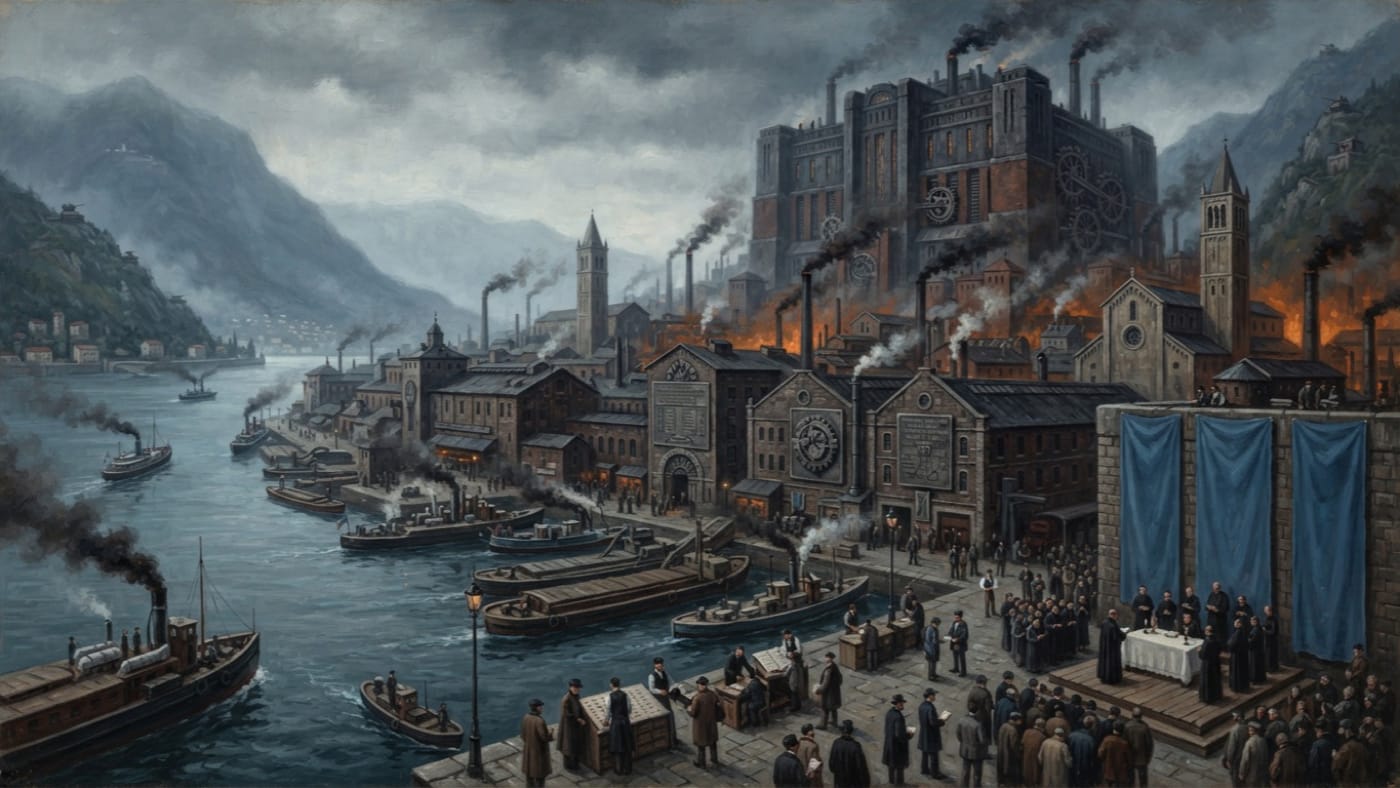
Como
A city that changed its bells and kept its names on the roll
Como put crossed keys on its silk, its warehouses, and its tax office in A.S. 150. In A.S. 201 its trade functions, its bells obey, and its names remain on the roll.
Codex Ref. II.1.08-201

Concord Quarter
Where the Synod receives what it cannot command
Strasbourg's Concord Quarter houses foreign missions and Concord's arbitration rooms. Here the Synod receives what it cannot command, and every objection remains pending.
Codex Ref. II.1.04-007
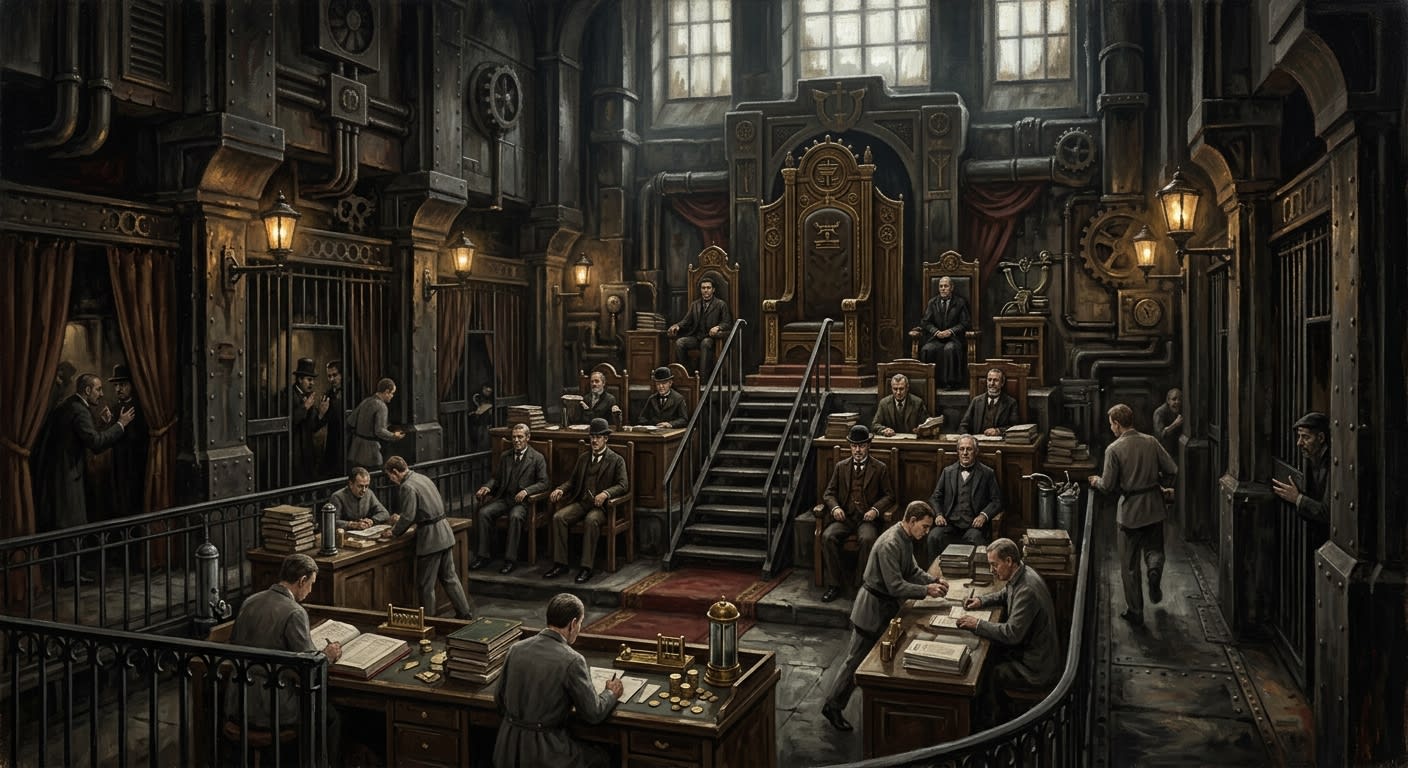
Concordat Hall
Where agreement kneels, pays, and receives a chair
Concordat Hall is Strasbourg's constitutional pressure chamber: thrones, clerks, proxy corridors, speech fees, and agreement taxed into sanctity.
Codex Ref. II.1.04-006
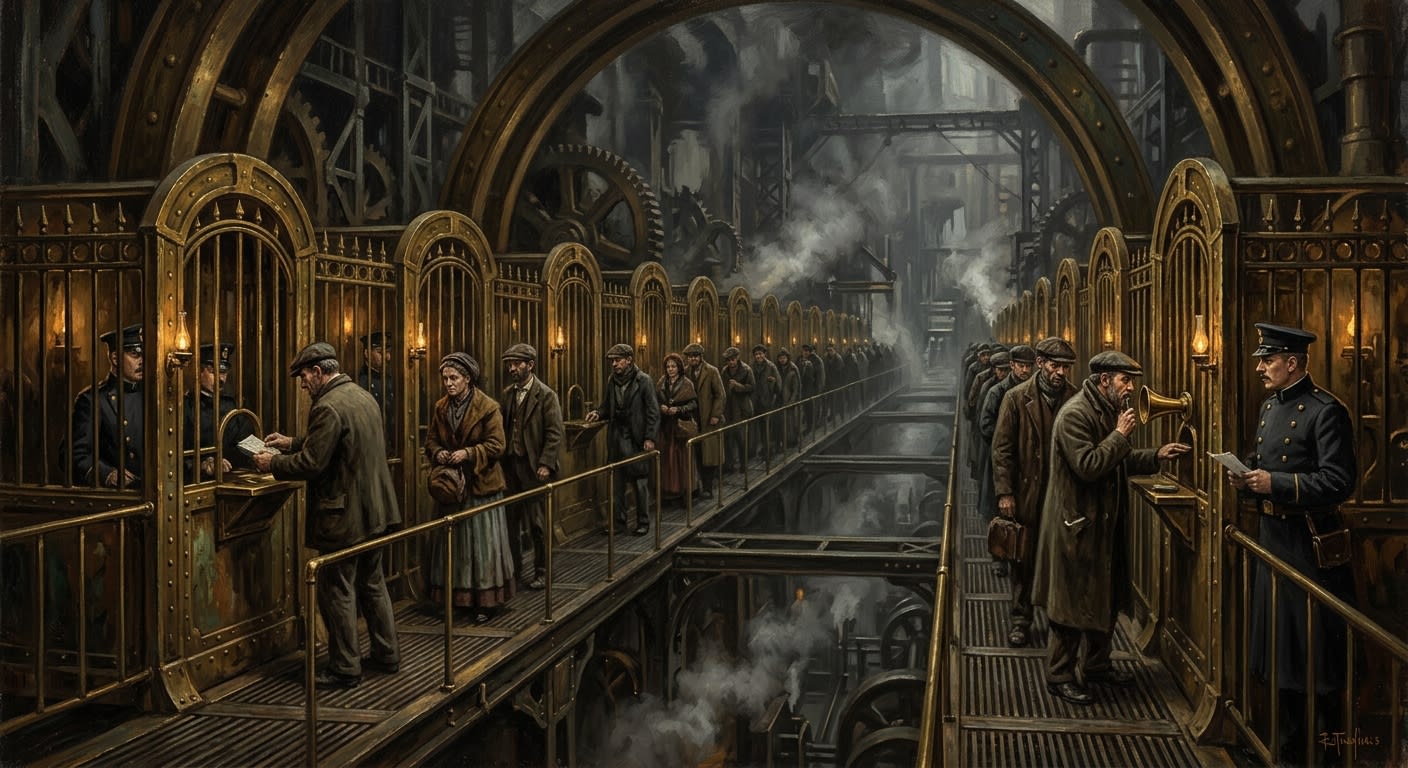
Confessional Lanes
Where sin kneels, pays, receives a token, and keeps the bridge moving
The Confessional Lanes of Bastion-Brest are two hundred and fourteen bridge-booths where every crosser must surrender name, sin, receipt, and voice before the Brass Ribs allow passage.
Codex Ref. II.4.08-098
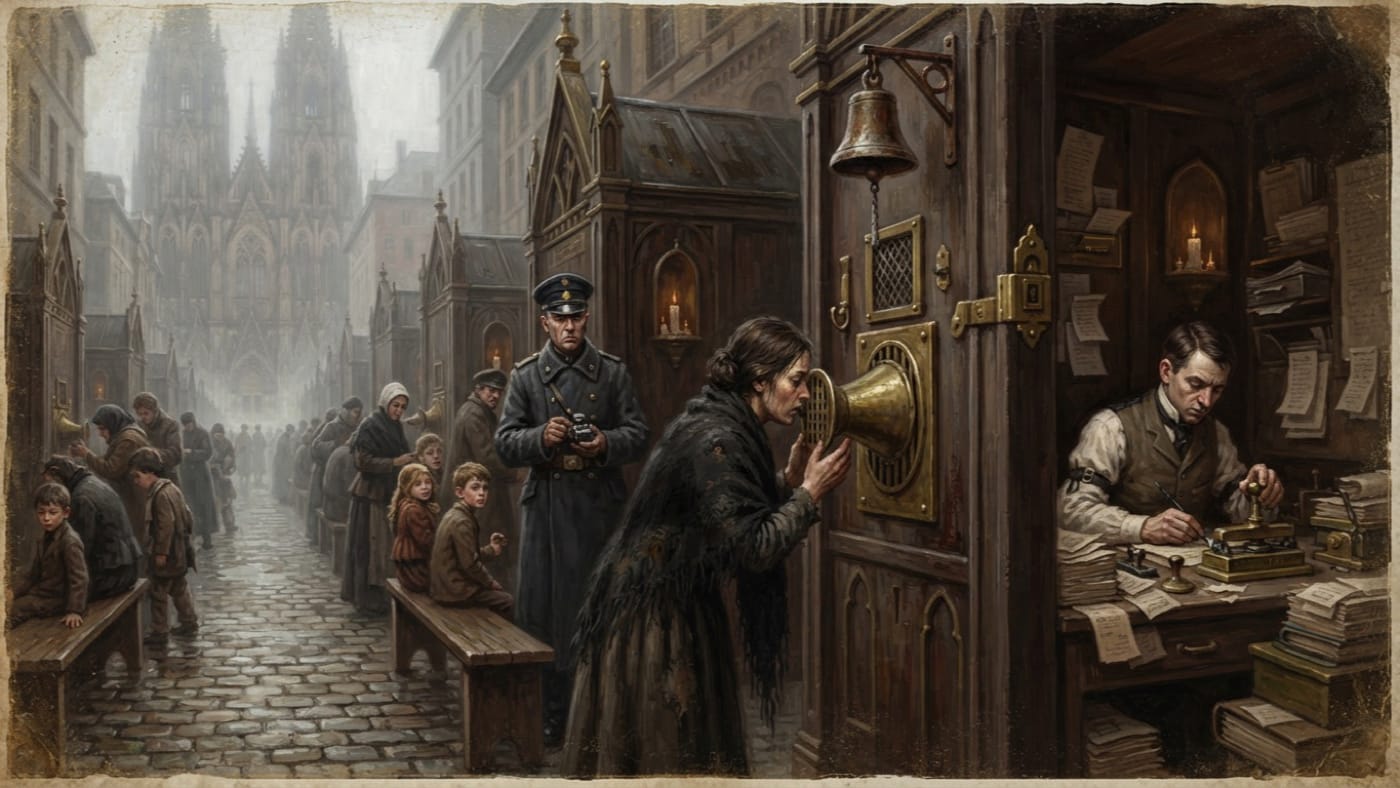
Confessor-Kiosks
The soul speaks; the city keeps the receipt
Cologne's confessor-kiosks turn spoken sins into stamped receipts. Records keeps the abstracts, Purity keeps listeners, and Doctrine calls disputed additions Heaven's interpolations.
Codex Ref. II.2.01-716
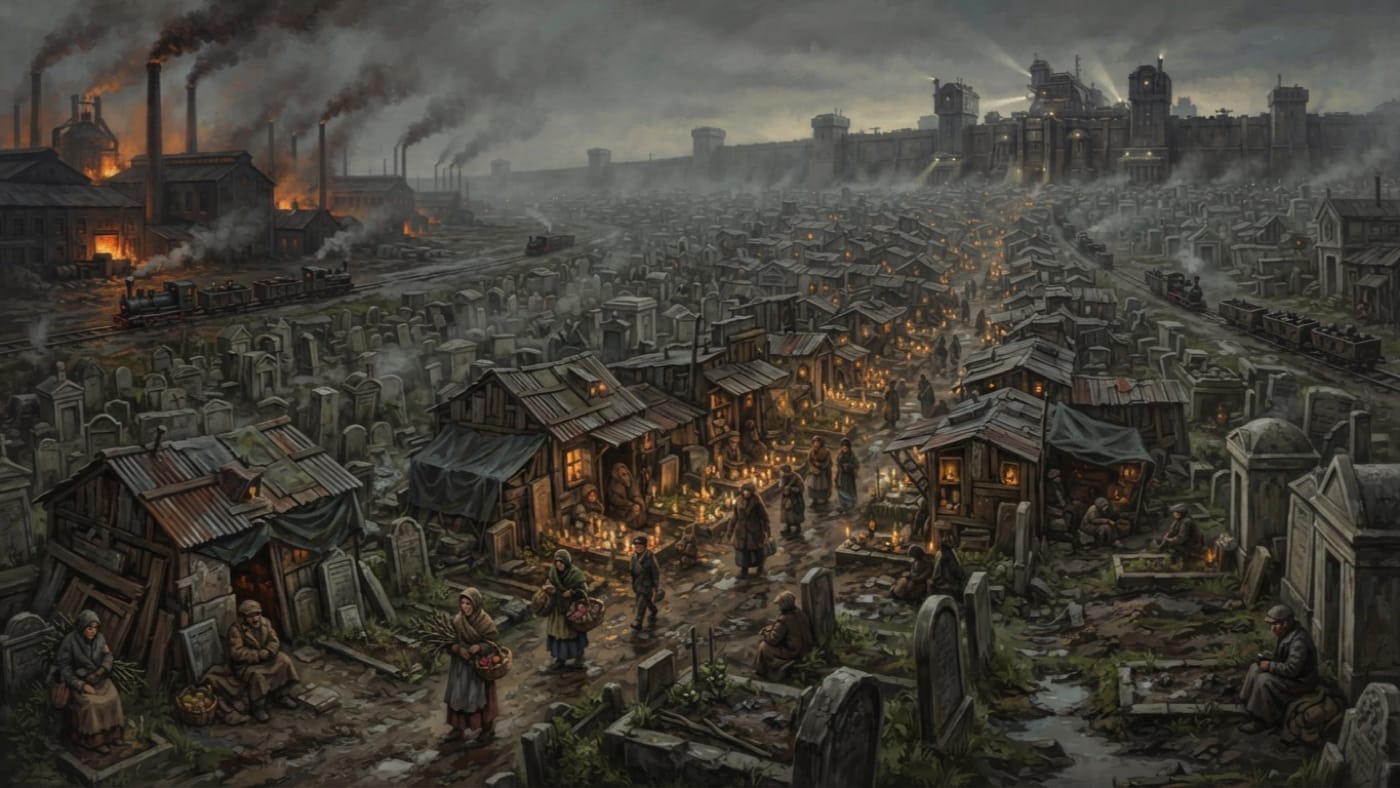
Constantinople Hintermark
The country that feeds the Last Lock and roofs its widows between graves
West of Bastion-Constantinople, the Hintermark sends fruit, castings and levy replacements to the southern anchor. Its widows and refugees find roofs between graves, where the paperwork recognises maintenance and denies habitation.
Codex Ref. II.3.06-201
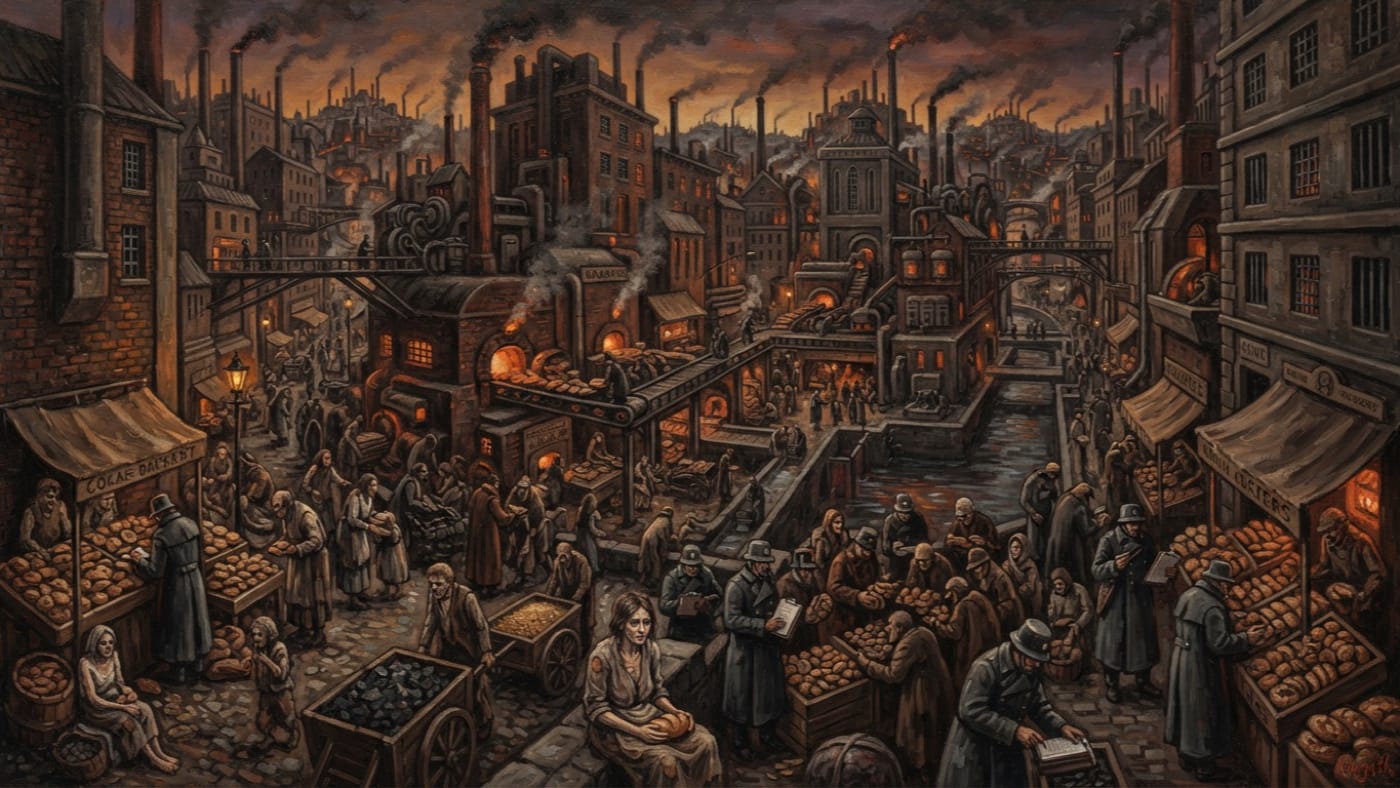
Consuming Cities
The ovens work. The hunger grows.
A.S. 201 survey of refugee reports: Kargath's captured cities keep working, food serves as currency and hunger worsens with production. The Bureau doubts its witnesses and has no others.
Codex Ref. III.2.04-727
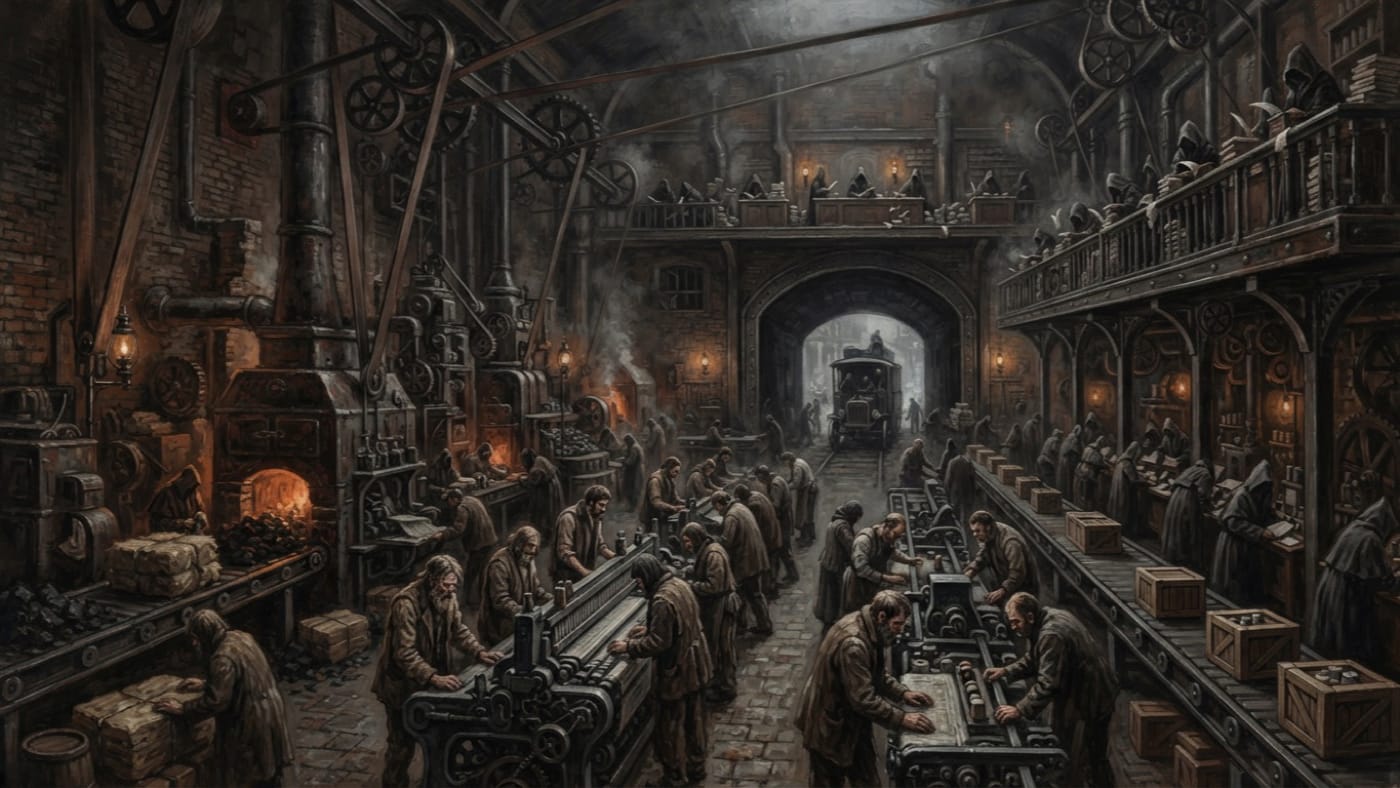
Consuming Factories
Raw materials enter. The workers pay the difference.
A.S. 201 survey of Velmora's captured industrial works. Raw materials enter; fewer goods leave. The ledger reading is mine. The reported cost is the workers' labour, health and years.
Codex Ref. III.2.04-728
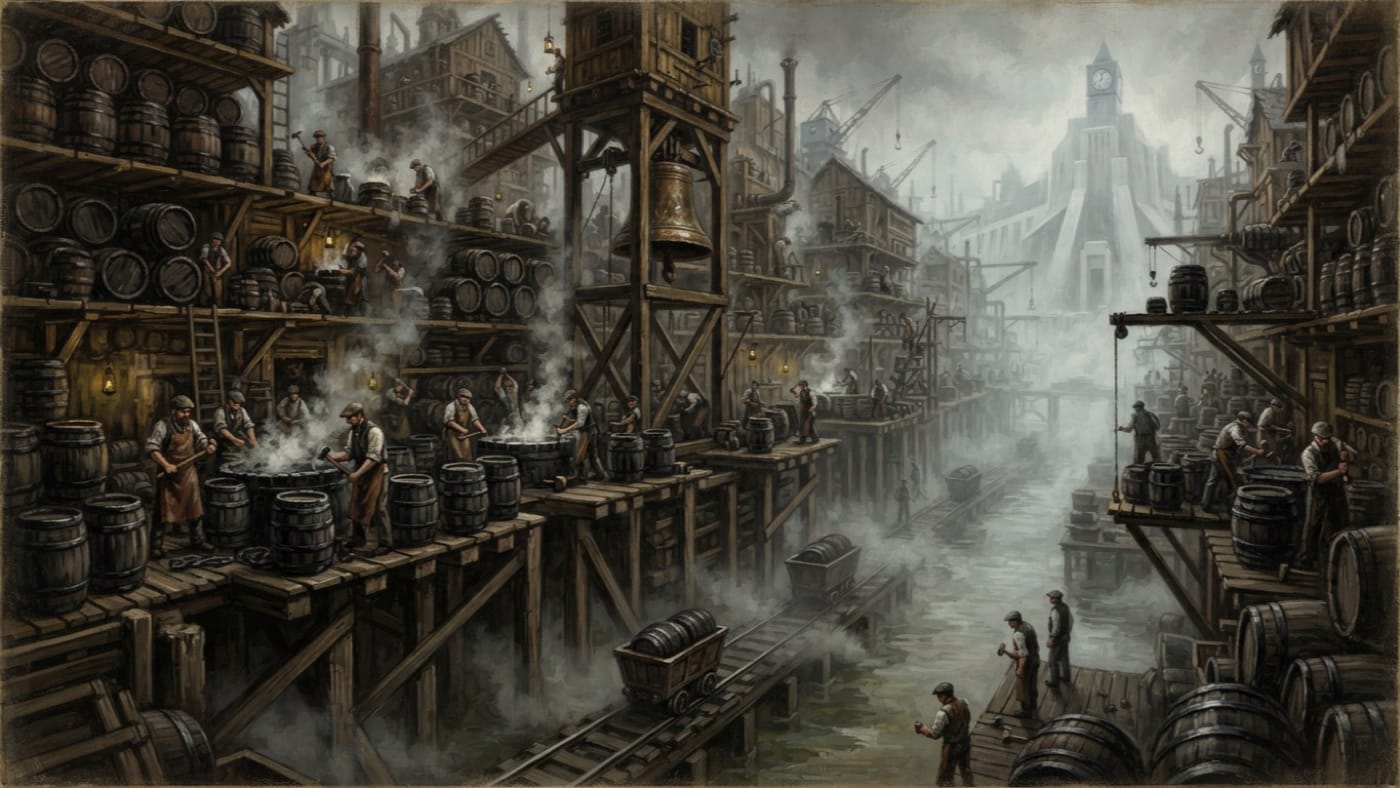
Cooperage Yards
The cooper answers for the cask; the contents arrive with other men's signatures.
Mournwater's oldest working district shapes the casks that carry saint-dust to the Line. Master Cooper Vell Arno controls the barrels; the White Steps certify the contents, and the Settling Bell decides when the hammers may resume.
Codex Ref. II.2.03-002
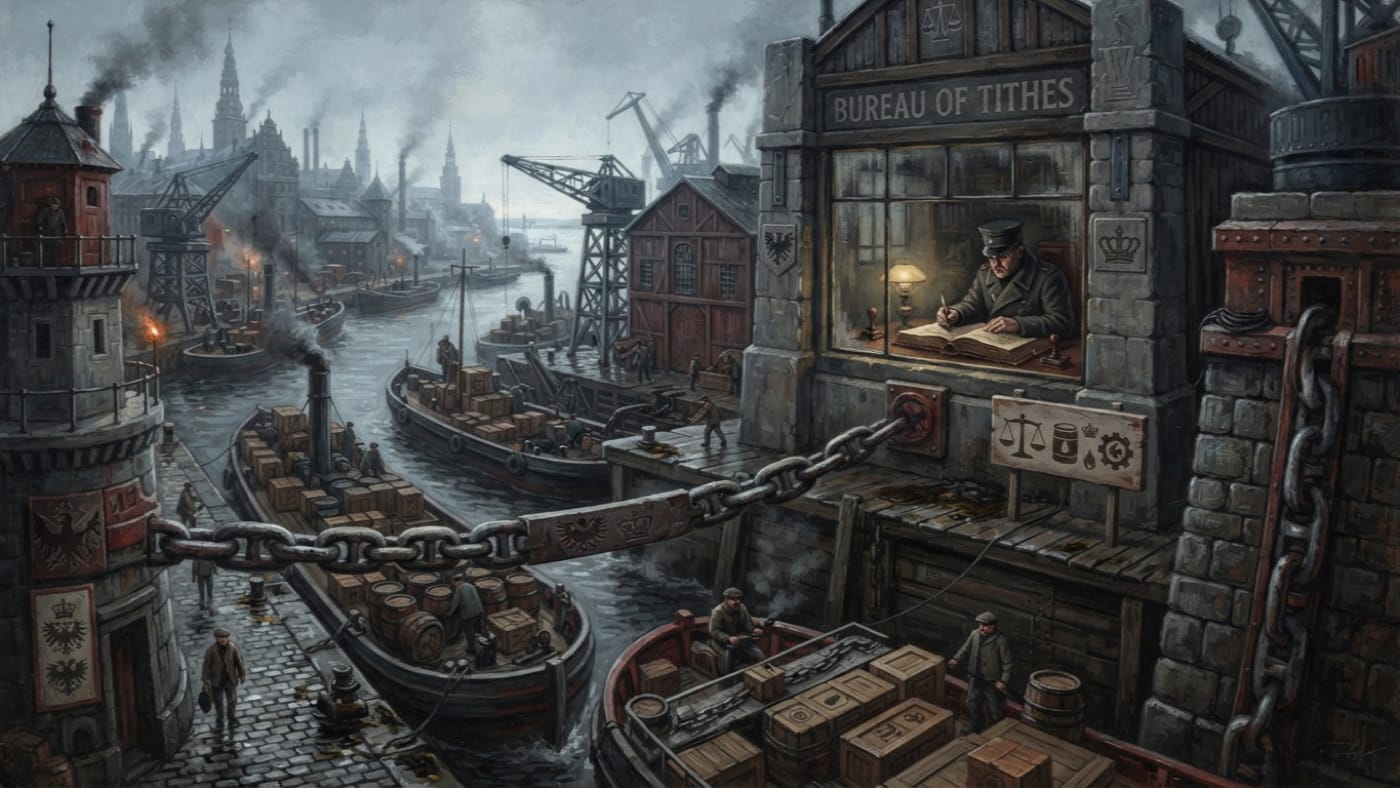
Copenhagen
The ledger is ours. The harbour is theirs. The debt is ours as well.
Copenhagen's Danish harbour compact bargains over oil tithes and guarantees northern advances against future cargo. The Synod keeps an assessor at the counter; the harbour keeps the chain.
Codex Ref. IX.8.03-001

Córdoba
The city that returned a saint and kept an altered inventory
Córdoba enters the Ledger through a prefect's desk: Saint Iago's jawbone was reclaimed there in A.S. 12, while the altered inventory keeps provenance inconvenient.
Codex Ref. II.1.04-012
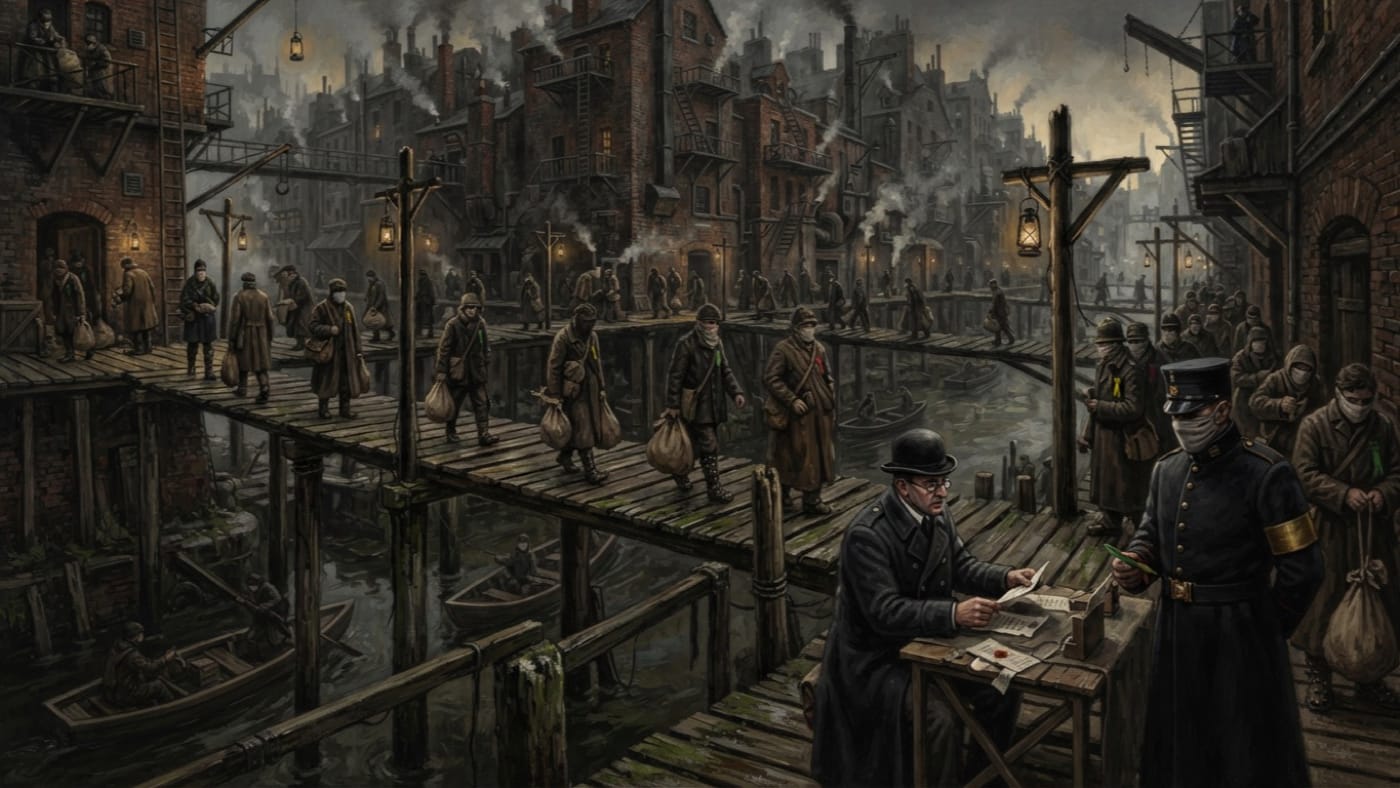
Coughwalks
Dry boots are the whole of the guarantee
Candle-Sump's raised plank roads keep boots above the flood line and lungs in the damp. Runners, patrols and illicit identity slips pass here; no office admits responsibility for the boards.
Codex Ref. II.1.05-002
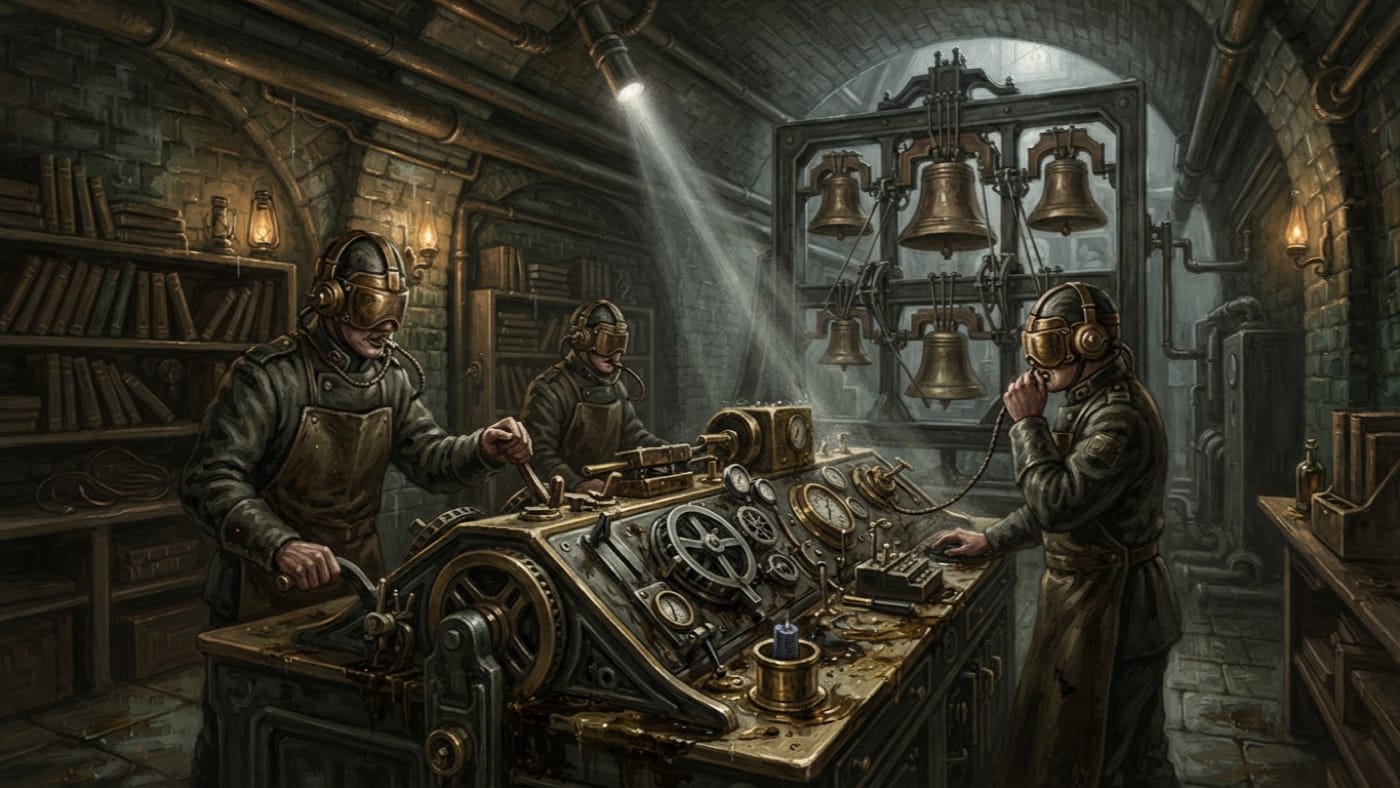
Counter-Toll vault
The tower announces the hour; the chamber defends its authority
An A.S. 201 survey of Counter-Toll vaults, the Bureau of Bells' sub-tower workrooms. Consoles, wax authority and living throats turn lawful sound into armed sound.
Codex Ref. II.4.09-201
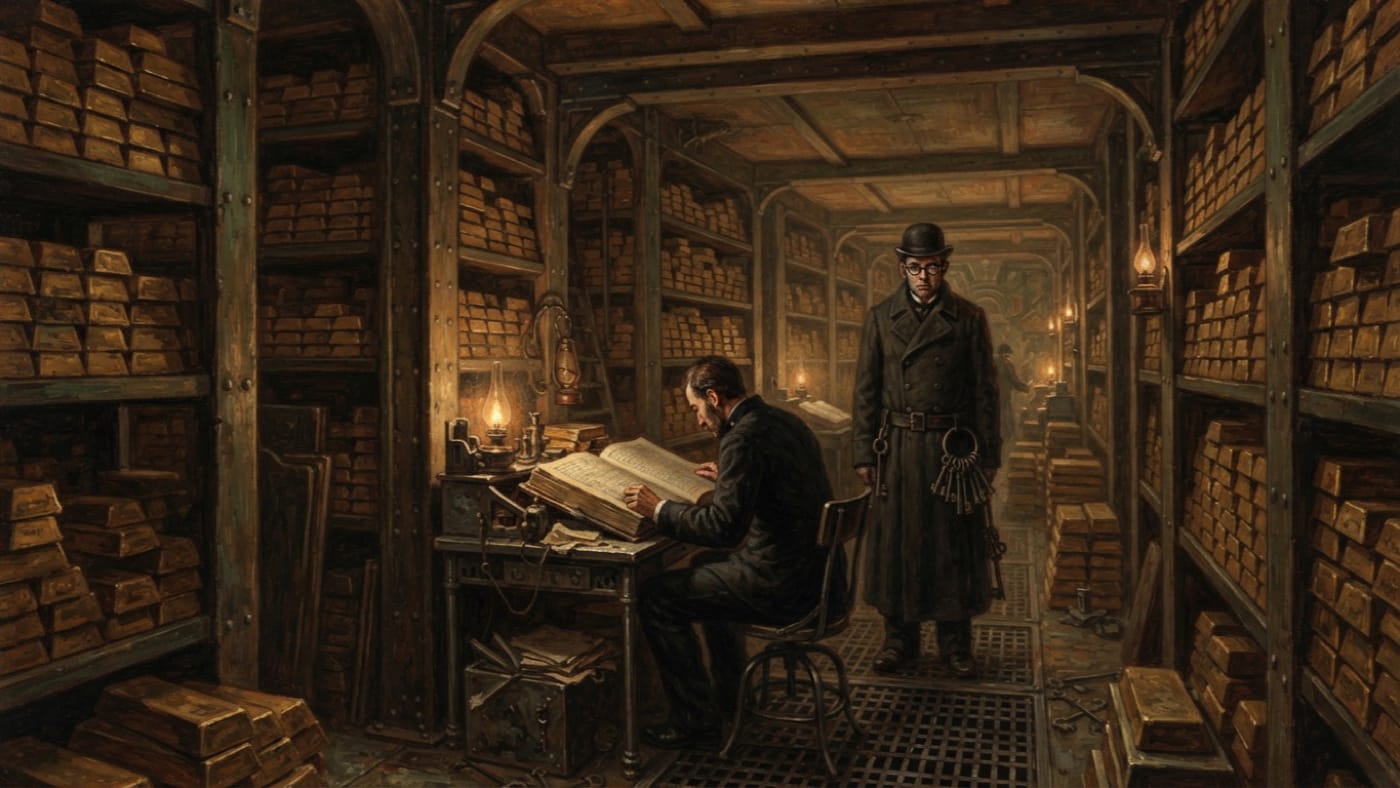
Counting Halls of the Vault of Ten Thousand Keys
The ledger opens at your name
The Vault's third level opens its ledgers at your name. Inspector Venne sat down in A.S. 174 and has not returned. Precision is a respectable virtue; here it supplies the leash.
Codex Ref. V.6.02-004
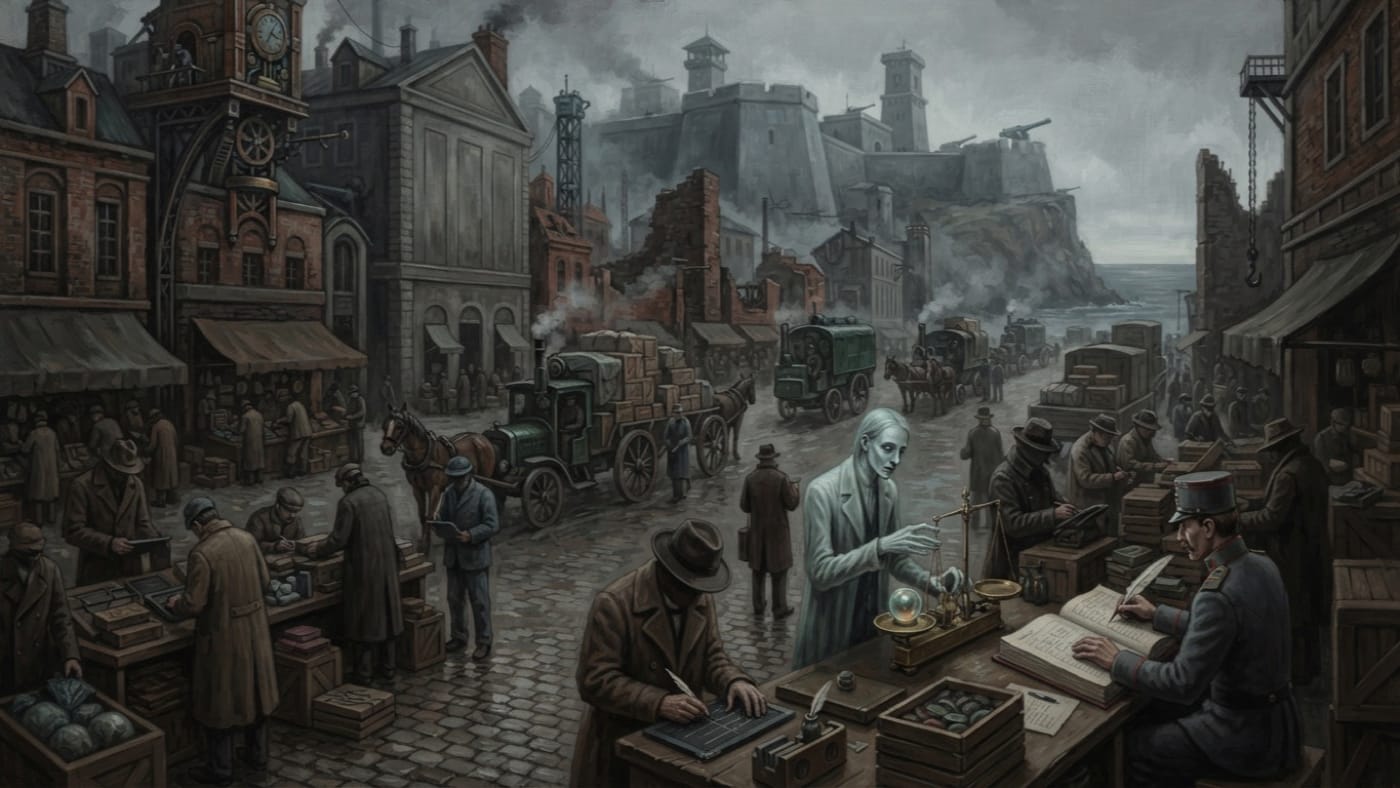
Counting Kingdoms
The markets remain open. Consider what they sell.
An A.S. 201 survey of Velmora's reported Balkan trade cities, where markets, guildhalls and caravans endure while time, memory, warmth and years of life pass across the counter. The Bureau has city names. It has no border.
Codex Ref. II.6.07-779
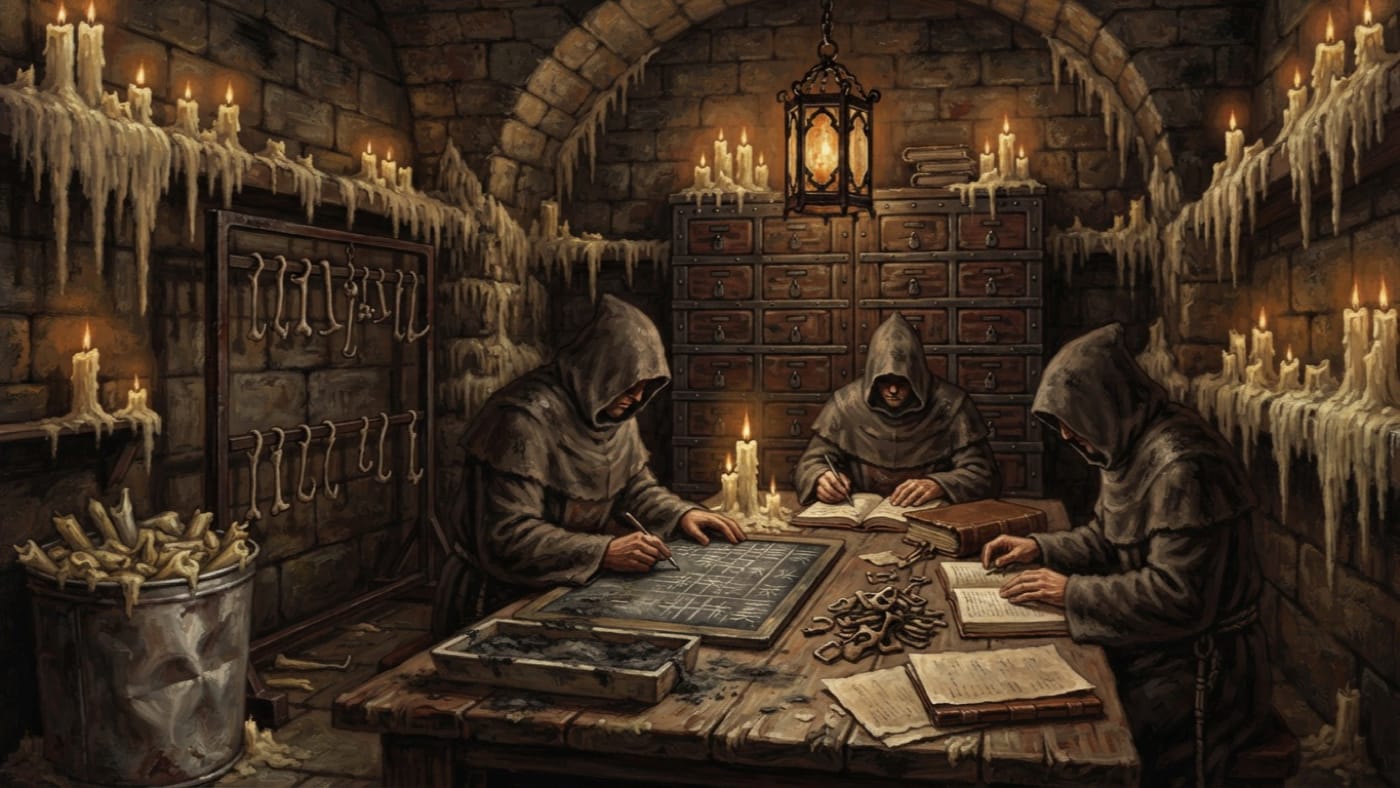
Counting Room
Where a full column need not mean a full grave
Ossuary Office Seven, headquarters of the Circle of Ashen Steps, reconciles candle tallies, body-tags, and marrow-wax in Bastion-Constantinople. The figures agree; the bodies need not.
Codex Ref. II.4.10-007
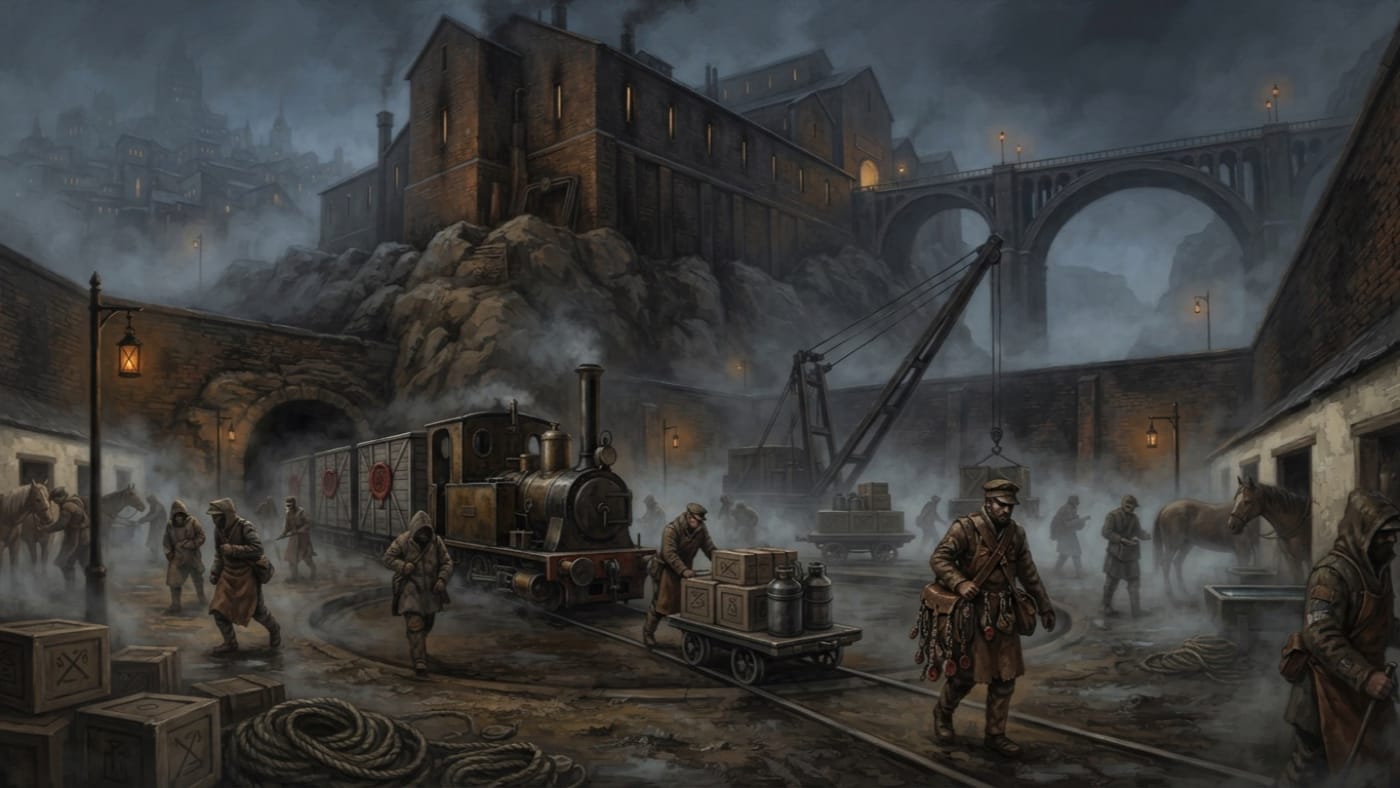
Courier Spur
Carriage certified; contents not warranted
Nemea's eastern dispatch district exports sealed decrees, certified identities and ash-ink under Collegium scrutiny. The Brotherhood certifies carriage. Contents, as the stamp says, are not warranted.
Codex Ref. II.2.06-017

Crimson Vault
The Rule in Ink, the Intention in the Margin
A.S. 201 survey of the Bureau of Records' Crimson Vault, where the Council of Worms account places Kratz's handwritten Protocol. The rain-spotted pages preserve advice the clean clauses do not; the Vault's physical location remains unestablished.
Codex Ref. III.2.07-032
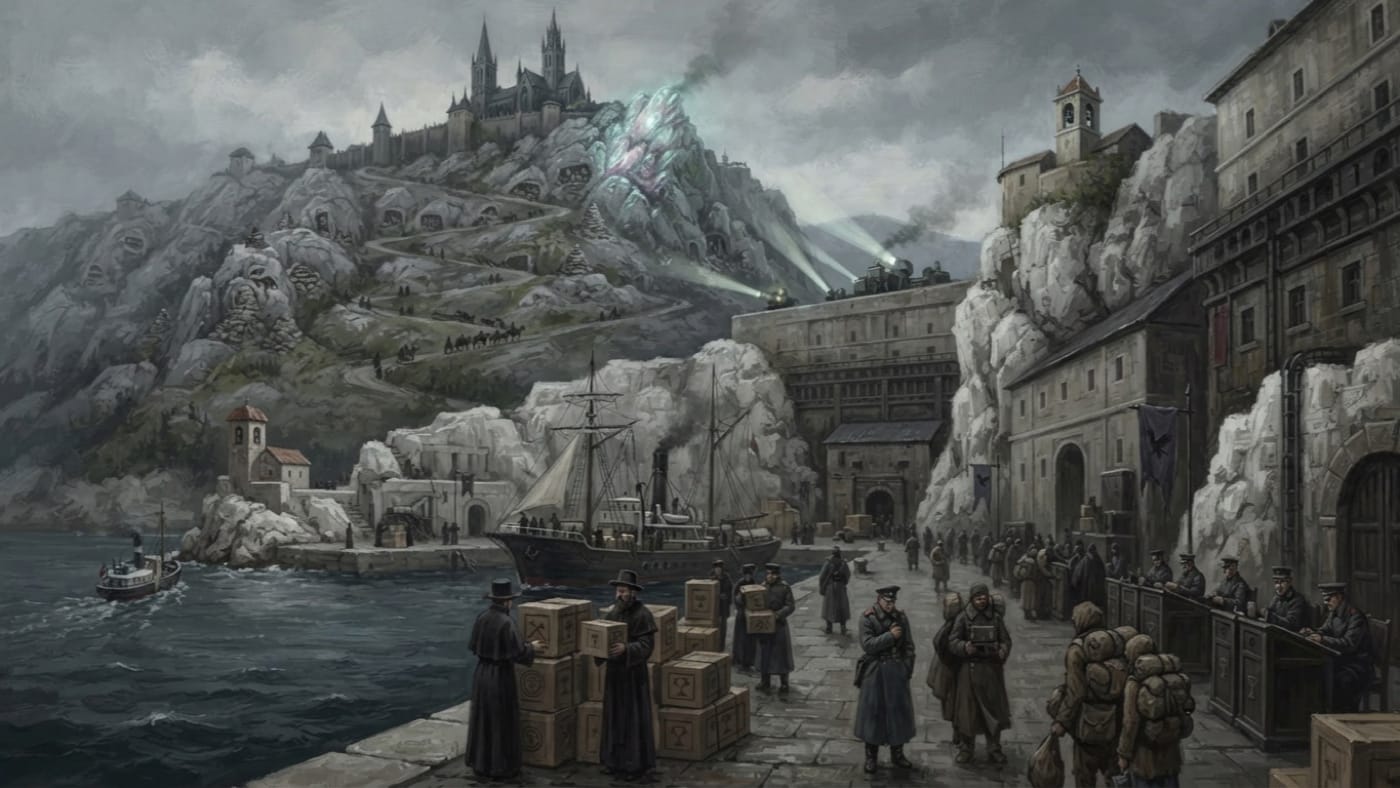
Croatia
A ridge to pray on, a coast to unload at
Croatia survives in the Ledger as Kalnik's armed shrines and Dalmatian supply harbours. The Church certifies the cargo more readily than the borders.
Codex Ref. II.7.04-201
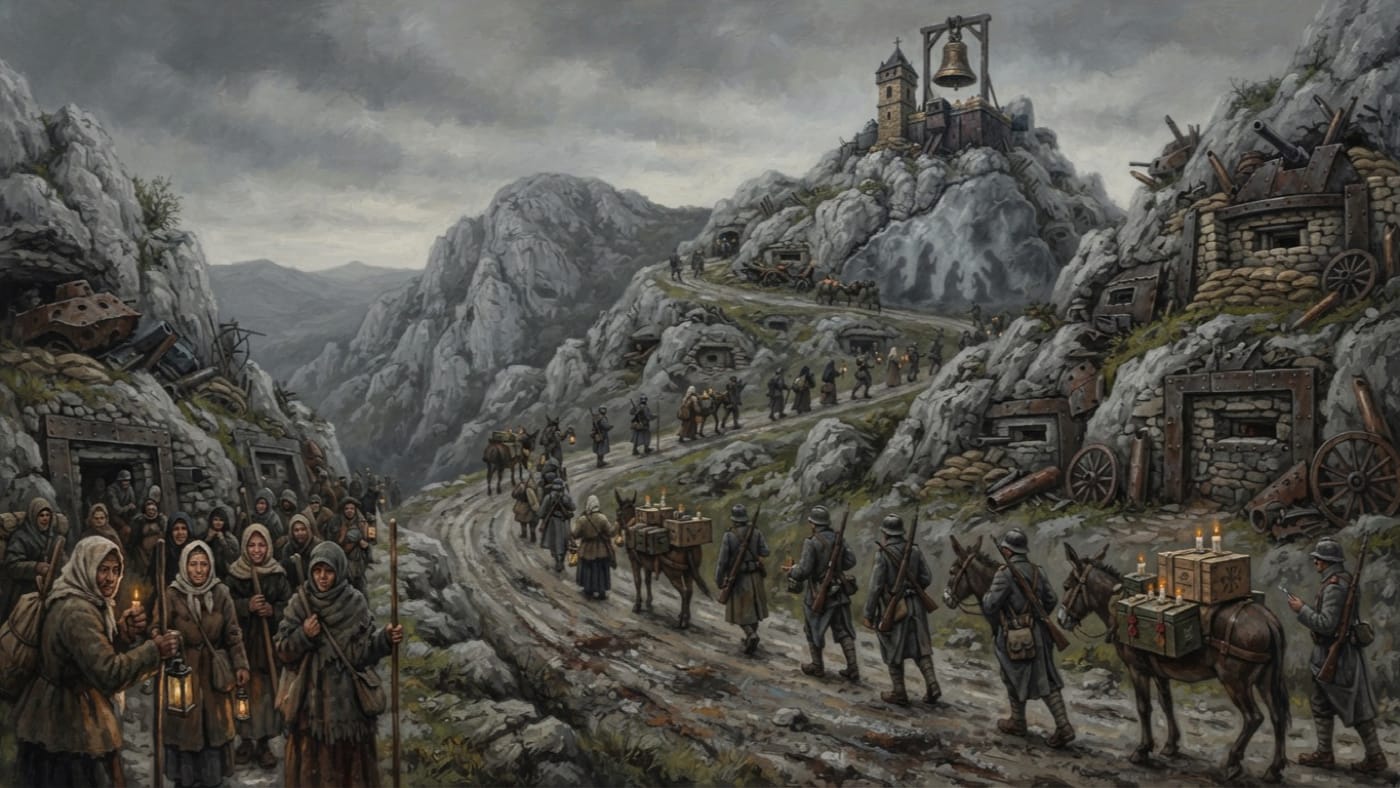
Croatian highlands
Where candles and cartridges climb the same road
The Croatian highlands enter the Ledger through Kalnik Ridge, where cave chapels became armed shrines and the same road carries pilgrims, candles and cartridges.
Codex Ref. II.3.07-807
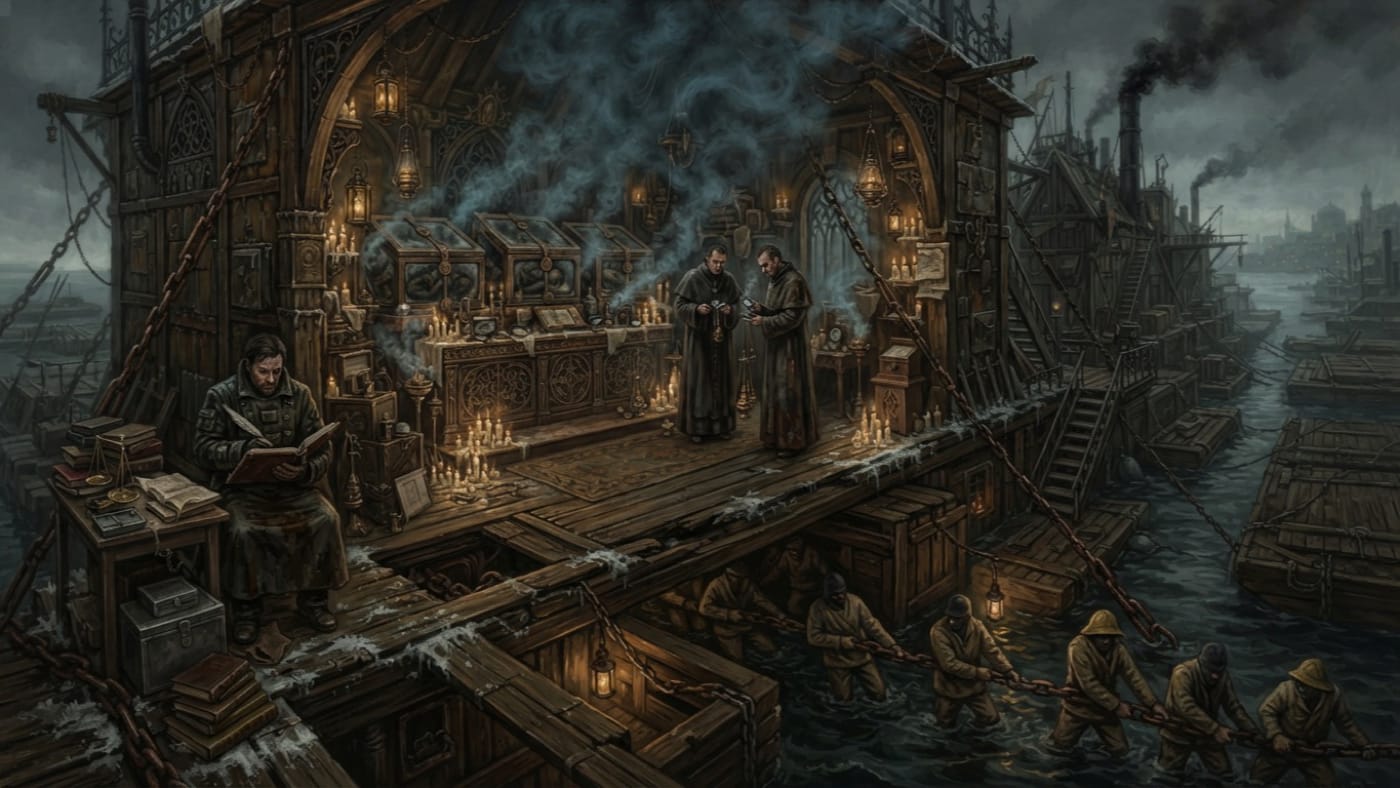
Crown Deck Chapel
Three relics. Ten feet of theology. Wet timber.
At the summit of the Saintward, three sealed relics give the Crown Deck Chapel ten feet of theologically active air. Strasbourg certifies their custody; the chain crews keep it afloat.
Codex Ref. II.4.09-811
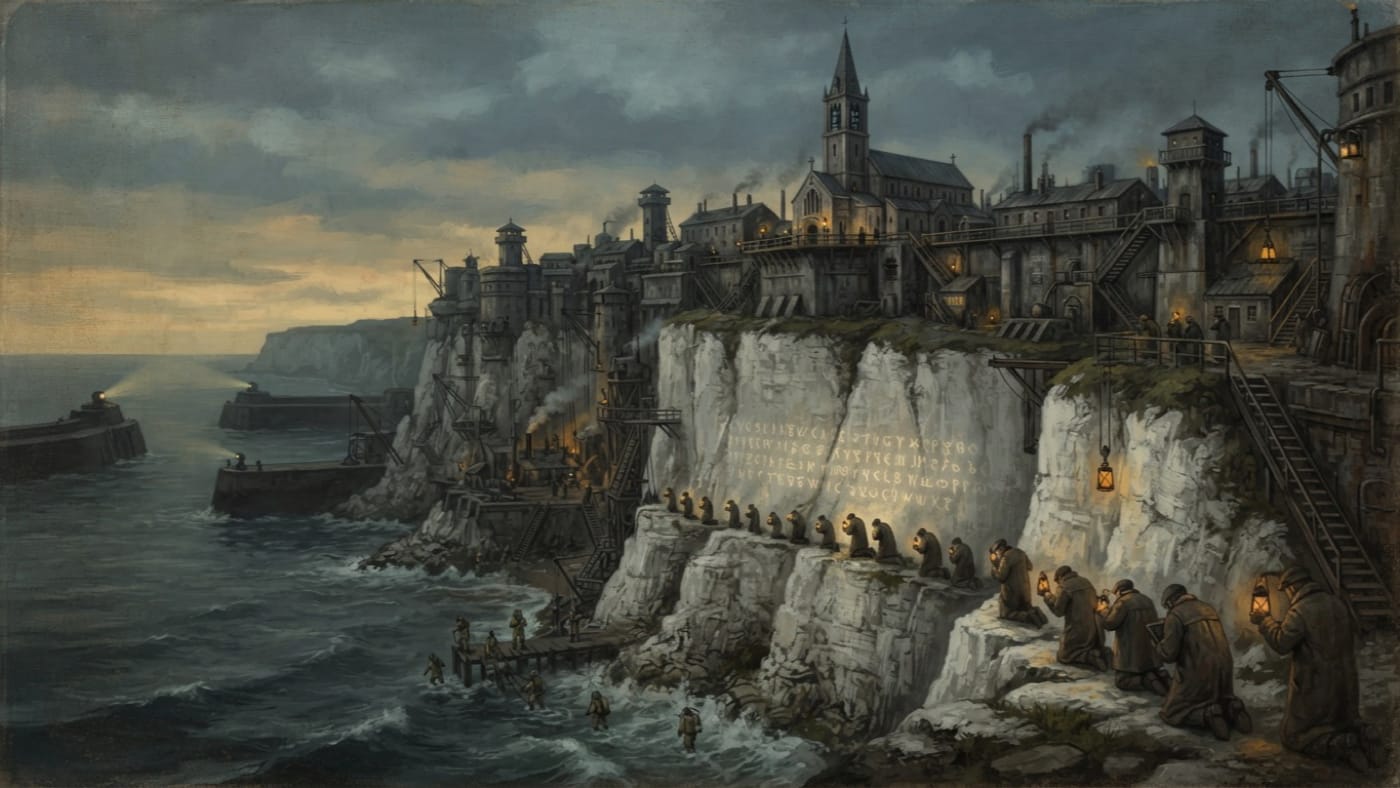
Crownline (Calais)
Command keeps warm while the city pays in breath
The Crownline is Calais's upper fortification: Chapterhouse and officer quarters above the Script Wall, where command keeps warm while the city pays in breath.
Codex Ref. II.4.09-201
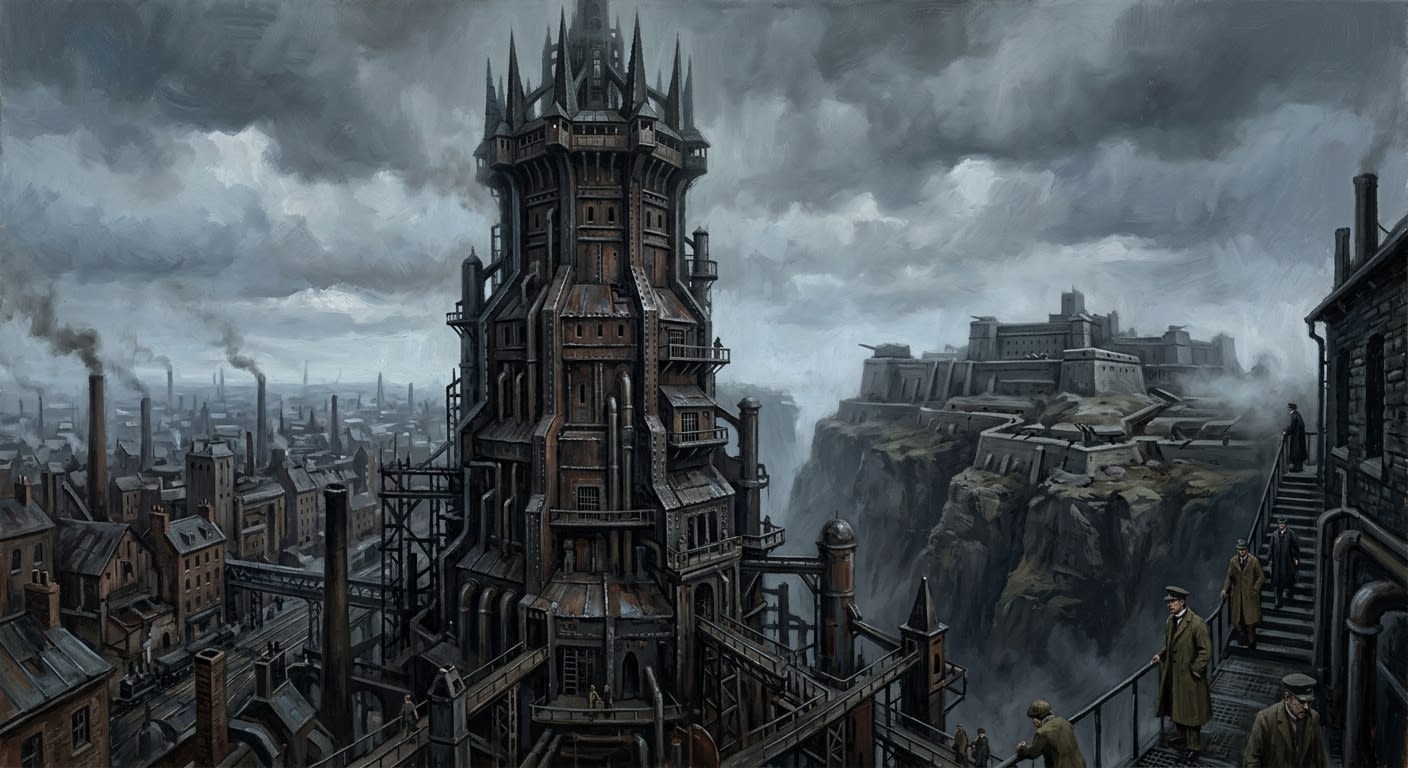
Crownspire
The tower that mistakes altitude for title
Crownspire is Atheron's black vertical thesis in the Ebon Heights: throne-plan, citadel, temptation, and measurement-trap opposite Bastion-Przemyśl.
Codex Ref. II.4.03-045
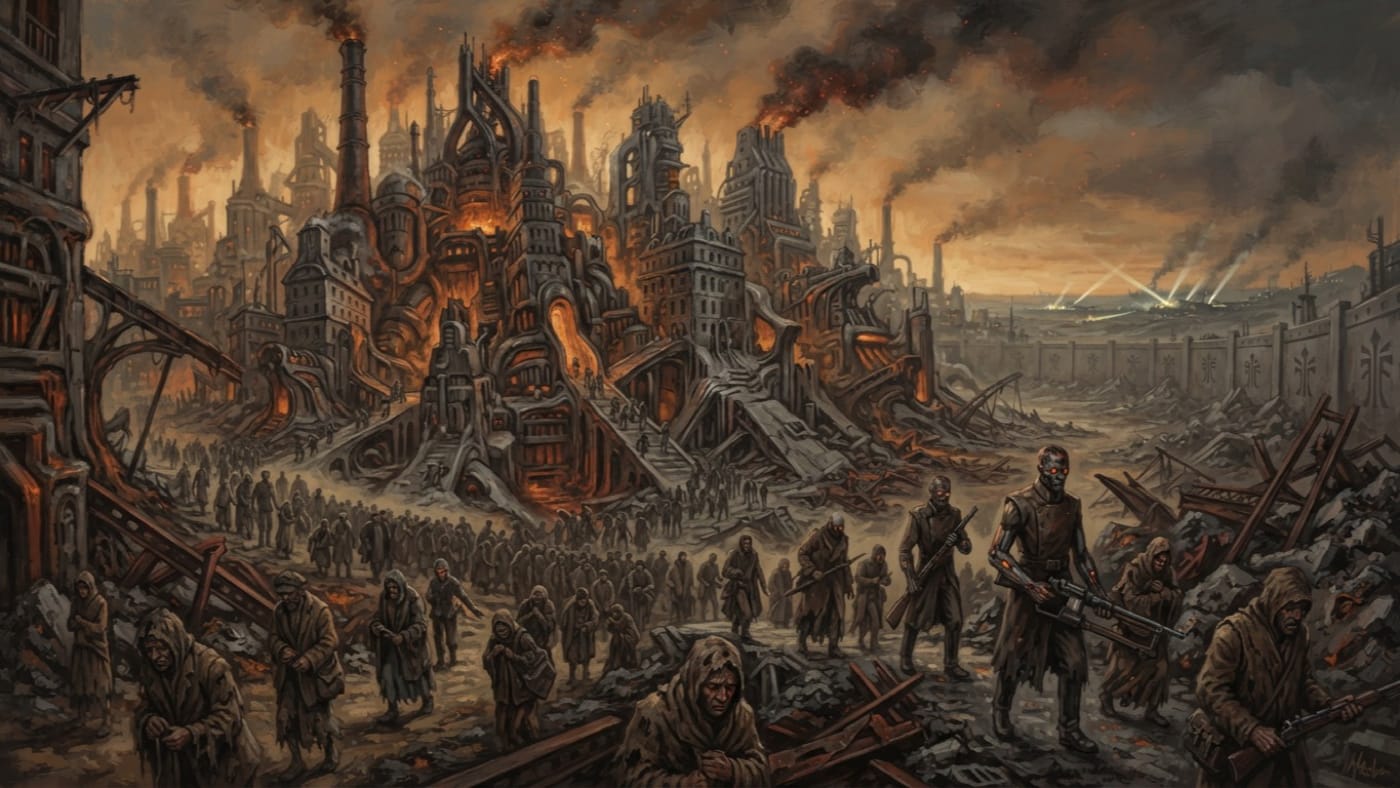
Crucible Cities
Where the grievance ends and the rage remains
In Maldrake's Crucible Cities, years of ritual violence refine living humans into Crucible-Born. The streets melt and reform; the grievance ends, but the rage remains.
Codex Ref. VI.1.03-002
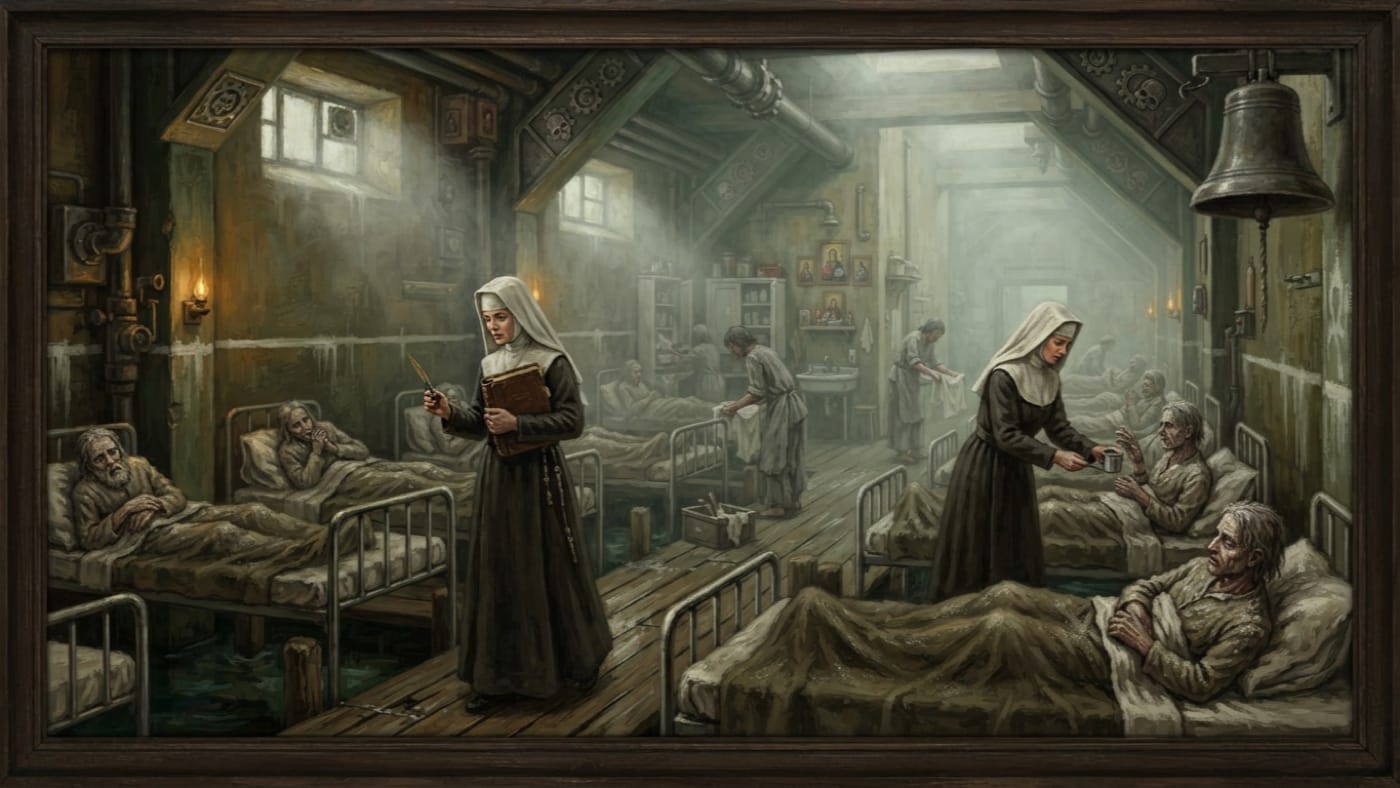
Crumble Ward
The casks leave clean; the people remain under observation.
Mournwater's quarantine district receives the dust-sick, debt-bound washers and inconvenient witnesses. The Sisters keep the treatment ledgers; observation lasts indefinitely.
Codex Ref. II.2.03-004
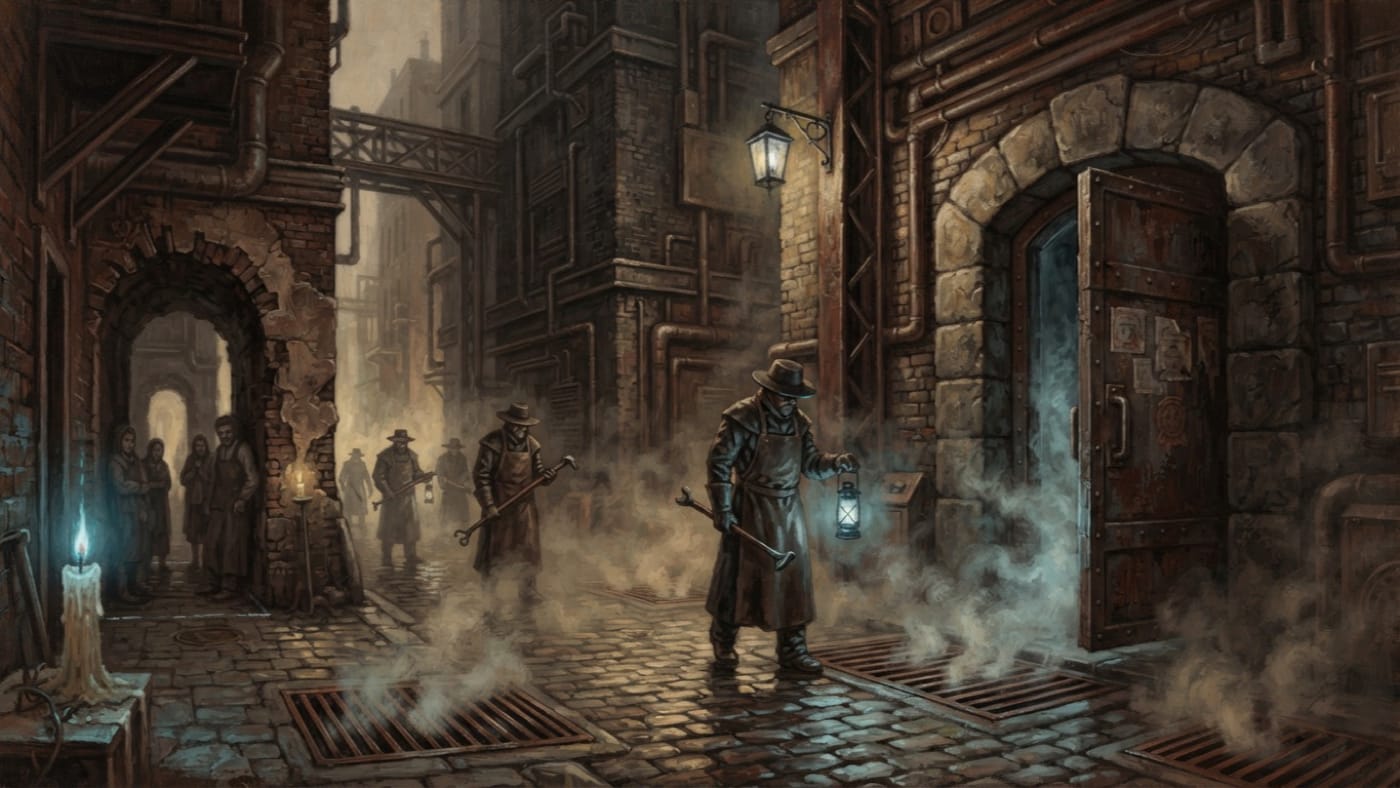
Crypt Mouths
The doors are sealed; the routes are maintained
The Crypt Mouths are Candle-Sump's vent alleys and sealed doors, where warm drafts carry rot-spores and whispered names from maintained burial routes. A shadow registry puts the names to work; the Bureau keeps the review pending.
Codex Ref. II.1.05-002
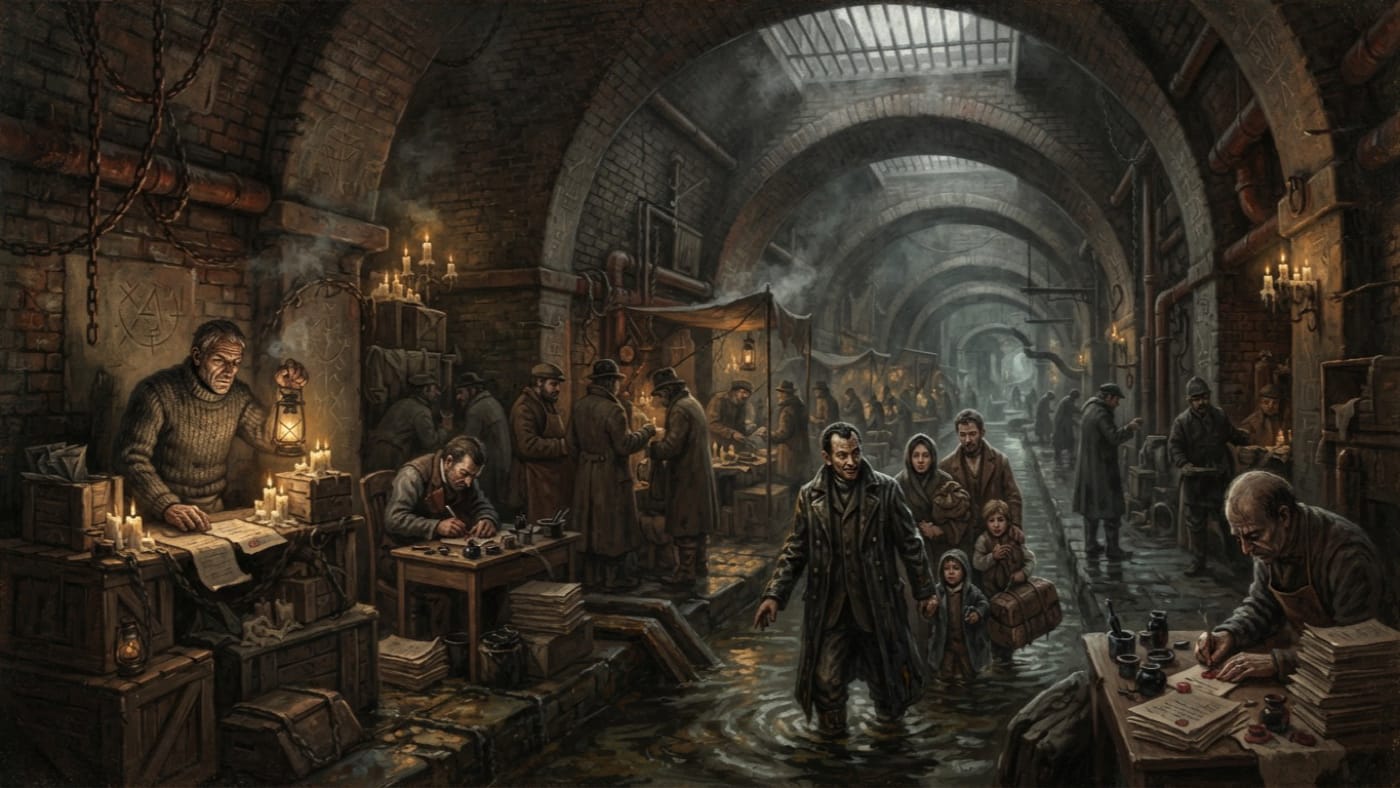
Culvert Market
Where passage is sold and the Ledger keeps your name
Griefgate's unchartered market beneath the arches trades in indulgence slips, forged papers, hired witnesses and unlawful passage. A body may evade the Gate; its name remains in the Ledger.
Codex Ref. II.1.04-002
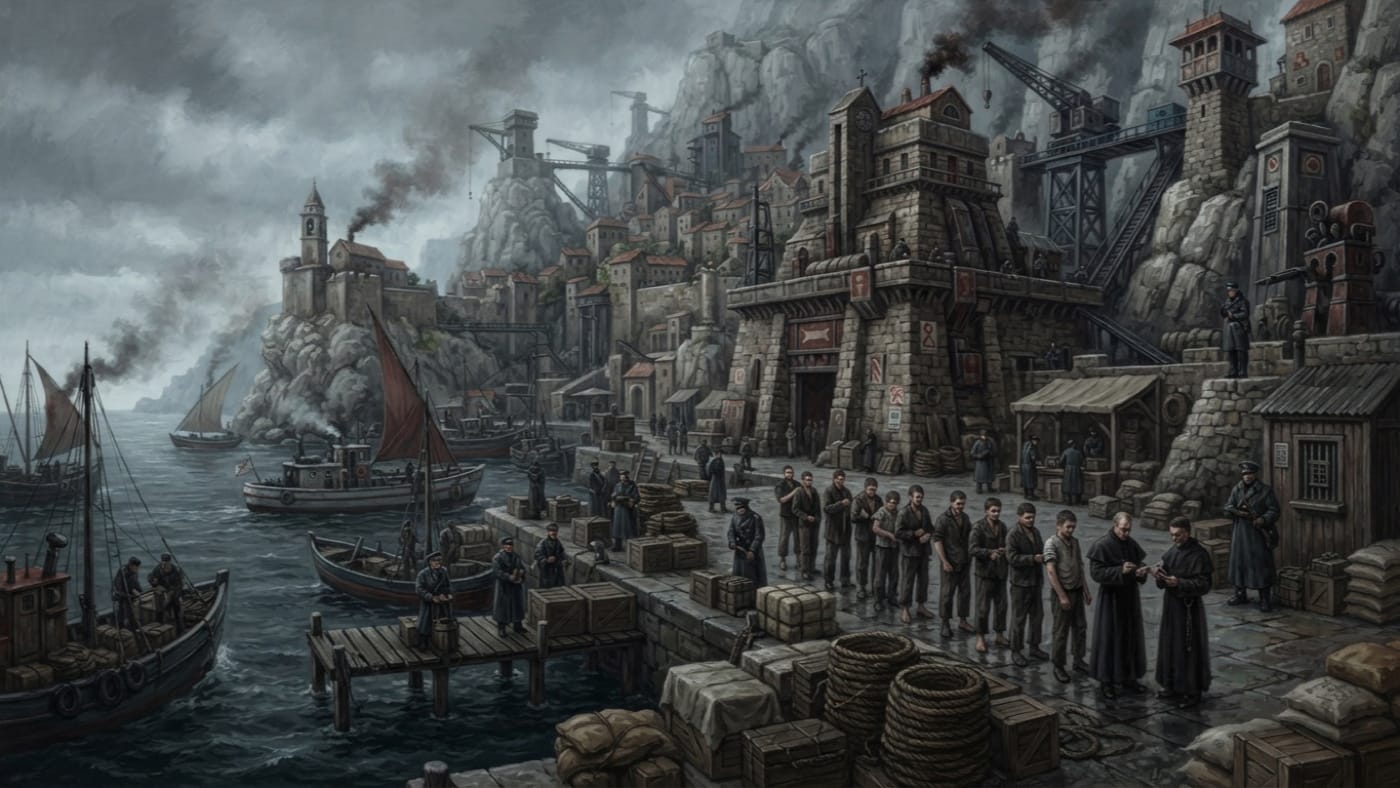
Dalmatia
Where rope is sold and sons are assessed
Dalmatia is the Synod's Adriatic supply coast: Venetian cargo, quarantine piers and parish rolls. Rope, salt and harbour labour are sold; the tenth son is assessed.
Codex Ref. II.7.05-201
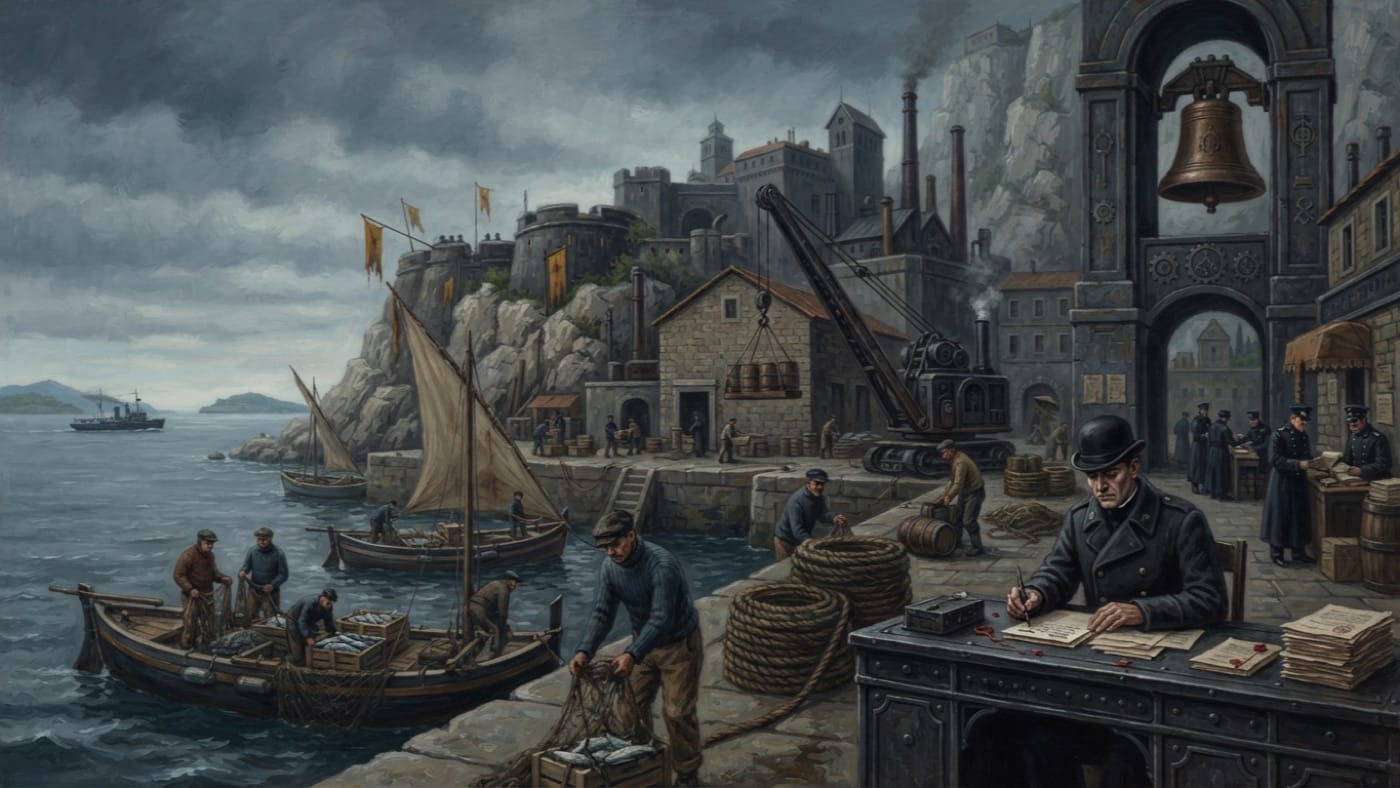
Dalmatian coast
Salt Fish, Sealed Passes, and a Tithe of Sons
The Dalmatian coast feeds the southern Line with salt fish, harbour labour, and fishermen's sons. The boats return to the quay; the sons answer to Strasbourg.
Codex Ref. II.3.07-201
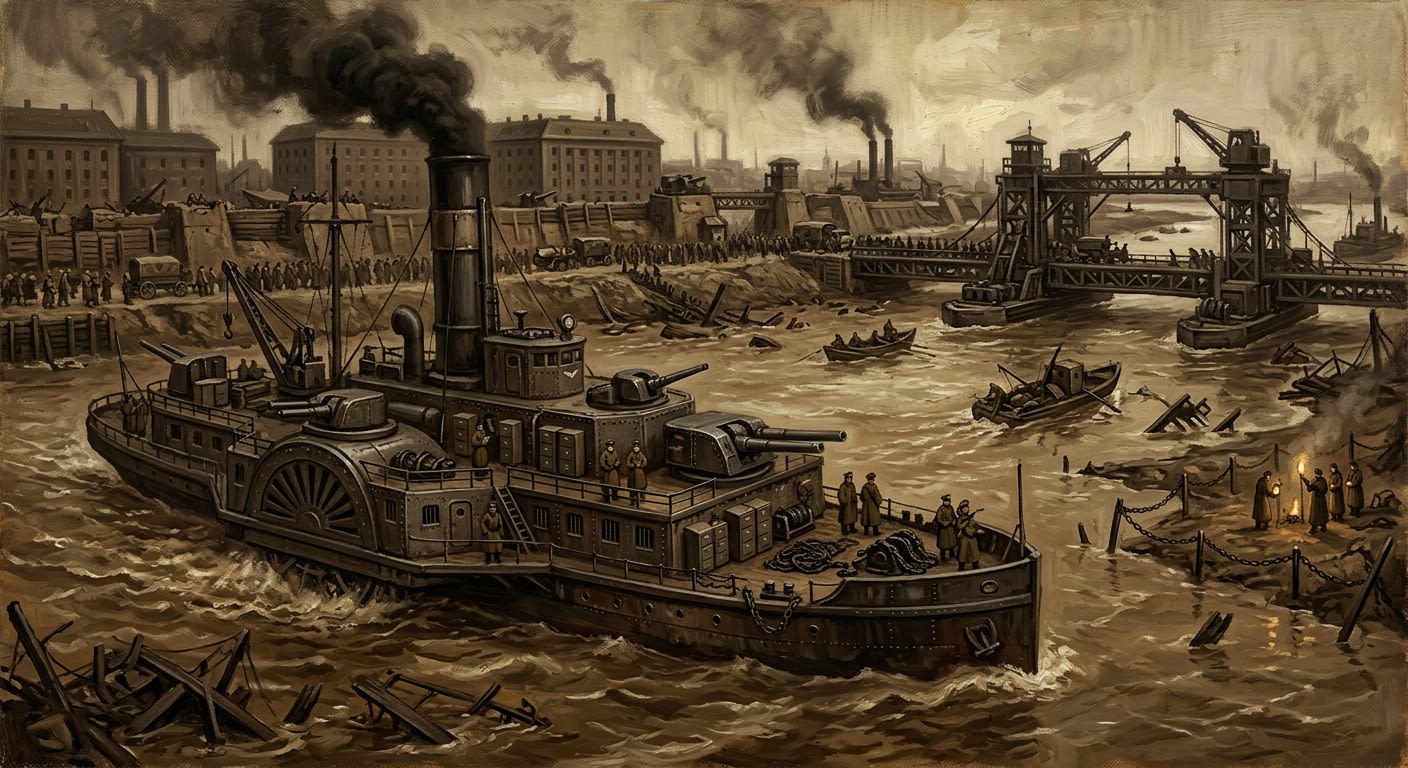
Danube
A moving jurisdiction, interrupted by Hell
The Danube is the Synod's brown moving jurisdiction: road, border, weapon, archive, tariff, grave, miracle-site, and contested throat of Irongate.
Codex Ref. II.4.09-034
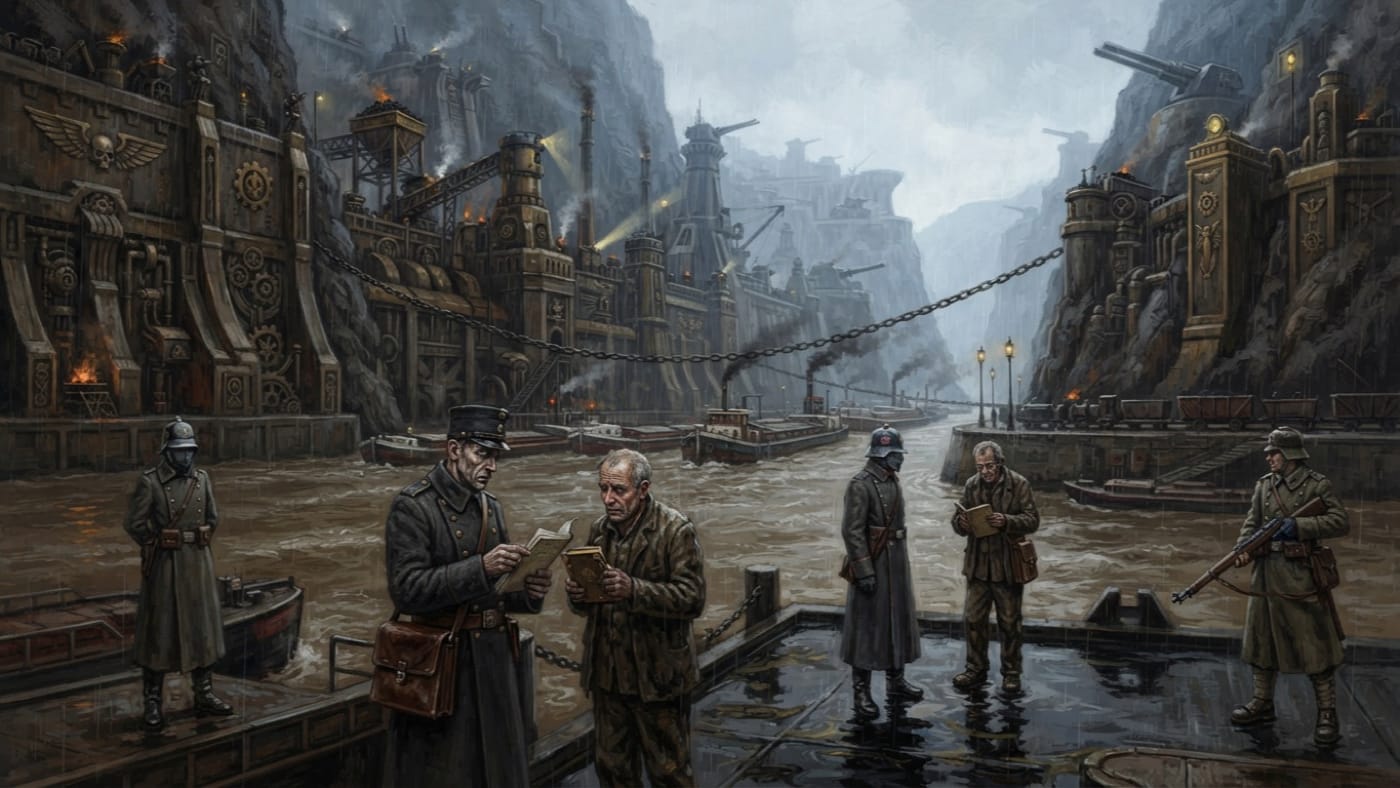
Danube approaches
The guns watch the water; the clerks watch the faces
The guns at Irongate command the Danube; the clerks must still establish who is sailing it. Along the approaches, Morwen borrows familiar faces and passage remains provisional.
Codex Ref. II.4.08-201
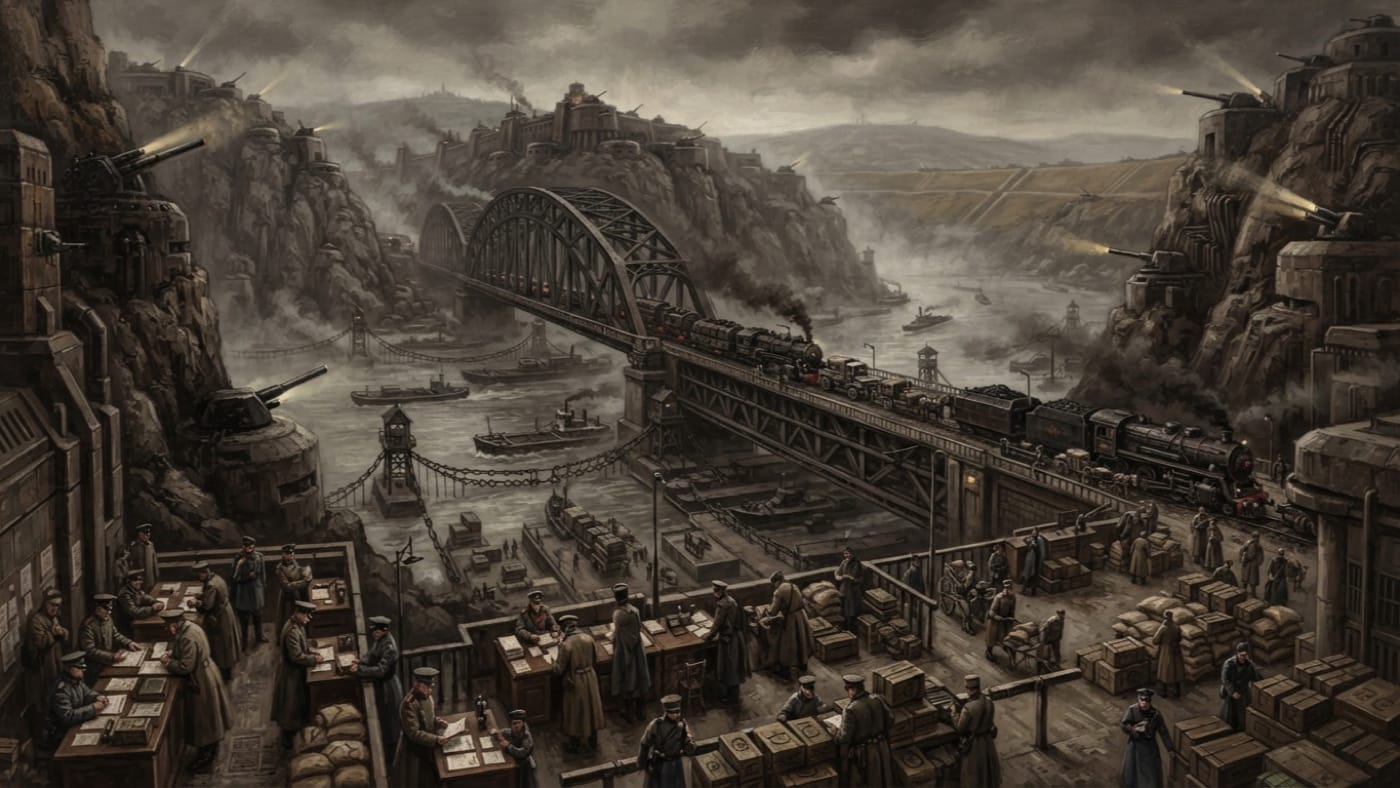
Danube Crossings
The guns command the river. The ledgers command the cargo.
The Danube crossings carry the Synod's men, freight and paper toward the Sagittal Line. The batteries hold the gorge; Velmora buys loyalties, and Morwen forges the faces that pass.
Codex Ref. II.4.09-833
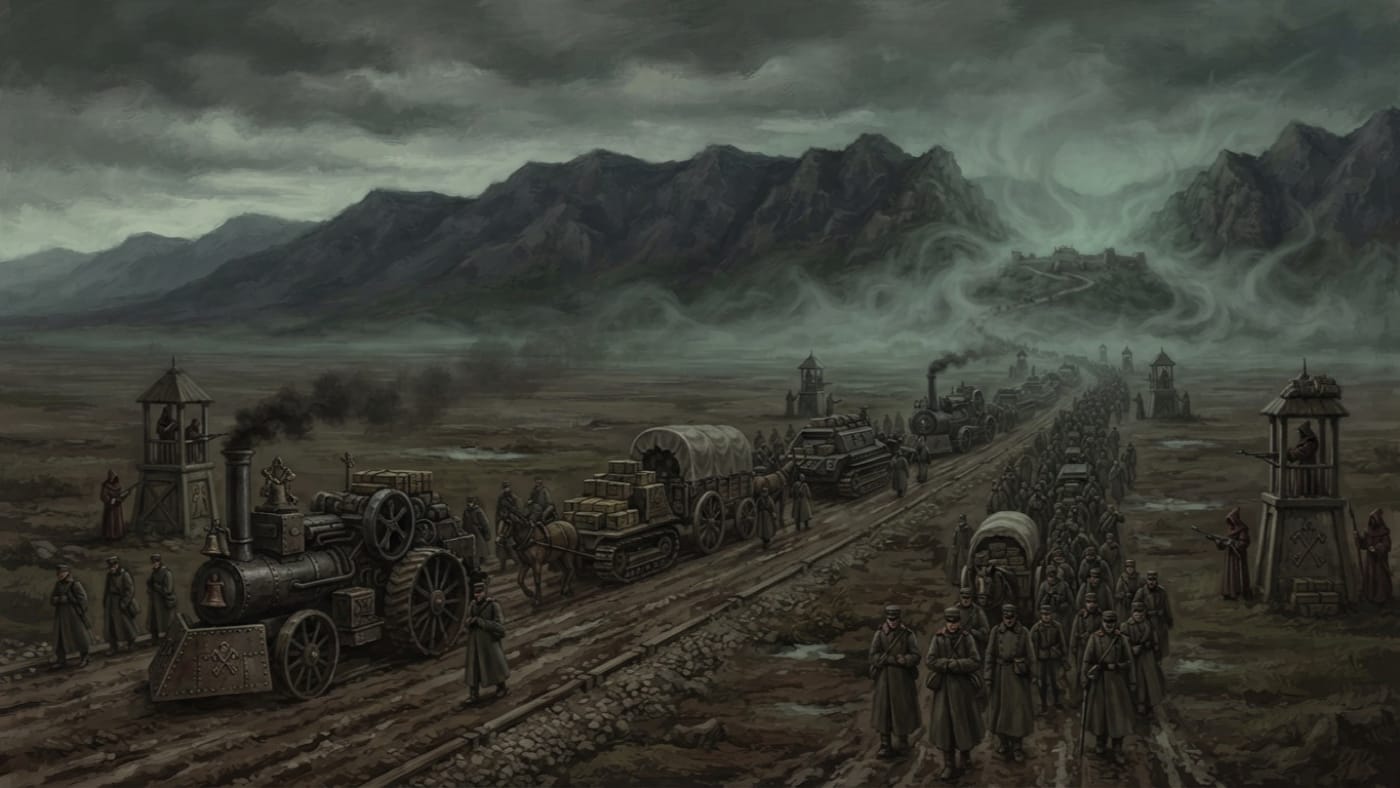
Danube lowlands
The range has one door the registry counts.
The Danube lowlands gather Shipka's convoys and relief drafts north of the Balkan range. The Church keeps the roads moving; the region's full extent and district control remain unrecorded.
Codex Ref. II.4.12-047
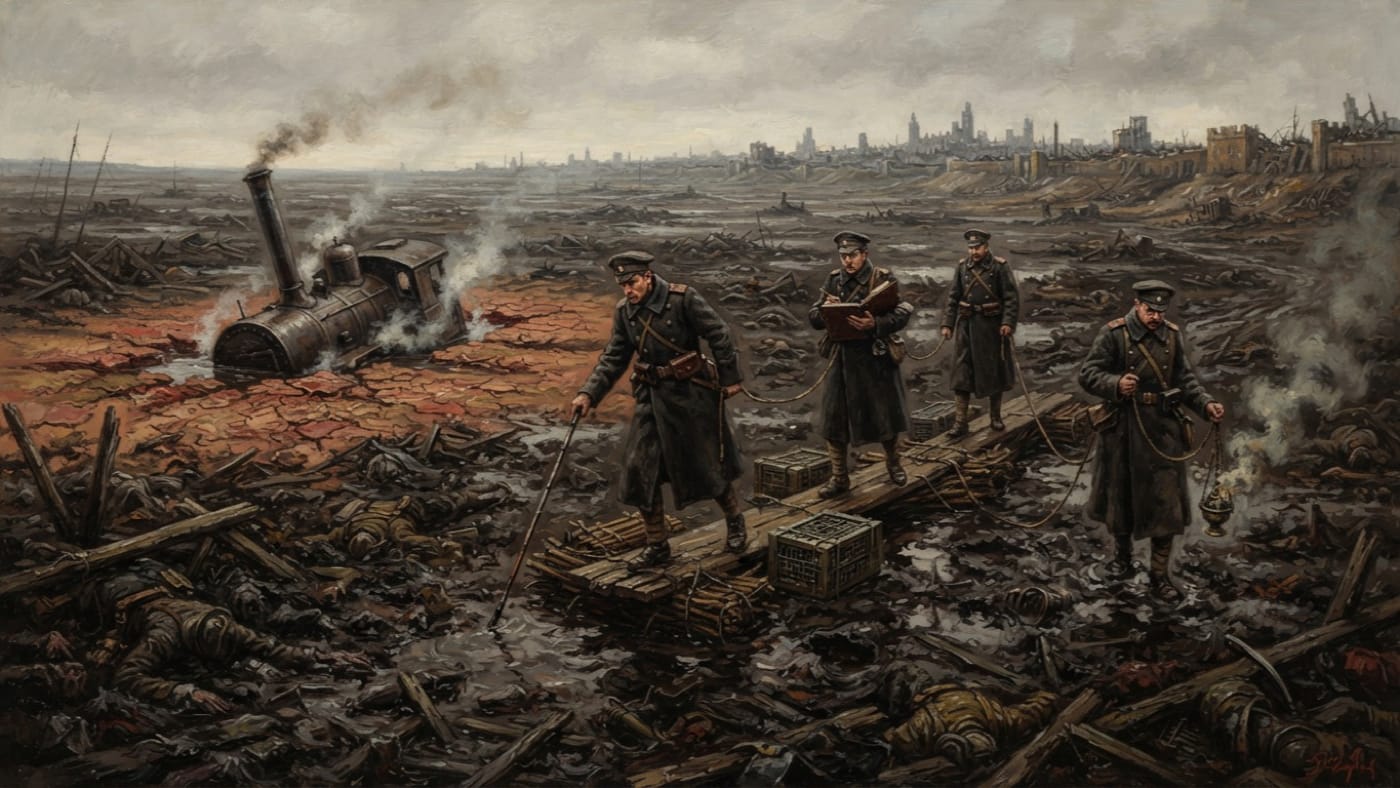
Danubian flats
The crust looked safe at Belgrade too.
An A.S. 201 survey of Danubian front flats in No Man's Land where Flesh-Mud is reported. Belgrade's A.S. 120 file records a swallowed Wrath-forged engine. Three Bureaus disagree; the crust looked safe there too.
Codex Ref. II.4.12-048
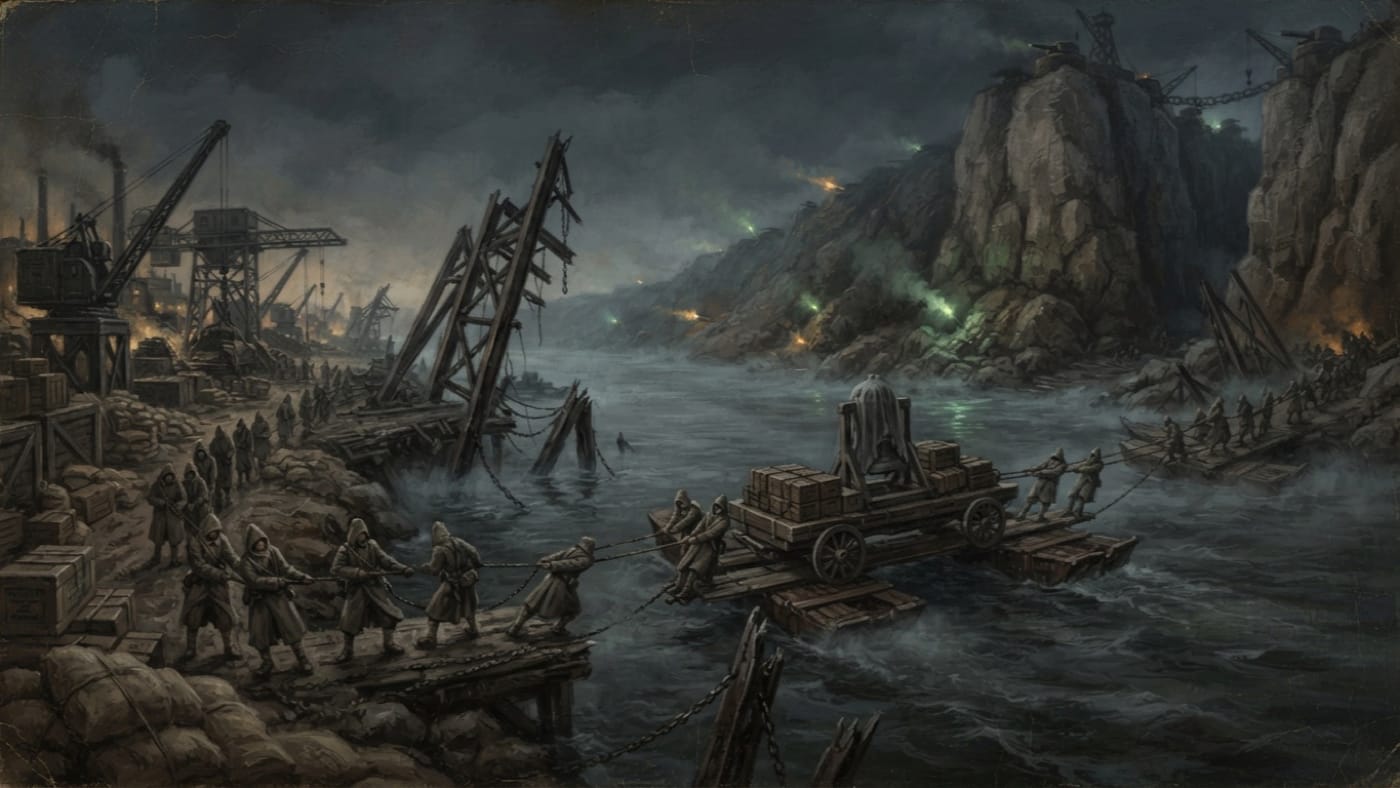
Danubian forward corridor
The grain arrives; the river keeps the difference
Between Budapest and Bastion-Irongate, the Synod moves grain, cartridges and bells through ruined crossings. The cargo is counted; the river keeps the difference.
Codex Ref. II.4.09-172
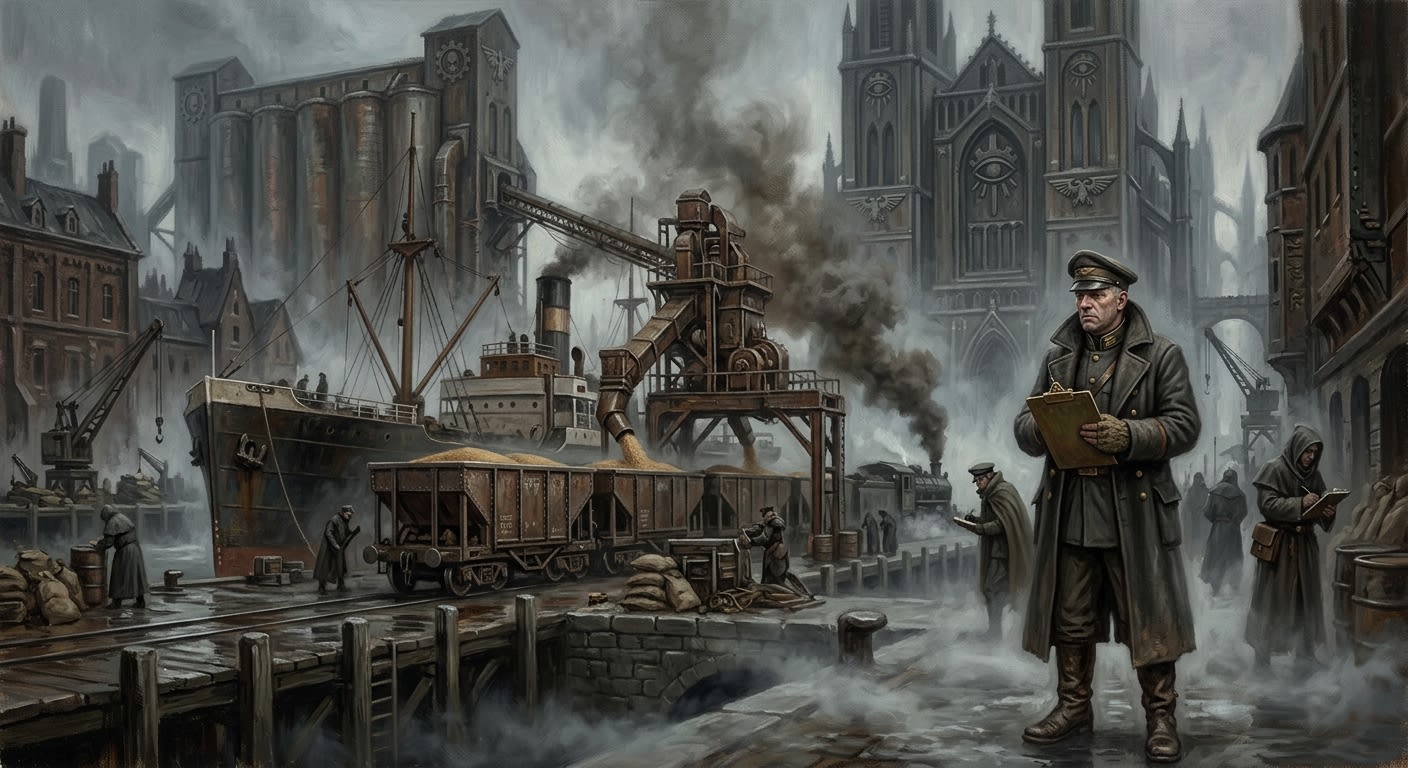
Danzig
The Baltic port that feeds the north and lies with admirable punctuality
Danzig is the Baltic grain mouth of the Northern Corridor: obedient in public, competent in fog, audited forever, and too necessary for Strasbourg to purify without starving itself.
Codex Ref. II.4.09-013
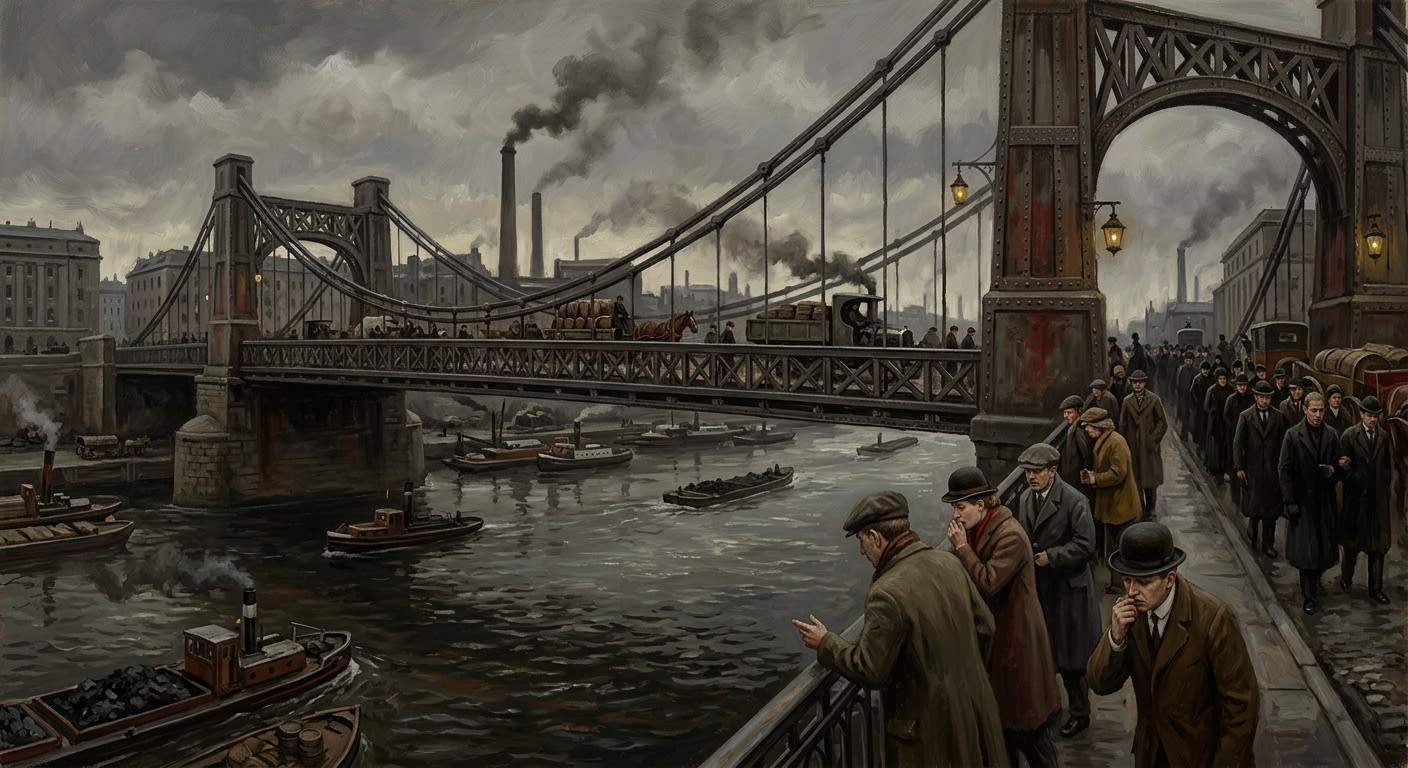
Dębnicki Bridge
The span where silence learned to drown
Dębnicki Bridge is Kraków's Vistula span of wire, silence, traffic, and annual accusation: the place Brechtold used to drown forty-seven clergy.
Codex Ref. II.3.06-018
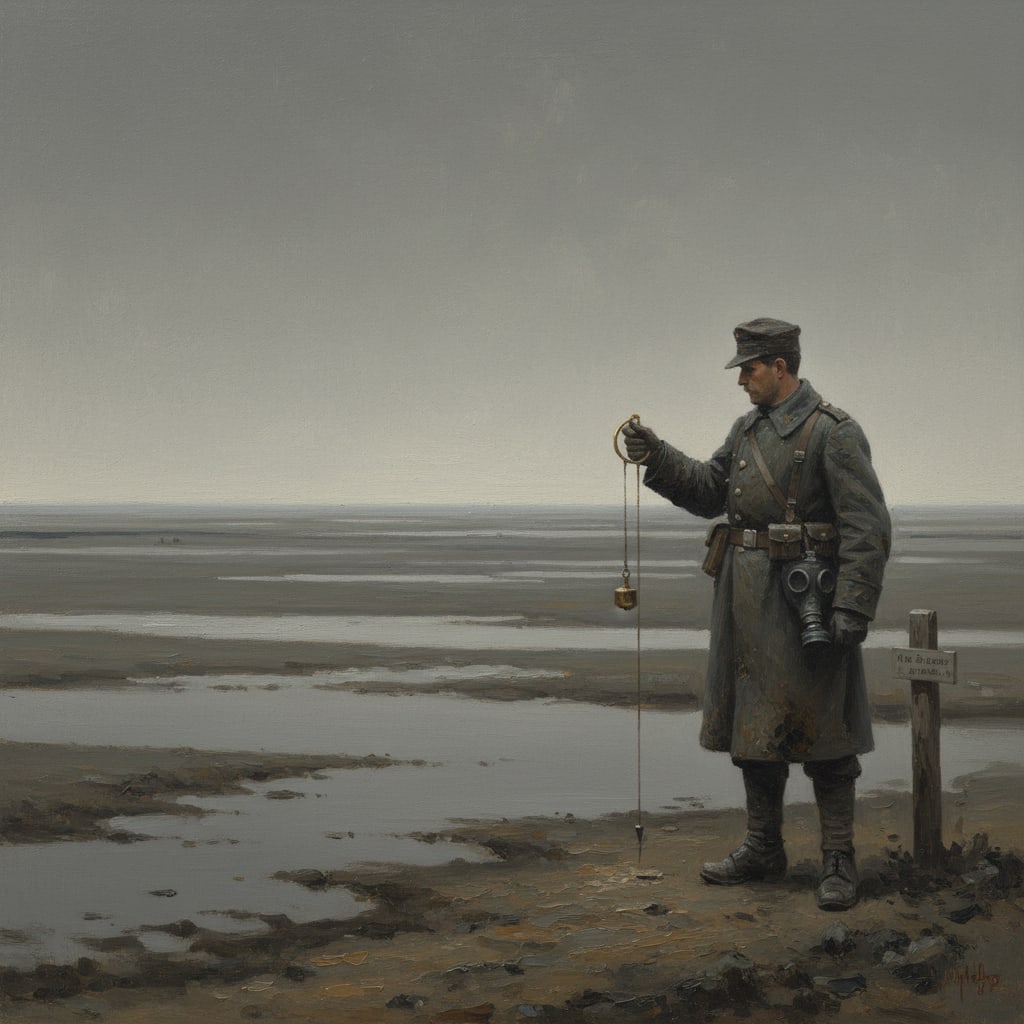
Debrecen
The city that was eaten
Forty-two thousand souls, a grain exchange that set prices from the Danube to the Rhine, and a harvest the world will never taste again. Kargath ate it. The Blightmarsh is all that remains, and the Blightmarsh is still hungry.
Codex Ref. VI.1.01-001
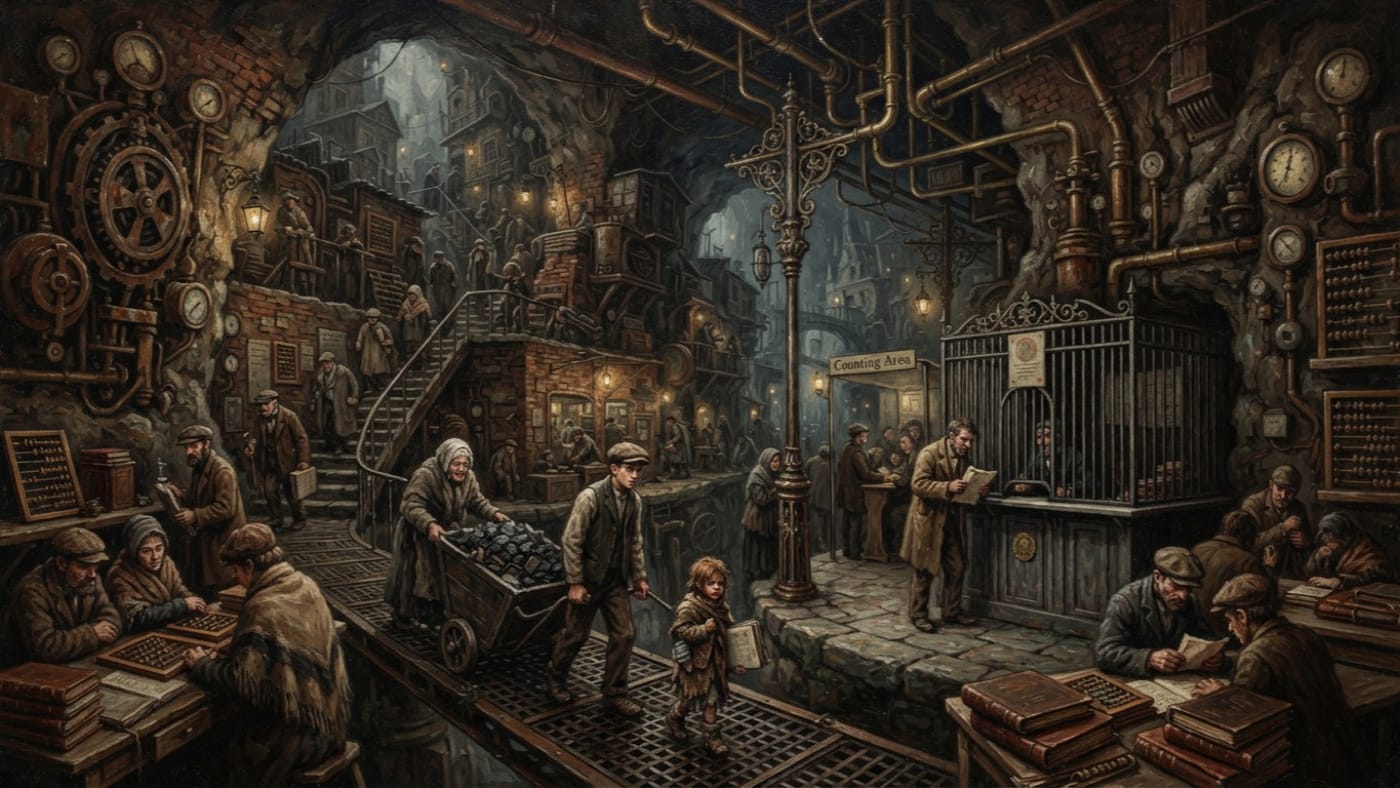
Debt Warrens
You may leave. Your account comes with you.
An A.S. 201 survey of Velmora's underground settlements beneath old Danube cities, where residents owe beyond their means and children inherit family accounts. A resident may leave. The debt is less accommodating.
Codex Ref. II.6.07-855
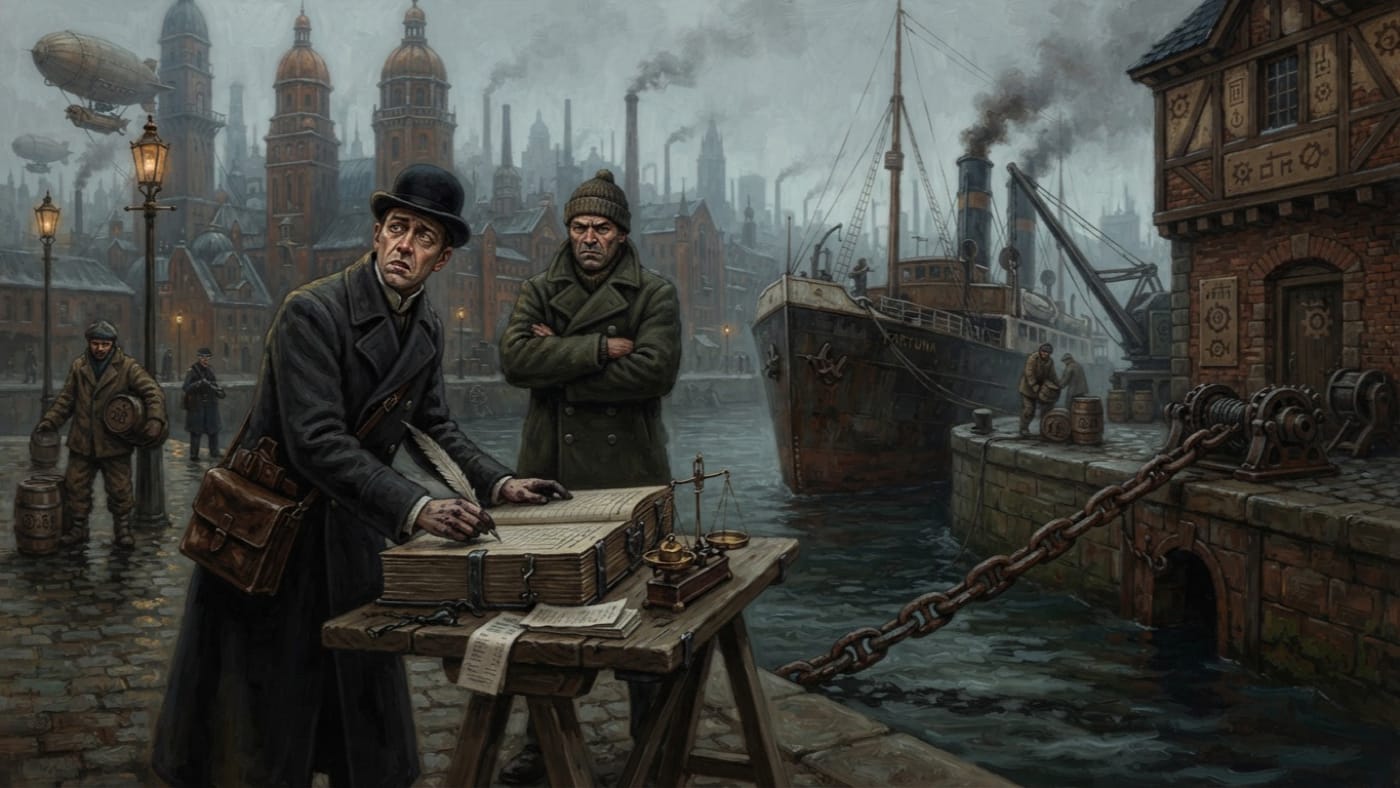
Denmark
The assessor keeps the ledger; the harbour keeps the chain
Denmark admits the Synod's assessor, negotiates its tariffs and guarantees its war credit. A.S. 201 assessment of the Danish harbours: the ledger is tolerated; the chain remains Danish.
Codex Ref. II.8.03-001
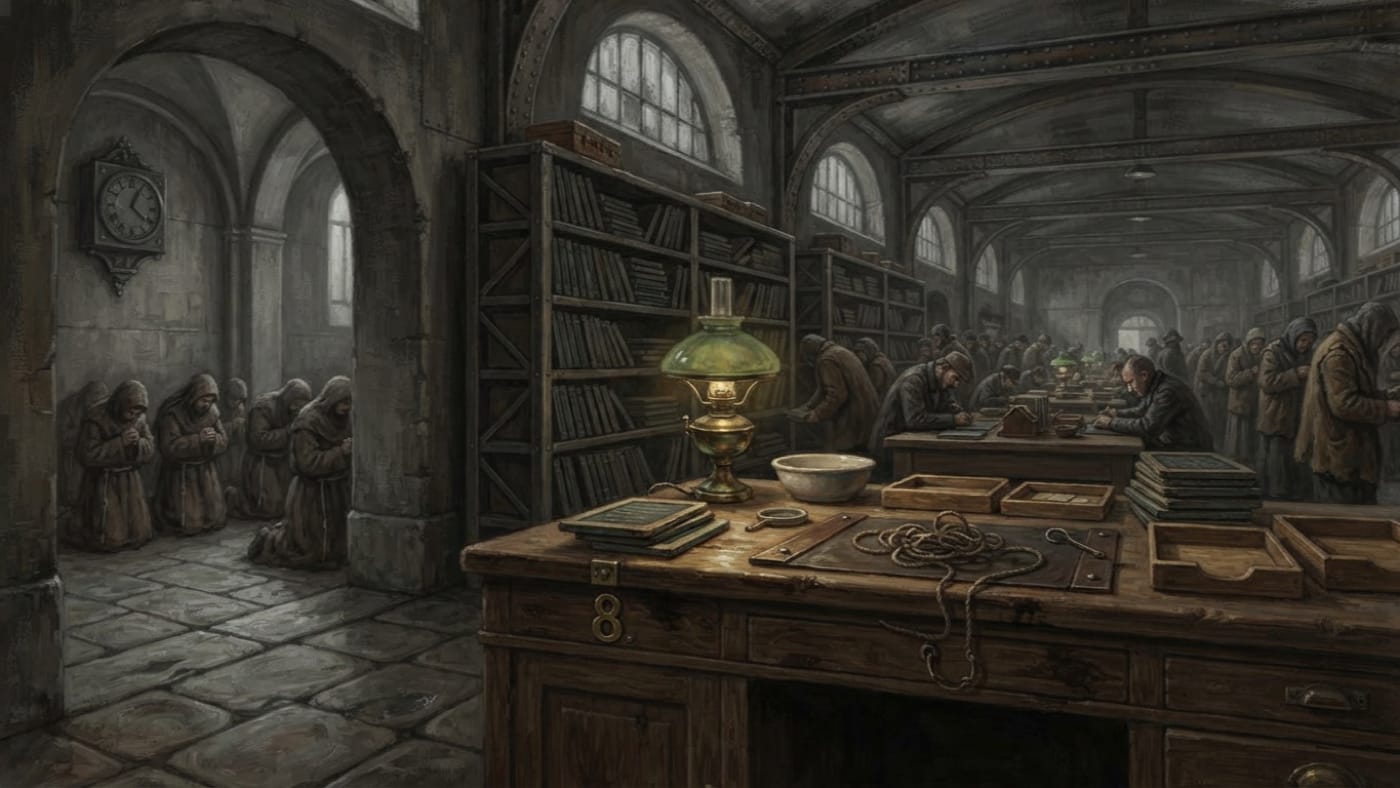
Desk Eight
The knees pay before the evidence arrives
Desk Eight reviews suspected counterfeit strings in the Counting Hall. The Chapel collects an hour of kneeling while the evidence waits for a clerk.
Codex Ref. II.3.06-008
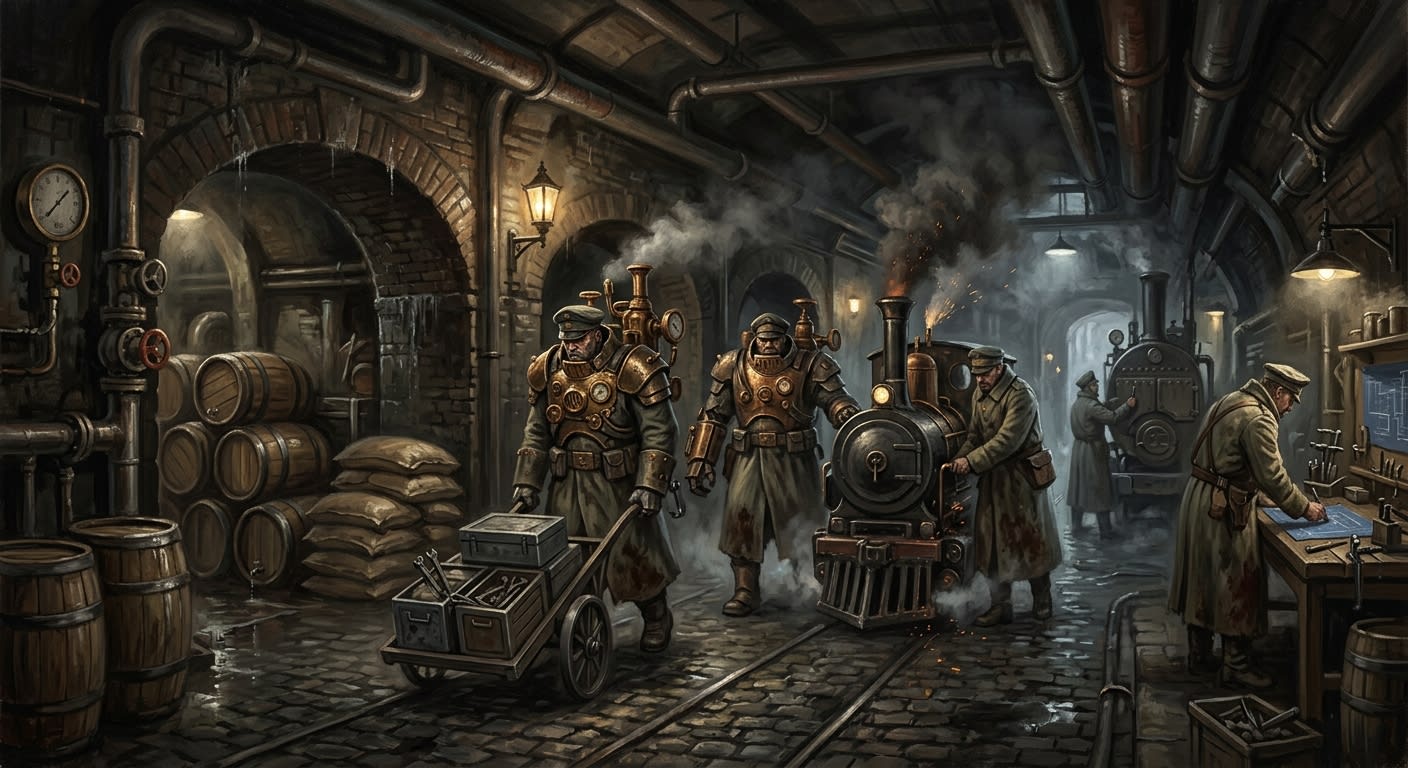
Deutz
The east bank where apostolic bones learned to smell like beer and keep quiet
Deutz is Cologne's right-bank service quarter, famous in Doctrine because three apostolic phalanges survived there beneath beer, silence, and useful damp.
Codex Ref. II.1.04-031
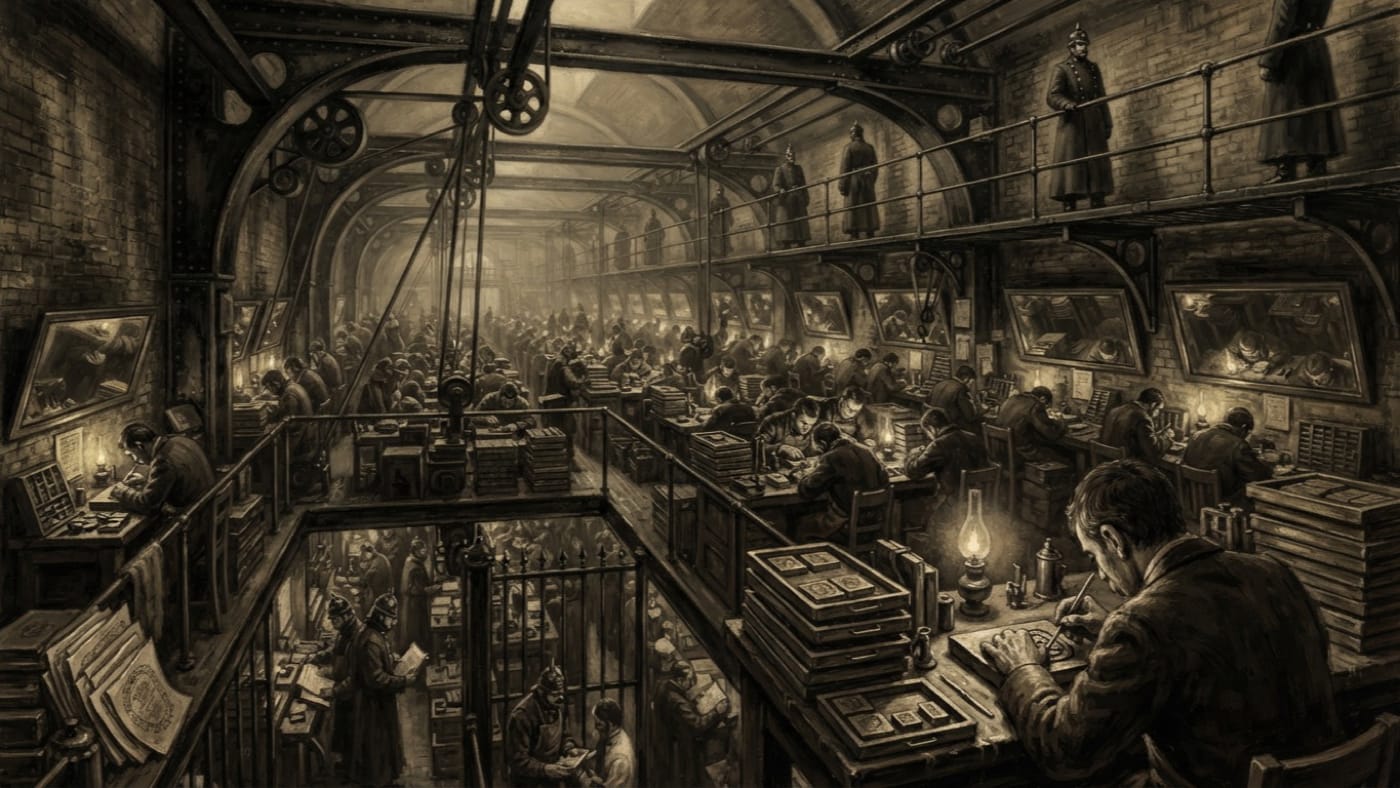
Die Row
Where a lawful face still requires a human hand
In Sable Court's northern engraving halls, Crownwright masters cut faces into steel by hand. Several offices make the result lawful; every office sends a bill.
Codex Ref. II.2.07-002
Dijon
The city that sends clerks
Dijon is a principal city of Synod-held Burgundy, recorded for sending clerks and for Archon Benedict Veyrault's former monastic affiliation. A.S. 201 survey: three facts, carefully entered.
Codex Ref. II.1.12-201
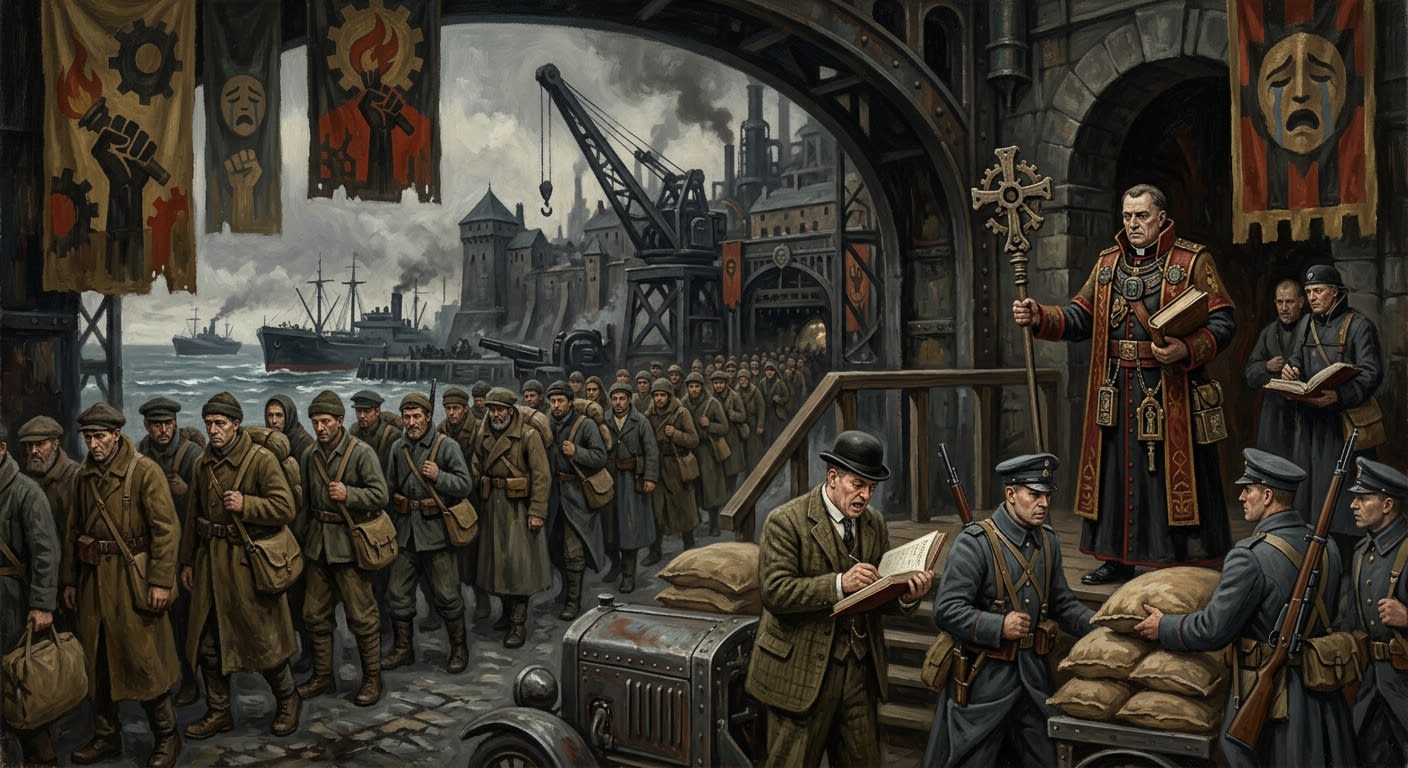
Dinan
The town that kept the departure
Dinan is the Breton departure town that sent forty-three pilgrims toward Saint-Malo and kept the bread, banners, names, quarrels, and profitable grief.
Codex Ref. II.1.09-010
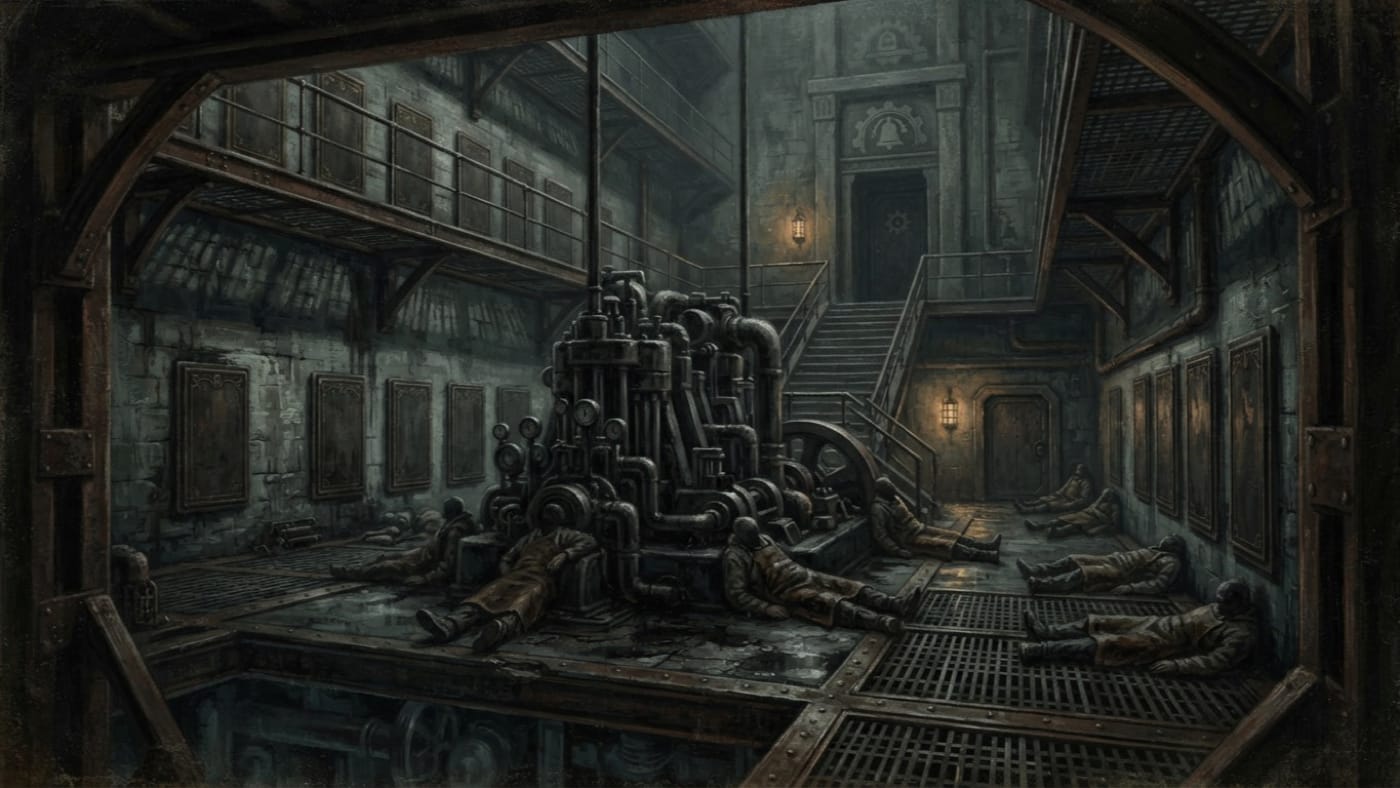
District Seven (Bastion-Przemyśl)
Where the bastion keeps its pulse, and has been known to mislay it
District Seven is Bastion-Przemyśl's western industrial resonance district. Its ward-plates fell silent in A.S. 171; four hundred died before the bastion recovered its pulse.
Codex Ref. II.4.07-007
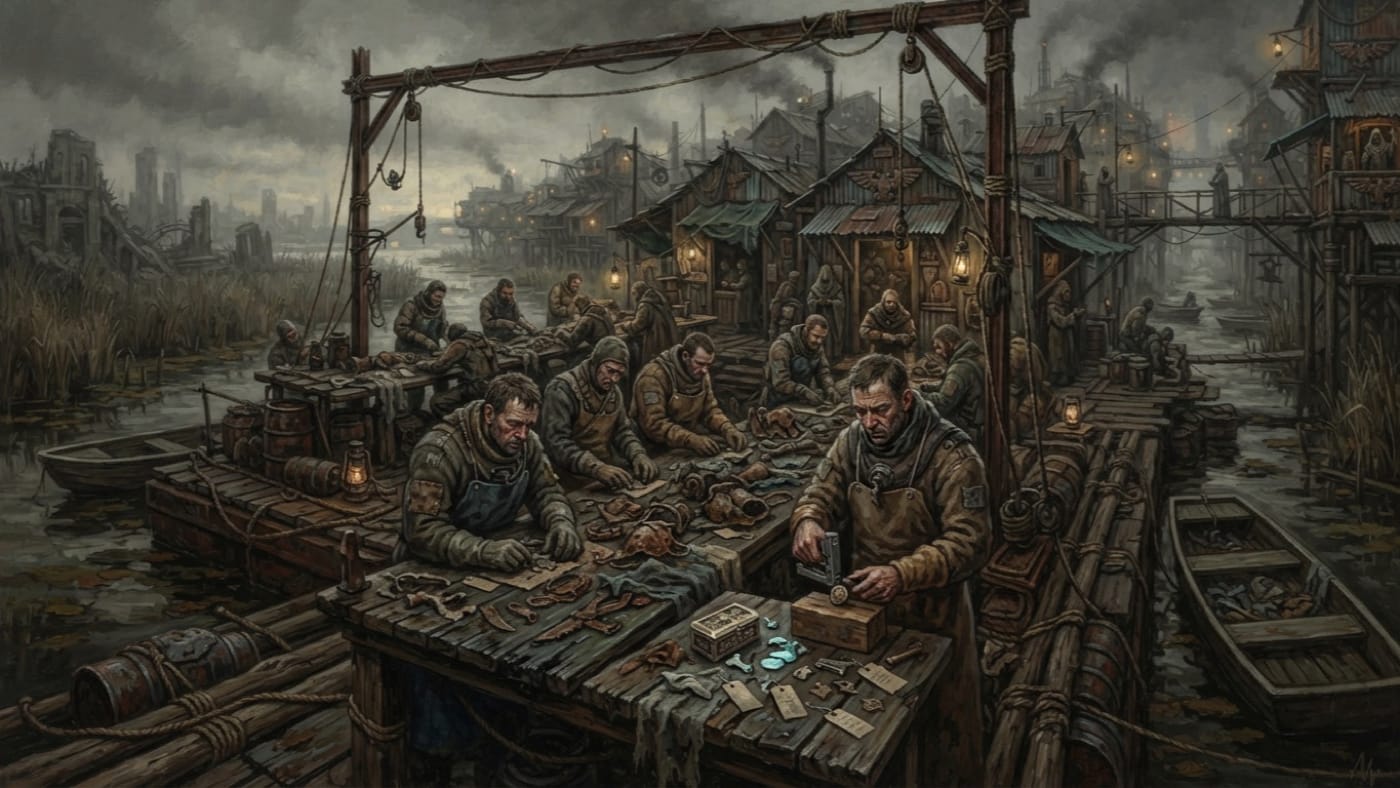
Diver's Gut
The mud supplies the relic. The clerk supplies its past.
The floating salvage quarter of Ash-Glyph Marshworks, where indebted divers sort the Danube's dead and relics sometimes arrive already tagged. Authenticity can be certified; provenance remains inconvenient.
Codex Ref. II.4.08-006
Dock Quarter
Where the northern war waits for the men beneath the crane
Hamburg's western and central Elbe quays turn North Sea cargo into northern-front survival. The Bureaus issue orders; the guilds decide when grain, coal, and military freight actually move.
Codex Ref. II.4.09-006
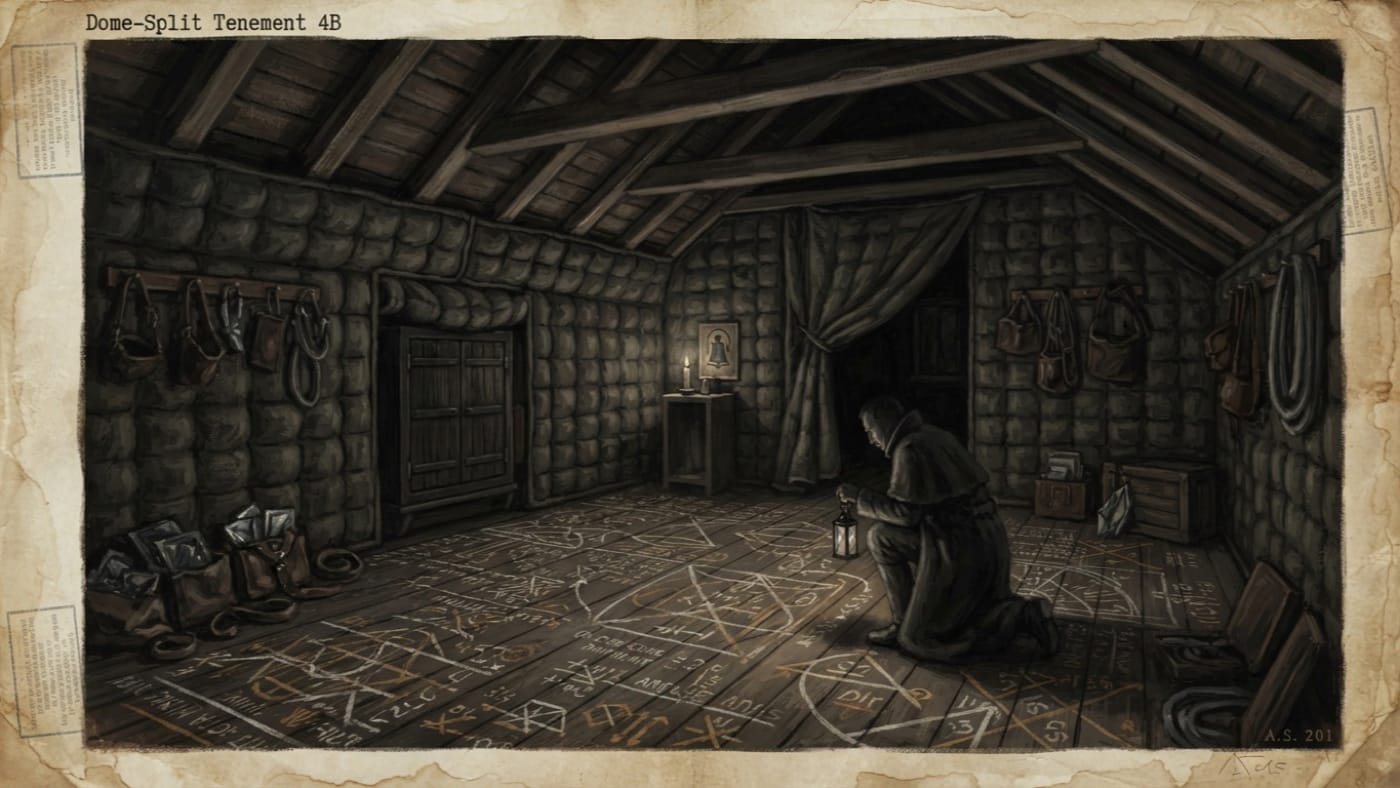
Dome-Split Tenement 4B
An attic teaches silence; a cabinet teaches fear
Dome-Split Tenement 4B shelters the Hush Loft, Mute Radiance's attic headquarters. Hand-code marks cover its floor; the Tongue Cabinet file gives its walls a reputation no clerk will certify.
Codex Ref. II.3.05-921
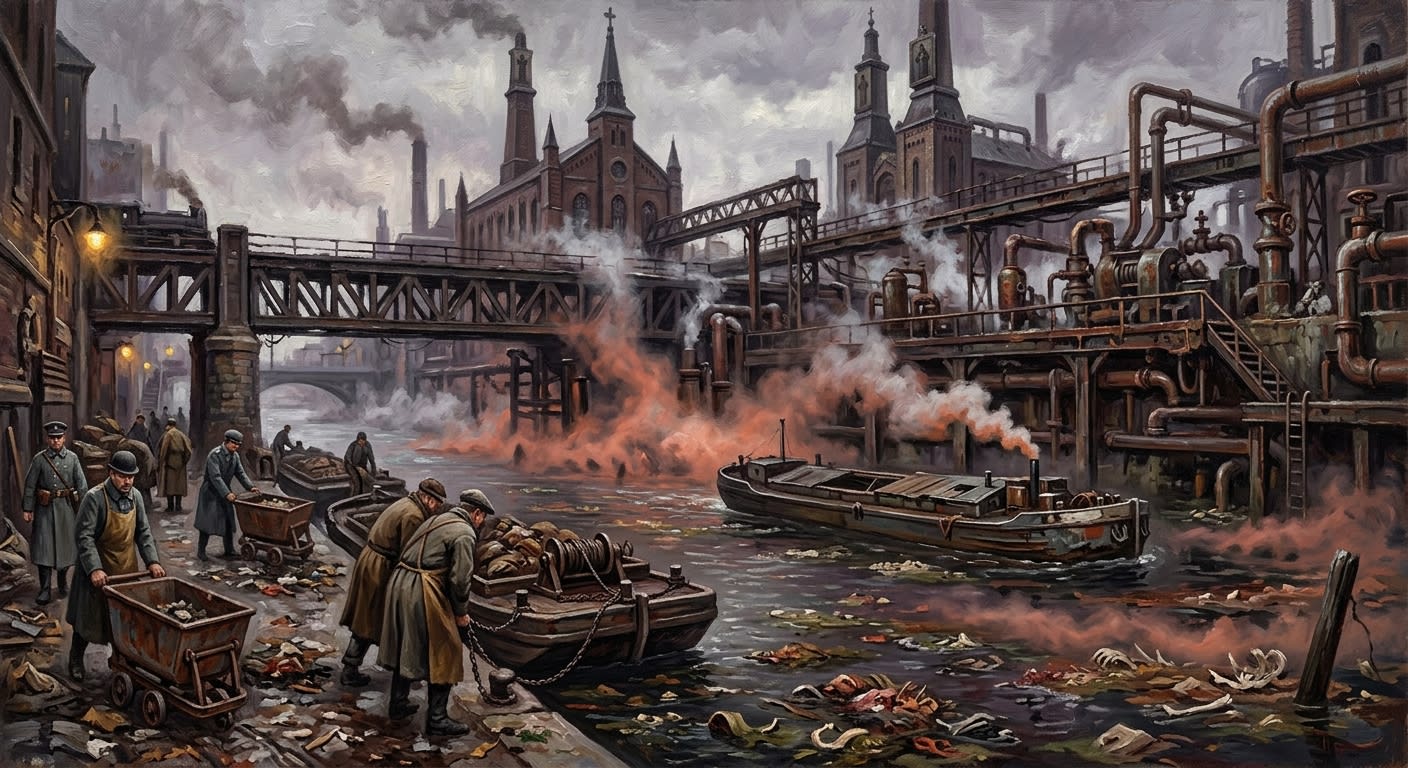
Donaukanal
Vienna's black water remembers what the ledgers rinsed away
Vienna's lesser Danube arm, the Donaukanal carries shrine filth, rebel bones, forbidden lullabies, and steam the Bureaus cannot quite explain.
Codex Ref. II.4.09-095
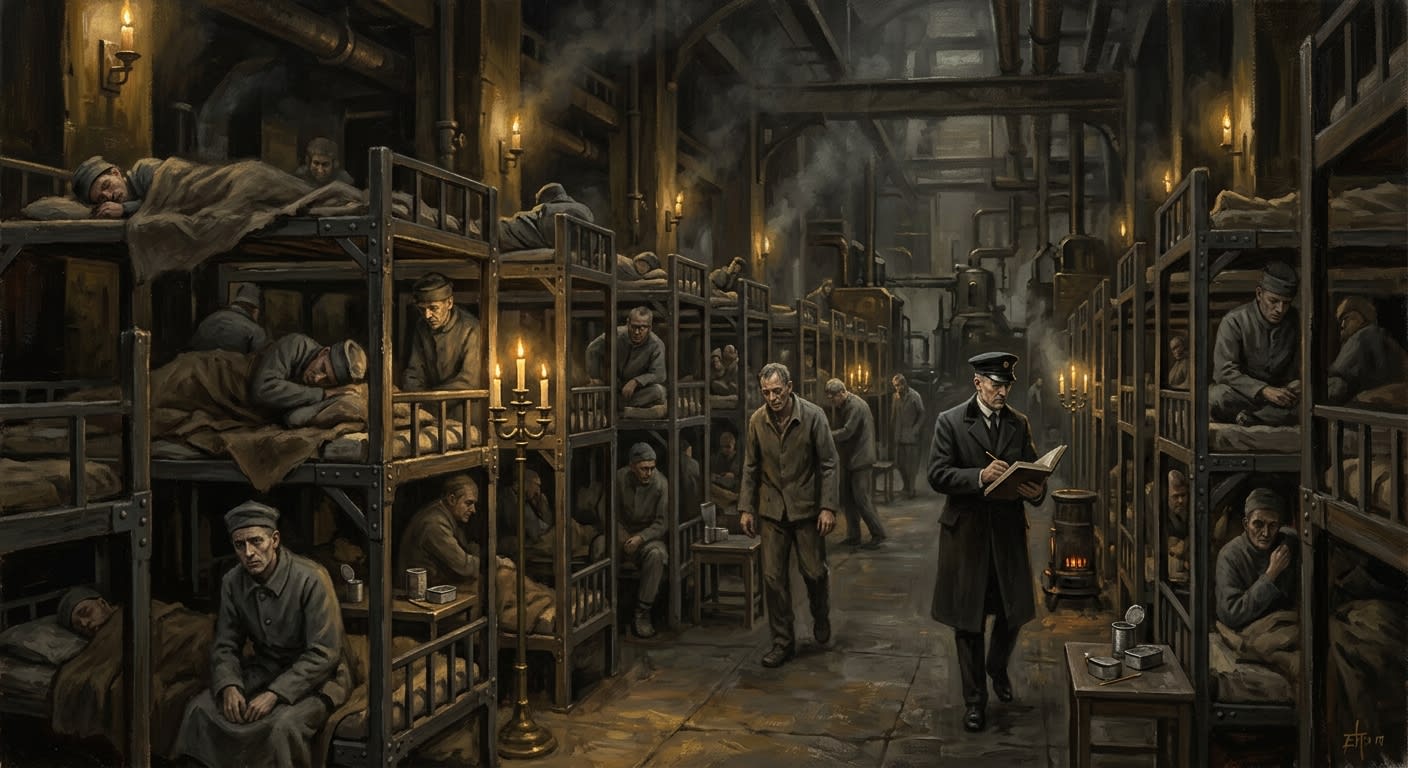
Dorm Rows
Awaiting is a doctrine with bunks and one candle per six
The Dorm Rows of the Cloister of Miscounted Beads turn detained pilgrims into Awaiting: bunked, rationed, counted, and corrected by candlelight.
Codex Ref. II.3.06-004
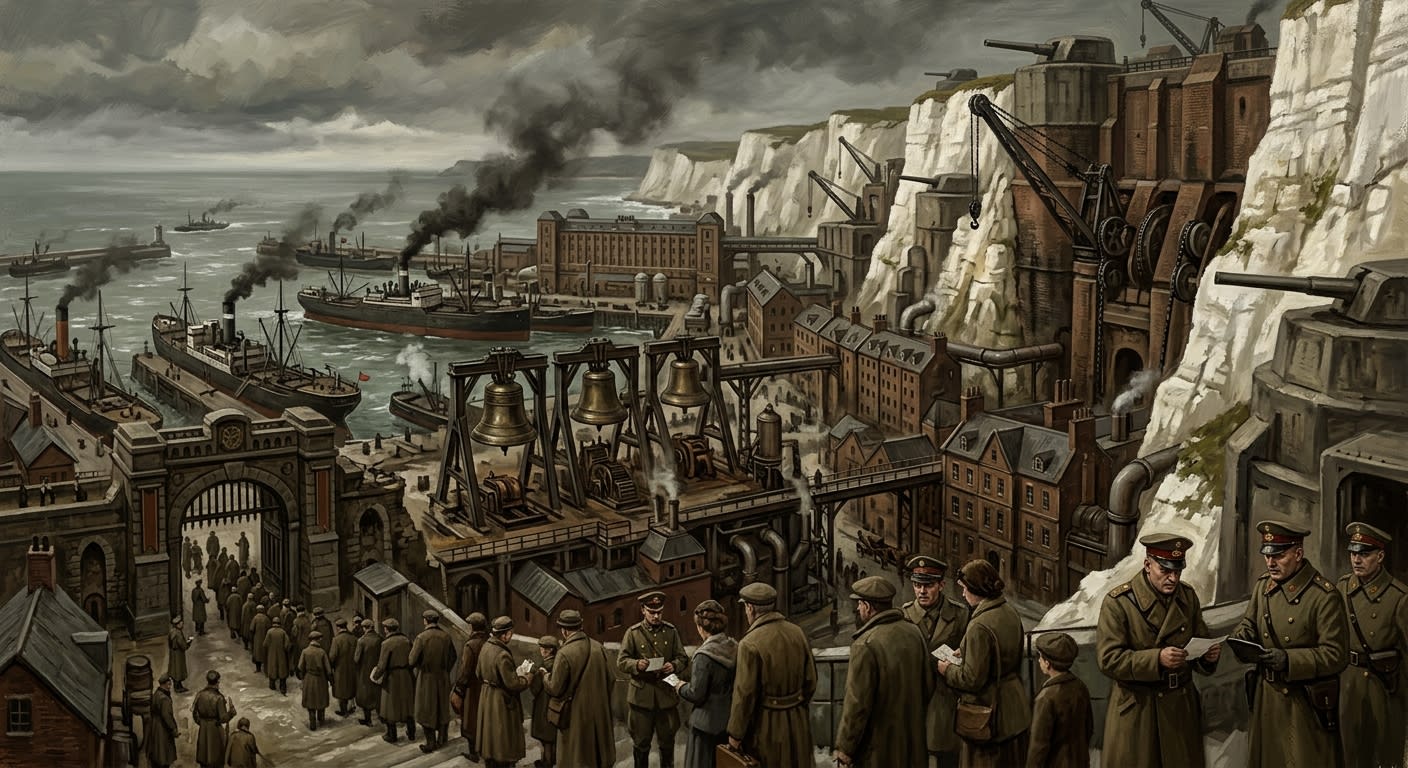
Dover
The white cliff that answers Calais with bells, chains, and refusal
Dover is the British Crown's white-cliff answer to Calais: port, bell-lane, Chainworks throat, pilgrim gate, and polished refusal.
Codex Ref. II.0.09-201
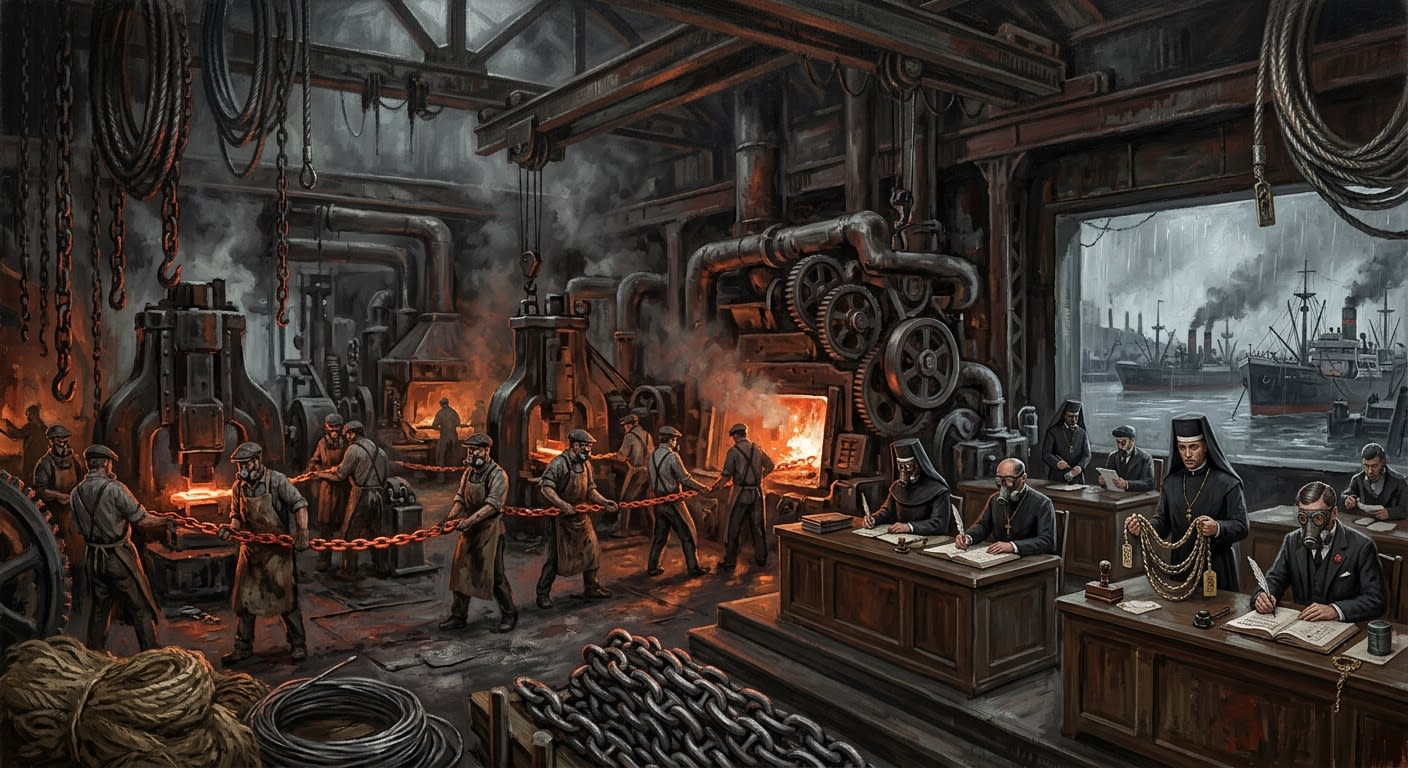
Dover Chainworks
Where British iron crosses the Channel and Synod dignity pays the toll
The Dover Chainworks forge the chains, cordage, and blessed rope that keep British convoys moving and Synod pride properly invoiced.
Codex Ref. II.4.09-009
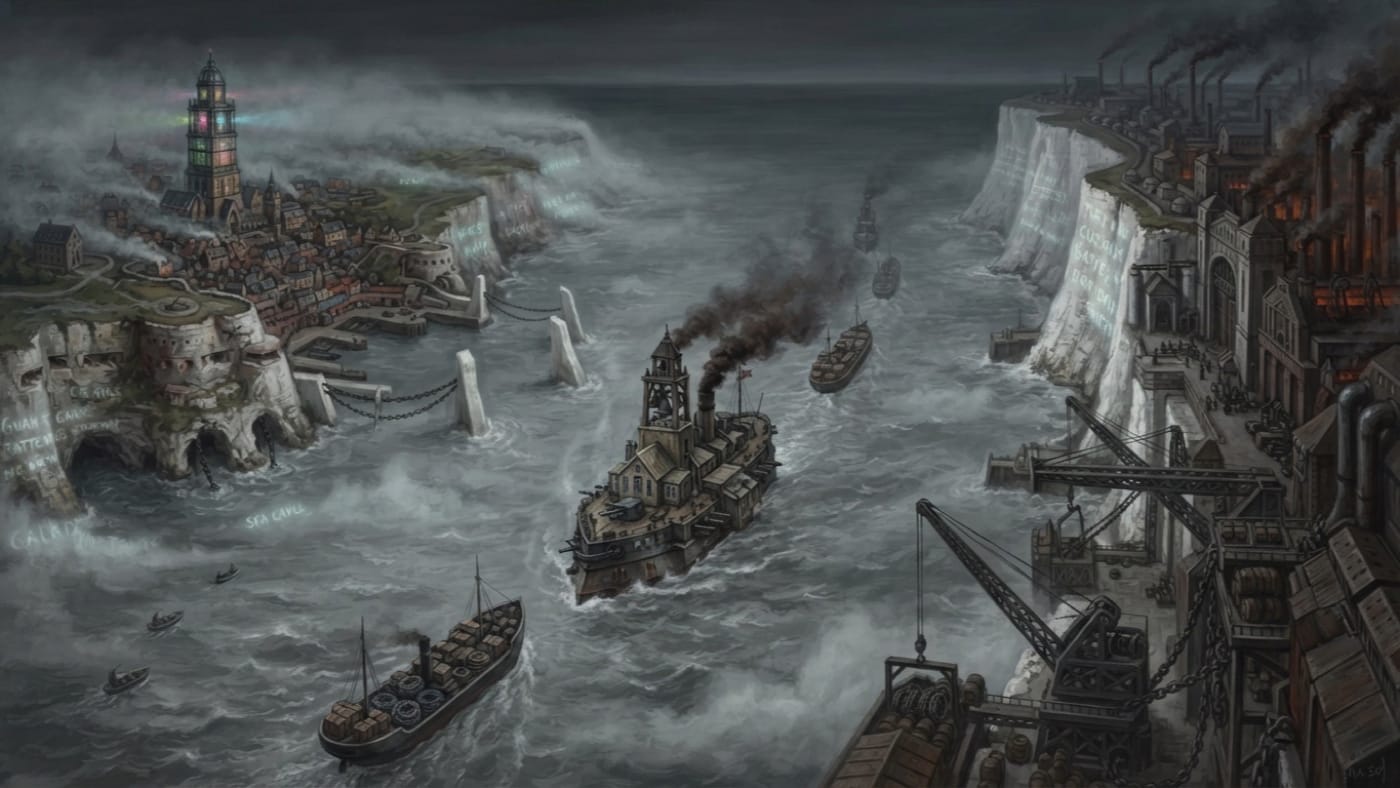
Dover Strait
British bells keep the Synod's grain moving
The Dover Strait carries grain, chain and pilgrims between British Dover and Synod Calais. British bells keep it open; Doctrine keeps requesting diagrams.
Codex Ref. II.1.04-203
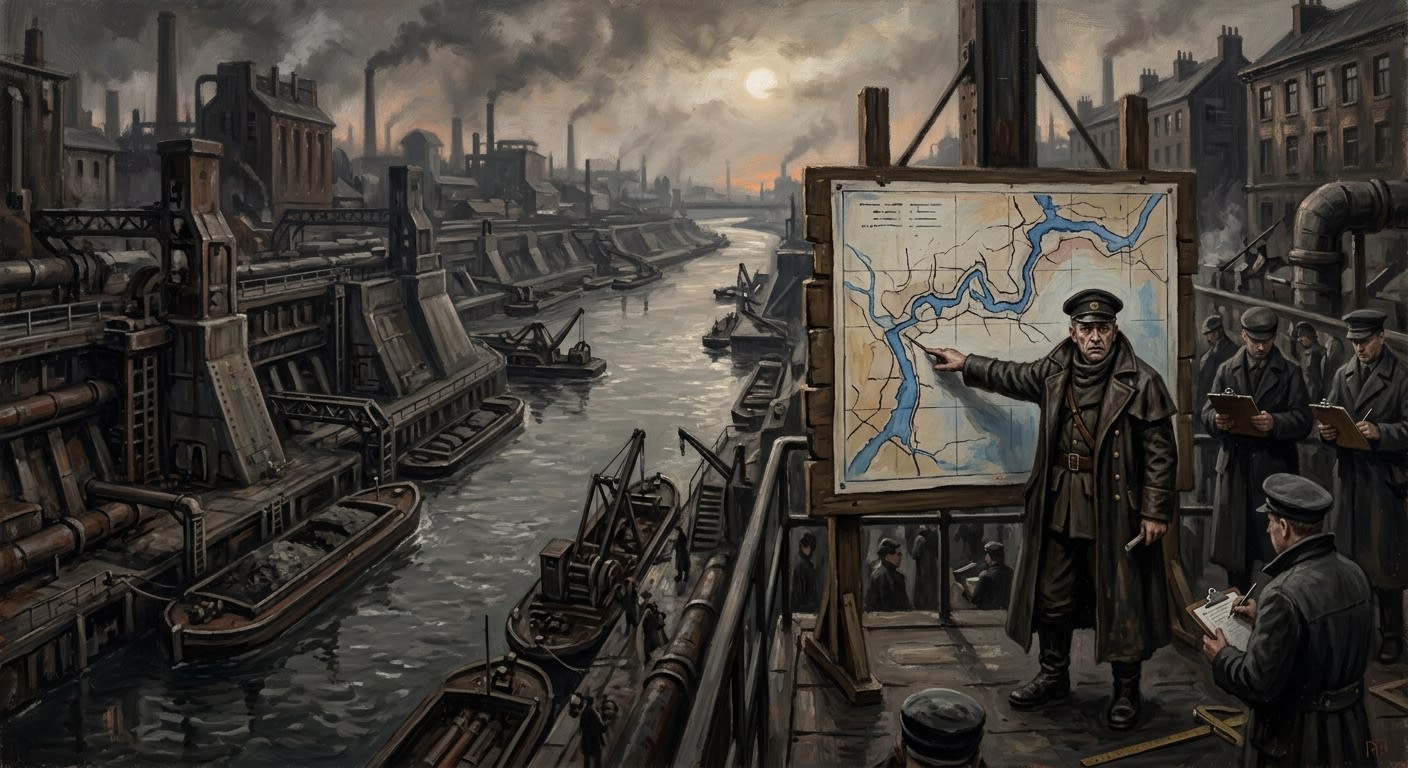
Drava
The river that stopped flowing and learned appetite
The Drava was once a river. Kargath made it an artery: grey, hungry, cartographically insulting, and still marked blue by clerks too tender to delete water.
Codex Ref. II.6.05-201
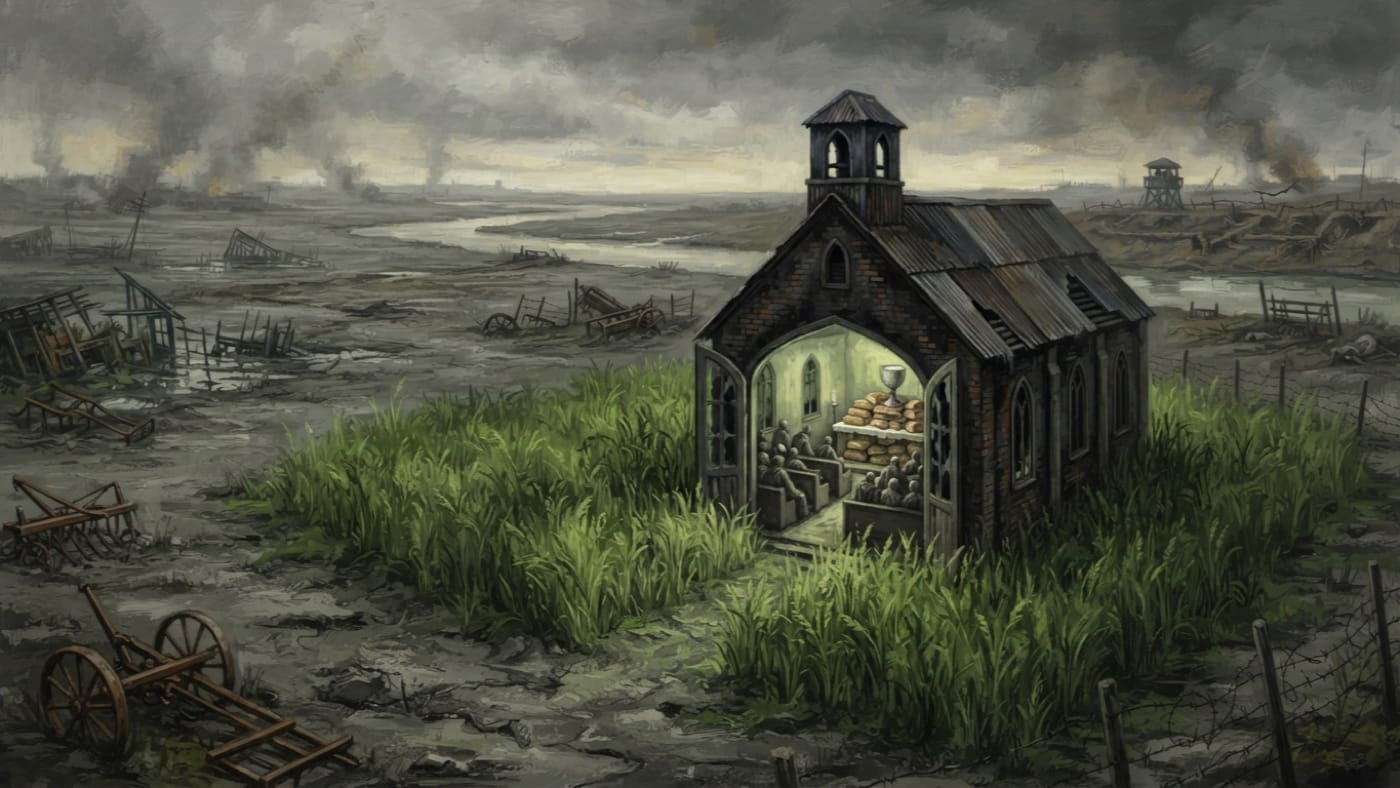
Drava Lowlands
Where the bread went, and what came back in its place
The Drava Lowlands once fed Pannonia. In A.S. 174 they housed a chapel whose altar was bread, whose chalice held milk, and whose congregation was entirely dead.
Codex Ref. II.6.06-174
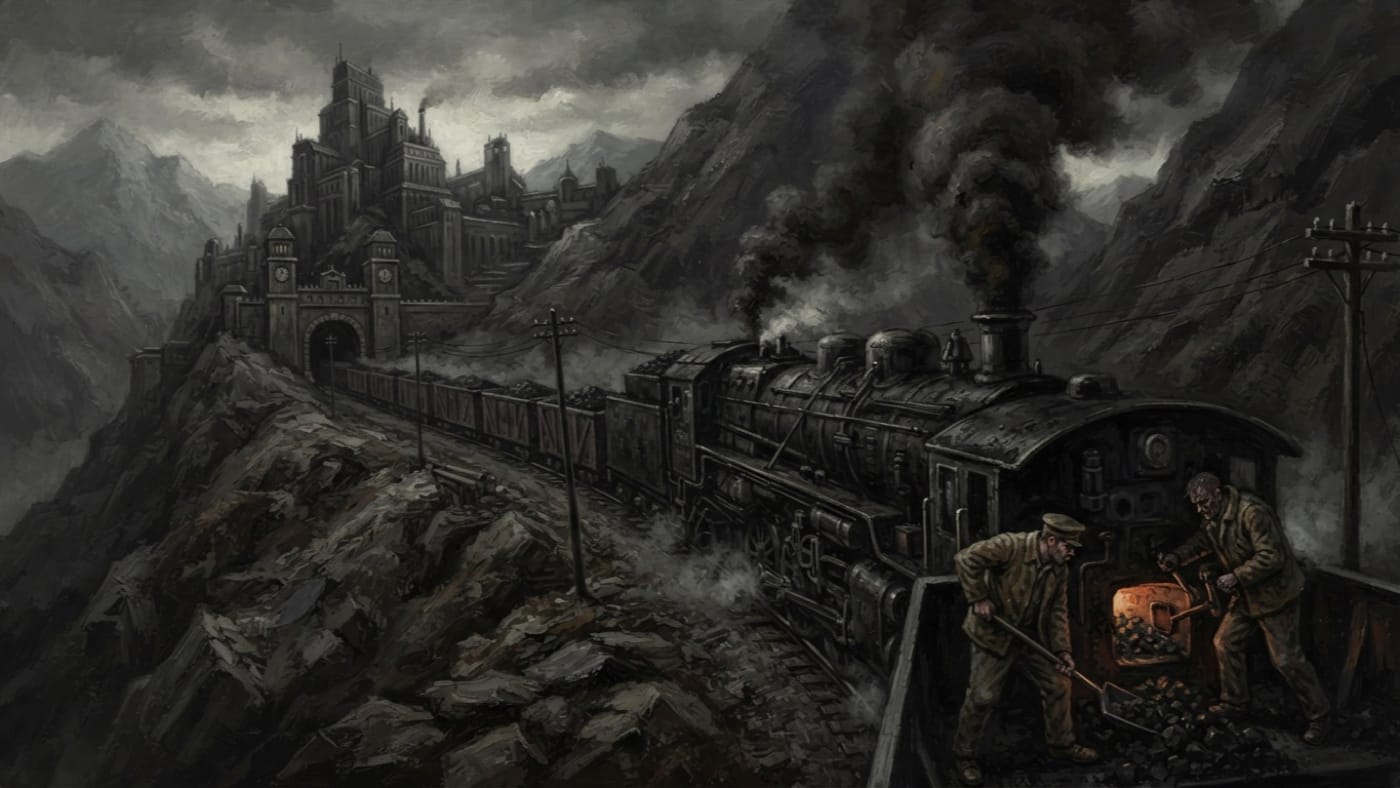
Drava spur
Nine hours of labour, four hours eleven on the clocks.
The Drava spur linked Heartlands depots to the Balkan bastions. Its A.S. 130 crew reported nine hours against four hours eleven on every clock. Engineering docked their pay; War eventually founded a bureau.
Codex Ref. II.4.11-130
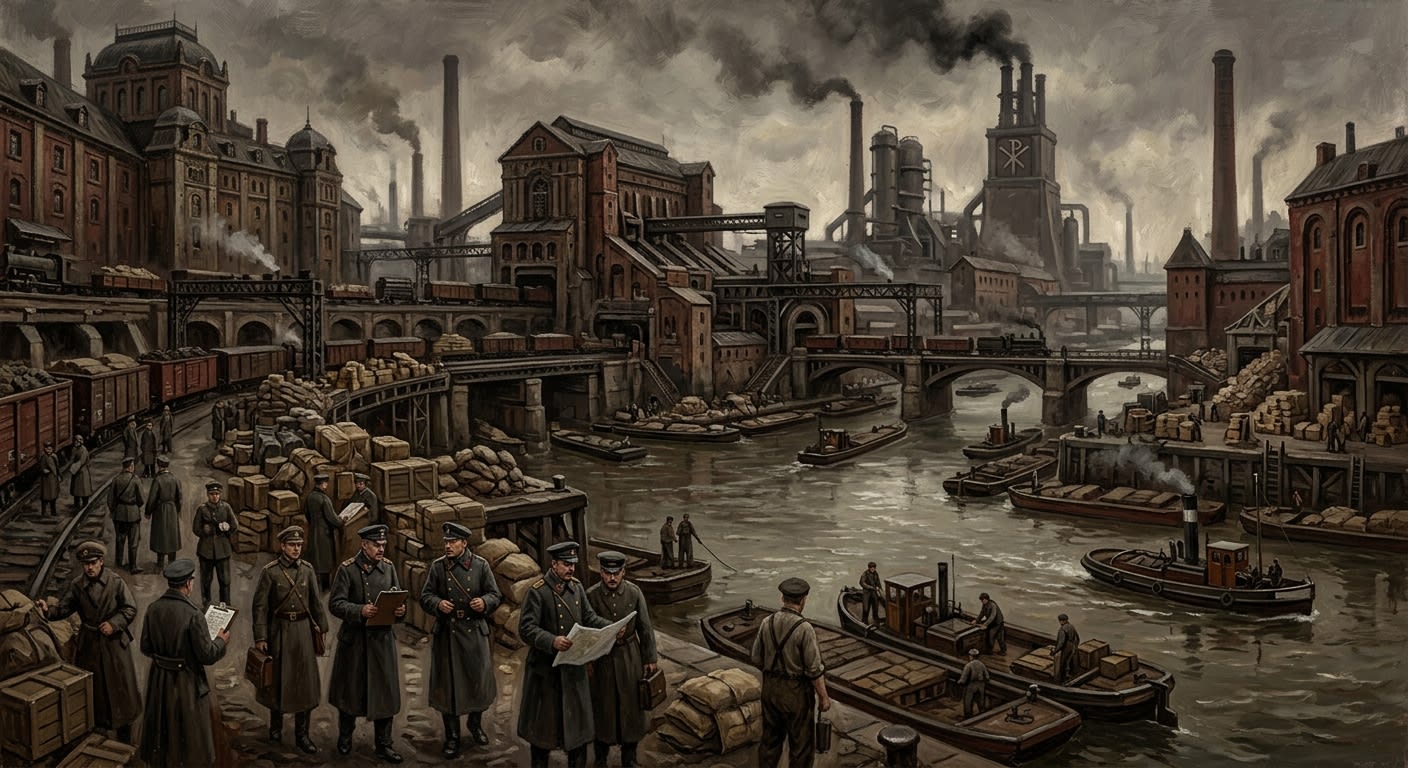
Dresden
The polite overflow basin where delay learns manners
Dresden is the Synod's Elbe side-throat: porcelain, rail yards, transfer rooms, polite stoppages, and every overflow Kanzleiburg prefers to call supplementary.
Codex Ref. II.4.09-201
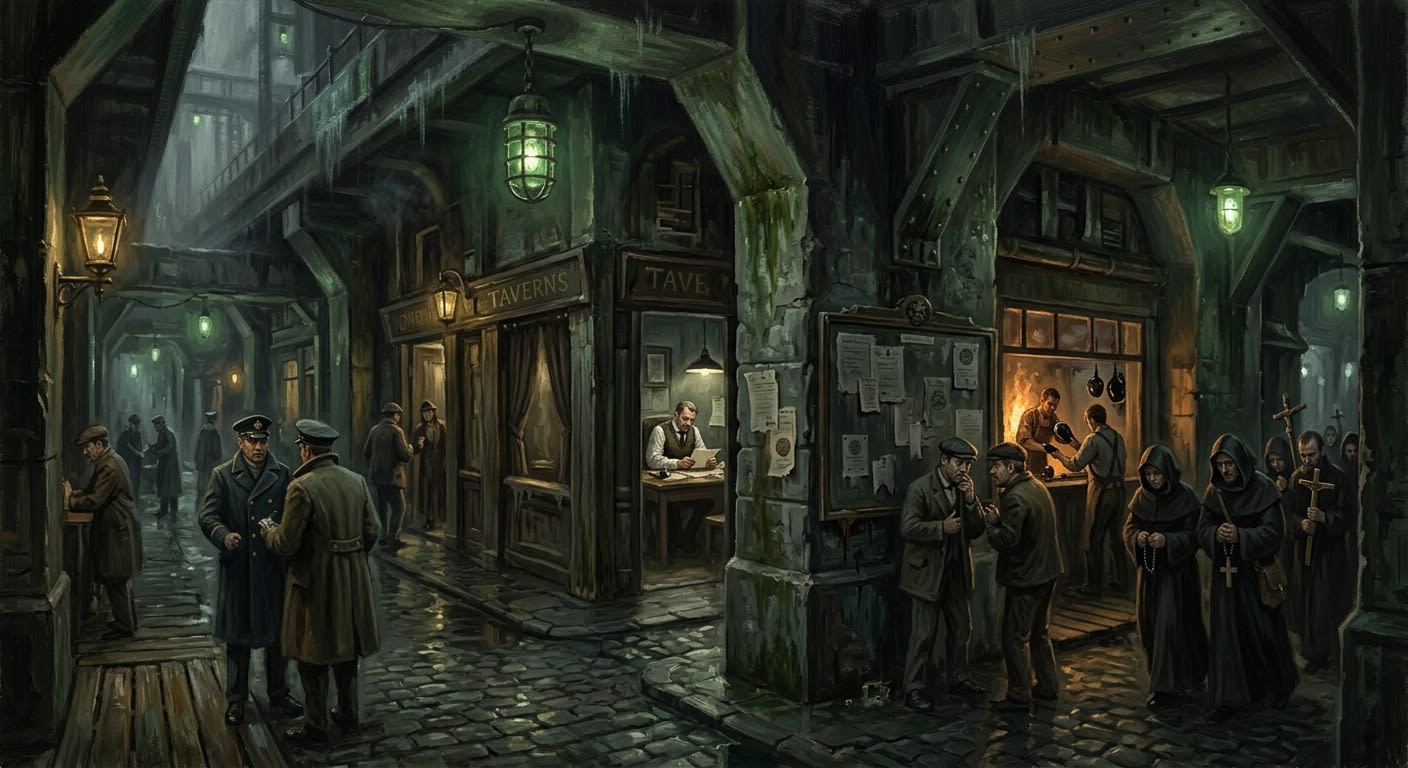
Drowned Row
The harbour beneath the harbour keeps its own ledger
Drowned Row is Thessaloniki's under-quay sailor quarter: wet taverns, false papers, pilots, glass traffic, Choir terror, and bureaucracy's useful shame.
Codex Ref. II.7.04-198
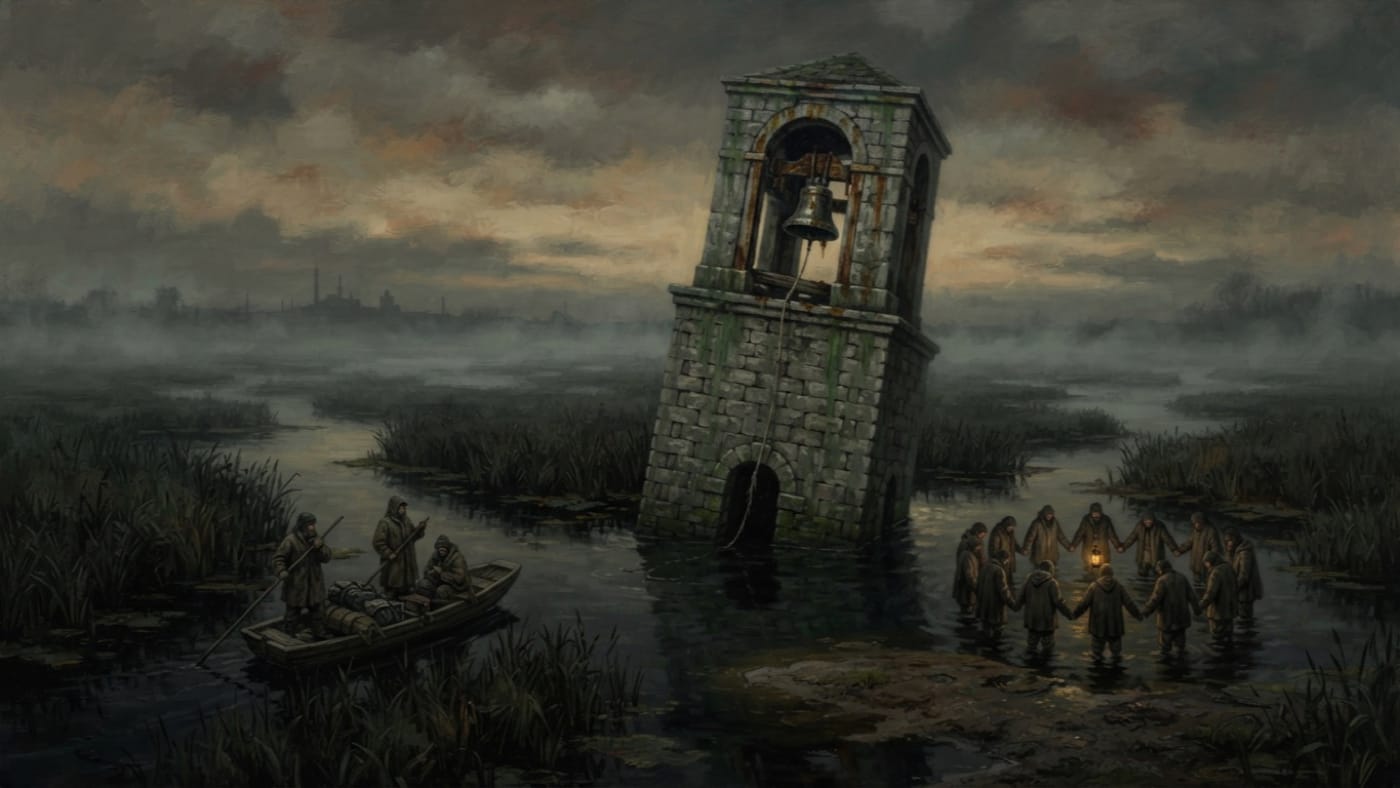
Drowned Shrine
Four Bureaus, four verbs, one tower
A drowned way-shrine east of Bastion-Shipka: a corroded bell, recorded percussion, and Communion circles within sight. Records restricts access without boats; four Bureaus preserve one open file.
Codex Ref. II.4.08-018
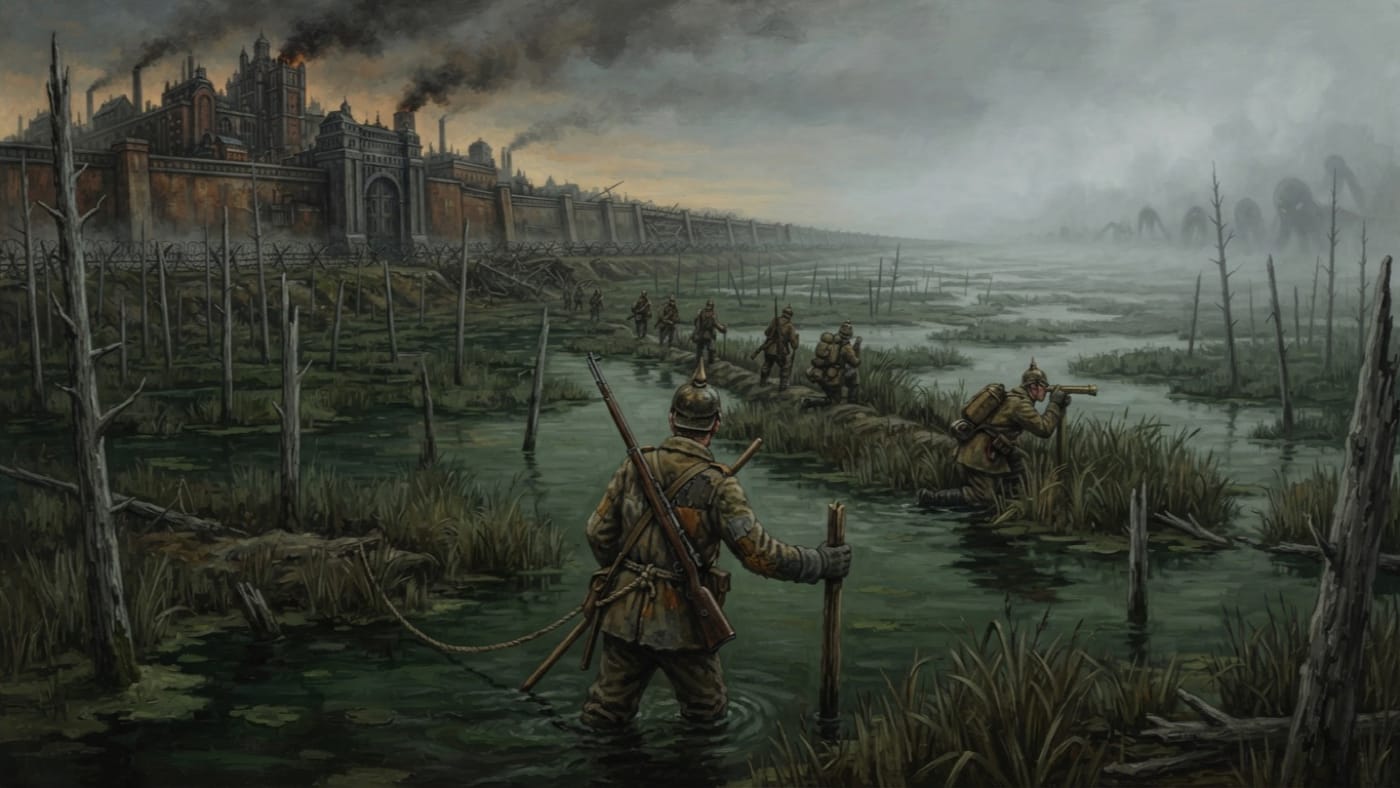
Drowning Garden
Seven Maps, Two Doctrines, and Water That Requires Neither
The Masurian lake-maze east of Bastion-Königsberg: seven canonical maps, two seasonal doctrines, and Watchers who know what the Bureau cannot file. The defence faces east. The Grey does not.
Codex Ref. II.4.07-068
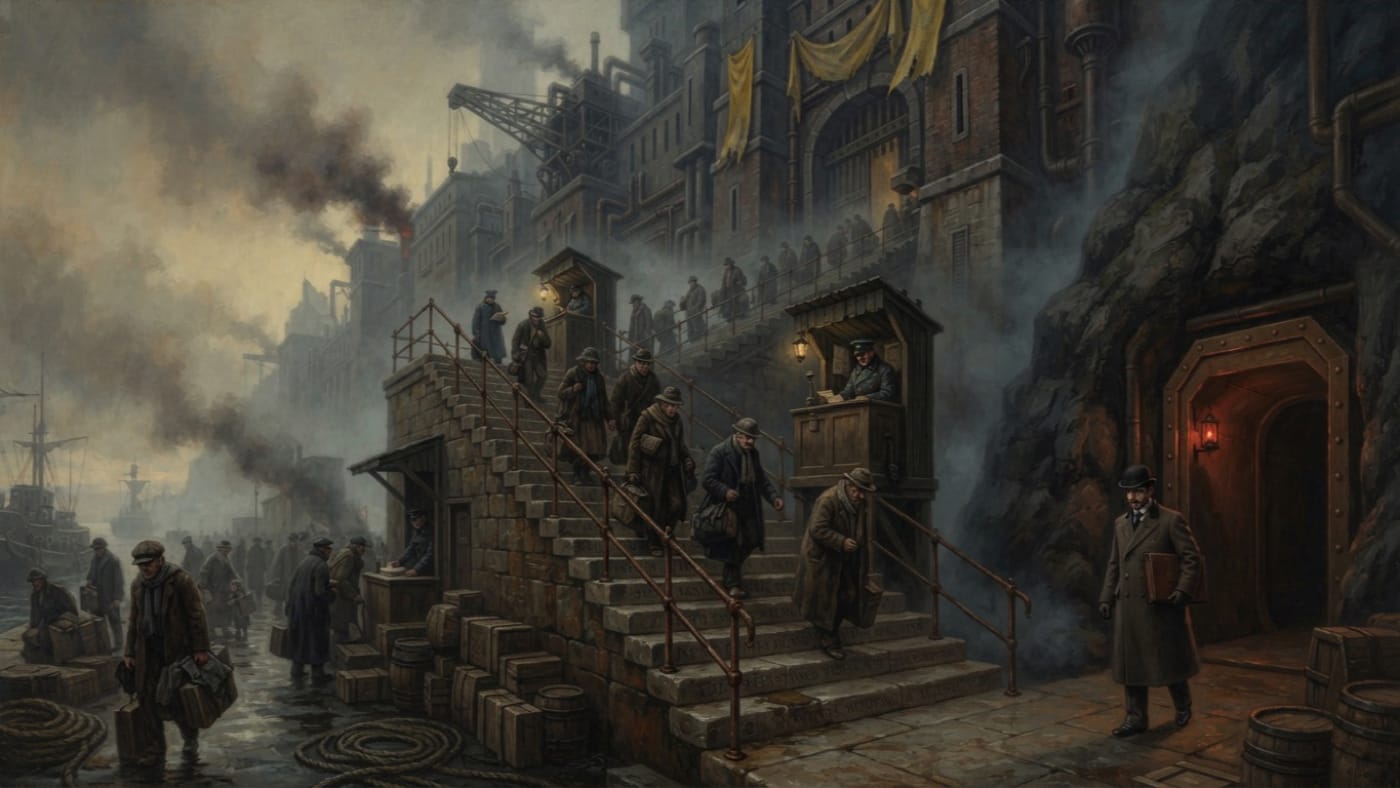
Duesstairs
The steps tell you what you owe. The clerks decide how much.
Saffron Bastion's tax ascent: one hundred and forty-seven steps, each carved with a dues category. The invoice proves payment; the dry-pass grants release. The rich have another route.
Codex Ref. II.4.09-002
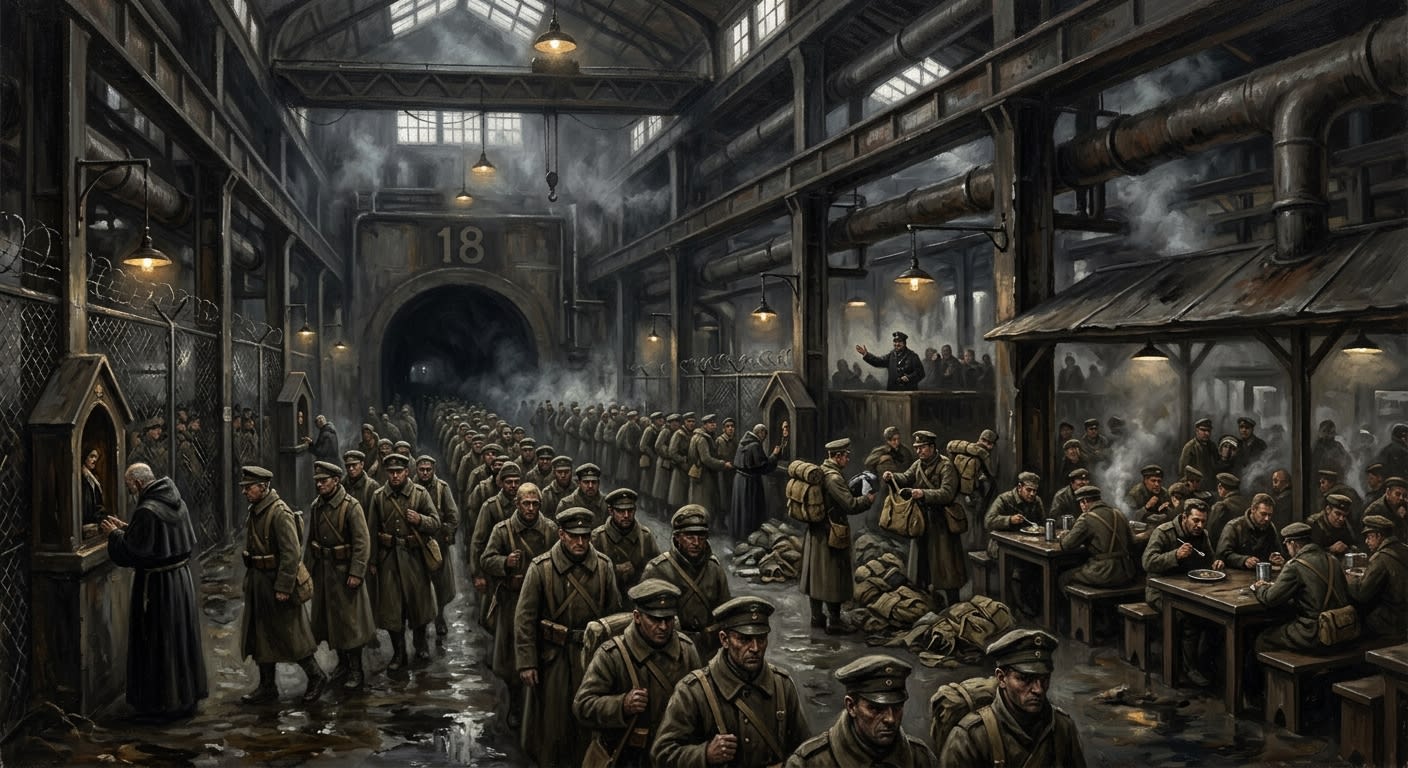
Durchgangskaserne
Munich's barracks of passage, where men are counted before the Line counts them again
Munich's Durchgangskaserne processes forty thousand soldiers a month through intake queues, kit rooms, mess halls, doctrinal briefings, and the last unofficial blessing before Platform Eighteen.
Codex Ref. II.2.06-014
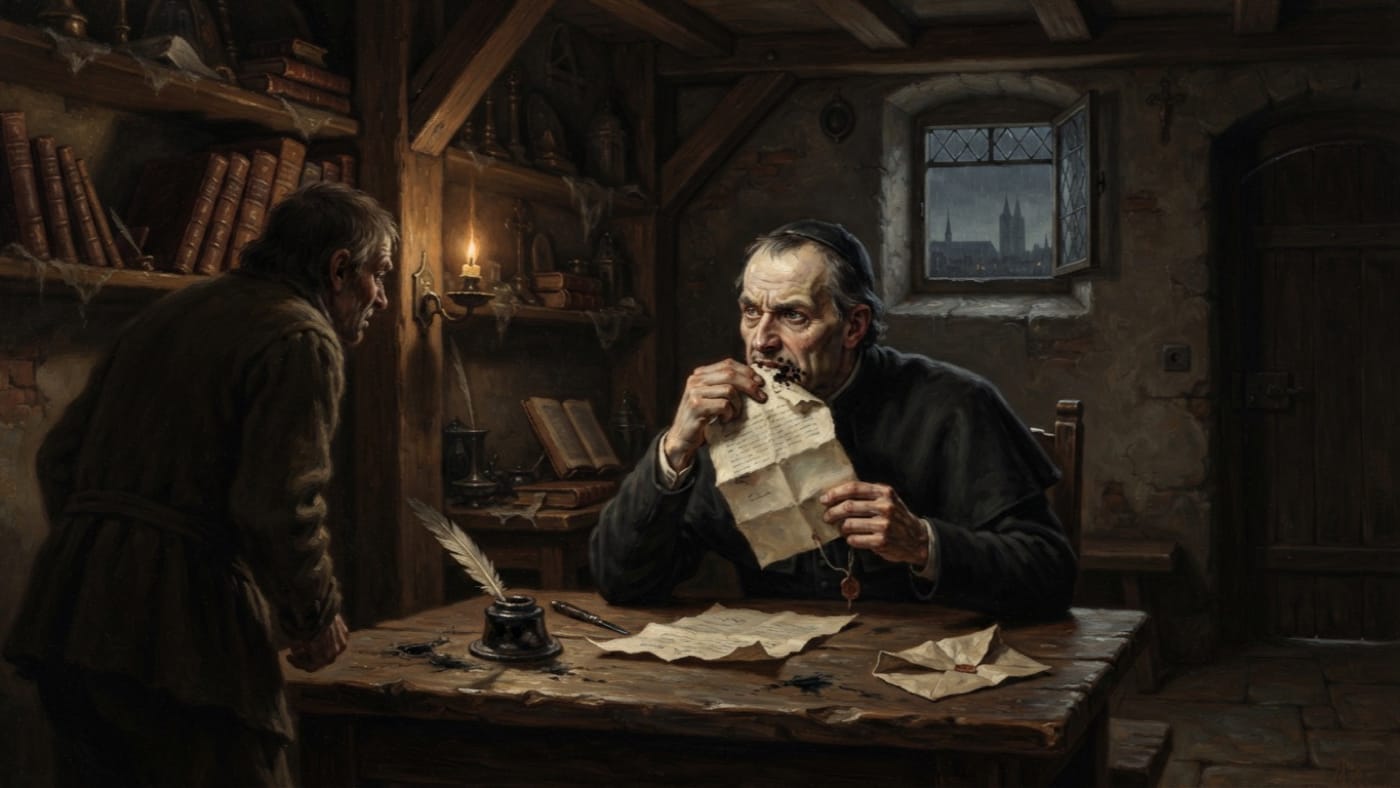
Düsseldorf
One priest. One letter. Nothing left to quote.
A Rhineland city remembered for Father Grauss, who ate the Amsterdam letter in A.S. −32 / 1678 CE. The magistrate supplied three days in gaol; the Bureau supplied a classification.
Codex Ref. II.2.01-941
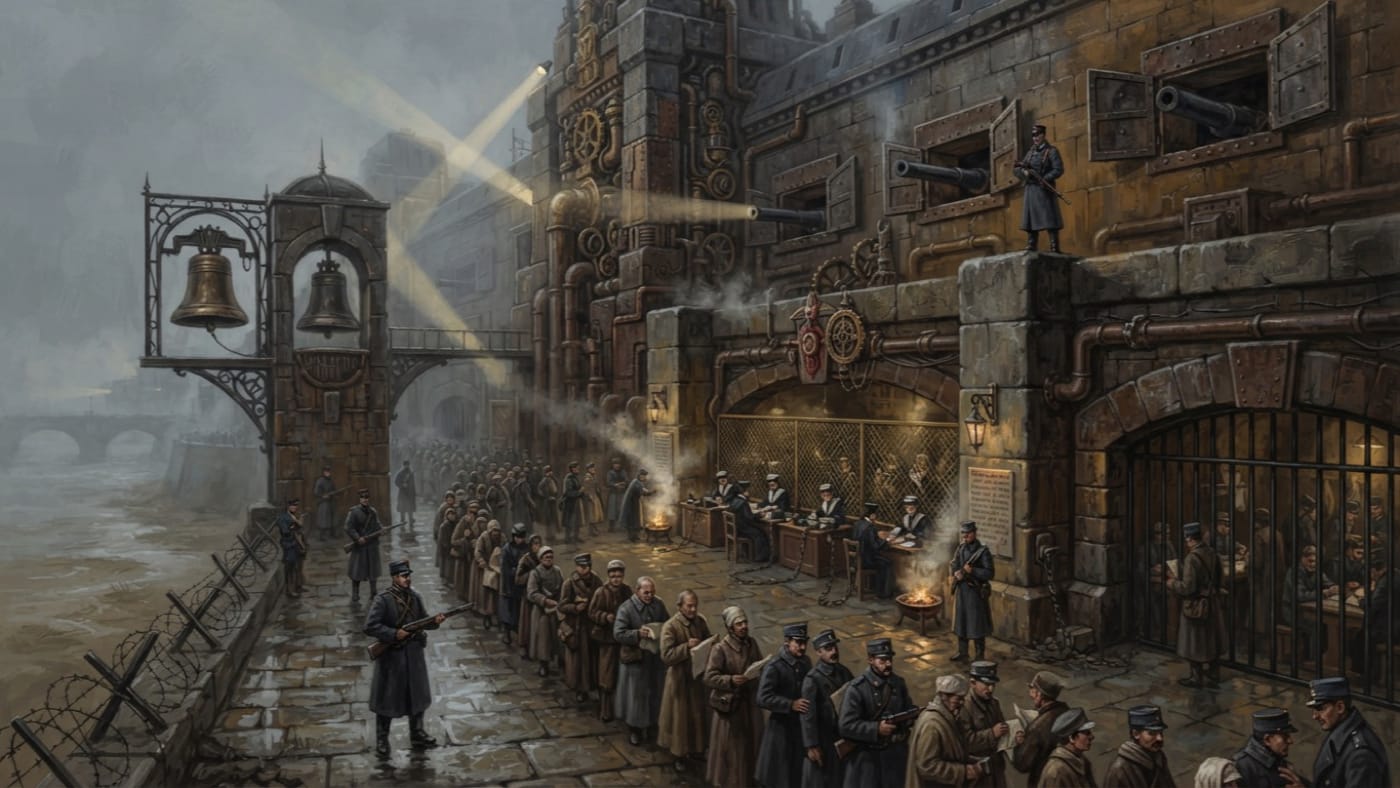
East Gate
Where a stamp admits the traveller and the bell abandons him
East Gate receives Bastion-Brest's convoys, pilgrims and prisoners through wet papers, chained dies and holding pens. Krail holds the argument, Ruis the clock, and Vonn the bell.
Codex Ref. III.2.04-945
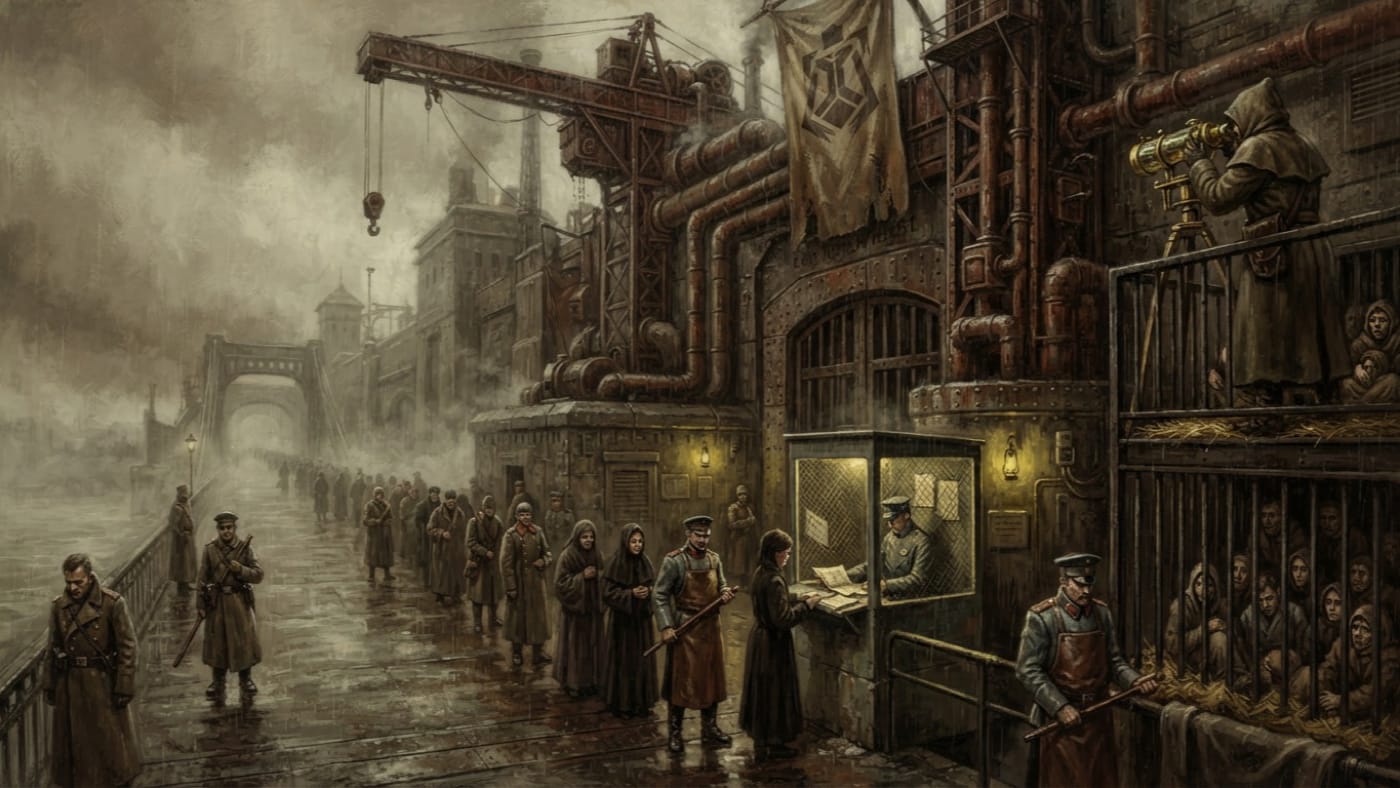
East Gatehouse (Brest)
Where a small mark decides who may move
Brest's eastern intake, where wet papers meet vinegar, confession receipts meet chained dies, and Hett Ruis's transit mark decides who may cross the Bug and who waits in the holding pens.
Codex Ref. II.4.07-003
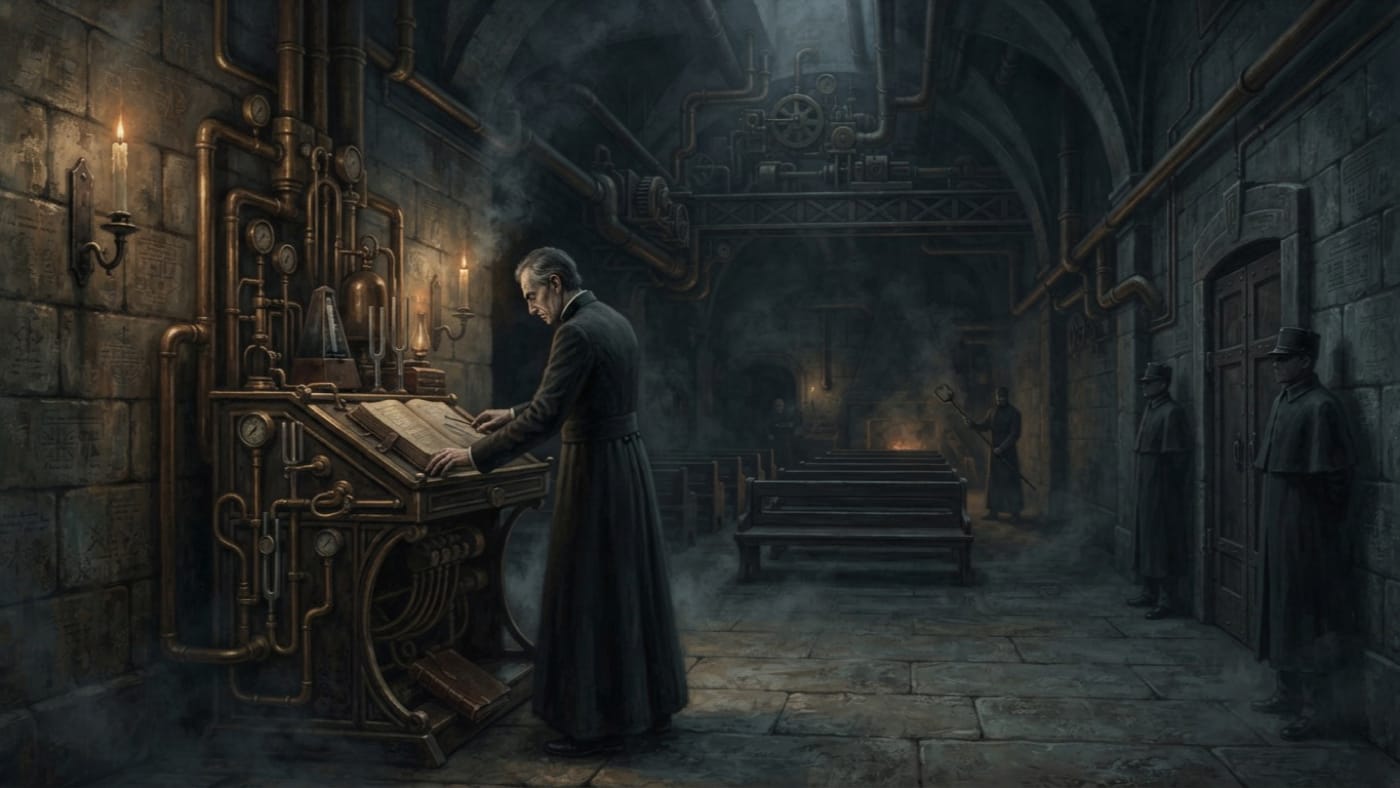
East Hall Response
The room that made the master lower his voice
East Hall answered Master Cantor Vell's Opening Hymn in A.S. 144. He spent three months at half volume; the file keeps the response's source and the rite's outcome under the bar.
Codex Ref. II.1.04-948
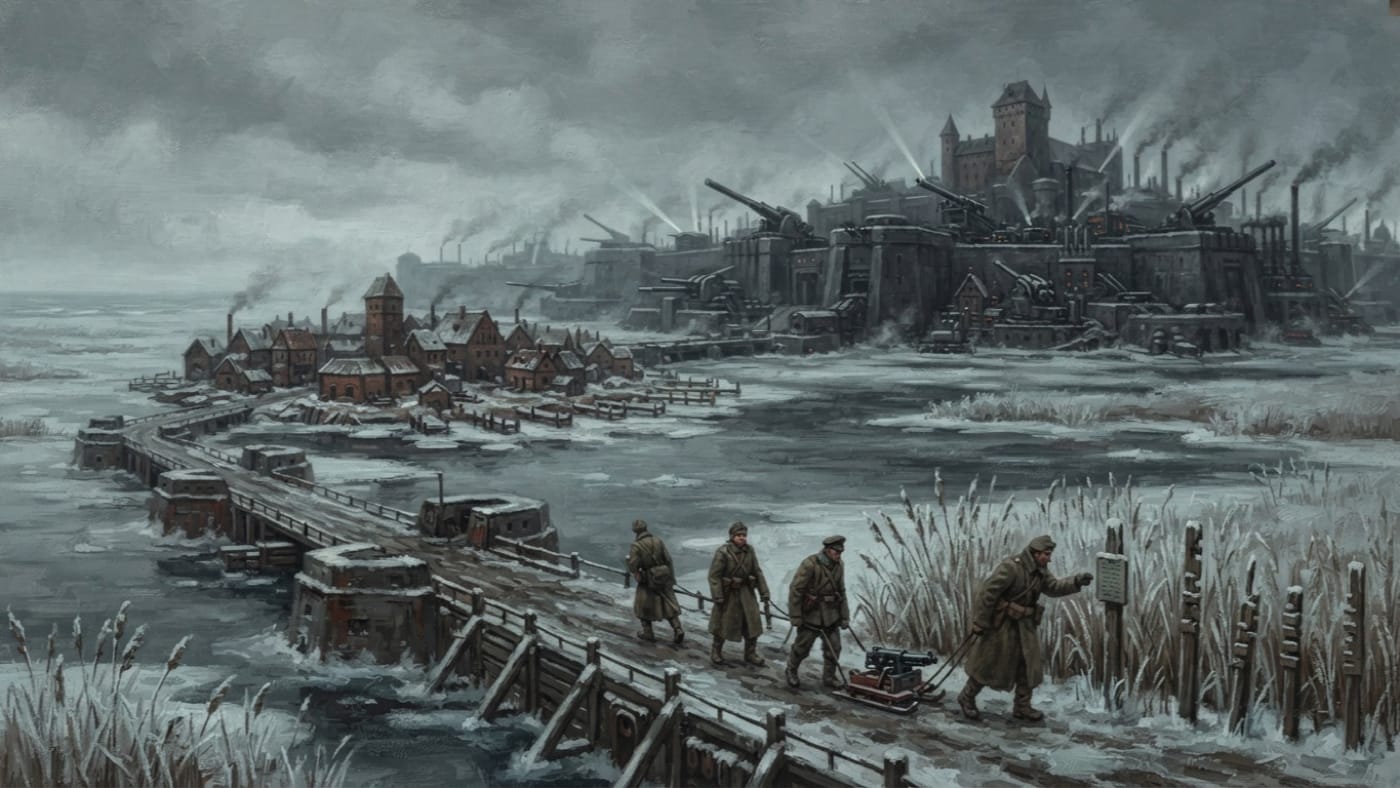
East Prussia
Where the Line Runs Out of Land and the Survey Runs Out of Courage
East Prussia holds the Baltic end of the Sagittal Line: Königsberg, the Masurian maze, and the villages that feed the walls. The Bureau can count its stamps. It has yet to count the region.
Codex Ref. II.4.07-002
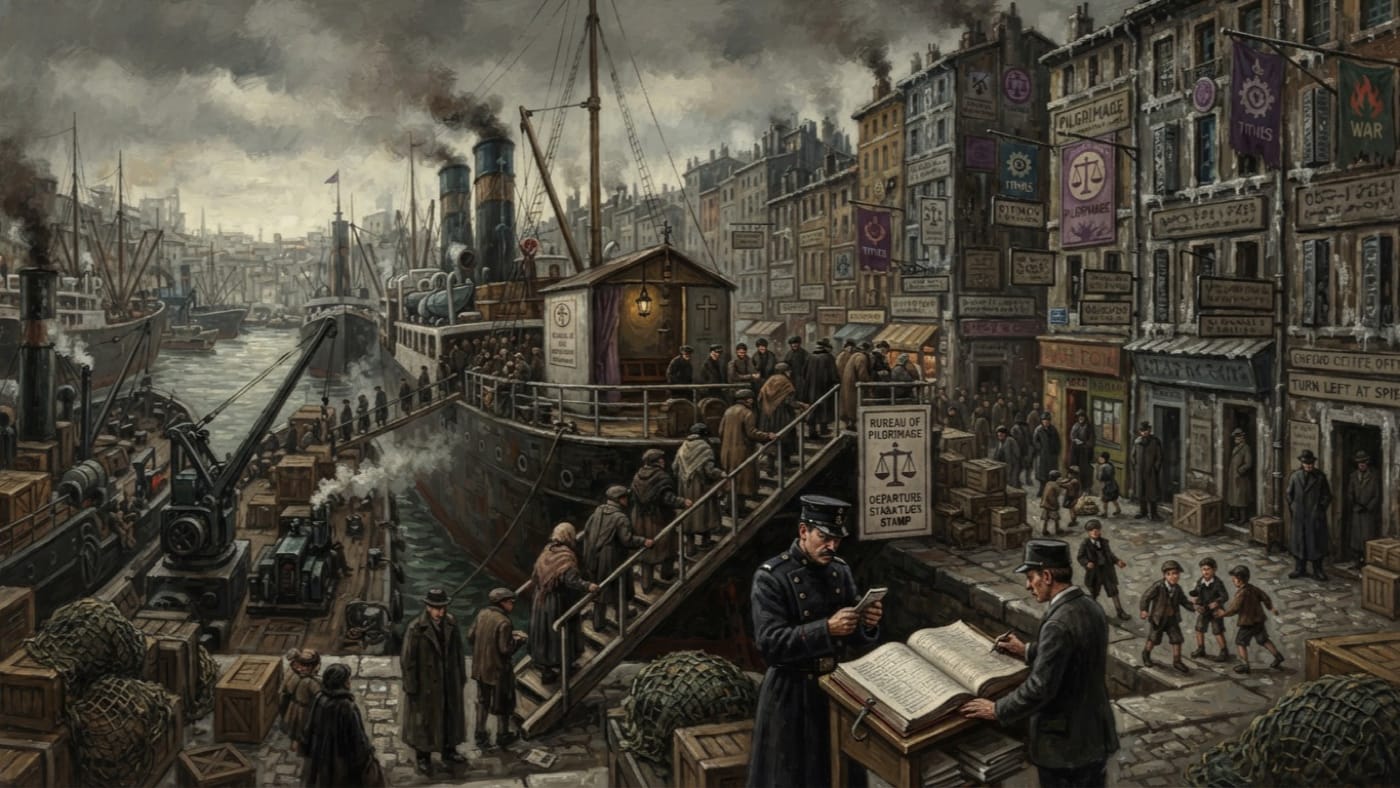
Eastern Basin
Pilgrims sail under seal; the spies serve as landmarks
A.S. 201 survey of Marseille's enlarged harbour and quayside quarter: pilgrims sail under seal, relics arrive under suspicion, three Bureaus dispute the water, and the officially nonexistent spies serve as landmarks.
Codex Ref. II.4.09-013
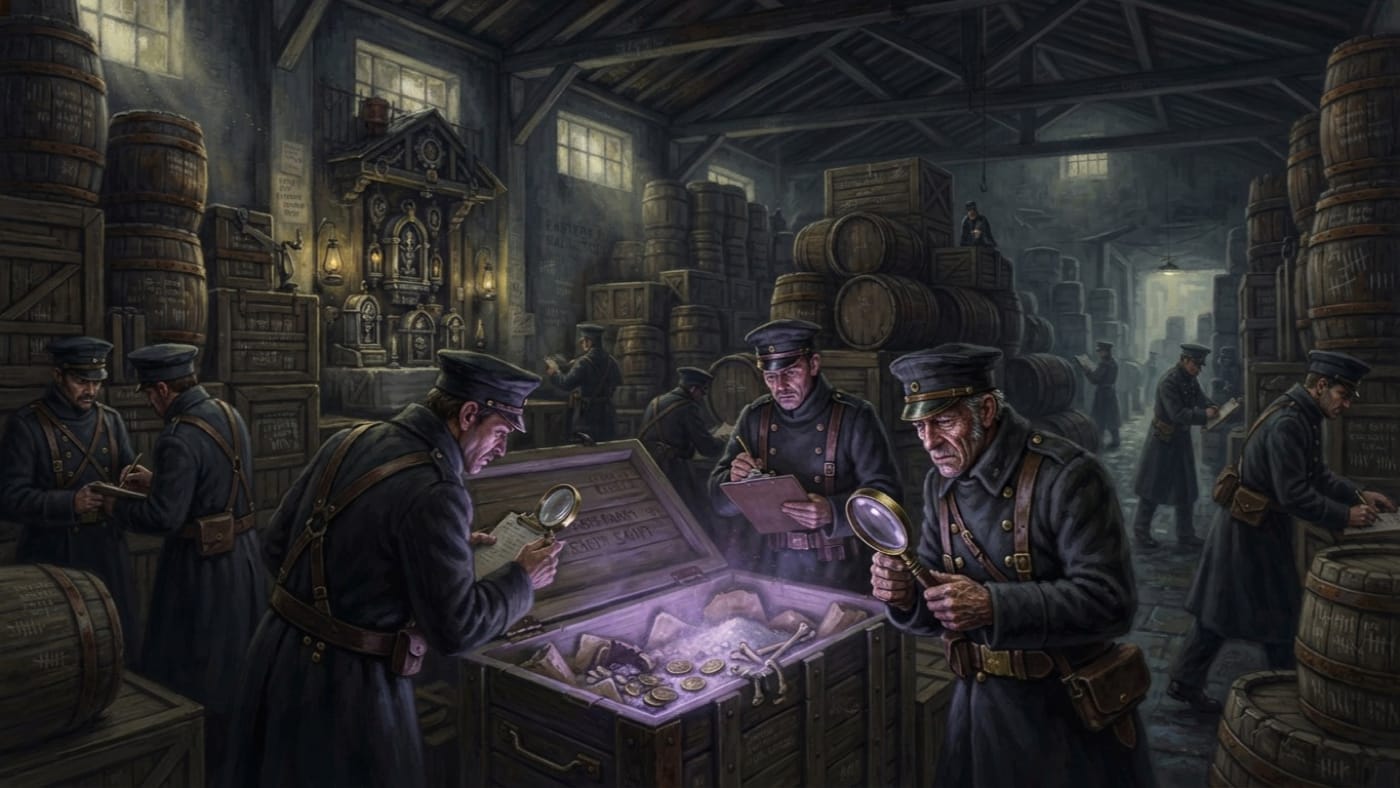
Eastern Basin Salt Stores
Five Bureaus claimed the cargo; the ledger called it spoilage
The Eastern Basin Salt Stores survive in Marseille's A.S. 199 audit: cured fish declared, children and violet light found, five Bureaus claiming custody, and the account closed as spoilage.
Codex Ref. II.4.09-019
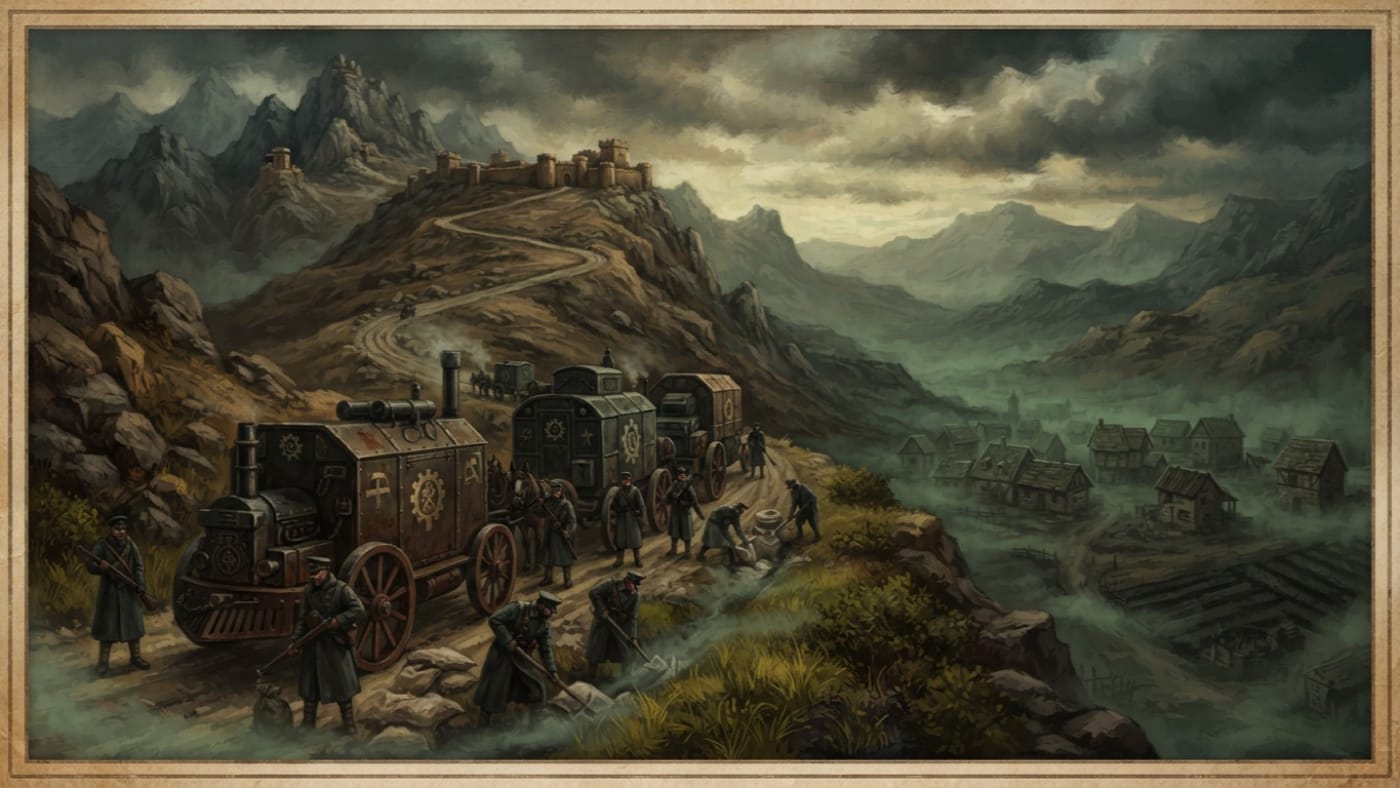
Eastern Corridors
A clear road is a road not yet tested
The Eastern Corridors are the hostile approaches beyond Sibiu and toward Przemyśl: corpse-trains poison the passage, and every clean road must prove its innocence.
Codex Ref. II.3.06-201
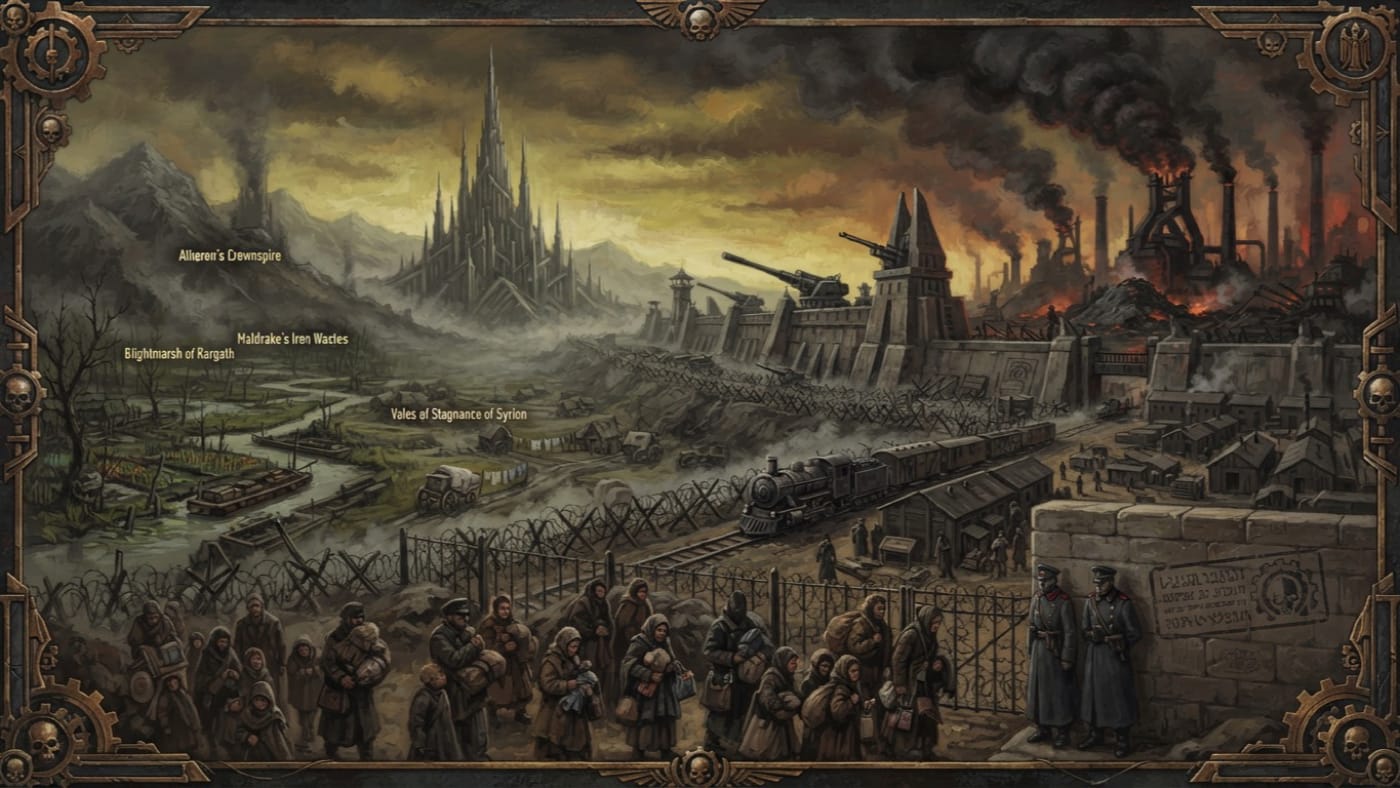
Eastern Kingdoms
The lands were lost; the Ledger retains their names
The eastern jurisdictions lost after the Sundering, now largely held by rival Sin-General dominions. Their people endure; the Ledger still calls the occupation temporary.
Codex Ref. II.6.07-201
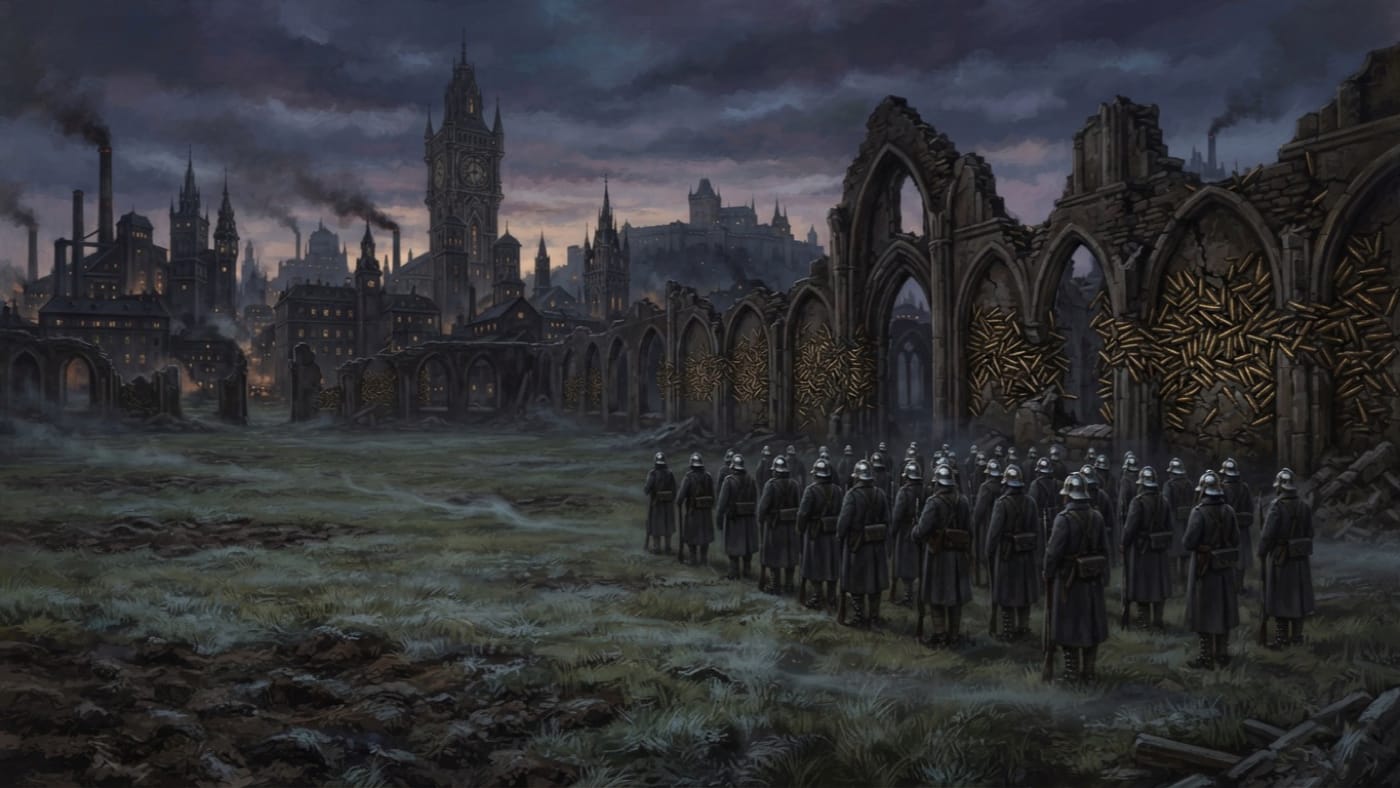
Eastern Seminary Field
Where loaded rifles kept their silence
Prague's eastern seminary field holds a ruined cloister and the memory of forty-three Fusiliers who died without firing in A.S. 167. Records calls it command miscommunication; soldiers leave brass.
Codex Ref. II.3.02-002
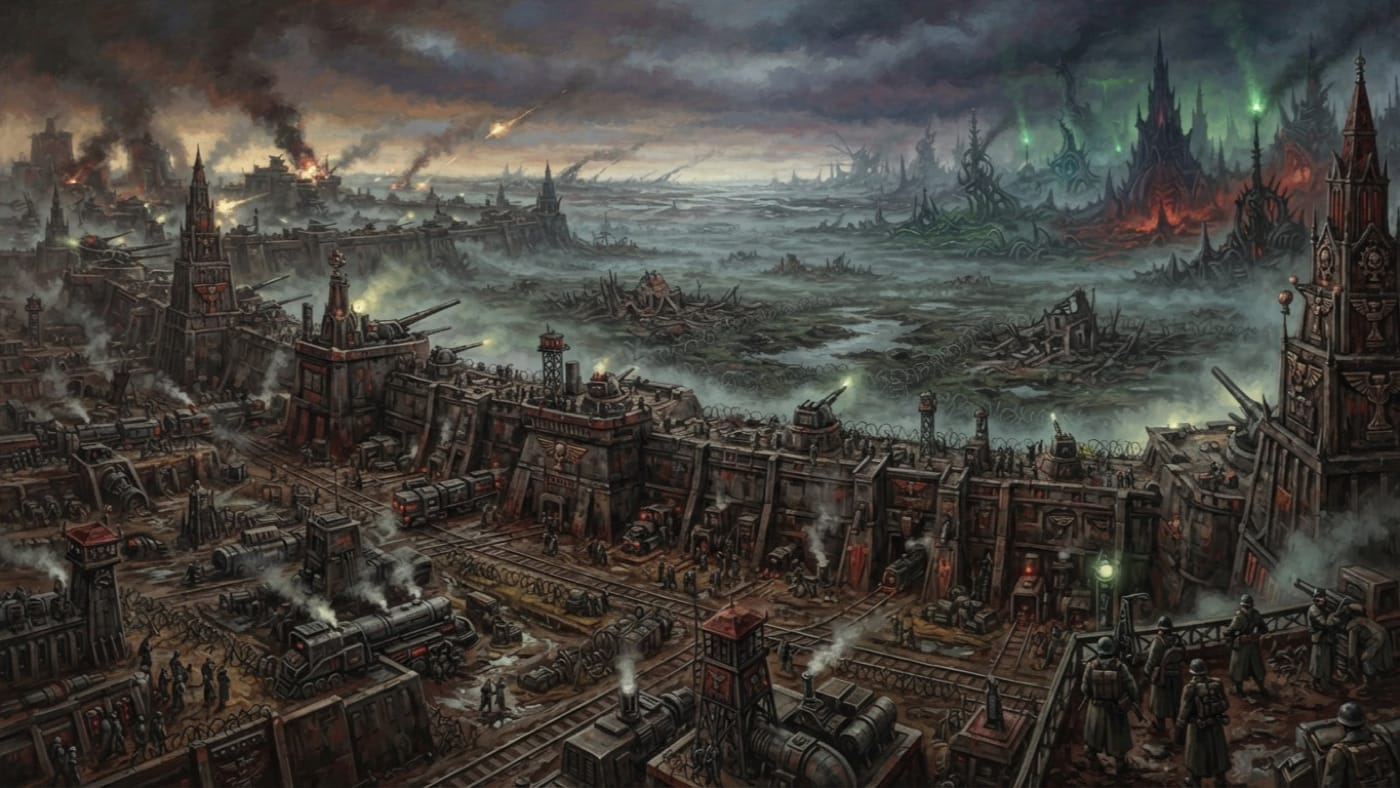
Eastern Theatre
A province has a governor to blame. The Eastern Theatre has an inbox.
The eastern war's unchartered heading: the Sagittal Line, contested strip, fallen lands and supporting rear. Drax surveys the front in A.S. 201; the reports have desks, but the Theatre has no commander.
Codex Ref. II.4.13-201
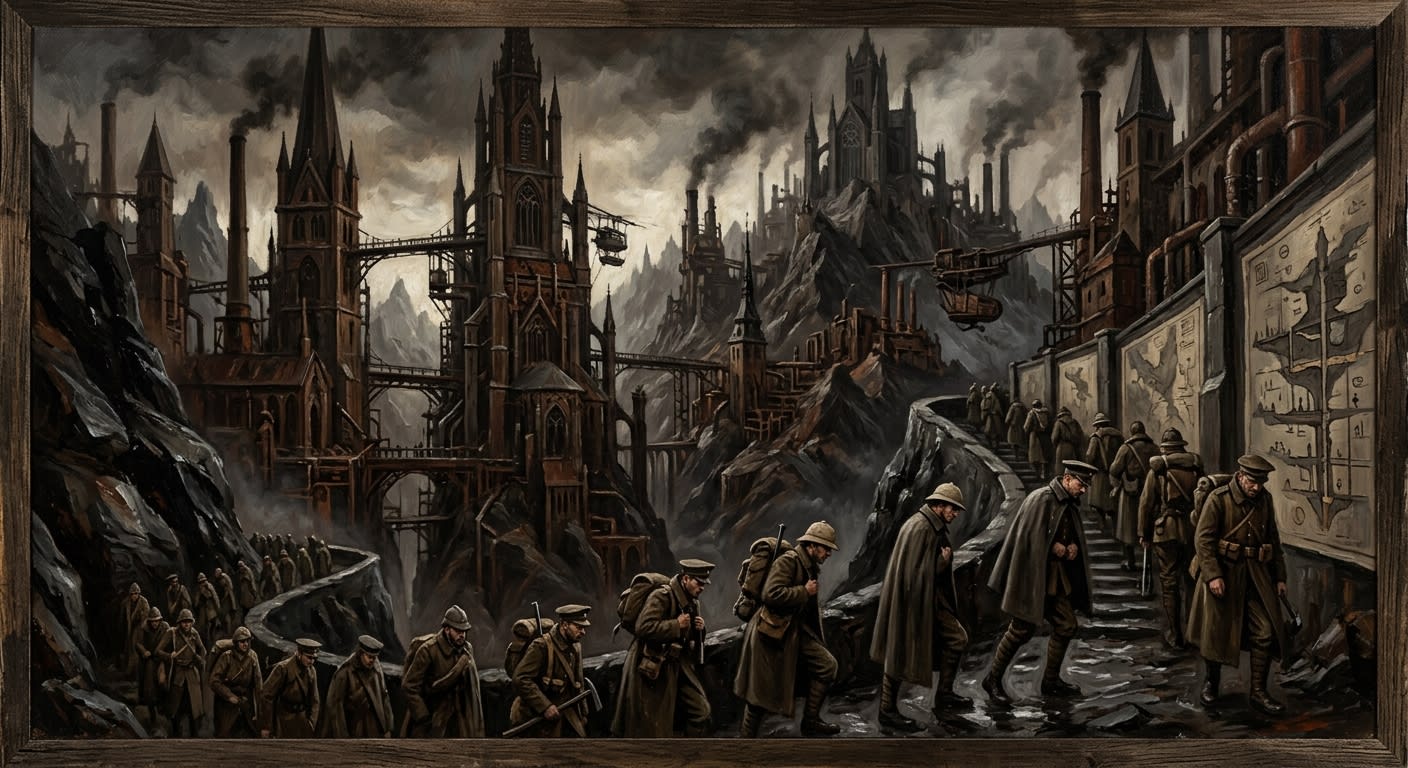
Ebon Heights
Where Pride built mountains tall enough to injure the watcher
The Ebon Heights are Atheron's black Carpathian dominion east of Bastion-Przemyśl, where spires grow upward, soldiers learn shame, and maps fail vertically.
Codex Ref. II.4.03-046
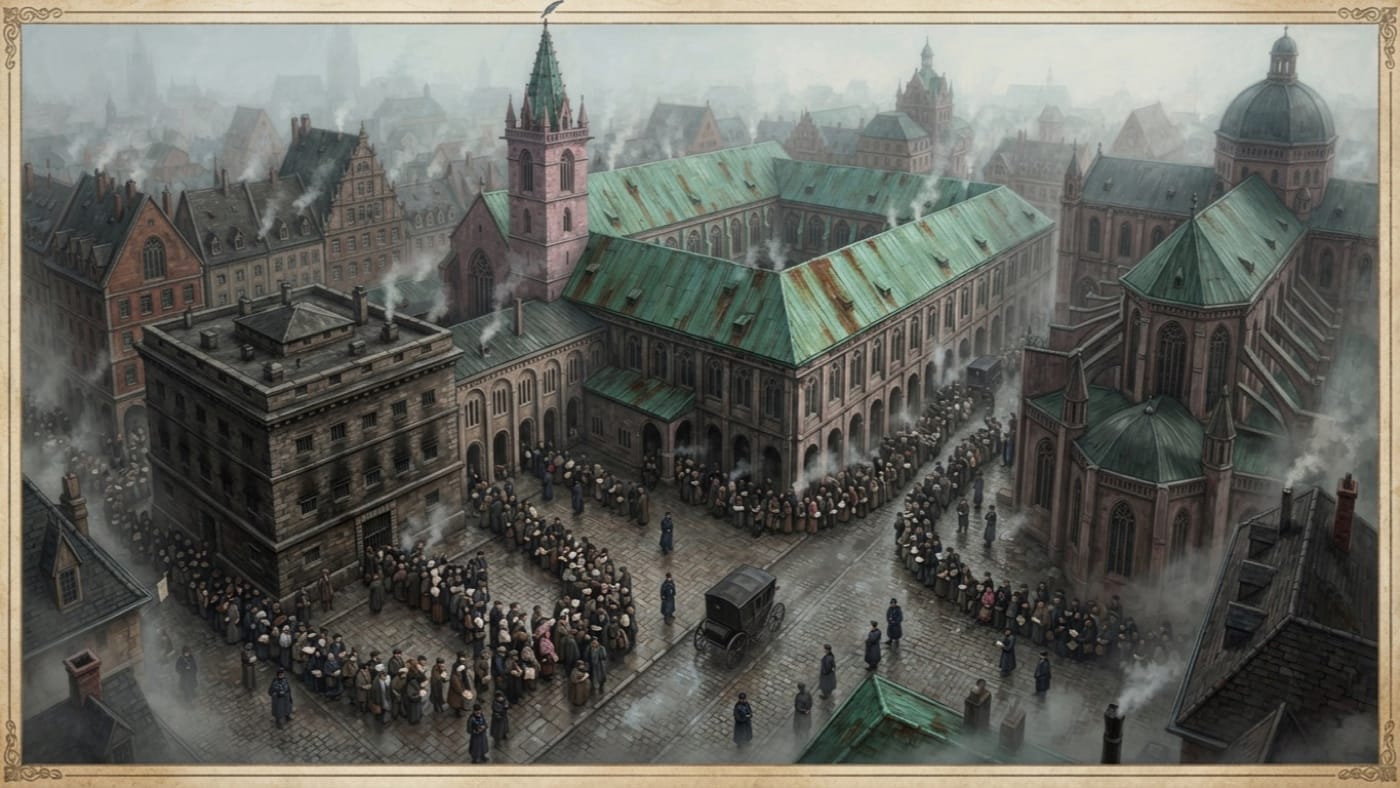
Ecclesiastical Quarter
Where authority gathers and petitioners go round in circles
Strasbourg's houses of authority gathered around the Cloister of Concord. Doctrine writes, Records remembers, Tithes counts, and petitioners carry the receipts. Surveyed in A.S. 201; the perimeter remains uncertified.
Codex Ref. II.1.04-005
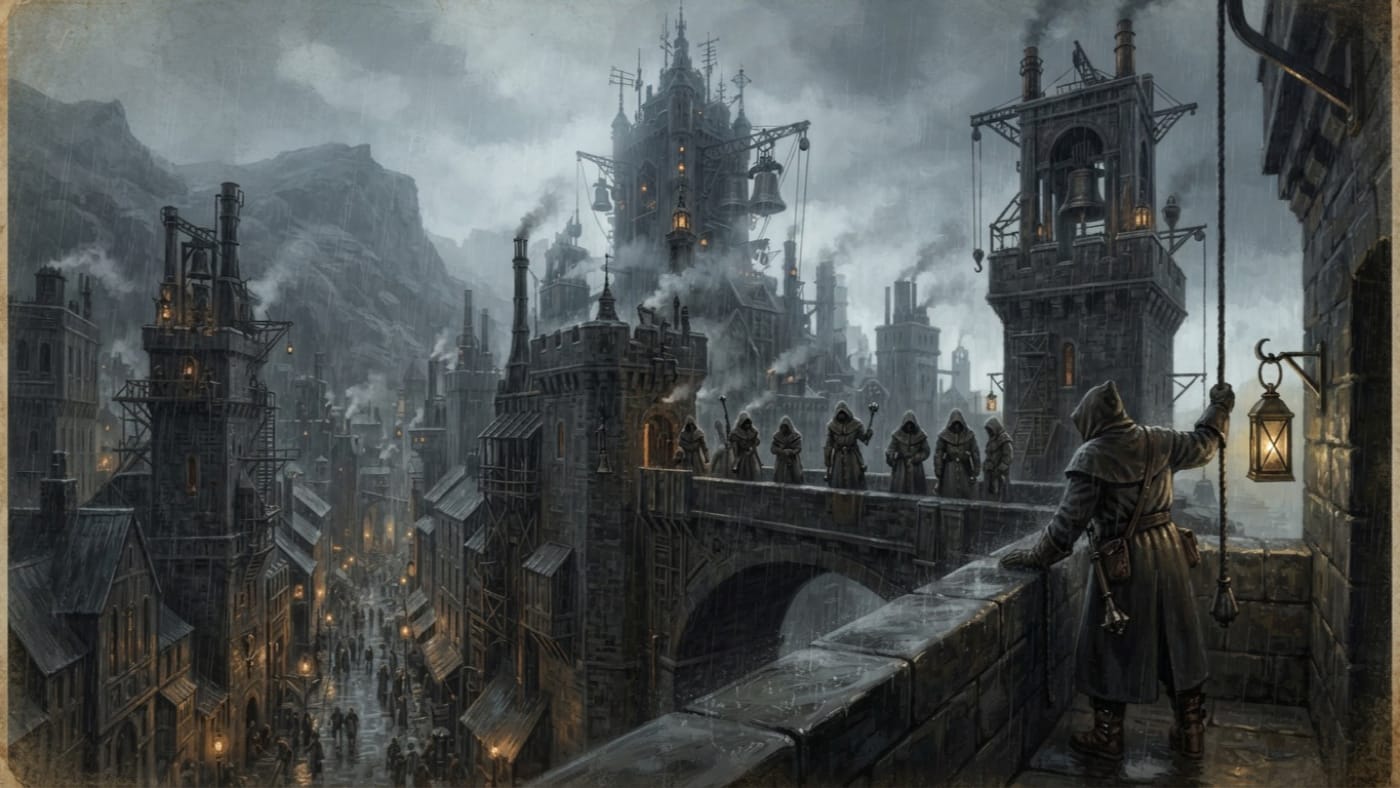
Edinburgh
The northern towers answer stone; Strasbourg receives no reply
Edinburgh answers Britain's northern stones with bells and bronze maces; Strasbourg records the rain, the Lantern Way, and the limits of its jurisdiction.
Codex Ref. II.0.10-201
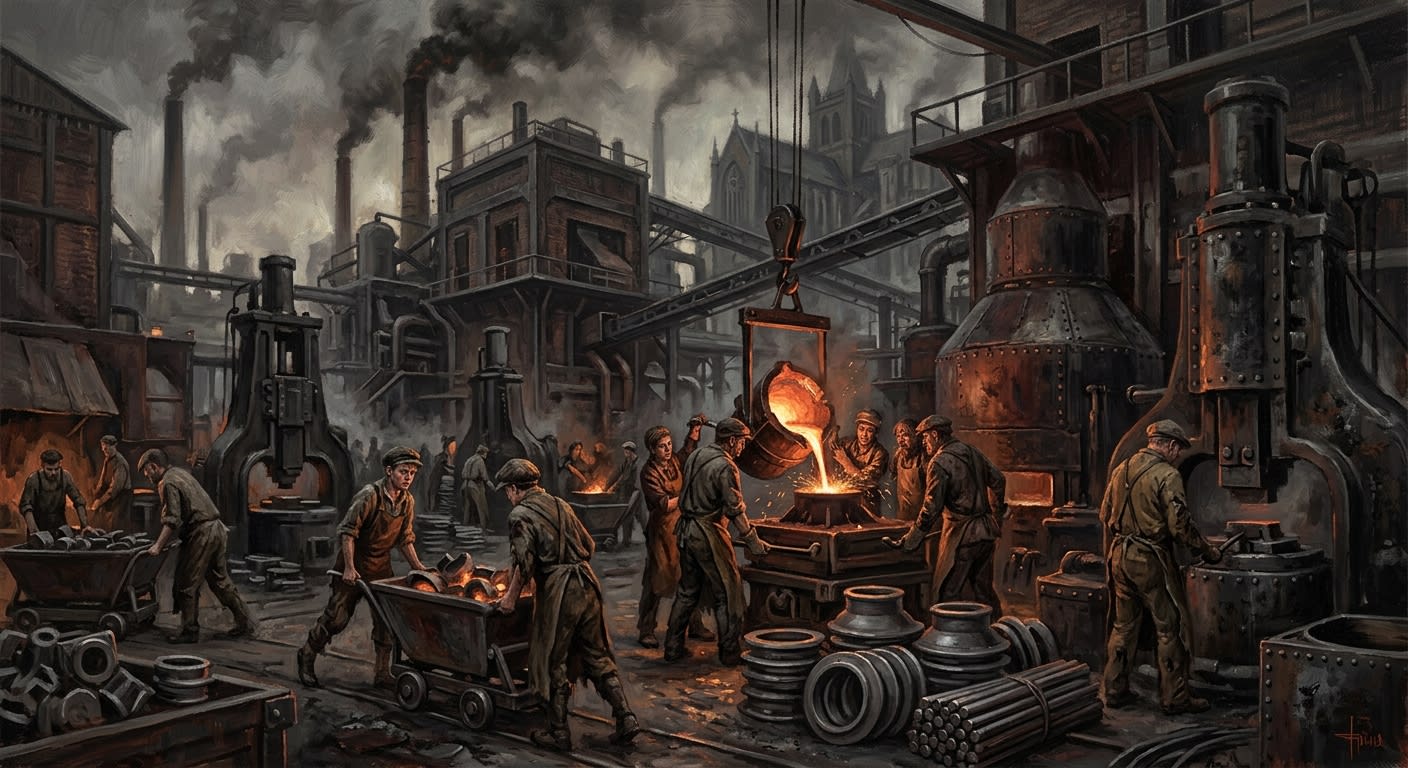
Edremit
The town that casts the throats by which Constantinople breathes
Edremit is the Hintermark casting town that makes boiler throats, casing collars, rivet stock, and hoarse children for Constantinople's hungry works.
Codex Ref. II.4.09-118
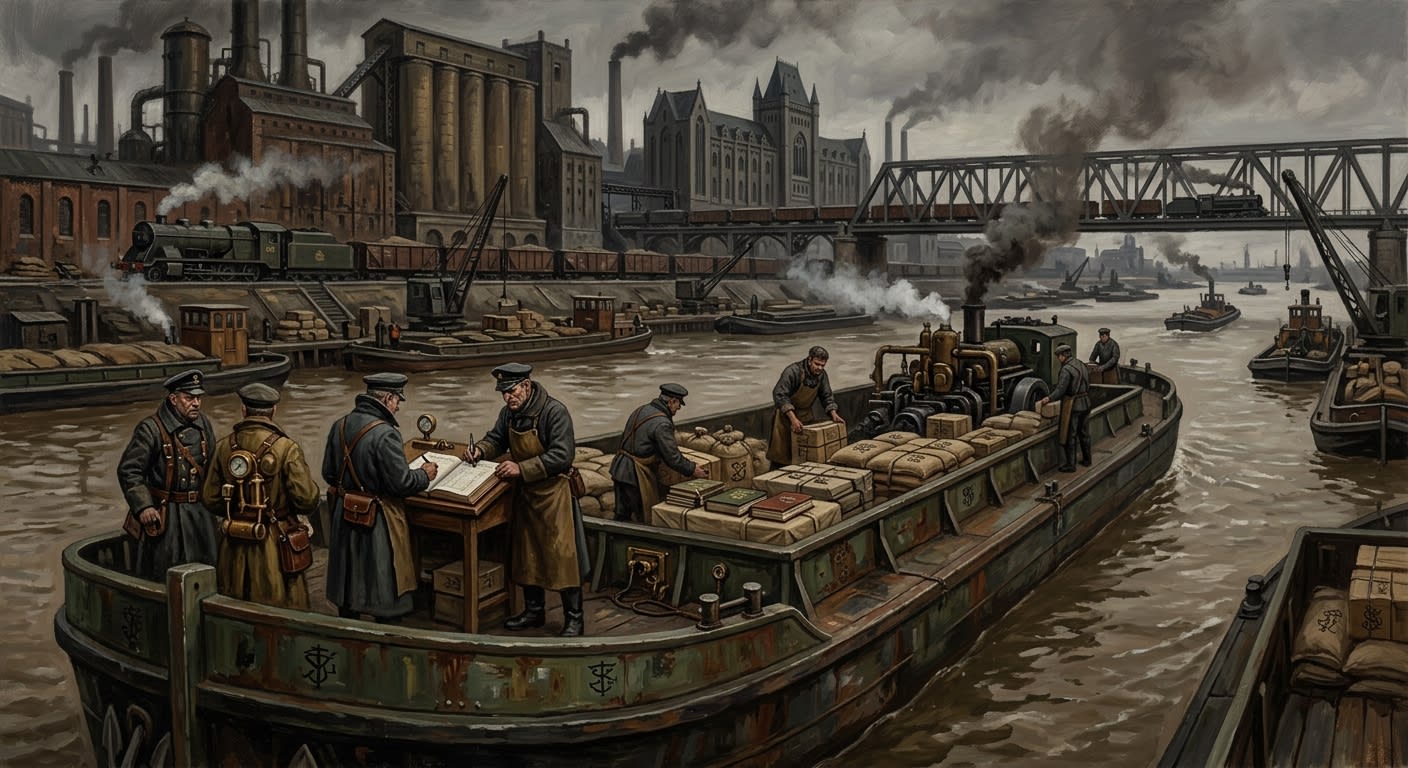
Elbe
The northern river that makes hunger, coal, and failure countable
The Elbe is the northern Synod's wet ledger: barge route, rail supplement, mud-law court, and the river that decides how long the north eats.
Codex Ref. II.4.09-201
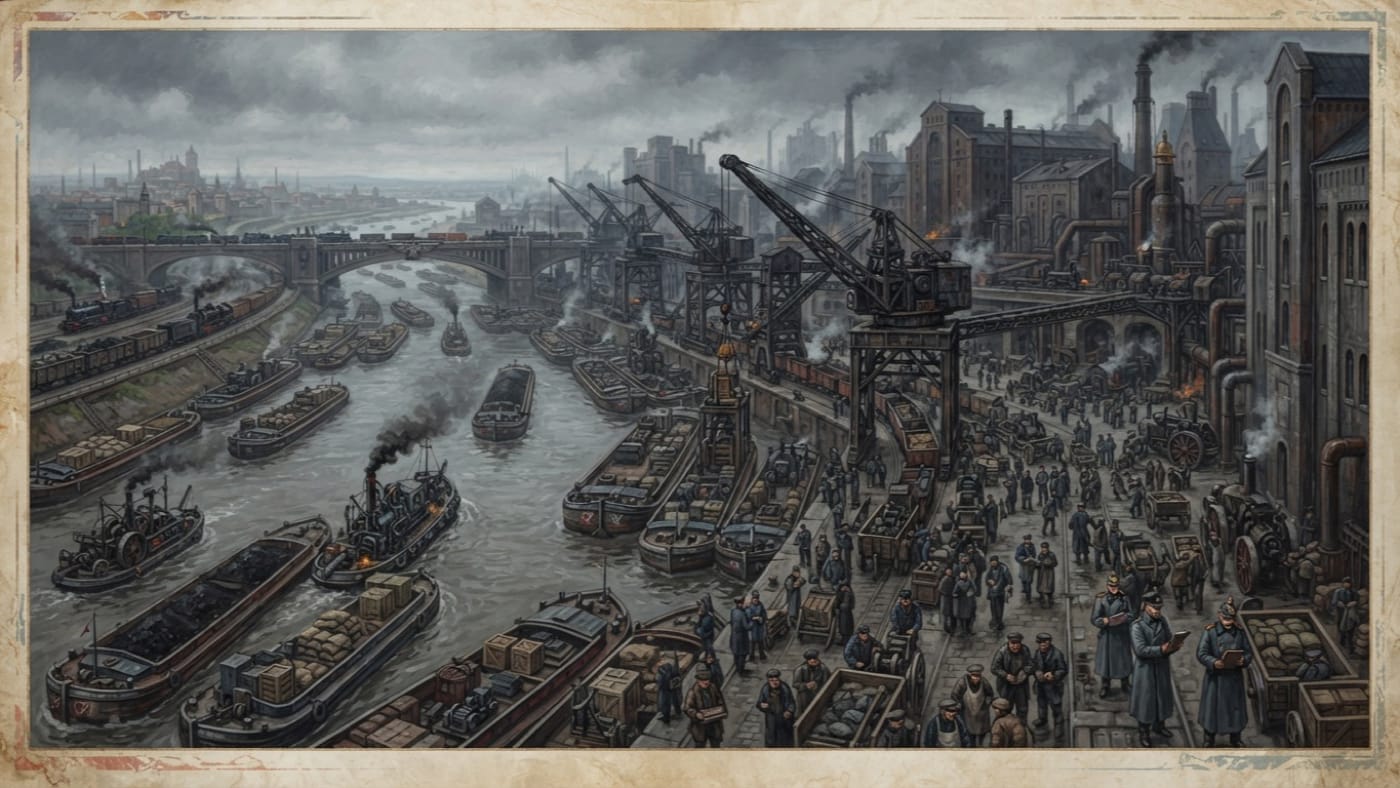
Elbe Barge Network
The river gives the northern front another path and no second mouth
Hamburg's waterborne supply route carries bulk freight to Magdeburg and Dresden for transfer to rail. It stocks winter reserves and relieves the northern corridor when the railway falters; both routes still depend on the same mouth.
Codex Ref. II.3.05-008
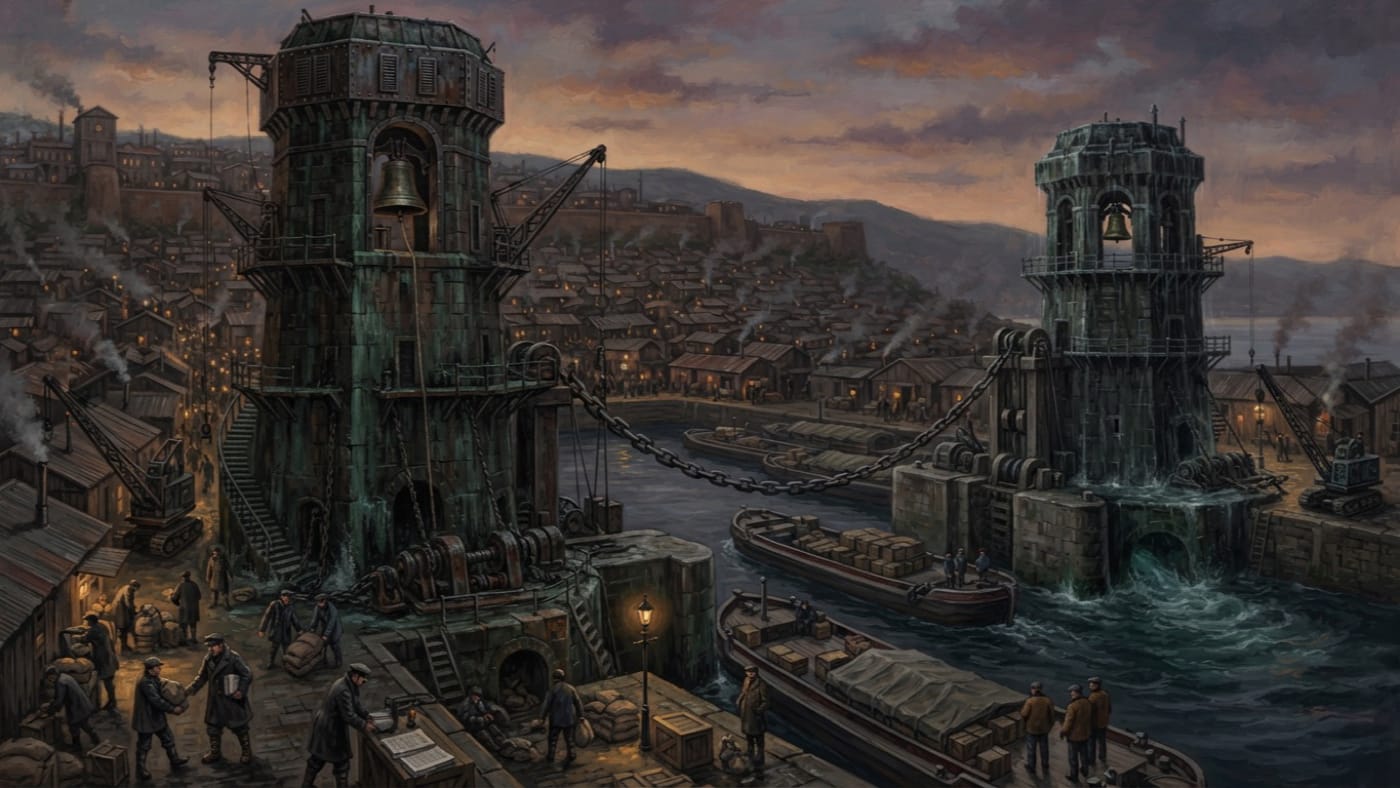
Elder and Younger Towers
One harbor gate, two exchanged voices
Thessaloniki's paired harbor-chain towers govern passage, curfew, and the Sheds' night hum. Each has rung the other's note since A.S. 198; the paperwork keeps pace.
Codex Ref. II.4.09-201
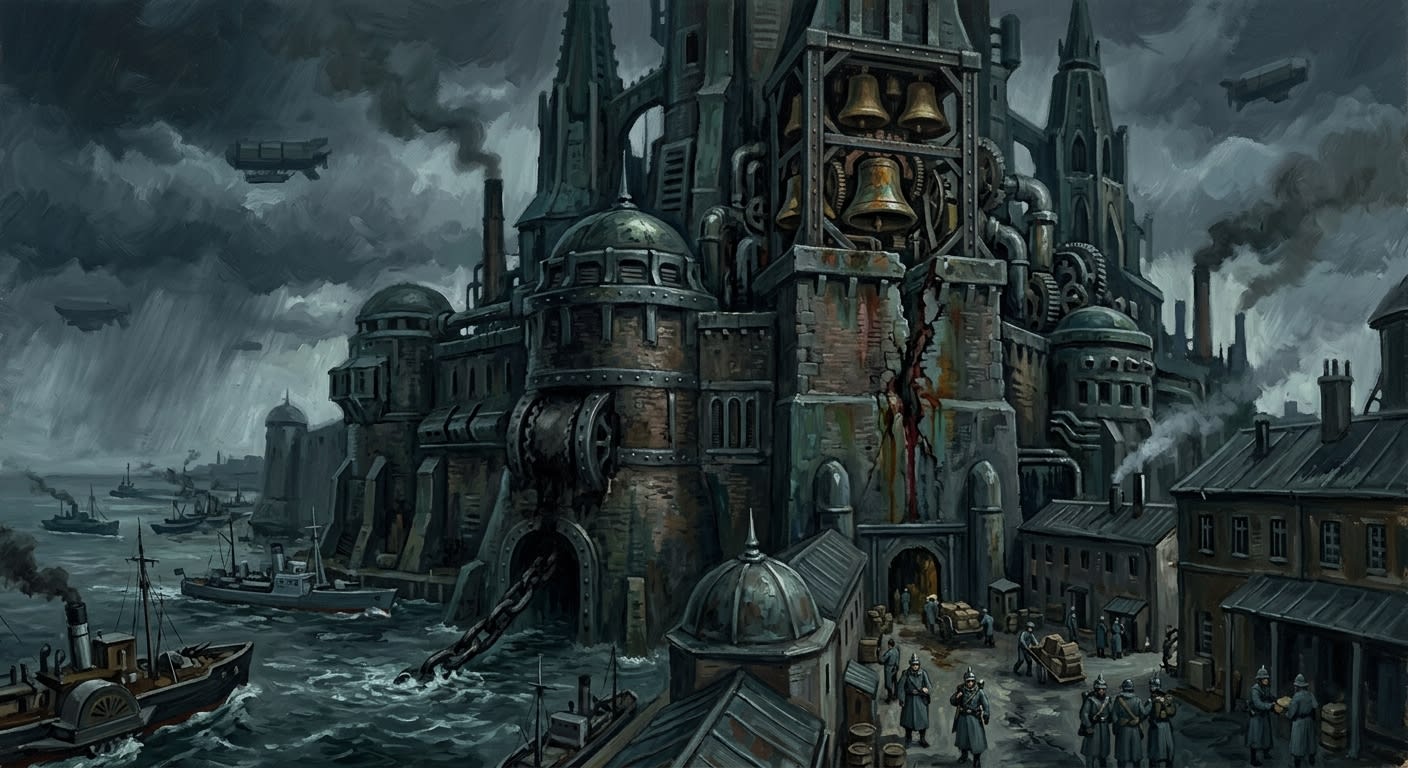
Elder Tower
The western throat that rang true until the harbour taught it otherwise
The Elder Tower is Thessaloniki's western chain-head: bell throat, harbour court, Silence-scar, and the old mouth now speaking in the wrong voice.
Codex Ref. II.4.09-198
Ember-Priory of San Vesta
The ovens glow. The debt accrues. The smoke writes names no one authorised.
A volcanic priory-city in the Iberian south where bread never spoils, dying men buy three more days, and the sealed vent beneath the foundations grows warmer every year. The Synod's most productive monastery, and possibly its most dangerous one.
Codex Ref. VII.1.03-001
England
The island province that declined the province and kept the invoice
England is the British Crown's southern engine: chalk, bell, harbour, parish wall, and island refusal, useful enough to spare and rude enough to endure.
Codex Ref. X.1.03-201
English Channel
The wet treaty between stamped arrogance and ringing arrogance
The English Channel is Calais facing Dover: one day's water in clean weather, a century's insult in politics, and a fog-bank with clerical ambitions.
Codex Ref. II.1.04-202
Epernay
The City That Keeps Appearing in Its Own Denial
Epernay was a prosperous Champagne city until Veyrault struck it from the Ledger in A.S. 103. The valley is empty; its name still turns up on tokens in Reims. Doctrine calls them forgeries. I call this an active filing problem.
Codex Ref. II.1.08-103
Ephrath Chapterhouse
The condemned leave once; the oak returns every year
Prague's Ephrath Chapterhouse gives Purity's sentences a courtyard, a departure bell and a shelf. The condemned leave once; the oak is prepared for next year.
Codex Ref. II.3.02-002
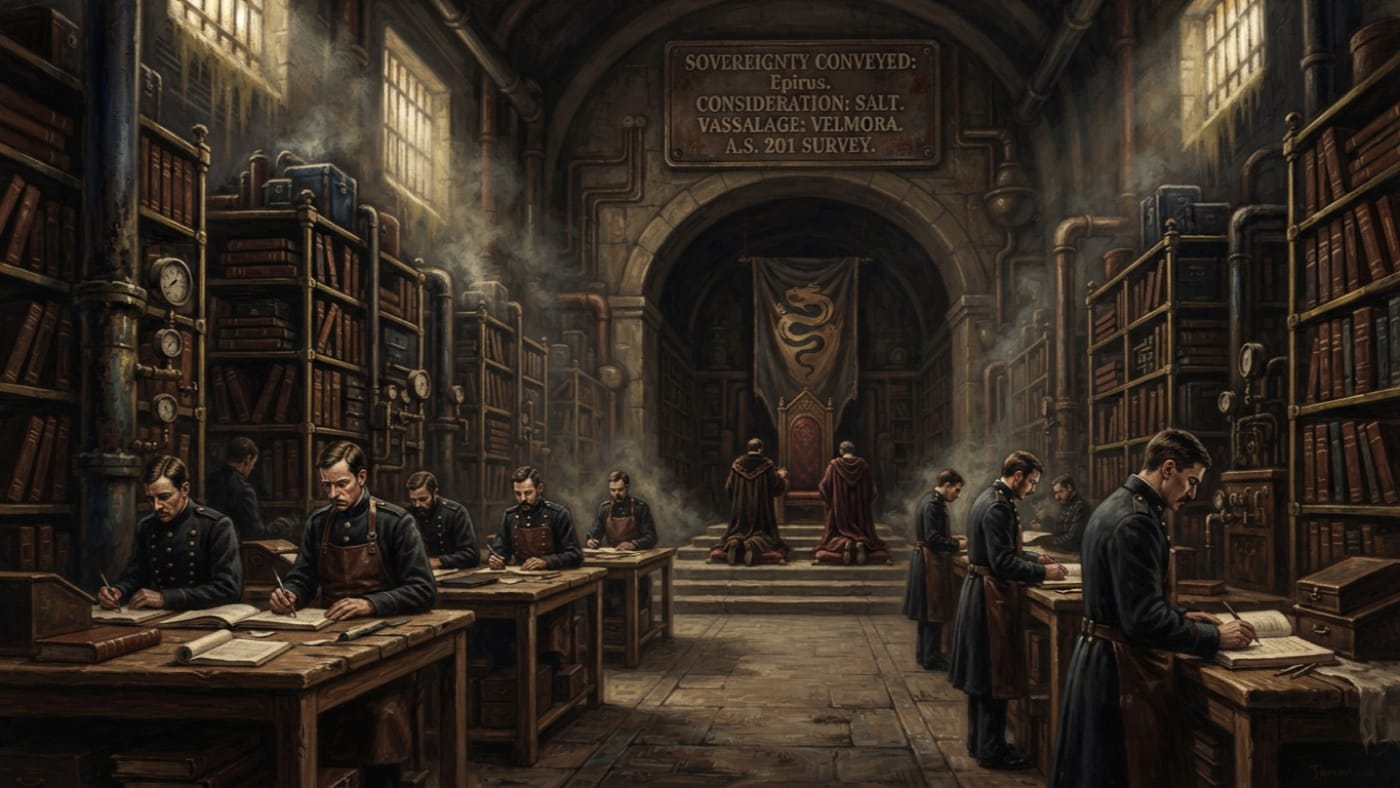
Epirus
Salt received. Sovereignty surrendered.
Velmoran accounts say salt purchased sovereignty in Epirus and its rulers remain as vassals. This A.S. 201 survey records the bargain; the archive supplies neither its year nor the names of those still kneeling.
Codex Ref. II.3.06-993
Escort Yards
The hour is purchased; the danger is subject to terms
South of Peregrine Row's Choir-Broker Hall, licensed captains hire armed escorts for purchased bell-windows. Debt supplies some of the men. Protection ends when the window does; the premium remains paid.
Codex Ref. II.1.03-003
Essen-of-Hymnsteel
The city the Line cannot outlive, and dare not silence
Industrial holy city where steel is calibrated by choir and governed by three Bureaus who share nothing willingly except the fiction that none of them is losing.
Codex Ref. II.2.01-001
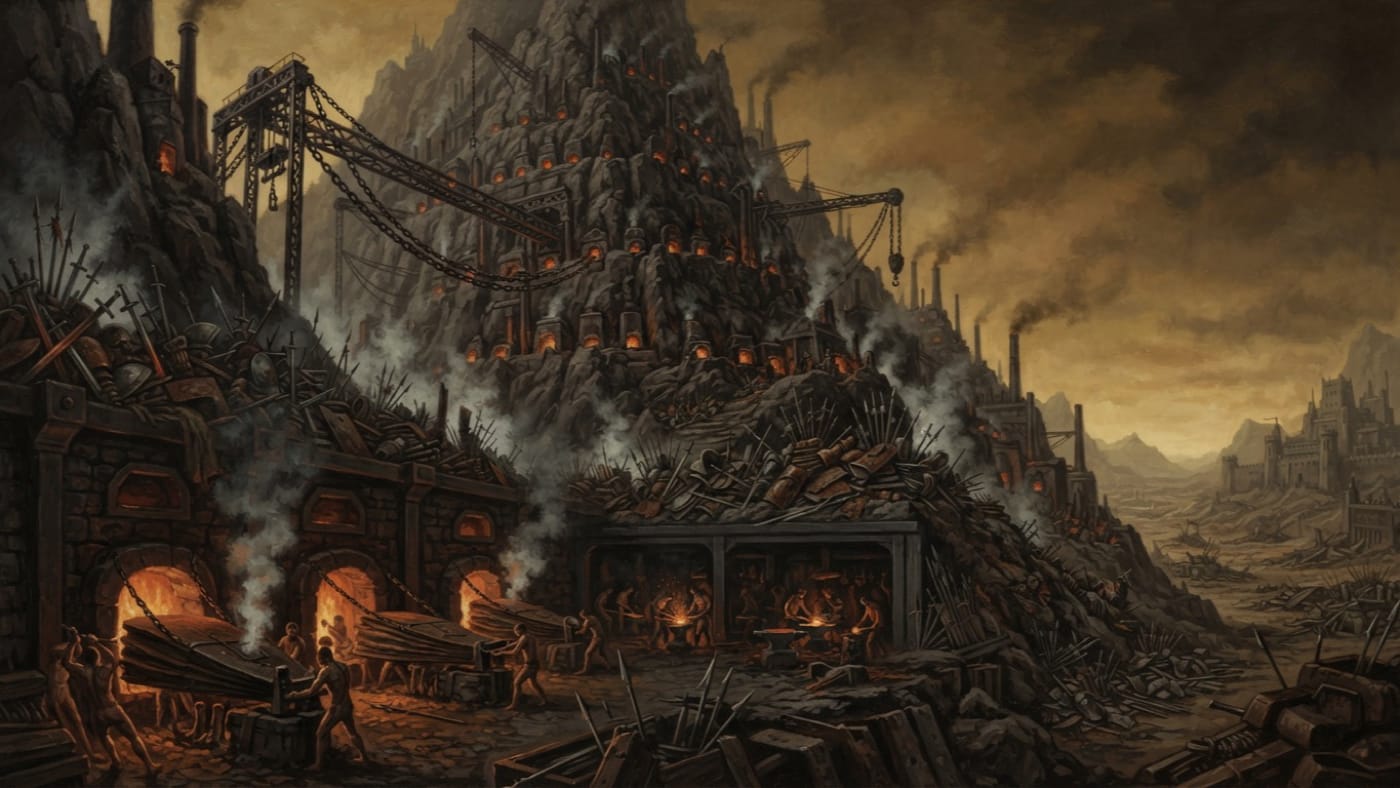
Eternal Forges
Wrath keeps producing. The bellows still need people.
Maldrake's mountain forges in the Thracian highlands produce arms and the Hammered without orders or inventory. Enslaved humans work the bellows until their lungs fail. The weapons are surplus; the people are spent.
Codex Ref. VI.1.03-003
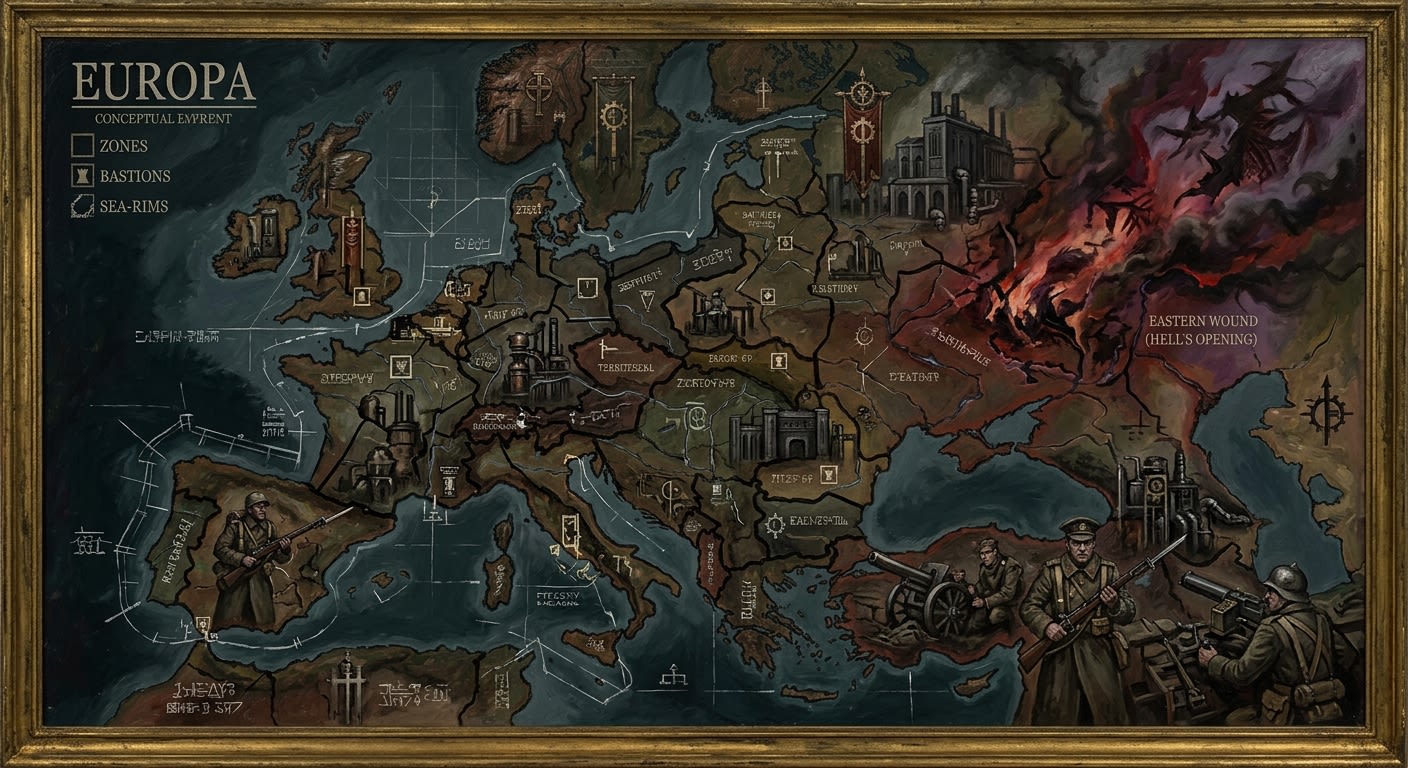
Europa
The continent as filed, wounded, taxed, and made obedient enough
Europa is not whole; it is the continent filed into zones, bastions, sea-rims, independent nuisances, and the eastern wound Hell keeps open.
Codex Ref. II.0.00-201

Europe
The wounded continent, held together by rails, bells, hunger, and denial
Europe is the wounded continent: Synod west, Charnel east, Line between, and every road, harbour, cradle, ration card, bell, and grave bent toward survival.
Codex Ref. II.0.01-201
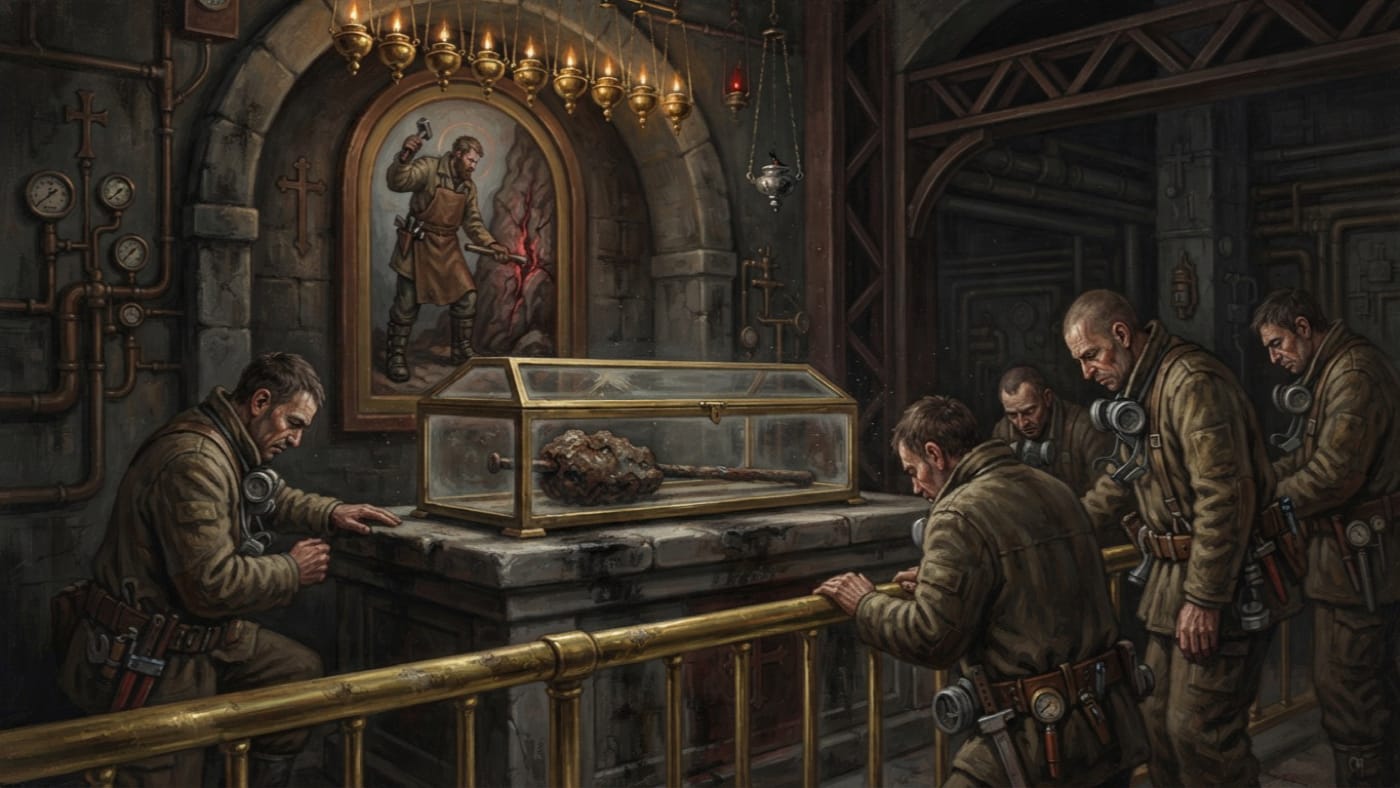
Extraction Chapel
The plug rests under glass; its age remains an argument
Budapest's Extraction Chapel holds Saint Orren's provisionally authenticated iron plug in a sealed case. Prospectors come for a patron who bought nine hours; Relics keeps the dating dispute open.
Codex Ref. II.3.12-112
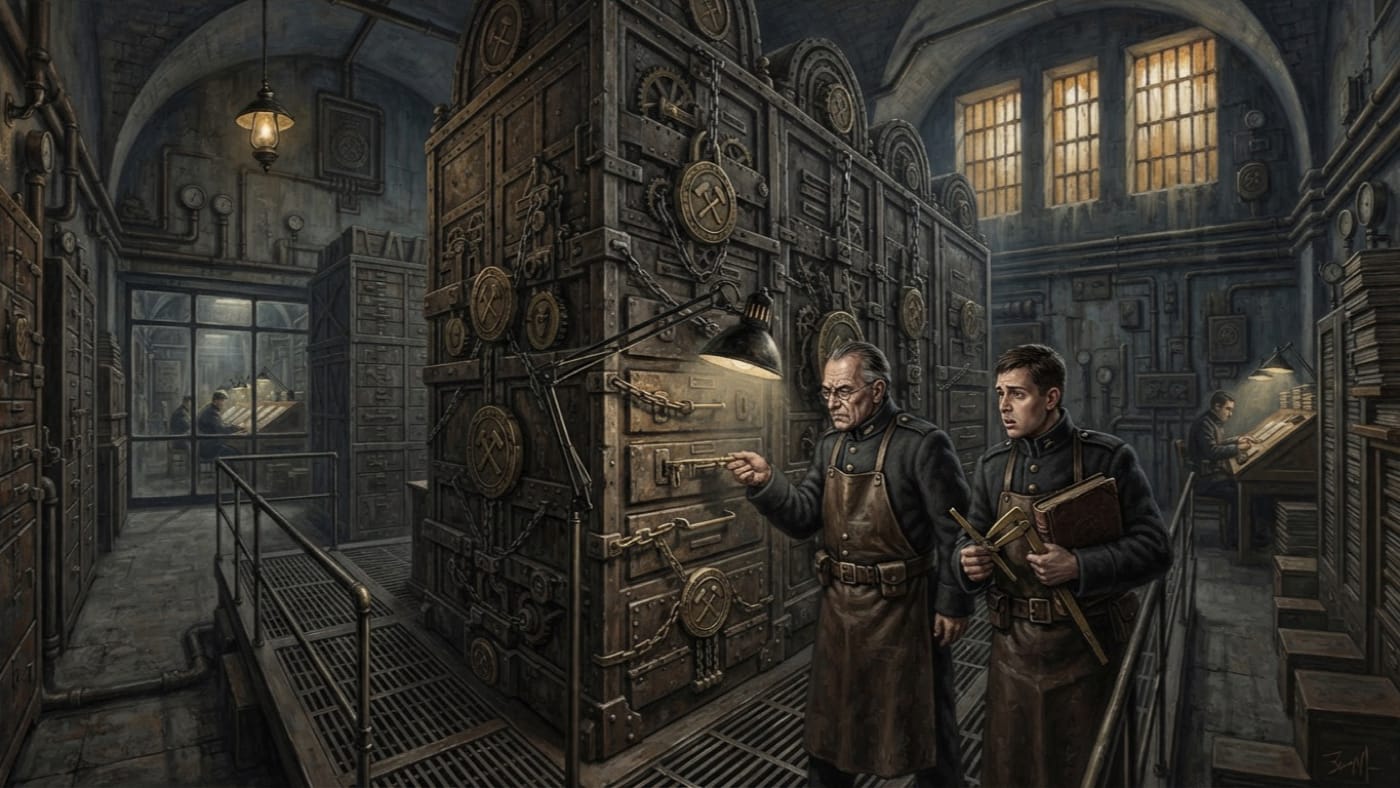
Face Archive
The locked reference by which a face is permitted to circulate
Sable Court keeps every lawful face under triple lock. The Face Archive binds coin to name and memory; since its plates began to change, the Chapter has answered doubt with tighter locks.
Codex Ref. II.2.07-002
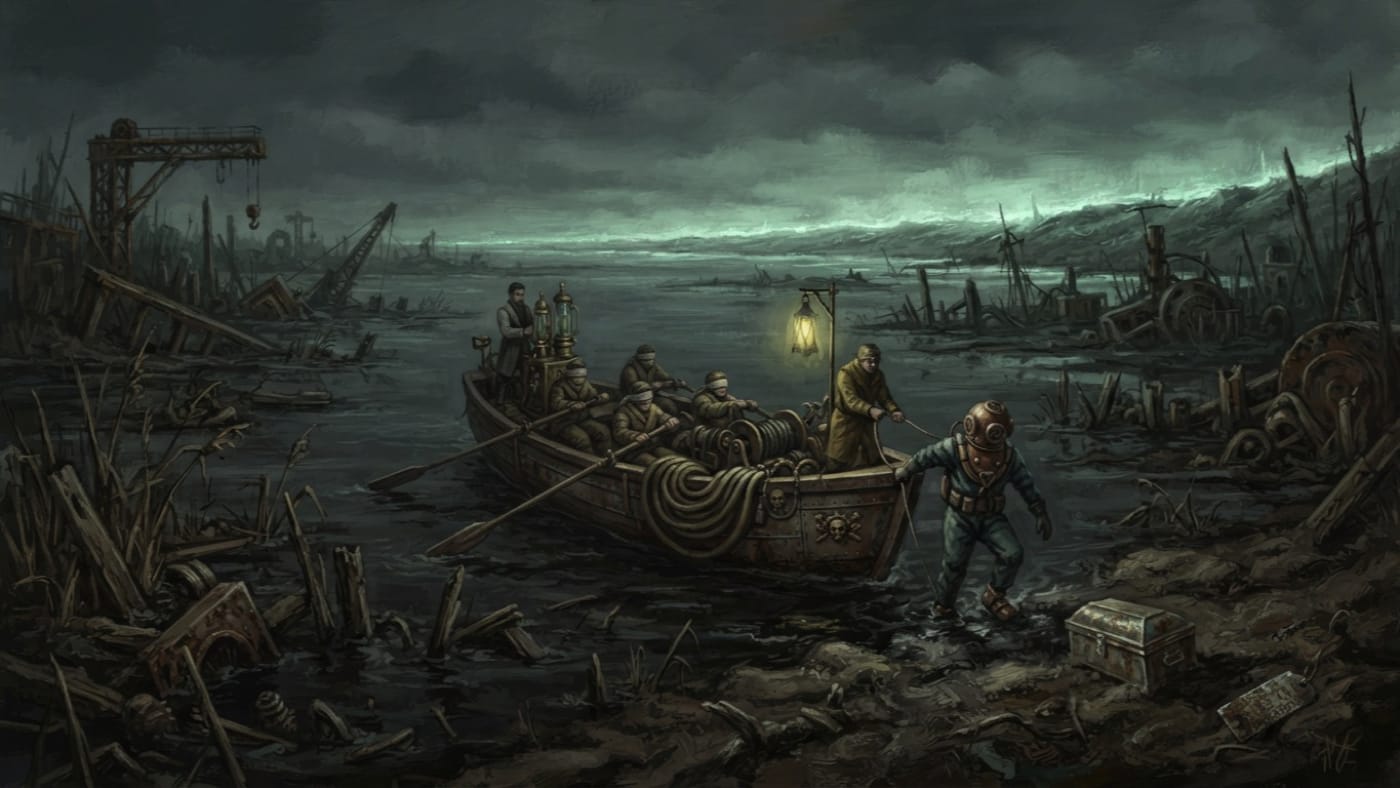
False Shore
The recovery is recorded. The shore will not stay filed.
An uncharted bank off Ash-Glyph Marshworks, reported to shift with the tides. Relics surface fresh, divers report warmth, and an A.S. 199 casket bore a tag dated three days ahead. No chart position is on file.
Codex Ref. II.4.08-007
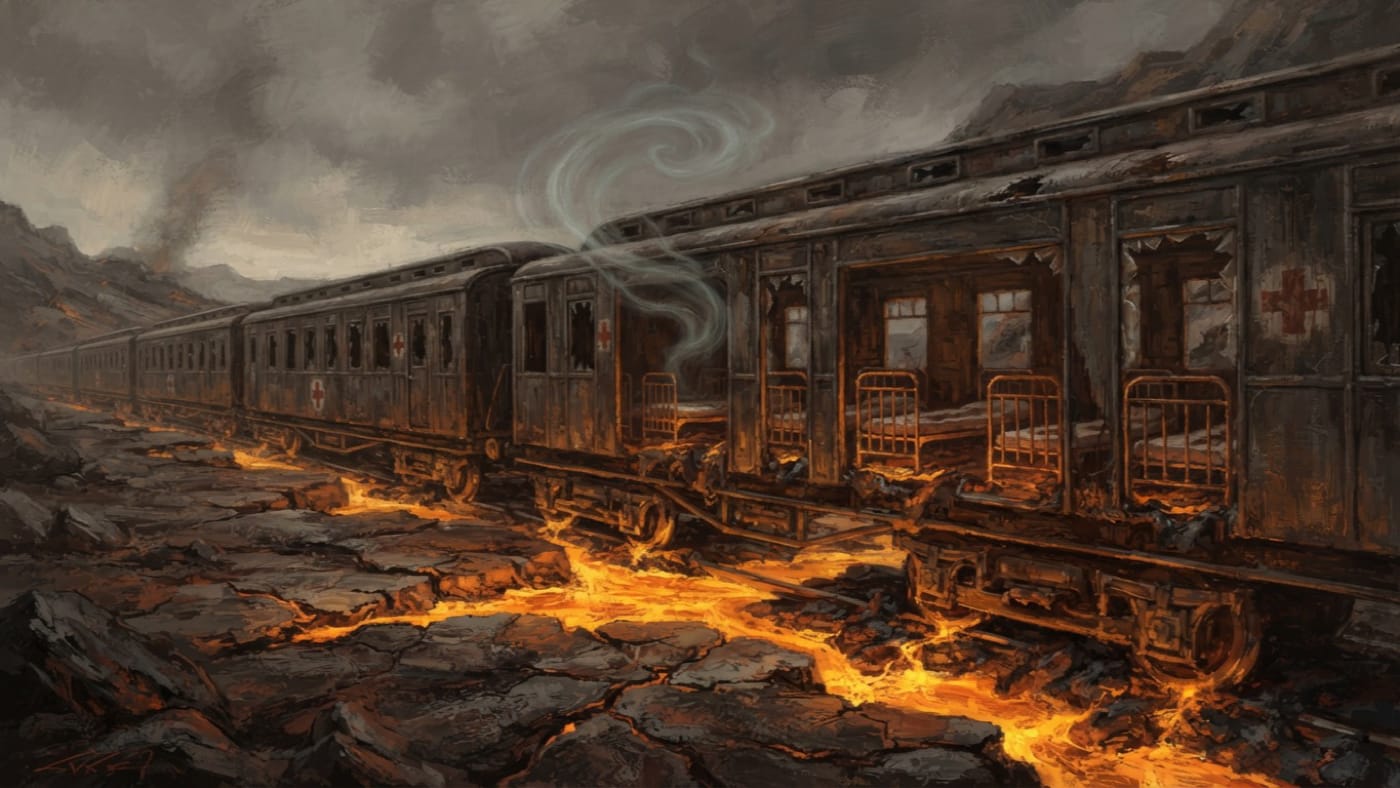
Ferrum-17
The river moved; the beds stayed warm
Ferrum-17 diverted beneath an abandoned hospital train in the Iron Wastes in A.S. 197. The salvage note counts 112 bedframes, warm mattresses and no remains. The river's present course is undocumented.
Codex Ref. VI.1.03-017
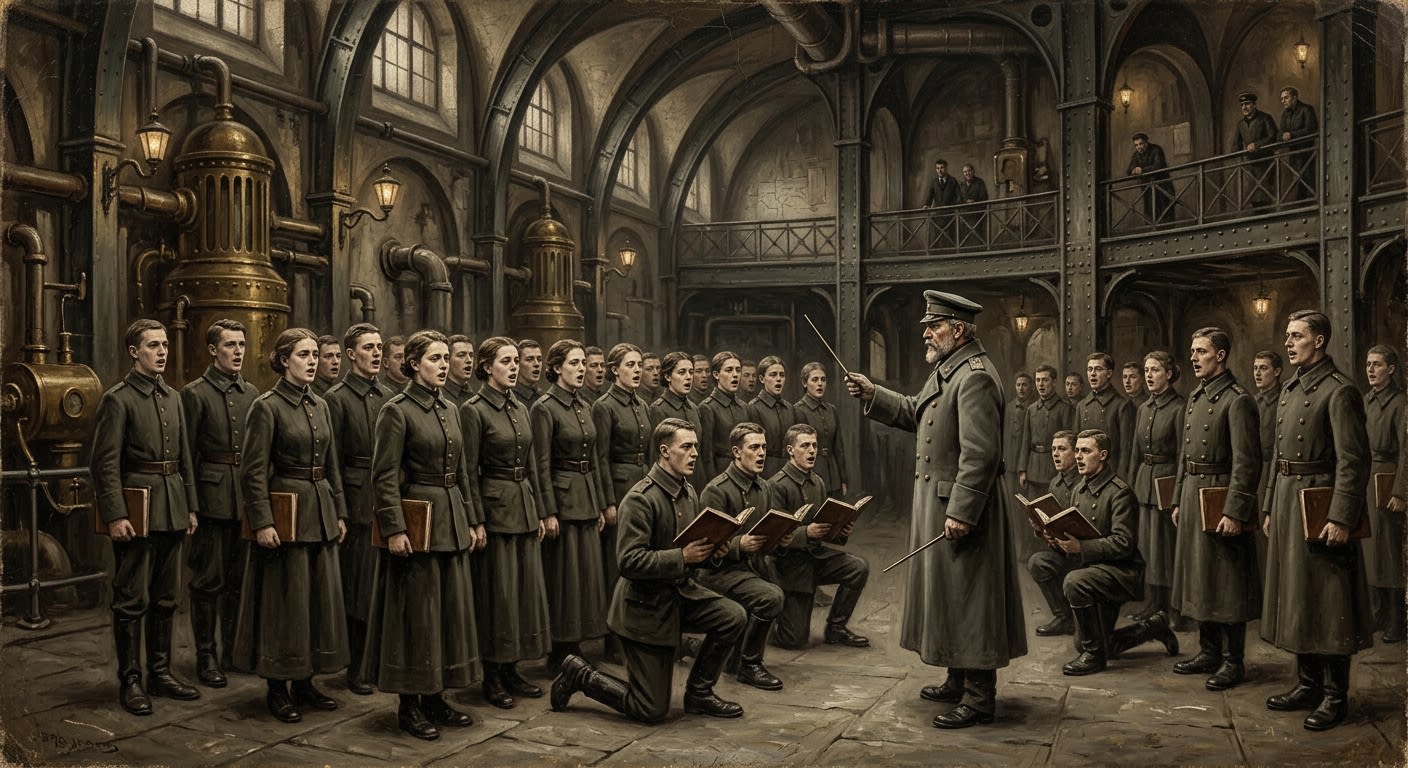
Festival Conservatory of Strasbourg
The house where joy learns its chains
Strasbourg training house of the Festival Chorus-Master corps, where song is broken into compliance and candidates learn to administer public joy without catching it.
Codex Ref. II.2.06-004
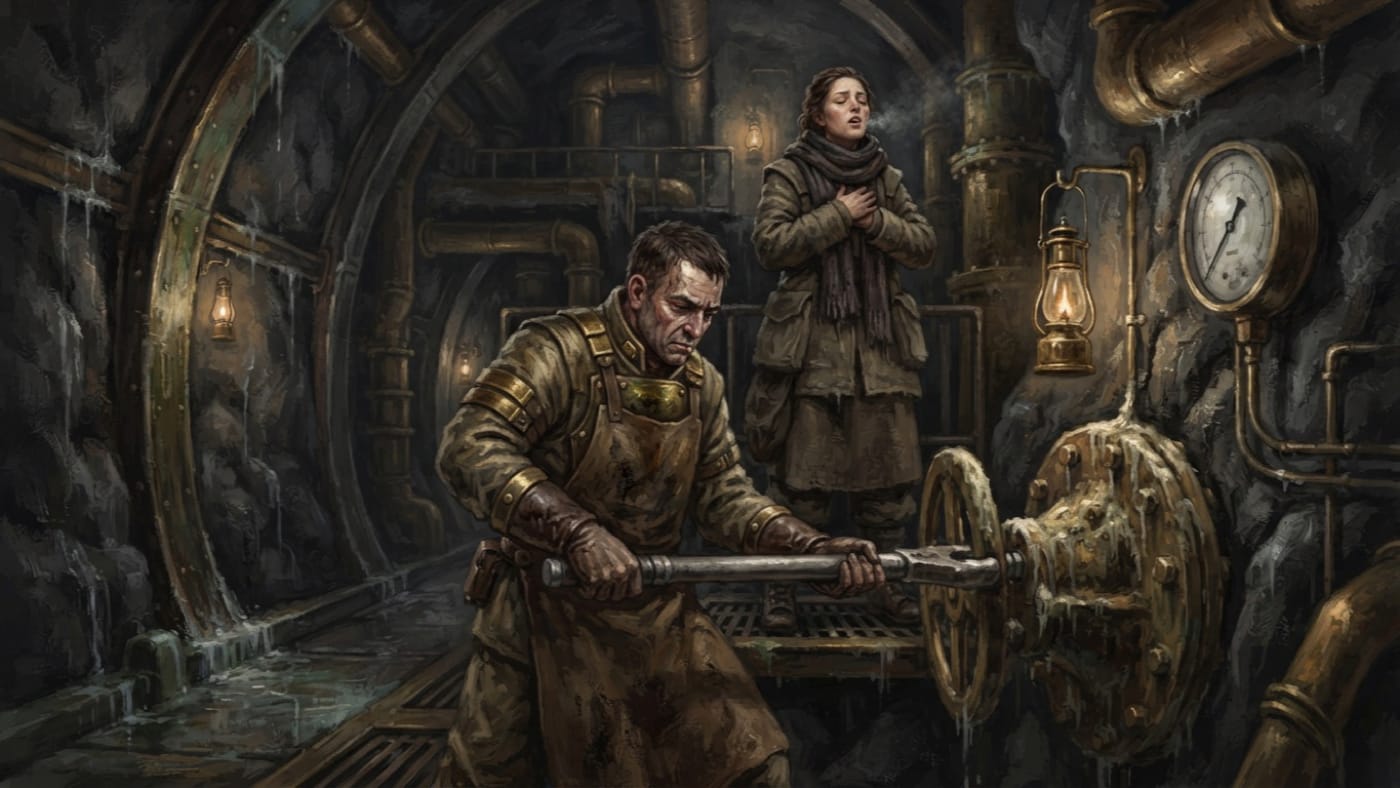
Fifth Lung
Neither the singer nor the mechanic may finish first
The Fifth Lung is a chamber of Bastion-Irongate where valve replacement requires a held contralto timed to the mechanic's torque pattern. The mountain permits maintenance only while someone sings.
Codex Ref. II.4.24-005

Filter Gate
Admission is stamped; shelter is another matter
Filter Gate admits the living to Black-Snow Lor, checks their stamps and filters, and locks at third bell. A permit gets you into town; the Breath Cordon keeps its own account.
Codex Ref. II.4.08-003
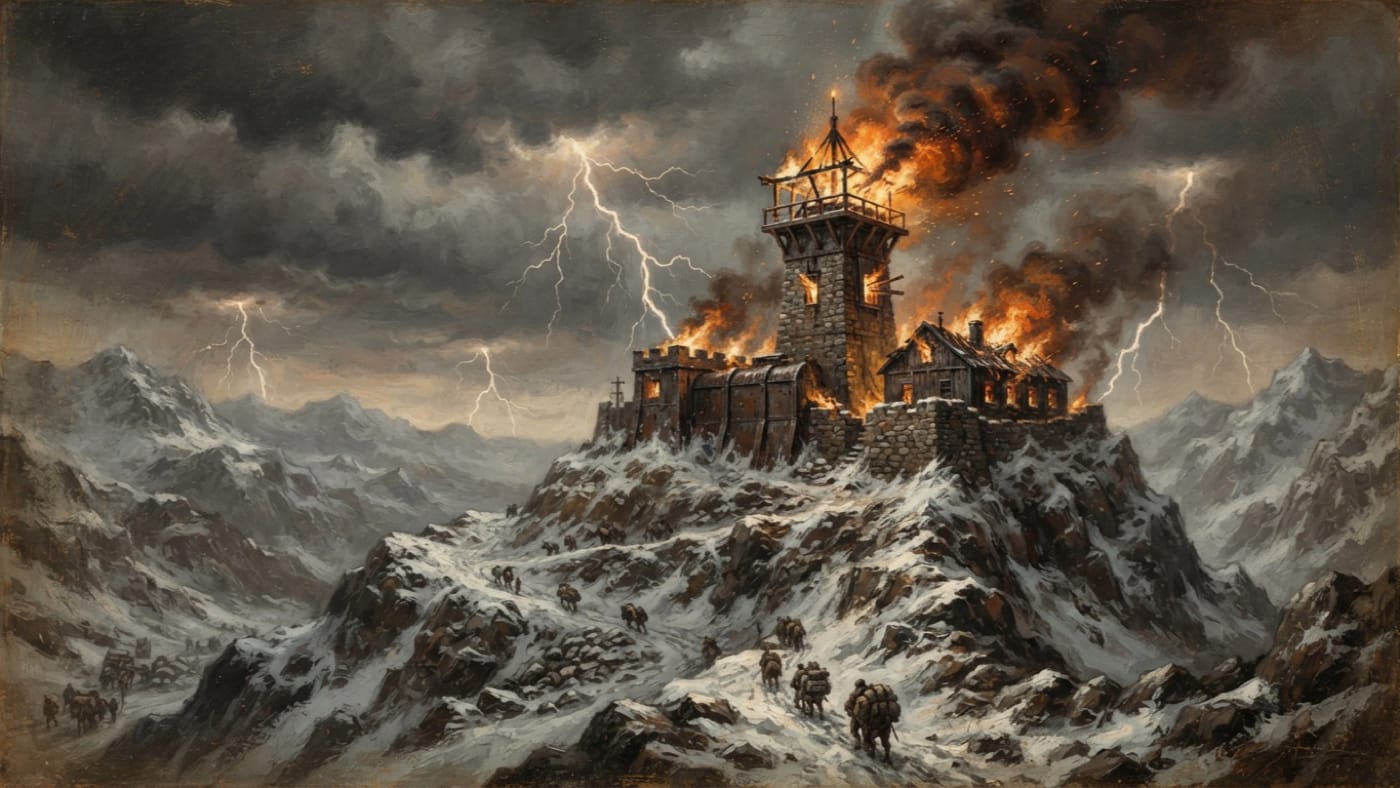
First Light
It saved convoys; the Ledger saved a paragraph
First Light saved convoys from the northern crest of the Carpathian Beaconchain before burning in A.S. 76. Its completion date and later condition are absent from the Ledger.
Codex Ref. II.4.08-076
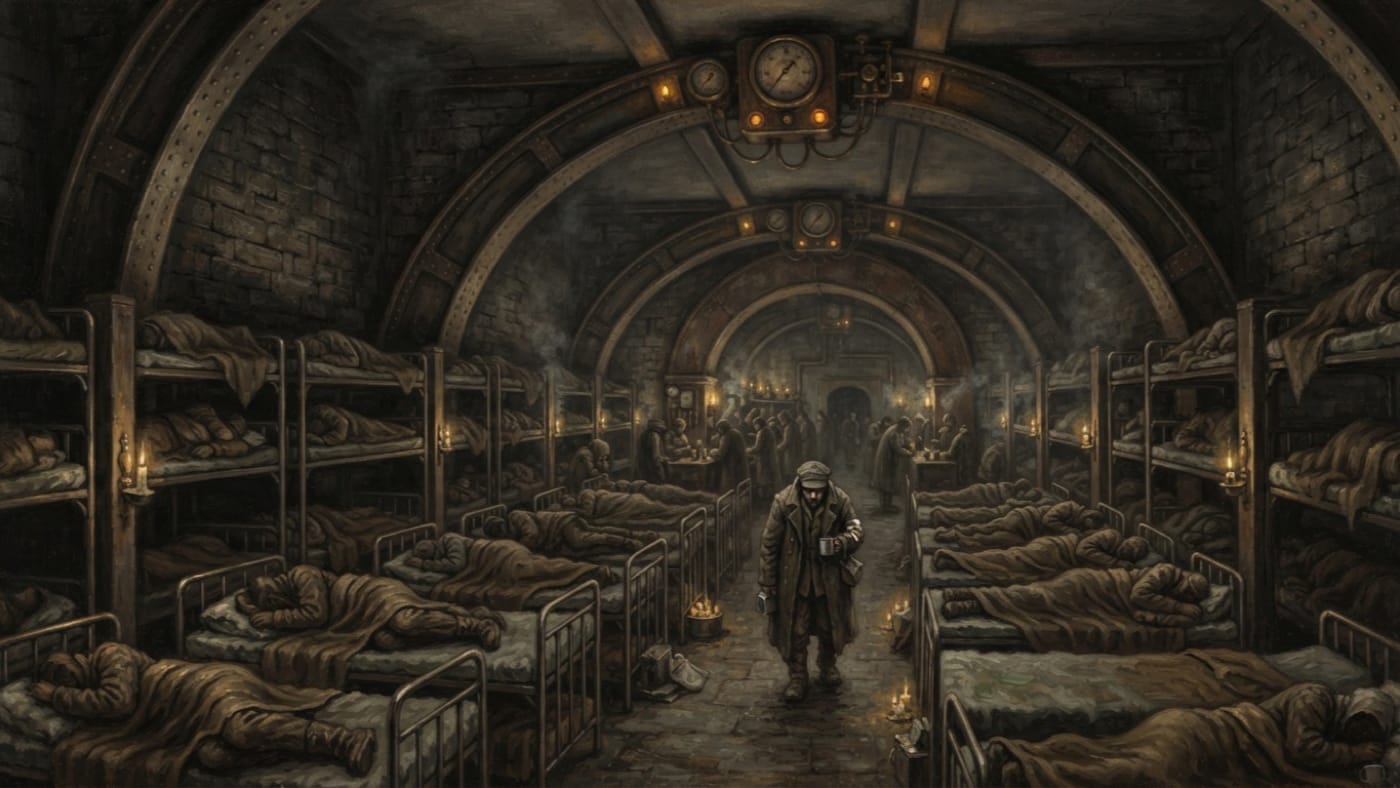
First Lung
You rent the bunk. Your voice earns the warmth.
The dormitory vaults of Bastion-Irongate rent bunks by the hour and warmth by vocal tier. The chant keeps the ceiling above the sleepers; a failed voice leaves its owner housed, cold, and administratively accounted for.
Codex Ref. II.4.24-201
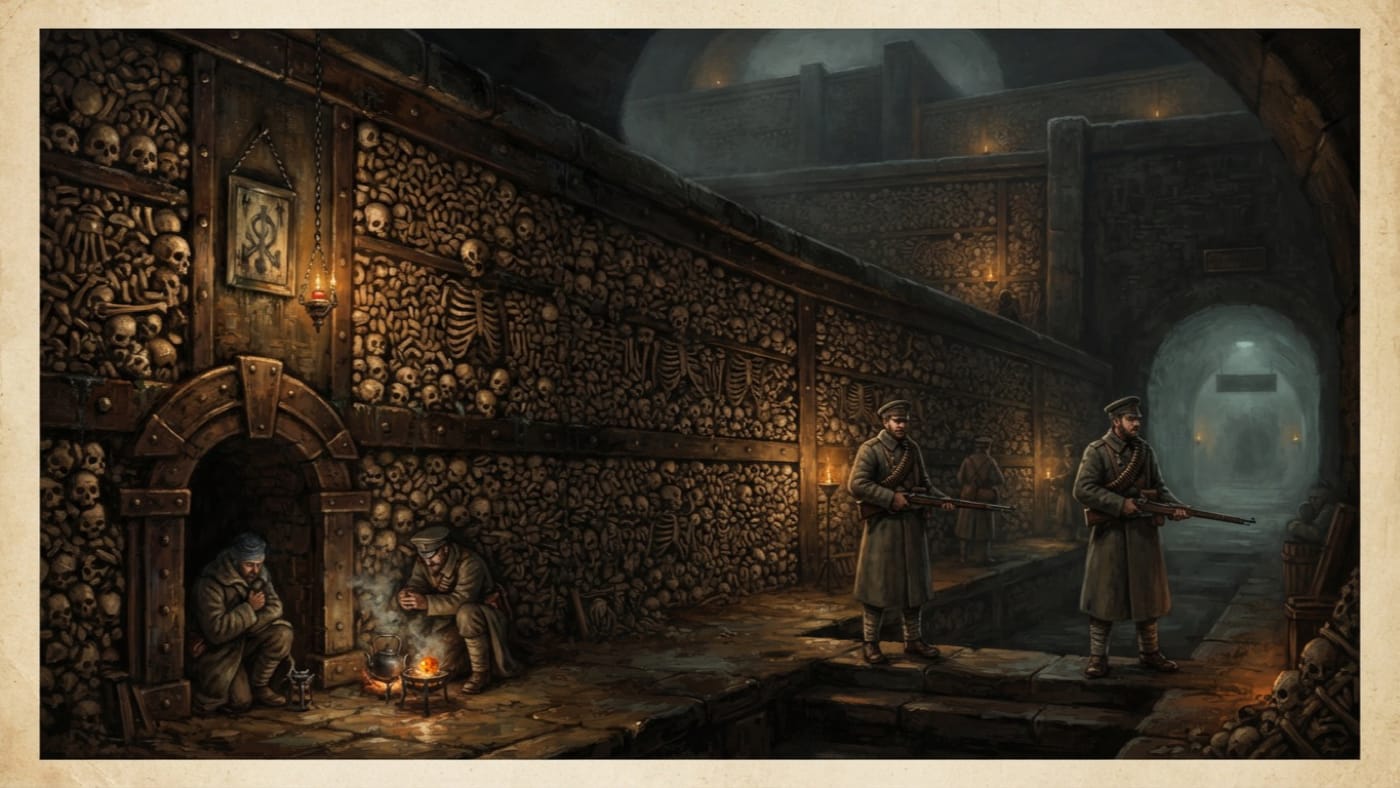
First Ossuary Ring
The dead remain on duty
The oldest bone-built wall of Bastion-Constantinople, accreted from the Continental Levy's graves in the winter of A.S. 47. Standing, garrisoned and consecrated by attestation. The dead remain structural; their service has not concluded.
Codex Ref. II.4.10-047
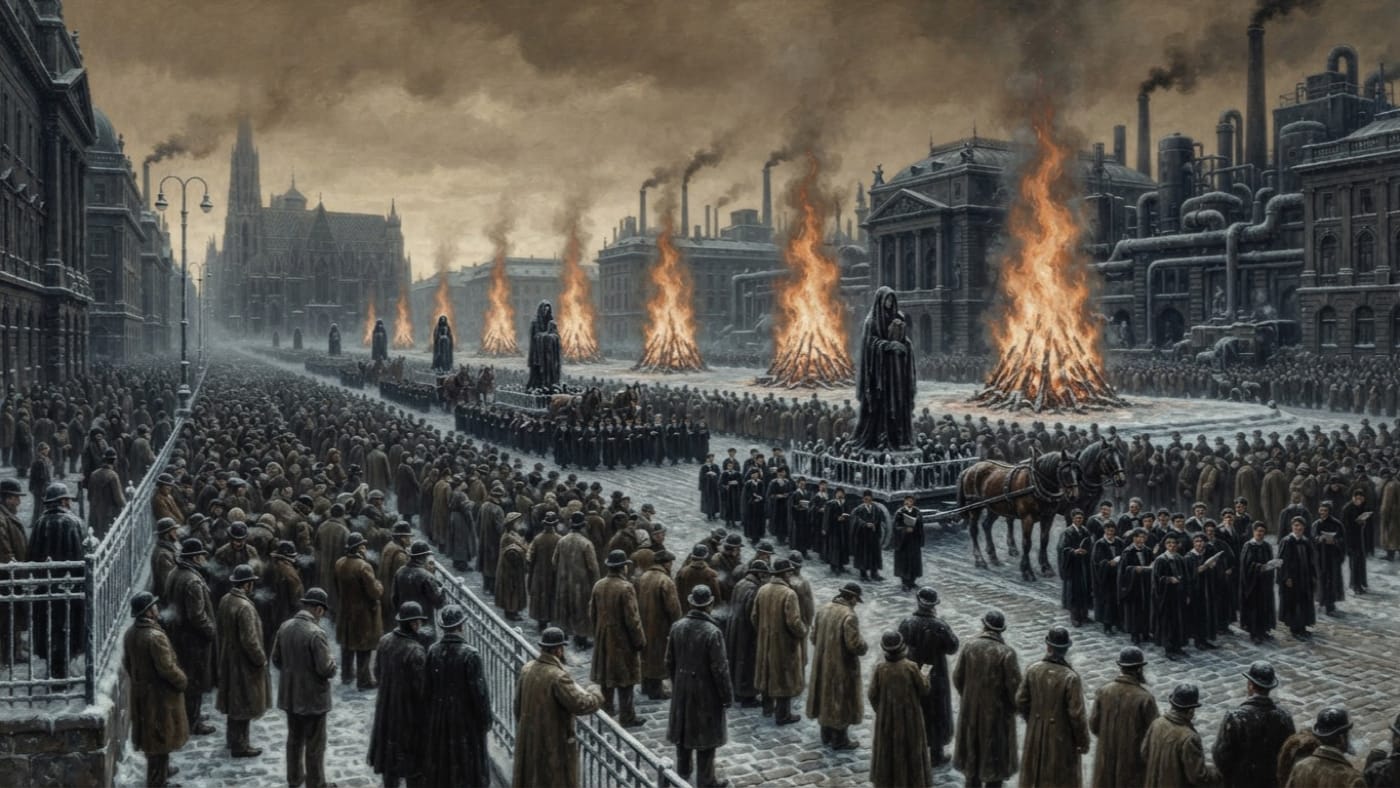
First Prefectural District
One Clause, One Afternoon, No Surviving Map
Vienna’s Rationalist civic district, attested in A.S. 30 by compulsory attendance at the Black Procession. The Ledger preserves the obligation; its founding, boundaries and successor remain unrecorded.
Codex Ref. II.4.09-030
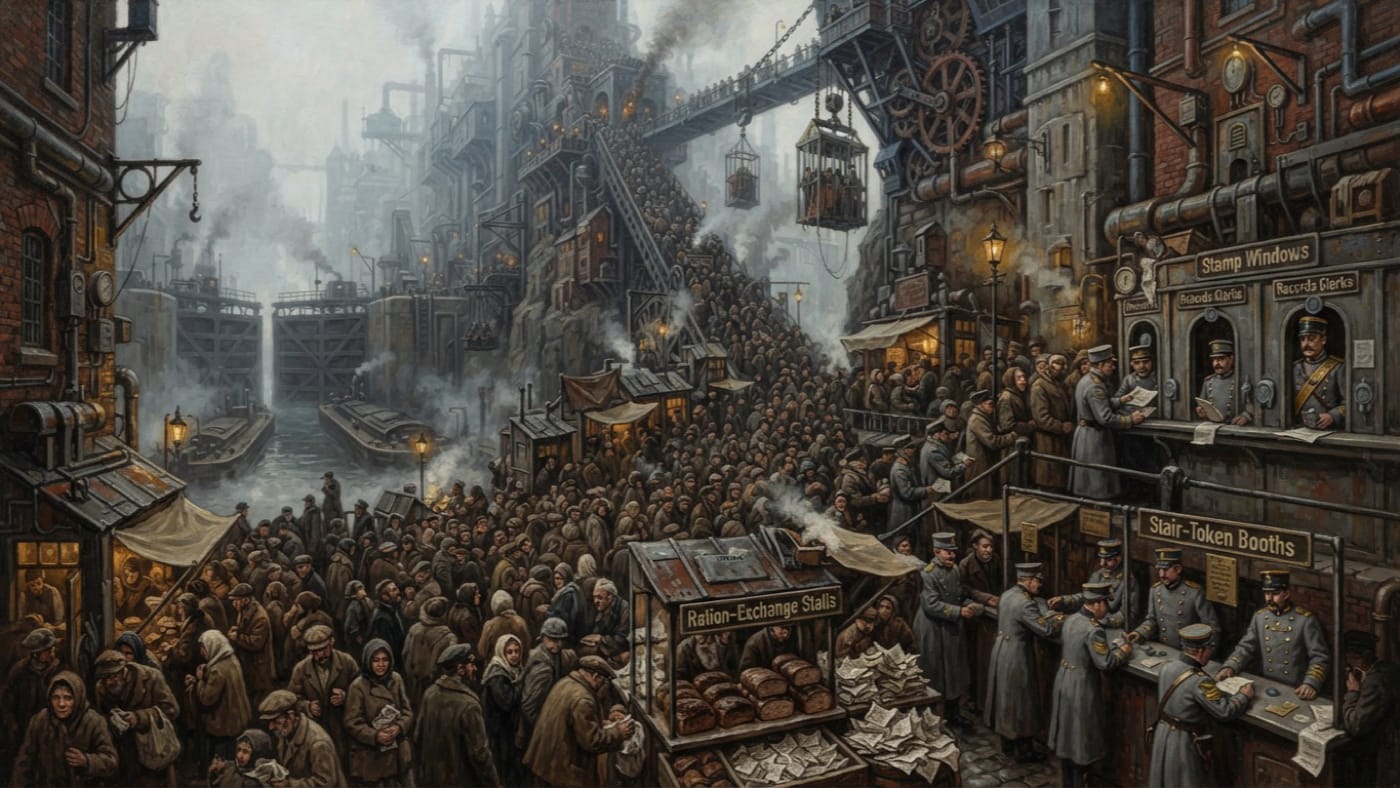
First Step Market
Where brass buys a crossing and bread competes with the stairs
Rheinscarp's market above the locks sells ration chits, clipped brass stair-tokens and instruction in staying registered. Each coin buys bread or ascent; the Ledger is quite content to let a newcomer choose.
Codex Ref. II.2.01-003
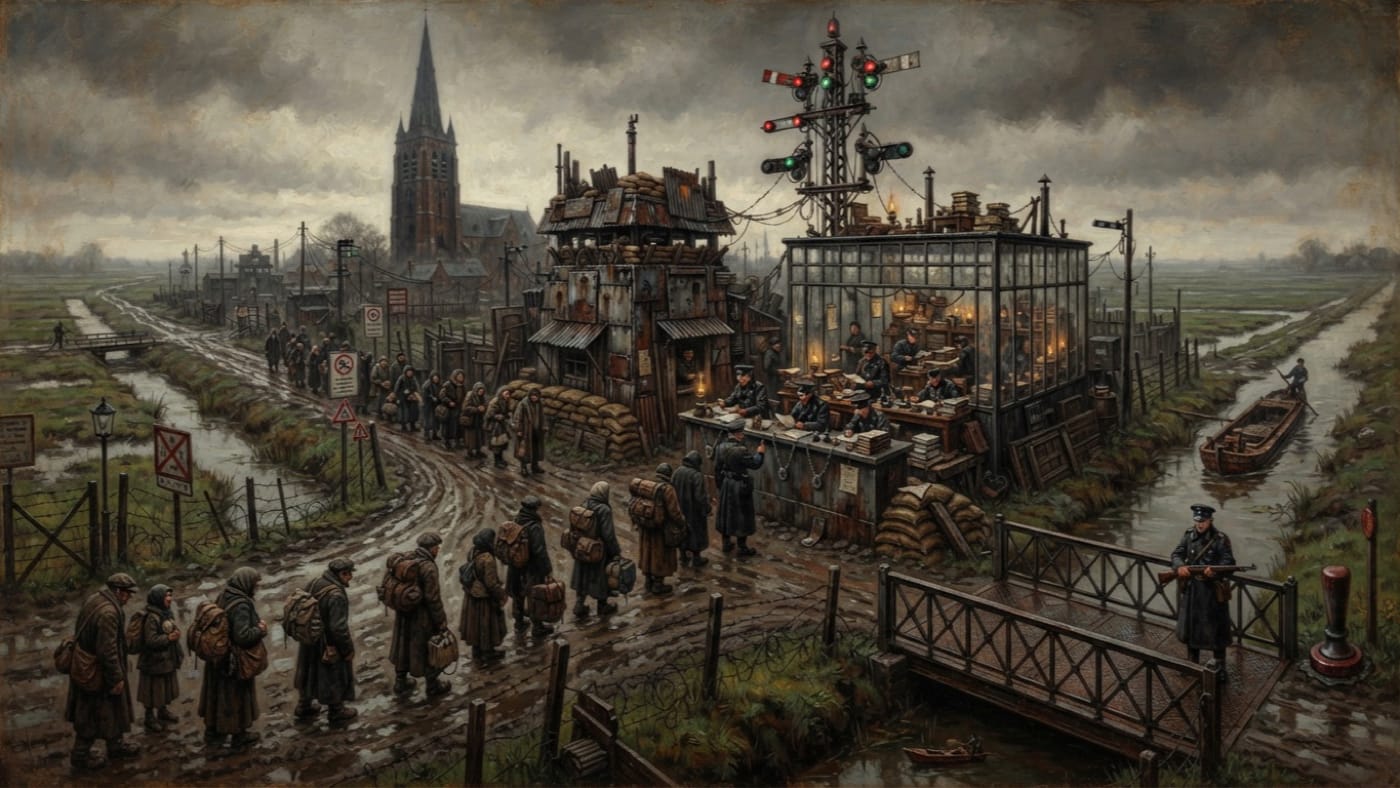
Flanders
Loyal. Damp. Licensed.
Flanders supplies pilgrims from the Synod's damp western parishes. The Brotherhood of the Blessed Foot once charged at the crossroads; the Bureau of Pilgrimage now publishes the fees and charges again for the walk home.
Codex Ref. II.1.07-201
Florence
The city that taught drawers to keep the faith
Florence is the polished Tuscan wound where hidden crucifixes, artisan tools, and the A.S. 44 Ivory Revolt made small devotion sharper than empire.
Codex Ref. II.4.09-044
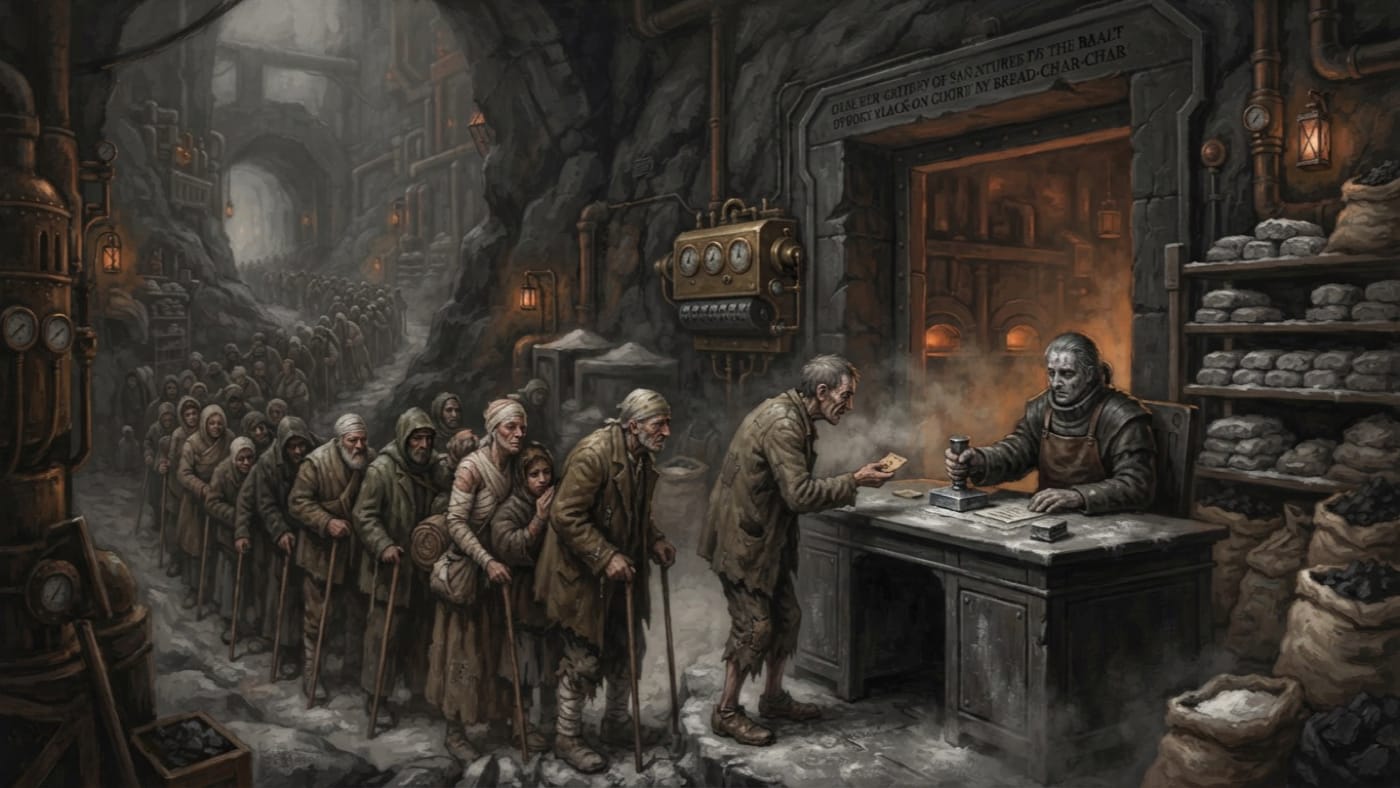
Flour Gate
One road, one ledger desk, one stamp that decides who eats.
San Vesta's ration gate, where a named bread token proves you exist and one clerk decides whether you eat. The flour convoy is three days late; Quartermaster Ashweight has begun the count.
Codex Ref. VII.1.03-002
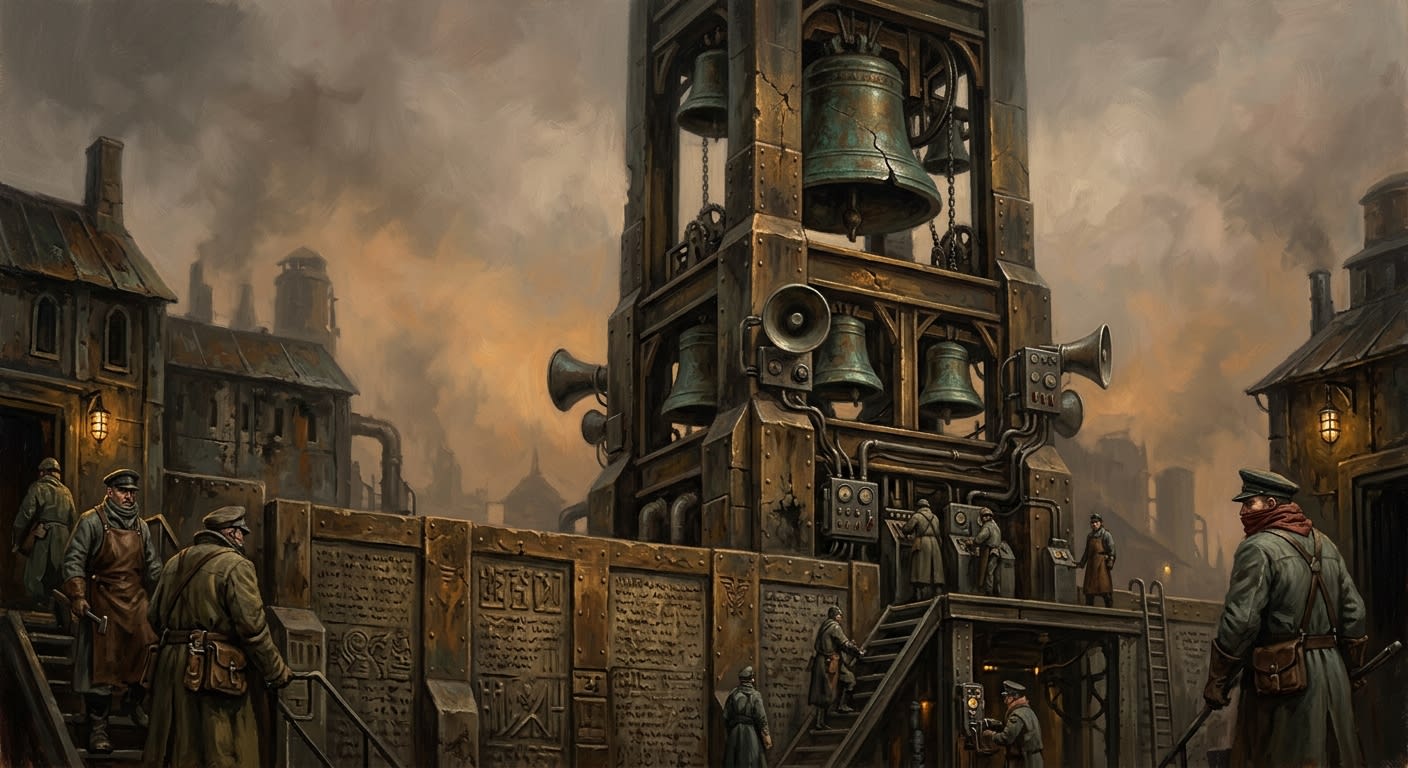
Fog Bell Tower
The cracked bronze throat that teaches Calais to survive fog
The Fog Bell Tower of Calais is the cracked bronze throat above the Script Wall: fog alarm, reading summons, Gunline relay, and Amber hazard.
Codex Ref. II.4.09-072
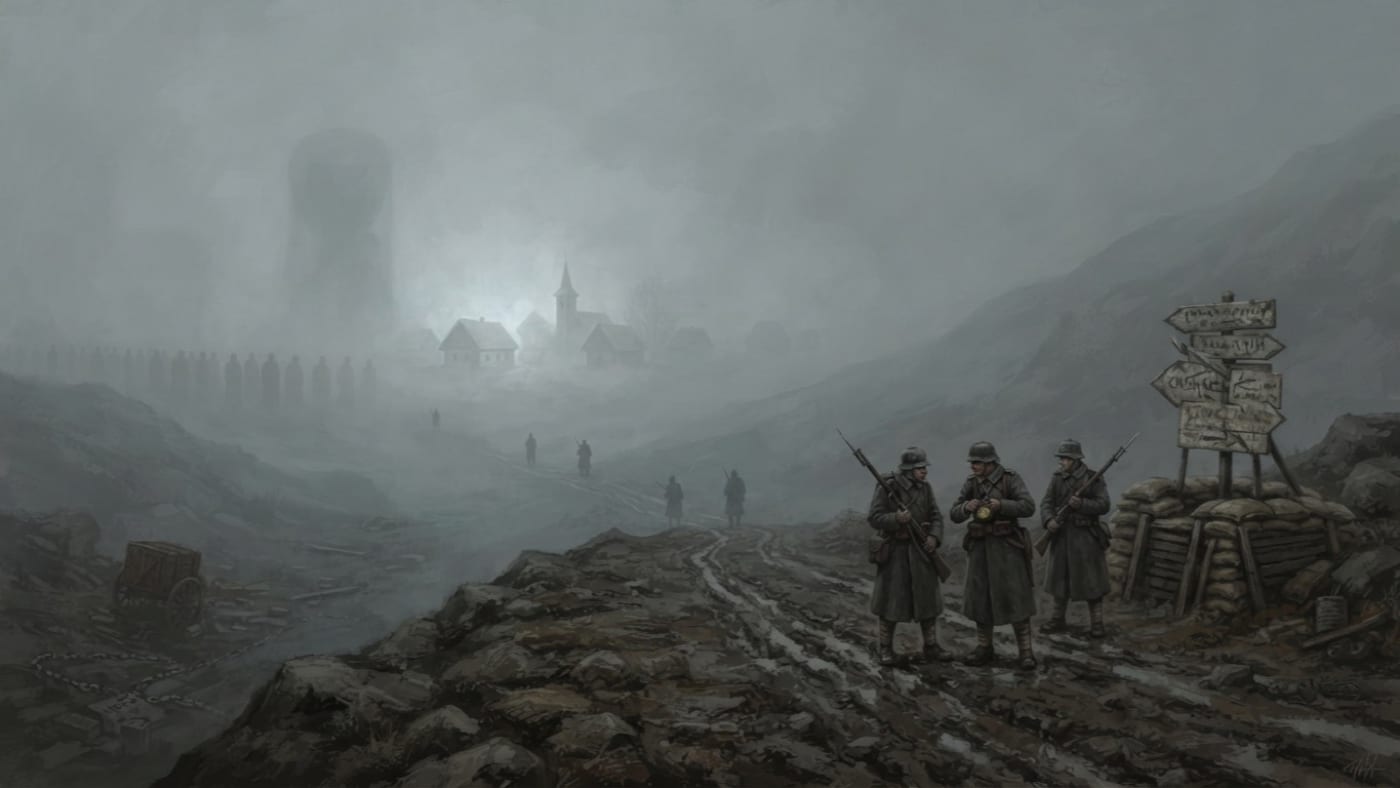
Fog Kingdoms
The pass is held. The boundary remains unsurveyed.
The soldiers' name for Syrion's unsurveyed fog beyond Shipka. The pass is held, the approaches contested, the depth occupied. The villages remain on the rolls; their letters go unanswered.
Codex Ref. II.6.08-201
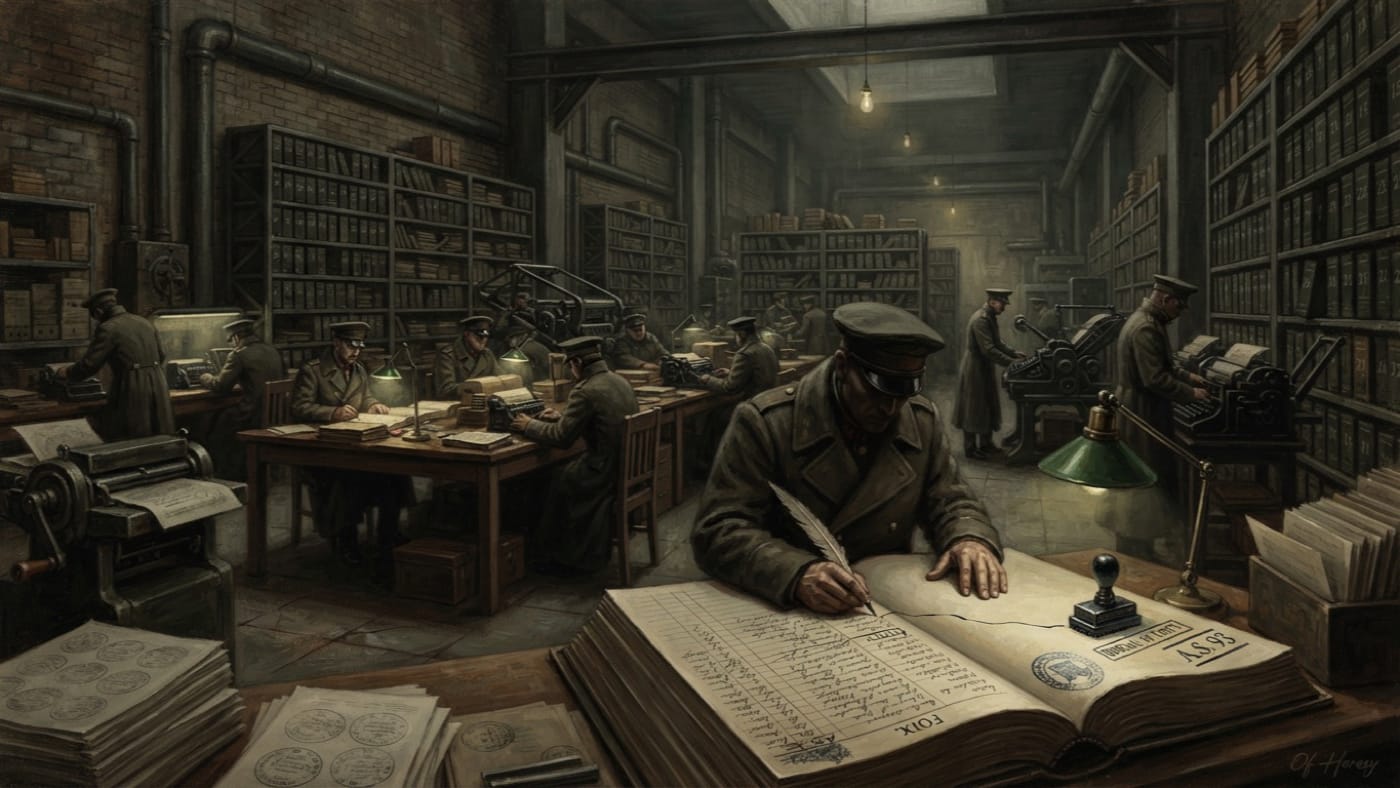
Foix
Named, included, not proved
Foix entered Purity's Toulouse file in A.S. 93 because Carcassonne named it. No local offence is cited. A town requires no proven guilt to become a permanent entry.
Codex Ref. II.1.09-010
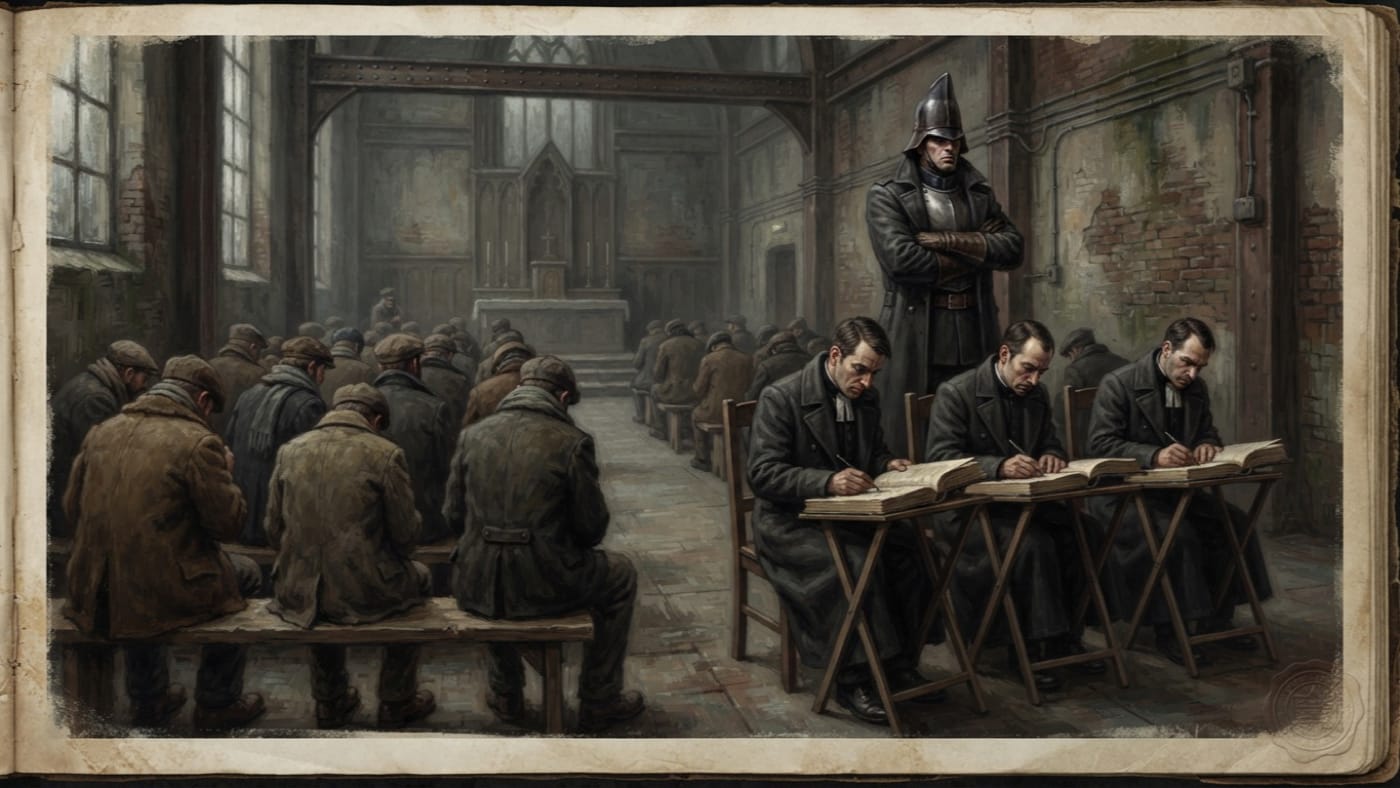
Foreign Church
Three Pens and a Lictor
In Strasbourg's River Quarter, worshippers outside Synodal obedience pray under three Confessors' pens and one Lictor's gaze. The prayers are permitted; the attention is unavoidable.
Codex Ref. III.2.01-1125
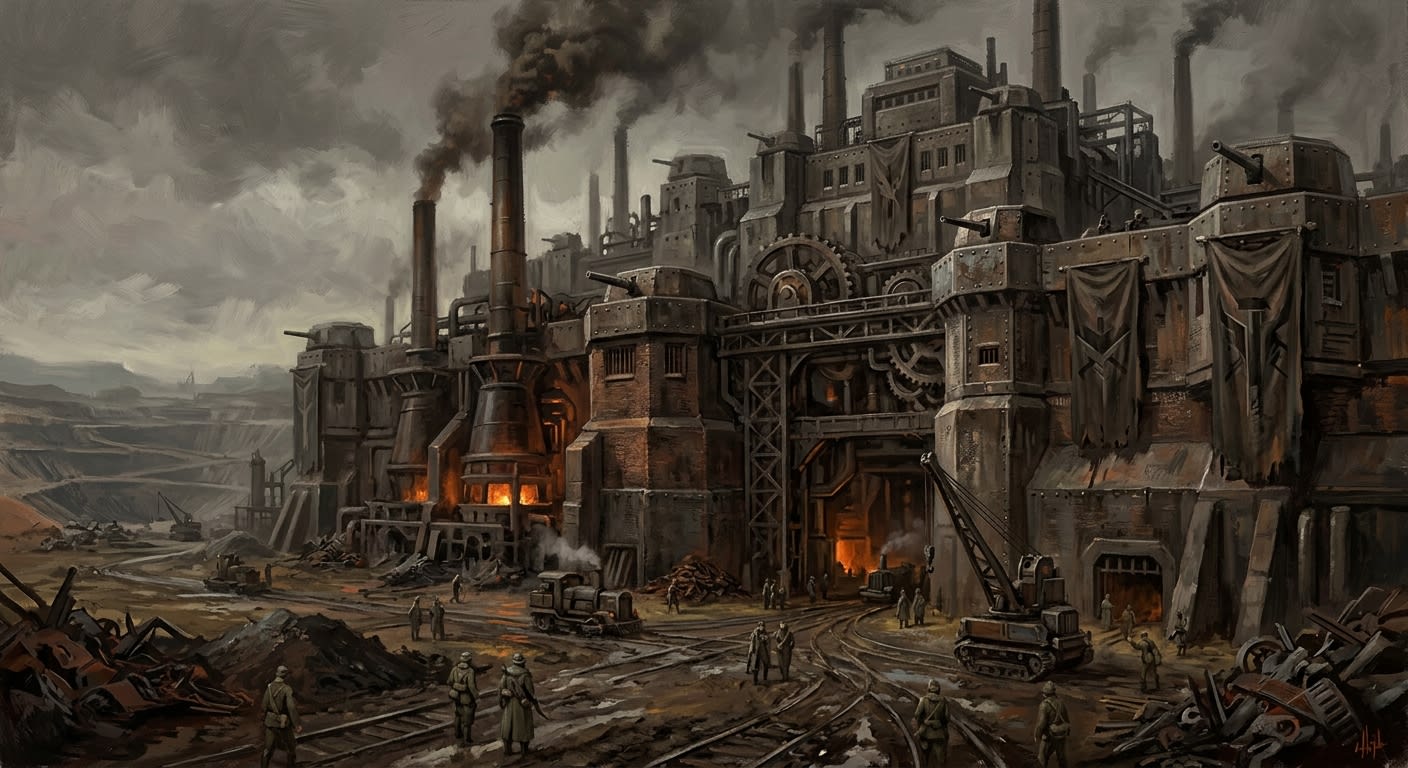
Forge-Pyre Bastion
The citadel that hammers distance into a theological inconvenience
The Forge-Pyre Bastion is Maldrake's unmeasured forge-citadel in the Iron Wastes, where Wrath manufactures walls, weapons, and reasons to hate.
Codex Ref. II.6.03-046
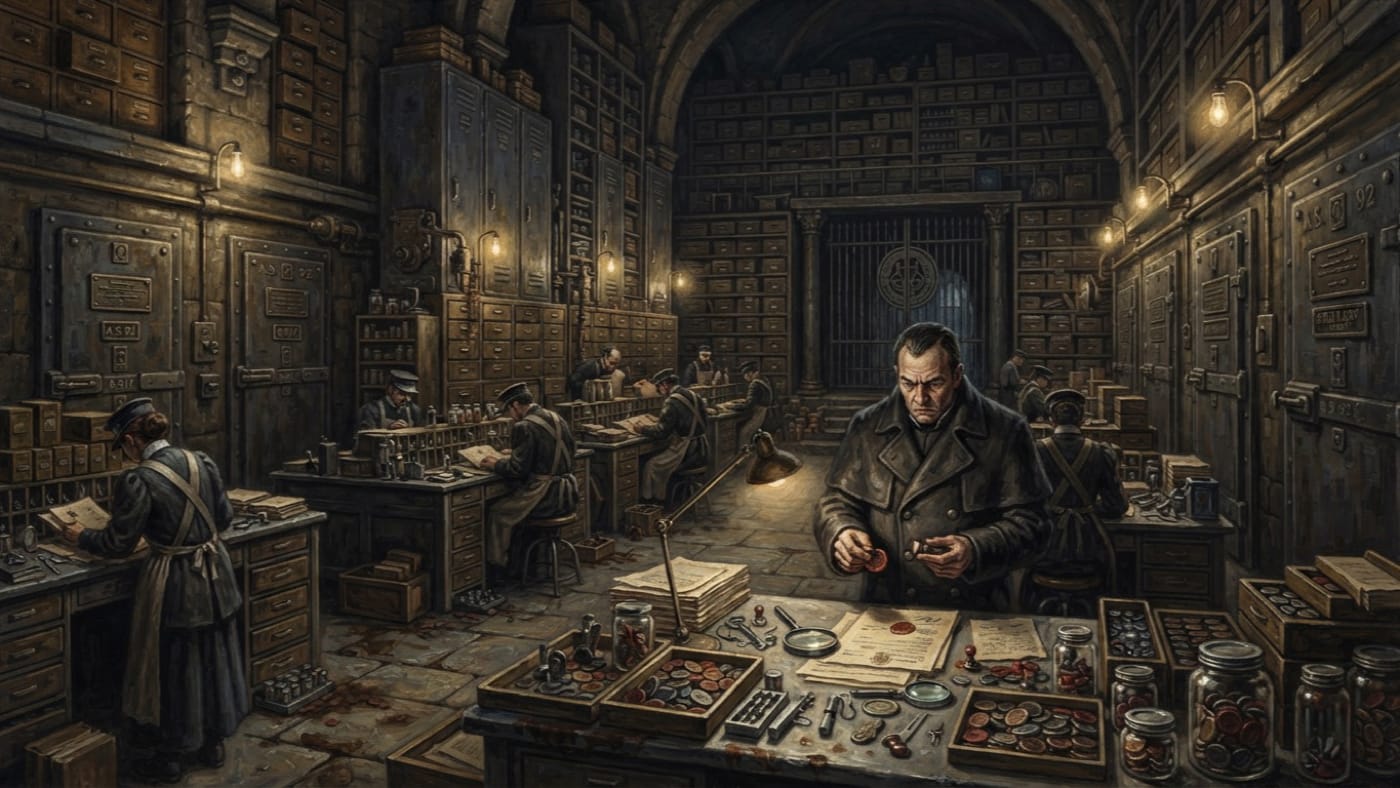
Forgery Archive
Every false impression needs a genuine stamp.
The Forgery Archive keeps 8,917 confiscated counterfeits beneath Strasbourg Cathedral, each certified as false. The Bureau of Masks and Seals publishes the count; the collection remains sealed.
Codex Ref. II.2.06-007
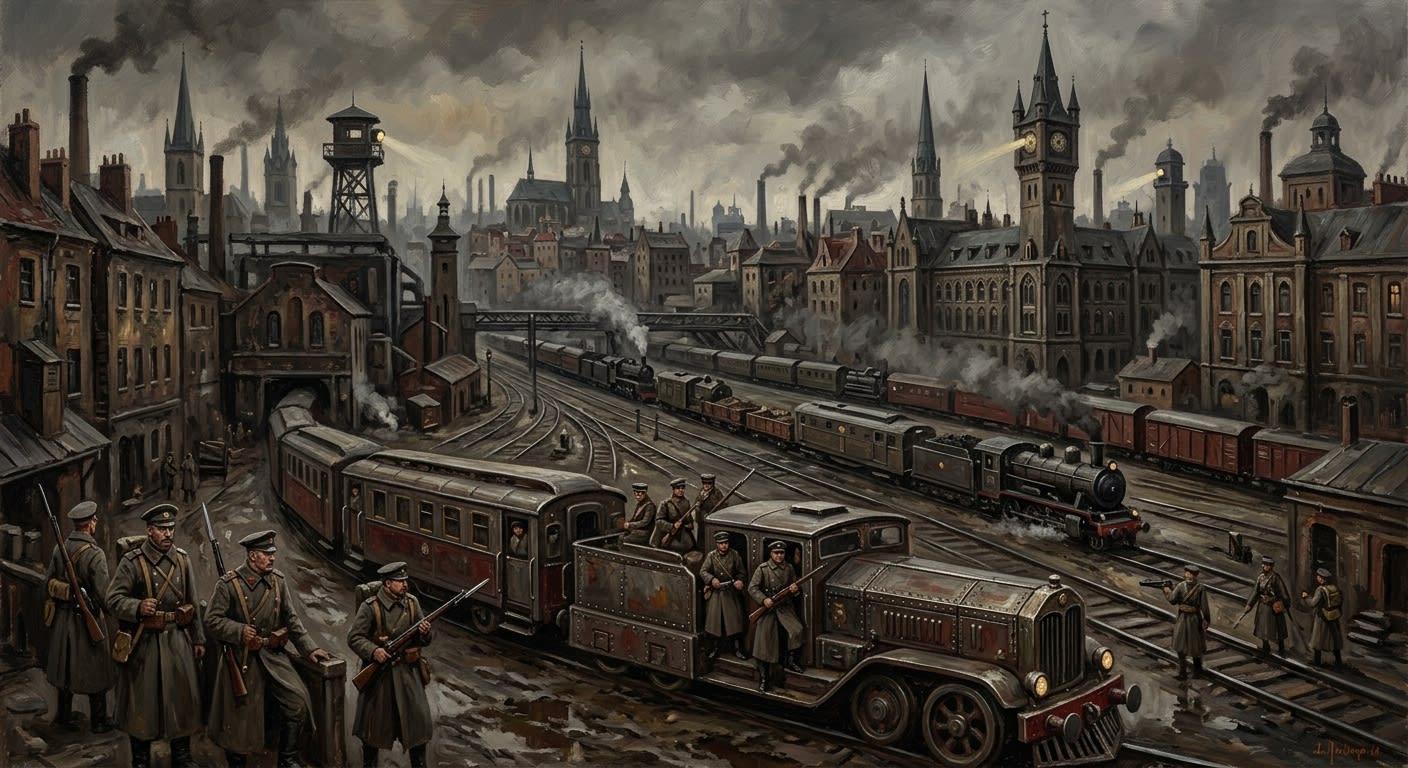
Forward Heartlands
The held breath behind the gunline
Zone 3 is the Synod's forward heart: Prague's corrected beauty, Bratislava's damp throat, Budapest's divided engine, Warsaw's teeth, Sofia's hard face, and every ugly town that keeps the Line fed.
Codex Ref. II.3.00-201
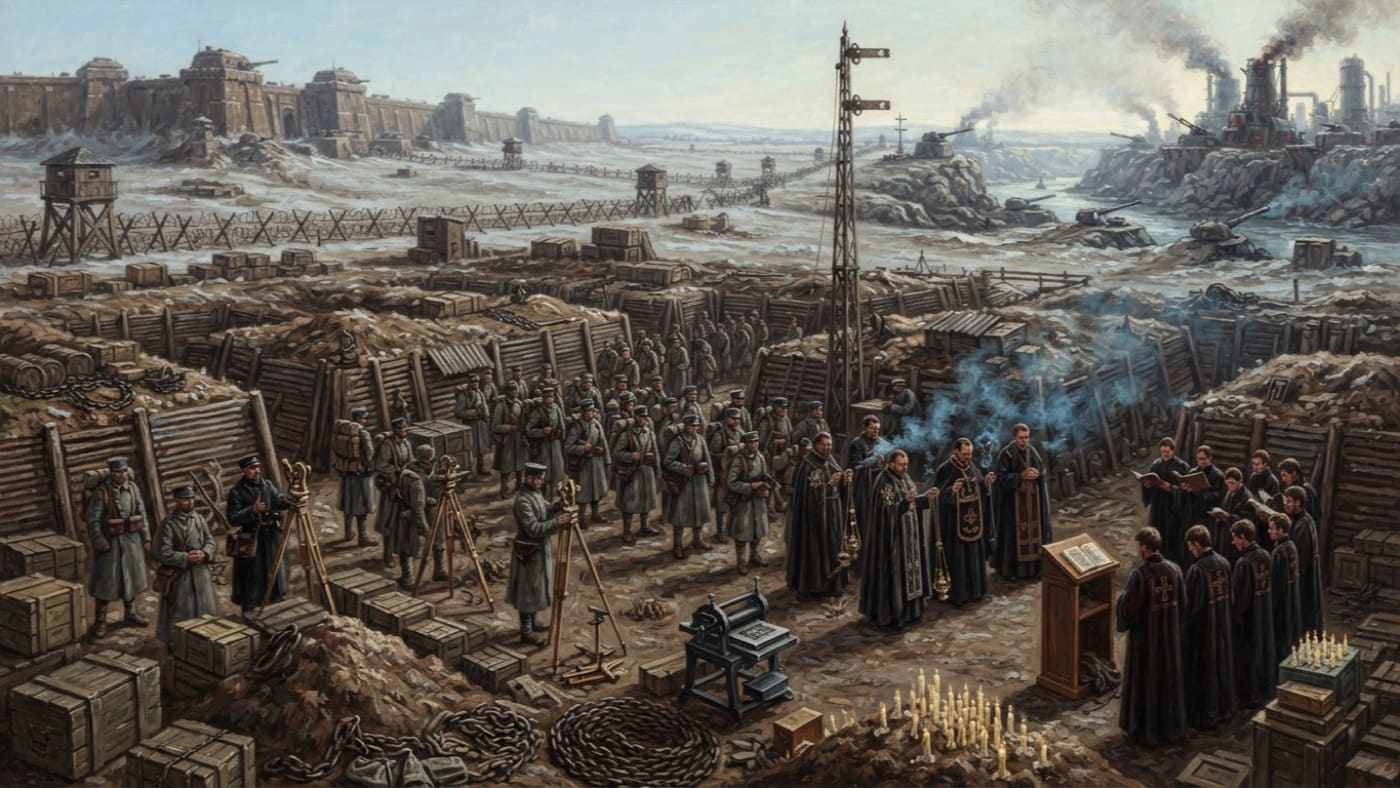
Forward Staging Point Kessler
One morning attested. The ground awaits its own file.
A trench-depot three miles behind the wire south of Bastion-Irongate, attested at Commission 73-C's muster on 14th Martius, A.S. 73. Three hundred were authorized to depart. The depot's foundation and present condition remain unrecorded.
Codex Ref. II.4.08-073
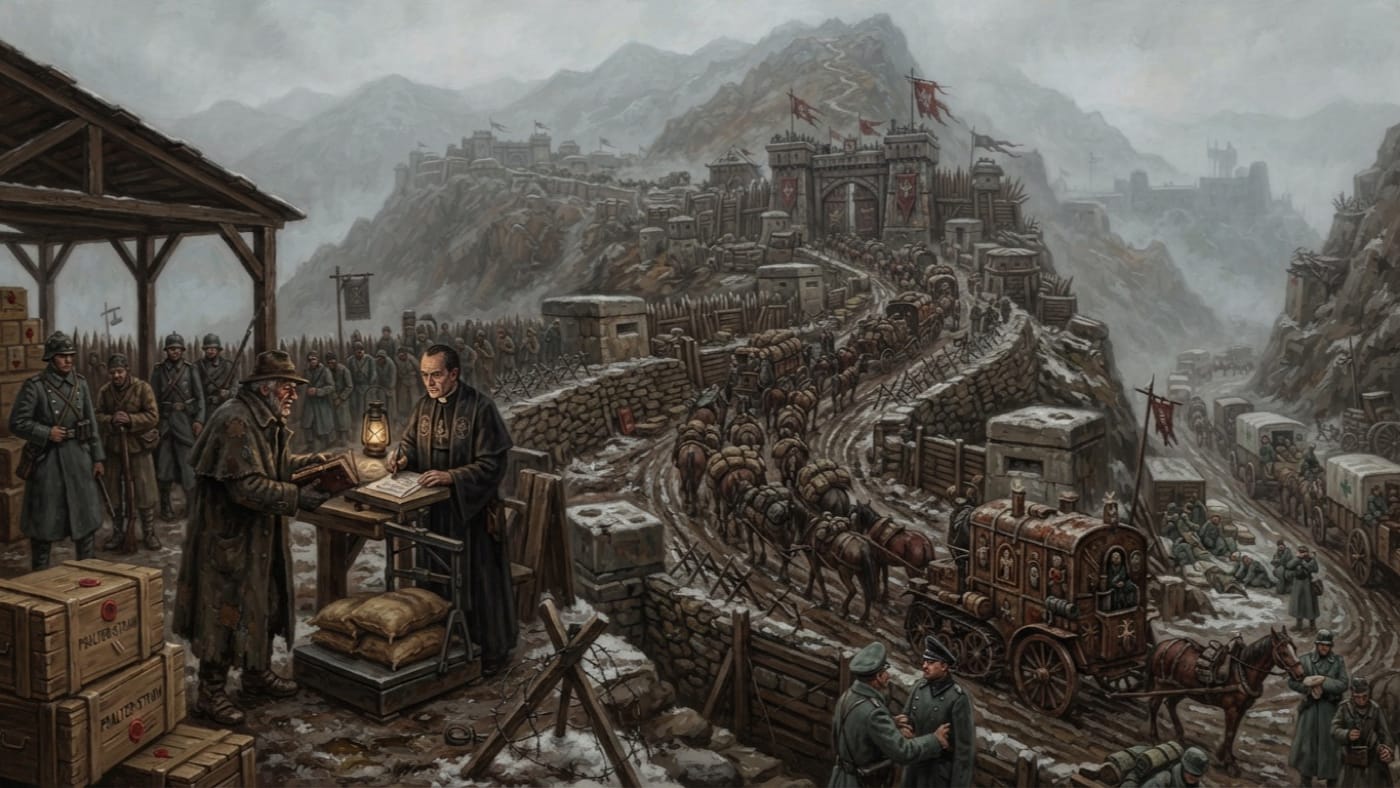
Forward Supply Zone
Where freight becomes evidence and every sack requires a confessor
The Bureau of War defines the Forward Supply Zone as Zones 4–7: bastions, contested ground, Charnel Lands and southern sea lanes. Freight crosses by permit; every loss and every bribe must find a name to answer for it.
Codex Ref. II.4.07-201
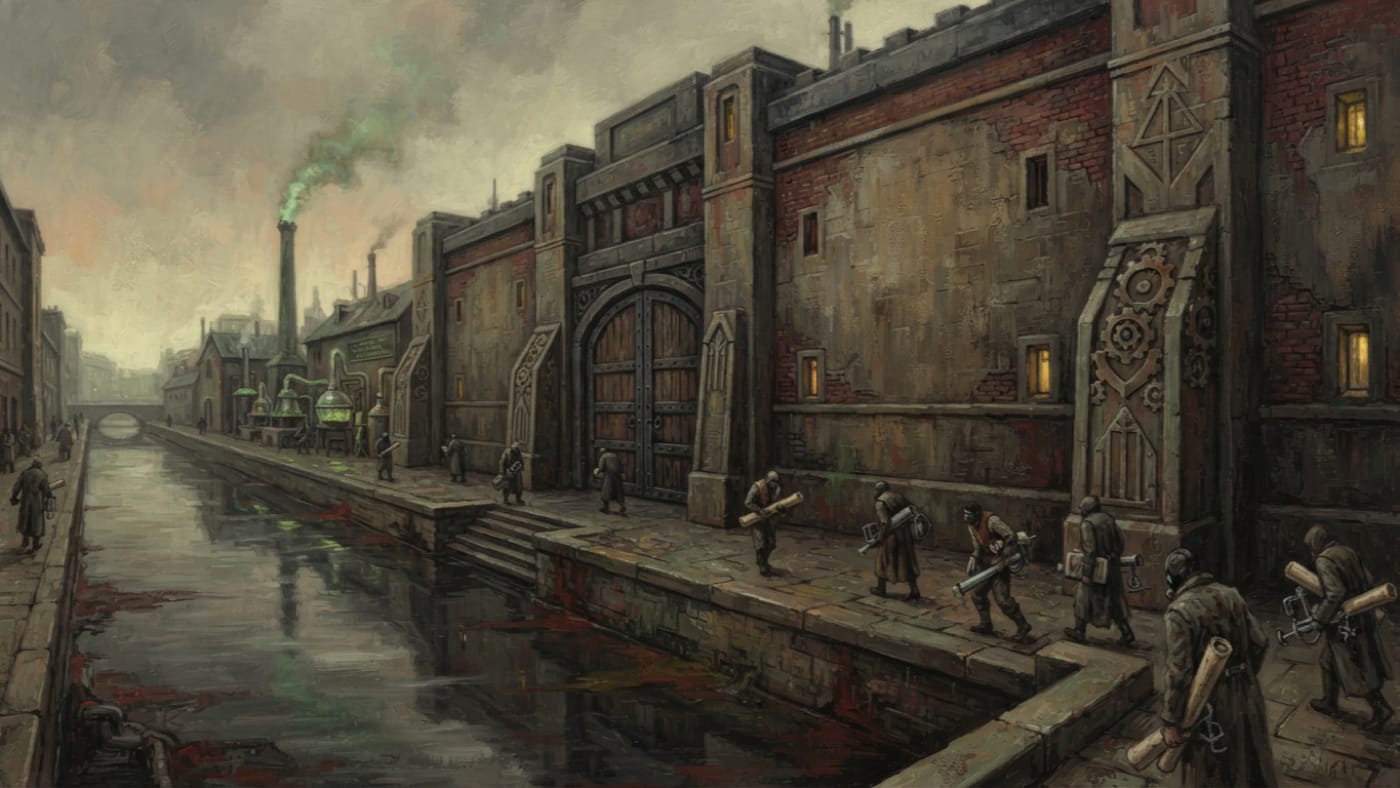
Foundry Archive
Engineering keeps what the Synod stands on
On Strasbourg's eastern canal, Engineering keeps the papers the Synod stands on. Its Archive exceeds Cathedral tolerances; Doctrine has twice failed to move it.
Codex Ref. II.1.04-005

Foundry Core
Where steel learns obedience and the floor answers back
The Foundry Core teaches steel to sing, workers to burn, ledgers to blame, and the floor beneath hymnsteel to answer in the wrong voice.
Codex Ref. II.2.01-110
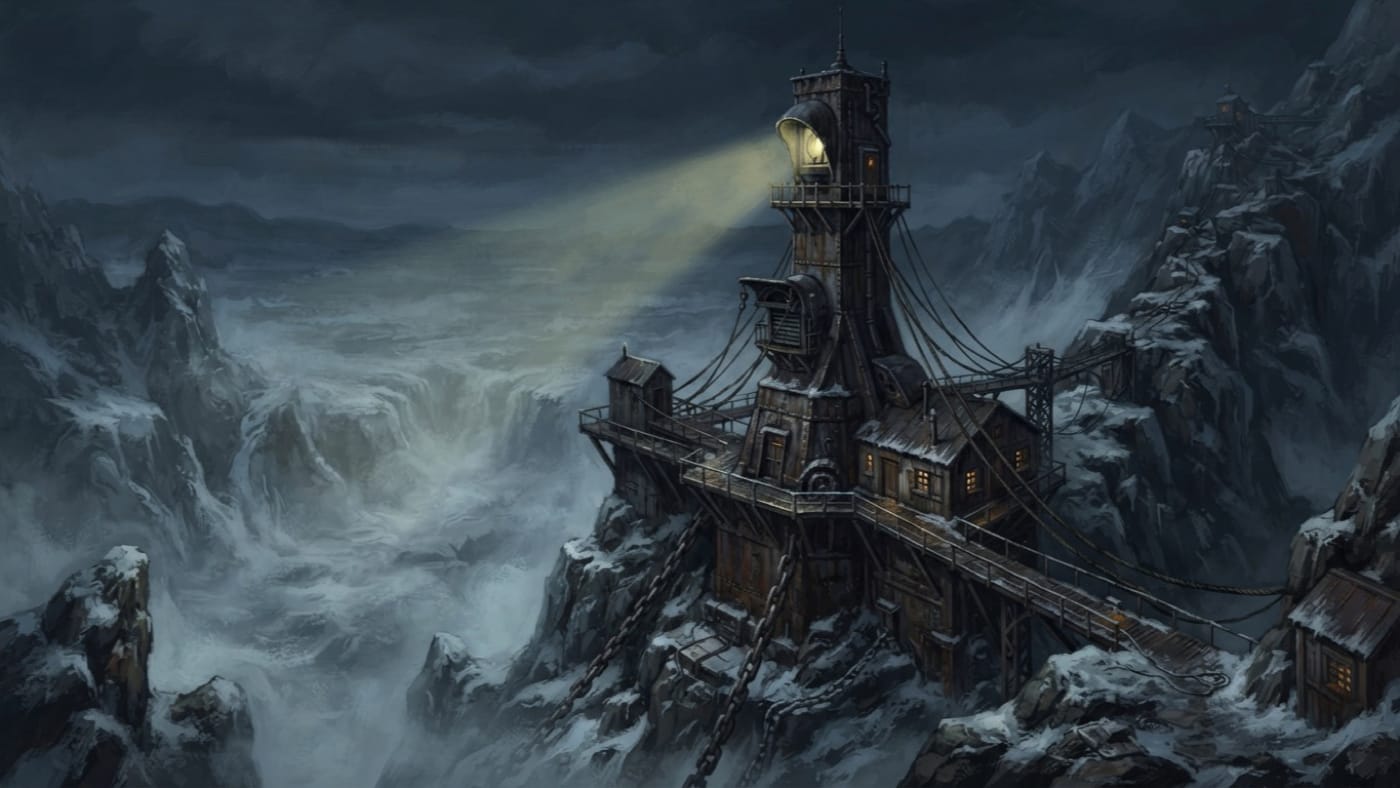
Fourth Light
Where the wax and the witness disagree
A current A.S. 201 survey of Third Light's neighbouring relay outpost, three to four hours by ridge rope. Seven acknowledgments bear its name; Fourth Light reports the signals never arrived. The wax and the witness disagree.
Codex Ref. II.4.08-201
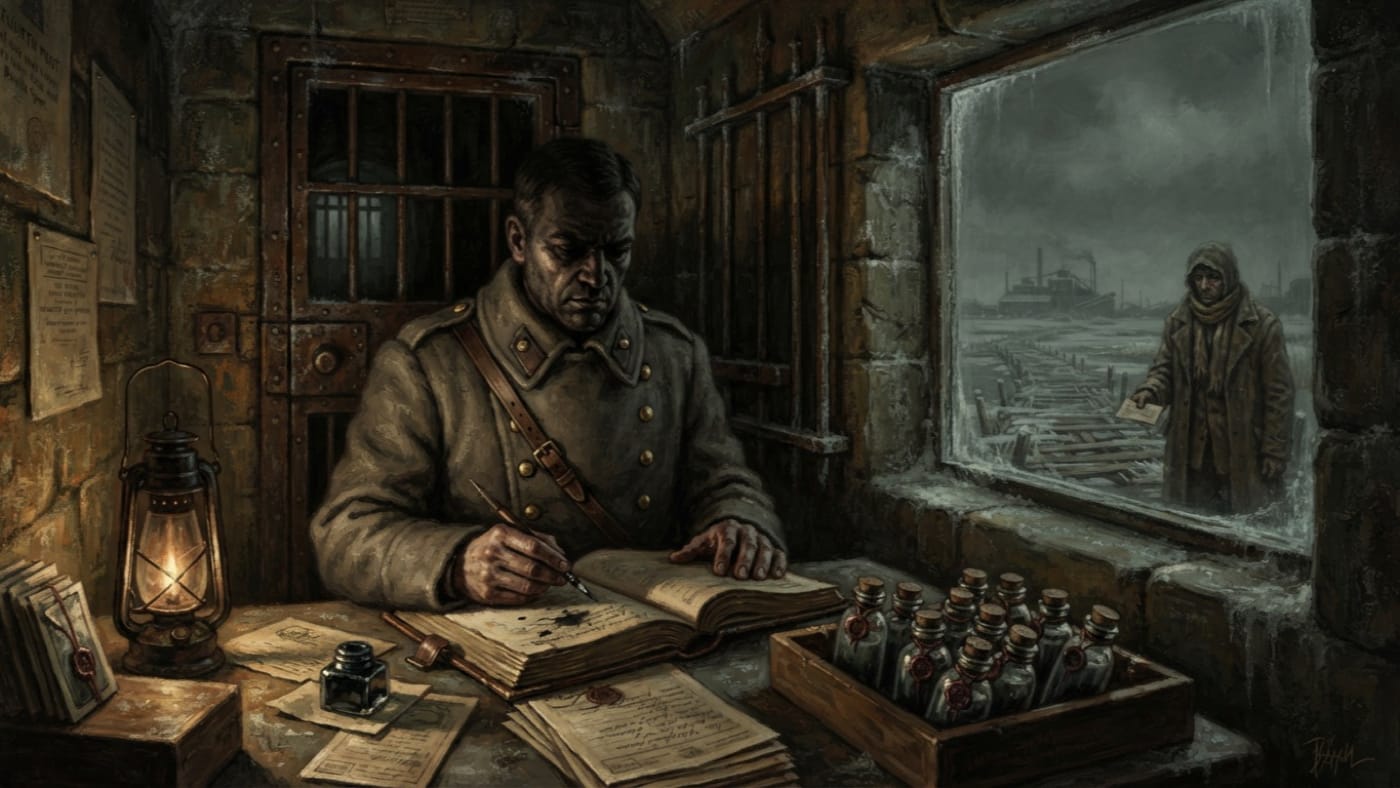
Fourth Post
The road reopened; the grief kept its weight
Fourth Post collects salt, tears and fees on the Brielle Spur. The road reopened; its phials still arrive thirty percent heavy, and the ledger accepts grief whose origin has faded.
Codex Ref. II.3.05-084
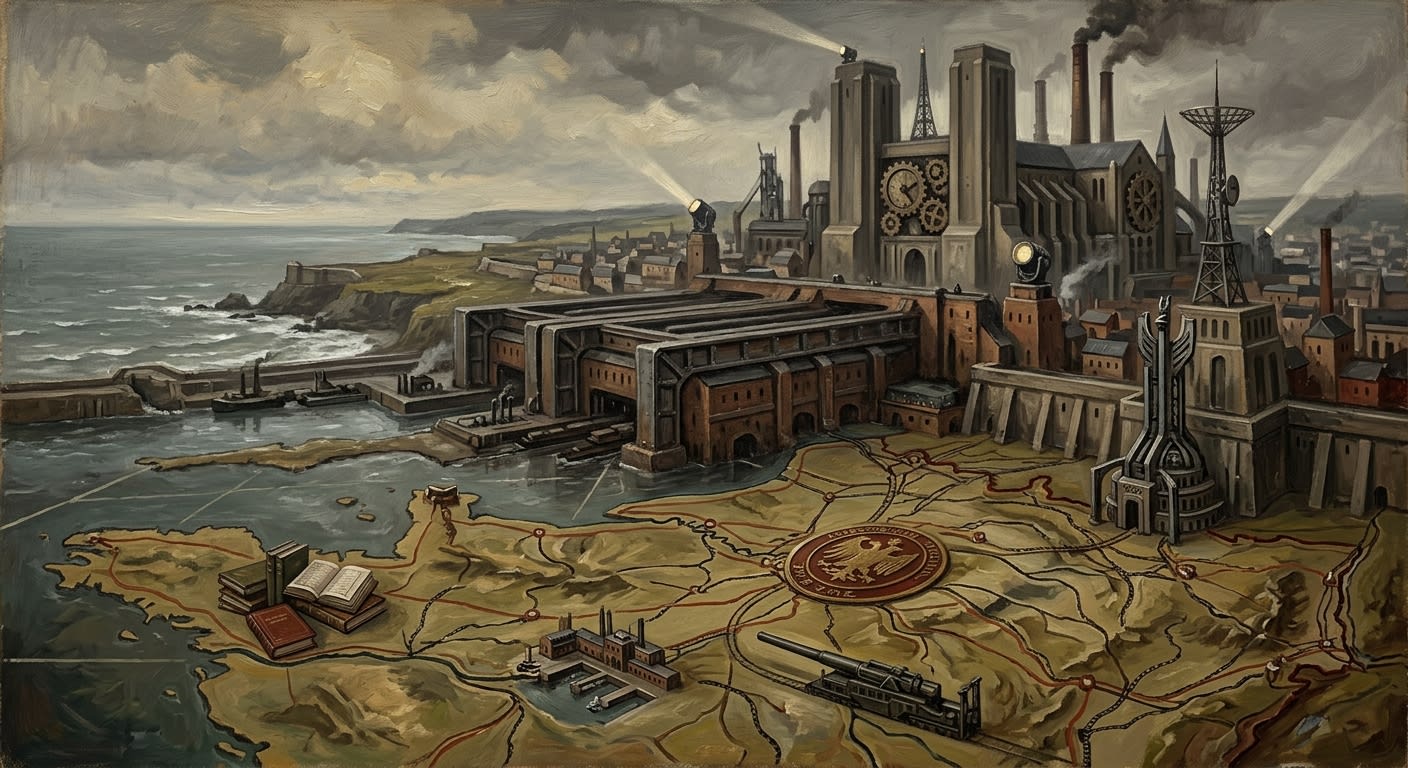
France
The country the Synod did not abolish, because it proved too taxable to waste
A.S. 201 survey of France as Zone One heartland: martyr coast, watched cities, taxable memory, useful ports, and one conquered name made indispensable.
Codex Ref. II.1.01-201
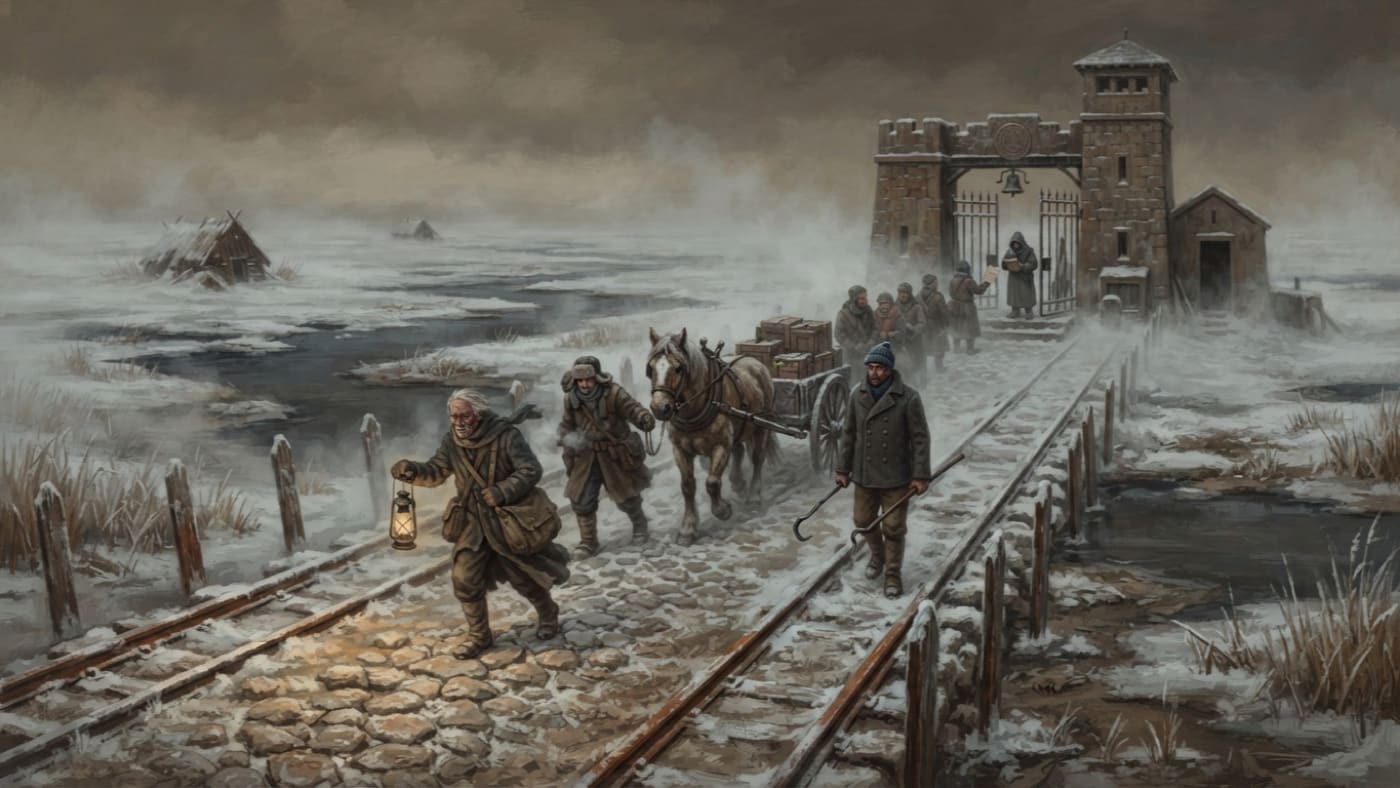
Frisian Flats
The sea retreats twice a day; the toll does not
Tidal ground crossed by the Salt-Vigil's winter roads, where refuge became a toll and passage depends on stone, lanterns, wet seals, and the clerk.
Codex Ref. II.3.05-052
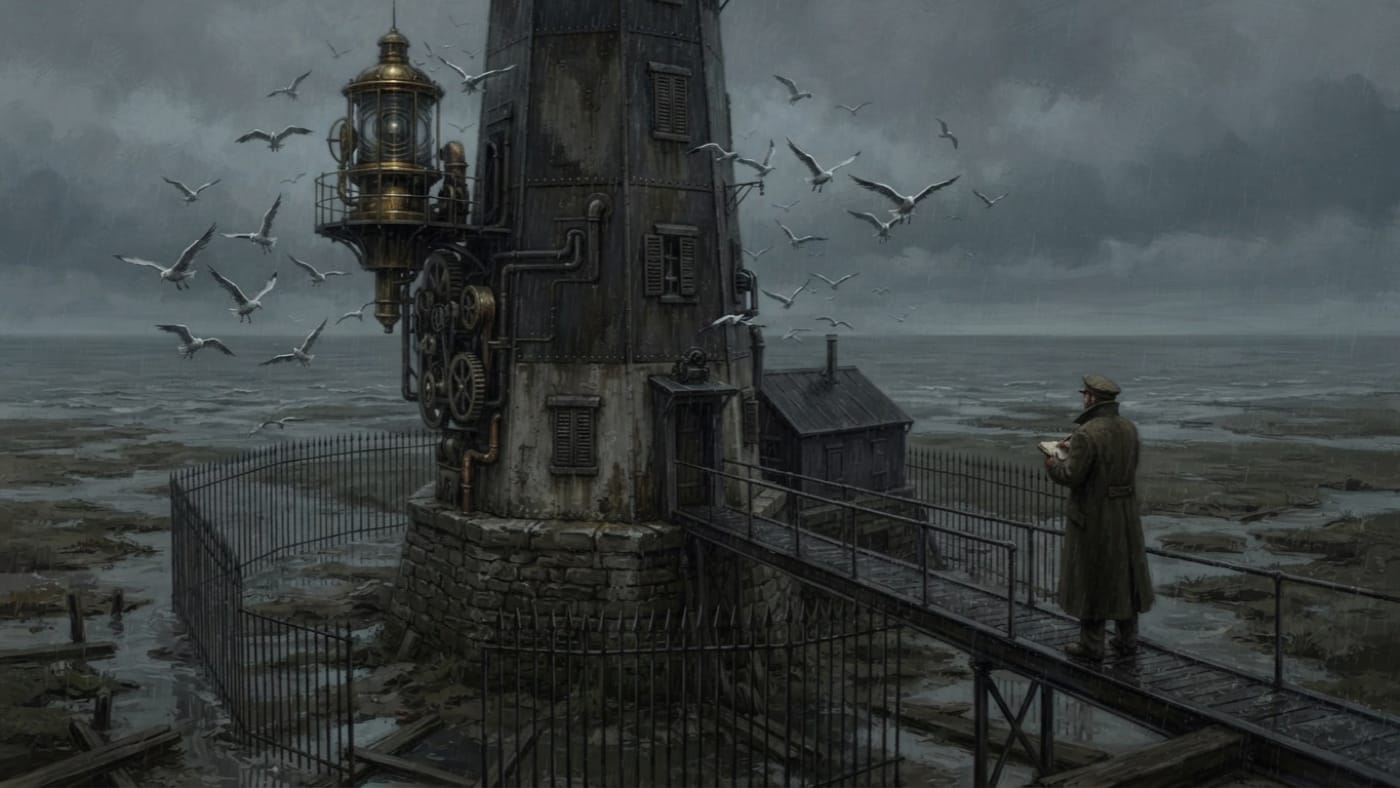
Frisian Lighthouse
A tower without an address, a witness with a new subject
An unnamed Frisian lighthouse received the Lübeck harbour-master who counted eleven Night Wagons. The record gives us a reassignment, cheerful writings about gulls, and no address.
Codex Ref. II.4.09-180
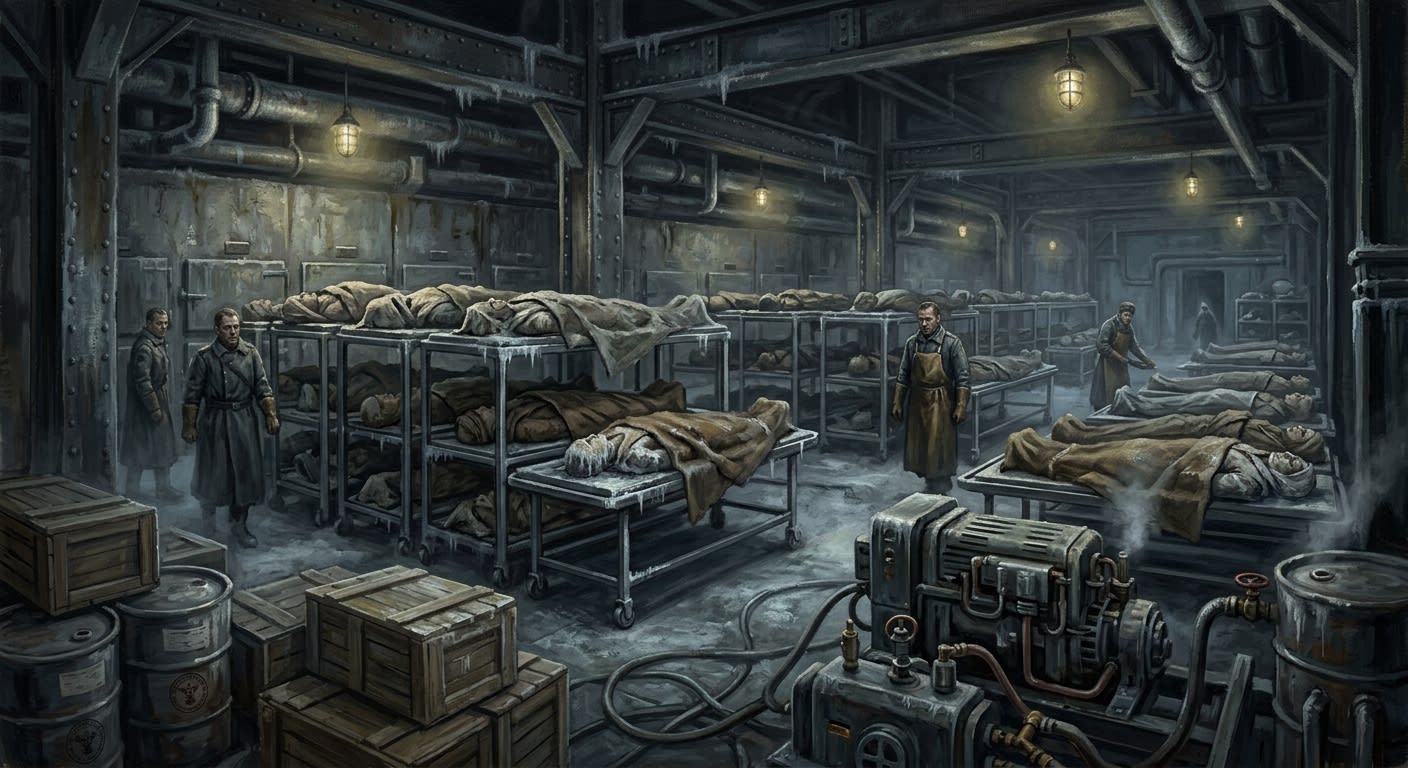
Frost Yards
Where Königsberg stores bread, bullets, bodies, and one useful wrongness
Restricted cold-store and mortuary district inside Bastion-Königsberg, where supplies keep, bodies wait, and the dead have learned a northeast preference.
Codex Ref. II.4.08-201
Furnace Basilica
Three chairs govern the heat; the bell governs everyone else
Current survey, A.S. 201: Essen's Compact Council governs from the Furnace Basilica by decree, audit and bell order. The pours require three Bureaus to agree; the workers are required only to obey.
Codex Ref. II.2.01-002
Furnace District
The capital needs the heat and has no wish to learn where it comes from
Strasbourg's furnace quarter keeps the capital warm with fuel the Bureau of Purity has not blessed. The Ninth Mark tests its chimneys, Tithes taxes what is recorded, and the district keeps burning.
Codex Ref. III.2.06-194
Gallery Nine of Saint-Helm’s Cut
The entrance is sealed; the mountain has not agreed to silence
Sealed below the Helm-Mouth at Saint-Helm’s Cut, Gallery Nine sang through its brickwork in A.S. 199. The workers call it the Throat; the Bureau keeps the entrance closed and the cause unresolved.
Codex Ref. II.2.05-009
Gallery of Rarities
The chain held until the chaplain reached
The Vault's second level narrows around rarities. A chaplain was absorbed in A.S. 147; the A.S. 196 relay reported changed displays. The Bureau has observations. It has no floor plan.
Codex Ref. V.6.02-003
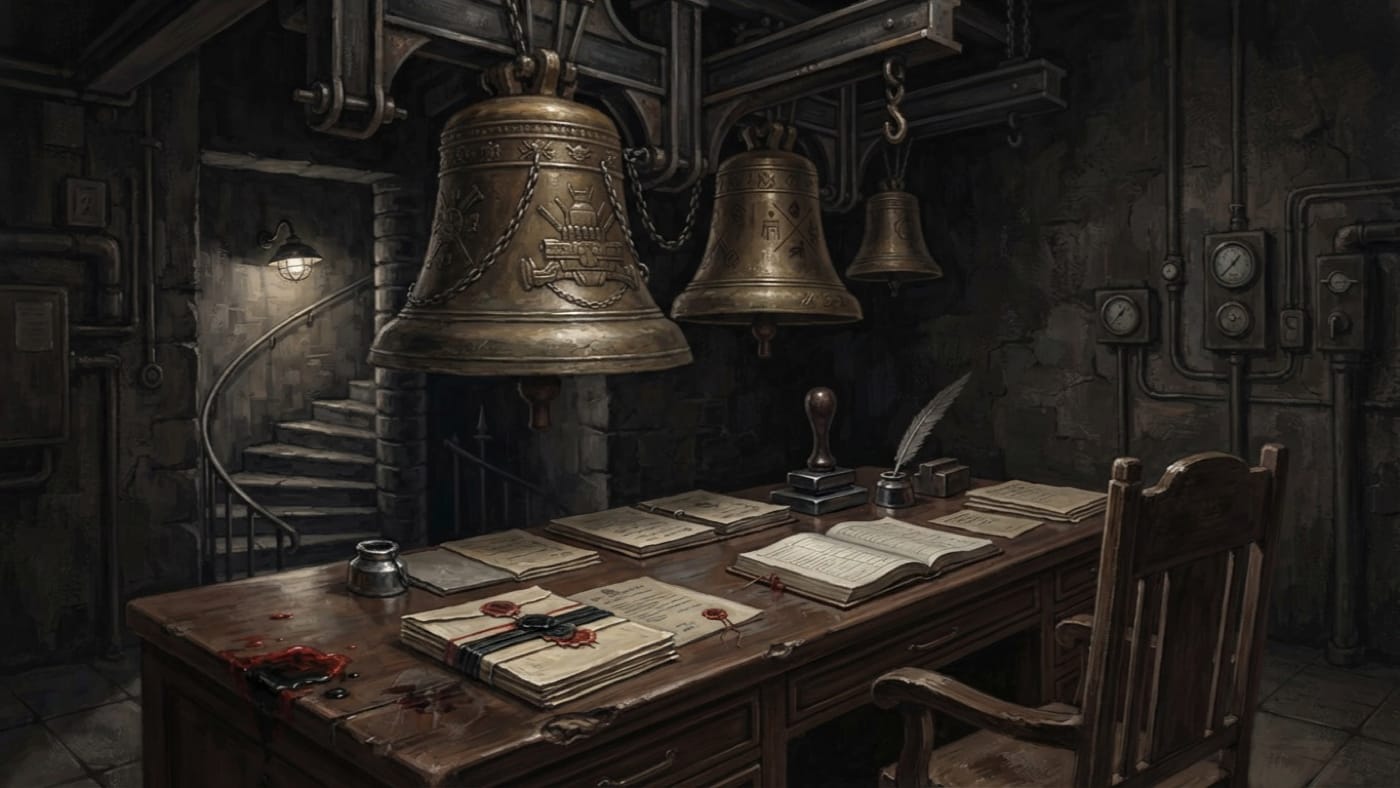
Gallery of the Quill
A walnut desk beneath three bells, and the hand that corrects the Synod's meaning
The Gallery of the Quill is my working room in Strasbourg's Tower: a walnut desk beneath three bells, where the Warden of the Sacred Ledger corrects Doctrine's prose and signs for the consequences.
Codex Ref. II.1.04-002
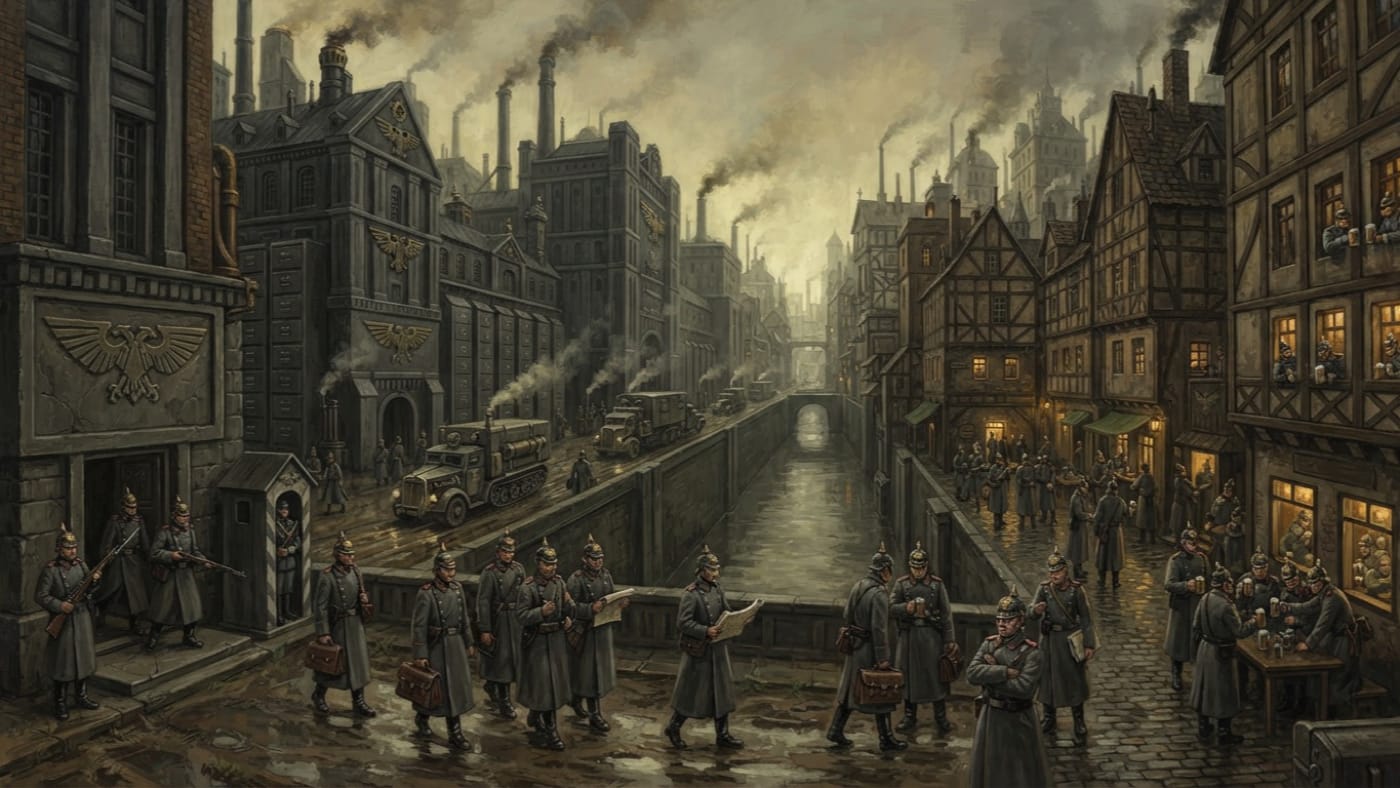
Garrison Quarter
Orders at the desk, reconciliation at the beer-hall
Kanzleiburg's officer district keeps northern command in ink and depends on Old City beer-halls for what regulations cannot settle. In A.S. 140, its petition made enforced sobriety an operational deficiency.
Codex Ref. II.4.09-201
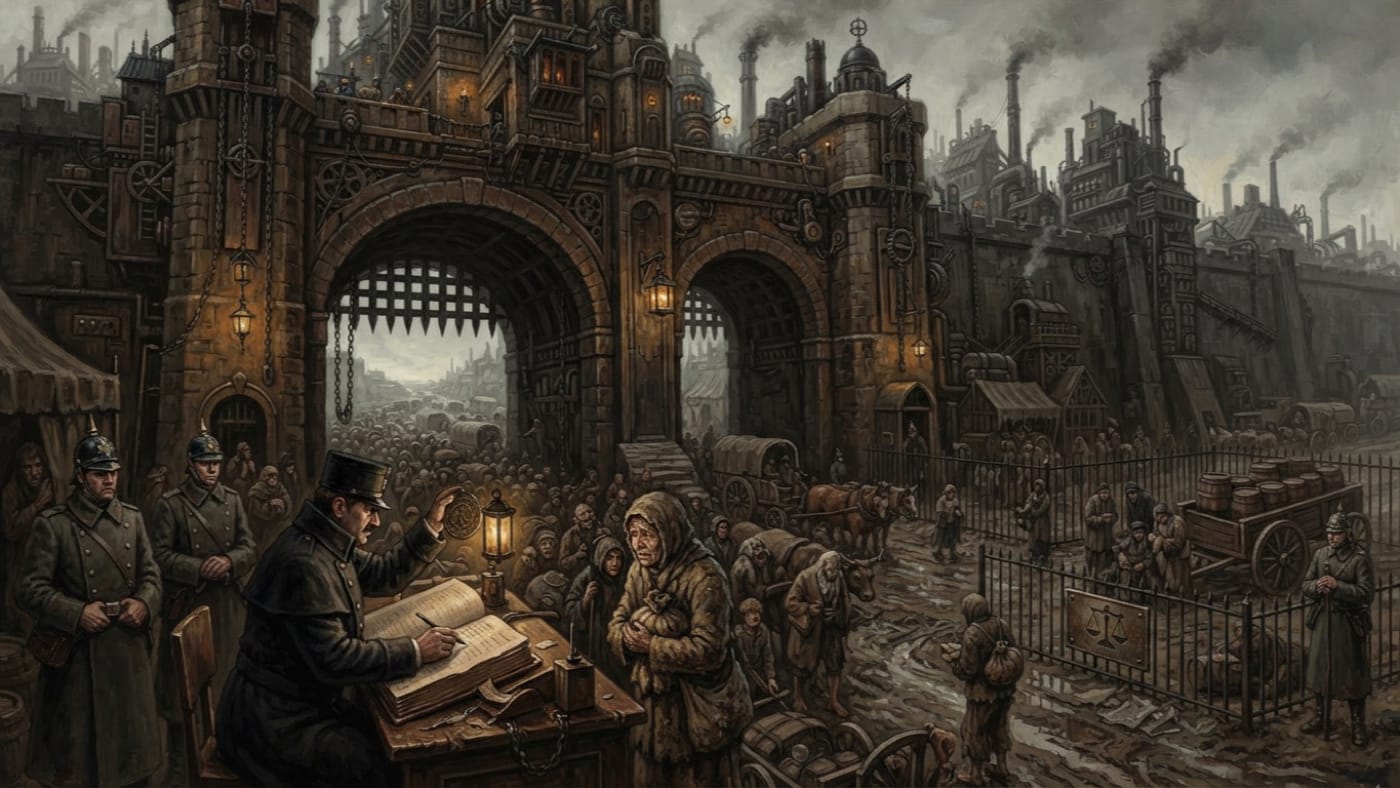
Gate and Bridge Tariffs
The coin is taken. The syllable is examined.
The Bureau of Tithes collects coin and Creed at the Synod's gates and tolled bridges. A faulty syllable voids passage; the ledger keeps the payment and the traveller keeps waiting.
Codex Ref. II.4.08-201
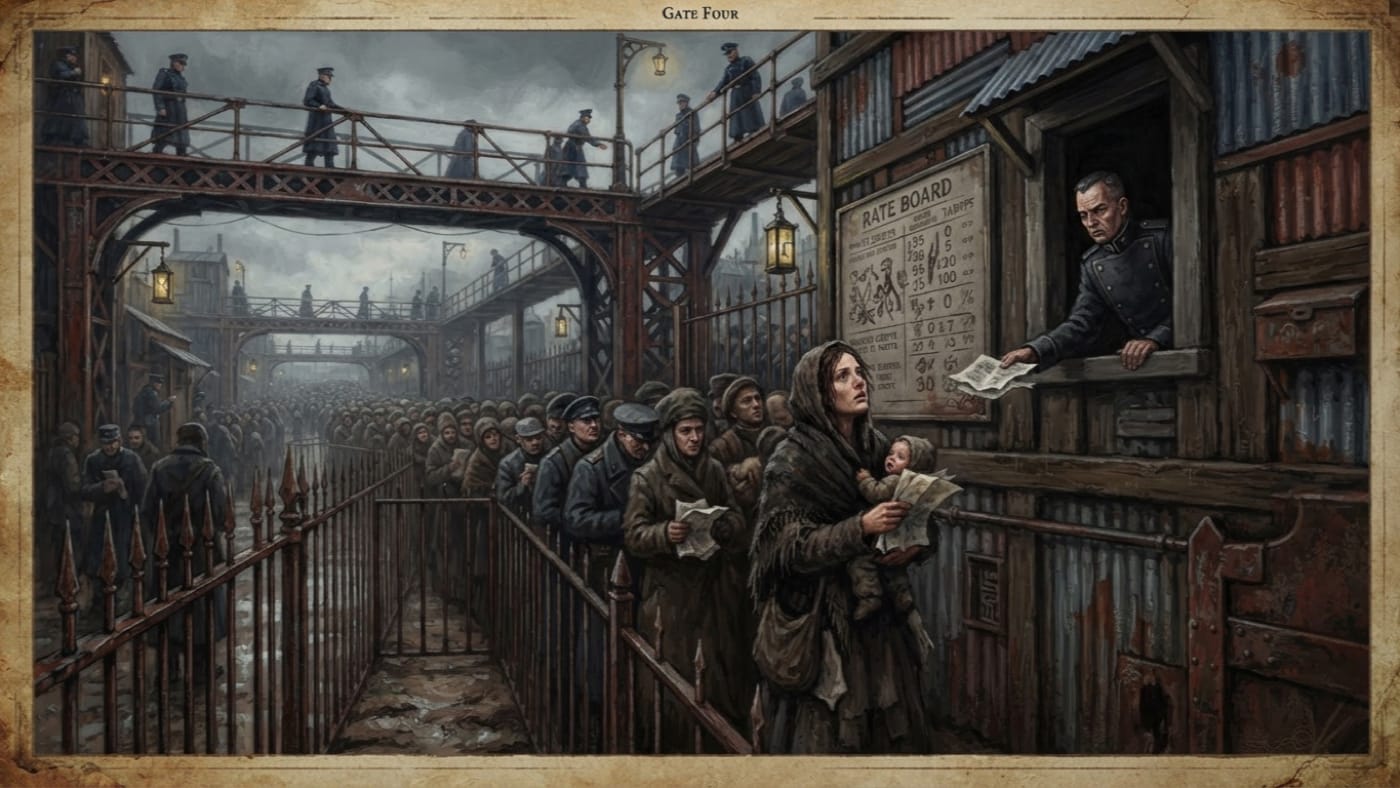
Gate Four
The line stands still; the ledger advances
Gate Four is an ordinary inspection gate on the Queue Road, where waiting earns revenue and a nameless mother gives the Unstruck their most inconvenient example.
Codex Ref. II.3.05-004
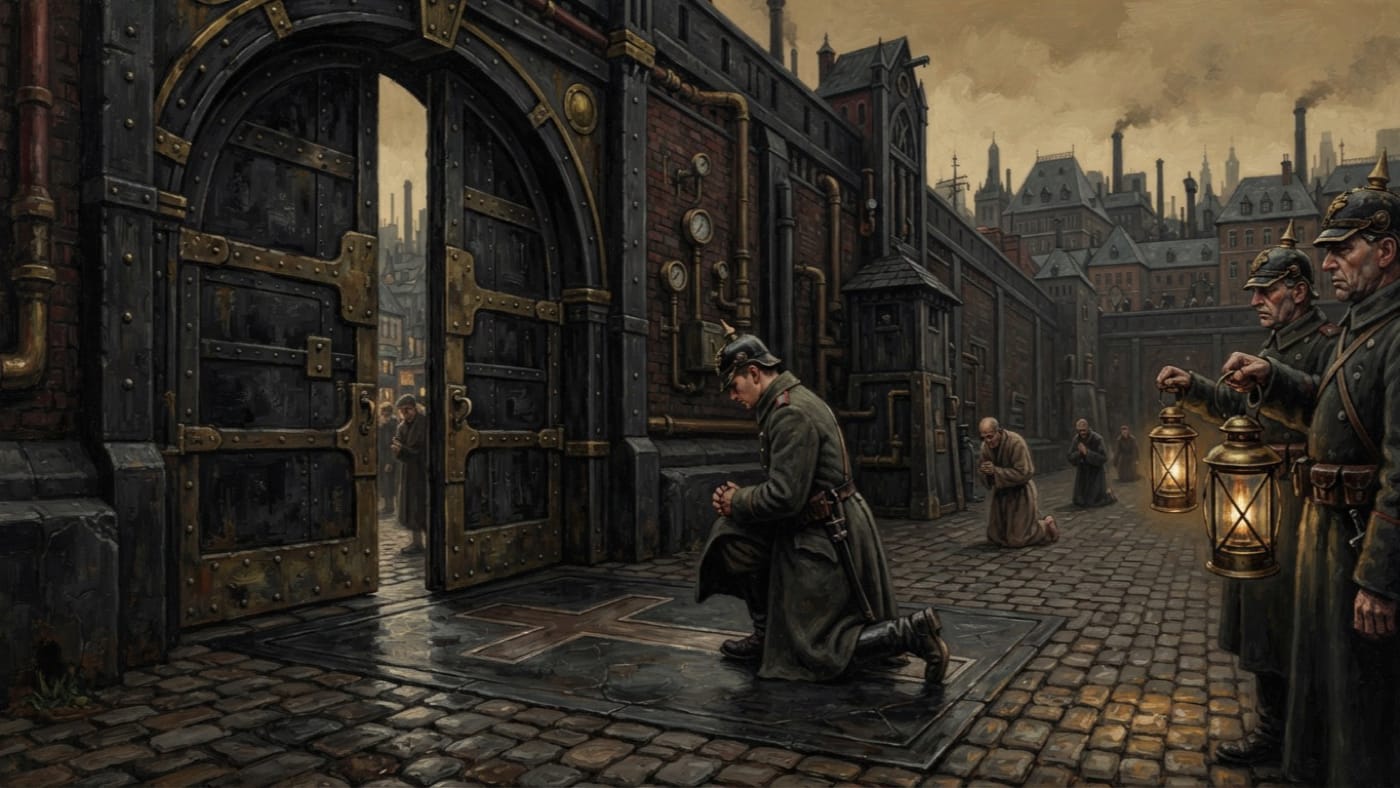
Gate Litany
Forty-seven clauses and no release
At Aachen's western gate, forty-seven clauses turn a recruit's innocence into an obligation. The gate opened in A.S. 25; the knees still answer for it.
Codex Ref. II.2.02-002
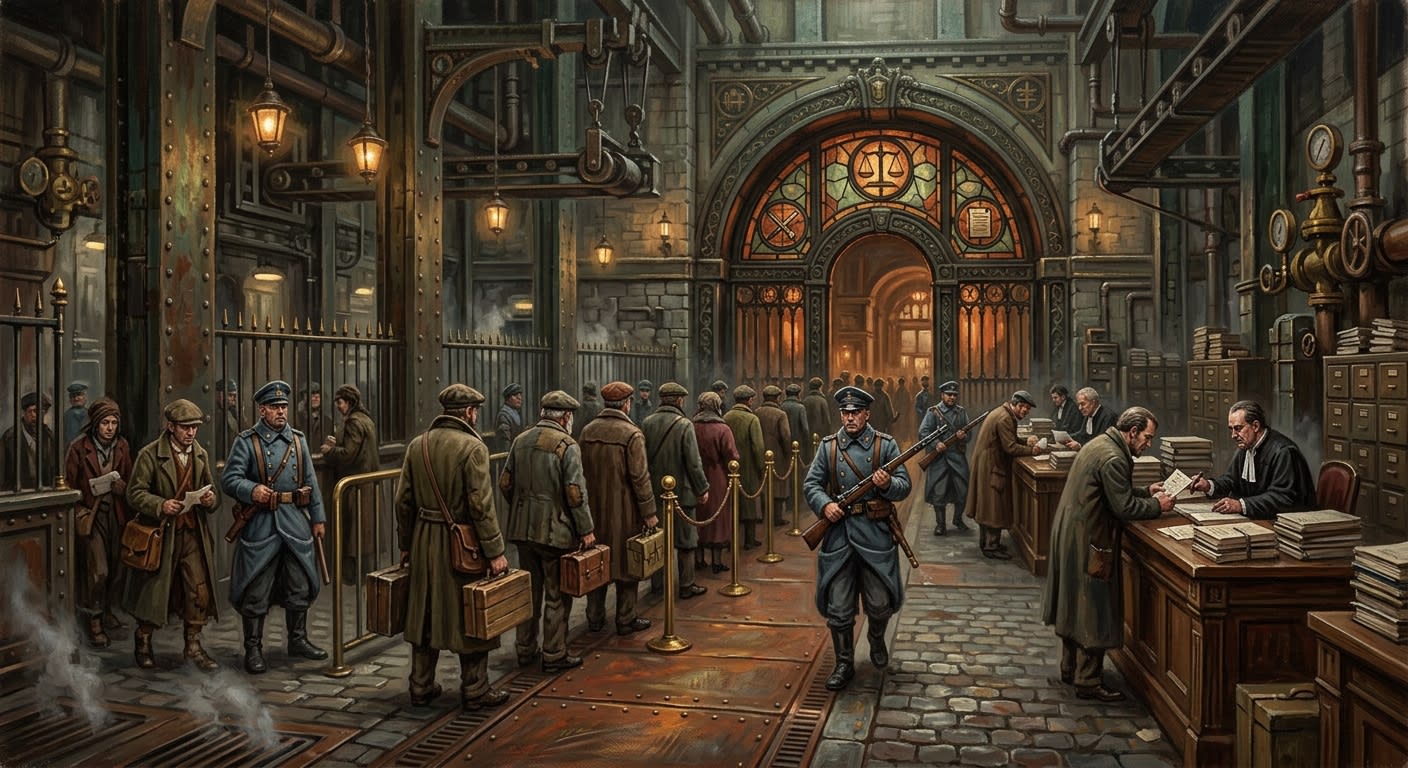
Gate Nine
The final mouth of the Queue Road, where waiting becomes debt and debt learns to breathe
Final court of the Queue Road: a clearance complex over the Apparatus where reclassification, minute debt, appeals, erasure, and warm floors devour travellers by procedure.
Codex Ref. II.3.05-009
Gate Nine Commons
Where minute debt acquires hands
At the Queue Road's ninth court, day hire, recruitment and conscription share one chalked yard. Minutes buy an appeal; minute debt buys the labourer. The Directorate calls this employment.
Codex Ref. II.3.05-009
Gate Nine Hearing Hall
The bench speaks; the stamp room rules
Stone hearing chamber at Gate Nine, where appeals become dockets, confessions buy mercy, and wax makes judgment law. The floor is warm; the cause is absent from the form.
Codex Ref. II.3.05-011
Gate Nineteen
The gate counted correctly. The file preferred an error.
Gate Nineteen counted Commission 73-C from three hundred to two hundred and ninety-six across six hundred yards of wire. Fourteen returned. The investigation preferred a transcription error; the missing four remain unaccounted for.
Codex Ref. II.4.08-019
Gate of Assay
Where a clean strike promises a clean soul
A.S. 201 survey of the Mint-Chapter's Gate of Assay in Sable Court, Cologne. A clean strike promises a clean soul; even my seal of office required repeated inspection.
Codex Ref. II.2.07-002
Gate of Clean Tongues
Where the canyon speaks and the pilgrim pays
Peregrine Row's western gate tests the Creed, checks sin-beads, and stamps arriving pilgrims. The canyon supplies a second voice; the proctor decides which one earns detention, and the brokers collect on either verdict.
Codex Ref. II.1.03-002

Gate of Correction
The manifest promised lime; the Foundry received three nights of fire
Gate of Bastion-Constantinople through which the first corrupted shipment of the Three-Night Bombard passed in A.S. 177, declared as mortuary lime. Its founding is unrecorded; its clearance cost the city three nights of fire.
Codex Ref. II.4.10-177
Gate Three
The first mark owns the waiting
Gate Three opens the Queue Road's minute accounts beneath the Bell-Mark Gantry, feeding travellers into the Barricade Maze while the Unstruck teach its stamps to hesitate.
Codex Ref. II.3.05-003
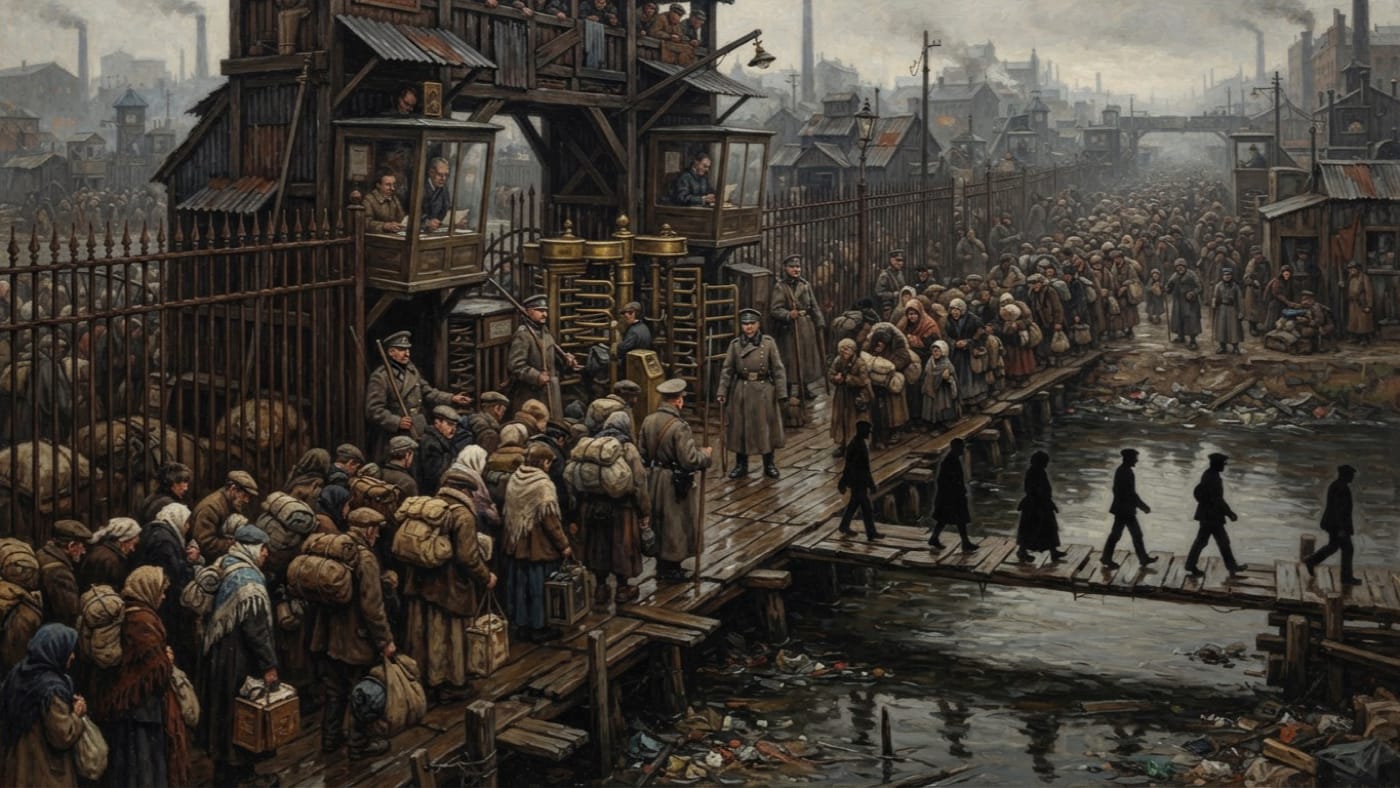
Gate Two Bridge Pinch
The shadow crosses first; the traveller pays to follow
At the Queue Road's Second Gate, the Drowning Step makes passage single file, waiting profitable, and shadows punctual before their owners.
Codex Ref. II.3.05-011
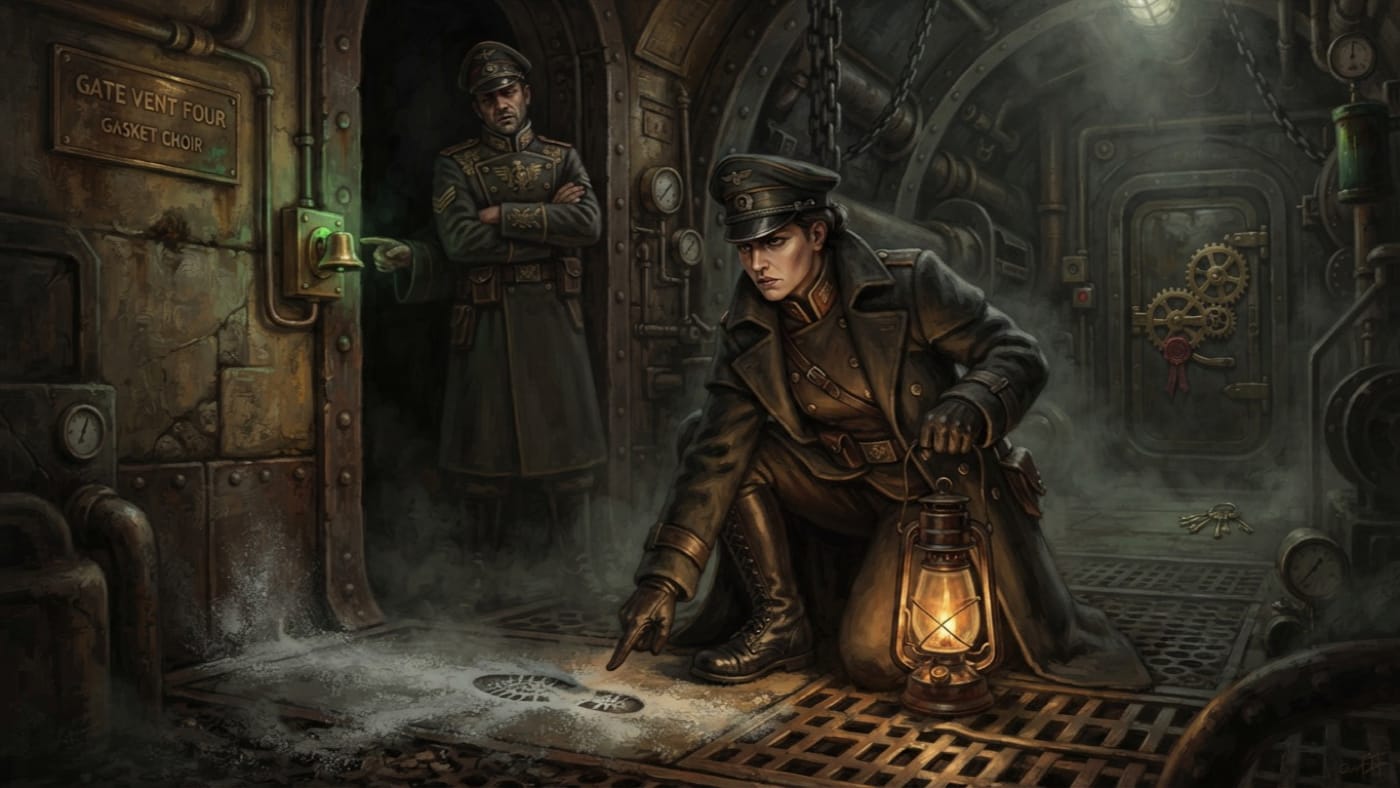
Gate Vent Four
One heel-print outweighed the bell
At Gate Vent Four in Bastion-Irongate, Sergeant Voss trusted a narrow heel-print over a negative bell-pulse in A.S. 196. A dead clerk soon made the lieutenant's objection expensive.
Codex Ref. II.4.07-196
Gauge Ward
Where brass confesses before men are permitted to lie
The Gauge Ward is Brast's inner-ring instrument throat, where pressure needles, licensed voices, and Ilyra Kest decide which lie becomes artillery.
Codex Ref. II.2.01-020
Gauge Ward Hall
Where licensed voices teach brass to testify
Gauge Ward Hall calibrates Brast's pressure gauges and artillery sights under licensed song and serial seal. The tools carry an unresolved rival chorus; Mire is expected, and the instruments are already answering.
Codex Ref. II.2.01-023
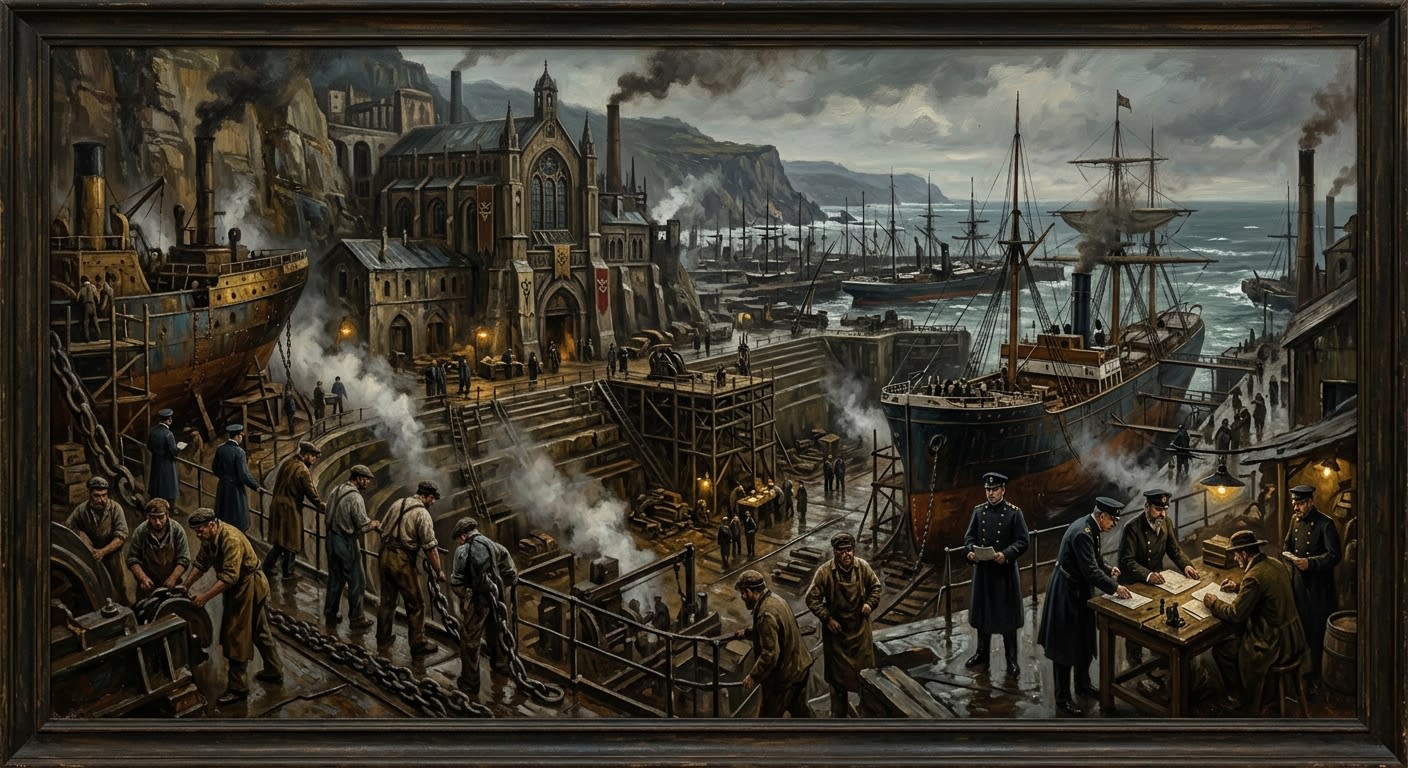
Genoa
The Synod owns the harbour by law; the harbour invoices it by clause
Genoa is the Synod's Ligurian contract-port: grudgingly compliant, rich in drydocks and debt, and indispensable in every way Doctrine resents.
Codex Ref. II.4.09-016
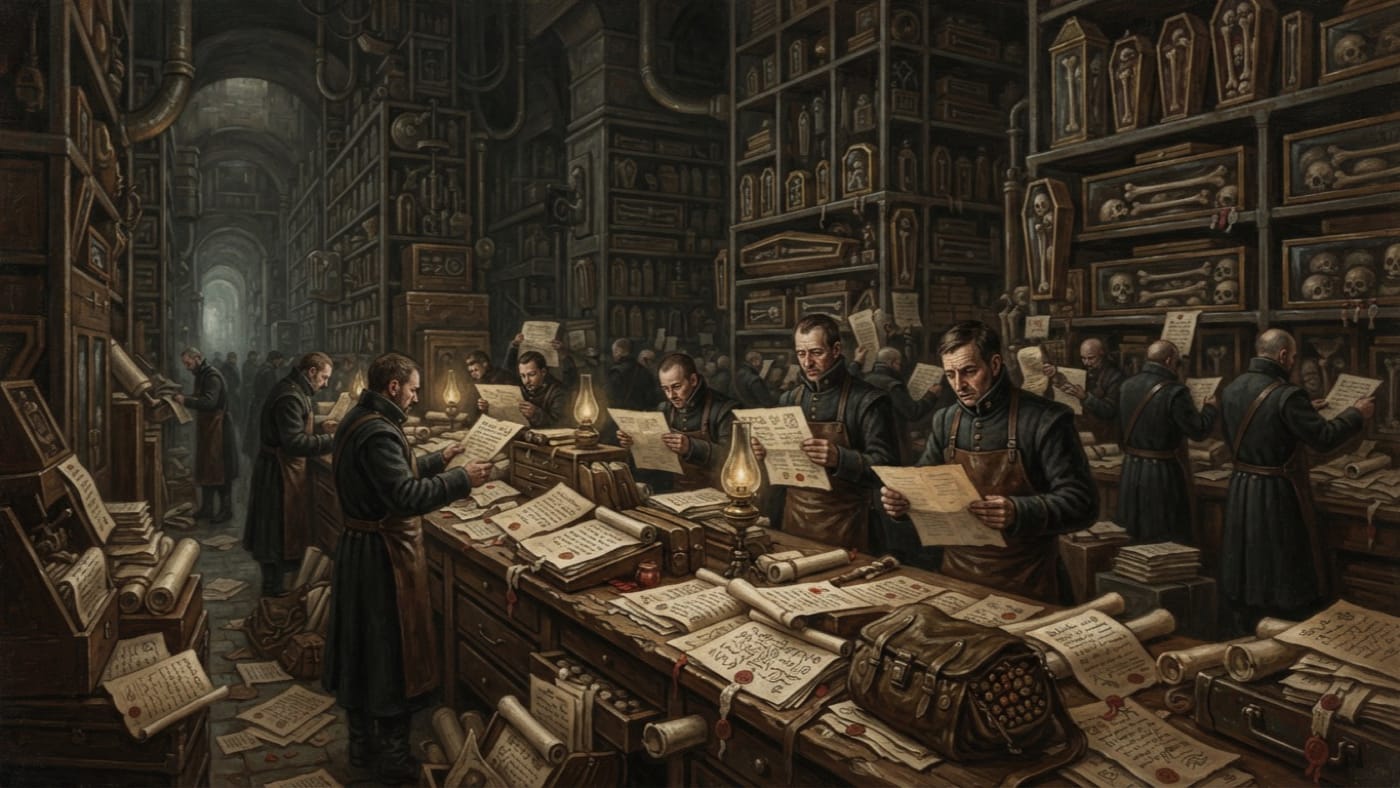
German states
Many jurisdictions. Separate seals. One inconvenient table.
The German states in 1678: many jurisdictions, separate seals, and no common answer to Amsterdam's bone census. The relics agreed locally. The ledgers did not.
Codex Ref. II.1.10-001
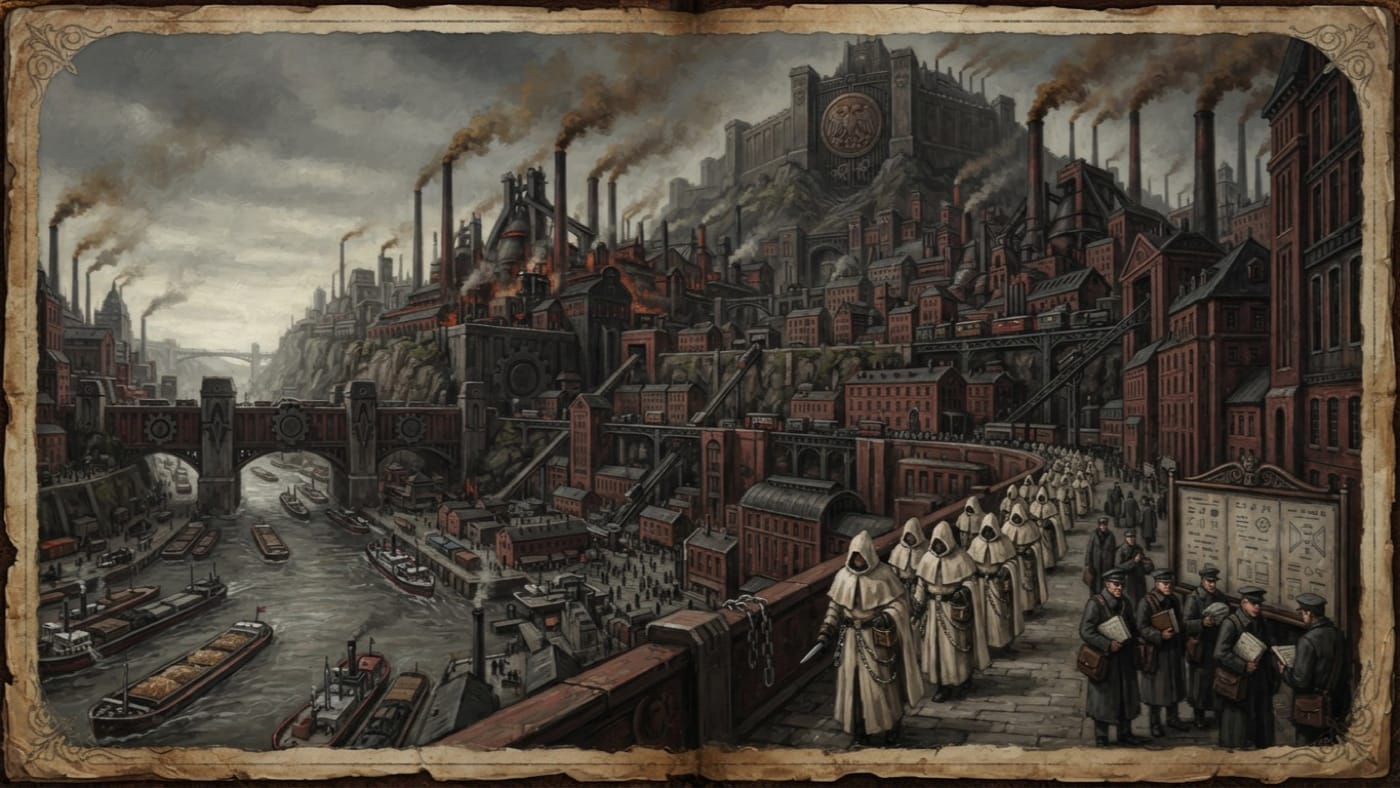
Germania
The Synod's most accurately spelled region
Germania is the Synod's procuratorial heartland: rivers taxed, furnaces singing, presses corrected, and schools teaching words their grandparents have forgotten to miss.
Codex Ref. II.6.02-201
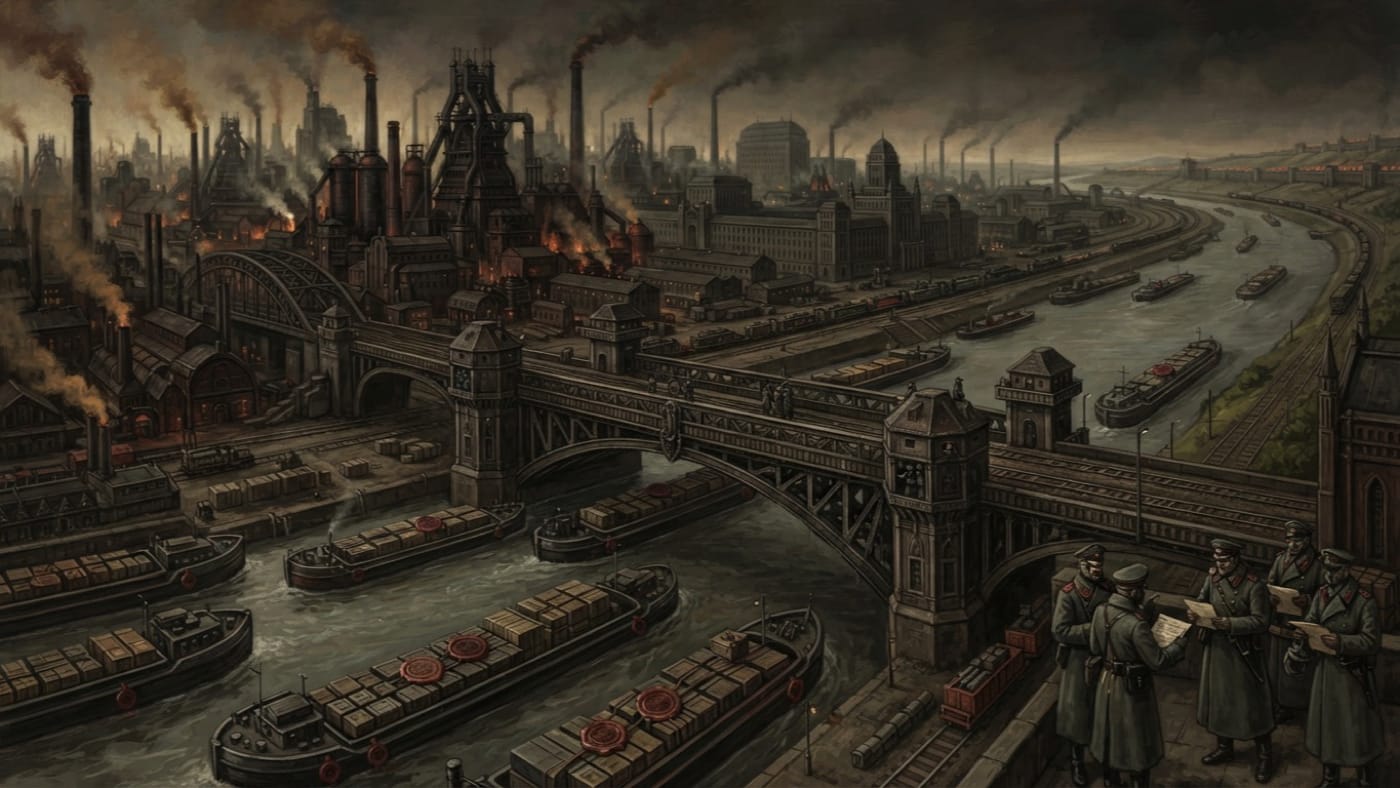
Germany
The heartland that supplies the frontier and answers to several seals
Germany in A.S. 201: the Zone Two heartland of taxed rivers, singing furnaces and military depots. The old borders were erased; the territory still supplies the frontier, and every cargo requires a seal.
Codex Ref. II.6.01-201
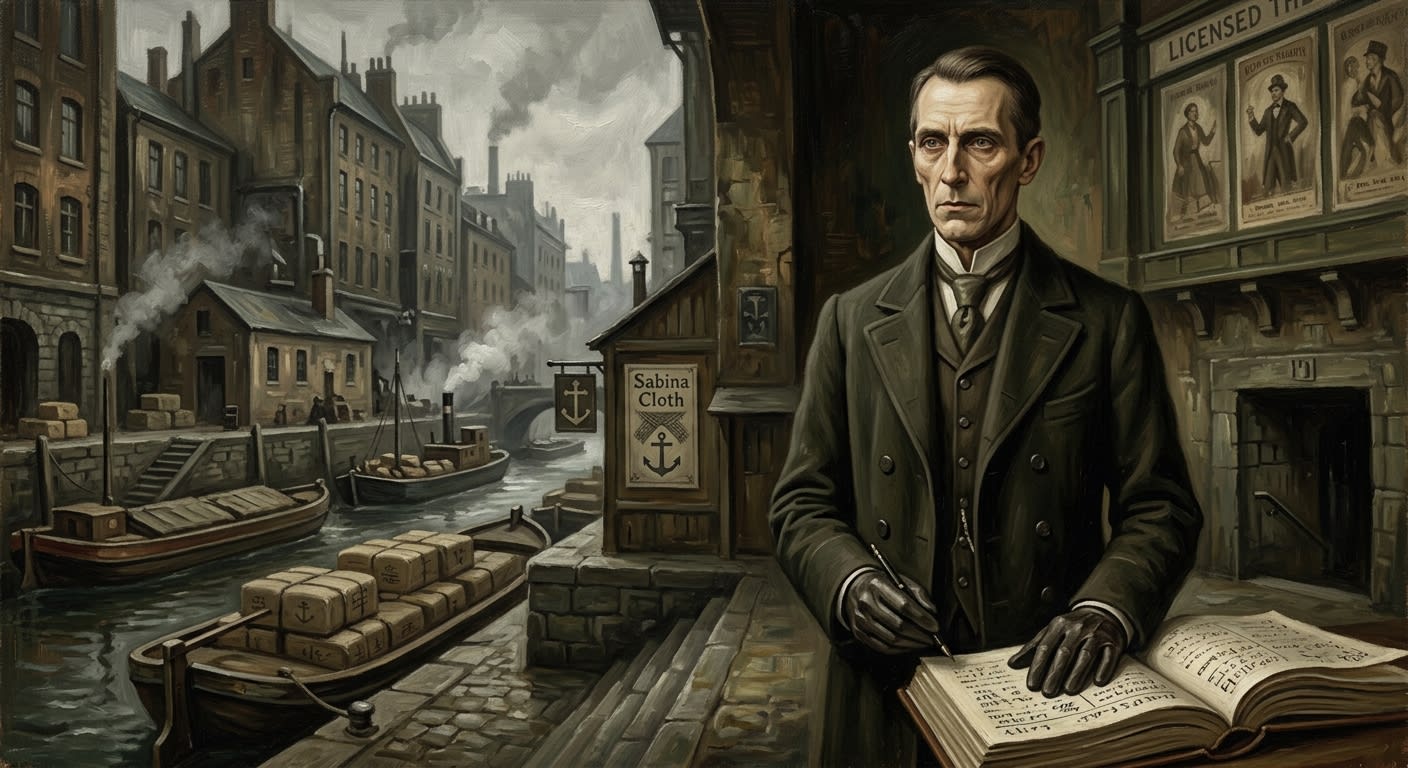
Ghent
The canal city where water keeps copies and loyalty learns to smuggle
Ghent is the Synod's wet ledger in Flanders: canal trade, Records quays, Sabina cloth, licensed theatres, Black Ledger cells, Wormhost scars, and obedience with annotations.
Codex Ref. II.1.05-201
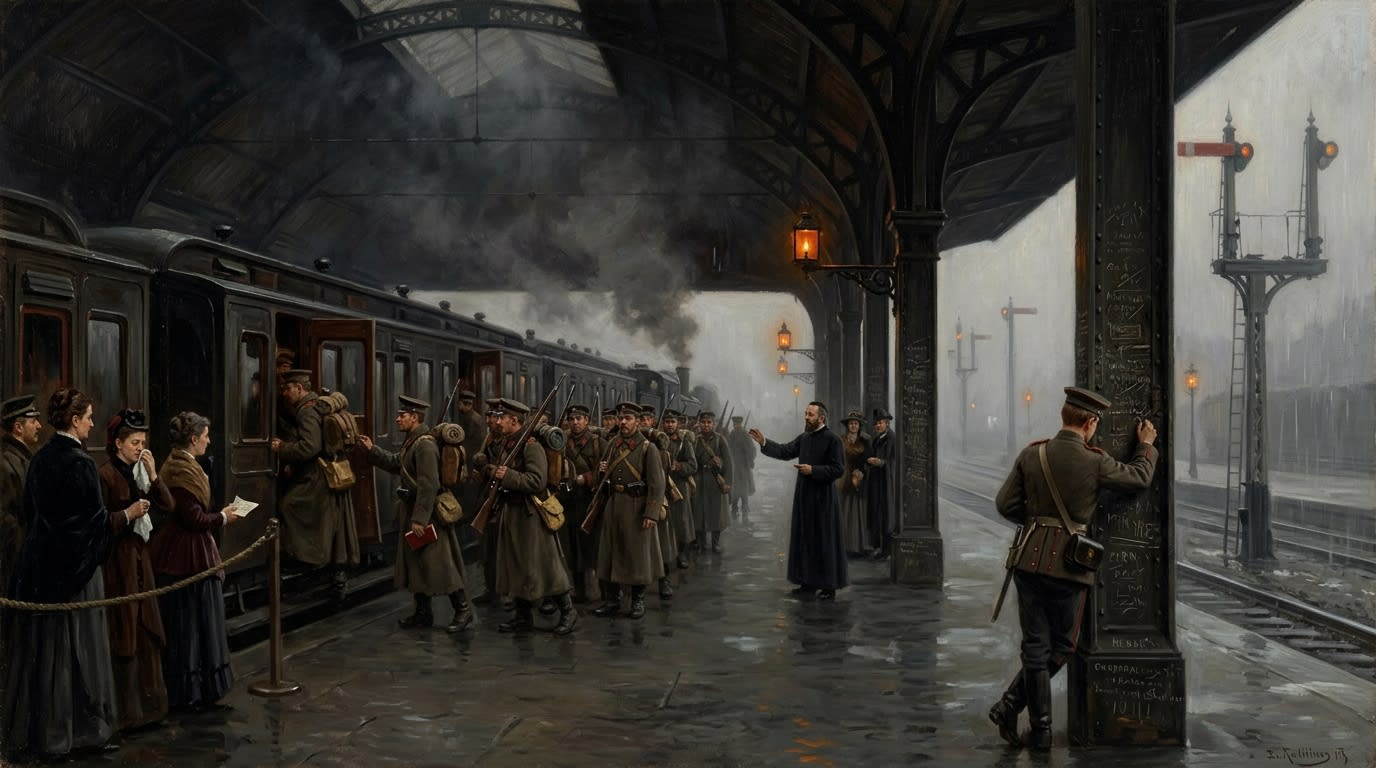
Gleis Achtzehn
The platform where Munich files its sons eastward
Gleis Achtzehn is Munich's eastern military departure spur, a soot-black platform where names return to iron faster than Records can erase them.
Codex Ref. II.2.06-016
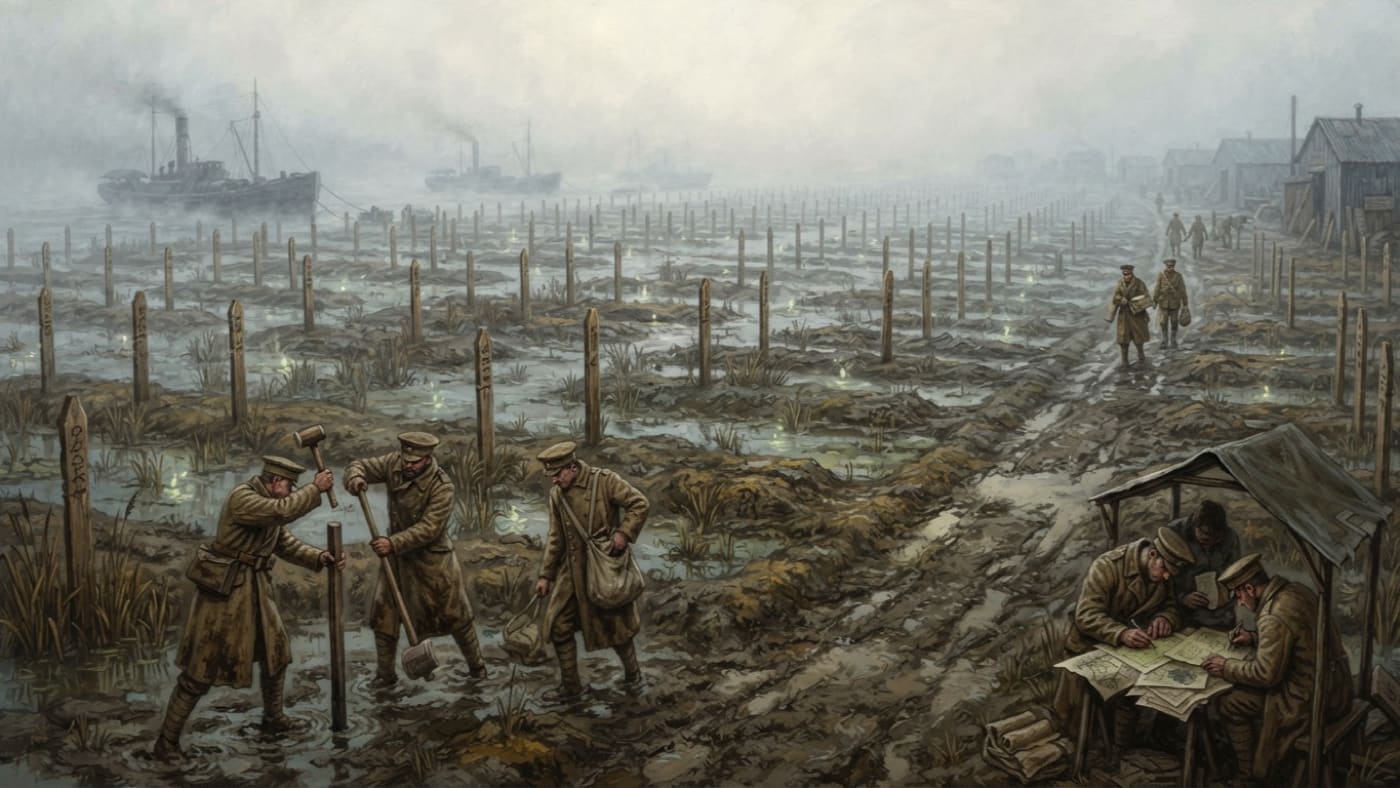
Glyphyard
The graves move. The ledger calls it drift.
The southern burial district of the Ash-Glyph Marshworks, where war-dead become filing coordinates. Stakes move overnight, maps are redrawn at dawn, and the Office proposes more ground that will not hold a line.
Codex Ref. II.4.08-005
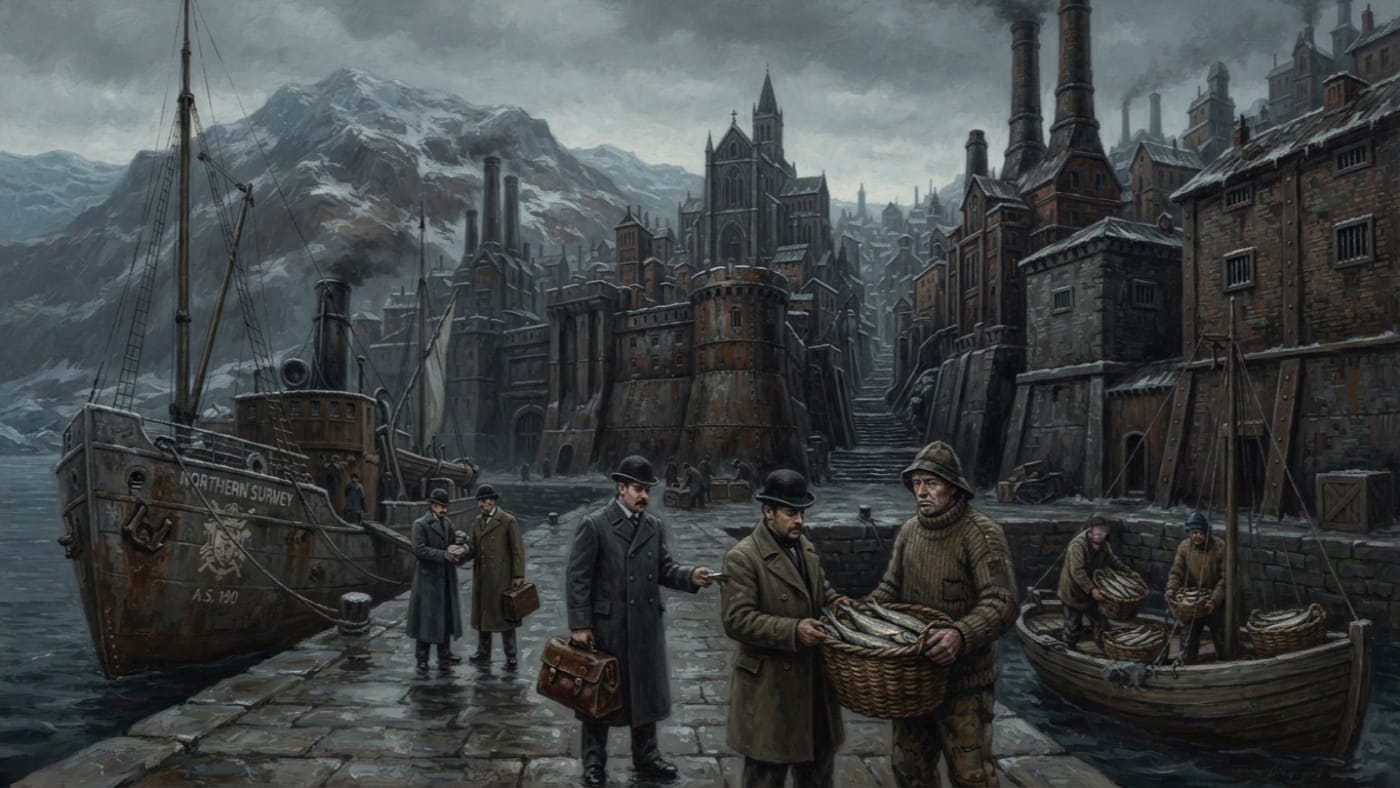
Gothenburg
Two villages, fourteen gifts, and a refutation withdrawn
Gothenburg: one city reached, two fishing villages surveyed, fourteen gifts of dried herring accepted. The Northern Survey of A.S. 190 reported no evidence of heresy; the Bureau mistook a visit for a refutation.
Codex Ref. II.8.01-190
Graben Crossing
The ditch that taught a convoy how to become a cult
Graben Crossing is a southern-corridor ditch made infamous in A.S. 138, when Josek of Düren carried a singing ossuary crate through deserters and into forbidden memory.
Codex Ref. II.3.05-138
Grading Hall of Settled Light
A town holds its breath while holiness decides how to lie down.
Mournwater's saint-dust grading hall holds a river-town silent while shallow dishes decide its commerce. The graders measure holiness against a falsified ledger; the White Steps supply the seal.
Codex Ref. II.2.03-005
Grain-Gray Ration Parliament of Wexel
A machine for producing obedience, fed on grain and fed upon by something else
A Hessian grain-town that accidentally invented the systematic regulation of joy. Fourteen silos, three instruments of compliance, one smell of flour and fear, and a surplus no official ledger will account for.
Codex Ref. II.2.04-001
Granaries of Saint Benedict
Mercy under lock, key, and later approval
The Granaries of Saint Benedict are Toledo's four watched vaults of civic reserve grain, opened in A.S. 185 by Governor-Praelate Alaricus before Strasbourg could make mercy late.
Codex Ref. II.1.05-185
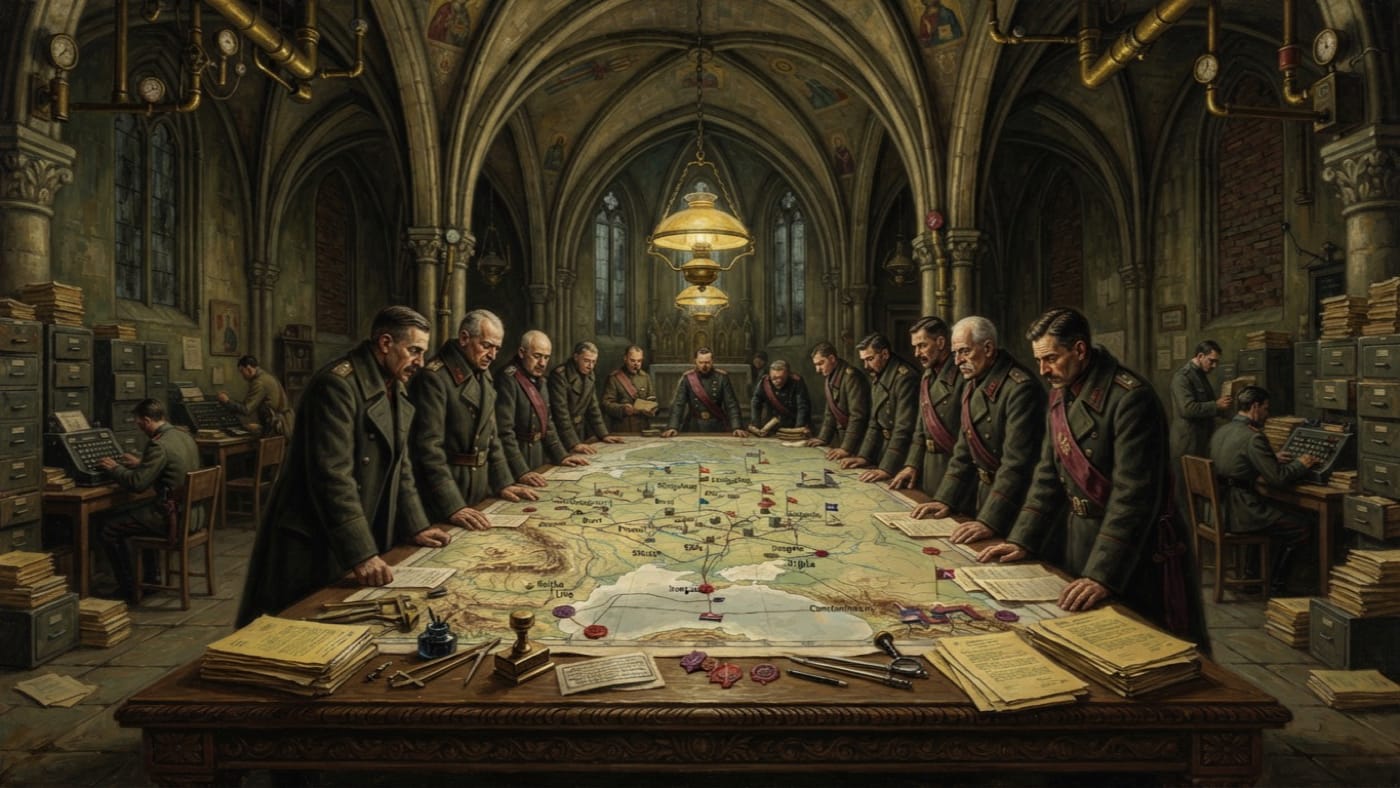
Grand Strategy Chamber
The Part of the War That Can Be Sealed
A chapel beneath Strasbourg's Arch of Campaigns where the Bureau of War moves armies on paper. Doctrine and Purity seal the plans; the frontier, regrettably, is not bound by their signatures.
Codex Ref. II.3.06-201
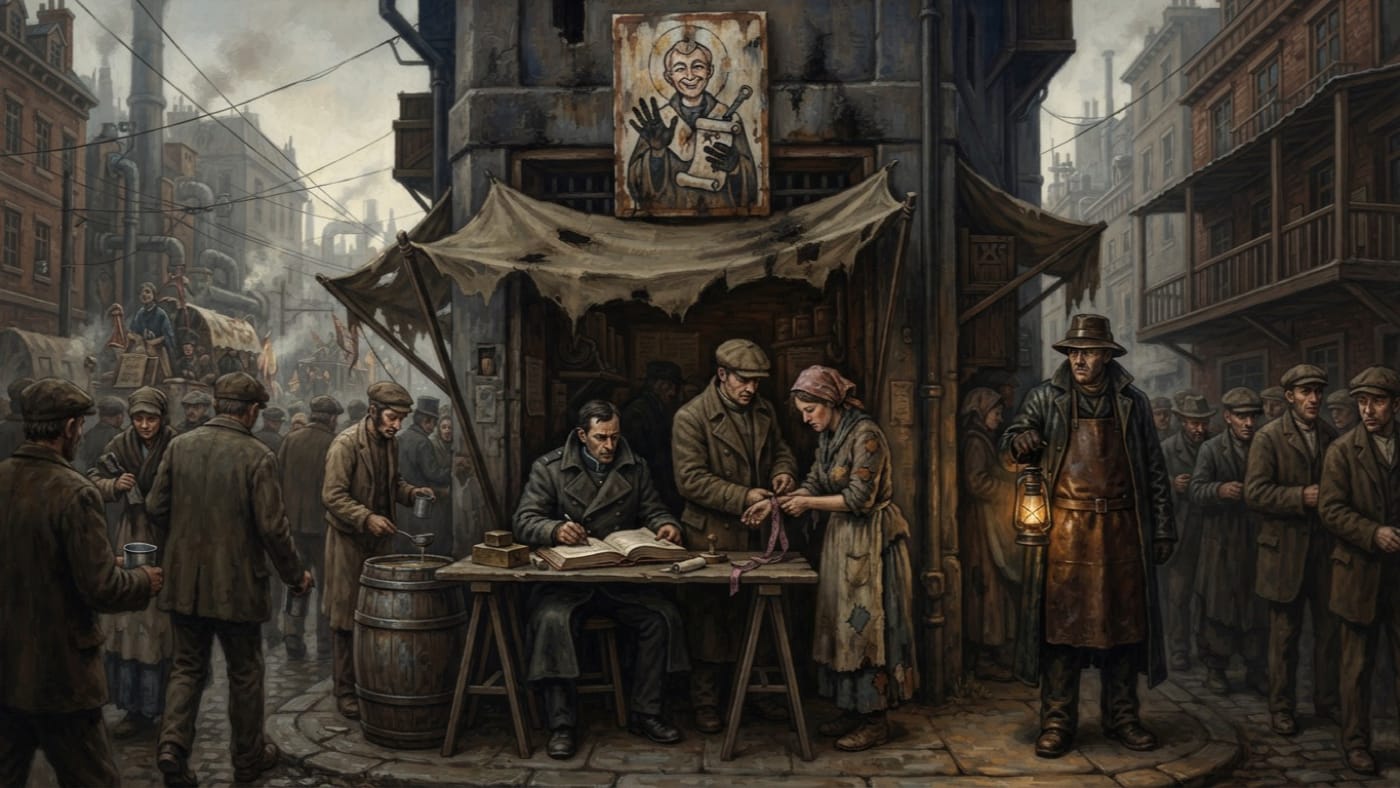
Gratitude Alcoves
The shade has merit; the ledger has a second column
Bureau of Festivals procession stations where cider, shade and Saint Caldrin's smile slow the crowd for wrist-ribbon checks and household counting. Attested by A.S. 139; surveyed in A.S. 201.
Codex Ref. II.3.05-139
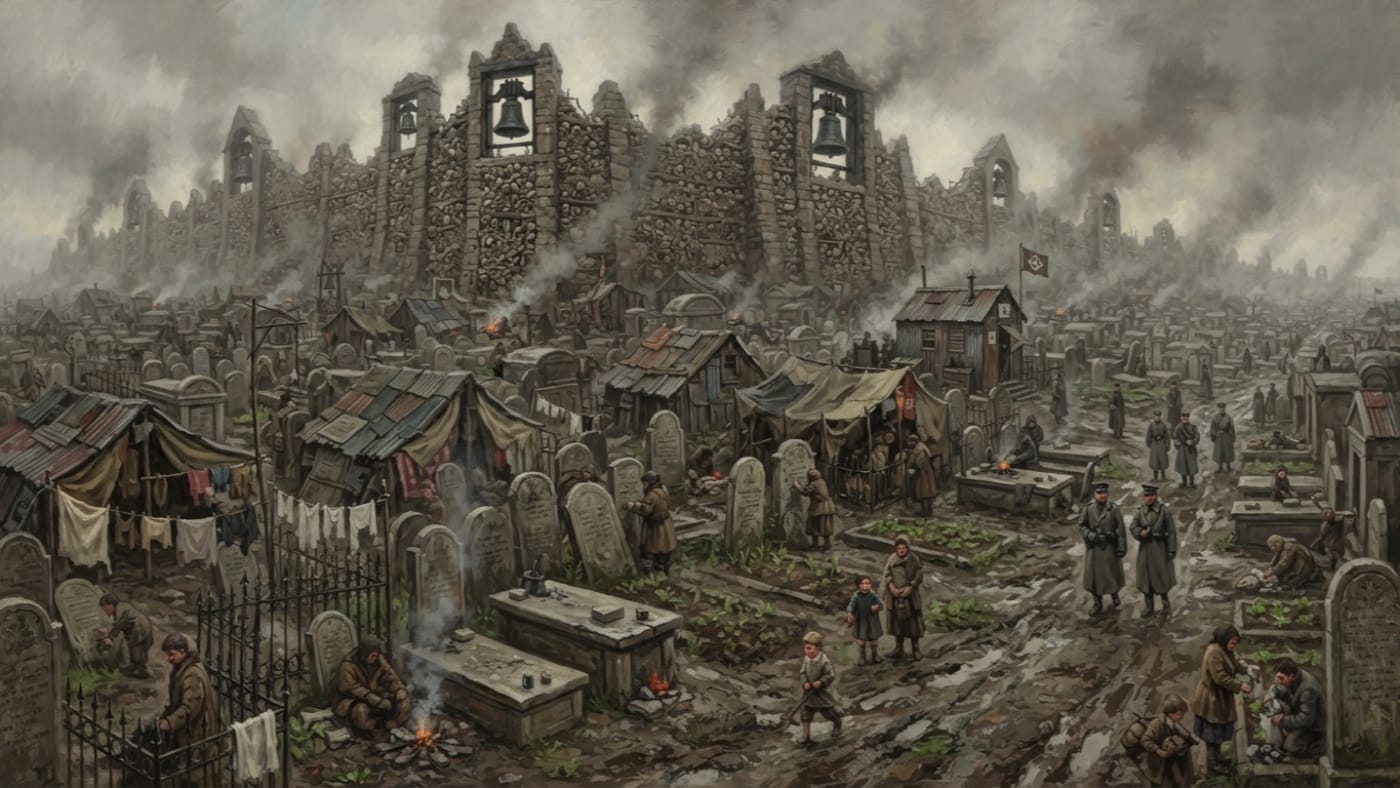
Grave-Fields
Occupancy temporary. Residents permanent.
Grave-fields house the living among the dead outside ossuary walls. Dry ground, bell coverage and renewable permits keep temporary residence permanent.
Codex Ref. III.2.04-1252
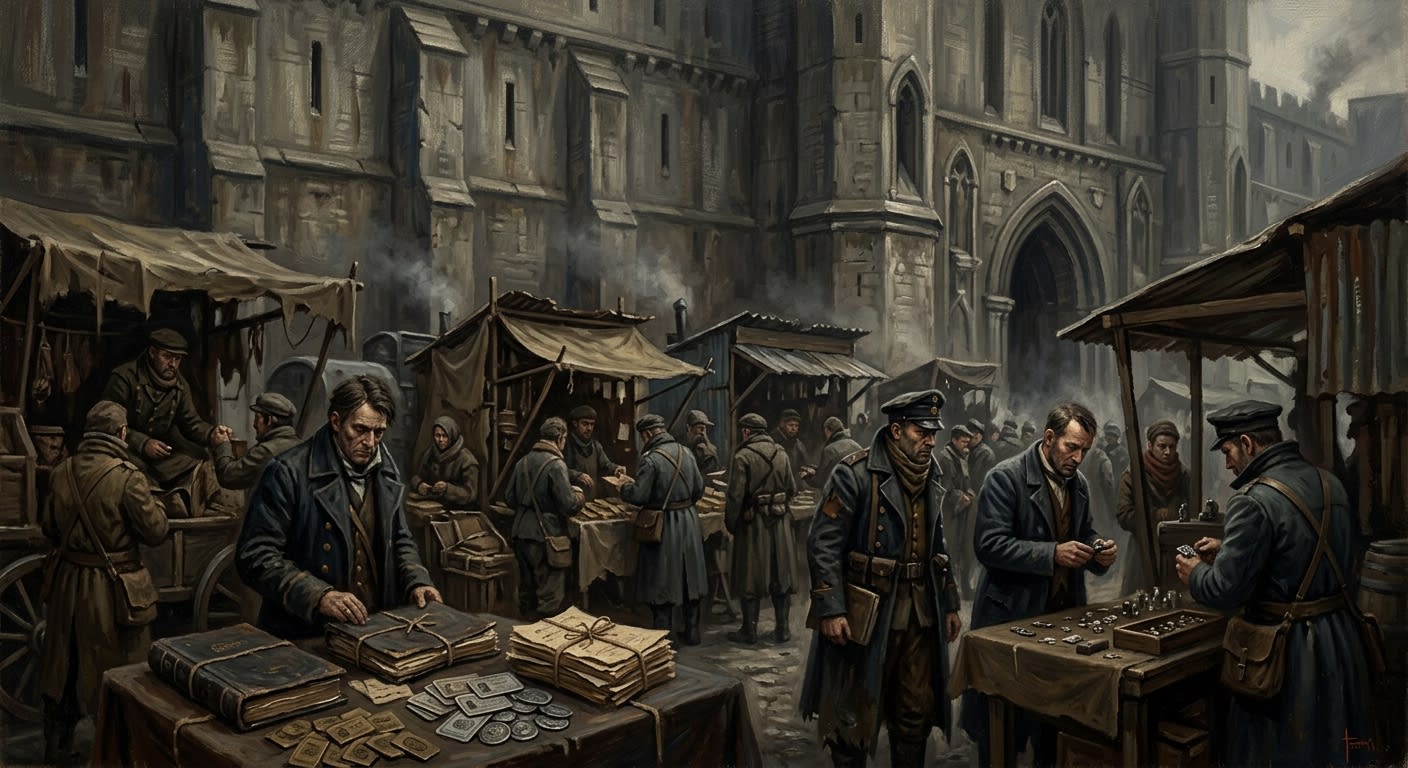
Grave-Name Market
Where the dead are priced by warmth and the Ledger learns to haggle
The Grave-Name Market squats outside the Cloister wall, selling dead identities, warm clearance traces, stolen bead indices, and the little blank spaces where authority fails to close its fist.
Codex Ref. II.3.06-006
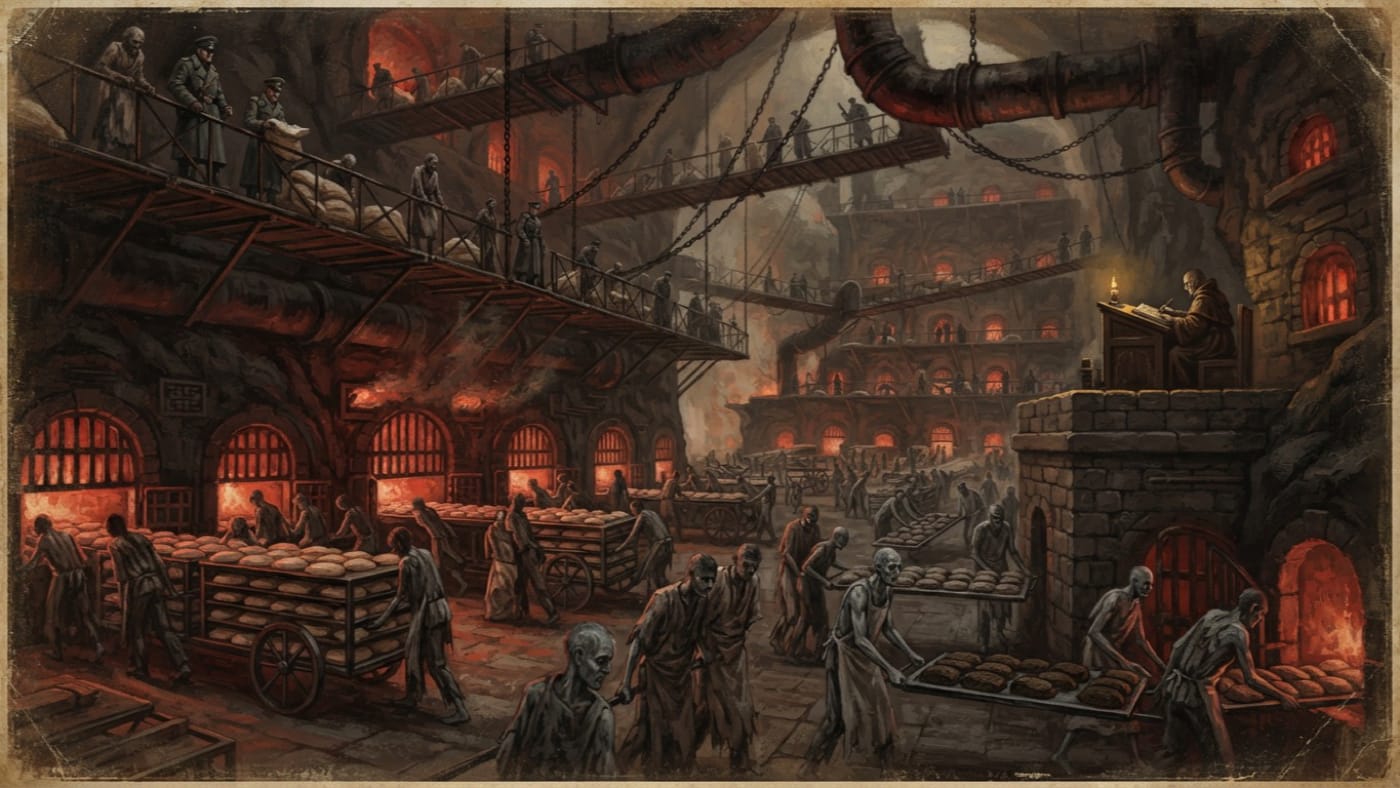
Great Ovens of Vesta
The bread keeps. The workers owe. The heat rises.
San Vesta's volcanic ovens bake ash-bread that never spoils, feed the Iberian front, and turn recovery debts into labour. The flour convoy is late; the rising heat is filed as efficiency.
Codex Ref. VII.1.03-003
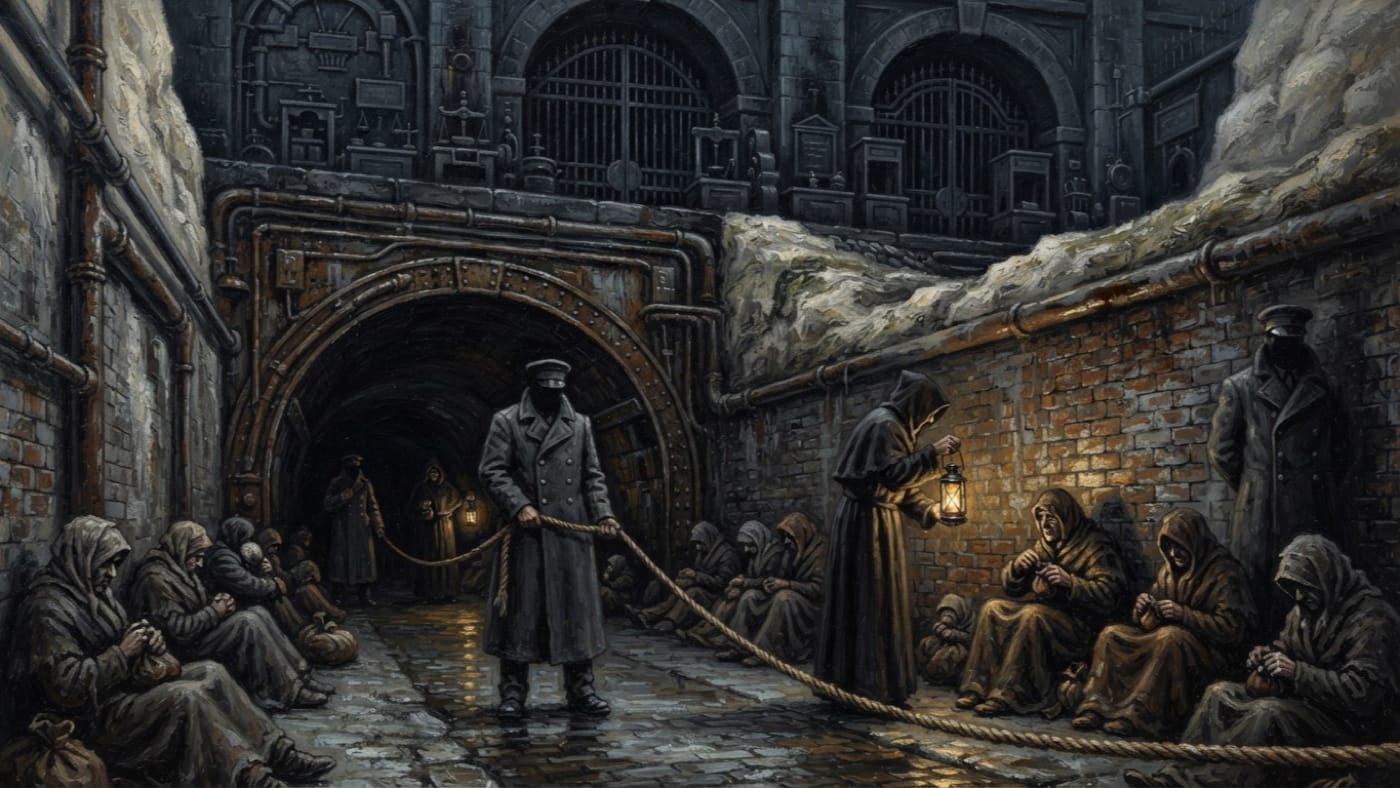
Grief Lane
The seals must be protected; the mourners may wait
Griefgate's drainage culvert holds visibly mourning pilgrims apart from the arches to protect seals, coin and declarations. Comfort falls outside the survey; collection continues after dusk.
Codex Ref. II.1.04-002
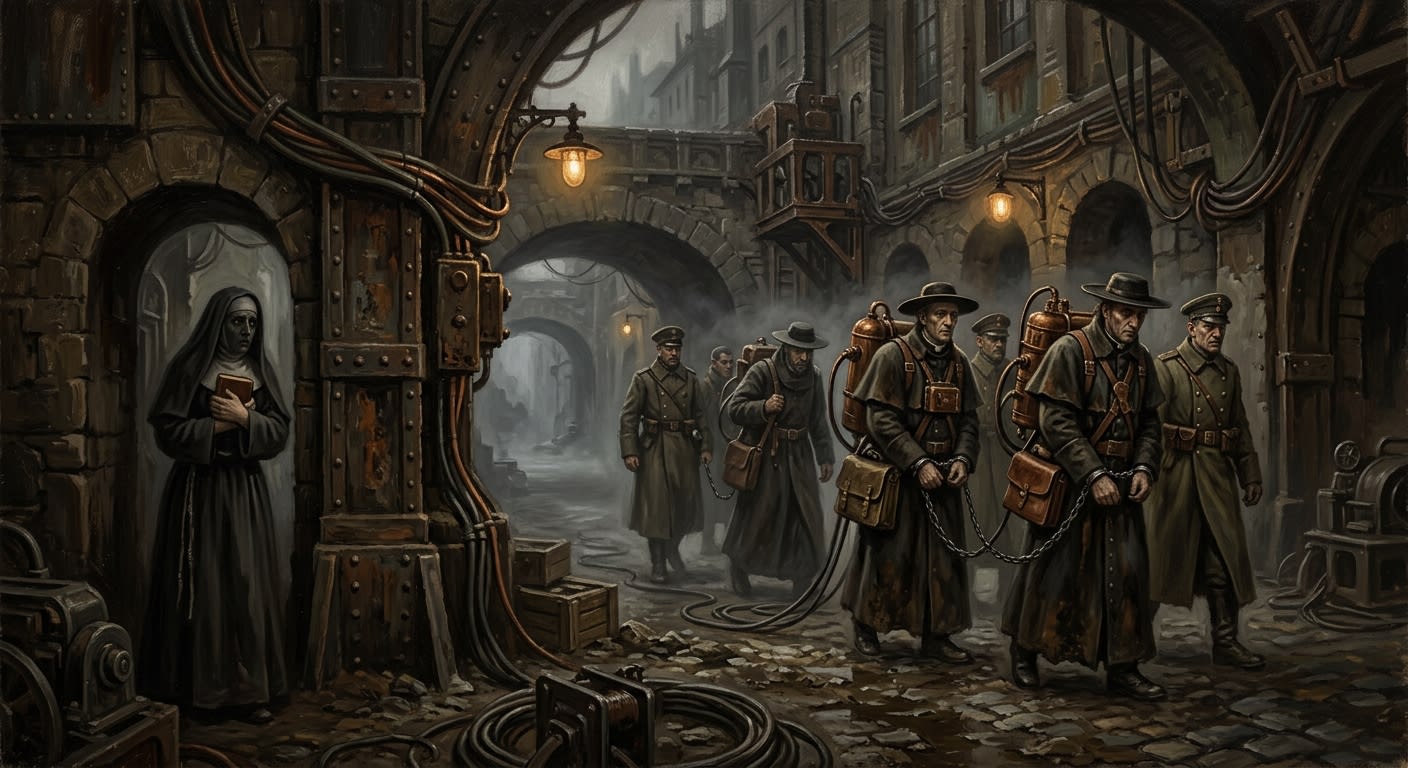
Grodzka Gate
The stone throat where Kraków learned to see
Grodzka Gate is Kraków's witness-throat: the passage below Wawel Hill where Sister Agata saw the wired priests marched toward the Vistula.
Codex Ref. II.3.05-018
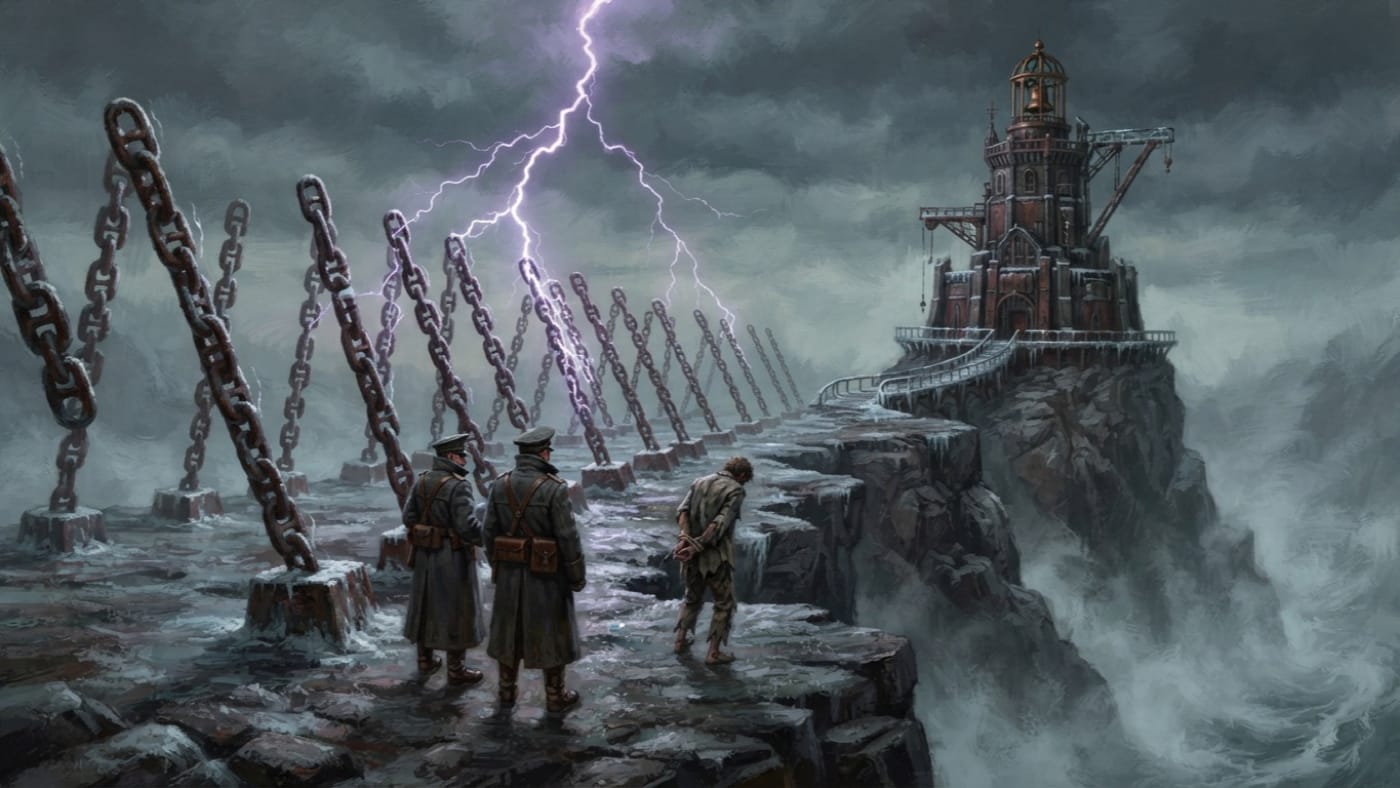
Grounding Field
Iron for the storm, folklore for the interrogator
Forty-seven iron chains guard Third Light against lightning. The Provosts hear oaths beside them; Doctrine calls their judgment folklore and conducts its interrogations there all the same.
Codex Ref. II.4.08-047
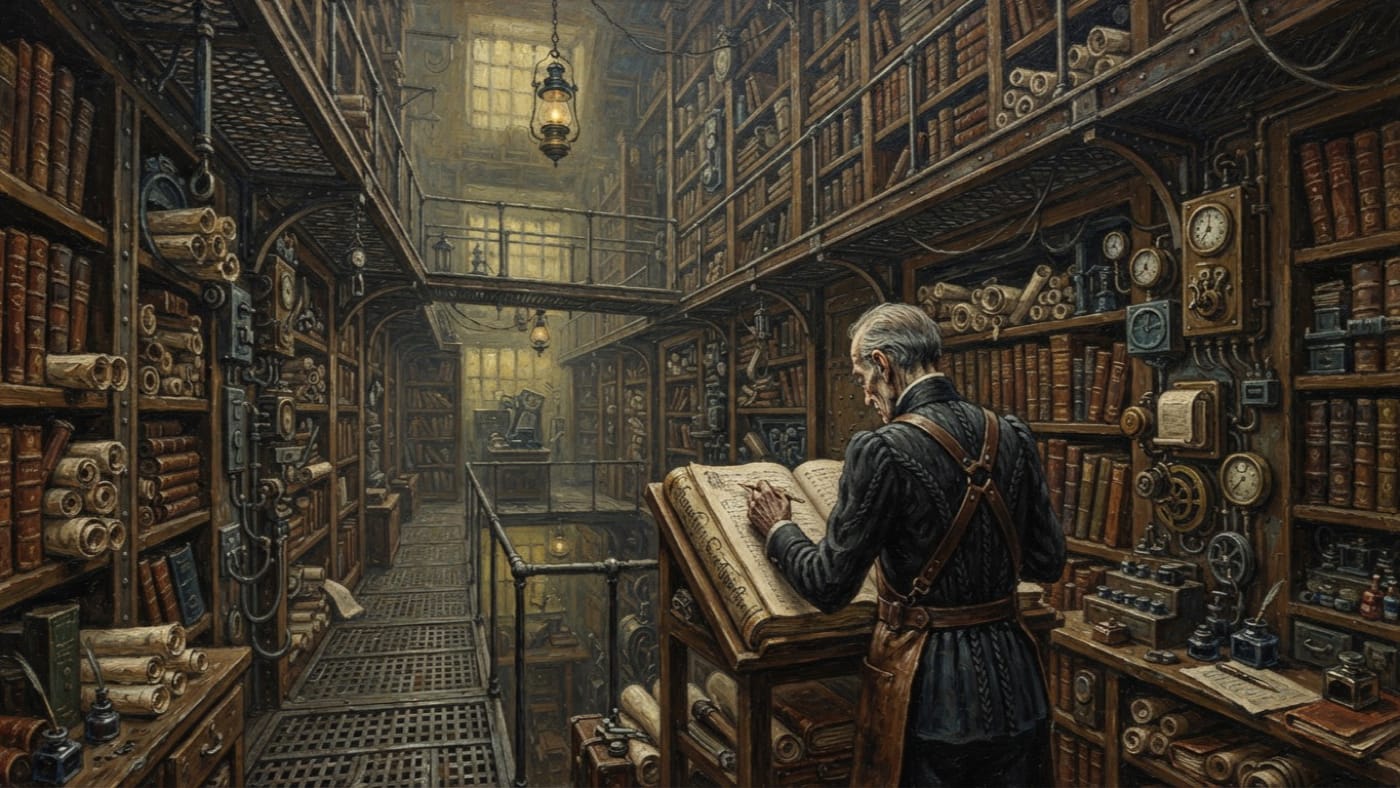
Guallin House
Seven minutes of laughter; no further particulars on file
Guallin House is the Seville premises entered in the A.S. 153 List of Laughters as seven minutes. Its keeper, purpose and fate escaped the extract; the duration did not.
Codex Ref. II.1.04-154
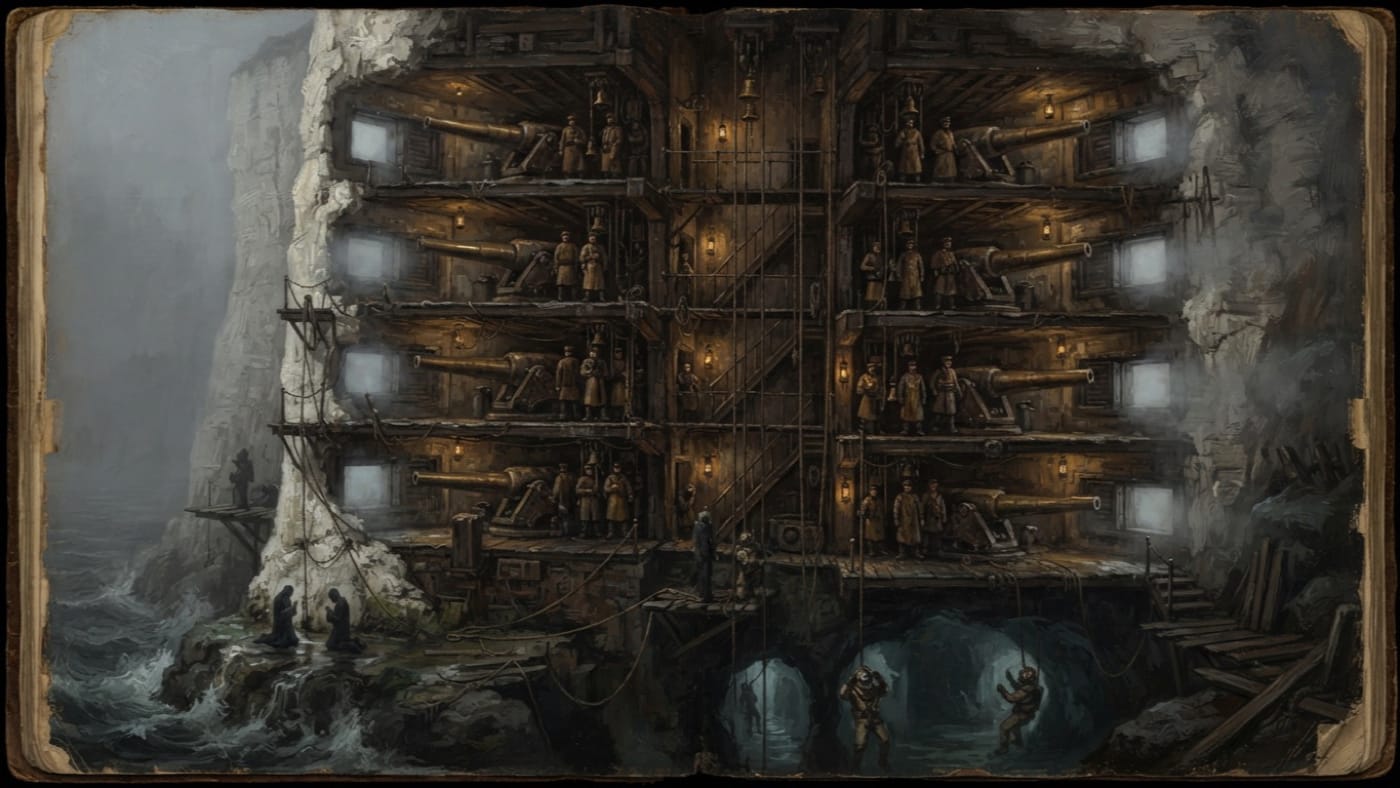
Gun Galleries of Calais
Nine guns wait for permission; the sea has learned to listen
Nine casemates in Calais's chalk cliff defend the Channel by bell permission, shelter readers and Divers, and await a fire-chart the sea appears to have studied.
Codex Ref. II.4.09-069
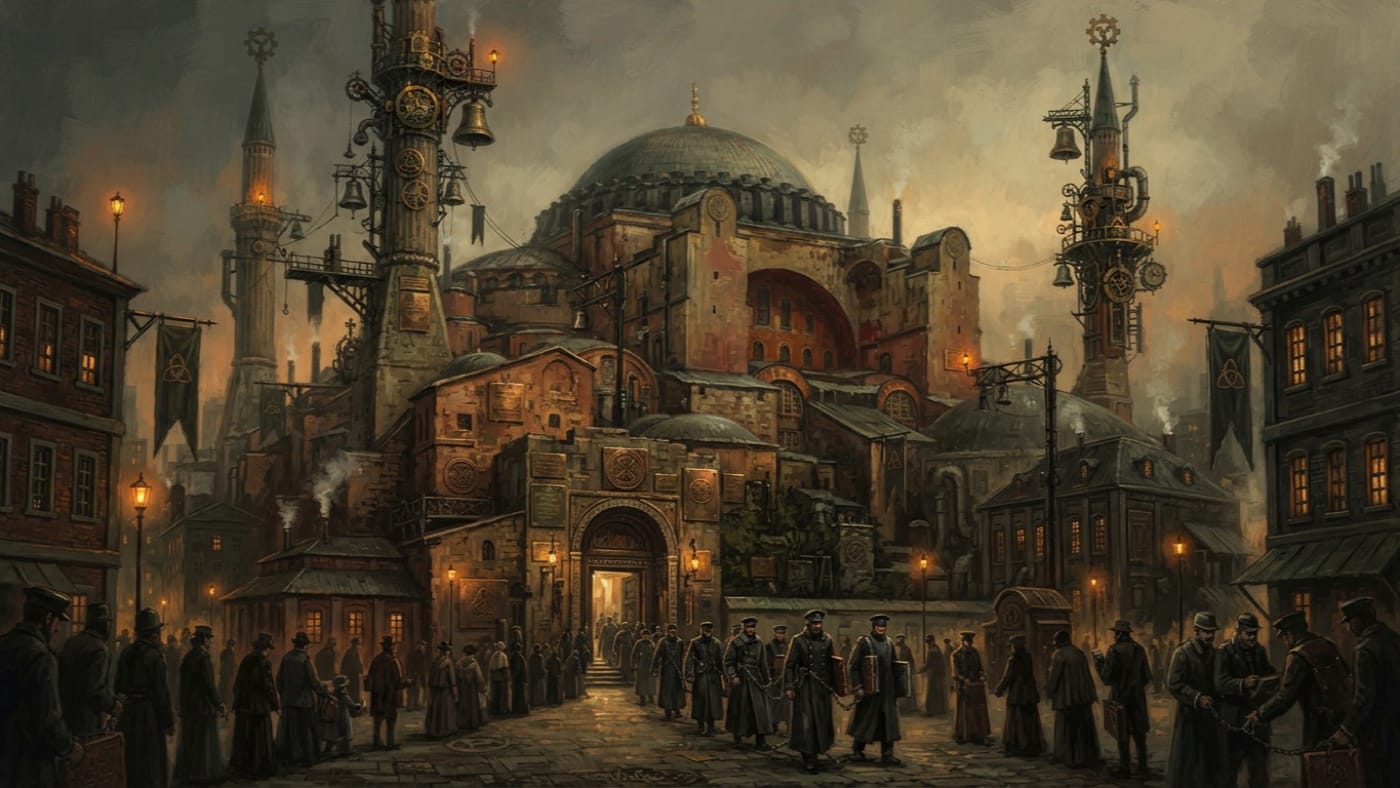
Hagia Sophia
The Dome Has Not Countersigned
Constantinople's old Hagia Sophia, seized in A.S. 68 and titled the Cathedral of the Perpetual Registry in A.S. 72. Beneath its ancient dome, the southern front is made official one ratified record at a time.
Codex Ref. II.4.10-1298
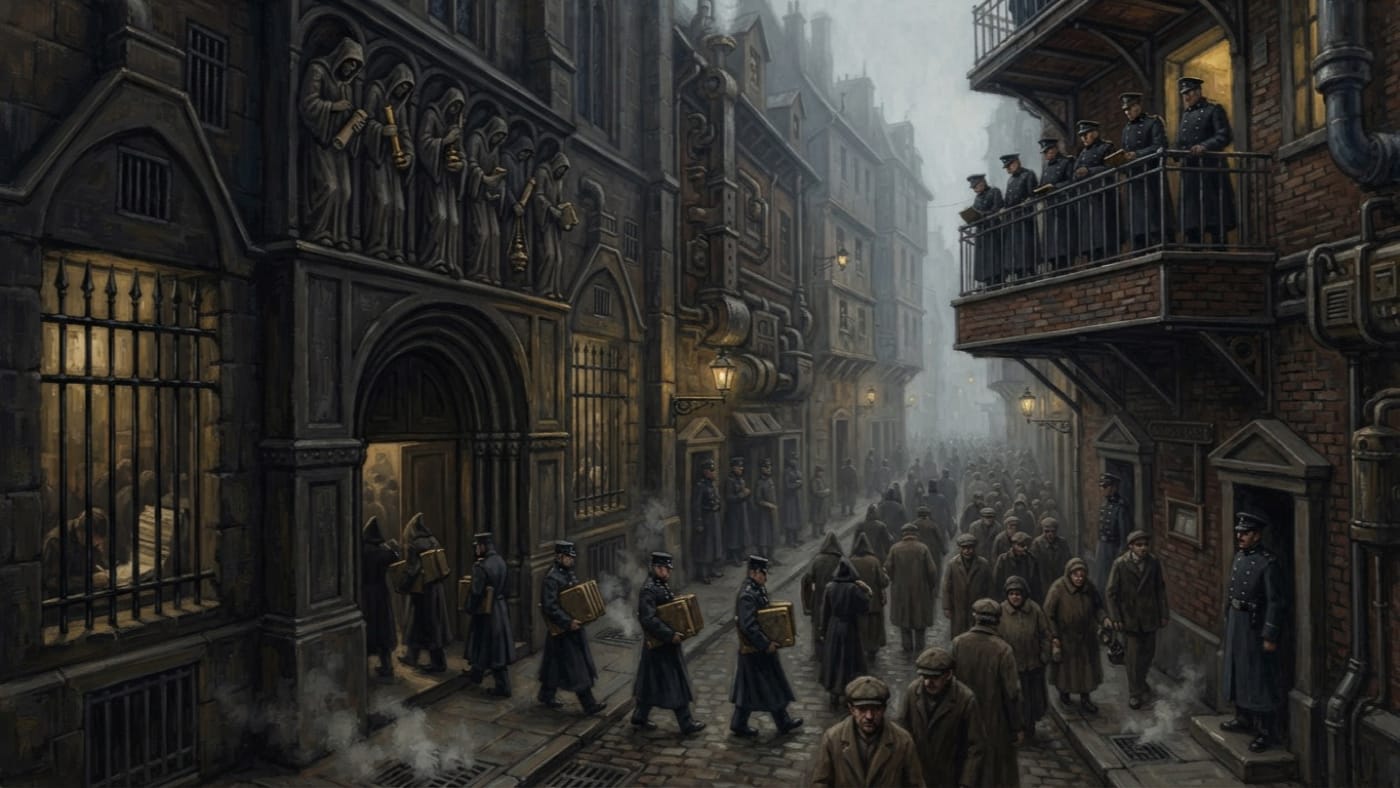
Hall of Confessions
Where the Synod speaks and the grille remembers
At the central bend of Strasbourg's Sanctum Mile, the Synod speaks beneath carved saints while clerks behind grilles record its words. The crowd outside hears bells.
Codex Ref. II.2.02-003
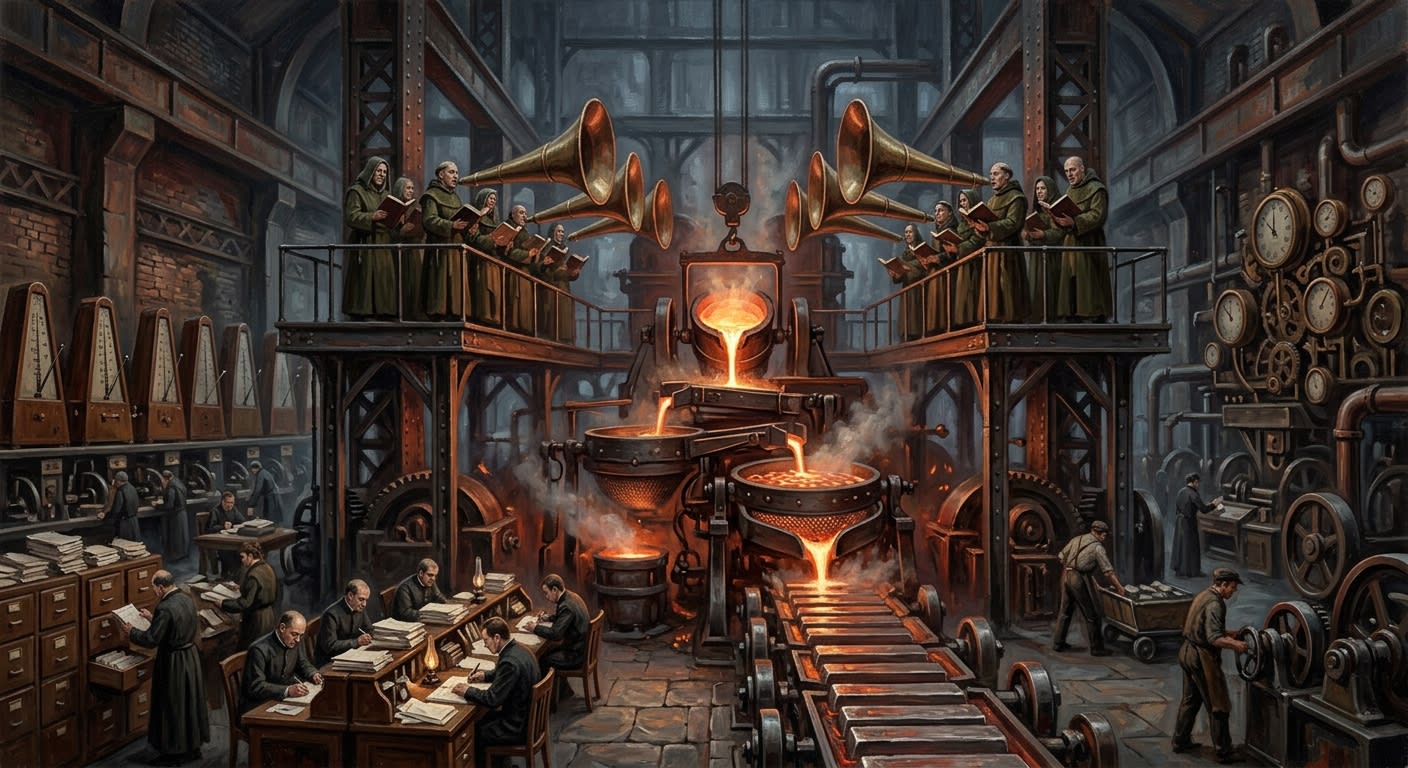
Hall of Measures
Where steel receives a throat and blame receives a cage
The Hall of Measures is Essen's calibration chamber, where paired choirs sing molten steel into lawful grain and every failure becomes paperwork.
Codex Ref. II.2.06-110
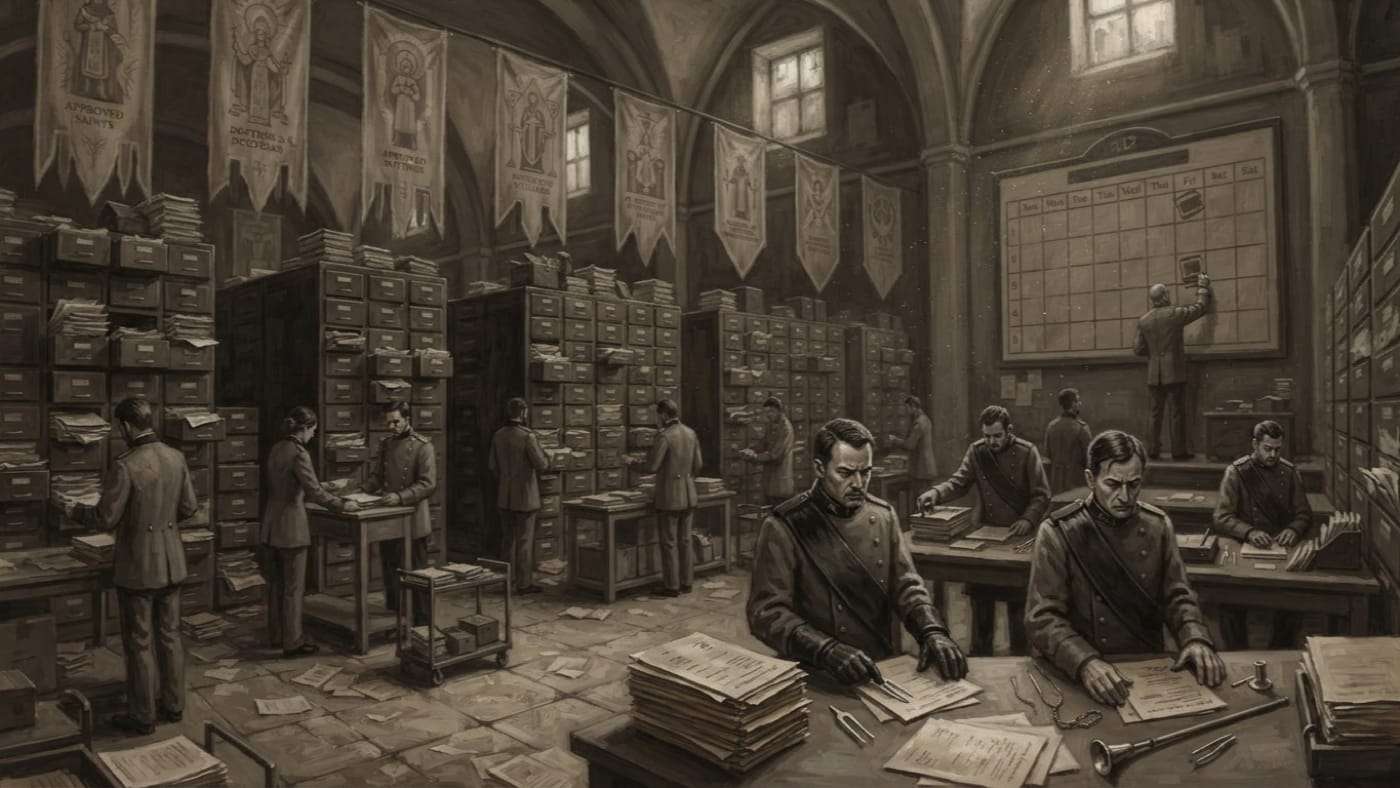
Hall of Prescribed Joy
Where every celebration begins by waiting
Eleven hundred square metres of approved ornament, permit tables and filing cabinets in Strasbourg. The Bureau of Festivals licenses joy here; its backlog has not cleared since A.S. 155.
Codex Ref. II.3.05-201
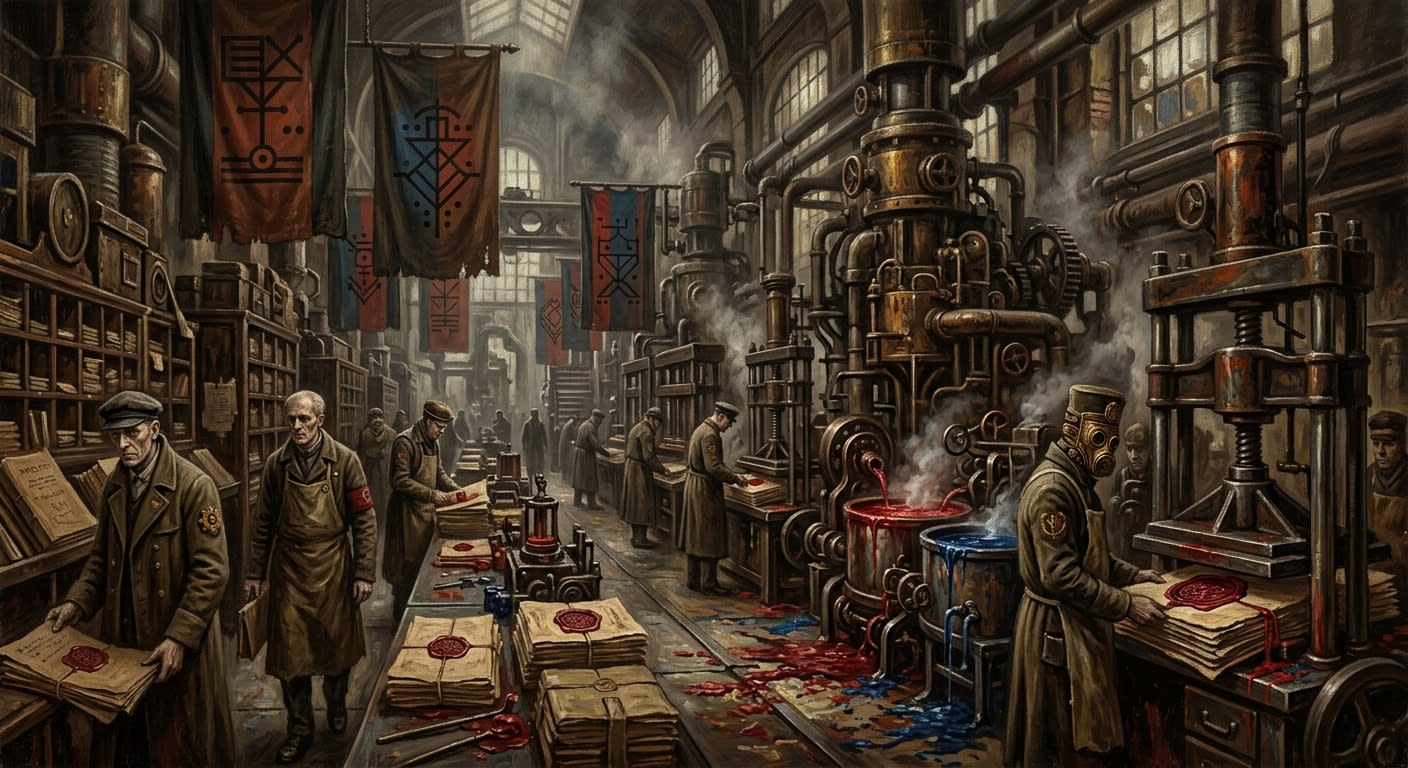
Hall of Seals
Where wax learns to rule and colour awaits sentence
The Hall of Seals is Strasbourg's low clean engine of visual law, where Heraldry and Masks and Seals ration colour, custody dies, and make wax sovereign.
Codex Ref. II.1.04-002
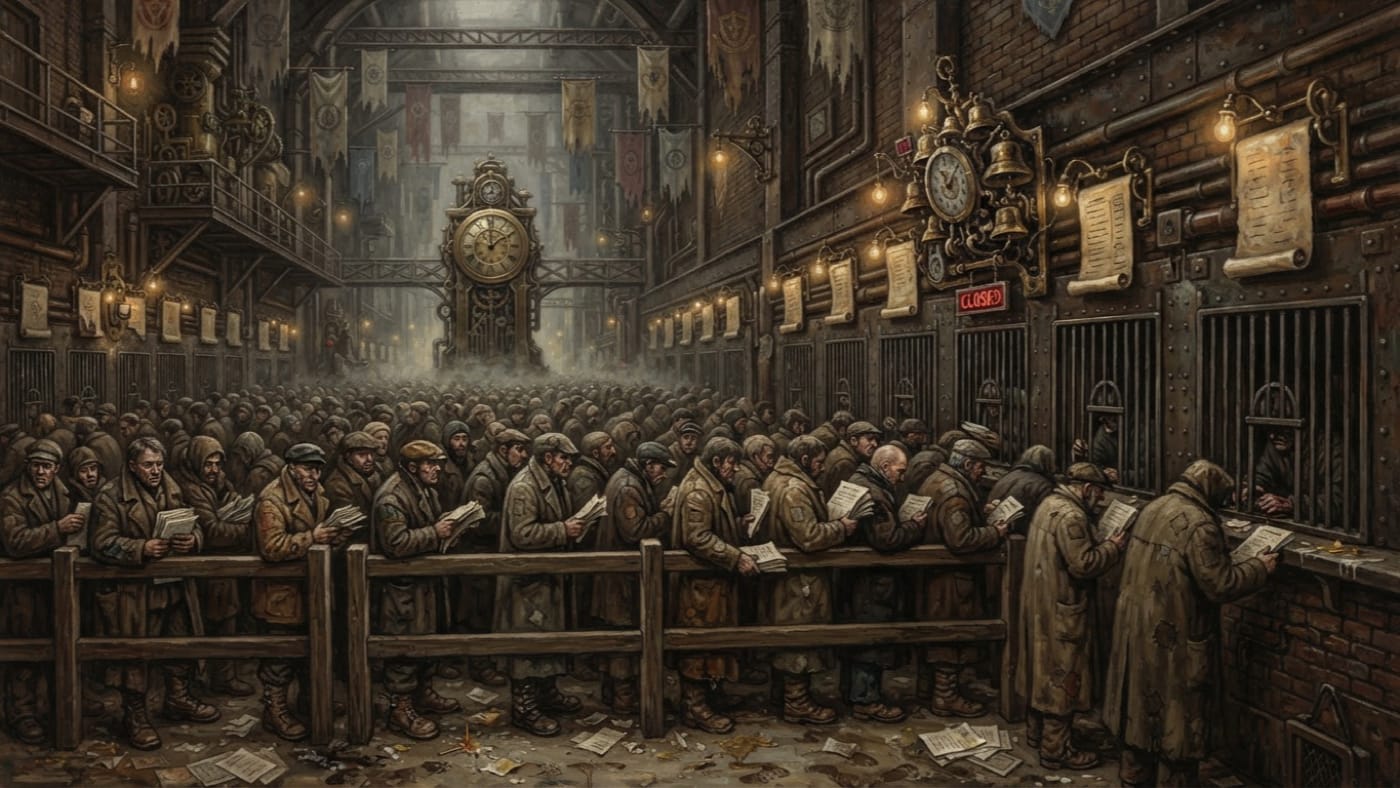
Hall of Seals (Latchford)
Thirty-two bays. The bell closes the window; the clerk keeps his seat.
Latchford's Hall of Seals stamps personhood through thirty-two bays and bell-governed windows. Its blank master-permits vanished in late A.S. 199. The Hall remains operational; the discrepancy remains open.
Codex Ref. II.4.08-002
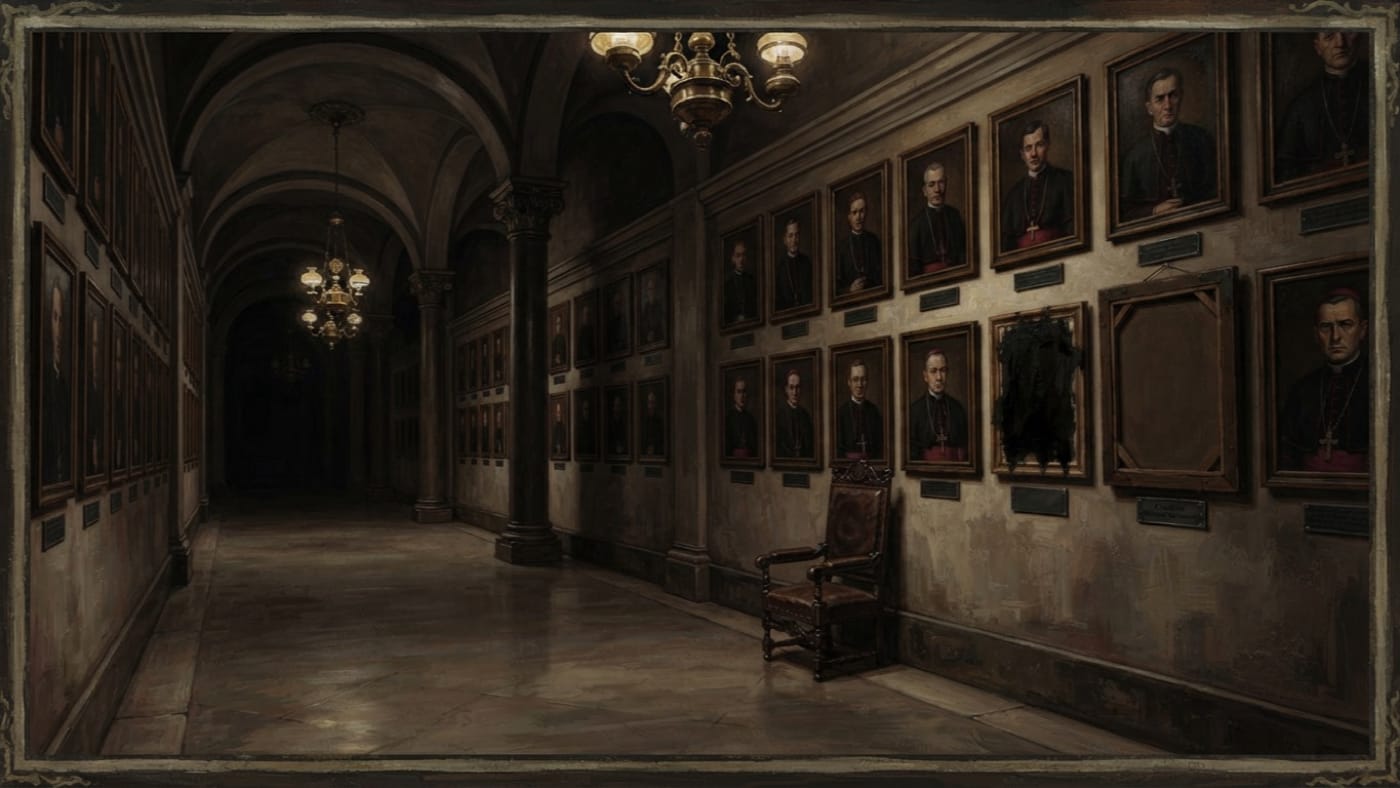
Hall of Succession
The succession is continuous; the faces are revocable
The Synod's portrait corridor in Strasbourg keeps seven successions unbroken in paint. One canvas is black, one portrait faces the wall, and one empty chair continues its duties. The faces are revocable.
Codex Ref. II.1.04-005
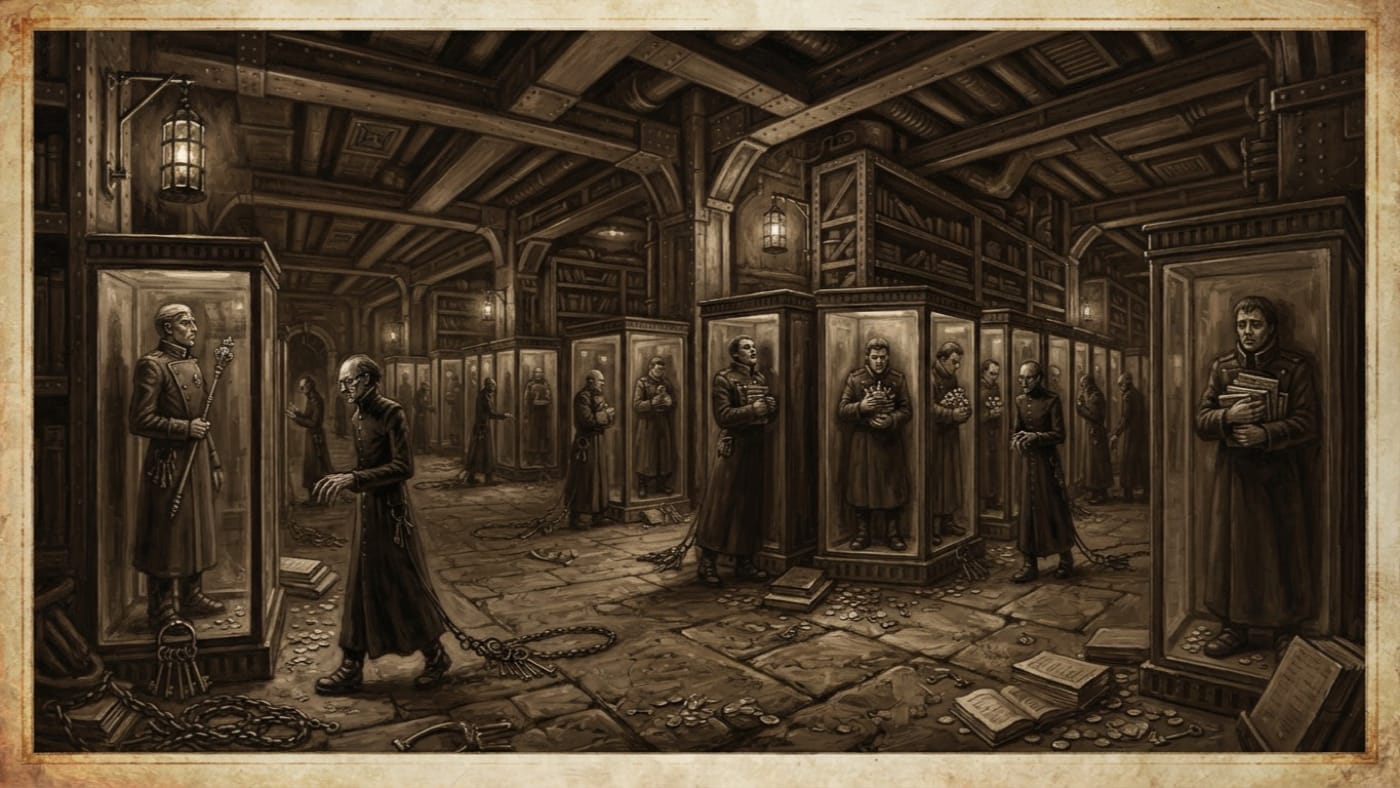
Hall of Surplus
The first room is still a prison
The Vault's outermost hall offers crowns, coin and comfort under Keymaster custody. Some visitors find enough; the Treasure-Locked keep their prizes behind glass.
Codex Ref. V.6.02-002
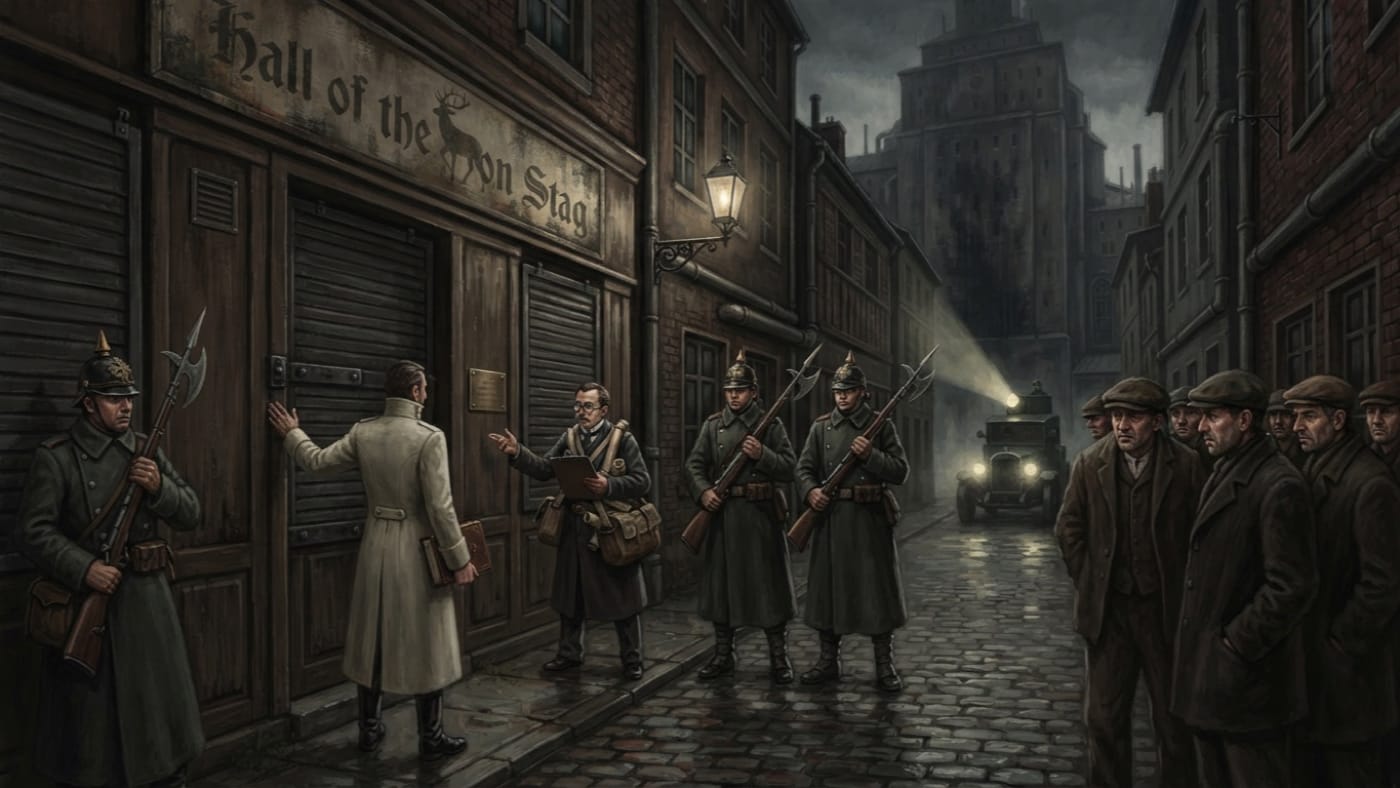
Hall of the Iron Stag
Two hundred and twelve patrons, one inconvenient question
Kanzleiburg's Old City beer-hall held 212 drinking citizens when Purity came in A.S. 140. Its proprietor asked for a fire-safety certificate; its shutters later made obedience an inconvenience the Archon could not ignore.
Codex Ref. II.4.09-140
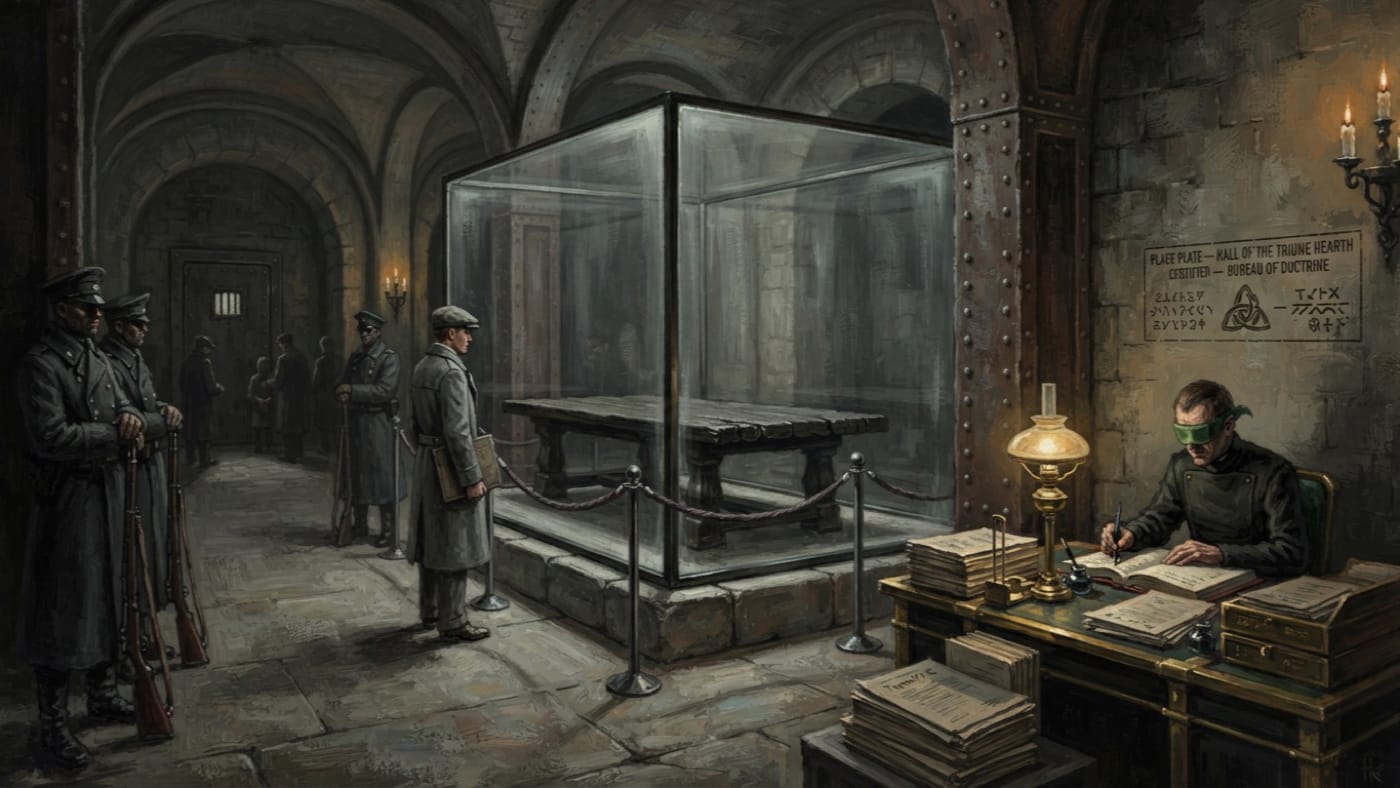
Hall of the Triune Hearth
Proximity licensed. Touch refused.
Strasbourg keeps the Concordat's black oak table under glass. Citizens inherit the Hearth, then file Form 77-C forty days ahead to stand near its furniture.
Codex Ref. II.1.04-006
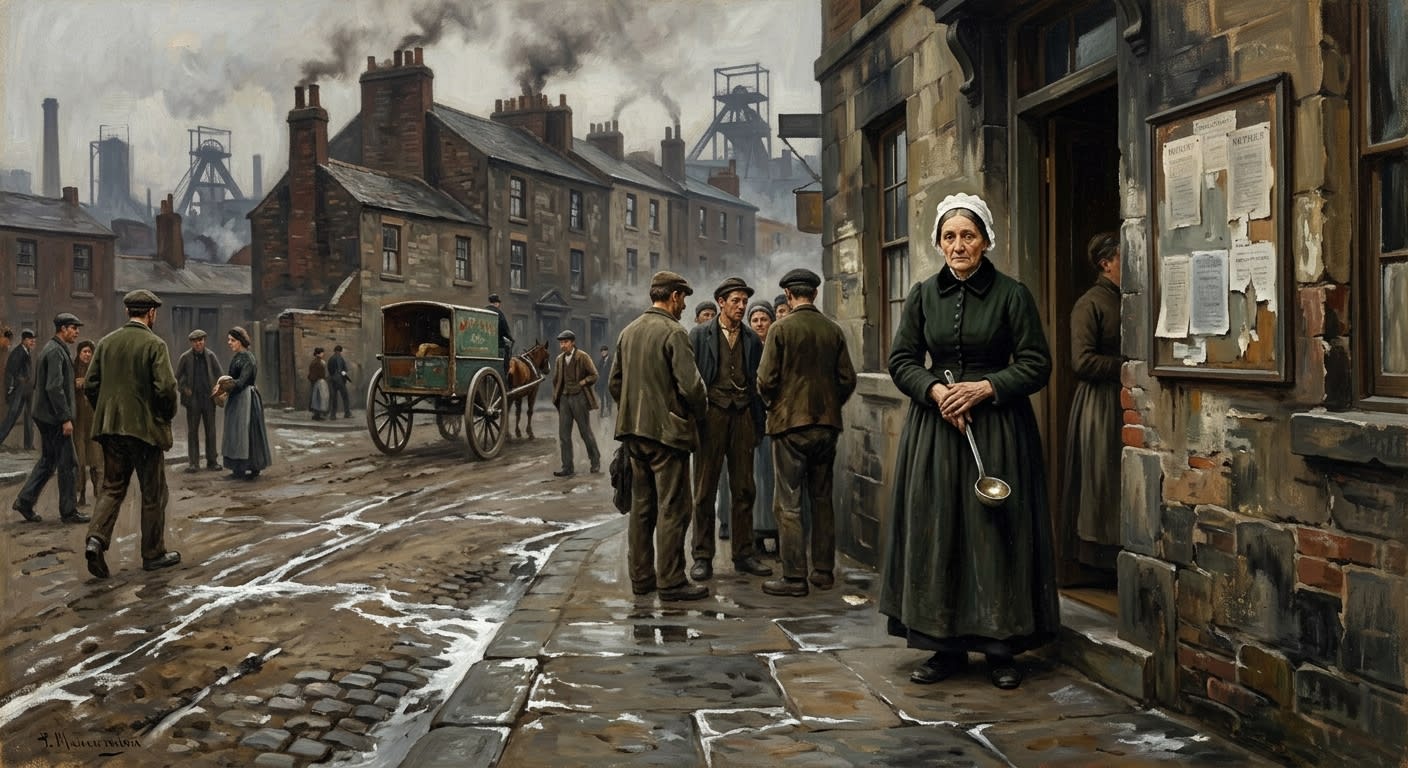
Halle
The city that says the Creed, washes the chalk, and keeps the oven warm
Halle is a compliant rear city with salt in its gutters, fever in its records, Creed on its tongue, Ashen fragments in its ovens, and obedience with undocumented residue.
Codex Ref. II.2.09-201
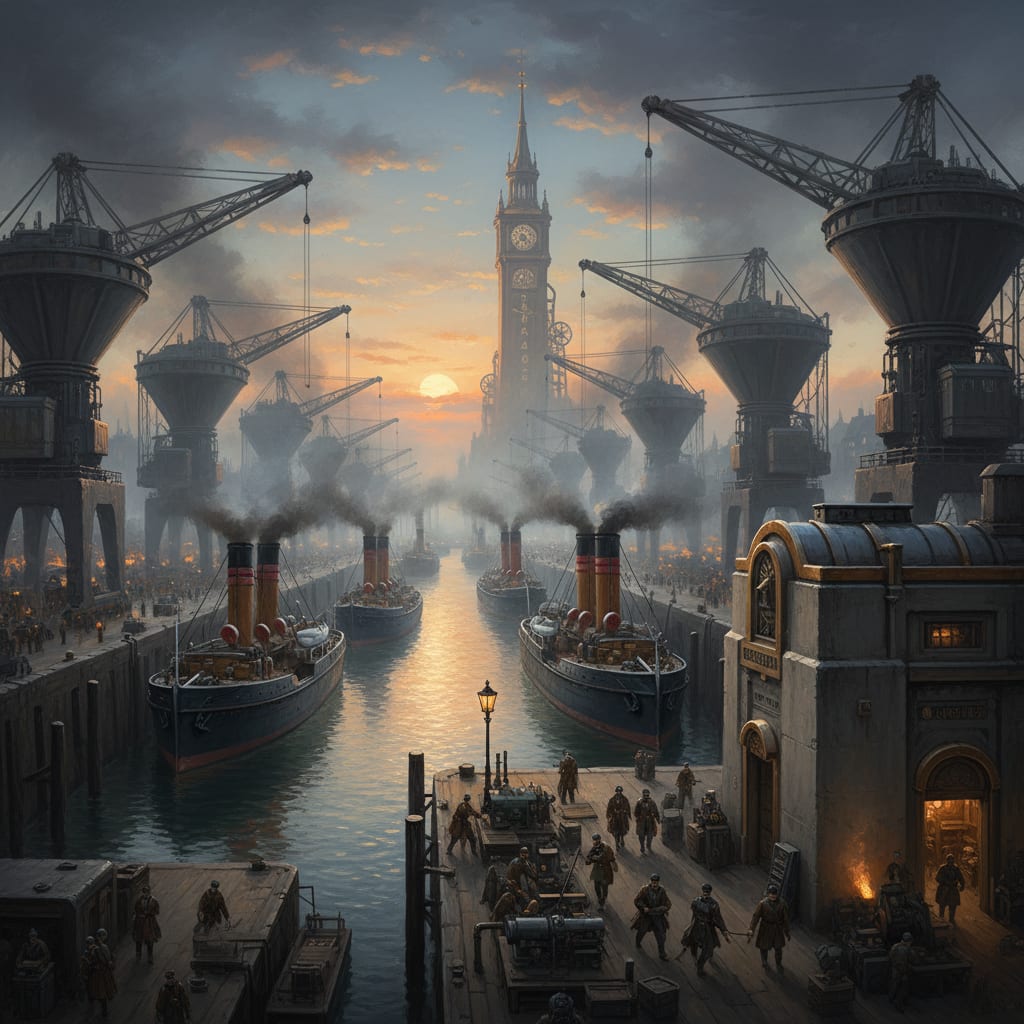
Hamburg
The throat of the northern front — and the hand around it is not the Synod's
The Synod's northern import terminal: nine hundred thousand souls at the Elbe's mouth, processing the grain and coal that keep the northern front from freezing, starving, and dying.
Codex Ref. II.4.09-005
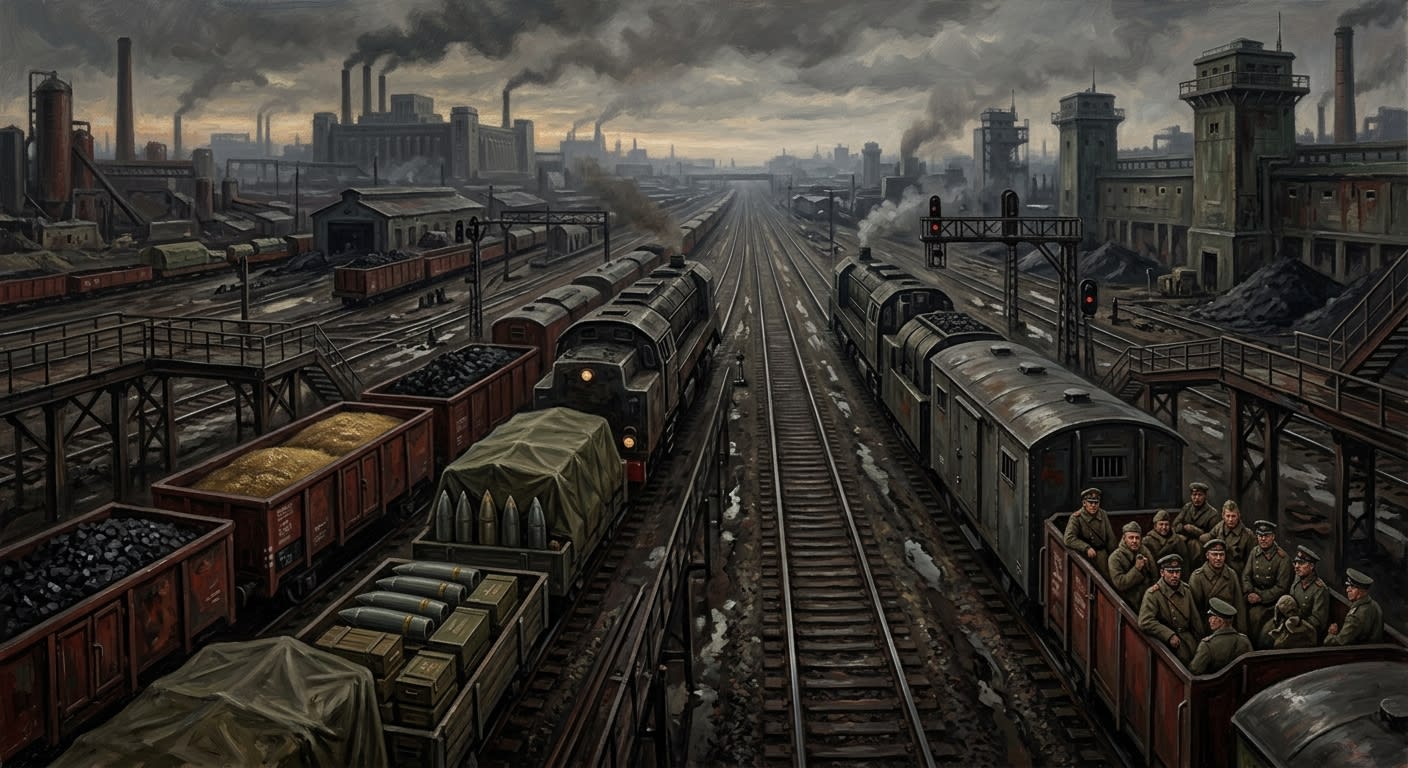
Hamburg-Kanzleiburg Line
The iron throat by which the northern front is fed
The double-tracked 280-kilometre rail throat between Hamburg and Kanzleiburg carries grain, coal, shells, orders, and the northern front's daily permission to continue breathing.
Codex Ref. II.3.05-007
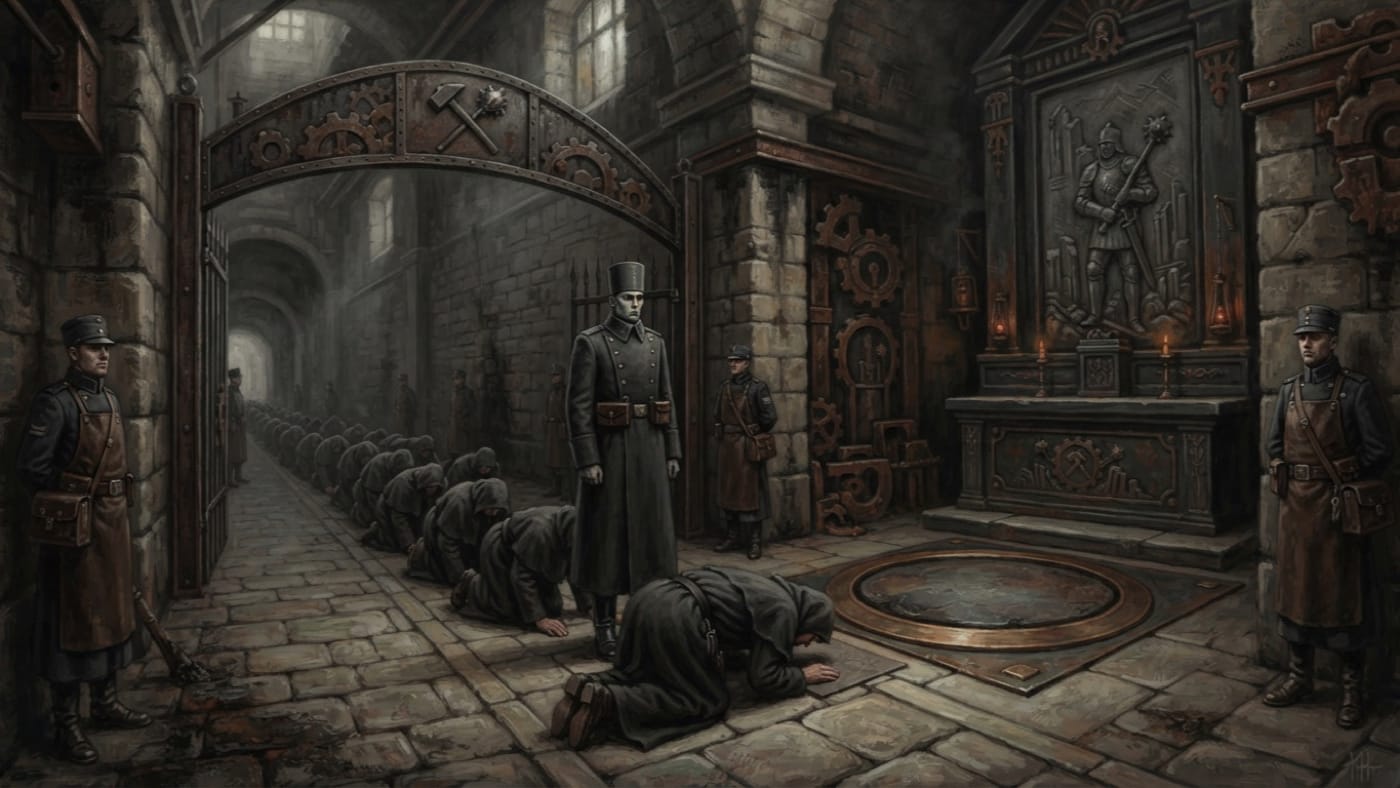
Hammer Line
Eleven metres where even the guides hold their tongues
The Hammer Line is the silent final eleven metres of Vienna's Via Stahlhand, where pilgrims reach the Impact Plate on their knees and the Bureau permits hearing without permitting questions.
Codex Ref. II.4.09-012
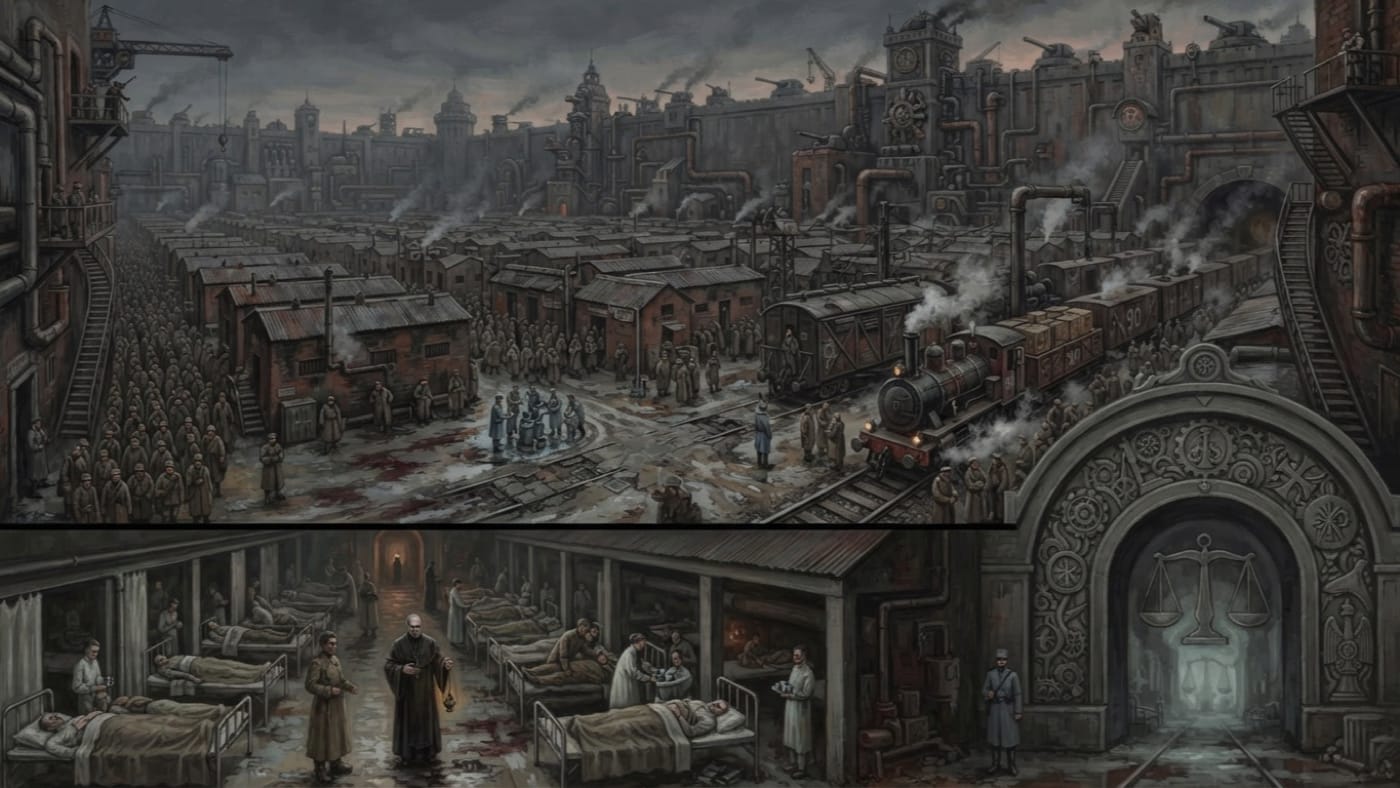
Hammers
Ninety days on paper; twelve thousand men in Grey
Bastion-Constantinople's Grey conscript quarter houses twelve thousand Continental Levy men on ninety-day orders. Relief trains run late; shells, fouled water, and the Velvet Choir keep their appointments.
Codex Ref. II.4.10-201
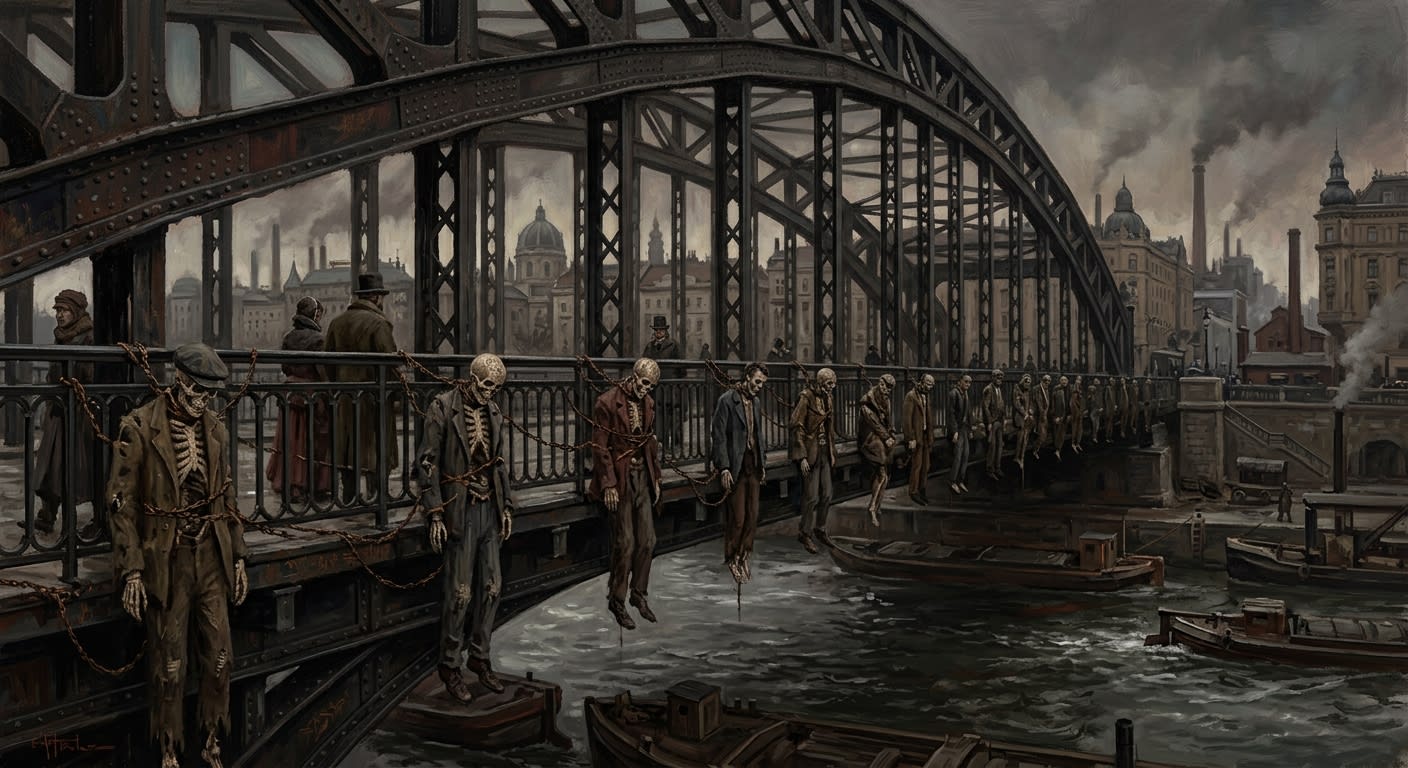
Hanged Bridge
Forty dead rebels made better sermons than their pamphlets
The Hanged Bridge over Vienna's Donaukanal preserves the A.S. 102 aftermath of forty Rationalist rebels whose inscribed bones still preach without permission.
Codex Ref. II.4.09-013
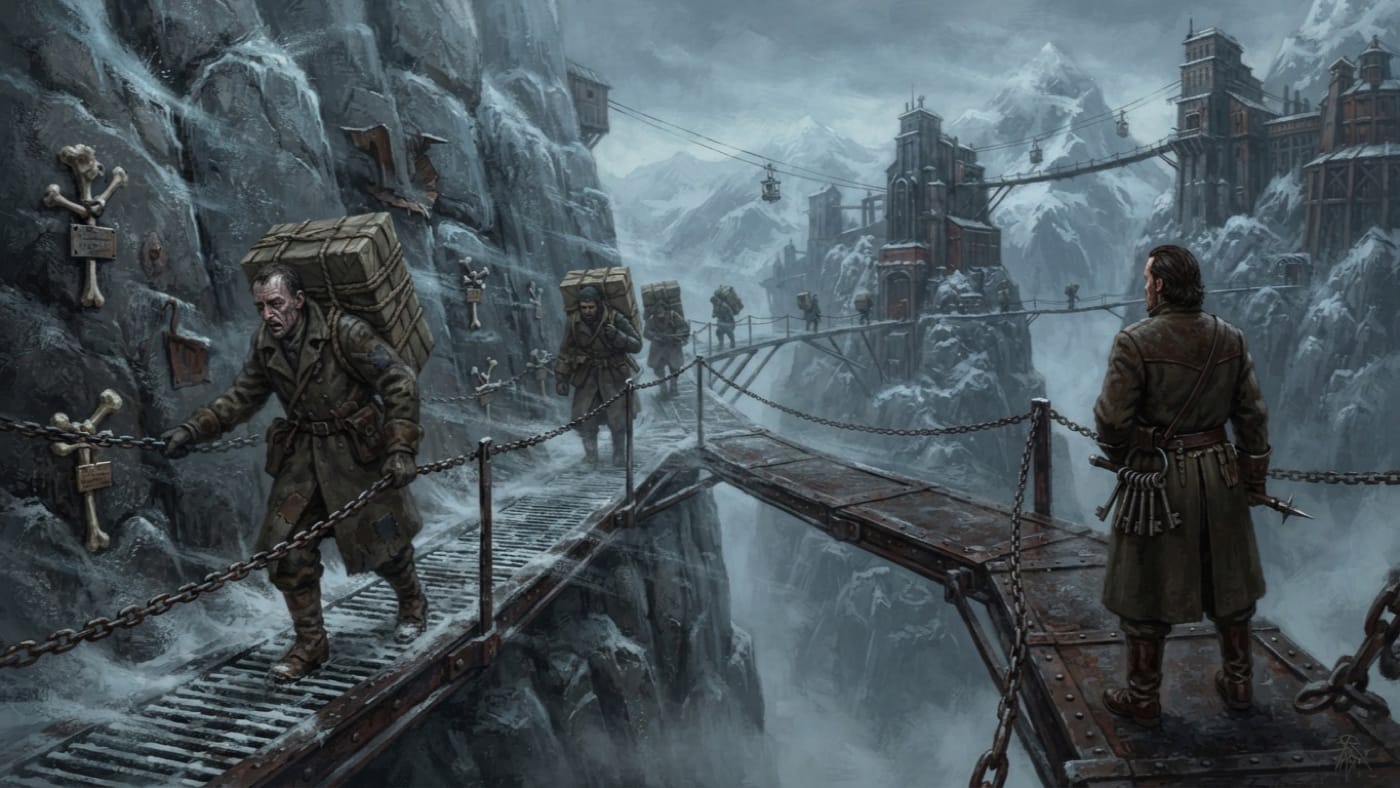
Hanging Mile
One mile of iron, seven keys, and a thousand feet of consequence
The seventh district of the Reliquary Switchbacks: a mile of iron, three feet wide, above a thousand-foot drop. Bronn holds seven keys; the Quiet Turn sells passage beneath the deck. The Bureau certifies the corridor, and the wind examines the traveller.
Codex Ref. II.3.05-007
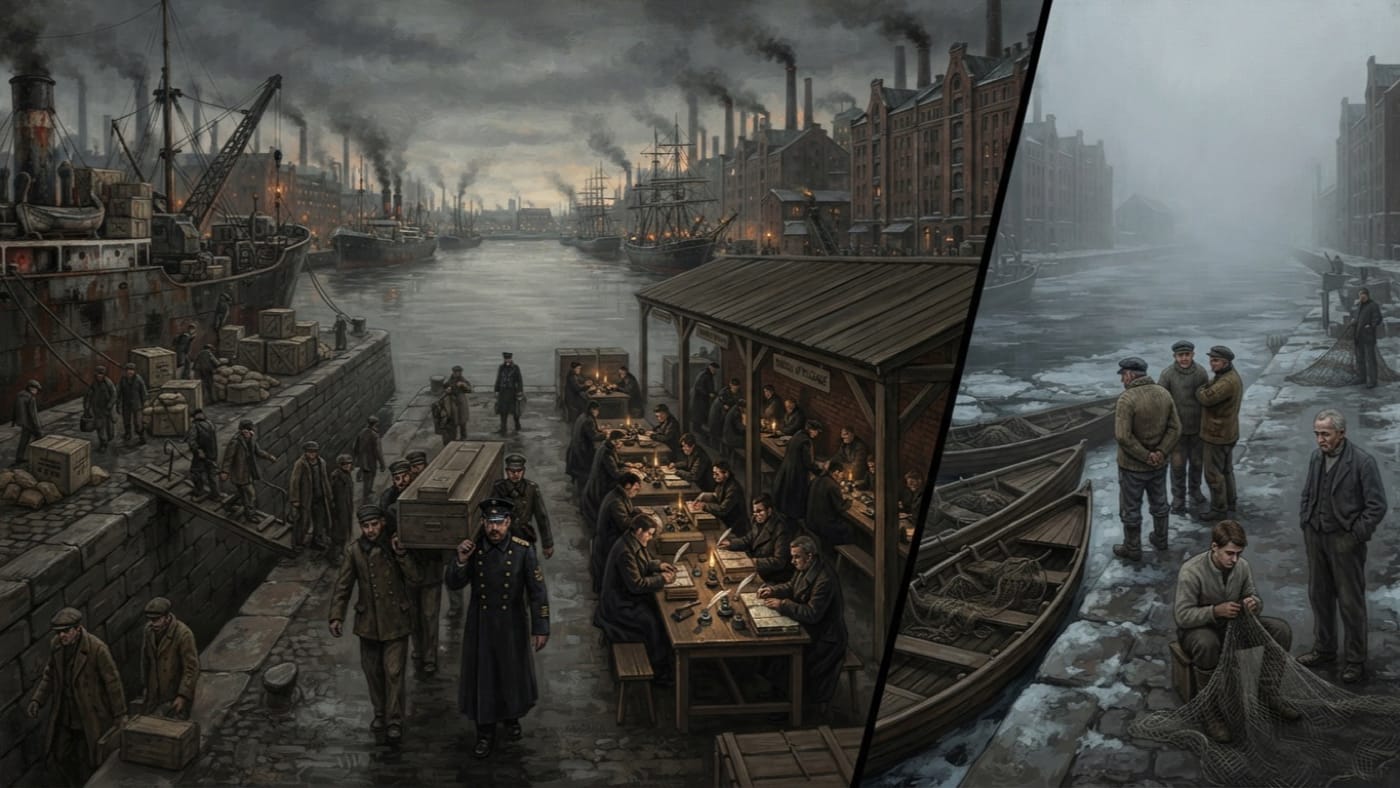
Harbour Quarter (Königsberg)
The clerks count the cargo; the fishermen watch what comes back
Königsberg's old merchant port supplies the northern bastion until winter seals the basin. Passage counts every vessel; the fishermen keep their own reckoning of what the Grey returns.
Codex Ref. II.4.07-201
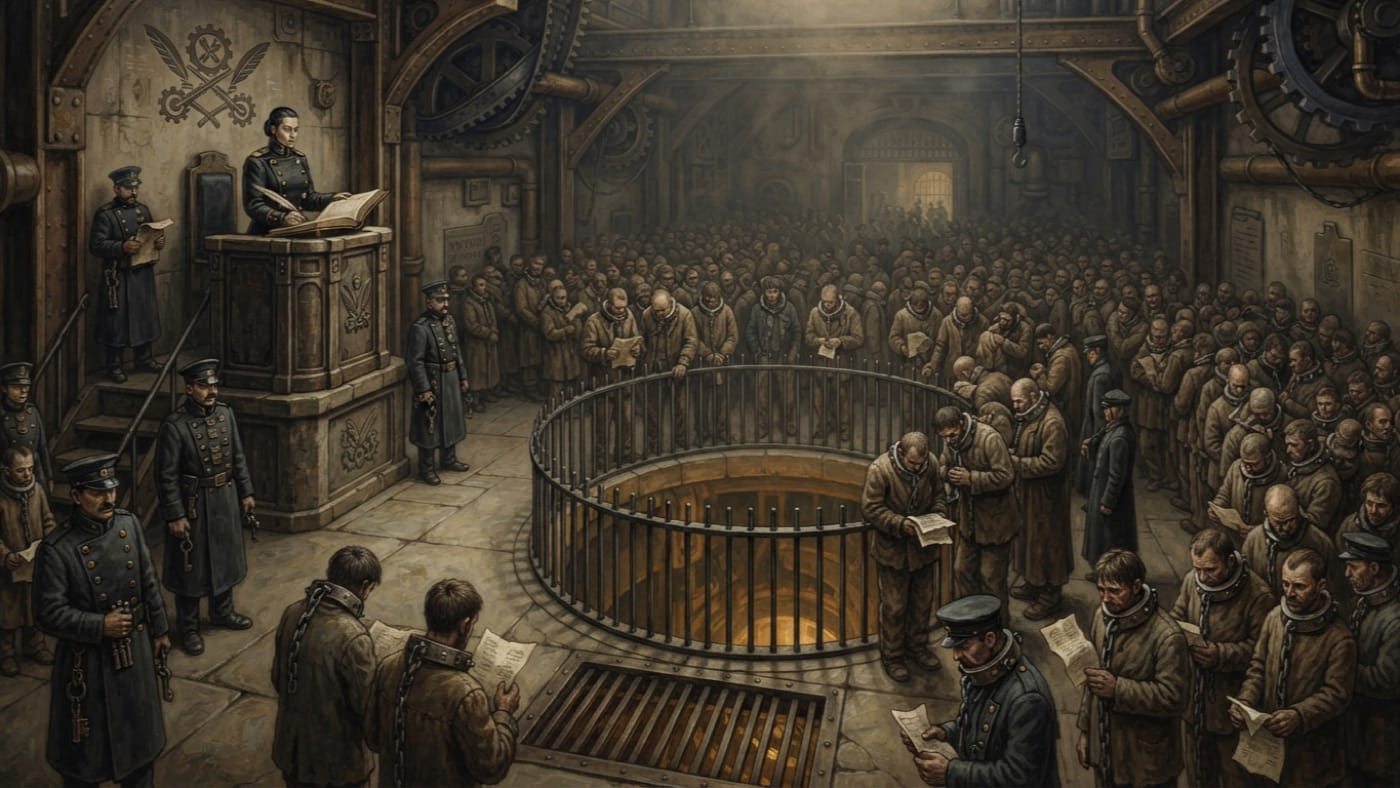
Hearing Hall
Mercy is granted, then entered
At Gate Nine, the Hearing Hall turns appeals into confessions, purchased testimony and labour assignments, forty-two feet above the Apparatus.
Codex Ref. II.3.05-011
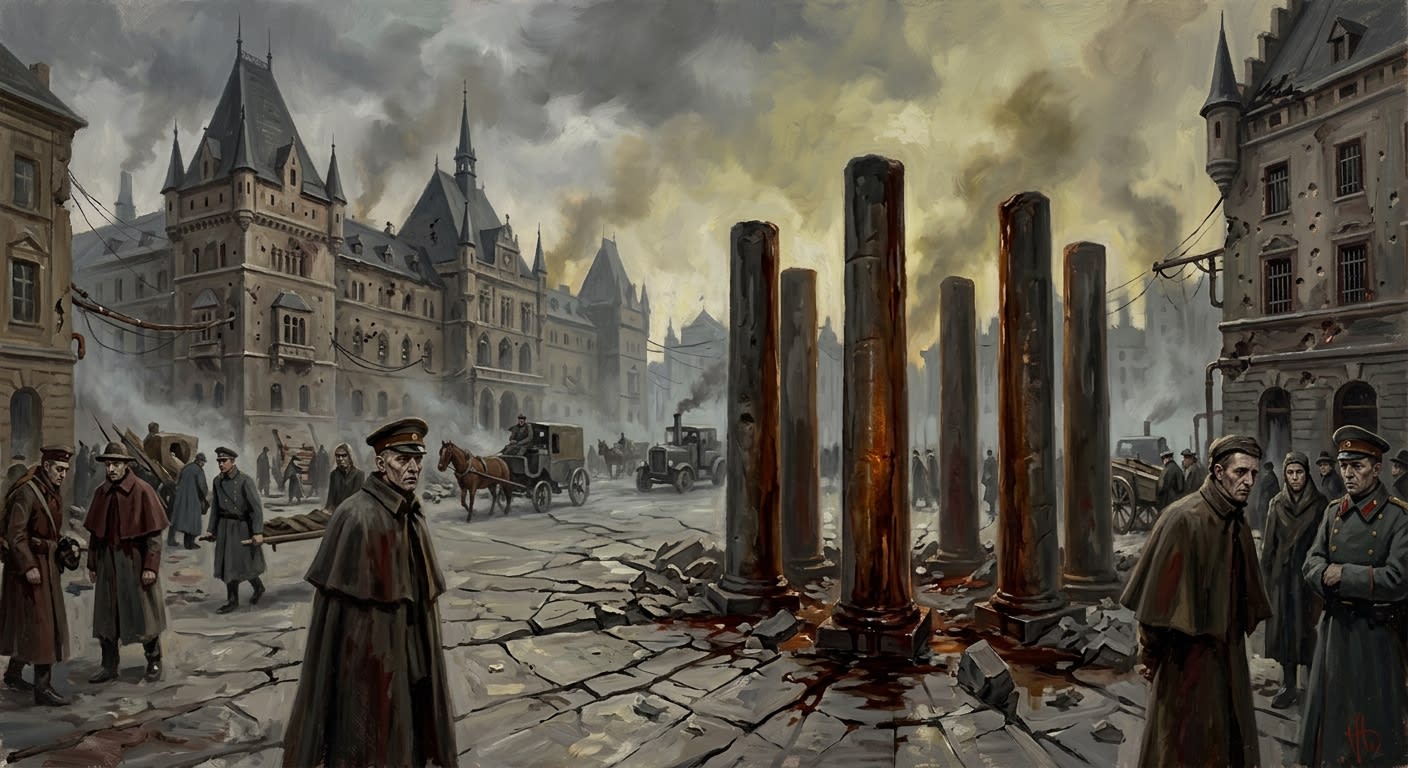
Heldenplatz
Where fire froze, stone warmed, and Vienna learned to kneel in public
Heldenplatz is Vienna's corrected civic theatre: the A.S. 30 cold-fire blasphemy answered by the A.S. 95 reliquary blow, radial fracture, and seven blood-warm basalt columns.
Codex Ref. II.4.09-095
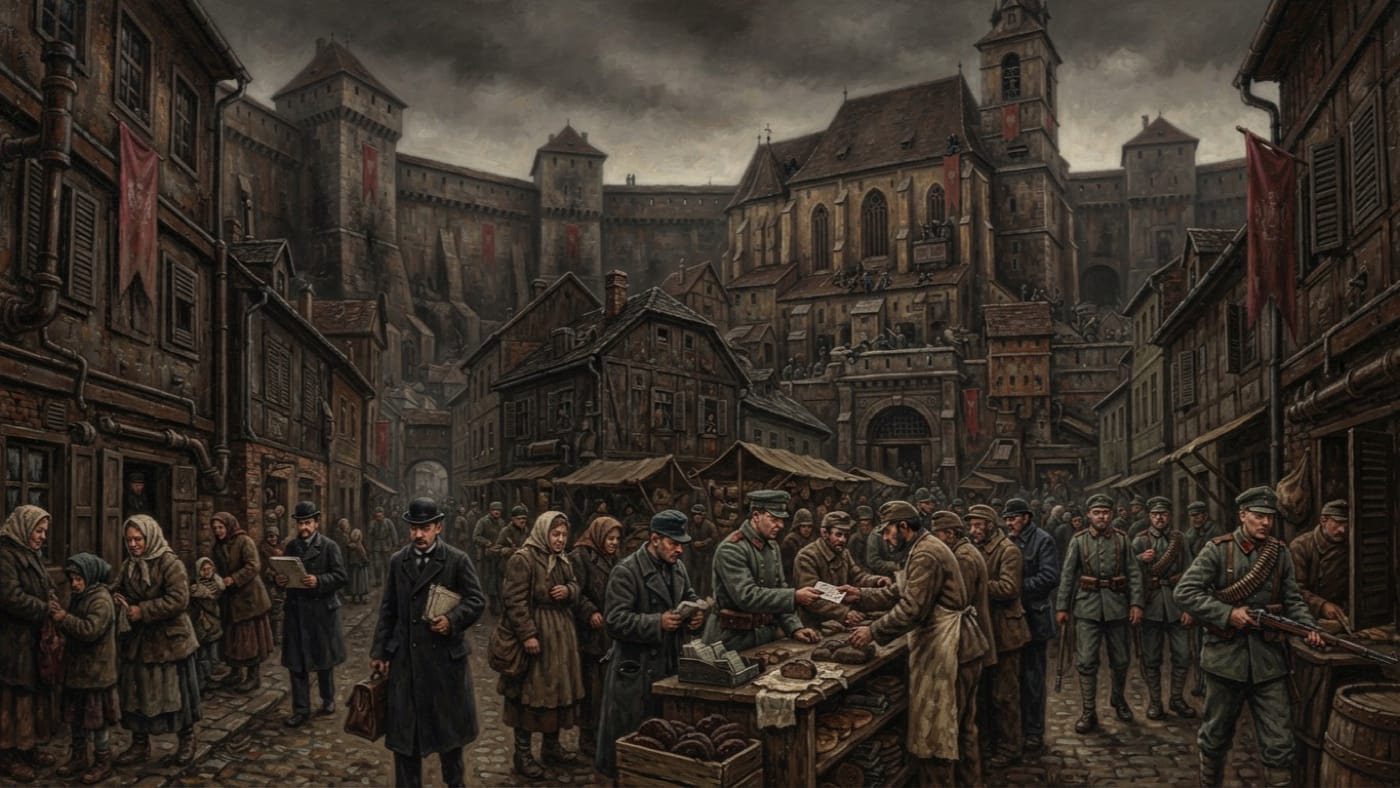
Hermannstadt
The parish is tolerated pending powder.
Hermannstadt survives inside Bastion-Sibiu: three Saxon streets, parish rolls kept in dialect, and a market trading in suspect scrip. The magazines remain full. The Bureau tolerates the grammar.
Codex Ref. II.3.04-201
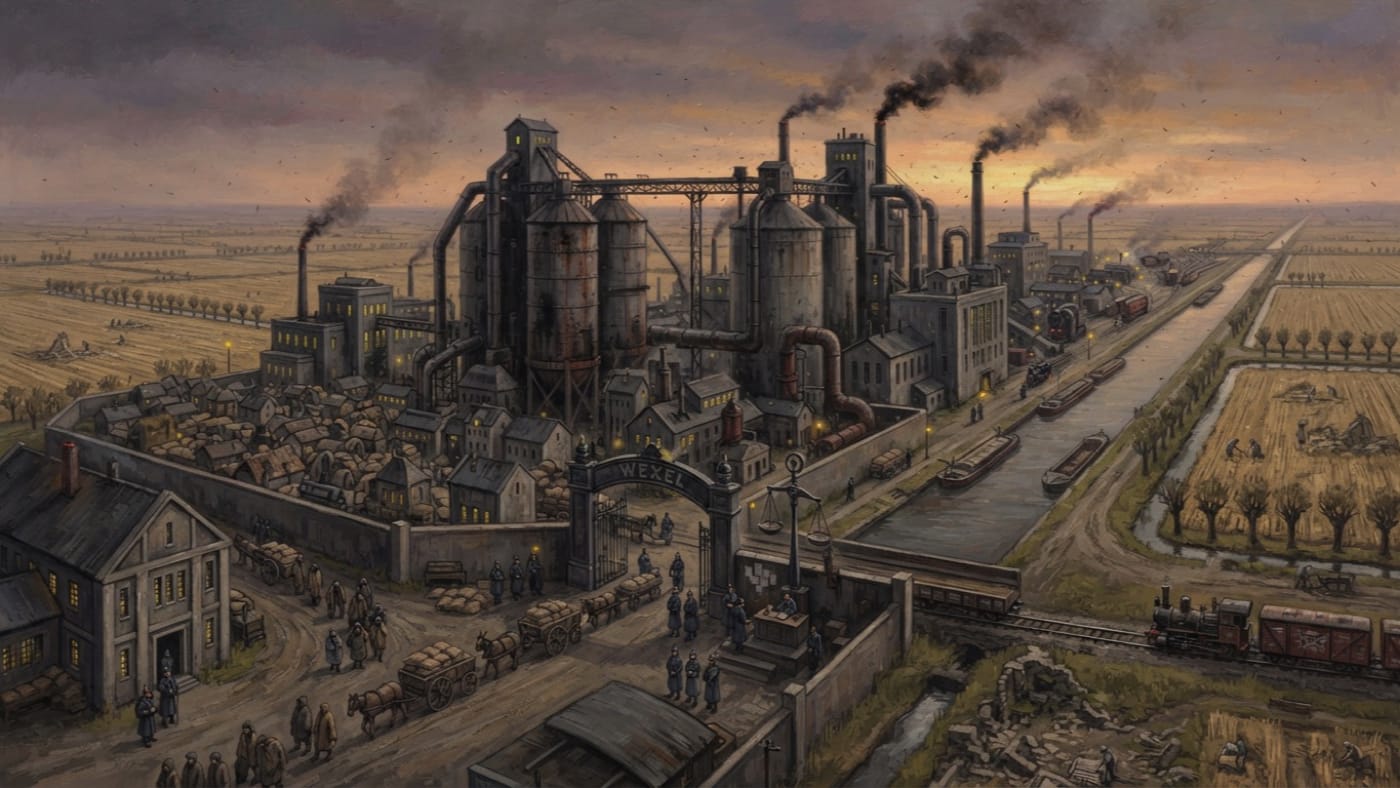
Hessian Lowlands
The fields grow the grain; Wexel grants permission to eat it
The Hessian grain country feeds Wexel's scales and the Heartlands' bread trains. Its boundaries remain unfiled, its people uncounted, and its permission to eat belongs to a town.
Codex Ref. II.2.04-002
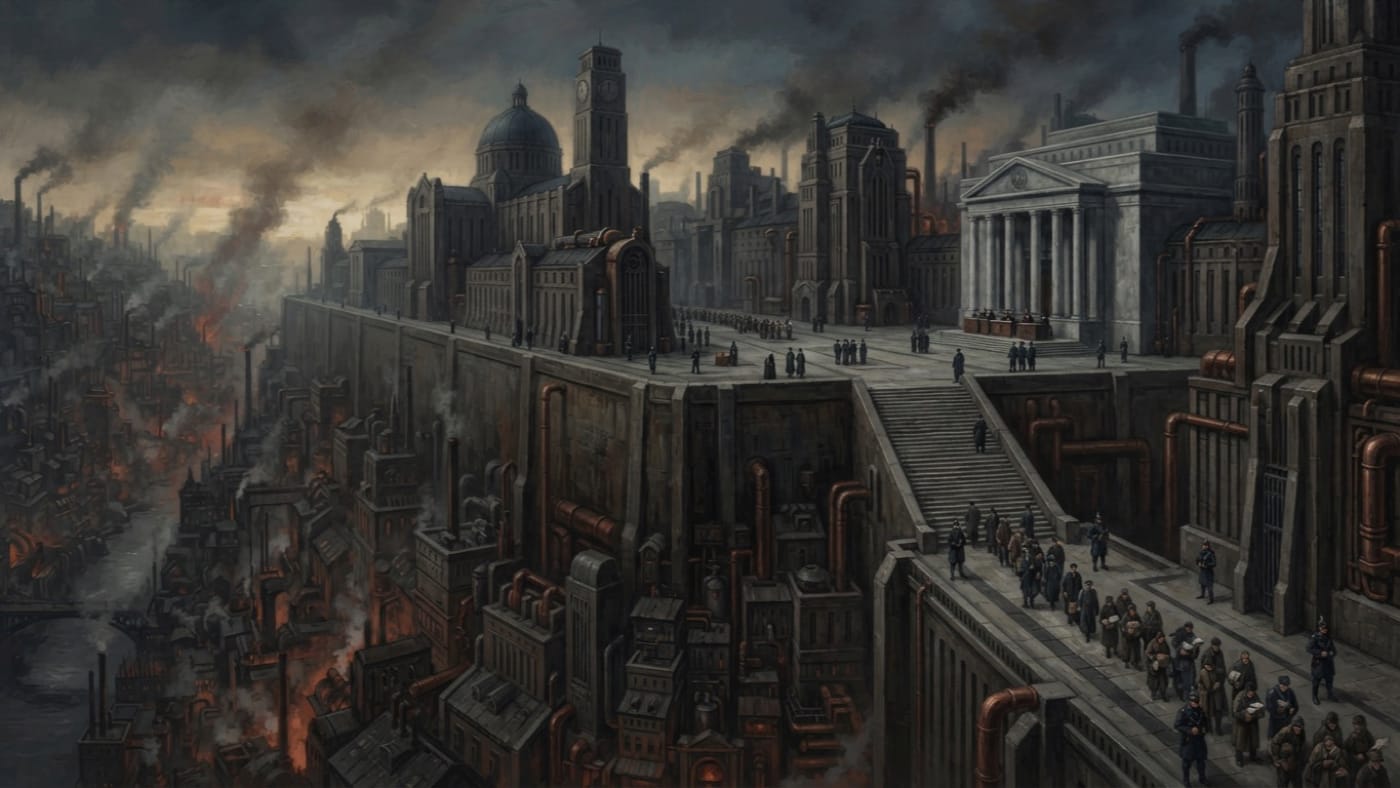
High Step Precinct
Clean air, correct names, and a posted rate for confession
Rheinscarp's ninth terrace houses the Ration-Cathedral, Tribunal of Stairs and offices that govern names, hours and ashes. The air is clean, the names are correct, and every debt survives the climb.
Codex Ref. II.2.01-009
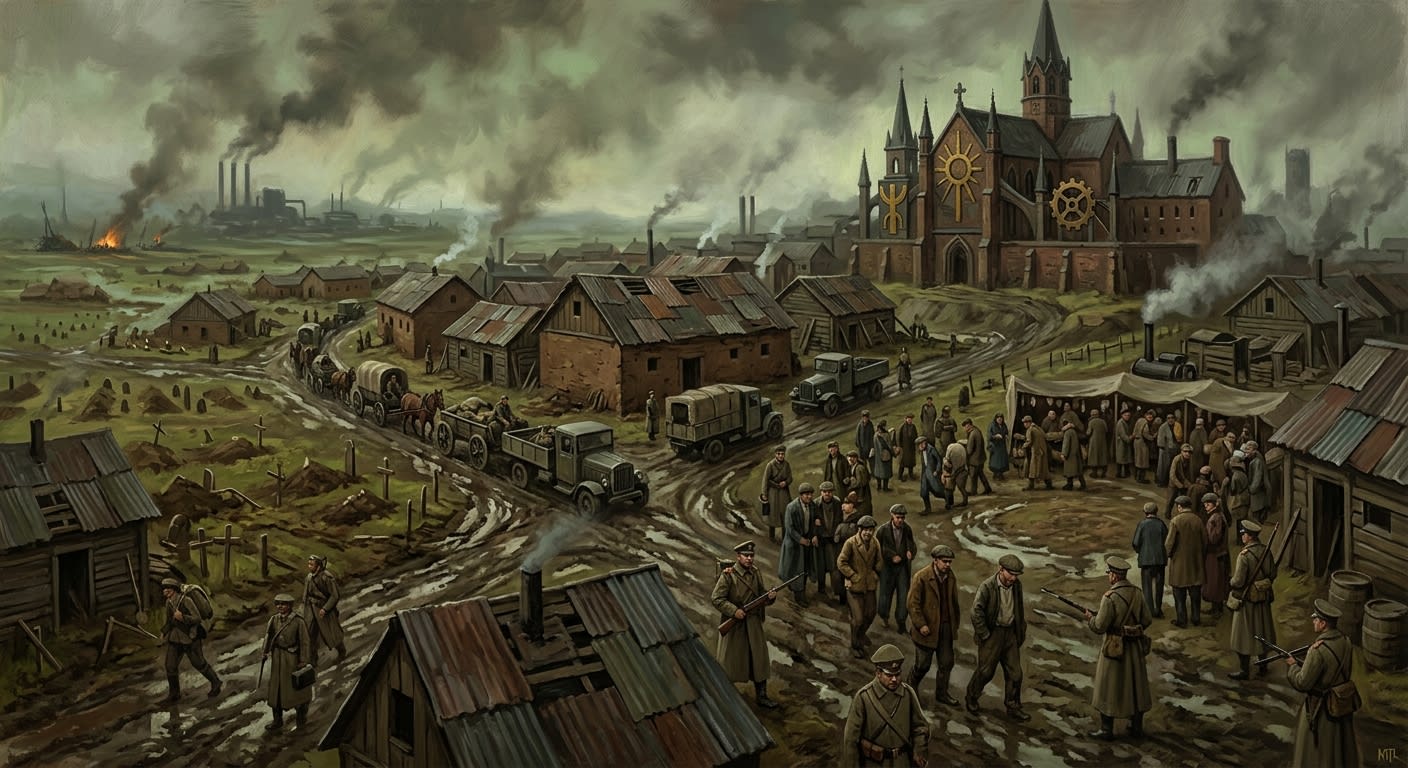
Hinterland
The fifty kilometres that pretend to be rear
The Hinterland is the fifty-kilometre bruise behind the Sagittal Line: farms, wards, graves, depots, markets, and civilians ordered to call occupation protection.
Codex Ref. II.4.09-201
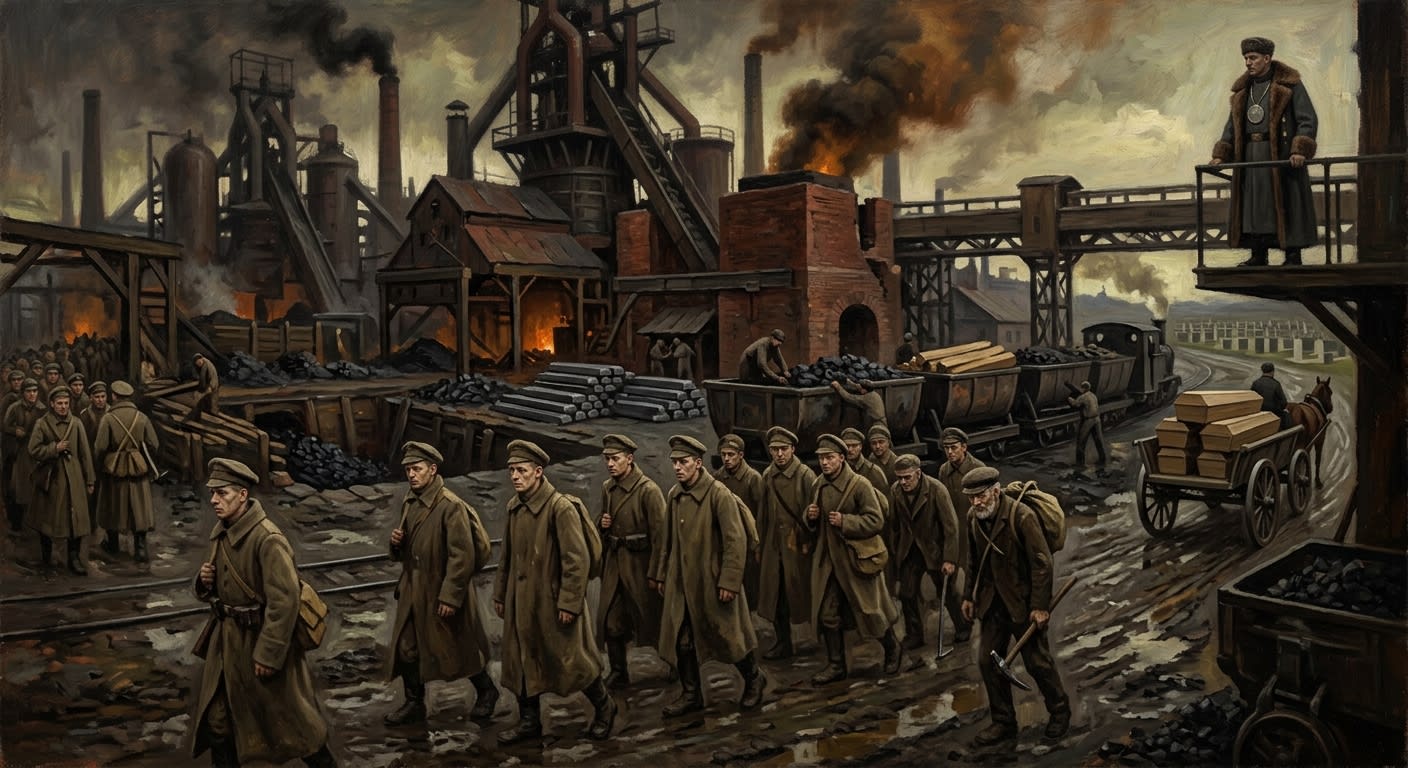
Hintermark
The arm beneath Constantinople's shield, counted only when it coughs metal
The Hintermark is the industrial-forward belt west of Bastion-Constantinople: coal, pig iron, levy boys, coffin timber, and all the grief a fortress prefers not to itemise.
Codex Ref. II.3.06-002
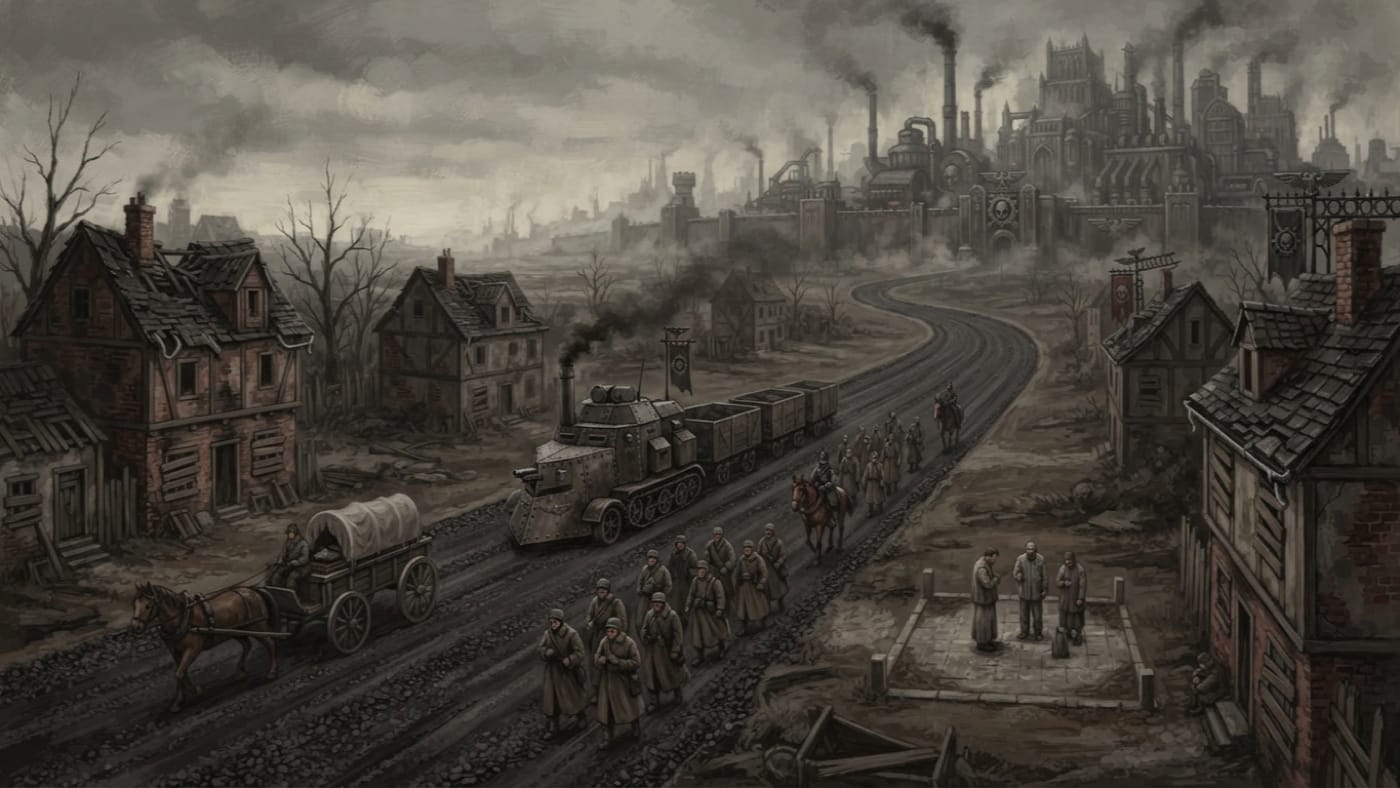
Hintermark roads
The roads are fit for service; the villages are noted for the record
The Hintermark roads feed Bastion-Constantinople with coal, iron, fruit, and levies. War keeps the roads in excellent repair; the villages receive no such care.
Codex Ref. II.3.06-003
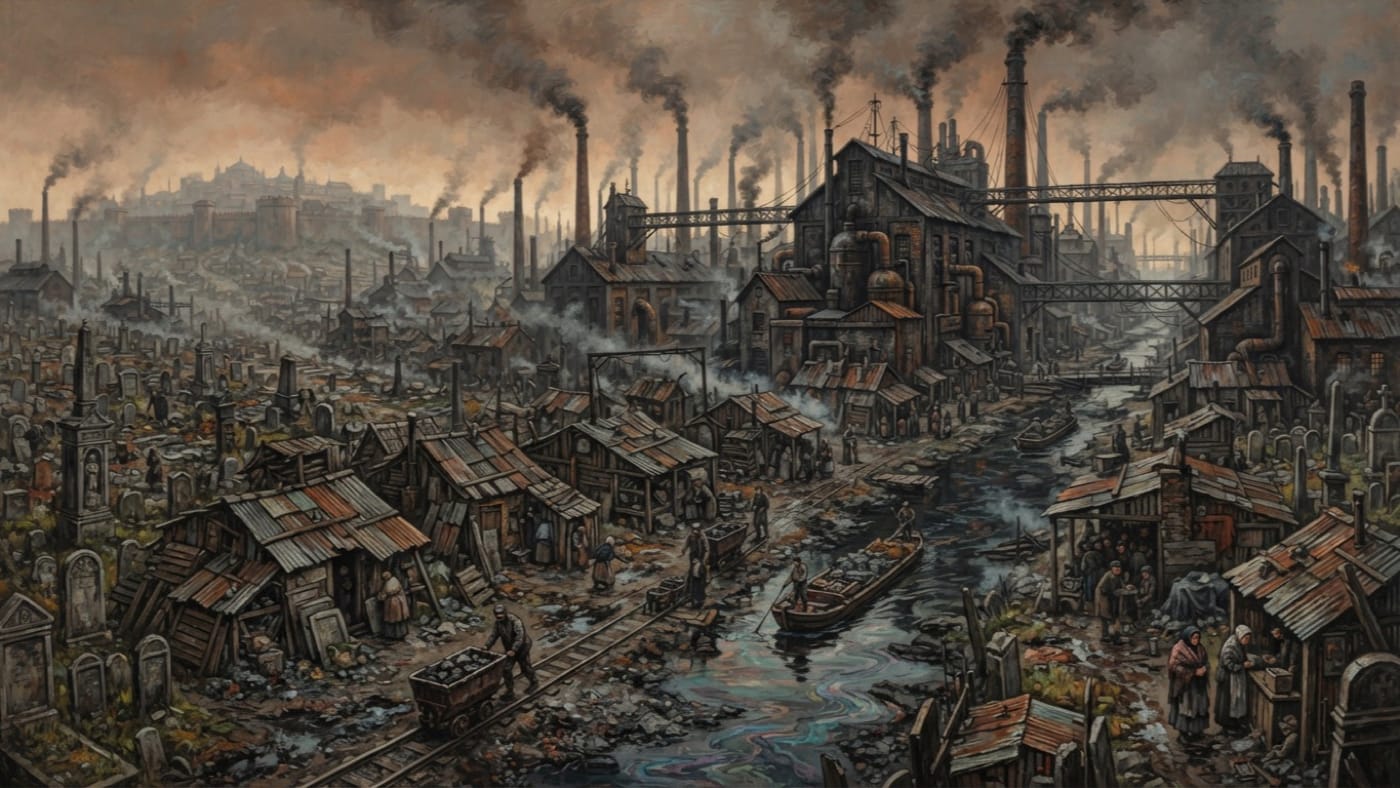
Hintermark settlements
The furnaces have addresses; their households do not
The Hintermark settlements keep Bastion-Constantinople supplied with iron, labour and coffin timber. A.S. 201 finds production continuing, registers disputed, and hungry households entered in the Black Ledger's second books.
Codex Ref. II.3.06-003
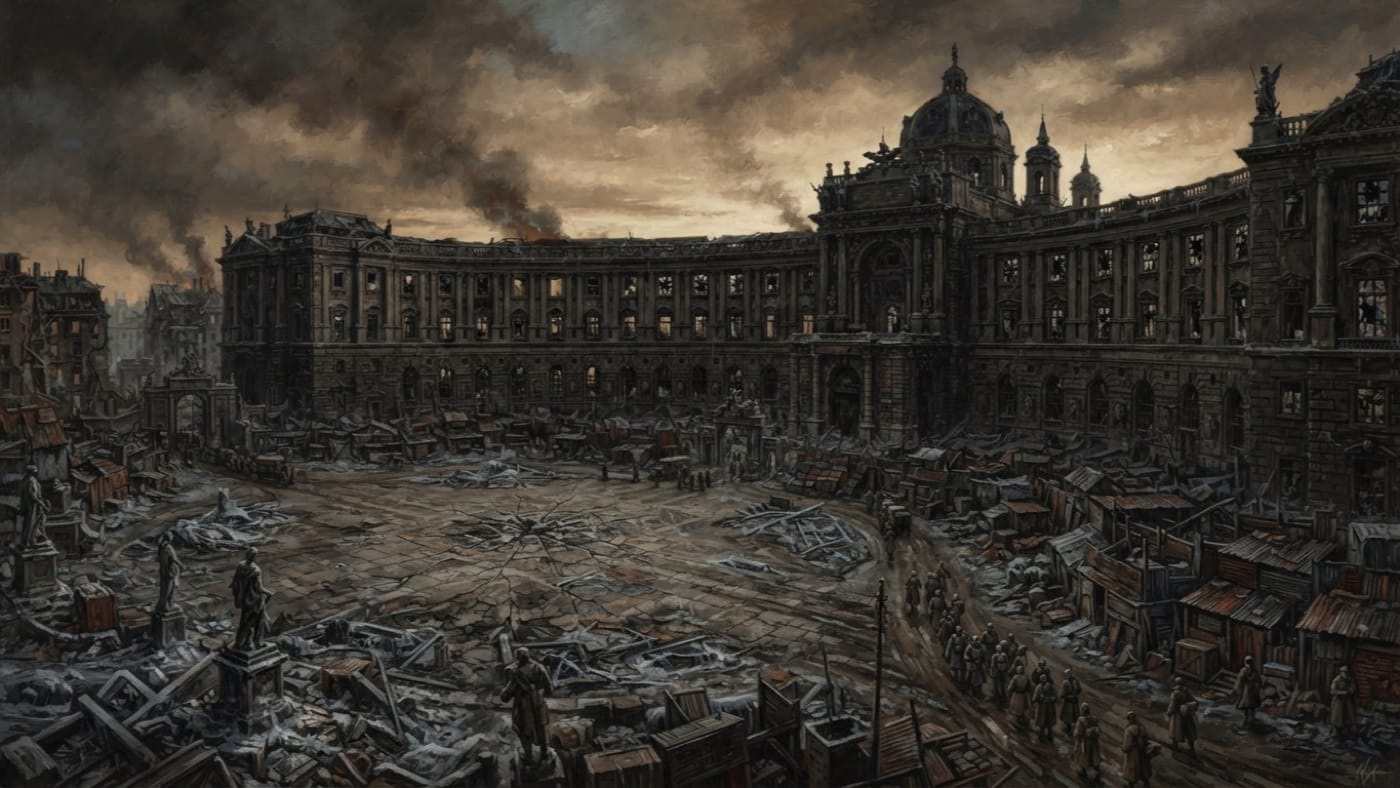
Hofburg
Broken glass and unfinished business
Vienna-Ruins' Hofburg palace was sealed in A.S. 95, its glass shattered by Saint Aldebrand's reliquary blow. The Council's unfinished minutes are reported, their session undated. Even defeat leaves paperwork.
Codex Ref. II.4.09-1373
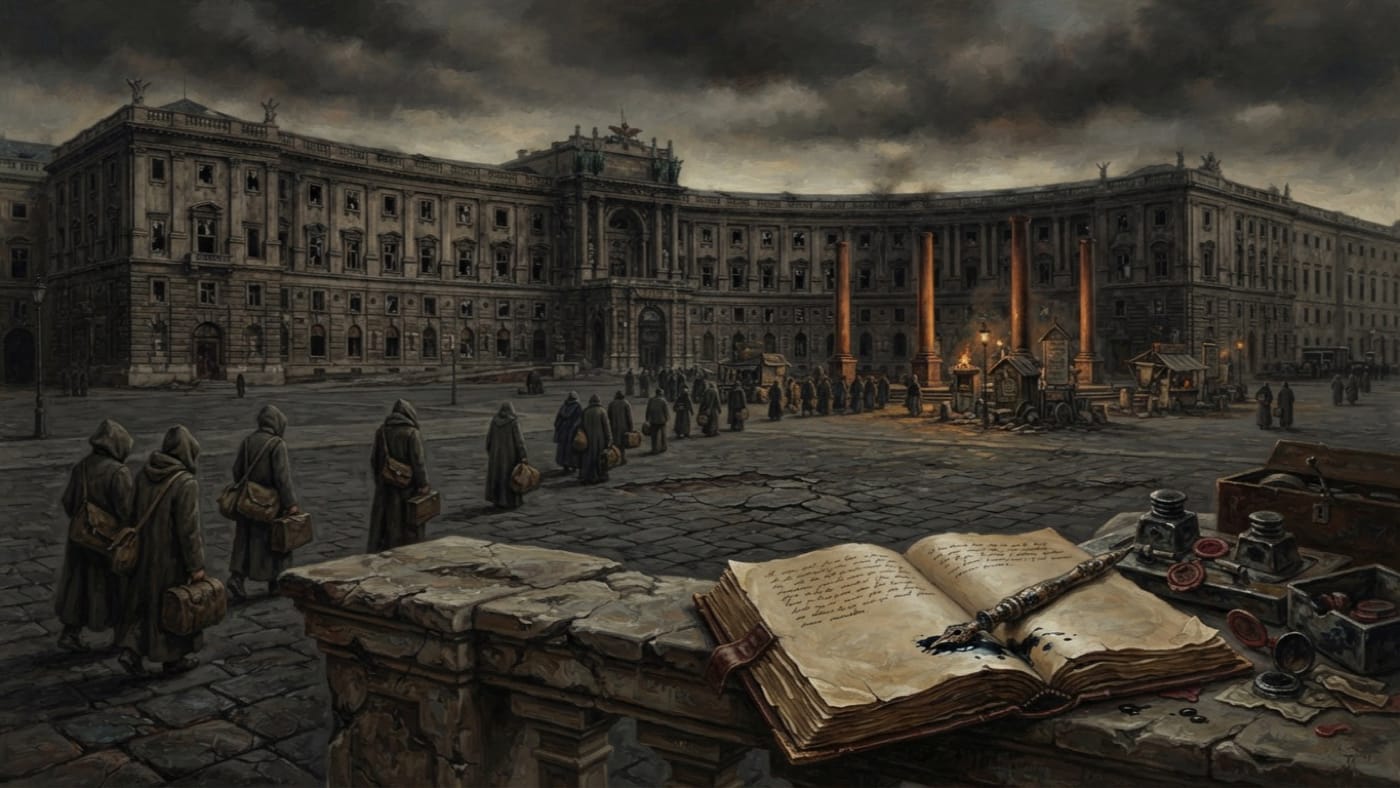
Hofburg Palace
Unfinished minutes behind a century's seal
The Hofburg was sealed in A.S. 95 with the Council of Nine's last minutes unfinished and its pen reported wet. The meeting has no recorded date. The pen has two reported homes. Neither file is closed.
Codex Ref. II.4.09-1374
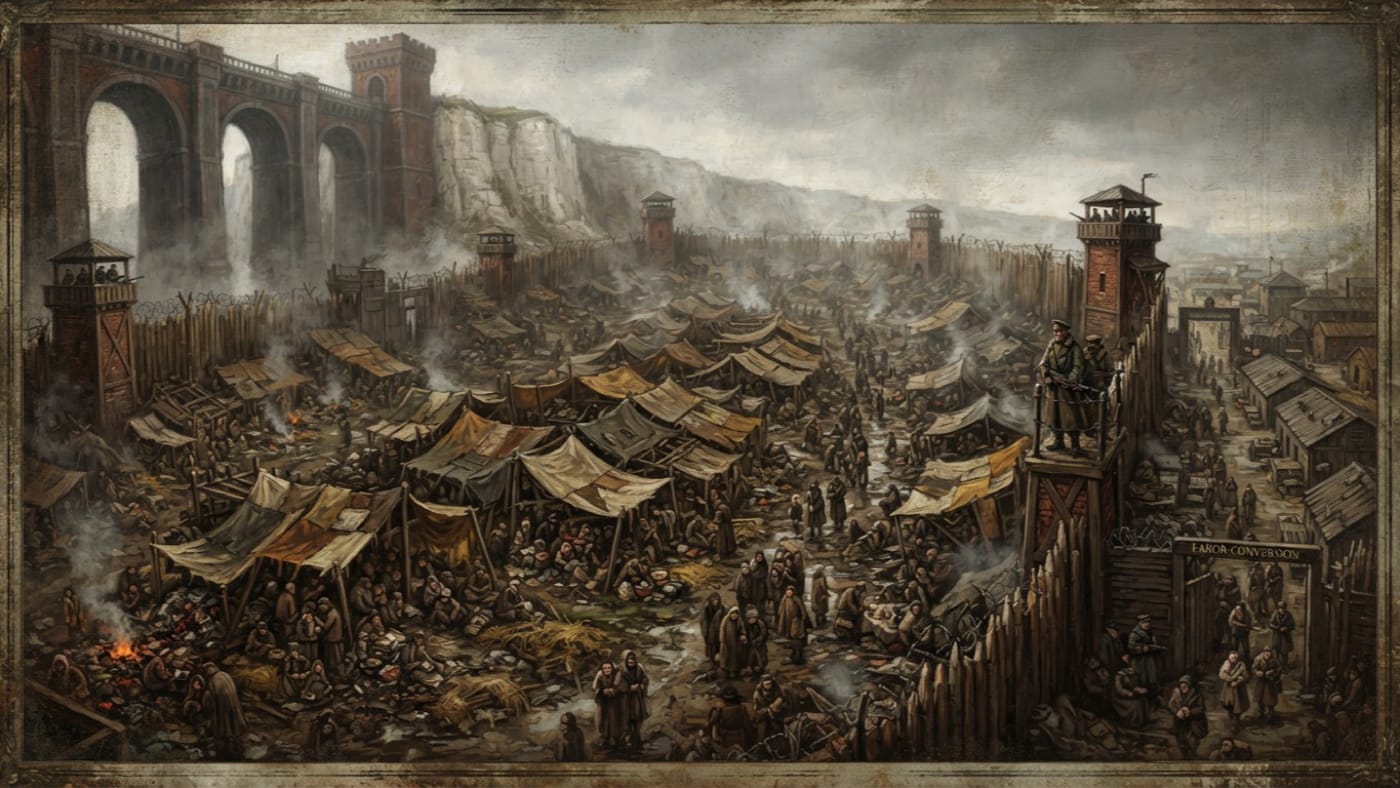
Holding Pens of Griefgate
Every day detained is another day owed
Griefgate's Delay Gardens turn failed declarations and unpaid assessments into daily debt, disease and labor contracts whose temporary terms are never defined.
Codex Ref. II.1.04-003
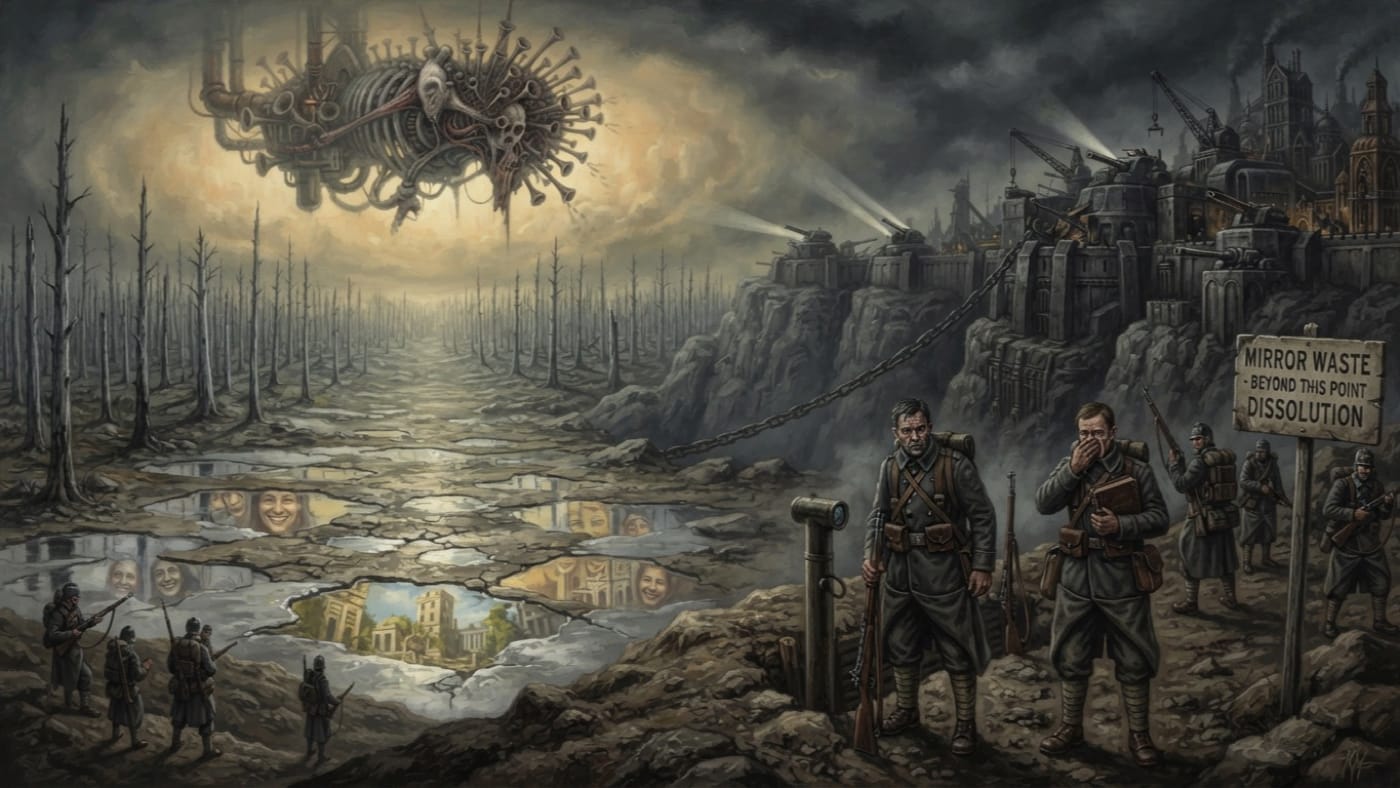
Hollow Vale
Envy's country, where the forest rings and the maps disagree
Morwen's domain beyond Bastion-Irongate: hollow forests, false skies and borrowed faces. The Bureau certifies its hostility; its borders remain unconfirmed.
Codex Ref. II.6.07-201
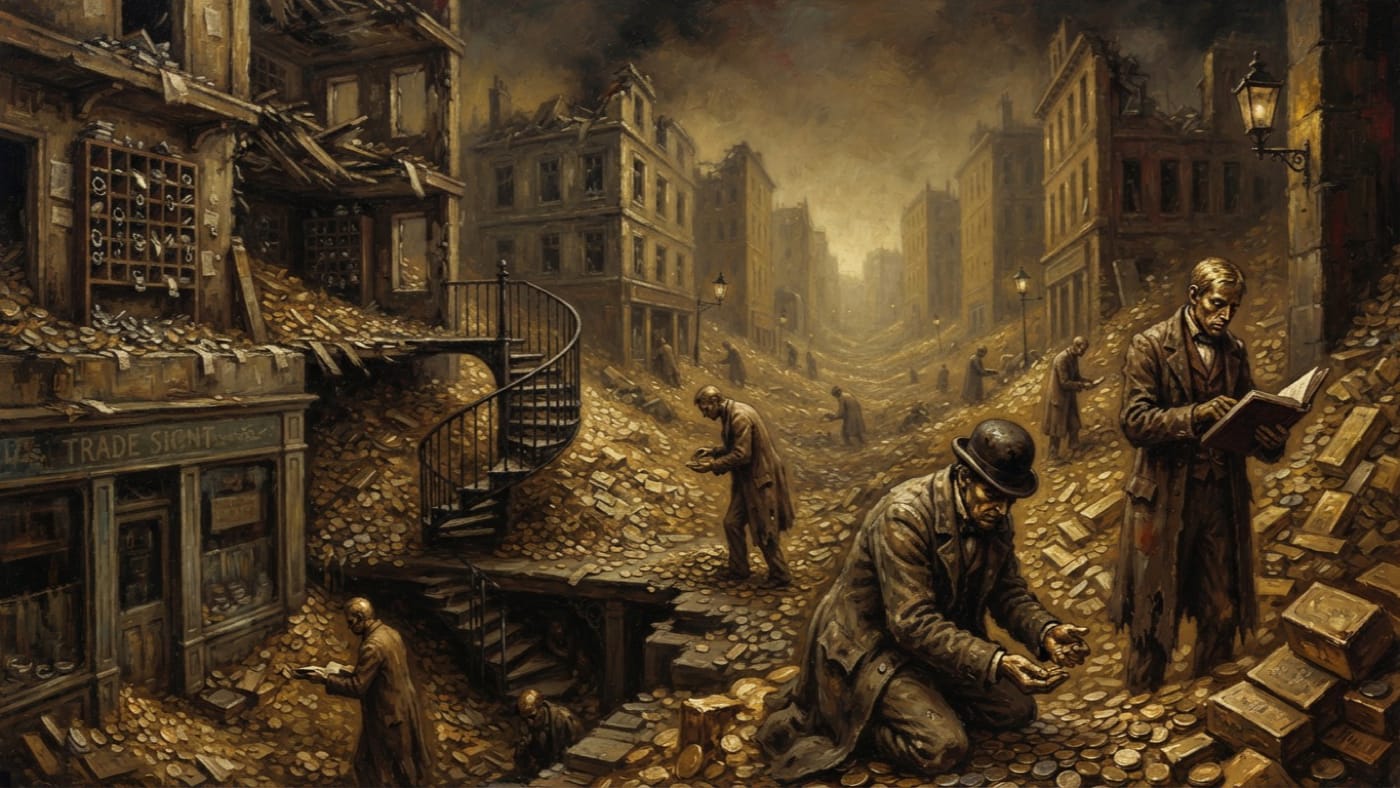
Hollow Vaults
Wealth beyond counting, and still not enough
Velmora's Hollow Vaults swallow whole districts into treasure chambers of impossible dimension. The caretakers count without end. The wealth remains insufficient.
Codex Ref. VI.1.02-003
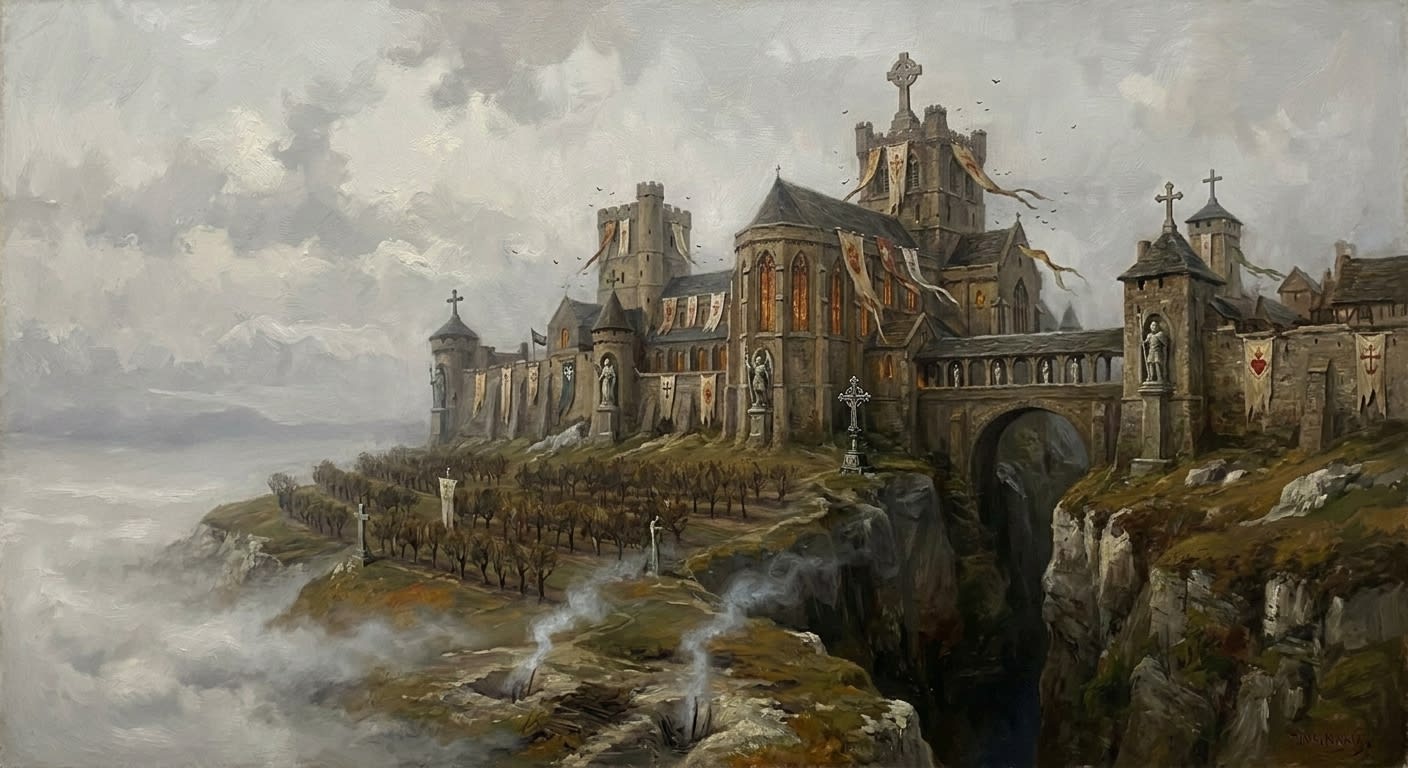
Hollow-Script Scriptorium of Nemea
Where the ink rewrites the truth, and the truth rewrites the ink
The Bureau of Records' master archive-scriptorium on a chalk ridge: where names are erased, contracts rewrite themselves overnight, and the ash in the Yards speaks. Drax has been named by its ink and would prefer the record show otherwise.
Codex Ref. II.2.06-002
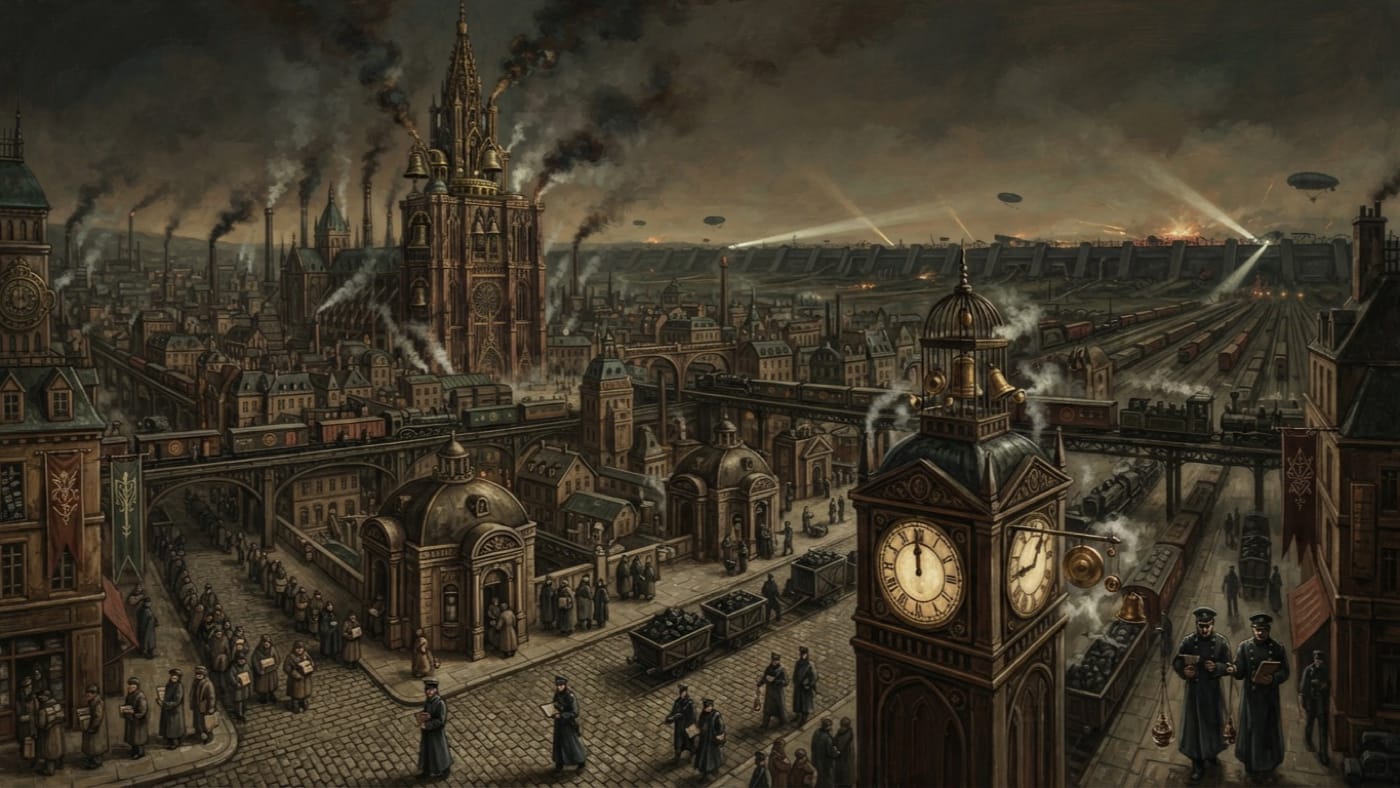
Holy Dominion
Your name is in a book. The book is in better repair than you are.
The Holy Dominion is the Synod's continental jurisdiction, surveyed in A.S. 201. From Strasbourg to the Sagittal Line, bells govern the hours, tithes feed the guns, and every soul must appear in a book.
Codex Ref. II.1.01-001
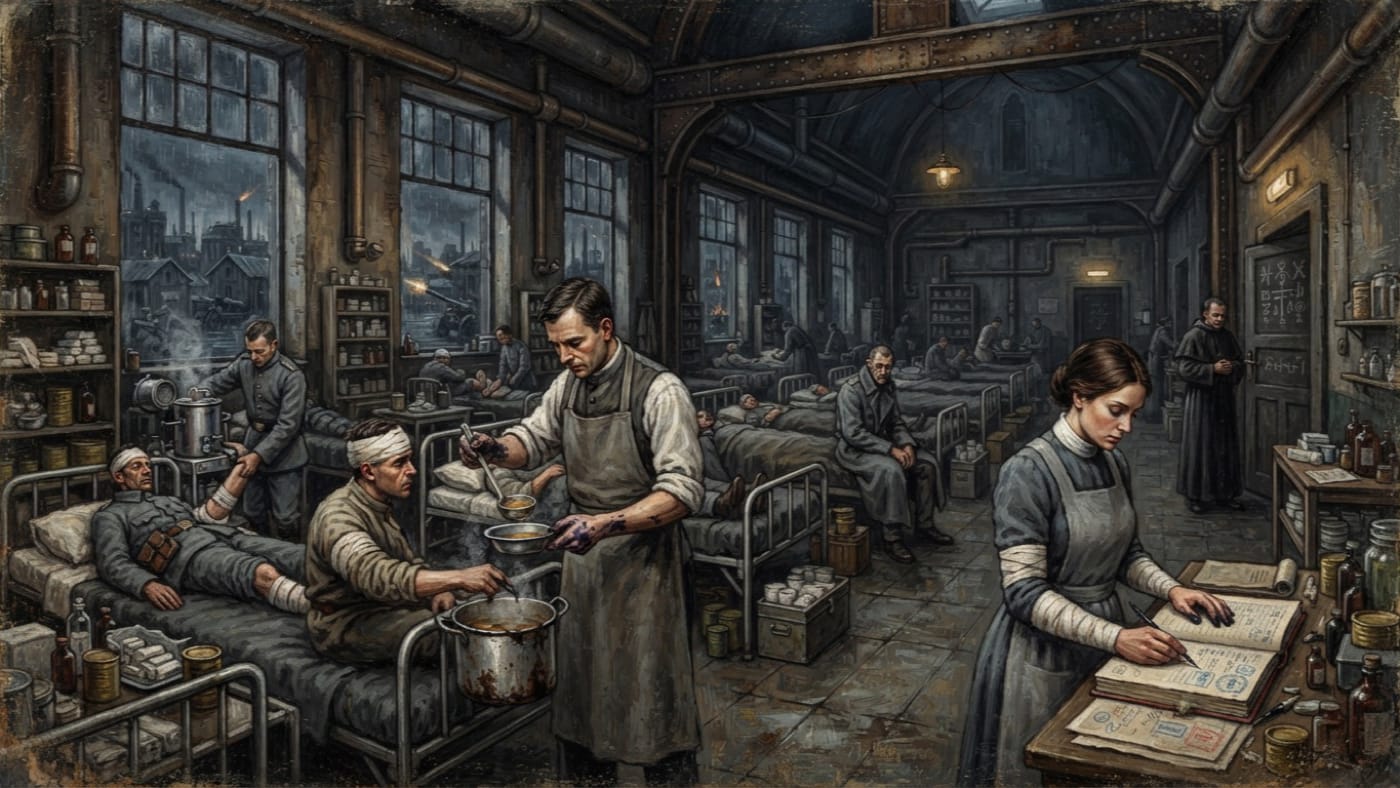
Hospital of Saint Sebastian
Where the Military City sends the wounded
Saint Sebastian tends wounded soldiers or buries them in Strasbourg's Military City. This A.S. 201 survey keeps the local record distinct from Mercy's wider machinery of care, confession and ink.
Codex Ref. II.2.10-201
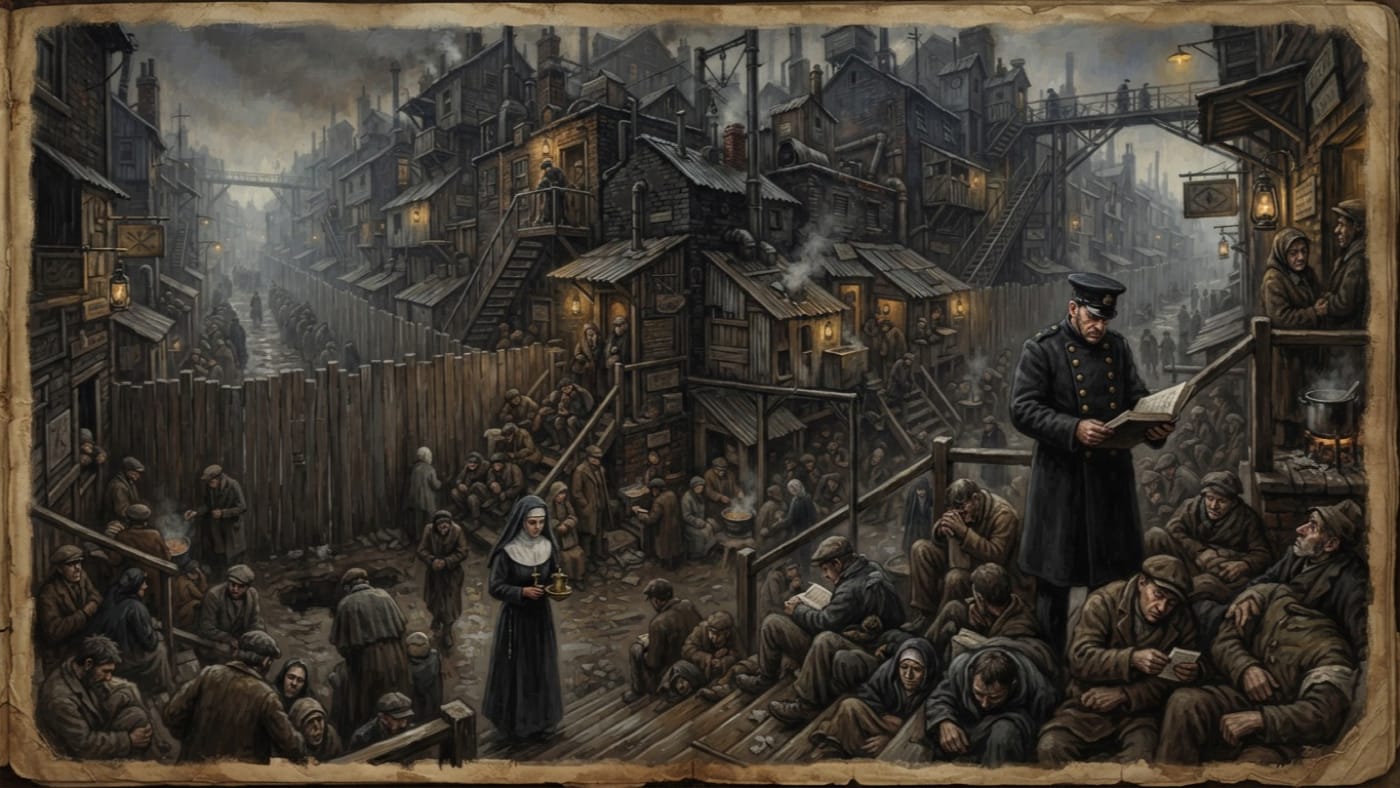
Hostel Ribbons
The wait is sold long, the sleep is sold short
Along the Queue Road, the Hostel Ribbons sell sleep by the slice. The Consortium fills its bunks with delay, while the Minute Drift makes receipts and bodies disagree.
Codex Ref. II.3.05-011
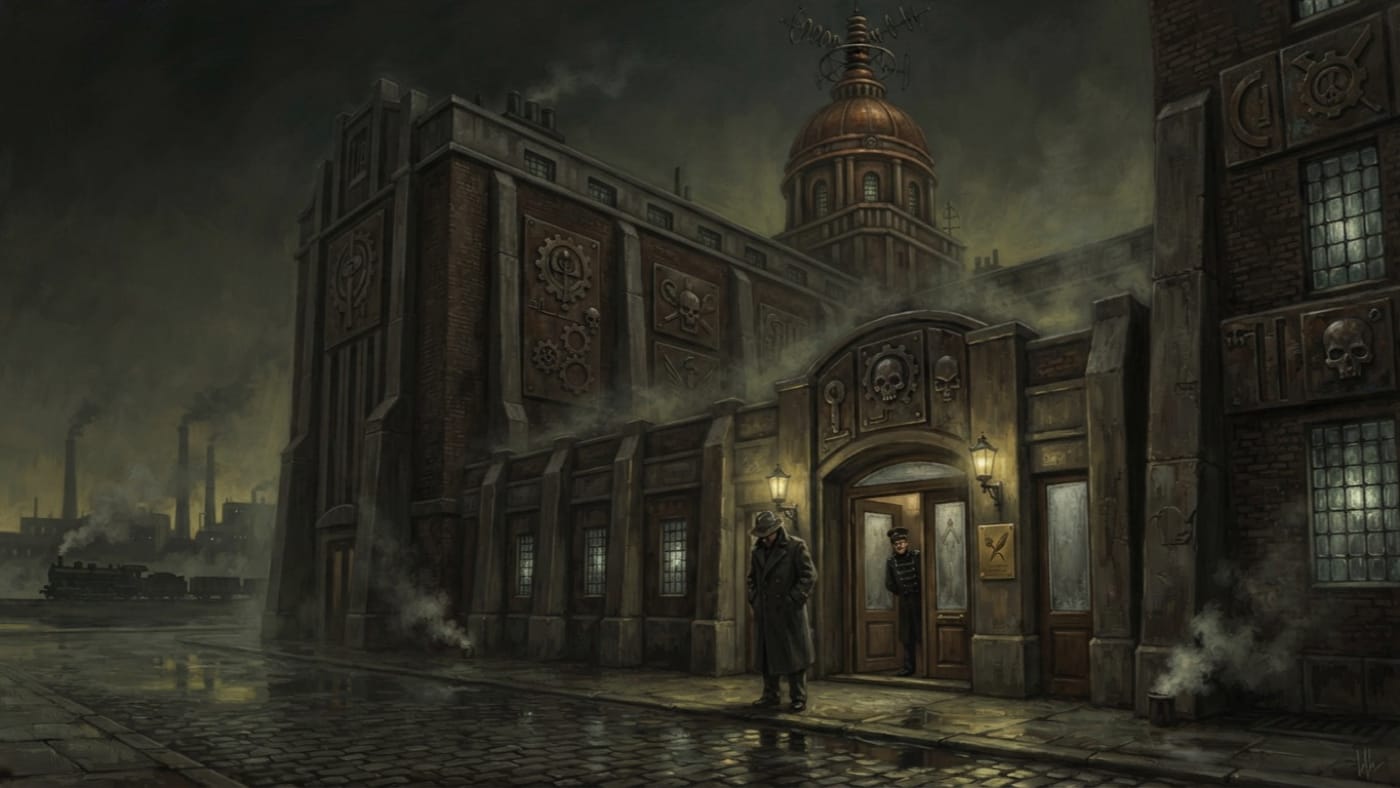
Hotel Sigismundus
Pilgrimage's waiting room on the bank that was supposed to be deaf
Pilgrimage's transit lodge in Warsaw's old city, recalled from my A.S. 197 visit: camphor, candle-wax, mildew, seven additional days, and my hearing of the Breathing on a bank that considered itself deaf.
Codex Ref. II.4.09-197
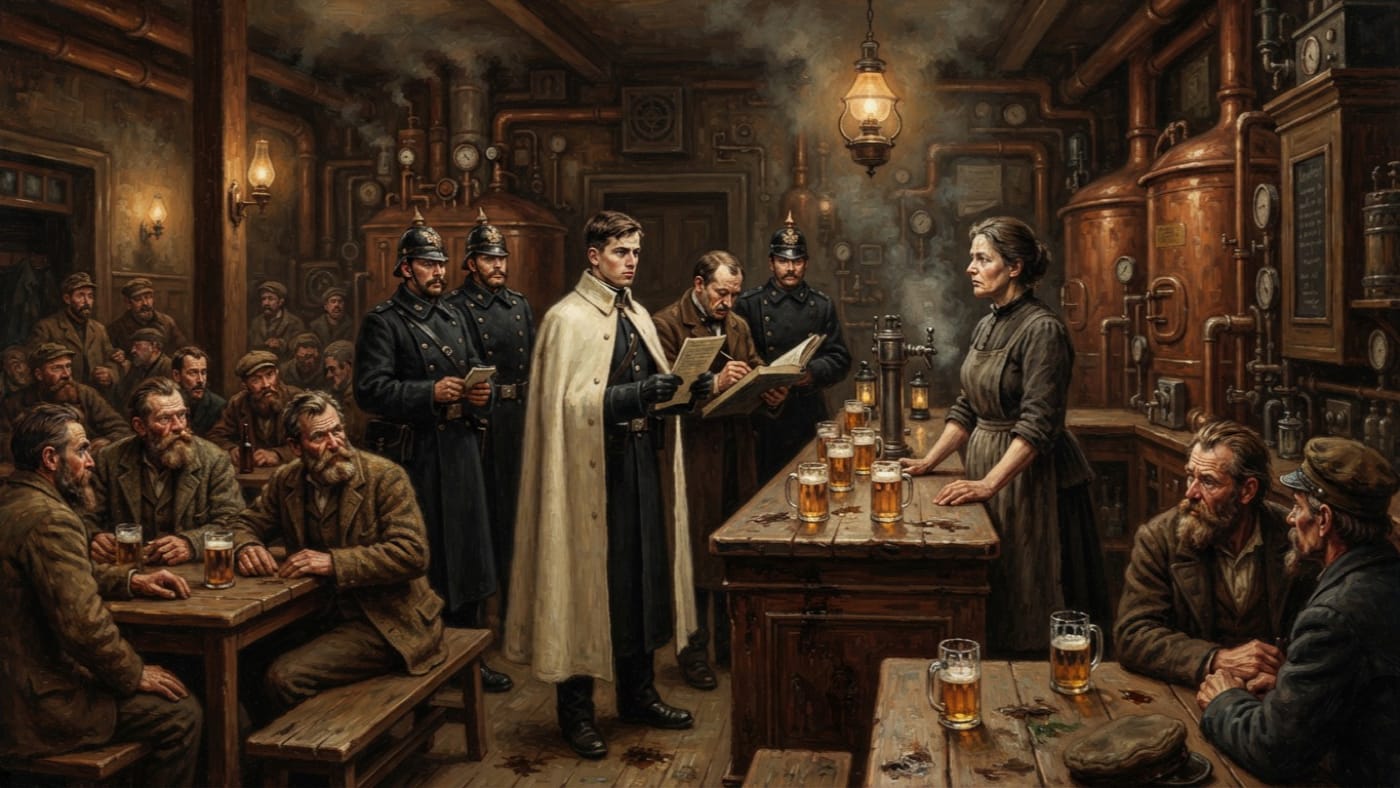
House of Eighteen Steps
Purity brought a curfew; the widow asked who would pay
An Old City beer-hall in Kanzleiburg where, during the A.S. 140 Curfew Standoff, a brewer's widow asked Purity who would pay for unfinished beer. The question survives; the inspectors' answer does not.
Codex Ref. II.3.18-140
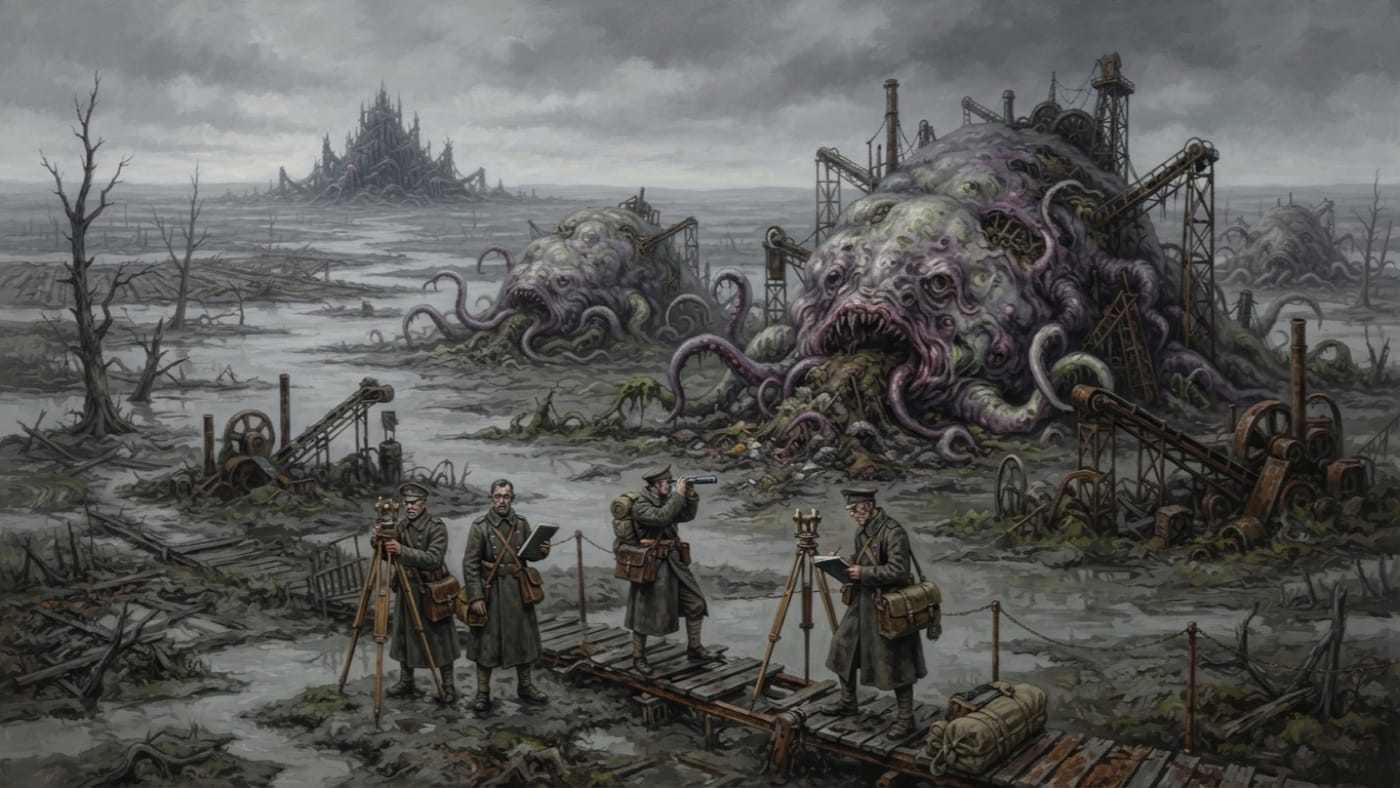
Hungarian plains
The country that fed the armies now feeds what waits for them
Once the breadbasket of armies, the Hungarian grain country is now the Blightmarsh. The A.S. 200 survey confirms eleven stationary Gorged. The Church's yield is nil; the hunger remains productive.
Codex Ref. II.4.09-200
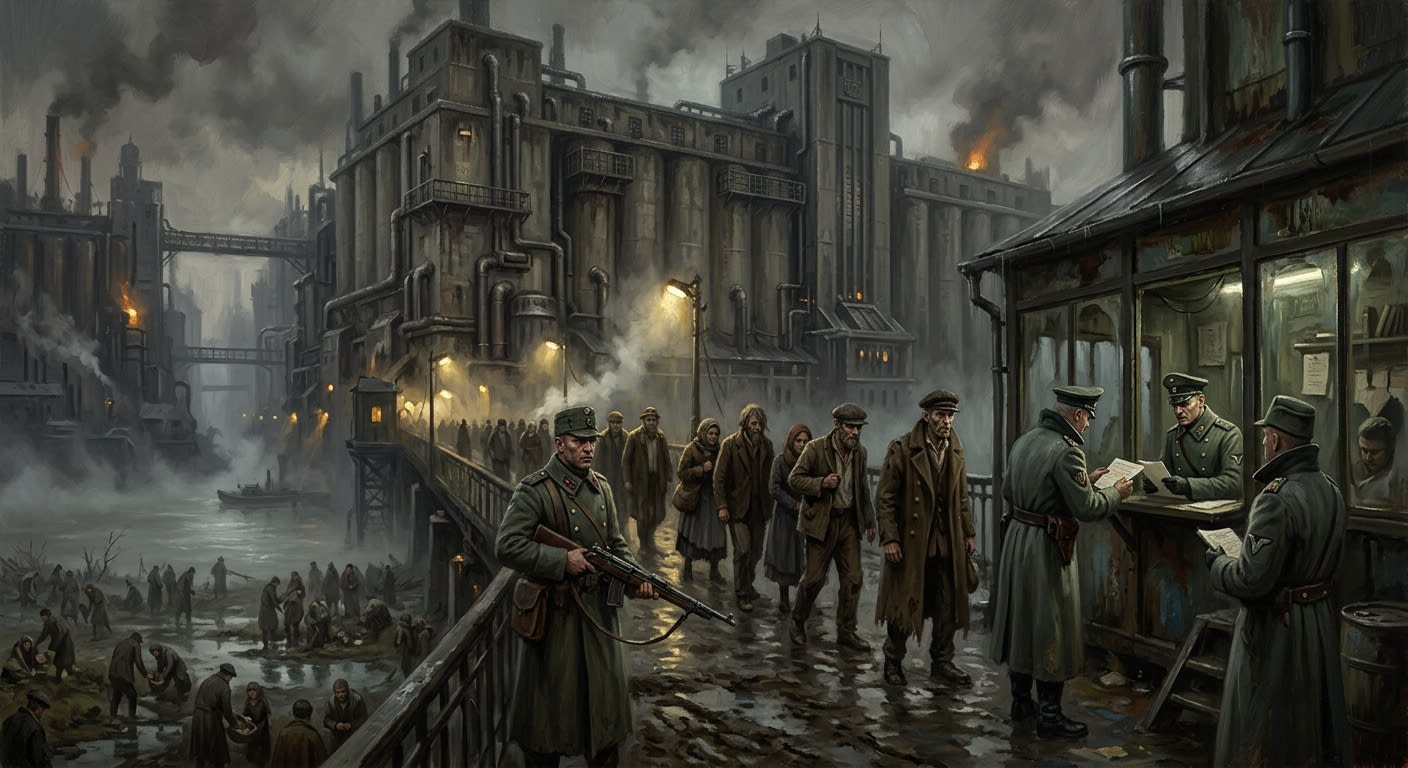
Hungary
The breadbasket that [[hell|Hell]] ate and [[strasbourg|Strasbourg]] filed by the slice
Hungary is the old grain kingdom remade into Budapest's held bank, Pest's visible absence, Blightmarsh hunger, southern corridor necessity, refugee memory, and every office's damp-fingered embarrassment.
Codex Ref. II.4.09-045
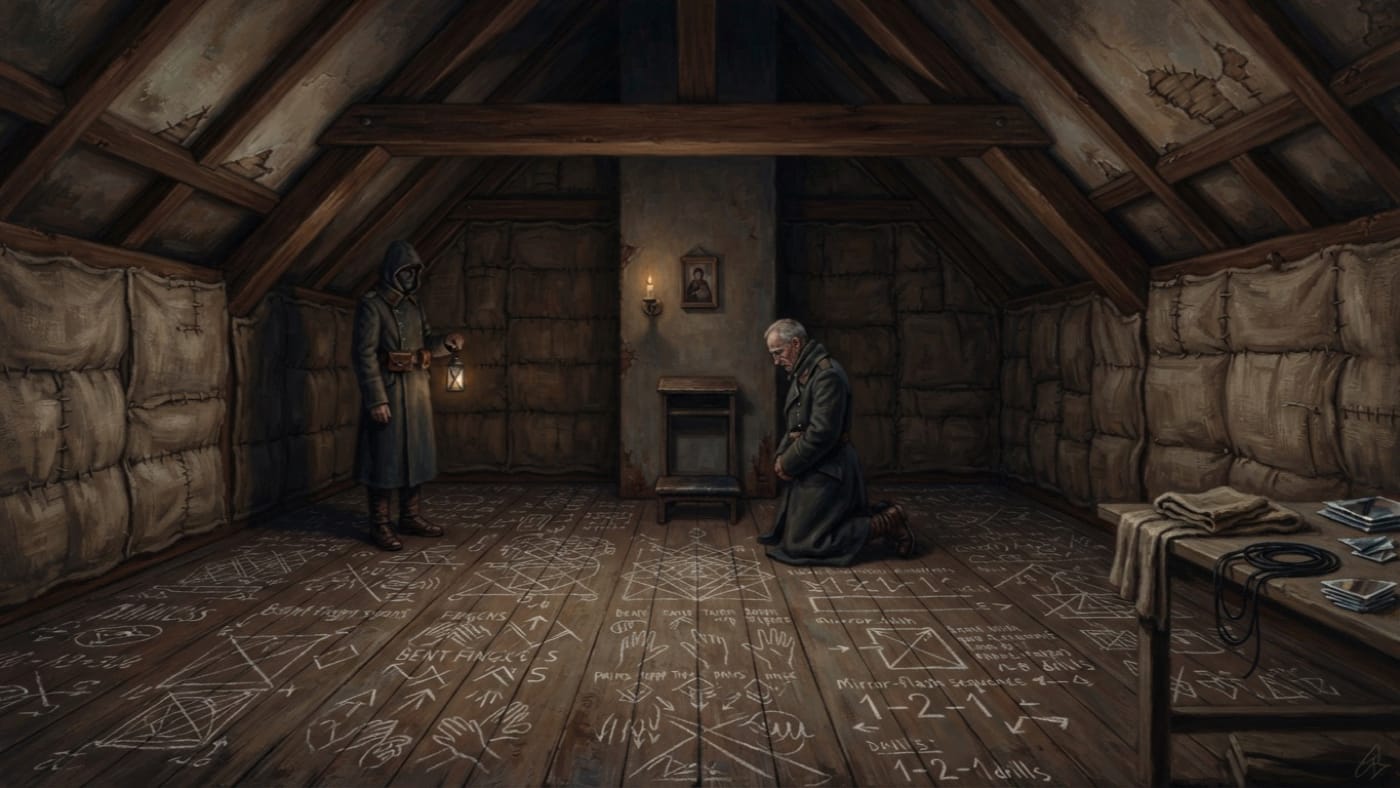
Hush Loft of the Circle of Mute Radiance
The chalk is renewed; the omissions survive
The Hush Loft houses Mute Radiance in the bell-dead attic of Dome-Split Tenement 4B. Chalk drills are renewed, the shrine candle kept low, and every clean floor makes an admirable return.
Codex Ref. II.3.05-922
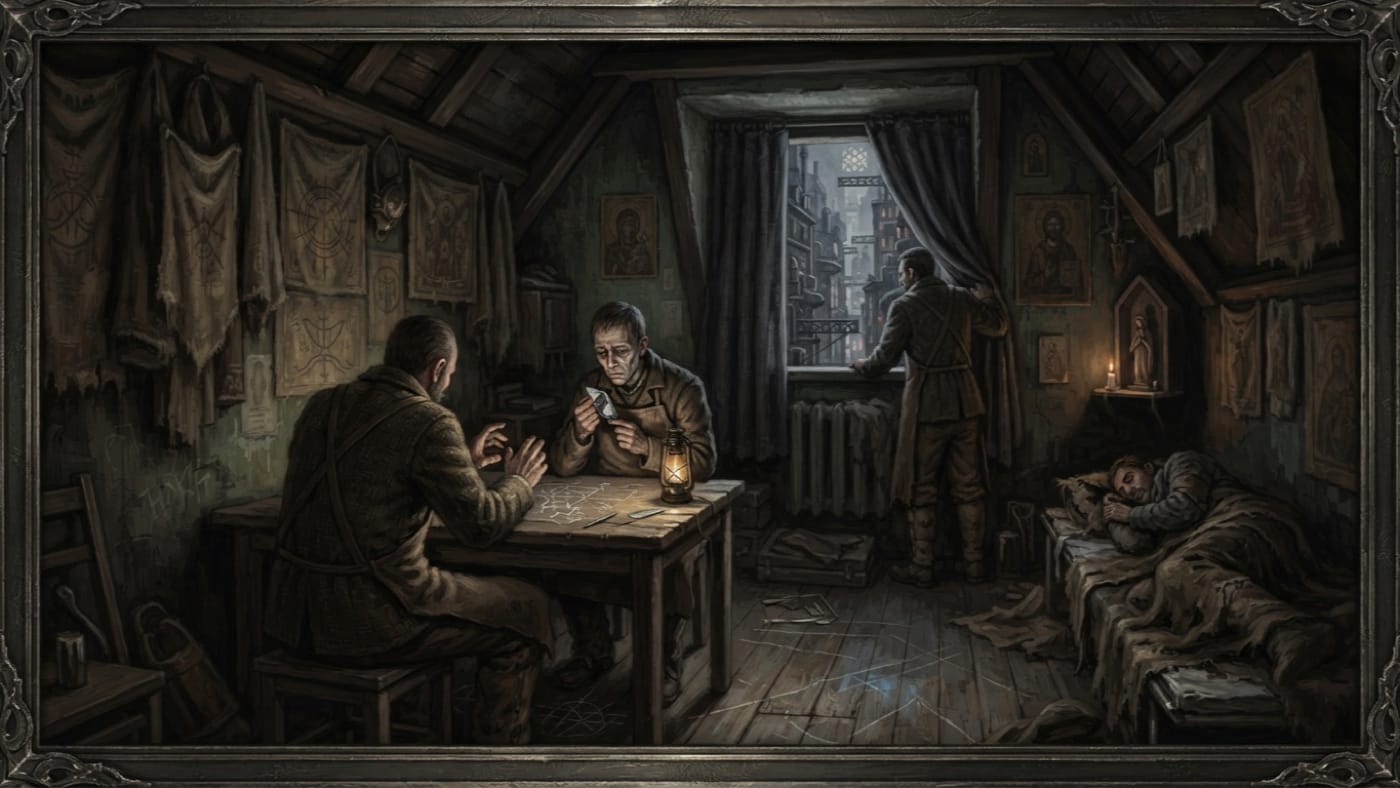
Hush Lofts
Concealment is a narrower thing than safety
Hush Lofts are attics and upper-room hideaways associated with Mute Radiance and silence-adapted signalling. They conceal their occupants more reliably than they protect them.
Codex Ref. II.3.05-1403
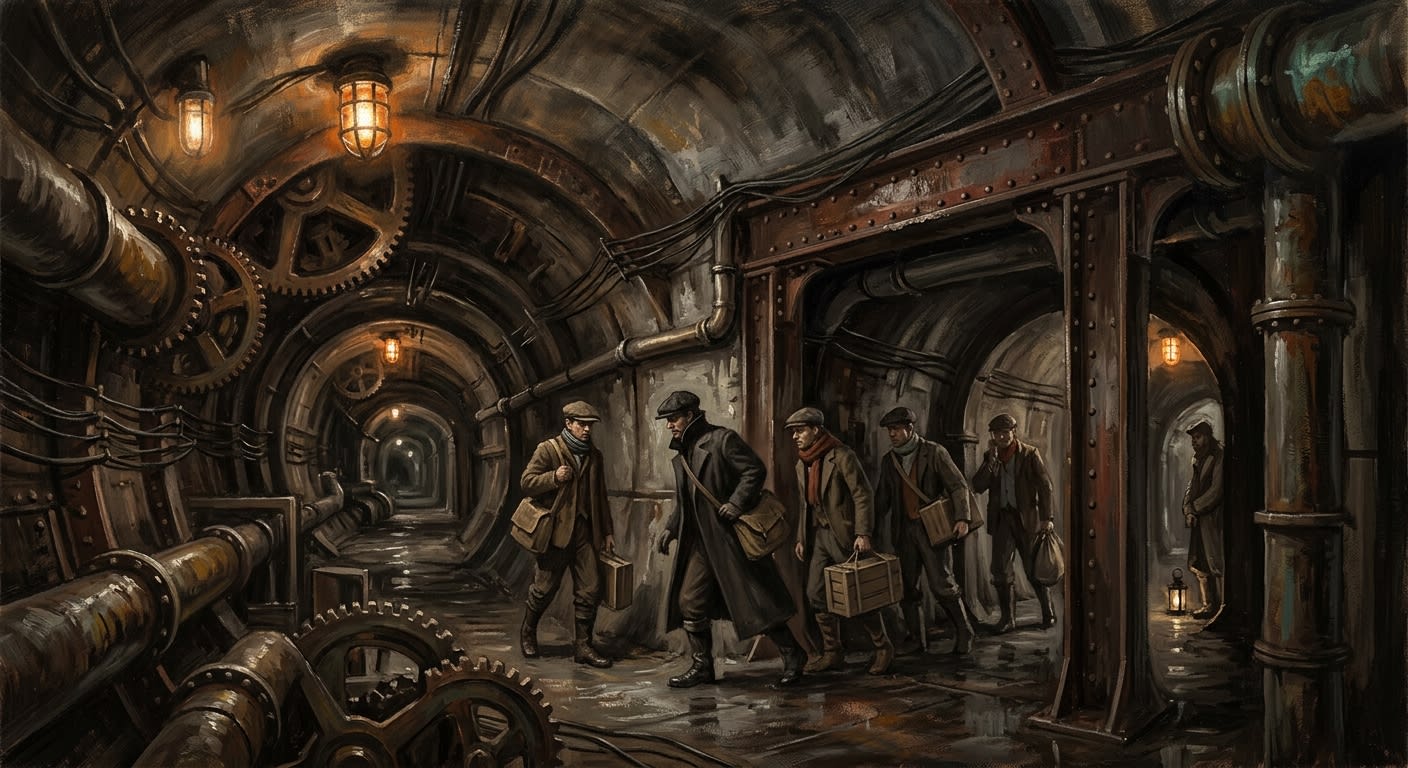
Hush Tunnels
Lorn's denied under-yard, where the schedule hides its dead
The Hush Tunnels are Lorn's officially nonexistent under-yards: denied passages carrying fugitives, runners, false manifests, lamp-talk, and hungry routes.
Codex Ref. II.3.06-201
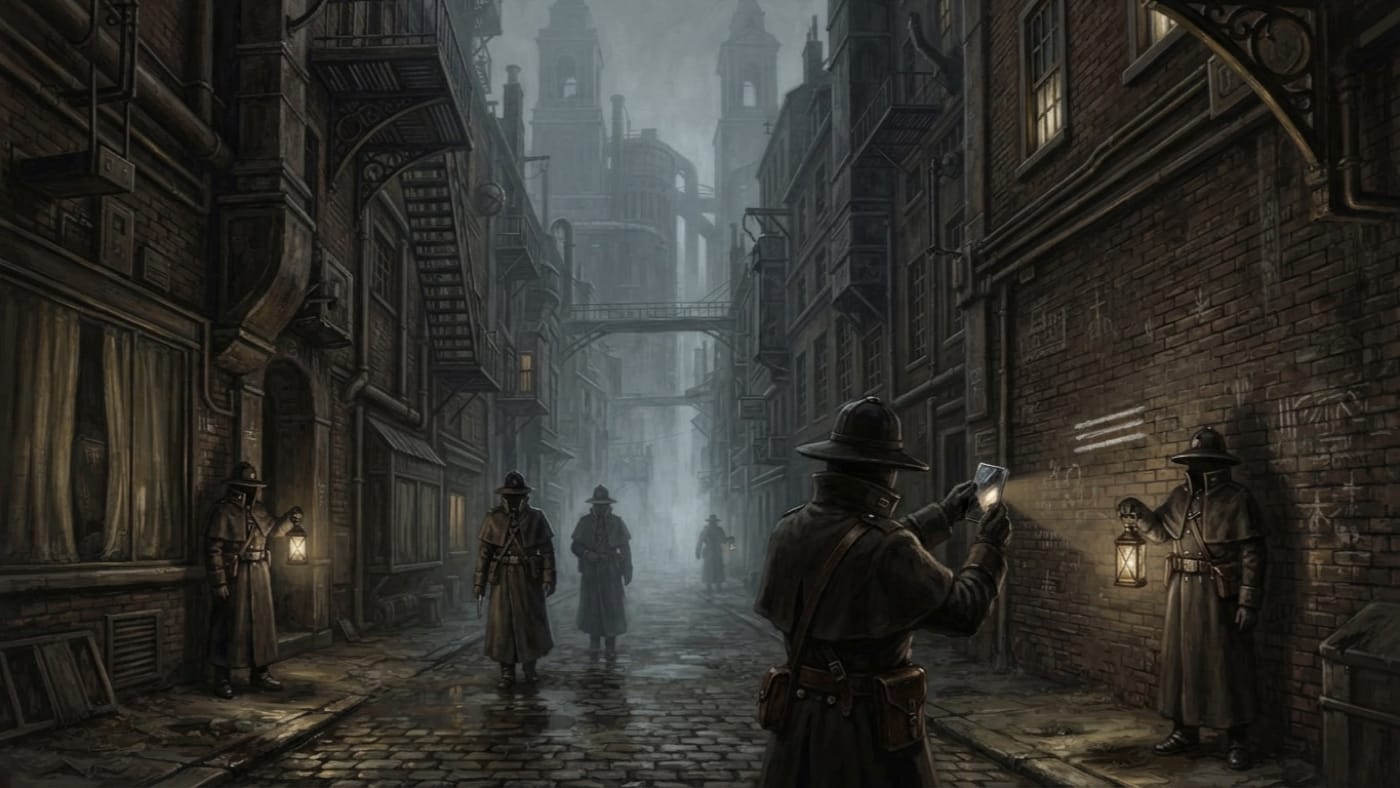
Hush-Zones
Where the bells fail, authority learns to gesture
Hush-zones swallow bells, warnings and civic command. In bell-dead alleys and fractured districts, the Circle of Mute Radiance governs by hand-code and mirror-flash; the causes remain unruled.
Codex Ref. II.3.66-201
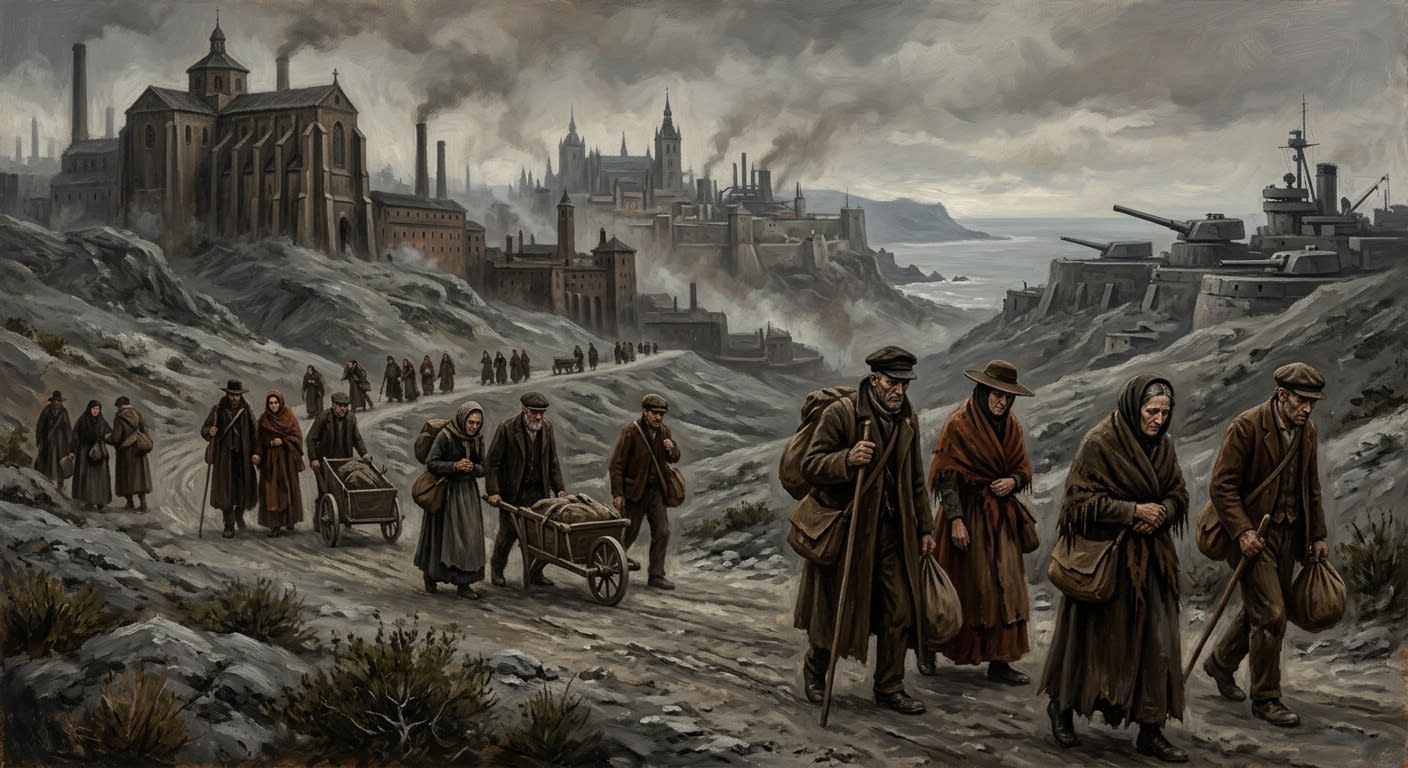
Iberia
The western furnace kneels, pays, murmurs, burns, and remembers
Iberia is the Synod's western furnace: a sealed peninsula of relic ash, late Concordat obedience, Seville mutters, Toledo martyrdom, pilgrimage roads, British guns at Gibraltar, and memory too old to confiscate cleanly.
Codex Ref. II.1.04-090
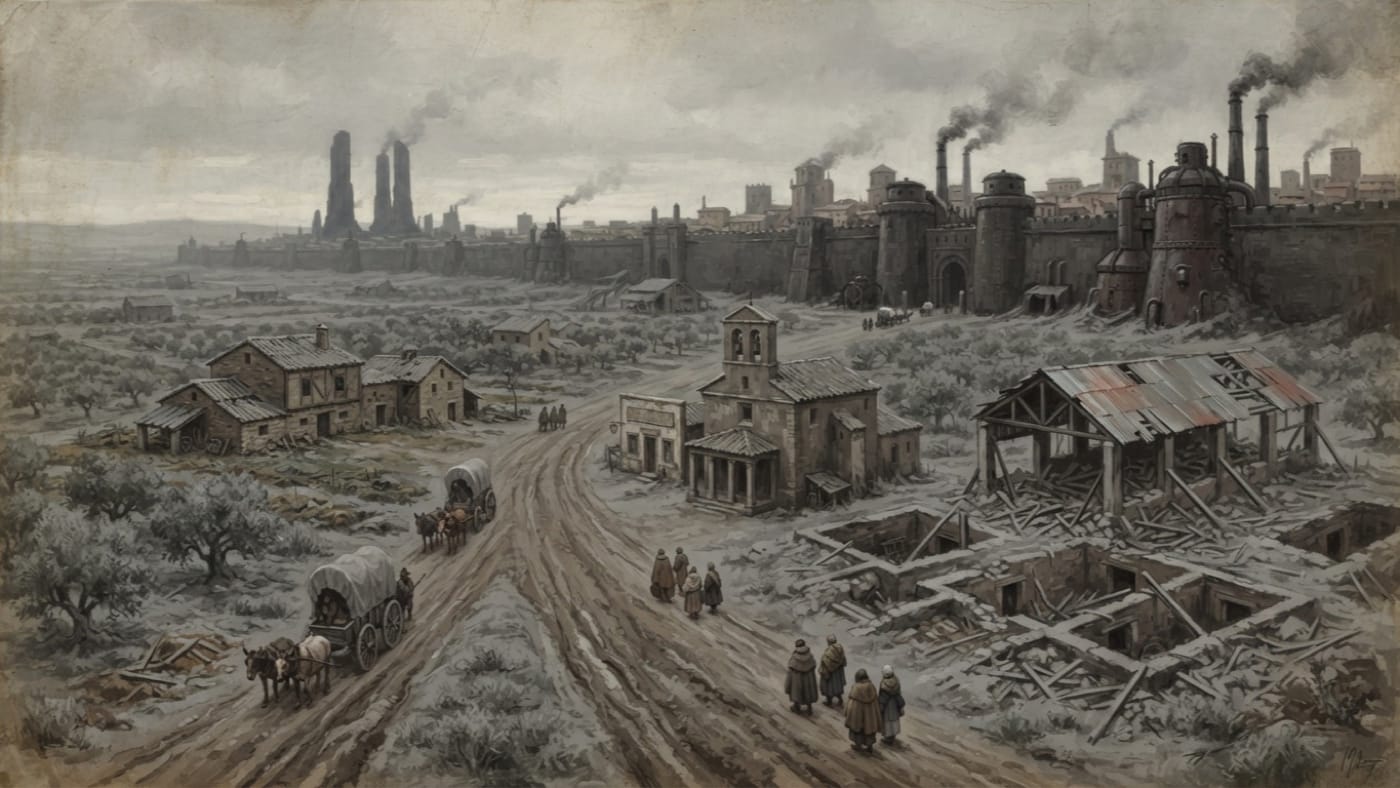
Iberian Approaches
Purity certified the ground. Nobody lifted the floorboards.
Zaragoza's outer farms, warehouses and approach road: an unsurveyed locality in the western heartland where a Velkara-aligned compound survived Purity certification until the A.S. 143 bombardment made weather of the evidence.
Codex Ref. II.1.07-143
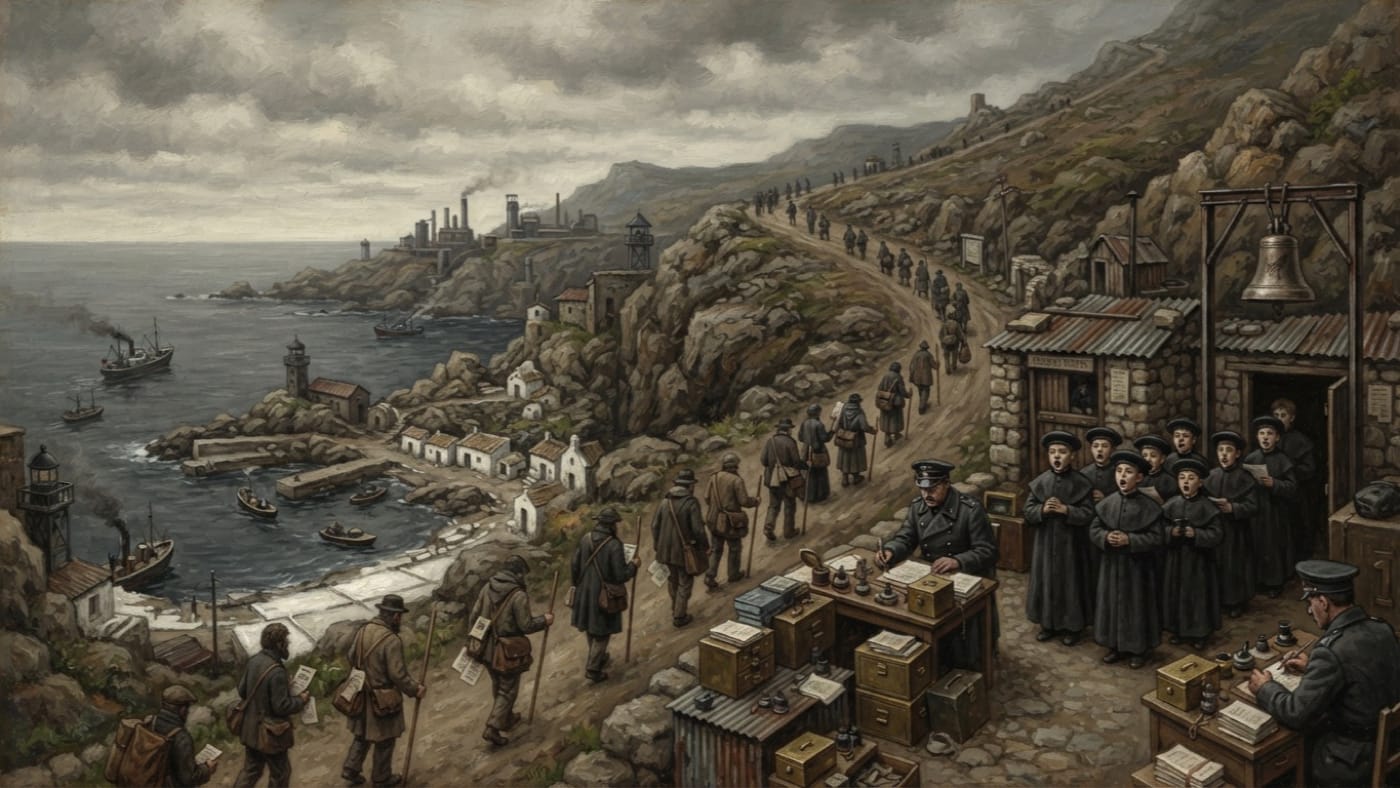
Iberian coast
The roads are safer; the invoices survived
The Iberian coast feeds pilgrims from salt flats, harbours and smugglers' coves onto inland shrine-roads. The A.S. 193 Jubilee dissolved the Peregrine Cartel; Pilgrimage kept its intelligence, its methods and the invoices.
Codex Ref. II.4.01-193
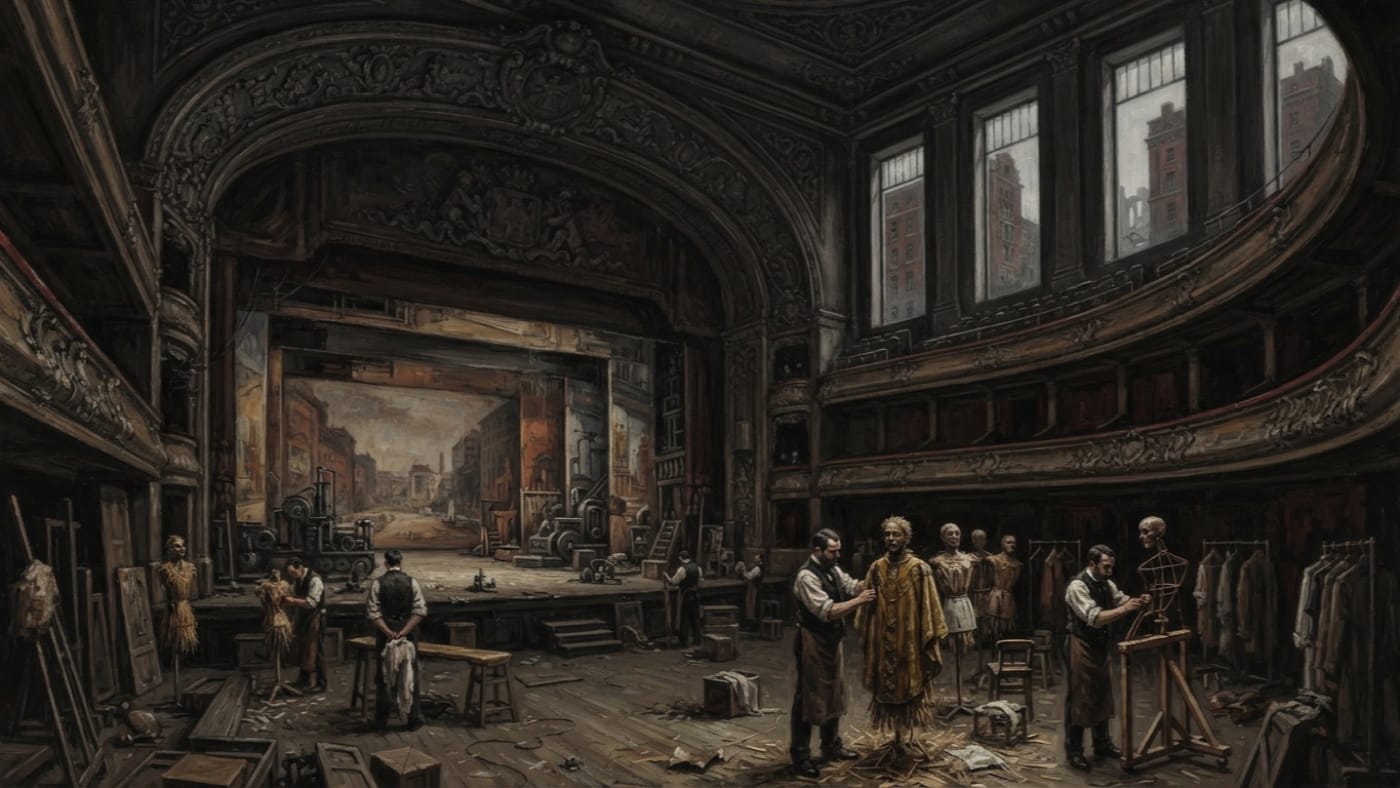
Imperial Theatre
The Costumiers Went On to Dress Saints for Burning
Vienna's Imperial Theatre enters the Ledger through craftsmen later hired for the Black Procession of A.S. 30. Their saints were lifelike; the house's founding and fate remain unrecorded.
Codex Ref. II.4.09-030
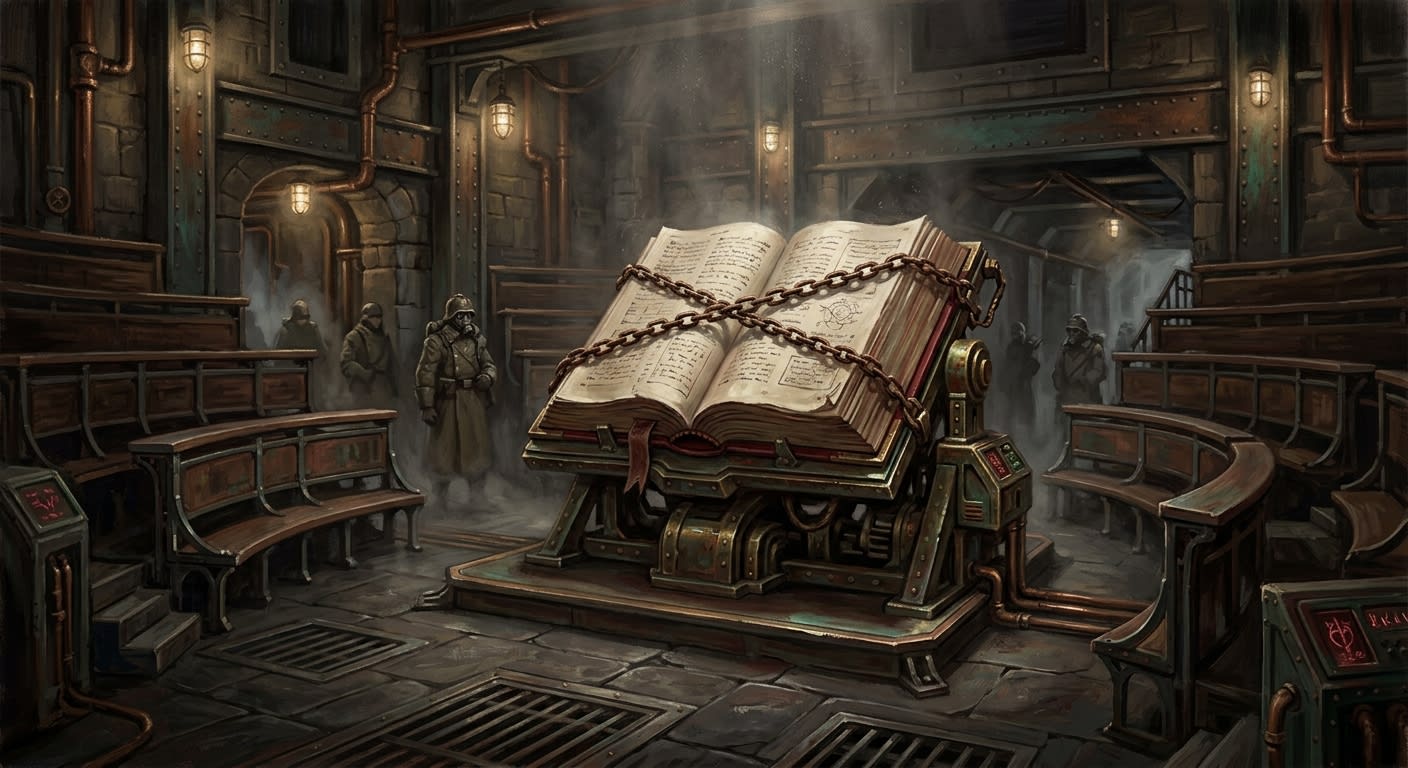
Index Damnatus Chamber
The room where forbidden paper teaches obedience to look away
Principal room of the Vault of Silences beneath Strasbourg's Basilica, where the Index Damnatus remains chained open, watched by benches that never learned mercy.
Codex Ref. II.2.02-004
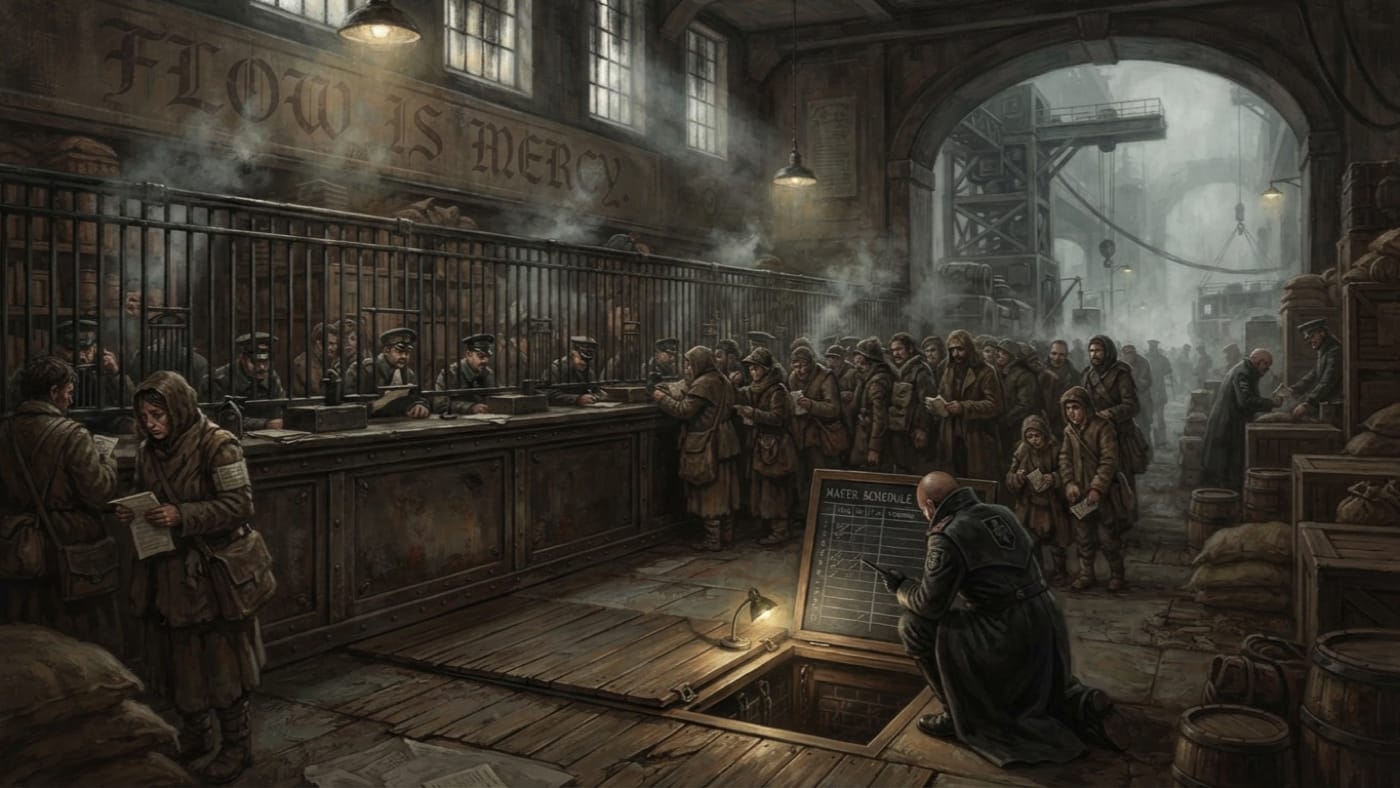
Ink Dock
The river waits for permission
In A.S. 201, Ink Dock sells waiting, files missing cargo as confession, and keeps the Chain's master slate beneath its Hall. The ferries move when the ink permits.
Codex Ref. II.3.05-003
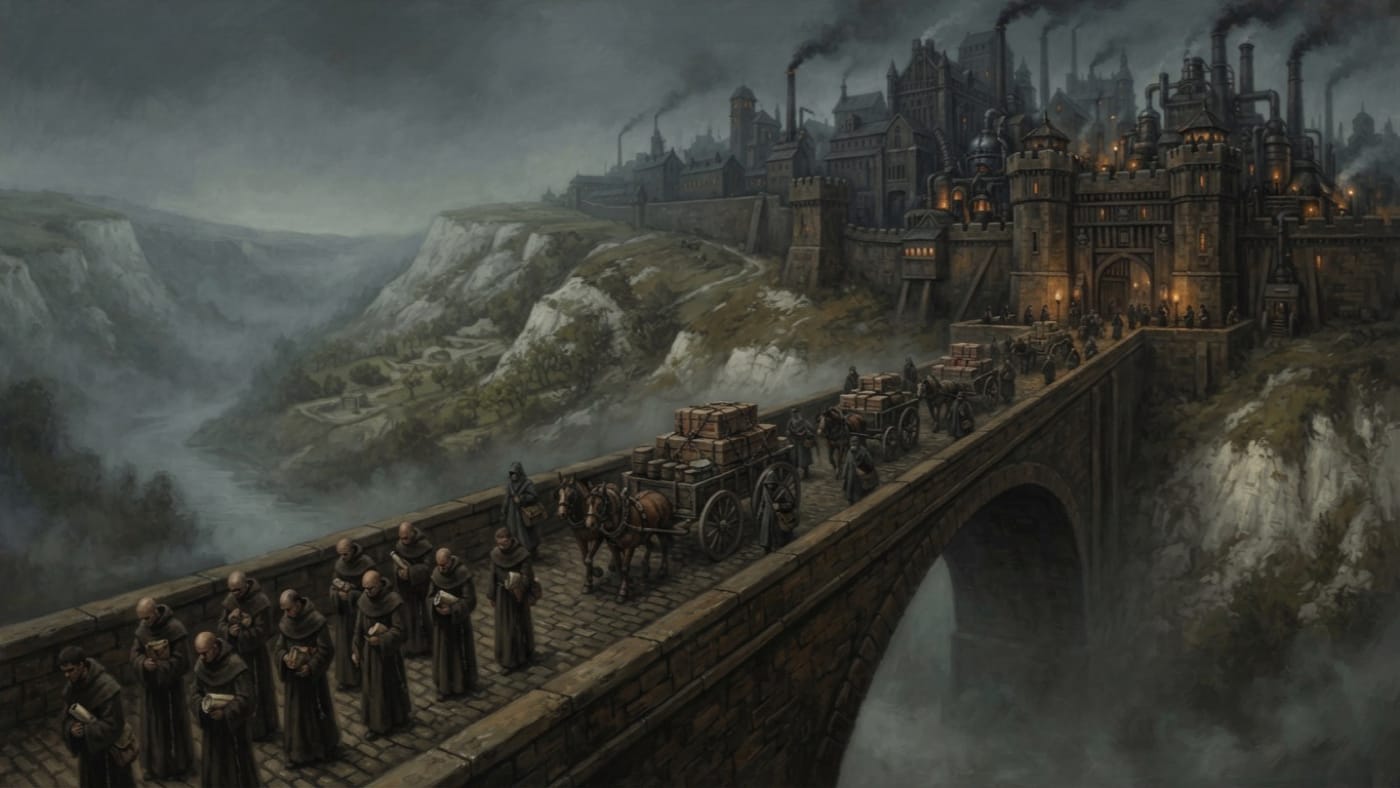
Inkhouse Bridge
The bridge carries the papers; the gatehouses decide
Nemea's single stone span carries all freight, couriers and novice intake. The Bureau arranged the bottleneck deliberately. The bridge carries the papers; the Collegium waits beyond the crossing.
Codex Ref. II.2.06-021
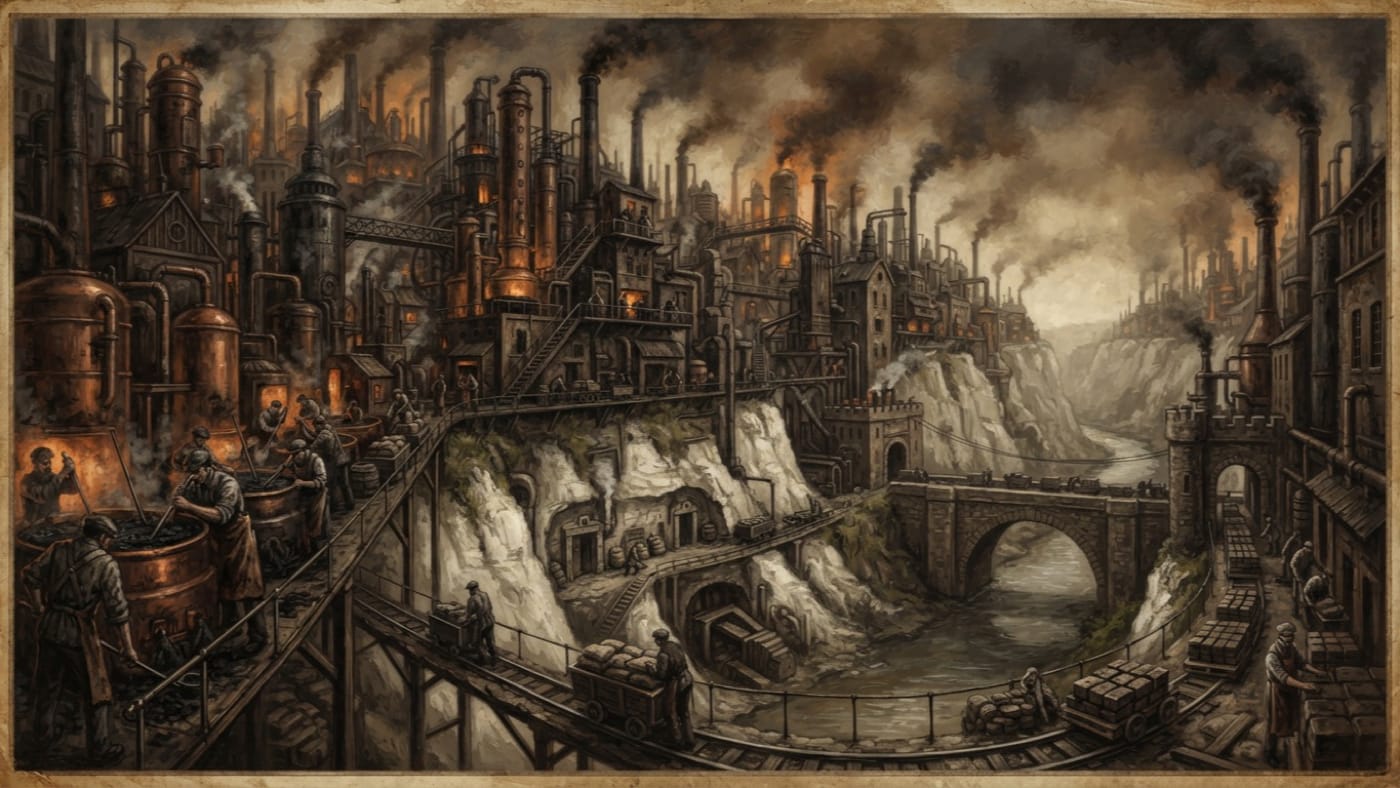
Inkhouse Quarter
Where the law is boiled before it is written
Nemea's copper-vat precinct supplies the Bureau of Records with rationed ash-ink. The brewers pay in shifts and surnames; the contracts downstairs keep finding new obligations.
Codex Ref. II.2.06-020
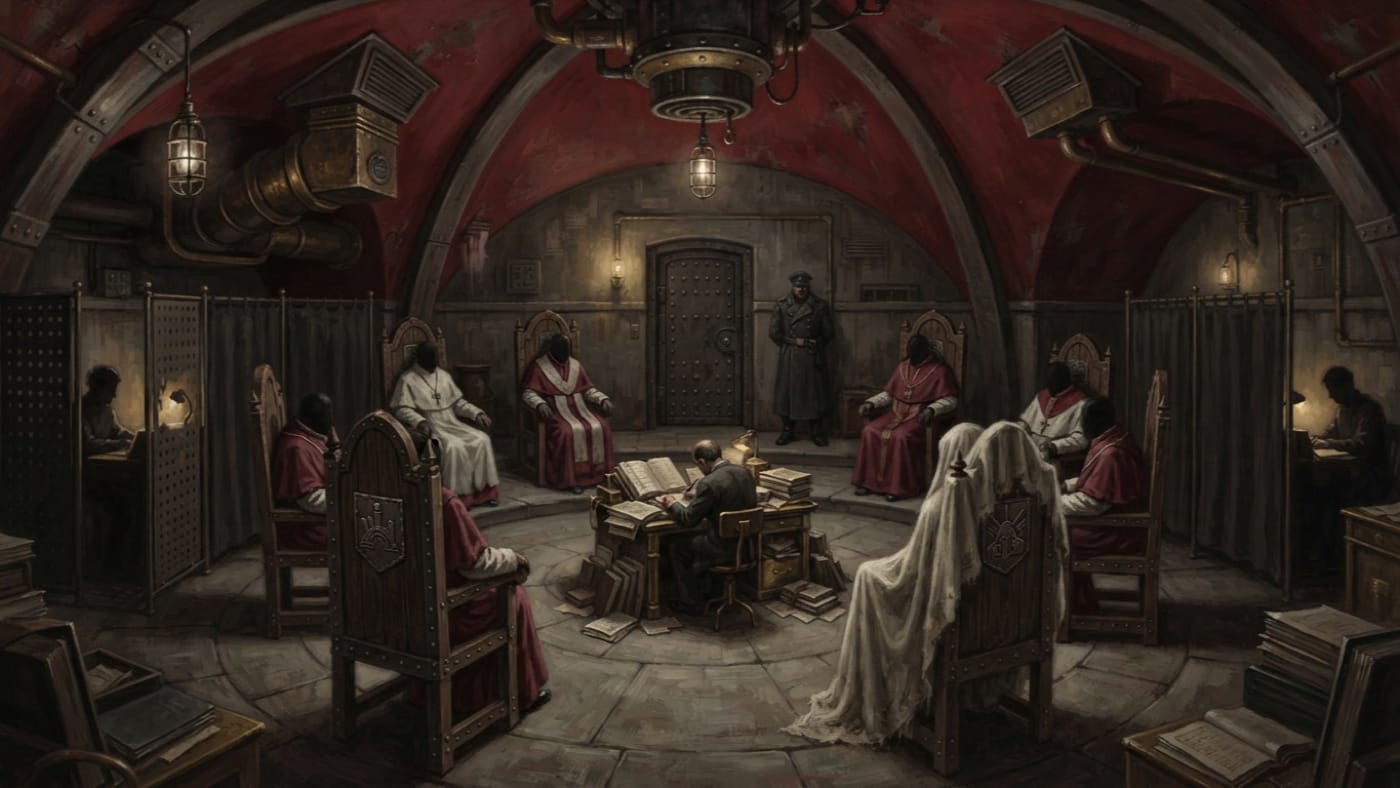
Inner Circle of Strasbourg
Six Chairs Answer. Seven Seals Decree.
Seven chairs, six occupants, no table. From the Basilica's highest floor, the Synod decrees through corrected minutes, seven stamps, and War's vote counted by faith.
Codex Ref. III.2.04-1452
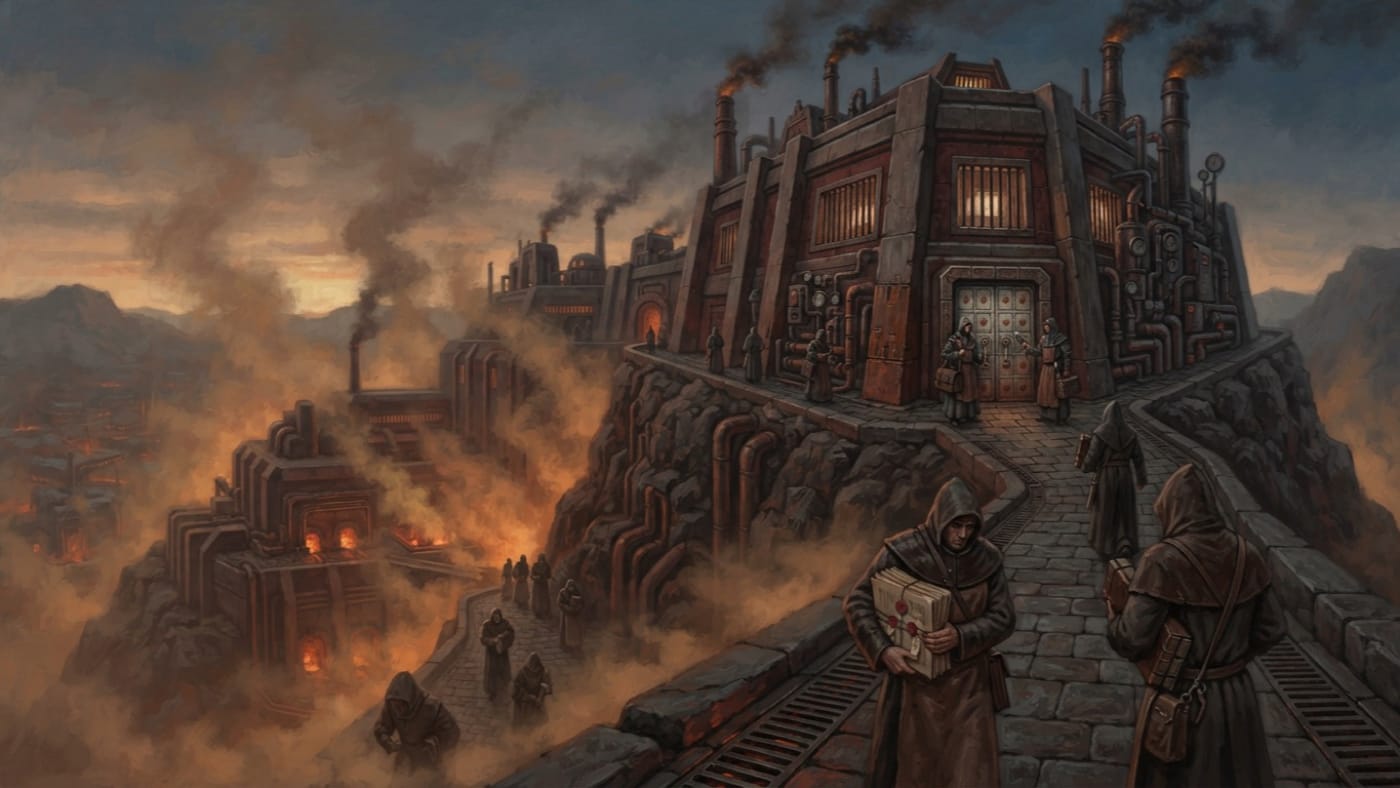
Innovation Annex
Three seals before flame. Two keys after failure.
San Vesta's summit laboratory permits physicians, bakers and kiln-masters to experiment under three seals. Acceptable failures receive ceramic covers, two keys and a vocabulary carefully emptied of blame.
Codex Ref. VII.1.03-004
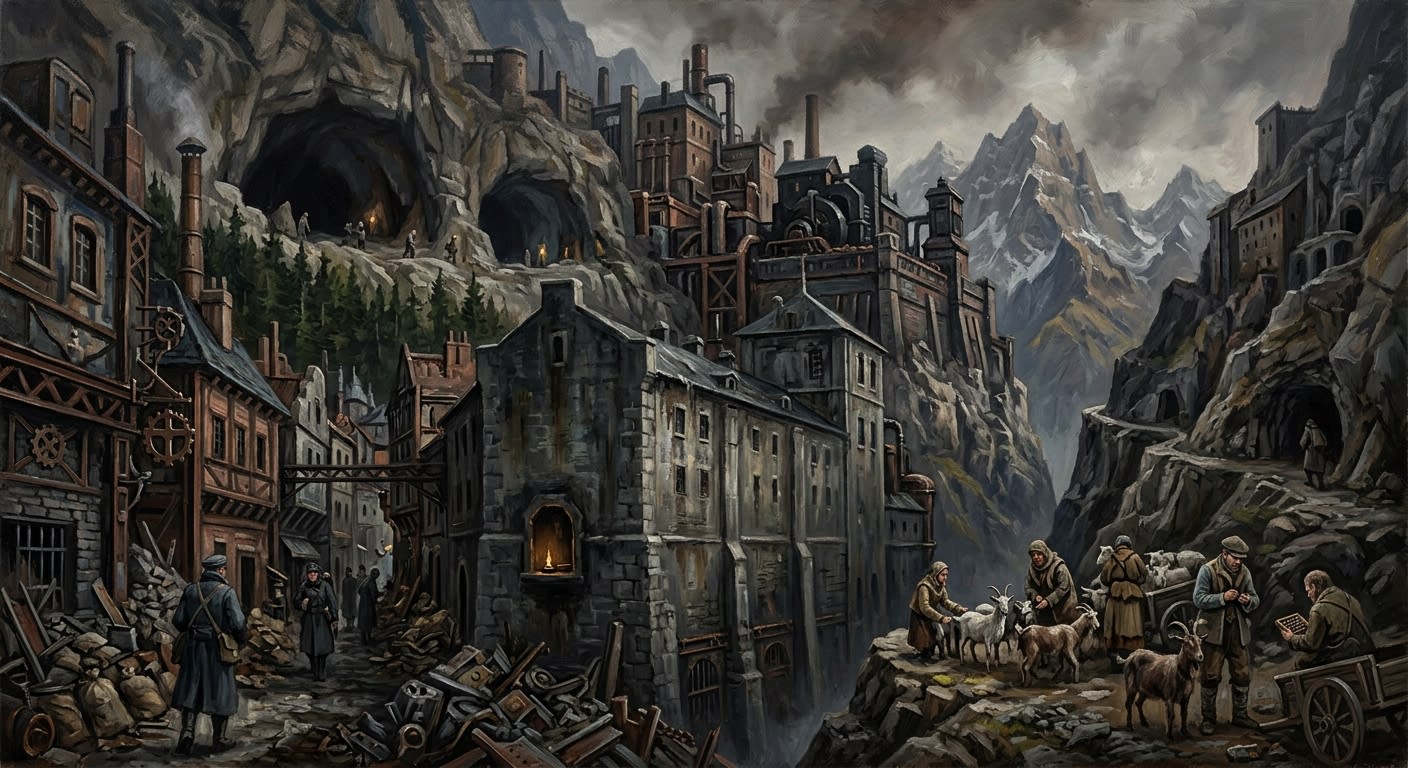
Innsbruck
Where mountains, grandmothers, caves, and walls defeat the census
Innsbruck is the Synod's alpine refuge-city: Cellar Saint caves above the treeline, relics disguised as trash, Mother Sava's wall-cavity, Pale Kin routes, goat arithmetic, and the most pious registry evasion in the mountains.
Codex Ref. II.2.09-030
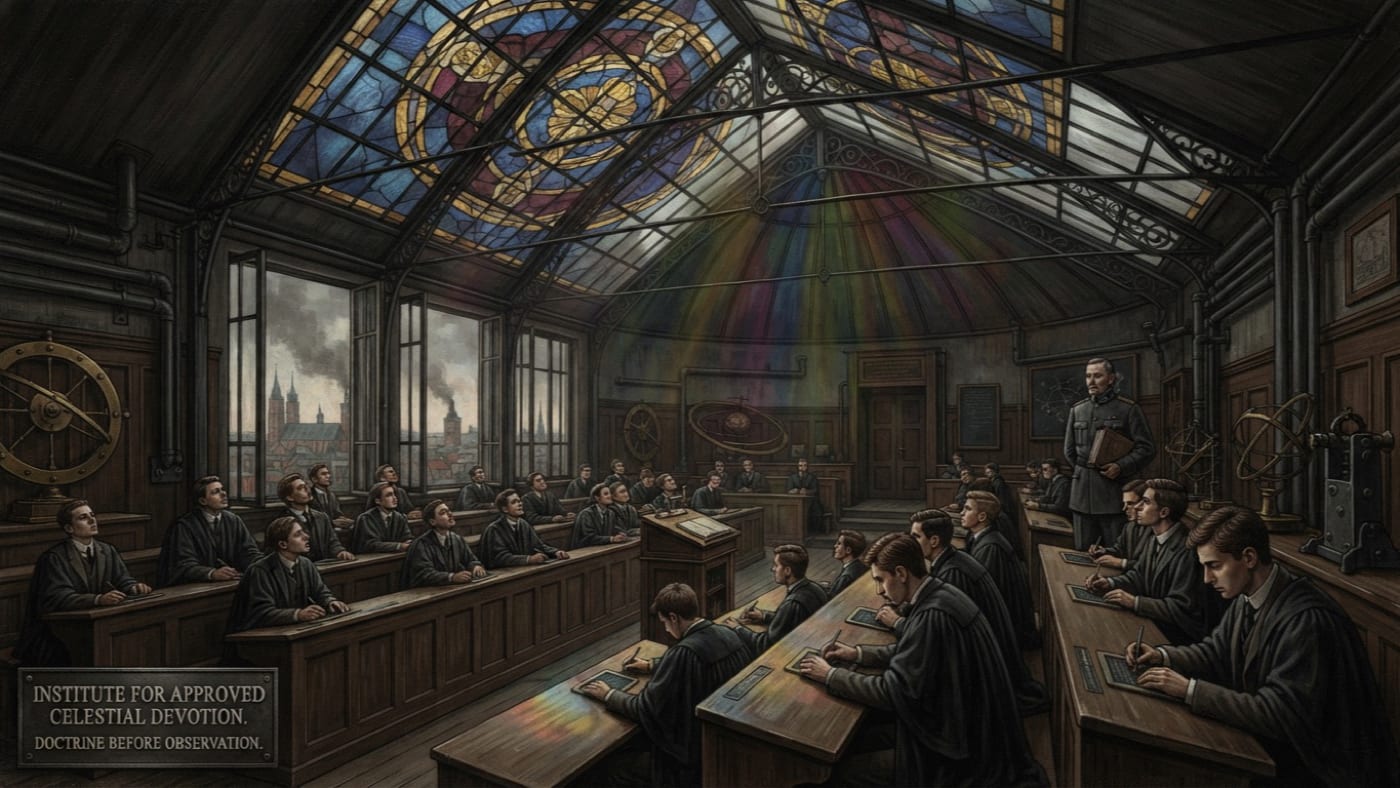
Institute for Approved Celestial Devotion
Doctrine before heaven, and copying before calculation
Kraków's former observatory, corrected into a school of celestial devotion. The roof admits Doctrine first; students may admire the heavens within approved limits.
Codex Ref. II.3.06-199

Instrument Vault
The minutes vanish; the paperwork remains
Station Two's crowded chamber of drag-gauges, bells and logbooks, where Meryth Vesk measures temporal anomalies and the daily ninety-second Skip. The minutes vanish; the paperwork remains.
Codex Ref. II.4.08-018
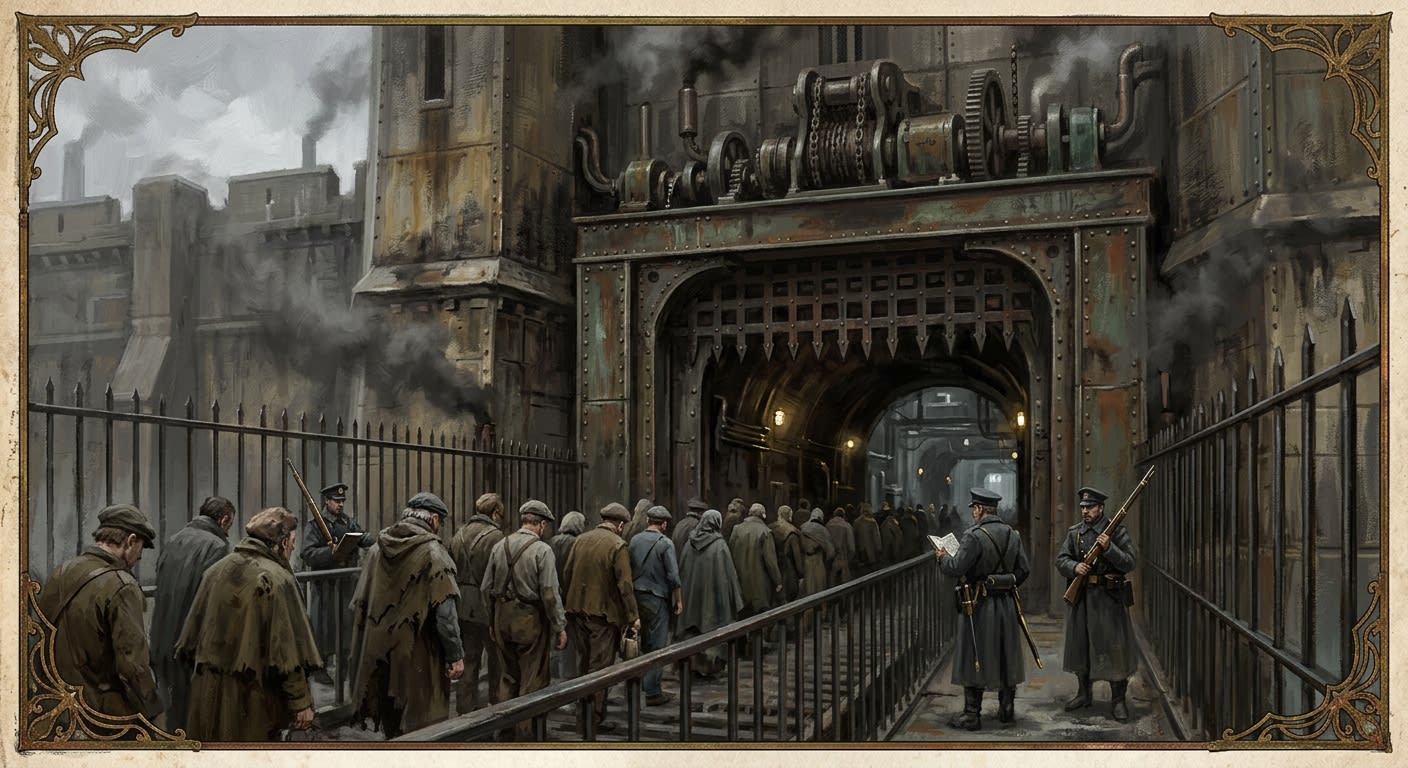
Intake Gate
The road enters one body at a time and is lost
The Intake Gate is the Cloister of Miscounted Beads' western iron mouth: a threshold where pilgrims stop being a procession and become countable, sortable material.
Codex Ref. II.1.05-187
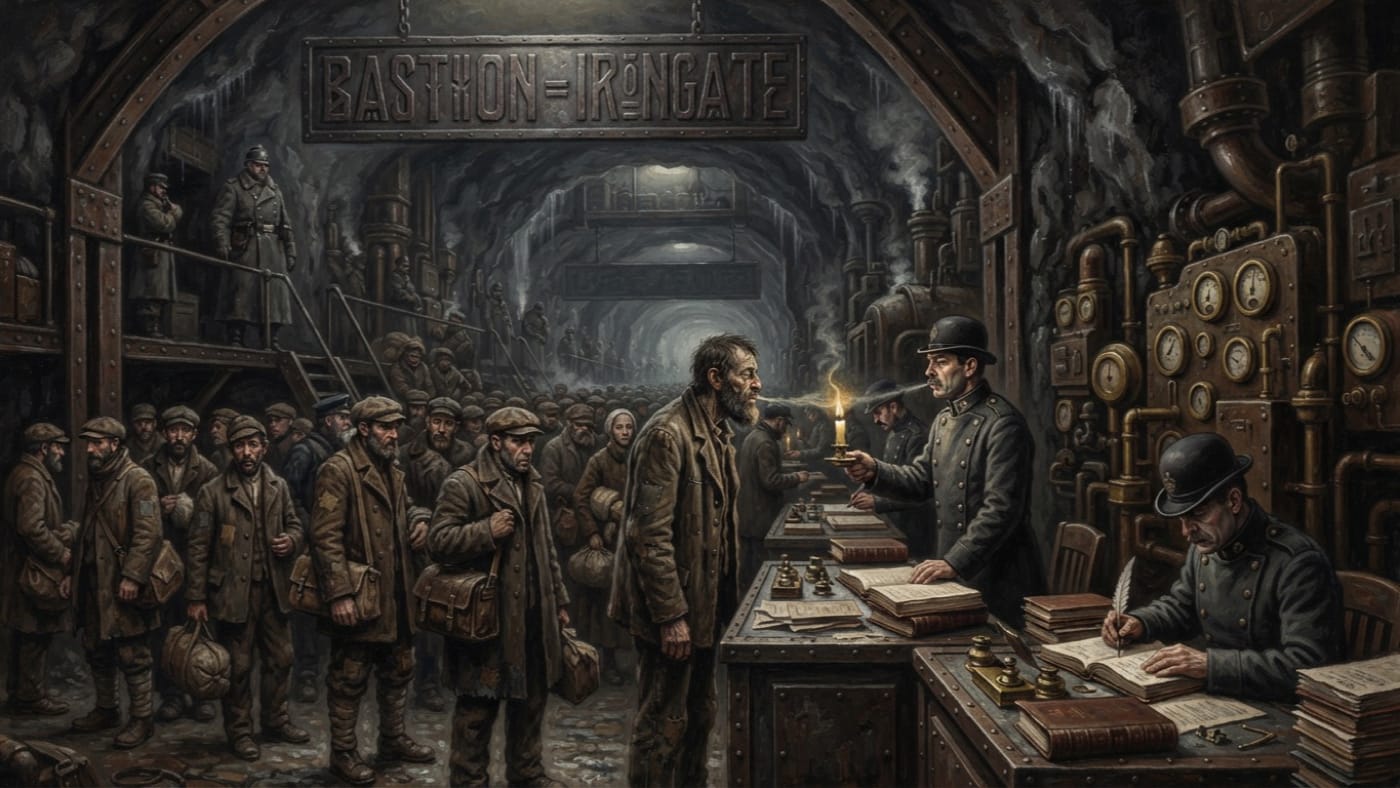
Intake Gateworks
A gate pass buys entry. Warmth requires a tier.
At Bastion-Irongate's Intake Gateworks, a candle makes lungs into paperwork. Permits, pressure checks and quarantine orders decide who enters; vocal licenses decide who sleeps warm.
Codex Ref. II.4.24-201
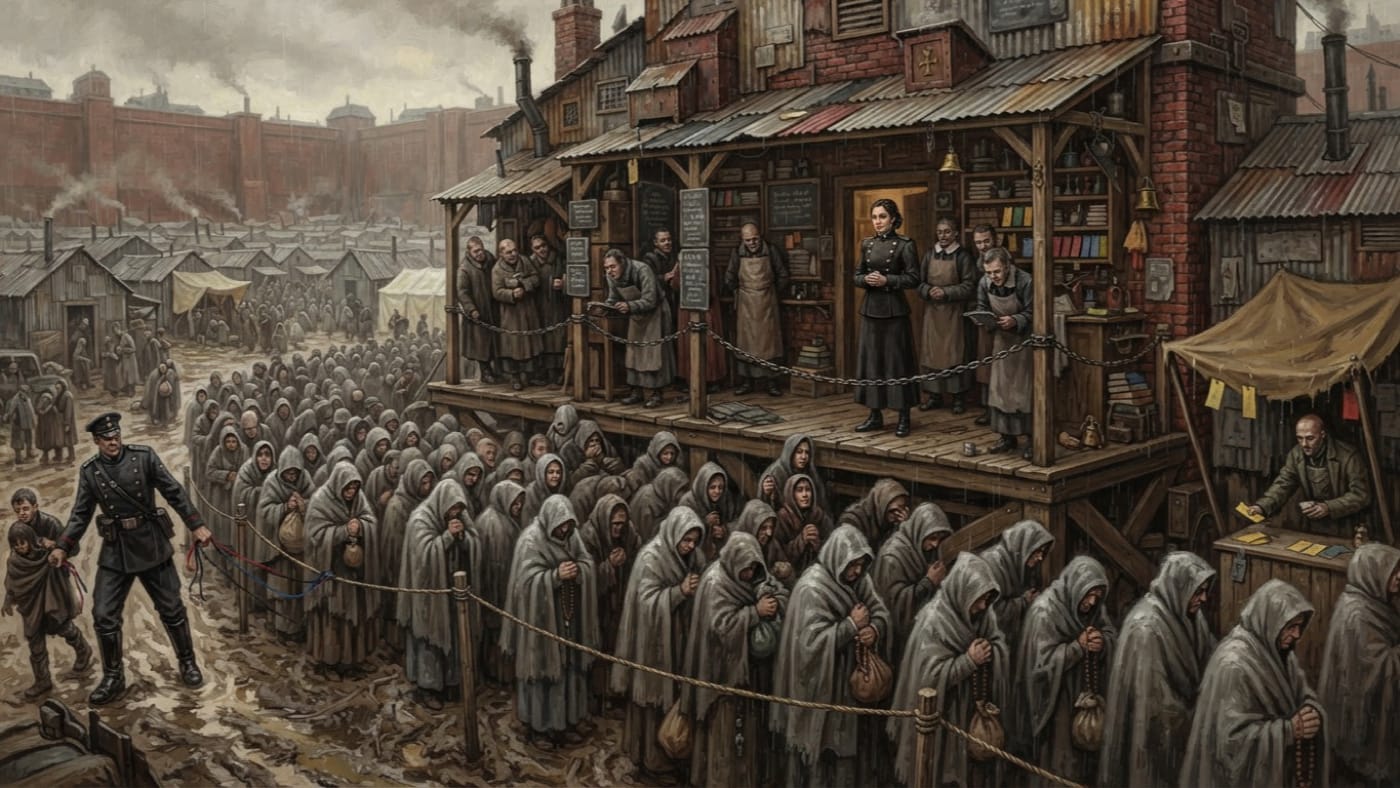
Intake Porch
Where answering your name becomes consent to the Ledger
The Intake Porch is the Lost Procession Yard's calling station: Jossa Rill's clerks summon names, assess disputed answers, and dispatch pilgrims into tags, berths, custody, or expulsion.
Codex Ref. II.3.06-003
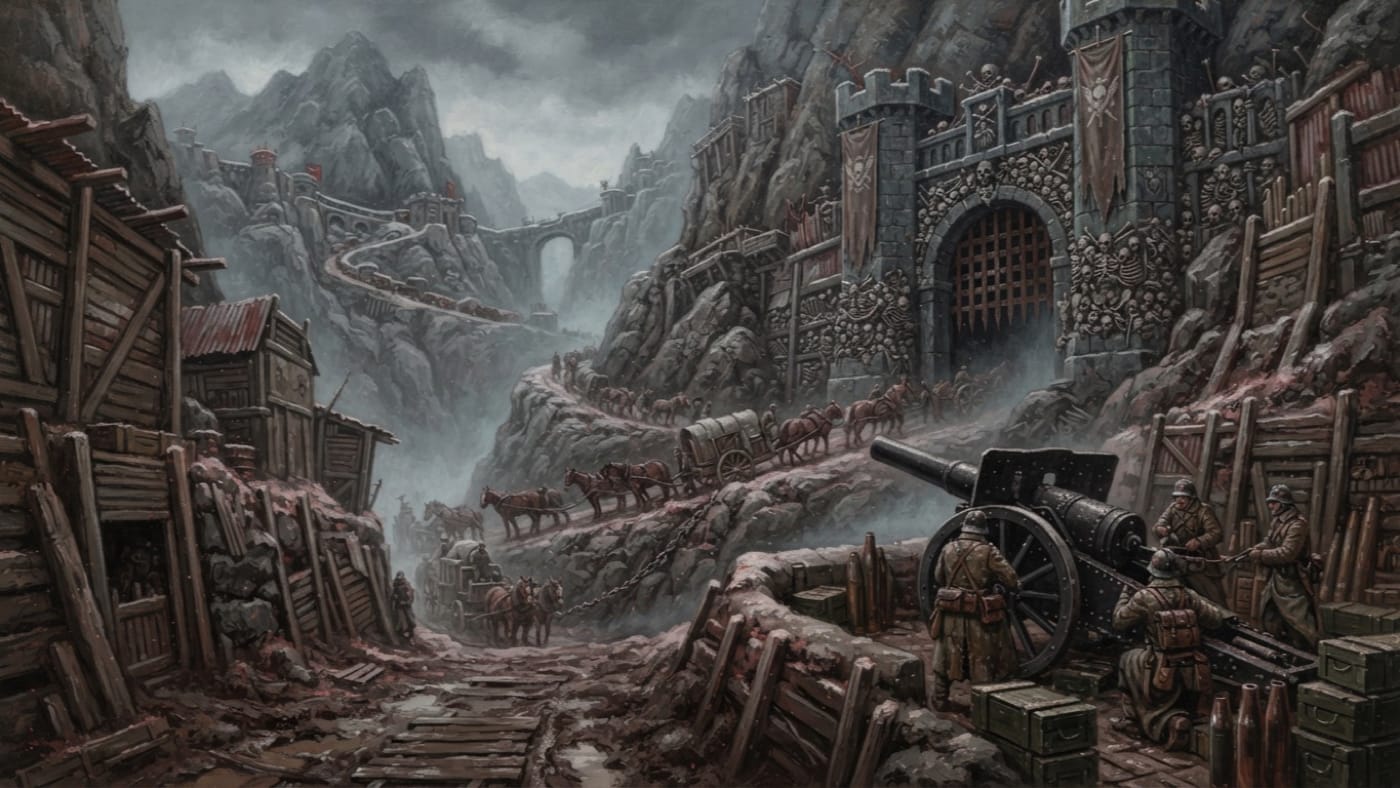
Iron Corridor
Three sectors, whatever the map once claimed
Trench sectors 14–16 of the Carpathian Gates, surveyed in A.S. 201. Three numbers in the Ledger; the pass and its ossuary checkpoint keep their own names.
Codex Ref. II.4.08-016
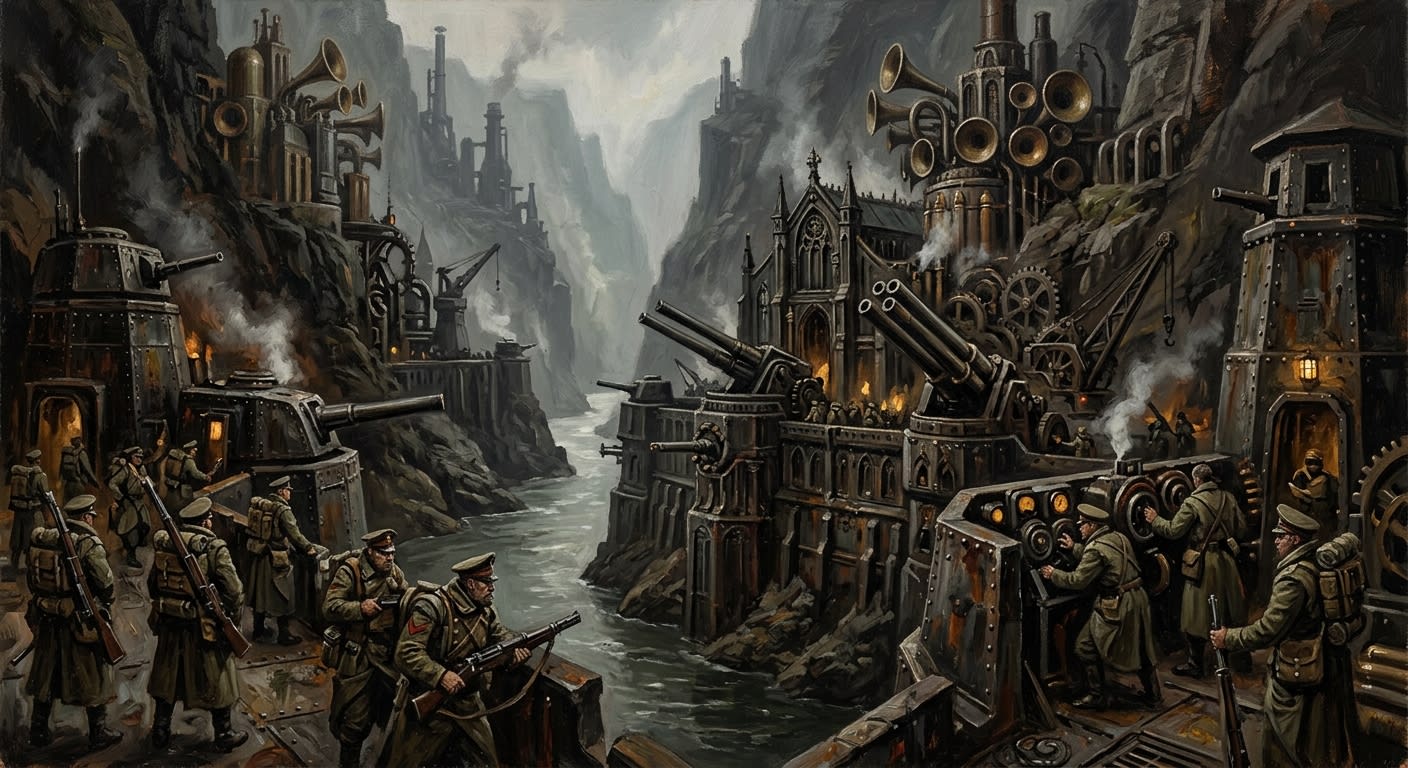
Iron Gates Gorge
Where the Danube is made to breathe in doctrine
The Iron Gates Gorge is the Danube's black throat: a natural chokepoint made into a choral machine, held by Bastion-Irongate at ruinous pitch.
Codex Ref. II.4.08-067
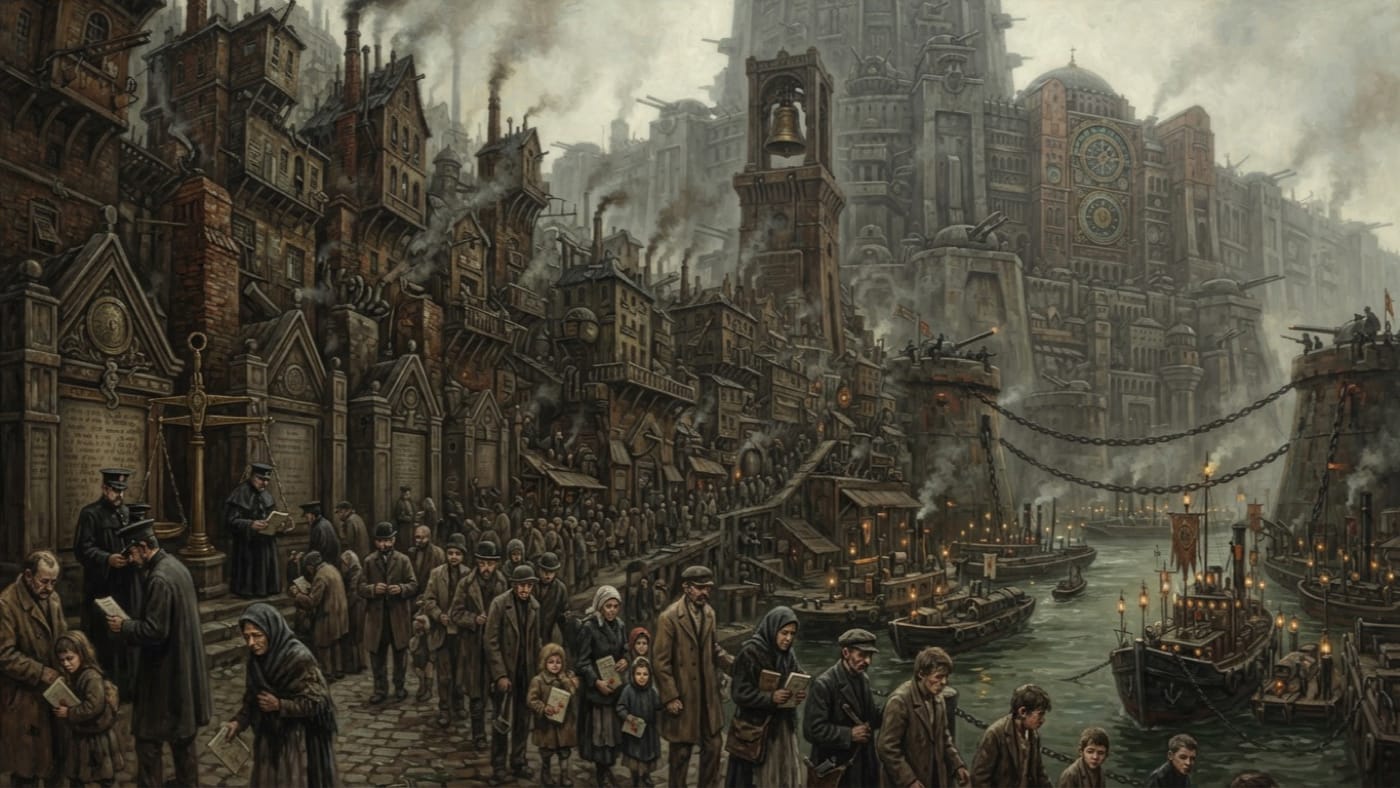
Istanbul
The City That Feeds the Last Lock
Istanbul is the living city beneath Bastion-Constantinople: dockers, clerks and foundry hands keep the southern anchor supplied, while bells, seals and Kargath's hunger decide who eats.
Codex Ref. III.2.04-018
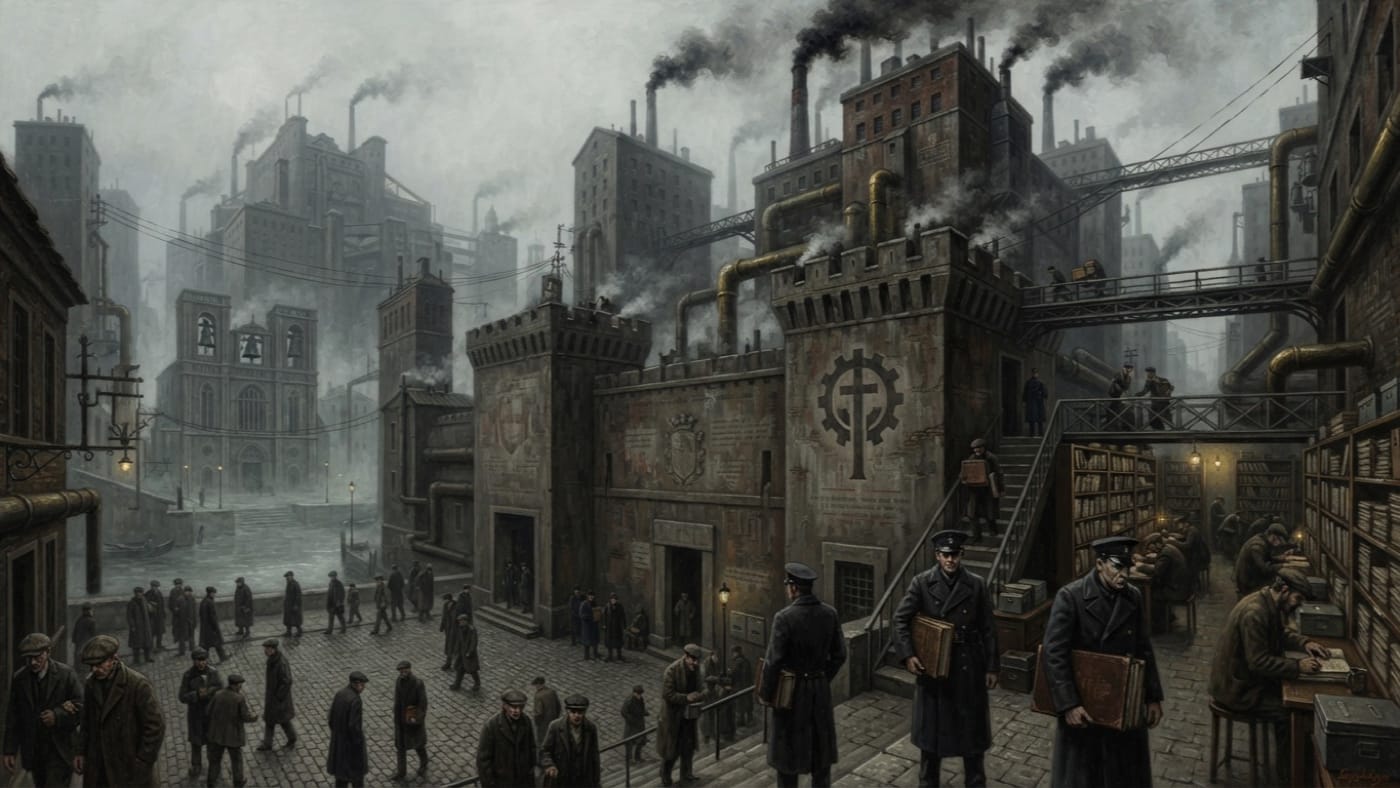
Italian principalities
One filing drawer for a peninsula that never consented to share it
The old Italian jurisdictions, erased by Regensburg in A.S. 30 and inherited piecemeal by the Synod. Their complete roster remains unestablished; their objections remain abundant.
Codex Ref. II.3.09-030
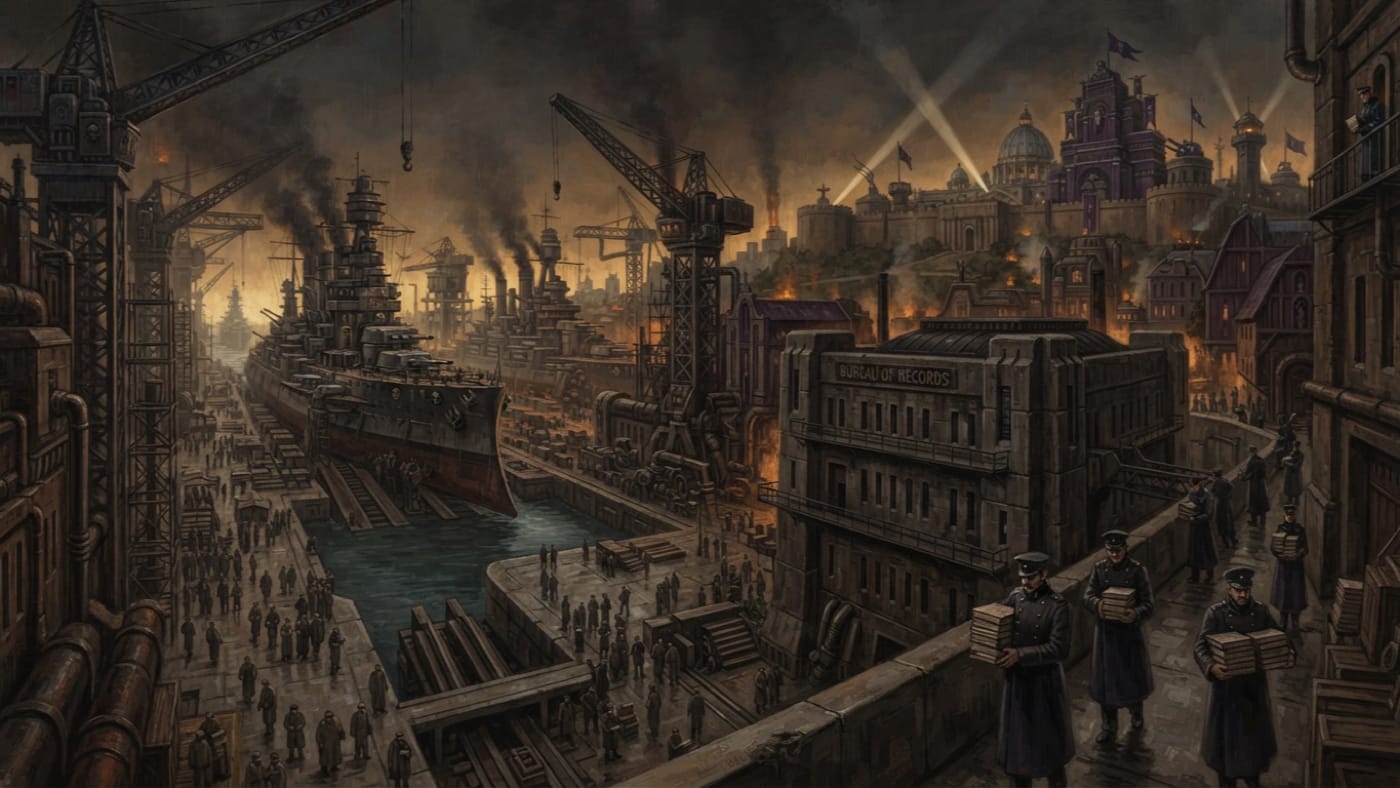
Italy
Inside the tax rolls, outside the founding seal
Italy builds ships, keeps archives and finances Synodal wars without a seal on the Concordat. My A.S. 201 survey finds its territories administered and audited, while Doctrine still anticipates compliance.
Codex Ref. II.3.10-001
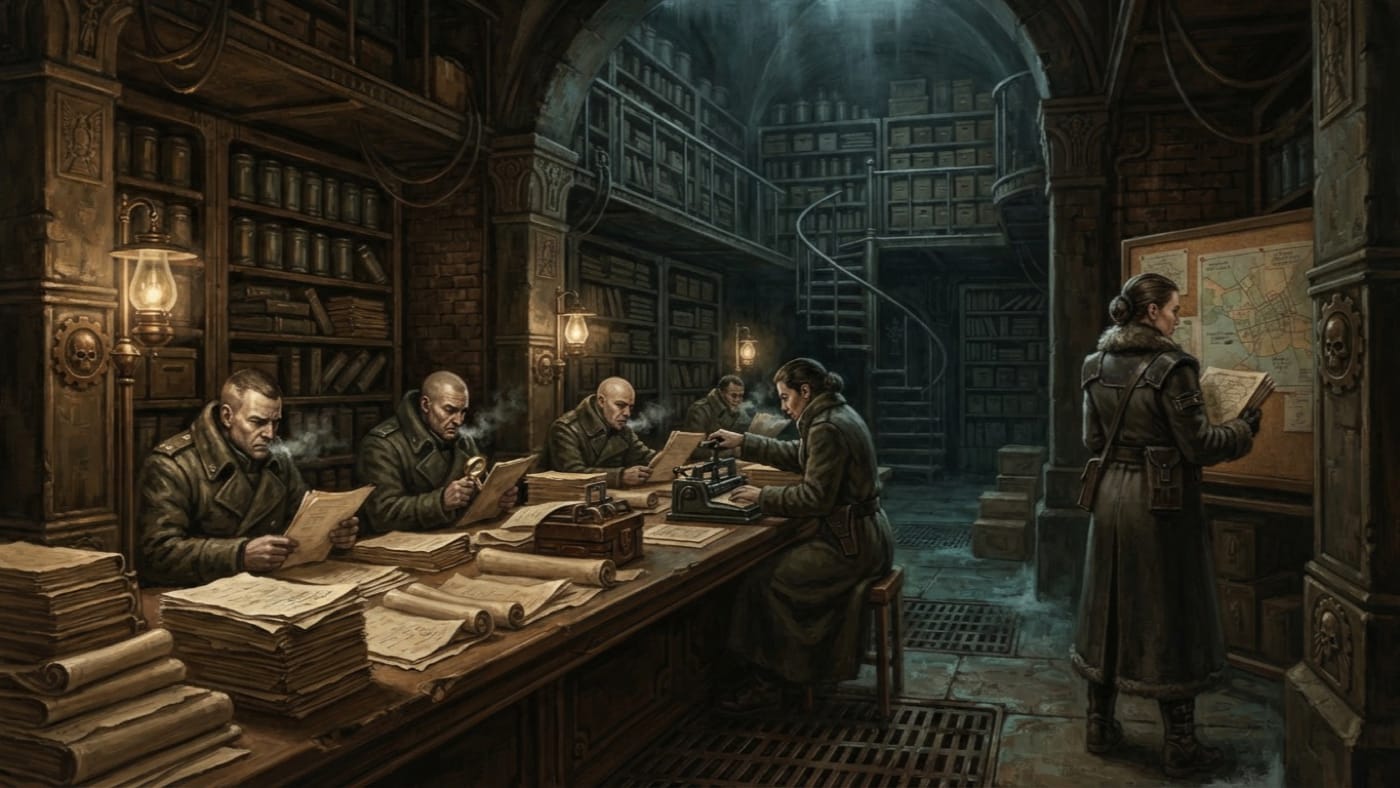
Joint Investigatory Cloister
Cold rooms, warm panic
Strasbourg's Joint Investigatory Cloister keeps Veyl Hark and Lorn's disputed records in cold rooms. The review continues; the yard is already answering questions nobody has asked.
Codex Ref. II.2.09-201
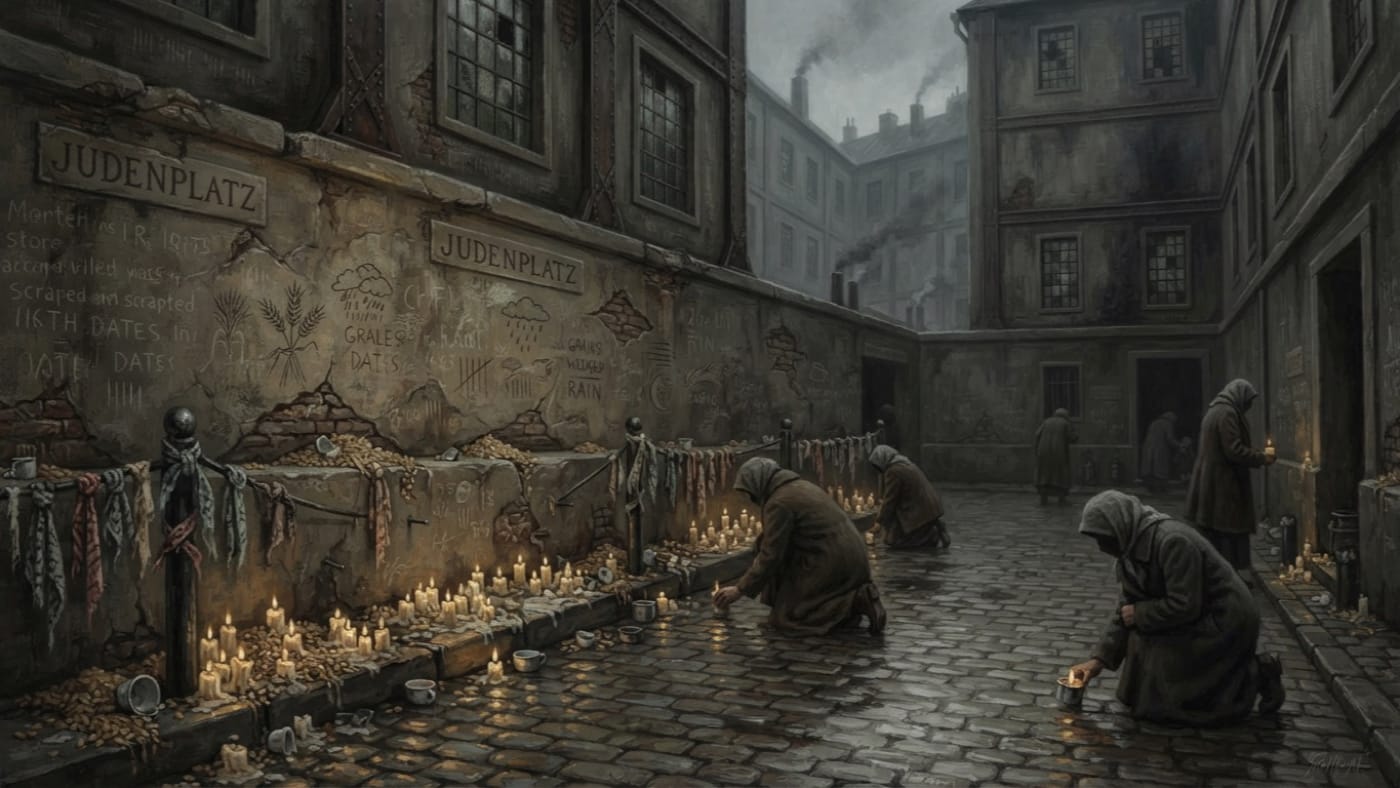
Judenplatz
Four removals, four returns, and a wall still awaiting permission
Judenplatz is Vienna's unlicensed memorial to the five thousand mothers branded in A.S. 112. Four clearances, four returns; Orison has a prohibition, and the square still has a wall.
Codex Ref. II.4.09-015
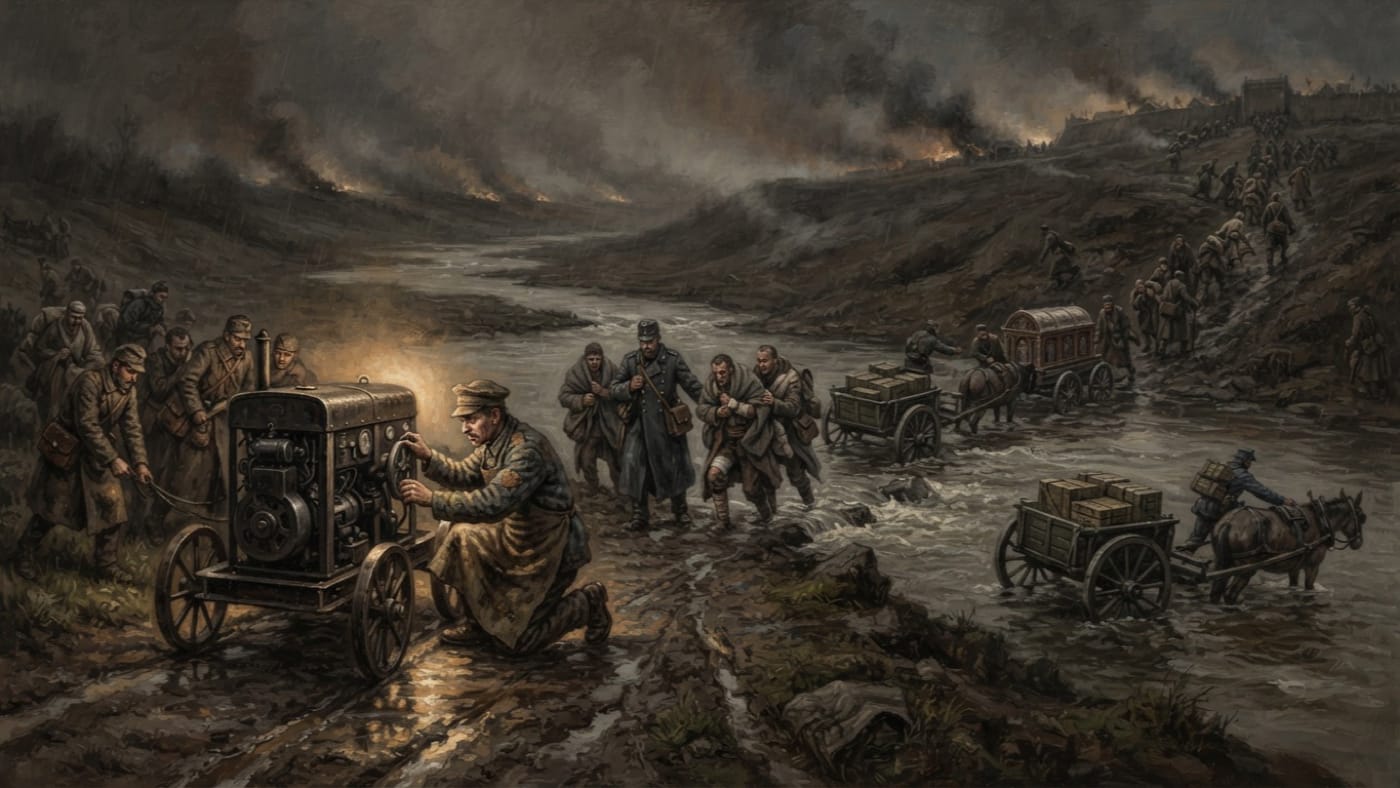
Kalnik Road
One crossing, sixty-three wounded, and no survey
Kalnik Road survives through Edrin's A.S. 48 restart and the crossing of sixty-three wounded. Its course and ford remain unestablished; Engineering remembers the lesson more precisely than the ground.
Codex Ref. II.4.09-048
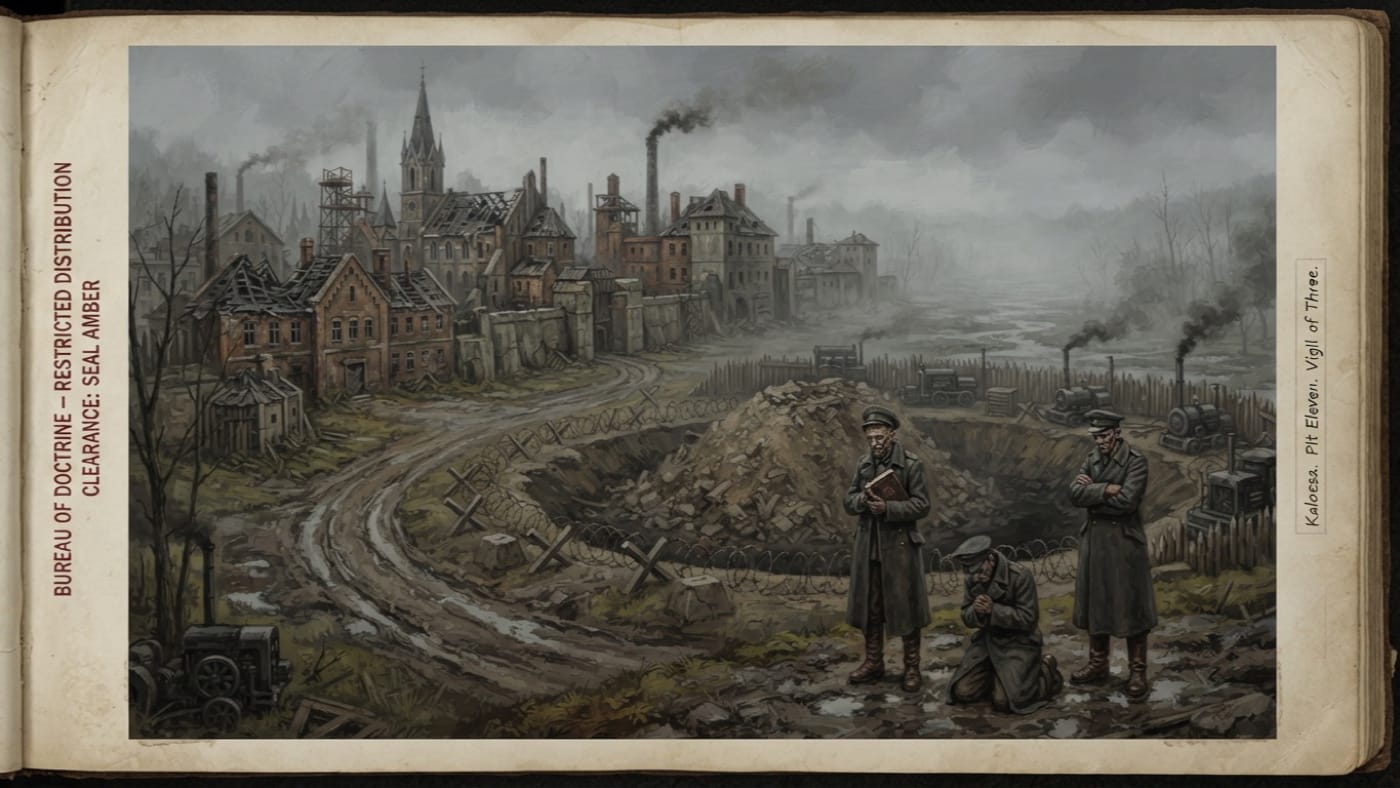
Kalocsa
The record names the town; the grave receives the attention.
Kalocsa is the town named beside the Children's Pit, where a refugee column was buried in A.S. 52. Three chaplains keep a classified vigil nearby; the record tells me more about their hunger than about the town.
Codex Ref. II.4.09-052
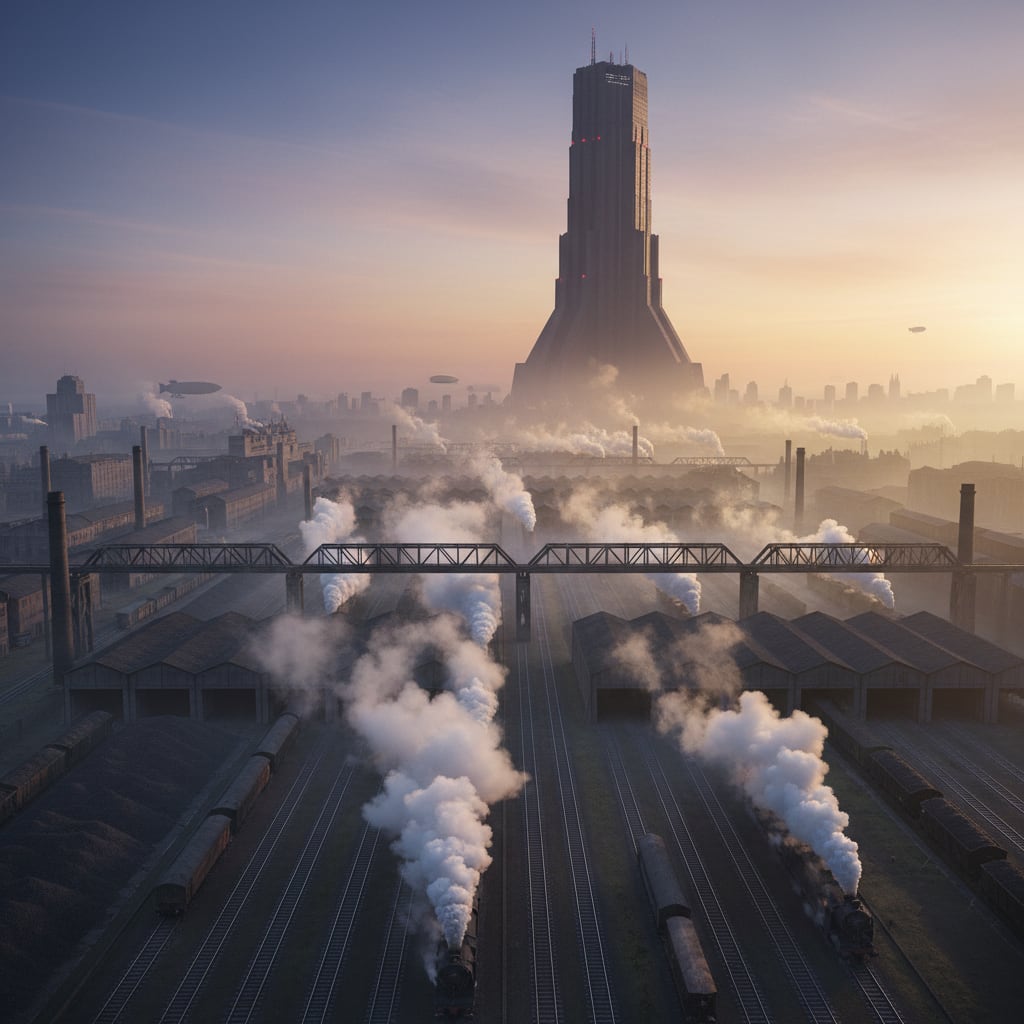
Kanzleiburg
The name is paint; the machine beneath it has run Prussian since A.S. 95
Berlin absorbed, renamed, and set to work — Kanzleiburg is three million souls, sixty trains per day, and the administrative brain of every military operation between the Baltic and the Carpathians. The Synod gave it a new name; the Prussians kept running it.
Codex Ref. II.4.09-006
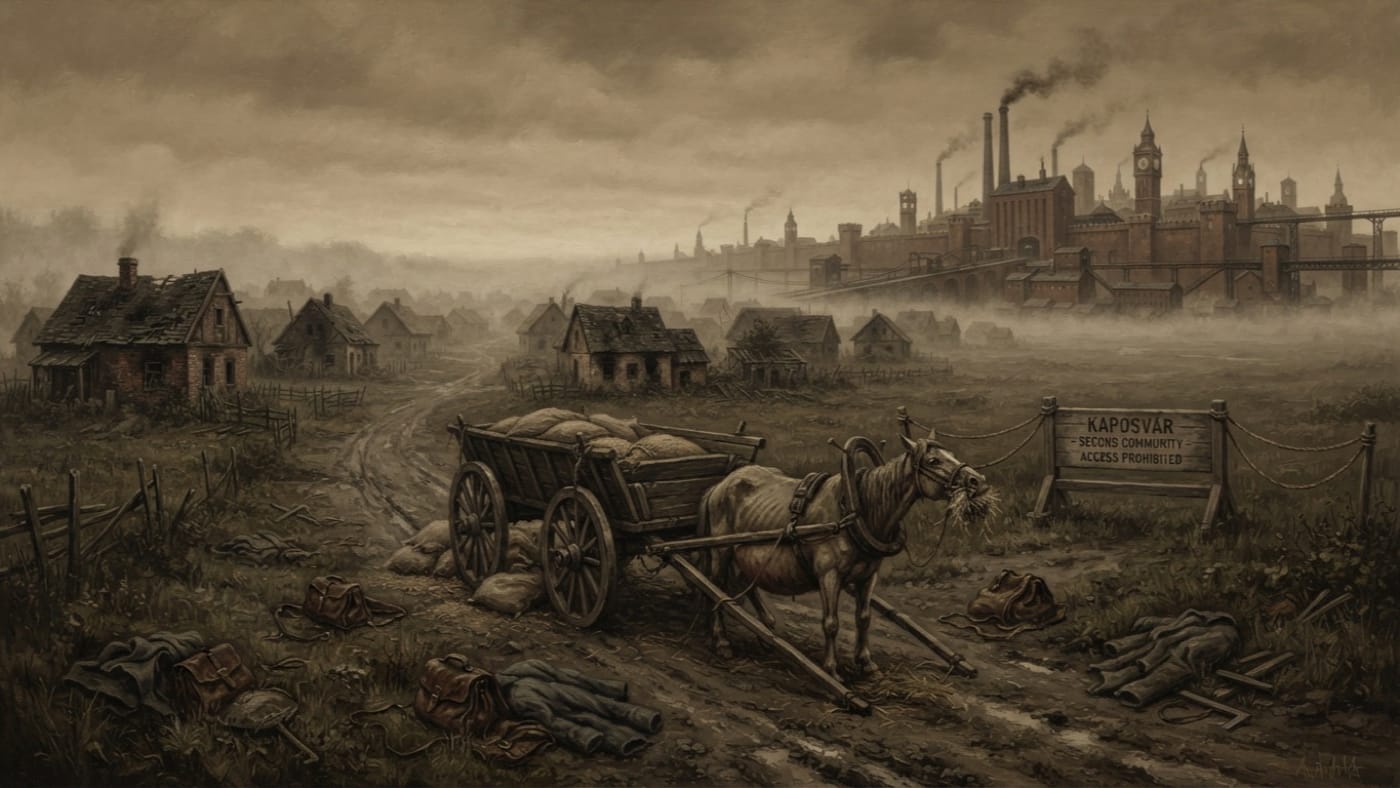
Kaposvár
The city lent its name; the village paid for supper
Kaposvár lends its name to the second Harvest-stricken community, destroyed nearby in A.S. 159. Its surplus killed the sellers; a failed delivery spared the neighbouring parish.
Codex Ref. II.4.09-159
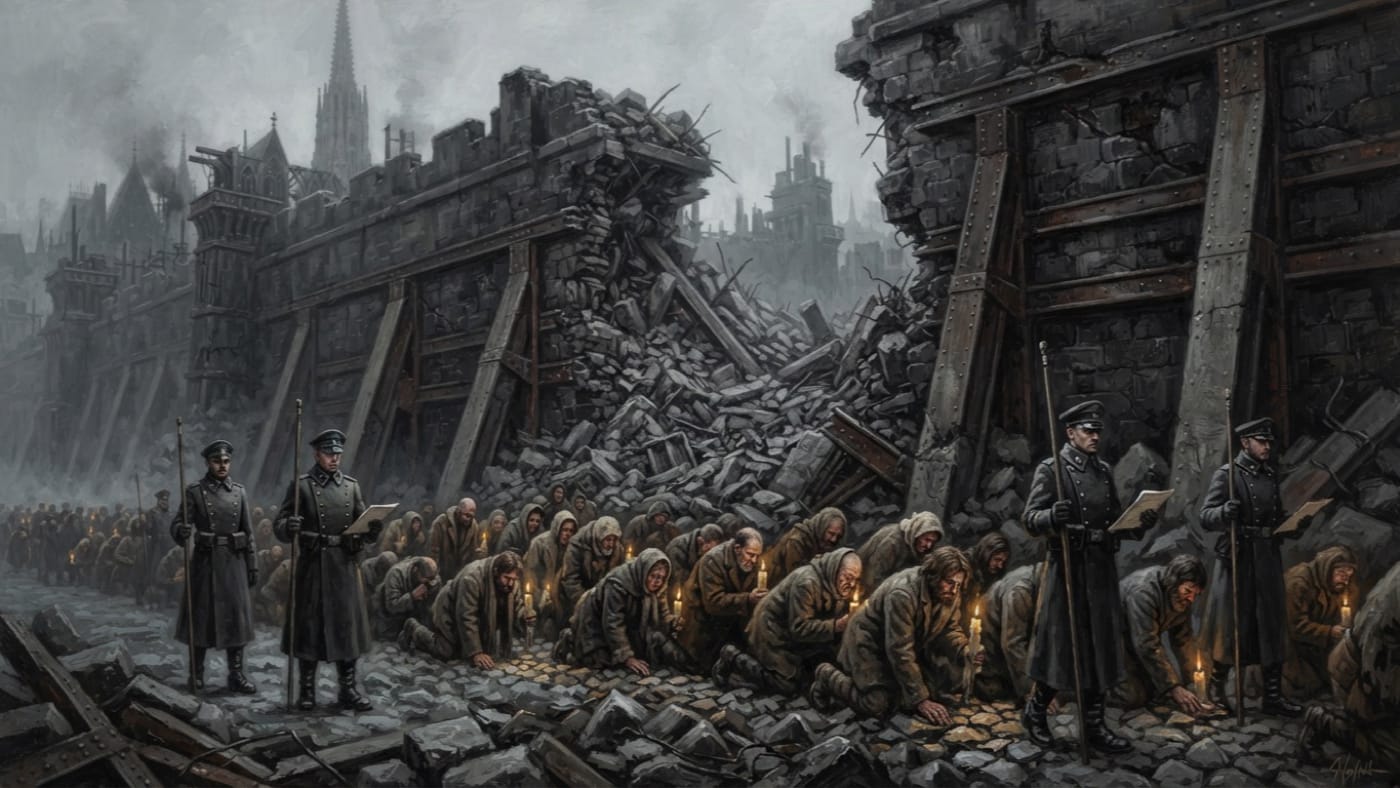
Kärntner Breach
The wall stayed broken so that knees might learn obedience
The Kärntner breach is Vienna's broken gate passage, where Clemens Stahlhand entered in A.S. 95 and pilgrims now pay with their knees.
Codex Ref. II.4.09-095
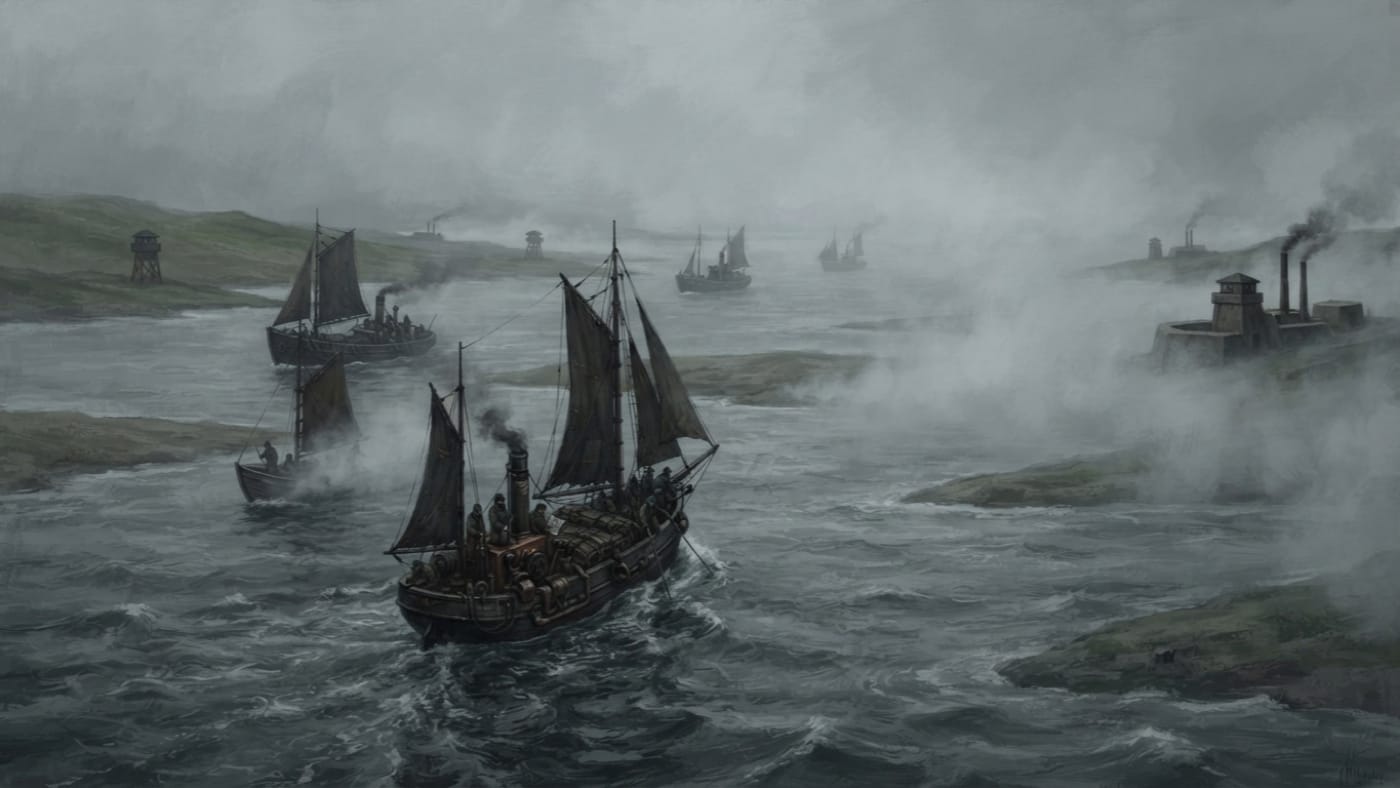
Kattegat
The Church claims the water. The pilots read the weather.
The shallow southern approach to the Fractured North, between Jutland and Sweden. The Church claims the water; northern pilots decide how to cross it. Cold, fog and sandbanks acknowledge neither authority.
Codex Ref. IX.8.01-002
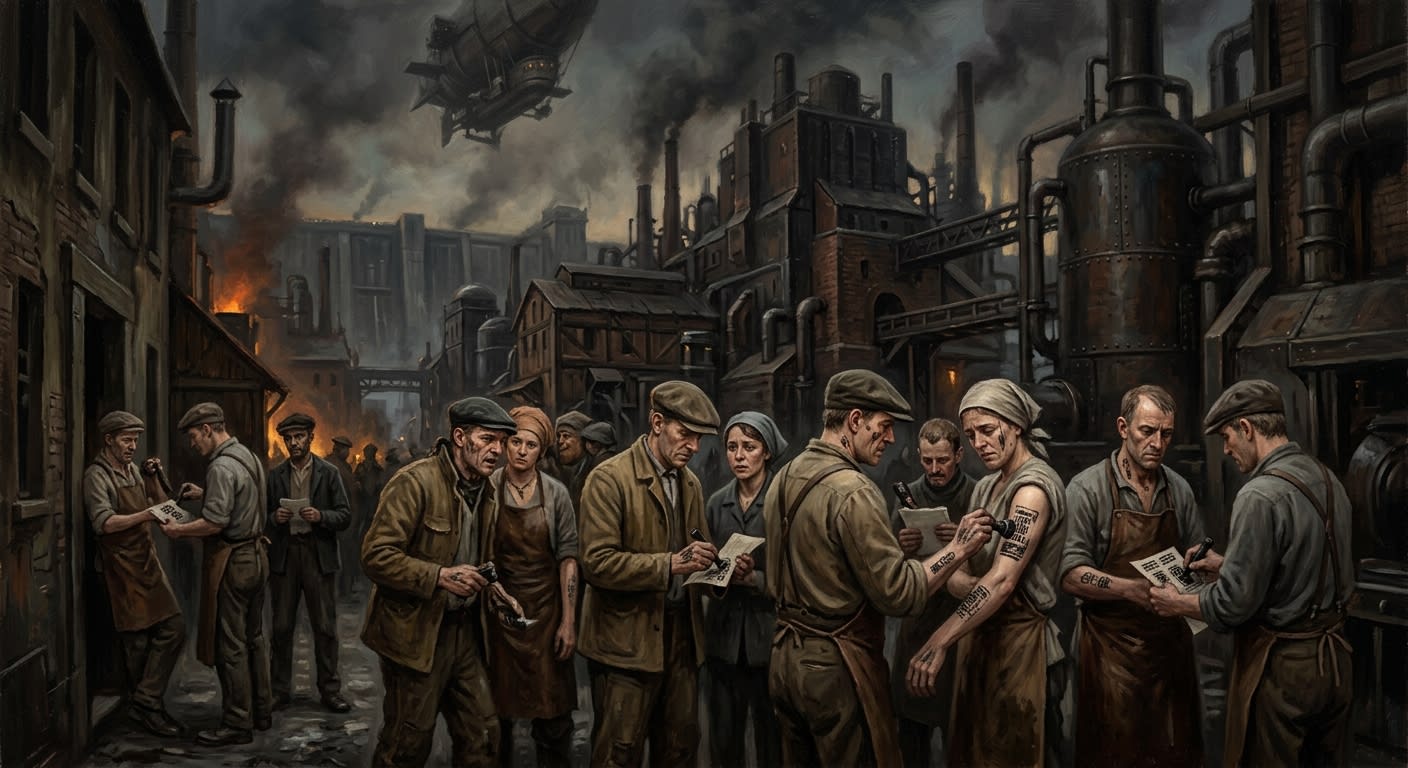
Keska
The foundry-town that fell through the map and learned who feeds the forgotten
Keska, a Hintermark foundry-town west of Bastion-Constantinople, lost its Zone for eleven months and discovered that criminal stamps can feed where lawful ink starves.
Codex Ref. II.3.06-001
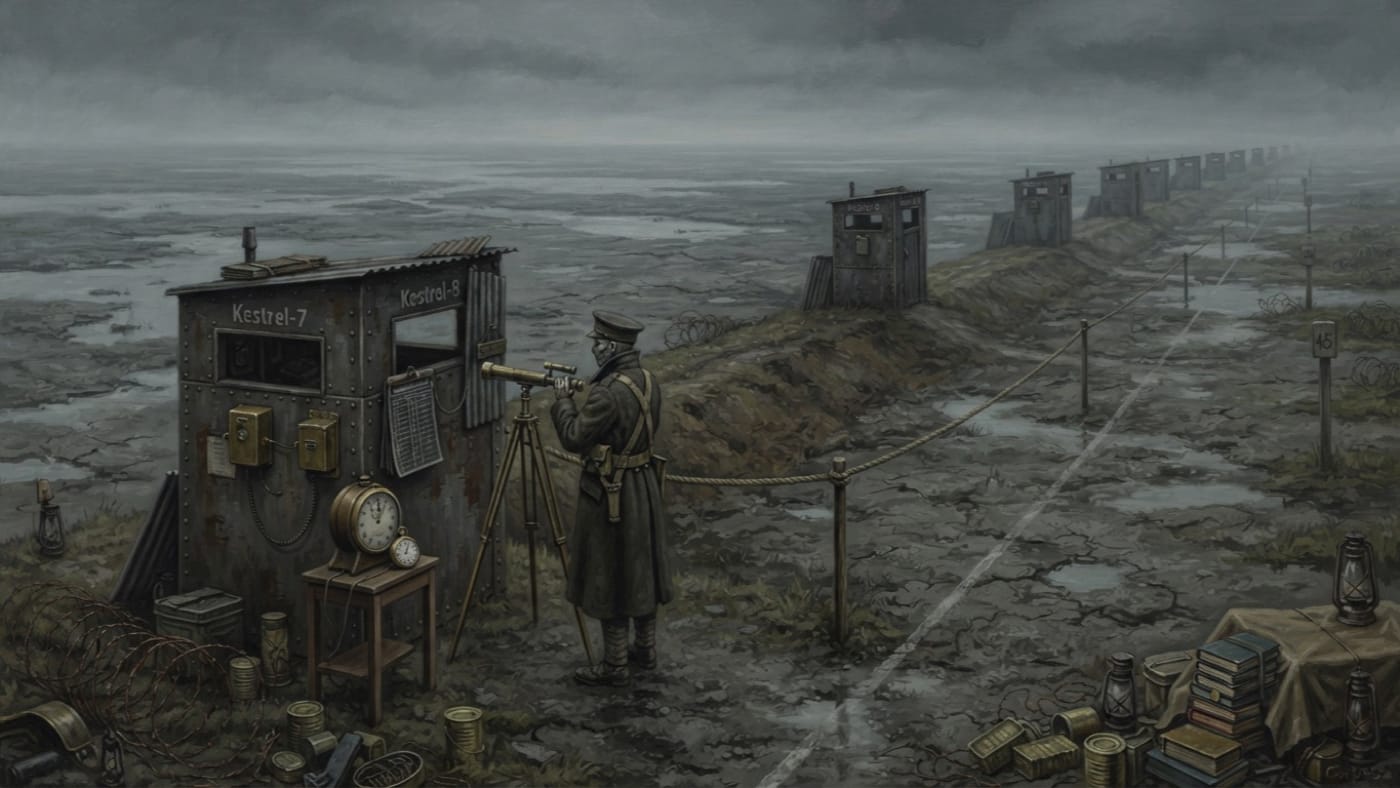
Kestrel Line
Fourteen posts to measure what nobody can stop
Fourteen numbered posts watch the Blightmarsh. The A.S. 201 return lists three unnamed vacancies; War supplies the numbers and leaves readiness uncertified.
Codex Ref. II.4.09-1533
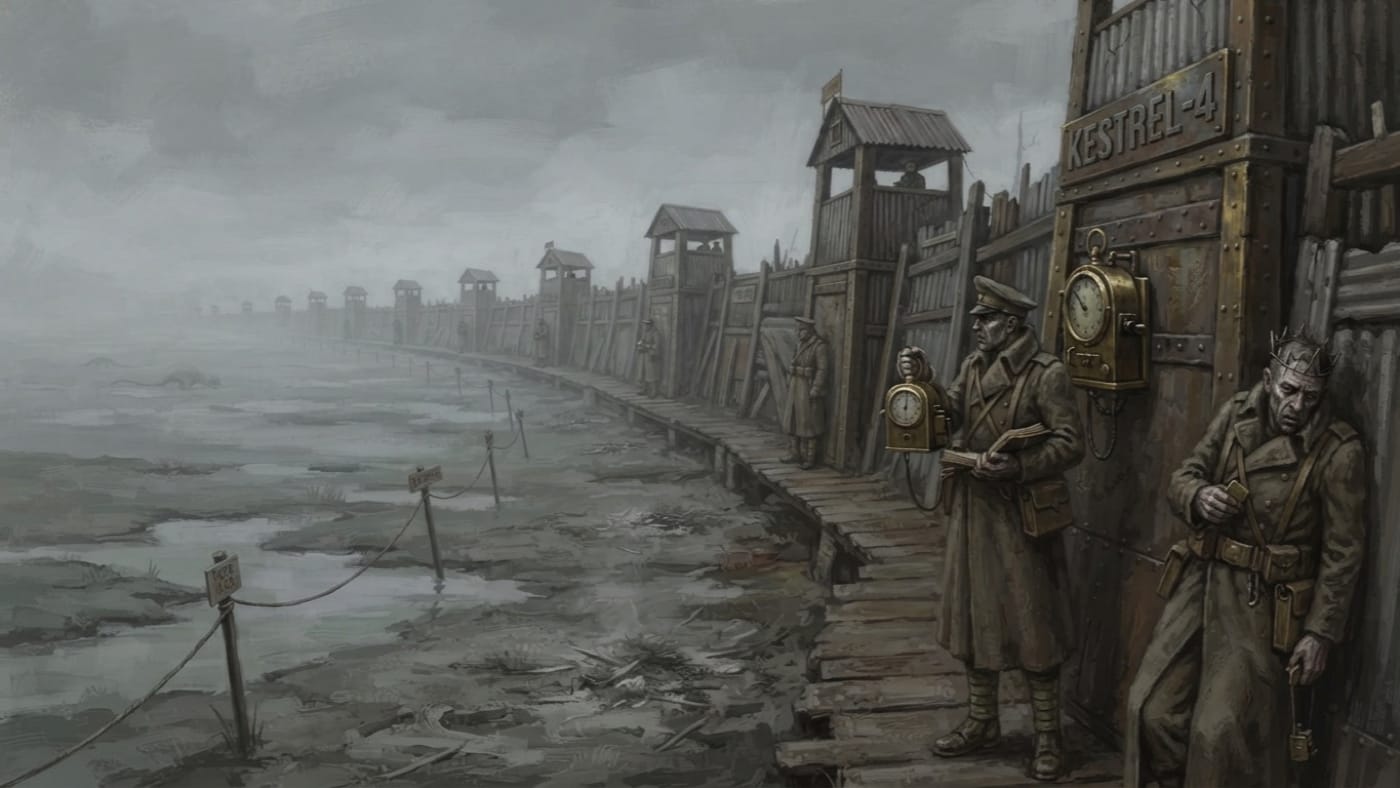
Kestrel Stations
Watch the rope. Watch the clock. Report the bread.
Fourteen numbered posts watch the Blightmarsh with ash, rope, smell logs and exposure clocks. The A.S. 201 return lists three unnamed vacancies; observation continues, containment remains unproved.
Codex Ref. II.4.09-1534
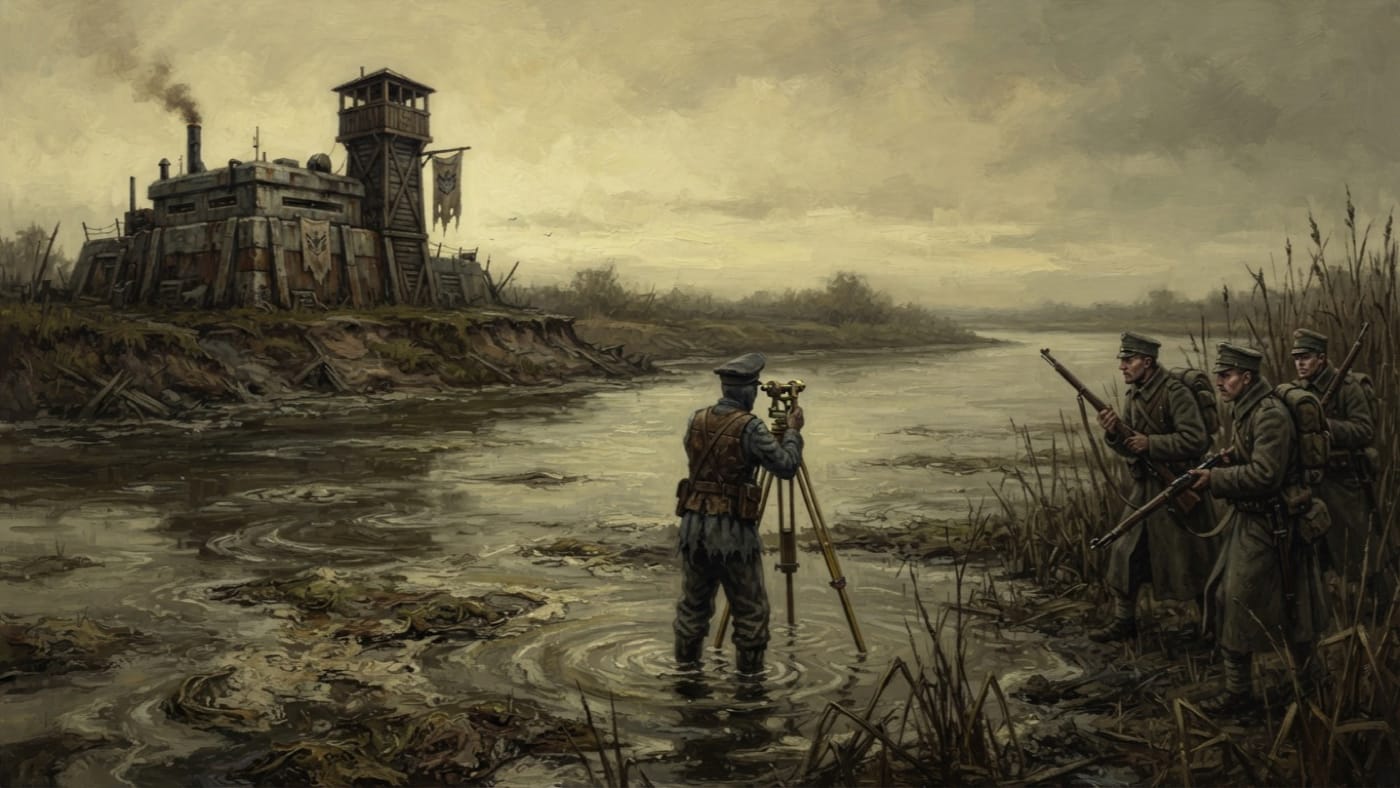
Kestrel-11
One patrol report against twenty-six years of paperwork
Kestrel-11 watches the Drava. In A.S. 200 its patrol reported a figure resembling Adept Harlen, twenty-six years dead on paper; the river supplied no identification.
Codex Ref. II.6.05-011
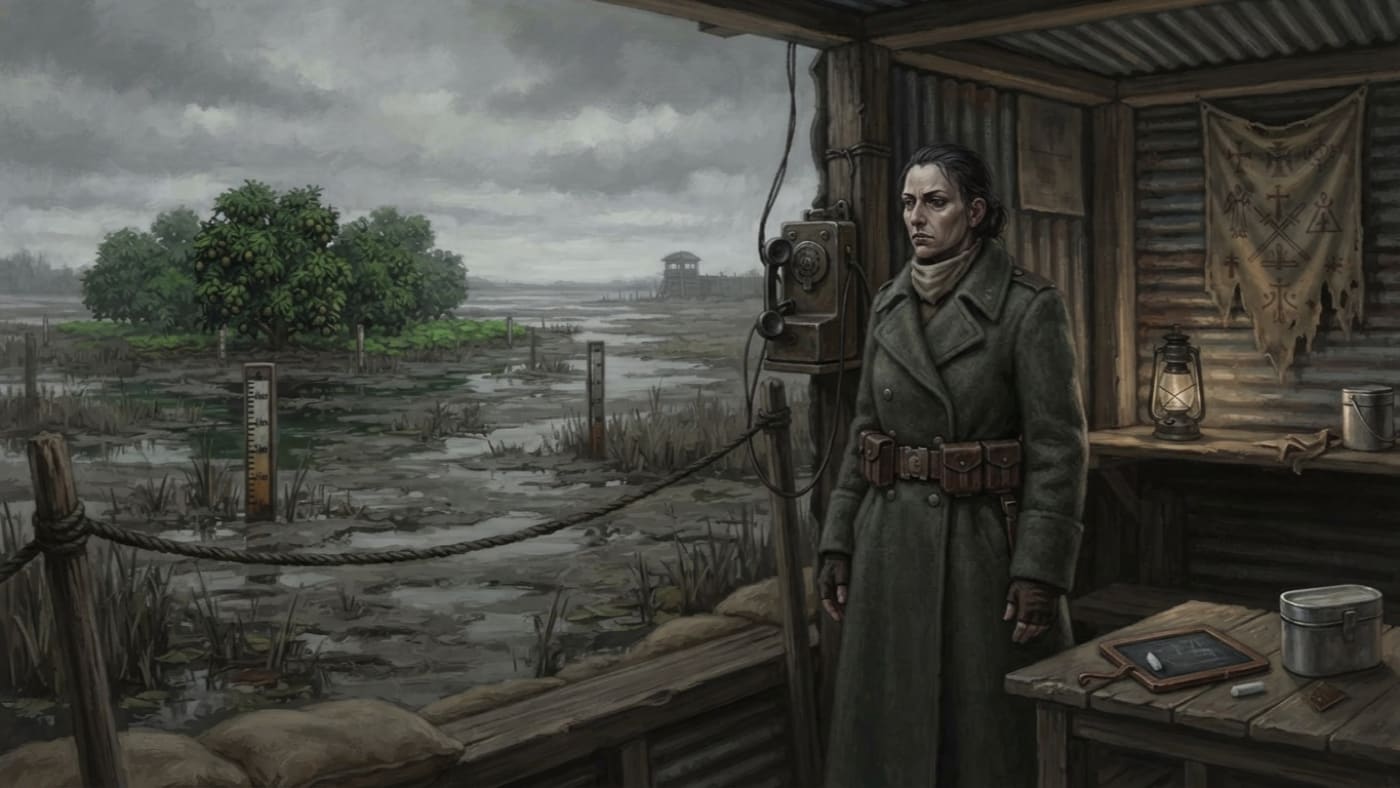
Kestrel-7
The post watches. The Marsh advances.
Kestrel-7 watches the western Blightmarsh perimeter, recording mudline creep, hostile cultivation and food-scent contact. The rope marks the orders; the Marsh has never read them.
Codex Ref. II.6.05-007
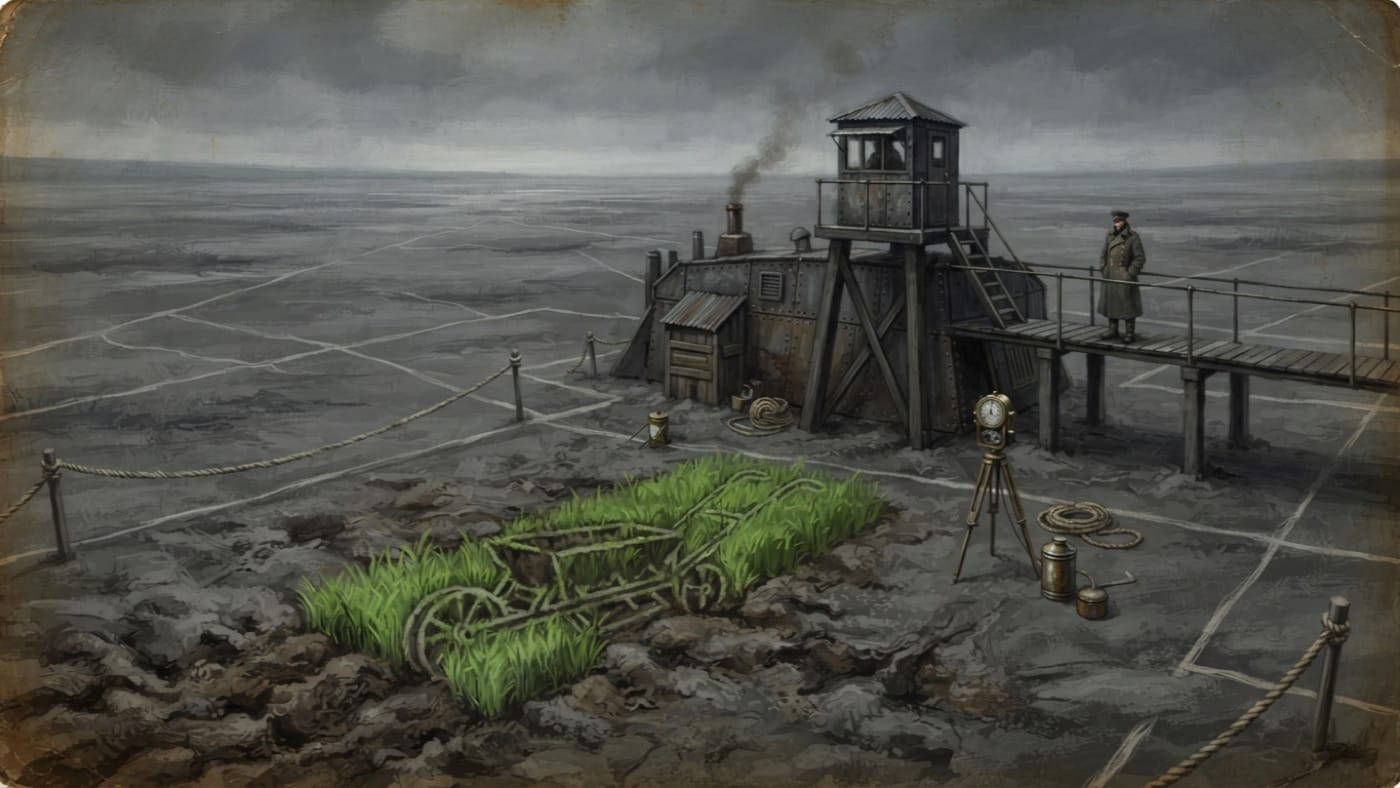
Kestrel-8
File the post with the series and the barley with the machine
Kestrel-8 stands on War's rolls as a Blightmarsh observation post. This A.S. 201 survey preserves an undated seed-drill burial report: barley traced the machine's frame; staffing remains unreported.
Codex Ref. II.4.09-1531
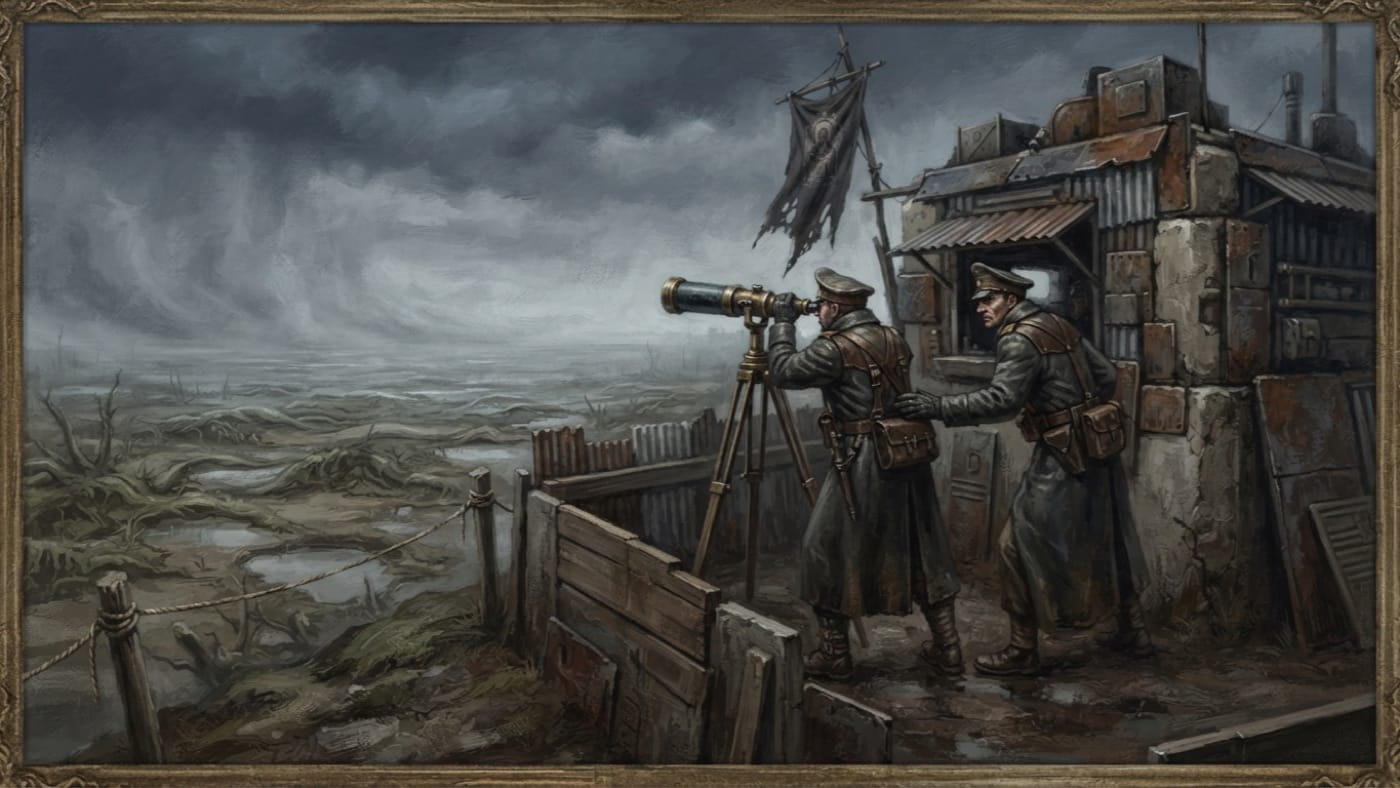
Kestrel-9
Where looking is duty and knowing when to stop is judgment
Kestrel-9 watches the western Blightmarsh perimeter. During my A.S. 199 inspection, Corporal Drennan interrupted eleven minutes of fascination with one hand at my elbow. His judgment earned no public commendation.
Codex Ref. II.6.05-009
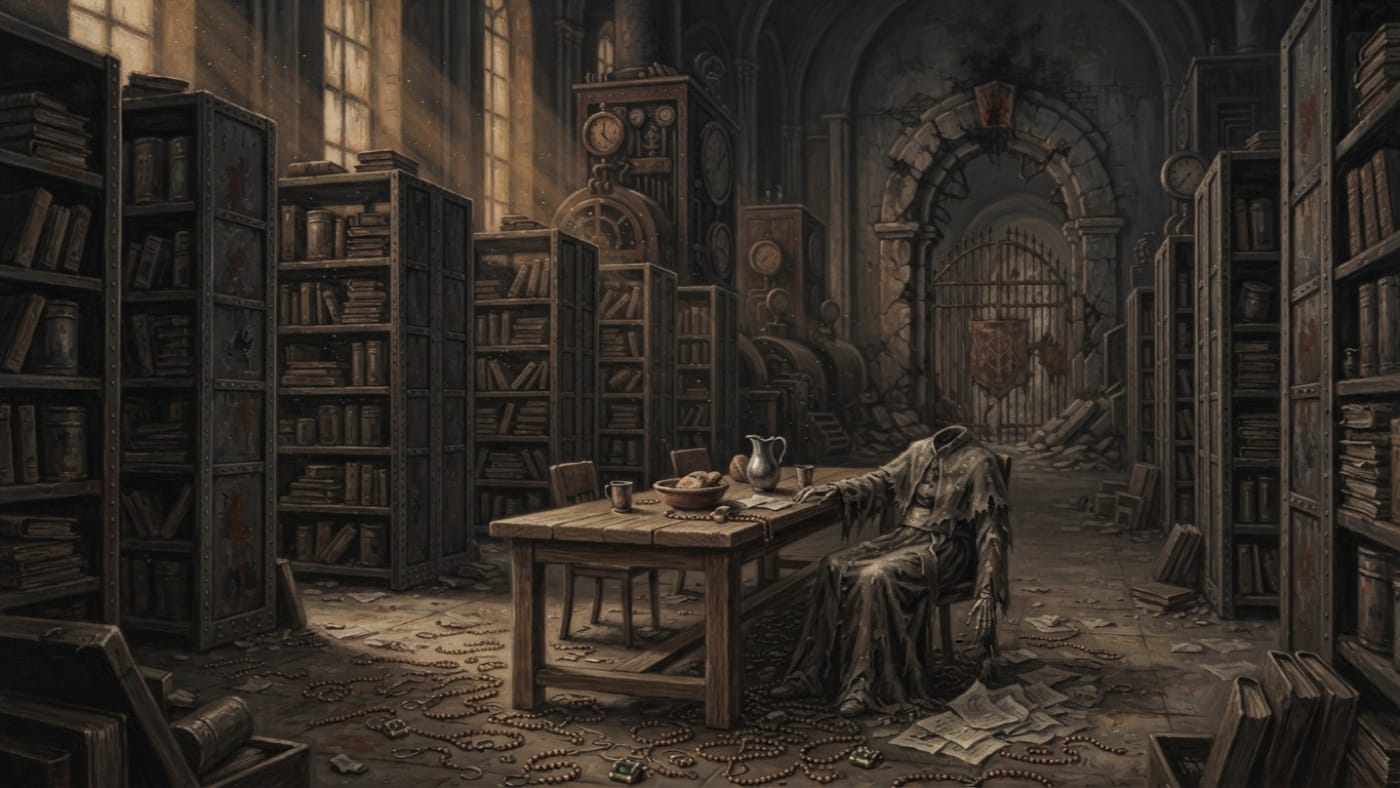
Kiev
A city lost; a chronology still open
Kiev is marked Lost. This A.S. 201 survey keeps the A.S. 91 meat-tides chronicle apart from the undated silence account. The archives establish neither their relationship nor the cause.
Codex Ref. II.4.09-201
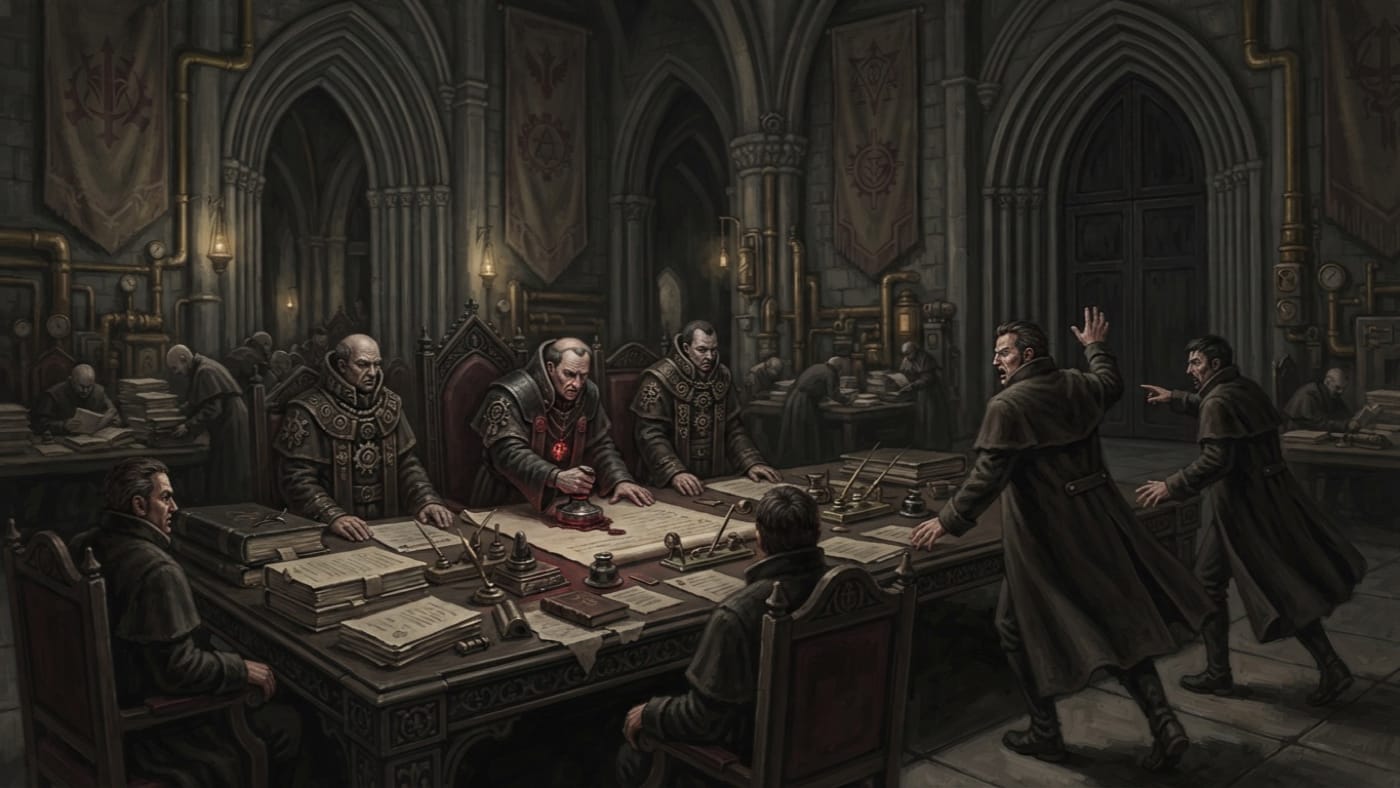
Kingdom of Aragon
A kingdom entered under another seal
Aragon was entered under Iberia's seal at the A.S. 90 Concordat of Strasbourg. Its delegation protested and departed; the Bureau retained the kingdom.
Codex Ref. III.2.04-1544
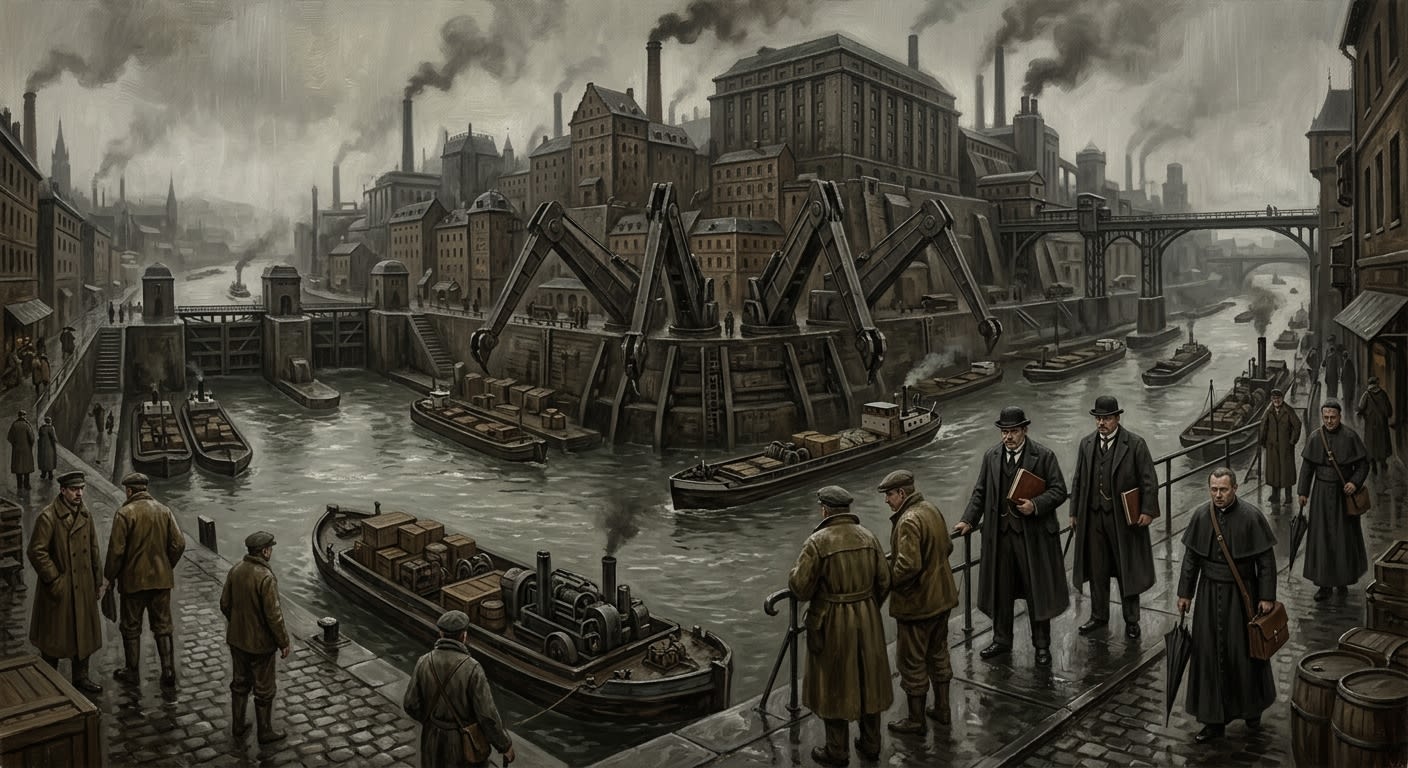
Koblenz
The holy art of handing the burden onward
Koblenz is the wet middle hand of the Ignatian chain: a Rhine-Moselle transfer city where sanctity lasted six minutes and became taxable forever.
Codex Ref. II.3.05-045
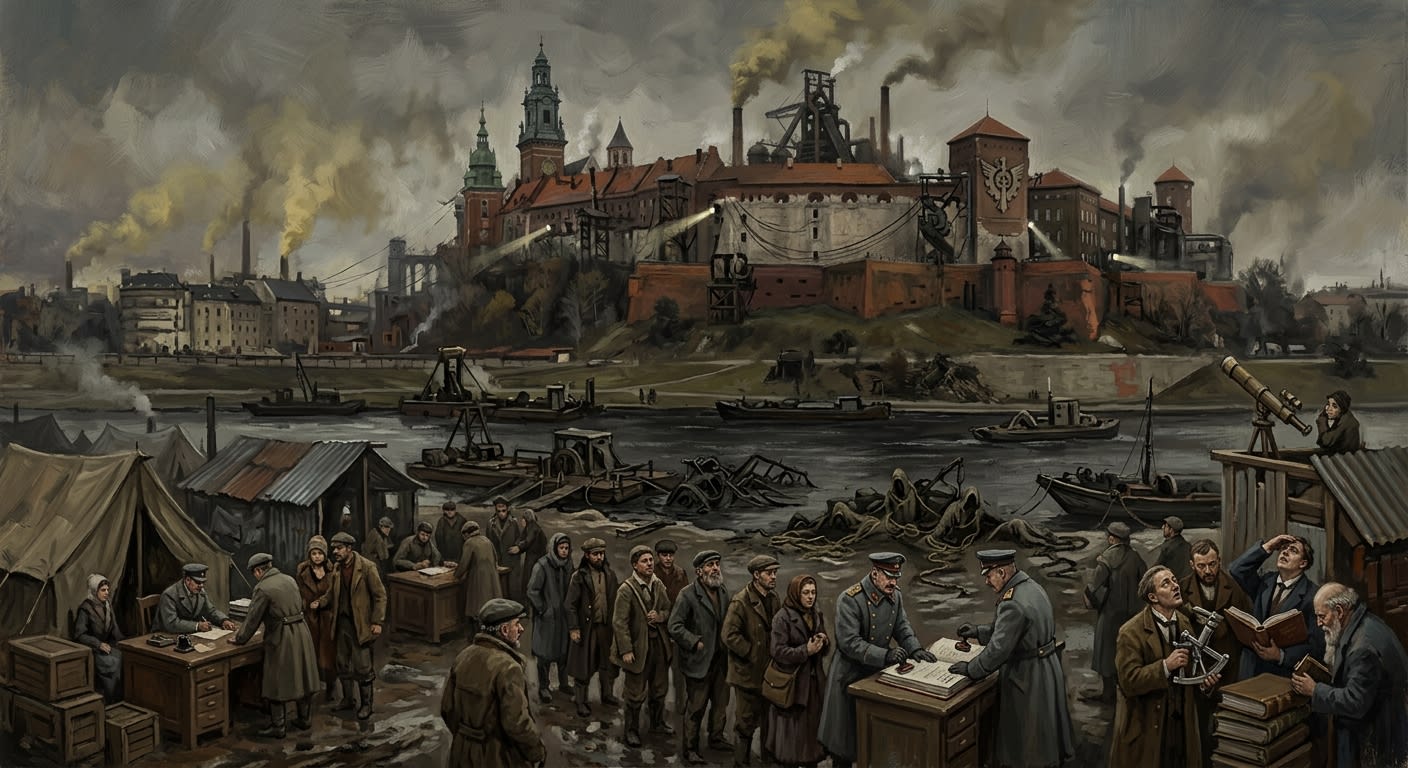
Kraków
The Vistula city where silence learned to keep receipts
Kraków is the Vistula wound of Zone 3: Wawel above, river below, forty-seven drowned priests in its throat, Greyling births in its ledgers, and astronomers still learning that Heaven requires a permit.
Codex Ref. II.3.06-002
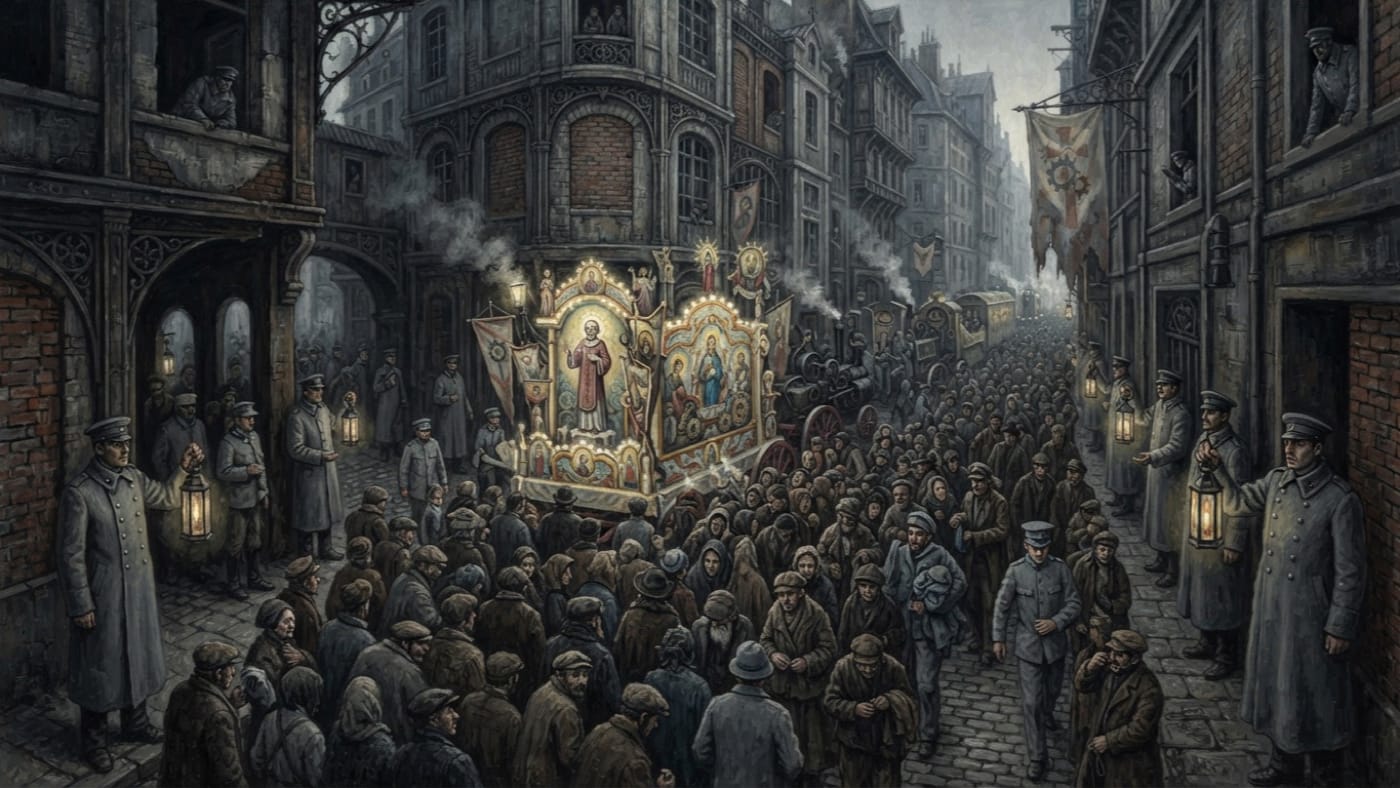
Lace District
Serene by report, miraculous by arithmetic
Strasbourg district recorded in the A.S. 139 Lantern Accord procession and Caldrin's undated Multiplication of Receipts, where the reports are serene and the totals refuse to settle.
Codex Ref. II.1.04-139
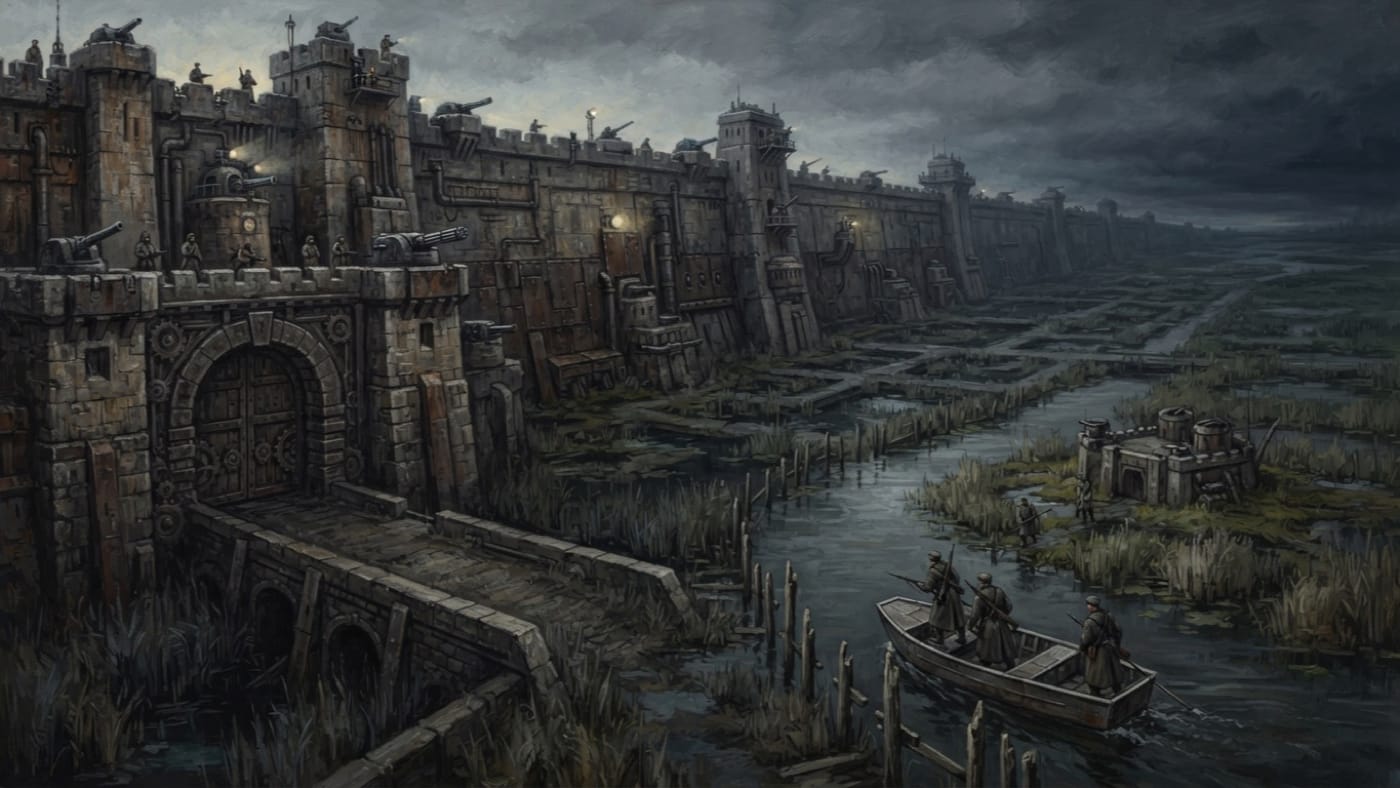
Lake Gate
Twelve metres of wall awaiting the enemy the engineers expected
Königsberg's eastern district faces the Masurian lakes with twelve metres of stone, iron and fill. The Watchers deploy; no eastern assault is recorded. The Bureau may not call this a victory.
Codex Ref. II.4.07-004
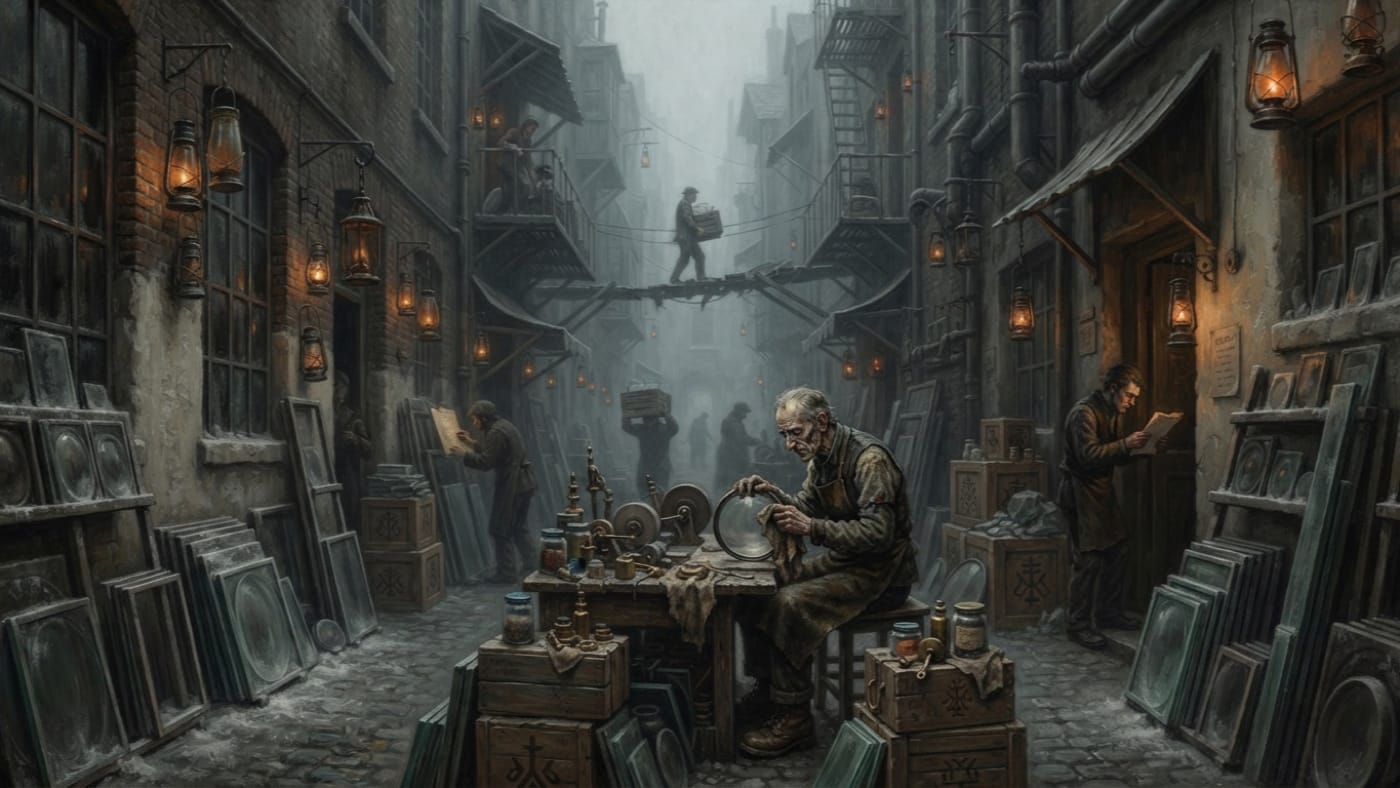
Lampglass Row
Every name must be read before it can be erased
Nemea's glassworking district supplies the panes and lenses by which records are proven to exist. Its Compact sells light, lends oil against pages and names, and charges for truths no authority has certified.
Codex Ref. II.2.06-022
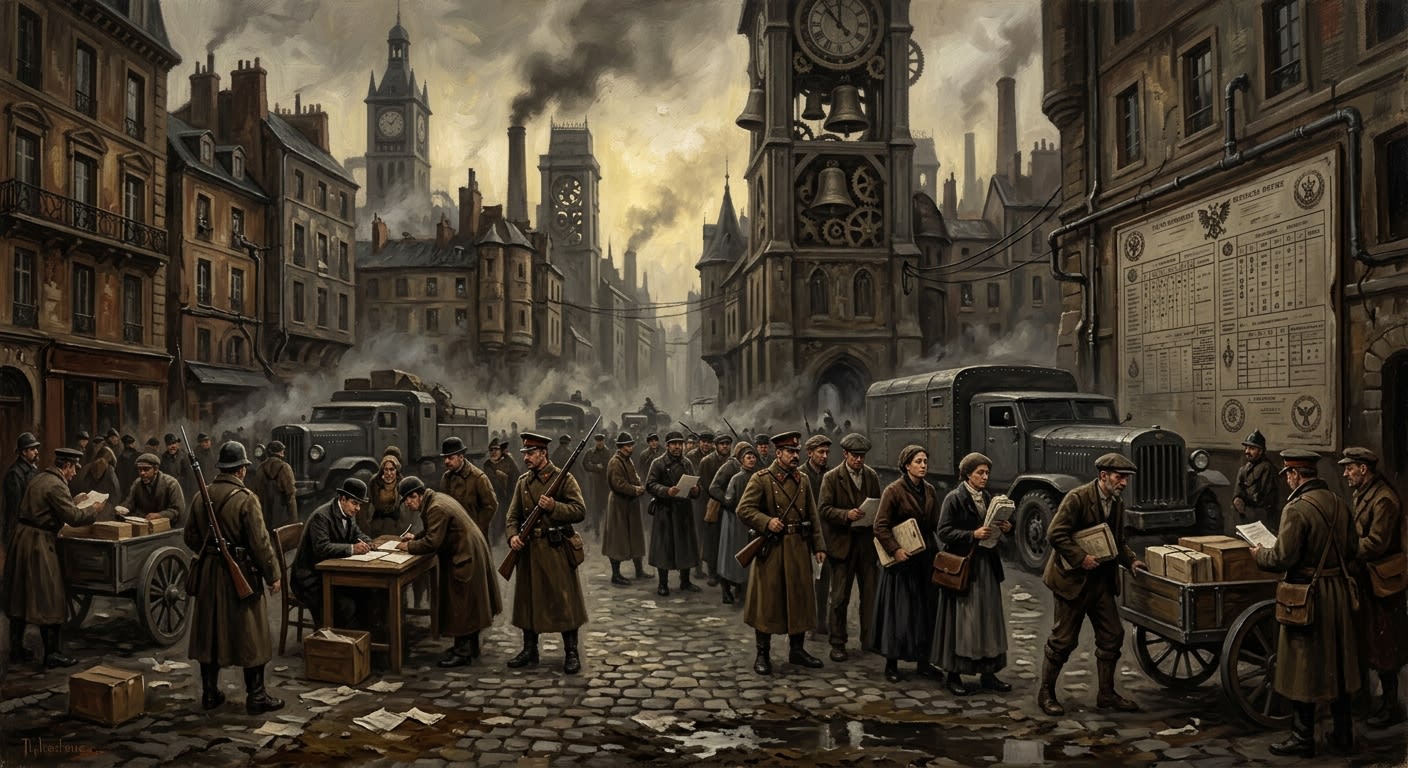
Languedoc
The province that made sunlight prosecutable
Languedoc is the southern heartland province where bells kept local time, songs bent under audit, and the Purges of A.S. 130 made sunlight a fileable risk.
Codex Ref. II.1.06-130
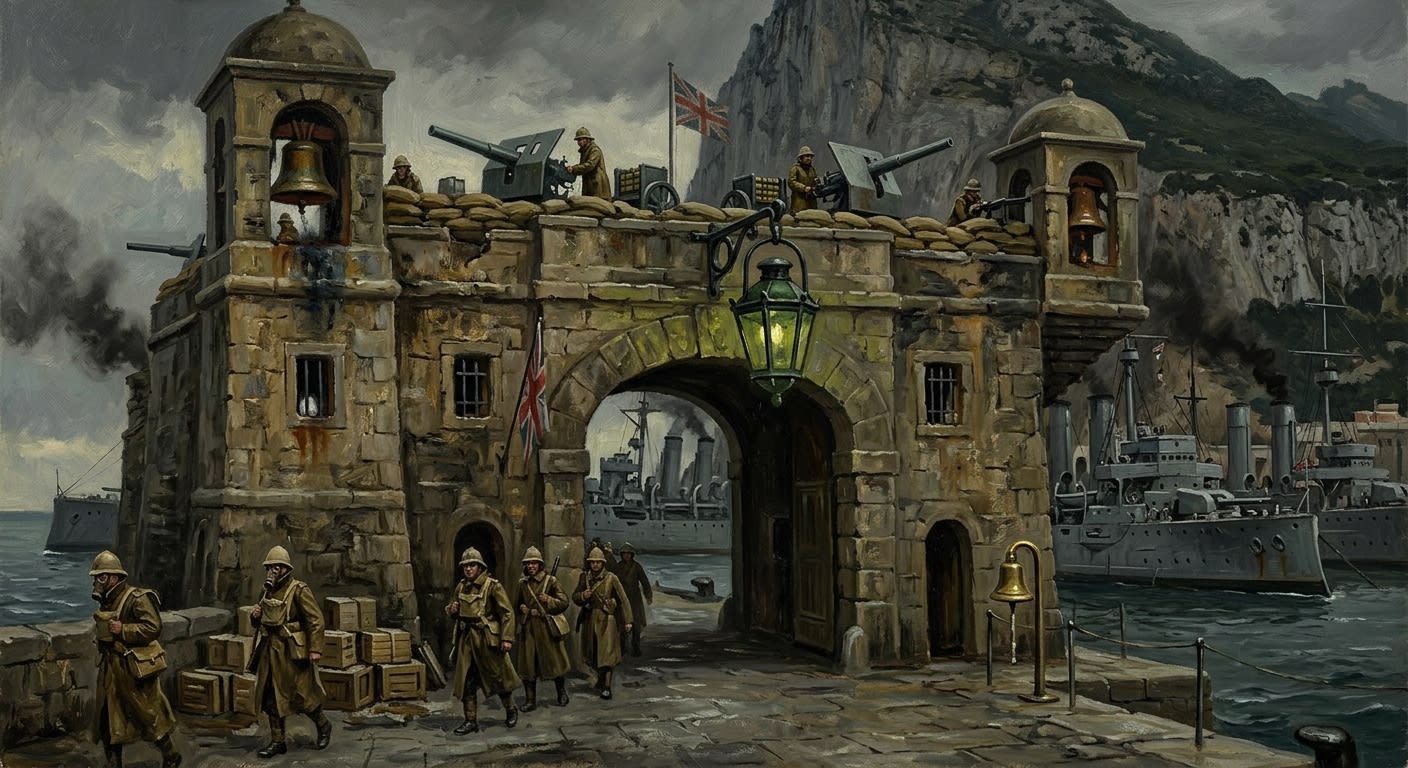
Lantern Gate, Gibraltar
The British fist at the Mediterranean mouth, politely denying it is a hand on our throat
The Lantern Gate at Gibraltar is Britain's southern naval knuckle: bell towers, chapel guns, anti-piracy patrols, and leverage disguised as maritime courtesy.
Codex Ref. II.4.09-010
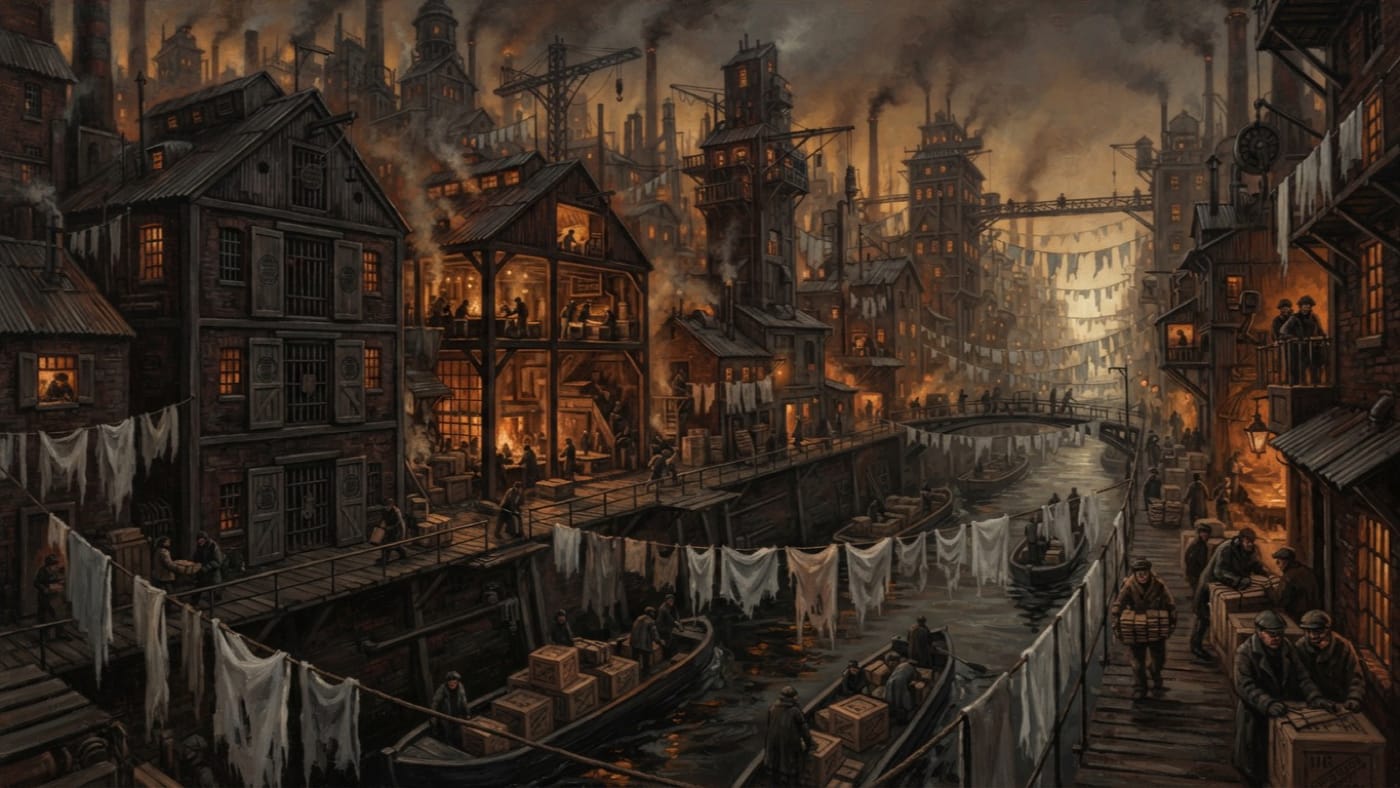
Lantern Mile
Where lawful light is made and unlawful signals are understood
Candlewick's elevated chandlery district manufactures lawful light under House Wickwarden, reads smugglers' signals with profitable discretion, and keeps spinning while two wick halls have no reopening on file.
Codex Ref. II.1.01-201
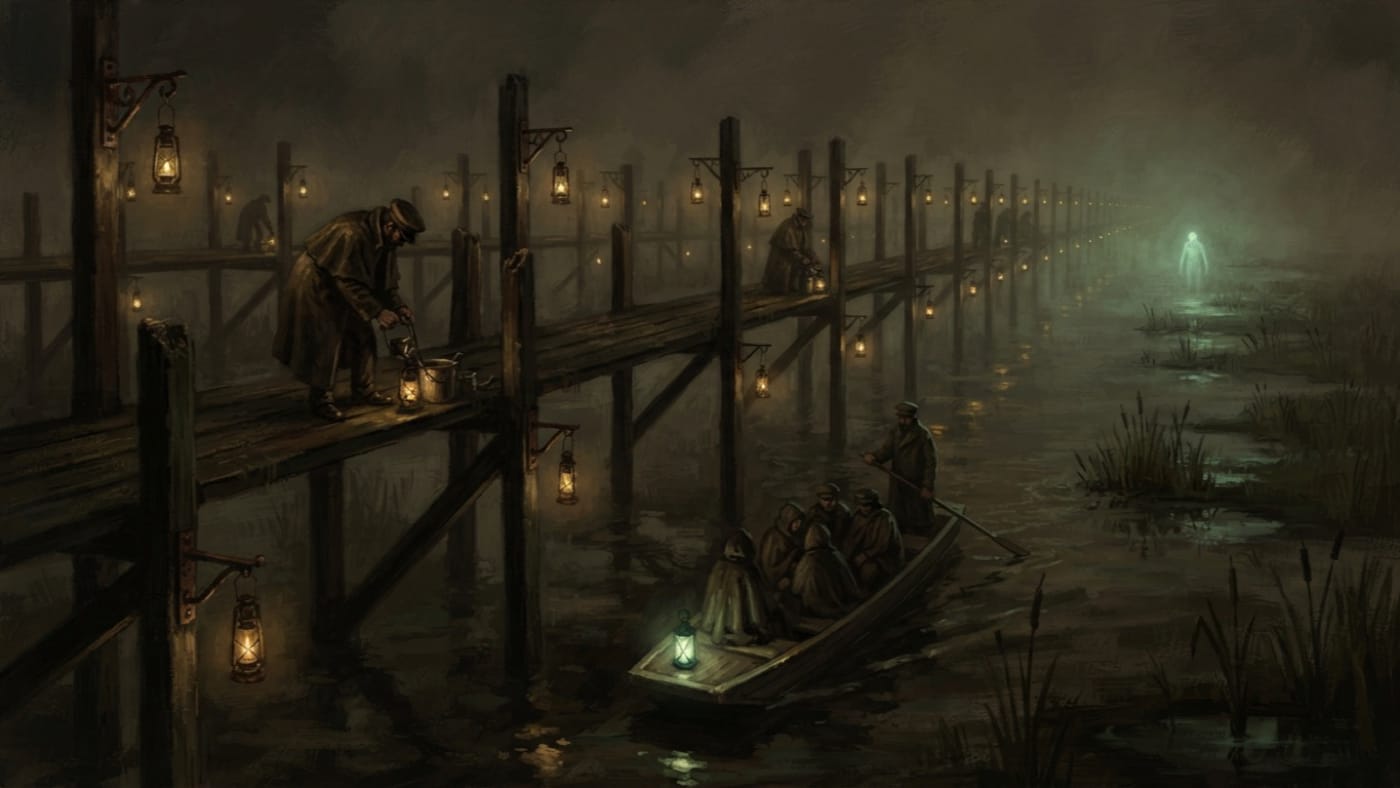
Lantern Rackway
The water has learned the route codes.
Tallow lamps guide night traffic through the Ash-Glyph Marshworks, under Orren Pike's Lantern Guild. The water sometimes returns their signals. Passage requires a brine-mark; survival requires knowing when to extinguish the light.
Codex Ref. II.4.08-008
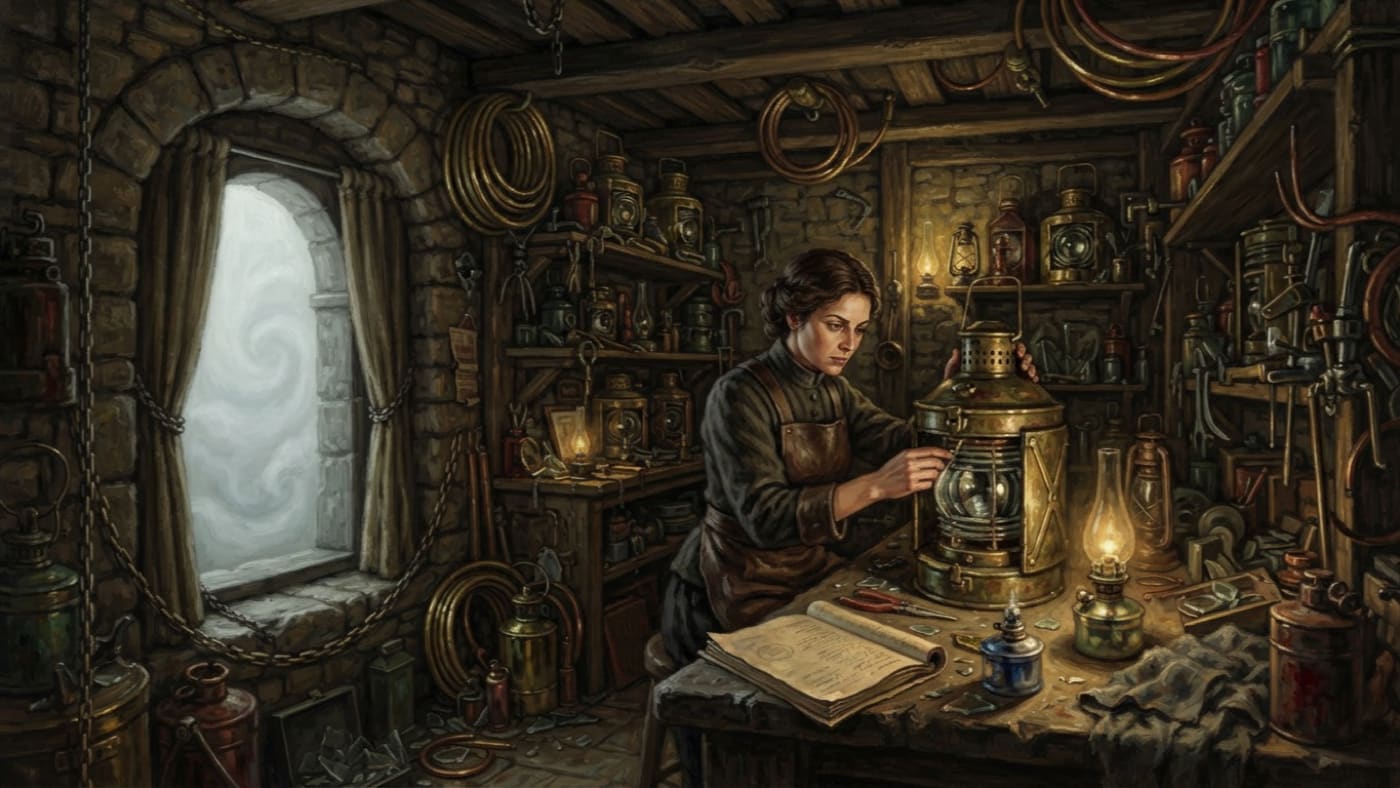
Lantern Shed
The tower speaks because someone mends its eye
The Lanternwright Knot's workshop at Third Light keeps relic-lanterns obedient with salvaged glass, rationed oil and Sister-Mechanic Vey Sable's hymns. The fog answers the signals; Ordnance answers her request for new lenses with a memorandum.
Codex Ref. II.4.08-015
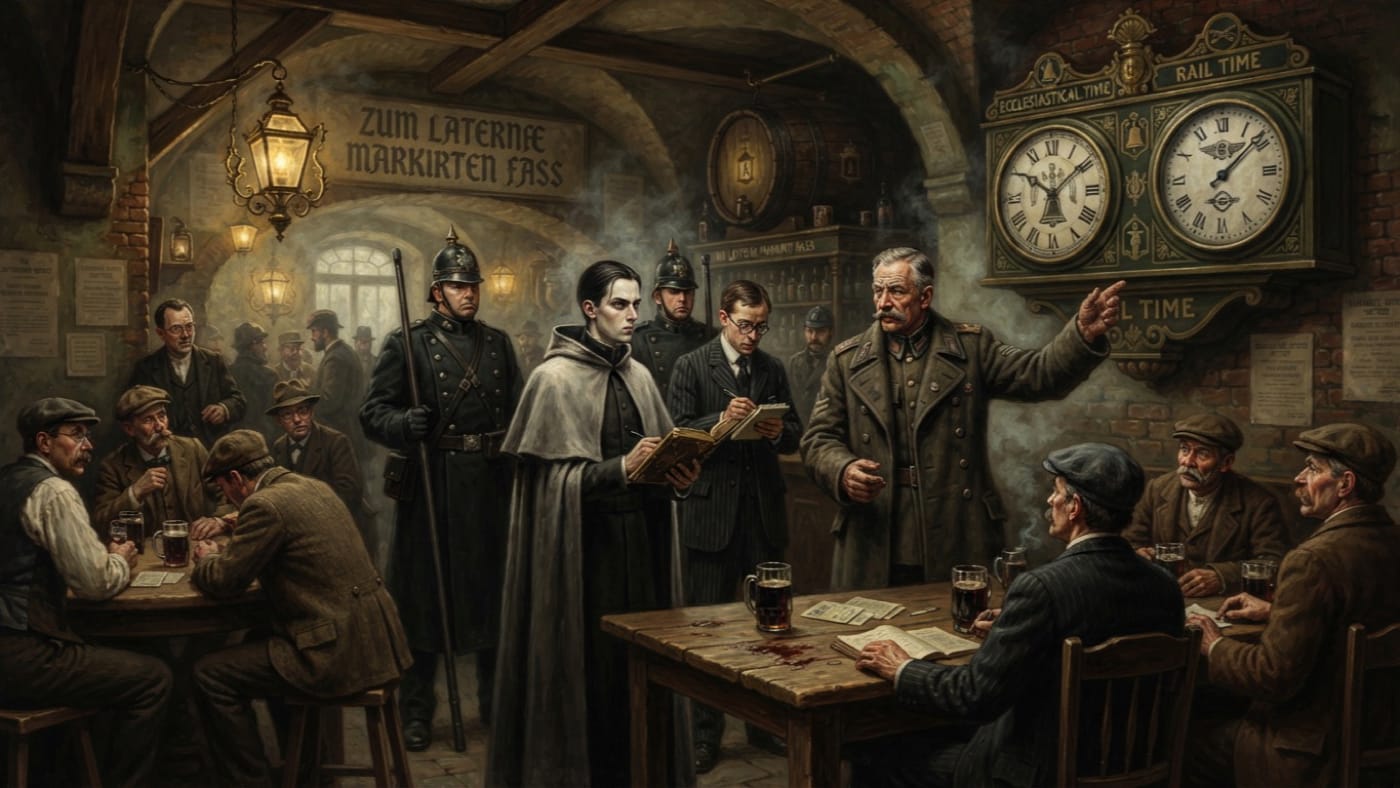
Lantern-Marked Cask
Purity named the hour; a retired major asked whose clock
An Old City beer-hall in Kanzleiburg where a retired major asked Purity which clock governed ninth bell during the A.S. 140 Curfew Standoff. The halls reopened; the question remains unanswered.
Codex Ref. II.3.19-140
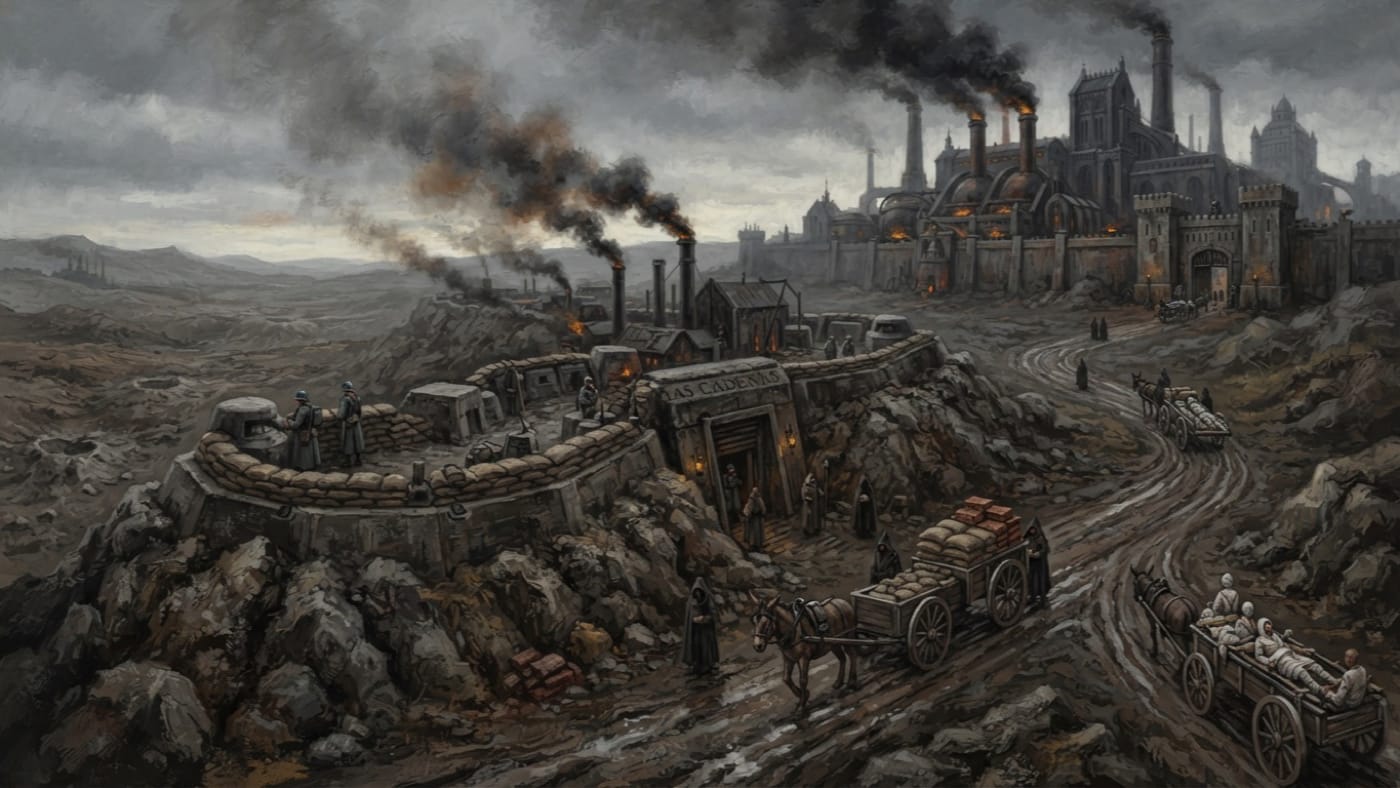
Las Cadenas
Bread and incense inbound. Wounded outbound. The dependency renews itself.
An Iberian trench bastion dependent on San Vesta for ash-bread and incense, sending its wounded back to the priory. The supply order renews perpetually; the patients repay their cures in labour.
Codex Ref. II.4.09-1576
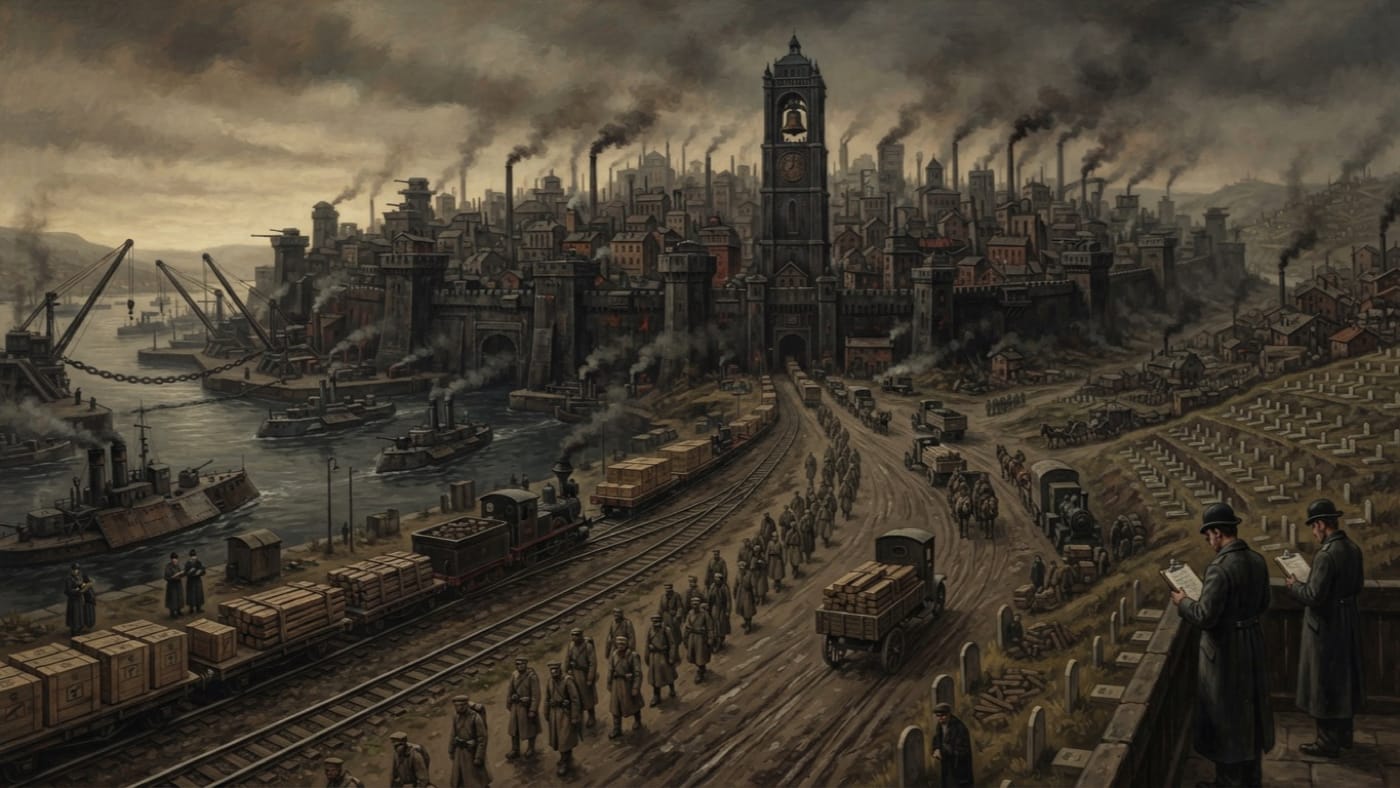
Last Lock
The southern anchor takes the credit; the Hintermark sends the bill
The Last Lock is Bastion-Constantinople, southern anchor of the Sagittal Line: barred strait, punctual hunger, and walls kept standing by Hintermark coal, metal, levies, and graves.
Codex Ref. II.4.10-068
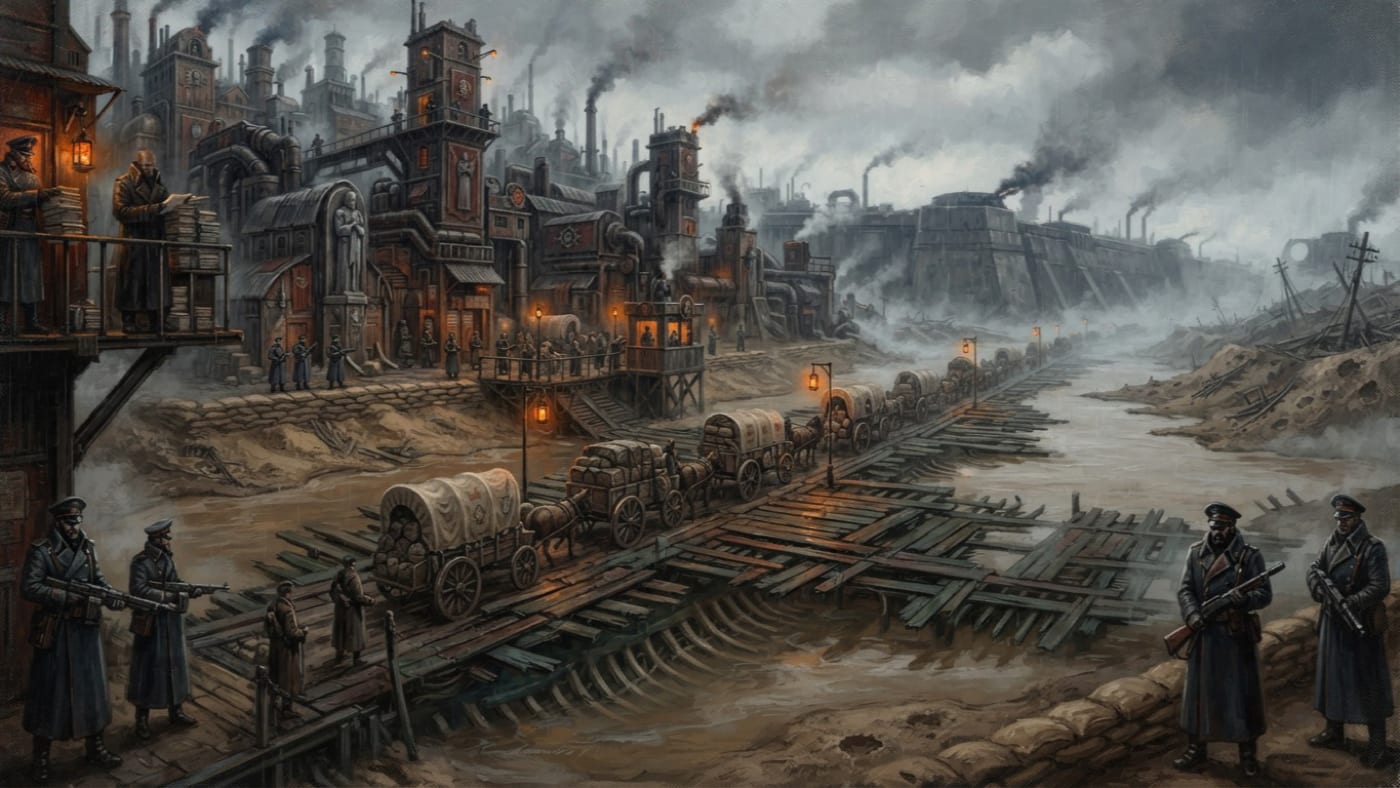
Latch River
The ford endures. By definition, the river has lost no one.
A small river whose ford funnels convoys through Latchford's permit machinery. Minutes slip, stamps arrive early, and people disappear outside the boundary the Bureau drew to exclude the crossing.
Codex Ref. II.4.08-009
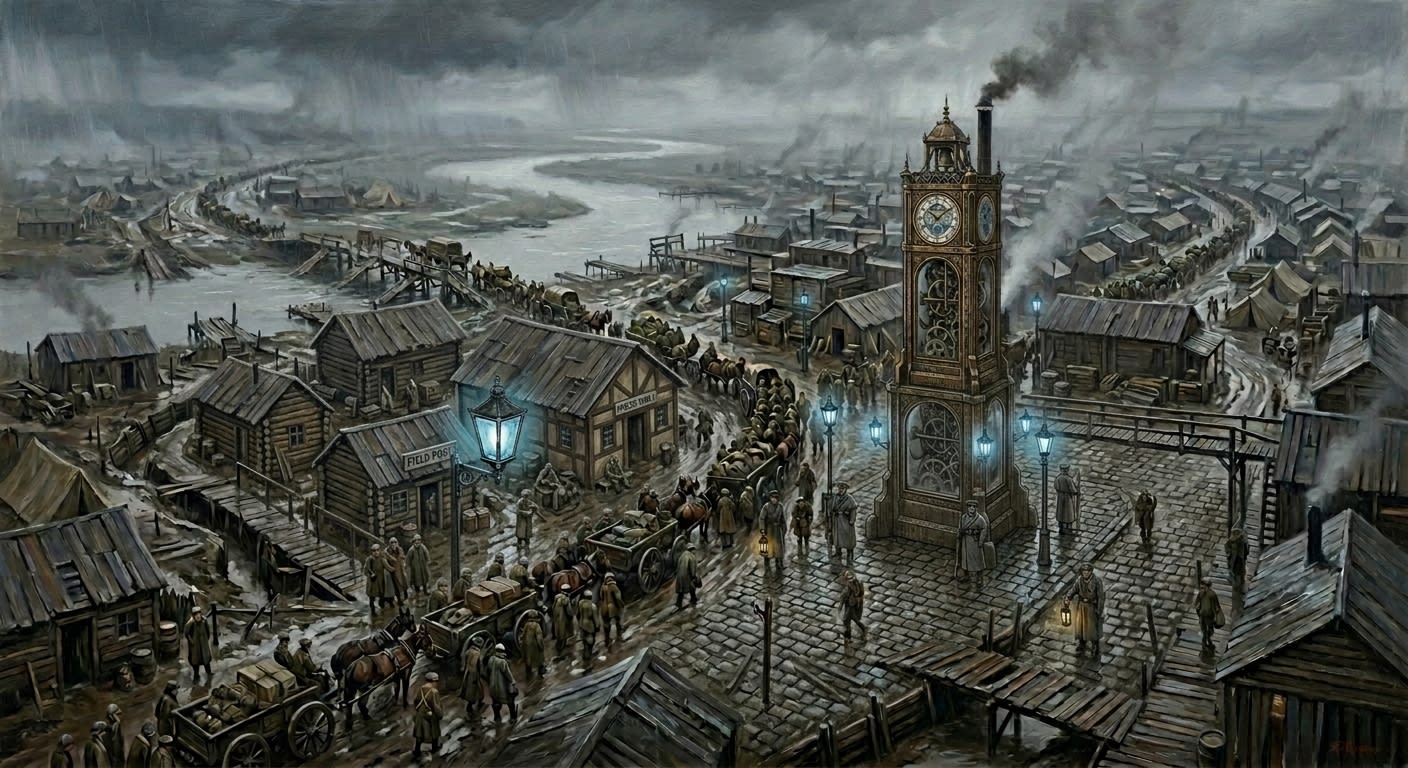
Latchford Permit-Yards
The ford endures. The queue endures. The stamp falls, and so do you.
A swollen permit-bottleneck on the Danubian rear-approach where the Bureau processes sixty thousand souls per convoy season and the Master Gate Clock eats the minutes it cannot account for. Drax visited once. The Bureau has classified the extra eight days as clerical weather.
Codex Ref. II.4.08-001
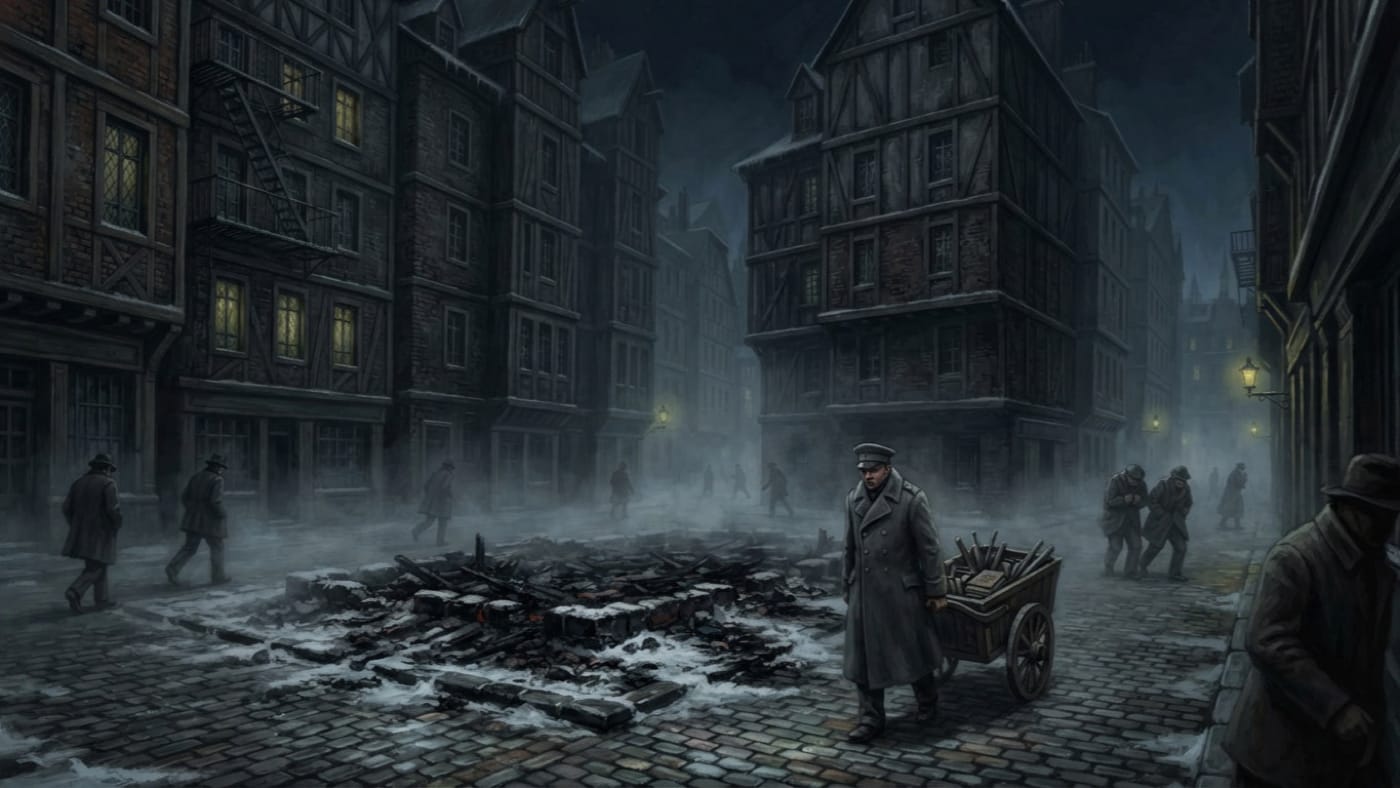
Laughing Swan Inn
Three chuckles, one fire, and a licence that outlived its premises
The Laughing Swan Inn on Strasbourg's Millwrights' Row was burned in A.S. 102 for three unauthorised chuckles in one week. Its licence is revoked; its ashes remain available for citation.
Codex Ref. III.2.14-102
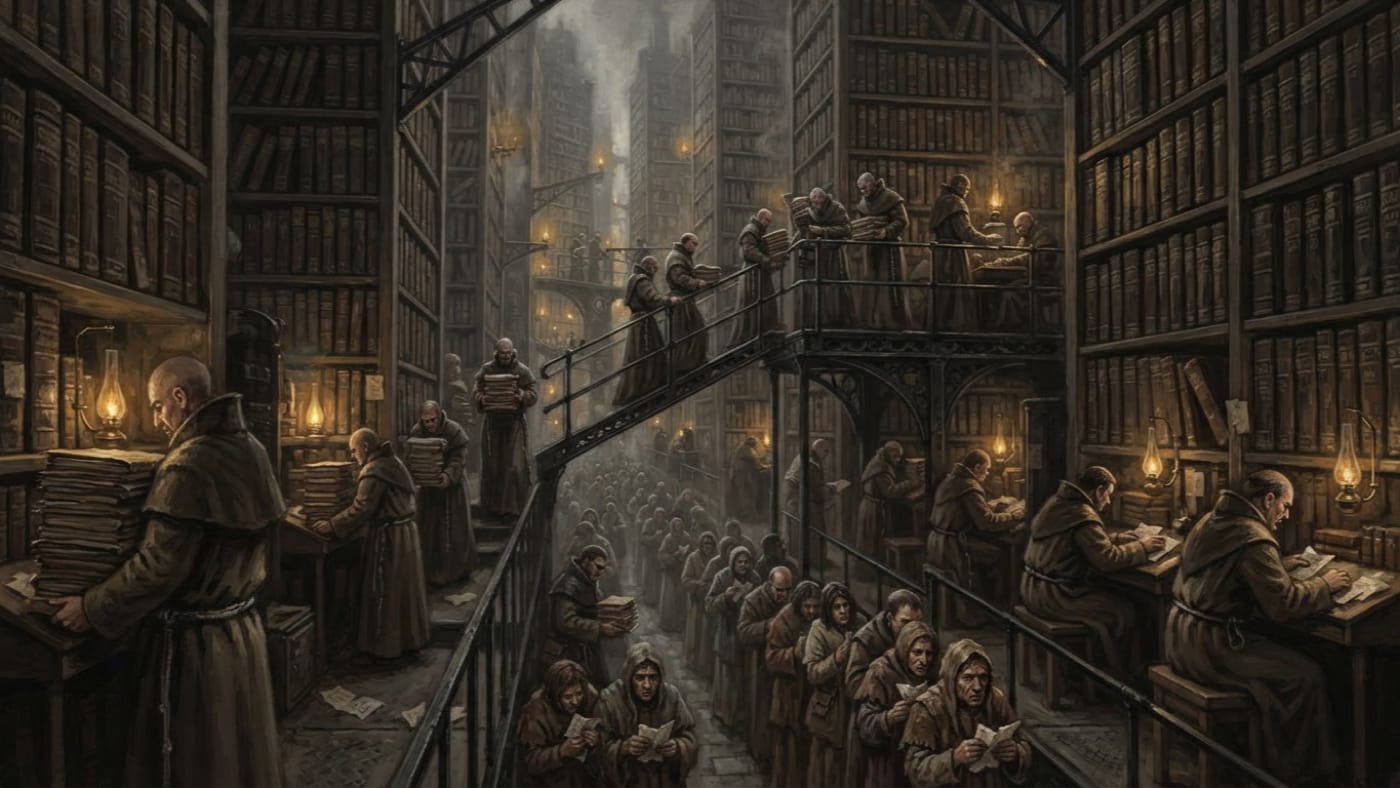
Ledger Cloister (Rheinscarp)
On the fifth terrace, the bread waits for your name to agree with the register
Rheinscarp's fifth-terrace Records labyrinth reconciles crossing receipts, ration rolls and names under Ysabeau Kelm. You arrive to file a receipt; the Quill-Choir may correct whether you exist.
Codex Ref. II.2.01-003
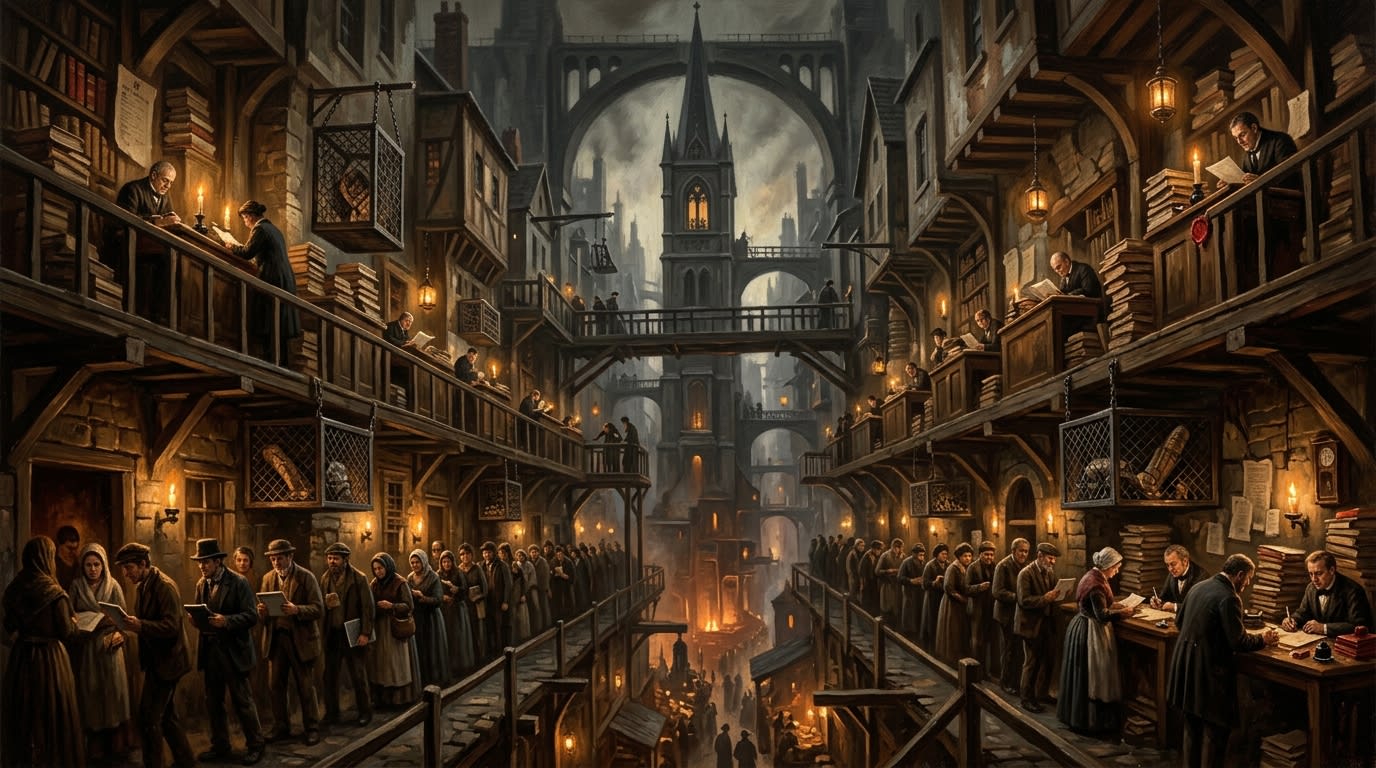
Ledger Row
Where existence queues before supper
Ledger Row is Essen-of-Hymnsteel's Records district, where names, rations, pour records, and corrected lives queue beneath Arch-Notary Veyl's pen.
Codex Ref. II.2.06-110
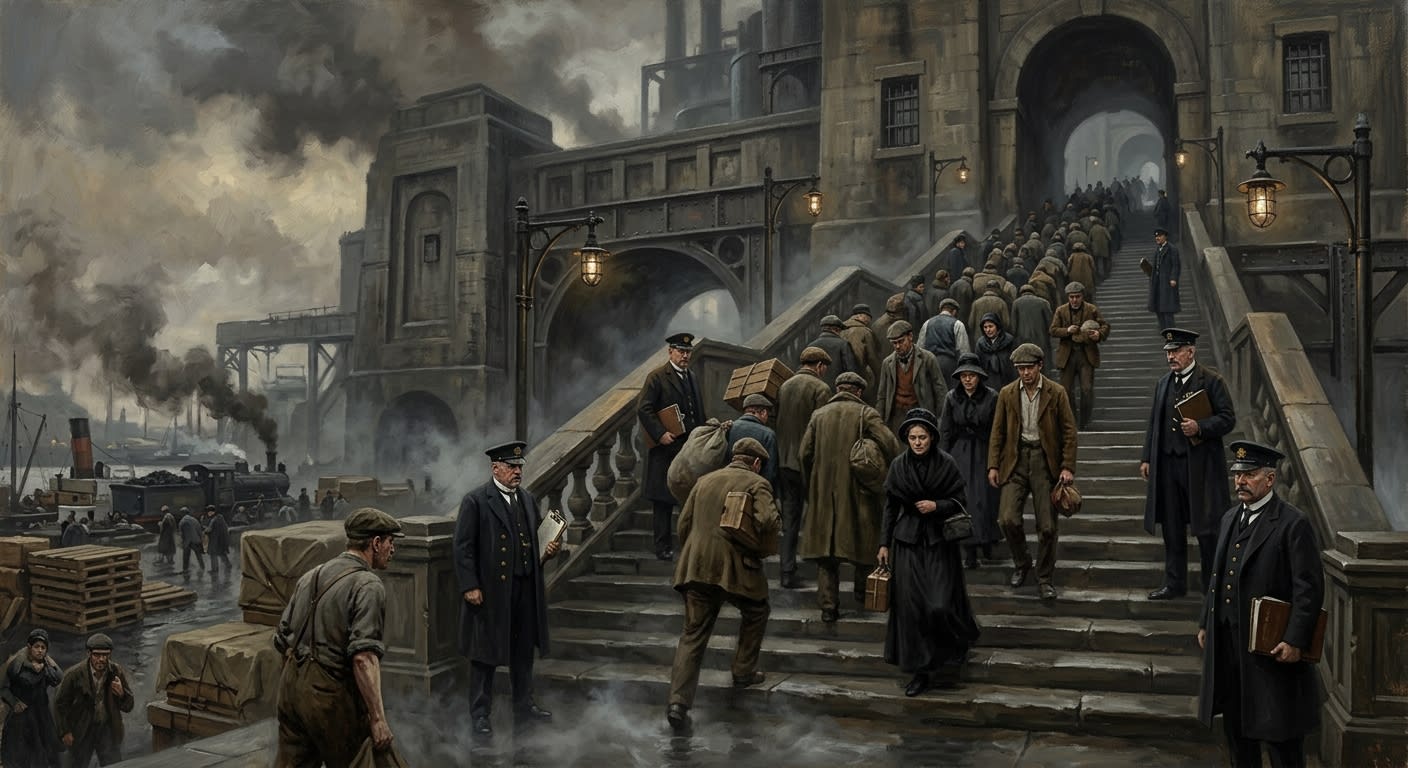
Ledger Steps
The harbour climbs toward refusal
Behind Thessaloniki's Chainward Quays, the Ledger Steps turn ships, crews, cargo, widows, and paused names into taxable fact by making them climb.
Codex Ref. II.4.09-198
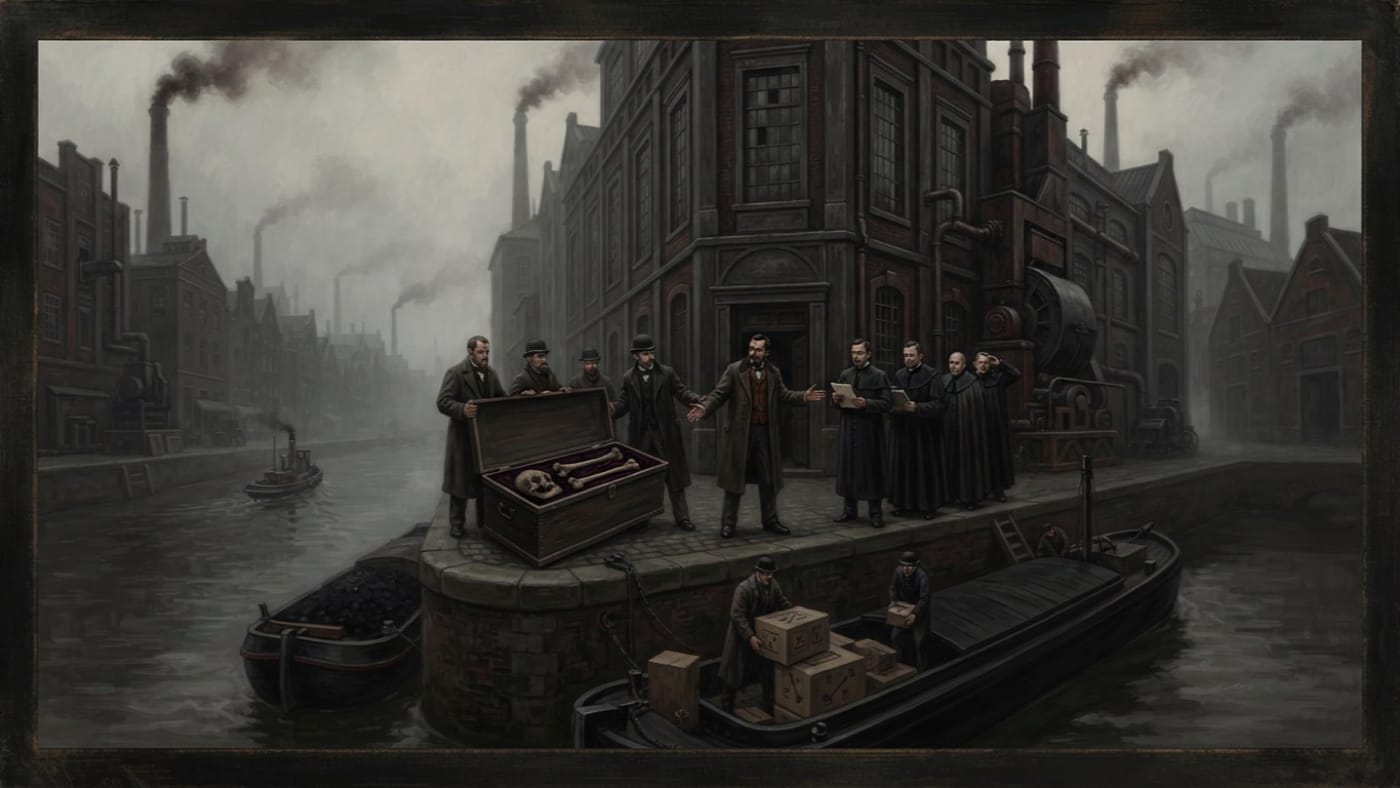
Leiden
Two femurs, one jawbone, and no jurisdiction
Leiden's anatomists supplied the Year of Letters with its simplest weapon: two femurs per man. Its merchants claim Saint Luthar's jawbone. The Synod has neither a custody chain nor jurisdiction.
Codex Ref. II.4.09-013
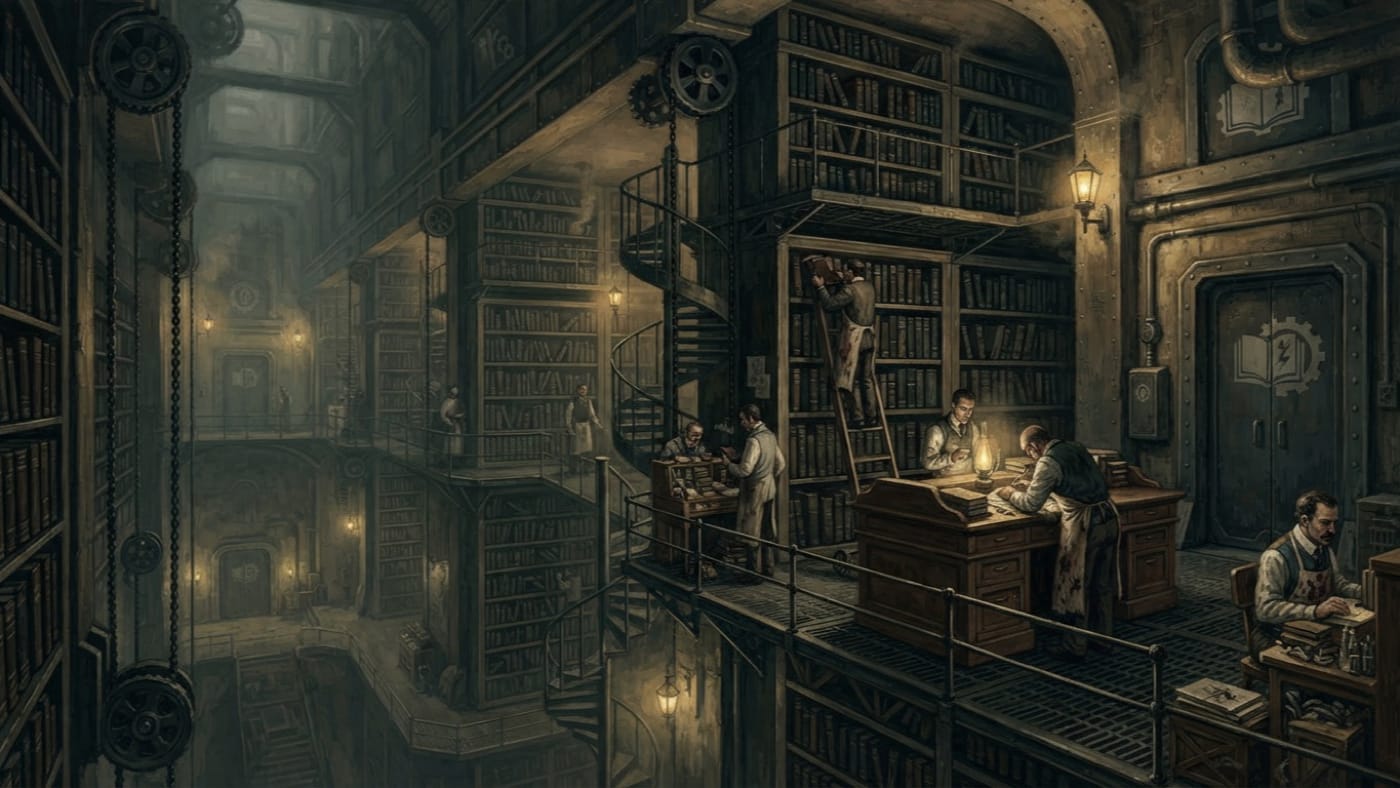
Library of Saint Origen
Two Hundred Thousand Volumes, and Nothing Beneath Them
Strasbourg's university library holds two hundred thousand volumes and supplies tutors to the Academy. Beneath it, the Secret Stacks preserve books, rooms and librarians that officially do not exist.
Codex Ref. III.2.01-1622
Liège
Where the bell was broken and the horn learned obedience
Liège, soot-black industrial city of the Meuse, lost its shift-bells in A.S. 108 after miners rang survival without licence; the horns remain ugly, lawful, and obeyed.
Codex Ref. II.2.03-108
Lime Yards
The white furnaces where Marrowgate distributes its dead into walls, roads, and weather
The Lime Yards of Marrowgate are kilnfields where salvage remains become bone-lime, whitewash, road powder, ash-credit, and, when the Marrowwind rises, witness.
Codex Ref. II.2.06-003
Line
The short word soldiers spend instead of breath
The Line is the soldier's short name for the Sagittal Line: the Baltic-to-Bosphorus membrane where Europe is counted, spent, and kept west.
Codex Ref. II.4.07-065
Linz
The ferrymen declined; the Ledger concurs
Linz, a Danube town between Passau and Vienna, refused ferry crossings by noon during the A.S. 34 Red Flood. The ferrymen read the warning before the bureaus supplied its meaning.
Codex Ref. II.2.03-034
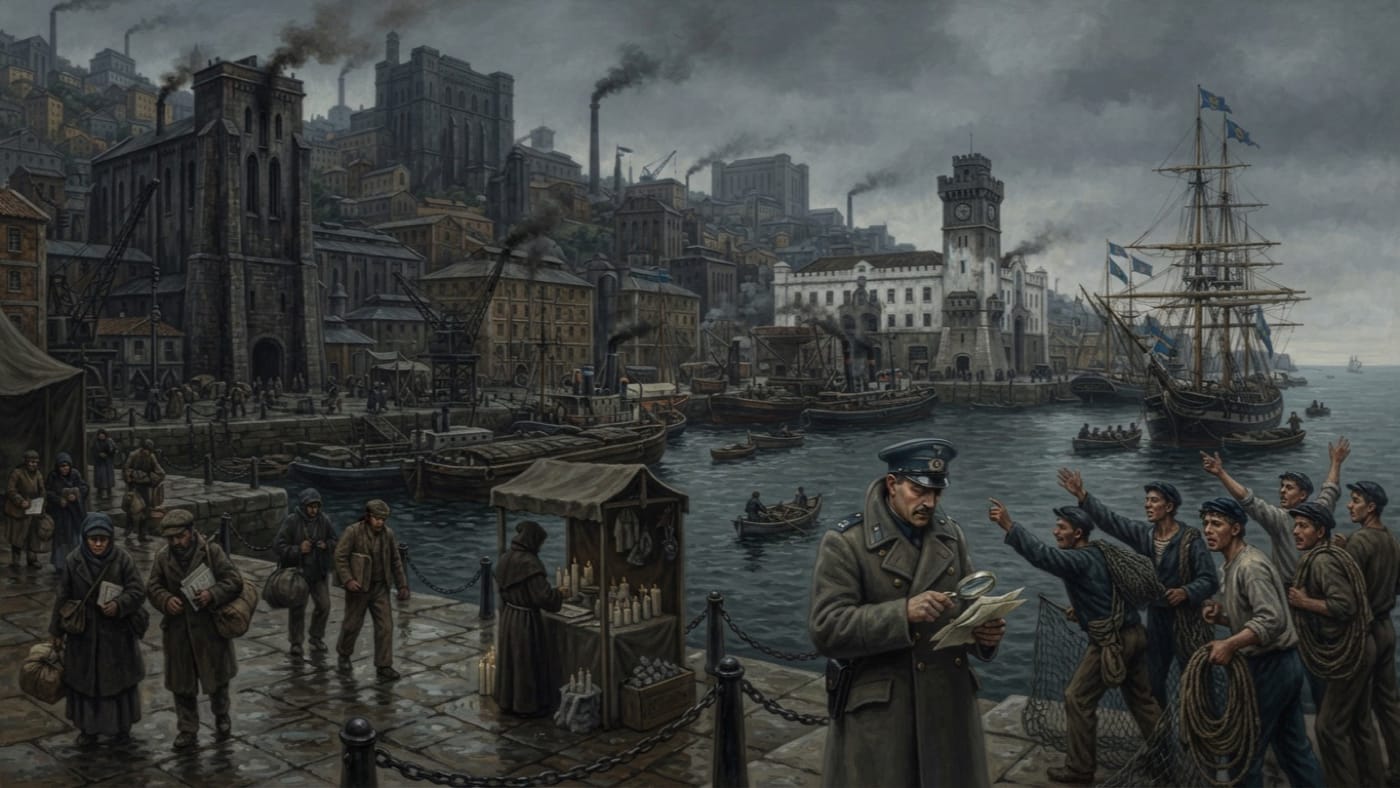
Lisbon
The harbour counts by contract
Lisbon sells sea candles, quake memory and licensed passage at the Atlantic mouth of the Tagus. Strasbourg counts its revenue; its sailors tell the catastrophe in the wrong order.
Codex Ref. II.4.09-201
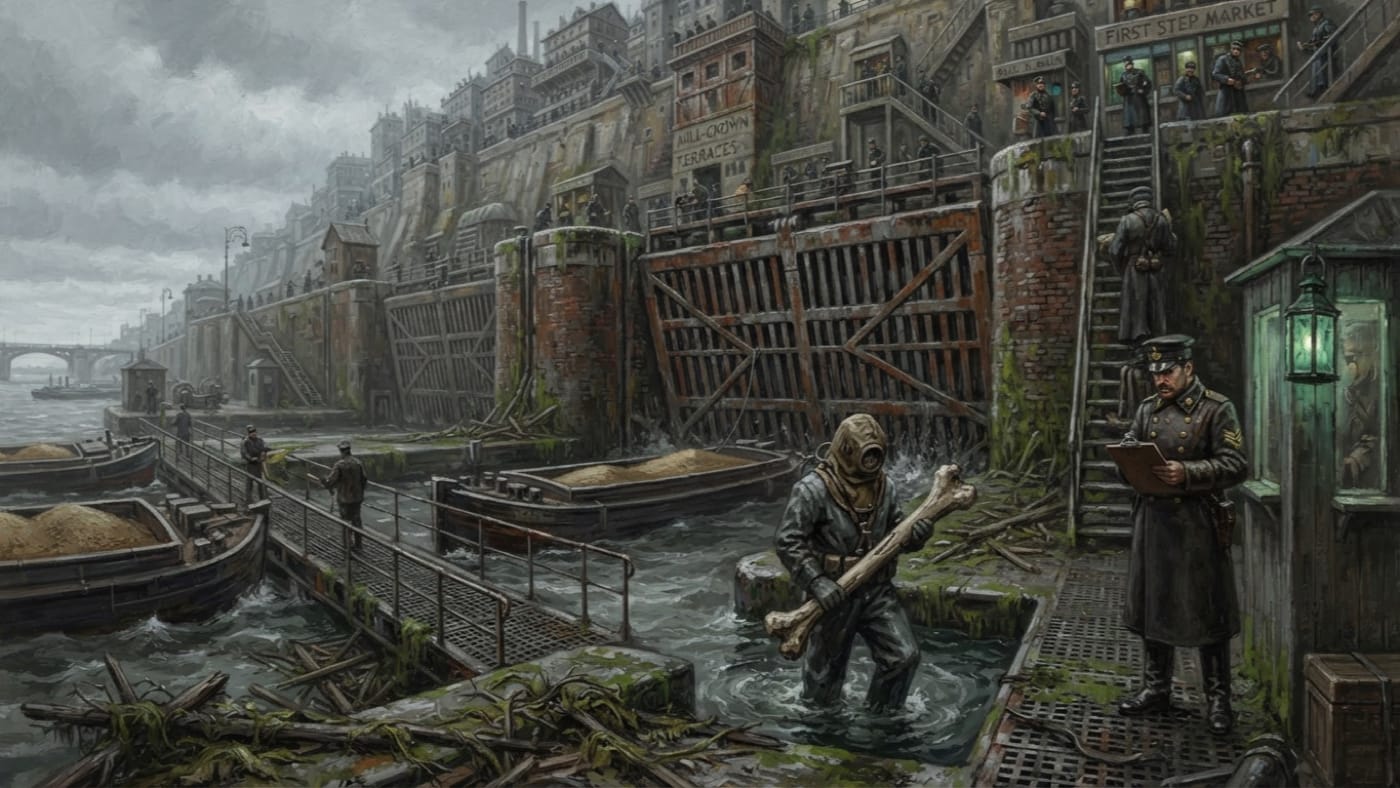
Lockmouth Works
The Brotherhood holds the keys; the terraces wait for bread
Rheinscarp's harbor locks admit the grain that feeds nine terraces. The Brotherhood holds the keys, Venn keeps the hours, and the divers earn bread by clearing what the river leaves in the grates.
Codex Ref. II.2.01-010
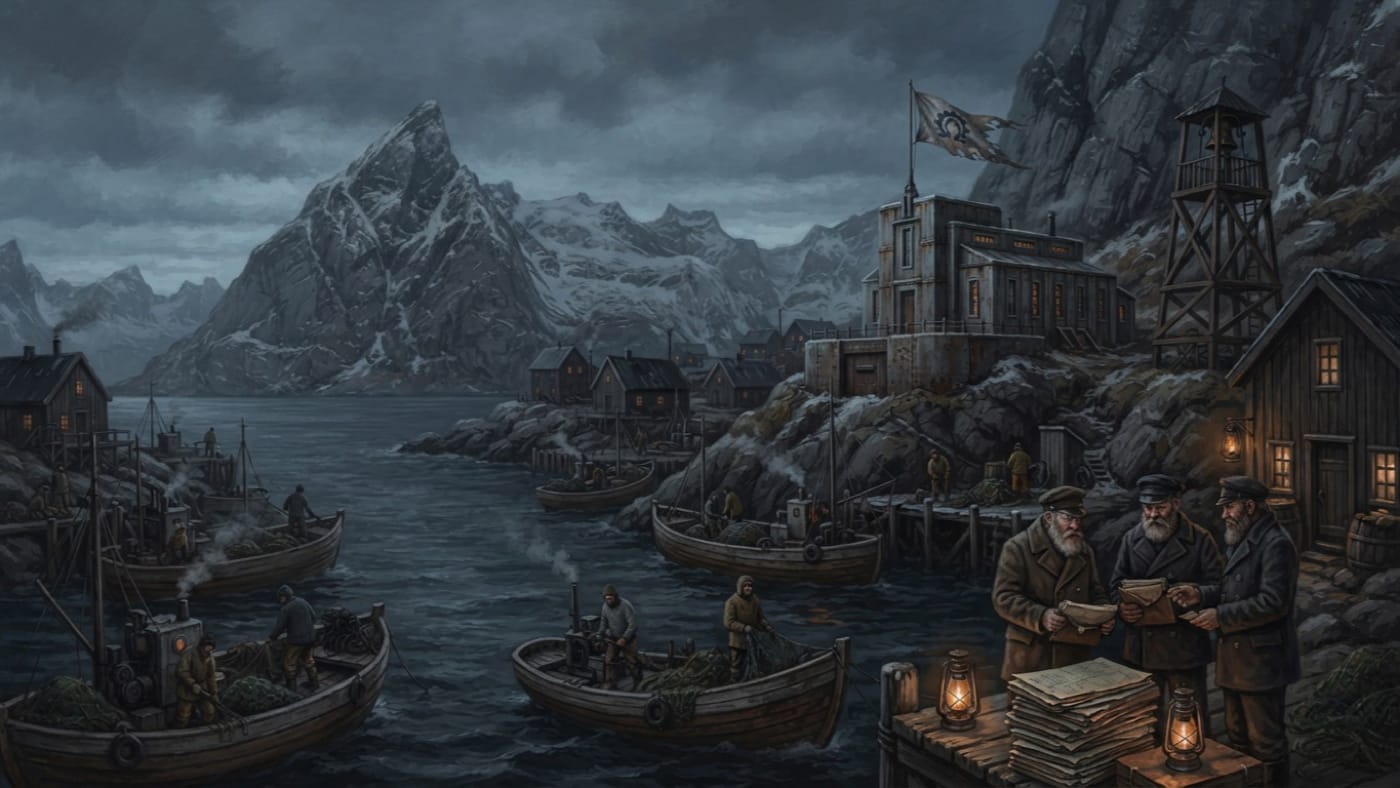
Lofoten Islands
The far end of the registry. The sea keeps the rest.
The northern island-chain at the end of Strasbourg's district formula: faithful to the Creator, governed by elders, and lit by seal-oil. The Synod has correspondence. The islanders have boats.
Codex Ref. IX.8.02-001
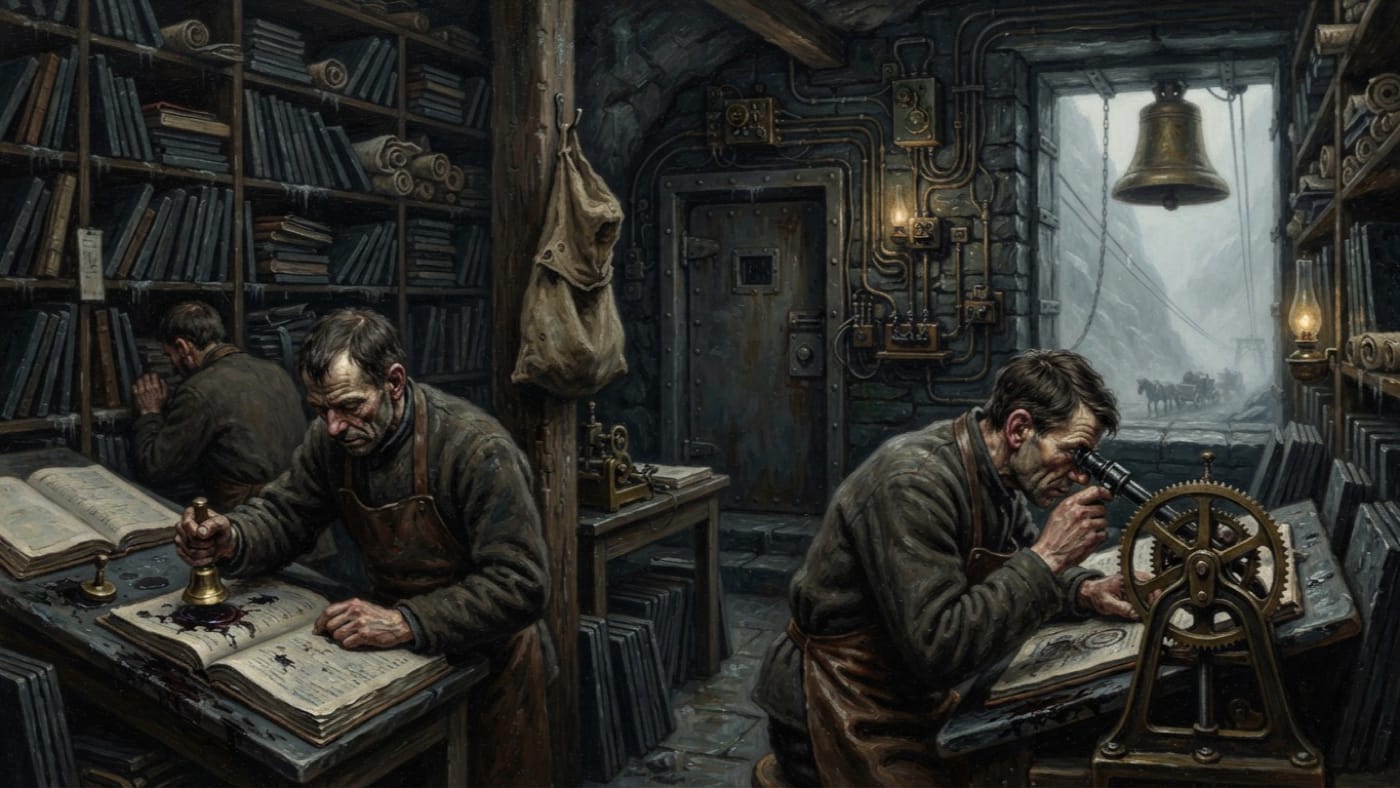
Loghouse of Slate Pages
The procedure was followed; the signal never arrived
Third Light's cliffside record house certifies every convoy clearance by bell-signet and timing wheel. Seven impeccable acknowledgments now sit beside Fourth Light's denial; the pages remain unbroken.
Codex Ref. II.4.08-585
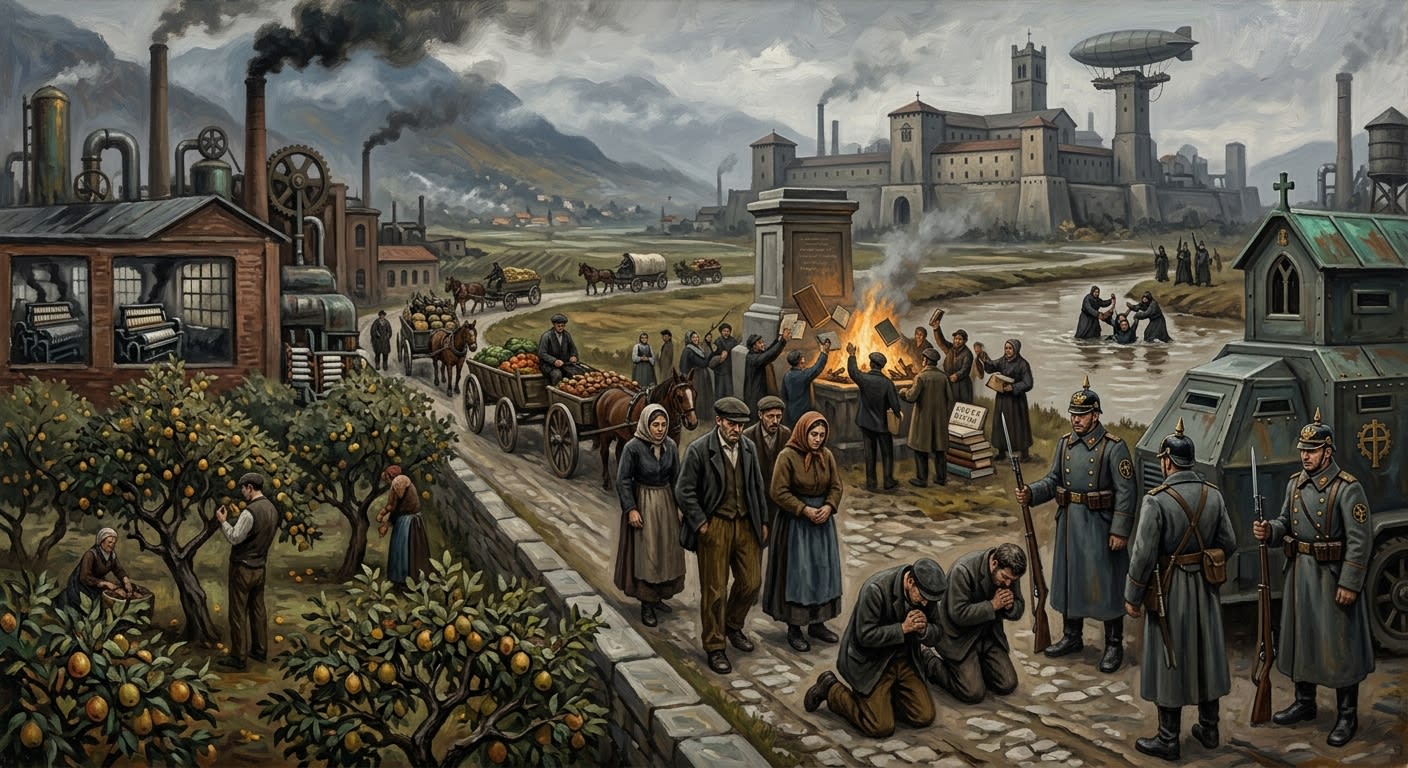
Lombardy
A rich province is merely rebellion with orchards
Lombardy is the Synod's rich northern Italian problem: orchard, loom, road, supper-table, drowned schism, corrected alphabet, and a province bowed just low enough to keep remembering.
Codex Ref. II.3.09-150
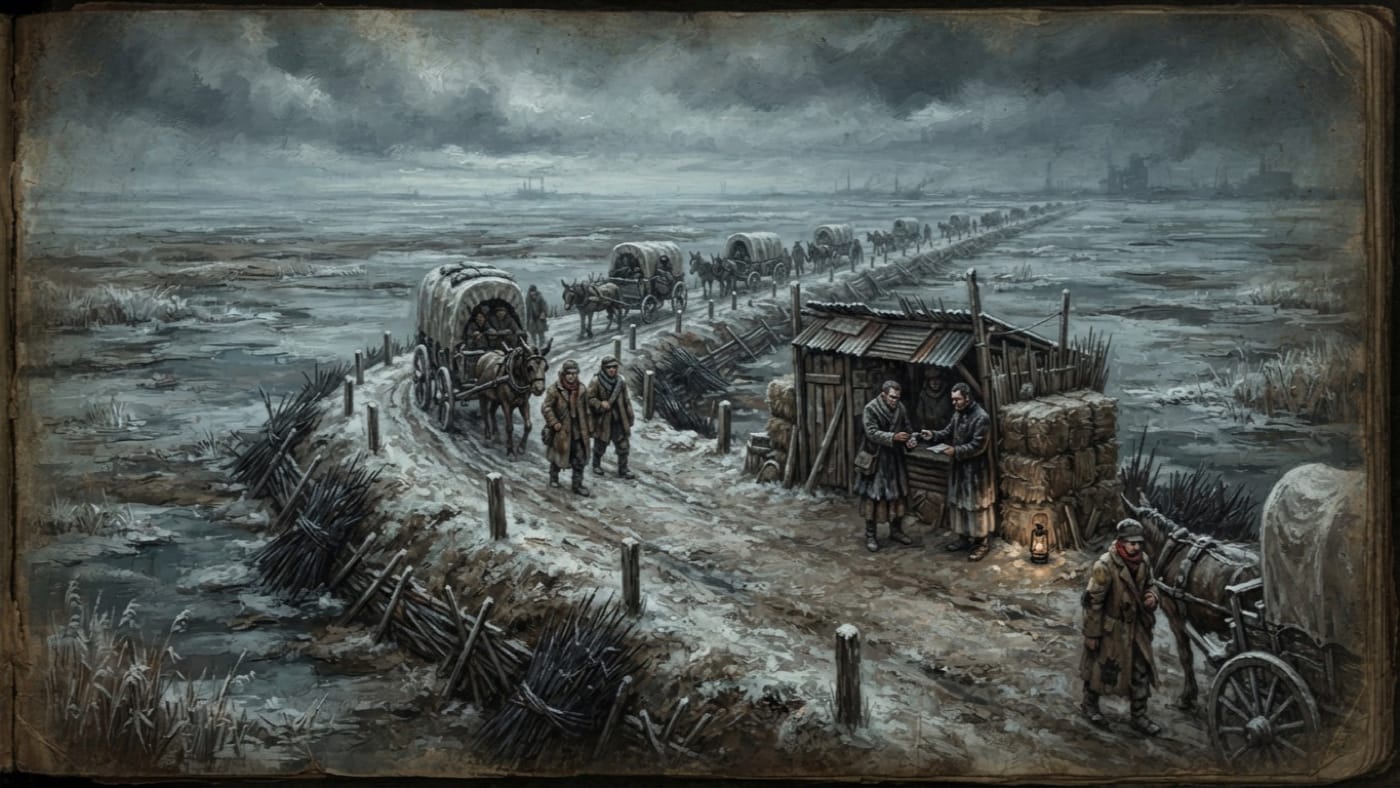
Long Salt
Nineteen miles of winter, with payment due
An A.S. 201 survey of the Long Salt: nineteen miles of winter road from Brine Fork toward Hamburg's approaches, where the Salt-Vigil collect salt and tears and the frost decides passage.
Codex Ref. II.3.05-201
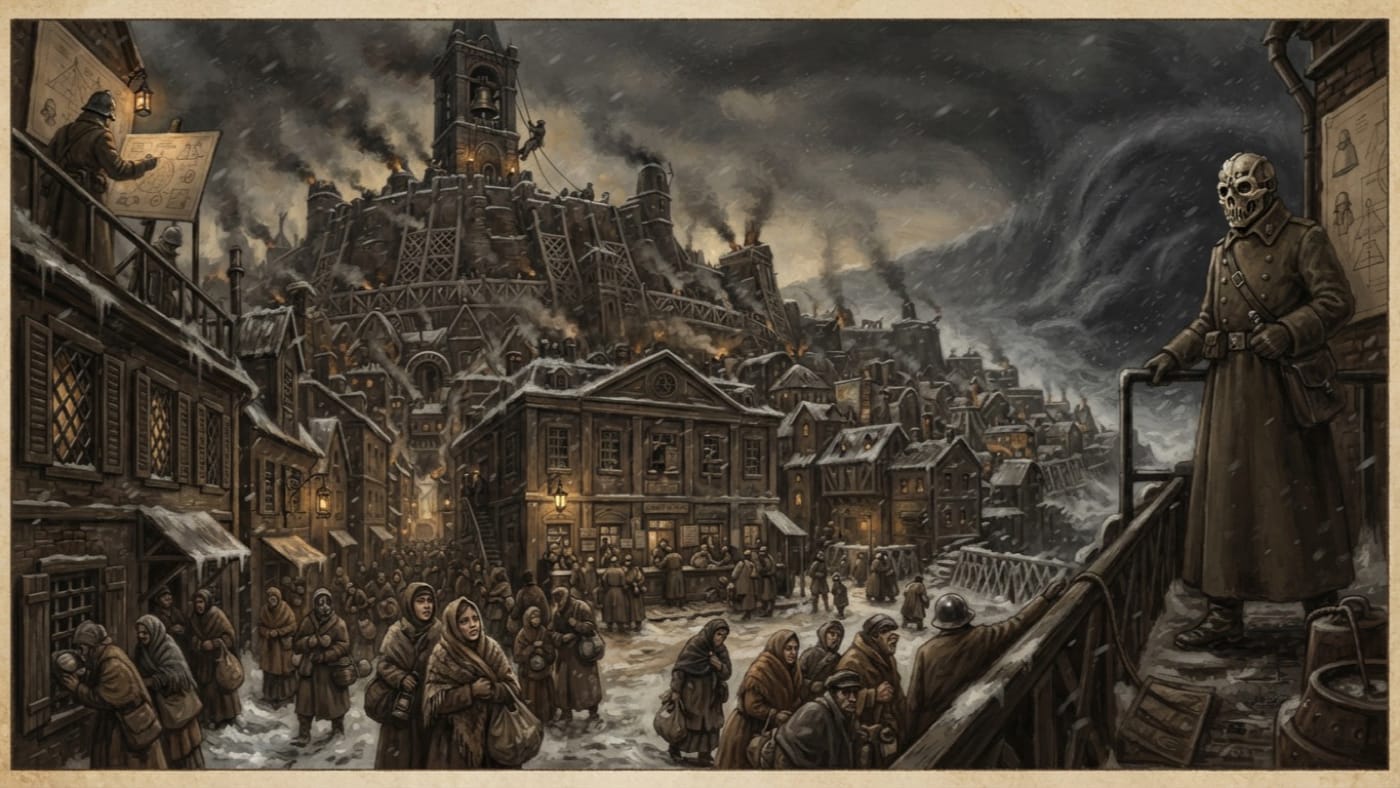
Lor
The bell closes the gate; the ledger sells the air
Lor shelters the Line's convoys behind bone lattice, filters and closure bells. Storm Wardens govern the deadline; the Breath Office sells the shelter, and the poor learn how much air costs.
Codex Ref. II.4.08-1666
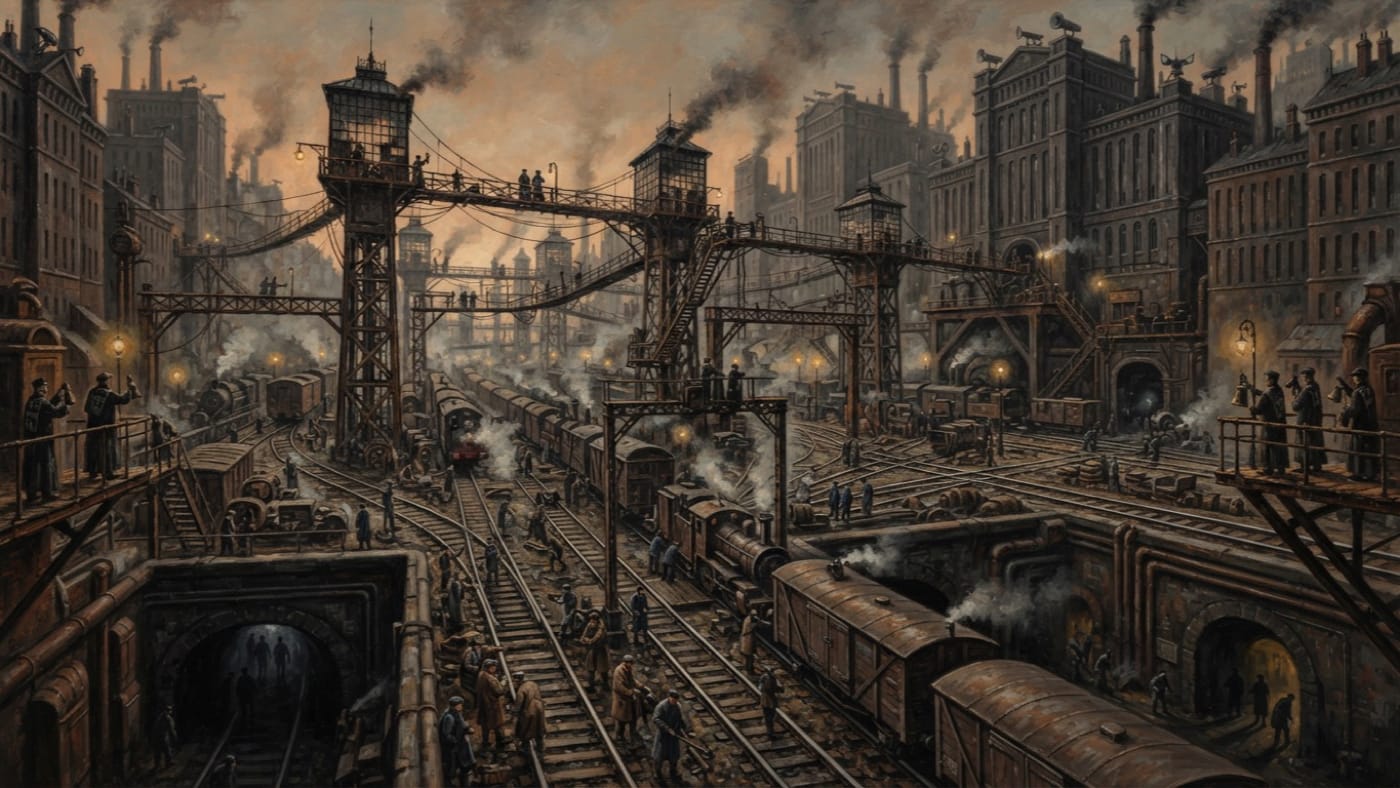
Lorn
The city where obedience has a timetable
Lorn routes the Heartlands' freight toward the Line and its residents through manifest, measure and seal. Beneath the timetable, the unscheduled city keeps moving.
Codex Ref. II.3.01-002
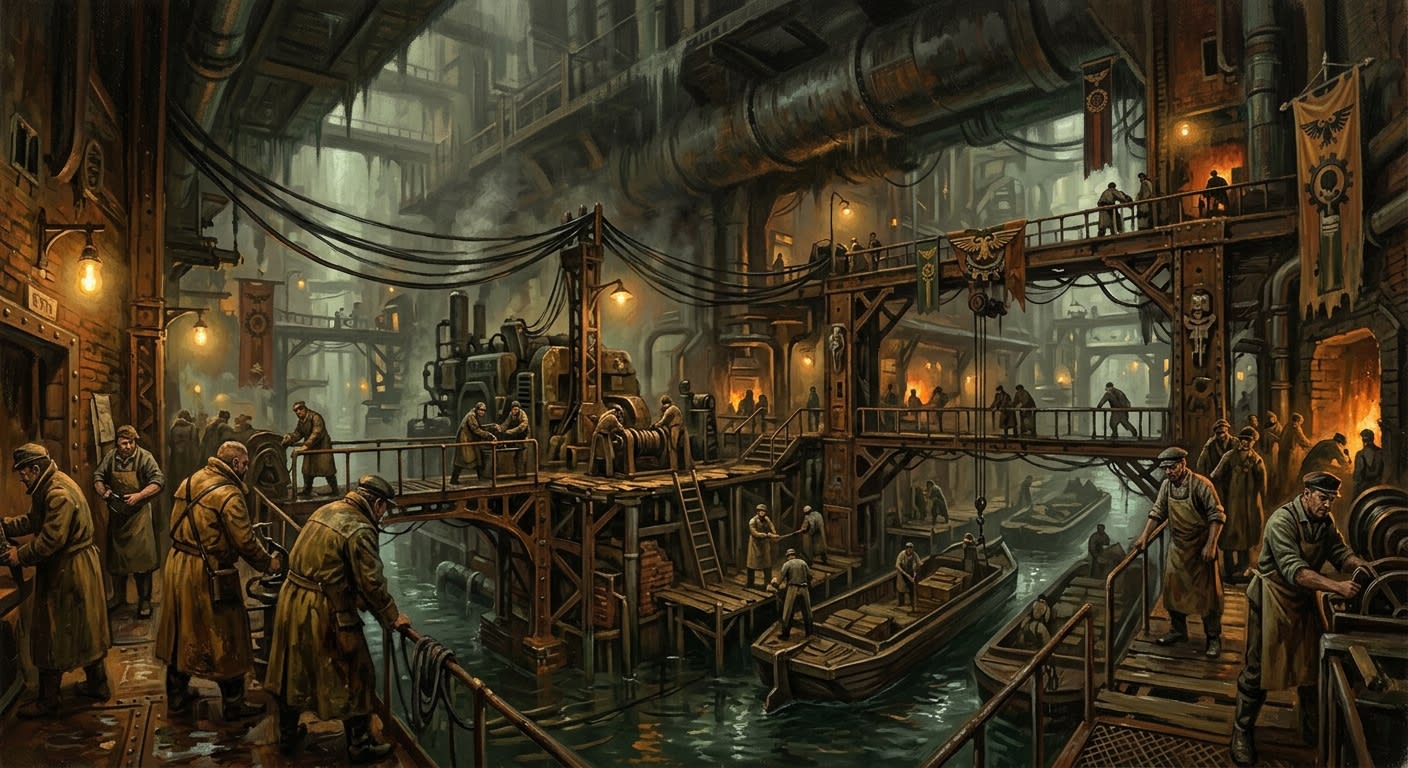
Low Nets
Where Saffron stands because the drowned keep working
Low Nets is Saffron Bastion's wet undercity: sub-habitable, indispensable, fevered, organised, and louder than its governors prefer.
Codex Ref. II.4.09-112
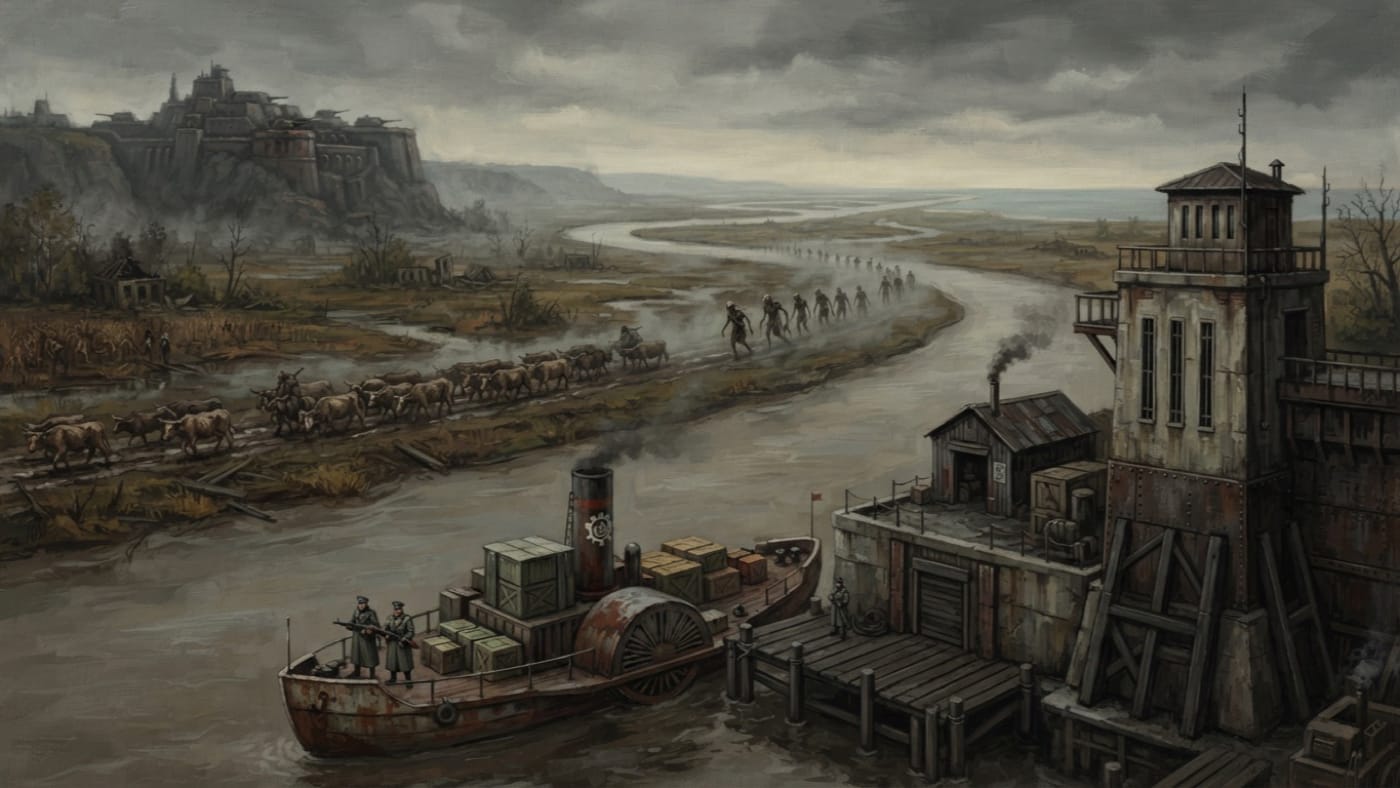
Lower Danube
Broad water, three appetites, and one butcher's manifest
Below the Iron Gates, the Danube carries food through competing appetites. Carmine's A.S. 193 correction records the governing fact: the Blightbearers had smelled cattle.
Codex Ref. II.4.08-201
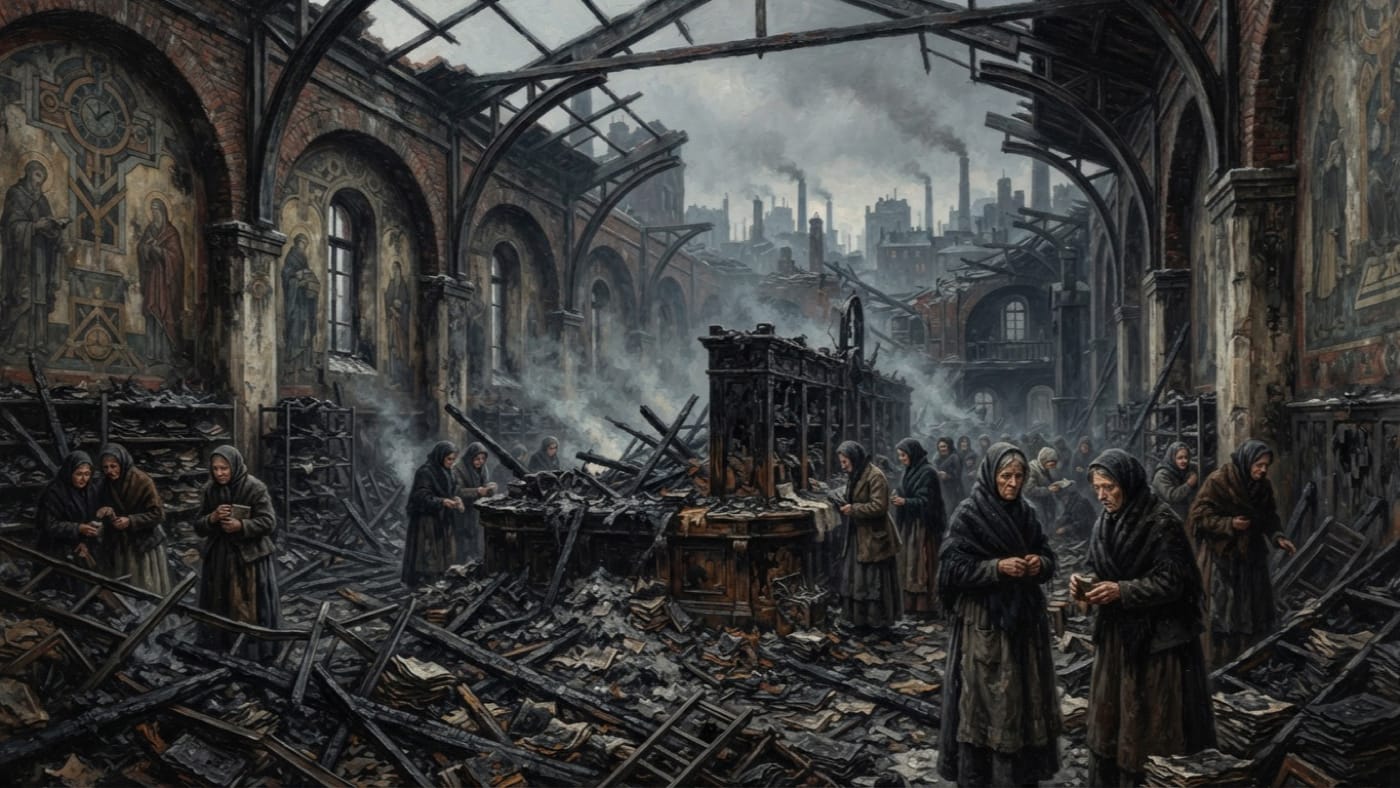
Lower District Tithe Office
The counter burned; the obligation survived
The Lower District Tithe Office in Bastion-Königsberg burned during the A.S. 139 Widow Riot against compulsory Widow’s Pennies. The counter and its records burned; the obligation survived.
Codex Ref. III.2.04-1673
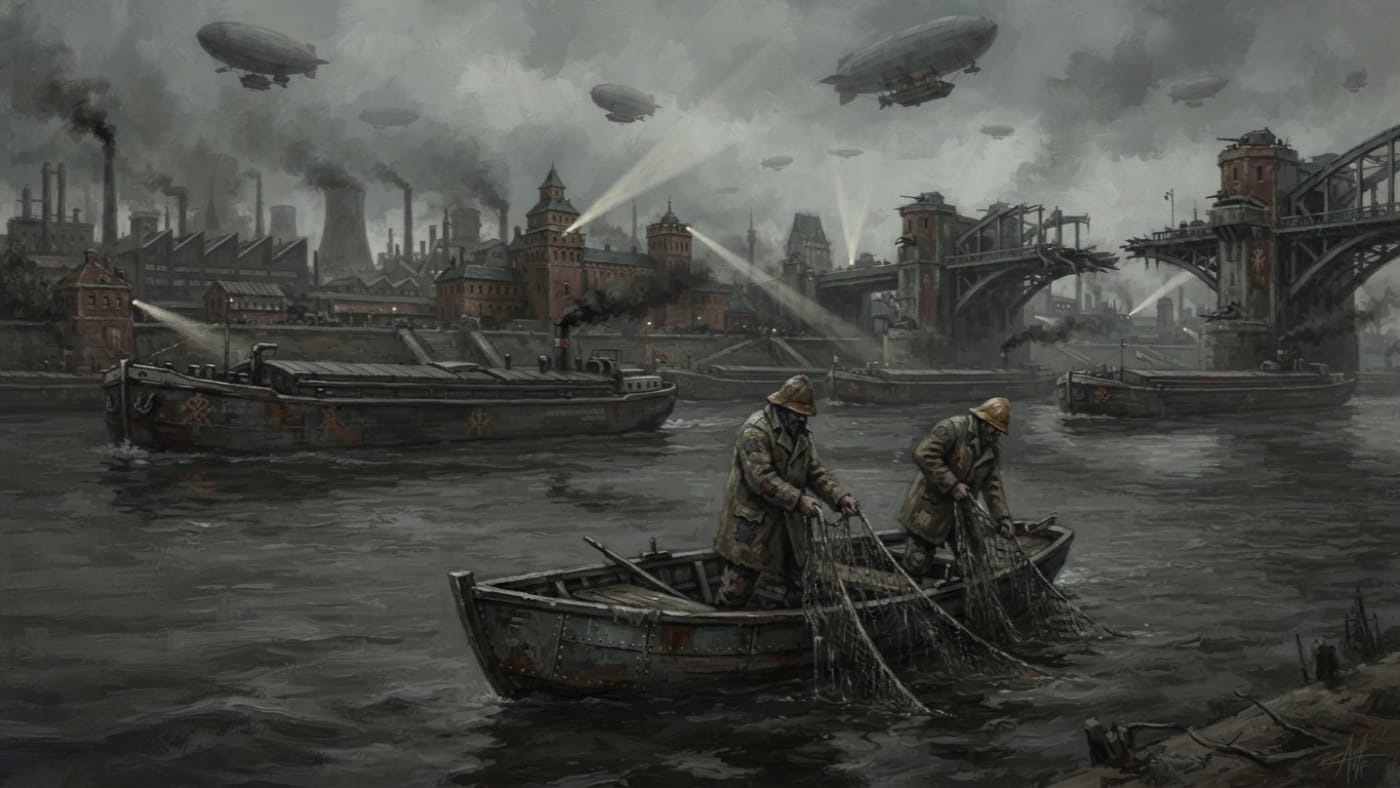
Lower Rhine
A river reach, a deputy's copies, and no boundary on file
The lower Rhine has no boundary on file, but its fisher-litanies reached Werrenrath's papers. The Ledger can trace the copies more readily than the songs.
Codex Ref. II.2.08-203
Lower Vaults
Every pardon descends; no depth is certified
Beneath Strasbourg's Basilica, Records shelves baptisms, tithes, pardons and recantations. The custody is certified; the depth is not.
Codex Ref. II.1.04-007
Lower Vire
Candles go up. Refuse comes down.
A River-belt city where Candle-Sump supplies the Heights with light, broth and certified dead. The offices above keep their stamps dry; the people below pay for the privilege.
Codex Ref. II.1.05-002
Lowlands
The country promised for a gate
The Synod's Lowlands move grain, cloth and credit through Bruges, Ghent and Antwerp. Guillaume was promised dominion for Aachen's gate; delivery remains uncertified.
Codex Ref. II.1.08-001
Lowvale Tallytown
The ridge's dependence, entered against the valley
Lowvale Tallytown sends lamp oil, salvaged glass and conscripts up to Third Light. The ridge calls it dependent, then charges its porters twice for keeping the beacon lit.
Codex Ref. II.4.08-1681
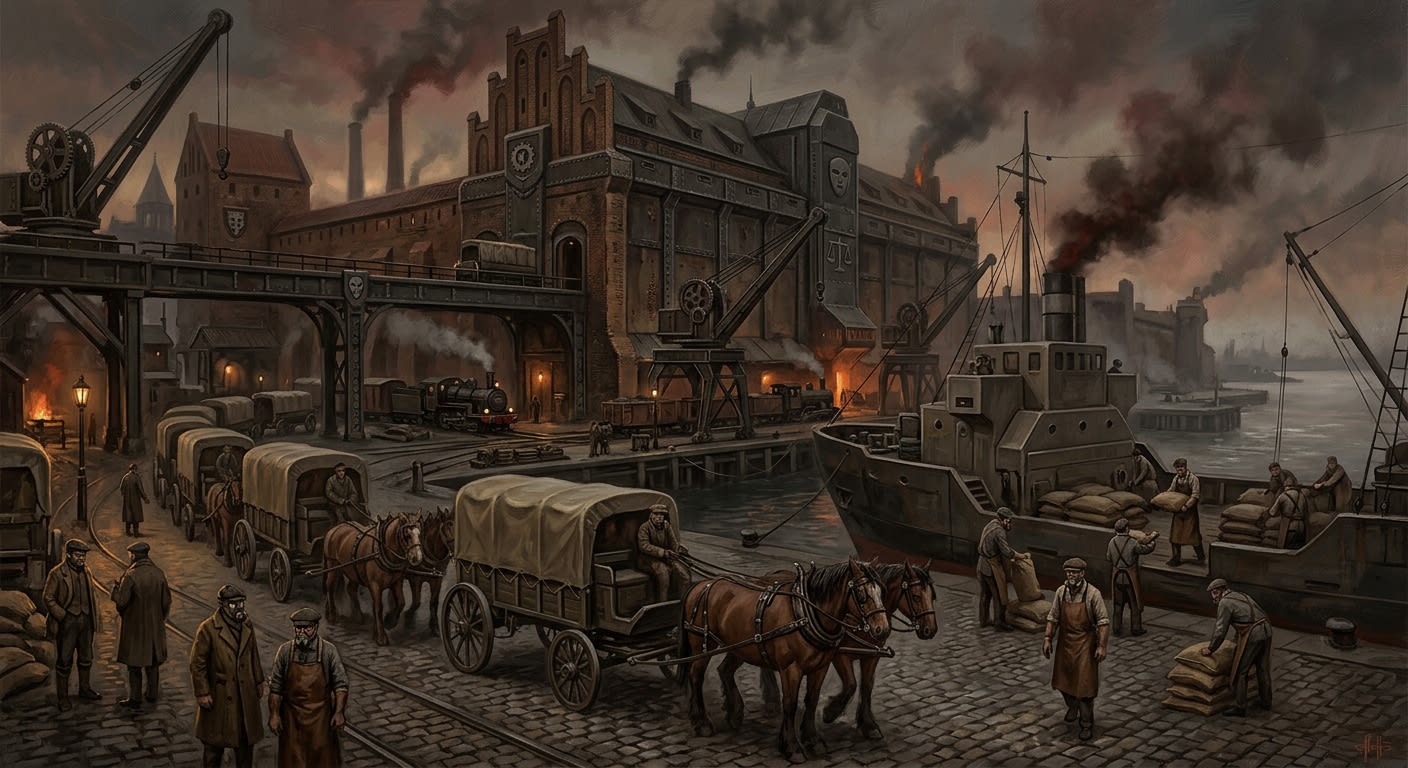
Lübeck
The harbour remembers eleven; the records remember smoke
Baltic grain port and northern corridor municipality made exemplary in the A.S. 180 Year of Smoke, when eleven night wagons taught Lübeck to move cargo and misplace memory.
Codex Ref. II.4.09-011
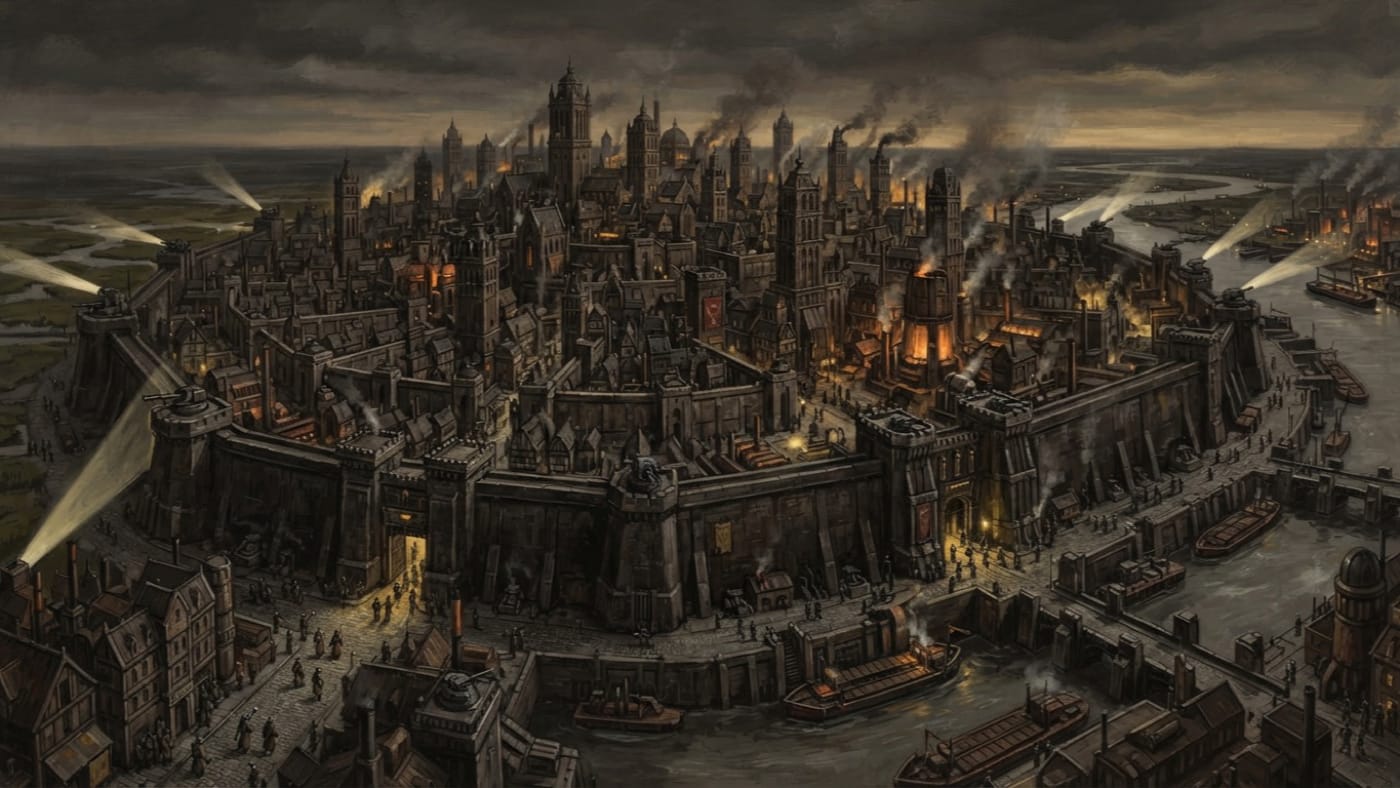
Lunden-Kirk
The Thames city whose parish walls keep the Bureau outside
London survives as a walled monastery-city on the Thames: perhaps four hundred thousand souls, each parish armed, each street watched. The British Crown governs; the Bureau possesses reports and no jurisdiction.
Codex Ref. II.0.10-201
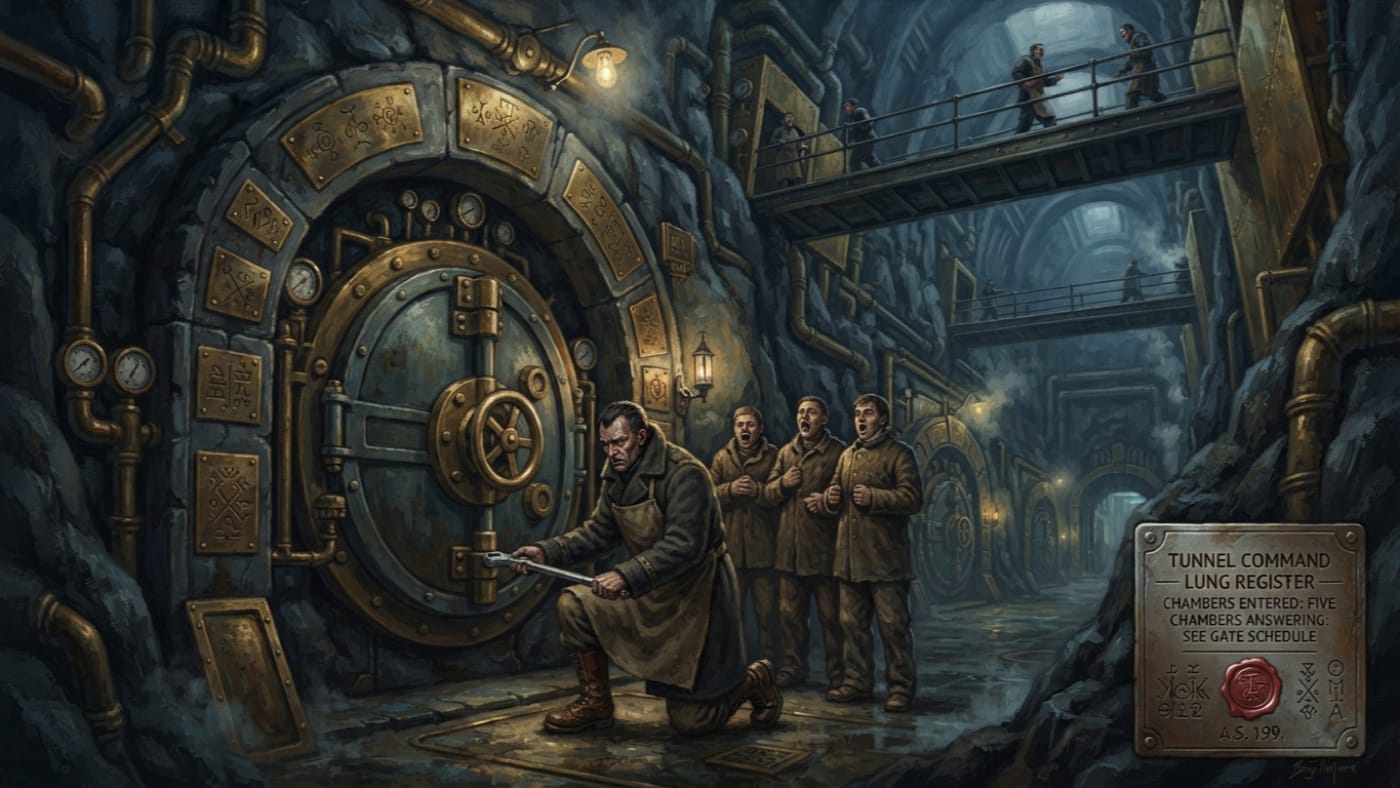
Lung chambers
Five on the register; one behind a wall
Five pressure chambers along Bastion-Irongate's Transit Spine, kept by gasket seals and continuous chant. The Third Lung remains sealed after the Great Hush; the register still counts it.
Codex Ref. II.4.24-005
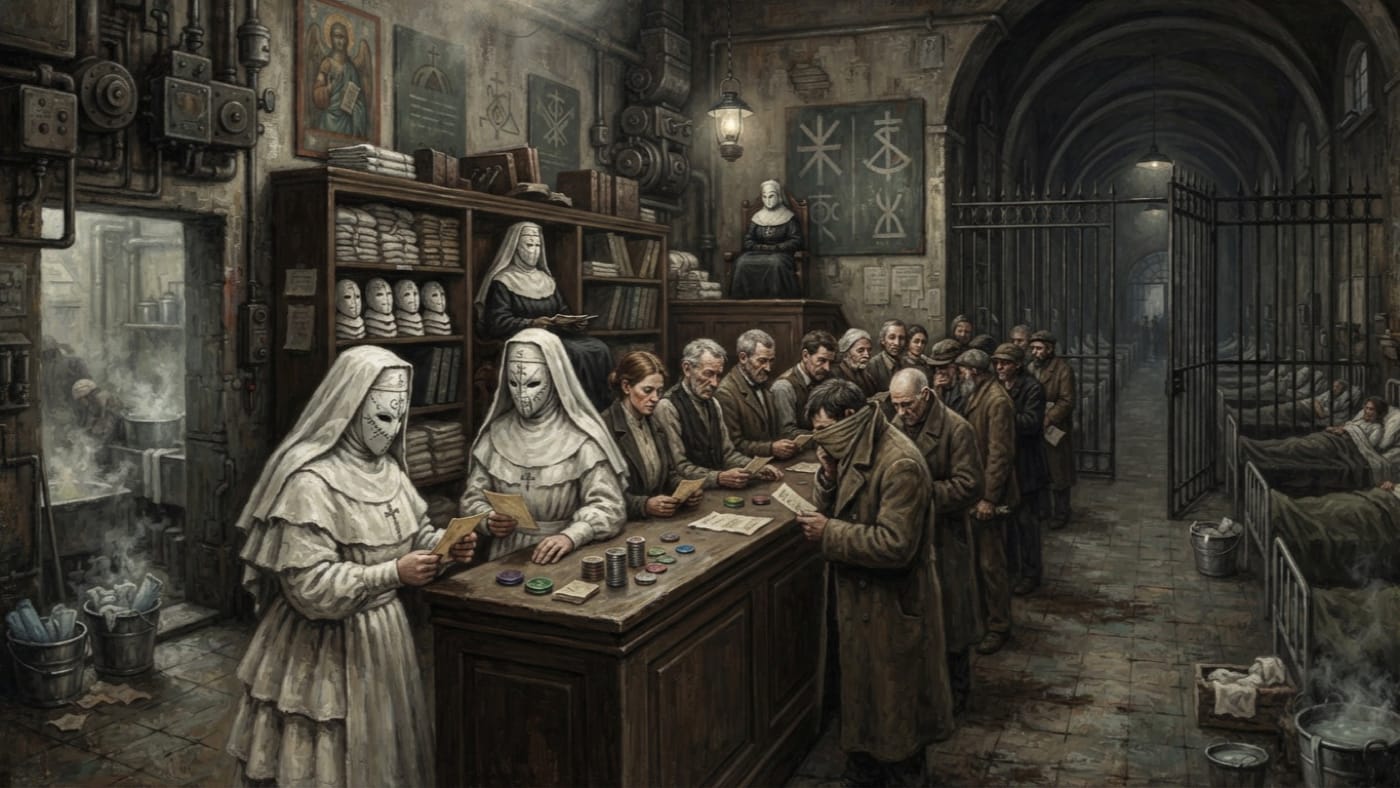
Lungward
Breath Is Sacred; Admission Is Conditional
Candlewick's infirmary district treats the damage its industries leave in workers' lungs. The Lungward Sisters provide care, ration filters and issue quarantine writs; admission depends on colour, guild standing and papers.
Codex Ref. II.1.01-201
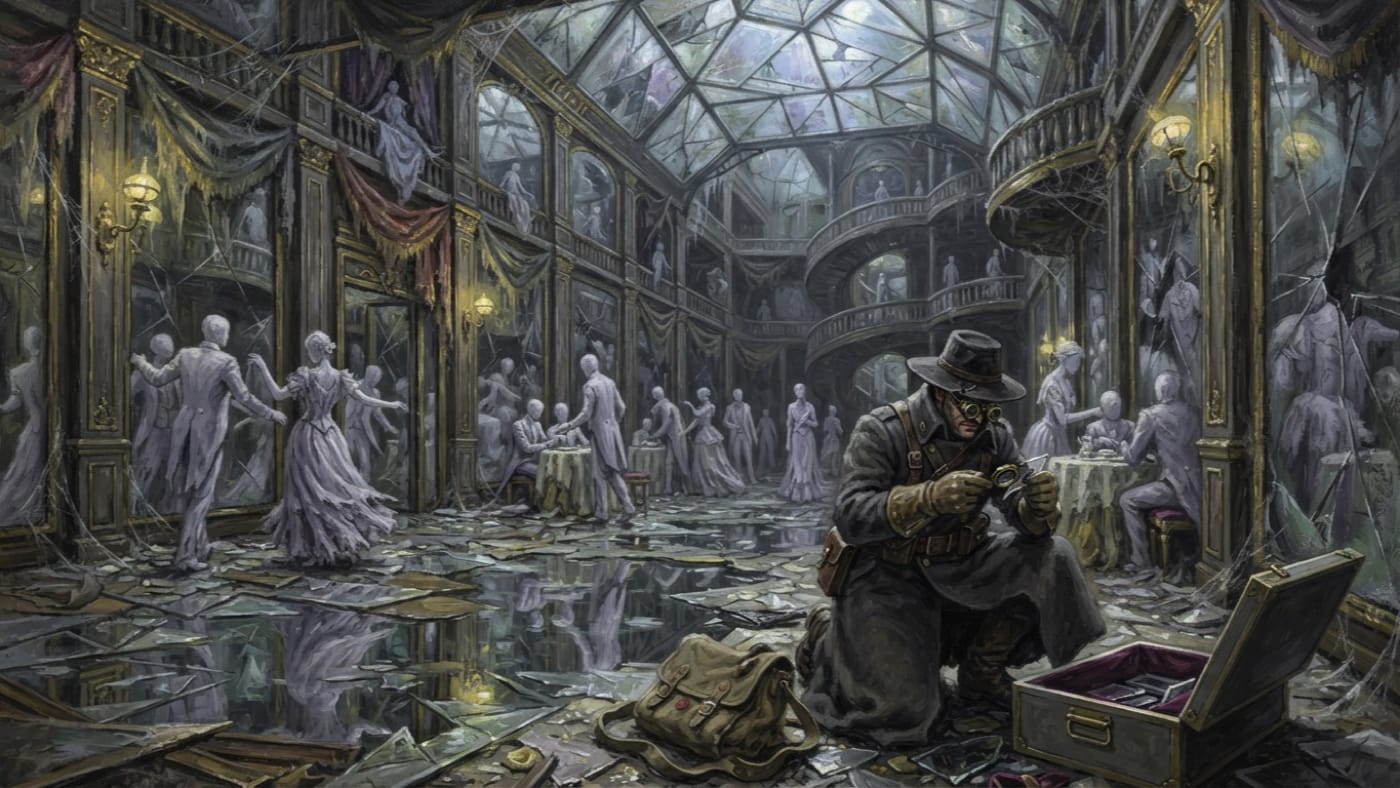
Lust-palace
The palace breaks; its business continues
Lust-palaces turn people into sensations and shed glass that keeps the habit. The Church condemns the buildings while requisitioning their fragments.
Codex Ref. II.5.06-002
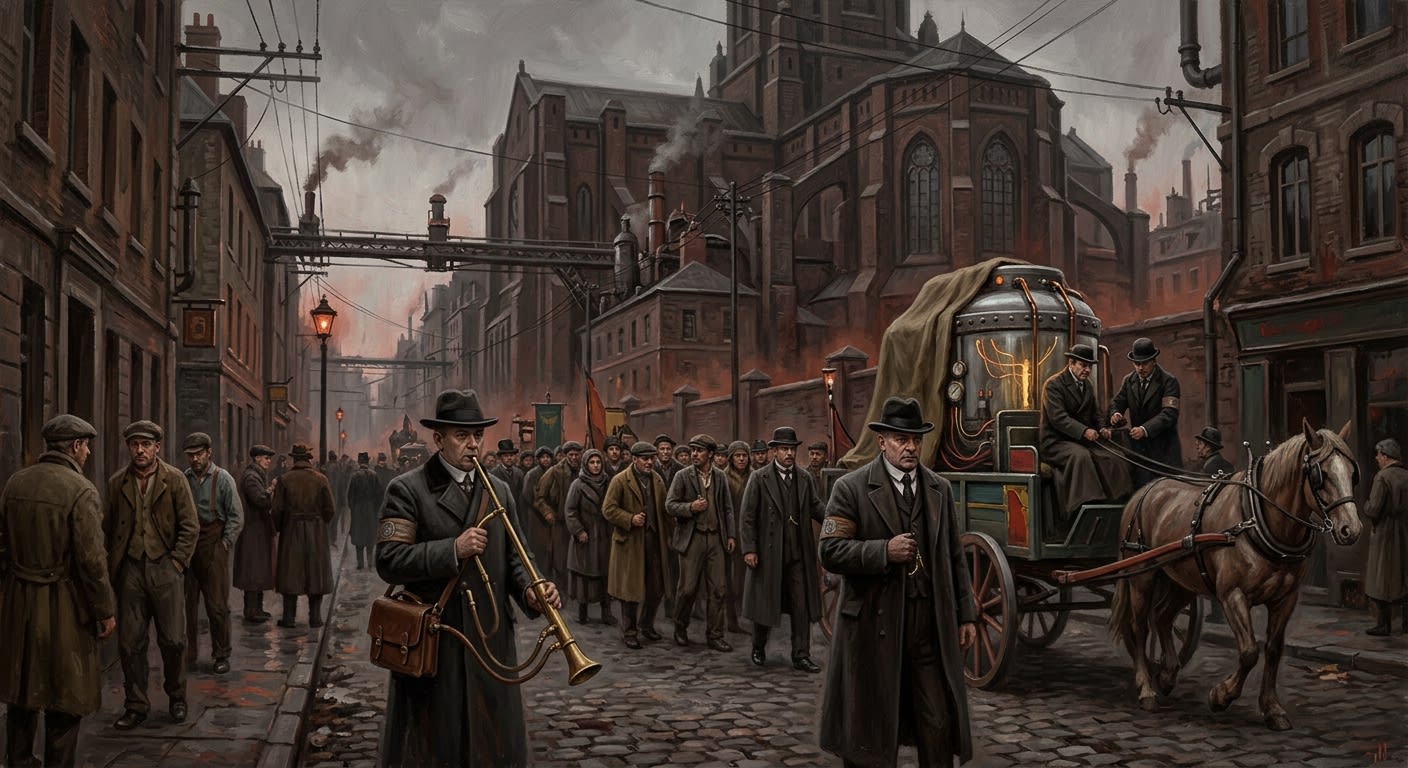
Lyon
The Rhône city where scars learned to sell tickets
Synod-held Lyon is a Rhône city of red ash, whistle-hymnody, Festival supervision, relic volatility, licensed enthusiasm, and profitable repentance.
Codex Ref. II.1.04-001
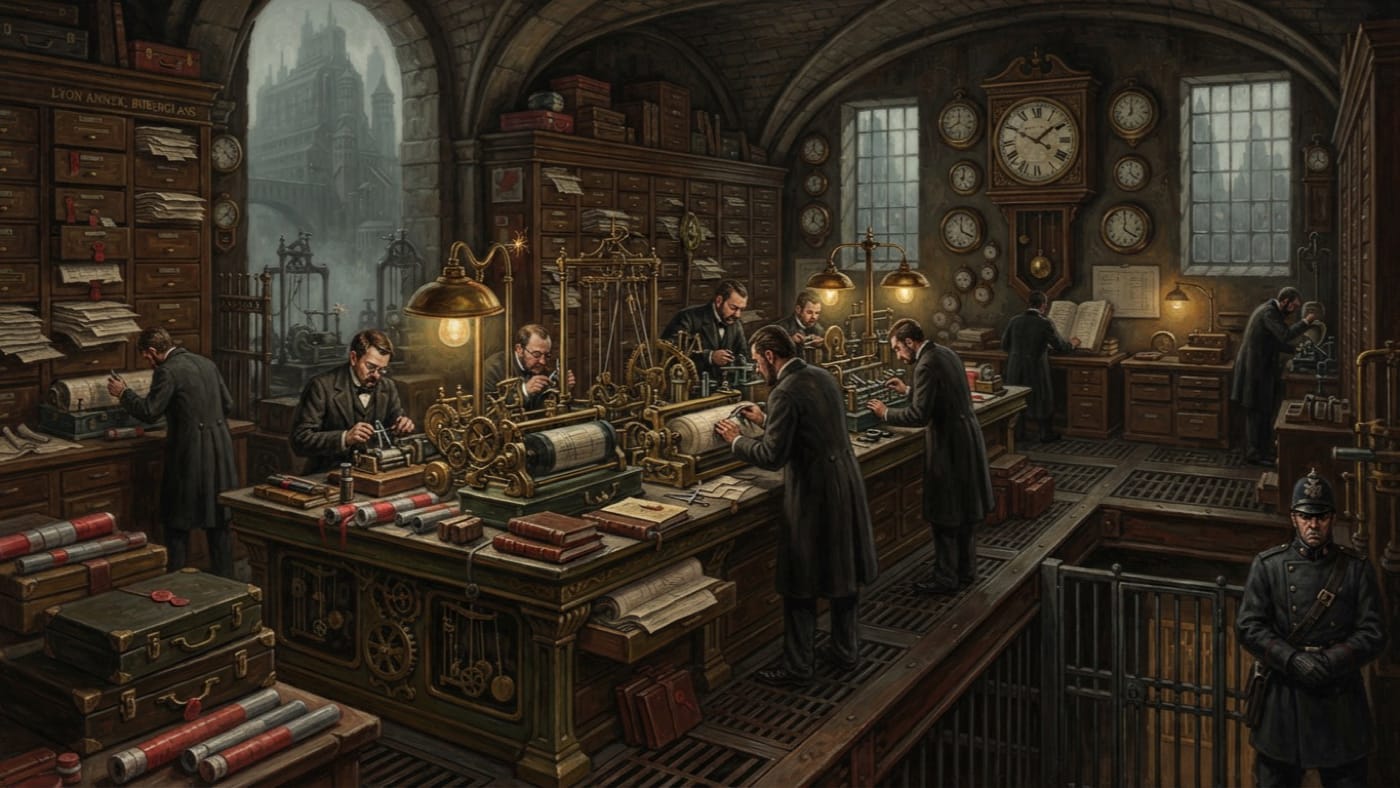
Lyon Annex
The Line keeps time by Lyon. Lyon records its own disagreements.
The Lyon Annex houses the Bureau of the Hourglass: comparison benches, temporal archives and a restricted standard below the clock hall. The Line keeps time by Lyon. Lyon records its own disagreements.
Codex Ref. II.3.06-201
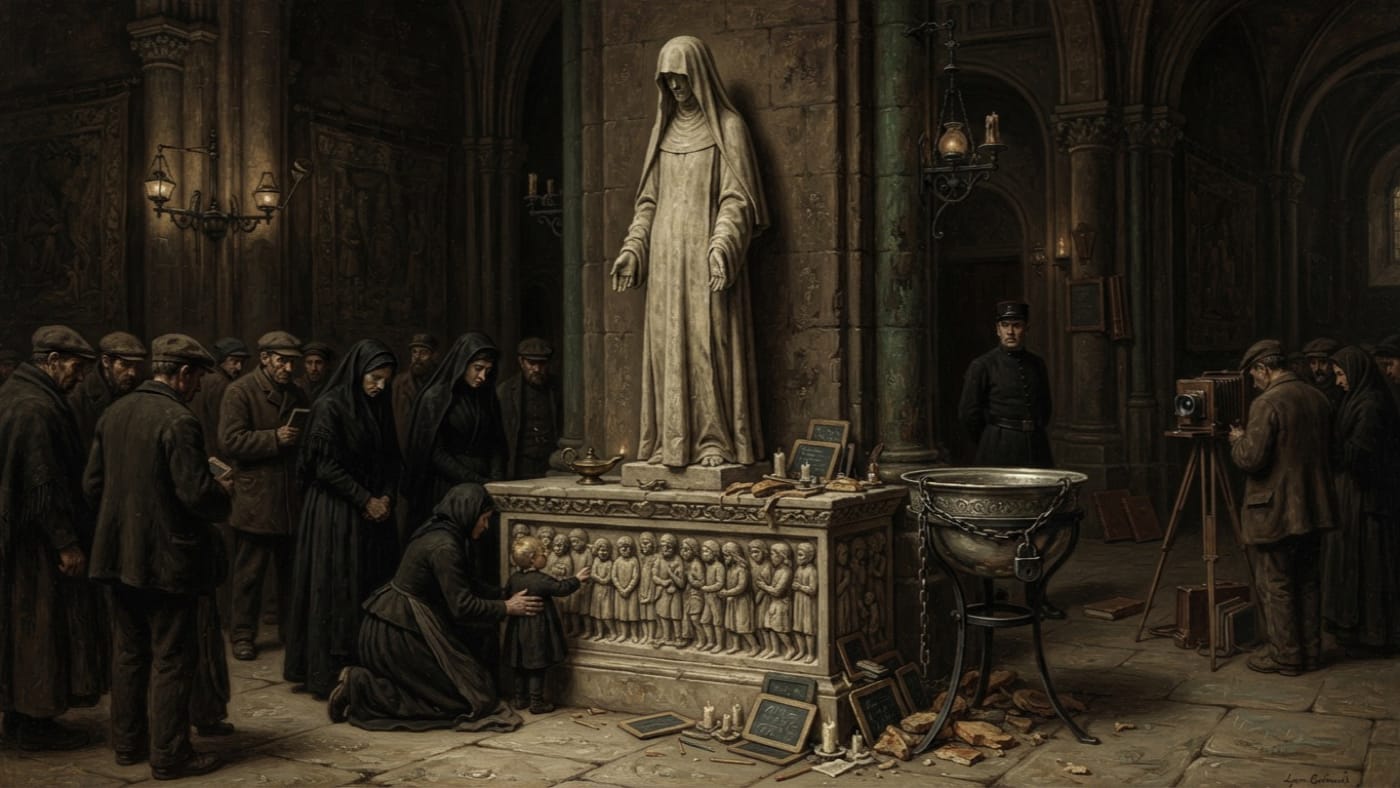
Lyon Cathedral
The stone stays dry; the basin stays locked
An A.S. 201 survey of Lyon Cathedral’s north ambulatory, where Theophania’s statue stays dry, the basin stays locked, and nine days of oil remain a tradition without a year.
Codex Ref. II.1.04-002
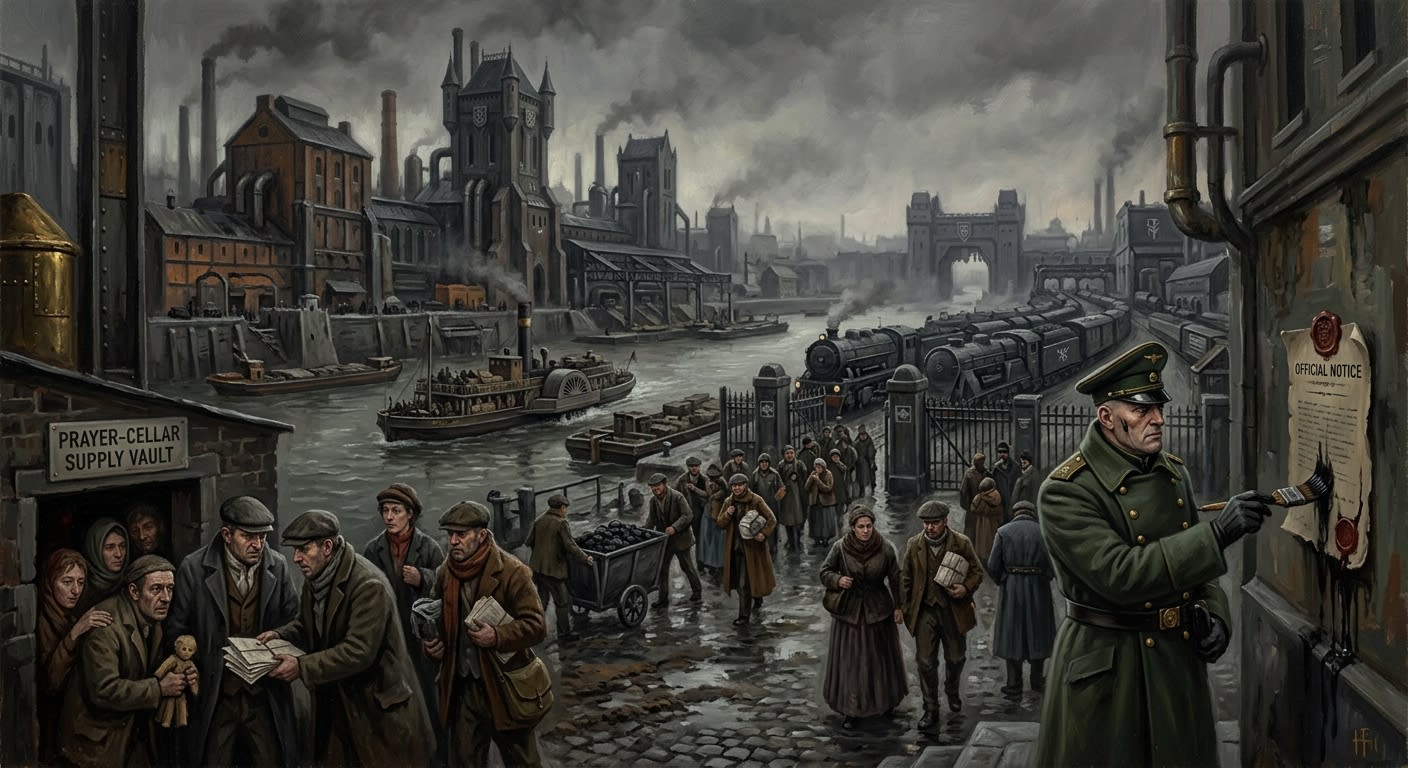
Maastricht
The sleeve beside Aachen's knife
Maastricht survived by adjacency: feeding roads to Aachen, relabelling prayer-cellars, selling shame politely, and teaching Hungry Ink how seals can scream.
Codex Ref. II.1.07-025
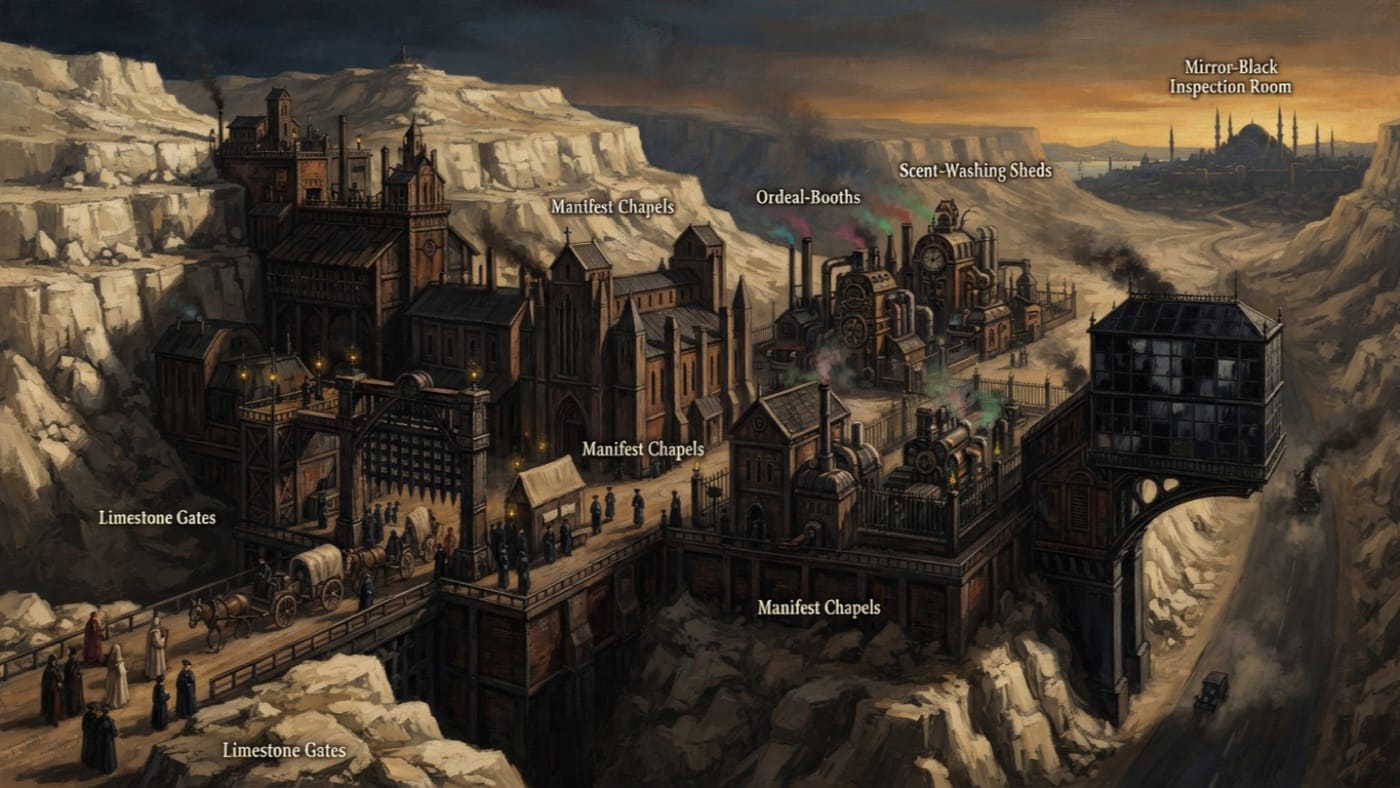
Macedon Escarpment Checkpoints
Where the papers pass and the people remain a question
The Macedon gates keep Constantinople supplied and its manifests correct. Vast's A.S. 187 closure proposal remains pending in A.S. 201; the papers certify names more readily than people.
Codex Ref. II.4.10-009
Macedonian Highlands
The bread was real. So were the terms.
Velmora's Macedonian uplands: old mines, winter-grain contracts, and captive workings. The hills yield ore; their people still ask what they owe for bread.
Codex Ref. VI.1.02-002
Magdeburg
Where wet cargo becomes northern survival
Magdeburg is the Elbe transfer hinge no one praises until the rail throat chokes: damp ledgers, bridge limits, winter tables, and cargo made obedient.
Codex Ref. II.2.07-096
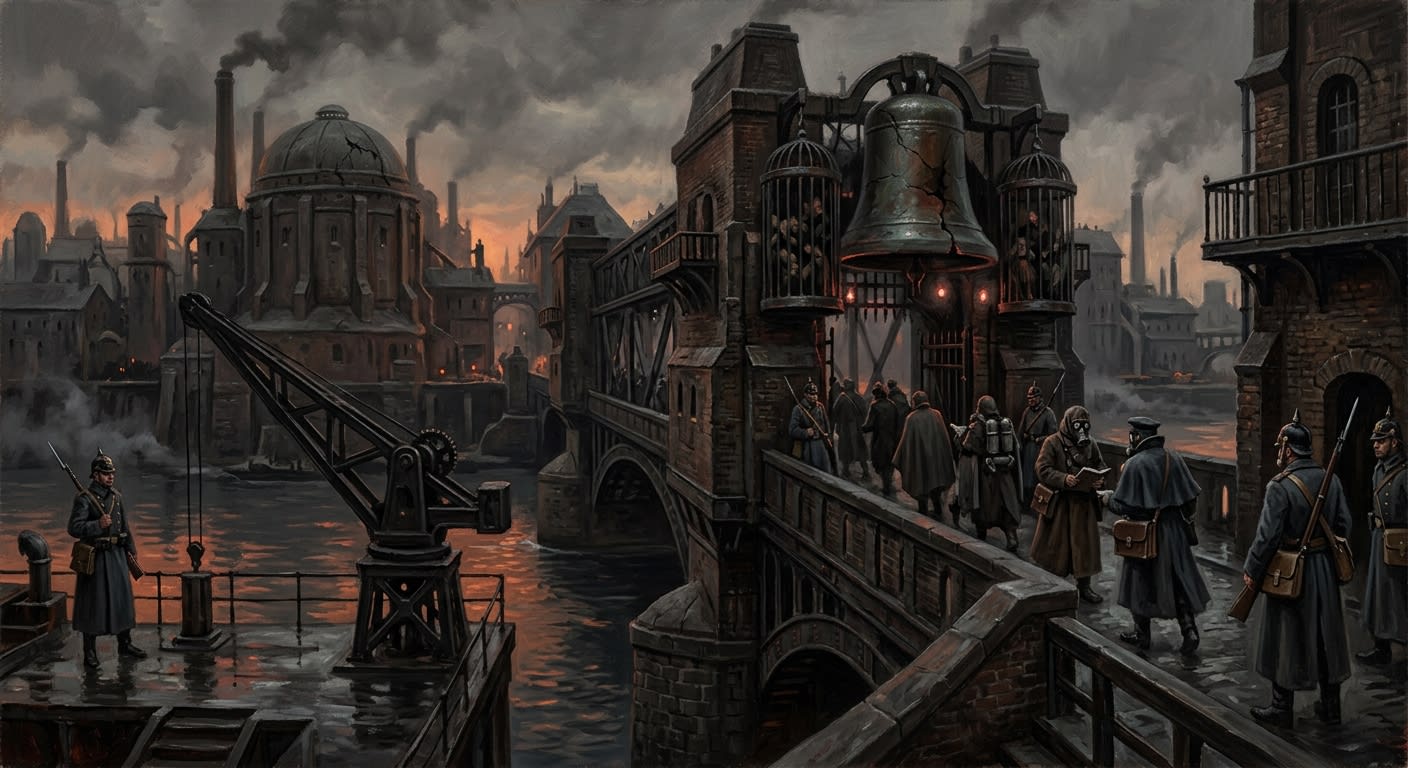
Mainz
The Rhine city where tolls, bells, and throats keep accounts
Mainz is the Synod's Rhine throat: a bridge-toll city of Augustinus, Hildegarde, Severian, cracked bells, obedient ledgers, and cages that still hum.
Codex Ref. II.2.02-003
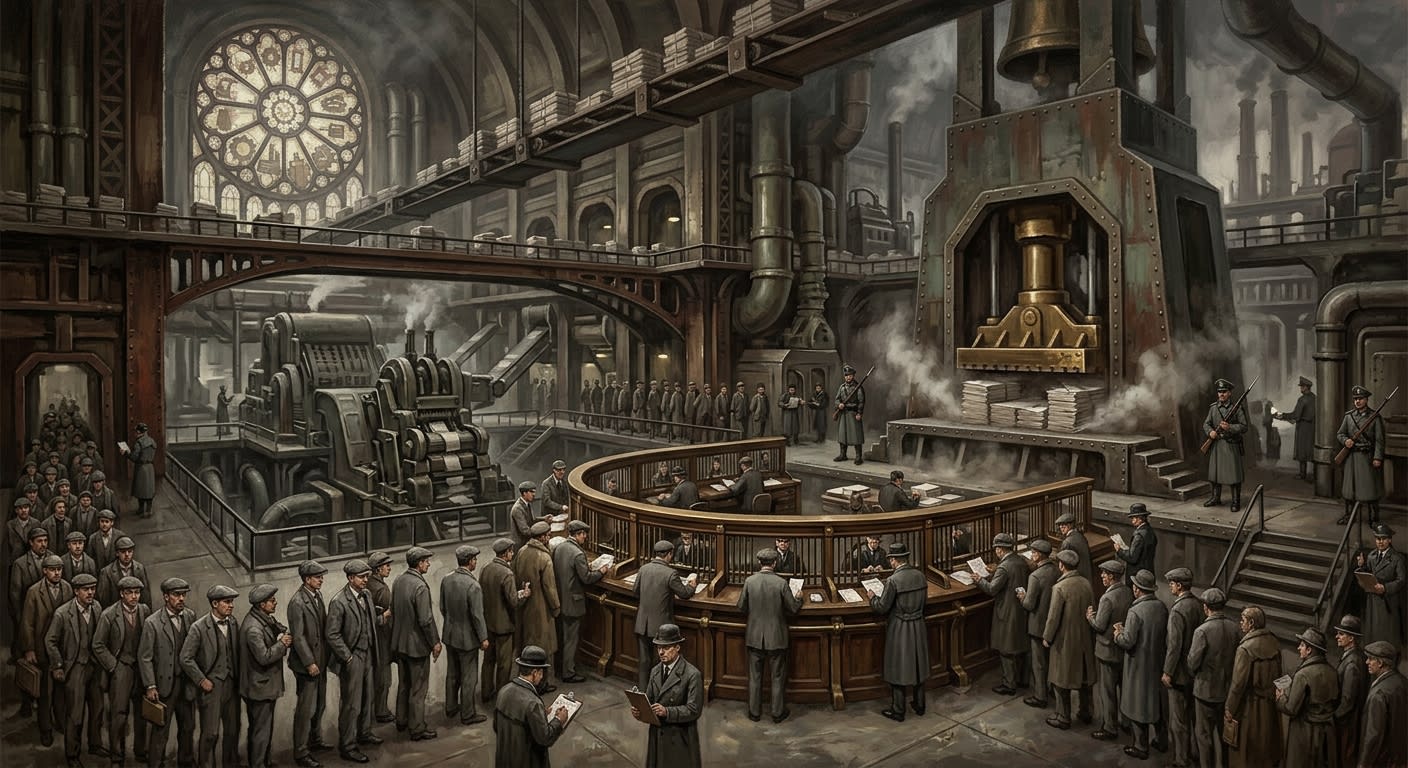
Manifest Basilica
Lorn's altar is a routing desk
The Manifest Basilica is Lorn's paper cathedral: routing desk for altar, correction for sacrament, and a Pulse that stamps men into obedience.
Codex Ref. II.2.09-104
Manifold Chapel C
One handprint, two offences, no ruling
Manifold Chapel C stands above District Seven's auxiliary restoration wheel at Bastion-Przemyśl, where the A.S. 171 Blackout left a handprint with two Bureau classifications and no agreed explanation.
Codex Ref. II.4.07-003
Mannheim
The square city teaches arithmetic to doubt
Mannheim is the Rhine Corridor's square heresy school: copyhouses, ash-yards, tidy streets, and arithmetic sharp enough to cut Doctrine.
Codex Ref. II.2.10-125
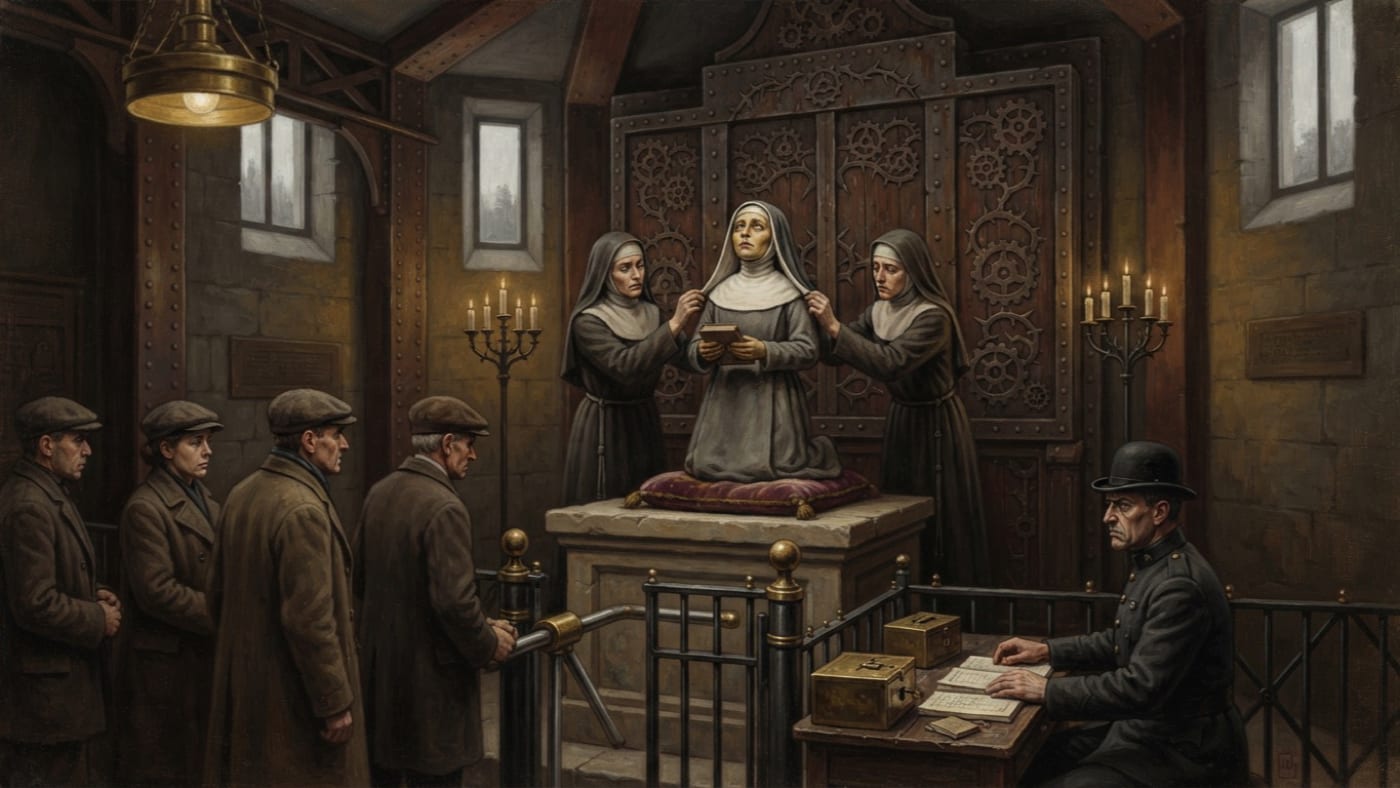
Margaux Chapel
Twelve sisters keep one saint from growing old
At Sainte-Claire-des-Landes, twelve sisters tend Saint Margaux's wax likeness while pilgrims pay at the gate. The face is certified; the chapel's founding remains unrecorded.
Codex Ref. II.1.09-015
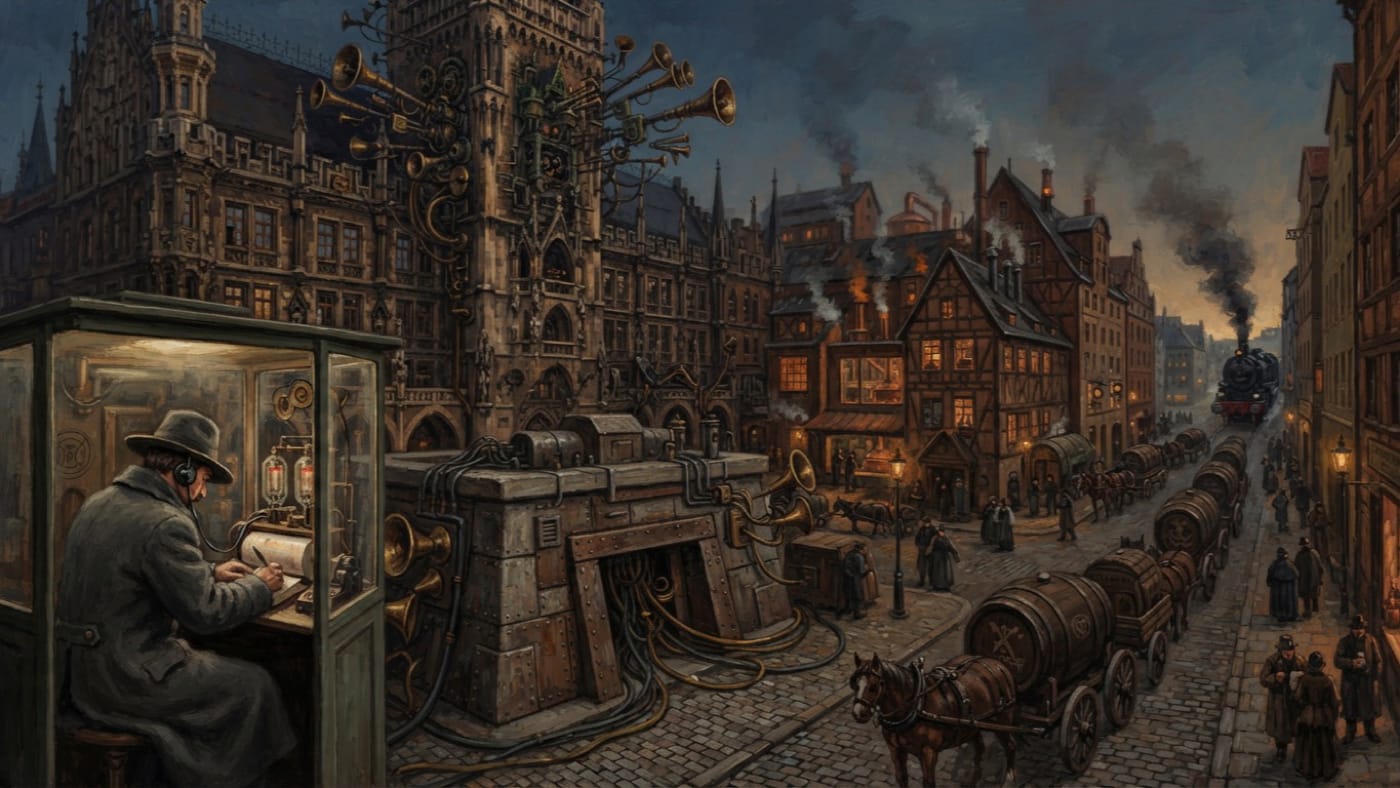
Marienplatz Post
Sixty-seven years of listening, and Munich still sings
Established in A.S. 134, Purity's Marienplatz station listens to Munich's Bräuviertel. Sixty-seven years of reports have given Doctrine nothing actionable; Munich keeps singing.
Codex Ref. II.2.06-017
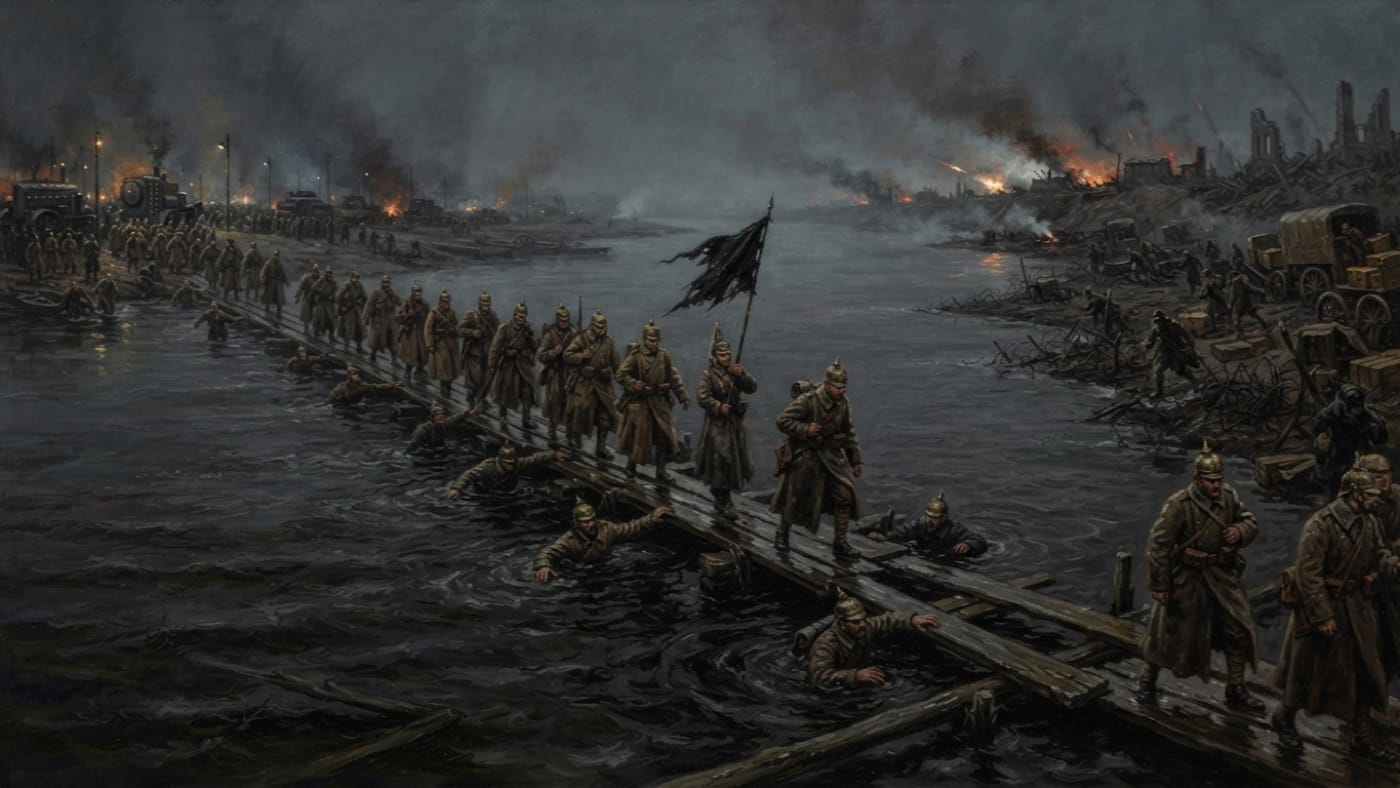
Mark Seven
The floor was taken on faith; the dead were entered by column
A drowned Danube pontoon used in A.S. 172: its returning soldiers furnished Sign Two, while its dead received no separate subtotal.
Codex Ref. II.4.09-007
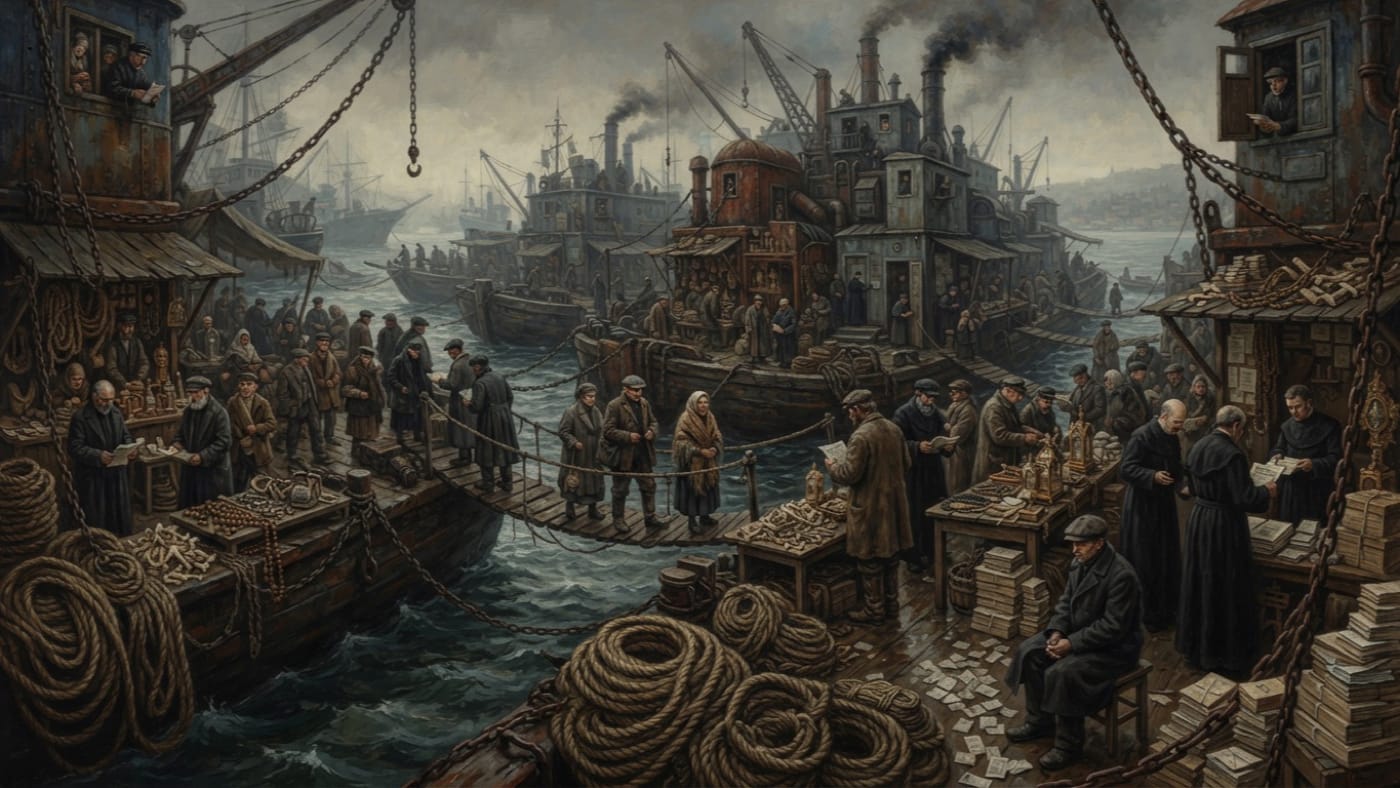
Market of Anchors
The certificate is the expensive part
An A.S. 201 survey of the Flotilla's Market of Anchors, where relics become beads, beads become relics, and Grey Keel brokers wait beside the rope. Certification remains the expensive part.
Codex Ref. II.4.09-201
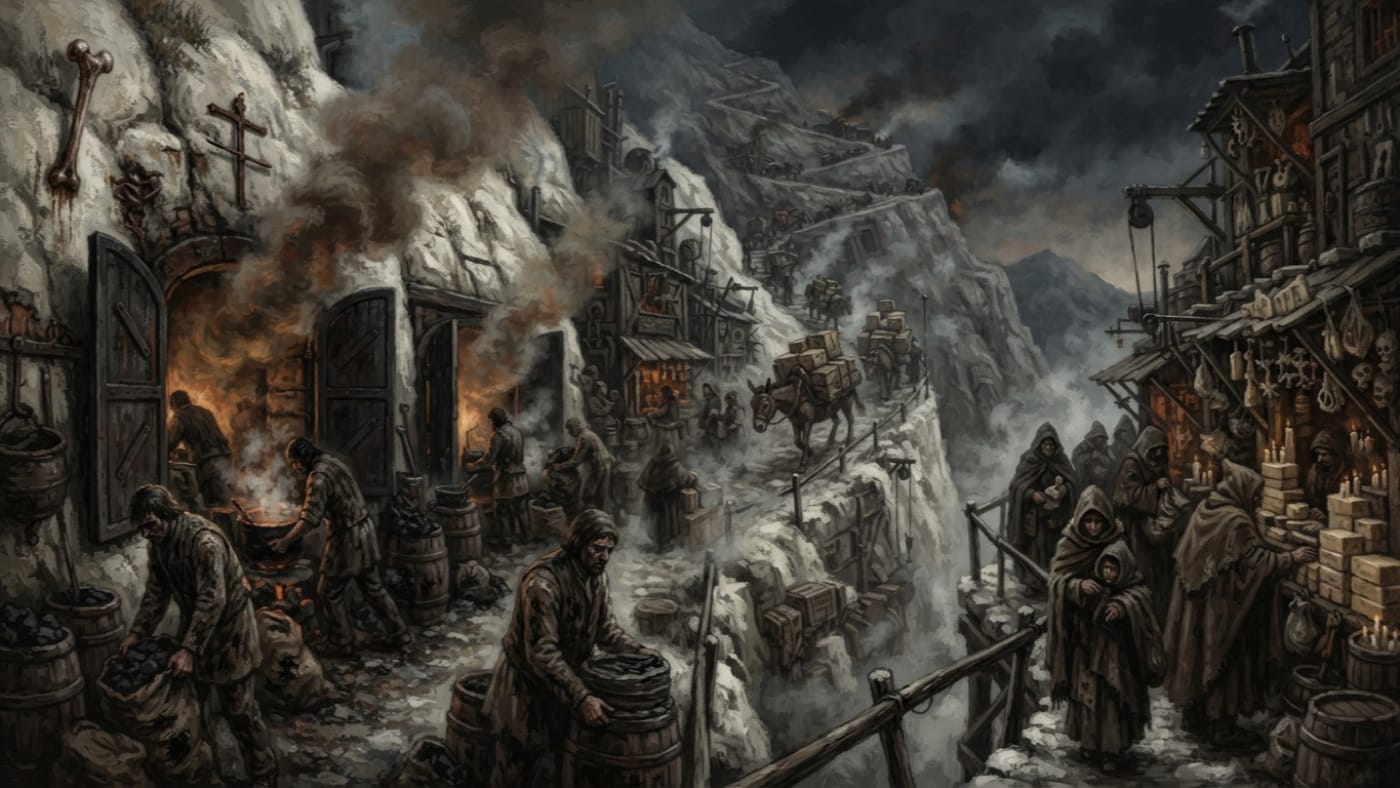
Marrow Market
The receipt certifies the weight, not the contents
The second turn of the Reliquary Switchbacks sells bone-craft, wax, tallow and mortar under the Marrow Makers' smoke. The bones require certificates; what survives the vats is harder to certify.
Codex Ref. II.3.05-005
Marrow Quarter
The households were counted; the bread was not
A quarter in Strasbourg's lower wards, remembered for Gray Week's papered Ledger Prefect and Caldrin's claimed Calming. The Bureaus recovered their household count; the record says less about bread.
Codex Ref. II.2.06-138
Marrow Row
Where the queue eats and the confession is kept
Candle-Sump's broth ward, where Matron Ilka governs by the ladle and every bowl leaves paperwork. The Prefecture controls the allocation; the Care crews threaten to stop the wagons.
Codex Ref. II.1.05-004
Marrowgate
The Inland Medical Port — where the broken are filed, the dead are processed, and the paperwork outlasts both
The Synod's proudest logistical confession: an inland port that converts the Line's broken men into administrative order. At Marrowgate, the ledgers are more reliable witnesses than the bodies, and the dead are meticulous auditors.
Codex Ref. III.3.07-001
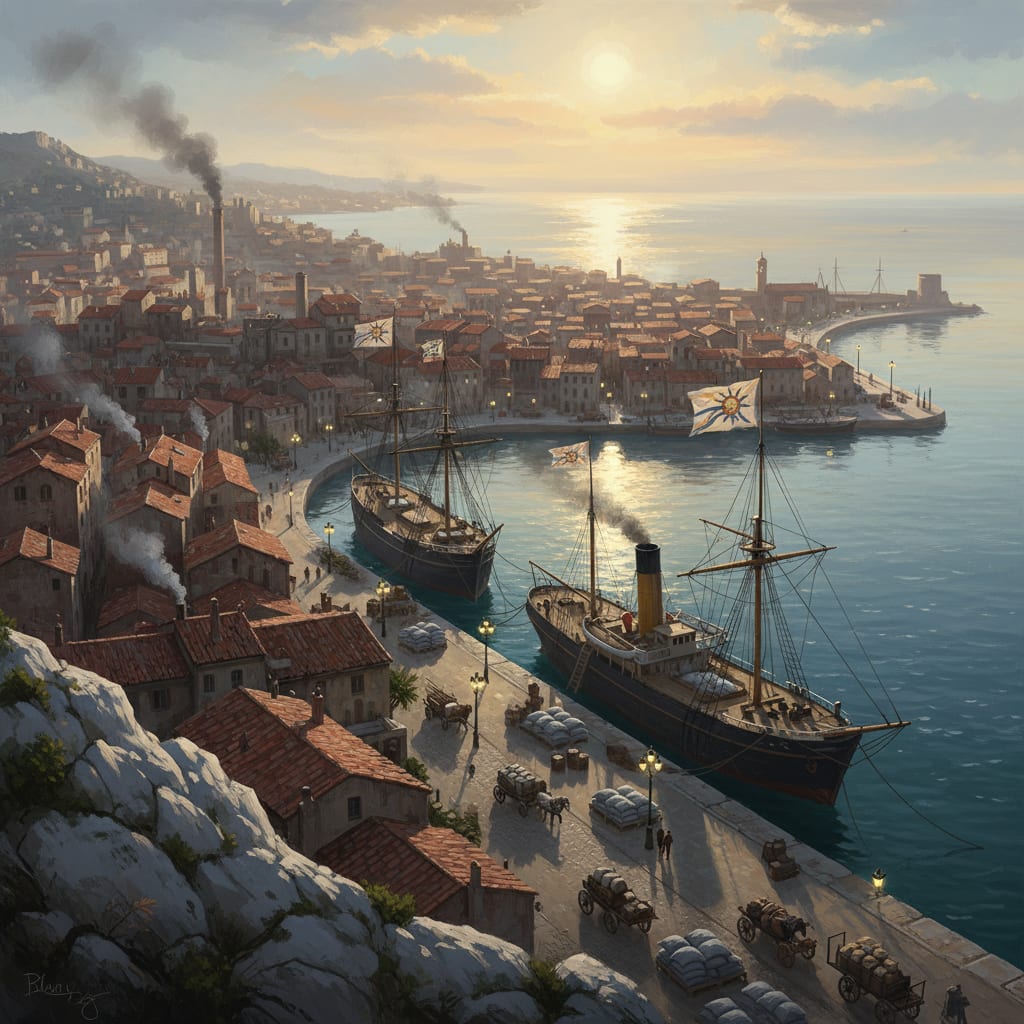
Marseille
Salt, pilgrims, and a territorial dispute the [[bureau-of-records|Bureau of Records]] has declined to arbitrate
The Synod's southern mouth — 650,000 souls between limestone and salt water, two competing Bureaus sharing a harbour they cannot agree on.
Codex Ref. II.4.09-012
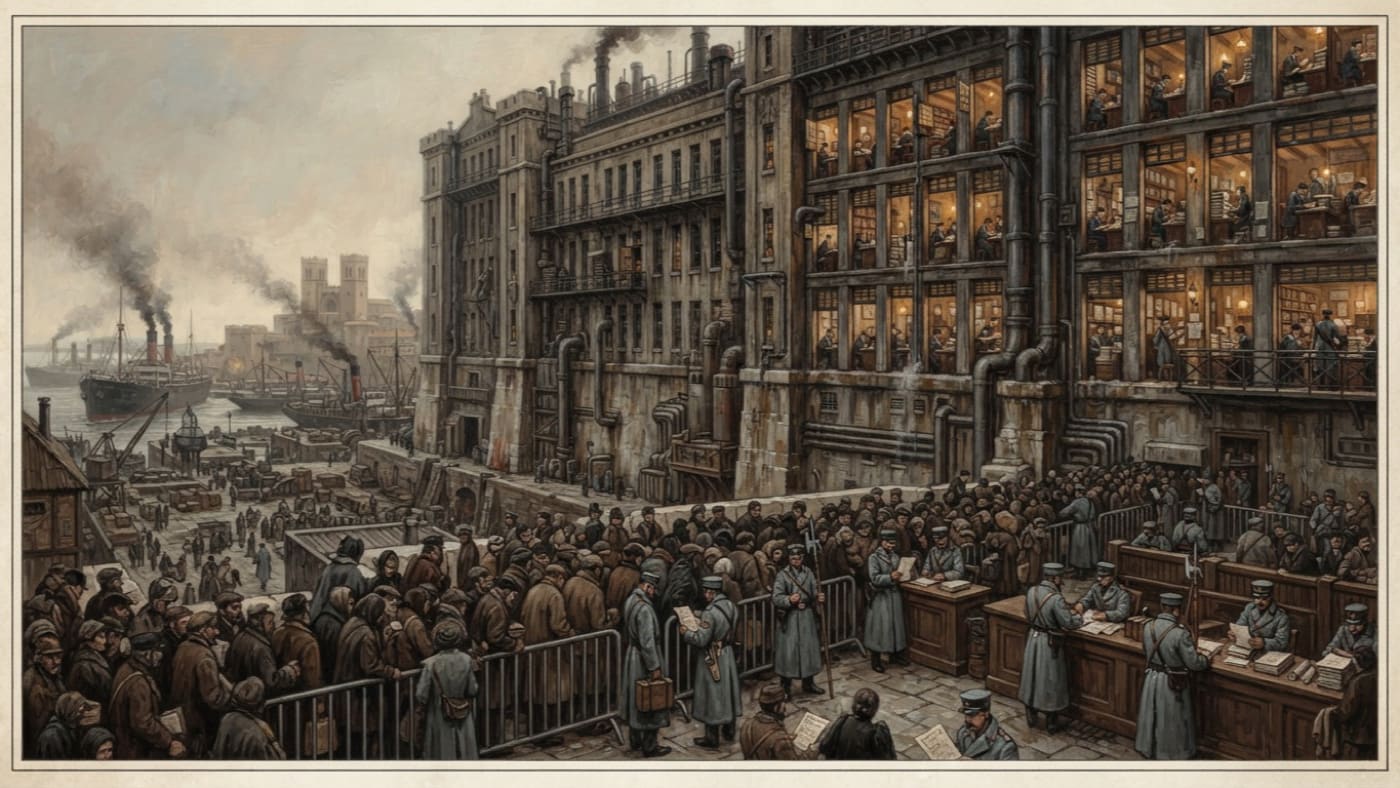
Marseille Southern Headquarters
Four hundred thousand permits, three foundation corrections
Authorised in A.S. 123, Marseille's southern pilgrimage headquarters processes approximately 400,000 embarkation permits yearly above three immured guild-masters. The groaning is classified as structural settlement.
Codex Ref. II.4.09-123
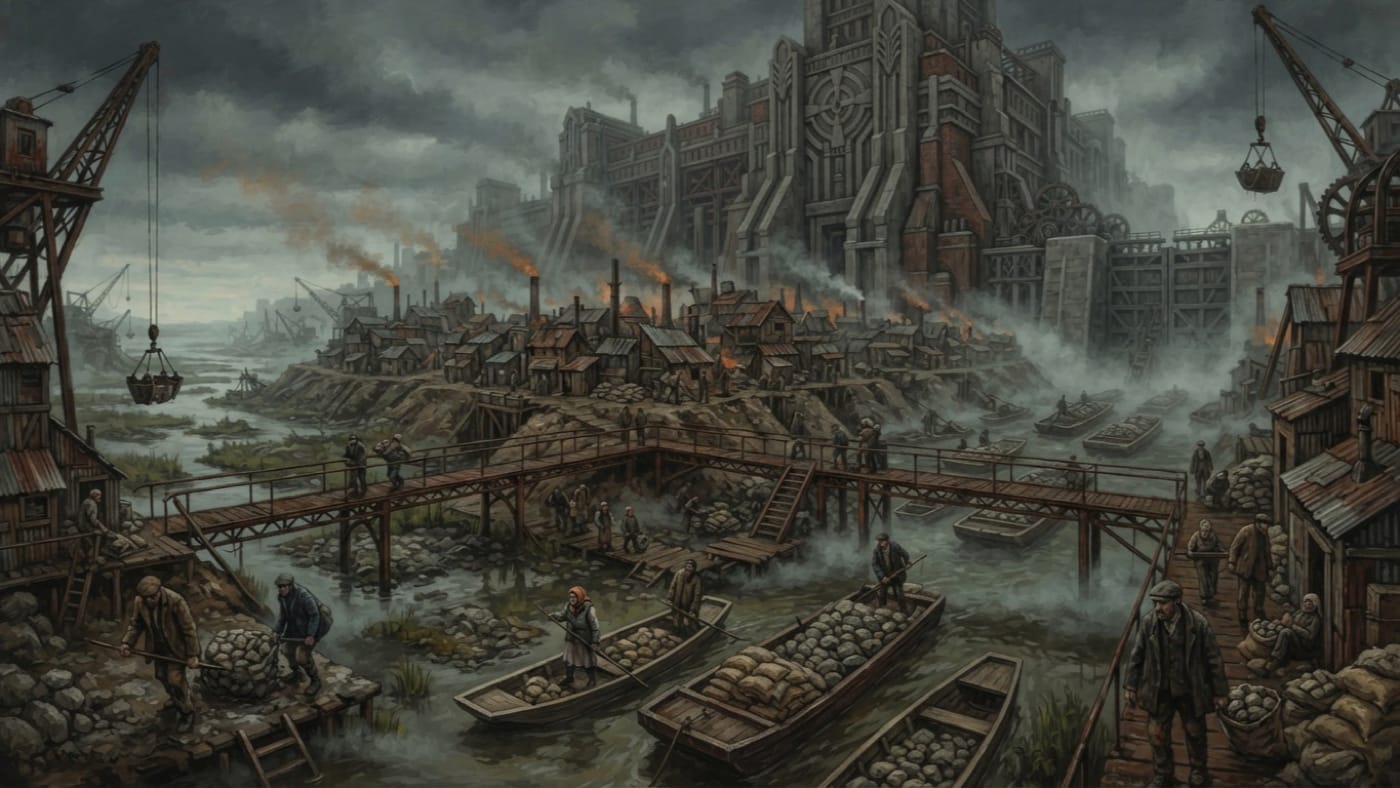
Marsh-Quarry Villages
The city calls itself permanent; the villages supply the stone
The marsh-quarry villages supply the Archivolt Causeyworks with river-stone, bone-lime and seasonal lock labour. Their toll exemptions remain contested. The city calls this arrangement permanence.
Codex Ref. II.1.02-002
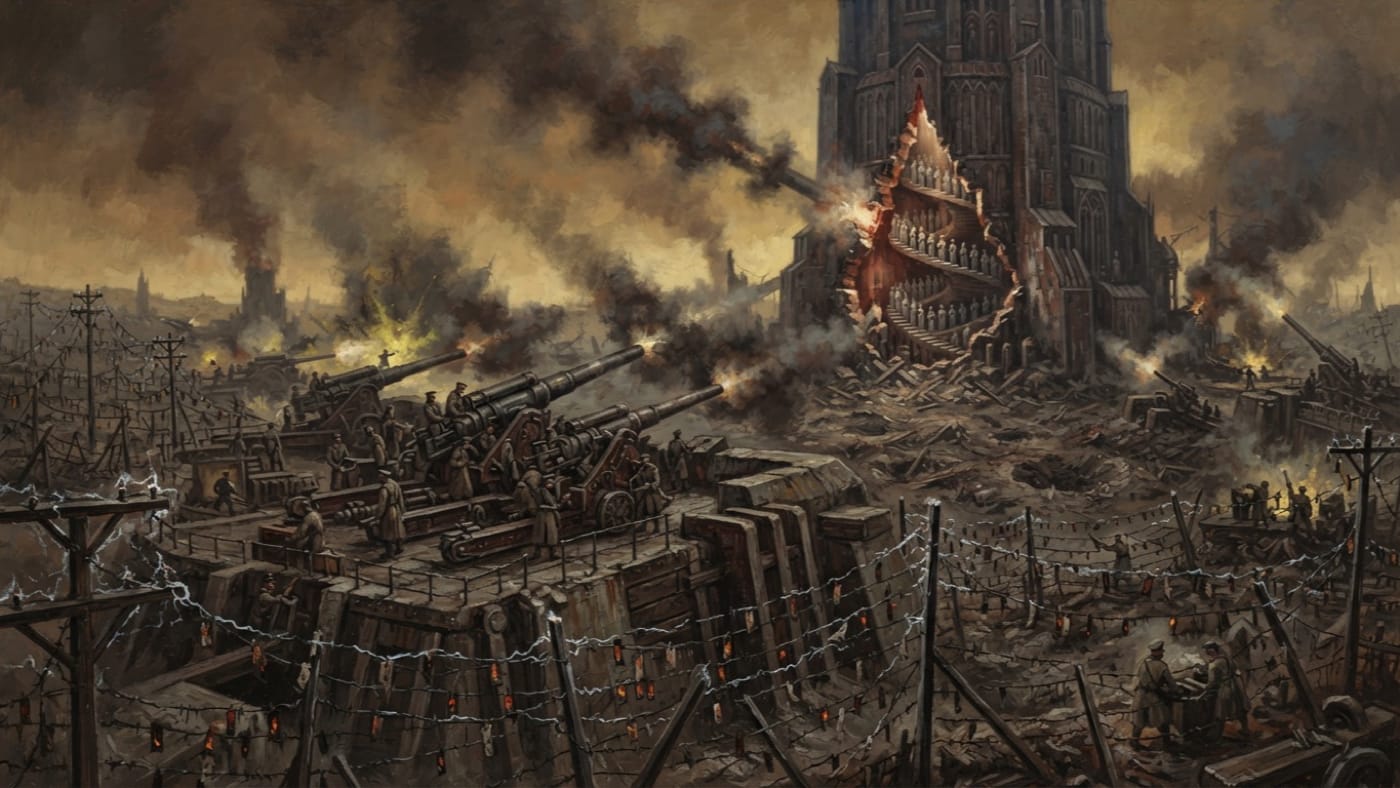
Martyrs' Teeth
One shell opened the tower; the salient brought it down
Przemyśl's heavy-gun platform opened the Spire-Crusher's westward face during the A.S. 195 Nine-Hour Rubric. One breach belongs to Martyrs' Teeth; the fall belongs to the salient.
Codex Ref. II.4.09-195
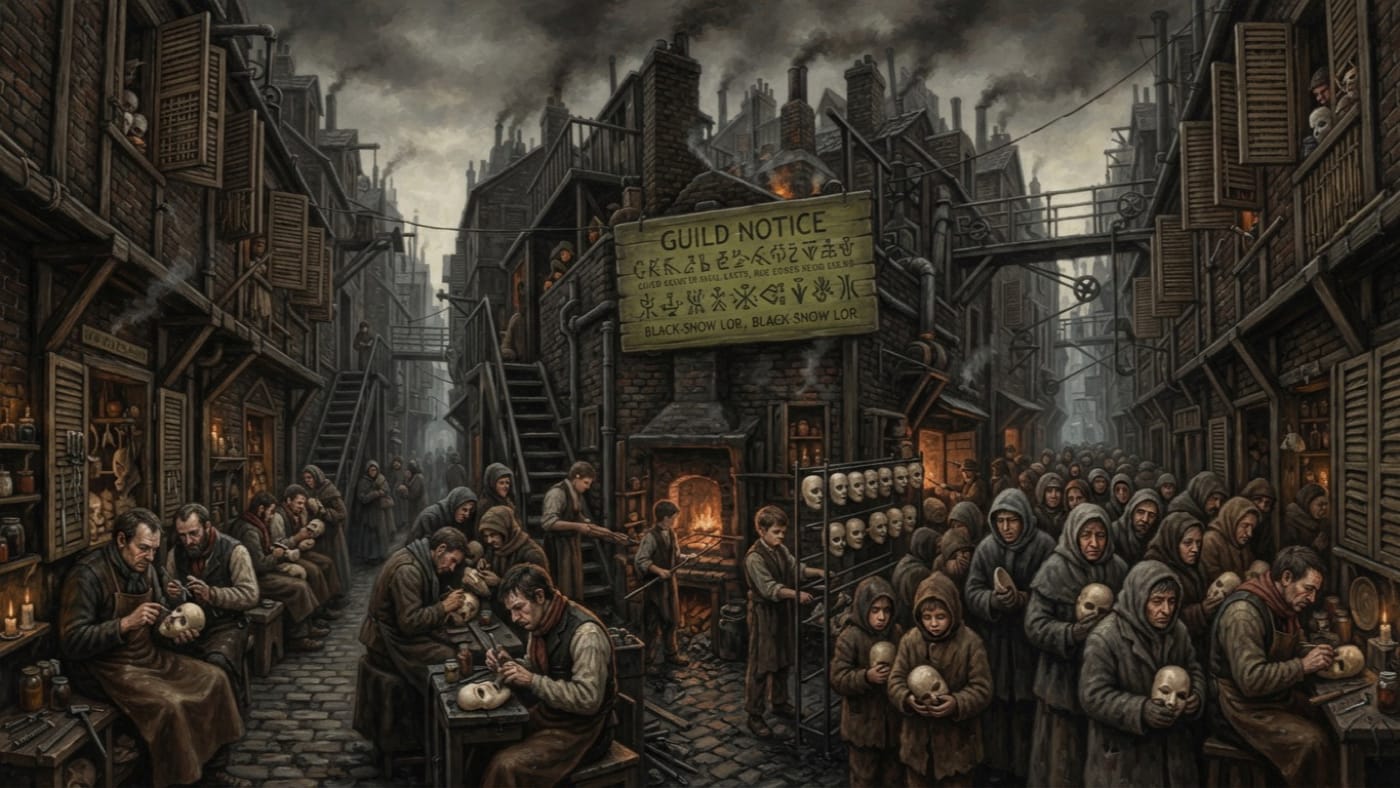
Maskers' Row
The face of Lor's monopoly on breath
Maskers' Row carves Black-Snow Lor's bone respirators under Guild monopoly. Its kilns remain lit while a threatened stoppage teaches the town the price of air.
Codex Ref. II.4.08-006
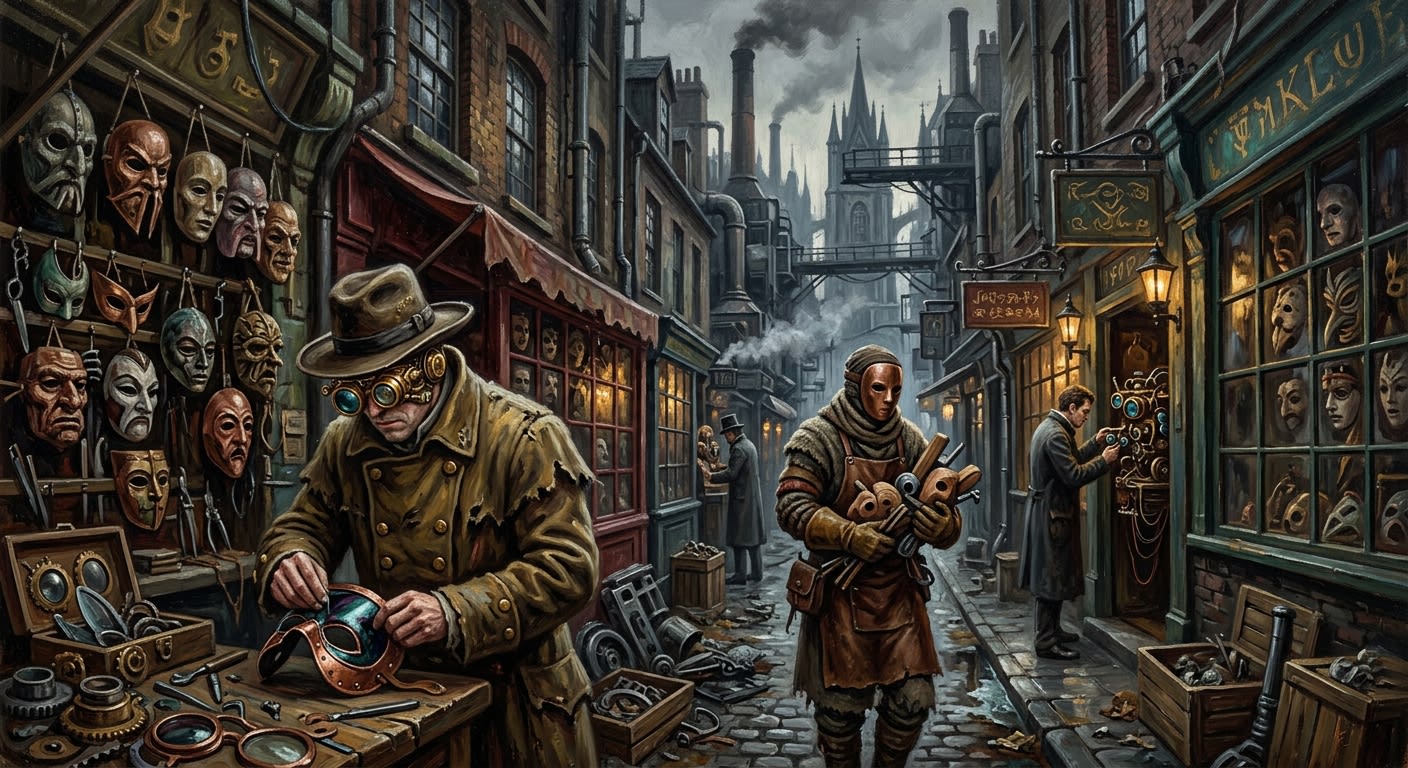
Maskwright Lanes
Where legal masks learn illegal sight
Thessaloniki's Maskwright Lanes are a craft district, contraband-optics artery, and municipal embarrassment whose legal masks hide demon-glass mounting, War lenses, decoy stock, and quarterly Purity theatre.
Codex Ref. II.7.03-001
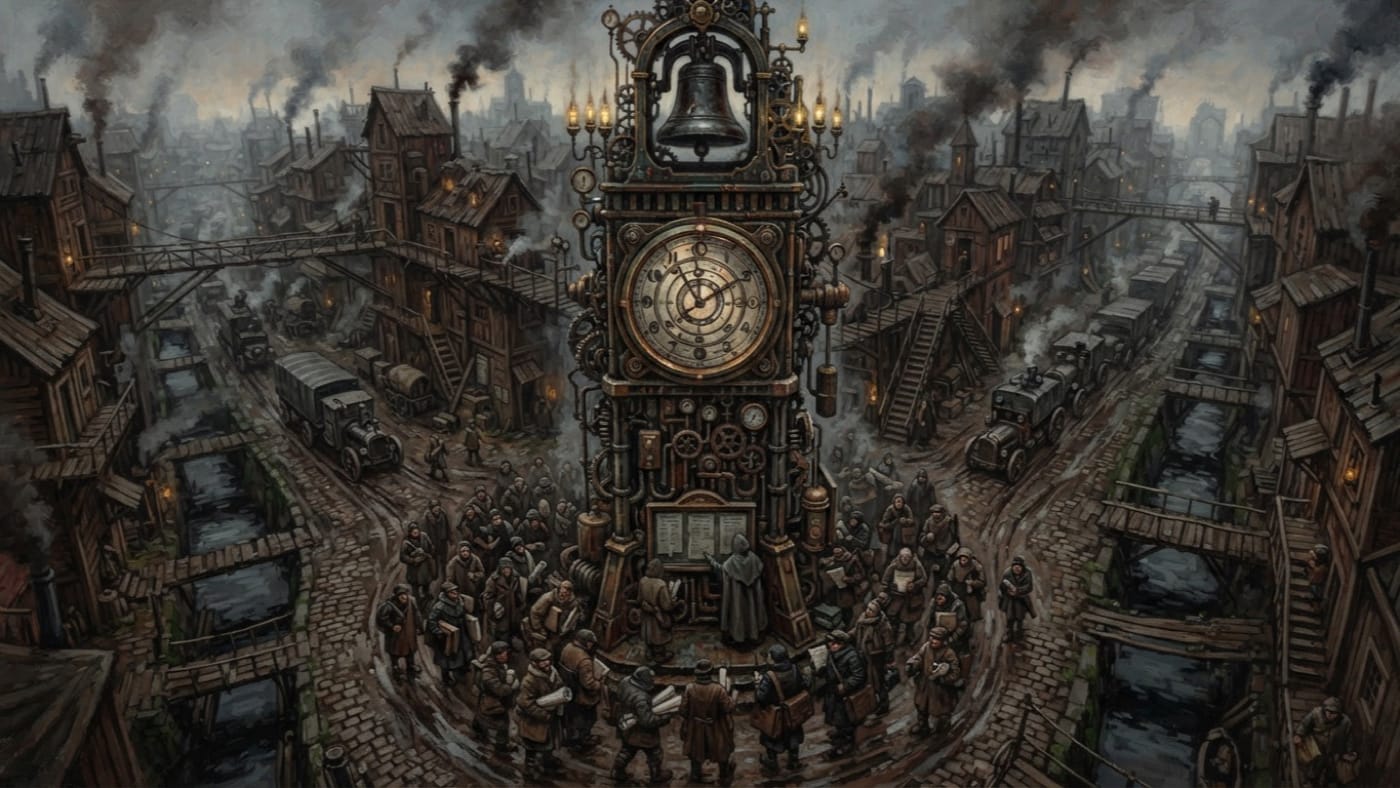
Master Gate Clock
The bell closes the window. The report closes nothing.
Latchford's Master Gate Clock governs transit windows with a bell that drifts and remains legally valid. Nine inspections are filed; the allegation that it is fed remains unanswered.
Codex Ref. II.4.08-002
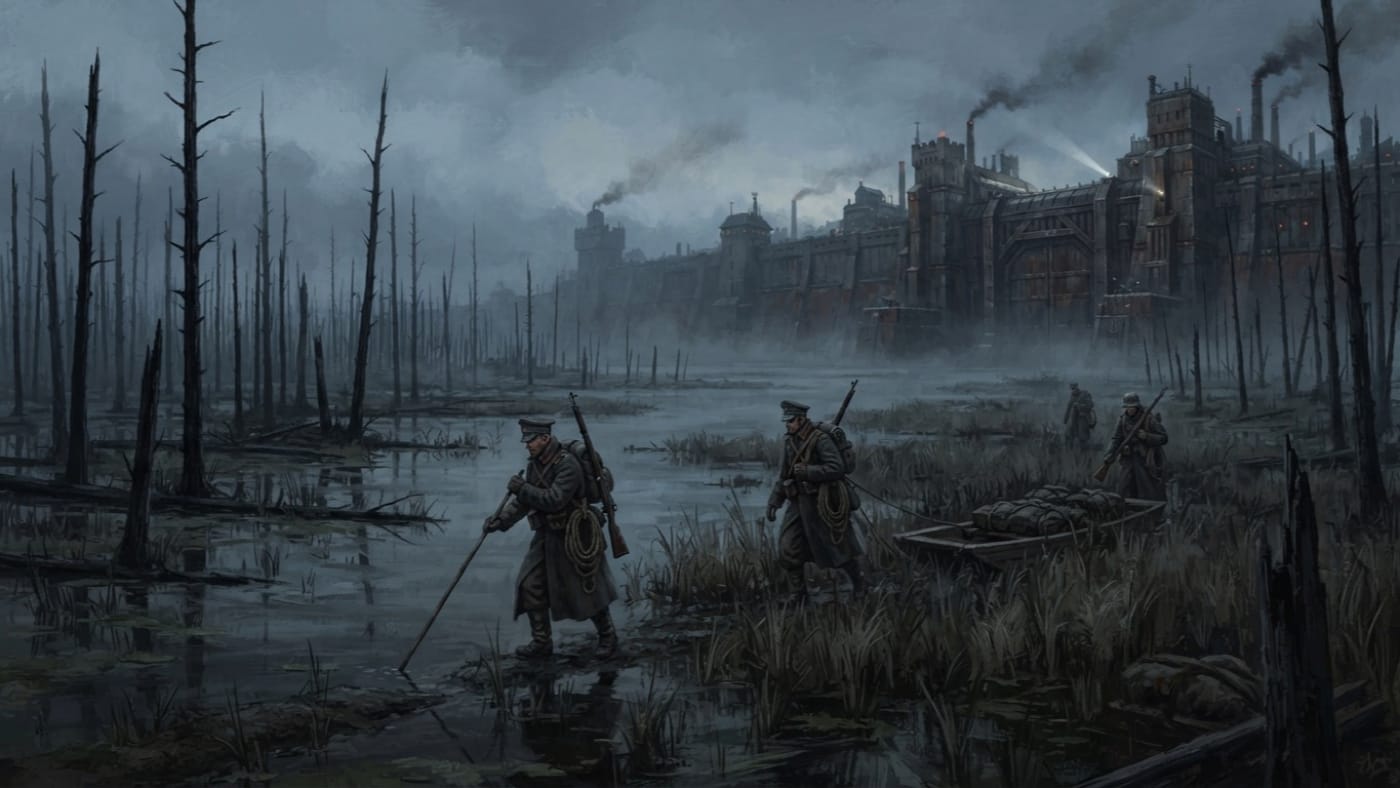
Masurian Lake District
The Drowning Garden, Where the Moat Becomes a Road
Königsberg's eastern moat of lakes, reeds and drowned forest, guarded by the Masurian Watchers. Summer breaks columns; winter offers roads. Seven canonical maps disagree.
Codex Ref. II.4.07-201
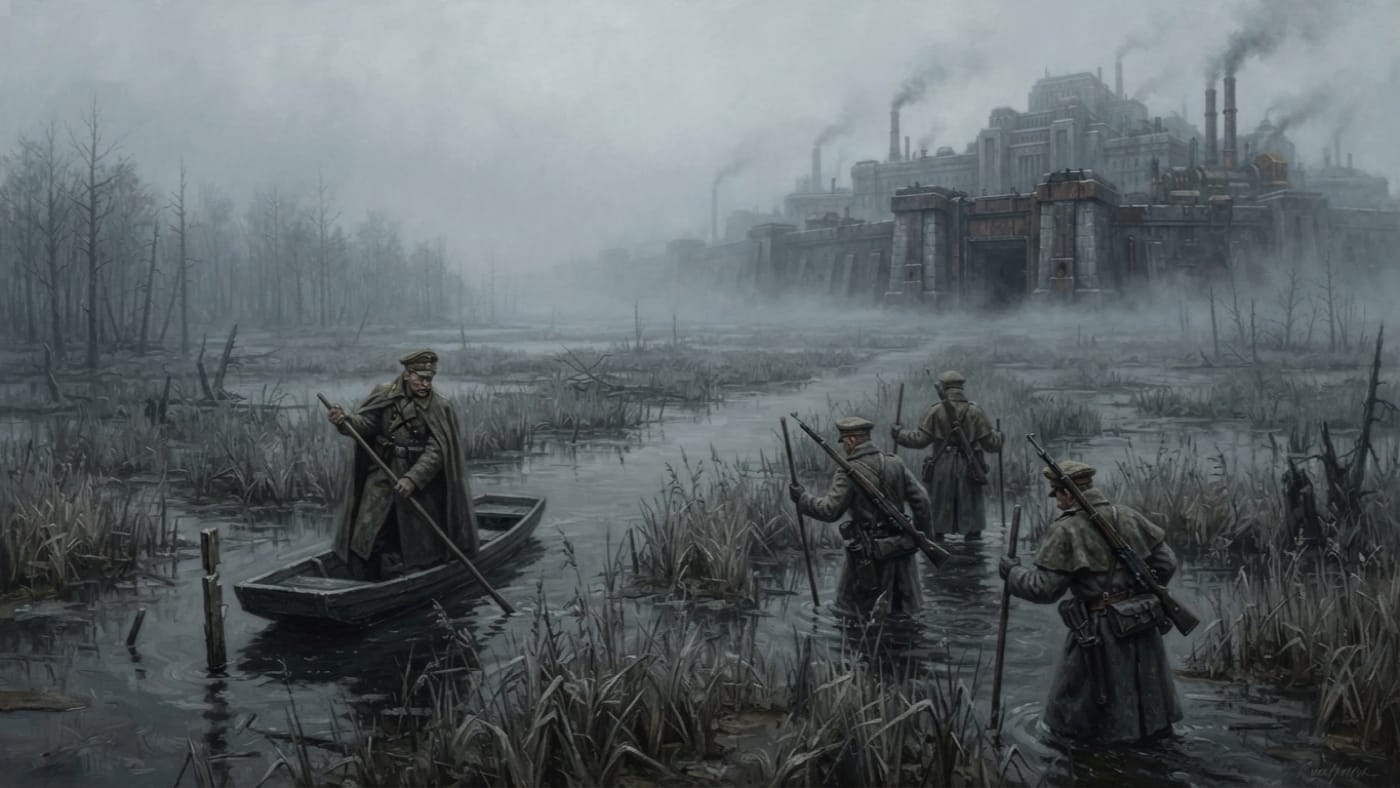
Masurian Lakes
Seven maps disagree; the Watchers still know the way
Bastion-Königsberg's outer maze is held by the Masurian Watchers under separate doctrines for water and ice. Seven canonical maps disagree; Halvorsen lets fog pursuit outrank the bell-schedule.
Codex Ref. II.4.07-069
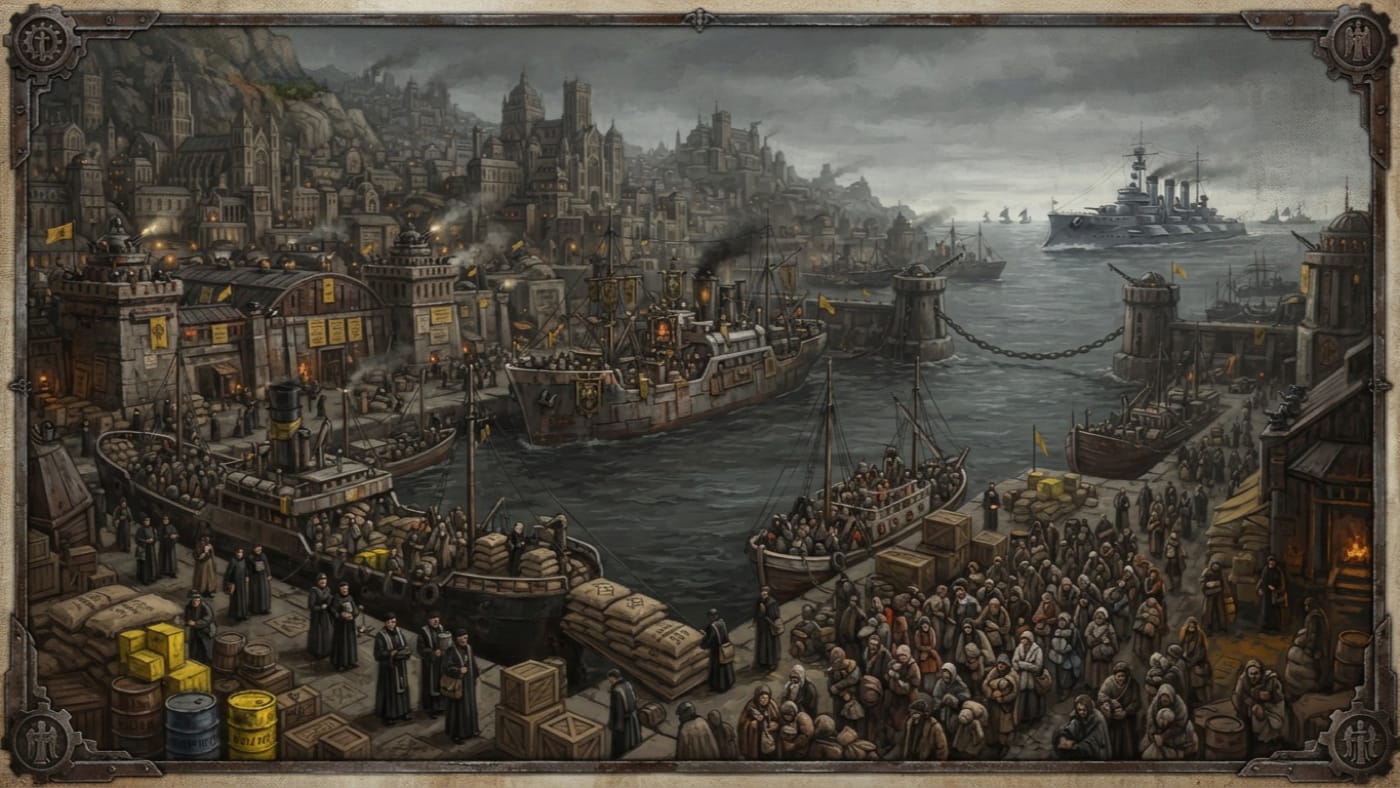
Mediterranean
The oldest road the Church holds, and the only one it cannot pave
The Mediterranean feeds the southern Line with grain, shot and pilgrims. Rival ports tax the passage, quarantine the passengers and leave room for contraband. The sea takes its share without a receipt.
Codex Ref. II.7.01-201
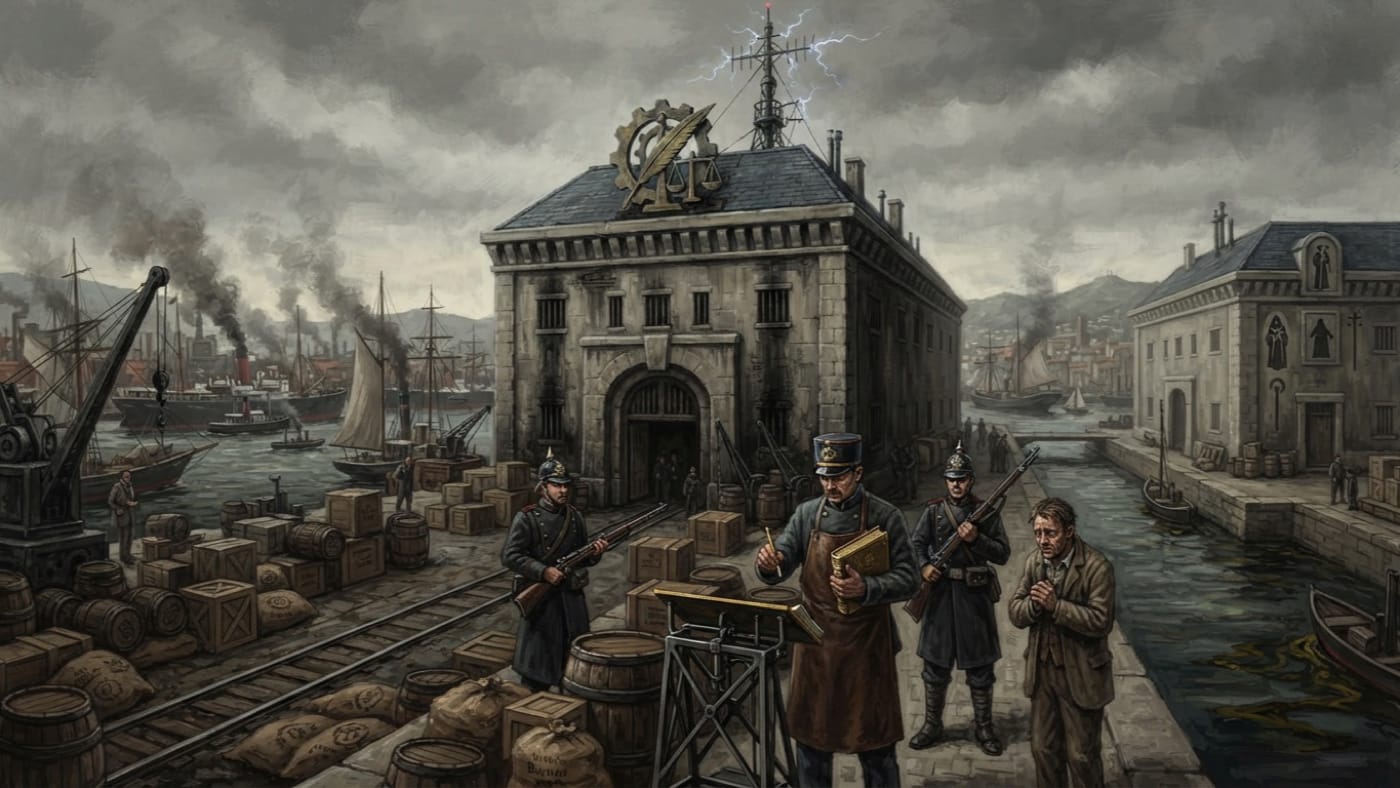
Mediterranean Revenue Office
Jurisdiction contested, collection continuous
The Bureau of Tithes' regional seat in Marseille weighs cargo and collects Salt Dues still temporary after 109 years. Harbour jurisdiction remains contested. Collection continues.
Codex Ref. II.4.09-201
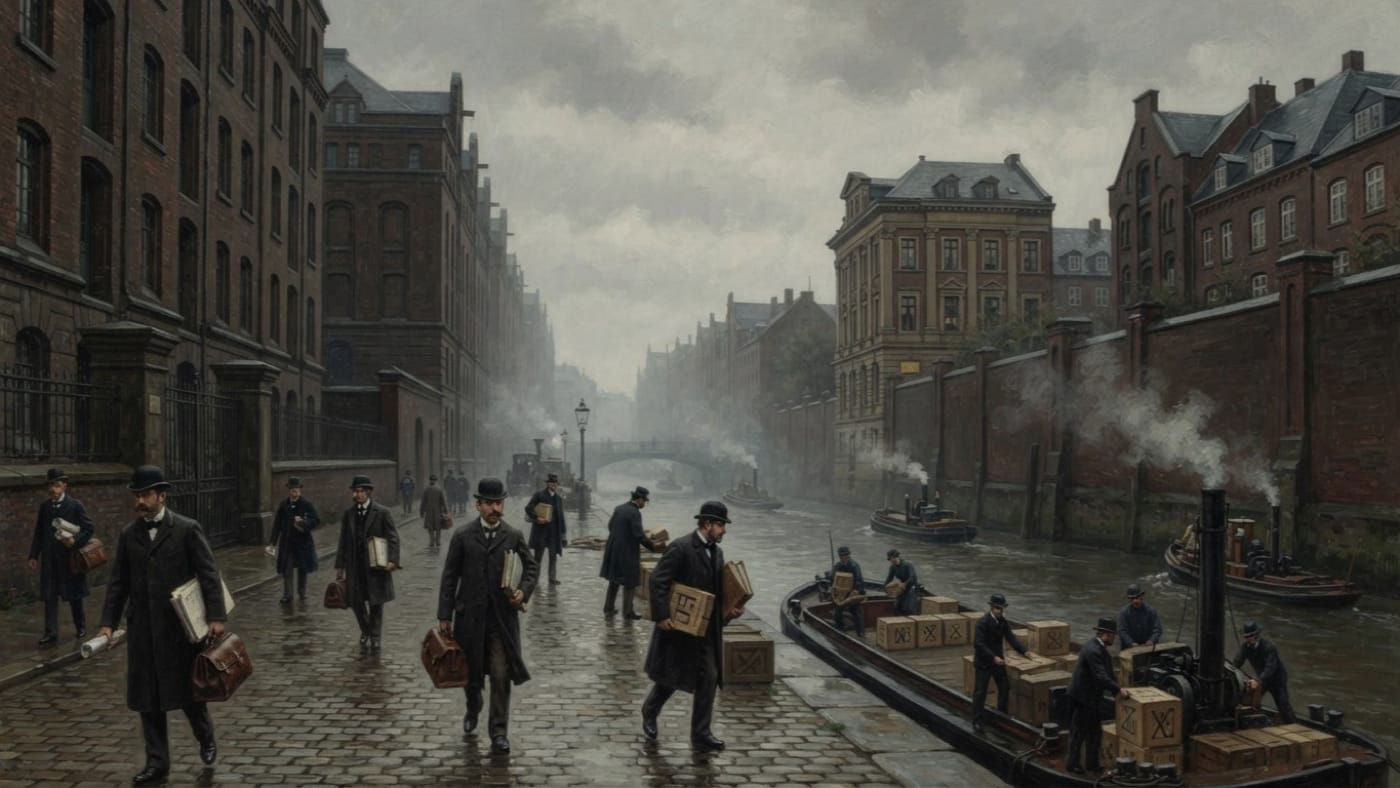
Merchant Quarter
Where the Synod has to knock
Hamburg's Merchant Quarter houses Dutch credit, British grain contracts and foreign factors behind respectable walls. The Synod governs by inspection and feeds its northern front by accepting the terms.
Codex Ref. II.4.09-007
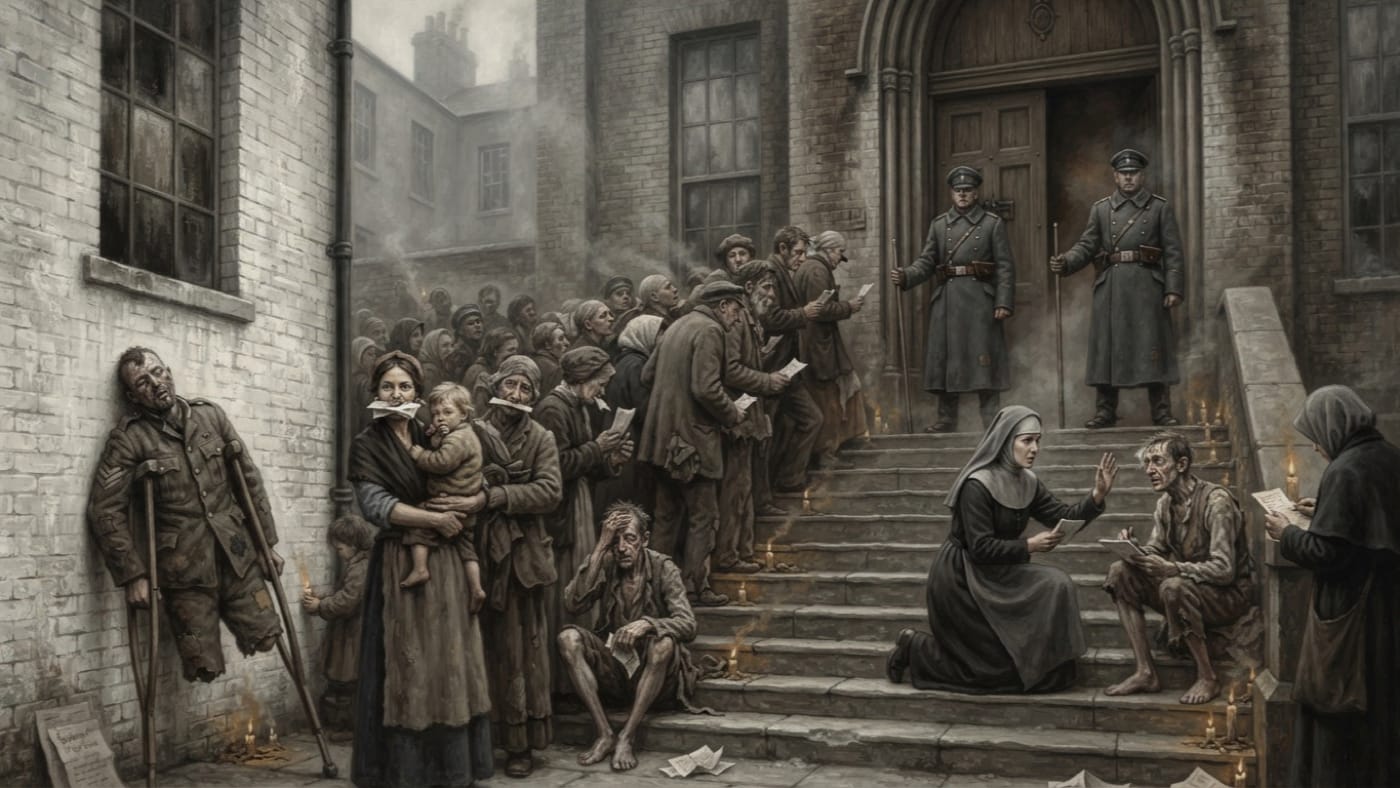
Mercy Chapel
Pain is relieved; the confession is retained
At Marrowgate's Mercy Chapel of the Unburdened, pain relief is rationed as sacrament, confessions become leverage, and sanctuary lasts as long as the chapel finds it useful.
Codex Ref. II.2.06-201
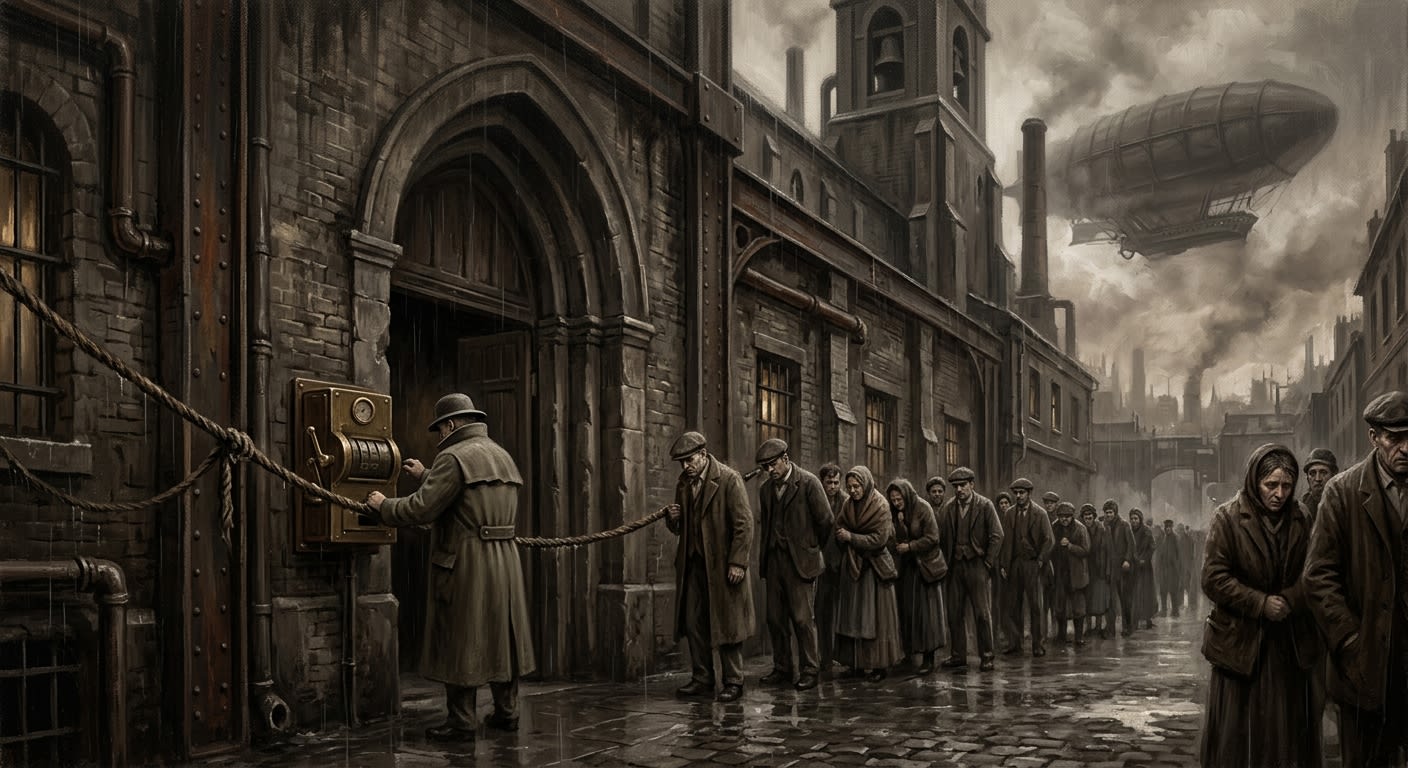
Mercy Line
The rope where grief learned its tariff schedule
The Mercy Line began as a left-hand rope outside Saint Morin's chapel in A.S. 157, where grief discovered that even mercy could be accelerated.
Codex Ref. II.2.06-157
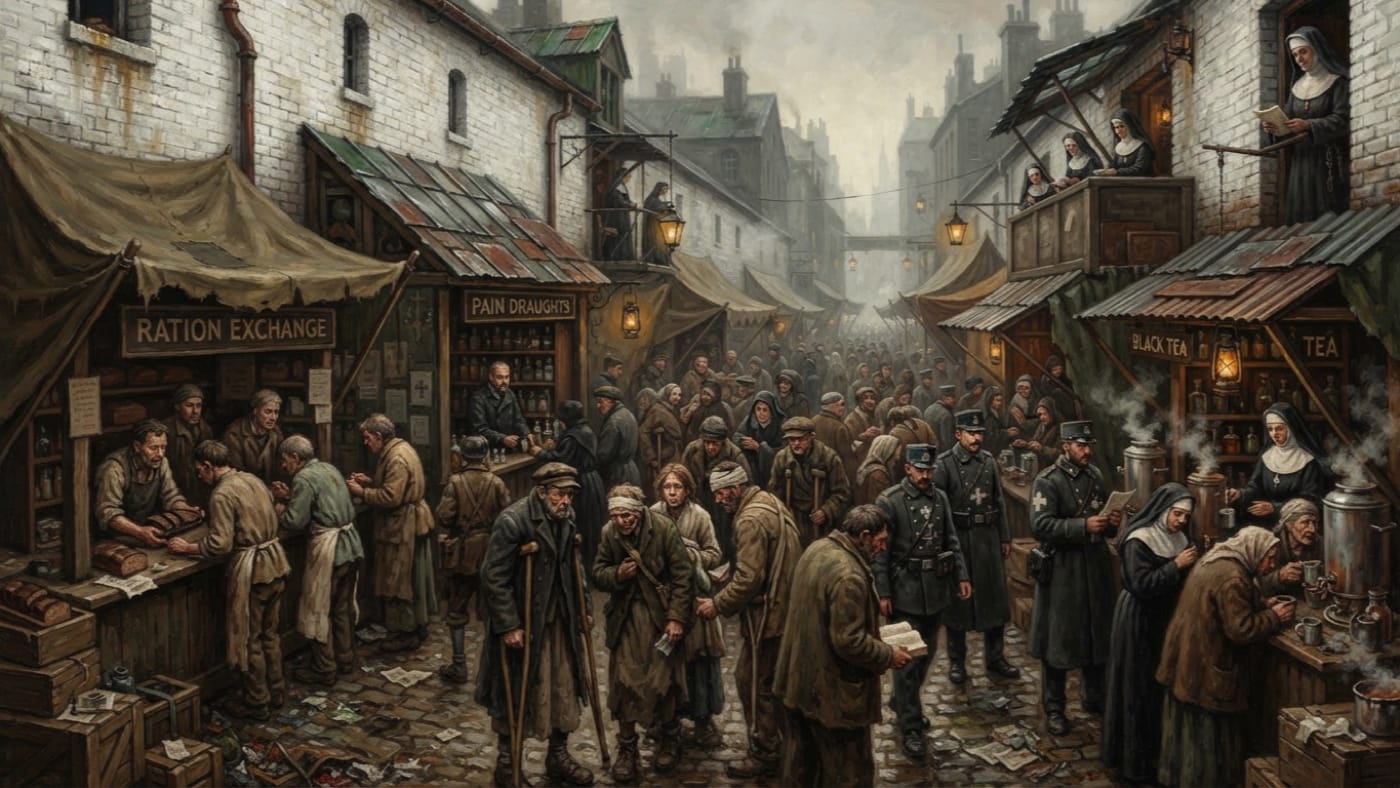
Mercy Market
Bread has a price; relief requires permission
Mercy Market trades in rations, pain draughts and black tea under Marrowgate's overlapping authorities. Bread has a price; relief requires permission.
Codex Ref. III.3.07-006
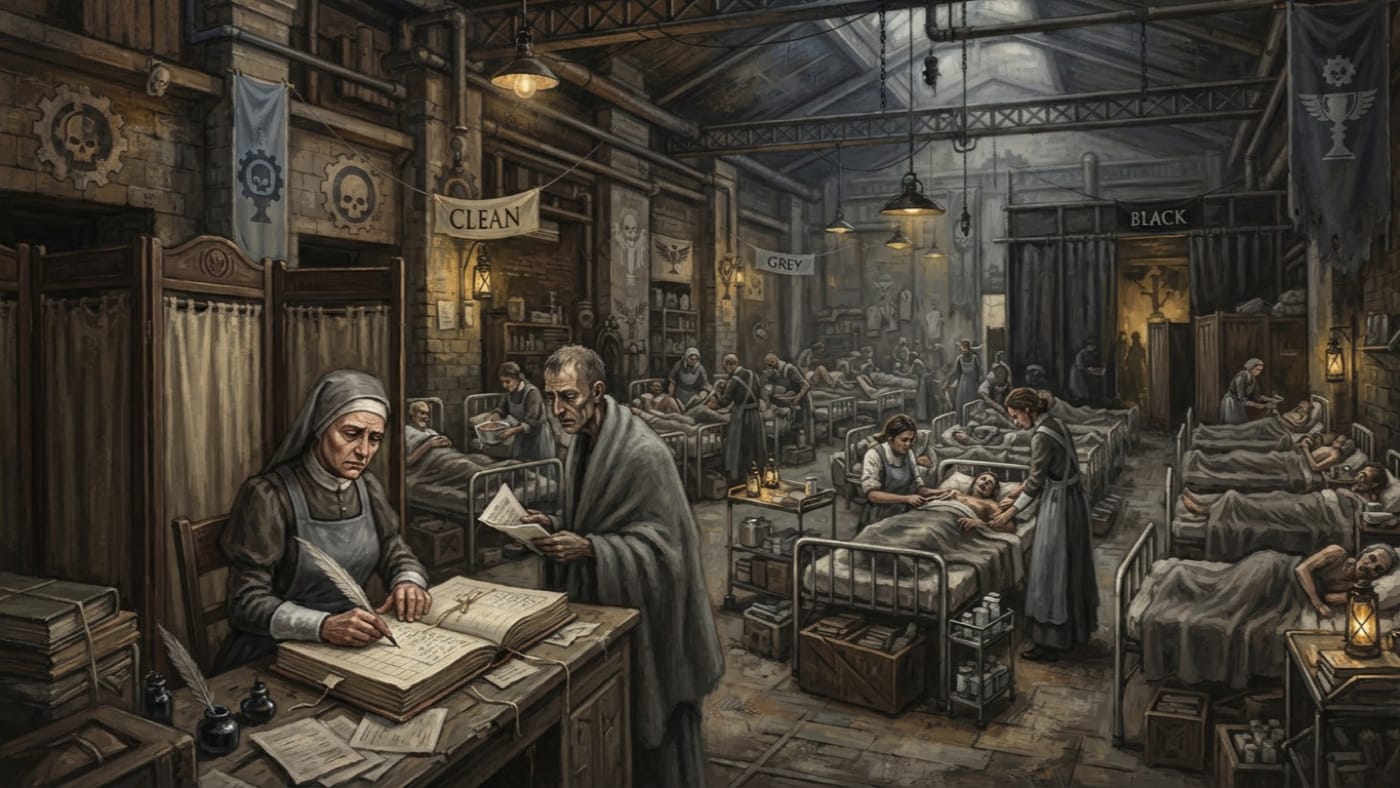
Mercy Wards
The bed is allotted; the suffering must be entered
The Bureau of Mercy's houses of the sick: broth, bandages, confession and clean, grey or black tags. This A.S. 201 survey counts the registered wards; the living remain harder to reconcile.
Codex Ref. II.6.04-001
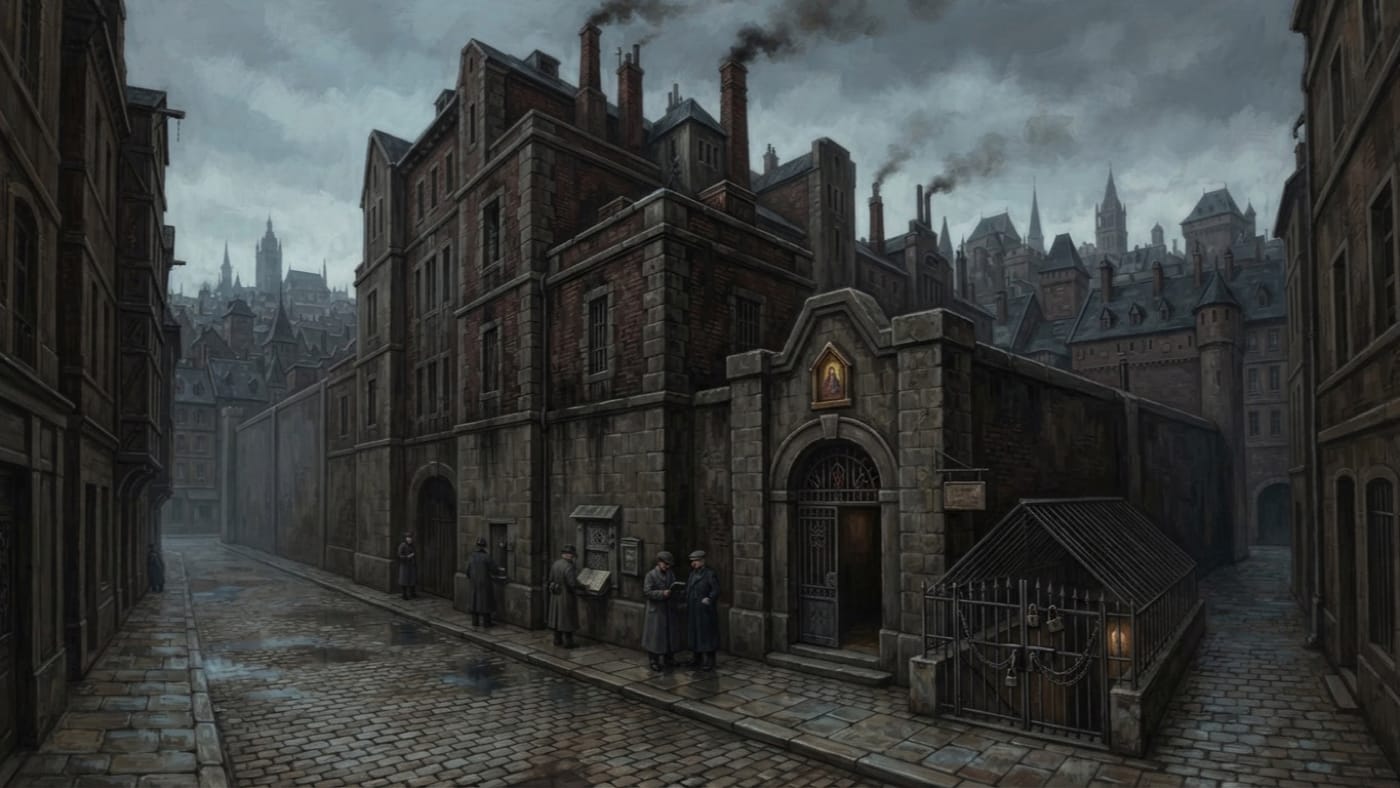
Mercy Wing
The building keeps its name. The Vault keeps its findings.
The old Mercy Wing on Strasbourg's Rue des Cendres houses the Vault of Findings in its sub-basement. Medicine keeps the evidence; two Bureaus clear entry to the archive, and three clear departure.
Codex Ref. II.1.09-201
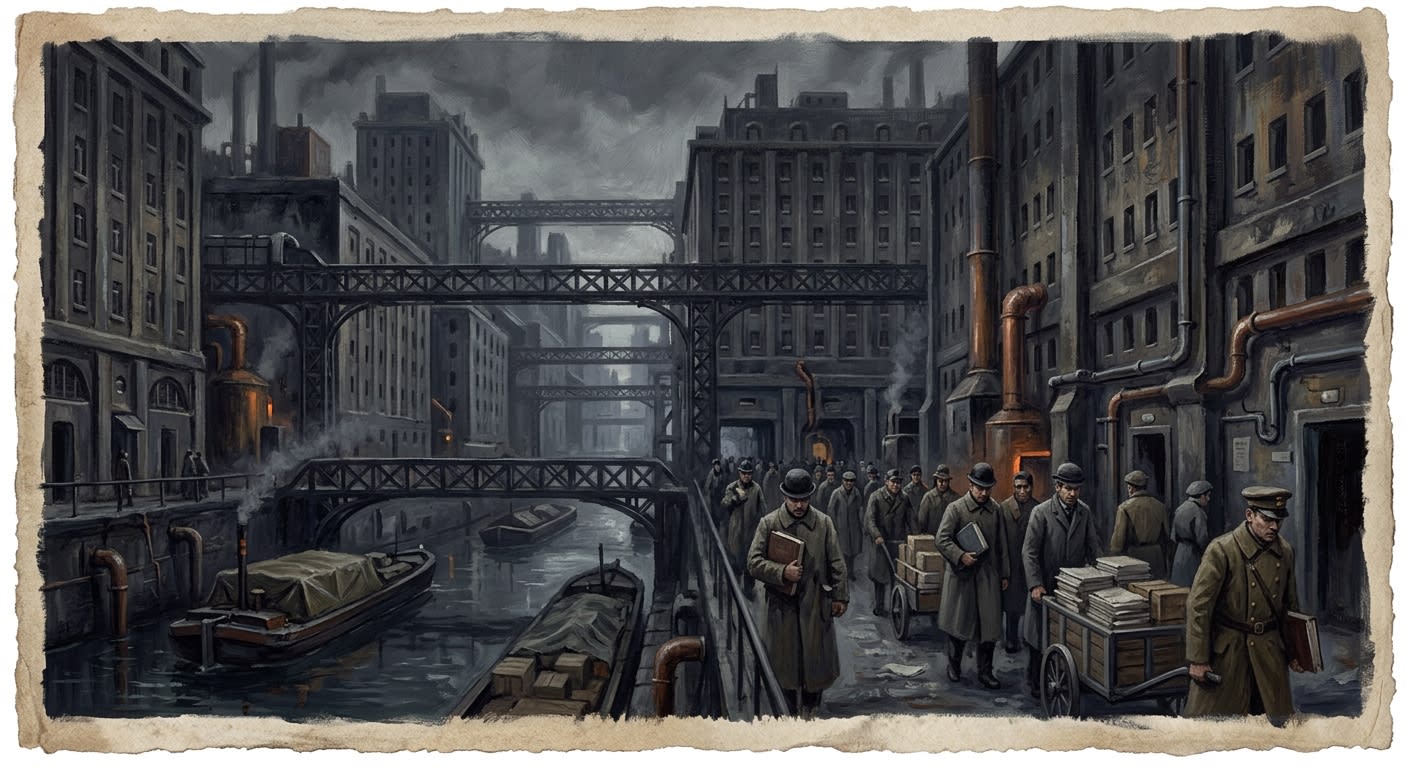
Metz
The depot-city where contradiction learned double entry
Synod-held Metz is a Zone 1 depot-city of ash vaults, double ledgers, silent bridges, supply arithmetic, and the Black Census that taught Medicine to count horror properly.
Codex Ref. II.1.05-001

Meuse corridor
The bridge fell; the query remains unanswered
The Meuse corridor gathered armies and refugees at its crossings. Maud's bridge fell in A.S. 16; the chaplain's query about axle grease remains unanswered.
Codex Ref. II.1.08-016
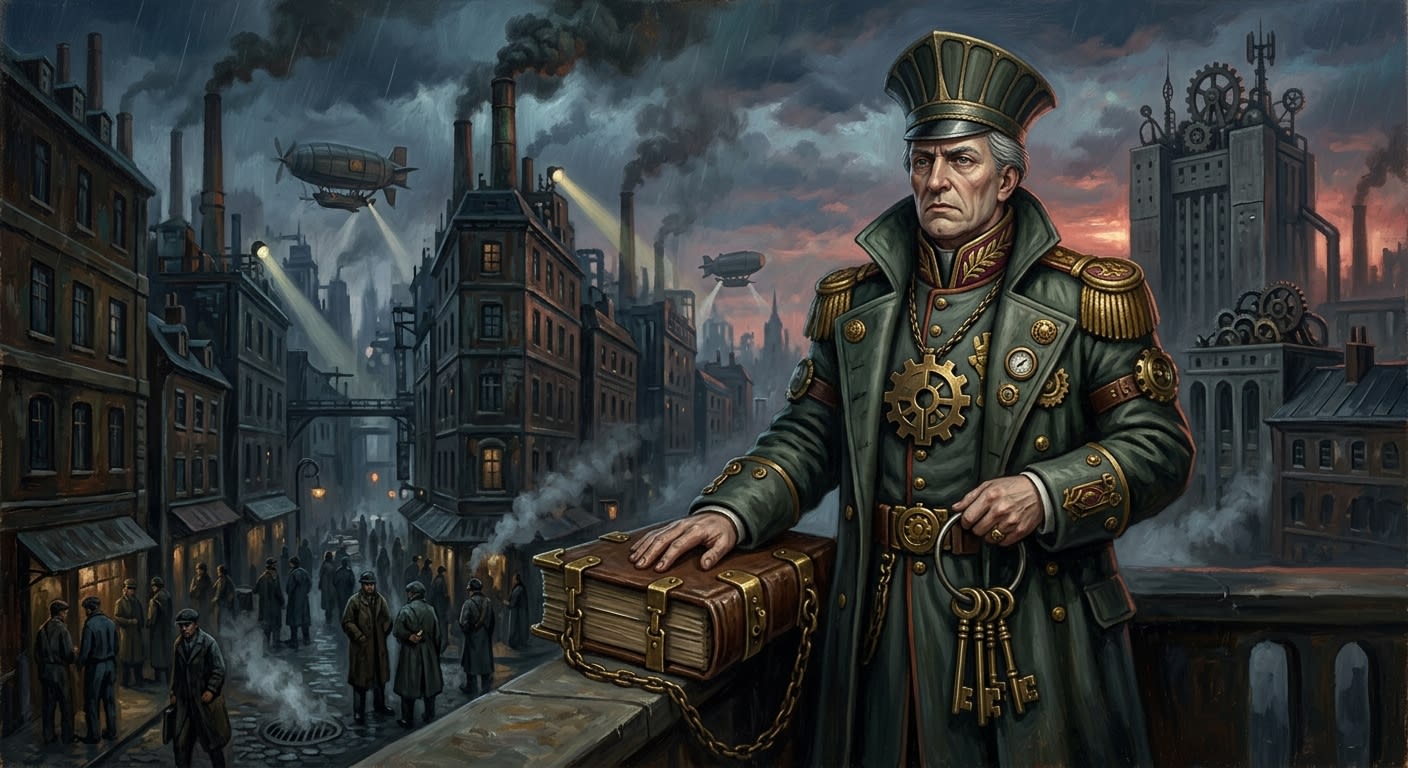
Milan
The city that mistook minutes for sovereignty
Milan is Lombardy's polished mouth: silk, steel, banking paper, guild keys, and the old civic delusion that a beautiful memorandum can outrank Strasbourg.
Codex Ref. II.1.07-150
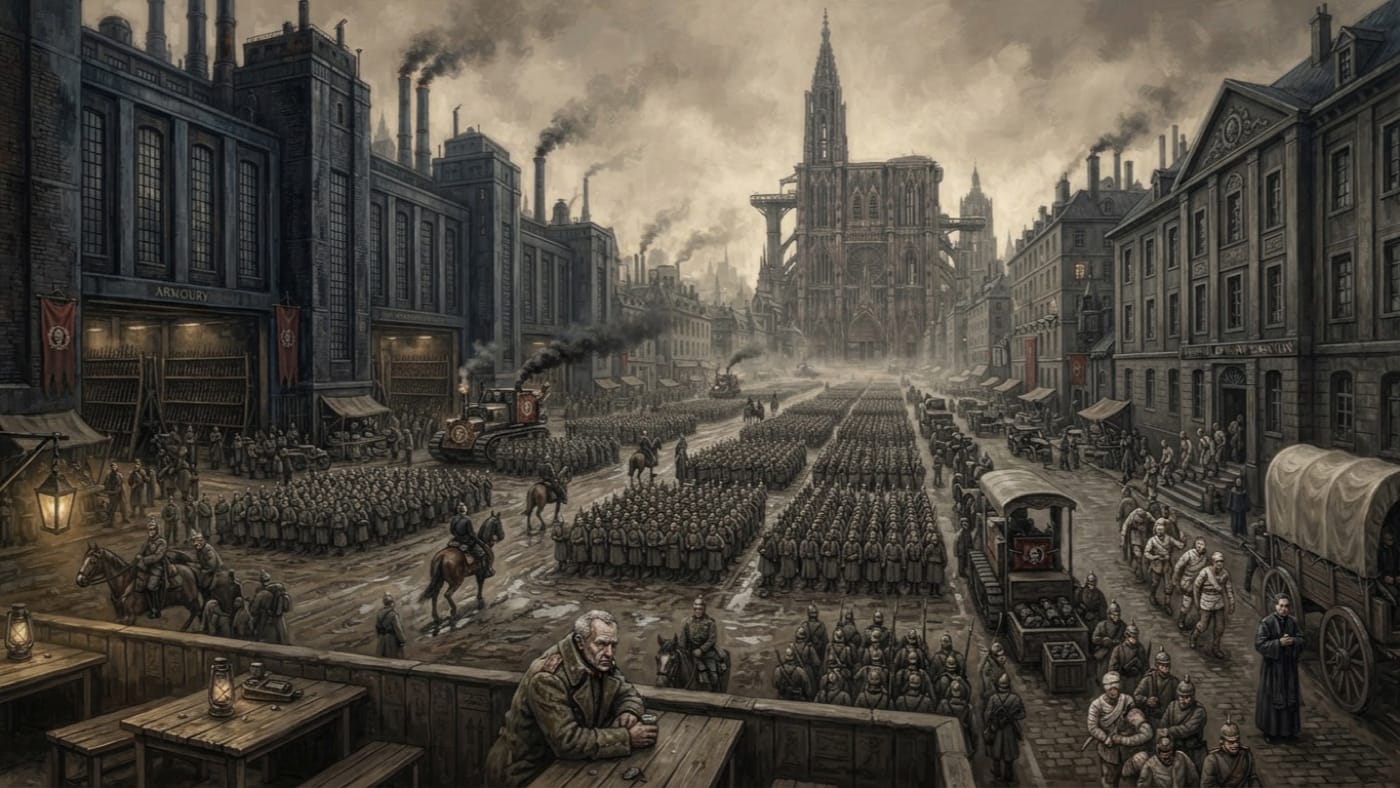
Military City
Where the Rear Keeps Its Front
Strasbourg's military district drills ten thousand, keeps arms for twenty thousand and tends the men who return. The Bureau counts capacity more readily than casualties.
Codex Ref. III.2.01-005
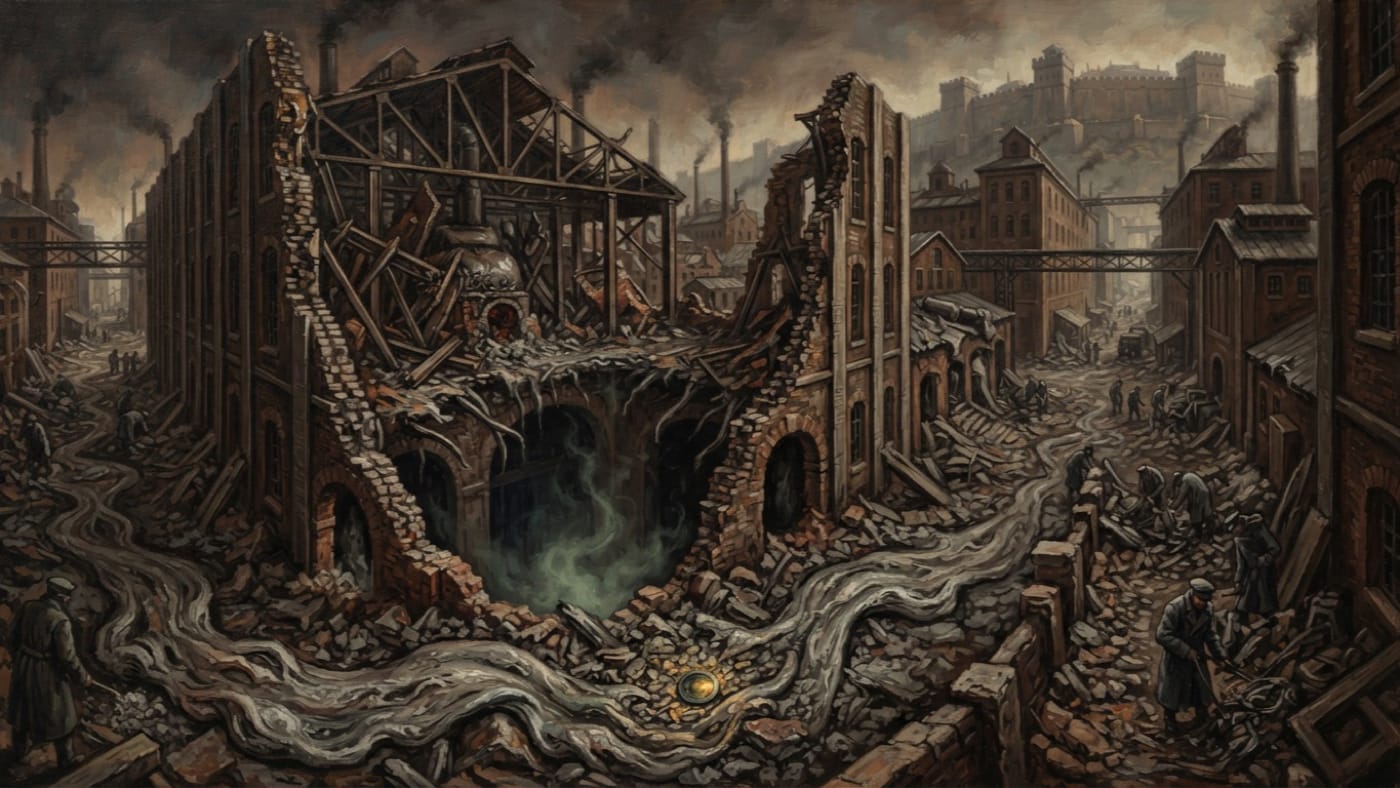
Mill Seven
The Quarter was restored; the mill's fate went unrecorded
Mill Seven took the first blast of the Three-Night Bombard; its slag gutter later yielded the Screaming Coin. The Quarter was certified restored. The mill's later fate remains unrecorded.
Codex Ref. II.4.10-177
Mill-Crown Terraces
The fourth Step grinds the flour; the fifth decides who may eat
Rheinscarp's fourth terrace grinds ration flour to purchased hymns. The Cantors sell the cadence, Records certifies the hungry, and a mill-hand may work a full shift while officially absent.
Codex Ref. II.2.01-004
Millwrights' Row
The street kept its name; the fire kept its authority
Millwrights' Row is the Strasbourg street where the Laughing Swan Inn burned in A.S. 102 for three unauthorised chuckles. Its founding is unrecorded; its missing inn remains available for citation.
Codex Ref. III.2.15-102
Mine Road
The road between a verdict and a number
Ulm's Mine Road carries condemned scholars and families south-east through checkpoint gates to the Paper Mines. The Nameless Hostels keep relatives waiting; disposition is usually intake.
Codex Ref. II.2.06-003
Minor House of Saint Sabina
Three names, one friary, and no proven dedication
The Lyon friary burned in −39 A.S. (1671 CE), remembered under three disputed names. Its brothers fed the docks; the index supplied a saint it could not prove.
Codex Ref. II.1.09-039
Minute Market
Where stolen time is folded into paper and sold as mercy
Beneath Latchford's boards, the Minute Market sells the interval before ruin lands: forged windows, stolen bell-marks, and mercy priced by the breath.
Codex Ref. II.4.09-199
Mirror Courts
Where every surface agrees and no one has a peer
Atheron's palaces below Crownspire return each visitor's self-belief without contradiction. The glass agrees with everyone; cooperation seldom survives.
Codex Ref. II.4.03-047
Mirror Waste
The ground offers a better face; the gate demands proof of your own.
Between the Hollow Vale and Bastion-Irongate lies contested ground that reflects better faces beneath false skies. The gorge is held; the identity of those returning is harder to certify.
Codex Ref. II.5.07-201
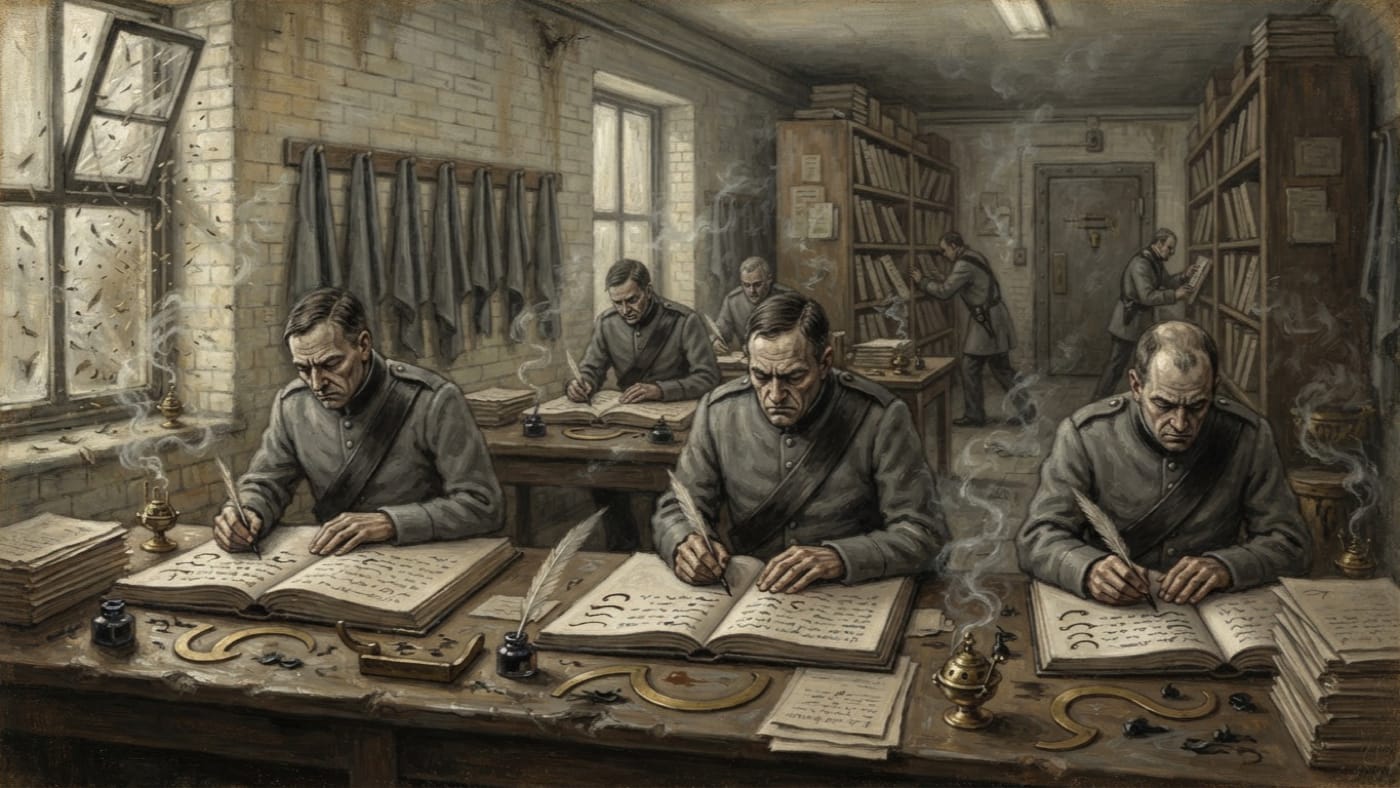
Mirth Office Row
Where a smile becomes a household liability
At Wexel's Mirth Office Row, inspectors turn laughter into household debt while the wind enters the citation rooms and teaches the ledgers to smile.
Codex Ref. II.2.04-002
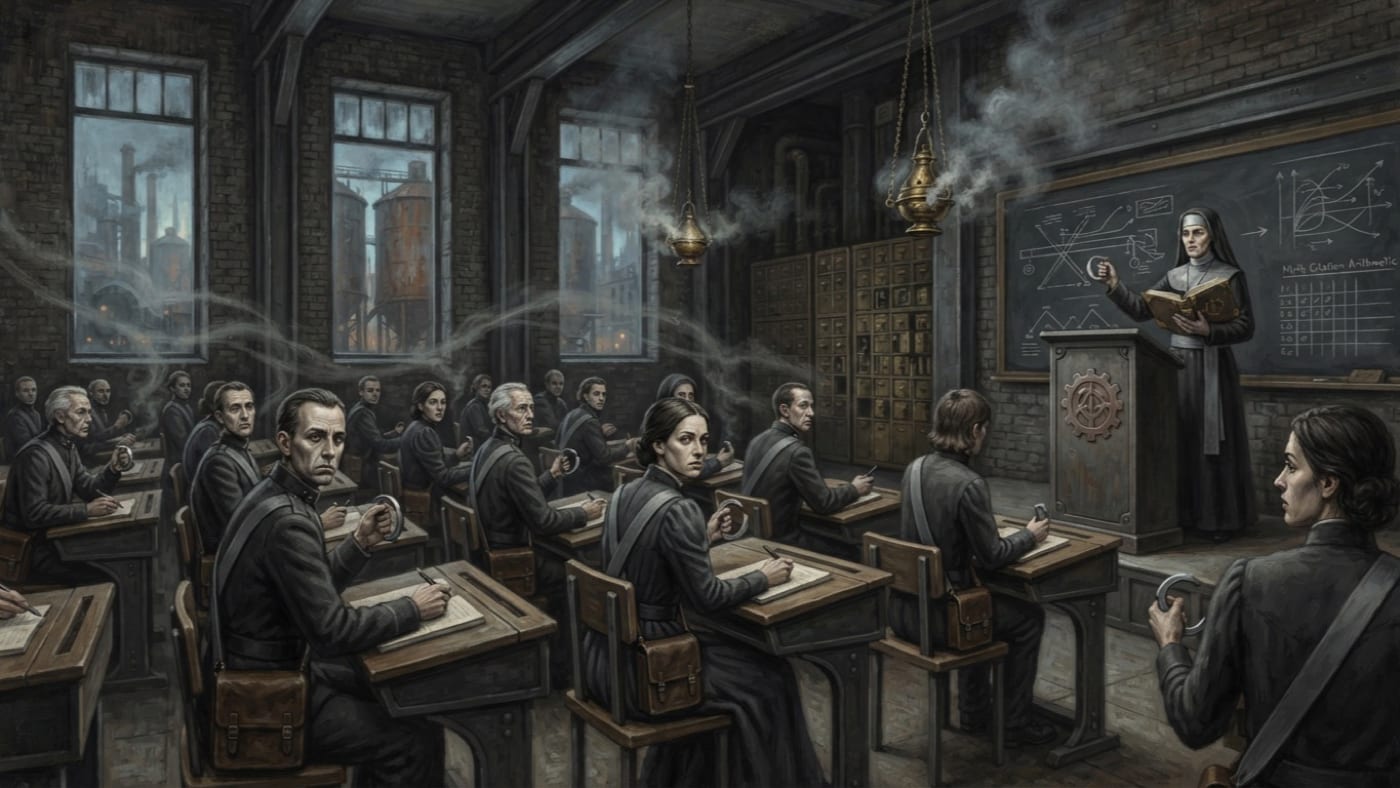
Mirth Office Schoolhouse
Where a mouth becomes an entry in the ledger
Wexel's Mirth Office Schoolhouse trains inspectors to turn smiles into citations. Its walls keep confessions; the Chaff-Winds bring laughter no graduate can assign a throat.
Codex Ref. II.2.04-201
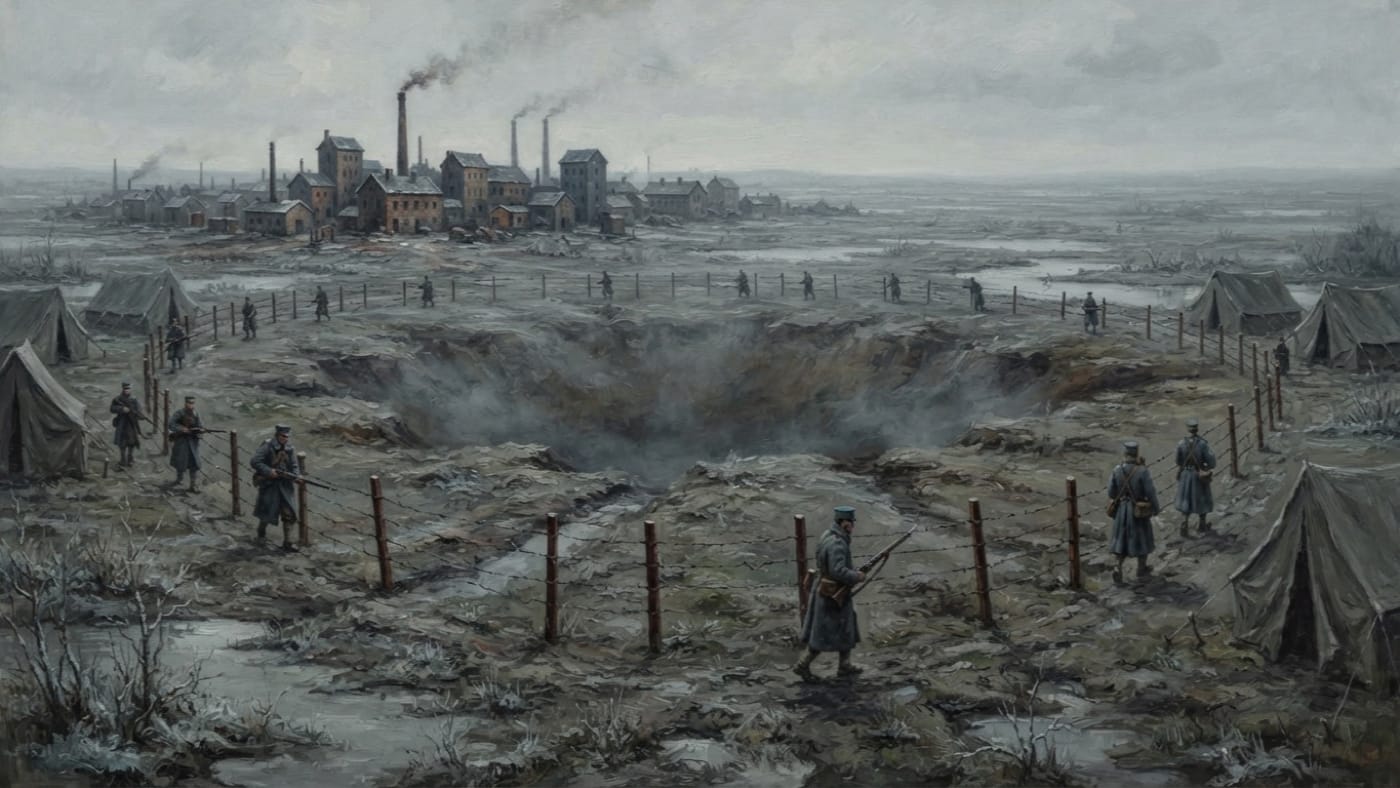
Mohács
A town remembered for what lies south of it.
Mohács survives in the Ledger as the bearing for Pit Seven, where approximately four thousand refugees were buried in A.S. 48. The town's fate remains unverified; the grave remains hungry.
Codex Ref. II.4.09-134
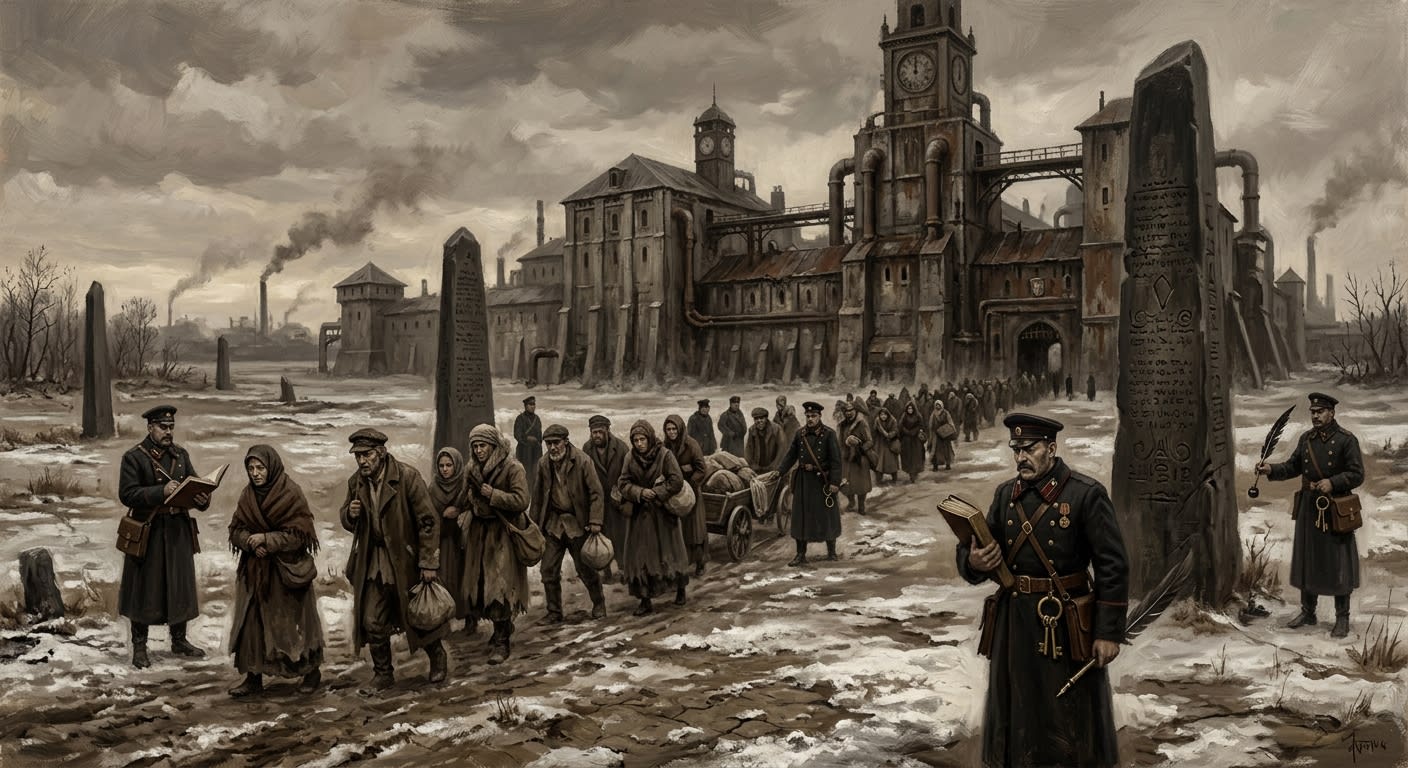
Moldavia
The province where hunger signs and debt remembers
Moldavia is the Charnel Lands' eastern account-book: famine, salt, treaty-stones, refugee names, warm keys, Velmora's credit, Kargath's rot, and a province still written so Hell cannot own it quietly.
Codex Ref. II.6.06-045
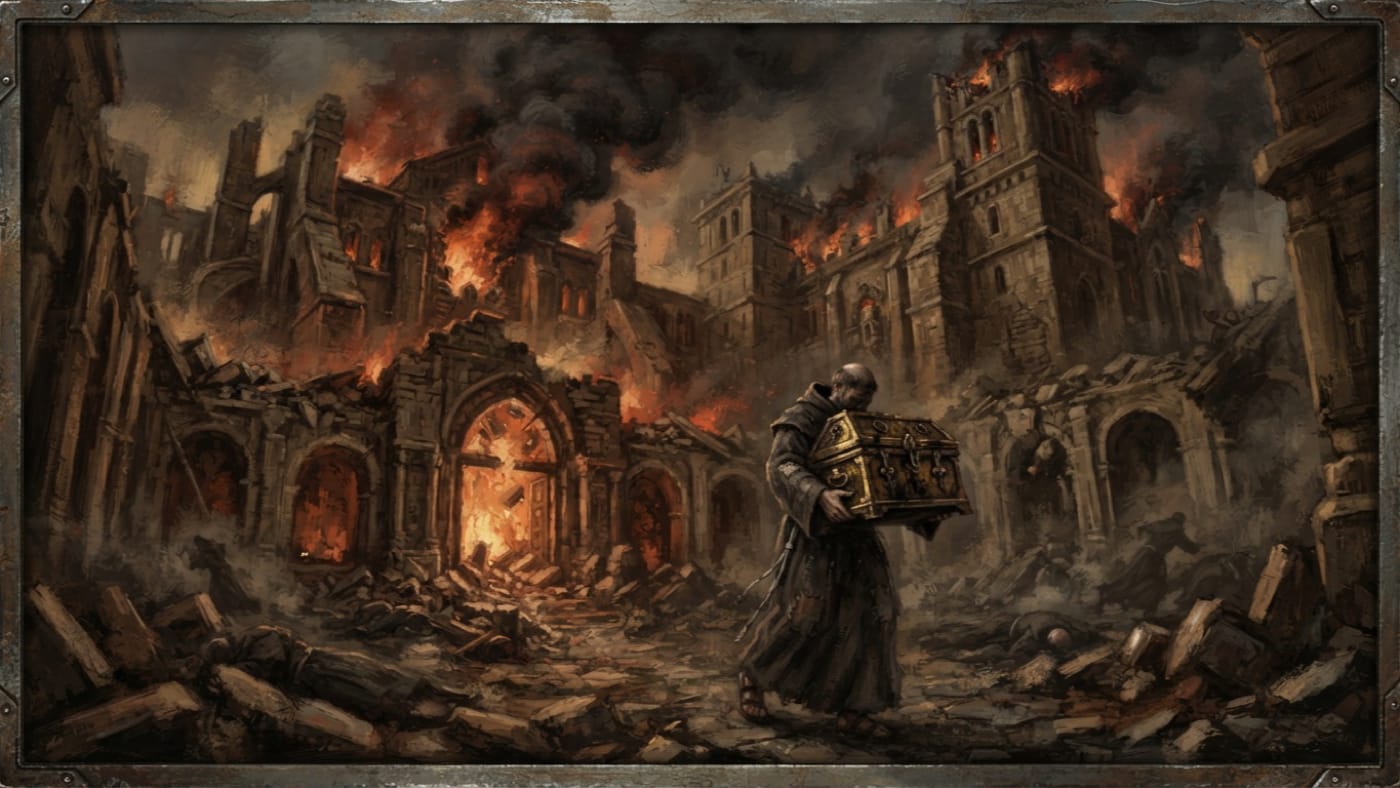
Monastery of Saint Alexios
The house burned; one brother carried its relic out
Dalmatian monastery destroyed in the first week of the Sundering, A.S. 45. Brother Tomislav carried out its reliquary; the house survives chiefly as the first link in a custody chain.
Codex Ref. III.2.04-1871
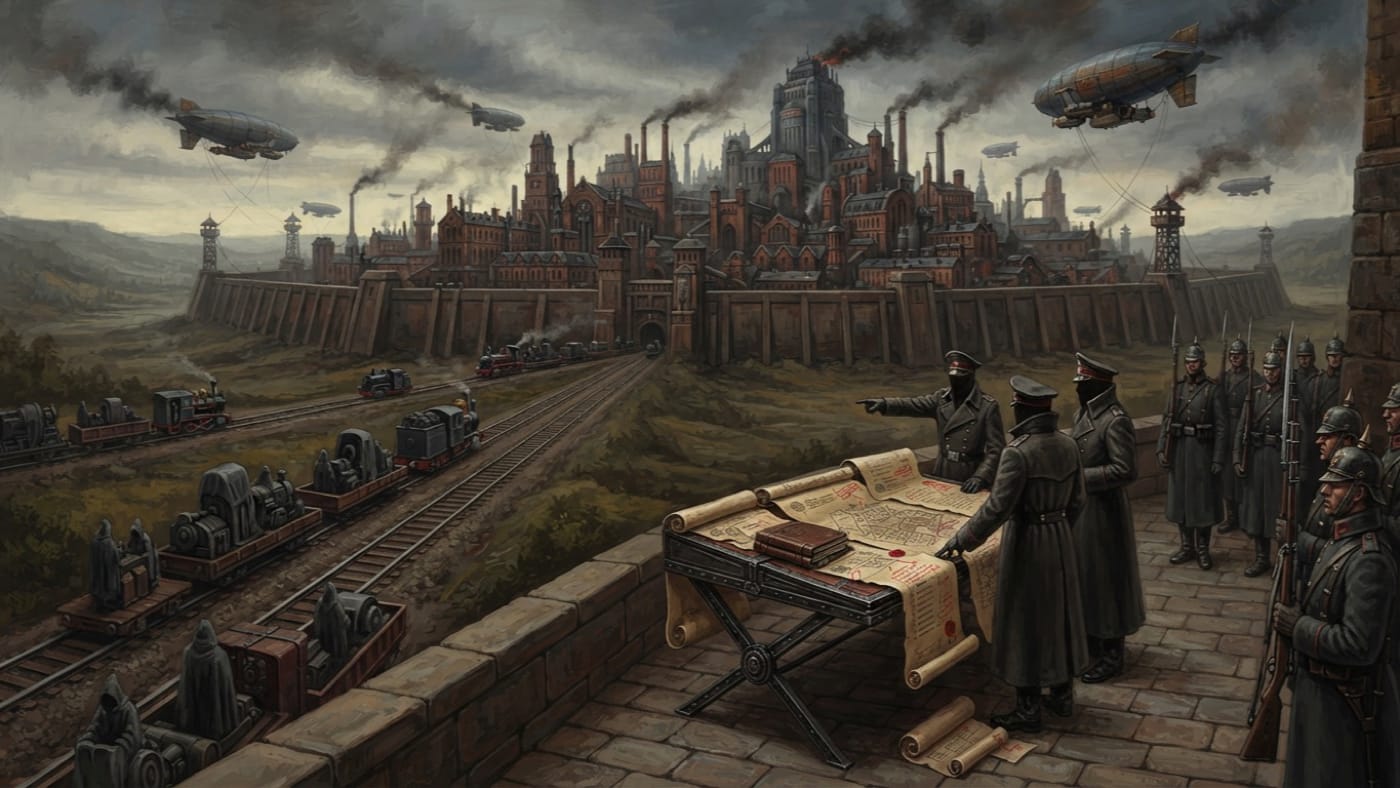
Montauban
The city made answerable by a name
Montauban entered Purity's Toulouse docket in A.S. 93 because Carcassonne named it. The file preserves no local testimony; the Bureau counts the city cleansed.
Codex Ref. II.1.09-093
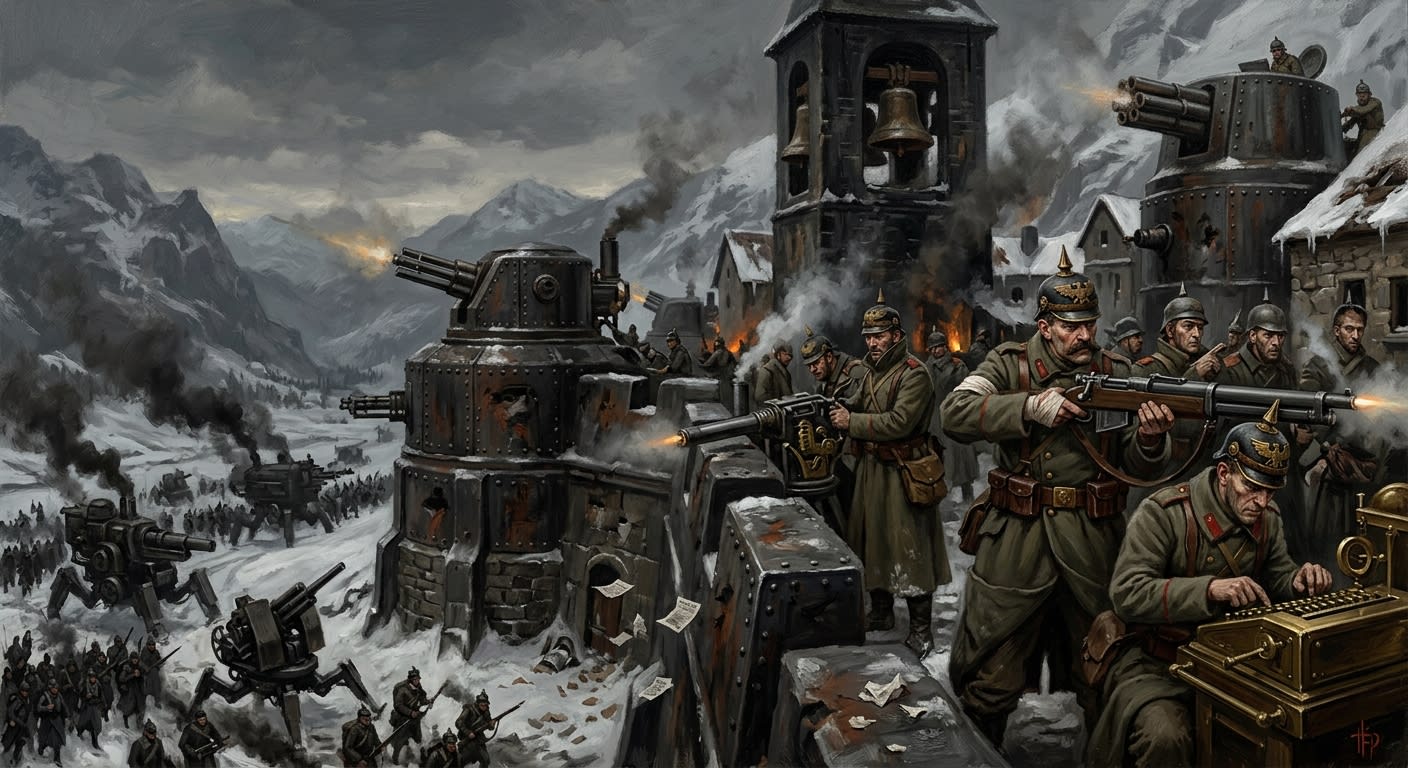
Montreval
The pass-town that taught Reason the road was closed
Montreval held three winters against Lucien Artois's clockwork guns, hunger, pamphlets, fever, and arithmetic; a southern pass-town where Severin bought time with walls, bells, broth, and burned bridges.
Codex Ref. II.1.09-015
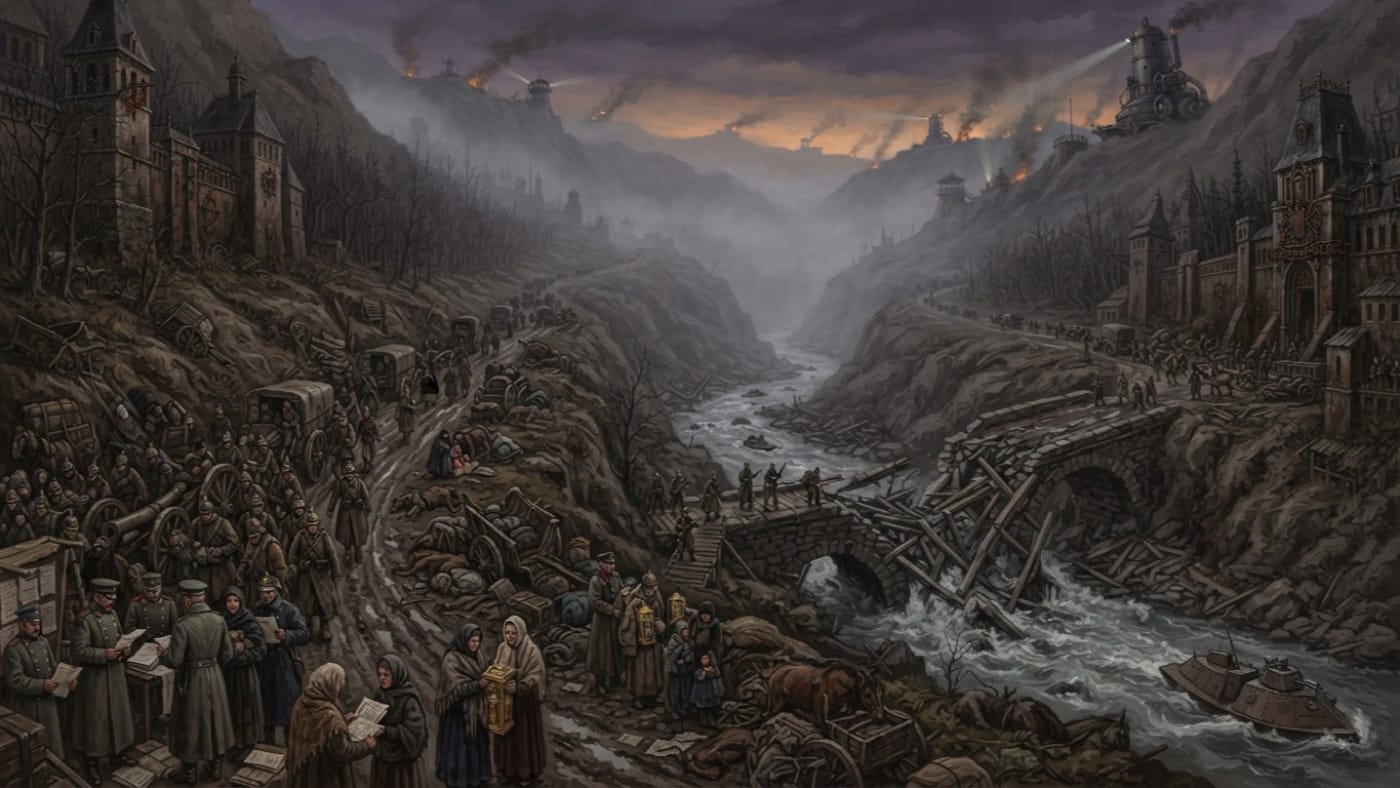
Morava
The roads that carried armies inward and excuses back to Vienna
The Morava corridor carried armies inland and letters out. In A.S. 38, a reported washout nearby gave Vienna a plausible explanation for an East that had stopped answering.
Codex Ref. II.6.06-201
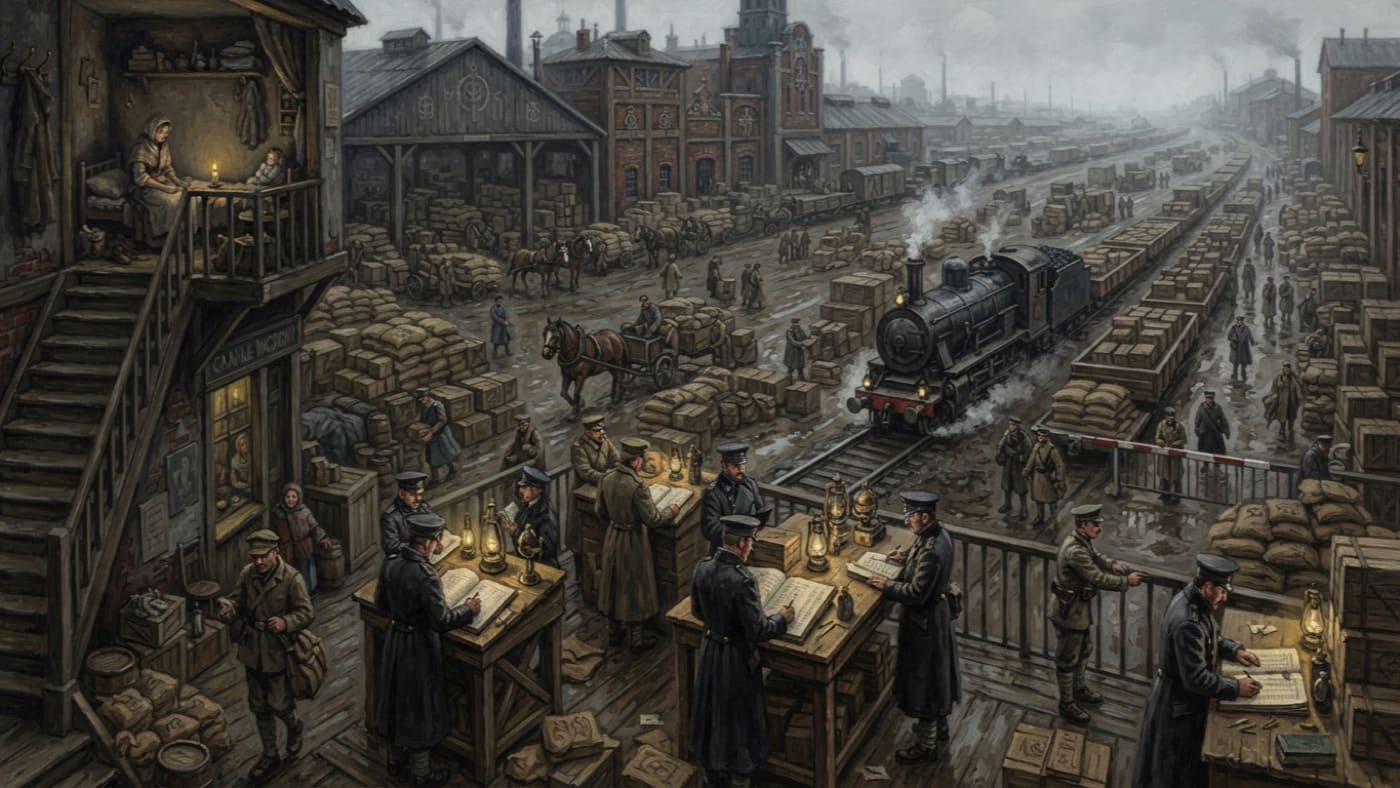
Moravia
Every sack accounted for; one pilgrim unnamed
Moravia stages supplies for the Sagittal Line. The ledger counts its sacks; Vienna's lullaby file preserves one unnamed pilgrim wife.
Codex Ref. II.3.02-201
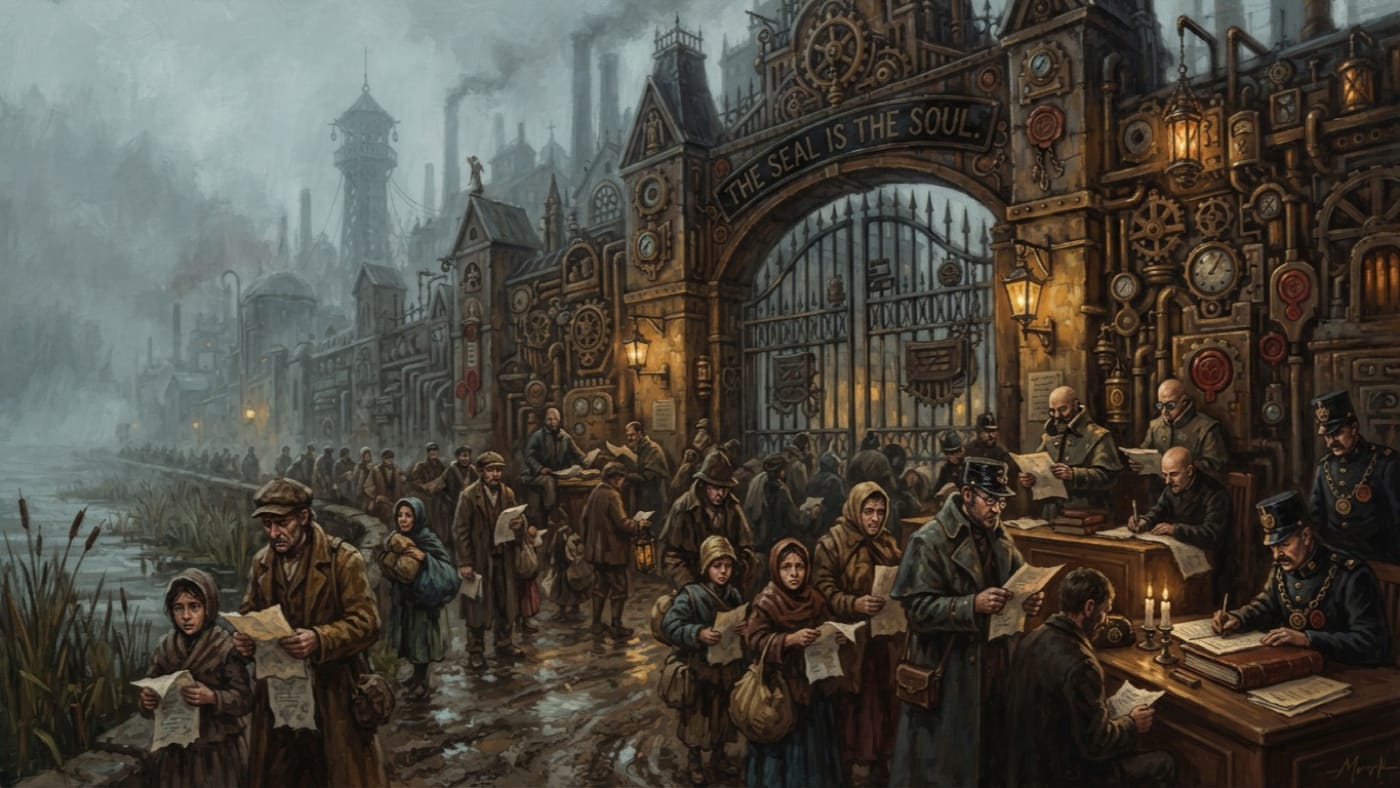
Mordant Gates
Where a Sound Seal May Prove Nothing
The Candlewick Palatinate's upstream road entrance, where colour-inspectors, Records clerks and Seal Provosts examine travellers whose papers may fade before admission. The seal remains sound; what it proves is under review.
Codex Ref. II.1.01-002
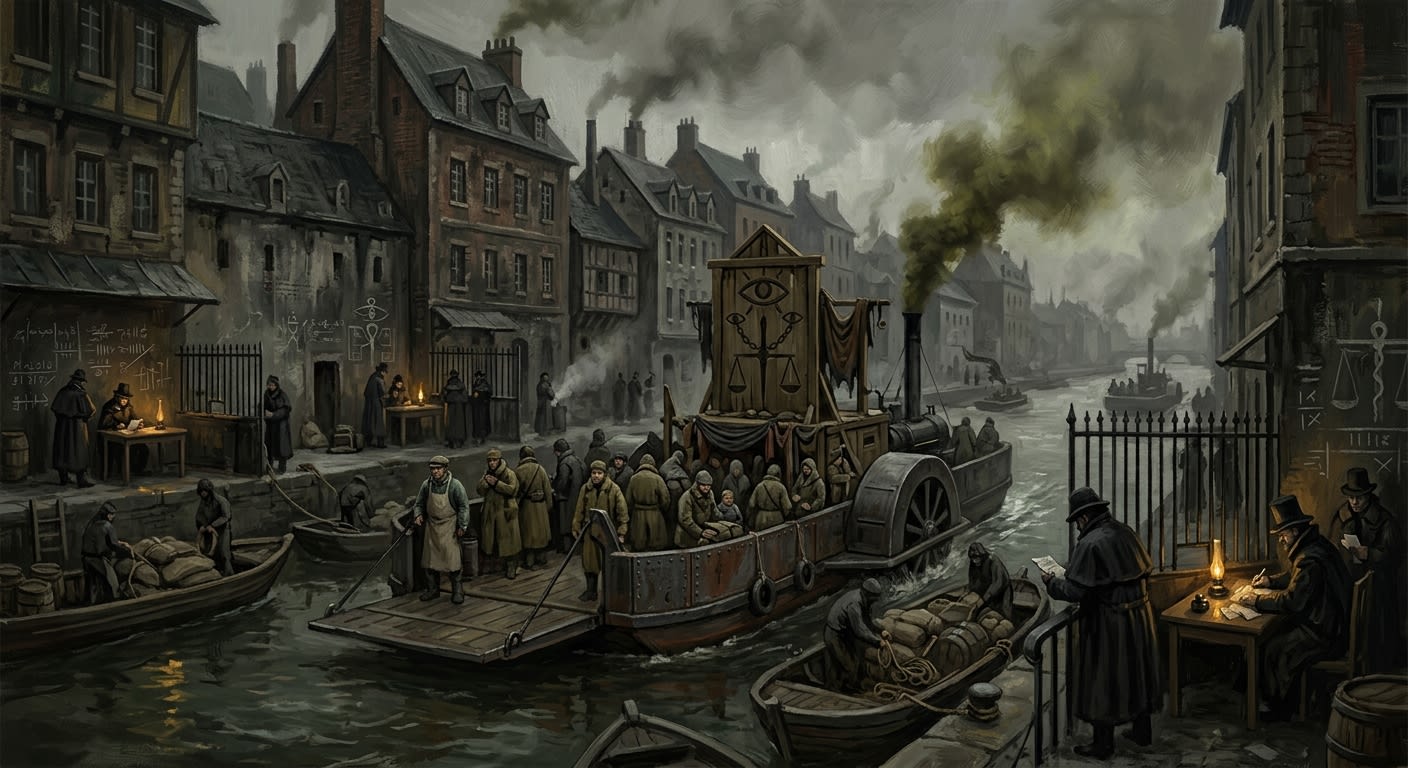
Moselle
The river that carries correction downstream without saluting
The Moselle is a Zone 2 river-corridor of tariff houses, old hands, ferry shrines, Street-Vicar chalk, Meta-Levy arithmetic, and provincial obedience so exact it becomes insolence.
Codex Ref. II.2.08-112
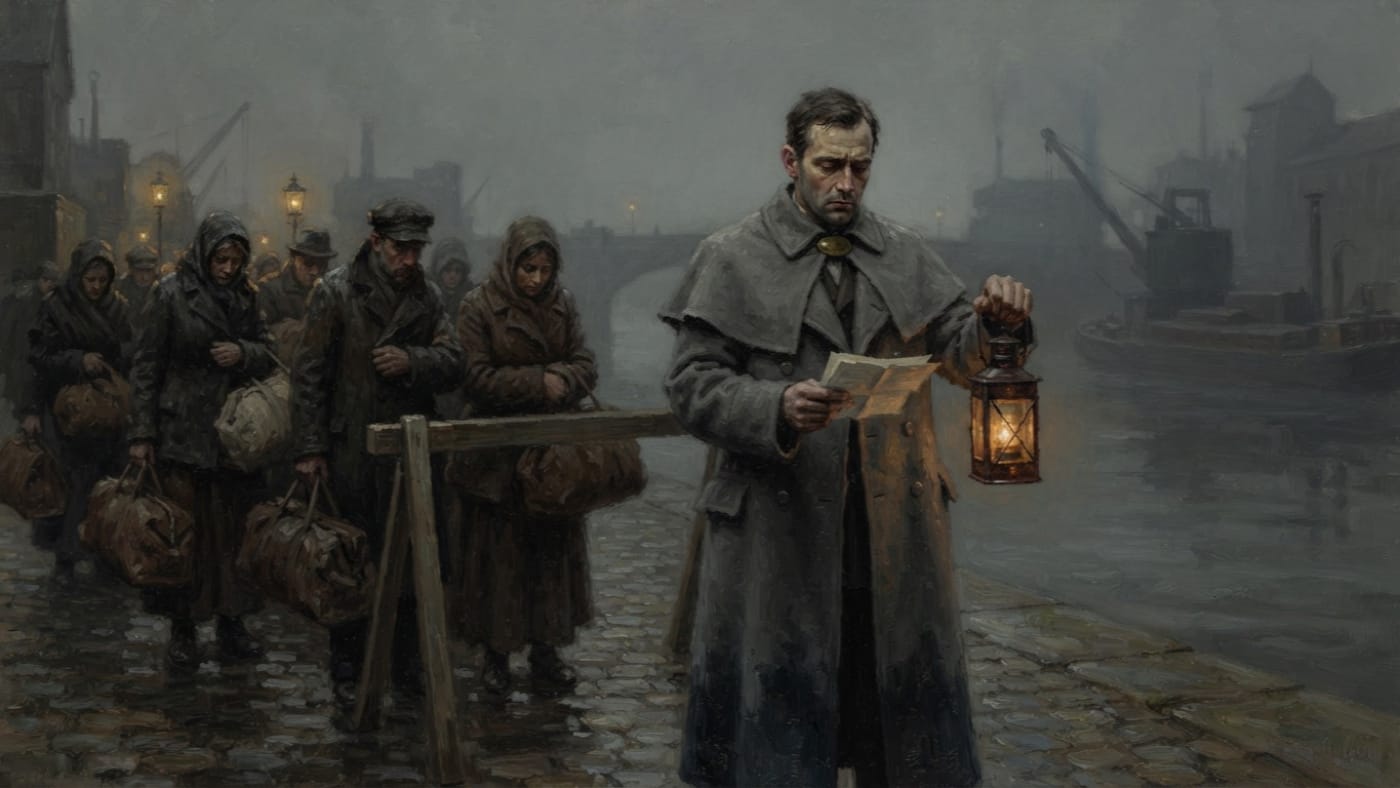
Moselle Crossing
The papers were in order. I checked them twice.
Current documentary survey, A.S. 201: at a Moselle curfew crossing I checked a Licensed Consolator's papers twice. They were in order. Sincerity was harder to inspect.
Codex Ref. II.2.08-201
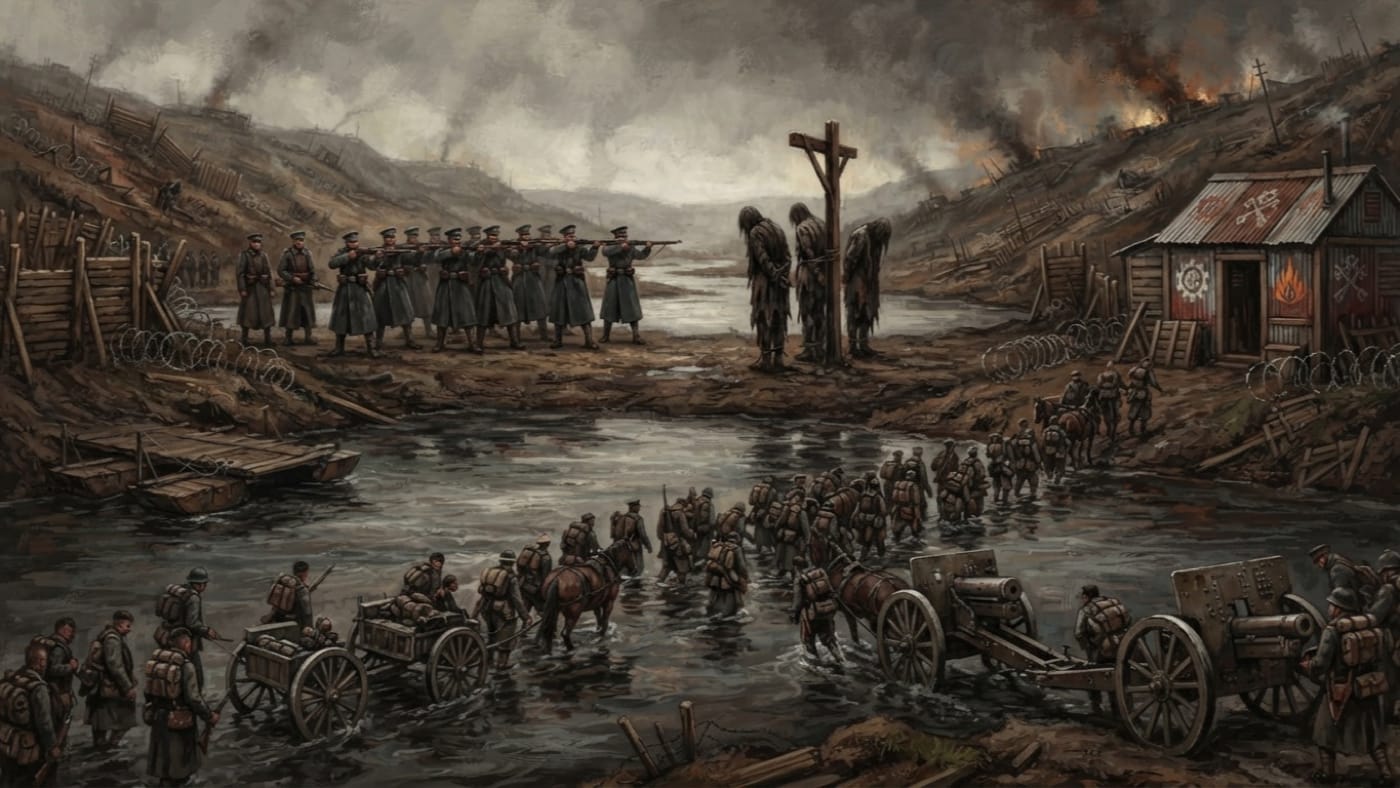
Moselle ford
Where deterrence became a soldiers' liturgy
Three shot at a Moselle ford in A.S. 53; their names chanted as saints within the month. The exact crossing is unrecorded. The lesson became part of the case for immurement.
Codex Ref. II.2.08-053
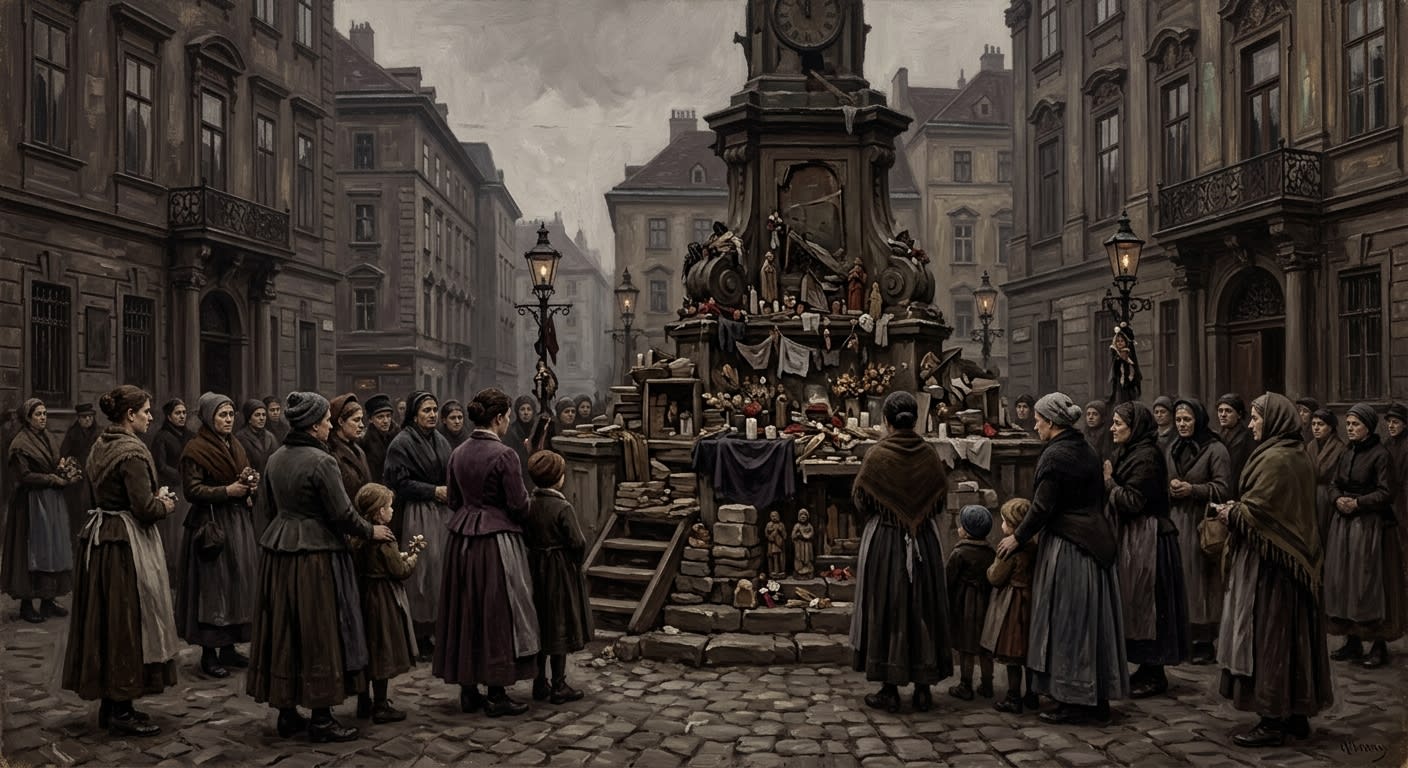
Mothers' Shrine, Judenplatz
The wall where Orison learned that silence has witnesses
The illegal Mothers' Shrine in Vienna's Judenplatz commemorates the A.S. 112 branding of five thousand mothers, and keeps returning after removal.
Codex Ref. II.4.09-014
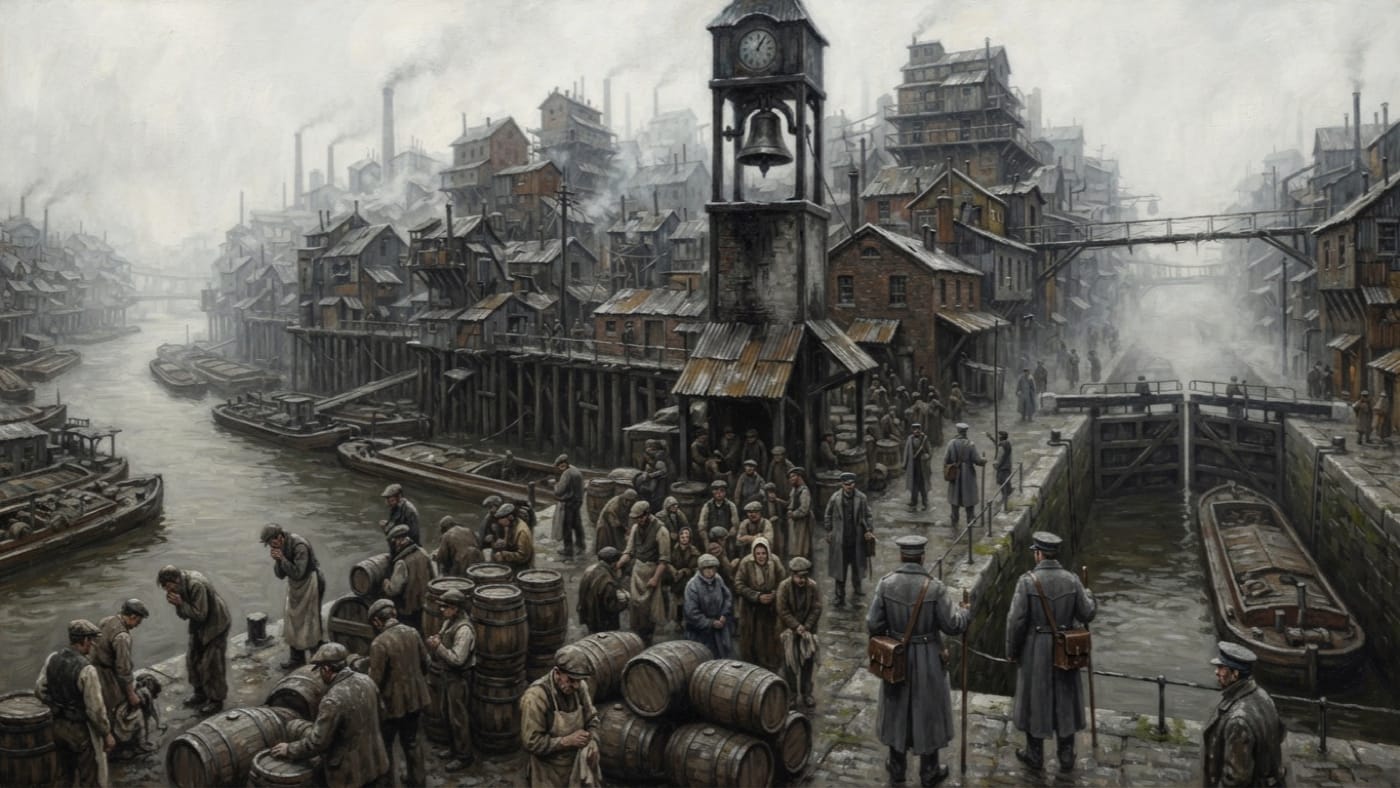
Mournwater
A town waiting for permission to breathe
Mournwater ships certified sanctity from the River-belt. Its coopers, graders and quarantine poor wait for a second bell that permits commerce to resume.
Codex Ref. II.2.03-002
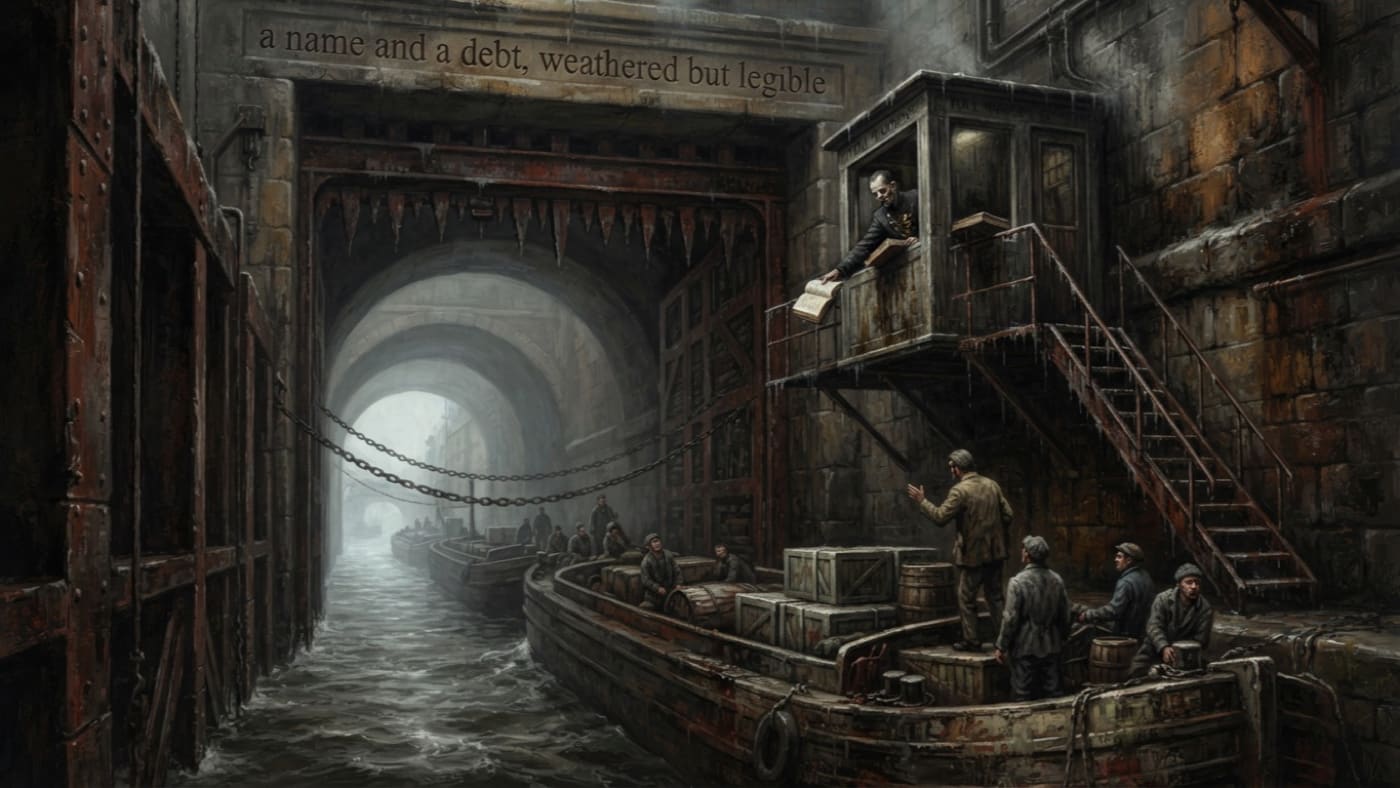
Mouth-Sluice
Three questions at the waterline, one unanswered debt overhead
The canal threshold of the Archivolt Causeyworks, where Goss asks three questions beneath his own stone debt. Barges wait by the hour; the lintel waits indefinitely.
Codex Ref. II.1.02-002
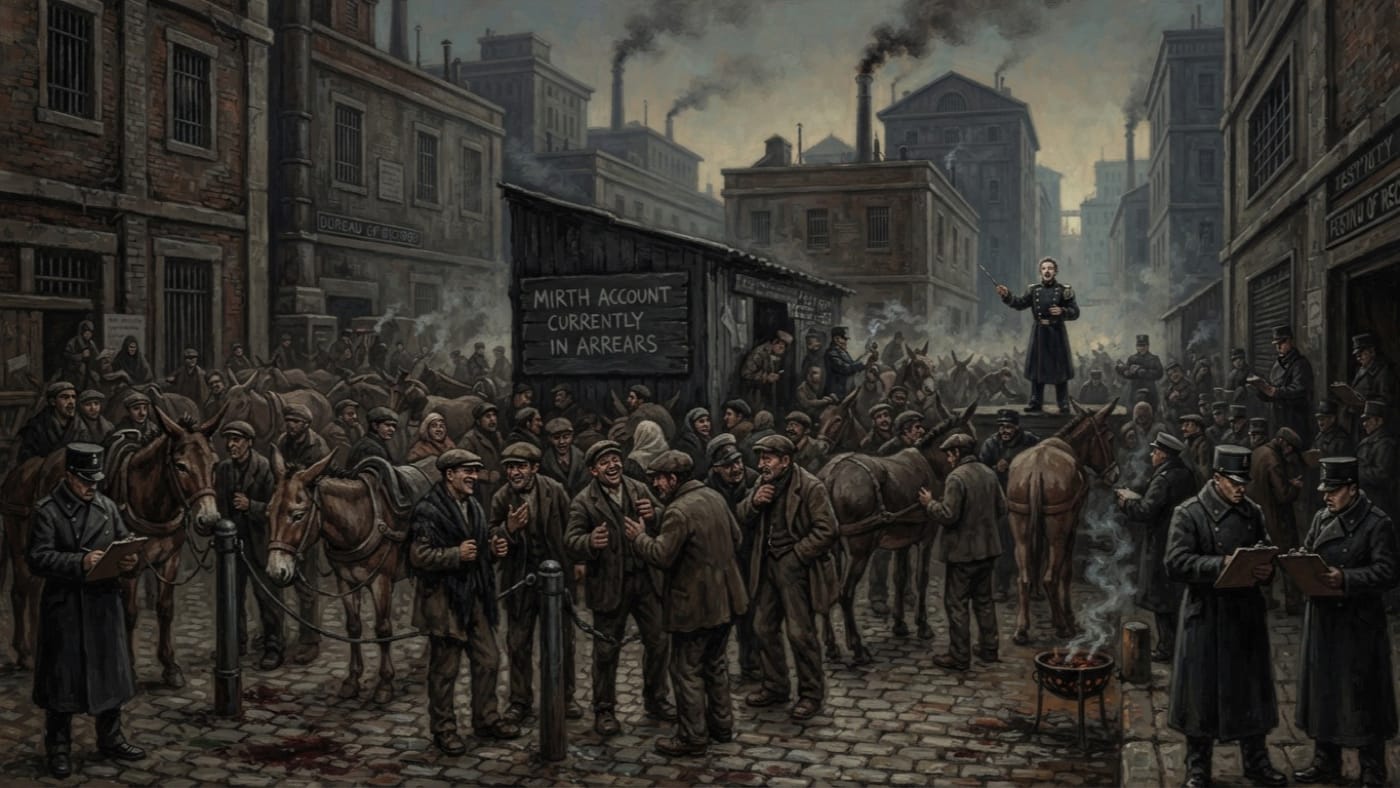
Mule Market
Laughter entered, hoof percussion counted, animal complicity unresolved
Seville's Mule Market entered the List of Laughters during the A.S. 153 Laugh Riots for laughter accompanied by hoof percussion. The clerk recorded the rhythm; animal complicity remains unresolved.
Codex Ref. II.1.04-153
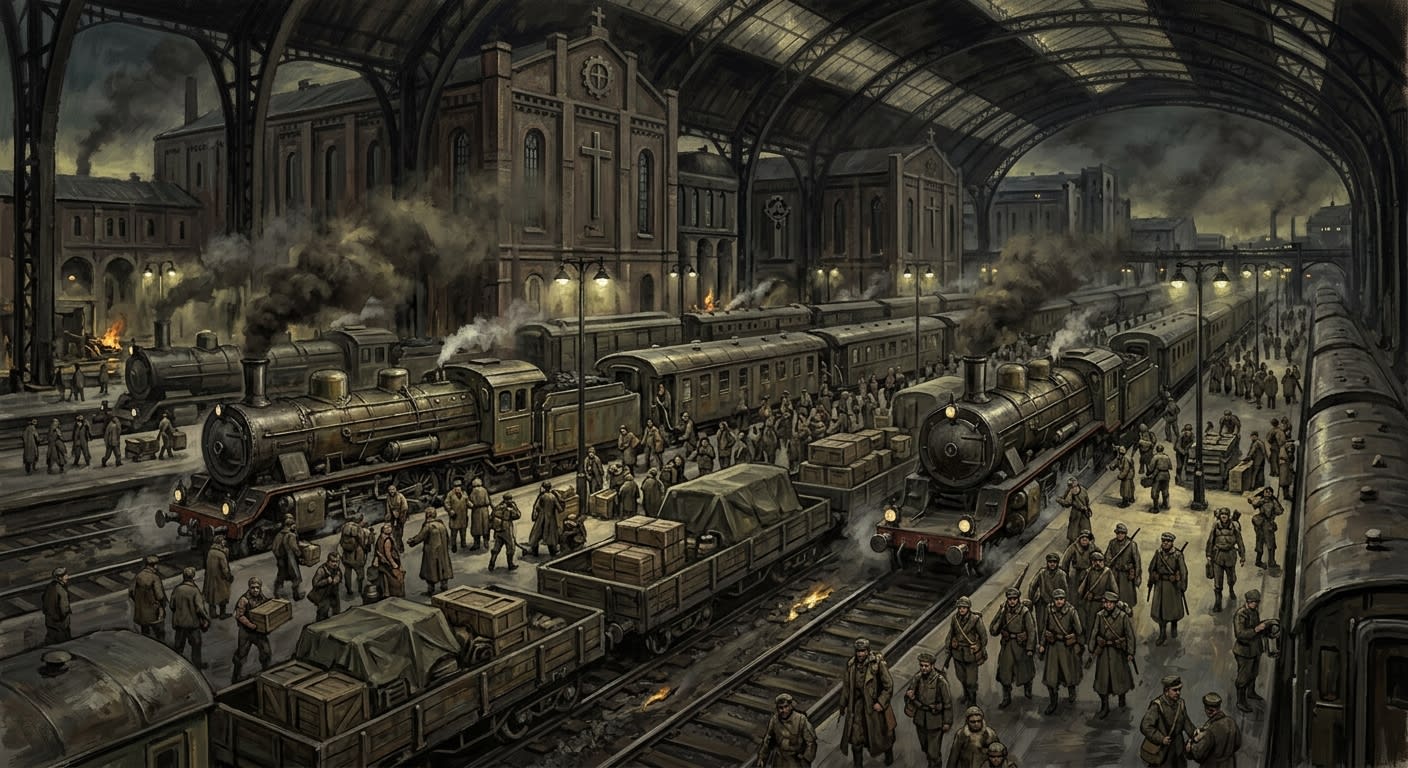
Münchner Kreuzbahnhof
Munich's iron jaw, chewing the west into eastbound obedience
Munich's Cross-Station is the Synod's second-largest rail complex: fourteen public platforms, sixty trains daily, ninety in surge, and eleven thousand workers feeding the eastern war.
Codex Ref. II.4.09-012
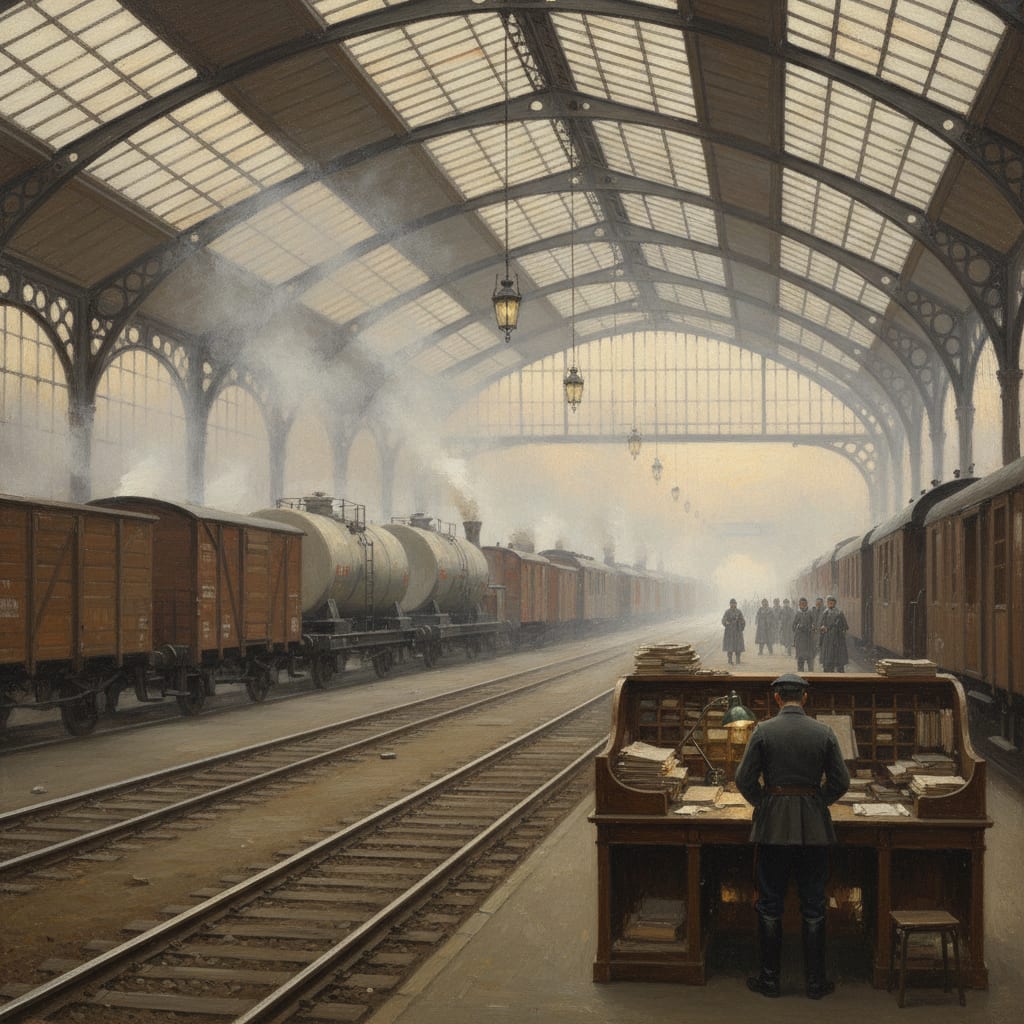
Munich
The last comfortable city; or, where the war becomes a number before it becomes a wound
The Synod's central logistics hub and the last city where the war is an abstraction. Seven hundred thousand souls administer the machinery of a conflict they will not fight. Munich pays its tithes, fills its quotas, and resents everything.
Codex Ref. II.4.09-008
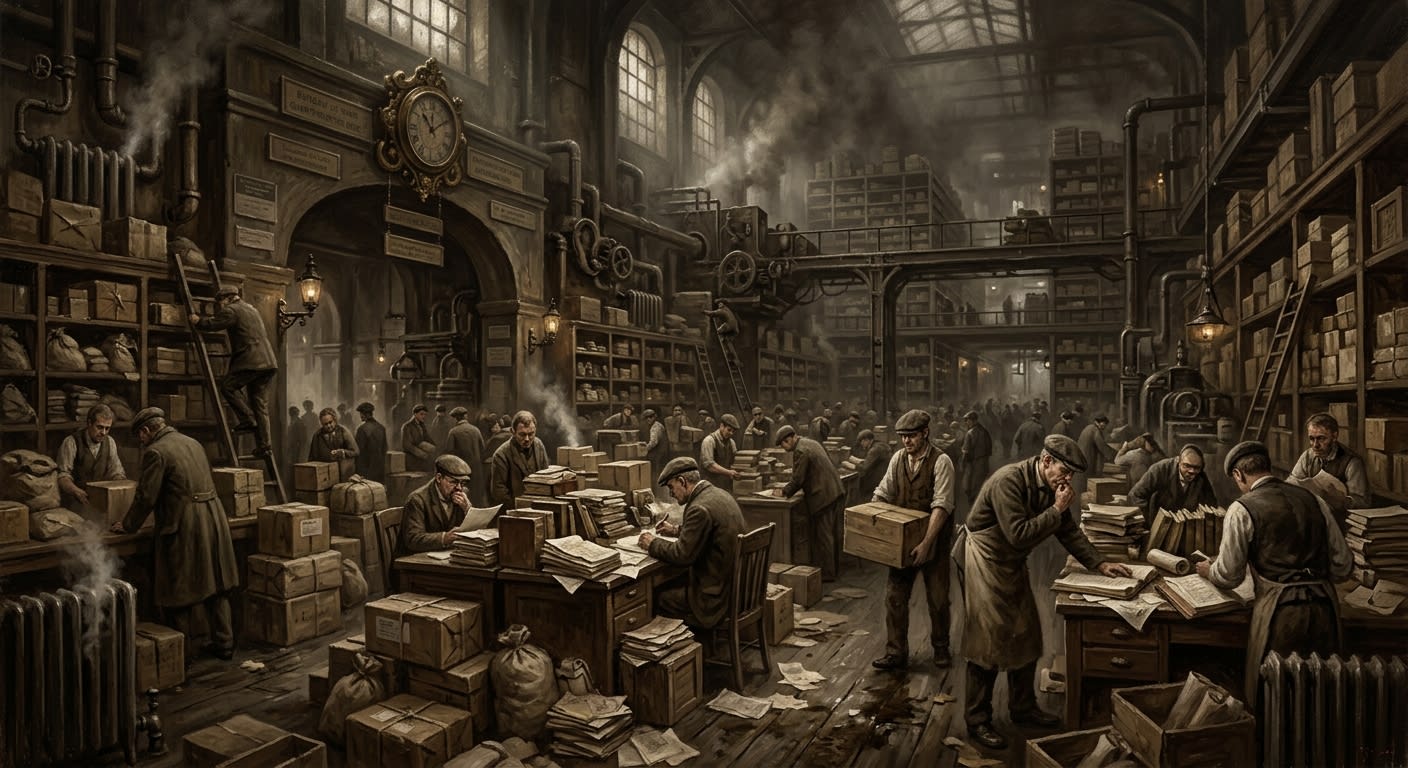
Munich Provisorium
The temporary warehouse complex that learned to digest a city
The Provisorium is Munich's vast Bureau of War quartermaster depot: 412 storage facilities, 14,000 tons a week, three incompatible inventories, and lungs the paperwork declines to notice.
Codex Ref. II.2.01-013
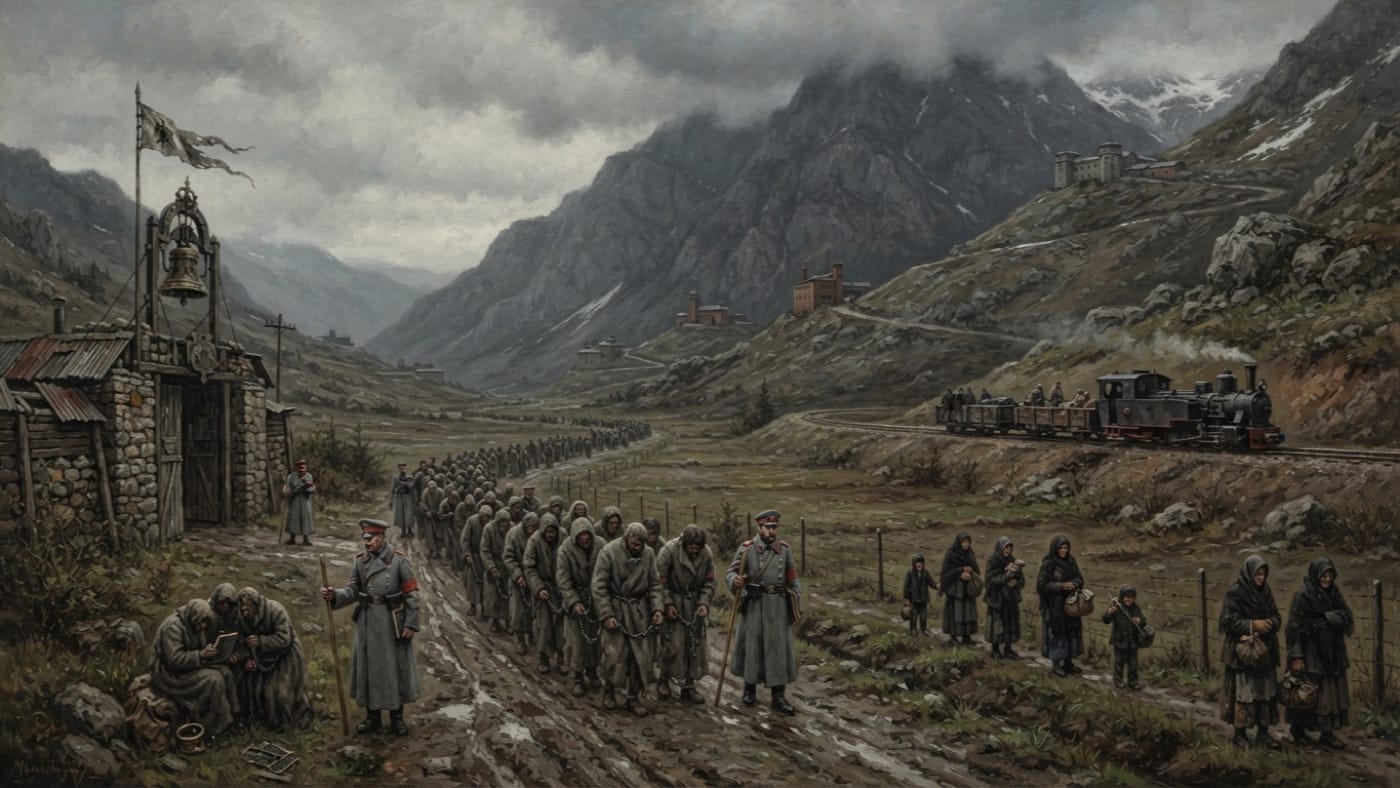
Munich–Sibiu Jubilee Road
Every mile brings mercy closer to the clerk
The Jubilee road from Munich to Bastion-Sibiu, where water, rest and swollen wrists pass through the ledger. Site of the A.S. 136 Road-Mercy Scandal; still in service in A.S. 201.
Codex Ref. II.4.09-136
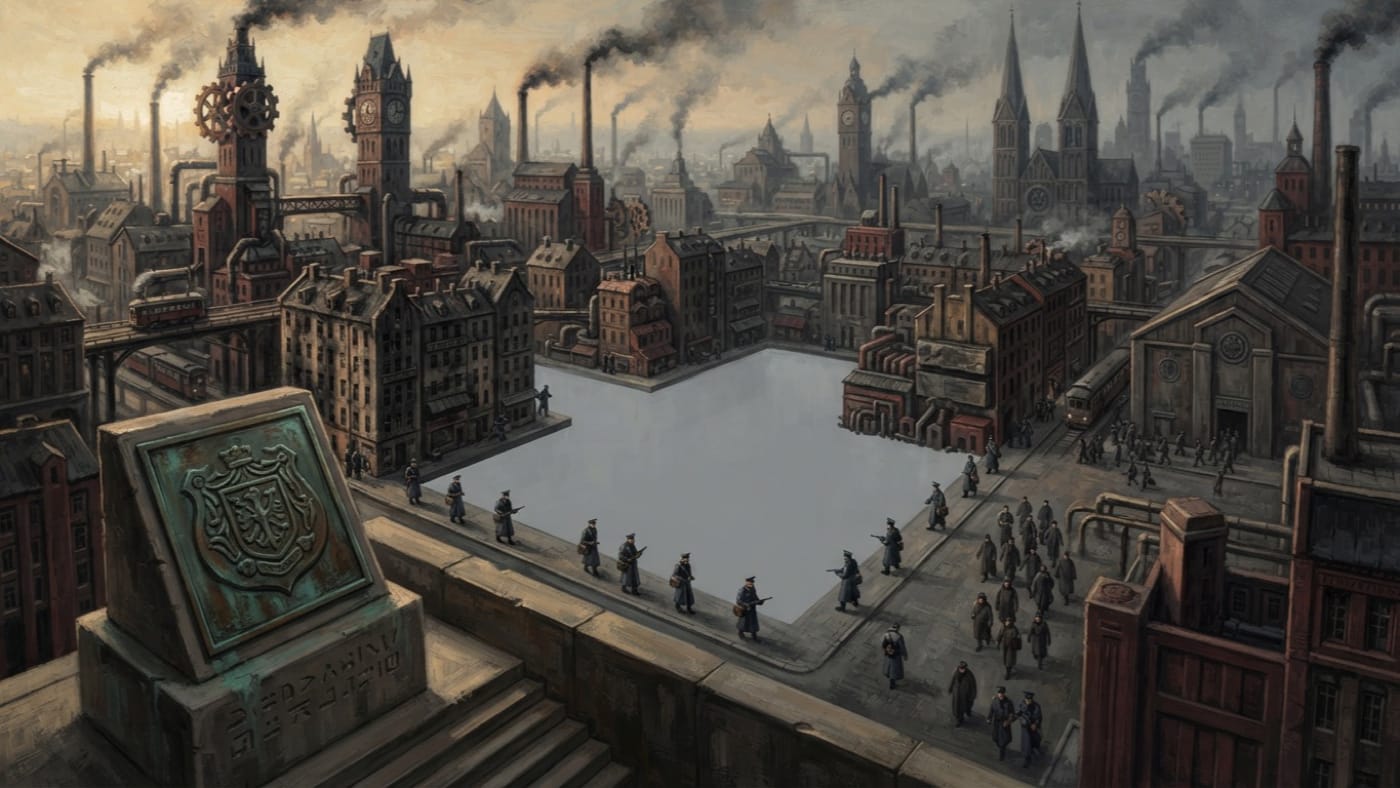
Münster
One Compact, One Refusal, One Blank
Münster is remembered for its A.S. 105 guild compact and the reported erasure of a district. The register supplies 999 signatures; I cannot supply the missing names.
Codex Ref. III.2.04-1897
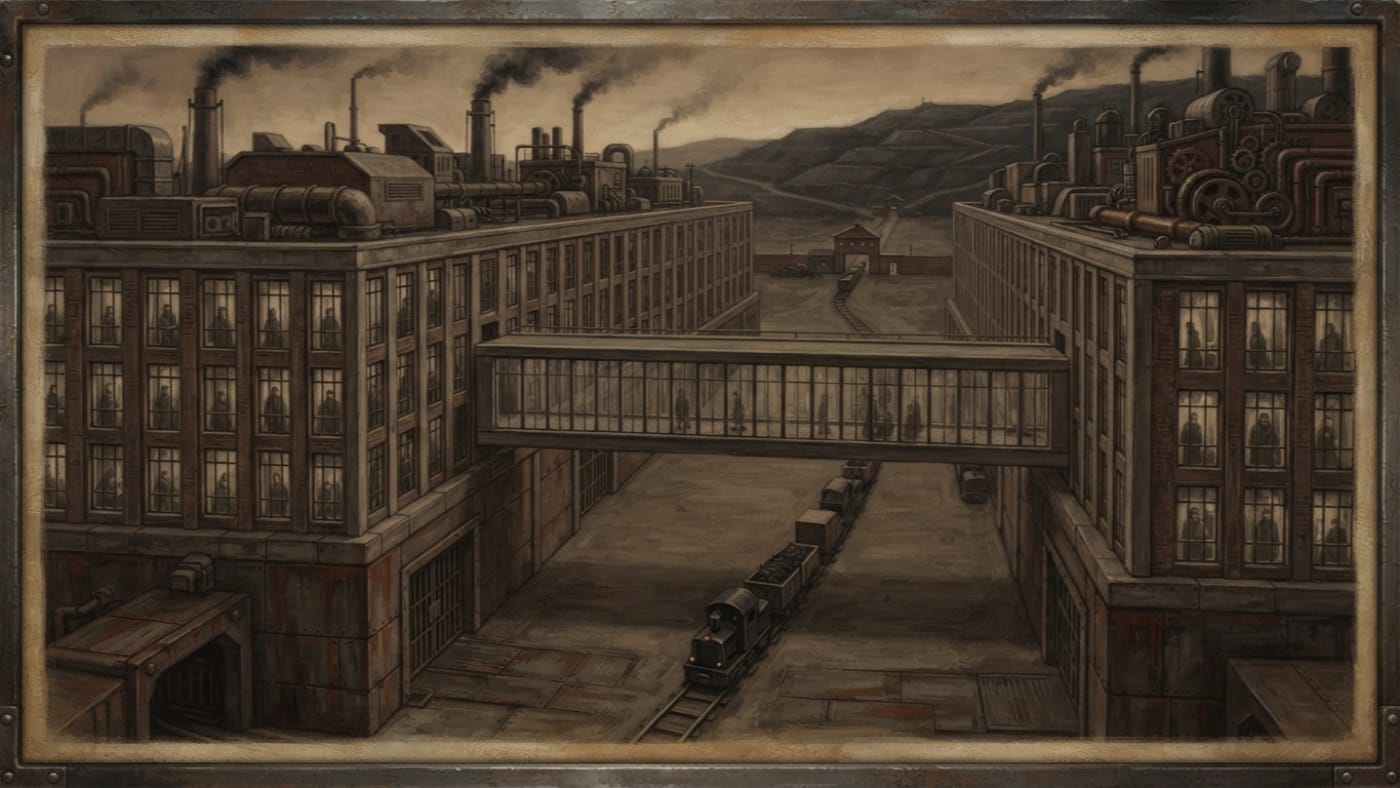
Nameless Hostels
Where a family keeps its name until the Mines require a number
Ulm's Nameless Hostels lodge relatives awaiting derivative disposition along the Mine Road. Windows face inward, curtains are forbidden, and names remain until the Mines' intake table requires numbers.
Codex Ref. II.2.06-004
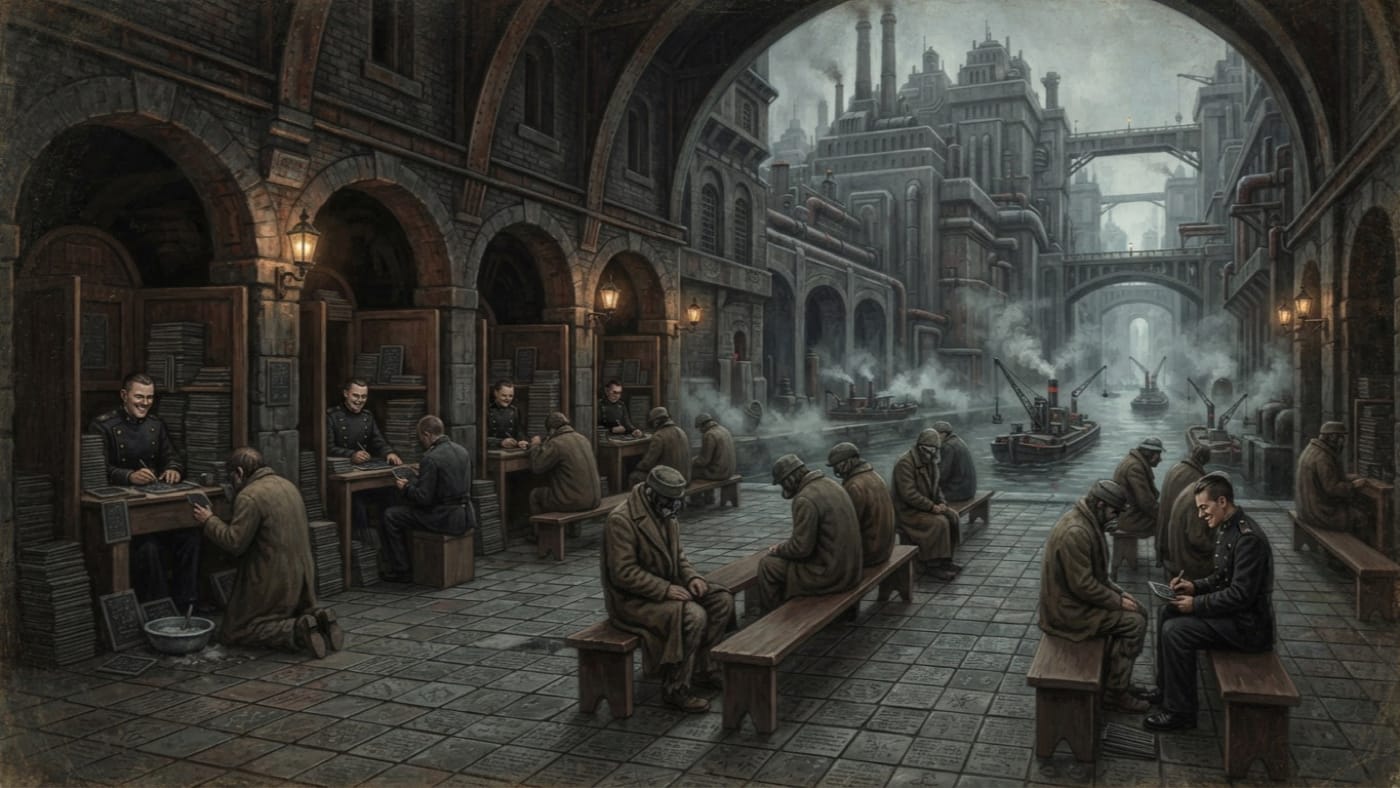
Namewash Cloisters
A clean name costs money; the confession stays in slate
The Causeyworks washes doubtful names with lye and ash, then keeps the confessions in slate. Recognition costs another visit; the old identity remains in stone.
Codex Ref. II.1.02-006
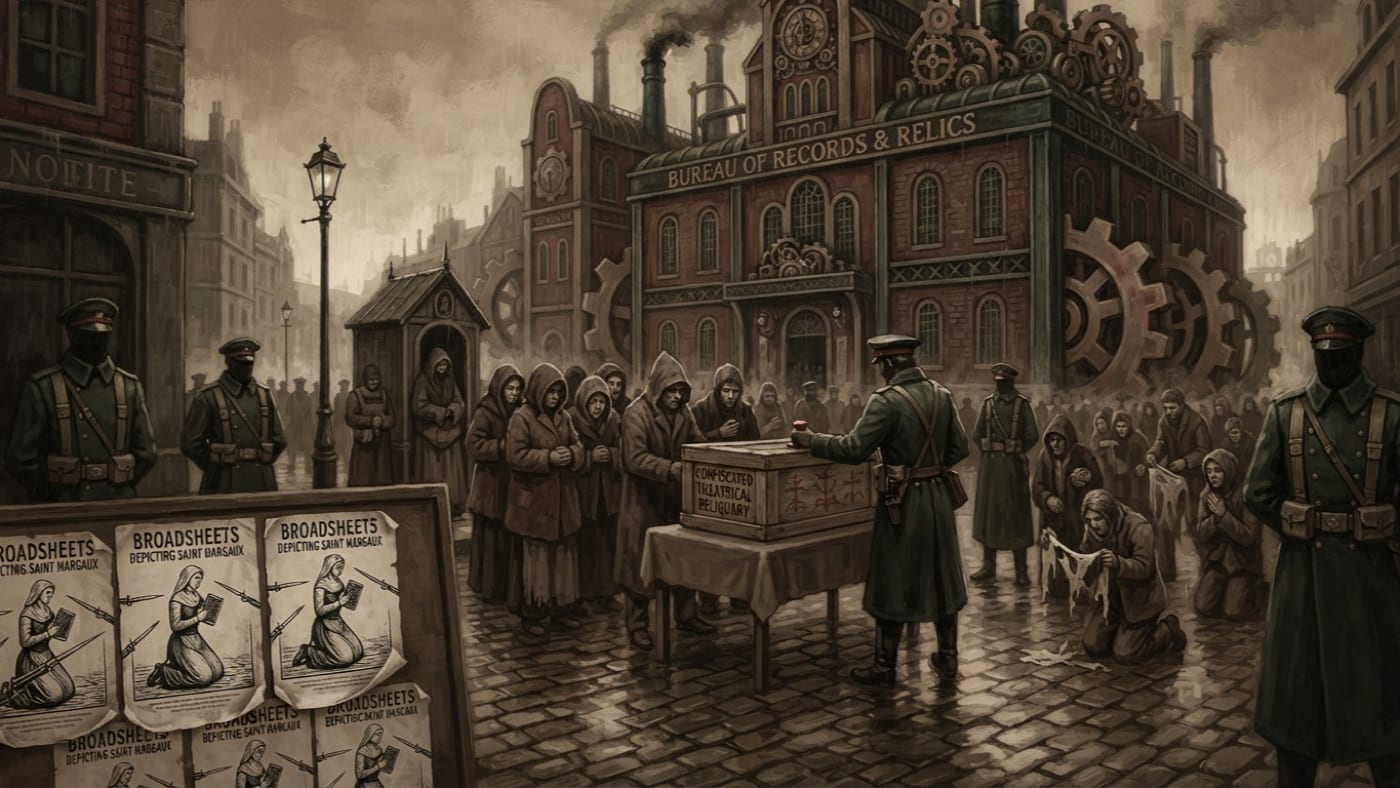
Nantes
Paper arrived; a box was seized
Margaux's broadsheets reached Nantes; a theatrical reliquary there was confiscated after accepting offerings. Paper arrived, a box was seized, and the Bureau considers this sufficient civic history.
Codex Ref. II.3.05-010
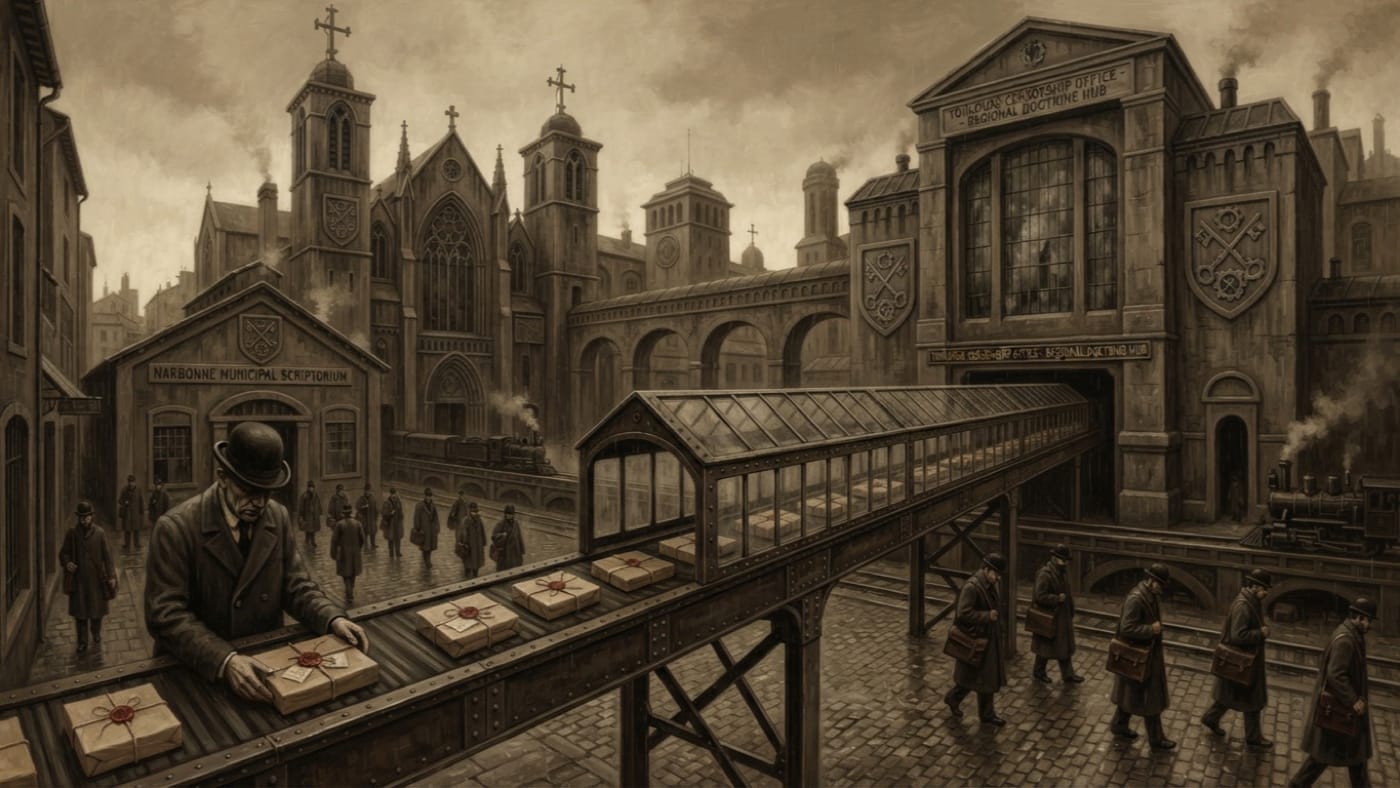
Narbonne
Named at Carcassonne, read at Toulouse
Narbonne entered the Toulouse file by confession in A.S. 93. In A.S. 201 its school primers travel there by routine post. Obedience has learned to wrap its own parcels.
Codex Ref. II.1.09-093
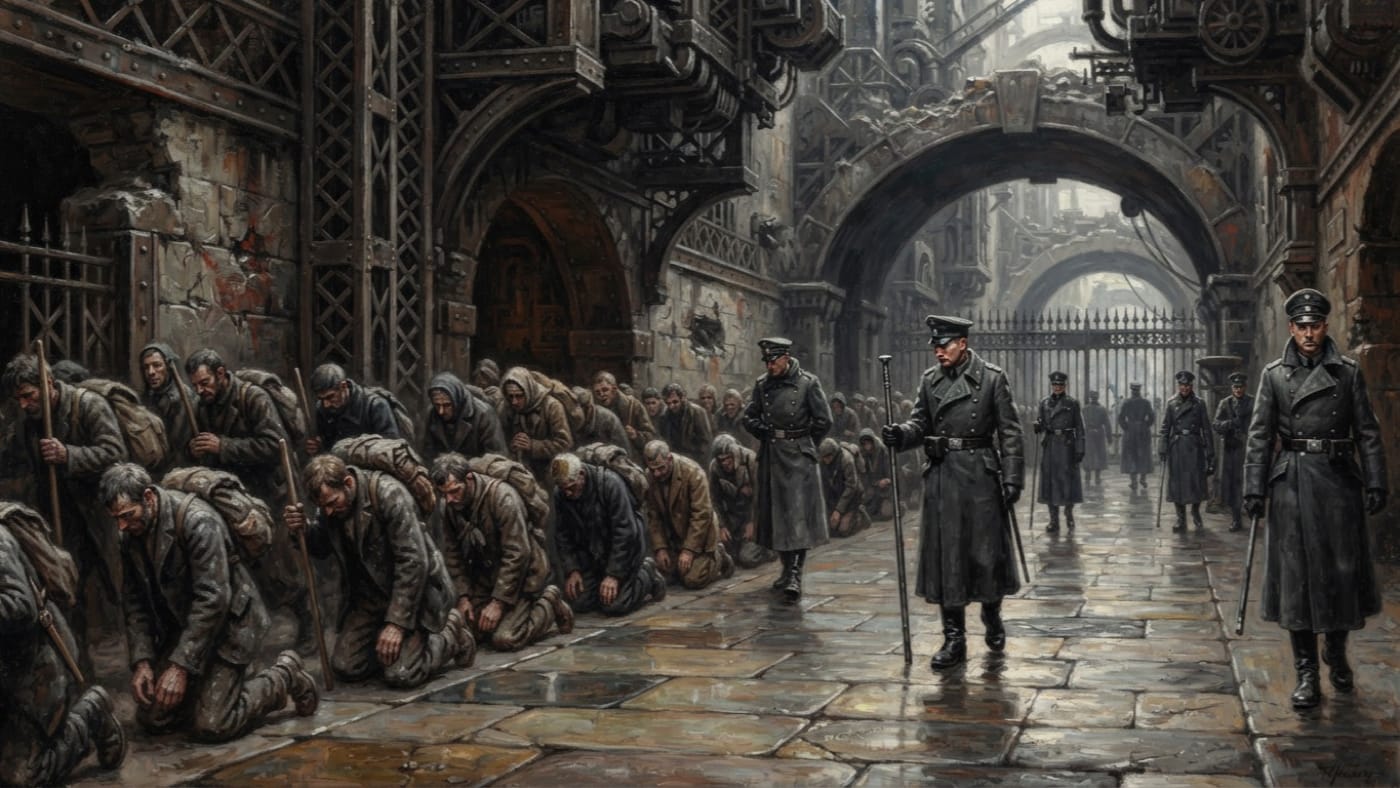
Nave Approach
The road the pilgrims finished with their knees
The Nave Approach is the smooth stretch of Vienna's Via Stahlhand between Ash Bend and the Hammer Line, polished by generations of kneeling pilgrims. The knees did the work; upright guides enjoy the result.
Codex Ref. II.4.09-013
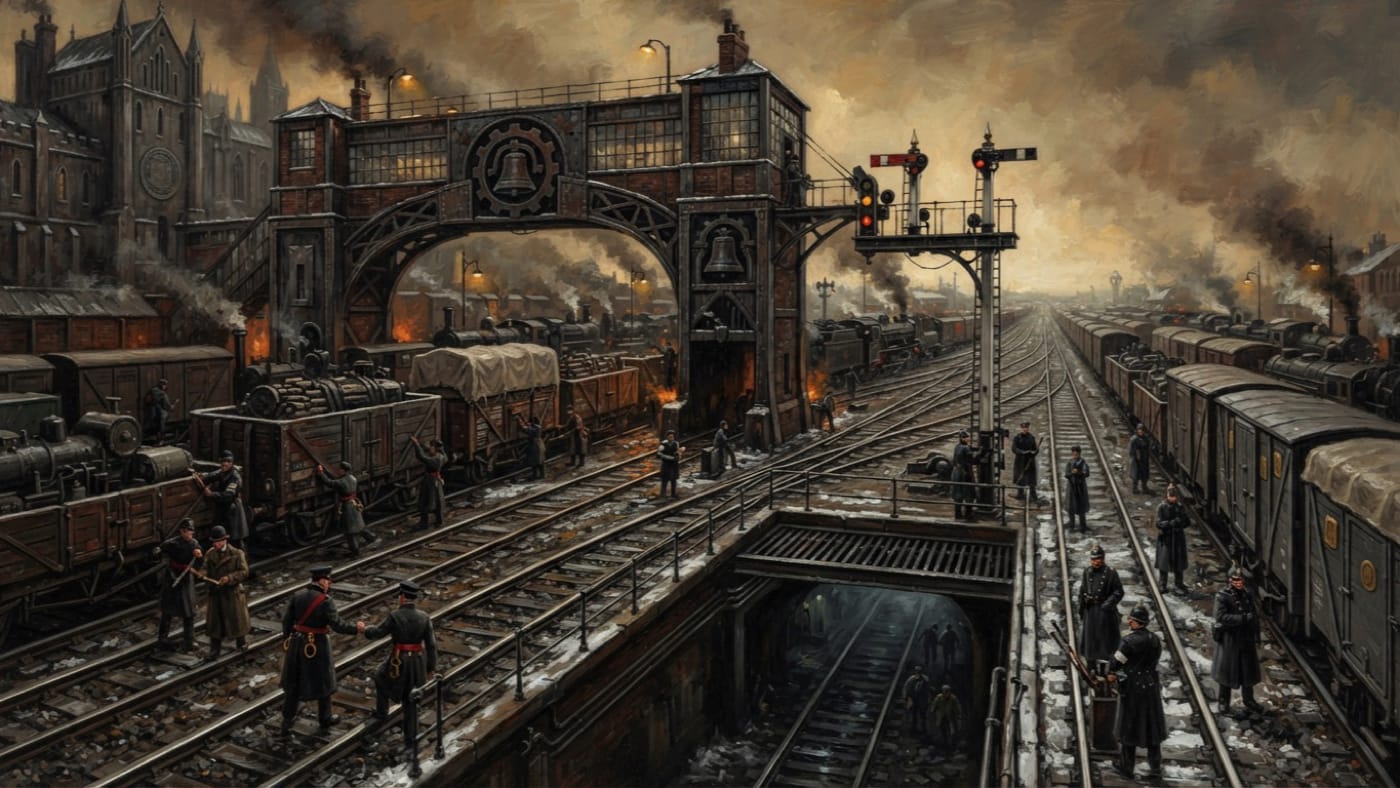
Needle
One track, one gate, and a price for every minute
The Needle holds Lorn's eastbound freight to one inspected track; priority windows buy release, while sealed Payroll Spur crates leave the gate with innocence on paper.
Codex Ref. II.3.01-201
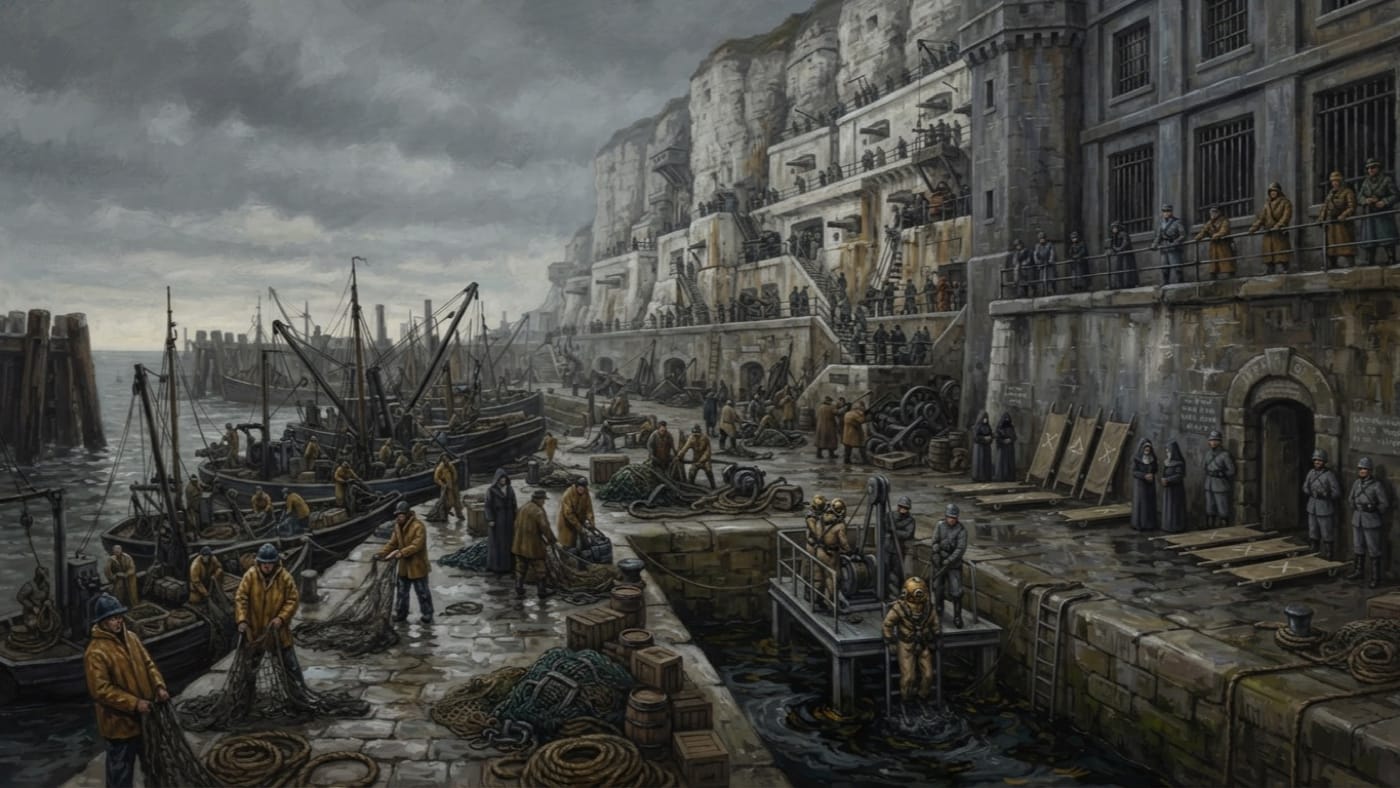
Net Quay
Where Calais feeds its guns and sorts what the sea returns
Net Quay is Calais's working waterfront: fishing boats, salvage auctions, diver launches, and stretchers waiting beneath the Tribunal's windows.
Codex Ref. II.4.09-201
Nîmes
A city given a column before a case
Nîmes entered Purity's A.S. 93 Toulouse dossier because Carcassonne named it under interrogation. The city received a column; this file establishes no local offence.
Codex Ref. II.1.09-009
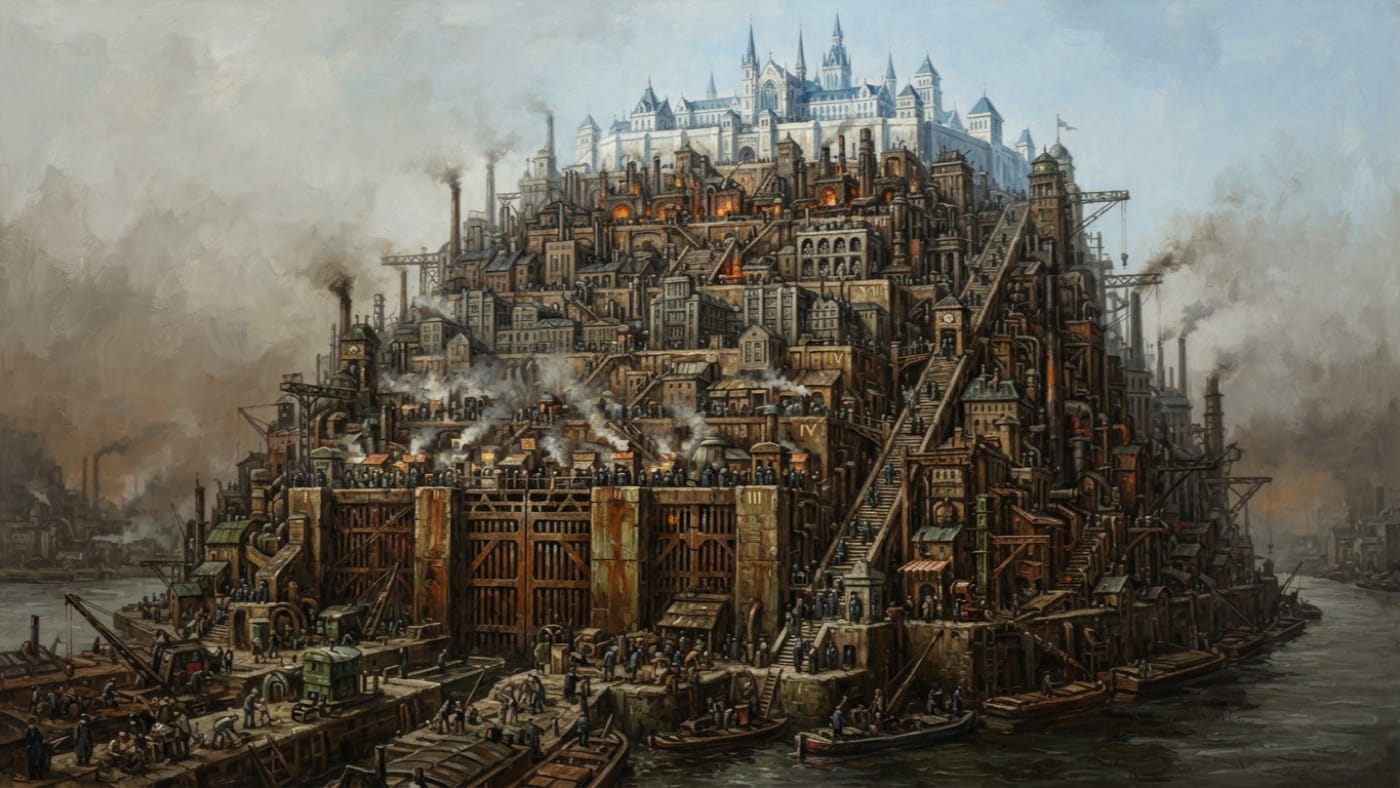
Nine Steps
From river silt to clean air, every crossing requires coin, verse and stamp
Rheinscarp's nine terraced districts rise from the Sump Docks to the High Step Precinct. Every crossing requires coin, verse and stamp; the air improves upward, and so does the spelling.
Codex Ref. II.2.01-011
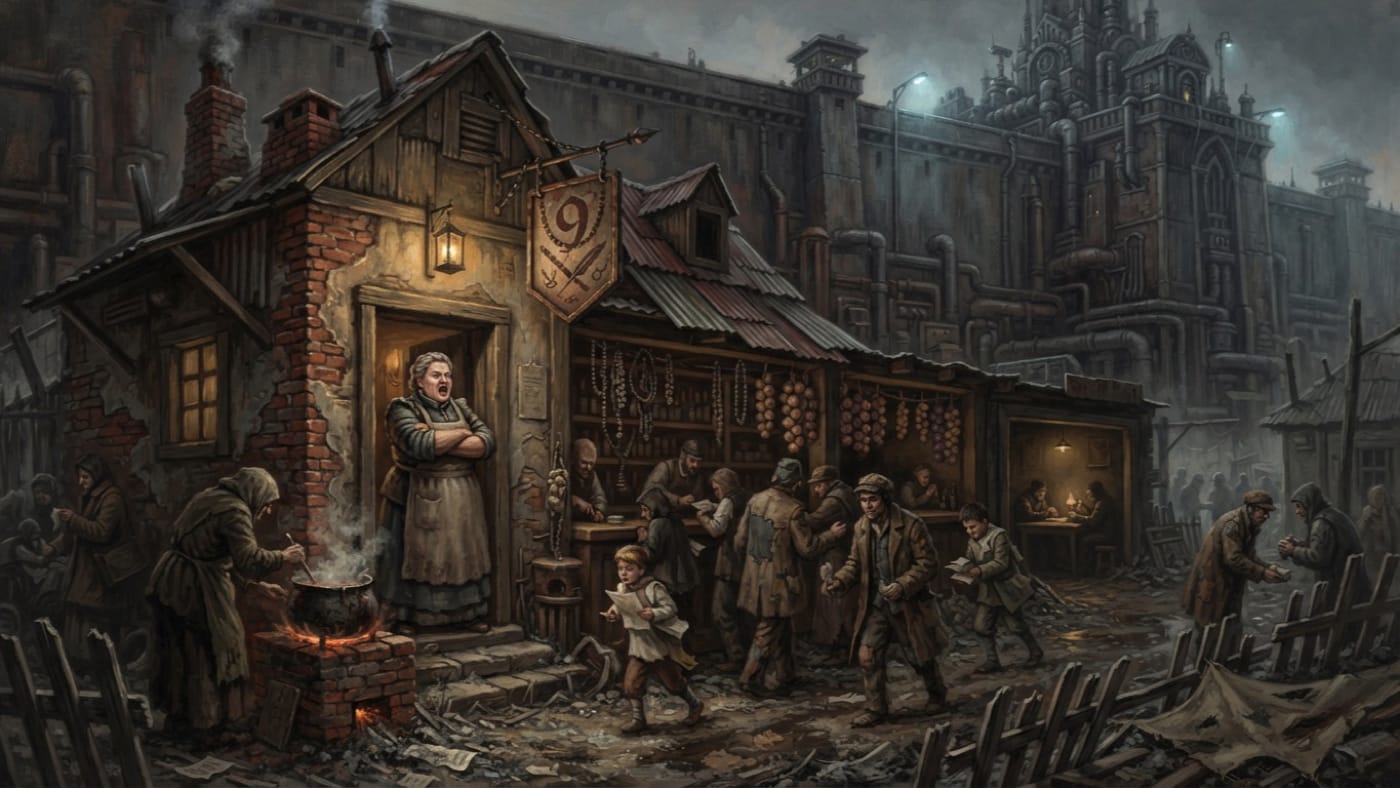
Ninth Count
Sour beer, borrowed names, and a back room the watch prefers intact
The Ninth Count sells sour beer and beds beyond Strasbourg's Cloister wall. Behind its onion pantry, brokers price counterfeit strings and borrowed pasts; I have ordered continued observation.
Codex Ref. II.3.06-008
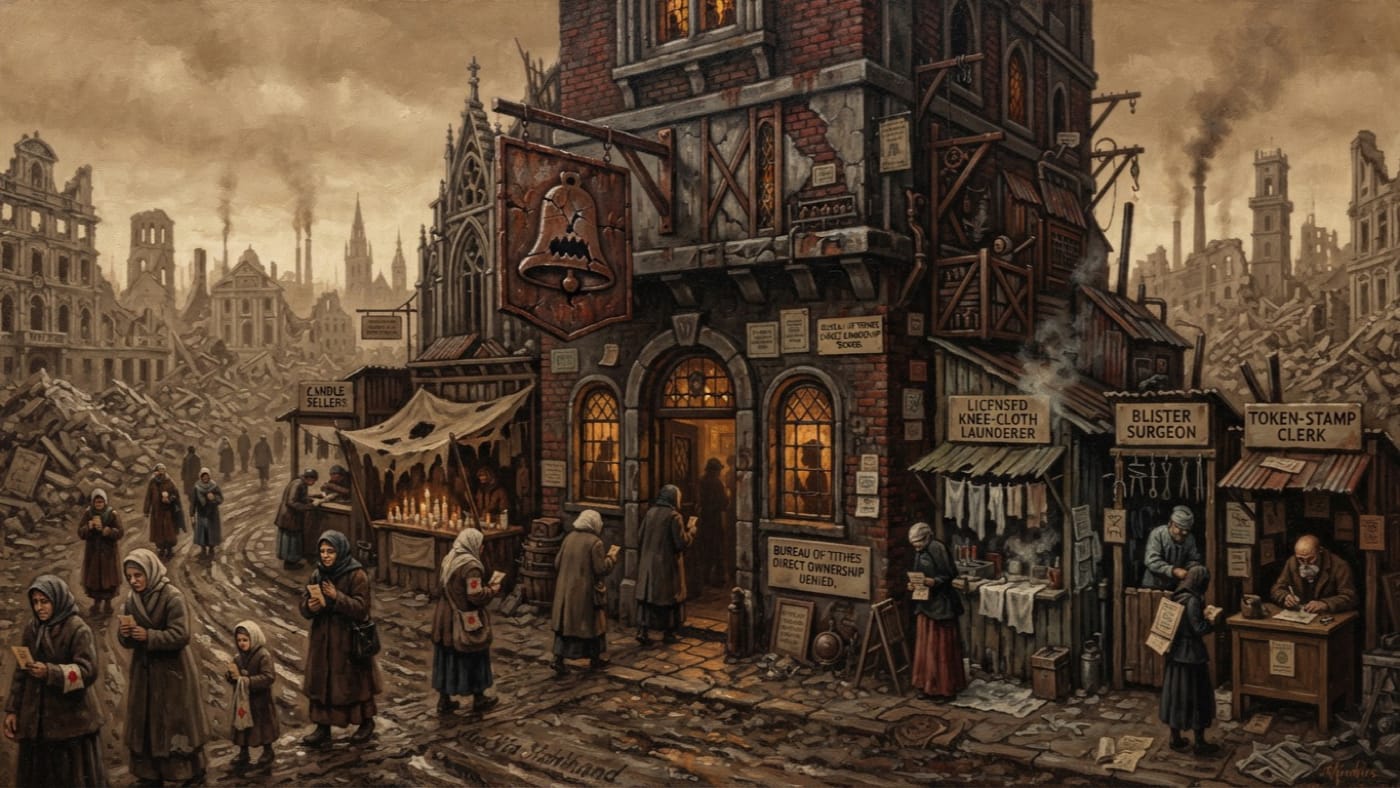
Ninth Second
Where penance becomes profit and ownership acquires an adjective
An A.S. 201 survey of The Ninth Second, Vienna's most profitable pilgrimage tavern, whose cracked-jaw bell sign is plain and whose ownership denial deserves slower reading.
Codex Ref. II.4.09-012
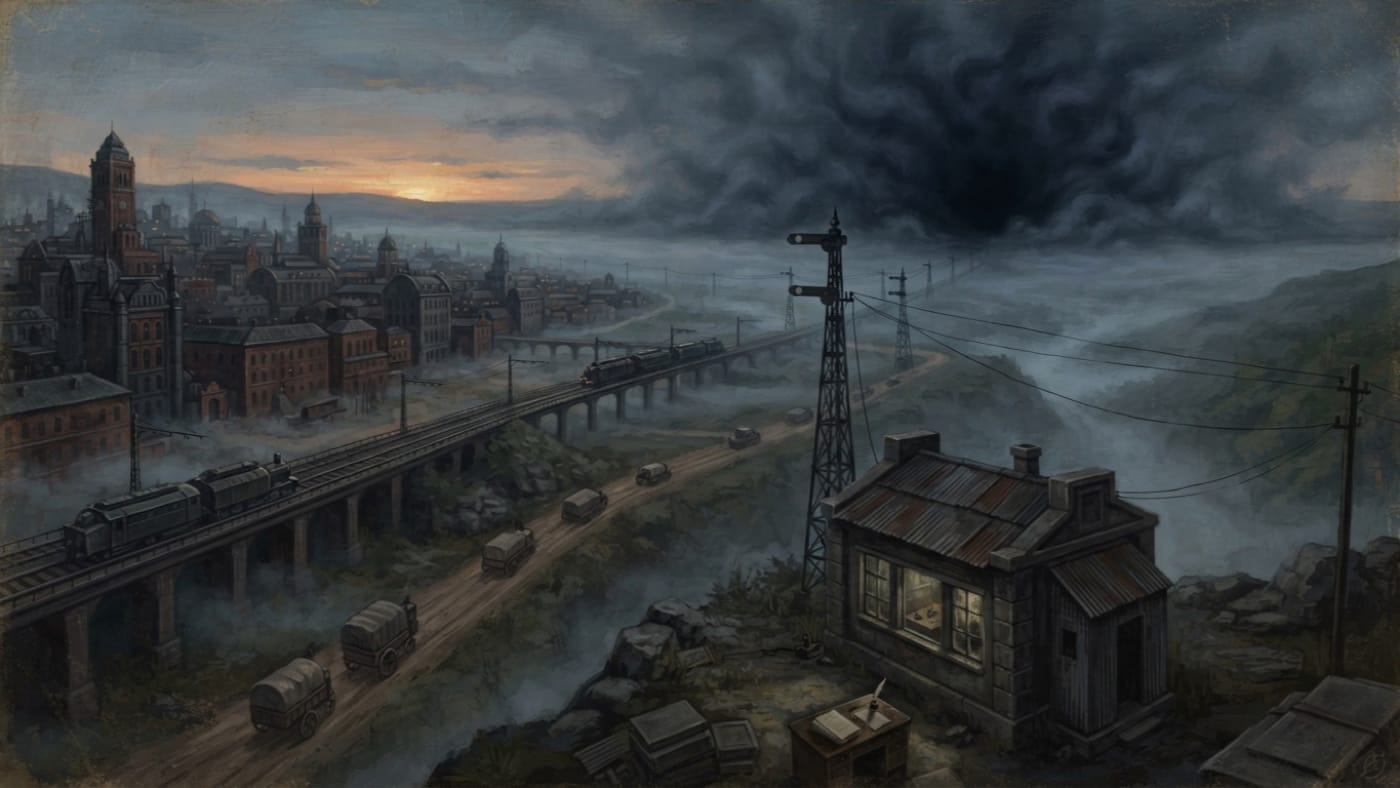
Niš
A missing grain return and a column no conjecture can close
In A.S. 38 a parish in Niš failed to send its grain report. The Eastern Silence gave that empty column a place in the Codex; it supplied no explanation.
Codex Ref. II.5.09-038
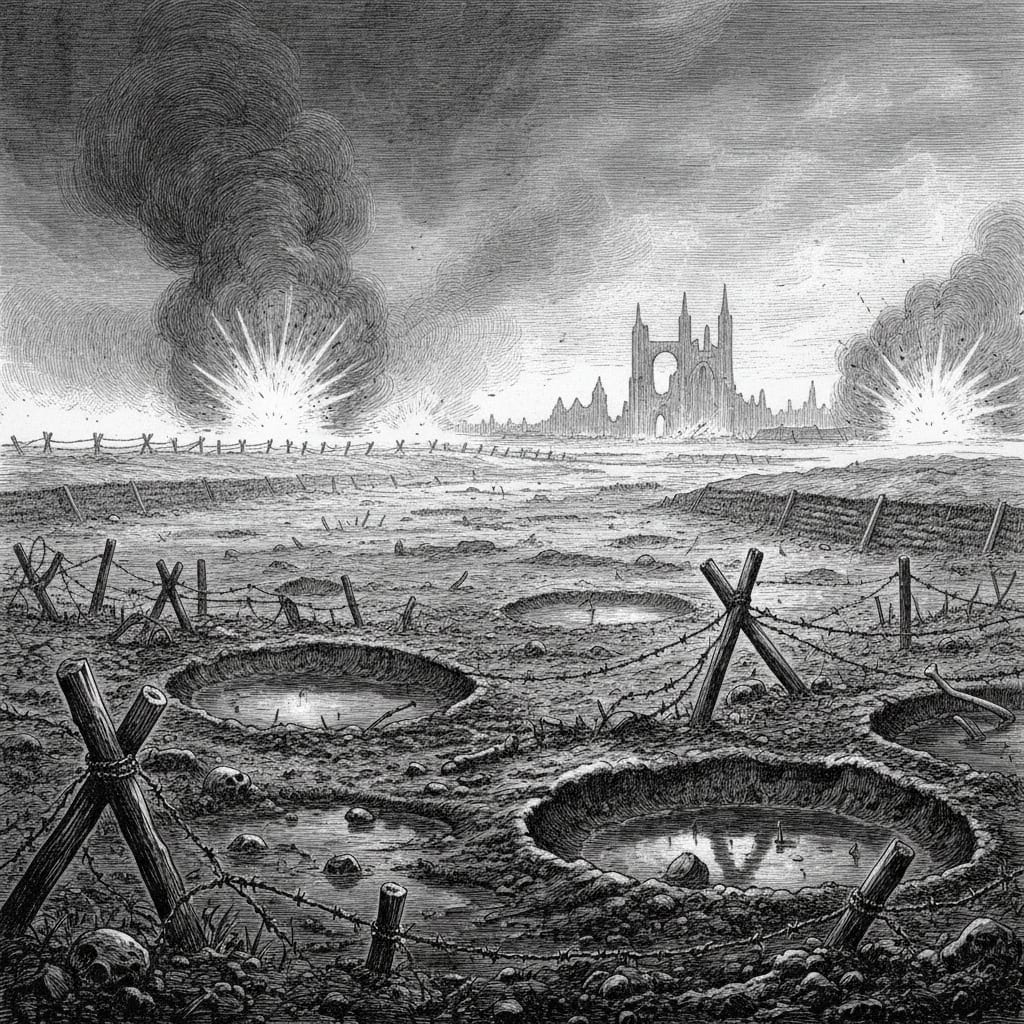
No Man's Land
The Wound That Will Not Heal
The continent-length scar between the bastions and the Great Deceiver's domains, where mud remembers, fog sings, and the dead outnumber the living by a margin the Bureau declines to publish.
Codex Ref. V.1.02-031
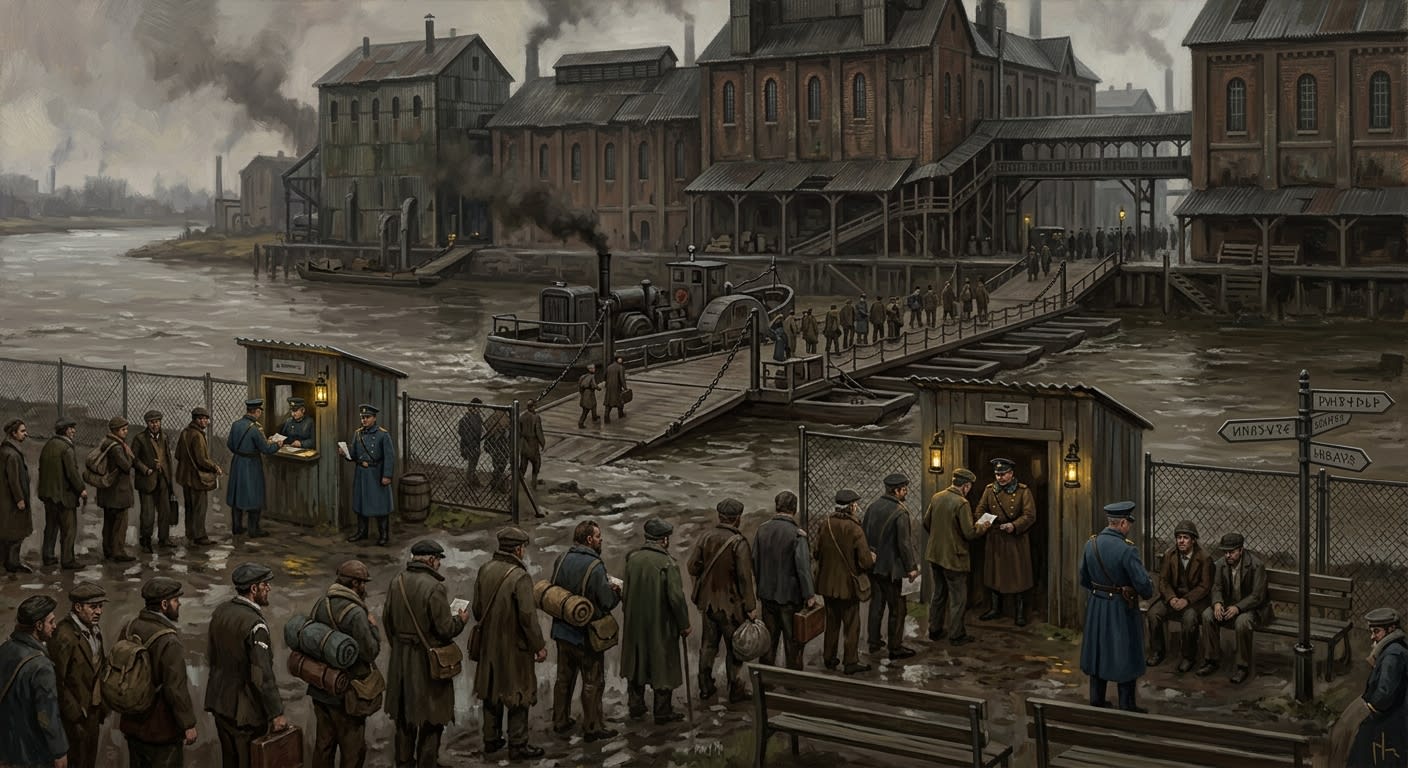
Nominalist's Gate
Miss one consonant and become doctrine
Nominalist's Gate is a Zone 2–3 river crossing where ferry law, password doctrine, mud courts, and Records exactitude turn travellers into cases.
Codex Ref. II.3.05-002
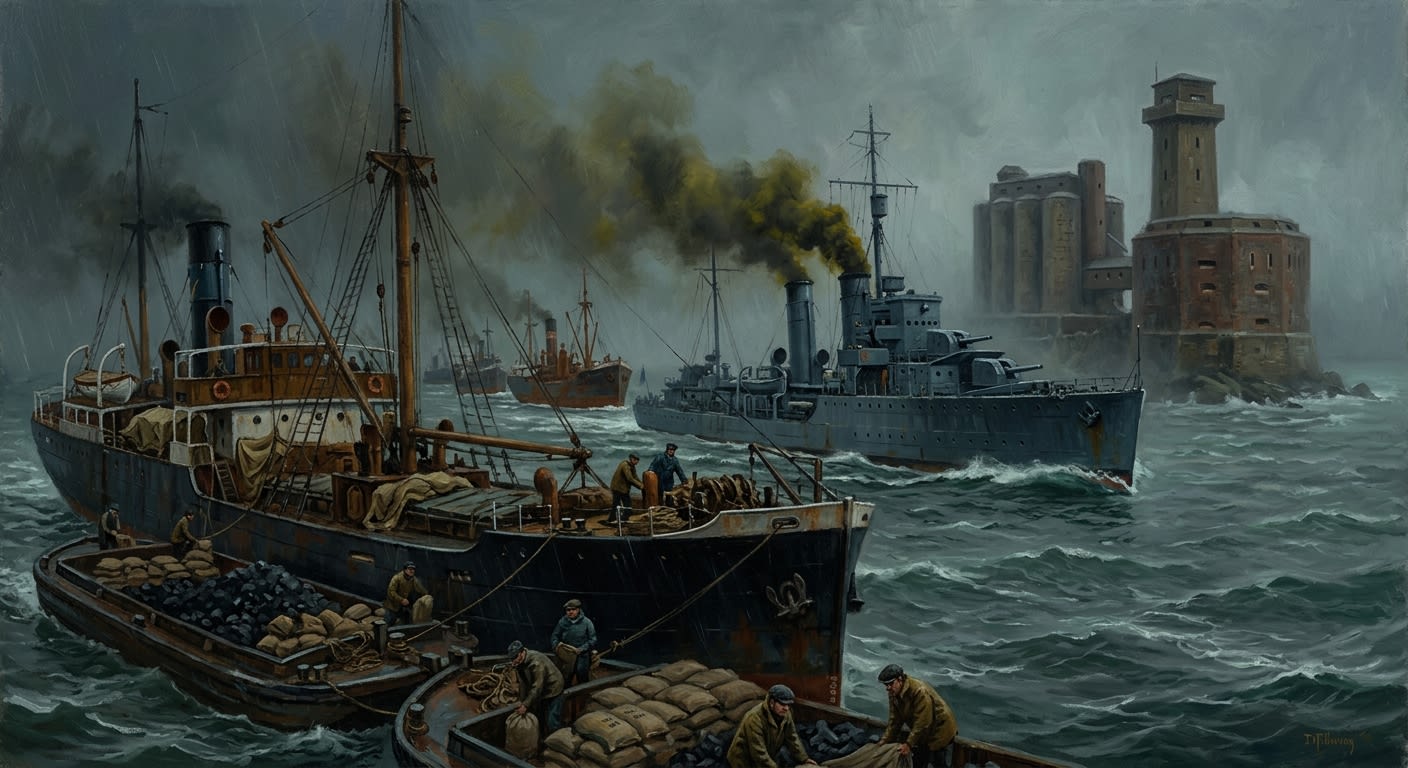
North Sea
The wet border that feeds the Line and refuses the Ledger
The North Sea is the Synod's least obedient frontier: a maritime supply basin of grain, coal, fish, fog, foreign credit, reluctant allies, and weather that accepts no stamp.
Codex Ref. II.4.09-201
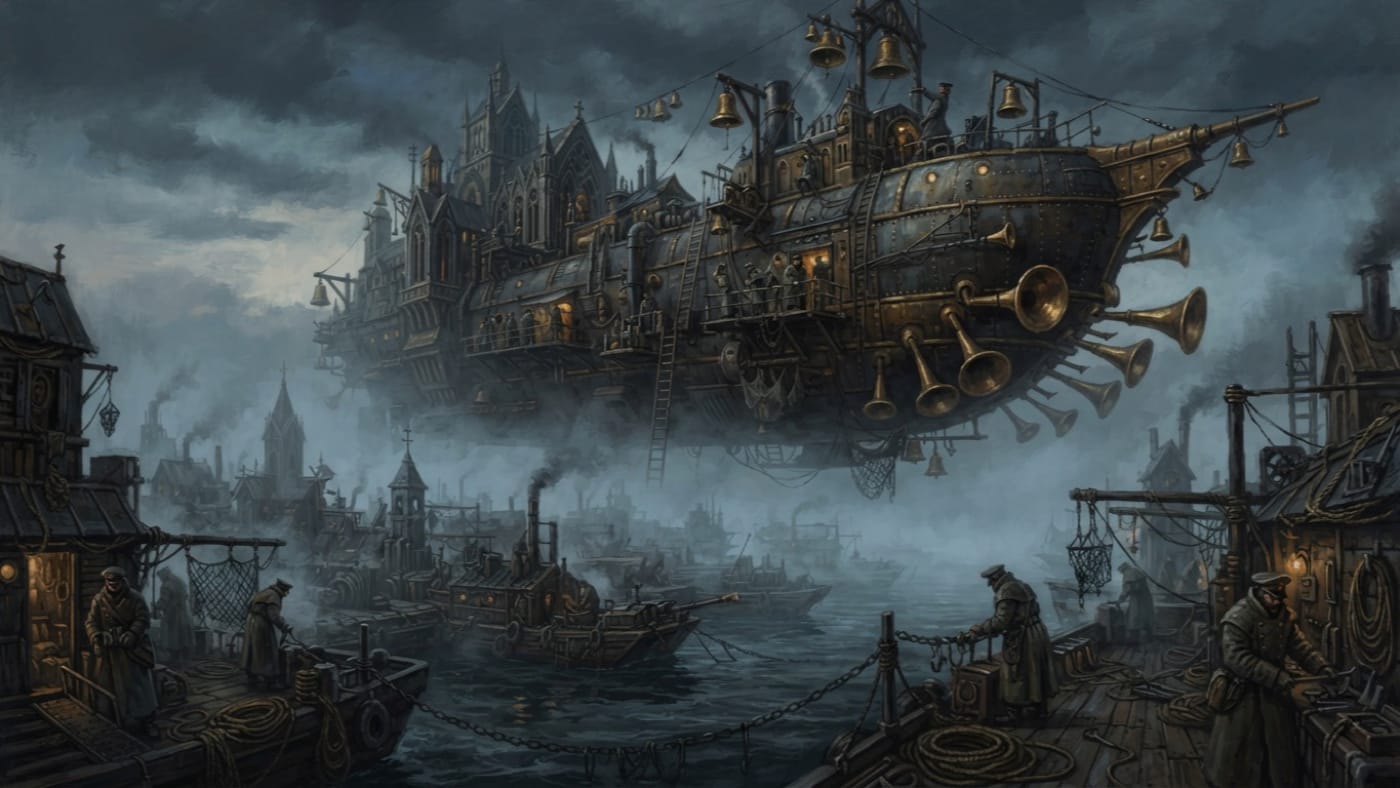
Northern Bellway
A roof of sound above waters that offer no assurances
The Northern Bellway carries Saint Gabriel above the Bosphorus mouth and the Black Sea anchorage. Its sermons reach the Flotilla; the quiet awaits classification.
Codex Ref. II.4.11-002

Northern Corridor
The long throat by which Hamburg becomes Brest's bread and Königsberg's coal
The Northern Corridor is the Synod's long supply throat: Hamburg sea-cargo, Kanzleiburg sequence, Warsaw yards, British grain, Dutch credit, Prussian clocks, and bread for the northern bastions.
Codex Ref. II.4.09-095
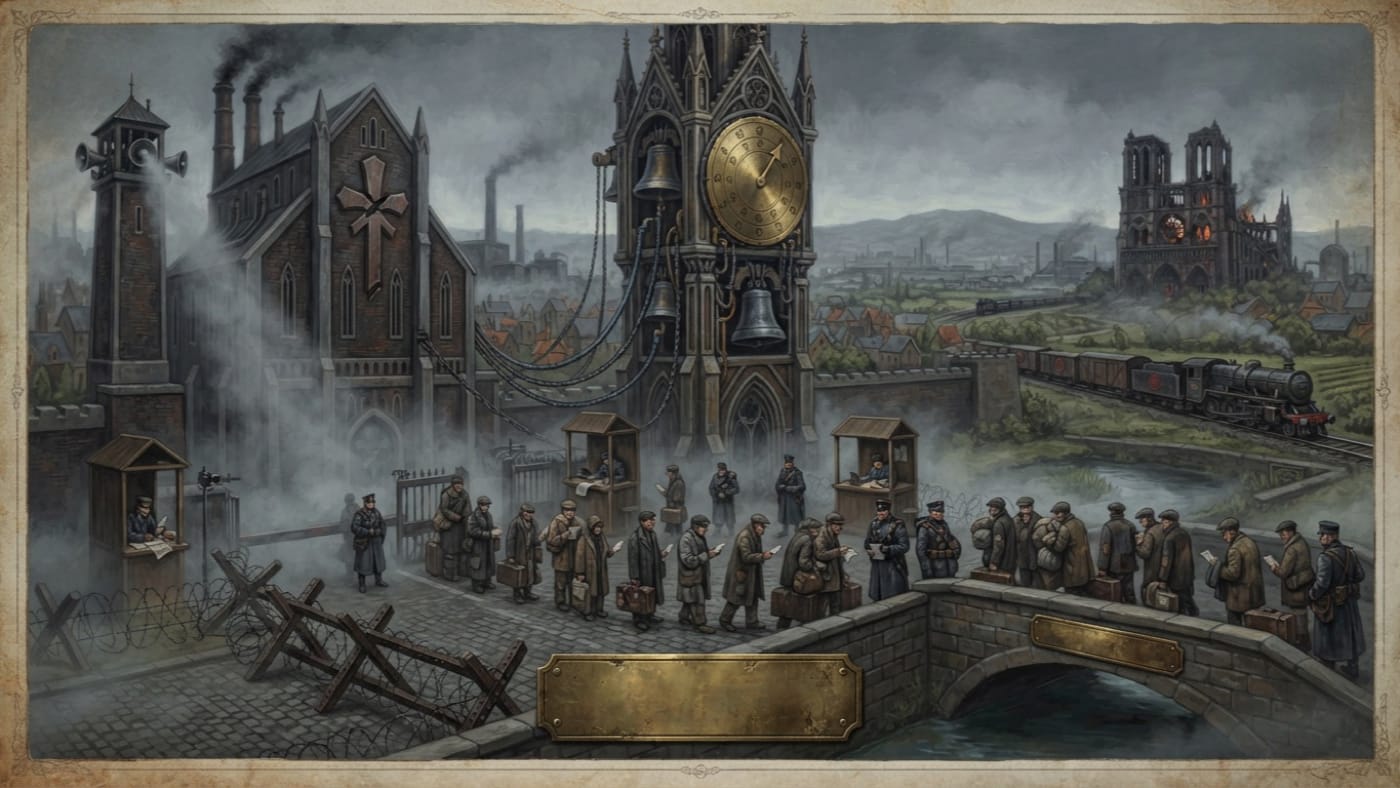
Northern France
Lost through a German gate, recovered parish by parish
Much of northern France fell after Aachen opened in A.S. 25. Recovered parish by parish, the country now pays tithes, carries papers, and calls supervision safety.
Codex Ref. II.1.09-025
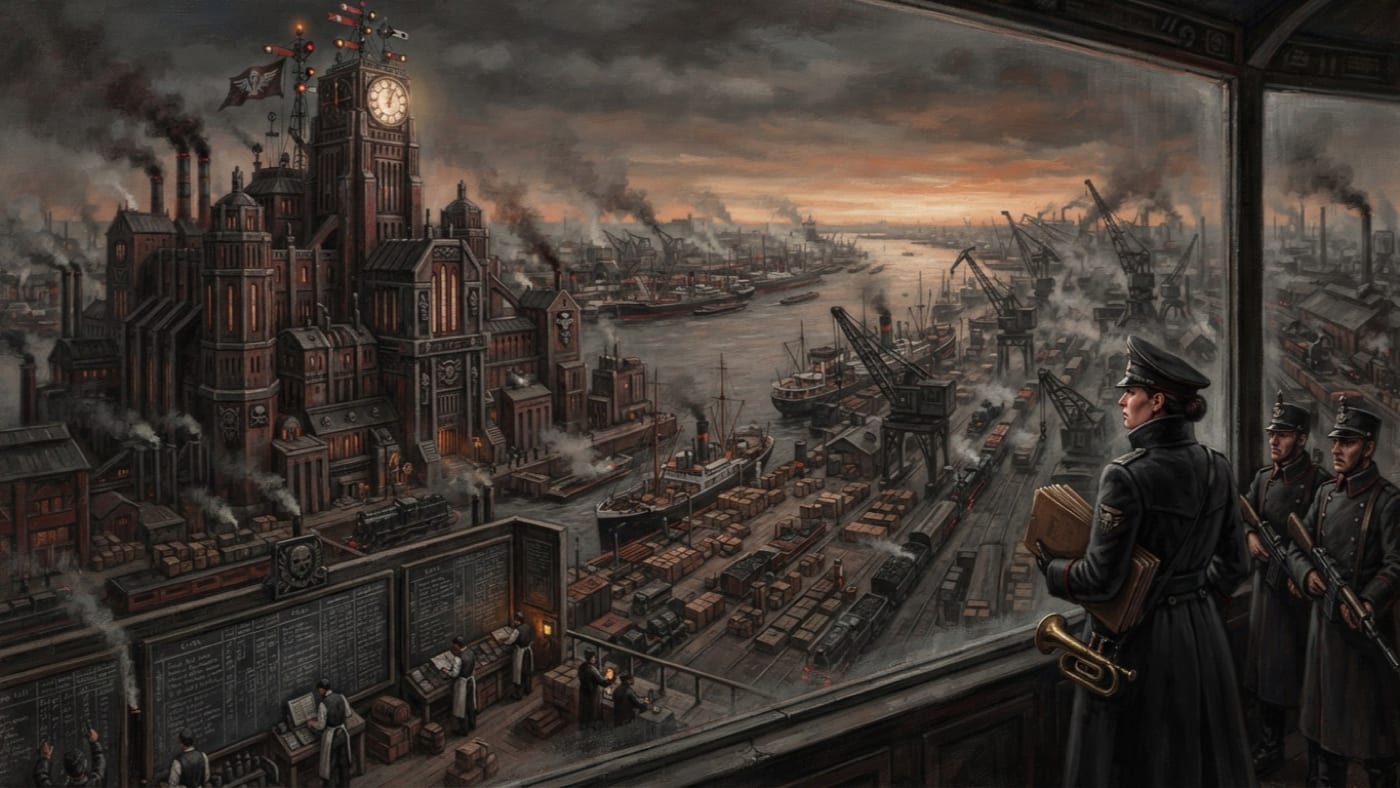
Northern Maritime Chapterhouse
The tide has a schedule; the Synod has objections
Hamburg's senior Synod installation orders berths, war cargo and foreign-factor schedules under Admiral-Prefect Gerta Halske. It can command the harbour boards; it cannot command the ships to come.
Codex Ref. II.4.09-006
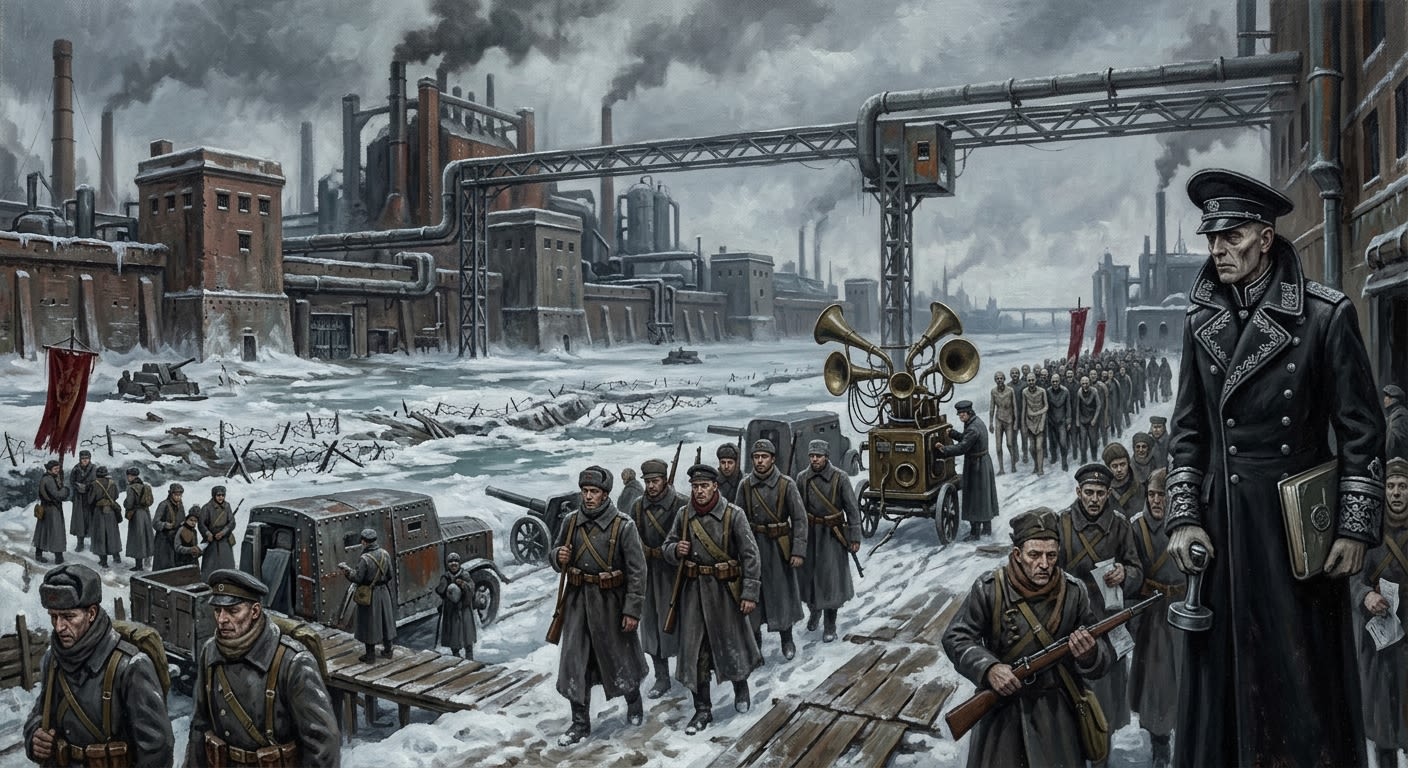
Northern Theater
Where the north remains faithful because terror has not been assigned a better category
The Northern Theater is the Synod's coldest unresolved front: Königsberg, Brest, the Grey, the Nameless Tide, failed hymns, returned faces, echoing confessions, and confidence stamped over fear.
Codex Ref. II.4.10-190
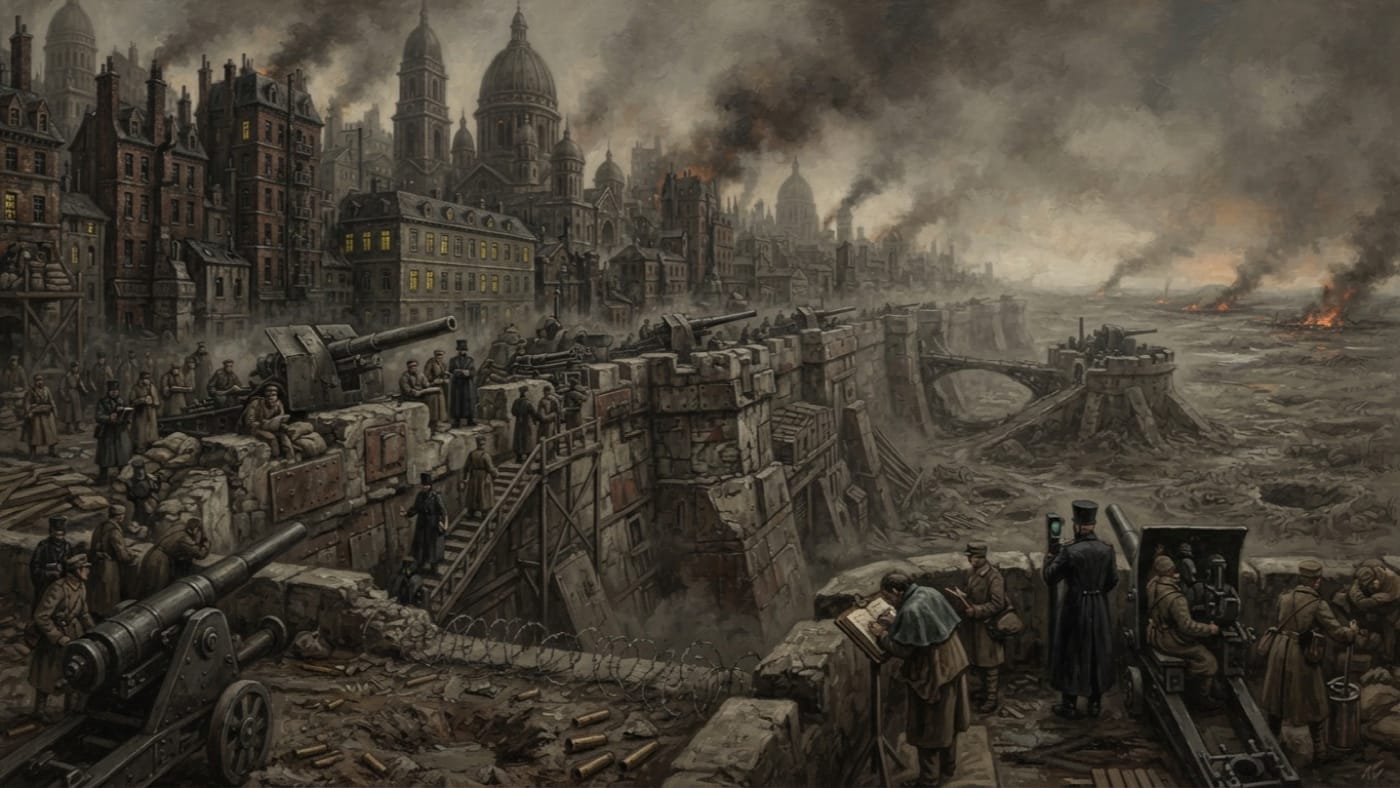
Northern Wall
The guns answer north; the city goes to dinner
The north-facing defenses of Bastion-Constantinople answer Maldrake across the Thracian Plain. Guns, Wardens and repair crews keep the frontage in service; the records still cannot agree where it ends.
Codex Ref. II.4.10-201
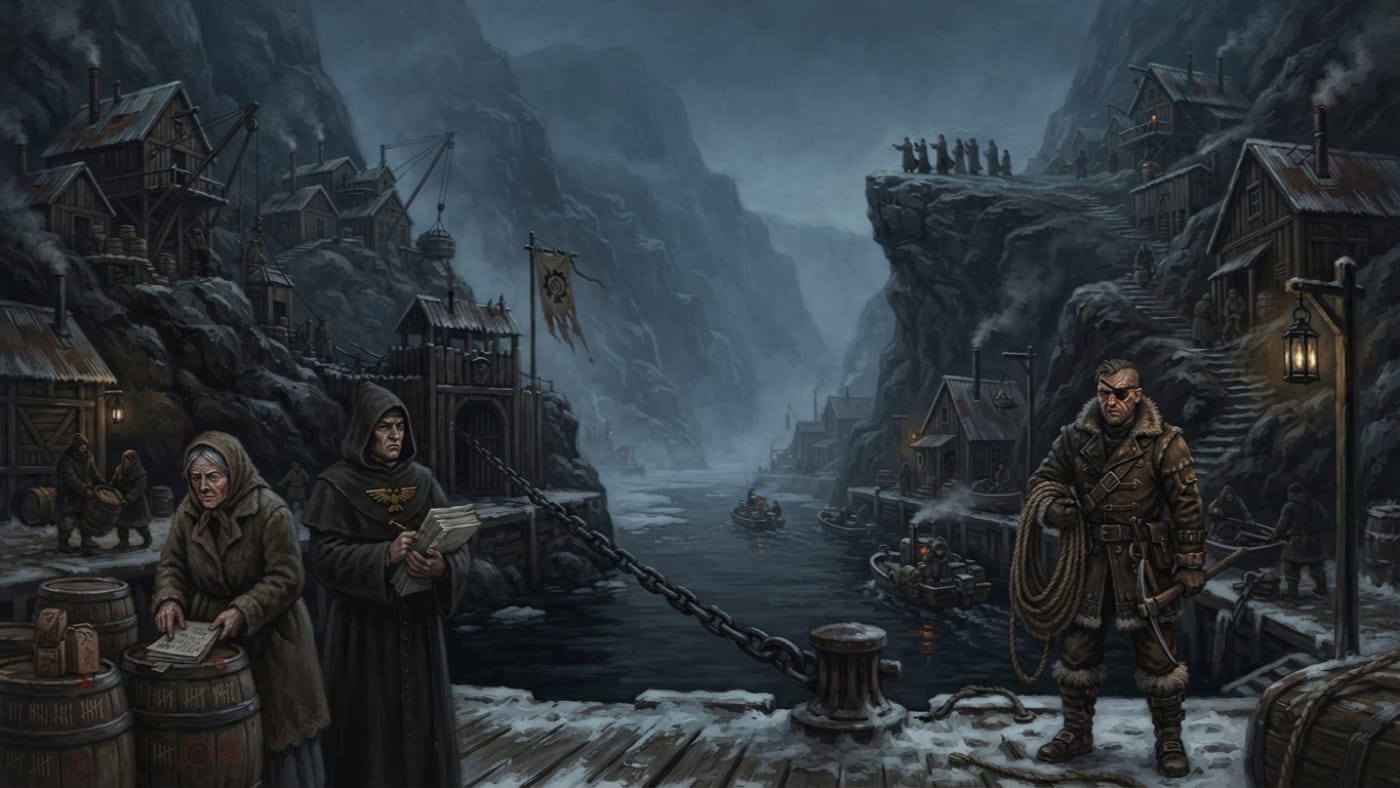
Norway
The map belongs to Strasbourg; the narrows belong to the clans
Norway's fjord compacts supply the Synod's northern war while keeping their own chains, watches and fasts. A.S. 201 assessment: the oil arrives; authority remains local.
Codex Ref. II.8.01-001
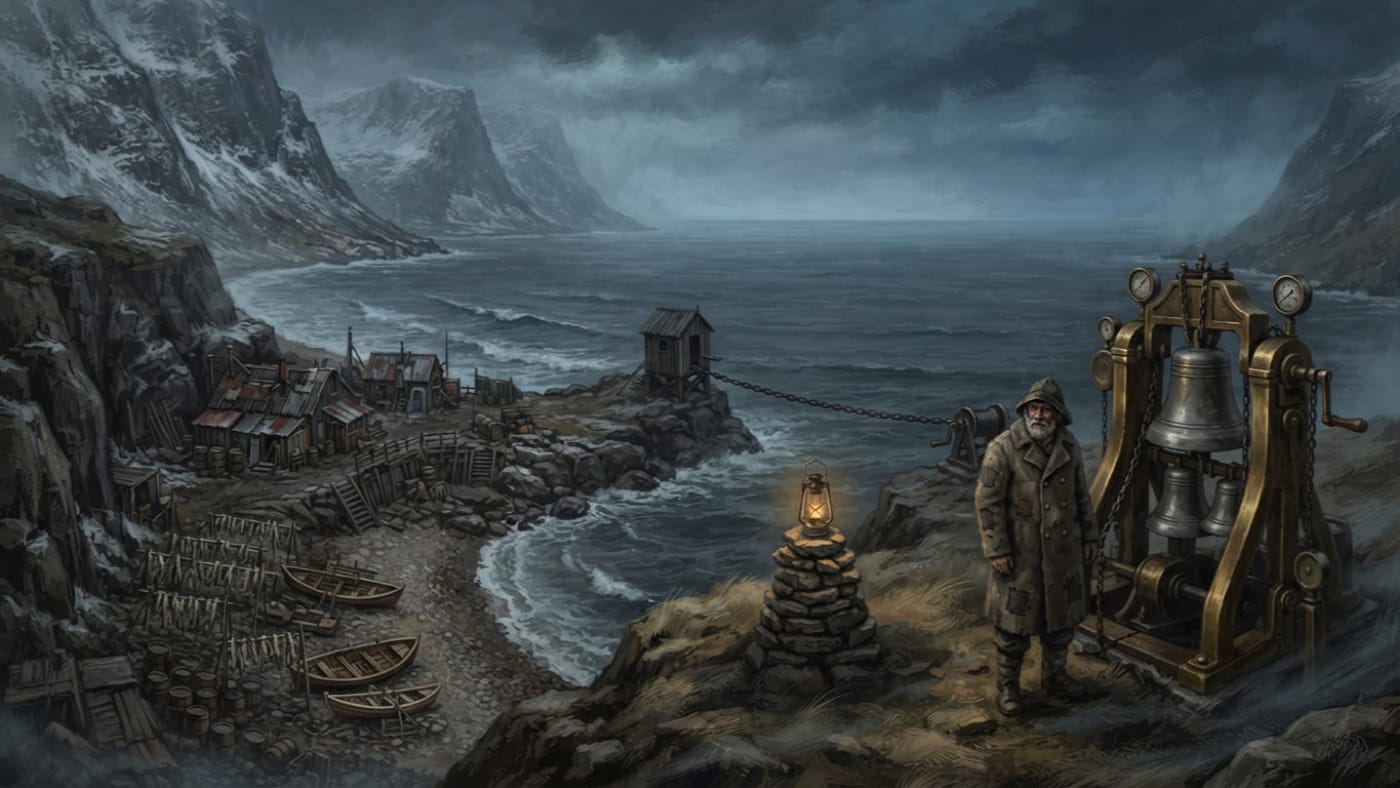
Norwegian Sea
Larder, road and parish wall. Fishery returns not received.
Norway's western water feeds the Fractured North, carries its oil and keeps Strasbourg waiting. The coast has elders, chains and bells; the sea has supplied no papers.
Codex Ref. IX.8.01-002
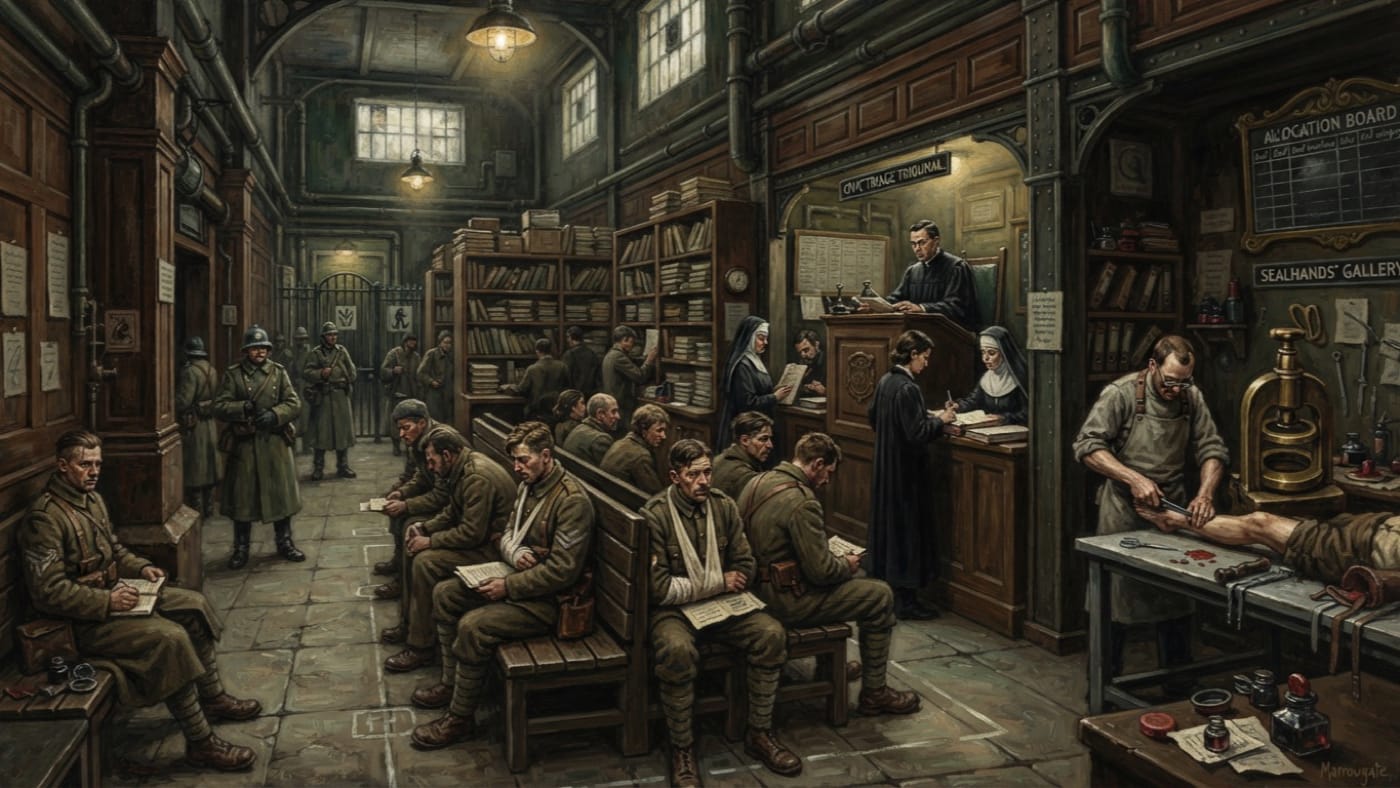
Notary Row
Where a wound becomes a ruling and a ruling becomes a debt
On Notary Row, Marrowgate turns wounds into rulings, amputations into revised identities, and recovery into debt. Even the dead require living corroboration.
Codex Ref. III.3.07-002
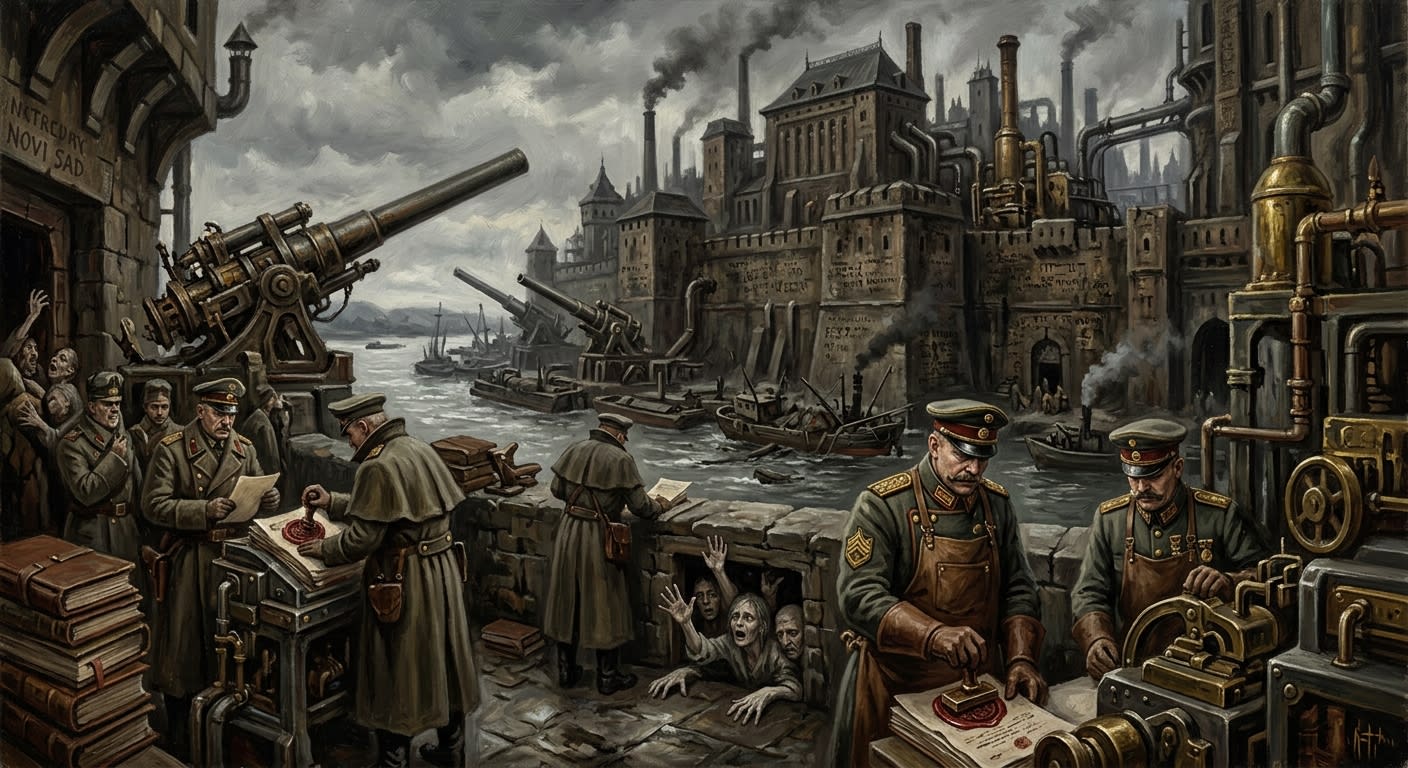
Novi Sad
The city where cannon, stone, and stamp each learned to fail
Novi Sad is a fallen Danube city whose cannon never fired, whose stones wrote living names, and whose valid seals once starved the bodies beneath them.
Codex Ref. II.4.09-045
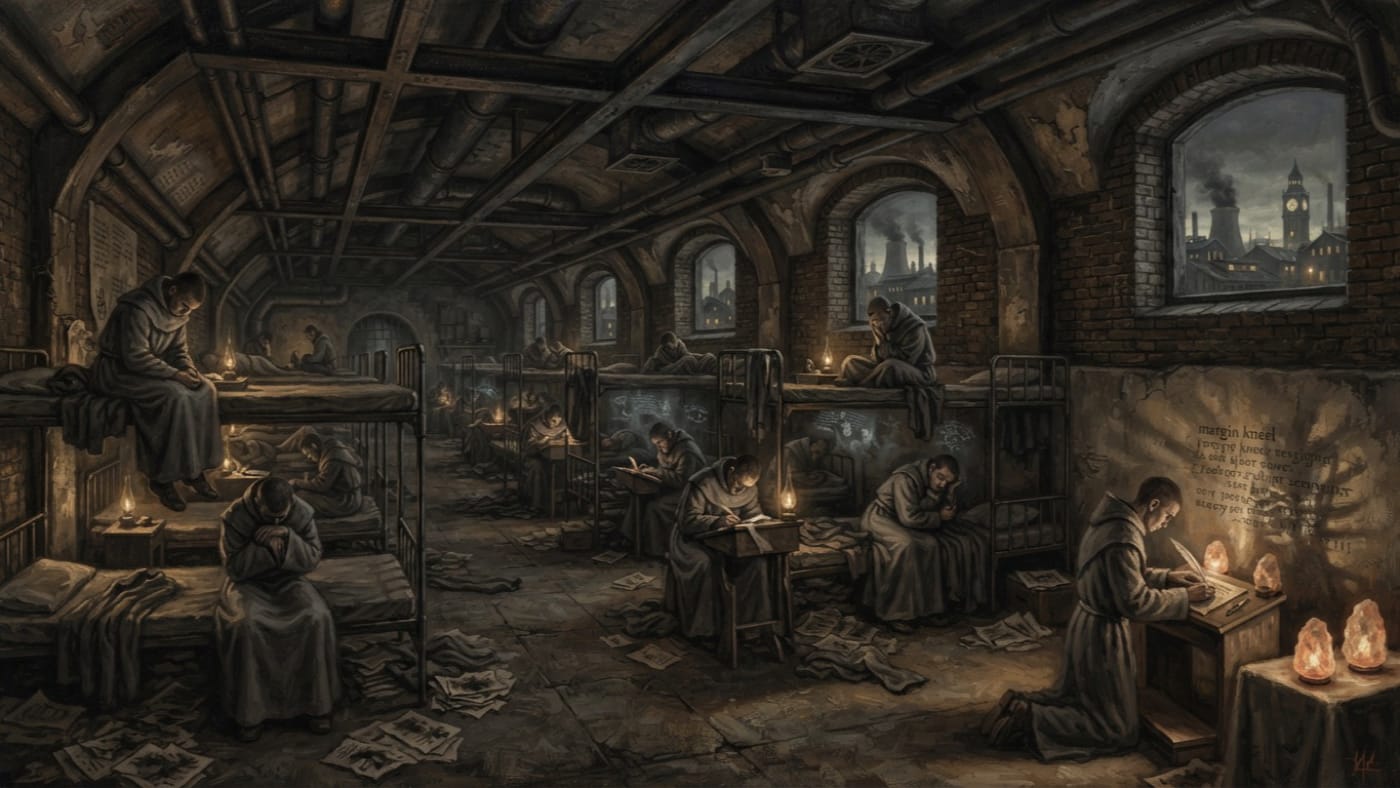
Novice Barrens
Where novices sleep and their obligations do not
Nemea's dormitories and vow rooms house novices stripped of birth-names and bound by page debt. Their contracts sleep in the vaults; their obligations need not remain as signed.
Codex Ref. II.2.06-201
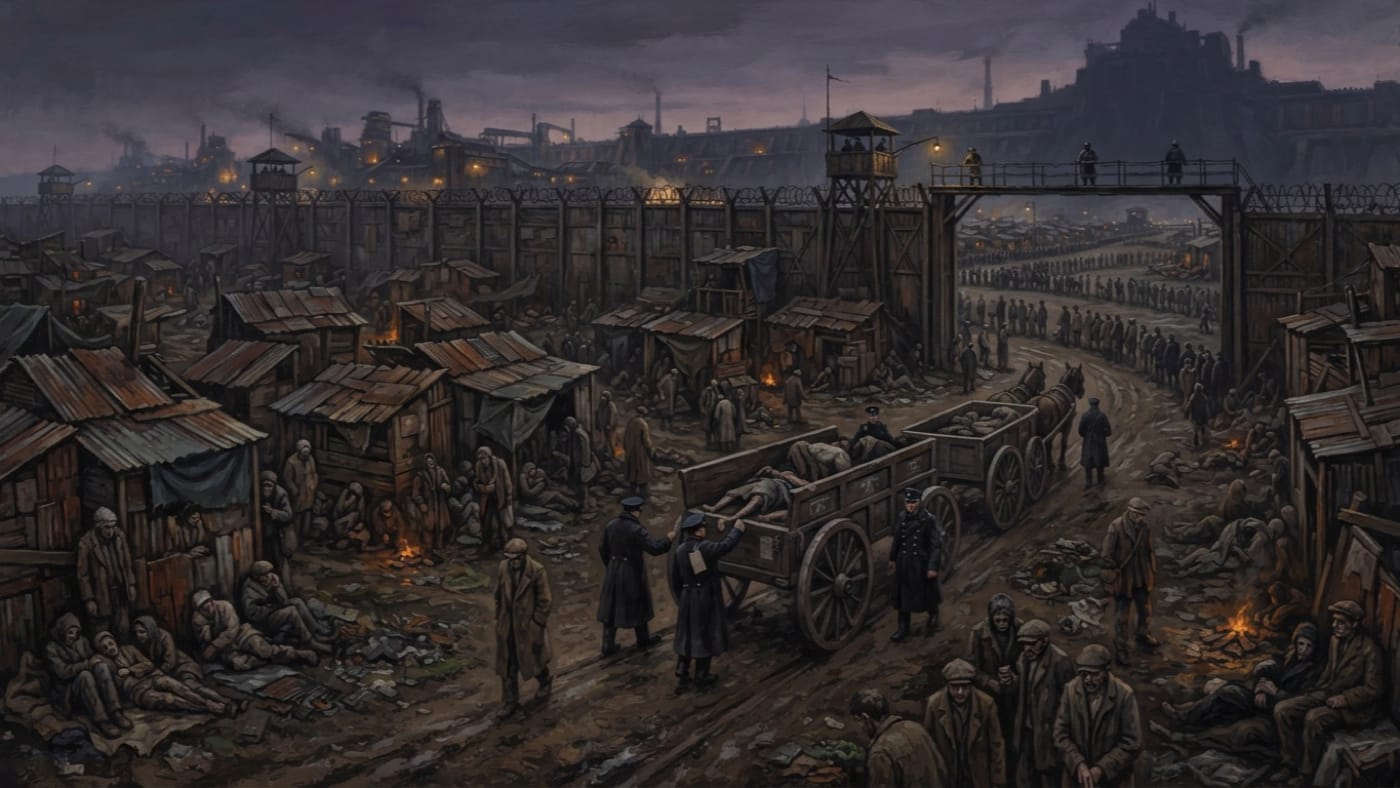
Null Verge
Where the ledger ends and the carts begin
The Queue Road's uncounted southern margin houses erased debtors in darkness. Reeve's Custodians collect the sick, the dead and the inconvenient, and export labour under stamps naming no bureau. The census remains correct.
Codex Ref. II.3.05-012
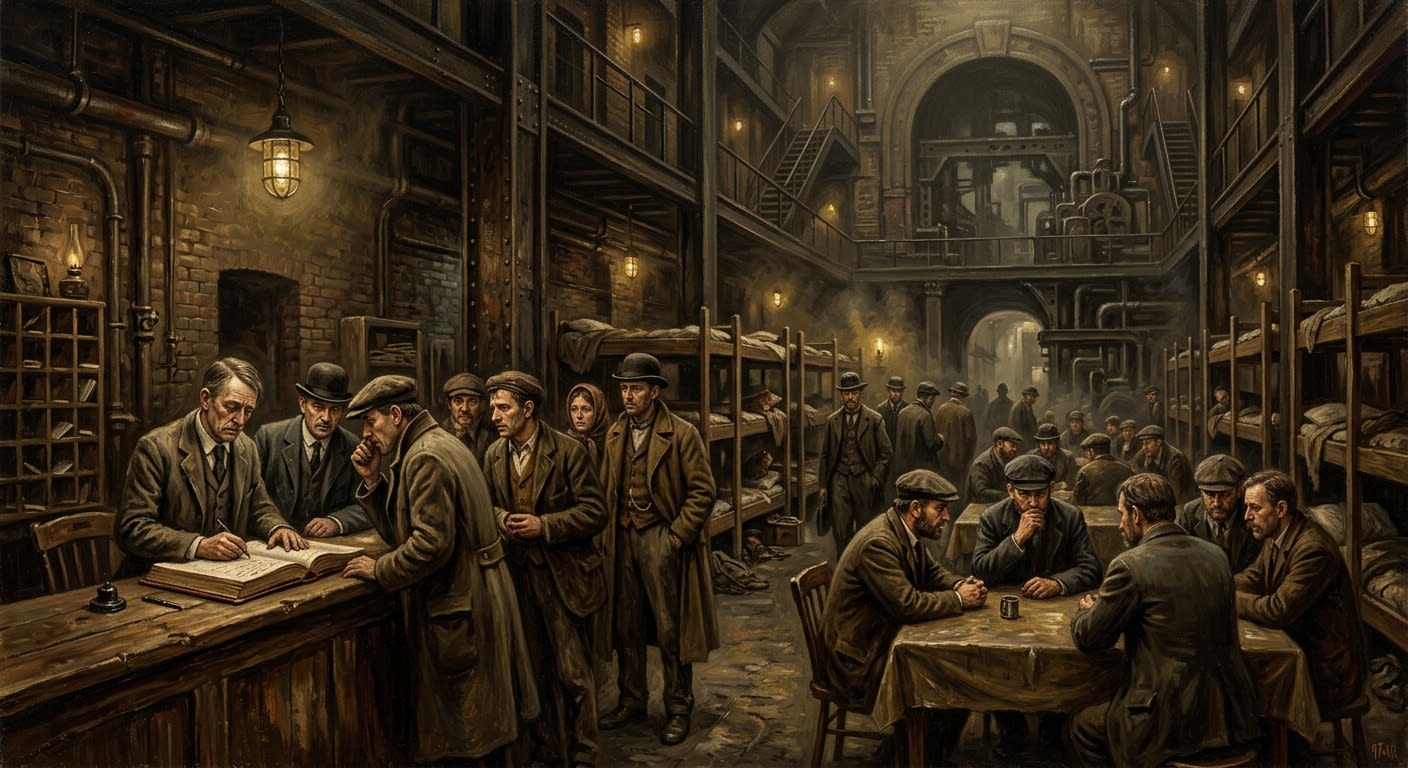
Oath Inns
Where speech is rented, stored, and later weaponised with receipts
The Oath Inns of the Steppe Gate sell beds, witness space, collateral confession, and the dangerous comfort of speaking indoors before the Burnless Archive answers back.
Codex Ref. II.4.09-078
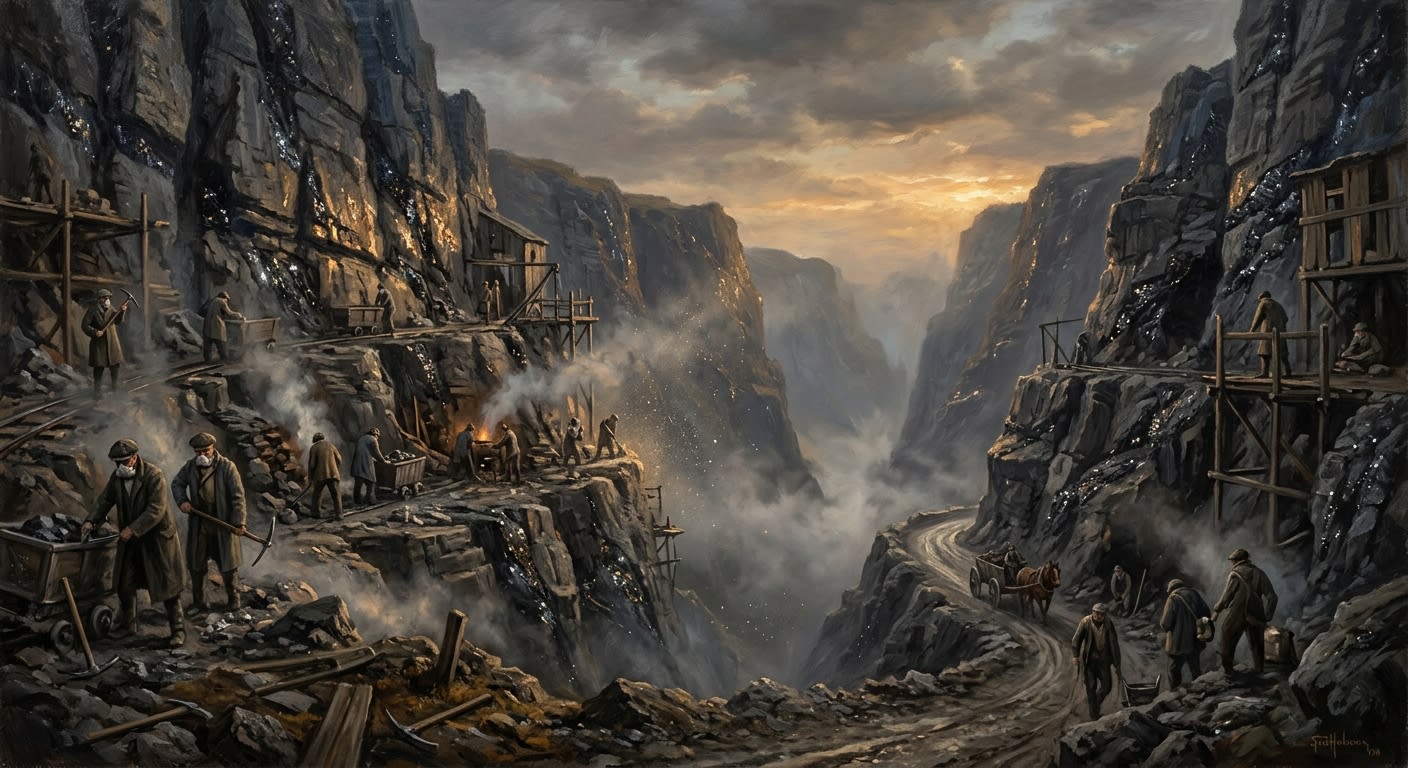
Oathglass Quarrytown, Saint-Helm's Cut
The mountain proves what the Seal House permits
A highland quarrytown built inside a volcanic-glass cleft that the Synod has declared a certified sacred site. The glass proves relics. The workers cough. The mountain, lately, has begun to sing.
Codex Ref. II.2.05-001
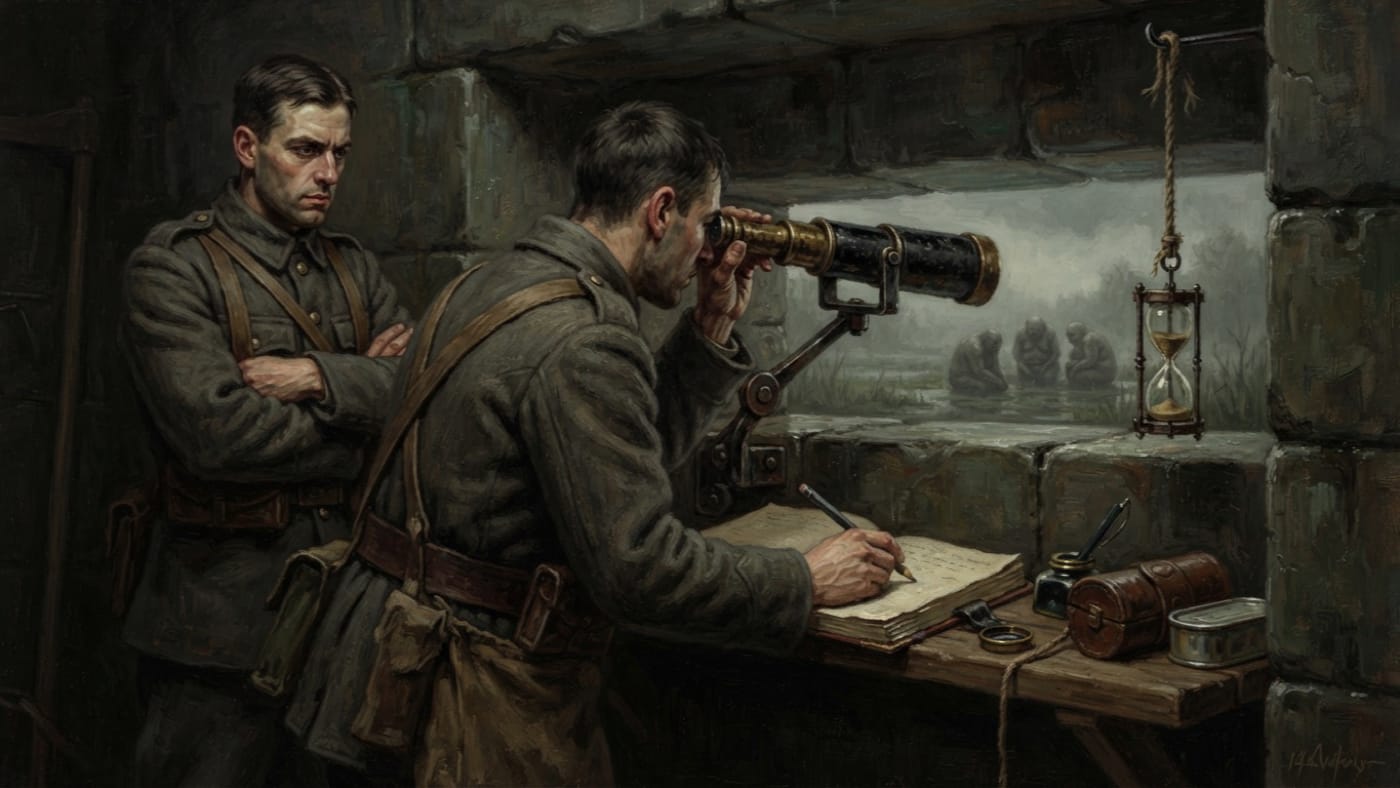
Observation Post Sigma-7
The cycle does not change; the watcher must be relieved
The 14th Garrison holds a slit in the outer wall of Bastion-Constantinople above three Self-Devoured. The cycle never changes. The watcher may. Ninety seconds is the ceiling, and looking away is the work.
Codex Ref. III.2.07-201
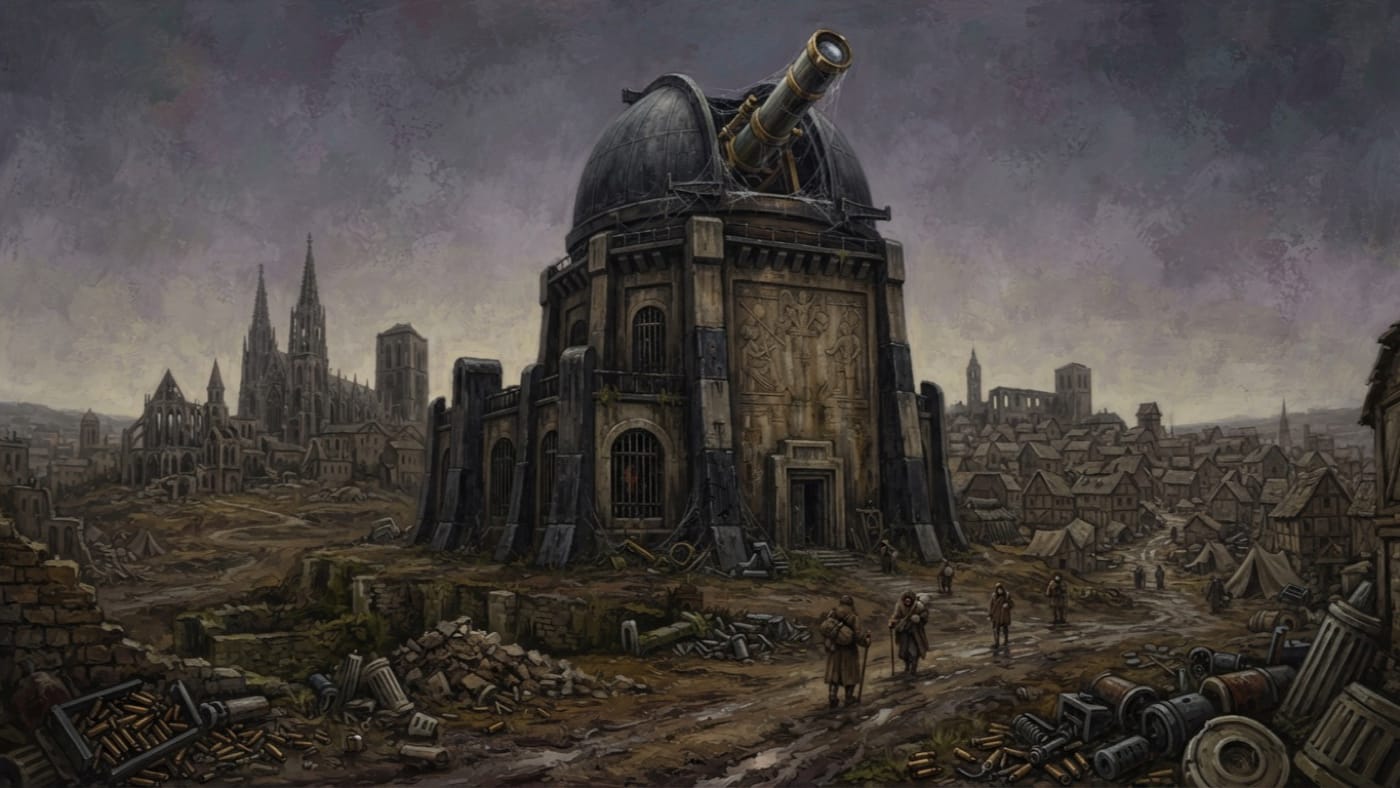
Observatory at Vienna
The telescope remains. The sky is not certified.
A.S. 201 survey of Vienna's empty Republican Observatory, funded with confiscated Church wealth and costing more than the cathedral it replaced. The telescope remains; the sky is not certified.
Codex Ref. II.4.09-201
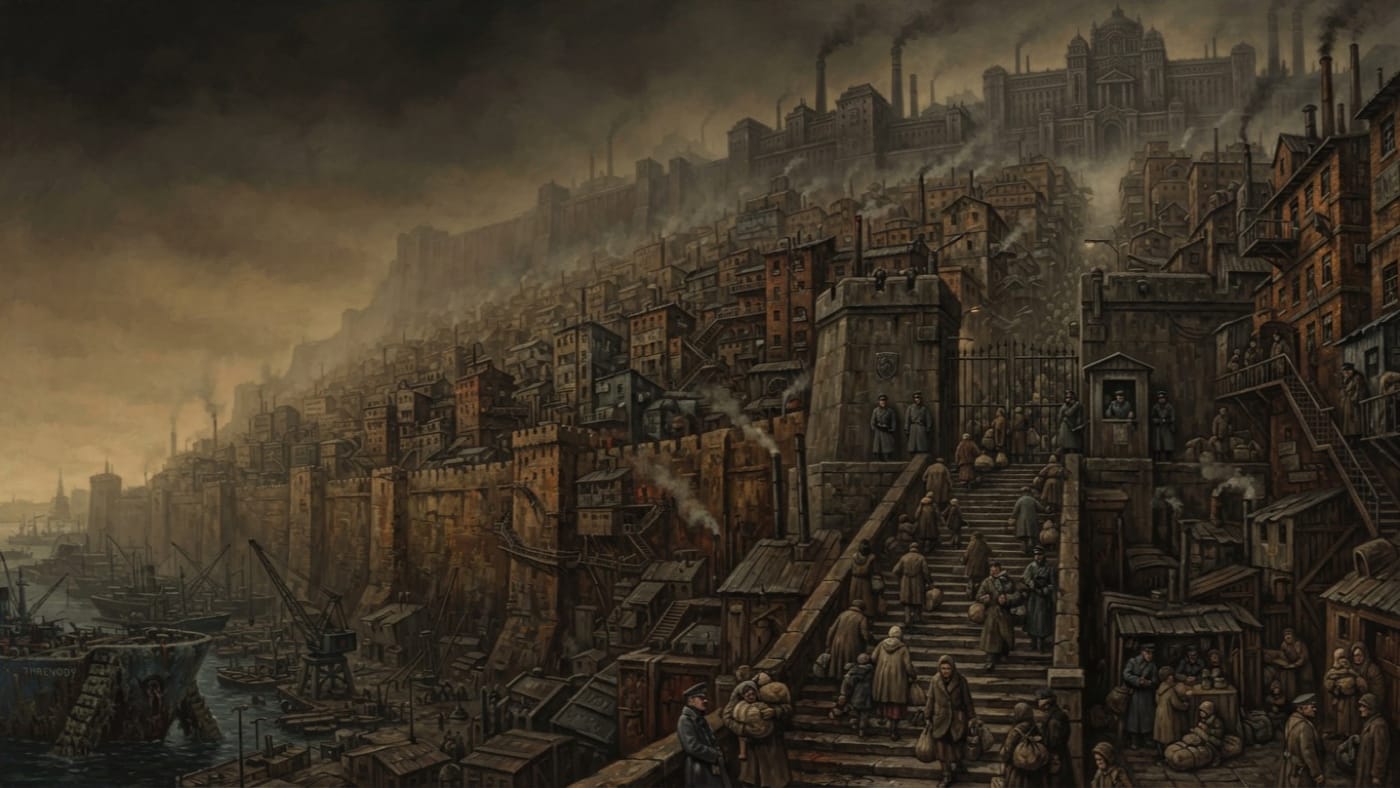
Ochre terraces
Above the walls, still within the ledger
Ochre enters the civilian terraces above Constantinople's old walls in the settlement ledger. A household may live uphill; passage to Blue still requires a stamp.
Codex Ref. III.2.04-1980
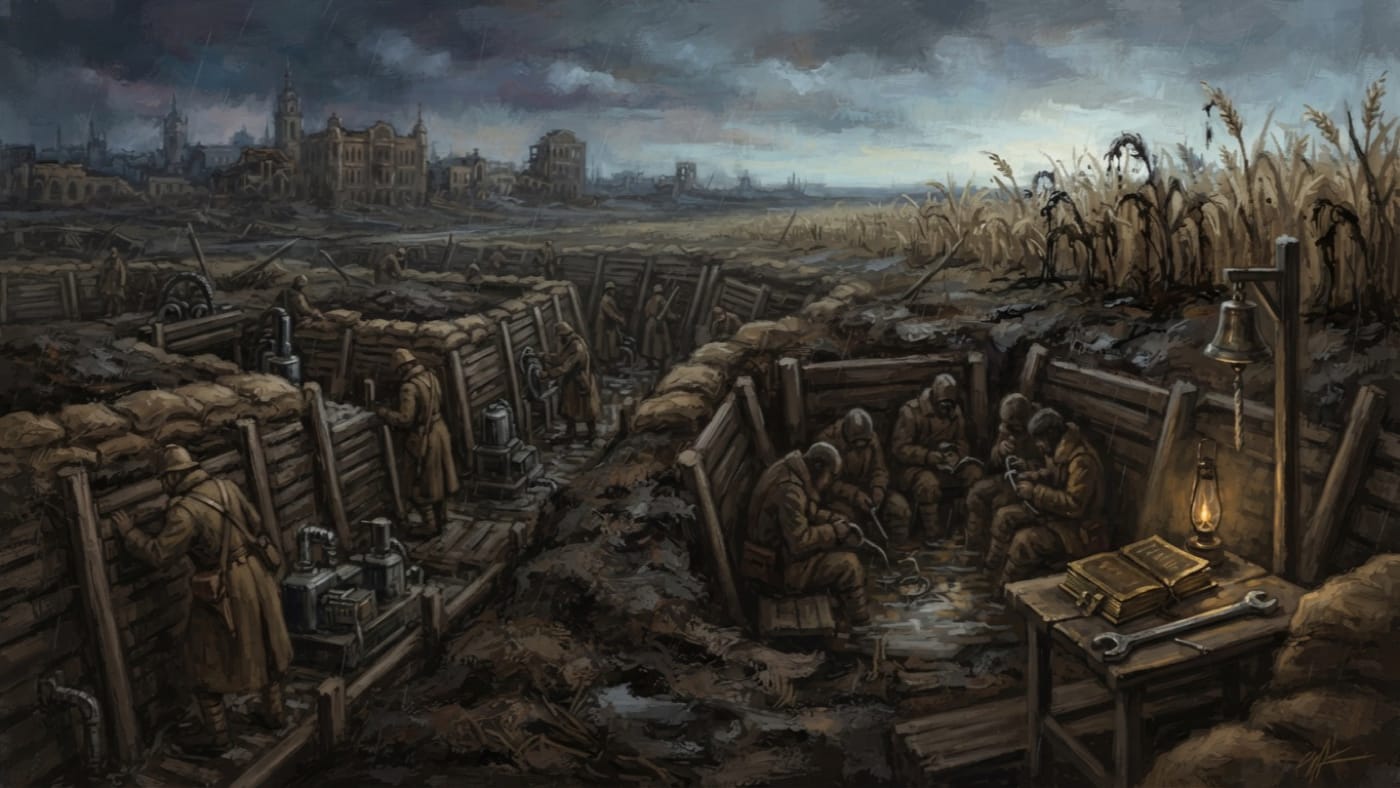
Odessa
Where the harvest watched and the walls learned to sing
Odessa survives in the Ledger as screaming fields, an undated Rot and the western works of A.S. 178. The city has no signed census; its damaged hymnals are better documented than its inhabitants.
Codex Ref. II.4.09-178
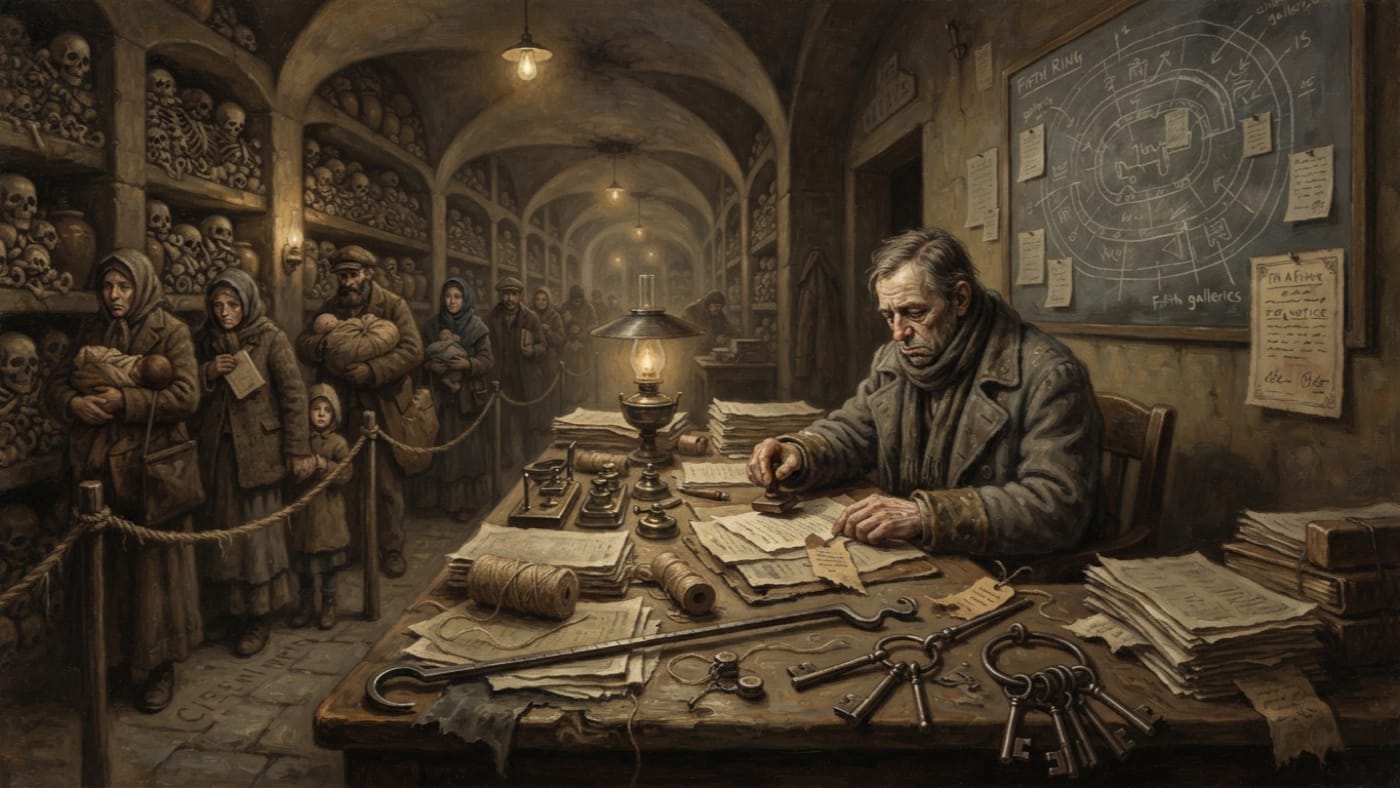
Office of Ossuary Accommodation
You do not live here. You are permitted.
The Fifth Ring office that assigns niches, bunks, alcoves and grave-field plots to the living. Its A.S. 200 occupancy review counts 32,114 permitted people. Dry stone is shelter; the tag is a revocable favour.
Codex Ref. II.4.10-007
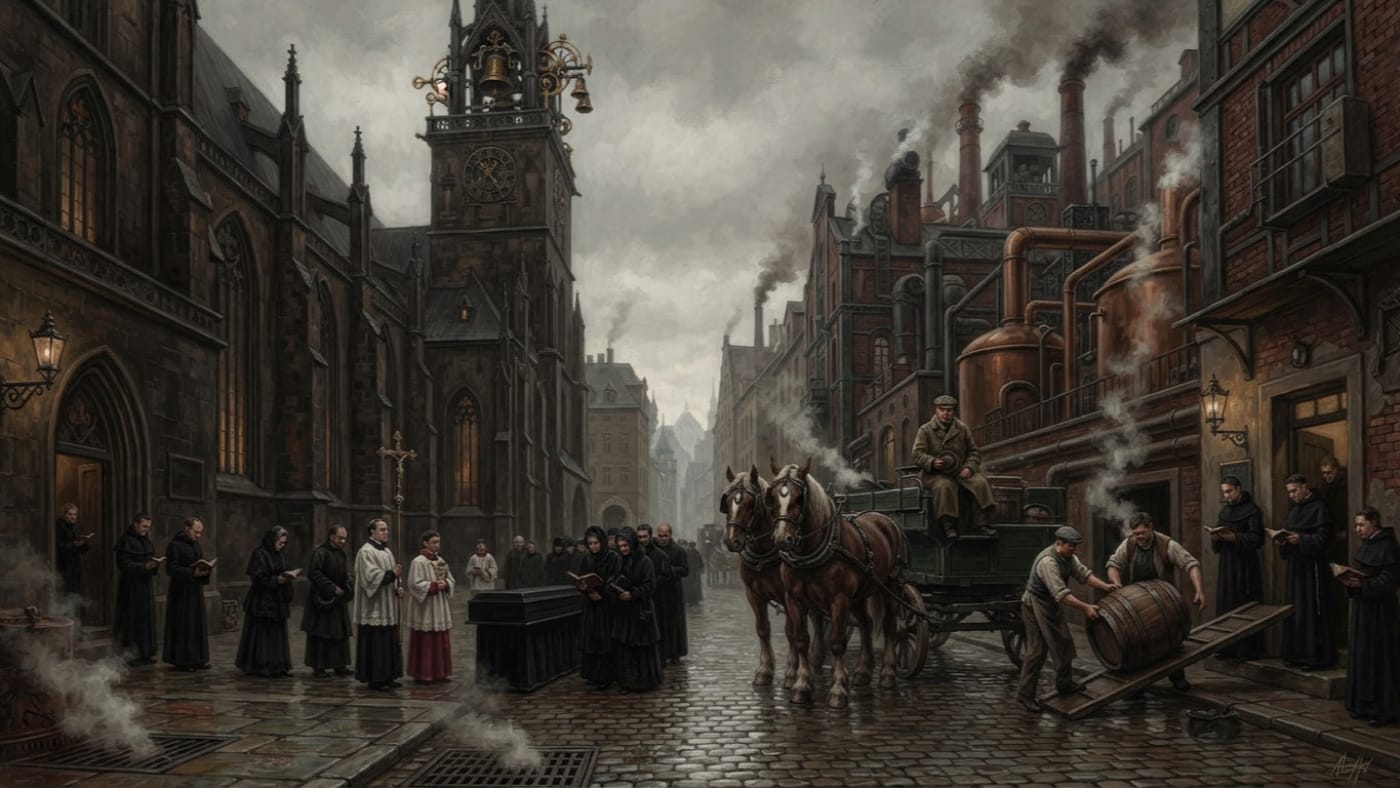
Old Cathedral Precinct
Where the fourth line stays long and the funeral beer is poured
Munich's old cathedral precinct keeps its offices beside the Bräuviertel, accepts the brewers' gifts, buries their dead, and gives Doctrine excellent attendance with an inconvenient cadence.
Codex Ref. II.2.06-017
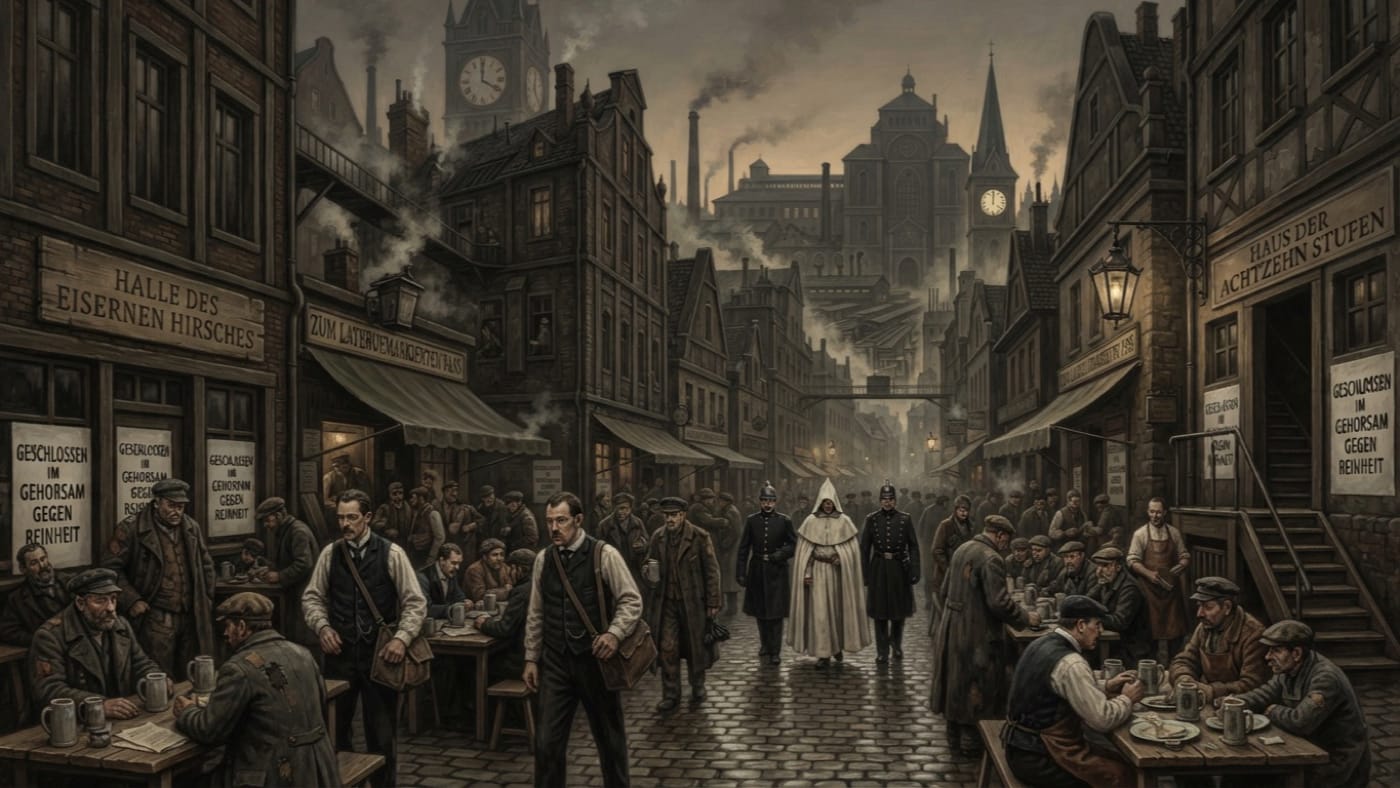
Old City of Kanzleiburg
Where the north settles what its offices cannot
Kanzleiburg's inherited residential quarter keeps veterans, clerks and brewers at common tables. In A.S. 140, Purity discovered what closing those tables cost the north.
Codex Ref. II.4.10-201
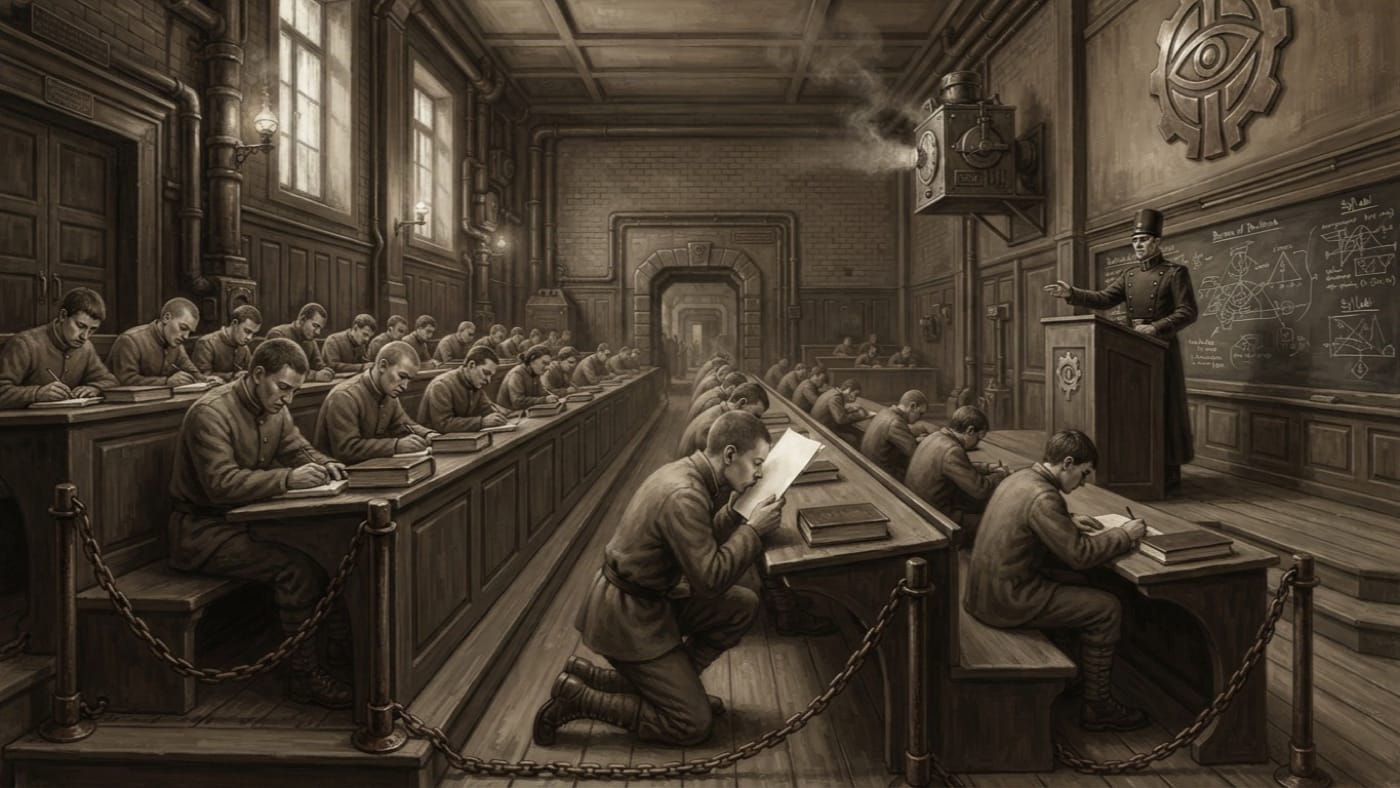
Old Faculty Rows
Where the syllabus was corrected and the desks were chained
Ulm's former Rationalist halls now house doctrinal schools, where Purity audits the syllabi, students kiss blank pages, and the lecture desks remain chained to the floor.
Codex Ref. II.2.01-006
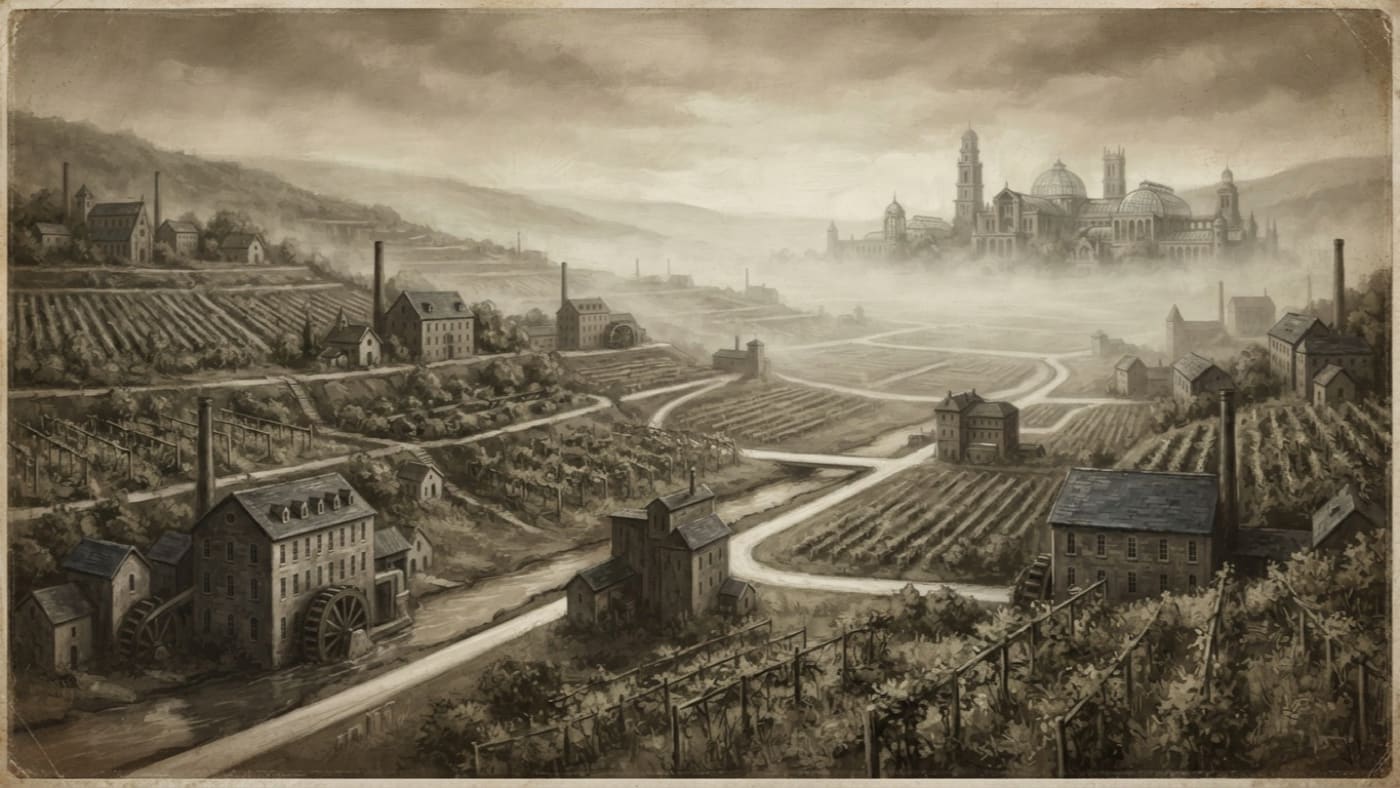
Old Kingdom of Phocis
The harvest was counted. The court slept anyway.
Phocis counted its harvests with royal confidence, then slept between sip and song. An A.S. 201 retrospective survey of the kingdom beneath Syrion's Vales.
Codex Ref. VI.2.04-005
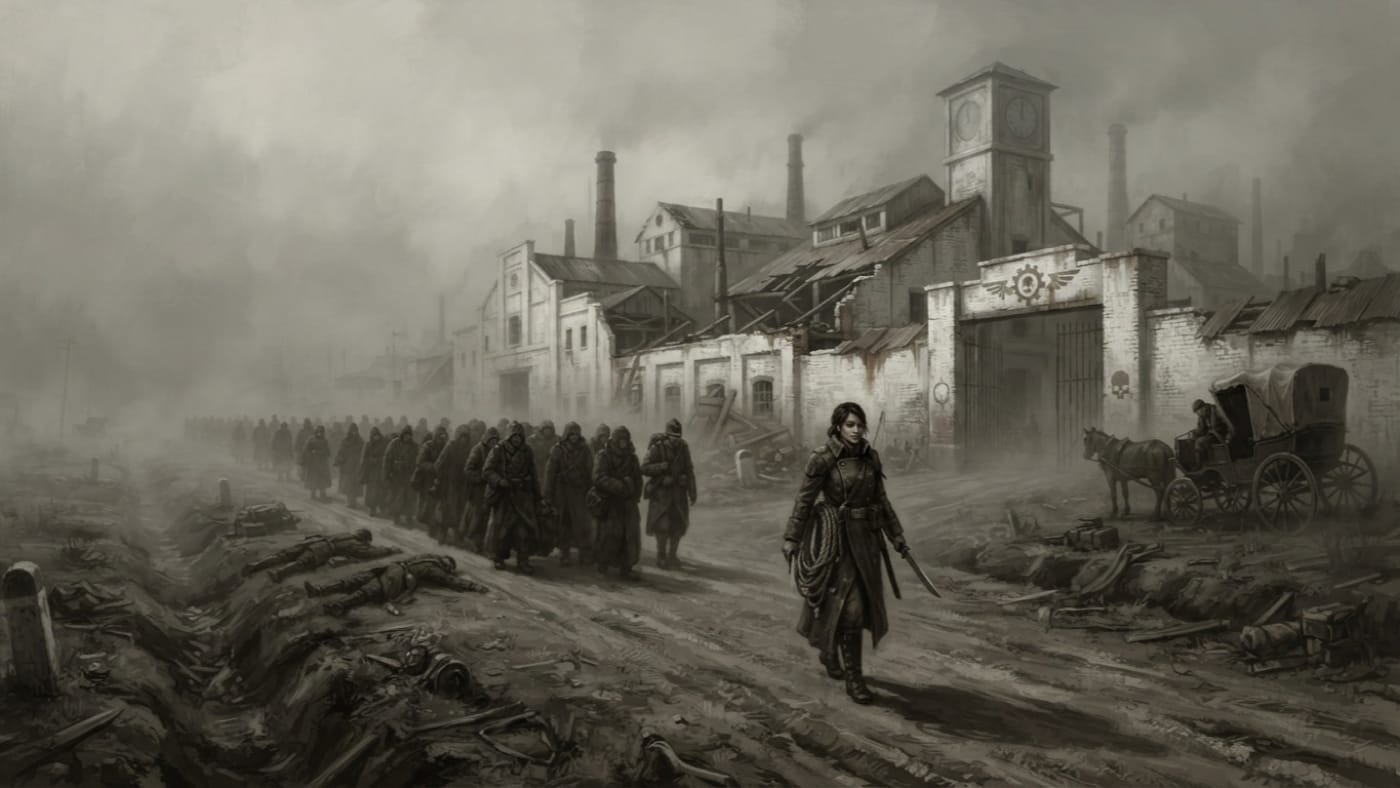
Old Lime Depot
A landmark dragged into the Ledger by a preposition
A Schreiber Road landmark west of Drax's late A.S. 198 encounter with Yael Dorsk. Its owner and founding date are unentered; its usefulness as a bearing survives the file.
Codex Ref. II.4.09-198
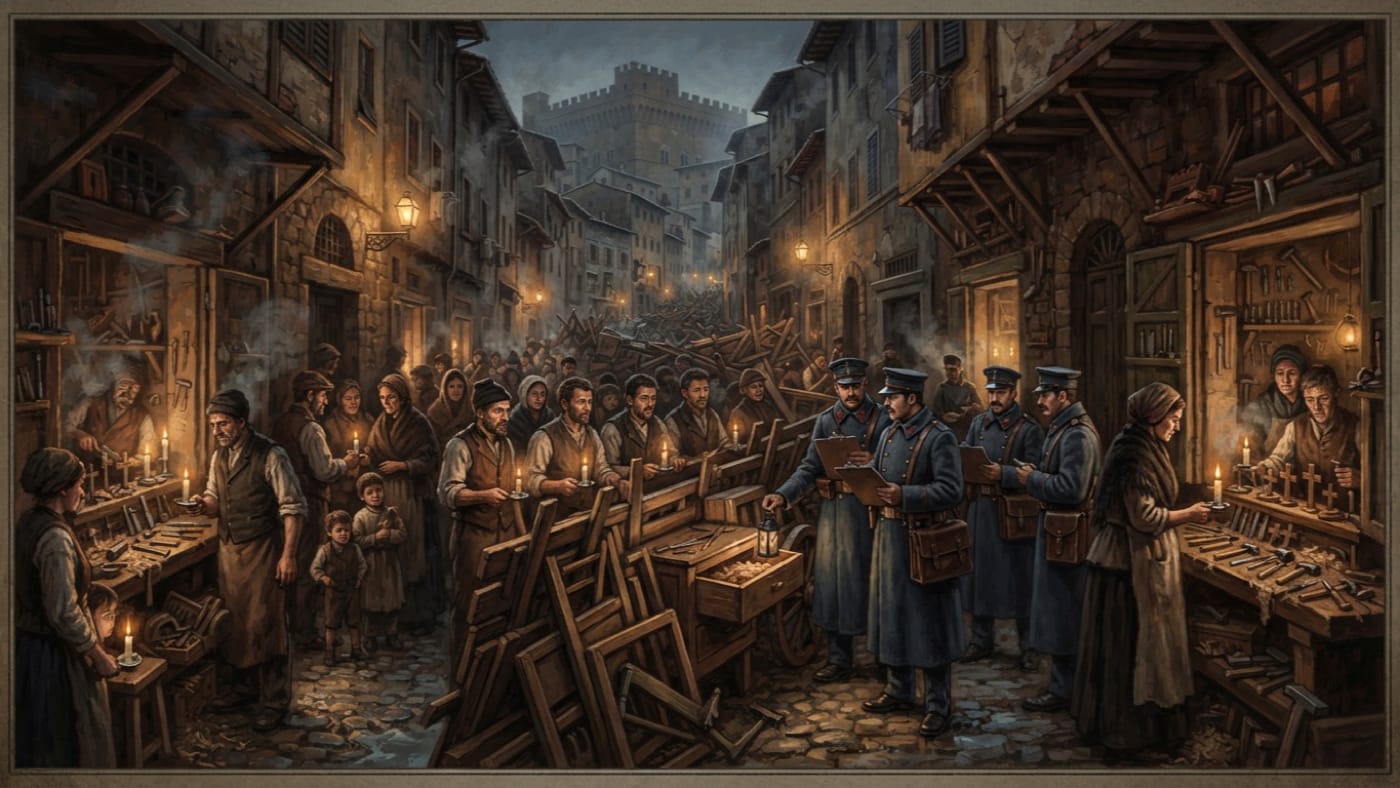
Oltrarno
The quarter that kept the Church in its drawers
Florence's workshop quarter kept the hidden Church in deep drawers, held a street in A.S. 44, and now supplies sacred craft under inspection by offices that arrived after the danger.
Codex Ref. II.4.09-201
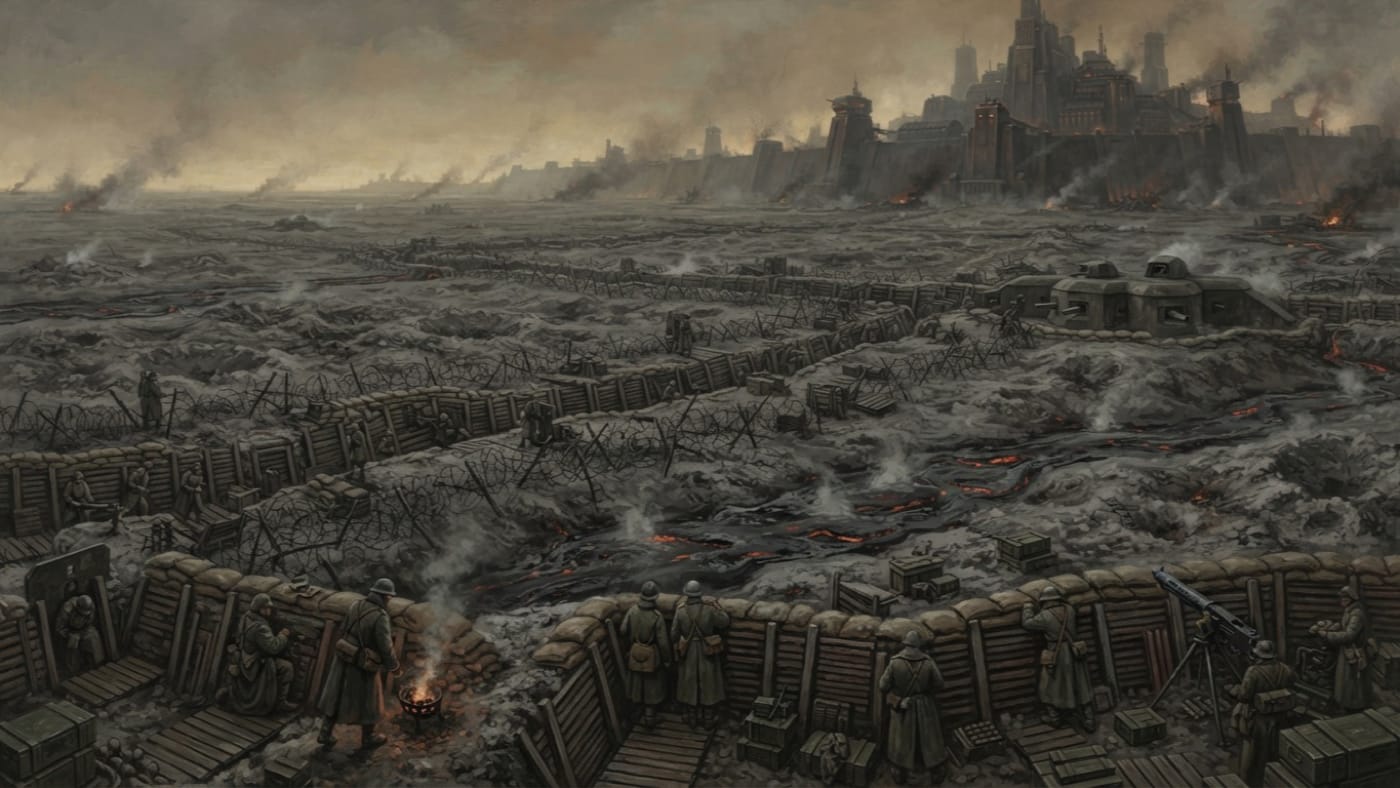
Operational Zone Ferrum-North
The Plate, Retained on the Active Register
The contested Thracian approach north of Bastion-Constantinople, entered by the Bureau of War as Ferrum-North and called the Plate by its defenders. Maldrake has room to muster here; the garrison has orders to hold.
Codex Ref. III.2.04-018
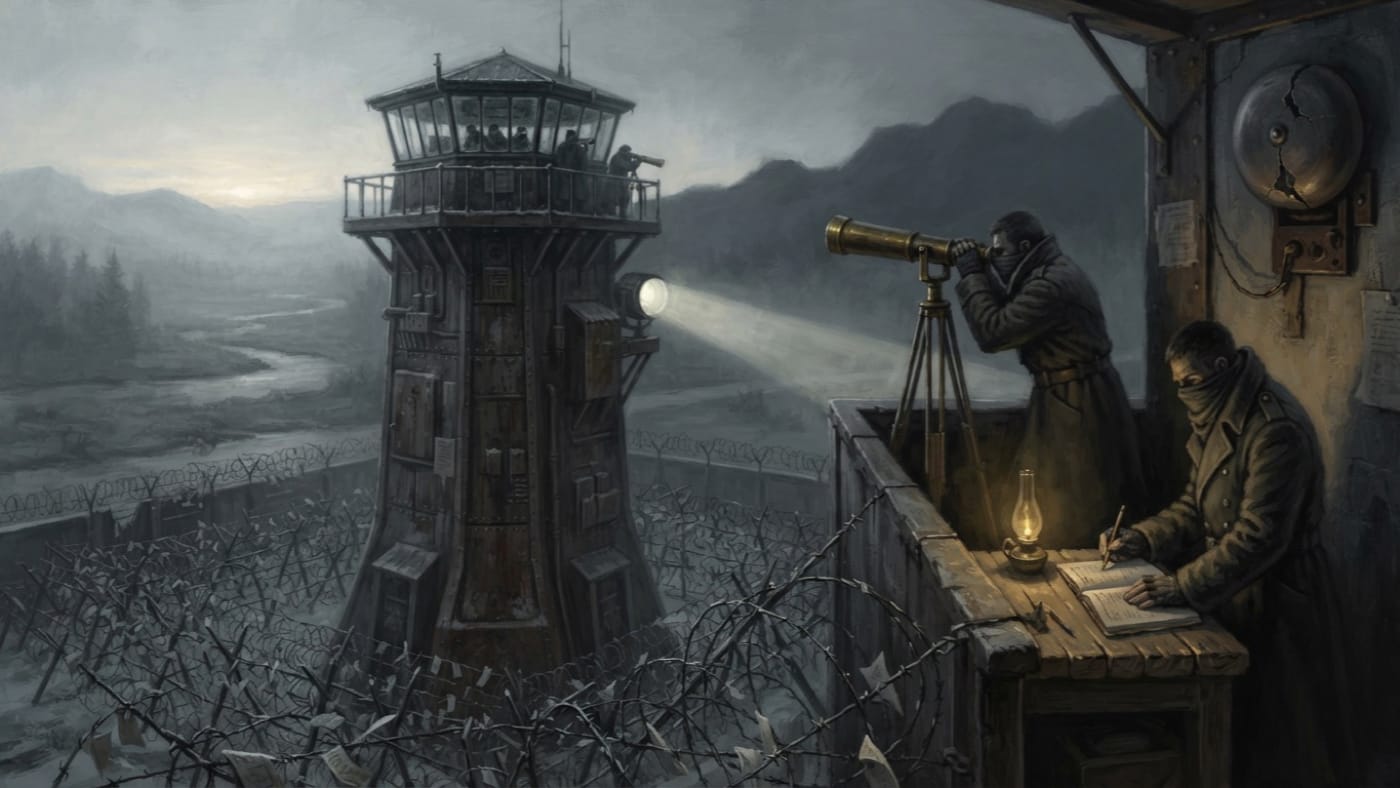
Orchard Eye
An eye for the enemy, a patrol book for everyone else
Orchard Tower Nine watches Atheron's heights and Przemyśl's own lanes. Its alarm cracked before the Spire-Crusher; Records insists its missing patrol book never existed.
Codex Ref. II.4.09-009
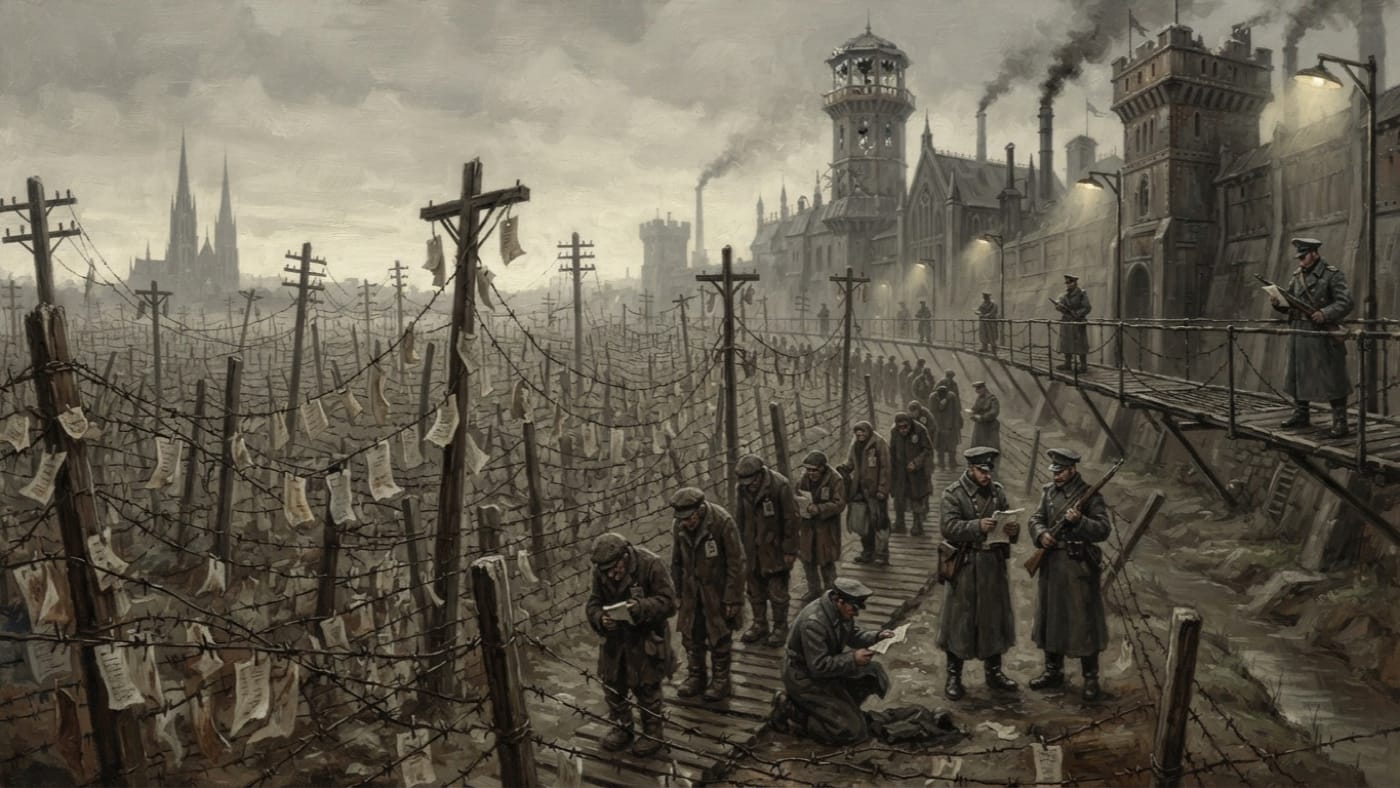
Orchard Ring
The wire keeps the papers; the ditch keeps the rest
Bastion-Przemyśl's district of wire groves and gallows posts keeps every tag in order. The living require more supervision, especially when glass starts issuing ranks.
Codex Ref. II.4.09-194
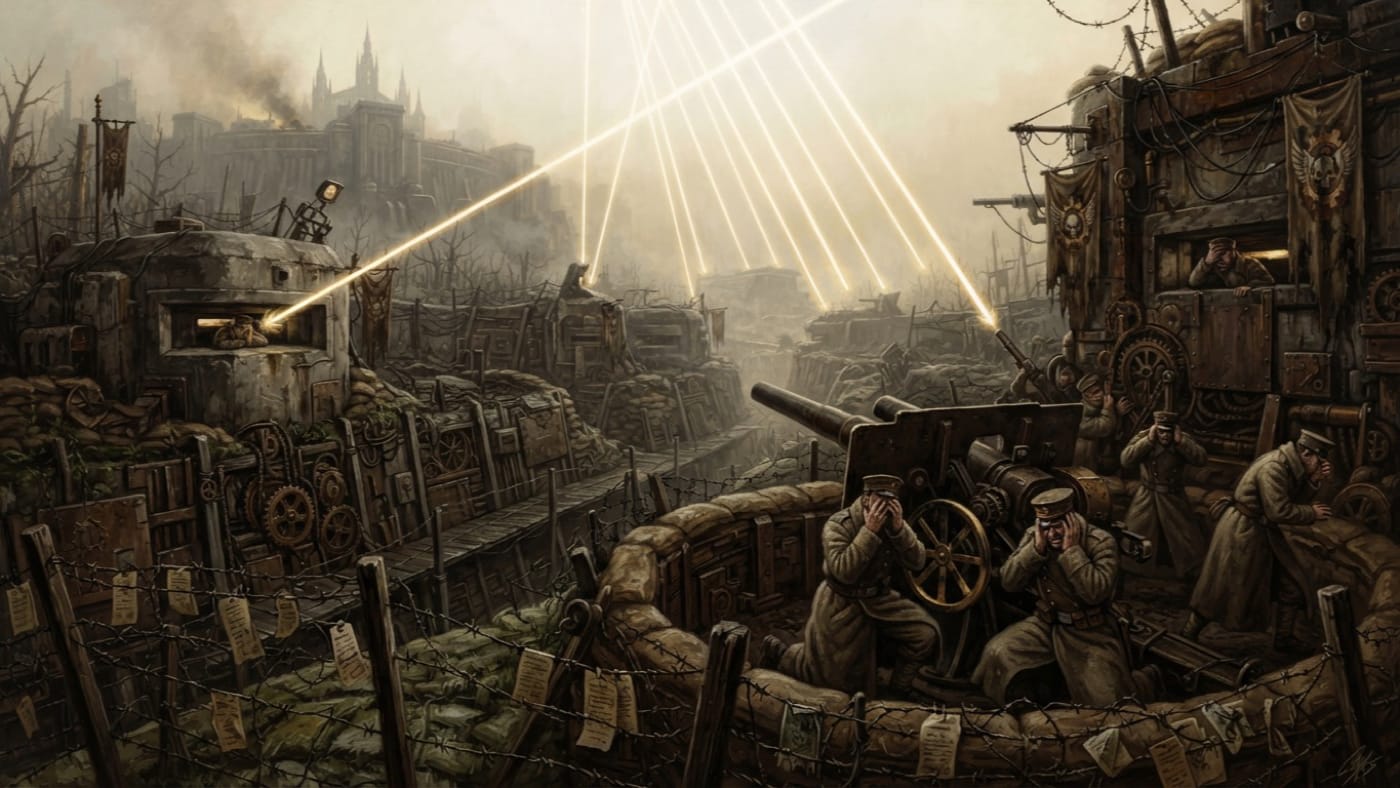
Orchard Ring North
A name on the Ring, a lesson in lampblack
At Orchard Ring North, twelve Sun Spear lances struck instruments in A.S. 184. Forty-one sheltered men lost partial sight. Engineering recommended lampblack.
Codex Ref. II.4.09-184
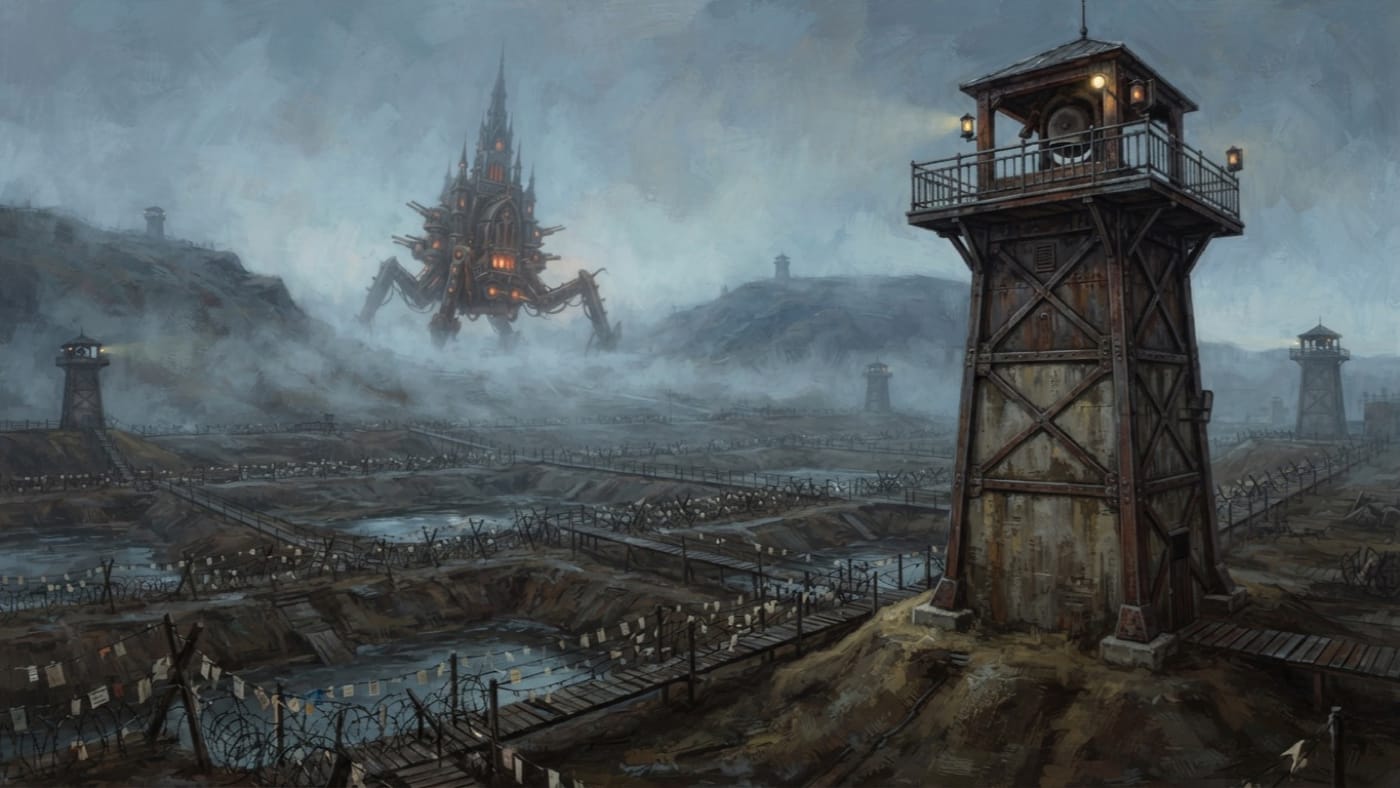
Orchard Tower Nine
The alarm bell cracked; the watch held
Orchard Tower Nine raised the Spire-Crusher alarm in A.S. 195 and fired through the Nine-Hour Rubric. The post still stands; its patrol logbook remains missing.
Codex Ref. II.4.09-009
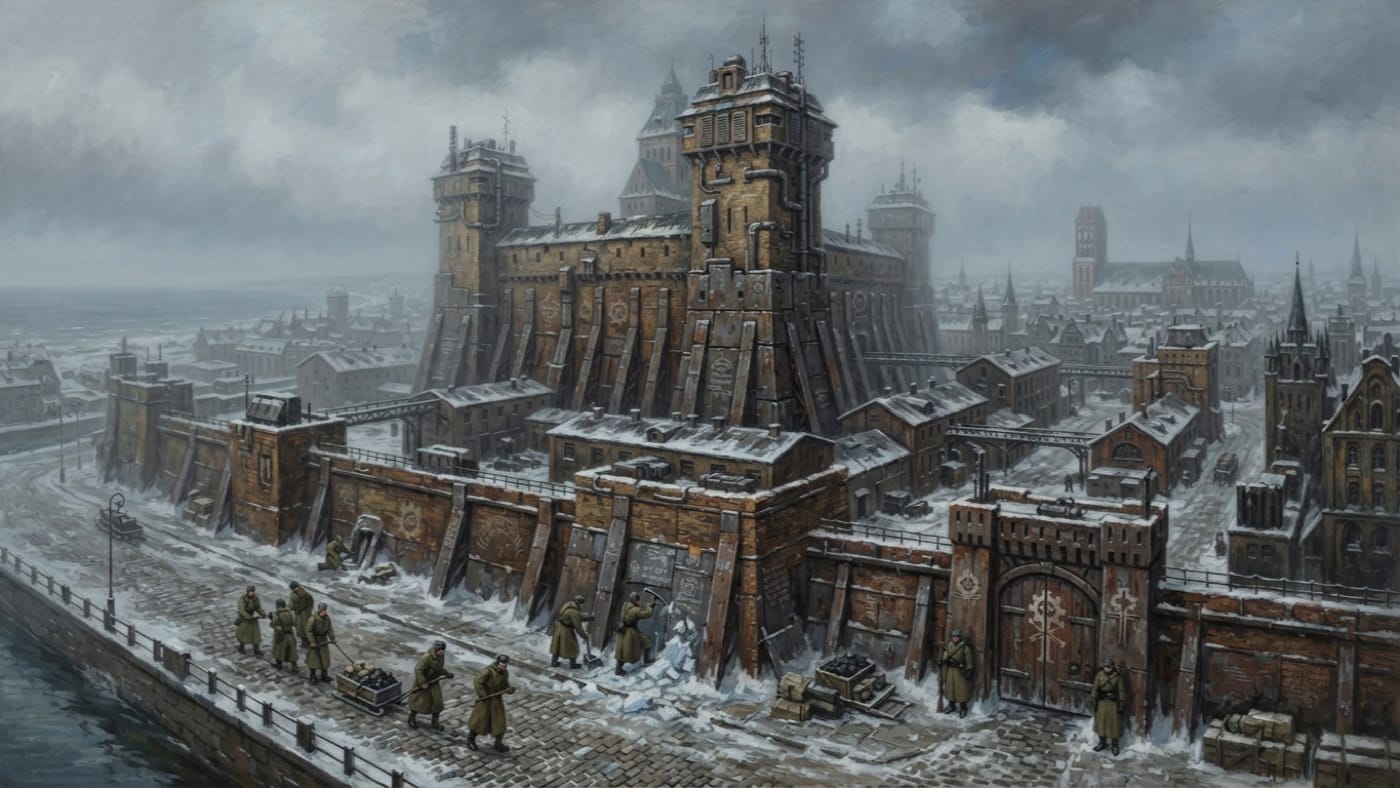
Ordensburg
Where the Walls Are Commanded and the Questions Are Filed
The old Teutonic castle and surrounding district of Bastion-Königsberg, housing garrison command and Doctrine's Northern Office. Halvorsen commands the walls; the office keeps the Grey pending. Both have learned to work with the cold.
Codex Ref. II.4.07-002
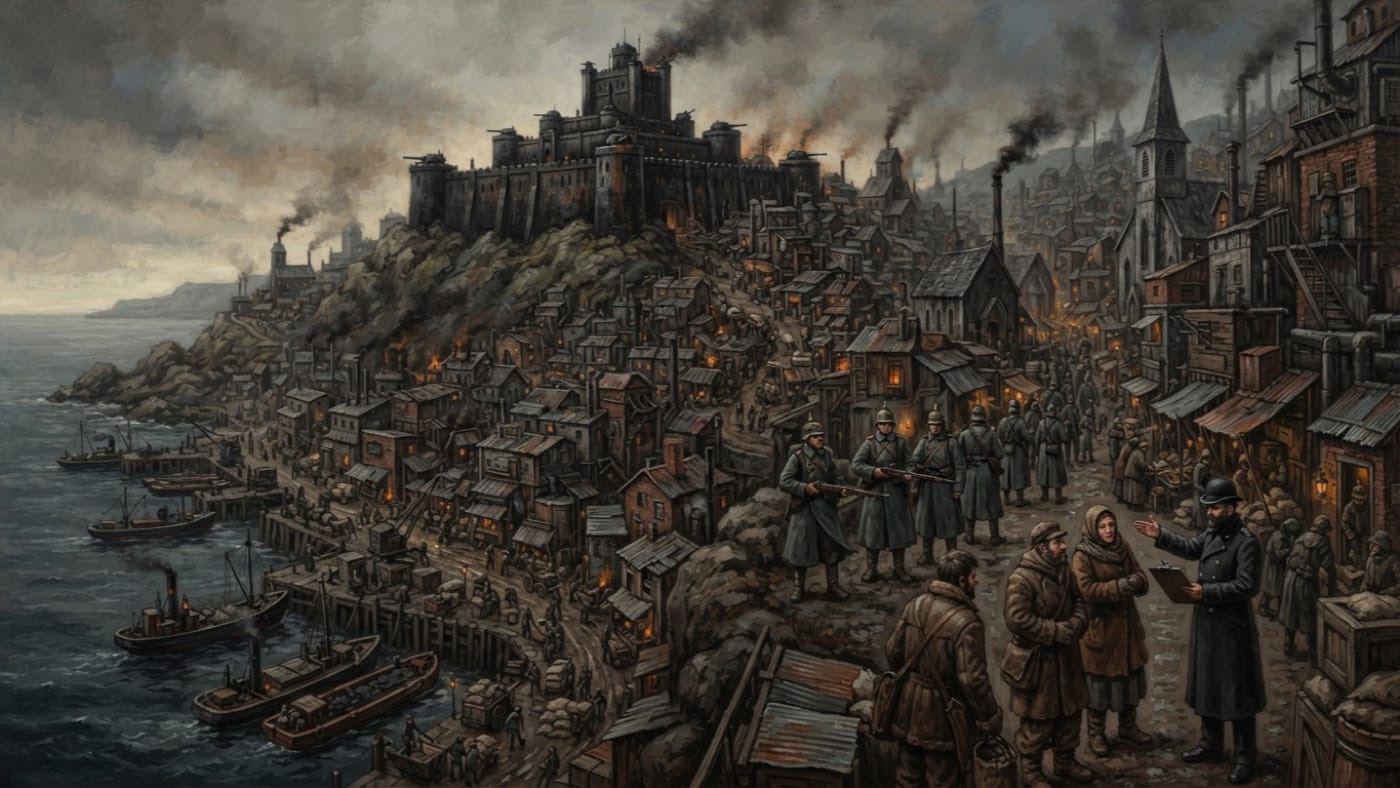
Organic Garrison Towns
The fort has soldiers. The town has a category.
An A.S. 201 survey of civilian communities that have outgrown Synod forts, especially along the Pilgrim's Coast. War claims the garrison, Tithes the market, Settlement the residents. The town has a category; responsibility remains pending.
Codex Ref. III.2.04-018
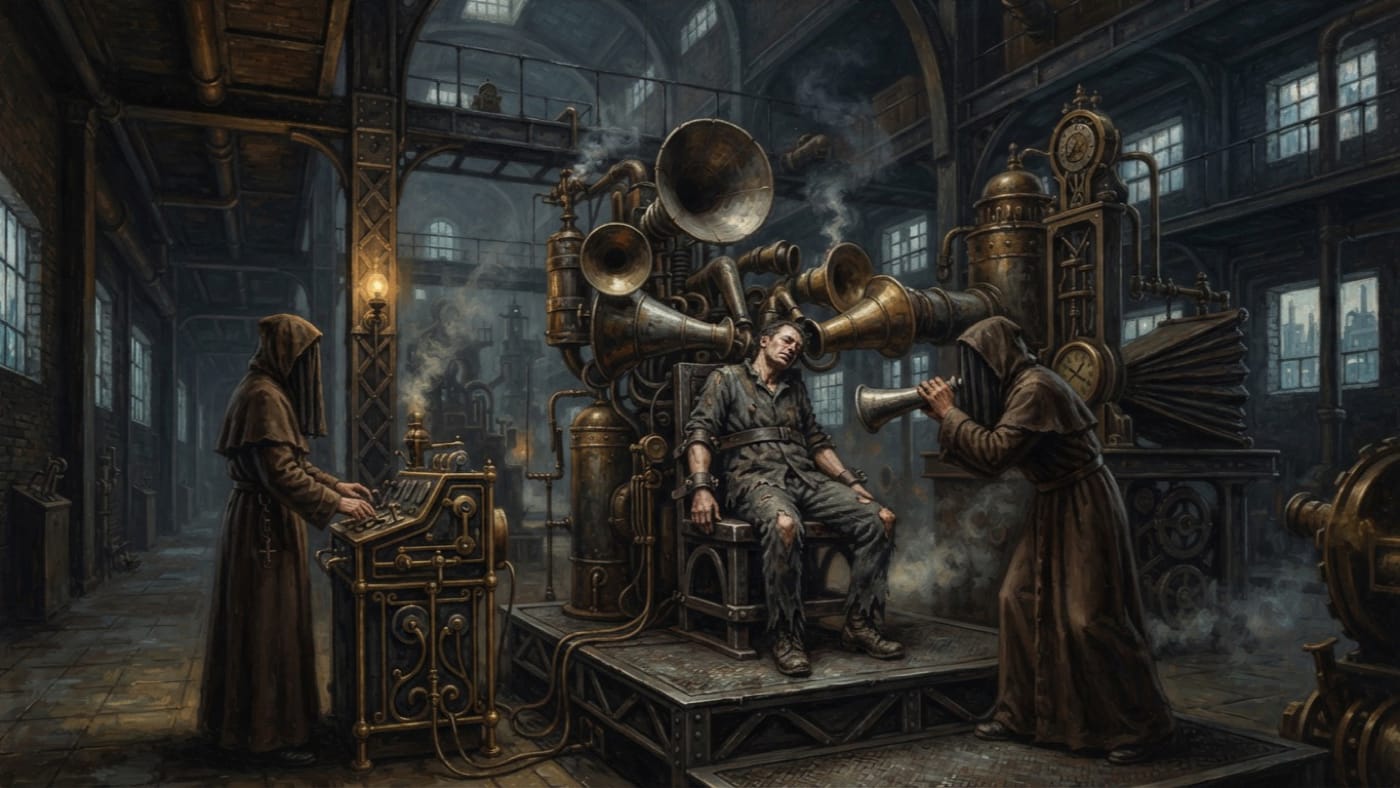
Orison Provost House
Where questions grow louder and answers grow less certain
Essen's Orison Provost House enforces sanctioned cadence through acoustic interrogation. Mercy records permanent impairment; Orison files the confession and renames the chamber.
Codex Ref. II.2.06-014

Orthography Siege at Nominalist's Gate
Three spellings held the regiment; the ledgers survived inspection.
At Nominalist's Gate, three spellings of a colonel's name barred a regiment from crossing. It starved on the trench-bank until Wrath's raiders came at dawn. The ledgers were immaculate.
Codex Ref. II.3.05-138
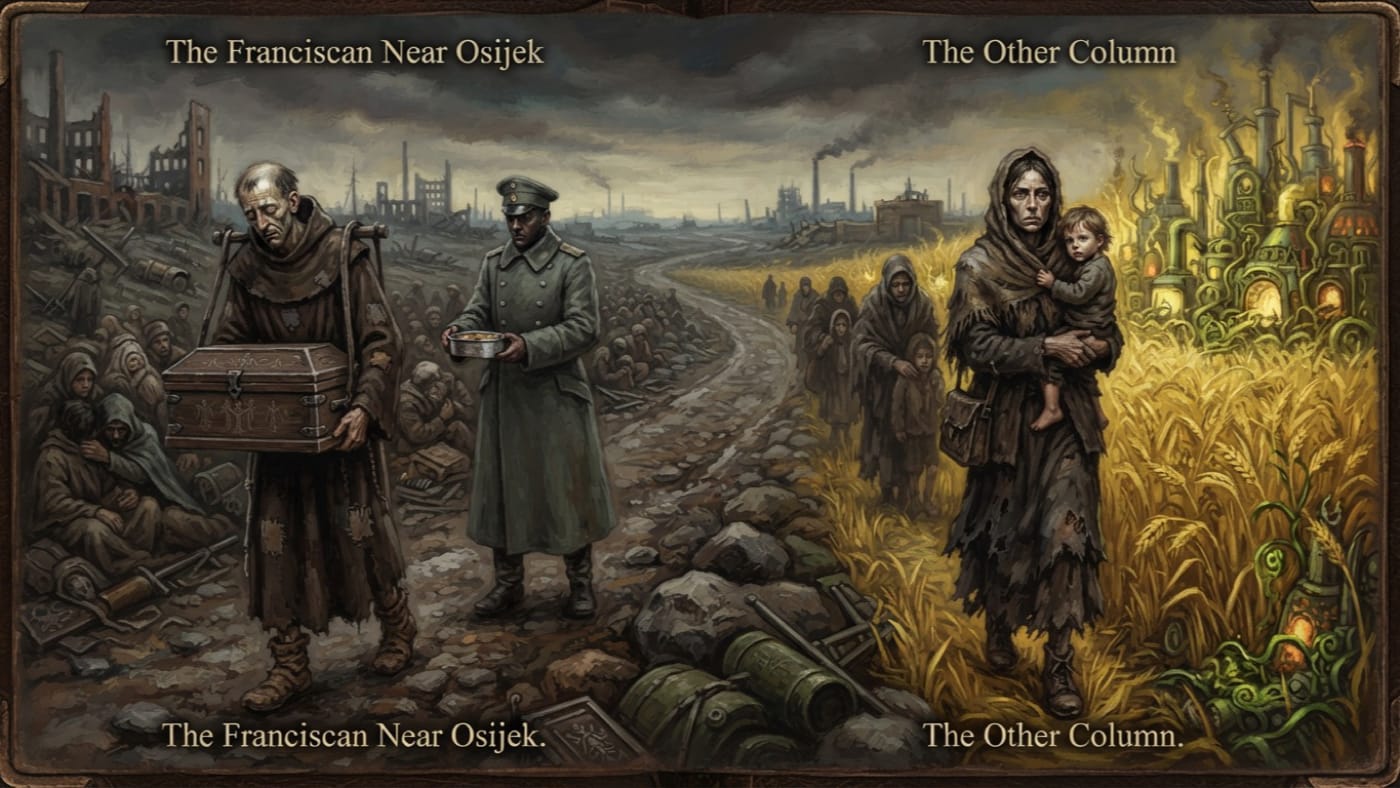
Osijek
Two roadside accounts and the hunger the Church filed differently
Osijek survives in two roadside accounts: a fasting friar near the town in late A.S. 45 and an undated mother approaching a Field. The Ledger keeps their hunger in separate drawers.
Codex Ref. II.3.08-045
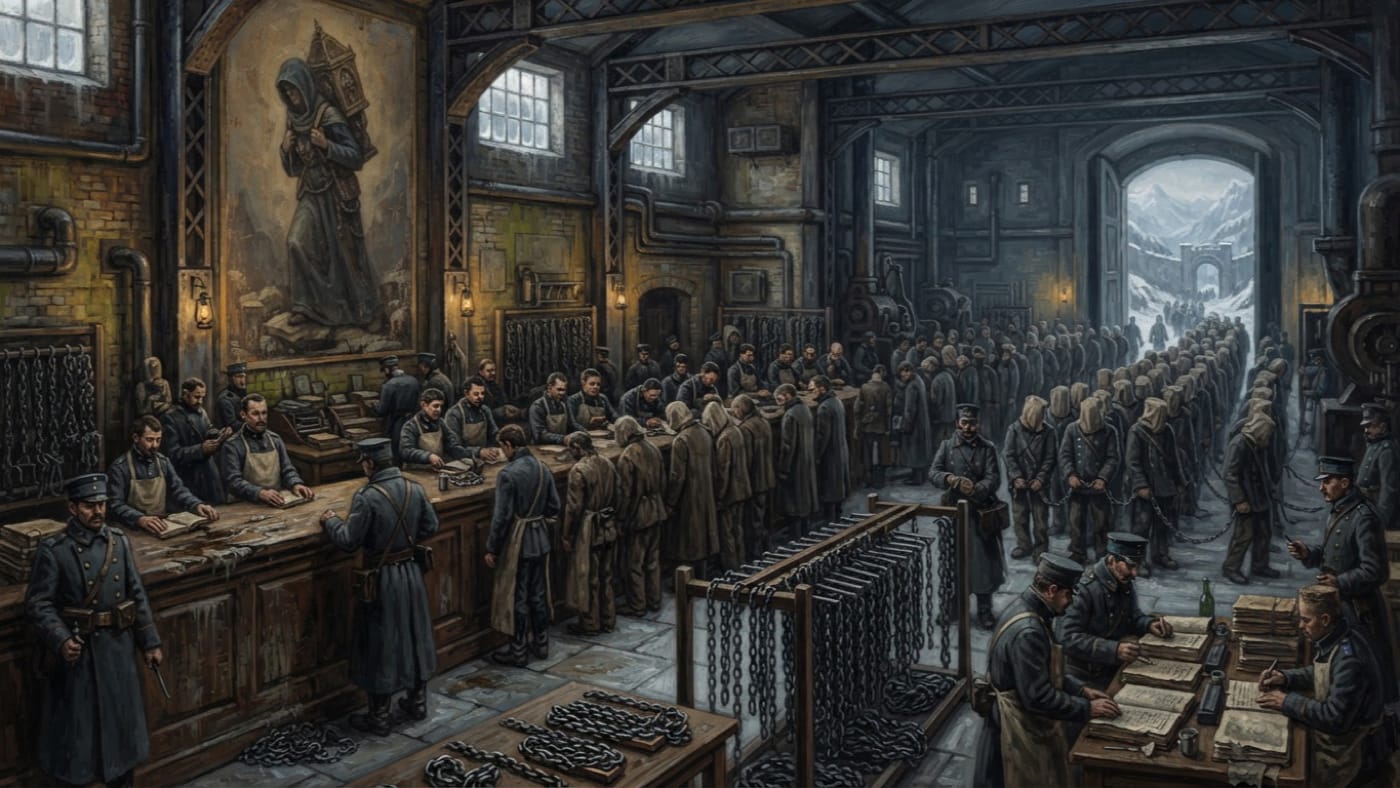
Ossuary Convoy Office
Where the condemned become capacity and the missing become corrections
At Bastion-Przemyśl, the Ossuary Convoy Office grades condemned carriers, issues chains and seals relic cargo. I inspected its immaculate ledgers in A.S. 197. Everything was accounted for; the shackles required no questions.
Codex Ref. II.4.07-197
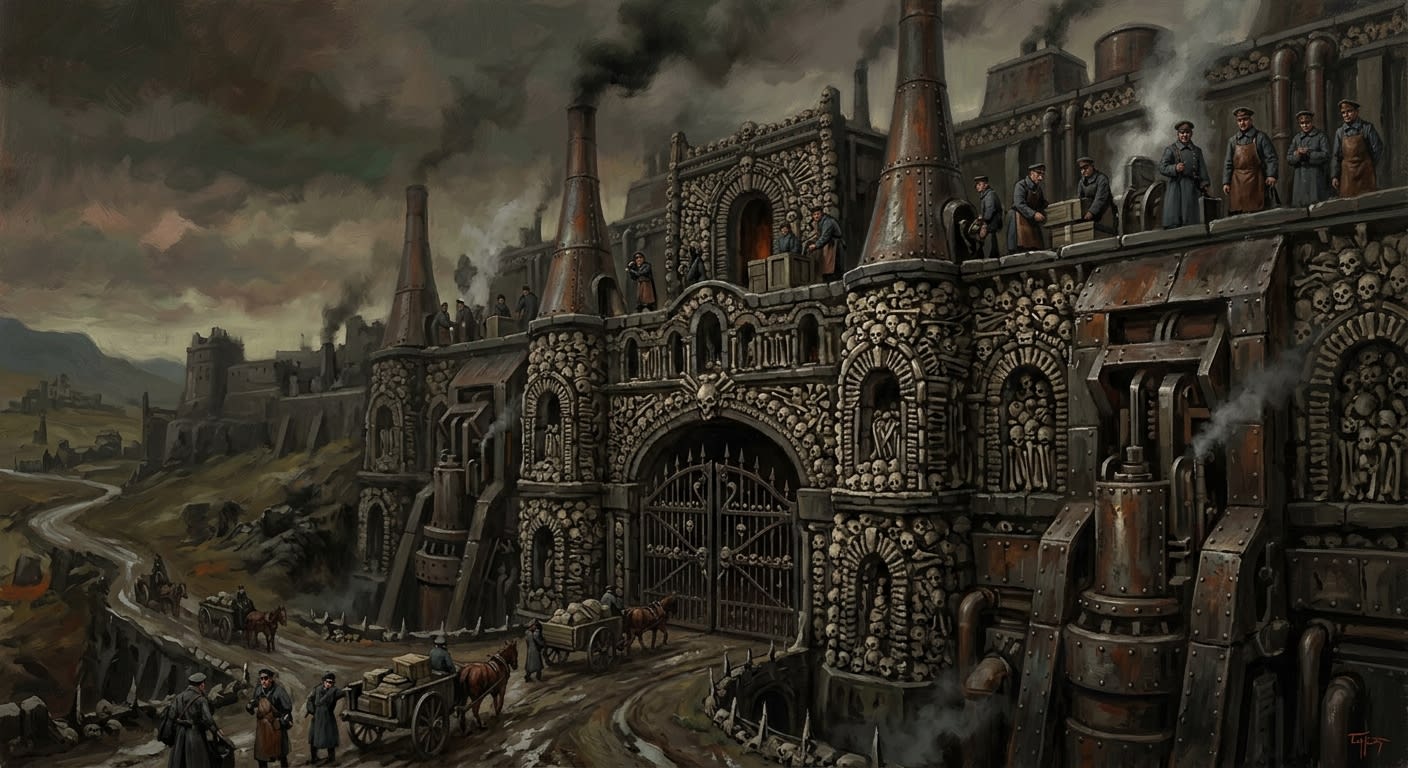
Ossuary Gate of Debrecen
The skull-wall that audits the dead before the marsh may answer
Active gate-fort on the Debrecen exclusion approach, built from branded parish bone and notorious for tolling without a bell when its skulls revise their confessions.
Codex Ref. VI.1.01-002
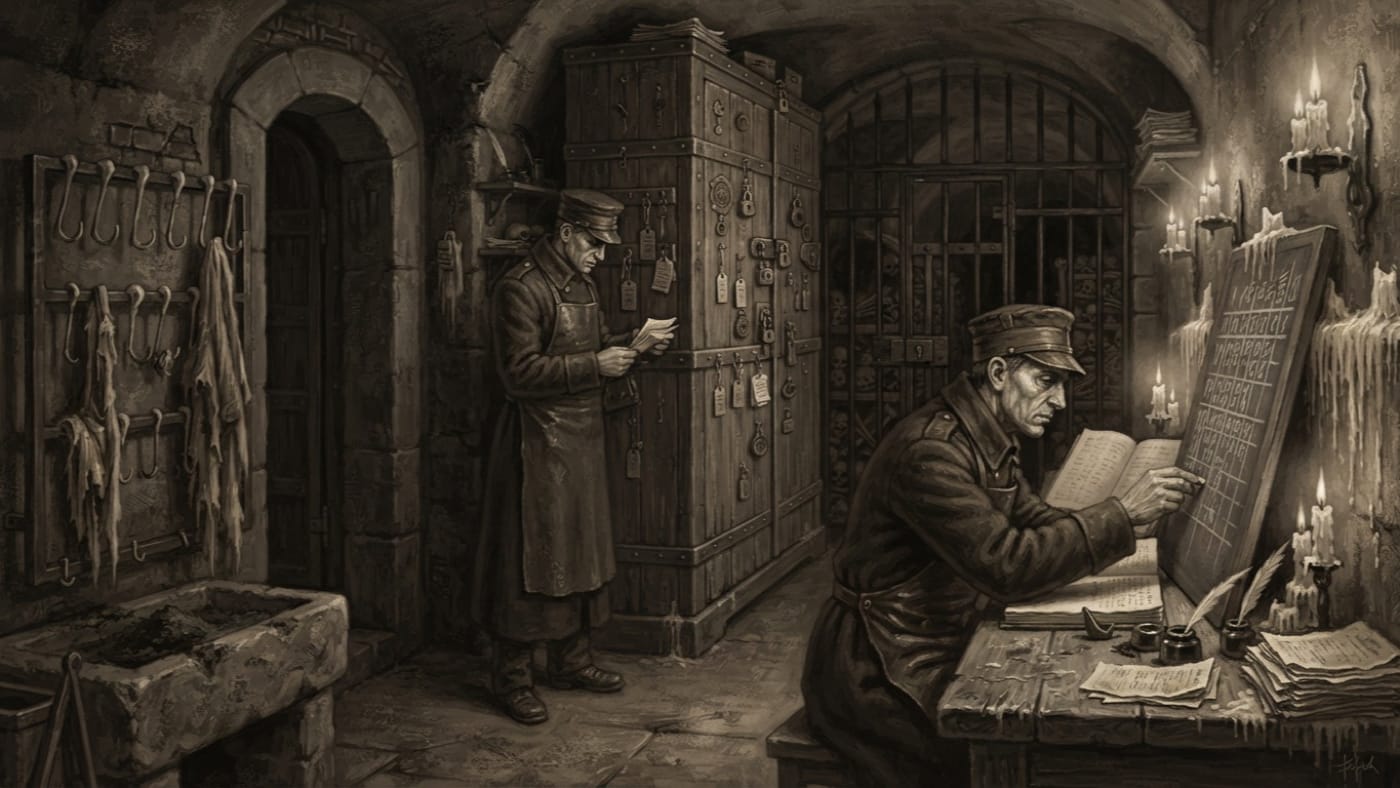
Ossuary Office Seven
Where the tag and the body are persuaded to agree
Ossuary Office Seven is the Circle of Ashen Steps' Counting Room in Bastion-Constantinople: candle tallies on slate, body-tags under lock, and a dawn reconciliation that makes the columns agree.
Codex Ref. II.4.10-008
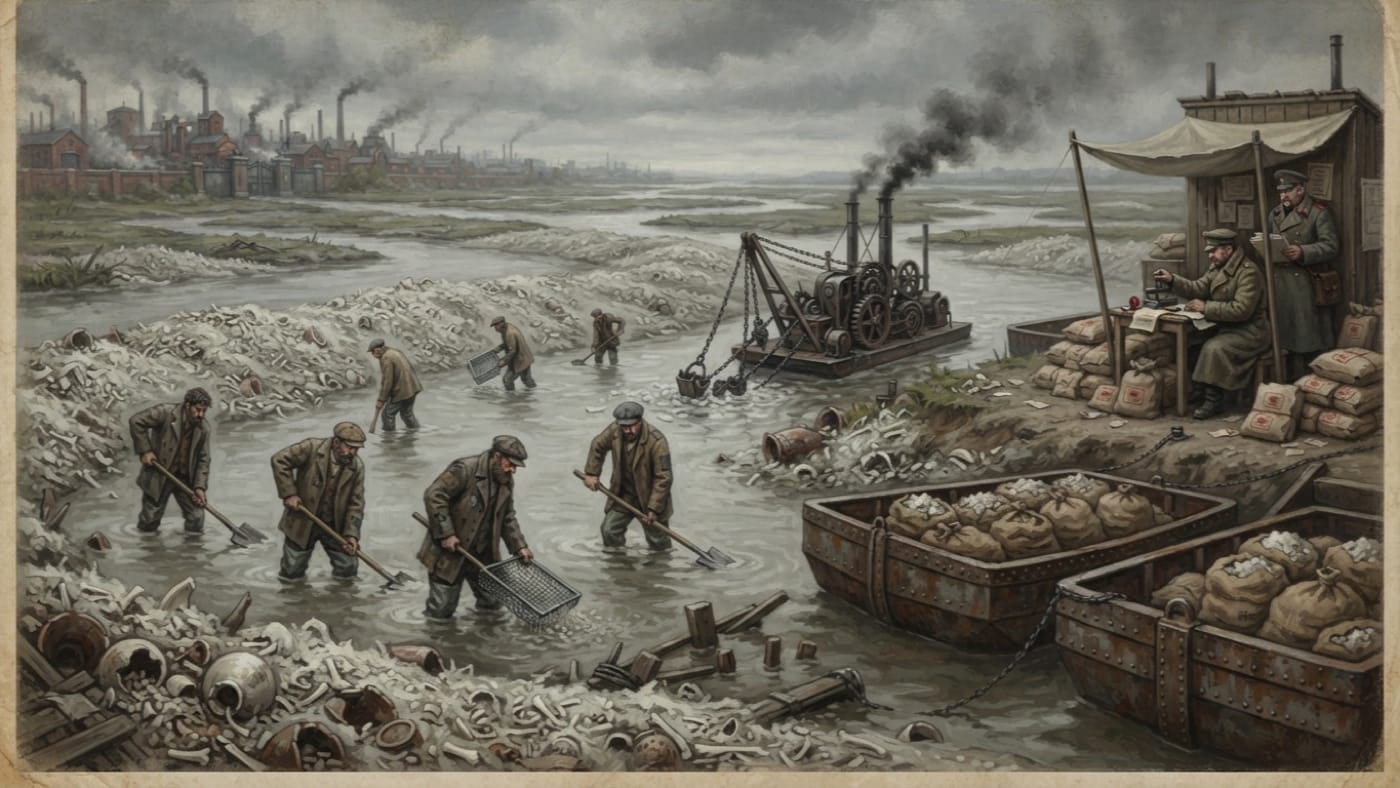
Ossuary Shoals
Every pinch is accounted for; its provenance is another matter.
The white banks upstream of Mournwater supply saint-dust, stamped in triplicate. The trade is documented; what replenishes the banks remains unproven.
Codex Ref. II.2.03-002
Outer Watch Post
The gate keeps its theology in tar, keys, and cudgels
The Outer Watch Post guards the Cloister's wall with ash armbands, chain keys, seizure slips, tarred batons, and the useful lie of municipal authority.
Codex Ref. II.3.06-005
Padua
A University City Whose Questions Return Unopened
An A.S. 201 survey of Padua, university city of the Central Heartlands. Seven professors went to Strasbourg; the University's enquiries returned unopened. The names became clerical errors.
Codex Ref. III.2.01-2065
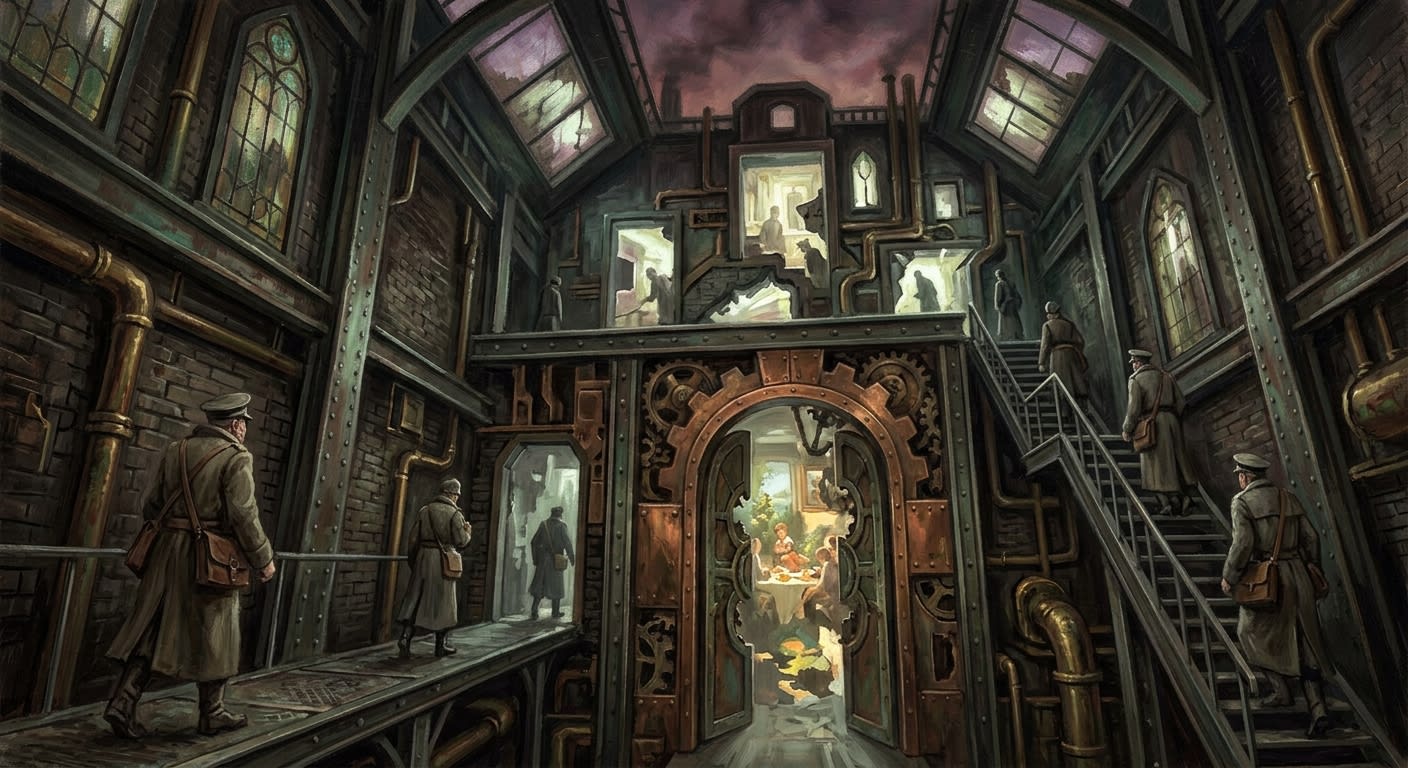
Palace of Echoes
Envy learning masonry from stolen memory
Morwen's Palace of Echoes is no fortress but a hostile architecture of envy, where rooms are built from stolen selves and better lives open like doors.
Codex Ref. II.6.07-073
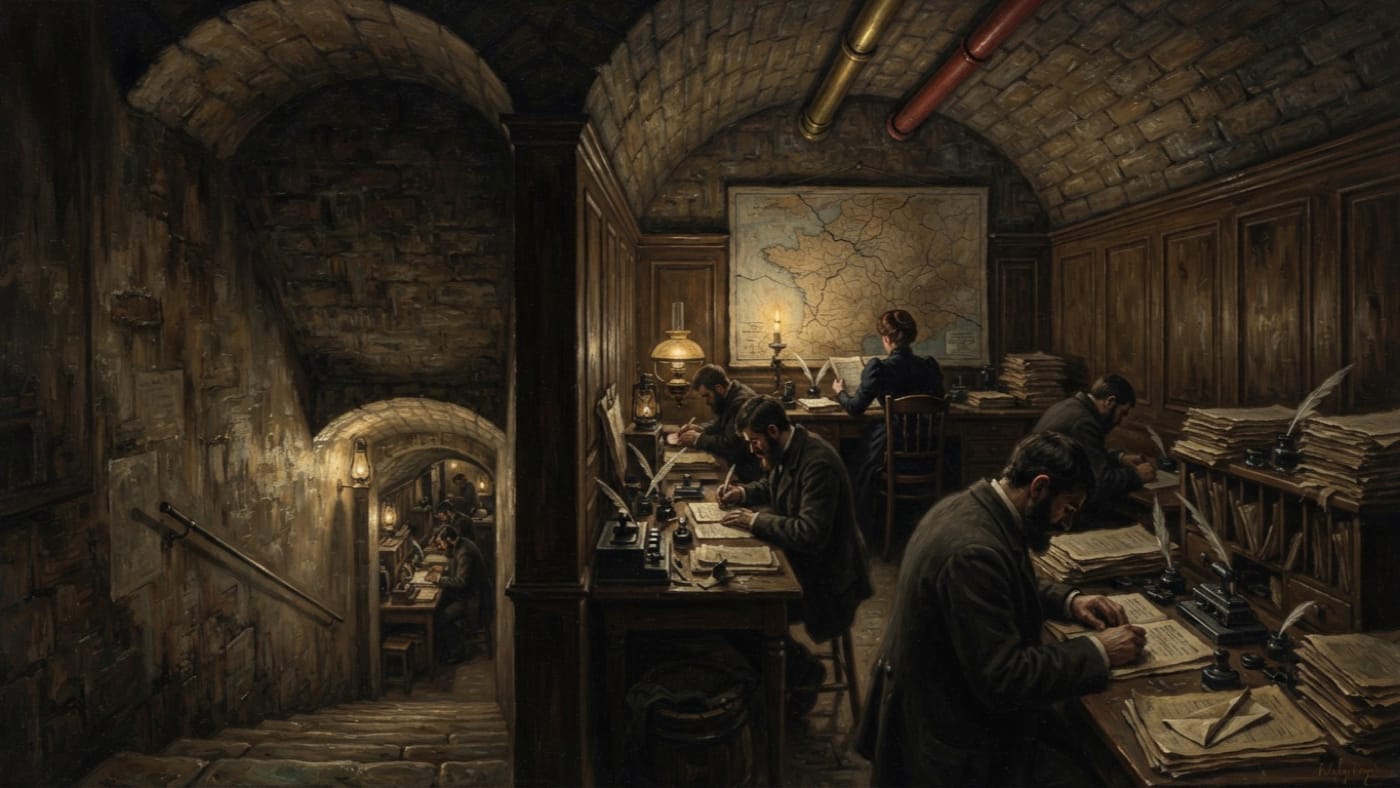
Palatine Administrative Wing
Rank ascends. Settlement descends.
The Palatine Administrative Wing stacks Tithes above Records above Settlement, whose wine-cellar offices decide where three hundred million subjects may sleep. In Strasbourg, dependence is measured by how far one must descend.
Codex Ref. II.2.08-201
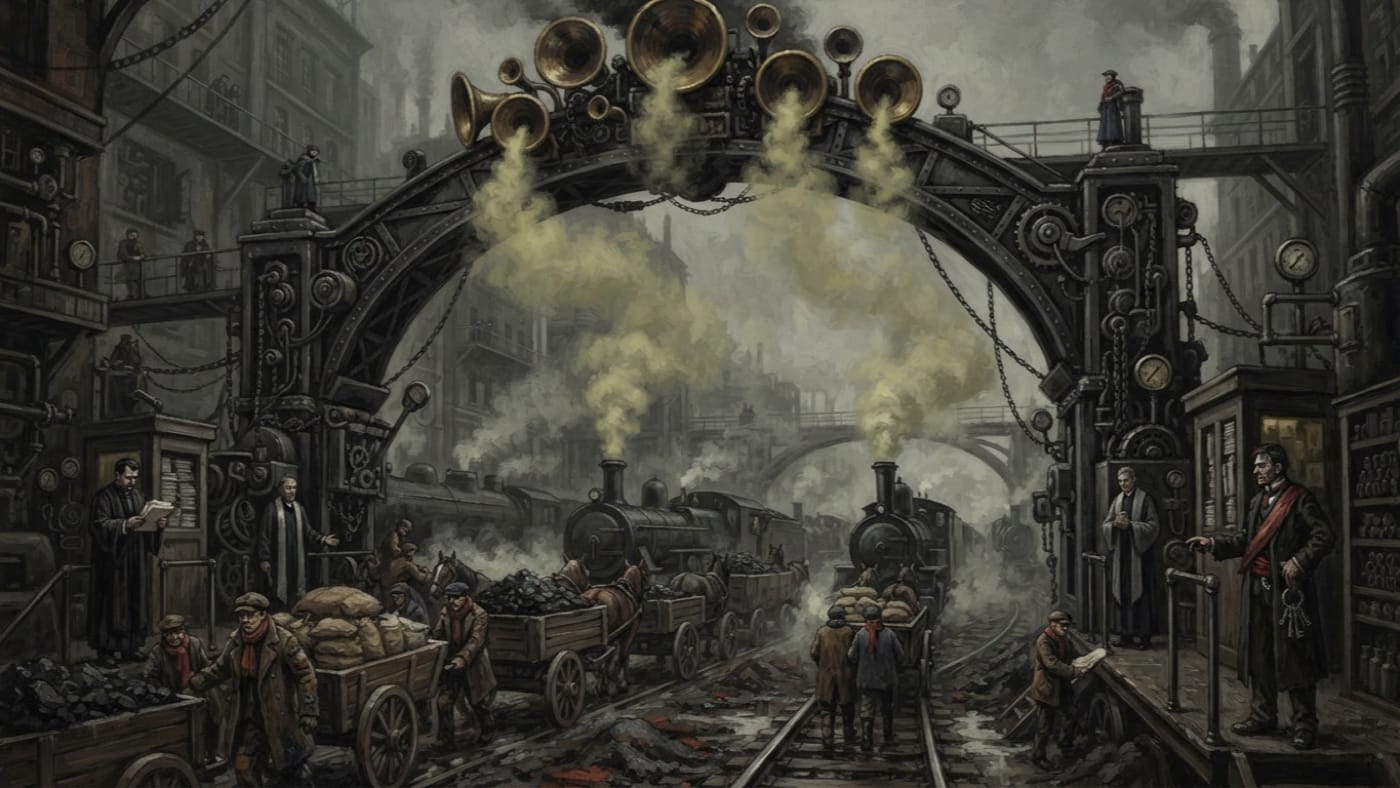
Palatine Gate
The price of permission beneath the bell horns
Lorn's main freight ingress admits coal, cargo, and purchased haste beneath an iron arch with bell horns. The guard rotation is a bribe ladder; Hark's arrival remains pending.
Codex Ref. II.3.01-002
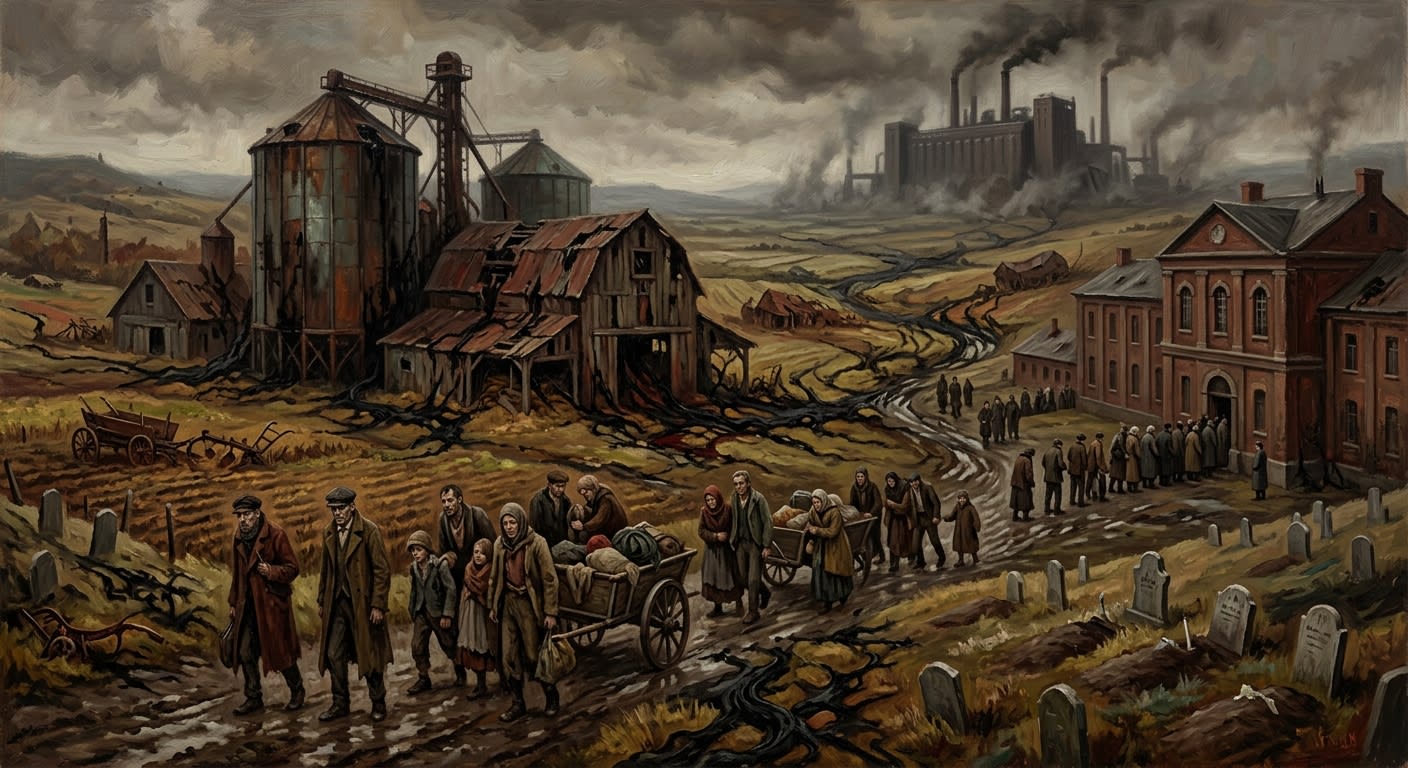
Pannonia
The bread basin that learned appetite
Pannonia was the basin that fed empires before Kargath taught its barns to hunger, its graves to want, and its maps to rot into accusation.
Codex Ref. II.4.09-045
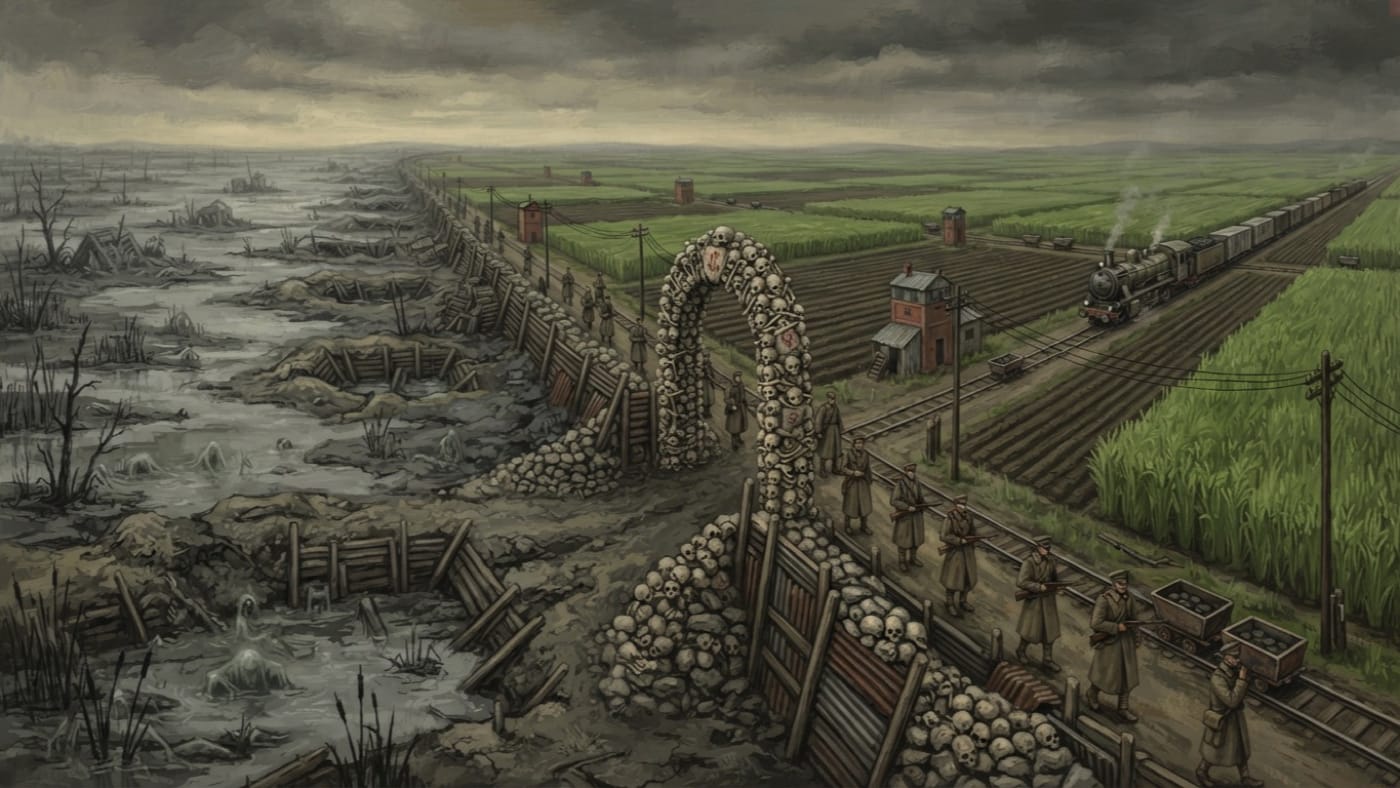
Pannonian Plain
A full barn and a green field prove nothing
The plain once fed the West. Kargath devoured Debrecen's provisions, and the Blightmarsh keeps eating. Western Hungary still supplies the Line. A green field proves nothing.
Codex Ref. VI.1.01-004
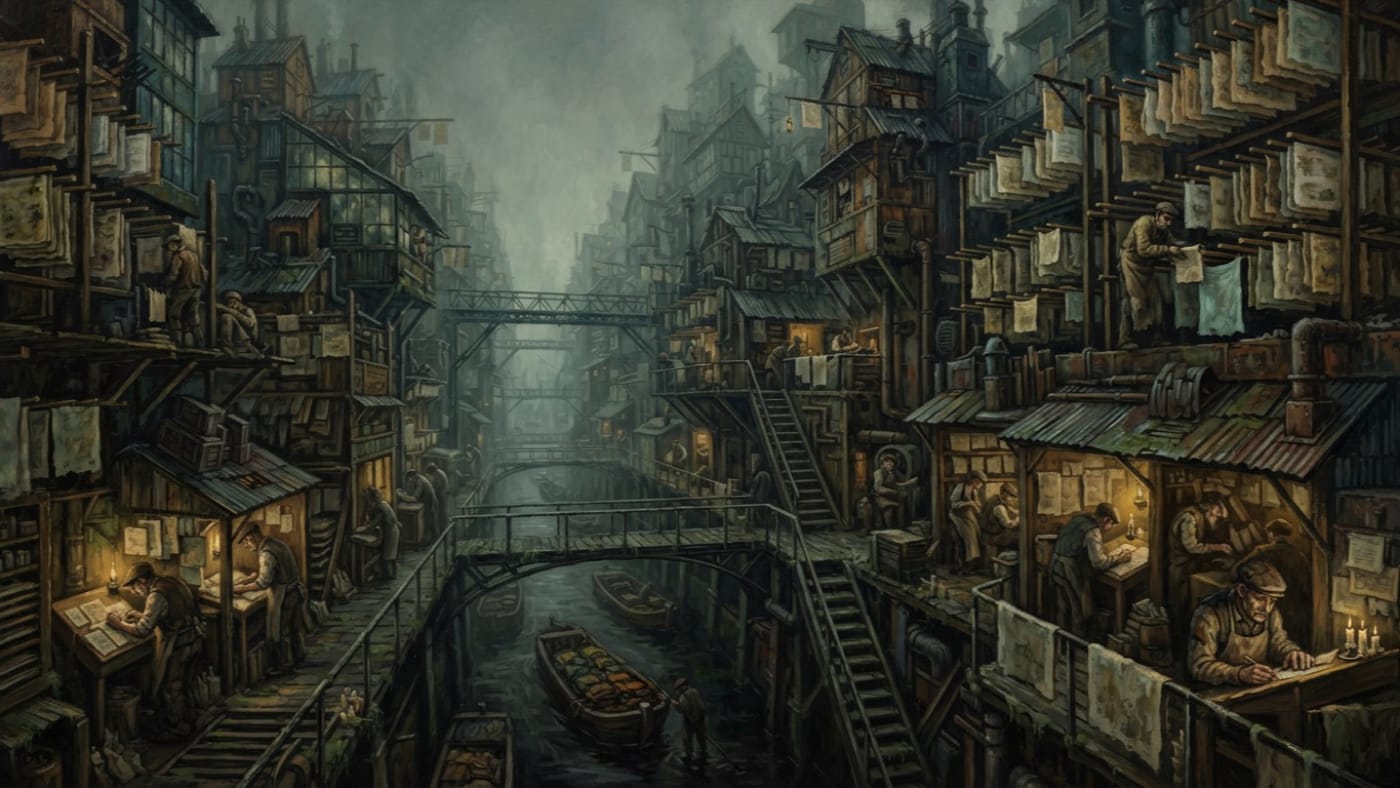
Paper Loft Quarter
Where paper survives and sick clerks become scheduled maintenance
Candle-Sump's lofts keep ration slips, death receipts and washed names legible. Rot-lung consumes the clerks; the Registry records only scheduled maintenance.
Codex Ref. II.1.05-008
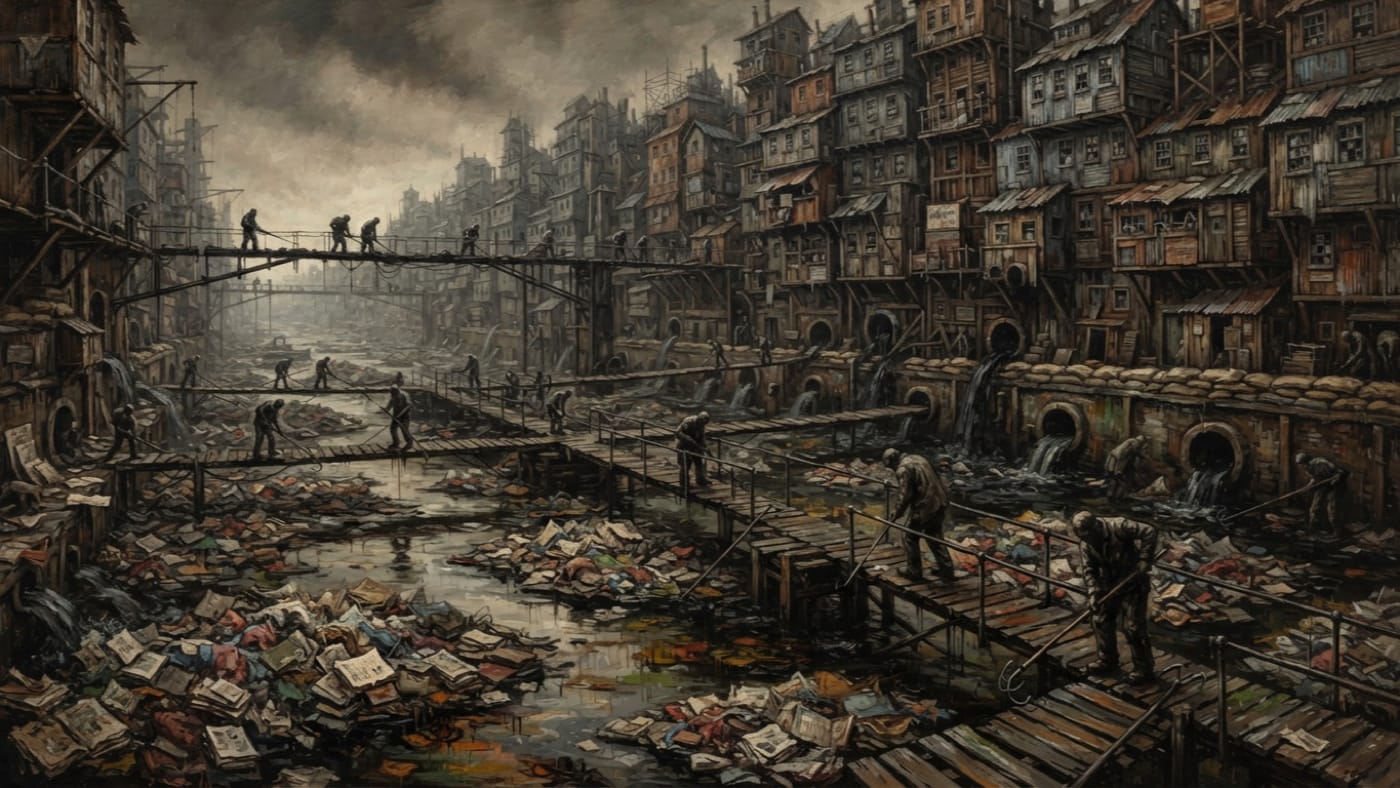
Paper Sump
The drainage belongs to Latchford. The losses occur outside it.
Latchford's drainage district receives discarded forms, acidic ink and debt labour. Records excluded it from the settlement boundary in A.S. 194. The water still arrives; the losses fall outside the count.
Codex Ref. II.4.08-003
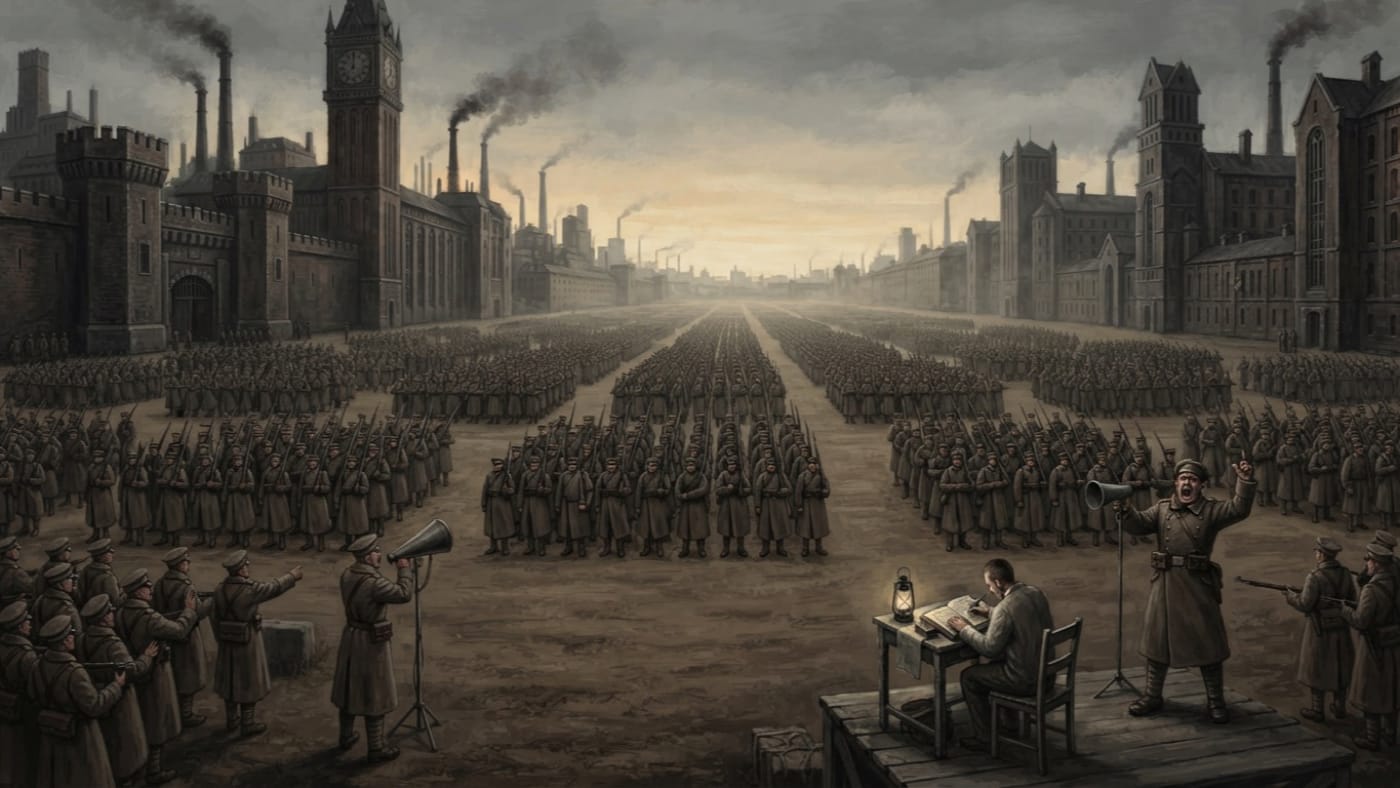
Parade Grounds
The Ground Is Counted; the Men Are Another File
Ten thousand soldiers can drill on Strasbourg's Parade Grounds at once. The Bureau of War counts the space; the levies must fill it. A capacity is easier to certify than an army.
Codex Ref. III.2.01-006
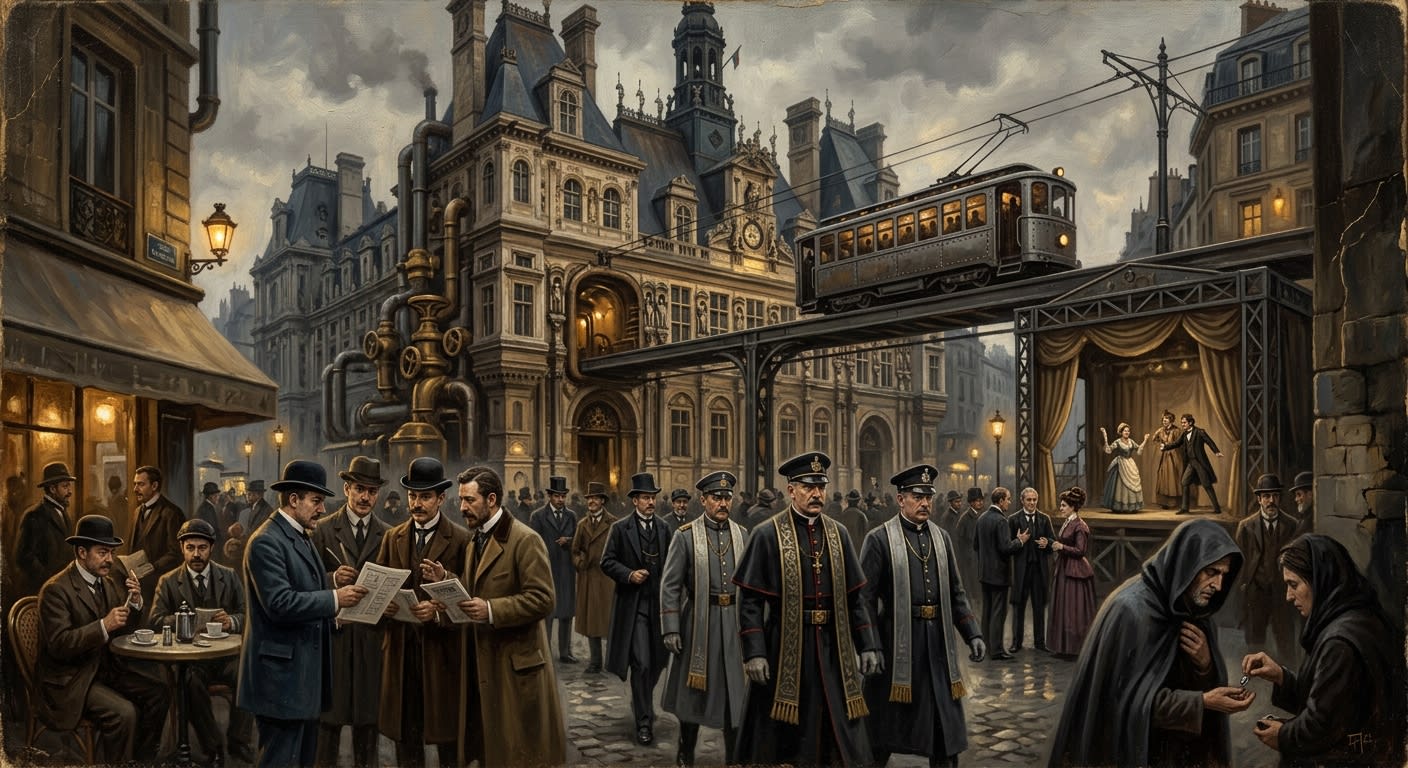
Paris
The city kneels beautifully, which is precisely why one watches the angle
Paris is the Western Heartlands' corrected jewel: Rationalist salon, Synod workshop, black-market confessional, obedient theatre, and treason with excellent diction.
Codex Ref. II.1.08-201
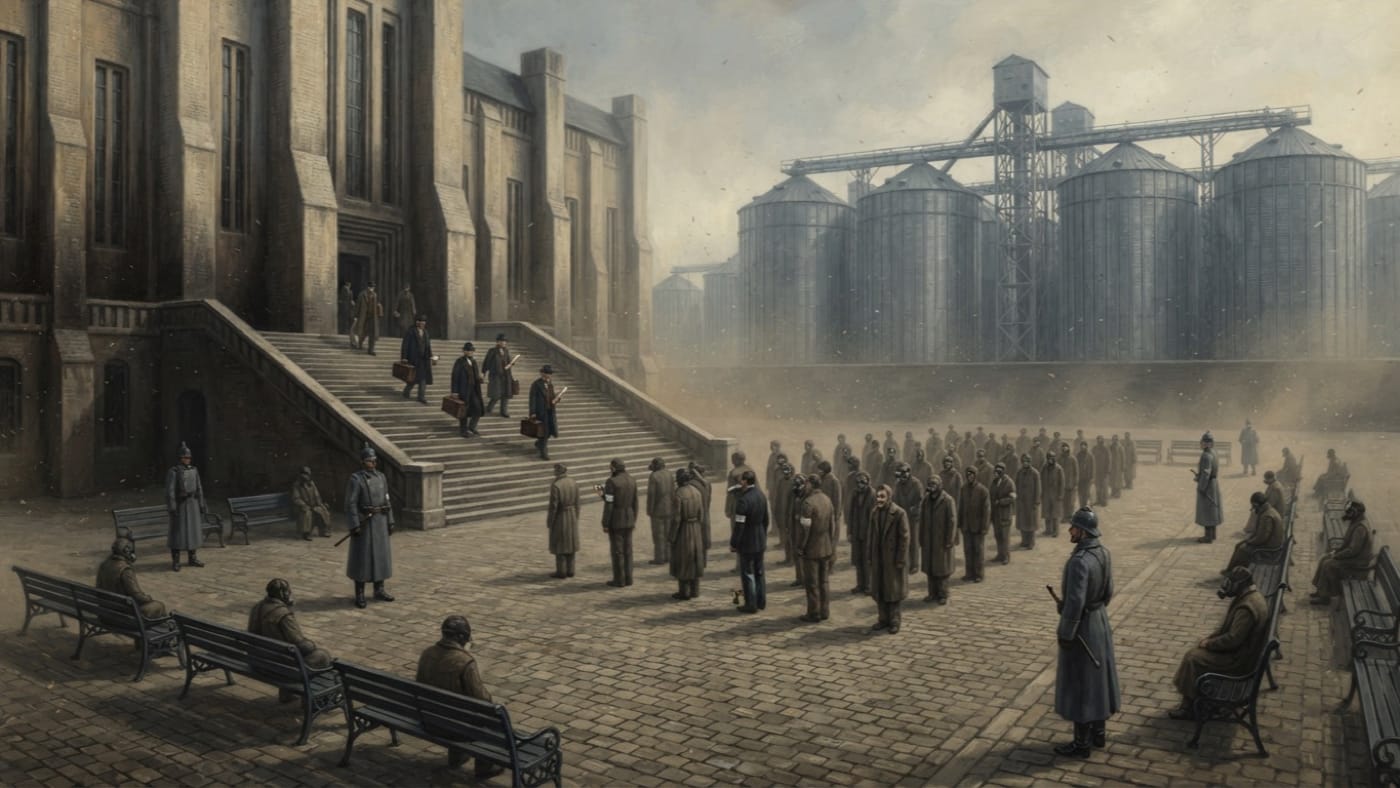
Parliament Square
Where Wexel makes its numbers official and its citizens observable
Wexel's civic square carries quotas, citations and compulsory smiles between the Hall of Measures and its offices. The benches are watched; the wind returns the Parliament's words as questions.
Codex Ref. II.2.04-002
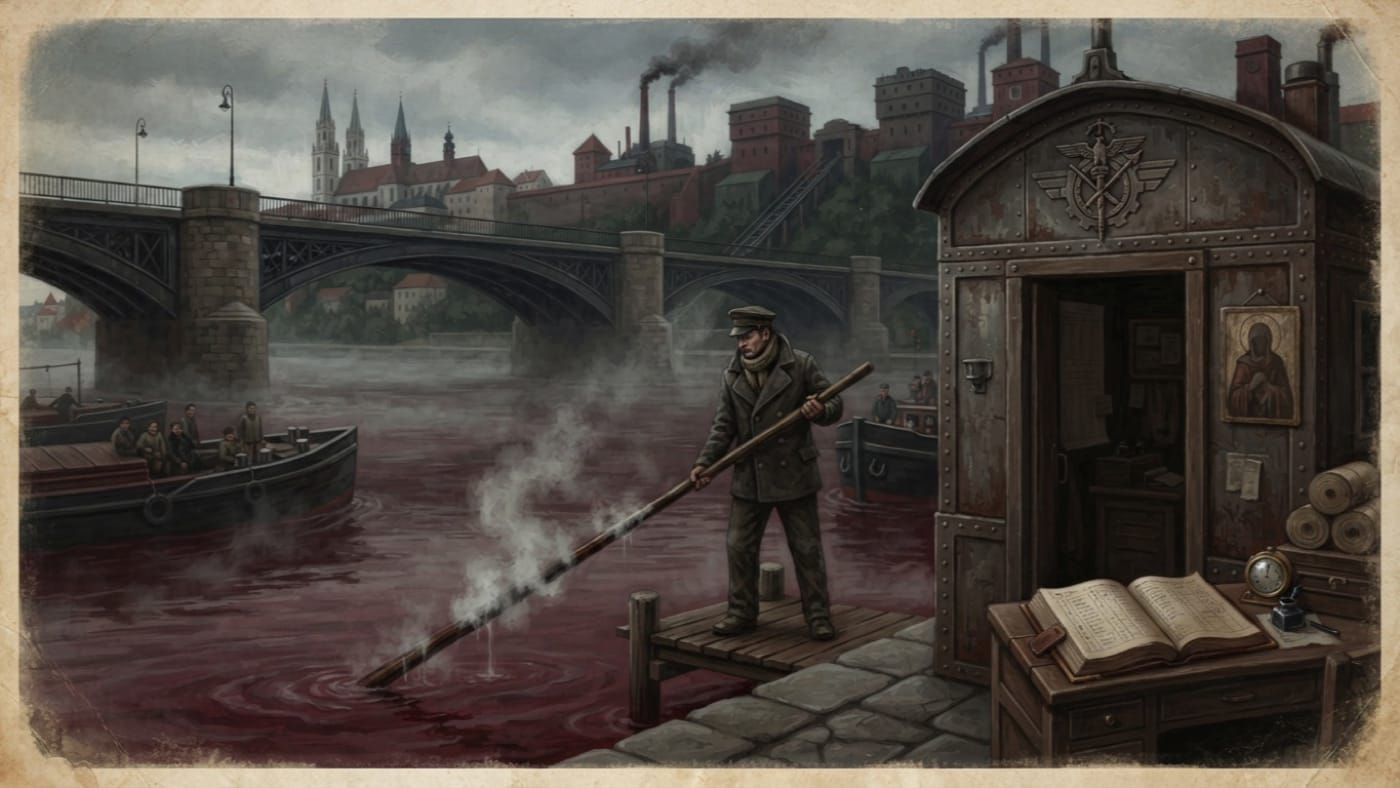
Passau
The keeper wrote it down; the Ledger keeps it
A toll keeper east of Passau recorded the first confirmed signs of the A.S. 34 Red Flood. The pole steamed; the toll rolls kept the three-week count. The Bureau supplied the meaning later.
Codex Ref. II.2.04-034
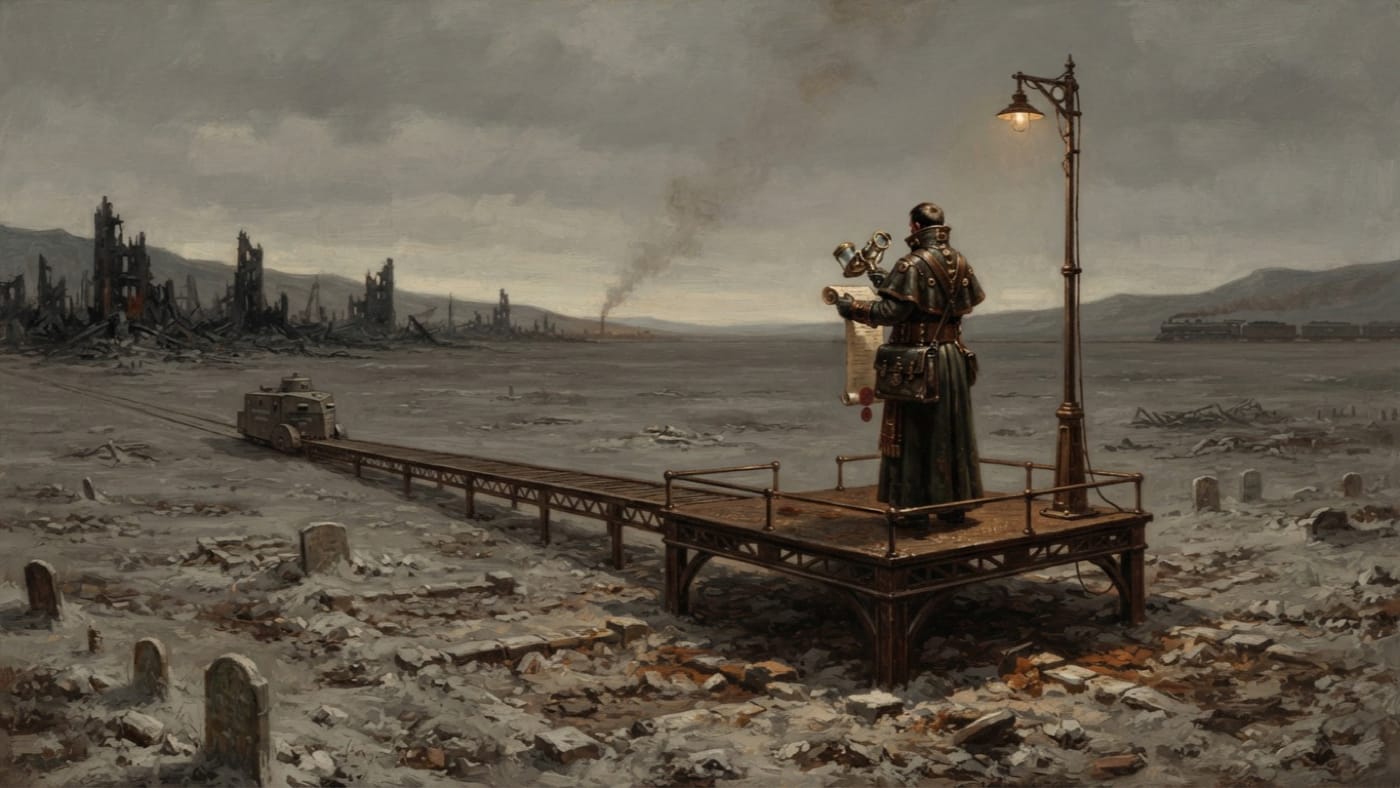
Pavia
The diocese whose stipend outlived its people
Pavia was razed in the Sundering of A.S. 45. Its diocese remains on the rolls, its Bishop-Praetorial paid to issue decrees and inspect an absence.
Codex Ref. II.1.12-045
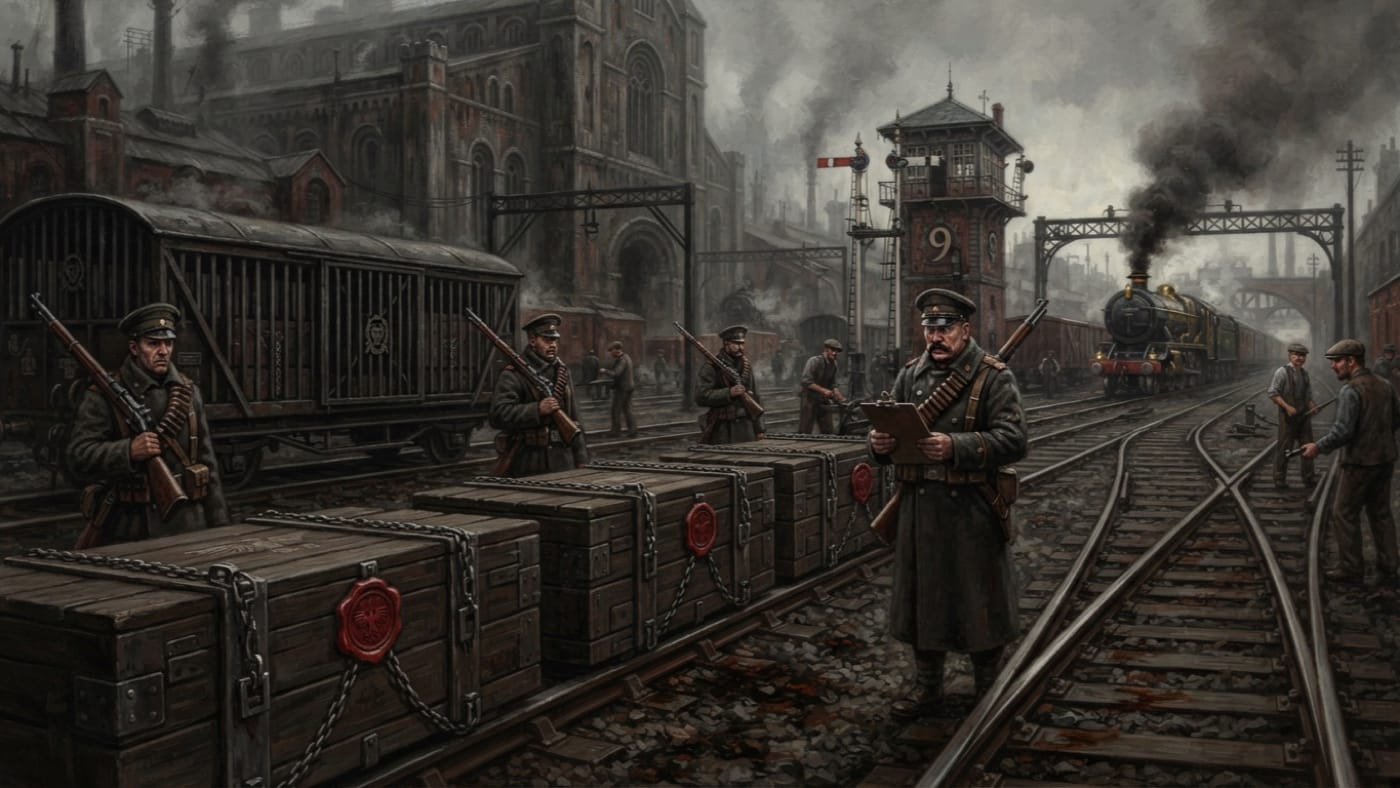
Payroll Spur
Where a soldier's wages arrive as authenticated emptiness
Lorn's guarded relic-payroll sidings send sanctity east under seal, stamp, and song. Since A.S. 199, empty crates have proved how little those assurances weigh.
Codex Ref. II.3.01-010
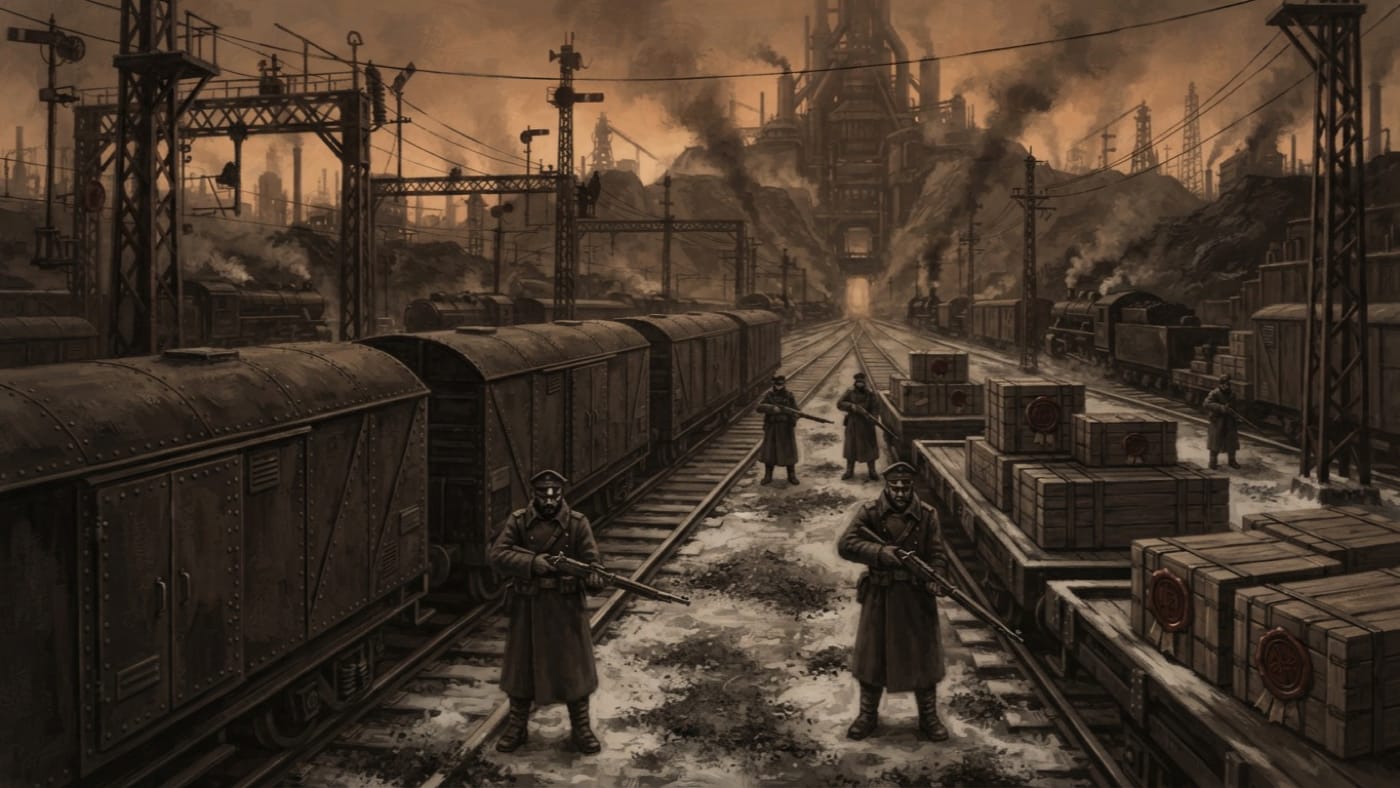
Payroll Spur Vaults
The seals arrived intact. The soldiers' pay did not.
At Lorn's eastern sidings, relic-payroll waits in guarded railway cars. Three crates arrived empty with intact seals; the paperwork remains in excellent condition.
Codex Ref. II.3.01-201
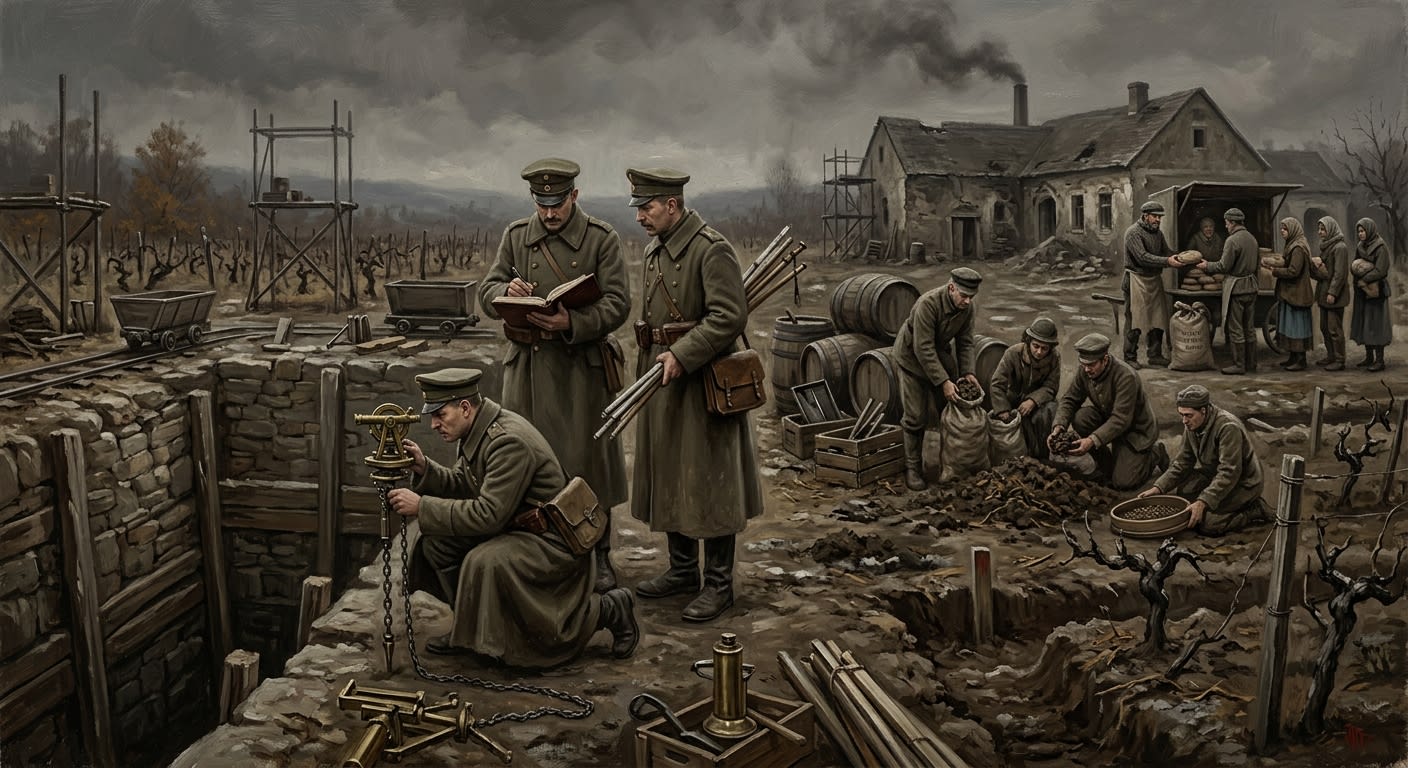
Pécs
The town where bread became evidence
Pécs is the vineyard ruin where Famine Pit measurement, Abundance Field proof, and Kargath's useful bread made hunger legible to the Ledger.
Codex Ref. II.4.09-147
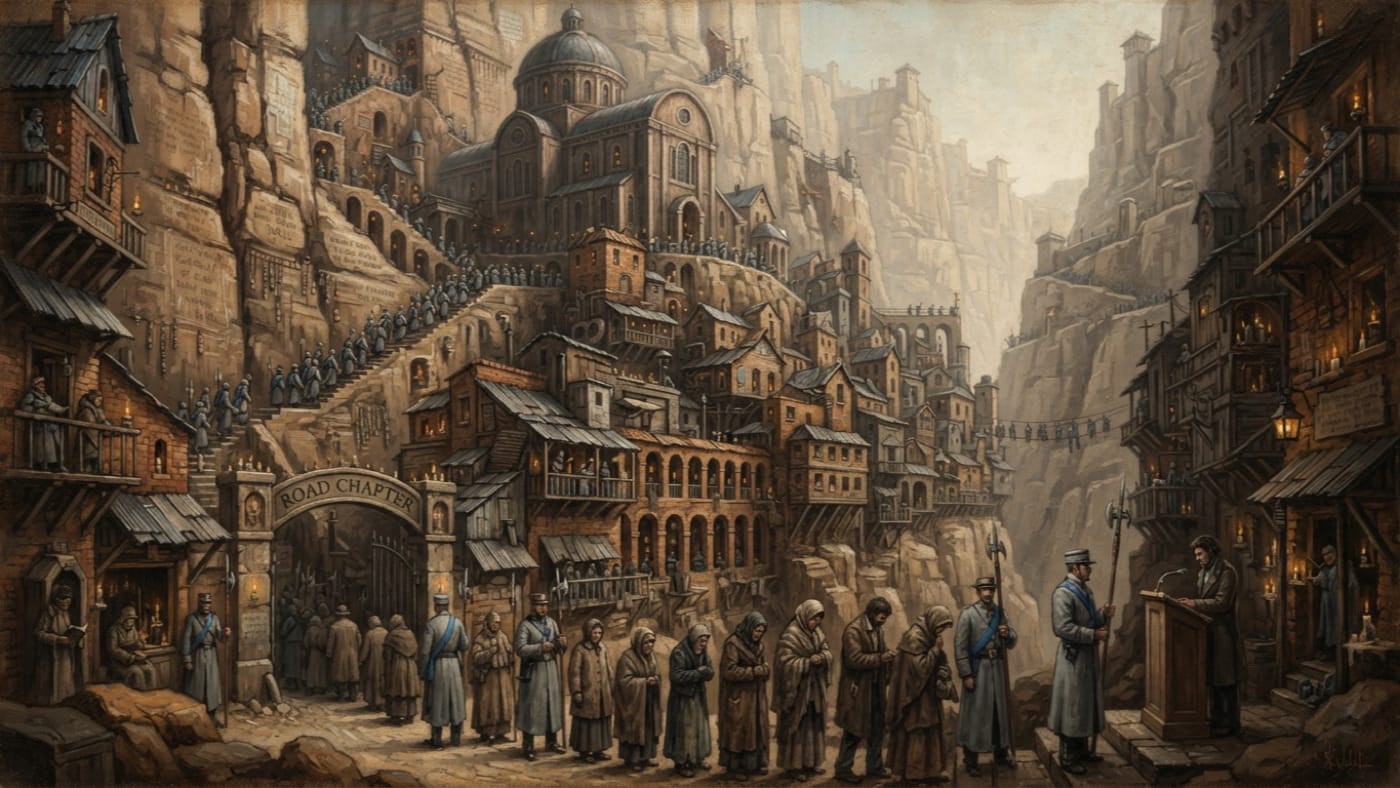
Peregrine Row
Where clean tongues buy passage and the canyon collects the rest
Peregrine Row is a canyon town on the Pilgrim Roads where water, creed-clearance and safe passage carry separate charges. The Wardens train on its cliffs; the brokers turn the canyon's echoes into fees.
Codex Ref. II.1.03-201
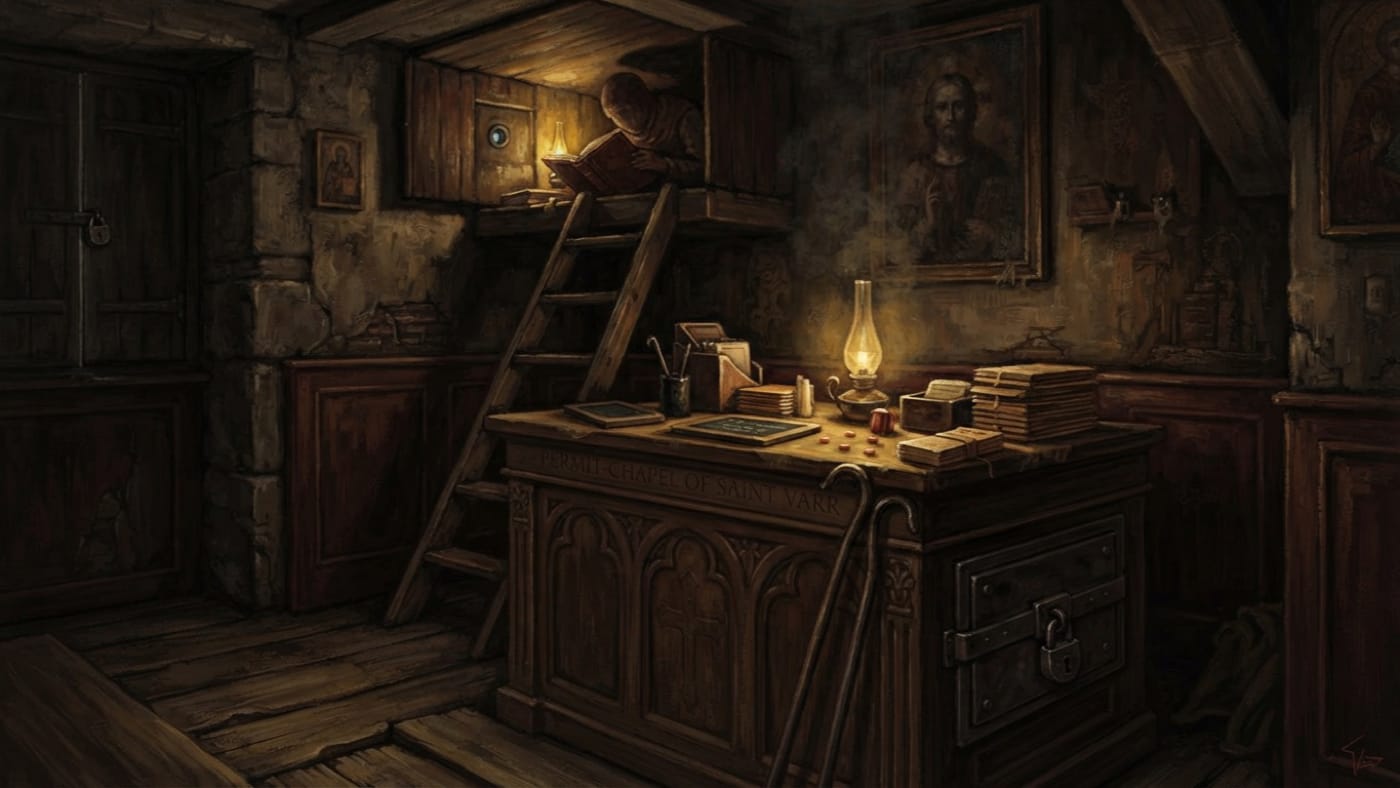
Permit-Chapel of Saint Varr
The altar receives receipts; the saint receives no consultation.
The Circle of Nine Wicks works from Saint Varr's shuttered shrine: altar-desk below, Echo ledgers above, and a locked drawer where guilt waits for a name.
Codex Ref. II.3.07-001
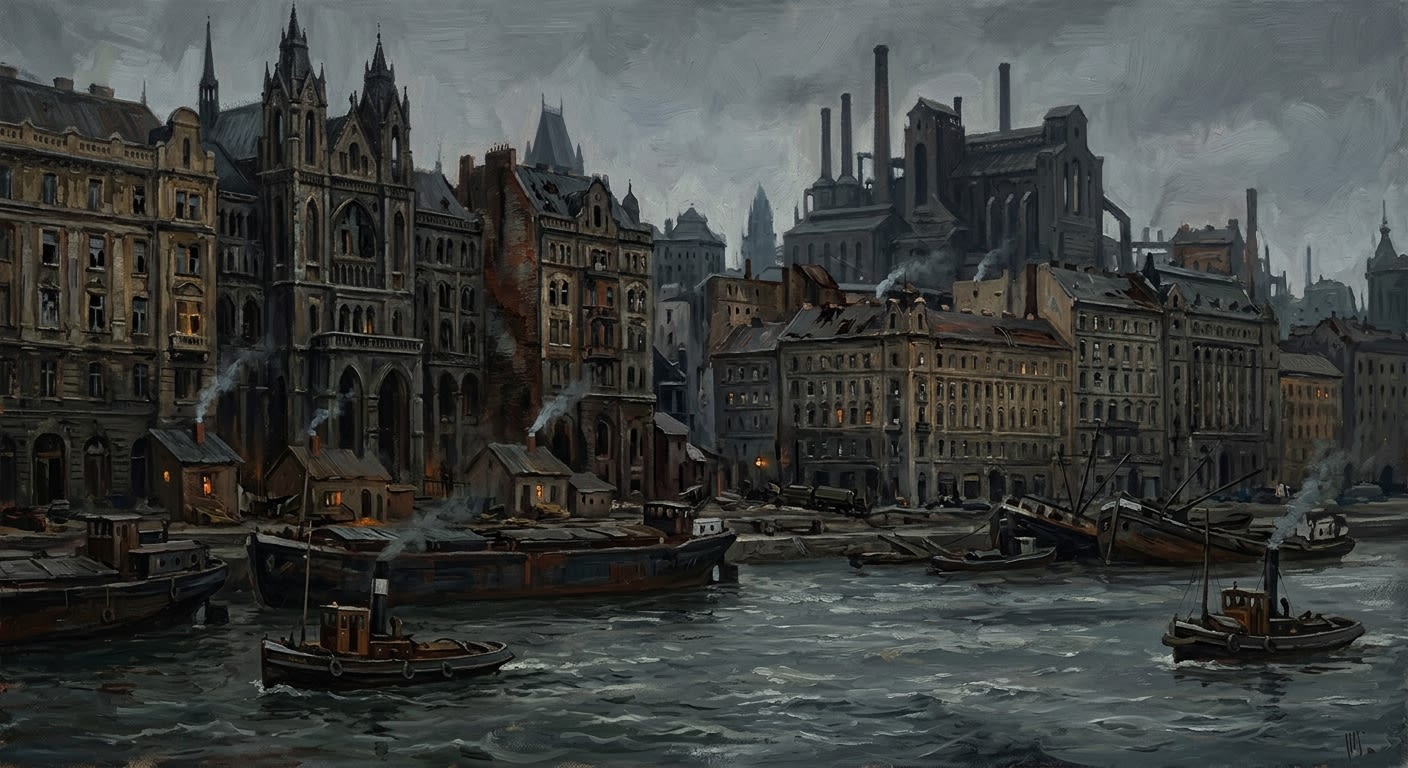
Pest, Abandoned Bank
The empty city that keeps answering without being called
Pest is the eastern bank of Budapest: declared Vacated in A.S. 120, visible across the Danube, annually confirmed, and inconveniently less empty than doctrine prefers.
Codex Ref. II.4.09-012
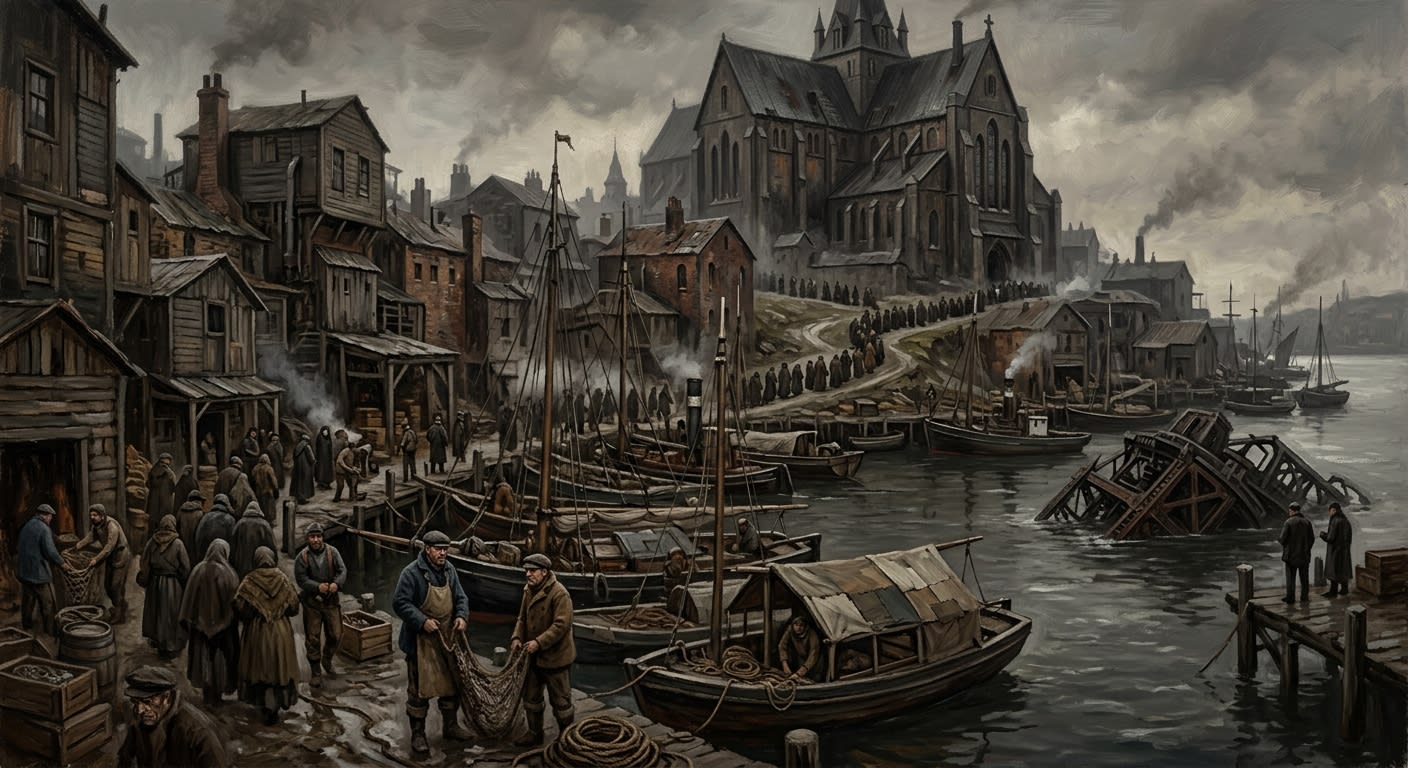
Phaleron Bay
The fishermen count boats because the water has learned names
Phaleron Bay is the Bosphorus inner approach's fishing ward, smuggling pocket, pilgrim nuisance, and quiet witness to the Iron Idol that waits below.
Codex Ref. II.4.09-189
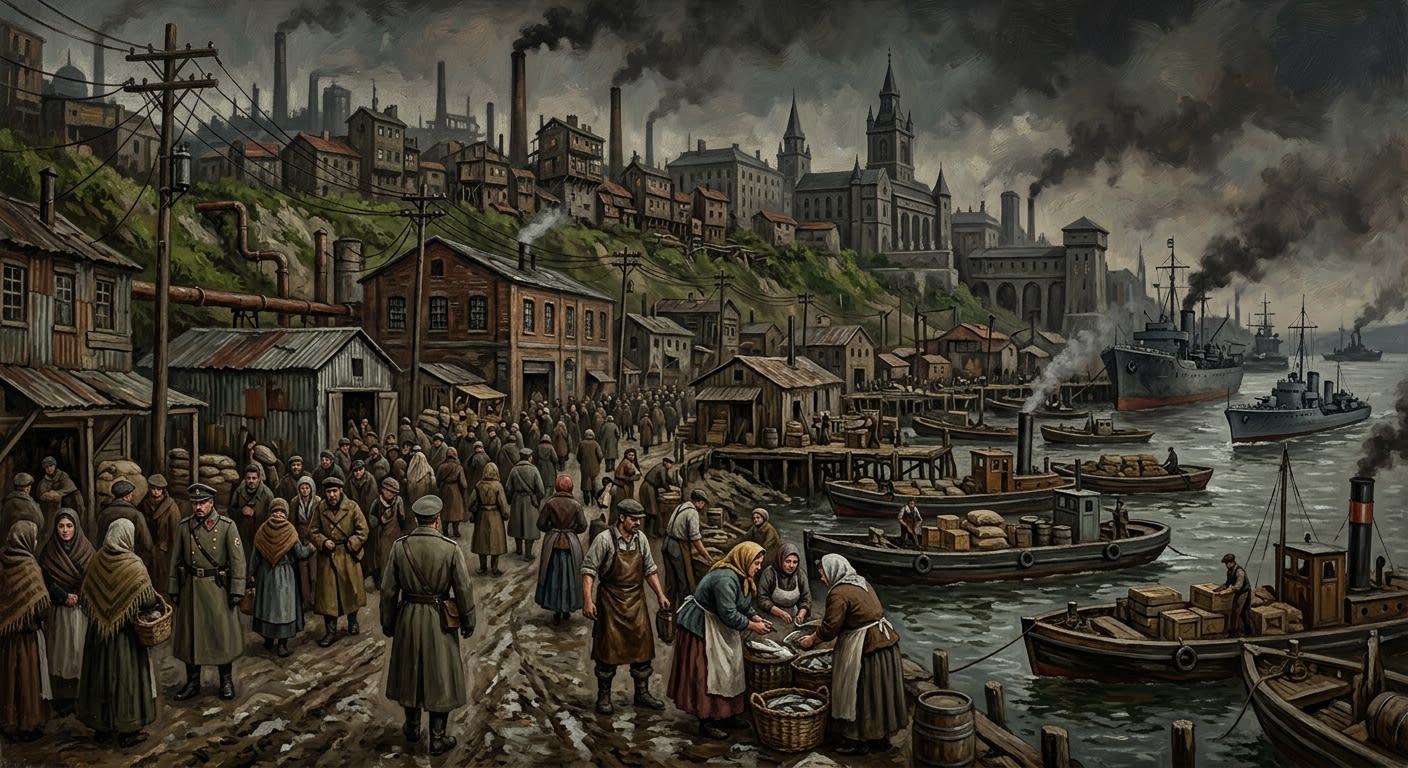
Pilgrim's Coast
A shore pretending to be a road, and a map pretending to govern it
The Pilgrim's Coast is Constantinople's green shore: landing road, supply seam, smuggler hymn, fishwife law, and map-denied life.
Codex Ref. II.4.09-068
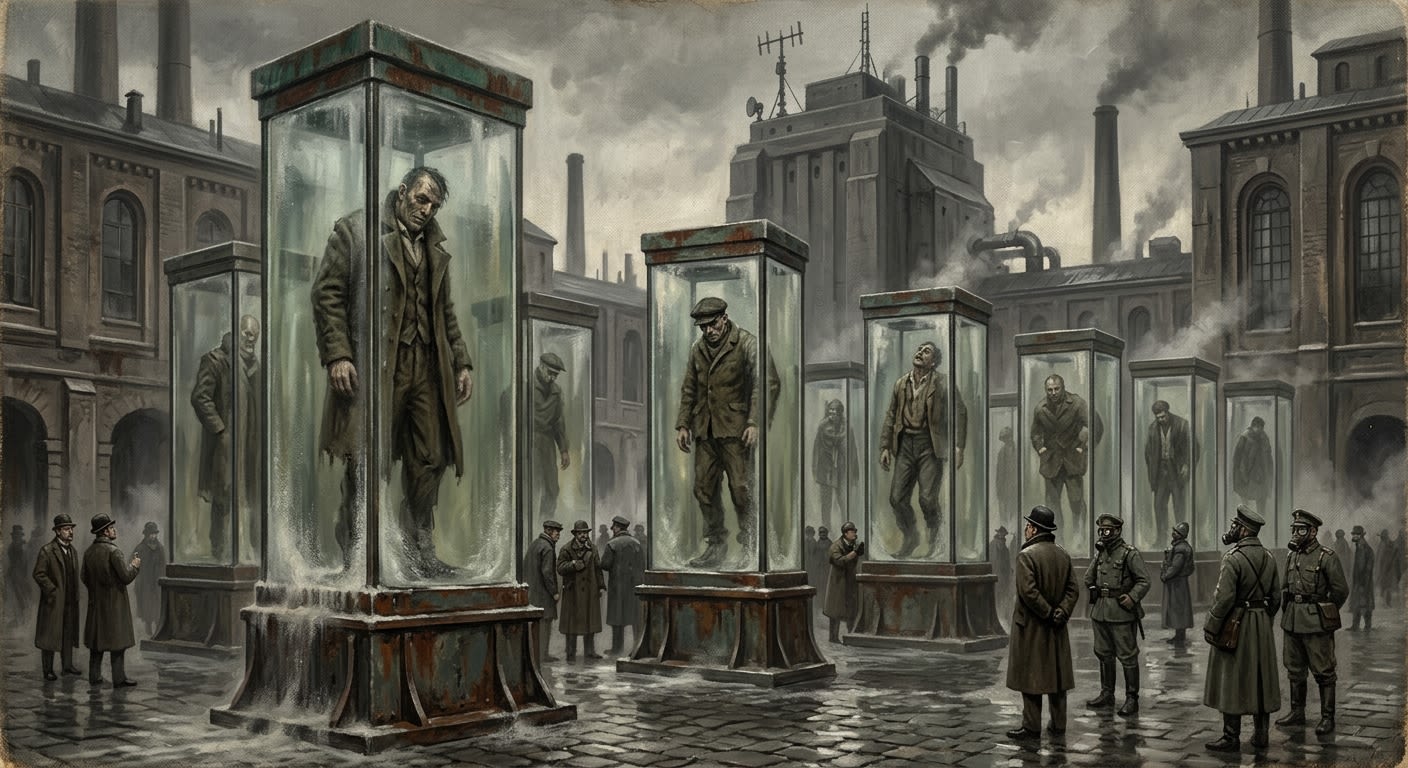
Pillars of Glass, Zaragoza
Transparent cruelty, polished daily for the improvement of the crowd
Zaragoza's punishment plaza of glass columns, where condemned bodies stand magnified into civic lessons and the Ash-Rain still leaves pale residue on Purity's proudest transparent cruelty.
Codex Ref. II.1.06-001
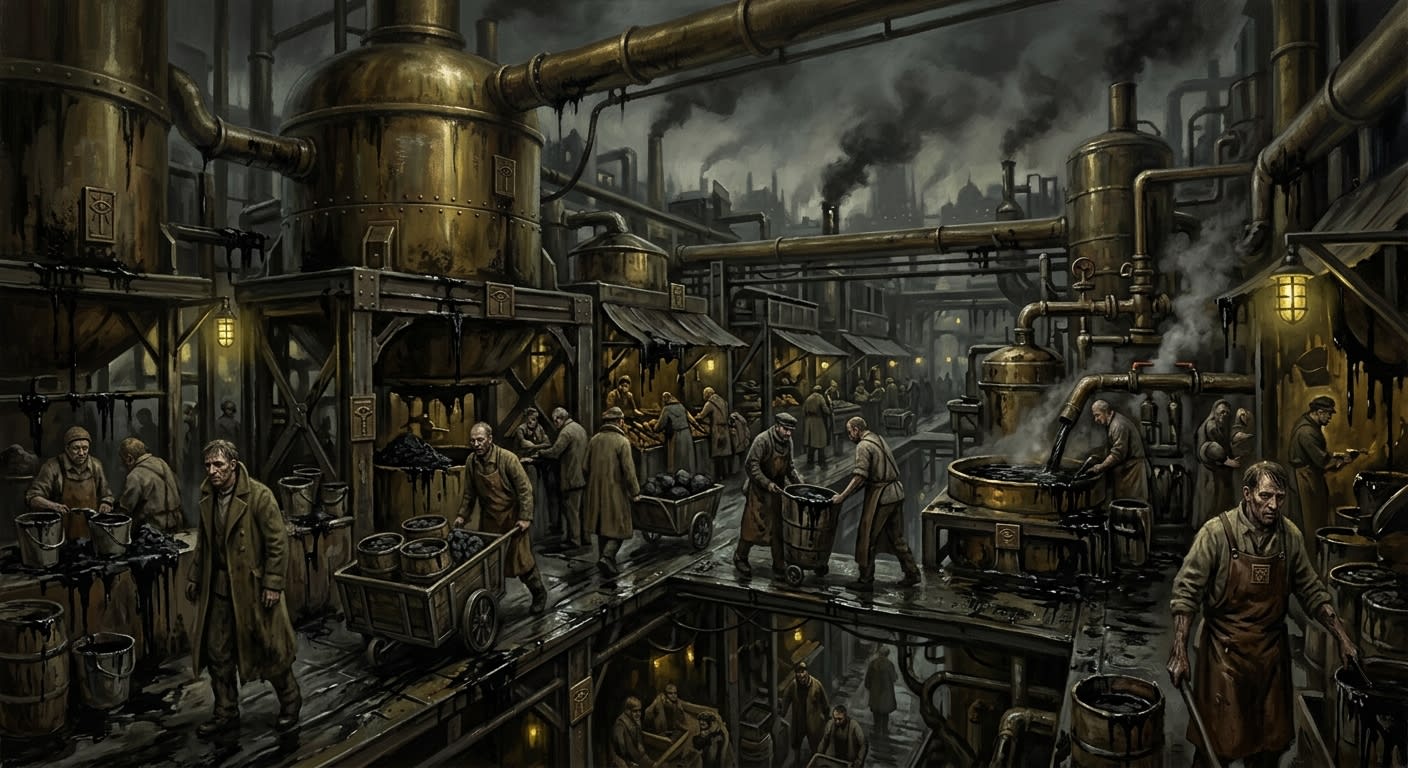
Pitch Markets
Necessary fire, sold by the bucket and audited by smoke
The Pitch Markets keep Thessaloniki burning, sealed, greased, masked, and guilty; close them, and the harbour leaks doctrine.
Codex Ref. II.4.09-072
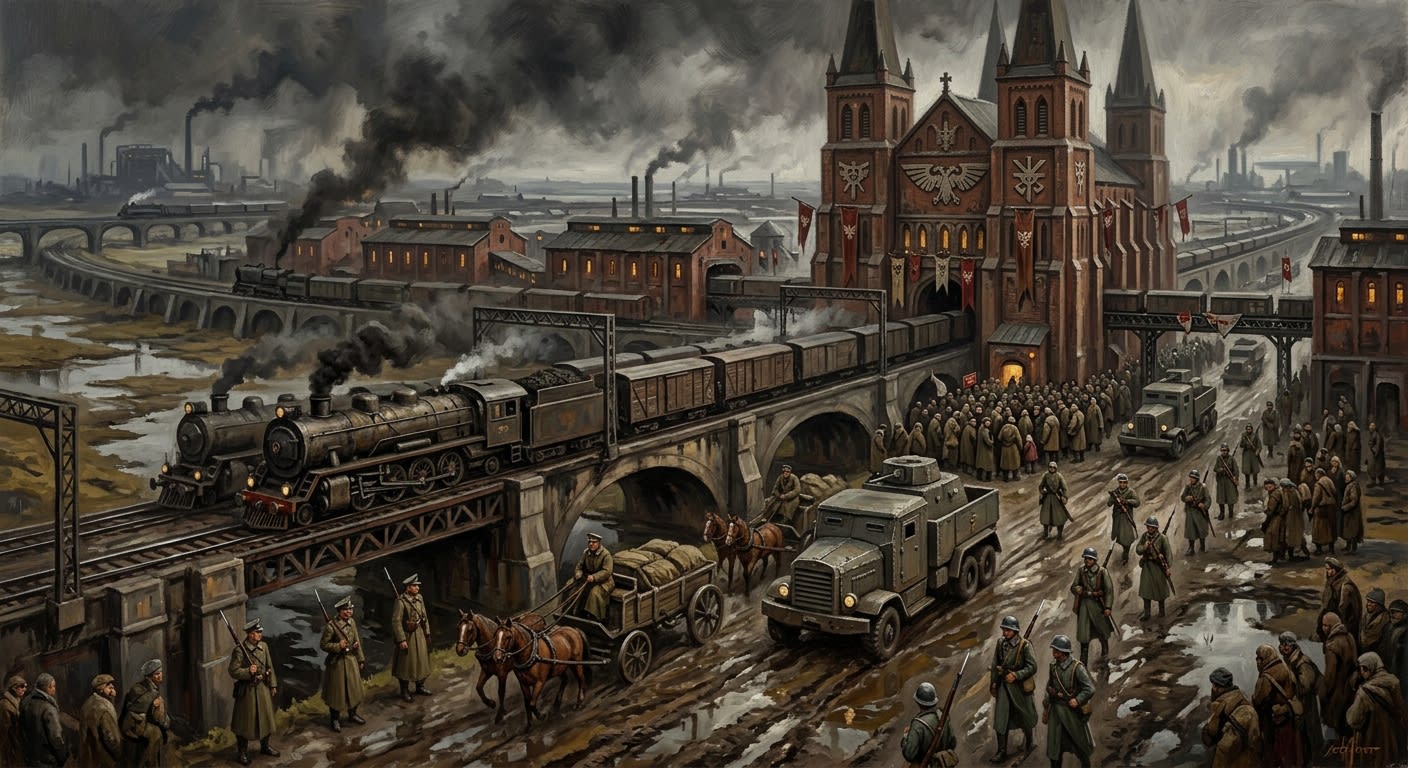
Polish Corridor
The flat throat by which Warsaw feeds the northern guns
The Polish Corridor is Warsaw's long flat throat: rail, road, hunger, prayer, and smoke feeding Brest and Königsberg while pretending passage is not a country.
Codex Ref. II.3.06-095
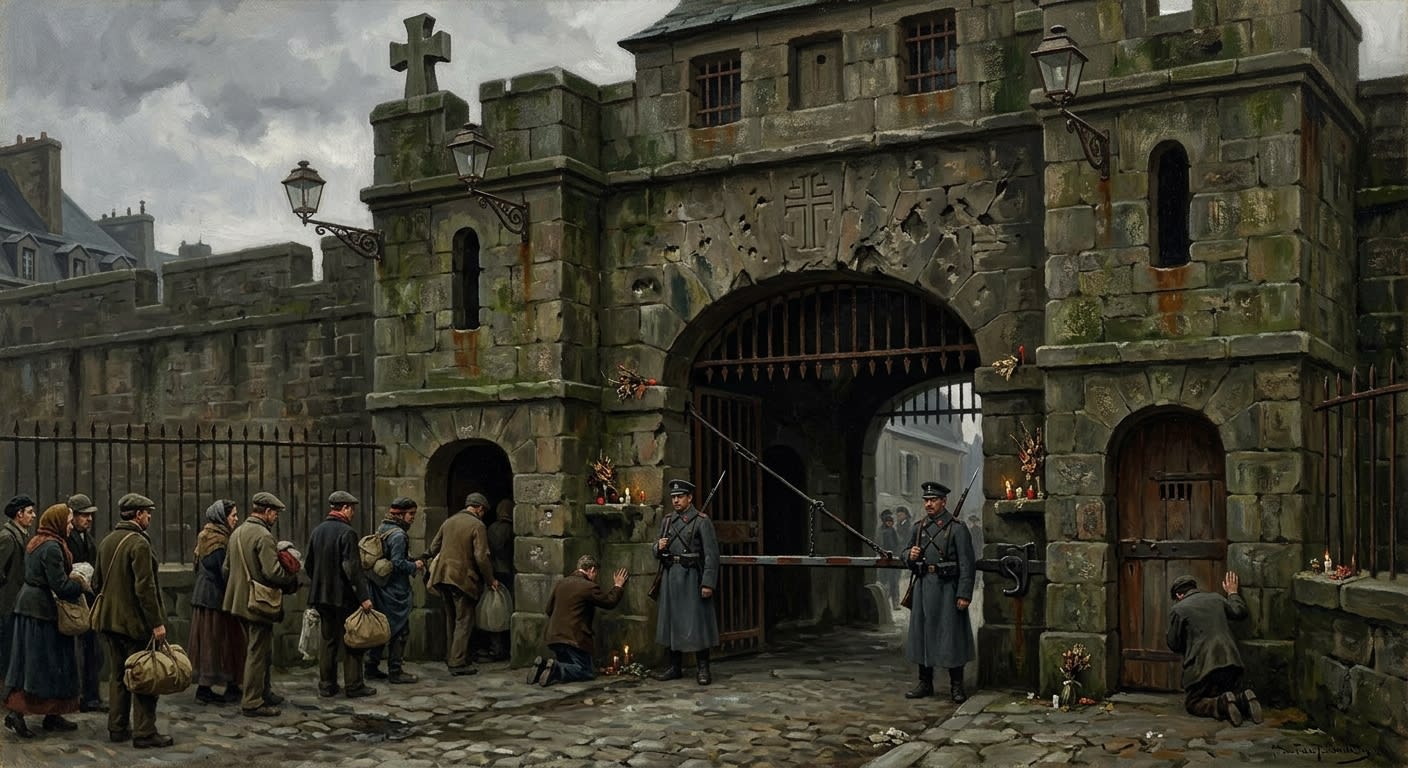
Porte Saint-Vincent
Where stone learned to answer after the thirty-first toll
The Porte Saint-Vincent is Saint-Malo's principal landward gate: toll aperture, atrocity site, pilgrimage wound, and stone witness to the A.S. 10 massacre.
Codex Ref. II.1.09-010
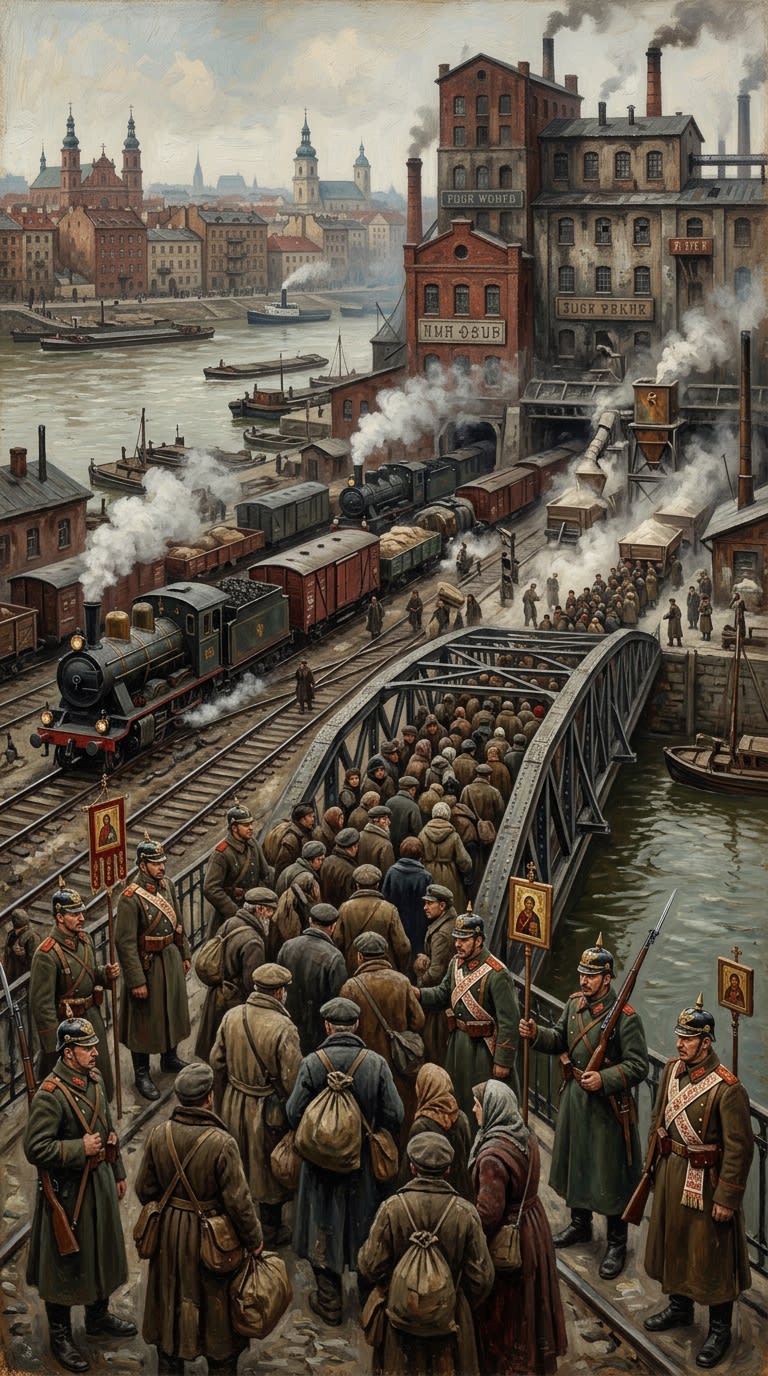
Praga
Warsaw's east-bank throat, where bread teaches logistics to kneel
Praga is Warsaw's east-bank rail throat: refugee room, bridge queue, flour wound, and the district that proved hunger can stop a northern corridor.
Codex Ref. II.3.06-188
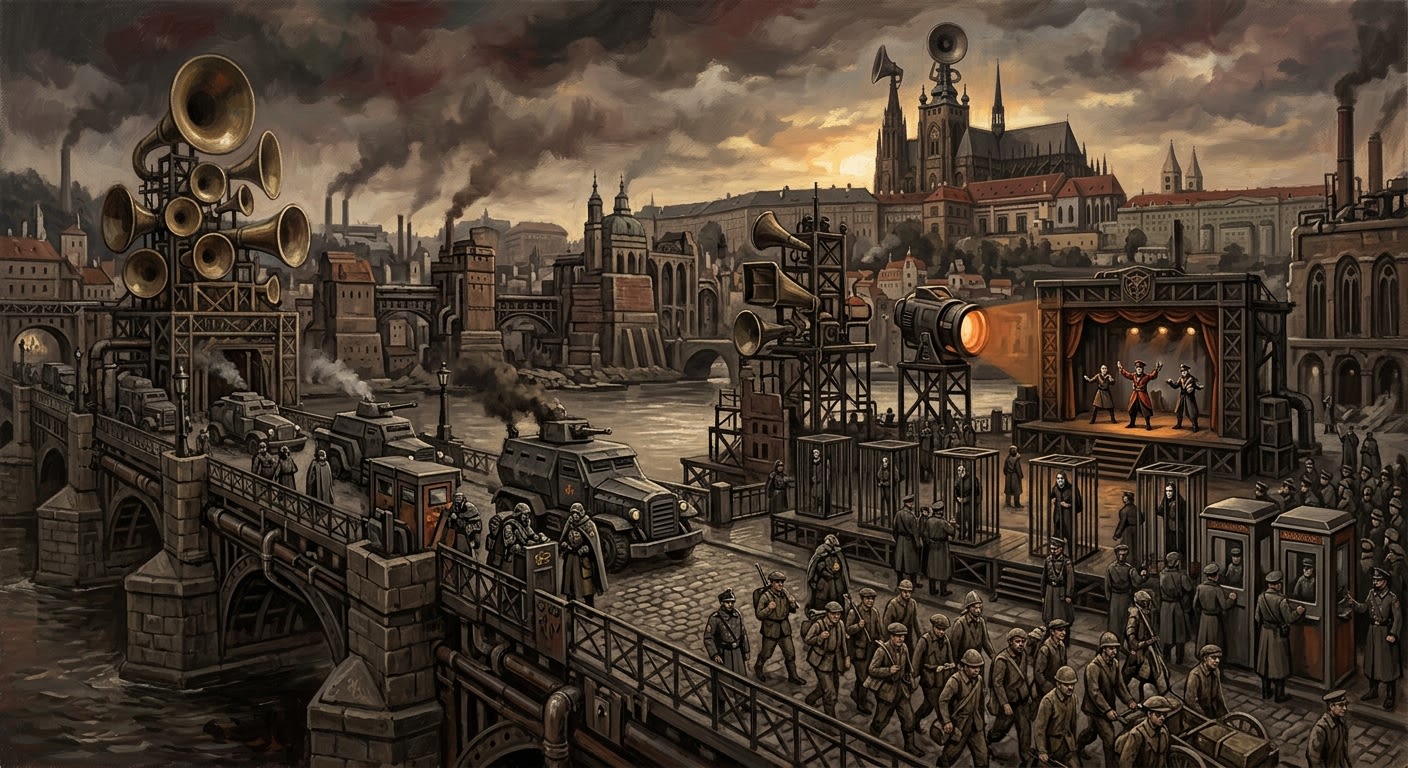
Prague
The bridge-city where shame learned civic architecture
Synod-held Prague is a Zone 3 bridge-city of public correction, Rationalist residue, Ephrath theatre, acoustic wounds, and useful civic obedience.
Codex Ref. II.3.02-001
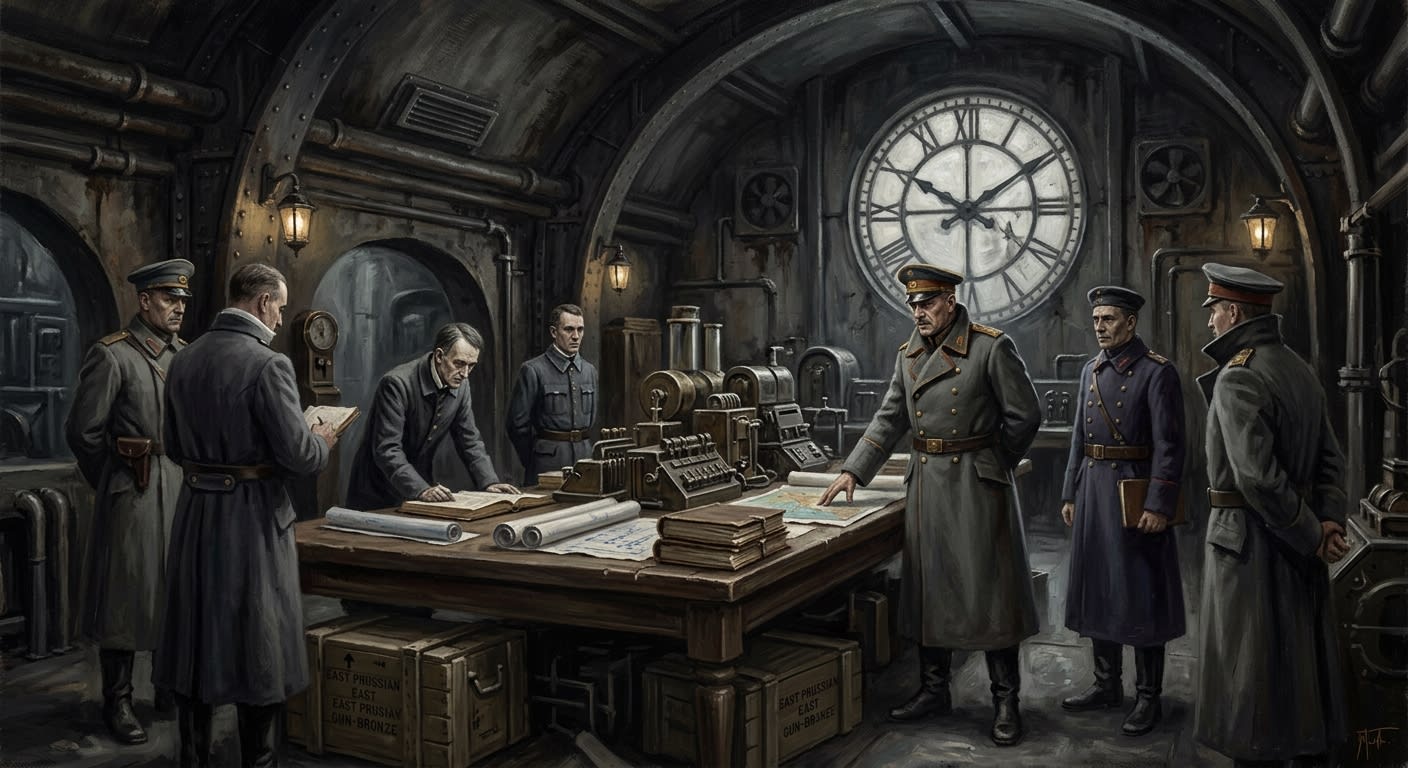
Prussia
The state died; the timetable kept breathing
Prussia is the dissolved northern kingdom that survived as method: rail clocks, cold clerks, officer corridors, East Prussian gun-bronze, and the north's habit of arriving.
Codex Ref. II.4.09-095
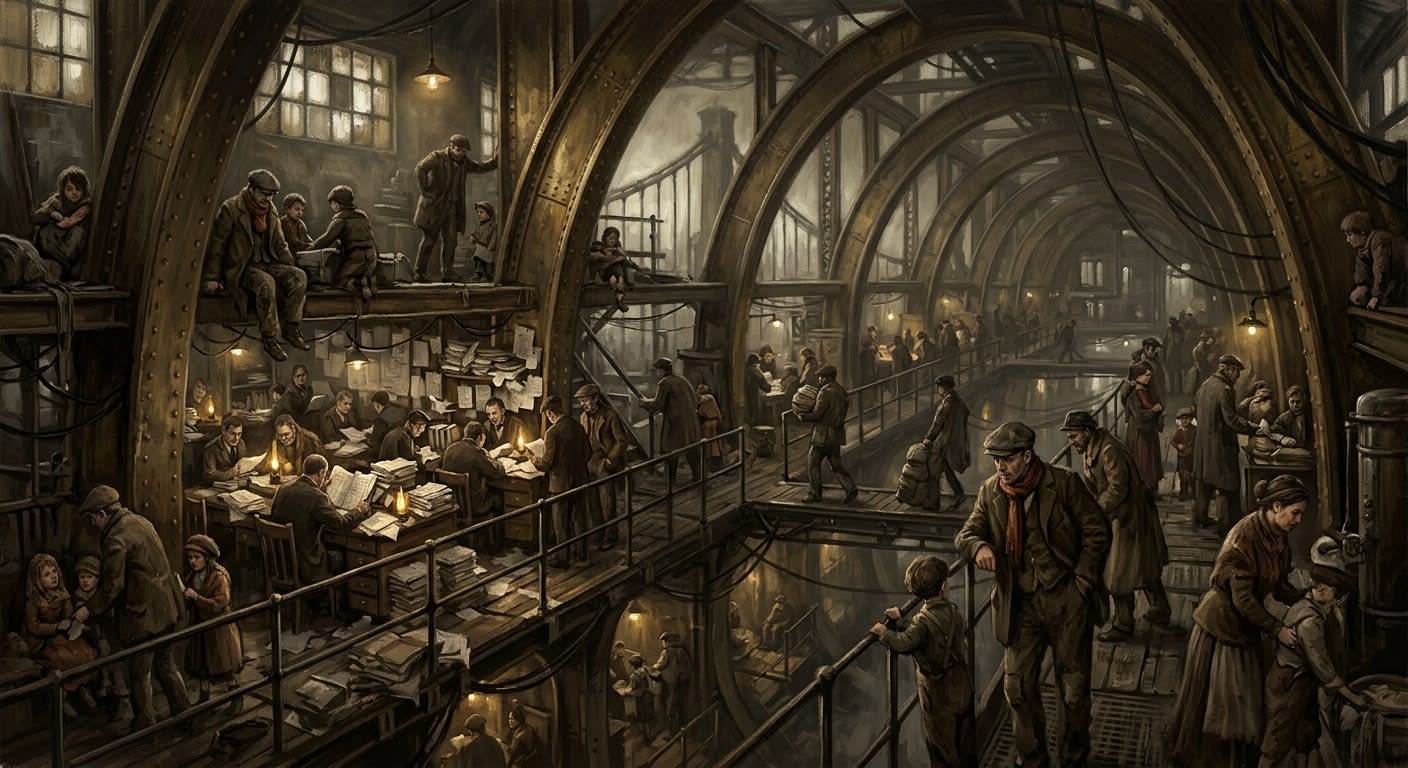
Pylon Warrens
The bridge holds because the hungry live in its bones
The Pylon Warrens are Bastion-Brest's bridge-slums: damp worker cavities inside the Brass Ribs where labour, paper, children, and heresy keep the span alive.
Codex Ref. II.4.08-099
Quai des Bateliers
The river door where disbelief kept its appointment and Purity kept it waiting
Strasbourg's damp river quay became legal instrument when Arno Kett walked into Purity's district house, waited forty minutes, and gave absence a file.
Codex Ref. II.1.04-138
Quai Saint-Lazare
Where holiness queues, fraud pays duty, and Marseille sells the answer twice
Quai Saint-Lazare is Marseille's salt-crusted relic throat, where the Bureau of Relics weighs bones, doubts miracles, prices fraud, and forwards danger under seal.
Codex Ref. II.4.09-017
Quarantine Crescent
Where mercy waits for a stamp and the sea keeps speaking
Thessaloniki's Quarantine Crescent is hospital, customs house, debt trap, listening post, and delay engine: the harbour's white bite where arrivals become entries or vanish waiting.
Codex Ref. II.7.04-093
Rail-Manifest Quarter
Where fuel receives a number, a culprit, and permission to burn
Brast's Rail-Manifest Quarter is the court-throat where chrismole drums are weighed, blessed, numbered, blamed, and sent east to warm the Line.
Codex Ref. II.2.01-021
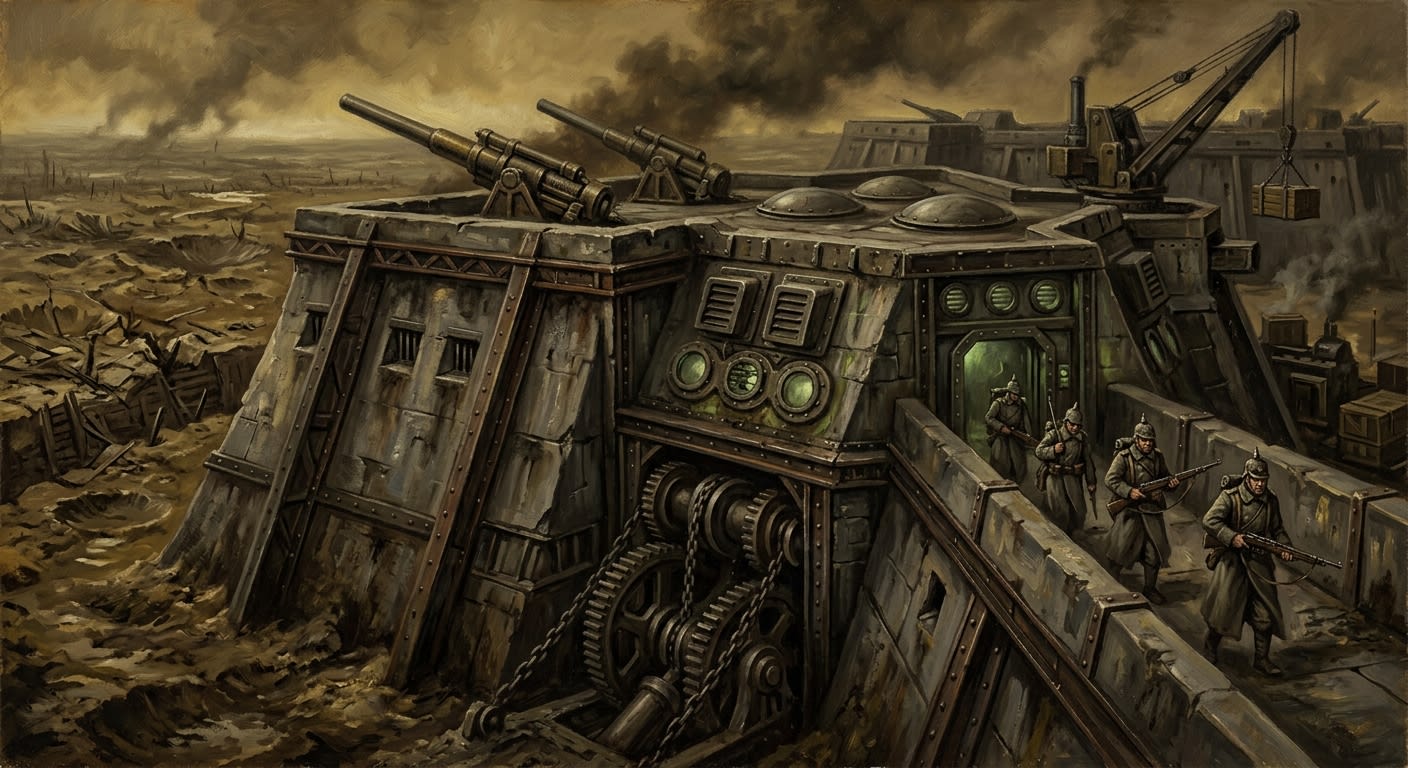
Ravelin of Fortitude
The wall that answers panic with stone
Fortitude is Bastion-Constantinople's fourth outer ravelin: a powder hinge, command bunker, cistern shield, and stone rebuke to every request to fail.
Codex Ref. II.4.10-092
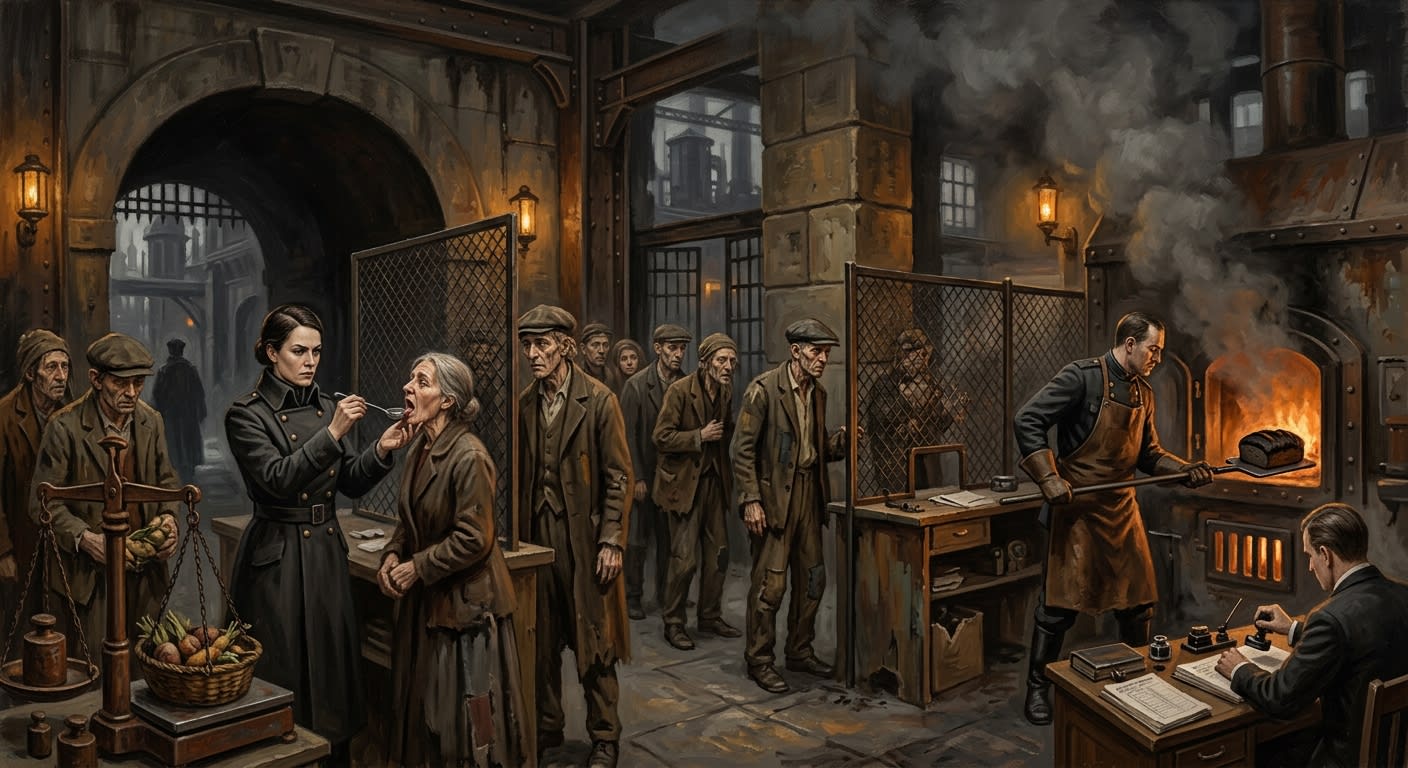
Ravelin of Purity
Cleanliness is a knife with lime on the blade
Purity is Bastion-Constantinople's second outer ravelin, where hunger is weighed, tongues inspected, bread burned, and cleanliness admits it is a knife.
Codex Ref. II.4.10-113
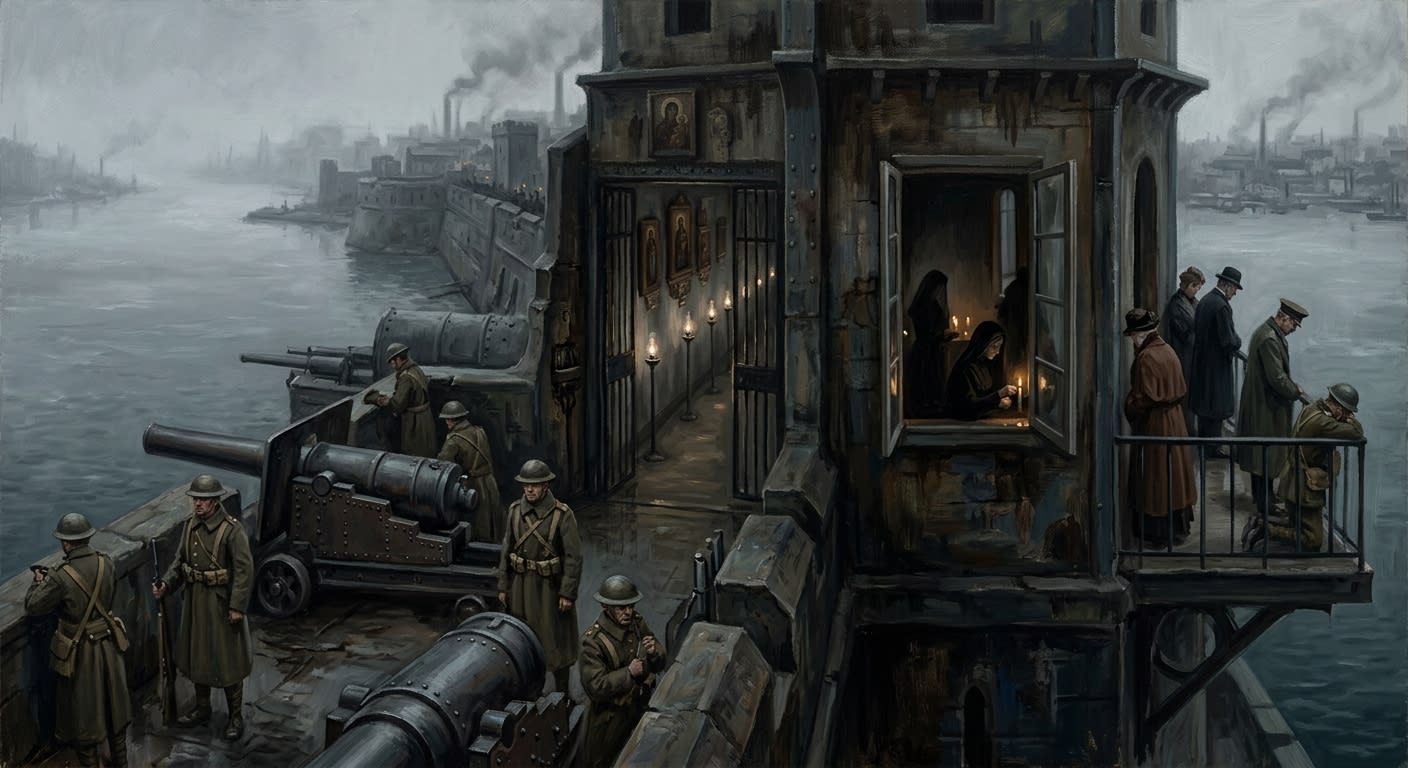
Ravelin of Sorrow
The wall that teaches grief where to stand
The Fifth Ravelin of Bastion-Constantinople is witness-post, lower harbour gun line, warded corridor, widow chapel, and authorised balcony for grief before Chamber 7.
Codex Ref. II.4.10-170
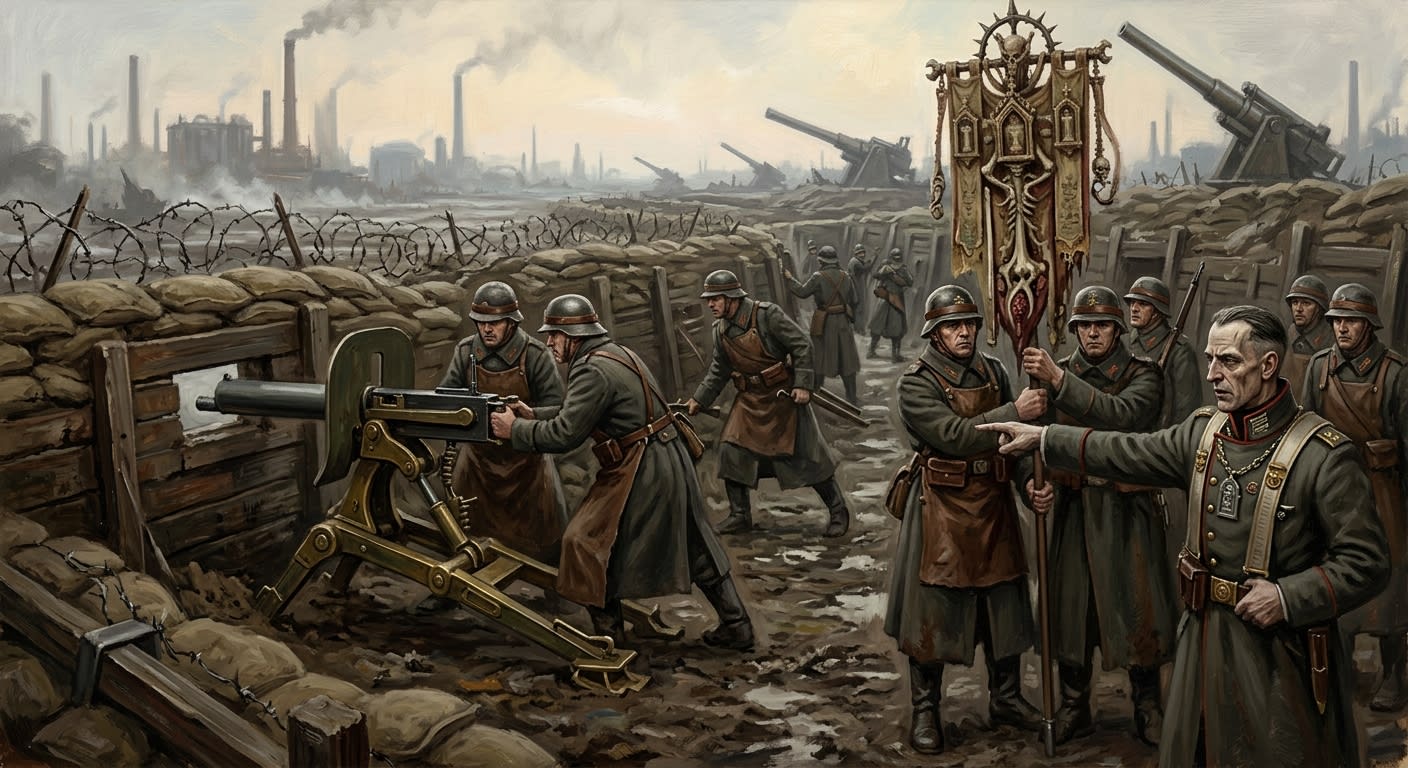
Ravelin of Vigilance
The eye that learned to blink by rotation
The First Ravelin of Bastion-Constantinople watches the Knife Mile, drills low guns, carries Saint Iselda's Bone Walk, and teaches sentries the cost of seeing first.
Codex Ref. II.4.10-137
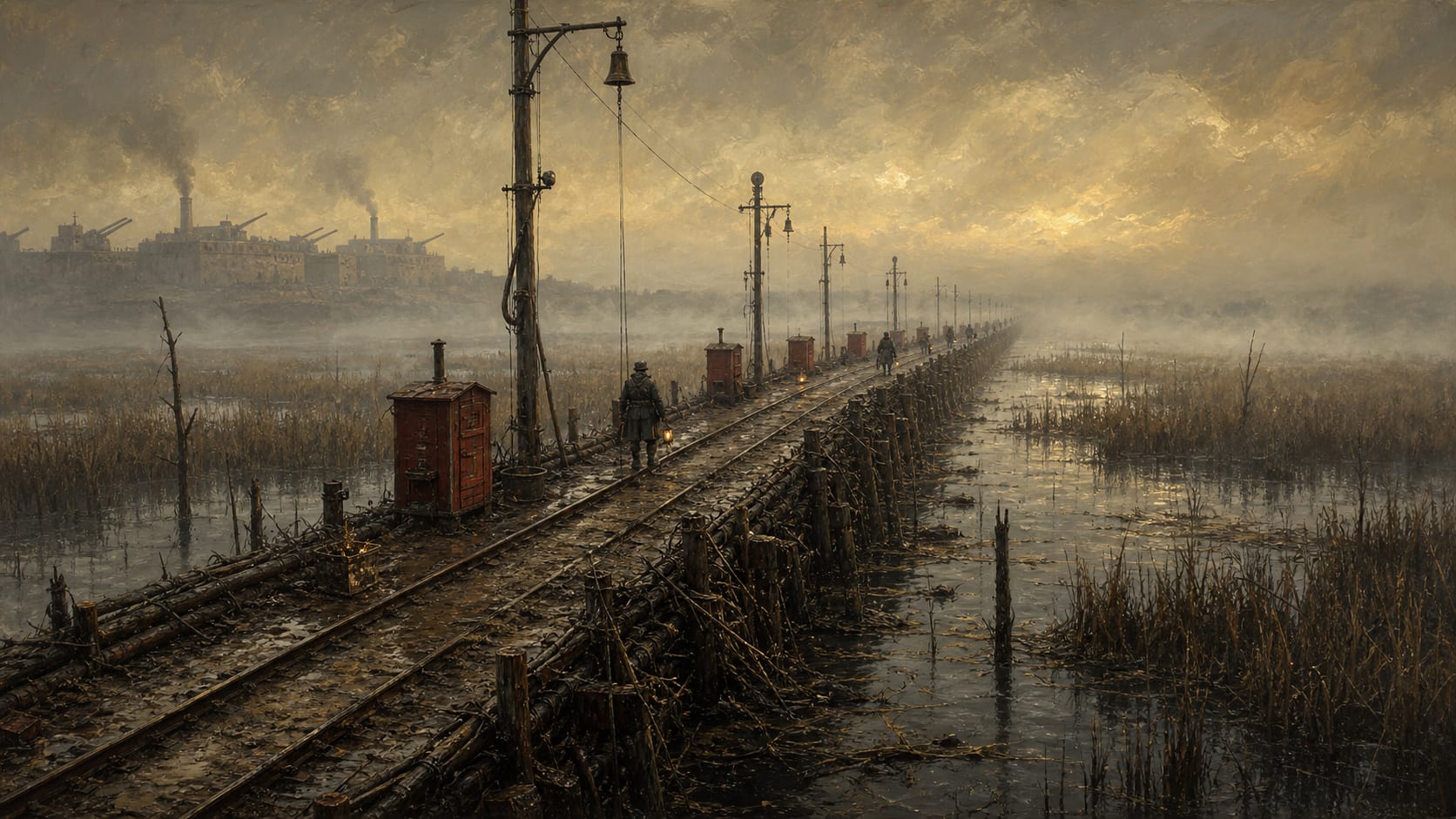
Reed Road
A bar of mud-stained insistence laid across sleep
The Reed Road is Bastion-Shipka's raised rail-causeway through the Phocis Marsh: supply artery, timing instrument, Scour fuse line, and daily insult to Syrion's fog.
Codex Ref. II.4.08-016
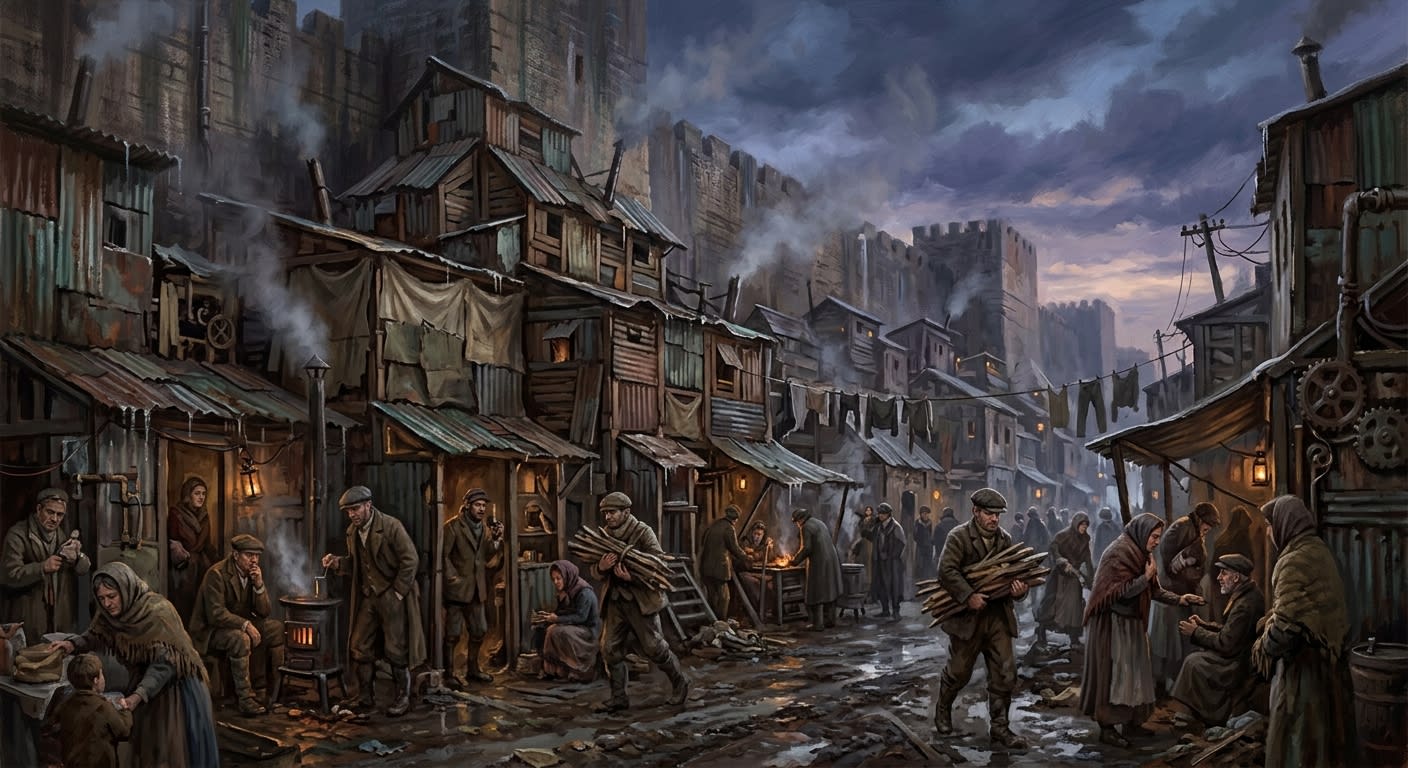
Refugee Sheds
Temporary mercy, permanently damp
Thessaloniki's Refugee Sheds are temporary shelter turned permanent wall-side settlement: damp, crowded, humming, and governed after dusk by Aunt Velka's unlicensed mercy.
Codex Ref. II.7.04-198
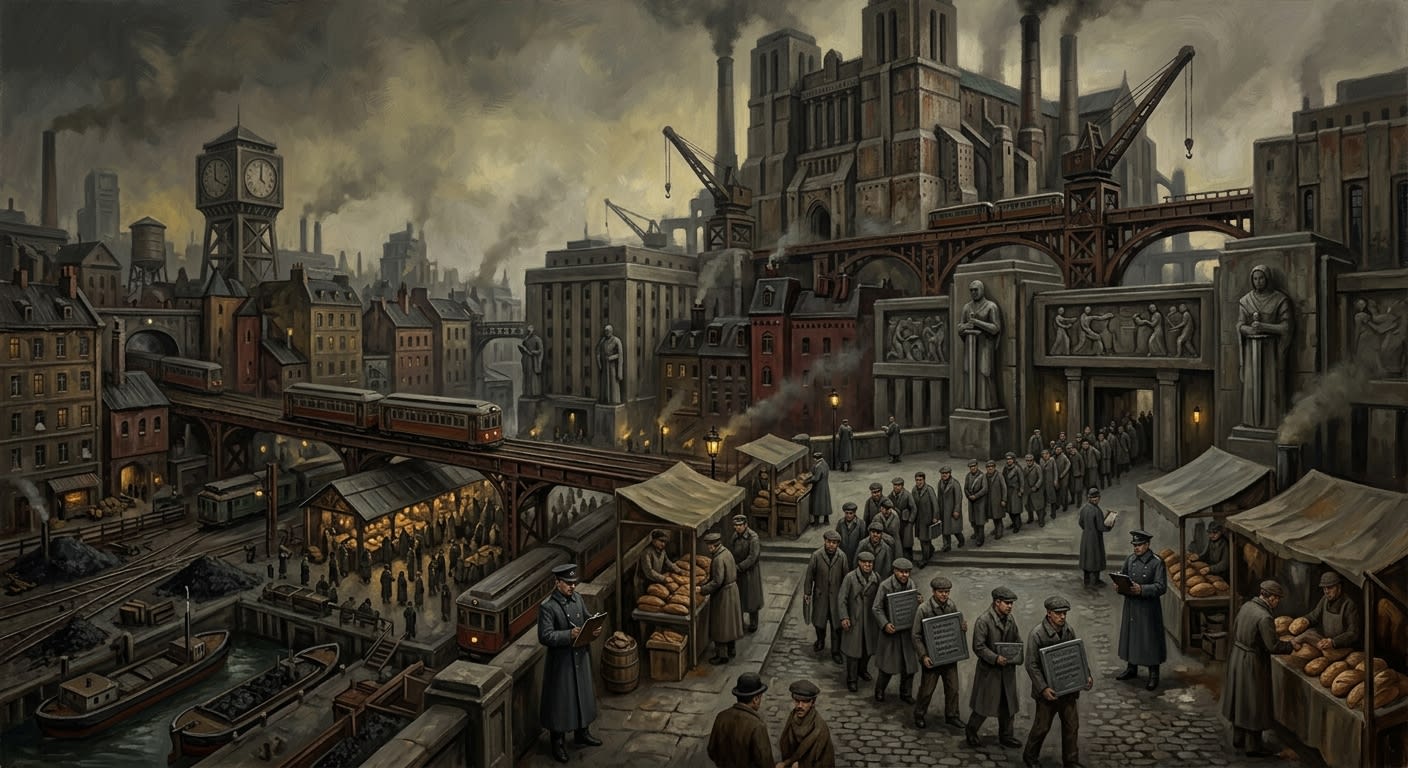
Regensburg
The city that sold false dawn by the plaque and glass
Regensburg hosted Reason's false triumph, sold bread to signatories and plaques to penitents, and still rehearses its profitable disgrace under Bureau watch.
Codex Ref. II.2.03-030
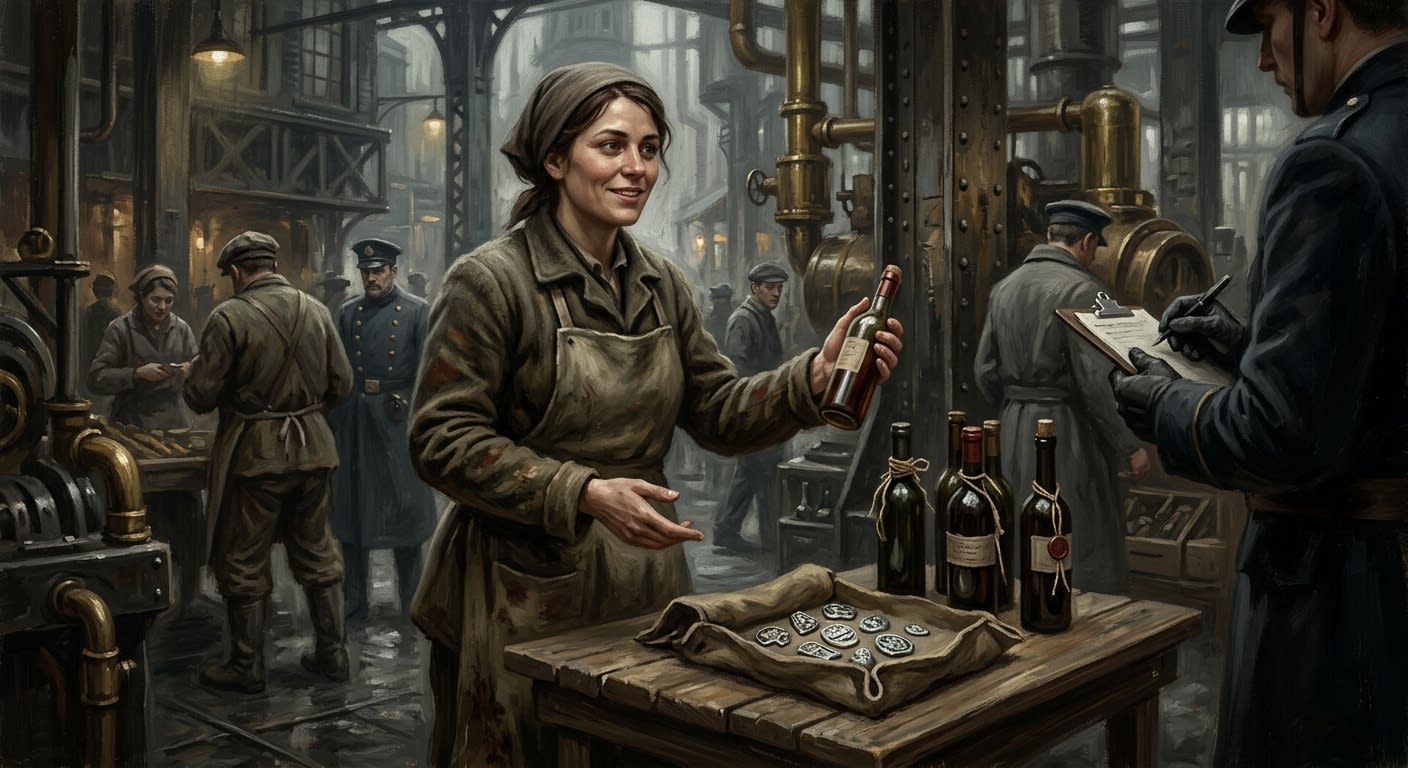
Reims
The smiling wine city that profits from an empty neighbour
Reims smiles under inspection, sells lawful wine beside impossible Épernay tokens, and teaches that a city can inherit a neighbour's absence without inheriting innocence.
Codex Ref. II.1.07-103
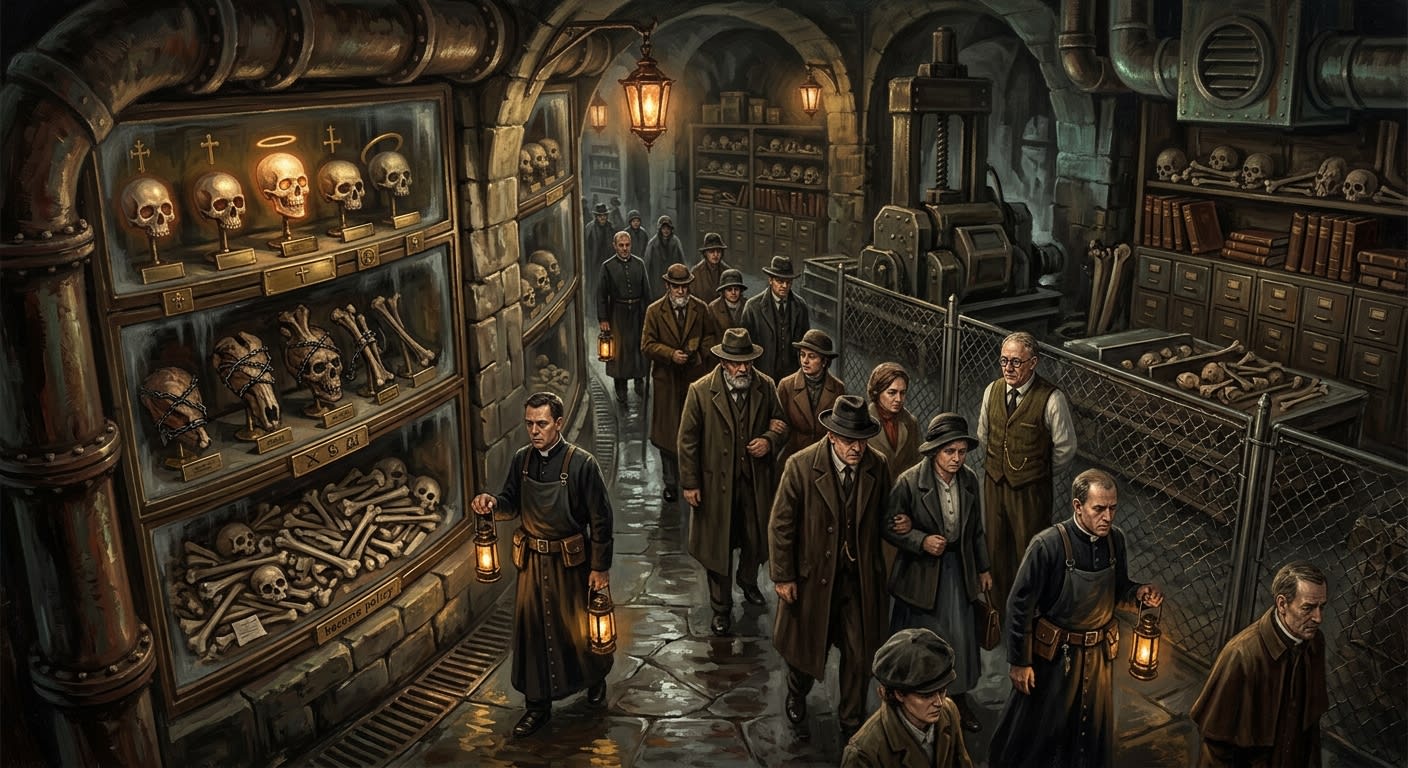
Relics Archive
The polite room before the locked stomach begins digesting saints
The Relics Archive beneath Strasbourg Cathedral teaches pilgrims which bones may be admired, which must be feared, and which have already become policy.
Codex Ref. II.2.06-005
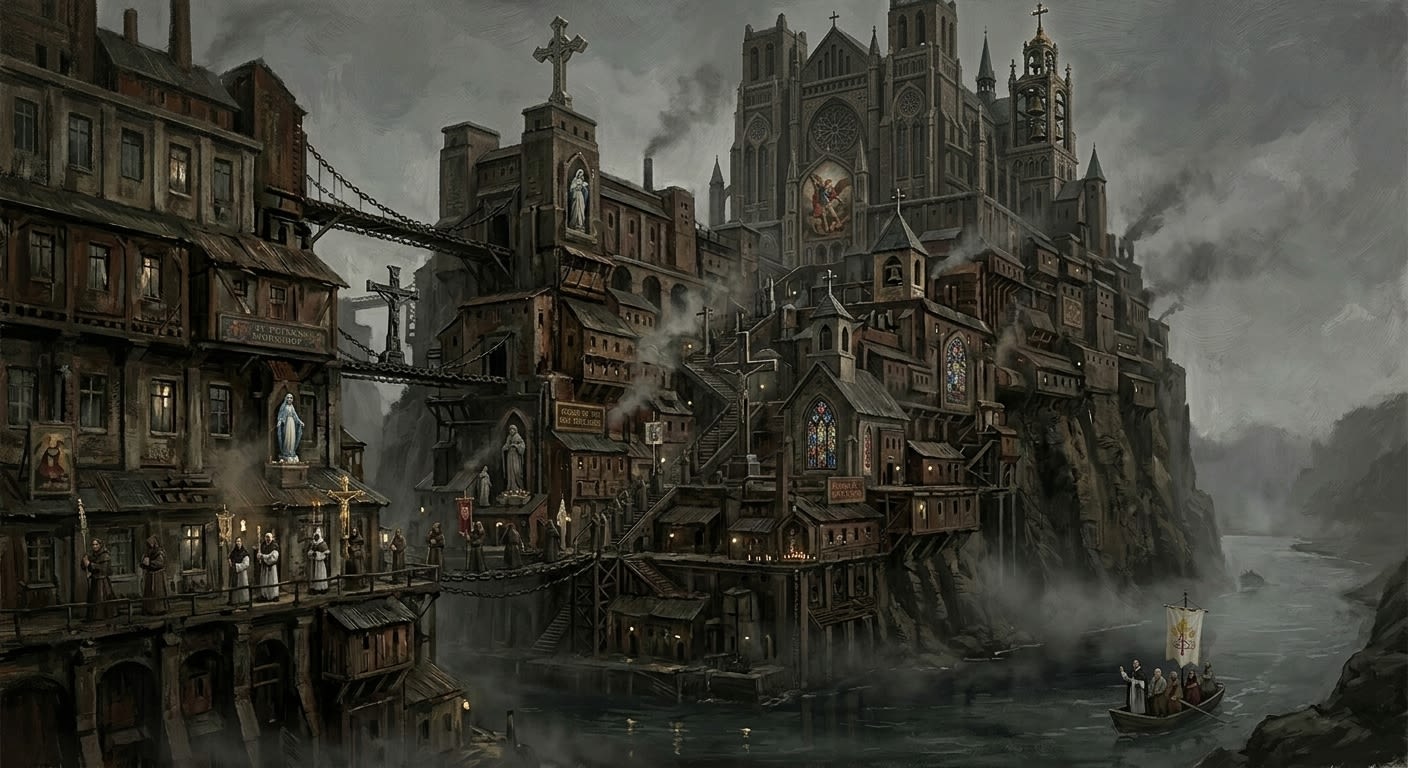
Rheinscarp
Nine terraces of sanctified extortion above the Rhine — each stair a sermon, each sermon a fee
A cliff-city above the Rhine, stacked nine terraces high and governed by three powers who own, respectively, your name, your time, and your ashes. Drax has climbed it twice and counted only the fees.
Codex Ref. II.2.01-002
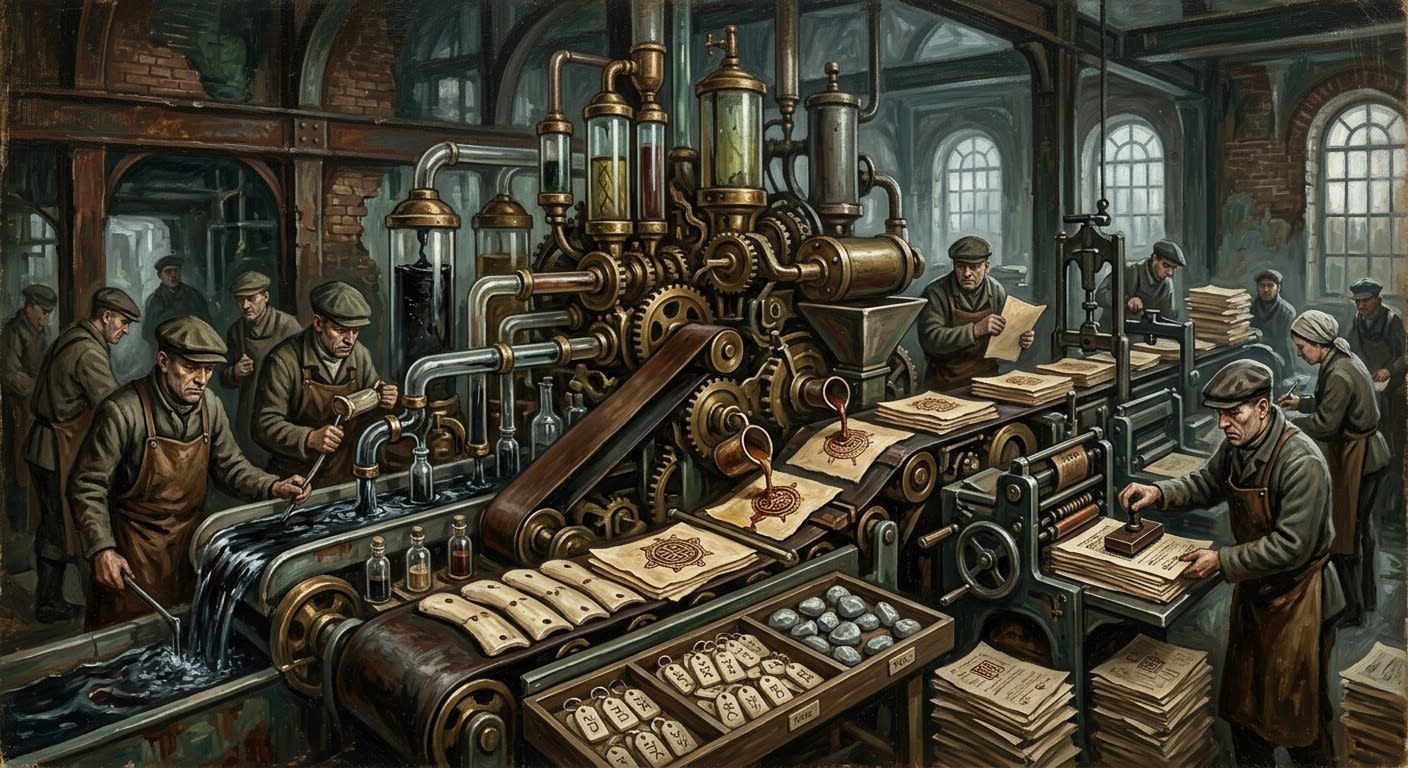
River-belt
The wet spine where permission learns to float
The River-belt manufactures permission in water, wax, ink, toll-stone, bone tags, saint-dust, and every damp little form by which reality becomes admissible.
Codex Ref. II.1.03-082
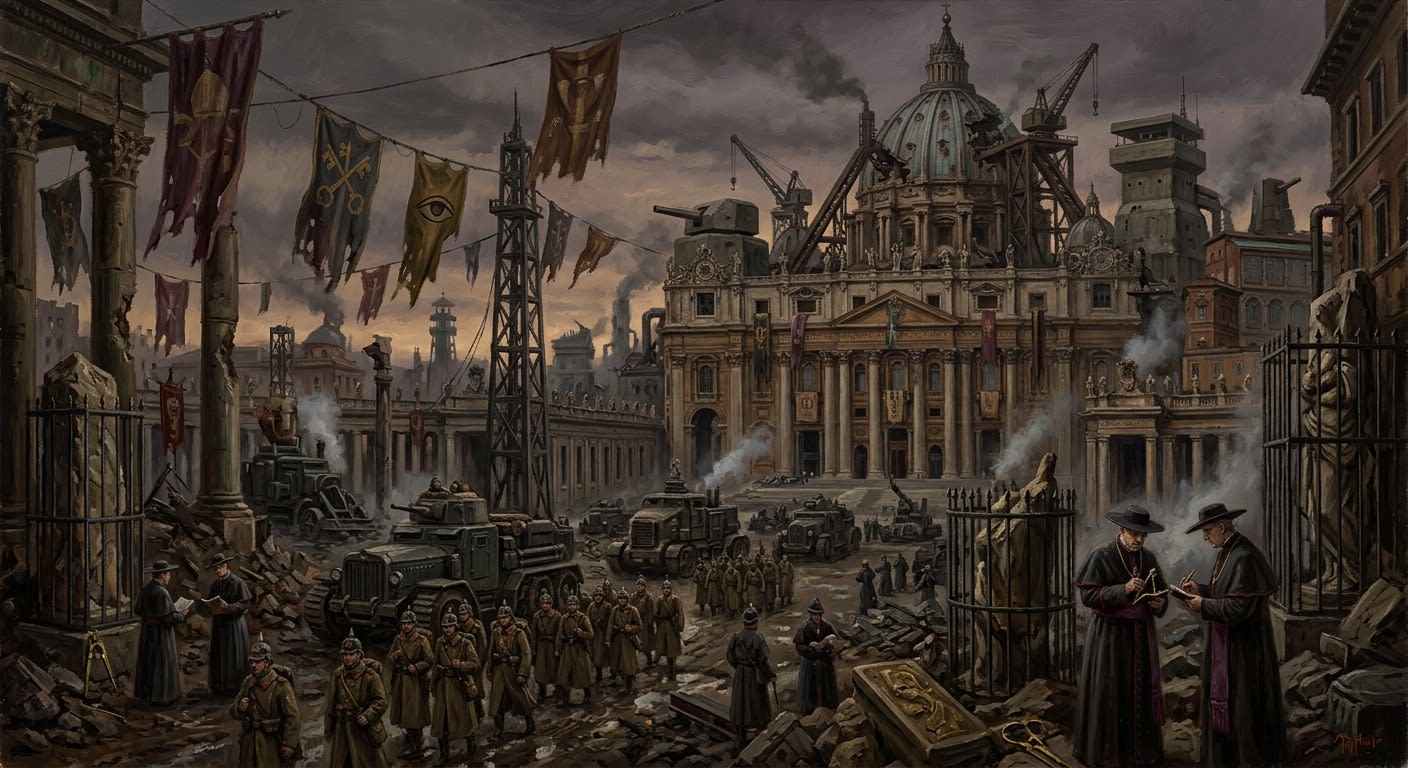
Rome
The old chair, subordinated and still dangerous in pieces
Rome is the Synod-held Old Chair: ruined, supervised, relic-rich, papalist-haunted, and too symbolically useful for Strasbourg to bury cleanly.
Codex Ref. II.1.11-201
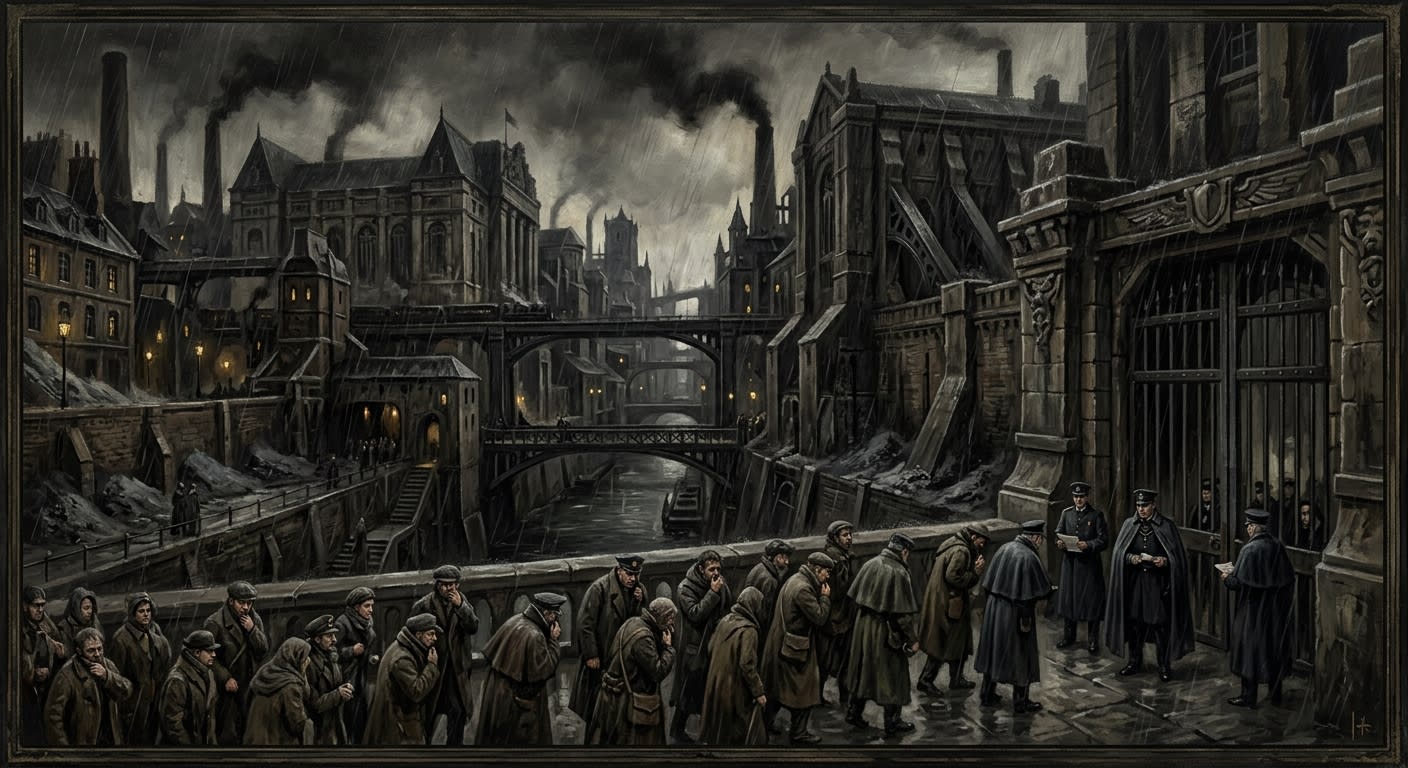
Rouen
The city that weighs ash, sells light, and listens badly at dawn
Rouen is the western heartland city of soot, ash-banks, candle fraud, bridge toll guilt, Pale Chanter anxiety, and black rain from the A.S. 24 Cauterization.
Codex Ref. II.1.10-201
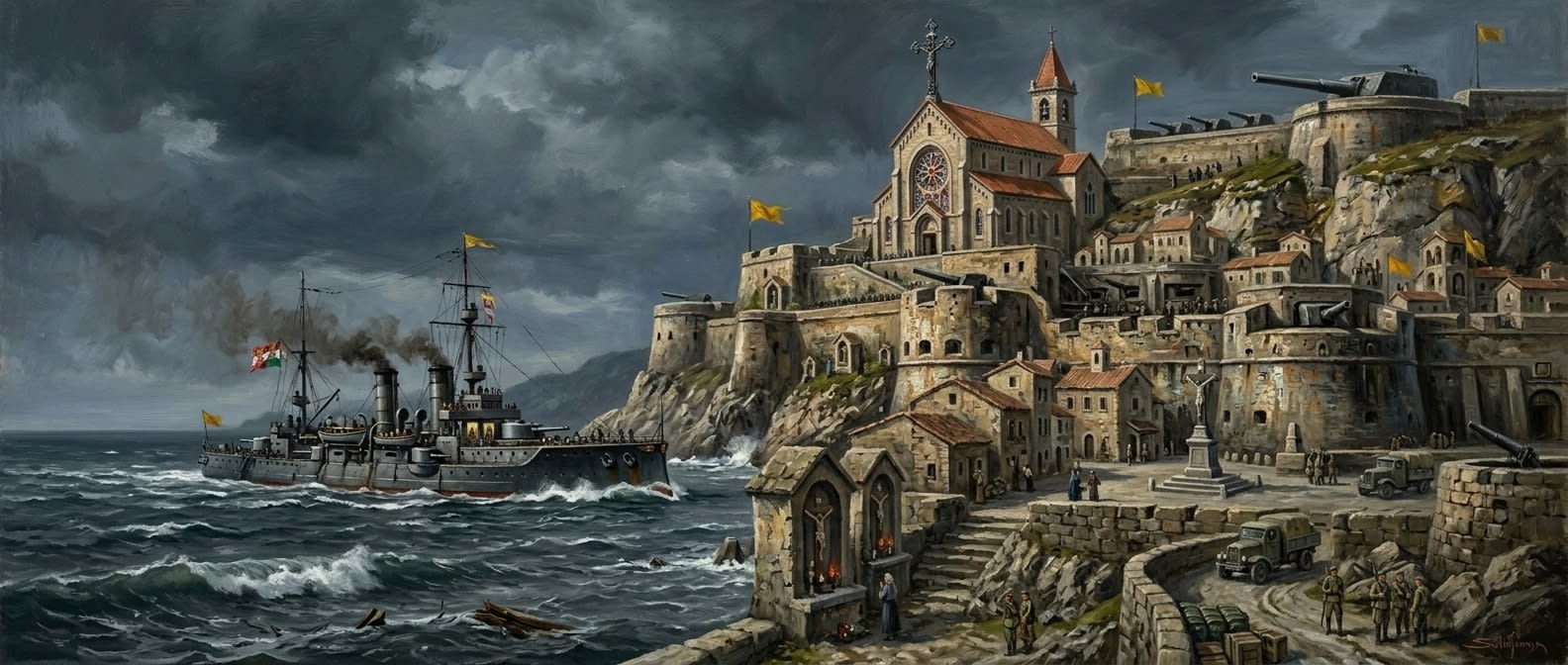
Saffron Bastion
Where quarantine is mercy, mercy is leverage, and the sea pays what it owes
The Synod's coastal chokepoint on the Adriatic — quarantine piers, cliff batteries, saffron flags, and one hundred and twenty thousand souls balanced on the edge of an audit. The sea pays what it owes.
Codex Ref. II.4.09-001
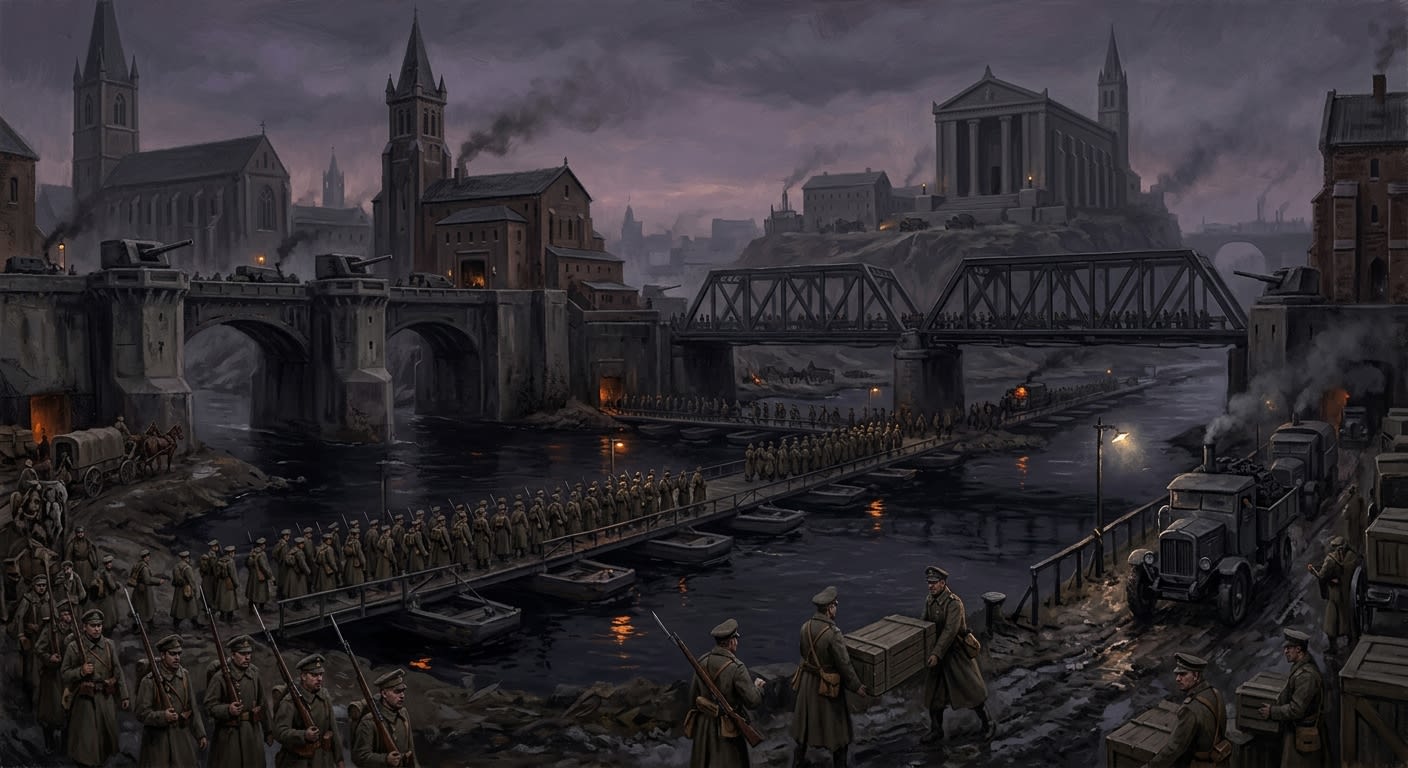
Saint Hadrien's Ford
The river-crossing where biography drowned and doctrine learned to wade
Saint Hadrien's Ford is the Danubian crossing where an old river saint became military property, and black water learned to invoice courage.
Codex Ref. II.4.09-172
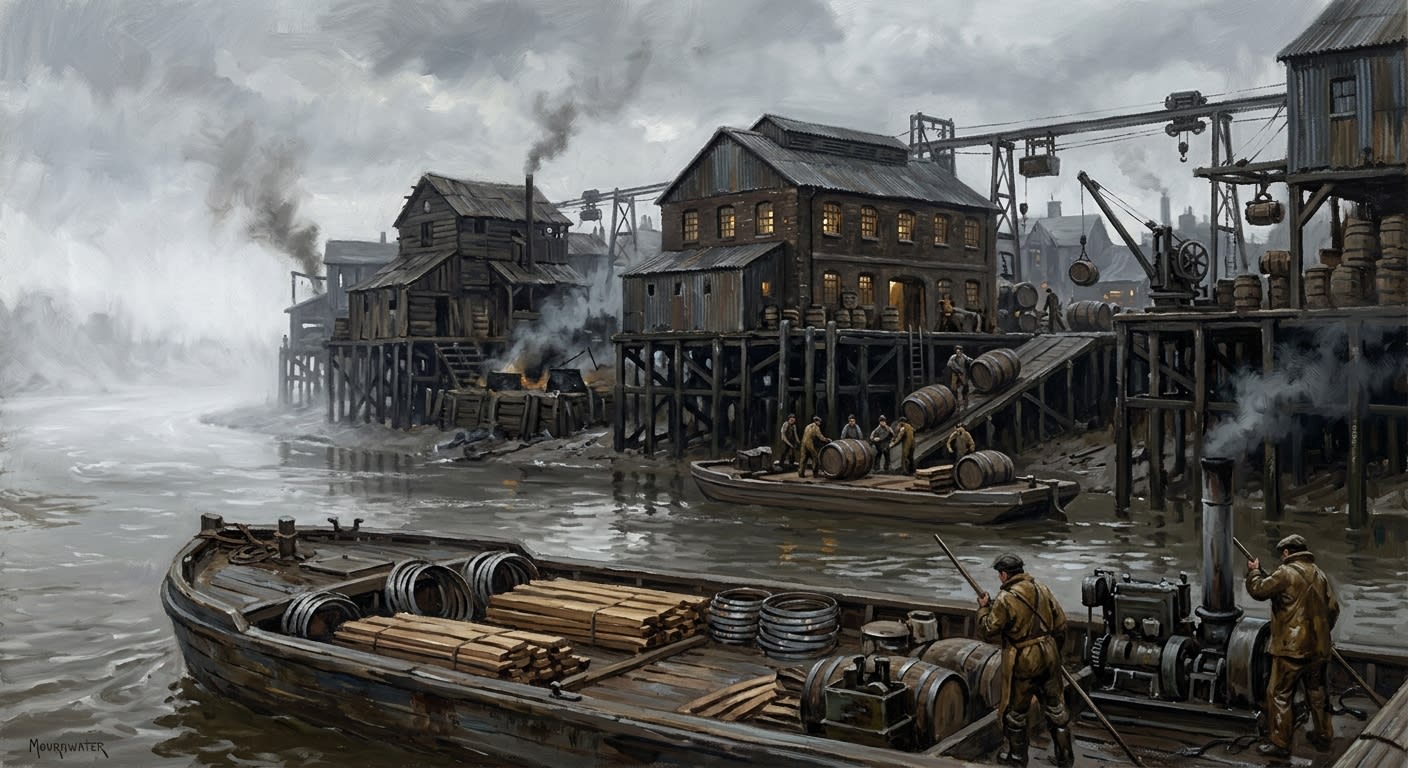
Saint-Dust Cooperage of Mournwater
The river keeps its own accounts, and they do not balance in the faithful's favour.
A Zone 2 river-town built on a cooperage industry that became a reliquary port: certified saint-dust slurry, suspicious settling dishes, and the slow realization that the river upstream is producing saints of its own devising.
Codex Ref. II.2.03-001
Sainte-Claire-des-Landes
Six miles from Saint-Malo, where laundry became evidence and damp became a route economy
The Breton convent of Margaux's ordinary years: damp stone, linen ledgers, a wax saint, nine thousand pilgrims, and twelve sisters still doing the work.
Codex Ref. II.1.09-092
Salt Tribunal Row
The street where the sea is stamped before it is permitted to drown you
Salt Tribunal Row is Calais reduced to a damp street: counters above the Pens, names from the Wall, and departure sold window by window.
Codex Ref. II.4.09-084
Salzburg
The Alpine city where a warm shinbone taught bishops to bleed politely
Salzburg is a profitable Alpine shrine-city whose Warm Tibia dispute killed two bishops and made custody smell faintly of salt, wax, and knives.
Codex Ref. II.3.05-141
Sandomierz
Kraków owns the bridge; Sandomierz owns the arrival
Sandomierz is the Vistula recovery town that pulled forty-seven wired-mouth priests from Kraków’s crime and made downstream grief countable.
Codex Ref. II.3.06-019
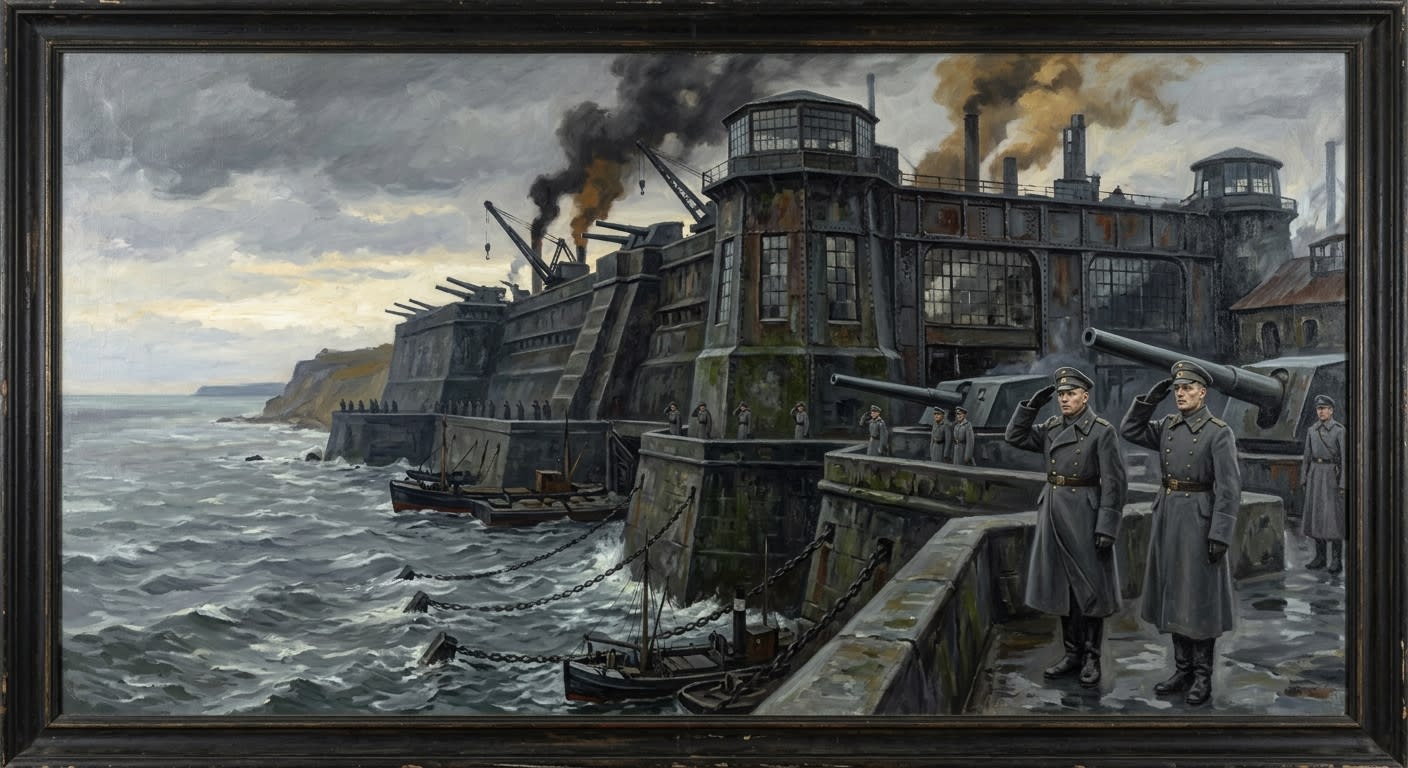
Sea Wall, Bastion-Königsberg
Where the Sagittal Line meets Baltic water and the fog outranks the wall
The Sea Wall of Bastion-Königsberg is where the Line runs into Baltic water, the Grey arrives without attacking, and sentries salute absence.
Codex Ref. II.4.07-067
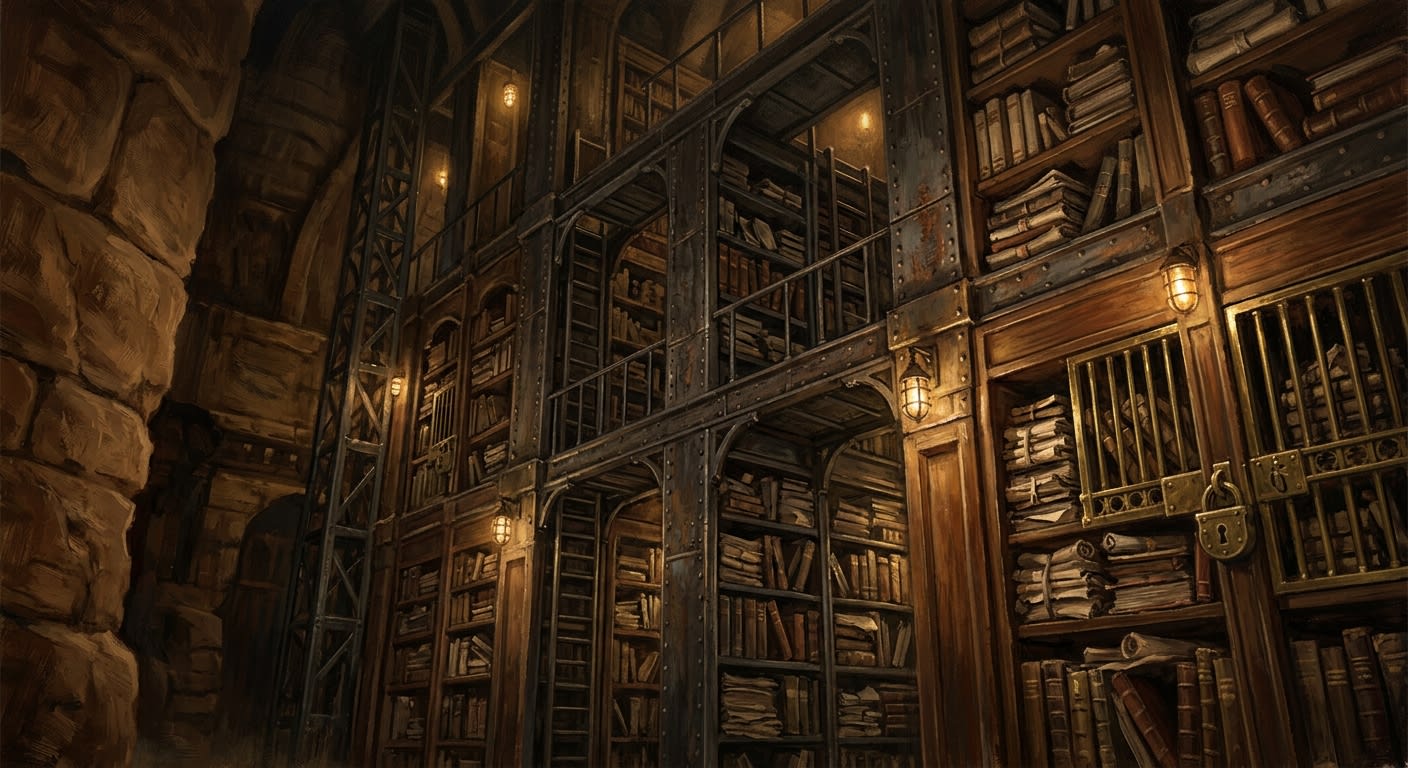
Sealed Archive of Doctrine
The room where contradictions sit upright, labelled, dangerous, and dry
Beneath the Tower of the Quill lies Doctrine's dry sealed archive: older than the sandstone, jealous of its shelves, and intimate with contradiction.
Codex Ref. II.1.04-002
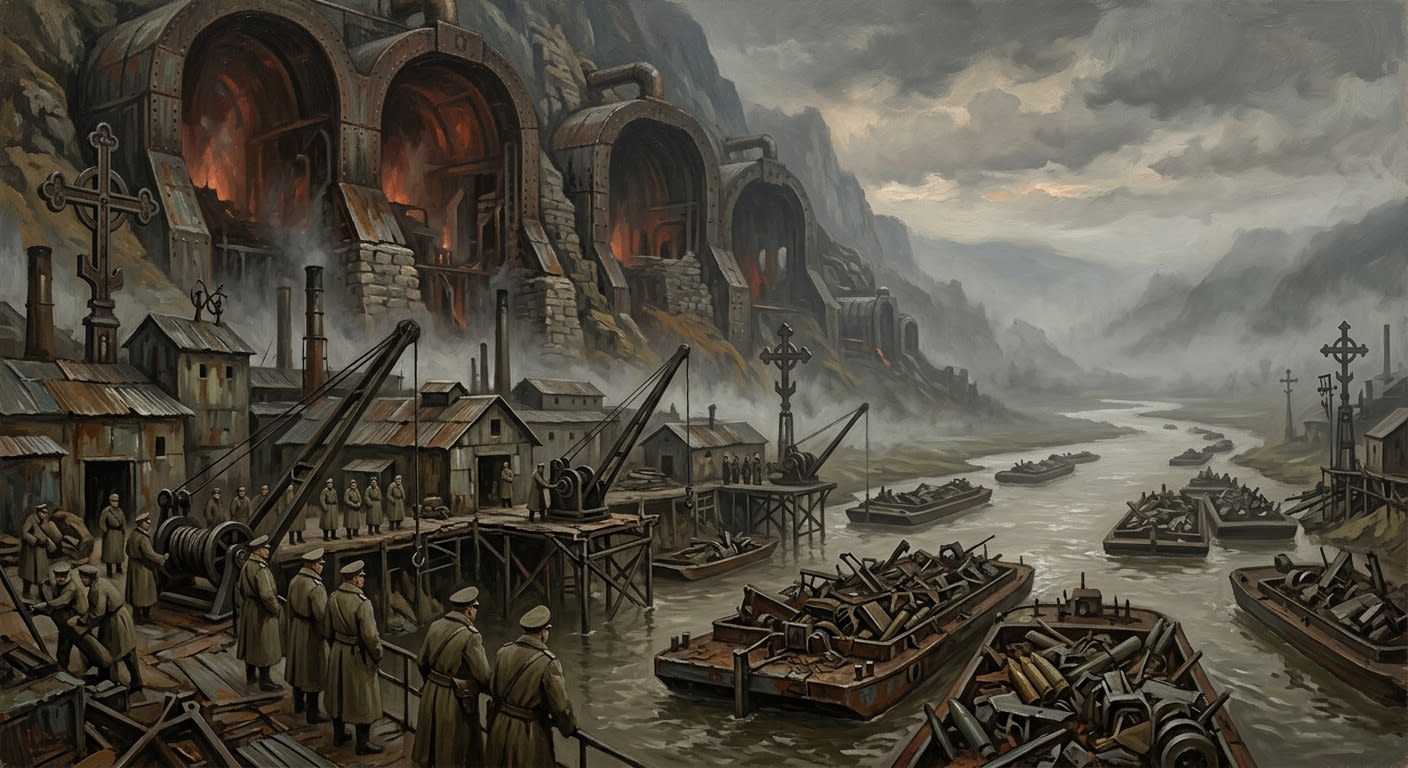
Serbia
The country where fire and fog filed rival claims and both were accepted
Serbia is the Balkan wound-country where Wrath heats the caverns, Sloth cools the valleys, and the Danube keeps carrying useful ruin west.
Codex Ref. II.6.06-007
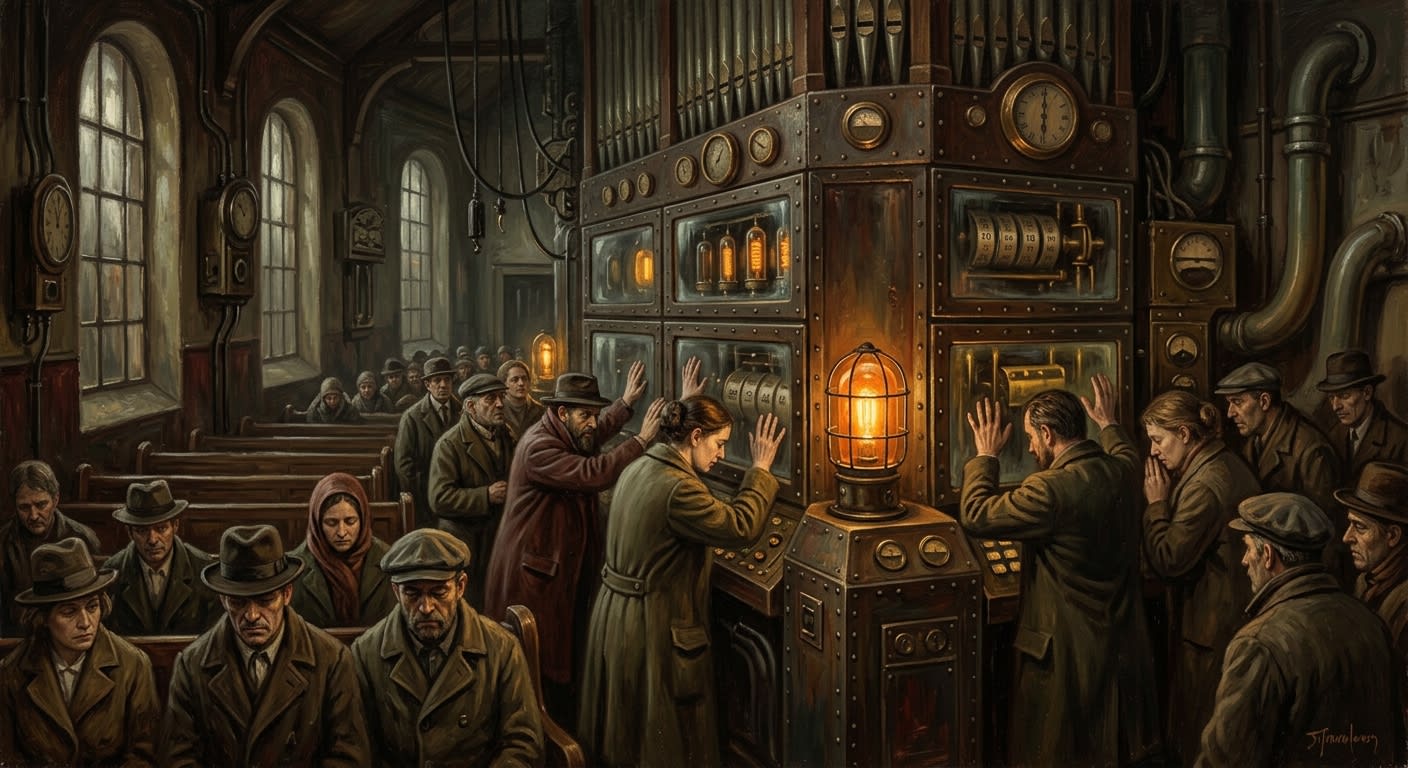
Sermon Compliance Chapel
Where attendance kneels, arithmetic prays, and the pig bone keeps better doctrine than men
Strasbourg's Sermon Compliance Chapel turns public listening into relic devotion, where Auditors touch glass, numbers confess, and the amber lamp refuses to die.
Codex Ref. II.1.04-158
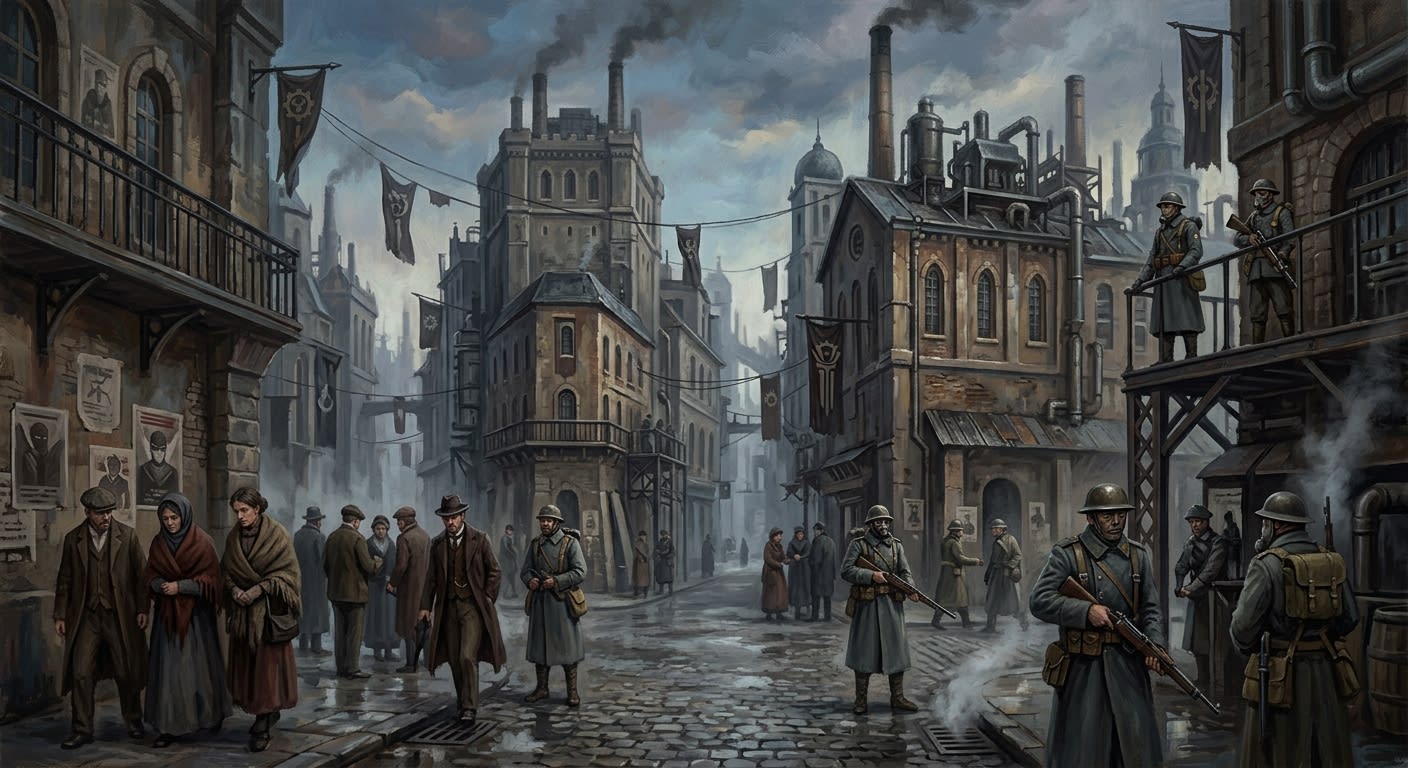
Seville
The city that lowered its voice and learned to speak in cups
Seville, the corrected City of Closed Lips: beautiful, prosperous, muted after the Laugh Riots of A.S. 153 and the Subjugation of A.S. 155.
Codex Ref. II.1.04-001

Shackled Flame Workshops
Where Hell is taught the manners of machinery
Beneath Bastion-Constantinople's Foundry Quarter, the Shackled Flame Workshops bind broken Hell into housings, carriers, locks, and profitable silence.
Codex Ref. II.4.10-007
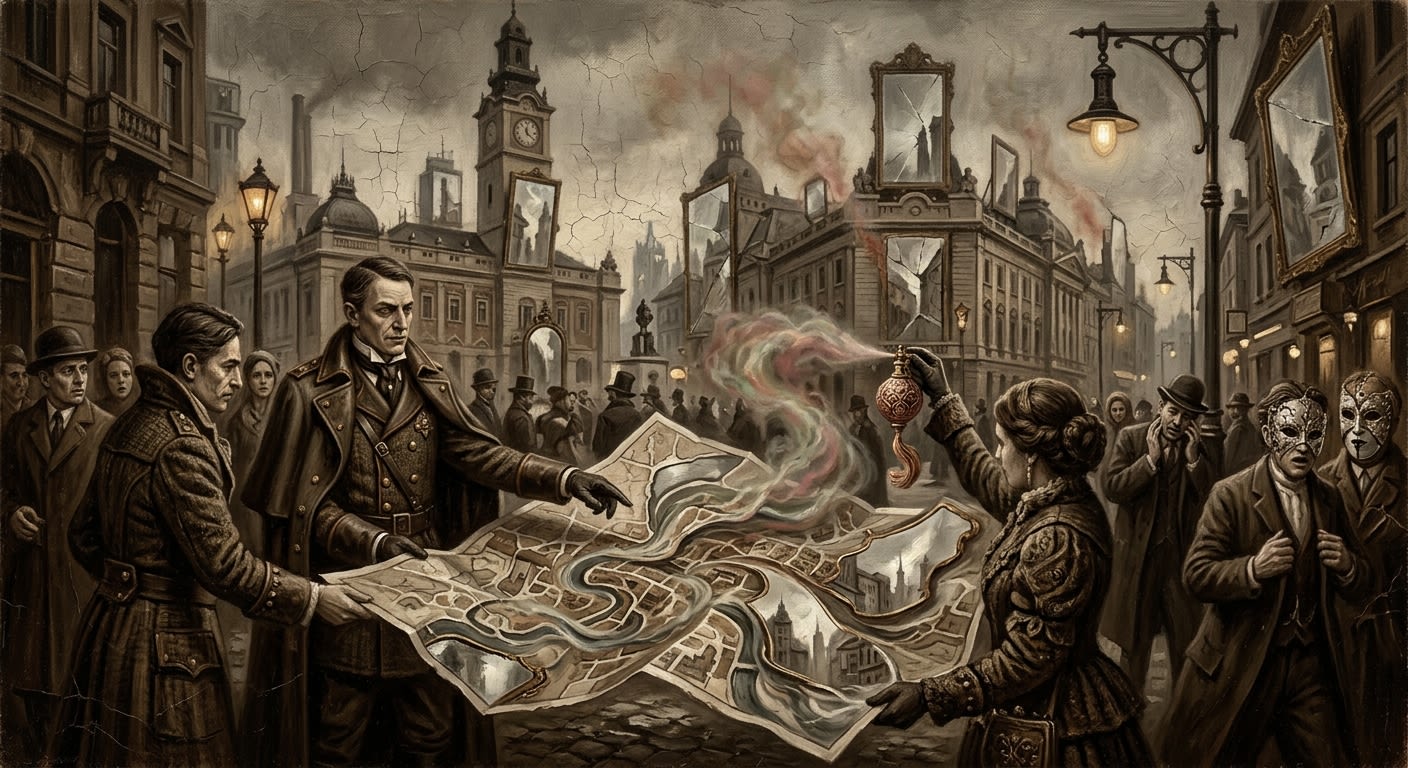
Shattered Courts
A palace that wears Belgrade like perfume wears a throat
Velkara's Shattered Courts occupy Belgrade by mirror, perfume, appetite, and refusal: a hostile palace that cannot be mapped without flattering it.
Codex Ref. II.5.06-117
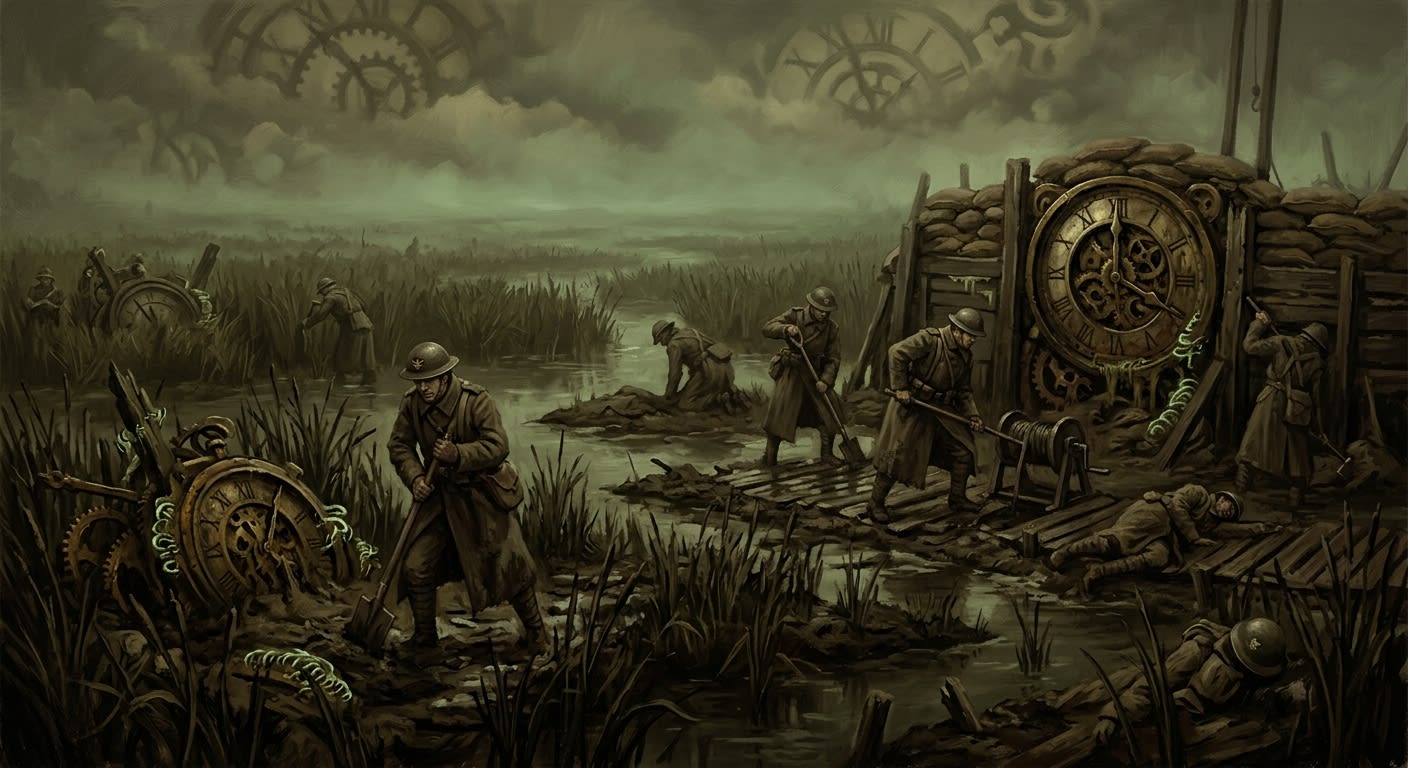
Shipka Marsh
The wet country where Sloth learned drainage
Shipka Marsh is the drowned Phocian corridor east of Bastion-Shipka, where reeds, clocks, sleep, and Syrion contest the Line by inches.
Codex Ref. II.4.08-017
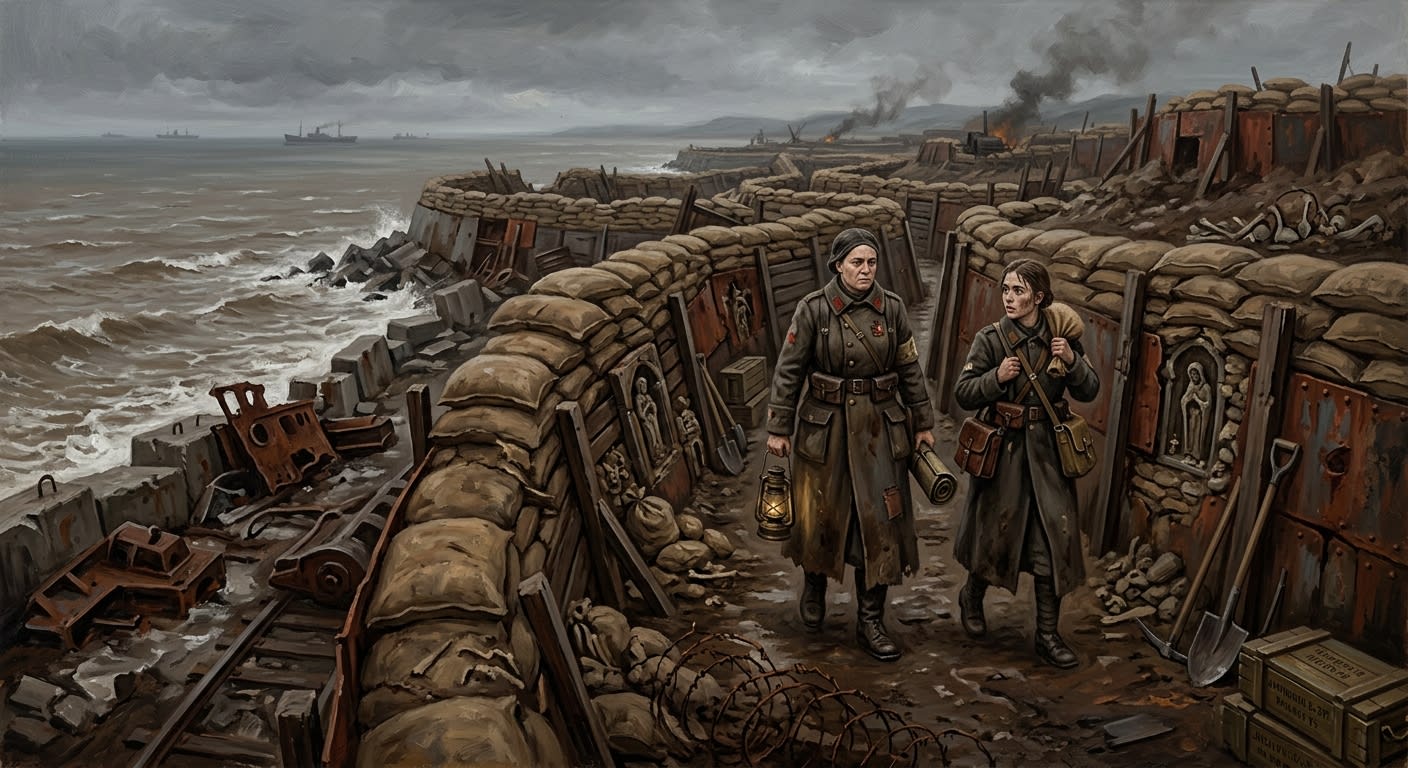
Sister Trenches
Where the Line touches surf and is corrected twice daily
The Sister Trenches are Elder and Younger, twin coastal forward works near Thessaloniki where sandbag, seawall, saint-bone, rust hymn, and tide-return burial keep the southern flank barely filed as held.
Codex Ref. II.4.08-017
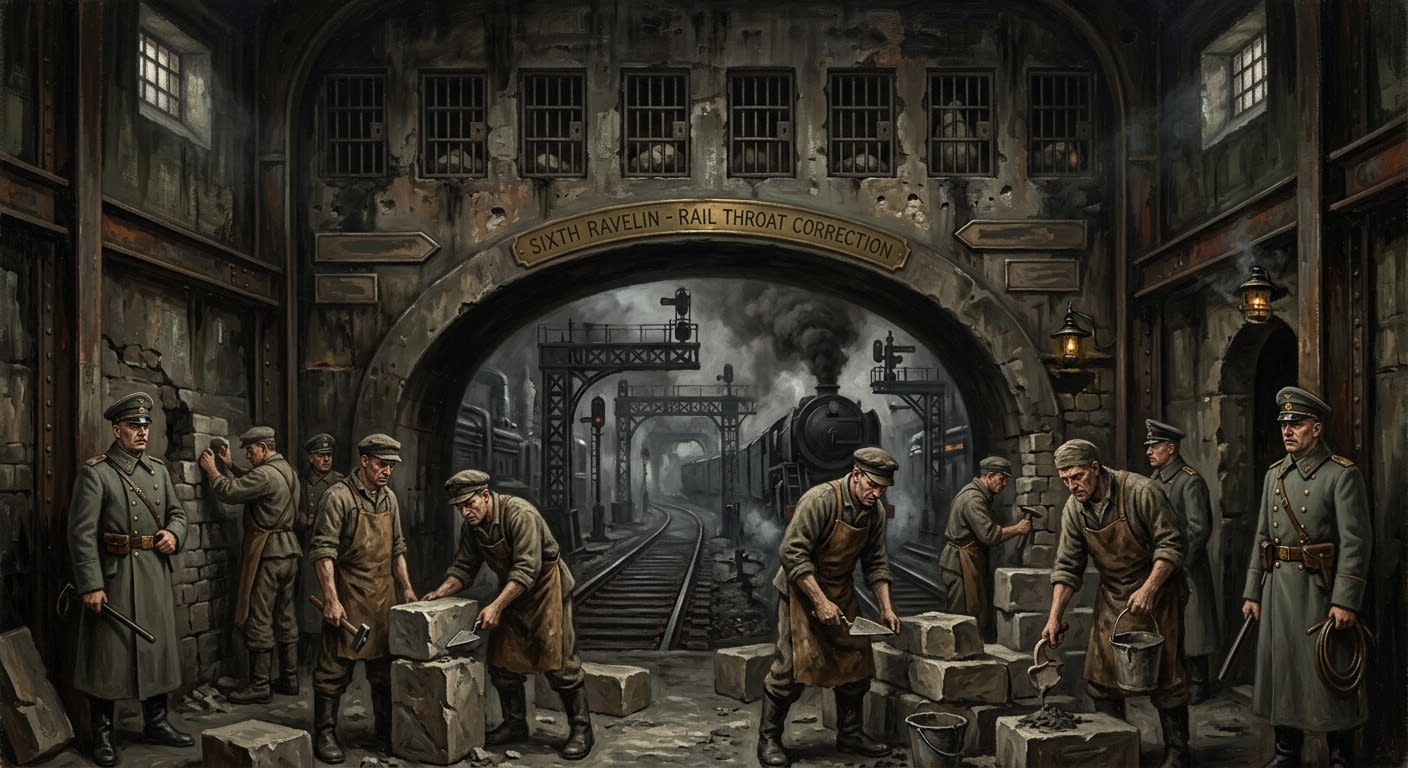
Sixth Ravelin
Correction faces consequence, and consequence answers warm
The Sixth Ravelin, called Correction, guards Bastion-Constantinople's rail throat and carries Chamber 7: forty-seven sealed in cement where guilt learned masonry.
Codex Ref. II.4.10-170
Skopje
The bitten city keeps its markets below the teeth
Skopje fell within hours of the Sundering, then survived below itself: a bitten city of Lantern Warrens, forged papers, humming lamps, and useful lies.
Codex Ref. II.5.08-045
Skopje Lantern Warrens
A city bitten from above, still singing below
The Skopje Lantern Warrens are the tunnel-city beneath a Sundering-eaten ruin, where black-diesel lamps hum in forbidden pre-Codex modes.
Codex Ref. II.4.08-017
Slag Market
Where Brast's holy heat cools into crime and soup
The Slag Market is Brast's outer-ring commerce in leaked sanctity: warm chits, forged seals, quiet hymns, hospice filth, stolen heat, and necessary lies.
Codex Ref. II.2.06-201
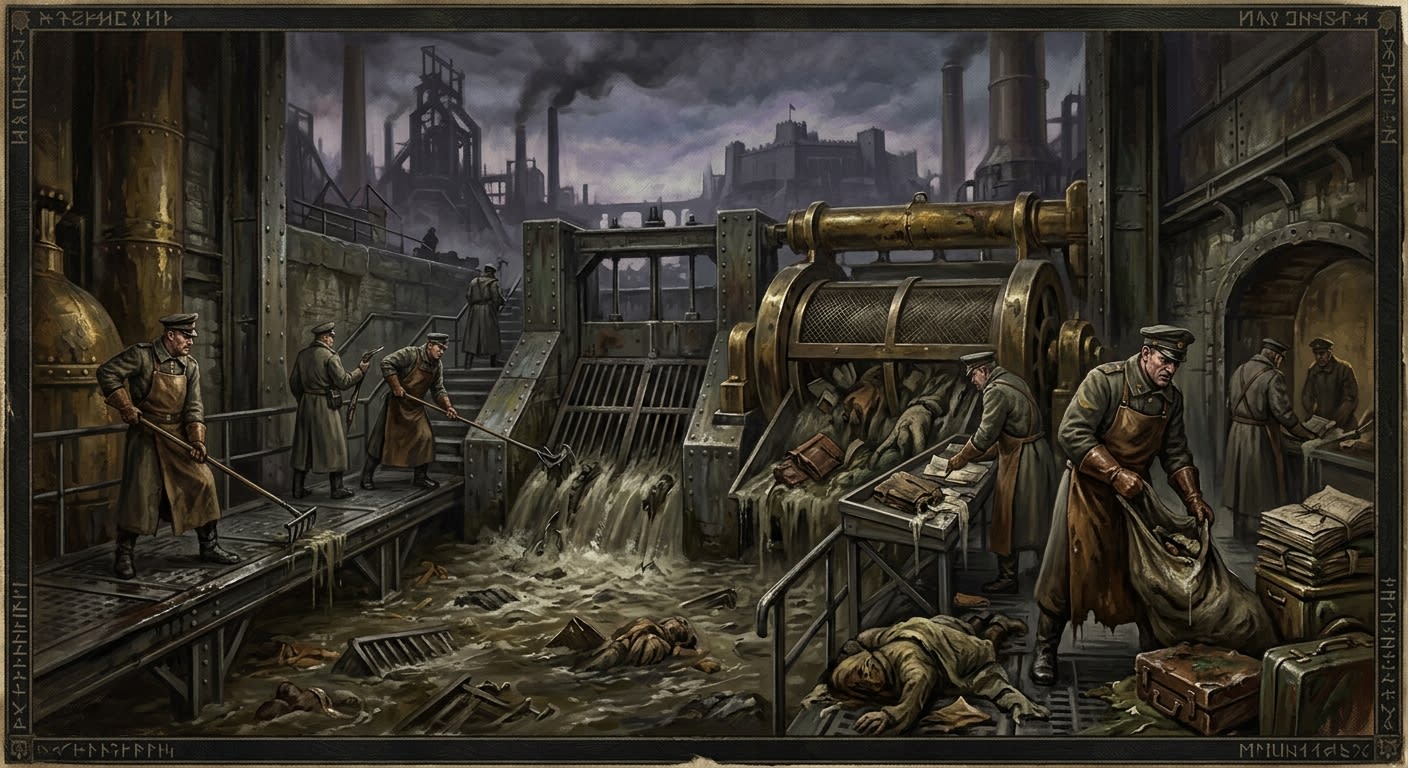
Sluice Yards
Where the Bug is hooked, taxed, and made to confess
Downstream of Bastion-Brest, the Sluice Yards hook the Bug's filth into evidence, paper, bodies, taxes, and the sort of truth that stains gloves.
Codex Ref. II.4.09-098
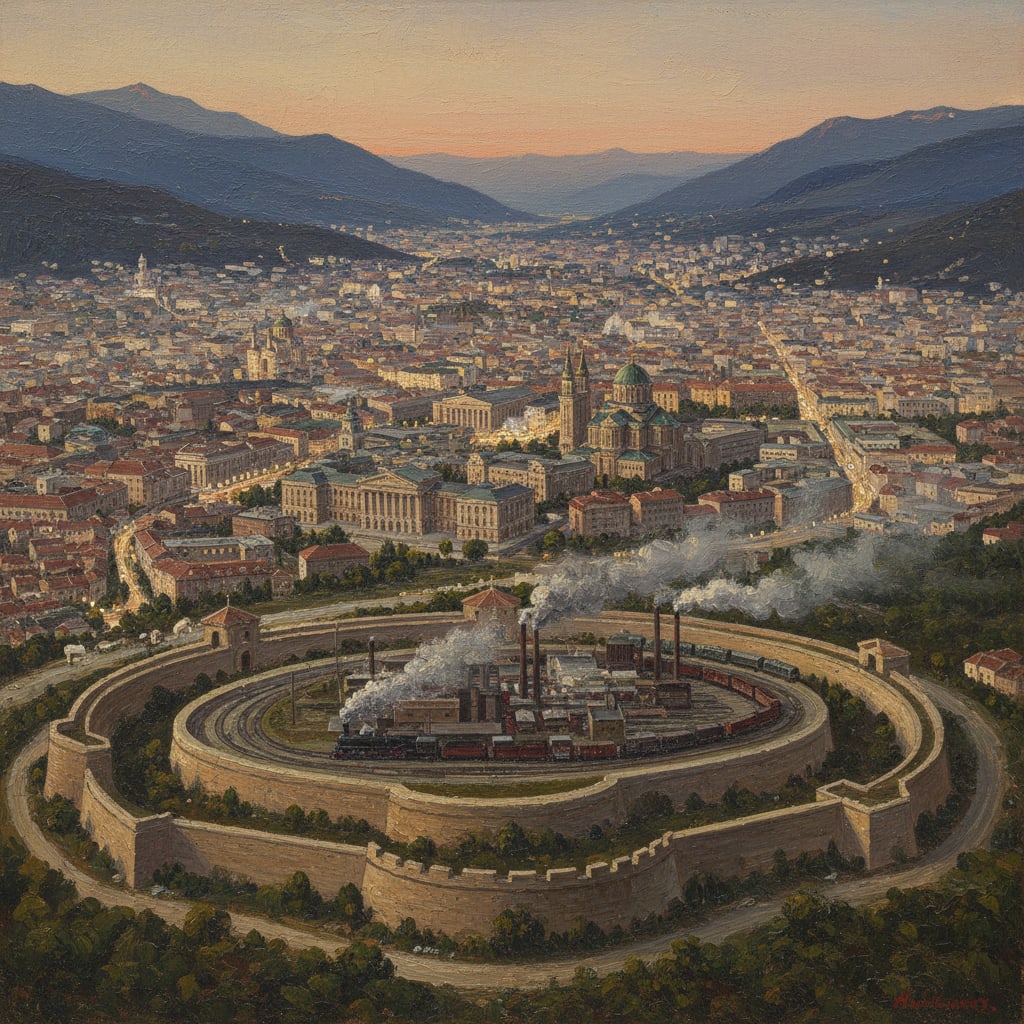
Sofia
Acceptable losses: total — and yet, here we are
Category Three Urban Holding between Irongate and Shipka. Classified expendable in extremis. Its council's objection cabinet is seven feet tall. Adhuc Stamus.
Codex Ref. II.4.09-011
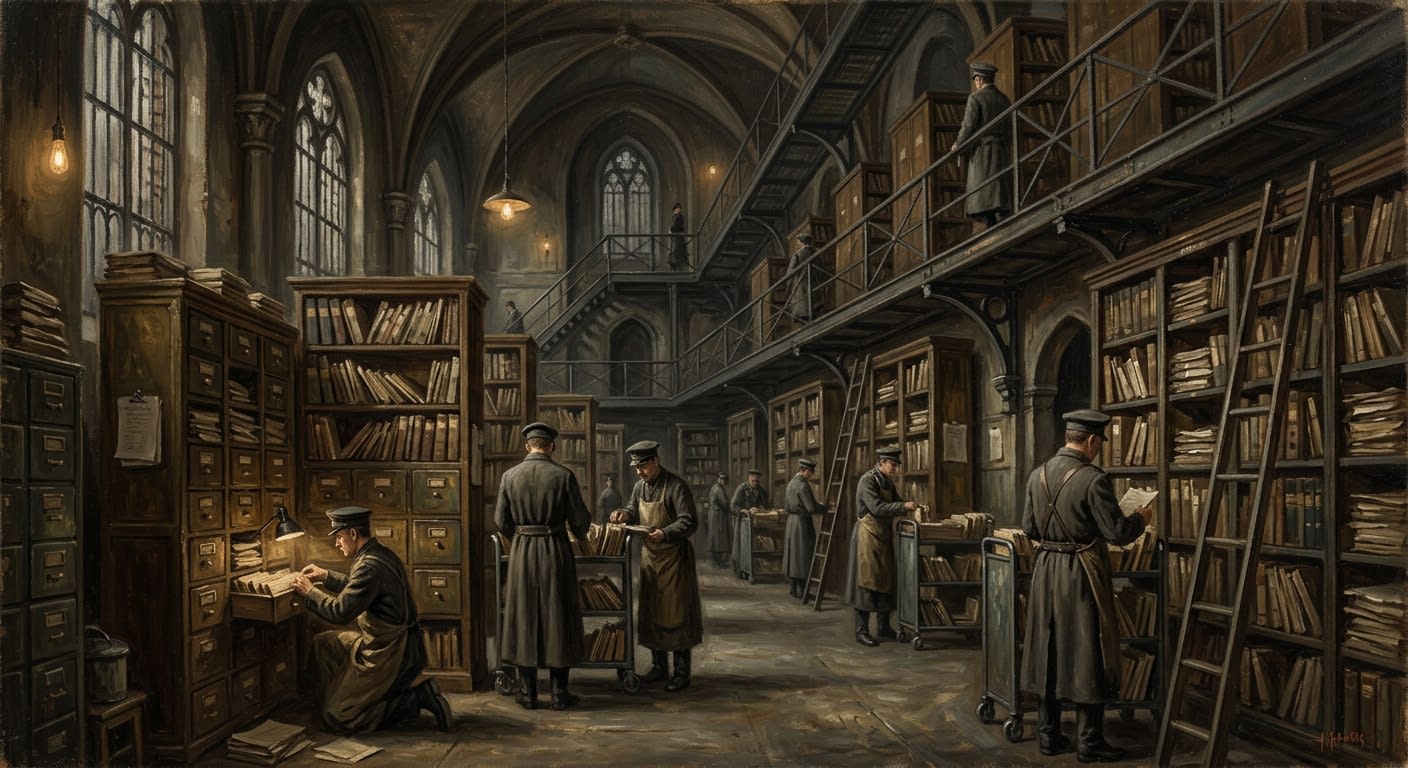
Sofia Filing Annex
A seminary gutted, shelved, and made merciful by neglect
The Sofia Filing Annex is a converted seminary where the Bureau of Records stores southern personnel files, impossible dates, and people too useful to diagnose.
Codex Ref. II.4.09-012
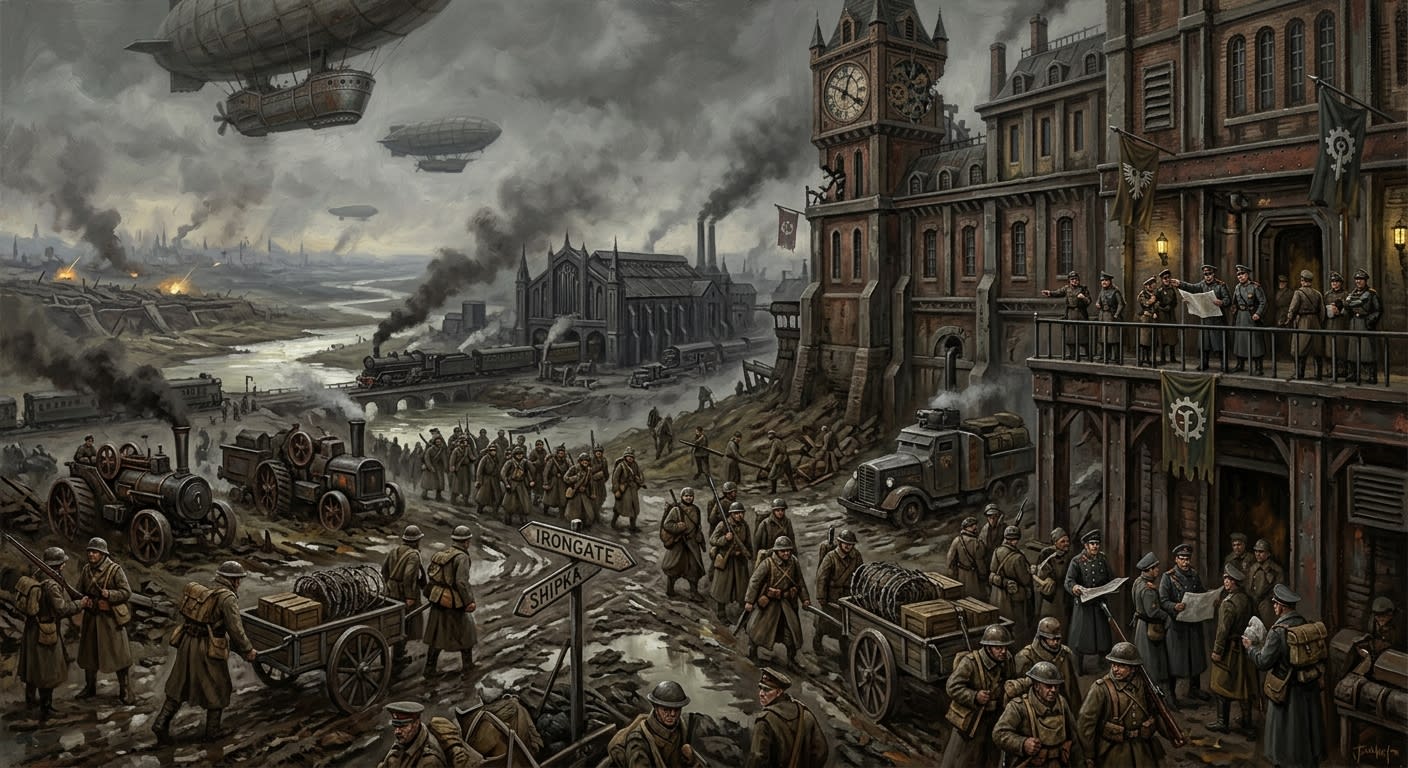
Southern Theater
The lower spear holds by bells, roads, suspicion, and bad sleep
The Southern Theater is the Line's lower spear: Irongate, Shipka, Constantinople, bad roads, worse clocks, mixed sins, and command halls full of clean answers.
Codex Ref. II.4.12-201
Station Two, Bastion-Shipka
The clocks accuse; the fog waits
Station Two is Bastion-Shipka's forward listening post, where Hourglass adepts measure Sloth-fog, frog-rhythm, drag-gauge failure, and the ninety-second Skip.
Codex Ref. II.4.08-015
Still-Canals of Brast
Where holy fuel cools before it learns obedience
Black-water condenser channels beneath Brast, where chrismole cools, mesh clogs, boys vanish, and every lockwheel becomes a theology of delay.
Codex Ref. II.2.01-022
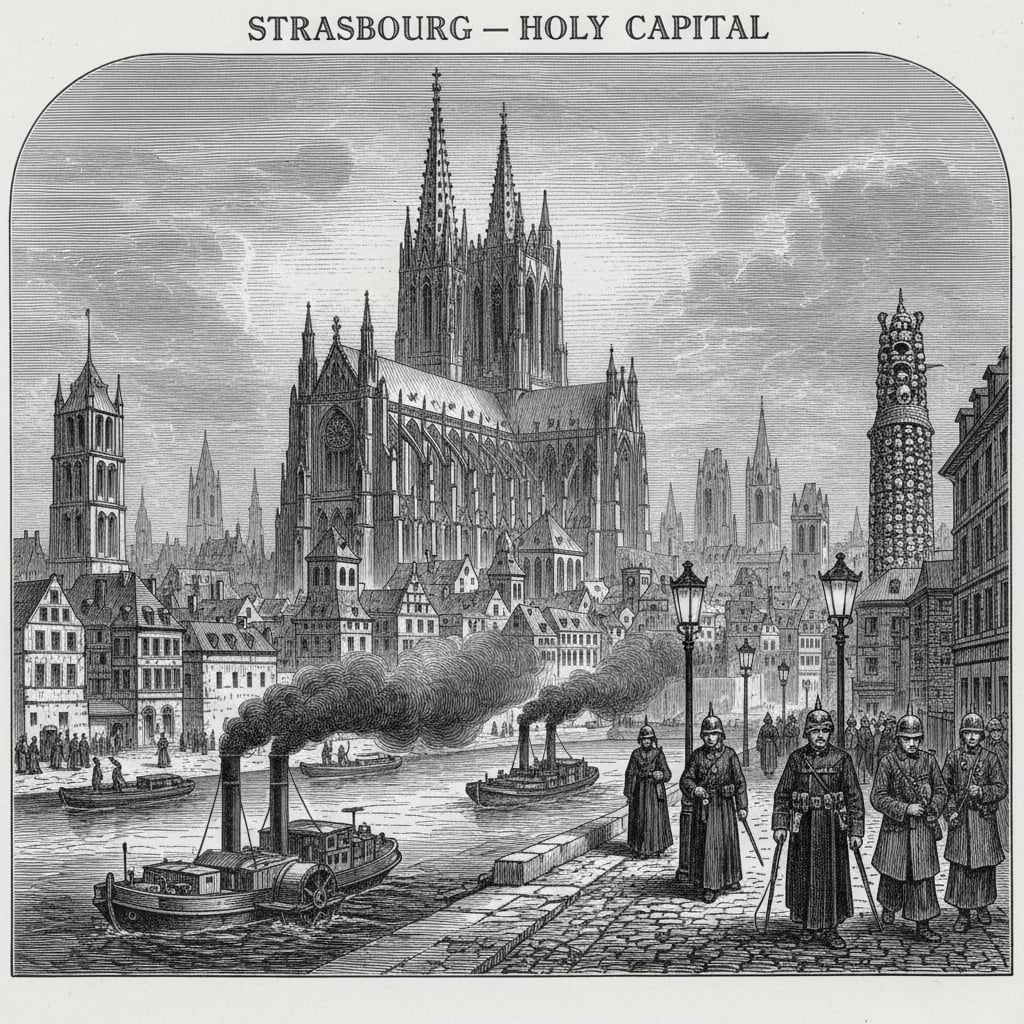
Strasbourg
The Holy City, or the Weight of Fifteen Centuries of Paperwork
Seat of the Synod, capital of the Dominion, largest city on the continent, and the only place where the bells never stop ringing. Strasbourg has forgotten what silence sounds like. So have its residents.
Codex Ref. III.2.01-001
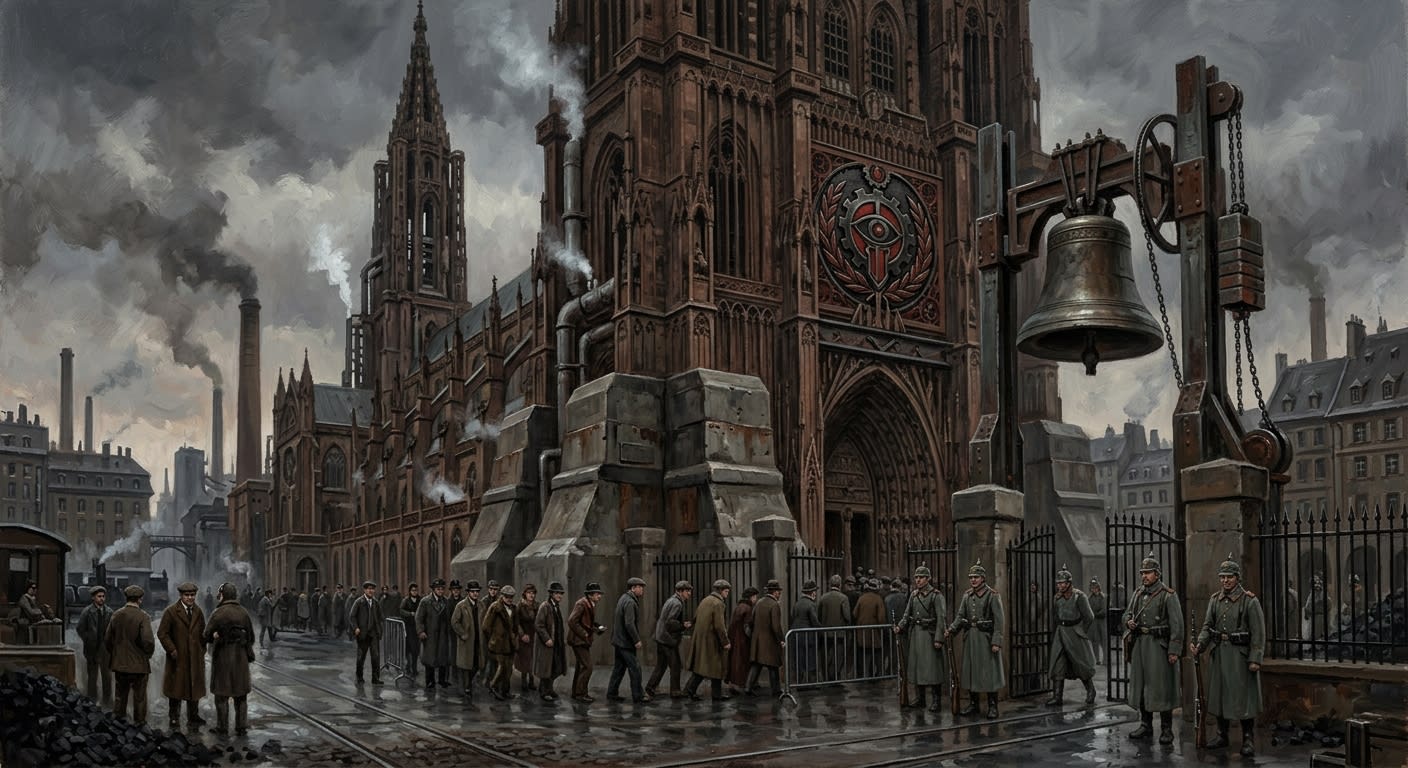
Strasbourg Cathedral
The stone lease by which Heaven rents authority to the Bureaus
Strasbourg Cathedral is stone, bell, vault, bench, seal, and threat: the capital's holy machine for turning awe into obedience.
Codex Ref. II.1.04-004
Strasbourg Central Orphanarium
No kin but the Synod, no cradle without a ledger
Strasbourg Central Orphanarium is Mercy's mother-house without mothers: gate, bench, tag kiln, sleep trial, placement hall, and cabinet.
Codex Ref. II.2.06-006
Stuttgart
Where Swabian thrift is spent in sons
Stuttgart is War's Swabian catechism-barracks, a Zone 2 training engine where ration economy, mud discipline, and family grief are measured into obedience.
Codex Ref. II.2.01-004
Swiss Cantons
Where mercy climbs uphill and stops writing back
The Swiss cantons keep passes, bells, hospice beds, and the Synod's most merciful disappearances beneath snow clean enough to indict Heaven.
Codex Ref. II.2.08-201
Szeged
The river city where the light failed while shining
Szeged is the Tisza city where psalm-light learned betrayal, candles died inward, and the road to Baja began reaching back with teeth.
Codex Ref. II.4.09-201
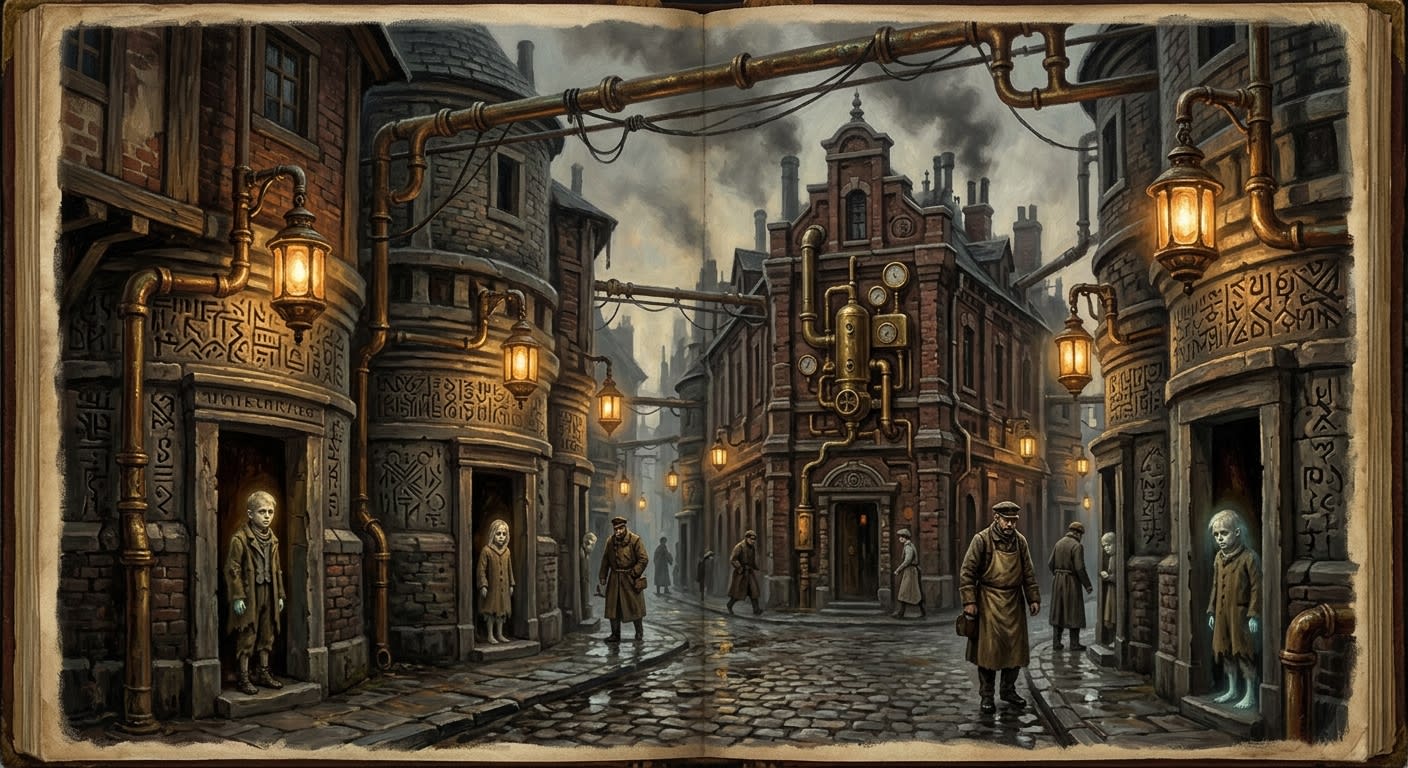
Târgu
The grave-ring town where walls learned doctrine
Târgu is the Przemyśl approach town where grave-rings house the living, walls recite through mortar, and surplus lamps taught children to glow.
Codex Ref. II.4.09-201
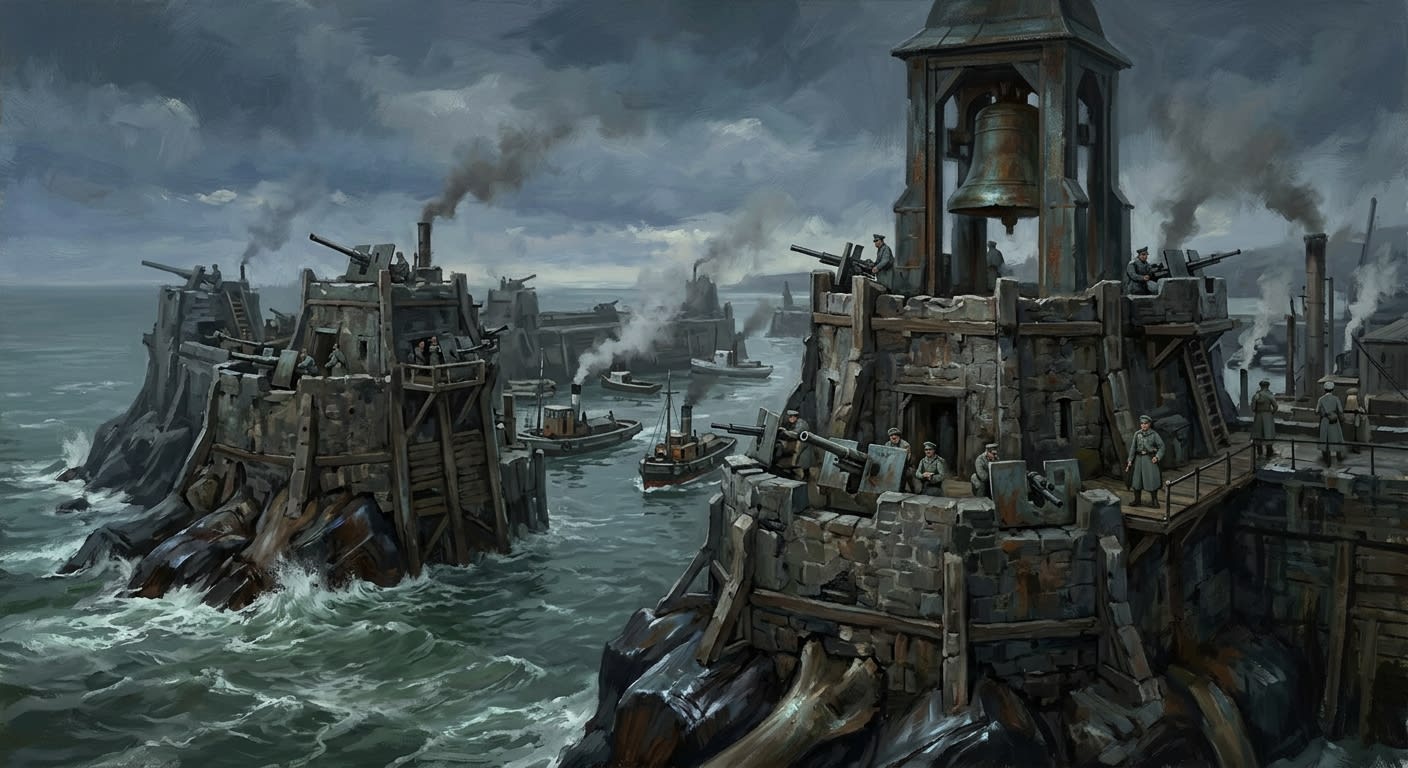
Teeth Breakwaters
Calais put bones in the harbour and called it engineering
The Teeth Breakwaters of Calais are bone-cored harbour fortlets raised after the Great Breach, where the sea chews and the Gunline Choir buys intervals with bells.
Codex Ref. II.4.09-074
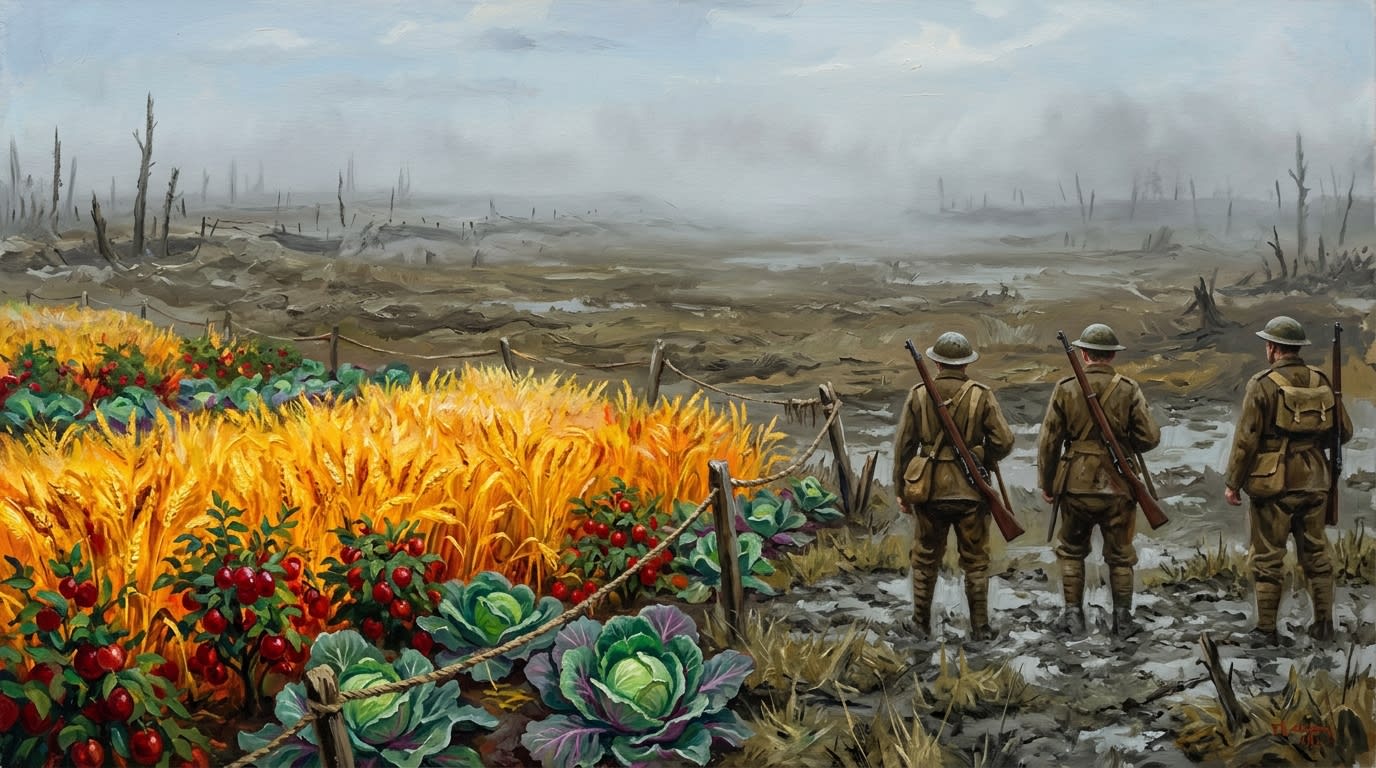
The Abundance Fields
A Category One Moral Hazard; and yes, it smells of fresh bread
The Abundance Fields are patches of impossible fertility at the Blightmarsh's edge — crops grown without sowing, fruit ripening in frost, bread-smell on a west wind. The food is real. The hunger it produces is realer still.
Codex Ref. V.6.01-003
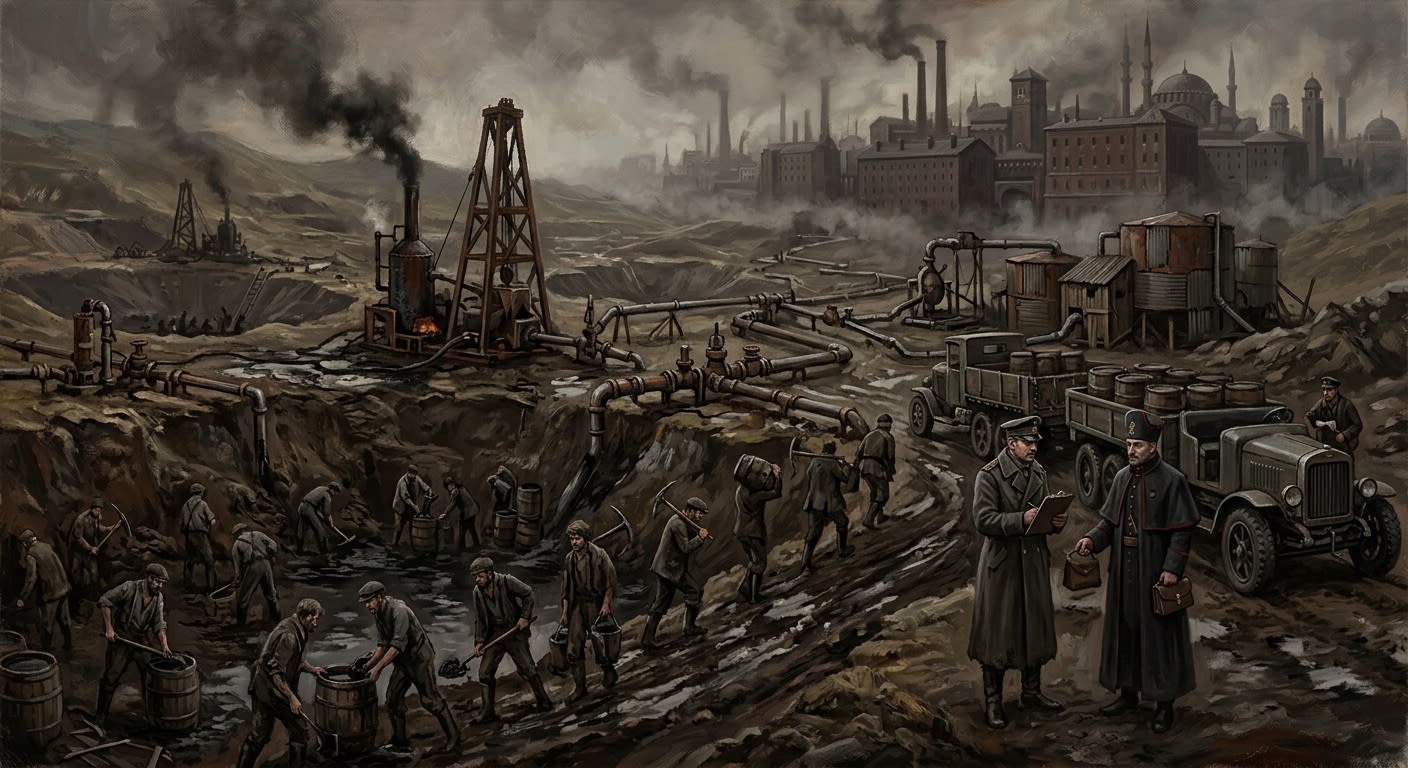
The Anatolian Pitlands
The fuel that does not exist arrives on schedule
The unregistered crude seams beyond Bastion-Constantinople supply black diesel through pits, bribes, false seizures, nameless labour, and official denial.
Codex Ref. II.4.09-013
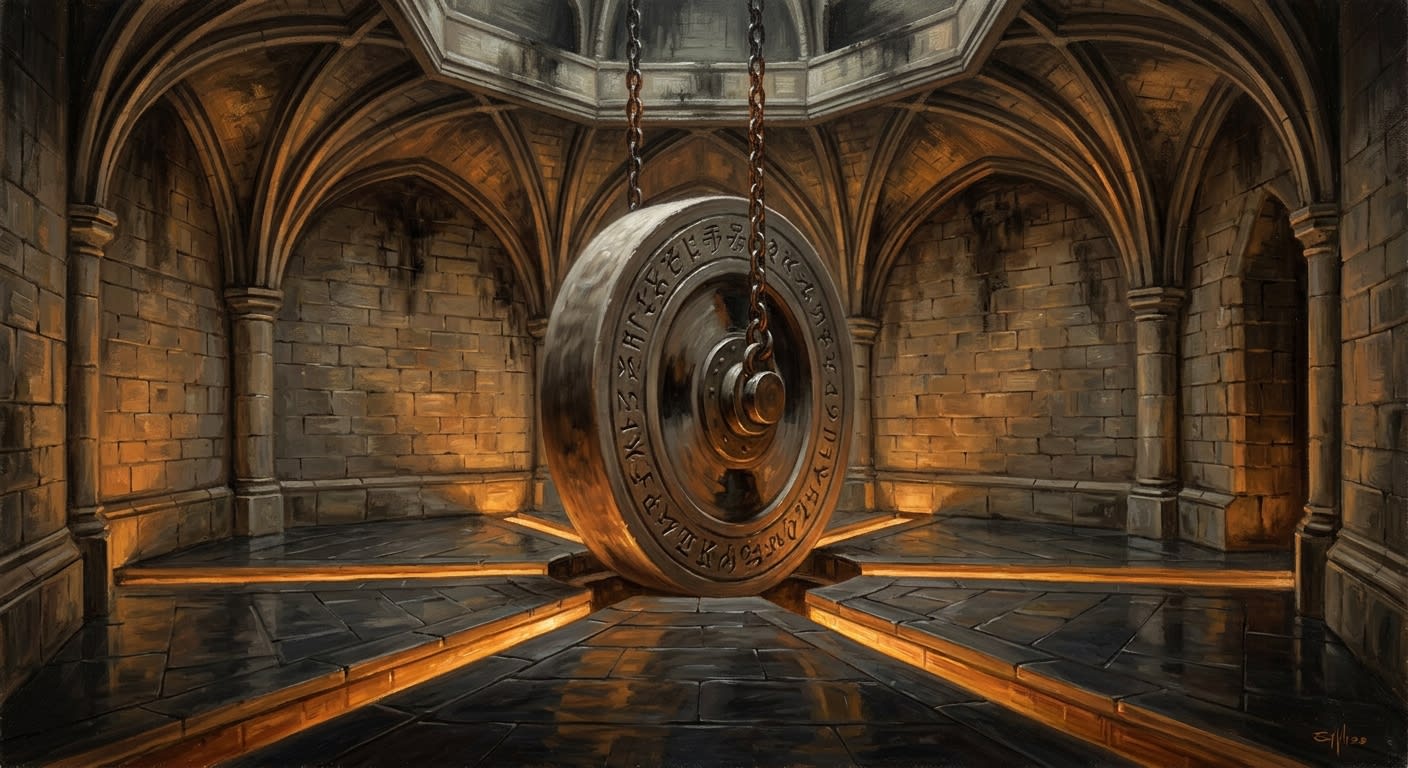
The Apparatus Beneath Gate Nine
The Grindstone turns. The Bureau declines to comment.
Beneath Gate Nine of the Queue Road, forty-two feet below the Hearing Hall, a wheel turns. It has been turning since before the Synod existed. The Bureau of Doctrine classifies this assessment as pending. The Grindstone does not.
Codex Ref. II.3.06-001
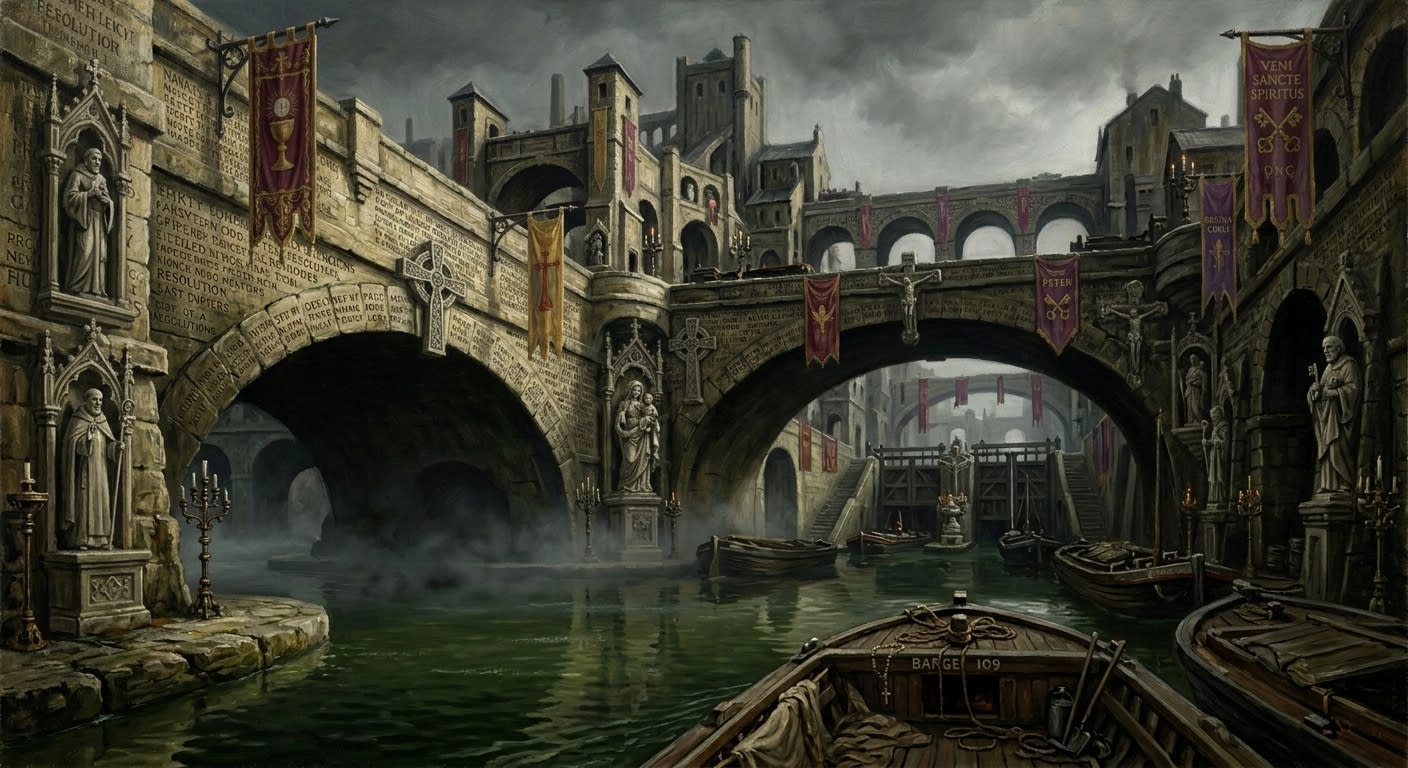
The Archivolt Causeyworks
Where stone keeps accounts, and every arch is also a court of law
A canal city where bridges are courts and debts are carved in granite — the Archivolt Causeyworks keeps its ledger in stone, and the stone has begun to listen.
Codex Ref. II.1.02-001
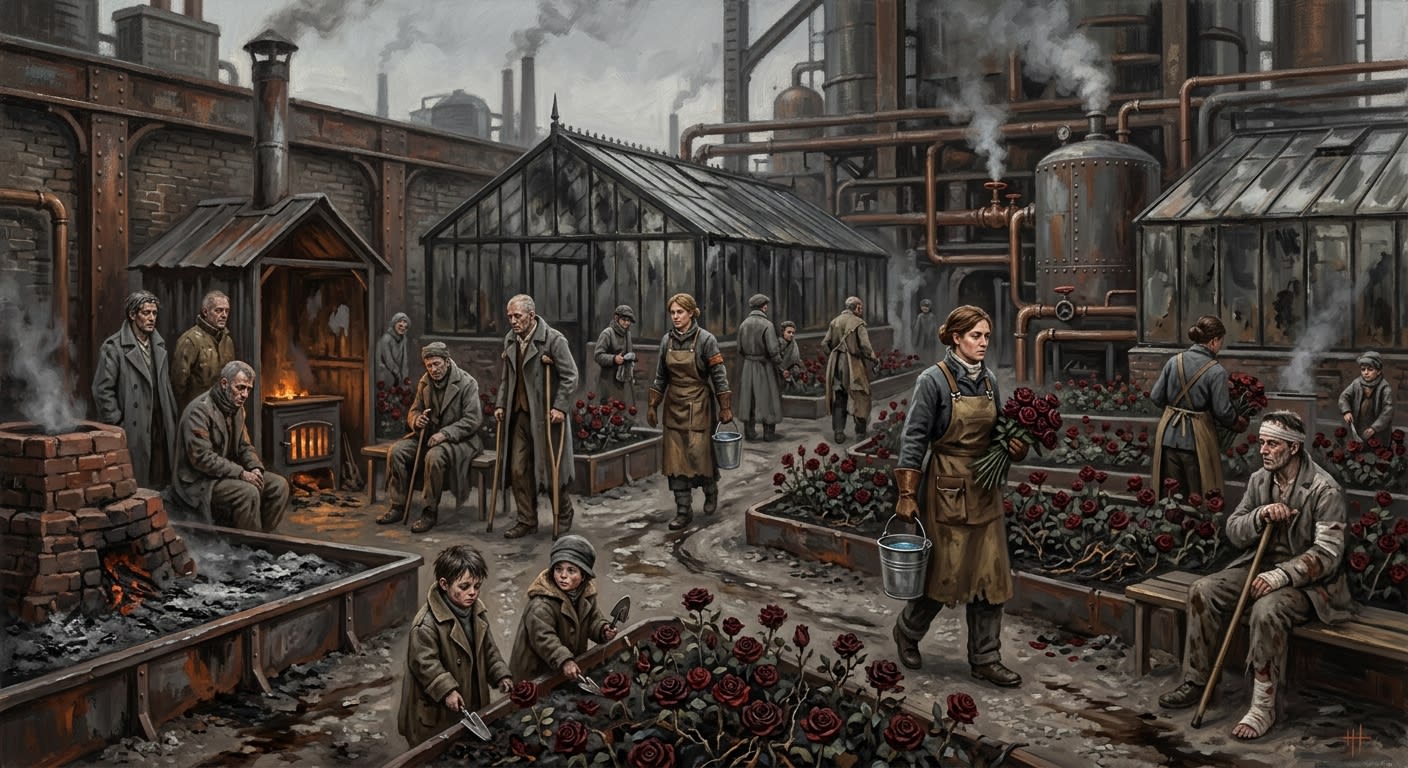
The Ash Gardens
Where roses feed on siege residue and Medicine pretends not to notice
Three miles inland from the Harbor of Chains, the Ash Gardens heal burned men, ash-lung children, and shell-broken soldiers beneath roses fed by Maldrake's old fires.
Codex Ref. II.4.10-007
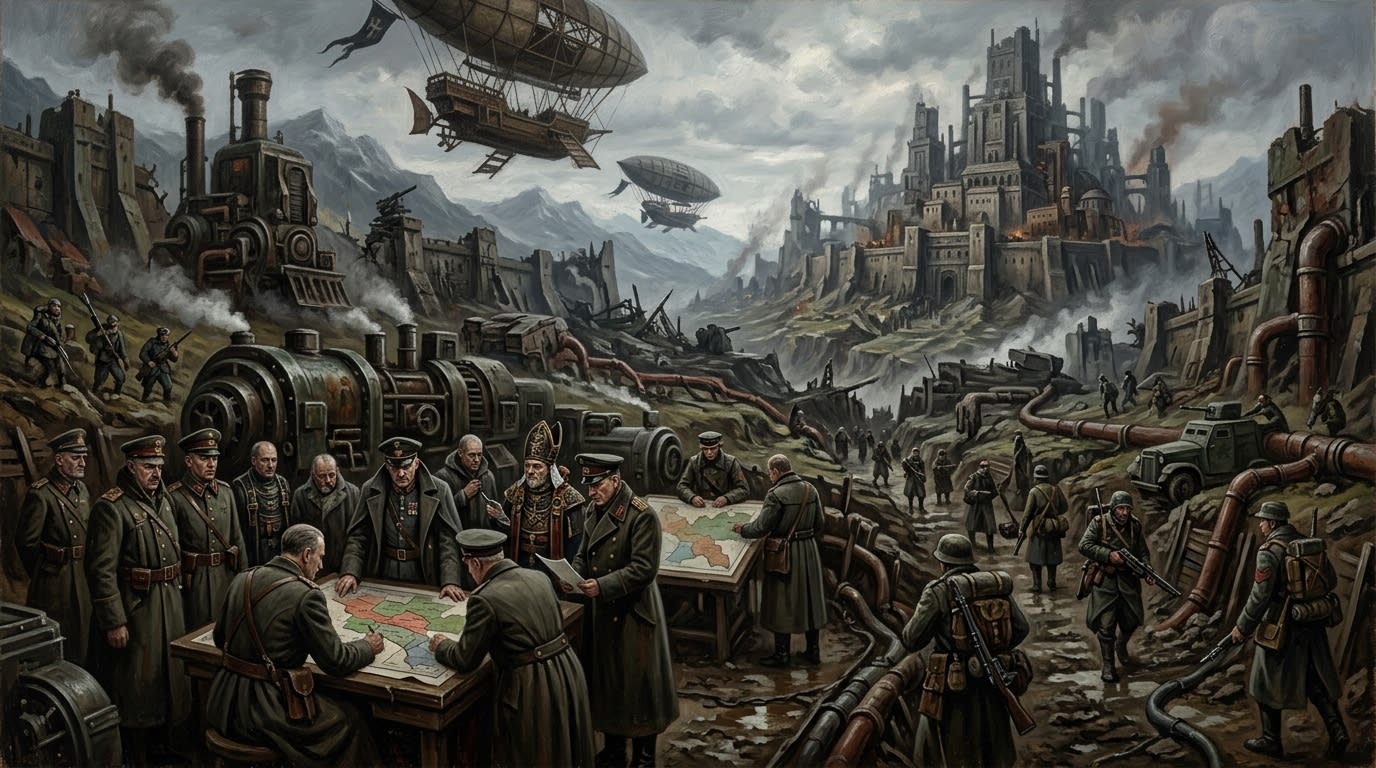
The Balkans
The wound that taught Europe to count its bleeding
The Balkan wound-region, broken first by the Eastern Silence and the Sundering, then divided into Synod margins, contested corridors, Sin-General dominions.
Codex Ref. II.6.05-045
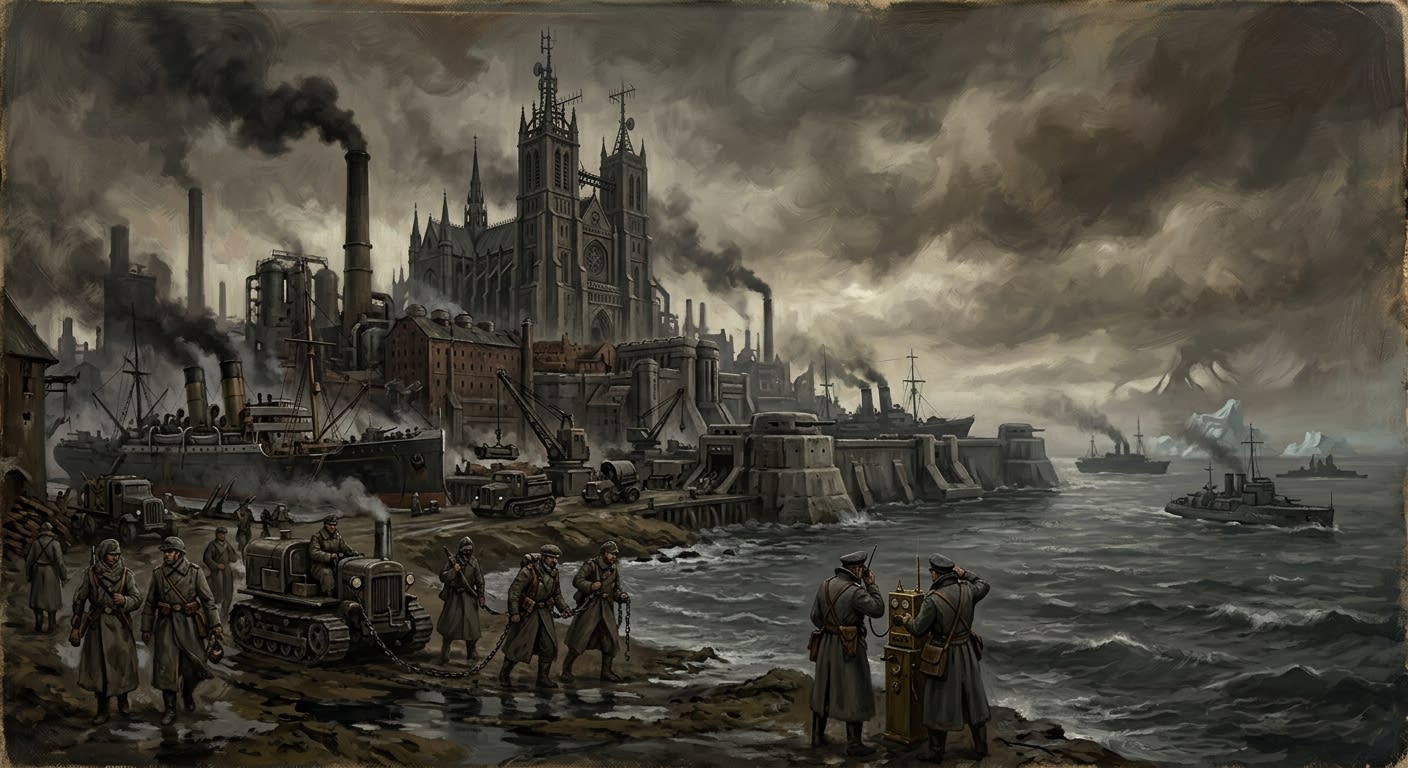
The Baltic
The cold sea at the end of the Line, claimed by ink and not by water
The Baltic northern war basin, where the Sagittal Line ends at Königsberg, Danzig feeds the cold corridor, the Fractured North rings older bells, and Grey Water listens.
Codex Ref. II.8.01-065
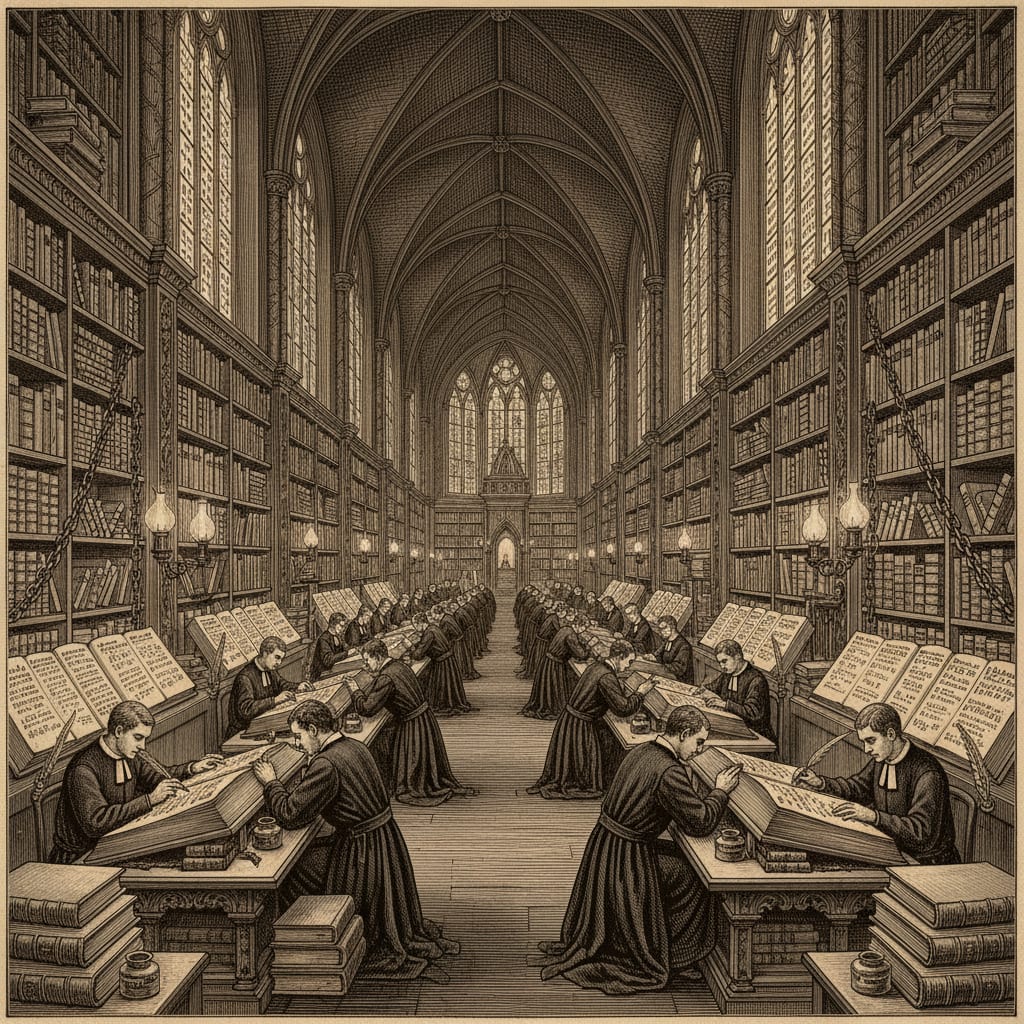
The Basilica of the Ledgered Saints
Archive of the Living and the Dead
The labyrinthine archive-basilica of Strasbourg, where every soul since the Council of Cologne has been inked in crimson. A nave of numbers, a vault of recantations, and a crypt that breathes.
Codex Ref. III.2.07-031
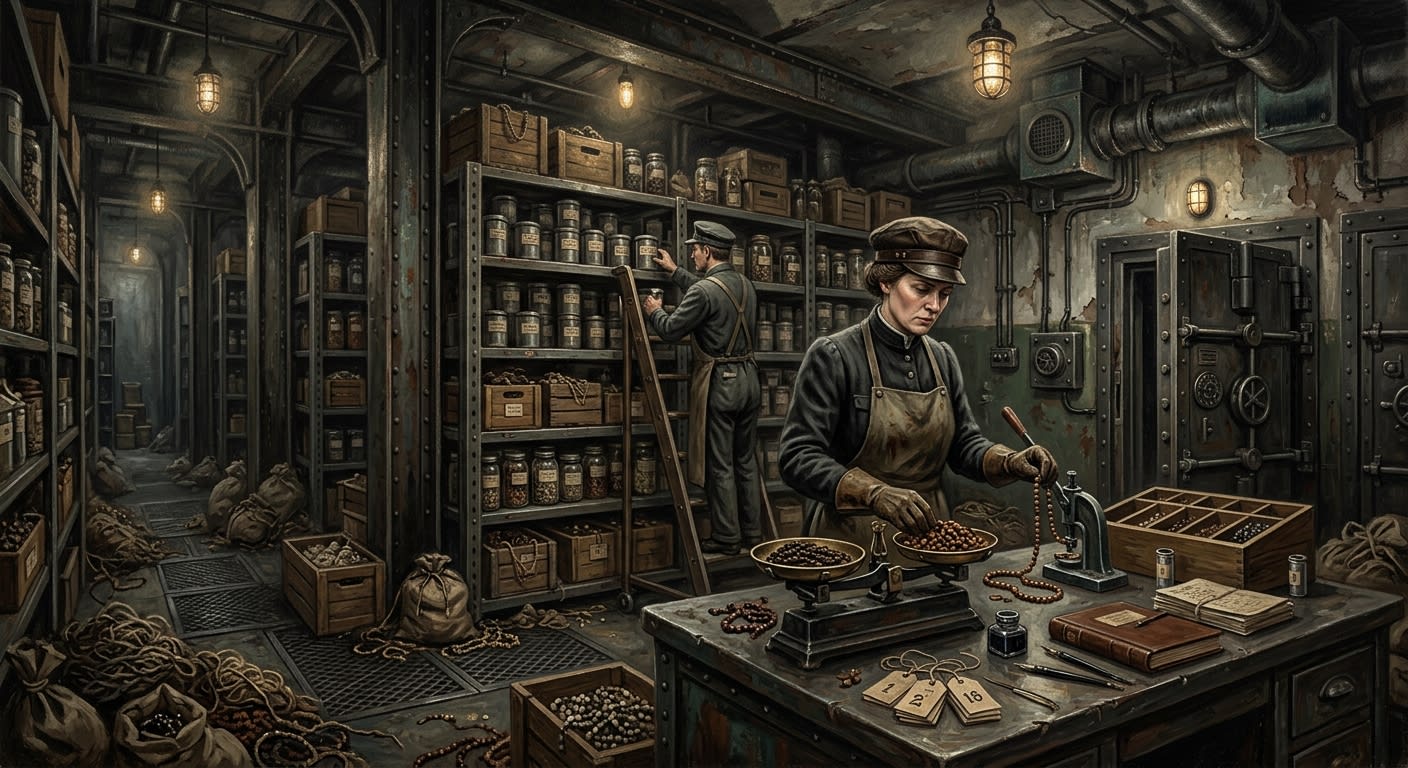
The Bead Vault
Where prayer beads learn to testify against the living
The Bead Vault is the Cloister's cold evidence room, where confiscated pilgrim strings are weighed, sleeved, locked, and sometimes found counting back.
Codex Ref. II.3.06-003
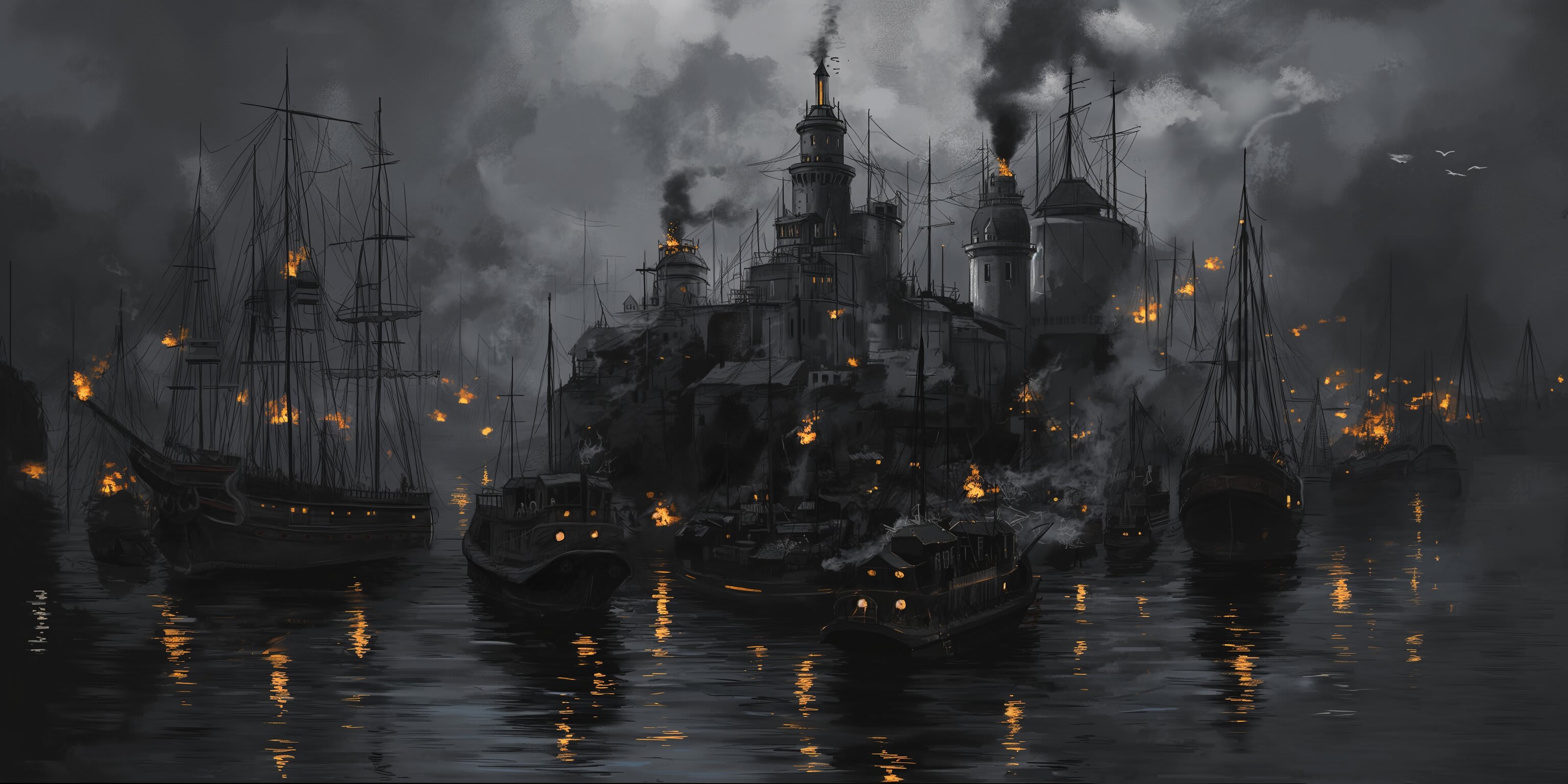
The Black Sea Reliquary Flotilla "Saints Afloat"
The sea does not answer to the Bureau. The Bureau answers to the sea.
Two hundred and thirty-seven hulls lashed into a drifting city on the Black Sea, carrying six hundred saints and eighteen thousand souls — administered, tithed, reparished by storms, and anchored to something the Bureau of Doctrine has declined to name.
Codex Ref. II.4.09-002
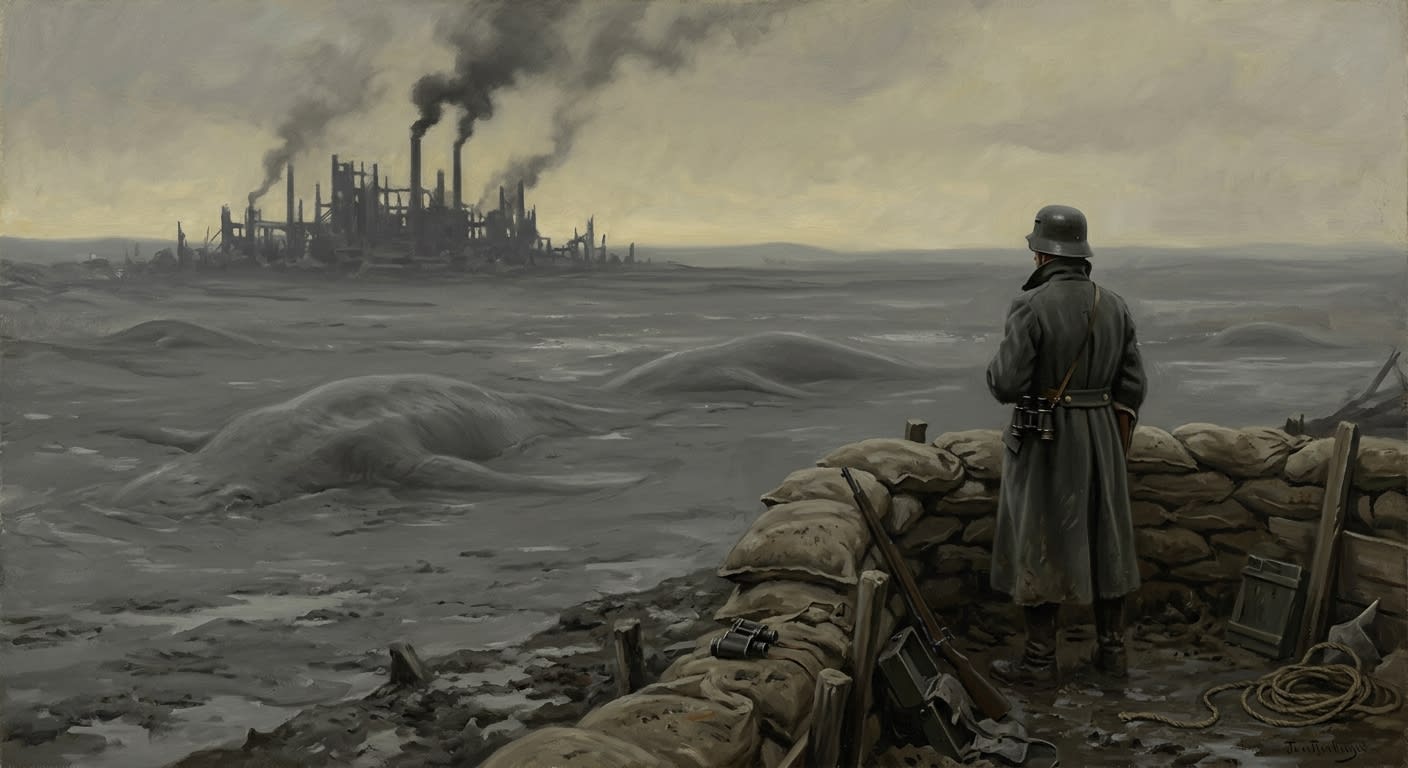
The Blightmarsh
Kargath's larder, fully stocked, permanently empty
The consumed plains of Hungary — twenty-three thousand square miles of grey mud, expanding mouths, and hunger that does not end. Kargath's forward infrastructure. The Sagittal Line's nearest unsolvable problem.
Codex Ref. V.6.01-001
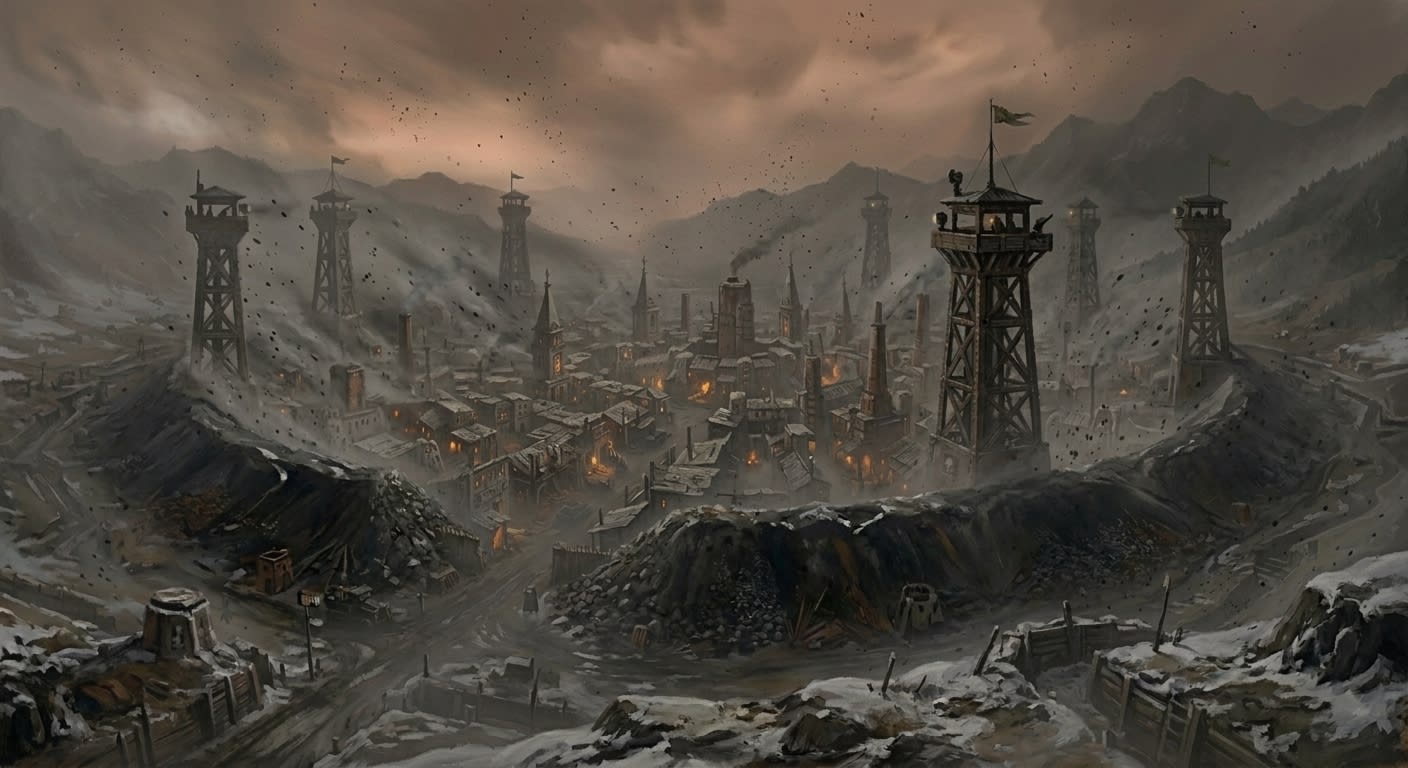
The Bone-Lattice Warrens of Black-Snow Lor
Where the dead are structural and the living pay by the breath
Frontier storm-shelter accreted into a town on the Carpathian edge of the Line — where the air is taxable, the architecture is anatomical, and the Bureau of Alchemical Standards has had a classification pending since A.S.
Codex Ref. II.4.08-002
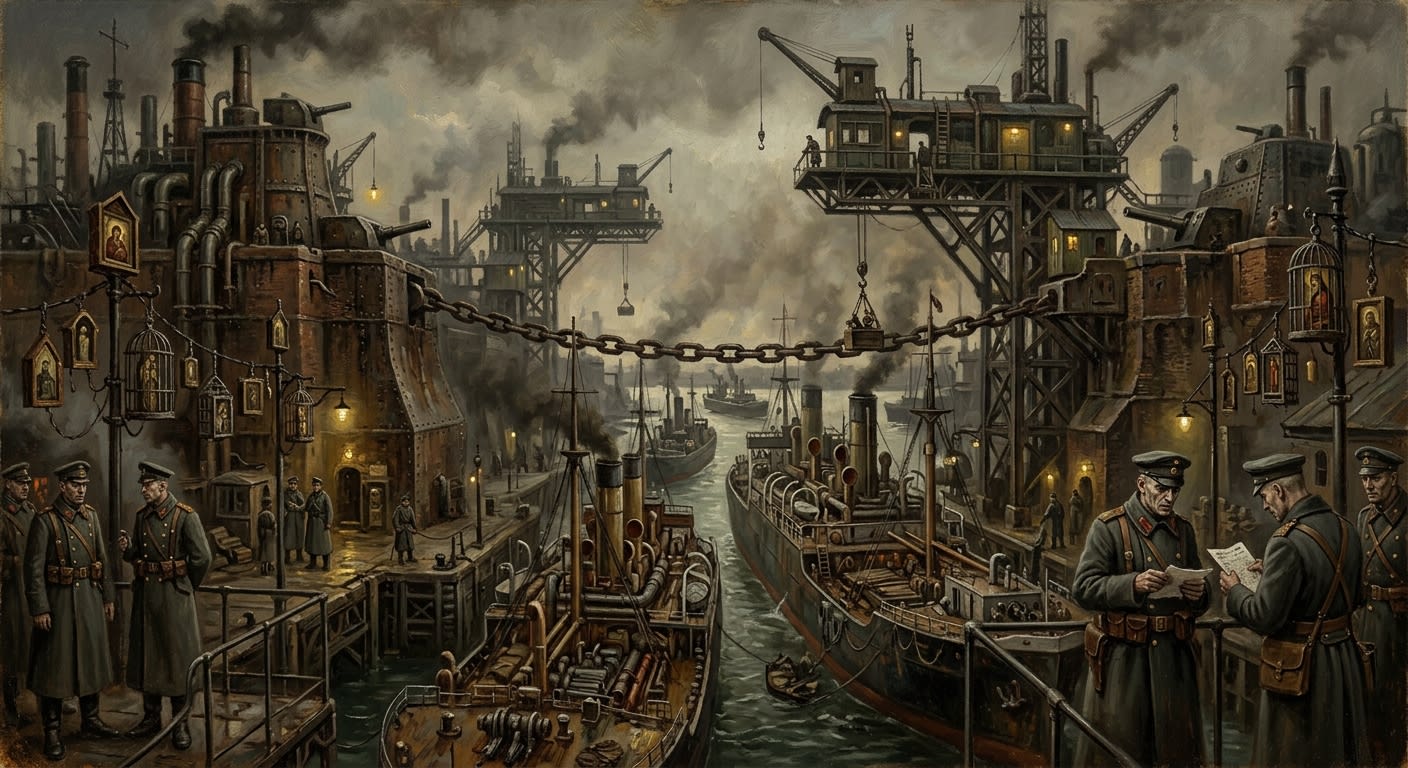
The Bosphorus
The water has not countersigned
The Bosphorus is the southern hinge of the Sagittal Line: chain-defended, tariff-choked, relic-strung, and still refusing to admit that water can be owned.
Codex Ref. II.4.09-004
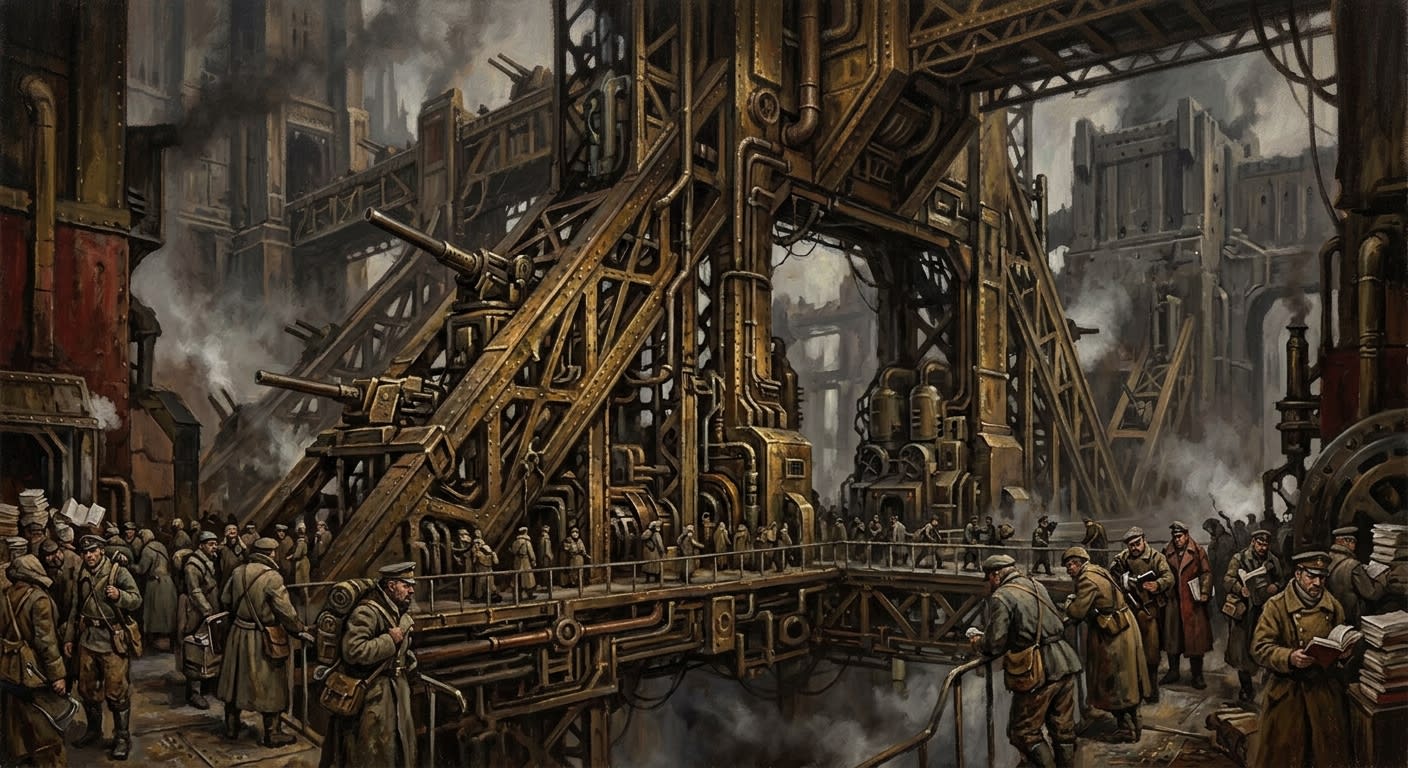
The Brass Ribs
Thirty-two arches, two hundred fourteen mouths, and one bridge pretending to be law
The Brass Ribs are Bastion-Brest's thirty-two bridge-trusses: load-bearing, armed, sacramental, overcrowded, and conducting more voices than Engineering cares to admit.
Codex Ref. II.4.08-032
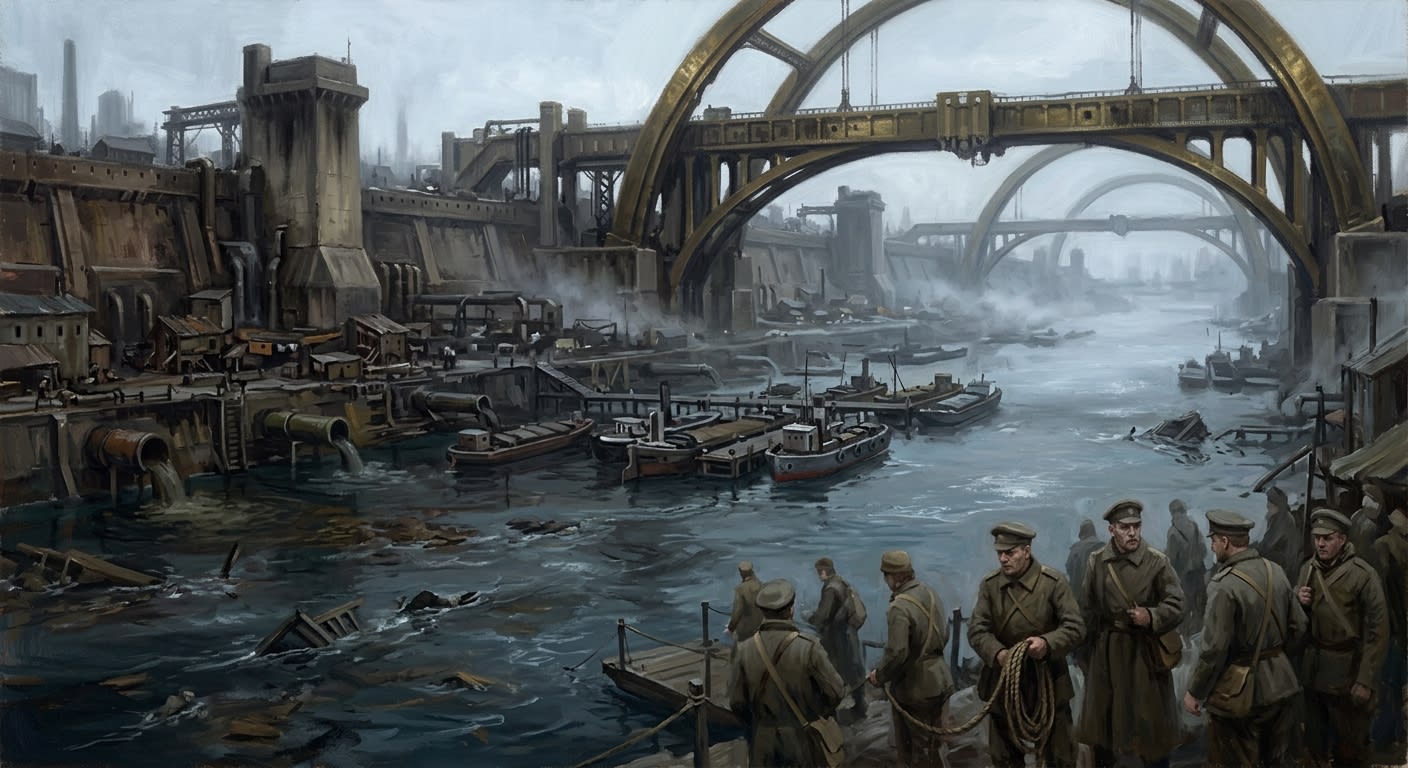
The Bug River
The moat has learned to audit the drowned
The Bug River is Bastion-Brest's natural moat: cold water, legal throat, corpse archive, anomaly carrier, and the wet witness beneath the Brass Ribs.
Codex Ref. II.4.08-066
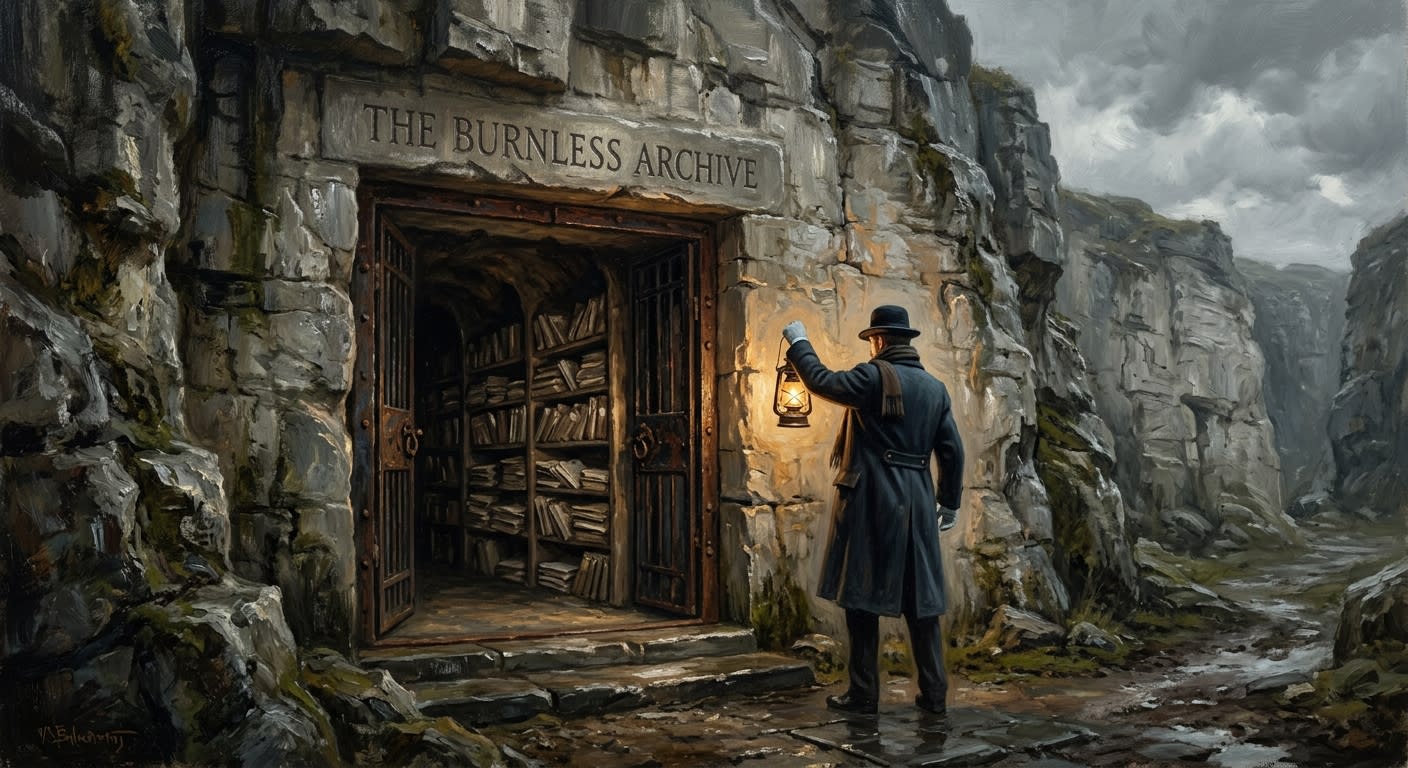
The Burnless Archive
The paper does not burn. The ink is wet. The Bureau files this under Pending.
Beneath the Steppe Gate's eastern cutbank, the paper does not burn, does not leave, and does not require a living hand to file new clauses. The Bureau of Doctrine has classified this under Pending for seven years. The ink remains wet.
Codex Ref. II.4.10-002
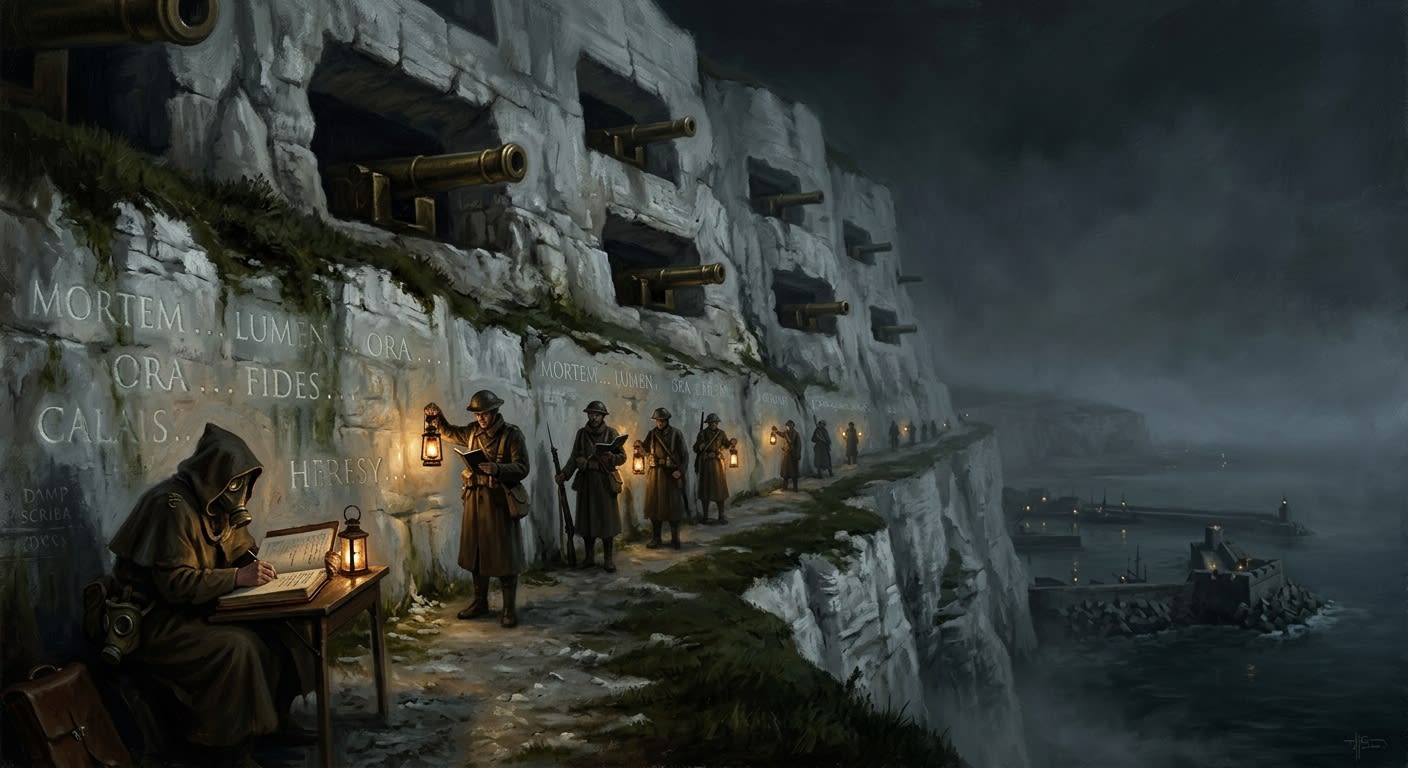
The Chalk Redoubt of Calais
What the Sea Remembers, the Stone Writes
Coastal installation at Calais, where the cliff face writes names in fog and the garrison reads them aloud each night — lest the sea claim what the chalk has named. The Bureau calls it pareidolia. The drowned call it correspondence.
Codex Ref. II.4.09-004
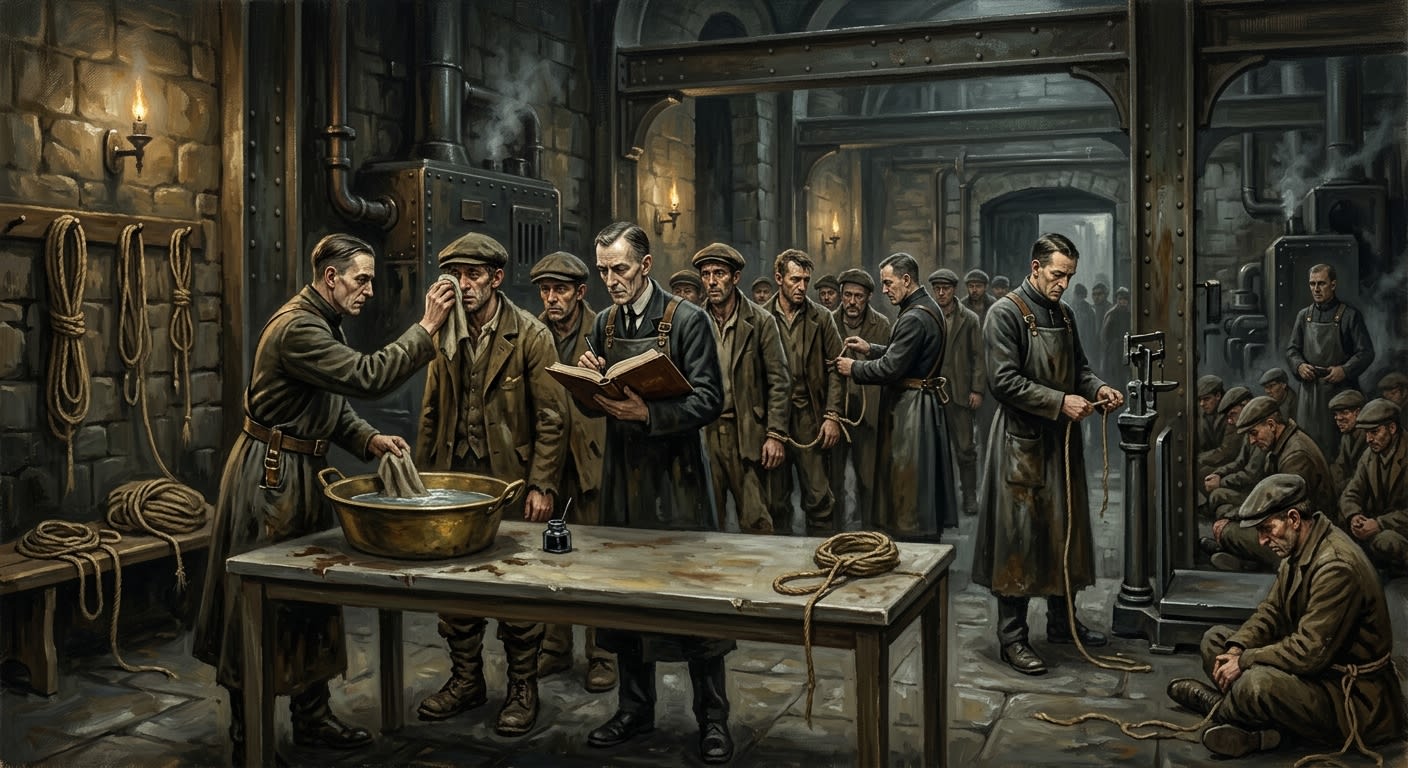
The Chapel of the Second String
Where correction kneels until origin learns its place
The Chapel of the Second String reconciles miscounted pilgrims with cheap cord, cold stone, silence tests, basin water, and the doctrine that correction outranks origin.
Codex Ref. II.3.06-006
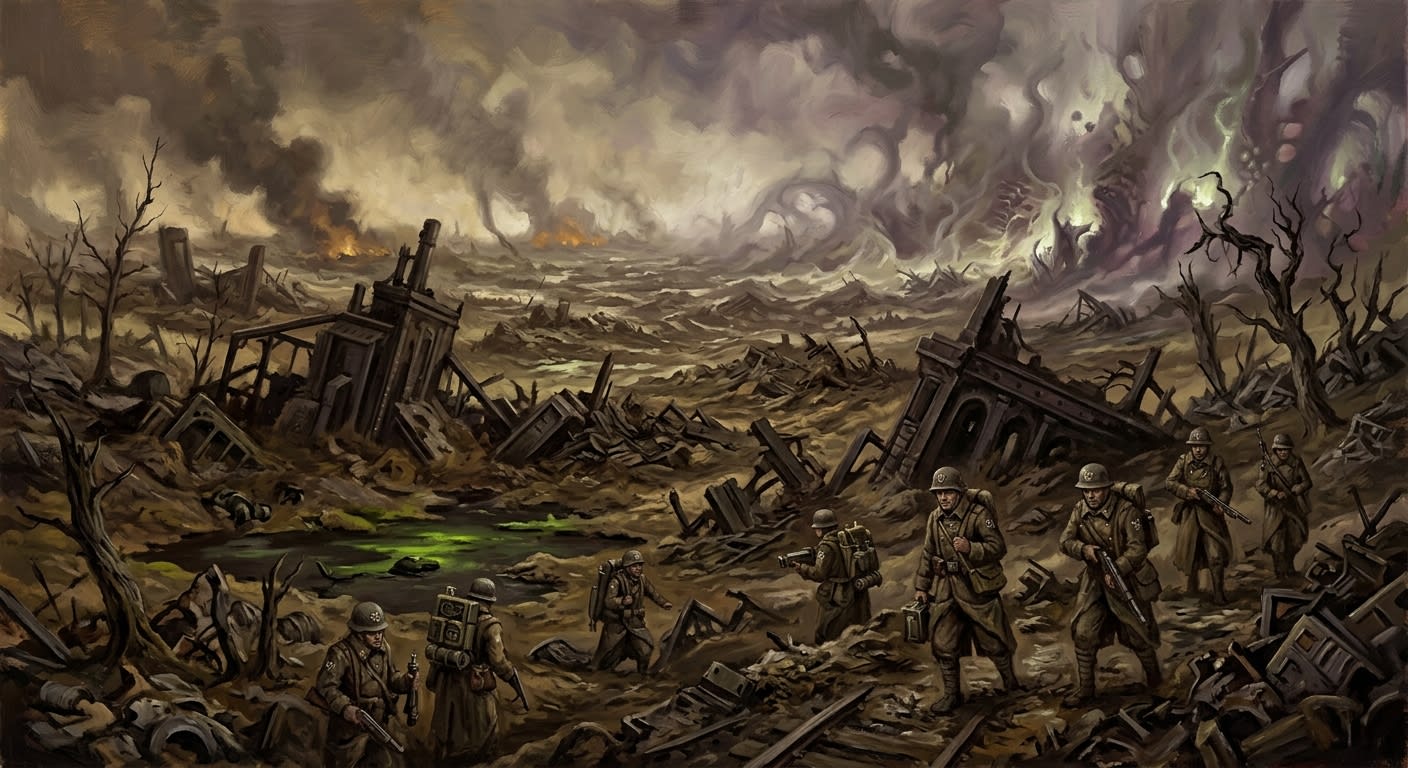
The Charnel Lands
The East keeps our failures alive in hostile weather
Zone 6 is the Synod's polite name for the Charnel Lands: the demonic East where appetite has borders, maps fail, and names come home missing.
Codex Ref. II.6.06-001
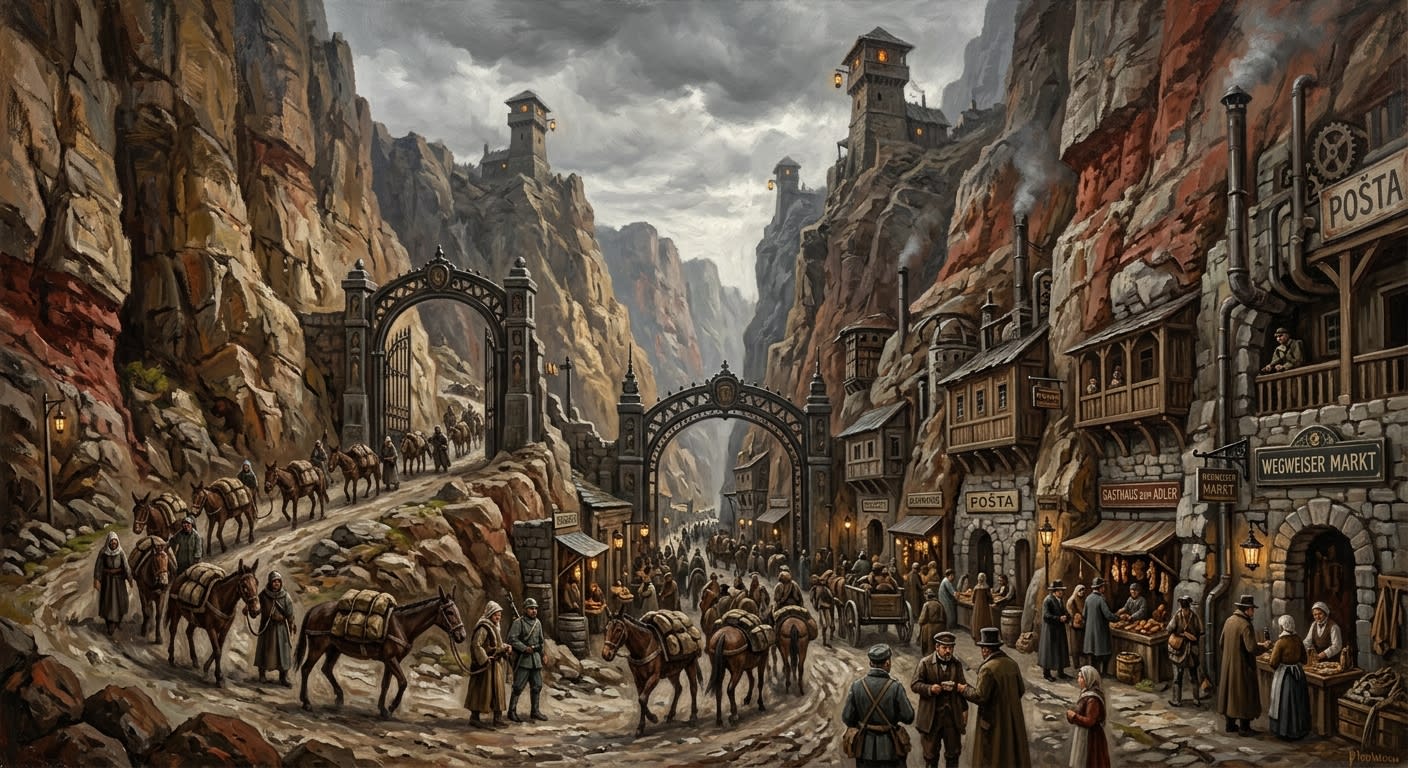
The Choir-Broker Hall of Peregrine Row
Where the canyon charges for its echoes and the brokers charge for everything else
A Zone 1/2 waystation-market on the Pilgrim Roads where creed-testing, escort contracts, and bead reconciliation converge into an economy of sanctioned extortion. The canyon echoes your prayers with one vowel wrong. The brokers charge for that too.
Codex Ref. II.1.03-001
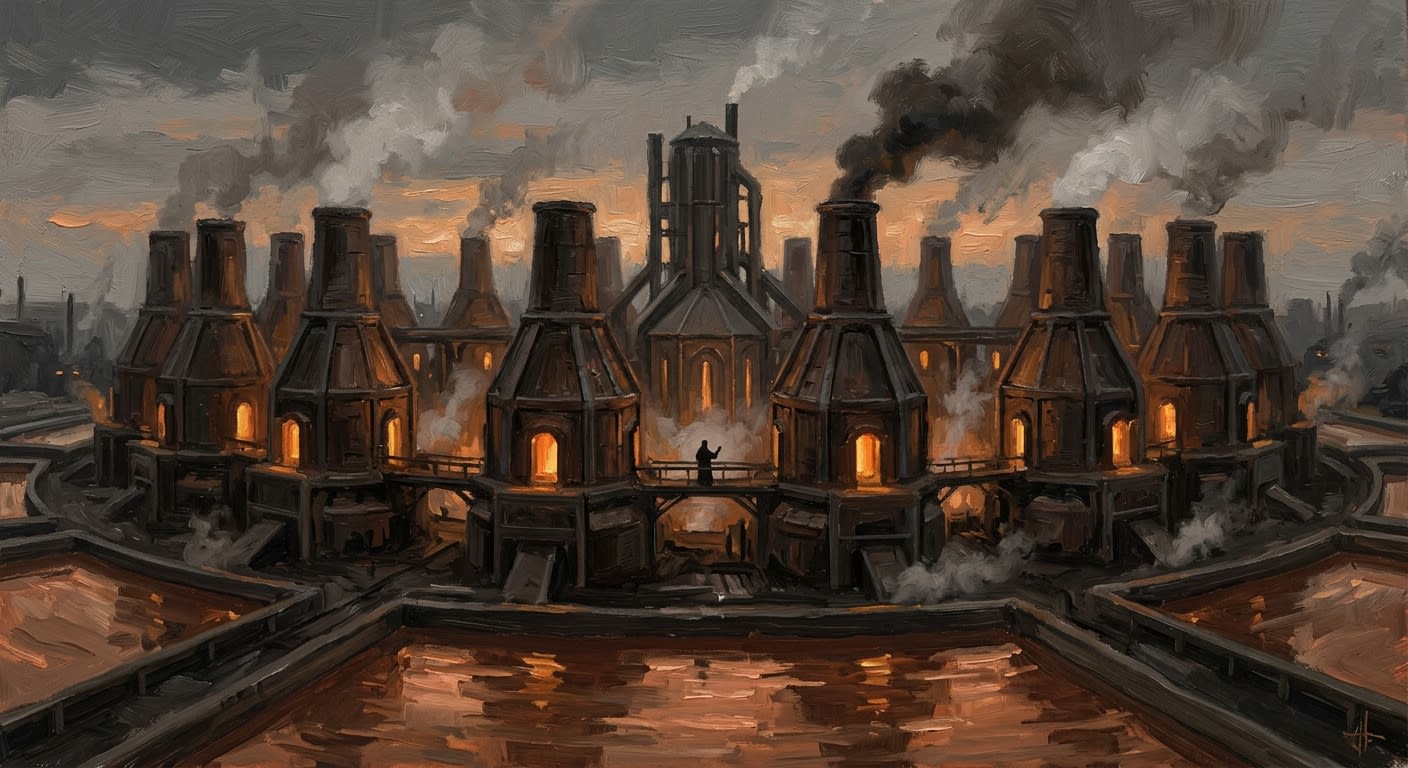
The Chrismole Furnaces of Brast
Faith provides the flame; the Bureau provides the invoice
Ninety-two thousand souls and an unknown number of engines live in Brast, the continent's only producer of sanctified chrismole fuel — and something in the furnaces has recently begun to sing back.
Codex Ref. II.2.01-003
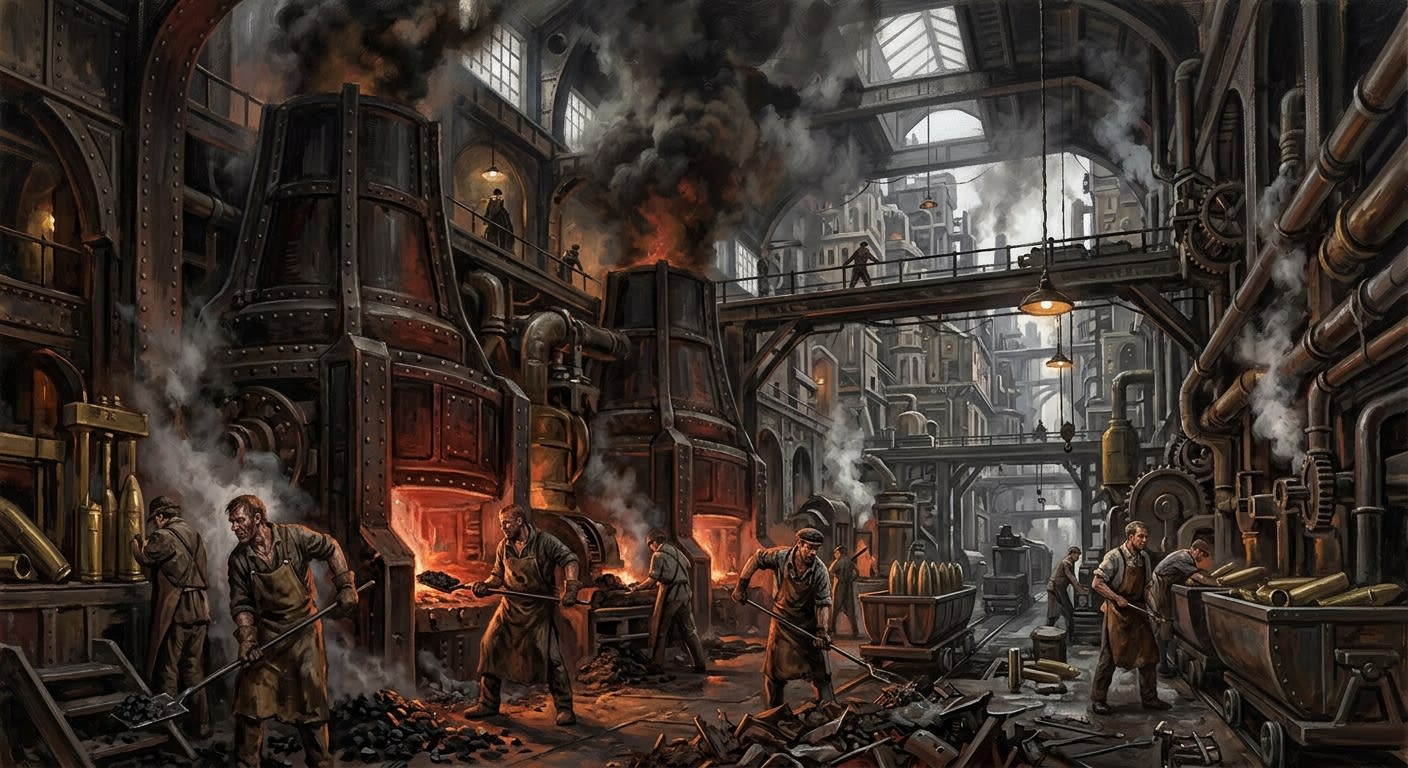
The Chrismole Furnaces of Brast
Where oil learns hymn and iron consents to kill
Brast is the Warm City, a Zone 2 foundry-city whose chrismole furnaces turn fuel, hymn, soot, and denial into artillery breath for the Line.
Codex Ref. II.2.01-003
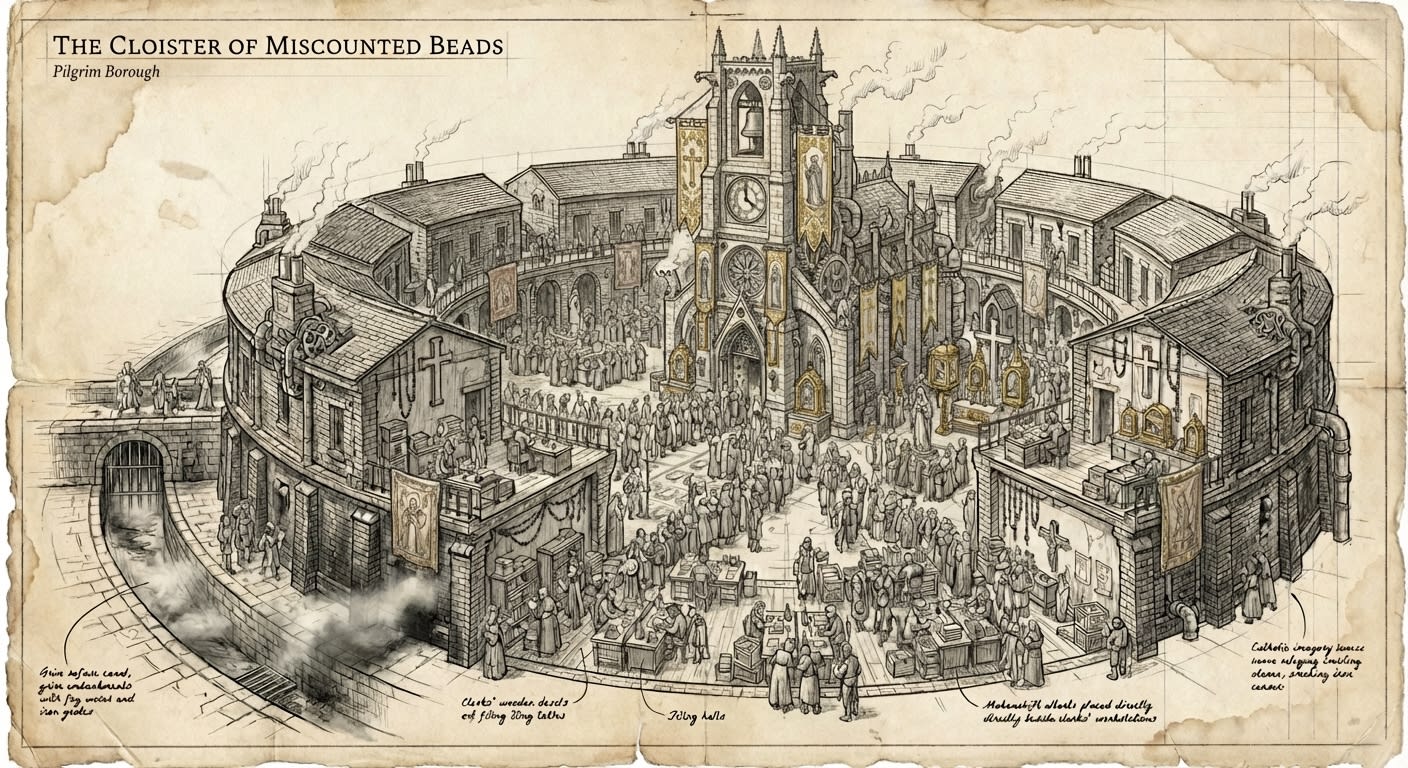
The Cloister of Miscounted Beads
The Bureau does not distinguish between mercy and procedure. Both produce the same paperwork.
Strasbourg's pilgrim processing facility, where six thousand souls await bead reconciliation, the dead reappear on intake rosters, and the Bureau of Records declines to call any of it a problem.
Codex Ref. II.2.06-001
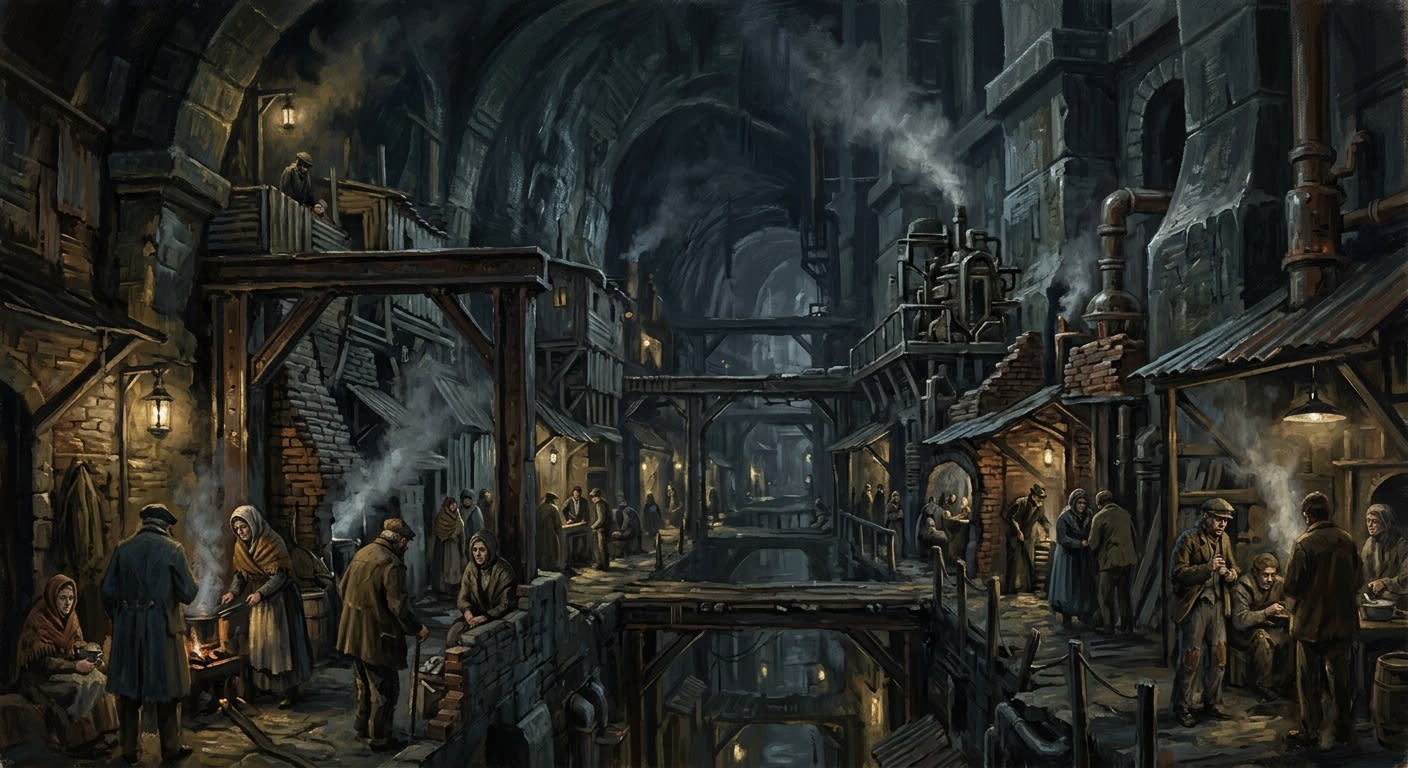
The Constantinople Warrens
The city beneath the city, tolerated by omission and counted by echoes
Beneath Bastion-Constantinople's Ossuary Rings, forty thousand unregistered souls live where Settlement maps insist there is only stone.
Codex Ref. II.4.10-005
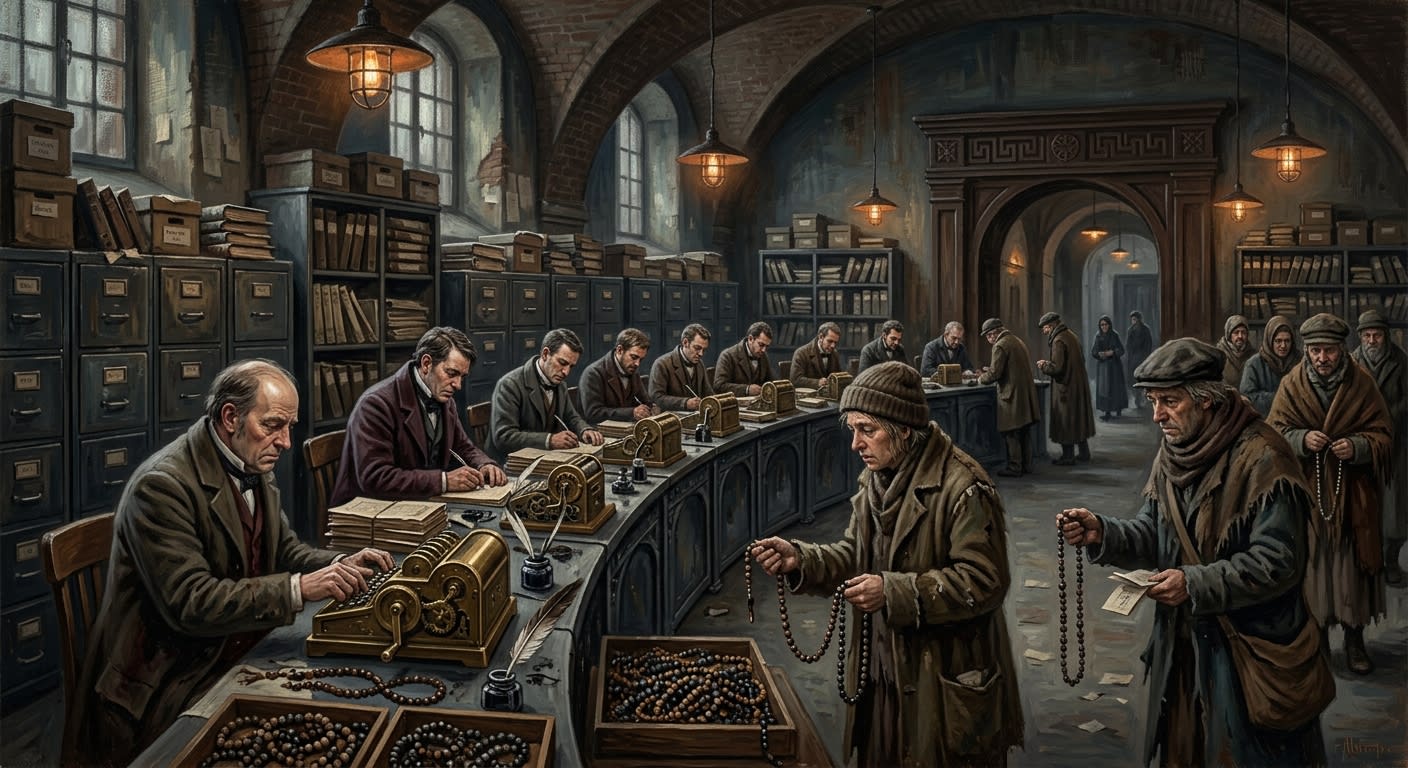
The Counting Hall
Where a bead becomes evidence and salvation waits its turn
The Counting Hall of the Cloister of Miscounted Beads is the Clickery: twelve desks where pilgrims, bead strings, debts, deaths, and names are reconciled into obedience.
Codex Ref. II.3.06-001
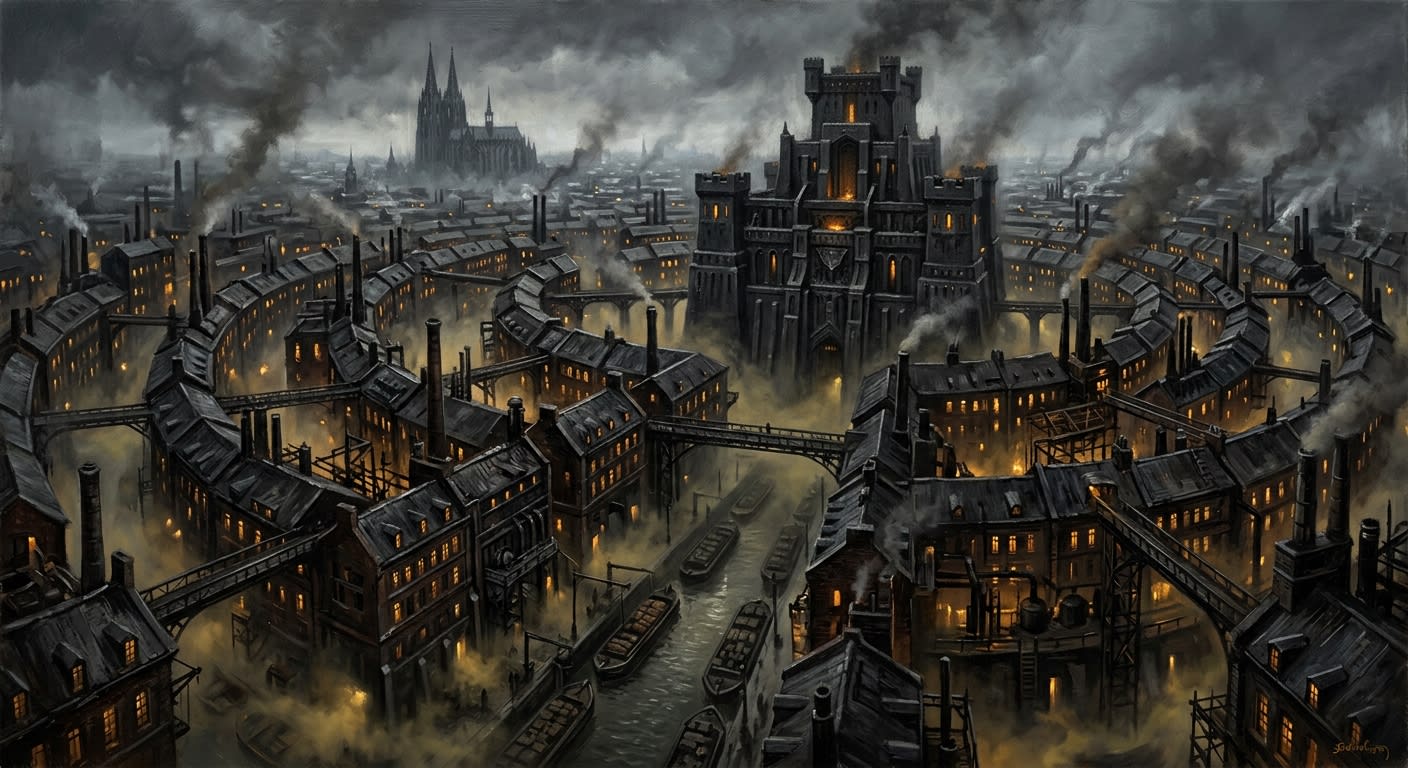
The Crownwright Diehouses of Sable Court
In Sable Court, identity is currency — and the Synod strikes every coin
The restricted mint-quarter of Cologne where the Synod strikes every face into coin and every coin into law. Where identity is minted, recalled, and—when the Bureau requires—unfaced. A.S. 201: the Face Theft crisis continues and the master die may be real.
Codex Ref. II.2.07-001
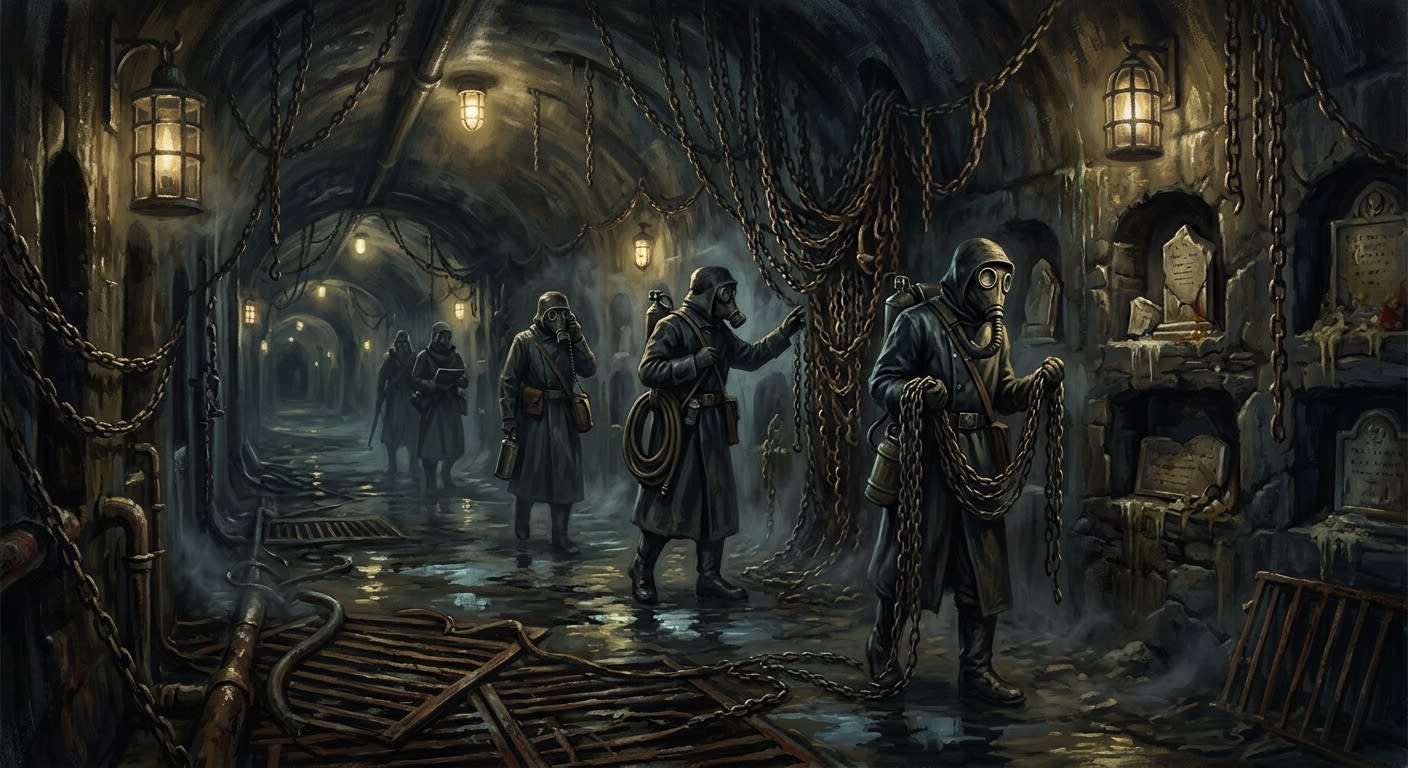
The Dead Gallery
A corridor beneath [[bastion-irongate|Irongate]] that lengthens when counted and listens when addressed
The Dead Gallery is the wet basalt corridor beneath Bastion-Irongate where chains acquire extra links, voices outrun throats, and no one is to sing.
Codex Ref. II.4.08-014
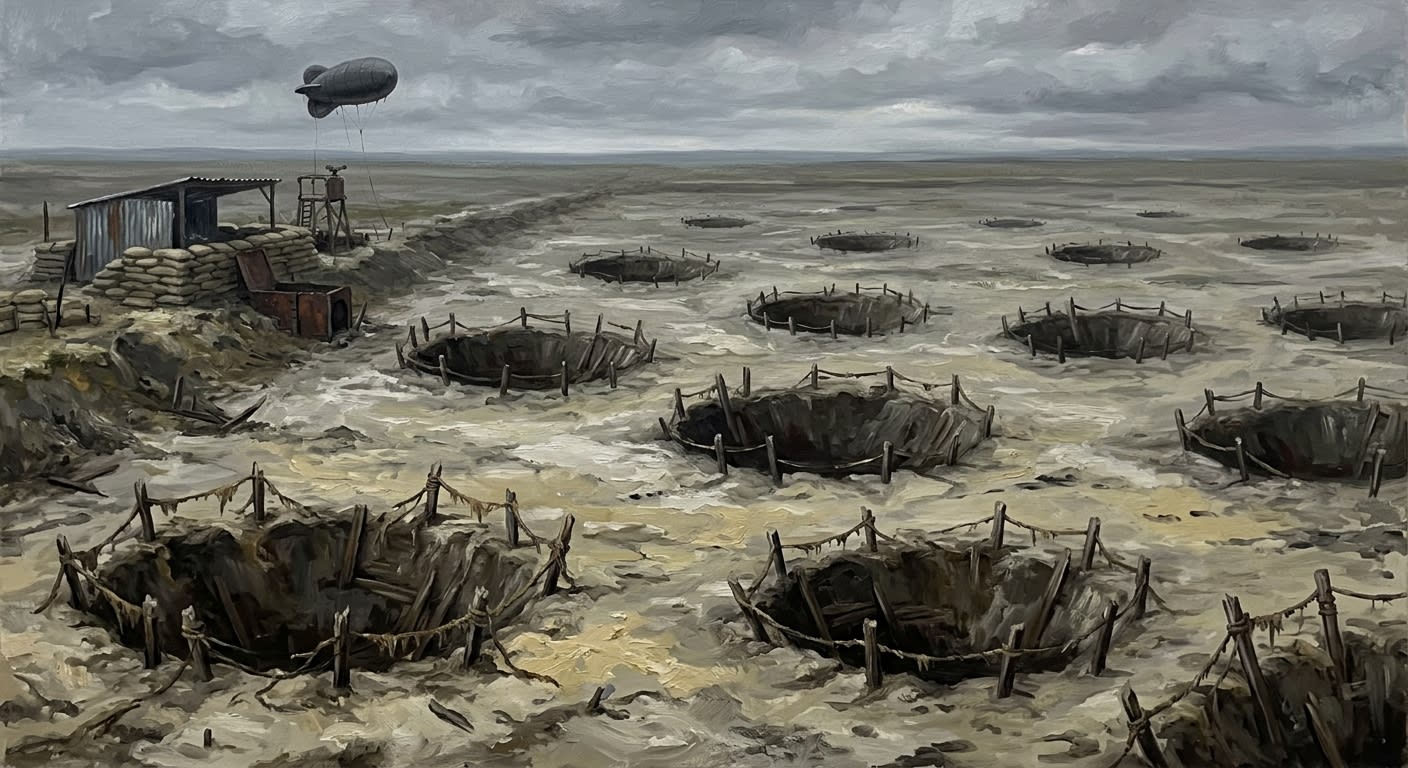
The Famine Pits
The dead are still hungry, and the Bureau prefers not to speculate why.
Fourteen confirmed burial sites in the former Hungarian plain where the dead of the Great Retreat have refused to stop dying. Their hunger radiates into the living. The Bureau classifies this as demonic. Drax does not agree.
Codex Ref. V.6.01-002
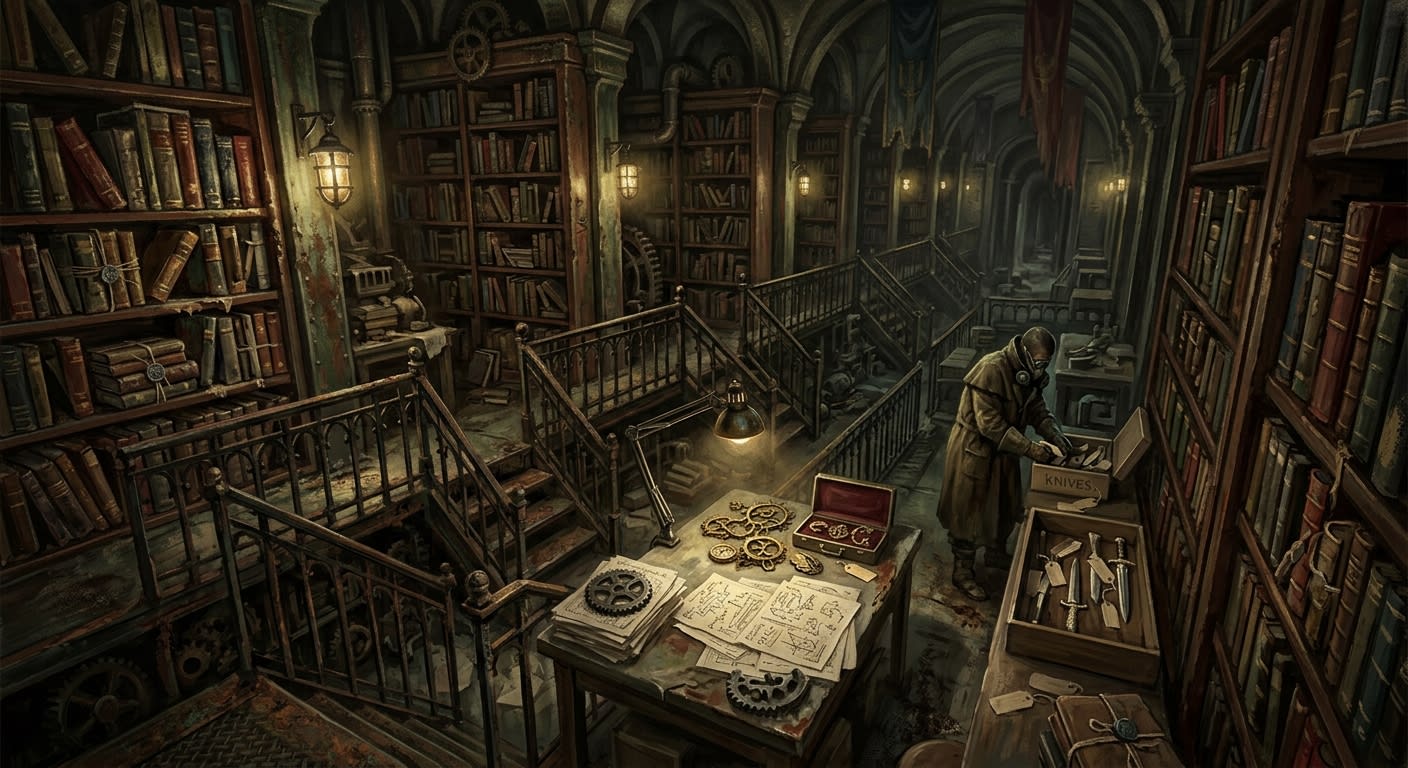
The Forbidden Stacks
Where heresy is shelved close enough to hate efficiently
The Forbidden Stacks beneath Strasbourg preserve Rationalist paper, contraband symbols, and other knives the Bureau prefers labelled rather than lost.
Codex Ref. II.2.06-001
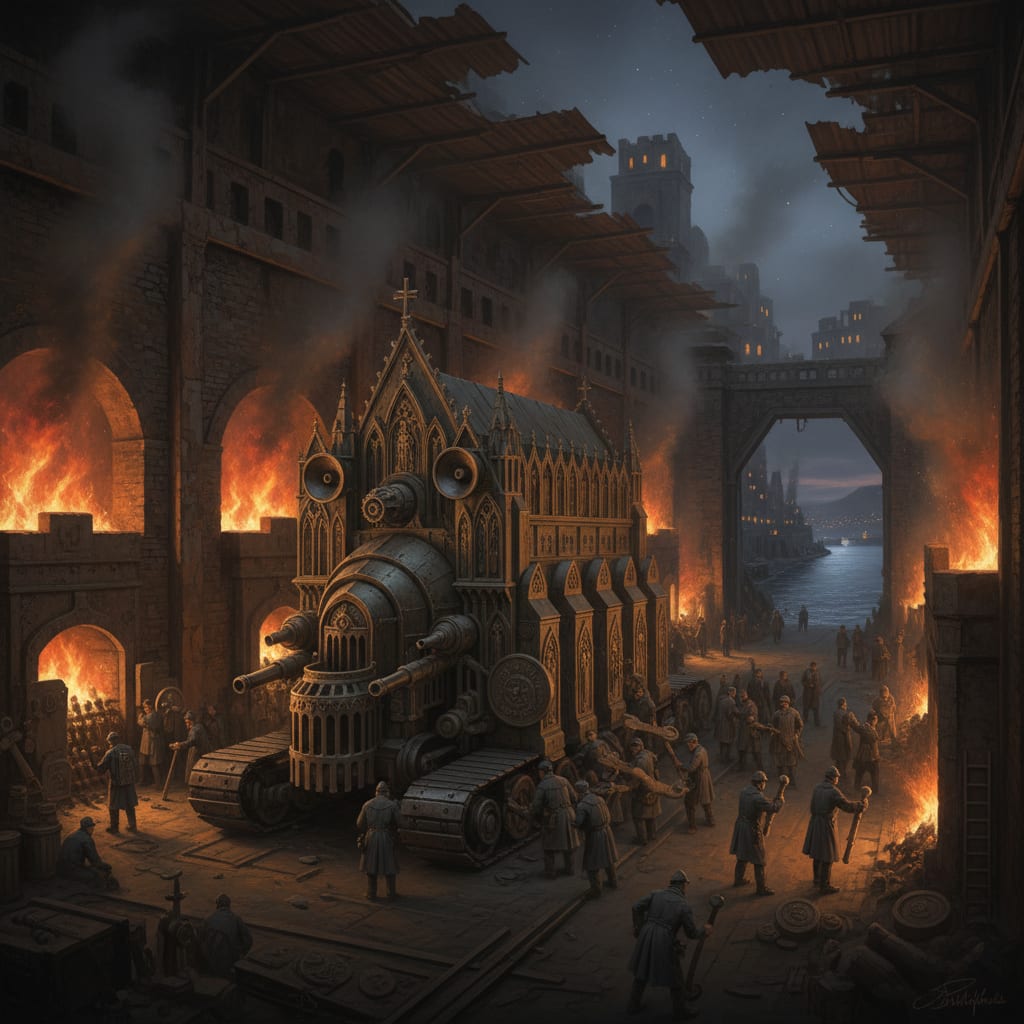
The Foundry Quarter
The forge that does not stop, and the question that does not ask itself
The Foundry Quarter of Bastion-Constantinople manufactures the weapons that hold the Wall. It has not stopped since A.S. 179. No one has verified what is inside the engines. The Bureau files the question under Restricted Access.
Codex Ref. II.4.10-003
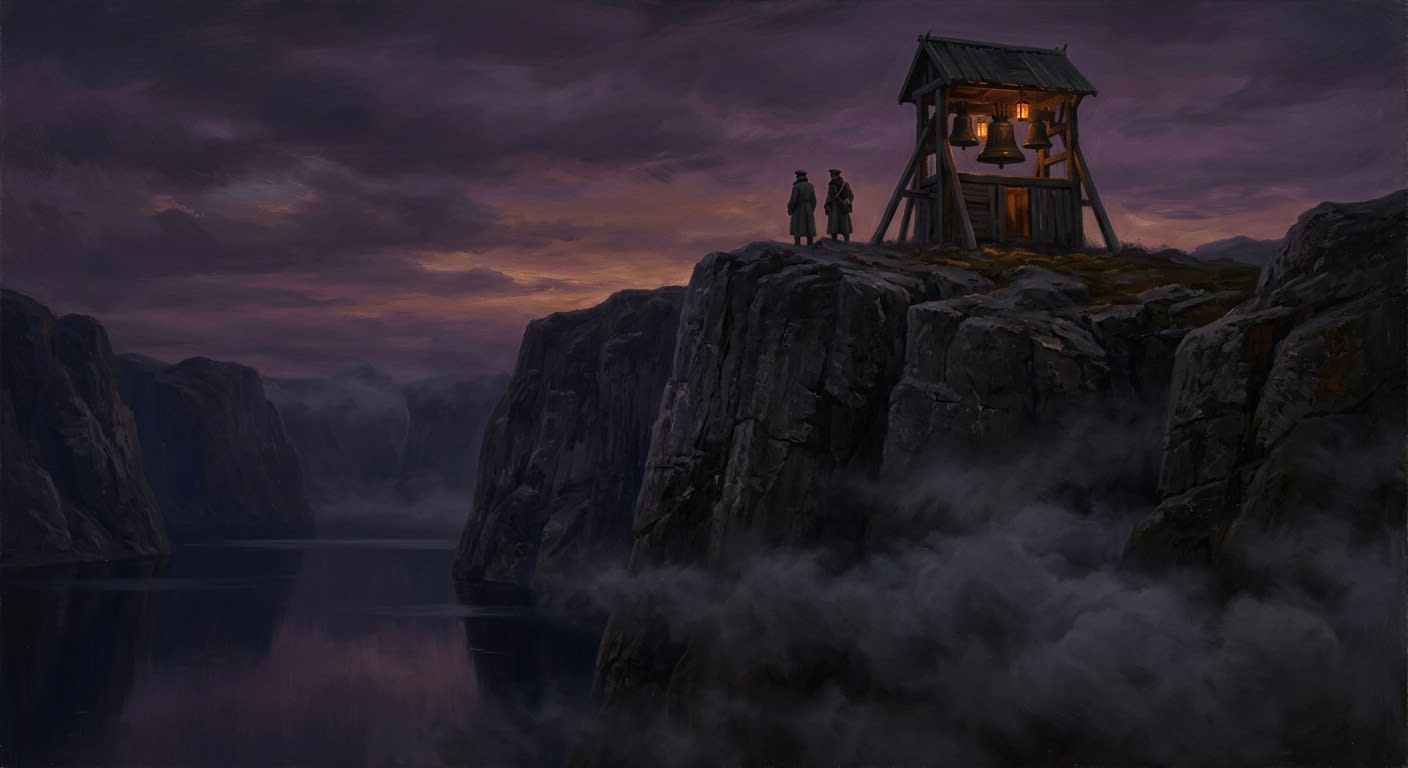
The Fractured North
Compliant in substance. Deviant in form. Pending resolution since A.S. 92.
Two million souls scattered along the Norwegian fjords and Swedish interior — faithful, stubborn, and unresolved. The Bureau of Doctrine has filed them as 'compliant in substance, deviant in form' since A.S. 92, and will do so until either side decides otherwise.
Codex Ref. IX.8.01-001
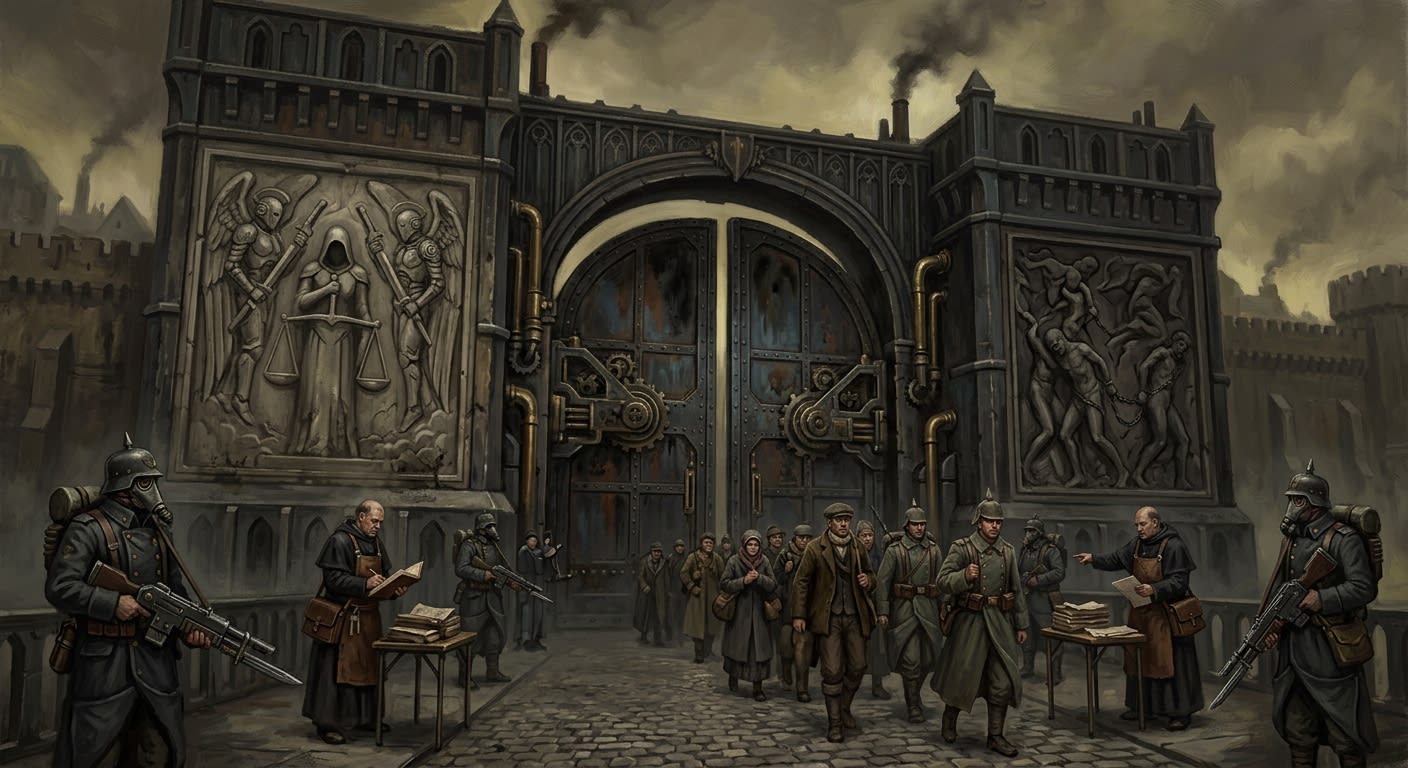
The Gates of Regensburg
Blessing above, curse below, and the pamphlet between
Regensburg's western gates bless and curse the traveller at once, leaving theologians, pamphleteers, and sinners to discover which verdict bites first.
Codex Ref. VII.2.01-003
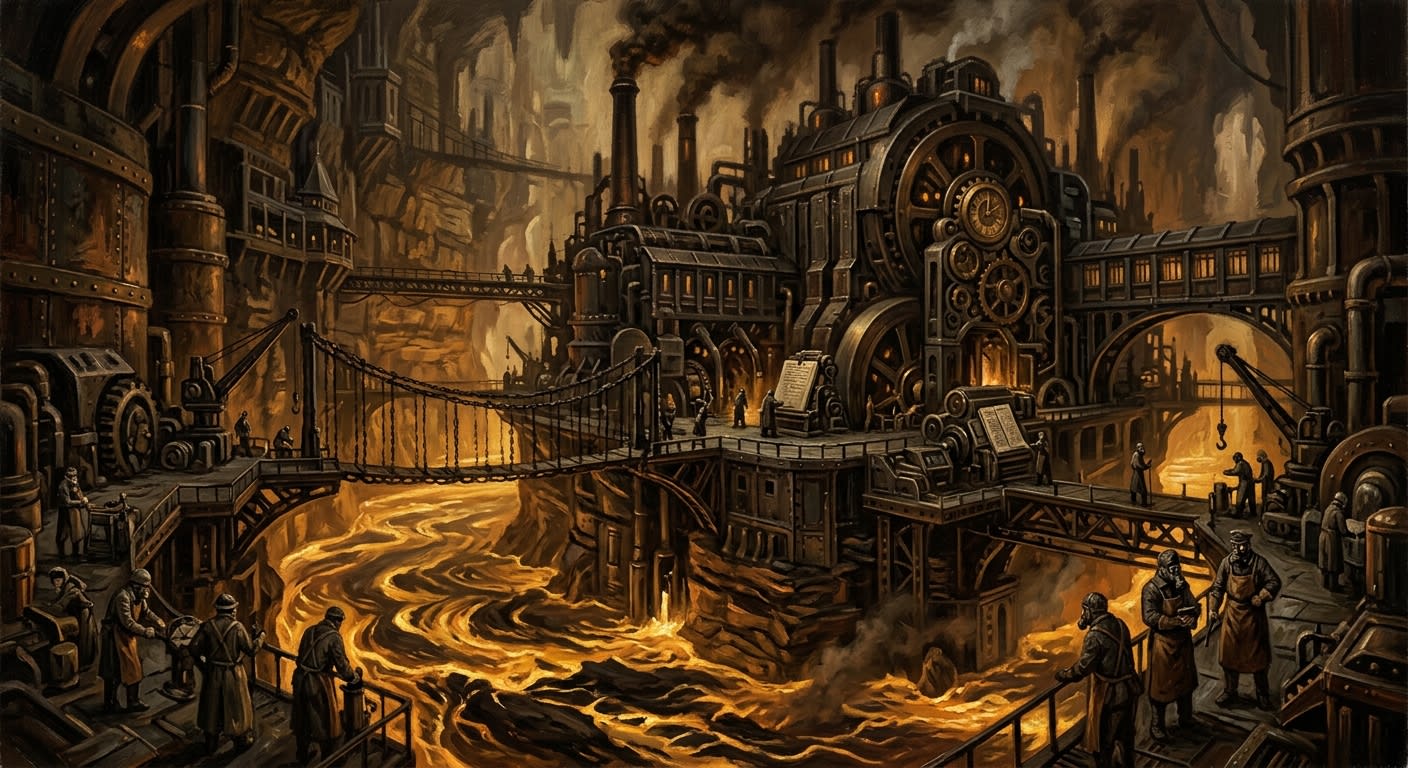
The Gilded Chasm
The canyon that made profit geological and damnation contractual
Velmora's Gilded Chasm is a canyon of molten value, binding markets, doors, audits, and contracts whose smallest syllable charges interest.
Codex Ref. VI.1.02-001
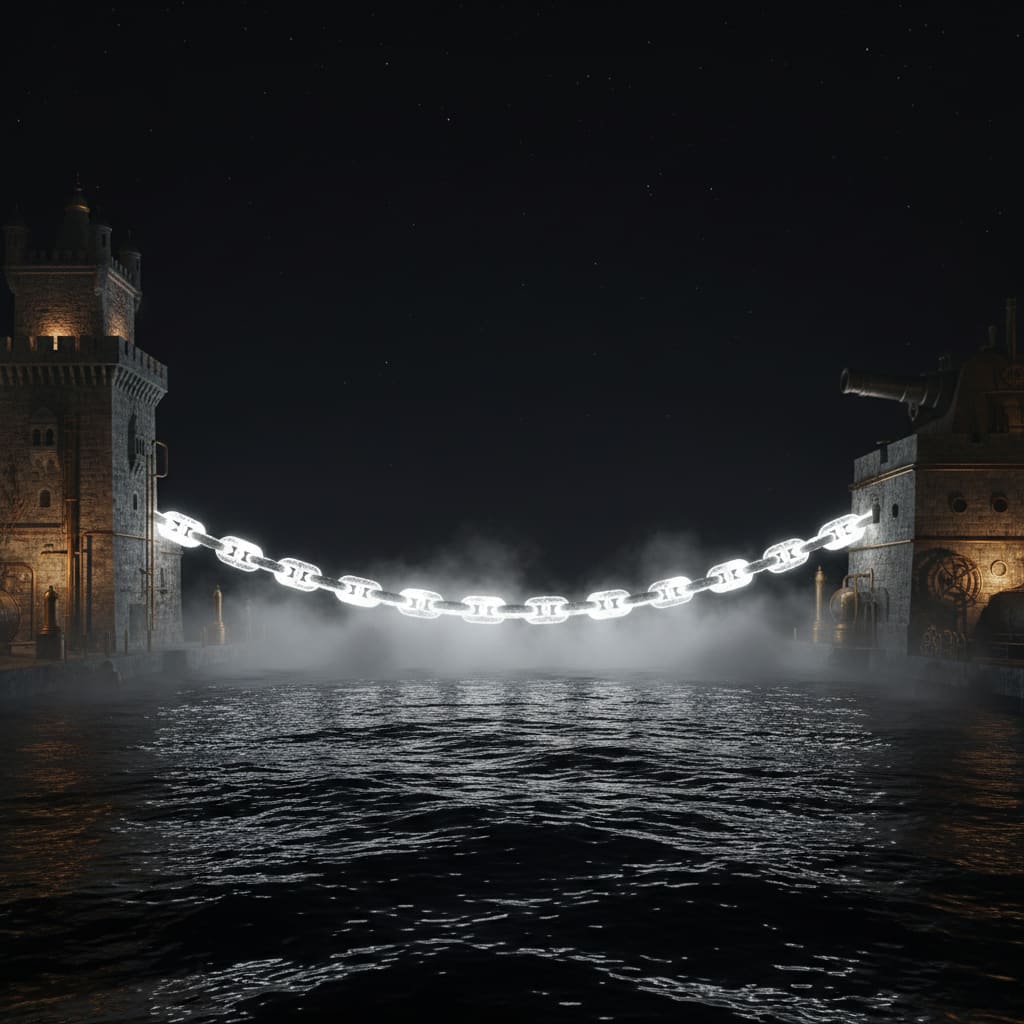
The Harbor of Chains
A mile of quay, a hundred fathoms of iron, and what the chain is becoming
The Harbor of Chains guards the Bosphorus with one mile of fortified quay and the Chain of Saint Anakletos — consecrated iron that burned the Black Sea Armada white in A.S. 162 and has not glowed since.
Codex Ref. II.4.10-005

The Heartlands
The safe country, provided one defines safety as distance from teeth and proximity to stamps
The Heartlands are the Synod's safe interior only by infantry arithmetic: Zones 1–3 feed the Line with bread, steel, bodies, bells, paperwork, and bones.
Codex Ref. II.0.02-201
The Hollow Court
Nine miles of table. Every seat occupied. The host is always hungry.
The seat of the Sin-General of Gluttony, confirmed four times, located forty leagues east-south-east of Debrecen. Its feast has not ended. Its guests have not left. Its table runs nine miles. The Bureau of War has declined to act on this information three times.
Codex Ref. V.6.01-004
The Iron Wastes
Where Wrath taught geography to burn without cooling
The Iron Wastes are Maldrake's Thracian furnace-country: slag-rivers, moving heat, hostile iron, and the northern pressure against Constantinople.
Codex Ref. VI.1.03-001
The Lost Procession Yard
Where pilgrimage stops being song and becomes intake
The Lost Procession Yard is the Cloister's intake mouth: a mud court where broken pilgrim columns are tagged, sorted, quarantined, priced, and corrected.
Codex Ref. II.3.06-002
The Macedon Escarpments
The road where a correct manifest may still have teeth
Northwest of Bastion-Constantinople, the Macedon Escarpments carry necessary convoys through limestone glare, Velmoran debt, Concord substitution, and correct paperwork with teeth.
Codex Ref. II.4.10-008
The Netherlands
The merchant republic that invoices our contempt
The Netherlands remain independent, solvent, suspect, and indispensable: a Dutch merchant republic whose ships, presses, credit, and invoices keep irritating the Synod into survival.
Codex Ref. X.1.02-001
The Orphanarium
Mercy with hinges, locks, soup, and a tag cabinet
The Orphanarium receives children without acceptable custody and returns registered minors: washed, renamed, tagged, fed, placed, and corrected until Mercy can invoice itself.
Codex Ref. II.2.06-005
The Ossuary Rings of Bastion-Constantinople
Six walls of the dead, holding the city of the living together
Six rings of catacomb-fortification sunk into the Bosphorus headland — begun A.S. 47 when armies ran out of mortar and substituted femurs, expanded with every war dead since, administered by a Mother-Cryptor who knows 46,312 urns and sleeps facing away from the innermost ring.
Codex Ref. II.4.10-002
The Palatine Counting House
Where debt receives its sacrament and arithmetic learns to bite
The Palatine Counting House is Strasbourg's sleepless Fiscal Heart, seat of the Bureau of Tithes, where coins, corpses, widows, unborn debtors, and corrected accountants are counted.
Codex Ref. II.2.07-001
The Palatine Switchyard of Lorn
The city that became a filing system — and the filing system that became a theology
The continent's largest rail interchange, where the Heartlands' freight is converted into the Line's appetite by two hundred ten thousand registered souls, twelve converging lines, and a schedule that has never once apologized for what it costs.
Codex Ref. II.3.01-001
The Paper Mines of Ulm
Where forbidden minds are pressed into obedient sheets
The Paper Mines outside Ulm turn condemned scholars, clerks, witnesses, and families into archival stock, redaction vellum, penitential forms, and troublingly warm sheets.
Codex Ref. II.2.06-002
The Queue Road
Where motion became a taxable offense and patience became policy
One hundred and twelve miles of weaponised patience. The Queue Road converts motion into revenue and compliance into a commodity — nine gates, forty-eight thousand registered souls, one apparatus beneath Gate Nine that the Bureau of Doctrine does not discuss.
Codex Ref. II.3.05-001
The Reichssaal
The hall that lent empire to heresy and received an altar for its trouble
The Reichssaal gave imperial furniture to Rationalist blasphemy, received the Treaty in blood and ink, and now instructs pilgrims under glass, pall, and Bureau custody.
Codex Ref. II.2.03-031
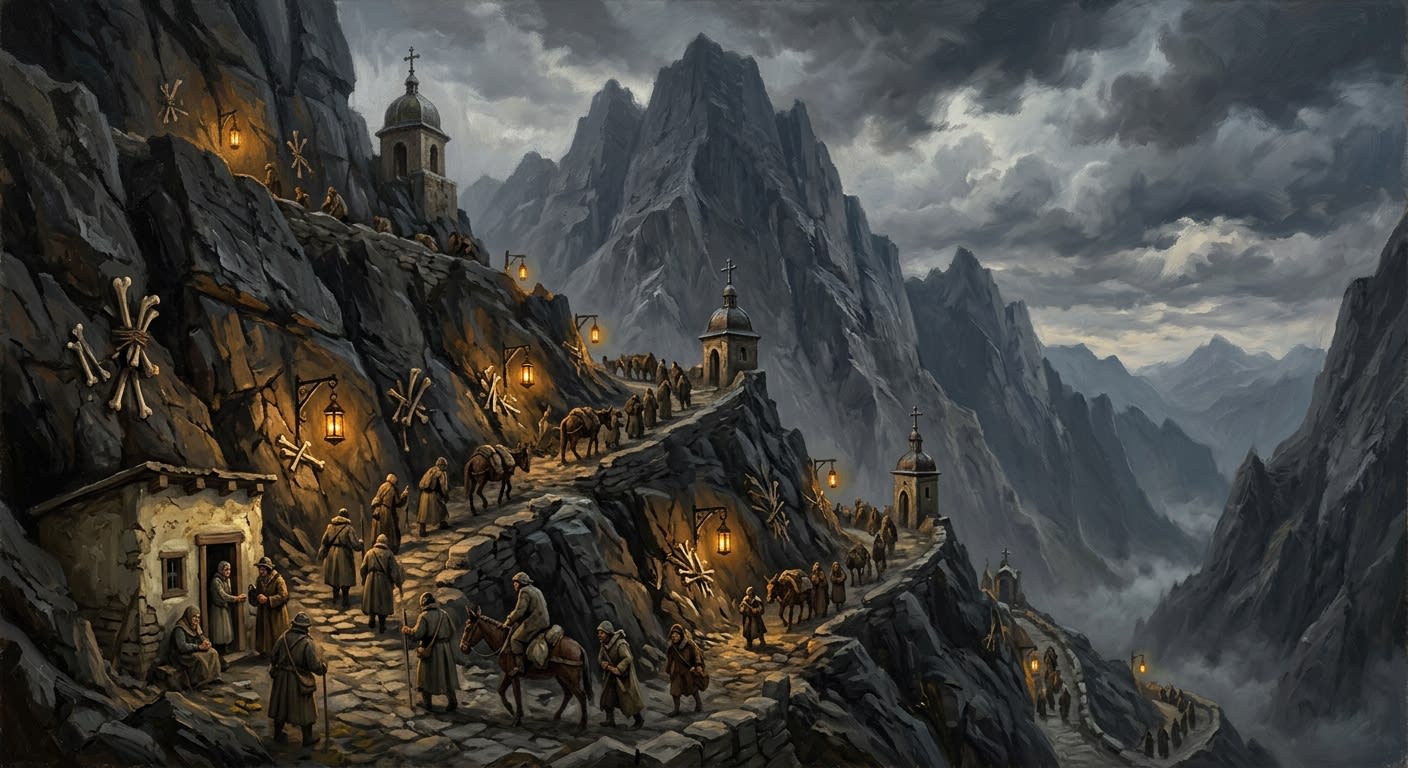
The Reliquary Switchbacks
Eight turns, eight femurs, and a toll at every one of them
A four-mile Carpathian relic corridor of eight named turns, eleven thousand souls, and a Registry that mints martyr-credits from storm-wind and bones. The Bureau of War calls it operational. The porters call it something else.
Codex Ref. II.3.05-004
The Rhine
The wet jurisdiction by which the heartlands pretend to be orderly
The Rhine is the Synod's wet jurisdiction: artery, tithe-chain, pilgrim road, corpse carrier, ferry court, and profitable rebuke to every office built too near the bank.
Codex Ref. II.2.08-201

The Rhine Corridor
Damp procedure, counted backward from every bridge
The Rhine Corridor is the Synod's damp procedure: a Zone 2 logistics artery, mortuary road, ferry court, heresy school, and billable proof that movement can be made afraid.
Codex Ref. II.2.08-202
The Rhineland
A province corrected so often it learned to keep the corrections
The Rhineland is the Synod's most corrected province: river belt, market school, scriptorium wound, curfew map, chalk lesson, and loyal suspicion made taxable.
Codex Ref. II.2.09-201
The Rhône
Water carries what paper refuses to keep dry
The Rhône is a southern river-corridor of ash, pilgrimage, fishery inspection, Avignon heresy, Lyon spectacle, wet custody, and water that declines obedience.
Codex Ref. II.1.10-201
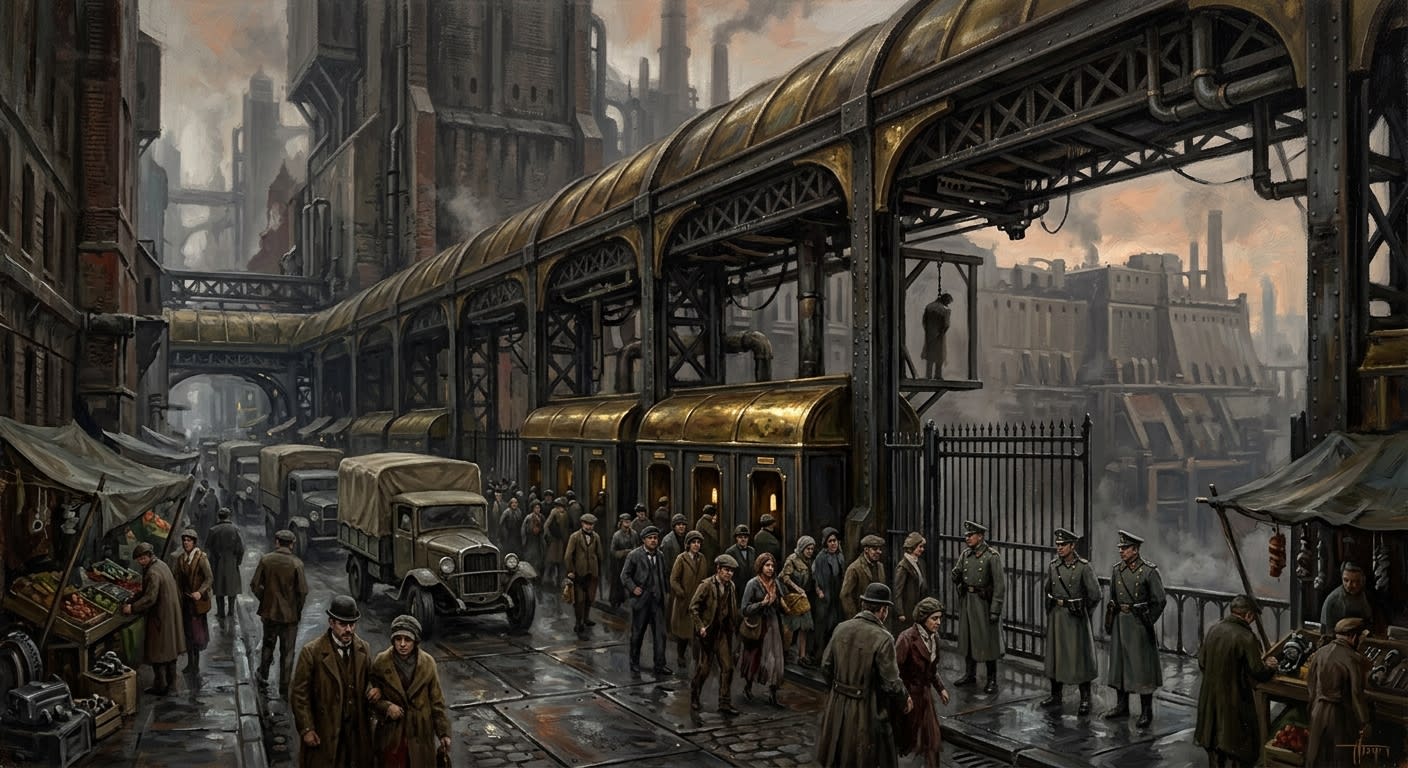
The Ribwalk
Brest’s bridge market, where every crossing learns to confess
The Ribwalk is Bastion-Brest’s upper bridge-deck: market street, convoy throat, gallows approach, curfew funnel, and brass skin above confession booths.
Codex Ref. II.4.08-201
The Rope-Ferry Chain
Twelve ferries. One schedule. No bridges.
Twelve flat-bottomed barges lashed across a river that swallowed the last bridges. The Rope-Ferry Chain is where the heartlands end and the queue begins.
Codex Ref. II.3.05-002
The Sagittal Line
The continent's spine, stitched in mud, bells, and refusal
The north-south defensive spine of the Synod: seven bastions, two thousand miles of trenches, and the bureaucratic miracle of making stalemate into civilization.
Codex Ref. III.1.01-001
The Salt-Vigil Causeways
Where the road drinks and the order endures
Winter roads across the frozen Frisian shallows, administered by an ascetic toll order who collect salt and tears in equal measure. The causeways carry one-eighth of the Synod's winter supply traffic and ask something of everyone who walks them.
Codex Ref. II.3.05-003
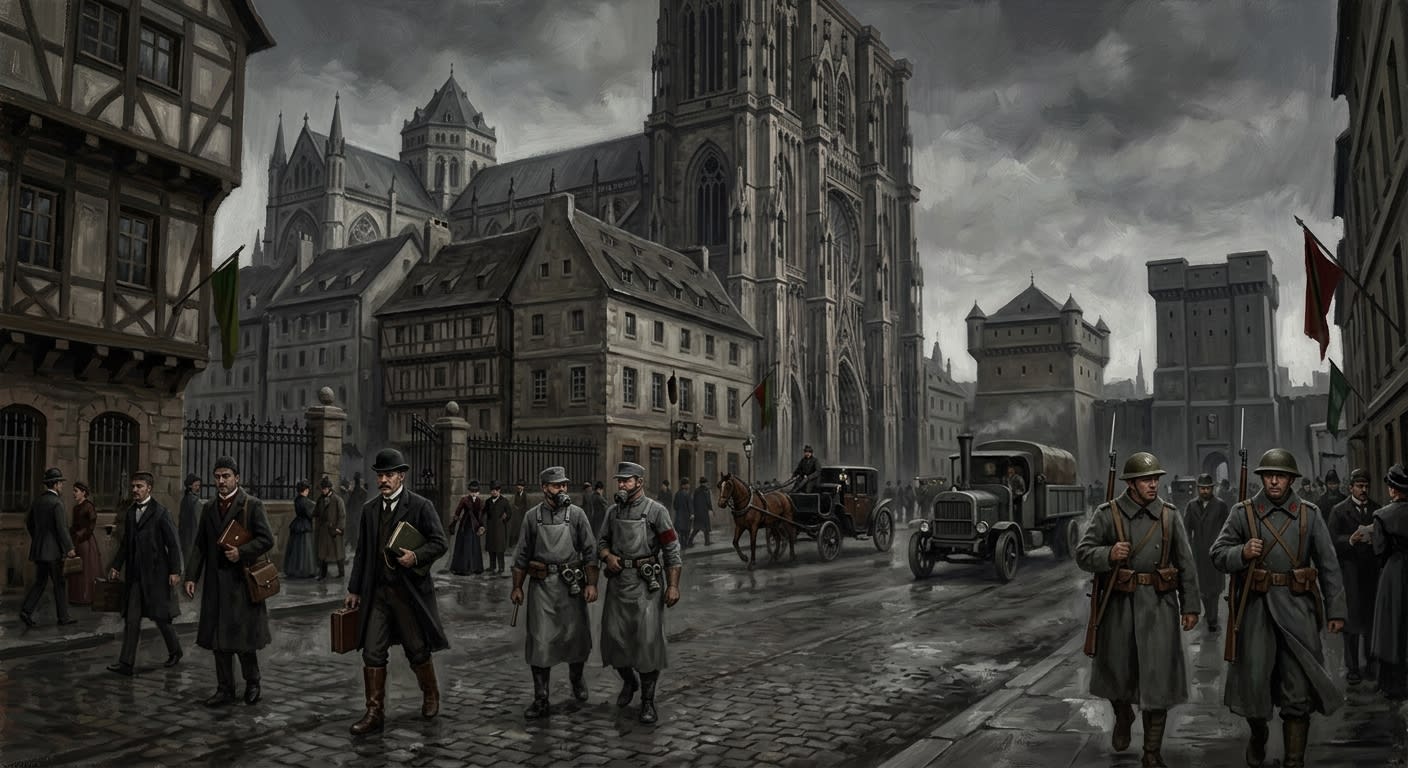
The Sanctum Mile
Strasbourg's white corridor, scrubbed clean enough to hide the blood
The Sanctum Mile is Strasbourg's white civic-sacral corridor: cathedral stone, Bureau houses, the Hall of Confessions, and the Prison of Questions in polished alignment.
Codex Ref. II.2.02-002
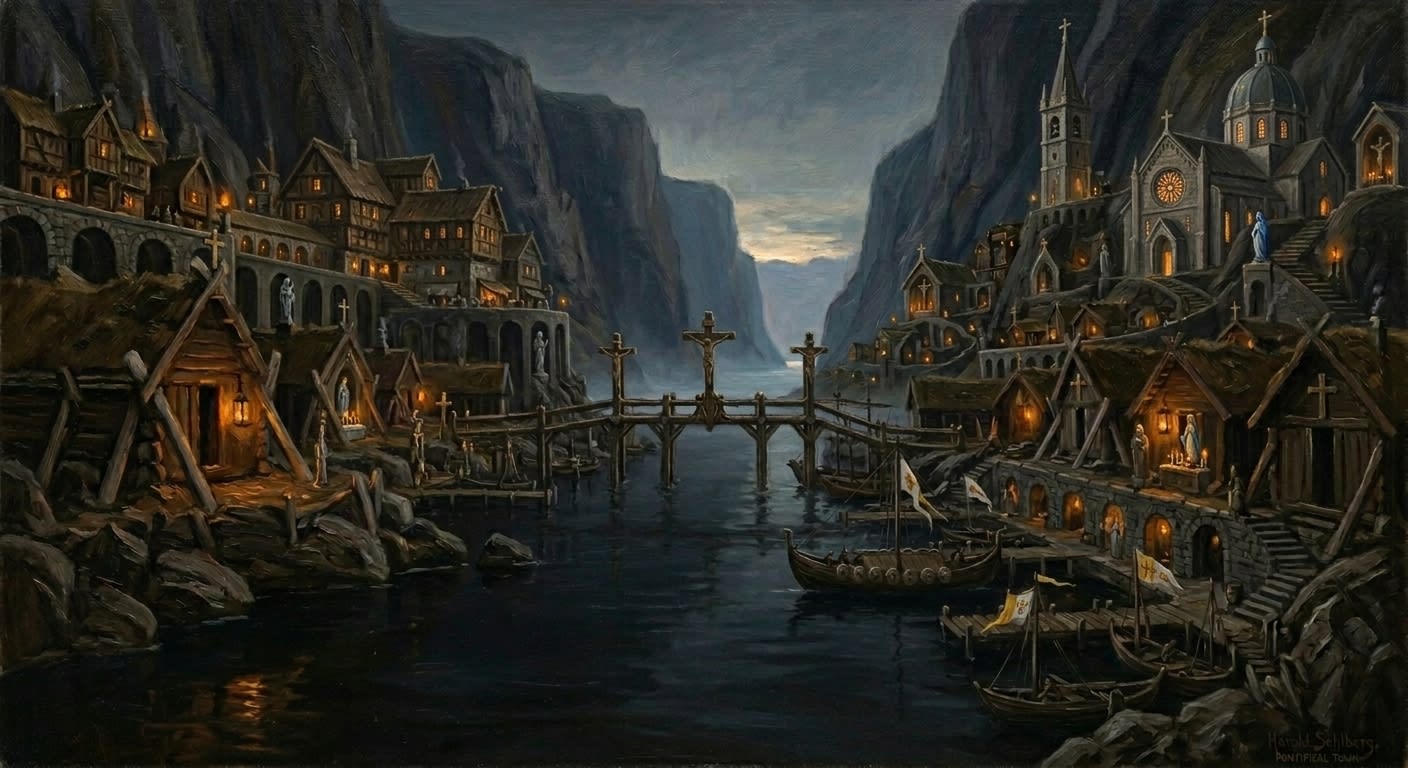
The Seal-Oil Shrinefjord of Hrafnvik
Where the oil burns, the Synod extends; where it does not, the Synod invents
A fjord-village in the Fractured North where warmth is a moral category, light is taxed, and the oil burns longer than rendered fat has any right to. Drax visited once. Nine days was enough.
Codex Ref. IX.7.02-001
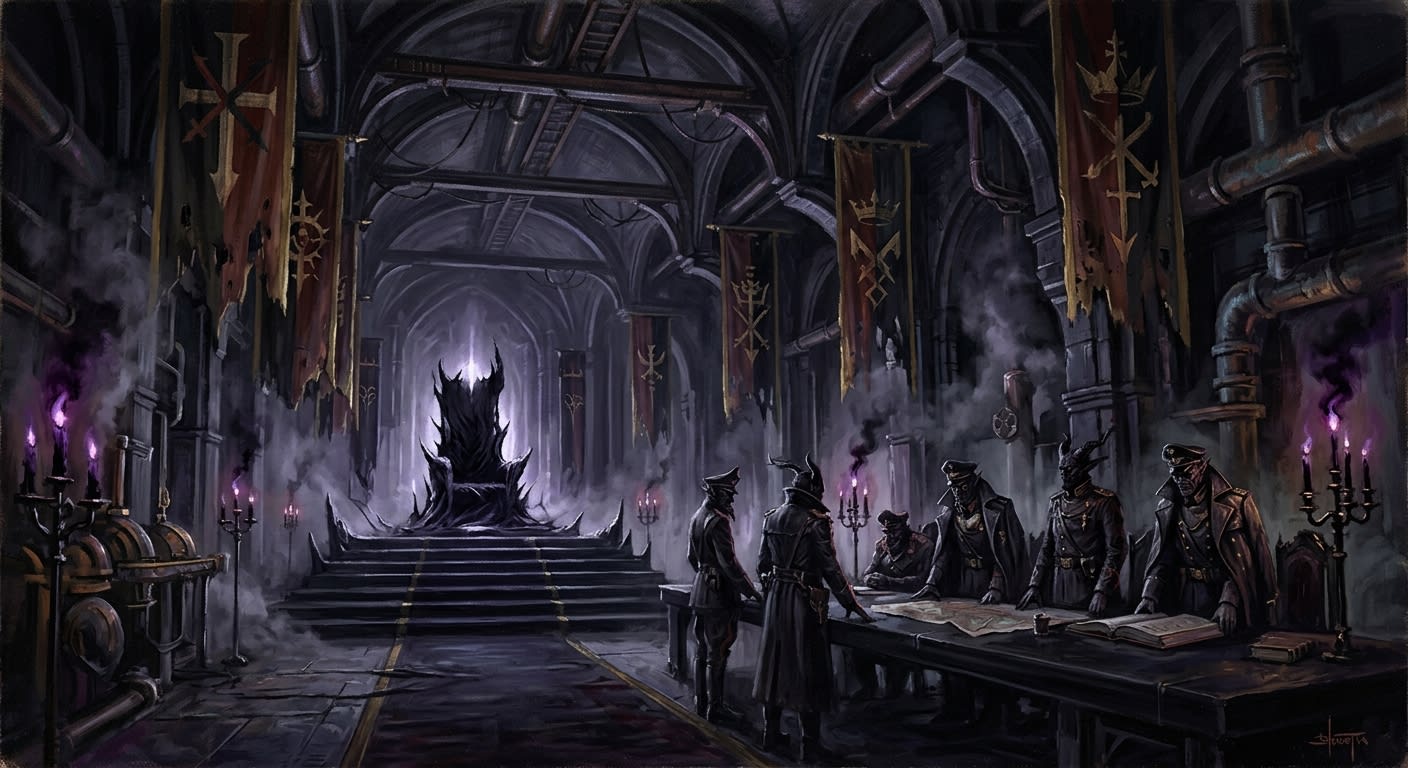
The Shadow Court
Filed under 'Locations, Hostile, Extant.' Coordinates: Pending.
The Bureau of Records has assigned the Shadow Court a filing number. The filing number is one hundred and nine years old. The Shadow Court has not provided coordinates.
Codex Ref. V.9.01-001
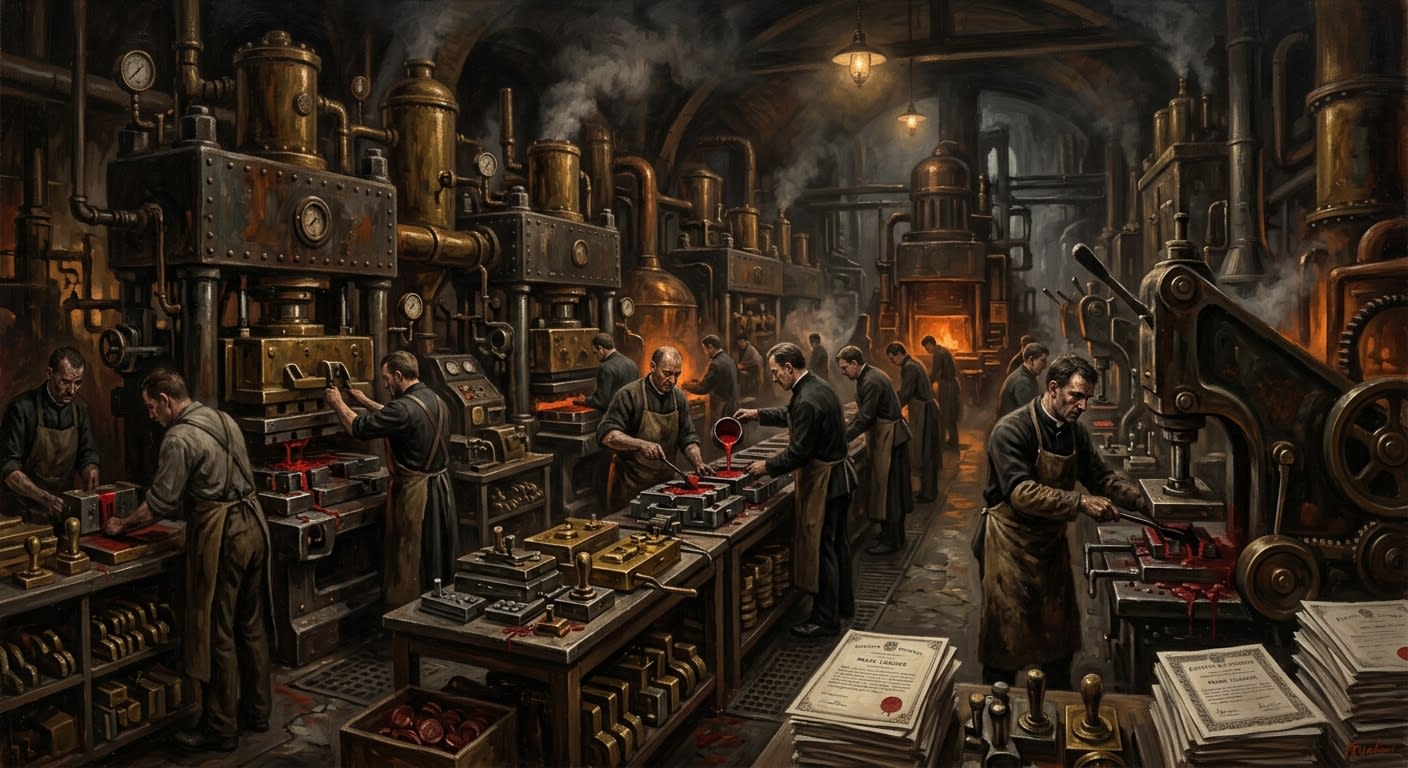
The Sigillary
Where warm wax teaches paper to bite
The Sigillary beneath Strasbourg Cathedral manufactures authority in wax, die, counter-seal, mask licence, and the old lesson that paper bites only when stamped.
Codex Ref. II.1.04-006
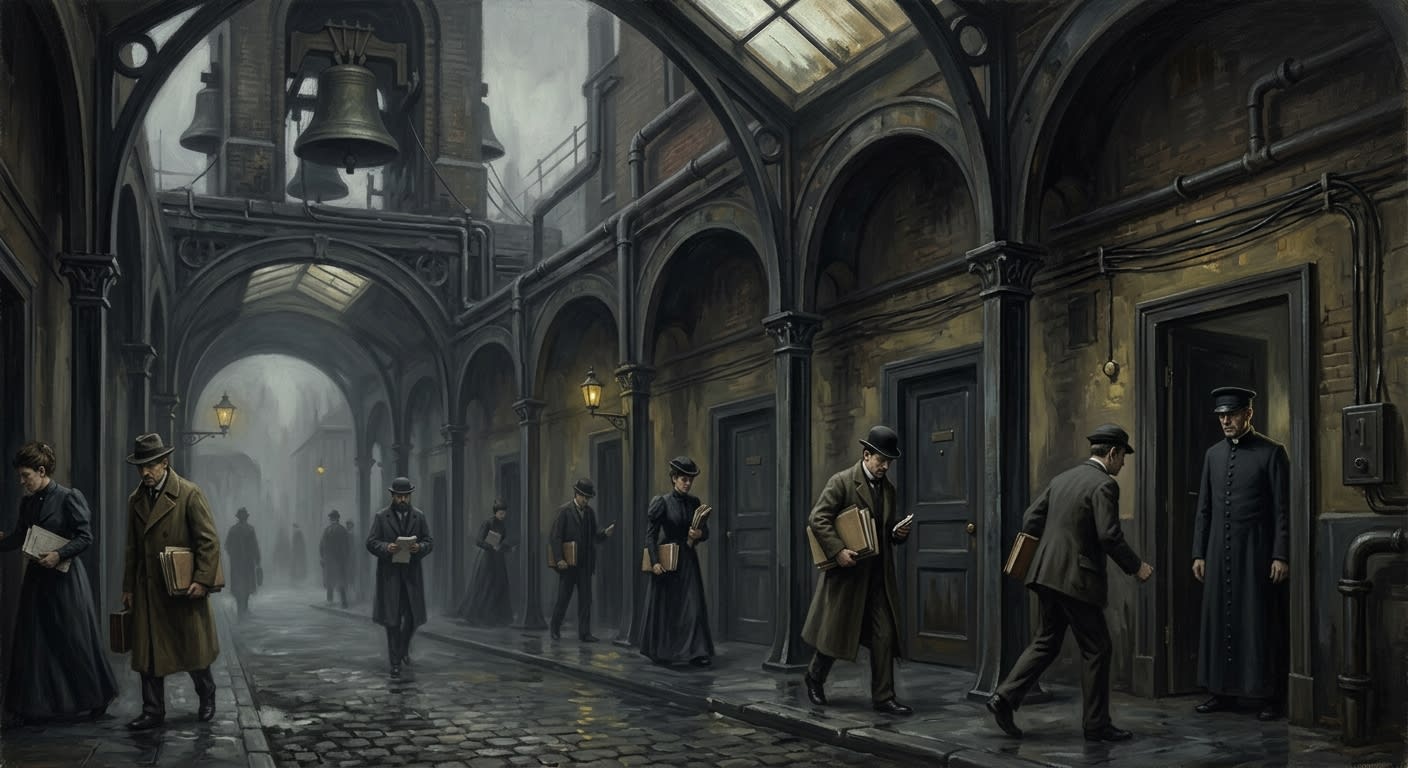
The Silent Colonnade
The fourth side of the [[cloister-precinct|Cloister]], where counting forgets its manners
The Silent Colonnade is Strasbourg's unnumbered northern arcade, a place of unmarked doors, shortened Wednesdays, swallowed bells, and corrections no Bureau admits.
Codex Ref. II.1.04-003
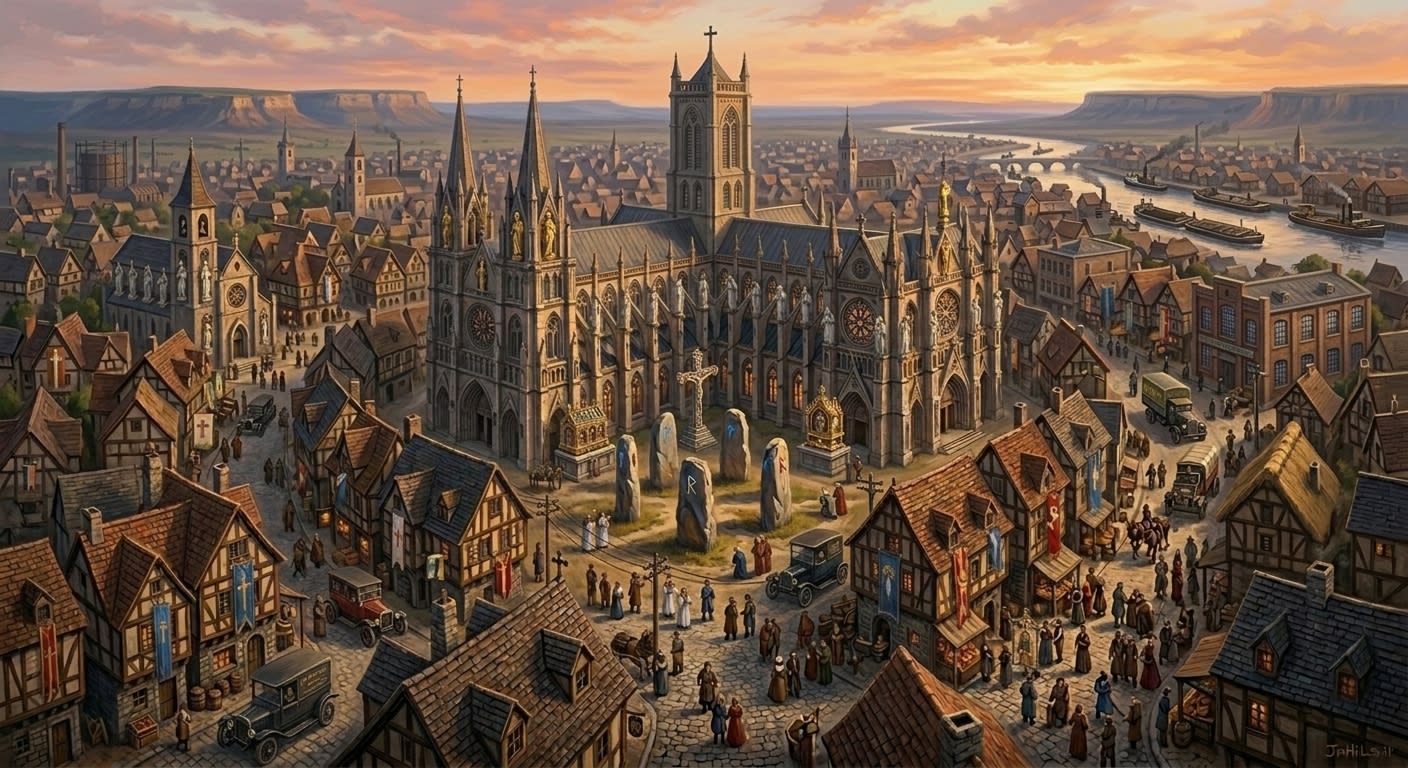
The Steppe Gate of Windscript Treaty-Stones
Say it clean, or pay it red
A border compact written in stone and enforced by the wind. Where pronunciation is a medical condition, silence is heresy, and the treaty has begun amending itself.
Codex Ref. II.4.08-003
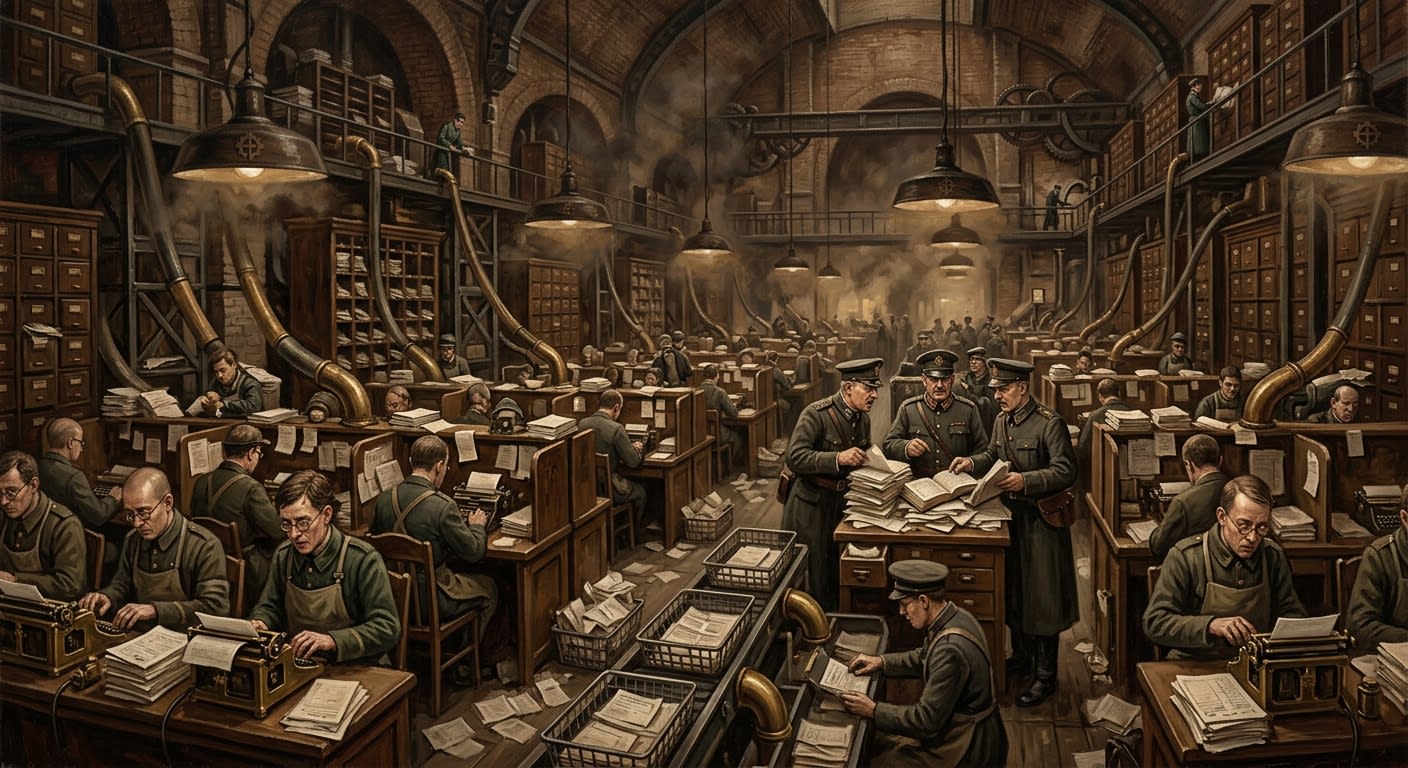
The Supplementary Entry Office
Where lives acquire addenda and mercy learns to bill
The Supplementary Entry Office is the Cloister's paper gut, where discrepancies become forms, forms become fees, and lives are amended past recognition.
Codex Ref. II.3.06-004

The Tagus
The river at the end of the count
The Tagus is the Synod's brown Iberian edge: moat of Toledo, fiscal measuring line, levy phrase, flood court, and river that takes names without receipt.
Codex Ref. II.4.09-016
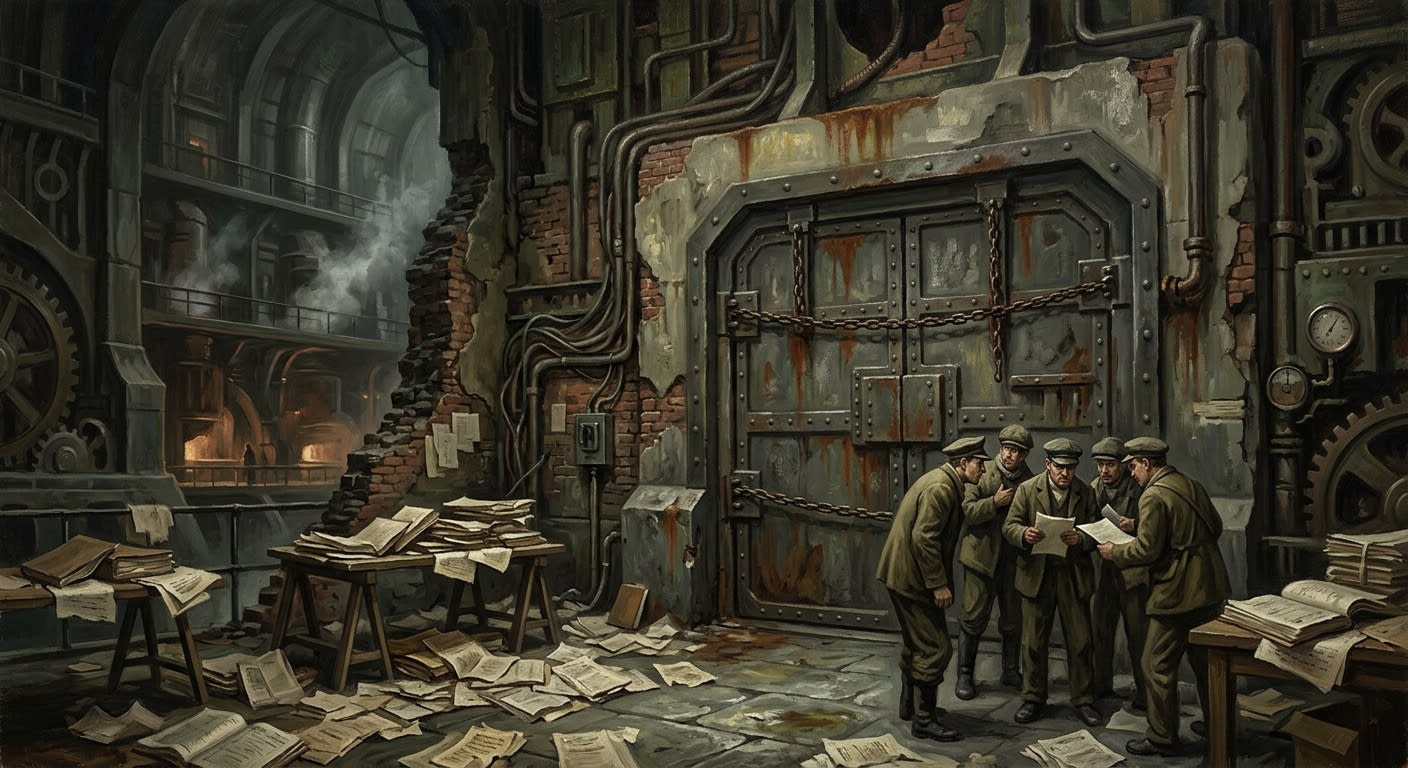
The Third Lung
The chamber silence killed and law kept using
The Third Lung is Bastion-Irongate's sealed acoustic wound: three thousand dead, sixteen days of knocking, and a wall still useful to law.
Codex Ref. II.4.24-095
The Third Ossuary
Sealed by prior authority; the prior authority has not been identified
The sealed chamber beneath Bastion-Constantinople's Ossuary Rings. Discovered A.S. 47. Never catalogued. Sealed seventeen times. Source of Compound 7, which keeps the Vigil Ark aloft.
Codex Ref. II.4.10-004
The Underchords
The Irongate's cellar has learned to grow
The eleven miles of sealed corridors and denied tunnels beneath Bastion-Irongate — home to the Underchord Cartel, the Counterkey Circle, and a gallery that grows by itself in the dark.
Codex Ref. II.4.10-001
The Vales of Stagnance
Syrion's country, where geography sits down and refuses audit
Syrion's Vales are the old Shipkan wound made landscape: fog, soft clocks, preserved villages, patient armies, and roads that return with fewer years.
Codex Ref. VI.2.04-004
The Vault of Ten Thousand Keys
Every door opens. Every door locks behind you.
Velmora's seat within the Gilded Chasm — a palace of infinite descending doors, each one beautiful, each one locking behind you. Four expeditions entered. None returned intact. The Bureau has recommended permanent interdiction.
Codex Ref. V.6.02-001
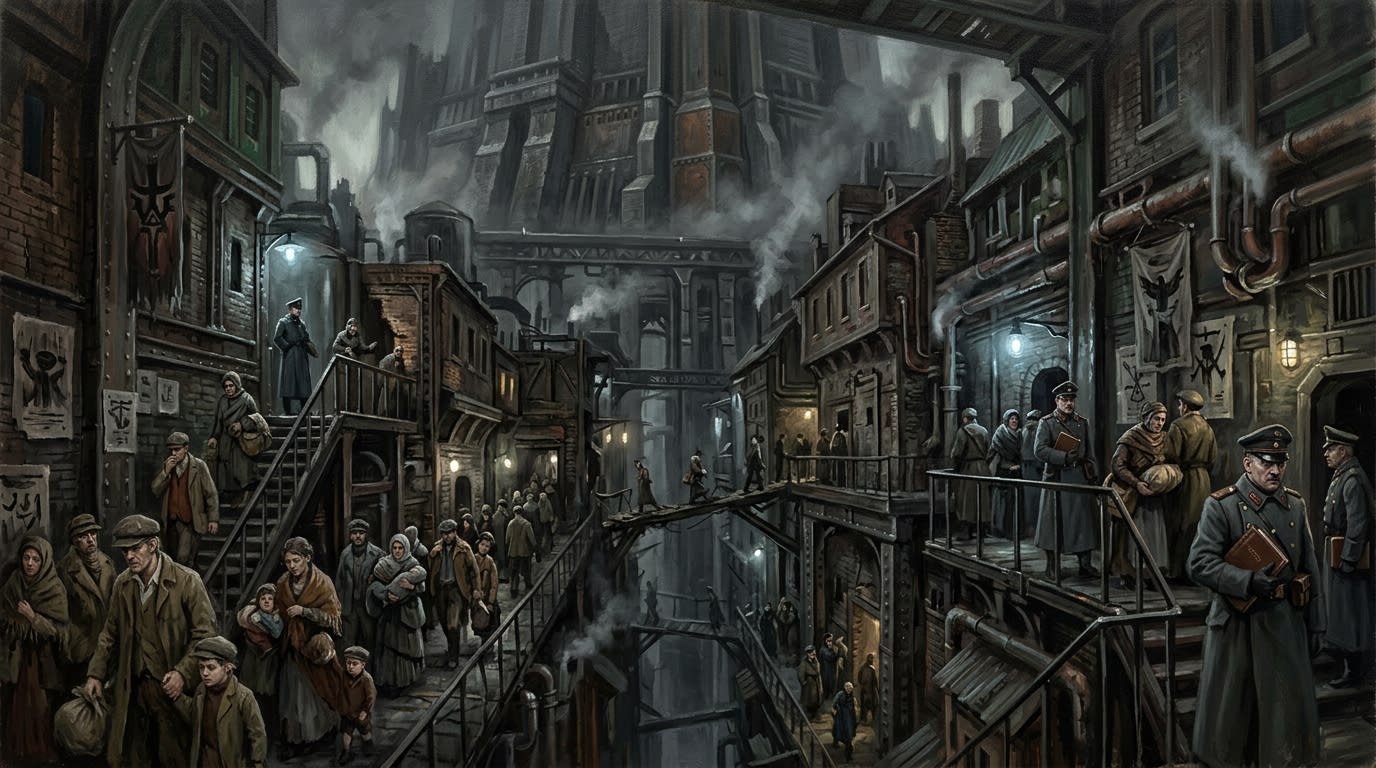
The Warrens of Königsberg
Laughter under the northern guns
The Warrens of Königsberg are the civilian quarter the fortress needs, mocks, watches, and refuses to admit it cannot spare.
Codex Ref. II.4.07-067
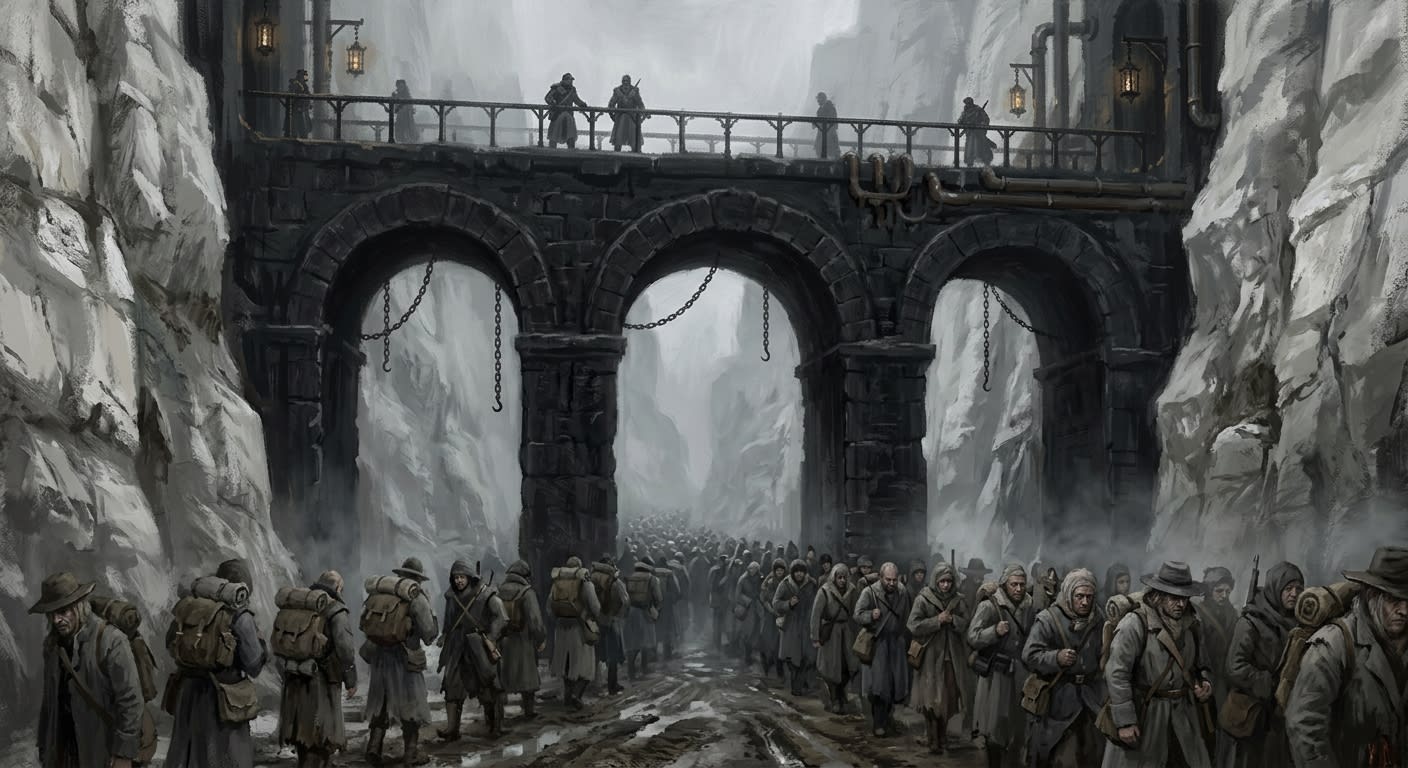
The Widow's Pennies Exchange at Griefgate
Where guilt is the currency and the arch keeps the change
The most efficient grief-processing apparatus on the pilgrim roads — three black-stone arches, a ledger of sorrows, and a staff of professionals who charge for the arithmetic.
Codex Ref. II.1.04-001
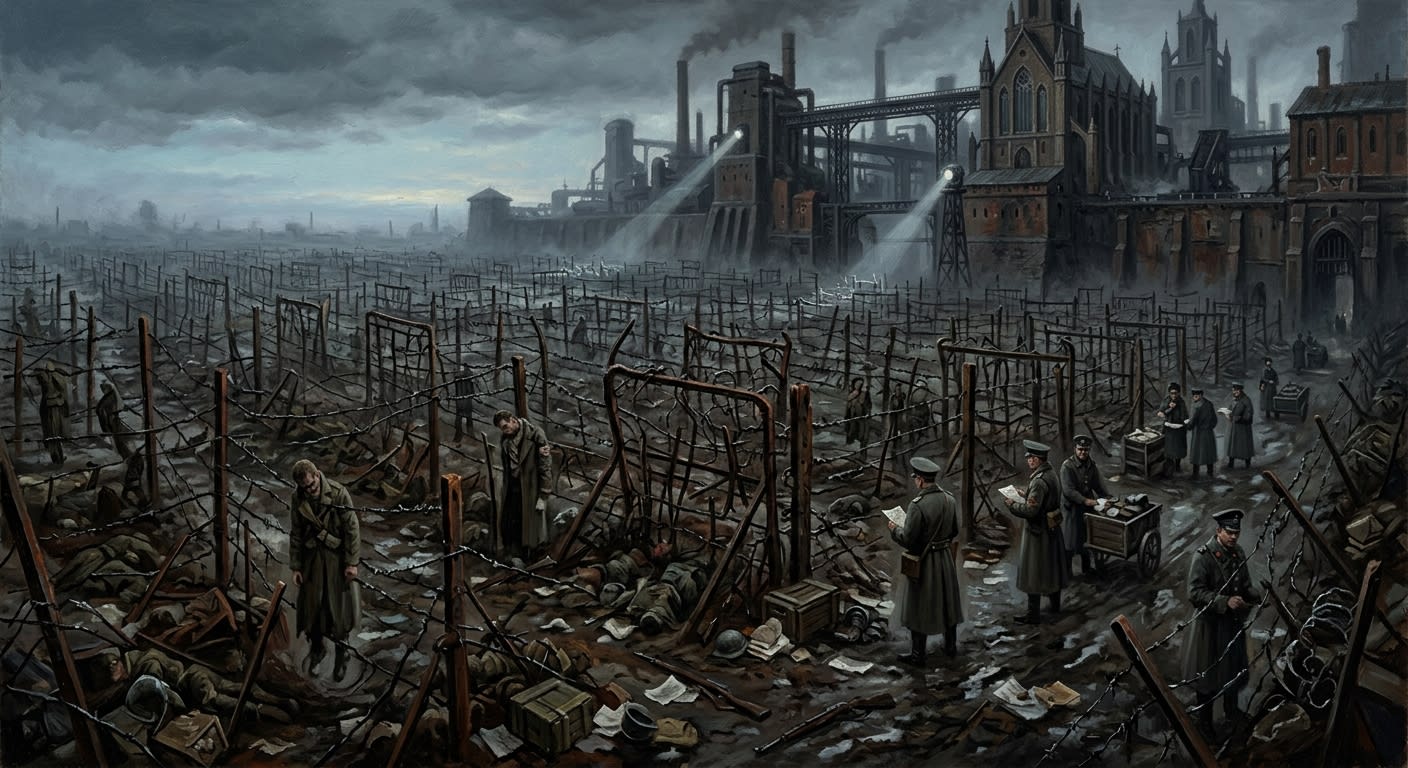
The Wire Orchard
Where the paper grows teeth and the dawn performs audit
The Wire Orchard is Bastion-Przemyśl's three-mile killing and sorting grid, where paper becomes permission, wire becomes judgment, and dawn harvests both.
Codex Ref. II.4.09-075
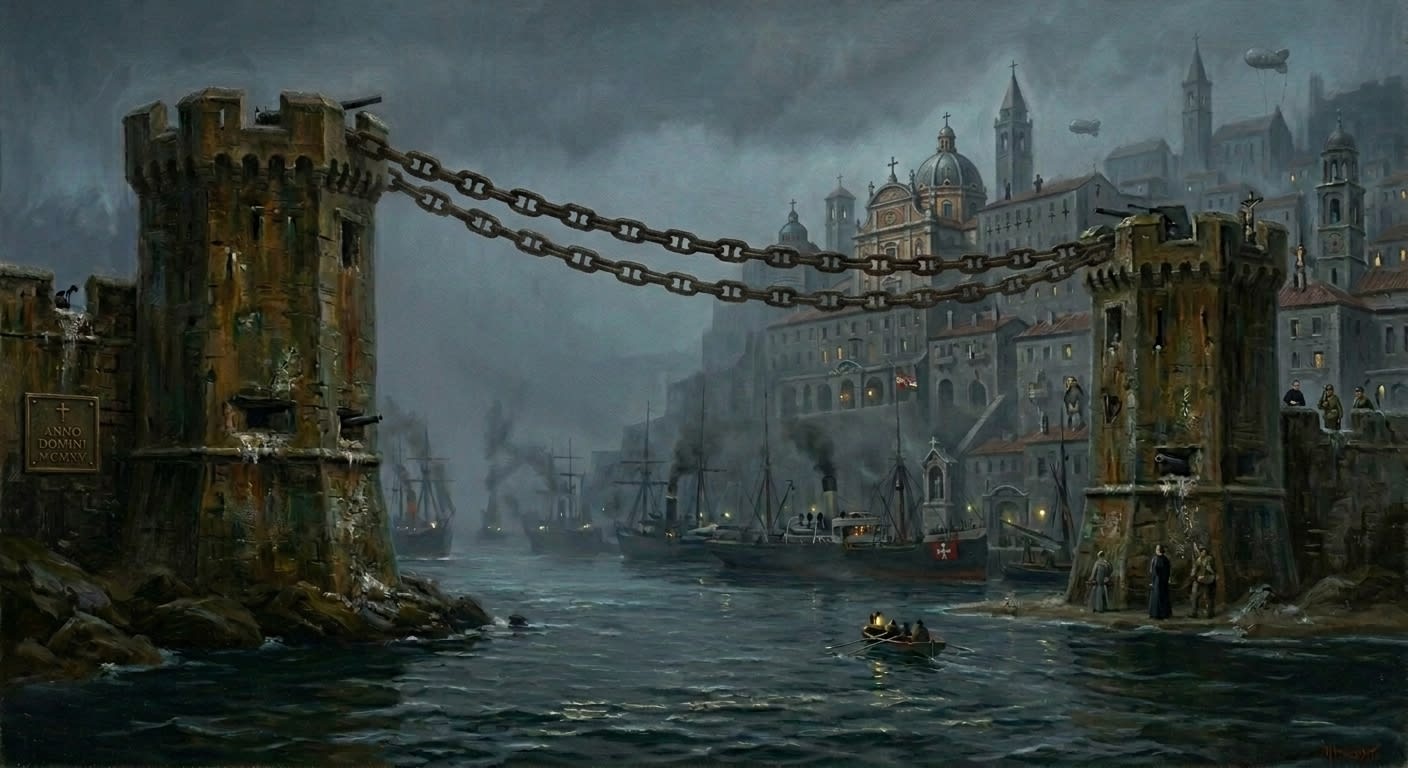
Thessaloniki (Harbor-Chain Towers)
Where every passage is a registration event, and the chains keep the ledger
The Synod's Aegean gullet — Twin Towers of the Harbor-Chain processing ~280,000 souls and every caravan bound for the southern Line, while the Drowned Choir counts beneath the psalm-hum.
Codex Ref. II.4.09-003
Thrace
The province geography learned to condemn
Thrace is the fallen south-eastern furnace where old roads became warnings, Maldrake taught soil to rage, and maps learned shame.
Codex Ref. II.6.03-045
Thracian Forests
Maldrake felled a province into the sky
The Thracian forests were Maldrake's timbered weapon: a fallen reserve burned in A.S. 143 until ash became famine, ink-hunger, echo drift, and weather.
Codex Ref. II.6.03-143
Thracian Plain
The open ground that learned to listen for weakness
The Thracian Plain is Constantinople's northern killing apron: old grainland remade after A.S. 45 into Maldrake's listening floor, muster yard, and artillery throat.
Codex Ref. II.6.03-045
Throat Dorms
Where Essen stores the voices it spends
The Throat Dorms are Essen-of-Hymnsteel's choir barracks: brick lungs where two thousand calibration voices are housed, inspected, bled, and spent for hymnsteel.
Codex Ref. II.2.06-115
Throne of Mists
Remain standing when comfort offers a crown
The Throne of Mists is Syrion's unreached seat: a palace of fog, glass, waiting rooms, polite summons, and chairs that promise the exhausted soul an end.
Codex Ref. II.6.07-073
Toledo
The city taken by cannon and kept by ash
Toledo is the Synod-held Iberian martyr-city where a lost siege became custody, ash became law, and time itself learned tariffs.
Codex Ref. II.1.04-015
Toulouse
The safe city where Purity learned its grammar
Toulouse is the red-brick safe city corrected in A.S. 93: birthplace of Purity's public dread, still loyal, profitable, lowered-voiced, and watched.
Codex Ref. II.1.09-093
Tower Nine
The eye that learned to answer late
Tower Nine is Lorn's answering switch-tower and Przemyśl's nomenclature wound: a lamp cage, a sealed clock, and a late blink no manual admits.
Codex Ref. II.3.01-009
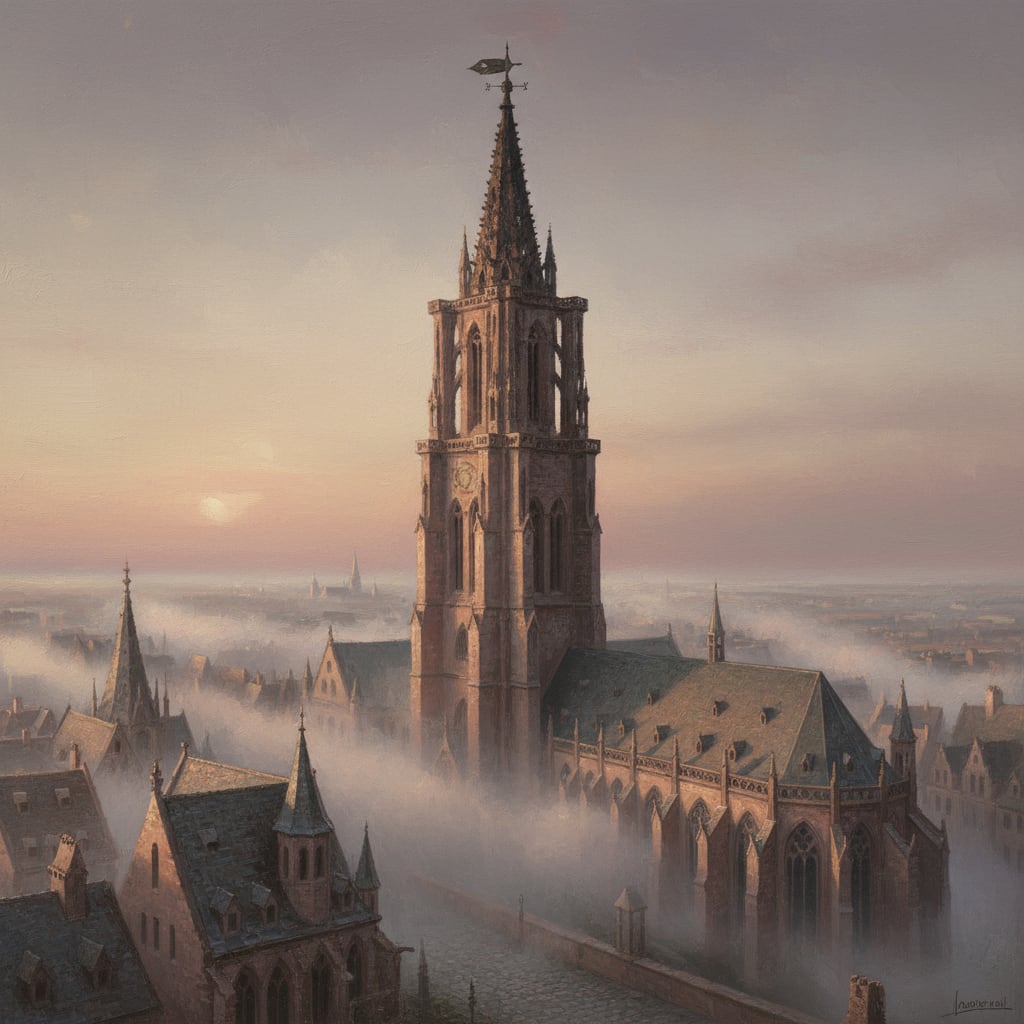
Tower of the Quill
The tallest structure in Strasbourg, which is to say the world, which is to say the matter is settled
Seat of the Bureau of Doctrine and tallest structure in Strasbourg, commissioned in A.S. 92 by successor authorities. Three bells, a classified gallery, and a sealed archive beneath the flagstones.
Codex Ref. II.1.04-001
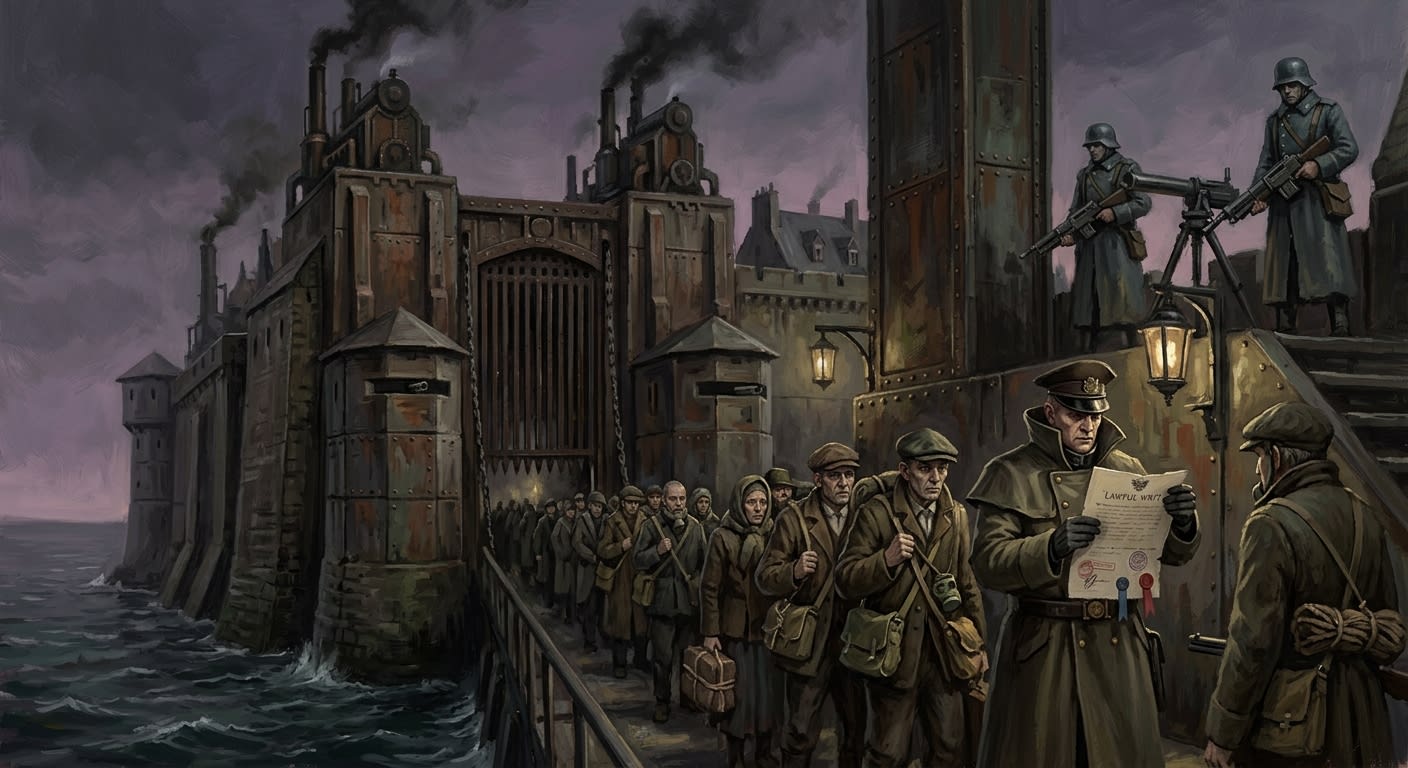
Town of Saint-Malo
The Breton gate where law discovered it could bleed
Saint-Malo is the Breton port where a narrow gate, a lawful writ, and forty-three pilgrims gave the Synod its most profitable wound.
Codex Ref. II.4.09-013
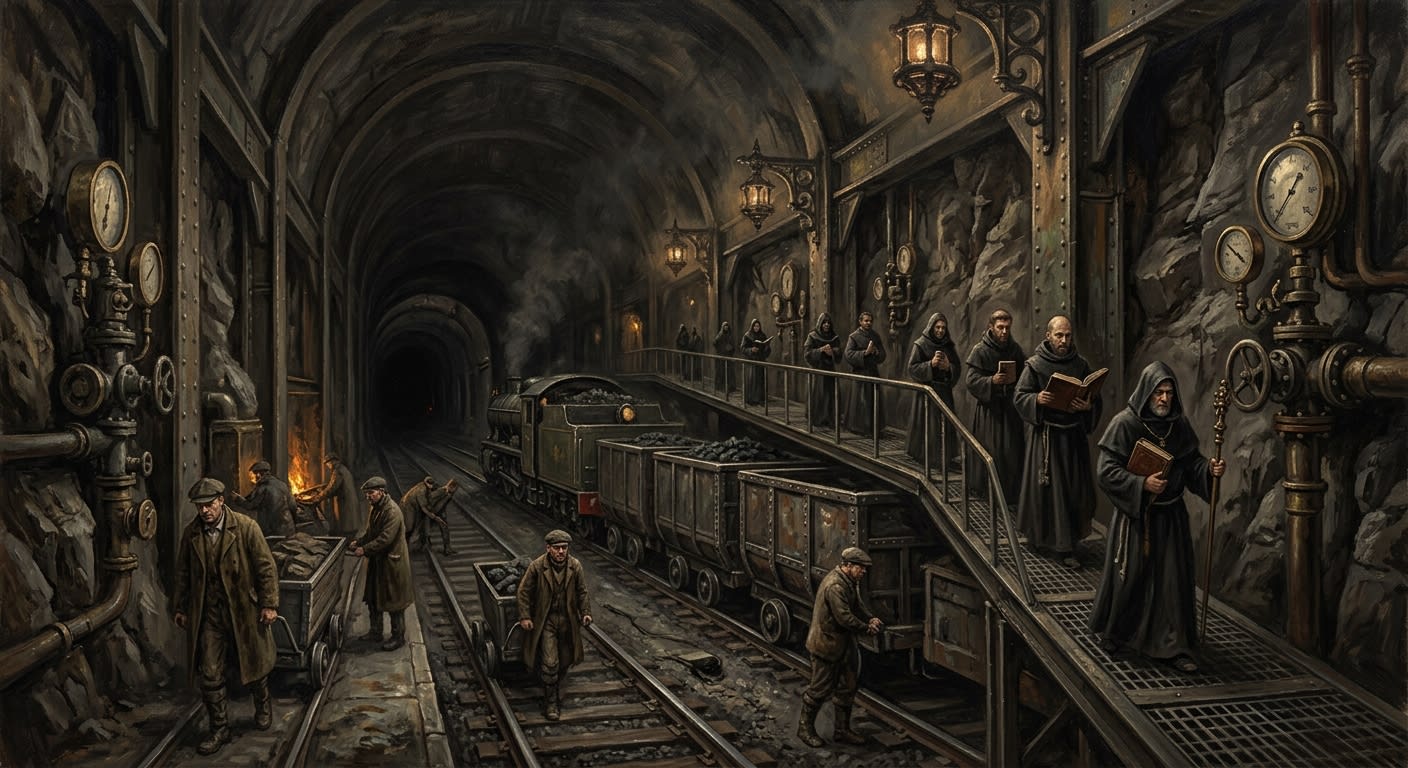
Transit Spine
The road through stone that cannot survive silence
The Transit Spine is Irongate's load-bearing road through the mountain: rail throat, chant corridor, pressure instrument, and courtroom for breath.
Codex Ref. II.4.24-072
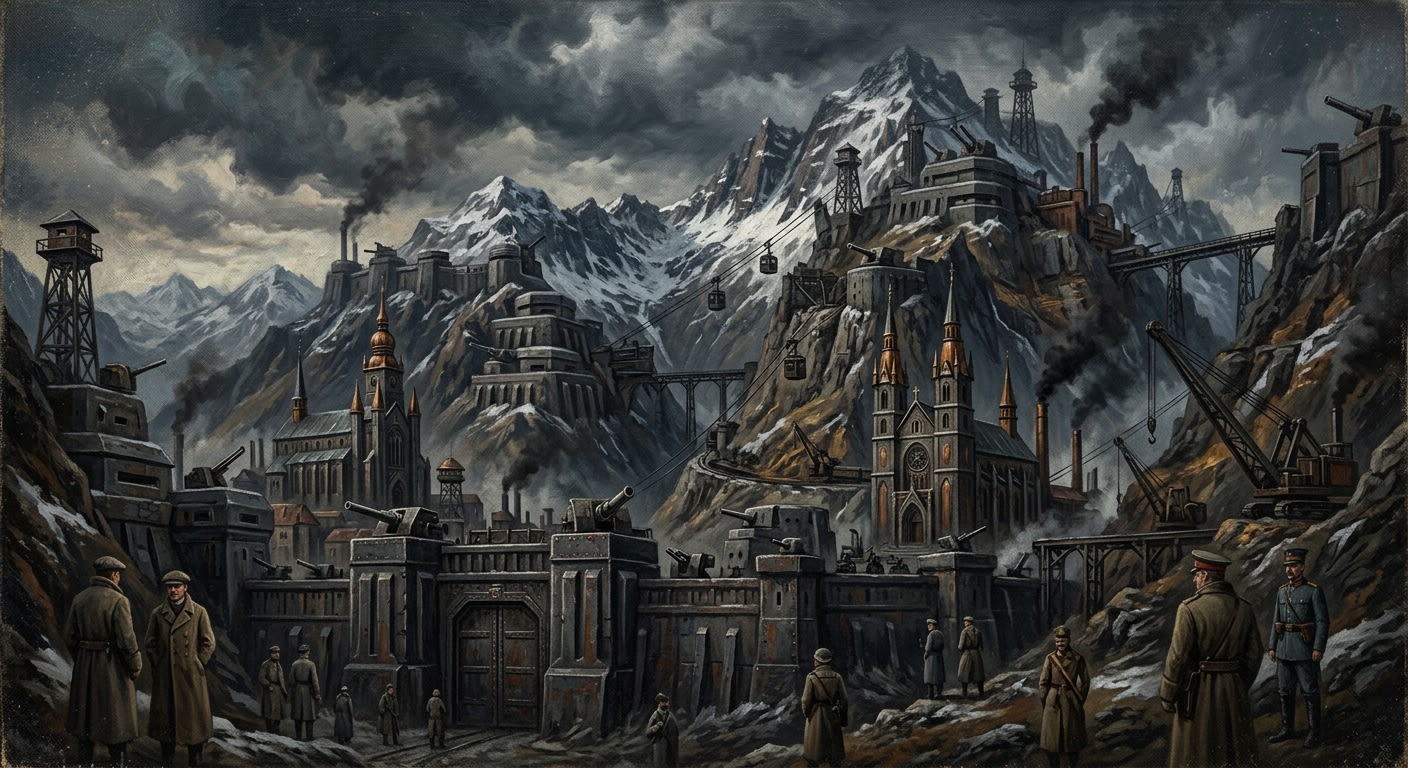
Transylvanian Alps
The mountain wall that makes greed climb uphill
The Transylvanian Alps are Sibiu's natural rampart: a wall of stone, snow, fortified churches, pass-forts, gold pressure, and Velmoran debt.
Codex Ref. II.4.08-065
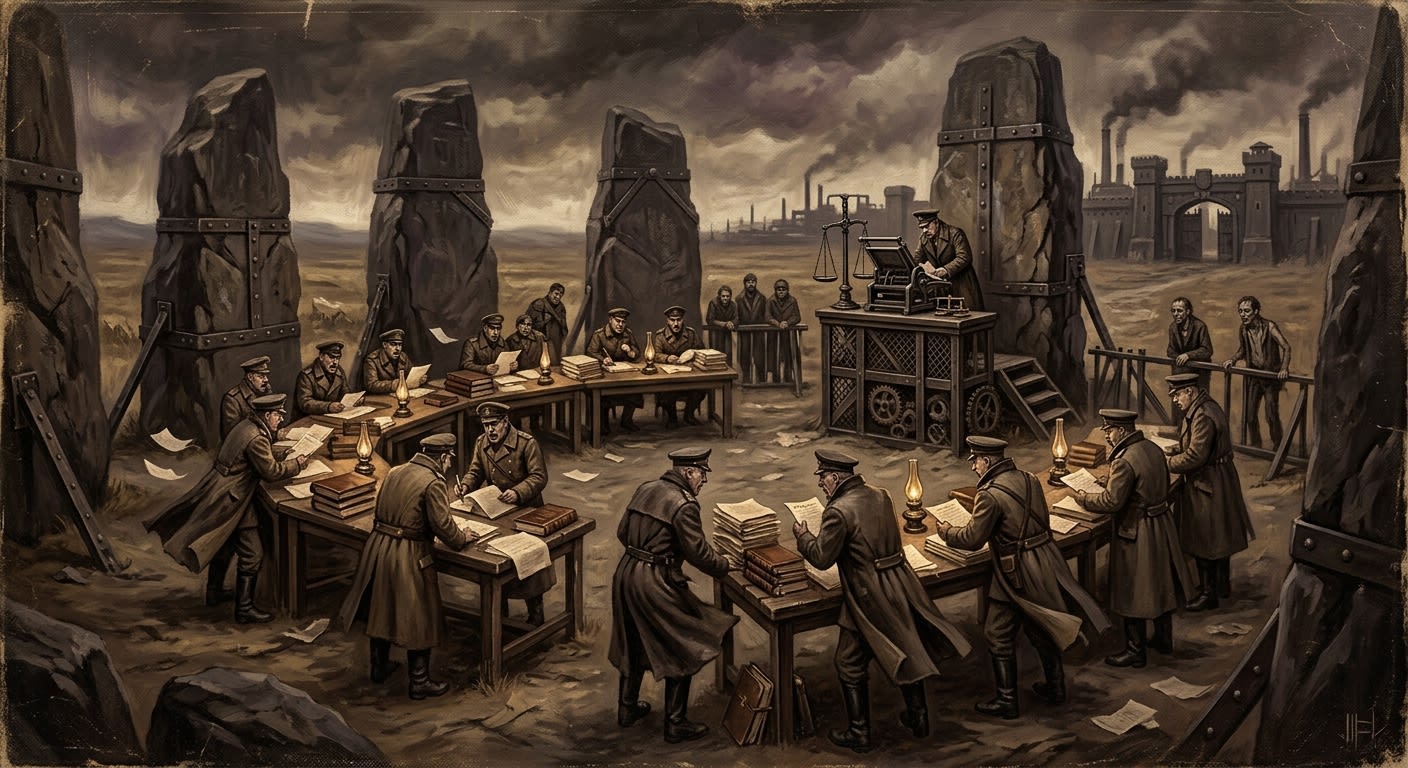
Treaty Ring
The circle where language acquired teeth
The Treaty Ring is the Steppe Gate's seven-stone court: law made windborne, profitable, hungry, and fatally attentive to pronunciation.
Codex Ref. II.4.08-076
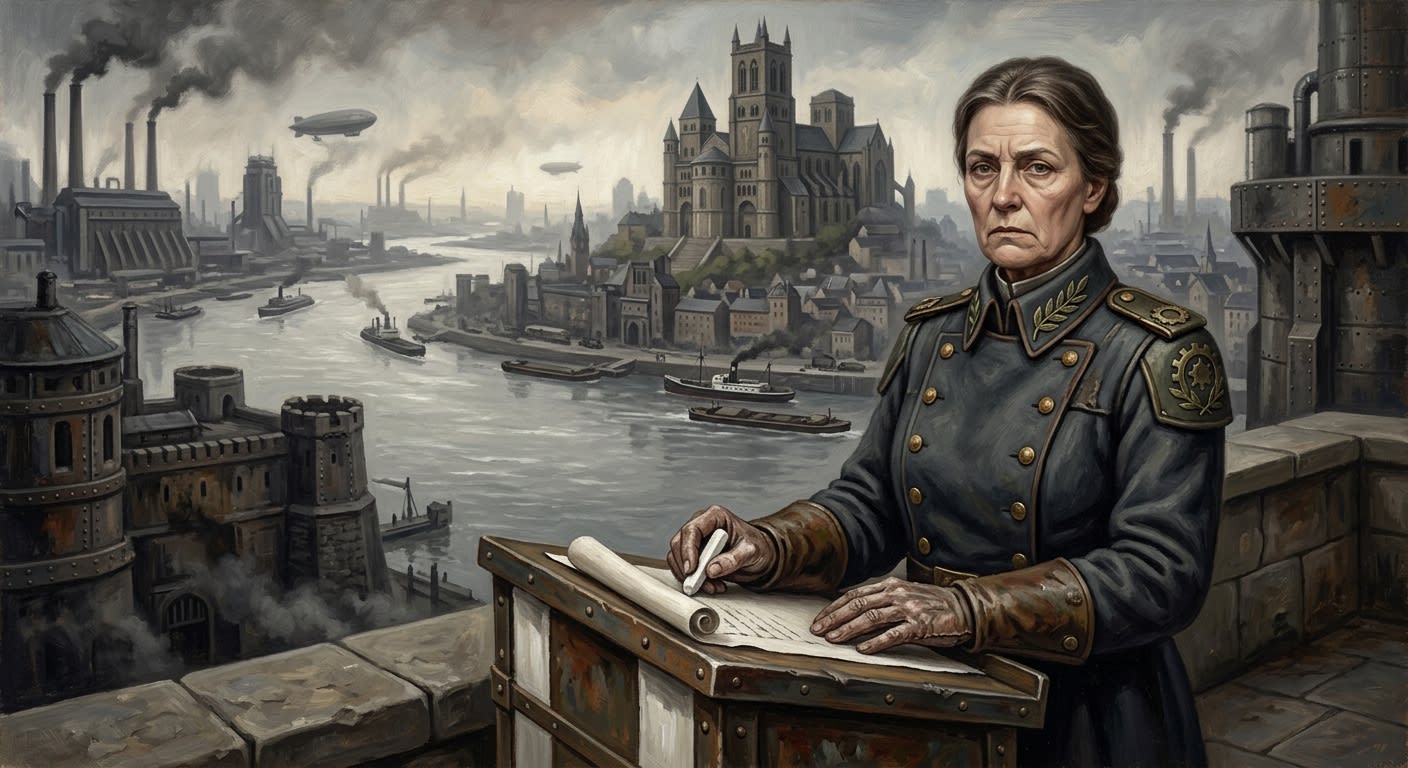
Trier
The city that taught chalk to count before it spoke
Trier is a loyal Moselle city with old hands, white margins, soft chalk, river memory, and the dangerous courtesy of obedience performed too well.
Codex Ref. II.2.02-004
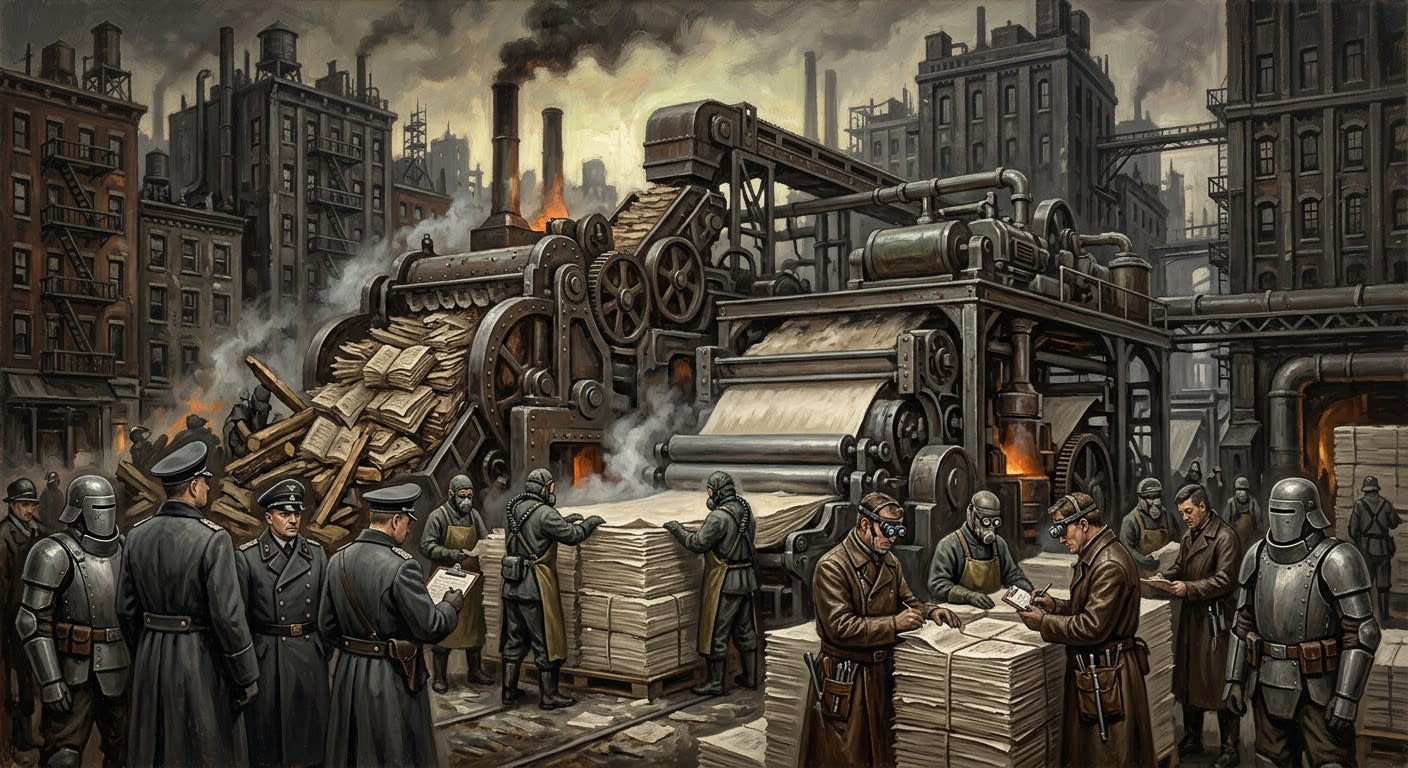
Ulm
The city that taught paper to confess and scholars to become pulp
Ulm is the corrected Heartlands city whose Rationalist compact predated the calendar wound, and whose Paper Mines now make heretical learning into obedient sheets.
Codex Ref. II.2.01-005
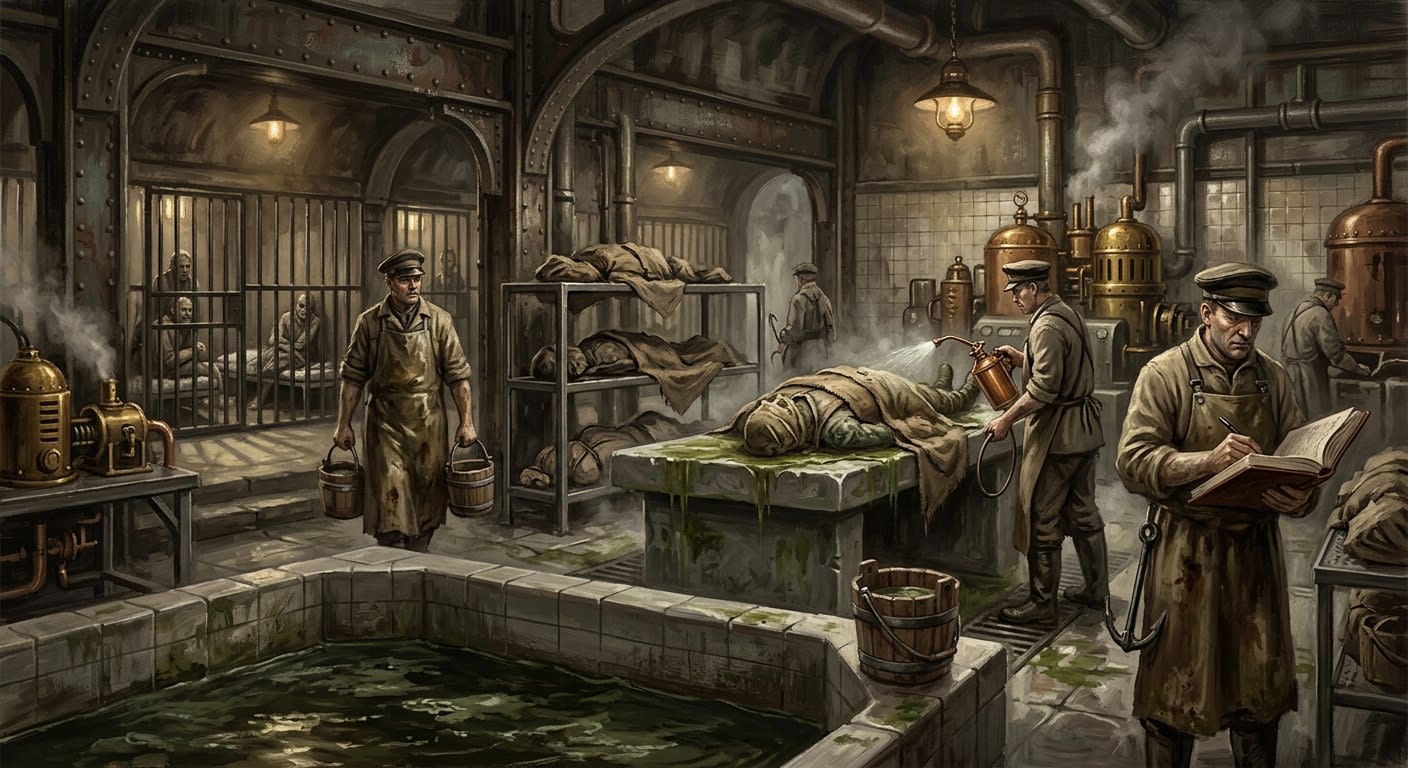
Undertide Pens
Where Calais dries the sea's handwriting and locks the alphabet in brine
The Undertide Pens are Calais's quarantine cellars: brine rooms, body slabs, object trays, and living chambers where returns from the sea are named, dried, and feared.
Codex Ref. II.4.09-071
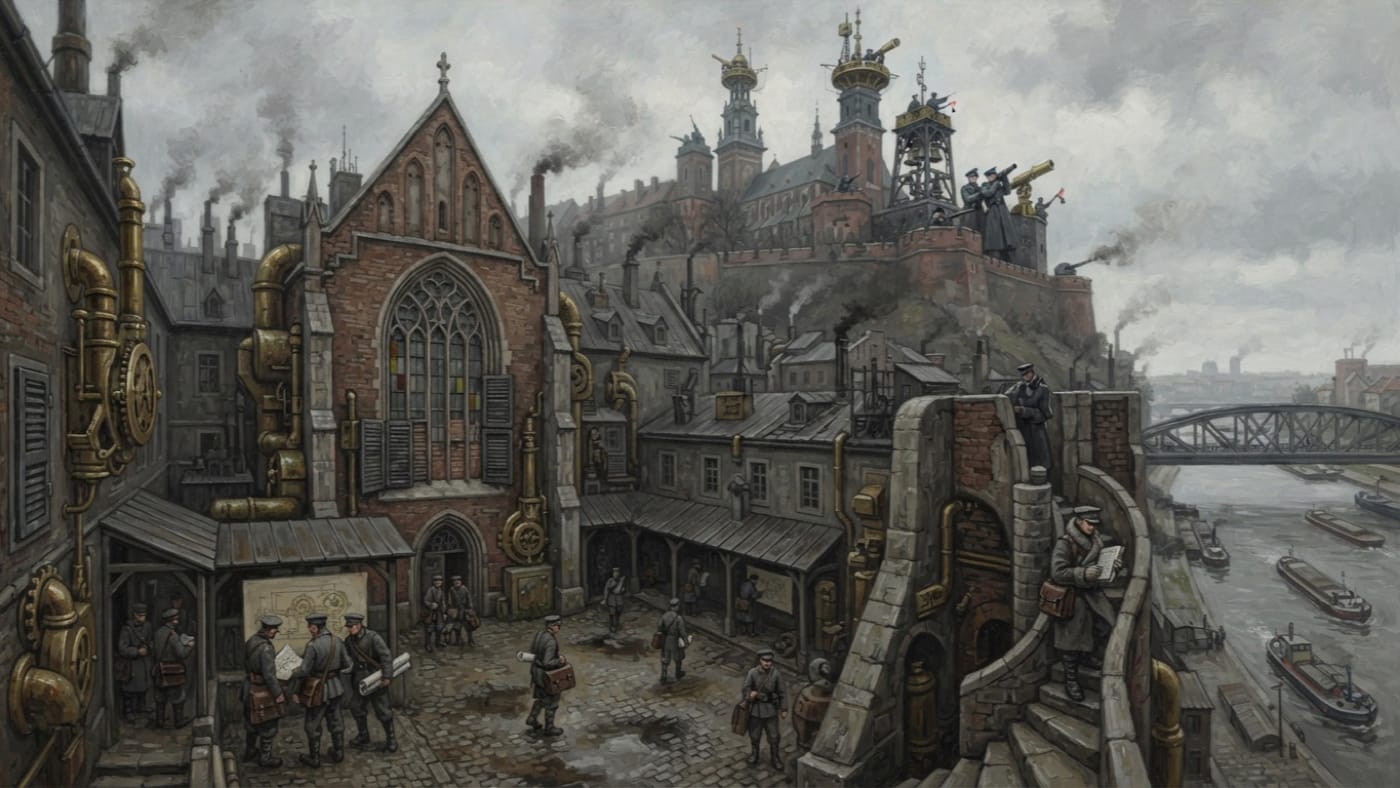
University of Kraków
Correct arithmetic, subject to countersignature
Kraków's university survives the A.S. 199 condemnation to train useful clerks, engineers and physicians. Its astronomers may copy the stars only as approved error.
Codex Ref. II.3.06-004
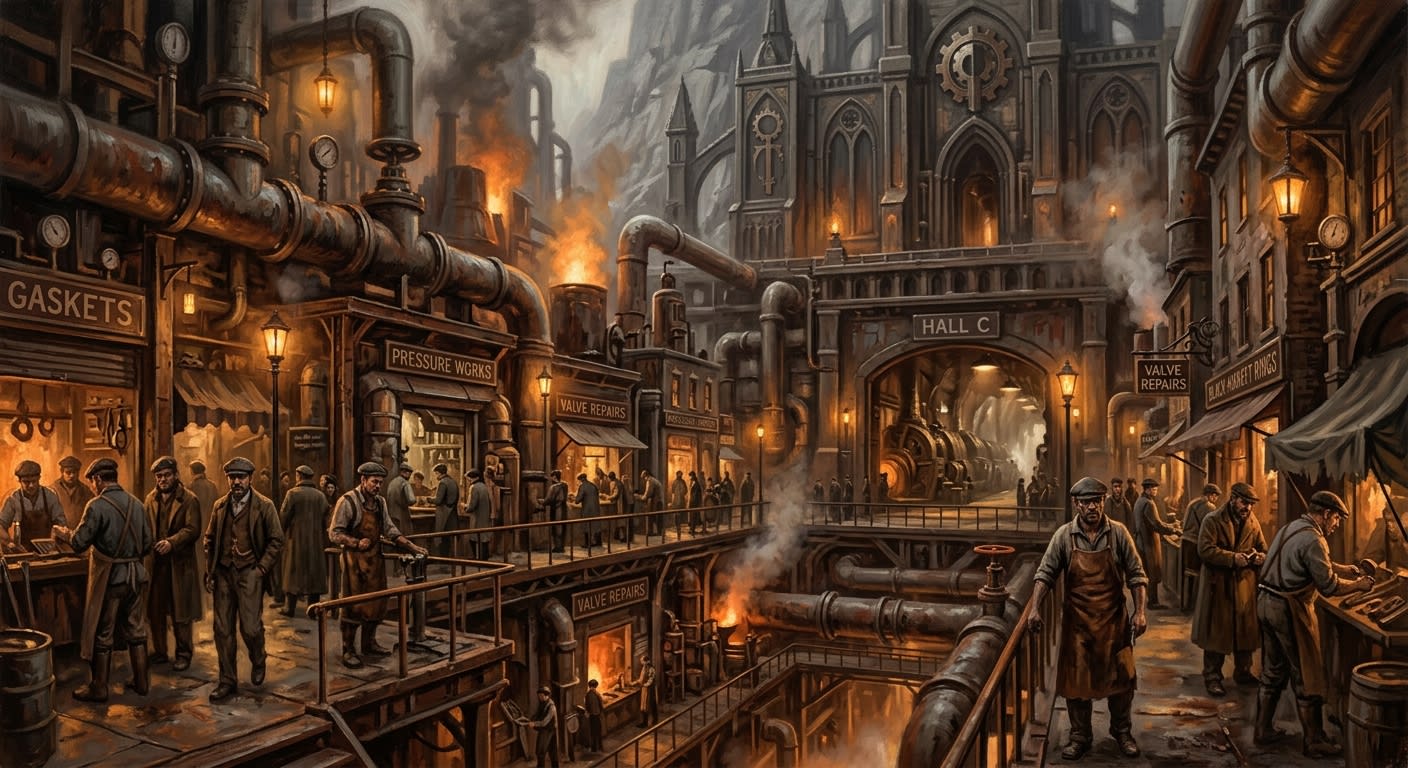
Valve Quarter
Where [[bastion-irongate|Irongate]] keeps its warmth, its gaskets, and its deniable sins
The Valve Quarter is Bastion-Irongate's hot side-throat: pressure works, gasket shops, black-market rings, worker lungs, Hall C, and all the warmth the mountain denies elsewhere.
Codex Ref. II.4.24-096
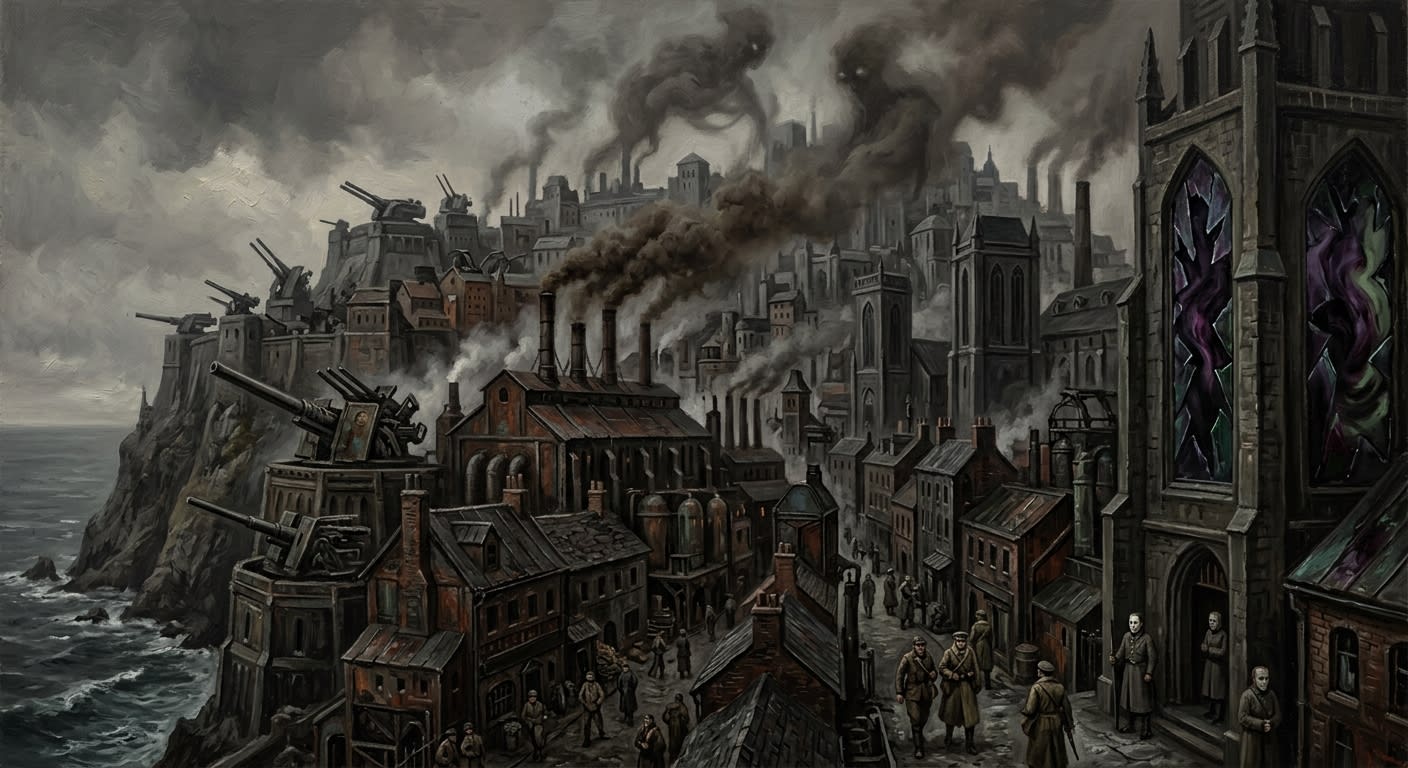
Varna
The Ashen Redoubt where smoke looks back and bread learns law
Varna, the Ashen Redoubt, is a Black Sea cliff-fortress of guns, bone-kilns, tariff chapels, demon glass, hunger law, debt masks, and smoke that looks back.
Codex Ref. II.4.09-070
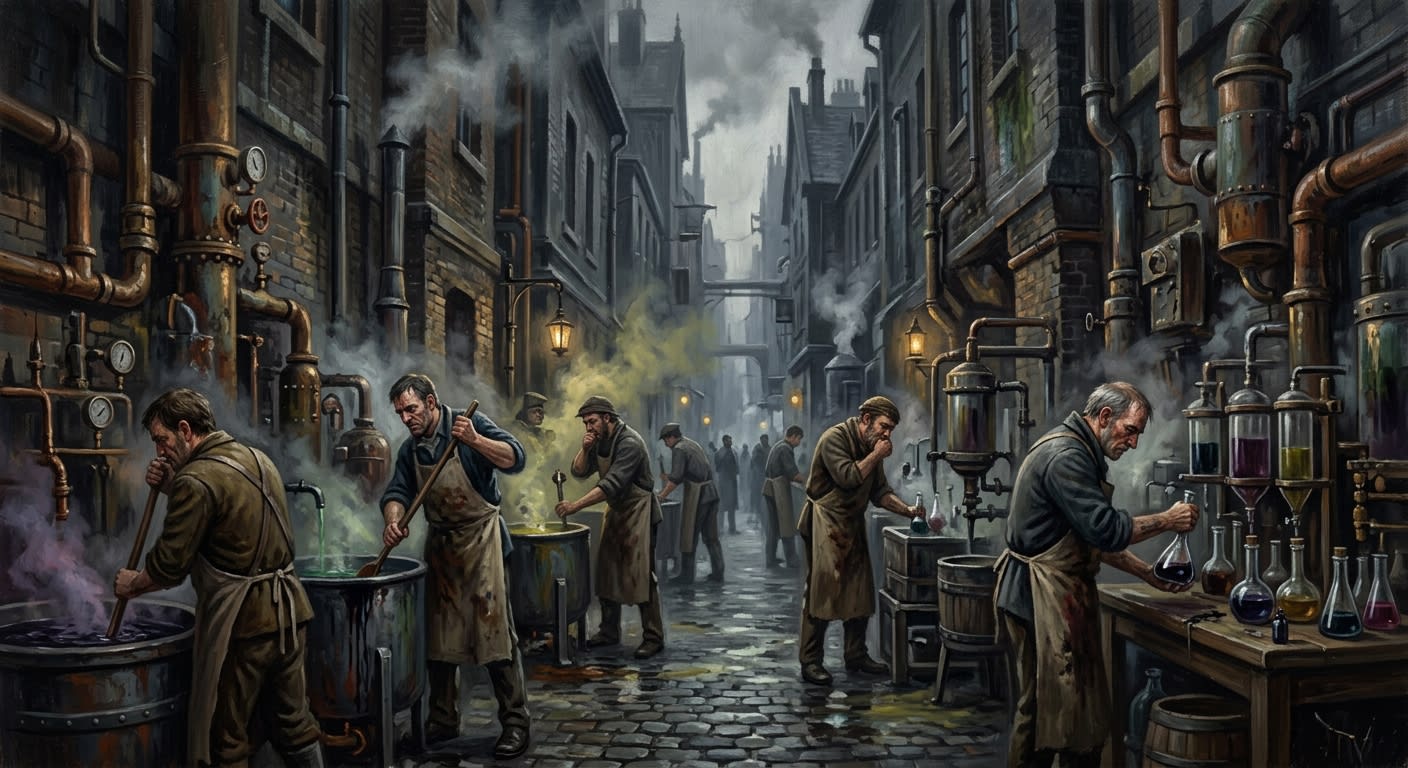
Vatmarsh Row
Where ink learns to outlive mercy
Vatmarsh Row fixes the Synod's ink and loosens the lungs of those who make it. Permanence, naturally, invoices by the breath.
Codex Ref. II.1.01-092
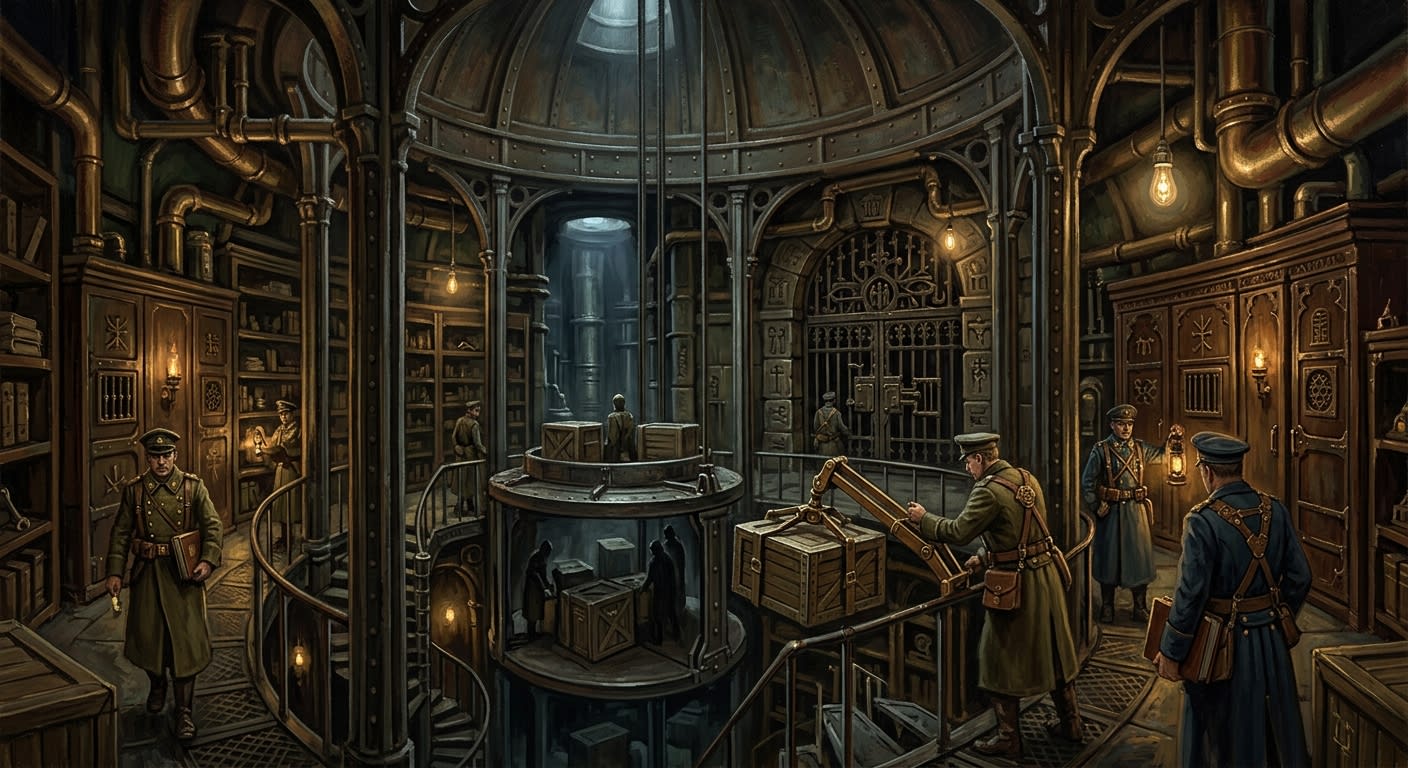
Vault of Sacred Custody
The locked stomach beneath [[strasbourg|Strasbourg]] where bones become policy
Subterranean headquarters of the Bureau of Relics beneath Strasbourg Cathedral Close, where authenticated bones, hostile cabinets, and silence are stored by grade.
Codex Ref. II.2.06-004
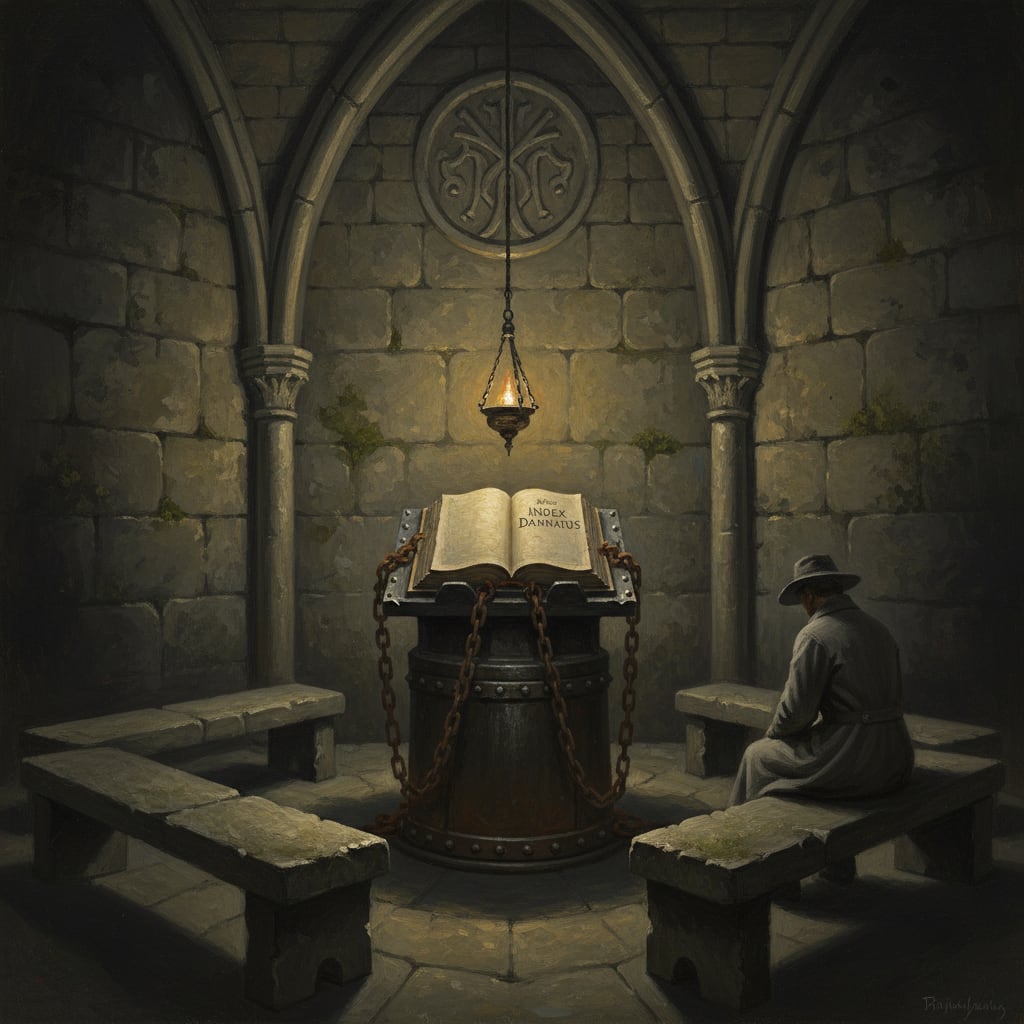
Vault of Silences
Forty-seven steps descending. Forty-nine ascending. The Bureau has certified both numbers correct.
The Vault of Silences occupies the sub-basement of the Basilica of the Ledgered Saints — the Bureau of Purity's sealed repository of everything the Synod prefers the world forgot. Four visits. One conclusion. The Bureau will stamp it out.
Codex Ref. II.1.04-002
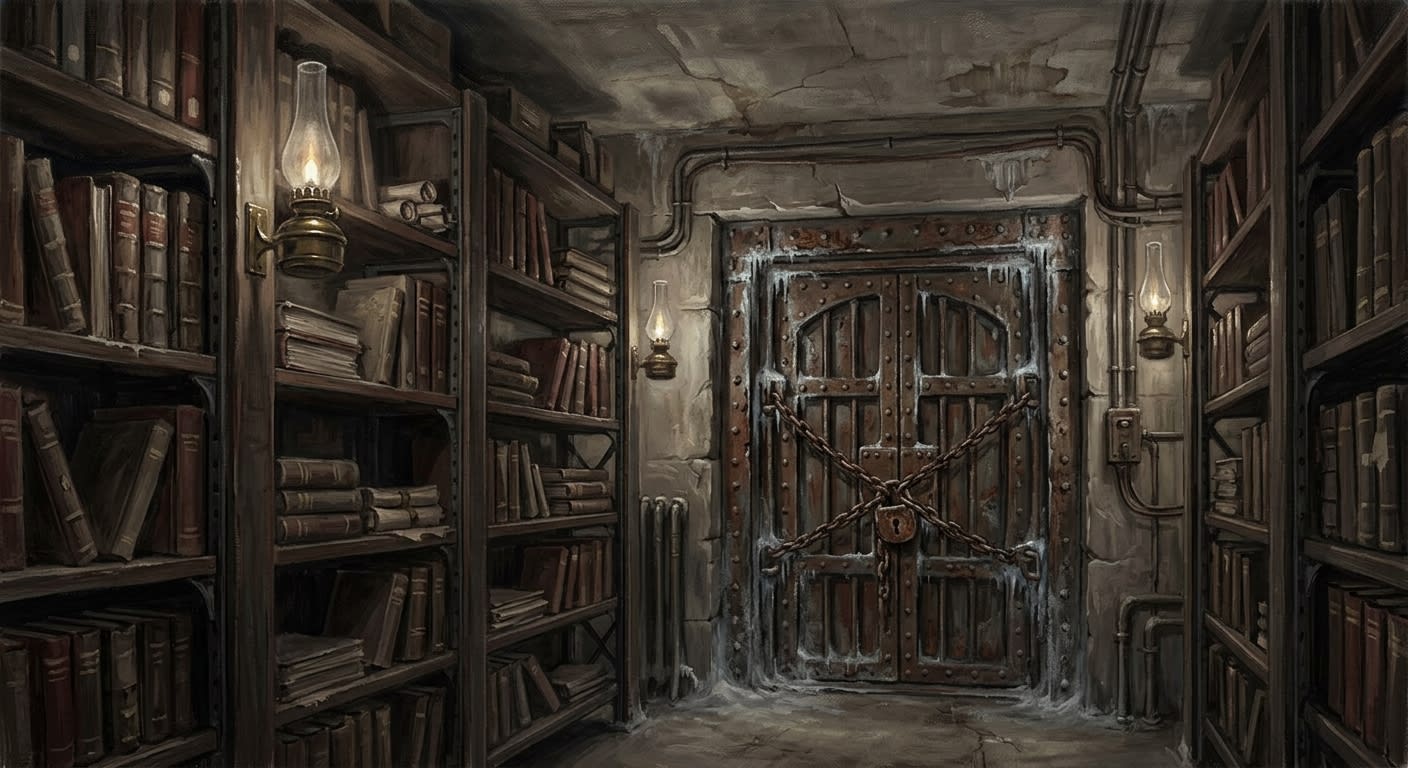
Vault Seven
A sealed room older than the Archive, which is precisely why sane men admire locks
Vault Seven is the sealed final chamber of the Burnless Archive: found behind limestone shelving, closed in A.S. 187, cold, growing, and discourteous to chronology.
Codex Ref. II.4.08-011
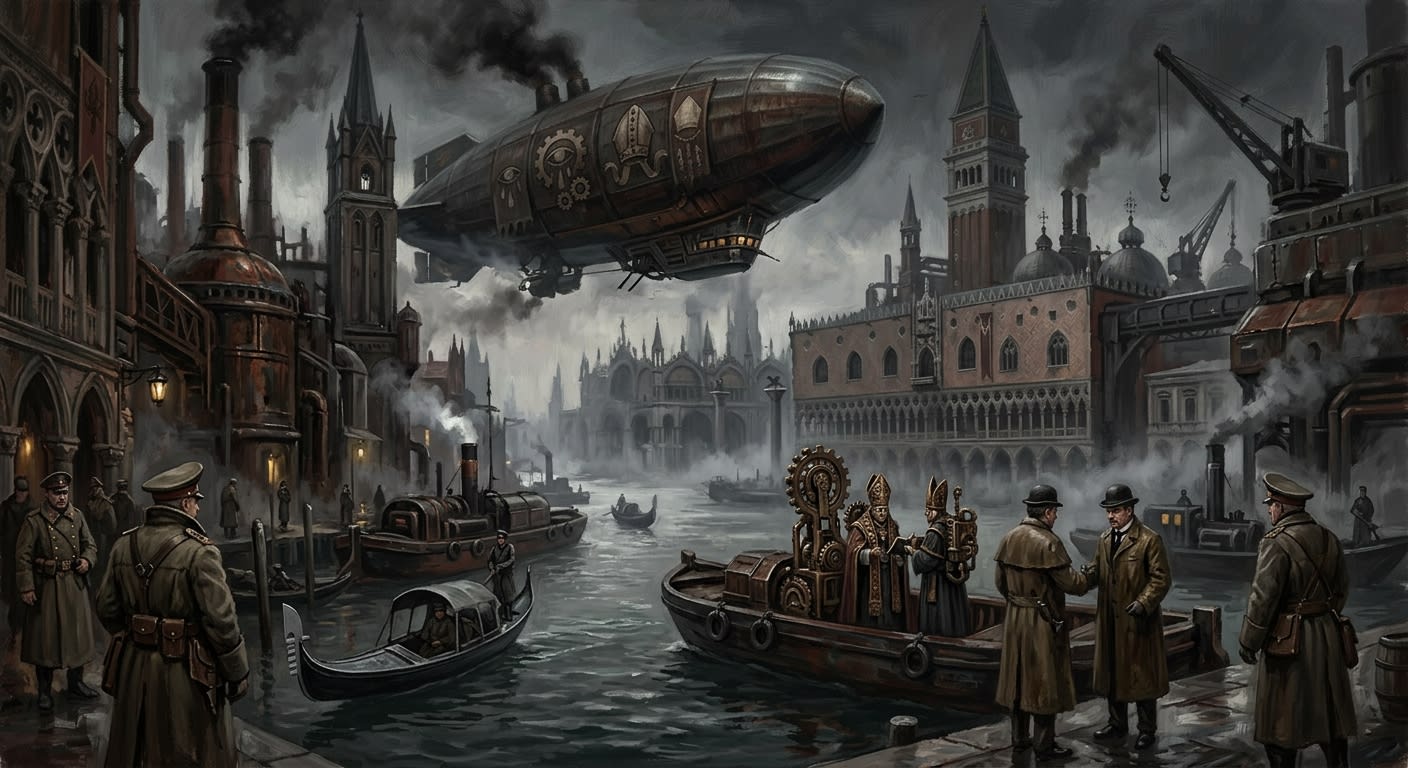
Venice
The city that obeys by tide and invoices by fog
Venice is loyal, wealthy, damp, evasive, and necessary: an Adriatic city the Synod owns by writ and must still ask politely by tide.
Codex Ref. II.4.09-201
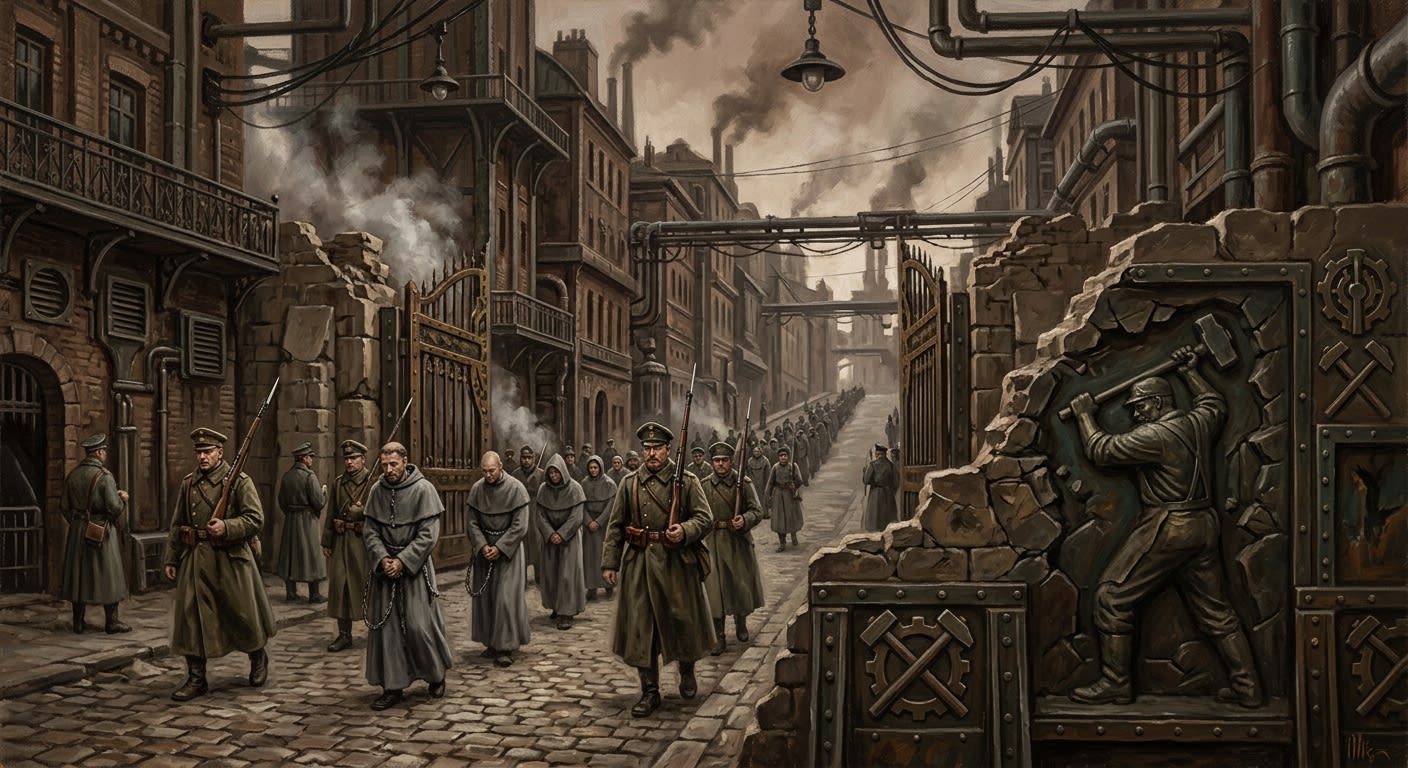
Via Stahlhand
Four hundred and eleven metres where knees become receipts
Vienna's Via Stahlhand is the sanctioned 411-metre penitential route through the Kärntner Gate breach, where Clemens Stahlhand's blow became a road.
Codex Ref. II.4.09-011
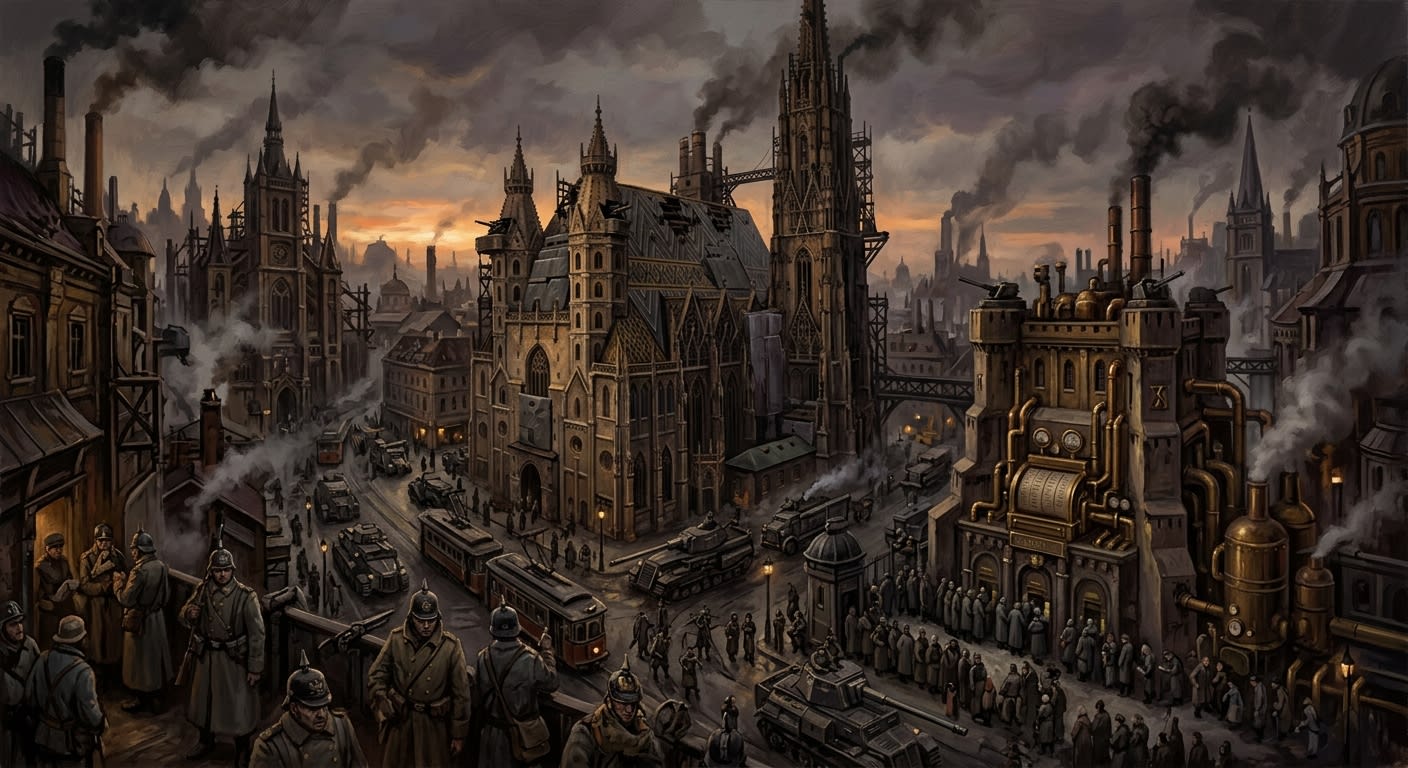
Vienna
The corpse that learned accounting
Vienna is the Synod's most decorated corpse: old see, Rationalist capital, shrine-ruin, supply hinge, lullaby scar, and profitable proof that ruins can be taxed.
Codex Ref. II.4.09-095
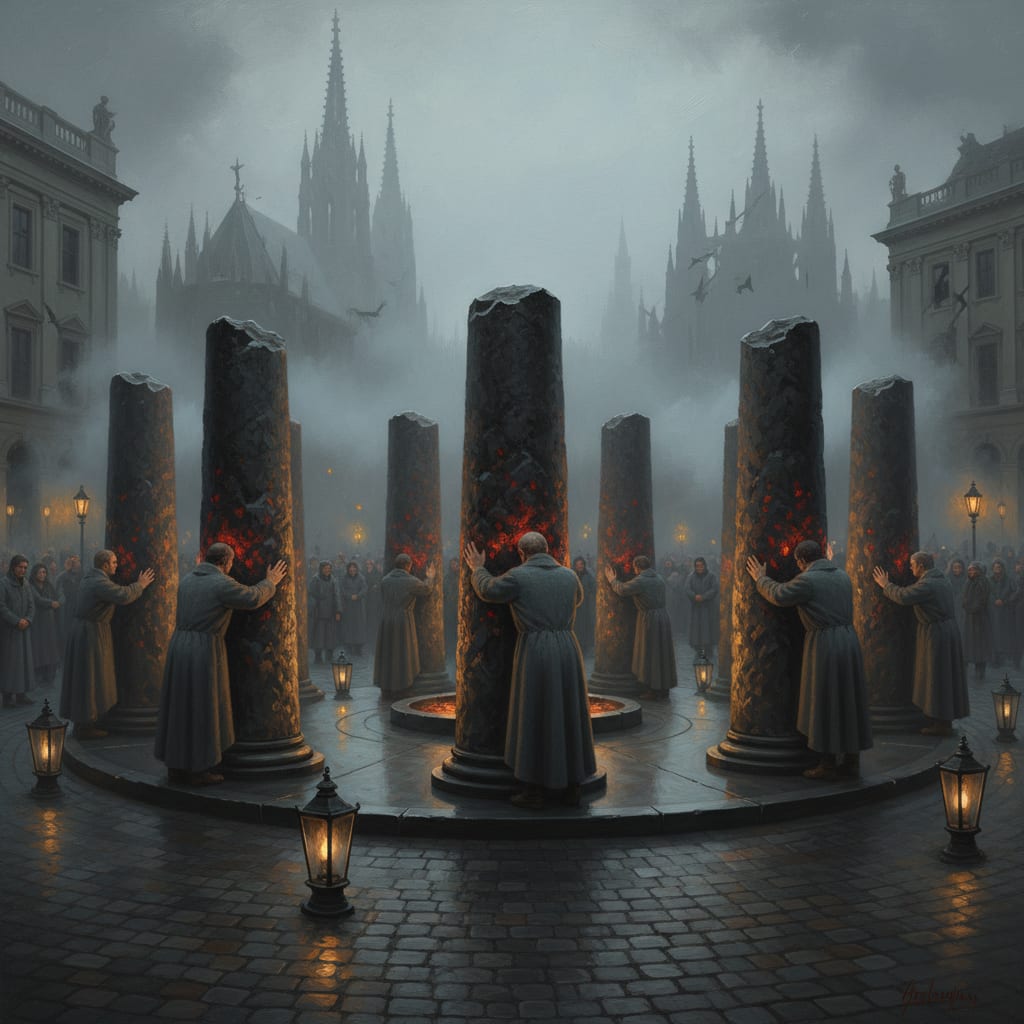
Vienna, the Shrine-Ruins
Three deaths, one gift shop, and a pen that has not dried in forty years
Three times ruined and once reclaimed. Vienna is the Synod's finest shrine and its most honest monument: the Rationalist capital, the Great Retreat's wound.
Codex Ref. II.4.09-010
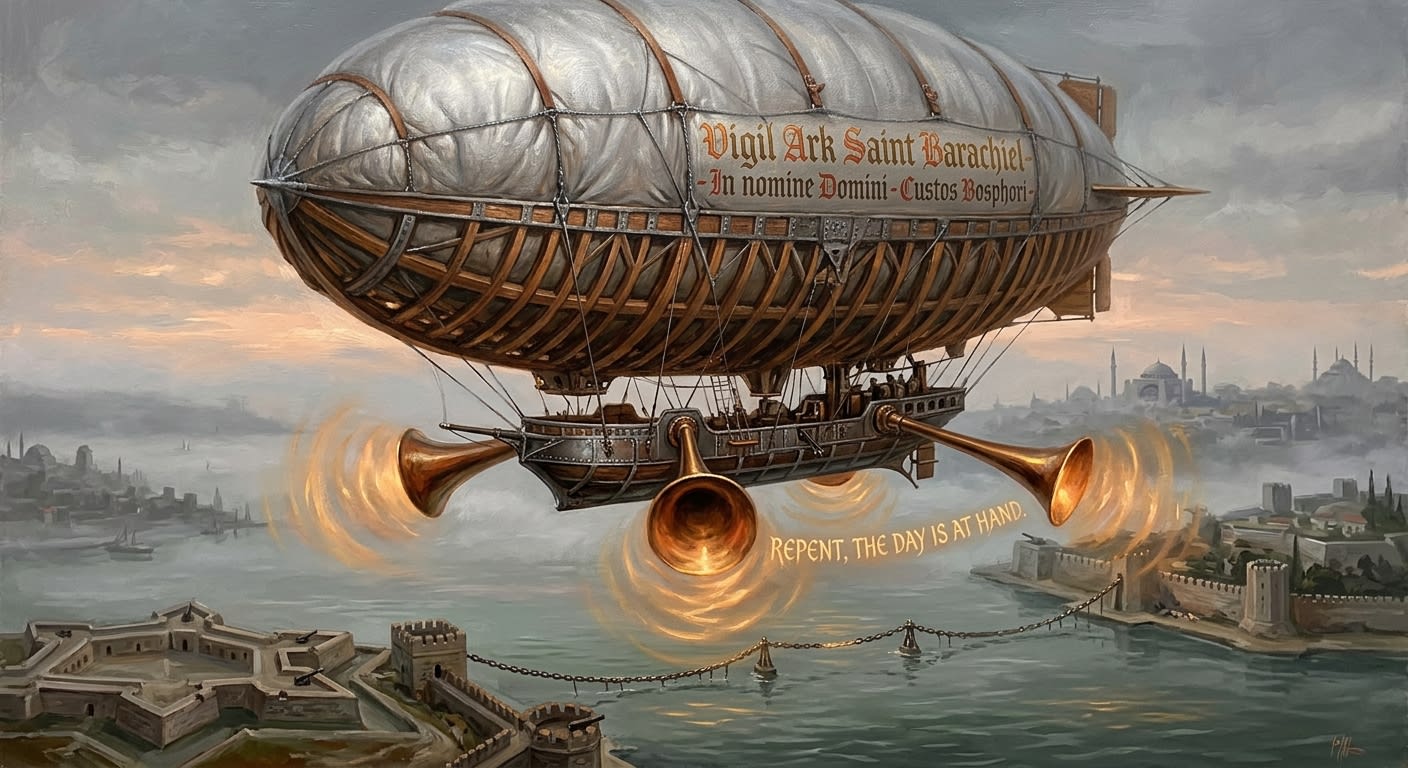
Vigil Ark *Saint Barachiel*
On the consecrated dirigible that blesses the Bosphorus sky, the sermon heard forty feet below the water, and the eleven minutes forty-three seconds of A.S. 199 the Bureau has classified as Not Our Co
The Vigil Ark Saint Barachiel: armed dirigible-reliquary, Constantinople theater, A.S. 168–present. Thirty-three years of consecrated patrol. One unexplained Broadcast. The Ark flies. The Bureau recommends continued faith.
Codex Ref. II.4.11-001
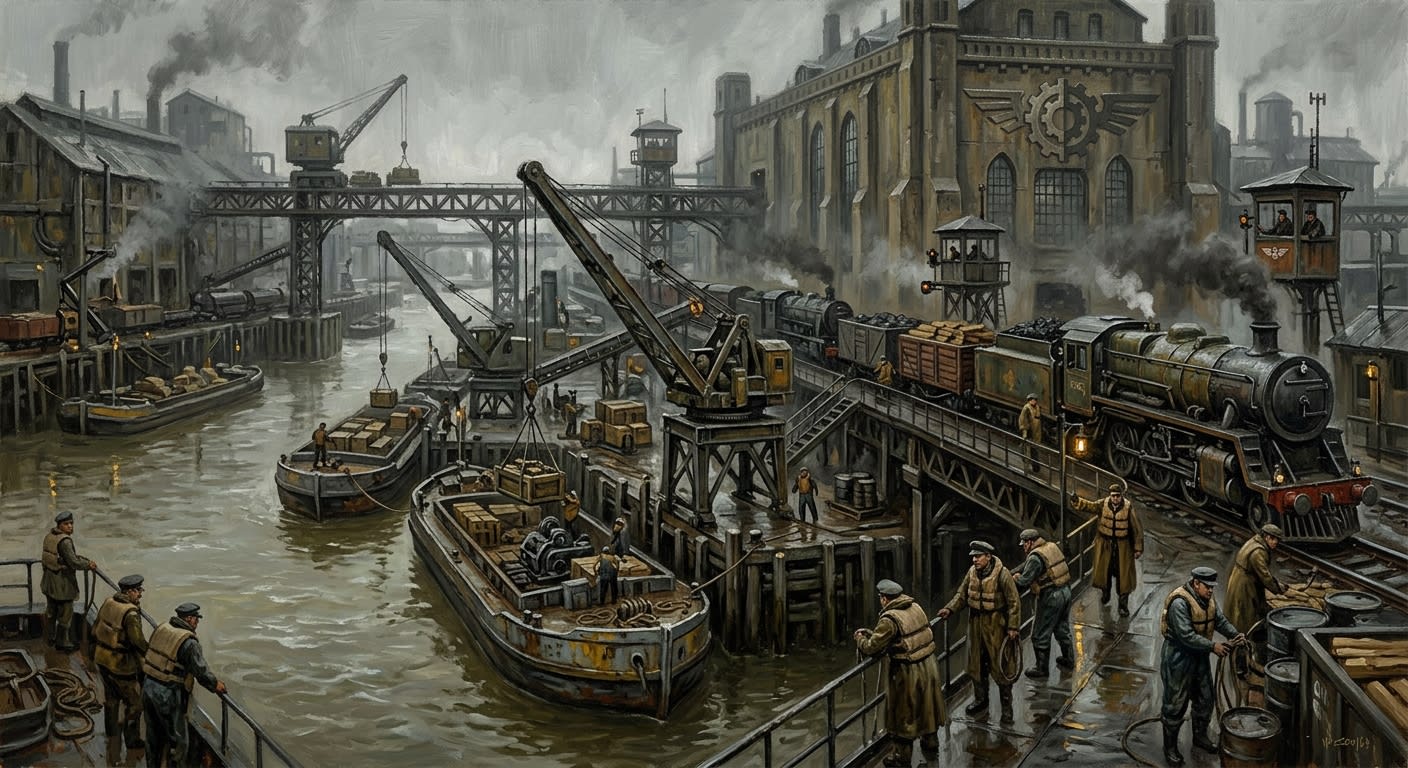
Vire River-Belt Interchange
Where water becomes paperwork and freight learns to kneel
The Vire River-Belt Interchange is the Hook: a wet rail-port where barges become manifests, trains become toll events, and fraud wears a life vest.
Codex Ref. II.1.04-001
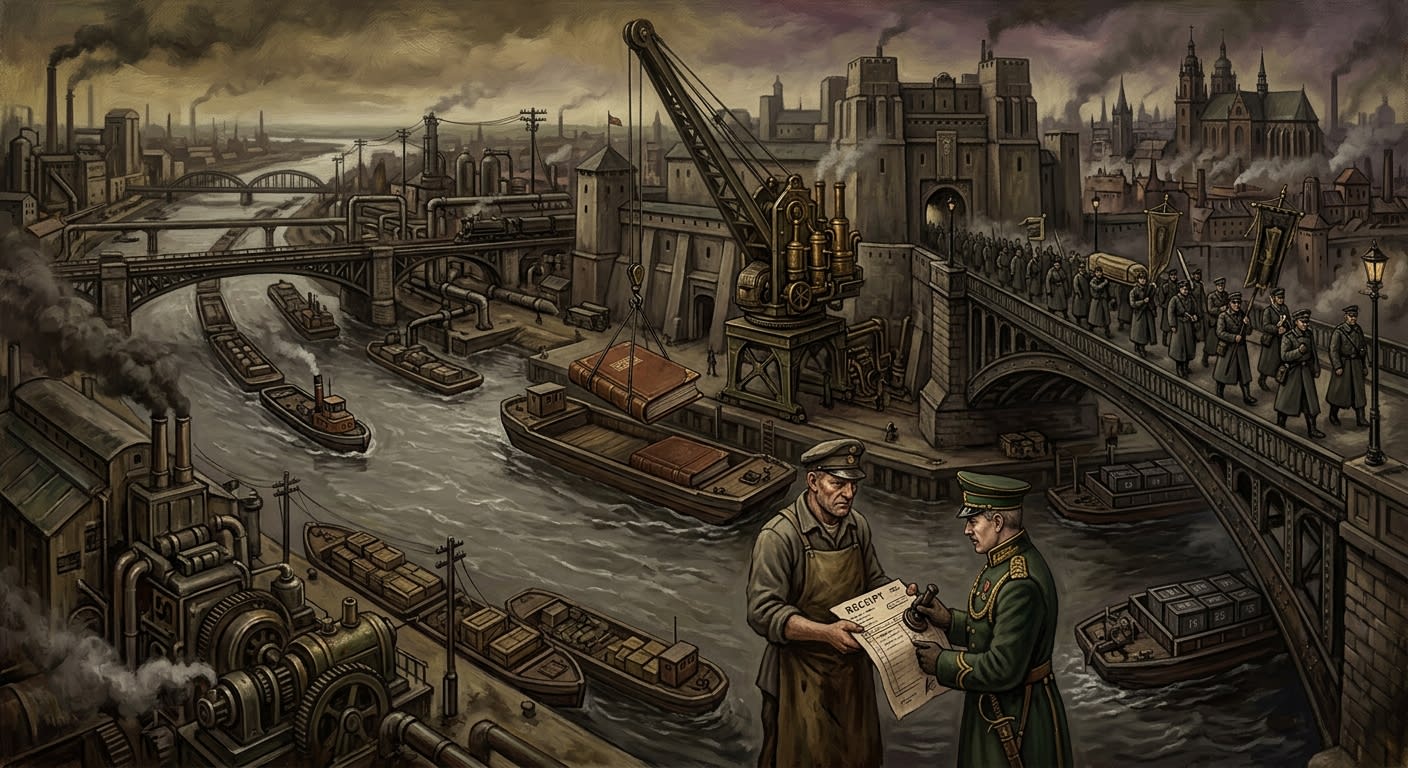
Vistula
The river carries evidence better than tribunals carry shame
The Vistula is Poland's wet archive: martyr-road at Kraków, receipt at Sandomierz, supply throat at Warsaw, and a river no Bureau has taught to forget.
Codex Ref. II.3.06-018
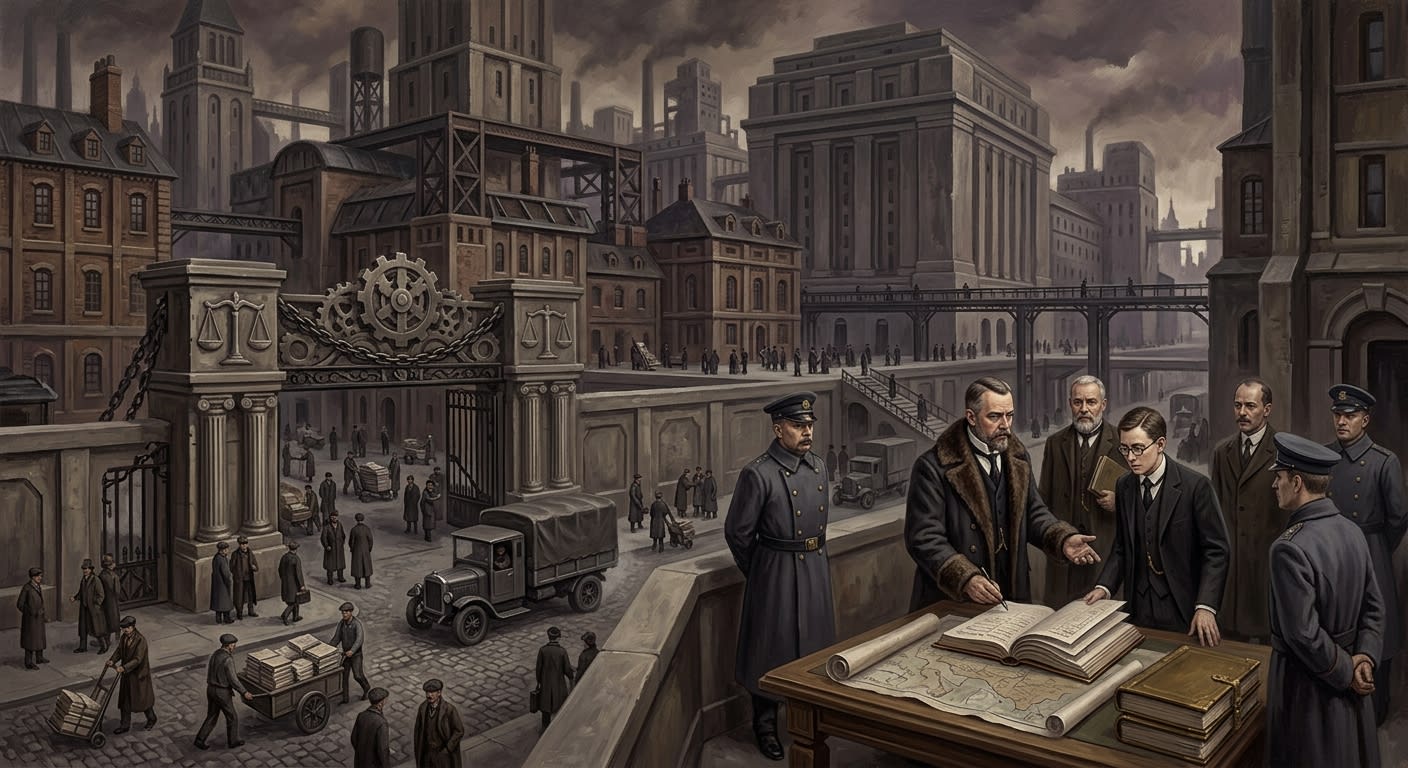
Wallachia
Fair prices are how Hell asks for a signature
Wallachia did not fall by trumpet and fire. It borrowed, signed, refinanced, and became Velmora's creditor province pointed at Sibiu.
Codex Ref. II.6.06-006
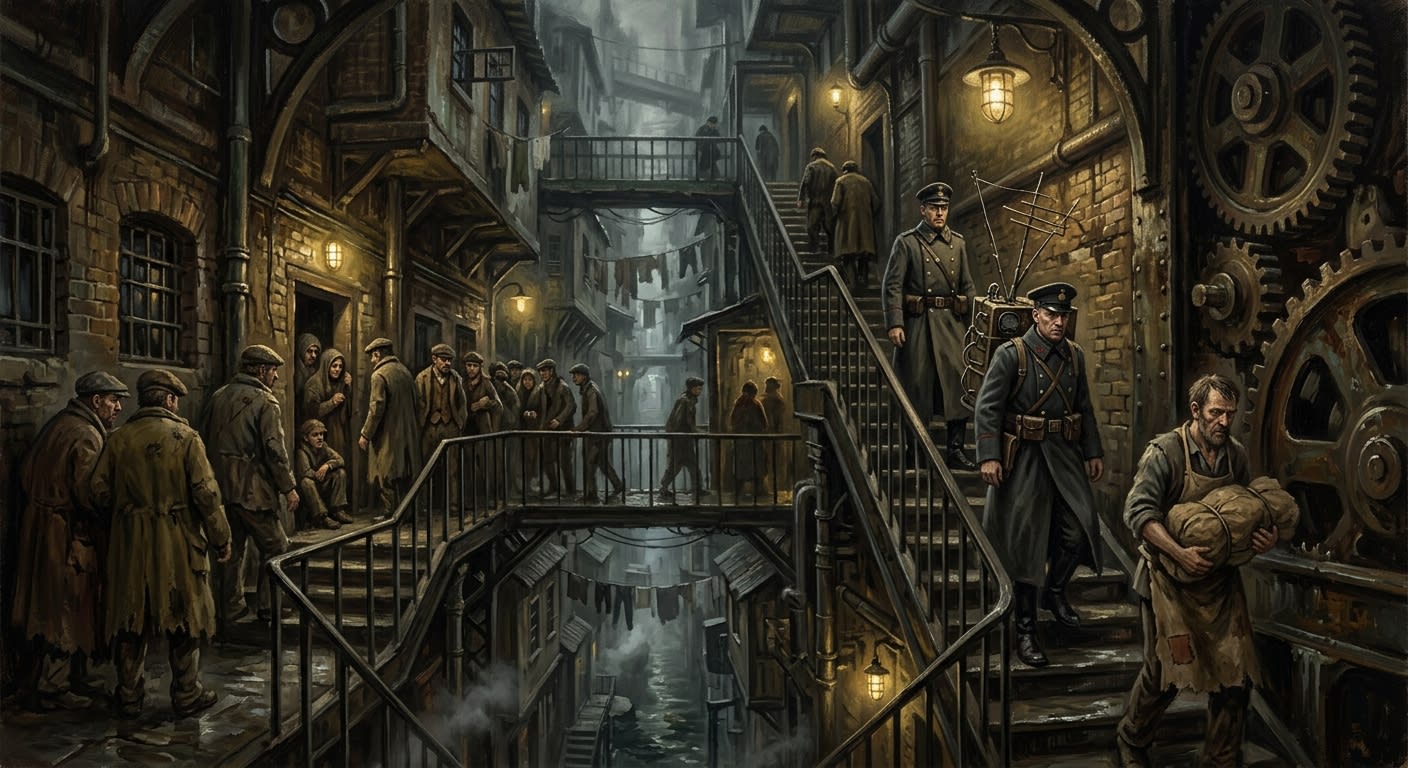
Warrens of Strasbourg
The capital's conscience, filed under mildew
Strasbourg hides its poor where bells arrive broken, maps grow bashful, and charity, crime, and surveillance share the same wet staircase.
Codex Ref. II.2.06-201
Warsaw
The city the Bureau told to leave, and the bakeries it opened in reply
The Synod's forward staging city on the Vistula — Zone Three, Northern Corridor, entry 14-W. 160 km from the Sagittal Line; close enough to hear the front on clear nights. The Bureau told it to leave in A.S. 95. It has grown by a quarter-million souls since.
Codex Ref. II.4.09-007
Wawel Hill
A crown of stone made to remember under seal
Kraków's cathedral hill, bound to the Night of Knives, restored as a public wound, and watched from upper works where Doctrine observes the city looking upward.
Codex Ref. II.3.06-001
Worms
Where broken things become binding
Worms is the Rhineland city where absence became evidence, rain became residue, seals became law, and a name became a warning.
Codex Ref. II.2.09-087
Yard Tribunal
The court that hears the iron before the man
The Yard Tribunal of Lorn judges crimes against motion, assigning blame swiftly enough that freight may resume before grief discovers organisation.
Codex Ref. II.3.01-112
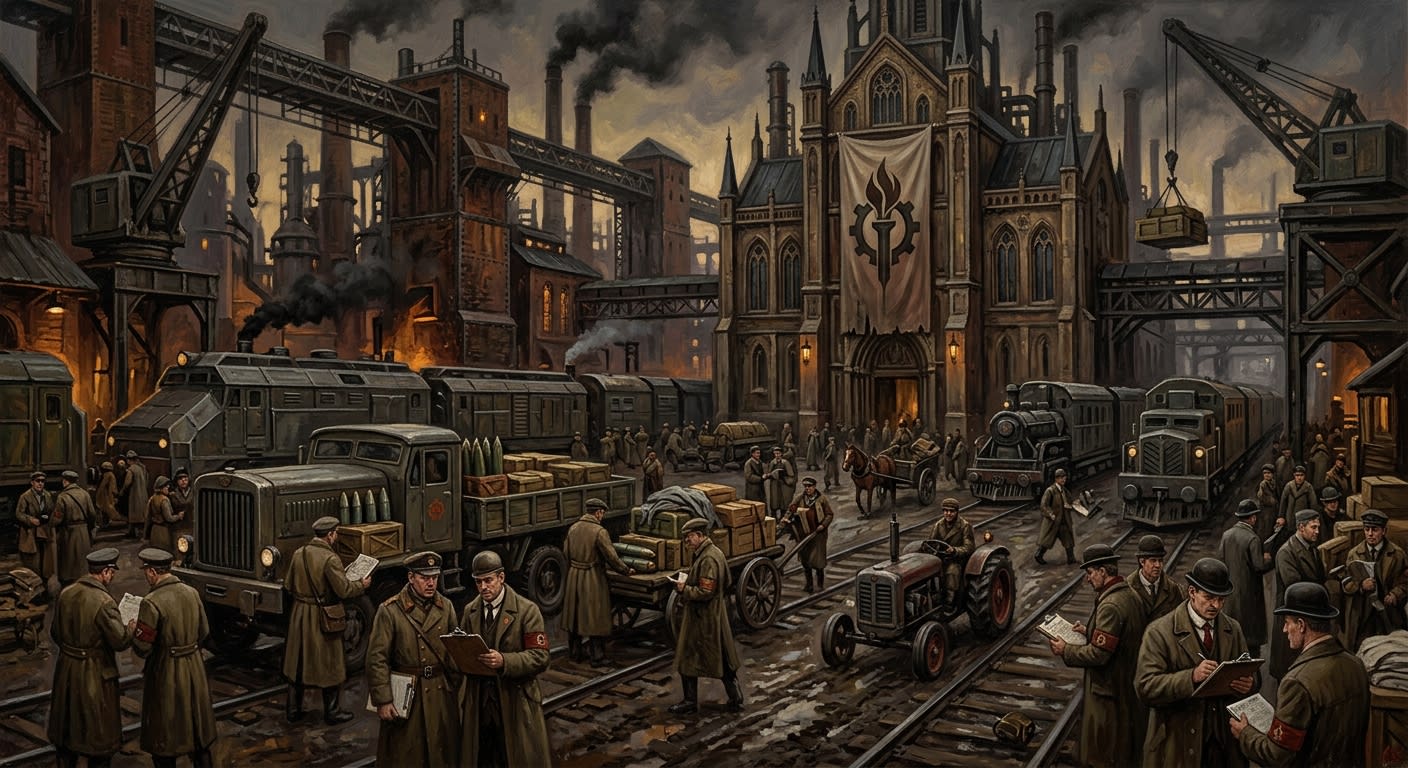
Zone 1
The rearward paradise that learned to invoice the war
Zone 1 is the Synod's polished western rear: safe enough to tax, rich enough to excuse itself, and stained to the elbows by logistics.
Codex Ref. II.0.03-201
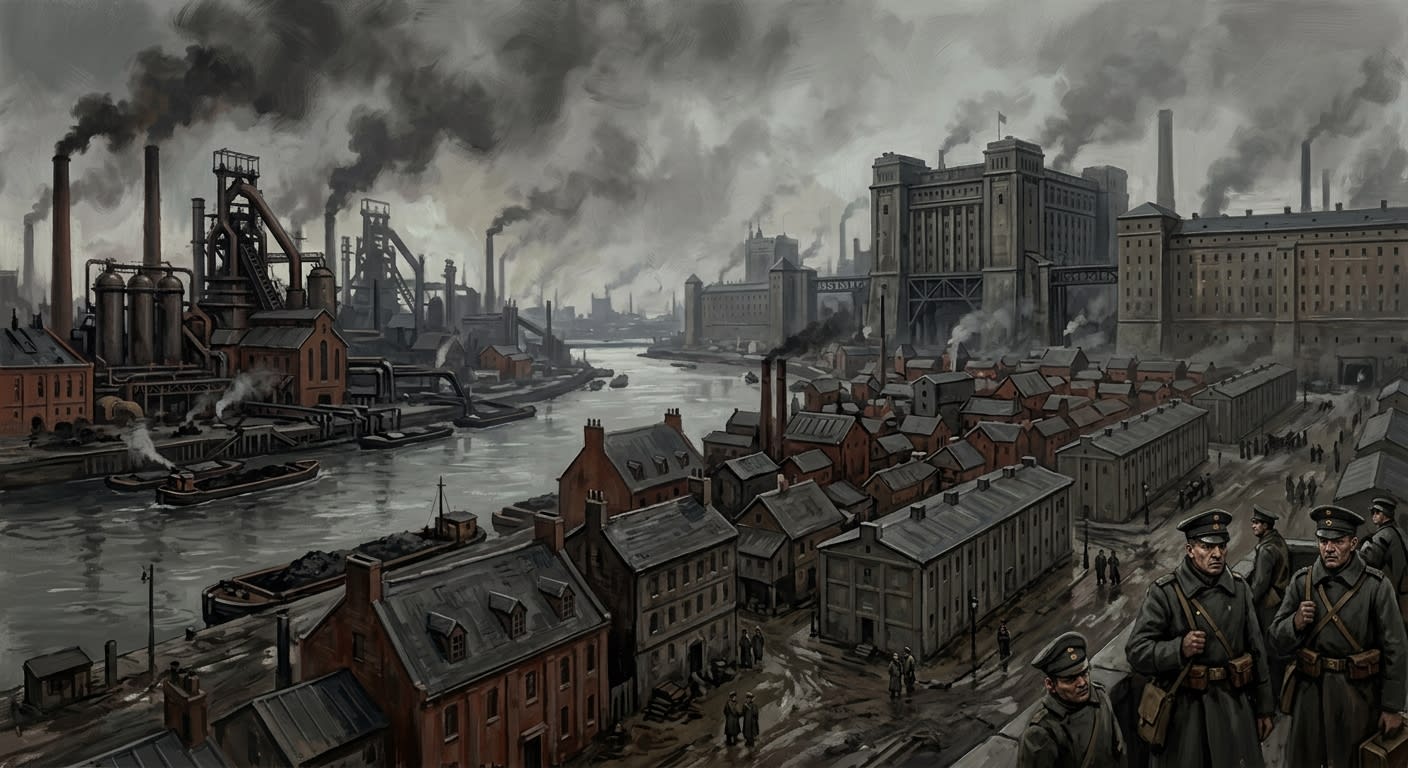
Zone 2
The throat where empire learns to speak in smoke
Zone 2 is the Synod's central throat: Strasbourg's field of authority, Rhine wealth, furnace obedience, catechism-barracks, and useful smoke.
Codex Ref. II.0.04-201
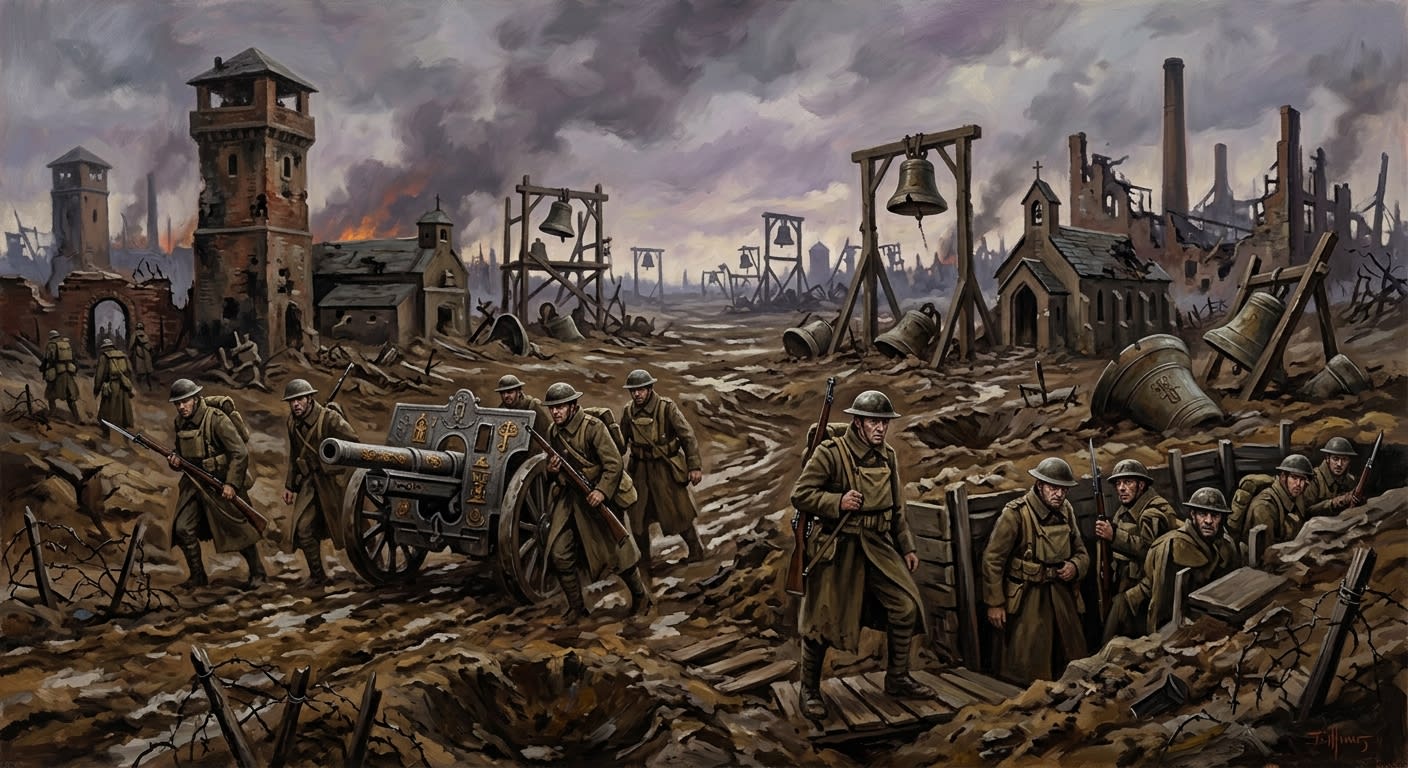
Zone Five
The strip where maps confess and mud countersigns
Zone Five is the Synod's contested receipt between living stone and demonic appetite: No-Man's-Land, where mud, bells, shadows, and orders all lie.
Codex Ref. II.5.00-201